アーサーのマント(別名:Llen Arthyr yng Nghernyw)。その下にいた者は見えず、アーサーは皆を見ることができた。ブリテン島の13の宝物の一つ。このアイテムは、散文物語『Culhwch and Olwen』(1100年頃)と『The Dream of Rhonabwy』(13世紀初頭)の2つの資料からも知られている。非常によく似たマントは『マビノギ第二部』にも登場し、そこではカスワローンが祝福されしブランが残した7人の執事を暗殺し、王位を簒奪するためにそれを使用している。(ウェールズ神話)
Lasseter's Reef – A fabulously rich gold deposit said to have been discovered – and then subsequently lost – by bushman Harold Bell Lasseter in a remote and desolate corner of central Australia towards the end of the 19th century. (Australian folklore)
Relics
Relics from Buddhist mythology
Cetiya, "reminders" or "memorials" (Sanskrit caitya) are objects and places used by Theravada Buddhists to remember Gautama Buddha.
Śarīra, a generic term referring to Buddhist relics. In Buddhism, relics of the Buddha and various sages are venerated. After the Buddha's death, his remains were divided into eight portions. Afterward, these relics were enshrined in stupas wherever Buddhism was spread.
Relics of Jesus, a number of relics associated with Jesus that have been claimed and displayed throughout the history of Christianity.
Shrine of the Three Kings (German Dreikönigsschrein), a reliquary said to contain the bones of the Biblical Magi, also known as the Three Kings or the Three Wise Men.
Relics from Islamic mythology
Sacred Relics (also Holy Relics and Sacred Trust), consist of religious pieces sent to the Ottoman Sultans between the 16th century to the late 19th century.
Book of Thoth, a legendary book containing powerful spells and knowledge supposed to have been written by the god Thoth, said to have been buried with the Prince Neferkaptah in Coptos. (Egyptian mythology)
Jade Books in Heaven, described in several Daoist cosmographies as existent primordially in the various divine Heavens. These Jade Books are variously said to be instrumental in creating and maintaining the divine structure of the universe, or as regulating national or personal destiny. (Chinese mythology)
Tablets of Stone (also Tablets of Stone, Stone Tablets, or Tablets of Testimony), in the Hebrew Bible, were the two pieces of stone inscribed with the Ten Commandments when Moses ascended Mount Sinai as written in the Book of Exodus. (Jewish mythology)
Levisterio, a book contains magical forms and an instrument they used to take various exams used by the Mapuches to protect by the dark forces. (Chilote/Mapuche)
Cauldron of Hymir, a mile-wide cauldron which the Æsir wanted to brew beer in. (Norse mythology)
Cauldron of Dyrnwch the Giant, said to discriminate between cowards and brave men: whereas it would not boil meat for a coward, it would boil quickly if that meat belonged to a brave man. (Welsh mythology)
The Cauldron of Cerridwen, which features in the origin story of Taliesin, who accidentally obtains the awen from it while stirring it for Cerridwen. (Welsh mythology)
Botany
Anāre-Javdanegi, In some religious traditions, it is said that Zoroaster made Esfandiyār invulnerable by eating a few pomegranate seeds from heaven.(Persian mythology)
Blue Lotus, a symbol of the sun, since the flowers are closed at night and open again in the morning. The origin of the world was taught to have been when the sun god Ra emerged from a lotus flower growing in "primordial waters". At night, he was believed to retreat into the flower again. (Egyptian mythology)
Magic bean, Jack trades the family cow for a handful of magic beans which caused a gigantic beanstalk to grow outside Jack's window during the night. (British fairy tale)
Mandrake, In the past, mandrake was often made into amulets which were believed to bring good fortune, cure sterility, etc. In one superstition, people who pull up this root will be condemned to hell, and the mandrake root would scream and cry as it was pulled from the ground, killing anyone who heard it.
White Lotus, the Egyptians believed that the lotus flower gave them strength and power. Horus was occasionally shown in art as a naked boy with a finger in his mouth sitting on a lotus with his mother. (Egyptian mythology)
Gaokerena, was a mythic Haoma plant that had healing properties and gave immortality to the resurrected bodies of the dead when eaten.(Persian mythology)
Hungry grass (also Féar Gortach), a patch of cursed grass which causes perpetual and insatiable hunger. (Irish mythology)
Raskovnik, a magical herb which can unlock or uncover anything that is locked or closed. (Slavic mythology)
Ausadhirdipyamanas, healing plants used for healing and rejuvenations in battles. These are used by Ashvins. (Hindu mythology)
Haoma, the Avestan language name of a plant and its divinity, both of which play a role in Zoroastrian doctrine and in later Persian culture and mythology. (Persian mythology)
Silphium, a plant that was used in classical antiquity as a seasoning and as a medicine. Legend said that this plant was a gift from the god Apollo. (Roman mythology)
Verbena, a plant which has long been associated with divine and other supernatural forces. It was called "tears of Isis" in ancient Egypt, and later called "Hera's tears". In ancient Greece it was dedicated to Eos Erigineia. In the early Christian era, folk legend stated that V. officinalis was used to staunch Jesus' wounds after his removal from the cross. It was consequently called "holy herb" or (e.g. in Wales) "Devil's bane".
Shamrock, a plant honored as sacred by ancient Druids. The Druids believed the shamrock had the power to avert evil spirits. Some people still believe the shamrock has mystical, even prophetic powers. It is said that the leaves of shamrocks turn upright whenever a storm is coming. (Irish mythology)
Sanjivani, a magical herb which can cure any malady. It was believed that medicines prepared from this herb could revive a dead person. (Hindu mythology)
Talking tree, a form of trees in sapient mythologies and stories. (Worldwide)
Jeweled Branch of Hōrai, a branch from a tree found on Hōrai which has jewels for leaves. One of Kaguya-hime's suitors set out to search for the branch. (Japanese mythology)
Ficus Ruminalis, a wild fig tree that had religious and mythological significance in ancient Rome. The tree is associated with the legend of Romulus and Remus. (Roman mythology)
Donar's Oak (also Thor's Oak and Jove's Oak), a sacred tree of the Germanic pagans located in what is now the region of Hesse, Germany. (Germanic mythology)
Silver Branch, a tree that represents entry into the Celtic Otherworld. It is also associated with Manannán mac Lir, an Irish sea deity with strong affiliation to Tír na nÓg. As guardian of the Otherworld, Manannán also has strong ties with Emhain Abhlach, the Isle of Apple Trees, where the magical silver apple branch is found. (Irish mythology)
Lotus tree, bearing a fruit that caused drowsiness, and which was said to be the only food of an island people called the Lotophagi or Lotus-eaters. When they ate of the lotus tree they would forget their friends and homes and would lose the desire to return to their native land in favor of living in idleness. (Greek mythology/Roman mythology)
Money tree, a holy tree which can bring money and fortune to the people, and is a symbol of affluence, nobility and auspiciousness. (Chinese mythology)
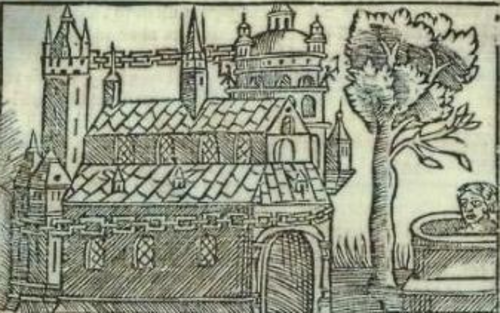
Image showing the sacred tree to the right of the temple, from Olaus Magnus' Historia de Gentibus Septentrionalibus (1555). To the right of the tree is a depiction of a man being sacrificed in the spring
Barnstokkr (Child-trunk), a tree that stands in the center of King Völsung's hall.
Glasir (Gleaming), a tree or grove described as "the most beautiful among gods and men", bearing golden leaves located in the realm of Asgard, outside the doors of Valhalla.
Læraðr, a tree that is often identified with Yggdrasil. It stands at the top of the Valhöll. Two animals, the goat Heiðrún and the hart Eikþyrnir, graze its foliage.
Mímameiðr (Mimi's Tree), a tree whose branches stretch over every land, is unharmed by fire or metal, bears fruit that assists pregnant women, and upon whose highest bough roosts the rooster Víðópnir.
Sacred tree at Uppsala, a sacred tree located at the Temple at Uppsala, Sweden, in the second half of the 11th century. It is not known what species it was, but a scholar has suggested that it was a yew tree.
Sefirot, (counting, enumeration) the kabbalistic tree of life which encompasses both the physical and higher metaphysical realm. It consists of the ten attributes/emanations in Kabbalah. (Jewish mythology)
Irminsul (Great/Mighty Pillar or Arising Pillar), a pillar which is attested as playing an important role in the Germanic paganism of the Saxon people. The oldest chronicle describing an Irminsul refers to it as a tree trunk erected in the open air. (Germanic mythology)
Égig érő fa (Sky-high Tree), also called Életfa (Tree of Life), Világfa (World Tree), or Tetejetlen Fa (Tree Without a Top), is an element of Hungarian shamanism and native faith, and a typical element of Hungarian folk art and folk tales, and also a distinct folk tale type. (Hungarian mythology)
Akshayavat or Akshay Vat (Indestructible Banyan Tree), is a sacred fig tree. The sage Markandeya asked Lord Narayana to show him a specimen of the divine power. Narayana flooded the entire world for a moment, during which only the Akshayavat could be seen above the water level. (Hindu mythology)
Ashvattha (also Assattha), a sacred tree for the Hindus and has been extensively mentioned in texts pertaining to Hinduism, mentioned as 'peepul' (Ficus religiosa) in Rig Veda mantra I.164.20 . Buddhist texts term the tree as Bodhi tree, a tree under which Gautam Buddha meditated and gained enlightenment. (Hindu mythology)
Ağaç Ana, the world tree is a central symbol. According to the Altai Turks, human beings are descended from trees. According to the Yakuts, White Mother sits at the base of Ağaç Ana, whose branches reach to the heavens where it is occupied by various creatures that have come to life there. The blue sky around the tree reflects the peaceful nature of the country and the red ring that surrounds all of the elements symbolizes the ancient faith of rebirth, growth and development of the Turkic peoples. (Turkic mythology)
Mesoamerican world tree, the world trees embodied the four cardinal directions, which also serve to represent the fourfold nature of a central world tree, a symbolic axis mundi which connects the planes of the Underworld and the sky with that of the terrestrial realm. (Mesoamerican mythology)
Austras koks (Tree of Dawn), on the path of the sun, in or by the water, often on an island or rock in middle of the seas, is the Austras koks thought to represent world tree or axis mundi, it is usually described as a tree, but can also be variety of other plants or even objects. (Latvian mythology)
Világfa (World Tree)/Életfa (Tree of Life), the world tree connects different realities; the underworld, this world, and the upper world together. A shaman was believed to be able to climb through each of these levels freely by a ladder. (Finnic mythologies)
Foods
Drinks
Lord Vishnu took the form of Beauty Mohini and distributed the Amrita (Ambrosia, Elixir) to Devas. When Rahu (snake dragon) tried to steal the Amrita, his head was cut off
Ambrosia, the food or drink of the gods, which gives longevity or immortality to whoever consumes it. (Greek mythology)
Mead of poetry (also Mead of Suttungr), a mythical beverage that whoever "drinks becomes a skald or scholar to recite any information and solve any question. (Norse mythology)
Soma, it is described as being prepared by extracting juice from the stalks of a certain plant. In both Vedic and Zoroastrian tradition, the name of the drink and the plant are the same, and also personified as a divinity, the three forming a religious or mythological unity. (Zoroastrian mythology)
Fruits
Apple of Discord (also Golden Apple of Discord), the goddess Eris inscribed "to the fairest" and tossed in the midst of the festivities at the wedding of Peleus and Thetis. (Greek mythology)
Pomegranate (also Fruit of the Dead in Greek mythology), believed to have sprung from the blood of Adonis. It was the rule of the Moirai that anyone who consumed food or drink in the underworld had to spend eternity there. Persephone ate six pomegranate seeds while in the Underworld after becoming Hades' wife, so she had to spend six months in the underworld every year. (Greek mythology)
Myrrh egg, the phoenix would build itself a nest of cinnamon twigs that it then ignited; both nest and bird burned fiercely and would be reduced to ashes, from which a new, young phoenix arose. The new phoenix embalmed the ashes of the old phoenix in an egg made of myrrh and deposited it in the Egyptian city of Heliopolis ("the city of the sun" in Greek). (Greek mythology)
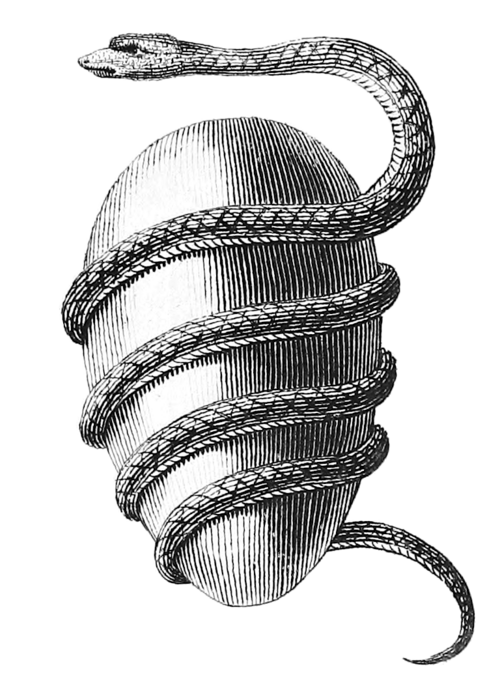
World egg (also Cosmic Egg or Mundane Egg), found in the creation myths of many cultures and civilizations. The world egg is a beginning of some sort, and the universe or some primordial being comes into existence by "hatching" from the egg, sometimes lain on the primordial waters of the Earth.
Substances
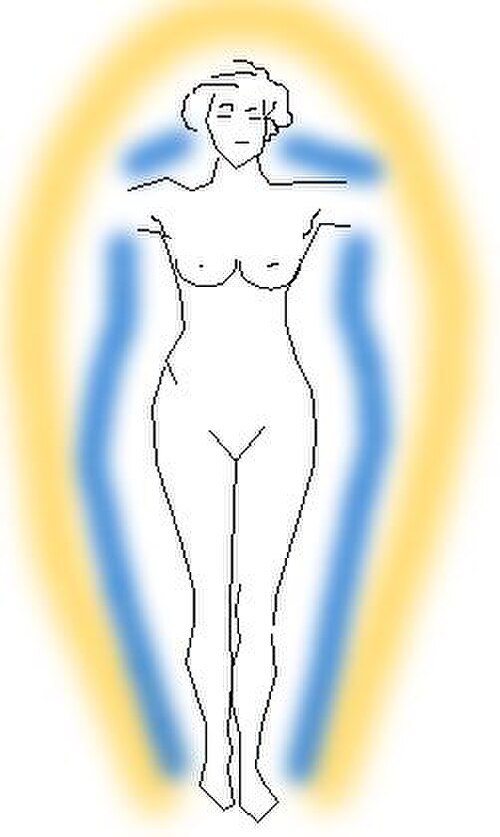
Aura, a field of luminous radiation surrounding a person or object
Ectoplasm, a supposed physical substance that manifests as a result of energy.
Aureola, the radiance of luminous cloud which, in paintings of sacred personages, surrounds the whole figure.
Aura, a field of luminous radiation surrounding a person or object.
Tears of Ra (also Tears of Re), which are produced when the sun god Ra cries, and become honey bees upon touching the ground. (Egyptian mythology)
Breath of life, in countless stories from different cultures featured gods breathing life into object that brought them to life.
Silap Inua (also Silla), similar to mana or ether, the primary component of everything that exists; it is also the breath of life and the method of locomotion for any movement or change. Silla was believed to control everything that goes on in one's life. (Inuit mythology)
Odic force (also Od, Odyle, Önd, Odes, Odylic, Odyllic, Odems), the name given in the mid-19th century to a hypothetical vital energy or life force by Baron Carl von Reichenbach.
Nebu, the ancient Egyptians believed that gold was an indestructible and heavenly metal. The sun god, Ra, was often referred to as a mountain of gold. (Egyptian mythology)
Xirang (also Hsi-jang, Swelling Earth, Self-renewing soil, Breathing earth, and Living earth), a magical substance in Chinese mythology that had a self-expanding ability to continuously grow – which made it particularly effective for use by Gun and Yu the Great in fighting the Great Flood. (Chinese mythology)
Alien metal, the rancher William Brazel found mysterious paper-like metals across his sheep pasture. Believe to have been the remains of an extraterrestrial flying saucer crash near Roswell, New Mexico. The event would later be known as the Roswell UFO incident. (Ufology)
Solomon's shamir, a substance that had the power to cut through or disintegrate stone, iron and diamond. King Solomon is said to have used it in the building of the First Temple in Jerusalem in the place of cutting tools. (Jewish mythology)
Substances from Greek mythology
Orichalcum, a metal that was considered second only to gold in value, and was mined in Atlantis in ancient times.
Panacea, a remedy that would cure all diseases and prolong life indefinitely.
Water of Lethe, which flows through the river Lethe, and causes those who drink it to experience forgetfulness.
Aether, the pure essence that the gods breathed, filling the space where they lived, analogous to the air breathed by mortals.
Miasma, "a contagious power... that has an independent life of its own. Until purged by the sacrificial death of the wrongdoer, society would be chronically infected by catastrophe".
Pneuma, a supernatural substance that is present in all souls and sustains life in all breathing living creatures. Thought of as giving cosmic energy through breath. One main components of the parts of the soul in ancient Greek medicine.
Substances from Norse mythology
Atter, a liquid substance that is the origin of all living things, and is produced by Jörmungandr and other serpents.
Surtalogi (Surtr's fire), the fire with which the giant Surtr will burn the world with fire, thus destroying it.
Yggdrasil dew, dew that falls from the ash tree Yggdrasil. When Líf and Lífþrasir seek refuge within Yggdrasil, they find that they can survive there by drinking the dew of Yggdrasil.
Substances from Medieval legend and European folklore
Azoth, a universal medicine or universal solvent sought in alchemy. (Medieval legend)
Adamant (also Adamantine), a hard substance, whether composed of diamond, some other gemstone, or some type of metal.
Alkahest, a hypothetical universal solvent which can dissolve every other substance, including gold. It was much sought after by alchemists for what they thought would be its invaluable medicinal qualities. (Medieval legend)
Azoth, a universal medicine or universal solvent sought in alchemy. (Medieval legend)
Cold iron, is historically believed to repel, contain, or harm ghosts, fairies, witches, and/or other malevolent supernatural creatures. (European folklore)
Elixir of life, a mythical potion that, when drunk from a certain cup at a certain time, supposedly grants the drinker eternal life and/or eternal youth. (Medieval legend)
Fairy dust, fairy ring are circles of mushrooms that seem to pop-up over night in yards. It is said to grow from the magic dust left behind by faeries as they danced and celebrated during the night, before returning to their hidden land. (English folklore)
Holy water, believed to ward off or act as a weapon against mythical evil creatures, such as vampires. In eastern Europe, one might sprinkle holy water onto the corpse of a suspected vampire to destroy it or render it inert. (European folklore)
Love potion, Tristan goes to Ireland to bring back Isolde the fair for his uncle King Mark to marry. Along the way, they ingest a love potion which causes the pair to fall madly in love. (Arthurian legend)
Prima materia (also Materia Prima or First Matter), is the ubiquitous starting material required for the alchemical magnum opus and the creation of the philosopher's stone. It is the primitive formless base of all matter similar to chaos, the quintessence, or aether. (Medieval legend)
Sandman's sand, which the Sandman uses to put people to sleep and bring good dreams by sprinkling it into their eyes while they sleep. (European folklore)
Yliaster, is the formless base of all matter which is the raw material for the alchemical Great Work. (Medieval legend)
Unspoken Water, water believed to have healing properties when collected "from under a bridge, over which the living pass and the dead are carried, brought in the dawn or twilight to the house of a sick person, without the bearer's speaking, either in going or returning". (Scottish folklore)
Water of life, water from the Fountain of Youth that supposedly restores the youth of anyone who drinks or bathes in its waters. (Medieval legend)
Teonanácatl, in Nahuatl literally "god mushroom"—compound of the words teo(tl) (god) and nanácatl (mushroom).
Substances from Asian mythology
Golden cosmic egg Hiranyagarbha by Manaku
Hihīrokane, described in the apocryphal Takenouchi Document, an alleged ancient writing in a lost script which details Japan's early history, Hihīrokane was used in the time of Emperor Jimmu, Japan's first emperor. The Kusanagi-no-tsurugi and the other Imperial Regalia of Japan are supposedly made from it. Its weight is lighter than gold, but harder than diamond. It was even said to be able to bring water to a boil without heat, violating the Law of Conservation of Energy. (Japanese mythology)
Halahala, a poison created from the sea when the gods and demons churned it to obtain Amrita, the nectar of immortality. (Hindu mythology)
Prana, is all cosmic energy, permeating the Universe on all levels. Prana is often referred to as the "life force" or "life energy". It also includes energies present in inanimate objects. (Hindu mythology)
Five Flavored Tea of Forgetfulness, a brew created by Meng Po that is given to each soul to drink before they leave Diyu. The brew induces instant and permanent amnesia, and all memory of other lives is lost. (Chinese mythology)
Qi (also Chi or Ki), an active principle forming part of any living thing. Qi literally translates as "breath", "air", or "gas", and figuratively as "material energy", "life force", or "energy flow". Qi is the central underlying principle in traditional Chinese medicine and martial arts. (Chinese mythology)
Chakra, an energy point or node in the subtle body. Chakras are believed to be part of the subtle body, not the physical body, and as such, are the meeting points of the subtle (non-physical) energy channels called Nadi. (Hinduism/Jainism/Buddhism)
Yin and yang, a concept of dualism, describing how seemingly opposite or contrary forces may actually be complementary, interconnected, and interdependent in the natural world, and how they may give rise to each other as they interrelate to one another. (Chinese mythology)
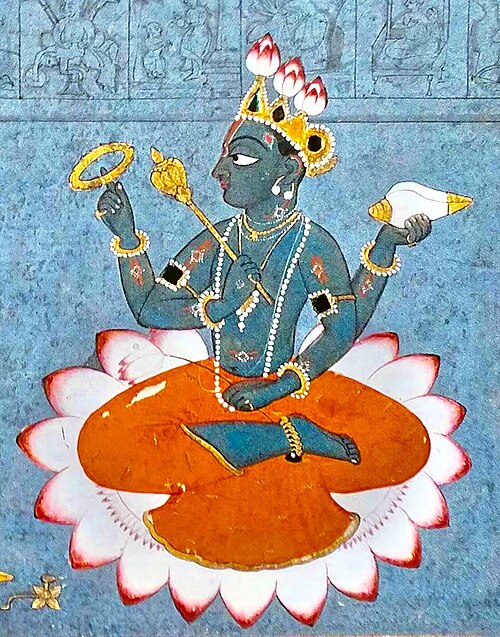
Panchajanya, a Shankha conch shell of the Hindu god Vishnu. As per Valmiki Ramyana, Purushottama (Vishnu) killed a Danava named Panchajana on a mountain named Chakravan constructed by Vishwakarma and took away conch shell known as Panchajanya from him. (Hindu mythology)
Triton's conch shell, a twisted conch shell on which Triton blew like a trumpet to calm or raise the waves. (Greek mythology)
Drums
Drake's Drum, a snare drum that Sir Francis Drake took with him when he circumnavigated the world. Shortly before he died he ordered the drum to be taken to Buckland Abbey and vowed that if England was ever in danger and someone was to beat the drum he would return to defend the country. According to legend it can be heard to beat at times when England is at war or significant national events take place. (English folklore)
Bragi's harp, a magical golden harp given to Bragi by the dwarfs when he was born. (Norse mythology)
David's harp (also Kinnor David), a harp hung above King David's bed, and precisely at midnight a north wind arrived and blew on the harp and it would play by itself. (Jewish mythology)
Kantele, the mage Väinämöinen makes the first kantele from the jawbone of a giant pike and a few hairs from Hiisi's stallion. The music it makes draws all the forest creatures near to wonder at its beauty. (Finnish mythology)
Uaithne (also Dur da Blá, The Oak of Two Blossoms, and Coir Cethar Chuin), the harp which belongs to The Dagda. After the Second Battle of Mag Tuired the Fomorians had taken The Dagda's harp with them. The Dagda found it in a feasting-house wherein Bres and his father Elathan were also. The Dagda had bound the music so that it would not sound until he would call to it. After he called to it, it sprang from the wall, came to the Dagda and killed nine men on its way. (Irish mythology)
Binnorie's harp (also Minnorie's harp), when the murdered girl's body floats ashore, a musician made a musical instrument out of it, a harp, with a frame of bone and the girl's "long yellow hair" for strings. The instrument then plays itself and sings about the murder. (Northumbrian folklore)
Talyn Arthur (Arthur's Harp), the name of the constellation of Lyra in Wales. (Welsh mythology)
Canola's harp (Cana's Harp), Canola realised the wind had created the music by blowing through partially rotted sinew still attached to a whale skeleton. She designed the harp based on this. (Irish mythology)
Olifant (also Olivant), the horn of Roland, paladin of Charlemagne in the Song of Roland. Roland blows the horn, but the force required bursts his temple, resulting in death. His olifant was supposedly a unicorn's horn. (Matter of France)
Apollo's lyre, Hermes created the lyre for him from the entrails of one of Apollo's cows. Apollo was furious at Hermes, but after hearing the sound of the lyre, his anger faded. The instrument became a common attribute of Apollo. (Greek mythology)
Orpheus' lyre, a golden lyre given to him by Apollo. It is said that Orpheus' music and singing could charm the birds, fish and wild beasts, coax the trees and rocks into dance, and divert the course of rivers. It is state that his lyre was placed in the sky by Zeus. (Greek mythology)
Rattles
Sistrum, one of the most sacred musical instruments in ancient Egypt, which was believed to hold powerful magical properties. It was also shaken to avert the flooding of the Nile and to frighten away Set. (Egyptian mythology)
Trumpets
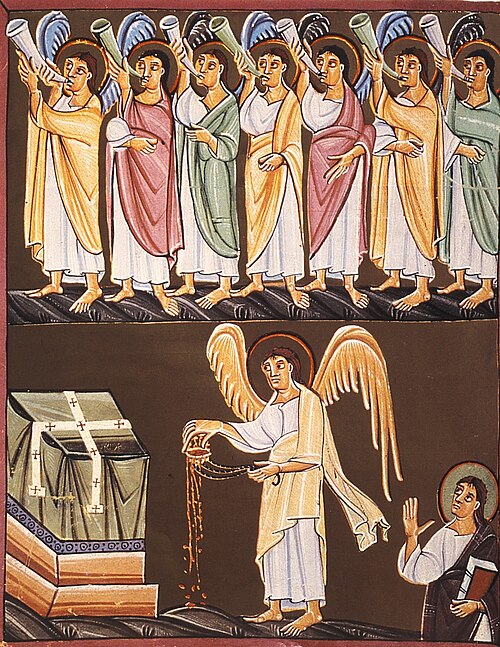
seven angels with seven trumpets
Seven trumpets, seven angels with seven trumpets are sounded and the events that follow are described in detail from Revelation Chapters 8 to 11. (Christian mythology)
seven trumpets of Zahhak, Seven golden trumpets, each of which was connected to one of the seven realms of the world, and by blowing each of those trumpets, Zahhak would send down deadly disasters such as plagues, earthquakes, and rain of fire on that land. (Persian mythology)
Pheme's trumpet, Pheme is the goddess of gossip and she was said to have pried into the affairs of mortals and gods. She then repeated what she had learned by sounding her trumpet to spread the gossip to people near and far. (Greek mythology)
Joshua's shofars (also Joshua's trumpets), the walls of Jericho fell after Joshua's Israelite army marched around the city blowing their trumpets during the Battle of Jericho. (Jewish mythology)
Springs
Fountain of Youth
Fountain of Youth, a spring that supposedly restores the youth of anyone who drinks or bathes in its waters. (Medieval legend)
Mímisbrunnr (Mímir's well), a well associated with the being Mímir, located beneath Yggdrasil. The water of the well contains much wisdom, and that Odin's eye sacrifice to the well was in exchange for a drink from it. (Norse mythology)
Holy well (also Sacred Spring), a spring revered either in a Pagan or Christian context, often both. Holy wells were frequently pagan sacred sites that later became Christianized. The term holy well is commonly employed to refer to any water source of limited size (i.e. not a lake or river, but including pools and natural springs and seeps), which has some significance in the folklore of the area where it is located, whether in the form of a particular name, an associated legend, the attribution of healing qualities to the water through the numinous presence of its guardian spirit or Christian saint.
Wishing well, wells where it was thought that any spoken wish would be granted. The idea that a wish would be granted came from the idea that water housed deities or had been placed there as a gift from the gods, since water was a source of life and often a scarce commodity. (European folklore)
Connla's Well (also Well of Coelrind, Well of Nechtan or Well of Segais), one of a number of otherworldly wells that are variously depicted as "The Well of Wisdom", "The Well of Knowledge" and the source of some of the rivers of Ireland. Much like the Well of Nechtan (and some sources equate the two), the well is the home to the salmon of wisdom, and surrounded with hazel trees, which also signify knowledge and wisdom. (Irish mythology)
Round Table, King Arthur's famed table, around which he and his Knights congregate. As its name suggests, it has no head, implying that everyone who sits there has equal status. (Arthurian legend)
Siege Perilous (The Perilous Seat), a vacant seat at the Round Table reserved by Merlin for the knight who would one day be successful in the quest for the Holy Grail. (Arthurian legend)
Golden Throne, Hephaestus gained revenge against Hera for rejecting him by making her a magical golden throne which when she sat on it, did not allow her to stand up. (Greek mythology)
Ara (Altar), identified as the altar where the gods first made offerings and formed an alliance before defeating the Titans. (Greek mythology)
Ark of the Covenant (also Ark of the Testimony), a wooden chest clad with gold containing the stone tablets of the Ten Commandments as well as Aaron's rod and a pot of manna. (Jewish mythology)
Busby's stoop chair (also Dead Man's Chair), a haunted oak chair that was cursed by the murderer Thomas Busby before his execution by hanging in North Yorkshire, United Kingdom. (English folklore)
Throne of God (also Araboth and al-'Arsh), the reigning centre of God of the Abrahamic religions: primarily Judaism, Christianity, and Islam. The throne is said by various holy books to reside beyond the Seventh Heaven.
Khnum's potter's wheel, he was thought to be the creator of the bodies of human children, which he made at a potter's wheel, from clay, and placed in their mothers' wombs. (Egyptian mythology)
The bed of Procrustes, An iron bed used by Procrustes in which he would place his victims inside of. (Greek mythology)
Throne of Gems, The mythical Iranian King Jamshid saved mankind from a winter destined to kill every living creature. He constructed a throne made of precious gems. He sat on the throne, demons lifted him into the heavens where he shone like the Sun and winter was defeated. (Iranian mythology)
Gleipnir, the fetter that successfully bound the wolf Fenrir. It was light and thin as silk but strong as creation itself and made from six impossible ingredients. (Norse mythology)
Red string of fate, an East Asian belief originating from Chinese legend. According to this myth, the gods tie an invisible red cord around the ankles of those that are destined to meet one another in a certain situation or help each other in a certain way. Often, in Japanese culture, it is thought to be tied around the little finger. According to Chinese legend, the deity in charge of "the red thread" is believed to be Yuè Xià Lǎorén (月下老人), often abbreviated to Yuè Lǎo (月老), the old lunar matchmaker god, who is in charge of marriages. (Chinese mythology)
Gold chain of Ọbatala, a chain used by the deity Ọbatala to descend from the heavens so he could create the Earth. (Yoruba religion)
Body parts
Heads
Brazen head (also brass head or bronze head), a legendary automaton reputed to be able to answer any question. (Medieval legend)
Mímir's head, the severed head of Mimir, which was magically preserved by Odin so it could continue to provide knowledge and counsel as his advisor. (Norse mythology)
Eye of Horus, Set and Horus were fighting for the throne after Osiris's death, Set gouged out Horus's left eye. The majority of the eye was restored by Thoth. When Horus's eye was recovered, he offered it to his father, Osiris, in hopes of restoring his life. (Egyptian mythology)
Eye of Ra, Ra was becoming old and weak and the people no longer respected him or his rule. Ra did not react well to this and decided to punish mankind by sending his Eye to find them. (Egyptian mythology)
Balor's eye, a large eye that wreaks destruction when opened. The Cath Maige Tuired calls it a "destructive" and "poisonous" eye that no army can withstand. (Irish mythology)
Eye of Providence, a symbol showing an eye often surrounded by rays of light or a glory and usually enclosed by a triangle. It represents the eye of God watching over mankind or divine providence.
Þjazi's eyes, Odin took Þjazi's eyes and placed them in the night sky as stars. (Norse mythology)
Hand of Glory, a severed pickled hand of a man who was hanged alive. Said to have the power to unlock any door and, if a candle was placed within made from some body part of the same person, would freeze in place anyone who it was given to. (European folklore)
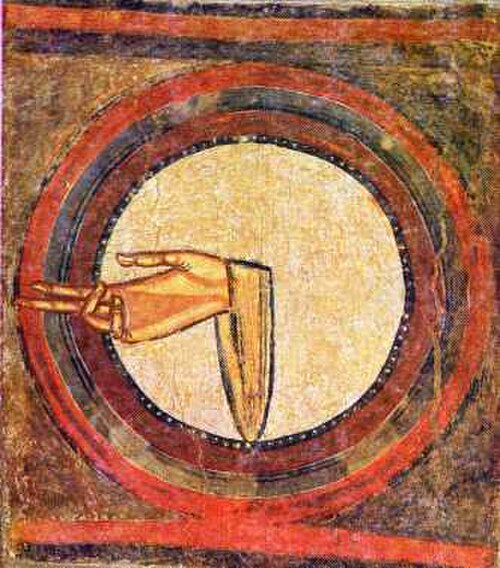
Hand of God (also Manus Dei and Dextera domini/dei), ", a motif in Jewish and Christian art, especially of the Late Antique and early medieval periods, when depiction of Jehovah or God the Father as a full human figure was considered unacceptable. The hand, sometimes including a portion of an arm, or ending about the wrist, is used to indicate the intervention in or approval of affairs on Earth by God, and sometimes as a subject in itself. (Christian mythology/Jewish mythology)
Aurvandils-tá (Aurvandill's toe), the god Thor tosses Aurvandill's toe which had frozen into the sky to form a star called Aurvandils-tá. (Norse mythology)
Firebird's plumage, the feathers of a Firebird that glows brightly emitting red, orange, and yellow light, like a bonfire that is just past the turbulent flame. The feathers do not cease glowing if removed, and one feather can light a large room if not concealed. (Slavic mythology)
Feathers of Simurgh, the legendary Simurgh gave three of her feathers to Zal, the Persian hero and also father of Rostam, so that whenever he needed the guidance or help of Simurgh, he could burn one of the feathers and Simurgh came to his aid. (Persian mythology)
Feather of Ma'at (also Feather of Truth), her ostrich feather was the measure that determined whether the souls of the departed would reach the fields of Aaru successfully. The hearts of the dead were said to be weighed against her single feather in the Hall of Two Truths. (Egyptian mythology)
Peacock's feather, the peacock was the patron bird of the Goddess Hera. According to myth, she adorned the tail of a peacock with Argus's eyes on its feathers in his honor, symbolizing all-seeing knowledge and the wisdom of the heavens. (Greek mythology)
Leviathan's hide, could be turned into everlasting clothing or impenetrable suits of armor. (Jewish mythology)
Nemean lion's hide, the lion could not be killed with mortal weapons because its golden fur was impervious to attacks. (Greek mythology)
Selkie's skin, selkies are said to live as seals in the sea but shed their skin to become human on land. If a man steals a female selkie's skin, she is in his power and is forced to become his wife. If she finds her skin she will return to her true home in the sea. (Irish folklore)
Coma Berenices (Berenice's hair), Berenice II of Egypt dedicated her hair to Aphrodite for her husband's safe return from Syria, and placed it in the temple of the goddess at Zephyrium. The hair had been carried to the heavens and placed among the stars. (Egyptian mythology)
Ningyo's flesh, the flesh is pleasant-tasting and anyone who eats it will attain remarkable longevity. (Japanese mythology)
Fafnir's blood, Sigurd bathed in dragon's blood that conferred him invulnerability. He also drank some of Fafnir's blood and gained the ability to understand the language of the birds. (Norse mythology)
Unicorn horn (also Alicorn), the detached horn of a unicorn was thought to have many healing properties and antidote's virtues were attributed to the unicorn's horn. (European folklore)
Dragon's teeth, in the legends of the Phoenician prince Cadmus and in Jason's quest for the Golden Fleece. In each case, the dragons are real and breathe fire. Their teeth, once planted, would grow into fully armed warriors. (Greek mythology)
Camahueto's horn, the most valuable part of a Camahueto is their single horn, machis will use the horn for curing many kinds of illnesses. (Chilote mythology)
Valknut (also Hrungnir's Heart), Hrungnir's head, heart, and shield were made of stone. His heart had a peculiar shape, it was triangular due to which both the Valknut and the Triquetra have been called Hrungnir's heart. (Norse mythology)
Fafnir's heart, which was roasted and consumed by Sigurd, giving him the gift of prophecy. (Norse mythology)
Uranus's genitals, which fell on the ocean and formed Aphrodite, a nymph who later on became the goddess of beauty after being introduced to at Olympus (Greek mythology)
Containers
Basket of Existence, a raffiabasket containing the divine ingredients that were to be used by Obatala to create the universe. It was stolen by his fellow orishaOduduwa before he could do so. (Yoruba mythology)
Óðrerir, refers either to one of the vessels that contain the mead of poetry (along with Boðn and Són) or to the mead itself. (Norse mythology)
Pot of Gold, which is used by leprechauns to store away all their coins at the end of the rainbow. (Irish mythology)
Hamper of Gwyddno Garanhir, Gwyddno Garanhir possessed a hamper which would multiply food: if one was to put food for one man in the basket and open it again, the food was found to be increased a hundredfold. (Welsh mythology)
Horn of Brân Galed, the Horn of Brân Galed from the North is said to have possessed the magical property of ensuring that "whatever drink might be wished for was found in it". (Welsh mythology)
Pandora's box (also Pandora's pithos), a large jar given to Pandora which contained all the evils of the world. Pandora opened the jar and all the evils flew out, leaving only Hope inside once she had closed it again. (Greek mythology)
Excalibur's scabbard, was said to have powers of its own. Injuries from losses of blood, for example, would not kill the bearer. In some telling, wounds received by one wearing the scabbard did not bleed at all. (Arthurian legend)
Osiris's coffin, a beautifully carved coffin made by Set. Osiris was tricked by Set to enter the chest, and was enclosed inside it by 72 accomplices of Set. Set flung the coffer in the Nile so that it would drift far away. (Egyptian mythology)
Purple Gold Red Gourd, a powerful magic gourd that sucks anyone who speaks before it inside and melts them down into a bloody stew. (Chinese mythology)
Trojan Horse, a wooden horse where a select force of men hide inside during the Trojan War, the subterfuge that the Greeks used to enter the city of Troy and win the war. (Greek mythology)
Bag of Mysteries, the pouch containing the secrets that were supposed to be the reward of the spirit responsible for the creation of the world. It was originally given by Olorun to Obatala, who was mandated by Him to serve that function, but was subsequently stolen by his brother/sister/spouse Oduduwa when he/she usurped his position as creator spirit. This and the simultaneous theft of the Basket of Existence (see above) later led to a war between them. (Yoruba mythology)
Corrbolg, a bag crafted by Manannán mac Lir from the skin of Aoife who had been transformed into a crane at the time of her death. It was later given to Conaire Mór and then eventually to Cumhall mac Trénmhóir and finally Fionn Mac Cumhaill. The crane bag contained a variable amount of items depending on if the tide was high or low. (Irish mythology)
Qiankun Dai, one of the ten ancient artifacts, the universe bag or cosmos bag is a bag belonging to Maitreya that is able to fit all of heaven and earth inside. (Chinese Mythology)
Kibisis, the sack in which the mythical hero Perseus carried the severed head of the monster Medusa. (Greek mythology)
Santa's bag, carries a bag full of presents for children. (Modern folklore)
Cups and chalices
The Giving of the Seven Bowls of Wrath / The First Six Plagues, Revelation 16:1–16. Matthias Gerung, c. 1531
Cup of Jamshid (Jām-e Jam), a cup of divination that was long possessed by rulers of ancient Persia and was said to be filled with an elixir of immortality. (Persian mythology)
Nanteos Cup, a medieval wood mazer bowl attributed with the ability to heal those who drink from it. (Christian mythology)
Seven bowls, seven angels are thus given seven bowls of God's wrath, each consisting of judgements full of the wrath of God. These seven bowls of God's wrath are poured out on the wicked and the followers of the Antichrist after the sounding of the seven trumpets. (Christian mythology)
Ushabti, a funerary figurine used in Ancient Egypt. Ushabtis were placed in tombs among the grave goods and were intended to act as servants or minions for the deceased, should they be called upon to do manual labor in the afterlife. (Egyptian mythology)
Obelisk, a tall, four-sided, narrow tapering monument which ends in a pyramid-like shape or pyramidion at the top. The obelisk symbolized the sun god Ra, and during the brief religious reformation of Akhenaten was said to be a petrified ray of the Aten, the sundisk. It was also thought that the god existed within the structure. (Egyptian mythology)
Golem, an animated anthropomorphic being that is magically created entirely from inanimate matter (specifically clay or mud). The word was used to mean an amorphous, unformed material in Psalms and medieval writing. There are many tales differing on how the golem was brought to life and afterwards controlled. (Jewish folklore)
Sampo (also Sammas), a magical artifact constructed by Ilmarinen that brought good fortune to its holder. (Finnish mythology)
Skatert-Samobranka (Magic Tablecloth), a magic tablecloth is spread on the ground, saying the magic words and food and drink aplenty will appear. When finished eating, rolling up all the dirty plates, cutlery, and crumbs into the tablecloth and they magically disappear. (Russian folklore)
Halter of Clydno Eiddyn, belonged to Clydno Eiddyn (Cebystr Clydno Eiddin). It was fixed to a staple at the foot of his bed. Whatever horse he might wish for, he would find in the halter. The Halter of Clydno Eiddyn was also called The Handy Halter, for it summons fine horses. (Welsh mythology)
Crock and Dish of Rhygenydd Ysgolhaig, whatever food might be wished for in them, it would be found on them. It belonged to Rhygenydd the Cleric. (Welsh mythology)
As-Sirāt, a narrow bridge which every person must pass on the Yawm ad-Din ("Day of the Way of Life" i.e. Day of Judgment) to enter Paradise. (Islamic mythology)
Chinvat Bridge (also Bridge of the Requiter), a sifting bridge which separates the world of the living from the world of the dead and is guarded by two four-eyed dogs. (Zoroastrianism)
Gjallarbrú (Gjöll Bridge), a covered bridge which spans the river Gjöll and must be crossed in order to reach Hel. (Norse mythology)
Djed, Isis asked for the pillar in the palace hall from the king and queen of Byblos in Lebanon, and upon being granted it, extracted the coffin from the pillar. She then consecrated the pillar, anointing it with myrrh and wrapping it in linen. This pillar came to be known as the pillar of djed. (Egyptian mythology)
Column of the Flagellation, the column which Jesus was tied to during the Flagellation of Christ, kept in the Basilica of Saint Praxedes in Rome. (Christian mythology)
Pillar of heaven, four pillars held Heaven and the goddess Nüwa repaired the pillars after the time when Heaven and Earth were in disruption. (Chinese mythology)
Ame-no-mihashira (Heavenly Pillar), Izanagi and Izanami came down from heaven and spontaneously built a central support column called the Ame-no-mihashira which upheld the "hall measuring eight fathoms" that the gods caused to appear afterwards. (Japanese mythology)
Gates
Gates of Alexander, a legendary barrier supposedly built by Alexander the Great to keep the uncivilized barbarians of the north from invading the land to the south. (Medieval legend)
Gates of hell, various places on the surface of the world that have acquired a legendary reputation for being entrances to the underworld. Often they are found in regions of unusual geological activity, particularly volcanic areas, or sometimes at lakes, caves or mountains.
Torii, the world was plunged into darkness and chaos. The wrath of Amaterasu, the Goddess of the Sun, led her to retreat to a cave in Amano-Iwato. To make her come out again, the Gods thought over several solutions and decided to set a perch with roosters at the entrance of the cave. They would then sing eternally. Intrigued by their songs, the Amaterasu walked out of the cave, and the world was again bathed in light. Later, people decided to build bird perches at the entrances of shrines. (Japanese mythology)
Gates of Tartarus, a gate flanked by adamantine columns, a substance so hard that nothing can cut through it, akin to diamond. (Roman mythology)
Nets
Indra's net, one of the weapons of the sky-god Indra, used to snare and entangle enemies. The net also signifies magic or illusion. (Hindu mythology)
Rán's net, a net in which she tried to capture men who ventured out on the sea. Her net is also mentioned in Reginsmál and in the Völsunga saga, where she lends it to Loki so that he can capture Andvari. (Norse mythology)
Ogun's net, the unbreakable net that Ogun used to trap his wife Oya and her lover Shango when he caught them engaging in sexual activity. He subsequently dragged them, while still bound, before Olorun for judgement. In the versions of this myth from the Yoruba diaspora, the wife involved is Oshun. (Yoruba mythology)
Scale of Maat, Anubis weighed the person's heart on a scale against the feather of Maat. If the heart is lighter than the feather, the person is allowed to pass into the afterlife. If not, the heart is eaten by Ammit. (Egyptian mythology)
Whetstone of Tudwal Tudglyd, sharpens the blade of a fine warrior. It shall draw blood from any enemy of its user if its user be brave; if its user shall be cowardly, than the blade shall not be sharpened and draw no blood whatsoever. (Welsh mythology)
Wheels
Fortune Wheel
Rota Fortunae (Wheel of Fortune), a concept referring to the capricious nature of Fate. The wheel belongs to the goddess Fortuna, who spins it at random, changing the positions of those on the wheel – some suffer great misfortune, while others gain windfalls. (Greek mythology)
Wheel of time (also wheel of history and Kalachakra), is a concept found in several religious traditions and philosophies, which regard time as cyclical and consisting of repeating ages. (Hindu mythology)
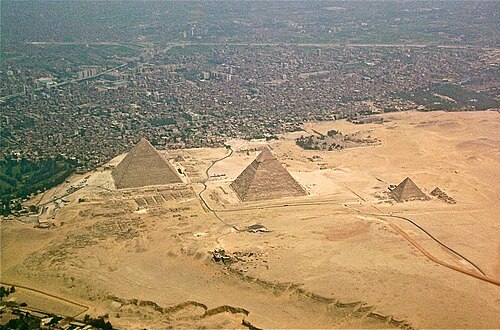
Pyramid, a belief that the ancient Egyptian pyramids and objects of similar shape can confer a variety of benefits. Among these assumed properties are the ability to preserve foods, sharpen or maintain the sharpness of razor blades, etc. (Egyptian mythology)
Ryūgū-jō (Dragon Palace Castle), undersea palace of Ryūjin, the dragon god of the sea. Depending on the version of the legend, it is built from red and white coral, or from solid crystal. (Japanese mythology)
Maleperduis, Reynard the Fox's principal hideaway, which is full of holes which Reynard can open and shut to elude his enemies. (Medieval legends)
Chicken-legged hut, Baba Yaga lives in a house standing on chicken legs, which enables the house to move about in accordance with Baba Yaga's wishes. When her house moves it spins while emitting a screeching noise. (Russian folklore)
Soria Moria Castle, the three princesses live in Soria Moria Castle, and only the West Wind knew where the castle was located. (Scandinavian folklore)
Icarus' wings, which were made by Daedalus out of wax and bird feathers.
Egil's wings, Völund is held captive at Nidung's court. To help his brother, Egil shoots birds and collects their feathers, of which Völund makes a pair of wings and flies away. (Norse mythology)
Planet X, a hypothetical planet, now disproven, proposed in 1906 by Percival Lowell to have existed beyond the planet Neptune.
Sun, the earliest understanding of the Sun was that of a disk in the sky, whose presence above the horizon creates day and whose absence causes night. In the Bronze Age, this understanding was modified by assuming that the Sun is transported across the sky in a boat or a chariot, and transported back to the place of sunrise during the night passing through the underworld. In many cultures, such as Aboriginal and Native American legends, the raven stole the sun and placed it in the sky.
Counter-Earth (also Antichthon), a hypothetical planet always on the other side of the Sun from Earth.
Kolob, a star or planet described in the Book of Abraham. It is the heavenly body nearest to the Throne of God. (Book of Mormon)
Neith, a hypothetical natural satellite of Venus reportedly sighted by Giovanni Cassini in 1672 and by several other astronomers in following years.
Chiron, the name given to a supposed moon of Saturn sighted by Hermann Goldschmidt in 1861. It has since been determined that no such moon exists.
Themis, William H. Pickering announced the discovery of a tenth satellite of Saturn. The photographic plates on which it supposedly appeared, thirteen in all, spanned a period between April 17 and July 8, 1904. However, no other astronomer has ever confirmed Pickering's claim.
Phaeton, an hypothetical planet hypothesized by the Titius–Bode law to have existed between the orbits of Mars and Jupiter, the destruction of which supposedly led to the formation of the asteroid belt (including the dwarf planet Ceres).
Tyche, an hypothetical gas giant located in the Solar System's Oort cloud, first proposed in 1999 by astrophysicists John Matese, Patrick Whitman and Daniel Whitmire of the University of Louisiana at Lafayette.
Vulcan, a small hypothetical planet that was proposed to exist in an orbit between Mercury and the Sun. The 19th-century French mathematician Urbain Le Verrier hypothesized that peculiarities in Mercury's orbit were the result of another planet.
Vulcanoid, a hypothetical population of asteroids that orbit the Sun in a dynamically stable zone inside the orbit of the planet Mercury. They are named after the hypothetical planet Vulcan, whose existence was disproven in 1915 with the advent of general relativity. So far, no vulcanoids have been discovered, and it is not yet clear whether any exist.
Planet V, a hypothetical fifth terrestrial planet posited by NASA scientists John Chambers and Jack J. Lissauer to have once existed between Mars and the asteroid belt.
Nemesis, a hypothetical red dwarf or brown dwarf, originally postulated in 1984 to be orbiting the Sun at a distance of about 95,000 AU (1.5 light-years), somewhat beyond the Oort cloud, to explain a perceived cycle of mass extinctions in the geological record, which seem to occur more often at intervals of 26 million years.
Lilith, a fictitious invisible second moon of Earth, supposedly about the same mass as the Earth's Moon, proposed in 1918 by astrologer Walter Gorn Old.
Star of Ishtar (also Star of Inanna), a symbol of the ancient Sumerian goddess Inanna and her East Semitic counterpart Ishtar. Because Ishtar was associated with the planet Venus, the star is also known as the Star of Venus. (Mesopotamian mythology)
Perillos being forced into the brazen bull that he built for Phalaris
Brazen bull (also Bronze bull or Sicilian bull), an alleged torture and execution device invented by Perillos of Athens, who offered it to Phalaris, the tyrant of Akragas, Sicily, as a new means of executing criminals.
Paolao, a legendary torture device created by the wicked fox spirit Daji. It was a tall bronze cylinder heated with charcoal, but if one fell off they would die. With no other alternatives one was forced to dance atop the cylinder until they died. (Chinese Mythology)
Chessboard of Gwenddoleu ap Ceidio, a large chess board made of gold with pieces of silver and crystal. The pieces play by themselves if set up correctly. (Welsh mythology)
Father Time's hourglass, carrying an hourglass representing time's constant movement. Many believe that Father Time, like the Grim Reaper, is constantly watching humans and has each and every one of their hourglasses slowly decreasing, sand casually slipping through the hands of time.
Bangu, a bell in Glasgwm Church which was gifted by Saint David. Once a woman took the bell to the nearby town of Rharadr. Her husband was imprisoned in the castle and she believed that if she rang the bell he would be released. But the guards seized it and chased her out of town. That night the town was destroyed by fire, and the only part of it which escaped the flames was the wall on which the sacred bell was hanging. (Medieval legend)
Voodoo doll, an effigy into which pins are inserted. Although it comes in various different forms, such practices are found in the magical traditions of many cultures across the world. (English folklore)
Dreamcatcher, the Ojibwe storytellers speak of the Spider Woman, known as Asibikaashi; she took care of the children and the people on the land. Eventually, the Ojibwe Nation spread across North America and it became difficult for Asibikaashi to reach all the children. So the mothers and grandmothers would weave magical webs for the children, using willow hoops and sinew, or cordage made from plants. The dreamcatchers would filter out all bad dreams and only allow good thoughts to enter our mind. Once the sun rises, all bad dreams just disappear. (Anishinaabe mythology)
Koschei's needle, Koschei cannot be killed by conventional means targeting his body. His soul is hidden separate from his body inside a needle, which is in an egg, inside of a duck, inside of a hare, in an iron chest buried under a green oak tree, which is on the island of Buyan. (Slavic folklore)
Crystal skull, some individuals believe in the paranormal claim that crystal skulls can produce a variety of miracles.
Vasilisa's doll, Vasilisa's mother gave her a tiny wooden doll with instructions to give it a little to eat and a little to drink if she were in need. (Russian folklore)
Sheelah's brush (also Sheelagh's brush or Sheila's brush), the alleged wife of Saint Patrick who would sweep the winter away and gives one last snowstorm after Saint Patrick's Day. (Irish folklore)
Athena's bridle, Polyeidos told Bellerophon to sleep in the temple of Athena. While he slept, he dreamed that Athena set a golden bridle beside him. He awoke and found the bridle he dreamt about in his hands. Afterwards, he went to the meadow Pegasus was grazing at, and was able to bridle and tame Pegasus without difficulty.
Svefnthorn (Sleep Thorn), used to put an adversary into a deep sleep from which they would not awaken for a long time.
Friggerock (Frigg's distaff), the Orion's Belt asterism within the constellation of Orion was once known as "Frigg's Distaff". To explain this attribution, some scholars have pointed out that the constellation is on the celestial equator and thus the stars rotating in the night sky may have been associated with Frigg's spinning wheel.
From Germanic heroic legend
From Christian mythology
Early Hebrew Conception of the Universe
Firmament, the structure above the atmosphere, conceived as a vast solid dome according to the Biblical cosmology. According to the Genesis creation narrative, God created the firmament to separate the "waters above" the earth from the "waters below" the earth.
True Cross, the name for the physical remnants which, by a Catholic church tradition, are believed to be from the cross upon which Jesus was crucified.
Shroud of Turin (also Turin Shroud), a length of linen cloth bearing the image of a man, is believed by some to be the burial shroud of Jesus of Nazareth.
Sudarium of Oviedo (also Shroud of Oviedo), a bloodstained piece of cloth that is claimed to be the cloth wrapped around the head of Jesus Christ after he died.
Image of Edessa, a holy relic consisting of a square or rectangle of cloth upon which a miraculous image of the face of Jesus had been imprinted.
Holy Sponge, a sponge dipped in vinegar (or in some translations sour wine), most likely posca, a favorite beverage of Roman soldiers, and offered to Christ to drink during the crucifixion.
From Hindu Mythology
From the Book of Mormon
Liahona, a compass-like device given by God to the prophet Lehi and his family to help them navigate through the wilderness. It was powered by faith and obedience to God and if anyone in the party lost faith or sinned, it would stop working until that person repented.
Title of Liberty, a battle standard used by Captain Moroni to rally the Nephites to arms against the armies of Amalickiah. It was made from Moroni's torn cloak, upon which he wrote, "In memory of our God, our religion, and freedom, and our peace, our wives, and our children".
↑Garbáty, Thomas Jay (1962). The Fallible Sword: Inception of a Motif. The Journal of American Folklore. American Folklore Society. ISBN1-898577-10-2
↑Ludlow, John Malcolm Forbes (1865). "V. Sub-cycle of the Peers: Ogier of Denmark". Popular Epics of the Middle Ages of the Norse-German and Carlovingian Cycles. Vol.2. London: Macmillan and Company. p.256.
↑ D'après l'épigraphie cambodgienne du X° siècle, les rois des "Kambuja" prétendaient子孫re d'un ancêtre mythique éponyme, le sage ermite Kambu, et de la nymphe céleste Mera, dont le nom a pu être forgé d'après名称民族「クメール」(George Cœdès)。参照:『東南アジアのインド化国家』(1968年、66ページ)、ジョルジュ・セデス著。






















 ウィキメディア・コモンズにある神話関連のメディア