
Loading article…
| ディオニュソスバッカス | |
|---|---|
ワイン、植物、豊穣、祝祭、儀式の狂気、宗教的恍惚、演劇の神 | |
| オリンピック12選手の一員 | |
 | |
| 住まい | オリンポス山 |
| 動物 | 雄牛、ヒョウ、トラ、ライオン、ヤギ、ヘビ |
| シンボル | ティルソス、ブドウの木、ツタ、演劇の仮面、男根 |
| フェスティバル | バッカナリア(ローマ)、ディオニュシア |
| 系譜 | |
| 両親 | |
| 兄弟 | 父方の異母兄弟が数人 |
| 配偶者 | アリアドネ |
| 子供たち | プリアポス、処女膜、トアス、スタフィラス、オエノピオン、コーマス、フタノス、美神、デイアニラ |
| 同等物 | |
| ローマ字 | バッカス、リーベル |
| エジプトの相当語 | オシリス |
古代ギリシャの宗教と神話において、ディオニュソス(/ d aɪ . ə ˈ n aɪ s ə s /、古代ギリシャ語:Διόνυσος Dionysos)は、ワイン造り、果樹園と果物、植物、豊穣、祝祭、狂気、儀式的な狂気、宗教的エクスタシー、演劇の神である。[3] [4]彼はまた、ギリシア人(後にローマ人によって採用された名前)からはバッカス(/ ˈ b æ k ə s /または/ ˈ b ɑː k ə s /、古代ギリシャ語:Βάκχος Bacchos )として知られていた。これは彼が引き起こすと言われているバケイアと呼ばれる狂乱に由来している。[5]ディオニュソス・エレウテリウス(「解放者」)として、彼のワイン、音楽、そして恍惚としたダンスは、彼の信者を自意識過剰な恐怖と心配から解放し、権力者の抑圧的な束縛を覆します。 [6]彼のテュルソスは、フェンネルの茎でできた笏で、時にはツタで巻かれ、蜂蜜が滴り、彼のカルトと彼が代表する自由に反対する人々を破壊するために使われる有益な杖であると同時に武器でもあります。[7]彼の秘儀に参加する人々は、神自身に取り憑かれ、力を与えられると信じられています。[8]
彼の起源は定かではなく、彼の信仰は様々な形をとった。古代の文献ではトラキア人、ギリシャ人として記述されているものもある。[9] [10] [11]オルペウス教では、彼はゼウスとペルセポネの息子、ゼウスの冥界の面、ゼウスと人間のセメレの二度生まれた息子などとされている。エレウシスの秘儀では、彼はデメテルの息子または夫であるイアコスと同一視されている。ほとんどの記録では、彼はトラキアで生まれ、外国を旅し、外国人としてギリシャに到着したとされている。到着した部外者神としての彼の「異質さ」という属性は、彼が顕現の神であり、「来る神」と呼ばれることもあることから、彼の信仰に固有の本質的なものである可能性がある。[12]
ワインはディオニュソス信仰の中心であり、彼の地上での化身であった。[13]ワインは苦しみを和らげ、喜びをもたらし、神聖な狂気を呼び起こすことができた。[14]ディオニュソスの祭りには彼の神話を演じる神聖な劇の公演が含まれ、西洋文化における演劇の発展の原動力となった。[15]ディオニュソスの信仰は「魂の信仰」でもある。彼のメナドは血の供物を通して死者に食事を与え、彼は生者と死者の間の神聖な伝達者として行動する。[16]彼は死と復活の神として分類されることもある。[17]
ローマ人はバッカスを、リベルリア祭の「自由な父」であり、ブドウ栽培、ワイン、男性の豊穣の守護神であり、成人と市民権に付随する伝統、儀式、自由の守護神である、ローマのリベル・パテルと同一視したが、ローマ国家はバッカスの独立した民衆の祭り (バッカス祭) を破壊的なものとして扱った。その理由の 1 つは、階級や性別が自由に混ざり合うことで、伝統的な社会的、道徳的制約を逸脱していたためである。バッカス祭の祝典は、国家が承認し監督する、形式を控え、会衆の数を大幅に減らした場合を除き、死刑に値する罪とされた。バッカスの祭りは、リベルとディオニュソスの祭りと統合された。
名前
語源

古代ギリシア語の接頭辞Διόνυσος ( Diónūsos ; [di.ó.nyː.sos] )のdio-は、古代からゼウス(属格Dios ) と関連付けられており、この名前の異形は元の*Dios-nysosを指しているようです。[18]最も古い証拠は、ミケーネ語のギリシア語の与格形𐀇𐀺𐀝𐀰 (di-wo-nu-so) であり、[19] [18]ミケーネのピュロスで発見され、紀元前12世紀または13世紀の2枚の粘土板に記されています。当時、これが本当に神名であるかどうかは確かではなかったが[20] [21] 、1989年から1990年にかけてハニアのカステリ丘陵で行われたギリシャ・スウェーデン合同発掘調査では、線文字Bの碑文が刻まれた遺物4点などが発見され、そのうちKH Gq 5の碑文はディオニュソスが初期に崇拝されていたことを裏付けるものと考えられている。[22]ミケーネ語でゼウス の形はdi-woである。[23] 2番目の要素-nūsosの起源は不明である。[18]これはおそらく、ギリシャ神話の神の生誕地であるニュサ山に関連しており、そこで神はニンフ(ニュシアス)に育てられたが[24]、シロスのフェレキュデスは紀元前6世紀までにnũsaを「木」の古語であると仮定していた。 [25] [26]ソフィロスの花瓶では、ニュシアス人はνύσαι ( nusae ) と名付けられている。[27]クレッチマーは、νύση ( nusē ) はトラキア語で、 νύμφη ( nýmphē )と同じ意味を持ち、 νυός ( nuos ) (嫁、花嫁、すなわち *snusós、サンスクリット語snusā )と似た言葉であると主張した。[28]彼は、男性形はνῦσος ( nūsos ) であり、これによりディオニュソスは「ゼウスの息子」になるだろうと示唆した。[27]ジェーン・エレン・ハリソンは、ディオニュソスという名前は「若いゼウス」を意味すると信じていた。[29]ロバート・SP・ビークスは、インド・ヨーロッパ語族の起源を見つける試みはすべて失敗に終わったため、名前の起源はギリシア語以前であると示唆している。 語源は疑わしい。[19] [18]
意味とバリエーション
後代の異形としては、ボイオティアのディオヌーソスとディオヌソス、テッサリアのディエン(ヌ)ソス、イオニアのデオヌーソスとデウヌーソス、アイオリアのディンヌーソスなどがある。接頭辞「ディオ」はディオスキュレスなど他の名前にも見られ、ゼウスの名前の属格「ディオス」に由来している可能性がある。[30]
ノンヌスは『ディオニュシアカ』の中で、ディオニュソスという名前は「ゼウスの足を引きずる」という意味で、ヘルメスは生まれたばかりのディオニュソスにこの名を付けたと書いている。「ゼウスは荷物を運んでいるとき、太ももの重みで片足を引きずって持ち上げた。ニュソスはシラクサ語で足を引きずるという意味だ」。[31]これらの行の注釈で、WHD ラウズは「これらの語源が間違っていることは言うまでもない」と書いている。[31]古典資料に基づくビザンチン百科事典『スーダ』では、ディオニュソスは「野生の生活を営む者全員のために成し遂げる [διανύειν] ことから、または野生の生活を営む者のためにすべてを提供する [διανοεῖν] ことから」そのように名付けられたと述べている。[32]
起源

19世紀の学者たちは、文献学や比較神話学の研究により、ディオニュソスは外国の神であり、彼の神話にはしばしばこのテーマ(地上での多くの時間を海外で過ごし、ギリシャに戻ったときに受け入れられるために苦労する神)が出てくることから、比較的後になってからしぶしぶ標準的なギリシャの神々に受け入れられたとみなすことが多かった。しかし、最近の証拠は、ディオニュソスが実際にはギリシャ本土の文化で証明されている最も古い神の一人であることを示している。[14]ディオニュソス崇拝に関する最も古い文書による記録は、ミケーネ文明のギリシャ、具体的にはピュロスのネストル宮殿とその周辺で発見されたもので、紀元前1300年頃のものである。[33]この時代のディオニュソスにまつわる宗教の詳細は乏しく、ほとんどの証拠は彼の名前の形でのみ残っており、線文字Bで「ディオニュソス」と書かれた粘土板の破片に保存されており、ワインの供物または支払いとの関連を示しており、「ディオニュソスのもの」と表現されている。また、「ワインの場所」である「オイノアの女性」についての言及も発見されており、これは後の時代のディオニュソスの女性に相当する可能性がある。[33]

ピュロスから出土した他のミケーネ文明の記録には、ゼウスの息子で牛が犠牲に捧げられたエレウテルという神の崇拝が記録されている。ゼウスと牛の両方とのつながり、およびエレウテルまたはエレウテロスという名前とラテン語名Liber Paterとの語源的なつながりは、これがディオニュソスの別名であった可能性があることを示している。Károly Kerényiによると、これらの手がかりは紀元前13世紀にはすでにディオニュソスの中核宗教が存在し、彼の重要な神話も存在していたことを示唆している。ミノア文明のクレタ島クノッソスでは、男性に「ペンテウス」という名前がよく与えられていた。ペンテウスは後のディオニュソス神話の人物であり、「苦しみ」を意味する。ケレニは、子供にそのような名前をつけることは強い宗教的つながりを意味し、それは後の神話でディオニュソスの信奉者の手で苦しめられるペンテウスという別個の人物ではなく、苦しみに耐えてそれを克服しなければならない神として神話に描かれているディオニュソス自身の称号である可能性があると主張した。ケレニによると、「苦しむ男」という称号はおそらく元々は神自身を指し、神話が発展するにつれて別の人物にのみ適用されるようになったという。[33]
ディオニュソスを描いた最も古い肖像は、名前が記されており、紀元前570年頃のアッティカ陶工ソフィロスのディノスに描かれており、大英博物館に所蔵されている。[34] 7世紀までには、陶器に描かれた図像から、ディオニュソスがワインと結びついた神以上の存在として崇拝されていたことがわかる。結婚式、死、犠牲、性行為と結び付けられ、サテュロスと踊り子の従者たちもすでに定着していた。これらの初期の描写に共通するテーマは、神の手によって信奉者たちがハイブリッドな生き物に変身することであり、通常は飼い慣らされたサテュロスと野生のサテュロスの両方で表現され、文明生活から逃避手段としての自然への回帰を表している。[14]
学術的な文献は少ないが、ギリシャ・ローマのディオニュソスとヒンズー教のシヴァ神の間には顕著な重複が見られる。共通の図像や背景には、頭に三日月や角、ヒョウやトラの皮、蛇、男根の象徴(シヴァ・リンガム)、放浪者や追放者との関連、儀式的なエクスタシーとの関連などがある。シヴァは、ヴィシュヌとブラフマーを含む三位一体の神々の一人であると理解されている。ディオニュソスは、いくつかの文献で東方やインドとの関連が指摘されている。[出典が必要]
ミケーネ神話のバッカスは、母親に捨てられ、最終的には「ニンフ、女神、あるいは動物」に育てられた「神の子」であると考えられていました。[35]
形容詞


ディオニュソスは、次のようなさまざまな呼び名で知られていました。
アクラトフォロス(混じりけのないワインを与える者)、アルカディアのフィガレイアにて。[36 ]
シキオンのアクロレイテス[37 ]
Adoneusはローマ文学では珍しい古語で、 Adonisのラテン語化され、バッカスの異名として使われた。[38]
ボイオティアのポトニアエにあるアイゴボルスΑἰγοβόλος (「ヤギ撃ち」) 。[39]
アカイアのアロエとパトラエのアエシュムネテスΑἰσυμνήτης (「支配者」または「領主」)。
アグリオス Ἄγριος (「野生」)、マケドニア。
アンドロギュノス Ἀνδρόγυνος(両性具有、特に性交において)は、能動的な男性と受動的な女性の両方の役割を担う神を指します。[40] [41]
Anthroporraistes、Ἀνθρωπορραίστης (「人間破壊者」)、テネドスにおけるディオニュソスの称号。[42]
Bassareus、Βασσαρεύςはトラキア語でディオニュソスの名前であり、彼の信者が秘儀で身に着けていた「キツネの皮」を意味するbassarisに由来する。 [43] [44]
レルナの秘儀に登場するブーゲンス、ΒουγενήςまたはΒοηγενής(「牛に運ばれる」)。[45] [46]

ブラエテス、トラキアのΒραίτης(ビールに関係する)[ 47]
スミルナのブリセウスΒρῑσεύς(「勝利する者」)。[48] [49]
ブロミオス Βρόμιος (「轟音」、風のような響き、主に神話の中心的な死と復活の要素に関係しているが、 [50]神がライオンや雄牛に変身すること、 [51]や酒を飲む人々の騒々しさにも関係している。また、「雷鳴の轟音」とも同義で、これはディオニュソスの父である「雷鳴の神」ゼウスを指す。 [52] )
Choiropsalas χοιροψάλας(「豚の毛をむしる者」:ギリシア語のχοῖρος = 「豚」、女性器の俗語としても使われる)。豊穣の神としてのディオニュソスの役割への言及。[53] [54]
クトニオス Χθόνιος(「地下の者」)[55]
キストフォロス Κιστοφόρος(「籠を運ぶ人、蔦を運ぶ人」)は、籠が神にとって神聖なものであることを暗示している。[40] [56]
ディメトル Διμήτωρ(「二度生まれた」)ディオニュソスの二度の誕生を指す。[40] [57] [58] [59]
樹枝状結晶 Δενδρίτης(「樹木の」)は豊穣の神である。[60]
ディテュランボス、 Διθύραμβοςは彼の祭りで使用され、彼の早産を指しています。
エレウテリオス Ἐλευθέριος (解放者)、エロスと同じ異名を持つ。
エンデンドロス(「木の上にいる彼」)。[61]
エノルケス(「玉のある」) [62]は彼の豊穣に関連し、または「睾丸の中に」はゼウスが赤ん坊のディオニュソスを「太ももに」縫い付けたことに関連しており、睾丸を意味すると理解されている。 [63]サモス島とレスボス島で使用されている。
ノンヌスの『ディオニュシアカ』のエリドロモス(「よく走る」)。[64]
マケドニアの エリクリプトスἘρίκρυπτος (「完全に隠された」)。
エウアスター(Εὐαστήρ)、「euae」という叫びから。[65]
エウイウス(エウオス)、抒情詩の一節やエウリピデスの劇『バッカイ』に登場する叫び「euae」から。[66]
イアコス、 Ἴακχος はディオニュソスの異名である可能性があり、エレウシス秘儀と関連している。エレウシスでは、彼はゼウスとデメテルの息子として知られている、ディオニュソスを称えて歌われる賛美歌、 Ιακχος ( Iakchos ) に由来している可能性がある。
インドルテス、Ἰνδολέτης、「インディアンの殺害者」を意味する。インディアンに対する彼の軍事行動による。[67]

イソダエテス、Ισοδαίτης、「平等に分配する者」を意味し、ヘリオスとも共通する崇拝上の称号である。[68]
ケミリウス、Κεμήλιος(ケマス:「若い鹿、プリケット」)。[69] [70]
リクニテス(「箕の神」)は、神秘宗教と結びついた豊穣の神です。箕は穀物から籾殻を分離するために使われました。

レナイオス、Ληναῖος(「ワイン圧搾機の神」)[71]
Lyaeus、またはLyaios(Λυαῖος、「解放者」、文字通り「解放者」)、心配や不安から解放する人。[72]
リュシウス、Λύσιος(「解放する、解放する」)。テーベにはディオニュソス・リュシウスの神殿があった。[73] [74] [75]
アパトゥリア祭りでのメラナイギスΜελάναιγις (「黒山羊皮の」) 。
モリクスΜόρυχος(「塗りつけられた」); シチリアでは、彼のイコンがワインの収穫時にワインの粕で塗りつけられたことから。 [76] [77]
アルカディアのコリシオにあるミステスΜύστης(「秘儀の」)。[78] [79]
フィロストラトスによれば、古代インド人は彼をニシアン・ヌシグイオキと呼んでいた。[80]おそらく、伝説によれば彼がニサの街を建設したためだろう。[81] [82] [83]
オイネウス、ワイン搾り場の神としてのΟἰνεύς(「暗いワイン」)。[84] [85]
オマディオス、Ωμάδιος(「生肉を食べる」[86]);エウセビオスは『福音書の準備』の中で、カリストスのエウエルピスがキオス島とテネドス島でディオニュソス・オマディオスに人身御供を捧げたと述べていると書いている。 [87] [88] [89]
ファレン(Φαλλήν)(おそらく「男根に関連する」)、レスボス島。[90] [91]
Phleus(「植物の開花に関連する」)。[92] [93] [94]
マケドニアのPseudanor Ψευδάνωρ (文字通り「偽りの男」、女性的な性質を指す)。
ペリキオニオス、Περικιόνιος(「柱(ツタ)を登る」、テーベのディオニュソスの名前。[95]
セメレイオス[96](セメレイウスまたはセメレウス) [97]、「大地の者」、「セメレの息子」を意味する曖昧な称号。[98] [99] [100] [101]また、セメレイオス・イアクコス・プルトドタス(「富を与える者、セメレの息子、イアクコス」)という表現にも登場する。 [102]
コス島のスキュリタス、Σκυλλίτας(「ブドウの枝に関連する」)。[103] [104]
ラコニアのシキテス、Συκίτης(「イチジクに関連する」)。[105]
タウロファガス、Ταυροφάγος(「雄牛を食べる」)。[106]
タウロス Ταῦρος(「雄牛」)はディオニュソスの姓として登場する。[107] [108]
テオイヌス、Θέοινος(アッティカの祭りのワイン神)。[109] [110] [111]
ティオン、Θυίων (「エリスのディオニュソス「ティア」 (Θυῐα)の祭りから」)。[112] [113]
Thyllophorus、Θυλλοφόρος(「葉をつける」)、コス島。[114] [115]
ギリシャ神話では、ディオニュソスは(ゼウスとともに)トラキア/フリギアの神サバジオスの役割を担っている。ローマ神話では、サバジウスはバッカスの別名となった。[116]
ギリシャの礼拝と祭り
ディオニュソスの崇拝は紀元前7世紀までに定着した。[117]彼は紀元前1500年から1100年頃にはミケーネ文明のギリシャ人によって崇拝されていた可能性がある。[118] [22]また、ディオニュソス型の崇拝の痕跡は古代ミノア文明のクレタ島でも発見されている。[33]
ディオニュシア
ディオニュシア祭、ハロア祭、アスコリア祭、レナイア祭はディオニュソスに捧げられた祭である。 [119]田舎のディオニュシア祭(または小ディオニュシア祭)は、アッティカで始まったディオニュソスに捧げられた最古の祭の一つで、おそらくブドウの栽培を祝うものであった。この祭はポセイドンの冬の月(冬至の前後の時期、現代の12月または1月)に開催された。田舎のディオニュシア祭は行列が中心で、参加者は男根、長いパン、水とワインの入った壺、その他の供物を運び、若い娘たちは籠を運んだ。行列の後には一連の劇的なパフォーマンスと演劇のコンテストが続いた。[120]
都市ディオニュシア祭(または大ディオニュシア祭)はアテネやエレウシスなどの都市部で行われ、紀元前6世紀に始まったと思われる後発の祭りである。大ディオニュシア祭は、田舎のディオニュシア祭の3か月後に行われ、エラフェボリオンの月(現代の3月または4月)の春分点近くに行われた。都市ディオニュシア祭の行列は田舎の祭りのものと似ていたが、より凝っており、木製のディオニュソス像を担いだ参加者が先導し、犠牲の雄牛や華やかな衣装を着た合唱団も含まれていた。大ディオニュシア祭の演劇競技会では、より著名な詩人や劇作家が登場し、複数の部門で劇作家と俳優の両方に賞が授与された。[120] [15]
アンテステリア
アンテステリア(Ἀνθεστήρια)は、春の始まりを祝うアテネの祭りである。この祭りは、ピトイギア(Πιθοίγια、「壺を開ける」)、ホエス(Χοαί、「注ぐ」)、キスロイ(Χύτροι、「壺」)の3日間にわたって行われた。[121]祭りの期間中、死者は冥界からよみがえると言われていた。死者の魂とともに、ケレスも街をさまよい、祭りが終わると追放されなければならなかった。[122]初日には、ワイン樽が開けられた。[123]ワインは開けられ、神に敬意を表して混ぜられた。[124]部屋と酒器は、3歳以上の子供たちとともに花で飾られた。[121]
2日目には、飲酒とともにディオニュソスのための厳粛な儀式が行われた。人々は、時にはディオニュソスの側近に扮して、他の人々を訪ねた。また、この日は、レナエウムにあるディオニュソスの聖域の一つで厳粛かつ秘密の儀式が行われる機会でもあった。この聖域は、その年の残りの期間は閉鎖されていた。バシレウスの妻であるバシリサ(またはバシリンナ)は、神との象徴的な儀式的な結婚を行った。これは、おそらくヒエロス・ガモスを表している。バシリサは、バシレウスによって選ばれ、秘密を守ることを誓った14人のアテネの婦人(ゲラライと呼ばれる)の助けを受けた。[121] [125]
最後の日は死者に捧げられた。冥界とのつながりから、ヘルメスにも供物が捧げられた。この日はお祭りの日と考えられていた。 [121]亡くなった親族の墓に献酒を捧げる者もいた。キスロイは死者の魂に冥界へ戻るよう命じる儀式的な叫びで終わった。[125] ケレスも最終日の祭りから追放された。[122]
人々は悪から身を守るために、シロツメクサの葉を噛んだり、ドアにタールを塗ったりした。祭りには召使いや奴隷も参加できた。[121] [122]
バッカスの秘儀

ディオニュソスを崇拝する中心的な宗教は、バッコス秘儀またはディオニュソス秘儀として知られている。この宗教の正確な起源は不明であるが、オルフェウスがディオニュソスの秘儀を発明したと言われている。[126]証拠によれば、類似のオルペウス秘儀の一部であると一般的に考えられている多くの出典や儀式は、実際にはディオニュソス秘儀に属している。[14]さらに、一部の学者は、ディオニュソス秘儀とペルセポネの秘儀に違いはなく、これらはすべて同じ秘儀宗教の側面であり、ディオニュソスとペルセポネは両方ともその中で重要な役割を果たしたと示唆している。[14] [127]以前は主に田舎でギリシャ宗教の周辺部分であると考えられていたアテネの大都市中心は、バッコス秘儀の発展と普及に大きな役割を果たした。[14]
バッコスの秘儀は、人々の人生の変遷を儀式的に表現する上で重要な役割を果たした。もともとは主に男性と男性の性行為を対象としていたが、後には女性の役割の変化を儀式化し、女性の人生における地位の変化を祝う場も生み出した。これはしばしば、ハデスやペルセポネなど死と変化を支配する神々との出会いによって象徴されたが、ディオニュソスの母セメレとの出会いも象徴された。セメレはおそらく秘儀参入に関連した役割を果たしていたと思われる。[14]
ディオニュソスの宗教には、ヤギや雄牛を犠牲にする儀式がしばしば含まれ、少なくとも一部の参加者や踊り手は、神に関連する木製の仮面をかぶっていました。いくつかの例では、神が仮面をかぶり衣服をまとった柱、棒、木を通して儀式に参加し、崇拝者たちがパンを食べ、ワインを飲む様子が記録に残っています。ディオニュソス崇拝における仮面とヤギの重要性は、彼の崇拝の最も初期の時代にまで遡るようで、これらのシンボルはクレタ島のファイストス近くのミノア文明の墓で一緒に発見されています。[33]
エレウシスの秘儀
_-_Google_Art_Project.jpg/500px-Hans_von_Aachen_-_Bacchus,_Ceres_and_Amor_(%3F)_-_Google_Art_Project.jpg)

紀元前5世紀には、ディオニュソスはエレウシス秘儀の伝統に登場するマイナーな神であるイアコスと同一視されていました。[128]この関連は、イアコスとバッカスの名前の同音異義語から生じた可能性があります。2つの黒絵式レキュトス(紀元前500年頃)は、おそらくそのような関連の最も古い証拠です。ほぼ同じ壺がベルリンに1つ、[129]ローマにもう1つ[130]あり、ディオニュソスとともにIAKXNE という碑文が描かれていますが、これはIAKXEの誤記である可能性があります。[131]より初期の証拠は、紀元前5世紀のアテネの悲劇作家ソポクレスとエウリピデスの作品に見ることができます。[132]ソフォクレスの『アンティゴネ』(紀元前441年頃)では、ディオニュソスへの頌歌が、ディオニュソスを「多くの名を持つ神」( πολυώνυμε)として呼び掛けて始まり、デメテルのエレウシスの谷を支配する神として語り、最後は「与える者イアコス」と同一視して終わる。イアコスは「火の息を吐く星々の合唱団」を率い、「従者のテュイアス」が「一晩中狂乱」して踊る。[133]そして、失われた劇の断片で、ソフォクレスはディオニュソスの伝統的な養育地であるニュサについて次のように述べている。「ここから私はニュサを見た。人間の間で有名なバッカスのたまり場であり、雄牛の角を持つイアコスは、この地を自分の最愛の乳母とみなしている」。[134]エウリピデスの『バッカイ』(紀元前405年頃)では、キタイロン山でのバッカスの祝宴を描写した使者が、イアコスをディオニュソスの別名であるブロミウスと関連付けて、「彼らはテュルソスを振り回し、ゼウスの息子であるイアコス、ブロミウスを声を合わせて呼びかけ始めた」と述べている。[135]
デルフォイで発見された石碑(紀元前340年頃)に刻まれた碑文には、ディオニュソスへの賛歌と彼の旅の様子が記されている。[136]ディオニュソスは生まれたテーベからまずデルフォイに行き、そこで「星のような体」を披露し、「デルフォイの娘たち」とともに「パルナッソスの襞の上に座」し、[137]次にエレウシスに行き、そこで「イアコス」と呼ばれる。
- そしてあなたの手には夜が振り回されている
- 神に憑かれた狂気で炎を灯す
- あなたはエレウシスの谷へ行きました
- ...
- ギリシャ全土の人々が
- 土地、そしてあなた自身の先住民の証人と共に
- 聖なる神秘の、あなたを呼びます
- イアコスのように:人間の苦しみから
- あなたは苦労せずに避難所を開きました。[138]
ストラボンは、ギリシア人は「『イアコス』という名前をディオニュソスだけでなく、秘儀の最高指導者にも与えている」と述べている。[139]特に、イアコスはペルセポネの息子であるオルペウスのディオニュソスと同一視された。 [140]ソポクレスは「雄牛の角のイアコス」について言及しており、紀元前1世紀の歴史家シケリアのディオドロスによると、絵画や彫刻で角のある姿で表現されたのはこの年老いたディオニュソスであり、それは彼が「聡明さに優れ、雄牛をくびきにかけ、その助けを借りて種を蒔こうとした最初の人物」であったためである。[141] 2世紀のギリシャの歴史家 アリアノスは、このディオニュソス、ゼウスとペルセポネの息子に対して「神秘的な聖歌『イアコス』が歌われているのはテーベのディオニュソスではない」と書いている。[142] 2世紀の詩人ルキアノスも「イアコスの四肢切断」について言及している。[143]
4 世紀または 5 世紀の詩人ノンヌスは、イアコスという名前を「3 番目の」ディオニュソスと関連付けました。彼は、ペルセポネの息子である最初のディオニュソスザグレウス、セメレの息子である 2 番目のディオニュソスブロミオス、および 3 番目のディオニュソス イアコス に捧げられたアテネの祝典について次のように説明しています。
- 彼ら[アテネ人]は彼をペルセポネの息子、セメレの息子に次ぐ神として崇め、ディオニュソスの後生と先生のディオニュソスに供儀を設け、そして三番目にイアッコスのために新しい賛歌を歌った。この三つの祝典でアテネは大いに騒ぎ、最近行われたダンスでは、アテネ人はザグレウス、ブロミオス、イアッコスを称えて一斉にステップを踏んだ。[144]
いくつかの記録によると、イアコスはデメテルの夫であった。 [145]他のいくつかの資料では、イアコスはデメテルの息子であるとされている。 [146]最も古いそのような資料は、オックスフォードにある紀元前4世紀の壺の破片で、デメテルが子供のディオニュソスを膝の上に抱いている様子が描かれている。 [147]紀元前1世紀までには、デメテルがイアコスに乳を飲ませるというモチーフは非常に一般的になり、ラテン語の詩人ルクレティウスはそれを恋人の婉曲表現の明らかに認識できる例として使用することができた。[148]紀元後2世紀の学者アリスティデスは、デメテルをイアコスの母親として明確に挙げている。[149]
オルペウス教

オルペウス教の伝統では、「最初のディオニュソス」はゼウスとペルセポネの息子であり、生まれ変わる前にティターン神によってバラバラにされた。 [150]ディオニュソスはオルペウス教の守護神であり、死と不死と結び付けられ、生まれ変わりの過程を導く者の象徴であった。[151]
このオルペウスのディオニュソスは、別名ザグレウス(ギリシャ語:Ζαγρεύς )と呼ばれることもある。この名前が文献に最初に登場するのは、ガイアのパートナーであり、最高神と呼んでいる。アイスキュロスは、ザグレウスをハデスと結びつけ、ハデスの息子かハデス自身としている。[152]ティモシー・ガンツは、 「ハデスがゼウスの別人格カタクトニオスである」ことに注目し、おそらく元々ハデスとペルセポネの息子であったザグレウスが、後にゼウスとペルセポネの息子であるオルペウスのディオニュソスと融合した可能性が高いと考えた。[153]しかし、オルペウスのディオニュソスを指すのに「ザグレウス」という名前を使用しているオルペウスの資料は知られていない。この2人の関係は紀元前3世紀までに知られていた可能性があり、詩人カリマコスが現在失われた資料でそれについて書いた可能性がある。[154]カリマコスと同時代のエウフォリオンは、幼児ディオニュソスの四肢切断の物語を語り、[155]ビザンチンの資料では、カリマコスが「ディオニュソス・ザグレウス」の誕生に言及していると引用されており、ザグレウスは詩人たちがディオニュソスの地下世界での様相に付けた名前であると説明している。[156]ザグレウスがオルペウスのディオニュソスの別名であるという信念に関する最も古い決定的な言及は、1世紀後半のプルタルコスの著作に見られる。[157] 5世紀のギリシャの詩人ノンヌスの『ディオニュシアカ』は、このオルペウスのディオニュソスの物語を語り、ノンヌスは彼を「年上のディオニュソス...不運なザグレウス」[158]、「角のある赤ん坊ザグレウス」[159] 、 「最初のディオニュソス、ザグレウス」[160] 、 「古代のディオニュソス、ザグレウス」[161] 、「ディオニュソス・ザグレウス」 [162]と呼んでいます。
ローマの礼拝と祭り
バッカスはローマや共和政ローマ、帝国の他の地域ではその名前で最もよく知られていたが、多くの人は彼を「しばしばディオニュソスと呼んだ」[163] 。
ローマへの輸入と解放

_-_Napoli_MAN_9449_-_01.jpg/500px-Wall_painting_-_Dionysos_with_Helios_and_Aphrodite_-_Pompeii_(VII_2_16)_-_Napoli_MAN_9449_-_01.jpg)
バッカスの秘儀は、南イタリアのギリシャ文化から、あるいはギリシャの影響を受けたエトルリアを経由してローマにもたらされた。紀元前200年頃、カンパニア出身の女司祭によって、アヴェンティーノのスティムラの森に、リーベル・パテル(「自由な父」)の国家公認の民衆崇拝が行われていた神殿の近くに設立された。リーベルは、ワイン、豊穣、予言を司るローマ原産の神で、ローマの平民(市民平民)の守護神であり、母親のケレスと妹または配偶者のリーベラとともにアヴェンティーノ三位一体の一員であった。三位一体の神殿は、リベラリア祭を祝う制度とともに、紀元前493年にアヴェンティーノの丘に建てられた。三位一体の崇拝は次第にギリシャの影響を強めていき、紀元前205年までにリーベルとリベラは正式にバッカスとプロセルピナと同一視されるようになった。[164]リーベルはしばしばディオニュソスとその神話と互換的に同一視されたが、この同一視は普遍的に受け入れられたわけではなかった。 [ 165]キケロは「リーベルとディオニュソスの非同一性」を主張し、リーベルとリベラをケレスの子供として描写した。[166]
リベルは、アヴェンティノスの仲間たちと同様に、古い信仰のさまざまな側面をローマの公式宗教に取り入れた。彼は、ブドウの木とその「柔らかい種」、ワインとワインの容器、男性の生殖能力と精力など、農業と豊穣のさまざまな側面を保護した。[166]プリニウスは、リベルを「売買の習慣を確立した最初の人物であり、王冠、王家の紋章、そして凱旋行列を発明した人物」と呼んだ。[167]ローマのモザイクと石棺は、ディオニュソスのような異国的な凱旋行列のさまざまな表現を証明している。共和政末期と帝政時代のローマとギリシャの文学資料には、いくつかの有名な凱旋行列に、歴史的な「リベルの凱旋」を思い起こさせる、類似した独特の「バッコス」行列の要素が見られる。[168]
リベルとディオニュソスは、古代ギリシャやローマより以前から、ミケーネの神エレウテロスとのつながりがあった可能性がある。エレウテロスはディオニュソスと同じ血統と図像を持ち、名前はリベルと同じ意味を持つ。[33]ギリシャのカルトが輸入される前から、リベルはすでにバッコスの象徴や価値観、ワインや抑制されない自由、権力者の転覆などと強く結びついていた。共和政末期のいくつかの絵画には、行列が描かれており、「リベルの勝利」が描かれている。[168]
バッカナリア
.jpg/500px-Sacrificio_a_Baco_(Massimo_Stanzione).jpg)
ローマでは、バッカスの最も有名な祭りは、ギリシャのディオニュシア祭に基づいたバッカス祭である。これらのバッカスの儀式には、生きた動物を引き裂いて生で丸ごと食べるなどのオモファギックな慣習が含まれていたと言われている。この慣習は、バッカスの幼児の死と再生の再現としてだけでなく、バッカスの実践者が「熱狂」を生み出す手段でもあった。語源的には、神が実践者の体に入るか、バッカスと一体になることを意味している。[169] [170]

リウィウスの記述によれば、バッコスの秘儀はローマでは目新しいものだった。もともと女性に限定され、年に3回しか行われなかったが、エトルリア・ギリシャ版に堕落し、その後、あらゆる年齢や社会階級の酔っぱらった奔放な男女が、月に5回、性的に奔放に戯れるようになった。リウィウスは、ローマの民法や宗教法、伝統的道徳 ( mos maiorum ) に対する彼らのさまざまな暴挙について語っている。これは秘密主義的で破壊的、そして潜在的に革命的なカウンターカルチャーだった。リウィウスの資料、そして彼自身のカルトの記述は、おそらくギリシャの原作に基づいた「サテュロス劇」として知られるローマの劇ジャンルに大きく依存していた。 [171] [172]カルトは国家によって非常に残忍に鎮圧され、逮捕された7,000人のうち、ほとんどが処刑された。現代の学問は、リウィウスの記述の多くを懐疑的に扱っている。より確実なのは、元老院の布告である「セナトゥス・コンサルトゥム・デ・バッカナリブス」がローマと同盟国イタリア全土に配布されたことである。この布告は、かつてのバッカス崇拝組織を禁止した。各会合は、法務官を通じて元老院の事前承認を得なければならなかった。1回の会合には、女性3名と男性2名までしか参加が認められず、布告に従わなかった者は死刑に処せられた。
バッカスはリーベルの一側面としてローマの公式の神々に徴集され、彼の祭りはリベラリア祭に組み込まれた。ローマ文化では、リーベル、バッカス、ディオニュソスは事実上互換性のある同等物となった。地上での旅と闘争を含む彼の神話のおかげで、バッカスは歴史上の英雄、征服者、都市の創設者としてエウヘメリゼされた。彼は、彼の崇拝を推進した皇帝セプティミウス・セウェルスの生誕地であるレプティス・マグナの守護神であり、創設者の英雄であった。いくつかのローマの資料では、トラに引かれた戦車に乗ったバッカスの儀式的な行列は、メナド、サテュロス、酔っぱらいに囲まれ、インドの征服からの神の凱旋を記念している。プリニウスは、これがローマの凱旋の歴史的な原型であると信じていた。[173]
ポスト古典派の礼拝
後期古代

後期古代の新プラトン主義哲学と宗教では、オリンポスの神々は、その影響範囲に基づいて 12 柱とされることもあった。例えば、サルスティオスによれば、「ユピテル、ネプチューン、ウルカヌスは世界を創造し、ケレス、ユノ、ダイアナは世界を活気づけ、マーキュリー、ビーナス、アポロンは世界を調和させ、最後に、ウェスタ、ミネルヴァ、マルスは守護の力で世界を統括する」とある。[174]この信仰体系では、他の多数の神々は主要な神々の中に存在し、サルスティオスはバッカスはユピテルの中に存在すると教えた。[174]
オルペウスの伝統では、アポロンの神託によって「ゼウス、ハデス、ヘリオス-ディオニュソスは 3 人の神が 1 つの神格である」と言われたとされています。この記述は明らかにディオニュソスをハデスだけでなく父ゼウスとも混同しており、太陽神ヘリオスとの特に密接な同一性を暗示していました。ユリアヌス帝はヘリオス王への賛歌でこれを引用し、ディオニュソスの名前をセラピスに置き換えました。セラピスのエジプト版であるオシリスもディオニュソスと同一視されていました。
中世から近代までの礼拝

テオドシウス1世の治世中にローマ帝国全土で異教の崇拝が禁止されてから3世紀後、692年にコンスタンティノープルで行われたクィニセクスト公会議は、キリスト教徒が田舎で根強く残るディオニュソス崇拝に参加しないよう警告する必要があると感じ、具体的にはブルマリア祭、女性の公の踊り、儀式的な異性装、ディオニュソス仮面の着用、そして「圧搾機でワインを搾り出す」ときや「ワインを瓶に注ぐ」ときにバッカスの名を呼ぶことを禁止した。[175]
ラナーコスト年代記によると、1282年のスコットランドのイースターの際、インバーケイシングの教区司祭が若い女性を率いてプリアポスと、一般にディオニュソスと同一視されるリーベル神父に敬意を表したダンスを行った。司祭は棒の先に男根の像を掲げ、先頭で踊り歌った。その年の後半に彼はキリスト教徒の暴徒に殺された。[176]歴史家CSワトキンスは、年代記の著者であるリチャード・オブ・ダーラムは、異教の儀式が生き残った実際の事例を記録したのではなく、(古代ギリシャの宗教に関する知識を活用して)厄除けの魔術の発生を特定したと考えている。[177]
中世後期のビザンチン学者ゲミストゥス・プレトスは、中世ギリシャにおける異教への回帰を密かに主張した。[要出典]
18世紀には、イギリスとアイルランドにヘルファイア・クラブが出現した。クラブによって活動内容は様々であったが、いくつかは非常に異教的で、神殿や犠牲を捧げるものもあった。ディオニュソスは、ビーナスやフローラなどの神々と並んで、最も人気のある神の一人であった。今日でも、ヘルファイア洞窟に残されたディオニュソスの像を見ることができる。[178]
1820年、エフライム・ライオンはコネチカット州イーストフォードにバッカス教会を設立した。彼は自らを大祭司と宣言し、地元の酔っぱらいを会員リストに加えた。彼は、会員として亡くなった者は来世でバッカス祭に行くと主張した。[179]
現代の異教徒や多神教徒のグループでは、その伝統や慣習の中にディオニュソス崇拝が含まれることが多く、最も顕著なのはギリシャ多神教の復活を目指したグループ、例えばギリシャ民族最高評議会(YSEE)である。[180]現代のディオニュソス崇拝者は、ワインの献酒に加えて、ブドウの木、ツタ、そして様々な形の香、特にスティラックスを神に捧げる。[181]彼らはまた、リベラリア祭(3月17日、春分に近い)やバッカス祭(様々な日付)などのローマの祭りや、アンテステリア祭、レナイア祭、大ディオニュシア祭と小ディオニュシア祭などの様々なギリシャの祭りを祝うこともあり、それらの日付は太陰暦で計算される。[182]
他の神々との同一視
オシリス

エジプトの神々に対するギリシャ人の解釈では、ディオニュソスはしばしばオシリスと同一視された。[183 ] オシリスがバラバラにされ、イシスによって再び組み立てられ、復活させられるという物語は、オルペウス神話のディオニュソスとデメテルの物語とよく似ている。[184]シケリアのディオドロスによると、[185]紀元前5世紀には早くも2人の神はディオニュソス・オシリスとして知られる単一の神として融合されていた。この信仰の最も注目すべき記録はヘロドトスの『歴史』に見られる。[186]プルタルコスも同様の意見で、オシリスとディオニュソスは同一人物であるとの信念を記録し、2人の神に関連する秘密の儀式に詳しい人なら誰でも彼らの間に明らかな類似点を認識するだろうと述べ、彼らの解体神話と関連する公共のシンボルは、実際には2つの文化で異なる名前で崇拝されていた同じ神であることを証明するのに十分な追加証拠を構成していると指摘した。[187]
この融合から、セラピス神やヘルマヌビス神など、他のギリシャ・エジプトの神々も生まれた。セラピスはハデスとオシリスの両方であると信じられ、ローマ皇帝ユリアヌスも彼をディオニュソスと同一視した。ディオニュソス-オシリスはプトレマイオス朝エジプトで特に人気があり、プトレマイオス朝はディオニュソスの子孫であると主張し、ファラオとしてオシリスの血統を主張していた。[188]この結びつきは、マーク・アントニーがディオニュソス-オシリスとなり、クレオパトラがイシス-アフロディーテとなった神格化の儀式で最も顕著であった。 [189]
プリアポスに関するエジプト神話では、ティターン神族がオシリスに陰謀を企み、彼を殺し、その体を等分し、「こっそりと家から持ち出した」とされている。オシリスのペニス以外のすべては、誰も「持ち帰ろうとしなかった」ため、川に投げ捨てられた。オシリスの妻イシスはティターン神族を追い詰めて殺し、オシリスの体の部分を「人間の形に」組み立て直し、「オシリスに神の栄誉を捧げるよう司祭に命じて」渡した。しかし、彼女はペニスを取り戻すことができなかったため、司祭に「それに神の栄誉を捧げ、直立姿勢で神殿に据えるように」命じた。[190]
ハデス

紀元前5世紀から4世紀の哲学者ヘラクレイトスは、対立するものを統合し、不滅の生命(ゾエ)の本質であるハデスとディオニュソスは同一神であると主張した。[191]カール・ケレーニは著書[192]の中で、他の証拠の中でも、ホメロスの賛歌「デメテルに」[193] 、奉納された大理石像[194]、称号[195]のすべてがハデスをディオニュソスと結び付けていると指摘している。彼はまた、この結びつきのためにペルセポネが誘拐された後、悲嘆に暮れる女神デメテルが、ディオニュソスの贈り物であるワインを飲むのはテミス[隠語]に反すると言ってワインを飲むことを拒否したことにも言及しており、ハデスは実際には冥界のディオニュソスの「偽名」であった可能性があることを示している。[196]彼は、この二重のアイデンティティは秘儀に触れた人々には馴染み深いものだったのではないかと示唆している。[197]ディオニュソスの異名の一つは「地下の者」を意味する「クトニオス」であった。[198]

カルトとのつながりを示す証拠は、特に南イタリアでは非常に広範囲にわたり、ディオニュソス崇拝に死の象徴が深く関わっていることを考えると、特にその証拠が多い。[199]エレウシスのプルトニオンで発見されたディオニュソス像[200] [201]は、さらに証拠となる。発見された像は、若々しい冥界の王として知られるアイデス・キュアノカイテス(流れるような黒髪のハデス)とも呼ばれるエウブロウス像[202 ] [203] [204]と驚くほど似ている。エウブロウス像は、輝いているが奇妙な内面の闇を露わにしていると表現されている。[205] [203]古代の描写では、ディオニュソスがカンタロス(大きな取っ手の付いたワインの壺)を手に持ち、ハデスがいると思われる場所に座っている姿が描かれている。古代の芸術家クセノクレスは、花瓶の片側にゼウス、ポセイドン、ハデスを描き、それぞれが権力の象徴を携えている。ハデスの頭は後ろを向いており、反対側にはブドウを背景に、カンタロスを手に花嫁のペルセポネに会いに闊歩するディオニュソスが描かれている。[206]ディオニュソスにはハデスと同じ称号がいくつかあり、クトニオス、エウブロウス、エウクリウスなどである。
ハデスとディオニュソスはどちらもゼウスと三位一体の神と関連付けられていました。[207] [208]ゼウスはディオニュソスと同様に冥界の姿を持っていると信じられており、ハデスと密接に結びついており、時には同じ神であると考えられることもありました。[208]
マルグリット・リゴリオーソによると、ハデスはディオニュソスであり、エレウシスの伝統ではこの二重神がペルセポネを妊娠させたと信じられていた。これは、ハデスではなくゼウスがペルセポネを妊娠させて最初のディオニュソスを産ませたという神話とエレウシスの伝統を調和させるだろう。リゴリオーソは、これらの神話を総合すると、ペルセポネとともにゼウス/ハデス/ディオニュソスが(ケレニから引用した言葉で言えば)「第二の、小さなディオニュソス」を創り、そのディオニュソスは「地下のゼウス」でもあるという信念を示唆していると主張している。[208]ハデス、ゼウス、ディオニュソスを単一の三位一体の神として統合することは、神の誕生、死、復活を表し、ゼウスの「輝く」領域とハデスの暗い地下世界の領域を統合するために使用された。[207]ローズマリー・テイラー・ペリーによれば、[207] [208]
ゼウス、ハデス、ディオニュソスはすべて同じ神であるとよく言われます...三位一体の神であるハデスはゼウスでもあり、天空の神またはゼウスを兼ねており、ハデスは自分の「娘」であり愛人のペルセポネを誘拐します。ハデスがコレを奪ったことで、2 番目の統合力であるイアッコス (ザグレウス-ディオニュソス)、別名リクニテスの受胎と誕生が可能になりました。イアッコスは、ハデスの暗い地下世界 (クトニック) とゼウスのオリンピア (「輝く」) の領域を統合する神の無力な幼児の姿です。
サバジオスとヤハウェ
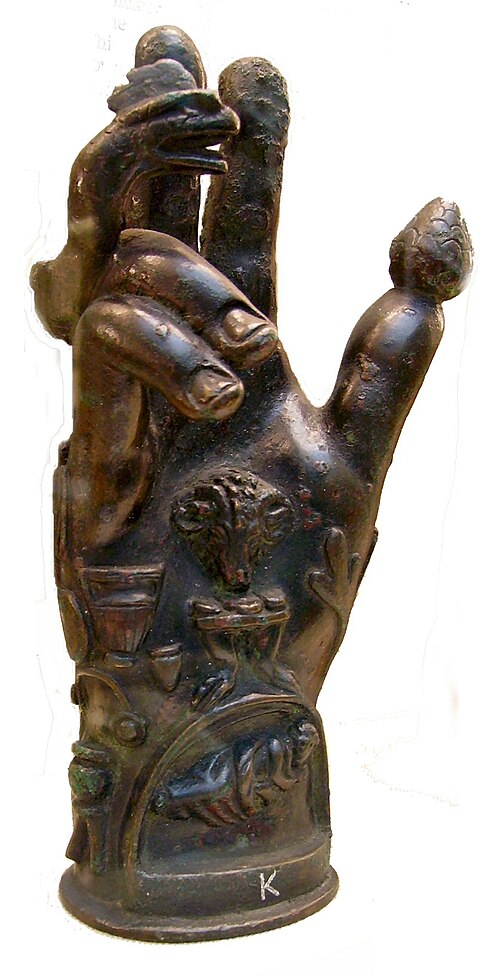
フリギアの 神サバジオスはゼウスやディオニュソスと同一視された。ビザンチンギリシャ百科事典『スーダ』(10世紀頃)には次のように記されている。[211]
サバジオスは...ディオニュソスと同じである。彼はこの呼び方を、彼に関する儀式から得た。異教徒はバッカスの叫びを「サバゼイン」と呼ぶ。したがって、ギリシャ人の中にもそれに倣い、その叫びを「サバスモス」と呼ぶ者がいる。それによってディオニュソスはサバジオスになる。彼らはまた、彼と彼のバッカスの女たちに捧げられた場所を「サボイ」と呼んで いた...デモステネスは「クテシフォンに代わって」という演説の中で、彼らに言及している。サボイはサバジオス、つまりディオニュソスに捧げられた者を指す言葉であり、バッコスに捧げられた者はバッホイであると言う者もいる。彼らはサバジオスとディオニュソスは同じであると言う。したがって、ギリシャ人はバッホイをサボイと呼ぶと言う者もいる。
ストラボンは1世紀に、サバジオスをフリギアの聖職者やレアとディオニュソスの聖なる儀式の従者の一人であるザグレウスと結び付けた。[212]ストラボンの同時代人であるシケリアのディオドロスは、サバジオスをゼウスとペルセポネの間に生まれた秘密のディオニュソスと融合させた。[213]しかし、このつながりは、ゼウス・サバジオスに宛てられた現存する碑文によって裏付けられていない。[214]
いくつかの古代の資料には、ユダヤ民族が崇拝する神ヤハウェは、サバジオスと同一視されることでディオニュソスまたはリーベルと同一視できるという、古典世界で明らかに広く信じられていたことが記録されている。タキトゥス、リュドゥス、コルネリウス・ラベオ、プルタルコスはいずれもこの関連を認めたか、現存する信仰として論じた(ただし、タキトゥスのように、これを否定するために特に持ち出した者もいる)。プルタルコスによると、この同一視の理由の1つは、ユダヤ人が「エウオエ」と「サビ」という言葉で神を称えたと伝えられていることであり、これはサバジオスの崇拝に典型的に関連付けられる叫びである。学者のショーン・M・マクドノーによると、プルタルコスの資料が「イアオ・サバオト」という叫び(ギリシャ語話者がヤハウェについて典型的に使用する)とサバジオスの叫び「エウオエ・サボエ」を混同し、2つの神の混同と融合を引き起こした可能性がある。 「サビ」という叫びは、ユダヤ教の「安息日」と混同されていた可能性もあり、ヤハウェとディオニュソス/サバジウスが同じ神であると古代人が考えていた証拠に加わった。この関係をさらに強固にしたのは、マカバイ人が使用した、ブドウ、ブドウの葉、杯などディオニュソス崇拝に関連する図像を含む硬貨であった。しかし、ユダヤの神がディオニュソス/サバジウスと同一であるという信仰は広く浸透しており、紀元前55年のひざまずく王を描いた硬貨には「バッカス・ユダエウス」(BACCHIVS IVDAEVS)というラベルが貼られ、紀元前139年には法務官コルネリウス・スキピオ・ヒスパロスが「ローマの慣習にユピテル・サバジウスの崇拝を浸透させようとした」としてユダヤ人を追放した。[215]
神話


古代世界には、ディオニュソスの親子関係、誕生、地上での生活に関するさまざまな異なる記述や伝承が存在し、彼の複数の生まれ変わりによって複雑化していた。紀元前 1 世紀までに、一部の神話学者は、ディオニュソスの誕生に関するさまざまな記述を、複数の誕生だけでなく、歴史を通じて地上で神がさまざまな生涯で 2 つまたは 3 つの別個の顕現を経た 1 つの物語に統合しようと試みた。歴史家シケリアのディオドロスは、「一部の神話作家」によると、ディオニュソスという名前の神は 2 人いて、年長の神はゼウスとペルセポネの息子であったが、[217]「年少の神も年長の神の功績を受け継いだため、後世の人々は真実を知らず、名前の同一性に惑わされて、ディオニュソスは 1 人しかいなかったと考えていた」と述べた。[218]彼はまた、ディオニュソスには「2つの姿があると考えられていた...古い姿は長いひげを生やしていた。なぜなら、昔の男性は皆長いひげを生やしていたからである。若い姿は髪が長く、若々しく、女々しく、若い。」と述べた。[219] [220]


ディオニュソスの様々な系譜は多くの古典文学作品で言及されているが、彼の多胎誕生を取り巻く出来事を取り巻く実際の物語神話を含むものはごくわずかである。これらには、ディオニュソスの3つの化身の誕生と行動を記述する紀元前1世紀のギリシャの歴史家ディオドロスの『歴史書』 [221]、ディオニュソスの2度の誕生を記述する紀元後1世紀のローマの作家ヒュギヌスの短い誕生物語、およびディオニュソスの2度の誕生を記述するギリシャの詩人ノンノスの叙事詩『ディオニュシアカ』の形のより長い記述があり、ディオドロスの記述に似たディオニュソスの3つの化身について論じているが、ゼウスとセメレの間に生まれた3番目のディオニュソスの生涯に焦点を当てている。
最初の出産
ディオドロスは、ワインを発明したインドやエジプトのディオニュソスというもっと古い人物が存在したとする伝承をいくつか挙げているが、その誕生や人間の間での生活についての物語はなく、ほとんどの伝承では、ワインの発明とインドを旅したことは最後のディオニュソスの手によるものとしている。ディオドロスによると、ディオニュソスはもともとゼウスとペルセポネ(あるいはゼウスとデメテル)の息子であった。これは、後の記述でヒュギーヌスとノンヌスが描写する角のあるディオニュソスと同一人物であり、オルペウスの崇拝するディオニュソスはティターン神によって四肢を切断されて再生した。ノンヌスはこのディオニュソスをザグレウスと呼び、ディオドロスはサバジウスと同一人物とも考えられていると述べている。[222]しかし、ヒュギーヌスやノンヌスとは異なり、ディオドロスはこの神の化身の誕生物語を提供していない。ディオニュソスは、人間に畑を手で耕すのではなく、牛を使って耕す方法を教えたと言われている。彼の崇拝者たちは、このことを称えて、角のあるディオニュソスを描いたと言われている。[222]

ギリシャの詩人ノンヌスは、4世紀後半または5世紀初頭の叙事詩『ディオニュシアカ』でディオニュソスの誕生物語を書いている。その中でノンヌスは、ゼウスが「新しいディオニュソスを育てようとした。それは、エジプトの神オシリスである年上のディオニュソスの雄牛の形をしたコピーである」と述べている。(『ディオニュシアカ』4)[224]ゼウスは蛇(「ドラコン」)の姿をとって、「未婚のペルセポネイアの処女を強姦した」。ノンヌスによると、ペルセポネイアは「冥界の黒衣の王の配偶者」であったが、処女のままであり、求婚者である多くの神々を避けるために母親によって洞窟に隠されていた。なぜなら、「オリンポスに住む者すべてが、結婚できる乙女をめぐって恋のライバルであるこの一人の少女に魅了された」からである。 (ディオニュソス 5) [225]ペルセポネはゼウスと結ばれた後、子宮が「生きた果実で膨らみ」、角のある赤ん坊を産み、ザグレウスと名付けた。ザグレウスは幼少であったにもかかわらず、ゼウスの玉座に登り、稲妻を振り回してゼウスの後継者と目されることができた。ヘラはこれを見て、ティターン神族に警告した。ティターン神族は顔にチョークを塗りつけ、幼いザグレウスを待ち伏せした。「鏡に映った自分の変化した顔を見つめている間」。彼らはザグレウスを攻撃した。しかし、ノヌスによれば、「ティターン神の鋼鉄によって手足が断片的に切断されたところで、彼の人生の終わりはディオニュソスとしての新しい人生の始まりであった」。彼は、ゼウス、クロノス、赤ん坊、そして「最初のダウンの花が丸いあごに黒く刻まれた狂った若者」など、さまざまな姿に変身して攻撃をし始めた。それからゼウスは、集まったティーターン神たちを攻撃するために、ライオン、野生の馬、角のある蛇、虎、そして最後に雄牛を含むいくつかの動物に変身しました。ヘラが介入し、雄牛を叫び声で殺し、ティーターン神たちはついに雄牛を虐殺し、バラバラに切り刻みました。ゼウスはティーターン神たちを攻撃し、タルタロスに投獄しました。これにより、ティーターン神の母であるガイアが苦しみ、その症状は世界中に見られ、火災、洪水、沸騰する海をもたらしました。ゼウスは彼女を憐れみ、燃える大地を冷やすために、世界を洪水で満たす大雨を起こしました。(ディオニュシアカ 6)[226]
解釈

オルペウス教の伝統では、ディオニュソスは部分的には冥界と関連した神であった。その結果、オルペウス教徒は彼をペルセポネの息子とみなし、彼はティターン神によってバラバラにされ、その後再生したと信じた。ディオニュソスのバラバラと再生のこの神話に関する最古の証言は、紀元前1世紀のフィロデモスとシケリアのディオドロスの著作に見られる。[227]その後、ダマスキオスやオリンピオドロスなどの新プラトン主義者は、ティターン神へのゼウスの罰、ゼウスの手による雷撃による破壊、そしてその後の彼らの灰からの人類の誕生など、さらに多くの要素を神話に加えたが、これらの要素のいずれかが元の神話の一部であったかどうかは、学者の間で議論の的となっている。[228]ディオニュソスのバラバラ(スパラグモス)は、オルペウス教で最も重要な神話であると考えられることが多い。[229]
多くの現代の資料では、この「オルペウスのディオニュソス」をザグレウス神と同一視しているが、この名前は古代のオルペウス教徒の誰からも使われておらず、彼らは単に彼をディオニュソスと呼んでいた。[230]様々な古代資料からつなぎ合わせて、現代の学者によって通常提供される再構成された物語は以下の通りである。[231]ゼウスは蛇の姿のペルセポネと交わり、ディオニュソスを産んだ。赤子はイダ山に連れて行かれ、そこで赤子のゼウスと同様に、踊るクレテスによって守られた。ゼウスはディオニュソスを宇宙の支配者としての後継者にするつもりだったが、嫉妬深いヘラがティターン神にその子を殺させるようそそのかした。ダマスキオスは、ティターン神に嘲笑され、正当な王笏の代わりにフェンネルの茎(テュルソス)を与えられたと主張している。 [232]
ディオドロスは、ディオニュソスはゼウスと農業の女神デメテルの息子であり、彼の誕生物語は自然界で働く神々の生殖力の寓話であると述べています。[233]ディオニュソス誕生後、「ガイアの息子たち」(つまりティターン神)がディオニュソスを煮たとき、デメテルは彼の遺体を集め、彼の再生を可能にしました。ディオドロスは、この神話が信奉者にとって象徴的意味を持つことに注目しました。ブドウの神であるディオニュソスは、雨と大地の神から生まれました。彼は、収穫とワイン製造の過程を象徴するガイアの息子たち、つまり「大地生まれ」によって引き裂かれ、煮られました。裸になったブドウの木の残骸が大地に戻って実りを回復するのと同じように、若いディオニュソスの残骸はデメテルに戻され、彼は再び生まれ変わりました。[222]
第二の誕生

ガイウス・ユリウス・ヒュギーヌス(紀元前 64年頃-紀元後17年)がファビュラエ167に記した誕生物語は、リーベル(ディオニュソス)はもともとジョーブ(ゼウス)とプロセルピナ(ペルセポネ)の息子であったというオルペウスの伝承と一致している。ヒュギーヌスは、リーベルがティターン神によって引き裂かれたので、ジョーブはその心臓の破片を取って飲み物に入れ、ハルモニアとテーバイの王であり創設者でもあるカドモスの娘セメレに与えたと書いている。その結果、セメレは妊娠した。ユノは乳母のベロエの姿でセメレの前に現れ、こう言った。「娘よ、ジョーブがユノのところに来るように、あなたにも来るように頼みなさい。そうすれば、神と寝ることがどんなに楽しいか分かるだろう。」セメレがジョーブにそうするように頼んだとき、彼女は雷に打たれて死んだ。その後、ジョーブは赤ん坊のリーベルを彼女の子宮から取り出し、ニュソスの世話に委ねた。ヒュギヌスは「このため彼はディオニュソスと呼ばれ、また二人の母親を持つ者(ディメトール)とも呼ばれている」と述べている。[234]
ノヌスは、洪水後に生命が復活したとき、ディオニュソスがいないために歓楽が欠けていたことを描写しています。「四季、光の女神たちは、まだ喜びもなく、牧草だけで神々のために花輪を編んでいました。ワインが欠けていたのです。ダンスにインスピレーションを与えるバッコスがいなければ、その優雅さは半分しか完成せず、まったく利益はありませんでした。言葉の代わりにうなずき、口の代わりに手、声の代わりに指だけを使って、くるくると回る踊り手が足音を立ててくるくると回っているとき、それは一団の目を魅了するだけだった。」ゼウスは、息子のディオニュソスを遣わして、人間にブドウの栽培とワインの作り方を教え、彼らの労苦、戦争、苦しみを和らげると宣言しました。人類の守護者となった後、ディオニュソスは地上で苦労するが、「明るい上空に迎えられ、ゼウスの傍らで輝き、星の軌道を共有する」とゼウスは約束しています(ディオニュソス歌 7)。[235]
.jpg/500px-Sebastiano_Ricci_-_Dionysus_(1695).jpg)
人間の王女セメレは夢を見た。その夢の中でゼウスは稲妻で果樹を破壊したが、果実には害を与えなかった。ゼウスは鳥を遣わして果実を一つ運ばせ、それを彼の腿に縫い付けた。こうして彼は新しいディオニュソスの母であり父であった。彼女は彼の腿から雄牛の形をした男の姿が現れるのを見て、自分自身がその木であったことに気づいた。彼女の父カドモスは予言的な夢を恐れ、ゼウスに犠牲を捧げるようセメレに命じた。ゼウスはディオニュソスのさまざまなシンボルで飾られたベッドにいるセメレのもとにやって来た。彼は蛇に変身し、「ゼウスは長い求愛をし、まるでワインの搾り場が近くにあるかのように『エウオイ!』と叫んだ。叫び声を好む息子を生んだのだ」。すぐにセメレのベッドと部屋は蔓と花で覆われ、大地は笑った。ゼウスはセメレに話しかけ、自分の正体を明かし、幸せになるように言った。「あなたは死なない息子を産んだ。私はあなたを不死と呼ぶ。幸せな女性よ!あなたは人間の悩みを忘れさせる息子を身ごもった。あなたは神々と人間に喜びをもたらすだろう。」(ディオニュシアカ 7)[ 236]

セメレは妊娠中、息子が神々しく育つことを知って大喜びしていた。彼女は花輪やツタの冠を身にまとい、音楽が聞こえてくると裸足で草原や森に駆け込んではしゃいだ。ヘラは嫉妬し、ゼウスがセメレをオリンポスの女王の座から引きずり下ろすのではないかと恐れた。彼女はカドモスの乳母だった老女に変装してセメレのもとを訪れた。彼女は、自分たちの短い情事と比べてゼウスがヘラに気を配っていることにセメレを嫉妬させ、ゼウスが完全な神として彼女の前に現れるようにとセメレに懇願させた。セメレはゼウスに姿を現すよう祈った。ゼウスは彼女の祈りに応えたが、彼が稲妻を握っているのを他の人間は見たことがないと警告した。セメレは稲妻に触れようと手を伸ばし、灰になった。(ディオニュシアカ 8) [237]しかし、赤ん坊のディオニュソスは生き残り、ゼウスは彼を炎から救い出し、自分の腿に縫い付けた。「それで、出産中の丸い腿は女性になり、あまりに早く生まれた男の子は、母親の子宮から父親の子宮へと移った母親のやり方ではなく、出産した。」(ディオニュシアカ 9) 生まれたとき、彼は三日月のような形の角を持っていた。四季は彼にツタと花の冠をかぶせ、角のある蛇を彼の角に巻き付けた。[238]
ディオドロスはエジプトの伝承から別の誕生物語を伝えている。それによると、ディオニュソスはアンモンの息子であり、ディオドロスはアンモンを創造神であると同時にリビアの準歴史上の王であるとみなしている。アンモンは女神レアと結婚していたが、ディオニュソスを産んだアマルテイアと関係を持っていた。アンモンはレアがその子供を発見した場合の怒りを恐れ、赤ん坊のディオニュソスをニュサ(ディオニュソスの伝統的な幼少期の家)に連れて行った。アンモンはディオニュソスを洞窟に連れて行き、英雄アリスタイオスの娘ニュサに世話をさせることになった。[222]ディオニュソスは芸術の才能、美しさ、強さで有名になった。少年時代にワイン造りの技術を発見したと言われている。彼の名声はレアの注目を集め、レアはアンモンの欺瞞に激怒した。彼女はディオニュソスを自分の力で支配しようとしたが、それができなかったため、アンモンを離れ、クロノスと結婚した。[222]
解釈

古代においてさえ、ディオニュソスが人間の女性から生まれたという話から、彼は歴史上の人物で、時を経て神格化されたのだと主張する者もいた。これは、半神によく当てはまるエウヘメリズム(神話上の出来事が人間の歴史に根ざしているという説明)を示唆している。4世紀のローマ皇帝で哲学者のユリアヌスは、この信念の例に遭遇し、それに反論した。ユリアヌスは『犬儒学者ヘラクレイオスに宛てた手紙』の中で、「ディオニュソスはセメレから生まれたので人間であり、神術と秘儀の知識によって神となり、我らが主ヘラクレスのようにその王としての徳により父ゼウスによってオリンポスに昇天したと、多くの人が言うのを聞いた」と書いている。しかし、ユリアヌスにとって、ディオニュソスの誕生の神話(およびヘラクレスの誕生の神話)は、より深い精神的真実の寓話であった。ジュリアンは、ディオニュソスの誕生は、セメレにとって「誕生ではなく、神の顕現」であったと主張している。セメレは、ディオニュソス神の物理的な顕現が間もなく現れることを予見していた。しかし、セメレは神が来るのを待ちきれず、神の秘密をあまりにも早く明らかにし始めた。その罪のために、彼女はゼウスに打ち倒された。ゼウスは、人類に新しい秩序を押し付け、「遊牧民の生活様式からより文明的な生活様式に移行する」時が来たと判断し、息子のディオニュソスを目に見える神としてインドから送り、彼の崇拝を広め、彼の顕現の象徴として人間にブドウの木を与えた。ジュリアンの解釈では、ギリシャ人は「セメレが予言をしたため、また、神がまだ来ていない間に、彼の降臨を予言した最初の預言者として彼女を尊敬したため、彼女をディオニュソスの母と呼んだ」。ユリアヌスによれば、ディオニュソスの誕生の寓話的な神話は、これらの出来事の歴史を表現するとともに、彼の誕生が死すべき世界の生成過程の外側にありながらその中に入ったという真実を要約するために発展したが、彼の本当の誕生はゼウスから直接知性の領域へと向かったものであった。[13]
幼少期

ノヌスによれば、ゼウスは幼いディオニュソスをヘルメスに託した。ヘルメスはディオニュソスをラモスの娘たち、つまり川のニンフたちに与えた。しかしヘラはラミデスを狂わせ、ディオニュソスを襲わせた。ディオニュソスはヘルメスに救出された。ヘルメスは次に、幼子をイノのもとに連れて行き、従者のミスティスに育てさせた。ミスティスはディオニュソスに秘儀を教えた(『ディオニュシアカ』第9章)。アポロドーロスの記述では、ヘルメスはイノに、ヘラの怒りから隠すため、ディオニュソスを女の子として育てるよう指示した。[239]しかし、ヘラはディオニュソスを見つけ、洪水で家を滅ぼすと誓った。しかし、ヘルメスは再びディオニュソスを救い出し、今度はリディアの山中に連れて行った。ヘルメスは神々の中で最も古いパネースの姿をとったので、ヘラは彼の前にひざまずいて彼を通した。ヘルメスは赤ん坊を女神レアに渡し、レアは彼の思春期を通して彼の世話をした。[238]
別の説では、ディオニュソスはニュサの雨の精霊たちのもとに連れて行かれ、幼少期から子供時代まで養われ、その世話に対してゼウスは彼女たちを星々の中のヒアデス星団として配置することで報奨を与えたとされている(ヒアデス星団を参照)。さらに別の説では、ディオニュソスはエウボイア島で従兄弟のマクリスに育てられたとされている。[240]

ギリシャ神話のディオニュソスは外国起源の神であり、ニサ山は神話上の場所であるが、常に東か南のはるか遠くに設定されている。ホメロスのディオニュソス讃歌第1番では、この山を「フェニキアからは遠く、エジプトの川の近く」としている。[241]アナトリア、リビア(「西の遠く、大海のそば」)、エチオピア(ヘロドトス)、アラビア(シケリアのディオドロス)に置く者もいる。[242]ヘロドトス によると:
実際、ギリシャの伝説によれば、ディオニュソスは生まれるとすぐにゼウスに腿を縫い合わされ、エジプトの向こうのエチオピアのニサに連れ去られた。一方、パンについては、ギリシャ人は彼が誕生後にどうなったのか知らない。したがって、ギリシャ人がこの 2 人の神の名前を他のすべての神の名前よりも遅く知り、その知識を得たときに両者の誕生をたどったことは私には明らかである。
— ヘロドトス『歴史』 2.146.2
ビブリオテカは、ブドウの神である幼いディオニュソスが、ニュサの雨の精ヒアデスによって育てられたことを語るフェレキュデスの教えに従っているようだ。若いディオニュソスは、ケンタウロスの ケイロンの多くの有名な弟子の一人だったとも言われている。フォティオスの図書館のプトレマイオス・ケヌスによると、「ディオニュソスはケイロンに愛され、彼から聖歌や踊り、バッコスの儀式や入信術を学んだ。」[243]
旅とワインの発明

ディオニュソスは成長すると、ブドウの栽培とその貴重な果汁の抽出法を発見し、それを最初に成し遂げた。[244]しかしヘラが彼を狂気に陥れ、地上のさまざまな場所を放浪者として追放した。フリギアでは、ギリシャ人にはレアとしてよく知られている女神キュベレが彼を癒し、宗教儀式を教えた。そしてディオニュソスは、人々にブドウの栽培を教えながらアジアを旅した。彼の放浪の中で最も有名なのはインドへの遠征で、それは数年続いたと言われている。伝説によると、アレクサンダー大王がインダス川近くのニサという都市に到着したとき、地元の人々は彼らの都市は遠い昔にディオニュソスによって建設され、彼らの都市はディオニュソス神に捧げられたものだと語った。[245]これらの旅は軍事的征服の形をとったもので、シケリアのディオドロスによると、彼はブリテン島とエチオピアを除く全世界を征服した。[246]

ノンヌス によるもう一つの神話は、ディオニュソスに愛されたサテュロスのアンペロスに関するものである。オウィディウスによれば、アンペロスはヴィンデミトル、つまり「ブドウを摘む人」の星座になった。 [247]
... ブドウを摘む者はあなたから逃れられないでしょう。その星座の起源も簡単に語ることができます。ニンフとサテュロスの息子である毛のないアンペルスは、イスマリアの丘でバッカスに愛されたと言われています。神は彼にニレの葉の茂った枝から垂れ下がるブドウの木を授け、そのブドウの木は今でもその少年にちなんで名付けられています。彼は枝についた派手なブドウを無謀に摘み取ったとき、転げ落ちました。リベルは失われた若者を星々へと運びました。
アンペロスに関するもう一つの物語はノンヌスによって語られた。ディオニュソスが予見した事故で、若者は月の女神セレネが送ったアブの刺し傷で狂った雄牛に乗っているときに死んだ。運命の女神はアンペロスにブドウの木としての第二の人生を与え、ディオニュソスはそこから最初のワインを搾った。[248]
ギリシャへの帰還

アジアを旅した後、ギリシャに凱旋したディオニュソスは、凱旋行列の創始者とみなされるようになりました。彼はギリシャに自分の宗教を導入しようと努力しましたが、それがもたらす混乱と狂気を恐れた支配者たちの反対に遭いました。
エウリピデスの劇『バッカイ』に取り入れられたある神話では、ディオニュソスは従弟のペンテウスが統治する生まれ故郷のテーベに戻る。ペンテウス、母アガベ、叔母のイノとアウトノエはディオニュソスの神による誕生を信じない。盲目の預言者テイレシアスの警告にもかかわらず、彼らはディオニュソスの崇拝を否定し、テーベの女性たちを狂気に駆り立てたとして彼を非難する。

ディオニュソスは神の力を使ってペンテウスを狂わせ、キタイロン山の森で行われるマイナドの恍惚とした儀式を覗き見るよう誘う。ペンテウスは乱交を目撃しようと木に隠れる。マイナドたちは彼を見つけると、ディオニュソスに激怒し、彼を山に住むライオンだと思い込み、素手で襲いかかる。ペンテウスの叔母たちと母親のアガベもその中にいて、ペンテウスをバラバラに引き裂く。アガベはペンテウスの首を槍の先に突き刺し、戦利品を父カドモスに届ける。
エウリピデスはこのスパラグモスについて次のように説明している。
「しかし、彼女は口から泡を吹き、目はぐるぐると回っていた。彼女の心はもうぼんやりしていた。神に捕らえられた彼女は、男のことを気に留めなかった。彼女は男の左腕の肘のすぐ下を掴み、足を犠牲者の肋骨に押し付けて肩を引き裂いた。単なる力ではなく、神は彼らが触れるものすべてを容易くした。右腕ではイノが働き、肉を引き裂いた。アウトノエとメナドの群れは彼をつかみ、一斉に叫んだ。息がある間、彼は叫んだが、彼らは勝利の叫びを上げていた。一人が腕を、もう一人が足を、ブーツもすべて掴んだ。彼らは彼の胴体を剥ぎ取り、爪を血で染め、肉の塊を周囲に投げつけた。ペンテウスの遺体は今、ばらばらになって横たわっている。硬い岩の上、森に埋もれた葉にまじって、見つけるのが難しい。彼の母親は彼の頭につまずいた。かわいそうな頭だ!彼女はそれをつかみ、自分のトリソスに、まるでライオンの狩りで勝利の喜びに手を振るのです。」[250]
狂気は去り、ディオニュソスが真の神の姿で現れ、アガベとその姉妹たちを追放し、カドモスとその妻ハルモニアを蛇に変える。テイレシアスだけが助かった。[251]

イリアスでは、トラキアのリュクルゴス王は、ディオニュソスが王国に侵入したと聞いて、ディオニュソスの信奉者であるマイナドスを投獄した。ディオニュソスは逃げてテティスのもとに避難し、干ばつを引き起こして民衆を反乱に駆り立てた。すると神はリュクルゴス王を狂わせ、リュクルゴス王に息子を斧で切り刻ませた。息子はディオニュソスにとって聖なる植物であるツタの塊だと信じさせたからである。すると神託が、リュクルゴスが生きている限りこの土地は乾燥して不毛なままであると言い、民衆はリュクルゴスを四つ裂きにした。王の死によって鎮められたディオニュソスは呪いを解いた。[252] [253]芸術作品に描かれることもある別のバージョンでは、リュクルゴスはディオニュソスの信奉者であるアンブロシアを殺そうとするが、アンブロシアは蔓に姿を変え、激怒した王に巻き付いてゆっくりと首を絞め殺した。[254]
監禁と逃亡

ホメロスのディオニュソス讃歌第7番には、彼が海岸に座っていると、何人かの船員が彼を見つけ、王子だと信じた様子が描かれている。彼らは彼を誘拐して船から逃げ出し、身代金や奴隷として売り飛ばそうとした。しかし、どんな縄も彼を縛ることはできなかった。神は獰猛なライオンに姿を変え、船に熊を放ち、行く手を阻む者すべてを殺した。船から飛び降りた者はイルカに変えられた。唯一生き残ったのは舵取りのアコエテスで、彼は神に気づき、最初から船員たちを止めようとした。[255]
似たような話では、ディオニュソスはティレニアの海賊船を雇ってイカリア島からナクソス島へ航海させた。ディオニュソスが乗船したとき、海賊船はナクソス島ではなくアジアへ航海し、彼を奴隷として売るつもりだった。このとき、神はマストとオールを蛇に変え、船をツタで満たし、笛の音を響かせたので、船員たちは気が狂って海に飛び込み、イルカに変えられた。オウィディウスの『変身物語』では、バッカスは海賊に見つかった幼い子供としてこの話を始めるが、船に乗ると神のような大人に変身する。
多くの神話には、ディオニュソスが懐疑論者から神性を擁護する場面がある。マルコム・ブルは「バッカスが他のオリンピア神と異なり、自分と関係のある島々を行き来するのに船を使わなければならなかったことは、古典神話におけるバッカスの曖昧な立場を示すものだ」と指摘している。[256]パオラ・コレンテは、多くの資料では、海賊との事件はディオニュソスが人間として生きていた時代の終わりごろに起こると指摘している。その意味で、それは彼の神性の最終的な証明となり、しばしば彼が母親を取り戻すために冥界に降りる場面に続き、その後、2人とも天国に昇って他のオリンピアの神々と共に暮らすことができる。[17]
冥界への降下

パウサニアスは『ギリシア誌』第2巻で、ディオニュソスのカタバシス、つまり冥界への降下に関する2つの異なる伝承を述べている。どちらも、ディオニュソスが母セメレを救出し、オリンポスの本来あるべき場所に連れ戻すために死後の世界に入ったことを述べている。そのために、彼はヘラクレスによって抑えられていた地獄の犬ケルベロスと戦わなければならなかった。地元の伝承によると、セメレを救出した後、ディオニュソスは先史時代のレルナ遺跡近くのアルゴリス海岸のラグーンの底知れぬ水から彼女とともに現れた。[259]この神話的な出来事は毎年夜の祭りで記念されたが、その詳細は地元の宗教によって秘密にされていた。パオラ・コレンテによれば、ラグーンの水からディオニュソスが出現したことは、彼とセメレが冥界から再び現れた際の一種の再生を意味している可能性があるという。[17] [260]この神話のバリエーションは、アリストパネスの喜劇『蛙』の基礎となっている。[17]
キリスト教の著述家アレクサンドリアのクレメンスによれば、ディオニュソスはプロシュムノスまたはポリュムノスに導かれて旅をし、その褒美としてディオニュソスの愛人になることを求めた。ディオニュソスが約束を果たす前にプロシュムノスは亡くなったため、プロシュムノスの望みをかなえるために、ディオニュソスはイチジクの枝で男根を作り、プロシュムノスの墓でそれで自らを貫いた。 [261] [262]この物語はキリスト教の資料にのみ完全に残っており、その目的は異教の神話を信用できないものにすることだったが、ディオニュソスの秘儀で使われた秘密の品々の起源を説明することにも役立ったようである。[263]
ディオニュソスが冥界に降りたというこの同じ神話は、紀元前1世紀のシケリアのディオドロスの著作『歴史図書館』と、紀元後1世紀の偽アポロドーロスの著作『図書館』の第3巻の両方によって語られている。後者では、アポロドーロスは、ヘラの怒りから隠された後、ディオニュソスが世界中を旅して自分の神性を否定する者たちと戦い、最後には自分を捕らえた海賊たちをイルカに変えてその神性を証明したことを語っている。その後、彼の地上での人生の頂点は、冥界から母親を取り戻すために降りたことだった。彼は母親をティオネーと改名し、彼女とともに天に昇り、そこで彼女は女神となった。[264]この神話のバリエーションでは、ディオニュソスはオリンポスの神々の仲間になる前に、人間に対して自分の神性を証明し、さらに自分の血統を証明して母親を神の地位に昇格させることでオリンポスでの地位を正当化しなければならないことが暗示されている。[17]
二次神話
ミダスの黄金の手

ディオニュソスは、昔の学校の先生で養父のシレノスが行方不明になっていることを知りました。老人は酔ってさまよい出て、農民に発見され、ミダス王の元に運ばれました(あるいは、ミダスのバラ園で気絶していたとも言われています)。王はシレノスを親切に迎え、シレノスが物語や歌で楽しませている間、10日10晩も彼にご馳走しました。11日目に、ミダスはシレノスをディオニュソスのもとに連れ帰りました。ディオニュソスは王に、報酬は好きなものを選ぶように言いました。
ミダスは、触れるものは何でも金に変わるようにと頼みました。ディオニュソスは同意しましたが、もっと良い選択をしなかったことを後悔しました。ミダスは新しい力に喜び、急いで試してみました。樫の小枝と石に触れて金に変えましたが、パン、肉、ワインも金に変わったことに気づいて喜びは消えました。後に、娘が彼を抱きしめると、彼女も金に変わりました。
王は恐れおののき、ミダスの力を取り去ろうとし、飢えから救ってくれるようディオニュソスに祈った。神はそれを承諾し、ミダスにパクトロス川で体を洗うように言った。ミダスがそうすると、彼らの中に力が入り、川の砂は金色に変わった。この起源神話は、パクトロス川の砂が金色である理由を説明した。
恋愛

テセウスがナクソス島で眠るアリアドネを見捨てたとき、ディオニュソスは彼女を見つけて結婚した。二人の間にはオイノピオンという息子が生まれたが、彼女は自殺するかペルセウスに殺された。いくつかの説では、ディオニュソスは彼女の冠をコロナ座として天に置いたとされ、他の説では、彼は冥界に降りて彼女をオリンポスの神々の元に返したとされている。別の説では、ディオニュソスはテセウスにアリアドネをナクソス島に捨てるように命じたとされている。なぜなら、ディオニュソスはアリアドネを船に運び込む際に彼女を見て、結婚しようと決めたからである。[要出典]ニンフの プサラカンタは、性的好意と引き換えにディオニュソスがアリアドネを口説くのを手伝うと約束したが、ディオニュソスは拒否したため、プサラカンタはアリアドネに自分と一緒に行かないように忠告した。このためディオニュソスは彼女を同名の植物に変えた。[265]
ディオニュソスはニカイアというニンフに恋をしたが、これはいくつかのバージョンではエロスの束縛によるものであった。しかしニカイアは処女を誓った者であり、ディオニュソスの求愛を軽蔑した。そこである日、彼女が留守の間に、ディオニュソスは彼女が飲んでいた泉の水をワインに変えた。酔ったニカイアは気を失い、ディオニュソスは眠っている彼女を強姦した。彼女は目を覚まし何が起こったのかを悟り、彼を傷つけようと探し求めたが、結局見つからなかった。彼女は彼の息子テレテー、サテュロスなどを産んだ。ディオニュソスは彼女にちなんで古代都市ニカイアと名付けた。[266]
ノンノスの『ディオニュソス物語』では、エロスはディオニュソスをアルテミスの処女であるアウラと恋に落ちさせ、アウラがアルテミスを侮辱したことに対する罰として仕組んだ。ディオニュソスはニカイアの時と同じ策略でアウラを眠らせ、縛って強姦した。アウラは自殺を図ったが、うまくいかなかった。アウラはディオニュソスとの間にイアコスともう一人の男の子の双子を産んだとき、双子の片方を食べ、サンガリウス川で溺死した。[267]
また、『ディオニュソス物語』では、ノンヌスは、ディオニュソスがアンペロスという名のハンサムなサテュロスに恋をしたが、アンペロスはセレーネに挑戦したためにセレーネに殺されたと述べている。アンペロスの死後、ディオニュソスはアンペロスを最初のブドウの木に変えた。[268]
その他の神話
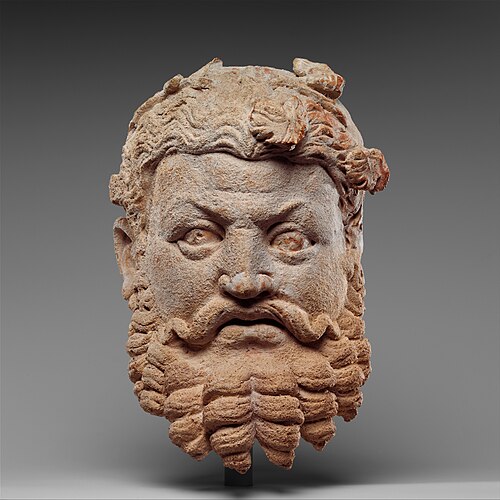
ディオニュソスが冥界に3度降りる場面は、アリストパネスの喜劇『蛙』で創作された。アテネの演劇祭ディオニュシア祭の守護神であるディオニュソスは、偉大な悲劇の劇作家の一人を蘇らせたいと願う。詩の朗読会の後、エウリピデスではなくアイスキュロスが選ばれた。
ヘパイストスがヘラを魔法の椅子に縛り付けたとき、ディオニュソスは彼を酔わせ、気絶させた後オリンポスに連れ戻した。[要出典]
カリロエはカリドンの女性で、ディオニュソスの司祭コレソスを軽蔑した。コレソスはカリドンの女性全員を狂気に陥れると脅した (マイナドを参照)。司祭はカリロエを生贄にするよう命じられたが、代わりに自殺した。カリロエは井戸に身を投げ、その井戸は後に彼女の名にちなんで名付けられた。[要出典]
ディオニュソスはまた、テーベで決して捕まらない運命のキツネを送りました。テーベ王クレオンは、キツネを捕まえて殺すためにアムピトリオンを派遣しました。アムピトリオンは、妻プロクリスがミノスからもらった犬をケパロスから手に入れました。その犬は、追いかけるものは何でも捕まえる運命でした。[出典が必要]
ディオニュソスの親子関係に関する別の記述では、彼はゼウスとゲー(ガイア)の息子であり、テメレー(基礎)とも呼ばれ、それが訛ってセメレーになったとされている。[269] [270]
ヒュギーヌスは、ディオニュソスがかつてロバに人間の言葉を教えたと伝えている。その後、ロバはプリアポスに、どちらのペニスが優れているかを競い合ったが、ロバが負けた。プリアポスはロバを殺したが、ディオニュソスは彼を蟹座の上の星々の中に置いた。[271] [272]
子供たち
図像と描写
シンボル


ディオニュソスの最も初期の祭祀の像は、髭を生やしローブを着た成熟した男性を表している。彼は松ぼっくりのついた、テュルソスとして知られるウイキョウの杖を持っている。後代の像では、彼は髭がなく、官能的で、裸または半裸の両性具有の青年として描かれている。文献では、彼は女性的または「男と女の融合」した神として描写されている。[284]完全に発達した形では、彼の中心的な祭祀の像は、あたかも既知で文明化された境界の向こうのどこかから来たかのように、彼の勝利の、無秩序な到着または帰還を表している。彼の行列(ティアソス)は、野蛮な女性の従者 (メーナド) と、勃起したペニスを持つ髭を生やしたサテュロスで構成されており、中にはテュルソスで武装している者もいれば、踊ったり音楽を演奏したりする者もいる。神自身は、通常はライオンやトラなどの異国の獣に引かれた戦車に乗っており、髭を生やした酔っぱらいのシレノスが随行することもある。この行列は、彼のディオニュソス秘儀の信者たちのカルトのモデルであると推定されています。ディオニュソスは、都市宗教では慣習的な社会に属さない人々の守護者として表現されており、混沌、危険、予期せぬもの、人間の理性では理解できない、神々の予期せぬ行動にのみ帰せられるすべてのものの象徴です。[285]
ディオニュソスは復活の神であり、雄牛と深く結び付けられていた。オリンピアのヘラの祭りの祭典で、ディオニュソスは「雄牛の足を激しく動かして」雄牛として現れるよう招かれている。ヴァルター・バーケルトは「ディオニュソスは雄牛の角をつけた姿で描かれることが多く、キュジコスではタウロモルフィックなイメージで描かれている」と述べ、またディオニュソスが雄牛の子として屠殺され、不敬にもタイタン族に食べられるという古代神話にも言及している。[286]

蛇と男根は古代ギリシャではディオニュソスの、ギリシャとローマではバッカスの象徴であった。[287] [288] [289]ファロフォリアと呼ばれる行列があり、村人たちは男根の像を担いだり、男根の像を荷車に載せて通りを練り歩く。彼は通常、ヒョウやヒョウの皮を着て、テュルソスを持っている。彼の図像には、髪や首にツタや蛇の花輪を巻いたメナドが含まれることもある。[290] [291] [292]
ディオニュソスの信仰は樹木、特にイチジクの木と密接な関係があり、彼の別名のいくつかは、 Endendros(「樹の中の者」)やDendritēs (「樹の者」)など、このことを示しています。ピーターズは、元々の意味は「樹木の間を走る者」または「森の中を走る者」であると示唆しています。Janda(2010)は語源を受け入れていますが、「(世界の)樹木を動かす者」というより宇宙論的な解釈を提案しています。この解釈は、Nysa が「樹木」の意味から山の名前に再解釈された可能性があることを説明しています。インド・ヨーロッパ神話の世界軸は、世界樹と世界山の両方として表現されています。[293]
ディオニュソスは夏から秋への移り変わりとも密接に関係している。地中海の夏は、犬の星シリウスが昇る時期で、天候は極度に暑くなるが、収穫の兆しが見える時期でもある。オリオン座が空の中心にある晩夏は、古代ギリシャではブドウの収穫期だった。プラトンはこの季節の贈り物を、収穫された果物とディオニュソスの喜びとして表現している。ピンダロスは「盛夏の純粋な光」をディオニュソスと密接に関係し、おそらく神自身の化身であると表現している。ゼウスの太ももから生まれたディオニュソスの像は、彼を「ゼウスの光」(ディオス・フォス)と呼び、シリウスの光と結び付けている。[33]
古典芸術
_(3470740119).jpg/500px-Table_support_with_a_Dionysiac_group_(AD_170-180)_(3470740119).jpg)

_Caracalla,_Arte_Romana,_Viale_Guido_Baccelli,_Rome,_Roma,_Lazio,_00154,_Italy_-_Photo_Paolo_Villa_-_FO232114_correzioni_gimp_-_Domus_Arte_Romana_-_pitture_parietali.jpg/500px-thumbnail.jpg)
この神、そしてさらに頻繁に彼の追随者たちは、古代ギリシャの彩飾陶器によく描かれており、その多くはワインを入れるために作られた。しかし、一部のメナドの浮彫は別として、ディオニュソス的主題は、ヘレニズム時代以降に一般的になるまで、大型彫刻にはほとんど登場しなかった。[294]これらにおいて、神自身の扱いは、ディオニュソス・サルダナパルスのような極度に古風なものや新アッティカ的なものから、怠惰で両性具有の若者、しばしば裸体として表すものまで多岐にわたる。[295] 『ヘルメスと幼子ディオニュソス』はおそらく大理石で作られたギリシャのオリジナルであり、ルドヴィーシのディオニュソス群はおそらく紀元2世紀のローマのオリジナルである。ディオニュソス的主題の有名なヘレニズム彫刻でローマ時代のコピーが残っているものには、バルベリーニの牧神、ベルヴェデーレのトルソ、休息するサテュロスなどがある。フリエッティの『ケンタウロス』と『眠れるヘルマフロディトス』は、この頃にはディオニュソス的傾向に陥っていた関連した主題を反映している。[296]大理石の『ペルガモンの踊り子』はオリジナルであり、最近海から引き上げられた ブロンズの『マツァーラ・デル・ヴァッロの踊るサテュロス』も同様である。
ヘレニズム時代のディオニュソス世界は、享楽的だが安全な田園風景であり、ケンタウロス、ニンフ、パン神やヘルマフロディテ神など、田舎の半神的な生き物も取り入れられている。 [ 297]この段階の「ニンフ」は、「単にディオニュソス的な屋外の理想的な女性、野生ではないバッカスを意味している」。[298]ヘレニズム彫刻には、子供や農民という大規模なジャンルの主題が初めて含まれており、その多くはツタの花輪などのディオニュソス的な属性を持ち、「ほとんどが彼の領域の一部と見なされるべきである。彼らはサテュロスやニンフと共通しており、屋外の生き物であり、真の個人的アイデンティティを持たない。」[299]紀元前4世紀のデルヴェニ・クラテルは、古典時代またはヘレニズム時代の非常に大規模な最高品質の金属製容器として唯一現存しており、ディオニュソスとその追随者たちが描かれています。
Dionysus appealed to the Hellenistic monarchies for a number of reasons, apart from merely being a god of pleasure: He was a human who became divine, he came from, and had conquered, the East, exemplified a lifestyle of display and magnificence with his mortal followers, and was often regarded as an ancestor.[300] He continued to appeal to the rich of Imperial Rome, who populated their gardens with Dionysian sculpture, and by the second century AD were often buried in sarcophagi carved with crowded scenes of Bacchus and his entourage.[301]
The fourth-century AD Lycurgus Cup in the British Museum is a spectacular cage cup which changes colour when light comes through the glass; it shows the bound King Lycurgus being taunted by the god and attacked by a satyr; this may have been used for celebration of Dionysian mysteries. Elizabeth Kessler has theorized that a mosaic appearing on the triclinium floor of the House of Aion in Nea Paphos, Cyprus, details a monotheistic worship of Dionysus.[302] In the mosaic, other gods appear but may only be lesser representations of the centrally imposed Dionysus. The mid-Byzantine Veroli Casket shows the tradition lingering in Constantinople around 1000 AD, but probably not very well understood.
Early modern art
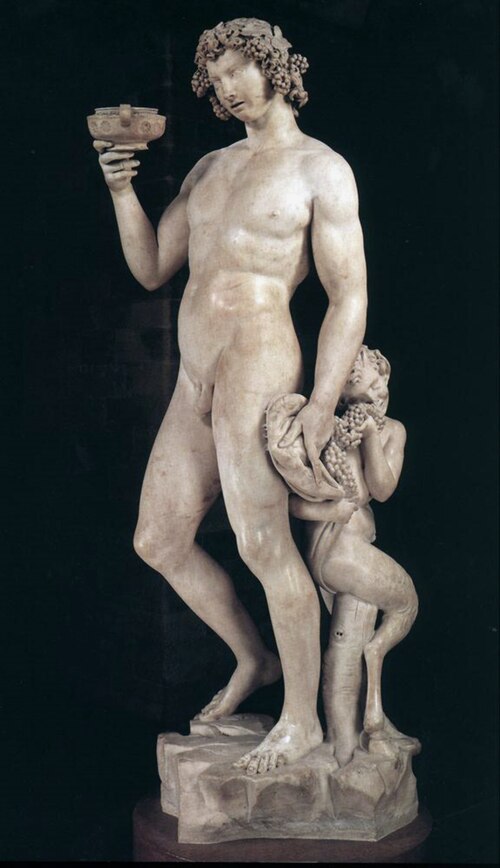
Bacchic subjects in art resumed in the Italian Renaissance, and soon became almost as popular as in antiquity, but his "strong association with feminine spirituality and power almost disappeared", as did "the idea that the destructive and creative powers of the god were indissolubly linked".[303] In Michelangelo's statue (1496–97) "madness has become merriment". The statue tries to suggest both drunken incapacity and an elevated consciousness, but this was perhaps lost on later viewers, and typically the two aspects were thereafter split, with a clearly drunk Silenus representing the former, and a youthful Bacchus often shown with wings, because he carries the mind to higher places.[304]
_-_Sine_Cerere_et_Libero_friget_Venus_(Without_Ceres_and_Bacchus,_Venus_Would_Freeze)_-_Google_Art_Project.jpg/500px-Hendrick_Goltzius,_Dutch_(active_Haarlem)_-_Sine_Cerere_et_Libero_friget_Venus_(Without_Ceres_and_Bacchus,_Venus_Would_Freeze)_-_Google_Art_Project.jpg)
Titian's Bacchus and Ariadne (1522–23) and The Bacchanal of the Andrians (1523–26), both painted for the same room, offer an influential heroic pastoral,[305] while Diego Velázquez in The Triumph of Bacchus (or Los borrachos – "the drinkers", c. 1629) and Jusepe de Ribera in his Drunken Silenus choose a genre realism. Flemish Baroque painting frequently painted the Bacchic followers, as in Van Dyck's Drunken Silenus and many works by Rubens; Poussin was another regular painter of Bacchic scenes.[306]
A common theme in art beginning in the sixteenth century was the depiction of Bacchus and Ceres caring for a representation of love – often Venus, Cupid, or Amore. This tradition derived from a quotation by the Roman comedian Terence (c. 195/185 – c. 159 BC) which became a popular proverb in the Early Modern period: Sine Cerere et Baccho friget Venus ("without Ceres and Bacchus, Venus freezes"). Its simplest level of meaning is that love needs food and wine to thrive. Artwork based on this saying was popular during the period 1550–1630, especially in Northern Mannerism in Prague and the Low Countries, as well as by Rubens. Because of his association with the vine harvest, Bacchus became the god of autumn, and he and his followers were often shown in sets depicting the seasons.[307]
Modern literature and philosophy


Dionysus has remained an inspiration to artists, philosophers and writers into the modern era. In The Birth of Tragedy (1872), the German philosopher Friedrich Nietzsche proposed that a tension between Apollonian and Dionysian aesthetic principles underlay the development of Greek tragedy; Dionysus represented what was unrestrained chaotic and irrational, while Apollo represented the rational and ordered. This concept of a rivalry or opposition between Dionysus and Apollo has been characterized as a "modern myth", as it is the invention of modern thinkers like Nietzsche and Johann Joachim Winckelmann, and is not found in classical sources. However, the acceptance and popularity of this theme in Western culture has been so great, that its undercurrent has influenced the conclusions of classical scholarship.[308]
Nietzsche also claimed that the oldest forms of Greek Tragedy were entirely based upon the suffering Dionysus. In Nietzsche's 1886 work Beyond Good and Evil, and later The Twilight of the Idols, The Antichrist and Ecce Homo, Dionysus is conceived as the embodiment of the unrestrained will to power. Towards the end of his life, Nietzsche famously went mad. He was known to sign letters as both Dionysus and "The Crucified" in this period of his life. In The Hellenic Religion of the Suffering God (1904), and Dionysus and Early Dionysianism (1921), the poet Vyacheslav Ivanov elaborates the theory of Dionysianism, tracing the origins of literature, and tragedy in particular, to ancient Dionysian mysteries. Ivanov said that Dionysus' suffering "was the distinctive feature of the cult" just as Christ's suffering is significant for Christianity.[309] Karl Kerényi characterizes Dionysus as representative of the psychological life force (Greek Zoê).[310] Other psychological interpretations place Dionysus' emotionality in the foreground, focusing on the joy, terror or hysteria associated with the god.[311][312][313][314][315] Sigmund Freud specified that his ashes should be kept in an Ancient Greek vase painted with Dionysian scenes from his collection, which remains on display at Golders Green Crematorium in London.
J. M. Tolcher's autobiography, Poof (2023), features Dionysus as a character and a force of modern liberation in Australia, incorporating traditional myth and Nietzschean philosophy to represent queer suffering.[316] “[Dionysus as] Tolcher is a convincing and sympathetic anti-hero. His crimes (figurative and literal) have rationales: they are reparations, they are specific acts of rebellion, with a focus on, above all, survival. His substance abuse is a symptom of the escapism of all outcast subcultures, a grasp (however doomed) against nihilistic despair. Poof is Tolcher’s barbaric yawp—a throat-tearing shriek that is meant to ring in its readers’ ears long after: this is what the silence of heteronormative, WASP respectability costs for queer people, this is the price of ignorance on a human body and psyche.”[317]
Modern film and performance art

Walt Disney depicted Bacchus in the "Pastoral" segment of the animated film Fantasia, as a Silenus-like character.
In 1969, an adaption of The Bacchae was performed, called Dionysus in '69. A film was made of the same performance. The production was notable for involving audience participation, nudity, and theatrical innovations.[318]
In 1974, Stephen Sondheim and Burt Shevelove adapted Aristophanes' comedy The Frogs into a modern musical, which hit broadway in 2004 and was revived in London in 2017. The musical keeps the descent of Dionysus into Hades to bring back a playwright; however, the playwrights are updated to modern times, and Dionysus is forced to choose between George Bernard Shaw and William Shakespeare.[319]
In 2006, The Orion Experience, in the album Cosmicandy, included a song titled "Cult of Dionysus". The song invokes themes from the god's cult. The entire album is described as "short, sharp, and ultimately memorable, glowing with a long-forgotten disco-synth energy."[320] The song overall plays upon the god's themes of being devious and rebelling against social norms.
In 2014, Dionysus was featured in Smite as a playable god under his Roman Bacchus name.
In 2018, Dionysus was featured in Hades, an indie roguelike action dungeon crawler video game developed and published by Supergiant Games. He is one of the cousins of the protagonist and playable character, Zagreus, who is trying to escape the underworld and find his mother whilst his father, Hades, tries to stop him. Dionysus offers boons and assist the Son of Hades in his attempts to escape from the underworld. All of his boons and powers are based on his key traits from his Mythos, focusing on alcohol related abilities and negative effects on enemies to assist the protagonist. His characterisation in the game nods back to a lot of his stories and traits from the history of the character. His interactions with other Gods also highlight his character as mischievous, a lover of festivities and of course, wine. There is also the reference of the protagonist having the name Zagreus, considered to be the first birth of Dionysus. He is voiced by Cyrus Nemati.
In 2018, the Australian musical project Dead Can Dance released an album entitled Dionysus. Musician Brendan Perry described the inspiration for the album as a trance-like, "Dionysian" experience he had at a festival during a trip to rural Spain. "It's the spring festivals like that one where you see the real remnants of Dionysian festivals. They're all over the Mediterranean in remote places where Christian influence hasn't been as great .... People wear masks and dance in circles almost like time has stood still in their celebrations." Perry chose to employ Mediterranean folk instruments that mimic natural sounds in addition to a vocal chorus, in order to evoke the atmosphere of an ancient festival.[321]
In 2019, the South Korean boy band BTS released a rap-rock-synth-pop-hip hop track.[207][322] named "Dionysus" as part of their album Map of the Soul: Persona. The naming of this song comes from the association of the namesake with debauchery and excess, this is reflected in its lyrics talking about "getting drunk on art" – playing on the Korean words for "alcohol" (술 sul) and "art" (예술 yesul) as an example – alongside expressions about their stardom, legacy, and artistic integrity. The band's leader RM in a press release described the song as, "the joy and pain of creating something" and "an honest track".[323]
In 2024, French actor and singer Phillippe Katerine portrayed a blue and near naked Dionysus at the 2024 Summer Olympics opening ceremony in France. The portrayal was part of what many believed was part of a recreation of The Last Supper with drag queens.[324][325] Others viewed him as similar to Belgian comic character Papa Smurf.[326] However, the ceremony's artistic director, Thomas Jolly and the International Olympic Committee insist that depiction was in fact inspired by a 17th-century Dutch painting of the Greek Olympian gods, The Feast of the Gods, painted by the artist Jan van Bijlert between 1635 and 1640. However this contradicts a statement from the Paris 2024 producers, “For the ‘Festivities’ segment, Thomas Jolly took inspiration from Leonardo da Vinci’s famous painting to create the setting."[327]
Parallels with Christianity


Numerous scholars have compared narratives surrounding the Christian figure of Jesus with those associated with Dionysus.
Death and resurrection
Some scholars of comparative mythology identify both Dionysus and Jesus with the dying-and-rising god mythological archetype.[328] On the other hand, it has been noted that the details of Dionysus' death and rebirth are starkly different both in content and symbolism from Jesus. The two stories take place in very different historical and geographic contexts. Also, the manner of death is different; in the most common myth, Dionysus was torn to pieces and eaten by the Titans, but "eventually restored to a new life" from the heart that was left over.[329][330]
Trial
Another parallel can be seen in The Bacchae where Dionysus appears before King Pentheus on charges of claiming divinity, which is compared to the New Testament scene of Jesus being interrogated by Pontius Pilate.[331][332][333] However, a number of scholars dispute this parallel, since the confrontation between Dionysus and Pentheus ends with Pentheus dying, torn into pieces by the mad women, whereas the trial of Jesus ends with him being sentenced to death. The discrepancies between the two stories, including their resolutions, have led many scholars to regard the Dionysus story as radically different from the one about Jesus, except for the parallel of the arrest, which is a detail that appears in many biographies as well.[334]
Other parallels
E. Kessler has argued that the Dionysian cult developed into strict monotheism by the fourth century AD; together with Mithraism and other sects, the cult formed an instance of "pagan monotheism" in direct competition with Early Christianity during Late Antiquity.[335] Scholars from the sixteenth century onwards, especially Gerard Vossius, also discussed the parallels between the biographies of Dionysus/Bacchus and Moses (Vossius named his sons Dionysius and Isaac). Such comparisons surface in details of paintings by Poussin.[336]
John Moles has argued that the Dionysian cult influenced early Christianity, and especially how Christians understood themselves as a new religion centered around a savior deity. In particular, he argues that the account of Christian origins in the Acts of the Apostles was heavily influenced by Euripides' The Bacchae.[328] Moles also suggests that Paul the Apostle may have partially based his account of the Lord's Supper[337] on the ritual meals performed by members of the Dionysian cult.[328]: 96
Gallery
- Dionysus in art
-
 Bronze statue of infant Bacchus, 1st century AD, Getty Villa.
 -
 Roman marble sarcophagus with the Triumph of Dionysos and the Seasons (circa 260–270 AD)
 -
 Triumph of Dionysus
 -
 Bacchus of Aldaia, 2nd cent. AD, NAMM.
 -
 The Dionysus Cup, a sixth-century BC kylix with Dionysus sailing with the pirates he transformed to dolphins
 -
 Dionysus holding an egg and a cock, terracotta from Tanagra, Greece, c. 350 BC
 -

-
 Statue of Dionysus (Sardanapalus) (Museo Palazzo Massimo Alle Terme, Rome)
 -
![Bronze head of Dionysus (50 BC – 50 AD) in the British Museum[338]](https://img-server.japedia.wiki/wikipedia/commons/thumb/6/6f/Bronze_Head_of_Dionysos.JPG/500px-Bronze_Head_of_Dionysos.JPG) Bronze head of Dionysus (50 BC – 50 AD) in the British Museum[338]
Bronze head of Dionysus (50 BC – 50 AD) in the British Museum[338] -
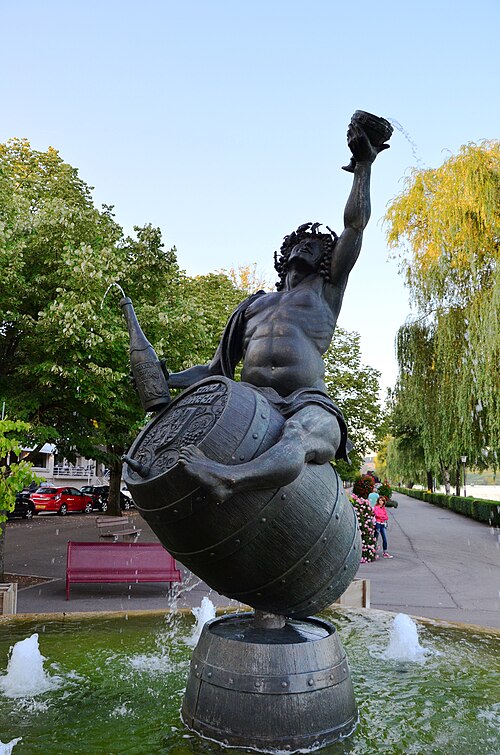 Statue of Dionysus in Remich, Luxembourg
 -
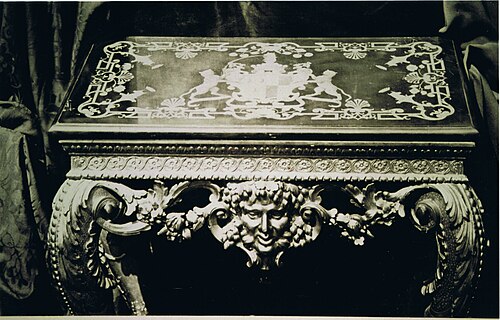 A Bacchus themed table - the top was made in Florence (c. 1736) and the gilded wood base in Britain or Ireland (circa 1736–1740).
 -
 Head of a Dionysian statue, 310-290 BC, Palatine Museum
 -
 Bacchus – Giovanni Francesco Romanelli (seventeenth century)
 -
 Dionysian amphora
 -
 Dionysian jug
 -
 Terracotta vase in the shape of Dionysus' head (circa 410 BC) – on display in the Ancient Agora Museum in Athens, housed in the Stoa of Attalus
 -
 Amphora with cult mask of Dionysus, by the Antimenes Painter, around 520 BC, Altes Museum
 -
 Marble head of Dionysus, from the Gymnasium of Salamis, second century AD, Cyprus Museum, Nicosia, Cyprus
 -
 Cult mask of Dionysus from Boeotia, fourth century BC
 -
 Marble statuette of Dionysos, early third century B.C, Metropolitan Museum
 -
 Herm with Dionysus's head from Eleutherna.
.jpg/500px-Infant_Bacchus,_front_-_Getty_Museum_(96.AB.53).jpg)
.jpg/500px-Roman_-_Sarcophagus_with_the_Triumph_of_Dionysus_-_Walters_2331_(2).jpg)
.jpg/500px-Museo_Arqueol%C3%B3gico_Madrid_(17227637735).jpg)


_-_Nationalmuseum_-_17103.tif/lossy-page1-1280px-Bacchus_(Giovanni_Francesco_Romanelli)_-_Nationalmuseum_-_17103.tif.jpg)

.jpg/500px-Amphora_with_cult_mask_of_Dionysus,_by_the_Antimenes_Painter,_arounbd_520_BC,_Altes_Museum_Berlin_(13718436013).jpg)
.jpg/500px-Marble_head_of_Dionysus,_from_the_Gymnasium_of_Salamis,_2nd_century_AD,_Cyprus_Museum,_Nicosia,_Cyprus_(22309811890).jpg)
Genealogy
See also


- Methe (goddess of drunkedness)
- Alpos and Nonnus
- Anthesteria, Ascolia, Dionysia and Lenaia
- Dionysian Mysteries and Cult of Dionysus
- Pan (god), Ampelos, Cybele and Silenus
- Theatre of Dionysus
Notes
- ^ Another variant, from the Spanish royal collection, is at the Museo del Prado, Madrid: illustration.
- ^ Rosemarie Taylor-Perry, 2003. The God Who Comes: Dionysian Mysteries Revisited. Algora Press.
- ^ Hedreen, Guy Michael. Silens in Attic Black-figure Vase-painting: Myth and Performance. University of Michigan Press. 1992. ISBN 9780472102952. p. 1
- ^ James, Edwin Oliver. The Tree of Life: An Archaeological Study. Brill Publications. 1966. p. 234. ISBN 9789004016125
- ^ In Greek "both votary and god are called Bacchus". Burkert, p. 162. For the initiate as Bacchus, see Euripides, Bacchae 491. For the god, who alone is Dionysus, see Sophocles, Oedipus Rex 211 and Euripides, Hippolytus 560.
- ^ Csapo, Eric (2016-08-03). "The 'Theology' of the Dionysia and Old Comedy". In Eidinow, Esther (ed.). Theologies of Ancient Greek Religion. New York: Cambridge University Press. p. 118. ISBN 978-1-316-71521-5.
- ^ Olszewski, E. (2019). Dionysus’s enigmatic thyrsus. Proceedings of the American Philosophical Society, 163(2), 153–173.
- ^ Sutton, p. 2, mentions Dionysus as The Liberator in relation to the city Dionysia festivals. In Euripides, Bacchae 379–385: "He holds this office, to join in dances, [380] to laugh with the flute, and to bring an end to cares, whenever the delight of the grape comes at the feasts of the gods, and in ivy-bearing banquets the goblet sheds sleep over men."
- ^ Thomas McEvilley, The Shape of Ancient Thought, Allsworth press, 2002, pp. 118–121. Google Books preview
- ^ Reginald Pepys Winnington-Ingram, Sophocles: an interpretation, Cambridge University Press, 1980, p. 109 Google Books preview
- ^ Zofia H. Archibald, in Gocha R. Tsetskhladze (Ed.) Ancient Greeks west and east, Brill, 1999, pp. 429 ff.Google Books preview
- ^ Rosemarie Taylor-Perry, 2003. The God Who Comes: Dionysian Mysteries Revisited. Algora Press.
- ^ a b Julian, trans. by Emily Wilmer Cave Wright. To the Cynic Heracleios. The Works of the Emperor Julian, volume II (1913) Loeb Classical Library.
- ^ a b c d e f g Isler-Kerényi, Cornelia; Watson, Wilfred G. E. (2007). "An Iconography in Process". Dionysos in Archaic Greece. Brill. pp. 5–16. JSTOR 10.1163/j.ctt1w76w9x.7.
- ^ a b Brockett, Oscar Gross (1968). History of the Theatre. Boston: Allyn & Bacon. pp. 18–26.
- ^ Riu, Xavier (1999). Dionysism and Comedy. Rowman and Littlefield. p. 105. ISBN 9780847694426.
- ^ a b c d e Corrente, Paola. 2012. Dioniso y los Dying gods: paralelos metodológicos. Tesis doctoral, Universidad Complutense de Madrid.
- ^ a b c d Beekes 2009, p. 337.
- ^ a b Palaima, Thomas G. University of Texas at Austin, 1998
- ^ John Chadwick, The Mycenaean World, Cambridge University Press, 1976, pp. 99ff: "But Dionysos surprisingly appears twice at Pylos, in the form Diwonusos, both times irritatingly enough on fragments, so that we have no means of verifying his divinity."
- ^ "The Linear B word di-wo-nu-so". Palaeolexicon. Word study tool of ancient languages.
- ^ a b Raymoure, K. A. (November 2, 2012). "Khania Linear B Transliterations". Minoan Linear A & Mycenaean Linear B. Deaditerranean. "Possible evidence of human sacrifice at Minoan Chania". Archaeology News Network. 2014. Archived from the original on 2014-03-17. Retrieved 2014-03-17. Raymoure, K. A. "Khania KH Gq Linear B Series". Minoan Linear A & Mycenaean Linear B. Deaditerranean. "KH 5 Gq (1)". Dāmos: Database of Mycenaean at Oslo. University of Oslo.
- ^ "The Linear B word di-wo". Palaeolexicon.
- ^ Fox, p. 217, "The word Dionysos is divisible into two parts, the first originally Διος (cf. Ζευς), while the second is of an unknown signification, although perhaps connected with the name of the Mount Nysa which figures in the story of Lykourgos: ... when Dionysos had been reborn from the thigh of Zeus, Hermes entrusted him to the nymphs of Mount Nysa, who fed him on the food of the gods, and made him immortal."
- ^ Testimonia of Pherecydes in an early fifth-century BC fragment, FGrH 3, 178, in the context of a discussion on the name of Dionysus: "Nũsas (acc. pl.), he [Pherecydes] said, was what they called the trees."
- ^ "Greek Word Study Tool". www.perseus.tufts.edu.
- ^ a b Martin Nilsson Die Geschichte der Griechische Religion (1967). Vol. I, p. 567.
- ^ νυός. Liddell, Henry George; Scott, Robert; A Greek–English Lexicon at the Perseus Project.
- ^ Myths of Greece and Rome, by Jane Harrison (1928).
- ^ This is the view of Garcia Ramon (1987) and Peters (1989), summarised and endorsed in Janda (2010:20).
- ^ a b Nonnus, Dionysiaca 9.20–24.
- ^ Suda s.v. Διόνυσος .
- ^ a b c d e f g Kerényi, Karl. 1976. Dionysus. Trans. Ralph Manheim, Princeton University Press. ISBN 0691029156, 978-0691029153
- ^ "dinos". British Museum. Retrieved 2022-07-18.
- ^ Janson, Horst Woldemar; Janson, Anthony F. (2004). Touborg, Sarah; Moore, Julia; Oppenheimer, Margaret; Castro, Anita (eds.). History of Art: The Western Tradition. Vol. 1 (Revised 6th ed.). Upper Saddle River, New Jersey: Pearson Education. p. 105. ISBN 0-13-182622-0.
- ^ Pausanias, 8.39.6.
- ^ Stephanus of Byzantium, s.v. Ακρωρεία
- ^ Used thus by Ausonius, Epigrams, 29, 6, and in Catullus, 29; see Lee M. Fratantuono, NIVALES SOCII: CAESAR, MAMURRA, AND THE SNOW OF CATULLUS C. 57, Quaderni Urbinati di Cultura Classica, New Series, Vol. 96, No. 3 (2010), p. 107, Note 2.
- ^ Smith, s.v. Aegobolus; Pausanias, 9.8.1–2.
- ^ a b c Stephan, Christian. "Suidas". Religion in Geschichte und Gegenwart. doi:10.1163/2405-8262_rgg4_sim_025853.
- ^ Suidas s.v. Androgynos : "Androgynos (androgynous) : [A word applied to] Dionysos, as one doing both active, male things and passive, female ones [specifically sexual intercourse]."
- ^ "Greek Word Study Tool". Perseus.tufts.edu. Retrieved 6 February 2022.
- ^ Erwin Rohde, Psyché, p. 269
- ^ Smith, William (1870) Dictionary of Greek and Roman Biography and Mythology, Vol 1 p.470; retrieved 11 November 2022
- ^ Nilsson Vol I, p.571.
- ^ "Greek Word Study Tool". Perseus.tufts.edu. Retrieved 6 February 2022.
- ^ Harrison, Prolegomena p.414.
- ^ Aristid.Or.41
- ^ Macr.Sat.I.18.9
- ^ For a parallel see pneuma/psuche/anima The core meaning is wind as "breath/spirit"
- ^ Bulls in antiquity were said to roar.
- ^ Blackwell, Christopher W.; Blackwell, Amy Hackney (2011). Mythology For Dummies. John Wiley & Sons. ISBN 9781118053874.
- ^ McKeown, J.C. A Cabinet of Greek Curiosities: Strange Tales and Surprising Facts from the Cradle of Western Civilization, Oxford University Press, New York, 2013, p. 210)
- ^ Clement of Alexandria, Exhortation to the Greeks, 92: 82–83, Loeb Classical Library (registration required: accessed 17 December 2016)
- ^ Kerényi 1967; Kerényi 1976.
- ^ Suidas s.v. Kistophoros : "Kistophoros (basket-bearer, ivy-bearer) : It seems that baskets were sacred to Dionysos and the Two Goddesses [Demeter and Persephone]." [N.B. Derived from Harpocration s.v. kittophoros, the ivy-bearer.]
- ^ Hau, Lisa Irene (2016-07-01), "Diodorus Siculus", Moral History from Herodotus to Diodorus Siculus, Edinburgh University Press, doi:10.3366/edinburgh/9781474411073.003.0003, ISBN 978-1-4744-1107-3
- ^ Suidas s.v. Dimetor : "Dimêtôr (twice-born) : Dionysos."
- ^ Diodorus Siculus, Library of History 3. 62. 5 (trans. Oldfather) (Greek historian C1st B.C.): "Dionysos was named twice-born (dimetor) by the ancients, counting it as a single and first birth when the plant is set in the ground and begins to grow, and as a second birth when it becomes laden with fruit and ripens its grape-clusters--the god thus being considered as having been born once from the earth and again from the vine."
- ^ A Dictionary of Greek and Roman biography and mythology, Dendrites
- ^ Janda (2010), 16–44.
- ^ Kerényi 1976, p. 286.
- ^ Jameson 1993, 53. Cf. note 16 for suggestions of Devereux on "Enorkhes,"
- ^ Reece, Steve, "The Epithet ἐρίδρομος in Nonnus’ Dionysiaca," Philologus: Zeitschrift für antike Literatur und ihre Rezeption 145 (2001) 357–359, explains Nonnus' use of this epithet at Dionysiaca 23.28 as a translation of the moribund Homeric epithet ἐριούνιος, which in Cyprian means "good-running."
- ^ "SOL Search". Cs.uky.edu. Retrieved 6 February 2022.
- ^ "Greek Word Study Tool". Perseus.tufts.edu. Retrieved 6 February 2022.
- ^ "Greek Anthology, Volume III, book 9, chapter 524". Perseus.tufts.edu. Retrieved 6 February 2022.
- ^ Versnel, H.S. (2015). Inconsistencies in Greek and Roman Religion: Transition and Reversal in Myth and Ritual. Vol. 1, Ter Unus. Isis, Dionysos, Hermes. Three Studies in Henotheism. Brill Publications. p. 119. ISBN 978-90-04-09266-2.
- ^ "Henry George Liddell, Robert Scott, A Greek-English Lexicon, κεμάς". Perseus.tufts.edu. Retrieved 6 February 2022.
- ^ Alkaeus: Temple of Zeus, Hera and "Dionysus Kemilius" (Ζόννυσος Κεμήλιος) Nilsson Vol I p.575
- ^ "Greek Word Study Tool". Perseus.tufts.edu. Retrieved 6 February 2022.
- ^ "Greek Word Study Tool". Perseus.tufts.edu.
- ^ Nilsson Vol I p.574
- ^ "Greek Word Study Tool". Perseus.tufts.edu. Retrieved 6 February 2022.
- ^ Pausanias, Description of Greece 9.16.6; Fowler, p. 63.
- ^ "Greek Word Study Tool". www.perseus.tufts.edu.
- ^ Mentioned by Erasmus in The Praise of Folly
- ^ "Greek Word Study Tool". Perseus.tufts.edu. Retrieved 6 February 2022.
- ^ Pausanias 8.54.5
- ^ "Philostratus the Athenian, Vita Apollonii, book 2, chapter 2". www.perseus.tufts.edu.
- ^ "ToposText". topostext.org.
- ^ "Arrian, Anabasis, book 5, chapter 1". www.perseus.tufts.edu.
- ^ "Arrian, Anabasis, book 5, chapter 2". www.perseus.tufts.edu.
- ^ Suidas (1705). Souidas. : Suidæ lexicon, Græce & Latine. Textum Græcum cum manuscriptis codicibus collatum a quamplurimis mendis purgavit, notisque perpetuis illustravit: versionem Latinam Æmilii Porti innumeris in locis correxit; indicesque auctorum & rerum adjecit Ludolphus Kusterus, Professor humaniorum literarum in Gymnasio Regio Berolinensi. Typis academicis. OCLC 744697285.
- ^ Suidas s.v. Oinops (quoting Greek Anthology 6. 44. 5 and 7. 20. 2) : "Oinops (wine-dark): 'to wine-dark [so-and-so],' to black [so-and-so]. In the Epigrams: '. . . from which we poured libations, as much [as is] right, to wine-dark Bakkhos and the Satyroi.' But ruddy (oinôpos) [means] wine-coloured, bright or black. 'Feeding on the ruddy grape-cluster of Bakkhos.'"
- ^ "Henry George Liddell, Robert Scott, A Greek-English Lexicon, ὠμάδιος". www.perseus.tufts.edu. Retrieved 2024-06-08.
=ὠμηστής, because he had human sacrifices at Chios and Tenedos
;"Henry George Liddell, Robert Scott, A Greek-English Lexicon, ὠμησ-τής". www.perseus.tufts.edu. Retrieved 2024-06-08.eating raw flesh ... epith. of Dionysus, = ὠμάδιος
- ^ Orphic Hymns, xxx. 5 (Taylor), (Athanassakis and Wolkov), lii. 7 (Taylor), (Athanassakis and Wolkov).
- ^ Porphyry, On Abstinance from Animal Food, ii. 55 and note 23, p. 87 (also at Tertullian.org) (with citations to Orphic Hymns xxxix. 5 and li. 7 substituted for xxx. 5 and lii. 7).
- ^ "EUSEBE DE CESAREE : Préparation évangélique : livre IV (texte grec)". remacle.org.
- ^ Nilsson Vol I ,p.593.
- ^ "Henry George Liddell, Robert Scott, A Greek-English Lexicon, φαλλήν". Perseus.tufts.edu. Retrieved 6 February 2022.
- ^ Φλοιός, Φλέος, Φλεύς . (Plut.quest. conviv. p. 683F, Aelian V.H. III 41, Herodian I p.400 Lenz) Nilsson Vol I p.584)
- ^ "Greek Word Study Tool". Perseus.tufts.edu. Retrieved 6 February 2022.
- ^ "Greek Word Study Tool". Perseus.tufts.edu. Retrieved 6 February 2022.
- ^ "Henry George Liddell, Robert Scott, A Greek-English Lexicon, περικι_-όνιος". Perseus.tufts.edu. Retrieved 6 February 2022.
- ^ Opsomer, Jan. "La démiurgie des jeunes dieux selon Proclus". In: Études Classiques Tome 71, Nº. 1: Le "Timée" au fil des âges: son influence et ses lectures. 2003. pp. 18-19 (footnote nr. 47), 25 and 37-38 (footnote nr. 124). ISSN 0014-200X
- ^ Georges, Karl Ernst. Ausführliches lateinisch-deutsches Handwörterbuch. Hannover: August, 1918 (Nachdruck Darmstadt 1998). Band 2. Sp. 2582.
- ^ Harrison, Jane Ellen. Themis. Cambridge University Press. 1912. p. 421.
- ^ Naylor, H. Darnley. Horace Odes and Epodes: A study in word-order. Cambridge: Cambridge University Press. 1922. p. 37.
- ^ Putnam, Michael C. J. (1994). "Structure and Design in Horace "Odes" 1. 17". The Classical World. 87 (5): 357–375. doi:10.2307/4351533. JSTOR 4351533.
- ^ Papaioannou, Sophia (2013). "Embracing Vergil’s 'Arcadia': Constructions and representations of a literary topos in the poetry of the Augustans". In: Acta Antiqua 53: 160-161. DOI: 10.1556/AAnt.53.2013.2-3.2.
- ^ Humphreys, S. C. The Strangeness of Gods: Historical perspectives on the interpretation of Athenian religion. Oxford University Press. 2004. p. 235 (footnote nr. 34). ISBN 0-19-926923-8
- ^ Hesych. σκυλλίς , κληματίς. Nilsson Vol. I , p.584.
- ^ "Henry George Liddell, Robert Scott, A Greek-English Lexicon, κλημα^τ-ίς". Perseus.tufts.edu. Retrieved 6 February 2022.
- ^ "Greek Word Study Tool". Perseus.tufts.edu. Retrieved 6 February 2022.
- ^ "Henry George Liddell, Robert Scott, A Greek-English Lexicon, ταυρο-φάγος". Perseus.tufts.edu. Retrieved 6 February 2022.
- ^ Euripides. (2019). The Bacchae. Neeland Media LLC. ISBN 978-1-4209-6184-3. OCLC 1108536627.
- ^ "DIONYSUS TITLES & EPITHETS - Ancient Greek Religion". Theoi.com. Retrieved 2020-07-08.
- ^ Heshyh. Θεοίνια, Θέοινος Διόνυσος
- ^ "Greek Word Study Tool". Perseus.tufts.edu. Retrieved 6 February 2022.
- ^ "Greek Word Study Tool". Perseus.tufts.edu. Retrieved 6 February 2022.
- ^ Paus.6.26.1
- ^ "Greek Word Study Tool". Perseus.tufts.edu. Retrieved 6 February 2022.
- ^ Hesych. θύλλα, φύλλα or κλάδοι.
- ^ "Henry George Liddell, Robert Scott, A Greek-English Lexicon, θύλλα". Perseus.tufts.edu. Retrieved 6 February 2022.
- ^ Rosemarie Taylor-Perry, The God Who Comes: Dionysian Mysteries Revisited. Algora Press 2003, p. 89, cf. Sabazius.
- ^ Ferguson, Everett (2003). Backgrounds of Early Christianity. Wm. B. Eerdmans Publishing. ISBN 9780802822215.
- ^ He appears as a likely theonym (divine name) in Linear B tablets as di-wo-nu-so (KH Gq 5 inscription),
- ^ McConachie, B., Nellhaus, T., Sorgenfrei, F. C., & Underiner, T. (2016). Theatre Histories: An Introduction (3rd ed.). Routledge.
- ^ a b Sir Arthur Pickard-Cambridge. The Dramatic Festivals of Athens. Oxford: Clarendon Press, 1953 (2nd ed. 1968). ISBN 0-19-814258-7
- ^ a b c d e Chisholm, Hugh, ed. (1911). . Encyclopædia Britannica. Vol. 2 (11th ed.). Cambridge University Press. pp. 93–94.
- ^ a b c (Photius, Lexicon, s.v. "Thyraze Kares.") To the doors, Kares, it is no longer Anthestria": some authorities contented that this is what is said to the crowd of Karian slaves, since at the Anthestria they join in the feast and do not do any work. Therefore, when the festival is over, they send them back out to work with the words, "To the doors, Keres, it is no longer Anthestria." since the souls [keres] wander about through the city at the Anthestria.
- ^ (Plutarch, Table-talk, 655e.) At Athens they inaugurate the new wine on the eleventh of the month, and they call the day pithoigia.
- ^ (Phanodemus, in Athenaeus, Deipnosophists XI. 456a; frag 12in FGrH 325.) At the temple of Dionysus in Limnai ["The Marshes"] the Athenians bring the new wine from the jars age mix it in honour of the god and then they drink it themselves. Because of this custom Dionysus is called Limnaios, because the wine was mixed with water and then for the first time drunk diluted.
- ^ a b Rice, David G. Stambaugh, John E. (2014). Sources for the Study of Greek Religion Corrected Edition. Society of Biblical Literature. ISBN 978-1-62837-067-6. OCLC 893453849.
{{cite book}}: CS1 maint: multiple names: authors list (link) - ^ Pseudo-Apollodorus, Bibliotheca Library and Epitome, 1.3.2. "Orpheus also invented the mysteries of Dionysus, and having been torn in pieces by the Maenads he is buried in Pieria."
- ^ Dickie, M.W. 1995. The Dionysiac Mysteries. In Pella, ZPE 109, 81-86.
- ^ Jiménez San Cristóbal 2012, p. 125; Bowie, A. M., p. 232; Harrison, pp. 540–542.
- ^ Antikensammlung Berlin F1961 (Beazley Archive 302354).
- ^ National Etruscan Museum 42884, (Beazley Archive 9017720).
- ^ Versnel, pp. 32 ff.; Bowie, A. M., p. 232.
- ^ Jiménez San Cristóbal 2012, p. 127; Graf 2005, "Iacchus".
- ^ Jiménez San Cristóbal 2013, p. 279, Bowie, A. M., pp. 232–233; Sophocles, Antigone 1115–1125, 1146–1154; Versnel, pp. 23–24. Jebb, in his note to line 1146 χοράγ᾽ ἄστρων, understands the Sophoclean use of the name "Iacchus" as specifically denoting the Eleusinian Dionysus.
- ^ Jiménez San Cristóbal 2013, pp. 279–280; Bowie, A. M., p. 233; Sophocles, fragment 959 Radt (Lloyd-Jones, pp. 414, 415).
- ^ Encinas Reguero, p. 350; Jiménez San Cristóbal 2013, p. 282, with n. 41; Bowie, A. M., p. 233; Euripides, Bacchae 725. Jiménez San Cristóbal also sees possible associations between Iacchus and Dionysus in Euripides: Ion 1074–1086, The Trojan Women 1230, Cyclops 68–71, and fr. 586 Kannicht (apud Strabo, 10.3.13) = fr. 586 Nauck (Collard and Cropp, pp. 56, 57).
- ^ Bowie, E. L., pp. 101–110; Fantuzzi, pp. 189, 190, 191; PHI Greek Inscriptions, BCH 19 (1895) 393.
- ^ 21–24, Bowie, E. L., pp. 101–102.
- ^ 27–35, Bowie, E. L., p. 102.
- ^ Strabo, 10.3.10.
- ^ Parker 2005, p. 358; Grimal, s.v. Iacchus, p. 224; Tripp, s.v. Iacchus, p. 313; Smith 1870, s.v. Iacchus.
- ^ Jiménez San Cristóbal 2013, pp. 279–280; Diodorus Siculus, 4.4.2, see also 3.64.1–2.
- ^ Arrian, Anabasis of Alexander 2.16.3
- ^ Lucian, De Saltatione ("The Dance") 39 (Harmon, pp. 250, 251).
- ^ Nonnus, Dionysiaca 48.962–968.
- ^ Hard, p. 134; Grimal, s.v. Iacchus, p. 224; Tripp, s.v. Iacchus, p. 313; Rose, Oxford Classical Dictionary s.v. Iacchus; scholiast on Aristophanes, Frogs 324 (Rutherford 1896, p. 316).
- ^ Marcovich, p. 23; Parker 2005, p. 358; Graf 1974, p. 198.
- ^ Marcovich, p. 23; Bianchi, p. 18; Graf 1974, p. 198; Ashmolean Museum at Oxford, Inv. 1956-355.
- ^ Parker 2005, p. 358 n. 139; Lucretius, 4.1168–1169. Arnobius, Adversus Gentes 3.10 (p. 157) referring to the Lucretius verse, lists "the full-breasted Cerses nursing Iaccus" as a sight "the mind longs" to see. Compare with Photius, s.v. Ἴακχος and Suda, s.v. Ἴακχος (iota,16), which identify Iacchus with Διόνυσος ἐπὶ τῷ μαστῷ ('Dionysus at the breast').
- ^ Parker 2005, p. 358 n. 139; scholiast on Aristides, Vol. 3, p. 648 213, 18 Dindorf.
- ^ Gantz, p. 118; Hard, p. 35; Grimal, s.v. Zagreus, p. 456.
- ^ McClelland, Norman C. (2010). Encyclopedia of Reincarnation and Karma. McFarland. pp. 76–77. ISBN 978-0-7864-5675-8.
- ^ Sommerstein, p. 237 n. 1; Gantz, p. 118; Smyth, p. 459.
- ^ Gantz, p. 118.
- ^ Gantz, pp. 118–119; West 1983, pp. 152–154; Linforth, pp. 309–311.
- ^ Callimachus, fr. 643 Pfeiffer (= Euphorion, fr. 14 Lightfoot); Gantz, p. 118–119; West 1983, p. 151; Linforth, pp. 309–310.
- ^ Callimachus, fr. 43.117 Pfeiffer (= fr. 43b.34 Harder); Harder, p. 368; Gantz, p. 118; West 1983, pp. 152–153; Linforth, p. 310.
- ^ Linforth, pp. 311, 317–318; Plutarch, The E at Delphi 389 A.
- ^ Nonnus, Dionysiaca 5.564–565.
- ^ Nonnus, Dionysiaca 6.165.
- ^ Nonnus, Dionysiaca 10.294.
- ^ Nonnus, Dionysiaca 39.72.
- ^ Nonnus, Dionysiaca 44.255.
- ^ McIntosh, Jane; Chrisp, Peter; Parker, Philip; Gibson, Carrie; Grant, R. G.; Regan, Sally (October 2014). History of the World in 1,000 Objects. New York: DK and the Smithsonian. p. 83. ISBN 978-1-4654-2289-7.
- ^ T. P. Wiseman, "Satyrs in Rome? The Background to Horace's Ars Poetica", The Journal of Roman Studies, Vol. 78 (1988), p. 7, note 52.
- ^ Grimal, Pierre, The Dictionary of Classical Mythology, Wiley-Blackwell, 1996, ISBN 978-0-631-20102-1.[1]
- ^ a b Cicero, De Natura Deorum, 2.6O. See also St Augustine, De Civitatis Dei, 4.11.
- ^ See Pliny, Historia Naturalis, 7.57 (ed. Bostock) at Perseus: Tufts.edu
- ^ a b Beard, Mary: The Roman Triumph, The Belknap Press of Harvard University Press, Cambridge, Mass., and London, England, 2007, pp. 315–317.
- ^ Russell, Bertrand. History of Western Philosophy.Routledge, 1996, p. 25
- ^ Kraemer, Ross S. "Ecstasy and Possession: The Attraction of Women to the Cult of Dionysus." The Harvard Theological Review, Vol. 72 60 Jan.–Apr. 1979.
- ^ ... "the Bacchic passages in the Roman drama, taken over from their Greek models, presented a pejorative image of the Bacchic cult which predisposed the Romans towards persecution before the consul denounced the cult in 186." Robert Rouselle, Liber-Dionysus in Early Roman Drama, The Classical Journal, 82, 3 (1987), p. 193.
- ^ Wiseman, T.P. (1988). "Satyrs in Rome? The Background to Horace's Ars Poetica". The Journal of Roman Studies. 78: 1–13. doi:10.2307/301447. JSTOR 301447. S2CID 161849654.
Certainly it is hard to imagine anything less consistent with Roman mos maiorum than the anarchic hedonism of satyrs. It was precisely libido, that morally subversive aspect of the Bacchic cult, that led to its brutal suppression ...
- ^ Pliny attributes the invention of the triumph to "Father Liber" (who by Pliny's time was identified with Bacchus and Dionysus): see Pliny, Historia Naturalis, 7.57 (ed. Bostock) at Perseus: Tufts.edu
- ^ a b Sallustius, On Gods and the World, ch. VI.
- ^ Concilium Constantinopolitanum a. 691/2 in Trullo habitum. Canon 62. H. Ohme (ed.) Acta conciliorum oecumenicorum, Series Secunda II: Concilium Universale Constantinopolitanum Tertium, Pars 4. ISBN 978-3-11-030853-2. Berlin/Boston Oktober 2013.
- ^ Maxwell, Herbert (1913). The Chronicle of Lanercost, 1272–1346. Glasgow, Scotland: Glasgow : J. Maclehose. pp. 29–30.
- ^ C. S. Watkins: History and the Supernatural in Medieval England, Cambridge University Press: Cambridge 2007, pp. 88–92.
- ^ Ashe, Geoffrey (2000). The Hell-Fire Clubs: A History of Anti-Morality. Gloucestershire: Sutton Publishing. p. 114. ISBN 9780750924023.
- ^ Bayles, Richard (1889). History of Windham County, Connecticut. New York, Preston.
- ^ Nasios, A. "Hearth of Hellenism: The Greek Wheel of the Year". www.ysee.gr. Retrieved 24 Jan 2009.
- ^ Christos Pandion Panopoulos, Panagiotis Meton Panagiotopoulos, Erymanthos Armyras, Mano Rathamanthys Madytinos (Editor, Translator), Lesley Madytinou (Editor, Translator), Vasilios Cheiron Tsantilas. 2014. Hellenic Polytheism: Household Worship. ISBN 1503121887.
- ^ "Dionysus". Neokoroi.org. Neokoroi. Retrieved 3 August 2017.
- ^ Rutherford 2016, p. 67.
- ^ Rutherford 2016, p. 69.
- ^ Diod. 4.6.3.
- ^ Herodotus. Histories. George Rawlinson Translation. Book 2.
- ^ Plutarch, Isis and Osiris. Trans. Frank Cole Babbitt, 1936.
- ^ Kampakoglou, Alexandros v (2016). Danaus βουγενής: Greco-Egyptian Mythology and Ptolemaic Kingship. Greek, Roman, and Byzantine Studies. pp. 119–122.
- ^ Scott, Kenneth (1929). Octavian's Propaganda and Antony's De Sua Ebrietate (24th ed.). Classical Philology. pp. 133–141.
- ^ Diod. 1.21.1–3
- ^ Heraclitus, encountering the festival of the Phallophoria, in which phalli were paraded about, remarked in a surviving fragment: "If they did not order the procession in honor of the god and address the phallus song to him, this would be the most shameless behavior. But Hades is the same as Dionysos, for whom they rave and act like bacchantes", Kerényi 1976, pp. 239–240.
- ^ Kerényi 1967.
- ^ Summary of Karl Kerényi: "The Hymn tells us that Persephone was abducted in Nysion pedion, or the Nysian Plain, a plain that was named after the Dionysian mountain of Nysa. Nysa was regarded as the birthplace and first home of Dionysus. The divine marriage of Plouton and Persephone was celebrated on 'the meadow'. The dangerous region that Kore let herself be lured to in search of flowers was likely not originally connected to Plouton but to Dionysus, as Dionysus himself had the strange surname of 'the gaping one', though despite this the notion that the wine god in his quality as the Lord of the Underworld does not appear on the surface of the hymn. People would not be able to detect the hidden meaning it if it wasn’t for archaic vase portrayals." Eleusis: Archetypal Image of Mother and Daughter [pp. 34, 35]. "The Hymn to Demeter later mentions that Queen Metaneira of Eleusis later offers the disguised Demeter a beaker of sweet wine, something that Demeter refuses on the grounds that it would be against themis, the very nature of order and justice, for her to drink red wine and she instead invents a new beverage called kykeon to drink instead. The fact that Demeter refuses to drink wine on the grounds that it would be against themis indicates that she is well aware of who Persephone's abductor is, that it is the Subterranean cover name of Dionysus. The critic of the mysteries, the severe philosopher Herakleitos once declared "Hades is the same as Dionysos." The subterranean wine god was the ravisher, so how could Demeter accept something that was his gift to mankind" [p. 40]
- ^ Summary of Karl Kerényi: "The book later refers to Herakles initiation into the Eleusinian Mysteries so that he may enter the Underworld. In the iconography after his initiation Herakles in shown wearing a fringed white garment with a Dionysian deerskin thrown over it. Kore is shown with her mother Demeter and a snake twined around the Mystery basket, foreshadowing the secret, as making friends with snakes was Dionysian [p. 58]. The god of the Anthesteria was Dionysus, who celebrated his marriage in Athens amid flowers, the opening of wine jars, and the rising up of the souls of the dead [p. 149]. There are two reliefs in a marble votive relief of the fourth century BC. One depicts Kore crowning her mother Demeter, the deities at the second altar are Persephone and her husband Dionysus as the recumbent god has the features of the bearded Dionysus rather than of Plouton. In his right hand, he raises not a cornucopia, the symbol of wealth, but a wine vessel and in his left, he bears the goblet for the wine. Over their heads an inscription reads "To the God and Goddess" [pp. 151, 152]. The fragments of a gilded jar cover of the Kerch type show Dionysus, Demeter, little Ploutos, Kore, and a curly-haired boy clad in a long garment, one of the first son's of the Eleusinian king who was the first to be initiated. On another vase, Dionysus sits on his omphalos with his thryrsos in his left hand, sitting opposite Demeter, looking at each other severely. Kore is shown moving from Demeter towards Dionysus, as if trying to reconcile them [p. 162]. Eleusis: Archetypal Image of Mother and Daughter
- ^ Summary of Karl Kerényi: Kore and Thea are two different duplications of Persephone; Plouton and Theos are duplications of the subterranean Dionysus. The duplication of the mystery god as subterranean father and subterranean son, as Father Zagreus and the child Zagreus, husband and son of Persephone, has more to do with the mysteries of Dionysus than with the Eleusinian Mysteries. But a duplication of the chthonian, mystical Dionysus is provided even by his youthful aspect, which became distinguished and classical as the son of Semele from the son of Persephone. Semele, though not of Eleusinian origin, is also a double of Persephone [p. 155]. Eleusis: Archetypal Image of Mother and Daughter
- ^ Kerényi 1967, p. 40.
- ^ Kerényi 1976, p. 240.
- ^ Kerényi 1976, pp. 83, 199.
- ^ Loyd, Alan B (2009). What is a God?: Studies in the Nature of Greek Divinity. The Classical Press of Wales. ISBN 978-1905125357.
The identification of Hades and Dionysus does not seem to be a particular doctrine of Herakleitos, nor does it commit him to monotheism. The evidence for a cult connection between the two is quite extensive, particularly in Southern Italy, and the Dionysiac mysteries are associated with death rituals.
- ^ "Photographic image" (JPG). My-favourite-planet.de. Retrieved 6 February 2022.
- ^ "Photographic image" (JPG). My-favourite-planet.de. Retrieved 6 February 2022.
- ^ "Photographic image" (JPG). Upload.wikimedia.org.
- ^ a b Summary of Karl Kerényi: These attempts at a reconstruction would remain very fragmentary were we not, in conclusion, to look attentively into the face of the god Eubouleus. The Lord of the Underworld bore this name in the youthful form represented in the statue, ascribed to Praxiteles, which is now in the National Museum at Athens and probably stood originally in the place where it was found, the Ploutonion. This youth is Plouton himself – radiant but disclosing a strange inner darkness – and at the same time his double and servant, comparable to Hermes or Pais besides Kabeiros or Theos [p. 172]. ... The plentiful hair or long curls suggest rather Hades kyanochaites, Hades of the dark hair [p. 173].
- ^ p. 172.
- ^ Kerényi, Karl (1991). Eleusis: Archetypal Image of Mother and Daughter. Princeton University Press. ISBN 9780691019154.
- ^ "London B 425 (Vase)". Perseus.tufts.edu. Retrieved 6 February 2022.
- ^ a b c d Taylor-Perry, Rosemarie (2003). The God who Comes: Dionysian Mysteries Revisited. Barnes & Noble. pp. 4, 22, 91, 92, 94, 168. ISBN 9780875862309.
- ^ a b c d Rigoglioso, Marguerite (2010). Virgin Mother Goddesses of Antiquity. Palgrave Macmillan. ISBN 978-0-230-11312-1.
- ^ "British Museum Collection". britishmuseum.org. Retrieved 2017-03-06.
- ^ "British Museum Collection". Britishmuseum.org. Retrieved 2017-03-06.
- ^ Sudas, under "Sabazios", "saboi"; Sider, David. "Notes on Two Epigrams of Philodemus". The American Journal of Philology, 103.2 (Summer 1982:208–213) pp. 209ff.
- ^ Strabo, Geography, 10.3.15.
- ^ Diodorus Siculus, 4.4.1.
- ^ E.N. Lane has taken pains to dismiss this widespread conflation: Lane, "Towards a definition of the iconography of Sabazios", Numen 27 (1980:9–33), and Corpus Cultis Jovis Sabazii:, in Études Préliminaires aux Religions Orientales dans l'Empire Romain: Conclusions 100.3 (Leiden, etc: Brill) 1989.
- ^ McDonough 1999, pp. 88–90
- ^ "Sarcophagus Depicting the Birth of Dionysus". The Walters Art Museum.
- ^ Diodorus Siculus, 4.4.1.
- ^ Diodorus Siculus, 4.4.5.
- ^ Diodorus Siculus, 4.5.2.
- ^ "DIONYSUS - Greek God of Wine & Festivity". Theoi Greek Mythology. Retrieved 2023-04-01.
- ^ Diodorus Siculus, 5.75.4, noted by Kerényi 1976, "The Cretan core of the Dionysos myth" p. 111 n. 213 and pp. 110–114.
- ^ a b c d e Diodorus Siculus 3.62–74.
- ^ "situla-fitting | British Museum". The British Museum.
- ^ Nonnus, Dionysiaca 4. 268 ff (trans. Rouse)
- ^ Nonnus, Dionysiaca 5. 562 ff (trans. Rouse)
- ^ Nonnus, Dionysiaca 6. 155 ff (trans. Rouse)
- ^ Henrichs, p. 61.
- ^ Meisner, pp. 249–50; Graf and Johnston, pp. 195–6 n. 7 to p. 65.
- ^ According to Meisner, p. 238, "[o]ver the last two centuries, many scholars have considered this narrative of Dionysus and the Titans to have been the central, defining myth of Orphism". See, for example, Nilsson, p. 202, who calls it "the cardinal myth of Orphism", and Guthrie, p. 107, who describes the myth as "the central point of Orphic story". According to Linforth, p. 307, it is "commonly regarded as essentially and peculiarly Orphic and the very core of the Orphic religion", while Parker 2002, p. 495, writes that "it has been seen as the Orphic 'arch-myth'.
- ^ According to Gantz, p. 118, 'Orphic sources preserved seem not to use the name "Zagreus", and according to West 1983, p. 153, the 'name was probably not used in the Orphic narrative'. Edmonds 1999, p. 37 n. 6 says: 'Lobeck 1892 seems to be responsible for the use of the name Zagreus for the Orphic Dionysos. As Linforth noticed, "It is a curious thing that the name Zagreus does not appear in any Orphic poem or fragment, nor is it used by any author who refers to Orpheus" (Linforth 1941:311). In his reconstruction of the story, however, Lobeck made extensive use of the fifth-century epic of Nonnos, who does use the name Zagreus, and later scholars followed his cue. The association of Dionysos with Zagreus appears first explicitly in a fragment of Callimachus preserved in the Etymologicum Magnum (fr. 43.117 P), with a possible earlier precedent in the fragment from Euripides Cretans (fr. 472 Nauck). Earlier evidence, however, (e.g., Alkmaionis fr. 3 PEG; Aeschylus frr. 5, 228) suggests that Zagreus was often identified with other deities.'
- ^ West 1983, pp. 73–74, provides a detailed reconstruction with numerous cites to ancient sources, with a summary on p. 140. For other summaries see Morford, p. 311; Hard, p. 35; March, s.v. Zagreus, p. 788; Grimal, s.v. Zagreus, p. 456; Burkert, pp. 297–298; Guthrie, p. 82; also see Ogden, p. 80. For a detailed examination of many of the ancient sources pertaining to this myth see Linforth, pp. 307–364. The most extensive account in ancient sources is found in Nonnus, Dionysiaca 5.562–70, 6.155 ff., other principal sources include Diodorus Siculus, 3.62.6–8 (= Orphic fr. 301 Kern), 3.64.1–2, 4.4.1–2, 5.75.4 (= Orphic fr. 303 Kern); Ovid, Metamorphoses 6.110–114; Athenagoras of Athens, Legatio 20 Pratten (= Orphic fr. 58 Kern); Clement of Alexandria, Protrepticus 2.15 pp. 36–39 Butterworth (= Orphic frs. 34, 35 Kern); Hyginus, Fabulae 155, 167; Suda s.v. Ζαγρεύς. See also Pausanias, 7.18.4, 8.37.5.
- ^ Damascius, Commentary on the Phaedo, I, 170, see in translation Westerink, The Greek Commentaries on Plato's Phaedo, vol. II (The Prometheus Trust, Westbury) 2009
- ^ Diodorus Siculus 3.64.1; also noted by Kerény (110 note 214).
- ^ Hyginus, Fabulae CLXVII
- ^ Nonnus, Dionysiaca 7. 14 ff (trans. Rouse)
- ^ Nonnus, Dionysiaca 7. 139 ff (trans. Rouse)
- ^ Nonnus, Dionysiaca 8. (trans. Rouse)
- ^ a b Nonnus, Dionysiaca 9. (trans. Rouse)
- ^ Apollodorus, The Library, with an English Translation by Sir James George Frazer, F.B.A., F.R.S. in 2 Volumes. Cambridge, Massachusetts, Harvard University Press; London, William Heinemann Ltd. 1921. Includes Frazer's notes. ISBN 0-674-99135-4, 0-674-99136-2
- ^ Conner, Nancy. "The Everything Book of Classical Mythology" 2ed
- ^ Homeric Hymn 1 to Dionysus : ‘There is a certain Nysa, mountain high, with forests thick, in Phoinike afar, close to Aigyptos' (Egypt's) streams.’
- ^ Diodorus Siculus, Library of History 4. 2. 3 (trans. Oldfather) : "Zeus taking up the child [i.e. Dionysos from the dead body of his mother Semele], handed it over to Hermes, and ordered him to take it to the cave in Nysa, which lay between Phoinikia (Phoenicia) and the Neilos (the River Nile), where he should deliver it to the Nymphai (Nymphs) that they should rear it and with great solicitude bestow upon it the best of care.
- ^ Photius, Library; "Ptolemy Chennus, New History" Book 4
- ^ Bull, 255
- ^ Arrian, Anabasis of Alexander 5.1.1–2.2
- ^ Bull, 253
- ^ Ovid, Fasti, iii. 407 ff. (James G. Frazer, translator).
- ^ Nonnus, Dionysiaca 10.175–430, 11, 12.1–117 (Dalby 2005, pp. 55–62).
- ^ The Diffusion of Classical Art in Antiquity, John Boardman, Princeton University Press 1993, p.96
- ^ Eripides (2014). Bacchae. Translated by Robertson, Robin. HarperCollins Publishers. pp. lines 112-1141.
- ^ Euripides, Bacchae.
- ^ Homer., The Iliad, ISBN 978-2-291-06449-7, OCLC 1130228845
- ^ Homer, Iliad 6. 129 ff (trans. Lattimore): "I will not fight against any god of the heaven, since even the son of Dryas, Lykourgos the powerful, did not live long; he who tried to fight with the gods of the bright sky, who once drove the fosterers of Mainomenos (rapturous) Dionysos headlong down the sacred Nyseian hill, and all of them shed and scattered their wands on the ground, stricken with an ox-goad by murderous Lykourgos, while Dionysos in terror dived into the salt surf, and Thetis took him to her bosom, frightened, with the strong shivers upon him at the man's blustering. But the gods who live at their ease were angered with Lykourgos and the son of Cronus [Zeus] struck him to blindness, nor did he live long afterwards, since he was hated by all the immortals." [N.B. The reference to the Nyseian hill and the nurses of Dionysus suggests that Homer placed the story in Boeotia while the god was still a child—contrary to subsequent accounts of the myth in which Dionysus is a youth visiting Thrace.]
- ^ "British Museum – The Lycurgus Cup". Britishmuseum.org.
- ^ "Theoi.com" Homeric Hymn to Dionysus". Theoi.com. Retrieved 2014-06-29.
- ^ Bull, 245–247, 247 quoted
- ^ Varadpande, M. L. (1981). Ancient Indian And Indo-Greek Theatre. Abhinav Publications. pp. 91–93. ISBN 9788170171478.
- ^ Carter, Martha L. (1968). "Dionysiac Aspects of Kushān Art". Ars Orientalis. 7: 121–146, Fig. 15. ISSN 0571-1371. JSTOR 4629244.
- ^ Pausanias, Description of Greece book 2
- ^ Corrente, Paola and Sidney Castillo. 2019. "Philology and the Comparative Study of Myths", The Religious Studies Project (Podcast Transcript). 3 June 2019. Transcribed by Helen Bradstock. Version 1.1, 28 May 2019. Available at: https://www.religiousstudiesproject.com/podcast/philology-and-the-comparative-study-of-myths/
- ^ Clement of Alexandria, Protreptikos, II-30 3–5
- ^ Larson, Jennifer (6 September 2012). Greek and Roman Sexualities: A Sourcebook. Bloombsbury Publishing. p. 44. ISBN 9781441153371.
- ^ Arnobius, Adversus Gentes 5.28 (pp. 252–253) (Dalby 2005, pp. 108–117)
- ^ Apollodorus, Bibliotheca book 3
- ^ Ptolemy Hephaestion, New History 5, epitomized in Patriarch Photius's Myriobiblon 190.35
- ^ Nonnus, Dionysiaca 16.244–280; Memnon of Heraclea, History of Heraclea book 15, as epitomized by Photius of Constantinople in his Myriobiblon 223.28
- ^ Nonnus, Dionysiaca 48.470–634 (III pp. 458–48.928–936 (III pp. 490, 491).
- ^ Nonnus, Dionysiaca 11. 185 ff (trans. Rouse) (Greek epic C5th A.D.): "[Ampelos the love of Dionysos rode upon the back of a wild bull:] He shouted boldly to the fullfaced Moon (Mene)—'Give me best, Selene, horned driver of cattle! Now I am both—I have horns and I ride a bull!' So he called out boasting to the round Moon. Selene looked with a jealous eye through the air, to see how Ampleos rode on the murderous marauding bull. She sent him a cattlechasing gadfly; and the bull, pricked continually all over by the sharp sting, galloped away like a horse through pathless tracts. [It threw the boy and gorged him to death.]"
- ^ Humphreys, S. C. The Strangeness of Gods: Historical perspectives on the interpretation of Athenian religion. Oxford University Press. 2004. pp. 264–265. ISBN 978-0199269235
- ^ Beecroft, Alexander J. "Nine Fragments in Search of an Author: Poetic Lines Attributed to Terpander." The Classical Journal 103, no. 3 (2008): 225-41. http://www.jstor.org/stable/30037959.
- ^ Hyginus, Astronomica 2.23.3
- ^ Feldman, Louis H. (1996). Studies in Hellenistic Judaism. Brill. p. 203. ISBN 90-04-10418-6.
- ^ Anacreontea fragment 38. Usually said to be the daughters of Zeus by Eurynome.
- ^ Nonnus, Dionysiaca 48.548. Nonnus also mentions both Dionysus and Hera as the parents of a Grace, Pasithea, on separate occasions, but it is unclear whether those two are supposed to be Pasithea's parents together.
- ^ Pseudo-Plutarch, De fluviis 7.
- ^ Nonnus, Dionysiaca 1.26–28 I pp. 4, 5, 48.245–247 III pp. 440–443, 48.848–968 III pp. 484–493.
- ^ Unnamed brother of Iacchus, killed by Aura instantly upon birth.
- ^ Pseudo-Plutarch, De fluviis 24.
- ^ Pausanias, 9.31.2
- ^ Scholia on Theocritus' Idylls 1.21
- ^ Hesychius of Alexandria s. v. Priēpidos.
- ^ Pausanias, 5.16.7.
- ^ Strabo, 10.3.13, quotes the non-extant play Palamedes which seems to refer to Thysa, a daughter of Dionysus, and her (?) mother as participants of the Bacchic rites on Mount Ida, but the quoted passage is corrupt.
- ^ Otto, Walter F. (1995). Dionysus Myth and Cult. Indiana University Press. ISBN 0-253-20891-2.
- ^ Daniélou, Alain (1992). Gods of Love and Ecstasy. Rochester, Vermont: Inner Traditions. p. 15. ISBN 9780892813742.
- ^ Burkert, p. 64.
- ^ Charlesworth, James (2010). The Good And Evil Serpent: How a Universal Symbol Became Christianized. Yale University Press. pp. 222–223. ISBN 978-0-300-14273-0.
- ^ Otto, Walter Friedrich; Palmer, Robert B. (1965). Dionysus: Myth and Cult. Indiana University Press. pp. 164–166. ISBN 978-0-253-20891-0.
- ^ Steinberg, Leo (2014). The Sexuality of Christ in Renaissance Art and in Modern Oblivion. University of Chicago Press. pp. 47, 83 with footnotes. ISBN 978-0-226-22631-6.
- ^ March, Jennifer R. (2014). Dictionary of Classical Mythology. Oxbow. pp. 164, 296. ISBN 978-1-78297-635-6.
- ^ Csapo, Eric (1997). "Riding the Phallus for Dionysus: Iconology, Ritual, and Gender-Role De/Construction". Phoenix. 51 (3/4): 256–257, 253–295. doi:10.2307/1192539. JSTOR 1192539.
- ^ Dietrich, B. C. (1958). "Dionysus Liknites". The Classical Quarterly. 8 (3–4): 244–248. doi:10.1017/S000983880002190X. S2CID 246876495.
- ^ see Janda (2010), 16–44 for a detailed account.
- ^ Smith 1991, 127–129
- ^ as in the Dionysus and Eros, Naples Archeological Museum
- ^ Smith 1991, 127–154
- ^ Smith 1991, 127, 131, 133
- ^ Smith 1991, 130
- ^ Smith 1991, 136
- ^ Smith 1991, 127
- ^ Smith 1991, 128
- ^ Kessler, E., Dionysian Monotheism in Nea Paphos, Cyprus,
- ^ Bull, 227–228, both quoted
- ^ Bull, 228–232, 228 quoted
- ^ Bull, 235–238, 242, 247–250
- ^ Bull, 233–235
- ^ Bull (page needed)
- ^ Isler-Kerényi, C., & Watson, W. (2007). "Modern Mythologies: 'Dionysos' Versus 'Apollo'". In Dionysos in Archaic Greece: An Understanding through Images (pp. 235–254). Leiden; Boston: Brill. Retrieved from http://www.jstor.org/stable/10.1163/j.ctt1w76w9x.13
- ^ Rosenthal, Bernice Glatzer (2007). "Chapter 13. A New Spirituality: The Confluence of Nietzsche and Orthodoxy in Russian Religious Thought". In Steinberg, Mark D. and Heather J. Coleman (ed.). Sacred Stories: Religion and Spirituality in Modern Russia. Bloomington and Indianapolis: Indiana University Press. p. 344. ISBN 978-0-253-21850-6.
- ^ Kerenyi, K., Dionysus: Archetypal Image of Indestructible Life (Princeton/Bollingen, 1976).
- ^ Jeanmaire, H. Dionysus: histoire du culte de Bacchus, (pp. 106ff) Payot, (1951)
- ^ Johnson, R. A. 'Ecstasy; Understanding the Psychology of Joy' HarperColling (1987)
- ^ Hillman, J. 'Dionysus Reimagined' in The Myth of Analysis (pp. 271–281) HarperCollins (1972); Hillman, J. 'Dionysus in Jung's Writings' in Facing The Gods, Spring Publications (1980)
- ^ Thompson, J. 'Emotional Intelligence/Imaginal Intelligence' in Mythopoetry Scholar Journal, Vol 1, 2010
- ^ Lopez-Pedraza, R. 'Dionysus in Exile: On the Repression of the Body and Emotion', Chiron Publications (2000)
- ^ Tolcher, J. M. (2023). Poof. ISBN 9780646875873.
- ^ Dayton, P. (2023, August 1). "Pain and Prejudice". DNA Magazine, 283, 76–78.
- ^ Greenspun, Roger (March 23, 1970). "Screen::De Palma's 'Dionysus in 69'". New York Times. Retrieved 1 August 2017.
- ^ Murray, Matthew. "The Frogs". Talkin' Broadway. Retrieved 2 August 2017.
- ^ "The Orion Experience: Cosmicandy". PopMatters.com. 28 May 2007. Retrieved 6 February 2022.
- ^ Grow, Kory. "Dead Can Dance on Awakening the Ancient Instincts Within" Rolling Stone, November 7, 2018.
- ^ Lipshutz, Jason (April 17, 2019). "How BTS' 'Dionysus' Demonstrates the Group's Musical Ambition". Billboard. Retrieved April 22, 2019.
- ^ Daly, Rhian (April 22, 2019). "All the biggest talking points from BTS' global press conference: Jungkook's missing mixtape, Suga's next prophecy, and the meaning behind 'Map Of The Soul: Persona'". NME. Retrieved April 17, 2019.
- ^ Rose, Michel (July 27, 2024). "Paris ceremony 'Last Supper' parody sparks controversy". Reuters.
- ^ "Paris Olympics organizers 'sorry' for any offense over opening ceremony". 2024-07-28. Retrieved 2024-07-30.
- ^ Rumsby, Ben (2024-07-26). "'Papa Smurf' and flaming pianos – strangest moments of Paris Olympics opening ceremony". The Telegraph. Retrieved 27 July 2024.
- ^ Kaloi, Stephanie (2024-07-28). "Paris Olympics Producers Say 'The Last Supper' Inspired That Opening Ceremony Scene: 'Many Have Done It Before'". TheWrap. Retrieved 2024-07-31.
- ^ a b c Moles, John (2006). "Jesus and Dionysus in "The Acts Of The Apostles" and early Christianity". Hermathena. 180 (180). Trinity College Dublin: 65–104. JSTOR 23041662.
- ^ Detienne, Marcel. Dionysus Slain. Baltimore: Johns Hopkins, 1979.
- ^ Evans, Arthur. The God of Ecstasy. New York: St. Martins' Press, 1989
- ^ Wick, Peter (2004). "Jesus gegen Dionysos? Ein Beitrag zur Kontextualisierung des Johannesevangeliums". Biblica. 85 (2). Rome: Pontifical Biblical Institute: 179–198. Retrieved 2007-10-10.
- ^ Powell, Barry B., Classical Myth. Second ed. With new translations of ancient texts by Herbert M. Howe. Upper Saddle River, New Jersey: Prentice-Hall, Inc., 1998.
- ^ Studies in Early Christology, by Martin Hengel, 2005, p. 331 (ISBN 0567042804).
- ^ Dalby, Andrew (2005). The Story of Bacchus. London: British Museum Press.
- ^ E. Kessler, Dionysian Monotheism in Nea Paphos, Cyprus. Symposium on Pagan Monotheism in the Roman Empire, Exeter, 17–20 July 2006 Abstract Archived 2008-04-21 at the Wayback Machine)
- ^ Bull, 240–241
- ^ 1 Cor 11:23–26
- ^ "British Museum – statue". Britishmuseum.org.
- ^ This chart is based upon Hesiod's Theogony, unless otherwise noted.
- ^ According to Homer, Iliad 1.570–579, 14.338, Odyssey 8.312, Hephaestus was apparently the son of Hera and Zeus, see Gantz, p. 74.
- ^ According to Hesiod, Theogony 927–929, Hephaestus was produced by Hera alone, with no father, see Gantz, p. 74.
- ^ According to Hesiod, Theogony 886–890, of Zeus's children by his seven wives, Athena was the first to be conceived, but the last to be born; Zeus impregnated Metis then swallowed her, later Zeus himself gave birth to Athena "from his head", see Gantz, pp. 51–52, 83–84.
- ^ According to Hesiod, Theogony 183–200, Aphrodite was born from Uranus's severed genitals, see Gantz, pp. 99–100.
- ^ According to Homer, Aphrodite was the daughter of Zeus (Iliad 3.374, 20.105; Odyssey 8.308, 320) and Dione (Iliad 5.370–71), see Gantz, pp. 99–100.
References
- Aristides, Aristides ex recensione Guilielmi Dindorfii, Volume 3, Wilhelm Dindorf, Weidmann, G. Reimer, 1829. Hathi Trust Digital Library.
- Aristophanes, Frogs, Matthew Dillon, Ed., Perseus Digital Library, Tufts University, 1995. Online version at the Perseus Digital Library.
- Arnobius of Sicca, The Seven Books of Arnobius Adversus Gentes, translated by Archibald Hamilton Bryce and Hugh Campbell, Edinburg: T. & T. Clark. 1871. Internet Archive.
- Arrian, Anabasis of Alexander, Volume I: Books 1–4, translated by P. A. Brunt. Loeb Classical Library No. 236. Cambridge, Massachusetts: Harvard University Press, 1976. ISBN 978-0-674-99260-3. Online version at Harvard University Press.
- Arrian, Anabasis of Alexander, Volume II: Books 5–7, translated by P. A. Brunt. Loeb Classical Library No. 269. Cambridge, Massachusetts: Harvard University Press, 1976. ISBN 978-0-674-99297-9. Online version at Harvard University Press.
- Beekes, Robert S. P. (2009). Etymological Dictionary of Greek. Brill. ISBN 978-90-04-32186-1.
- Bowie, A. M., Aristophanes: Myth, Ritual and Comedy, Cambridge University Press, 1993. ISBN 0521440122.
- Bowie, E. L., "Time and Place, Narrative and Speech in Philicus, Philodams and Limenius" in Hymnic Narrative and the Narratology of Greek Hymns, edited by Andrew Faulkner, Owen Hodkinson, Brill, 2015. ISBN 9789004289512.
- Bull, Malcolm, The Mirror of the Gods, How Renaissance Artists Rediscovered the Pagan Gods, Oxford UP, 2005, ISBN 9780195219234
- Burkert, Walter, Greek Religion, Harvard University Press, 1985. ISBN 0-674-36281-0.
- Clement of Alexandria, The Exhortation to the Greeks. The Rich Man's Salvation. To the Newly Baptized. Translated by G. W. Butterworth. Loeb Classical Library No. 92. Cambridge, Massachusetts: Harvard University Press, 1919. ISBN 978-0-674-99103-3. Online version at Harvard University Press. Internet Archive 1960 edition.
- Collard, Christopher and Martin Cropp, Euripides Fragments: Oedipus-Chrysippus: Other Fragments, Loeb Classical Library No. 506. Cambridge, Massachusetts: Harvard University Press, 2008. ISBN 978-0-674-99631-1. Online version at Harvard University Press.
- Dalby, Andrew (2005). The Story of Bacchus. London: British Museum Press. ISBN 0-7141-2255-6.
- Diodorus Siculus, Diodorus Siculus: The Library of History. Translated by C. H. Oldfather. Twelve volumes. Loeb Classical Library. Cambridge, Massachusetts: Harvard University Press; London: William Heinemann, Ltd. 1989. Online version by Bill Thayer
- Edmonds, Radcliffe (1999), "Tearing Apart the Zagreus Myth: A Few Disparaging Remarks On Orphism and Original Sin", Classical Antiquity 18 (1999): 35–73. PDF.
- Encinas Reguero, M. Carmen, "The Names of Dionysos in Euripides’ Bacchae and the Rhetorical Language of Teiresias", in Redefining Dionysos, Editors: Alberto Bernabé, Miguel Herrero de Jáuregui, Ana Isabel Jiménez San Cristóbal, Raquel Martín Hernández. Walter de Gruyter, 2013. ISBN 978-3-11-030091-8.
- Euripides, Bacchae, translated by T. A. Buckley in The Tragedies of Euripides, London. Henry G. Bohn. 1850. Online version at the Perseus Digital Library.
- Euripides, Cyclops, in Euripides, with an English translation by David Kovacs, Cambridge. Harvard University Press. forthcoming. Online version at the Perseus Digital Library.
- Euripides, Ion, translated by Robert Potter in The Complete Greek Drama, edited by Whitney J. Oates and Eugene O'Neill Jr. Volume 1. New York. Random House. 1938. Online version at the Perseus Digital Library.
- Euripides, The Trojan Women, in The Plays of Euripides, translated by E. P. Coleridge. Volume I. London. George Bell and Sons. 1891. Online version at the Perseus Digital Library.
- Fantuzzi, Marco, "Sung Poetry: The Case of Inscribed Paeans" in A Companion to Hellenistic Literature, editors: James J. Clauss, Martine Cuypers, John Wiley & Sons, 2010. ISBN 9781405136792.
- Farnell, Lewis Richard, The Cults of the Greek States vol 5, Clarendon Press, Oxford, 1909 Internet Archive; cf. Chapter IV, "Cults of Dionysos"; Chapter V, "Dionysiac Ritual"; Chapter VI, "Cult-Monuments of Dionysos"; Chapter VII, "Ideal Dionysiac Types".
- Fowler, R. L. (2013), Early Greek Mythography: Volume 2: Commentary, Oxford University Press, 2013. ISBN 978-0198147411.
- Lightfoot, J. L. Hellenistic Collection: Philitas. Alexander of Aetolia. Hermesianax. Euphorion. Parthenius. Edited and translated by J. L. Lightfoot. Loeb Classical Library No. 508. Cambridge, Massachusetts: Harvard University Press, 2010. ISBN 978-0-674-99636-6. Online version at Harvard University Press.
- Fox, William Sherwood, The Mythology of All Races, v. 1, Greek and Roman, 1916, General editor, Louis Herbert Gray.
- Gantz, Timothy, Early Greek Myth: A Guide to Literary and Artistic Sources, Johns Hopkins University Press, 1996, Two volumes: ISBN 978-0-8018-5360-9 (Vol. 1), ISBN 978-0-8018-5362-3 (Vol. 2).
- Graf, F. (1974), Eleusis und die orphische Dichtung Athens in vorhellenistischer Zeit, Walter de Gruyter, 1974. ISBN 9783110044980.
- Graf, F. (2005), "Iacchus" in Brill's New Pauly: Encyclopaedia of the Ancient World. Antiquity, Volume 6, Lieden-Boston 2005.
- Graf, Fritz, and Sarah Iles Johnston, Ritual Texts for the Afterlife: Orpheus and the Bacchic Gold Tablets, Routledge, 2007. ISBN 978-0-415-41550-7.
- Grimal, Pierre, The Dictionary of Classical Mythology, Wiley-Blackwell, 1996, ISBN 978-0-631-20102-1.
- Guthrie, W. K. C., Orpheus and Greek Religion: A Study of the Orphic Movement, Princeton University Press, 1935. ISBN 978-0-691-02499-8.
- Hard, Robin, The Routledge Handbook of Greek Mythology: Based on H.J. Rose's "Handbook of Greek Mythology", Psychology Press, 2004, ISBN 978-0-415-18636-0.
- Harder, Annette, Callimachus: Aetia: Introduction, Text, Translation and Commentary, Oxford University Press, 2012. ISBN 978-0-19-958101-6. (two volume set). Google Books
- Harrison, Jane Ellen, Prolegomena to the Study of Greek Religion, second edition, Cambridge: Cambridge University Press, 1908. Internet Archive.
- Henrichs, Albert, "Dionysos Dismembered and Restored to Life: The Earliest Evidence (OF 59 I–II)", in Tracing Orpheus: Studies of Orphic Fragments, pp. 61–68, edited by Miguel Herrero de Jáuregui et al., De Gruyter, 2011. ISBN 978-3-110-26053-3. Online version at De Gruyter. Google Books.
- Herodotus; Histories, A. D. Godley (translator), Cambridge: Harvard University Press, 1920; ISBN 0674991338. Online version at the Perseus Digital Library.
- Hesiod, Theogony, in The Homeric Hymns and Homerica with an English Translation by Hugh G. Evelyn-White, Cambridge, MA, Harvard University Press; London, William Heinemann Ltd. 1914. Online version at the Perseus Digital Library.
- Homer, The Iliad with an English Translation by A.T. Murray, PhD in two volumes. Cambridge, Massachusetts., Harvard University Press; London, William Heinemann, Ltd. 1924. Online version at the Perseus Digital Library.
- Homer; The Odyssey with an English Translation by A.T. Murray, PH.D. in two volumes. Cambridge, Massachusetts., Harvard University Press; London, William Heinemann, Ltd. 1919. Online version at the Perseus Digital Library.
- Hyginus, Gaius Julius, Fabulae in Apollodorus' Library and Hyginus' Fabulae: Two Handbooks of Greek Mythology, Translated, with Introductions by R. Scott Smith and Stephen M. Trzaskoma, Hackett Publishing Company, 2007. ISBN 978-0-87220-821-6.
- Janda, Michael, Die Musik nach dem Chaos, Innsbruck 2010.
- Jameson, Michael. "The Asexuality of Dionysus." Masks of Dionysus. Ed. Thomas H. Carpenter and Christopher A. Faraone. Ithaca: Cornell UP, 1993. ISBN 0-8014-8062-0. 44–64.
- Jiménez San Cristóbal, Anna Isabel, 2012, "Iacchus in Plutarch" in Plutarch in the Religious and Philosophical Discourse of Late Antiquity, edited by Fernando Lautaro Roig Lanzillotta and Israel Mu Oz Gallarte, Brill, ISBN 9789004234741.
- Jiménez San Cristóbal, Anna Isabel 2013, "The Sophoclean Dionysos" in Redefining Dionysus, Editors: Alberto Bernabé, Miguel Herrero de Jáuregui, Ana Isabel Jiménez San Cristóbal, Raquel Martín Hernández, Walter de Gruyter. ISBN 978-3-11-030091-8.
- Kerényi, Karl 1967, Eleusis: Archetypal Image of Mother and Daughter, Princeton University Press, 1991. ISBN 9780691019154.
- Kerényi, Karl 1976, Dionysos: Archetypal Image of Indestructible Life, Princeton University Press, 1996. ISBN 9780691029153.
- Linforth, Ivan M., The Arts of Orpheus, Berkeley, University of California Press, 1941. Online version at HathiTrust
- Lloyd-Jones, Hugh, Sophocles: Fragments, Edited and translated by Hugh Lloyd-Jones, Loeb Classical Library No. 483. Cambridge, Massachusetts: Harvard University Press, 1996. ISBN 978-0-674-99532-1. Online version at Harvard University Press.
- Kern, Otto. Orphicorum Fragmenta, Berlin, 1922. Internet Archive
- Lucretius, De Rerum Natura, William Ellery Leonard. E. P. Dutton. 1916. Online version at the Perseus Digital Library.
- Marcovich, Miroslav, Studies in Graeco-Roman Religions and Gnosticism, Brill, 1988. ISBN 9789004086241.
- March, Jenny, Cassell's Dictionary of Classical Mythology, Casell & Co, 2001. ISBN 0-304-35788-X. Internet Archive
- McDonough, Sean M. (1999), YHWH at Patmos: Rev. 1:4 in Its Hellenistic and Early Jewish Setting, Wissenschaftliche Untersuchungen zum Neuen Testament 2. Reihe, vol. 107, Tübingen, Germany: Mohr Siebeck, ISBN 978-3-16-147055-4, ISSN 0340-9570
- Meisner, Dwayne A., Orphic Tradition and the Birth of the Gods, Oxford University Press, 2018. ISBN 978-0-190-66352-0. Google Books.
- Nauck, Johann August, Tragicorum graecorum fragmenta, Leipzig, Teubner, 1989. Internet Archive
- Nilsson, Martin, P., "Early Orphism and Kindred Religions Movements", The Harvard Theological Review, Vol. 28, No. 3 (Jul., 1935), pp. 181–230. JSTOR 1508326
- Nonnus, Dionysiaca; translated by Rouse, W H D, I Books I–XV. Loeb Classical Library No. 344, Cambridge, Massachusetts, Harvard University Press; London, William Heinemann Ltd. 1940. Internet Archive
- Nonnus, Dionysiaca; translated by Rouse, W H D, III Books XXXVI–XLVIII. Loeb Classical Library No. 346, Cambridge, Massachusetts, Harvard University Press; London, William Heinemann Ltd. 1940. Internet Archive.
- Ogden, Daniel, Drakōn: Dragon Myth and Serpent Cult in the Greek and Roman Worlds, Oxford University Press, 2013. ISBN 978-0-19-955732-5.
- Orphic Hymns, printed as The Mystic Hymns of Orpheus, Thomas Taylor, trans., Bertram Dobell, London (1894), and as The Orphic Hymns, Apostolos N. Athanassakis and Benjamin M. Wolkov, transs, Johns Hopkins University Press, Baltimore (2013).
- Ovid, Metamorphoses, Brookes More. Boston. Cornhill Publishing Co. 1922. Online version at the Perseus Digital Library.
- Parker, Robert (2002), "Early Orphism" in The Greek World, edited by Anton Powell, Routledge, 2002. ISBN 978-1-134-69864-6.
- Parker, Robert (2005) Polytheism and Society at Athens, OUP Oxford, 2005. ISBN 9780191534522.
- Pausanias, Pausanias Description of Greece with an English Translation by W.H.S. Jones, Litt.D., and H.A. Ormerod, M.A., in 4 Volumes. Cambridge, Massachusetts, Harvard University Press; London, William Heinemann Ltd. 1918. Online version at the Perseus Digital Library.
- Sara Peterson, An account of the Dionysiac presence in Indian art and culture. Academia.edu, 2016
- Pickard-Cambridge, Arthur, The Theatre of Dionysus at Athens, 1946.
- Plutarch, Moralia, Volume V: Isis and Osiris. The E at Delphi. The Oracles at Delphi No Longer Given in Verse. The Obsolescence of Oracles. Translated by Frank Cole Babbitt. Loeb Classical Library No. 306. Cambridge, Massachusetts: Harvard University Press, 1936. ISBN 978-0-674-99337-2. Online version at Harvard University Press.
- Porphyry, in Select Works of Porphyry, Thomas Taylor, trans., J. Moyes, London (1823), and at Tertullian.org.
- Powell, Barry B., Classical Myth, 5th edition, 2007.
- Pseudo-Plutarch, De fluviis, in Plutarch's morals, Volume V, edited and translated by William Watson Goodwin, Boston: Little, Brown & Co., 1874. Online version at the Perseus Digital Library.
- Ridgeway, William, Origin of Tragedy, 1910. Kessinger Publishing (June 2003). ISBN 0-7661-6221-4.
- Ridgeway, William, The Dramas and Dramatic Dances of non-European Races in special reference to the origin of Greek Tragedy, with an appendix on the origin of Greek Comedy, 1915.
- Riu, Xavier, Dionysism and Comedy, Rowman and Littlefield Publishers (1999). ISBN 0-8476-9442-9.
- Rose, Herbert Jennings, "Iacchus" in The Oxford Classical Dictionary, second edition, Hammond, N.G.L. and Howard Hayes Scullard (editors), Oxford University Press, 1992. ISBN 0-19-869117-3.
- Rutherford, Ian, (2016) Greco-Egyptian Interactions: Literature, Translation, and Culture, 500 BC–AD 300, Oxford University Press, 2016. ISBN 9780191630118.
- Rutherford, William G., (1896) Scholia Aristphanica, London, Macmillan and Co. and New York, 1896. Internet Archive*Seaford, Richard. "Dionysos", Routledge (2006). ISBN 0-415-32488-2.
- Smith, R.R.R., Hellenistic Sculpture, a handbook, Thames & Hudson, 1991, ISBN 0500202494
- Smith, William; Dictionary of Greek and Roman Biography and Mythology, London (1873). Online version at the Perseus Digital Library
- Smyth, Herbert Weir, Aeschylus, with an English translation by Herbert Weir Smyth, Volume II, London: Heinemann, 1926. Internet Archive
- Sommerstein, Alan H., Aeschylus: Fragments. Edited and translated by Alan H. Sommerstein. Loeb Classical Library No. 505. Cambridge, Massachusetts: Harvard University Press, 2009. ISBN 978-0-674-99629-8. Online version at Harvard University Press.
- Sophocles, The Antigone of Sophocles, Edited with introduction and notes by Sir Richard Jebb, Sir Richard Jebb. Cambridge. Cambridge University Press. 1891. Online version at the Perseus Digital Library
- Strabo, Geography, translated by Horace Leonard Jones; Cambridge, Massachusetts: Harvard University Press; London: William Heinemann, Ltd. (1924). Books 6–14, at the Perseus Digital Library
- Sutton, Dana F., Ancient Comedy, Twayne Publishers (August 1993). ISBN 0-8057-0957-6.
- Tripp, Edward, Crowell's Handbook of Classical Mythology, Thomas Y. Crowell Co; First edition (June 1970). ISBN 069022608X.
- Versnel, H. S., "ΙΑΚΧΟΣ. Some Remarks Suggested by an Unpublished Lekythos in the Villa Giulia", Talanta 4, 1972, 23–38. PDF
- Gianluca Viola (2022), "Il Dionisiaco nel pensiero contemporaneo. Da Nietzsche a Carmelo Bene, Mucchi Editore, ISBN 9788870009583.
- West, M. L. (1983), The Orphic Poems, Clarendon Press. ISBN 978-0-19-814854-8.
Further reading

- Livy, History of Rome, Book 39:13, Description of banned Bacchanalia in Rome and Italy
- Detienne, Marcel, Dionysos at Large, tr. by Arthur Goldhammer, Harvard University Press, 1989. ISBN 0-674-20773-4. (Originally in French as Dionysos à ciel ouvert, 1986)
- Albert Henrichs, Between City and Country: Cultic Dimensions of Dionysus in Athens and Attica, (April 1, 1990). Department of Classics, UCB. Cabinet of the Muses: Rosenmeyer Festschrift. Paper festschrift18.
- Sara Peterson, An account of the Dionysiac presence in Indian art and culture. Academia, 2016
- Frazer, James "The Golden Bough"
- Kern, O. Dionysos (2) in Paulys Realencyclopädie der classischen Altertumswissenschaft, tr. into English
- Walter F. Otto "Dionysus: Myth and Cult"
- Redefining Dionysos, a large collaborative academic study on Dionysus and his worship in antiquity.
- Richard Seaford, Routledge "Dionysos"
- Henk Versnel "Heis Dionysus - One Dionysus? A polytheistic perspective" an examination of Greek religion and Dionysos himself.
External links
 Media related to Dionysos at Wikimedia Commons
 The dictionary definition of Dionysus at Wiktionary
- Theoi Project, Dionysos myths from original sources, cult, classical art
- The Warburg Institute Iconographic Database (ca 2000 images of Bacchus)
Archived 2012-05-15 at the Wayback Machine
- Iconographic Themes in Art: Bacchus |Dionysos
- Treatise on the Bacchic Mysteries
- Ancient texts on Dionysus, from Tiresias: The Ancient Mediterranean Religions Source Database