
Loading article…
フィリピン共和国 ピリピーナ共和国 (フィリピン人) | |
|---|---|
| 座右の銘: マカバンサのマカディヨス、マカタオ、マカカリカサン[1] 「神、人、自然、そして国のために」 | |
| 国歌: 「ルパン・ヒニラン」 「選ばれた土地」 | |
 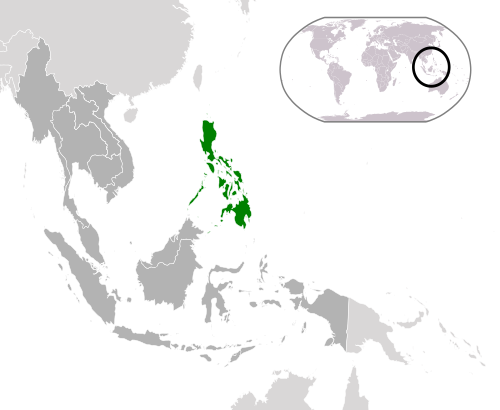 フィリピンの位置(緑) ASEAN (濃い灰色) – [凡例] | |
| 資本 | マニラ(法定) マニラ首都圏[a] (事実上) |
| 最大の都市 | ケソン市 |
| 公用語 | |
| 認められた地域言語 | 19言語[4] |
国語手話 | フィリピン手話 |
その他の認められた言語[b] | スペイン語とアラビア語 |
| 民族グループ (2020年[6]) | |
| 宗教 (2020年)[7] | |
| 異名 | フィリピン語 (中性) フィリピン人 (女性) ピノイ (特定の普通名詞の形容詞) |
| 政府 | 大統領制単一共和国 |
• 社長 | ボンボン・マルコス |
• 副社長 | サラ・ドゥテルテ |
• 上院議長 | フランシス・エスクデロ |
• 下院議長 | マーティン・ロムアルデス |
• 最高裁判所長官 | アレクサンダー・ゲスムンド |
| 立法府 | 会議 |
• 上院 | 上院 |
• 下院 | 衆議院 |
| 独立 | |
• 宣言 | 1898年6月12日 |
• 譲渡 | 1898年12月10日 |
• 自治 | 1935年11月15日 |
• 認識された | 1946年7月4日 |
• 憲法 | 1987年2月2日 |
| エリア | |
• 合計 | 300,000 [8] [9] [d] km 2 (120,000 平方マイル) ( 72 番目[11]) |
• 水 (%) | 0.61 [10](内水) |
| 人口 | |
• 2024年の推定 |  114,163,719 [12] ( 12位) 114,163,719 [12] ( 12位) |
• 2020年国勢調査 | 109,035,343 [13] |
• 密度 | 363.45/km 2 (941.3/平方マイル) ( 37位) |
| GDP (購買力平価) | 2024年推定 |
• 合計 |  1兆3,920億ドル[14](28位) 1兆3,920億ドル[14](28位) |
• 一人当たり | 12,192ドル[14] ( 116位) |
| GDP (名目) | 2024年推定 |
• 合計 | 4715億1600万ドル[14](第32位) |
• 一人当たり | 4,130ドル[14] ( 124位) |
| ジーニ (2021) |  41.2 [15] 41.2 [15]中程度の不平等 |
| HDI (2022) | 0.710 [16]最高 (113位) |
| 通貨 | フィリピンペソ( ₱ ) ( PHP ) |
| タイムゾーン | UTC +8 (フィリピン標準時) |
| 日付形式 | MM/DD/YYYY DD/MM/YYYY [e] |
| ドライブを続ける | 右[17] |
| 呼び出しコード | +63 |
| ISO 3166 コード | フィリピン |
| インターネットTLD | .ph |


フィリピン[f]、正式にはフィリピン共和国[g]は、東南アジアの群島国家である。西太平洋に位置し、総面積およそ30万平方キロメートルの7,641の島々から成り、北から南にルソン島、ビサヤ諸島、ミンダナオ島の3つの主要な地理的区分に大まかに分類される。フィリピンは、西は南シナ海、東はフィリピン海、南はセレベス海に囲まれている。北は台湾、北東は日本、東と南東はパラオ、南はインドネシア、南西はマレーシア、西はベトナム、北西は中国と海上で国境を接している。フィリピンは、多様な民族と文化を持つ、世界で12番目に人口の多い国である。マニラはフィリピンの首都であり、最も人口の多い都市はケソン市です。どちらもマニラ首都圏にあります。
群島の最古の住民であるネグリト人に続いて、オーストロネシア諸族が次々と移住した。アニミズム、仏教の影響を受けたヒンズー教、イスラム教の採用により、ダトゥ、ラジャ、スルタンが統治する島嶼王国が確立した。後期唐や宋帝国などの近隣諸国との大規模な海外貿易により、中国人も群島にやって来て、何世紀にもわたって徐々に定住し、混交するようになった。カスティーリャ行きの艦隊を率いたポルトガルの探検家フェルディナンド・マゼランの到着は、スペインによる植民地化の始まりを示した。1543年、スペインの探検家ルイ・ロペス・デ・ビジャロボスは、カスティーリャ王フェリペ2世に敬意を表して、群島をラス・イスラス・フィリピナスと名付けた。 1565年に始まったヌエバ・エスパーニャを経由したスペインの植民地化により、フィリピンは300年以上にわたりスペイン帝国の一部としてカスティーリャ王国の支配下に入った。カトリックのキリスト教が主要宗教となり、マニラは太平洋横断貿易の西側の中心地となった。ラテンアメリカやイベリア半島からのヒスパニック系移民も選択的に植民地化した。 1896年にフィリピン革命が始まり、1898年の米西戦争と絡み合った。スペインは米国に領土を割譲し、フィリピンの革命家たちはフィリピン第一共和国を宣言した。その後の米比戦争は、第二次世界大戦中に日本が島々を侵略するまで米国が領土を支配して終わった。アメリカが日本からフィリピンを奪還した後 、フィリピンは1946年に独立した。フィリピンは、数十年続いた独裁政権を非暴力革命で打倒するなど、民主主義に関して激動の経験をしてきた。
フィリピンは新興市場であり、新興工業国であり、その経済は農業中心からサービスと製造業中心へと移行しつつあります。フィリピンは、国連、世界貿易機関、ASEAN、アジア太平洋経済協力会議、東アジアサミットの創設メンバーであり、非同盟運動のメンバーであり、NATO以外の主要な米国の同盟国です。環太平洋火山帯の島国であり赤道に近いため、地震や台風が発生しやすい国です。フィリピンは、さまざまな天然資源と世界的に重要なレベルの生物多様性を誇ります。
語源
1542年の探検中、スペインの探検家ルイ・ロペス・デ・ビジャロボスは、アストゥリアス公、後のカスティーリャ王フェリペ2世にちなんで、レイテ島とサマール島を「フェリピナス」と名付けた。最終的に、「ラス・イスラス・フィリピナス」という名前は、この群島のスペイン領土を指すのに使われるようになった。[18] : 6スペイン統治が確立される前、スペイン人はこの地域の島々を「イスラス・デル・ポニエンテ」(西諸島)、「イスラス・デル・オリエンテ」 (東諸島)やフェルディナンド・マゼランの名前、「サン・ラザロ」(聖ラザロ諸島)など他の名前で呼んでいた。[19] [20] [21]
フィリピン革命の間、マロロス会議はフィリピン共和国を宣言した。[22]アメリカの植民地当局は、この国をフィリピン諸島(スペイン語名の翻訳)と呼んだ。[23]米国は、フィリピン自治法とジョーンズ法で「フィリピン諸島」から「フィリピン」への呼称を変更し始めた。[24]正式名称「フィリピン共和国」は、将来の独立国家の名称として1935年の憲法に含まれ、[25]その後のすべての憲法改正にも含まれた。[26] [27]
歴史
先史時代(900年以前)

現在のフィリピンには、709,000年前にはすでに初期人類が住んでいたという証拠がある。 [28]カヤオ洞窟から発見された少数の骨は、 50,000年から67,000年前に生息していた、これまで知られていなかった種であるホモ・ルゾネンシスのものである可能性がある。 [29] [30]島々で最古の現代人の遺骨はパラワン島のタボン洞窟で発見されたもので、U/T年代測定では47,000±11~10,000年前とされている。[31]タボン人はおそらくネグリト人で、南アジア沿岸のルートを経由して現在は海底にあるスンダランドとサフルの陸地へとアフリカから最初に移住した人々の子孫である、群島最古の住民の1人である。[32]
最初のオーストロネシア人は紀元前2200年頃に台湾からフィリピンに到達し、バタン諸島(彼らはイジャンと呼ばれる石造りの要塞を建設した)[33]とルソン島北部に定住した。翡翠の工芸品は紀元前2000年頃のものとされており、[34] [35]台湾産の原材料を使ってルソン島で作られた霊霊玉の品々がある。[ 36]紀元前1000年までに、群島の住民は狩猟採集部族、戦士社会、高地の金権政治社会、港湾公国という4つの社会に発展していた。[37]
初期の国家(900~1565年)
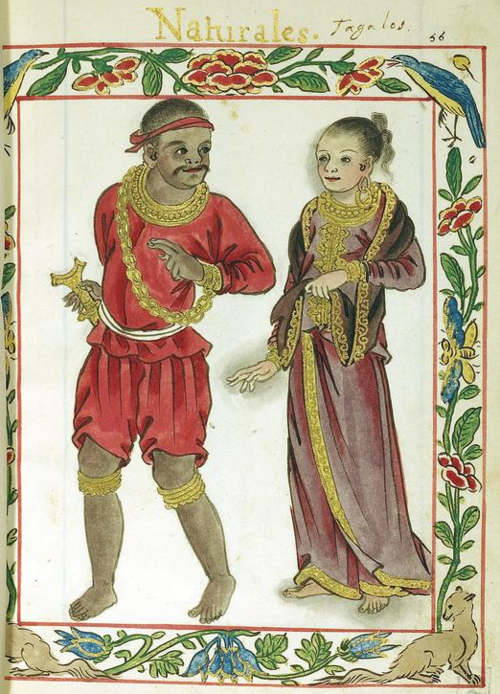
フィリピンで現存する最古の文書記録は、西暦10世紀初頭のラグナ銅版碑文で、初期のカウィ文字を使用して古代マレー語で書かれており、多くの専門用語のサンスクリット語と古代ジャワ語または古代タガログ語の敬称が使われている。[38] 14世紀までには、いくつかの大きな沿岸集落が交易の中心地として出現し、社会変革の中心となった。[39]一部の国家はアジア各地の他の国々と交流していた。[40] : 3 [41]中国との貿易は唐代後期に始まり、[42] [43]宋代に拡大した。[44] [45] [43] 2千年紀を通じて、一部の国家は中国の朝貢制度の一部でもあった。[18] : 177–178 [40] : 3 広範な貿易と外交により、南福建からの華人商人や移民がフィリピンにやって来て、後に「ランラン」[46]や「サングレー」 [47]として知られるようになり、 [48]徐々にフィリピンに定住し、混ざり合うようになった。言語用語や宗教的慣習などのインドの文化的特徴は、14世紀にインド化したヒンドゥー教のマジャパヒト王国を通じてフィリピンに広がり始めた。[49] [50] 15世紀までに、イスラム教はスールー諸島に定着し、そこから広まった。[39]
10世紀から16世紀にかけてフィリピンで設立された政体には、マニラ、[51] 、 トンド、ナマヤン、パンガシナン、セブ、ブトゥアン、マギンダナオ、ラナオ、スールー、マイなどがある。[52]初期の政体は典型的には、貴族、自由民、従属債務奴隷の3層の社会構造を持っていた。[40] : 3 [53] : 672 貴族の中にはダトゥと呼ばれる指導者がおり、自治グループ(バランガイまたはデュロハン)を統治する責任があった。 [54]バランガイが団結してより大きな集落や地理的に緩やかな同盟を形成すると、[40] : 3 [55]その中でより尊敬されるメンバーが「最高責任者」[56] : 58 [37] ラジャまたはスルタン[57]として認められ、コミュニティを統治することになった。[58]台風の頻発と環太平洋火山帯上に位置するフィリピンの位置により、14世紀から16世紀にかけての人口密度は低かったと考えられている[56] : 18 。[59]ポルトガルの探検家フェルディナンド・マゼランは1521年に到着し、島々をスペイン領と宣言したが、マクタン島の戦いでラプラプの部下によって殺害された。[60] : 21 [61] : 261
スペインとアメリカの植民地支配(1565年~1934年)
.png/500px-Vista_del_Puente_de_Manila_(1847).png)
カスティーリャ王国による統一と植民地化は、1565年にスペインの探検家ミゲル・ロペス・デ・レガスピがヌエバ・エスパーニャ(スペイン語:Nueva España )から到着したときに始まった。 [62] [63] [64] : 20–23 多くのフィリピン人が奴隷や強制的な乗組員としてヌエバ・エスパーニャに連れてこられた。 [65 ] 一方、多くのラテンアメリカ人は兵士や入植者としてフィリピンに連れてこられた。スペイン領マニラは1571年にフィリピンとスペイン領東インドの総司令官の首都となり、 [66] [67]アジアと太平洋のスペイン領となった。[68]スペイン人は分割統治の原則を用いて地方の州を侵略し、[61] : 374 現在のフィリピンのほとんどを1つの統一された政権の下に置いた。[69] [70]バラバラだったバランガイは意図的に町に統合され、そこではカトリックの宣教師が住民をキリスト教に改宗させやすかった。[71] : 53 , 68 [72]当初はシンクレティズムだった。[73] スペイン人修道士によるキリスト教化は、時を経て主に定住した低地で起こった。1565年から1821年まで、フィリピンはメキシコシティに拠点を置くヌエバ・エスパーニャ副王領の領土として統治され、メキシコ独立戦争後はマドリードから統治された。[74] : 81マニラはビコルとカビテで建造されたマニラ・ガレオン船によって太平洋横断貿易の西の拠点となった。 [ 75 ] [76]
スペイン統治時代、スペインは先住民の反乱を鎮圧し、外部からの軍事攻撃を防御したため国庫がほぼ破産した。 [74] : 111–122 [78] : 1077 [79]にはモロの海賊行為、[80] 17世紀のオランダとの戦争、18世紀のイギリスによるマニラ占領、南部のイスラム教徒との紛争などが含まれる。[81] : 4 [過度の重み? –議論する]
フィリピンの統治はヌエバ・エスパーニャの経済的負担になると考えられ、[78] : 1077 、放棄するか他の領土と交換するかが議論された。この方針は、島々の経済的可能性、安全性、およびこの地域での宗教的改宗を継続したいという願望のために反対された。[56] : 7–8 [82]植民地はスペイン王室からの年間補助金[78] : 1077 で存続し、平均25万ペソ[56] : 8 で、通常はアメリカ大陸からの銀塊75トンで支払われた。[83] イギリス軍は七年戦争中の1762年から1764年までマニラを占領し、1763年のパリ条約でスペインの支配が回復された。[64] : 81–83 スペインは東南アジアのイスラム教徒との戦争をレコンキスタの延長と見なしていた。[84] [85]スペインとモロの紛争は数百年にわたって続き、19世紀最後の四半期にスペインはミンダナオ島とホロ島の一部を征服し、 [86]スールー王国のイスラム教徒のモロ人はスペインの主権を認めました。[87] [88]

19世紀にフィリピンの港が世界貿易に開かれ、フィリピン社会は変化し始めた。[89] [90]社会的アイデンティティが変化し、フィリピン人という用語は、フィリピンで生まれたスペイン人だけを指すのではなく、群島の住民全員を包含するようになった。[91] [92]
1872年、200人の現地で徴兵された植民地軍兵士と労働者、および活動的なカトリック司祭3人が疑わしい理由で処刑された後、革命感情が高まった。[93] [94]これは、マルセロ・H・デル・ピラール、ホセ・リサール、グラシアーノ・ロペス・ハエナ、マリアーノ・ポンセによって組織されたプロパガンダ運動に刺激を与え、フィリピンの政治改革を主張した。[95]リサールは1896年12月30日に反乱の罪で処刑され、彼の死はスペインに忠誠を誓っていた多くの人々を過激化させた。[96]改革の試みは抵抗に遭い、アンドレス・ボニファシオは1892年に武装蜂起によるスペインからの独立を求める秘密結社カティプナンを設立した。 [74] : 137
プガド・ラウィンの「カティプナンの叫び」が1896年のフィリピン革命の始まりとなった。 [97]内部紛争によりテヘロス会議が開催され、ボニファシオは失脚し、エミリオ・アギナルドが革命の新しい指導者に選出された。 [98] : 145–147 1897年のビアク・ナ・バト条約により、香港の軍事政権は亡命した。翌年米西戦争が始まり、フィリピンにも影響が及んだ。アギナルドは帰国して革命を再開し、 1898年6月12日にスペインからの独立を宣言した。 [99] : 26 1898年12月、米西戦争後、これらの島々はプエルトリコとグアムとともにスペインから米国に割譲された。 [100] [101]
フィリピン第一共和国は1899年1月21日に発布された。[102]米国の承認が得られなかったため敵対行為が勃発し、現地の米国軍司令官が停戦提案を拒否し、新共和国が宣戦布告したことで[h] 、フィリピン・アメリカ戦争 へとエスカレートした。[103] [104] [105] [106]

この戦争では、主に飢餓と病気により、25万人から100万人の民間人が死亡した。[107]多くのフィリピン人がアメリカ軍によって強制収容所に移送され、そこで数千人が死亡した。[108] [109] 1902年にフィリピン第一共和国が崩壊した後、フィリピン基本法によりアメリカの文民政府が樹立された。[110]アメリカ軍は島々の支配権を確保し拡大し続け、フィリピン共和国の拡大の試みを鎮圧し、[98] : 200–202 [107]スールー王国を確保し、[111] [112]スペインの征服に抵抗した内陸山岳地帯の支配権を確立し、[113]かつてはイスラム教徒が多数を占めていたミンダナオ島にキリスト教徒の大規模な移住を奨励した。[114] [115]
連邦と第二次世界大戦(1935年~1946年)
フィリピンにおける文化的発展は国民的アイデンティティを強化し、[116] [117] : 12 タガログ語が他の現地語よりも優先されるようになった。[71] : 121 政府の機能はタフト委員会によって徐々にフィリピン人に移譲された。[78] : 1081 , 1117 1934年のタイディングス・マクダフィー法は、翌年フィリピン連邦を創設し、 [118]マヌエル・ケソンが大統領、セルジオ・オスメニャが副大統領となることで、独立までの10年間の移行期間を認めた。[119]ケソンの優先事項は、防衛、社会正義、不平等、経済の多様化、国民性であった。[78] : 1081、 1117 フィリピン語(標準化されたタガログ語)が国語となり、[120] : 27–29 女性参政権が導入され、[121] [61] : 416 土地改革が検討された。[122] [123] [124]

大日本帝国は第二次世界大戦中の1941年12月にフィリピンに侵攻し、[125]ホセ・P・ラウレルが統治する傀儡国家として第二フィリピン共和国が樹立された。[126] [127] 1942年初頭、日本軍によるフィリピン占領に対して大規模な地下ゲリラ活動が行われた。[128] [129] [130]戦争中にはバターン死の行進やマニラ大虐殺など残虐行為や戦争犯罪が行われた。[131] [132]フィリピンのレジスタンス軍と連合軍は1944年と1945年に日本軍を打ち破った。戦争の終わりまでに100万人以上のフィリピン人が死亡したと推定されている。[133] [134] 1945年10月11日、フィリピンは国際連合の創設メンバーとなった。[135] [136] : 38–41 1946年7月4日、マヌエル・ロハス大統領の任期中に、マニラ条約によりアメリカ合衆国はフィリピンの独立を承認した。[136] : 38–41 [137]
独立(1946年~現在)

ラモン・マグサイサイ大統領の時代には、戦後復興とフクバラハップ反乱の終結に向けた努力は成功したが、 [138]共産主義の反乱はその後も散発的に勃発し続けた。[139]マグサイサイの後継者カルロス・P・ガルシア政権下で、政府はフィリピン人所有の企業を促進するフィリピン第一政策を開始した。 [71] : 182ガルシアの後を継いだディオスダド・マカパガルは、独立記念日を7月4日からエミリオ・アギナルドの独立宣言の日である6月12日に変更し、[140]北ボルネオ東部に対する領有権を主張した。[141] [142]

1965年、マカパガルはフェルディナンド・マルコスに大統領選挙で敗れた。マルコスは大統領就任早々、主に外国からの融資で賄われたインフラ整備プロジェクトを開始した。これが経済改善につながり、1969年の再選につながった。[143] : 58 [144]憲法で認められた最後の任期の終わりに近づいた1972年9月21日、マルコスは共産主義の亡霊[146] [147] [148]を利用して戒厳令を宣言し、 [149 ]法令による統治を開始した。 [149]この時代は、政治的抑圧、検閲、人権侵害が特徴的であった。[150] [151]マルコスの取り巻きによる独占が、伐採[155]や放送を含む主要産業で確立された。[61] : 120砂糖の独占はネグロス島で飢饉を引き起こした。[156]マルコスは妻のイメルダとともに汚職と数十億ドルの公金横領で告発された。[157] [158]マルコスが大統領に就任した当初に多額の借金をしたことで経済崩壊が起こり、 1980年代初めの不況によってさらに悪化し、1984年と1985年には経済が年間7.3%縮小した。[159] : 212 [160]
1983年8月21日、野党指導者ベニグノ・アキノ・ジュニア(マルコスの最大のライバル)がマニラ国際空港の滑走路で暗殺された。[161]マルコスは1986年に突然の大統領選挙を呼びかけ[162]、彼は勝者と宣言されたが、その結果は広く不正とみなされた。[163]その結果生じた抗議はピープルパワー革命につながり、[164] [165]マルコスとその同盟者はハワイに逃げることを余儀なくされた。アキノの未亡人コラソンが大統領に就任した。[164]

1986年に始まった民主主義の復活と政府改革は、国家債務、政府の腐敗、クーデター未遂によって妨げられた。[167] [143] : xii, xiii 共産主義の反乱[168] [169]とモロ分離主義者との軍事衝突が続いた。[170]政権はまた、 1991年6月のピナツボ山の噴火を含む一連の災害に直面した。[166]アキノの後継者はフィデル・V・ラモスで、彼は民営化と規制緩和によって国家経済を自由化した。[171] [172]ラモスの経済的利益は、 1997年のアジア通貨危機の勃発によって影を潜めてしまった。[173] [174]後継者のジョセフ・エストラダは公営住宅を優先したが[175]汚職疑惑に直面し[176] 、 2001年のエドサ革命で失脚し、 2001年1月20日にグロリア・マカパガル・アロヨ副大統領が就任した。[177]アロヨの9年間の政権は経済成長が目立ったが[10]、汚職や政治スキャンダルに汚され[178] [179] 、2004年の大統領選挙での選挙詐欺疑惑も含まれていた。[180]ベニグノ・アキノ3世の政権下でも経済成長は続き、良好な統治と透明性を主張した。[181] : 1, 3 [182]アキノ3世はモロ・イスラム解放戦線(MILF)との和平協定に署名し、バンサモロ自治地域を設立するバンサモロ基本法を制定したが、ママサパノでのMILF反乱軍との銃撃戦により、この法律の可決は遅れた。[183] [184]
2016年に大統領に選出されたロドリゴ・ドゥテルテ氏は[185]インフラ整備計画[186] [187]と麻薬撲滅キャンペーン[188] [189]を開始したが、これにより麻薬の蔓延は減少したが[190] 、法外な殺害も引き起こした。[191] [192]バンサモロ基本法は2018年に制定された。 [193] 2020年初頭、COVID-19のパンデミックがフィリピンに到達した。[194] [195]国内総生産は9.5%減少し、1947年以来最悪の年間経済パフォーマンスとなった。[196]マルコス氏の息子ボンボン・マルコス氏が2022年の大統領選挙で勝利し、ドゥテルテ氏の娘サラ氏が副大統領に就任した。[197]
地理

フィリピンは約7,641の島々からなる群島で、[199] [200]総面積(内水域を含む)は約30万平方キロメートル(115,831平方マイル)です。[201] [202] :15 [10] [d]南北に1,850キロメートル(1,150マイル)広がり、[204]南シナ海からセレベス海まで、[205]フィリピンは東にフィリピン海、 [206] [207]南西にスールー海と接しています。[208]フィリピンの11の最大の島は、ルソン島、ミンダナオ島、サマール島、ネグロス島、パラワン島、パナイ島、ミンドロ島、レイテ島、セブ島、ボホール島、マスバテ島で、国土面積の約95%を占めています。[209]フィリピンの海岸線は36,289キロメートル(22,549マイル)で、世界で5番目に長いです。[210]また、国の排他的経済水域は2,263,816平方キロメートル(874,064平方マイル)に及びます。 [ 211]
最も高い山はミンダナオ島のアポ山で、海抜2,954メートル(9,692フィート)の標高がある。[10]フィリピン最長の川はルソン島北部のカガヤン川で、約520キロメートル(320マイル)流れている。[212]首都 マニラがあるマニラ湾[213]は、パシグ川によってラグナ・デ・バイ[214](フィリピン最大の湖)とつながっている。[215]
環太平洋火山帯の西端に位置するフィリピンでは、地震や火山活動が頻繁に発生している。[216] : 4 この地域は地震活動が活発で、複数の方向からプレートが収束して形成されている。 [217] [218] 1日に約5回の地震が記録されているが、そのほとんどは感じられないほど弱いものである。[219]直近の大地震は1976年にモロ湾で、1990年にルソン島で発生した。[220]フィリピンには23の活火山があり、その中でもマヨン山、タール山、カンラオン山、ブルサン山の噴火回数が最も多い。[221] [202] : 26
この国は、複雑な地質構造と高い地震活動により、貴重な[222]鉱床を有している。 [223] [224]南アフリカに次いで世界第2位の金鉱床、大規模な銅鉱床、[225]世界最大のパラジウム鉱床があると考えられている。[226]その他の鉱物には、クロム、ニッケル、モリブデン、プラチナ、亜鉛などがある。[227]しかし、管理と法執行の不備、先住民コミュニティの反対、過去の環境破壊により、これらの資源はほとんど未開発のままとなっている。[225] [228]
生物多様性
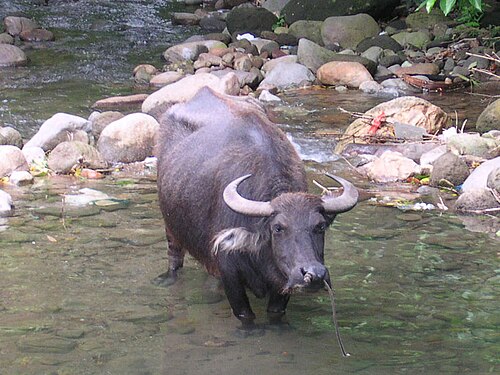
フィリピンは多様性に富んだ国であり、[230] [231]世界でも有数の植物発見率と固有種率(67パーセント)を誇ります。[232] [233]国内には推定13,500種の植物(そのうち3,500種が固有種)があり、 [234]フィリピンの熱帯雨林には多種多様な植物が生息しています。[235] [236]約3,500種の樹木、[237] 8,000種の顕花植物、1,100種のシダ、998種のラン[238]が確認されています。[239]フィリピンには、陸生哺乳類167種(固有種102種)、爬虫類235種(固有種160種)、両生類99種(固有種74種)、鳥類686種(固有種224種)、[240]および昆虫種2万種以上が生息している。[239]
コーラル・トライアングル生態地域の重要な一部であるフィリピン海域には、ユニークで多様な海洋生物が生息しており[ 241] [242]、沿岸魚類の多様性は世界一である [244]。フィリピンには3,200種以上の魚類(121種は固有種)が生息している [245]。フィリピン海域は、魚類、甲殻類、カキ、海藻の養殖を支えている[246] [247] 。
フィリピン全土には、フタバガキ科植物、海岸林、[248] 、 松林、モラベ林、低山地林、高山地(または苔むした林)、マングローブ、超塩基性林の8つの主要な森林タイプが分布している。[ 249]公式推計によると、フィリピンの森林被覆面積は2023年に700万ヘクタール(27,000平方マイル)に達する。[250]伐採はアメリカ植民地時代に体系化され[251]、独立後も森林破壊は続き、マルコス大統領時代には規制されていない伐採権により加速した。[252] [253]森林被覆率は、1900年のフィリピン全土の70%から1999年に約18.3%に減少した。[254]再生の取り組みはわずかな成功を収めている。[255]
フィリピンは生物多様性保全の優先ホットスポットであり、[256] [230] 200以上の保護区があり、[257] 2023年までに779万ヘクタール(30,100平方マイル)に拡大される予定です[update]。[258] フィリピンでは、スールー海のトゥバタハ礁、 [259]プエルト・プリンセサ地底河川、[260]ハミギタン山野生生物保護区の3つの地域がユネスコの世界遺産に登録されています。[261]
気候
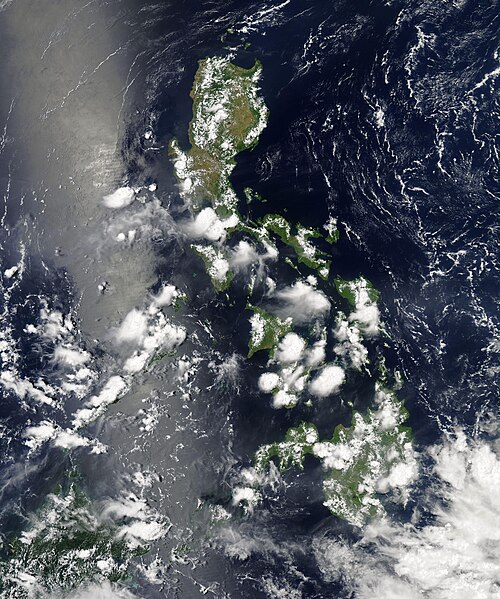
フィリピンは熱帯海洋性気候で、通常は高温多湿です。季節は3つあり、3月から5月は暑い乾季、6月から11月は雨季、12月から2月は涼しい乾季です。[262]南西モンスーン(ハバガットとして知られる)は5月から10月まで続き、北東モンスーン(アミハン)は11月から4月まで続きます。[263] : 24–25 最も寒い月は1月で、最も暑い月は5月です。フィリピン全土の海面レベルの気温は、緯度に関わらず、同じ範囲になる傾向があります。年間平均気温は26.6℃(79.9℉)ですが、海抜1,500メートル(4,900フィート)のバギオでは18.3℃(64.9℉)になります。[264]国の平均湿度は82パーセントです。[263] : 24–25 年間降水量は、東海岸の山岳地帯では5,000ミリメートル(200インチ)に達するが、風雨にさらされない谷間では1,000ミリメートル(39インチ)未満となることもある。[262]
フィリピンの管轄区域では、例年7月から10月にかけて19の台風が発生し、 [ 265]そのうち8~9が上陸する。[262] [266] [267]フィリピンを襲った台風の中で最も雨量が多かったのは、1911年7月14日から18日にかけてバギオで発生した2,210ミリメートル(87インチ)の降雨量であった。[268]フィリピンは気候変動の影響を最も受けやすい10カ国に数えられる。[269] [270]
政府と政治
.jpg/500px-Malaca%C3%B1ang_Palace_(local_img).jpg)
フィリピンは、大統領制を採用した民主的な立憲共和国である。[271]大統領は国家元首および行政府の長であり、[272]軍の最高司令官でもある。[271]大統領は、フィリピン国民による直接選挙で選出され、任期は6年である。[273]大統領は、内閣および様々な国家政府機関や組織の役人を任命し、統括する。 [274] : 213–214二院制の議会は、上院(上院、任期6年)と下院(下院、任期3年)で構成される。[275]
上院議員は全州から選出され、[275]下院議員は選挙区と政党名簿から選出される。[274] : 162–163 司法権は最高裁判所に与えられており、最高裁判所は首席裁判官と14人の判事で構成され、[276]司法弁護士会が提出した指名に基づいて大統領が任命する。[271]
ラモス政権以来、政府を連邦制、一院制、または議会制に変更する試みがなされてきた。[277]フィリピンの政治は、政治家一族や著名人などのよく知られた一族によって支配される傾向があり、[278] [279]政党の変更は広く行われている。[280]汚職は深刻であり、[281] [282] [283]一部の歴史家は、スペイン植民地時代のパドリーノ制度のせいだと考えている。[284] [285]ローマカトリック教会は、政教分離の憲法規定はあるものの、政治において大きな影響力を及ぼしているが、その影響力は衰えつつある。[286 ]
外交関係

フィリピンは国連の創設メンバーであり、活動的な国である[136] : 37–38 。安全保障理事会の非常任理事国でもある。[288]同国は特に東ティモールでの平和維持活動に参加している。[289] [290]フィリピンはASEAN(東南アジア諸国連合)の創設メンバーであり、活動的な国でもある。 [291] [292]また、東アジアサミット[293]、 [294] 、[294]非同盟運動[ 295 ]のメンバーでもある。同国は2003年以来、イスラム協力機構のオブザーバー資格取得を目指しており、 [296] [297] SEATOのメンバーであった。[298] [299] 1,000万人を超えるフィリピン人が200カ国に住み、働いており、[300] [301]フィリピンにソフトパワーを与えている。[159] : 207
1990年代、フィリピンは外国直接投資を促進するために経済の自由化と自由貿易の追求を始めた[302] : 7–8 。[303]世界貿易機関[302] : 8 とアジア太平洋経済協力[ 304]の加盟国である。フィリピンは2010年にASEAN物品貿易協定[305]を、2023年には地域包括的経済連携自由貿易協定(FTA)を締結した。 [306] [307] ASEANを通じて、フィリピンは中国、インド、日本、韓国、オーストラリア、ニュージーランドとFTAを締結している。 [302] : 15 同国は日本、韓国、[308]およびヨーロッパ4カ国(アイスランド、リヒテンシュタイン、ノルウェー、スイス)と二国間FTAを締結している。[302] : 9–10, 15

フィリピンは米国と経済、安全保障、人間関係など長い関係を築いてきた。 [309]フィリピンの位置は、米国の西太平洋における島嶼戦略において重要な役割を果たしている。 [310] [311]両国間の相互防衛条約は1951年に調印され、 1999年の訪問軍協定と2016年の強化防衛協力協定によって補完された。[312]フィリピンは冷戦中に米国の政策を支持し、朝鮮戦争とベトナム戦争に参加した。[313] [314] 2003年、フィリピンは主要な非NATO同盟国に指定された。[315]ドゥテルテ大統領の下で、米国との関係は中国とロシアとの関係改善を優先して弱まった。[316] [317] [318]フィリピンは対外防衛を米国に大きく依存している。[181] : 11 米国は、南シナ海を含むフィリピンの防衛を定期的に保証している。 [ 319 ] [320]
1975年以来、フィリピンは最大の貿易相手国である中国との関係を重視しており[321] 、 [322]、中国と多大な協力関係を築いている。[323] [316]日本はフィリピンに対する政府開発援助の最大の二国間拠出国である。 [324] [325]第二次世界大戦による緊張は残っているものの、敵意は薄れつつある。[81] : 93 歴史的、文化的つながりはスペインとの関係にも影響を与え続けている。[326] [327]中東諸国との関係は、それらの国で働くフィリピン人の多さや[328]フィリピンのイスラム教徒少数派に関連する問題によって形作られている。 [329]約250万人の海外フィリピン人労働者に影響を与える家庭内暴力や戦争についての懸念が高まっている。[330] [331]
フィリピンはスプラトリー諸島の領有権を主張しており、これは中国、マレーシア、台湾、ベトナムの領有権と重複している。[332]フィリピンが支配する島々の中で最大のものはティトゥ島で、フィリピンで最も小さな町がある。[333] 2012年のスカボロー礁紛争は、中国がフィリピンからスカボロー礁を奪取した後、国際仲裁裁判に発展し[334]、最終的にフィリピンが勝訴した。[335]中国は結果を拒否し[336]、スカボロー礁をより広範な紛争の象徴とした。[337]
軍隊

フィリピンの志願兵による軍隊(AFP)は、フィリピン空軍、フィリピン陸軍、フィリピン海軍の3つの部門で構成されています。[338] [339]民間の治安は、内務省管轄のフィリピン国家警察が担当しています。[340] AFPは、2022年時点で総人員が約28万人で、そのうち13万人が現役軍人、10万人が予備役、5万人が準軍事組織です。[341][update]
2021年、フィリピン軍には40億9050万ドル(GDPの1.04%)が費やされた。[342] [343]フィリピンの防衛費のほとんどは、共産主義者やイスラム分離主義者の反乱などの国内の脅威に対する作戦を率いるフィリピン陸軍に費やされている。国内治安へのこだわりは、 1970年代に始まったフィリピン海軍の能力低下の一因となった。 [344] 軍の近代化プログラムは1995年に始まり[345]、より有能な防衛システムを構築するために2012年に拡大された。[346]
フィリピンは長い間、地元の反乱、分離主義、テロと闘ってきた。[347] [348] [349] バンサモロ最大の分離主義組織であるモロ民族解放戦線とモロイスラム解放戦線は、それぞれ1996年と2014年に政府と最終的な和平協定を締結した。[350] [351]アブ・サヤフやバンサモロ・イスラム自由の闘士など、より過激な他のグループは、特にスールー諸島[353] [354]やマギンダナオ[352]で、身代金目的で外国人を誘拐してきたが、その数は減少している。[355] [356]フィリピン共産党(CPP)とその軍事部門である新人民軍(NPA)は、 1970年代から政府に対してゲリラ戦を展開し、政府関係者や治安部隊に対する待ち伏せ、爆撃、暗殺を行ってきた。 [357] 1986年の民主化後、軍事的にも政治的にも縮小しているものの、[348] [358] CPP-NPAはフィリピン国民民主戦線を通じて、共産主義戦線を設立し、部門組織に浸透し、政府に対する国民の不満と闘争心を高めることで、都市部で国民の支持を集め続けている。[359]フィリピンは、2024年の世界平和度指数で163カ国中104位にランクされた。[360]
行政区分

フィリピンは18の地域、82の州、146の市、1,488の自治体、42,036のバランガイに分かれている。[361]バンサモロ以外の地域は、行政上の便宜上分けられている。 [ 362 ] 2020年時点で人口が最も多いのは カラバルソン地方で[update]、最も人口密度が高いのは首都圏(NCR)である。[363]
フィリピンはバンサモロ・ムスリム・ミンダナオ自治地域(BARMM)を除いて単一国家であるが[364]、地方分権化に向けた動きがみられており[365] [366]、 1991年の法律により一部の権限が地方政府に委譲された[367]。
経済
フィリピンの経済規模は世界第34位で、2023年の[update]名目国内総生産は4,357億米ドルと推定されている。[14]新興工業国として、[368] [369]フィリピン経済は農業基盤からサービス業と製造業に重点を置いた経済へと移行しつつある。[368] [370]同国の労働力は2023年時点で約5,000万人で[update]、失業率は3.1%であった。[371]国際準備金は2024年1月時点で1,034億600万米ドルに達した[update]。[372] 債務対GDP比は、同年第3四半期末の17年ぶりの高水準63.7%から2023年末には60.2%に減少し、COVID-19パンデミック中の回復力を示した。[373]この国の通貨単位はフィリピンペソ(₱ [374]またはPHP [375] )である。[376]
フィリピンは純輸入国であり[302] : 55–56, 61–65, 77, 83, 111 [377]債務国でもある。[378] 2020年現在[update]、同国の主な輸出市場は中国、米国、日本、香港、シンガポールであった。[379]主な輸出品には、集積回路、事務用機械・部品、変圧器、絶縁電線、半導体などがある。[379]その年の主な輸入市場は、中国、日本、韓国、米国、インドネシアであった。[379]主な輸出作物には、ココナッツ、バナナ、パイナップルなどがある。インドは世界最大のアバカ生産国であり、[202] : 226–242 、2022年には世界第2位のニッケル鉱石輸出国であり、[380] 2020年には金被覆金属の世界最大の輸出国であり、コプラの世界最大の輸入国でもありました。 [379]

フィリピンは、2010年頃から年平均6~7%の成長率を記録し、世界で最も急速に成長する経済の一つとして浮上しており、[382]その原動力となっているのは、主にサービス部門への依存度の高まりである。[383]しかし、地域開発は不均一であり、特にマニラが新たな経済成長の大部分を獲得している。[384] [385] 海外在住フィリピン人からの送金は、フィリピン経済に大きく貢献している。[386] [383]送金は2023年に過去最高の372億米ドルに達し、GDPの8.5%を占める。[387]フィリピンは世界の主要なビジネスプロセスアウトソーシング(BPO)センターである。[388] [389]約130万人のフィリピン人がBPO部門、主にカスタマーサービスに従事している。[390]
科学技術

フィリピンは、農業研究開発への支出が比較的低いにもかかわらず、アジアで最大規模の農業研究システムを有しています。[391] [392]同国は、米、[393] [394]ココナッツ、[395]バナナなど、新しい作物の品種を開発してきました。 [396]研究機関には、フィリピン稲研究所[397]や国際稲研究所[398]などがあります。
フィリピン宇宙庁は同国の宇宙計画を管理しており、[399] [400]、同国は1996年に最初の衛星を購入した。 [401] 同国初の超小型衛星であるディワタ1号は、2016年に米国のシグナス宇宙船で打ち上げられた。[402]
フィリピンは携帯電話利用者が集中しており[403] 、モバイルコマースのレベルも高い。[404]テキストメッセージは人気の高いコミュニケーション手段であり、2007年には1日平均10億件のSMSメッセージが送信された。 [405]フィリピンの通信業界は20年以上にわたりPLDTとグローブテレコムの複占状態にあったが[406]、2021年にディトテレコムが参入したことで、同国の通信サービスが改善された。[407]
観光

フィリピンは、その気候と生活費の安さから、外国人に人気の引退先である。[408]この国の主な観光名所は、数多くのビーチである。[60] : 109 [409]フィリピンはダイビング愛好家にとっても最高の目的地である。[410] [411] 観光地には、2012年にトラベル+レジャー誌で世界最高の島と評されたボラカイ島、 [412]パラワン島のコロン島とエルニド、セブ島、シアルガオ島、ボホール島などがある。[413]
観光業は2021年にフィリピンのGDPの5.2%を占め(COVID-19パンデミック前の2019年の12.7%より低い)、[414] 2019年には570万人の雇用を創出した。[415]フィリピンは2023年に545万人の海外からの観光客を誘致したが、これはパンデミック前の2019年の記録的な826万人より30%低い。観光客のほとんどは韓国(26.4%)、米国(16.5%)、日本(5.6%)、オーストラリア(4.89%)、中国(4.84%)からの観光客だった。[416]
インフラストラクチャー
交通機関

フィリピンの交通は、道路、航空、鉄道、水路によって行われている。道路は主要な交通手段であり、人の98%と貨物の58%を輸送している。[418] 2018年12月現在、国内の道路総延長は210,528キロメートル(130,816マイル)であった。[419]同国の陸上交通の要は、ルソン島、サマール島、レイテ島、ミンダナオ島を結ぶパンフィリピンハイウェイである。 [420]島間の交通は、17の都市を結ぶ高速道路とフェリールートの統合されたセットである919キロメートル(571マイル)のストロングリパブリックノーティカルハイウェイによって行われている。 [421] [422]ジープニーは人気のある象徴的な公共交通機関である。[202] : 496–497その他の公共陸上交通機関には、バス、UVエクスプレス、TNVS、フィルキャブ、タクシー、三輪自転車が含まれます。[423] [424]マニラと首都への幹線道路では交通渋滞が大きな問題となっています。 [425] [426]
歴史的に広く利用されてきたにもかかわらず、[427] フィリピンの鉄道輸送は[202] : 491 マニラ首都圏とラグナ州[428]およびケソン州[429]内の旅客輸送に限られており、ビコル地方には短い線路がある[202] : 491 。この国の鉄道路線は 2019 年時点でわずか 79 キロメートル (49 マイル) であったが[update]、これを 244 キロメートル (152 マイル) まで拡張する計画である[430] 。道路の混雑を緩和するため、貨物鉄道の復活が計画されている。 [431] [432]
フィリピンには2022年時点で90の国営空港が[update]あり、そのうち8つが国際空港である。[433] ニノイ・アキノ国際空港(旧マニラ国際空港)は、最も多くの乗客を擁している。[433] 2017年の国内航空市場は、同国のフラッグキャリアでありアジア最古の商業航空会社であるフィリピン航空[434] [435]とセブパシフィック(同国有数の格安航空会社)が支配していた。[436] [437]
フィリピン全土で様々な船が使われている。[438]ほとんどはバンカ[439]またはバンカと呼ばれるダブルアウトリガー船である。[440]現代の船は丸太の代わりに合板を、帆の代わりにモーターエンジンを使用している。[439]漁業や島間の移動に使用されている。[440]フィリピンには1,800以上の海港がある。[441]これらのうち、マニラ(国の主要かつ最も忙しい港)、[442]バタンガス、スービック湾、セブ、イロイロ、ダバオ、カガヤン・デ・オロ、ジェネラル・サントス、サンボアンガの主要海港は、ASEAN輸送ネットワークの一部である。[443] [444]
エネルギー

フィリピンの2021年の総発電設備容量は26,882MWで、うち43%が石炭、14%が石油、14%が水力、12%が天然ガス、7%が地熱発電によるものである。[445]フィリピンは、米国とインドネシアに次いで世界第3位の地熱エネルギー生産国である。 [446]同国最大のダムは、パンガシナン州のアグノ川にある長さ1.2キロメートルのサンロケダムである。[447] 1990年代初頭にパラワン島沖で発見されたマランパヤガス田は、フィリピンの輸入石油への依存を軽減し、ルソン島のエネルギー需要の約40%、国内のエネルギー需要の30%を供給している。[202] : 347 [448]
フィリピンには、ルソン島、ビサヤ諸島、ミンダナオ島にそれぞれ1つずつ、計3つの電力網がある。 [449]フィリピン国営送電会社が2009年より同国の電力網を管理しており[450]、島々に架空送電線を敷設している。消費者への電力配電は、民間の配電会社と政府所有の電力協同組合によって行われている。[449] 2021年末現在、フィリピンの世帯電化率は約95.41%である。[451]
原子力エネルギーを利用する計画は、1973年の石油危機への対応として、フェルディナンド・マルコス大統領の時代、1970年代初頭に始まりました。[452]フィリピンは1984年に東南アジア初の原子力発電所をバターンに完成させました。 [453]マルコスの追放後の政治的問題と1986年のチェルノブイリ原発事故後の安全上の懸念により、この発電所は稼働せず、[454] [452]運転計画は依然として議論の的となっています。[453] [455]
給水と衛生

マニラ首都圏外への給水と衛生は、政府により市や町の地方水道局を通じて提供されている。 [456] [457] [458]マニラ首都圏は、マニラウォーターとマニラッドウォーターサービスによって給水されている。家庭用の浅井戸を除き、地下水利用者は国家水資源委員会から許可を得る必要がある。[457] 2022年の総取水量は2021年の890億立方メートル(3.1 × 10 12 立方フィート)から910億立方メートル(3.2 × 10 12 立方フィート)に増加し 、水道に関する総支出は1448.1億ペソに達した。[459]
フィリピンでは、下水の大部分が浄化槽に流れ込んでいる。[457] 2015年、水供給と衛生に関する共同監視プログラムは、フィリピン国民の74%が改善された衛生設備を利用できるようになり、1990年から2015年の間に「大きな進歩」が遂げられたと指摘した。[460] 2016年現在、フィリピンの世帯の96%が改善された飲料水源を持ち、92%の世帯が衛生的なトイレ設備を備えている[update]。しかし、特に農村部や都市部の貧困地域では、トイレ設備と適切な下水道システムとの接続が依然として不十分である。[461] : 46
人口統計
2020年5月1日現在、フィリピンの人口は1億903万5343人である。[13]同国の人口の60%以上が沿岸部に住んでおり[462]、2020年には54%が都市部に住んでいた。[463]首都 マニラとケソン市(国内で最も人口の多い都市)はマニラ首都圏にある。約1348万人(フィリピンの人口の12%)がマニラ首都圏に住んでおり[463] 、国内で最も人口の多い大都市圏であり[464]、世界で5番目に人口の多い都市である。[465] 1948年から2010年の間に、フィリピンの人口は1900万人から9200万人へとほぼ5倍に増加した。[466]
同国の平均年齢は25.3歳で、人口の63.9%が15歳から64歳である。[467]フィリピンの年間平均人口増加率は減少しているが、[468]政府は人口増加をさらに抑制しようとする試みが物議を醸している。[469]同国の貧困率は1985年の49.2%から[470] 2021年には18.1%に減少し、[471]所得格差は2012年に減少し始めた。[470]
民族

この国は、外国の影響と水と地形による群島の分断により、かなりの民族的多様性を持っています。[272] 2020年の国勢調査によると、フィリピンの最大の民族グループは、タガログ語(26.0パーセント)、ビサヤ人[セブアノ語、ヒリガイノン語、ワライ語を除く](14.3パーセント)、イロカノ語とセブアノ語(ともに8パーセント)、ヒリガイノン語(7.9パーセント)、ビコール語(6.5パーセント)、ワライ語(3.8パーセント)でした。[6]この国の先住民族は110の民族言語グループで構成されており、[472] 2020年の総人口は1556万人でした。[6]これらには、イゴロット族、ルマド族、マンギャン族、パラワン先住民族が含まれます。[473]
ネグリト人は、島々の最古の住民であると考えられている。[81] : 35 これらの少数先住民はオーストラロイドグループであり、アフリカからオーストラリアへの最初の人類移住の名残であり、後の移住の波によっておそらく追い出された。[474]フィリピンのネグリトの中には、ゲノムにデニソワ人との混血を持つものもいる。[475] [476]フィリピン人は一般に、いくつかの東南アジアの民族グループに属し、言語学的にはマレー・ポリネシア語族を話すオーストロネシア人として分類されている。[477]オーストロネシア人の起源は定かではないが、台湾原住民の親族が彼らの言語を持ち込み、この地域の既存の住民と混ざったと考えられる。[478] [479]ルマド族とサマ・バジャウ族は、東南アジア大陸部のオーストロアジア語族とムラブリ語族のティン族と祖先の類似性を持っています。パプアニューギニアからインドネシア東部とミンダナオ島への西方への拡大は、ブラーン族とサンギル語で検出されています。[480]
移民はスペイン帝国の他の地域、特にスペイン領アメリカ大陸からフィリピンに到着した。[481] [482] : 第6章 [483] 2016年のナショナルジオグラフィックのプロジェクトでは、フィリピン諸島に住む人々の遺伝子マーカーの割合は次の通りであると結論付けられている:東南アジアとオセアニア53%、東アジア36% 、南ヨーロッパ5% 、南アジア3%、ネイティブアメリカン(ラテンアメリカ出身)2%。[482] : 第6章 [484]
混血カップルの子孫はメスティーソまたはティソイと呼ばれ、[485]スペイン植民地時代には主に中国系メスティーソ( Mestizos de Sangley )、スペイン系メスティーソ( Mestizos de Español )、およびその混血 ( tornatrás ) で構成されていました。[486] [487] [488]現代の中国系フィリピン人はフィリピン社会にうまく溶け込んでいます。[272] [489]主に福建省からの移民の子孫であり、[490]アメリカ植民地時代(1900 年代初頭)の純粋な中国系フィリピン人は約 135 万人いたと言われています。一方、フィリピン人の約2280万人(約20%)は、植民地時代以前、植民地時代、および20世紀の中国人移民の半分または部分的に中国人の祖先を持っています。 [491] [492]ヒスパニック時代(1700年代後半)の貢納国勢調査では、混血のスペイン系フィリピン人が全市民の中程度の割合(約5%)を占めていることが示されました。[493] :539 [494] :31、54、113 一方、人口のより小さな割合(2.33%)はメキシコ系フィリピン人でした。[483] :100 2023年の時点で、約30万人のアメリカ市民が国内に住んでおり[update]、[495]最大25万人のアメラシアンがアンヘレス、マニラ、オロンガポの各都市に散在しています。[496] [497]その他の重要な非先住民族にはインド人[498]やアラブ人[499] が含まれる。日系フィリピン人の中には徳川家康による迫害から逃れた逃亡キリスト教徒(キリシタン)が含まれる。[500]
言語

エスノローグはフィリピンの言語を186言語挙げており、そのうち182言語は現在も使用されている。残りの4言語は話者がいないことが分かっている。ほとんどの母語はマレー・ポリネシア語族のフィリピン語派に属し、オーストロネシア語族に属する。 [477]スペイン語をベースとしたクレオール語派はチャバカノ語として総称され、話されている。 [501]フィリピンのネグリト語の多くはオーストロネシア文化の変容を生き延びた独自の語彙を持っている。 [502]
フィリピン語と英語は、この国の公用語である。[5]フィリピン語はタガログ語の標準化版であり、主にマニラ首都圏で話されている。[503]フィリピン語と英語は、政府、教育、印刷、放送メディア、ビジネスで使用されており、多くの場合、第3の現地語とともに使用されている。 [504]英語と他の現地語、特にタガログ語との間でコードスイッチングが一般的である。[505]フィリピン憲法は、スペイン語とアラビア語を任意で使用できると規定している。[5] 19世紀後半に広く使用されていた共通語であるスペイン語は、使用が大幅に減少したが、[506] [507]スペイン語からの借用語は依然としてフィリピンの言語に残っている。[508] [509] [510]アラビア語は主にミンダナオのイスラム学校で教えられている。 [511]
2020 年の時点で家庭で一般的に話されている言語は、タガログ語、ビニサヤ語、ヒリガイノン語、イロカノ語、セブアノ語、ビコル語[update]です。[512] 19 の地域言語は指導媒体としての補助公用語です: [4]
クヨノン語、イフガオ語、イトバヤット語、カリンガ語、カマヨ語、カンカナエイ語、マスバテーニョ語、ロンブロマノン語、マノボ語などの他の先住民族の言語、およびいくつかのビサヤ語がそれぞれの州で使用されています。[477] フィリピン手話は国家手話であり、聴覚障害者教育の言語でもあります。[513]
宗教

フィリピンは信教の自由が認められた世俗国家であるが、圧倒的多数のフィリピン人が宗教を非常に重要視しており[514]、無宗教者は非常に少ない。[515] [516] [517]キリスト教が支配的な宗教であり[518] [519]、人口の約89パーセントがそれに続く。[520]フィリピンは2013年の時点で世界で3番目に多いローマカトリック教徒の人口を抱え、アジア最大のキリスト教国であった。[521] 2020年の国勢調査データによると、人口の78.8パーセントがローマカトリック教徒であると公言している。[c]他のキリスト教宗派には、イグレシア・ニ・クリスト、フィリピン独立教会、セブンスデー・アドベンチストなどがある。[522] 2010年にはプロテスタントが人口の約5%から7%を占めた。[523] [524]フィリピンは世界中に多くのキリスト教宣教師を派遣しており、外国人司祭や修道女の養成センターとなっている。 [525] [526] [update]
イスラム教は同国で2番目に多い宗教であり、2020年の国勢調査では人口の6.4%を占めている。[522]イスラム教徒のほとんどはミンダナオ島とその周辺の島々に住んでおり、[519]ほとんどがスンニ派イスラム教のシャーフィイー派を信仰している。[527]
人口の約0.2%が土着宗教を信仰しており[522]、その慣習や民間信仰はキリスト教やイスラム教と融合していることが多い。 [216] : 29–30 [528] 仏教は人口の約0.04%が信仰しており[522] 、主に中国系フィリピン人によって信仰されている。[529]
健康

フィリピンの医療は国と地方政府によって提供されているが、医療費の大半は私費負担である。[461] : 25–27 [530] 2022年の一人当たり医療費は10,059.49ペソで、医療費は国のGDPの5.5%であった。[531] 2023年の医療予算は3349億ペソであった。[532]ドゥテルテ大統領による2019年のユニバーサルヘルスケア法の制定により、すべてのフィリピン人が国民健康保険プログラムに自動的に加入できるようになった。[533] [534] 2018年以来、貧困患者に医療および経済的支援を提供するために、いくつかの政府運営の病院にマラサキットセンター(ワンストップショップ)が設置されている。[535]
フィリピンの平均寿命は、2023年時点で[update]70.48歳(男性66.97歳、女性74.15歳)である。[10]ジェネリック医薬品のフィリピン人による受け入れが拡大したことにより、医薬品へのアクセスが改善されている。[461] :58 2021年の同国の死亡原因の上位には、虚血性心疾患、脳血管疾患、COVID-19、腫瘍、糖尿病があった。[536] 感染症は、主に洪水などの自然災害と相関している。[537] 100万人のフィリピン人が活動性結核を患っており、これは世界で4番目に高い有病率である。[538]
フィリピンには1,387の病院があり、そのうち33パーセントは政府が運営している。23,281のバランガイ保健所、2,592の農村保健ユニット、2,411の出産施設、659の診療所が全国で一次医療を提供している。[539] 1967年以来、フィリピンは世界最大の看護師供給国となっている。[540]看護学の卒業生の70パーセントが海外で働きに出ており、熟練した看護師の確保に問題が生じている。[541]
教育

フィリピンの初等中等教育は、初等教育 6 年間、中等教育 4 年間、高等教育 2 年間から構成される。[543]政府が提供する公教育は、初等中等教育およびほとんどの公立高等教育機関で無料である。[544] [545]優秀な生徒のための 理科高校は1963 年に設立された。 [546]政府は、技術教育技能開発局を通じて、技術職業訓練および開発を提供している。[547] 2004 年、政府は識字能力を向上させるために、学校に通っていない子供、若者、成人に代替教育を提供し始めた。 [548] [549]その年、 教育省の管轄下で、主にミンダナオ島のイスラム教徒の地域で、マダリが 16 の地域で主流化された。[550] 1,500 を超えるカトリック学校[551]および高等教育機関は、教育システムの不可欠な部分である。[552]
フィリピンには2019年現在1,975の高等教育機関[update]があり、そのうち246が公立、1,729が私立である。[553]公立大学は宗派に属さず、主に州立または地方自治体が資金を提供する大学に分類される。[554] [555]国立大学は8校からなるフィリピン大学(UP)システムである。[556]この国でトップクラスの大学は、フィリピン大学ディリマン校、アテネオ・デ・マニラ大学、デ・ラ・サール大学、サント・トーマス大学である。[557] [558] [559]
2019年[update]、フィリピンの5歳以上の基礎識字率は93.8%、 [560] 10歳から64歳までの機能的識字率は91.6%であった。 [561]国家予算の大きな割合を占める教育には、2023年度予算5兆2,680億ペソから9,009億ペソが割り当てられた。[532] 2023年現在、フィリピンには国立図書館に所属する公立図書館[update]が1,640館ある。[562]
文化

フィリピンには、国の断片化された地理によって強化された、重要な文化的多様性があります。[40] : 61 [563]スペインとアメリカの文化は、長い植民地化の結果、フィリピン文化に深く影響しました。[564] [272]ミンダナオ島とスールー諸島の文化は、スペインの影響が限られており、近くのイスラム地域からの影響が多かったため、明確に発展しました。[53] : 503 イゴロット族などの先住民族は、スペインに抵抗することで、植民地化以前の慣習や伝統を守ってきました。[565] [566]しかし、19世紀には、共通の国家シンボルと文化的および歴史的な試金石を備えた国民的アイデンティティが 生まれました。[563]
ヒスパニックの遺産には、カトリックの優位性[61] : 5 [564]と、1849年の勅令により姓の体系的な分配とスペインの命名習慣の実施が命じられた結果生じたスペイン語の名前と姓の普及が含まれます。 [202] : 75 [60] : 237 多くの地名もスペイン語に由来しています。[567]現代のフィリピン文化へのアメリカの影響[272]は、英語の使用[568] : 12 とフィリピン人のファーストフード、アメリカ映画、アメリカの音楽の消費に明らかです。[564]
フィリピンの公休日は、通常と特別の2つに分類される。[569] 祭りは主に宗教的なものであり、ほとんどの町や村でそのような祭りが行われる(通常は守護聖人を称えるため)。[570] [571]よく知られている祭りには、アティ・アティハン、[572] ディナギャン、[573 ] モリオネス、[574] シヌログ、[575]フローレス・デ・マヨ( 5月に行われる1か月にわたる聖母マリアへの信仰)などがある。 [576]この国のクリスマスシーズンは早くも9月1日に始まり、[577] : 149 聖週間はキリスト教徒にとって厳粛な宗教行事である。[578] [577] : 149
価値観
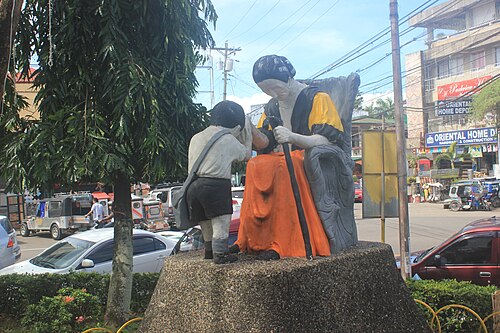
フィリピン人の価値観は、主に血縁関係、義務、友情、宗教(特にキリスト教)、商業に基づく個人的な同盟に根ざしています。 [81] : 41これらは、 パキキサマ(仲間意識)を通じた社会的調和を中心にしており、[579] : 74 主にグループに受け入れられたいという欲求によって動機付けられています。[580] [581] [568] : 47 ウタン・ナ・ルーブ(恩義)を通じた相互関係は、フィリピン人の重要な文化的特徴であり、内面化された恩義は決して完全に返済されることはありません。 [579] : 76 [582]これらの価値観から逸脱することに対する主な制裁は、ヒヤ(恥)[583]とアモール・プロピオ(自尊心)の喪失の概念です。[581]
家族はフィリピン社会の中心であり、忠誠心、親密な関係の維持、年老いた両親の世話などの規範はフィリピン社会に根付いています。[584] [585]権威と年長者への尊敬は重んじられており、マノなどのジェスチャーや、ポやオポ、クヤ(兄)やアテ(姉)などの敬称で示されます。 [586] [587]その他のフィリピンの価値観としては、将来に対する楽観主義、現在に対する悲観主義、他者への配慮、友情と親しみやすさ、もてなしの心、宗教心、自分自身と他者(特に女性)への尊敬、誠実さなどがあります。[588]
芸術と建築

フィリピン美術は、先住民族の民俗芸術と、主にスペインとアメリカ合衆国からの外国の影響が融合している。[589] [590]スペイン植民地時代、芸術はカトリックを広め、人種的に優れた集団という概念を支持するために使われた。[590]古典絵画は主に宗教的なものであった。[591]スペイン植民地支配下の著名な芸術家にはフアン・ルナやフェリックス・レズレクシオン・イダルゴがおり、彼らの作品はフィリピンに注目を集めた。[592 ] モダニズムは、1920年代から1930年代にかけて、ビクトリオ・エダデスによって、またフェルナンド・アモルソロによる人気の田園風景画によってフィリピンに紹介された。[593]

フィリピンの伝統的な建築には、土着のバハイ・クボとスペイン統治下で発展したバハイ・ナ・バトの2つの主要なモデルがあります。 [202] : 438–444 バタネスなどの一部の地域では気候により若干異なり、石灰岩が建築材料として使用され、家屋は台風に耐えられるように建てられました。[595] [596]
スペイン建築は、中央広場やプラザ・マヨール周辺の町の設計に痕跡を残したが、その建物の多くは第二次世界大戦中に損傷を受けたり破壊されたりした。[597] [51] フィリピンの教会のいくつかは、地震に耐えられるようにバロック建築を採用し、地震バロックの発展につながった。[598] [599] 4つのバロック教会がユネスコ世界遺産に登録されている。[594]フィリピンのいくつかの地域にあるスペイン植民地時代の要塞(フエルサ)は、主に宣教師建築家によって設計され、フィリピンの石工によって建てられた。[600]イロコス・スル州のビガンは、ヒスパニック様式の家屋や建物で知られている。[601]
アメリカ統治下では、政府庁舎やアールデコ劇場の建設に新しい建築様式が導入された。 [602]アメリカ統治時代には、ガバルドン校舎の建設が始まり、[603]ダニエル・バーナムの建築設計とマスタープランを使用した都市計画がマニラとバギオの一部で行われた。[604] [605]バーナムの計画には、ギリシャ建築や新古典主義建築を彷彿とさせる政府庁舎の建設も含まれていた。[602] [599]スペイン統治時代とアメリカ統治時代の建物は、イロイロ、特にカジェ・レアルで見ることができる。[606]
音楽とダンス
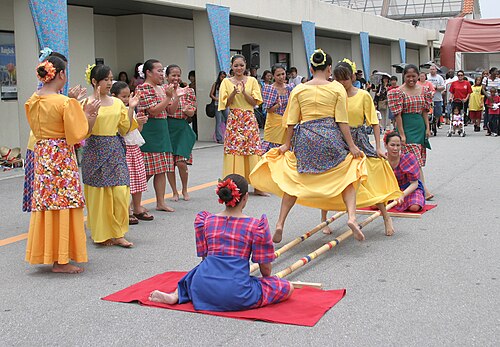
フィリピンのフォークダンスには、伝統的な先住民族の影響とスペインの影響に由来する2つのタイプがあります。 [216] : 173 先住民族のダンスの人気は低下していましたが、[608] : 77 フォークダンスは1920年代に復活し始めました。[608] : 82 ヒスパニック系フィリピンのダンスであるカリニョサは、非公式にこの国の国民的ダンスと見なされています。[609]人気のある先住民族のダンスには、竹の棒をリズミカルに叩くティニクリンとシンキルがあります。 [610] [611]現代のダンスは、繊細なバレエ[612]からストリート志向のブレイクダンスまで多岐にわたります。[613] [614]
ロンダリア音楽は、伝統的なマンドリンのような楽器を使用し、スペイン統治時代に人気があった。[159] : 327 [615]スペインの影響を受けたミュージシャンは、主に14弦ギターを使ったバンドゥリアをベースにしたバンドである。[616] [615] クンディマンは1920年代から1930年代に開発された。[617]アメリカの植民地時代には、多くのフィリピン人がアメリカの文化やポピュラー音楽に触れる機会があった。[617] ロック音楽は1960年代にフィリピン人に紹介され、ポップロック、オルタナティブロック、ヘビーメタル、パンク、ニューウェーブ、スカ、レゲエを包括するフィリピンロック(またはピノイロック)へと発展した。 1970年代の戒厳令により、政治デモの最前線に立つフィリピンのフォークロックバンドやアーティストが生まれた。[618] : 38–41この10年間には、マニラサウンドとオリジナルフィリピンミュージック(OPM)も誕生しました。 [619] [60] : 171 1979年に始まったフィリピンヒップホップは、1990年に主流になりました。[620] [618] : 38–41カラオケも人気です。[621] 2010年から2020年にかけて、ピノイポップ(Pポップ)はKポップとJポップの影響を受けていました。[622]
1870年代後半には、地元で制作される演劇が定着した。その頃、スペインの影響により、サルスエラ劇(音楽付き)[623]やコメディア劇(ダンス付き)が導入された。これらの劇は全国的に人気を博し、[608] : 69–70 、多くの現地語で書かれた。[623]アメリカの影響により、ヴォードヴィル劇やバレエが導入された。[608] : 69–70 20世紀にはリアリズム演劇が主流となり、当時の政治や社会問題に焦点を当てた劇が作られた。[623]
文学

フィリピン文学は、通常、フィリピン語、スペイン語、または英語で書かれた作品で構成されています。最も古い有名な作品のいくつかは、17世紀から19世紀にかけて作成されました。[624]それらには、同名の魔法の鳥についての叙事詩であるIbong Adarna [625]や、タガログ語の作家Francisco BalagtasによるFlorante at Lauraが含まれます。[626] [627]ホセ・リサールは、Noli Me Tángere(社会癌)とEl filibusterismo(強欲の統治)という小説を執筆しました。 [628]どちらもスペインの植民地支配の不正を描いています。[629]
民俗文学は19世紀までスペインの無関心により植民地の影響を比較的受けなかった。スペイン植民地支配下における印刷された文学作品のほとんどは宗教的な性質のものであったが、後にスペイン語を学んだフィリピンのエリート層は民族主義的な文学を書いた。 [216] : 59–62 アメリカ人の到来によりフィリピン文学における英語の使用が始まり[216] : 65–66 、 1920年代から1970年代にかけて繁栄したフィリピンの漫画産業の発展に影響を与えた。 [630] [631] 1960年代後半、フェルディナンド・マルコス大統領の時代に、フィリピン文学は政治活動の影響を受け、多くの詩人が国の口承伝統に沿ってタガログ語を使い始めた。[216] : 69–71
フィリピンの神話は主に口承で伝えられてきた。[632]有名な人物としてはマリア・マキリン、[633] ラム・アン、[634]サリマノク [ 216]などがいる。 [ 635]この国には数多くの民俗叙事詩がある。[636]裕福な家庭では、特にミンダナオ島では叙事詩の書き起こしを家宝として保存していた。マラナオ語のダランゲンはその一例である。[637]
メディア
.jpg/500px-People's_Television_Network_Logo_(2017-present).jpg)
フィリピンのメディアは主にフィリピン語と英語を使用しているが、放送はフィリピン語に移行している。[504] テレビ番組、コマーシャル、映画は、映画テレビ審査等級委員会によって規制されている。[638] [639]ほとんどのフィリピン人は、テレビ、インターネット、[640]ソーシャルメディアからニュースや情報を入手している。[641]この国の旗艦国営放送テレビネットワークは、人民テレビネットワーク(PTV)である。[642] ABS-CBNとGMAは、どちらも無料放送で、主要なテレビネットワークであった。[643] 2020年5月にABS-CBNのフランチャイズが終了するまで、ABS-CBNは国内最大のネットワークであった。[644] テレセリーと呼ばれ、主にABS-CBNとGMAが制作するフィリピンのテレビドラマは、他のいくつかの国でも視聴できる。[645] [646]
国内での映画製作は、1919年にホセ・ネポムセノ監督による初のフィリピン製作長編映画『Dalagang Bukid(田舎から来た少女)』が公開されたことから始まった。[116] [117] : 8 無声映画の時代には製作会社は小規模のままだったが、1933年にはトーキーやより大規模な製作が登場した。戦後の1940年代から1960年代初頭は、フィリピン映画の絶頂期と考えられている。1962年から1971年の10年間は質の高い映画が衰退したが、商業映画産業は1980年代まで拡大した。[116]批評家から高く評価されたフィリピン映画には、 1982年に公開された「ヒマラ(奇跡)」と「オロ・プラタ・マタ(金・銀・死)」がある。 [647] [648] 21世紀に入ってから、フィリピンの映画産業は、より予算の大きい外国映画(特にハリウッド映画)との競争に苦戦している。 [ 649 ] [650] [651]しかし、アート映画は繁栄しており、いくつかのインディーズ映画が国内外で成功を収めている。[652] [653] [654]
フィリピンには多数のラジオ局と新聞がある。[643]英語のブロードシートは、企業幹部、専門家、学生の間で人気がある。[120] : 233–251 1990年代に成長した安価なタガログ語のタブロイド紙は人気がある(特にマニラで)が、 [655]全体的な新聞の読者数はオンラインニュースに取って代わられている。[641] [656]全国的な読者数と信頼性で上位3つの新聞は、[120] : 233 フィリピン・デイリー・インクワイアラー、マニラ・ブレティン、フィリピン・スターである。[657] [658]報道の自由は憲法で保護されているが、 [659]ジャーナリスト保護委員会は、13件のジャーナリストの未解決殺人事件のため、この国を2022年のジャーナリストにとって7番目に危険な国にリストした。[660]
フィリピンの人口は世界トップのインターネットユーザーです。[661] 2021年初頭、フィリピン人の67%(7,391万人)がインターネットにアクセスしており、圧倒的多数がスマートフォンを使用していました。[662]フィリピンは2023年にグローバルイノベーションインデックスで56位にランクされ、 [663] 2014年の100位から上昇しました。[664]
料理
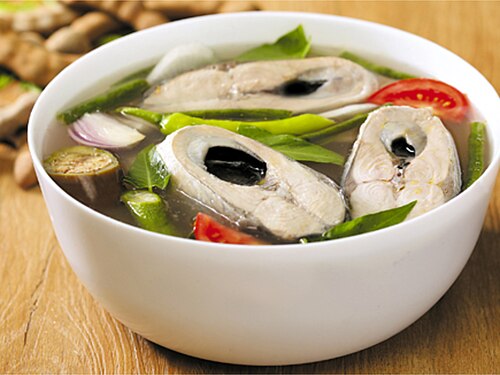
伝統的なフィリピン料理は、マレー・ポリネシア料理を起源とし、16世紀から発展してきました。主にヒスパニック、中国、アメリカの料理の影響を受け、フィリピン人の味覚に合うようにアレンジされました。[665] [666]フィリピン人は、甘味、塩味、酸味の組み合わせを中心とした濃厚な味を好む傾向があります。 [668]地域 によってバリエーションが全国に存在し、米が一般的な主食ですが[ 669]、ミンダナオ島の一部ではキャッサバがより一般的です。[670] [671]アドボは非公式の国民食です。[672]その他の人気料理には、レチョン、カレカレ、シニガン、[673]パンシット、ルンピア、アロスカルドなどがあります。[674] [675] [676]伝統的なデザートはカカニン(餅)で、プト、スマン、ビビンカが含まれます。[677] [678]カラマンシー、[679]ウベ、[680]ピリなどの材料がフィリピンのデザートに使用されます。[681] [682]パティス、バゴン、トヨなどの調味料をふんだんに使用することで、独特のフィリピン風味が生まれます。[674] [668] : 73
他の東アジアや東南アジアの国々とは異なり、フィリピン人のほとんどは箸を使わず、スプーンとフォークを使って食事をする。[683]指で食べる伝統的な習慣[684] (カマヤンとして知られる)は、都市化が進んでいない地域で行われていたが、[685] : 266–268, 277 、外国人や都市住民にフィリピン料理が紹介されるにつれて普及した。[686] [687]
スポーツとレクリエーション

アマチュアとプロのレベルでプレーされるバスケットボールは、この国で最も人気のあるスポーツと考えられている。 [688] [689]その他の人気スポーツには、マニー・パッキャオとエフレン・レイエスの功績により盛り上がったボクシングとビリヤードがある。[577] : 142 [690]国技はアルニスである。[691]サボン(闘鶏)は、特にフィリピン人男性の間で人気のある娯楽であり、マゼラン遠征によって記録されている。[692]ビデオゲームとeスポーツは新興の娯楽であり、[693] [694]パティンテロ、トゥンバン・プレソ、ルクソン・ティニック、ピコなどの先住民族のゲームの人気は若者の間で低下している。[695] [694]伝統的なゲームを保存および促進するためのいくつかの法案が提出されている。[696]
男子サッカー代表チームは、アジアカップに1回出場している。[697]女子サッカー代表チームは、 2022年1月に初のワールドカップとなる2023 FIFA女子ワールドカップ出場権を獲得した。 [698]フィリピンは、1980年夏季オリンピックのアメリカ主導のボイコットを支持した場合を除き、1924年以降、すべての夏季オリンピックに参加している。[699] [700]フィリピンは、 1972年に初出場し、冬季オリンピックに出場した最初の熱帯国となった。[701] [702] 2021年、フィリピンは東京で重量挙げ選手ヒディリン・ディアスの勝利により、同国初のオリンピック金メダルを獲得した。[703]
参照
.svg/500px-Asia_(orthographic_projection).svg.png)

注記
- ^ マニラは国の首都に指定されていますが、政府の所在地は首都圏、通称「メトロマニラ」であり、マニラ市はその一部です。[2] [3]マラカニアン宮殿やマニラ首都圏内にあるその他の機関/機関とは別に、多くの国家政府機関がメトロマニラのさまざまな場所にあります。
- ^ 1987年の憲法によれば、「スペイン語とアラビア語は自主的かつ選択的に推進されるものとする。」[5]
- ^ ab カトリックのカリスマ派信者74,096人(2020年のフィリピンの世帯人口の0.07%)を除く[7]
- ^ abいくつかの情報源によると 、フィリピンの実際の面積は343,448 km 2 (132,606 平方マイル)である。[203]
- ^ フィリピンにおける日付と時刻の表記法を参照してください。
- ^ / ˈ f i l ɪ p iː n z / ;フィリピン語:Pilipinas、タガログ語 の発音: [pɪ.lɪˈpiː.nɐs]
- ^ フィリピン語: Republika ng Pilipinas。フィリピンで
認識されている地域言語:- アクラン州:フィリピン共和国
- ビコル:フィリピン共和国
- セブアノ語: Republika sa Pilipinas
- チャバカノ: República de Filipinas
- ヒリガイノン:共和国はフィリピン人を歌った
- イバナーグ:フィリピン共和国
- イロカノ:フィリピン共和国
- イヴァタン:フィリピン共和国
- カパンパンガン:フィリピン人共和国
- キナライア:カン・ピリピーナ共和国
- マギンダナオン:ピリピーナ共和国
- マラナオ:ピリピーナ共和国
- パンガシナン州:フィリピン共和国
- サンバル:フィリピン共和国
- スリガオノン:フィリピン共和国
- タガログ語:ピリピーナ共和国
- タウスグ:ピリピーナ共和国
- Waray :フィリピン共和国
- ヤカン: Republika si Pilipinas
フィリピンで認められている選択言語:
- ^ これは重要な詳細を省略した要約です。詳細については、Schurman Commission § フィリピンへの調査訪問を参照してください。
参考文献
- ^ 共和国法第8491号(1998年2月12日)、フィリピンの国旗および紋章法、マニラ首都圏、フィリピン:フィリピン官報、2017年5月25日時点のオリジナルよりアーカイブ、2014年3月8日閲覧。
- ^ 大統領令第940号、1976年5月29日(1976年)マニラをフィリピンの首都および国家政府の常任所在地として制定、フィリピン、マニラ:フィリピン共和国官報、2017年5月25日時点のオリジナルよりアーカイブ、 2015年4月4日閲覧。
- ^ 「ケソン市地方政府 - 背景」ケソン市地方政府。2020年8月20日時点のオリジナルよりアーカイブ。 2020年8月25日閲覧。
- ^ ab 「DepEd、幼稚園から3年生までの母語ベースの教育に7つの言語を追加」GMA News Online 2013年7月13日。2013年12月16日時点のオリジナルよりアーカイブ。 2023年2月8日閲覧。
- ^ abc 「Article XIV, Section 7」。フィリピン憲法。フィリピン共和国官報。1987年。2017年6月9日時点のオリジナルよりアーカイブ。 2023年2月11日閲覧。
- ^ abc 「フィリピンの民族(2020年人口・住宅国勢調査)」。フィリピン統計局(プレスリリース)。2023年9月6日時点のオリジナルよりアーカイブ。2024年5月11日閲覧。
- ^ ab Mapa, Dennis (2023年2月21日). 「フィリピンの宗教的所属(2020年人口・住宅国勢調査)」(PDF)。フィリピン統計局(プレスリリース)p. 2。 2023年8月12日時点のオリジナルよりアーカイブ(PDF) 。 2024年5月11日閲覧。
- ^ “フィリピンの国別プロフィール”. BBCニュース. 2023年12月19日. 2023年12月19日時点のオリジナルよりアーカイブ。2024年1月10日閲覧。
- ^ 「フィリピン」。中央情報局。2023年2月27日。2021年1月10日時点のオリジナルよりアーカイブ。 2023年2月24日閲覧– CIA.gov経由。
- ^ abcde 「フィリピン」。The World Factbook。中央情報局。2023年6月7日。 2023年6月19日閲覧。
- ^ “フィリピン”. 2023年6月7日. 2023年6月19日閲覧。
- ^ “人口予測統計”. psa.gov.ph . 2021年3月28日. 2023年12月26日時点のオリジナルよりアーカイブ。 2023年11月15日閲覧。
- ^ ab Mapa, Dennis S. (2021年7月7日). 「2020年人口・住宅国勢調査(2020 CPH)人口数が大統領により公式発表される」(プレスリリース).フィリピン統計局. 2021年7月7日時点のオリジナルよりアーカイブ。
- ^ abcde 「世界経済見通しデータベース、2024年4月版。(フィリピン)」。国際通貨基金。2024年4月16日。2024年4月16日時点のオリジナルよりアーカイブ。 2024年4月17日閲覧。
- ^ 「2021年家計調査暫定結果のハイライト」(プレスリリース)。PSA。2023年5月16日時点のオリジナルよりアーカイブ。 2022年8月15日閲覧。
- ^ 「人間開発報告書2023/24」(PDF)。国連開発計画。2024年3月13日。289ページ。2024年3月13日時点のオリジナルよりアーカイブ(PDF) 。 2024年3月13日閲覧。
- ^ フィリピン年鑑(1978年版)。マニラ、フィリピン:国家経済開発庁、国勢調査統計局。1978年。716ページ。2023年3月6日時点のオリジナルよりアーカイブ。2023年2月18日閲覧。
- ^ ab スコット、ウィリアム・ヘンリー(1994年)。バランガイ:16世紀フィリピンの文化と社会。ケソン市、フィリピン:アテネオ・デ・マニラ大学出版局。ISBN 978-971-550-135-4. 2024年2月3日時点のオリジナルよりアーカイブ。2015年10月18日閲覧。
- ^ マルコム、ジョージA.(1916年)。フィリピン諸島の政府:その発展と基本原則。フィリピン法コレクション。ニューヨーク州ロチェスター:弁護士協同出版会社。p.3。OCLC 578245510。 2023年2月17日時点のオリジナルよりアーカイブ。 2023年2月12日閲覧。
- ^ Spate, Oskar HK (2004 年 11 月) [1979]。「第 4 章 マゼランの後継者: ロアイサからウルダネタまで。2 人の失敗者: グリハルバとビジャロボス」。スペイン湖。マゼラン以降の太平洋。第 1 巻。ロンドン、イギリス: Taylor & Francis。p . 97。doi : 10.22459/ SL.11.2004。ISBN 978-0-7099-0049-8. 2008年8月5日時点のオリジナルよりアーカイブ。2020年7月6日閲覧。
- ^ ターリング、ニコラス編 (1999)。『ケンブリッジ東南アジア史』第2巻:1500年頃から1800年頃まで。ケンブリッジ、イギリス:ケンブリッジ大学出版局。12ページ。ISBN 978-0-521-66370-0. 2023年4月2日時点のオリジナルよりアーカイブ。2023年4月2日閲覧。
- ^ 「1899年マロロス憲法」。フィリピン共和国官報(スペイン語と英語)。Título I – De la República; Articulo 1。2017年6月5日時点のオリジナルよりアーカイブ。 2023年2月11日閲覧。
- ^ コンスタンチノ、レナート(1975年)。フィリピン:過去再訪。ケソン市、フィリピン:タラ出版サービス。ISBN 978-971-8958-00-1. 2024年2月3日時点のオリジナルよりアーカイブ。2024年2月3日閲覧。
- ^ 「1916年のジョーンズ法」フィリピン共和国官報。1916年8月29日。第1項。―フィリピン。2017年8月8日時点のオリジナルよりアーカイブ。 2021年3月12日閲覧。
- ^ 「1935年憲法」。フィリピン共和国官報。第17条、第1項。2017年6月25日時点のオリジナルよりアーカイブ。 2023年2月11日閲覧。
- ^ “1973年フィリピン共和国憲法”.フィリピン共和国官報. 1973年1月17日. 2017年6月25日時点のオリジナルよりアーカイブ。 2021年3月14日閲覧。
- ^ “フィリピン共和国憲法”.フィリピン共和国官報. 1987年2月11日. 2017年6月7日時点のオリジナルよりアーカイブ。2021年3月14日閲覧。
- ^ Ingicco、T.;ヴァン・デン・バーグ、GD;ジャゴオン、C.バハイン、J.チャコン、MG;天野直也;フォレスティエ、H.キング、C.マナロ、K.ノマド、S.ペレイラ、A.レイエス、MC。セマ、A.シャオ、Q。ヴォインシェット、P.ファルゲール、C.アルバース、PCH;リジング、M.ライラス、G.ユルナルディ、D.ロシェット、P.バウティスタ、A.デ・ヴォス、J. (2018 年 5 月 1 日)。 「70万9千年前までのフィリピンにおける人類の活動として知られている最も古いもの」。自然。557(7704)。ウロンゴン大学: 233–237。Bibcode :2018Natur.557..233I. doi :10.1038/s41586-018-0072-8. ISSN 0028-0836. PMID 29720661. S2CID 256771231. 2019年4月29日時点のオリジナルよりアーカイブ。
- ^ Greshko, Michael; Wei-Haas, Maya (2019年4月10日). 「フィリピンで発見された古代人の新種」ナショナルジオグラフィック。2019年4月10日時点のオリジナルよりアーカイブ。 2020年10月24日閲覧。
- ^ リンコン、ポール(2019年4月10日)。「フィリピンで新種の人類が発見される」BBCニュース。2019年4月10日時点のオリジナルよりアーカイブ。 2020年10月24日閲覧。
- ^ Détroit, Florent; Dizon, Eusebio; Falguères, Christophe; Hameau, Sébastien; Ronquillo, Wilfredo; Sémah, François (2004). 「タボン洞窟(フィリピン、パラワン島)の上部更新世ホモサピエンス:新発見の説明と年代測定」(PDF)。人類古生物学および先史学。3 (2004年)。Elsevier : 705–712。Bibcode :2004CRPal...3..705D。doi :10.1016/j.crpv.2004.06.004 。 2015年2月18日時点のオリジナル(PDF)からアーカイブ。
- ^ジェット、スティーブン C. (2017)。古代の海洋横断:コロンブス以前のアメリカ大陸と の接触に関するケースの再考。アラバマ州タスカルーサ:アラバマ大学出版局。pp. 168–171。ISBN 978-0-8173-1939-7. 2024年2月3日時点のオリジナルよりアーカイブ。2020年5月23日閲覧。
- ^ ブラウン、ジェシカ、ミッチェル、ノラ J.、ベレスフォード、マイケル、編 (2005)。保護された景観アプローチ:自然、文化、コミュニティのつながり( PDF)。グランド、スイスおよびケンブリッジ、イギリス:IUCN。pp . 101–102。ISBN 978-2-8317-0797-6. 2018年4月8日時点のオリジナル(PDF)よりアーカイブ。2023年3月19日閲覧。
- ^ スコット、ウィリアム・ヘンリー(1984年)。フィリピン史研究のための先史時代の資料。フィリピン、ケソン市:ニュー・デイ・パブリッシャーズ。p. 17。ISBN 978-971-10-0227-5. 2024年2月3日時点のオリジナルよりアーカイブ。2023年4月20日閲覧。
- ^ ネス、イマニュエル(2014年)。ベルウッド、ピーター(編)。人類移住の世界的な先史。チチェスター、ウェストサセックス、イングランド:ワイリーブラックウェル。p.289。ISBN 978-1-118-97059-1. 2024年2月3日時点のオリジナルよりアーカイブ。2020年9月2日閲覧。
- ^ Hung, Hsiao-Chun; Iizuka, Yoshiyuki; Bellwood, Peter; Nguyen, Kim Dung; Bellina, Bérénice; Silapanth, Praon; Dizon, Eusebio; Santiago, Rey; Datan, Ipoi; Manton, Jonathan H. (2007 年 12 月 11 日)。「古代の翡翠が示す東南アジアにおける 3,000 年にわたる先史時代の交流」。米国科学アカデミー紀要。104 ( 50 ) 。米国科学アカデミー: 19745–19750。doi : 10.1073 / pnas.0707304104。PMC 2148369。PMID 18048347。
- ^ ab Legarda, Benito Jr. (2001). 「フィリピンにおける第2千年紀の文化的ランドマークと経済的要因との相互作用」Kinaadman (Wisdom): 南フィリピンのジャーナル23。Xavier University – Ateneo de Cagayan : 40 。
- ^ Postma, Antoon (1992). 「ラグナ銅板碑文: テキストと解説」.フィリピン研究. 40 (2). ケソン市、フィリピン:アテネオ・デ・マニラ大学: 182–203. ISSN 0031-7837. 2015年12月8日時点のオリジナルよりアーカイブ。
- ^ アブ・ デ・グラーフ、ヘルマナス・ヨハネス;ケネディ、ジョセフ。スコット、ウィリアム・ヘンリー(1977)感想: Lieferung 2. スイス、ライデン: Brill。 p. 198.ISBN 978-90-04-04859-1. 2023年3月6日時点のオリジナルよりアーカイブ。2023年2月18日閲覧。
- ^ abcde Junker, Laura Lee (1999). 襲撃、交易、饗宴:フィリピンの首長国の政治経済学。ハワイ州ホノルル:ハワイ大学出版局。ISBN 978-0-8248-2035-0. 2024年2月3日時点のオリジナルよりアーカイブ。2020年8月22日閲覧。
- ^ナドー、キャスリーン・M(2002年)。フィリピンの解放神学 :革命における信仰。コネチカット州ウェストポート:グリーンウッド出版グループ。p.8。ISBN 978-0-275-97198-4. 2023年3月17日時点のオリジナルよりアーカイブ。2023年2月18日閲覧。
- ^ 「フィリピンと東南アジアの島々の海洋関係を示す9世紀から10世紀の考古学的証拠」フィリピン国立博物館。nd 。 2023年12月4日閲覧。
- ^ ab Fox, Robert B. (2015). 「フィリピンにおける中国の影響の考古学的記録」。Chu, Richard T. (編)。「認める以上のチノイ:数世紀にわたる中国人とフィリピン人の交流」 。ケソン市:Vibal Foundation、Inc. 、 pp. 10–13。ISBN 9789719706823。
- ^ グローバー、イアン、ベルウッド、ピーター編 (2004)。東南アジア:先史時代から歴史まで。ロンドン、イギリス:RoutledgeCurzon。p . 267。ISBN 978-0-415-29777-6。
- ^ “植民地時代以前のマニラ”。マラカニアン宮殿:大統領博物館・図書館。2015年7月24日時点のオリジナルよりアーカイブ。2020年12月26日閲覧。
- ^ サン・ブエナ・ベントゥーラ神父ペドロ・デ (1613)。デ・シルバ、フアン(ドン)(編)。タガラ語語彙: エル ロマンス カステラーノ プエスト プリメロ (タガログ語と近世スペイン語)。ラ・ノーブル・ヴィラ・デ・ピラ。 p. 545.
サングレー) ラングラン (pc) anſi llamauan los
viejos deſtos [a los] ſangleyes cuando venian [a tratar] con ellos [サングレー) ラングラン (pc) これは、高齢者が [取引に] 来たときの [the] サングレー家 のことです。彼らと一緒に]{{cite book}}: CS1 maint: unrecognized language (link) - ^ サン・ブエナ・ベントゥーラ神父ペドロ・デ (1613)。デ・シルバ、フアン(ドン)(編)。タガラ語語彙: エル ロマンス カステラーノ プエスト プリメロ (タガログ語と近世スペイン語)。ラ・ノーブル・ヴィラ・デ・ピラ。 p. 170.
{{cite book}}: CS1 maint: unrecognized language (link) - ^ ボクサー写本(マニラ写本)(初期近代スペイン語と初期マニラ福建語)。ボクサー写本、かつてサー・C・R・ボクサーが保管。マニラ。1590年代。pp. 415 [PDF] / 204 [執筆時のまま]。2024年3月24日時点のオリジナルよりアーカイブ。 2024年3月24日閲覧。インディアナ大学デジタルライブラリ経由、リリー図書館からデジタル化。
{{cite book}}: CS1 maint: others (link) CS1 maint: unrecognized language (link) - ^ ラミレス・ファリア、カルロス (2007)。「フィリピン」。世界史簡潔百科事典。インド、ニューデリー:アトランティック出版社。560 ページ。ISBN 978-81-269-0775-5. 2023年1月17日時点のオリジナルよりアーカイブ。2023年2月18日閲覧。
- ^ エヴァンジェリスタ、アルフレド E. (1965). 「フィリピンの原史跡で発見された侵入考古学的資料の特定」( PDF)。アジア研究:アジア批判的視点ジャーナル。3 (1).フィリピン大学アジアセンター: 87–88。 2023年4月29日時点のオリジナル(PDF)からアーカイブ。 2023年4月29日閲覧。
- ^ ab リング、トルディ、サルキン、ロバート M.、ラボダ、シャロン (1996)。国際歴史地辞典: アジア・オセアニア。シカゴ、イリノイ州:テイラー&フランシス。pp. 565–569。ISBN 978-1-884964-04-6. 2024年2月3日時点のオリジナルよりアーカイブ。2020年8月22日閲覧。
- ^ ケソン、マヌエル L. III ; ゴイティア、ポチョロ編 (2016)。共和国の歴史地図。マニラ、フィリピン:大統領広報開発および戦略計画局。p. 64。ISBN 978-971-95551-6-2。
- ^ abc Wernstedt, Frederick L.; Spencer, Joseph Earle (1967年1月)。フィリピン諸島世界 :物理的、文化的、地域的地理。カリフォルニア州バークレー:カリフォルニア大学出版局。ISBN 978-0-520-03513-3. 2024年2月3日時点のオリジナルよりアーカイブ。2020年8月22日閲覧。
- ^ アルシラ、ホセ S. (1998)。フィリピンの歴史入門 (第 4 増補版)。フィリピン、ケソン市:アテネオ・デ・マニラ大学出版局。 p. 15.ISBN 978-971-550-261-0。
- ^ Decasa, George C. (1999)。クルアーンにおけるウンマの概念とフィリピンのイスラム社会におけるその機能。異宗教・異文化研究。第1巻。ローマ、イタリア:Pontificia Università Gregoriana。p . 328。ISBN 978-88-7652-812-5. 2024年2月3日時点のオリジナルよりアーカイブ。2023年2月18日閲覧。
- ^ abcdニューソン、リンダ A. (2009 年 4 月 16 日)。スペイン 統治初期のフィリピンにおける征服と疫病。ハワイ州ホノルル:ハワイ大学出版局。ISBN 978-0-8248-6197-1. 2023年3月8日時点のオリジナルよりアーカイブ。2021年2月5日閲覧。
- ^ カーリー、マイケル、ジェンキンス、ポール、スミス、ハリー編 (2013) [2001]。「第 7 章」。都市開発と市民社会: 持続可能な都市におけるコミュニティの役割。スターリング、バージニア州:ラウトレッジ。p. 108。ISBN 978-1-134-20050-4. 2023年3月17日時点のオリジナルよりアーカイブ。2020年9月28日閲覧。
- ^ タン、サミュエル・K. (2008)。フィリピンの歴史。フィリピン、ケソン市:フィリピン大学出版局。p. 37。ISBN 978-971-542-568-1。
- ^ バンクフ、グレッグ (2007 年 1 月 1 日)。 「歴史の嵐: フィリピンの水、危険、社会: 1565-1930」。 Boomgaard、ピーター編著。水の世界: 東南アジアの歴史における雨、川、海。 Verhandelingen van het Koninklijk Instituut voor Taal-, Land-en Volkenkunde。 Vol. 240. オランダ、ライデン: KITLV Press。 153–184ページ。ISBN 978-90-04-25401-5. JSTOR 10.1163/j.ctt1w76vd0.9 .
- ^ abcd ウッズ、デイモン L. (2006)。フィリピン:グローバル研究ハンドブック。カリフォルニア州サンタバーバラ:ABC - CLIO。ISBN 978-1-85109-675-6. 2024年2月3日時点のオリジナルよりアーカイブ。2020年12月6日閲覧。
- ^ abcde Guillermo, Artemio R. (2012). フィリピンの歴史辞典。アジア、オセアニア、中東の歴史辞典(第3版)。メリーランド州ランハム:The Scarecrow Press。ISBN 978-0-8108-7246-2. 2024年2月3日時点のオリジナルよりアーカイブ。2020年9月28日閲覧。
- ^ ウィング、JT (2015)。帝国のルーツ:1500~1750年頃の近世スペインの森林と国家権力。ブリル環境史シリーズ。ブリル。109ページ。ISBN 978-90-04-26137-2. 2024年1月28日時点のオリジナルよりアーカイブ。 2024年2月3日閲覧。
ミゲル・ロペス・デ・レガスピの航海が行われた1564年から1565年当時、フィリピンは統一された政体や国家ではなかった。
- ^ Carson, Arthur L. (1961). フィリピンの高等教育(PDF) . 速報. ワシントン D.C.:米国保健教育福祉省教育局. p. 7. OCLC 755650. 2015年4月13日時点の オリジナル(PDF)からアーカイブ。 2023年4月2日閲覧。
- ^ ab de Borja, Marciano R. (2005). フィリピンのバスク人 。バスクシリーズ。ネバダ州リノ:ネバダ大学出版局。ISBN 978-0-87417-590-5. 2022年3月26日時点のオリジナルよりアーカイブ。2023年4月25日閲覧。
- ^ セイハス、タチアナ(2014年)。「マニラ奴隷市場の多様性と広がり」。植民地メキシコのアジア人奴隷:チノ人からインディアンまで。ケンブリッジ・ラテンアメリカ研究。ニューヨーク:ケンブリッジ大学出版局。36ページ。ISBN 978-1-107-06312-9. 2023年2月13日時点のオリジナルよりアーカイブ。2023年3月19日閲覧。
- ^ Beaule, Christine; Douglass, John G. 編 (2020年4月21日)。『グローバル・スペイン帝国 : 500年にわたる場所づくりと多元主義』アリゾナ州ツーソン:アリゾナ大学出版局、p. 204。ISBN 978-0-8165-4084-6. 2023年3月21日時点のオリジナルよりアーカイブ。2023年3月21日閲覧。
- ^ サンティアゴ、フェルナンド A. ジュニア (2006)。 「イサン・マイクリング・カサイサヤン・ング・パンダカン、マニラ、1589年から1898年」。マレー語(フィリピン語)。19 (2)。デ・ラ・サール大学: 70–87。ISSN 2243-7851。 2020年8月21日のオリジナルからアーカイブ。2008 年7 月 18 日取得- フィリピンの電子ジャーナル経由。
- ^ アンドラーデ、トニオ(2005)。「第 4 章: ラ・イスラ・エルモサ: 台湾北部におけるスペイン植民地の台頭」。台湾はいかにして中国化したか: 17 世紀のオランダ、スペイン、漢民族の植民地化。ニューヨーク:コロンビア大学出版局。ISBN 978-0-231-12855-12007年11月21日時点のオリジナルよりアーカイブ – Gutenberg-e経由。
- ^ヒラルデス、アルトゥーロ( 2015年3月19日)。貿易の時代:マニラガレオン船とグローバル経済の夜明け。メリーランド州ランハム:ローマン&リトルフィールド。p.2。ISBN 978-1-4422-4352-1. 2023年4月2日時点のオリジナルよりアーカイブ。2023年4月2日閲覧。
- ^ Acabado, Stephen (2017年3月1日). 「ペリコロニアリズムの考古学:フィリピン・イフガオにおけるスペインの征服と植民地主義に対する「非征服者」の反応」(PDF)。国際歴史考古学ジャーナル。21 (1)。シュプリンガーニューヨーク:1–26。doi : 10.1007 /s10761-016-0342-9。S2CID 254541436。 2020年11月6日時点の オリジナル(PDF)からアーカイブ– Springer Link経由。
- ^ abc アビナレス、パトリシオ・N.; アモローソ、ドナ・J. (2005). フィリピンの国家と社会。メリーランド州ランハム:ロウマン&リトルフィールド。ISBN 978-0-7425-1024-1. 2024年2月3日時点のオリジナルよりアーカイブ。2020年9月28日閲覧。
- ^ コンスタンチノ、レナート; コンスタンチノ、レティツィア R. (1975)。フィリピンの歴史:スペイン植民地化から第二次世界大戦まで。ニューヨーク、ニューヨーク:マンスリーレビュープレス。pp.58-59。ISBN 978-0-85345-394-9. 2024年2月3日時点のオリジナルよりアーカイブ。2021年1月19日閲覧。
- ^ Schumacher, John N. (1984). 「フィリピンのカトリック教におけるシンクレティズム:その歴史的原因」.フィリピン研究. 32 (3). ケソン市、フィリピン:アテネオ・デ・マニラ大学出版局:254. ISSN 2244-1093. JSTOR 42632710. OCLC 6015358201. 2023年10月6日時点のオリジナルよりアーカイブ。2023年10月5日閲覧。
- ^ abc ハリリ、マリア・クリスティン・N. (2004)。フィリピンの歴史(初版)。マニラ、フィリピン:REX Book Store、Inc. ISBN 978-971-23-3934-9. 2023年12月30日時点のオリジナルよりアーカイブ。2020年5月23日閲覧。
- ^ ケイン、ハーブ・カワイヌイ(1996)。「マニラ・ガレオン船」。ボブ・ダイ編『ハワイ・クロニクル:ホノルル・マガジンに見る島の歴史』第 1 巻。ホノルル、ハワイ:ハワイ大学出版局。25~32 ページ。ISBN 978-0-8248-1829-6。
- ^ Bolunia, Mary Jane Louise A. "Astilleros: the Spanish shipyards of Sorsogon" (PDF). Proceedings of the 2014 Asia-Pacific Regional Conference on Underwater Cultural Heritage Conference; Session 5: Early Modern Colonialism in the Asia-Pacific Region (Conference proceeding). Honolulu, Hawaii: Asia-Pacific Regional Conference on Underwater Cultural Heritage Planning Committee. p. 1. OCLC 892536655. Archived from the original (PDF) on April 13, 2015. Retrieved October 26, 2015 – via The Museum of Underwater Archaeology.
- ^ McCarthy, William J. (December 1, 1995). "The Yards at Cavite: Shipbuilding in the Early Colonial Philippines". International Journal of Maritime History. 7 (2). SAGE Publications: 149–162. doi:10.1177/084387149500700208. S2CID 163709949.
- ^ a b c d e Ooi, Keat Gin, ed. (2004). Southeast Asia: A Historical Encyclopedia, from Angkor Wat to East Timor. Santa Barbara, Calif.: ABC-CLIO. ISBN 978-1-57607-770-2. Archived from the original on January 16, 2023. Retrieved January 29, 2021.
- ^ Closmann, Charles Edwin, ed. (2009). War and the Environment: Military Destruction in the Modern Age. College Station, Tex.: Texas A&M University Press. p. 36. ISBN 978-1-60344-380-7. Archived from the original on March 6, 2023. Retrieved February 18, 2023.
- ^ Klein, Bernhard; Mackenthun, Gesa, eds. (August 21, 2012). Sea Changes: Historicizing the Ocean. New York, N.Y.: Routledge. pp. 63–66. ISBN 978-1-135-94046-1. Archived from the original on August 11, 2023. Retrieved August 11, 2023.
- ^ a b c d Dolan, Ronald E., ed. (1991). Philippines. Country Studies/Area Handbook Series. Washington, D.C.: GPO for the Library of Congress. Archived from the original on November 9, 2005. Retrieved February 13, 2023 – via Country Studies.
- ^ Crossley, John Newsome (July 28, 2013). Hernando de los Ríos Coronel and the Spanish Philippines in the Golden Age. London, England: Ashgate Publishing, Ltd. pp. 168–169. ISBN 978-1-4094-8242-0. Archived from the original on February 11, 2023. Retrieved January 13, 2021.
- ^ Cole, Jeffrey A. (1985). The Potosí Mita, 1573–1700: Compulsory Indian Labor in the Andes. Stanford, Calif.: Stanford University Press. p. 20. ISBN 978-0-8047-1256-9.
- ^ Hoadley, Stephen; Ruland, Jurgen, eds. (2006). Asian Security Reassessed. Singapore: Institute of Southeast Asian Studies. p. 215. ISBN 978-981-230-400-1. Archived from the original on March 19, 2023. Retrieved March 19, 2023.
- ^ Hefner, Robert W.; Horvatich, Patricia, eds. (September 1, 1997). Islam in an Era of Nation-States: Politics and Religious Renewal in Muslim Southeast Asia. Honolulu, Hawaii: University of Hawaiʻi Press. pp. 43–44. ISBN 978-0-8248-1957-6. Archived from the original on March 19, 2023. Retrieved March 19, 2023.
- ^ United States War Department (1903). Annual Report of the Secretary of War (Report). Vol. III. Washington, D.C.: U.S. Government Printing Office. pp. 379–398.
- ^ Warren, James Francis (2007). The Sulu Zone, 1768–1898: The Dynamics of External Trade, Slavery, and Ethnicity in the Transformation of a Southeast Asian Maritime State (Second ed.). Singapore: NUS Press. p. 124. ISBN 978-9971-69-386-2. Archived from the original on February 3, 2024. Retrieved August 22, 2020.
- ^ Ramón de Dalmau y de Olivart (1893). Colección de los Tratados, Convenios y Documentos Internacionales Celebrados por Nuestros Gobiernos Con los Estados Extranjeros Desde el Reinado de Doña Isabel II Hasta Nuestros Días, Vol. 4: Acompañados de Notas Historico-Criticas Sobre Su Negociación y Complimiento y Cotejados Con los Textos Originales, Publicada de Real Orden (in Spanish). Madrid, Spain: El Progreso Editorial. pp. 120–123. Archived from the original on February 11, 2023. Retrieved June 27, 2020.
- ^ Castro, Amado A. (1982). "Foreign Trade and Economic Welfare in the Last Half-Century of Spanish Rule". Philippine Review of Economics. 19 (1 & 2). University of the Philippines School of Economics: 97–98. ISSN 1655-1516. Archived from the original on February 11, 2023. Retrieved February 11, 2023.
- ^ Romero, Ma. Corona S.; Sta. Romana, Julita R.; Santos, Lourdes Y. (2006). Rizal & the Development of National Consciousness (Second ed.). Quezon City, Philippines: Katha Publishing Co. p. 25. ISBN 978-971-574-103-3. Archived from the original on February 17, 2023. Retrieved February 12, 2023.
- ^ Hedman, Eva-Lotta; Sidel, John (2005). Leifer, Michael (ed.). Philippine Politics and Society in the Twentieth Century: Colonial Legacies, Post-Colonial Trajectories. Politics in Asia. London, England: Routledge. p. 71. ISBN 978-1-134-75421-2.
- ^ Steinberg, David Joel (2018). "Chapter 3: A Singular and a Plural Folk". The Philippines: A Singular and a Plural Place. Nations of the Modern World: Asia (Fourth ed.). Boulder, Colo.: Westview Press. The New Filipinos. doi:10.4324/9780429494383. ISBN 978-0-8133-3755-5. Archived from the original on February 18, 2023. Retrieved September 30, 2020.
- ^ Schumacher, John N. (1997). The Propaganda Movement, 1880–1895: The Creation of a Filipino Consciousness, the Making of the Revolution (Revised ed.). Manila, Philippines: Ateneo de Manila University Press. pp. 8–9. ISBN 978-971-550-209-2. Archived from the original on February 3, 2024. Retrieved January 15, 2021.
- ^ Schumacher, John N. (1998). Revolutionary Clergy: The Filipino Clergy and the Nationalist Movement, 1850–1903. Quezon City, Philippines: Ateneo de Manila University Press. pp. 23–30. ISBN 978-971-550-121-7. Archived from the original on February 3, 2024. Retrieved January 15, 2021.
- ^ Acibo, Libert Amorganda; Galicano-Adanza, Estela (1995). Jose P. Rizal: His Life, Works, and Role in the Philippine Revolution. Manila, Philippines: REX Book Store, Inc. pp. 46–47. ISBN 978-971-23-1837-5. Archived from the original on February 17, 2023. Retrieved February 12, 2023.
- ^ Owen, Norman G., ed. (January 1, 2005). The Emergence of Modern Southeast Asia: A New History. Honolulu, Hawaii: University of Hawaiʻi Press. p. 156. ISBN 978-0-8248-2841-7.
- ^ Borromeo-Buehler, Soledad (1998). The Cry of Balintawak: A Contrived Controversy: A Textual Analysis with Appended Documents. Quezon City, Philippines: Ateneo de Manila University Press. p. 7. ISBN 978-971-550-278-8. Archived from the original on February 3, 2024. Retrieved January 16, 2021.
- ^ a b Duka, Cecilio D. (2008). Struggle for Freedom: A Textbook on Philippine History. Manila, Philippines: REX Book Store, Inc. ISBN 978-971-23-5045-0. Archived from the original on September 23, 2023. Retrieved January 16, 2021.
- ^ Abinales, Patricio N. (July 8, 2022). Modern Philippines. Understanding Modern Nations. Santa Barbara, Calif.: ABC-CLIO. ISBN 978-1-4408-6005-8. Archived from the original on February 17, 2023. Retrieved February 12, 2023.
- ^ Draper, Andrew Sloan (1899). The Rescue of Cuba: An Episode in the Growth of Free Government. New York: Silver Burdett. pp. 170–172. OCLC 9764656. Archived from the original on February 11, 2023. Retrieved February 10, 2021.
- ^ Fantina, Robert (2006). Desertion and the American Soldier, 1776–2006. New York: Algora Publishing. p. 83. ISBN 978-0-87586-454-9.
- ^ Starr, J. Barton, ed. (September 1988). The United States Constitution: Its Birth, Growth, and Influence in Asia. Hong Kong, China: Hong Kong University Press. p. 260. ISBN 978-962-209-201-3. Archived from the original on February 11, 2023. Retrieved January 19, 2021.
- ^ "The week". The Nation. Vol. 68, no. 1766. May 4, 1899. p. 323.
- ^ Linn, Brian McAllister (2000). The Philippine War, 1899–1902. Lawrence, Kans.: University Press of Kansas. pp. 75–76. ISBN 978-0-7006-1225-3. Archived from the original on February 3, 2024. Retrieved December 25, 2018.
- ^ Kalaw, Maximo Manguiat (1927). The Development of Philippine politics (1872–1920). Manila: Oriental Commercial Company, Inc. pp. 199–200. Archived from the original on December 14, 2019. Retrieved December 3, 2023.
- ^ Paterno, Pedro Alejandro (June 2, 1899). "Pedro Paterno's Proclamation of War". The Philippine-American War Documents. San Pablo City, Philippines: MSC Institute of Technology, Inc. Retrieved December 25, 2016.
- ^ a b Tucker, Spencer, ed. (May 20, 2009). "Philippine-American War". The Encyclopedia of the Spanish-American and Philippine-American Wars: A Political, Social, and Military History. Vol. I: A–L (Illustrated ed.). Santa Barbara, Calif.: ABC-CLIO. p. 478. ISBN 978-1-85109-951-1. Archived from the original on September 23, 2023. Retrieved July 25, 2021.
- ^ Briley, Ron (2020). Talking American History: An Informal Narrative History of the United States. Santa Fe, N.M.: Sunstone Press. p. 247. ISBN 978-1-63293-288-4. Archived from the original on February 11, 2023. Retrieved December 27, 2022.
- ^ Cocks, Catherine; Holloran, Peter C.; Lessoff, Alan (March 13, 2009). "Philippine-American War (1899–1902)". Historical Dictionary of the Progressive Era. Historical Dictionaries of U.S. Historical Eras. Vol. 12. Lanham, Md.: The Scarecrow Press. p. 332. ISBN 978-0-8108-6293-7. Archived from the original on February 11, 2023. Retrieved December 27, 2022.
- ^ Gates, John M. (November 2002). "Chapter 3: The Pacification of the Philippines". The U.S. Army and Irregular Warfare. OCLC 49327571. Archived from the original on August 5, 2010. Retrieved February 20, 2010 – via College of Wooster.
- ^ Abanes, Menandro Sarion (2014). Ethno-religious Identification and Intergroup Contact Avoidance: An Empirical Study on Christian-Muslim Relations in the Philippines. Nijmegen Studies in Development and Cultural Change. Zürich, Switzerland: LIT Verlag Münster. p. 36. ISBN 978-3-643-90580-2. Archived from the original on February 17, 2023. Retrieved February 11, 2023.
- ^ Federspiel, Howard M. (January 31, 2007). Sultans, Shamans, and Saints: Islam and Muslims in Southeast Asia. Honolulu, Hawaii: University of Hawaiʻi Press. p. 120. ISBN 978-0-8248-3052-6. Archived from the original on February 3, 2024. Retrieved February 12, 2023.
- ^ Aguilar-Cariño, Ma. Luisa (1994). "The Igorot as Other: Four Discourses from the Colonial Period". Philippine Studies. 42 (2). Ateneo de Manila University: 194–209. ISSN 0031-7837. JSTOR 42633435.
- ^ Wolff, Stefan; Özkanca, Oya Dursun-, eds. (March 16, 2016). External Interventions in Civil Wars: The Role and Impact of Regional and International Organisations. London, England: Routledge. p. 103. ISBN 978-1-134-91142-4. Archived from the original on March 23, 2023. Retrieved March 23, 2023.
- ^ Rogers, Mark M.; Bamat, Tom; Ideh, Julie, eds. (March 24, 2008). Pursuing Just Peace: An Overview and Case Studies for Faith-Based Peacebuilders. Baltimore, Md.: Catholic Relief Services. p. 119. ISBN 978-1-61492-030-4. Archived from the original on February 8, 2009. Retrieved April 25, 2023.
- ^ a b c Armes, Roy (July 29, 1987). Third World Film Making and the West. Berkeley, Calif.: University of California Press. p. 152. ISBN 978-0-520-90801-7. Archived from the original on February 3, 2024. Retrieved October 18, 2015.
- ^ a b Tofighian, Nadi (2006). The role of Jose Nepomuceno in the Philippine society: What language did his silent films speak?. DiVA portal (Thesis). Stockholm University. OCLC 1235074310. Archived from the original on March 9, 2012. Retrieved February 9, 2023.
- ^ Nadeau, Kathleen (April 3, 2020). The History of the Philippines. The Greenwood Histories of the Modern Nations (Second ed.). Santa Barbara, Calif.: Greenwood. p. 76. ISBN 978-1-4408-7359-1. Archived from the original on October 19, 2023. Retrieved October 12, 2023.
- ^ Lai To, Lee; Othman, Zarina, eds. (September 1, 2016). Regional Community Building in East Asia: Countries in Focus. Politics in Asia. New York, N.Y.: Routledge. p. 145. ISBN 978-1-317-26556-6. Archived from the original on February 11, 2023. Retrieved January 29, 2021.
- ^ a b c Thompson, Roger M. (October 16, 2003). Filipino English and Taglish: Language Switching From Multiple Perspectives. Varieties of English Around the World. Amsterdam, Netherlands: John Benjamins Publishing Company. ISBN 978-90-272-9607-8. Archived from the original on November 18, 2020. Retrieved September 28, 2020.
- ^ Gonzales, Cathrine (April 30, 2020). "Celebrating 83 years of women's suffrage in the Philippines". Philippine Daily Inquirer. Archived from the original on May 6, 2020. Retrieved January 29, 2021.
- ^ Kwiatkowski, Lynn (May 20, 2019). Struggling With Development: The Politics of Hunger and Gender in the Philippines. Boulder, Colo.: Westview Press. p. 41. ISBN 978-0-429-96562-3. Archived from the original on February 3, 2024. Retrieved January 29, 2021.
- ^ Holden, William N.; Jacobson, R. Daniel (February 15, 2012). Mining and Natural Hazard Vulnerability in the Philippines: Digging to Development or Digging to Disaster?. Anthem Environmental Studies. London, England: Anthem Press. p. 229. ISBN 978-1-84331-396-0. Archived from the original on February 17, 2023. Retrieved February 12, 2023.
- ^ Riedinger, Jeffrey M. (1995). Agrarian Reform in the Philippines: Democratic Transitions and Redistributive Reform. Stanford, Calif.: Stanford University Press. p. 87. ISBN 978-0-8047-2530-9. Archived from the original on April 22, 2023. Retrieved February 12, 2023.
- ^ Chamberlain, Sharon W. (March 5, 2019). A Reckoning: Philippine Trials of Japanese War Criminals. New Perspectives in Southeast Asian Studies. Madison, Wis.: University of Wisconsin Press. p. 11. ISBN 978-0-299-31860-4. Archived from the original on February 3, 2024. Retrieved February 16, 2021.
- ^ Rankin, Karl L. (November 25, 1943). "Introduction". Document 984 (Report). Foreign Relations of the United States: Diplomatic Papers, 1943, The British Commonwealth, Eastern Europe, the Far East. Vol. III. Office of the Historian. Archived from the original on June 29, 2017. Retrieved February 16, 2021.
- ^ Abinales, Patricio N.; Amoroso, Donna J. (July 6, 2017). State and Society in the Philippines (Second ed.). Lanham, Md.: Rowman & Littlefield. p. 160. ISBN 978-1-5381-0395-1. Archived from the original on February 3, 2024. Retrieved February 16, 2021.
- ^ "The Guerrilla War". American Experience. PBS. Archived from the original on January 28, 2017. Retrieved February 24, 2011.
- ^ Minor, Colin (March 4, 2019). "Filipino Guerilla Resistance to Japanese Invasion in World War II". Legacy. 15 (1). Archived from the original on March 20, 2020. Retrieved February 11, 2023 – via Southern Illinois University Carbondale.
- ^ Sandler, Stanley, ed. (2001). "Philippines, Anti-Japanese Guerrillas in". World War II in the Pacific: An Encyclopedia. New York, N.Y.: Garland Publishing. pp. 819–825. ISBN 978-0-8153-1883-5. Archived from the original on February 3, 2024. Retrieved February 18, 2021.
- ^ Jones, Jeffrey Frank. Japanese War Crimes and Related Topics: A Guide to Records at the National Archives (PDF). Washington, D.C.: National Archives and Records Administration. pp. 1031–1037. Archived from the original (PDF) on April 14, 2010 – via ibiblio.
- ^ Li, Peter (ed.). Japanese War Crimes: The Search for Justice. New Brunswick, N.J.: Transaction Publishers. p. 250. ISBN 978-1-4128-2683-9. Archived from the original on October 2, 2020.
- ^ Rottman, Gordon L. (2002). World War II Pacific Island Guide: A Geo-Military Study. Westport, Conn.: Greenwood Press. p. 318. ISBN 978-0-313-31395-0. Archived from the original on October 12, 2023. Retrieved October 18, 2015.
- ^ Del Gallego, John A. (July 17, 2020). The Liberation of Manila: 28 Days of Carnage, February–March 1945. Jefferson, N.C.: McFarland. p. 84. ISBN 978-1-4766-3597-2. Archived from the original on February 17, 2023. Retrieved February 12, 2023.
- ^ "Founding Member States". United Nations. Archived from the original on November 21, 2009.
- ^ a b c Bühler, Konrad G. (February 8, 2001). State Succession and Membership in International Organizations: Legal Theories versus Political Pragmatism. Legal Aspects of International Organization. The Hague, Netherlands: Kluwer Law International. ISBN 978-90-411-1553-9. Archived from the original on April 5, 2023. Retrieved August 22, 2020.
- ^ Treaties and Other International Agreements of the United States of America; 1776–1949 (PDF). Vol. II. United States: United States Department of State. 1974. pp. 3–6. Archived from the original (PDF) on August 24, 2021.
- ^ Goodwin, Jeff (2001). No Other Way Out: States and Revolutionary Movements, 1945–1991. Cambridge Studies in Comparative Politics. Cambridge, England: Cambridge University Press. p. 118. ISBN 978-0-521-62069-7.
- ^ Tucker, Spencer C., ed. (October 29, 2013). "Hukbalahap Rebellion". Encyclopedia of Insurgency and Counterinsurgency: A New Era of Modern Warfare. Santa Barbara, Calif.: ABC-CLIO. p. 244. ISBN 978-1-61069-280-9.
- ^ "Republic Day". Official Gazette of the Republic of the Philippines. II. Independence Day moved from July 4 to June 12. Archived from the original on February 25, 2018. Retrieved February 12, 2023.
- ^ Dobbs, Charles M. (February 19, 2010). Trade and Security: The United States and East Asia, 1961–1969. Newcastle upon Tyne, England: Cambridge Scholars Publishing. p. 222. ISBN 978-1-4438-1995-4. Archived from the original on March 6, 2023. Retrieved February 18, 2023.
- ^ Weatherbee, Donald E.; Emmers, Ralf; Pangestu, Mari; Sebastian, Leonard C. (2005). International Relations in Southeast Asia: The Struggle for Autonomy. Lanham, Md.: Rowman & Littlefield. pp. 68–69. ISBN 978-0-7425-2842-0. Archived from the original on June 4, 2020. Retrieved October 18, 2015.
- ^ a b Timberman, David G. (1991). A Changeless Land: Continuity and Change in Philippine Politics. Armonk, N.Y.: M.E. Sharpe. ISBN 978-981-3035-86-7. Archived from the original on February 18, 2023. Retrieved September 28, 2020.
- ^ Fernandes, Clinton (June 30, 2008). Hot Spot: Asia and Oceania. Westport, Conn.: ABC-CLIO. p. 188. ISBN 978-0-313-35413-7. Archived from the original on February 3, 2024. Retrieved February 18, 2023.
- ^ "Declaration of Martial Law". Official Gazette of the Republic of the Philippines. Archived from the original on July 8, 2017. Retrieved September 1, 2020.
- ^ Hastedt, Glenn P. (January 1, 2004). "Philippines". Encyclopedia of American Foreign Policy. New York, N.Y.: Facts On File. p. 392. ISBN 978-1-4381-0989-3. Archived from the original on May 10, 2023. Retrieved March 17, 2023.
- ^ Martin, Gus, ed. (June 15, 2011). "New People's Army". The SAGE Encyclopedia of Terrorism (Second ed.). Thousand Oaks, Calif.: SAGE Publications. p. 427. ISBN 978-1-4522-6638-1. Archived from the original on April 20, 2023. Retrieved March 17, 2023.
- ^ van der Kroef, Justus M. (1975). "Asian Communism in the Crucible". Problems of Communism. XXIV (March–April 1975). Documentary Studies Section, International Information Administration: 59. Archived from the original on February 12, 2023. Retrieved September 28, 2020.
- ^ The Europa World Year: Kazakhstan – Zimbabwe. Vol. II (45th ed.). London, England: Europa Publications. 2004. p. 3408. ISBN 978-1-85743-255-8. Archived from the original on January 14, 2023. Retrieved March 22, 2023.
- ^ Leary, Virginia A.; Ellis, A. A.; Madlener, Kurt (1984). "Chapter 1: An Overview of Human Rights". The Philippines: Human Rights After Martial Law: Report of a Mission (PDF) (Report). Geneva, Switzerland: International Commission of Jurists. ISBN 978-92-9037-023-9. Archived from the original (PDF) on March 29, 2014. Retrieved February 12, 2023.
- ^ van Erven, Eugène (1992). The Playful Revolution: Theatre and Liberation in Asia. Bloomington, Ind.: Indiana University Press. p. 35. ISBN 978-0-253-20729-6. Archived from the original on March 6, 2023. Retrieved February 18, 2023.
- ^ Kang, David C. (January 24, 2002). Crony Capitalism: Corruption and Development in South Korea and the Philippines. Cambridge, England: Cambridge University Press. p. 140. ISBN 978-0-521-00408-4. Archived from the original on March 6, 2023. Retrieved February 18, 2023.
- ^ White, Lynn T. III (December 17, 2014). Philippine Politics: Possibilities and Problems in a Localist Democracy. Routledge Contemporary Southeast Asia Series. London, England: Routledge. p. 74. ISBN 978-1-317-57422-4. Archived from the original on February 3, 2024. Retrieved February 18, 2023.
- ^ Salazar, Lorraine Carlos (2007). Getting a Dial Tone: Telecommunications Liberalisation in Malaysia and the Philippines. Singapore: Institute of Southeast Asian Studies. pp. 12–13. ISBN 978-981-230-382-0. Archived from the original on March 6, 2023. Retrieved February 18, 2023.
- ^ Inoue, M.; Isozaki, H., eds. (November 11, 2013). People and Forest — Policy and Local Reality in Southeast Asia, the Russian Far East, and Japan. Dordrecht, Netherlands: Springer Science & Business Media. p. 142. ISBN 978-94-017-2554-5. Archived from the original on March 6, 2023. Retrieved February 18, 2023.
- ^ "UCAN Special Report: What's Behind the Negros Famine Crisis". Union of Catholic Asian News. September 10, 1985. Archived from the original on March 22, 2016. Retrieved February 14, 2023.
- ^ SarDesai, D. R. (December 4, 2012). Southeast Asia: Past and Present (7th ed.). Westview Press. ISBN 978-0-8133-4838-4. Archived from the original on March 6, 2023. Retrieved February 18, 2023.
- ^ Vogl, Frank (September 2016). Waging War on Corruption: Inside the Movement Fighting the Abuse of Power. Boulder, Colo.: Rowman & Littlefield. p. 60. ISBN 978-1-4422-1853-6. Archived from the original on March 6, 2023. Retrieved February 18, 2023.
- ^ a b c Thompson, Mark R.; Batalla, Eric Vincent C., eds. (February 19, 2018). Routledge Handbook of the Contemporary Philippines. Routledge Handbooks. London, England: Routledge. ISBN 978-1-317-48526-1. Archived from the original on March 6, 2023. Retrieved February 18, 2023.
- ^ Raquiza, Antoinette R. (June 17, 2013). State Structure, Policy Formation, and Economic Development in Southeast Asia: The Political Economy of Thailand and the Philippines. Routledge Studies in the Growth Economies of Asia. London, England: Routledge. pp. 40–41. ISBN 978-1-136-50502-7. Archived from the original on February 3, 2024. Retrieved February 18, 2023.
- ^ Quinn-Judge, Paul (September 7, 1983). "Assassination of Aquino linked to power struggle for successor to Marcos". The Christian Science Monitor. Archived from the original on September 8, 2015. Retrieved February 12, 2023.
- ^ Hermida, Ranilo Balaguer (November 19, 2014). Imagining Modern Democracy: A Habermasian Assessment of the Philippine Experiment. Albany, N.Y.: SUNY Press. p. 12. ISBN 978-1-4384-5387-3. Archived from the original on March 6, 2023. Retrieved February 18, 2023.
- ^ Atwood, J. Brian; Schuette, Keith E. A Path to Democratic Renewal (PDF) (Report). p. 350. Archived from the original (PDF) on May 12, 2014 – via National Democratic Institute for International Affairs and International Republican Institute.
- ^ a b Fineman, Mark (February 27, 1986). "The 3-Day Revolution: How Marcos Was Toppled". Los Angeles Times. Archived from the original on August 25, 2020. Retrieved February 12, 2023.
- ^ Burgess, John (April 21, 1986). "Not All Filipinos Glad Marcos Is Out". Washington Post. Archived from the original on February 12, 2023. Retrieved February 12, 2023.
- ^ a b Newhall, Chris; Hendley, James W. II & Stauffer, Peter H. (February 28, 2005). "The Cataclysmic 1991 Eruption of Mount Pinatubo, Philippines (U.S. Geological Survey Fact Sheet 113-97)" (PDF). Reducing the Risk from Volcano Hazards. U.S. Department of the Interior; U.S. Geological Survey. OCLC 731752857. Archived from the original (PDF) on February 17, 2006. Retrieved April 22, 2023.
- ^ Kingsbury, Damien (September 13, 2016). Politics in Contemporary Southeast Asia: Authority, Democracy and Political Change. London, England: Routledge. p. 132. ISBN 978-1-317-49628-1. Archived from the original on February 12, 2023. Retrieved September 28, 2020.
- ^ Tan, Andrew T. H., ed. (January 2009). A Handbook of Terrorism and Insurgency in Southeast Asia. Cheltenham, England: Edward Elgar Publishing. p. 405. ISBN 978-1-84720-718-0.
- ^ "The Communist Insurgency in the Philippines: Tactics and Talks" (PDF). Asia Report N°202. International Crisis Group: 5–7. February 14, 2011. OCLC 905388916. Archived from the original (PDF) on August 6, 2020. Retrieved September 2, 2020 – via Refworld.
- ^ Mydans, Seth (September 14, 1986). "Philippine Communists Are Spread Widely, but Not Thinly". The New York Times. Archived from the original on May 24, 2015. Retrieved September 2, 2020.
- ^ Pecotich, Anthony; Shultz, Clifford J., eds. (July 22, 2016). Handbook of Markets and Economies: East Asia, Southeast Asia, Australia, New Zealand: East Asia, Southeast Asia, Australia, New Zealand. Armonk, N.Y.: M. E. Sharpe. ISBN 978-1-315-49875-1. Archived from the original on March 22, 2023. Retrieved March 22, 2023.
- ^ Ortega, Arnisson Andre (September 9, 2016). Neoliberalizing Spaces in the Philippines: Suburbanization, Transnational Migration, and Dispossession. Lanham, Md.: Rowman & Littlefield. pp. 51–52. ISBN 978-1-4985-3052-1. Archived from the original on March 22, 2023. Retrieved March 22, 2023.
- ^ Gargan, Edward A. (December 11, 1997). "Last Laugh for the Philippines; Onetime Joke Economy Avoids Much of Asia's Turmoil". The New York Times. Archived from the original on December 28, 2009. Retrieved January 25, 2008.
- ^ Pempel, T. J., ed. (1999). The Politics of the Asian Economic Crisis. Ithaca, N.Y.: Cornell University Press. p. 163. ISBN 978-0-8014-8634-0. Archived from the original on February 3, 2024. Retrieved March 28, 2016.
- ^ Rebullida, Ma. Lourdes G. (December 2003). "The Politics of Urban Poor Housing: State and Civil Society Dynamics" (PDF). Philippine Political Science Journal. 24 (47). Philippine Political Science Association: 56. doi:10.1080/01154451.2003.9754247. S2CID 154441392. Archived from the original (PDF) on May 11, 2021. Retrieved February 12, 2023.
- ^ Bhargava, Vinay Kumar; Bolongaita, Emil P. (2004). Challenging Corruption in Asia: Case Studies and a Framework for Action. Directions in Development. Washington, D.C.: World Bank Publications. p. 78. ISBN 978-0-8213-5683-8. Archived from the original on March 22, 2023. Retrieved March 22, 2023.
- ^ Landler, Mark (February 9, 2001). "In Philippines, The Economy As Casualty; The President Ousted, a Credibility Repair Job". The New York Times. Archived from the original on January 19, 2010. Retrieved February 8, 2023.
- ^ Hutchcroft, Paul D. (Paul David) (2008). "The Arroyo Imbroglio in the Philippines". Journal of Democracy. 19 (1). Johns Hopkins University Press: 141–155. doi:10.1353/jod.2008.0001. ISSN 1086-3214. S2CID 144031968. Retrieved June 16, 2023 – via Project MUSE.
- ^ Dizon, David (August 4, 2010). "Corruption was Gloria's biggest mistake: survey". ABS-CBN News. Archived from the original on August 6, 2010. Retrieved April 15, 2012.
- ^ McCoy, Alfred W. (October 15, 2009). Policing America's Empire: The United States, the Philippines, and the Rise of the Surveillance State. Madison, Wis.: University of Wisconsin Press. p. 498. ISBN 978-0-299-23413-3. Retrieved October 21, 2023.
- ^ a b Lum, Thomas; Dolven, Ben (May 15, 2014). The Republic of the Philippines and U.S. Interests—2014. CRS Reports (Report). Congressional Research Service. OCLC 1121453557. Archived from the original on April 17, 2022. Retrieved September 14, 2020.
- ^ Lucas, Dax (June 8, 2012). "Aquino attributes growth to good governance". Philippine Daily Inquirer. Archived from the original on June 10, 2012. Retrieved September 14, 2020.
- ^ Buendia, Rizal G. (January 2015). The Politics of the Bangsamoro Basic Law. Manila, Philippines: Yuchengco Center, De La Salle University. pp. 3–5. doi:10.13140/RG.2.1.3954.9205/1. Retrieved May 10, 2024 – via ResearchGate.
- ^ Clapano, Jose Rodel (February 3, 2016). "Congress buries Bangsamoro bill". The Philippine Star. Archived from the original on September 20, 2018. Retrieved August 24, 2022.
- ^ Alberto-Masakayan, Thea (May 27, 2016). "Duterte, Robredo win 2016 polls". ABS-CBN News. Archived from the original on May 28, 2016. Retrieved May 27, 2016.
- ^ Nicolas, Fiona (November 4, 2016). "Big projects underway in 'golden age' of infrastructure". CNN Philippines. Archived from the original on November 7, 2016. Retrieved September 13, 2020.
- ^ de Vera, Ben O. (August 6, 2020). "Build, Build, Build's 'new normal': 13 projects added, 8 removed". Philippine Daily Inquirer. Archived from the original on August 17, 2020. Retrieved September 13, 2020.
- ^ Baldwin, Clare; Marshall, Andrew R.C. (March 16, 2017). "Between Duterte and a death squad, a Philippine mayor fights drug-war violence". Reuters. Archived from the original on March 16, 2017.
- ^ Merez, Arianne (March 29, 2019). "5,000 killed and 170,000 arrested in war on drugs: police". ABS-CBN News. Archived from the original on March 29, 2019. Retrieved April 16, 2019.
- ^ Caliwan, Christopher Lloyd (March 30, 2022). "Over 24K villages 'drug-cleared' as of February: PDEA". Philippine News Agency. Archived from the original on March 31, 2022.
- ^ Romero, Alexis (December 26, 2017). "Duterte gov't probing over 16,000 drug war-linked deaths as homicide, not EJK". The Philippine Star. Archived from the original on December 26, 2017. Retrieved February 12, 2023.
- ^ Kabiling, Genalyn (March 5, 2021). "Duterte unfazed by drug war criticisms: 'You want me to go prison? So be it'". Manila Bulletin. Archived from the original on March 5, 2021. Retrieved February 12, 2023.
- ^ Maitem, Jeoffrey (January 25, 2019). "It's Official: Majority in So. Philippines Backs Muslim Autonomy Law". BenarNews. Archived from the original on January 26, 2019. Retrieved February 12, 2023.
- ^ "Philippines confirms first case of new coronavirus". ABS-CBN News. January 30, 2020. Archived from the original on January 30, 2020. Retrieved January 30, 2020.
- ^ Cordero, Ted (March 7, 2020). "DOH recommends declaration of public health emergency after COVID-19 local transmission". GMA News Online. Archived from the original on March 8, 2020. Retrieved March 7, 2020.
- ^ Venzon, Cliff (January 28, 2021). "Philippines GDP shrinks 9.5% in 2020, worst since 1947". Nikkei Asia. Archived from the original on January 28, 2021. Retrieved January 31, 2021.
- ^ "Ferdinand "Bongbong" Marcos wins the Philippine presidency in a landslide". The Economist. May 10, 2022. Archived from the original on May 10, 2022. Retrieved June 21, 2022.
- ^ A Pocket Guide to the Philippines. Washington, D.C.: American Forces Information Service, Department of Defense. 1982. p. 7. OCLC 989862194. Archived from the original on March 6, 2023. Retrieved February 22, 2023. [ISBN unspecified]
- ^ "Know before you go: the Philippines". National Geographic. June 4, 2019. Archived from the original on February 17, 2021. Retrieved April 4, 2021.
- ^ "More islands, more fun in PH". CNN Philippines. February 20, 2016. Archived from the original on June 20, 2018. Retrieved July 5, 2020.
- ^ "Land Use and Land Classification of the Philippines" (PDF). Infomapper. 1 (2). National Mapping and Resource Information Authority: 10. December 1991. ISSN 0117-1674. Archived from the original (PDF) on January 22, 2021.
- ^ a b c d e f g h i Boquet, Yves (2017). The Philippine Archipelago. Springer Geography. Cham, Switzerland: Springer. ISBN 978-3-319-51926-5. Archived from the original on February 3, 2024. Retrieved April 25, 2023.
- ^ Achieving Sustainable Urban Development Project; Philippines; Summary Report (PDF) (Report). UN-Habitat. 2016. p. 1. Archived from the original (PDF) on August 26, 2018. Retrieved March 22, 2023.
- ^ "Philippines – Places in the News". Library of Congress. Archived from the original on June 25, 2008. Retrieved March 13, 2023.
- ^ Hogan, C. Michael (August 19, 2011). "Celebes Sea". Encyclopedia of Earth. Archived from the original on July 29, 2012. Retrieved February 5, 2023.
- ^ "Philippine Sea". Encarta. Archived from the original on August 20, 2009. on August 20, 2009).
- ^ "Philippine Sea". Encyclopædia Britannica. Archived from the original on July 14, 2015. Retrieved February 9, 2021.
- ^ "Philippines – A country profile". Eye on Asia. Government of Singapore. Archived from the original on September 26, 2020. Retrieved February 26, 2023.
- ^ Chaffee, Frederic H.; Aurell, George E.; Barth, Helen A.; Betters, Elinor C.; Cort, Ann S.; Dombrowski, John H.; Fasano, Vincent J.; Weaver, John O. (February 1969). Area Handbook for the Philippines. Washington, D.C.: U.S. Government Printing Office. p. 6. OCLC 19734. Archived from the original on April 7, 2023. Retrieved March 9, 2023. [ISBN unspecified]
- ^ "Field Listing – Coastline". The World Factbook. Washington, D.C.: Central Intelligence Agency. Archived from the original on June 13, 2007. Retrieved February 5, 2023.
- ^ "Fisheries, Ecosystems and Biodiversity; Catches by Taxon in the waters of Philippines". Sea Around Us. Archived from the original on February 5, 2023. Retrieved February 5, 2023.
- ^ College of Forestry and Natural Resources, University of the Philippines Los Baños. Climate-Responsive Integrated Master Plan for Cagayan River Basin; Volume I – Executive Summary (PDF). River Basin Control Office (Report). Department of Environment and Natural Resources. p. 5. Archived from the original (PDF) on July 30, 2020. Retrieved July 30, 2020.
- ^ Wolanski, Eric, ed. (2006). "Chapter 19: Manila Bay: Environmental Challenges and Opportunities". The Environment in Asia Pacific Harbours. Dordrecht, Netherlands: Springer. pp. 309–328. ISBN 978-1-4020-3654-5. Archived from the original on March 21, 2023. Retrieved March 21, 2023.
- ^ "Laguna de Bay". Laguna Lake Development Authority. Archived from the original on June 18, 2020. Retrieved August 18, 2007.
- ^ Murphy, Denis; Anana, Ted (2004). "Pasig River Rehabilitation Program". Habitat International Coalition. Archived from the original on October 12, 2007.
- ^ a b c d e f g Rodell, Paul A. (2002). Culture and Customs of the Philippines. Culture and Customs of Asia. Westport, Conn.: Greenwood Press. ISBN 978-0-313-30415-6. Archived from the original on February 3, 2024. Retrieved August 22, 2020.
- ^ Berckhemer, H.; Hsü, K., eds. (1982). Alpine-Mediterranean Geodynamics. Geodynamics Series. Vol. 7. Washington, D.C.: American Geophysical Union. p. 31. ISBN 978-978-087-590-9. Archived from the original on February 12, 2023. Retrieved March 11, 2022.
- ^ Frohlich, Cliff (May 4, 2006). Deep Earthquakes. Cambridge, England: Cambridge University Press. p. 421. ISBN 978-0-521-82869-7. Archived from the original on February 12, 2023. Retrieved March 11, 2022.
- ^ Rantucci, Giovanni; Philippine Institute of Volcanology and Seismology (1994). "Chapter 2: Overview of Past and Recent Disasters in the Philippines". Geological Disasters in the Philippines; The July 1990 Earthquake and the June 1991 Eruption of Mount Pinatubo; Description, Effects, and Lessons Learned (PDF). Rome, Italy: Presidenza del Consiglio dei Ministri, Dipt. per l'Informazione e l'Editoria. p. 24. ISBN 978-1-4752-3936-2. Archived from the original (PDF) on May 30, 2012. Retrieved February 25, 2022 – via United Nations Office for Disaster Risk Reduction.
- ^ Rinard Hinga, Bethany D. (March 17, 2015). "Philippines". Ring of Fire: An Encyclopedia of the Pacific Rim's Earthquakes, Tsunamis, and Volcanoes. Santa Barbara, Calif.: ABC-CLIO. p. 249. ISBN 978-1-61069-297-7.
- ^ "Volcanoes of the Philippines". Philippine Institute of Volcanology and Seismology. Archived from the original on August 6, 2017. Retrieved July 24, 2020.
- ^ Esplanada, Jerry E. (March 1, 2012). "Philippines sits on $840B of mine—US". Philippine Daily Inquirer. Archived from the original on March 2, 2012. Retrieved July 24, 2020.
- ^ Bryner, Leonid (September 1, 1969). "Ore Deposits of the Philippines Their Geology". Economic Geology. 64 (6). Economic Geology Publishing Company: 645–647. CiteSeerX 10.1.1.875.7878. doi:10.2113/gsecongeo.64.6.644.
- ^ Santos, Gabriel Jr. (1974). "Mineral Distribution and Geological Features of the Philippines". Metallogenetische und Geochemische Provinzen / Metallogenetic and Geochemical Provinces. Vol. 1. Springer Nature. p. 89. doi:10.1007/978-3-7091-4065-9_8. ISBN 978-3-211-81249-5.
- ^ a b Greenlees, Donald (May 14, 2008). "Miners shun mineral wealth of the Philippines". The New York Times. Archived from the original on May 11, 2011. Retrieved July 18, 2020.
- ^ Cinco, Maricar (June 3, 2016). "Firm sees metal costlier than gold in Romblon sea". Philippine Daily Inquirer. Archived from the original on July 24, 2020. Retrieved July 24, 2020.
- ^ Ramos, Socorro B.; Quiniquini, Salvador M., eds. (1966). The Philippines: a Handbook of Economic Facts and General Information. Manila, Philippines: Department of Commerce and Industry, Research and Information Division. p. 51. OCLC 63394. Archived from the original on April 18, 2023. Retrieved April 7, 2023.
- ^ Schneider, Keith (June 8, 2017). "The Philippines, a nation rich in precious metals, encounters powerful opposition to mining". Mongabay. Archived from the original on July 10, 2017. Retrieved July 18, 2020.
- ^ Philippine Historical Association; New Day Publishers (1999). Philippine Presidents: 100 Years. Quezon City, Philippines: Philippine Historical Association. p. 338. ISBN 978-971-10-1027-0. Archived from the original on March 11, 2023. Retrieved March 11, 2023.
- ^ a b Berba, Carmela Maria P.; Matias, Ambrocio Melvin A. (March 21, 2022). "State of biodiversity documentation in the Philippines: Metadata gaps, taxonomic biases, and spatial biases in the DNA barcode data of animal and plant taxa in the context of species occurrence data". PeerJ. 10. Introduction. doi:10.7717/peerj.13146. PMC 8944339. PMID 35341040.
- ^ Williams, Jann; Read, Cassia; Norton, Tony; Dovers, Steve; Burgman, Mark; Proctor, Wendy & Anderson, Heather (2001). Biodiversity Theme Report: The Meaning, Significance and Implications of Biodiversity (continued) (Report). Collingwood, Victoria, Australia: CSIRO on behalf of the Australian Government Department of the Environment and Heritage. ISBN 978-0-643-06749-3. Archived from the original on May 14, 2007. Retrieved November 6, 2009.
- ^ OECD Food and Agricultural Reviews Agricultural Policies in the Philippines. Paris, France: OECD Publishing. April 7, 2017. p. 78. doi:10.1787/9789264269088-en. ISBN 978-92-64-26908-8. Archived from the original on May 9, 2023. Retrieved March 9, 2023.
- ^ McGinley, Mark, ed. (January 10, 2008). "Biological diversity in the Philippines". Encyclopedia of Earth. Archived from the original on February 18, 2008. Retrieved May 4, 2013.
- ^ Clemen-Pascual, Lydia M.; Macahig, Rene Angelo S.; Rojas, Nina Rosario L. (2022). "Comparative toxicity, phytochemistry, and use of 53 Philippine medicinal plants". Toxicology Reports. 9. Elsevier Scientific Publishers Ireland: 22–35. Bibcode:2022ToxR....9...22C. doi:10.1016/j.toxrep.2021.12.002. ISSN 2214-7500. PMC 8685920. PMID 34976744.
- ^ "Hub of Life: Species Diversity in the Philippines". Foundation for the Philippine Environment. February 18, 2014. Archived from the original on September 16, 2015. Retrieved July 5, 2020.
- ^ Taguinod, Fioro (November 20, 2008). "Rare flower species found only in northern Philippines". GMANews.TV. Archived from the original on February 19, 2009. Retrieved February 5, 2023.
- ^ Schulte, Andreas; Schöne, Dieter Hans-Friedrich, eds. (1996). Dipterocarp Forest Ecosystems: Towards Sustainable Management. Singapore: World Scientific. p. 494. ISBN 978-981-02-2729-6.
- ^ Agoo, Esperanza Maribel G. (June 2007). "Status of Orchid Taxonomy Research in the Philippines" (PDF). Philippine Journal of Systematic Biology. 1 (1). Association of Systematic Biologists of the Philippines. Archived from the original (PDF) on April 7, 2020. Retrieved July 23, 2020.
- ^ a b Sajise, Percy E.; Ticsay, Mariliza V.; Saguiguit, Gil Jr. C., eds. (February 10, 2010). Moving Forward: Southeast Asian Perspectives on Climate Change and Biodiversity. Singapore: Institute of Southeast Asian Studies. p. 147. ISBN 978-981-230-978-5. Archived from the original on March 6, 2023. Retrieved February 18, 2023.
- ^ Nishizaki, Shin-ya; Numao, Masayuki; Caro, Jaime; Suarez, Merlin Teodosia, eds. (2019). Theory and Practice of Computation: Proceedings of the Workshop on Computation: Theory and Practice (WCTP 2018), September 17–18, 2018, Manila, The Philippines (Conference proceeding). Milton Park, Abingdon, Oxon, England: CRC Press. p. 94. ISBN 978-0-429-53694-6. Archived from the original on April 7, 2023. Retrieved March 9, 2023.
- ^ Green, Alison L.; Mous, Peter J. (September 2008). Delineating the Coral Triangle, its Ecoregions and Functional Seascapes: Version 5.0 (PDF). Conservation Gateway (Report). TNC Coral Triangle Program. The Nature Conservancy. pp. vii–viii, 1, 4, 6–7. Archived from the original (PDF) on May 18, 2019. Retrieved May 28, 2023.
- ^ Leman, Jennifer (February 11, 2019). "What Is the Coral Triangle?". Live Science. Archived from the original on April 29, 2020. Retrieved July 24, 2020.
- ^ Bowling, Haley (July 17, 2015). "Over 100 New Marine Species Discovered in the Philippines". California Academy of Sciences. Archived from the original on September 6, 2015. Retrieved April 2, 2023.
- ^ Carpenter, Kent E. & Springer, Victor G. (April 2005). "The center of the center of marine shore fish biodiversity: the Philippine Islands". Environmental Biology of Fishes. 74 (2). Springer Netherlands: 467–480. Bibcode:2005EnvBF..72..467C. doi:10.1007/s10641-004-3154-4. S2CID 8280012.
- ^ Ani, Princess Alma B.; Castillo, Monica B. (March 18, 2020). "Revisiting the State of Philippine Biodiversity And The Legislation on Access and Benefit Sharing". FFTC Agricultural Policy Platform (FFTC-AP). Taipei: Food and Fertilizer Technology Center for the Asian and Pacific Region. The Philippine Biodiversity. Archived from the original on November 14, 2020. Retrieved March 20, 2023.
- ^ "National Aquaculture Sector Overview: Philippines". Food and Agriculture Organization. Archived from the original on October 10, 2008. Retrieved August 17, 2020.
- ^ Yap, Wilfredo G. (1999). Rural Aquaculture in the Philippines (PDF) (Report). RAP Publication. Food and Agriculture Organization. Background. Archived from the original (PDF) on September 21, 2021. Retrieved April 17, 2023.
- ^ Primavera, J. H.; Montilijao, C. L. (2017). Field Guide to Philippine Beach Forest Species (PDF). Iloilo City, Philippines: Zoological Society of London – CMRP Philippines. ISBN 978-621-95325-1-8. Archived from the original (PDF) on February 25, 2023. Retrieved April 12, 2023.
- ^ Wikramanayake, Eric D.; Dinerstein, Eric; Loucks, Colby J. (2002). Terrestrial Ecoregions of the Indo-Pacific: A Conservation Assessment. Washington, D.C.: Island Press. p. 480. ISBN 978-1-55963-923-1.
- ^ Domingo, Katrina (June 27, 2023). "DENR targets to reforest 1 to 2 million hectares in PH". ABS-CBN News. Archived from the original on June 27, 2023. Retrieved August 30, 2023.
- ^ Dauvergne, Peter (1997). Shadows in the Forest: Japan and the Politics of Timber in Southeast Asia. Cambridge, Mass.: MIT Press. p. 157. ISBN 978-0-262-54087-2. Archived from the original on August 30, 2023. Retrieved August 30, 2023.
- ^ Kahl, Colin H. (2006). States, Scarcity, and Civil Strife in the Developing World. Princeton, N.J.: Princeton University Press. pp. 85–86. ISBN 978-0-691-12406-3. Archived from the original on August 30, 2023. Retrieved January 22, 2021.
- ^ The Japan Environmental Council, ed. (December 6, 2012). The State of the Environment in Asia: 2002/2003. Tokyo, Japan: Springer Verlag. pp. 106–107. ISBN 978-4-431-70345-7. Archived from the original on August 30, 2023. Retrieved January 22, 2021.
- ^ Peralta, Eleno O. (2005). "Chapter 21: Forests for poverty alleviation: the response of academic institutions in the Philippines". In Sim, H. C.; Appanah, S.; Hooda, N. (eds.). Proceedings of the workshop: Forests for Poverty Reduction: Changing Role for Research, Development and Training Institutions, 17–18 June 2003, Dehradun, India (Conference proceeding). RAP Publication. Bangkok, Thailand: Food and Agriculture Organization of the United Nations, Regional Office for Asia and the Pacific. ISBN 978-974-7946-76-5. Archived from the original on October 18, 2007. Retrieved February 12, 2023.
- ^ National Greening Program (PAO-2019-01); Reforestation Remains an Urgent Concern but Fast-Tracking its Process Without Adequate Preparation and Support by and Among Stakeholders Led to Waste of Resources (PDF) (Report). Commission on Audit. December 2019. p. 26. Archived from the original (PDF) on May 2, 2021. Retrieved February 22, 2023.
- ^ "Philippines". Critical Ecosystem Partnership Fund. Archived from the original on February 5, 2019. Retrieved April 21, 2023.
- ^ "Establishment and Management of National Integrated Protected Areas System (NIPAS) (as of October 31, 2011)". Protected Areas and Wildlife Bureau. Archived from the original on December 1, 2011. Retrieved February 22, 2023.
- ^ "List of Protected Areas". Biodiversity Management Bureau. Archived from the original on February 22, 2023. Retrieved February 22, 2023.
- ^ "Tubbataha Reefs Natural Park". UNESCO World Heritage Centre. Archived from the original on February 10, 2006. Retrieved August 17, 2020.
- ^ "Puerto-Princesa Subterranean River National Park". UNESCO World Heritage Centre. Archived from the original on November 19, 2005. Retrieved July 18, 2020.
- ^ "Philippines – UNESCO World Heritage Convention". UNESCO World Heritage Centre. Archived from the original on February 23, 2023. Retrieved March 3, 2023.
- ^ a b c "Country Profile: Philippines" (PDF). Washington, D.C.: Library of Congress – Federal Research Division. March 2005. Archived from the original (PDF) on July 17, 2005. Retrieved February 4, 2023.
- ^ a b Carating, Rodelio B.; Galanta, Raymundo G.; Bacatio, Clarita D. (April 23, 2014). The Soils of the Philippines. World Soils Book Series. Dordrecht, Netherlands: Springer Science & Business. ISBN 978-94-017-8682-9. Archived from the original on March 20, 2023. Retrieved March 20, 2023.
- ^ "Climate of the Philippines". Philippine Atmospheric, Geophysical and Astronomical Services Administration. Archived from the original on April 18, 2018. Retrieved July 24, 2020.
- ^ Chong, Kee-Chai; Smith, Ian R. & Lizarondo, Maura S. (February 1982). "Chapter III: The transformation sub-system: cultivation to market size in fishponds". Economics of the Philippine Milkfish Resource System. Tokyo, Japan: United Nations University Press. ISBN 978-92-808-0346-4. Archived from the original on July 19, 2011. Retrieved July 4, 2020.
- ^ Philippine Atmospheric, Geophysical and Astronomical Services Administration (PAGASA) (January 2009). Member Report to the ESCAP/WMO Typhoon Committee, 41st Session (PDF) (Report). ESCAP/WMO Typhoon Committee. p. 4. Archived from the original (PDF) on March 20, 2009. Retrieved December 17, 2009.
- ^ "Digital Typhoon: Monthly Typhoon Tracking Charts (Active Typhoon Maps)". KITAMOTO Asanobu / National Institute of Informatics. Archived from the original on April 21, 2008. Retrieved April 12, 2023.
- ^ Manual on Estimation of Probable Maximum Precipitation (PMP) (PDF). Geneva, Switzerland: World Meteorological Organization. 2009. p. 223. ISBN 978-92-63-11045-9. Archived from the original (PDF) on August 2, 2016.
- ^ Øverland, Indra; Vakulchuk, Roman; et al. (2017). Impact of Climate Change on ASEAN International Affairs: Risk and Opportunity Multiplier (Report). hdl:11250/2465067.
- ^ Kapucu, Naim; Liou, Kuotsai Tom, eds. (April 11, 2014). Disaster and Development: Examining Global Issues and Cases. Environmental Hazards. New York: Springer Science & Business Media. p. 292. ISBN 978-3-319-04468-2. Archived from the original on March 6, 2023. Retrieved February 22, 2023.
- ^ a b c Rose-Ackerman, Susan; Desierto, Diane A.; Volosin, Natalia (2011). "Hyper-Presidentialism: Separation of Powers without Checks and Balances in Argentina and Philippines" (PDF). Berkeley Journal of International Law. 29. UC Berkeley School of Law: 246–333. OCLC 8092527577. Archived from the original (PDF) on January 26, 2022.
- ^ a b c d e Banlaoi, Rommel (2009). Philippine Security in the Age of Terror: National, Regional, and Global Challenges in the Post-9/11 World. Boca Raton, Fla.: CRC Press. pp. 31–32. ISBN 978-1-4398-1551-9.
- ^ Teehankee, Julio C.; Thompson, Mark R. (October 2016). "The Vote in the Philippines: Electing A Strongman". Journal of Democracy. 27 (4). Johns Hopkins University Press: 124–134. doi:10.1353/jod.2016.0068. ISSN 1086-3214. Archived from the original on January 17, 2021. Retrieved December 30, 2020.
- ^ a b Lazo, Ricardo S. Jr. (2009). Philippine Governance and the 1987 Constitution (2006 ed.). Manila, Philippines: REX Book Store, Inc. ISBN 978-971-23-4546-3. Archived from the original on February 3, 2024. Retrieved December 30, 2020.
- ^ a b Carter Center Limited Mission to the May 2010 Elections in the Philippines Final Report (PDF) (Report). Atlanta, Ga.: The Carter Center. OCLC 733049273. Archived from the original (PDF) on March 23, 2012.
- ^ Pangalangan, Raul C., ed. (March 2001). The Philippine Judicial System (PDF). Asian Law Series. Chiba, Japan: Institute of Developing Economies. pp. 6, 39. OCLC 862953657. Archived from the original (PDF) on March 5, 2021.
- ^ He, Baogang; Galligan, Brian; Inoguchi, Takashi, eds. (January 2009). Federalism in Asia. Cheltenham, England: Edward Elgar Publishing. p. 176. ISBN 978-1-84720-702-9. Archived from the original on February 12, 2023. Retrieved September 28, 2020.
- ^ David, Clarissa C.; Atun, Jenna Mae L. (December 2015). "Celebrity Politics: Correlates of Voting for Celebrities in Philippine Presidential Elections". Social Science Diliman. 11 (2). University of the Philippines: 1–2, 16–17. ISSN 1655-1524. OCLC 8539228072. Archived from the original on September 25, 2017. Retrieved May 10, 2023.
- ^ David, Clarissa C.; San Pascual, Ma. Rosel S. (December 21, 2016). "Predicting vote choice for celebrity and political dynasty candidates in Philippine national elections". Philippine Political Science Journal. 37 (2). Philippine Political Science Association: 82–93. doi:10.1080/01154451.2016.1198076. S2CID 156251503. Archived from the original on April 17, 2021. Retrieved January 1, 2021.
- ^ Hicken, Allen; Kuhonta, Erik Martinez, eds. (2015). Party System Institutionalization in Asia: Democracies, Autocracies, and the Shadows of the Past. New York, N.Y.: Cambridge University Press. p. 316. ISBN 978-1-107-04157-8. Retrieved August 15, 2024.
- ^ Robles, Alan C. (July–August 2008). "Civil service reform: Whose service?". D+C Development and Cooperation. 49: 285–289. Archived from the original on December 2, 2008. Retrieved July 18, 2020.
- ^ The Philippines Corruption Report. GAN Integrity (Report). May 2020. Archived from the original on August 12, 2022. Retrieved August 7, 2020.
- ^ Batalla, Eric V. C. (June 10, 2020). "Grand corruption scandals in the Philippines". Public Administration and Policy. 23 (1). Emerald Publishing Limited: 73–86. doi:10.1108/PAP-11-2019-0036. ISSN 2517-679X.
- ^ Sriwarakuel, Warayuth; Dy, Manuel B.; Haryatmoko, J.; Chuan, Nguyen Trong; Yiheang, Chhay, eds. (2005). Cultural Traditions and Contemporary Challenges in Southeast Asia: Hindu and Buddhist. Cultural Heritage and Contemporary Change. Series IIID, South East Asia. Vol. 3. Washington, D.C.: Council for Research in Values and Philosophy. p. 294. ISBN 978-1-56518-213-4. Archived from the original on March 18, 2023. Retrieved March 18, 2023.
- ^ Quah, Jon S. T. (2011). Curbing Corruption in Asian Countries: An Impossible Dream?. Research in Public Policy Analysis and Management. Vol. 20. Bingley, West Yorkshire, England: Emerald Group Publishing. pp. 115–117. ISBN 978-0-85724-820-6. Archived from the original on February 3, 2024. Retrieved September 28, 2020.
- ^ Strother, Jason (March 6, 2013). "Power of the Catholic Church slipping in Philippines". The Christian Science Monitor. Archived from the original on March 7, 2013. Retrieved July 25, 2023.
- ^ Batalla, Eric; Baring, Rito (March 15, 2019). "Church-State Separation and Challenging Issues Concerning Religion". Religions. 10 (3). MDPI. Chapter 3: The Secular State and Church-State Separation, Chapter 4: Changing Church-State Relations. doi:10.3390/rel10030197. ISSN 2077-1444.
- ^ "The Philippines and the UN Security Council". Permanent Mission of the Republic of the Philippines to the United Nations. Archived from the original on April 23, 2003. Retrieved February 3, 2023.
- ^ Morada, Noel (December 2013). "Contributor Profile: The Philippines" (PDF). International Peace Institute. pp. 1–4. Archived from the original (PDF) on March 21, 2022. Retrieved May 12, 2023.
- ^ "In the know: Filipino peacekeepers". Philippine Daily Inquirer. August 30, 2014. Archived from the original on August 31, 2014. Retrieved January 1, 2021.
- ^ "ASEAN Structure". 3rd ASEAN Informal Summit. Office of the Press Secretary. 1999. Archived from the original on January 9, 2003. Retrieved March 19, 2023.
- ^ Keyuan, Zou, ed. (2021). Routledge Handbook of the South China Sea. Milton Park, Abingdon, Oxon, England: Routledge. p. 337. ISBN 978-1-000-39613-3. Archived from the original on April 7, 2023. Retrieved March 9, 2023.
- ^ "East Asia Summit (EAS)". Department of Foreign Affairs and Trade. Australian Government. Archived from the original on July 26, 2020. Retrieved July 26, 2020.
- ^ "International Economic Cooperation: Intergovernmental Group of Twenty-Four (on International Monetary Affairs and Development (G-24)". Bangko Sentral ng Pilipinas. Archived from the original on December 29, 2022. Retrieved July 17, 2022.
- ^ "About NAM". Non-Aligned Movement (NAM) Disarmament Database. James Martin Center for Nonproliferation Studies, Middlebury Institute of International Studies at Monterey. Archived from the original on September 28, 2020. Retrieved April 21, 2023.
- ^ Lee-Brago, Pia (May 30, 2003). "RP seeks observer status in OIC". The Philippine Star. Archived from the original on March 22, 2023. Retrieved March 22, 2023.
- ^ Sevilla, Henelito A. Jr. (May 20, 2013). "The Philippines' Elusive Quest for Organization of the Islamic Conference (OIC) Observer Status". Middle East Institute. Archived from the original on November 21, 2018. Retrieved March 22, 2023.
- ^ Tucker, Spencer C., ed. (May 20, 2011). "Philippines". The Encyclopedia of the Vietnam War: A Political, Social, and Military History. Vol. I: A–G (Second ed.). Santa Barbara, Calif.: ABC-CLIO. p. 907. ISBN 978-1-85109-961-0. Archived from the original on July 31, 2023. Retrieved March 19, 2023.
- ^ Liow, Joseph Chinyong (November 20, 2014). "SEATO (Southeast Asia Treaty Organization) 1955–77". Dictionary of the Modern Politics of Southeast Asia (Fourth ed.). Abingdon, Oxon, England: Routledge. p. 334. ISBN 978-1-317-62233-8. Archived from the original on March 19, 2023. Retrieved March 19, 2023.
- ^ Sahoo, Ajaya K., ed. (March 30, 2021). Routledge Handbook of Asian Diaspora and Development. Routledge Handbooks. Abingdon, Oxon, England: Routledge. p. 255. ISBN 978-1-000-36686-0. Archived from the original on March 18, 2023. Retrieved March 18, 2023.
- ^ Stock Estimate of Filipinos Overseas As of December 2013 (PDF) (Report). Philippine Overseas Employment Administration. Archived from the original (PDF) on February 7, 2017. Retrieved July 6, 2020.
- ^ a b c d e The Impact of Trade on Employment in the Philippines: Country Report (PDF) (Report). Makati, Philippines: International Labour Organization. April 2019. ISBN 978-92-2-133021-9. Archived from the original (PDF) on January 24, 2022. Retrieved March 28, 2023.
- ^ Venzon, Cliff (January 17, 2022). "Philippines eases Asia's toughest FDI rules with new retail entry law". Nikkei Asia. Archived from the original on January 17, 2022. Retrieved April 2, 2023.
- ^ "Philippines". Asia Pacific Economic Cooperation. Archived from the original on July 17, 2022. Retrieved July 17, 2022.
- ^ "Chapter 2: Background and Objectives". Impact of the ASEAN Trade in Goods Agreement (ATIGA) on Intra-ASEAN Trade (PDF). Jakarta, Indonesia: Economic Research Institute for ASEAN and East Asia. August 2021. ISBN 978-602-5460-19-7. Archived from the original (PDF) on August 24, 2021. Retrieved June 19, 2023.
- ^ Tan, Alyssa Nicole O. (February 21, 2023). "Senate concurs with Philippines' RCEP ratification". BusinessWorld. Archived from the original on February 23, 2023. Retrieved March 28, 2023.
- ^ "Philippines Ratifies RCEP Agreement: Opportunities for Businesses". ASEAN Briefing. Dezan Shira & Associates. March 22, 2023. Archived from the original on March 22, 2023. Retrieved March 28, 2023.
- ^ Mangaluz, Jean (September 7, 2023). "PH signs free trade agreement with South Korea". Philippine Daily Inquirer. Archived from the original on September 7, 2023. Retrieved September 20, 2023.
- ^ "U.S. Relations With the Philippines". U.S. Department of State. Bureau of East Asian and Pacific Affairs. December 15, 2016. Archived from the original on January 22, 2017. Retrieved July 6, 2020.
- ^ United States Department of State (1976). Foreign Relations of the United States: 1950. Vol. VI: East Asia and the Pacific. Washington, D.C.: U.S. Government Printing Office. p. 1516. OCLC 7165200. Archived from the original on May 4, 2023. Retrieved April 14, 2023.
- ^ Cronin, Patrick M. (September 1993). "Rethinking Asian Alliances" (PDF). Joint Force Quarterly: JFQ (2). Institute for National Strategic Studies, National Defense University: 121. Archived from the original (PDF) on April 10, 2014. Retrieved April 14, 2023.
- ^ Advincula-Lopez, Leslie V. (June 13, 2022). "Challenges and Gains in Military Relations between the Philippines and the United States" (PDF). Asia Pacific Bulletin (586). East–West Center. Archived from the original (PDF) on April 30, 2023.
- ^ Jagel, Matthew (July 11, 2013). ""Showing Its Flag": The United States, The Philippines, and the Vietnam War" (PDF). Past Tense: Graduate Review of History. 1 (2). University of Toronto: 18, 28–38. Archived from the original (PDF) on July 31, 2020. Retrieved May 9, 2023.
- ^ Sanders, Vivienne (2015). The Cold War in Asia 1945–93. Access to History (Second ed.). London, England: Hodder Education. ISBN 978-1-4718-3880-4.
- ^ Garamone, Jim (May 19, 2003). "Philippines to Become Major non-NATO Ally, Bush Says". American Forces Press Service. United States Department of Defense. Archived from the original on August 9, 2020. Retrieved August 7, 2020.
- ^ a b De Castro, Renato Cruz (August 2022). "Caught Between Appeasement and Limited Hard Balancing: The Philippines' Changing Relations With the Eagle and the Dragon". Journal of Current Southeast Asian Affairs. 41 (2): 262–272. doi:10.1177/18681034221081143. ISSN 1868-1034.
- ^ Chang, Felix K. (July 7, 2021). "Hot and Cold: The Philippines' Relations with China (and the United States)". Policy Commons. Foreign Policy Research Institute. Archived from the original on April 30, 2023. Retrieved April 30, 2023.
- ^ Heydarian, Richard Javad (October 17, 2019). "Duterte's Pivot to Russia". Asia Maritime Transparency Initiative. Center for Strategic and International Studies. Archived from the original on October 19, 2019. Retrieved April 30, 2023.
- ^ Ismael, Javier Joe; Baroña, Franco Jose C.; Mendoza, Red (October 1, 2023). "US to 'invoke' defense pact in attack on PH". The Manila Times. Archived from the original on October 1, 2023. Retrieved October 24, 2023.
- ^ Moriyasu, Ken (January 29, 2021). "US vows to defend Philippines, including in South China Sea". Nikkei Asia. Archived from the original on January 28, 2021. Retrieved February 2, 2021.
- ^ Banlaoi, Rommel C. (2007). Security Aspects of Philippines-China Relations: Bilateral Issues and Concerns in the Age of Global Terrorism. Manila, Philippines: REX Book Store, Inc. pp. 53–55. ISBN 978-971-23-4929-4.
- ^ Cacho, Katlene O. (October 2, 2023). "China leads PH export, import market; envoy vows to deepen ties with Cebu". SunStar. Archived from the original on November 2, 2023. Retrieved November 2, 2023.
- ^ Storey, Ian (August 21, 2013). Southeast Asia and the Rise of China: The Search for Security. Routledge Security in Asia Series. London, England: Routledge. p. 251. ISBN 978-1-136-72297-4.
- ^ Brutas, Ma Karen (November 18, 2016). "Top development aid donors to the Philippines 2015". Devex. Archived from the original on November 19, 2016. Retrieved July 30, 2020.
- ^ Sigit; Lo, Shyntia; Setiawan, Theofilus Jose (June 30, 2022). "Japanese Official Development Assistance as International Bribery for the Comfort Woman Issue in the Philippines". Thai Journal of East Asian Studies. 26 (1). Institute of East Asian Studies, Thammasat University: 89–95. Archived from the original on December 7, 2022. Retrieved May 16, 2023.
- ^ Santos, Matikas (September 15, 2014). "PH-Spain bilateral relations in a nutshell". Philippine Daily Inquirer. Archived from the original on September 17, 2014. Retrieved July 7, 2020.
- ^ "Madrid Embassy commemorates PHL-Spain relations' anniversary". BusinessMirror. November 17, 2022. Archived from the original on November 16, 2022. Retrieved May 10, 2023.
- ^ Berlinger, Joshua; Sharma, Akanksha (January 7, 2020). "The Philippines is particularly vulnerable to any Middle Eastern conflict. Here's why". CNN. Archived from the original on January 7, 2020. Retrieved August 7, 2020.
- ^ Sevilla, Henelito A. Jr. (June 2011). "Middle East Security Issues and Implications for the Philippines". Indian Journal of Asian Affairs. 24 (1/2): 49–61. ISSN 0970-6402. JSTOR 41950511.
- ^ Jabar, Melvin; Jesperson, Sasha (March 2024). Analysis of labour migrants' vulnerabilities to trafficking in persons and labour exploitation in the Philippines (PDF) (Report). Trafficking in persons and labour exploitation: A political economy analysis. London, England: ODI. pp. 37–38, 46, 51. Archived from the original (PDF) on March 30, 2024. Retrieved August 14, 2024.
- ^ Tarrazona, Noel T. (October 17, 2018). "For skilled Filipinos, Middle East remains a career destination". Al Arabiya. Archived from the original on October 2, 2020. Retrieved August 7, 2020.
- ^ Joyner, Christopher C. (1999). "The Spratly Islands Dispute in the South China Sea: Problems, Policies, and Prospects for Diplomatic Accommodation". In Singh, Ranjeet K. (ed.). Investigating Confidence-Building Measures in the Asia-Pacific Region (Report). Stimson Center. p. 56. JSTOR resrep10935.8.
- ^ Pitlo, Lucio Blanco III (May 27, 2020). "Philippines bolsters posture in South China Sea after navy ship docks at new Spratly Islands port". South China Morning Post. Archived from the original on May 27, 2020. Retrieved August 7, 2020.
- ^ De Castro, Renato Cruz (December 2020). "The Limits of Intergovernmentalism: The Philippines' Changing Strategy in the South China Sea Dispute and Its Impact on the Association of Southeast Asian Nations (ASEAN)". Journal of Current Southeast Asian Affairs. 39 (3). SAGE Publishing: 338–346. doi:10.1177/1868103420935562.
- ^ "PH wins maritime arbitration case vs. China". CNN Philippines. July 12, 2016. Archived from the original on July 13, 2016. Retrieved November 11, 2022.
- ^ Phillips, Tom; Holmes, Oliver; Bowcott, Owen (July 12, 2016). "Beijing rejects tribunal's ruling in South China Sea case". The Guardian. Archived from the original on July 12, 2016. Retrieved November 11, 2022.
- ^ Carpio, Antonio T. (July 23, 2020). "Scarborough Shoal – a redline". Philippine Daily Inquirer. Archived from the original on July 24, 2020. Retrieved August 7, 2020.
- ^ “AFP Organization”.フィリピン軍. 2005年3月7日時点のオリジナルよりアーカイブ。2020年7月6日閲覧。
- ^ ケーシー・マスレン、スチュアート編 (2014)。『戦争報告:2013年の武力紛争』オックスフォード、イギリス:オックスフォード大学出版局、p. 180。ISBN 978-0-19-103764-1。
- ^ 共和国法第6975号(1990年12月13日)、1990年内務省地方自治法、マニラ首都圏、フィリピン:フィリピン共和国官報、2017年8月29日時点のオリジナルよりアーカイブ、2023年2月3日閲覧。
- ^ Baclig, Cristina Eloisa (2022年1月20日). 「フィリピン、世界で最も強力な軍隊のリストで51位」. Philippine Daily Inquirer . 2022年1月20日時点のオリジナルよりアーカイブ。 2023年2月20日閲覧。
- ^ 「SIPRI 軍事支出データベース」。スウェーデン、ソルナ:ストックホルム国際平和研究所。2016年。 2020年7月7日閲覧。
- ^ 「軍事費(GDP比)」世界銀行。 2020年7月7日閲覧。
- ^ティル、ジェフリー、チャン、ジェーン 編(2013年8月15日)。東南アジアの海軍近代化:性質、原因、結果。キャスシリーズ:海軍政策と歴史。オックスフォードシャー、イングランド:ラウトレッジ。p.150。ISBN 978-1-135-95394-2。
- ^ Wu, Shicun、Zou, Keyuan 編 ( 2013年 11 月 21 日)。東アジアの航行の安全確保: 法的および政治的側面。Chandos Asian Studies Series。オックスフォード、イギリス: Elsevier。p . 35。ISBN 978-1-78242-160-3。
- ^ 「アキノ大統領、改訂版フィリピン連邦軍近代化法に署名」。フィリピン・スター。2012年12月11日。2022年4月21日時点のオリジナルよりアーカイブ。2023年3月1日閲覧。
- ^ アーノルド、ガイ(2016年)。1945年以降の第三世界の戦争。20世紀の歴史と政治:紛争:ブルームズベリー学術コレクション。ロンドン、イギリス:ブルームズベリー出版。p.497。ISBN 978-1-4742-9101-9。
- ^ ab Croissant, Aurel ; Lorenz, Philip (2017). Comparison Politics of Southeast Asia: An Introduction to Governments and Political Regimes. Cham, Switzerland: Springer . p. 243. ISBN 978-3-319-68182-5。
- ^ 「GTD 検索結果; フィリピン」。世界テロデータベース。メリーランド大学。2023年3月15日時点のオリジナルよりアーカイブ。 2023年3月15日閲覧。
- ^ “MMP: モロ民族解放戦線”.国際安全保障協力センター.スタンフォード大学. 2022年11月1日時点のオリジナルよりアーカイブ。2023年2月14日閲覧。
- ^ Esguerra, Christian V. ; Burgonio, TJ (2014年3月28日). 「フィリピンとMILFが和平協定に署名」. Philippine Daily Inquirer . 2014年3月28日時点のオリジナルよりアーカイブ。 2023年2月14日閲覧。
- ^ ab Chalk, Peter (2013年11月). 「バンサモロのイスラム自由の闘士たち:フィリピン南部の平和に対する最新の障害?」(PDF) . CTC Sentinel . 6 (11–12). Combating Terrorism Center at West Point : 15–17. OCLC 872740536. 2023年6月19日時点の オリジナル(PDF)からアーカイブ。 2023年6月18日閲覧– Defense Technical Information Center経由。
- ^ 国際戦略研究所(2021年9月20日)。武力紛争調査2021。アビンドン、オックスフォード、イングランド:Routledge。ISBN 978-1-000-54558-6。
- ^ シメント、ジェームズ編(2015年3月27日)。「フィリピン:1990年以降のイスラム過激派との戦争」。第二次世界大戦以降の紛争百科事典。第1~4巻(第2版)。アビンドン、オックスフォード、イギリス:ラウトレッジ。662ページ。ISBN 978-1-317-47186-8。
- ^ Schiavo-Campo, Salvatore; Judd, Mary (2005年2月). フィリピンのミンダナオ紛争:根源、コスト、そして潜在的な平和の配当(PDF)。ワーキングペーパーシリーズ。ワシントンD.C.:世界銀行。OCLC 992235323。 2009年10月7日時点の オリジナル(PDF)からアーカイブ。2023年2月3日閲覧。[ISBN未指定]
- ^ Nepomuceno, Priam (2020年10月10日). 「フィリピン軍、テロリスト3人を逮捕しテロの脅威を終わらせたい」.フィリピン通信社. 2020年10月30日時点のオリジナルよりアーカイブ。2020年12月4日閲覧。
- ^ 中央情報局( 2022年6月21日)。CIAワールドファクトブック2022-2023。ニューヨーク、ニューヨーク:スカイホースパブリッシング。ISBN 978-1-5107-7119-2。
- ^ ホワイト、ジョナサン R. (2011)。テロリズムと国土安全保障 (第 7 版)。カリフォルニア州ベルモント:ワズワース センゲージ ラーニング。p. 363。ISBN 978-0-495-91336-8。
- ^ Gibert, Stephen P. (2019). 北東アジアの安全保障:太平洋世紀への接近。ニューヨーク、NY:Routledge。内部危機の本質。ISBN 978-1-000-31112-9. 2024年8月11日閲覧。
- ^世界平和指数2024:複雑 な世界における平和の測定(PDF)(レポート)。シドニー、オーストラリア:経済平和研究所。2024年6月。p.9。ISBN 978-0-646-87920-8. 2024年6月11日時点のオリジナル(PDF)よりアーカイブ。2024年8月19日閲覧。
- ^ 「州の概要:2016年9月30日現在の地域別の州、都市、自治体、バランガイの数」(PDF)。フィリピン統計局。 2017年1月10日時点のオリジナル(PDF)からアーカイブ。 2017年1月5日閲覧。
- ^ Tusalem, Rollin F (2019年4月9日). 「帝国マニラ:制度と政治地理がフィリピンの州に不利益をもたらす方法」. Asian Journal of Comparative Politics . 5 (3). SAGE Publications Ltd : 8–9, 11–12. doi :10.1177/2057891119841441. S2CID 159099808.
- ^ Mapa, Dennis S. (2021年7月23日). フィリピンの人口密度のハイライト 2020年人口・住宅国勢調査 (2020 CPH) (レポート).フィリピン統計局. 2021年7月26日時点のオリジナルよりアーカイブ。 2023年2月12日閲覧。
- ^ ド・ヴィリエ、ベルテュス (2015). 「単一制度における特別な地域自治 – フィリピンのバンソモロ祖国の事例に関する予備的観察」。Verfassung und Recht in Übersee / アフリカ、アジア、ラテンアメリカの法と政治。48 (2)。ノモス・フェルラーグゼルシャフト: 205–226。土井:10.5771/0506-7286-2015-2-205。ISSN 0506-7286。JSTOR 26160114。
- ^ Buendia, Rizal G. (1989年4月). 「フィリピンにおける連邦主義の展望:単一国家の政治的地方分権化への挑戦」(PDF) .フィリピン行政ジャーナル. 33(2).フィリピン大学:121–122。 2021年9月17日時点のオリジナル(PDF)からアーカイブ。 2023年4月2日閲覧。
- ^ Tigno, Jorge V. (2017). 「ご容赦ください。フィリピンは名ばかりの連邦制をすでに実現しています」(PDF)。フィリピン公共政策ジャーナル:学際的開発展望。16および17。フィリピン大学統合開発研究センター:1–14。 2021年1月16日時点のオリジナル(PDF)からアーカイブ。 2020年8月8日閲覧。
- ^ Atienza, Maria Ela L.; Arugay, Aries A.; Dee, Francis Joseph A.; Encinas-Franco, Jean; Go, Jan Robert R.; Panao, Rogelio Alicor L.; Jimenez, Alinia Jesam D. (2020). Atienza, Maria Ela L.; Cats-Baril, Amanda (eds.). 1987年フィリピン憲法の憲法パフォーマンス評価:調査結果の要約(PDF)(レポート)。スウェーデン、ストックホルムおよびフィリピン、ケソン市:国際民主主義・選挙支援研究所、フィリピン大学統合開発研究センター。p. 37。doi :10.31752 / idea.2020.2。ISBN 978-91-7671-299-3. 2021年3月28日時点のオリジナル(PDF)よりアーカイブ。2020年12月1日閲覧。
- ^ ab 「商業環境:フィリピン」。連邦官報。78 ( 51)。連邦官報局、国立公文書記録サービス、一般調達局:16468。2013年3月15日。
- ^ Yu Chang、Albert Vincent Y.、Thorson、Andrew、編著 (2010)。アジア太平洋地域でビジネスを行うための法律ガイド。イリノイ州シカゴ:アメリカ法曹協会。p. 288。ISBN 978-1-60442-843-8。
- ^ 「GDPは2022年第4四半期に7.2パーセント、2022年通年で7.6パーセント拡大」(プレスリリース)。フィリピン統計局。2023年1月26日。2023年1月30日時点のオリジナルよりアーカイブ。 2023年3月13日閲覧。
- ^ Mapa, Dennis S.「2023年12月の失業率は3.1パーセントと推定される」(プレスリリース)。フィリピン統計局。2024年2月7日時点のオリジナルよりアーカイブ。
- ^ 「国際総準備金」.バンコクセントラル、ピリピーナ。 2024年2月15日のオリジナルからアーカイブ。
- ^ ゴンザレス、アンナ・リア。「フィリピンの対GDP債務比率は2023年に改善」。フィリピン通信社。2024年1月31日時点のオリジナルよりアーカイブ。
- ^ 「大統領令第66号」。総督が発布した大統領令および布告[1903年]。印刷局。1903年8月3日。89頁。2020年8月17日時点のオリジナルよりアーカイブ。 2020年8月17日閲覧。
- ^ 「リスト1:通貨、ファンド、貴金属コード」。ISO 4217メンテナンス機関。2018年8月29日。 2020年5月11日時点のオリジナル(XLS)からアーカイブ。 2020年8月17日閲覧。
- ^ 国際通貨基金。金融資本市場局(1999年9月17日)。1999年の為替取決めおよび為替制限に関する年次報告書(PDF)(報告書)。ワシントンDC:国際通貨基金。683ページ。ISBN 978-1-4519-4280-4. 2023年4月9日時点のオリジナル(PDF)よりアーカイブ。2023年4月17日閲覧。
- ^ Gadon, Bernadette Therese M. (2022年4月21日). 「2021年の貿易赤字は3年で最多」。BusinessWorld。2022年4月21日時点のオリジナルよりアーカイブ。2023年4月22日閲覧。
- ^ 「フィリピンの純国際投資ポジション」CEIC。2022年。2023年3月11日時点のオリジナルよりアーカイブ。 2023年5月2日閲覧。
- ^ abcd 「フィリピン(PHL)の輸出、輸入、貿易相手国」。経済複雑性観測所。2022年12月5日時点のオリジナルよりアーカイブ。 2023年2月26日閲覧。
- ^ Serapio, Manolo Jr.; Calonzo, Andreo (2023年1月30日). 「フィリピンが輸出税を検討、ニッケル供給に新たなリスク」ブルームバーグ。 2023年1月31日時点のオリジナルよりアーカイブ。 2023年5月2日閲覧。
- ^ Mapa, Dennis S.「2022年12月時点の雇用状況」(プレスリリース)。フィリピン統計局。2023年2月8日時点のオリジナルよりアーカイブ。 2023年2月8日閲覧。
- ^ Biswas, Rajiv (2023年3月10日). 「フィリピンは世界で最も急成長している新興市場の一つ」. IHS Markit . 2023年3月11日時点のオリジナルよりアーカイブ。 2023年4月2日閲覧。
- ^ ab 「フィリピン」(PDF)。中小企業政策指数:ASEAN 2018:競争力と包括的成長の促進。パリ、フランス、ジャカルタ、インドネシア:OECD出版、ASEAN・東アジア経済研究センター。2018年9月21日。pp. 371–373。doi :10.1787 /9789264305328-22 - en。ISBN 978-92-64-30531-1. 2023年5月12日閲覧。
- ^ 「地域開発のための連邦主義に関する批判的視点(2017年第3回公共政策会議議事録)」(PDF)。Appc 2017 (会議議事録) 。ケソン市、フィリピン:フィリピン開発研究所:xvii。2018年。ISSN 2546-1761。 2023年2月8日時点の オリジナル(PDF)からアーカイブ。 2023年2月8日閲覧。
- ^ Fajardo, Fernando (2014年3月5日). 「貧困と地域開発の不均衡」. Philippine Daily Inquirer . 2015年2月22日時点のオリジナルよりアーカイブ。2020年7月19日閲覧。
- ^ Seriño, Moises Neil V. (2012). 「国際送金がフィリピン経済に与える影響:共和分分析」(PDF) . DLSU Business & Economics Review . 21(2). De La Salle University:47–48. OCLC 855102346. 2023年4月30日時点の オリジナル(PDF)からアーカイブ。 2023年4月30日閲覧。
- ^ ゴンザレス、アンナ・リア。「OFWの送金が2023年に過去最高を記録」。フィリピン通信社。2024年2月15日時点のオリジナルよりアーカイブ。
- ^ 「フィリピンがインドを追い抜いて世界のBPOリーダーに」。フィリピンスター。2010年12月2日。2020年9月1日時点のオリジナルよりアーカイブ。 2020年9月1日閲覧。
- ^ スティーブンス、アンドリュー JR (2014)。コールセンターとグローバル分業: 脱工業化雇用と労働組合組織の政治経済学。Routledge Advances in Sociology。ニューヨーク、NY: Routledge。p . 1。ISBN 978-1-135-11868-6。
- ^ ギジェルモ・アレナス、スレイマン・クーリバリ編(2022年)。フィリピンにおけるグローバルバリューチェーン参加の新たな夜明け。国際開発に焦点を当てる。ワシントンDC:世界銀行出版物。pp.28-29。ISBN 978-1-4648-1848-6。
- ^ Baconguis, Rowena T. (2022年2月14日). 「農業技術:研究と普及への投資が増加しているにもかかわらず、農業生産レベルが低いままなのはなぜか?」(PDF) . PIDSディスカッションペーパーシリーズ. ケソン市、フィリピン:フィリピン開発研究所:6. OCLC 1302730898. 2023年2月24日時点の オリジナル(PDF)からアーカイブ。2023年2月24日閲覧– Think Asia経由。
- ^ Stads, Gert-Jan; Faylon, Patricio S.; Buendia, Leah J. (2007年3月). 「フィリピンにおける農業R&D投資の主要動向(レポート)」。国際食糧政策研究所、フィリピン農業・林業・天然資源研究開発評議会。2023年2月24日時点のオリジナルよりアーカイブ。 2023年2月24日閲覧。
- ^ Virmani, SS; Siddiq, EA; Muralidharan, K. 編 (1998)。ハイブリッドライス技術の進歩:第 3 回国際ハイブリッドライスシンポジウムの議事録、1996 年 11 月 14 ~ 16 日、インド、ハイデラバード(会議議事録)。フィリピン、ラグナ州、ロスバニョス:国際ライス研究所。p. 341。ISBN 978-971-22-0115-8。
- ^ Ricroch, Agnès; Chopra, Surinder; Fleischer, Shelby J. 編 (2014 年 7 月 11 日)。植物バイオテクノロジー: 経験と将来の展望。シャム、スイス: Springer。p . 256。ISBN 978-3-319-06892-3。
- ^ Cumo, Christopher 編 (2013 年 4 月 25 日)。「ココナッツ」。栽培植物百科事典: アカシアからジニアまで。第 1 巻: A–F。カリフォルニア州サンタバーバラ: ABC-CLIO。p . 298。ISBN 978-1-59884-775-8。
- ^ Molina, AB; Roa, VN; Maghuyop, MAG 編 (2001)。アジア太平洋地域におけるバナナとプランテンの研究開発の推進 第 10 巻: 2000 年 11 月 10 ~ 11 日にタイのバンコクで開催された第 10 回 INIBAP-ASPNET 地域諮問委員会会議の議事録 (会議議事録)。フィリピン、ラグナ州、ロスバニョス:バナナとプランテンの改良のための国際ネットワーク。p. 53。ISBN 978-971-91751-5-5。
- ^ “フィリピンの米の研究と技術的進歩”. BusinessMirror . 2022年6月1日. 2022年6月1日時点のオリジナルよりアーカイブ。 2023年2月19日閲覧。
- ^ “フィリピン”.国際稲研究所. 2019年7月14日時点のオリジナルよりアーカイブ。 2023年2月9日閲覧。
- ^ Verspieren, Quentin; Berthet, Maximilien; Coral, Giulio; Nakasuka, Shinichi; Shiroyama, Hideaki, eds. (2022年1月12日). ASEAN宇宙計画:歴史と今後の方向性. シンガポール:Springer Nature . pp. 57–58. ISBN 978-981-16-7326-9。
- ^ キム・ドゥファン(2021年)。宇宙法と政策を取り巻く世界的課題。公共政策と行政の進歩(APPA)ブックシリーズ。ペンシルバニア州ハーシー:IGIグローバル。69ページ。ISBN 978-1-7998-7409-6。
- ^ 「マブハイがインドの衛星を獲得、新たな軌道を設定」マニラ・スタンダード。1996年7月25日。9ページ。2020年7月28日時点のオリジナルよりアーカイブ。2020年7月6日閲覧 – Google News経由。
- ^ Ronda, Rainier Allan (2016年3月24日). 「フィリピン初の超小型衛星を搭載した米国の航空機が宇宙に打ち上げられる」. The Philippine Star . 2016年3月27日時点のオリジナルよりアーカイブ。 2016年3月24日閲覧。
- ^ Pertierra, Raul (2013年6月). 「私たちは自分自身を私たちに明らかにする:フィリピンにおける新しいコミュニケーションメディア」. Social Science Diliman . 9 (1).フィリピン大学:25. ISSN 1655-1524. 2017年2月25日時点のオリジナルよりアーカイブ。2023年7月1日閲覧。
- ^ Teves, Oliver (2007年9月29日). 「フィリピンでは携帯電話が電子財布としても機能」USA Today . Associated Press . 2007年10月25日時点のオリジナルよりアーカイブ。 2023年2月9日閲覧。
- ^ Francisco, Rosemarie (2008年3月4日). 「フィリピン人は2007年に毎日10億件のテキストメッセージを送信」. Philippine Daily Inquirer .ロイター. 2008年3月8日時点のオリジナルよりアーカイブ。 2023年2月9日閲覧。
- ^ エリオット・ヴィットーリア、デック・アンドリュー(2020年11月2日)。「ドゥテルテ、ディト、そして二大独裁」。Rest of World。2020年11月2日時点のオリジナルよりアーカイブ。 2023年2月23日閲覧。
- ^ Cuyco, Jan (2022年7月1日). 「もはや複占ではない、フィリピンのモバイル市場では4G、5Gの可用性が向上 – Ookla」. The Philippine Star . 2022年7月1日時点のオリジナルよりアーカイブ。2023年2月23日閲覧。
- ^ フロスト、チャールズ(2015年5月31日)。「引退に最適な場所」ウォールストリートジャーナル。2015年6月1日時点のオリジナルよりアーカイブ。 2020年7月6日閲覧。
- ^ Zafra, Maria Angela G. (2021年12月). 「フィリピンのブルーエコノミーの発展:海洋観光セクターの機会と課題」(PDF) . ADBIワーキングペーパーシリーズ(1291). 東京、日本:アジア開発銀行研究所:8–9。 2022年1月4日時点のオリジナル(PDF)からアーカイブ。 2024年5月14日閲覧。
- ^ Nordquist, Myron H.; Moore, John Norton; Long, Ronán 編 (2019年11月11日)。アジア太平洋地域における協力と関与。ライデン、オランダ:Brill。p . 72。ISBN 978-90-04-41202-6。
- ^ ロカモラ、ジョイス・アン・L.(2021年12月16日)。「2021年もフィリピンは世界有数のダイビングスポット:WTA」。フィリピン通信社。2021年12月16日時点のオリジナルよりアーカイブ。 2023年2月19日閲覧。
- ^ Malig, Jojo (2012年7月9日). 「ボラカイ島が2012年世界最高の島に選出」ABS-CBNニュース。2016年2月18日時点のオリジナルよりアーカイブ。 2023年2月9日閲覧。
- ^ ズビリ、ステファニー(2022年11月18日)。「ビーチの向こう側:フィリピンでの5つのアドベンチャー体験」ナショナルジオグラフィック。2022年11月28日時点のオリジナルよりアーカイブ。 2023年2月20日閲覧。
- ^ Ochave, Revin Mikhael D. (2022年6月21日). 「フィリピンの観光産業は2024年までにパンデミック前の水準に達するとみられる」. BusinessWorld . 2022年6月21日時点のオリジナルよりアーカイブ。 2022年11月11日閲覧。
- ^ “Inbound int'l tourism may pick up beginning late 2021”. BusinessWorld . 2020年10月21日. 2022年11月11日時点のオリジナルよりアーカイブ。 2022年11月11日閲覧。
- ^ Arnaldo, Ma. Stella F. (2024年1月3日). 「国際観光客は2023年にフィリピンで86億9000万ドルを費やした–DOT」BusinessMirror . 2024年1月2日時点のオリジナルよりアーカイブ。 2024年1月3日閲覧。
- ^ Malasique, Arion Mari P.; Rubio, Windsor Redz C.; Rosete, Marie Antoinette L. (2022年2月4日). 「フィリピンにおける公共ユーティリティ車両近代化プログラム(PUVMP)の実施とPUVドライバーの雇用の分析」。Journal of Industrial Engineering & Management Research。3 (1): 45, 48。ISSN 2722-8878 。2023年4月30日時点のオリジナルよりアーカイブ。 2023年4月30日閲覧。
- ^ フィリピン:運輸部門の評価、戦略、ロードマップ(PDF)(レポート)。マンダルヨン、フィリピン:アジア開発銀行。2012年。pp.1-2。ISBN 978-92-9092-855-3. 2016年8月3日時点のオリジナル(PDF)よりアーカイブ。2020年8月9日閲覧。
- ^ 公共事業高速道路省; 戦略的インフラプログラムおよび政策(PDF)。投資家向け広報室(レポート)。公共事業高速道路省。2019年2月22日。p. 2。 2020年8月27日時点のオリジナル(PDF)からアーカイブ。2020年9月2日閲覧。
- ^ レポート:フィリピン 2015(レポート)。ロンドン、イギリス:オックスフォードビジネスグループ。2015年。152ページ。ISBN 978-1-910068-26-7。
- ^ Odchimar, Anita II; Hanaoka, Shinya (2015). 「フィリピンにおける道路・RoRo複合輸送、その発展と国内海運における位置づけ」。Journal of the Eastern Asia Society for Transportation Studies . 11 . Eastern Asia Society for Transportation Studies: 741–746. doi : 10.11175/easts.11.739 . ISSN 1881-1124. 2023年5月10日時点のオリジナルよりアーカイブ。 2023年5月10日閲覧– J-STAGE経由。
- ^ 海を渡る橋:フィリピン海上ハイウェイシステムの初期影響評価と東南アジアへの教訓(報告書)。フィリピン、マニラ首都圏:アジア開発銀行。2010年4月。11~17ページ。ISBN 978-971-561-896-0. 2023年2月25日時点のオリジナルよりアーカイブ。2023年2月25日閲覧。
- ^ 運輸省、内務地方自治省、陸上交通フランチャイズおよび規制委員会(2017年10月)。地方公共交通路線計画マニュアル(PDF)(報告書)。第1巻。7、16ページ。2020年8月1日時点のオリジナル(PDF)からアーカイブ。 2020年8月1日閲覧。
- ^ ハンセン、アーヴ、ニールセン、ケネス・ボー編 (2016)。アジアにおける自動車、自動車移動、開発:変化の車輪。Routledge Studies in Transport, Environment and Development。ロンドン、イギリス:Routledge。p . 125。ISBN 978-1-317-39672-7。
- ^ 「マニラ首都圏交通プロジェクトの準備、フェーズ1:プロジェクト準備技術支援報告書(PDF)」(報告書)。アジア開発銀行。2017年12月。 2022年7月7日時点のオリジナル(PDF)からアーカイブ。 2023年2月10日閲覧。
- ^ Santos, Luis Pocholo A. (2020年12月). 「ビジネス開発における交通渋滞の影響:文献レビュー」(PDF) . International Journal of Engineering Science and Computing . 10 (12): 27497–27498. ISSN 2321-3361. 2023年2月10日時点の オリジナル(PDF)からアーカイブ。 2023年2月10日閲覧。
- ^ 「鉄道時代」。鉄道ガゼット。XLV (5) : 148。1908年。ISSN 0149-4430。OCLC 675807010 。
- ^ Cinco, Maricar (September 20, 2019). "PNR extends train trips to Los Baños". Philippine Daily Inquirer. Archived from the original on September 20, 2019. Retrieved August 1, 2020.
- ^ Barroga, Gienel (June 26, 2022). "PNR San Pablo-Lucena line reopens". CNN Philippines. Archived from the original on June 26, 2022. Retrieved August 19, 2022.
- ^ Galang, Vincent Mariel P. (June 20, 2019). "JICA still has 900B yen to fund rail expansion in Philippines". BusinessWorld. Archived from the original on June 21, 2019. Retrieved June 21, 2019.
- ^ Yee, Jovic (March 12, 2018). "PNR to offer freight service soon". Philippine Daily Inquirer. Archived from the original on March 12, 2018. Retrieved August 7, 2020.
- ^ Amojelar, Darwin G. (October 4, 2018). "DOTr to revive Manila-Laguna cargo rail project". Manila Standard. Archived from the original on November 9, 2020. Retrieved August 7, 2020.
- ^ a b Francisco, Kris A.; Lim, Valerie L. (December 2022). "Philippine Air Transport Infrastructure: State, Issues, Government Strategies" (PDF). PIDS Discussion Paper Series. Quezon City, Philippines: Philippine Institute for Development Studies: 3–5. Archived from the original (PDF) on January 3, 2023. Retrieved February 21, 2023.
- ^ Park, Seung Ho; Ungson, Gerardo Rivera; Francisco, Jamil Paolo S. (2017). ASEAN Champions: Emerging Stalwarts in Regional Integration. Cambridge, England: Cambridge University Press. p. 80. ISBN 978-1-107-12900-9.
- ^ "About PAL". Philippine Airlines. Archived from the original on February 7, 2009. Retrieved May 4, 2013..
- ^ The Report: Philippines 2009 (Report). London, England: Oxford Business Group. 2009. p. 97. ISBN 978-1-902339-12-2.
- ^ Doria, Sheena DC.; De Vera, Leo P. Jr.; Parel, Danice Angelee C. (2017). "Business Models and Selected Performance Metrics of Philippine Airlines and Cebu Pacific: An Exploratory Comparative Analysis". Southeast Asian Journal of Science and Technology. 2 (1). Pangasinan State University-Lingayen Campus: 148–149. ISSN 2672-2992. Archived from the original on April 7, 2023. Retrieved April 7, 2023.
- ^ Roxas-Lim, Aurora. "Traditional Boatbuilding and Philippine Maritime Culture" (PDF). Intangible Cultural Heritage in the Asia-Pacific Region, United Nations. pp. 219–222. Archived from the original (PDF) on December 12, 2019. Retrieved August 27, 2021.
- ^ a b Aguilar, Glenn D. (2004). "Philippine Fishing Boats" (PDF). In Silvestre, Geronimo; Green, Stuart J.; White, Alan T.; Armada, Nygiel; Luna, Cesar; Cruz-Trinidad, Annabelle; Carreon, Marciano F. III (eds.). In Turbulent Seas: The Status of Philippine Marine Fisheries. Cebu City, Philippines: Department of Agriculture-Bureau of Fisheries and Aquatic Resources. pp. 118–121. ISBN 978-971-92753-4-3. Archived from the original (PDF) on April 29, 2017. Retrieved April 2, 2023 – via United States Agency for International Development.
- ^ a b Funtecha, Henry F. (2000). "The history and culture of boats and boat-building in the Western Visayas". Philippine Quarterly of Culture and Society. 28 (2). University of San Carlos: 111–132. ISSN 0115-0243. JSTOR 29792457.
- ^ San Juan, Andrea E. (November 3, 2022). "Expert presents options to resolve Philippine seaports' 'inadequacy'". BusinessMirror. Archived from the original on November 2, 2022. Retrieved February 27, 2023.
- ^ Ali, Mubarik; Porciuncula, Fe (December 1, 2001). Urban and Peri-urban Agriculture in Metro Manila: Resources and Opportunities for Food Production (Technical report). AVRDC – The World Vegetable Center. p. 12. ISBN 978-92-9058-121-5.
- ^ Regional and subregional program links: Mapping the links between ASEAN and the GMS, BIMP-EAGA, and IMT-GT (PDF) (Report). Mandaluyong, Philippines: Asian Development Bank. September 2013. p. 27. ISBN 978-92-9254-203-0. Archived from the original (PDF) on August 1, 2020. Retrieved August 1, 2020.
- ^ PDP Australia Pty Ltd/Meyrick and Associates (March 1, 2005). Promoting Efficient and Competitive Intra-ASEAN Shipping Services – The Philippines Country Report (PDF) (Report). Association of Southeast Asian Nations. p. 11. Archived from the original (PDF) on August 1, 2020. Retrieved August 1, 2020.
- ^ 2021 Power Statistics (PDF) (Report). Department of Energy. Archived from the original (PDF) on December 21, 2022. Retrieved May 20, 2023.
- ^ Renewables 2022: Global Update Report (PDF) (Report). Paris, France: REN21 Secretariat. 2022. p. 108. ISBN 978-3-948393-04-5. Archived from the original (PDF) on June 16, 2022.
- ^ GCC Annual Review 2021 (PDF) (Report). The Green Certificate Company Limited. p. 16. Archived from the original (PDF) on February 19, 2023. Retrieved February 19, 2023.
- ^ The Report: Philippines 2016 (Report). London, England: Oxford Business Group. 2016. p. 122. ISBN 978-1-910068-55-7.
- ^ a b Ma, Zheng; Jørgensen, Bo Nørregaard; Billanes, Joy Dalmacio (September 2016). "Smart Energy in the Philippines" (PDF). SDU's Research Portal. University of Southern Denmark. pp. 14, 24. Archived from the original (PDF) on August 31, 2023. Retrieved August 31, 2023.
- ^ Gatdula, Donnabelle L. (January 15, 2009). "National Grid takes over TransCo". The Philippine Star. Archived from the original on May 31, 2023. Retrieved August 31, 2023.
- ^ 40th Electric Power Industry Reform Act (EPIRA) Implementation Status Report (For the Report Period April 2022) (PDF). Department of Energy (Report). p. 69. Archived from the original (PDF) on May 1, 2023. Retrieved August 31, 2023.
- ^ a b "Nuclear Power in the Philippines". World Nuclear Association. February 2023. Archived from the original on February 19, 2023. Retrieved February 19, 2023.
- ^ a b Pekkanen, Robert J.; Pekkanen, Saadia, eds. (October 25, 2021). The Oxford Handbook of Japanese Politics. New York, N.Y.: Oxford University Press. p. 311. ISBN 978-0-19-005099-3.
- ^ Mochizuki, Mike; Ollapally, Deepa M., eds. (2016). Nuclear Debates in Asia: The Role of Geopolitics and Domestic Processes. Lanham, Md.: Rowman & Littlefield. p. 194. ISBN 978-1-4422-4700-0.
- ^ Tan, Rebecca; Enano, Jhesset O. (January 25, 2023). "Clean-energy push puts abandoned Philippine nuclear plant back in spotlight". Washington Post. Archived from the original on January 26, 2023. Retrieved February 19, 2023.
- ^ Franceys, Richard; Gerlach, Esther, eds. (May 4, 2012). Regulating Water and Sanitation for the Poor: Economic Regulation for Public and Private Partnerships. London, England: Earthscan. p. 146. ISBN 978-1-136-55889-4.
- ^ a b c Kohsaka, Akira, ed. (2007). Infrastructure Development in the Pacific Region. Abingdon, Oxon, England: Routledge. p. 227. ISBN 978-1-134-22761-7.
- ^ McDonald, David A., ed. (April 10, 2014). Rethinking Corporatization and Public Services in the Global South. London, England: Zed Books. ISBN 978-1-78360-020-5.
- ^ Del Prado, Divina Gracia L. (October 5, 2023). "Country's Overall Water Use Efficiency increased by 5.5 percent in 2022" (Press release). Philippine Statistics Authority. Archived from the original on October 5, 2023.
- ^ Progress on Sanitation and Drinking Water: 2015 Update and MDG Assessment (Report). Geneva, Switzerland: World Health Organization. 2015. p. 68. ISBN 978-92-4-150914-5.
- ^ a b c National Objectives for Health Philippines, 2017–2022 (PDF). National Objectives for Health (Report). Manila, Philippines: Health Policy Development and Planning Bureau, Department of Health. 2018. ISSN 1908-6768. Archived from the original (PDF) on September 13, 2020. Retrieved September 13, 2020.
- ^ Department of Environment and Natural Resources; Bureau of Fisheries and Aquatic Resources of the Department of Agriculture; Department of the Interior and Local Government (2001). Coastal Management Orientation and Overview (PDF). Philippine Coastal Management Guidebook Series. Vol. 1. Cebu City, Philippines: Coastal Resource Management Project of the Department of Environment and Natural Resources. pp. 4, 9. ISBN 978-971-92289-0-5. Archived from the original (PDF) on July 12, 2018. Retrieved August 7, 2024 – via Foreign-Assisted and Special Projects Service (FASPS) eLibrary.
- ^ a b Mapa, Dennis S. (July 4, 2022). "Urban Population of the Philippines (2020 Census of Population and Housing)" (PDF) (Press release). Philippine Statistics Authority. Archived from the original on July 5, 2022. Retrieved May 20, 2023.
- ^ "Chapter 3: Overlay of Economic Growth, Demographic Trends, and Physical Characteristics" (PDF). Philippine Development Plan, 2017–2022 (PDF) (Report). Pasig, Philippines: National Economic and Development Authority. 2017. pp. 31, 34–35. ISSN 2243-7576. Archived from the original (PDF) on February 26, 2020. Retrieved April 23, 2023.
- ^ Demographia World Urban Areas (PDF) (Report) (18th Annual ed.). Demographia. July 2022. p. 23. Archived from the original (PDF) on February 3, 2023. Retrieved February 8, 2023.
- ^ "Population of the Philippines: Census Years 1799 to 2010". National Statistical Coordination Board. Archived from the original on July 4, 2012. Retrieved July 24, 2023.
- ^ Mapa, Dennis S. (August 12, 2022). "Age and Sex Distribution in the Philippine Population (2020 Census of Population and Housing)" (PDF). Philippine Statistics Authority (Press release). Archived from the original (PDF) on August 12, 2022. Retrieved May 19, 2023.
- ^ "2015 Census of Population" (PDF). Census Facts and Figures. Quezon City, Philippines: Philippine Statistics Authority: 11. June 2018. ISSN 0117-1453. Archived from the original (PDF) on August 14, 2022. Retrieved July 25, 2020.
- ^ "Bishops threaten civil disobedience over RH bill". GMANews.TV. September 29, 2010. Archived from the original on February 21, 2011. Retrieved October 16, 2010.
- ^ a b Overcoming Poverty and Inequality in the Philippines; Past, Present, and Prospects for the Future (PDF) (Report). The World Bank. p. 3. Archived from the original (PDF) on December 6, 2022. Retrieved April 2, 2023.
- ^ Mapa, Claire Dennis S. (August 15, 2022). "Proportion of Poor Filipinos was Recorded at 18.1 Percent in 2021". Philippine Statistics Authority (Press release). Archived from the original on August 16, 2022. Retrieved November 8, 2022.
- ^ Fast Facts: Indigenous Peoples in the Philippines (PDF) (Report). United Nations Development Programme. February 2010. Archived from the original (PDF) on February 25, 2023. Retrieved February 25, 2023.
- ^ Cariño, Jacqueline K. (November 2012). Country Technical Note on Indigenous Peoples' Issues; Republic of the Philippines (Technical report). International Fund for Agricultural Development. pp. 3–5, 31–47. Archived from the original on August 9, 2021. Retrieved November 11, 2022.
- ^ Flannery, Tim (2002). The Future Eaters: An Ecological History of the Australasian Lands and People. New York, N.Y.: Grove Press. p. 147. ISBN 978-0-8021-3943-6.
- ^ "Extinct humanoid species may have lived in PHL". GMA News Online. August 31, 2012. Archived from the original on December 27, 2018. Retrieved February 8, 2023.
- ^ Reich, David; Patterson, Nick; Kircher, Martin; Delfin, Frederick; Nandineni, Madhusudan R.; Pugach, Irina; Ko, Albert Min-Shan; Ko, Ying-Chin; Jinam, Timothy A.; Phipps, Maude E.; Saitou, Naruya; Wollstein, Andreas; Kayser, Manfred; Pääbo, Svante; Stoneking, Mark (October 2011). "Denisova Admixture and the First Modern Human Dispersals into Southeast Asia and Oceania". American Journal of Human Genetics. 89 (4): 516–528. doi:10.1016/j.ajhg.2011.09.005. PMC 3188841. PMID 21944045.
- ^ a b c "Philippines". Ethnologue. Dallas, TX: SIL International. 2013. Archived from the original on March 9, 2013. Retrieved February 8, 2023.
- ^ Capelli, Christian; Wilson, James F.; Richards, Martin; Stumpf, Michael P.H.; Gratrix, Fiona; Oppenheimer, Stephen; Underhill, Peter; Ko, Tsang-Ming (2001). "A Predominantly Indigenous Paternal Heritage for the Austronesian-Speaking Peoples of Insular South Asia and Oceania" (PDF). American Journal of Human Genetics. 68 (2): 432–443. doi:10.1086/318205. PMC 1235276. PMID 11170891. Archived from the original (PDF) on May 11, 2011. Retrieved December 18, 2009.
- ^ Soares, Pedro A.; Trejaut, Jean A.; Rito, Teresa; Cavadas, Bruno; Hill, Catherine; Eng, Ken Khong; Mormina, Maru; Brandão, Andreia; Fraser, Ross M.; Wang, Tse-Yi; Loo, Jun-Hun; Snell, Christopher; Ko, Tsang-Ming; Amorim, António; Pala, Maria; Macaulay, Vincent; Bulbeck, David; Wilson, James F.; Gusmão, Leonor; Pereira, Luísa; Oppenheimer, Stephen; Lin, Marie; Richards, Martin B. (March 2016). "Resolving the ancestry of Austronesian-speaking populations". Human Genetics. 135 (3). Springer Science+Business Media: 309–326. doi:10.1007/s00439-015-1620-z. PMC 4757630. PMID 26781090.
- ^ Larena, Maximilian; Sanchez-Quinto, Federico; Sjödin, Per; McKenna, James; Ebeo, Carlo; Reyes, Rebecca; Casel, Ophelia; Huang, Jin-Yuan; Hagada, Kim Pullupul; Guilay, Dennis; Reyes, Jennelyn (March 30, 2021). "Multiple migrations to the Philippines during the last 50,000 years". Proceedings of the National Academy of Sciences. 118 (13). National Academy of Sciences: e2026132118. Bibcode:2021PNAS..11826132L. doi:10.1073/pnas.2026132118. ISSN 0027-8424. PMC 8020671. PMID 33753512.
- ^ Mawson, Stephanie J. (June 15, 2016). "Convicts or Conquistadores? Spanish Soldiers in the Seventeenth-Century Pacific". Past & Present (232). Oxford University Press: 87–125. doi:10.1093/pastj/gtw008. Archived from the original on June 3, 2018. Retrieved July 28, 2020.
- ^ a b Mehl, Eva Maria (2016). Forced Migration in the Spanish Pacific World: From Mexico to the Philippines, 1765–1811. Cambridge, England: Cambridge University Press. doi:10.1017/CBO9781316480120. ISBN 978-1-316-48012-0.
- ^ a b Park, Paula C. (2022). "3: On the Globality of Mexico and the Manila Galleon". Intercolonial Intimacies: Relinking Latin/o America to the Philippines, 1898–1964. Pittsburgh, Pa.: University of Pittsburgh Press. ISBN 978-0-8229-8873-1.
- ^ "Reference Populations – Geno 2.0 Next Generation". National Geographic. Archived from the original on July 4, 2016.
- ^ McFerson, Hazel M., ed. (2002). Mixed Blessing: The Impact of the American Colonial Experience on Politics and Society in the Philippines. Contributions in Comparative Colonial Studies. Westport, Conn.: Greenwood Publishing Group. p. 23. ISBN 978-0-313-30791-1.
- ^ Villaraza, Lily Ann B. (January 1, 2017). Yesterday, Today, and Tomorrow: A Study of Aurelio Tolentino's Articulation of Nationalism and Identity through Theatre in the Philippines during the American Colonial Period. Huskie Commons (PhD thesis). Northern Illinois University. pp. 52–54. OCLC 1257957511. Archived from the original on July 24, 2023. Retrieved July 24, 2023.
- ^ "Sheer Realities: A Celebration of Philippine Culture". Grey Art Gallery. New York University. December 8, 2015. Archived from the original on January 17, 2017. Retrieved March 4, 2023.
- ^ Chu, Richard T. (January 25, 2010). Chinese and Chinese Mestizos of Manila: Family, Identity, and Culture, 1860s–1930s. Leiden, Netherlands: Brill. p. 240. ISBN 978-90-474-2685-1.
- ^ Carter, Lauren Louise (April 1995). The ethnic Chinese variable in domestic and foreign policies in Malaysia and Indonesia (PDF). Summit Research Repository (M.A. thesis). Simon Fraser University. pp. 5, 96. Archived from the original (PDF) on November 1, 2018. Retrieved July 16, 2020.
- ^ Wong, Kwok-Chu (1999). The Chinese in the Philippine Economy, 1898–1941. Quezon City, Philippines: Ateneo de Manila University Press. pp. 15–16. ISBN 978-971-550-323-5.
- ^ Guanqun, Wang (August 23, 2009). "Chinese lunar new year might become national holiday in Philippines too". Xinhua. Archived from the original on August 26, 2009. Retrieved February 8, 2023.
- ^ Macrohon, Pilar (January 21, 2013). "Senate declares Chinese New Year as special working holiday" (Press release). PRIB, Office of the Senate Secretary, Senate of the Philippines. Archived from the original on May 16, 2021.
- ^ de Zúñiga, Joaquín Martínez; Retana, Wenceslao Emilio (December 1893). Estadismo de las Islas Filipinas: Ó, Mis Viajes Por Este País; Tomo Primero (PDF) (in Spanish) (Spanish ed.). Madrid, Spain: Imp. de la Viuda de M. Minuesa de los Ríos. Archived from the original (PDF) on July 21, 2015.
- ^ de Zúñiga, Joaquín Martínez; Retana, Wenceslao Emilio (December 1893). Estadismo de las Islas Filipinas: Ó, Mis Viajes Por Este País; Tomo Segundo (PDF) (in Spanish) (Spanish ed.). Madrid, Spain: Imp. de la Viuda de M. Minuesa de los Ríos.
- ^ "U.S. Relations With the Philippines". United States Department of State. March 3, 2022. Archived from the original on February 7, 2023. Retrieved February 8, 2023.
- ^ "200,000–250,000 or More Military Filipino Amerasians Alive Today in Republic of the Philippines according to USA-RP Joint Research Paper Finding" (PDF). Amerasian Research Network, Ltd. (Press release). November 5, 2012. Archived from the original (PDF) on November 1, 2013. Retrieved July 11, 2016.
- ^ Kutschera, P. C.; Caputi, Marie A. (October 2012). "The Case for Categorization of Military Filipino Amerasians as Diaspora" (PDF) (Academic paper presented at 9th International Conference on the Philippines (ICOPHIL-9)). E. Lansing, Mich.: Michigan State University. Archived from the original (PDF) on November 1, 2013. Retrieved July 11, 2016 – via AmerasianResearch.org.
- ^ Daboo, Jerri; Sinthuphan, Jirayudh, eds. (October 1, 2018). Mapping Migration: Culture and Identity in the Indian Diasporas of Southeast Asia and the UK. Newcastle upon Tyne, England: Cambridge Scholars Publishing. p. 4. ISBN 978-1-5275-1775-2.
- ^ Sevilla, Henelito Jr. (2015). "West Asian Communities in the Philippines: An Exploratory Study of Migrant Iranians, Jews, Arabs, and Turkish" (PDF). Asian Studies: Journal of Critical Perspectives on Asia. 51 (1). Asian Center, University of the Philippines Diliman: 98, 100. Archived from the original (PDF) on September 11, 2015. Retrieved April 18, 2023.
- ^ Terpstra, Nicholas, ed. (2019). Global Reformations: Transforming Early Modern Religions, Societies, and Cultures. London, England: Routledge. ISBN 978-0-429-67825-7.
- ^ Asher, R. E.; Moseley, Christopher, eds. (April 19, 2018). Atlas of the World's Languages (Second ed.). Florence, Ky.: Routledge. ISBN 978-1-317-85108-0.
- ^ Reid, Lawrence A. (June 1, 1994). "Possible Non-Austronesian Lexical Elements in Philippine Negrito Languages". Oceanic Linguistics. 33 (1). Honolulu, Hawaii: University of Hawaiʻi Press: 37–72. doi:10.2307/3623000. hdl:10125/32986. JSTOR 3623000. Archived from the original on July 11, 2022. Retrieved February 18, 2023 – via ScholarSpace.
- ^ Takacs, Sarolta (2015). The Modern World: Civilizations of Africa, Civilizations of Europe, Civilizations of the Americas, Civilizations of the Middle East and Southwest Asia, Civilizations of Asia and the Pacific. London, England: Routledge. p. 659. ISBN 978-1-317-45572-1.
- ^ a b Brown, Michael Edward; Ganguly, Sumit, eds. (2003). Fighting Words: Language Policy and Ethnic Relations in Asia. BCSIA Studies in International Security. Cambridge, Mass.: MIT Press. pp. 323–325. ISBN 978-0-262-52333-2.
- ^ Bautista, Maria Lourdes S. (June 2004). "Tagalog-English Code Switching as a Mode of Discourse" (PDF). Asia Pacific Education Review. 5 (2). Education Research Institute, Seoul National University: 226–231. doi:10.1007/BF03024960. ISSN 1598-1037. OCLC 425894528. S2CID 145684166. Retrieved July 3, 2023.
- ^ Stewart, Miranda (2012). The Spanish Language Today. London, England: Routledge. p. 9. ISBN 978-1-134-76548-5.
- ^ Weedon, Alan (August 10, 2019). "The Philippines is fronting up to its Spanish heritage, and for some it's paying off". ABC News. Australian Broadcasting Corporation. Archived from the original on August 10, 2019. Retrieved March 31, 2023.
- ^ Hymes, Dell, ed. (1971). Pidginization and Creolization of Languages; Proceedings of a Conference Held at the University of the West Indies, Mona, Jamaica, April 1968 (Conference proceeding). Cambridge, England: Cambridge University Press. p. 223. ISBN 978-0-521-09888-5.
- ^ Aspillera, Paraluman S.; Hernandez, Yolanda Canseco (July 1, 2014). Basic Tagalog for Foreigners and Non-Tagalogs (with Online Audio) (Revised Third ed.). North Clarendon, Vt.: Tuttle Publishing. p. 9. ISBN 978-1-4629-0166-1.
- ^ Allan, Keith, ed. (August 31, 2020). Dynamics of Language Changes: Looking Within and Across Languages. Singapore: Springer Nature. p. 204. ISBN 978-981-15-6430-7.
- ^ Samid, Amina (August 31, 2022). "Islamic Education and the Development of Madrasah Schools in the Philippines". International Journal of Political Studies. 8 (2): 37, 41–44. doi:10.25272/icps.1139650. ISSN 2528-9969. Retrieved August 14, 2024 – via DergiPark Akademik.
- ^ Mapa, Dennis S. (March 7, 2023). "Tagalog is the Most Widely Spoken Language at Home (2020 Census of Population and Housing)". Philippine Statistics Authority (Press release). Archived from the original on January 8, 2024. Retrieved January 8, 2024.
- ^ Kabiling, Genalyn (November 12, 2018). "Filipino Sign Language declared as nat'l sign language of Filipino deaf". Manila Bulletin. Archived from the original on November 12, 2018. Retrieved November 12, 2018.
- ^ Tamir, Christine; Connaughton, Aidan; Salazar, Ariana Monique (July 20, 2020). The Global God Divide (Report). Pew Research Center. Archived from the original on July 22, 2020. Retrieved February 18, 2023.
- ^ Bullivant, Stephen; Ruse, Michael, eds. (November 21, 2013). The Oxford Handbook of Atheism. Oxford, England: Oxford University Press. p. 563. ISBN 978-0-19-166739-8.
- ^ Martin, Michael, ed. (October 30, 2006). The Cambridge Companion to Atheism. Cambridge, England: Cambridge University Press. p. 61. ISBN 978-1-139-82739-3.
- ^ 2015 Census of Population, Report No. 2 – Demographic and Socioeconomic Characteristics Philippines (PDF) (Report). Philippine Statistics Authority. June 2017. Table 8: Total Population by Religious Affiliation and Sex: 2015. ISSN 0117-1453. Archived (PDF) from the original on October 9, 2022. Retrieved August 6, 2020.
- ^ 2013 International Religious Freedom Report (Report). United States Department of State, Bureau of Democracy, Human Rights and Labor. July 28, 2014. Archived from the original on May 26, 2019. Retrieved July 15, 2020.
- ^ a b Philippines 2015 International Religious Freedom Report (PDF) (Report). United States Department of State, Bureau of Democracy, Human Rights and Labor. 2014. pp. 1–2. Archived from the original (PDF) on January 21, 2017. Retrieved April 11, 2023.
- ^ 2021 Report on International Religious Freedom: Philippines. United States Department of State (Report). Office of International Religious Freedom. June 2, 2022. Section I. Religious Demography. Archived from the original on December 9, 2022. Retrieved February 7, 2023.
- ^ The Global Catholic Population (Report). Pew Research Center's Religion & Public Life Project. February 13, 2013. Which countries have the most Catholics now?. Archived from the original on September 28, 2013.
- ^ a b c d Mapa, Dennis S. (February 22, 2023). "Religious Affiliation in the Philippines (2020 Census of Population and Housing)" (Press release). Philippine Statistics Authority. Archived from the original on March 10, 2023. Retrieved March 12, 2023.
- ^ Jones, Arun W. (2016). "Local Agency and the Reception of Protestantism in the Philippines". Journal of Asian/North American Theological Educators. 2 (1): 61. Archived from the original on November 9, 2018. Retrieved May 16, 2023.
- ^ "Protestant Christianity in the Philippines". Religious Literacy Project. Harvard Divinity School. Archived from the original on April 21, 2016. Retrieved February 7, 2023.
- ^ "Religious and lay Filipino missionaries in the world are "Christ first witnesses". AsiaNews. July 16, 2015. Archived from the original on April 23, 2022. Retrieved April 23, 2022.
- ^ Kim, Sebastian; Kim, Kirsteen (November 3, 2016). Christianity as a World Religion: An Introduction (Second ed.). London, England: Bloomsbury Publishing. p. 70. ISBN 978-1-4725-6936-3.
- ^ An-Na'im, Abdullahi, ed. (October 11, 2002). Islamic Family Law in a Changing World: A Global Resource Book. London, England: Zed Books. p. 5. ISBN 978-1-84277-093-1.
- ^ Min, Pyong Gap; Kim, Jung Ha, eds. (2001). Religions in Asian America: Building Faith Communities. Walnut Creek, Calif.: AltaMira Press. p. 144. ISBN 978-1-4616-4762-1.
- ^ Yu, Jose Vidamor B. (2000). Inculturation of Filipino-Chinese Culture Mentality. Interreligious and Intercultural Investigations. Vol. 3. Rome, Italy: Pontificia Università Gregoriana. pp. 87–88. ISBN 978-88-7652-848-4.
- ^ Ordinario, Cai (October 26, 2018). "Out-of-pocket health expense of Pinoys rose in 2017–PSA". BusinessMirror. Archived from the original on July 28, 2020. Retrieved April 4, 2020.
- ^ "The Country's Total Health Spending Contributes 5.5 Percent to the Economy in 2022" (Press release). PSA. Archived from the original on September 1, 2023. Retrieved August 30, 2023.
- ^ a b Flores, Helen (December 17, 2022). "Marcos Signs P5.268-Trillion National Budget For 2023". OneNews. Archived from the original on December 17, 2022. Retrieved February 16, 2023.
- ^ de Vera, Ben O. (March 21, 2022). "Gov't subsidy to PhilHealth hits record-high in 2022". Philippine Daily Inquirer. Archived from the original on March 21, 2022. Retrieved November 11, 2022.
- ^ "UHC Act in the Philippines: a new dawn for health care". World Health Organization. March 14, 2019. Archived from the original on March 29, 2019. Retrieved July 25, 2020.
- ^ Ismael, Javier Joe (March 4, 2022). "151st Malasakit Center inaugurated in Quirino". The Manila Times. Archived from the original on March 5, 2022. Retrieved May 26, 2022.
- ^ Mapa, Dennis S. (February 22, 2023). Registered Deaths in the Philippines, 2021 (PDF) (Report). Philippine Statistics Authority. p. 6. Archived from the original (PDF) on March 24, 2023. Retrieved May 20, 2023.
- ^ Salazar, Miguel Antonio; Pesigan, Arturo; Law, Ronald; Winkler, Volker (December 1, 2016). "Post-disaster health impact of natural hazards in the Philippines in 2013". Global Health Action. 9 (1). Taylor & Francis: 31320. doi:10.3402/gha.v9.31320. PMC 4871893. PMID 27193265.
- ^ "The social determinants of tuberculosis in the Philippines". The Lancet. 10 (1). January 2022.
- ^ Orange Health Consultants (April 2021). Health Care in the Philippines (PDF) (Report). Rotterdam, Netherlands: Netherlands Enterprise Agency (RVO). Organization of the health care system. Archived from the original (PDF) on October 17, 2021. Retrieved March 17, 2023.
- ^ Cachero, Paulina (May 30, 2021). "How Filipino Nurses Have Propped Up America's Medical System". Time. Archived from the original on May 30, 2021. Retrieved November 11, 2022.
- ^ Lorenzo, Fely Marilyn; Galvez-Tan, Jaime; Icamina, Kriselle; Javier, Lara (2007). "Nurse Migration from a Source Country Perspective: Philippine Country Case Study". Health Services Research. 42 (3 (pt 2)). Wiley-Blackwell Publishing: 1406–1418. doi:10.1111/j.1475-6773.2007.00716.x. PMC 1955369. PMID 17489922.
- ^ Kent, Allen, ed. (February 26, 1987). "Asia, Libraries in". Encyclopedia of Library and Information Science. Vol. 42 – Supplement 7: The Albert I Royal Library to The United Nations Bibliographic Information System (UNBIS) (1st ed.). New York, N.Y.: Marcel Dekker. p. 74. ISBN 978-0-8247-2042-1.
- ^ San Pedro, Dexter (May 15, 2013). "Aquino signs K–12 enhanced basic education law". InterAksyon. Archived from the original on June 14, 2013. Retrieved September 23, 2014.
- ^ OECD; Scalabrini Migration Center (2017). Interrelations between Public Policies, Migration and Development in the Philippines. OECD Development Pathways. Paris, France: OECD Publishing. pp. 138–139. ISBN 978-92-64-27228-6.
- ^ Corrales, Nestor (August 4, 2017). "Duterte signs into law bill granting free tuition in SUCs". Philippine Daily Inquirer. Archived from the original on August 4, 2017. Retrieved February 28, 2022.
- ^ Nagao, Masafumi; Rogan, John M.; Magno, Marcelita Coronel, eds. (2007). Mathematics and Science Education in Developing Countries: Issues, Experiences, and Cooperation Prospects. Quezon City, Philippines: University of the Philippines Press. p. 31. ISBN 978-971-542-533-9.
- ^ Wu, Qiuchen; Bai, Bin; Zhu, Xiaolin (April 2019). "Technical and Vocational Education and Training in the Philippines: Development and Status Quo". In Bai, Bin; Paryono (eds.). Vocational Education and Training in ASEAN Member States. Perspectives on Rethinking and Reforming Education. Singapore: Springer Nature. pp. 155, 158. doi:10.1007/978-981-13-6617-8_7. ISBN 978-981-13-6616-1. S2CID 159328746.
- ^ Mooney, Thomas Brian; Nowacki, Mark, eds. (2013). Aquinas, Education and the East. Sophia Studies in Cross-cultural Philosophy of Traditions and Cultures. Dordrecht, Netherlands: Springer Science & Business Media. p. 185. ISBN 978-94-007-5261-0.
- ^ "DepEd, UNICEF strengthen Alternative Learning System toward quality, relevant second chance basic education". UNICEF (Press release). June 9, 2022. Archived from the original on February 22, 2023. Retrieved February 22, 2023.
- ^ Esplanada, Jerry E. (July 20, 2009). "Mainstreaming Madrasa". Philippine Daily Inquirer. Archived from the original on July 24, 2014. Retrieved September 23, 2014.
- ^ "About Us". Catholic Educational Association of the Philippines. Archived from the original on December 3, 2023. Retrieved March 24, 2024.
- ^ Aguas, Jove Jim S. (2019). "Catholic Education in the Philippines". In Peters, Michael A. (ed.). Encyclopedia of Teacher Education. Singapore: Springer. pp. 1–7. doi:10.1007/978-981-13-1179-6_147-1. ISBN 978-981-13-1179-6. Retrieved March 24, 2024 – via Academia.edu.
- ^ Table 2. Distribution of Higher Education Institutions by Region and Sector: AY 2019–20 (PDF) (Report). Commission on Higher Education. Archived from the original (PDF) on July 28, 2021. Retrieved January 12, 2022.
- ^ New measures support university and technical students in the Philippines – Asia 2019 (Report). Oxford Business Group. September 9, 2019. Sector Structure. Archived from the original on March 19, 2023. Retrieved March 19, 2023.
- ^ Ness, Daniel; Lin, Chia-Ling, eds. (March 17, 2015). "Philippines". International Education: An Encyclopedia of Contemporary Issues and Systems. Vol. 1–2. Abingdon, Oxon, England: Routledge. p. 459. ISBN 978-1-317-46751-9.
- ^ Republic Act No. 9500 (April 19, 2008), The University of the Philippines Charter of 2008, Metro Manila, Philippines: Official Gazette of the Republic of the Philippines, archived from the original on August 30, 2018, retrieved February 6, 2023
- ^ Krishna, V. V., ed. (2017). Universities in the National Innovation Systems: Experiences from the Asia-Pacific. London, England: Routledge. p. 328. ISBN 978-1-351-61900-4.
- ^ "QS Asia University Rankings 2023". QS World University Rankings. 2023. Retrieved March 25, 2024.
- ^ "World University Rankings 2020". Times Higher Education World University Rankings. 2020.
- ^ Hernandez, Jobo E. (October 29, 2020). "Literacy rate estimated at 93.8% among 5 year olds or older — PSA". BusinessWorld. Archived from the original on November 11, 2022. Retrieved November 11, 2022.
- ^ Talavera, Catherine (December 14, 2020). "Functional literacy rate improves in 2019 – PSA". The Philippine Star. Archived from the original on December 14, 2020. Retrieved November 11, 2022.
- ^ "Statistical Number of Affiliated Public Libraries". National Library of the Philippines. Archived from the original on July 25, 2023. Retrieved July 25, 2023.
- ^ a b Bankoff, Greg; Weekley, Kathleen (2017). Post-Colonial National Identity in the Philippines: Celebrating the Centennial of Independence. Routledge Revivals. London, England: Routledge. ISBN 978-1-351-74209-2.
- ^ a b c Edelstein, Sari, ed. (2011). Food, Cuisine, and Cultural Competency for Culinary, Hospitality, and Nutrition Professionals. Sudbury, Mass.: Jones & Bartlett Learning. p. 515. ISBN 978-0-7637-5965-0.
- ^ Williams, Victoria R. (February 24, 2020). "Igorot". Indigenous Peoples: An Encyclopedia of Culture, History, and Threats to Survival (Illustrated ed.). Santa Barbara, Calif.: ABC-CLIO. p. 473. ISBN 978-1-4408-6118-5.
- ^ Minahan, James B. (August 30, 2012). "Cordillerans". Ethnic Groups of South Asia and the Pacific: An Encyclopedia. Ethnic Groups of the World (Illustrated ed.). Santa Barbara, Calif.: ABC-CLIO. ISBN 978-1-59884-660-7.
- ^ Law, Gwillim (November 19, 2010). Administrative Subdivisions of Countries: A Comprehensive World Reference, 1900 through 1998. Jefferson, N.C.: McFarland. p. 289. ISBN 978-0-7864-6097-7.
- ^ a b Nadal, Kevin L. (March 23, 2011). Filipino American Psychology: A Handbook of Theory, Research, and Clinical Practice. Hoboken, N.J.: John Wiley & Sons. ISBN 978-1-118-01977-1.
- ^ Executive Order No. 292 (July 25, 1987), "Chapter 7, section 26: Regular Holidays and Nationwide Special Days", Regular Holidays and Nationwide Special Days, Manila, Philippines: Official Gazette of the Philippines, archived from the original on September 3, 2017, retrieved March 10, 2023
- ^ Chan, Richel Royce T. (January 2020). "The Festival Extravaganza of Vigan City, Philippines". UNP Research Journal. XXIX. University of Northern Philippines: 64–66. ISSN 0119-3058. Archived from the original on April 30, 2023.
- ^ Wendt, Reinhard (1998). "Philippine Fiesta and Colonial Culture". Philippine Studies. 46 (1). Ateneo de Manila University: 4–5. ISSN 0031-7837. JSTOR 42633620.
- ^ Aguirre, Jun (March 4, 2018). "Legend of the Ati-atihan Fest in Aklan". BusinessMirror. Archived from the original on September 3, 2020. Retrieved September 3, 2020.
- ^ Pison, Ruth Jordana (May 28, 2019). "The Dinagyang Festival: An Afterlife of the Ilonggos' Faith". Journal of English Studies and Comparative Literature. 16. University of the Philippines: 81, 85. ISSN 0119-1721. Retrieved August 30, 2023.
- ^ Cinco, Maricar (March 26, 2018). "Moriones: solemn tradition, not festive occasion". Philippine Daily Inquirer. Archived from the original on March 26, 2018. Retrieved September 3, 2020.
- ^ "Sinulog named as Asia's most popular festival". SunStar. February 27, 2018. Archived from the original on September 3, 2020. Retrieved September 3, 2020.
- ^ Lopez, Patricia Marion Y. (February 22, 2016). "Mary as Mother in the Flores de Mayo in Poblacion, Oslob". Humanities Diliman: A Philippine Journal of Humanities. 13 (1). University of the Philippines: 101. ISSN 2012-0788. OCLC 7181411125. Archived from the original on June 23, 2016. Retrieved August 30, 2023.
- ^ a b c Rood, Steven (June 15, 2019). The Philippines: What Everyone Needs to Know®. New York, N.Y.: Oxford University Press. ISBN 978-0-19-092060-9.
- ^ Sexton, Colleen A. (January 1, 2006). Philippines in Pictures. Visual Geography Series. Minneapolis, Minn.: Twenty-First Century Books. p. 46. ISBN 978-0-8225-2677-3.
- ^ a b Qiu, Renzong, ed. (2004). Bioethics: Asian Perspectives: A Quest for Moral Diversity. Philosophy and Medicine. Vol. 80. Dordrecht, Netherlands: Kluwer Academic Publishers. ISBN 978-1-4020-1795-7.
- ^ Hallig, Jason V. "Communicating Holiness to the Filipinos: Challenges and Needs the Path to a Filipino Theology of Holiness". Didache: Faithful Teaching. 2 (1): 2, 10. ISSN 1536-0156. Archived from the original on July 20, 2011. Retrieved February 10, 2023 – via Nazarene Theological Seminary.
- ^ a b Warner, Malcolm, ed. (March 5, 2014). Culture and Management in Asia. London, England: Routledge. p. 157. ISBN 978-1-136-49760-5.
- ^ Alora, Angeles Tan; Lumitao, Josephine M., eds. (2001). Beyond a Western Bioethics: Voices from the Developing World. Washington, D.C.: Georgetown University Press. p. 57. ISBN 978-1-58901-249-3.
- ^ Tabadda, Emil V. (2005). "Chapter II: A Phenomenology of the Tagalog Notions of Hiya [Shame] and Dangal [Dignity]". In Gripaldo, Rolando M. (ed.). Filipino Cultural Traits: Claro R. Ceniza Lectures. Cultural Heritage and Contemporary Change Series IIID, Southeast Asia. Vol. 4. Washington, D.C.: Council for Research in Values and Philosophy. pp. 35–39. ISBN 978-1-56518-225-7.
- ^ Smith, Bradford; Shue, Sylvia; Vest, Jennifer Lisa; Villarreal, Joseph (1999). Philanthropy in Communities of Color. Bloomington, Ind.: Indiana University Press. pp. 89–90. ISBN 978-0-253-11293-4.
- ^ Naylor, Larry L., ed. (1997). Cultural Diversity in the United States. Westport, Conn.: Bergin & Garvey. p. 179. ISBN 978-0-89789-479-1.
- ^ Bonifacio, Glenda Tibe (November 15, 2013). Pinay on the Prairies: Filipino Women and Transnational Identities. Vancouver, Canada: UBC Press. p. 192. ISBN 978-0-7748-2582-5.
- ^ Nadal, Kevin Leo Yabut; Tintiangco-Cubales, Allyson; David, E. J. R., eds. (November 3, 2022). "Family Structure". The SAGE Encyclopedia of Filipina/x/o American Studies. Thousand Oaks, Calif.: SAGE Publications. Hierarchy. ISBN 978-1-0718-2901-1.
- ^ Talisayon, Serafin D. (1994). "Chapter 13: Teaching Values in the Natural and Physical Sciences in the Philippines" (PDF). In Dy, Manuel B. (ed.). Values in Philippine Culture and Education. Cultural Heritage and Contemporary Change Series III. Asia; Philippine Philosophical Studies. Vol. 7. Washington, D.C.: Office of Research and Publications, Council for Research in Values and Philosophy. p. 155. ISBN 978-1-56518-040-6. Archived from the original (PDF) on August 4, 2022. Retrieved September 3, 2020.
- ^ Panizo, Alfredo; Rustia, Erlinda F. (1969). Introduction to Art Appreciation and Aesthetics: An Approach to the Humanities. Manila, Philippines: REX Book Store, Inc. p. 156. ISBN 978-971-23-1932-7.
- ^ a b McFerson, Hazel M., ed. (2002). Mixed Blessing: The Impact of the American Colonial Experience on Politics and Society in the Philippines. Westport, Conn.: Greenwood Press. pp. 22–23. ISBN 978-0-313-30791-1.
- ^ Hernandez, Eloisa May P. (April 15, 2015). "The Spanish Colonial Tradition in Philippine Visual Arts". National Commission for Culture and the Arts. A. Painting. Archived from the original on April 21, 2016. Retrieved April 29, 2023.
- ^ Ocampo, Ambeth. "Jose Rizal in Filipino Literature and History". Ateneo de Manila University. pp. 77–78. Archived from the original on April 14, 2021. Retrieved May 1, 2023.
- ^ Foster, Simon; Deere, Kiki (October 1, 2014). The Rough Guide to the Philippines. London, England: Rough Guides UK. ISBN 978-0-241-01376-2.
- ^ a b "Baroque Churches of the Philippines". UNESCO World Heritage Centre. UNESCO. 2010. Archived from the original on February 10, 2006. Retrieved July 22, 2020.
- ^ Yu, Pei-Lin; Shen, Chen; Smith, George S., eds. (2018). Relevance and Application of Heritage in Contemporary Society. New York, N.Y.: Routledge. ISBN 978-1-351-33296-5.
- ^ Brown, Jessica; Mitchell, Nora J.; Beresford, Michael, eds. (2005). The Protected Landscape Approach: Linking Nature, Culture and Community. Gland, Switzerland: IUCN. p. 101. ISBN 978-2-8317-0797-6.
- ^ Cruz, Geoffrey Rhoel C. (February 2019). "A Review of How Philippine Colonial Experience Influenced the Country's Approaches to Conservation of Cultural Heritage" (PDF). Arts Congress Proceedings. 12th Arts Congress. 9. Vol. 3. Manila, Philippines: De La Salle University. The Philippine Built Cultural Heritage. ISSN 2012-0311. Archived from the original (PDF) on May 17, 2021. Retrieved April 1, 2024.
- ^ Ortiz, Ma. Aurora R.; Erestain, Teresita E.; Guillermo, Alice G.; Montano, Myrna C.; Pilar, Santiago A. Art: Perception & Appreciation. Makati, Philippines: Goodwill Trading Co., Inc. p. 287. ISBN 978-971-11-0933-2.
- ^ a b Girard, Jean-Claude (December 6, 2021). Leandro Valencia Locsin: Filipino architect. Basel, Switzerland: Birkhäuser. pp. 23–25. ISBN 978-3-0356-2093-1.
- ^ Harrison, Peter (2004). Castles of God: Fortified Religious Buildings of the World. Woodbridge, Suffolk, England: Boydell Press. p. 190. ISBN 978-1-84383-066-5.
- ^ Rabang, Marie Rose Q. (December 4, 2015). "Cultural Mapping as a Tool in Heritage Conservation in a World Heritage Site: The Vigan City Experience". Journal Sampurasun: Interdisciplinary Studies for Cultural Heritage. 1 (1). Research Institute of Pasundan University: 31. doi:10.23969/sampurasun.v1i1.26. Archived from the original on April 29, 2023. Retrieved April 19, 2023.
- ^ a b Noche, Manuel D. C. (April 14, 2015). "History of Philippine Architecture". National Commission for Culture and the Arts. Archived from the original on April 21, 2017. Retrieved September 8, 2016.
- ^ Ancho, Inero; San Juan, Mark Ponce (2021). "Preservation Of Heritage School Buildings In The Philippines: A Case Study Of The Gabaldon Buildings". Journal of Urban Culture Research. 22: 106–109. doi:10.14456/jucr.2021.8. ISSN 2408-1213. Retrieved August 13, 2024.
- ^ Adams, Thomas (November 2004). Outline of Town and City Planning. London, England: Routledge/Thoemmes Press. p. 201. ISBN 978-0-415-16094-0.
- ^ Kirsch, Scott (February 15, 2023). American Colonial Spaces in the Philippines: Insular Empire. Routledge Research in Historical Geography. Abingdon, Oxon, England: Routledge. ISBN 978-1-000-83977-7.
- ^ Salas, Vic (August 9, 2022). "[Ilonggo Notes] A city of cultural heritage tourism zones". Rappler. Archived from the original on August 9, 2022. Retrieved November 8, 2022.
- ^ Akombo, David (February 3, 2016). The Unity of Music and Dance in World Cultures. Jefferson, N.C.: McFarland. p. 172. ISBN 978-1-4766-2269-9.
- ^ a b c d Villaruz, Basilio Esteban S. (2006). Treading Through: 45 Years of Philippine Dance. Quezon City, Philippines: University of the Philippines Press. ISBN 978-971-542-509-4.
- ^ Rodríguez, José Miguel Díaz (2018). The Appeal of the Philippines: Spain, Cultural Representation and Politics. Routledge Contemporary Southeast Asia Series. London, England: Routledge. ISBN 978-1-351-99811-6.
- ^ Parfitt, Clare, ed. (2021). Cultural Memory and Popular Dance: Dancing to Remember, Dancing to Forget. Palgrave Macmillan Memory Studies. Cham, Switzerland: Springer Nature. p. 189. ISBN 978-3-030-71083-5.
- ^ Namiki, Kanami (2011). "Hybridity and National Identity: Different Perspectives of Two National Folk Dance Companies in the Philippines" (PDF). Asian Studies. 47 (Special Issue: Cultural Hybridities of the Philippines). University of the Philippines: 69, 84. ISSN 0004-4679. Archived from the original (PDF) on July 11, 2013. Retrieved May 10, 2023.
- ^ Burridge, Stephanie, ed. (September 9, 2021). The Routledge Companion to Dance in Asia and the Pacific: Platforms for Change. London, England: Routledge. ISBN 978-1-000-44021-8.
- ^ Villacruz, Basilio Esteban S. (July 24, 2014). "Philippine Dance in the American Period". National Commission for Culture and the Arts. Archived from the original on July 24, 2014.
- ^ Gasgonia, Dennis (December 8, 2020). "Olympic OK music to Pinoy breakdancers' ears — 'Chance to put PH on the map'". ABS-CBN News. Archived from the original on December 8, 2020. Retrieved February 9, 2023.
- ^ a b "This Master Rondalla Musician is Preserving the Sounds of Philippine Culture in L.A." KCET. May 24, 2022. Archived from the original on May 24, 2022. Retrieved February 9, 2023.
- ^ Martin, Andrew R.; Mihalka, Matthew, eds. (September 8, 2020). "Philippines, Music of the". Music around the World: A Global Encyclopedia (1st ed.). Santa Barbara, Calif.: ABC-CLIO. p. 665. ISBN 978-1-61069-499-5.
- ^ a b Ellingham, Mark (2000). The Rough Guide to World Music. Rough Guide Music Guides. Vol. 2: Latin and North America, Caribbean, India, Asia & Pacific. London, England: Rough Guides. p. 214. ISBN 978-1-85828-636-5.
- ^ a b Murray, Jeremy A.; Nadeau, Kathleen, eds. (August 15, 2016). Pop Culture in Asia and Oceania. Entertainment and Society around the World. Santa Barbara, Calif.: ABC-CLIO. ISBN 978-1-4408-3991-7.
- ^ Shunwei, Liu; Jia, Li (June 7, 2022). "Establishment of Philippine Popular Music Industry" (PDF). Multicultural Education. 8 (6). International Journal Documentation & Research Institute: 60, 66–67. doi:10.5281/zenodo.6618973. Retrieved April 30, 2023.
- ^ Goldsmith, Melissa Ursula Dawn; Fonseca, Anthony J., eds. (December 2018). "The Philippines". Hip Hop around the World: An Encyclopedia. Vol. I and II: A–Z (Illustrated ed.). Santa Barbara, Calif.: Greenwood. pp. 552–553. ISBN 978-0-313-35759-6.
- ^ Klempe, Sven Hroar (2022). Sound and Reason: Synesthesia as Metacognition. Palgrave Studies in Sound. Singapore: Springer Nature. p. 83. ISBN 978-981-19-2340-1.
- ^ Newbould, Chris (October 24, 2022). "A brief history of P-pop, from anti-Marcos messages to the mainstream and back". The National. Archived from the original on December 5, 2022. Retrieved February 9, 2023.
- ^ a b c Liu, Siyuan, ed. (2016). Routledge Handbook of Asian Theatre. Routledge Handbooks. London, England: Routledge. pp. 372–373. ISBN 978-1-317-27886-3.
- ^ Literaturen. Leiden, Netherlands: Brill. 1976. p. 277. ISBN 978-90-04-04331-2.
- ^ Rodriguez, Eulogio Balan (1933). The Adarna Bird: A Filipino Tale of Pre-Spanish Origin Incorporated in the Development of Philippine Literature, the Rapid Growth of Vernacular Belles-letters from Its Earliest Inception to the Present Day. Manila, Philippines: General Printing Press. pp. 51–52. OCLC 34358713. Archived from the original on July 25, 2023 – via University of Michigan Library.
- ^ Lumbera, Bienvenido (1967). "'Florante at Laura' and the Formalization of Tradition in Tagalog Poetry". Philippine Studies. 15 (4). Ateneo de Manila University: 545–575. ISSN 0031-7837. JSTOR 42720240.
- ^ Blanco, John D. (February 24, 2009). Frontier Constitutions: Christianity and Colonial Empire in the Nineteenth-Century Philippines. Berkeley, Calif.: University of California Press. p. 55. ISBN 978-0-520-94369-8.
- ^ Bernad, Miguel A. (1967). "Rizal in Guerrero's Translation: El Filibusterismo". Philippine Studies. 15 (1). Ateneo de Manila University: 204. ISSN 0031-7837. Archived from the original on November 8, 2017. Retrieved April 30, 2023.
- ^ Tarver, H. Micheal; Slape, Emily, eds. (July 25, 2016). "Philippine Revolution (1896–1898)". The Spanish Empire: A Historical Encyclopedia. Empires of the World. Vol. I (Illustrated ed.). Santa Barbara, Calif.: ABC-CLIO. p. 108. ISBN 978-1-61069-422-3.
- ^ Reyes, Soledad S. (1997). "The Philippine 'Komiks': Text as Containment". Southeast Asian Journal of Social Science. 25 (1). Brill: 81–81, 85–87. doi:10.1163/030382497X00059. ISSN 0303-8246. JSTOR 24492451. OCLC 9982710804.
- ^ Reyes, Soledad S. (2009). "The Komiks and Retelling the Lore of the Folk". Philippine Studies. 57 (3). Ateneo de Manila University: 389–390. ISSN 0031-7837. JSTOR 42634017. OCLC 9975776944.
- ^ Fee, Christopher R.; Webb, Jeffrey B., eds. (August 29, 2016). "Filipino American Folklore and Folktales". American Myths, Legends, and Tall Tales: An Encyclopedia of American Folklore. Vol. I: A–F. Santa Barbara, Calif.: ABC-CLIO. p. 369. ISBN 978-1-61069-568-8.
- ^ Hardenberg, Wilko Graf von; Kelly, Matthew; Leal, Claudia; Wakild, Emily, eds. (July 14, 2017). The Nature State: Rethinking the History of Conservation. Routledge Environmental Humanities series. London, England: Routledge. ISBN 978-1-351-76463-6.
- ^ Villanueva, Louie B. (2022). "Biag ni Lam-ang: An Ilokano Epic Analysis and Its Implication to Ilokano Folk Literature and Philippine Educational Development" (PDF). Journal of Tianjin University: Science and Technology. 55 (4). Tianjin University: 624–625, 631. doi:10.17605/OSF.IO/RYXCN. ISSN 0493-2137. Retrieved May 1, 2023.
- ^ Bane, Theresa (May 22, 2016). "Sarimanok". Encyclopedia of Beasts and Monsters in Myth, Legend and Folklore. Jefferson, N.C.: McFarland. p. 279. ISBN 978-1-4766-2268-2.
- ^ Lopez, Mellie Leandicho (2006). A Handbook of Philippine Folklore. Quezon City, Philippines: University of the Philippines Press. p. 147. ISBN 978-971-542-514-8.
- ^ Madale, Abdullah T. (1997). The Maranaws, Dwellers of the Lake. Manila, Philippines: REX Book Store, Inc. p. 67. ISBN 978-971-23-2174-0.
- ^ Kitley, Philip, ed. (August 29, 2003). Television, Regulation and Civil Society in Asia. London, England: RoutledgeCurzon. p. 140. ISBN 978-1-134-43194-6.
- ^ Deocampo, Nick (November 9, 2017). Film: American Influences on Philippine Cinema. Mandaluyong, Philippines: Anvil Publishing, Inc. ISBN 978-971-27-2896-9.
- ^ Lucas, Daxim L. (September 13, 2011). "Filipinos seek info on Web; rich prefer newspapers". Philippine Daily Inquirer. Archived from the original on November 16, 2011. Retrieved August 6, 2020.
- ^ a b "SWS: Facebook next to TV as Filipinos' top source of news". CNN Philippines. June 30, 2019. Archived from the original on July 3, 2019. Retrieved August 6, 2020.
- ^ "PTV 4". Media Ownership Monitor. MOM Team, VERA Files, Reporters Without Borders, Global Media Registry. Archived from the original on December 7, 2022. Retrieved February 28, 2023.
- ^ a b "Philippines country profile". BBC News. July 4, 2022. Media. Archived from the original on February 9, 2023. Retrieved February 9, 2023.
- ^ Gutierrez, Jason (July 10, 2020). "Philippine Congress officially shuts down leading broadcaster". The New York Times. Archived from the original on July 10, 2020. Retrieved August 22, 2020.
- ^ Achenbach, Ruth; Beek, Jan; Karugia, John Njenga; Mageza-Barthel, Rirhandu; Schulze-Engler, Frank, eds. (2020). Afrasian Transformations: Transregional Perspectives on Development Cooperation, Social Mobility, and Cultural Change. Africa-Europe Group for Interdisciplinary Studies. Vol. 20. Leiden, Netherlands: Brill. p. 256. ISBN 978-90-04-42526-2.
- ^ Soliman, Michelle Anne P. (April 10, 2022). "Pinoy teleseryes gain global following amid coronavirus pandemic". BusinessWorld. Archived from the original on April 10, 2022. Retrieved February 27, 2023.
- ^ San Diego, Bayani Jr. (August 5, 2012). "Restoring Himala". Philippine Daily Inquirer. Archived from the original on August 6, 2012. Retrieved October 29, 2012.
- ^ Plaza, Gerry (August 16, 2012). "May Himala! Restored film proves real global classic". Yahoo! Philippines OMG!. Archived from the original on August 20, 2012. Retrieved October 29, 2012.
- ^ "Philippine film industry in decline". Philippine Daily Inquirer. Agence France-Presse. February 16, 2012. Archived from the original on February 18, 2012. Retrieved November 19, 2020.
- ^ Conde, Carlos H. (February 11, 2007). "A bleak storyline for the Filipino film industry". International Herald Tribune. Archived from the original on February 13, 2007. Retrieved February 9, 2023.
- ^ Malasig, Jeline (February 8, 2019). "'We need resuscitation': Erik Matti laments state of local film industry". InterAksyon. Archived from the original on October 28, 2020. Retrieved February 9, 2023.
- ^ Ramoran-Malasig, Carol (March 1, 2018). "Philippine Cinema Is Growing Fast, And Is Moving Away From Typical Themes Of Poverty And Violence". Forbes. Archived from the original on February 9, 2023. Retrieved February 9, 2023.
- ^ Lim, David C. L.; Yamamoto, Hiroyuki, eds. (March 12, 2012). Film in Contemporary Southeast Asia: Cultural Interpretation and Social Intervention. Abingdon, Oxon, England: Routledge. p. 16. ISBN 978-1-136-59247-8.
- ^ Endo, Jun (April 29, 2019). "Philippine film foundation flipped the script for a 'dead' industry". Nikkei Asia. Archived from the original on April 28, 2019. Retrieved February 28, 2023.
- ^ Kusaka, Wataru (2017). Moral Politics in the Philippines: Inequality, Democracy and the Urban Poor. Kyoto-CSEAS Series on Asian Studies. Singapore: NUS Press. pp. 63–65. ISBN 978-981-4722-38-4.
- ^ Mirasol, Patricia B. (June 30, 2021). "More smartphone-dependent Filipinos seek news on social media — Reuters report". BusinessWorld. Archived from the original on May 24, 2022. Retrieved December 21, 2023.
- ^ Bautista, Ma. Lourdes S.; Bolton, Kingsley, eds. (November 2008). Philippine English: Linguistic and Literary Perspectives. Asian Englishes Today. Hong Kong, China: Hong Kong University Press. p. 53. ISBN 978-962-209-947-0.
- ^ Diaz, Manuel O. Jr. (December 2021). "Sentiment Polarity Identification in Banner Headlines of Broadsheets in the Philippines". Asian Journal of Media and Communication. 5 (2). Universitas Islam Indonesia: 102, 108–109. doi:10.20885/asjmc.vol5.iss2.art1. ISSN 2579-6119. S2CID 260224724. Archived from the original on April 30, 2023. Retrieved April 30, 2023.
- ^ "Article III, Section 4". Constitution of the Philippines. Official Gazette of the Republic of the Philippines. 1987. Archived from the original on June 13, 2017. Retrieved February 27, 2023.
- ^ Subingsubing, Krixia; Santos, Tina G. (November 4, 2022). "PH still among most dangerous countries for journalists". Philippine Daily Inquirer. Archived from the original on November 3, 2022. Retrieved February 27, 2023.
- ^ Lamb, Kate (February 1, 2019). "Philippines tops world internet usage index with an average 10 hours a day". The Guardian. Archived from the original on February 1, 2019. Retrieved February 9, 2023.
- ^ Magahis, Coleen; Santua, James (June 18, 2021). "Filipinos' reliance on internet at an all-time high". Manila Standard. Archived from the original on June 18, 2021. Retrieved November 28, 2022.
- ^ (:Unas) (2023). Dutta, Soumitra; Lanvin, Bruno; León, Lorena Rivera; Wunsch-Vincent, Sacha (eds.). Global Innovation Index 2023: Innovation in the face of uncertainty (PDF) (Report) (16th ed.). Geneva, Switzerland: World Intellectual Property Organization. p. 58. doi:10.34667/tind.48220. ISBN 978-92-805-3320-0. Archived from the original (PDF) on September 28, 2023. Retrieved October 4, 2023.
- ^ Remo, Amy R. (July 19, 2014). "PH drops 10 places in global innovation rankings". Philippine Daily Inquirer. Archived from the original on August 15, 2020. Retrieved February 9, 2023.
- ^ Roufs, Timothy G.; Roufs, Kathleen Smyth (July 29, 2014). "The Philippines". Sweet Treats around the World: An Encyclopedia of Food and Culture. Santa Barbara, Calif.: ABC-CLIO. pp. 267–268. ISBN 978-1-61069-221-2.
- ^ Alejandro, Reynaldo (1985). The Philippine Cookbook. New York, N.Y.: Perigee Books. pp. 12–14. ISBN 978-0-399-51144-8.
- ^ De Meester, Fabien; Watson, Ronald Ross, eds. (January 23, 2008). Wild-type Food in Health Promotion and Disease Prevention: The Columbus Concept. Totowa, N.J.: Humana Press. p. 530. ISBN 978-1-59745-330-1.
- ^ a b Aquino, Richard S.; Porter, Brooke A., eds. (2022). Tourism in the Philippines: Applied Management Perspectives. Perspectives on Asian Tourism. Singapore: Springer Nature. ISBN 978-981-19-4497-0.
- ^ Narvaez-Soriano, Nora (1994). A Guide to Food Selection, Preparation and Preservation (Revised ed.). Manila, Philippines: REX Book Store, Inc. p. 120. ISBN 978-971-23-0114-8.
- ^ Howeler, R. H.; Kawano, K., eds. (1988). Cassava Breeding and Agronomy Research in Asia: Proceedings of a Regional Workshop Held in Rayong, Thailand, Oct. 26–28, 1987 (Conference proceeding). Cali, Colombia: CIAT. p. 261. OCLC 19544717.
- ^ Bacusmo, Jose L. (2001). "Status and Potentials of the Philippines Cassava Industry". In Howeler, Reinhardt H.; Tan, Swee Lian (eds.). Cassava's Potential in Asia in the 21st Century: Present Situation and Future Research and Development Needs: Proceedings of the Sixth Regional Workshop held in Ho Chi Minh city, Vietnam. Feb. 21–25, 2000 (PDF) (Conference proceeding). Bangkok, Thailand: CIAT Cassava Office for Asia. p. 87. OCLC 49746198. Archived from the original (PDF) on August 11, 2017 – via CGSpace.
- ^ Zibart, Eve (February 1, 2010). The Ethnic Food Lover's Companion: Understanding the Cuisines of the World. Birmingham, Ala.: Menasha Ridge Press. ISBN 978-0-89732-775-6.
- ^ Cator, Currie (January 29, 2022). "Sinigang is world's best soup again; Lumpia among top side dishes". CNN Philippines. Archived from the original on January 29, 2022. Retrieved February 19, 2023.
- ^ a b Anderson, E. N.; Buell, Paul D.; Goldstein, Darra (2018). Christensen, Karen (ed.). Asian Cuisines: Food Culture from East Asia to Turkey and Afghanistan. Great Barrington, Mass.: Berkshire Publishing Group. p. 80. ISBN 978-1-61472-846-7.
- ^ Zhao, Xiaojian; Park, Edward J. W., eds. (November 26, 2013). "Filipino Cuisine in the United States". Asian Americans: An Encyclopedia of Social, Cultural, Economic, and Political History. Vol. I: A–F. Santa Barbara, Calif.: Greenwood. p. 409. ISBN 978-1-59884-240-1.
- ^ Cheung, Sidney; Wu, David Y. H., eds. (2012). Globalization of Chinese Food. London, England: Routledge. p. 186. ISBN 978-1-136-00294-6.
- ^ De Villa, Bianca Denise M.; Domingo, Thea Mari M.; Ramirez, Rhema Jenica C.; Mercado, Jame Monren T. (June 2022). "Explicating the culinary heritage significance of Filipino kakanin using bibliometrics (1934–2018)". International Journal of Gastronomy and Food Science. 28. doi:10.1016/j.ijgfs.2022.100522.
- ^ Ang, Catharina Y. W.; Liu, Keshun; Huang, Yao-Wen, eds. (April 5, 1999). Asian Foods: Science and Technology. Lancaster, Pa.: Technomic Publishing Co. p. 474. ISBN 978-1-56676-736-1.
- ^ Ling, Huping; Austin, Allan W., eds. (2015). "Restaurants and Cuisine, Filipino American". Asian American History and Culture: An Encyclopedia. Abingdon, Oxon, England: Routledge. p. 303. ISBN 978-1-317-47645-0.
- ^ Manabat, Rudolf Vincent T. (September 14, 2020). "Filipino Desserts". Baking Secrets. Mandaluyong, Philippines: Anvil Publishing, Inc. ISBN 978-971-27-3623-0. Retrieved March 10, 2023.
- ^ Duke, James A. (November 10, 2000). Handbook of Nuts. Herbal Reference Library. Boca Raton, Fla.: CRC Press. p. 67. ISBN 978-0-8493-3637-9.
- ^ "Pili—The Delicious, Healthy Nut You've Never Heard Of". Vogue. July 13, 2017. Archived from the original on July 14, 2017. Retrieved March 10, 2023.
- ^ Cruz, Gemma Tulud (2010). An Intercultural Theology of Migration: Pilgrims in the Wilderness. Leiden, Netherlands: Brill. p. 22–23. ISBN 978-90-04-19367-3.
- ^ Lowry, Dave (January 6, 2016). "Hand-to-Mouth Combat: Experiencing a Kamayan Dinner at Hiro Asian Kitchen". St. Louis Magazine. Archived from the original on November 7, 2017.
- ^ Zibart, Eve (2001). The Ethnic Food Lover's Companion: Understanding the Cuisines of the World. Birmingham, Ala.: Menasha Ridge Press. ISBN 978-0-89732-372-7.
- ^ Bender, Daniel E.; De Leon, Adrian (January 2018). "Everybody was boodle fighting: military histories, culinary tourism, and diasporic dining". Food, Culture & Society. 21 (1). Taylor and Francis: 36–37. doi:10.1080/15528014.2017.1398469. S2CID 158465429.
- ^ Alejandro, Reynaldo G. (March 13, 2012). Authentic Recipes from the Philippines: 81 Easy and Delicious Recipes from the Pearl of the Orient. Singapore: Periplus Editions. ISBN 978-1-4629-0533-1.
- ^ Cho, Younghan; Leary, Charles, eds. (2016). Modern Sports in Asia: Cultural Perspectives. Sport in the Global Society – Contemporary Perspectives. London, England: Routledge. p. 87. ISBN 978-1-317-58638-8.
- ^ Grasso, John (November 15, 2010). "Philippines". Historical Dictionary of Basketball. Historical Dictionaries of Sports. Vol. 2. Lanham, Md.: Scarecrow Press. p. 291. ISBN 978-0-8108-7506-7.
- ^ Himmer, Alastair (June 5, 2010). "Pacquiao named fighter of the decade". Reuters. Archived from the original on June 5, 2010. Retrieved July 25, 2020.
- ^ Republic Act No. 9850 (December 11, 2009), An Act Declaring Arnis as the National Martial Art and Sport of the Philippines, Metro Manila, Philippines: Official Gazette of the Republic of the Philippines, archived from the original on August 10, 2017, retrieved February 9, 2023
- ^ Dundes, Alan, ed. (1994). The Cockfight: A Casebook. Madison, Wis.: University of Wisconsin Press. pp. 136–137. ISBN 978-0-299-14054-0.
- ^ Lojo, Michelle (December 29, 2022). "Philippine esports gains traction in 2022". The Philippine Star. Archived from the original on April 10, 2023. Retrieved April 15, 2023.
- ^ a b Booc, Rahmat P.; Rafaela, Kimberson B.; Torres, Mae J.; Bulawan, Rina P.; Jabonero, Louis C. Ii; Cortuna, Ian Jay M.; Asuncion, Joel E. (October 30, 2019). "The Traditional Filipino Games: Status Check Among Generation Z". Theoretical & Applied Science. 78 (10). International Academy of Theoretical and Applied Sciences: 150–152. doi:10.15863/TAS.2019.10.78.25.
- ^ Gutierrez, Ariel; Guzman, Neriza G.; Ramos, Ramilet; Uylengco, Jan Katherine A. (February 25, 2022). "The Empirical Change of Playing Habits among Children". International Journal of Multidisciplinary: Applied Business and Education Research. 3 (2). Future Science: 306–309, 311–315. doi:10.11594/ijmaber.03.02.15.
- ^ Crisostomo, Sheila (February 5, 2023). "Lawmaker files bill on preserving 'indigenous' games". The Philippine Star. Archived from the original on February 4, 2023. Retrieved April 15, 2023.
- ^ Leongson, Randolph B. (March 27, 2018). "History made as PH Azkals advance to 2019 AFC Asian Cup after beating Tajiks". Philippine Daily Inquirer. Archived from the original on November 9, 2020. Retrieved February 9, 2023.
- ^ Morales, Luisa (January 31, 2022). "Herstory: Filipinas outlast Chinese Taipei to seize historic Women's World Cup berth". The Philippine Star. Archived from the original on January 30, 2022. Retrieved February 9, 2023.
- ^ Grasso, John; Mallon, Bill; Heijmans, Jeroen (May 14, 2015). "Philippines, The (PHI)". Historical Dictionary of the Olympic Movement (Fifth ed.). Lanham, Md.: Rowman & Littlefield. p. 473. ISBN 978-1-4422-4860-1.
- ^ "U.S. says 60 nations will join boycott". AF Press Clips (Periodical). United States Department of State, Bureau of African Affairs. 1980. p. 24.
- ^ Chia, Nicole (February 19, 2018). "Winter Olympics: Even outsiders can break the ice". The Straits Times. Archived from the original on February 24, 2018. Retrieved July 30, 2020.
- ^ The XI Olympic Winter Games; Les XI Jeux Olympiques d'hiver; Sapporo, 1972 (PDF) (Official report). The Organizing Committee for the XIth Olympic Winter Games. 1973. pp. 32, 145, 447. OCLC 842416. Archived from the original (PDF) on February 26, 2008. Retrieved January 31, 2008 – via LA84 Foundation.
- ^ Araullo, Atom (November 4, 2021). "Anatomy of Philippines' first Olympic gold medal". Philippine Center for Investigative Journalism. Archived from the original on November 4, 2021. Retrieved April 23, 2023.
Further reading
External links
Philippines at Wikipedia's sister projects
 Definitions from Wiktionary
 Media from Commons
 News from Wikinews
 Quotations from Wikiquote
 Texts from Wikisource
 Textbooks from Wikibooks
 Resources from Wikiversity
 Travel information from Wikivoyage
- Government of the Philippines Archived June 9, 2007, at the Wayback Machine
- Official Gazette Archived January 14, 2022, at the Wayback Machine
- "Philippines" profile at BBC News
- "Philippines" at UCB Libraries (archived May 21, 2011)
- Philippines at Curlie
 Geographic data related to Philippines at OpenStreetMap
 Wikimedia Atlas of Philippines
- Filipiniana.net – Free digital library and a research portal (archived December 17, 2008)
13°N 122°E / 13°N 122°E / 13; 122