
Loading article…

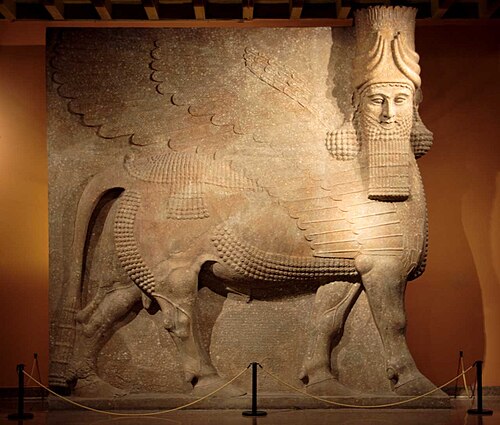


彫刻は、3次元で機能する視覚芸術の分野です。彫刻は、高さ、幅、奥行きの次元で物理的に表現される3次元の芸術作品です。これは造形芸術の1つです。耐久性のある彫刻のプロセスでは、もともと石、金属、セラミック、木材、その他の材料で、カービング(材料の除去)とモデリング(粘土などの材料の追加)が使用されていましたが、モダニズム以降、材料とプロセスの完全な自由がほぼ実現されました。多種多様な材料が、彫刻などの除去、溶接またはモデリングによる組み立て、または成形または鋳造によって加工される場合があります。
石の彫刻は、腐りやすい素材で作られた芸術作品よりもはるかによく保存されており、古代文化から残っている作品(陶器を除く)の大部分を占めることが多いが、逆に木彫りの伝統はほぼ完全に消滅した可能性がある。しかし、ほとんどの古代彫刻は鮮やかな色で塗装されていたが、これは失われてしまった。[2]
多くの文化において、彫刻は宗教的信仰の中心であり、最近数世紀までは、個人が制作するには費用がかかりすぎる大型彫刻は、通常、宗教や政治の表現でした。大量の彫刻が残っている文化には、古代地中海、インド、中国の文化のほか、中南米やアフリカの多くの文化が含まれます。
西洋彫刻の伝統は古代ギリシャに始まり、ギリシャは古典期に偉大な傑作を生み出した国として広く知られています。中世には、ゴシック彫刻がキリスト教信仰の苦悩と情熱を表現しました。ルネッサンス期には古典的モデルの復活により、ミケランジェロのダビデ像などの有名な彫刻が生まれました。モダニズム彫刻は、伝統的なプロセスや人体の描写に重点を置くことから離れ、構築された彫刻を制作し、見つけた物を完成した芸術作品として提示するようになりました。
種類

円形彫刻、つまり、彫像などの自立型彫刻(おそらく基部以外は他の表面に固定されていない)と、背景の表面に少なくとも部分的に固定されているさまざまなタイプのレリーフとの間には区別があります。レリーフは、壁からの突出の度合いによって、低浮彫、高浮彫、および中間の中浮彫に分類されることがよくあります。沈み彫りは、古代エジプトに限定された技法です。レリーフは、円形では実現が難しい大きな人物のグループや物語の主題の通常の彫刻媒体であり、建物に取り付けられる建築彫刻と、多くの陶器、金属細工、宝石などの他のオブジェクトを装飾する小規模な彫刻の両方に使用される一般的な技法です。レリーフ彫刻は、通常は石でできた垂直の板である 石碑を装飾することもあり、碑文が含まれていることもよくあります。
もう一つの基本的な区別は、石や木などの既存のブロックや塊から材料を取り除く減法彫刻技法と、材料から作品を形作ったり構築したりするモデリング技法です。鋳造、スタンピング、モールディングなどの技法では、デザインを含む中間マトリックスを使用して作品を制作します。これらの多くは、複数のコピーを生産できます。
「彫刻」という用語は、主に大きな作品を指すのに使われることが多く、記念碑的彫刻と呼ばれることもあります。記念碑的彫刻とは、大きい彫刻、または建物に取り付けられた彫刻のどちらか、または両方を意味します。しかし、この用語は、コインやメダル、ハードストーン彫刻など、同じ技法を使用した3次元の多くの種類の小さな作品を適切にカバーします。ハードストーン彫刻は、細かい作業を要する小さな石の彫刻を指す用語です。
非常に大きい、あるいは「巨大」な像は、古代から変わらぬ人気を誇っている。記録上最大のものは、高さ182メートル(597フィート)の2018年のインド統一像である。肖像彫刻のもう1つの壮大な形態は、馬に乗った騎手像であるが、これはここ数十年で珍しくなっている。等身大の肖像彫刻の最小形態は、頭部のみを描いた「頭部」か、胸から上の人物を描いた「胸像」である。小型の彫刻には、通常高さが18インチ(46センチメートル)以下の像であるフィギュリンや、レリーフ用のプラケット、メダル、コインなどがある。
近代美術と現代美術には、音響彫刻、光彫刻、環境芸術、環境彫刻、ストリートアート彫刻、キネティック彫刻(物理的な動きの側面を含む)、ランドアート、およびサイトスペシフィックアートなど、多くの非伝統的な彫刻形式が加わっています。彫刻はパブリックアートの重要な形態です。庭園内の彫刻コレクションは、彫刻庭園と呼ぶことができます。建物も彫刻の一種であるという見方もあり、コンスタンティン・ブランクーシは建築を「居住彫刻」と表現しています。[要出典]
目的と主題
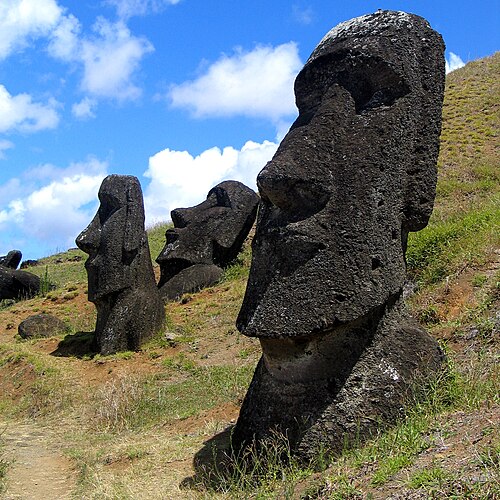

彫刻の最も一般的な目的の 1 つは、何らかの形で宗教と関連していることです。多くの文化で宗教的な像は一般的ですが、オリンピアのゼウス像のような古代ギリシャ美術の特徴である巨大な神々の像ではないことがよくあります。エジプトの寺院の最も奥深い聖域にあった実際の宗教的な像は、現在では 1 つも残っていませんが、最大の寺院でさえかなり小さかったようです。同じことはヒンズー教にも当てはまり、非常にシンプルで古代の形のリンガムが最も一般的です。仏教は東アジアに宗教的な人物の彫刻をもたらしましたが、東アジアにはそれ以前に同等の伝統はなかったようですが、この場合もビやコンのような単純な形にはおそらく宗教的な意味がありました。
個人の所有物としての小さな彫刻は、最も古い先史時代の芸術にまで遡り、特に支配者の権力を鑑賞者に印象づけるために公共の芸術として非常に大きな彫刻が使用されるようになったのは、少なくとも約4,500年前の大スフィンクスにまで遡ります。考古学と美術史では、文化における大型または記念碑的な彫刻の出現、そして時には消失は大きな意味を持つと考えられていますが、記録が残っていない木材やその他の腐りやすい素材の彫刻が存在したと推定されるため、出現の追跡はしばしば複雑になります。[3]
トーテムポールは、考古学に痕跡を残さない木製の記念碑的彫刻の伝統の一例である。通常非常に重い材料を輸送し、通常は専従の彫刻家と見なされる人々に報酬を支払って記念碑的彫刻を制作する資源を調達する能力は、社会組織の点で比較的進んだ文化の証であると考えられている。最近、三星堆で中国の古代青銅器時代の像が予想外に発見され、その中には人間の2倍以上の大きさのものもあったが、これは初期中国文明についての多くの考えを覆した。なぜなら、それまではもっと小さな青銅しか知られていなかったからである。[4]
インダス文明など、明らかに高度な文化の中には、非常に洗練された小像や印章を制作していたものの、記念碑的な彫刻をまったく持たなかったと思われるものもある。ミシシッピ文化は、崩壊した時点では小さな石像を制作しつつあったようで、彫刻の使用に向けて進んでいたようだ。古代エジプトやイースター島文化などの他の文化では、非常に初期の段階から非常に大規模な記念碑的な彫刻に膨大な資源を費やしていたようだ。
彫刻の収集は、それ以前の時代のものも含め、ギリシャ、中国、メソアメリカで約 2,000 年前に遡り、近代美術館が発明されるずっと前から、多くのコレクションが半公開展示されていました。20 世紀以降、大型彫刻に見られる比較的限定された主題の範囲は大幅に拡大し、抽象的な主題やあらゆる種類の主題の使用または表現が一般的になりました。今日、多くの彫刻はギャラリーや美術館で断続的に展示するために作られており、ますます大きくなる作品を輸送および保管できることが、彫刻の製作の要因となっています。
小さな装飾用の小像は、ほとんどの場合陶器で作られ、ロココや、タナグラ小像が主要産業であった古代ギリシャ、東アジアや先コロンブス期の美術と同様に、今日でも人気があります(ただし、近代美術や現代美術では奇妙なことに無視されています) 。家具やその他の物品用の小さな彫刻が施された金具は、ニムルドの象牙、ベグラムの象牙、ツタンカーメンの墓から発見された品々のように、はるか古代にまで遡ります。
肖像彫刻はエジプトで始まった。エジプトではナルメルパレットに紀元前32世紀の統治者が描かれている。またメソポタミアでは紀元前2144年から2124年頃にラガシュを統治したグデアの像が27体現されている。古代ギリシャとローマでは、公共の場所に肖像像を建てることは、ほとんど最高の名誉の印であり、エリートの野望でもあり、コインに描かれることもあった。[5]
エジプトや近東などの他の文化では、公共の彫像はほぼ専ら統治者の独占であり、他の裕福な人々は彼らの墓にのみ描かれていた。約3,000年前のオルメカの巨像彫刻に始まる、コロンブス以前の文化では、通常、統治者だけが肖像画を描かれる。東アジアの肖像画彫刻は完全に宗教的なもので、主要な聖職者、特に修道院の創設者は彫像で記念されたが、統治者や祖先は記念されなかった。地中海の伝統は中世に復活し、当初は墓の彫像や貨幣のみであったが、ルネッサンス時代には大きく拡大し、個人の肖像画メダルなどの新しい形式が発明された。
動物は、人物とともに、彫刻の最も古い主題であり、常に人気があり、時には現実的だが、多くの場合は想像上の怪物である。中国では、動物と怪物は、墓や寺院以外の石の彫刻のほぼ唯一の伝統的な主題である。植物界は、宝飾品と装飾レリーフにおいてのみ重要であるが、これらはビザンチン美術とイスラム美術のほぼすべての大型彫刻を形成し、パルメットやブドウの渦巻きなどのモチーフが2千年以上にわたって東西に渡ってきた ほとんどのユーラシアの伝統において非常に重要である。
世界中の多くの先史文化に見られる彫刻の形態の 1 つは、儀式や展示、あるいは供物として、実用的ではない貴重な素材で作られた、通常の道具、武器、または容器を特別に拡大したバージョンです。翡翠やその他の種類の緑色岩は中国、オルメカ時代のメキシコ、新石器時代のヨーロッパで使用され、初期のメソポタミアでは石で大きな陶器の形が作られました。青銅はヨーロッパと中国で、オックスボロー・ダークのような大きな斧や刃物に使用されました。
材料と技術

彫刻に使用される材料は多様であり、歴史を通じて変化してきました。耐久性に優れた古典的な材料は、金属、特に青銅、石、陶器で、木、骨、鹿の角は耐久性は劣りますが、安価な選択肢です。金、銀、翡翠、象牙などの貴重な材料は、小さな贅沢な作品によく使用され、時にはクリセラファンティン像などのより大きな作品にも使用されます。より一般的で安価な材料は、より幅広い消費のための彫刻に使用され、その中には、堅材(オーク、ツゲ、菩提樹など)、テラコッタやその他のセラミック、ワックス(鋳造用のモデル、および円筒印章や彫刻された宝石の印象を受けるための非常に一般的な材料)、ピューターや亜鉛(スペルター)などの鋳造金属が含まれます。しかし、民族誌や古代の作品だけでなく現代の作品でも、膨大な数の他の材料が彫刻の一部として使用されてきました。
彫刻には塗装が施されることが多いが、時間の経過や修復により塗装が剥がれてしまうことがよくある。彫刻の制作には、テンペラ、油絵、金箔、住宅用塗料、エアゾール、エナメル、サンドブラストなど、さまざまな塗装技法が使われてきた。[2] [6]
多くの彫刻家は、芸術作品を作るための新しい方法や材料を模索しています。パブロ・ピカソの最も有名な彫刻の一つに、自転車の部品がありました。アレクサンダー・カルダーや他のモダニストは、塗装された鋼鉄を華麗に使用しました。 1960年代以降、アクリルや他のプラスチックも使用されるようになりました。アンディ・ゴールズワーシーは、自然環境の中で、ほぼ完全に天然素材から、異常に短命な彫刻を制作しています。氷の彫刻、砂の彫刻、ガスの彫刻など、一部の彫刻は、意図的に短命です。最近の彫刻家は、ステンドグラス、工具、機械部品、金物、消費者向けパッケージを使用して作品を作り上げています。彫刻家は、見つけた物を使用することがあり、中国の学者の石は何世紀にもわたって高く評価されてきました。
石

石の彫刻は、制御された方法で石を削り取ることによって、天然の粗い石片を形作る古代の作業です。素材の永続性のため、最古の社会でさえ何らかの形の石細工を行っていたという証拠が見つかります。ただし、エジプト、ギリシャ、インド、ヨーロッパのほとんどの地域のように、世界のすべての地域に彫刻に適した良質の石が豊富にあるわけではありません。ペトログリフ(岩絵とも呼ばれる)は、おそらく最も古い形式で、切り込み、つつき、彫り、研磨によって、その場所に残る岩の表面の一部を取り除くことによって作成された画像です。記念碑的な彫刻には、大きな作品と、建物に取り付けられた建築彫刻が含まれます。ハードストーン彫刻は、ヒスイ、瑪瑙、オニキス、水晶、サード、カーネリアンなどの半貴石を芸術的な目的で彫刻したもので、この方法で作られた物体の総称です。アラバスターまたは鉱物石膏は、小さな作品を彫刻しやすい柔らかい鉱物であり、比較的耐久性があります。彫刻された宝石は、カメオを含む小さな彫刻された宝石で、もともとは印章リングとして使用されていました。
ほとんどすべてがコピーで知られている古代ギリシャの彫像にとって非常に重要であった石像の複製は、伝統的に「ポインティング」とよりフリーハンド的な方法によって達成されました。ポインティングでは、オリジナルを囲む木枠に正方形のひものグリッドを設定し、グリッド上の位置とグリッドと彫像間の一連の個々のポイントの距離を測定し、この情報を使用してコピーを作成するブロックに彫刻します。[8]
金属

青銅および関連する銅合金は、鋳造金属彫刻に最も古く、現在でも最も人気のある金属です。鋳造青銅彫刻は、単に「青銅」と呼ばれることがよくあります。一般的な青銅合金は、固まる直前にわずかに膨張し、鋳型の細部まで埋められるという珍しく望ましい特性を持っています。青銅合金の強度と脆さのなさ (延性) は、特にさまざまなセラミックや石の材料と比較した場合、動きのある像を作成するときに有利です (いくつかの例については、大理石の彫刻を参照してください)。金は最も柔らかく、最も貴重な金属であり、宝飾品で非常に重要です。銀は、鋳造だけでなく、ハンマーやその他のツールで加工できるほど柔らかいです。打ち出しと彫金は、金細工と銀細工で使用される技法の 1 つです。
鋳造は、液体材料(青銅、銅、ガラス、アルミニウム、鉄)を(通常)希望の形状の中空空洞を含む鋳型に注ぎ、固める製造工程のグループです。その後、固体の鋳物は排出または破壊されて工程が完了しますが、[9]完成した鋳物に「冷間加工」の最終段階が続く場合があります。鋳造は、熱い液体金属や、成分(エポキシ、コンクリート、石膏、粘土など)を混合した後に冷間硬化するさまざまな材料を形成するために使用されます。鋳造は、他の方法では困難または不経済な複雑な形状を作成するために最もよく使用されます。現存する最古の鋳造は、紀元前3200年の銅製のメソポタミアのカエルです。[10]具体的な技術には、ロストワックス鋳造、石膏鋳型鋳造、砂型鋳造などがあります。
溶接は、異なる金属片を融合してさまざまな形やデザインを作成するプロセスです。溶接には、酸素燃料溶接、スティック溶接、MIG溶接、TIG溶接など、さまざまな形式があります。酸素燃料溶接は、鋼の成形に最も簡単に使用できるだけでなく、鋼の接合部がきれいで目立たないため、鉄の彫刻を作成する場合の溶接方法としておそらく最も一般的なものです。酸素燃料溶接の鍵は、接合する各金属片を、すべてが赤くなって光沢が出るまで均等に加熱することです。各金属片に光沢が出ると、その光沢はすぐに「プール」になり、金属が液化するので、溶接工はプールを結合して金属を融合する必要があります。冷却されると、プールが結合した場所は1つの連続した金属片になります。酸素燃料彫刻の作成では、鍛造も頻繁に使用されます。鍛造は、金属を一定の温度まで加熱して柔らかくし、さまざまな形に成形できるようにするプロセスです。非常に一般的な例としては、鋼棒の端を加熱し、赤く加熱された先端を金床の上でハンマーで叩いて先端を形成するというものがあります。ハンマーを振る合間に、鍛冶屋は鋼棒を回転させ、鋼棒の鈍い端から徐々に鋭い先端を形成します。
ガラス


ガラスは幅広い加工技術を通じて彫刻に使用できますが、大型作品への使用は最近の開発です。ガラスは彫刻できますが、かなりの難しさがあります。ローマのリュクルゴスのカップは他に類を見ないものです。[11]ガラスを成形する 方法はさまざまです。熱鋳造は、砂、彫刻されたグラファイト、または詳細な石膏/シリカの型に形を押し付けて作成した型に、溶けたガラスをすくって注ぐことによって行われます。窯鋳造ガラスは、窯の中でガラスの塊を加熱して液体にし、窯の中でその下にある待機している型に流し込むことです。熱いガラスは、固体の塊として、または吹き物の一部として、手工具で吹き、または熱彫刻することもできます。より最近の技術では、板ガラスをポリマーケイ酸塩と紫外線で彫刻して接着します。[12]
陶器
陶器は彫刻に用いられる最も古い素材の一つであり、また粘土は金属で鋳造される多くの彫刻が元々鋳造のために型をとった媒体でもある。彫刻家はしばしば、焼石膏、蝋、未焼成粘土、粘土粘土などの一時的な素材でマケットと呼ばれる小さな準備作品を制作する。[13] 多くの文化で、器としての機能と彫刻の形を組み合わせた陶器が作られており、小さな人形は現代の西洋文化と同じくらい人気があることが多い。古代ローマ、メソポタミアから中国に至るまで、ほとんどの古代文明でスタンプと鋳型が使用されていた。[14]
木彫り

木彫りは極めて広く行われてきましたが、他の主要な素材に比べて保存状態が悪く、腐敗、虫害、火災に弱いです。そのため、多くの文化の芸術史において重要な隠れた要素となっています。[3]屋外の木彫りは世界のほとんどの地域で長く残っていないため、トーテムポールの伝統が どのように発展したかはほとんどわかっていません。特に中国と日本の最も重要な彫刻の多くは木でできており、アフリカの彫刻やオセアニアやその他の地域の彫刻の大部分も木でできています。
木は軽いので、持ち運び用のマスクやその他の彫刻に適しており、非常に細かいディテールを描くことができます。また、石よりも加工がはるかに簡単です。彫刻後に塗装されることは非常に多いですが、塗装は木よりも摩耗しにくく、現存する作品では失われていることがよくあります。塗装された木は、技術的には「木と多色」と表現されることがよくあります。通常、木にジェッソまたは石膏の層を塗布し、その上に塗料を塗ります。
柔らかい素材
布、毛皮、プラスチック、ゴム、ナイロンなどの非伝統的な素材を組み込んだ立体作品は、詰め物、縫製、吊るし、ドレープ、織りなどの加工が可能で、ソフトスカルプチャーとして知られています。ソフトスカルプチャーの著名なクリエイターには、クレス・オルデンバーグ、草間彌生、エヴァ・ヘッセ、サラ・ルーカス、マグダレーナ・アバカノヴィッチなどがいます。[15]
彫刻家の社会的地位
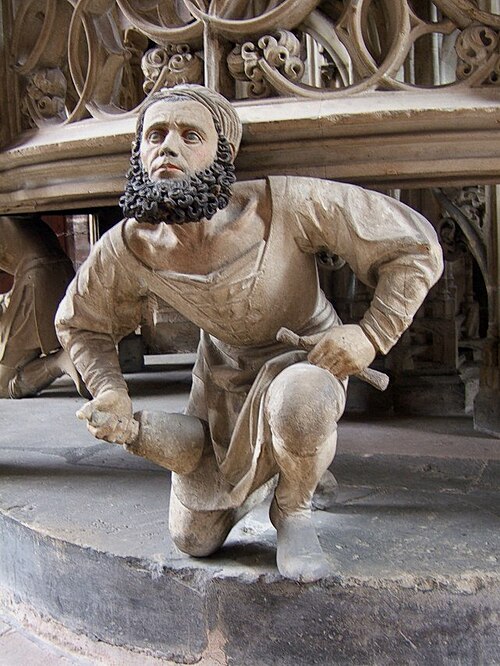
世界中で、彫刻家は通常、作品に署名のない職人であった。一部の伝統、例えば中国では、彫刻は文人画ほどの名声を得ておらず、このことが彫刻自体の地位に影響を与えてきた。[16]ペイディアスのような彫刻家が有名になった古代ギリシャでも、彼らは他の職人とほぼ同じ社会的地位を保持していたようで、作品に署名する者もいたが、金銭的な報酬はそれほど大きくなかったと思われる。[17]中世 では、 12世紀のギスレベルトゥスのような芸術家が作品に署名することがあり、様々な都市、特にトレチェント以降のイタリアでは、アルノルフォ・ディ・カンビオやニコラ・ピサーノとその息子ジョヴァンニなどが求められていた。貴重な材料を扱い、銀行家を兼ねることが多かった金細工師や宝石商は、強力なギルドに属し、かなりの地位を持ち、しばしば公職に就いていた。多くの彫刻家は他の芸術も手がけていた。アンドレア・デル・ヴェロッキオは画家としても活動し、ジョヴァンニ・ピサーノ、ミケランジェロ、ヤコポ・サンソヴィーノは建築家でもあった。彫刻家の中には大きな工房を構えていた者もいた。ルネッサンス期でさえ、レオナルド・ダ・ヴィンチらは作品の物理的な性質が芸術における彫刻の地位を低下させると考えていたが、ミケランジェロの名声がこの長年の考えに終止符を打ったのかもしれない。
ルネサンス盛期には、ミケランジェロ、レオーネ・レオーニ、ジャンボローニャなどの芸術家が裕福になり、貴族に列せられ、王侯の仲間入りをすることができたが、その前には彫刻と絵画の相対的な地位について激しい論争があった。[18] 建物の装飾彫刻の多くは依然として職業として残っていたが、個々の作品を制作する彫刻家は画家と同等に認められていた。18世紀かそれ以前から、彫刻も中流階級の学生を惹きつけたが、絵画ほど普及は遅かった。女性彫刻家は女性画家よりも登場に時間がかかり、20世紀まであまり目立っていなかった。
反彫刻運動
無偶像主義はユダヤ教に端を発し、ユダヤ教は19世紀まで具象彫刻を受け入れなかったが[19] 、キリスト教に広がり、キリスト教は当初は大型彫刻を受け入れた。キリスト教と仏教において、彫刻は非常に重要な意味を持つようになった。キリスト教東方正教会は記念碑的な彫刻を決して受け入れず、イスラム教はレリーフの非常に小さな人物像や、アルハンブラ宮殿の噴水を支える有名なライオンのような有用な機能を果たす一部の動物像を除いて、ほぼすべての具象彫刻を一貫して拒否してきた。プロテスタントの多くの形態もまた、宗教的な彫刻を認めていない。初期キリスト教徒や宗教改革のベールデンストームから、 2001年にタリバンがバーミヤンの大仏を破壊した事件まで、宗教的動機による彫刻の偶像破壊は数多く行われてきた。
歴史

先史時代
ヨーロッパ
最も古い彫刻の例は、ヨーロッパと南西アジアに位置し、後期旧石器時代の初めに活動していたオーリニャック文化に属します。この文化の人々は、最古の洞窟壁画のいくつかを生み出しただけでなく、精巧に作られた石器を開発し、ペンダント、ブレスレット、象牙のビーズ、骨のフルート、立体的な人形を製造しました。[20] [21]
ドイツのホーレンシュタイン・シュターデル地域で発見された高さ30センチのライオン像は、マンモスの象牙で彫られた擬人化されたライオン像である。これは約35,000年から40, 000年前のものとされ、ホーレ・フェルスのヴィーナスとともに、最も古い彫刻作品として知られている。[22]
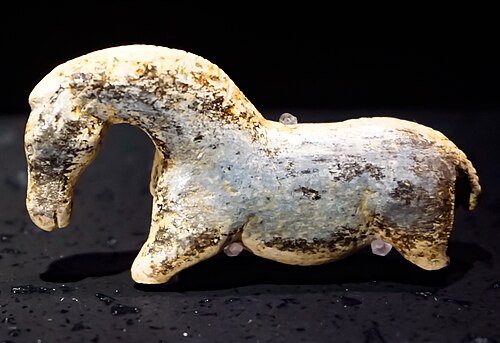
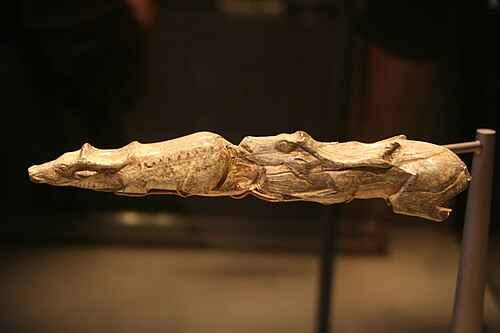
現存する先史時代の美術の多くは小型の持ち運び可能な彫刻で、中央ヨーロッパ全域で発見されたヴィレンドルフのヴィーナス(24,000~26,000年前)などの少数のヴィーナス像も含まれる。 [23]約13,000年前の 「泳ぐトナカイ」は、上部旧石器時代の美術における動物の骨や角のマドレーヌ彫刻の中でも最も優れたものの1つだが、彫刻作品の数は彫刻作品の数を上回っており、彫刻作品は彫刻に分類されることもある。[24]最大級の先史時代の彫刻のうち2つは、フランスのトゥック・ドードーベール洞窟で発見されている。約12,000~17,000年前、熟練した彫刻家がヘラのような石器と指を使って、石灰岩を背景に粘土で一対の大きなバイソンを形作った。[25]
ヨーロッパでは中石器時代の始まりとともに具象彫刻は大幅に減少し、[26]ヨーロッパ鉄器時代のグンデストルップの大釜や青銅器時代のトルンドホルムの太陽戦車などの作品はあるものの、ローマ時代まで実用品のレリーフ装飾に比べると芸術においてあまり一般的ではない要素のままであった。[27]
古代近東
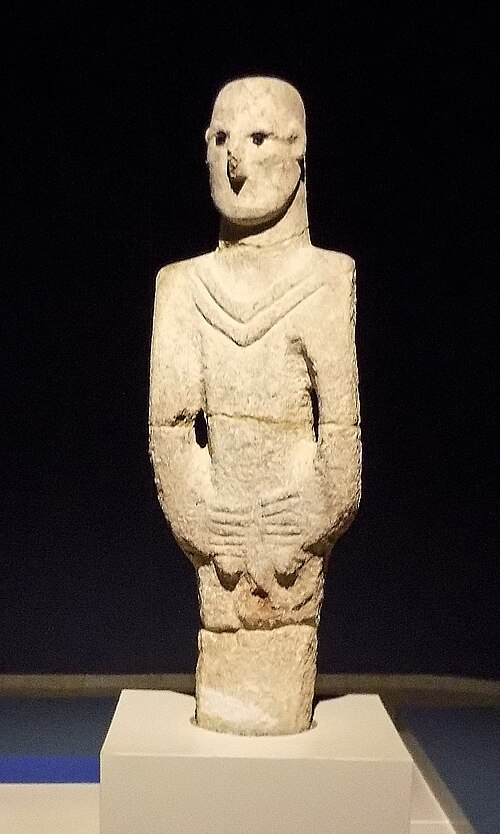
古代近東からは、現代トルコの等身大を超える石造ウルファの男が紀元前9000年頃、アイン・ガザル像が紀元前7200年と6500年頃のものである。これらは現代ヨルダンで発見されたもので、石灰漆喰と葦で作られており、等身大の約半分の大きさである。15体の像(中には2つの頭が並んでいるものもある)と胸像が15体ある。土器時代以前から、近東各地の多くの場所で人や動物の小さな粘土像が発見されており、この地域で多かれ少なかれ継続した伝統の始まりを示している。
-
 レーヴェンメンシュ、ホーレンシュタイン・シュターデル所蔵、現在はドイツのウルムにあるウルマー博物館に所蔵されている、動物と人間を擬人化した最古の知られている小像、オーリニャック時代、1960年頃。35 ~ 40,000 BP
 -

-
-

-

-
-
-

-
 トゥルンドホルムの太陽の戦車、おそらく紀元前 1800 ~ 1500 年。こちら側は金メッキ、反対側は「暗い」。
古代近東

メソポタミアの原文字時代はウルクが支配的で、ワルカの壺や円筒印章のような洗練された作品が作られた。グエンノルの雌ライオンは、紀元前3000年から2800年頃のエラムで発見された、半人半ライオンの傑出した小型の石灰岩像である。 [28]その少し後には、主にアラバスターで作られた高さ1フィートにも及ぶ、神殿の神像に仕える大きな目の司祭や崇拝者の像が数多くあるが、現存するものはごくわずかである。[29]シュメールおよびアッカド時代 の彫刻は、一般的に男性は大きく見つめる目と長いひげを生やしている。ウルの王家の墓地(紀元前2650年頃)からも、茂みの中の雄羊の像2体、銅の雄牛、ウルの竪琴の1つにある雄牛の頭など、多くの傑作が発見されている。[30]
紀元前10世紀に新アッシリア帝国が台頭する前の多くの時代を通じて、メソポタミア美術は円筒印章、比較的小さな円形の像、様々な大きさのレリーフ(宗教的なものもあればそうでないものもあると思われる家庭用の安価な成型陶器の額を含む)など、さまざまな形で現存している。[31]バーニー・レリーフは、猛禽類の足を持ち、フクロウとライオンを従えた裸の有翼の女神を描いた、非常に精巧で比較的大きな(20 x 15インチ、50 x 37 cm)テラコッタの額である。紀元前18世紀または19世紀のもので、成型された可能性もある。 [ 32]神殿からは石碑、奉納物、あるいはおそらく勝利を記念し祝宴を描いたものと思われる石碑も発見されているが、より公式なものとは異なり、それらを説明する碑文はない。[ 33]断片的なハゲタカの石碑は碑文が刻まれた初期の例であり、[34]シャルマネセル3世のアッシリアの黒いオベリスクは大きくて頑丈な後期の例である。[35]
アッシリア人はメソポタミア全土と周辺地域の大半を征服し、それまでこの地域に存在したよりも大きく豊かな国家を築き、宮殿や公共の場所には非常に壮大な芸術を生み出した。これは、隣国エジプト帝国の芸術の壮麗さに匹敵することを部分的に意図したものであったことは間違いない。以前の国家とは異なり、アッシリア人はイラク北部の彫刻しやすい石を使用することができ、大量に使用した。アッシリア人は、戦争や狩猟の場面を描いた、非常に細かく詳細な物語的な石の低浮彫の極めて大規模な計画のスタイルを宮殿に開発した。大英博物館には、アッシュールバニパルのライオン狩りや、遠征を描いたラキシの浮彫など、優れたコレクションがある。彼らは、長方形のブロックの2面に高浮彫で彫られた人間の頭を持つ巨大な守護者ラマッス像を除いて、円形彫刻をほとんど制作しなかった。この像は、頭部が実質的に円形であり(また、両図が完全なように見えるよう、5本の足も備えている)、長方形のブロックの2面に高浮彫で彫られている。彼らはこの地域を支配する前から、円筒印章の伝統を継承しており、そのデザインはしばしば非常にエネルギッシュで洗練されたものであった。[36]
-
 ゲノルの雌ライオン、紀元前3千年紀、高さ3.25インチ(8.3 cm)
 -
 紀元前2090年頃の統治者グデアの像18体のうちの1体
 -

-
 アッシュールバニパルのライオン狩りの一部、紀元前640年頃、ニネベ
,_c._645-635_BC,_British_Museum_(16722368932).jpg/500px-thumbnail.jpg)
古代エジプト

古代エジプトの記念碑的彫刻は世界的に有名だが、洗練され繊細な小作品はそれよりはるかに多く存在する。エジプト人は、非常に明るい日光によく合う沈み彫りの独特の技法を用いていた。レリーフの主要人物は絵画と同じ人物像の慣例に従っており、足は開いており(座っていない場合は)、頭は横から、胴体は正面から描かれ、人物像を構成する標準的な比率は、地面から額の生え際まで18個の「拳」で構成されている。[37]これは、第1王朝のナルメルパレットに早くも登場している。しかし、他の場所と同様、捕虜や死体など、何らかの活動に従事している小人物像にはこの慣例が使用されていない。 [38]他の慣例により、 男性の彫像は女性の彫像よりも暗くなっている。非常に慣習化された肖像彫像は、紀元前2780年以前の第2王朝の頃から登場しており[39]、アフケナテンのアマルナ時代の美術[40]や第12王朝などの他のいくつかの時代を除いて、統治者の理想的な特徴は、他のエジプトの芸術的慣習と同様に、ギリシャ人の征服後までほとんど変化しませんでした[41] 。
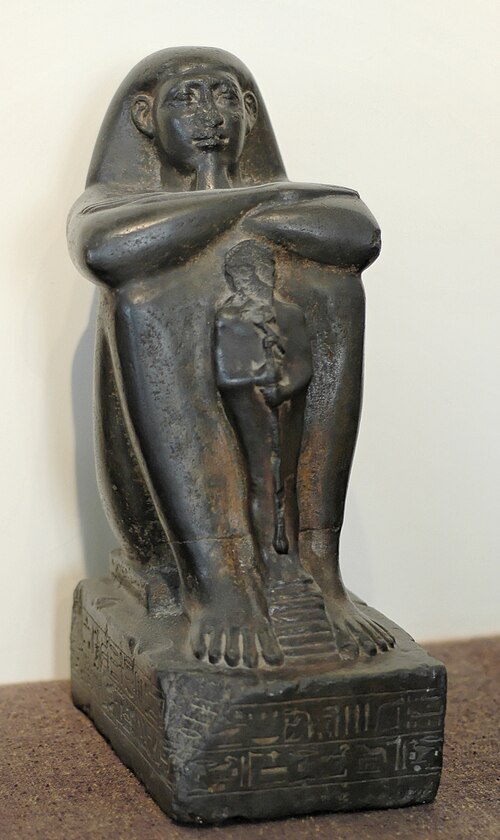
エジプトのファラオは常に神々として扱われていたが、他の神々が大きな彫像で描かれることはあまり一般的ではなく、ファラオが別の神として表現されている場合に限られる。しかし、他の神々は絵画やレリーフでは頻繁に描かれている。アブ・シンベル神殿の主要神殿の外にある有名な4体の巨大彫像はそれぞれラムセス2世を表しており、典型的な図式ではあるが、ここでは例外的に大きい。[42] 神々の小像や動物の擬人化は非常に一般的であり、陶器などの一般的な材料で発見されている。より大きな彫刻のほとんどはエジプトの寺院や墓から残されており、遅くとも第4王朝(紀元前2680-2565年)までにはカー像の概念がしっかりと確立されていた。これらは魂のカー部分を安息の地として墓に置かれたため、裕福な行政官とその妻たちのあまり慣習化されていない彫像が数多く残っており、その多くは木でできている。エジプトは数千年にわたって木材が生き残る気候が許される世界でも数少ない場所の1つだからである。いわゆる予備頭部、つまり毛のないシンプルな頭部は特に自然主義的である。初期の墓には、死者があの世で生活を続けるために必要な奴隷、動物、建物、船などの物の小さな模型や、後にはウシャブティ像も含まれていた。[43]
-

-
 メンカウラー(ミケリヌス)と王妃、古王国時代、第4王朝、紀元前2490年~2472年。王妃が夫の肩に腕を回しているため、ポーズの形式は簡略化されている。
 -
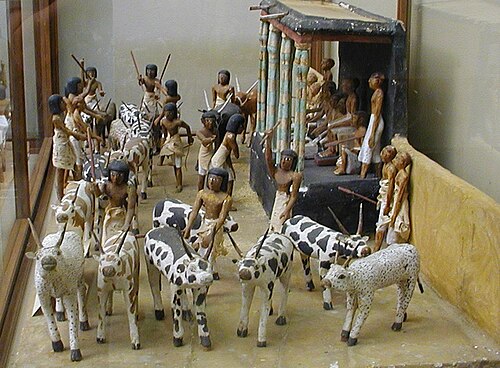 木造墓の模型、第11王朝。高官が牛を数える
 -

-

-

-
 カー像はカーが顕現する物理的な場所を提供した。カイロ、エジプト博物館
 -
_and_queen.jpg/500px-King_Menkaura_(Mycerinus)_and_queen.jpg)
_(Room_4).jpg/500px-BM,_AES_Egyptian_Sulpture_~_Colossal_bust_of_Ramesses_II,_the_'Younger_Memnon'_(1250_BC)_(Room_4).jpg)
ヨーロッパ
古代ギリシャ

古代ギリシャ彫刻の最初の特徴的なスタイルは、青銅器時代初期のキクラデス時代(紀元前3千年紀)に発達した。この時代では、大理石の像、通常は女性で小柄な像が、エレガントに簡略化された幾何学的スタイルで表現されている。最も典型的なのは、腕を前に組んだ立ち姿だが、椅子に座ったハープ奏者の複雑な姿など、さまざまなポーズで表現されている像もある。[44]
その後のミノア文明とミケーネ文明では、シリアなどの影響を受けて彫刻がさらに発展したが、後期アルカイック期の紀元前 650 年頃にはクーロスが発展した。クーロスは、寺院や墓で発見された裸の若者の大きな立像で、コレーは服を着た女性に相当し、髪は凝った髪型で、どちらも「アルカイック スマイル」をしている。クーロスは、クロイソス クーロスのように、時には神々を表し、時には墓に埋葬された人物を表していたと思われる、さまざまな機能を果たしていたようだ。クーロスは明らかにエジプトやシリアのスタイルの影響を受けているが、ギリシャの芸術家たちは、そのスタイルの中で実験する意欲がはるかに高かった。
6世紀にはギリシャ彫刻が急速に発展し、より自然主義的になり、物語の場面での人物のポーズはより活発で多様になったが、それでもなお理想化された慣習の範囲内であった。アテネのパルテノン神殿を含む寺院には彫刻が施されたペディメントが加えられた。パルテノン神殿では、紀元前480年のペルシャの略奪後、幸運にも約520体の人物像が使われたペディメントの残骸が新しい建物の充填材として使用され、1880年代以降、風化していない新鮮な状態で回収された。その他の重要な建築彫刻の残骸は、イタリアのパエストゥム、コルフ、デルフィ、アイギナ島のアフェア神殿(現在はほとんどがミュンヘンにある)から発見されている。[45] ほとんどのギリシャ彫刻には元々少なくともいくらかの色彩が含まれていた。デンマークのコペンハーゲンにあるニー・カールスベア・グリプトテク美術館は、オリジナルの色彩について広範囲にわたる調査と再現を行っている。[46] [47]
-
 紀元前2700~2300年頃のキクラデス彫刻。女性の頭部、高さ27センチメートル(11インチ)
 -
 キクラデス諸島の女性像、紀元前 2500~2400年頃、高さ41.5cm(16.3インチ)
 -
 ミケーネ、紀元前1600〜1500年。額に金の角とバラ飾りが付いた銀のリュトン
 -

-
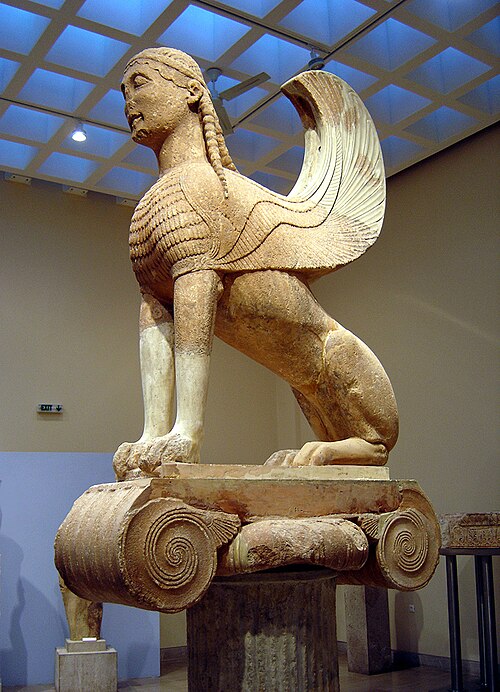
-

_MET_DT263.jpg/500px-Marble_statue_of_a_kouros_(youth)_MET_DT263.jpg)
-
 アフェア神殿の東ペディメントから出土した後期アルカイック時代の戦士像、 500年頃
 -

クラシック

古典期の第一段階、しばしば厳格様式と呼ばれるものからのオリジナルの遺物は少なく、自立型の彫像は主に青銅で作られるようになり、青銅は常にスクラップとしての価値があった。厳格様式は、レリーフでは約500年、彫像ではそのすぐ後に480年、そして約450年まで続いた。人物の比較的硬直したポーズは緩和され、非対称の向きを変えた姿勢や斜めの視点が一般的になり、意図的に追求された。これは、解剖学や彫刻された人物の調和のとれた構造に対する理解の深まりと相まって、以前は存在しなかった自然主義的な表現の追求を目標とした。 1829年以来、オリンピアのゼウス神殿で行われた発掘調査では、約460体の最大の遺物が発見され、その多くがルーブル美術館に所蔵されている。[48]
「古典期盛期」は、紀元450年から紀元400年頃までのわずか数十年しか続かなかったが、美術に重大な影響を与え、現存するオリジナルの数が極めて限られているにもかかわらず、特別な名声を保っている。最もよく知られている作品はパルテノン神殿のマーブルで、伝統的に(プルタルコス以来)紀元465年から紀元425年頃に活動した最も有名な古代ギリシャの彫刻家フェイディアスが率いるチームによって制作されたとされている。フェイディアスは当時、古代世界の七不思議の一つであるオリンピアのゼウスの巨大な黄銅 像(紀元432年頃)や、パルテノン神殿の崇拝像であるアテナ・パルテノス(紀元438年) 、パルテノン神殿の隣に立っていた巨大な青銅像アテナ・プロマコスで有名であった。これらはすべて失われているが、多くの表現が知られている。彼はまた、ルドヴィージ・ヘルメスを含む、後世の複製品でしか知られていない等身大のブロンズ像の作者としても知られており、その正体は議論の余地がある。[49]
盛期古典様式では、人物の写実性と洗練性がさらに発展し、衣服の描写も改善され、動きのあるポーズのインパクトを強めるために衣服が利用された。顔の表情は、戦闘シーンでさえ、通常は非常に抑制されていた。レリーフやペディメントに描かれた人物のグループの構成は、西洋美術に永続的な影響を与えた方法で、複雑さと調和を兼ね備えていた。レリーフは非常に高く、下のパルテノン神殿の図では、戦士の脚の大部分が背景から完全に切り離されており、欠けている部分も同様である。レリーフがこれほど高いと、彫刻はより損傷を受けやすくなった。[50]後期古典様式では、プラクシテレスの発明とされる自立型の女性裸像が開発され、さまざまな角度から見て興味深い、ますます複雑で繊細なポーズや、より表情豊かな顔が開発され、両方の傾向はヘレニズム時代にさらに進展した。[51]
ヘレニズム時代


ヘレニズム時代は、慣習的に紀元前323年のアレクサンダー大王の死から始まり、紀元前146年のローマによるギリシャ中心地の最終的な征服、または紀元前31年のアクティウムの海戦後のアレクサンダー帝国の最後の後継国の最終的な敗北(共和政ローマの終焉でもある)で終わるとされている。[52] したがって、ヘレニズム時代はそれ以前の時代よりもはるかに長く、少なくとも2つの主要な段階が含まれます。1つは「ペルガモン」スタイルの実験、活気、そしていくらかの感傷と俗悪さ、もう1つは紀元前2世紀のより厳格なシンプルさと優雅さへの古典主義的な回帰です。このような一般化を超えると、通常、年代測定は非常に不確実であり、特に後代の写本しか知られていない場合は不確実です。初期のペルガモン様式は、その名の由来となったペルガモンと特に関連があるわけではないが、その国の裕福な王たちは古典彫刻を収集し、またコピーした最初の人々の中におり、また多くの新しい作品を発注した。その中には、現在ベルリンに所蔵され、新しい様式の好例となっている 有名なペルガモン祭壇像、ハリカルナッソスの霊廟(七不思議の1つ)、後期の例であるバチカン美術館の有名なラオコーンとその息子たち、そして、紀元前228年頃にペルガモンのために実際に発注された一群の彫刻の一部であったことが分かっている『瀕死のガリア人』(上部に図示)と呼ばれる一群の彫刻があり、この『瀕死のガリア人』もそのコピーであった。おそらく2世紀の大理石のオリジナルである『ファルネーゼの雄牛』と呼ばれる一群の彫刻は、さらに大きく複雑である。[53]
ヘレニズム彫刻は、表現される主題の範囲を大幅に拡大しました。これは、全体的な繁栄の拡大と、彫刻で飾られた大きな家を持つ非常に裕福な階級の出現によるところが大きいですが、子供と動物など、家庭に最適と思われる主題のいくつかの例は、実際には寺院やその他の公共の場所に置かれていたことがわかっています。はるかに人気のある家庭装飾市場としては、タナグラの小像や、宗教的なものもあれば、動物や上品な服装をした女性を描いたものなど、小さな陶器の像が工業規模で生産された他の中心地の像がありました。彫刻家は、さまざまな感情を伝える表情や人物の肖像画、さらにはさまざまな年齢や人種を表現する技術に熟達しました。その点で、マウソロス廟のレリーフはかなり異例です。ほとんどの作品は独立しており、以前はまれだったラオコーンやガリアに対する勝利を祝うペルガモンのグループなど、複数の人物が丸で見られるグループ構成が人気になりました。酒を飲んだ後と思われる、寝そべって眠るサテュロスを描いたバルベリーニの牧神像は、当時の道徳的緩和と、英雄的とは程遠い題材で大きく高価な彫刻を制作する意欲を示す例である。[54]
アレクサンドロスの征服後、ヘレニズム文化は近東のほとんどの地域と中央アジアの一部の地域で支配的となり、ヨーロッパのエリート層、特にギリシャ植民地が当初南部の大半を支配していたイタリアでますます取り入れられるようになった。ヘレニズム美術と芸術家たちは非常に広範囲に広がり、拡大するローマ共和国や、ヘレニズム地域の最東端で仏教と出会ったときに特に影響力を及ぼした。現在のレバノンのシドンで発見された、いわゆるアレクサンドロスの巨大な石棺は、おそらくこの時代の初めに、ギリシャ化したペルシャの総督のために国外在住のギリシャ人芸術家によって作られたものと思われる。[55] この時代の富により、彫刻された宝石やカメオ、ジュエリー、金銀製品など、小型の贅沢な彫刻の生産が大幅に増加した。
-
 リアーチェ青銅像、海から発見された非常に珍しい青銅像、460~430年頃
 -
 ヘルメスと幼子ディオニュソス、おそらくプラクシテレスのオリジナル、4世紀
 -
 2人の優雅な女性、陶器の置物、350~300年
 -
 ブロンズ馬像、紀元前2世紀後半~1世紀メトロポリタン美術館
 -

-

-

-

ギリシャ以降のヨーロッパ
ローマの彫刻


初期のローマ美術は、ギリシャ美術と、近隣のエトルリア人の美術の影響を受けており、エトルリア人自身も、貿易相手国であるギリシャから多大な影響を受けていた。エトルリア人の名物は、ほぼ等身大のテラコッタ製の墓の彫像で、当時の食事をする人のポーズで、片方の肘を立てて石棺の蓋の上に横たわっているのが普通だった。拡大を続けるローマ共和国が、最初は南イタリア、次いでパルティア極東を除くヘレニズム世界全域と、ギリシャ領を征服し始めると、公式彫刻や貴族彫刻は、主にヘレニズム様式の延長となった。特に、ギリシャ彫刻の多くがローマ時代の複製でしか残っていないことから、ヘレニズム様式からローマの要素を切り離すのは困難である。[56]紀元前2世紀までに、「ローマで働いていた彫刻家のほとんど」はギリシャ人であり、[57]コリントス(紀元前146年)などの征服で奴隷にされることが多かった。彫刻家は引き続きほとんどがギリシャ人であり、奴隷であることが多かったが、その名前が記録されることは非常にまれである。戦利品として、あるいは恐喝や商取引の結果として、膨大な数のギリシャの彫像がローマに輸入され、寺院は再利用されたギリシャの作品で飾られることが多かった。[58]
イタリア固有のスタイルは、裕福な中流階級のローマ人の肖像胸像を特徴とする墓碑に見られ、肖像画はローマ彫刻の主な強みであると言える。大家族の葬儀の行列で着用され、家庭で展示された祖先のマスクの伝統は残っていないが、現存する胸像の多くは、おそらくスキピオの墓のような大家族の墓、または市外の後期の霊廟からの祖先の人物を表しているに違いない。ルキウス・ユニウス・ブルートゥスのものと思われる有名な青銅製の頭部は、年代が非常にさまざまであるが、共和政下で好まれた青銅の素材を使用したイタリア様式の非常にまれな残存物であると考えられている。[59]同様に厳めしく力強い頭部は共和政後期の貨幣に見られ、帝政時代には、帝国各地に送られて地方都市のバシリカに置かれる貨幣と胸像が、帝国のプロパガンダの主な視覚的形態であった。ロンディニウムにもネロのほぼ巨大な像があったが、現在は失われているローマにある高さ30メートルのネロの巨像よりはるかに小さかった。[60]
ローマ人は一般に、歴史や神話の英雄的偉業を描いた独立したギリシャの作品と競おうとはしなかったが、早い時期から歴史的な作品をレリーフで制作し、その頂点を極めたのが、周囲に物語のレリーフが連続して巻き付いているローマの偉大な凱旋門だった。そのうち、トラヤヌス帝(紀元113年)とマルクス・アウレリウス帝(紀元193年まで)を記念するレリーフはローマに現存しており、アラ・パキス(「平和の祭壇」、紀元前13年)は、最も古典的で洗練された公式のグレコ・ローマ様式を表している。他の主な例としては、コンスタンティヌス帝の凱旋門やアントニヌス・ピウス記念柱(紀元161年)の土台にある、以前に再利用されたレリーフがある。 [61] カンパーナのレリーフは、大理石のレリーフの安価な陶器版であり、レリーフの好みは帝政時代から石棺にまで広がった。あらゆる種類の高級小型彫刻は愛好され続け、銀製のウォーレンカップ、ガラス製のリュクルゴスカップ、ジェンマ・アウグステア、ゴンザーガ・カメオ、「フランスの大カメオ」などの大型カメオなど、その品質は非常に高いものもありました。[62] より幅広い層の人々のために、陶器の容器や小型の置物などの成型レリーフ装飾が大量に生産され、品質もかなり高いものが多かったです。[63]
2世紀後半の「バロック」期を経て[64]、3世紀にはローマ美術は古典的伝統に沿った彫刻をほとんど放棄したか、あるいは単に制作できなくなった。この変化の原因は今でも盛んに議論されている。帝国の最も重要な記念碑でさえ、今やずんぐりとした大きな目の人物像を、厳しい正面からのスタイルで、優雅さを犠牲にして力を強調したシンプルな構成で表現するようになった。この対比は、ローマの315年のコンスタンティヌスの凱旋門でよく知られている。この凱旋門は、新しいスタイルのセクションと、他の場所から持ち込まれた以前の完全なグレコローマンスタイルの円形装飾を組み合わせている。また、現在はヴェネツィアにあるコンスタンティノープルの新しい首都の四帝立像(305年頃)も有名で ある。エルンスト・キッツィンガーは、両方の記念碑に同じ「ずんぐりとした比率、角張った動き、対称性と反復による部分の配置、そしてモデル化ではなく切り込みによる特徴と衣服のひだの表現...それが現れるところはどこでも、そのスタイルの特徴は、強調された硬さ、重厚さ、角ばった感じで構成されており、一言で言えば、古典的な伝統のほぼ完全な拒絶である」と指摘した。[65]
この様式の革命は、キリスト教がローマ国家と大多数の民衆に受け入れられる時期の直前に起こり、大きな宗教彫刻は終焉を迎え、大きな彫像は皇帝にのみ使用されるようになった。しかし、裕福なキリスト教徒は、ユニウス・バッススの石棺のように、石棺用のレリーフを依頼し続け、特に象牙を使った非常に小さな彫刻は、執政官のディプティクの様式を基にキリスト教徒によって続けられた。[66]
-

-
 「カピトリノのブルータス」は紀元前3世紀または1世紀に遡る
 -
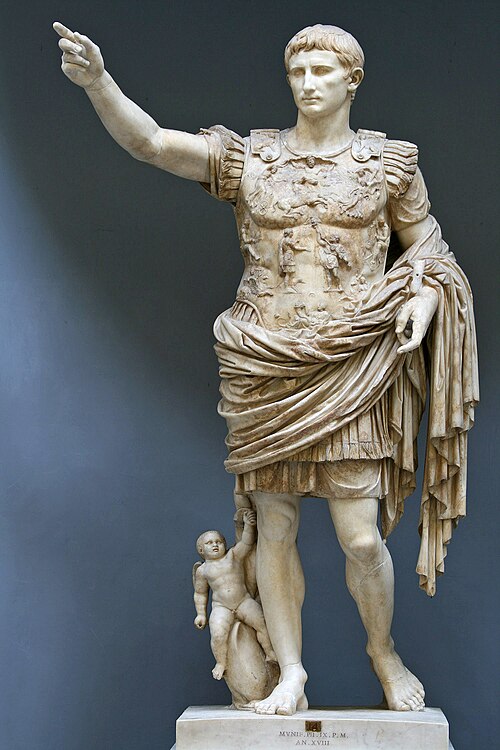
-
 デキウス家の墓のレリーフ、西暦 98-117 年
 -

-
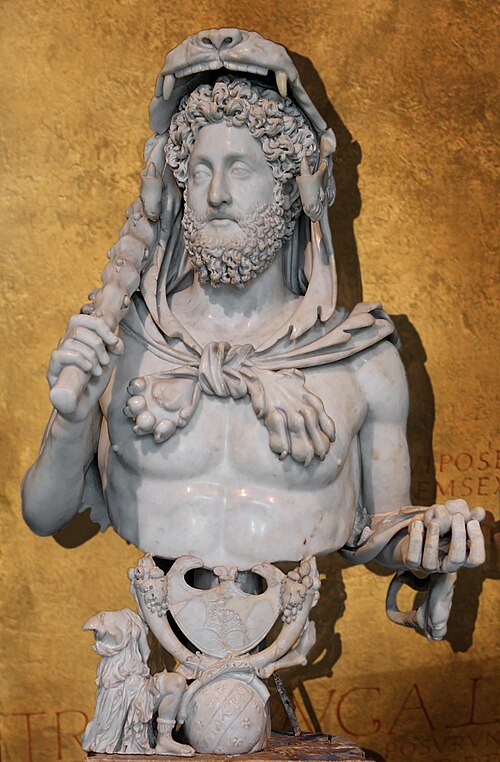
-

-

中世初期とビザンチン


初期キリスト教徒は巨大な宗教彫刻に反対していたが、ローマの伝統は肖像胸像や石棺のレリーフ、さらには執政官のディプティクなどの小型の物品に受け継がれていた。こうした物品は、高価な素材で作られることも多く、(知られている限りでは)大移動期の文明の主要な彫刻の伝統でもあった。サットン・フーの6世紀の副葬品で発見された物品や、スキタイ美術の宝飾品、キリスト教と動物のスタイルが混ざったインシュラー美術の作品にそれが表れている。継続していたビザンチンの伝統に倣って、カロリング朝美術は西洋で象牙の彫刻を復活させ、壮大な彩飾写本の宝飾品装丁用のパネルや、杖頭やその他の小型装飾品によく使われた。
ビザンチン美術は、素晴らしい象牙の浮彫や建築装飾彫刻を生み出したものの、記念碑的彫刻はおろか、円形の小型彫刻すらほとんど生み出さなかった。[67] しかし、西洋ではカロリング朝とオットー朝の時代に、宮廷や主要な教会で記念碑的彫像の制作が始まり、徐々に広まっていった。10世紀後半から11世紀までには、エッセンの黄金の聖母のように、おそらくは木枠の周りに貴金属でできた、アングロサクソンの教会に等身大と思われる彫刻がいくつかあったという記録がある。アングロサクソンの例は現存しておらず、[68] 1000年より前の建築以外の大型彫刻の現存は非常に稀である。最も優れたものは、965年から970年にかけてのゲロ十字架で、これは十字架で、明らかに最も一般的な彫刻の種類であった。カール大帝は800年頃、アーヘンのパラティーナ礼拝堂にこれを設置した。これらは特にドイツとイタリアで人気が高まり続けた。北欧世界のルーン石碑、スコットランドのピクト石碑、そしておそらくキリスト教国イギリスの高十字架レリーフは、キリスト教化の時代を橋渡しした北方の彫刻の伝統であった。
-
 大天使アイボリー、525-550年、コンスタンティノープル
 -
 後期カロリング朝の象牙板、おそらく本の表紙用
 -

ロマネスク


西暦1000年頃から、生産と商業の全般的な経済成長に牽引されて、ヨーロッパ全土で芸術作品の復活が起こり、ロマネスク美術という新しい様式が西ヨーロッパ全体で使用された最初の中世様式となった。新しい大聖堂や巡礼者の教会は、ますます建築石のレリーフで飾られるようになり、12世紀の教会の扉の上のティンパヌムや、人物や物語の場面が描かれた居住地の首都など、彫刻のための新しい焦点が開発されました。彫刻のある優れた修道院教会には、フランスのヴェズレーとモワサック、スペインのシロスなどがあります。[69]
ロマネスク美術は、彫刻と絵画の両方において非常に力強いスタイルを特徴としていた。柱頭は、この時代ほど刺激的だったことはなく、複数の人物が描かれた完全な場面が彫られることが多かった。[70] 大きな木製の十字架像は、この時代が始まったばかりのドイツの発明であり、玉座に座る聖母の自立型彫像も同様であったが、高浮き彫りは何よりもこの時代の彫刻様式であった。構図は通常奥行きがほとんどなく、柱頭や教会のティパヌムの形に収まるように柔軟である必要があった。構図が時折逃げ出す、しっかりと囲まれた枠との間の緊張は、ロマネスク美術で繰り返し現れるテーマである。人物は、その重要性に応じてサイズが変わることが多く、肖像画はほとんど存在しなかった。
象牙や金属などの貴重な素材で作られた品々は、この時代には記念碑的な彫刻よりもはるかに高い地位を占めていた。私たちは、画家や装飾画家、建築石工よりも、これらの製作者の名前の方をよく知っている。エナメル装飾を含む金属細工は非常に洗練され、聖遺物を納めるために作られた壮麗な聖堂が数多く現存しており、その中で最もよく知られているのは、ニコラ・ド・ヴェルダンによるケルン大聖堂の三王の聖堂である。現在リエージュにあるブロンズのグロスターの燭台と1108年から1117年までの真鍮の洗礼盤は、様式が非常に異なる金属鋳造の優れた例であり、前者は写本画に基づいて非常に複雑で精力的であるのに対し、洗礼盤はモザン様式の最も古典的で荘厳な姿を示している。ヒルデスハイム大聖堂のブロンズの扉、凱旋門、その他の装飾品、グニェズノの扉、ヴェローナのサン・ゼーノ聖堂の扉も、現存する重要な品々である。アクアマニレは、体を洗うための水を入れる容器で、11世紀にヨーロッパに伝わったようで、幻想的な動物の形をしたものが多く、現存するものは主に真鍮製である。ロマネスク様式のコインは一般に美的関心を引くものではないが、印象的な印章の蝋印は憲章や文書に多く残っている。[71]
The Cloisters Cross is an unusually large ivory crucifix, with complex carving including many figures of prophets and others, which has been attributed to one of the relatively few artists whose name is known, Master Hugo, who also illuminated manuscripts. Like many pieces it was originally partly coloured. The Lewis chessmen are well-preserved examples of small ivories, of which many pieces or fragments remain from croziers, plaques, pectoral crosses and similar objects.
-

-
 The tympanum of Vézelay Abbey, Burgundy, France, 1130s
 -
 Facade, Cathedral of Ourense 1160, Spain
 -

.jpg/500px-Cathedral_of_Ourense_(Spain).jpg)
Gothic

The Gothic period is essentially defined by Gothic architecture, and does not entirely fit with the development of style in sculpture in either its start or finish. The facades of large churches, especially around doors, continued to have large typanums, but also rows of sculpted figures spreading around them. The statues on the Western (Royal) Portal at Chartres Cathedral (c. 1145) show an elegant but exaggerated columnar elongation, but those on the south transept portal, from 1215 to 1220, show a more naturalistic style and increasing detachment from the wall behind, and some awareness of the classical tradition. These trends were continued in the west portal at Reims Cathedral of a few years later, where the figures are almost in the round, as became usual as Gothic spread across Europe.[72]
In Italy Nicola Pisano (1258–1278) and his son Giovanni developed a style that is often called Proto-Renaissance, with unmistakable influence from Roman sarcophagi and sophisticated and crowded compositions, including a sympathetic handling of nudity, in relief panels on their Siena Cathedral Pulpit (1265–68), Pulpit in the Pisa Baptistery (1260), the Fontana Maggiore in Perugia, and Giovanni's pulpit in Pistoia of 1301.[73] Another revival of classical style is seen in the International Gothic work of Claus Sluter and his followers in Burgundy and Flanders around 1400.[74] Late Gothic sculpture continued in the North, with a fashion for very large wooden sculpted altarpieces with increasingly virtuoso carving and large numbers agitated expressive figures; most surviving examples are in Germany, after much iconoclasm elsewhere. Tilman Riemenschneider, Veit Stoss and others continued the style well into the 16th century, gradually absorbing Italian Renaissance influences.[75]
Life-size tomb effigies in stone or alabaster became popular for the wealthy, and grand multi-level tombs evolved, with the Scaliger Tombs of Verona so large they had to be moved outside the church. By the 15th century there was an industry exporting Nottingham alabaster altar reliefs in groups of panels over much of Europe for economical parishes who could not afford stone retables.[76] Small carvings, for a mainly lay and often female market, became a considerable industry in Paris and some other centres. Types of ivories included small devotional polyptychs, single figures, especially of the Virgin, mirror-cases, combs, and elaborate caskets with scenes from Romances, used as engagement presents.[77] The very wealthy collected extravagantly elaborate jewelled and enamelled metalwork, both secular and religious, like the Duc de Berry's Holy Thorn Reliquary, until they ran short of money, when they were melted down again for cash.[78]
-
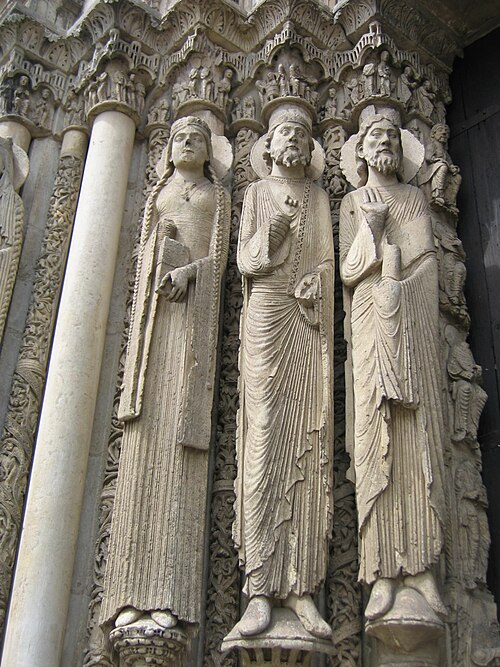 West portal of Chartres Cathedral (c. 1145)
 -
 South portal of Chartres Cathedral (c. 1215–1220)
 -
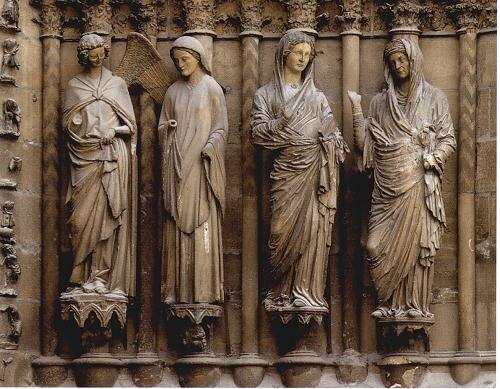 West portal at Reims Cathedral, Annunciation group
 -

-
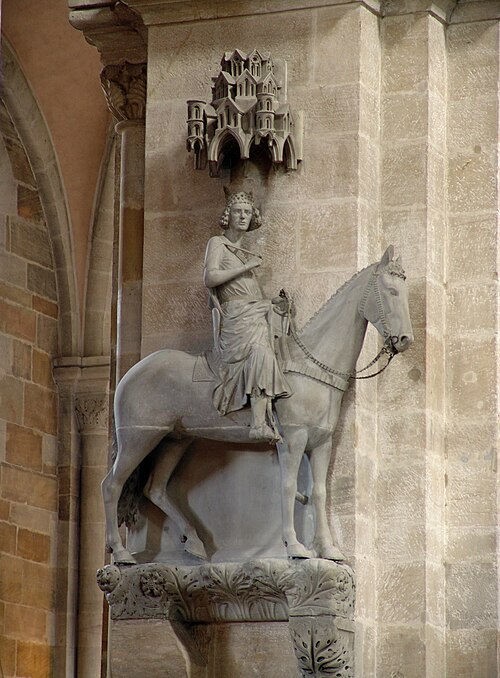 The Bamberg Horseman 1237, near life-size stone equestrian statue, the first of this kind since antiquity.
 -
 Lid of the Walters Casket, with the Siege of the Castle of Love at left, and jousting. Paris, 1330–1350
 -
 Siege of the Castle of Love on a mirror-case in the Louvre, 1350–1370; the ladies are losing.
 -
 Central German Pietà, 1330–1340
 -

-
 Base of the Holy Thorn Reliquary, a Resurrection of the Dead in gold, enamel and gems
 -
 Section of a panelled altarpiece with Resurrection of Christ, English, 1450–1490, Nottingham alabaster with remains of colour
 -
 Detail of the Last Supper from Tilman Riemenschneider's Altar of the Holy Blood, 1501–1505, Rothenburg ob der Tauber, Bavaria
Renaissance


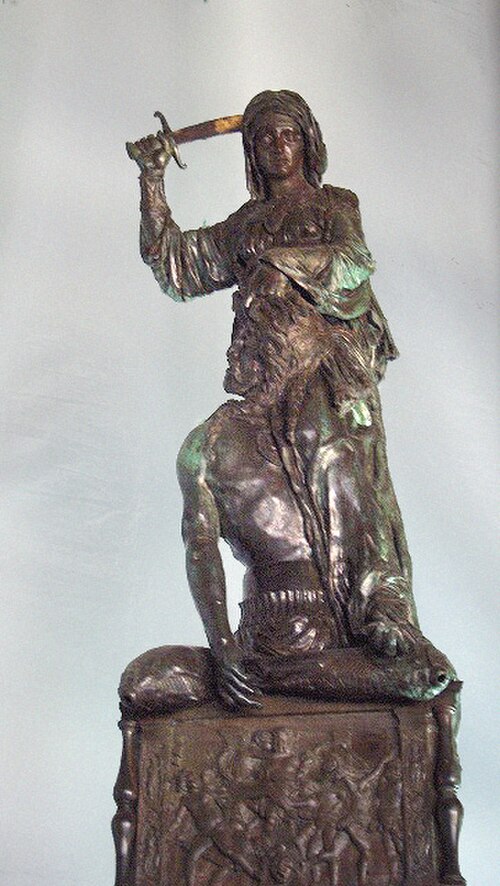
Renaissance sculpture proper is often taken to begin with the famous competition for the doors of the Florence Baptistry in 1403, from which the trial models submitted by the winner, Lorenzo Ghiberti, and Filippo Brunelleschi survive. Ghiberti's doors are still in place, but were undoubtedly eclipsed by his second pair for the other entrance, the so-called Gates of Paradise, which took him from 1425 to 1452, and are dazzlingly confident classicizing compositions with varied depths of relief allowing extensive backgrounds.[79] The intervening years had seen Ghiberti's early assistant Donatello develop with seminal statues including his Davids in marble (1408–09) and bronze (1440s), and his Equestrian statue of Gattamelata, as well as reliefs.[80] A leading figure in the later period was Andrea del Verrocchio, best known for his equestrian statue of Bartolomeo Colleoni in Venice;[81] his pupil Leonardo da Vinci designed an equine sculpture in 1482 The Horse for Milan, but only succeeded in making a 24-foot (7.3 m) clay model which was destroyed by French archers in 1499, and his other ambitious sculptural plans were never completed.[82]
The period was marked by a great increase in patronage of sculpture by the state for public art and by the wealthy for their homes; especially in Italy, public sculpture remains a crucial element in the appearance of historic city centres. Church sculpture mostly moved inside just as outside public monuments became common. Portrait sculpture, usually in busts, became popular in Italy around 1450, with the Neapolitan Francesco Laurana specializing in young women in meditative poses, while Antonio Rossellino and others more often depicted knobbly-faced men of affairs, but also young children.[83] The portrait medal invented by Pisanello also often depicted women; relief plaquettes were another new small form of sculpture in cast metal.
Michelangelo was an active sculptor from about 1500 to 1520, and his great masterpieces including his David, Pietà, Moses, and pieces for the Tomb of Pope Julius II and Medici Chapel could not be ignored by subsequent sculptors. His iconic David (1504) has a contrapposto pose, borrowed from classical sculpture. It differs from previous representations of the subject in that David is depicted before his battle with Goliath and not after the giant's defeat. Instead of being shown victorious, as Donatello and Verocchio had done, David looks tense and battle ready.[84]
-
 Lorenzo Ghiberti, panel of the Sacrifice of Isaac from the Florence Baptistry doors; oblique view here
 -

-

-
-
 Francesco Laurana, female bust (cast)
 -

-

-


Mannerist
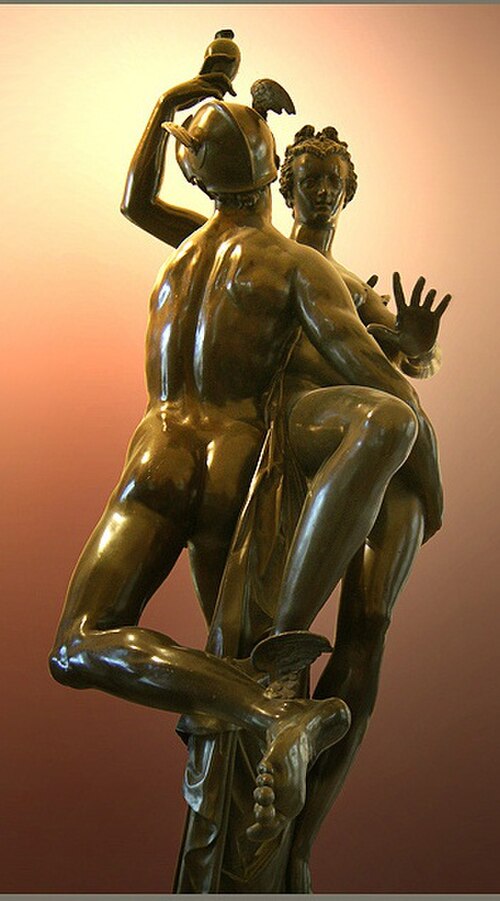
As in painting, early Italian Mannerist sculpture was very largely an attempt to find an original style that would top the achievement of the High Renaissance, which in sculpture essentially meant Michelangelo, and much of the struggle to achieve this was played out in commissions to fill other places in the Piazza della Signoria in Florence, next to Michelangelo's David. Baccio Bandinelli took over the project of Hercules and Cacus from the master himself, but it was little more popular than it is now, and maliciously compared by Benvenuto Cellini to "a sack of melons", though it had a long-lasting effect in apparently introducing relief panels on the pedestal of statues for the first time. Like other works of his, and other Mannerists, it removes far more of the original block than Michelangelo would have done.[85] Cellini's bronze Perseus with the head of Medusa is certainly a masterpiece, designed with eight angles of view, another Mannerist characteristic, but is indeed mannered compared to the Davids of Michelangelo and Donatello.[86] Originally a goldsmith, his famous gold and enamel Salt Cellar (1543) was his first sculpture, and shows his talent at its best.[87] As these examples show, the period extended the range of secular subjects for large works beyond portraits, with mythological figures especially favoured; previously these had mostly been found in small works.
Small bronze figures for collector's cabinets, often mythological subjects with nudes, were a popular Renaissance form at which Giambologna, originally Flemish but based in Florence, excelled in the later part of the century, also creating life-size sculptures, of which two joined the collection in the Piazza della Signoria. He and his followers devised elegant elongated examples of the figura serpentinata, often of two intertwined figures, that were interesting from all angles.[88]
-
 Stucco overdoor at Fontainebleau, probably designed by Primaticcio, who painted the oval inset, 1530s or 1540s
 -
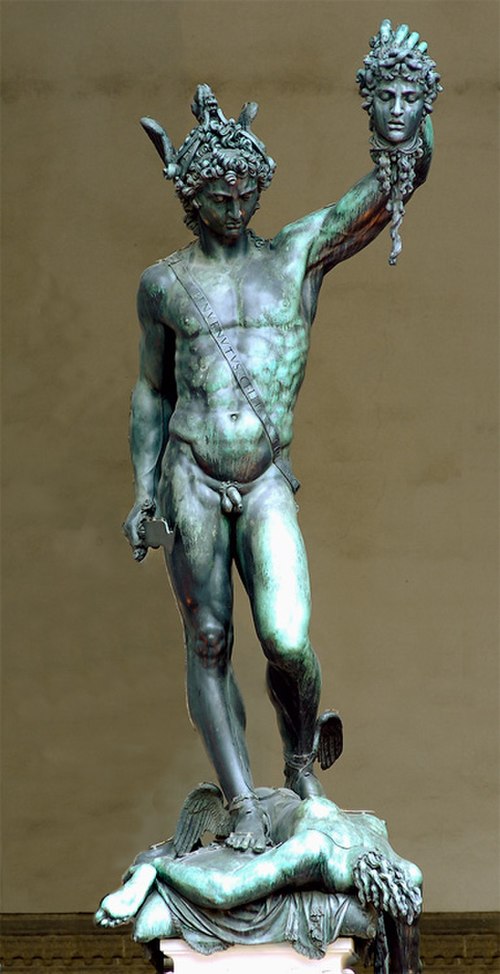 Benvenuto Cellini, Perseus with the head of Medusa, 1545–1554
 -
 Giambologna, Samson Slaying a Philistine, about 1562
 -

Baroque and Rococo
.jpg/500px-Apollo_and_Daphne_(Bernini).jpg)
In Baroque sculpture, groups of figures assumed new importance, and there was a dynamic movement and energy of human forms— they spiralled around an empty central vortex, or reached outwards into the surrounding space. Baroque sculpture often had multiple ideal viewing angles, and reflected a general continuation of the Renaissance move away from the relief to sculpture created in the round, and designed to be placed in the middle of a large space—elaborate fountains such as Bernini's Fontana dei Quattro Fiumi (Rome, 1651), or those in the Gardens of Versailles were a Baroque speciality. The Baroque style was perfectly suited to sculpture, with Gian Lorenzo Bernini the dominating figure of the age in works such as The Ecstasy of St Theresa (1647–1652).[89] Much Baroque sculpture added extra-sculptural elements, for example, concealed lighting, or water fountains, or fused sculpture and architecture to create a transformative experience for the viewer. Artists saw themselves as in the classical tradition, but admired Hellenistic and later Roman sculpture, rather than that of the more "Classical" periods as they are seen today.[90]
The Protestant Reformation brought an almost total stop to religious sculpture in much of Northern Europe, and though secular sculpture, especially for portrait busts and tomb monuments, continued, the Dutch Golden Age has no significant sculptural component outside goldsmithing.[91] Partly in direct reaction, sculpture was as prominent in Roman Catholicism as in the late Middle Ages. Statues of rulers and the nobility became increasingly popular. In the 18th century much sculpture continued on Baroque lines—the Trevi Fountain was only completed in 1762. Rococo style was better suited to smaller works, and arguably found its ideal sculptural form in early European porcelain, and interior decorative schemes in wood or plaster such as those in French domestic interiors and Austrian and Bavarian pilgrimage churches.[92]
-
 Bust of Louis XIV, 1686, by Antoine Coysevox
 -
 Saint Veronica by Francesco Mochi (1640), Saint Peter's Basilica
 -
 Pierre Paul Puget, Perseus and Andromeda, 1715, Musée du Louvre
 -

Neo-Classical

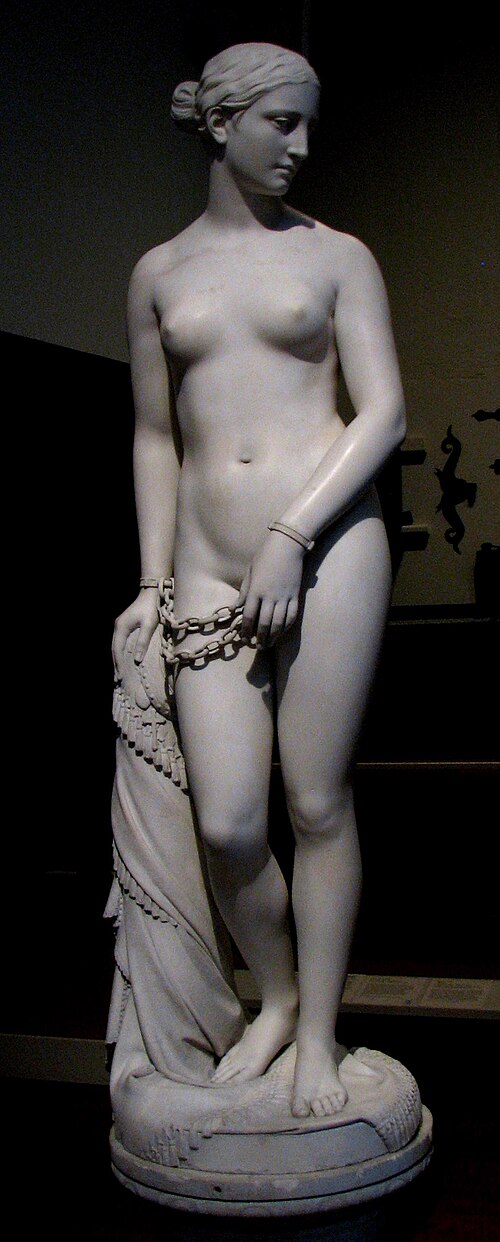
The Neoclassical style that arrived in the late 18th century gave great emphasis to sculpture. Jean-Antoine Houdon exemplifies the penetrating portrait sculpture the style could produce, and Antonio Canova's nudes the idealist aspect of the movement. The Neoclassical period was one of the great ages of public sculpture, though its "classical" prototypes were more likely to be Roman copies of Hellenistic sculptures. In sculpture, the most familiar representatives are the Italian Antonio Canova, the Englishman John Flaxman and the Dane Bertel Thorvaldsen. The European neoclassical manner also took hold in the United States, where its pinnacle occurred somewhat later and is exemplified in the sculptures of Hiram Powers.
_MET_DT2883.jpg/500px-Benjamin_Franklin_(1706%E2%80%931790)_MET_DT2883.jpg)


Asia
Greco-Buddhist sculpture and Asia
.jpeg/500px-Gandhara_Buddha_(tnm).jpeg)
Greco-Buddhist art is the artistic manifestation of Greco-Buddhism, a cultural syncretism between the Classical Greek culture and Buddhism, which developed over a period of close to 1000 years in Central Asia, between the conquests of Alexander the Great in the 4th century BCE, and the Islamic conquests of the 7th century CE. Greco-Buddhist art is characterized by the strong idealistic realism of Hellenistic art and the first representations of the Buddha in human form, which have helped define the artistic (and particularly, sculptural) canon for Buddhist art throughout the Asian continent up to the present. Though dating is uncertain, it appears that strongly Hellenistic styles lingered in the East for several centuries after they had declined around the Mediterranean, as late as the 5th century CE. Some aspects of Greek art were adopted while others did not spread beyond the Greco-Buddhist area; in particular the standing figure, often with a relaxed pose and one leg flexed, and the flying cupids or victories, who became popular across Asia as apsaras. Greek foliage decoration was also influential, with Indian versions of the Corinthian capital appearing.[93]
The origins of Greco-Buddhist art are to be found in the Hellenistic Greco-Bactrian kingdom (250–130 BCE), located in today's Afghanistan, from which Hellenistic culture radiated into the Indian subcontinent with the establishment of the small Indo-Greek kingdom (180–10 BCE). Under the Indo-Greeks and then the Kushans, the interaction of Greek and Buddhist culture flourished in the area of Gandhara, in today's northern Pakistan, before spreading further into India, influencing the art of Mathura, and then the Hindu art of the Gupta empire, which was to extend to the rest of South-East Asia. The influence of Greco-Buddhist art also spread northward towards Central Asia, strongly affecting the art of the Tarim Basin and the Dunhuang Caves, and ultimately the sculpted figure in China, Korea, and Japan.[94]
-
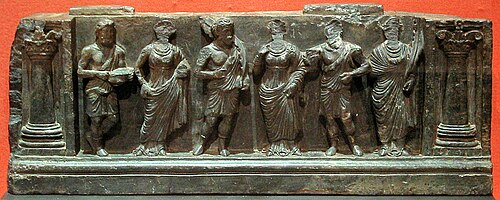 Gandhara frieze with devotees, holding plantain leaves, in purely Hellenistic style, inside Corinthian columns, 1st–2nd century CE. Buner, Swat, Pakistan. Victoria and Albert Museum
 -
-
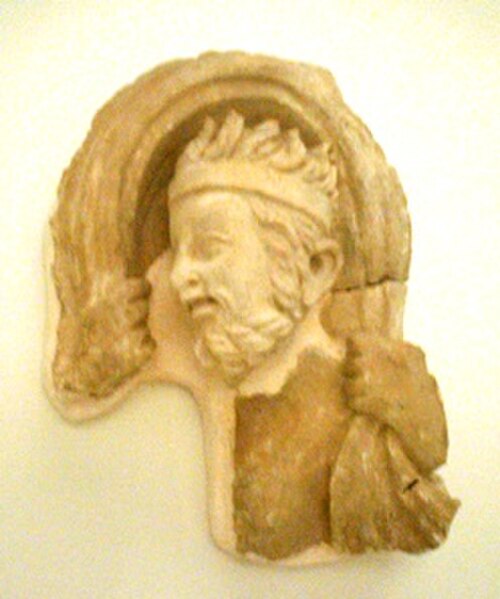
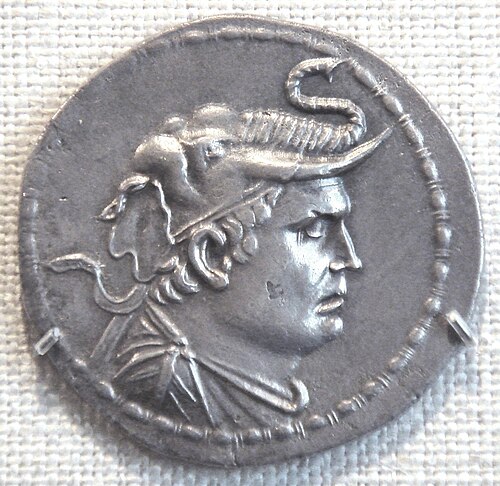 Coin of Demetrius I of Bactria, who reigned circa 200–180 BCE and invaded Northern India
 -
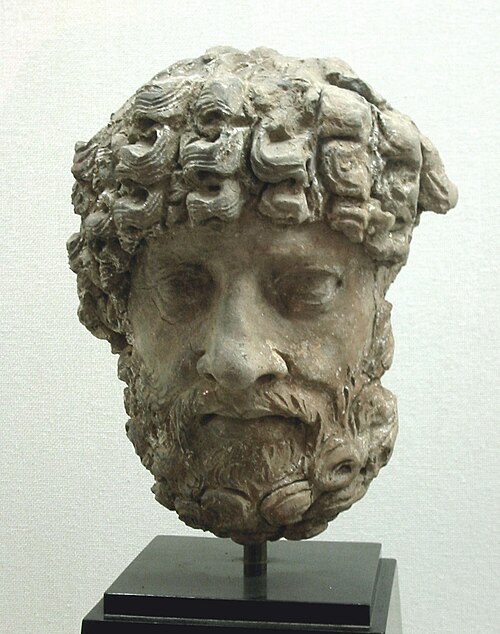
 Stucco Buddha head, once painted, from Hadda, Afghanistan, 3rd–4th centuries
 -
 Gandhara Poseidon (Ancient Orient Museum)
 -

-
 Taller Buddha of Bamiyan, c. 547 CE, in 1963 and in 2008 after they were dynamited and destroyed in March 2001 by the Taliban
China

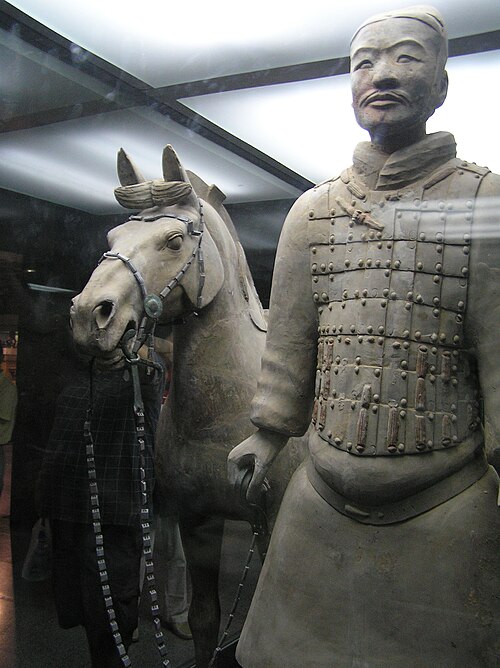
Chinese ritual bronzes from the Shang and Western Zhou dynasties come from a period of over a thousand years from c. 1500 BCE, and have exerted a continuing influence over Chinese art. They are cast with complex patterned and zoomorphic decoration, but avoid the human figure, unlike the huge figures only recently discovered at Sanxingdui.[95] The spectacular Terracotta Army was assembled for the tomb of Qin Shi Huang, the first emperor of a unified China from 221 to 210 BCE, as a grand imperial version of the figures long placed in tombs to enable the deceased to enjoy the same lifestyle in the afterlife as when alive, replacing actual sacrifices of very early periods. Smaller figures in pottery or wood were placed in tombs for many centuries afterwards, reaching a peak of quality in Tang dynasty tomb figures.[96] The tradition of unusually large pottery figures persisted in China, through Tang sancai tomb figures to later Buddhist statues such as the near life-size set of Yixian glazed pottery luohans and later figures for temples and tombs. These came to replace earlier equivalents in wood.
Native Chinese religions do not usually use cult images of deities, or even represent them, and large religious sculpture is nearly all Buddhist, dating mostly from the 4th to the 14th century, and initially using Greco-Buddhist models arriving via the Silk Road. Buddhism is also the context of all large portrait sculpture; in total contrast to some other areas, in medieval China even painted images of the emperor were regarded as private. Imperial tombs have spectacular avenues of approach lined with real and mythological animals on a scale matching Egypt, and smaller versions decorate temples and palaces.[97]
Small Buddhist figures and groups were produced to a very high quality in a range of media,[98] as was relief decoration of all sorts of objects, especially in metalwork and jade.[99] In the earlier periods, large quantities of sculpture were cut from the living rock in pilgrimage cave-complexes, and as outside rock reliefs. These were mostly originally painted. In notable contrast to literati painters, sculptors of all sorts were regarded as artisans and very few names are recorded.[100] From the Ming dynasty onwards, statuettes of religious and secular figures were produced in Chinese porcelain and other media, which became an important export.
-
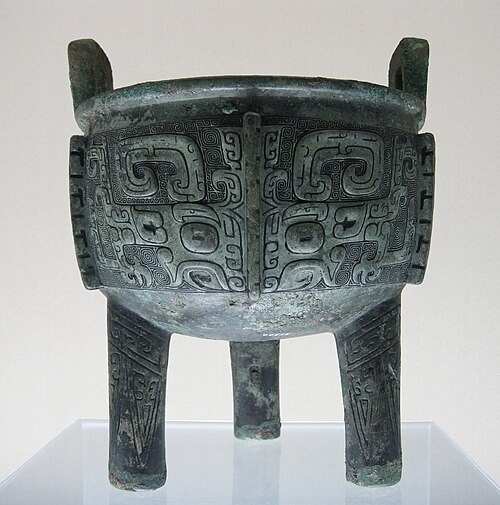 A bronze ding from late Shang dynasty (13th century–10th century BCE)
 -
 A tomb guardian usually placed inside the doors of the tomb to protect or guide the soul, Warring States period, c. 3rd century BCE
 -
-
![Gold stag with eagle's head, and ten further heads in the antlers. An object inspired by the art of the Siberian Altai mountain, possibly Pazyryk, unearthed at the site of Nalinggaotu, Shenmu County, near Xi'an, China.[101] Possibly from the "Hun people who lived in the prairie in Northern China". Dated to the 4th-3rd century BCE,[101] or Han dynasty period.[102] Shaanxi History Museum.[102]](https://img-server.japedia.wiki/wikipedia/commons/thumb/c/cb/Gold_monster.jpg/500px-Gold_monster.jpg) Gold stag with eagle's head, and ten further heads in the antlers. An object inspired by the art of the Siberian Altai mountain, possibly Pazyryk, unearthed at the site of Nalinggaotu, Shenmu County, near Xi'an, China.[101] Possibly from the "Hun people who lived in the prairie in Northern China". Dated to the 4th-3rd century BCE,[101] or Han dynasty period.[102] Shaanxi History Museum.[102]
Gold stag with eagle's head, and ten further heads in the antlers. An object inspired by the art of the Siberian Altai mountain, possibly Pazyryk, unearthed at the site of Nalinggaotu, Shenmu County, near Xi'an, China.[101] Possibly from the "Hun people who lived in the prairie in Northern China". Dated to the 4th-3rd century BCE,[101] or Han dynasty period.[102] Shaanxi History Museum.[102] -
 Tomb figure of dancing girl, Han dynasty (202 BCE—220 CE)
 -
 Bronze cowrie container with yaks, from the Dian Kingdom (4th century BCE – 109 BCE) tradition of the Western Han
 -
 Northern Wei dynasty Maitreya (386–534)
 -
 Tang dynasty tomb figure in sancai glaze pottery, horse and groom (618–907)
 -
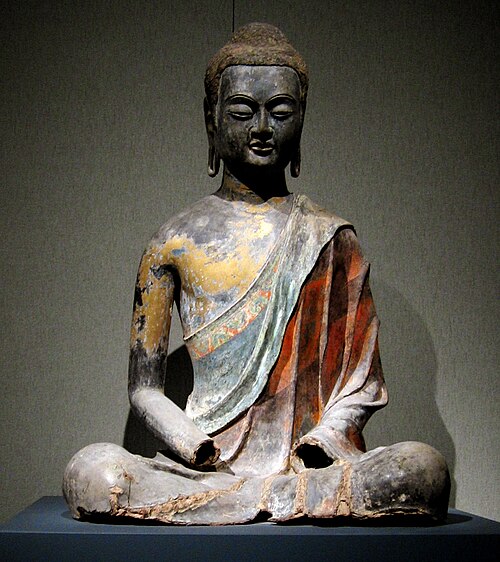 Seated Buddha, Tang dynasty c. 650.
 -
 A wooden Bodhisattva from the Song dynasty (960–1279)
 -
 Chinese jade Cup with Dragon Handles, Song dynasty, 12th century
 -
 Guanyin Bodhisattva in Blanc de Chine (Dehua porcelain), by He Chaozong, Ming dynasty, early 17th century
 -
 Blue underglaze statue of a man with his pipe, Jingdezhen porcelain, Ming Wanli period (1573–1620)
 -


.jpg/500px-China_-_Beijing_12_-_lion_outside_the_Tibetan_Monastery_(134036069).jpg)
Japan

Towards the end of the long Neolithic Jōmon period, some pottery vessels were "flame-rimmed" with extravagant extensions to the rim that can only be called sculptural,[103] and very stylized pottery dogū figures were produced, many with the characteristic "snow-goggle" eyes. During the Kofun period of the 3rd to 6th century CE, haniwa terracotta figures of humans and animals in a simplistic style were erected outside important tombs. The arrival of Buddhism in the 6th century brought with it sophisticated traditions in sculpture, Chinese styles mediated via Korea. The 7th-century Hōryū-ji and its contents have survived more intact than any East Asian Buddhist temple of its date, with works including a Shaka Trinity of 623 in bronze, showing the historical Buddha flanked by two bodhisattvas and also the Guardian Kings of the Four Directions.[104]
Jōchō is said to be one of the greatest Buddhist sculptors not only in Heian period but also in the history of Buddhist statues in Japan. Jōchō redefined the body shape of Buddha statues by perfecting the technique of "yosegi zukuri" (寄木造り) which is a combination of several woods. The peaceful expression and graceful figure of the Buddha statue that he made completed a Japanese style of sculpture of Buddha statues called "Jōchō yō" (Jōchō style, 定朝様) and determined the style of Japanese Buddhist statues of the later period. His achievement dramatically raised the social status of busshi (Buddhist sculptor) in Japan.[105]
In the Kamakura period, the Minamoto clan established the Kamakura shogunate and the samurai class virtually ruled Japan for the first time. Jocho's successors, sculptors of the Kei school of Buddhist statues, created realistic and dynamic statues to suit the tastes of samurai, and Japanese Buddhist sculpture reached its peak. Unkei, Kaikei, and Tankei were famous, and they made many new Buddha statues at many temples such as Kofuku-ji, where many Buddha statues had been lost in wars and fires.[106]
Almost all subsequent significant large sculpture in Japan was Buddhist, with some Shinto equivalents, and after Buddhism declined in Japan in the 15th century, monumental sculpture became largely architectural decoration and less significant.[107] However sculptural work in the decorative arts was developed to a remarkable level of technical achievement and refinement in small objects such as inro and netsuke in many materials, and metal tosogu or Japanese sword mountings. In the 19th century there were export industries of small bronze sculptures of extreme virtuosity, ivory and porcelain figurines, and other types of small sculpture, increasingly emphasizing technical accomplishment.
-
 'Flame-style' vessel, Neolithic Jōmon period; c. 2750 BCE; earthenware with carved and applied decoration; height: 61 cm, diameter: 55.8 cm
 -
 Dogū with "snow-goggle" eyes, 1000–400 BCE
 -
 6th-century haniwa figure
 -
 Kongo Rishiki (Guardian Deity) at the Central Gate of Hōryū-ji
 -

-

-
 Tsuba sword fitting with a "Rabbit Viewing the Autumn Moon", bronze, gold and silver, between 1670 and 1744
 -
 Izumiya Tomotada, netsuke in the form of a dog, late 18th century
 -
 Eagle by Suzuki Chokichi, 1892, Tokyo National Museum


Indian subcontinent

The first known sculpture in the Indian subcontinent is from the Indus Valley civilization (3300–1700 BCE), found in sites at Mohenjo-daro and Harappa in modern-day Pakistan. These include the famous small bronze female dancer and the so-called Priest-king. However, such figures in bronze and stone are rare and greatly outnumbered by pottery figurines and stone seals, often of animals or deities very finely depicted. After the collapse of the Indus Valley civilization there is little record of sculpture until the Buddhist era, apart from a hoard of copper figures of (somewhat controversially) c. 1500 BCE from Daimabad.[108] Thus the great tradition of Indian monumental sculpture in stone appears to begin, relative to other cultures, and the development of Indian civilization, relatively late, with the reign of Asoka from 270 to 232 BCE, and the Pillars of Ashoka he erected around India, carrying his edicts and topped by famous sculptures of animals, mostly lions, of which six survive.[109] Large amounts of figurative sculpture, mostly in relief, survive from Early Buddhist pilgrimage stupas, above all Sanchi; these probably developed out of a tradition using wood that also embraced Hinduism.[110]
The pink sandstone Hindu, Jain and Buddhist sculptures of Mathura from the 1st to 3rd centuries CE reflected both native Indian traditions and the Western influences received through the Greco-Buddhist art of Gandhara, and effectively established the basis for subsequent Indian religious sculpture.[110] The style was developed and diffused through most of India under the Gupta Empire (c. 320–550) which remains a "classical" period for Indian sculpture, covering the earlier Ellora Caves,[111] though the Elephanta Caves are probably slightly later.[112] Later large-scale sculpture remains almost exclusively religious, and generally rather conservative, often reverting to simple frontal standing poses for deities, though the attendant spirits such as apsaras and yakshi often have sensuously curving poses. Carving is often highly detailed, with an intricate backing behind the main figure in high relief. The celebrated bronzes of the Chola dynasty (c. 850–1250) from south India, many designed to be carried in processions, include the iconic form of Shiva as Nataraja,[113] with the massive granite carvings of Mahabalipuram dating from the previous Pallava dynasty.[114]
-
 The "Dancing Girl" of Mohenjo-daro, 3rd or 2nd millennium BCE (replica)
 -

-

-
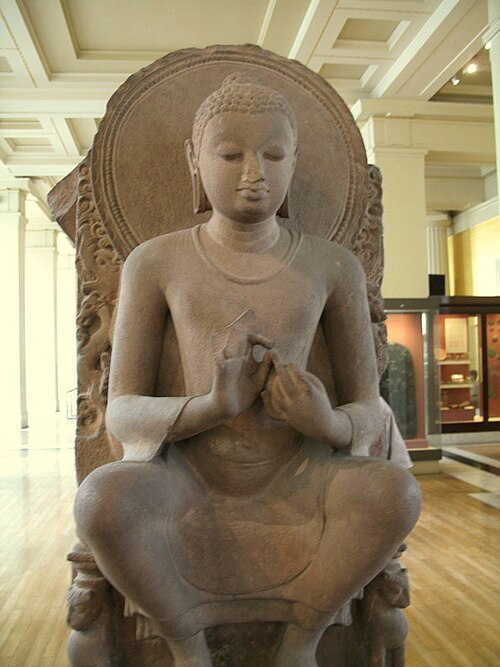 Buddha from Sarnath, 5th–6th century CE
 -
 The Colossal trimurti at the Elephanta Caves
 -
 Rock-cut temples at Ellora
 -

-
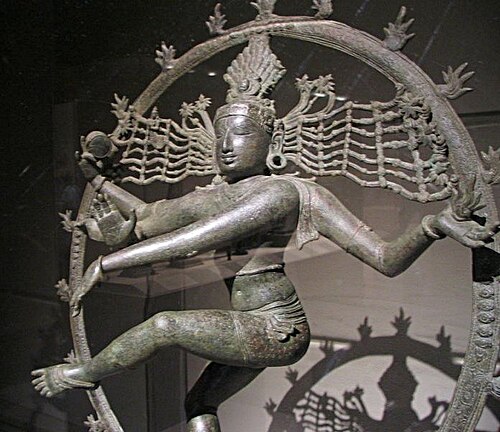 Hindu, Chola period, 1000
 -
 Typical medieval frontal standing statue of Vishnu, 950–1150
 -
 Khajuraho Temple
 -

-
 Gopuram of the Thillai Nataraja Temple, Chidambaram, Tamil Nadu, densely packed with rows of painted statues
 -
 Sculpture of Guardian at the entrance of the Mandapam of Sri Jalagandeeswarar Temple, Vellore, Tamil Nadu

),_Parshvanatha,_Neminatha,_and_Mahavira)_LACMA_M.85.55_(1_of_4).jpg/500px-Shrine_with_Four_Jinas_(Rishabhanatha_(Adinatha)),_Parshvanatha,_Neminatha,_and_Mahavira)_LACMA_M.85.55_(1_of_4).jpg)
South-East Asia

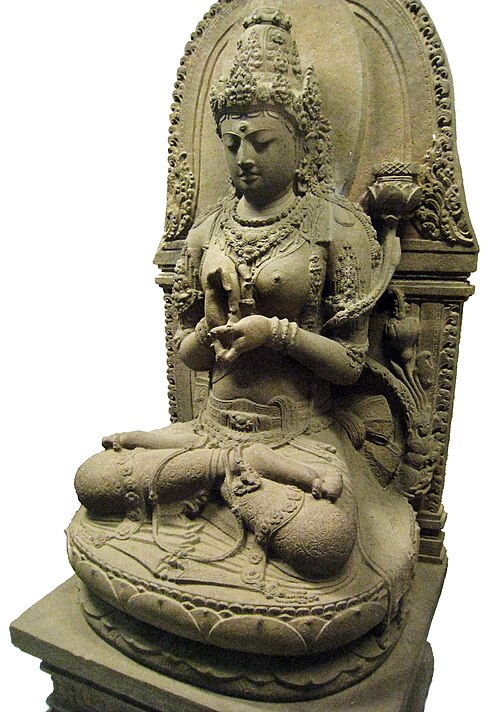
The sculpture of the region tends to be characterised by a high degree of ornamentation, as seen in the great monuments of Hindu and Buddhist Khmer sculpture (9th to 13th centuries) at Angkor Wat and elsewhere, the enormous 9th-century Buddhist complex at Borobudur in Java, and the Hindu monuments of Bali.[115] Both of these include many reliefs as well as figures in the round; Borobudur has 2,672 relief panels, 504 Buddha statues, many semi-concealed in openwork stupas, and many large guardian figures.
In Thailand and Laos, sculpture was mainly of Buddha images, often gilded, both large for temples and monasteries, and small figurines for private homes. Traditional sculpture in Myanmar emerged before the Bagan period. As elsewhere in the region, most of the wood sculptures of the Bagan and Ava periods have been lost.
Traditional Anitist sculptures from the Philippines are dominated by Anitist designs mirroring the medium used and the culture involved, while being highlighted by the environments where such sculptures are usually placed on. Christian and Islamic sculptures from the Philippines have different motifs compared to other Christian and Islamic sculptures elsewhere. In later periods Chinese influence predominated in Vietnam, Laos and Cambodia, and more wooden sculpture survives from across the region.
-

-

-

-
 Bronze Avalokiteshvara of Chaiya torso from Chaiya, Southern Thailand, Srivijayan art, c. 8th century
 -
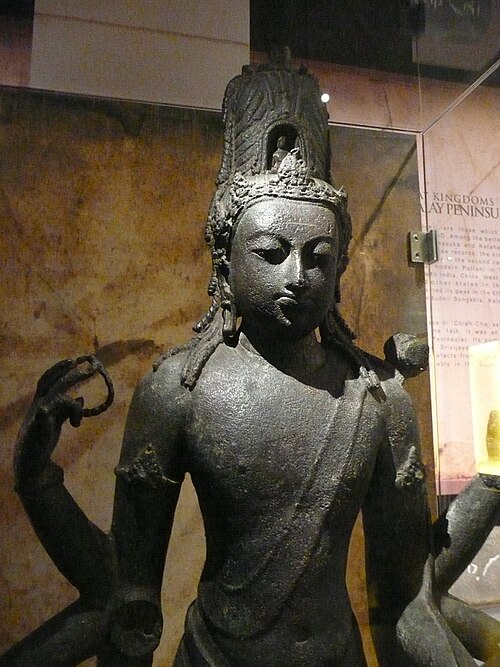
-
 The Anitist Agusan image from Agusan del Sur, Philippines, 9th-10th century
 -

-

-
 Head of Jayavarman VII, Khmer art, Cambodia, c. late 12th century
 -

-

-
-
 An Islamic sculpture of a buraq, southern Philippines
 -
 Phra Achana, Wat Si Chum, Big Buddha image in Sukhothai, Thailand, c. 14th century
 -
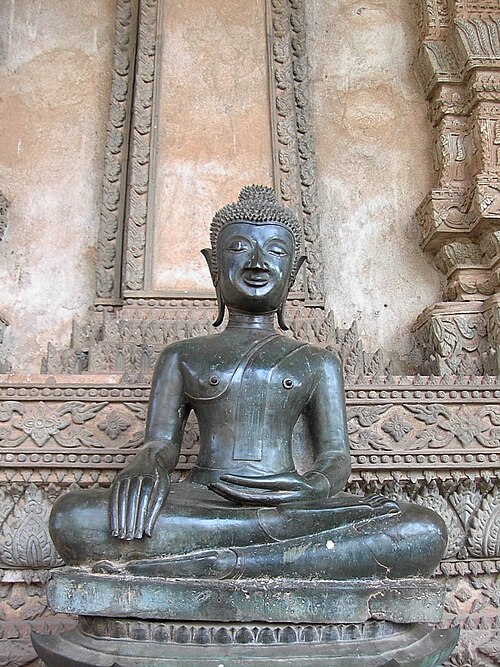 "the Buddha calling the earth to witness", The Buddha's hands are in the bhūmisparsa mudrā (subduing Māra) position. Ho Phra Kaeo temple, Vientiane, Laos
.jpg/500px-Borobudur_-_Buddha_Statue_-_035_Dhyana_Mudra,_Amitabha_(11679385166).jpg)


Islam

Islam is famously aniconic, so the vast majority of sculpture is arabesque decoration in relief or openwork, based on vegetable motifs, but tending to geometrical abstract forms. In the very early Mshatta Facade (740s), now mostly in Berlin, there are animals within the dense arabesques in high relief, and figures of animals and men in mostly low relief are found in conjunction with decoration on many later pieces in various materials, including metalwork, ivory and ceramics.[116]
Figures of animals in the round were often acceptable for works used in private contexts if the object was clearly practical, so medieval Islamic art contains many metal animals that are aquamaniles, incense burners or supporters for fountains, as in the stone lions supporting the famous one in the Alhambra, culminating in the largest medieval Islamic animal figure known, the Pisa Griffin. In the same way, luxury hardstone carvings such as dagger hilts and cups may be formed as animals, especially in Mughal art. The degree of acceptability of such relaxations of strict Islamic rules varies between periods and regions, with Islamic Spain, Persia and India often leading relaxation, and is typically highest in courtly contexts.[117]
-
 The Mshatta Facade, from a palace near Damascus, 740s
 -
 The Pisa Griffin, 107 cm high, probably 11th century
 -

-
 Mughal dagger with hilt in jade, gold, rubies and emeralds. Blade of damascened steel inlaid with gold.
.jpg/500px-Mschatta-Fassade_(Pergamonmuseum).jpg)
Africa


Historically, with the exception of some monumental Egyptian sculpture, most African sculpture was created in wood and other organic materials that have not survived from earlier than a few centuries ago; older pottery figures are found from a number of areas. Masks are important elements in the art of many peoples, along with human figures, often highly stylized. There is a vast variety of styles, often varying within the same context of origin depending on the use of the object, but wide regional trends are apparent; sculpture is most common among "groups of settled cultivators in the areas drained by the Niger and Congo rivers" in West Africa.[118] Direct images of deities are relatively infrequent, but masks in particular are or were often made for religious ceremonies; today many are made for tourists as "airport art".[119] African masks were an influence on European Modernist art, which was inspired by their lack of concern for naturalistic depiction.
The Nubian Kingdom of Kush in modern Sudan was in close and often hostile contact with Egypt, and produced monumental sculpture mostly derivative of styles to the north. In West Africa, the earliest known sculptures are from the Nok culture which thrived between 500 BCE and 500 CE in modern Nigeria, with clay figures typically with elongated bodies and angular shapes. Later West African cultures developed bronze casting for reliefs to decorate palaces like the famous Benin Bronzes, and very fine naturalistic royal heads from around the Yoruba town of Ife in terracotta and metal from the 12th–14th centuries. Akan goldweights are a form of small metal sculptures produced over the period 1400–1900, some apparently representing proverbs and so with a narrative element rare in African sculpture, and royal regalia included impressive gold sculptured elements.[120]
Many West African figures are used in religious rituals and are often coated with materials placed on them for ceremonial offerings. The Mande-speaking peoples of the same region make pieces of wood with broad, flat surfaces and arms and legs are shaped like cylinders. In Central Africa, however, the main distinguishing characteristics include heart-shaped faces that are curved inward and display patterns of circles and dots.
Populations in the African Great Lakes are not known for their sculpture.[118] However, one style from the region is pole sculptures, carved in human shapes and decorated with geometric forms, while the tops are carved with figures of animals, people, and various objects. These poles are, then, placed next to graves and are associated with death and the ancestral world. The culture known from Great Zimbabwe left more impressive buildings than sculpture but the eight soapstone Zimbabwe Birds appear to have had a special significance and were mounted on monoliths. Modern Zimbabwean sculptors in soapstone have achieved considerable international success. Southern Africa's oldest known clay figures date from 400 to 600 CE and have cylindrical heads with a mixture of human and animal features.
-
 Nok terracotta, 6th century BCE–6th century CE
 -
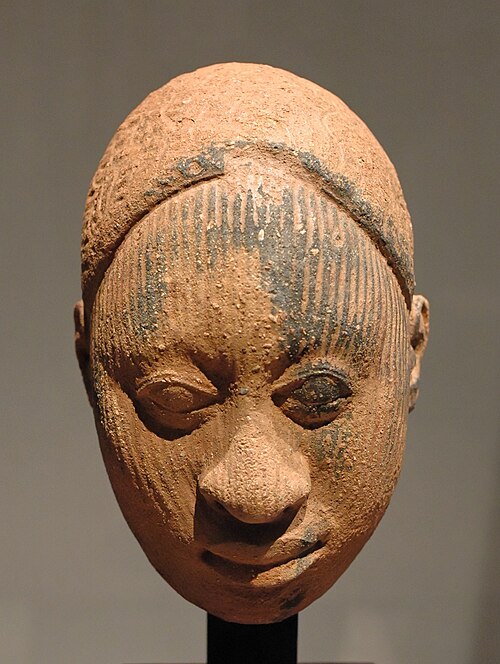 Ife head, terracotta, probably 12–14th centuries CE
 -

-
 Sculpture of a 'Queen Mother' from Benin, 16th century.
 -
 16th-century ivory mask from Benin
 -
 One of the Benin Bronzes, 16th–18th century, Nigeria.
 -
 Mask from Burkina Faso, 19th century
 -
 Mambila figure, Nigeria
.jpg/500px-Masque_probablement_Bobo-Burkina_Faso_(2).jpg)
Ethiopia and Eritrea
The creation of sculptures in Ethiopia and Eritrea can be traced back to its ancient past with the kingdoms of Dʿmt and Aksum. Christian art was established in Ethiopia with the conversion from paganism to Christianity in the 4th century CE, during the reign of king Ezana of Axum.[121] Christian imagery decorated churches during the Asksumite period and later eras.[122] For instance, at Lalibela, life-size saints were carved into the Church of Bet Golgotha; by tradition these were made during the reign of the Zagwe ruler Gebre Mesqel Lalibela in the 12th century, but they were more likely crafted in the 15th century during the Solomonic dynasty.[123] However, the Church of Saint George, Lalibela, one of several examples of rock cut architecture at Lalibela containing intricate carvings, was built in the 10th–13th centuries as proven by archaeology.[124]
-
 Stone statue from Addi-Galamo, Tigray Province, 6th–5th century BCE
 -
 A jar spout from the early Kingdom of Aksum
 -
 The Obelisk of Axum, 4th century CE
 -
 A processional cross, Zagwe dynasty, 12th century
 -
![One of the seven life-size saints carved into the wall of the Church of Bet Golgotha, Lalibela, 15th century (traditionally believed to have been made during the reign of Gebre Mesqel Lalibela)[123]](https://img-server.japedia.wiki/wikipedia/commons/thumb/8/85/Bet_Golgotha.jpg/500px-Bet_Golgotha.jpg) One of the seven life-size saints carved into the wall of the Church of Bet Golgotha, Lalibela, 15th century (traditionally believed to have been made during the reign of Gebre Mesqel Lalibela)[123]
One of the seven life-size saints carved into the wall of the Church of Bet Golgotha, Lalibela, 15th century (traditionally believed to have been made during the reign of Gebre Mesqel Lalibela)[123]
.jpg/500px-Ancient_Figurine,_National_Museum,_Addis_Ababa,_Ethiopia_(2130296832).jpg)
.jpg/500px-Axumite_Jar_Spout_(2822628227).jpg)
Sudan
In ancient Sudan, the development of sculpture stretches from the simple pottery of the Kerma culture beginning around 2500 BCE to the monumental statuary and architecture of the Kingdom of Kush, its last phase—the Meroitic period—ending around 350 CE (with its conquest by Ethiopia's Aksum).[125][126] Beyond pottery items, the Kerma culture also made furniture that contained sculptures, such as gold cattle hoofs as the legs of beds.[125] Sculpture during the Kingdom of Kush included full-sized statues (especially of kings and queens), smaller figurines (most commonly depicting royal servants), and reliefs in stone, which were influenced by the contemporary ancient Egyptian sculptural tradition.[127][128]
-
 A ceramic jug of the Kerma culture
 -

-

-
 Column and elephant - part of the temple complex in Musawwarat es-Sufra, 3rd century BCE
 -
 Traces of paint on a relief depicting Prince Arikhankharer smiting his enemies, from the Meroitic period of the Kingdom of Kush, early 1st century CE
 -
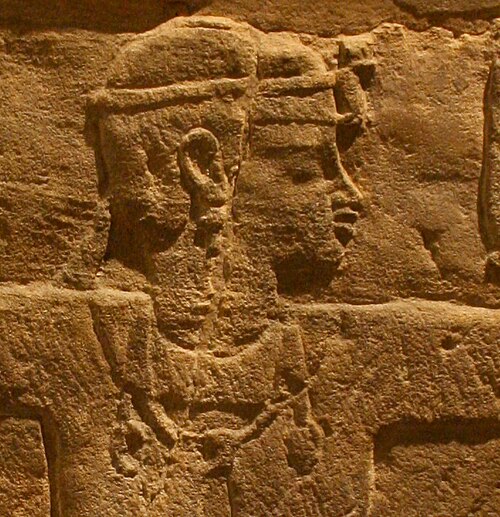 Relief of a ruler, a Candace of Meroë named Kandake Amanitore, 1st century CE
The Americas
Sculpture in present-day Latin America developed in two separate and distinct areas, Mesoamerica in the north and Peru in the south. In both areas, sculpture was initially of stone, and later of terracotta and metal as the civilizations in these areas became more technologically proficient.[129] The Mesoamerican region produced more monumental sculpture, from the massive block-like works of the Olmec and Toltec cultures, to the superb low reliefs that characterize the Mayan and Aztec cultures. In the Andean region, sculptures were typically small, but often show superb skill.
Pre-Columbian
-
 Olmec Baby Figure 1200-900 BCE
 -
 Olmec Jadeite Mask 1000–600 BCE
 -
 Olmec Colossal Head No. 3 1200–900 BCE
 -
 La Mojarra Stela 1 2nd century CE
 -
 Chalchiuhtlicue from Teotihuacán 200–500 CE
 -
 Teotihuacan mask 200–600 CE
 -
 Teotihuacan- Detail of the Temple of the Feathered Serpent 200–250 CE
 -
 A funerary urn in the shape of a "bat god" or a jaguar, Oaxaca, 300–650 CE
 -
 Moche portrait vessel with stirrup spout, Peru, 100 BCE–700 CE
 -
 K'inich Janaab Pakal I of Palenque, Maya, 603–683 CE
 -
 Ahkal Mo' Naab III Of Palenque, 8th century CE
 -
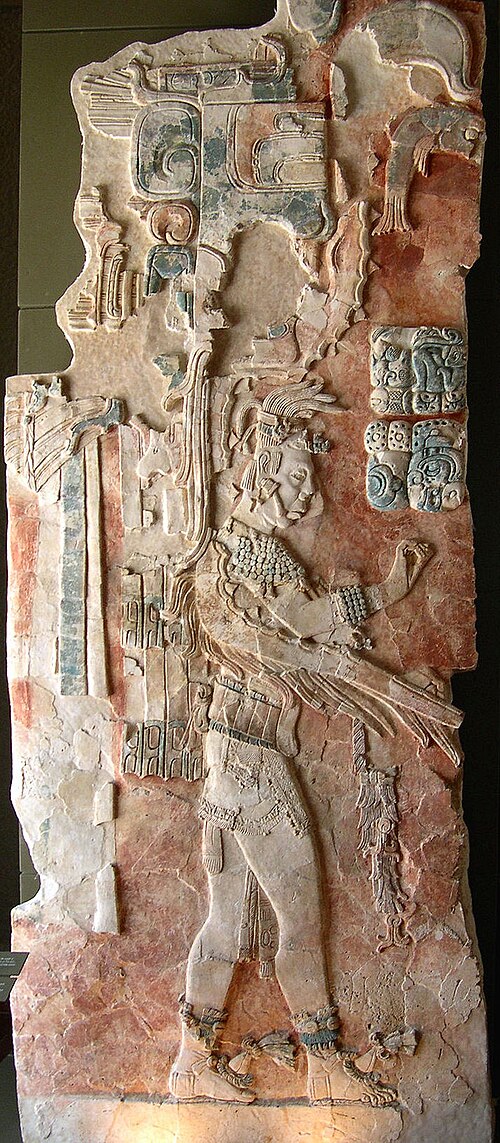 Upakal K'inich 8th century CE, Palenque
 -
 Jaina Island type figure (Mayan) 650–800 CE
 -
 Classic Veracruz culture face 600–900 CE
 -
 Atlante from Tula, c. 1000 CE
 -
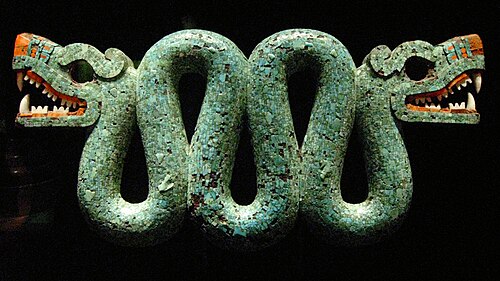 Double-headed serpent, Turquoise, red and white mosaic on wood, Aztec (possibly) Mixtec, c. 1400–1521,


North America

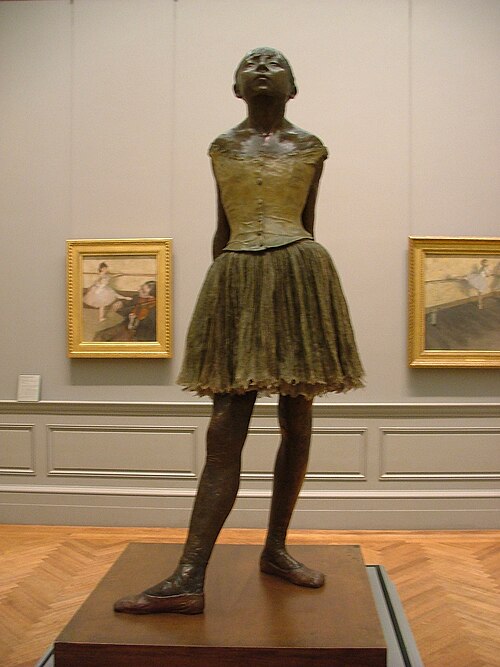
In North America, wood was sculpted for totem poles, masks, utensils, War canoes and a variety of other uses, with distinct variation between different cultures and regions. The most developed styles are those of the Pacific Northwest Coast, where a group of elaborate and highly stylized formal styles developed forming the basis of a tradition that continues today. In addition to the famous totem poles, painted and carved house fronts were complemented by carved posts inside and out, as well as mortuary figures and other items. Among the Inuit of the far north, traditional carving styles in ivory and soapstone are still continued.[130]
The arrival of European Catholic culture readily adapted local skills to the prevailing Baroque style, producing enormously elaborate retablos and other mostly church sculptures in a variety of hybrid styles.[131] The most famous of such examples in Canada is the altar area of the Notre Dame Basilica in Montreal, Quebec, which was carved by peasant habitant labourers. Later, artists trained in the Western academic tradition followed European styles until in the late 19th century they began to draw again on indigenous influences, notably in the Mexican baroque grotesque style known as Churrigueresque. Aboriginal peoples also adapted church sculpture in variations on Carpenter Gothic; one famous example is the Church of the Holy Cross in Skookumchuck Hot Springs, British Columbia.
The history of sculpture in the United States after Europeans' arrival reflects the country's 18th-century foundation in Roman republican civic values and Protestant Christianity. Compared to areas colonized by the Spanish, sculpture got off to an extremely slow start in the British colonies, with next to no place in churches, and was only given impetus by the need to assert nationality after independence. American sculpture of the mid- to late-19th century was often classical, often romantic, but showed a bent for a dramatic, narrative, almost journalistic realism. Public buildings during the last quarter of the 19th century and the first half of the 20th century often provided an architectural setting for sculpture, especially in relief. By the 1930s the International Style of architecture and design and art deco characterized by the work of Paul Manship and Lee Lawrie and others became popular. By the 1950s, traditional sculpture education would almost be completely replaced by a Bauhaus-influenced concern for abstract design. Minimalist sculpture replaced the figure in public settings and architects almost completely stopped using sculpture in or on their designs. Modern sculptors (21st century) use both classical and abstract inspired designs. Beginning in the 1980s, there was a swing back toward figurative public sculpture; by 2000, many of the new public pieces in the United States were figurative in design.
-
 Gutzon Borglum and his son, Lincoln Borglum, Mount Rushmore, 1927–1941. L–R, George Washington, Thomas Jefferson, Theodore Roosevelt, and Abraham Lincoln.
 -
 Robert Gould Shaw Memorial by Augustus Saint-Gaudens, 1884–1897, plaster version
 -

-

-
 The K'alyaan Totem Pole of the Tlingit Kiks.ádi Clan, erected at Sitka National Historical Park to commemorate the lives lost in the 1804 Battle of Sitka
 -
 Frederic Remington, The Bronco Buster, 1895, cast 1918. Metropolitan Museum of Art
 -
 Paul Manship, Dancer and Gazelles, 1916, Smithsonian American Art Museum, Washington, DC
 -
 Gertrude Vanderbilt Whitney, Buffalo Bill - The Scout, 1924, commemorating Buffalo Bill in Cody, Wyoming


Moving toward modern art
19th–early 20th century, early Modernism and continuing realism
-

-

-
 Per Hasselberg, Snöklockan (snowdrop), Paris 1881. Copy from 1953 in bronze by C & A Nicci (Rome/Italy) placed in Rottneros Park near Sunne in Värmland/Sweden.
 -

-
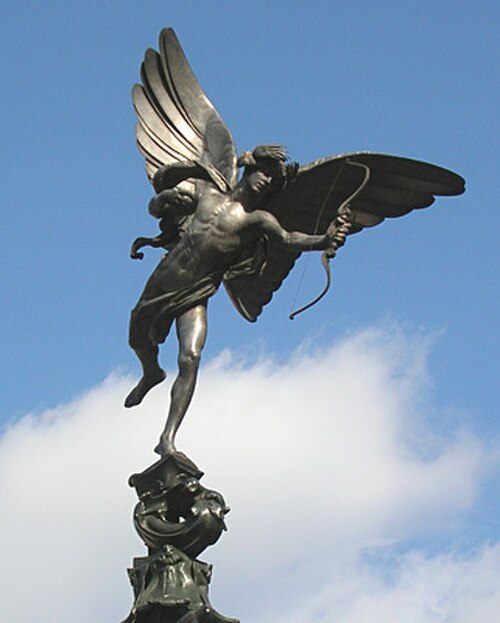
 Alfred Gilbert, the so-called Eros, 1893, the world's first aluminium statue, Piccadilly Circus, London
 -
 Paul Gauguin, 1894, Oviri (Sauvage), partially glazed stoneware, 75 x 19 x 27 cm, Musée d'Orsay, Paris
 -

-
 Antoine Bourdelle, Day and Night, marble, 1903, Musée Bourdelle, Paris
 -
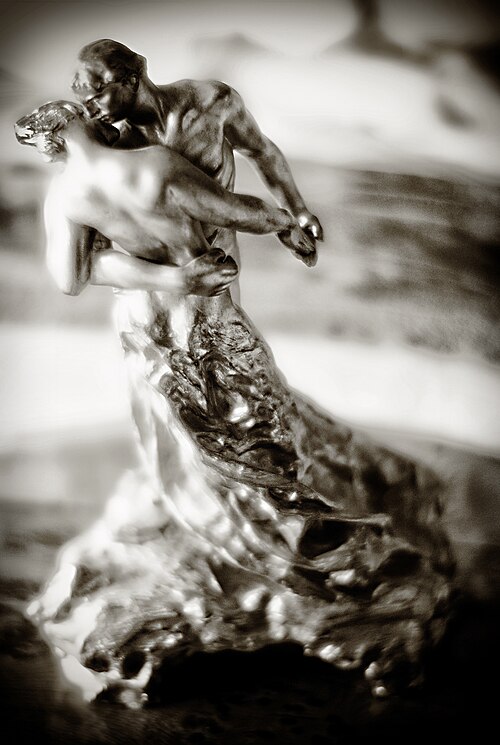 Camille Claudel, The Waltz, 1905 cast of the second version
 -
 Jan Štursa, Before the Bath, 1906, National Gallery in Prague
 -
 Aristide Maillol, The Night (La Nuit) 1909, Tuileries Garden, Paris
 -
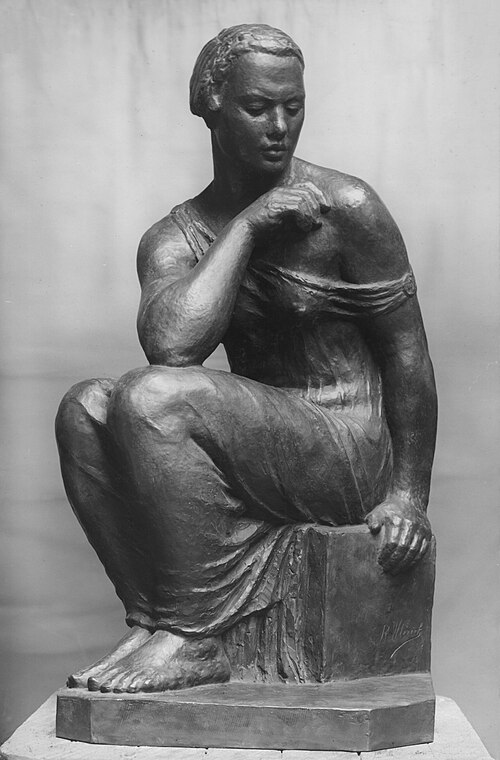 Robert Wlérick, The Thought 1933, Morez

.jpg/500px-Auguste_Rodin-Burghers_of_Calais_(photo).jpg)
,_partially_glazed_stoneware,_75_x_19_x_27_cm,_Mus%C3%A9e_d'Orsay,_Paris.jpg/500px-Paul_Gauguin,_1894,_Oviri_(Sauvage),_partially_glazed_stoneware,_75_x_19_x_27_cm,_Mus%C3%A9e_d'Orsay,_Paris.jpg)

Modern classicism contrasted in many ways with the classical sculpture of the 19th century which was characterized by commitments to naturalism (Antoine-Louis Barye)—the melodramatic (François Rude) sentimentality (Jean-Baptiste Carpeaux)—or a kind of stately grandiosity (Lord Leighton). Several different directions in the classical tradition were taken as the century turned, but the study of the live model and the post-Renaissance tradition was still fundamental to them. Auguste Rodin was the most renowned European sculptor of the early 20th century.[132][133] He is often considered a sculptural Impressionist, as are his students including Camille Claudel, and Hugo Rheinhold, attempting to model of a fleeting moment of ordinary life. Modern classicism showed a lesser interest in naturalism and a greater interest in formal stylization. Greater attention was paid to the rhythms of volumes and spaces—as well as greater attention to the contrasting qualities of surface (open, closed, planar, broken etc.) while less attention was paid to story-telling and convincing details of anatomy or costume. Greater attention was given to psychological effect than to physical realism, and influences from earlier styles worldwide were used.
Early masters of modern classicism included: Aristide Maillol, Alexander Matveyev, Joseph Bernard, Antoine Bourdelle, Georg Kolbe, Libero Andreotti, Gustav Vigeland, Jan Stursa, Constantin Brâncuși. As the century progressed, modern classicism was adopted as the national style of the two great European totalitarian empires: Nazi Germany and Soviet Russia, who co-opted the work of earlier artists such as Kolbe and Wilhelm Lehmbruck in Germany[134] and Matveyev in Russia. Over the 70 years of the USSR, new generations of sculptors were trained and chosen within their system, and a distinct style, socialist realism, developed, that returned to the 19th century's emphasis on melodrama and naturalism.
Classical training was rooted out of art education in Western Europe (and the Americas) by 1970 and the classical variants of the 20th century were marginalized in the history of modernism. But classicism continued as the foundation of art education in the Soviet academies until 1990, providing a foundation for expressive figurative art throughout eastern Europe and parts of the Middle East. By 2000, the European classical tradition retains a wide appeal to the public but awaits an educational tradition to revive its contemporary development.
Some of the modern classical became either more decorative/art deco (Paul Manship, Jose de Creeft, Carl Milles) or more abstractly stylized or more expressive (and Gothic) (Anton Hanak, Wilhelm Lehmbruck, Ernst Barlach, Arturo Martini)—or turned more to the Renaissance (Giacomo Manzù, Venanzo Crocetti) or stayed the same (Charles Despiau, Marcel Gimond).
Modernism


Modernist sculpture movements include Cubism, Geometric abstraction, De Stijl, Suprematism, Constructivism, Dadaism, Surrealism, Futurism, Formalism, Abstract expressionism, Pop-Art, Minimalism, Land art, and Installation art among others.
In the beginning of the 20th century, Pablo Picasso revolutionized the art of sculpture when he began creating his constructions fashioned by combining disparate objects and materials into one constructed piece of sculpture; the sculptural equivalent of the collage in two-dimensional art. The advent of Surrealism led to things occasionally being described as "sculpture" that would not have been so previously, such as "involuntary sculpture" in several senses, including coulage. In later years Picasso became a prolific potter, leading, with interest in historic pottery from around the world, to a revival of ceramic art, with figures such as George E. Ohr and subsequently Peter Voulkos, Kenneth Price, and Robert Arneson. Marcel Duchamp originated the use of the "found object" (French: objet trouvé) or readymade with pieces such as Fountain (1917).
Similarly, the work of Constantin Brâncuși at the beginning of the century paved the way for later abstract sculpture. In revolt against the naturalism of Rodin and his late-19th-century contemporaries, Brâncuși distilled subjects down to their essences as illustrated by the elegantly refined forms of his Bird in Space series (1924).[135]
Brâncuși's impact, with his vocabulary of reduction and abstraction, is seen throughout the 1930s and 1940s, and exemplified by artists such as Gaston Lachaise, Sir Jacob Epstein, Henry Moore, Alberto Giacometti, Joan Miró, Julio González, Pablo Serrano, Jacques Lipchitz[136] and by the 1940s abstract sculpture was impacted and expanded by Alexander Calder, Len Lye, Jean Tinguely, and Frederick Kiesler who were pioneers of Kinetic art.
Modernist sculptors largely missed out on the huge boom in public art resulting from the demand for war memorials for the two World Wars, but from the 1950s the public and commissioning bodies became more comfortable with Modernist sculpture and large public commissions both abstract and figurative became common. Picasso was commissioned to make a maquette for a huge 50-foot (15 m)-high public sculpture, the so-called Chicago Picasso (1967). His design was ambiguous and somewhat controversial, and what the figure represents is not clear; it could be a bird, a horse, a woman or a totally abstract shape.
During the late 1950s and the 1960s abstract sculptors began experimenting with a wide array of new materials and different approaches to creating their work. Surrealist imagery, anthropomorphic abstraction, new materials and combinations of new energy sources and varied surfaces and objects became characteristic of much new modernist sculpture. Collaborative projects with landscape designers, architects, and landscape architects expanded the outdoor site and contextual integration. Artists such as Isamu Noguchi, David Smith, Alexander Calder, Jean Tinguely, Richard Lippold, George Rickey, Louise Bourgeois, Philip Pavia and Louise Nevelson came to characterize the look of modern sculpture.
By the 1960s Abstract expressionism, Geometric abstraction and Minimalism, which reduces sculpture to its most essential and fundamental features, predominated. Some works of the period are: the Cubi works of David Smith, and the welded steel works of Sir Anthony Caro, as well as welded sculpture by a large variety of sculptors, the large-scale work of John Chamberlain, and environmental installation scale works by Mark di Suvero. Other Minimalists include Tony Smith, Donald Judd, Robert Morris, Anne Truitt, Giacomo Benevelli, Arnaldo Pomodoro, Richard Serra, Dan Flavin, Carl Andre, and John Safer who added motion and monumentality to the theme of purity of line.[137]
During the 1960s and 1970s figurative sculpture by modernist artists in stylized forms was made by artists such as Leonard Baskin, Ernest Trova, George Segal, Marisol Escobar, Paul Thek, Robert Graham in a classic articulated style, and Fernando Botero bringing his painting's 'oversized figures' into monumental sculptures.
Gallery of modernist sculpture
-
 André Derain, Nu debout, 1907, limestone, Musée National d'Art Moderne
 -
 Henri Matisse, Figure décorative, 1908, bronze
 -
 Amedeo Modigliani, Female Head, 1911–12, Metropolitan Museum of Art
 -
 Joseph Csaky, Groupe de femmes (Groupe de trois femmes, Groupe de trois personnages), 1911–12, plaster, lost
 -
 Alexander Archipenko, La Vie Familiale (Family Life), 1912, destroyed
 -
 Constantin Brâncuși, Portrait of Mademoiselle Pogany, 1912, white marble; limestone block, Philadelphia Museum of Art. Exhibited at the 1913 Armory Show
 -
 Otto Gutfreund, Cellist, 1912–13
 -
 Marcel Duchamp, Fountain, 1917
 -
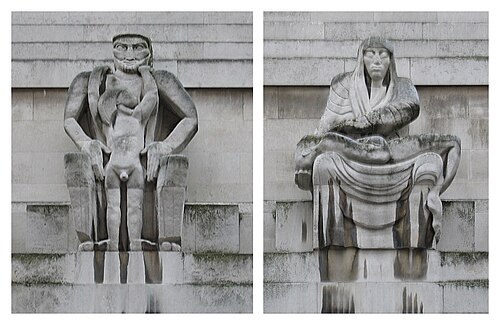 Jacob Epstein, Day and Night, carved for the London Underground's headquarters, 1928.
 -
 Mieczysław Kotarbiński, Coat of arms of Poland, basalt relief in Art Deco style, Warsaw, 1931.
 -
 Käthe Kollwitz, The Grieving Parents, 1932, World War I memorial (for her son Peter), Vladslo German war cemetery
 -
 Jacques Lipchitz, Birth of the Muses, 1944–1950
 -
 Barbara Hepworth, Monolith-Empyrean, 1953
 -

-
 Henry Moore, Three Piece Reclining figure No.1, 1961, Yorkshire
 -
 Pablo Picasso, Chicago Picasso, 1967, Chicago, Illinois
 -
 George Rickey, Four Squares in Geviert, 1969, terrace of the New National Gallery, Berlin, Germany, Rickey is considered a Kinetic sculptor
 -
 Alexander Calder, Crinkly avec disc rouge, 1973, Schlossplatz, Stuttgart
 -
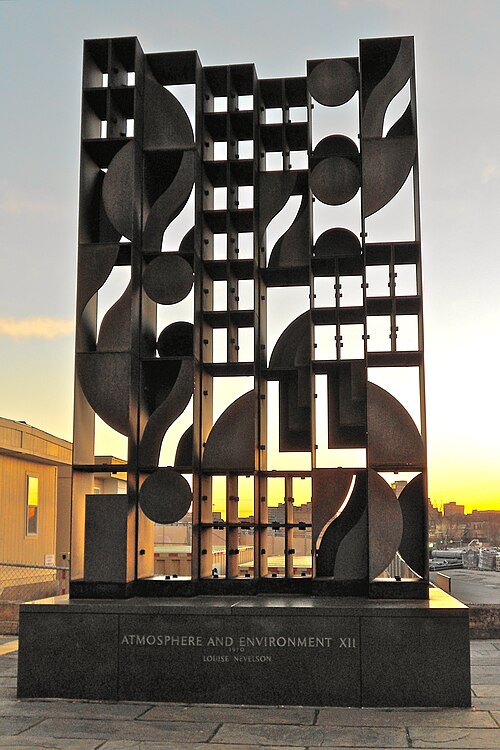 Louise Nevelson, Atmosphere and Environment XII, 1970–1973, Philadelphia Museum of Art
 -
 Sir Anthony Caro, Black Cover Flat, 1974, steel, Tel Aviv Museum of Art
 -
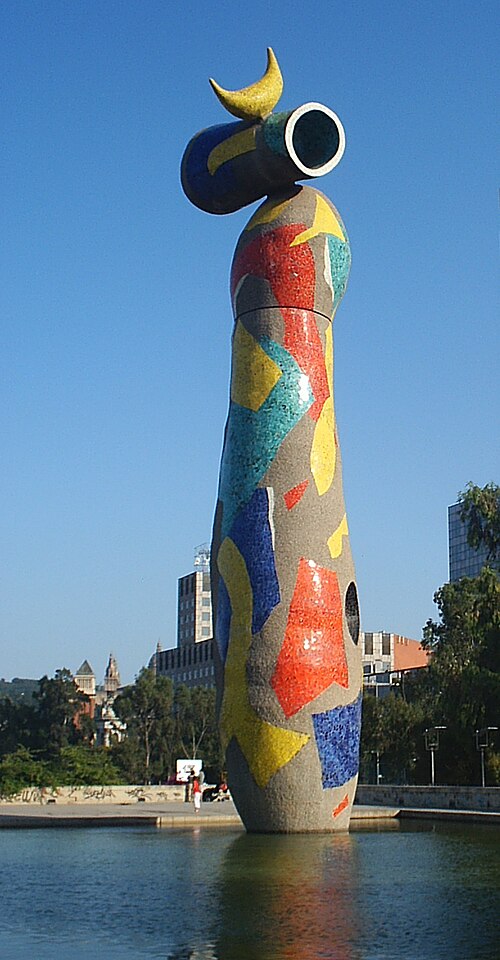 Joan Miró, Woman and Bird, 1982, Barcelona, Spain
 -

,_Nu_debout,_limestone,_95_x_33_x_17_cm,_Mus%C3%A9e_National_d'Art_Moderne.jpg/500px-Andr%C3%A9_Derain,_1907_(Automne),_Nu_debout,_limestone,_95_x_33_x_17_cm,_Mus%C3%A9e_National_d'Art_Moderne.jpg)


,_plaster_lost,_photo_Galerie_Ren%C3%A9_Reichard,_Frankfurt,_72dpi.jpg/500px-Joseph_Csaky,_1911-1912,_Deux_Femme_(Two_Women),_plaster_lost,_photo_Galerie_Ren%C3%A9_Reichard,_Frankfurt,_72dpi.jpg)


.jpg/500px-Otto_Gutfreund_(Cellista).jpg)

Contemporary movements
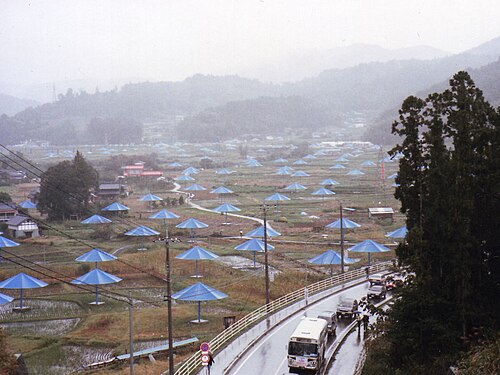

Palma de Mallorca, Plaça de la Porta de Santa Catalina
Site specific and environmental art works are represented by artists: Andy Goldsworthy, Walter De Maria,[139] Richard Long, Richard Serra, Robert Irwin,[140] George Rickey and Christo and Jeanne-Claude led contemporary abstract sculpture in new directions. Artists created environmental sculpture on expansive sites in the 'land art in the American West' group of projects. These land art or 'earth art' environmental scale sculpture works exemplified by artists such as Robert Smithson, Michael Heizer, James Turrell (Roden Crater). Eva Hesse, Sol LeWitt, Jackie Winsor, Keith Sonnier, Bruce Nauman and Dennis Oppenheim among others were pioneers of Postminimalist sculpture.
Also during the 1960s and 1970s artists as diverse as Eduardo Paolozzi, Chryssa, Claes Oldenburg, George Segal, Edward Kienholz, Nam June Paik, Wolf Vostell, Duane Hanson, and John DeAndrea explored abstraction, imagery and figuration through video art, environment, light sculpture, and installation art in new ways.
Conceptual art is art in which the concept(s) or idea(s) involved in the work take precedence over traditional aesthetic and material concerns. Works include One and Three Chairs, 1965, is by Joseph Kosuth, and An Oak Tree by Michael Craig-Martin, and those of Joseph Beuys, James Turrell and Jacek Tylicki.
Minimalism
-
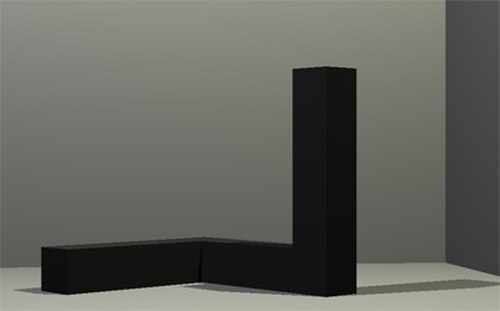 Tony Smith, Free Ride, 1962, 6'8 x 6'8 x 6'8 (the height of a standard US door opening), Museum of Modern Art, New York
 -
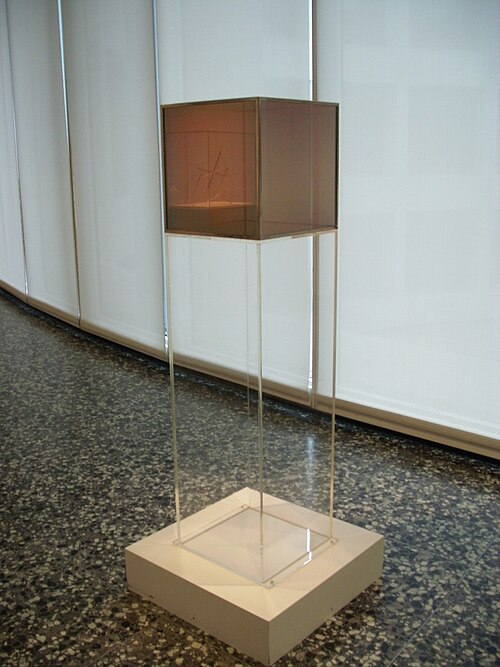 Larry Bell, Untitled 1964, bismuth, chromium, gold, and rhodium on gold-plated brass; Hirshhorn Museum and Sculpture Garden
 -
-
 Richard Serra, Fulcrum 1987, 55 ft high free standing sculpture of Cor-ten steel near Liverpool Street station, London
 -
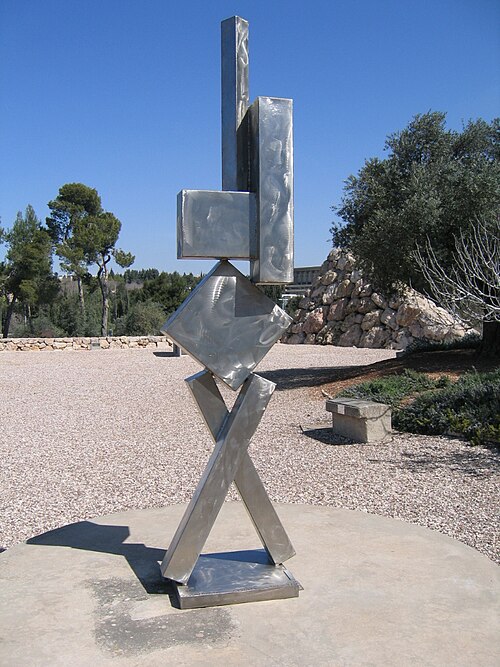
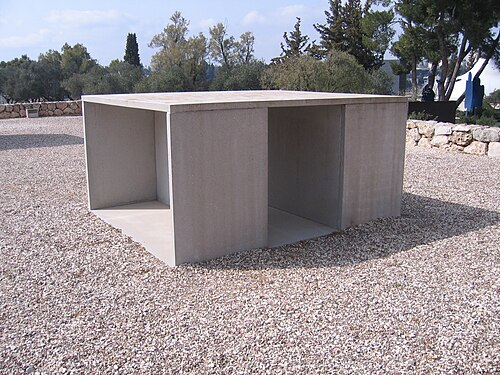 Donald Judd, Untitled, 1991, Israel Museum Art Garden, Jerusalem
-
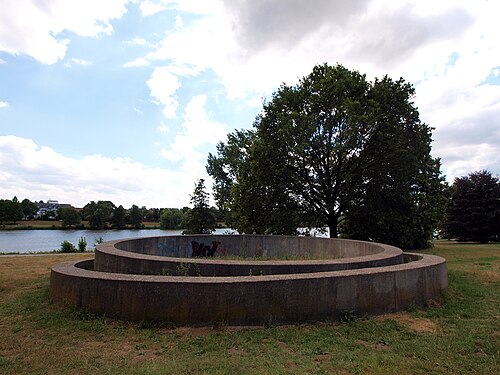
 Richard Long, South Bank Circle, 1991 Tate Liverpool, England
 -
 Jean-Yves Lechevallier, Fettered wing. 1991
 -
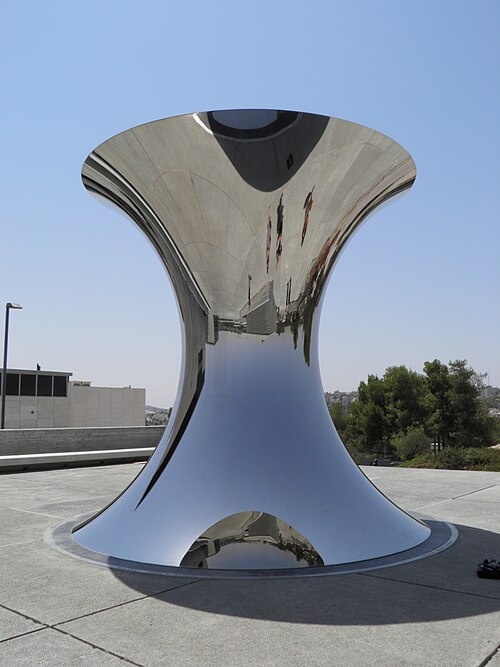 Anish Kapoor, Turning the World Upside Down, Israel Museum, 2010
 -
 Rachel Whiteread, Judenplatz Holocaust Memorial, Vienna, 2000
 -

-
 The Spire of Dublin officially titled the Monument of Light, stainless steel, 121.2 metres (398 feet), the world's tallest sculpture

Contemporary genres

Some modern sculpture forms are now practiced outdoors, as environmental art and environmental sculpture, often in full view of spectators. Light sculpture, street art sculpture and site-specific art also often make use of the environment. Ice sculpture is a form of ephemeral sculpture that uses ice as the raw material. It is popular in China, Japan, Canada, Sweden, and Russia. Ice sculptures feature decoratively in some cuisines, especially in Asia. Kinetic sculptures are sculptures that are designed to move, which include mobiles. Snow sculptures are usually carved out of a single block of snow about 6 to 15 feet (1.8 to 4.6 m) on each side and weighing about 20–30 tons. The snow is densely packed into a form after having been produced by artificial means or collected from the ground after a snowfall. Sound sculptures take the form of indoor sound installations, outdoor installations such as aeolian harps, automatons, or be more or less near conventional musical instruments. Sound sculpture is often site-specific. Art toys have become another format for contemporary artists since the late 1990s, such as those produced by Takashi Murakami and Kid Robot, designed by Michael Lau, or hand-made by Michael Leavitt (artist).[141]
Conservation

Sculptures are sensitive to environmental conditions such as temperature, humidity and exposure to light and ultraviolet light. Acid rain can also cause damage to certain building materials and historical monuments. This results when sulfuric acid in the rain chemically reacts with the calcium compounds in the stones (limestone, sandstone, marble and granite) to create gypsum, which then flakes off. Severe air pollution also causes damage to historical monuments.
At any time many contemporary sculptures have usually been on display in public places; theft was not a problem as pieces were instantly recognisable. In the early 21st century the value of metal rose to such an extent that theft of massive bronze sculpture for the value of the metal became a problem; sculpture worth millions being stolen and melted down for the relatively low value of the metal, a tiny fraction of the value of the artwork.[142]
Form
Cultural
Method
Application
See also

Notes
- ^ en.museicapitolini.org Archived 2017-09-03 at the Wayback Machine (in Italian).
- ^ a b "Gods in Color: Painted Sculpture of Classical Antiquity" September 2007 to January 2008, The Arthur M. Sackler Museum Archived January 4, 2009, at the Wayback Machine
- ^ a b See for example Martin Robertson, A shorter history of Greek art Archived 2022-12-04 at the Wayback Machine, p. 9, Cambridge University Press, 1981, ISBN 978-0-521-28084-6
- ^ NGA, Washington Archived 2013-02-15 at the Wayback Machine feature on exhibition.
- ^ The Ptolemies began the Hellenistic tradition of ruler-portraits on coins, and the Romans began to show dead politicians in the 1st century BCE, with Julius Caesar the first living figure to be portrayed; under the emperors portraits of the Imperial family became standard. See Burnett, 34–35; Howgego, 63–70.
- ^ "Article by Morris Cox". Archived from the original on August 28, 2008. Retrieved October 30, 2008.
- ^ Part of the Gods in Color exhibition. Harvard exhibition Archived 2014-10-06 at the Wayback Machine
- ^ Cook, 147; he notes that ancient Greek copyists seem to have used many fewer points than some later ones, and copies often vary considerably in the composition as well as the finish.
- ^ "Flash animation of the lost-wax casting process". James Peniston Sculpture. Archived from the original on September 14, 2010. Retrieved November 30, 2008.
- ^ Ravi, B. (2004). "Metal Casting – Overview" (PDF). Bureau of Energy Efficiency, India. Archived (PDF) from the original on February 7, 2016. Retrieved July 3, 2011.
- ^ "British Museum – The Lycurgus Cup". Archived from the original on November 4, 2015. Retrieved June 15, 2017.
- ^ Williams, Arthur (2005). The Sculpture Reference Illustrated. Gulfport, MS. p. 179. ISBN 978-0-9755383-0-2.
{{cite book}}: CS1 maint: location missing publisher (link) - ^ V&A Museum, Sculpture techniques: modelling in clay Archived August 2, 2012, at the Wayback Machine, accessed August 31, 2012.
- ^ Rawson, 140–44; Frankfort 112–13; Henig, 179–80.
- ^ Gipson, Ferren (2022). Women's work: from feminine arts to feminist art. London: Frances Lincoln. ISBN 978-0-7112-6465-6.
- ^ Rawson, 134–35.
- ^ Burford, Alison, "Greece, ancient, §IV, 1: Monumental sculpture: Overview, 5 c)" in Oxford Art Online, accessed August 24, 2012.
- ^ Olsen, 150–51; Blunt.
- ^ "Jewish virtual library, History of Jewish sculpture". Archived from the original on August 5, 2014. Retrieved August 20, 2014.
- ^ P. Mellars, Archeology and the Dispersal of Modern Humans in Europe: Deconstructing the Aurignacian, Evolutionary Anthropology, vol. 15 (2006), pp. 167–82.
- ^ de Laet, Sigfried J. (1994). History of Humanity: Prehistory and the beginnings of civilization. UNESCO. p. 211. ISBN 978-92-3-102810-6.
- ^ Cook, J. (2013) Ice Age art: arrival of the modern mind, The British Museum, ISBN 978-0-7141-2333-2.
- ^ Sandars, 8–16, 29–31.
- ^ Hahn, Joachim, "Prehistoric Europe, §II: Palaeolithic 3. Portable art" in Oxford Art Online, accessed August 24, 2012; Sandars, 37–40.
- ^ Kleiner, Fred (2009). Gardner's Art through the Ages: The Western Perspective, Volume 1. Cengage Learning. p. 36. ISBN 978-0-495-57360-9.
- ^ Sandars, 75–80.
- ^ Sandars, 253−57, 183–85.
- ^ Frankfort, 24–37.
- ^ Frankfort, 45–59.
- ^ Frankfort, 61–66.
- ^ Frankfort, Chapters 2–5.
- ^ Frankfort, 110–12.
- ^ Frankfort, 66–74.
- ^ Frankfort, 71–73.
- ^ Frankfort, 66–74, 167.
- ^ Frankfort, 141–93.
- ^ Smith, 33.
- ^ Smith, 12–13 and note 17.
- ^ Smith, 21–24.
- ^ Smith, 170–78, 192–94.
- ^ Smith, 102–03, 133–34.
- ^ Smith, 4–5, 208–09.
- ^ Smith, 89–90.
- ^ images of Getty Villa 85.AA.103
- ^ Cook, 72, 85–109; Boardman, 47–59
- ^ "Research". Glyptoteket. Archived from the original on September 24, 2017. Retrieved September 23, 2017.
- ^ "Tracking Colour". www.trackingcolour.com. Archived from the original on December 9, 2017. Retrieved September 23, 2017.
- ^ Cook, 109–19; Boardman, 87–95.
- ^ Lapatin, Kenneth D.S., Phidias, Oxford Art Online, accessed August 24, 2012.
- ^ Cook, 119–31.
- ^ Cook, 131–41.
- ^ Alexander The Great and the Hellenistic Age, p. xiii. Green P. ISBN 978-0-7538-2413-9.
- ^ Cook, 142–56.
- ^ Cook, 142–54.
- ^ Cook, 155–58.
- ^ Strong, 58–63; Hennig, 66–69.
- ^ Hennig, 24.
- ^ Henig, 66–69; Strong, 36–39, 48; At the trial of Verres, former governor of Sicily, Cicero's prosecution details his depredations of art collections at great length.
- ^ Henig, 23–24.
- ^ Henig, 66–71.
- ^ Henig, 73–82; Strong, 48–52, 80–83, 108–17, 128–32, 141–59, 177–82, 197–211.
- ^ Henig, Chapter 6; Strong, 303–15.
- ^ Henig, Chapter 8.
- ^ Strong, 171–76, 211–14.
- ^ Kitzinger, 9 (both quotes), more generally his Ch 1; Strong, 250–57, 264–66, 272–80.
- ^ Strong, 287–91, 305–08, 315–18; Henig, 234–40.
- ^ Robinson, 12, 15.
- ^ Dodwell, Chapter 2.
- ^ Calkins, 79–80, 90–102.
- ^ Calkins, 107–14.
- ^ Calkins, 115–32.
- ^ Honour and Fleming, 297–300; Henderson, 55, 82–84.
- ^ Olson, 11–24; Honour and Fleming, 304; Henderson, 41.
- ^ Snyder, 65–69.
- ^ Snyder, 305–11.
- ^ [1] Archived 2012-08-04 at the Wayback Machine V&A Museum feature on the Nottingham alabaster Swansea Altarpiece.
- ^ Calkins, 193–98.
- ^ Cherry, 25–48; Henderson, 134–41.
- ^ Olson, 41–46, 62–63.
- ^ Olson, 45–52, and see index.
- ^ Olson, 114–18, 149–50.
- ^ Olson, 149–50.
- ^ Olson, 103–10, 131–32.
- ^ Olson, Chapter 8, 179–81.
- ^ Olson, 179–82.
- ^ Olson, 183–87.
- ^ Olson, 182–83.
- ^ Olson, 194–202.
- ^ Boucher, 134–42 on the Cornaro chapel; see index for Bernini generally.
- ^ Boucher, 16–18.
- ^ Honour and Fleming, 450.
- ^ Honour and Fleming, 460–67.
- ^ Boardman, 370–78; Harle, 71–84.
- ^ Boardman, 370–78; Sickman, 85–90; Paine, 29–30.
- ^ Rawson, Chapter 1, 135–36.
- ^ Rawson, 138–38.
- ^ Rawson, 135–45, 145–63.
- ^ Rawson, 163–65
- ^ Rawson, Chapters 4 and 6.
- ^ Rawson, 135.
- ^ a b Rawson, Jessica (1999). "Design Systems in Early Chinese Art". Orientations: 52. Archived from the original on October 18, 2020. Retrieved October 18, 2020.
- ^ a b "Shaanxi History Museum notice". Shaanxi History Museum. Archived from the original on January 14, 2021. Retrieved October 18, 2020.
- ^ Middle Jomon Sub-Period Archived 2009-05-25 at the Wayback Machine, Niigata Prefectural Museum of History, accessed August 15, 2012.
- ^ Paine & Soper, 30–31.
- ^ Kotobank, Jōchō. The Asahi Shimbun.
- ^ Kotobank, Kei school. The Asahi Shimbun.
- ^ Paine & Soper, 121.
- ^ Harle, 17–20.
- ^ Harle, 22–24.
- ^ a b Harle, 26–38.
- ^ Harle, 87; his Part 2 covers the period.
- ^ Harle, 124.
- ^ Harle, 301–10, 325–27
- ^ Harle, 276–84.
- ^ Honour & Fleming, 196–200.
- ^ Piotrovsky and Rogers, 23, 26–27, 33–37.
- ^ Piotrovsky and Rogers, 23, 33–37.
- ^ a b Honour & Fleming, 557.
- ^ Honour & Fleming, 559–61.
- ^ Honour & Fleming, 556–61.
- ^ De Lorenzi (2015), pp. 15–16.
- ^ Briggs (2015), p. 242.
- ^ a b Briggs (2015), p. 331.
- ^ Sobania (2012), p. 462.
- ^ a b Harkless (2006), p. 174.
- ^ "Nubian Art Archived 2018-05-28 at the Wayback Machine". Museum of Fine Arts, Boston. Accessed 28 May 2018.
- ^ Harkless (2006), pp. 174–75.
- ^ March 2011. "Nubia: Ancient Kingdoms of Africa Archived 2018-06-19 at the Wayback Machine". Institute for the Study of the Ancient World (New York University). Accessed May 28, 2018.
- ^ Castedo, Leopoldo, A History of Latin American Art and architecture, New York: Frederick A. Praeger, Publisher, 1969.
- ^ Honour & Fleming, 553–56.
- ^ Neumeyer, Alfred, The Indian Contribution to Architectural Decoration in Spanish Colonial America. The Art Bulletin, June 1948, Volume XXX, Number two.
- ^ Elsen, Albert E. (2003). Rodin's Art: The Rodin Collection of the Iris & Gerald B. Cantor Center for the Visual Arts. Oxford: Oxford University Press. ISBN 0-19-513381-1.
- ^ Rodin to Now: Modern Sculpture Archived 2012-08-25 at the Wayback Machine, Palm Springs Desert Museum.
- ^ Curtis, Penelpoe, Taking Positions: Figurative Sculpture and the Third Reich, Henry Moore Institute, London, 2002.
- ^ Visual arts in the 20th century, Author Edward Lucie-Smith, Edition illustrated, Publisher Harry N. Abrams, 1997, Original from the University of Michigan, ISBN 978-0-8109-3934-9
- ^ The Oxford dictionary of American art and artists, Author Ann Lee Morgan, Publisher Oxford University Press, 2007, Original from the University of Michigan, ISBN 978-0-19-512878-9
- ^ National Air and Space Museum Receives Ascent Sculpture for display at Udvar-Hazy Center [2][permanent dead link]
- ^ "NY Times, Umbrella Crushes Woman". The New York Times. October 28, 1991. Archived from the original on February 5, 2017. Retrieved February 18, 2017.
- ^ "Guggenheim museum". Archived from the original on January 4, 2013.
- ^ "Dia Foundation". Archived from the original on July 8, 2012. Retrieved August 27, 2012.
- ^ "Art Army by Michael Leavitt", hypediss.com[3] Archived 2015-11-18 at the Wayback Machine, December 13, 2006.
- ^ BBC: Barbara Hepworth sculpture stolen from Dulwich Park, 20 December 2011 Archived 10 November 2018 at the Wayback Machine. Example of theft of large bronze sculpture for the value of the metal.
References
- Boucher, Bruce, Italian Baroque Sculpture, 1998, Thames & Hudson (World of Art), ISBN 0-500-20307-5
- Blunt Anthony, Artistic Theory in Italy, 1450–1660, OUP, 1940 (refs to 1985 ed), ISBN 0-19-881050-4
- Boardman, John ed., The Oxford History of Classical Art, OUP, 1993, ISBN 0-19-814386-9
- Briggs, Philip (2015) [1995]. Ethiopia. Chalfont St Peter: Bradt Travel Guides. ISBN 978-1-84162-922-3.
- Burnett, Andrew, Coins; Interpreting the Past, University of California/British Museum, 1991, ISBN 0-520-07628-1
- Calkins, Robert G.; Monuments of Medieval Art, Dutton, 1979, ISBN 0-525-47561-3
- Cherry, John. The Holy Thorn Reliquary, 2010, British Museum Press (British Museum objects in focus), ISBN 0-7141-2820-1
- Cook, R.M., Greek Art, Penguin, 1986 (reprint of 1972), ISBN 0-14-021866-1
- De Lorenzi, James (2015). Guardians of the Tradition: Historians and Historical Writing in Ethiopia and Eritrea. Rochester: University of Rochester Press. ISBN 978-1-58046-519-9.
- Dodwell, C.R., Anglo-Saxon Art, A New Perspective, 1982, Manchester University Press, ISBN 0-7190-0926-X
- Frankfort, Henri, The Art and Architecture of the Ancient Orient, Pelican History of Art, 4th ed 1970, Penguin (now Yale History of Art), ISBN 0-14-056107-2
- Harkless, Necia Desiree (2006). Nubian Pharaohs and Meroitic Kings: The Kingdom of Kush. Bloomington, Indiana: AuthorHouse. ISBN 1-4259-4496-5.
- Harle, J. C., The Art and Architecture of the Indian Subcontinent, 2nd ed. 1994, Yale University Press Pelican History of Art, ISBN 0-300-06217-6
- Henderson, George. Gothic, 1967, Penguin, ISBN 0-14-020806-2
- Henig, Martin (ed.), A Handbook of Roman Art, Phaidon, 1983, ISBN 0-7148-2214-0
- Paine, Robert Treat, in: Paine, R. T., & A. Soper, The Art and Architecture of Japan, 3rd ed. 1981, Yale University Press Pelican History of Art, ISBN 0-14-056108-0
- Hugh Honour and John Fleming, A World History of Art, 1st ed. 1982 (many later editions), Macmillan, London, page refs to 1984 Macmillan 1st ed. paperback. ISBN 0-333-37185-2
- Howgego, Christopher, Ancient History from Coins, Routledge, 1995, ISBN 0-415-08993-X
- Kitzinger, Ernst, Byzantine art in the making: main lines of stylistic development in Mediterranean art, 3rd–7th century, 1977, Faber & Faber, ISBN 0-571-11154-8 (US: Cambridge UP, 1977)
- Olson, Roberta J. M., Italian Renaissance Sculpture, 1992, Thames & Hudson (World of Art), ISBN 978-0-500-20253-1
- Rawson, Jessica (ed.). The British Museum Book of Chinese Art, 2007 (2nd ed), British Museum Press, ISBN 978-0-7141-2446-9
- Piotrovsky, M. B., and J. M. Rogers (eds), Heaven on Earth: Art from Islamic Lands, 2004, Prestel, ISBN 3-7913-3055-1
- Robinson, James, Masterpieces of Medieval Art, 2008, British Museum Press, ISBN 978-0-7141-2815-3
- Sandars, Nancy K., Prehistoric Art in Europe, Penguin (Pelican, now Yale, History of Art), 1968 (nb 1st ed.; early datings now superseded)
- Scholten, Frits (2011). European sculpture and metalwork. New York: The Metropolitan Museum of Art. ISBN 978-1-58839-441-5.
- Sickman, Laurence, in: Sickman L., & A. Soper, "The Art and Architecture of China", Pelican History of Art, 3rd ed. 1971, Penguin (now Yale History of Art), LCCN 70-125675
- Simon, Joshua. Neomaterialism, Berlin: Sternberg Press, 2013, ISBN 978-3-943365-08-5
- Smith, W. Stevenson, and Simpson, William Kelly. The Art and Architecture of Ancient Egypt, 3rd ed. 1998, Yale University Press (Penguin/Yale History of Art), ISBN 0-300-07747-5
- Snyder, James. Northern Renaissance Art, 1985, Harry N. Abrams, ISBN 0-13-623596-4
- Sobania, Neal W. (2012), "Lalibela", in Akyeampong, Emmanuel; Gates, Henry Louis Jr., Dictionary of African Biography, Oxford: Oxford University Press, p. 462, ISBN 978-0-19-538207-5.
- Sobania, Neal W. (2012). "Lalibela", in Akyeampong, Emmanuel; Gates, Henry Louis Jr., Dictionary of African Biography. Oxford: Oxford University Press. ISBN 978-0-19-538207-5.
- Strong, Donald, et al., Roman Art, 1995 (2nd ed), Yale University Press (Penguin/Yale History of Art), ISBN 0-300-05293-6
- Williams, Dyfri. Masterpieces of Classical Art, 2009, British Museum Press, ISBN 978-0-7141-2254-0
External links

Wikimedia Commons has media related to Sculpture.

Wikiquote has quotations related to Sculpture.

Look up sculpture in Wiktionary, the free dictionary.
- Sculpture "hub" at the Victoria and Albert Museum
- Corning Museum of Glass
- Cass Sculpture Foundation Archived 2009-08-31 at the Wayback Machine, a charity dedicated to commissioning monumental sculpture.
- Chisholm, Hugh, ed. (1911). . Encyclopædia Britannica. Vol. 24 (11th ed.). Cambridge University Press. pp. 488–517.
- Current research on polychromy on ancient sculpture at the Ny Carlsberg Glyptotek Tracking Colour