
Loading article…
アフガニスタン・イスラム首長国 | |
|---|---|
| 座右の銘: لا إله إلا الله، محمد رسول الله Lā ʾilāha ʾillā llāh、Muhammadun rasuru llāh 「アッラー 以外に神はありません。ムハンマドはアッラーの使徒です。」 (シャハダ) | |
| 国歌: دا د باتورانو کور 「Dā Də Bātorāno Kor」 「ここは勇者の家」[2] | |
.svg/500px-Afghanistan_(orthographic_projection).svg.png) _-_AFG_-_UNOCHA.svg/500px-Afghanistan_-_Location_Map_(2013)_-_AFG_-_UNOCHA.svg.png) | |
| 資本 そして最大の都市 | カブール 北緯34度31分 東経69度11分 / 北緯34.517度 東経69.183度 / 34.517; 69.183 [3] |
| 公用語 | |
| 民族グループ (2019年の非公式推定値)[a] [5] [6] [7] [8] | |
| 宗教 (2015) | |
| 異名 | アフガニスタン[b] [11] [12] |
| 政府 | 単一全体主義[13]暫定神政イスラム首長国[14] |
• 最高指導者 | ヒバトゥッラー・アクンザダ |
• 首相 | ハサン・アクンド(俳優) |
• 最高裁判所長官 | アブドゥル・ハキム・ハッカニ |
| 立法府 | なし[c] |
| 形成 | |
• ホタク王朝 | 1709 |
• ドゥッラーニ帝国 | 1747 |
• 首長国 | 1823 |
| 1863年5月27日 | |
• 独立 | 1919年8月19日 |
• 王国 | 1926年6月9日 |
• 共和国 | 1973年7月17日 |
• 民主共和国 | 1978年4月27日~28日 |
• イスラム国 | 1992年4月28日 |
• イスラム首長国 | 1996年9月27日 |
• イスラム共和国 | 2004年1月26日 |
| 2021年8月15日 | |
| エリア | |
• 合計 | 652,867 [19] km 2 (252,073平方マイル) ( 40位) |
• 水 (%) | 無視できる |
| 人口 | |
• 2023年の推定 |  41,128,771 [20] ( 37位) 41,128,771 [20] ( 37位) |
• 密度 | 48.08/km 2 (124.5/平方マイル) |
| GDP (購買力平価) | 2020年の推定 |
• 合計 | 810億700万ドル[21] |
• 一人当たり | 2,459ドル[21] |
| GDP (名目) | 2020年の推定 |
• 合計 | 201億3,600万ドル[21] |
• 一人当たり | 611ドル[21] |
| HDI (2022) |  0.462 [22] [23] 0.462 [22] [23]最低 (182位) |
| 通貨 | アフガニ( افغانى ) ( AFN ) |
| タイムゾーン | UTC +4:30 太陰暦[25](アフガニスタン時間) |
| 夏時間は適用されない[24] | |
| ISO 3166 コード | AF |
| インターネットTLD | .af |

![イスラム首長国の国章[1]](https://img-server.japedia.wiki/wikipedia/commons/thumb/d/d8/Arms_of_the_Islamic_Emirate_of_Afghanistan.svg/500px-Arms_of_the_Islamic_Emirate_of_Afghanistan.svg.png)
アフガニスタン[d]は、正式にはアフガニスタン・イスラム首長国[e]であり、中央アジアと南アジアの交差点に位置する内陸国である。東と南はパキスタン、[f]西はイラン、北西はトルクメニスタン、北はウズベキスタン、北東はタジキスタン、北東と東は中国と国境を接している。国土の面積は652,864平方キロメートル(252,072平方マイル)で、大部分は山岳地帯で、北部と南西部は平野で、ヒンドゥークシュ山脈によって隔てられている。カブールは同国の首都であり最大の都市である。世界人口調査によると、2023年時点でアフガニスタンの人口は4,300万人である。[6]アフガニスタン国家統計情報局は、 2020年時点での人口を3,290万人と推定している。[27] [update][update]
アフガニスタンにおける人類の居住は中期旧石器時代に遡る。通称「帝国の墓場」と呼ばれるこの地は、[28]ペルシャ人、アレクサンダー大王、マウリヤ帝国、アラブ系イスラム教徒、モンゴル人、イギリス、ソ連、米国主導の連合軍など、数多くの軍事作戦の舞台となってきた。またアフガニスタンは、グレコ・バクトリア人やムガル帝国などが台頭し、大帝国を形成する源泉となった。 [29]イラン文化圏とインド文化圏の両方で様々な征服と時代があったため、[30] [31]この地域はゾロアスター教、仏教、ヒンズー教、後にイスラム教の中心地となった。 [32]近代国家アフガニスタンは18世紀のドゥッラーニー・アフガン帝国から始まったが、 [33]ドースト・モハンマド・ハーンが最初の近代アフガニスタン国家の創設者であると考えられることもある。[34]アフガニスタンはイギリス帝国とロシア帝国の間のグレート・ゲームの緩衝国となった。インドからはイギリスがアフガニスタンを征服しようとしたが第一次アフガン戦争で撃退され、第二次アフガン戦争ではイギリスが勝利した。 1919年の第三次アフガン戦争の後、アフガニスタンは外国の政治的覇権から解放され、1926年に独立したアフガニスタン王国として出現した。この君主制はほぼ半世紀続いたが、1973年にザーヒル・シャーが打倒され、その後アフガニスタン共和国が樹立された。
1970年代後半以来、アフガニスタンの歴史は、クーデター、侵略、反乱、内戦など、広範囲にわたる戦争に支配されてきた。紛争は1978年に共産主義革命によって社会主義国家が樹立されたときに始まり(それ自体は1973年のクーデター後に樹立された独裁政権への反応であった)、その後の内紛により、1979年にソ連がアフガニスタンに侵攻した。ムジャヒディンはソビエト・アフガニスタン戦争でソ連と戦い、 1989年にソ連が撤退した後もムジャヒディン同士の抗争を続けた。タリバンは1996年までに国土の大半を支配したが、彼らのイスラム首長国アフガニスタンは、 2001年の米国のアフガニスタン侵攻で打倒されるまで、国際的にほとんど認められていなかった。タリバンは2021年にカブールを占領し、 2001年から2021年までの戦争を終結させた後、権力に復帰した。[35]タリバン政権は依然として国際的に承認されていない。[36]
アフガニスタンはリチウム、鉄、亜鉛、銅などの天然資源が豊富。大麻樹脂の生産量は世界第2位[37]で、サフラン[38]とカシミアは世界第3位[39]である。アフガニスタンは南アジア地域協力連合の加盟国であり、イスラム協力機構の創設メンバーでもある。ここ数十年の戦争の影響により、同国はテロ、貧困、子供の栄養失調が蔓延している。アフガニスタンは依然として世界最貧国の一つであり、人間開発指数では180位にランクされている。アフガニスタンの国内総生産(GDP)は購買力平価で810億ドル、名目値で201億ドルである。一人当たりGDPは2020年現在、どの国よりも低い水準にある[update]。
語源
一部の学者は、アフガニスタンという語源は、ヒンドゥークシュ山脈の古代住民を指すサンスクリット語の「アシュヴァカン」に由来すると主張している。[40]アシュヴァカンは文字通り「騎手」、「馬飼育者」、「騎兵」(サンスクリット語とアヴェスター語で「馬」を意味する「アシュヴァ」に由来)を意味する。[41]
歴史的に、アフガンという民族名はパシュトゥーン人を指すために使われてきた。[42]アラビア語とペルシャ語のアフガンという名前は、10世紀の地理書『フドゥード・アル・アラム』で初めて確認されている。[43]名前の最後の部分「-stan 」は、ペルシャ語の接尾辞で「場所」を意味する。したがって、「アフガニスタン」は歴史的には「アフガニスタン人の土地」または「パシュトゥーン人の土地」と翻訳される。イスラム百科事典第3版によると:[44]
アフガニスタン (アフガニスタン、アフガニスタン人 / パシュトゥーン人の土地、afāghina、単数形はafghān ) という名前は、8世紀 / 14世紀初頭にまで遡ることができ、当時はカルティド王国の最東端を指していました。この名前は後に、サファヴィー朝とムガル帝国のアフガニスタン人が住んでいた特定の地域を指すために使用されました。1160年 / 1747年に誕生したサドゥザーイ・ドゥッラーニー政体は、国家を支えるエリート層のアブダリ / ドゥッラーニー・アフガニスタン人を基盤としていましたが、当時はアフガニスタンとは呼ばれていませんでした。この名前が国の呼称になったのは、19世紀の植民地介入の時だけでした。
「アフガニスタン」という用語は、1855年にイギリスがドスト・モハメッド・ハーンをアフガニスタンの王として承認したときに正式に使用されました。[45]
歴史
先史時代と古代

先史時代の遺跡の発掘調査から、現在のアフガニスタンには少なくとも5万年前には人類が暮らしており、この地域の農耕社会は世界でも最も古いものの一つであったことが示唆されている。初期の歴史活動の重要な場所であるアフガニスタンは、考古学的遺跡の歴史的価値においてエジプトに匹敵すると多くの人が考えている。 [46] [47]アフガニスタンでは、旧石器時代、中石器時代、新石器時代、青銅器時代、鉄器時代の典型的な遺物が見つかっている。都市文明は紀元前3000年頃に始まったと考えられており、初期の都市ムンディガク(同国南部のカンダハール近郊)はヘルマンド文化の中心地であった。最近の発見により、インダス文明が現代のアフガニスタンまで広がっていたことが立証されている。インダス文明の遺跡はアフガニスタン北部のショルトゥガイにあるオクサス川で発見されている。 [48] [49] [50]
紀元前2000年以降、中央アジアから半遊牧民が次々と南のアフガニスタンへと移住し始めた。その中にはインド・ヨーロッパ語族を話すインド・イラン人も多かった。これらの部族は後に南アジア、西アジアへと移動し、カスピ海の北の地域を経由してヨーロッパへと向かった。当時この地域はアリアナと呼ばれていた。[46] [51]紀元前6世紀半ばまでに、アケメネス朝はメディア族を倒し、アラコシア、アリア、バクトリアをその東の境界内に組み込んだ。ペルシアのダレイオス1世の墓石の碑文には、彼が征服した29か国のリストの中にカブール渓谷のことが記されている。[52]現在のアフガニスタン南部のカンダハール周辺のアラコシア地方は、かつては主にゾロアスター教徒が居住し、アヴェスター語をペルシャに伝える上で重要な役割を果たしたため、「ゾロアスター教の第二の故郷」と考える人もいます。[53] [54] [55]

アレクサンダー大王と彼のマケドニア軍は、前年のガウガメラの戦いでペルシアのダレイオス3世を破った後、紀元前330年にアフガニスタンに到着した。アレクサンダーの短い占領の後、セレウコス朝の後継国が紀元前305年までこの地域を支配し、同盟条約の一環としてその大半をマウリヤ帝国に与えた。マウリヤ人はヒンドゥークシュ山脈の南の地域を支配したが、紀元前185年頃に打倒された。彼らの衰退はアショーカ王の統治が終わった60年後に始まり、グレコ・バクトリア人によるヘレニズム時代の再征服につながった。その多くはすぐに分離してインド・ギリシャ王国の一部となった。彼らは紀元前2世紀後半にインド・スキタイ人に敗れ、追放された。 [56] [57] シルクロードは紀元前1世紀に出現し、アフガニスタンは中国、インド、ペルシャ、そして北は現在のウズベキスタンにあるブハラ、サマルカンド、ヒヴァなどの都市との貿易で繁栄しました。 [58]この中心地点では、中国の絹、ペルシャの銀、ローマの金などの商品やアイデアが交換され、現在のアフガニスタンの地域では主にバダフシャン地方のラピスラズリの採掘と取引が行われていました。 [59]
紀元前1世紀、パルティア帝国がこの地域を征服したが、インド・パルティアの封臣に奪われた。紀元1世紀半ばから後半にかけて、アフガニスタンを中心とする広大なクシャーナ帝国が仏教文化の偉大なパトロンとなり、仏教がこの地方一帯で栄えた。クシャーナ朝は3世紀にササン朝に倒されたが、インド・ササン朝は少なくともこの地域の一部を支配し続けた。その後キダリ朝が続き、エフタル朝に取って代わられた。エフタル朝は7世紀にトルコ・シャーヒー朝に取って代わられた。カブールの仏教徒トルコ・シャーヒー朝は、870年にサッファール朝がこの地域を征服する前にヒンドゥー王朝に取って代わられ、このヒンドゥー王朝はヒンドゥー・シャーヒー朝と呼ばれた。[60]国の北東部と南部の大半は仏教文化が支配したままであった。[61] [62]
中世

アラブ系 イスラム教徒は642年にヘラートとザランジにイスラム教をもたらし、東へと広がり始めた。彼らが出会った現地住民の中にはそれを受け入れる者もいれば、反乱を起こす者もいた。イスラム教が到来する前、この地域は様々な信仰やカルトの本拠地であり、しばしばゾロアスター教[63] [64]、[53] [54] [55]仏教またはギリシャ仏教、古代イランの宗教[65]、 [66] ヒンズー教、キリスト教[ 66] [67] 、ユダヤ教[68] [69]などの主要宗教間の融合を招いていた。この地域の融合の一例として、人々は仏教の守護神でありながら、アフラ・マズダー、ナナ女神、アナヒタ、ミフル(ミトラ)などの地元のイランの神々を崇拝し、ギリシャの神々を仏陀の守護神として描いていたことがあげられる。[70] [65] [71]ズンビル朝とカブール・シャーヒー朝は、870年にザランジのサッファール朝イスラム教徒によって最初に征服されました。その後、サーマーン朝はヒンドゥークシュ山脈の南にイスラムの影響を広げました。ガズナ朝は10世紀に権力を握りました。[72] [73] [74]
11世紀までに、ガズニのマフムードは残りのヒンドゥー教の支配者を打ち破り、カフィリスタンを除く広い地域を効果的にイスラム化した。 [ 75 ]マフムードはガズニを重要な都市にし、歴史家アル・ビールニーや詩人フェルドウスィーなどの知識人を後援した。[77]ガズナ朝は1186年にゴール朝によって倒されたが、その建築的功績には遠く離れたジャームのミナレットなどがある。ゴール朝は1215年にホラズム朝に征服されるまで、1世紀も経たないうちにアフガニスタンを支配した。[78]

1219年、チンギス・ハーン率いるモンゴル軍がこの地域を制圧した。彼の軍隊は、ホラズム人の都市であるヘラートとバルフ、そしてバーミヤンを全滅させたと言われている。[79]モンゴル人による破壊により、多くの地元住民は農業社会に戻ることを余儀なくされた。[80]モンゴルの支配は北西部のイルハン朝によって継続され、一方ハルジー朝はヒンドゥークシュ山脈の南のアフガニスタン部族地域を統治したが、これは1370年にティムール朝を建国したティムール(別名ティムールレーン)の侵攻まで続いた。シャー・ルク・ハーンの統治下で、ヘラート市[81]はティムール朝ルネサンスの中心地となり、その栄光はイタリアルネサンスのフィレンツェに匹敵し、文化復興の中心地となった。[82] [83]
16世紀初頭、バーブルはフェルガナから到着し、アルグン朝からカブールを奪取した。[84] バーブルはその後、第一次パーニーパットの戦いでデリー・スルタン朝を支配していたアフガニスタンのローディー朝を征服した。[85] 16世紀から18世紀にかけて、ウズベクのブハラ・ハン国、イランのサファヴィー朝、インドのムガル帝国が領土の一部を支配した。[86]中世の間、アフガニスタン北西部はホラーサーンという地域名で呼ばれ、19世紀まで現地の人々の間では彼らの国を表すのに一般的に使われていた。[87] [88] [89] [90]
ホタク王朝
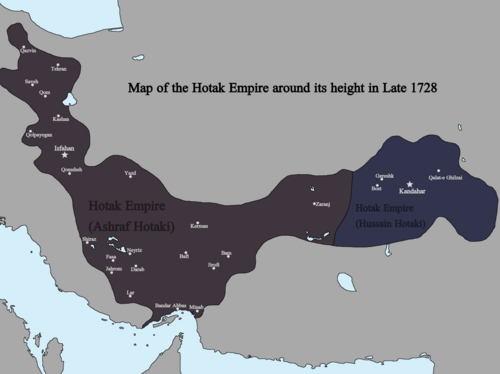
1709年、地元のギルザイ族のリーダーであったミルワイス・ホタクがサファヴィー朝に対する反乱を起こし、成功した。彼はサファヴィー朝下のジョージア人カンダハール知事グルギン・ハーンを破り、自身の王国を樹立した。[91]ミルワイスは1715年に亡くなり、弟のアブドゥルアズィーズが後を継いだが、サファヴィー朝との和平を企てていた可能性のあるため、すぐにミルワイスの息子マフムードに殺された。マフムードは1722年にアフガニスタン軍を率いてペルシャの首都エスファハーンに向かい、グルナバードの戦いの後にこの都市を占領し、自らをペルシャ王と宣言した。[91]アフガニスタン王朝は1729年のダームガーンの戦いの後、ナーディル・シャーによってペルシャから追放された。
1738年、ナーディル・シャーとその軍は、シャー・フセイン・ホタクからホタク最後の拠点であるカンダハールを包囲し、カンダハールを占領した。その後すぐにペルシャ軍とアフガニスタン軍がインドに侵攻し、ナーディル・シャーは、これらの遠征で彼を支援した16歳の指揮官アフマド・シャー・ドゥッラーニーとともにデリーを略奪した。ナーディル・シャーは1747年に暗殺された。[92] [93]
ドゥッラーニ帝国
1747年にナーディル・シャーが死去した後、アフマド・シャー・ドゥッラーニーが4,000人のパシュトゥーン人の部隊を率いてカンダハールに戻った。アブダリ家は「満場一致でアフマド・シャーを新指導者として受け入れた」。1747年に即位したアフマド・シャーは、ムガル帝国、マラータ帝国、当時衰退しつつあったアフシャール朝に対して複数の遠征を指揮した。アフマド・シャーは、ムガル帝国が任命した総督ナーシル・ハーンからカブールとペシャーワルを奪取した。アフマド・シャーはその後1750年にヘラートを征服し、1752年にはカシミールも奪取した。 [94]アフマド・シャーは1750年から1751年、および1754年から1755年にホラーサーンへの2度の遠征を開始した。[95]彼の最初の遠征ではマシュハドを包囲したが、4か月後に撤退を余儀なくされた。1750年11月、彼はニシャプールを包囲するために移動したが、この都市を占領することはできず、1751年初頭に撤退を余儀なくされた。アフマド・シャーは1754年に戻り、トゥーンを占領し、7月23日に再びマシュハドを包囲した。マシュハドは12月2日に陥落したが、シャーロークは1755年に再任された。彼はトルシーズ、バハルズ、ジャム、カフ、トゥルバテ・ハイダリーをアフガニスタンに明け渡し、アフガニスタンの主権を受け入れることを余儀なくされた。これに続いて、アフマド・シャーは再び ニシャプールを包囲し、これを占領した。
アフマド・シャーは1748年から8回インドに侵攻した[96]。インダス川を渡り、彼の軍隊はラホールを略奪し、ドゥッラーニー王国に吸収した。彼はマヌプールの戦い(1748年)でムガル帝国の軍隊と遭遇し、敗北してアフガニスタンへの撤退を余儀なくされた。[97]彼は翌年の1749年に再び戻ってラホールとパンジャブの周辺地域を占領し、この作戦でのアフガニスタンの勝利を誇示した。[98] 1749年から1767年まで、アフマド・シャーはさらに6回の侵攻を率い、最も重要なのは最後の侵攻である。第三次パーニーパットの戦いは北インドに権力の空白を生み出し、マラータの拡大を止めた。

アフマド・シャー・ドゥッラーニーは1772年10月に死去し、継承をめぐる内戦が起こり、弟のスレイマン・ミルザが敗れた後、指名された後継者ティムール・シャー・ドゥッラーニーが跡を継いだ。 [99]ティムール・シャー・ドゥッラーニーは、シャー・ワリー・ハーンとフマーユーン・ミルザの連合軍を破り、1772年11月に王位に就いた。ティムール・シャーは、カブールとカンダハールのドゥッラーニー・サルダールと有力な部族長を粛清し、自身と自分に忠実な人々の権力を強化することから統治を開始した。ティムール・シャーの改革の1つは、ドゥッラーニー帝国の首都をカンダハールからカブールに移すことだった。ティムール・シャーは、帝国を統合するために複数の反乱と戦い、また父のようにシク教徒に対してパンジャブへの遠征も指揮したが、より成功した。この遠征中の最も顕著な戦闘例は、ザンギー・ハーン・ドゥッラーニーの指揮下でアフガニスタン、キズルバシュ、モンゴルの騎兵を合わせた1万8千人以上の軍勢を率いて、6万人以上のシク教徒と戦ったときである。この戦いでシク教徒は3万人以上を失い、パンジャブ地方でドゥッラーニー人の再興が起こった[100] 。ドゥッラーニー人は1772年にアフマド・シャーの死後、ムルターンを失った。この勝利の後、ティムール・シャーはムルターンを包囲して奪還し、[101]再びドゥッラーニー帝国に組み入れ、ムルターン包囲戦(1818年)まで州として再統合した。ティムール・シャーは1793年5月に死去し、息子のザマン・シャー・ドゥッラーニーが後を継ぎました。ティムール・シャーの治世は帝国の安定化と統合の試みを監督しました。しかし、ティムール・シャーには24人以上の息子がいたため、継承危機をめぐる内戦が帝国を襲いました。[102]
ザマーン・シャー・ドゥッラーニーは父ティムール・シャー・ドゥッラーニーの死後、ドゥッラーニー朝の王位を継承した。彼の兄弟であるマフムード・シャー・ドゥッラーニーとフマーユーン・ミルザは彼に反乱を起こし、フマーユーンはカンダハールに、マフムード・シャーはヘラートに拠点を置いた。[103]ザマーン・シャーはフマーユーンを破り、マフムード・シャー・ドゥッラーニーの忠誠を強要した。[103]王位を確実なものにしたザマーン・シャーは、パンジャーブへの3度の遠征を率いた。最初の2回の遠征でラホールを占領したが、ガージャール朝の侵攻の可能性があるという情報を得て撤退した。ザマーン・シャーは、1800年に反乱を起こしたランジート・シングに対処するために、パンジャーブへの3度目の遠征に乗り出した。[104]しかし、彼は撤退を余儀なくされ、ザマーン・シャーの治世はマフムード・シャー・ドゥッラーニーによって終焉した。[104]しかし、治世開始からわずか2年足らずで、マフムード・シャー・ドゥッラーニーは1803年7月13日に弟のシャー・シュジャー・ドゥッラーニーによって廃位された。 [105]シャー・シュジャーはドゥッラーニー王国の統合を試みたが、ニムラの戦い(1809年)で弟によって廃位された。[106]マフムード・シャー・ドゥッラーニーはシャー・シュジャーを破って逃亡を余儀なくし、再び王位を簒奪した。彼の2度目の治世は1809年5月3日に始まった。 [107]
バラクザイ王朝とイギリスの戦争

19世紀初頭までに、アフガニスタン帝国は西のペルシャ人、東のシク教帝国の脅威にさらされていた。バラクザイ族のリーダーであるファテフ・ハーンは、帝国全土で多くの兄弟を権力の座に就けた。ファテフ・ハーンは1818年にマフムード・シャーによって残忍に殺害された。その結果、ファテフ・ハーンの兄弟とバラクザイ族は反乱を起こし、内戦が勃発した。この混乱の時期に、アフガニスタンはカンダハル公国、ヘラート首長国、クンドゥズ・ハン国、マイマナ・ハン国、その他多くの交戦国を含む多くの国家に分裂した。最も著名な国家はドースト・モハンマド・ハーンが統治するカブール首長国であった。[108] [109]
ドゥッラーニー帝国が崩壊し、サドザイ朝が亡命してヘラートに統治を委ねられると、パンジャーブとカシミールはシク教帝国の統治者ランジート・シングの手に渡り、 1823年3月にハイバル・パフトゥンクワに侵攻し、ノウシェラの戦いに続いてペシャワール市を占領した。1834年、ドースト・モハンマド・ハーンは数々の遠征を率い、最初はジャララバードへの遠征、次にカンダハールでライバルの兄弟と同盟を組み、シュジャー・ウル・ムルク遠征でシャー・シュジャー・ドゥッラーニーとイギリス軍を打ち破った。[110] 1837年、ドースト・モハンマド・ハーンはペシャワールの征服を試み、息子のワズィル・アクバル・ハーンの指揮する大軍を派遣し、ジャムルードの戦いを引き起こした。アクバル・ハーンとアフガニスタン軍はシク教徒のカールサ軍からジャムルド砦を奪取することはできなかったが、シク教徒の司令官ハリ・シン・ナルワを殺害し、アフガニスタン・シク戦争を終結させた。この頃、イギリス軍は東から進軍し、ランジート・シンの死後、シク教徒帝国が混乱期を迎えた後の衰退に乗じて、カブール首長国と「グレート・ゲーム」の最初の大規模紛争を繰り広げた。[111]

1839年、イギリス遠征軍がアフガニスタンに進軍し、カンダハル公国に侵攻し、1839年8月にカブールを占領した。ドースト・モハンマド・ハーンはパルワーンの戦いでイギリス軍を破ったが、勝利後に降伏した。彼に代わって、事実上のイギリスの傀儡である元ドゥッラーニー朝の統治者シャー・シュジャー・ドゥッラーニーがカブールの新しい統治者となった。 [112] [113]シャー・シュジャーの暗殺を伴った反乱、1842年のイギリス・インド軍のカブールからの撤退とエルフィンストーン軍の壊滅、そしてエルフィンストーン軍の略奪につながったカブールの戦いの懲罰遠征の後、イギリスはアフガニスタン征服の試みを断念し、ドースト・モハンマド・ハーンが統治者として復帰した。これに続いて、ドースト・モハンマドは治世中にアフガニスタンの大半を統一するために無数の遠征を行い、ハザラジャート遠征、バルフ征服、クンドゥズ征服、カンダハール征服など、周辺諸国を含む多数の侵攻を開始した。ドースト・モハンマドはヘラートに対する最後の遠征を指揮し、これを征服してアフガニスタンを再統一した。再統一の遠征中、彼は第一次アフガン戦争にもかかわらずイギリスと友好関係を保ち、1857年の第二次アフガン条約で自国の地位を確認したが、ブハラと国内の宗教指導者は1857年のインド大反乱中にドースト・モハンマドにインド侵攻するよう圧力をかけた。[114]
ドスト・モハンマドは、ヘラートへの遠征に 成功した数週間後の1863年6月に亡くなった。彼の死後、彼の息子たち、特にモハンマド・アフザル・ハーン、モハンマド・アザム・ハーン、シェール・アリー・ハーンの間で内戦が起こった。シェール・アリーは、その結果生じたアフガニスタン内戦 (1863年 - 1869年)に勝利し、1879年に死去するまでアフガニスタンを統治した。シェール・アリーの晩年、イギリスは、この地域におけるロシアの影響とみなされるものと戦うため、第二次アフガン戦争でアフガニスタンに戻った。シェール・アリーは、先代のドスト・モハンマド・ハーンやワズィール・アクバル・ハーンと同様の抵抗組織をそこで作るつもりで、アフガニスタン北部に撤退した。しかし、彼の早すぎる死により、ヤクブ・ハーンが新たなアミールに就任し、1879年のガンダマク条約の一環としてイギリスがアフガニスタンの外交関係の管理権を獲得し、アフガニスタンは正式にイギリス保護国となった。[115] [116]しかし、 蜂起により紛争が再開し、ヤクブ・ハーンは退位した。この混乱の時期に、アブドゥル・ラーマン・ハーンが権力を握り始め、アフガニスタン北部の大半を掌握した後、アミールの有力候補となった。アブドゥル・ラーマンはカブールに進軍し、アミールに任命され、イギリスからも認められた。アユーブ・ハーンによる別の蜂起はイギリス軍を脅かし、マイワンドの戦いで反乱軍がイギリス軍と対峙して勝利した。アユーブ・ハーンは勝利に続いてカンダハールを包囲したが失敗し、その決定的な敗北により第二次アフガン戦争は終結し、アブドゥル・ラーマンがアミールの地位を固めた。[117] 1893年、アブドゥル・ラーマンはパシュトゥーン人とバローチ人の領土をデュランド線で分割する協定に署名した。この線はパキスタンとアフガニスタンの現在の国境を形成している。シーア派が多数を占めるハザラジャートと異教徒のカフィリスタンは、1891年から1896年にアブドゥル・ラーマン・ハーンに征服されるまで政治的に独立を保った。彼はその容貌と部族に対する冷酷なやり方から「鉄のアミール」として知られた。[118]彼は1901年に死去し、息子のハビブッラー・ハーンが後を継いだ。
アフガニスタンのような小国は、これらのライオン(英国とロシア)の間にいるヤギ、または製粉所の2つの強力な石臼の間にいる一粒の小麦のように、石臼の真ん中に立っていて粉々にならずにいられるだろうか。
— アブドゥル・ラーマン・カーン、「鉄のアミール」、1900年[119] [120]
第一次世界大戦中、アフガニスタンが中立だったとき、ハビブッラー・ハーンはニーダーマイヤー=ヘンティヒ遠征隊の中央同盟国の役人たちと会見した。彼らはアフガニスタンに対し、イギリスからの完全な独立を宣言し、ヒンドゥー=ドイツ陰謀の一環としてインドに加わってイギリス領インドを攻撃するよう呼びかけた。アフガニスタンを中央同盟国に組み入れる試みは失敗したが、イギリスに対して中立を維持することに対する国民の不満をかき立てた。ハビブッラーは1919年2月に暗殺され、最終的にアマヌッラー・ハーンが権力を握った。1915年から1916年の遠征の強力な支持者であったアマヌッラー・ハーンはイギリス領インドに侵攻し、第三次アフガン戦争を開始し、ハイバル峠を通ってイギリス領インドに入った。[121]

第三次アフガン戦争の終結と1919年8月19日のラーワルピンディー条約の調印後、アマヌッラー・ハーン首長はアフガニスタン首長国を主権を有する完全な独立国家であると宣言した。彼は国際社会、とりわけソ連やワイマール共和国との外交関係を樹立することで、自国の伝統的な孤立を終わらせようと動いた。[122] [123]彼は1926年6月9日にアフガニスタン国王を宣言し、アフガニスタン王国を樹立した。彼は国家の近代化を目的としたいくつかの改革を導入した。これらの改革の立役者は女性の教育の熱烈な支持者であったマフムード・タルズィーであった。彼は初等教育を義務化したアフガニスタンの1923年憲法第68条のために戦った。奴隷制度は1923年に廃止されました。[124]アマヌッラー国王の妻であるソラヤ王妃は、この時期の女性の教育と抑圧に対する戦いにおいて重要な人物でした。[125]
女性の伝統的なブルカの廃止や男女共学の学校の開設などの改革は、多くの部族や宗教指導者を疎外し、アフガニスタン内戦(1928年 - 1929年)につながった。アマヌッラー国王は1929年1月に退位し、その後まもなくカーブルはハビブッラー・カラカニー率いるサッカウィスト勢力の手に落ちた。[126]アマヌッラーの従兄弟のモハメッド・ナーディル・シャーは1929年10月にカラカニーを破って殺害し、ナーディル・シャー国王と宣言された。[127]彼は近代化へのより緩やかなアプローチを支持してアマヌッラー国王の改革を放棄したが、1933年にアブドゥル・ハリークによって暗殺された。[128]
モハメド・ザーヒル・シャーが王位を継承し、1933年から1973年まで国王として君臨した。1944年から1947年の部族反乱の間、ザーヒル国王の統治は、マズラク・ザドラン、サレマイ、ミルザリ・ハーンらが率いるザドラン、サフィ、マンガル、ワジールの各部族の民によって挑戦を受けた。彼らの多くはアマヌッラー支持者だった。アフガニスタンは1934年に国際連盟に加盟した。 1930年代には道路やインフラの整備、国立銀行の設立、教育の向上が見られた。北部の道路網は成長する綿花および繊維産業に大きな役割を果たした。[129]アフガニスタンは枢軸国と緊密な関係を築き、当時アフガニスタンの発展においてナチスドイツが最大のシェアを占めていた。 [130]

1946年までザーヒル国王は叔父の支援を受けて統治し、叔父は首相の地位に就き、ナーディル・シャーの政策を引き継いだ。もう一人の叔父であるシャー・マフムード・ハーンは1946年に首相となり、政治的自由の拡大を試みた。1953年に彼に代わって首相となったのはパシュトゥーン民族主義者のモハメッド・ダウド・ハーンで、パシュトゥンスタンの創設を求めたため、パキスタンとの関係は非常に緊張したものとなった。 [131]ダウド・ハーンは社会近代化改革を推し進め、ソ連とのより緊密な関係を求めた。その後、1964年に憲法が制定され、王族以外の初の首相が就任した。[129]
ザヒル・シャーは父のナディル・シャーと同様に、国家の独立を維持しながら段階的な近代化を進め、国民感情を醸成し、英国との関係を改善するという政策をとった。アフガニスタンは第二次世界大戦には参加しておらず、冷戦ではどちらの勢力にも属していなかった。しかし、ソ連と米国の両国がアフガニスタンの主要高速道路、空港、その他の重要なインフラを建設することで影響力を競い合ったため、アフガニスタンは冷戦の恩恵を受けた。国民一人当たりで見ると、アフガニスタンは他のどの国よりも多くのソ連開発援助を受けた。1973年、国王がイタリアに滞在していたときに、ダウド・カーンが無血クーデターを起こし、アフガニスタンの初代大統領となり、王政を廃止した。
民主共和国とソビエト戦争

1978年4月、アフガニスタン共産党の人民民主党(PDPA)が、当時の大統領モハメド・ダウド・カーンに対する血なまぐさいクーデターで権力を掌握し、サウル革命と呼ばれる革命を起こした。PDPAはアフガニスタン民主共和国の樹立を宣言し、人民民主党書記長ヌール・ムハンマド・タラキが初代指導者に任命された。[132]これが一連の出来事の引き金となり、アフガニスタンは貧しく孤立した(とはいえ平和な)国から国際テロの温床へと劇的に変化した。[133] PDPAは様々な社会的、象徴的、土地分配の改革を開始し、強い反対を招くとともに、政治的反体制派を残酷に弾圧した。これが騒乱を引き起こし、1979年までに急速に内戦状態に拡大し、ゲリラ・ムジャヒディーン(および小規模なマオイスト・ゲリラ)が国中で政権軍に対して戦闘を繰り広げた。パキスタン政府がこれらの反乱軍に秘密の訓練センターを提供し、米国がパキスタンの統合情報局(ISI)を通じて彼らを支援し、 [134]ソ連がPDPA政権を支援するために数千人の軍事顧問を派遣したため、すぐに代理戦争に変わった。[135]一方、PDPAの競合する派閥、つまり支配的なハルク派とより穏健なパルチャム派の間では敵対的な摩擦が高まった。[136]
1979年10月、PDPA書記長タラキは、人民民主党の新しい書記長となった当時の首相ハフィズッラー・アミンが主導した内部クーデターで暗殺された。アミンの下で国の状況は悪化し、何千人もの人々が行方不明になった。[137]アミンの政府に不満を持ったソ連軍は、 1979年12月にこの国に侵攻し、カブールに向かってアミンを殺害した。[138]パルチャムのバブラク・カルマルが率いるソ連が組織した政権は、パルチャムとハルクの両派閥を包含し、その空白を埋めた。カルマルの下でアフガニスタンを安定させるために、より大規模なソ連軍が配備され、ソビエト・アフガニスタン戦争の始まりとなった。[139] 9年間続いた戦争で、56万2000人[140]から200万人のアフガニスタン人が死亡し、[141] [142] [143] [144] [145] [146] [147] [過剰な引用]、約600万人が避難民となり、その後アフガニスタンから主にパキスタンとイランに逃れた。[148]激しい空爆により多くの田舎の村が破壊され、何百万もの地雷が埋設され、[149]ヘラートやカンダハールなどの都市も爆撃の被害を受けた。ソ連軍の撤退後、人民民主党の指導者モハメド・ナジブッラー率いる共産主義政権が1992年に崩壊するまで内戦が続いた。 [150] [151] [152]
ソ連・アフガニスタン戦争はアフガニスタンに劇的な社会的影響を及ぼした。社会の軍事化により、その後数十年間、アフガニスタンでは重武装した警察、私設ボディーガード、公然と武装した民間防衛グループなどが当たり前のものとなった。[153]伝統的な権力構造は、聖職者、地域の長老、知識人、軍隊から、強力な軍閥へと移行した。[154]
冷戦後の紛争
.png/500px-War_in_Afghanistan_(1992%E2%80%932001).png)
様々なムジャヒディーン派閥の指導者の間で機能不全の連合政府が樹立された後、別の内戦が勃発した。無政府状態と派閥間の内紛の中、[155] [156] [157]様々なムジャヒディーン派閥が広範囲にわたる強姦、殺人、恐喝を犯し、[156] [158] [159]カブールは激しい爆撃を受け、戦闘により部分的に破壊された。[159]異なる指導者の間で何度か和解と同盟が成立したが、失敗に終わった。[160]タリバンは1994年9月にパキスタンのイスラム教マドラサ(学校)の学生(タリブ)の運動および民兵として出現し、[159] [161]すぐにパキスタンから軍事支援を受けた。[162]同年カンダハル市を制圧し、 [159]さらに多くの領土を征服し、ついに1996年にラバニ政権をカブールから追い出し、 [163] [164]首長国を樹立した。[165]タリバンは、イスラム法の解釈を厳格に施行し、多くのアフガニスタン人、特に女性を残酷に扱ったことで国際的に非難された。[166] [167]タリバンとその同盟国は、統治期間中、アフガニスタンの民間人に対して虐殺を犯し、飢えた民間人への国連の食糧供給を拒否し、焦土作戦を実施して広大な肥沃な土地を焼き払い、数万軒の家屋を破壊した。[168] [169] [170] [171] [172] [173] [過剰な引用]
カブールがタリバンの手に落ちた後、アフマド・シャー・マスードとアブドゥル・ラシッド・ドスタムはタリバンに抵抗するために北部同盟を結成し、後に他の人々も加わった。ドスタムの軍は1997年と1998年のマザリシャリーフの戦いでタリバンに敗れた。パキスタンの陸軍参謀総長ペルヴェズ・ムシャラフは、北部同盟を倒すためにタリバンを支援するために何千人ものパキスタン人を派遣し始めた。[174] [ 162] [175] [176] [177] [過剰な引用] 2000年までに北部同盟は北東部に追い詰められ、領土のわずか10%を支配していた。2001年9月9日、マスードはパンジシール渓谷で2人のアラブ人自爆テロリストによって暗殺された。 1990年から2001年の間に約40万人のアフガニスタン人が内戦で死亡した。[178]
米国の侵略とイスラム共和国
2001年10月、米国は、 9月11日の攻撃の第一容疑者であるオサマ・ビン・ラディンの引き渡しをタリバンが拒否したため、アフガニスタンを権力の座から追放するためにアフガニスタンに侵攻した。ビン・ラディンはタリバンの「客」であり、アフガニスタンでアルカイダのネットワークを運営していた。 [179] [180] [181]アフガニスタン人の大多数は米国の侵攻を支持した。[182] [183] 最初の侵攻中、米国と英国軍はアルカイダの訓練キャンプを爆撃し、後に北部同盟と協力してタリバン政権は終焉を迎えた。[184]

2001年12月、タリバン政権が打倒された後、ハミド・カルザイ率いるアフガニスタン暫定政権が発足した。国連安全保障理事会は、カルザイ政権を支援し、基本的な治安を提供するために、国際治安支援部隊(ISAF)を設立した。 [185] [186]この時までに、20年にわたる戦争と当時の深刻な飢餓の後、アフガニスタンは世界で最も高い乳幼児死亡率と最低の平均寿命に苦しみ、国民の多くが飢えに苦しみ、[187] [188] [189]インフラは荒廃していた。[190]多くの外国ドナーが、戦争で荒廃した国を再建するために援助と支援を提供し始めた。[191] [192]連合軍が再建プロセスを支援するためにアフガニスタンに入ると、[193] [194]タリバンは支配権を取り戻すために反乱を起こした。アフガニスタンは、外国投資の不足、政府の腐敗、タリバンの反乱により、依然として世界で最も貧しい国の一つであり続けている。 [195] [196]
アフガニスタン政府は、2004年にアフガニスタン・イスラム共和国という名称の憲法を採択し、ある程度の民主的な構造を築くことができた。国の経済、医療、教育、交通、農業を改善する試みがなされ、多くの場合、外国の援助国の支援を受けたものであった。ISAF部隊はアフガニスタン国家治安部隊の訓練も開始した。2002年以降、約500万人のアフガニスタン人が本国に帰還した。[197]アフガニスタンに駐留するNATO軍の数は2011年に14万人でピークを迎えたが、[198] 2018年には約1万6千人にまで減少した。 [199] 2014年9月、アフガニスタン史上初めて民主的に権力が移譲された2014年の大統領選挙でアシュラフ・ガニが大統領に就任した。 [200] [201] [202] 2014年12月28日、NATOは正式にISAFの戦闘作戦を終了し、治安の全責任をアフガニスタン政府に移譲した。NATO主導の「確固たる支援作戦」は、同日、ISAFの後継として結成された。[203] [204]数千人のNATO軍がアフガニスタンに留まり、アフガニスタン政府軍の訓練と助言を行い[205]、タリバンとの戦いを継続した。[206] 「死者数」と題された報告書は、アフガニスタンでの戦闘の結果、紛争当事者全員の手によって10万6000~17万人の民間人が死亡したと結論付けている。[207]

2020年2月19日、カタールで米国とタリバンの合意が成立した。この合意は、アフガニスタン国家治安部隊(ANSF)の崩壊を引き起こした重大な出来事の一つであった。[208]合意の調印後、米国は空爆の回数を大幅に減らし、ANSFからタリバンの反乱との戦いにおける決定的な優位性を奪い、タリバンによるカブールの制圧につながった。[209]
第二次タリバン時代
2021年4月14日、NATOのイエンス・ストルテンベルグ事務総長は、同盟が5月1日までにアフガニスタンから軍の撤退を開始することで合意したと発表した。 [210] NATO軍が撤退を開始して間もなく、タリバンはアフガニスタン政府に対する攻撃を開始し、崩壊するアフガニスタン政府軍の前に急速に進軍した。[211] [212]タリバンは、アフガニスタンの大部分を再び支配下に置いた後、2021年8月15日に首都カブールを占領した。アシュラフ・ガニ大統領を含む数人の外交官とアフガニスタン政府関係者[213]が国外に避難し、多くのアフガニスタン民間人も彼らとともに脱出を試みた。[214] 8月17日、第一副大統領のアムルッラー・サーレハは暫定大統領を宣言し、アフマド・マスードとともにパンジシール渓谷に6,000人以上の兵士[215] [216]からなる反タリバン戦線を結成すると発表した。[217] [218]しかし、9月6日までにタリバンはパンジシール州の大半を制圧し、抵抗勢力は山岳地帯に撤退した。[219]渓谷での衝突は9月中旬に停止した。[220]
戦争のコストプロジェクトによると、2001年から2021年の間に紛争で176,000人が死亡し、そのうち46,319人が民間人です。 [221]ウプサラ紛争データプログラムによると、紛争で少なくとも212,191人が死亡しました。[222] 2021年に国内の戦争状態は終結しましたが、タリバンとイスラム国の現地支部との戦闘、および反タリバン共和党の反乱により、一部の地域では武力紛争が続いています。[223] [224] [225 ]
.png/500px-Taliban_Humvee_in_Kabul,_August_2021_(cropped).png)
タリバン政権は、最高指導者 ヒバトゥラー・アクンザダ[227]と、2021年9月7日に就任したハサン・アクン暫定首相によって率いられている。 [228] [229]アクン暫定首相はタリバンの創設者4人のうちの1人であり[230]、前首長国の副首相でもあった。彼の任命は穏健派と強硬派の妥協案と見られていた。[231]法務大臣にアブドゥル・ハキム・ハッカニを含む、男性のみの新内閣が結成された。 [232] [233] 2021年9月20日、アントニオ・グテーレス国連事務総長は、ドーハの公式報道官スハイル・シャヒーンに対し、アフガニスタンの加盟国としての議席を正式に主張するよう求めるアミール・カーン・ムッタキ外務大臣代行からの書簡を受け取った。国連は以前のタリバン政権を承認せず、代わりに当時の亡命政府と協力することを選択した。[234]
2021年8月にタリバンがアフガニスタンを制圧した後、西側諸国は同国への人道支援のほとんどを停止し、世界銀行と国際通貨基金も支払いを停止した。[235] [236] 2021年10月、アフガニスタンの人口3,900万人のうち半数以上が深刻な食糧不足に直面した。 [237]ヒューマン・ライツ・ウォッチは2021年11月11日、アフガニスタンは経済危機と銀行危機により広範囲にわたる飢餓に直面していると報告した。 [238]タリバンは汚職に真剣に取り組んでおり、現在、汚職監視団体の認識指数で150位にランクされている。タリバンはまた、公共サービス分野での賄賂や恐喝を減らしたと報告されている。[239]同時に、同国の人権状況は悪化している。[240] 2001年の侵攻後、570万人以上の難民がアフガニスタンに帰還した。[241]しかし、2021年には260万人のアフガニスタン人が主にイランやパキスタンに難民として残っており、さらに400万人が国内避難民となっている。[242]
2023年10月、パキスタン政府はアフガニスタン人のパキスタン国外追放を命じた。[243]イランもアフガニスタン国民をアフガニスタンに強制送還することを決定した。[244]タリバン当局はアフガニスタン人の強制送還を「非人道的行為」と非難した。[245]アフガニスタンは2023年後半に人道危機に直面した。 [246]
地理
アフガニスタンは南中央アジアに位置している。[247] [248] [249] [250] [251]アフガニスタンを中心とする地域は「アジアの十字路」と考えられており、[252]この国は「アジアの心臓部」というニックネームを持っている。[253]有名なウルドゥー語の詩人アラマ・イクバールはかつてこの国について次のように書いている。
アジアは水と土の塊であり、アフガニスタン国家はその中心である。その不和からアジアの不和が生まれ、その調和からアジアの調和が生まれる。
アフガニスタンは面積が652,864 km 2 (252,072 平方マイル)を超え、[254]世界で41番目に大きい国である。[255]フランスよりわずかに大きく、ミャンマーより小さく、米国のテキサス州とほぼ同じ大きさである。アフガニスタンは内陸国であるため、海岸線はない。アフガニスタンは、東と南でパキスタンと最長の陸上国境(デュランライン)を共有しており、続いて北東でタジキスタン、西でイラン、北西でトルクメニスタン、北でウズベキスタン、北東端で中国と国境を接している。インドは、パキスタンが管理するカシミールを通じてアフガニスタンとの国境を認めている。[256]アフガニスタンは、南西から時計回りに、イランのシスタン・バルーチェスターン州、南ホラーサーン州、ラザヴィー・ホラーサーン州、トルクメニスタンのアハル州、マリ州、レバプ州、ウズベキスタンのスルシャンダリヤ州、タジキスタンのハトロン州、ゴルノ・バダフシャン自治区、中国の新疆ウイグル自治区、パキスタンのギルギット・バルティスタン州、ハイバル・パフトゥンクワ州、バロチスタン州と国境を接している。[257]
.jpg/500px-FrontLines_Environment_Photo_Contest_Winner_-5_(5808476109).jpg)
アフガニスタンの地理は多様であるが、大部分は山岳地帯で険しく、珍しい山脈の尾根が台地や河川流域を伴う。[258]アフガニスタンはヒンドゥークシュ山脈が大部分を占めている。ヒンドゥークシュ山脈はヒマラヤ山脈の西延長で、アフガニスタンの北東部のパミール高原とカラコルム高原を経て東チベットまで伸びている。最も高い地点のほとんどは東部にあり、肥沃な山岳渓谷で構成されており、「世界の屋根」の一部と見なされることが多い。ヒンドゥークシュ山脈は西中央高原で終わり、北部と南西部にトルキスタン平原とシスタン盆地と呼ばれる平原を形成している。これら2つの地域は、それぞれ起伏のある草原と半砂漠、そして暑く風の強い砂漠で構成されている。[259]ヌーリスターン州とパクティカ州の間の回廊地帯には森林が存在し(東アフガニスタンの山岳針葉樹林を参照)、[260]北東部にはツンドラ地帯がある。国の最高地点は海抜7,492メートル(24,580フィート)のノシャクである。 [261]最低地点はアム川沿いのジョウズジャン州にあり、海抜258メートル(846フィート)である。

多数の河川や貯水池があるにもかかわらず、国土の大部分は乾燥している。内陸部のシスタン盆地は、世界で最も乾燥した地域の一つである。[262]アムダリヤ川はヒンドゥークシュ山脈の北に源を発し、近くのハリ・ルド川は西にヘラートへ、アルガンダブ川は中央部から南へ流れている。ヒンドゥークシュ山脈の南と西には、ヘルマンド川など、インダス川の支流である多くの川が流れている。 [ 258 ]カブール川は東の方向にインダス川へと流れ、インド洋に流れ込んでいる。[263]アフガニスタンでは、冬にはヒンドゥークシュ山脈とパミール山脈で大雪が降り、春には雪解け水が川や湖、小川に流れ込む。[264] [265]しかし、国の水の3分の2は隣国であるイラン、パキスタン、トルクメニスタンに流れ込んでいます。2010年の報告によると、水が適切に管理されるように灌漑システムを修復するには、20億ドル以上が必要です。[266]
アフガニスタンでは、森林被覆率は国土総面積の約2%で、2020年の森林面積は1,208,440ヘクタール(ha)に相当し、1990年から変化はない。2020年には、自然再生林は1,208,440ヘクタール(ha)を覆っていた。自然再生林のうち、0%が原生林(人間の活動の痕跡がはっきりと見えない在来樹種で構成されている)であると報告されており、森林面積の約0%が保護地域内にあることがわかった。2015年には、森林面積の100%が公有地であると報告された。[267] [268]
アフガニスタンのバダフシャン州とその周辺にあるヒンドゥークシュ山脈北東部は、地質学的に活発な地域にあり、ほぼ毎年地震が発生する可能性があります。 [269]地震は致命的で破壊的であり、一部では地滑りを引き起こし、冬には雪崩を引き起こします。 [270] 2022年6月、パキスタンとの国境付近で破壊的なマグニチュード5.9の地震が発生し、少なくとも1,150人が死亡し、大規模な人道危機への懸念が高まっています。 [271] 2023年10月7日、ヘラートの北西でマグニチュード6.3の地震が発生し、1,400人以上が死亡しました。[272]
気候
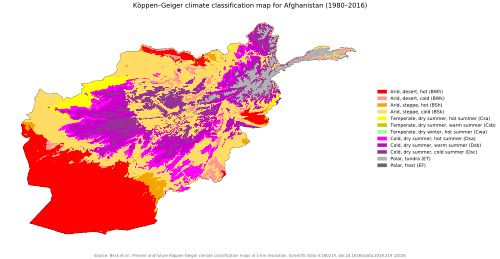
アフガニスタンは大陸性気候で、中央高地、北東部の氷河地域(ヌーリスタン周辺)、ワハーン回廊では1月の平均気温が−15℃(5℉)を下回り、−26℃(−15℉)に達することもある厳しい冬となり[258] 、南西部のシスタン盆地、東部のジャララバード盆地、北部のアム川沿いのトルキスタン平野の低地では7月の平均気温が35℃(95℉)を超え[261] [274]、43℃(109℉)を超えることもある暑い夏となる。[258]アフガニスタンは夏は一般的に乾燥しており、降雨量のほとんどは12月から4月に降ります。アフガニスタン北部と西部の低地は最も乾燥しており、東部では降雨量が多い。インドに近いにもかかわらず、アフガニスタンは主にモンスーン地帯の外にあるが[258] 、時折夏季のモンスーン雨が降るヌーリスターン州を除く[275]。
生物多様性

アフガニスタン全土には数種類の哺乳類が生息している。ユキヒョウ、シベリアトラ、ヒグマは標高の高い高山ツンドラ地帯に生息している。マルコポーロ羊はアフガニスタン北東部のワハーン回廊地帯にのみ生息している。キツネ、オオカミ、カワウソ、シカ、野生の羊、オオヤマネコなどの大型ネコ科動物は東部の山岳森林地帯に生息している。半砂漠地帯の北部平原には、さまざまな鳥類、ハリネズミ、ホリネズミ、ジャッカルやハイエナなどの大型肉食動物が生息している。[276]
ガゼル、イノシシ、ジャッカルは南部と西部のステップ平野に生息し、マングースとチータは南部の半砂漠地帯に生息している。[276] マーモットとアイベックスもアフガニスタンの高山に生息し、キジは国土の一部に生息している。[277]アフガンハウンドは、その素早さと長い毛で知られる在来種の犬で、西部では比較的よく知られている。[278]
アフガニスタンの固有動物には、アフガンムササビ、アフガンユキフィンチ、パラダクティロドン(または「パグマン山サンショウウオ」)、スティグメラ・カシ、ヴルカニエラ・カブレンシス、アフガンヒョウモントカゲモドキ、ウィーレリア・パルビフロレルスなどがある。固有植物にはアキノウナギツネなどがある。アフガニスタンは比較的乾燥した気候であるにもかかわらず、多種多様な鳥類が生息しており、推定460種のうち235種が繁殖している。[278]
アフガニスタンの森林地帯には、マツ、トウヒ、モミ、カラマツなどの植生があり、ステップ草原地帯は広葉樹、短い草、多年生植物、低木林で構成されています。より寒い高標高地域は耐寒性草本植物と小さな花の咲く植物で構成されています。[276]いくつかの地域は保護地域に指定されており、バンデ・アミール、ワハーン、ヌーリスタンの3つの国立公園があります。アフガニスタンの2018年の森林景観完全性指数の平均スコアは8.85/10で、172カ国中世界15位にランクされています。[279]
政府と政治
.jpg/500px-200229-D-AP390-1529_(49603221753).jpg)
2021年のタリバンの攻勢でアフガニスタン・イスラム共和国が事実上崩壊した後、タリバンは同国をイスラム首長国と宣言した。新たな暫定政府が9月7日に発表された。[280] 2021年9月8日現在、アフガニスタン・イスラム首長国をアフガニスタンの法的な政府として正式に承認した国は他にない。[281] V-Dem民主主義指数によると、2023年のアフガニスタンはアジアで3番目に選挙民主的でない国であった。[282][update]
アフガニスタンの伝統的な統治手段はロヤ・ジルガ(大集会)であり、これはパシュトゥーン人の諮問会議で、主に新しい国家元首を選んだり、新しい憲法を採択したり、戦争などの国家的または地域的な問題を解決したりするために組織された。[283]ロヤ・ジルガは少なくとも1747年以来開催されており、[284]最新のものは2020年8月に開催された。[285] [286]
タリバン政権の発展
2021年8月17日、タリバン系のイスラム原理主義組織グルブッディン党の指導者グルブッディン・ヘクマティアルは、カタールのドーハでアフガニスタンのハミド・カルザイ前大統領とアブドラ・アブドラ前国民和解評議会議長兼行政長官と会談し、挙国一致内閣の樹立を目指した。[ 287 ] [ 288 ]タリバンがタジキスタンかウズベキスタンに進軍する間に国外に逃亡したアシュラフ・ガニ大統領はアラブ首長国連邦に姿を現し、こうした交渉を支持し、アフガニスタンへの帰国交渉中であると述べた。[289] [290]タリバン内の多くの人物は、2004年のアフガニスタン憲法の継続は、正しく適用されれば、新しい宗教国家の基礎として機能できる可能性があると一般的に同意した。なぜなら、彼らの旧政府に対する反対は、宗教的なものではなく、政治的なものだったからである。[291]
8月30日にアメリカ軍の最後の飛行隊がカブールを出発した数時間後、インタビューを受けたタリバン当局者は、新政府は早ければ9月3日金曜日のジュムア後に発表される可能性が高いと述べた。ヒバトゥッラー・アクンザダが正式に首長に任命され、閣僚はアルグの公式式典で発表されると付け加えられた。アブドゥル・ガニ・バラダルが首相として政府首長に任命され、その他の重要な役職はシラジュディン・ハッカニとムッラー・ヤコブが務める。最高指導者の下で、日常の統治は内閣に委ねられる。[292]
CNN-News18の報道によると、新政府はイランと同様に統治され、ヒバトゥッラー・アクンザダが最高指導者となり、サーイド・アリー・ハメネイと同様の役割を果たし、カンダハルに拠点を置く予定だという。バラダルまたはヤコブが首相として政府首脳となる。政府の省庁は首相が議長を務める内閣の管轄となる。最高指導者は11人から72人のメンバーで構成される最高評議会と呼ばれる執行機関を率いる。アブドゥル・ハキム・ハッカニは最高裁判所長官に昇進する見込み。報道によると、新政府は1964年のアフガニスタン憲法の改正の枠組み内で発足する。[293]政府樹立は、国際社会に受け入れられる幅広い基盤を持つ政府を形成することへの懸念から遅れている。[294]しかし後に、タリバンの指導者評議会であるラハバリ・シューラは、「包括的な」政府を形成するために必要な人事をめぐって強硬派のハッカニ・ネットワークと穏健派のアブドゥル・ガニ・バラダールの間で分裂していたことが付け加えられた。報道によると、これが小競り合いに発展し、バラダールが負傷してパキスタンで治療を受けたとされているが、バラダール自身はこれを否定している。[295] [296]
2021年9月初旬の時点で、タリバンは内閣を男性のみで構成する計画を立てていた。ジャーナリストやその他の人権活動家(主に女性)は、ヘラートとカブールで抗議活動を行い、女性の参加を求めた。[297] 9月7日に発表された暫定内閣は男性のみで、女性省は廃止された。[280]
2024年6月現在、タリバン政権をアフガニスタンの正当な政権として認めている国はなく、国連は女性の教育と雇用に対する制限が残っている限り承認は不可能であると付け加えている。[298] [299] 2024年9月16日、国連の報告によると、タリバンはアフガニスタンでのポリオ予防接種キャンペーンを中止し、世界的なポリオ撲滅活動に大きなリスクをもたらしている。[300]
行政区分
アフガニスタンは行政上34の州(ウィラヤト)に分かれている。 [301]各州には知事と首都がある。国土はさらに約400の州区に分かれており、各州区は通常1つの都市または複数の村を管轄している。各区は区長によって代表される。
州知事は現在アフガニスタン首相によって任命され、地区知事は州知事によって選出される。[302]州知事はカブールにある中央政府の代表であり、州内のすべての行政上および正式な問題に責任を負っている。また、直接選挙および総選挙によって4年間選出される州議会もある。[303]州議会の機能は、州の開発計画に参加し、他の州統治機関の監視と評価に参加することである。
憲法第140条および選挙法に関する大統領令によれば、市長は自由かつ直接的な選挙によって選出され、任期は4年である。しかし、実際には市長は政府によって任命されている。[304]

34 の州はアルファベット順に次のとおりです。
外交関係
アフガニスタンは1946年に国連に加盟した。[305]歴史的に、アフガニスタンは、1919年にアフガニスタンの独立を最初に承認した国の一つであるドイツ、アフガニスタン軍に多大な援助と軍事訓練を提供し、1921年と1978年に友好条約を締結したソ連、1950年に友好条約を締結したインドと強い関係を築いてきた。 [306]パキスタンとの関係は、デュランドライン国境問題やアフガニスタンの反政府勢力へのパキスタンの関与疑惑 など、さまざまな理由で緊張していることが多い。
現在のアフガニスタン・イスラム首長国は国際的に承認されていないが、中国、パキスタン、カタールと非公式なつながりを持っている。[307] [308]以前のアフガニスタン・イスラム共和国の下では、 NATO加盟国や同盟国の多く、特にアメリカ、カナダ、イギリス、ドイツ、オーストラリア、トルコと友好関係を築いていた。2012年、アメリカと当時のアフガニスタン共和国は戦略的パートナーシップ協定に署名し、アフガニスタンは主要な非NATO同盟国となった。[309]この資格は2022年7月にジョー・バイデン米大統領によって取り消された。[310]
軍隊
アフガニスタン・イスラム首長国軍は、 2021年のタリバンの攻勢とカブール陥落後に、アフガニスタン国家治安部隊から大量の武器、ハードウェア、車両、航空機、装備品を捕獲した。捕獲された装備品の総額は830億米ドルと推定されている。[311] [312]
人権
アフガニスタン社会では同性愛はタブーである。 [313]刑法によれば、同性愛行為は最長1年の懲役刑に処せられる。[314]シャリーア法では、違反者は死刑に処せられる可能性がある。[315] [316]しかし、バチャ・バジと呼ばれる、子供と年長の男性(典型的には裕福な軍閥やエリート層)の間の男性同性愛行為を含む古代の伝統は今も残っている。
シク教徒[317] 、ヒンズー教徒[318] 、キリスト教徒[319]などの宗教的少数派は迫害に直面していると報告されている。 [320 ]
2022年5月以降、アフガニスタンのすべての女性は、公共の場では全身を覆うもの(ブルカ、または目だけを覆うニカブと組み合わせたアバヤ)を着用することが法律で義務付けられている。[321] [322]第一副指導者シラジュディン・ハッカニは、この法令は単なる勧告であり、アフガニスタンではいかなる形のヒジャブも義務付けられていないと主張したが、[323]これは現実と矛盾している。 [324]ヒバトゥッラー・アクンザダ指導者を含む強硬派と実用主義者の間では、公には一致した戦線を張っているものの、女性の権利をめぐっては国内で真の政策対立があると推測されている。[325]最初の法令の直後に別の法令が発布され、女性テレビ司会者は放送中に顔を覆うことが義務付けられた。[326]タリバン政権の誕生以来、女性の自殺はより一般的になり、この国は女性の自殺率が男性の自殺率を上回る数少ない国の一つとなっている。[327] [328] [329]
2022年5月、タリバンは国の財政赤字を理由に、アフガニスタンの人権委員会を他の4つの政府機関とともに解散した。[330]
経済
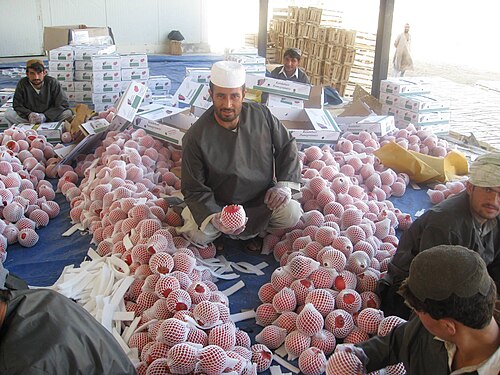
アフガニスタンの2020年の名目GDPは201億ドル、購買力平価(PPP)では810億ドルであった。[21]一人当たりGDPは2,459ドル(PPP)、名目では611ドルである。[21] 1兆ドル以上の鉱物資源があるにもかかわらず、[331]アフガニスタンは依然として世界で最も開発が遅れている国の一つである。アフガニスタンの険しい物理的地理と内陸国としての状況は、この国が近代において常に最も開発が遅れている国の一つである理由として挙げられており、これは現代の紛争と政情不安によっても進歩が遅れている要因である。[258]アフガニスタンは70億ドル以上の商品を輸入しているが、輸出は主に果物とナッツ類で7億8400万ドルに過ぎない。対外債務は28億ドルである。[261]サービス部門はGDPに最も大きく貢献し(55.9%)、次いで農業(23%)、工業(21.1%)となっている。[332]
アフガニスタン銀行は国の中央銀行として機能しており[333]、アフガニ(AFN)が国の通貨であり、為替レートは1米ドルあたり約75アフガニである。[334]アフガニスタン国際銀行、ニューカブール銀行、アジジ銀行、パシュタニー銀行、スタンダードチャータード銀行、ファーストマイクロファイナンス銀行など、多くの地元銀行と外国銀行が国内で営業している。

現在の経済回復の主な原動力の1つは、500万人を超える外国人労働者の帰国である。彼らは起業家精神と富を生み出すスキル、そしてビジネスを始めるのに必要な資金を持ち込んだ。多くのアフガニスタン人が現在、国内最大の産業の1つである建設業に携わっている。[335]主要な国家建設プロジェクトには、首都に隣接する350億ドルのニューカブールシティ、カンダハールのアイノメナプロジェクト、ジャララバード近郊のガジ・アマヌッラー・ハーンタウンなどがある。[336] [337] [338]同様の開発プロジェクトは、ヘラート、マザリシャリフ、その他の都市でも始まっている。 [339]毎年推定40万人が労働市場に参入する。[340]
国内各地で小規模な企業や工場が操業を開始し、政府に収入をもたらすだけでなく、新たな雇用も創出している。ビジネス環境の改善により、2003年以降、 15億ドル以上の通信投資が行われ、10万人以上の雇用が創出された。 [341] アフガニスタン産の絨毯は再び人気が高まっており、全国の多くの絨毯販売業者はより多くの労働者を雇用できるようになっている。2016~2017年には、アフガニスタン産絨毯は輸出量で4番目に多かった。[342]
アフガニスタンは、 WTO、SAARC、ECO、OICの加盟国であり、 SCOではオブザーバー資格を保持している。2018年の輸入の大部分はイラン、中国、パキスタン、カザフスタンからであり、輸出の84%はパキスタンとインド向けである。[343]
2021年8月にタリバンがアフガニスタンを制圧して以来、米国はアフガニスタン中央銀行の資産約90億ドルを凍結し、[344]タリバンが米国の銀行口座に保有する数十億ドルにアクセスできないようにしている。[345] [346]
アフガニスタンのGDPは、タリバンが政権に復帰した後、20%減少したと推定されています。その後、数か月にわたる急落の後、タリバンによる密輸品の規制、銀行取引の制限、国連の援助の結果、アフガニスタン経済は安定し始めました。2023年、アフガニスタン経済は復活の兆しを見せ始めました。これに続いて、安定した為替レート、低いインフレ、安定した歳入、輸出貿易の増加も見られました。[347] 2023年第3四半期には、アフガニは米ドルに対して9%以上上昇し、世界で最も好調な通貨になりました。[348]
農業

農業生産はアフガニスタン経済の屋台骨であり[349]、伝統的に経済を支配しており、2018年時点で労働力の約40%を雇用している。[350]この国はザクロ、ブドウ、アプリコット、メロン、その他多くの新鮮な果物やドライフルーツの生産で知られている。アフガニスタンは2010年に世界最大の大麻生産国にもなった。 [351]しかし、2023年3月、ヒバトゥラー・アクンザダの法令により大麻生産は禁止された。[352]
最も高価なスパイスであるサフランは、アフガニスタン、特にヘラート州で栽培されています。近年、サフランの生産量が増加しており、当局と農家はケシ栽培の代替としてサフランを栽培しようとしています。2012年から2019年の間、アフガニスタンで栽培・生産されたサフランは、国際味覚品質機構によって連続して世界最高にランクされました。[353] [354]生産量は2019年に過去最高を記録し(サフラン19,469kg)、国内では1kgあたり634ドルから1147ドルで販売されています。[355]
中国とパキスタンから輸入された安価なディーゼル動力の揚水ポンプ、また2010年代には水を汲み上げるための安価な太陽光発電が利用可能になったことで、2010年代にはアフガニスタン南西部の砂漠地帯であるカンダハール、ヘルマンド、ニムルーズの各州で農業と人口が拡大した。井戸は徐々に深く掘られてはいるが、水資源は限られている。アヘンが主要作物であるが、2022年の時点では、アヘン生産を抑制するために水の汲み上げを組織的に抑制していた新タリバン政権の攻撃を受けていた。[356] [357] 2023年の報告書によると、アヘンへのケシの使用を阻止しようとするタリバンのキャンペーンの結果、アフガニスタン南部のケシ栽培は80%以上減少した。これにはヘルマンド州でのアヘン栽培の99%減少も含まれている。[358] 2023年11月の国連報告書によると、アフガニスタン全土でケシ栽培が95%以上減少し、世界最大のアヘン生産国としての地位を失った。[359] [360]
鉱業

アフガニスタンの天然資源には、石炭、銅、鉄鉱石、リチウム、ウラン、希土類元素、クロム鉄鉱、金、亜鉛、タルク、重晶石、硫黄、鉛、大理石、貴石および半貴石、天然ガス、石油などがある。[361] [362] 2010年、米国とアフガニスタンの政府当局者は、2007年に米国地質調査所によって発見された未開発の鉱床の価値は少なくとも1兆ドルであると推定した。[363]
ブルッキングス研究所のマイケル・E・オハンロンは、アフガニスタンが鉱物資源から年間約100億ドルを生み出すことができれば、国民総生産は倍増し、重要なニーズに長期的な資金を提供することができると推定した。[364]米国地質調査所(USGS)は2006年に、アフガニスタン北部には平均4億6000万m 3(29億バレル)の原油、4400億m 3(15.7兆立方フィート)の天然ガス、670億リットル(5億6200万米バレル)の天然ガス液があると推定した。[365] 2011年、アフガニスタンは中国石油天然気集団(CNPC)と北部のアムダリア川沿いの3つの油田開発のための石油探査契約を締結した。[366]
アフガニスタンには大量のリチウム、銅、金、石炭、鉄鉱石、その他の鉱物がある。[361] [362] [367]ヘルマンド州のカナシンカーボナタイトには100万トン(98万長トン、110万短トン)の希土類元素が含まれている。[ 368 ] 2007年、アイナック銅鉱山の30年リースが中国冶金グループに30億ドルで許可され、[369]アフガニスタン史上最大の外国投資および民間事業となった。[370]国営のインド鉄鋼公社は、アフガニスタン中央部の巨大なハジガク鉄鉱床を開発するための採掘権を獲得した。 [371]政府関係者は、同国の未開発の鉱物資源の30%が少なくとも1兆ドルの価値があると見積もっている。[363]ある当局者は「これがアフガニスタン経済の屋台骨となるだろう」と主張し、国防総省のメモにはアフガニスタンが「リチウムのサウジアラビア」になる可能性があると記されていた。[372]リチウム埋蔵量2100万トンは、現在リチウム埋蔵量世界最大とされているボリビアの埋蔵量に匹敵する。 [373]他にはボーキサイトとコバルトの埋蔵量が大きい。[373]
アフガニスタンのバイオキャパシティへのアクセスは世界平均よりも低い。2016年、アフガニスタンの領土内の一人当たりバイオキャパシティは0.43グローバルヘクタール[374]で、世界平均の一人当たり1.6グローバルヘクタール[375]を大きく下回った。 2016年、アフガニスタンは一人当たり0.73グローバルヘクタールのバイオキャパシティ(消費のエコロジカルフットプリント)を使用した。これは、アフガニスタンが保有するバイオキャパシティの2倍弱を使用していることを意味する。その結果、アフガニスタンはバイオキャパシティ不足に陥っている。[374]
2023年9月、タリバンはヘラート州、ゴール州、ロガール州、タハール州で金、鉄、鉛、亜鉛を採掘する65億ドル相当の採掘契約を締結した。 [376]
エネルギー

According to the World Bank, 98% of the rural population have access to electricity in 2018, up from 28% in 2008.[377] Overall the figure stands at 98.7%.[378] As of 2016, Afghanistan produces 1,400 megawatts of power, but still imports the majority of electricity via transmission lines from Iran and the Central Asian states.[379] The majority of electricity production is via hydropower, helped by the amount of rivers and streams that flow from the mountains.[380] However electricity is not always reliable and blackouts happen, including in Kabul.[381] In recent years an increasing number of solar, biomass and wind power plants have been constructed.[382] Currently under development are the CASA-1000 project which will transmit electricity from Kyrgyzstan and Tajikistan, and the Turkmenistan-Afghanistan-Pakistan-India (TAPI) gas pipeline.[381] Power is managed by the Da Afghanistan Breshna Sherkat (DABS, Afghanistan Electricity Company).
Important dams include the Kajaki Dam, Dahla Dam, and the Sardeh Band Dam.[263]
Tourism
.jpg/500px-Contrasts_(4292970991).jpg)
Tourism is a small industry in Afghanistan due to security issues. Nevertheless, some 20,000 foreign tourists visit the country annually as of 2016.[383] In particular an important region for domestic and international tourism is the picturesque Bamyan Valley, which includes lakes, canyons and historical sites, helped by the fact it is in a safe area away from insurgent activity.[384][385] Smaller numbers visit and trek in regions such as the Wakhan Valley, which is also one of the world's most remote communities.[386] From the late 1960s onwards, Afghanistan was a popular stop on the famous hippie trail, attracting many Europeans and Americans. Coming from Iran, the trail traveled through various Afghan provinces and cities including Herat, Kandahar and Kabul before crossing to northern Pakistan, northern India, and Nepal.[387][388] Tourism peaked in 1977, the year before the start of political instability and armed conflict.[389]

The city of Ghazni has significant history and historical sites, and together with Bamyan city have in recent years been voted Islamic Cultural Capital and South Asia Cultural Capital respectively.[390] The cities of Herat, Kandahar, Balkh, and Zaranj are also very historic. The Minaret of Jam in the Hari River valley is a UNESCO World Heritage Site. A cloak reputedly worn by Islam's prophet Muhammad is kept in the Shrine of the Cloak in Kandahar, a city founded by Alexander the Great and the first capital of Afghanistan. The citadel of Alexander in the western city of Herat has been renovated in recent years and is a popular attraction. In the north of the country is the Shrine of Ali, believed by many to be the location where Ali was buried.[391] The National Museum of Afghanistan in Kabul hosts a large number of Buddhist, Bactrian Greek and early Islamic antiquities; the museum suffered greatly by civil war but has been slowly restoring since the early 2000s.[392]
Unexpectedly, tourism has seen development in Afghanistan following the Taliban takeover. Active efforts by the Taliban has seen tourism increase from 691 tourists in 2021, to 2,300 in 2022. A sharp increase of over 120% was observed from 2022 to 2023, reaching nearly 5,200 tourists, with some estimates of between 7,000 and 10,000.[393][394][395] This is however, threatened from ISIS-K, who held responsibility for attacks on tourists such as the 2024 Bamyan shooting.[396]
Communication
Telecommunication services in Afghanistan are provided by Afghan Telecom, Afghan Wireless, Etisalat, MTN Group, and Roshan. The country uses its own space satellite called Afghansat 1, which provides services to millions of phone, internet, and television subscribers. By 2001 following years of civil war, telecommunications was virtually a non-existent sector, but by 2016 it had grown to a $2 billion industry, with 22 million mobile phone subscribers and 5 million internet users. The sector employs at least 120,000 people nationwide.[397]
Transportation

Due to Afghanistan's geography, transport between various parts of the country has historically been difficult. The backbone of Afghanistan's road network is Highway 1, often called the "Ring Road", which extends for 2,210 kilometres (1,370 mi) and connects five major cities: Kabul, Ghazni, Kandahar, Herat and Mazar-i-Sharif,[398] with spurs to Kunduz and Jalalabad and various border crossings, while skirting around the mountains of the Hindu Kush.[399]
The Ring Road is crucially important for domestic and international trade and the economy.[400] A key portion of the Ring Road is the Salang Tunnel, completed in 1964, which facilitates travel through the Hindu Kush mountain range and connects northern and southern Afghanistan.[401] It is the only land route that connects Central Asia to the Indian subcontinent.[402] Several mountain passes allow travel between the Hindu Kush in other areas. Serious traffic accidents are common on Afghan roads and highways, particularly on the Kabul–Kandahar and the Kabul–Jalalabad Road.[403] Traveling by bus in Afghanistan remains dangerous due to militant activities.[404]

Air transport in Afghanistan is provided by the national carrier, Ariana Afghan Airlines,[405] and by the private company Kam Air. Airlines from a number of countries also provide flights in and out of the country. These include Air India, Emirates, Gulf Air, Iran Aseman Airlines, Pakistan International Airlines, and Turkish Airlines. The country has four international airports: Kabul International Airport (formerly Hamid Karzai International Airport), Kandahar International Airport, Herat International Airport, and Mazar-e Sharif International Airport. Including domestic airports, there are 43.[261] Bagram Air Base is a major military airfield.
The country has three rail links: one, a 75-kilometre (47 mi) line from Mazar-i-Sharif to the Uzbekistan border;[406] a 10-kilometre (6.2 mi) long line from Toraghundi to the Turkmenistan border (where it continues as part of Turkmen Railways); and a short link from Aqina across the Turkmen border to Kerki, which is planned to be extended further across Afghanistan.[407] These lines are used for freight only and there is no passenger service. A rail line between Khaf, Iran and Herat, western Afghanistan, intended for both freight and passengers, was under construction as of 2019.[408][409] About 125 kilometres (78 mi) of the line will lie on the Afghan side.[410][411]
Private vehicle ownership has increased substantially since the early 2000s. Taxis are yellow and consist of both cars and auto rickshaws.[412] In rural Afghanistan, villagers often use donkeys, mules or horses to transport or carry goods. Camels are primarily used by the Kochi nomads.[278] Bicycles are popular throughout Afghanistan.[413]
Demographics

Population
The population of Afghanistan was estimated at 32.9 million as of 2019 by the Afghanistan Statistics and Information Authority,[415] whereas the UN estimates over 38.0 million.[416] In 1979 the total population was reported to be about 15.5 million.[417] About 23.9% of them are urbanite, 71.4% live in rural areas, and the remaining 4.7% are nomadic.[418] An additional 3 million or so Afghans are temporarily housed in neighboring Pakistan and Iran, most of whom were born and raised in those two countries. As of 2013, Afghanistan was the largest refugee-producing country in the world, a title held for 32 years.
The current population growth rate is 2.37%,[261] one of the highest in the world outside of Africa. This population is expected to reach 82 million by 2050 if current population trends continue.[419] The population of Afghanistan increased steadily until the 1980s, when civil war caused millions to flee to other countries such as Pakistan.[420] Millions have since returned and the war conditions contribute to the country having the highest fertility rate outside Africa.[421] Afghanistan's healthcare has recovered since the turn of the century, causing falls in infant mortality and increases in life expectancy, although it has the lowest life expectance of any country outside Africa. This (along with other factors such as returning refugees) caused rapid population growth in the 2000s that has only recently started to slow down.[citation needed] The Gini coefficient in 2008 was 27.8.[422]
Fertility rate
Afghanistan 2024 total fertility rate has been estimated at 4.4.[423] In 2022 it was 4.5, about twice the world average rate.[424] The rate has fallen since the early 1980s.[425]
Urbanization
As estimated by the CIA World Factbook, 26% of the population was urbanized as of 2020. This is one of the lowest figures in the world; in Asia it is only higher than Cambodia, Nepal and Sri Lanka. Urbanization has increased rapidly, particularly in the capital Kabul, due to returning refugees from Pakistan and Iran after 2001, internally displaced people, and rural migrants.[426] Urbanization in Afghanistan is different from typical urbanization in that it is centered on just a few cities.[427]
The only city with over a million residents is its capital, Kabul, located in the east of the country. The other large cities are located generally in the "ring" around the Central Highlands, namely Kandahar in the south, Herat in the west, Mazar-i-Sharif, Kunduz in the north, and Jalalabad in the east.[418]
Ethnicity and languages

Afghans are divided into several ethnolinguistic groups. According to research data by several institutions in 2019, the Pashtuns are the largest ethnic group, comprising 42%, followed by Tajiks, comprising 27%[4][5][6][429][8] of the country's population. The other two major ethnic groups are the Hazaras and Uzbeks, each at 9%. A further 10 other ethnic groups are recognized and each are represented in the Afghan National Anthem.[430]
Dari and Pashto are the official languages of Afghanistan; bilingualism is very common.[431] Dari, which is also referred to as Eastern Persian as it is a variety of and mutually intelligible with Persian (and very often called 'Farsi' by some Afghans like in Iran), functions as the lingua franca in Kabul as well as in much of the northern and northwestern parts of the country.[432] Native speakers of Dari, of any ethnicity, are sometimes called Farsiwans.[433] Pashto is the native tongue of the Pashtuns, although many of them are also fluent in Dari while some non-Pashtuns are fluent in Pashto. Despite the Pashtuns having been dominant in Afghan politics for centuries, Dari remained the preferred language for government and bureaucracy.[434] According to CIA World Factbook, Dari Persian is spoken by 78% (L1 + L2) and functions as the lingua franca, while Pashto is spoken by 50%, Uzbek 10%, English 5%, Turkmen 2%, Urdu 2%, Pashayi 1%, Nuristani 1%, Arabic 1%, and Balochi 1% (2021 est). Data represent the most widely spoken languages; shares sum to more than 100% because there is much bilingualism in the country and because respondents were allowed to select more than one language. There are a number of smaller regional languages, including Uzbek, Turkmen, Balochi, Pashayi, and Nuristani.[261]
When it comes to foreign languages among the populace, many are able to speak or understand Hindustani (Urdu-Hindi), partly due to returning Afghan refugees from Pakistan and the popularity of Bollywood films respectively.[435] English is also understood by some of the population,[436] and has been gaining popularity as of the 2000s.[437] Some Afghans retain some ability in Russian, which was taught in public schools during the 1980s.[435]
Religion

The CIA estimated in 2009 that 99.7% of the Afghan population was Muslim[261] and most are thought to adhere to the Sunni Hanafi school.[438] According to Pew Research Center, as much as 90% are of the Sunni denomination, 7% Shia and 3% non-denominational.[439] The CIA Factbook variously estimates up to 89.7% Sunni or up to 15% Shia.[261]
Afghan Sikhs and Hindus are also found in certain major cities (namely Kabul, Jalalabad, Ghazni, Kandahar)[440][441] accompanied by gurdwaras and mandirs.[442] According to Deutsche Welle in September 2021, 250 remain in the country after 67 were evacuated to India.[443]
There was a small Jewish community in Afghanistan, living mainly in Herat and Kabul. Over the years, this small community was forced to leave due to decades of warfare and religious persecution. By the end of the twentieth century, nearly the entire community had emigrated to Israel and the United States, with one known exception, Herat-born Zablon Simintov. He remained for years, being the caretaker of the only remaining Afghan synagogue. He left the country for the US after the second Taliban takeover. A woman who left shortly after him has since been identified as the likely last Jew in Afghanistan.[444][445][446]
Afghan Christians, who number 500–8,000, practice their faith secretly due to intense societal opposition, and there are no public churches.[447][448]
Education

Education in Afghanistan is overseen by the Ministry of Education and the Ministry of Higher Education. There are over 16,000 schools in the country and roughly 9 million students. Of this, about 60% are males and 40% females. However, the new regime has thus far forbidden female teachers and female students from returning to secondary schools.[449][450] Over 174,000 students are enrolled in different universities around the country. About 21% of these are females.[451] Former Education Minister Ghulam Farooq Wardak had stated that construction of 8,000 schools is required for the remaining children who are deprived of formal learning.[452] As of 2018 the literacy rate of the population age 15 and older is 43.02% (males 55.48% and females 29.81%).[453]
The top universities in Afghanistan are the American University of Afghanistan (AUAF) followed by Kabul University (KU), both of which are located in Kabul. The National Military Academy of Afghanistan, modeled after the United States Military Academy at West Point, was a four-year military development institution dedicated to graduating officers for the Afghan Armed Forces. The Afghan Defense University was constructed near Qargha in Kabul. Major universities outside of Kabul include Kandahar University in the south, Herat University in the northwest, Balkh University and Kunduz University in the north, Nangarhar University and Khost University in the east.
After the Taliban regained power in 2021, it became unclear to what extent female education would continue in the country. In March 2022, after they had been closed for some time, it was announced that secondary education would be reopened shortly. However, shortly before reopening, the order was rescinded and schools for older girls remained closed.[454] Despite the ban, six provinces, Balkh, Kunduz, Jowzjan, Sar-I-Pul, Faryab, and the Day Kundi, still allow girl's schools from grade 6 and up.[455][456] In December 2023, investigations were being held by the United Nations on the claim that Afghan girls of all ages were allowed to study at religious schools.[457]
Health

According to the Human Development Index, Afghanistan is the 15th least developed country in the world. The average life expectancy is estimated to be around 60 years.[458][459] The country's maternal mortality rate is 396 deaths/100,000 live births and its infant mortality rate is 66[459] to 112.8 deaths in every 1,000 live births.[261] The Ministry of Public Health plans to cut the infant mortality rate to 400 for every 100,000 live births before 2020. The country has more than 3,000 midwives, with an additional 300 to 400 being trained each year.[460]
There are over 100 hospitals in Afghanistan,[461] with the most advanced treatments being available in Kabul. The French Medical Institute for Children and Indira Gandhi Children's Hospital in Kabul are the leading children's hospitals in the country. Some of the other leading hospitals in Kabul include the Jamhuriat Hospital and Jinnah Hospital.[462] In spite of all this, many Afghans travel to Pakistan and India for advanced treatment.
It was reported in 2006 that nearly 60% of the Afghan population lives within a two-hour walk of the nearest health facility.[463] The disability rate is also high in Afghanistan due to the decades of war.[464] It was reported recently that about 80,000 people are missing limbs.[465][466] Non-governmental charities such as Save the Children and Mahboba's Promise assist orphans in association with governmental structures.[467]
Culture
-_Menschen_-_Annemarie_Schwarzenbach_-_SLA-Schwarzenbach-A-5-21-110.jpg/500px-CH-NB_-_Afghanistan,_Kulm_(Khulm,_Kholm)-_Menschen_-_Annemarie_Schwarzenbach_-_SLA-Schwarzenbach-A-5-21-110.jpg)
Afghans have both common cultural features and those that differ between the regions of Afghanistan, each with distinctive cultures partly as a result of geographic obstacles that divide the country.[258] Family is the mainstay of Afghan society and families are often headed by a patriarch.[468] In the southern and eastern region, the people live according to the Pashtun culture by following Pashtunwali (the Pashtun way).[469] Key tenets of Pashtunwali include hospitality, the provision of sanctuary to those seeking refuge, and revenge for the shedding of blood.[470] The Pashtuns are largely connected to the culture of Central Asia and the Iranian Plateau. The remaining Afghans are culturally Persian and Turkic. Some non-Pashtuns who live in proximity with Pashtuns have adopted Pashtunwali in a process called Pashtunization, while some Pashtuns have been Persianized. Those who have lived in Pakistan and Iran over the last 30 years have been further influenced by the cultures of those neighboring nations. The Afghan people are known to be strongly religious.[438]
Afghans, particularly Pashtuns, are noted for their tribal solidarity and high regard for personal honor.[471] There are various Afghan tribes, and an estimated 2–3 million nomads.[472] Afghan culture is deeply Islamic,[473] but pre-Islamic practices persist.[474] Child marriage is prevalent;[475] the legal age for marriage is 16.[476] The most preferred marriage in Afghan society is to one's parallel cousin, and the groom is often expected to pay a bride price.[477]
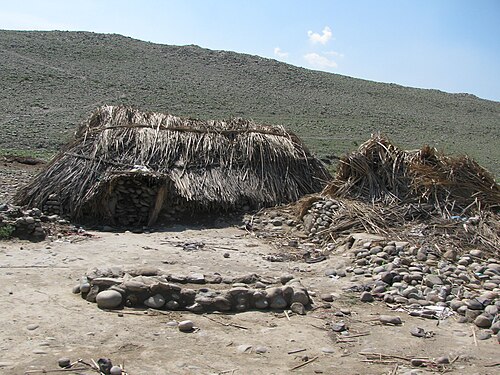
In the villages, families typically occupy mudbrick houses, or compounds with mudbrick or stone walled houses. Villages typically have a headman (malik), a master for water distribution (mirab) and a religious teacher (mullah). Men would typically work on the fields, joined by women during harvest.[468] About 15% of the population are nomadic, locally called kochis.[258] When nomads pass villages they often buy supplies such as tea, wheat and kerosene from the villagers; villagers buy wool and milk from the nomads.[468]
Afghan clothing for both men and women typically consists of various forms of shalwar kameez, especially perahan tunban and khet partug. Women would normally wear a chador for head covering; some women, typically from highly conservative communities, wear the burqa, a full body covering. These were worn by some women of the Pashtun community well before Islam came to the region, but the Taliban enforced this dress on women when they were in power.[478] Another popular dress is the chapan which acts as a coat. The karakul is a hat made from the fur of a specific regional breed of sheep. It was favored by former kings of Afghanistan and became known to much of the world in the 21st century when it was constantly worn by President Hamid Karzai.[479] The pakol is another traditional hat originating from the far east of the country; it was popularly worn by the guerrilla leader Ahmad Shah Massoud.[480] The Mazari hat originates from northern Afghanistan.[481]
Architecture

The nation has a complex history that has survived either in its current cultures or in the form of various languages and monuments. Afghanistan contains many remnants from all ages, including Greek and Buddhist stupas, monasteries, monuments, temples, and Islamic minarets. Among the most well known are the Great Mosque of Herat, the Blue Mosque, the Minaret of Jam, the Chil Zena, the Qala-i Bost in Lashkargah, the ancient Greek city of Ai-Khanoum.[482] However, many of its historic monuments have been damaged in modern times due to the civil wars.[483] The two famous Buddhas of Bamiyan were destroyed by the Taliban, who regarded them as idolatrous. As there was no colonialism in the modern era in Afghanistan, European-style architecture is rare but does exist: the Victory Arch at Paghman and the Darul Aman Palace in Kabul were built in this style in the 1920s. Afghan architecture also ranges deep into India such as the city of Agra,[484] and the tomb of Sher Shah Suri, an Afghan Emperor of India.[485]
Art and ceramics
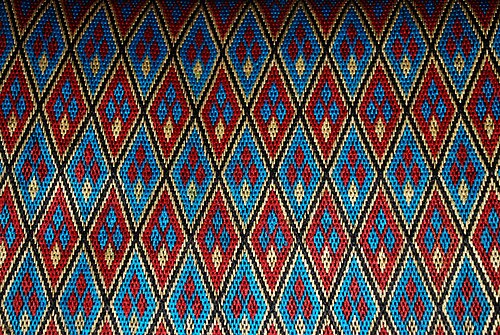
Carpet weaving is an ancient practice in Afghanistan, and many of these are still handmade by tribal and nomadic people today.[427] Carpets have been produced in the region for thousands of years and traditionally done by women.[486] Some crafters express their feelings through the designs of rugs; for example after the outbreak of the Soviet–Afghan War, "war rugs", a variant of Afghan rugs, were created with designs representing pain and misery caused by the conflict.[487] Every province has its own specific characteristics in making rugs.[488] In some of the Turkic-populated areas in the north-west, bride and wedding ceremony prices are driven by the bride's weaving skills.[489]
Pottery has been crafted in Afghanistan for millennia. The village of Istalif, north of Kabul, is in particular a major center, known for its unique turquoise and green pottery,[490] and their methods of crafting have remained the same for centuries.[491][492] Much of lapis lazuli stones were earthed in modern-day Afghanistan which were used in Chinese porcelain as cobalt blue, later used in ancient Mesopotamia and Turkey.[493]
The lands of Afghanistan have a long history of art, with the world's earliest known usage of oil painting found in cave murals in the country.[494][495] A notable art style that developed in Afghanistan and eastern Pakistan is Gandhara Art, produced by a fusion of Greco-Roman art and Buddhist art between the 1st and 7th centuries CE.[496] Later eras saw increased use of the Persian miniature style, with Kamaleddin Behzad of Herat being one of the most notable miniature artists of the Timurid and early Safavid periods. Since the 1900s, the nation began to use Western techniques in art. Abdul Ghafoor Breshna was a prominent Afghan painter and sketch artist from Kabul during the 20th century.
Literature
Classic Persian and Pashto poetry are a cherished part of Afghan culture. Poetry has always been one of the major educational pillars in the region, to the level that it has integrated itself into culture.[497] One of the poetic styles is called landay. A popular theme in Afghan folklore and mythology are Divs, monstrous creatures.[498] Thursdays are traditionally "poetry night" in the city of Herat when men, women and children gather and recite both ancient and modern poems.[499]
Three mystical authors are considered true national glories (although claimed with equal ardor by Iran), namely: Khwaja Abdullah Ansari of Herat, a great mystic and Sufi saint in the 11th century, Sanai of Ghazni, author of mystical poems in the 12th century, and, finally, Rumi of Balkh, in the 13th century, considered the greatest mystical poet of the Muslim world. The Afghan Pashto literature, although quantitatively remarkable and in great growth in the last century, has always had an essentially local meaning and importance, feeling the influence of both Persian literature and the contiguous literatures of India. Both main literatures, from the second half of the nineteenth century, have shown themselves to be sensitive to genres, movements and stylistic features imported from Europe.
Khushal Khan Khattak of the 17th century is considered the national poet. Other notable poets include Rabi'a Balkhi, Jami, Rahman Baba, Khalilullah Khalili, and Parween Pazhwak.[500]
Music
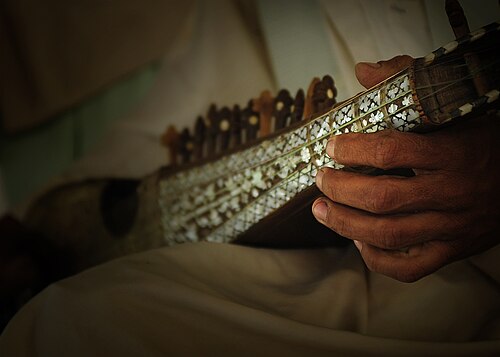
Afghan classical music has close historical links with Indian classical music and use the same Hindustani terminology and theories like raga. Genres of this style of music include ghazal (poetic music) and instruments such as the Indian tabla, sitar and harmonium, and local instruments like zerbaghali, as well as dayereh and tanbur which are also known in Central Asia, the Caucasus and the Middle East. The rubab is the country's national instrument and precurses the Indian sarod instrument. Some of the famous artists of classical music include Ustad Sarahang and Sarban.[501]
Pop music developed in the 1950s through Radio Kabul and was influential in social change. During this time female artists also started appearing, at first Mermon Parwin.[501] Perhaps the most famous artist of this genre was Ahmad Zahir, who synthesized many genres and continues to be renowned for his voice and rich lyrics long after his death in 1979.[502][501] Other notable masters of traditional or popular Afghan music include Nashenas, Ubaidullah Jan, Mahwash, Ahmad Wali, Farhad Darya, and Naghma.[503]
Attan is the national dance of Afghanistan, a group dance popularly performed by Afghans of all backgrounds.[504] The dance is considered part of Afghan identity.[505]
Media and entertainment
Afghanistan has around 350 radio stations and over 200 television stations.[506] Radio Television Afghanistan, originating from 1925, is the state public broadcaster. Television programs began airing in the 1970s and today there are many private television channels such as TOLO and Shamshad TV. The first Afghan newspaper was published in 1873,[507] and there are hundreds of print outlets today.[506] By the 1920s, Radio Kabul was broadcasting local radio services.[508] Voice of America, BBC, and Radio Free Europe/Radio Liberty (RFE/RL) broadcast in both of Afghanistan's official languages on radio.[509] Press restrictions have been gradually relaxed and private media diversified since 2002, after more than two decades of tight controls.
Afghans have long been accustomed to watching Indian Bollywood films and listening to its filmi songs.[510] It has been claimed that Afghanistan is among the biggest markets for the Hindi film industry.[511] The stereotypes of Afghans in India (Kabuliwala or Pathani) have also been represented in some Bollywood films by actors.[512] Many Bollywood film stars have roots in Afghanistan, including Salman Khan, Saif Ali Khan, Aamir Khan, Feroz Khan, Kader Khan, Naseeruddin Shah, Zarine Khan, Celina Jaitly, and a number of others. Several Bollywood films have been shot inside Afghanistan, including Dharmatma, Khuda Gawah, Escape from Taliban, and Kabul Express.
Cuisine

Afghan cuisine is largely based upon the nation's chief crops, such as wheat, maize, barley and rice. Accompanying these staples are native fruits and vegetables as well as dairy products such as milk, yogurt, and whey. Kabuli palaw is the national dish of Afghanistan.[513] The nation's culinary specialties reflect its ethnic and geographic diversity.[514] Afghanistan is known for its high-quality pomegranates, grapes, and sweet melons.[515] Tea is a favorite drink among Afghans. A typical Afghan diet consists of naan, yogurt, rice, and meat.[468]
Holidays and festivals

Afghanistan's official New Year starts with Nowruz, an ancient tradition that started as a Zoroastrian celebration in present-day Iran, and with which it shares the annual celebration along with several other countries. It occurs every year at the vernal equinox. In Afghanistan, Nowruz is typically celebrated with music and dance, as well as holding buzkashi tournaments.[516]
Yaldā, another nationally celebrated ancient tradition,[517] commemorates the ancient goddess Mithra and marks the longest night of the year on the eve of the winter solstice (čelle ye zemestān; usually falling on 20 or 21 December),[518][519] during which families gather together to recite poetry and eat fruit.[520][521]
As a predominantly Muslim country, Islamic events and festivals such as Ramadan, Eid al-Fitr and Ashura are widely celebrated annually in Afghanistan. The Sikh festival of Vaisakhi is celebrated by the Sikh community[522] and the Hindu festival Diwali by the Hindu community.[523]
National Independence Day is celebrated on 19 August to mark the Anglo-Afghan Treaty of 1919 and the country's full independence.[261] Several international celebrations are also officially held in Afghanistan, such as International Workers' Day,[524] and International Women's Day.[525] Some regional festivals include the Red Flower Festival (during Nowruz) in Mazar-i-Sharif,[526] and the Damboora Festival in Bamyan Province.[527]
Sports

Sport in Afghanistan is managed by the Afghan Sports Federation. Cricket and association football are the two most popular sports in the country.[528][529] The Afghan Sports Federation promotes cricket, association football, basketball, volleyball, golf, handball, boxing, taekwondo, weightlifting, bodybuilding, track and field, skating, bowling, snooker, chess, and other sports.
The Afghanistan national basketball team won the first team sports title at the 2010 South Asian Games.[530] In 2012, the country's 3x3 basketball team won the gold medal at the 2012 Asian Beach Games. In 2013, Afghanistan's football team followed as it won the SAFF Championship.[531]
The Afghan national cricket team, which was formed in 2001, won the 2009–10 ICC Intercontinental Cup.[532] It won the ACC Twenty20 Cup in 2007, 2009, 2011 and 2013. The team played in the 2015, 2019, and 2023 Cricket World Cups.[533] The Afghanistan Cricket Board (ACB) is the official governing body of the sport and is headquartered in Kabul. The Alokozay Kabul International Cricket Ground serves as the nation's main cricket stadium. There are several other stadiums throughout the country, including the Ghazi Amanullah Khan International Cricket Stadium near Jalalabad. Domestically, cricket is played between teams from different provinces.
The Afghanistan national football team has been competing in international football since 1941.[534] The national team plays its home games at the Ghazi Stadium in Kabul, while football in Afghanistan is governed by the Afghanistan Football Federation. The national team has never competed or qualified for the FIFA World Cup but won an international football trophy in 2013.[531] The country also has a national team in the sport of futsal, a 5-a-side variation of football.
The traditional and the national sport of Afghanistan is buzkashi, particularly popular in the north.[535] It is similar to polo, played by horsemen in two teams, each trying to grab and hold a goat carcass.[536] The Afghan Hound (a type of running dog) originated in Afghanistan and was used in wolf hunting.[537]
See also
.svg/500px-Asia_(orthographic_projection).svg.png)
Explanatory notes
- ^ The last census in Afghanistan was conducted in 1979, and was itself incomplete. Due to the ongoing conflict in the country, no official census has been conducted since.[4]
- ^ Other demonyms that have been used are Afghani,[9] Afghanese and Afghanistani (see Afghans for further details)[10]
- ^ Afghanistan is a pure autocracy, with all law ultimately originating from the supreme leader. Consensus rule was initially used among the Taliban, but was phased out as the supreme leader monopolized control in the months following the 2021 return to power.[15][16][17] There is an advisory Leadership Council, however its role is in question as the supreme leader has not convened it for many months (as of March 2023),[update] and increasingly rules by decree.[18]
- ^ /æfˈɡænɪstæn, æfˈɡɑːnɪstɑːn/
- ^
- ^ The Government of India regards Afghanistan as a bordering country, as it considers all of Kashmir to be part of India. However, this is disputed, and the region bordering Afghanistan is administered by Pakistan as Gilgit-Baltistan.[26]
References
Citations
- ^ "Document 77746". Archived from the original on 3 June 2019. Retrieved 17 September 2021.
- ^ Tharoor, Ishaan (19 June 2013). "The Taliban's Qatar Office: Are Prospects for Peace Already Doomed?". Time. ISSN 0040-781X. Archived from the original on 19 August 2021. Retrieved 19 August 2021.
- ^ Islamic Republic of Afghanistan in Geonames.org (CC BY)
- ^ a b "Population Matters". 3 March 2016. Archived from the original on 16 August 2021. Retrieved 18 September 2021.
- ^ a b "Afghanistan's ethnic mosaic". The Times of India. 23 August 2021. Archived from the original on 18 September 2021. Retrieved 18 September 2021.
- ^ a b c "Afghanistan Population 2021". World Population Review. 19 September 2021.
- ^ "Distribution of Afghan population by ethnic group 2020". 20 August 2021. Archived from the original on 18 September 2021. Retrieved 18 September 2021.
- ^ a b "Afghan Ethnic Groups: A Brief Investigation". 14 August 2011. Archived from the original on 18 September 2021. Retrieved 18 September 2021.
- ^ Dictionary.com. The American Heritage Dictionary of the English Language, Fourth Edition. Houghton Mifflin Company, 2004. Reference.com Archived 3 March 2016 at the Wayback Machine (Retrieved 13 November 2007).
- ^ Dictionary.com. WordNet 3.0. Princeton University. Reference.com (Retrieved 13 November 2007). Archived 28 March 2014 at the Wayback Machine
- ^ "Constitution of Afghanistan". 2004. Archived from the original on 20 September 2016. Retrieved 16 February 2013.
- ^ Afghan | meaning in the Cambridge English Dictionary. the Cambridge English Dictionary. ISBN 9781107660151. Archived from the original on 3 March 2021. Retrieved 27 March 2020.
- ^ *Sakhi, Nilofar (December 2022). "The Taliban Takeover in Afghanistan and Security Paradox". Journal of Asian Security and International Affairs. 9 (3): 383–401. doi:10.1177/23477970221130882. ISSN 2347-7970. S2CID 253945821.
Afghanistan is now controlled by a militant group that operates out of a totalitarian ideology.
- Madadi, Sayed (6 September 2022). "Dysfunctional centralization and growing fragility under Taliban rule". Middle East Institute. Archived from the original on 28 November 2022. Retrieved 28 November 2022.
In other words, the centralized political and governance institutions of the former republic were unaccountable enough that they now comfortably accommodate the totalitarian objectives of the Taliban without giving the people any chance to resist peacefully.
- Sadr, Omar (23 March 2022). "Afghanistan's Public Intellectuals Fail to Denounce the Taliban". Fair Observer. Archived from the original on 23 March 2022. Retrieved 28 November 2022.
The Taliban government currently installed in Afghanistan is not simply another dictatorship. By all standards, it is a totalitarian regime.
- "Dismantlement of the Taliban regime is the only way forward for Afghanistan". Atlantic Council. 8 September 2022. Archived from the original on 28 November 2022. Retrieved 28 November 2022.
As with any other ideological movement, the Taliban's Islamic government is transformative and totalitarian in nature.
- Akbari, Farkhondeh (7 March 2022). "The Risks Facing Hazaras in Taliban-ruled Afghanistan". George Washington University. Archived from the original on 14 January 2023. Retrieved 28 November 2022.
In the Taliban's totalitarian Islamic Emirate of Afghanistan, there is no meaningful political inclusivity or representation for Hazaras at any level.
- Madadi, Sayed (6 September 2022). "Dysfunctional centralization and growing fragility under Taliban rule". Middle East Institute. Archived from the original on 28 November 2022. Retrieved 28 November 2022.
- ^ *Choi, Joseph (8 September 2021). "EU: Provisional Taliban government does not fulfill promises". The Hill. Archived from the original on 18 March 2022. Retrieved 18 March 2022.
- Bezhan, Frud (7 September 2021). "Key Figures In The Taliban's New Theocratic Government". Radio Farda. Radio Free Europe/Radio Liberty. Archived from the original on 6 February 2022. Retrieved 6 February 2022.
- George, Susannah (18 February 2023). "Inside the Taliban campaign to forge a religious emirate". The Washington Post. Archived from the original on 18 February 2023. Retrieved 19 February 2023.
- ^ T. S. Tirumurti (26 May 2022). "Letter dated 25 May 2022 from the Chair of the Security Council Committee established pursuant to resolution 1988 (2011) addressed to the President of the Security Council" (PDF). United Nations Security Council. Retrieved 2 May 2023.
- ^ Kraemer, Thomas (27 November 2022). "Afghanistan dispatch: Taliban leaders issue new orders on law-making process, enforcement of court orders from previous government". JURIST. Archived from the original on 17 January 2024. Retrieved 1 May 2023.
- ^ Dawi, Akmal (28 March 2023). "Unseen Taliban Leader Wields Godlike Powers in Afghanistan". Voice of America. Archived from the original on 13 April 2023. Retrieved 1 May 2023.
- ^ Oxford Analytica (10 March 2023). "Senior Afghan Taliban figures move to curb leader". Expert Briefings. Emerald Expert Briefings. oxan–db (oxan–db). doi:10.1108/OXAN-DB276639.
[Akhundzada] has not convened the Taliban's Leadership Council (a 'politburo' of top leaders and commanders) for several months. Instead, he relies on the narrower Kandahar Council of Clerics for legal advice.
- ^ Central Statistics Office Afghanistan
- ^ "World Bank Open Data". World Bank Open Data. Archived from the original on 26 May 2023. Retrieved 27 April 2024.
- ^ a b c d e f "Afghanistan". International Monetary Fund. Archived from the original on 1 May 2023. Retrieved 1 May 2023.
- ^ "Human Development Report 2023/24". United Nations Development Programme. 13 March 2024. Archived from the original on 19 March 2024. Retrieved 22 March 2023.
- ^ Human Development Report 2020 The Next Frontier: Human Development and the Anthropocene (PDF). United Nations Development Programme. 15 December 2020. pp. 343–346. ISBN 978-92-1-126442-5. Archived (PDF) from the original on 9 October 2022. Retrieved 16 December 2020.
- ^ "Half Hour and 45-Minute Time Zones". timeanddate.com. Archived from the original on 15 February 2016. Retrieved 23 December 2022.
- ^ "Taliban Changes Solar Year to Hijri Lunar Calendar". Hasht-e Subh Daily. 26 March 2022. Archived from the original on 4 September 2022. Retrieved 4 September 2022.
- ^ "Ministry of Home Affairs (Department of Border Management)" (PDF). Archived from the original (PDF) on 17 March 2015. Retrieved 1 September 2008.
- ^ د هېواد د وګړو اټکل برآورد نفوس کشور1399 [Estimated Population of Afghanistan 2020–21] (PDF) (Report) (in Arabic and English). Archived (PDF) from the original on 3 July 2020. Retrieved 1 July 2020.
- ^ Pillalamarri, Akhilesh. "Why Is Afghanistan the 'Graveyard of Empires'?". The Diplomat. Archived from the original on 11 August 2021. Retrieved 25 February 2022.
- ^ Griffin, Luke (14 January 2002). "The Pre-Islamic Period". Afghanistan Country Study. Illinois Institute of Technology. Archived from the original on 3 November 2001. Retrieved 14 October 2010.
- ^ Cush, Denise; Robinson, Catherine; York, Michael (2012). Encyclopedia of Hinduism. Routledge. p. 200. ISBN 9781135189792.
- ^ "The remarkable rugs of war, Drill Hall Gallery". The Australian. 30 July 2021. Archived from the original on 22 November 2021. Retrieved 22 November 2021.
{{cite web}}: CS1 maint: bot: original URL status unknown (link) - ^ "Professing Faith: Religious traditions in Afghanistan are diverse". 16 September 2021. Archived from the original on 6 October 2021. Retrieved 1 November 2021.
- ^ "Afghanistan: the land that forgot time". The Guardian. 26 October 2001. Archived from the original on 14 December 2021. Retrieved 14 December 2021.
- ^ "DŌST MOḤAMMAD KHAN". Encyclopaedia Iranica. 1995. Archived from the original on 29 April 2011. Retrieved 8 February 2023.
- ^ Watkins, Andrew H. (November 2021). Cruickshank, Paul; Hummel, Kristina (eds.). "An Assessment of Taliban Rule at Three Months" (PDF). CTC Sentinel. 14 (9). West Point, New York: Combating Terrorism Center: 1–14. Archived (PDF) from the original on 29 November 2021. Retrieved 29 November 2021.
- ^ "The Taliban: Unrecognized and unrepentant". Middle East Institute. Archived from the original on 18 October 2022. Retrieved 18 October 2022.
- ^ "Morocco seizes over 840 kg of cannabis – Xinhua | English.news.cn". Xinhua News Agency. Archived from the original on 18 October 2022. Retrieved 18 October 2022.
- ^ "Afghanistan's Saffron on Media | AfGOV". mail.gov.af. Archived from the original on 8 April 2023. Retrieved 18 October 2022.
- ^ "Taliban Takeover Puts Afghanistan's Cashmere, Silk Industries at Risk". The Business of Fashion. 25 August 2021. Archived from the original on 18 October 2022. Retrieved 18 October 2022.
- ^
- "The name Afghan has evidently been derived from Asvakan, the Assakenoi of Arrian... " (Megasthenes and Arrian, p 180. See also: Alexander's Invasion of India, p 38; J.W. McCrindle).
- "Even the name Afghan is Aryan being derived from Asvakayana, an important clan of the Asvakas or horsemen who must have derived this title from their handling of celebrated breeds of horses" (See: Imprints of Indian Thought and Culture Abroad, p 124, Vivekananda Kendra Prakashan).
- Cf: "Their name (Afghan) means "cavalier" being derived from the Sanskrit, Asva, or Asvaka, a horse, and shows that their country must have been noted in ancient times, as it is at the present day, for its superior breed of horses. Asvaka was an important tribe settled north to Kabul river, which offered a gallant resistance but ineffectual resistance to the arms of Alexander." (Scottish Geographical Magazine, 1999, p. 275, Royal Scottish Geographical Society)
- "Afghans are Assakani of the Greeks; this word being the Sanskrit Ashvaka meaning 'horsemen'." (Sva, 1915, p. 113, Christopher Molesworth Birdwood)
- Cf: "The name represents Sanskrit Asvaka in the sense of a cavalier, and this reappears scarcely modified in the Assakani or Assakeni of the historians of the expedition of Alexander" (Hobson-Jobson: A Glossary of Colloquial Anglo-Indian words and phrases, and of kindred terms, etymological. Henry Yule, A. D. Burnell).
- ^ Majumdar, Ramesh Chandra (1977) [1952]. Ancient India (Reprinted ed.). Motilal Banarsidass. p. 99. ISBN 978-8-12080-436-4.
- ^ Ch. M. Kieffer (15 December 1983). "Afghan". Encyclopædia Iranica (online ed.). Columbia University. Archived from the original on 16 November 2013.
- ^ Vogelsang, Willem (2002). The Afghans. Wiley Blackwell. p. 18. ISBN 0-631-19841-5. Archived from the original on 9 July 2019. Retrieved 6 July 2019.
- ^ Nölle-Karimi, Christine (2020). "Afghanistan until 1747". In Fleet, Kate; Krämer, Gudrun; Matringe, Denis; Nawas, John; Rowson, Everett (eds.). Encyclopaedia of Islam (3rd ed.). Brill Online. ISSN 1873-9830.
- ^ Lee 2019, p. 317.
- ^ a b Afghanistan – John Ford Shroder, University of Nebraska. Encarta. Archived from the original on 17 July 2004. Retrieved 19 May 2012.
- ^ "Afghanistan: A Treasure Trove for Archaeologists". Time. 26 February 2009. Archived from the original on 26 July 2013. Retrieved 13 July 2011.
- ^ Rita Wright (2009). The Ancient Indus: Urbanism, Economy, and Society. Cambridge University Press. p. 1. ISBN 978-0521576529. Archived from the original on 28 June 2016. Retrieved 11 December 2019.
- ^ Kenoyer, Jonathan Mark (1998). Ancient cities of the Indus Valley Civilisation. pp.96
- ^ Louis Depree (1981). Notes on Shortugai: An Harappan Site in Northern Afghanistan. Centre for the Study of the Civilization of Central Asia.
- ^ Bryant, Edwin F. (2001) The quest for the origins of Vedic culture: the Indo-Aryan migration debate Oxford University Press, ISBN 978-0-19-513777-4.
- ^ "Chronological History of Afghanistan – the cradle of Gandharan civilisation". Gandhara.com.au. 15 February 1989. Archived from the original on 9 September 2012. Retrieved 19 May 2012.
- ^ a b Gnoli, Gherado (1989). The Idea of Iran, an Essay on its Origin. Istituto italiano per il Medio ed Estremo Oriente. p. 133.
... he would have drawn inspiration from a ireligious policy which intended to counteract the Median Magi's influence and transfer the 'Avesta-Schule' from Arachosia to Persia: thus the Avesta would have arrived in Persia through Arachosia in the 6th century B.C. [...] Although ... Arachosia would have been only a second fatherland for Zoroastrianism, a significant role should still be attributed to this south-eastern region in the history of the Zoroastrian tradition.
- ^ a b Gnoli, Gherado (1989). The Idea of Iran, an essay on its Origin. Istituto italiano per il Medio ed Estremo Oriente. p. 133.
linguistic data [...] prove the presence of the Zoroastrian tradition in Arachosia both in the Achaemenian age, in the last quarter of the 6th century, and in the Seleucid age.
- ^ a b "ARACHOSIA – Encyclopaedia Iranica". iranicaonline.org. Archived from the original on 23 May 2021. Retrieved 19 February 2021.
- ^ "Country Profile: Afghanistan" (PDF). Library of Congress Country Studies on Afghanistan. August 2008. Archived from the original (PDF) on 8 April 2014. Retrieved 10 October 2010.
- ^ Runion 2007, p. 44.
- ^ "'Afghanistan and the Silk Road: The land at the heart of world trade' by Bijan Omrani". UNAMA. 8 March 2010. Archived from the original on 16 August 2021. Retrieved 17 June 2020.
- ^ "Afghanistan – Silk Roads Programme". UNESCO. Archived from the original on 18 June 2021. Retrieved 17 June 2020.
- ^ Wink, André (2002). Al-Hind, the Making of the Indo-Islamic World: Early Medieval India and the Expansion of Islam 7Th-11th Centuries. BRILL. p. 125. ISBN 0-391-04173-8. Archived from the original on 1 December 2019. Retrieved 11 December 2019.
- ^ "Afghan and Afghanistan". Abdul Hai Habibi. alamahabibi.com. 1969. Archived from the original on 23 October 2008. Retrieved 17 November 2015.
- ^ Charles Higham (2014). Encyclopedia of Ancient Asian Civilizations. Infobase Publishing. p. 141. ISBN 978-1-4381-0996-1.
- ^ Weber, Olivier; Unesco (2002). Eternal Afghanistan. Chêne. ISBN 978-92-3-103850-1.
Gradually there emerged a fabulous syncretism between the Hellenistic world and the Buddhist universe
- ^ Grenet, Grenet (2016). Zoroastriansm among the Kushans.
- ^ a b Allen, Charles (5 November 2015). The Search For Shangri-La: A Journey into Tibetan History. Little, Brown Book Group. ISBN 978-0-349-14218-0.
With Aurmuzd, Sroshard, Narasa and Mihr, we are on safer ground because all are Zoroastrian deities: Aurmuzd is the supreme god of light, Ahura Mazda; and Mihr, the sun god, is linked with the Iranian Mithra. Exactly the same non-Buddhist[...]
- ^ Gorder, A. Christian Van (2010). Christianity in Persia and the Status of Non-muslims in Iran. Rowman & Littlefield. ISBN 978-0-7391-3609-6.
- ^ Kennedy, Hugh (9 December 2010). The Great Arab Conquests: How the Spread of Islam Changed the World We Live In. Orion. ISBN 978-0-297-86559-9.
.. when the patriarch at Ctesiphon had to broker a compromise that left one bishop at the capital Zaranj and another further east at Bust, now in southern Afghanistan. A Christian text composed in about 850 also records a monastery of ...
- ^ Yossef, Noam Bar'am-Ben (1998). Brides and Betrothals: Jewish Wedding Rituals in Afghanistan. Israel Museum. ISBN 978-965-278-223-6.
The Jews of Afghanistan According to tradition, the first Jews reached ... in Hebrew script found in the Tang - e Azao Valley in the Ghor region ...
- ^ Ende, Werner; Steinbach, Udo (15 April 2010). Islam in the World Today: A Handbook of Politics, Religion, Culture, and Society. Cornell University Press. p. 257. ISBN 9780801464898.
At the time of the first Muslim advances, numerous local natural religions were competing with Buddhism, Zoroastrianism, and Hinduism in the territory of modern Afghanistan.
- ^ Adrych, Philippa; coins), Robert Bracey (Writer on; Dalglish, Dominic; Lenk, Stefanie; Wood, Rachel (2017). Images of Mithra. Oxford University Press. ISBN 978-0-19-879253-6.
The Rabatak inscription includes Miiro amongst a list of gods: Nana, Ahura Mazda, and Narasa. All of these gods likely had images dedicated at the Bagolaggo, presumably alongside statues of Kanishka
- ^ Allen, Charles (5 November 2015). The Search For Shangri-La: A Journey into Tibetan History. Little, Brown Book Group. ISBN 978-0-349-14218-0.
The two most important deities are goddesses: one is the lady Nana', daughter of the moon god and sister of the sun god, the Kushan form of Anahita, Zoroastrian goddess of fertility
- ^ "A.—The Hindu Kings of Kábul". Sir H. M. Elliot. London: Packard Humanities Institute. 1867–1877. Archived from the original on 8 April 2014. Retrieved 18 September 2010.
- ^ Hamd-Allah Mustawfi of Qazwin (1340). "The Geographical Part of the NUZHAT-AL-QULUB". Translated by Guy Le Strange. Packard Humanities Institute. Archived from the original on 26 July 2013. Retrieved 19 August 2011.
- ^ "A.—The Hindu Kings of Kábul (p.3)". Sir H. M. Elliot. London: Packard Humanities Institute. 1867–1877. Archived from the original on 26 July 2013. Retrieved 18 September 2010.
- ^ Ewans 2002, p. 22–23.
- ^ Richard F. Strand (31 December 2005). "Richard Strand's Nuristân Site: Peoples and Languages of Nuristan". nuristan.info. Archived from the original on 1 April 2019. Retrieved 2 June 2019.
- ^ Richard Nyrop; Donald Seekins, eds. (1986). Afghanistan: A Country Study. Foreign Area Studies, The American University. p. 10.
- ^ Ewans 2002, p. 23.
- ^ "Central Asian world cities". Faculty.washington.edu. 29 September 2007. Archived from the original on 23 July 2013. Retrieved 6 May 2012.
- ^ Page, Susan (18 February 2009). "Obama's war: Deploying 17,000 raises stakes in Afghanistan". USA Today. Archived from the original on 13 May 2011. Retrieved 19 May 2012.
- ^ Dale, Stephen Frederic (1998). "The Legacy of the Timurids". Journal of the Royal Asiatic Society. 8 (1): 43–58. doi:10.1017/S1356186300016424. ISSN 1356-1863. JSTOR 25183465. S2CID 154120015. Archived from the original on 26 November 2023. Retrieved 26 November 2023.
- ^ Periods of World History: A Latin American Perspective – Page 129
- ^ The Empire of the Steppes: A History of Central Asia – Page 465
- ^ Barfield 2012, pp. 92–93.
- ^ Barfield 2012, pp. 75.
- ^ Dupree 1997, pp. 319, 321.
- ^ Hanifi, Shah Mahmoud (15 July 2019). Mountstuart Elphinstone in South Asia: Pioneer of British Colonial Rule. Oxford University Press. ISBN 9780190914400.
- ^ "Khurasan". The Encyclopaedia of Islam. Brill. 2009. p. 55. Archived from the original on 25 February 2024. Retrieved 20 June 2015.
In pre-Islamic and early Islamic times, the term "Khurassan" frequently had a much wider denotation, covering also parts of what are now Soviet Central Asia and Afghanistan
- ^ Ibn Battuta (2004). Travels in Asia and Africa, 1325–1354 (reprint, illustrated ed.). Routledge. p. 416. ISBN 978-0-415-34473-9. Archived from the original on 16 April 2017.
- ^ Muhammad Qasim Hindu Shah (1560). "Chapter 200: Translation of the Introduction to Firishta's History". The History of India. Vol. 6. Sir H. M. Elliot. London: Packard Humanities Institute. p. 8. Archived from the original on 26 July 2013. Retrieved 22 August 2010.
- ^ a b Edward G. Browne. "A Literary History of Persia, Volume 4: Modern Times (1500–1924), Chapter IV. An Outline of the History Of Persia During The Last Two Centuries (A.D. 1722–1922)". Packard Humanities Institute. Archived from the original on 26 July 2013. Retrieved 9 September 2010.
- ^ "Ahmad Shah Durrani". Encyclopædia Britannica Online. Archived from the original on 4 April 2014. Retrieved 9 September 2010.
- ^ Friedrich Engels (1857). "Afghanistan". Andy Blunden. The New American Cyclopaedia, Vol. I. Archived from the original on 27 April 2014. Retrieved 25 August 2010.
- ^ Snedden, Christopher (2015). Understanding Kashmir and Kashmiris. Oxford University Press. ISBN 9781849043427.
- ^ Noelle-Karimi, Christine (2014). The Pearl in Its Midst: Herat and the Mapping of Khurasan (15th–19th Centuries). Austrian Academy of Sciences Press. ISBN 978-3-7001-7202-4.
- ^ Mehta, p. 248.
- ^ History of Islam, p. 509, at Google Books
- ^ Lee 2019, p. 122-123.
- ^ Lee 2019, p. 149.
- ^ Muhammad Katib Hazarah, Fayz (2012). "The History Of Afghanistan Fayż Muḥammad Kātib Hazārah's Sirāj Al Tawārīkh By R. D. Mcchesney, M. M. Khorrami". AAF: 131. Retrieved 11 November 2021.
- ^ Muhammad Khan, Ashiq (1998). THE LAST PHASE OF MUSLIM RULE IN MULTAN (1752–1818) (Thesis). University of Multan, MULTAN. p. 159. Archived from the original on 4 December 2021. Retrieved 4 December 2021.
- ^ Lee 2019, p. 155.
- ^ a b Lee 2019, p. 158.
- ^ a b Lee 2019, p. 162.
- ^ Lee 2019, p. 166.
- ^ Lee 2019, p. 172.
- ^ Lee 2019, p. 176.
- ^ Tanner, Stephen (2009). Afghanistan: A Military History from Alexander the Great to the War against the Taliban. Da Capo Press. p. 126. ISBN 978-0-306-81826-4.
- ^ Lee, Jonathan L. (15 January 2019). Afghanistan: A History from 1260 to the Present. Reaktion Books. ISBN 978-1-78914-010-1.
- ^ Lee 2019, p. 205.
- ^ Chahryar, Adle (2003). History of Civilizations of Central Asia: Development in contrast: from the sixteenth to the mid-nineteenth century. UNESCO. p. 296. ISBN 978-92-3-103876-1.
- ^ Ingram, Edward (1980). "Great Britain's Great Game: An Introduction". The International History Review. 2 (2): 160–171. doi:10.1080/07075332.1980.9640210. JSTOR 40105749. Archived from the original on 16 August 2016.
- ^ In Defence of British India: Great Britain in the Middle East, 1775–1842 Archived 6 January 2017 at the Wayback Machine By Edward Ingram. Frank Cass & Co, London, 1984. ISBN 0714632465. p7-19
- ^ Lee, Jonathan L. (1 January 1996). The "Ancient Supremacy": Bukhara, Afghanistan and the Battle for Balkh, 1731–1901. BRILL. p. 257. ISBN 978-90-04-10399-3.
- ^ Lee 2019, p. 359-366.
- ^ Onley, James (March 2009). "The Raj Reconsidered: British India's Informal Empire and Spheres of Influence in Asia and Africa" (PDF). Routledge. Page 9 of URL/Page 52. Archived (PDF) from the original on 9 October 2022. Retrieved 18 September 2021.
- ^ Lee 2019, p. 376-383.
- ^ "Afghan Women Hope for More Gains Under New Administration – Afghanistan". ReliefWeb. 22 October 2014. Archived from the original on 22 August 2021. Retrieved 14 June 2020.
- ^ "Afghanistan – HISTORY". Country Studies US.
- ^ Arnold, Anthony (June 1985). Afghanistan: The Soviet Invasion in Perspective. Hoover Press. ISBN 9780817982133.
- ^ Wyatt, Christopher (2 September 2015). "Afghanistan in the Great War". Asian Affairs. 46 (3): 387–410. doi:10.1080/03068374.2015.1081001. S2CID 159788830.
- ^ Roberts, Jeffery J. (14 June 2003). The Origins of Conflict in Afghanistan. Greenwood Publishing Group. ISBN 9780275978785.
- ^ Nicosia, Francis R. (1997). "'Drang Nach Osten' Continued? Germany and Afghanistan during the Weimar Republic". Journal of Contemporary History. 32 (2): 235–257. doi:10.1177/002200949703200207. JSTOR 261243. S2CID 160565967.
- ^ "Afghanistan". Encyclopedia Americana. Vol. 25. Americana Corporation. 1976. p. 24.
- ^ "Queen Soraya of Afghanistan: A woman ahead of her time". Arab News. 10 September 2020. Archived from the original on 30 August 2021. Retrieved 3 July 2021.
- ^ Muḥammad, Fayz̤; McChesney, R. D. (1999). Kabul under siege: Fayz Muhammad's account of the 1929 Uprising. Markus Wiener Publishers. pp. 39, 40. ISBN 9781558761544. Archived from the original on 4 April 2019. Retrieved 15 June 2019.
- ^ Muḥammad, Fayz̤; McChesney, R. D. (1999). Kabul under siege: Fayz Muhammad's account of the 1929 Uprising. Markus Wiener Publishers. pp. 275, 276. ISBN 9781558761544. Archived from the original on 4 April 2019. Retrieved 15 June 2019.
- ^ Hafizullah, Emadi (2005). Culture and customs of Afghanistan. Greenwood Publishing Group. p. 35. ISBN 0-313-33089-1. Archived from the original on 25 February 2017. Retrieved 31 May 2019.
- ^ a b Eur (2002). The Far East and Australasia 2003. Psychology Press. p. 62. ISBN 978-1-85743-133-9.
- ^ Anthony Hyman (27 July 2016). Afghanistan under Soviet Domination, 1964–91. Springer. p. 46. ISBN 978-1-349-21948-3.
- ^ Ron Synovitz (18 July 2003). "Afghanistan: History Of 1973 Coup Sheds Light On Relations With Pakistan". Radio Free Europe/Radio Liberty. Archived from the original on 26 June 2019. Retrieved 6 July 2019.
- ^ Ewans 2002, p. 186–88.
- ^ Wadle, Ryan (1 October 2018). Afghanistan War: A Documentary and Reference Guide. ABC-CLIO. ISBN 9781440857478.
- ^ Meher, Jagmohan (2004). America's Afghanistan War: The Success that Failed. Gyan Books. pp. 68–69, 94. ISBN 978-81-7835-262-6.
- ^ Hussain, Rizwan (2005). Pakistan and the Emergence of Islamic Militancy in Afghanistan. Ashgate Publishing. pp. 108–109. ISBN 978-0-7546-4434-7.
- ^ Rasanayagam, Angelo (2005). Afghanistan: A Modern History. I.B.Tauris. p. 73. ISBN 978-1850438571. Retrieved 31 May 2019.
- ^ "Afghanistan: 20 years of bloodshed". BBC News. 26 April 1998. Archived from the original on 17 February 2019. Retrieved 4 July 2019.
- ^ Barfield 2012, p. 234.
- ^ Kalinovsky, Artemy M. (2011). A Long Goodbye: The Soviet Withdrawal from Afghanistan. Harvard University Press. pp. 25–28. ISBN 978-0-674-05866-8.
- ^ Lacina, Bethany; Gleditsch, Nils Petter (2005). "Monitoring Trends in Global Combat: A New Dataset of Battle Deaths" (PDF). European Journal of Population. 21 (2–3): 154. doi:10.1007/s10680-005-6851-6. S2CID 14344770. Archived from the original (PDF) on 6 October 2014. Retrieved 1 March 2017.
- ^ Kakar, Mohammed (3 March 1997). The Soviet Invasion and the Afghan Response, 1979–1982. University of California Press. ISBN 9780520208933. Archived from the original on 6 January 2017. Retrieved 7 January 2017.
The Afghans are among the latest victims of genocide by a superpower. Large numbers of Afghans were killed to suppress resistance to the army of the Soviet Union, which wished to vindicate its client regime and realize its goal in Afghanistan.
- ^ Klass, Rosanne (1994). The Widening Circle of Genocide. Transaction Publishers. p. 129. ISBN 978-1-4128-3965-5.
During the intervening fourteen years of Communist rule, an estimated 1.5 to 2 million Afghan civilians were killed by Soviet forces and their proxies- the four Communist regimes in Kabul, and the East Germans, Bulgarians, Czechs, Cubans, Palestinians, Indians and others who assisted them. These were not battle casualties or the unavoidable civilian victims of warfare. Soviet and local Communist forces seldom attacked the scattered guerilla bands of the Afghan Resistance except, in a few strategic locales like the Panjsher valley. Instead they deliberately targeted the civilian population, primarily in the rural areas.
- ^ Reisman, W. Michael; Norchi, Charles H. "Genocide and the Soviet Occupation of Afghanistan" (PDF). Archived (PDF) from the original on 26 October 2016. Retrieved 7 January 2017.
According to widely reported accounts, substantial programmes of depopulation have been conducted in these Afghan provinces: Ghazni, Nagarhar, Lagham, Qandahar, Zabul, Badakhshan, Lowgar, Paktia, Paktika and Kunar...There is considerable evidence that genocide has been committed against the Afghan people by the combined forces of the Democratic Republic of Afghanistan and the Soviet Union.
- ^ Goodson, Larry P. (2001). Afghanistan's Endless War: State Failure, Regional Politics, and the Rise of the Taliban. University of Washington Press. p. 5. ISBN 978-0-295-98050-8.
- ^ "Soldiers of God: Cold War (Part 1/5)". CNN. 1998. Archived from the original on 8 July 2013. Retrieved 11 October 2011.
- ^ UNICEF, Land-mines: A deadly inheritance Archived 5 August 2013 at the Wayback Machine
- ^ "Landmines in Afghanistan: A Decades Old Danger". Defenseindustrydaily.com. 1 February 2010. Archived from the original on 11 January 2014. Retrieved 6 May 2012.
- ^ "Refugee Admissions Program for Near East and South Asia". Bureau of Population, Refugees, and Migration. Archived from the original on 28 October 2020. Retrieved 29 December 2013.
- ^ Recknagel, Charles. "Afghanistan: Land Mines From Afghan-Soviet War Leave Bitter Legacy (Part 2)". RadioFreeEurope/RadioLiberty. Archived from the original on 14 August 2021. Retrieved 13 June 2020.
- ^ "Afghanistan: History – Columbia Encyclopedia". Infoplease.com. 11 September 2001. Archived from the original on 10 August 2012. Retrieved 19 May 2012.
- ^ 'Mujahidin vs. Communists: Revisiting the battles of Jalalabad and Khost Archived 2 August 2018 at the Wayback Machine. By Anne Stenersen: a Paper presented at the conference COIN in Afghanistan: From Mughals to the Americans, Peace Research Institute Oslo (PRIO), 12–13 February 2012. Retrieved 1 February 2018.
- ^ Barfield 2012, pp. 239, 244.
- ^ "Archived Version" (PDF). prr.hec.gov.pk. Archived from the original (PDF) on 9 September 2020.
- ^ "Afghanistan". publishing.cdlib.org. Archived from the original on 21 January 2023. Retrieved 25 August 2021.
- ^ Saikal, Amin (13 November 2004). Modern Afghanistan: A History of Struggle and Survival (2006 1st ed.). I.B. Tauris & Co Ltd., London New York. p. 352. ISBN 978-1-85043-437-5.
- ^ a b "Blood-Stained Hands, Past Atrocities in Kabul and Afghanistan's Legacy of Impunity". Human Rights Watch. 7 July 2005. Archived from the original on 12 December 2009.
- ^ GUTMAN, Roy (2008): How We Missed the Story: Osama bin Laden, the Taliban and the Hijacking of Afghanistan, Endowment of the United States Institute of Peace, 1st ed., Washington D.C.
- ^ "Casting Shadows: War Crimes and Crimes against Humanity: 1978–2001" (PDF). Afghanistan Justice Project. 2005. Archived from the original (PDF) on 4 October 2013. Retrieved 16 December 2013.
- ^ a b c d "Afghanistan: The massacre in Mazar-i Sharif. (Chapter II: Background)". Human Rights Watch. November 1998. Archived from the original on 2 November 2008. Retrieved 16 December 2013.
- ^ "Casting Shadows: War Crimes and Crimes against Humanity: 1978–2001" (PDF). Afghanistan Justice Project. 2005. p. 63. Archived from the original (PDF) on 4 October 2013. Retrieved 16 December 2013.
- ^ Matinuddin, Kamal, The Taliban Phenomenon, Afghanistan 1994–1997, Oxford University Press, (1999), pp. 25–26
- ^ a b "Documents Detail Years of Pakistani Support for Taliban, Extremists". George Washington University. 2007. Archived from the original on 3 December 2013.
- ^ Afghanistan: Chronology of Events January 1995 – February 1997 (PDF) (Report). Immigration and Refugee Board of Canada. February 1997. Archived (PDF) from the original on 12 October 2017. Retrieved 28 February 2018.
- ^ Coll, Ghost Wars (New York: Penguin, 2005), 14.
- ^ Country profile: Afghanistan (published August 2008) Archived 25 June 2018 at the Wayback Machine(page 3). Library of Congress. Retrieved 13 February 2018.
- ^ Skain, Rosemarie (2002). The women of Afghanistan under the Taliban. McFarland. p. 41. ISBN 978-0-7864-1090-3.
- ^ * James Gerstenzan; Lisa Getter (18 November 2001). "Laura Bush Addresses State of Afghan Women". Los Angeles Times. Archived from the original on 10 October 2012. Retrieved 14 September 2012.
- "Women's Rights in the Taliban and Post-Taliban Eras". A Woman Among Warlords. PBS. 11 September 2007. Archived from the original on 14 January 2013. Retrieved 14 September 2012.
- ^ Rashid, Ahmed (2002). Taliban: Islam, Oil and the New Great Game in Central Asia. I.B.Tauris. p. 253. ISBN 978-1-86064-830-4.
- ^ Gargan, Edward A (October 2001). "Taliban massacres outlined for UN". Chicago Tribune. Archived from the original on 16 September 2011. Retrieved 24 November 2010.
- ^ "Confidential UN report details mass killings of civilian villagers". Newsday. newsday.org. 2001. Archived from the original on 18 November 2002. Retrieved 12 October 2001.
- ^ "U.N. says Taliban starving hungry people for military agenda". Associated Press. 7 January 1998. Archived from the original on 13 September 2018. Retrieved 7 July 2019.
- ^ Goodson, Larry P. (2002). Afghanistan's Endless War: State Failure, Regional Politics and the Rise of the Taliban. University of Washington Press. p. 121. ISBN 978-0-295-98111-6.
- ^ "Re-Creating Afghanistan: Returning to Istalif". NPR. 1 August 2002. Archived from the original on 23 October 2013.
- ^ Marcela Grad. Massoud: An Intimate Portrait of the Legendary Afghan Leader (1 March 2009 ed.). Webster University Press. p. 310.
- ^ "Ahmed Shah Massoud". History Commons. 2010. Archived from the original on 25 January 2014. Retrieved 16 December 2013.
- ^ Maley, William (2009). The Afghanistan wars. Palgrave Macmillan. p. 288. ISBN 978-0-230-21313-5.
- ^ Rashid, Ahmed (11 September 2001). "Afghanistan resistance leader feared dead in blast". The Daily Telegraph. London. Archived from the original on 8 November 2013.
- ^ "Life under Taliban cuts two ways". CSM. 20 September 2001 Archived 30 December 2013 at the Wayback Machine
- ^ "Brigade 055". CNN. Archived from the original on 29 July 2013.
- ^ Rory McCarthy (17 October 2001). "New offer on Bin Laden". The Guardian. London. Archived from the original on 28 June 2013. Retrieved 17 July 2012.
- ^ 'Trump calls out Pakistan, India as he pledges to 'fight to win' in Afghanistan Archived 1 September 2017 at the Wayback Machine. CNN, 24 August 2017. Retrieved 1 September 2017.
- ^ "WPO Poll: Afghan Public Overwhelmingly Rejects al-Qaeda, Taliban". University of Maryland Libraries. 30 January 2006. Archived from the original on 2 January 2017. Retrieved 2 January 2017.
Equally large percentages endorse the US military presence in Afghanistan. Eighty-three percent said they have a favorable view of "the US military forces in our country" (39% very favorable). Just 17% have an unfavorable view.
- ^ "Afghan Futures: A National Public Opinion Survey" (PDF). Afghan Center for Socio-economic and Opinion Research. 29 January 2015. p. 4. Archived (PDF) from the original on 29 March 2017. Retrieved 2 January 2017.
Seventy-seven percent support the presence of U.S. forces; 67 percent say the same of NATO/ISAF forces more generally. Despite the country's travails, eight in 10 say it was a good thing for the United States to oust the Taliban in 2001. And much more blame either the Taliban or al Qaeda for the country's violence, 53 percent, than blame the United States, 12 percent. The latter is about half what it was in 2012, coinciding with a sharp reduction in the U.S. deployment.
- ^ Tyler, Patrick (8 October 2001). "A Nation challenged: The attack; U.S. and Britain strike Afghanistan, aiming at bases and terrorist camps; Bush warns 'Taliban will pay a price'". The New York Times. Archived from the original on 11 April 2014. Retrieved 28 February 2010.
- ^ United Nations Security Council Resolution 1386. S/RES/1386(2001) 31 May 2001. – (UNSCR 1386)
- ^ "United States Mission to Afghanistan". Nato.usmission.gov. Archived from the original on 21 October 2010. Retrieved 14 November 2010.
- ^ "Afghanistan's Refugee Crisis". MERIP. 24 September 2001. Archived from the original on 16 June 2020. Retrieved 16 June 2020.
- ^ "Afghanistan: Civilians at Risk". Doctors Without Borders – USA. Archived from the original on 16 June 2020. Retrieved 16 June 2020.
- ^ Makhmalbaf, Mohsen (1 November 2001). "Limbs of No Body: The World's Indifference to the Afghan Tragedy". Monthly Review. Archived from the original on 7 April 2011. Retrieved 16 June 2020.
- ^ "Rebuilding Afghanistan". Return to Hope. Archived from the original on 14 August 2021. Retrieved 16 June 2020.
- ^ "Japan aid offer to 'broke' Afghanistan". CNN. 15 January 2002. Archived from the original on 19 November 2002. Retrieved 16 June 2020.
- ^ "Rebuilding Afghanistan: The U.S. Role". Stanford University. Archived from the original on 20 August 2014. Retrieved 16 June 2020.
- ^ Fossler, Julie. "USAID Afghanistan". Afghanistan.usaid.gov. Archived from the original on 17 October 2010. Retrieved 14 November 2010.
- ^ "Canada's Engagement in Afghanistan: Backgrounder". Afghanistan.gc.ca. 9 July 2010. Archived from the original on 15 December 2010. Retrieved 14 November 2010.
- ^ "Pakistan Accused of Helping Taliban". United States: ABC News. 31 July 2008. Archived from the original on 21 December 2013. Retrieved 28 September 2010.
- ^ Crilly, Rob; Spillius, Alex (26 July 2010). "Wikileaks: Pakistan accused of helping Taliban in Afghanistan attacks". The Daily Telegraph. London. Archived from the original on 29 January 2014. Retrieved 28 September 2010.
- ^ Howard Adelman (15 April 2016). Protracted Displacement in Asia: No Place to Call Home. Taylor & Francis. p. 167. ISBN 978-1-317-07407-6.
- ^ "The foreign troops left in Afghanistan". BBC News. 15 October 2015. Archived from the original on 19 August 2021. Retrieved 13 June 2020.
- ^ 18 May 2018 at 11:38 am (18 May 2018). "How Many Troops Are Currently in Afghanistan?". Forces Network. Archived from the original on 16 March 2020. Retrieved 13 June 2020.
- ^ "Huge security as Afghan presidential election looms". BBC News. 4 April 2014. Archived from the original on 21 October 2018. Retrieved 21 October 2018.
- ^ "Afghanistan votes in historic presidential election". BBC News. 5 April 2014. Archived from the original on 21 October 2018. Retrieved 21 October 2018.
- ^ Harooni, Mirwais; Shalizi, Hamid (4 April 2014). "Landmark Afghanistan Presidential Election Held Under Shadow of Violence". HuffPost. Reuters. Archived from the original on 3 March 2016. Retrieved 21 October 2018.
- ^ "U.S. formally ends the war in Afghanistan". No. online. CBA News. Associated Press. 28 December 2014. Archived from the original on 28 December 2014. Retrieved 28 December 2014.
- ^ Sune Engel Rasmussen in Kabul (28 December 2014). "Nato ends combat operations in Afghanistan". The Guardian. Kabul. Archived from the original on 2 January 2015. Retrieved 11 January 2015.
- ^ "U.S. formally ends the war in Afghanistan". CBS News. 28 December 2014. Archived from the original on 28 December 2014. Retrieved 12 April 2015.
- ^ "TSG IntelBrief: Afghanistan 16.0". The Soufan Group. Archived from the original on 9 August 2018. Retrieved 27 September 2018.
- ^
- "Body Count – Casualty Figures after 10 Years of the 'War on Terror' – Iraq Afghanistan Pakistan" Archived 30 April 2015 at the Wayback Machine (PDF), by IPPNW, PGS and PSR, First international edition (March 2015)
- Gabriela Motroc (7 April 2015). "U.S. War on Terror has reportedly killed 1.3 million people in a decade". Australian National Review. Archived from the original on 5 May 2015.
- "220,000 killed in US war in Afghanistan 80,000 in Pakistan: report". Daily Times. 30 March 2015. Archived from the original on 5 May 2015.
- ^ Borger, Julian (18 May 2022). "US withdrawal triggered catastrophic defeat of Afghan forces, damning watchdog report finds". The Guardian. Archived from the original on 21 May 2022. Retrieved 19 May 2022.
- ^ "US withdrawal prompted collapse of Afghan army: Report". Al Jazeera. 18 May 2022. Archived from the original on 20 June 2022. Retrieved 19 May 2022.
- ^ "NATO to Cut Forces in Afghanistan, Match US Withdrawal". VOA News. 14 April 2021. Archived from the original on 15 April 2021. Retrieved 26 July 2021.
- ^ Robertson, Nic (24 June 2021). "Afghanistan is disintegrating fast as Biden's troop withdrawal continues". CNN. Archived from the original on 9 July 2021. Retrieved 26 July 2021.
- ^ "Afghanistan stunned by scale and speed of security forces' collapse". The Guardian. 13 July 2021. Archived from the original on 15 August 2021. Retrieved 26 July 2021.
- ^ "President Ashraf Ghani Flees Afghanistan, Taliban Take Over Kabul: Report". NDTV.com. Archived from the original on 15 August 2021. Retrieved 15 August 2021.
- ^ "The Afghan government's collapse is a humiliation for the US and Joe Biden". New Statesman. 15 August 2021. Archived from the original on 16 August 2021. Retrieved 15 August 2021.
- ^ "Operations". The National Resistance Front: Fighting for a Free Afghanistan. National Resistance Front of Afghanistan. Archived from the original on 6 September 2021. Retrieved 21 August 2021.
- ^ "Anti-Taliban forces say they've taken three districts in Afghanistan's north". Reuters. 21 August 2021. Archived from the original on 23 August 2021. Retrieved 21 August 2021.
- ^ "An anti-Taliban front forming in Panjshir? Ex top spy Saleh, son of 'Lion of Panjshir' meet at citadel". The Week. Archived from the original on 17 August 2021. Retrieved 17 August 2021.
- ^ "Afghan Vice President Saleh Declares Himself Caretaker President; Reaches Out To Leaders for Support". News18. 17 August 2021. Archived from the original on 17 August 2021. Retrieved 17 August 2021.
- ^ Kazmin, Amy; Findlay, Stephanie; Bokhari, Farhan (6 September 2021). "Taliban says it has captured last Afghan region of resistance". Financial Times. Archived from the original on 10 December 2022. Retrieved 6 September 2021.
- ^ Huylebroek, Jim; Blue, Victor J. (17 September 2021). "In Panjshir, Few Signs of an Active Resistance, or Any Fight at All". The New York Times. Archived from the original on 28 December 2021.
- ^ "Human and Budgetary Costs to Date of the U.S. War in Afghanistan, 2001–2022 | Figures | Costs of War". The Costs of War. Archived from the original on 6 September 2021. Retrieved 1 September 2021.
- ^ "UCDP – Uppsala Conflict Data Program". ucdp.uu.se. Archived from the original on 19 August 2021. Retrieved 25 December 2022.
- ^ "One year later, Austin acknowledges lasting questions over Afghanistan war's end". Stars and Stripes. Archived from the original on 1 October 2022. Retrieved 1 October 2022.
- ^ "Karzai says while the war has ended, unity has not yet been achieved | Ariana News". ariananews.af. 9 March 2022. Archived from the original on 1 October 2022. Retrieved 1 October 2022.
- ^ "Briefing by Special Representative Deborah Lyons to the Security Council". UNAMA. 26 January 2022. Archived from the original on 4 October 2022. Retrieved 1 October 2022.
- ^ "Hamid Karzai stays on in Afghanistan — hoping for the best, but unable to leave". NPR. Archived from the original on 19 January 2023. Retrieved 15 October 2022.
- ^ Zucchino, David (1 September 2021). "Shifting to Governing, Taliban Will Name Supreme Afghan Leader". The New York Times. ISSN 0362-4331. Archived from the original on 28 December 2021. Retrieved 6 September 2021.
- ^ "گروه طالبان حکومت جدید خود را با رهبری ملا حسن اخوند اعلام کرد". BBC News فارسی. Archived from the original on 7 September 2021. Retrieved 8 October 2021.
- ^ "Taliban announce new government for Afghanistan". BBC News. 7 September 2021. Archived from the original on 7 September 2021. Retrieved 9 September 2021.
- ^ "Profile: Who is Afghanistan's new caretaker prime minister?". The Express Tribune. 8 September 2021. Archived from the original on 8 September 2021. Retrieved 8 October 2021.
- ^ "Hardliners get key posts in new Taliban government". BBC News. 7 September 2021. Archived from the original on 7 September 2021. Retrieved 9 September 2021.
- ^ "Taliban Announces Head of State, Acting Ministers". TOLOnews. 7 September 2021. Archived from the original on 7 September 2021. Retrieved 7 September 2021.
- ^ "Taliban Name Their Deputy Ministers, Doubling Down On An All-Male Team". NPR. 21 September 2021. Archived from the original on 10 October 2021. Retrieved 8 October 2021.
- ^ "Who will speak for Afghanistan at the United Nations?". Al Jazeera. 26 September 2021. Archived from the original on 14 October 2021. Retrieved 8 October 2021.
- ^ "China urges World Bank, IMF to help Afghanistan". News24. 28 October 2021. Archived from the original on 2 June 2022. Retrieved 12 November 2021.
- ^ "Afghanistan: Can the Taliban avert a food crisis without foreign aid?". Deutsche Welle. 11 November 2021. Archived from the original on 26 December 2022. Retrieved 12 November 2021.
- ^ "'Countdown to catastrophe': half of Afghans face hunger this winter – UN". The Guardian. 25 October 2021. Archived from the original on 9 June 2022. Retrieved 12 November 2021.
- ^ "Afghanistan Facing Famine: UN, World Bank, US Should Adjust Sanctions, Economic Policies". Human Rights Watch. 11 November 2021. Archived from the original on 12 May 2022. Retrieved 12 November 2021.
- ^ "Can the Taliban Tackle Corruption in Afghanistan?". VOA. 31 January 2023. Archived from the original on 16 August 2023. Retrieved 16 August 2023.
Taliban-ruled Afghanistan is ranked 150th, a remarkable status upgrade from its 174th ranking in 2021. In 2011, at the height of U.S. military and developmental engagement in Afghanistan, the country was ranked 180th, next to North Korea and Somalia.
- ^ "Taliban blasted for 'shocking oppression' of women". Arab News. 12 September 2023. Archived from the original on 12 September 2023. Retrieved 13 September 2023.
- ^ Afghan Refugees, Costs of War, "Afghan Refugees | Costs of War". Archived from the original on 10 March 2013. Retrieved 5 March 2013., 2012
- ^ "In numbers: Life in Afghanistan after America leaves". BBC News. 13 July 2021. Archived from the original on 23 August 2021. Retrieved 15 July 2021.
- ^ "'What's wrong?': The silence of Pakistanis on expulsion of Afghan refugees". Al Jazeera. 22 November 2023. Archived from the original on 26 January 2024. Retrieved 26 January 2024.
- ^ "Afghans Banned From 16 Provinces In Iran As Forced Exodus Continues". Radio Free Europe/Radio Liberty. 4 December 2023. Archived from the original on 26 January 2024. Retrieved 26 January 2024.
- ^ "Taliban: Iran Deports Almost 350,000 Afghans Within 3 Months". VOA News. 11 December 2023. Archived from the original on 26 January 2024. Retrieved 26 January 2024.
- ^ "Over 1 mn Afghan children facing severe malnutrition, says WHO chief". Business Standard. 22 December 2023. Archived from the original on 1 January 2024. Retrieved 26 January 2024.
- ^ * "U.S. maps". Pubs.usgs.gov. Archived from the original on 25 December 2013. Retrieved 19 May 2012.
- "South Asia: Data, Projects, and Research". Archived from the original on 1 March 2015. Retrieved 2 March 2015.
- "Maps Showing Geology, Oil and Gas Fields and Geological Provinces of South Asia (Includes Afghanistan)". Archived from the original on 25 December 2013. Retrieved 2 March 2015.
- "University of Washington Jackson School of International Studies: The South Asia Center". Archived from the original on 2 April 2015. Retrieved 2 March 2015.
- "Syracruse University: The South Asia Center". 26 March 2013. Archived from the original on 26 March 2015. Retrieved 2 March 2015.
- "Center for South Asian Studies (CSAS)". U-M LSA. Archived from the original on 11 December 2007. Retrieved 2 March 2015.
- ^ "Composition of macro geographical (continental) regions, geographical sub-regions, and selected economic and other groupings". UNdata. 26 April 2011. Archived from the original on 13 July 2011. Retrieved 13 July 2011.
- ^ "Afghanistan". Encyclopædia Britannica. Archived from the original on 25 February 2010. Retrieved 17 March 2010.
- ^ Tan, Anjelica (18 February 2020). "A new strategy for Central Asia". The Hill. Archived from the original on 16 August 2021. Retrieved 28 March 2020.
, as Afghan President Ashraf Ghani has noted, Afghanistan is itself a Central Asian country.
- ^ Afghanistan | meaning in the Cambridge English Dictionary. Cambridge University. ISBN 9781107619500. Archived from the original on 6 October 2019. Retrieved 28 March 2020.
- ^ Neelis, Jason (19 November 2010). Early Buddhist Transmission and Trade Networks: Mobility and Exchange Within and Beyond the Northwestern Borderlands of South Asia. BRILL. ISBN 978-9004181595.
- ^ "Afghanistan: Cultural Crossroad at the Heart of Asia". Archived from the original on 30 August 2020. Retrieved 17 June 2020.
- ^ "Land area (sq. km)". World Development Indicators. World Bank. 2011. Archived from the original on 29 October 2013. Retrieved 13 October 2011.
- ^ "CIA Factbook – Area: 41". Central Intelligence Agency. 26 November 1991. Archived from the original on 31 January 2014. Retrieved 4 February 2012.
- ^ "International Land Border." Archived 8 March 2021 at the Wayback Machine India Ministry of Home Affairs. Retrieved 13 November 2021.
- ^ Cary Gladstone (2001). Afghanistan Revisited. Nova Publishers. p. 121. ISBN 978-1-59033-421-8.
- ^ a b c d e f g h Fisher, W. B. (2002). "Afghanistan: Physical and Social Geography". The Far East and Australasia 2003. Psychology Press. pp. 59–60. ISBN 9781857431339.
- ^ Whitehead, Kim (21 October 2014). Afghanistan. Simon and Schuster. ISBN 9781633559899.
- ^ "Forests of Afghanistan" (PDF). cropwatch.unl.edu. Archived (PDF) from the original on 9 October 2022. Retrieved 28 June 2021.
- ^ a b c d e f g h i j "Afghanistan". The World Factbook (2024 ed.). Central Intelligence Agency. Retrieved 24 September 2022. (Archived 2022 edition.)
- ^ "History of Environmental Change in the Sistan Basin 1976–2005" (PDF). Archived (PDF) from the original on 7 August 2007. Retrieved 20 July 2007.
- ^ a b "Afghanistan Rivers Lakes – Afghanistan's Web Site". afghanistans.com. Archived from the original on 15 August 2021. Retrieved 12 June 2020.
- ^ "Snow in Afghanistan: Natural Hazards". NASA. 3 February 2006. Archived from the original on 30 December 2013. Retrieved 6 May 2012.
- ^ "Snow may end Afghan drought, but bitter winter looms". Reuters. 18 January 2012. Archived from the original on 30 December 2013.
- ^ "Afghanistan's woeful water management delights neighbors". The Christian Science Monitor. 15 June 2010. Archived from the original on 14 November 2010. Retrieved 14 November 2010.
- ^ Terms and Definitions FRA 2025 Forest Resources Assessment, Working Paper 194. Food and Agriculture Organization of the United Nations. 2023.
- ^ "Global Forest Resources Assessment 2020, Afghanistan". Food Agriculture Organization of the United Nations.
- ^ Crone, Anthony J. (April 2007). Earthquakes Pose a Serious Hazard in Afghanistan (PDF) (Technical report). US Geological Survey. Fact Sheet FS 2007–3027. Archived from the original (PDF) on 27 July 2013. Retrieved 14 October 2011.
- ^ "Earthquake Hazards". USGS Projects in Afghanistan. US Geological Survey. 1 August 2011. Archived from the original on 4 October 2011. Retrieved 13 October 2011.
- ^ Noroozi, Ebrahim (25 June 2022). "Deadly quake a new blow to Afghans enervated by poverty". CTV News. Associated Press. Archived from the original on 3 July 2022. Retrieved 3 July 2022.
- ^ "Afghanistan: Earthquakes in Herat Province, Health Situation Report No. 12, November 2023". reliefweb.int. 2 December 2023. Archived from the original on 5 April 2024. Retrieved 19 February 2024.
- ^ Beck, Hylke E.; Zimmermann, Niklaus E.; McVicar, Tim R.; Vergopolan, Noemi; Berg, Alexis; Wood, Eric F. (30 October 2018). "Present and future Köppen-Geiger climate classification maps at 1-km resolution". Scientific Data. 5: 180214. Bibcode:2018NatSD...580214B. doi:10.1038/sdata.2018.214. PMC 6207062. PMID 30375988.
- ^ "Afghanistan | History, Map, Flag, Capital, Population, & Languages". Encyclopædia Britannica. Archived from the original on 11 November 2021. Retrieved 23 March 2021.
- ^ Kladnik, Drago (1 September 2017). Terraced Landscapes. Založba ZRC. ISBN 9789610500193.
- ^ a b c Gritzner, Jeffrey A.; Shroder, John F. (14 June 2009). Afghanistan, Second Edition. Infobase Publishing. ISBN 9781438104805.
- ^ "Afghanistan Plant and Animal Life – Afghanistan's Web Site". afghanistans.com. Archived from the original on 11 July 2021. Retrieved 14 June 2020.
- ^ a b c Wahab, Shaista; Youngerman, Barry (14 June 2007). A Brief History of Afghanistan. Infobase Publishing. ISBN 9781438108193.
- ^ Grantham, H. S.; Duncan, A.; Evans, T. D.; Jones, K. R.; Beyer, H. L.; Schuster, R.; Walston, J.; Ray, J. C.; Robinson, J. G.; Callow, M.; Clements, T.; Costa, H. M.; DeGemmis, A.; Elsen, P. R.; Ervin, J.; Franco, P.; Goldman, E.; Goetz, S.; Hansen, A.; Hofsvang, E.; Jantz, P.; Jupiter, S.; Kang, A.; Langhammer, P.; Laurance, W. F.; Lieberman, S.; Linkie, M.; Malhi, Y.; Maxwell, S.; Mendez, M.; Mittermeier, R.; Murray, N. J.; Possingham, H.; Radachowsky, J.; Saatchi, S.; Samper, C.; Silverman, J.; Shapiro, A.; Strassburg, B.; Stevens, T.; Stokes, E.; Taylor, R.; Tear, T.; Tizard, R.; Venter, O.; Visconti, P.; Wang, S.; Watson, J. E. M. (2020). "Anthropogenic modification of forests means only 40% of remaining forests have high ecosystem integrity – Supplementary Material". Nature Communications. 11 (1): 5978. Bibcode:2020NatCo..11.5978G. doi:10.1038/s41467-020-19493-3. ISSN 2041-1723. PMC 7723057. PMID 33293507.
- ^ a b "Hardliners get key posts in new Taliban government". BBC News. 7 September 2021. Archived from the original on 7 September 2021. Retrieved 9 September 2021.
- ^ "Afghanistan: Taliban increasingly violent against protesters – UN". BBC News. 24 August 2021. Archived from the original on 20 August 2021. Retrieved 25 November 2021.
- ^ V-Dem Institute (2023). "The V-Dem Dataset". Archived from the original on 8 December 2022. Retrieved 14 October 2023.
- ^ "Q&A: What is a loya jirga?". BBC News. 1 July 2002. Archived from the original on 23 May 2019. Retrieved 2 June 2019.
- ^ Barfield 2012, p. 295.
- ^ "Politicians Express Mixed Reactions to Loya Jirga". TOLO News. 7 August 2020. Archived from the original on 10 August 2020. Retrieved 10 August 2020.
- ^ "Loya Jirga Approves Release of 400 Taliban Prisoners". TOLO News. 9 August 2020. Archived from the original on 10 August 2020. Retrieved 10 August 2020.
- ^ "Afghanistan's Hekmatyar says heading for Doha with Karzai, Abdullah Abdullah to meet Taliban – Al Jazeera". Reuters. 16 August 2021. Archived from the original on 16 August 2021. Retrieved 18 August 2021.
- ^ AFP (18 August 2021). "Taliban met ex-Afghan leader Karzai, Abdullah Abdullah". Brecorder. Archived from the original on 18 August 2021. Retrieved 18 August 2021.
- ^ Macias, Amanda; Turak, Natasha (18 August 2021). "Ousted Afghan President Ashraf Ghani resurfaces in UAE after fleeing Kabul, Emirati government says". CNBC. Archived from the original on 18 August 2021. Retrieved 19 August 2021.
- ^ "Ghani says he backs talks as Taliban meet with Karzai, Abdullah". New Age. Archived from the original on 18 August 2021. Retrieved 18 August 2021.
- ^ Osman, Borhan (July 2016). Taliban Views on a Future State (PDF). New York University. p. 7. Archived (PDF) from the original on 9 October 2022.
- ^ "Afghanistan: Taliban expected to announce new government". The Guardian. 2 September 2021. Archived from the original on 2 September 2021. Retrieved 2 September 2021.
- ^ "Taliban to Follow Iran Model in Afghanistan; Reclusive Hibatullah Akhundzada to be Supreme Leader". News18. 31 August 2021. Archived from the original on 31 August 2021. Retrieved 3 September 2021.
- ^ "Taliban again postpone Afghan govt formation announcement". The Economic Times. Archived from the original on 4 September 2021. Retrieved 4 September 2021.
- ^ "New 'inclusive' Afghanistan government to be announced soon: Taliban". mint. 5 September 2021. Archived from the original on 6 September 2021. Retrieved 5 September 2021.
- ^ "Afghanistan: Taliban deputy denies reports of leadership row in new video". 15 September 2021. Retrieved 1 July 2024.
- ^ "Afghanistan: Women protest against all-male Taliban government". BBC News. 8 September 2021. Archived from the original on 8 September 2021. Retrieved 9 September 2021.
- ^ "The Taliban confirm they will attend a UN-led meeting in Qatar on Afghanistan". AP News. 25 June 2024. Retrieved 1 July 2024.
- ^ Kumar, Ruchi. "Why has China recognised Taliban's envoy to Beijing?". Al Jazeera. Retrieved 1 July 2024.
- ^ "Taliban have suspended polio vaccination campaigns in Afghanistan, the UN says". ABC News. 16 September 2024. Retrieved 17 September 2024.
- ^ "Afghanistan Provinces". Ariana News. Archived from the original on 4 July 2019. Retrieved 4 July 2019.
- ^ Ahmed, Azam (8 December 2012). "For Afghan Officials, Prospect of Death Comes With Territory". The New York Times. ISSN 0362-4331. Archived from the original on 19 October 2017. Retrieved 7 April 2017.
- ^ "Explaining Elections, Independent Election Commission of Afghanistan". Iec.org.af. 9 October 2004. Archived from the original on 27 August 2010. Retrieved 4 February 2012.
- ^ Jamie Boex; Grace Buencamino; Deborah Kimble. "An Assessment of Afghanistan's Municipal Governance Framework" (PDF). Urban Institute Center on International Development and Governance. Archived (PDF) from the original on 4 July 2019. Retrieved 4 July 2019.
- ^ Dupree 1997, p. 642.
- ^ "Treaty of Friendship". mea.gov.in. Archived from the original on 19 January 2021. Retrieved 31 December 2020.
- ^ "China Embraces High-Stakes Taliban Relationship as U.S. Exits". Bloomberg News. 16 August 2021. Archived from the original on 20 August 2021. Retrieved 17 October 2021.
- ^ Latifi, Ali M (7 October 2021). "Taliban still struggling for international recognition". Al Jazeera Media Network. Archived from the original on 13 October 2021. Retrieved 15 October 2021.
- ^ "Hillary Clinton says Afghanistan 'major non-Nato ally'". BBC News. 7 July 2012. Archived from the original on 5 July 2019. Retrieved 4 July 2019.
- ^ Mizelle, Shawna; Fossum, Sam (7 July 2022). "Biden will rescind Afghanistan's designation as a major non-NATO ally". CNN. Archived from the original on 10 August 2022.
- ^ "White House defends letting billions in military equipment fall into Taliban hands". 12 October 2021. Archived from the original on 12 October 2021. Retrieved 12 October 2021.
- ^ Andrzejewski, Adam. "Staggering Costs – U.S. Military Equipment Left Behind In Afghanistan". Forbes. Archived from the original on 11 October 2021. Retrieved 12 October 2021.
- ^ Ahmadzai, Aria (7 October 2016). "The LGBT community living under threat of death". BBC News. Archived from the original on 21 November 2022. Retrieved 13 June 2020.
- ^ "Afghanistan | Human Dignity Trust". humandignitytrust.org. Archived from the original on 14 April 2021. Retrieved 13 June 2020.
- ^ Bezhan, Frud. "'Fake Life': Being Gay in Afghanistan". RadioFreeEurope/RadioLiberty. Archived from the original on 19 August 2021. Retrieved 12 June 2020.
- ^ "LGBT relationships are illegal in 74 countries, research finds". The Independent. 17 May 2016. Archived from the original on 14 June 2019. Retrieved 3 June 2019.
- ^ Kumar, Ruchi (28 March 2020). "For Afghan Sikhs, it's between violence and exodus". The Hindu. ISSN 0971-751X. Archived from the original on 3 April 2022. Retrieved 11 September 2021.
- ^ Mashal, Mujib; Abed, Fahim (19 July 2020). "India Offers Escape to Afghan Hindus and Sikhs Facing Attacks". The New York Times. ISSN 0362-4331. Archived from the original on 3 April 2022. Retrieved 11 September 2021.
- ^ Lyons, Kate; Blight, Garry (27 July 2015). "Where in the world is the worst place to be a Christian?". The Guardian. Archived from the original on 25 April 2022. Retrieved 26 April 2022.
- ^ Afghan clerics call for Christian convert to be killed despite Western outrage, AP Archive, 23 March 2006, archived from the original on 26 April 2022, retrieved 26 April 2022
- ^ George, Susannah (7 May 2022). "Taliban orders head-to-toe coverings for Afghan women in public". The Washington Post. Archived from the original on 7 May 2022. Retrieved 8 May 2022.
- ^ Graham-Harrison, Emma (7 May 2022). "Taliban order all Afghan women to cover their faces in public". The Guardian. Archived from the original on 14 May 2022. Retrieved 8 May 2022.
- ^ Shelley, Jo; Popalzai, Ehsan; Mengli, Ahmet; Picheta, Rob (19 May 2022). "Top Taliban leader makes more promises on women's rights but quips 'naughty women' should stay home". Kabul, Afghanistan: CNN. Archived from the original on 20 May 2022. Retrieved 20 May 2022.
- ^ Zucchino, David; Akbary, Yaqoob (21 May 2022). "The Taliban Pressure Women in Afghanistan to Cover Up". The New York Times. Kabul, Afghanistan. Archived from the original on 22 May 2022. Retrieved 22 May 2022.
- ^ Gannon, Kathy (8 May 2022). "Taliban divisions deepen as Afghan women defy veil edict". Associated Press News. Kabul, Afghanistan. Archived from the original on 20 May 2022. Retrieved 20 May 2022.
- ^ Fraser, Simon (19 May 2022). "Afghanistan's female TV presenters must cover their faces, say Taliban". BBC News. Archived from the original on 20 May 2022. Retrieved 20 May 2022.
- ^ Nader, Zahra (28 August 2023). "'Despair is settling in': female suicides on rise in Taliban's Afghanistan". The Guardian. Retrieved 28 August 2023.
- ^ Thoms, Silja (8 July 2023). "How the Taliban are violating women's rights in Afghanistan". DW. Archived from the original on 28 August 2023. Retrieved 28 August 2023.
- ^ Ali, Rabia (1 August 2023). "Activists sound alarm over surge in suicides among Afghan women". Anadolu Ajansı. Archived from the original on 28 August 2023. Retrieved 28 August 2023.
- ^ "Taliban dissolves Afghanistan's human rights commission as 'unnecessary'". The Guardian. Reuters. 16 May 2022. Archived from the original on 21 May 2022. Retrieved 20 May 2022.
- ^ Mehrotra, Kartikay (16 December 2013). "Karzai Woos India Inc. as Delay on U.S. Pact Deters Billions". Bloomberg News. Archived from the original on 11 October 2017. Retrieved 23 May 2017.
- ^ "Field Listing :: GDP – composition, by sector of origin – The World Factbook". Central Intelligence Agency. Archived from the original on 11 November 2020. Retrieved 12 June 2020.
- ^ "Interest Rate Cut in Place, Says Central Bank". TOLOnews. Archived from the original on 4 July 2019. Retrieved 28 May 2019.
- ^ "Afghani Falls Against Dollar By 3% In A Month". TOLOnews. 18 April 2019. Archived from the original on 19 April 2019. Retrieved 28 May 2019.
- ^ Gall, Carlotta (7 July 2010). "Afghan Companies Say U.S. Did Not Pay Them". The New York Times. Archived from the original on 2 April 2013. Retrieved 30 September 2011.
- ^ "DCDA | Welcome to our Official Website". dcda.gov.af. Archived from the original on 30 December 2013. Retrieved 4 February 2012.
- ^ "::Welcome to Ghazi Amanullah Khan Website::". najeebzarab.af. 2009. Archived from the original on 29 April 2013. Retrieved 15 August 2011.
- ^ Ephgrave, Oliver (2011). "Case study: Aino Mina". Designmena. Archived from the original on 6 January 2014. Retrieved 4 February 2012.
- ^ "A Humane Afghan City?" by Ann Marlowe. Forbes. 2 September 2009. Archived 31 December 2013 at the Wayback Machine.
- ^ Michael Sprague. "Afghanistan country profile" (PDF). USAID. Archived (PDF) from the original on 1 May 2017. Retrieved 23 May 2017.
- ^ "Economic growth". USAID Afghanistan. Archived from the original on 29 September 2013. Retrieved 25 September 2011.
- ^ Nickel, Rod (12 April 2018). "Sales of Afghanistan's renowned carpets unravel as war intensifies". Reuters. Archived from the original on 12 June 2020.
- ^ "Afghanistan trade balance, exports and imports by country 2019". World Integrated Trade Solution. Retrieved 13 June 2020.
- ^ "Taliban blames U.S. as 1 million Afghan kids face death by starvation". CBS News. 20 October 2021. Archived from the original on 12 July 2023.
- ^ Fisher, Max; Taub, Amanda (29 October 2021). "Is the United States Driving Afghanistan Toward Famine?". The Interpreter. Archived from the original on 26 March 2023.
- ^ "Afghanistan's hunger crisis is a problem the U.S. can fix". MSNBC. 10 November 2021.
- ^ "Two Years into Taliban Rule, New Shocks Weaken Afghan Economy". United States Institute of Peace. Retrieved 16 August 2023.
- ^ "Taliban Controls the World's Best Performing Currency This Quarter". Bloomberg.com. 25 September 2023. Retrieved 27 September 2023.
- ^ "Agriculture". USAID. Archived from the original on 29 September 2013. Retrieved 23 May 2017.
- ^ "Unlocking the Potential of Agriculture for Afghanistan's Growth". World Bank.
- ^ Burch, Jonathon (31 March 2010). "Afghanistan now world's top cannabis source: U.N." Reuters.
- ^ Sultan, Abid. "Taliban leader bans cannabis cultivation in Afghanistan". Taliban leader bans cannabis cultivation in Afghanistan. Retrieved 1 July 2024.
- ^ "Afghanistan's red gold 'saffron' termed world's best". Arab News. 22 December 2019.
- ^ "Afghan Saffron, World's Best". TOLOnews.
- ^ "Saffron production hits record high in Afghanistan". Xinhua News Agency. Archived from the original on 28 December 2019.
- ^ Bryan Denton; David Zucchino; Yaqoob Akbary (29 May 2022). "Green Energy Complicates the Taliban's New Battle Against Opium: The multibillion-dollar trade has survived previous bans. Now, the Taliban are going after solar-powered water pumps to try to dry up poppy crops in the middle of a national economic crisis". The New York Times. Retrieved 29 May 2022.
Do not destroy the fields, but make the fields dry out.... We are committed to fulfilling the opium decree.
- ^ David Mansfield (23 May 2022). "When the Water Runs Dry: What is to be done with the 1.5 million settlers in the deserts of southwest Afghanistan when their livelihoods fail?". areu.org.af. The Afghanistan Research and Evaluation Unit (AREU). Retrieved 29 May 2022.
- ^ "Poppy Cultivation in South of Afghanistan Down by 80%: Report". ToloNews. 7 June 2023. p. 1. Retrieved 8 June 2023.
- ^ "Afghan opium poppy cultivation plunges by 95 percent under Taliban: UN". Al Jazeera. Retrieved 7 November 2023.
- ^ "Opium cultivation declines by 95 per cent in Afghanistan: UN survey | UN News". United Nations. 5 November 2023. Retrieved 7 November 2023.
- ^ a b Peters, Steven G. (October 2007). Preliminary Assessment of Non-Fuel Mineral Resources of Afghanistan, 2007 (PDF) (Technical report). USGS Afghanistan Project/US Geological Survey/Afghanistan Geological Survey. Fact Sheet 2007–3063. Archived from the original (PDF) on 27 July 2013. Retrieved 13 October 2011.
- ^ a b "Minerals in Afghanistan" (PDF). British Geological Survey. Archived from the original (PDF) on 26 July 2013. Retrieved 4 December 2010.
- ^ a b "Afghans say US team found huge potential mineral wealth". BBC News. 14 June 2010. Archived from the original on 9 August 2013. Retrieved 13 October 2011.
- ^ O'Hanlon, Michael E. "Deposits Could Aid Ailing Afghanistan" (Archived 23 September 2011 at the Wayback Machine), The Brookings Institution, 16 June 2010.
- ^ Klett, T.R. (March 2006). Assessment of Undiscovered Petroleum Resources of Northern Afghanistan, 2006 (PDF) (Technical report). USGS-Afghanistan Ministry of Mines & Industry Joint Oil & Gas Resource Assessment Team. Fact Sheet 2006–3031. Archived from the original (PDF) on 27 July 2013. Retrieved 13 October 2011.
- ^ "Afghanistan signs '$7 bn' oil deal with China". 28 December 2011. Archived from the original on 30 December 2013. Retrieved 29 December 2013.
- ^ "Afghanistan's Mineral Fortune". Institute for Environmental Diplomacy and Security Report. 2011. Archived from the original on 12 December 2013. Retrieved 16 December 2013.
- ^ Tucker, Ronald D. (2011). Rare Earth Element Mineralogy, Geochemistry, and Preliminary Resource Assessment of the Khanneshin Carbonatite Complex, Helmand Province, Afghanistan (PDF) (Technical report). USGS. Open-File Report 2011–1207. Archived from the original (PDF) on 27 July 2013. Retrieved 13 October 2011.
- ^ "China, Not U.S., Likely to Benefit from Afghanistan's Mineral Riches". Daily Finance. 14 June 2010 Archived 31 December 2013 at the Wayback Machine
- ^ "China Willing to Spend Big on Afghan Commerce". The New York Times. 29 December 2009. Archived from the original on 31 July 2011.
- ^ "Indian Group Wins Rights to Mine in Afghanistan's Hajigak" (Archived 10 October 2013 at the Wayback Machine). Businessweek. 6 December 2011
- ^ Risen, James (17 June 2010). "U.S. Identifies Vast Riches of Minerals in Afghanistan". The New York Times. Archived from the original on 17 June 2010. Retrieved 14 November 2010.
- ^ a b Hosp, Gerald (31 August 2021). "Afghanistan: die konfliktreichen Bodenschätze". Neue Zürcher Zeitung (in German). Retrieved 1 September 2021.
- ^ a b "Country Trends". Global Footprint Network. Retrieved 23 June 2020.
- ^ Lin, David; Hanscom, Laurel; Murthy, Adeline; Galli, Alessandro; Evans, Mikel; Neill, Evan; Mancini, MariaSerena; Martindill, Jon; Medouar, FatimeZahra; Huang, Shiyu; Wackernagel, Mathis (2018). "Ecological Footprint Accounting for Countries: Updates and Results of the National Footprint Accounts, 2012–2018". Resources. 7 (3): 58. doi:10.3390/resources7030058.
- ^ "Taliban Sign Multibillion-Dollar Afghan Mining Deals". Voice of America. 31 August 2023. Retrieved 1 July 2024.
- ^ "Access to electricity, rural (% of rural population) – Afghanistan | Data". World Bank. Retrieved 28 March 2021.
- ^ "Access to electricity (% of population) – Afghanistan". World Bank.
- ^ "Afghanistan Has Capacity To Produce 310,000MW Power". TOLOnews.
- ^ "Afghanistan Resurrects its Largest Hydropower Plant Toward a Brighter Future". World Bank.
- ^ a b "Power to the People: How to extend Afghans' access to electricity". Afghanistan Analysts Network – English. 3 February 2015.
- ^ "The Power of Nature: How Renewable Energy is Changing Lives in Afghanistan". UNDP in Afghanistan. Archived from the original on 14 April 2021. Retrieved 14 June 2020.
- ^ Navid Ahmad Barakzai, ed. (27 September 2016). "20,000 foreign tourists visit Afghanistan annually". Pajhwok Afghan News (PAN). Archived from the original on 23 November 2016. Retrieved 15 May 2017.
- ^ "Coronavirus shatters tourism hopes in Afghanistan's Bamyan province". The National. 26 April 2020.
- ^ Basharat, Hakim (3 September 2017). "More than 200,000 tourists visit Bamyan this year". pajhwok.com.
- ^ "Where Instagramers and Taliban play". South China Morning Post. 14 July 2018.
- ^ "Origins of the hippie trail". richardgregory.org.uk. Archived from the original on 11 November 2020. Retrieved 13 June 2020.
- ^ "The hippie trail". richardgregory.org.uk. Archived from the original on 8 March 2021. Retrieved 13 June 2020.
- ^ Smith, Oliver (20 April 2018). "When Afghanistan was just a laid-back highlight on the hippie trail". The Daily Telegraph. Archived from the original on 10 January 2022.
- ^ "Bamyan, First Ever Cultural Capital of South Asia: A big party, but what else?". Afghanistan Analysts Network – English. 8 June 2015.
- ^ Dupree 1997, p. 115.
- ^ Kumar, Ruchi. "The Afghan artefacts that survived Taliban destruction". BBC Travel.
- ^ "The Taliban are working to woo tourists to Afghanistan". AP News. 30 April 2024. Retrieved 1 July 2024.
- ^ "Photos: Tourist numbers up in post-war Afghanistan". Al Jazeera. Retrieved 1 July 2024.
- ^ "'A remarkable development': How Western tourism is on the rise in this controversial nation". Sky News. Retrieved 1 July 2024.
- ^ "Attack on tourists rocks fledgling Afghanistan tourism sector". France 24. 20 May 2024. Retrieved 1 July 2024.
- ^ "Connecting Afghanistan: The rise of technology in governance and society – The Embassy of Afghanistan in London". afghanistanembassy.org.uk. Archived from the original on 21 January 2018. Retrieved 20 January 2018.
- ^ Qayoom Suroush (16 January 2015). "Going in Circles: The never-ending story of Afghanistan's unfinished Ring Road". Afghanistan Analysts Network. Archived from the original on 7 July 2019. Retrieved 7 July 2019.
- ^ Gopalakrishnan, Ramamoorthy (13 June 1982). "The Geography and Politics of Afghanistan". Concept Publishing Company.
- ^ "Going in Circles: The never-ending story of Afghanistan's unfinished Ring Road". Afghanistan Analysts Network – English. 16 January 2015.
- ^ Cary Gladstone (2001). Afghanistan Revisited. Nova Publishers. p. 122. ISBN 978-1-59033-421-8.
- ^ Azimy, Yousuf (9 February 2010). "Afghan avalanches kill dozens, trap hundreds". Reuters.
- ^ "Afghan bus crash kills 45". The Guardian. 26 April 2013. Archived from the original on 5 November 2014. Retrieved 4 November 2014.
- ^ "Driving in Afghanistan". Caravanistan. Archived from the original on 4 September 2016. Retrieved 22 November 2016.
- ^ "EU To Impose Ban on Afghan Planes". Airwise News. 22 November 2010. Archived from the original on 24 May 2013. Retrieved 28 May 2019.
Kabul-based Safi is the country's No. 2 airline after national carrier Ariana Afghan Airlines
- ^ "Hairatan to Mazar-i-Sharif railway – Railways of Afghanistan". andrewgrantham.co.uk. Archived from the original on 24 December 2017. Retrieved 3 January 2018.
- ^ Salehai, Zarghona (28 November 2016). "Afghan-Turkmenistan railroad inaugurated". pajhwok.com. Archived from the original on 12 May 2017. Retrieved 6 January 2018.
- ^ "Khaf-Herat railroad to be launched in Iran soon". 7 August 2018. Archived from the original on 28 September 2018. Retrieved 27 September 2018.
"Iran-Afghanistan railway networks through Khaf-Herat Railroad will be completed in the next few months," Yazdani said, according to Mehr news agency on 3 August
- ^ "Iran Strongly Condemns Herat Railway Mine Blast". Iran Front Page. 20 May 2019. Archived from the original on 21 May 2019. Retrieved 7 July 2019.
- ^ "Rail Linkup With Afghanistan by March 2018". 25 February 2017. Archived from the original on 22 September 2018. Retrieved 3 January 2018.
- ^ "Khaf-Herat railway". RaillyNews | Dailly Railway News in English. 10 December 2013. Archived from the original on 20 December 2017. Retrieved 1 June 2014.
- ^ Rahmat, Mohibullah; Mizokami, Shoshi; Fujiwara, Akimasa (2018). "The Possibility of Introducing a Regular Bus System in Kandahar". Asian Transport Studies. 5 (2): 292–309.
- ^ Porter, Valerie; Alderson, Lawrence; Hall, Stephen J.G.; Phillip Sponenberg, D. (9 March 2016). Mason's World Encyclopedia of Livestock Breeds and Breeding, 2 Volume Pack. ISBN 9781845934668.
- ^ Glatzer, Bernt (2002). "The Pashtun Tribal System" (PDF). New Delhi: Concept Publishers. Archived (PDF) from the original on 9 October 2022.
- ^ "NSIA Estimates Afghanistan Population at 32.9M". TOLOnews.
- ^ "Afghanistan Population 2020 (Demographics, Maps, Graphs)". 2020 World Population by Country. 26 April 2020. Retrieved 13 June 2020.
- ^ "United Nations and Afghanistan". UN News Centre. Archived 31 October 2013 at the Wayback Machine
- ^ a b "Afghan Population Estimates 2020". Worldmeters. 2020. Archived from the original on 27 November 2020. Retrieved 27 November 2020.
{{cite web}}: CS1 maint: bot: original URL status unknown (link) - ^ "Afghanistan – Population Reference Bureau". Population Reference Bureau. Archived from the original on 2 December 2013. Retrieved 29 December 2009.
- ^ Wickramasekara, Piyasiri; Sehgal, Jag; Mehran, Farhad; Noroozi, Ladan; Eisazadeh, Saeid. "Afghan Households in Iran: Profile and Impact" (PDF). United Nations High Commissioner for Refugees. Archived from the original (PDF) on 23 February 2018.
- ^ Nasir, Jamal Abdul; Akhtar, Sohail; Zaidi, Syed Arif Ahmed; Rani, Andleeb; Bano, Hina; Hinde, Andrew (16 October 2019). "Is recent Afghanistan survey data suitable for fertility analysis? A regional investigation based on fertility inhibiting determinants". PLOS ONE. 14 (10): e0223111. Bibcode:2019PLoSO..1423111N. doi:10.1371/journal.pone.0223111. PMC 6795489. PMID 31618275.
- ^ "Gini Index". World Bank. Archived from the original on 11 May 2014. Retrieved 2 March 2011.
- ^ "Total fertility rate Comparison – The World Factbook". www.cia.gov.
- ^ "World Bank Open Data". World Bank Open Data.
- ^ "World Bank Open Data". World Bank Open Data.
- ^ Karimi, Ali (20 March 2015). "Can Cities Save Afghanistan?".
- ^ a b "Unravelling the Afghan art of carpet weaving". Al Jazeera.
- ^ "Afghan Population Estimates 1398" (PDF). Central Statistics Organization. 2019. Retrieved 4 July 2019.
- ^ "Distribution of Afghan population by ethnic group 2020". 20 August 2021.
- ^ "The roots of Afghanistan's tribal tensions". The Economist. 31 August 2017.
- ^ "The Constitution of Afghanistan". Ministry of Foreign Affairs of the Islamic Republic of Afghanistan. Archived from the original on 29 August 2021. Retrieved 2 September 2020.
- ^ "Article Sixteen of the 2004 Constitution of Afghanistan". 2004. Archived from the original on 28 October 2013. Retrieved 13 June 2012.
Pashto and Dari are the official languages of the state. Uzbek, Turkmen, Baluchi, Pashai, Nuristani and Pamiri are – in addition to Pashto and Dari – the third official language in areas where the majority speaks them
- ^ The Encyc. Iranica makes clear in the article on Afghanistan — Ethnography that "The term Farsiwan also has the regional forms Parsiwan and Parsiban. In religion they are Imami Shia. In the literature they are often mistakenly referred to as Tajik." Dupree, Louis (1982) "Afghanistan: (iv.) Ethnography", in Encyclopædia Iranica Online Edition 2006.
- ^ Bodetti, Austin (11 July 2019). "What will happen to Afghanistan's national languages?". alaraby.
- ^ a b Afroz, Nazes; Najib, Moska; Smart!, Culture (1 December 2013). Afghanistan – Culture Smart!: The Essential Guide to Customs & Culture. Kuperard. ISBN 9781857336801.
- ^ The Asia Foundation. Afghanistan in 2018: A Survey of the Afghan People. Archived 7 August 2019 at the Wayback Machine
- ^ Khan, M. Ilyas (12 September 2015). "Pakistan's confusing move to Urdu". BBC News.
- ^ a b "Religion in Afghanistan". The Swedish Committee for Afghanistan (SCA).
- ^ "Chapter 1: Religious Affiliation". The World's Muslims: Unity and Diversity. Pew Research Center's Religion & Public Life Project. 9 August 2012. Archived from the original on 26 December 2016. Retrieved 22 August 2018.
- ^ Majumder, Sanjoy (25 September 2003). "Sikhs struggle in Afghanistan". BBC News. Archived from the original on 22 February 2009. Retrieved 19 May 2012.
- ^ Lavina Melwani. "Hindus Abandon Afghanistan". Hinduism Today. Archived from the original on 11 January 2007. Retrieved 19 May 2012.
- ^ "Afghanistan: Sikhs rebuilding gurdwaras". Religioscope. 25 August 2005.
- ^ Chabba, Seerat (8 September 2021). "Afghanistan: What does Taliban rule mean for Sikhs and Hindus?". Deutsche Welle. Retrieved 25 October 2021.
- ^ N.C. Aizenman (27 January 2005). "Afghan Jew Becomes Country's One and Only". The Washington Post. Archived from the original on 16 May 2011. Retrieved 19 May 2012.
- ^ "Last Jew in Afghanistan en route to US: report". The New Arab. 7 September 2021. Retrieved 17 September 2021.
- ^ Ben Zion Gad (1 December 2021). "'Last Jew in Afghanistan' loses title to hidden Jewish family". The Jerusalem Post. Retrieved 7 February 2023.
- ^ Gebauer, Matthias (20 March 2006). "Christians in Afghanistan: A Community of Faith and Fear". Der Spiegel. Archived from the original on 27 January 2012. Retrieved 25 April 2019.
- ^ USSD Bureau of Democracy, Human Rights, and Labor (2009). "International Religious Freedom Report 2009". Archived from the original on 30 November 2009. Retrieved 6 March 2010.
- ^ "Afghanistan: Girls excluded as Afghan secondary schools reopen". BBC News. 18 September 2021. Retrieved 20 September 2021.
- ^ Blue, Victor J.; Zucchino, David (20 September 2021). "A Harsh New Reality for Afghan Women and Girls in Taliban-Run Schools". The New York Times. ISSN 0362-4331. Archived from the original on 28 December 2021. Retrieved 20 September 2021.
- ^ "Education". USAID. Archived from the original on 10 November 2018. Retrieved 26 May 2017.
- ^ Adina, Mohammad Sabir (18 May 2013). "Wardak seeks $3b in aid for school buildings". Pajhwok Afghan News. Archived from the original on 30 December 2013. Retrieved 13 August 2013.
- ^ "UNESCO UIS: Afghanistan". UNESCO. Retrieved 6 August 2020.
- ^ "Taliban reverses decision, barring Afghan girls from attending school beyond 6th grade". NPR. Retrieved 5 April 2022.
- ^ "Afghanistan: Six provinces keep schools open for girls despite nationwide ban". AmuTV. 1 January 2023. Retrieved 17 February 2023.
- ^ Neda Safi, Tooba (17 February 2023). "Girls return to high school in some regions of Afghanistan". Geneva Solutions. Retrieved 17 February 2023.
- ^ "UN is seeking to verify that Afghanistan's Taliban are letting girls study at religious schools". The Seattle Times. 20 December 2023. Retrieved 21 December 2023.
- ^ "Afghanistan" (PDF). World Health Organization (WHO). Archived (PDF) from the original on 22 July 2017. Retrieved 17 May 2017.
- ^ a b "Afghanistan". UNESCO. 27 November 2016. Archived from the original on 23 June 2017.
- ^ Peter, Tom A. (17 December 2011). "Childbirth and maternal health improve in Afghanistan". The Christian Science Monitor. Archived from the original on 31 December 2013. Retrieved 12 January 2012.
- ^ "Afghanistan National Hospital Survey" (PDF). Afghan Ministry of Health. August 2004. Archived (PDF) from the original on 7 August 2019. Retrieved 28 May 2019.
- ^ Gul, Ayaz (20 April 2019). "Pakistan-funded Afghan Hospital Begins Operations". VOA News. Archived from the original on 23 April 2019. Retrieved 28 May 2019.
It opens a new chapter in the friendship of the two countries... This is the second-largest hospital [in Afghanistan] built with your support that will serve the needy," Feroz told the gathering.
- ^ "Health". United States Agency for International Development (USAID). Archived from the original on 29 September 2013. Retrieved 20 October 2010.
- ^ DiNardo, Anne-Marie; LPA/PIPOS (31 March 2006). "Empowering Afghanistan's Disabled Population – 31 March 2006". Usaid.gov. Archived from the original on 8 May 2004. Retrieved 19 May 2012.
- ^ Norton-Taylor, Richard (13 February 2008). "Afghanistan's refugee crisis 'ignored'". The Guardian. London. Archived from the original on 15 December 2010. Retrieved 19 May 2012.
- ^ "Afghanistan: People living with disabilities call for integration". The New Humanitarian. 2 December 2004. Archived from the original on 20 September 2011. Retrieved 28 June 2021.
- ^ Haussegger, Virginia (2 July 2009). "Mahboba's Promise". Australia: ABC News. Archived from the original on 26 July 2013. Retrieved 15 July 2009.
- ^ a b c d "Afghanistan Way of Life | Afghanistan's Web Site". afghanistans.com. Archived from the original on 8 March 2021. Retrieved 14 June 2020.
- ^
 This article incorporates text from this source, which is in the public domain: Blood, Peter R., ed. (1998). "Pashtun". Afghanistan: a country study. Washington, D.C.: Library of Congress, Federal Research Division. OCLC 904447770. Retrieved 23 January 2021.
- ^ Dupree 1997, p. 126.
- ^ Barfield 2012, p. 59.
- ^ "Afghanistan: Kuchi nomads seek a better deal". IRIN Asia. 18 February 2008. Archived 10 September 2011 at the Wayback Machine
- ^ Barfield 2012, p. 40–41.
- ^ Dupree 1997, p. 104.
- ^ Bahgam, S; Mukhatari (2004). "Study on Child Marriage in Afghanistan" (PDF). Medica Mondiale: 1–20. Archived from the original (PDF) on 6 May 2012. Retrieved 15 March 2014.
- ^ "Afghanistan Has a Tougher Law on Child Marriage than Florida". Human Rights Watch. 20 October 2017. Archived from the original on 25 July 2019. Retrieved 15 September 2019.
In Afghanistan girls can marry at 16, or at 15 with permission from their father or a judge.
- ^ Dupree 1997, p. 122, 198.
- ^ Amer, Sahar (2 September 2014). What Is Veiling?. UNC Press Books. ISBN 9781469617763.
- ^ "Karzai heads for hat trouble". BBC News. 28 April 2002.
- ^ "Traditional Afghan Clothes". 12 March 2018. Archived from the original on 13 August 2021. Retrieved 13 June 2020.
- ^ "Hats Proliferate as Symbol of Pashtun Protest Movement". Voice of America.
- ^ "Afghanistan Art and Architecture | Afghanistan's Web Site". afghanistans.com. Archived from the original on 7 March 2021. Retrieved 14 June 2020.
- ^ G.V. Brandolini. Afghanistan cultural heritage. Orizzonte terra, Bergamo. 2007. p. 64.
- ^ ud-Din, Hameed (1960). "THE AFGHAN ARCHITECTURE OF INDIA: An historical study, 1451–1526". Rivista degli studi orientali. 35: 149–155. ISSN 0392-4866. JSTOR 41922907.
- ^ Habib, Irfan (2007). Medieval India the study of a civilization. National Book Trust, India. p. 228. ISBN 978-81-237-5255-6.
- ^ "In Afghanistan, weaving ancient industry back into global market". The Christian Science Monitor. 21 August 2019.
- ^ "Selling war: commodifying the (in)security of Afghan women". SPERI. 15 January 2020.
- ^ "Weaving Culture through the Afghan rug". 7 December 2017. Archived from the original on 30 August 2021. Retrieved 13 June 2020.
- ^ "Rug Weavers and Bride Prices in the Northwest: Still expensive in spite of government and Taleban rules". Afghanistan Analysts Network – English. 12 May 2019.
- ^ "Giving Back – Seret and Sons".
- ^ "The Potter: Crafting Afghanistan's future". The Khaama Press News Agency. 27 January 2015.
- ^ Fahim, Kareem (18 August 2016). "War and Pillaging Couldn't Break an Afghan Village, but a Tumbling Economy May". The New York Times. Archived from the original on 1 January 2022.
- ^ Wilkinson, Isambard (14 June 2018). "How the quest for the 'perfect blue' changed art forever". CNN.
- ^ "First-ever oil paintings found in Afghanistan". CNN. 24 April 2008. Retrieved 3 December 2012.
- ^ "World's Oldest Oil Paintings Found in Afghanistan". Fox News. 24 April 2008. Retrieved 3 December 2012.
- ^ "Gandhara art". Encyclopædia Britannica. Retrieved 22 August 2018.
- ^ "FEATURE: In Western Afghanistan, an ancient love of poetry thrives again". UN News. 5 October 2017.
- ^ Fee, Christopher R.; Webb, Jeffrey B. (29 August 2016). American Myths, Legends, and Tall Tales: An Encyclopedia of American Folklore [3 volumes]: An Encyclopedia of American Folklore (3 Volumes). ABC-CLIO. ISBN 9781610695688.
- ^ "Afghanistan: 10 facts you may not know". BBC News. 6 July 2011. Archived from the original on 4 March 2018. Retrieved 21 June 2018.
- ^ "Classical Dari and Pashto Poets". Afghan-web.com. Archived from the original on 12 April 2014. Retrieved 4 February 2012.
- ^ a b c "Afghanistan – The Rough Guide to World Music". Songlines.
- ^ "Ahmad Zahir: The Voice of Afghanistan". daily.redbullmusicacademy.com.
- ^ "Artist Biographies". Afghanland.com. Archived from the original on 9 August 2013. Retrieved 17 October 2011.
- ^ "Afghanistan's Traditional Dance-Attan". 7 July 2012.
- ^ "Attan – the fascinating national dance of Afghanistan". Afghan Zariza. Archived from the original on 8 March 2021. Retrieved 14 June 2020.
- ^ a b "Suspects Sentenced To Death For Killing Journalist in Kandahar". TOLOnews. 16 April 2019. Archived from the original on 17 April 2019. Retrieved 28 July 2019.
- ^ Dupree 1997, p. 405.
- ^ Monica Whitlock (24 October 2003). Land Beyond the River: The Untold Story of Central Asia. St. Martin's Press. p. 127. ISBN 978-0-312-27727-7.
- ^ "Freedom of the Press 2016: Afghanistan". Freedom House. 2016. Archived from the original on 5 February 2017. Retrieved 28 July 2016.
- ^ "Encounters with Bollywood in Kabul". Himal Southasian. 14 September 2013.
- ^ "Bollywood's Panipat irks Afghans over founding father's portrayal". Al Jazeera.
- ^ "Vilifying Afghans in Bollywood". The Telegraph. India.
- ^ Ali, Tanveer (31 July 2012). "Everything You Need To Know About Afghan Food". foodrepublic. Archived from the original on 13 February 2013.
- ^ Brittin, Helen (2011). The Food and Culture Around the World Handbook. Boston: Prentice Hall. pp. 20–21.
- ^ "Rare Heirloom Seeds – Baker Creek Heirloom Seeds". Baker Creek Heirloom Seeds. Archived from the original on 4 March 2016. Retrieved 28 October 2013.
- ^ "Afghanistan Holidays and Festivals". iexplore.com.
- ^ Rezaian, Lachin (20 December 2015). "Yalda: Iranian celebration of winter solstice". Mehr News Agency.
- ^ Roessing, Lesley (2012). No More "us" and "them": Classroom Lessons and Activities to Promote Peer Respect. R&L Education. p. 89. ISBN 978-1-61048-812-9.
- ^ Hamedy, Saba (20 December 2013). "In ancient tradition, Iranians celebrate winter solstice". Los Angeles Times.
- ^ Foltz, Richard (2013). Religions of Iran: From Prehistory to the Present. Oneworld Publications. p. 29. ISBN 978-1-78074-307-3.
- ^ Alavi, Nasrin (8 November 2015). We Are Iran: The Persian Blogs. Soft Skull Press. p. 135. ISBN 978-1-55192-871-5.
- ^ Mahbob, Mahbob Shah (11 April 2013). "Sikhs throng temples to celebrate Vaisakhi". pajhwok.com.
- ^ "Afghan Hindus and Sikhs celebrate Diwali without 'pomp and splendour' amid fear". The National. 19 October 2017.
- ^ "International Workers Day 2024: List of Countries that Celebrate Labor Day on 1st May, Check Here". Jagranjosh.com. 30 April 2024. Retrieved 1 July 2024.
- ^ Ellingwood, Anselma (11 March 2024). "International Women's Day: Afghan Women Endure Gender Apartheid". Feminist Majority Foundation. Retrieved 1 July 2024.
- ^ "Nowruz celebration in Afghanistan". Mehr News Agency. 24 March 2022. Retrieved 1 July 2024.
- ^ "Traditional Dambora Musical Festival organized in Bamyan province". Khaama Press. 30 June 2018. Retrieved 1 July 2024.
- ^ Uthra Ganesan (11 January 2016). "Cricket is now the biggest sport in Afghanistan". The Hindu. Retrieved 4 July 2019.
- ^ "Sport in Afghanistan". Top End Sports. Archived from the original on 11 July 2018. Retrieved 4 July 2019.
- ^ "South Asian Games: Shooters, swimmers shine as India consolidate dominance". The Times of India. 5 February 2010. Archived from the original on 13 June 2019. Retrieved 28 May 2019.
- ^ a b Lyse, Doucet (12 September 2013). "Precious moments of unity touch Afghans after football triumph". BBC News. Archived from the original on 25 September 2013. Retrieved 28 May 2019.
- ^ "2009–10 Intercontinental Cup". CricketEurope. Archived from the original on 24 February 2013. Retrieved 28 May 2019.
- ^ "Afghanistan Makes History in Cricket World Cup, Despite Debut Loss to Bangladesh". 20 February 2015. Archived from the original on 28 May 2019. Retrieved 28 May 2019.
- ^ "Statistics: Iran". Team Melli. Archived from the original on 3 November 2019. Retrieved 28 May 2019.
- ^ "Afghanistan's buzkashi horses prepare for the game of courage". The Hindu. 17 January 2018.
- ^ Abi-Habib, Maria; Fazly, Walid (13 April 2011). "In Afghanistan's National Pastime, It's Better to Be a Hero Than a Goat". The Wall Street Journal. Archived from the original on 26 May 2015. Retrieved 13 April 2011.
- ^ Stewart, Rory (2007). The Places in Between. HMH Books. p. 100. ISBN 978-0-15-603593-4.
General and cited sources
- Mehta, Jaswant Lal (January 2005). Advanced Study in the History of Modern India 1707–1813. Sterling Publishers. ISBN 9781932705546.
Further reading
- Barfield, Thomas (2012). Afghanistan: A Cultural and Political History. Princeton University Press. ISBN 978-0-691-15441-1.
- Bleaney, C. H.; Gallego, María Ángeles (2006). Afghanistan: a bibliography. BRILL. ISBN 978-90-04-14532-0.
- Clements, Frank (2003). Conflict in Afghanistan: A Historical Encyclopedia. ABC-CLIO. ISBN 978-1-85109-402-8.
- Dupree, Louis (1997). Afghanistan (2nd ed.). Oxford Pakistan Paperbacks. ISBN 978-0-19-577634-8.
- Ewans, Martin (2002). Afghanistan: A Short History of Its People and Politics. Curzon Press. ISBN 0060505087.
- Fowler, Corinne (2007). Chasing Tales: Travel Writing, Journalism and the History of British Ideas About Afghanistan. Rodopi. ISBN 978-90-420-2262-1.
- Griffiths, John C (2001). Afghanistan: a History of Conflict. Carlton Books. ISBN 978-1-84222-597-4.
- Habibi, Abdul Hai (2003). Afghanistan: An Abridged History. Fenestra Books. ISBN 978-1-58736-169-2.
- Hopkins, B.D. (2008). The Making of Modern Afghanistan. Palgrave Macmillan. ISBN 978-0-230-55421-4.
- Johnson, Robert (2011). The Afghan Way of War: How and Why They Fight. Oxford University Press. ISBN 978-0-19-979856-8.
- Levi, Peter (1972). The Light Garden of the Angel King: Journeys in Afghanistan. Collins. ISBN 978-0-00-211042-6.
- Malleson, George Bruce (2005). History of Afghanistan, from the Earliest Period to the Outbreak of the War of 1878 (Elibron Classic Replica ed.). Adamant Media Corporation. ISBN 978-1-4021-7278-6.
- Olson, Gillia M (2005). Afghanistan. Capstone Press. ISBN 978-0-7368-2685-3.
- Omrani, Bijan; Leeming, Matthew (2011). Afghanistan: A Companion and Guide (2nd ed.). Odyssey Publications. ISBN 978-962-217-816-8.
- Reddy, L.R. (2002). Inside Afghanistan: End of the Taliban Era?. APH Publishing. ISBN 978-81-7648-319-3.
- Runion, Meredith L. (2007). The History of Afghanistan. Greenwood Publishing Group. ISBN 978-0-313-33798-7.
External links
Afghanistan at Wikipedia's sister projects
 Definitions from Wiktionary
 Media from Commons
 News from Wikinews
 Quotations from Wikiquote
 Texts from Wikisource
 Textbooks from Wikibooks
 Resources from Wikiversity
 Travel information from Wikivoyage
- Afghanistan. The World Factbook. Central Intelligence Agency.
- Afghanistan web resources provided by GovPubs at the University of Colorado Boulder Libraries
 Wikimedia Atlas of Afghanistan
- Research Guide to Afghanistan Archived 23 August 2015 at the Wayback Machine