
Loading article…
 | |
.jpg/500px-British_Museum_(aerial).jpg) 大英博物館の航空写真 | |
  ロンドン中心部に位置する | |
| 設立 | 1753年6月7日 |
|---|---|
| 位置 | グレート・ラッセル・ストリート、ロンドン WC1B 3DG、イングランド |
| コレクションのサイズ | 約800万点[1] |
| 訪問者 | 5,820,860 (2023) [2] (2022年から42%増加) |
| 椅子 | ジョージ・オズボーン |
| 監督 | ニコラス・カリナン |
| 公共交通機関へのアクセス | .svg/500px-Underground_(no_text).svg.png) .svg/500px-Elizabeth_line_roundel_(no_text).svg.png) トッテナム コート ロード グッジ ストリート、ホルボーン、ラッセル スクエア トッテナム コート ロード グッジ ストリート、ホルボーン、ラッセル スクエア |
| Webサイト | 英国博物館 |
| エリア | 94のギャラリーに807,000平方フィート(75,000 m 2 ) |
大英博物館は、ロンドンのブルームズベリー地区にある人類の歴史、芸術、文化を専門とする公立博物館です。800万点の常設コレクションは世界最大です。[3]人類文化の始まりから現在までの歴史を記録しています。[a]大英博物館は、あらゆる分野の知識を網羅した最初の公立国立博物館でした。[4]
2023年には博物館の来場者数は5,820,860人で、2022年より42%増加した。主要観光地協会(ALVA)によると、この博物館は英国で最も人気のある観光地であった。[2]
この博物館は1753年に設立され、主にアイルランド系イギリス人の医師で科学者のハンス・スローン卿のコレクションを基にしています。[5] 1759年に現在の建物の敷地にあるモンタギュー・ハウスで初めて一般公開されました。その後250年間にわたる博物館の拡張は主にイギリスの植民地化の結果であり、いくつかの分館または独立したスピンオフ機関が設立されました。最初のものは1881年の自然史博物館です。最もよく知られている収蔵品、特にギリシャのエルギン・マーブルとエジプトのロゼッタ・ストーンの所有権は、長期にわたる紛争と返還要求の対象となっています。[6] [7]
1973年、大英図書館法[8]により図書館部門は大英博物館から分離されましたが、1997年まで、大英博物館は、分離した大英図書館を博物館と同じ閲覧室と建物内に引き続き収容していました。博物館は文化・メディア・スポーツ省が後援する非省庁の公的機関であり、英国のすべての国立博物館と同様に、貸出展示を除いて入場料はかかりません。[9]
歴史
ハンス・スローン卿

大英博物館は今日では主に文化芸術品や古美術品の博物館であるが、設立当初は「万国博物館」であった。その基礎は、ロンドンを拠点としたアルスター出身の医師であり科学者でもあった、イギリス系アイルランド人の 医師であり博物学者の ハンス・スローン卿(1660-1753)の遺言にある。生涯を通じて、特に裕福なジャマイカ人農園主の未亡人と結婚した後、[10]スローンは膨大な珍品コレクションを集め、死後コレクションが分割されることを望まなかったため、国のために 2 万ポンドで国王ジョージ 2世に遺贈した。 [11]
当時、スローンのコレクションは、印刷された書籍約4万冊、原稿7,000点、乾燥植物図鑑337冊を含む膨大な自然史標本、アルブレヒト・デューラーの作品を含む版画や素描、スーダン、エジプト、ギリシャ、ローマ、古代近東、極東、アメリカ大陸の遺物など、約71,000点のあらゆる種類の物品で構成されていました[12] 。[13]
創設(1753)
1753年6月7日、ジョージ2世は議会法に勅許を与え、大英博物館を設立した。[b] 1753年大英博物館法は、スローン コレクションにさらに2つの図書館を加えた。1つは、ロバートコットン卿が収集したエリザベス朝時代に遡るコットニアン図書館、もう1つはオックスフォード伯爵のコレクションであるハーレイアン図書館である。これらに1757年に加わったのは、さまざまな英国君主が収集した「旧王立図書館」、現在は王室写本である。これら4つの「設立コレクション」には、現在大英図書館に所蔵されている最も貴重な書籍の多くが含まれた[15] 。リンディスファーン福音書や唯一現存する『ベオウルフ』の写本も含まれる。[c]

大英博物館は、新しいタイプの博物館の先駆けでした。国立で、教会にも王にも属さず、一般に自由に公開され、あらゆるものを収集することを目指していました。スローンのコレクションは、多種多様な品々を含んでいましたが、彼の科学的関心を反映している傾向がありました。[16]コットンとハーレーの手稿が追加されたことで、文学と古美術の要素が導入され、大英博物館は国立博物館と図書館の両方の役割を果たすようになりました。[17]
珍品コレクション(1753–1778)

理事会は、博物館の建設場所として、モンタギュー家から2万ポンドで購入した17世紀の邸宅を改装したモンタギュー・ハウスを決定した。理事会は、後に現在のバッキンガム宮殿に改装されたバッキンガム・ハウスを、費用と立地の不適切さを理由に却下した。[18] [d]
モンタギュー・ハウスの買収により、1759年1月15日に最初の展示ギャラリーと学者用の閲覧室がオープンした。[19]この時点で、コレクションの最大の部分は、モンタギュー・ハウスの1階の部屋の大部分を占めていた図書館と、建物の2階の1つの翼全体を占めていた自然史の品々であった。1763年、大英博物館の理事会は、ピーター・コリンソンとウィリアム・ワトソンの影響を受けて、カール・リンネの元学生であるダニエル・ソランダーを雇い、リンネの体系に従って自然史コレクションを再分類させ、それによって博物館をヨーロッパの自然史学者全員がアクセスできる公共の学習センターにした。[20] 1823年、ジョージ4世はジョージ3世が集めた国王図書館を寄贈し、[21]議会は国内で出版されたすべての本の写しを受け取る権利を与え、それによって博物館の図書館が無限に拡大することを保証した。大英博物館は設立後数年間で、トーマスン南北戦争小冊子コレクションやデイヴィッド・ギャリックの1,000冊の戯曲集を含む図書館など、さらにいくつかの寄贈を受けた。1772年にウィリアム・ハミルトン卿の「最初の」ギリシャの壺のコレクションという最初の重要な古代遺物を8,410ポンドで博物館が取得すると、自然史、書籍、写本が優勢になったが、その数は減り始めた。[22]
怠惰と活力(1778-1800)

1778年からは、ジェームズ・クック船長や他の探検家たちの世界一周航海から持ち帰った南洋の品々が展示され、これまで知られていなかった土地を垣間見ることのできる訪問者を魅了した。1800年にクレイトン・モーダント・クラチェロードが寄贈した書籍、彫刻された宝石、コイン、版画、絵画のコレクションは、博物館の評判を高めるのに大いに役立ったが、モンタギュー・ハウスはますます混雑して老朽化し、これ以上の拡張には対応できないことが明らかになった。[23]
博物館の創設以来、その古代遺物コレクションに最初に加わったのは、ナポリ駐在英国大使のウィリアム・ハミルトン卿 (1730–1803)によるもので、彼は1784年にギリシャとローマの遺物のコレクションを、他の古代遺物や自然史標本とともに博物館に売却した。1784年1月31日付の博物館への寄贈品リストには、ハミルトンが遺贈した「大理石製の巨大なアポロンの足」について言及されている。これは、ピエトロ・ファブリスの弟子であるフランチェスコ・プロジェニエがハミルトンのために描いたハミルトンのコレクションの古代遺物2点のうちの1つであり、プロジェニエはハミルトンがロンドンの王立協会に送ったベスビオ山の絵も数点寄贈している。
成長と変化(1800年~1825年)
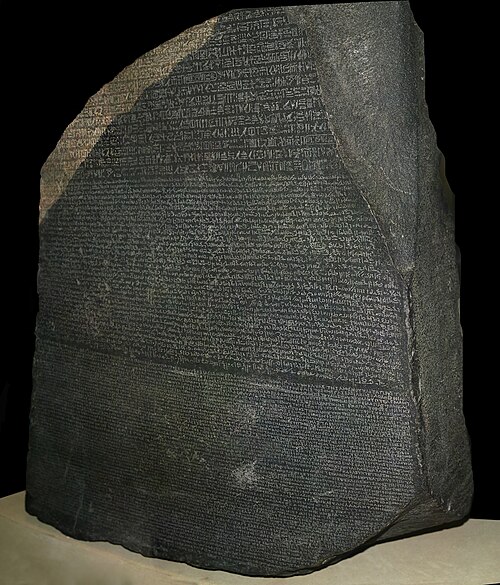
19世紀初頭には、大規模な彫刻コレクションの基礎が築かれ始め、古代遺物の展示ではギリシャ、ローマ、エジプトの工芸品が目立った。 1801年のナイルの戦いでフランス軍が敗北した後、大英博物館はさらに多くのエジプト彫刻を購入し、1802年にはジョージ3世がヒエログリフ解読の鍵となるロゼッタストーンを寄贈した。 [24] 1818年のラムセス2世の巨大胸像に始まる、エジプト駐在英国総領事ヘンリー・ソルトからの寄贈と購入が、エジプト記念碑彫刻コレクションの基礎を築いた。[25]ギリシャ彫刻が続いたが、特に1805年に作られた最初の専用展示スペースであるチャールズ・タウンリー・コレクション(その多くはローマ彫刻)が注目された。1806年、1799年から1803年までオスマン帝国大使を務めた第7代エルギン伯爵トーマス・ブルースは、アテネのアクロポリスにあるパルテノン神殿から大量の大理石彫刻コレクションを持ち出し、英国に移した。1816年、これらの西洋美術の傑作は議会法により大英博物館に買収され、その後同博物館に寄贈された。[26] 1815年にはギリシャのフィガレイアからバスエ・フリーズがコレクションに追加された。古代近東コレクションも、1825年にクラウディウス・ジェームズ・リッチの未亡人からアッシリアとバビロニアの古代遺物を購入したことに始まった。[27]
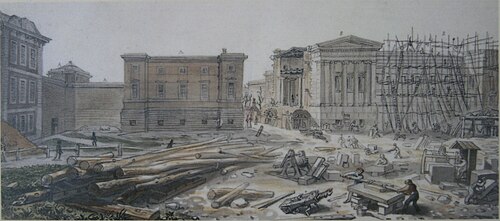
1802年に博物館の拡張を計画するための建築委員会が設立され、1822年にジョージ3世の個人図書館であるキングズ・ライブラリーが寄贈されたことでさらに注目を集めました。キングズ・ライブラリーには65,000冊の本、19,000冊のパンフレット、地図、海図、地形図が収蔵されていました。[28]新古典主義の建築家ロバート・スマーク卿は博物館の東側の拡張計画の作成を依頼され、「王立図書館とその上の絵画館を受け入れるため...」[29]、今日の四角形の建物の計画を提案し、その多くは今日見ることができます。老朽化したオールド・モンタギュー・ハウスは取り壊され、 1823年にキングス・ライブラリー・ギャラリーの建設が開始された。拡張部分である東棟は1831年に完成した。しかし、 1824年にロンドンのナショナル・ギャラリーが設立されたため、[e]計画されていた絵画館は不要となり、上階のスペースは自然史コレクションに充てられた。[30]
大英博物館の最初の概要は 1808 年に出版されました。これには博物館の内容と部屋ごとの展示品が記されており、数年ごとに更新版が出版されました。
ヨーロッパ最大の建築現場(1825年~1850年)
.jpg/500px-Image-The_Grenville_Library_(1875).jpg)
ロバート・スマーク卿の壮大な新古典主義の建物が徐々に完成するにつれ、博物館は建設現場となりました。東棟の 1 階にある王の図書館は1827 年に引き渡され、ロンドンで最も素晴らしい部屋の一つと評されました。1857 年まで一般公開されませんでしたが、 1851 年の万国博覧会の期間中は特別公開が行われました。
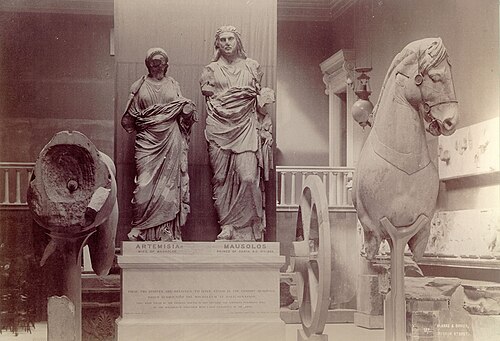
1840年、博物館は初の海外発掘調査、小アジアのクサントスへのチャールズ・フェローズの探検に携わり、古代リキアの支配者の墓の遺跡、ネレイドやパヤヴァの記念碑などが発見された。1857年、チャールズ・ニュートンは紀元前4世紀のハリカルナッソスの霊廟を発見した。これは古代世界の七不思議の1つである。1840年代と1850年代には、博物館はAHレイヤードらによるニムルドやニネベなどのアッシリアの遺跡の発掘調査を支援した。学芸員にとって特に興味深いのは、最終的に発見されたアッシュールバニパルの楔形文字の粘土板の膨大な図書館であり、これが博物館をアッシリア研究の中心に据えるきっかけとなった。[31]
1830 年から大英博物館の理事を務めたトーマス・グレンヴィル卿(1755-1846) は、20,240 冊の蔵書を収集し、遺言で博物館に寄贈しました。蔵書は 1847 年 1 月に 21 台の馬車で運ばれてきました。この大規模な図書館の唯一の空きスペースは、正面玄関ホールと写本サロンの間にある、もともと写本を保管するための部屋でした。蔵書は、1998 年に大英図書館がセント パンクラスに移転するまで、ここにありました。
より広い世界からの収集(1850-1875)
1852 年の前庭のオープンは、ロバート・スマークの 1823 年の計画の完了を意味しましたが、予期せぬコレクションの増加に対処するために、すでに調整が必要でした。アッシリアの彫刻のためのインフィル ギャラリーが建設され、 1857 年には、100 万冊の本を収容できるシドニー・スマークの円形閲覧室がオープンしました。スペースの圧迫が続いたため、自然史をサウス ケンジントンの新しい建物に移すことが決定され、これが後に大英自然史博物館となりました。
新しい建物の建設とほぼ同時期に、大英博物館の「第二の創設者」と呼ばれることもあるイタリア人司書アンソニー・パニッツィが活躍した。彼の監督の下、大英博物館図書館(現在は大英図書館の一部)は規模が5倍に拡大し、国立図書館と呼ぶにふさわしいよく組織された施設となり、パリ国立図書館に次ぐ世界最大の図書館となった。[17]スマークの設計の中心にある中庭は貴重なスペースの無駄遣いであることが判明し、パニッツィの要請により、スマークの兄弟シドニー・スマークが設計した鋳鉄製の円形閲覧室がそこに配置された。[32]
19世紀半ばまで、博物館のコレクションは比較的限定的でしたが、1851年にオーガスタス・ウォラストン・フランクスがコレクションのキュレーションを任され、博物館は初めてイギリスとヨーロッパの中世の古代遺物、先史時代の遺物の収集を開始し、アジアに手を広げ、民族学の所蔵品を多様化しました。博物館にとって本当の成功は、1867年にフランスの反対を押し切ってブラカス公爵の幅広く貴重な古代遺物コレクションを購入したことでした。海外での発掘は続き、ジョン・タートル・ウッドはエフェソスの紀元前4世紀のアルテミス神殿の遺跡を発見しました。これは古代世界のもう一つの不思議です。[33]
学問と遺産(1875-1900)
自然史コレクションは、1887年に新しい大英自然史博物館(現在はサウスケンジントンにある自然史博物館)に移されるまで、大英博物館の不可欠な部分でした。1884年にコレクションが撤去され、新しいホワイトウィング(モンタギューストリートに面する)が完成したことで、古代遺物や民族学のためのスペースが広がり、図書館はさらに拡張することができました。これは、読書室と展示ギャラリーに電気照明が導入された革新の時代でした。[34]
ウィリアム・バージェスの武器コレクションは1881年に博物館に遺贈された。1882年、博物館はエジプトで調査を行う最初の英国団体である独立したエジプト探検基金(現在の協会)の設立に関わった。1892年のエマ・ターナー嬢からの遺贈はキプロスの発掘に資金を提供した。1897年、偉大な収集家で学芸員のAWフランクスが亡くなり、3,300個の指輪、153個の酒器、512個の大陸の磁器、1,500個の根付、850個の印籠、3万枚を超える蔵書票、オクサス宝物を含むさまざまな宝石や皿などの膨大な遺贈が続いた。[35]
1898年、フェルディナンド・ド・ロスチャイルド男爵は、ワデスドン・マナーのニュー・スモーキング・ルームのきらびやかな内容物をワデスドン遺贈として遺贈した。これは、宝石、皿、エナメル、彫刻、ガラス、マヨリカ焼きの精巧な例を含む約300点の美術工芸品で構成されており、その中には、おそらく1390年代にパリでベリー公爵ジョンのために作られた聖なる茨の聖骨箱が含まれていた。このコレクションは、ヨーロッパのルネサンス時代の君主たちが形成したようなシャッツカマーの伝統に則ったものだった。[36]フェルディナンド男爵の遺言は非常に具体的で、条件に従わない場合は無効となり、コレクションは
ワデスドン遺贈室と呼ばれる特別な部屋に置かれ、博物館の他の内容物とは別に、その後永久に、その部屋またはそれに代わる他の部屋に保管されます。[36]
これらの規約は現在でも守られており、コレクションは部屋 2a を占めています。
新しい世紀、新しい建物(1900-1925)
.2.jpg/500px-England;_London_-_The_British_Museum,_Archive_King_Edward_VII's_Galleries_~_North_Wing_(1914).2.jpg)

19 世紀末までに、大英博物館のコレクションは建物がもはや十分な大きさではなくなるほどに増加しました。1895 年に理事会は博物館の周囲にある 69 軒の家屋を購入し、それらを取り壊して博物館の西側、北側、東側に建物を建てるつもりでした。最初の段階は 1906 年に始まった北翼の建設でした。
その間、コレクションは増え続けた。エミール・トルディは中央アフリカで、オーレル・スタインは中央アジアで、DG・ホガース、レナード・ウーリー、T.E.ロレンスはカルケミッシュで発掘品を収集した。この頃、アメリカの収集家で慈善家のJ・ピアポント・モーガンが、かなりの数の品々を博物館に寄贈した。[37]その中には、1908年に1万ポンドで購入したウィリアム・グリーンウェルのヨーロッパ各地の先史時代の遺物コレクションも含まれていた。モーガンはまた、サー・ジョン・エヴァンスのコイン・コレクションの大部分を取得しており、これは後に息子のJP・モーガン・ジュニアによって1915年に博物館に売却された。1918年、戦時中の爆撃の脅威のため、一部の品々はロンドン郵便局鉄道を経由してホルボーン、ウェールズ国立図書館(アバリストウィス) 、マルバーン近くのカントリーハウスに避難した。 1919年に戦時中の保管庫から古美術品が戻ってきた際、いくつかの品物が劣化していることが判明した。1920年5月に保存研究所が設立され、1931年に常設部門となった。これは現在まで存続している最古の博物館である。[38] 1923年、大英博物館は100万人を超える来館者を迎えた。
混乱と復興(1925年~1950年)
大量の本に対処するため、新しい中二階が建設され、書架も再建された。1931年、美術商のジョセフ・デュヴィーン卿がパルテノン神殿の彫刻を展示するギャラリーを建設するための資金を提供した。アメリカ人建築家ジョン・ラッセル・ポープの設計によるこのギャラリーは、1938年に完成した。展示ギャラリーの外観は、ビクトリア朝時代の暗い赤から現代的なパステル調の色合いへと変化し始めた。[f]
1936年にジョージ・フランシス・ヒルが館長兼主任司書を退任した後、ジョン・フォースダイクが後任となった。
ナチスドイツとの緊張が高まり、戦争が差し迫っているように見えると、フォースダイクは、第一次世界大戦で経験したよりもはるかにひどい空襲の可能性があるため、博物館は最も貴重な品々を安全な場所に移す準備をしなければならないという見解に至った。ミュンヘン危機の後、フォースダイクは3,300個の釘抜き箱を注文し、デュビーン・ギャラリーの地下に保管した。同時に、適切な場所の特定と確保を開始した。その結果、博物館は1939年8月24日(内務大臣から指示されたわずか翌日)に、安全な地下室、カントリーハウス、地下鉄アルドウィッチ駅、ウェールズ国立図書館に、厳選された品々の移設を迅速に開始することができた。[40]多くの品々は、1942年初頭に、当初の分散場所から、ウィルトシャーのウエストウッド採石場に新しく開発された施設に移された。[40] 1940年にデュヴィーン美術館は爆撃で大きな被害を受けたため、避難はタイムリーだった。[41]一方、戦争前にナチスは「アングロ・ユダヤ人の反ユダヤ主義の歴史を編纂する」目的で数年間にわたり大英博物館に研究者を派遣していた。[42]
戦後、博物館はあらゆる国、あらゆる時代から収集を続けました。最も目を見張るような追加品の中には、レナード・ウーリーの1922年から1934年の発掘中に発見されたウルの紀元前2600年のメソポタミアの財宝があります。サットン・フーのアングロサクソン人の船葬地からの金、銀、ガーネットの副葬品(1939年)、サフォーク州ミルデンホールの後期ローマ時代の銀食器(1946年)があります。戦後直後の数年間は、保護されていたコレクションの返還と、ロンドン大空襲後の博物館の修復に費やされました。また、被害を受けたデュビーン・ギャラリーの修復作業も始まりました。
新しい公の顔(1950年~1975年)
.jpg/500px-The_Duveen_Gallery_(1980s).jpg)
1953年、博物館は創立200周年を迎えました。その後多くの変化がありました。1964年に初の専任デザイナーと出版担当官が任命され、 1968年に友の会が設立され、1970年に教育サービスが設立され、1973年に出版社が設立されました。1963年、新しい議会法により行政改革が導入されました。展示品の貸し出しが容易になり、理事会の構成が変更され、自然史博物館は完全に独立しました。1959年までに、戦争中に完全に破壊されたコインとメダルのオフィススイートが再建され、再開されました。新しいデザインの趣向でギャラリーの作業に注目が集まり、ロバート・スマークの古典と近東のギャラリーが改造されました。[43] 1962年、デュヴィーンギャラリーがようやく修復され、パルテノン神殿の彫刻が再び博物館の中心に運ばれました。[g]
1970 年代までに、博物館は再び拡張されました。一般向けのサービスがさらに導入され、来場者数は急増し、1972 年の特別展「ツタンカーメンの秘宝」には 1,694,117 人の来場者が訪れ、英国史上最大の成功を収めました。同年、大英図書館を設立する議会法が可決され、写本や印刷物のコレクションが大英博物館から切り離されました。これにより、博物館には古代遺物、コイン、メダル、紙幣、版画、絵画、民族誌が残されました。差し迫った問題は、図書館に追加の資料を収蔵するためのスペースを確保することでした。そのためには、さらに1 室の図書館が必要になりました。+毎年、書架は1 ⁄ 4マイル (2.0 km) 増加しました。政府は新しい大英図書館の建設地としてセント パンクラス駅を提案しましたが、書籍は 1997 年まで博物館から運び出されませんでした。
大法廷の出現(1975年~2000年)
1998 年にようやく実現した大英図書館のセント パンクラスの新施設への移転により、書籍を収蔵するスペースが確保されました。また、ロバート スマークが19 世紀に設計した中央中庭の空きスペースを、ヨーロッパ最大の屋根付き広場であるクイーン エリザベス 2 世グレート コートに再開発する機会も生まれました。このグレート コートは 2000 年にオープンしました。1970 年からバーリントン ガーデンズ 6番地にあった短命の人類博物館に収蔵されていた民族学コレクションは、2000 年に博物館内に新たに建設された専用ギャラリーに戻されました。
版画、素描、メダル、装飾美術といった「近代」の品々への関心が再び高まると、博物館は再び収集方針を調整した。民族誌のフィールドワークはニューギニア、マダガスカル、ルーマニア、グアテマラ、インドネシアなどさまざまな場所で実施され、近東、エジプト、スーダン、英国で発掘調査が行われた。1997年にオープンしたウェストン・ギャラリー・オブ・ローマ・ブリテンでは、ローマ帝国の重要でないと考えられていた部分の豊かさを示す、最近発見された多数の宝物が展示された。博物館は、建物、収集、その他の目的のためにますます民間資金に頼るようになった。[45] 2000年、大英博物館はナショナル・ヘリテージ・ミュージアム・オブ・ザ・イヤーを受賞した。[46]
現在の大英博物館


現在、この博物館には自然史のコレクションは収蔵されておらず、かつて収蔵されていた書籍や原稿は独立した大英図書館の一部となっている。しかし、この博物館は、古代から現代まで世界の文化を代表する工芸品のコレクションにおいて、その普遍性を保っている。1753年に設立された当初のコレクションは、大英博物館では1,300万点以上、自然史博物館では7,000万点、大英図書館では1億5,000万点にまで成長した。
円形閲覧室は、建築家シドニー・スマークが設計し、1857年にオープンしました。ほぼ150年にわたり、研究者たちは博物館の広大な図書館を調べるためにここに来ていました。国立図書館(大英図書館)がセント・パンクラスの新しい建物に移転した1997年に、閲覧室は閉鎖されました。現在、この閲覧室はウォルター・アンド・レオノーレ・アネンバーグ・センター に生まれ変わっています。
博物館の中央の中庭の書架が空になったので、フォスター卿のガラス屋根のグレート コートの取り壊しを始めることができた。2000 年にオープンしたグレート コートは、博物館の回遊性を向上させたことは間違いないが、博物館が深刻な財政難に陥り、多くのギャラリーが閉鎖されていた当時、展示スペースが不足していると批判された。同時に、6 バーリントン ガーデンに一時的に保管されていたアフリカのコレクションは、セインズベリー家の資金援助により、北ウィングに新しいギャラリーが設けられた。寄付金は 2,500 万ポンドに上った。[47]
博物館のオンラインデータベースには、2023年の初めの時点で200万件の記録に約450万件の個別のオブジェクトエントリがありました。 [48] 2022年から2023年にかけて、ウェブサイトへの訪問数は2,700万件でした。[49]これは、2013年のウェブサイト訪問数1,950万件と比較したものです。 [50]
2023年の博物館の来館者数は5,820,860人で、2022年より42%増加した。博物館は2023年に英国で最も訪問者数の多い観光地となった。しかし、来館者数はコロナ禍以前のレベルには回復していない。[51]
大英博物館では数多くの映画が撮影されている。[52]
ガバナンス
監督
大英博物館は、文化・メディア・スポーツ省が3年間の資金提供契約を通じて後援する非省庁の公的機関である。その長は大英博物館の館長である。大英博物館は創設当初から「主席司書」(蔵書がまだ博物館の一部であった時代)によって運営されていたが、1898年に「館長兼主席司書」に改名され、1973年に(大英図書館の分離に伴い)「館長」に改名された。[53]
理事
1963年大英博物館法および1992年博物館・美術館法に基づき、25名の評議員(館長は政府への報告のため会計責任者)が博物館の一般的な管理と統制に責任を負っている。[54] 1963年法以前は、カンタベリー大主教、大法官、庶民院議長が議長を務めていた。理事会は博物館の設立時に、コレクションを実際に所有することなく国のために信託保管するために結成され、現在は主に顧問の役割を果たしている。評議員の任命は、公職任命委員会が発行する公職任命に関する実務規範に定められた規制枠組みに準拠している。[55]
建物

グレート・ラッセル・ストリートに面したギリシャ復興様式のファサードは、ロバート・スマーク卿の特徴的な建物で、高さ45フィート(14メートル)のイオニア式44本の柱があり、小アジアのプリエネにあるアテナ・ポリアス神殿の柱をモデルにしています。正面玄関の上のペディメントは、リチャード・ウェストマコット卿による「文明の進歩」を描いた15体の寓意的な人物像の彫刻で飾られており、1852年に設置されました。
建設は中庭の周囲から始まり、1823年から1828年にかけて東棟(王の図書館)が建設され、続いて1833年から1838年に北棟が建設された。北棟には当初、他のギャラリーとともに閲覧室(現在はウェルカム・ギャラリー)があった。西棟の北半分(エジプト彫刻ギャラリー)の工事も1826年から1831年にかけて進められ、 1842年にモンタギュー・ハウスが取り壊されて西棟の最後の部分が建設され、1846年に完成した。また、大きな列柱のある南棟の建設は1843年に着工され、1847年に完成し、正面ホールと大階段が一般公開された。[56]博物館はポートランド石で覆われているが、周囲の壁や建物の他の部分は、サウスデヴォンのダートムーア産のヘイター花崗岩を使用して建設され、ユニークなヘイター花崗岩トラムウェイで運ばれた。[57]


1846年、ロバート・スマークに代わり、弟のシドニー・スマークが美術館の建築家に就任した。シドニーの増築は主に1854年から1857年にかけて行われた円形閲覧室であった。直径140フィート(43メートル)のこのドームは当時世界で2番目に広いもので、ローマのパンテオンがわずかに広かった。
次の大きな増築は、1882年から1884年にかけて南正面の東端の後ろに増築されたホワイト・ウィングで、建築家はサー・ジョン・テイラーでした。
1895年、議会は博物館の理事会に20万ポンドの融資を行い、グレート・ラッセル・ストリート、モンタギュー・ストリート、モンタギュー・プレイス、ベッドフォード・スクエア、ブルームズベリー・ストリートの5つの周囲の通りにある博物館の建物に面した69軒の家屋すべてをベッドフォード公爵から購入できるようにした。[58]理事会はこれらの家屋を取り壊し、博物館の西、北、東の周囲に新しいギャラリーを建設して、博物館が建っているブロックを完全に埋め尽くす計画を立てた。建築家のジョン・ジェームズ・バーネット卿は、建物の3面すべてを拡張するという野心的な長期計画を提出するよう請願された。モンタギュー・プレイスの家屋のほとんどは、売却から数年後に取り壊された。この壮大な計画のうち、実際に建設されたのは北正面の中央にあるエドワード 7 世ギャラリーのみで、これらは JJ バーネットの設計で 1906 年から 1914 年にかけて建設され、 1914 年にジョージ 5 世とメアリー女王によって開館されました。現在、このギャラリーには博物館の版画、素描、東洋の古代遺物のコレクションが収蔵されています。新しい建物を建てる資金が足りなかったため、他の通りの家はほとんどすべてまだ残っています。
エジプト、ギリシャ、アッシリア彫刻ギャラリーの西側に位置するデュビーン・ギャラリーは、アメリカのボザール様式建築家ジョン・ラッセル・ポープによってエルギン・マーブルを収蔵するために設計されました。1938年に完成しましたが、1940年に爆撃を受け、22年間半ば廃墟となった後、1962年に再オープンしました。第二次世界大戦の爆撃で被害を受けた他のエリアには、1940年9月にエドワード7世ギャラリーに不発弾2発が当たり、国王図書館が高性能爆弾の直撃を受け、円形閲覧室のドームに焼夷弾が落ちたものの被害はほとんどありませんでした。 1941年5月10日から11日の夜、博物館の南西隅に数発の焼夷弾が落下し、中庭と大階段上部のギャラリーにあった書架と15万冊の本が破壊された。この被害は1960年代初頭まで完全に修復されなかった。[59]

クイーンエリザベス2世グレートコートは、大英博物館の中心にある屋根付きの広場で、エンジニアのビューロ・ハッポルドと建築家のフォスター・アンド・パートナーズによって設計されました。[60]グレートコートは2000年12月にオープンし、ヨーロッパ最大の屋根付き広場となっています。屋根はガラスと鋼鉄でできており、オーストリアの鉄鋼会社によって建てられました。[61] 1,656枚のユニークな形のガラス板が使われています。グレートコートの中心には、大英図書館が退去した閲覧室があり、その機能は現在セント・パンクラスに移転しています。
今日、大英博物館は世界最大級の博物館に成長し、その総面積は92,000 m 2 (990,000平方フィート)を超えています。[62] [検証失敗] [63]加えて、21,600 m 2 (232,000平方フィート) [64]の敷地内保管スペースと9,400 m 2 (101,000平方フィート) [64]の外部保管スペースがあります。全体として、大英博物館が一般公開しているのは、そのコレクション全体の1%未満[64]、およそ50,000点です。[65]
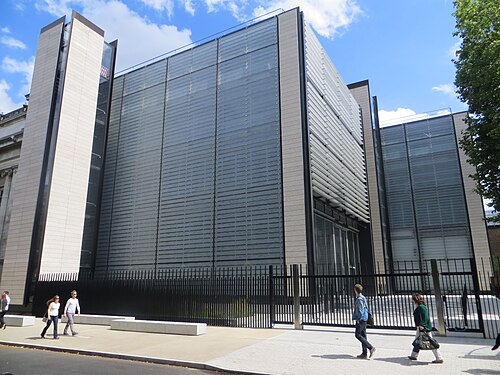
一般に公開されているギャラリーは100近くあり、展示スペースは2マイル(3.2 km)に及ぶが、人気のないギャラリーでは開館時間が制限されている。しかし、大規模な臨時展示スペースがなかったため、1億3500万ポンドをかけて世界自然保護展示センターがスペースを確保し、博物館のすべての保存施設を1つのセンターに集約することとなった。このプロジェクトは2007年7月に発表され、建築家のロジャース・スターク・ハーバー・アンド・パートナーズが担当した。2009年12月に計画許可が下り、2014年3月のバイキング展に間に合うように完成した。 [66] [67] 2017年、世界自然保護展示センターは建築の優秀性に贈られるスターリング賞の最終候補に残った。[68]
ウェスト・ケンジントンのブライス・ハウスは、博物館が小型および中型の遺物を保管するために使用されており、イースト・ロンドンのフランクス・ハウスは「初期先史時代」(旧石器時代と中石器時代)やその他のコレクションの保管と作業に使用されている。[69]
部門
エジプト・スーダン省

大英博物館は、カイロのエジプト博物館に次いで世界最大[h]かつ最も包括的なエジプト古代遺物のコレクション(10万点以上[70])を所蔵している。その範囲と質において計り知れない重要性を持つコレクションには、エジプトとスーダンの事実上すべての重要な遺跡からのすべての時代の品々が含まれている。それらは、先王朝新石器時代(紀元前1 万年頃)からコプト(キリスト教)時代(紀元後12世紀)を経て現代に至るまで、1万1千年以上の期間にわたるナイル渓谷(ヌビアを含む)の文化のあらゆる側面を示している。[71]
エジプトの古代遺物は、1753年にハンス・スローン卿から160点のエジプトの品々[72]を受け取ったことに始まる大英博物館のコレクションの一部となっている。 1801年のナイルの戦いでナポレオン率いるフランス軍が敗北した後、収集されたエジプトの古代遺物は英国軍に押収され、1803年に大英博物館に寄贈された。有名なロゼッタ・ストーンを含むこれらの作品は、博物館が取得した最初の重要な大型彫刻群であった。その後、英国はヘンリー・ソルトをエジプトの領事に任命し、ソルトは膨大な古代遺物のコレクションを集めた。その一部は、有名なイタリア人探検家ジョヴァンニ・ベルゾーニが巧みに収集し輸送した。ソルトが収集した古代遺物の大半は、大英博物館とルーブル美術館が購入した。
1866年までに、コレクションは約10,000点に上りました。発掘調査による古代遺物が博物館に寄贈されるようになったのは、E・A・ウォリス・バッジの尽力によるエジプト探検基金の活動の結果、19世紀後半のことでした。長年にわたり、アマルナ、ブバスティス、デイル・エル・バハリからの遺物を含め、11,000点を超える遺物がこの出所から寄贈されました。フリンダーズ・ペトリーのエジプト研究報告やエジプトの英国考古学学校、スーダンのカワとファラスへのオックスフォード大学探検隊など、他の組織や個人も発掘調査を行い、遺物を大英博物館に寄贈しました。

博物館はエジプトの発掘調査を積極的に支援し、20世紀を通じて重要な収蔵品を収集し続けてきたが、エジプトの遺物法の変更により、発見物の輸出を許可する政策が停止されたため、スーダンでは分割がまだ続いている。大英博物館はエジプトで独自の発掘調査を実施し、アシュート(1907年)、モスタゲダとマトマー(1920年代)、アシュムネイン(1980年代)、スーダンのソバ、カワ、北ドンゴラ地域(1990年代)などの遺跡を含む発見物の分割を受け取った。エジプトのコレクションの規模は現在11万点を超えている。[73]
2001年秋、博物館の常設コレクションを構成する800万点の物品に、ウェンドルフ・コレクションのエジプト・スーダン 先史時代の物品600万点が追加され、さらに拡大しました。[74]これらは、テキサス州のサザンメソジスト大学のフレッド・ウェンドルフ教授から寄贈されたもので、1963年から1997年の間にサハラ砂漠の先史時代の遺跡で行われた発掘調査で得られた遺物と環境遺物のコレクション全体です。その他のフィールドワークコレクションは、最近ではディートリッヒ・クレムとローズマリー・クレム(ミュンヘン大学)およびウィリアム・アダムス(ケンタッキー大学)から寄贈されました。
大英博物館には、最大の展示スペース(記念碑的彫刻を展示する第4室)を含む7つの常設エジプトギャラリーがありますが、展示できるのはエジプト所蔵品のわずか4%です。2階のギャラリーには、カイロ以外では最大のミイラと棺140体からなる同博物館のコレクションから厳選した作品が展示されています。コレクションの大部分は、死者の崇拝に関連する墓や文脈から出土したものであり、これらの作品、特にミイラは、博物館を訪れる人々が最も熱心に探し求める展示品の一つとなっています。
コレクションのハイライトは次のとおりです。
先王朝時代および初期王朝時代 (紀元前 6000年頃 - 紀元前 2690年頃)
- ゲベラインのジンジャーと他の 5 人のミイラ(紀元前 3400 年頃)
- 象牙の柄が付いたフリントナイフ(ピットリバーズナイフとして知られる)、シェイク・ハマダ、エジプト(紀元前 3100年頃)
- 戦場のパレットとハンターのパレット、複雑な装飾が施された2つの化粧用パレット(紀元前 3100年頃)
- エジプトのアビドスにある初期の神殿から出土した象牙の王像(紀元前 3000年頃)
- アビドス出土のデン王のサンダルのラベル、第 1 王朝中期 (紀元前 2985 年頃)
- ペリブセン王の石碑、アビドス(紀元前 2720年頃 - 紀元前2710年)
古王国時代(紀元前2690年~2181年)
- 第 2 王朝 (紀元前 2690 年) のハセケムウィ王の墓から出土した遺物
- 造船技師アンクワの花崗岩像、サッカラ、エジプト第 3 王朝 (紀元前 2650 年頃)
- 古代世界の七不思議の一つ、ギザの大ピラミッドのオリジナルの外壁石の一部(紀元前2570年頃)
- デシャシャのネンケフトカの像、第 4 王朝 (紀元前 2500 年)
- サッカラ、プタシェプセスの石灰岩の偽扉(紀元前 2440 年)
- アブシール・パピルス、古代エジプトの最も古いパピルスの一部、アブシール(紀元前2400年)
- チェティの木造墓像、第 5 王朝から第 6 王朝 (紀元前 2345 年頃 - 紀元前 2181 年頃)
中王国時代(紀元前2134年~1690年)
- セベケテピの内棺と外棺、ベニ・ハサン(紀元前2125年頃~1795年頃)
- アンクレフの珪岩像、第 12 王朝 (紀元前 1985 年 - 1795 年)
- エジプト、アビドス、ヘカイブの石灰岩の石碑、第 12 王朝 (紀元前 1990 年 - 1750 年)
- サハトルのブロック像と石碑、第 12 王朝、アメンエムハト 2 世治世(紀元前 1922 年 - 1878 年)
- アビドス、第 12 王朝のインヨテフ礼拝堂の石灰岩の彫像と石碑(紀元前 1920 年頃)
- サモントゥの石碑、アビドス (紀元前 1910 年)
- ジェフティホテプの墓のレリーフ、デイル・エル・ベルシャ(紀元前1878年~1855年)
- センウセレト3世の花崗岩像3体、デイル・エル・バハリ(紀元前1850年)
- アビドスのレフアンク像(紀元前 1850 ~ 1830 年)
- アメンエムハト3世の巨大な頭部、ブバスティス(紀元前1800年)
- ネビプセンウセレトの石碑、アビドス (紀元前 1800 年)
第2中間期(紀元前1650年~1550年)
- ヌブケペルレ・インテフ王の棺、テーベ(紀元前1570年)
- 古代エジプトの数学の初期の例である有名なリンド数学パピルス、テーベ(紀元前1550年)
新王国時代(紀元前1549年~1069年)
- ファラオハトシェプストまたはその後継者トトメス 3 世の片岩の頭部(紀元前 1480 年)
- 膝の上にネフェルウレ王女を乗せたセネンムト像、カルナック(紀元前 1470 年)
- セネフェルのブロック像、西テーベ(紀元前1430年)
- テーベのムト神殿のセクメト像20 体(紀元前 1400 年)
- ギザの大スフィンクスのひげの断片(紀元前14世紀)
- スーダンのソレブから出土した花崗岩製の巨大なライオン像2 体(紀元前 1370 年)
- エル・アマルナの銀塊の埋蔵品(紀元前1352~1336年)
- アメンホテプ3世の像の巨大な頭部(紀元前1350年)
- アメンホテプ3世の巨大な石灰岩の胸像(紀元前1350年)
- アマルナの粘土板、発見された382枚の粘土板のうち99枚、ベルリンの東方アジア博物館(203枚)に次いで世界で2番目に大きいコレクション(紀元前1350年)
- サッカラのホルエムヘブの墓から出土した石碑(紀元前 1330 年)
- 61 種類の医療および魔法の治療法が記載されたロンドン医療パピルス(紀元前 1300 年)
- アニのパピルス、古代テーベ(紀元前1275年)に現存する最も優れた死者の書の一つ
- ラムセス2世神殿のエジプト王一覧(紀元前1250年)
- ラムセス2世の息子カエムワセトの像、アビドス(紀元前1250年)
- 古代テーベ(紀元前1200年)から現存する最古のパピルス、グレートハリスパピルス
- 二人の兄弟の物語が記されたドルビニー パピルス(紀元前 1200 年 - 1194 年)
- セティ2世の座像、カルナックのムト神殿(紀元前1200年~1194年)
- ラムセス6世の石棺の顔、王家の谷(紀元前1140年)
- ネジュメットの死者の書、絵画による供物の小絵とヒエログリフの文字の列、デイル・エル・バハリ(紀元前 1070 年)
第三中間期(紀元前1069年~664年)
- グリーンフィールド パピルス、テーベのアメン・ラーの巫女であり、ピヌジェム 2 世とネスコンの娘であるネシタネベタシュル王女の葬儀用パピルス(紀元前 950 年 - 930 年)
- サイスのショシェンク1世の息子であるネマレス将軍が所有していた金の腕輪(紀元前940年)
- ブバスティスのハトホルの巨大な柱頭、第 22 王朝 (紀元前 922-887 年)
- ナイル川の神ハピの像、カルナック(紀元前 900年頃)
- テーベのネスペレンヌブのミイラの棺と棺(紀元前 800 年頃)
- エジプト、メンフィス発掘のシャバカ石、第 25 王朝 (紀元前 700 年頃)
- メンカウラー王の棺、ギザ(紀元前 700~600 年)
- タハルコ王を守る雄羊の姿をしたアメン神の3 つの像のうちの 1 つ、カワ(紀元前 683 年)
- 祭司ホルの内棺と外棺、デイル・エル・バハリ、テーベ、第 25 王朝 (紀元前 680 年頃)
- タハルコのスフィンクスの花崗岩像(紀元前 680 年)
後期(紀元前664年~332年)
- プサメティコス1世(紀元前664-610年)の治世中にエジプト北部の宰相(首相)であったサソベクのサイテ石棺
- サソベクの石棺の蓋(紀元前630年)
- イシスとホルスの青銅像、北サッカラ、エジプト (紀元前 600 年)
- ハプメンの石棺、カイロ、第 26 王朝以降 (紀元前 600~300 年)
- ワヒブレのひざまずく像、マリウト湖付近(紀元前 530 年)
- アンクネスネフェリブレの石棺(紀元前 525 年)
- ネクタネボ1世の胴体(紀元前380年~362年)
- ファラオネクタネボ 2 世(紀元前 360-343 年)のオベリスクと石棺
- ネクタネボ2世の石棺、アレクサンドリア(紀元前360-343年)
プトレマイオス朝(紀元前305年~紀元前30年)
- 古代エジプトの象形文字を解読した三言語の石碑、有名なロゼッタ・ストーン(紀元前196年)
- フィラエのプトレマイオス8世のナオスまたは神殿(紀元前150年)
- スカラベの巨大な彫刻(紀元前32~30年)
- プトレマイオス1世ソテル(紀元前305年~283年)のエジプト風玄武岩像の破片
- ホルネジテフのミイラ(内棺)、テーベ(紀元前 3 世紀)
- メロエのシャナクダケテ女王の礼拝堂の壁(紀元前 150年頃)
- プトレマイオス7世の神殿、フィラエ(紀元前 150年頃)
ローマ時代(紀元前30年~紀元後641年)
- 片岩の若者の頭部、アレクサンドリア(紀元前 30 年以降)
- クシュ王国のメリオティック・ハマダブ石碑は、スーダンのメロエの古代遺跡の近くで紀元前24年に発見された。
- テーベのクルナから出土したソテルとクレオパトラの棺の蓋(2 世紀初頭)
- 死者の肖像画を描いた若者のミイラ、ハワラ(紀元後 100~200 年)
- ハワラおよびファイユームの他の遺跡から発見されたファイユームのミイラの肖像画30 体以上(西暦 40~250 年)
- カスル・イブリムのX グループ墓所の青銅製ランプとパテラ(西暦 1 世紀から 6 世紀)
- 聖人の殉教を描いたコプトの壁画、ワディ サルガ (紀元 6 世紀)
-
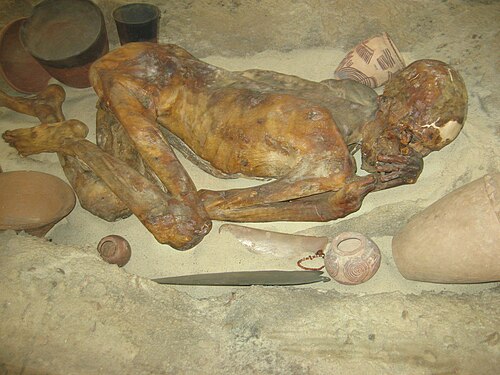 64号室 –ゲベライン先王朝時代のミイラが納められたエジプトの墓、後期先王朝時代、紀元前3400年
 -
 部屋 4 – ファラオセヌスレト 3 世の黒色花崗岩像 3 体、紀元前 1850 年頃
 -
 部屋 4 – 女神サクメトの黒花崗岩像 3 体、紀元前 1400 年頃
 -
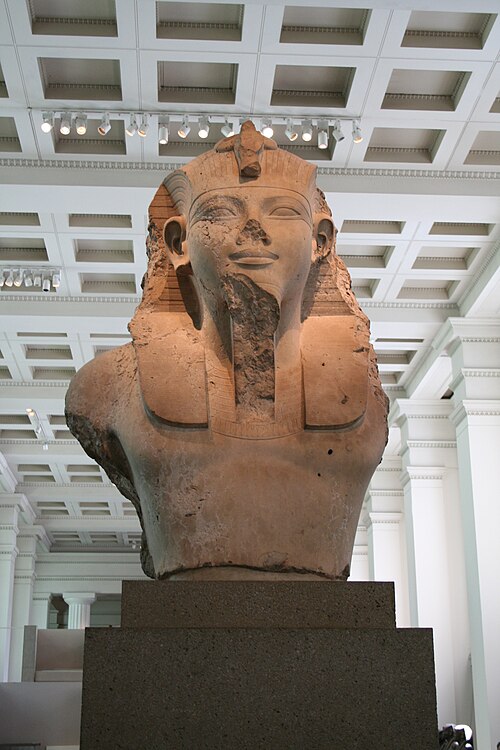 部屋 4 – アメンホテプ 3 世の巨大像、紀元前 1370 年頃
 -
 大中庭 –アメンホテプ3世の巨大な珪岩像、紀元前 1350年頃
 -
 部屋 4 -夫婦の石灰岩像、紀元前 1300~1250 年
 -
 63 室 -ヘヌトメヒトの墓から出土した金メッキの外棺、テーベ、エジプト、第 19 王朝、紀元前 1250 年
 -
 フネフェルの死者の書、シート 5、第 19 王朝、紀元前 1250 年
 -
 部屋 4 – 古代エジプト後期の猫のブロンズ像(紀元前 664 年~ 332 年頃)
 -
 部屋 4 – 緑色シルト岩でできたファラオの頭部、第 26~30 王朝、紀元前 600~340 年
 -
 グレート コート –エジプト第 30 王朝のネクタネボ 2 世の黒シルト岩のオベリスク(紀元前 350 年頃)
 -
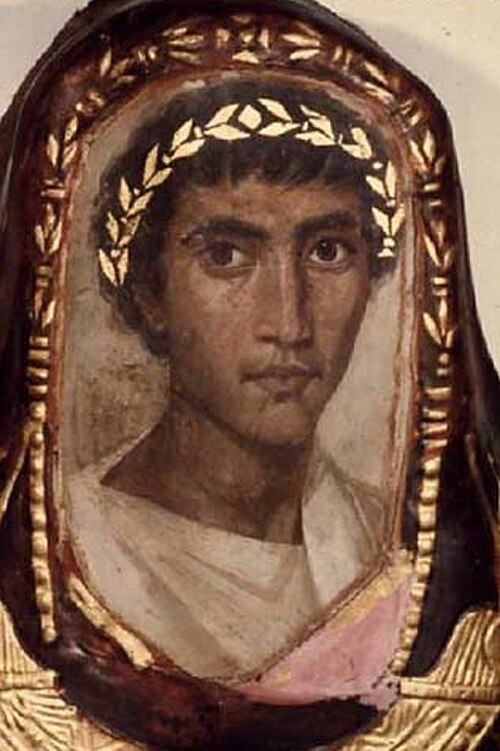 62号室 –紀元100~200年、ローマ時代にエジプトのテーベに定住したギリシャ人、アルテミドロス1世のミイラのケースの詳細

.jpg/500px-P1050700_(5022075232).jpg)

ギリシャ・ローマ部門


大英博物館は、古典世界の遺物の世界最大かつ最も包括的なコレクションの一つを所有しており、その所蔵品は10万点を超えます。[75]これらは主に、ギリシャ青銅器時代の始まり(紀元前3200年頃)から、紀元313年にローマ皇帝コンスタンティヌス1世の治世下でミラノ勅令が出され、キリスト教がローマ帝国の国教として確立されるまでの期間にわたります。19世紀には考古学が揺籃期にあり、多くの先駆者が古典世界の各地で発掘調査を開始しました。大英博物館で発掘調査を行った主な人物には、チャールズ・ニュートン、ジョン・タートル・ウッド、ロバート・マードック・スミス、チャールズ・フェロウズなどがいます。
ギリシャの品々は、ギリシャ本土やエーゲ海諸島から、地中海東部の小アジアやエジプトの近隣地域、さらにはシチリア島や南イタリアを含むマグナ・グラエキアの西部地域まで、古代ギリシャ世界全体から集められたものである。キクラデス、ミノア、ミケーネの文化が代表的であり、ギリシャのコレクションにはアテネのパルテノン神殿の重要な彫刻のほか、古代世界の七不思議のうちの2つ、ハリカルナッソスのマウソロス霊廟とエフェソスのアルテミス神殿の要素も含まれている。[75]
この部門は、青銅器時代初期から始まり、イタリア国外でのイタリアおよびエトルリアの古代遺物の最も広範なコレクションの一つを所蔵しているほか、キプロス島や小アジアのリキアおよびカリアの非ギリシャ植民地からの膨大な資料群も所蔵している。ローマ共和国からの資料もいくらかあるが、このコレクションの強みは、ブリテン島(先史・ヨーロッパ部門の主力)を除く ローマ帝国全土からの包括的な物品の配列にある。
古代の宝飾品や青銅器、ギリシャの壺(多くは南イタリアの墓から出土したもので、かつてはサー・ウィリアム・ハミルトンとシュヴァリエ・デュランのコレクションの一部であった)、有名なカメオガラスのポートランドの壺を含むローマのガラス、ローマの金ガラス(バチカン美術館に次いで2番目に大きいコレクション)、ネイサン・デイビスが発掘した北アフリカのカルタゴとウティカのローマのモザイク、ローマ時代のガリアの銀の宝物(一部は慈善家で博物館の理事であるリチャード・ペイン・ナイトが遺贈したもの)などのコレクションは特に重要です。キプロスの古代遺物も充実しており、サー・ロバート・ハミルトン・ラングのコレクションの購入や、1892年のエマ・ターナーの遺贈の恩恵を受けており、これらの遺贈は島での多くの発掘調査に資金を提供しました。ローマの彫刻(その多くはギリシャのオリジナルのコピー)は、有名なファルネーゼ コレクションの残りの彫刻と同様に、タウンリー コレクションに特によく代表されています。
ギリシャ・ローマ部門の展示品は博物館全体に展示されていますが、建築記念碑の多くは 1 階にあり、ギャラリー 5 からギャラリー 23 までの連結ギャラリーがあります。上階には、古代イタリア、ギリシャ、キプロス、ローマ帝国の小型資料を展示するギャラリーがあります。
現在のコレクションには以下が含まれます:
- パルテノン神殿の彫刻(エルギン・マーブル)、(紀元前447年~438年)
- 柱頭と柱頭ドラム(紀元前437年~432年)
- 現存する柱と建築装飾品(紀元前420~415年)
- 現存する6体のカリアティードのうちの1体(紀元前415年)
アテナ・ニケ神殿
- 現存するフリーズ石板と柱頭(紀元前427~424年)
- ディオニュソスの像(紀元前270年)
- 大理石のコリント式柱頭(紀元前50年)
ポセイドン神殿、スニオン
- 溝付き柱の土台(紀元前444~440年)
- ネメシス像の頭部(紀元前430~420年)
バサイ神殿
- 神殿内部のフリーズの現存するブロック 23 個(紀元前 420~400 年)
ダフニの アポロンの聖域
- 溝付き柱、柱脚、イオニア式の柱頭(紀元前399~301年)
- 寺院の天井の彫刻の格天井(紀元前350~325年)
- イオニア式の柱頭、アーキトレーブ、アンテ(紀元前350年~325年)
- 大理石の戦車御者の胴体(紀元前320~300年)
- マウソロスとその妻アルテミシアと特定される 2 体の巨大な独立像(紀元前 350 年頃)
- 霊廟の頂上を飾る戦車群の馬の一部(紀元前 350年頃)
- アマゾマキアフリーズ –ギリシャ人とアマゾネス人の戦いを描いた長いレリーフ フリーズ(紀元前 350 年頃)
- 彫刻が施された柱の土台の一つ(紀元前340~320年)
- 列柱の上にあるイオニア式のフリーズの一部(紀元前330~300年)
小アジアの クニドス
小アジアの クサントス
- ライオンの墓(紀元前550~500年)
- ハーピーの墓(紀元前 480-470 年)
- ネレイド記念碑、大規模で精巧なリュキアの墓の部分的な再建(紀元前390-380年)
- メレヒの墓(紀元前390年~350年)
- パヤヴァの墓(紀元前 375 ~ 350 年)
- ピクソダロスの二言語勅令(紀元前340年)
キプロス島 サラミスのゼウス神殿
- 有翼の雄牛の間に立つカリアティード像のある大理石の柱頭(紀元前 300~250 年)
より幅広いコレクション
先史時代のギリシャとイタリア(紀元前3300年~紀元前8世紀)
- エーゲ海の島々から出土したキクラデス諸島の像30 体以上。その多くはギリシャのジェームズ・セオドア・ベントが収集したもの (紀元前 3300 年 - 2000 年)
- 南イタリアのパエストゥムから発見されたガウド文化の 大きなアスコス(紀元前2800~2400年)
- ギリシャのナクソス島から出土した木工用金属工具のコレクション(紀元前 2700~2200 年)
- ギリシャ、メロス島のフィラコピから出土した陶器のケルノ2 個(紀元前 2300 年 - 2000 年)
- クノッソス宮殿の出土品。巨大な陶器の貯蔵瓶を含む。一部はアーサー・エヴァンス卿が寄贈したもの。ギリシャ、クレタ島(紀元前1900~1100年)
- ギリシャ、エーゲ海北部のアイギナ島から発見されたミノア文明の金の財宝(紀元前1850年~1550年)
- クレタ島のプシュクロ洞窟から出土した遺物。蛇のような形の献酒台 2 台を含む (紀元前 1700 年 - 1450 年)
- クレタ島レシムノンの青銅製ミノア牛跳び像(紀元前 1600 年~ 1450 年)
- ギリシャ、ペロポネソス半島のアトレウスの宝物庫の柱とアーキトレーブの一部(紀元前1350~1250年)
- キプロス島エンコミで発見された象牙のゲームボード(紀元前 12 世紀)
- サルデーニャ、カリアリのサンタ・マリア・イン・パリスで発見されたヌラージの青銅工芸品の宝庫(紀元前 1100 ~ 900 年)
- エルギン アンフォラ、ディピュロン マスター作とされる高度に装飾された陶器の花瓶、ギリシャ、アテネ (紀元前 8 世紀)
- スパルタのアルテミス・オルティアの聖域からの奉納物(紀元前 8 世紀)
エトルリア人(紀元前8世紀~紀元前1世紀)
- イタリア中部のパレストリーナにあるカステラーニとガレアッシの墓から発見された金の宝飾品やその他の豪華な工芸品(紀元前8世紀~6世紀)
- ベルナルディーニの墓、チェルヴェテリ(紀元前 675-650 年)の動物の粒状のパレードが描かれた装飾的な金のフィブラ
- チェルヴェテリの「5つの椅子の墓」(紀元前625~600年)から出土した2体の小さなテラコッタ像を含むさまざまな品々
- シチリア島サンタンジェロ・ムクサーロの金の献酒杯(紀元前 600 年)
- ヴルチのイシスの墓とフランソワの墓の内容(紀元前570-560年)
- チェルヴェテリの墓から出土した彩色テラコッタ板(いわゆるボッカネーラ板) (紀元前560~550年)
- ペルージャ近郊のサンマリノ城の装飾された銀板(紀元前540~520年)
- イタリア、プラート近郊ピッツィディモンテ出土の青銅製奉納像(紀元前 500~480 年)
- ギリシャ、オリンピアのクマエの戦いを記念した碑文が刻まれた青銅のヘルメット(紀元前 480 年)
- モンテ・ファルテローナの偶像湖から出土した青銅製の奉納小像(紀元前 420~400 年)
- イタリア、ボルセーナのラース・メティエの墓から出土した青銅器のシンポジウムセットの一部(紀元前400~300年)
- ペルージャの女性の頭のペンダントが付いた精巧な金のイヤリング(一対のうちの1つ、紀元前300~200年)
- オスク語の最も重要な碑文の一つであるオスク語の粘土板(紀元前300~100年)
- 南イタリアのサンテウフェミア・ラメーツィアから出土した金の宝飾品の埋蔵品(紀元前 340~330 年)
- ラツィオ州ネミ湖のディアナ聖域のラツィオ青銅像(紀元前 200~100 年)
- キウージのセイアンティ・ハヌニア・トレナサの石棺(紀元前150~140年)
古代ギリシャ(紀元前8世紀~紀元後4世紀)
- ロードス島のカミロス墓地から出土した東洋風の金の宝飾品(紀元前700~600年)
- デロス島のアポロンの巨大なクーロスの足(紀元前600~500年)
- トルコ西部のディディマの聖なる道から出土した等身大の古代彫像群(紀元前 600~580 年)
- 南イタリア、アルメントの騎手と馬のブロンズ像(紀元前 550 年)
- 南イタリアのサン・ソスティの青銅製斧の頭(紀元前 520 年)
- キプロス島マリオンで発見された裸の若者の立像(紀元前 520 年 - 510 年)
- トルコ西部クラゾメナイの大きなテラコッタの石棺と蓋、絵画の描かれた場面(紀元前 510~480 年)
- ギリシャ中部ガラクシディのロクリス方言で書かれた青銅板 2 枚(紀元前 500-475 年)
- 南イタリアのターラントの騎士の大きな青銅製騎馬像の破片(紀元前 480~460 年)
- チャッツワース アポロヘッド、タマソス、キプロス (紀元前 460 年)
- アテネのディピュロン墓地の横たわる雄牛の像(紀元前 4 世紀)
- シチリア島アヴォラの金の宝飾品の埋蔵品(紀元前370~300年)
- トルコのプリエネにあるアレクサンダー大王の献呈碑文(紀元前 330 年)
- ギリシャ、ミロス島のアスクレピオスの巨大像の頭部(紀元前325~300年)
- ブラガンサ ブローチ、ケルトとギリシャの影響を反映した装飾的な金のフィブラ (紀元前 3 世紀)
- フランス南東部のエズから出土した銀のパテラの宝物(紀元前 3 世紀)
- 南イタリアのオルペウス教の聖域の金の板(紀元前 3 世紀から 2 世紀)
- イタリア中部ボヴィッラエのホメロス神格化の大理石レリーフ(紀元前221-205年)
- トルコ西部の「アランデルの頭」として知られるギリシャの詩人のブロンズ彫刻(紀元前 2 世紀から 1 世紀)
- トルコ、アナトリア南西部バルギリアのスキュラ記念碑の遺跡(紀元前 200~150 年)
- サタラのアフロディーテ像の青銅製の頭部と手(紀元前 1 世紀)
- パラミシアの青銅像(紀元2世紀)
- クレタ島ゴルティナの円形劇場から出土した雄牛の背中に座るエウロパの大きな像(紀元前 100 年)
古代ローマ(紀元前1世紀~紀元後4世紀)
- リウィアがダイアナ、オクタヴィアヌスがメルクリウスとして描かれた、彫刻が施された楕円形の瑪瑙の銘板 1 組(ローマ、紀元前 30 年 - 紀元前 25 年)
- ギリシャ、コリントスのギルフォード・プテアル(紀元前30~10年)
- スーダンのメロエから出土したアウグストゥスの青銅製の頭部(紀元前27~25年)
- カメオガラスのポートランド花瓶、古代ローマ(紀元1~25年)の最も有名なガラス容器
- エルサレム近郊で発見された同性愛の描写がある銀のウォーレンカップ(紀元後5~15年)
- マインツのグラディウス(または「ティベリウスの剣」)とブラカスのカメオ、ローマ皇帝の勝利を描いたもの(紀元後 15 年)
- ドイツ、クサンテンで発見された装飾された銀メッキ青銅製の馬具(紀元 1 世紀)
- バーバーカップとクロフォードカップとして知られる、彫刻が施された蛍石のカップのペア(西暦 100 年)
- 南フランスの古代ローマ都市のアスリート像「ヴァイソン・ディアドゥメノス」(西暦 118 ~ 138 年)
- ドイツのフランクフルト近郊のヘッデルンハイムで発見された、ローマの神ユピテル・ドリケヌスに捧げられた銀の奉納板の宝物(西暦 1~2 世紀)
- 円盤投げ選手(ディスコボロス)[76]とヒュプノスの青銅製の頭部、イタリア、チヴィテッラ・ダルナ(紀元1~2世紀)
- スペイン南部のウエルバにある銅鉱山の排水に使われた大きな木製の車輪の一部(紀元 1~2 世紀)
- ローマのパンテオンの柱頭(紀元後 126 年)
- ローマ皇帝アントニヌス・ピウスの妻ファウスティナ・ザ・エルダーの巨大な大理石の頭部、トルコ西部サルディス(紀元後 140 年)
- アテネのパナシナイコ競技場のプロヘドリアの大理石の玉座(紀元 140 年 - 143 年)
- トルコのミレトポリス近郊の墓から出土した宝石の宝飾品(紀元後 175~180 年)
- ローマ執政官ティベリウス・クラウディウス・カンディドゥスの碑文が刻まれた大理石の台座。スペイン、タラゴナで発掘された(西暦195~199年)
- ジェニングス・ドッグ、モロッシアの番犬の像、イタリア中部、(西暦 2 世紀)
- イタリア、ローマのコロッセオの装飾された大理石の手すりの一部(西暦 2 世紀)
- ギリシャ、テッサロニキのヴァルダル門のポリタルコス碑文(西暦 2 世紀)
- イタリアのノーラとトルコのガズィアンテプから出土したローマ騎兵の青銅製パレードマスク2枚[77](2世紀)
- アルチザート、ボーラン、ボスコレアル、ブルサ、シャウルス、コービアック、 シャトゥザンジュ、コニンブリガ、マコン、ルヴェル=トゥルダンで発見されたさまざまな銀の宝物(西暦 1 世紀~ 3 世紀)
- リビア、キュレネのアポロンの奉納像(紀元後 2 世紀)
- ドイツのデュッセルドルフ近郊で発見されたユールディンゲンの宝物(西暦 2~3 世紀)
コレクションには、アマトス、アトリパルダ、アフロディシアス、デロス、イアソス、イダリオン、リンドゥス、カリムノス、ケルチ、ラムノス、サラミス、セストス、スニオン、トミス、テッサロニキなど、古代世界の他の多くの遺跡からの建築、彫刻、碑文の品々が含まれています。
-
 12号室 – ギリシャ、エギナ島の宝物から出土した金のイヤリング、紀元前1700~1500年
 -
 展示室 18 – パルテノン神殿の東ペディメントの彫像と南壁のメトープ、ギリシャ、アテネ、紀元前 447-438 年
 -

-

-

-
 部屋 22 - 蜂と 2 匹のセミが描かれた金色のオークのリース、トルコ西部、紀元前 350-300 年頃
 -

-
 22 室 -金属製の王冠を被ったアスクレピオスの巨大な頭部(現在は紛失)。ギリシャ、メロス島のカルト像より。紀元前 325-300 年。
 -

-
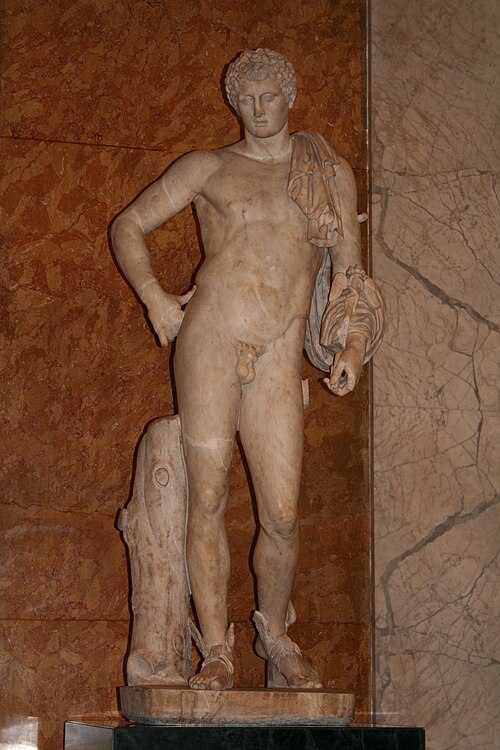 部屋 1 -啓蒙ギャラリーのファルネーゼのヘルメス、イタリア、西暦 1 世紀
 -
 69号室 - イタリア、ポンペイのローマ剣闘士のヘルメット、紀元1世紀
 -
 23 室 - 有名な「うずくまるヴィーナス」、ローマ、紀元後 1 世紀頃
 -
 22 室 – 有名な「スピナリオ(とげのある少年)」のローマ時代の大理石の複製、イタリア、紀元後 1 世紀頃
 -

.jpg/500px-BM,_GNR;_The_Acropolis_&_The_late_5th_C_BC_~_Erechtheum_Caryatid_+_Ionic_Column_(Room_19).jpg)
.jpg/500px-thumbnail.jpg)
.jpg/500px-Head_and_left_hand_from_a_bronze_cult_statue_of_Anahita,_a_local_goddess_shown_here_in_the_guide_of_Aphrodite,_200-100_BC,_British_Museum_(8167358544).jpg)
中東部

大英博物館は、約33万点の作品を所蔵しており[78]、イラク以外では世界最大かつ最も重要なメソポタミア古代遺物のコレクションを所蔵しています。アッシリア彫刻、バビロニア、シュメールの古代遺物のコレクションは極めて重要で、ニムルド、ニネベ、ホルサバードのアラバスター製のアッシリア宮殿のレリーフで装飾された部屋が一続きになっており、世界でも最も包括的なコレクションの一つとなっています。
コレクションは古代近東とその隣接地域の文明を代表するもので、メソポタミア、ペルシャ、アラビア半島、アナトリア、コーカサス、中央アジアの一部、シリア、聖地、先史時代の地中海西部のフェニキア人の居住地を網羅し、7世紀の品々も含まれています。
メソポタミアの品々の最初の重要な追加は、1825年のクラウディウス・ジェームズ・リッチのコレクションからでした。このコレクションは、1845年から1851年にかけてAHレイヤードがニムルドとニネベのアッシリアの遺跡で行った発掘によって、その後劇的に拡大されました。レイヤードはニムルドで、アッシュールナツィルパル2世の北西宮殿のほか、3つの宮殿とさまざまな寺院を発見しました。彼は後に、ニネベで「71もの広間」があるセンナケリブの宮殿を発見しました。その結果、シャルマネセル3世の黒いオベリスクを含む、多数のラマッス、宮殿のレリーフ、石碑が大英博物館に持ち込まれました。

レイヤードの研究は助手のホルムズド・ラッサムによって引き継がれ、1852年から1854年にかけて、彼はニネベのアッシュールバニパルの北宮殿を発見した。そこには、有名なアッシュールバニパルのライオン狩りやラキシのレリーフなど、多くの素晴らしいレリーフがあった。彼はまた、今日では約13万点に上る、非常に重要な楔形文字板の大規模なコレクションであるアッシュールバニパル王立図書館も発見した。WKロフタスは1850年から1855年にかけてニムルドで発掘調査を行い、焼けた宮殿で驚くべき象牙の宝物を発見した。 1878年から1882年にかけて、ラッサムはバビロンのキュロスの円筒碑文、バラワットの青銅の門、シッパルの重要な遺物、そして翼のある人間の頭を持つ雄牛の銅像を含む トプラッカレのウラルトゥの青銅の素晴らしいコレクションなど、精巧な品々を博物館に寄贈し、博物館の所蔵品を大幅に増やしました。
20世紀初頭、トルコのカルケミシュでDG・ホガースとレナード・ウーリーによる発掘調査が行われ、ウーリーはT・E・ローレンスの支援を受けた。メソポタミアのコレクションは第一次世界大戦後のイラク南部での発掘調査によって大幅に増強された。テル・アル・ウバイドからは、実物大のライオンやライオンの頭を持つ鷲のインドゥグドを描いたパネルなど、シュメール神殿の青銅製調度品が出土し、これらは1919年から1924年にかけてH・R・ホールによって発見された。ウーリーは1922年から1934年にかけてウルの発掘調査を続け、紀元前3千年紀の王家の墓地を発見した。傑作には、ウルの旗印、茂みの中の雄羊、ウルの王の競技、雄牛の頭を持つ2つの竪琴などがある。この部門には、古代ラガシュ国から出土した統治者グデアの閃緑岩像3体と、古代メソポタミア各地から出土した一連の石灰岩クドゥル(境界石)も所蔵されている。
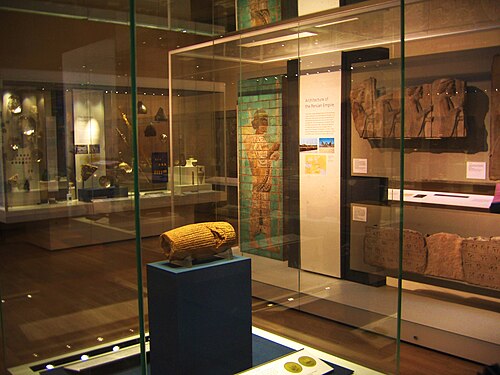
コレクションはメソポタミアが中心ですが、周辺地域のほとんどのものもよく代表されています。アケメネス朝のコレクションは、1897年のオクサスの財宝と、ドイツの学者エルンスト・ヘルツフェルトおよびハンガリー系イギリス人探検家サー・オーレル・スタインの発掘品の追加により充実しました。ペルセポリス遺跡のレリーフと彫刻は、1825年にサー・ゴア・ウズリーから、1861年に第5代アバディーン伯爵から寄贈され、博物館は1963年に発見物の分配としてパサルガダエの宝石の壺の一部、1971年にジウィエの宝物の一部を受け取りました。ペルセポリスの百柱ホールの大きな柱の土台は、シカゴの東洋研究所からの交換で取得されました。さらに、この博物館は世界でも最大級のアケメネス朝の銀器コレクションを入手することに成功しました。後期サーサーン朝も、ライオンや鹿を狩る統治君主を描いた華やかな銀皿や杯でよく表現されています。フェニキアの古代遺物はこの地域全体から集められていますが、サルデーニャ島のタロスコレクション、ニムルドの約 150 個の金属製ボウルと数百個の象牙の宝物、チュニジアのカルタゴとマグラワの多くのカルタゴの石碑は傑出しています。キプロス各地の遺跡から発見されたフェニキア語の碑文の数も相当なものであり、キティオンの墓地遺跡(2 つのキティオン タリフには島で発見されたフェニキア語の碑文の中で最も長いもの) で発見された遺物、イダリオンの神殿跡、タマッソスで発見された2 か国語の台座 2 つが含まれます。見落とされがちなもう 1 つのハイライトはイエメンの古代遺物で、同国以外では最高のコレクションです。さらに、この博物館には、バーレーンのアアリとシャクフラの古代遺跡のさまざまな古墳から発掘されたディルムンとパルティアの資料の代表的なコレクション(ローマ時代のリブ付きガラスボウルを含む)が収蔵されています。
From the modern state of Syria come almost forty funerary busts from Palmyra and a group of stone reliefs from the excavations of Max von Oppenheim at Tell Halaf that was purchased in 1920. More material followed from the excavations of Max Mallowan at Chagar Bazar and Tell Brak in 1935–1938 and from Woolley at Alalakh in the years just before and after the Second World War. Mallowan returned with his wife Agatha Christie to carry out further digs at Nimrud in the postwar period which secured many important artefacts for the museum. The collection of Palestinian material was strengthened by the work of Kathleen Kenyon at Tell es-Sultan (Jericho) in the 1950s and the acquisition in 1980 of around 17,000 objects found at Lachish by the Wellcome-Marston expedition of 1932–1938. Archaeological digs are still taking place where permitted in the Middle East, and, depending on the country, the museum continues to receive a share of the finds from sites such as Tell es Sa'idiyeh in Jordan.
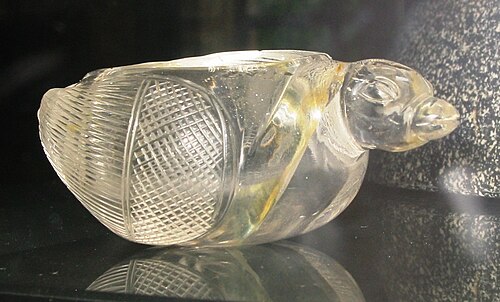
The museum's collection of Islamic art, including archaeological material, numbers about 40,000 objects,[79] one of the largest of its kind in the world. As such, it contains a broad range of pottery, paintings, tiles, metalwork, glass, seals, and inscriptions from across the Islamic world, from Spain in the west to India in the east. It is particularly famous for its collection of Iznik ceramics (the largest in the world), its large number of mosque lamps including one from the Dome of the Rock, mediaeval metalwork such as the Vaso Vescovali with its depictions of the Zodiac, a fine selection of astrolabes, and Mughal paintings and precious artwork including a large jade terrapin made for the emperor Jahangir. Thousands of objects were excavated after the war by professional archaeologists at Iranian sites such as Siraf by David Whitehouse and Alamut Castle by Peter Willey. The collection was augmented in 1983 by the Godman bequest of Iznik, Hispano-Moresque and early Iranian pottery. Artefacts from the Islamic world are on display in Gallery 34 of the museum.
A representative selection from the Department of Middle East, including the most important pieces, are on display in 13 galleries throughout the museum and total some 4,500 objects. A whole suite of rooms on the ground floor display the sculptured reliefs from the Assyrian palaces at Nineveh, Nimrud and Khorsabad, while 8 galleries on the upper floor hold smaller material from ancient sites across the Middle East. The remainder form the study collection which ranges in size from beads to large sculptures. They include approximately 130,000 cuneiform tablets from Mesopotamia.[80]
Highlights of the collections include:
- Other Mesopotamian sites
- Wider collection:
- Plastered human skull from Jericho, a very early form of portraiture, Palestine, (7000–6000 BC)
- Tell Brak Head, one of the oldest portrait busts from the Middle East, north east Syria, (3500–3300 BC)
- Uruk Trough, one of the earliest surviving works of narrative relief sculpture from the Middle East, southern Iraq, (3300–3000 BC)
- Pair of inscribed stone objects known as the Blau Monuments from Uruk, Iraq, (3100–2700 BC)
- Hoard of Bronze Age gold jewellery found at the Canaanite site of Tell el-Ajjul in Gaza, (1750–1550 BC)
- Statue of Idrimi from the ancient city of Alalakh, southern Turkey, (1600 BC)
- Bronze bowl and ivory cosmetic box in the shape of a fish from Tell es-Sa'idiyeh, Jordan, (1250–1150 BC)
- Group of 16 stone reliefs from the palace of King Kapara at Tell Halaf, northern Syria, (10th century BC)
- Tablet of Shamash, depicting the sun-god Shamash, from Sippar, Iraq, (early 9th century BC)
- Hittite lion head from the monument to King Katuwa at Carchemish, southern Turkey, (9th century BC)
- Two large Assyrian stelae from Kurkh, southern Turkey, (850 BC)
- Seated statue of Kidudu or guardian spirit from the Assyrian city of Assur under Shalmaneser III, Iraq, (835 BC)
- Basalt bowl with engraved inscription in Hieroglyphic Luwian found at Babylon, southern Iraq, (8th century BC)
- Babylonian Chronicles, series of tablets recording major events in Babylonian history, Babylon, Iraq, (8th–3rd centuries BC)
- Shebna Inscription from Siloam near Jerusalem, (7th century BC)
- Group of 4 bronze shields with inscription of king Rusa III from the temple of Khaldi at the Urartian fortress of Toprakkale, eastern Turkey, (650 BC)
- East India House Inscription from Babylon, Iraq, (604–562 BC)
- Lachish Letters, group of ostraka written in alphabetic Hebrew from Lachish, Israel, (586 BC)
- Cylinder of Nabonidus, foundation cylinder of King Nabonidus, Sippar, Iraq, (555–540 BC)
- The famous Oxus Treasure, the largest ancient Persian hoard of gold artefacts, (550–330 BC)
- Jar of Xerxes I, alabaster alabastron with quadrilingual signature of Achaemenid ruler Xerxes I, found in the ruins of the Mausoleum of Halicarnassus, Turkey, (486–465 BC)
- Idalion Bilingual, bilingual Cypriot-Phoenician inscription, key to the decipherment of the Cypriot syllabary, Idalion, Cyprus, (388 BC)
- Punic-Libyan Inscription from the Mausoleum of Ateban, key to the decipherment of the Numidian language, Dougga, Tunisia, (146 BC)
- Amran Tablets found near Sana'a, Yemen, (1st century BC)
- One of the pottery storage jars containing the Dead Sea Scrolls found in a cave near Qumran, Jordan, (4 BC – 68 AD)
- Two limestone ossuaries from caves in Jerusalem, (1st century AD)
- Fragment of a carved basalt architrave depicting a lion's head from the Temple of Garni, Armenia, (1st century AD)
- Group of boulders with Safaitic inscriptions from Jordan/Syria, one of which was donated by Gertrude Bell, (1st–2nd centuries AD)
- Parthian dynasty gold belt-buckle with central repoussé figure of eagle with outstretched wings from Nihavand, Iran, (1st–3rd centuries AD)
- Silver bowl from Khwarezm depicting a four-armed goddess seated on a lion, Kazakhstan, (658 AD)
- One of the rare Hedwig glasses, originating from the Middle East or Norman Sicily, (10th–12th centuries AD)
- Hoard of Seljuq artefacts from Hamadan including gold cup, silver gilt belt fittings and dress accessories, Iran, (11th–12th centuries)
- Islamic brass ewers with engraved decoration and inlaid with silver and copper from Herat, Afghanistan and Mosul, Iraq (12th–13th centuries AD)
-
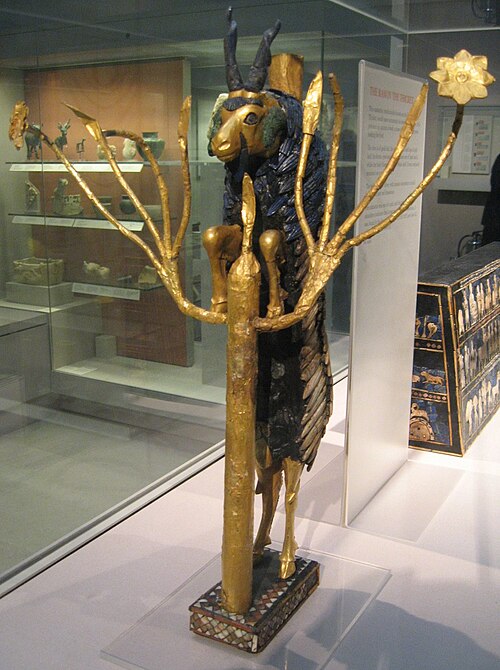
-
 Room 56 – The famous 'Standard of Ur', a hollow wooden box with scenes of war and peace, from Ur, c. 2600 BC
 -
 Room 56 - Sculpture of the god Imdugud, lion-headed eagle surmounting a lintel made from sheets of copper, Temple of Ninhursag at Tell al-'Ubaid, Iraq, c. 2500 BC
 -
 Room 56 - Statue of Kurlil, from the Temple of Ninhursag in Tell al-'Ubaid, southern Iraq, c. 2500 BC
 -

-
 Room 57 - Carved ivory object from the Nimrud Ivories, Phoenician, Nimrud, Iraq, 9th–8th century BC
 -
 Room 6 – Depiction of the hypocrite, Jehu, King of Israel on the Black Obelisk of Shalmaneser III, Nimrud, c. 827 BC
 -
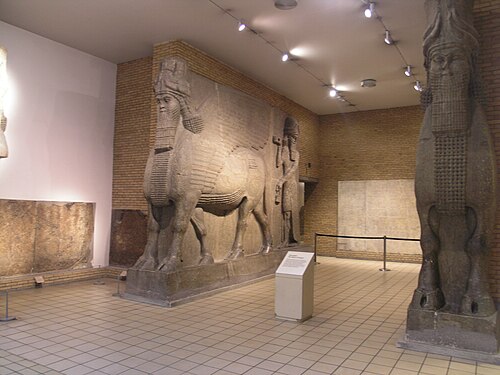 Room 10 – Human Headed Winged Bulls from Khorsabad, companion pieces in the Musée du Louvre, Iraq, 710–705 BC
 -
 Room 55 – Cuneiform Collection, including the Epic of Gilgamesh, Iraq, c. 669-631 BC
 -

-
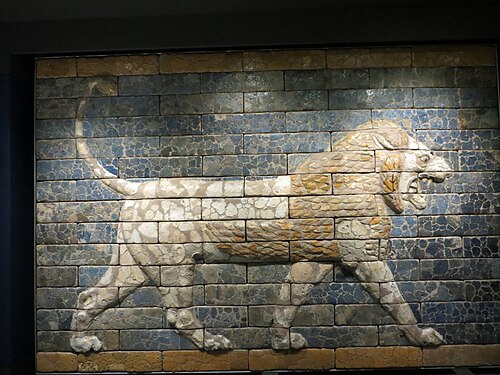 Room 55 - Panel with striding lion made from glazed bricks, Neo-Babylonian, Nebuchadnezzar II, Southern Iraq, 604–562 BC
 -
 Room 52 – A chariot from the Oxus Treasure, the most important surviving collection of Achaemenid Persian metalwork, c. 5th to 4th centuries BC
 -
 Great Court - Decorated column base from Hundred Column Hall, Persepolis, 470-450 BC
 -
 Room 53 - Stela said to come from Tamma' cemetery, Yemen, 1st century AD
 -
 Room 53 - Alabaster statue of a standing female figure, Yemen, 1st-2nd centuries AD
 -
 Room 34 - Cylindrical lidded box with an Arabic inscription recording its manufacture for the ruler of Mosul, Badr al-Din Lu'lu', Iraq, c. 1233 – 1259 AD

Department of Prints and Drawings
The Department of Prints and Drawings holds the national collection of Western prints and drawings. It ranks as one of the largest and best print room collections in existence alongside the Albertina in Vienna, the Paris collections and the Hermitage. The holdings are easily accessible to the general public in the Study Room, unlike many such collections.[81] The department also has its own exhibition gallery in Room 90, where the displays and exhibitions change several times a year.[82]
Since its foundation in 1808, the prints and drawings collection has grown to international renown as one of the richest and most representative collections in the world. There are approximately 50,000 drawings and over two million prints.[82] The collection of drawings covers the period from the 14th century to the present, and includes many works of the highest quality by the leading artists of the European schools. The collection of prints covers the tradition of fine printmaking from its beginnings in the 15th century up to the present, with near complete holdings of most of the great names before the 19th century. Key benefactors to the department have been Clayton Mordaunt Cracherode, Richard Payne Knight, John Malcolm, Campbell Dodgson, César Mange de Hauke and Tomás Harris. Writer and author Louis Alexander Fagan, who worked in the department 1869–1894 made significant contributions to the department in form of his Handbook to the Department, as well as various other books about the museum in general.[83]
There are groups of drawings by Leonardo da Vinci, Raphael, Michelangelo, (including his only surviving full-scale cartoon), Dürer (a collection of 138 drawings is one of the finest in existence), Peter Paul Rubens, Rembrandt, Claude and Watteau, and largely complete collections of the works of all the great printmakers including Dürer (99 engravings, 6 etchings and most of his 346 woodcuts), Rembrandt and Goya. More than 30,000 British drawings and watercolours include important examples of work by Hogarth, Sandby, Turner, Girtin, Constable, Cotman, Cox, Gillray, Rowlandson, Towne and Cruikshank, as well as all the great Victorians. The collection contains the unique set of watercolours by the pioneering colonist John White, the first British artist in America and first European to paint Native Americans. There are about a million British prints including more than 20,000 satires and outstanding collections of works by William Blake and Thomas Bewick.[citation needed]. The great eleven volume Catalogue of Political and Personal Satires Preserved in the Department of Prints and Drawings in the British Museum compiled between 1870 and 1954 is the definitive reference work for the study of British Satirical prints. Over 500,000 objects from the department are now on the online collection database, many with high-quality images.[84] A 2011 donation of £1 million enabled the museum to acquire a complete set of Pablo Picasso's Vollard Suite.[85]
-

-
 Hieronymus Bosch - A comical barber scene, c. 1477–1516
 -
 Sandro Botticelli - Allegory of Abundance, 1480–1485
 -
 Leonardo da Vinci – The Virgin and Child with Saint Anne and the Infant Saint John the Baptist (prep for 'The Burlington House Cartoon'), c. 1499–1500
 -
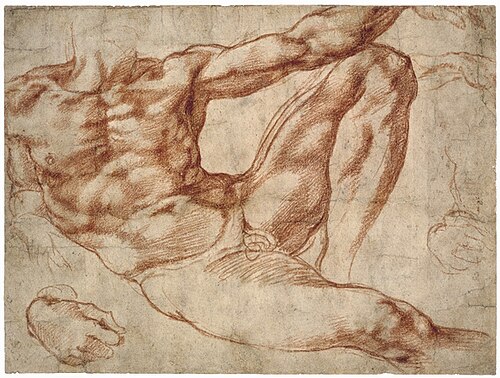 Michelangelo – Studies of a reclining male nude: Adam in the fresco The Creation of Man on the vault of the Sistine Chapel, c. 1511
 -
 Raphael – Study of Heads, Mother and Child, c. 1509–1511
 -
 Titian – Drowning of the Pharaoh's Host in the Red Sea, 1515–1517
 -
 Albrecht Dürer - Drawing of a walrus, 1521
 -
 Hans Holbein the Younger - Portrait of Anne Boleyn, 1536
 -
 Joris Hoefnagel and Jacob Hoefnagel - Allegory on Life and Death, circa 1598
 -
 Peter Paul Rubens - Study for the figure of Christ on the Cross, 1610
 -
 Francisco de Zurbarán - Head of a monk, 1625–1664
 -
 Claude Lorrain - Drawing of mules, including one full-length, 1630–1640
 -

-
 Thomas Gainsborough - Drawing of a woman with a rose, 1763–1765
 -
 J. M. W. Turner - Watercolour of Newport Castle, 1796
 -
 Isaac Cruikshank - 'The happy effects of that grand system of shutting ports against the English!!', 1808
 -
 John Constable - London from Hampstead Heath in a Storm, (watercolour), 1831
 -
 James McNeill Whistler - View of the Battersea side of Chelsea Reach, London, (lithograph), 1878
 -
 Vincent van Gogh - Man Digging in the Orchard (print), 1883


.jpg/500px-Peter_Paul_Rubens_-_Study_for_the_figure_of_Christ_on_the_Cross_(cropped).jpg)


Department of Britain, Europe and Prehistory
.jpg/500px-British_Museum_(6425125707).jpg)
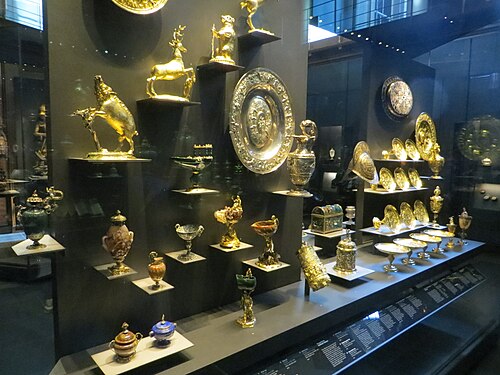
The Department of Britain, Europe and Prehistory is responsible for collections that cover a vast expanse of time and geography. It includes some of the earliest objects made by humans in east Africa over 2 million years ago, as well as Prehistoric and neolithic objects from other parts of the world; and the art and archaeology of Europe from the earliest times to the present day. Archeological excavation of prehistoric material took off and expanded considerably in the twentieth century and the department now has literally millions of objects from the Paleolithic and Mesolithic periods throughout the world, as well as from the Neolithic, Bronze Age and Iron Age in Europe. Stone Age material from Africa has been donated by famous archaeologists such as Louis and Mary Leakey, and Gertrude Caton–Thompson. Paleolithic objects from the Sturge, Christy and Lartet collections include some of the earliest works of art from Europe. Many Bronze Age objects from across Europe were added during the nineteenth century, often from large collections built up by excavators and scholars such as Greenwell in Britain, Tobin and Cooke in Ireland, Lukis and de la Grancière in Brittany, Worsaae in Denmark, Siret at El Argar in Spain, and Klemm and Edelmann in Germany. A representative selection of Iron Age artefacts from Hallstatt were acquired as a result of the Evans/Lubbock excavations and from Giubiasco in Ticino through the Swiss National Museum.
In addition, the British Museum's collections covering the period AD 300 to 1100 are among the largest and most comprehensive in the world, extending from Spain to the Black Sea and from North Africa to Scandinavia; a representative selection of these has recently been redisplayed in a newly refurbished gallery. Important collections include Latvian, Norwegian, Gotlandic and Merovingian material from Johann Karl Bähr, Alfred Heneage Cocks, Sir James Curle and Philippe Delamain respectively. However, the undoubted highlight from the early mediaeval period is the magnificent items from the Sutton Hoo royal grave, generously donated to the nation by the landowner Edith Pretty. The late mediaeval collection includes a large number of seal-dies from across Europe, the most famous of which include those from the Town of Boppard in Germany, Isabella of Hainault from her tomb in Notre Dame Cathedral, Paris, Inchaffray Abbey in Scotland and Robert Fitzwalter, one of the Barons who led the revolt against King John in England. There is also a large collection of medieval signet rings, prominent among them is the gold signet ring belonging to Jean III de Grailly who fought in the Hundred Years' War, as well as those of Mary, Queen of Scots and Richard I of England. Other groups of artefacts represented in the department include the national collection of (c.100) icon paintings, most of which originate from the Byzantine Empire and Russia, and over 40 mediaeval astrolabes from across Europe and the Middle East. The department also includes the national collection of horology with one of the most wide-ranging assemblage of clocks, watches and other timepieces in Europe, with masterpieces from every period in the development of time-keeping. Choice horological pieces came from the Morgan and Ilbert collections. The department is also responsible for the curation of Romano-British objects – the museum has by far the most extensive such collection in Britain and one of the most representative regional collections in Europe outside Italy. It is particularly famous for the large number of late Roman silver treasures, many of which were found in East Anglia, the most important of which is the Mildenhall Treasure. The museum purchased many Roman-British objects from the antiquarian Charles Roach Smith in 1856. These quickly formed the nucleus of the collection. The department also includes ethnographic material from across Europe including a collection of Bulgarian costumes and shadow puppets from Greece and Turkey. A particular highlight are the three Sámi drums from northern Sweden of which only about 70 are extant.
Objects from the Department of Britain, Europe and Prehistory are mostly found on the upper floor of the museum, with a suite of galleries numbered from 38 to 51. Most of the collection is stored in its archive facilities, where it is available for research and study.
Highlights of the collections include:
Stone Age (c. 3.4 million years BC – c. 2000 BC)
- Palaeolithic material from across Africa, particularly Olduvai, Kalambo Falls, Olorgesailie and Cape Flats, (1.8 million BC onwards)
- One of the 11 leaf-shaped points found near Volgu, Saône-et-Loire, France and estimated to be 16,000 years old[86]
- Ice Age art from France including the Wolverine pendant of Les Eyzies, Montastruc decorated stone and Baton fragment, (c. 12–11,000 BC)
- Ice Age art from Britain including the decorated jaw from Kendrick and Robin Hood Cave Horse, (11,500–10,000 BC)
- Rare mesolithic artefacts from the site of Star Carr in Yorkshire, northern England, (8770–8460 BC)
- Terracotta figurine from Vinča, Serbia, (5200–4900 BC)
- Callaïs bead jewellery from Lannec-er-Ro'h, intact schist bracelet from Le Lizo, Carnac and triangular pendant from Mané-er-Hroëk, Morbihan, Brittany, western France, (5000–4300 BC)
- Polished jade axe produced in the Italian Alps and found in Canterbury, Kent, southeast England, (4500–4000 BC)
- Section of the Sweet Track, an ancient timber causeway from the Somerset Levels, England, (3807/6 BC)
- Small collection of Neolithic finds including a necklace of flat bone beads from Skara Brae, Orkneys, northern Scotland, (3180–2500 BC)
- Representative sample of artefacts (sherds, vessels, etc.) from the megalithic site of Tarxien, Malta, (3150–2500 BC)
- A number of carved stone balls from Scotland, Ireland and northern England, (3200–2500 BC)
- The three Folkton Drums, made from chalk and found in Yorkshire, northern England, (2600–2100 BC)
Bronze Age (c. 3300 BC – c. 600 BC)
- Jet beaded necklace from Melfort in Argyll, Scotland, (c. 3000 BC)
- Gold lunula from Blessington, Ireland, one of twelve from Ireland, England, LLanllyfini, Wales and Gwithian, Cornwall, (2400–2000 BC)
- Early Bronze Age hoards from Barnack, Driffield, Sewell and Snowshill in England, Arraiolos and Vendas Novas in Iberia and Auvernier, Biecz and Neunheilingen in central Europe (2280–1500 BC)
- Mold cape, unique cape made of gold sheet from Mold, Wales (1900–1600 BC)
- Contents of the Rillaton Barrow including a gold cup, and the related Ringlemere Cup, England, (1700–1500 BC)
- Bronze Age hoards from Forró, Paks-Dunaföldvár, Szőny and Zsujta in Hungary, (1600–1000 BC)
- Large ceremonial swords or dirks from Oxborough and Beaune, western Europe, (1450–1300 BC)
- Eight bronze shields including those from Moel Hebog and Rhyd-y-gors, Wales and Athenry, County Galway, Ireland, (12th–10th centuries BC)
- Gold hoards from Morvah and Towednack in Cornwall, Milton Keynes in Buckinghamshire and Mooghaun in Ireland, (1150–750 BC)
- Gold bowl with intricate repoussé decoration from Leer, Lower Saxony, northern Germany, (1100–800 BC)
- Dunaverney flesh-hook found near Ballymoney, Northern Ireland and part of the Dowris Hoard from County Offaly, Ireland, (1050–900 BC & 900–600 BC)
- Late Bronze Age gold hoards from Abia de la Obispalía and Mérida, Spain and an intricate gold collar from Sintra, Portugal, (10th–8th centuries BC)
- Shropshire bulla, gold pendant decorated with intricately carved geometric designs, (1000–750 BC)
- Part of a copper alloy lur from Årslev on the island of Funen, Denmark, one of only about 40 extant and the Dunmanway Horn from County Cork, Ireland (900–750 BC)
- Gold bowl with embossed ornament and fluted wire handle from Angyalföld, Budapest, Hungary, (800–600 BC)
Iron Age (c. 600 BC – c. 1st century AD)
- Basse Yutz Flagons, a pair of bronze drinking vessels from Moselle, eastern France, (5th century BC)
- Morel collection of La Tène material from eastern France, including the Somme-Bionne chariot burial and the Prunay Vase, (450-300BC)
- Important finds from the River Thames including the Battersea, Chertsey and Wandsworth shields and Waterloo Helmet, as well as the Witham Shield from Lincolnshire, eastern England, (350–50 BC)
- Bronze scabbard with La Tène engraved decoration, found at Lisnacrogher bog, County Antrim, Northern Ireland, (300–200 BC)
- Pair of gold collars called the Orense Torcs from northwest Spain, (300–150 BC)
- Arras culture items from chariot burials in the Lady's Barrow near Market Weighton and Wetwang Slack, Yorkshire, (300 BC – 100 BC)
- Other gold neck collars including the Ipswich Hoard and the Sedgeford Torc, England, (200–50 BC)
- Winchester Hoard of gold jewellery from southern England and the Great Torc from Snettisham in Norfolk, East Anglia, (100 BC)
- Eight out of about thirty extant intact Celtic bronze mirrors with La Tène decoration including those from Aston, Chettle, Desborough, Holcombe and St Keverne in England, (100 BC – 100 AD)
- Cordoba and Arcillera Treasures, two silver Celtic hoards from Spain, (100–20 BC)
- Grave find of ornately decorated bronze bucket with human shaped handles, a pan, jug, three brooches and at least four pottery vessels from Aylesford, Kent, (75 BC – 25 BC)
- Lindow Man found by accident in a peat bog in Cheshire, England, (1st century AD)
- Stanwick Hoard of horse and chariot fittings and the Meyrick Helmet, northern England, (1st century AD)
- La Tène silver hinged brooch from Székesfehérvár, Hungary, (1–100 AD)
- Lochar Moss Torc and two pairs of massive bronze armlets from Muthill and Strathdon, Scotland, (50–200 AD)
Romano-British (43 AD – 410 AD)
- Tombstone of Roman procurator Gaius Julius Alpinus Classicianus from London, (1st century)
- Ribbed glass bowl found in a grave at Radnage, Buckinghamshire, (1st century)
- Large milestone marker with inscription from the reign of the emperor Hadrian from Llanfairfechan, Gwynedd in North Wales, (120–121 AD)
- Ribchester, Guisborough and Witcham helmets once worn by Roman cavalry in Britain, (1st–2nd centuries)
- Elaborate gold bracelets and ring found near Rhayader, central Wales, (1st–2nd centuries)
- Hoard of gold jewellery found at Dolaucothi mine in Carmarthenshire, Wales, (1st–2nd centuries)
- Bronze heads of the Roman emperors Hadrian and Claudius, found in London and Suffolk, (1st–2nd centuries)
- Vindolanda Tablets, important historical documents found near Hadrian's Wall in Northumberland, (1st–2nd centuries)
- Head of Mercury from Roman-Celtic Temple at Uley, Gloucestershire and limestone head from Towcester, Northamptonshire (2nd–4th centuries)
- Wall-paintings and sculptures from the Roman Villa at Lullingstone, Kent, south east England, 1st–4th centuries)
- Capheaton and Backworth treasures, remnants of two important hoards from northern England, (2nd–3rd centuries)
- Stony Stratford Hoard of copper headdresses, fibulae and silver votive plaques, central England, (3rd century)
- Square silver dish from Mileham in Norfolk, (4th century)
- Gold jewellery deposited at the site of Newgrange, Ireland, (4th century)
- Thetford Hoard, late Roman jewellery from eastern England, (4th century)
Early Mediaeval (c. 4th century AD – c. 1000 AD)
- One of five Largitio silver dishes of the emperor Licinius found at Niš, Serbia and a hexagonal gold coin-set pendant of Constantine the Great, (Early 4th century AD)
- Two wooden ship figureheads dredged from the River Scheldt at Moerzeke and Appels, Belgium, (4th–6th centuries)
- Part of the Asyut, Domagnano, Artres, Sutri, Bergamo and Belluno Treasures, (4th–7th centuries)
- Lycurgus Cup, a unique figurative glass cage cup, and the Byzantine Archangel ivory panel, (4th–6th centuries)
- Three large Ogham stones from the Roofs More Rath, County Cork, Ireland, (5th–7th centuries)
- The Sutton Hoo treasure, Taplow burial and Crundale grave objects with some of the greatest finds from the early Middle Ages in Europe, England, (6th–7th centuries)
- One of the Burghead Bulls, Pictish stone relief from northeast Scotland, (7th–8th centuries)
- Three Viking hoards from Norway known as the Lilleberge Viking Burial, Tromsø Burial and Villa Farm barrow burial in Vestnes and the Ardvouray, Ballaquayle, Cuerdale, Goldsborough and Vale of York hoards from Britain, (7th–10th centuries)
- Irish reliquaries such as the Kells Crozier, Bell Shrine of St. Cuileáin and St Conall Cael's Shrine from Inishkeel, (7th–11th centuries)
- Early Anglo Saxon Franks Casket, a unique ivory container from northern England, (8th century)
- T-shaped Carolingian antler container with carved geometric interlace and zigzag decoration, found near Grüneck Castle, Ilanz, Switzerland, (8th–9th centuries)
- A number of luxurious penannular brooches such as the Londesborough Brooch, Breadalbane Brooch and those from the Penrith Hoard, British Isles, (8th–9th centuries)
- Three of the twenty extant Carolingian crystal intaglios including the Lothair Crystal, the Metz engraved gem with crucifixion and Saint-Denis Crystal, central Europe, (9th century)
- Anglo-Saxon Fuller and Strickland Brooches with their complex, niello-inlaid design, England, (9th century)
- Seax of Beagnoth, iron sword with long Anglo-Saxon Runic inscription, London, England, (10th century)
Mediaeval (c. 1000 AD – c. 1500 AD)
- A number of mediaeval ivory panels including the Borradaile, Wernher and John Grandisson Triptychs, (10th–14th centuries)
- Several elephant ivory horns including the Borradaile Horn, Clephane Horn and Savernake Horn, (11th–12th centuries)
- The famous Lewis chessmen found in the Outer Hebrides, Scotland, (12th century)
- Reliquary of St. Eustace from the treasury of Basel Munster, Switzerland and fragments of a rare Romanesque crucifix from South Cerney, England, (12th century)
- Armenian stone-cross or Khachkar from the Noratus cemetery in Armenia, (1225 AD)
- Items from the tomb of Henry VI, Holy Roman Emperor at Palermo Cathedral, Sicily, including his mitre, silk pall and shoe, (late 12th century)
- The unique Warwick Castle Citole, an early form of guitar, central England, (1280–1330)
- Set of 10 wooden door panels engraved with Christian scenes from the Hanging Church in Old Cairo, Egypt, (1300)
- Asante Jug, mysteriously found at the Asante Court in the late 19th century, England, (1390–1400)
- Holy Thorn Reliquary bequeathed by Ferdinand de Rothschild as part of the Waddesdon Bequest, Paris, France, (14th century)
- Dunstable Swan Jewel, a gold and enamel brooch in the form of a swan, England, (14th century)
- A silver astrolabe quadrant from Canterbury, southeastern England, (14th century)
- Chalcis treasure of jewellery, dress accessories and silver plate from the island of Euboea, Greece, (14th–15th centuries)
- Magnificent cups made from precious metal such as the Royal Gold Cup and the Lacock Cup, western Europe, (14th–15th centuries)
- Complete church altar set from Medina de Pomar near Burgos, Spain (1455 AD)
Renaissance to Modern (c. 1500 AD – present)
- Two luxurious silver brooches set with precious stones from Glen Lyon and Lochbuie, Scotland (early 16th century)
- Intricately decorated parade shield made by Giorgio Ghisi from Mantua, Italy, (1554 AD)
- The Armada Service, 26 silver dishes found in Devon, south west England, (late 16th to early 17th centuries)
- Early Renaissance Lyte Jewel, presented to Thomas Lyte of Lytes Cary, Somerset by King James I of England, (1610)
- Huguenot silver from the Peter Wilding bequest, England, (18th century)
- Pair of so-called Cleopatra Vases from the Chelsea porcelain factory, London, England, (1763)
- Jaspar ware vase known as the Pegasus Vase made by Josiah Wedgwood, England, (1786)
- Two of Charles Darwin's chronometers used on the voyage of HMS Beagle, (1795–1805)
- The Hull Grundy Gift of jewellery, Europe and North America, (19th century)
- Oak clock with mother-of-pearl engraving designed by Charles Rennie Mackintosh, (1919)
- Silver tea-infuser designed by Marianne Brandt from the Bauhaus art school, Germany, (1924)
- The Rosetta Vase, earthenware pottery vase designed by the contemporary British artist Grayson Perry, (2011)
The many hoards of treasure include those of Esquiline, Carthage, First Cyprus, Hockwold, Hoxne, Lampsacus, Mildenhall, Vale of York and Water Newton, (4th–10th centuries AD)
-

-
![Room 3 – Swimming Reindeer carving, France, c. 13,000 years BC[87]](https://img-server.japedia.wiki/wikipedia/commons/thumb/9/94/Sleeping_Reindeer_4512630872_d31dcb1207_o.jpg/500px-Sleeping_Reindeer_4512630872_d31dcb1207_o.jpg) Room 3 – Swimming Reindeer carving, France, c. 13,000 years BC[87]
Room 3 – Swimming Reindeer carving, France, c. 13,000 years BC[87] -
![Room 2 – Ain Sakhri lovers, from the cave of Ain Sakhri, near Bethlehem, c. 9000 BC[88]](https://img-server.japedia.wiki/wikipedia/commons/thumb/b/b0/Ain_Sakhri_Lovers_-_British_Museum_-_Joy_of_Museums.jpg/500px-Ain_Sakhri_Lovers_-_British_Museum_-_Joy_of_Museums.jpg)
-
 Room 51 – Mold gold cape, North Wales, Bronze Age, c. 1900–1600 BC
 -
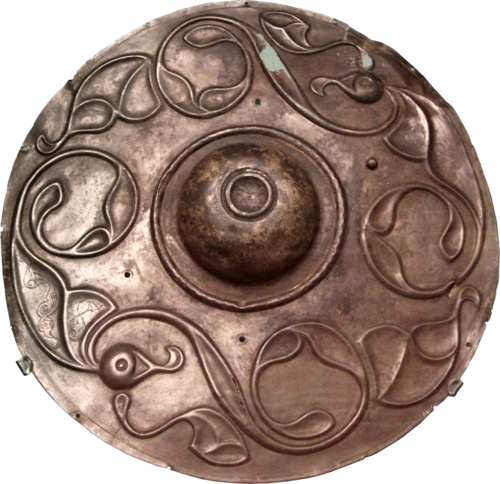 Room 50 – Wandsworth Shield, Iron Age shield boss in La Tène style, England, 2nd century BC
 -
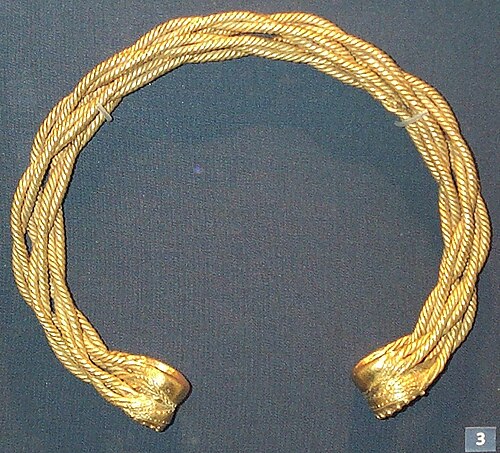 Room 50 – Gold torc found in Needwood Forest, central England, 75 BC
 -
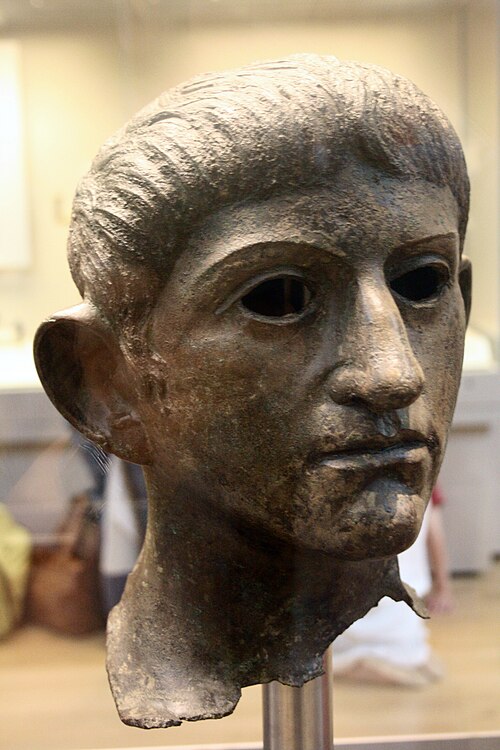 Room 49 - Bronze head of a Roman emperor Claudius, from Rendham in Suffolk, eastern England, 1st century AD
 -
 Room 49 – Romano-British crown and diadem found in Hockwold cum Wilton, England 1st century AD
 -
 Room 49 – Hinton St Mary Mosaic with face of Christ in the centre, from Dorset, southern England, 4th century AD
 -
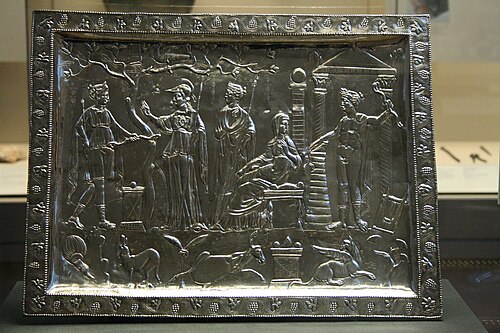 Room 49 – Corbridge Lanx, silver tray depicting a shrine to Apollo, northern England, 4th century AD
 -
 Room 41 – Silver objects from the Roman Coleraine Hoard, Northern Ireland, 4th-5th centuries AD
 -
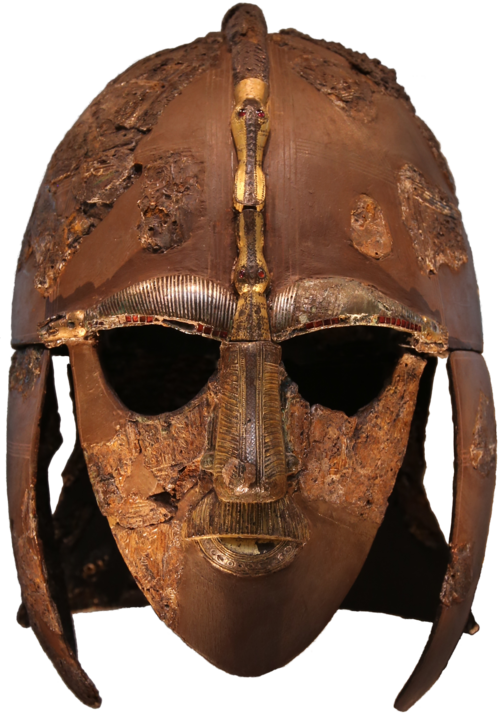 Room 41 – Sutton Hoo helmet, Anglo-Saxon, England, early 7th century AD
 -
 Room 40 – Ivory statue of Virgin and Child, who is crushing a dragon under her left foot from Paris, France, 1310-1330 AD
 -
 Room 40 – Chaucer Astrolabe, the oldest dated in Europe, 1326 AD
 -
 Room 40 – Royal Gold Cup or Saint Agnes Cup, made in Paris, France, 1370–80 AD
 -
 Room 2a – Holy Thorn Reliquary, made in Paris, c. 1390s AD
 -
 Room 38 – Mechanical Galleon clock, Augsburg, Germany, around 1585 AD
 -
 Room 38 – Carillon clock with automata by Isaac Habrecht, Switzerland, 1589 AD
 -
 Room 39 – Ornate clock made by Thomas Tompion, England, 1690 AD

Department of Asia
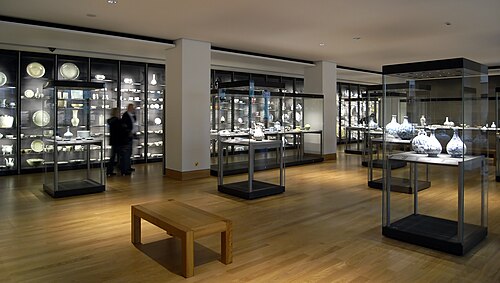
The scope of the Department of Asia is extremely broad; its collections of over 75,000 objects cover the material culture of the whole Asian continent and from the Neolithic up to the present day. Until recently, this department concentrated on collecting Oriental antiquities from urban or semi-urban societies across the Asian continent. Many of those objects were collected by colonial officers and explorers in former parts of the British Empire, especially the Indian subcontinent. Examples include the collections made by individuals such as James Wilkinson Breeks, Sir Alexander Cunningham, Sir Harold Deane, Sir Walter Elliot, James Prinsep, Charles Masson, Sir John Marshall and Charles Stuart. A large number of Chinese antiquities were purchased from the Anglo-Greek banker George Eumorfopoulos in the 1930s. The large collection of some 1800 Japanese prints and paintings owned by Arthur Morrison was acquired in the early twentieth century. In the second half of the twentieth century, the museum greatly benefited from the bequest of the philanthropist PT Brooke Sewell, which allowed the department to purchase many objects and fill in gaps in the collection.[89][90][91]
In 2004, the ethnographic collections from Asia were transferred to the department. These reflect the diverse environment of the largest continent in the world and range from India to China, the Middle East to Japan. Much of the ethnographic material comes from objects originally owned by tribal cultures and hunter-gatherers, many of whose way of life has disappeared in the last century. Particularly valuable collections are from the Andaman and Nicobar Islands (much assembled by the British naval officer Maurice Portman), Sri Lanka (especially through the colonial administrator Hugh Nevill), Northern Thailand, south-west China, the Ainu of Hokaidu in Japan (chief among them the collection of the Scottish zoologist John Anderson), Siberia (with artefacts collected by the explorer Kate Marsden and Bassett Digby and is notable for its Sakha pieces, especially the ivory model of a summer festival at Yakutsk) and the islands of South-East Asia, especially Borneo. The latter benefited from the purchase in 1905 of the Sarawak collection put together by Dr Charles Hose, as well as from other colonial officers such as Edward A Jeffreys. In addition, a unique and valuable group of objects from Java, including shadow puppets and a gamelan musical set, was assembled by Sir Stamford Raffles.
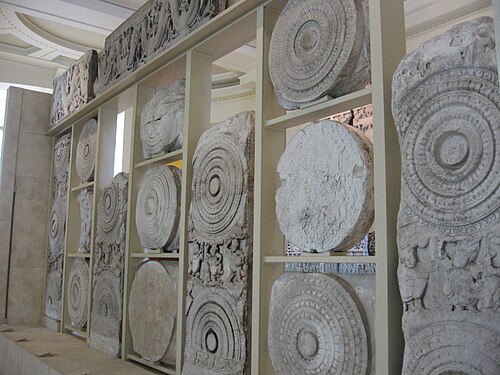
The principal gallery devoted to Asian art in the museum is Gallery 33 with its comprehensive display of Chinese, Indian subcontinent and South-east Asian objects. An adjacent gallery showcases the Amaravati sculptures and monuments. Other galleries on the upper floors are devoted to its Japanese, Korean, painting and calligraphy, and Chinese ceramics collections.
Highlights of the collections include:[92]
- The most comprehensive collection of sculpture from the Indian subcontinent in the world, including the celebrated Buddhist limestone reliefs from Amaravati excavated by Sir Walter Elliot[93]
- An outstanding collection of Chinese antiquities, paintings, and porcelain, lacquer, bronze, jade, and other applied arts
- The Frau Olga-Julia Wegener Collection of 147 Chinese paintings from the Tang to the Qing dynasties.
- The most comprehensive collection of Japanese pre-20th century art in the Western world, many of which originally belonged to the surgeon William Anderson and diplomat Ernest Mason Satow
East Asia
- A large collection of Chinese ritual bronzes, including a wine vessel in the shape of two rams supporting a jar, (1500–200 BC)
- Jade bi or disc with inscription from the Qianlong Emperor, (1500–1050 BC)
- Group of oracle bones that were used for divination from the Shang dynasty, China, (1200–1050 BC)
- Intricately designed gold dagger handle from Eastern Zhou period, China, (6th–5th centuries BC)
- Huixian Bronze Hu, an identical pair of bronze vessels from the Eastern Zhou period, China, (5th century BC)
- Japanese antiquities from the Kofun period excavated by the pioneering archaeologist William Gowland, (3rd–6th centuries AD)
- Three ornate bronze Dōtaku or bells from the Yayoi period, Japan, (200 BC – 200 AD)
- Gilded and inscribed Han dynasty wine-cup made from lacquer and found in Pyongyang, Korea (4 AD)
- Gandharan architectural wood carvings, furniture and dress accessories from Loulan, Xinjiang, (4th century AD)
- The famous Admonitions Scroll by Chinese artist Gu Kaizhi, (344–406 AD)
- The colossal Amitābha Buddha from Hancui, China, (585 AD)
- A set of ceramic Tang dynasty tomb figures of Liu Tingxun, (c. 728 AD)
- Silk Princess painting from Dandan-oilik Buddhist sanctuary in Khotan, Xinjiang, China, (7th–8th century AD)
- Seated Luohan from Yixian, one from a set of eight surviving statues, China, (907–1125 AD)
- Hoard of Tang dynasty silverware from Beihuangshan, Shaanxi, China, (9th–10th centuries AD)
- Seventeen examples of extremely rare Ru ware, the largest collection in the West, (1100 AD)
- A fine assemblage of Buddhist scroll paintings from Dunhuang, western China, collected by the British-Hungarian explorer Aurel Stein, (5th–11th centuries AD)
- Pericival David collection of Chinese ceramics, (10th–18th centuries AD)
- Ivory stand in the form of a seated lion, Chos-'khor-yan-rtse monastery in Tibet, (13th century AD)
- Copy of a hanging scroll painting of Minamoto no Yoritomo, first Shogun of Japan, (14th century AD)
- Handscroll silk painting called 'Fascination of Nature' by Xie Chufang depicting insects and plants, China, (1321 AD)
- Ornate Sino-Tibetan figure of Buddha Sakyamuni made of gilded bronze, China, (1403–1424 AD)
- Large Cloisonné jar with dragon made for the Ming dynasty Imperial Court, paired with another in the Rietberg Museum, Zürich, Beijing, China, (1426–35 AD)
- Pair of ceramic Kakiemon elephants from Japan, (17th century AD)
- Moon jar from the Joseon Dynasty collected by the potter Bernard Leach, Korea, (18th century AD)
- Japanese prints including The Great Wave off Kanagawa, (1829–32 AD)
- Illustrations for the Great Picture Book of Everything, rare album of drawings by the celebrated Japanese artist Hokusai, (1820–1840 AD)
South Asia
- Excavated objects from the Indus Valley sites of Mohenjo-daro, and Harappa, Ancient India (now in Pakistan), (2500–2000 BC)
- Hoard of Copper Hoard Culture celts, plaques and disc from Gungeria, Madhya Pradesh, India, (2000–1000 BC)
- Assembly of prehistoric artefacts from the Nilgiri Hills in southern India, (10th century BC – 2nd century AD)
- Hoard of Iron Age metal weapons excavated at the Wurreegaon barrow near Kamptee in Maharastra, India, (7th – 1st centuries BC)
- Sandstone fragment of a Pillar of Ashoka with Brahmi inscription from Meerut, Uttar Pradesh, India, (238 BC)
- The Kulu Vase found near a monastery in Himachal Pradesh, one of the earliest examples of figurative art from the sub-continent, northern India, (1st century BC)
- Copper plate from Taxila, with important Kharoshthi inscription, Ancient India (now in Pakistan), (1st century BC – 1st century AD)
- Indo-Scythian sandstone Mathura Lion Capital and Bracket figure from one of the gateways to the Great Stupa at Sanchi, central India, (1st century AD)
- Bimaran Casket and Wardak Vase, reliquaries from ancient stupas in Afghanistan, (1st–2nd centuries AD)
- Hoard of gold jewellery with precious stones found under the Enlightenment Throne at the Mahabodhi Temple, Bodh Gaya, eastern India, (2nd century AD)
- Relic deposits from stupas at Ahin Posh, Ali Masjid, Gudivada, Manikyala, Sonala Pind, Sanchi and Taxila, (1st–3rd centuries AD)
- Seated Hārītī and Buddha statues and other Gandhara sculptures from Kafir Kot, Jamal Garhi, Takht-i-Bahi and Yusufzai, Pakistan, (1st–3rd centuries AD)
- Hephthalite silver bowl with hunting scenes from the Swat District, Pakistan, (460–479 AD)
- Three sandstone carved sculptures of the Buddha in Gupta style from Sarnath, eastern India, (5th–6th centuries AD)
- Aphsad inscription of Ādityasena with important record of the genealogy of the Later Gupta dynasty up to king Ādityasena, Ghosrawan, Bihar, India, (675 AD)
- The Buddhapad Hoard of bronze images from southern India, (6th–8th centuries AD)
- Small bronze figure of Buddha Shakyamuni, Bihar, eastern India, (7th century AD)
- Stone statue of Buddha from the Sultanganj hoard, Bihar, eastern India, (7th–8th centuries AD)
- Earliest known figure of the dancing four-armed god Shiva Nataraja, Pallava dynasty, southern India (800 AD)
- Statue of Tara from Sri Lanka and the Thanjavur Shiva from Tamil Nadu, southern India, (8th century & 10th century AD)
- Standing Pala statue of Buddha from Kurkihar, Bihar, India, (9th century AD)
- Several wooden architectural panels from the Kashmir Smast caves, northern Pakistan, (9th–10th centuries AD)
- Hoard of Buddhist terracotta sealings from the Pala period found at the Nālandā Monastery, Bihar, eastern India, (10th century AD)
- Statue of the goddess Ambika found at Dhar in central India, (1034 AD)
- Foundation inscription of the Ananta Vasudeva Temple in Bhubaneswar, Odisha, eastern India, (1278 AD)
- Jade dragon cup that once belonged to Sultan Ulugh Beg from Samarkand, Uzbekistan, (1420–1449 AD)
- Foundation inscription with Arabic inscription in Naskh script in the name of Sultan Yusufshah from Gauda, Bengal, eastern India, (1477 AD)
- Large standing gilded copper figure of the Bodhisattva Avalokiteśvara, Nepal, (15th–16th centuries AD)
Southeast Asia
- Earthenware tazza from the Phùng Nguyên culture, northern Vietnam, (2000–1500 BC)
- Pottery vessels and sherds from the ancient site of Ban Chiang, Thailand, (10th–1st centuries BC)
- Bronze bell from Klang and iron socketed axe (tulang mawas) from Perak, western Malaysia, (200 BC–200 AD)
- Group of six Buddhist clay votive plaques found in a cave in Patania, Penang, Malaysia, (6th–11th centuries AD)
- The famous Sambas Treasure of buddhist gold and silver figures from west Borneo, Indonesia, (8th–9th centuries AD)
- Three stone Buddha heads from the temple at Borobodur in Java, Indonesia, (9th century AD)
- Granite Kinnari figure in the shape of a bird from Candi Prambanan in Java, Indonesia, (9th century AD)
- Sandstone Champa figure of a rampant lion, Vietnam, (11th century AD)
- Gilded bronze figure of Śiva holding a rosary, Cambodia, (11th century AD)
- Stone figure representing the upper part of an eleven-headed Avalokiteśvara, Cambodia, (12th century AD)
- Bronze figure of a seated Buddha from Bagan, Burma, (12th–13th centuries AD)
- Hoard of Southern Song dynasty ceramic vessels excavated at Pinagbayanan, Taysan Municipality, Philippines, (12th–13th centuries AD)
- Statue of the Goddess Mamaki from Candi Jago, eastern Java, Indonesia, (13th–14th centuries AD)
- Glazed terracotta tiles from the Shwegugyi Temple erected by king Dhammazedi in Bago, Myanmar, (1476 AD)
- Inscribed bronze figure of a Buddha from Fang District, part of a large SE Asian collection amassed by the Norwegian explorer Carl Bock, Thailand, (1540 AD)
- Large impression of the Buddha's foot made of gilded stone (known as Shwesettaw Footprints) donated by Captain Frederick Marryat, from Ponoodang near Yangon, Myanmar, (18th–19th centuries AD)
-
 Room 33 - Cubic weights made of chert from Mohenjo-daro, Pakistan, 2600-1900 BC
 -
 Room 33 - One of the hu from Huixian, China, 5th century BC
 -
-
 Room 33 - Stone sculpture of the death of Buddha, Gandhara, Pakistan, 1st-3rd centuries AD
 -
 Room 91a - Section of the Admonitions Scroll by Chinese artist Gu Kaizhi, China, c. 380 AD
 -
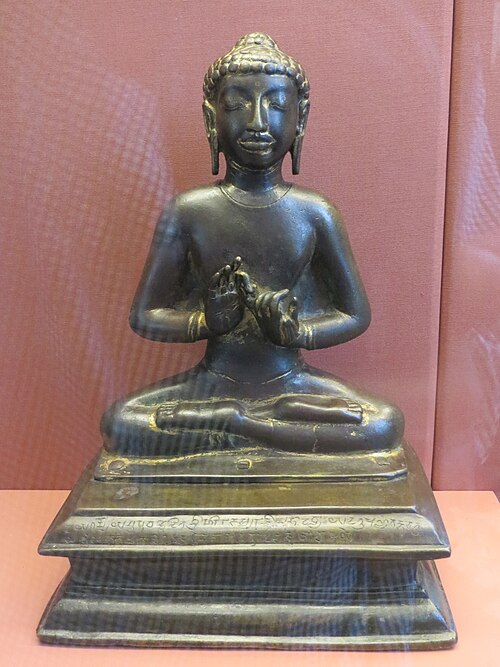 Room 33 - Gilded bronze statue of the Buddha, Dhaneswar Khera, India, 5th century AD
 -
 The Amitābha Buddha from Hancui on display in the museum's stairwell, China, 6th century AD
 -
 Room 33 - The luohan from Yixian made of glazed stoneware, China, 907-1125 AD
 -
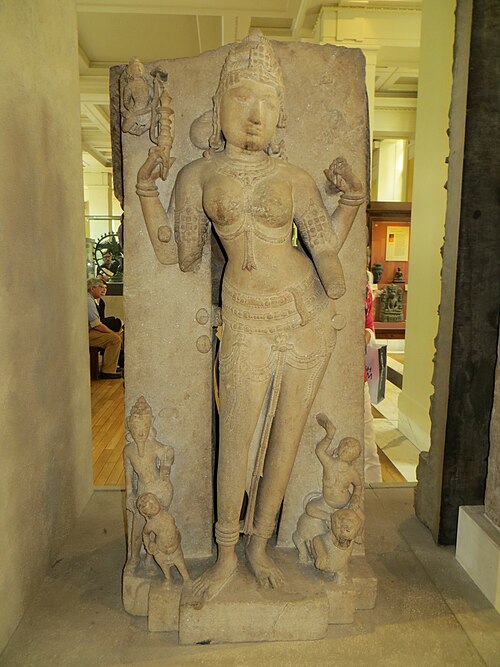 Sculpture of Goddess Ambika found at Dhar, India, 1034 AD
 -
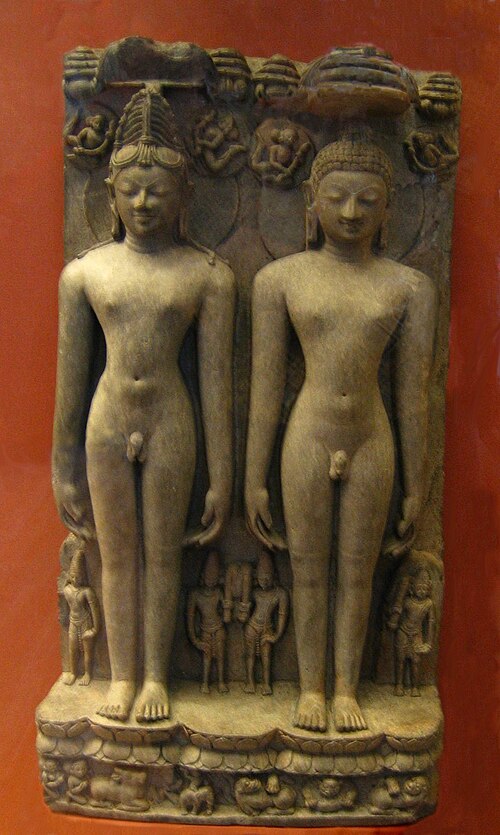 Sculpture of the two Jain tirthankaras Rishabhanatha and Mahavira, Orissa, India, 11th-12th century AD
 -
 Room 33 - Western Zhou bronze ritual vessel known as the "Kang Hou Gui", China, 11th century BC
 -
 Room 33 - A crowned figure of the Bodhisattva Khasarpana Avalokiteśvara, India, 12th century AD
 -
 Room 33 - Covered hanging jar with underglaze decoration, Si Satchanalai (Sawankalok), north-central Thailand, 14th-16th centuries AD
 -
 Room 33 - Hu-shaped altar flower vessel, Ming dynasty, China, 15th -16th centuries AD
 -
 Room 33 - An assistant to the Judge of Hell, figure from a judgement group, Ming dynasty, China, 16th century AD
 -
 Room 33 - Statue of Bodhisattva Avalokiteshvara, gilded bronze. Nepal, 16th century AD
 -
 Portrait of Ibrâhîm 'Âdil Shâh II (1580–1626), Mughal Empire of India, 1615 AD
 -
 Room 90 - Courtesans of the Tamaya House, attributed to Utagawa Toyoharu, screen painting; Japan, Edo period, late 1770s or early 1780s AD
 -
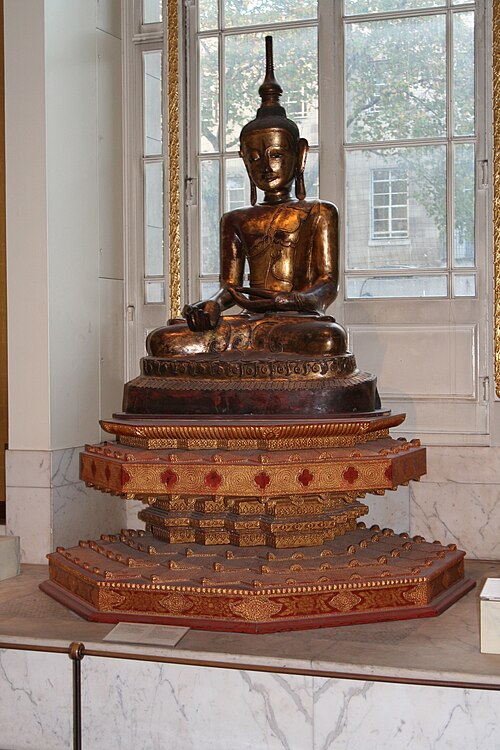
-
 Room 33 - Figure of seated Lama; of painted and varnished papier-mâché, Ladakh, India, 19th century AD


.jpg/500px-British_Museum_Asia_2_(cropped).jpg)
_001.jpg/500px-Indischer_Maler_um_1615_(I)_001.jpg)
,_Courtesans_of_the_Tamaya_House.jpg/500px-Utagawa_Toyoharu_(attributed_to),_Courtesans_of_the_Tamaya_House.jpg)
Department of Africa, Oceania and the Americas
.jpg/500px-Wellcome_Trust_Gallery_+_Living_&_Dying_(Room_24).jpg)
The British Museum houses one of the world's most comprehensive collections of ethnographic material from Africa, Oceania and the Americas, representing the cultures of indigenous peoples throughout the world. Over 350,000 objects[94] spanning thousands of years tells the history of mankind from three major continents and many rich and diverse cultures; the collecting of modern artefacts is ongoing. Many individuals have added to the department's collection over the years but those assembled by Henry Christy, Harry Beasley and William Oldman are outstanding.
Objects from this department are mostly on display in several galleries on the ground and lower floors. Gallery 24 displays ethnographic from every continent while adjacent galleries focus on North America and Mexico. A long suite of rooms (Gallery 25) on the lower floor display African art. There are plans in place to develop permanent galleries for showcasing art from Oceania and South America.
Africa

The Sainsbury African Galleries display 600 objects from the greatest permanent collection of African arts and culture in the world. The three permanent galleries provide a substantial exhibition space for the museum's African collection comprising over 200,000 objects. A curatorial scope that encompasses both archaeological and contemporary material, including both unique masterpieces of artistry and objects of everyday life. A great addition was material amassed by Sir Henry Wellcome, which was donated by the Wellcome Historical Medical Museum in 1954.
Highlights of the African collection include objects found at megalithic circles in The Gambia, a dozen exquisite Afro-Portuguese ivories, a series of soapstone figures from the Kissi people in Sierra Leone and Liberia, hoard of bronze Kru currency rings from the Sinoe River in Liberia, Asante goldwork and regalia from Ghana including the Bowdich collection, the rare Akan Drum from the same region in west Africa, pair of door panels and lintel from the palace at Ikere-Ekiti in Yorubaland, the Benin and Igbo-Ukwu bronze sculptures, the beautiful Bronze Head of Queen Idia, a magnificent brass head of a Yoruba ruler and quartz throne from Ife, a similar terracotta head from Iwinrin Grove near Ife, the Apapa Hoard from Lagos and other mediaeval bronze hoards from Allabia and the Forçados River in southern Nigeria.
Included is an Ikom monolith from Cross River State, several ancestral screens from the Kalabari tribe in the Niger Delta, the Torday collection of central African sculpture, textiles and weaponry from the Kuba Kingdom including three royal figures, the unique Luzira Head from Uganda, processional crosses and other ecclesiastical and royal material from Gondar and Magdala, Ethiopia following the British Expedition to Abyssinia, excavated objects from Great Zimbabwe (that includes a unique soapstone, anthropomorphic figure) and satellite towns such as Mutare including a large hoard of Iron Age soapstone figures, a rare divining bowl from the Venda peoples and cave paintings and petroglyphs from South Africa.
Oceania
The British Museum's Oceanic collections originate from the vast area of the Pacific Ocean, stretching from Papua New Guinea to Easter Island, from New Zealand to Hawaii. The three main anthropological groups represented in the collection are Polynesia, Melanesia and Micronesia – Aboriginal art from Australia is considered separately in its own right. Metal working was not indigenous to Oceania before Europeans arrived, so many of the artefacts from the collection are made from stone, shell, bone and bamboo. Prehistoric objects from the region include a bird-shaped pestle and a group of stone mortars from Papua New Guinea.
The British Museum is fortunate in having some of the earliest Oceanic and Pacific collections, many of which were put together by members of Cook's and Vancouver's expeditions or by colonial administrators and explorers such as Sir George Grey, Sir Frederick Broome, Joseph Bradshaw, Robert Christison, Gregory Mathews, Frederick Meinertzhagen, Thomas Mitchell and Arthur Gordon, before Western culture significantly impacted on indigenous cultures. The department has also benefited greatly from the legacy of pioneering anthropologists such as AC Haddon, Bronisław Malinowski and Katherine Routledge. An artefact is a wooden Aboriginal shield, probably dating from the late eighteenth century.[95] There is some debate as to whether this shield was found at Botany Bay or, given the nature of the wood being red mangrove which grows abundantly only 500 km north of Botany Bay, possibly obtained through trade networks or at an entirely different location.[96][97]
The Wilson cabinet of curiosities from Palau is an example of pre-contact ware. Another outstanding exemplar is the mourner's dress from Tahiti given to Cook on his second voyage, one of only ten in existence. In the collection is a large war canoe from the island of Vella Lavella in the Solomon Islands, one of the last ever to be built in the archipelago.[98]
The Māori collection is the finest outside New Zealand with many intricately carved wooden and jade objects and the Aboriginal art collection is distinguished by its wide range of bark paintings, including two very early bark etchings collected by John Hunter Kerr. A particularly important group of objects was purchased from the London Missionary Society in 1911, that includes the unique statue of A'a from Rurutu Island, the rare idol from the isle of Mangareva and the Cook Islands deity figure. Other highlights include the huge Hawaiian statue of Kū-ka-ili-moku or god of war (one of three extant in the world) and the famous Easter Island statues Hoa Hakananai'a and Moai Hava.
Americas
The Americas collection mainly consists of 19th and 20th century items although the Paracas, Moche, Inca, Maya, Aztec, Taino and other early cultures are well represented. The Kayung totem pole, which was made in the late nineteenth century on Haida Gwaii, dominates the Great Court and provides a fitting introduction to this very wide-ranging collection that stretches from the very north of the North American continent where the Inuit population has lived for centuries, to the tip of South America where indigenous tribes have long thrived in Patagonia.
Highlights of the collection include Aboriginal Canadian and Native American objects from North America collected by the 5th Earl of Lonsdale, the Marquis of Lorne, the explorer David Haig-Thomas and Bryan Mullanphy, Mayor of St. Louis, the Squier and Davis collection of prehistoric mound relics from North America, two carved stone bowls in the form of a seated human figure made by ancient North West Coast peoples from British Columbia, the headdress of Chief Yellow Calf from the Arapaho tribe in Wyoming, a lidded rivercane basket from South Carolina and the earliest historic example of Cherokee basketry, a selection of pottery vessels found in prehistoric dwellings at Mesa Verde and Casas Grandes, one of the enigmatic crystal skulls of unknown origin, a collection of nine turquoise Aztec mosaics from Mexico (the largest in Europe), important artefacts from Teotihuacan and Isla de Sacrificios.
There are several rare pre-Columbian manuscripts including the Codex Zouche-Nuttall and Codex Waecker-Gotter and post-colonial ones such as the Codex Aubin and Codex Kingsborough, a spectacular series of Mayan lintels from Yaxchilan excavated by the British Mayanist Alfred Maudslay, a very high quality Mayan collection that includes sculptures from Copan, Tikal, Tulum, Pusilha, Naranjo and Nebaj (including the celebrated Fenton Vase), an ornate calcite vase with jaguar handles from the Ulua Valley in Honduras, the Lord Moyne collection from the Bay Islands, Honduras and Boyle collection from Nicaragua, over 20 stone metates with zoomorphic and anthropomorphic ornamentation from Costa Rica, a group of Zemi Figures from Vere, Jamaica, and wooden duhos from the Dominican Republic and The Bahamas.
There are a collection of Pre-Columbian human mummies from sites across South America including Ancon, Acari, Arica and Leyva, a number of prestigious pre-Columbian gold and votive objects from Colombia, three axe-shaped gold diadems found near Camaná from the Siguas culture in Peru, unique collection of Moche wooden figures and staffs from the Macabi islands off Peru, ethnographic objects from across the Amazon region including the Schomburgk and Maybury Lewis collections and part of the von Martius and von Spix collection, two rare Tiwanaku pottery vessels from Lake Titicaca and important items from Tierra del Fuego donated by Commander Phillip Parker King.
-
 Room 26 - Stone pipe representing an otter from Mound City, Ohio, USA, 200 BC - 400 AD
 -
 Room 2 - Stone tomb guardian, part human part jaguar, from San Agustín, Colombia, c. 300-600 AD
 -
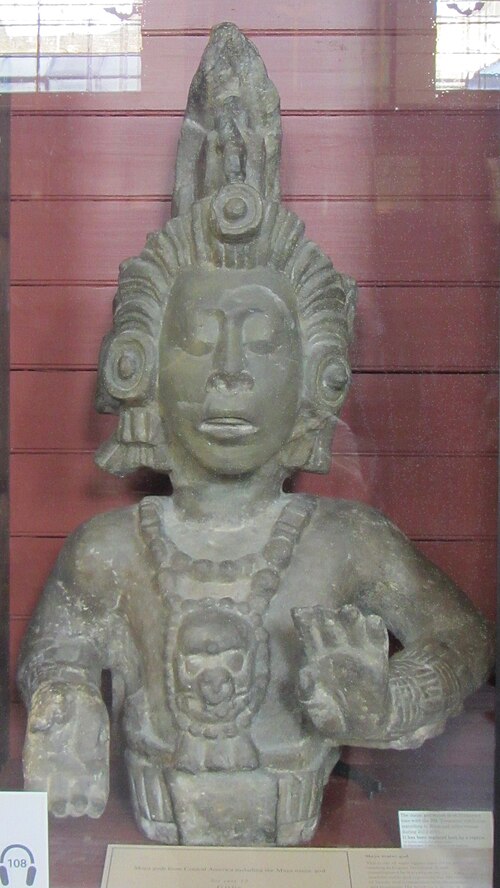 Room 1 - Maya maize god statue from Copán, Honduras, 600-800 AD
 -
 Room 24 - Gold Lime Flasks (poporos), Quimbaya Culture, Colombia, 600-1100 AD
 -
 Room 27 - Lintel 25 from Yaxchilan, Late Classic, Mexico, 600-900 AD
 -
 Room 24 - Bird pectoral made from gold alloy, Popayán, Colombia, 900-1600 AD
 -
 Room 24 – Rapa Nui statue Hoa Hakananai'a, 1000 AD, Wellcome Trust Gallery
 -
 Room 27 - Double-headed serpent turquoise mosaic, Aztec, Mexico, 1400-1500 AD
 -

-
 Room 2 - Miniature gold llama figurine, Inca, Peru, about 1500 AD
 -
 Room 25 - Part of the famous collection of Benin brass plaques, Nigeria, 1500-1600 AD
 -
 Room 25 - Detail of one of the Benin brass plaques in the museum, Nigeria, 1500-1600 AD
 -
 Room 25 - Benin ivory mask of Queen Idia, Nigeria, 16th century AD
 -
 Room 24 - Hawaiian feather helmet or mahiole, late 1700s AD
 -
 Bowl decorated with pearl shell and boars' tusks, used to serve the intoxicating drink kava, Hawaii, late 1700s AD
 -
 Great Court - Two house frontal totem poles, Haida, British Columbia, Canada, about 1850 AD
 -
 Room 25 - Mask (wood and pigment); Punu people, Gabon, 19th century AD
 -
 Room 25 - Otobo masquerade in the Africa Gallery, Nigeria, 20th century AD
 -
 Room 25 - Modern interpretation of kente cloth from Ghana, late 20th century AD
_Quimbaya_Culture,_Colombia_AD_600-1100_-_British_Museum.jpg/500px-Gold_Lime_Flasks_(poporos)_Quimbaya_Culture,_Colombia_AD_600-1100_-_British_Museum.jpg)


.jpg/500px-Denis_Bourez_-_British_Museum,_London_(8747055335).jpg)


Department of Money and Medals
The British Museum is home to one of the world's finest numismatic collections, comprising about a million objects, including coins, medals, tokens and paper money. The collection spans the entire history of coinage from its origins in the 7th century BC to the present day and is representative of both the East and West. The Department of Coins and Medals was created in 1861 and celebrated its 150th anniversary in 2011.[99]
Department of Conservation and Scientific Research
This department was founded in 1920. Conservation has six specialist areas: ceramics & glass; metals; organic material (including textiles); stone, wall paintings and mosaics; Eastern pictorial art and Western pictorial art. The science department[100] has and continues to develop techniques to date artefacts, analyse and identify the materials used in their manufacture, to identify the place an artefact originated and the techniques used in their creation. The department also publishes its findings and discoveries.
Libraries and archives
This department covers all levels of education, from casual visitors, schools, degree level and beyond. The museum's various libraries hold in excess of 350,000 books, journals and pamphlets covering all areas of the museum's collection. Also the general museum archives which date from its foundation in 1753 are overseen by this department; the individual departments have their own separate archives and libraries covering their various areas of responsibility, which can be consulted by the public on application. The Anthropology Library is especially large, with 120,000 volumes.[101] However, the Paul Hamlyn Library, which had become the central reference library of the British Museum and the only library there freely open to the general public, closed permanently in August 2011.[102] The website and online database of the collection also provide increasing amounts of information.
British Museum Press
The British Museum Press (BMP) is the publishing business and a division of the British Museum Company Ltd., a company and a charity (established in 1973) wholly owned by the trustees of the British Museum.[103]
The BMP publishes both popular and scholarly illustrated books to accompany the exhibition programme and explore aspects of the general collection. Profits from their sales goes to support the British Museum.[103]
Scholarly titles are published in the Research Publications series, all of which are peer-reviewed. This series was started in 1978 and was originally called Occasional Papers. The series is designed to disseminate research on items in the collection. To date, over 200 books have been published in this series. Between six and eight titles are published each year in this series.[104] They can be found on the British Museum Research Repository.
Controversies and criticism
Contested artefacts

It is a point of controversy whether museums should possess artefacts illegally taken from other countries,[7][105] and the British Museum is a notable target for criticism. The Elgin Marbles, the Benin Bronzes, Ethiopian Tabots and the Rosetta Stone are among the most disputed objects in its collections, and organisations have been formed demanding the return of these artefacts to their native countries.
The Elgin Marbles or Parthenon Marbles claimed by Greece have been cited by UNESCO, among others, for restitution. From 1801 to 1812, Lord Elgin's agents removed about half of the surviving sculptures from the Parthenon, as well as sculptures from the Propylaea and Erechtheum. The former director of the museum has stated, "We are indebted to Elgin for having rescued the Parthenon sculptures and others from the Acropolis from the destruction they were suffering, as well as from the damage that the Acropolis monuments, including the sculptures that he did not remove, have suffered since."[106] The British Museum itself damaged some of the artefacts during restoration in the 1930s.[107] In late 2022, the British Museum had entered into preliminary negotiations with the Greek government about the future of the sculptures.[108]
There is also controversy over artefacts taken during the destruction of the Old Summer Palace in Beijing by an Anglo-French expeditionary force during the Second Opium War in 1860, an event which drew protest from Victor Hugo.[109][110] The British Museum and the Victoria and Albert Museum, among others, have been asked since 2009 to open their archives for investigation by a team of Chinese investigators as a part of an international mission to document Chinese national treasures in foreign collections.[111] In 2010 Neil MacGregor, the former Director of the British Museum, said he hoped that both British and Chinese investigators would work together on the controversial collection.[112] In 2020 the museum appointed a curator to research the history of its collections, including disputed items.[113]
The British Museum has stated that the "restitutionist premise, that whatever was made in a country must return to an original geographical site, would empty both the British Museum and the other great museums of the world".[114] The museum has also argued that the British Museum Act of 1963 prevents any object from leaving its collection once it has entered it. "The Museum owns its collections, but its Trustees are not empowered to dispose of them".[114][115] Nevertheless, it has returned items such as Tasmanian Aboriginal burial remains when this was consistent with legislation regarding the disposal of items in the collections.[116]
List of contested artefacts
- Elgin Marbles – claimed by Greece and backed by UNESCO among others for restitution[117][118]
- Benin Bronzes – claimed by Nigeria; the Nigerian government has passed a resolution demanding the return of all 700 bronze pieces.[119] 30 pieces of the bronzes were sold by the British Museum privately from the 1950s until 1972, mostly back to the Nigerians.[120]
- Rosetta Stone – claimed by Egypt[121]
- Ethiopian Tabots, Pre-Axumite Civilisation Coins – claimed by Ethiopia[122][123]
- Oxus Treasure – in 2007 the President of Tajikistan ordered experts to look into making a claim for these Achaemenid Empire gold and silver artefacts.[124]
- Dunhuang manuscripts, part of a cache of scrolls, manuscripts, paintings, scriptures, and relics from the Mogao Caves, including the Diamond Sutra – claimed by the People's Republic of China[125]
- Aboriginal shield – claimed by Aboriginal people of Australia.[97]
- Hoa Hakananai'a – claimed by Chile on behalf of Easter Island[126]
- Irish artefacts — the Bell Shrine of St. Cuileáin, Londesborough Brooch, swords, half of the Dowris Hoard, part of the Mooghaun North Hoard, the Dunaverney flesh-hook, the Kells Crozier, torcs, four crucifixion plaques, armlets, seals, religious plaques, and rings.[127][128][129]
- Welsh artefacts – the Mold gold cape[130] the Rhos Rydd Shield, the Moel Hebog shield and the Llanllyfni lunula.[131][132]
- Four stolen drawings (Nazi plunder) – Compensation paid to Uri Peled for the amount of £175,000 by the British Museum[133]
- Repatriation and reburial of human remains is a controversial issue, and the British Museum has issued a policy on the subject.[134]
Nazi-looted art
In 2002 the heirs of Arthur Feldmann, an art collector murdered in the Holocaust, requested that four old master drawings stolen by the Gestapo in 1939 be returned to the family. A UK High Court judge ruled in 2005 that it would be illegal for the British Museum to return artworks looted by the Nazis to a Jewish family, despite its willingness and moral obligation to do so.[135][136] The law was changed in 2009,[137] and again in 2022[138] giving museums additional powers to return looted art or provide compensation. The heirs of Dr Feldmann accepted a compensation payment for a looted drawing and stated that they were happy the drawing would remain in the British Museum collection.[139]
According to the British Museum Spoliation report published by the Collections Trust in 2017, "Around 30% of some 21,350 continental and British drawings acquired since 1933 have an uncertain or incomplete provenance for the 1933–1945 period".[140] The museum lists these works on its website and investigates claims for restitution.[141]
BP sponsorship
Since 2016, there have been a number of protests by activist groups, trade unions and the public against the British Museum's relationship with the oil company BP which the protesters believe implicates the museum in global warming.[142] In July 2019, Ahdaf Soueif resigned from the British Museum's board of trustees in protest against the sponsorship.[143] In February 2020, 1,500 demonstrators, including British Museum staff, took part in a day of protest over the issue.[144] In December 2023, it was announced that the British Museum had agreed to a new £50 million sponsorship deal with BP.[145]
Chairman's Advisory Group
The Chairman's Advisory Group is an informal group of business leaders who provide advice to the chairman on various issues including the museum's relationship with the British government and policy on the museum's collections. Its existence was made public after a freedom of information request by a group campaigning against the museum's links with the fossil fuel industry. The museum has declined to name the members of the advisory group as they are acting in their personal capacity.[146]
Thefts
Thefts from the museum include: several historic coins and medals in the 1970s;[147] a 17th-century Japanese Kakiemon figure in 1990; two Meiji figurines and a fragment of a gold ring in 1991; fifteen Roman coins and jewellery worth £250,000 in 1993; and a Japanese chest and two Persian books in 1996.[148]
In July 2002 a marble head, valued at £50,000, was stolen from the Archaic Greek gallery.[149] In 2004, 15 Chinese artefacts including jewels, ornate hairpins and fingernail guards were stolen. In 2017, it was revealed that a Cartier diamond had been missing since 2011.[147]
In August 2023, a staff member was fired after it emerged that items including gold, jewellery and gems had been stolen over a "significant" period of time. The incident led to an investigation by the Metropolitan Police and an independent review by the museum.[150] Some of the missing artefacts were later found to have been sold on eBay for considerably less than their estimated value.[147] The museum had been warned of the thefts as early as 2021. The museum's director, Hartwig Fischer, resigned because of the museum's inadequate response to the warnings of theft.[151] The number of artefacts stolen was estimated to be about 2,000.[152] As a consequence of the thefts, the museum announced a five-year plan to digitise the complete collection and make it available to view online.[153] By May 2024, 626 of the missing items had been recovered.[154]
Copyright settlement
In August 2023, the British Museum reached a settlement with the translator Yilin Wang over her translations of poetry by Qiu Jin. The museum had used her work without credit or permission in their exhibition China's Hidden Century which ran between May 2023 and October 2023.[155]
Galleries
- Building
-
 Main Staircase, Discobolus of Myron (the Discus-Thrower)
 -

-
 Ceiling of the Great Court and the black siltstone obelisks of Nectanebo II, c. 350 BC
 -
 Detail of an Ionic capital on a pilaster in the Great Court
 -
 African Garden – created by BBC TV programme Ground Force


- Museum galleries
Department of Ancient Egypt and Sudan
-
 Room 4 – Egyptian Sculpture, view towards the Assyrian Transept
 -
 Room 4
 -
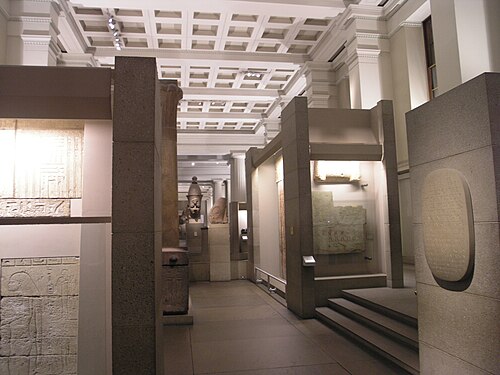 Room 4
Department of the Middle East
-
 The British Museum, Room 6 – Assyrian Sculpture
 -

-
 Room 7 – Reliefs from the North-west palace of Ashurnasirpal II, Nimrud
 -
 Room 89 – Nimrud & Nineveh Palace Reliefs
 -
 Room 10 – Nineveh, The Royal Lion Hunt
,_Centre_Island_+_North_Wall-_~_Assyrian_Empire_+_-Lamassu,_Stela's,_Statue's,_Obelisk's,_Relief_Panel's_&_Full_Projection.1.jpg/500px-thumbnail.jpg)
Department of Greece and Rome
-
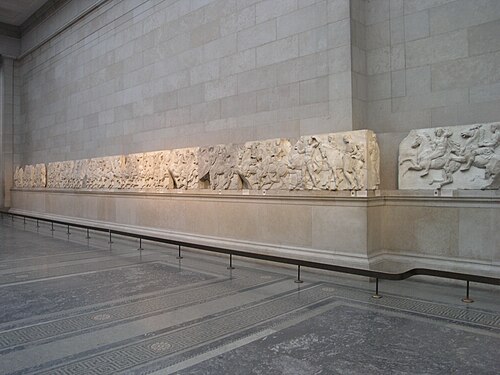 Room 18 – Ancient Greece
 -
 Room 20a – Tomb of Merehi & Greek Vases, Lycia, 360 BC
 -
 Room 85 – Portrait Sculpture, Roman
 -
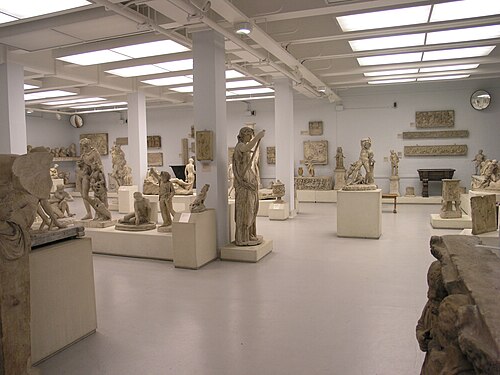 Room 84 – Towneley Roman Sculptures
 -
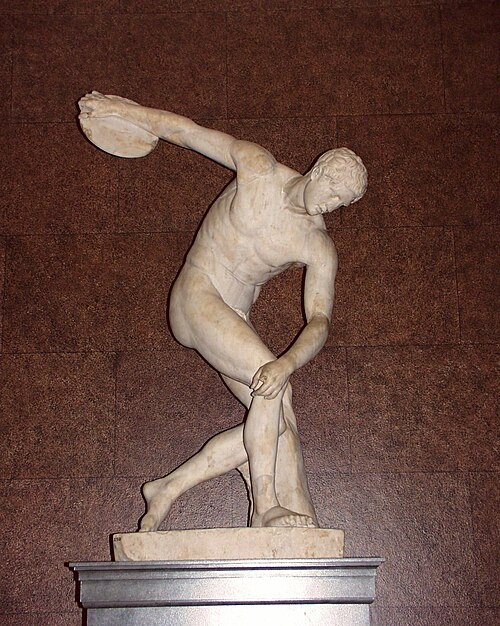 Main Staircase – Discobolus, Roman
 -
 Main Staircase – Townley Caryatid, Roman, 140–160 AD
.jpg/500px-The_Townley_Caryatid_(anterior).jpg)
Digital and online
The museum has a collaboration with the Google Cultural Institute to bring the collection online.[156]
Exhibitions
- Chronology of Temporary Exhibitions at the British Museum, by Joanna Bowring (British Museum Research Paper 189, 2012) lists all temporary exhibitions from 1838 to 2012.
- Helen Wang, 2022. ‘Displays of money and medals at the British Museum, 1759 to 2022’, Numismatic Chronicle 182, pp. 313-338.
Forgotten Empire Exhibition (October 2005 – January 2006)
-
 Room 5 – Exhibitions Panorama
 -
 Room 5 – The Persepolis Casts
 -
 Room 5 – Exhibitions Relics
 -
 Room 5 – The Cyrus Cylinder

From January to April 2012 the museum presented Hajj: Journey to the Heart of Islam, the first major exhibition on the topic of the Hajj, the pilgrimage that is one of the five pillars of Islam.[157][158]
See also
- 2016–17 all-female UK terror plot – involved a plan to attack the British Museum
Notes
- ^ Among the national museums in London, sculpture and decorative and applied art are in the Victoria and Albert Museum; the British Museum houses earlier art, non-Western art, prints and drawings. The National Gallery holds the national collection of Western European art to about 1900, while art of the 20th century on is at Tate Modern. Tate Britain holds British Art from 1500 onwards. Books, manuscripts and many works on paper are in the British Library. There are significant overlaps between the coverage of the various collections.
- ^ By the Act of Parliament it received a name – the British Museum. The origin of the name is not known; the word 'British' had some resonance nationally at this period, so soon after the Jacobite rebellion of 1745; it must be assumed that the museum was christened in this light.[14]
- ^ The estimated footage of the various libraries as reported to the trustees has been summarised by Harris (1998), 3,6: Sloane 4,600, Harley 1,700, Cotton 384, Edwards 576, The Royal Library 1,890.
- ^ This was perhaps rather unfortunate as the title to the house was complicated by the fact that part of the building had been erected on leasehold property (the Crown lease of which ran out in 1771); perhaps that is why George III paid such a modest price (nominally £28,000) for what was to become Buckingham Palace. See Howard Colvin et al. (1976), 134.
- ^ Understanding of the foundation of the National Gallery is complicated by the fact that there is no documented history of the institution. At first the National Gallery functioned effectively as part of the British Museum, to which the trustees transferred most of their most important pictures (ex. portraits). Full control was handed over to the National Gallery in 1868, after the National Gallery Act 1856 established the gallery as an independent body.
- ^ Ashmole, the Keeper of the Greek and Roman Antiquities appreciated the original top-lighting of these galleries and removed the Victorian colour scheme, commenting:
The old Elgin Gallery was painted a deep terracotta red, which, though in some ways satisfactory, diminished its apparent size, and was apt to produce a depressing effect on the visitor. It was decided to experiment with lighter colours, and the walls of the large room were painted with what was, at its first application, a pure cold white, but which after a year's exposure had unfortunately yellowed. The small Elgin Room was painted with pure white tinted with prussian blue, and the Room of the metopes was painted with pure white tinted with cobalt blue and black; it was necessary, for practical reasons, to colour all the dadoes a darker colour[39]
- ^ Ashmole had never liked the Duveen Gallery:
It was not until the 1980s that the installation of a lighting scheme removed his greatest criticism of the building.It is, I suppose, not positively bad, but it could have been infinitely better. It is pretentious, in that it uses the ancient Marbles to decorate itself. This is a long outmoded idea, and the exact opposite of what a sculpture gallery should do. And, although it incorporates them, it is out of scale, and tends to dwarf them with its bogus Doric features, including those columns, supporting almost nothing which would have made an ancient Greek artist architect wince. The source of daylight is too high above the sculptures, a fault that is only concealed by the amount of reflection from the pinkish marble walls. These are too similar in colour to the marbles... These half-dozen elementary errors were pointed out by everyone in the Museum, and by many scholars outside, when the building was projected.[44]
- ^ The Cairo Museum has 200,000 artefacts, with leading collections reposited at the Egyptian Museum of Berlin (100,000), Musée du Louvre (60,000), Petrie Museum (80,000), The Metropolitan Museum of art (26,000), University of Pennsylvania (42,000), Ashmolean Museum (40,000), Museum of Fine Arts, Boston (40,000), Museo Egizio, Turin (32,500 objects).
References
- ^ "Collection size". British Museum. Archived from the original on 12 August 2017. Retrieved 22 July 2016.
- ^ a b "British Museum is the most-visited UK attraction again". BBC News. 18 March 2024. Archived from the original on 18 March 2024. Retrieved 18 March 2024.
- ^ van Riel, Cees (30 October 2017). "Ranking The World's Most Admired Art Museums, And What Big Business Can Learn From Them". Forbes. Archived from the original on 18 May 2023. Retrieved 18 May 2023.
- ^ "History of the British Museum". The British Museum. Archived from the original on 9 October 2016. Retrieved 12 July 2018.
- ^ "The Life and Curiosity of Hans Sloane". The British Library. Archived from the original on 19 November 2018. Retrieved 21 October 2017.
- ^ "The Big Question: What is the Rosetta Stone, and should Britain return". The Independent. 9 December 2009. Archived from the original on 11 March 2018. Retrieved 2 April 2020.
- ^ a b Tharoor, Kanishk (29 June 2015). "Museums and looted art: the ethical dilemma of preserving world cultures". The Guardian. Archived from the original on 10 June 2020. Retrieved 18 April 2018.
- ^ "British Library Act 1972". legislation.gov.uk. 1972. Archived from the original on 8 August 2022. Retrieved 22 July 2022.
- ^ "Admission and opening times". British Museum. 14 June 2010. Archived from the original on 8 July 2016. Retrieved 4 July 2010.
- ^ "BBC – History – British History in depth: Slavery and the Building of Britain". www.bbc.co.uk. Archived from the original on 5 December 2019. Retrieved 12 November 2019.
- ^ "Creating a Great Museum: Early Collectors and The British Museum". Fathom. Archived from the original on 2 January 2010. Retrieved 4 July 2010.
- ^ "General history". British Museum. 14 June 2010. Archived from the original on 12 April 2012. Retrieved 4 July 2010.
- ^ de Beer, Gavin R. (1953). Sir Hans Sloane and the British Museum. London.
- ^ The question of the use of the term 'British' at this period has recently received some attention, e.g. Colley (1992), 85ff. There never has been a serious attempt to change the museum's name.
- ^ Letter to Charles Long (1823), BMCE115/3,10. Scrapbooks and illustrations of the Museum. Wilson, David M. (2002). The British Museum: A History. London: The British Museum Press, p. 346.
- ^ "The British Museum Images". Bmimages. Archived from the original on 11 May 2011. Retrieved 4 July 2010.
- ^ a b Dunton, Larkin (1896). The World and Its People. Silver, Burdett. p. 38.
- ^ Wilson, David, M. (2002). The British Museum: A History. London: The British Museum Press. p. 25.
{{cite book}}: CS1 maint: multiple names: authors list (link) - ^ Cavendish, Richard (January 2009). "The British Museum opened on January 15th, 1759". History Today. Vol. 59, no. 1. Archived from the original on 17 January 2016. Retrieved 15 January 2016.
- ^ Rose, ED (15 April 2018). "Specimens, slips and systems: Daniel Solander and the classification of nature at the world's first public museum, 1753–1768" (PDF). British Journal for the History of Science. 51 (2): 205–237. doi:10.1017/S0007087418000249. PMID 29655387. Archived (PDF) from the original on 9 October 2022.
- ^ "Collection Guides – King's Library". Archived from the original on 7 August 2019. Retrieved 1 June 2020.
- ^ Hoock, Holger (2010). Empires of the Imagination: Politics, War and the Arts in the British World, 1750–1850. Profile Books. p. 207. ISBN 9781861978592. Archived from the original on 15 March 2023. Retrieved 21 July 2016.
- ^ BMCE1/5, 1175 (13 May 1820). Minutes of General Meeting of the Trustees, 1754–63. Wilson, David M. (2002). The British Museum: A History, p. 78.
- ^ Wondrous Curiosities – Ancient Egypt at the British Museum, pp. 66–72 (Stephanie Moser, 2006, ISBN 0-226-54209-2)
- ^ The Story of the British Museum, p. 24 (Marjorie Caygill, 2003, ISBN 0-7141-2772-8)
- ^ The British Museum – The Elgin Marbles, p. 85 (B.F.Cook, 2005, ISBN 0-7141-2134-7
- ^ The British Museum – Assyrian Sculpture, pp. 6–7 (Julian Reade, 2004, ISBN 0-7141-2141-X)
- ^ "King's Library". Bl. Archived from the original on 13 August 2018. Retrieved 22 October 2011.
- ^ Wilson, David, M. (2002). The British Museum: A History. London: The British Museum Press, p. 79
- ^ Caygill, Marjorie (2003). The Story of the British Museum, p. 25. ISBN 0-7141-2772-8)
- ^ Reade, Julian (2004). Assyrian Sculpture. London: The British Museum Press, p. 16.
- ^ Dickens Charles Jr. (1879). "Museum, British". Dickens's Dictionary of London. Archived from the original on 27 September 2007. Retrieved 22 August 2007.
Beyond the new Lycian room is the READING ROOM: [...]; circular structure; original suggestion of Thomas Watts, improved by A. (Sir A.) Panizzi, carried out by Mr. Sidney Smirke; [...]
- ^ South from Ephesus – An Escape From The Tyranny of Western Art, pp. 33–34,(Brian Sewell, 2002, ISBN 1-903933-16-1)
- ^ "The Electric Light in the British Museum" (PDF). The New York Times. 18 December 1879. Archived (PDF) from the original on 9 October 2022. Retrieved 15 January 2016.
- ^ Caygill, Marjorie (2006). The British Museum: 250 Years. London: The British Museum Press, p. 5.
- ^ a b Caygill, Marjorie. "Creating a Great Museum: Early Collectors and The British Museum". Fathom. Archived from the original on 6 October 2007. Retrieved 13 November 2007.
- ^ "British Museum – Collection search: You searched for". British Museum. Archived from the original on 5 February 2016. Retrieved 22 July 2016.
- ^ Permanent establishment of the Research Laboratory (now the oldest such establishment in continuous existence) "History". British Museum. Archived from the original on 28 November 2011. Retrieved 22 July 2016.
- ^ Quoted Ashmole (1994), 125
- ^ a b Shenton, Caroline (2021). National Treasures: Saving the Nation's Art in World War II (Hardback). London: John Murray. pp. 60–64, 233–238. ISBN 978-1-529-38743-8.
- ^ Cook, B. F. (2005). The Elgin Marbles. London: The British Museum Press, p. 92.
- ^ Aronsfeld, C. C. (April 1984). "Judaica and Hebraica in German libraries: a review article". Journal of Librarianship and Information Science. 16 (2): 129–132. doi:10.1177/096100068401600204. S2CID 60789240.
The Nazis, in fact, went to great lengths in exploiting Jewish (as well as general) literature. For instance, they arranged for a German researcher to spend several years at the British Museum for the purpose of compiling an anti-Semitic history of Anglo-Jewry, which, at the time, with its 562 pages and a bibliography of some 600 items, was an effort more ambitious than hitherto attempted.
- ^ Wilson, David M. (2002). The British Museum: A History. London: The British Museum Press, p. 270.
- ^ Ashmole (1994), 126.
- ^ Wilson, David M. (2002). The British Museum: A History. London: The British Museum Press, p. 327.
- ^ "Awards and Winners" (PDF), National Heritage, archived (PDF) from the original on 28 June 2019, retrieved 28 June 2019
- ^ "Room 25: Africa". British Museum. 14 June 2010. Archived from the original on 30 March 2010. Retrieved 4 July 2010.
- ^ "Explore the collection". British Museum. Archived from the original on 24 September 2015. Retrieved 9 September 2023.
- ^ "At a glance". The British Museum Review: 2022-23. The British Museum. 2023.
- ^ "British Museum gets record 6.7m visitors for 2013". BBC News. 14 January 2014. Archived from the original on 30 March 2014. Retrieved 20 March 2014.
- ^ Nanji, Noor (18 March 2024). "British Museum is the most-visited UK attraction again". BBC News. Retrieved 18 June 2024.
- ^ "Doctor Strange in the Multiverse of Madness Filming Locations". Find that Location. Archived from the original on 25 June 2022. Retrieved 17 May 2022.
- ^ "Directors". British Museum. 14 June 2010. Archived from the original on 1 July 2007. Retrieved 4 July 2010.
- ^ "Museum governance". British Museum. 14 June 2010. Archived from the original on 23 August 2007. Retrieved 4 July 2010.
- ^ "Becoming a Trustee". British Museum. Archived from the original on 4 January 2014. Retrieved 1 March 2014.
- ^ Building the British Museum, Marjorie Caygill & Christopher Date 1999
- ^ "Building London". University College London. Archived from the original on 7 December 2009. Retrieved 4 July 2010.
- ^ Title deed of the 'perimeter properties' of The British Museum, BM Archives CA TD
- ^ pp. 65–66, Building the British Museum, Marjorie Caygill & Christopher Date 1999
- ^ Norman Foster and the British Museum, Norman Foster, Deyan Sudjic & Spencer de Grey 2001
- ^ "British Museum Project". Waagner Biro. Archived from the original on 21 August 2011. Retrieved 22 October 2011.
- ^ "About us". British Museum. Archived from the original on 13 December 2011. Retrieved 26 March 2013.
- ^ [1][dead link]
- ^ a b c "Cross calls for new debate on stored collections". Museums Association. 26 January 2011. Archived from the original on 26 May 2012. Retrieved 26 June 2013.
- ^ Huang, Jennifer; Kuo, Deborah (31 January 2007). "British Museum feels privileged to put exhibition in Taiwan". Taiwan Headlines. Government Information Office, Republic of China (Taiwan). Archived from the original on 28 September 2007. Retrieved 13 September 2010.
- ^ Higgins, Charlotte (5 July 2007). "British Museum plans £100m complex for blockbusters". The Guardian. London. p. 10. Archived from the original on 25 August 2007. Retrieved 5 July 2007.
- ^ "British Museum unveils new £135 million wing". Design Week. 7 March 2014. Archived from the original on 13 July 2014. Retrieved 27 June 2014.
- ^ Wainwright, Oliver (19 July 2017). "Stirling prize 2017 shortlist: from a cool crowdfunded pier to a giant hole in the ground". The Guardian. Archived from the original on 22 September 2022. Retrieved 22 September 2022.
- ^ "Franks House". British Museum. Archived from the original on 3 February 2012. Retrieved 15 January 2014.
- ^ "Development since World War II (1945 – )". British Museum. Archived from the original on 3 February 2012. Retrieved 26 March 2013.
- ^ "Department of Egypt and Sudan". British Museum. Archived from the original on 26 March 2019. Retrieved 26 March 2019.
- ^ Reported in the list of Sloane's collection given to his executors in 1753. Reproduced in MacGregor (1994a:29)
- ^ "A British Museum Egyptologist's View: The Return of Egyptian Antiquities is Not an Issue". Touregypt. Archived from the original on 28 October 2019. Retrieved 4 July 2010.
- ^ "Ancient Egypt and Sudan". British Museum. 14 June 2010. Archived from the original on 6 February 2007. Retrieved 4 July 2010.
- ^ a b "Department of Greece and Rome". British Museum. Archived from the original on 26 March 2019. Retrieved 20 May 2019.
- ^ Tony Kitto, "The celebrated connoisseur: Charles Townley, 1737–1805" Minerva Magazine May/June 2005, in connection with a British Museum exhibition celebrating the bicentennial of the Townley purchase. Townley marbles Burnley [dead link]
- ^ "British Museum collection". Archived from the original on 16 January 2024. Retrieved 16 January 2024.
- ^ "British Museum – Research". britishmuseum.org. Archived from the original on 20 March 2012. Retrieved 22 July 2016.
- ^ "Museum With No Frontiers". Discover Islamic Art. Archived from the original on 10 May 2011. Retrieved 4 July 2010.
- ^ "History of the Collection: Middle East". British Museum. 14 June 2010. Archived from the original on 15 December 2010. Retrieved 4 July 2010.
- ^ "Study room page". British Museum. 14 June 2010. Archived from the original on 15 December 2010. Retrieved 4 July 2010.
- ^ a b "Prints and Drawings galleries". British Museum. 14 June 2010. Archived from the original on 3 January 2012. Retrieved 4 July 2010.
- ^ Owen, W.B (1938). Dictionary of National Biography, 1912. Vol. 2. Oxford University Press.
- ^ Searches on 8 January 2012, return totals of 700,000, but many are in other departments
- ^ Singh, Anita (29 November 2011). "City fund manager in £1m Picasso giveaway". The Daily Telegraph. Archived from the original on 11 January 2022. Retrieved 19 May 2012.
- ^ "British Museum Highlights". Archived from the original on 16 December 2014. Retrieved 22 July 2016.
- ^ BM Reindeer. Archived from the original on 1 March 2020. Retrieved 20 January 2021.
{{cite book}}:|work=ignored (help) - ^ "British Museum - Ain Sakhri lovers figurine". British Museum. Archived from the original on 21 October 2015. Retrieved 22 July 2016.
- ^ Babs.Guthrie. "Collection page". Untold London. Archived from the original on 21 September 2009. Retrieved 4 July 2010.
- ^ "Embassy of Japan in the UK". Japan Embassy. Archived from the original on 27 April 2011. Retrieved 4 July 2010.
- ^ "Department of Asia". British Museum. 14 June 2010. Archived from the original on 6 July 2010. Retrieved 4 July 2010.
- ^ "Department of Asia – Related Highlight Objects". British Museum. 14 June 2010. Archived from the original on 5 February 2010. Retrieved 4 July 2010.
- ^ "Room 33a: Amaravati". British Museum. 14 June 2010. Archived from the original on 25 September 2007. Retrieved 4 July 2010.
- ^ "Africa, Oceania and the Americas". British Museum. 14 June 2010. Archived from the original on 14 August 2007. Retrieved 4 July 2010.
- ^ "shield | British Museum". The British Museum. Archived from the original on 1 May 2021. Retrieved 12 March 2021.
- ^ Nugent, Maria (February 2018). "'A Shield Loaded With History; Encounters, Objects, and Exhibitions'". Australian Historical Studies: 39.
- ^ a b Thomas, Nicholas (2018). "A Case of Identity: The Artifacts of the 1770 Kamay (Botany Bay) Encounter". Australian Historical Studies. 49 (1): 4–27. doi:10.1080/1031461X.2017.1414862. S2CID 149069484. Archived from the original on 9 December 2021. Retrieved 17 January 2022 – via Taylor and Francis Online.
- ^ "Museum Collection". Archived from the original on 16 January 2021. Retrieved 16 October 2020.
- ^ The British Museum and the Future of UK Numismatics. Proceedings of a conference held to mark the 150th anniversary of the British Museum's Department of Coins and Medals, 2011 Archived 31 August 2019 at the Wayback Machine, edited by Barrie Cook (British Museum Research Publication 183, 2011) ISBN 978-086159-183-1.
- ^ "British Museum – Conservation and Scientific Research". thebritishmuseum.ac.uk. Archived from the original on 2 May 2007. Retrieved 27 April 2007.
- ^ See the "Facilities and Services" tab on the home page for each department for details on each library; not all are kept at Bloomsbury. Anthropology Library Archived 2 February 2012 at the Wayback Machine
- ^ "Paul Hamlyn Library". British Museum. Archived from the original on 14 October 2011. Retrieved 22 October 2011.
- ^ a b "About the BMP". Archived from the original on 2 March 2014. Retrieved 2 March 2014.
- ^ "Research Publications". Archived from the original on 2 March 2014. Retrieved 2 March 2014.
- ^ "Where it is safe to do so, cultural artefacts should be repatriated". The Economist. 23 February 2016. Archived from the original on 1 July 2017. Retrieved 18 April 2018.
- ^ "Greek and Roman Antiquities". British Museum. 14 June 2010. Archived from the original on 23 May 2006. Retrieved 4 July 2010.
- ^ Oddy, Andrew, "The Conservation of Marble Sculptures in the British Museum before 1975", in Studies in Conservation, vol. 47, no. 3, (2002), pp. 145–146, Quote: "However, for a short time in the late 1930s copper scrapers were used to remove areas of discolouration from the surface of the Elgin Marbles. New information is presented about this lamentable episode."
- ^ "Greece in 'preliminary' talks with British Museum about Parthenon marbles". The Guardian. 3 December 2022. Archived from the original on 3 December 2022. Retrieved 4 December 2022 – via www.theguardian.com.
- ^ Bowlby, Chris (2 February 2015). "The palace of shame that makes China angry". BBC News. Archived from the original on 24 June 2018. Retrieved 3 January 2015.
- ^ "The Chinese expedition: Victor Hugo on the sack of the Summer Palace". www.napoleon.org. Archived from the original on 5 May 2016. Retrieved 3 January 2016.
- ^ Foster, Peter (19 October 2009). "China to study British Museum for looted artefacts". The Telegraph. Archived from the original on 11 January 2022. Retrieved 3 January 2015.
- ^ Foster, Peter (15 November 2010). "British Museum 'welcomes investigation with Chinese over artefacts'". The Telegraph. Archived from the original on 11 January 2022. Retrieved 15 January 2016.
- ^ Bailey, Martin (15 February 2021). "British Museum hires curator to research history of its collection, also covering contested objects such as the Parthenon Marbles". The Art Newspaper. Archived from the original on 15 February 2021. Retrieved 9 August 2021.
- ^ a b "Greek and Roman Antiquities". British Museum. 14 June 2010. Archived from the original on 23 May 2006. Retrieved 4 July 2010.
- ^ British Museum Act 1963, s 5.
- ^ "Request for repatriation of human remains to Tasmania". The British Museum. 24 March 2006. Archived from the original on 2 December 2020. Retrieved 24 July 2021.
- ^ "Breal's Silver Cup to be displayed at the New Acropolis Museum for one-year period from September 2012". BCRPM. Archived from the original on 27 July 2007. Retrieved 10 July 2007.
- ^ Linda Theodorou; Dana Facaros (2003). Greece (Cadogan Country Guides). Cadogan Guides. p. 55. ISBN 1-86011-898-4.
- ^ Kennedy, Maev (28 March 2002). "British Museum sold precious bronzes". The Guardian. London. Archived from the original on 15 March 2023. Retrieved 27 April 2010.
- ^ "Benin bronzes sold to Nigeria". BBC. 27 March 2002. Archived from the original on 5 August 2017. Retrieved 16 August 2020.
- ^ "Egypt calls for return of Rosetta Stone". BBC News. 21 July 2003. Archived from the original on 11 January 2009. Retrieved 27 April 2010.
- ^ Johnson, Andrew (23 November 2008). "Ethiopia demands stolen crown back". Independent. Archived from the original on 16 August 2016. Retrieved 24 August 2016.
- ^ Hoffman, Barbara T. (2006). Art and Cultural Heritage: Law, Policy and Practice. Cambridge University Press. p. 5. ISBN 9780521857642. Archived from the original on 15 March 2023. Retrieved 9 November 2020.
- ^ Harding, Luke (10 April 2007). "Tajik president calls for return of treasure from British Museum". The Guardian. London. Archived from the original on 16 February 2008. Retrieved 27 April 2010.
- ^ Larmer, Brook (June 2010). "Caves of Faith". National Geographic: 136–138. Archived from the original on 21 December 2014. Retrieved 15 January 2015.
- ^ "Easter Islanders Ask British Museum to Return Sacred Statue, Offering Replica in Return". Hyperallergic. 23 October 2018. Archived from the original on 13 November 2018. Retrieved 13 November 2018.
- ^ "Kells's request for loan of its treasures strikes snags". The Irish Times.
- ^ "'Full of stolen treasures' - Kneecap mark British Museum with 'stolen from Ireland' stickers". www.limerickleader.ie. 16 June 2024.
- ^ MacCarthy, Dan (26 August 2022). "Islands of Ireland: Donegal's Inishkeel has murderous and murdered saints, blue seas, and ruined churches — but no bell". Irish Examiner.
- ^ "Mold Gold Cape: Artefact should be on display in Wales – academic". BBC News. 18 April 2022. Archived from the original on 15 January 2023. Retrieved 21 April 2022.
- ^ "Buried treasure: calls for important Welsh artefacts to be brought back home". Nation.Cymru. 25 September 2021. Archived from the original on 15 January 2023. Retrieved 10 February 2022.
- ^ "Yn ôl i Gymru?". BBC Cymru Fyw (in Welsh). 3 April 2016. Archived from the original on 16 January 2023. Retrieved 16 January 2023.
- ^ "News – Getting the Nazi stolen art back". Channel 4 News. 27 March 2007. Archived from the original on 6 September 2009. Retrieved 4 July 2010.
- ^ "The British Museum policy on human remains". British Museum. Archived from the original on 27 July 2020. Retrieved 6 May 2019.
- ^ "Art stolen by Nazis 'cannot be returned'". www.lootedart.com. Archived from the original on 18 January 2023. Retrieved 18 January 2023.
- ^ admin (14 July 2005). "Britain stuck on Nazi-looted art". Jewish Telegraphic Agency. Archived from the original on 18 January 2023. Retrieved 18 January 2023.
- ^ "New British Law Lets Museums Return Works Stolen by Nazis". Haaretz. Archived from the original on 18 January 2023. Retrieved 18 January 2023.
- ^ Lawson-Tancred, Jo (27 September 2022). "A New U.K. Law Gives Museums Unprecedented Power to Deaccession Art and Repatriate Objects in Their Collections". Artnet News. Archived from the original on 18 January 2023. Retrieved 18 January 2023.
- ^ Buganim, Eitan (17 October 2013). "British Museum Compensates Collector's Heirs for Art Looted by Nazis". Haaretz. Archived from the original on 10 February 2023. Retrieved 18 January 2023.
- ^ "British Museum – Collections Trust". Archived from the original on 18 January 2023. Retrieved 18 January 2023.
- ^ "1933–45 provenance". The British Museum. Archived from the original on 18 January 2023. Retrieved 18 January 2023.
- ^ Busby, Mattha (16 February 2019). "Campaigners protest against BP sponsorship of British Museum". The Guardian. ISSN 0261-3077. Archived from the original on 17 July 2019. Retrieved 17 July 2019.
- ^ "Trustee resigns from British Museum over BP". 16 July 2019. Archived from the original on 17 July 2019. Retrieved 17 July 2019.
- ^ "British Museum staff join outcry against BP sponsorship". The Guardian. 10 February 2020. Archived from the original on 8 March 2020. Retrieved 5 March 2020.
- ^ "British Museum strikes £50mn sponsorship deal with BP". www.ft.com. Archived from the original on 19 December 2023. Retrieved 19 December 2023.
- ^ "Revealed: Secretive corporate group guiding British Museum". Channel 4 News. 17 February 2022. Archived from the original on 17 February 2022. Retrieved 18 February 2022.
- ^ a b c "British Museum thefts: What we know so far". BBC. 18 August 2023. Archived from the original on 23 August 2023. Retrieved 19 August 2023.
- ^ Martin Bailey (1 October 2000). "Question in Parliament uncovers extensive losses regarding thefts from UK national museums". The Art Newspaper. Archived from the original on 20 November 2023. Retrieved 17 August 2023.
- ^ "British Museum struck by robbery". Evening Standard. 31 July 2002. Archived from the original on 16 November 2023. Retrieved 17 August 2023.
- ^ "British Museum worker sacked over missing treasures". BBC. 16 August 2023. Archived from the original on 20 October 2023. Retrieved 17 August 2023.
- ^ "British Museum thefts: Director Hartwig Fischer quits over stolen treasures". BBC. 25 August 2023. Archived from the original on 25 August 2023. Retrieved 25 August 2023.
- ^ "British Museum recovers some of 2,000 stolen items". BBC. 26 August 2023. Archived from the original on 26 August 2023. Retrieved 26 August 2023.
- ^ McIntosh, Steve (18 October 2023). "British Museum to digitise collection following thefts". BBC News. Archived from the original on 18 October 2023. Retrieved 18 October 2023.
- ^ Razell, Katie; Graham, Darin; Kennelly, Larissa (17 May 2024). "British Museum finds 268 more missing artefacts". BBC News. Retrieved 17 May 2024.
- ^ "The British Museum reaches settlement with translator whose work was used without permission". NBC News. 9 August 2023. Archived from the original on 28 August 2023. Retrieved 28 August 2023.
- ^ "British Museum Online". Archived from the original on 3 November 2017. Retrieved 1 November 2017.
- ^ Kennedy, Maev (25 January 2012). "Hajj exhibition at British Museum". The Guardian. Archived from the original on 15 December 2022. Retrieved 15 December 2022.
- ^ Berns, Steph (December 2012). "Hajj journey to the heart of islam". Material Religion. 8 (4): 543–544. doi:10.2752/175183412X13522006995213. S2CID 192190977.
Further reading
- Anderson, Robert (2005). The Great Court and the British Museum. London: The British Museum Press
- Arrowsmith, Rupert Richard. Modernism and the Museum: Asian, African and Pacific Art and the London Avant Garde. Oxford University Press, 2011, pp. 103–164. ISBN 978-0-19-959369-9.
- Arrowsmith, Rupert Richard. "The Transcultural Roots of Modernism: Imagist Poetry, Japanese Visual Culture, and the Western Museum System" Archived 4 March 2016 at the Wayback Machine, Modernism/modernity Volume 18, Number 1, January 2011, pp. 27–42. ISSN 1071-6068.
- Bowring, Joanna (2012). Chronology of Temporary Exhibitions at the British Museum Archived 19 November 2018 at the Wayback Machine London: British Museum Research Paper 189.
- Caygill, Marjorie (2006). The British Museum: 250 Years. London: The British Museum Press
- Caygill, Marjorie (2002). The Story of the British Museum. London: The British Museum Press
- --do.-- (2009) Treasures of the British Museum London: The British Museum Press ISBN 0714150622 (1st ed. 1985; 2nd ed. 1992)
- Cook, B. F. (2005). The Elgin Marbles. London: The British Museum Press
- Esdaile, Arundell (1946) The British Museum Library: a Short History and Survey. London: Allen & Unwin
- Jacobs, Norman (2010) Behind the Colonnade. Stroud: The History Press
- Jenkins, Ian (2006). Greek Architecture and its Sculpture in The British Museum. London: The British Museum Press
- Francis, Frank, ed. (1971) Treasures of the British Museum. London: Thames & Hudson (rev. ed., 1975)
- Moser, Stephanie (2006). Wondrous Curiosities: Ancient Egypt at The British Museum. Chicago: The University of Chicago Press
- Reade, Julian (2004). Assyrian Sculpture. London: The British Museum Press
- Reeve, John (2003). The British Museum: Visitor's Guide. London: The British Museum Press
- Wilson, David M. (2002). The British Museum: a history. London: The British Museum Press
External links

Wikimedia Commons has media related to:
British Museum (category)
British Museum (category)
- Official website
- The British Museum from The Survey of London
- British Museum elevation
- "The British Museum Trust Ltd., registered charity no. 1140844". Charity Commission for England and Wales.
- Works by British Museum at Project Gutenberg
- Works by or about British Museum at the Internet Archive
- Virtual tour of the British Museum provided by Google Arts & Culture
51°31′10″N 0°7′37″W / 51.51944°N 0.12694°W / 51.51944; -0.12694