
Loading article…
トルコ共和国 トゥルキエ・ジュムフリイェティ (トルコ語) | |
|---|---|
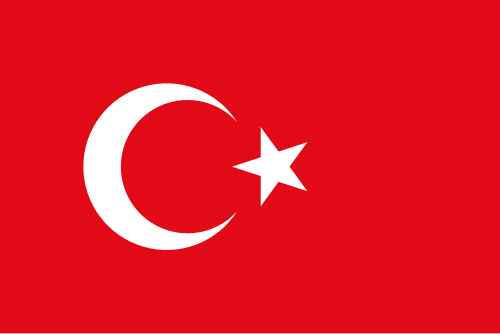 | |
| 国歌: イスティクラル・マルシュ 「独立行進」[1] | |
.svg/500px-Turkey_(orthographic_projection).svg.png) | |
| 資本 | アンカラ 北緯39度55分 東経32度51分 / 北緯39.917度 東経32.850度 / 39.917; 32.850 |
| 最大の都市 | イスタンブール 北緯41°1′ 東経28°57′ / 北緯41.017° 東経28.950° / 41.017; 28.950 |
| 公用語 | トルコ語[2] [3] |
| 話し言葉 |
|
| 民族グループ (2016年)[5] | |
| 異名 |
|
| 政府 | 大統領制単一共和国 |
• 社長 | レジェップ・タイイップ・エルドアン |
• 副社長 | ジェヴデット・ユルマズ |
• 議会議長 | ヌマン・クルトゥルムシュ |
• 最高裁判所長官 | カディル・オズカヤ |
| 立法府 | 大国民議会 |
| 設立 | |
• オスマン帝国 | 1299年頃 |
• 独立戦争 | 1919年5月19日 |
• 大国民議会政府 | 1920年4月23日 |
• スルタン制の廃止 | 1922年11月1日 |
• ローザンヌ条約 | 1923年7月24日 |
• 共和国宣言 | 1923年10月29日 |
• 現憲法 | 1982年11月9日[6] |
| エリア | |
• 合計 | 783,562 km 2 (302,535 平方マイル) ( 36位) |
• 水 (%) | 2.03 [7] |
| 人口 | |
• 2023年12月推定 |  85,372,377 [8] ( 17日) 85,372,377 [8] ( 17日) |
• 密度 | 111 [8] /km 2 (287.5/平方マイル) ( 83位) |
| GDP (購買力平価) | 2024年推定 |
• 合計 |  3兆8,320億ドル[9](11位) 3兆8,320億ドル[9](11位) |
• 一人当たり | 43,921ドル[9] ( 46位) |
| GDP (名目) | 2024年推定 |
• 合計 | 1兆1,140億ドル[9](18位) |
• 一人当たり |  12,765ドル[9] ( 71位) 12,765ドル[9] ( 71位) |
| ジーニ (2019) |  41.9 [10] 41.9 [10]中程度の不平等 |
| HDI (2022) | 0.855 [11]非常に高い (45位) |
| 通貨 | トルコリラ( ₺ ) ( TRY ) |
| タイムゾーン | UTC +3 ( TRT ) |
| 呼び出しコード | +90 |
| ISO 3166 コード | 翻訳 |
| インターネットTLD | .tr |
トルコ[a]、正式にはトルキエ共和国[b]は、主に西アジアのアナトリア地方に位置し、東南ヨーロッパに東トラキアと呼ばれる小さな地域を持つ国です。北は黒海、東はジョージア、アルメニア、アゼルバイジャン、イラン、南はイラク、シリア、地中海、西はエーゲ海、ギリシャ、ブルガリアと国境を接しています。トルコには8500万人以上の人々が住んでおり、そのほとんどはトルコ人ですが、最大の少数民族はクルド人です。[5]正式には世俗国家であるトルコは、イスラム教徒が人口の大半を占めています。アンカラはトルコの首都で2番目に大きな都市であり、イスタンブールはトルコ最大の都市で経済と金融の中心地であり、ヨーロッパ最大の都市でもあります。他の主要都市にはイズミル、ブルサ、アンタルヤなどがあります。
トルコに現生人類が初めて居住したのは、後期旧石器時代であった。[12]ギョベクリ・テペのような重要な新石器時代の遺跡や、最古の農耕地のいくつかがある現在のトルコには、様々な古代民族が住んでいた。[13] [14] [15]ハッティ人はアナトリア人に同化された。[16] [17]古典期アナトリアは、アレクサンダー大王の征服後、文化的ギリシャ化へと移行した。[18] [19]ギリシャ化はローマ時代、ビザンチン時代も続いた。[20] [21]セルジューク・トルコ人は11世紀にアナトリアに移住し始め、トルコ化のプロセスを開始した。[21] [22]ルーム・セルジューク朝は、 1243年のモンゴルの侵攻までアナトリアを支配し、その後トルコの公国に分裂した。[23] 1299年以降、オスマン帝国は諸侯国を統一して領土を拡大し、メフメト2世は1453年にイスタンブールを征服した。セリム1世とスレイマン1世の治世中、オスマン帝国は世界的な大国となった。[24] [25] 1789年以降、帝国は大きな変革、改革、中央集権化を経験し、領土は縮小していった。[26] [27]
19世紀から20世紀初頭にかけて、オスマン帝国の縮小とロシア帝国におけるイスラム教徒の迫害により、バルカン半島、コーカサス、クリミアから現代のトルコへの大規模な死者と大量移住が発生した。[28]オスマン帝国は、三人のパシャの支配下で1914年に第一次世界大戦に参戦し、その間にオスマン帝国政府はアルメニア人、ギリシャ人、アッシリア人の臣民に対して大量虐殺を行った。[29] [30] [31]オスマン帝国の敗北後、トルコ独立戦争でスルタン制が廃止され、ローザンヌ条約が調印された。 1923年10月29日、初代大統領ムスタファ・ケマル・アタテュルクが始めた改革をモデルにした共和国が宣言された。トルコは第二次世界大戦のほとんどの間中立を保ったが[32]、朝鮮戦争には関与した。1960年と1980年のクーデターにより、複数政党制への移行が中断された[33] 。
トルコは高中所得国であり、新興国である。トルコの経済は名目GDPで世界第18位、購買力平価調整後GDPでは世界第11位である。トルコは単一大統領制共和国である。トルコはOECD、G20、テュルク系諸国機構の創設メンバーである。地政学的に重要な位置にあるトルコは、地域大国[34]であり、 NATOの初期メンバーでもある。EU加盟候補国であるトルコは、 EU関税同盟、CoE、OIC、TURKSOYに加盟している。
トルコには海岸平野、中央高原、様々な山脈があり、気候は温暖ですが内陸部ではより厳しい条件となります。[35] 3つの生物多様性ホットスポットがあり、[36]トルコは頻繁に地震が発生しやすく、気候変動に対して非常に脆弱です。[37] [38]トルコには国民皆保険制度があり、教育へのアクセスが拡大しており、[39]革新性のレベルも高まっています。[40]トルコは有数のテレビコンテンツの輸出国です。[41] 21のユネスコ世界遺産、30のユネスコ無形文化遺産に登録されており、[42]豊かで多様な料理があり、[ 43]トルコは世界で 5番目に訪問者が多い国です。
語源
「トルコ人の土地」を意味するTurchia は、12世紀末までにヨーロッパの文献でアナトリア地方を指して使われ始めた。 [44] [45] [46]テュルク語族の単語として、Turk は「強い、力強い、熟した」または「繁栄している、完全な力で」を意味する可能性がある。[47]また、果物のように熟している、または人のように「人生の最盛期、若くて元気な」を意味することもある。[48]民族名としての語源は未だ不明である。[49] 6世紀の中国語などの言語での使用に加えて、[46]テュルク語におけるTurk(𐱅𐰇𐰺𐰜、türü̲k̲、または𐱅𐰇𐰼𐰚、türk/tẄrk )の最も古い言及は 、第二次突厥国に遡ります。[50]
10世紀のビザンチンの文献では、トゥルキア(ギリシャ語:Τουρκία )という名称は、中世の2つの国家、ハンガリー(西トゥルキア)とハザール(東トゥルキア)を定義するために使用されていました。[51] [52]トルコ系エリートを擁するマムルーク朝は、「トルコ人の国」(Dawlat at-Turk、またはDawlat al-Atrāk、またはDawlat-at-Turkiyya)と呼ばれていました。[ 53 ]トルキスタンは「トルコ人の土地」という意味で、中央アジアの歴史的な地域を指して使用されていました。[54]
中英語のTurkyeまたはTurkyeの使用法は、アナトリアまたはオスマン帝国を指して『公爵夫人の書』(1369-1372年執筆)に見られる。[55]現代の綴りであるTurkeyは、少なくとも1719年に遡る。 [56]七面鳥と呼ばれる鳥は、トルコからイギリスへのホロホロチョウの貿易にちなんで名付けられた。 [46] Turkeyという名前は、オスマン帝国に言及する国際条約で使用されている。[57]アレクサンドロポリ条約で、 Türkiyeという名前が初めて国際文書に登場した。1921年にアフガニスタンと締結された条約では、オスマン帝国の名前になぞらえて、 Devlet-i Âliyye-i Türkiyye(「崇高なトルコ国家」)という表現が使用された。[58]
2021年12月、レジェップ・タイイップ・エルドアン大統領は、「トルコ語はトルコ国民の文化、文明、価値観を最もよく表している」として、トルコ語の公式使用の拡大を求めた。 [59] 2022年5月、トルコ政府は国連やその他の国際機関に対し、英語で「トルコ語」を公式に使用するよう要請し、国連はこれに同意した。[60] [61] [62]
歴史
先史時代と古代史
現在のトルコには後期旧石器時代から現代人が居住しており、世界最古の新石器時代の遺跡がいくつかある。[65] [66]ギョベクリ・テペは1万2000年近くの歴史がある。[65]アナトリアの一部には、農業の起源である肥沃な三日月地帯がある。[67]その他の重要なアナトリア新石器時代の遺跡には、チャタル・ヒュユクやアラジャ・ヒュユクがある。[68]新石器時代のアナトリア農民は、イランやヨルダン渓谷の農民とは遺伝的に異なっていた。これら初期のアナトリア農民は、約9000年前にヨーロッパに移住し始め、最終的に大陸の大半を支配するようになった。[69] [70] [71]
アナトリアの歴史記録は、現代のキュルテペで発見された紀元前2000年頃の粘土板から始まります。[72]これらの粘土板は、アッシリアの貿易植民地に属していました。[72]当時のアナトリアの言語には、ハッティ語、フルリ語、ヒッタイト語、ルウィ語、パライ語が含まれていました。[73]ハッティ語はアナトリア固有の言語であり、現代とのつながりは知られていません。[74]フルリ語はシリア北部で使用されていました。[73]ヒッタイト語、ルウィ語、パライ語はインド・ヨーロッパ語族のアナトリア語族に属し、[75]ヒッタイト語は「最も古いインド・ヨーロッパ語族」です。[76]インド・ヨーロッパ語族の起源は不明です。[77]これらはアナトリア固有の言語である可能性があり[78]、非固有の言語である可能性もあります。[79]
ハッティ人の支配者は徐々にヒッタイト人の支配者に取って代わられた。[72]ヒッタイト王国は中央アナトリアの大王国で、首都はハットゥシャであった。[72]およそ紀元前1700年から1200年の間、アナトリアではパライ人やルウィ人と共存していた。 [72]ヒッタイト王国が崩壊するにつれ、南東ヨーロッパからインド・ヨーロッパ語族のさらなる波が押し寄せ、それに続いて戦争が起こった。[80]
トロイの最も古い地層は銅器時代に遡る。[68]トロイ戦争が歴史的出来事に基づいているかどうかは不明である。 [81] トロイの後期青銅器時代の地層はイリアスの物語と最も一致している。 [82]
紀元前750年頃、フリギアが確立され、その2つの中心地はゴルディオンと現代のカイセリにあった。[83] フリギア人はインド・ヨーロッパ語族の言語を話していたが、アナトリア語よりもギリシャ語に近いものだった。 [75]フリギア人は新ヒッタイト人やウラルトゥとアナトリアを共有していた。ウラルトゥの首都はヴァン湖の周辺にあった。[83]ウラルトゥはしばしばアッシリアと紛争を起こしたが、[84]紀元前7世紀にメディア人とスキタイ人の攻撃で陥落した。 [83]キンメリア人が攻撃すると、フリギアは紀元前650年頃に陥落した。[85]彼らに取って代わったのはカリア人、リュキア人、リディア人だった。[85]これら3つの文化は「アナトリアのハッティ人都市の古代土着文化の再主張と見なすことができる」。[85]
初期古典古代

紀元前1200年より前、アナトリアにはミレトスを含む4つのギリシア語圏の集落があった。[87]紀元前1000年頃、ギリシア人はアナトリアの西海岸に移住し始めた。これらの東のギリシア人集落は、古代ギリシア文明の形成に重要な役割を果たした。 [83] [88]重要な都市には、ミレトス、エフェソス、ハリカルナッソス、スミルナ(現在のイズミル) 、ビザンチウム(現在のイスタンブール)があり、ビザンチウムは紀元前7世紀にメガラからの植民者によって建設された。 [89]これらの集落は、そこに定住した特定のギリシア人グループにちなんで、アイオリス、イオニア、ドリスとしてグループ化された。 [90]アナトリアにおけるさらなるギリシャの植民は、紀元前750年~480年にミレトスとメガラによって主導された。 [91]エーゲ海沿岸のギリシャの都市は貿易で繁栄し、科学と学問の面で目覚ましい成果を上げました。[92] ミレトスのタレスとアナクシマンドロスはイオニア学派の哲学を創設し、それによって合理主義と西洋哲学の基礎を築きました。[93]
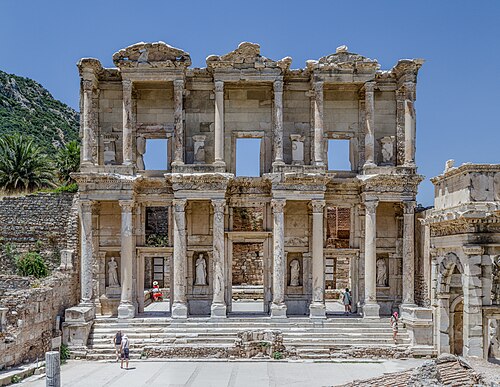
キュロスは紀元前547年に東アナトリアを攻撃し、アケメネス朝はやがて西アナトリアにまで勢力を拡大した。 [ 85]東部では、アルメニア州がアケメネス朝の一部であった。[83]ペルシア戦争の後、アナトリア・エーゲ海沿岸のギリシャ都市国家は独立を取り戻したが、内陸部のほとんどはアケメネス朝の一部であり続けた。[85]トルコ北西部には、紀元前5世紀にオドリュシア王国が存在した。 [95]古代世界の七不思議のうちの2つ、エフェソスのアルテミス神殿とハリカルナッソスの霊廟はアナトリアにあった。[96]
紀元前334年と333年のアレクサンドロス大王の勝利の後、アケメネス朝は崩壊し、アナトリアはマケドニア帝国の一部となった。[85]これにより、アナトリア内陸部の文化的均質化とギリシャ化が進み、 [15]一部の地域では抵抗に遭った。[18]アレクサンドロス大王の死後、セレウコス朝がアナトリアの大部分を支配し、マルマラ海と黒海地域ではアナトリアの土着国家が出現した。東アナトリアにはアルメニア王国が出現した。紀元前3世紀には、ケルト人が中央アナトリアに侵入し、約200年間この地域の主要な民族として存続した。彼らはガラティア人として知られていた。[97]
ローマとビザンチン帝国
ペルガモンがセレウコス朝との紛争で援助を要請すると、ローマは紀元前2世紀にアナトリアに介入した。後継者がいなかったペルガモン王は王国をローマに託し、ローマはアジア属州として併合した。その後、アナトリアにおけるローマの影響力が高まった。[98]アジアの晩祷の虐殺とポントスとのミトリダテス戦争の後、ローマは勝利を収めた。紀元前1世紀頃、ローマはポントスとビテュニアの一部に拡大し、アナトリアの残りの国々をローマの衛星国にした。[99]パルティアとのいくつかの紛争が続き、平和と戦争が交互に繰り返された。[100]
使徒言行録によれば、初期のキリスト教会は聖パウロの努力によりアナトリアで大きく成長した。アナトリアの聖パウロの手紙は最古のキリスト教文献を構成している。[101]聖書外の伝承によれば、聖母被昇天はエフェソスで行われ、使徒ヨハネもそこにいた。イレネオスは「エフェソスの教会はパウロによって設立され、ヨハネはトラヤヌス帝の時代まで彼らと共に存続した」と書いている。[102]
.jpg/500px-Aya_Sophia_(7144824757).jpg)
ビザンチン帝国は東ローマ帝国とも呼ばれ、後期古代から中世にかけてコンスタンティノープルを中心とするローマ帝国の存続国であった。帝国の東半分は、西ローマ帝国の崩壊を引き起こした状況下でも生き残り、1453年にコンスタンティノープルがオスマン帝国に陥落するまで存続した。帝国の存続期間の大半において、帝国は地中海世界で最も強力な経済、文化、軍事力を有していた。ビザンチン帝国という用語は帝国の崩壊後に初めて作られたもので、帝国の市民は国家を「ローマ帝国」、自らをローマ人と呼んだ。帝国の本拠地がローマからビザンチンに移り、キリスト教が国教として採用され、ラテン語ではなくギリシャ語が優勢となったため、現代の歴史家は初期のローマ帝国と後期のビザンチン帝国を区別し続けている。[要出典]
ビザンチン帝国の初期には、アナトリア沿岸地域ではギリシャ語が話されていました。原住民に加えて、内陸アナトリアにはゴート人、ケルト人、ペルシャ人、ユダヤ人など多様なグループがいました。内陸アナトリアは「非常にギリシャ化」されていました。[104]アナトリアの ギリシャ化の後、アナトリア語は最終的に消滅しました。[105]
初期教会のいくつかのエキュメニカル会議は、現在のトルコにある都市で開催されました。その中には、325年の第1ニカイア公会議(イズニック)(ニカイア信条と呼ばれる最初の統一キリスト教の教義を生み出した)、 381年の第1コンスタンティノープル公会議、 431年のエフェソス公会議、451年のカルケドン公会議などがあります。 [106]
セルジューク朝とアナトリアのベイリク
歴史家や言語学者によると、テュルク祖語は中央東アジアで発生した。[107]当初、テュルク祖語の話者は、潜在的には狩猟採集民と農耕民の両方であったが、後に遊牧民と なった。[108]初期および中世のテュルク系民族は、イラン人、モンゴル人、トカラ人、ウラル人、エニセイ人などの近隣民族との長期にわたる接触を通じて、東アジアと西ユーラシア両方の身体的特徴と遺伝的起源を幅広く示していた。 [109]西暦9世紀から10世紀にかけて、オグズ人はカスピ海とアラル海のステップに住んでいたテュルク系民族であった。 [110]キプチャク人からの圧力もあって、オグズ人はイランとトランスオクシアナに移住した。[110]彼らはその地域のイラン語を話すグループと混ざり合い、イスラム教に改宗した。[110]オグズ・トルコ人はトルコマンとしても知られていた。[110]

セルジューク朝は、ヤブグ・カガン国に住んでいたオグズ・トルコ人のクヌク支族から始まった。[111] 1040年、セルジューク朝はダンダナカンの戦いでガズナ朝を破り、大ホラーサーン地方にセルジューク帝国を建国した。[112]アッバース朝の首都でありイスラム世界の中心であったバグダッドは、1055年にセルジューク朝によって占領された。[113]帝国の芸術、文化、政治の伝統においてホラーサーン伝統が果たした役割を考えると、セルジューク朝時代は「トルコ、ペルシャ、イスラムの影響」が混ざり合った時代と表現される。[114] 11世紀後半、セルジューク朝は中世のアルメニアとアナトリアに侵入し始めた。[113]当時のアナトリアはギリシャ化されてから多様性に富み、主にギリシャ語を話す地域であった。[19] [21] [104]
セルジューク朝は1071年にマンジケルトの戦いでビザンチン帝国を破り、後にルーム・セルジューク朝を建国した。[115]この時期には、ダニシュメンド朝などのトルコ系公国もあった。[116]セルジューク朝の到来により、アナトリアではトルコ化が始まった。 [21] [117]テュルク系/トルコ系の移住、混血、イスラム教への改宗があった。[118] [119]この変化は数世紀をかけて徐々に起こった。[120] [121]メヴレヴィー教団などのイスラム神秘主義結社のメンバーは、アナトリアの多様な人々のイスラム化に役割を果たした。 [122] [123] 13世紀には、モンゴルの拡大から逃れてきた人々によるテュルク系移住の第二の大きな波があった。[124] [125]セルジューク朝は1243年のキョセダグの戦いでモンゴル軍に敗れ、14世紀初頭には消滅した。その後、様々なトルコの公国が台頭した。[23] [126]
オスマン帝国
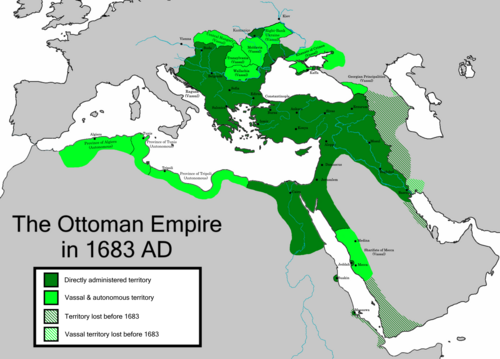
オスマン帝国のベイリクは、14世紀初頭にオスマン1世によってソグート周辺に築かれた。[ 127 ]オスマン帝国の年代記作者によると、オスマンはオグズ・トルコ人のカイ族の子孫である。 [128]オスマン帝国はアナトリア半島の近隣のトルコ系ベイリク(公国)を併合し始め、バルカン半島にまで勢力を拡大した。[129]メフメト2世は1453年5月29日に首都コンスタンティノープルを占領し、オスマン帝国のビザンチン帝国征服を完了した。 [130]セリム1世はアナトリア半島をオスマン帝国の支配下に統一した。[24]オスマン帝国がアナトリア半島とバルカン半島の様々な先住民と混血するにつれ、トルコ化は続いた。[128]
オスマン帝国は、セリム1世とスレイマン1世の治世中、世界的な大国であった。[24] [25] 16世紀と17世紀には、スペインから追放されたセファルディ系ユダヤ人がオスマン帝国に移住した。 [131] 18世紀後半以降、オスマン帝国は衰退し始めた。 1839年にマフムト2世によって開始されたタンジマート改革は、西ヨーロッパで達成された進歩に沿ってオスマン国家の近代化を目指した。1876年のオスマン憲法はイスラム諸国の中で最初のものであったが、短命に終わった。[132]
オスマン帝国は徐々に規模、軍事力、富を縮小していき、特に1875年のオスマン帝国の経済危機と債務不履行[133]によりバルカン半島の諸州で蜂起が起こり、露土戦争(1877-1878)に至った後、多くのバルカン半島のイスラム教徒がアナトリアの帝国の中心地へと移住した。 [134] [135]また、ロシアによるコーカサス征服から逃れてきたチェルケス人も移住した。ある推計によると、現在のロシア領土でのチェルケス人虐殺で80万人のイスラム教徒のチェルケス人が死亡し、その生存者はオスマン帝国に避難し、そのほとんどが現在のトルコの諸州に定住した。オスマン帝国の衰退は、その支配下にあった様々な民族の間で民族主義的感情の高まりを招き、民族間の緊張が高まり、時には暴力に発展することもあり、例えばアルメニア人に対するハミディアン虐殺では30万人もの命が奪われた。[136]
オスマン帝国のヨーロッパ領土(ルメリア)は第一次バルカン戦争(1912-1913)で失われた。[139]オスマン帝国は第二次バルカン戦争(1913)でエディルネなどヨーロッパのいくつかの領土を回復した。19世紀から20世紀初頭にかけて、オスマン帝国の縮小とロシア帝国におけるイスラム教徒の迫害により、推定500万人が死亡し、[140] [141]バルカン半島では300万人以上が死亡した。[142]犠牲者にはトルコ人も含まれていた。[141]バルカン半島、コーカサス、クリミア、地中海の島々から500万~700万、あるいは700万~900万人の難民が現代のトルコに移住し、 [143]オスマン帝国の中心はアナトリアに移った。[144]少数のユダヤ人に加えて、難民の圧倒的多数がイスラム教徒であった。彼らはトルコ人と非トルコ人の両方であり、チェルケス人やクリミア・タタール人などであった。[145] [146]ポール・モイゼスはバルカン戦争を「認識されていない大量虐殺」と呼び、複数の側が被害者であると同時に加害者でもあったと述べている。[147]
1913年のクーデターの後、三人のパシャがオスマン帝国政府を掌握した。オスマン帝国は中央同盟国側で第一次世界大戦に参戦し、最終的に敗北した。[148]戦争中、帝国のアルメニア人はアルメニア人虐殺の一環としてシリアへ移送された。その結果、推定60万人[149]から100万人以上[149] 、あるいは150万人[150] [151] [152]のアルメニア人が殺害された。トルコ政府は[29] [153]これらの出来事を虐殺として認めることを拒否し、アルメニア人は東部の戦争地帯から「移住」されただけだと述べている。 [154]アッシリア人やギリシャ人など、帝国の他の少数民族に対しても虐殺キャンペーンが行われた。[155] [156] [157] 1918年のムドロス休戦協定に続いて、勝利した連合国は1920年のセーヴル条約を通じてオスマン帝国の分割を求めた。[158]
トルコ共和国

第一次世界大戦後の連合国によるイスタンブール(1918年)とイズミル(1919年)の占領は、トルコ民族運動の始まりとなった。ガリポリの戦いで活躍した軍司令官ムスタファ・ケマル・パシャの指導の下、セーヴル条約(1920年)の条項を撤回することを目的としてトルコ独立戦争(1919年~1923年)が戦われた。[159]
1920年4月23日にトルコの正統な政府であると宣言したアンカラのトルコ臨時政府は、旧オスマン帝国から新しい共和政政治体制への法的移行を正式化するために動き始めた。アンカラ政府は武力闘争と外交闘争を展開し、1921年から1923年にかけて、アルメニア、ギリシャ、フランス、イギリスの軍隊を追い出した。[160] [161] [162] [163]アンカラ政府の軍事的前進と外交的成功により、 1922年10月11日にムダンヤ休戦協定が調印された。1922年11月1日、アンカラのトルコ議会は正式にスルタン国を廃止し、こうして623年続いたオスマン帝国の君主制支配に終止符が打たれた。
1923年7月24日のローザンヌ条約はセーヴル条約に取って代わり、[158] [159]オスマン帝国の後継国としての新しいトルコ国家の主権を国際的に承認した。1923年10月4日、連合国軍の最後の部隊がイスタンブールから撤退し、トルコの占領は終了した。トルコ共和国は1923年10月29日、国の新しい首都アンカラで正式に宣言された。[164]ローザンヌ条約はギリシャとトルコの間の人口交換を規定した。[165]

ムスタファ・ケマルは共和国の初代大統領となり、多くの改革を導入した。改革の目的は、古い宗教に基づく多宗派のオスマン帝国の君主制を、世俗的な憲法に基づく議会制共和国として統治されるトルコ国民国家に変えることでした。[166] 1934年の姓法により、トルコ議会はケマルに「アタテュルク」(父なるトルコ人)という尊称の姓を与えました。 [159]アタテュルクの改革はクルド人やザザ族の一部の部族の不満を引き起こし、 1925年のシェイク・サイードの反乱[167]と1937年のデルスィムの反乱につながりました。 [168]
1938年にアタテュルクが死去した後、イスメト・イノニュが第2代大統領となった。1939年、ハタイ共和国は国民投票でトルコへの加盟に賛成票を投じた。トルコは第二次世界大戦の大半で中立を保っていたが、 1945年2月23日に連合国側で参戦した。同年、トルコは国際連合の創設メンバーとなった。 [169] 1950年、トルコは欧州評議会の加盟国となった。朝鮮戦争で国連軍の一員として戦った後、トルコは1952年にNATOに加盟し、ソ連の地中海への拡大に対する防壁となった。

トルコの複数政党制民主主義への移行は、 1960年と1980年の軍事クーデター、および1971年と1997年の軍事覚書によって中断された。[170] [171] 1960年から20世紀末までの間に、複数の選挙で勝利を収めたトルコ政治の著名な指導者には、スレイマン・デミレル、ビュレント・エジェヴィト、トゥルグト・オザルがいる。タンス・チレルは1993年にトルコ初の女性首相になった。トルコは1987年にEECへの正式加盟を申請し、 1995年に欧州連合関税同盟に加盟し、 2005年に欧州連合との加盟交渉を開始した。 [172] [173]関税同盟はトルコの製造業に大きな影響を与えた。[174] [175]
2014年、レジェップ・タイイップ・エルドアン首相はトルコ初の直接大統領選挙で勝利した。[176] 2016年7月15日、政府を追放しようとするクーデター未遂事件が発生した。 [177] 2017年の国民投票により、議会制共和国は大統領制に置き換えられた。首相職は廃止され、その権限と職務は大統領に移譲された。国民投票当日、投票がまだ行われていたが、最高選挙管理委員会は各投票用紙に公式印を貼付することを要求する規則を解除した。[178]野党は、印のない投票用紙が250万枚も有効とされたと主張した。[178]
行政区分
トルコは行政に関して単一構造をとっており、各県はアンカラの中央政府に従属している。県の中心部では、政府は県知事(vali)によって代表され、町では知事(kaymakam)によって代表される。他の上級公務員も中央政府によって任命されるが、市長(belediye başkanı)は有権者によって選出される。[179]トルコの自治体には、自治体の問題に関する意思決定を行う 地方立法機関( belediye meclisi )がある。
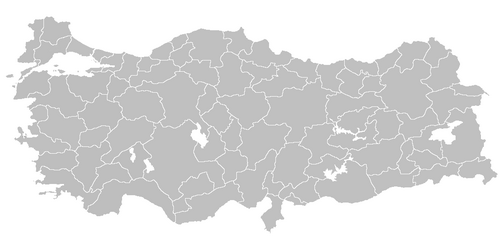
トルコは行政上、 81の県(ilまたはvilayet )に分割されている。各県は地区(ilçe)に分かれており、合計973の地区がある。[180]トルコは、地理、人口、経済の測定、調査、分類のために7つの地域(bölge )と21の小地域にも分割されているが、これは行政区分を指すものではない。

政府と政治
トルコは大統領制共和国であり、複数政党制を採用している。[181]現在の憲法は1982年に採択された。[182]トルコの単一制では、国民は国家、州、地方の3つのレベルの政府に服する。地方政府の職務は通常、市町村政府と地区に分割され、行政官と立法官は地区ごとに国民の多数決で選出される。 [要出典]政府は3つの部門から成り、1つ目は立法府で、トルコ大国民議会である。[183] 2つ目は行政府で、トルコ大統領である。[184] 3つ目は司法府で、憲法裁判所、最高裁判所、管轄権紛争裁判所が含まれる。[185] [6]
議会は600議席を持ち、人口に比例して各県に配分される。議会と大統領の任期は5年で、選挙は同日に行われる。大統領は直接選挙で選出され、2期目以降は再選されない。ただし、議会が2期目の途中で早期に大統領選挙を呼びかけた場合は別である。[要出典]憲法裁判所は15人の裁判官で構成され、12年の任期で1回選出される。裁判官は65歳を超えると引退しなければならない。[186]トルコの政治はますます民主主義の後退と結び付けられるようになり、競争的な権威主義体制と評されるようになっている。[187] [188]
政党と選挙

トルコでは、大統領(国政)、国会議員(国政)、市長(地方)、地区長(地方)、州または市議会議員(地方)、ムフタル(地方)の6つの政府機能について選挙が行われる。国民投票も時々行われる。18歳以上のすべてのトルコ国民は、選挙で投票し、候補者として立候補する権利を有する。[要出典] 1934年以来、トルコ全土で男女両方の 普通選挙が適用されている。[189]トルコでは、地方選挙と総選挙の両方の投票率は他の多くの国と比較して高く、通常は80%を超えています。[要出典]レジェップ・タイイップ・エルドアン大統領が現在、国家元首および行政府の長を務めている。[190] [191] オズギュル・オゼルが主要野党党首である。直近の議会選挙と大統領選挙は2023年に行われた。
憲法裁判所は、反世俗的あるいはテロとつながりがあるとみなした政党の公的資金を剥奪したり、その存在自体を禁止したりすることができる。[192] [193]国レベルの政党の選挙の最低得票率は7%である。[194]小規模政党は他政党と連合を組むことで選挙の最低得票率を回避できる。無所属の候補者には選挙の最低得票率は適用されない。
トルコの政治的スペクトルの右側では、民主党、正義党、祖国党、公正発展党などの政党がトルコで最も人気のある政党となり、数多くの選挙で勝利した。トルコの右翼政党は、保守主義、国家主義、イスラム主義などの政治イデオロギーの原則を受け入れる可能性が高い。[195]スペクトルの左側では、共和人民党、社会民主ポピュリスト党、民主左翼党などの政党がかつて最大の選挙での成功を収めた。左翼政党は、社会主義、ケマル主義、世俗主義の原則を受け入れる可能性が高い。[196]
法

トルコ共和国の建国に伴い、トルコはシャリーア由来のオスマン帝国法に代わって、民法制度を採用した。 1926年に採択された民法典は、 1907年のスイス民法典と1911年のスイス債権法典に基づいていた。2002年に多くの変更が行われたが、元の法典の基礎の多くを保持している。刑法典は、もともとイタリア刑法典に基づいていたが、2005年にドイツ刑法典やドイツ法全般に類似した原則を持つ法典に置き換えられた。行政法はフランスの同等法典に基づいており、手続法は一般にスイス、ドイツ、フランスの法制度の影響を示している。[197]イスラムの原則は法制度に関係していない。[198]
トルコにおける法執行は、内務省の管轄下にあるいくつかの機関によって行われている。これらの機関は、治安総局、国家憲兵総司令部、沿岸警備隊司令部である。[199]公正発展党とエルドアンによる政権下では、特に2013年以降、裁判官や検察官の昇進や公務遂行に対する政治的干渉により、トルコ国内外の機関、国会議員、ジャーナリストからトルコ司法の独立性と完全性がますます疑問視されるようになった。[200] [201] [202]
外交関係

トルコの外交政策の目標は一貫して国益の追求である。これらの利益は主に経済成長と、国内のテロリストや外部の脅威からの安全の維持である。[203]共和国の樹立後、アタテュルクとイノニュは冷戦が始まるまで「国内の平和、世界の平和」の原則に従った。 [204]ソ連の脅威を受けて、トルコは米国との同盟を求め、1952年にNATOに加盟した。 [205]全体として、トルコは中央アジア、コーカサス、ロシア、中東、イランとの良好な関係を目指している。西側諸国とも、トルコは協定を維持することを目指している。[206]トルコは東側との貿易とEUへの加盟により、経済成長を追求している。[206]トルコは1995年に欧州連合関税同盟に加盟したが、 [207] 2024年時点でEU加盟交渉は凍結されている。[208]
.svg/500px-Organization_of_Turkic_States_(orthographic_projection).svg.png)
トルコは新興大国、[209]、中堅国、[ 210]、地域大国と呼ばれてきた。[211]トルコはソ連崩壊後、中央アジアのテュルク系諸国とのより緊密な関係を模索してきた。[212]文化的に近い国であるアゼルバイジャンとのより緊密な関係が実現した。 [212]トルコは国際テュルク文化機構およびテュルク系諸国機構の創設メンバーである。[213] [214]トルコは欧州安全保障協力機構、欧州評議会、イスラム協力機構のメンバーでもある。[215]
アラブの春の後、トルコはアラブ首長国連邦、サウジアラビア、エジプトなどの国と問題を抱えていた。[216]これらの国との関係はそれ以来改善している。[216] [217] [218]例外はシリアであり、トルコはシリア内戦の開始後に関係を断絶した。[219]ギリシャとは海上境界線をめぐって紛争があり、キプロスとも紛争がある。[220]
2018年、トルコ軍とトルコが支援する部隊は、シリアで、米国が支援するYPG (トルコは非合法のPKKの分派とみなしている)[221] [222]を飛び地アフリンから追放することを目的とした作戦を開始した。[223] [224]トルコはまた、イラクのクルディスタンで空爆を行ったが、イラクはこれを自国の主権を侵害し民間人を殺害したと非難した。[225] イスラエルとの外交関係はガザの船団襲撃後に損なわれ、[226] 2016年に正常化したが、[227]イスラエルのガザ地区侵攻後に再び断絶した。[228] 2024年、トルコはイスラエルとの貿易を停止した。[228]
軍隊

トルコ軍は外国の脅威に対する防衛に責任を負っている。最高司令官は大統領であるが、参謀本部、空軍、海軍、陸軍は通常、国防大臣に報告する。[232]憲兵総司令部と沿岸警備隊司令部は内務省の管轄下にある。[233]男性は6~12か月の 兵役が義務付けられているが、[234]手数料を支払えば1か月に短縮される。[235]トルコは良心的兵役拒否を認めておらず、兵役に代わる民間人の選択肢も提供していない。 [236]

トルコはNATOでアメリカに次いで2番目に大きな常備軍を擁しており、 2022年2月時点で推定890,700人の軍人を擁している。 [237] NATOの核共有政策の一環として、トルコはインジルリク空軍基地に約20発のアメリカのB61核爆弾を保有している。[238] [239]トルコ軍は海外で比較的大きな軍事プレゼンスを有しており、[240]アルバニア、[241]イラク、[242]カタール、[243]ソマリアに軍事基地を置いている。[244]同国は1974年以来、北キプロスに36,000人の部隊を維持している。[245]
トルコは朝鮮戦争以降、ソマリア、ユーゴスラビア、アフリカの角での平和維持活動を含む国連およびNATOの国際ミッションに参加してきた。第一次湾岸戦争では連合軍を支援し、アフガニスタンの国際治安支援部隊に軍人を派遣し、コソボ軍、ユーロコープス、EU戦闘グループで活動を続けている。[246] [247] 2016年現在、トルコはイラク北部のペシュメルガ軍とソマリア軍の警備と訓練を支援している。[248] [249]
人権

トルコの人権記録は多くの論争と国際的な非難の対象となっている。1959年から2011年の間に、欧州人権裁判所は、クルド人の権利、女性の権利、LGBTの権利、メディアの自由などの問題でトルコに対して2,400件以上の人権侵害の判決を下した。[251] [252]トルコの人権記録は、同国のEU加盟にとって依然として大きな障害となっている。[253]
1970年代後半、トルコは極左と極右の過激派グループ間の政治的暴力に苦しみ、 1980年の軍事クーデターで頂点に達した。[254]クルド労働者党(PKK、トルコ、米国[255]、欧州連合[256]によりテロ組織に指定)は、マルクス・レーニン主義のイデオロギーに基づく独立したクルド国家の設立を求めて、アブドゥラー・オジャラン率いるクルド人過激派グループによって1978年に設立された。[257] PKKが当初この設立の理由として挙げたのは、トルコにおけるクルド人への抑圧であった。[258] [259]本格的な反乱は、 PKKがクルド人の蜂起を宣言した1984年に始まりました。時が経つにつれて、PKKは要求内容をクルド人に対する平等な権利とトルコ国内での地方自治へと変更していった。[260] [261] [262] [263] 1980年以来、トルコ議会は、その議員の訴追免除を剥奪しており、その中には親クルド政党の議員44名も含まれている。[264]
2013年には、ゲジ公園の破壊計画に端を発した大規模な抗議活動が勃発したが、すぐに反政府運動全般に拡大した。[265] 2016年5月20日、トルコ議会は、親クルド派のHDPと主要野党CHPの議員101人を含む、議員のほぼ4分の1から訴追免除を剥奪した。[266] [267] 2020年までに、2016年のクーデター未遂事件への対応を口実に、[268] [269]当局は9万人以上のトルコ国民を逮捕または投獄した。[270]ジャーナリスト保護委員会によると、AKP政権はメディアの自由に対する弾圧を行っている。[271] [272]多くのジャーナリストが「テロ」や「反国家活動」の容疑で逮捕されている。[273] [274] 2020年に、CPJはトルコで投獄されているジャーナリスト18人を特定した(トルコで現在も発行されている最古の新聞であるCumhuriyetの編集スタッフを含む)。[275]
LGBTの権利

トルコでは1858年以来、同性愛行為は非犯罪化されている。[277] LGBTの人々は1951年以来、ジュネーブ条約に基づいてトルコで亡命を求める権利を持っている。 [278]しかし、トルコのLGBTの人々は差別、嫌がらせ、さらには暴力に直面している。 [279]トルコ当局は多くの差別的慣行を行ってきた。[280] [281] [282]それにもかかわらず、トルコでのLGBTの受容は拡大している。 2016年に実施された調査では、回答者の33%がLGBTの人々に平等な権利があるべきだと答え、2020年には45%に増加した。2018年の別の調査では、同性愛者の隣人を望まない人の割合が、2018年の55%から2019年には47%に減少したことが明らかになった。 [283] [284] 2015年の世論調査では、トルコ国民の27%が同性婚の合法化に賛成し、19%が代わりにシビルユニオンを支持した。[285]
2003年に毎年恒例のイスタンブール・プライドが始まったとき、トルコはイスラム教徒が多数を占める国で初めてゲイ・プライド・パレードを開催した。[286] 2015年以来、タクシム広場とイスティクラル通り(ゲジ公園の抗議活動が行われた場所)でのパレードは安全上の懸念を理由に政府の許可を拒否されているが、毎年何百人もの人々が禁止に反抗している。[276]批評家は、禁止は実際にはイデオロギー的なものだったと主張している。[276]
地理
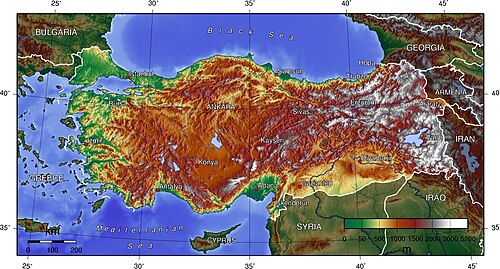
トルコの面積は783,562平方キロメートル(302,535平方マイル)です。[287]トルコ海峡とマルマラ海を挟んで、トルコは西アジアと南東ヨーロッパの架け橋となっています。[288]トルコのアジア側は国土の97%を占め、アナトリアと呼ばれることもあります。[289]アナトリアの東の境界線のもう一つの定義は、黒海からイスケンデルン湾までの曖昧な線です。[290]トルコのヨーロッパ側である 東トラキアには、人口の約10%が住み、国土の3%を占めています。[291]国土は三方を海に囲まれており、西はエーゲ海、北は黒海、南は地中海に面しています。 [292]トルコは東でジョージア、アルメニア、アゼルバイジャン、イランと国境を接しています。[292]南はシリアとイラクと国境を接している。[293]北はトラキア地方でギリシャとブルガリアと国境を接している。[292]
トルコは「 7つの主要地域」に分かれている。マルマラ、エーゲ海、中央アナトリア、黒海、 東アナトリア、南東アナトリア、地中海である。[292]一般的な傾向として、内陸のアナトリア高原は東に向かうにつれて険しくなる。[294]山脈には、北にコロール山脈とポンティック山脈、南にタウルス山脈がある。湖水地方には、ベイシェヒル湖やエーギルディル湖など、トルコ最大級の湖がいくつかある。

地理学者は、アラビアプレートとユーラシアプレートが合流する周辺の山岳地帯を指すのに、東アナトリア高原、イラン高原、アルメニア高原という用語を使用してきました。東アナトリア高原とアルメニア高原の定義は大部分が重複しています。 [296]東アナトリア地方には、標高5,137メートル(16,854フィート)でトルコ最高峰のアララト山[297]と、国内最大の湖であるヴァン湖があります。 [298]トルコ東部には、ユーフラテス川、チグリス川、アラス川などの川の源流があります。南東アナトリア地方には、上部メソポタミアの北部平野が含まれます。
トルコでは地震が頻繁に発生している。[37]人口のほぼ全員が地震危険度が異なる地域に住んでおり、約70%が最高または2番目に高い地震危険度地域に住んでいる。[299] [300] アナトリアプレートは、北は北アナトリア断層帯、東は東アナトリア断層帯とビトリス・ザグロス衝突帯、南はギリシャとキプロスの沈み込み帯、西はエーゲ海伸長帯に接している。 [301] 1999年のイズミット地震と1999年のデュズジェ地震の後、北アナトリア断層帯の活動は「トルコで最も危険な自然災害の1つと考えられている」。[302] 2023年のトルコ・シリア地震は、現代トルコ史上最悪の死者を出した地震だった。[303]トルコは、地震対策でより成功している同様の開発レベルを持つ国、チリと比較されることがある。[304] [305] [306]
生物多様性

トルコは、旧世界の3大陸を結ぶ陸路、海路、空路の交差点に位置し、地理的地域全体にわたって生息地の多様性に富んでいるため、種の多様性に富み、活気に満ちた生態系が育まれています。[307]世界の36の生物多様性ホットスポットのうち、トルコには3つが含まれています。 [36]これらは、地中海、イラン・アナトリア、コーカサスのホットスポットです。[36] 21世紀の生物多様性への脅威には、トルコにおける気候変動による砂漠化が含まれます。[308]
トルコの森林にはトルコナラが自生している。プラタナス属(プラタナス)で最も一般的に見られる種はオリエンタリスである。トルコマツ(Pinus brutia)は主にトルコと他の東地中海諸国で見られる。チューリップの野生種のいくつかはアナトリア原産で、この花は16世紀にオスマン帝国から持ち込まれた種とともに西ヨーロッパに初めて導入された。[309] [310]
トルコには、ガリポリ半島歴史国立公園、ネムルート山国立公園、古代トロイ国立公園、オルデニズ自然公園、ポロネツキョイ自然公園など、 40の国立公園、189の自然公園、31の自然保護区、80の野生生物保護区、109の自然記念物がある。[311]北アナトリアの針葉樹林と落葉樹林は、トルコ北部のポンティック山脈の大部分を覆う生態地域であり、コーカサス混交林は山脈の東端に広がっている。この地域には、ハイタカ、イヌワシ、カタシロワシ、コマドリ、コーカサスクロライチョウ、アカエリヒレアシシギ、イヌワシなどのユーラシアの野生生物が生息している。[312]
アナトリアヒョウは、トルコの北東部と南東部に、現在でもごく少数生息している。[313] [314]トルコの森林には、ヨーロッパオオヤマネコ、ヨーロッパヤマネコ、カラカルなどのネコ科動物が生息している。絶滅したカスピ海トラは、 20世紀後半までトルコの東端に生息していた。[313] [315]アンカラの有名な家畜には、アンゴラ猫、アンゴラウサギ、アンゴラヤギがおり、ヴァン県のヴァン猫もその1つである。国犬種は、カンガル(アナトリアン・シェパード)、マラクル、アクバシュである。[316]
気候
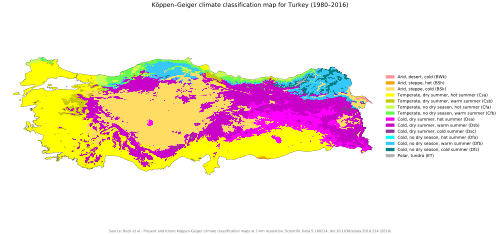
エーゲ海と地中海に面するトルコの沿岸地域は、温帯 地中海性気候で、夏は暑く乾燥し、冬は穏やかから涼しく雨が多い。[318]黒海に面する沿岸地域は、温帯海洋性気候で、夏は暖かく雨が多く、冬は涼しくから寒く雨が多い。[318]トルコの黒海沿岸は最も降水量が多く、年間を通じて降水量が多いトルコで唯一の地域である。[318]黒海沿岸の東部は、年間平均2,200ミリメートル(87インチ)で、トルコで最も降水量が多い。[318]エーゲ海と黒海を結ぶマルマラ海に面する沿岸地域は、温帯地中海性気候と温帯海洋性気候の中間の気候で、夏は暖かくから暑く適度に乾燥し、冬は涼しくから寒く雨が多い。[318]
マルマラ海と黒海の沿岸地域では、ほぼ毎年冬に雪が降るが、通常は数日で溶けてしまう。[318]しかし、エーゲ海沿岸地域では雪が降ることは稀で、地中海沿岸地域では非常に稀である。[318]アナトリア高原の冬は特に厳しい。北東アナトリアでは気温が−30〜−40℃(−22〜−40℉)になり、年間120日以上は地上に雪が積もることがある。最も高い山の頂上では、年間を通して雪が積もる。中央アナトリアでは気温が−20℃(−4℉)を下回ることもあり、山々はさらに寒くなる。海岸に近い山々は地中海の影響が内陸に広がるのを防ぎ、中央アナトリア高原は四季のコントラストがはっきりした大陸性気候となっている。 [318]
社会経済的、気候的、地理的要因により、トルコは気候変動に対して非常に脆弱である。[38]これは、「健康への平均年間リスク」など、10項目の気候脆弱性側面のうち9項目に当てはまる。[38] OECDの中央値は10項目中2項目である。[38]脆弱性を低下させるには、包括的かつ迅速な成長が必要である。[319]トルコは2053年までに排出量実質ゼロの達成を目指している。 [320]気候目標を達成するには多額の投資が必要となるが、燃料輸入の削減や大気汚染の低減による健康増進などにより、純経済的利益ももたらされる。[321]
経済

トルコは高中所得国であり、新興市場国である。[300] [328] OECDおよびG20の創設メンバーであり、名目GDPでは世界第18位、PPP調整済みGDPでは世界第11位の経済大国である。新興工業国に分類される。サービス業がGDPの大部分を占め、工業は30%以上を占める。[329]農業は約7%を占める。[329] IMFの推計によると、トルコの購買力平価による一人当たりGDPは2023年に42,064ドル、名目一人当たりGDPは12,849ドルである。[9]トルコへの外国直接投資は2007年に220.5億ドルでピークに達し、2022年には130.9億ドルに減少しました。 [330]生産性の伸びの鈍化やインフレの高騰など、長期にわたる構造的・マクロ的な障害により、潜在成長率は弱まっています。[300]
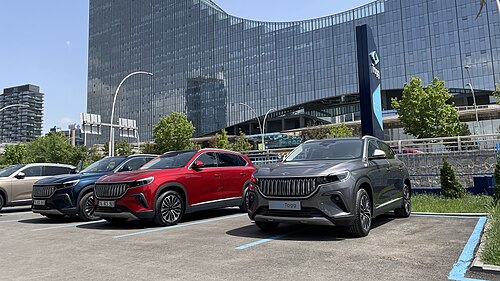
トルコは多様な経済を有しており、主な産業には自動車、電子機器、繊維、建設、鉄鋼、鉱業、食品加工などがある。[329]トルコは主要な農業生産国でもある。[335]トルコは粗鋼生産量で世界第8位、自動車生産量、造船(トン数ベース)、産業用ロボットの年間設置量で世界第13位である。[336] トルコの自動車企業には、 TEMSA、Otokar、BMC、Toggなどがある。Toggはトルコ初の全電気自動車会社である。Arcelik 、Vestel、Bekoは家電製品の大手メーカーである。[337] Arcelikは世界最大の家庭用品生産国の1つである。[338] 2022年、トルコはトップ250リストの国際請負業者の数で世界第2位にランクされました。 [339] [340]トルコ航空は世界最大の航空会社の一つです。

2007年から2021年の間に、PPPベースの1日6.85ドルの国際貧困ラインを下回る人口の割合は20%から7.6%に減少した。[300] 2023年には、人口の13.9%が国の貧困リスク率を下回っていた。[342]ユーロスタットの定義によると、2021年には人口の34%が貧困または社会的排除のリスクにさらされていた。[ 343]トルコの失業率は2022年に10.4%だった。 [344] 2021年には、総可処分所得の47%が所得上位20%の層に渡り、下位20%の層はわずか6%しか受け取っていないと推定された。[345]
観光業はトルコのGDPの約8%を占めている。[346] 2022年、トルコは5050万人の外国人観光客を迎え、国際観光客到着数で世界第5位となった。 [347]トルコには21のユネスコ世界遺産と84の世界遺産暫定リストがある。トルコには519のブルーフラッグビーチがあり、世界で3番目に多い。[348]ユーロモニターインターナショナルのレポートによると、イスタンブールは2023年に2020万人以上の外国人観光客を迎え、世界で最も訪問者が多い都市となっている。 [341]アンタルヤはパリとニューヨークを抜いて世界で4番目に訪問者が多い都市となり、1650万人以上の外国人観光客を迎えた。[341]
インフラストラクチャー

トルコは世界第16位の電力生産国である。トルコの発電能力は大幅に増加し、再生可能エネルギーによる発電は過去10年間で3倍になった。[350] [351] 2019年には、トルコの電力の43.8%を再生可能エネルギーから生産した。 [352]トルコはまた、世界第4位の地熱発電生産国である。 [353]トルコ初の原子力発電所であるアックユは、エネルギーミックスの多様化を促進する。[354]最終消費全体に関して言えば、化石燃料は依然として大きな役割を果たしており、73%を占めている。[355]トルコの温室効果ガス排出の主な原因は、エネルギーシステムにおける石炭の割合が高いことである。 [356] 2017年の時点で、政府は低炭素エネルギー転換に投資していたが、化石燃料はまだ補助金が出されていた。[357] 2053年までに、トルコは排出量実質ゼロを目指している。[320]

トルコは、ガスと石油の輸入に大きく依存していることから、エネルギー供給の安全保障を最優先事項としている。[354]トルコの主なエネルギー供給源は、ロシア、西アジア、中央アジアである。[206] 最近発見されたサカリヤガス田では、2023年にガス生産が開始された。フル稼働すれば、国内で必要とされる天然ガスの約30%を供給することになる。[358] [359]トルコは、地域のエネルギー輸送のハブになることを目指している。 [360]ブルーストリーム、トルクストリーム、バクー・トビリシ・ジェイハンパイプラインなど、いくつかの石油・ガスパイプラインが国中に張り巡らされている。 [ 360 ]
2023年現在、トルコには3,726キロメートルの制限付き高速道路と29,373キロメートルの中央分離帯のある高速道路がある。 [ 361]トルコのアジア側とヨーロッパ側は複数の橋とトンネルで結ばれており、ダーダネルス海峡のチャナッカレ1915橋は世界最長の吊り橋である。[362]ボスポラス海峡の下にあるマルマライトンネルとユーラシアトンネルはイスタンブールの両側を結んでいる。 [363]オスマン・ガーズィー橋はイズミット湾の北岸と南岸を結んでいる。
トルコ国鉄は、従来型列車と高速列車の両方を運行しており、政府は両方を拡大している。[364] 高速鉄道路線には、アンカラ・イスタンブール、アンカラ・コンヤ、アンカラ・シヴァス路線がある。[365] イスタンブール地下鉄は、2019年の年間乗客数が約7億400万人を誇る国内最大の地下鉄網である。 [366] 2024年現在、空港は115か所ある。 [367] イスタンブール空港は、世界で最も利用者数の多い空港トップ10の1つである。トルコは交通ハブになることを目指している。 [368] [369]イスタンブール空港は、中間回廊を含むアジアとヨーロッパを結ぶさまざまな路線の一部である。[369] 2024年に、トルコ、イラク、UAE、カタールは、イラクの港湾施設を道路と鉄道でトルコに接続する協定に署名した。[370]
科学技術
トルコの研究開発費の対GDP比は、2000年の0.47%から2021年には1.40%に上昇した。[371] トルコは、科学技術雑誌への論文発表数で世界第16位、ネイチャーインデックスでは35位にランクされている。[372] [373]トルコ特許庁は、特許出願全体で世界第21位、意匠出願では第3位にランクされている。トルコ特許庁への出願人の大多数はトルコ居住者である。世界中のすべての特許庁の中で、トルコ居住者は特許出願全体で第21位にランクされている。[374] 2023年、トルコはグローバルイノベーションインデックスで世界第39位、上位中所得国グループの中で第4位にランクされた。[375]トルコは、過去10年間で顕著な増加を記録した国の一つであった。[40]
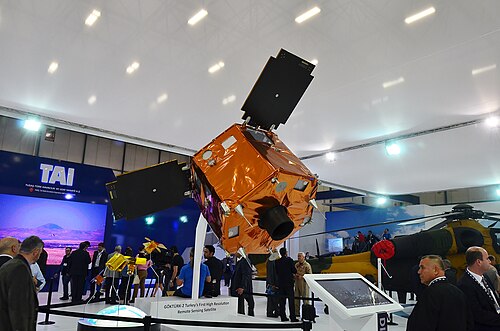
TÜBİTAKは、研究への資金提供と実施を行う主要機関の一つである。[376] [377] トルコの宇宙計画は、国家衛星打ち上げシステムの開発と、宇宙探査、天文学、衛星通信の能力向上を計画している。[377] Göktürk計画の下で、トルコ宇宙システム統合試験センターが建設された。[378]トルコ初の国産通信衛星Türksat 6Aは、2024年に打ち上げられる予定。[379]計画中の粒子加速器センターの一部として、TARLAと呼ばれる電子加速器が2024年に運用を開始した。[380] [381] ホースシュー島に南極研究基地の計画がある。[382]
トルコは無人航空機の分野で大きな力を持つと考えられている。[383] アセルサン、トルコ航空宇宙産業、ロケットサン、アスファットは世界のトップ100防衛企業に数えられる。[384]トルコの防衛企業は予算のかなりの部分を研究開発に費やしている。[385]アセルサンは量子技術の研究にも投資している。[386]
人口統計
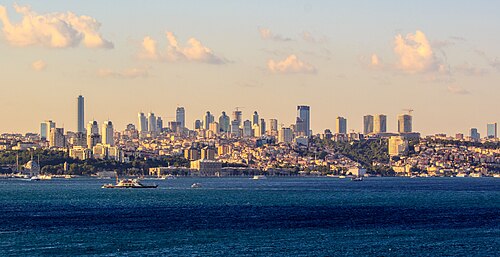
住所に基づく人口記録システムによると、一時保護下にあるシリア人を除く同国の人口は2023年には85,372,377人であった。[8] 93%が県や地区の中心部に住んでいた。[8] 15~64歳と0~14歳の年齢層の人々は、それぞれ全人口の68.3%と21.4%に相当し、65歳以上は10.2%を占めた。[8] 1950年から2020年の間に、トルコの人口は2090万人から8360万人へと4倍以上に増加したが、[388] 2023年の人口増加率は0.1%である。[8] 2023年の合計特殊出生率は女性1人当たり1.51人で、女性1人当たり2.10人の人口置換率を下回っている。[389] 2018年の健康調査では、理想的な子供の数は女性1人当たり2.8人であり、既婚女性1人当たり3人にまで増加しました。[390]
民族と言語
.png/500px-Kurdish_population_by_region_(KONDA_2010).png)
トルコ憲法第66条では、トルコ人とは国民であると定義されています。 [392]トルコには少なくとも47の民族グループが存在すると推定されています。 [393] 1965年のトルコ国勢調査以降の民族統計は国勢調査の数字に含まれていないため、人口の民族構成に関する信頼できるデータは入手できません。[394]ワールドファクトブックによると、トルコ国民の70~75%はトルコ民族です。[5]調査に基づくと、KONDAの推定では2006年には76%で、成人の78%が自分の民族的背景をトルコ人と自認していました。[395] 2021年には、調査で成人の77%がそうであると自認しました。[396]
クルド人は最大の少数民族である。[397]正確な数は依然として論争の的となっているが、[397]人口の12~20%と推定されている。[398] 1990年の調査によると、クルド人は人口の約12%を占めていた。[399]クルド人は、アール県、バトマン県、ビンギョル県、ビトリス県、ディヤルバクル県、ハッカリ県、ウドゥル県、マルディン県、ムシュ県、スィイルト県、シュルナク県、トゥンジェリ県、ヴァン県で多数派を占め、シャンルウルファ県ではほぼ多数派(47%)、カルスではかなりの少数派(20%)を占めている。[400]さらに、国内移住によって、トルコ中部および西部の主要都市のすべてにクルド人ディアスポラ・コミュニティが形成されている。イスタンブールには推定300万人のクルド人がおり、世界で最も多くのクルド人人口を抱える都市となっている。[401] 2021年の調査では、成人の19%がクルド人であると回答した。[396]トルコ人とクルド人の両方など、複数の民族的アイデンティティを持つ人もいる。[402] [403] 2006年には、推定270万人のトルコ人とクルド人が異民族間の結婚によって血縁関係にあった。[404]
ワールドファクトブックによると、非クルド人少数民族は人口の7~12%である。[5] 2006年にKONDAは、非クルド人および非ザザ人少数民族が人口の8.2%を占めると推定した。これらは、トルコ国民、他のトルコ系の背景を持つ人々 、アラブ人、その他などの一般的な説明をした人々であった。[395] 2021年の調査では、成人の4%が非民族トルコ人または非民族クルド人であると特定した。[396]憲法裁判所によると、トルコで公式に認められている少数民族は、ローザンヌ条約で認められた3つの非イスラム教徒少数民族(アルメニア人、ギリシャ人、ユダヤ人[c])とブルガリア人の4つだけである。[d] [408] [409] [410] 2013年、アンカラ第13巡回行政裁判所は、ローザンヌ条約の少数民族条項はトルコのアッシリア人とシリア語話者にも適用されるべきであるとの判決を下した。[411] [412] [413]その他の未承認民族には、アルバニア人、ボスニア人、チェルケス人、グルジア人、ラズ人、ポマク人、ロマ人などがいる。[414] [415] [416]
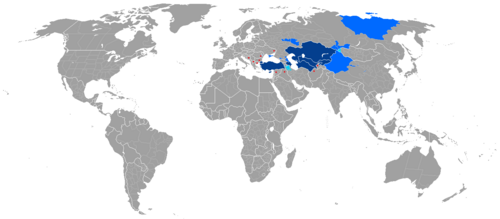
公用語はトルコ語で、世界で最も広く話されているテュルク語族の言語である。 [417] [418]人口の85% [419] [420]から90% [421]がトルコ語を第一言語として話している。クルド語話者が最大の言語的少数民族である。[421]ある調査では、人口の13%がクルド語またはザザ語を第一言語として話していると推定されている。[419]その他の少数民族の言語には、アラビア語、コーカサス言語、ガガウズ語がある。[421]公式に認められた少数民族の言語的権利は、アルメニア語、ブルガリア語、ギリシャ語、ヘブライ語、[e] [405] [408] [409] [410]およびシリア語について法的に認められ、保護されている。[412] [413]トルコには絶滅の危機に瀕した言語が複数ある。
移民
一時保護下にあるシリア人を除くと、2023年現在トルコには1,570,543人の外国人がいた。[8] 1991年の湾岸戦争では、何百万人ものクルド人が山を越えてトルコやイランのクルド人地域に逃れた。2010年代から2020年代初頭のトルコの移民危機は、何百万人もの難民と移民の流入をもたらした。[422]トルコは2020年4月現在、世界で最も多くの難民を受け入れている。 [423]トルコの難民危機は、災害緊急事態管理総局が管理している。2011年にシリア内戦が始まる前、トルコにいるアラブ人の推定数は100万人から200万人以上まで変動していた。[424]
2020年11月、トルコには360万人のシリア難民がいた。 [ 425]これにはシリアのクルド人[426]やシリアのトルクメン人[427]など、シリアの他の民族も含まれている。2023年8月現在、これらの難民の数は330万人と推定されている。シリア人の数は年初から約20万人減少した。[428]政府は2023年11月までに23万8千人のシリア人に国籍を付与した。[429] 2023年5月現在、 2022年のロシアのウクライナ侵攻で避難したウクライナ難民約9万6千人がトルコに避難している。[430] 2022年には約10万人のロシア国民がトルコに移住し、トルコに移住した外国人のリストで第1位となり、2021年より218%以上増加した。[431]
宗教
左:イスタンブールのチャムリジャ・モスクは2人の女性建築家によって設計された。[432]右:マルディン近郊のモル・ハナニョ修道院。1293年から1932年までシリア正教会の本部であった。[433] [434]
Turkey is a secular state with no official state religion; the constitution provides for freedom of religion and conscience.[435][436] According to the World Factbook, Muslims constitute 99.8% of the population, most of them being Sunni.[5] Based on a survey, KONDA's estimate for Muslims was 99.4% in 2006.[437] According to Minority Rights Group International, estimates of share of Alevi are between 10% to 40% of the population.[438] KONDA's estimate was 5% in 2006.[437] 4% of adult citizens identified as Alevi in a survey in 2021, while 88% identified as Sunni.[396]
The percentage of non-Muslims in modern-day Turkey was 19.1% in 1914, but fell to 2.5% in 1927.[439] Currently, non-Muslims constitute 0.2% of the population according to the World Factbook.[5] In 2006, KONDA's estimate was 0.18% for people with non-Islam religions.[437] Some of the non-Muslim communities are Armenians, Assyrians, Bulgarian Orthodox, Catholics, Chaldeans, Greeks, Jews, and Protestants.[440] Sources estimate that the Christian population in Turkey ranges between 180,000 and 320,000.[441][442] Turkey has the largest Jewish community among the Muslim-majority countries.[443] Currently, there are 439 churches and synagogues in Turkey.[444]
In 2006, KONDA's estimate was 0.47% for those with no religion.[437] According to KONDA, share of adult citizens who identified as unbeliever increased from 2% in 2011 to 6% in 2021.[396] A 2020 Gezici Araştırma poll found that 28.5% of the Generation Z identify as irreligious.[445][446]
Education
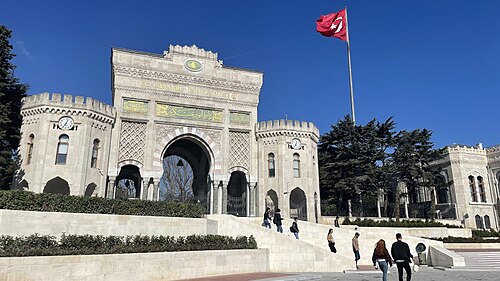
In the past 20 years, Turkey has improved quality of education and has made significant progress in increasing education access.[448] From 2011 to 2021, improvements in education access include "one of the largest increases in educational attainment for 25-34 year-olds at upper secondary non-tertiary or tertiary education", and quadrupling of pre-school institutions.[39] PISA results suggest improvements in education quality.[39] There is still a gap with OECD countries. Significant challenges include differences in student outcomes from different schools, differences between rural and urban areas, pre-primary education access, and arrival of students who are Syrian refugees.[39]

The Ministry of National Education is responsible for pre-tertiary education.[450] Compulsory education is free at public schools and lasts 12 years, divided into three parts.[451][448] There are 208 universities in Turkey.[377] Students are placed to universities based on their YKS results and their preferences, by the Measuring, Selection and Placement Center.[452] All state and private universities are under the control of the Higher Education Board (Turkish: Yükseköğretim Kurulu, YÖK). Since 2016, the president of Turkey directly appoints all rectors of all state and private universities.[453]
According to the 2024 Times Higher Education ranking, the top universities were Koç University, Middle East Technical University, Sabancı University, and Istanbul Technical University.[454] According to Academic Ranking of World Universities, the top ones were Istanbul University, University of Health Sciences (Turkey), and Hacettepe University.[455] Turkey is a member of the Erasmus+ Programme.[456] Turkey has become a hub for foreign students in recent years, with 795,962 foreign students in 2016.[457] In 2021 Türkiye Scholarships, a government-funded program, received 165,000 applications from prospective students in 178 countries.[458][459][460]
Health
.jpg/500px-Ba%C5%9Fak%C5%9FehirCityHospital_(1).jpg)
The Ministry of Health has run a universal public healthcare system since 2003.[462] Known as Universal Health Insurance (Genel Sağlık Sigortası), it is funded by a tax surcharge on employers, currently at 5%.[462] Public-sector funding covers approximately 75.2% of health expenditures.[462] Despite the universal health care, total expenditure on health as a share of GDP in 2018 was the lowest among OECD countries at 6.3% of GDP, compared to the OECD average of 9.3%.[462] There are many private hospitals in the country.[463] The government planned several hospital complexes, known as city hospitals, to be constructed since 2013.[463] Turkey is one of the top 10 destinations for health tourism.[464]
Average life expectancy is 78.6 years (75.9 for males and 81.3 for females), compared with the EU average of 81 years.[462] Turkey has high rates of obesity, with 29.5% of its adult population having a body mass index (BMI) value of 30 or above.[465] Air pollution is a major cause of early death.[466]
Culture
In the 19th century, Turkish identity was debated in the Ottoman Empire, with three main views: Turkism, Islamism and Westernism.[467] In addition to Europe or Islam, Turkish culture was also influenced by Anatolia's native cultures.[468] After the establishment of the republic, Kemalism emphasized Turkish culture, attempted to make "Islam a matter of personal conviction", and pursued modernization.[469] Currently, Turkey has various local cultures. Things such as music, folk dance, or kebap variety may be used to identify a local area. Turkey also has a national culture, such as "national movie stars, rock bands, fashion trends, and soccer and basketball leagues".[470]
Literature, theatre, and visual arts

Turkish literature goes back more than a thousand years. The Seljuk and Ottoman periods include numerous works of literature and poetry. Turkic tales and poetry from Central Asia were also kept alive. Tales of Dede Korkut is an example of the oral narrative tradition. Dīwān Lughāt al-Turk, from the 11th century, contains Turkish linguistic information and poetry. Yunus Emre, influenced by Rumi, was one of the most important writers of Anatolian Turkish poetry. Ottoman Divan poetry used "refined diction" and complex vocabulary. It included Sufi mysticism, romanticism, and formal elements.[471]
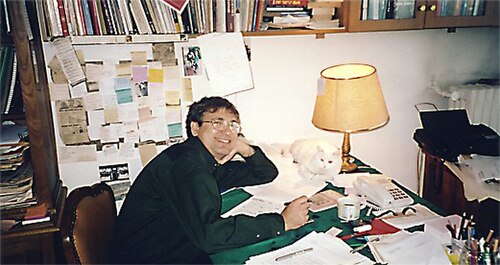
Beginning in the 19th century, Ottoman literature was influenced by the West. New genres, such as novels and journalistic style, were introduced. Aşk-ı Memnu, written by Halid Ziya Uşaklıgil, was the "first truly refined Turkish novel". Fatma Aliye Topuz, the first female Turkish novelist, wrote fiction. After the proclamation of the republic in 1923, Atatürk instituted reforms such as the language reform and alphabet reform. Since then, Turkish literature reflected the socioeconomic conditions in Turkey with increasing variety. "Village Novel" genre appeared in the mid-1950s, which talked about difficulties faced from poverty.[471] An example is Memed, My Hawk by Yaşar Kemal, which was Turkey's first Nobel Prize in Literature nominee in 1973.[471][472] Orhan Pamuk won the 2006 Nobel Prize in Literature.[471]
Turkey has four "major theatrical traditions": "folk theatre, popular theatre, court theater, and Western theater." Turkish folk theatre goes back thousands of years and has survived among rural communities. Popular theatre includes plays by live actors, puppet and shadow plays, and storytelling performances. An example for shadow play is Karagöz and Hacivat. Court theatre was the refined version of popular theatre. Beginning in the 19th century, Western theatre tradition started appearing in Turkey. Following the establishment of Turkish Republic, a state conservatory and the State Theatre Company were formed.[473]
Turkey's visual arts scene can be categorized into two, as "decorative" and "fine" arts. Fine arts, or güzel sanatlar, includes sculpture and painting. Turkish artists in these areas have gained global recognition. Photography, fashion design, graphic arts, and graphic design are some of the other areas Turkish artists are known for in the world. The inaugural contemporary Turkish art sale by Sotheby's London was in 2009. Istanbul Modern and the Istanbul Biennial are examples of art galleries or exhibitions of contemporary Turkish art. Turkey has also seen a resurgence of traditional arts. This includes Ottoman-era traditional arts, such as ceramics and carpets. Textile and carpet design, glass and ceramics, calligraphy, paper marbling (ebru) are some of the art forms for which modern-day Turkish artists are recognized as leaders in the Islamic world.[474]
Music and dance
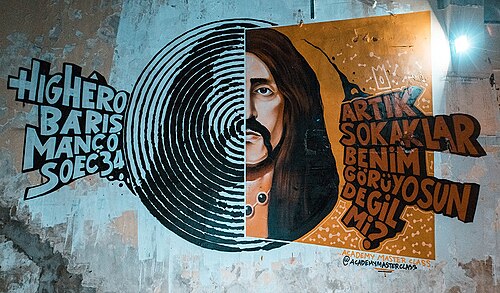
Turkish music can be described in a variety of ways, ranging from "globally marketed pop music with a little bit of local colour thrown in" to a custom that includes thousands of years of legacy of Anatolia's various civilizations.[475]
Many Turkish cities and towns have vibrant local music scenes which, in turn, support a number of regional musical styles. Despite this however, western music styles like pop music and kanto lost popularity to arabesque in the late 1970s and 1980s. It became popular again by the beginning of the 1990s, as a result of an opening economy and society. The resurging popularity of pop music gave rise to several international Turkish pop stars such as Ajda Pekkan, Sezen Aksu, Erol Evgin, MFÖ, Tarkan, Sertab Erener, Teoman, Kenan Doğulu, Levent Yüksel and Hande Yener.[citation needed] Internationally acclaimed Turkish jazz and blues musicians and composers include Ahmet Ertegun[476] (founder and president of Atlantic Records), Nükhet Ruacan and Kerem Görsev.[citation needed]
Architecture
Turkey is home to numerous Neolithic settlements, such as Çatalhöyük.[478][68] From the Bronze Age, important architectural remnants include Alaca Höyük and the 2nd layer of Troy.[68] There are various examples of Ancient Greek and Ancient Roman architectures, especially in the Aegean region.[479] Byzantine architecture dates back to the 4th century AD. Its best example is Hagia Sophia. Byzantine architectural style continued to develop after the conquest of Istanbul, such as Byzantine Revival architecture.[480] During Seljuk Sultanate of Rum and Turkish principalities period, a distinct architecture emerged, which incorporated Byzantine and Armenian architectures with architectural styles found in West Asia and Central Asia.[481] Seljuk architecture often used stones and bricks, and produced numerous caravanserais, madrasas and mausoleums.[482]
Ottoman architecture emerged in northwest Anatolia and Thrace. Early Ottoman architecture mixed "traditional Anatolian Islamic architecture with local building materials and techniques".[483] Following the conquest of Istanbul, classical Ottoman architecture emerged in the 16th and 17th centuries.[484] The most important architect of the classical period is Mimar Sinan, whose major works include the Şehzade Mosque, Süleymaniye Mosque, and Selimiye Mosque.[484] Beginning in the 18th century, Ottoman architecture was influenced by European elements, resulting in development of Ottoman baroque style.[485] European influence continued in the 19th century; examples include works of Balyan family such as neo-Baroque style Dolmabahçe Palace.[486] The last period of Ottoman architecture consists of the First National Architectural Movement, including works of Vedat Tek and Mimar Kemaleddin.[485]
Since 1918, Turkish architecture can be divided into three parts. From 1918 to 1950, the first one includes the First National Architectural Movement period, which transitioned into modernist architecture. Modernist and monumental buildings were preferred for public buildings, whereas "Turkish house" type vernacular architecture influenced private houses. From 1950 to 1980, the second part includes urbanization, modernization, and internationalization. For residential housing, "reinforced concrete, slab-block, medium-rise apartments" became prevalent. Since 1980, the third part is defined by consumer habits and international trends, such as shopping malls and office towers. Luxury residences with "Turkish house style" have been in demand.[487] In the 21st century, urban renewal projects have become a trend.[488] Resilience against natural disasters such as earthquakes is one of the main goals for urban renewal projects.[489] Around one-third of Turkey's building stock, corresponding to 6.7 million units, were assessed risky and needing urban renewal.[490]
Cuisine

Turkey has a diverse and rich cuisine, varying geographically.[43] Turkish cuisine has been influenced by Anatolian, Mediterranean, Iranian, Central Asian, and East Asian cuisines.[493] Turkish and Ottoman cuisine have also influenced others. Dīwān Lughāt al-Turk, from the 11th century, documents "the ancient lineage of much of present-day Turkish cuisine".[493] Güveç, Bulgur, and Börek are some of the earliest recorded examples of Turkish cuisine. Even though kebab as a word comes from Persian, Turkic people had been familiar with using skewers to cook meat. Turkish cuisine can be distinguished by its various kinds of kebabs. Similarly, pilaf dishes were influenced by Turkish cuisine. Further information about cuisine during the Seljuk and Ottoman periods comes from the works of Rumi and Evliya Çelebi. The latter describes "food-related guilds of Istanbul".[493]
Food staples in Turkey include bread and yogurt. Some of bread varieties are lavash and pide (a type of pita bread). Ayran is a drink made of yoghurt. In western parts of Turkey, olive oil is used. Grains include wheat, maize, barley, oats, and millet. Beans, chickpeas, nuts, aubergines, and lamb are some of the commonly used ingredients.[493] Doner kebab, originally from Turkey, is marinated lamb slices cooked vertically.[494] Seafood includes anchovy and others. Dolma varieties and mantı are made by stuffing vegetables or pasta.[493] Sarma is made by rolling edible leaf over the filling.[495] Yahni dishes are vegetable stews.[493] Turkey is one of the countries with the meze tradition.[496] Honey, pekmez, dried fruit, or fruit are used for sweetening.[493] Filo is a dough "of Turkish origin", used to make baklava.[497] Turkish delight is a "delicate but gummy jelly".[498]
Sports
.jpg/500px-AUT_vs._TUR_2016-03-29_(001).jpg)
The most popular sport is association football.[499] Galatasaray won the UEFA Cup and UEFA Super Cup in 2000.[500] The Turkey national football team won the bronze medal at the 2002 FIFA World Cup, the 2003 FIFA Confederations Cup and UEFA Euro 2008.[501]
Other mainstream sports such as basketball and volleyball are also popular.[502] The men's national basketball team and women's national basketball team have been successful. Anadolu Efes S.K. is the most successful Turkish basketball club in international competitions.[503][504] Fenerbahçe reached the final of the EuroLeague in three consecutive seasons (2015–2016, 2016–2017 and 2017–2018), becoming the European champions in 2017.

The final of the 2013–14 EuroLeague Women basketball championship was played between two Turkish teams, Galatasaray and Fenerbahçe, and won by Galatasaray.[505] Fenerbahçe won the 2023 FIBA Europe SuperCup Women after two consecutive Euroleague wins in the 2022–23 and 2023–24 seasons.
The women's national volleyball team has won several medals.[506] Women's volleyball clubs, namely VakıfBank S.K., Fenerbahçe and Eczacıbaşı, have won numerous European championship titles and medals.[507]
The traditional national sport of Turkey has been yağlı güreş (oil wrestling) since Ottoman times.[508] Edirne Province has hosted the annual Kırkpınar oil wrestling tournament since 1361, making it the oldest continuously held sporting competition in the world.[509][510] In the 19th and early 20th centuries, oil wrestling champions such as Koca Yusuf, Nurullah Hasan and Kızılcıklı Mahmut acquired international fame in Europe and North America by winning world heavyweight wrestling championship titles. International wrestling styles governed by FILA such as freestyle wrestling and Greco-Roman wrestling are also popular, with many European, World and Olympic championship titles won by Turkish wrestlers both individually and as a national team.[511]
Media and cinema
Hundreds of television channels, thousands of local and national radio stations, several dozen newspapers, a productive and profitable national cinema and a rapid growth of broadband Internet use constitute a vibrant media industry in Turkey.[512][513] The majority of the TV audiences are shared among public broadcaster TRT and the network-style channels such as Kanal D, Show TV, ATV and Star TV. The broadcast media have a very high penetration as satellite dishes and cable systems are widely available.[514] The Radio and Television Supreme Council (RTÜK) is the government body overseeing the broadcast media.[514][515] By circulation, the most popular newspapers are Posta, Hürriyet, Sözcü, Sabah and Habertürk.[516]
Filiz Akın, Fatma Girik, Hülya Koçyiğit, and Türkan Şoray represent their period of Turkish cinema.[517] Turkish directors like Metin Erksan, Nuri Bilge Ceylan, Yılmaz Güney, Zeki Demirkubuz and Ferzan Özpetek won numerous international awards such as the Palme d'Or and Golden Bear.[518] Turkish television dramas are increasingly becoming popular beyond Turkey's borders and are among the country's most vital exports, both in terms of profit and public relations.[519] After sweeping the Middle East's television market over the past decade, Turkish shows have aired in more than a dozen South and Central American countries in 2016.[520][521] Turkey is today the world's second largest exporter of television series.[522][523][524]
See also
Notes
- ^ Turkish: Türkiye, Turkish: [ˈtyɾcije]
- ^ Turkish: Türkiye Cumhuriyeti, Turkish: [ˈtyɾcije dʒumˈhuːɾijeti]
- ^ Even though they are not explicitly mentioned in the Treaty of Lausanne.[405]
- ^ The Bulgarian community in Turkey is now so small that this disposition is de facto not applied.[405][406][407]
- ^ The Turkish government considers that, for the purpose of the Treaty of Lausanne, the language of Turkish Jews is Hebrew, even though the mother tongue of Turkish Jews was not Hebrew but historically Judaeo-Spanish (Ladino) or other Jewish languages.[409][410]
References
- ^ "The Turkish Flag and The Turkish National Anthem (Independence March)". Republic of Türkiye, Ministry of Foreign Affairs. Retrieved 4 August 2024.
- ^ "Türkiye Cumhuriyeti Anayasası" (in Turkish). Grand National Assembly of Turkey. Archived from the original on 2 July 2020. Retrieved 1 July 2020.
3. Madde: Devletin Bütünlüğü, Resmi Dili, Bayrağı, Milli Marşı ve Başkenti: Türkiye Devleti, ülkesi ve milletiyle bölünmez bir bütündür. Dili Türkçedir. Bayrağı, şekli kanununda belirtilen, beyaz ay yıldızlı al bayraktır. Milli marşı "İstiklal Marşı" dır. Başkenti Ankara'dır.
- ^ "Mevzuat: Anayasa" (in Turkish). Constitutional Court of Turkey. Archived from the original on 21 June 2020. Retrieved 1 July 2020.
- ^
- KONDA 2006, p. 19
- Comrie 2018, p. 537
- ^ a b c d e f "Turkey (Turkiye)". The World Factbook. Central Intelligence Agency. Retrieved 19 May 2024.
- ^ a b "Turkish Constitution". Anayasa Mahkemesi. Archived from the original on 10 January 2021. Retrieved 12 April 2022.
- ^ "Surface water and surface water change". Organisation for Economic Co-operation and Development (OECD). Archived from the original on 24 March 2021. Retrieved 11 October 2020.
- ^ a b c d e f g "The Results of Address Based Population Registration System, 2023". www.tuik.gov.tr. Turkish Statistical Institute. 6 February 2024. Archived from the original on 6 February 2024. Retrieved 6 February 2024.
- ^ a b c d e "World Economic Outlook Database, April 2024 Edition. (Türkiye)". www.imf.org. International Monetary Fund. 16 April 2024. Retrieved 16 April 2024.
- ^ "Gini index (World Bank estimate) – Turkey". World Bank. 2019. Archived from the original on 17 May 2019. Retrieved 15 November 2021.
- ^ "Human Development Index (HDI)". United Nations Development Programme. Archived from the original on 10 June 2022. Retrieved 18 March 2024.
- ^ Howard 2016, p. 24
- ^ Leonard 2006, p. 1576: "Turkey’s diversity is derived from its central location near the world’s earliest civilizations as well as a history replete with population movements and invasions. The Hattite culture was prominent during the Bronze Age prior to 2000 BCE, but was replaced by the Indo-European Hittites who conquered Anatolia by the second millennium. Meanwhile, Turkish Thrace came to be dominated by another Indo-European group, the Thracians for whom the region is named."
- ^ Howard 2016, pp. 24–28: "Göbekli Tepe’s close proximity to several very early sites of grain cultivation helped lead Schmidt to the conclusion that it was the need to maintain the ritual center that first encouraged the beginnings of settled agriculture—the Neolithic Revolution"
- ^ a b Steadman & McMahon 2011, pp. 3–11, 37
- ^ Steadman & McMahon 2011, p. 327
- ^ Steadman & McMahon 2011, pp. 233, 713: "By the time of the Old Assyrian Colony period in the early second millennium b.c.e . (see Michel, chapter 13 in this volume) the languages spoken on the plateau included Hattian, an indigenous Anatolian language, Hurrian (spoken in northern Syria), and Indo-European languages known as Luwian, Hittite, and Palaic"
- ^ a b Howard 2016, p. 29: "The sudden disappearance of the Persian Empire and the conquest of virtually the entire Middle Eastern world from the Nile to the Indus by Alexander the Great caused tremendous political and cultural upheaval." ... "statesmen throughout the conquered regions attempted to implement a policy of Hellenization. For indigenous elites, this amounted to the forced assimilation of native religion and culture to Greek models. It met resistance in Anatolia as elsewhere, especially from priests and others who controlled temple wealth."
- ^ a b Leonard 2006, p. 1576: "Subsequently, hellenization of the elites transformed Anatolia into a largely Greek-speaking region"
- ^ Steadman & McMahon 2011, pp. 5, 16, 617
- ^ a b c d Davison 1990, pp. 3–4: "So the Seljuk sultanate was a successor state ruling part of the medieval Greek empire, and within it the process of Turkification of a previously Hellenized Anatolian population continued. That population must already have been of very mixed ancestry, deriving from ancient Hittite, Phrygian, Cappadocian, and other civilizations as well as Roman and Greek."
- ^ Howard 2016, pp. 33–44
- ^ a b Howard 2016, pp. 38–39
- ^ a b c Howard 2016, p. 45
- ^ a b Somel 2010, p. xcvii
- ^ Heper & Sayari 2012, pp. 15–28
- ^ Davison 1990, pp. 115–116
- ^
- Kaser 2011, p. 336: "The emerging Christian nation states justified the prosecution of their Muslims by arguing that they were their former “suppressors”. The historical balance: between about 1820 and 1920, millions of Muslim casualties and refugees back to the remaining Ottoman Empire had to be registered; estimations speak about 5 million casualties and the same number of displaced persons"
- Gibney & Hansen 2005, p. 437: ‘Muslims had been the majority in Anatolia, the Crimea, the Balkans, and the Caucasus and a plurality in southern Russia and sections of Romania. Most of these lands were within or contiguous with the Ottoman Empire. By 1923, “only Anatolia, eastern Thrace, and a section of the southeastern Caucasus remained to the Muslim land....Millions of Muslims, most of them Turks, had died; millions more had fled to what is today Turkey. Between 1821 and 1922, more than five million Muslims were driven from their lands. Five and one-half million Muslims died, some of them killed in wars, others perishing as refugees from starvation and disease” (McCarthy 1995, 1). Since people in the Ottoman Empire were classified by religion, Turks, Albanians, Bosnians, and all other Muslim groups were recognized—and recognized themselves—simply as Muslims. Hence, their persecution and forced migration is of central importance to an analysis of “Muslim migration.”’
- Karpat 2001, p. 343: "The main migrations started from Crimea in 1856 and were followed by those from the Caucasus and the Balkans in 1862 to 1878 and 1912 to 1916. These have continued to our day. The quantitative indicators cited in various sources show that during this period a total of about 7 million migrants from Crimea, the Caucasus, the Balkans, and the Mediterranean islands settled in Anatolia. These immigrants were overwhelmingly Muslim, except for a number of Jews who left their homes in the Balkans and Russia in order to live in the Ottoman lands. By the end of the century the immigrants and their descendants constituted some 30 to 40 percent of the total population of Anatolia, and in some western areas their percentage was even higher." ... "The immigrants called themselves Muslims rather than Turks, although most of those from Bulgaria, Macedonia, and eastern Serbia descended from the Turkish Anatolian stock who settled in the Balkans in the fifteenth and sixteenth centuries."
- Karpat 2004, pp. 5–6: "Migration was a major force in the social and cultural reconstruction of the Ottoman state in the nineteenth century. While some seven to nine million, mostly Muslim, refugees from lost territories in the Caucasus, Crimea, Balkans and Mediterranean islands migrated to Anatolia and Eastern Thrace, during the last quarter of the nineteenth and the early part of the twentieth centuries..."
- Pekesen 2012: "The immigration had far-reaching social and political consequences for the Ottoman Empire and Turkey." ... "Between 1821 and 1922, some 5.3 million Muslims migrated to the Empire.50 It is estimated that in 1923, the year the republic of Turkey was founded, about 25 per cent of the population came from immigrant families.51"
- Biondich 2011, p. 93: "The road from Berlin to Lausanne was littered with millions of casualties. In the period between 1878 and 1912, as many as two million Muslims emigrated voluntarily or involuntarily from the Balkans. When one adds those who were killed or expelled between 1912 and 1923, the number of Muslim casualties from the Balkan far exceeds three million. By 1923 fewer than one million remained in the Balkans"
- Armour 2012, p. 213: "To top it all, the Empire was host to a steady stream of Muslim refugees. Russia between 1854 and 1876 expelled 1.4 million Crimean Tartars, and in the mid-1860s another 600,000 Circassians from the Caucasus. Their arrival produced further economic dislocation and expense."
- Bosma, Lucassen & Oostindie 2012, p. 17: "In total, many millions of Turks (or, more precisely, Muslim immigrants, including some from the Caucasus) were involved in this ‘repatriation’ – sometimes more than once in a lifetime – the last stage of which may have been the immigration of seven hundred thousand Turks from Bulgaria between 1940 and 1990. Most of these immigrants settled in urban north-western Anatolia. Today between a third and a quarter of the Republic’s population are descendants of these Muslim immigrants, known as Muhacir or Göçmen"
- ^ a b Tatz, Colin; Higgins, Winton (2016). The Magnitude of Genocide. ABC-CLIO. ISBN 978-1-4408-3161-4.
- ^ Schaller, Dominik J.; Zimmerer, Jürgen (2008). "Late Ottoman genocides: the dissolution of the Ottoman Empire and Young Turkish population and extermination policies – introduction". Journal of Genocide Research. 10 (1): 7–14. doi:10.1080/14623520801950820. ISSN 1462-3528. S2CID 71515470.
- ^ Morris, Benny; Ze'evi, Dror (2021). The Thirty-Year Genocide - Turkey's Destruction of Its Christian Minorities, 1894–1924. Harvard University Press. ISBN 9780674251434.
- ^ Heper & Sayari 2012, pp. 54–55
- ^ Heper & Sayari 2012, pp. 1, 55, 57
- ^ "The Political Economy of Regional Power: Turkey" (PDF). giga-hamburg.de. Archived from the original (PDF) on 10 February 2014. Retrieved 18 February 2015.
- ^ "Turkey". The World Factbook. Central Intelligence Agency. Archived from the original on 28 August 2022. Retrieved 29 February 2024.
- ^ a b c Birben, Üstüner (2019). "The Effectiveness of Protected Areas in Biodiversity Conservation: The Case of Turkey". CERNE. 25 (4): 424–438. doi:10.1590/01047760201925042644. ISSN 0104-7760.
Turkey has 3 out of the 36 biodiversity hotspots on Earth: the Mediterranean, Caucasus, and Irano-Anatolian hotspots
- ^ a b Leonard 2006, pp. 1575–1576
- ^ a b c d World Bank Türkiye - Country Climate and Development Report 2022, p. 7
- ^ a b c d OECD Taking stock of education reforms for access and quality in Türkiye 2023, p. 35
- ^ a b World Intellectual Property Organization (WIPO) 2023, p. 50: "Indonesia joins China, Türkiye, India, the Islamic Republic of Iran and Viet Nam as most impressive innovation climbers of the last decade"
- ^ Berg, Miriam (2023). Turkish Drama Serials: The Importance and Influence of a Globally Popular Television Phenomenon. University of Exeter Press. pp. 1–2. ISBN 978-1-80413-043-8.
- ^ "Türkiye". UNESCO. Archived from the original on 2 March 2024. Retrieved 2 March 2024.
- ^ a b Yayla, Önder; Aktaş, Semra Günay (2021). "Mise en place for gastronomy geography through food: Flavor regions in Turkey". International Journal of Gastronomy and Food Science. 26. doi:10.1016/j.ijgfs.2021.100384. Archived from the original on 2 March 2024. Retrieved 2 March 2024.
- ^ Agoston & Masters 2009, p. 574
- ^ Howard 2016, p. 31
- ^ a b c Everett-Heath 2020, Türkiye (Turkey)
- ^ Tasar, Frank & Eden 2021, p. 30
- ^ Clauson 1972, pp. 542–543
- ^ Tasar, Frank & Eden 2021, pp. 6–7
- ^ Tasar, Frank & Eden 2021, pp. 9, 16
- ^ Jenkins, Romilly James Heald (1967). De Administrando Imperio by Constantine VII Porphyrogenitus. Corpus fontium historiae Byzantinae (New, revised ed.). Dumbarton Oaks Center for Byzantine Studies. p. 65. ISBN 978-0-88402-021-9. Archived from the original on 20 January 2023. Retrieved 28 August 2013. According to Constantine Porphyrogenitus, writing in his De Administrando Imperio (c. 950 AD) "Patzinakia, the Pecheneg realm, stretches west as far as the Siret River (or even the Eastern Carpathian Mountains), and is four days distant from Tourkia [i.e. Hungary]."
- ^ Findley 2005, p. 51
- ^ Tasar, Frank & Eden 2021, pp. 2–3
- ^ Everett-Heath 2020, Turkestan, Central Asia, Kazakhstan
- ^ Gray 2003, Turkye, (Turkeye) Turkey; Book of the Duchess, The; Map 1; Map 3.
- ^ "Turkey". Oxford English Dictionary (Online ed.). Oxford University Press. (Subscription or participating institution membership required.)
- ^
- Hertslet, Edward (1875). "General treaty between Great Britain, Austria, France, Prussia, Russia, Sardinia and Turkey, signed at Paris on 30th March 1856". The Map of Europe by Treaty showing the various political and territorial changes which have taken place since the general peace of 1814, with numerous maps and notes. Vol. 2. Butterworth. pp. 1250–1265.
- "Protocols of conferences held at Paris relative to the general Treaty of Peace. Presented to both Houses of Parliament by command of Her Majesty, 1856". Harrison. 1856. Retrieved 9 May 2023.
- Hertslet, Edward (1891), "Treaty between Great Britain, Austria-Hungary, France, Germany, Italy, Russia, and Turkey, for the Settlement of Affairs in the East, Signed at Berlin, 13th July 1878 (Translation)", The Map of Europe by Treaty; which have taken place since the general peace of 1814. With numerous maps and notes, vol. IV (1875–1891) (First ed.), Her Majesty's Stationery Office, pp. 2759–2798, retrieved 9 May 2023 – via Internet Archive
- "Treaty Between Great Britain, Austria-Hungary, France, Germany, Italy, Russia and Turkey. (Berlin). July 13, 1878". sourcebooks.fordham.edu. Archived from the original on 26 March 2023. Retrieved 9 May 2023.
- ^ Cevdet Küçük (2012). "Türkiye". TDV Encyclopedia of Islam, Vol. 41 (Tevekkül – Tüsterî) (in Turkish). Istanbul: Turkiye Diyanet Foundation, Centre for Islamic Studies. p. 567. ISBN 978-975-389-713-6.
- ^ "Marka Olarak 'Türkiye' İbaresinin Kullanımı (Presidential Circular No. 2021/24 on the Use of the Term "Türkiye" as a Brand)" (PDF). Resmî Gazete (Official Gazette of the Republic of Türkiye). 4 December 2021. Archived (PDF) from the original on 17 May 2022. Retrieved 11 April 2022.
- ^ Soylu, Ragip (17 January 2022). "Turkey to register its new name Türkiye to UN in coming weeks". Middle East Eye. Archived from the original on 6 June 2022. Retrieved 11 April 2022.
- ^ "UN to use 'Türkiye' instead of 'Turkey' after Ankara's request". TRT World. 2 June 2022. Archived from the original on 2 June 2022. Retrieved 3 June 2022.
- ^ Wertheimer, Tiffany (2 June 2022). "Turkey changes its name in rebranding bid". BBC News Online. Archived from the original on 2 June 2022. Retrieved 2 June 2022.
- ^ "The World's First Temple". Archaeology magazine. November–December 2008. p. 23. Archived from the original on 29 March 2012. Retrieved 25 July 2012.
- ^ Denisyuk, Yulia (29 October 2023). "Photo story: tombs, turquoise seas and trekking along Turkey's Lycian Way". National Geographic. National Geographic Traveller.
- ^ a b Howard 2016, p. 24
- ^ Casson, Lionel (1977). "The Thracians" (PDF). The Metropolitan Museum of Art Bulletin. 35 (1): 2–6. doi:10.2307/3258667. JSTOR 3258667. Archived from the original (PDF) on 3 May 2019. Retrieved 3 April 2013.
- ^ Bellwood 2022, p. 224
- ^ a b c d Howard 2016, p. 25
- ^ Bellwood 2022, p. 229
- ^ Kılınç, Gülşah Merve; Omrak, Ayça; Özer, Füsun; Günther, Torsten; Büyükkarakaya, Ali Metin; Bıçakçı, Erhan; Baird, Douglas; Dönertaş, Handan Melike; Ghalichi, Ayshin; Yaka, Reyhan; Koptekin, Dilek; Açan, Sinan Can; Parvizi, Poorya; Krzewińska, Maja; Daskalaki, Evangelia A. (June 2016). "The Demographic Development of the First Farmers in Anatolia". Current Biology. 26 (19): 2659–2666. Bibcode:2016CBio...26.2659K. doi:10.1016/j.cub.2016.07.057. PMC 5069350. PMID 27498567.
- ^ Lipson, Mark; Szécsényi-Nagy, Anna; Mallick, Swapan; Pósa, Annamária; Stégmár, Balázs; Keerl, Victoria; Rohland, Nadin; Stewardson, Kristin; Ferry, Matthew; Michel, Megan; Oppenheimer, Jonas; Broomandkhoshbacht, Nasreen; Harney, Eadaoin; Nordenfelt, Susanne; Llamas, Bastien (November 2017). "Parallel palaeogenomic transects reveal complex genetic history of early European farmers". Nature. 551 (7680): 368–372. Bibcode:2017Natur.551..368L. doi:10.1038/nature24476. ISSN 0028-0836. PMC 5973800. PMID 29144465.
- ^ a b c d e Howard 2016, p. 26
- ^ a b Steadman & McMahon 2011, p. 233
- ^ Steadman & McMahon 2011, pp. 233, 327
- ^ a b Steadman & McMahon 2011, p. 522
- ^ Steadman & McMahon 2011, p. 8
- ^ Heggarty, Paul (2021). "Cognacy Databases and Phylogenetic Research on Indo-European". Annual Review of Linguistics. 7: 371–394. doi:10.1146/annurev-linguistics-011619-030507.
- ^ Bellwood 2022, p. 242
- ^ Steadman & McMahon 2011, p. 713
- ^ Howard 2016, pp. 26–27
- ^ Steadman & McMahon 2011, pp. 724–725
- ^ Steadman & McMahon 2011, pp. 17
- ^ a b c d e Howard 2016, p. 27
- ^ Steadman & McMahon 2011, p. 738
- ^ a b c d e f Howard 2016, p. 28
- ^ Centre, UNESCO World Heritage. "New Inscribed Properties". UNESCO World Heritage Centre. Archived from the original on 6 July 2022. Retrieved 13 September 2022.
- ^ "Anatolia – Greek colonies on the Anatolian coasts, c. 1180–547 bce". Encyclopedia Britannica. Archived from the original on 21 March 2023. Retrieved 2 February 2024.
Before the Greek migrations that followed the end of the Bronze Age (c. 1200 BCE), probably the only Greek-speaking communities on the west coast of Anatolia were Mycenaean settlements at Iasus and Müskebi on the Halicarnassus peninsula and walled Mycenaean colonies at Miletus and Colophon.
- ^ Steadman & McMahon 2011, p. 759: "Greek cities on the shores of Asia Minor and on the Aegean islands were the nexus of trade and cultural exchange in the early Greek world, so Archaic Greek civilization was to a great extent the product of the Greek cities of Asia Minor."
- ^ Steadman & McMahon 2011, pp. 753–755
- ^ Steadman & McMahon 2011, pp. 505, 753
- ^ Steadman & McMahon 2011, pp. 753–754
- ^ Rovelli, C. (2023). Anaximander: And the Birth of Science. Penguin Publishing Group. pp. 20–30. ISBN 978-0-593-54237-8. Retrieved 1 June 2024.
- ^ Baird 2016, p. 8
- ^ Mark Cartwright. "Celsus Library". World History Encyclopedia. Archived from the original on 28 March 2024. Retrieved 2 February 2017.
- ^ Wilson 2006, p. 702
- ^ "The Temple of Artemis at Ephesus: The Un-Greek Temple and Wonder". World History Encyclopedia. Archived from the original on 28 March 2024. Retrieved 17 February 2017.
- ^ Mitchell 1995, pp. 3–4
- ^ Howard 2016, p. 29
- ^ Hoyos 2019, pp. 35–37
- ^ Hoyos 2019, pp. 62, 83, 115
- ^ Howard 2016, p. 30
- ^ Grant, Robert M. (1997). Irenaeus of Lyons. Routledge. p. 2.
- ^ "Hagia Sophia". Encyclopædia Britannica. Archived from the original on 29 April 2021. Retrieved 2 February 2017.
- ^ a b Jeffreys, Haldon & Cormack 2008, pp. 778–779: "Thus the majority of traditional 'Greek' lands, including the coastal areas of Asia Minor, remained essentially Greek-speaking, despite the superimposition of Latin and the later Slavic incursions into the Balkans during the sixth and seventh centuries. Even on the Anatolian plateau, where Hellenic culture had come only with Alexander's conquests, both the extremely heterogeneous indigenous populations and immigrant groups (including Celts, Goths, Jews, and Persians) had become heavily Hellenized, as the steady decline in epigraphic evidence for the native languages and the great mass of public and private inscriptions in Greek demonstrate. Though the disappearance of these languages from the written record did not entail their immediate abandonment as spoken languages,..."
- ^ van den Hout 2011, p. 1
- ^ Maas, Michael (2015). The Cambridge Companion to the Age of Attila. Cambridge University Press. ISBN 978-1-107-02175-4. Archived from the original on 28 March 2024. Retrieved 16 August 2018.
- ^ Uchiyama, Junzo; et al. (21 May 2020). "Populations dynamics in Northern Eurasian forests: a long-term perspective from Northeast Asia". Evolutionary Human Sciences. 2. Cambridge University Press: e16. doi:10.1017/ehs.2020.11. PMC 10427466. PMID 37588381.
Most linguists and historians agree that Proto-Turkic, the common ancestor of all ancient and contemporary Turkic languages, must have been spoken somewhere in Central-East Asia
- ^ Uchiyama, Junzo; et al. (21 May 2020). "Populations dynamics in Northern Eurasian forests: a long-term perspective from Northeast Asia". Evolutionary Human Sciences. 2. Cambridge University Press: e16. doi:10.1017/ehs.2020.11. PMC 10427466. PMID 37588381.
To sum up, the palaeolinguistic reconstruction points to a mixed subsistence strategy and complex economy of the Proto-Turkic-speaking community. It is likely that the subsistence of the Early Proto-Turkic speakers was based on a combination of hunting–gathering and agriculture, with a later shift to nomadic pastoralism as an economy basis, partly owing to the interaction of the Late Proto-Turkic groups with the Iranian-speaking herders of the Eastern Steppe.
- ^
- Lee 2023, p. 4: "It should also be noted that even the early Turkic peoples, including the Tiele and the Türks, were made up of heterogeneous elements. Importantly, DNA studies demonstrate that the expansion process of the Turkic peoples involved the Turkicization of various non-Turkic-speaking groups. The “Turks” intermixed with and Turkicized various indigenous groups across Eurasia: Uralic hunter-gatherers in northern Eurasia; Mongolic nomads in Mongolia; Indo-European-speaking nomads and sedentary populations in Xinjiang, Transoxiana, Iran, Kazakhstan, and South Siberia; and Indo-European elements (the Byzantine subjects, among others) in Anatolia and the Balkans.11"
- Findley 2005, p. 18: "Moreover, Turks do not all physically look alike. They never did. The Turks of Turkey are famous for their range of physical types. Given the Turks' ancient Inner Asian origins, it is easy to imagine that they once presented a uniform Mongoloid appearance. Such traits seem to be more characteristic in the eastern Turkic world; however, uniformity of type can never have prevailed there either. Archeological evidence indicates that Indo-Europeans, or certainly Europoid physical types, inhabited the oases of the Tarim basin and even parts of Mongolia in ancient times. In the Tarim basin, persistence of these former inhabitants' genes among the modern Uyghurs is both observable and scientifically demonstrable.32 Early Chinese sources describe the Kirghiz as blue-eyed and blond or red-haired. The genesis of Turkic ethnic groups from earliest times occurred in confederations of diverse peoples. As if to prove the point, the earliest surviving texts in Turkic languages are studded with terms from other languages."
- Golden, Peter B. (25 July 2018). "The Ethnogonic Tales of the Türks". The Medieval History Journal. 21 (2): 291–327. doi:10.1177/0971945818775373. ISSN 0971-9458. S2CID 166026934. Archived from the original on 14 February 2021. Retrieved 12 March 2024."Some DNA tests point to the Iranian connections of the Ashina and Ashide,133 highlighting further that the Turks as a whole 'were made up of heterogeneous and somatically dissimilar populations'.134 Geographically, the accounts cover the regions of Inner Mongolia, Gansu, Xinjiang, the Yenisei zone and the Altay, regions with Turkic, Indo-European (Iranian [Saka] and Tokharian), Yeniseic, Uralic and other populations. Wusun elements, like most steppe polities of an ethno-linguistic mix, may have also played a substratal role."
- Lee, Joo-Yup; Kuang, Shuntu (18 October 2017). "A Comparative Analysis of Chinese Historical Sources and Y-DNA Studies with Regard to the Early and Medieval Turkic Peoples". Inner Asia. 19 (2). Brill: 197–239. doi:10.1163/22105018-12340089. ISSN 2210-5018. Retrieved 20 June 2020.
Both Chinese histories and modern dna studies indicate that the early and medieval Turkic peoples were made up of heterogeneous populations
- ^ a b c d Lee 2023, p. 84
- ^ Wink, Andre (1990). Al Hind: The Making of the Indo Islamic World, Vol. 1, Early Medieval India and the Expansion of Islam, 7th–11th Centuries. Brill Academic Publishers. p. 21. ISBN 978-90-04-09249-5.
- ^ Lee 2023, p. 91
- ^ a b Howard 2016, p. 34
- ^ Peacock 2015, p. 9
- ^ Howard 2016, pp. 34–36
- ^ Howard 2016, p. 36
- ^ Leonard 2006, p. 1576
- ^ Findley 2005, pp. 71–73, 225
- ^ Howard 2016, pp. 36–38
- ^ Howard 2016, p. 33
- ^ Fierro 2010, p. 303
- ^ Davison 1990, p. 4
- ^ Howard 2016, pp. 37–39
- ^ Howard 2016, p. 38
- ^ Fierro 2010, pp. 308–310
- ^ Fierro 2010, pp. 309–310
- ^ Fierro 2010, pp. 313–314
- ^ a b Lee 2023, p. 94
- ^ Howard 2016, pp. 40–41
- ^ Howard 2016, p. 43
- ^ Agoston & Masters 2009, p. 302
- ^ Heper & Sayari 2012, pp. 19, 194
- ^ Niall Ferguson (2 January 2008). "An Ottoman warning for indebted America". Financial Times. Archived from the original on 25 January 2014. Retrieved 5 September 2016.
- ^ Todorova, Maria (2009). Imagining the Balkans. Oxford University Press. p. 175. ISBN 978-0-19-972838-1. Retrieved 15 June 2013.
- ^ Mann, Michael (2005). The Dark Side of Democracy: Explaining Ethnic Cleansing. Cambridge University Press. p. 118. ISBN 978-0-521-53854-1. Archived from the original on 28 March 2024. Retrieved 28 February 2013.
- ^ "Collapse of the Ottoman Empire, 1918–1920". nzhistory.net.nz. Archived from the original on 19 December 2015. Retrieved 9 August 2014.
- ^ Simons, Marlise (22 August 1993). "Center of Ottoman Power". The New York Times. Archived from the original on 12 July 2018. Retrieved 4 June 2009.
- ^ "Dolmabahce Palace". dolmabahcepalace.com. Archived from the original on 16 March 2016. Retrieved 4 August 2014.
- ^ Isa Blumi (2013). Ottoman Refugees, 1878–1939: Migration in a Post-Imperial World. Bloomsbury Academic. ISBN 978-1-4725-1536-0. Archived from the original on 29 December 2020. Retrieved 23 April 2020.
- ^ Kaser 2011, p. 336
- ^ a b Gibney & Hansen 2005, p. 437
- ^ Biondich 2011, p. 93
- ^
- Pekesen 2012
- Kaser 2011, p. 336
- Karpat 2001, p. 343
- Karpat 2004, pp. 5–6
- ^ Howard 2016, p. 70
- ^ Karpat 2001, p. 343
- ^ Armour 2012, p. 213
- ^ Mojzes, Paul (November 2013). "Ethnic cleansing in the Balkans, why did it happen and could it happen again" (PDF). Cicero Foundation. Archived (PDF) from the original on 23 February 2024. Retrieved 23 February 2024.
- ^ Roderic H. Davison; Review "From Paris to Sèvres: The Partition of the Ottoman Empire at the Peace Conference of 1919–1920" by Paul C. Helmreich in Slavic Review, Vol. 34, No. 1 (March 1975), pp. 186–187
- ^ a b "Armenian Genocide". Encyclopædia Britannica. Archived from the original on 1 November 2020. Retrieved 4 January 2023.
- ^ "Fact Sheet: Armenian Genocide". University of Michigan. Archived from the original on 18 August 2010. Retrieved 15 July 2010.
- ^ Freedman, Jeri (2009). The Armenian genocide (1st ed.). Rosen Pub. Group. ISBN 978-1-4042-1825-3. Archived from the original on 14 January 2023. Retrieved 3 April 2015.
- ^ Totten, Samuel, Paul Robert Bartrop, Steven L. Jacobs (eds.) Dictionary of Genocide. Greenwood Publishing Group, 2008, p. 19. ISBN 978-0-313-34642-2.
- ^ "Erdogan: Turkey will 'never accept' genocide charges". Deutsche Welle. Archived from the original on 7 February 2018. Retrieved 7 February 2018.
- ^ Raziye Akkoç (15 October 2015). "ECHR: Why Turkey won't talk about the Armenian genocide". The Daily Telegraph. Archived from the original on 10 January 2022. Retrieved 28 May 2016.
- ^ Donald Bloxham (2005). The Great Game of Genocide: Imperialism, Nationalism, And the Destruction of the Ottoman Armenians. Oxford University Press. p. 150. ISBN 978-0-19-927356-0. Retrieved 9 February 2013.
- ^ Levene, Mark (Winter 1998). "Creating a Modern 'Zone of Genocide': The Impact of Nation- and State-Formation on Eastern Anatolia, 1878–1923". Holocaust and Genocide Studies. 12 (3): 393–433. doi:10.1093/hgs/12.3.393.
- ^ Ferguson, Niall (2007). The War of the World: Twentieth-Century Conflict and the Descent of the West. Penguin Group. p. 180. ISBN 978-0-14-311239-6.
- ^ a b "The Treaty of Sèvres, 1920". Harold B. Library, Brigham Young University. Archived from the original on 12 November 2017. Retrieved 18 April 2020.
- ^ a b c Mango, Andrew (2000). Atatürk: The Biography of the Founder of Modern Turkey. Overlook. p. lxxviii. ISBN 978-1-58567-011-6.
- ^ Robert H. Hewsen. Armenia: A Historical Atlas, p. 237. ISBN 0-226-33228-4
- ^ Psomiades, Harry J. (2000). The Eastern Question, the Last Phase: a study in Greek-Turkish diplomacy. Pella. pp. 27–38. ISBN 0-918618-79-7.
- ^ Macfie, A. L. (1979). "The Chanak affair (September–October 1922)". Balkan Studies. 20 (2): 309–41.
- ^ Heper, Metin; Criss, Nur Bilge (2009). Historical Dictionary of Turkey. Scarecrow Press. ISBN 978-0-8108-6281-4. Archived from the original on 28 March 2024. Retrieved 13 October 2020.
- ^ Axiarlis, Evangelia (2014). Political Islam and the Secular State in Turkey: Democracy, Reform and the Justice and Development Party. I.B. Tauris. p. 11.
- ^ Clogg, Richard (2002). A Concise History of Greece. Cambridge University Press. p. 101. ISBN 978-0-521-00479-4. Archived from the original on 28 March 2024. Retrieved 9 February 2013.
- ^ Gerhard Bowering; Patricia Crone; Wadad Kadi; Devin J. Stewart; Muhammad Qasim Zaman; Mahan Mirza (2012). The Princeton Encyclopedia of Islamic Political Thought. Princeton University Press. p. 49. ISBN 978-1-4008-3855-4. Retrieved 14 August 2013.
Following the revolution, Mustafa Kemal became an important figure in the military ranks of the Ottoman Committee of Union and Progress (CUP) as a protégé ... Although the sultanate had already been abolished in November 1922, the republic was founded in October 1923. ... ambitious reform programme aimed at the creation of a modern, secular state and the construction of a new identity for its citizens.
- ^ Hassan, Mona (10 January 2017). Longing for the Lost Caliphate: A Transregional History. Princeton University Press. ISBN 978-1-4008-8371-4. Archived from the original on 17 January 2023. Retrieved 23 April 2020.
- ^ Soner Çağaptay (2002). "Reconfiguring the Turkish nation in the 1930s". Nationalism and Ethnic Politics. 8 (2). Yale University: 67–82. doi:10.1080/13537110208428662. S2CID 143855822.
- ^ "Growth in United Nations membership (1945–2005)". United Nations. 3 July 2006. Archived from the original on 17 January 2016. Retrieved 30 October 2006.
- ^ Hale, William Mathew (1994). Turkish Politics and the Military. Routledge. pp. 161, 215, 246. ISBN 978-0-415-02455-6.
- ^ Arsu, Sebsem (12 April 2012). "Turkish Military Leaders Held for Role in '97 Coup". The New York Times. Archived from the original on 1 January 2022. Retrieved 11 August 2014.
- ^ "Chronology of Turkey-EU relations". Turkish Secretariat of European Union Affairs. Archived from the original on 15 May 2007. Retrieved 30 October 2006.
- ^ Heper & Sayari 2012, pp. 59–63
- ^ Heper & Sayari 2012, p. 360
- ^ Bartolomiej Kaminski; Francis Ng (1 May 2006). "Turkey's evolving trade integration into Pan-European markets" (PDF). World Bank. p. 3. Archived from the original (PDF) on 14 June 2007. Retrieved 27 December 2006.
- ^ "Recep Tayyip Erdogan wins Turkish presidential election". BBC News. 10 August 2014. Archived from the original on 25 November 2022. Retrieved 25 November 2022.
- ^ Cunningham, Erin; Sly, Liz; Karatas, Zeynep (16 July 2016). "Turkey rounds up thousands of suspected participants in coup attempt". The Washington Post. Archived from the original on 18 July 2016. Retrieved 17 July 2016.
- ^ a b "Here's why Turkish opposition parties are contesting the referendum results". Washington Post. 16 April 2017. Archived from the original on 19 April 2017. Retrieved 17 April 2017.
- ^ "General Structure of Turkish Public Administration" (PDF). justice.gov.tr/. Ministry of Justice. Archived from the original (PDF) on 21 March 2015. Retrieved 14 August 2014.
- ^ "Ministry of Internal Affairs: Administrative Units in Turkey". Archived from the original on 18 August 2014. Retrieved 17 April 2020.
- ^ "CIA World Factbook: Turkey". Cia.gov. Archived from the original on 10 January 2021. Retrieved 29 August 2011.
- ^ Heper & Sayari 2012, p. 194
- ^ "Duties and Powers". global.tbmm.gov.tr. The Grand National Assembly of Turkey. Archived from the original on 5 April 2019. Retrieved 12 April 2022.
- ^ "Duties and Powers". Presidency Of The Republic Of Turkey. Archived from the original on 15 May 2023. Retrieved 11 April 2022.
- ^ "Law on Constitutional Court | Anayasa Mahkemesi". www.anayasa.gov.tr.
- ^ "Law on Constitutional Court". anayasa.gov.tr. Archived from the original on 7 March 2022. Retrieved 12 April 2022.
- ^ Esen, Berk; Gumuscu, Sebnem (11 May 2020). "Why did Turkish democracy collapse? A political economy account of AKP's authoritarianism". Party Politics. 27 (6). SAGE Publications: 1075–1091. doi:10.1177/1354068820923722. hdl:11693/75894. ISSN 1354-0688. S2CID 219458590.
- ^ Borsuk, Imren; Levin, Paul T. (3 April 2021). "Social coexistence and violence during Turkey's authoritarian transition". Southeast European and Black Sea Studies. 21 (2). Informa UK Limited: 175–187. doi:10.1080/14683857.2021.1909292. ISSN 1468-3857. S2CID 233594832.
- ^ "Turkish women celebrate 85th anniversary of suffrage". Hürriyet Daily News. 5 December 2019. Archived from the original on 12 April 2022. Retrieved 12 April 2022.
- ^ "Erdogan wins Turkey's election". CNN. 28 May 2023. Archived from the original on 28 May 2023. Retrieved 28 May 2023.
- ^ "Erdogan wins five more years as Turkey's president". BBC. 28 May 2023. Archived from the original on 28 May 2023. Retrieved 28 May 2023.
- ^ "Euro court backs Turkey Islamist ban". BBC. 31 July 2001. Archived from the original on 7 July 2018. Retrieved 14 December 2006.
- ^ "Turkey's Kurd party ban criticized". BBC. 14 March 2003. Archived from the original on 7 July 2018. Retrieved 14 December 2006.
- ^ "AK Party, MHP announce draft for Turkey's new election law". Daily Sabah. 14 March 2022. Archived from the original on 21 March 2022. Retrieved 22 March 2022.
- ^ Yılmaz, Hakan. "Conservatism in Turkey" (PDF). European Stability Initiative. Archived (PDF) from the original on 7 March 2022. Retrieved 12 April 2022.
- ^ Kate Fleet; Suraiya Faroqhi; Reşat Kasaba (2008). The Cambridge History of Turkey. Cambridge University Press. pp. 357–358. ISBN 978-0-521-62096-3. Archived from the original on 17 January 2023. Retrieved 13 June 2013.
- ^ Tarman, Z. Derya (2012). "Turkey". In Smits, Jan M. (ed.). Elgar Encyclopedia of Comparative Law (2nd ed.). Edward Elgar. p. 940. ISBN 978-1-84980-415-8. Archived from the original on 6 April 2023. Retrieved 20 March 2023.
- ^ Tarman, Z. Derya (2012). "Turkey". In Smits, Jan M. (ed.). Elgar Encyclopedia of Comparative Law (2nd ed.). Edward Elgar. p. 941. ISBN 978-1-84980-415-8. Archived from the original on 6 April 2023. Retrieved 20 March 2023.
- ^ "OSCE POLIS".
- ^ "European Commission: Turkey 2015 report" (PDF). European Commission. 10 November 2015. Archived from the original (PDF) on 18 August 2016. Retrieved 6 July 2016.
- ^ "European Parliament resolution of 14 April 2016 on the 2015 report on Turkey". European Parliament. 14 April 2016. Archived from the original on 17 August 2016. Retrieved 6 July 2016.
- ^ "Turkey's institutions are failing to comply with good governance principles and combat corruption". Transparency International. 7 April 2016. Archived from the original on 3 December 2019. Retrieved 6 July 2016.
- ^ Heper & Sayari 2012, p. 227
- ^ Heper & Sayari 2012, p. 228
- ^ Heper & Sayari 2012, pp. 56, 228
- ^ a b c Heper & Sayari 2012, pp. 234–235
- ^ Heper & Sayari 2012, p. 229
- ^ "Turkey's top diplomat attends first EU meeting in 5 years in bid to boost ties". Reuters. 29 August 2024.
- ^ Krieger 2014, Emerging Powers
- ^ Giedraityte, Ieva (2023). "Beyond hierarchy: Regional orders in the twenty-first century". International Politics. doi:10.1057/s41311-023-00511-2.
- ^ Bank & Karadag 2012, p. 3
- ^ a b Heper & Sayari 2012, p. 230
- ^ "About TURKSOY". International Organization of Turkic Culture. Retrieved 23 September 2024.
- ^ "Organization of Turkic States". Organization of Turkic States. Retrieved 23 September 2024.
- ^ "National Foreign Policy in the "Century Of Türkiye": A Synopsis". Republic of Türkiye Ministry of Foreign Affairs. Retrieved 24 September 2024.
- ^ a b "In Middle East, once improbable ententes set new tone". Reuters. 19 May 2023. Retrieved 24 September 2024.
- ^ "Turkey heads to Arab League ministerial for first time in 13 years, source says". Reuters. 9 September 2024. Retrieved 24 September 2024.
- ^ "Egypt's Sisi makes first presidential visit to Turkey in 12 years". Reuters. 4 September 2024. Retrieved 24 September 2024.
- ^ "Syrian president says efforts to restore ties with Turkey have yielded no results". Reuters. 25 August 2024. Retrieved 24 September 2024.
- ^ Heper & Sayari 2012, p. 235
- ^ Aaron Stein; Michelle Foley (26 January 2016). "The YPG-PKK connection". Atlantic Council. Archived from the original on 31 December 2022. Retrieved 31 December 2022.
- ^ "PKK". mfa.gov.tr. Republic of Türkiye, Ministry of Foreign Affairs. Archived from the original on 25 March 2023. Retrieved 31 December 2022.
- ^ "Turkey takes full control of Syria's Afrin: military source". reuters.com. Reuters. 24 March 2018. Archived from the original on 7 January 2023. Retrieved 7 January 2023.
- ^ "The YPG menace: Understanding PKK's Syria offshoot". trtworld.com. TRT World. 25 May 2022. Archived from the original on 7 January 2023. Retrieved 7 January 2023.
- ^ Dana Taib Menmy (23 June 2020). "Fear and anger greets Turkish air strikes in northern Iraq". Middle East Eye. Archived from the original on 18 March 2024. Retrieved 18 March 2024.
"Turkish incursions and air strikes on Iraqi territory have been a constant issue for the Iraqi foreign ministry since 2003, with no resolution in sight," Sajad Jiyad, a political analyst based in Baghdad, told MEE.
- ^ Heper & Sayari 2012, p. 234
- ^ "Israel and Turkey end rift over Gaza flotilla killings". BBC News. BBC. 27 June 2016. Archived from the original on 5 May 2022. Retrieved 27 June 2016.
- ^ a b "Israeli-Turkish trade on life support as relations hit bottom". Reuters. 28 May 2024. Retrieved 24 September 2024.
- ^ Gareth Jennings (24 November 2022). "Turkish future fighter comes together ahead of 'victory day' roll-out". janes.com. Archived from the original on 17 February 2023. Retrieved 4 December 2022.
- ^ "Turkey's Domestic 5th Generation TF-X Fighter Jet Is On The Final Assembly Line". overtdefense.com. 25 November 2022. Archived from the original on 4 December 2022. Retrieved 4 December 2022.
- ^ Joseph Trevithick (10 January 2023). "Unique Sensor Setup Emerges On Turkey's Stealthy New Fighter". thedrive.com. Archived from the original on 14 March 2023. Retrieved 12 January 2023.
- ^ "Mission". Republic of Türkiye Ministry of National Defence General Staff. Retrieved 29 September 2024.
- ^ "İçişleri Bakanlığı Teşkilat Şeması". Türkiye Cumhuriyeti İçişleri Bakanlığı. Retrieved 29 September 2024.
- ^ "Recruiting Law" (PDF). Türkiye Cumhuriyeti Millî Savunma Bakanlığı. Retrieved 29 September 2024.
- ^ "New military service law approved". Hürriyet Daily News. Ankara. 26 June 2019.
- ^ "EBCO: European Bureau for Conscientious Objection". Ebco-beoc.eu. Archived from the original on 10 January 2016. Retrieved 4 September 2010.
- ^ The International Institute for Strategic Studies (2022). The Military Balance. Routledge. ISBN 978-1-032-27900-8. ISSN 0459-7222.
- ^ Fayet, Héloïse; Futter, Andrew; Kühn, Ulrich (2024). "Forum: Towards a European Nuclear Deterrent". Survival. 66 (5): 67–98. doi:10.1080/00396338.2024.2403218.
- ^ Kristensen, Hans M.; Korda, Matt (2021). "United States nuclear weapons, 2021". Bulletin of the Atomic Scientists. 77: 43–63. doi:10.1080/00963402.2020.1859865.
- ^ "Mapping the Turkish Military's Expanding Footprint". Bloomberg. 7 March 2019. Retrieved 17 March 2022.
- ^ Larrabee, F. Stephen; Lesser, Ian O. (2003). Turkish foreign policy in an age of uncertainty. Rand Corporation. pp. 94. ISBN 978-0-8330-3404-5.
albania.
- ^ "What is Turkey doing in Iraq?". Hürriyet Daily News. 8 October 2016. Archived from the original on 19 October 2017. Retrieved 5 April 2017.
- ^ "Seeing shared threats, Turkey sets up military base in Qatar". Reuters. 28 April 2016. Archived from the original on 8 February 2019. Retrieved 2 July 2017.
- ^ "Turkey to open its largest military base in Somalia". TRT World. 30 September 2017. Archived from the original on 9 September 2022. Retrieved 21 June 2018.
- ^ Richmond, Oliver P. (1998). Mediating in Cyprus: The Cypriot Communities and the United Nations. Psychology Press. p. 260. ISBN 978-0-7146-4877-4. Retrieved 9 February 2013.
- ^ "Enter the EU Battle Groups" (PDF). Chaillot Paper no. 97. European Union Institute for Security Studies. February 2007. p. 88. Archived from the original (PDF) on 4 March 2016. Retrieved 18 February 2012.
- ^ "Contribution of Turkish Armed Forces to Peace Support Operations". tsk.tr. Turkish Armed Forces. Archived from the original on 19 February 2015. Retrieved 3 August 2014.
- ^ "Turkey finalizes military training base in Somalia". hurriyetdailynews.com. 3 October 2016. Archived from the original on 6 April 2017. Retrieved 5 April 2017.
- ^ "Turkey trains Kurdish peshmerga forces in fight against Islamic State". Reuters. 22 November 2014. Archived from the original on 23 April 2022. Retrieved 5 April 2017.
- ^ Uçar, Burcu Purtul (30 July 2017). "Kadıköy'de "Kıyafetime Karışma" eylemi". Hürriyet. Archived from the original on 16 November 2022. Retrieved 23 June 2024.
- ^ "European Court of Human Rights: Turkey Ranks First in Violations in between 1959–2011". Bianet – Bagimsiz Iletisim Agi. Archived from the original on 20 January 2016. Retrieved 29 December 2015.
- ^ The European Court of Human Rights (2015). Annual report, 2014 (PDF) (Report). Registry of the European Court. ISBN 978-92-871-9919-5. Archived (PDF) from the original on 16 September 2020. Retrieved 29 December 2015.
- ^ "Human rights in Turkey: still a long way to go to meet accession criteria". European Parliament Human Rights committee. 26 October 2010. Archived from the original on 15 June 2011. Retrieved 9 February 2013.
- ^ Zürcher, Erik J. (2004). Turkey A Modern History, Revised Edition. I.B. Tauris. p. 263. ISBN 978-1-85043-399-6. Archived from the original on 13 January 2023. Retrieved 23 April 2020.
- ^ "U.S. Department of State – Bureau of Counterterrorism: Foreign Terrorist Organizations". U.S. Department of State. Archived from the original on 16 December 2020. Retrieved 18 April 2020.
- ^ "Council of the European Union: Council Decision (CFSP) 2019/1341 of 8 August 2019 updating the list of persons, groups and entities subject to Articles 2, 3 and 4 of Common Position 2001/931/CFSP on the application of specific measures to combat terrorism". Official Journal of the European Union. Archived from the original on 18 December 2020. Retrieved 18 April 2020.
- ^ "Who are Kurdistan Workers' Party (PKK) rebels?". bbc.com. BBC. 4 November 2016. Archived from the original on 9 December 2020. Retrieved 19 June 2021.
- ^ Bilgin, Fevzi; Sarihan, Ali, eds. (2013). Understanding Turkey's Kurdish Question. Lexington Books. p. 90. ISBN 978-0-7391-8403-5. Archived from the original on 17 January 2023. Retrieved 31 October 2018.
- ^ Balci, Ali (2016). The PKK-Kurdistan Workers' Party's Regional Politics: During and After the Cold War. Springer. p. 96. ISBN 978-3-319-42219-0. Archived from the original on 17 January 2023. Retrieved 31 October 2018.
- ^ White, Paul (2015). The PKK: Coming Down from the Mountains. Zed Books Ltd. ISBN 978-1-78360-040-3. Archived from the original on 17 January 2023. Retrieved 24 July 2017.
- ^ Stanton, Jessica A. (2016). Violence and Restraint in Civil War: Civilian Targeting in the Shadow of International Law. Cambridge University Press. p. 217. ISBN 978-1-107-06910-7. Archived from the original on 28 March 2024. Retrieved 24 July 2017.
- ^ "Turkish lecturer to be put on trial for posing exam question on PKK leader". The Guardian. Agence France-Presse. 2 February 2016. Archived from the original on 10 June 2022. Retrieved 24 July 2017.
- ^ "Ever closer to independence". The Economist. Archived from the original on 19 October 2017. Retrieved 24 July 2017.
- ^ "İşte TBMM'nin 'dokunulmazlık' tablosu: 1980'den bu yana 44 vekillik düştü". 2000. Archived from the original on 23 October 2022. Retrieved 19 October 2022.
- ^ Mullen, Jethro; Cullinane, Susannah (4 June 2013). "What's driving unrest and protests in Turkey?". CNN. Archived from the original on 14 October 2017. Retrieved 6 June 2013.
- ^ "Turkish parliament moves to strip lawmakers' immunity from prosecution Archived 21 December 2016 at the Wayback Machine". Deutsche Welle. 20 May 2016.
- ^ "Turkey Violated Pro-Kurdish MPs' Rights, European Court Rules". Balkan Insight. 1 February 2022. Archived from the original on 11 November 2022. Retrieved 11 November 2022.
- ^ "Turkey defends purge of government officials". Deutsche Welle. 12 October 2016. Archived from the original on 11 November 2022. Retrieved 11 November 2022.
- ^ "Turkey sacks more than 18,000 personnel ahead of expected lifting of emergency rule". Reuters. 8 July 2018.
- ^ "2020 Country Reports on Human Rights Practices: Turkey". United States Department of State. Archived from the original on 31 October 2022. Retrieved 11 November 2022.
- ^ Turkey's Press Freedom Crisis. "Turkey's Press Freedom Crisis". Committee to Protect Journalists. Archived from the original on 3 February 2013. Retrieved 9 February 2013.
- ^ "Turkey's crackdown propels number of journalists in jail worldwide to record high". cpj.org. Retrieved 17 January 2017.
- ^ "Turkish Journalists Targeted by Prosecutions, Fines, Jail Terms: Report". Balkan Insight. 25 January 2022. Archived from the original on 11 November 2022. Retrieved 11 November 2022.
- ^ "Turkey jails 16 Kurdish journalists over propaganda charges". Reuters. 16 June 2022.
- ^ "Russia, China and Turkey top yearly list of music freedom violations". cpj.org. Retrieved 15 October 2022.
- ^ a b c "17th İstanbul LGBTI+ Pride Parade: Police Attack with Shields, Pepper Gas After Pride Parade Statement Read". Bianet – Bagimsiz Iletisim Agi.
- ^ Tehmina Kazi (7 October 2011). "The Ottoman empire's secular history undermines sharia claims". The Guardian. Retrieved 23 August 2015.
- ^ "islam and homosexuality". 11 November 2015. Archived from the original on 25 October 2015. Retrieved 2 November 2015.
- ^ Birch, Nicholas (19 July 2008). "Was Ahmet Yildiz the victim of Turkey's first gay honour killing?". Independent. Retrieved 8 May 2021.
- ^ "İstanbul Valiliği: Onur yürüyüşüne izin verilmeyecek". BBC News Türkçe (in Turkish). 17 June 2016. Retrieved 8 May 2021.
- ^ "Onur Yürüyüşü'nde 20 gözaltı". gazeteduvar.com.tr (in Turkish). 22 June 2019. Retrieved 8 May 2021.
- ^ "Ankara Valiliği'nden LGBT etkinliklerine yasak". BBC News Türkçe (in Turkish). 19 November 2017. Retrieved 8 May 2021.
- ^ "Almost half of people in Turkey think that LGBT+ people should have equal rights, nine percent more than last year, according to a survey". Retrieved 11 May 2010.
- ^ "Perceptions of Gender Equality". Retrieved 11 May 2010.
- ^ "Of 23 Countries Surveyed, Majority (65%) in 20 Countries Support Legal Recognition of Same-Sex Unions". Ipsos. 29 March 2015. Archived from the original on 3 June 2015.
- ^ "Turkey's LGBT community draws hope from Harvey Milk". Al Monitor. 17 June 2016. Retrieved 27 January 2022.
- ^ "UN Demographic Yearbook" (PDF). Retrieved 1 November 2010.
- ^ Kuzucuoğlu, Çiner & Kazancı 2019, p. 7
- ^
- McColl 2005, p. 922: "Thrace, its European area, is about the size of VERMONT at 9,412 square mi (24,378 square km). Its Asian area (Asia Minor) is called Anatolia and covers 291,971 square mi (756,202 square km)"
- Cohen 2008, p. 125: "Anatolia, [Gr.=sunrise], Asiatic part of Turkey; its area covers 97% of all Turkey"
- Tockner, Uehlinger & Robinson 2009: "About 97% of the country is in Asia Minor (Anatolia) and 3% in Europe (Thrace)"
- "Turkey (Turkiye) | Geography - note". The World Factbook. Central Intelligence Agency. Retrieved 31 May 2024.: "the 97% of the country in Asia is referred to as Anatolia"
- "Anatolia". Encyclopedia Britannica. Retrieved 29 February 2024.: "Anatolia, the peninsula of land that today constitutes the Asian portion of Turkey"
- Steadman & McMahon 2011, p. 466
- Howard 2016, p. 7
- Helen Chapin Metz, ed. (1995). "Turkey: A Country Study | Geography". Washington: GPO for the Library of Congress. Retrieved 31 May 2024.: "The Asian part of the country is known by a variety of names--Asia Minor, Asiatic Turkey, the Anatolian Plateau, and Anatolia (Anadolu)"
- ^ Merriam-Webster, Inc 1997, p. 46: "Anatolia: The part of Turkey in Asia equivalent to the peninsula of Asia Minor up to indefinite line on E from Gulf of Iskenderun to Black Sea comprising about three fifths of Turkey's provinces"
- ^ Helen Chapin Metz, ed. (1995). "Turkey: A Country Study | Geography". Washington: GPO for the Library of Congress. Retrieved 31 May 2024.
- ^ a b c d McColl 2005, p. 922
- ^ Helen Chapin Metz, ed. (1995). "Turkey: A Country Study | External Boundaries". Washington: GPO for the Library of Congress. Retrieved 31 May 2024.
- ^ "Geography of Turkey". Turkish Ministry of Tourism. 2005. Retrieved 13 December 2006.
- ^ Sianko, Ilya; Ozdemir, Zuhal; Khoshkholghi, Soheil; Garcia, Reyes; Hajirasouliha, Iman; Yazgan, Ufuk; Pilakoutas, Kypros (2020). "A practical probabilistic earthquake hazard analysis tool: Case study Marmara region". Bulletin of Earthquake Engineering. 18 (6): 2523–2555. Bibcode:2020BuEE...18.2523S. doi:10.1007/s10518-020-00793-4.
- ^ Steadman & McMahon 2011, p. 466
- ^ "Mount Ararat". britannica.com. Retrieved 18 February 2015.
- ^ "Lake Van". britannica.com. Retrieved 18 February 2015.
- ^ ISMEP Guide Books 4 2014, p. 8
- ^ a b c d "Türkiye Overview". The World Bank. Archived from the original on 3 May 2024. Retrieved 3 May 2024.
- ^ Kuzucuoğlu, Çiner & Kazancı 2019, p. 41
- ^ Kuzucuoğlu, Çiner & Kazancı 2019, p. 33
- ^ "Rising toll makes quake deadliest in Turkey's modern history". Associated Press News. 14 February 2023. Archived from the original on 28 October 2023.
- ^ "Şili ve Türkiye: Binalar yaşatır, binalar öldürür". T24. Archived from the original on 18 August 2023.
- ^ "Profesör Mustafa Erdik: Türkiye'de imar barışı olmasaydı da çok şey değişmezdi". Independent Türkçe. Archived from the original on 6 April 2024.
- ^ "Şili depremle mücadelede nasıl başarılı oldu?". BBC News Türkçe. 29 August 2023. Archived from the original on 29 December 2023.
- ^ "Biodiversity in Turkey". 6 May 2012. Archived from the original on 7 April 2016. Retrieved 9 August 2014.
- ^ Kazancı, Nizamettin; Kuzucuoğlu, Catherine (2019), Kuzucuoğlu, Catherine; Çiner, Attila; Kazancı, Nizamettin (eds.), "Threats and Conservation of Landscapes in Turkey", Landscapes and Landforms of Turkey, World Geomorphological Landscapes, Springer International Publishing, pp. 603–632, doi:10.1007/978-3-030-03515-0_36, ISBN 978-3-030-03515-0, S2CID 134498356
- ^ Blunt, Wilfrid. Tulipomania. p. 7.
- ^ E.S. Forster (trans. et ed.), The Turkish Letters of Ogier Ghiselin de Busbecq (Oxford, 1927).
- ^ "Statistics". milliparklar.gov.tr. Ministry of Forest and Water – General Directorare of Nature Conservation and National Parks. Archived from the original on 17 December 2015. Retrieved 12 June 2014.
- ^ Couzens, Dominic (2008). Top 100 Birding Sites of the World. University of California Press. pp. 73–75. ISBN 978-0-520-25932-4.
- ^ a b Can, O.E. (2004). Status, conservation and management of large carnivores in Turkey. Convention on the Conservation of European Wildlife and Natural Habitats. Standing Committee, 24th meeting, 29 November-3 December 2004, Strasbourg.
- ^ "Diyarbakır'da öldürülen leopar İran Parsı çıktı". 19 November 2013. Archived from the original on 23 October 2016. Retrieved 21 July 2015.
- ^ Üstay, A.H. (1990). Hunting in Turkey. BBA, Istanbul.
- ^ "Specific Animals of Turkey". gateofturkey.com. Archived from the original on 5 March 2016. Retrieved 12 June 2014.
- ^ Beck, Hylke E.; Zimmermann, Niklaus E.; McVicar, Tim R.; Vergopolan, Noemi; Berg, Alexis; Wood, Eric F. (2018). "Present and future Köppen-Geiger climate classification maps at 1-km resolution". Scientific Data. 5. Bibcode:2018NatSD...580214B. doi:10.1038/sdata.2018.214. PMC 6207062. PMID 30375988.
- ^ a b c d e f g h "Climate of Turkey" (PDF). General Directorate of Meteorology. Archived from the original (PDF) on 28 March 2014. Retrieved 24 January 2014.
- ^ World Bank Türkiye - Country Climate and Development Report 2022, p. 28: "The first prerequisite for reducing vulnerability and impacts of climate change is rapid, robust, and inclusive growth"
- ^ a b World Bank Türkiye - Country Climate and Development Report 2022, p. 6
- ^ World Bank Türkiye - Country Climate and Development Report 2022, pp. 9, 51
- ^ Kuzucuoğlu, Çiner & Kazancı 2019, p. 219
- ^ Kuzucuoğlu, Çiner & Kazancı 2019, p. 46
- ^ Kuzucuoğlu, Çiner & Kazancı 2019, p. 535
- ^ Kuzucuoğlu, Çiner & Kazancı 2019, p. 238
- ^ Kuzucuoğlu, Çiner & Kazancı 2019, p. 138
- ^ "Economic Outlook No 109 - February 2022 - Long-term baseline projections". Retrieved 11 February 2022.
- ^ Duttagupta, Rupa; Pazarbasioglu, Ceyla. "Miles to Go: Emerging markets must balance overcoming the pandemic, returning to more normal policies, and rebuilding their economies". International Monetary Fund. Archived from the original on 5 May 2024. Retrieved 5 May 2024.
- ^ a b c "Turkey (Turkiye) - Economy". CIA World Factbook. May 2024. Retrieved 9 May 2024.
- ^ "Foreign direct investment, net inflows (BoP, current US$) – Turkey". The World Bank. Retrieved 10 August 2021.
- ^ "TOGG Official Website". togg.com.tr. Retrieved 3 April 2020.
- ^ Jay Ramey (30 December 2019). "Turkey Bets on EVs with the Pininfarina-Designed TOGG". autoweek.com.
- ^ "'A game changer': Türkiye inaugurates its first national car plant". TRT World. 30 October 2022.
- ^ Dan Mihalascu (4 November 2022). "Turkey's National Carmaker Togg Starts Production Of 2023 C SUV EV". insideevs.com.
- ^ "FAO in Türkiye | Türkiye at a glance". Food and Agriculture Organization of the United Nations. Archived from the original on 20 December 2022. Retrieved 17 May 2024.
- ^
- "Total production of crude steel". The World Steel Association. 22 March 2024.
- "2022 Production Statistics". oica.net. OICA. Retrieved 18 April 2023.
- "Ships built by country of building, annual". United Nations Conference on Trade and Development. 8 November 2023. Retrieved 9 May 2024.
- "'In world ranking, we are 6th based on the number of pieces, and 13th based on tonnage'". 15 June 2022. Retrieved 9 May 2024.
- "World Robotics - Industrial Robots". The International Federation of Robotics. Archived from the original on 21 May 2024.
- ^ Taymaz, Erol; Yilmaz, Kamil (2008). "Integration with the Global Economy: The Case of Turkish Automobile and Consumer Electronics Industries". SSRN. doi:10.2139/ssrn.1274804. hdl:10986/28034.
- ^ "Beko owner warns of 'very tough' 2024 for Europe's home appliance market". Financial Times. 31 October 2023. Archived from the original on 9 May 2024. Retrieved 10 May 2024.
- ^ "Turkish International Contracting Services: (1972-2022)" (PDF). Turkish Contractors Association. Archived from the original (PDF) on 14 January 2024.
- ^ "Sectoral Roadmaps: Textile Sector in Turkey" (PDF). United Nations Development Programme. 2020.
- ^ a b c "2023's Top 100 City Destinations Ranking: Triumphs and Turmoil Uncovered". Euromonitor International. 11 December 2023. Retrieved 2 January 2024.
- ^ "Poverty and Living Conditions Statistics, 2023". www.tuik.gov.tr. Turkish Statistical Institute. 30 January 2024. Retrieved 5 May 2024.
- ^ Eurostat (2022). "Persons at risk of poverty or social exclusion by age and sex". Eurostat. doi:10.2908/ILC_PEPS01N. Retrieved 5 May 2024.
- ^ "Unemployment, total (% of total labor force) (national estimate) – Turkey | Data". data.worldbank.org. Retrieved 14 April 2021.
- ^ "Income and Living Conditions Survey, 2021". Turkish Statistical Institute. 6 May 2022. Retrieved 6 January 2023.
- ^ "Turkey's Travel & Tourism Sector to Grow at Twice the Rate of the National Economy". World Travel and Tourism Council. Archived from the original on 21 January 2024.
- ^ "International Tourism – 2023 starts on a strong note with the Middle East recovering 2019 levels in the first quarter" (PDF). UNWTO. Retrieved 25 August 2023.
- ^ "Blue Flag sites". Blue Flag.
- ^ IEA 2021, p. 187
- ^ "30 Years of World Bank Group Partnership with Turkey: Achieving Development Results Together". World Bank. Archived from the original on 8 May 2023.
- ^ IEA 2021, p. 3
- ^ IEA 2021, p. 73
- ^ Richter, Alexander (27 January 2020). "The Top 10 Geothermal Countries 2019 – based on installed generation capacity (MWe)". Think GeoEnergy – Geothermal Energy News. Archived from the original on 26 January 2021. Retrieved 19 February 2021.
- ^ a b IEA 2021, p. 11
- ^ IEA 2021, pp. 18–19
- ^ IEA 2021, p. 172
- ^ Taranto & Saygın 2019, p. 7
- ^ "Turkey's TPAO begins gas production from Sakarya field in Black Sea". 21 April 2023. Archived from the original on 10 March 2024.
- ^ "Sakarya Gas Field Development, Black Sea, Turkey". 1 February 2023.
- ^ a b Novikau, Aliaksandr; Muhasilović, Jahja (2023). "Turkey's quest to become a regional energy hub: Challenges and opportunities". Heliyon. 9 (11): e21535. Bibcode:2023Heliy...921535N. doi:10.1016/j.heliyon.2023.e21535. PMC 10660518. PMID 38027852.
- ^ KGM 2023, pp. 12, 14
- ^ "Turkey opens record breaking 1915 Canakkale Bridge". BBC Newsround. 22 March 2022. Archived from the original on 27 March 2022.
- ^ "Istanbul's $1.3BN Eurasia Tunnel prepares to open". Anadolu Agency. 19 December 2016.
- ^ "Türkiye, Cumhuriyet'in 100. Yılında hızlı tren ağlarıyla örülüyor". TRT Haber. 25 October 2023. Archived from the original on 3 November 2023.
- ^ "Yüksek Hızlı Tren". TCDD Taşımacılık. Retrieved 14 May 2024.
- ^ "Istanbul Metro Passenger Statistics" (PDF). Istanbul Metro (in Turkish). 6 January 2020. Archived from the original (PDF) on 27 July 2020. Retrieved 16 January 2020.
- ^ "Turkey (Turkiye)". The World Factbook. Central Intelligence Agency. Retrieved 14 May 2024.
- ^ "Erdoğan reveals 2053 'Transport and Logistics Master Plan'". Hürriyet Daily News. 13 April 2022.
- ^ a b Atlı, Altay (2018). "Turkey as a Eurasian Transport Hub: Prospects for Inter-Regional Partnership". PERCEPTIONS: Journal of International Affairs. 23 (2): 117–134.
- ^ "Iraq, Turkey, Qatar, UAE sign preliminary deal to cooperate on Development Road project". Reuters. 22 April 2024.
- ^ OECD (2024). "Gross domestic spending on R&D (indicator)". doi:10.1787/d8b068b4-en. Retrieved 16 May 2024.
- ^ "Scientific and technical journal articles". The World Bank. Retrieved 15 May 2024.
- ^ "Nature Index | Country/Territory tables". Nature. Retrieved 15 May 2024.
- ^ World Intellectual Property Organization (WIPO) (2023). "Intellectual property statistical country profile 2022: Türkiye" (PDF). Archived (PDF) from the original on 28 March 2024.
- ^ World Intellectual Property Organization (WIPO) 2023, p. 19
- ^ "Who we are". TÜBİTAK. Retrieved 15 May 2024.
- ^ a b c "EURAXESS | Country profile: Türkiye". The European Union. 4 July 2023. Archived from the original on 19 April 2024.
- ^ Uygur, A. B.; Haktanir, O. O.; Yılmaz, F.; Işik, H. G.; Aşansü, Z. (2015). "Turkey's new Assembly, Integration and Test (AIT) center and its comparison with AIT centers in Europe". 2015 7th International Conference on Recent Advances in Space Technologies (RAST). pp. 71–74. doi:10.1109/RAST.2015.7208318. ISBN 978-1-4673-7760-7.
- ^ "Production process of Türksat-6A completed: Minister". Hürriyet Daily News. 29 April 2024.
- ^ Yavaş, Ö. (2012). "The status and road map of Turkish Accelerator Center (TAC)". Journal of Physics: Conference Series. 347 (1): 012008. Bibcode:2012JPhCS.347a2008Y. doi:10.1088/1742-6596/347/1/012008.
- ^ "Yerli süper iletken elektron hızlandırıcısı devreye alındı". TRT Haber. 8 May 2024. Archived from the original on 11 May 2024.
- ^ "Turkey plans its own Antarctic station". Archived from the original on 1 November 2023. Retrieved 3 May 2022.
- ^ Rossiter, Ash; Cannon, Brendon J. (2022). "Turkey's rise as a drone power: Trial by fire". Defense & Security Analysis. 38 (2): 210–229. doi:10.1080/14751798.2022.2068562.
- ^ "Türkiye's 4 defense firms included in world's top 100 list". Anadolu Ajansı. 7 August 2023.
- ^ "Turkish defense giants devote huge budgets to R&D". Anadolu Ajansı. 10 November 2021.
- ^ "ASELSAN'ın kuantum çalışmalarında ilk ürünler ortaya çıktı". Anadolu Agency. 27 December 2023.
- ^ "The Results of Address Based Population Registration System, 2022". Turkish Statistical Institute. 6 February 2023. Retrieved 22 May 2023.
- ^ "Population Statistics And Projections". Turkstat.gov.tr. Retrieved 24 July 2023.
- ^ "Birth Statistics, 2023". www.tuik.gov.tr. Turkish Statistical Institute. 15 May 2024. Retrieved 19 May 2024.
- ^ Hacettepe University Institute of Population Studies 2019, p. 72
- ^ "Kürt Meselesi̇ni̇ Yeni̇den Düşünmek" (PDF). KONDA. July 2010. pp. 19–20. Archived from the original (PDF) on 22 January 2016. Retrieved 11 June 2013.
- ^ Bayir, Derya (22 April 2016). Minorities and Nationalism in Turkish Law. Routledge. pp. 144–145. ISBN 978-1-317-09579-8.
- ^ Mutlu, Servet (1996). "Ethnic Kurds in Turkey: A Demographic Study". International Journal of Middle East Studies. 28 (4): 517–541. doi:10.1017/S0020743800063819. S2CID 154212694.
- ^ Extra, Guus; Gorter, Durk (2001). The other languages of Europe: Demographic, Sociolinguistic and Educational Perspectives. Multilingual Matters. ISBN 978-1-85359-509-7.
- ^ a b KONDA 2006, p. 17
- ^ a b c d e "If Turkey Had 100 People". KONDA. Archived from the original on 7 March 2024. Retrieved 7 March 2024.
- ^ a b Kirişci & Winrow 1997, pp. 119–121
- ^ Migdal, Joel S. (2004). Boundaries and Belonging: States and Societies in the Struggle to Shape Identities and Local Practices. Cambridge University Press. p. 129. ISBN 978-1-139-45236-6.
- ^ Aktürk, Şener (12 November 2012). Regimes of Ethnicity and Nationhood in Germany, Russia, and Turkey. Cambridge University Press. ISBN 978-1-139-85169-5.
- ^ Watts, Nicole F. (2010). Activists in Office: Kurdish Politics and Protest in Turkey (Studies in Modernity and National Identity). University of Washington Press. p. 167. ISBN 978-0-295-99050-7.
- ^ Amikam Nachmani (2003). Turkey: Facing a New Millenniium: Coping With Intertwined Conflicts. Manchester University Press. pp. 90–. ISBN 978-0-7190-6370-1. Retrieved 5 May 2013.
- ^ Kirişci & Winrow 1997, p. 3
- ^ Heper 2007, p. 54
- ^ KONDA 2006, p. 18
- ^ a b c Bayır, Derya (2013). Minorities and nationalism in Turkish law. Cultural Diversity and Law. Ashgate Publishing. pp. 88–90, 203–204. ISBN 978-1-4094-7254-4.
- ^ Köksal, Yonca (2006). "Minority Policies in Bulgaria and Turkey: The Struggle to Define a Nation". Southeast European and Black Sea Studies. 6 (4): 501–521. doi:10.1080/14683850601016390. ISSN 1468-3857. S2CID 153761516.
- ^ Özlem, Kader (2019). "An Evaluation on Istanbul's Bulgarians as the "Invisible Minority" of Turkey". Turan-Sam. 11 (43): 387–393. ISSN 1308-8041.
- ^ a b Toktaş, Şule; Araş, Bulent (2009). "The EU and Minority Rights in Turkey". Political Science Quarterly. 124 (4): 697–720. doi:10.1002/j.1538-165X.2009.tb00664.x. ISSN 0032-3195. JSTOR 25655744.
- ^ a b c Yağmur, Kutlay (2001), Extra, G.; Gorter, D. (eds.), "Turkish and other languages in Turkey", The Other Languages of Europe, Clevedon: Multilingual Matters, pp. 407–427, ISBN 978-1-85359-510-3, retrieved 6 October 2023,
"Mother tongue" education is mostly limited to Turkish teaching in Turkey. No other language can be taught as a mother tongue other than Armenian, Greek, and Hebrew, as agreed in the Lausanne Treaty [...] Like Jews and Greeks, Armenians enjoy the privilege of an officially recognized minority status. [...] No language other than Turkish can be taught at schools or at cultural centers. Only Armenian, Greek, and Hebrew are exceptions to this constitutional rule.
- ^ a b c Zetler, Reyhan (2014). "Turkish Jews between 1923 and 1933 – What Did the Turkish Policy between 1923 and 1933 Mean for the Turkish Jews?" (PDF). Bulletin der Schweizerischen Gesellschaft für Judaistische Forschung (23): 26. OCLC 865002828.
- ^ Ankara 13th Circuit Administrative Court, 18 June 2013 (E. 2012/1746, K. 2013/952).
- ^ a b Akbulut, Olgun (19 October 2023). "For Centenary of the Lausanne Treaty: Re-Interpretation and Re-Implementation of Linguistic Minority Rights of Lausanne". International Journal on Minority and Group Rights. -1 (aop): 1–24. doi:10.1163/15718115-bja10134. ISSN 1385-4879. S2CID 264412993.
- ^ a b Erdem, Fazıl Hüsnü; Öngüç, Bahar (30 June 2021). "Süryanıce Anadılınde Eğıtım Hakki: Sorunlar Ve Çözüm Önerılerı". Dicle Üniversitesi Hukuk Fakültesi Dergisi (in Turkish). 26 (44): 3–35. ISSN 1300-2929.
- ^ Jaipaul L. Roopnarine (2015). Fathers Across Cultures: The Importance, Roles, and Diverse Practices of Dads: The Importance, Roles, and Diverse Practices of Dads. ABC-CLIO. p. 328. ISBN 978-1-4408-3232-1.
Kurds are the largest ethnic minority group (about 20%), and Armenians, Greeks, Sephardic Jews,...
- ^ al-Shamahi, Abubakr (8 June 2015). "Turkey's ethnic make-up: A complex melting pot". alaraby. Archived from the original on 7 November 2017. Retrieved 3 November 2017.
- ^ "The Ethnic Groups Of Turkey". WorldAtlas. 18 July 2019.
- ^ Katzner, Kenneth (2002). Languages of the World, Third Edition. Routledge. ISBN 978-0-415-25004-7.
- ^ "Turkey Overview". minorityrights.org. 19 June 2015. Archived from the original on 9 September 2015.
- ^ a b KONDA 2006, p. 19
- ^ "Türkiye'nin yüzde 85'i 'anadilim Türkçe' diyor". Milliyet.com.tr. Retrieved 4 November 2012.
- ^ a b c Comrie 2018, p. 537
- ^ "Trends in International Migrant Stock: The 2013 Revision". esa.un.org. United Nations. Archived from the original on 10 December 2015. Retrieved 14 August 2014.
- ^ "Syria Regional Refugee Response: Turkey". unhcr.org. Retrieved 21 April 2020.
- ^ Luke Coffey (18 February 2016). "Turkey's demographic challenge". www.aljazeera.com.
- ^ "UNHCR Turkey Operational Update November 2020". UNHCR. 15 December 2020. Retrieved 10 March 2024.
- ^ "Number of Syrian Kurds fleeing to Turkey nears 140,000; humanitarian needs mount". UNHCR. 23 September 2014. Archived from the original on 27 October 2023. Retrieved 10 March 2024.
- ^ Pamuk, Humeyra (29 January 2016). "Syrian Turkmens cross to Turkey, fleeing advances of pro-Assad forces". Reuters. Archived from the original on 15 July 2023. Retrieved 10 March 2024.
- ^ "Number of Syrians in Turkey July 2023 – Refugees Association". multeciler.org.tr.
- ^ "İçişleri Bakanı Yerlikaya, Türk vatandaşı olan Suriyelilerin sayısının 238 bine yaklaştığını açıkladı". BBC. 9 November 2023. Retrieved 10 March 2024.
- ^ "Uncertain Futures: Ukrainian Refugees in Turkey, One Year On". pulitzercenter.org. Retrieved 11 May 2023.
- ^ Airport, Turkish Airlines planes are parked at the new Istanbul (24 July 2023). "Russian migration to Turkey spikes by 218% in aftermath of Ukraine war – Al-Monitor: Independent, trusted coverage of the Middle East". al-monitor.com.
- ^ "Istanbul's giant mosque to be 'women-friendly,' architects say". Hürriyet Daily News. 14 November 2014.
- ^ "Late Antique and Medieval Churches and Monasteries of Midyat and Surrounding Area (Tur 'Abdin)". UNESCO. 15 April 2021.
- ^ Markessini, J. (2012). Around the World of Orthodox Christianity – Five Hundred Million Strong: The Unifying Aesthetic Beauty. Dorrance Publishing Company. p. 31. ISBN 978-1-4349-1486-6. Retrieved 25 October 2019.
- ^ Axel Tschentscher. "International Constitutional Law: Turkey Constitution". Servat.unibe.ch. Retrieved 1 November 2010.
- ^ "Turkey: Islam and Laicism Between the Interests of State, Politics, and Society" (PDF). Peace Research Institute Frankfurt. Archived from the original (PDF) on 28 October 2008. Retrieved 19 October 2008.
- ^ a b c d KONDA 2006, p. 24
- ^ "World Directory of Minorities and Indigenous Peoples – Turkey: Alevis". refworld.org. Retrieved 22 April 2015.
- ^ İçduygu, Ahmet; Toktaş, Şule; Ali Soner, B. (1 February 2008). "The politics of population in a nation-building process: Emigration of non-Muslims from Turkey". Ethnic and Racial Studies. 31 (2): 358–389. doi:10.1080/01419870701491937. S2CID 143541451.
- ^ Heper & Sayari 2012, p. 290
- ^ "Türkiye farklı inançlara sağlanan ibadet yeri sayısında Batı'nın 5 kat önünde". www.aa.com.tr. Retrieved 23 August 2024.
- ^ "Global Christianity - A Report on the Size and Distribution of the World's Christian Population" (PDF). Pew Research Center. Archived (PDF) from the original on 1 February 2021. Retrieved 2 June 2022.
- ^ DellaPergola, Sergio (2018). "World Jewish Population, 2018" (PDF). In Dashefsky, Arnold; Sheskin, Ira M. (eds.). The American Jewish Year Book, 2018. Vol. 118. Dordrecht: Springer. pp. 361–452. ISBN 978-3-030-03906-6.
- ^ "Türkiye'de Hristiyan ve Yahudilere ait 439 ibadethane ve 24 dernek var". Independent Türkçe.
- ^ "Gezici Araştırma Merkezi Başkanı Murat Gezici SÖZCÜ'ye açıkladı: Türkiye'nin kaderi Z kuşağının elinde". sozcu.com.tr. 11 June 2020.
- ^ "Gezici Araştırma Merkezi Başkanı Murat Gezici: Türkiye'nin kaderi Z kuşağının elinde". gercekgundem.com. 11 June 2020.
- ^ Cohen 2008, p. 1713
- ^ a b OECD Taking stock of education reforms for access and quality in Türkiye 2023, p. 3
- ^ "World Oldest Universities". Archived from the original on 15 January 2008.
- ^ "Education in Turkey". World Education Services. Retrieved 12 June 2013.
- ^ "Turkish Higher Education System". Study in Türkiye. Retrieved 21 May 2024.
- ^ "Eurydice | Türkiye". The European Union. 27 November 2023.
- ^ Mustafa Akyol (7 November 2016). "Turkish universities latest domino in Erdogan's path". Al-Monitor.
- ^ "World University Rankings 2024". Times Higher Education. 25 September 2023. Retrieved 22 May 2024.
- ^ "2023 Academic Ranking of World Universities". Shanghai Ranking. Retrieved 22 May 2024.
- ^ "Erasmus+ EU programme for education, training, youth and sport | Eligible countries". The European Union. Retrieved 22 May 2024.
- ^ "Türkiye'deki yabancı öğrenci sayısı 795 bin 962'ye ulaştı". Retrieved 5 January 2022.
- ^ "Türkıye Scholarships – Türkıye for Education" (PDF). Retrieved 30 August 2013.
- ^ "Türkiye Scholarships-FAQ". Retrieved 30 August 2013.
- ^ "Scholarships". Turkey Scholarship. Retrieved 7 January 2019.
- ^ "Başakşehir Çam ve Sakura Şehir Hastanesi'nde 2 bin 68 sismik izolatör var". Türkiye Cumhuriyeti Sağlık Bakanlığı. 14 February 2023.
- ^ a b c d e Atun, Rifat (2015). "Transforming Turkey's Health System — Lessons for Universal Coverage". New England Journal of Medicine. 373 (14): 1285–1289. doi:10.1056/NEJMp1410433. PMID 26422719.
- ^ a b Oguz, Ahmet Bunyan (2020). "Turkish Health Policies: Past, Present, and Future". Social Work in Public Health. 35 (6): 456–472. doi:10.1080/19371918.2020.1806167. PMID 32811368.
- ^ "Türkiye ranks among top 10 health tourism destinations globally". TRT World. Retrieved 22 May 2024.
- ^ "WHO Mean Body Mass Index (BMI)". World Health Organization. Retrieved 5 February 2019.
- ^ Akyuz, Ezgi; Samavati, Mehrdad; Kaynak, Burcak (14 August 2020). "Spatial distribution of health risks associated with PM2.5 in Turkey and Iran using satellite and ground observations". Atmospheric Pollution Research. 11 (12): 2350–2360. Bibcode:2020AtmPR..11.2350A. doi:10.1016/j.apr.2020.08.011. ISSN 1309-1042. S2CID 225477420.
- ^ Kaya 2004, pp. 57–59
- ^ Kaya 2004, p. 58
- ^ Kaya 2004, p. 63
- ^ Howard 2016, p. 6
- ^ a b c d Heper & Sayari 2012, pp. 76–85
- ^ "Turkey commemorates master author Yaşar Kemal". Hürriyet Daily News. 27 February 2021.
- ^ And, M. (1983). "Theatre in Turkey". Turkish Studies Association Bulletin. 7 (2): 20–31.
- ^ Heper & Sayari 2012, pp. 94–95
- ^ Broughton, Ellingham & Lusk 2006, p. 596
- ^ "Award Winning Legends". 28 February 2018.
- ^ "Odunpazari Historical Urban Site". UNESCO. 13 April 2012.
- ^ Sagona & Zimansky 2015, pp. 44–46, 82–86
- ^ Matthews 2014, pp. 9–13
- ^ Curl & Wilson 2021, Byzantine architecture
- ^ Bloom & Blair 2009, Architecture | V. c. 900–c. 1250 | C. Anatolia
- ^ Curl & Wilson 2021, Seljuk or Saljuk architecture
- ^ Bloom & Blair 2009, Architecture | VI. c. 1250–c. 1500 | B. Anatolia | 2. Ottomans to 1453
- ^ a b Bloom & Blair 2009, Architecture | VII. c. 1500–c. 1900 | A. Ottoman Empire
- ^ a b Bloom & Blair 2009, Architecture | VII. c. 1500–c. 1900 | A. Ottoman Empire | 2. Turkey
- ^ Bloom & Blair 2009, Architecture | VII. c. 1500–c. 1900 | A. Ottoman Empire | 2. Turkey; Balyan [ Balian]
- ^ Goode 2009, Turkey, since 1918
- ^ Bozdogan & Akcan 2013, p. 284
- ^ Filho et al. 2023, p. 1469
- ^ Filho et al. 2023, p. 1465
- ^ "Turkish coffee culture and tradition". UNESCO. 5 December 2013. Retrieved 18 August 2014.
- ^ Çakır Morin, Arzu (5 December 2013). "Türk kahvesi Unesco korumasında". Hürriyet (in Turkish). Retrieved 18 August 2014.
- ^ a b c d e f g Davidson & Jaine 2014, Turkey
- ^ Davidson & Jaine 2014, doner kebab
- ^ Davidson & Jaine 2014, dolma
- ^ Davidson & Jaine 2014, mezze
- ^ Davidson & Jaine 2014, filo: "Although known to Europeans and N. Americans by a Greek name, the dough is clearly of Turkish origin."
- ^ Davidson & Jaine 2014, Turkish delight
- ^ Burak Sansal (2006). "Sports in Turkey". allaboutturkey.com. Retrieved 13 December 2006.
- ^ "Galatasaray AŞ". uefa.com. Retrieved 10 August 2014.
- ^ "Historical Achievements". tff.org. Retrieved 10 August 2014.
- ^ Ian Whittell. "Basketball Capitals: Cities in Focus – Istanbul". espn.co.uk. ESPN Sports Media Ltd. Retrieved 22 December 2022.
- ^ "Historic achievements of the Efes Pilsen Basketball Team". Anadolu Efes Spor Kulübü. Archived from the original on 3 May 2008. Retrieved 9 February 2013.
- ^ "Anadolu Efes S.K.: Our successes". Archived from the original on 24 March 2012. Retrieved 9 August 2014.
- ^ "Galatasaray Lift EuroLeague Women Title". fibaeurope.com. Retrieved 10 August 2014.
- ^ "National Team's Activities". tvf.org.tr. Archived from the original on 29 August 2014. Retrieved 10 August 2014.
- ^ "2023 CEV Women's Champions League Super Final: VakifBank Istanbul – Ezcacibasi Dynavit Istanbul". championsleague.cev.eu. 20 May 2023.
- ^ Burak Sansal (2006). "Oiled Wrestling". allaboutturkey.com. Retrieved 13 December 2006.
- ^ "Historical Kırkpınar oil wrestling festival kicks off in northwestern Turkey". Daily Sabah. 13 July 2018.
- ^ "Kırkpınar Oiled Wrestling Tournament: History". Kirkpinar.com. 21 April 2007. Archived from the original on 1 August 2008. Retrieved 1 November 2010.
- ^ Gegner, Christiane. "FILA Wrestling Database". Iat.uni-leipzig.de. Archived from the original on 13 March 2009. Retrieved 1 November 2010.
- ^ "The Political Economy of the Media in Turkey: A Sectoral Analysis" (PDF). tesev.org.tr. Archived from the original (PDF) on 16 July 2012. Retrieved 18 February 2015.
- ^ "Survey on Information and Communication Technology (ICT) Usage in Households and by Individuals, 2022". data.tuik.gov.tr. Turkish Statistical Institute. 26 August 2022.
- ^ a b Turkey country profile. Library of Congress Federal Research Division (January 2006). This article incorporates text from this source, which is in the public domain.
- ^ "About RTÜK". The Radio and Television Supreme Council (RTÜK). Archived from the original on 6 August 2020. Retrieved 18 April 2020.
- ^ "Gazete Tirajları 02.05.2016 – 08.05.2016". Gazeteciler.com. Archived from the original on 19 December 2015. Retrieved 1 August 2016.
- ^ Magnan-Park, Marchetti & Tan 2018, p. 156
- ^ "Berlinale 1964: Prize Winners". berlinale.de. Archived from the original on 19 March 2015. Retrieved 20 February 2010.
- ^ Jenna Krajeski (30 March 2012). "Turkey: Soap Operas and Politics". Pulitzer Center. Archived from the original on 17 January 2013. Retrieved 15 January 2013.
- ^ "Turkish Dramas Sweep Latin America". International Business Times. 9 February 2016. Retrieved 1 October 2016.
- ^ Irani, Delshad (22 February 2017). "Here's why Turkish soaps are a cultural force to reckon with! – The Economic Times". The Economic Times.
- ^ "Turkey world"s second highest TV series exporter after US – Business". Hürriyet Daily News. 27 October 2014. Retrieved 14 October 2017.
- ^ Betül Alakent (17 October 2022). "Türkiye marches toward $600 million in worldwide TV series sales". dailysabah.com.
- ^ Fatima Bhutto (13 September 2019). "How Turkish TV is taking over the world". The Guardian.
Sources
- Agoston, G; Masters, B (2009). Encyclopedia of the Ottoman Empire. Facts On File, Incorporated. ISBN 9780816062591.
- Armour, Ian D. (2012). A History of Eastern Europe 1740-1918: Empires, Nations and Modernisation (2nd ed.). London New York: Bloomsbury Academic. ISBN 978-1-84966-661-9.
- Baird, Forrest E. (2016). Philosophic Classics Ancient Philosophy, Volume I. Routledge. ISBN 978-1-315-51024-8.
- Bank, A.; Karadag, R. (2012). The Political Economy of Regional Power: Turkey under the AKP (Report). German Institute of Global and Area Studies (GIGA). Archived (PDF) from the original on 10 February 2014.
- Biondich, Mark (2011). The Balkans: Revolution, War, and Political Violence since 1878. The United States: Oxford University Press. doi:10.1093/acprof:oso/9780199299058.001.0001. ISBN 978-0-19-929905-8.
- Bellwood, Peter (2022). The Five-Million-Year Odyssey. Princeton University Press. doi:10.1515/9780691236339. ISBN 978-0-691-19757-9.
- Bloom, Jonathan M.; Blair, Sheila S., eds. (2009). The Grove Encyclopedia of Islamic Art and Architecture. Oxford University Press. doi:10.1093/acref/9780195309911.001.0001. ISBN 978-0-19-530991-1.
- Bosma, Ulbe; Lucassen, Jan; Oostindie, Gert (2012). "Introduction. Postcolonial Migrations and Identity Politics: Towards a Comparative Perspective". Postcolonial Migrants and Identity Politics. Berghahn. hdl:1887/31832. ISBN 978-0857453273.
- Bozdogan, Sibel; Akcan, Esra (2013). Turkey: Modern Architectures in History. Reaktion Books. ISBN 978-1-86189-979-8.
- Broughton, Simon; Ellingham, Mark; Lusk, Jon (2006). The Rough Guide to World Music: Africa & Middle East. Vol. 1 (3rd ed.). Rough Guides Ltd. ISBN 978-1-84353-551-5.
- Clauson, Gerard (1972). An Etymological Dictionary of Pre-thirteenth-century Turkish. Oxford University Press. ISBN 978-0-19-864112-4.
- Cohen, Saul B., ed. (2008). The Columbia Gazetteer of the World: Volume 1 A to G (2nd ed.). Columbia University Press. ISBN 978-0-231-14554-1. OCLC 212893637.
- Comrie, Bernard (2018). Comrie, Bernard (ed.). The World's Major Languages (3rd ed.). Routledge. doi:10.4324/9781315644936. ISBN 978-0-19-506511-4.
- Curl, James Stevens; Wilson, Susan (2021). The Oxford Dictionary of Architecture (4 ed.). Oxford University Press. doi:10.1093/acref/9780191918742.001.0001. ISBN 9780191918742.
- Davidson, Alan; Jaine, Tom, eds. (2014). The Oxford Companion to Food (3 ed.). Oxford University Press. doi:10.1093/acref/9780199677337.001.0001. ISBN 978-0-19-967733-7.
- Davison, Roderic H. (1990). Essays in Ottoman and Turkish History, 1774-1923: The Impact of the West. The University of Texas Press. doi:10.7560/720640. ISBN 9780292720640.
- Everett-Heath, John (2020). Concise Oxford Dictionary of World Place Names (6 ed.). Oxford University Press. doi:10.1093/acref/9780191905636.001.0001. ISBN 9780191905636.
- Fierro, M. (2010). Fierro, Maribel (ed.). The New Cambridge History of Islam: Volume 2, The Western Islamic World, Eleventh to Eighteenth Centuries. Cambridge University Press. doi:10.1017/chol9780521839570. ISBN 9781139056151.
- Filho, Walter Leal; Dinis, Maria Alzira Pimenta; Moggi, Sara; Price, Elizabeth; Hope, Alex, eds. (2023). SDGs in the European Region. Implementing the UN Sustainable Development Goals – Regional Perspectives. Springer Cham. doi:10.1007/978-3-031-17461-2. ISBN 978-3-031-17460-5.
- Findley, Carter V. (2005). The Turks in World History. Oxford University Press, USA. ISBN 978-0-19-517726-8.
- Gibney, Matthew J.; Hansen, Randall (2005). Immigration and asylum: from 1900 to the present. Vol. 1. Santa Barbara: ABC-CLIO. ISBN 9781576077962.
- Goode, Patrick, ed. (2009). The Oxford Companion to Architecture. Oxford University Press. doi:10.1093/acref/9780198605683.001.0001. ISBN 978-0-19-860568-3.
- Gray, Douglas, ed. (2003). The Oxford Companion to Chaucer. Oxford University Press. doi:10.1093/acref/9780198117650.001.0001. ISBN 978-0-19-811765-0.
- Hacettepe University Institute of Population Studies (2019). 2018 Turkey Demographic and Health Survey (PDF) (Report). Ankara, Turkey. Archived from the original (PDF) on 7 March 2022.
- Heper, M. (2007). The State and Kurds in Turkey: The Question of Assimilation. Palgrave Macmillan. doi:10.1057/9780230593602. ISBN 978-0-230-59360-2.
- Heper, Metin; Sayari, Sabri (2012). The Routledge Handbook of Modern Turkey. Routledge. ISBN 978-1-138-11010-6.
- Howard, Douglas A. (2016). The History of Turkey (2nd ed.). Santa Barbara, California: Greenwood. ISBN 978-1-4408-3466-0.
- Hoyos, Dexter (2019). Rome Victorious. The Irresistible Rise of the Roman Empire. I.B. Tauris & Co. Ltd. ISBN 978-1-78076-274-6.
- IEA (2021). Turkey 2021 (PDF) (Report). Paris: IEA. Archived (PDF) from the original on 11 May 2024.
- Jeffreys, Elizabeth; Haldon, John; Cormack, Robin (2008). The Oxford Handbook of Byzantine Studies. Oxford University Press. doi:10.1093/oxfordhb/9780199252466.001.0001. ISBN 978-0-19-925246-6.
- Karayolları Genel Müdürlüğü. 2023 Yılı Faaliyet Raporu (PDF). Karayolları Genel Müdürlüğü (Report).
- Karpat, K.H. (2001). The Politicization of Islam: Reconstructing Identity, State, Faith, and Community in the Late Ottoman State. Studies in Middle Eastern history. Oxford University Press. ISBN 978-0-19-513618-0.
- Karpat, Kemal H. (2004). Studies on Turkish Politics and Society: Selected Articles and Essays. Leiden Boston: BRILL. ISBN 978-9004133228.
- Kaser, Karl (2011). The Balkans and the Near East: Introduction to a Shared History. Berlin Wien: LIT Verlag Münster. ISBN 978-3-643-50190-5.
- Kaya, Ibrahim (2004). Social Theory and Later Modernities: The Turkish Experience. Liverpool University Press. doi:10.2307/j.ctt5vjm76. ISBN 978-1-78138-845-7.
- Kirişci, Kemal; Winrow, Gareth M. (1997). The Kurdish Question and Turkey: An Example of a Trans-state Ethnic Conflict. Routledge. doi:10.4324/9781315036649. ISBN 978-0-7146-4304-5.
- Krieger, Joel, ed. (2014). The Oxford Companion to International Relations. Oxford University Press. ISBN 9780199738878.
- Kuzucuoğlu, Catherine; Çiner, Attila; Kazancı, Nizamettin, eds. (2019). Landscapes and Landforms of Turkey. World Geomorphological Landscapes. Springer Cham. doi:10.1007/978-3-030-03515-0. ISBN 978-3-030-03513-6.
- Lee, Joo-Yup (2023). The Turkic Peoples in World History. Routledge. doi:10.4324/9781003256496. ISBN 978-1-000-90421-5.
- Leonard, Thomas M. (2006). "Turkey". In Leonard, Thomas M. (ed.). Encyclopedia of the Developing World, Volume 3. Routledge. doi:10.4324/9780203943373. ISBN 9781579583880.
- Magnan-Park, Aaron Han Joon; Marchetti, Gina; Tan, See Kam, eds. (2018). The Palgrave Handbook of Asian Cinema. Palgrave Macmillan. ISBN 978-1-349-95821-4.
- Matthews, Henry (2014). Greco-Roman Cities of Aegean Turkey: History, Archaeology, Architecture. Istanbul, Türkiye: Ege Yayınları. ISBN 978-605-4701-41-4. OCLC 885231214.
- McColl, R. W., ed. (2005). Encyclopedia of World Geography: Volume 1. Facts On File, Inc. ISBN 9780816057863.
- Merriam-Webster, Inc, ed. (1997). Merriam-Webster's Geographical Dictionary. Merriam-Webster. ISBN 978-0-87779-546-9.
- Mitchell, Stephen (1995). Anatolia: Land, Men, and Gods in Asia Minor Volume I: The Celts and the Impact of Roman Rule. Clarendon Press. ISBN 978-0-19-815029-9.
- OECD (2023). Taking stock of education reforms for access and quality in Türkiye (PDF) (Report). OECD Education Policy Perspectives. Vol. 68. Paris: OECD Publishing. doi:10.1787/5ea7657e-en. Archived (PDF) from the original on 21 May 2024.
- Peacock, A. C. S. (2015). The Great Seljuk Empire. Edinburgh: Edinburgh University Press. ISBN 978-0-7486-3827-7.
- Pekesen, Berna (7 March 2012). "Expulsion and Emigration of the Muslims from the Balkans". European History Online. Leibniz Institute of European History. Archived from the original on 20 February 2024. Retrieved 20 February 2024.
- Retrofitting and Reconstruction Works (PDF) (Report). ISMEP Guide Books. Vol. 4. 2014. Retrieved 23 April 2024.
- Sagona, Antonio; Zimansky, Paul (2015). Ancient Turkey. Routledge. ISBN 978-1-134-44027-6.
- Somel, S.A. (2010). The A to Z of the Ottoman Empire. The A to Z Guide Series. Scarecrow Press. ISBN 978-1-4617-3176-4.
- Steadman, Sharon R.; McMahon, Gregory (2011). The Oxford Handbook of Ancient Anatolia: (10,000-323 BCE). Oxford University Press. doi:10.1093/oxfordhb/9780195376142.001.0001. ISBN 978-0-19-537614-2.
- Taranto, Yael; Saygın, Değer (2019). Energy pricing and non-market flows in Turkey's energy sector (Report). Metin Koşar. Archived from the original on 6 August 2020.
- Tasar, Eren; Frank, Allen J.; Eden, Jeff, eds. (2021). From the Khan's Oven: Studies on the History of Central Asian Religions in Honor of Devin Deweese. BRILL. ISBN 978-90-04-47018-7.
- Tockner, Klement; Uehlinger, Urs; Robinson, Christopher T., eds. (2009). Rivers of Europe. Academic Press. ISBN 978-0-08-091908-9.
- Toplumsal Yapı Araştırması 2006 (PDF) (Report). KONDA Research and Consultancy. 2006. Archived from the original (PDF) on 15 February 2017. Retrieved 21 February 2015.
- van den Hout, Theo (2011). The Elements of Hittite. Cambridge University Press. ISBN 978-0-521-13300-5.
- Wilson, Nigel, ed. (2006). Encyclopedia of Ancient Greece. Routledge. ISBN 978-0-415-97334-2.
- World Intellectual Property Organization (WIPO) (2023). Global Innovation Index 2023: Innovation in the face of uncertainty (PDF) (Report). Geneva: WIPO. doi:10.34667/tind.48220. Archived (PDF) from the original on 25 April 2024.
- World Bank Group (2022). Türkiye - Country Climate and Development Report (PDF) (Report). Washington, D.C.: World Bank Group. hdl:10986/37521. Archived (PDF) from the original on 5 May 2024. Retrieved 5 May 2024.
External links
Turkey at Wikipedia's sister projects
 Definitions from Wiktionary
 Media from Commons
 News from Wikinews
 Quotations from Wikiquote
 Texts from Wikisource
 Textbooks from Wikibooks
 Resources from Wikiversity
General
- OECD Data | Türkiye
 Geographic data related to Turkey at OpenStreetMap
Tourism
 Wikimedia Atlas of Turkey
- Go Türkiye – Türkiye's official tourism portal
- Official website of the Ministry of Culture and Tourism
Government
- Official website of the Presidency of the Republic of Türkiye
- Official website of the Grand National Assembly of Türkiye
Economy
- Official website of the Ministry of Economy