Loading article…

プロテスタントはキリスト教の一派[a]であり、信仰のみによる恩寵による罪人の義認、すべての信者の聖職者権、そしてキリスト教の信仰と実践の唯一の絶対的な権威源としての聖書を強調しています。 [1] [2] 5つのソラエは主流プロテスタントの基本的な神学的信念を要約しています。
プロテスタントは、16世紀にカトリック教会の認識された誤り、乱用、および矛盾を改革することを目標に始まった宗教改革の神学的教義に従います。[3] [b]宗教改革は神聖ローマ帝国で始まりました[c] 1517年、マルティン・ルターが、購入者に罪の一時的な罰の免除を提供すると主張するカトリック教会による免罪符の販売の乱用に対する反応として、 95ヶ条の論題を発表しました。 [4]しかし、この用語は、マルティン・ルターの教えを異端であると非難したシュパイアー帝国議会の勅令に対する1529年のドイツのルター派諸侯による抗議の手紙に由来しています。[5] 16世紀には、ルター派はドイツ[d]からデンマーク・ノルウェー、スウェーデン、フィンランド、リヴォニア、アイスランドに広まりました。[6]カルヴァン派の教会は、ジャン・カルヴァン、フルドリヒ・ツヴィングリ、ジョン・ノックスなどのプロテスタントの改革者によってドイツ、 [e]、ハンガリー、オランダ、スコットランド、スイス、フランス、ポーランド、リトアニアに広まりました。[7]ヘンリー8世の治世下でイングランド国教会がローマカトリック教会から政治的に分離したことで英国国教会が始まり、改革者トーマス・クランマーの指導の下、イングランドとウェールズがこの広範な宗教改革運動に加わり、彼の仕事によって英国国教会の教義とアイデンティティが築かれました。[f]
プロテスタントは多様であり、神学と教会論に基づいてさまざまな宗派に分かれており、カトリック教会、東方正教会、東方正教会のような単一の構造を形成していません。[8]プロテスタントは、目に見えない教会という概念を固守していますが、これはカトリック、東方正教会、東方正教会、アッシリア東方教会、古代東方教会が、イエス・キリストによって設立された唯一の原初教会、つまり「唯一の真の教会」であると認識しているのとは対照的です(ただし、歴史的ルーテル派を含む特定のプロテスタント宗派は、この立場を堅持しています)。[9] [10] [11]一部の宗派は世界的な範囲と教会員の分布を持っていますが、他の宗派は単一の国に限定されています。[8]プロテスタントの大半[g]は、少数のプロテスタント宗派の家族のメンバーです。アドベンチスト、アナバプテスト、英国国教会/聖公会、バプテスト、カルヴァン派/改革派、[h] ルーテル派、メソジスト、モラヴィア派、プリマス・ブレザレン、長老派、クエーカー派。[13] 非宗派、カリスマ派、独立派の教会も増加傾向にあり、最近は世界中で急速に拡大しており、プロテスタントの重要な部分を占めている。[14]ピーター・L・バーガーなどの学者によって「大衆プロテスタント」 [i]と総称されるこれらのさまざまな運動は、現代世界で最も活発な宗教運動の1つと呼ばれている。[15]
現在、会員数は6億2560万6000人である。[13] [16] [j]
用語
プロテスタント
神聖ローマ帝国の6人の君主と14の帝国自由都市の統治者は、シュパイアー帝国議会の勅令(1529年)に対して抗議(または異議)を唱え、プロテスタントと呼ばれた最初の人々となった。[18]この勅令は、 3年前に神聖ローマ皇帝カール5世の承認を得てルター派に与えられた譲歩を覆すものであった。プロテスタントという用語は、当初は純粋に政治的な性質のものであったが、後に広い意味を獲得し、プロテスタントの主要な原則に賛同する西方教会の信者を指すようになった。[18]プロテスタントとは、宗教改革中にローマ教会から分離したキリスト教団体、またはそれらから派生したグループの信奉者である。[19]
宗教改革の間、プロテスタントという用語はドイツの政治以外ではほとんど使われなかった。宗教運動に関わっていた人々は福音派(‹Tfd› を参照、ドイツ語: evangelisch)という言葉を使った。詳細については、以下のセクションを参照。徐々に、プロテスタントは一般的な用語となり、ドイツ語圏の宗教改革の支持者を意味するようになった。マルティン・ルター自身は、キリストへの信仰を公言する個人に対してはクリスチャンまたは福音派だけが受け入れられる呼称であると主張したが、最終的にはルター派によって多少取り入れられた。フランスとスイスのプロテスタントは代わりに改革派(フランス語: réformé )という言葉を好み、これはカルヴァン主義者の一般的な中立的な別名となった。
福音派
福音を意味する「福音派」(ドイツ語: evangelisch)という言葉は、 1517年以降、ドイツ語圏の宗教運動に関わる人々を指すのに広く使われていた。[20]福音派は、ヨーロッパのルター派、カルヴァン派、統一(ルター派と改革派)プロテスタントの伝統に属する歴史的なプロテスタント宗派の一部、およびそれらと強いつながりを持つ宗派の間で今でも好まれている。とりわけこの用語は、ドイツのプロテスタント教会など、ドイツ語圏のプロテスタント団体で使用されている。したがって、ドイツ語のevangelischはプロテスタントを意味し、ドイツ語のevangelikalは福音主義によって形成された教会を指す。英語のevangelicalは通常、福音主義プロテスタント教会を指し、したがってプロテスタント全体ではなく、プロテスタントの特定の部分を指す。この英語の単語の起源は、福音主義が生まれたイギリスのピューリタンに遡り、その後アメリカにもたらされました。
マルティン・ルターは、常に「ルーテル派」という用語を嫌い、「福音」を意味するギリシャ語のeuangelionに由来する「福音派」という用語を好んでいた。[21]ジャン・カルヴァン、フルドリヒ・ツヴィングリ、および改革派の伝統につながる他の神学者の信奉者も、その用語を使い始めた。2つの福音派グループを区別するために、他の人々は2つのグループを福音派ルーテル派と福音派改革派と呼ぶようになった。この言葉は、福音派メソジストなど、他の主流派グループにも同様に当てはまる。時が経つにつれて、福音派という言葉は使われなくなった。ルーテル派自身も、フィリピ派やカルヴァン派などの他のグループと区別するために、16世紀半ばに「ルーテル派」という用語を使い始めた。
改革派
ドイツ語のreformatorischは、英語ではおおよそ「改革派」または「改革」と翻訳され、ドイツ語ではevangelischの代替語として使用され、ジャン・カルヴァン、フルドリヒ・ツヴィングリ、およびその他の改革派神学者の考えによって形成された教会を指す英語のreformed ( ‹Tfd›ドイツ語: reformiert を参照) とは異なります。「宗教改革」という言葉に由来するこの用語は、福音派(1517 年) およびプロテスタント(1529 年)とほぼ同時期に登場しました。
神学
主な原則
この問題に関する様々な専門家が、キリスト教宗派がプロテスタントの一部である理由を解明しようと試みた。彼らのほとんどが認める共通の見解は、キリスト教宗派がプロテスタントと見なされるためには、プロテスタントの以下の3つの基本原則を認めなければならないというものである。[22]
聖書のみ
ルターが強調した、聖書が教会の最高権威源であるという信念。宗教改革初期の教会は、聖書を批判的かつ真剣に読み、教会の伝統よりも高い権威源として聖書を位置づけることを信じていた。プロテスタント宗教改革以前に西方教会で起こった多くの悪用により、宗教改革者たちは西方教会の伝統の多くを拒絶するに至った。20 世紀初頭、米国では聖書に対する批判的でない読み方が広まり、聖書の「原理主義的」読み方につながった。キリスト教原理主義者は、カトリック、東方正教会、英国国教会、ルーテル教会と同様に、聖書を「誤りのない、絶対確実な」神の言葉として読むが、歴史批評的手法を使わずに文字通りに解釈する。メソジスト派と英国国教会は、この教義に関してルター派や改革派と異なっており、彼らは聖書がキリスト教の教義の第一の源泉であるが、「伝統、経験、理性」が聖書(プロテスタントの正典)と調和している限りキリスト教を育むことができるとする原初聖書を教える。[1] [23]
「聖書的キリスト教」は聖書の深い研究に焦点を当てており、カトリックや正教会の伝統に代表される「教会的キリスト教」とは対照的に、ほとんどのプロテスタントの特徴である。しかし、クエーカー教徒、ペンテコステ派、霊的キリスト教徒は聖霊と神との個人的な親密さを強調している。 [24]
信仰のみによる義認
信者は、信仰と善行の組み合わせではなく、キリストへの信仰のみを条件として義とされ、あるいは罪を赦されるという信仰。プロテスタントにとって、善行は義認の原因ではなく、必然的な結果である。[25]しかし、義認は信仰のみによるものであるが、信仰は信仰そのものでないという立場もある。[26]ジャン・カルヴァンは、「したがって、義とするのは信仰のみであるが、義と認める信仰はそれだけではない。ちょうど、地球を温めるのは太陽の熱のみであるが、太陽の中ではそれだけではないのと同じである」と説明した。[26]ルーテル派および改革派キリスト教徒は、この教義の理解においてメソジスト派とは異なる。[27]
信者の普遍的な司祭職
信者の普遍的司祭職は、キリスト教信徒が母国語で聖書を読む権利と義務だけでなく、教会の政治とすべての公務に参加する権利と義務も意味する。これは、教会の本質と権威を排他的な司祭職に置き、叙階された司祭を神と人々との間の必要な仲介者にする階層制に反対する。[25]これは、全信者の司祭職という概念とは区別される。全信者の司祭職という概念では、キリスト教共同体全体から離れて聖書を解釈する権利は個人に与えられなかったが、普遍的司祭職はそのような可能性への扉を開いた。[28]この教義は、教会内のすべての区別を単一の霊的実体の下に包含する傾向があると指摘する学者もいる。[29]カルヴァンは、信者と神との関係の表現として普遍的司祭職に言及し、そこには人間の仲介なしにキリストを通して神に近づくキリスト教徒の自由も含まれていた。[30]彼はまた、この原則はキリストを預言者、祭司、王として認め、キリストの祭司職が民と共有されていると主張した。 [30]
三位一体
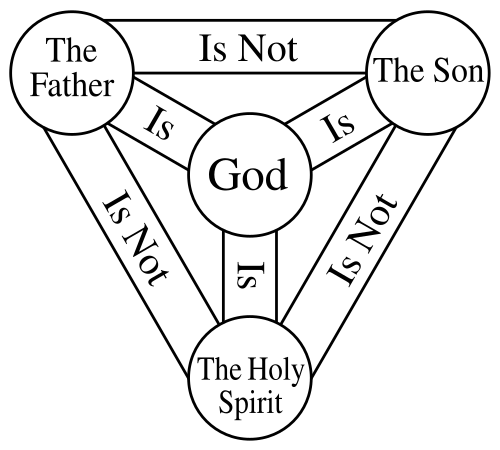
ニカイア信条を信奉するプロテスタントは、三位一体の神(父なる神、子なる神、聖霊なる神)を信じています。
プロテスタント宗教改革の頃に出現したがプロテスタントの一部ではない運動(例えばユニテリアン主義)は三位一体を否定する。これはしばしば、ユニテリアン・ユニバーサリズム、ワンネス・ペンテコステ派、およびその他の運動をプロテスタントから排除する理由となる。ユニテリアン主義は主にトランシルバニア、イギリス、アメリカ合衆国で存在し続けている。 [28]
5つのソラ
五つのソラエは、プロテスタント宗教改革の際に生まれた五つのラテン語のフレーズ(またはスローガン)であり、当時のカトリック教会の教えに反対する改革者たちの神学的信念の基本的な違いを要約している。 [1]ラテン語のソラは「単独」、「唯一の」、「単一の」を意味する。
教えの要約としてこれらのフレーズが使われるようになったのは、宗教改革の時代を通じてのことで、ルター派と宗教改革の包括的な原則であるsola scriptura(聖書のみによる)に基づいています。[1]この考えには、聖書に関する4つの主要な教義が含まれています。聖書の教えは救いに必要である(必要性)、救いに必要なすべての教義は聖書のみから来る(十分性)、聖書で教えられていることはすべて正しい(無誤性)、そして、聖霊が罪を克服することによって、信者は聖書自体から真理を読んで理解することができるが、理解するのは困難であるため、個々の信者を真の教えに導くために使われる手段は、教会内での相互の話し合いであることが多い(明確性)。
聖書の必要性と無謬性は確立した考えであり、批判されることはほとんどなかったが、啓蒙時代には外部から議論された。しかし、当時最も議論を呼んだ考えは、誰でも聖書を手に取り、救済を得るのに十分な知識を学べるという考えだった。改革者たちは教会論(教会が全体としてどのように機能するかについての教義)に関心があったが、教会内の特定の人々、または十分に古い考えが、テキストの理解を与える上で特別な地位を持っているというカトリックの考えと比較すると、聖書の真理が信者の生活に適用されるプロセスについては異なる理解を持っていた。
2 番目の主要原則であるsola fide (信仰のみ) は、キリストへの信仰のみで永遠の救いと義認が得られるとしています。これは聖書から論じられており、論理的にはsola scripturaに帰結しますが、ルターやその後の改革者たちの活動の指導原則です。sola scriptura は聖書を唯一の教えの源としているため、sola fide は改革者たちが取り戻そうとした教えの主旨、つまりキリストと信者との直接的で密接な個人的なつながりを象徴しており、改革者たちは自分たちの活動がキリスト中心的であると主張しました。
その他のソラは、声明としては後から現れたものですが、それらが表す考え方もまた初期の宗教改革の一部でした。
- ソルス・クリストス:キリストのみ
- プロテスタントは、教皇が地上の教会のキリストの代表であるという教義、キリストによって功績をあげたという概念、キリストとその聖人の功績の宝庫というカトリックの考えを、キリストが神と人間の唯一の仲介者であるという考えを否定するものと特徴づけている。一方、カトリックはこれらの問題に関してユダヤ教の伝統的な理解を維持し、キリスト教の伝統の普遍的なコンセンサスに訴えた。[31]
- ソラ・グラティア:恵みのみ
- プロテスタントは、カトリックの救済は神の恩寵と自分の行いの功績に依存すると認識していた。改革派は、救済は神の賜物(つまり、神の無償の恩寵)であり、イエス・キリストの贖罪の働きのみによって聖霊によって与えられるものだと仮定した。その結果、彼らは、罪人が神に受け入れられるのは、神の恩寵によって信者にもたらされた変化のためではなく、信者は行いの功績に関係なく受け入れられると主張した。なぜなら、誰も救済に値しないからである。 [32]
- ソリ デオ グローリア:神のみに栄光あれ
- 栄光はすべて神のみに帰属します。なぜなら、救いは神の意志と行為のみによって達成されるからです。十字架上でのイエスの十分な贖罪の賜物だけでなく、聖霊によって信者の心に生み出されるその贖罪への信仰の賜物もそうです。改革者たちは、人間は、カトリック教会、教皇、教会の階層によって列聖された聖人でさえ、栄光に値しないと信じていました。
聖体におけるキリストの存在

プロテスタント運動は、16 世紀中期から後半にかけて、いくつかの異なる分派に分かれ始めました。その中心的論点の 1 つは、聖体に関する論争でした。初期のプロテスタントは、ミサの犠牲の儀式で使われるパンとワインが、キリストの体、血、魂、神性に変化することで、本来の実体を失うと教える、カトリックの全質変化の教義を拒否しました。彼らは、聖体拝領におけるキリストの存在とその体と血に関して、互いに意見が一致しませんでした。
- ルター派は、聖餐において、キリストの体と血はパンとワインの「中に、パンとワインと共に、そしてその形の下に」存在し、それを食べたり飲んだりするすべての人に与えられると信じています。 [33] [34]これは、コンコルディア書では聖礼典の結合と呼ばれる教義です。[35]神は聖礼典を受けるすべての人に、 [36] [37]罪の赦し、[38] [39]永遠の救いを熱心に提供します。 [40]
- 改革派教会は、キリストの真の霊的存在、つまり聖餐における存在を強調し、聖餐は聖化の恵みであり、それによって選ばれた信者は実際にキリストにあずかるのではなく、単にパンとワインを聖餐の要素ではなく受けるだけだと述べている。カルヴァン派は、信者と非信者の両方の聖体拝領者は全員、聖餐の要素としてキリストの体と血を口頭で受けるというルター派の主張を否定し、その代わりにキリストは信仰によって信者と結ばれていると断言する。聖餐はその信仰に対する外面的かつ目に見える助けである。カルヴァンはまた、聖餐中の聖霊によるキリストの真の存在を強調する。これはしばしば動的存在と呼ばれる。
- 英国国教会とメソジスト教会は、キリストの現存を定義することを拒否し、それを神秘のままにしておくことを好む。[41]祈祷書は、パンとワインを、キリストの体と血である内なる霊的な恵みの外面的で目に見えるしるしとして描写している。しかし、彼らの典礼の言葉は、人が真の現存と霊的かつ聖礼典的な現存を同時に信じることができることを示唆している。例えば、「…そしてあなたは、キリストの体と血の聖礼典において霊的な食物を私たちに与えてくださいました」「…あなたの御子、私たちの救い主イエス・キリストの最も尊い体と血という霊的な食物によって、これらの聖なる神秘において私たちを確信させてくださったこと…」アメリカ祈祷書、1977年、365-366ページ。
- アナバプテスト派は、ツヴィングリ派の見解を一般的に単純化した見解を支持しており、上で示唆したような神学的な複雑さを気にせず、聖餐を単に参加者の共通の信仰の象徴、磔刑の事実の記念、そしてキリストの体としての彼らの共通の立場を思い出させるものと見なしている(記念主義と呼ばれる見解)。[42]
その他の信念
プロテスタントはカトリックの教皇至上主義を否定し、秘跡の数、聖体におけるキリストの真の存在、教会政治と使徒継承の問題について異なる見解を持っています。[43] [44]
歴史
宗教改革以前


さまざまな改革者によって取り上げられた個々の考えの多くには、歴史的な先駆者が存在した。しかし、彼らを先駆的改革者と呼ぶことは議論の余地がある。なぜなら、彼らの神学には、後のプロテスタントとは関連しない要素、一部のプロテスタントによって主張されたが他のプロテスタントによって否定された要素、または表面的にのみ類似した要素も含まれていたからである。
プロテスタントの先駆者として称賛される最も初期の人物の一人は、西暦4世紀に生きたヨビニアヌスである。彼は修道制や禁欲主義を攻撃し、救われた信者は決してサタンに打ち負かされることはないと信じた。[45]
9世紀、神学者オルバイスのゴットシャルクはカトリック教会から異端の罪で非難された。ゴットシャルクはイエスの救済には限界があり、その贖罪は選ばれた者だけのためのものだと信じていた。[46]ゴットシャルクの神学はプロテスタント改革の先駆けとなった。[47] [48] [自費出版のソース? ] ラトラムヌスもゴットシャルクの神学を擁護し、聖体におけるキリストの真の存在を否定した。彼の著作は後のプロテスタント改革にも影響を与えた。[49] 9世紀の トリノのクラウディウスも、信仰のみやペテロの至上性の否定など、プロテスタントの考えを持っていた。 [50]
1130年代後半、イタリアの聖職者アルノルド・ディ・ブレシアは、カトリック教会の改革を試みた最初の神学者の一人となった。彼の死後、使徒的清貧に関する彼の教えはアルノルド派の間で広まり、後にワルドー派や霊的フランシスコ会の間でも広く受け入れられたが、彼の著作は公式の非難を免れていない。1170年代初頭、ピーター・ワルドがワルドー派を創設した。彼は福音書の解釈を主張し、カトリック教会との対立を招いた。1215年までにワルドー派は異端とされ、迫害を受けた。それにもかかわらず、この運動はより広範な改革派の伝統の一部として、今日までイタリアで存在し続けている。
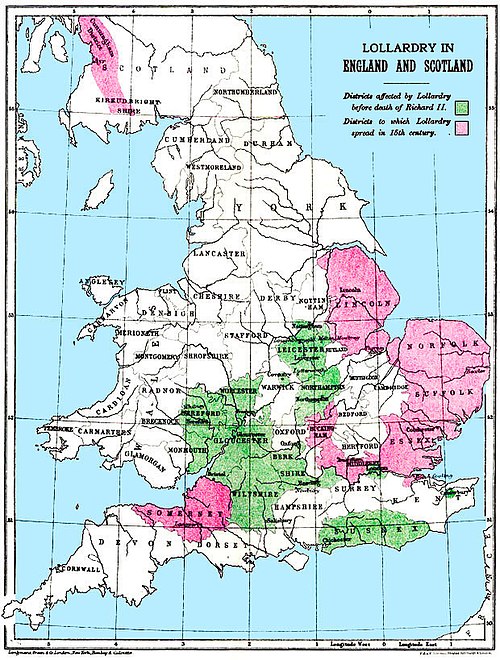
1370年代、オックスフォードの神学者で司祭のジョン・ウィクリフ(後に「宗教改革の暁星」と呼ばれる)は、イギリスの改革者として活動を始めた。彼は、教皇の権威が世俗権力に優先することを拒絶し(大罪を犯した者は権威を失い、抵抗されるべきである。教皇のように財産を持つ司祭は、そのような大罪を犯している)、聖書を英語の俗語 に翻訳し、反教権主義と聖書中心の改革を説いた。聖餐の要素に神が実際に存在することを拒絶したことは、16世紀のフルドリッヒ・ツヴィングリの同様の考えを予兆していた。ウィクリフの崇拝者は「ロラード派」として知られるようになった。 [51]
15 世紀の最初の 10 年間、カトリックの司祭であり、チェコの改革者で教授でもあったヤン・フスは、ジョン・ウィクリフの著作に影響を受けてフス派運動を創設しました。彼は改革主義的なボヘミアの宗教宗派を強く主張しました。彼は 1415 年に世俗の権威によって破門され、コンスタンツ司教区のコンスタンツで、悔い改めのない執拗な異端を理由に火あぶりにされました。彼の処刑後、反乱が勃発しました。フス派は、教皇によって彼らに対して宣言された 5 回の連続した十字軍を撃退しました。
その後、神学上の論争によりフス派は分裂した。ウトラキストは、聖餐式ではパンとワインの両方を人々に与えるべきだと主張した。もうひとつの大きな派閥はタボル派で、フス戦争中のリパニの戦いでウトラキストと対立した。フス派には穏健派と急進派の2つの派閥があった。ボヘミアのその他の小規模なフス派の分派には、アダム派、オレビト派、孤児派、プラハ派など があった。
フス戦争は、神聖ローマ皇帝 ジギスムントとそのカトリック同盟、穏健派フス派の勝利と、急進派フス派の敗北で終結した。1620年に三十年戦争がボヘミアにまで及ぶと、緊張が高まった。穏健派と急進派のフス派は、カトリック教徒と神聖ローマ皇帝の軍隊によってますます迫害された。
14世紀、ゴッテスフロインデと呼ばれるドイツの神秘主義団体がカトリック教会とその腐敗を批判した。彼らの指導者の多くはカトリック教会を攻撃したために処刑され、彼らは神の審判が間もなく教会に下ると信じていた。ゴッテスフロインデは民主的な信徒運動であり、宗教改革の先駆者であり、神聖さと敬虔さを強く強調した。[52]
1475年以降、イタリアのドミニコ会修道士ジロラモ・サヴォナローラはキリスト教の刷新を訴えていた。後にマルティン・ルター自身がこの修道士の著作を読み、信仰と恩寵に関するサヴォナローラの思想がルター自身の信仰のみによる義認の教義を予見する殉教者であり先駆者であると称賛した。[53]
フスの信奉者の一部は、ユニタス・フラトルム(兄弟団の結束)を創設した。この組織は、三十年戦争と対抗宗教改革(カトリック改革)でほぼ完全に破壊された後、1722年にザクセン州ヘルンフートでニコラウス・フォン・ツィンツェンドルフ伯爵の指導の下で再興された。今日、この組織は英語ではモラヴィア教会、ドイツ語ではヘルンフーター・ブリュダーゲマイネと呼ばれることが多い。
15世紀には、ヴェッセル・ガンスフォルト、ヨハン・ルハト・フォン・ヴェーゼル、ヨハネス・フォン・ゴッホの3人のドイツ神学者が宗教改革を予見していた。彼らは予定説、聖書のみ、目に見えない教会などの思想を持ち、ローマ・カトリックの正当化や教皇の権威に関する見解を否定し、修道制にも疑問を呈した。[54]
ヴェッセル・ガンスフォートもまた、聖体変化を否定し、信仰のみによる義認というルター派の見解を先取りしていた。[55]
宗教改革そのもの

プロテスタントの宗教改革はカトリック教会を改革する試みとして始まった。
1517年10月31日、いわゆる「万聖節」に、マルティン・ルターはドイツのヴィッテンベルクにある諸聖人教会の扉に、カトリック教会の教義上および実践上の濫用、特に免罪符の販売を詳述した「95ヶ条の論題」(免罪符の力に関する論争とも呼ばれる)を打ち付けたとされている。この論題では、煉獄の実践、個別審判、教皇の権威など、教会と教皇制度の多くの側面について議論し、批判した。ルターは後に、カトリックの聖母マリアへの信仰、聖人の執り成しと信仰、聖職者の強制的な独身制、修道制度、教皇の権威、教会法、譴責と破門、宗教問題における世俗の支配者の役割、キリスト教と法の関係、善行、秘跡などに反対する著作を執筆した。[56]
宗教改革は、ヨハネス・グーテンベルクが発明した新しい印刷機と識字能力の勝利であった。[57] [k]ルターによる聖書のドイツ語訳は、識字能力の普及において決定的な瞬間であり、宗教書やパンフレットの印刷と配布も刺激した。1517年以降、宗教パンフレットはヨーロッパの多くの地域で溢れかえった。[59] [l]
ルターの破門とローマ教皇による宗教改革の非難の後、ジャン・カルヴァンの作品と著作は、スイス、スコットランド、ハンガリー、ドイツなどのさまざまなグループの間で緩やかな合意を形成する上で影響力を及ぼした。1526年に司教が追放され、ベルンの改革者ウィリアム・ファレルの試みが失敗した後、カルヴァンは、法律を学ぶ学生として培った組織力を使ってジュネーヴの街を規律するよう求められた。1541年の彼の法令には、生活のあらゆる分野に道徳をもたらすために、市議会および教会会議と教会の業務の協力が含まれていた。1559年にジュネーヴアカデミーが設立された後、ジュネーヴはプロテスタント運動の非公式な首都となり、ヨーロッパ全土からのプロテスタント亡命者に避難所を提供し、彼らをカルヴァン派の宣教師として教育した。信仰は1563年のカルヴァンの死後も広がり続けた。
プロテスタントはドイツ領からフランスにも広がり、フランスではプロテスタントはユグノー(由来はやや不可解な言葉)というあだ名で呼ばれた。カルヴァンはジュネーブを拠点にフランスの宗教問題に関心を持ち続けた。彼はそこで会衆を導く牧師たちを定期的に訓練した。激しい迫害にもかかわらず、改革派の伝統は国の大部分で着実に進歩し、カトリック体制の頑固さと自己満足に疎外された人々の心をとらえた。フランスのプロテスタントは明らかに政治的な性格を獲得するようになり、1550年代の貴族の改宗によってそれが一層明らかになった。これがフランス宗教戦争として知られる一連の紛争の前提となった。 1559年にフランス国王アンリ2世が急死すると、内戦が激化した。残虐行為と暴虐が当時の特徴となり、最も激しかったのは1572年8月の聖バルテルミの虐殺で、カトリック派はフランス全土で3万から10万人のユグノーを全滅させた。戦争は、フランス国王アンリ4世がナントの勅令を発布して、プロテスタント少数派への公式な寛容を約束したが、非常に制限された条件の下で終結した。カトリックは引き続き国教であり、フランスのプロテスタントの運命は次の世紀にわたって徐々に衰退し、ナントの勅令を撤回してカトリックを再び唯一の合法的な宗教としたルイ14世の フォンテーヌブロー勅令で頂点に達した。フォンテーヌブロー勅令に応えて、ブランデンブルク選帝侯フリードリヒ・ヴィルヘルム1世はポツダム勅令を発布し、ユグノー難民に自由な通行を認めた。17世紀後半には、多くのユグノーがイギリス、オランダ、プロイセン、スイス、イギリスとオランダの海外植民地に逃れた。フランスの重要なコミュニティはセヴェンヌ地方に残った。
ドイツでの出来事と並行して、スイスでもフルドリッヒ・ツヴィングリの指導の下で運動が始まりました。ツヴィングリは学者であり説教者で、1518年にチューリッヒに移住しました。2つの運動は神学の多くの問題で一致していましたが、いくつかの未解決の相違により分離したままでした。ドイツ諸州とスイス連邦の間の長年の恨みから、ツヴィングリの思想がルター派にどれほど負っているかについて激しい議論が起こりました。ドイツのヘッセン公フィリップは、ツヴィングリとルターの同盟を結ぶことに可能性を見出しました。1529年に彼の城で会議が開かれましたが、これは現在ではマールブルク会議として知られ、失敗に終わったことで悪名高いものとなっています。2人は、1つの重要な教義をめぐる論争のために、いかなる合意にも至りませんでした。
1534年、ヘンリー8世は、教皇が(神聖ローマ皇帝に関わる政治的配慮のため)キャサリン・オブ・アラゴンとの結婚を無効にできなかったため、イングランドにおける教皇の管轄権をすべて廃止した。 [61]これにより、宗教改革の考えが生まれるきっかけとなった。イングランド国教会の改革者たちは、古代カトリックの伝統とより改革的な原則への共感を交互に表明し、徐々にカトリックとプロテスタントの伝統の中道(媒介)と見なされる伝統へと発展していった。イングランドの宗教改革は特別な道をたどった。イングランドの宗教改革の異なる性格は、主にそれがヘンリー8世の政治的必要性によって推進されたという事実から来ている。ヘンリー王は、イングランド国教会をローマの権威から排除することを決定した。1534年、国王至上法はヘンリーをイングランド国教会の地上における唯一の最高指導者と認めた。1535年から1540年にかけて、トーマス・クロムウェルの下で、修道院解散として知られる政策が実施された。メアリー 1 世の治世中に短期間カトリックが復活した後、エリザベス 1 世の治世中に緩やかな合意が形成されました。エリザベス朝の宗教和解により、英国国教会は主に独特の教会伝統として形成されました。妥協は不安定で、一方では極端なカルヴァン主義、他方ではカトリック主義の間で揺れ動く可能性がありました。17世紀の ピューリタン革命またはイングランド内戦までは、比較的成功していました。
大陸における対抗宗教改革(「カトリックの宗教改革」)の成功と、さらなるプロテスタント改革を志向するピューリタン党の台頭により、エリザベス朝時代は二極化した。初期のピューリタン運動は、イングランド国教会の改革運動であり、その支持者はイングランド国教会がヨーロッパの、特にジュネーブのプロテスタント教会にもっと近づくことを望んだ。後のピューリタン運動は、しばしば異端者や非国教徒と呼ばれ、最終的にはさまざまな改革派宗派の形成につながった。
1560年のスコットランド宗教改革は、スコットランド国教会のあり方を決定的に変化させた。[62]スコットランドにおける宗教改革は、教会的には改革派の路線に沿った教会の設立で、政治的にはイングランドの影響力のフランスに対する勝利で頂点に達した。ジョン・ノックスはスコットランド宗教改革の指導者とみなされている。 1560年のスコットランド宗教改革議会は、 1560年教皇管轄権法によって教皇の権威を否定し、ミサの挙行を禁じ、プロテスタントの信仰告白を承認した。これは、不在の娘の名でスコットランドを統治していた摂政メアリー・オブ・ギーズの政権下でのフランスの覇権に対する革命によって可能になった。
プロテスタント宗教改革の最も重要な活動家としては、ヤコブス・アルミニウス、テオドール・ベーザ、マルティン・ブツァー、アンドレアス・フォン・カールシュタット、ハインリヒ・ブリンガー、バルタザール・フーブマイアー、トーマス・クランマー、ウィリアム・ファレル、トーマス・ミュンツァー、ローレンティウス・ペトリ、オラウス・ペトリ、フィリップ・メランヒトン、メンノ・シモンズ、ルイ・ド・ベルキン、プリモシュ・トルバー、ジョン・スミスなどがいます。
この宗教的激動の過程で、1524年から1525年にかけてドイツ農民戦争がバイエルン、テューリンゲン、シュヴァーベンの各公国を席巻した。低地諸国における八十年戦争とフランス宗教戦争の後、神聖ローマ帝国の諸州の宗派による分裂は、最終的に1618年から1648年にかけての三十年戦争として勃発した。この戦争はドイツの大部分を荒廃させ、人口の25%から40%が死亡した。[63]三十年戦争を終結させた ウェストファリア条約の主要な原則は次の通りであった。
- すべての政党は、1555 年のアウクスブルク条約を承認することになり、これにより各君主は自国の宗教を決定する権利を持ち、選択肢はカトリック、ルター派、そしてカルヴァン派となった。( cuius regio, eius religioの原則)
- 自分の宗派が国教会ではない公国に住むキリスト教徒には、割り当てられた時間内に公に信仰を実践する権利と、自分の意志で私的に信仰を実践する権利が保証されていました。
- この条約は教皇の汎ヨーロッパ的政治的権力を事実上終わらせた。教皇インノケンティウス10世は勅書「ゼロ・ドムス・デイ」の中で、この条約は「無効、無効、不当、不当、不公平、非難されるべき、堕落した、愚かな、意味も効力もない」と宣言した。ヨーロッパの君主たちは、カトリックもプロテスタントも同様に、彼の判決を無視した。[64]
16世紀後半から17世紀前半のヨーロッパの宗教状況
宗教改革後
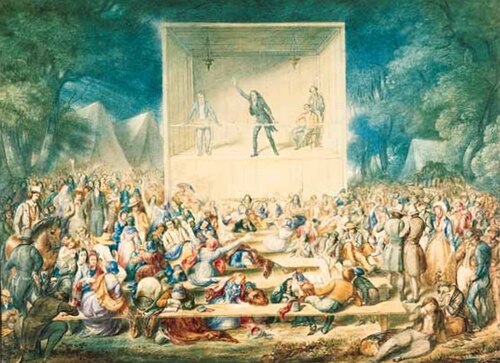
大覚醒は、英米の宗教史における急速かつ劇的な宗教復興の時代でした。
第一次大覚醒は、 1730年代から1740年代にかけてプロテスタント系ヨーロッパとイギリス領アメリカ、特にアメリカ植民地を席巻し、アメリカのプロテスタントに永続的な影響を残した福音主義と復興運動であった。それは、イエス・キリストによる救済の必要性についての深い個人的な啓示を聴衆に与える力強い説教から生まれた。儀式、式典、聖礼典主義、階級制度から離れ、深い精神的確信と救済の感覚を育み、内省と新しい個人的道徳基準への献身を奨励することで、キリスト教を一般の人々にとって非常に個人的なものにした。[65]
第二次大覚醒は1790年頃に始まり、1800年までに勢いを増した。1820年以降、バプテスト派とメソジスト派の教会員が急速に増加し、その説教師たちが運動を主導した。1840年代後半にはピークを過ぎていた。これは懐疑論、理神論、合理主義に対する反発として説明されてきたが、なぜこれらの力が当時リバイバル運動を引き起こすほどの圧力となったのかは完全には解明されていない。[66]この運動により、既存の福音派教派に何百万人もの新会員が加入し、新しい教派の形成につながった。
第三次大覚醒とは、アメリカの歴史において宗教的活動が顕著であった架空の歴史的時期を指し、1850年代後半から20世紀初頭にかけてのことである。[67]これは敬虔なプロテスタント諸宗派に影響を与え、社会活動の要素が強かった。[68]これは、キリストの再臨は人類が地球全体を改革した後に起こるという千年王国後の信仰から力を得た。これは社会福音運動と関連があり、社会問題にキリスト教を適用し、世界的な宣教運動と同様に覚醒から力を得た。ホーリネス運動、ナザレン運動、クリスチャンサイエンス運動などの新しいグループが出現した。[69]
第四次大覚醒はキリスト教の宗教的覚醒であり、一部の学者、特にロバート・フォーゲルは、1960年代後半から1970年代初頭にかけて米国で起こったと主張しているが、他の学者は第二次世界大戦後の時代を対象とする。この用語は議論の余地がある。したがって、第四次大覚醒という考え自体は一般に受け入れられていない。[70]
1814年、ル・レヴェイユはスイスとフランスのカルヴァン派地域を席巻した。
1904年、ウェールズで起こったプロテスタントの復興運動は地元住民に多大な影響を与えた。イギリス近代化の一環として、この運動は多くの人々を教会、特にメソジスト派とバプテスト派に引き寄せた。[71]
20世紀のプロテスタント系キリスト教における注目すべき発展は、現代のペンテコステ運動の勃興である。メソジスト派とウェスレー派のルーツから派生したこの運動は、ロサンゼルスのアズサ通りにある都市伝道所での集会から生まれた。そこから世界中に広まり、そこで神の奇跡的な働きと信じたものを体験した人々によって広められた。こうしたペンテコステのような現象は、2度の大覚醒に見られるように、歴史を通じて着実に現れてきた。ペンテコステ派は、既存の宗派内でカリスマ運動を生み出し、西洋キリスト教において重要な勢力であり続けている。
米国および世界の他の地域では、プロテスタント教派の福音派、特に福音主義に偏った教派が著しく台頭し、主流のリベラル派教会がそれに応じて衰退している。第一次世界大戦後の時代には、リベラル派キリスト教が台頭し、かなりの数の神学校がリベラルな観点からの講義や指導も行っていた。第二次世界大戦後の時代には、アメリカの神学校や教会組織において、傾向は保守派へと逆戻りし始めた。
ヨーロッパでは、宗教的儀式やキリスト教の教えへの信仰から離れ、世俗主義へと向かう動きが一般的になってきた。啓蒙主義は世俗主義の広がりに大きく貢献している。一部の学者はプロテスタントと世俗主義の台頭との関係を議論し、プロテスタントが多数派を占める国々における広範な自由を論点としている。[72]しかし、フランスの唯一の例は、カトリックが多数派を占める国々でさえ、啓蒙主義の圧倒的な影響が5世紀後にさらに強力な世俗主義と思想の自由をもたらしたことを証明している。宗教改革がその後の世紀の批判的思想家に影響を与え、将来の哲学者が当時の教会やその神学的、哲学的、社会的前提に対する批判を広げるための知的、宗教的、哲学的基盤を提供したと考える方が確実である。しかし、啓蒙主義の初期の哲学者たちはキリスト教の世界観を擁護していたが、それは教会、その政治、倫理、世界観、科学的・文化的仮定に対する激しく決定的な批判とともに発展し、何世紀にもわたって続いたあらゆる形態の制度化されたキリスト教の価値の低下につながったことを思い出すべきである。[73]
急進的な改革

主流のルター派、カルヴァン派、ツヴィングリ派の運動とは異なり、国家の後援を受けなかった急進的宗教改革は、一般的に「目に見える教会」と「目に見えない教会」を区別する概念を放棄した。これは、国家が承認したプロテスタントの異端の主張を合理的に拡張したもので、公権力からの独立の価値をさらに一歩進め、市民の領域でも同じことを主張した。急進的宗教改革は非主流であったが、ドイツ、スイス、オーストリアの一部では、カトリックとプロテスタント教権派の両方から激しい迫害を受けたにもかかわらず、大多数が急進的宗教改革に共感した。[74]
初期のアナバプテストは、彼らの改革は神学だけでなく、キリスト教徒の実際の生活、特に政治的および社会的関係をも浄化しなければならないと信じていました。[75]したがって、教会は国家によって支えられるべきではなく、十分の一税や税金によっても、剣の使用によっても支えられるべきではありませんでした。キリスト教は個人の信念の問題であり、誰にも強制することはできず、むしろ個人の決定を必要としました。[75]フーブマイアーやホフマンなどのプロテスタントの教会指導者は、幼児洗礼の無効性を説き、代わりに改宗後の洗礼(「信者の洗礼」 )を主張しました。これは改革者にとって新しい教義ではなく、1147年のアルビジョワ派などの以前のグループによって教えられました。急進的な改革者のほとんどはアナバプテストでしたが、主流のアナバプテストの伝統に自分を同一視しない人もいました。トーマス・ミュンツァーはドイツ農民戦争に参加しました。アンドレアス・カールシュタットは、フルドリヒ・ツヴィングリやマルティン・ルターとは神学的に意見が異なり、非暴力を説き、幼児の洗礼を拒否し、成人信者の再洗礼も行わなかった。[76] カスパル・シュヴェンクフェルトとセバスチャン・フランクはドイツの神秘主義と心霊主義の影響を受けていた。
急進的宗教改革に関係する多くの人々の見解では、マジステラル改革は十分ではなかった。例えば、急進的宗教改革者のアンドレアス・フォン・ボーデンシュタイン・カールシュタットは、ヴィッテンベルクのルター派神学者を「新教皇主義者」と呼んだ。[77]「マジステラル」という用語は「教師」も意味するため、マジステラル改革は教師の権威を強調することでも特徴付けられる。これは、ルター、カルヴァン、ツヴィングリがそれぞれの聖職の分野で改革運動の指導者として目立ったことから明らかである。彼らは権威があったため、急進的宗教改革者からローマ教皇にあまりにも似ていると批判されることが多かった。急進的宗教改革のより政治的な側面は、ハンス・フートの思想と実践に見られるが、一般的にアナバプティズムは平和主義と関連づけられてきた。
アーミッシュ、メノナイト、フッター派など、さまざまな分派の形をとったアナバプテストは、急進的な宗教改革から生まれました。その後の歴史の中で、シュヴァルツェナウ兄弟団や使徒キリスト教会がアナバプテスト界に出現しました。
宗派
プロテスタントは、共通の基礎教義とグループ名を共有する特定の会衆または教会のグループを宗派と呼びます。[78]宗派(国家組織)という用語は、支部(宗派の家族、伝統)、コミュニオン(国際組織)、会衆(教会)とは区別されます。違いを示す例(これはプロテスタント教会を分類する普遍的な方法ではなく、その構造は時々大きく異なることがあります)は次のとおりです。
- 宗派/宗派/伝統:メソジスト
- 聖体拝領/国際団体:世界メソジスト評議会
プロテスタントは、カトリック教会が唯一の真の教会であるという教義を否定し、目に見えない教会の存在を教える。目に見えない教会とは、イエス・キリストを信じる者すべてから構成される。[79]ルーテル教会は伝統的に、自らをキリストと使徒たちによって築かれた「歴史的なキリスト教の樹木の幹」とみなし、宗教改革の時代にローマ教会は崩壊したと考えている。[10] [11]個々の宗派もまた、非常に微妙な神学上の相違から形成されてきた。他の宗派は、単に同じ信仰を地域的または民族的に表現したに過ぎない。5つのソラがプロテスタント信仰の主要な信条であるため、宗派に属さないグループや組織もプロテスタントとみなされる。
さまざまなエキュメニカル運動が、さまざまな統合モデルに従って、分裂したプロテスタントの各宗派の協力や再編を試みてきましたが、どの教会も忠誠を誓うべき、信仰を権威的に定義できる包括的な権威がないため、分裂が統合を上回り続けています。ほとんどの宗派は、キリスト教信仰の主要な側面で共通の信念を共有していますが、多くの副次的な教義では異なりますが、何が主要で何が副次的であるかは、宗派固有の信念の問題です。
いくつかの国では国教会が設立され、教会組織と国家が結びついている。プロテスタント宗派が国教として設立されている管轄区域には、北欧のいくつかの国が含まれる。デンマーク(グリーンランドを含む)[80] 、フェロー諸島( 2007年以来教会は独立している)[81] 、アイスランド[82]、ノルウェー[83] [84] [85]には福音ルーテル派の教会が設立されている。ツバルには世界で唯一の改革派の伝統を持つ国教会があり、トンガにはメソジスト派の伝統がある。[ 86]
英国国教会はイングランドで正式に設立された宗教機関であり、[87] [88] [89]、世界的な英国国教会の母教会でもあります。
1869年、フィンランドは教会法を導入して福音ルーテル教会を廃止した北欧初の国となった。 [m]教会は今でも国家と特別な関係を維持しているが、フィンランド憲法やフィンランド議会で可決されたその他の法律では国教とはみなされていない。[90] 2000年、スウェーデンが北欧で2番目に同様の措置を取った。[91]
統一教会と統一教会

統合教会および統合教会は、2 つ以上の異なるプロテスタント宗派の合併またはその他の形態の統合によって形成された教会です。
歴史的に、プロテスタント教会の統合は国家によって強制されてきたが、これは通常、国民の宗教的領域をより厳しく管理するためであるが、他の組織上の理由からでもあった。現代のキリスト教エキュメニズムが進むにつれて、様々なプロテスタントの伝統間の統合がますます一般的になり、統合された教会や統合中の教会の数が増えている。最近の大きな例としては、北インド教会(1970年)、フランス合同プロテスタント教会(2013年)、オランダのプロテスタント教会(2004年)などがある。ヨーロッパや北米では世俗主義の台頭により主流のプロテスタントが縮小し、インド亜大陸のようにキリスト教が少数派宗教となっている地域では、改革派、英国国教会、ルーテル派の宗派が合併し、しばしば大規模な全国的な宗派が生まれている。この現象は福音派、無宗派、カリスマ派の教会ではあまり一般的ではなく、新しい教会が生まれ、その多くが互いに独立したままである。[要出典]
おそらく最も古い公式の統一教会はドイツにあり、ドイツのプロテスタント教会はルーテル派、統一(プロイセン連合)、改革派の教会の連合であり、その歴史は1817年に遡ります。一連の統合の最初のものは、1817年8月にイトシュタインで行われたヘッセンとナッサウのプロテスタント教会を形成するための会議であり、 100年後にイトシュタインの教会がユニオン教会と名付けられました。 [92]
世界中で、それぞれの統合教会または統合教会は、前身となるプロテスタント宗派の異なる組み合わせで構成されています。しかし、ほとんどの統合教会および統合教会は、改革派の伝統を受け継ぐ 1 つ以上の前身を持ち、その多くが世界改革派教会同盟のメンバーであるため、 傾向は明らかです。
主要支店
プロテスタントは、今日では分派とみなされている宗教改革以降の重要な運動からどのような影響を受けたかによって区別することができます。これらの運動の中には共通の系譜を持つものもあり、時には個々の宗派を直接生み出しています。前述のように宗派が多数あるため、このセクションでは、プロテスタントの一部であると広く考えられている最大の宗派ファミリー、または分派についてのみ説明します。これらは、アルファベット順に、アドベンチスト、英国国教会、バプテスト、カルヴァン派(改革派)、フス派、ルーテル派、メソジスト、ペンテコステ派、プリマス・ブレザレン、クエーカーです。小規模ですが歴史的に重要なアナバプテストの分派についても説明します。
下の図は、主要なプロテスタント宗派の家族、またはその一派の相互関係と歴史的起源を示しています。対抗宗教改革 (「カトリック改革」)やCuius regio, eius religioの法的原則などの要因により、多くの人々はニコデモ派として生活し、彼らが公言する宗教的所属は、彼らが共感する運動と多かれ少なかれ対立していました。その結果、宗派間の境界はこの図が示すほど明確には分かれていません。人口が抑圧されたり迫害されたりして、支配的な信仰に忠実であるふりをすると、彼らは何世代にもわたって、表面上は忠実な教会に影響を与え続けました。
カルヴァン主義は1648年のウェストファリア条約まで神聖ローマ帝国で明確に認められていなかったため、多くのカルヴァン主義者は隠れカルヴァン主義者として暮らしていた。16世紀から19世紀にかけてカトリック諸国で行われた対抗宗教改革(「カトリック改革」)関連の弾圧により、多くのプロテスタントは隠れプロテスタントとして暮らしていた。一方、プロテスタント地域ではカトリック教徒が隠れ教皇として暮らすこともあったが、ヨーロッパ大陸では移住がより容易であったため、これはあまり一般的ではなかった。

アドベンティズム
アドベンチストは19世紀、アメリカ合衆国における第二次大覚醒運動の文脈で始まった。この名称はイエス・キリストの再臨(または「再臨」)が間近に迫っているという信仰を指す。ウィリアム・ミラーは1830年代にアドベンチスト運動を始めた。彼の信奉者はミラー派として知られるようになった。[93]
アドベンチスト教会には多くの共通点があるが、中間状態が無意識の眠りか意識か、悪人の最終的な罰が絶滅か永遠の責め苦か、不死の性質、千年王国後に悪人が復活するかどうか、ダニエル書第8章の聖所[94]が天にあるか地上にあるか[95]について、それぞれの神学は異なっている。この運動は聖書全体の研究を奨励し、セブンスデー・アドベンチスト教会といくつかの小規模なアドベンチスト教会が安息日を守るように導いた。セブンスデー・アドベンチスト教会総会は、教会の核となる信条を28の基本信条(1980年と2005年)にまとめており、その根拠として聖書の引用を使用している。
2010年、アドベンチスト派は様々な独立教会に約2200万人の信者がいると主張した。[96]この運動の中で最大の教会であるセブンスデー・アドベンチスト教会には1800万人以上の信者がいる。


アナバプティズム
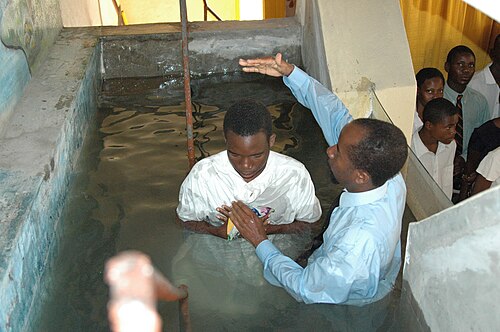
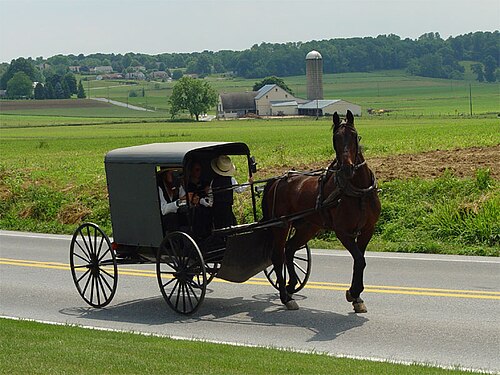
アナバプテストの起源は急進的宗教改革に遡る。アナバプテストは、洗礼を受ける人が信仰を告白するまで洗礼を延期することを信条としている。この運動をプロテスタントの派生と考える者もいるが、別の運動と考える者もいる。 [97] [98]アーミッシュ、フッター派、メノナイト派はこの運動の直接の子孫である。シュヴァルツェナウ兄弟会、ブルーダーホフ、使徒キリスト教会はアナバプテストの中で後発の発展と考えられている。
「再び洗礼を施す者」を意味するアナバプテストという名称は、幼児洗礼を受けた改宗者に再度洗礼を施す慣習に関連して、迫害者たちによって付けられたものである。 [99]アナバプテストは、洗礼志願者が自らの信仰告白を行えることを要求し、幼児洗礼を拒否した。この運動の初期のメンバーは、幼児洗礼は非聖書的で無効であるため、信者の洗礼は再洗礼ではなく、実際は彼らにとって最初の本当の洗礼であると主張し、アナバプテストという名称を受け入れなかった。洗礼の本質やその他の問題に関する彼らの見解の結果、アナバプテストは16世紀から17世紀にかけて、プロテスタント教会とカトリック教会の双方から激しく迫害された。アナバプテストの大半は、宣誓、軍事行動への参加、民政への参加を禁じる山上の垂訓の文字通りの解釈に固執していたが、再洗礼を行った者の中にはそうではないと考えていた者もいた。 [n]そのため、保守的なアーミッシュ、メノナイト、フッター派や一部の歴史家は、彼らを真のアナバプテストの外側にいると考える傾向があるが、彼らは厳密にはアナバプテストであった。急進的宗教改革のアナバプテストの改革者は、急進派といわゆる第二戦線の二つに分かれる。急進的宗教改革の重要な神学者には、ジョン・フォン・ライデン、トーマス・ミュンツァー、カスパル・シュヴェンクフェルト、セバスチャン・フランク、メノ・シモンズなどがいた。第二戦線の改革者には、ハンス・デンク、コンラート・グレーベル、バルタザール・フーベマイアー、フェリックス・マンツなどがいた。今日でも多くのアナバプテストは、現在も継続して使用されている最古の賛美歌集であるオースブントを使用している。
-
 ディルク・ウィレムスは追っ手を救いました。この慈悲の行為により彼は再び捕らえられ、その後火あぶりにされました。
 -
-

英国国教会
英国国教会は、イングランド国教会と、歴史的に英国国教会と結びついている、あるいは同様の信仰、礼拝慣行、教会構造を持つ教会から成ります。 [100]英国国教会という言葉は、少なくとも1246年に遡る中世ラテン語のフレーズであるecclesia anglicanaに由来し、英国教会を意味します。各国または地域の教会が完全な自治権を持っているため、普遍的な法的権威を持つ単一の「英国国教会」は存在しません。名前が示すように、コミュニオンはカンタベリー大主教と完全な交わりを持つ教会の連合です。英国国教会信者の大多数は、 8500万人の信者がいる国際英国国教会コミュニオンの一部である教会の会員です。[ 101 ] [102]
イングランド国教会は、エリザベス朝宗教協定の時にカトリック教会からの独立を宣言した。[103] 16世紀半ばの新しい英国国教会の儀式の多くは、当時の改革派の伝統と密接に対応していた。これらの改革は、その最大の責任者の一人である当時のカンタベリー大主教トーマス・クランマーによって、新興のプロテスタントの伝統、すなわちルター派とカルヴァン派の2つの中道を進むものとして理解された。[104]世紀の終わりまでには、多くの伝統的な典礼形式と司教制を英国国教会が保持することは、最も発達したプロテスタントの原則を推進する人々によってすでに受け入れられないものとみなされていた。
英国国教会特有のものとしては、何世紀にもわたりほとんどの英国国教会の信者が使用してきた礼拝集である『祈祷書』があります。それ以来、この書は何度も改訂され、さまざまな国の英国国教会が別の礼拝書を開発してきましたが、『祈祷書』は今でも英国国教会を結びつける絆の 1 つとして認められています。
-
 トーマス・クランマーは、英国国教会の神学と自己アイデンティティの形成に最も影響を与えた人物の一人です。
 -
 祈祷書のさまざまな版には、英国国教会の構造化された礼拝の言葉が含まれています。
 -

バプテスト
バプテスト派は、洗礼は信仰を告白する者のみに施されるべきであり(幼児洗礼ではなく信者洗礼)、完全な浸礼によって行われなければならない(注水や散水ではなく)という教義を信奉している。バプテスト派教会の他の教義には、魂の能力(自由)、信仰のみによる救済、信仰と実践の規範としての聖書のみ、および地域会衆の自治などがある。バプテスト派は牧師と執事という2つの聖職者職を認めている。バプテスト派教会は広くプロテスタント教会であると考えられているが、一部のバプテスト派はプロテスタント教会であることを否定している。[105]
創始当初から多様であったバプテスト派は、今日では信仰、礼拝の方法、他のキリスト教徒に対する態度、キリスト教徒としての生き方において何が重要かという理解において、互いに大きく異なっています。[106]
歴史家は、バプテストと名付けられた最古の教会を1609年のアムステルダムまで遡らせ、イングランドの分離派 ジョン・スミスが牧師を務めていたとしている。 [107]彼は新約聖書の解釈に従い、幼児洗礼を拒否し、信仰を持つ成人のみに洗礼を制定した。[108]バプテストの慣習はイングランドに広がり、そこでは一般バプテスト派はキリストの贖罪がすべての人々に及ぶと考え、一方、特別バプテスト派はそれが選ばれた者のみに及ぶと信じていた。1638年、ロジャー・ウィリアムズは北アメリカ植民地で最初のバプテスト会衆を設立した。18世紀半ばには、第一次大覚醒によりニューイングランドと南部の両方でバプテスト派の成長が加速した。[109] 19世紀初頭の南部での第二次大覚醒により教会の信者数が増加し、18世紀の教えの一部であった奴隷制度の廃止と解放に対する説教師の支持も低下した。バプテスト派の宣教師たちは教会をすべての大陸に広めた。[108]
バプテスト世界同盟は、 15万以上の教会に4100万人以上の会員がいると報告している。[110] 2002年には、世界中に1億人以上のバプテストとバプテスト派の会員がおり、北米には3300万人以上がいた。[108]最大のバプテスト協会は南部バプテスト連盟で、関連教会の会員数は合計1400万人を超えている。[111]
-

-
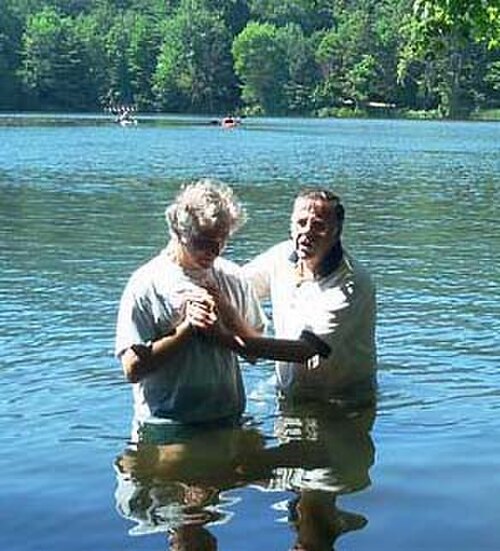 バプテスト派は、洗礼は信仰を告白する者に対してのみ行われるべきであるという教義を信奉している。
 -
![アメリカ初のバプテスト教会。バプテストは米国のプロテスタントのおよそ3分の1を占める。[112]](https://img-server.japedia.wiki/wikipedia/commons/thumb/4/47/First_Baptist_Church_in_America_from_Angell_St_2.jpg/500px-First_Baptist_Church_in_America_from_Angell_St_2.jpg) アメリカ初のバプテスト教会。バプテストは米国のプロテスタントのおよそ3分の1を占める。[112]
アメリカ初のバプテスト教会。バプテストは米国のプロテスタントのおよそ3分の1を占める。[112]
カルヴァン主義
カルヴァン主義は改革派の伝統とも呼ばれ、マルティン・ブツァー、ハインリヒ・ブリンガー、ペーター・マルティル・ヴェルミグリ、フルドリヒ・ツヴィングリなど数人の神学者によって推進されましたが、このキリスト教の一派は、この宗教に多大な影響を与えたことと、16世紀を通じての信仰告白や教会の論争における彼の役割から、フランスの改革者ジャン・カルヴァンの名を冠しています。
この用語は現在、カルヴァンが初期の指導者であった改革派教会の教義と実践も指しています。あまり一般的ではありませんが、カルヴァン自身の個人的な教えを指すこともあります。カルヴァン主義神学の詳細は、さまざまな方法で述べることができます。おそらく最もよく知られている要約は、カルヴァン主義の5つの要点にありますが、これらの要点はシステム全体を要約するのではなく、救済論に関するカルヴァン主義の見解を示しています。大まかに言えば、カルヴァン主義は、救済だけでなく人生のすべてにおいて、すべてのものに対する神の主権または支配を強調しています。この概念は、予定説と全的堕落の教義に明確に見られます。
最大の改革派団体は世界改革派教会連合で、世界中に211の宗派があり、8000万人以上の会員を擁している。[113] [114]世界改革派連盟や国際改革派教会会議などのより保守的な改革派連盟や独立教会も存在する。
-

-
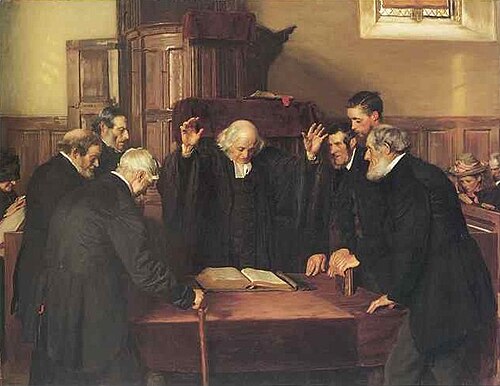
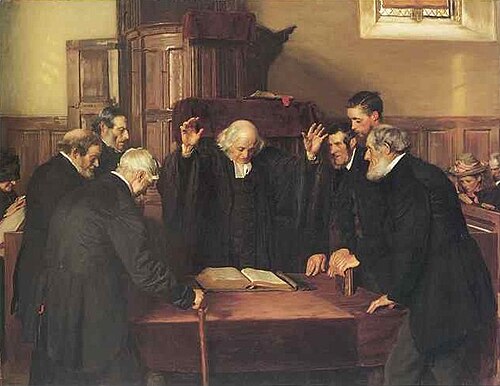 The Ordination of Elders in a Scottish Kirk by John Henry Lorimer, 1891.
 -
 A Congregational church in Cheshire, Connecticut, United States

Hussites
Hussitism follows the teachings of Czech reformer Jan Hus, who became the best-known representative of the Bohemian Reformation and one of the forerunners of the Protestant Reformation. An early hymnal was the hand-written Jistebnice hymn book. This predominantly religious movement was propelled by social issues and strengthened Czech national awareness. Among present-day Christians, Hussite traditions are represented in the Moravian Church, Unity of the Brethren and the Czechoslovak Hussite Church.[115]
-
 Friedensthal Moravian Church Christiansted, St Croix, USVI founded in 1755.
 -
 A Moravian diener serves bread to fellow members of her congregation during the celebration of a lovefest (2015).
Lutheranism
Lutheranism identifies with the theology of Martin Luther, a German monk and priest, ecclesiastical reformer, and theologian.
Lutheranism advocates a doctrine of justification "by grace alone through faith alone on the basis of Scripture alone", the doctrine that scripture is the final authority on all matters of faith, rejecting the assertion made by Catholic leaders at the Council of Trent that authority comes from both Scriptures and Tradition.[116] In addition, Lutherans accept the teachings of the first four ecumenical councils of the undivided Christian Church.[117][118]
Unlike the Reformed tradition, Lutherans retain many of the liturgical practices and sacramental teachings of the pre-Reformation Church with an emphasis on the Eucharist, or Lord's Supper. Lutheran theology differs from Reformed theology in Christology, the purpose of God's Law, divine grace, the concept of perseverance of the saints, and predestination.
Today, Lutheranism is one of the largest branches of Protestantism. With approximately 80 million adherents,[119] it constitutes the third most common Protestant confession after historically Pentecostal denominations and Anglicanism.[13] The Lutheran World Federation, the largest global communion of Lutheran churches represents over 72 million people.[120] Both of these figures miscount Lutherans worldwide as many members of more generically Protestant LWF member church bodies do not self-identify as Lutheran or attend congregations that self-identify as Lutheran.[121] Additionally, there are other international organizations such as the Global Confessional and Missional Lutheran Forum, International Lutheran Council and the Confessional Evangelical Lutheran Conference, as well as Lutheran denominations that are not necessarily a member of an international organization.
-
 Luther's rose seal, a symbol of Lutheranism
 -
 Luther composed hymns still used today, including "A Mighty Fortress Is Our God"
 -
 Moses and Elijah direct the sinner looking for salvation to the Cross in this painting illustrating Luther's Theology of the Cross, as opposed to a Theology of Glory.
 -

_-_The_Law_and_the_Gospel.jpg/500px-Lucas_Cranach_(I)_-_The_Law_and_the_Gospel.jpg)
.jpeg/500px-Revelation_Turku_Finland_Travel_Photography_(257758059).jpeg)
Methodism
Methodism identifies principally with the theology of John Wesley—an Anglican priest and evangelist. This evangelical movement originated as a revival within the 18th-century Church of England and became a separate Church following Wesley's death. Because of vigorous missionary activity, the movement spread throughout the British Empire, the United States, and beyond, today claiming approximately 80 million adherents worldwide.[122] Originally it appealed especially to laborers and slaves.
Soteriologically, most Methodists are Arminian, emphasizing that Christ accomplished salvation for every human being, and that humans must exercise an act of the will to receive it (as opposed to the traditional Calvinist doctrine of monergism). Methodism is traditionally low church in liturgy, although this varies greatly between individual congregations; the Wesleys themselves greatly valued the Anglican liturgy and tradition. Methodism is known for its rich musical tradition; John Wesley's brother, Charles, was instrumental in writing much of the hymnody of the Methodist Church,[123] and many other eminent hymn writers come from the Methodist tradition.
-
 John Wesley, founder of Methodism, preaching in the open air
 -
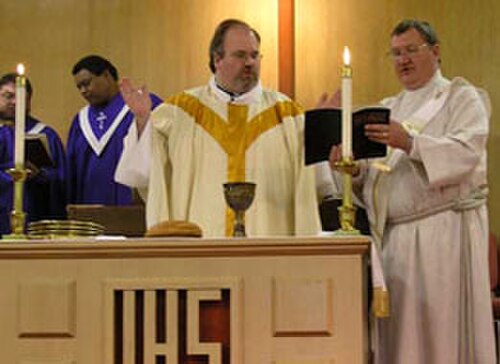 A United Methodist elder celebrating the Eucharist
 -
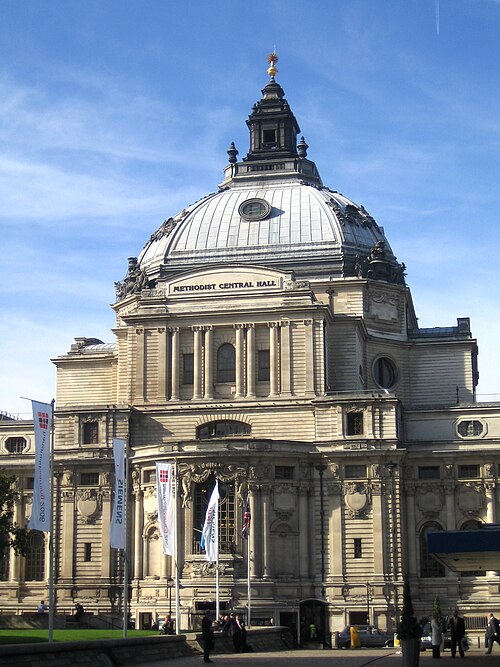 Methodist Central Hall in Westminster, London
 -

-
 A night shelter of The Salvation Army in Geneva, Switzerland
_(14742412186).jpg/500px-The_history_of_Methodism_(1902)_(14742412186).jpg)

The Holiness movement refers to a set of practices surrounding the doctrine of Christian perfection that emerged within 19th-century Methodism, along with a number of evangelical denominations and parachurch organizations (such as camp meetings).[124] There are an estimated 12 million adherents in denominations aligned with the Wesleyan-holiness movement.[125] The Free Methodist Church, the Salvation Army and the Wesleyan Methodist Church are notable examples, while other adherents of the Holiness Movement remained within mainline Methodism, e.g. the United Methodist Church.[124]
Pentecostalism
Pentecostalism is a movement that places special emphasis on a direct personal experience of God through the baptism with the Holy Spirit. The term Pentecostal is derived from Pentecost, the Greek name for the Jewish Feast of Weeks. For Christians, this event commemorates the descent of the Holy Spirit upon the followers of Jesus Christ, as described in the second chapter of the Book of Acts.
This branch of Protestantism is distinguished by belief in the baptism with the Holy Spirit as an experience separate from conversion that enables a Christian to live a life empowered by and filled with the Holy Spirit. This empowerment includes the use of spiritual gifts such as speaking in tongues and divine healing—two other defining characteristics of Pentecostalism. Because of their commitment to biblical authority, spiritual gifts, and the miraculous, Pentecostals tend to see their movement as reflecting the same kind of spiritual power and teachings that were found in the Apostolic Age of the early church. For this reason, some Pentecostals also use the term Apostolic or Full Gospel to describe their movement.
Pentecostalism eventually spawned hundreds of new denominations, including large groups such as the Assemblies of God and the Church of God in Christ, both in the United States and elsewhere. There are over 279 million Pentecostals worldwide, and the movement is growing in many parts of the world, especially the global South. Since the 1960s, Pentecostalism has increasingly gained acceptance from other Christian traditions, and Pentecostal beliefs concerning Spirit baptism and spiritual gifts have been embraced by non-Pentecostal Christians in Protestant and Catholic churches through the Charismatic Movement. Together, Pentecostal and Charismatic Christianity numbers over 500 million adherents.[126]
-
-
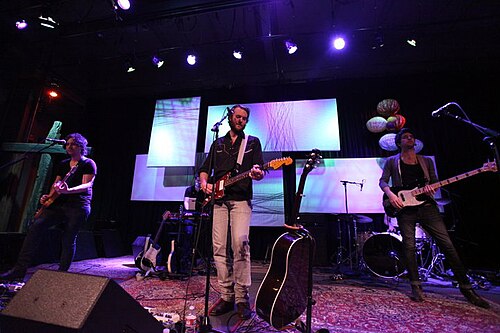 A contemporary Christian worship at Rock Harbor Church in Costa Mesa, California, United States
 -
 A Pentecostal church in Ravensburg, Germany
Plymouth Brethren
The Plymouth Brethren are a conservative, low church, evangelical denomination, whose history can be traced to Dublin, Ireland, in the late 1820s, originating from Anglicanism.[127][128] Among other beliefs, the group emphasizes sola scriptura. Brethren generally see themselves not as a denomination, but as a network, or even as a collection of overlapping networks, of like-minded independent churches. Although the group refused for many years to take any denominational name to itself—a stance that some of them still maintain—the title The Brethren, is one that many of their number are comfortable with in that the Bible designates all believers as brethren.
Quakerism
Quakers, or Friends, are members of a family of religious movements collectively known as the Religious Society of Friends. The central unifying doctrine of these movements is the priesthood of all believers.[129][130] Many Friends view themselves as members of a Christian denomination. They include those with evangelical, holiness, liberal, and traditional conservative Quaker understandings of Christianity. Unlike many other groups that emerged within Christianity, the Religious Society of Friends has actively tried to avoid creeds and hierarchical structures.[131]
-
 George Fox was an English dissenter and a founder of the Religious Society of Friends, commonly known as the Quakers or Friends.
Other Protestants
There are many other Protestant denominations that do not fit neatly into the mentioned branches, and are far smaller in membership. Some groups of individuals who hold basic Protestant tenets identify themselves simply as "Christians" or "born-again Christians". They typically distance themselves from the confessionalism or creedalism of other Christian communities[132] by calling themselves "non-denominational" or "evangelical". Often founded by individual pastors, they have little affiliation with historic denominations.[133]
Although Unitarianism developed from the Protestant Reformation,[134] it is excluded from Protestantism due to its Nontrinitarian theological nature.[28][135] Unitarianism has been popular in the region of Transylvania within today's Romania, England, and the United States.[28] It originated almost simultaneously in Transylvania and the Polish–Lithuanian Commonwealth.
Spiritual Christianity is the group of Russian movements (Doukhobors and others), so-called folk Protestants. Their origins are varied: some were influenced by western Protestants, others from disgust of the behavior of official Orthodox priests.[136][137]
Messianic Judaism is a movement of the Jews and non-Jews, which arose in the 1960s within Evangelical Protestantism and absorbed elements of the messianic traditions in Judaism.[138]
Interdenominational movements

There are also Christian movements which cross denominational lines and even branches, and cannot be classified on the same level previously mentioned forms. Evangelicalism is a prominent example. Some of those movements are active exclusively within Protestantism, some are Christian-wide. Transdenominational movements are sometimes capable of affecting parts of the Catholic Church, such as does it the Charismatic Movement, which aims to incorporate beliefs and practices similar to Pentecostals into the various branches of Christianity. Neo-charismatic churches are sometimes regarded as a subgroup of the Charismatic Movement. Both are put under a common label of Charismatic Christianity (so-called Renewalists), along with Pentecostals. Nondenominational churches and various house churches often adopt, or are akin to one of these movements.
Megachurches are usually influenced by interdenominational movements. Globally, these large congregations are a significant development in Protestant Christianity. In the United States, the phenomenon has more than quadrupled in the past two decades.[139] It has since spread worldwide.
The chart below shows the mutual relations and historical origins of the main interdenominational movements and other developments within Protestantism.

Evangelicalism
Evangelicalism, or evangelical Protestantism,[o] is a worldwide, transdenominational movement which maintains that the essence of the gospel consists in the doctrine of salvation by grace through faith in Jesus Christ's atonement.[140][141]
Evangelicals are Christians who believe in the centrality of the conversion or "born again" experience in receiving salvation, believe in the authority of the Bible as God's revelation to humanity and have a strong commitment to evangelism or sharing the Christian message.
It gained great momentum in the 18th and 19th centuries with the emergence of Methodism and the Great Awakenings in Britain and North America. The origins of Evangelicalism are usually traced back to the English Methodist movement, Nicolaus Zinzendorf, the Moravian Church, Lutheran pietism, Presbyterianism and Puritanism.[96] Among leaders and major figures of the Evangelical Protestant movement were John Wesley, George Whitefield, Jonathan Edwards, Billy Graham, Harold John Ockenga, John Stott and Martyn Lloyd-Jones.
There are an estimated 285,480,000 Evangelicals, corresponding to 13% of the Christian population and 4% of the total world population. The Americas, Africa and Asia are home to the majority of Evangelicals. The United States has the largest concentration of Evangelicals.[142] Evangelicalism is gaining popularity both in and outside the English-speaking world, especially in Latin America and the developing world.
-
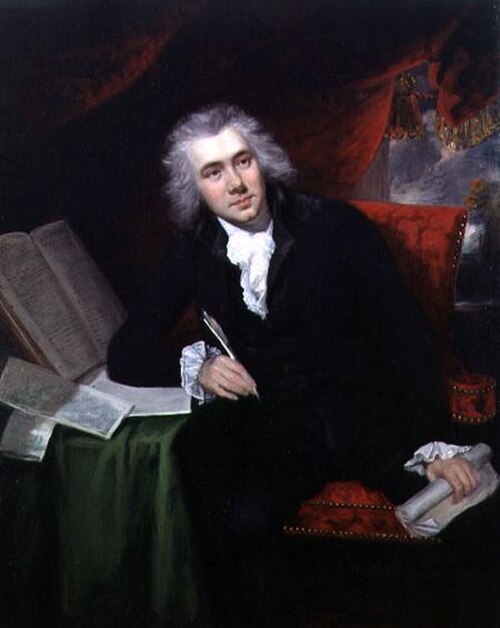 William Wilberforce, a British evangelical abolitionist
 -
 Billy Graham, a prominent evangelical revivalist, preaching in Duisburg, Germany in 1954
 -

-
 An Evangelical Protestant church in Hämeenlinna, Finland

Charismatic movement

The Charismatic movement is the international trend of historically mainstream congregations adopting beliefs and practices similar to Pentecostals. Fundamental to the movement is the use of spiritual gifts. Among Protestants, the movement began around 1960.
In the United States, Episcopalian Dennis Bennett is sometimes cited as one of the charismatic movement's seminal influence.[143] In the United Kingdom, Colin Urquhart, Michael Harper, David Watson and others were in the vanguard of similar developments. The Massey conference in New Zealand, 1964 was attended by several Anglicans, including the Rev. Ray Muller, who went on to invite Bennett to New Zealand in 1966, and played a leading role in developing and promoting the Life in the Spirit seminars. Other Charismatic movement leaders in New Zealand include Bill Subritzky.
Larry Christenson, a Lutheran theologian based in San Pedro, California, did much in the 1960s and 1970s to interpret the charismatic movement for Lutherans. A very large annual conference regarding that matter was held in Minneapolis. Charismatic Lutheran congregations in Minnesota became especially large and influential; especially "Hosanna!" in Lakeville, and North Heights in St. Paul. The next generation of Lutheran charismatics cluster around the Alliance of Renewal Churches. There is considerable charismatic activity among young Lutheran leaders in California centered around an annual gathering at Robinwood Church in Huntington Beach. Richard A. Jensen's Touched by the Spirit published in 1974, played a major role of the Lutheran understanding to the charismatic movement.
In Congregational and Presbyterian churches which profess a traditionally Calvinist or Reformed theology there are differing views regarding present-day continuation or cessation of the gifts (charismata) of the Spirit.[144][145] Generally, however, Reformed charismatics distance themselves from renewal movements with tendencies which could be perceived as overemotional, such as Word of Faith, Toronto Blessing, Brownsville Revival and Lakeland Revival. Prominent Reformed charismatic denominations are the Sovereign Grace Churches and the Every Nation Churches in the US, in Great Britain there is the Newfrontiers churches and movement, which leading figure is Terry Virgo.[146]
A minority of Seventh-day Adventists today are charismatic. They are strongly associated with those holding more "progressive" Adventist beliefs. In the early decades of the church charismatic or ecstatic phenomena were commonplace.[147][148]
Neo-charismatic churches
Neo-charismatic churches are a category of churches in the Christian Renewal movement. Neo-charismatics include the Third Wave, but are broader. Now more numerous than Pentecostals (first wave) and charismatics (second wave) combined, owing to the remarkable growth of postdenominational and independent charismatic groups.[149]
Neo-charismatics believe in and stress the post-Biblical availability of gifts of the Holy Spirit, including glossolalia, healing, and prophecy. They practice laying on of hands and seek the "infilling" of the Holy Spirit. However, a specific experience of baptism with the Holy Spirit may not be requisite for experiencing such gifts. No single form, governmental structure, or style of church service characterizes all neo-charismatic services and churches.
Some nineteen thousand denominations, with approximately 295 million individual adherents, are identified as neo-charismatic.[150]
Protestant offshoots
Arminianism
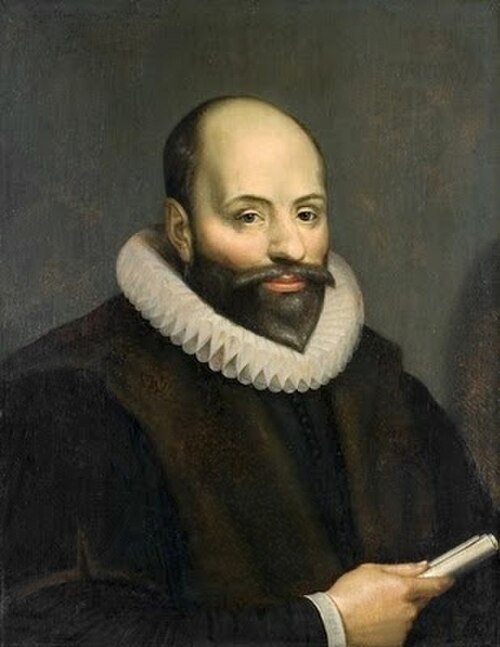
Arminianism is based on theological ideas of the Dutch Reformed theologian Jacobus Arminius (1560–1609) and his historic supporters known as Remonstrants. His teachings held to the five solae of the Reformation, but they were distinct from particular teachings of Martin Luther, Huldrych Zwingli, John Calvin, and other Protestant Reformers. Jacobus Arminius was a student of Theodore Beza at the Theological University of Geneva. Arminianism is known to some as a soteriological diversification of Calvinism.[151] However, to others, Arminianism is a reclamation of early Church theological consensus.[152] Dutch Arminianism was originally articulated in the Remonstrance (1610), a theological statement signed by 45 ministers and submitted to the States General of the Netherlands. Many Christian denominations have been influenced by Arminian views on the will of man being freed by grace prior to regeneration, notably the Baptists in the 16th century,[153] the Methodists in the 18th century and the Seventh-day Adventist Church in the 19th century.
The original beliefs of Jacobus Arminius himself are commonly defined as Arminianism, but more broadly, the term may embrace the teachings of Hugo Grotius, John Wesley, and others as well. Classical Arminianism and Wesleyan Arminianism are the two main schools of thought. Wesleyan Arminianism is often identical with Methodism. The two systems of Calvinism and Arminianism share both history and many doctrines, and the history of Christian theology. However, because of their differences over the doctrines of divine predestination and election, many people view these schools of thought as opposed to each other. In short, the difference can be seen ultimately by whether God allows His desire to save all to be resisted by an individual's will (in the Arminian doctrine) or if God's grace is irresistible and limited to only some (in Calvinism). Some Calvinists assert that the Arminian perspective presents a synergistic system of Salvation and therefore is not only by grace, while Arminians firmly reject this conclusion. Many consider the theological differences to be crucial differences in doctrine, while others find them to be relatively minor.[154]
Pietism
Pietism was an influential movement within Lutheranism that combined the 17th-century Lutheran principles with the Reformed emphasis on individual piety and living a vigorous Christian life.[155]
It began in the late 17th century, reached its zenith in the mid-18th century, and declined through the 19th century, and had almost vanished in America by the end of the 20th century. While declining as an identifiable Lutheran group, some of its theological tenets influenced Protestantism generally, inspiring the Anglican priest John Wesley to begin the Methodist movement and Alexander Mack to begin the Brethren movement under an influence of Anabaptists.[156]
Though Pietism shares an emphasis on personal behavior with the Puritan movement, and the two are often confused, there are important differences, particularly in the concept of the role of religion in government.[157]
-
 Philipp Jakob Spener, a German pioneer and founder of Pietism
 -
 Pietism has had a strong cultural influence in Scandinavia
 -
 The Broad and the Narrow Way, an 1866 German Pietist painting
Puritanism, English dissenters and nonconformists
The Puritans were a group of English Protestants in the 16th and 17th centuries, which sought to purify the Church of England of what they considered to be Catholic practices, maintaining that the church was only partially reformed. Puritanism in this sense was founded by some of the returning clergy exiled under Mary I shortly after the accession of Elizabeth I of England in 1558, as an activist movement within the Church of England.
Puritans were blocked from changing the established church from within, and were severely restricted in England by laws controlling the practice of religion. Their beliefs, however, were transported by the emigration of congregations to the Netherlands (and later to New England), and by evangelical clergy to Ireland (and later into Wales), and were spread into lay society and parts of the educational system, particularly certain colleges of the University of Cambridge. The first Protestant sermon delivered in England was in Cambridge, with the pulpit that this sermon was delivered from surviving to today.[158][159] They took on distinctive beliefs about clerical dress and in opposition to the episcopal system, particularly after the 1619 conclusions of the Synod of Dort they were resisted by the English bishops. They largely adopted Sabbatarianism in the 17th century, and were influenced by millennialism.
They formed, and identified with various religious groups advocating greater purity of worship and doctrine, as well as personal and group piety. Puritans adopted a Reformed theology, but they also took note of radical criticisms of Zwingli in Zurich and Calvin in Geneva. In church polity, some advocated for separation from all other Christians, in favor of autonomous gathered churches. These separatist and independent strands of Puritanism became prominent in the 1640s. Although the English Civil War (which expanded into the Wars of the Three Kingdoms) began over a contest for political power between the King of England and the House of Commons, it divided the country along religious lines as episcopalians within the Church of England sided with the Crown and Presbyterians and Independents supported Parliament (after the defeat of the Royalists, the House of Lords as well as the Monarch were removed from the political structure of the state to create the Commonwealth). The supporters of a Presbyterian polity in the Westminster Assembly were unable to forge a new English national church, and the Parliamentary New Model Army, which was made up primarily of Independents, under Oliver Cromwell first purged Parliament, then abolished it and established The Protectorate.
England's trans-Atlantic colonies in the war followed varying paths depending on their internal demographics. In the older colonies, which included Virginia (1607) and its offshoot Bermuda (1612), as well as Barbados and Antigua in the West Indies (collectively the targets in 1650 of An Act for prohibiting Trade with the Barbadoes, Virginia, Bermuda and Antego), Episcopalians remained the dominant church faction and the colonies remained Royalist 'til conquered or compelled to accept the new political order. In Bermuda, with control of the local government and the army (nine infantry companies of Militia plus coastal artillery), the Royalists forced Parliament-backing religious Independents into exile to settle the Bahamas as the Eleutheran Adventurers.[160][161][162]
Episcopalian was re-established following the Restoration. A century later, non-conforming Protestants, along with the Protestant refugees from continental Europe, were to be among the primary instigators of the war of secession that led to the founding of the United States of America.
-

-
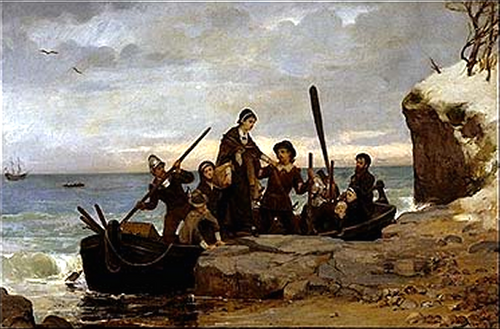
-
![Built in 1681, the Old Ship Church in Hingham, Massachusetts is the oldest church in continuous ecclesiastical use in the United States.[163]](https://img-server.japedia.wiki/wikipedia/commons/thumb/2/27/OldShipEntrance.jpg/500px-OldShipEntrance.jpg) Built in 1681, the Old Ship Church in Hingham, Massachusetts is the oldest church in continuous ecclesiastical use in the United States.[163]
Built in 1681, the Old Ship Church in Hingham, Massachusetts is the oldest church in continuous ecclesiastical use in the United States.[163]
Neo-orthodoxy and paleo-orthodoxy

A non-fundamentalist rejection of liberal Christianity along the lines of the Christian existentialism of Søren Kierkegaard, who attacked the Hegelian state churches of his day for "dead orthodoxy", neo-orthodoxy is associated primarily with Karl Barth, Jürgen Moltmann, and Dietrich Bonhoeffer. Neo-orthodoxy sought to counter-act the tendency of liberal theology to make theological accommodations to modern scientific perspectives. Sometimes called "crisis theology", in the existentialist sense of the word crisis, also sometimes called neo-evangelicalism, which uses the sense of "evangelical" pertaining to continental European Protestants rather than American evangelicalism. "Evangelical" was the originally preferred label used by Lutherans and Calvinists, but it was replaced by the names some Catholics used to label a heresy with the name of its founder.
Paleo-orthodoxy is a movement similar in some respects to neo-evangelicalism but emphasizing the ancient Christian consensus of the undivided church of the first millennium AD, including in particular the early creeds and church councils as a means of properly understanding the scriptures. This movement is cross-denominational. A prominent theologian in this group is Thomas Oden, a Methodist.
Christian fundamentalism
In reaction to liberal Bible critique, fundamentalism arose in the 20th century, primarily in the United States, among those denominations most affected by Evangelicalism. Fundamentalist theology tends to stress Biblical inerrancy and Biblical literalism.[166]
Toward the end of the 20th century, some have tended to confuse evangelicalism and fundamentalism; however, the labels represent very distinct differences of approach that both groups are diligent to maintain, although because of fundamentalism's dramatically smaller size it often gets classified simply as an ultra-conservative branch of evangelicalism.
Modernism and liberalism
Modernism and liberalism do not constitute rigorous and well-defined schools of theology, but are rather an inclination by some writers and teachers to integrate Christian thought into the spirit of the Age of Enlightenment. New understandings of history and the natural sciences of the day led directly to new approaches to theology. Its opposition to the fundamentalist teaching resulted in religious debates, such as the Fundamentalist–Modernist Controversy within the Presbyterian Church in the United States of America in the 1920s.
Protestant culture
Although the Reformation was a religious movement, it also had a strong impact on all other aspects of life, including marriage and family, education, the humanities and sciences, the political and social order, the economy, and the arts.[9] Protestant churches reject the idea of a celibate priesthood and thus allow their clergy to marry.[22] Many of their families contributed to the development of intellectual elites in their countries.[167] Since about 1950, women have entered the ministry in most Protestant churches, and some have assumed leading positions (e.g. bishops).
Protestantism has promoted economic growth and entrepreneurship, especially in the period after the Scientific and the Industrial Revolution.[168][169] Scholars have identified a positive correlation between the rise of Protestantism and human capital formation,[170] work ethic,[171] economic development,[172] the rise of early experimental science,[173][174][175] and the development of the state system.[176]
As the Reformers wanted all members of the church to be able to read the Bible, education on all levels was strongly encouraged. By the middle of the eighteenth century, the literacy rate in England was about 60 percent, in Scotland 65 percent, and in Sweden 80 percent.[177] Colleges and universities were founded. For example, the Puritans who established Massachusetts Bay Colony in 1628 founded Harvard College only eight years later. About a dozen other colleges followed in the 18th century, including Yale (1701). Pennsylvania also became a center of learning.[178][179]
Members of mainline Protestant denominations have played leadership roles in many aspects of American life, including politics, business, science, the arts, and education. They founded most of the country's leading institutes of higher education.[180]
Thought and work ethic
The Protestant concept of God and man allows believers to use all their God-given faculties, including the power of reason. That means that they are allowed to explore God's creation and, according to Genesis 2:15, make use of it in a responsible and sustainable way. Thus a cultural climate was created that greatly enhanced the development of the humanities and the sciences.[181] Another consequence of the Protestant understanding of man is that the believers, in gratitude for their election and redemption in Christ, are to follow God's commandments. Industry, frugality, calling, discipline, and a strong sense of responsibility are at the heart of their moral code.[182][183] In particular, Calvin rejected luxury. Therefore, craftsmen, industrialists, and other businessmen were able to reinvest the greater part of their profits in the most efficient machinery and the most modern production methods that were based on progress in the sciences and technology. As a result, productivity grew, which led to increased profits and enabled employers to pay higher wages. In this way, the economy, the sciences, and technology reinforced each other. The chance to participate in the economic success of technological inventions was a strong incentive to both inventors and investors.[184][185][186][187] The Protestant work ethic was an important force behind the unplanned and uncoordinated mass action that influenced the development of capitalism and the Industrial Revolution. This idea is also known as the "Protestant ethic thesis".[188]
However, eminent historian Fernand Braudel (d. 1985), a leader of the important Annales School wrote, "all historians have opposed this tenuous theory [the Protestant Ethic], although they have not managed to be rid of it once and for all. Yet it is clearly false. The northern countries took over the place that earlier had been so long and brilliantly been occupied by the old capitalist centers of the Mediterranean. They invented nothing, either in technology or business management."[189] Social scientist Rodney Stark moreover comments that "during their critical period of economic development, these northern centers of capitalism were Catholic, not Protestant—the Reformation still lay well into the future",[190] while British historian Hugh Trevor-Roper (d. 2003) said, "The idea that large-scale industrial capitalism was ideologically impossible before the Reformation is exploded by the simple fact that it existed."[191]
In a factor analysis of the latest wave of World Values Survey data, Arno Tausch (Corvinus University of Budapest) found that Protestantism emerges to be very close to combining religion and the traditions of liberalism. The Global Value Development Index, calculated by Tausch, relies on the World Values Survey dimensions such as trust in the state of law, no support for shadow economy, postmaterial activism, support for democracy, a non-acceptance of violence, xenophobia and racism, trust in transnational capital and Universities, confidence in the market economy, supporting gender justice, and engaging in environmental activism, etc.[192]
Episcopalians and Presbyterians, as well as other WASPs, tend to be considerably wealthier[193] and better educated (having graduate and post-graduate degrees per capita) than most other religious groups in United States,[194] and are disproportionately represented in the upper reaches of American business,[195] law and politics, especially the Republican Party.[196] Numbers of the most wealthy and affluent American families as the Vanderbilts, the Astors, Rockefellers, Du Ponts, Roosevelts, Forbes, Fords, Whitneys, Mellons, the Morgans and Harrimans are Mainline Protestant families.[193][197]
Science

Protestantism has had an important influence on science. According to the Merton Thesis, there was a positive correlation between the rise of English Puritanism and German Pietism on the one hand and early experimental science on the other.[198] The Merton Thesis has two separate parts: Firstly, it presents a theory that science changes due to an accumulation of observations and improvement in experimental technique and methodology; secondly, it puts forward the argument that the popularity of science in 17th-century England and the religious demography of the Royal Society (English scientists of that time were predominantly Puritans or other Protestants) can be explained by a correlation between Protestantism and the scientific values.[199] Merton focused on English Puritanism and German Pietism as having been responsible for the development of the scientific revolution of the 17th and 18th centuries. He explained that the connection between religious affiliation and interest in science was the result of a significant synergy between the ascetic Protestant values and those of modern science.[200] Protestant values encouraged scientific research by allowing science to identify God's influence on the world—his creation—and thus providing a religious justification for scientific research.[198]
According to Scientific Elite: Nobel Laureates in the United States by Harriet Zuckerman, a review of American Nobel Prizes awarded between 1901 and 1972, 72% of American Nobel Prize laureates identified a Protestant background.[201] Overall, 84% of all the Nobel Prizes awarded to Americans in Chemistry,[201] 60% in Medicine,[201] and 59% in Physics[201] between 1901 and 1972 were won by Protestants.
According to 100 Years of Nobel Prize (2005), a review of Nobel Prizes awarded between 1901 and 2000, 65% of Nobel Prize Laureates, have identified Christianity in its various forms as their religious preference (423 prizes).[202] While 32% have identified with Protestantism in its various forms (208 prizes),[202] although Protestants are 12% to 13% of the world's population.
Government
Church flags, as used by German Protestants.
During the Middle Ages, the Church and the worldly authorities were closely related. Martin Luther separated the religious and the worldly realms in principle (doctrine of the two kingdoms).[203] The believers were obliged to use reason to govern the worldly sphere in an orderly and peaceful way. Luther's doctrine of the priesthood of all believers upgraded the role of laymen in the church considerably. The members of a congregation had the right to elect a minister and, if necessary, to vote for his dismissal (Treatise On the right and authority of a Christian assembly or congregation to judge all doctrines and to call, install and dismiss teachers, as testified in Scripture; 1523).[204] Calvin strengthened this basically democratic approach by including elected laymen (church elders, presbyters) in his representative church government.[205] The Huguenots added regional synods and a national synod, whose members were elected by the congregations, to Calvin's system of church self-government. This system was taken over by the other reformed churches[206] and was adopted by some Lutherans beginning with those in Jülich-Cleves-Berg during the 17th century.
Politically, Calvin favored a mixture of aristocracy and democracy. He appreciated the advantages of democracy: "It is an invaluable gift, if God allows a people to freely elect its own authorities and overlords."[207] Calvin also thought that earthly rulers lose their divine right and must be put down when they rise up against God. To further protect the rights of ordinary people, Calvin suggested separating political powers in a system of checks and balances (separation of powers). Thus he and his followers resisted political absolutism and paved the way for the rise of modern democracy.[208] Besides England, the Netherlands were, under Calvinist leadership, the freest country in Europe in the seventeenth and eighteenth centuries. It granted asylum to philosophers like Baruch Spinoza and Pierre Bayle. Hugo Grotius was able to teach his natural-law theory and a relatively liberal interpretation of the Bible.[209]
Consistent with Calvin's political ideas, Protestants created both the English and the American democracies. In seventeenth-century England, the most important persons and events in this process were the English Civil War, Oliver Cromwell, John Milton, John Locke, the Glorious Revolution, the English Bill of Rights, and the Act of Settlement.[210] Later, the British took their democratic ideals to their colonies, e.g. Australia, New Zealand, and India. In North America, Plymouth Colony (Pilgrim Fathers; 1620) and Massachusetts Bay Colony (1628) practised democratic self-rule and separation of powers.[211][212][213][214] These Congregationalists were convinced that the democratic form of government was the will of God.[215] The Mayflower Compact was a social contract.[216][217]
Rights and liberty
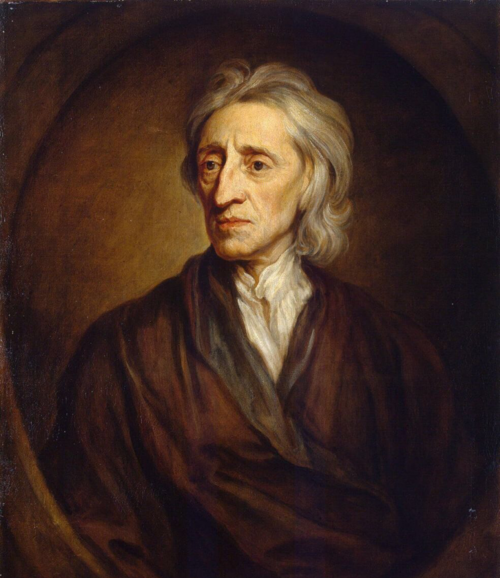
Protestants also took the initiative in advocating for religious freedom. Freedom of conscience had a high priority on the theological, philosophical, and political agendas since Luther refused to recant his beliefs before the Diet of the Holy Roman Empire at Worms (1521). In his view, faith was a free work of the Holy Spirit and could, therefore, not be forced on a person.[218] The persecuted Anabaptists and Huguenots demanded freedom of conscience, and they practiced separation of church and state.[219] In the early seventeenth century, Baptists like John Smyth and Thomas Helwys published tracts in defense of religious freedom.[220] Their thinking influenced John Milton and John Locke's stance on tolerance.[221][222] Under the leadership of Baptist Roger Williams, Congregationalist Thomas Hooker, and Quaker William Penn, respectively, Rhode Island, Connecticut, and Pennsylvania combined democratic constitutions with freedom of religion. These colonies became safe havens for persecuted religious minorities, including Jews.[223][224][225]
The United States Declaration of Independence, the United States Constitution, and the American Bill of Rights with its fundamental human rights made this tradition permanent by giving it a legal and political framework.[226] The great majority of American Protestants, both clergy and laity, strongly supported the independence movement. All major Protestant churches were represented in the First and Second Continental Congresses.[227] In the nineteenth and twentieth centuries, the American democracy became a model for numerous other countries and regions throughout the world (e.g., Latin America, Japan, and Germany). The strongest link between the American and French Revolutions was Marquis de Lafayette, an ardent supporter of the American constitutional principles. The French Declaration of the Rights of Man and of the Citizen was mainly based on Lafayette's draft of this document.[228] The Declaration by United Nations and Universal Declaration of Human Rights also echo the American constitutional tradition.[229][230][231]
Democracy, social-contract theory, separation of powers, religious freedom, separation of church and state—these achievements of the Reformation and early Protestantism were elaborated on and popularized by Age of Enlightenment thinkers. Some of the philosophers of the English, Scottish, German, and Swiss Enlightenment—Thomas Hobbes, John Locke, John Toland, David Hume, Gottfried Wilhelm Leibniz, Christian Wolff, Immanuel Kant, and Jean-Jacques Rousseau—had Protestant backgrounds.[232] For example, John Locke, whose political thought was based on "a set of Protestant Christian assumptions",[233] derived the equality of all humans, including the equality of the genders ("Adam and Eve"), from Genesis 1, 26–28. As all persons were created equally free, all governments needed "the consent of the governed".[234]
Also, other human rights were advocated for by some Protestants. For example, torture was abolished in Prussia in 1740, slavery in Britain in 1834 and in the United States in 1865 (William Wilberforce, Harriet Beecher Stowe, Abraham Lincoln—against Southern Protestants).[235][236] Hugo Grotius and Samuel Pufendorf were among the first thinkers who made significant contributions to international law.[237][238] The Geneva Convention, an important part of humanitarian international law, was largely the work of Henry Dunant, a reformed pietist. He also founded the Red Cross.[239]
Social teaching
Protestants have founded hospitals, homes for disabled or elderly people, educational institutions, organizations that give aid to developing countries, and other social welfare agencies.[240][241][242] In the nineteenth century, throughout the Anglo-American world, numerous dedicated members of all Protestant denominations were active in social reform movements such as the abolition of slavery, prison reforms, and woman suffrage.[243][244][245] As an answer to the "social question" of the nineteenth century, Germany under Chancellor Otto von Bismarck introduced insurance programs that led the way to the welfare state (health insurance, accident insurance, disability insurance, old-age pensions). To Bismarck this was "practical Christianity".[246][247] These programs, too, were copied by many other nations, particularly in the Western world.
The Young Men's Christian Association was founded by Congregationalist George Williams, aimed at empowering young people.
Liturgy
Arts
The arts have been strongly inspired by Protestant beliefs.
Martin Luther, Paul Gerhardt, George Wither, Isaac Watts, Charles Wesley, William Cowper, and other authors and composers created well-known church hymns.
Musicians like Heinrich Schütz, Johann Sebastian Bach, George Frideric Handel, Henry Purcell, Johannes Brahms, Philipp Nicolai and Felix Mendelssohn composed great works of music.
Prominent painters with Protestant background were, for example, Albrecht Dürer, Hans Holbein the Younger, Lucas Cranach the Elder, Lucas Cranach the Younger, Rembrandt, and Vincent van Gogh.
World literature was enriched by the works of Edmund Spenser, John Milton, John Bunyan, John Donne, John Dryden, Daniel Defoe, William Wordsworth, Jonathan Swift, Johann Wolfgang Goethe, Friedrich Schiller, Samuel Taylor Coleridge, Edgar Allan Poe, Matthew Arnold, Conrad Ferdinand Meyer, Theodor Fontane, Washington Irving, Robert Browning, Emily Dickinson, Emily Brontë, Charles Dickens, Nathaniel Hawthorne, Thomas Stearns Eliot, John Galsworthy, Thomas Mann, William Faulkner, John Updike, and many others.
-
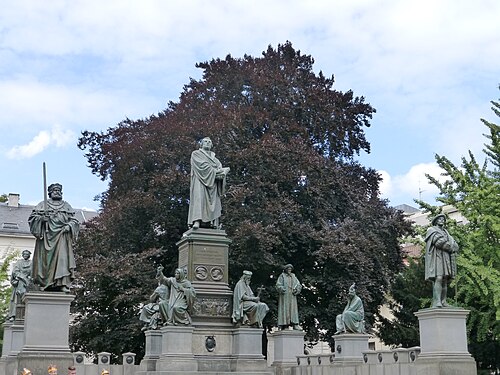 Luther Monument in Worms, which features some of the Reformation's crucial figures
 -
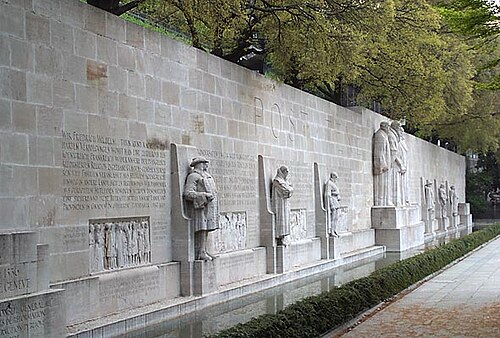 The International Monument to the Reformation in Geneva, Switzerland.
 -
 The Adoration of the Trinity by Albrecht Dürer
 -
 The Crucifixion of Christ by Lucas Cranach the Elder
 -
 Adam and Eve by Lucas Cranach the Younger
 -
 A Huguenot, on St. Bartholomew's Day, Refusing to Shield Himself from Danger by Wearing the Roman Catholic Badge by John Everett Millais.
 -
 The Return of the Prodigal Son, a 1669 portrait by Rembrandt
 -
 The Church at Auvers, 1890. Musée d'Orsay, Paris, by Vincent van Gogh.
_-_Google_Art_Project.jpg/500px-Albrecht_D%C3%BCrer_-_Adoration_of_the_Trinity_(Landauer_Altar)_-_Google_Art_Project.jpg)


Catholic responses
The view of the Catholic Church is that Protestant denominations cannot be considered churches but rather that they are ecclesial communities or specific faith-believing communities because their ordinances and doctrines are not historically the same as the Catholic sacraments and dogmas, and the Protestant communities have no sacramental ministerial priesthood[p] and therefore lack true apostolic succession.[248][249] According to Bishop Hilarion (Alfeyev) the Eastern Orthodox Church shares the same view on the subject.[250]
Contrary to how the Protestant Reformers were often characterized, the concept of a catholic or universal Church was not brushed aside during the Protestant Reformation. On the contrary, the visible unity of the catholic or universal church was seen by the Protestant reformers as an important and essential doctrine of the Reformation. The Magisterial reformers, such as Martin Luther, John Calvin, and Huldrych Zwingli, believed that they were reforming the Catholic Church, which they viewed as having become corrupted.[q] Each of them took very seriously the charges of schism and innovation, denying these charges and maintaining that it was the Catholic Church that had left them. The Protestant Reformers formed a new and radically different theological opinion on ecclesiology, that the visible Church is "catholic" (lower-case "c") rather than "Catholic" (upper-case "C"). Accordingly, there is not an indefinite number of parochial, congregational or national churches, constituting, as it were, so many ecclesiastical individualities, but one great spiritual republic of which these various organizations form a part,[r] although they each have very different opinions. This was markedly far-removed from the traditional and historic Catholic understanding that the Roman Catholic Church was the one true Church of Christ.[s]
Yet in the Protestant understanding, the visible church is not a genus, so to speak, with so many species under it.[t] In order to justify their departure[u] from the Catholic Church, Protestants often posited a new argument,[v] saying that there was no real visible Church with divine authority, only a spiritual, invisible, and hidden church—this notion began in the early days of the Protestant Reformation.
Wherever the Magisterial Reformation, which received support from the ruling authorities, took place, the result was a reformed national Protestant church envisioned to be a part of the whole invisible church, but disagreeing, in certain important points of doctrine and doctrine-linked practice, with what had until then been considered the normative reference point on such matters,[w] namely the Papacy and central authority of the Catholic Church. The Reformed churches thus believed in some form of Catholicity, founded on their doctrines of the five solas and a visible ecclesiastical organization based on the 14th- and 15th-century Conciliar movement, rejecting the papacy and papal infallibility in favor of ecumenical councils, but rejecting the latest ecumenical council, the Council of Trent.[x] Religious unity therefore became not one of doctrine and identity but one of invisible character, wherein the unity was one of faith in Jesus Christ, not common identity, doctrine, belief, and collaborative action.
There are Protestants,[y] especially of the Reformed tradition, that either reject or down-play the designation Protestant because of the negative idea that the word invokes in addition to its primary meaning, preferring the designation Reformed, Evangelical or even Reformed Catholic expressive of what they call a Reformed Catholicity and defending their arguments from the traditional Protestant confessions.[251]
Ecumenism
The ecumenical movement has had an influence on mainline churches, beginning at least in 1910 with the Edinburgh Missionary Conference. Its origins lay in the recognition of the need for cooperation on the mission field in Africa, Asia and Oceania. Since 1948, the World Council of Churches has been influential, but ineffective in creating a united church. There are also ecumenical bodies at regional, national and local levels across the globe; but schisms still far outnumber unifications. One, but not the only expression of the ecumenical movement, has been the move to form united churches, such as the Church of South India, the Church of North India, the US-based United Church of Christ, the United Church of Canada, the Uniting Church in Australia and the United Church of Christ in the Philippines which have rapidly declining memberships. There has been a strong engagement of Orthodox churches in the ecumenical movement, though the reaction of individual Orthodox theologians has ranged from tentative approval of the aim of Christian unity to outright condemnation of the perceived effect of watering down Orthodox doctrine.[253]
A Protestant baptism is held to be valid by the Catholic Church if given with the trinitarian formula and with the intent to baptize. However, as the ordination of Protestant ministers is not recognized due to the lack of apostolic succession and the disunity from Catholic Church, all other sacraments (except marriage) performed by Protestant denominations and ministers are not recognized as valid. Therefore, Protestants desiring full communion with the Catholic Church are not re-baptized (although they are confirmed) and Protestant ministers who become Catholics may be ordained to the priesthood after a period of study.
In 1999, the representatives of Lutheran World Federation and Catholic Church signed the Joint Declaration on the Doctrine of Justification, apparently resolving the conflict over the nature of justification which was at the root of the Protestant Reformation, although Confessional Lutherans reject this statement.[254] This is understandable, since there is no compelling authority within them. On 18 July 2006, delegates to the World Methodist Conference voted unanimously to adopt the Joint Declaration.[255][256]
Spread and demographics

There are more than 900 million Protestants worldwide,[13][16][8][257][258][259][260][z] among approximately 2.4 billion Christians.[16][261][262][aa] In 2010, a total of more than 800 million included 300 million in Sub-Saharan Africa, 260 million in the Americas, 140 million in Asia-Pacific region, 100 million in Europe and 2 million in Middle East-North Africa.[13] Protestants account for nearly forty percent of Christians worldwide, and are more than one tenth of the total human population.[13] Various estimates put the percentage of Protestants in relation to the total number of world's Christians at 33%,[257] 36%,[263] 36.7%,[13] and 40%,[8] while in relation to the world's population at 11.6%[13] and 13%.[260]
In European countries which were most profoundly influenced by the Reformation, Protestantism still remains the most practiced religion.[257] These include the Nordic countries and the United Kingdom.[257][264] In other historical Protestant strongholds such as Germany, the Netherlands, Switzerland, Latvia, and Estonia, it remains one of the most popular religions.[265] Although Czech Republic was the site of one of the most significant pre-reformation movements,[266] there are only few Protestant adherents;[267][268] mainly due to historical reasons like persecution of Protestants by the Catholic Habsburgs,[269] restrictions during the Communist rule, and also the ongoing secularization.[266] Over the last several decades, religious practice has been declining as secularization has increased.[257][270] According to a 2019 study about Religiosity in the European Union in 2019 by Eurobarometer, Protestants made up 9% of the EU population.[271] According to Pew Research Center, Protestants constituted nearly one fifth (or 18%) of the continent's Christian population in 2010.[13] Clarke and Beyer estimate that Protestants constituted 15% of all Europeans in 2009, while Noll claims that less than 12% of them lived in Europe in 2010.[257][259]
Changes in worldwide Protestantism over the last century have been significant.[8][259][272] Since 1900, Protestantism has spread rapidly in Africa, Asia, Oceania and Latin America.[22][260][272] That caused Protestantism to be called a primarily non-Western religion.[259][272] Much of the growth has occurred after World War II, when decolonization of Africa and abolition of various restrictions against Protestants in Latin American countries occurred.[260] According to one source, Protestants constituted respectively 2.5%, 2%, 0.5% of Latin Americans, Africans and Asians.[260] In 2000, percentage of Protestants on mentioned continents was 17%, more than 27% and 6%, respectively.[260] According to Mark A. Noll, 79% of Anglicans lived in the United Kingdom in 1910, while most of the remainder was found in the United States and across the British Commonwealth.[259] By 2010, 59% of Anglicans were found in Africa.[259] In 2010, more Protestants lived in India than in the UK or Germany, while Protestants in Brazil accounted for as many people as Protestants in the UK and Germany combined.[259] Almost as many lived in each of Nigeria and China as in all of Europe.[259] China is home to world's largest Protestant minority.[13][ab]
Protestantism is growing in Africa,[22][273][274] Asia,[22][274][275] Latin America,[274][276] and Oceania,[22][272] while declining in Anglo America[272][277] and Europe,[257][278] with some exceptions such as France,[279] where it was eradicated after the abolition of the Edict of Nantes by the Edict of Fontainebleau and the following persecution of Huguenots, but now is claimed to be stable in number or even growing slightly.[279] According to some, Russia is another country to see a Protestant revival.[280][281][282]
In 2010, the largest Protestant denominational families were historically Pentecostal denominations (11%), Anglican (11%), Lutheran (10%), Baptist (9%), United and uniting churches (unions of different denominations) (7%), Presbyterian or Reformed (7%), Methodist (3%), Adventist (3%), Congregationalist (1%), Brethren (1%), The Salvation Army (<1%) and Moravian (<1%). Other denominations accounted for 38% of Protestants.[13]
The United States is home to approximately 20% of Protestants.[13] According to a 2012 study, Protestant share of U.S. population dropped to 48%, thus ending its status as religion of the majority for the first time.[283][284] The decline is attributed mainly to the dropping membership of the Mainline Protestant churches,[283][285] while Evangelical Protestant and Black churches are stable or continue to grow.[283]
By 2050, Protestantism is projected to rise to slightly more than half of the world's total Christian population.[286][ac] According to other experts such as Hans J. Hillerbrand, Protestants will be as numerous as Catholics.[287]
According to Peter L. Berger, popular Protestantism[ad] is the most dynamic religious movement in the contemporary world, alongside resurgent Islam.[15]
-
 Protestant majority countries in 2010.
 -
 Countries by percentage of Protestants, 2010.
.svg/500px-Protestant_majority_countries_(2010).svg.png)
.svg/500px-Countries_by_percentage_of_Protestants_(2010).svg.png)
See also
- Anti-Catholicism
- Criticism of Protestantism
- European wars of religion
- Protestantism and Islam
- Protestantism in Germany
- The Reformation and its influence on church architecture
Explanatory notes
- ^ Generally regarded as a division of Western Christianity, though Eastern Protestant denominations have developed outside of the West.
- ^ Some movements such as the Hussites or the Lollards are also considered Protestant today, although their origins date back to centuries before the launch of the Reformation. Others, such as the Waldensians, were later incorporated into another branch of Protestantism; in this case, the Reformed branch.
- ^ Specifically, in Wittenberg, Electoral Saxony. Even today, especially in German contexts, Saxony is often described as the "motherland of the Reformation" (‹See Tfd›German: Mutterland der Reformation).
- ^ At the time Germany and the surrounding region was fragmented into numerous states of the Holy Roman Empire. Areas which turned Protestant were primarily located in northern, central and eastern areas of the Empire.
- ^ Several states of the Holy Roman Empire adopted Calvinism, including the County Palatine of the Rhine.
- ^ For further information, see English Reformation. In this article, Anglicanism is considered a branch of Protestantism as a part of movements derived directly from the 16th century Reformation. While today the Church of England often considers itself to be a via media between Protestantism and the Catholic Church, until the rise of the Oxford Movement in the 1830s the church generally considered itself to be Protestant. (Neill, Stephen. Anglicanism Pelican 1960, pp. 170, 259–260)
- ^ According to Pew 2011 report on Christianity about 60% (defined strictly, as some denominations given individual percentages in the report could be considered a part of one of the seven main distinguishable Protestant branches, e.g. The Salvation Army could be considered a part of Methodism). The majority figures given in such reports or in other sources may vary considerably.
- ^ This branch was first called Calvinism by Lutherans who opposed it, but many find the word Reformed to be more descriptive.[12] It includes Presbyterianism, Congregationalism, many of united and uniting churches, as well as historic Continental Reformed churches in France, Switzerland, the Netherlands, Germany, Hungary, and elsewhere.
- ^ A flexible term; defined as all forms of Protestantism with the notable exception of the historical denominations deriving from the Protestant Reformation.
- ^ Most current estimates place the world's Protestant population in the range of 800 million to 1.05 billion. For example, author Hans Hillerbrand estimated a total Protestant population of 833,457,000 in 2004,[17] while a report by Gordon-Conwell Theological Seminary – 1,047,295,000 (with inclusion of independents as defined in this article) in mid-2024.[16]
- ^ In the end, while the Reformation emphasis on Protestants reading the Scriptures was one factor in the development of literacy, the impact of printing itself, the wider availability of printed works at a cheaper price, and the increasing focus on education and learning as key factors in obtaining a lucrative post, were also significant contributory factors.[58]
- ^ In the first decade of the Reformation, Luther's message became a movement, and the output of religious pamphlets in Germany was at its height.[60]
- ^ Finland's State Church was the Church of Sweden until 1809. As an autonomous Grand Duchy under Russia 1809–1917, Finland retained the Lutheran State Church system, and a state church separate from Sweden, later named the Evangelical Lutheran Church of Finland, was established. It was detached from the state as a separate judicial entity when the new church law came to force in 1869. After Finland had gained independence in 1917, religious freedom was declared in the constitution of 1919 and a separate law on religious freedom in 1922. Through this arrangement, the Evangelical Lutheran Church of Finland lost its position as a state church but gained a constitutional status as a national church alongside the Finnish Orthodox Church, whose position, however, is not codified in the constitution.
- ^ For example, the followers of Thomas Müntzer and Balthasar Hubmaier.
- ^ Primarily in the United States, where Protestants are usually placed in one of two categories—Mainline or Evangelical.
- ^ this varies among Protestants today. In Sweden, the bishops switched to Lutheranism during the Reformation and there was no break in ordinations. See Apostolic succession in Sweden for more on this. Today, as a result of shared ordinations, the entire Porvoo Communion can trace an unbroken chain of Archbishop-level ordinations going back to before the Reformation through the Swedish line. However, today Rome does not accept these ordinations as valid not because there was a break in the chain, but rather because the occurred apart from papal permission.
- ^ For more on this, see crypto-paganism and the Great Apostasy. In some areas, pagan Europeans were forced to adopt Christianity at least outwardly, such as after being defeated in battle by Christians. However, outlawing their paganism did not just make it go away. Rather, it persisted as crypto-paganism. For example, Philip Melanchthon, in his 1537 Apology of the Augsburg Confession identified the mechanical character of ex opere operato sacraments as being a form of pagan deterministic philosophy.
- ^ This is the position of the Protestants who believe the church is visible. For those who think the church is invisible, organizations are irrelevant, as only individual sinners can be saved.
- ^ See Ecclesiology of Augustine of Hippo for an example of a church father who discussed the invisible church.
- ^ This is a reference to the Marks of the Church in Reformed theology. It is thus you may think of the State, but the visible church is a totum integrale, it is an empire, with an ethereal emperor, rather than a visible one. The churches of the various nationalities constitute the provinces of this empire; and though they are so far independent of each other, yet they are so one, that membership in one is membership in all, and separation from one is separation from all.... This conception of the church, of which, in at least some aspects, we have practically so much lost sight, had a firm hold of the Scottish theologians of the seventeenth century. James Walker in The Theology of Theologians of Scotland. (Edinburgh: Rpt. Knox Press, 1982) Lecture iv. pp. 95–96.
- ^ At least at first, Protestants did not depart per se. Rather, they were excommunicated such as in the 1520 Exsurge Domine and the 1521 Edict of Worms. Some Protestants avoided excommunication by living as crypto-Protestants.
- ^ Some Protestants claim the church is visible today, this is a matter of dispute.
- ^ The assertion of papal supremacy varied through history. For example, in 381 the First Council of Constantinople recognized the sees of Rome and Constantinople as being equal in authority. Papal supremacy continued to evolve after the Reformation with the First Vatican Council.
- ^ Lutherans did not completely reject Trent. In fact, some attended it, although they were not given a vote. Instead, Martin Chemnitz on the basis that all councils are subject to examination, wrote the Examination of the Council of Trent in which some parts of Trent were accepted and others dissented from.
- ^ In history, Catholic sympathizing Protestants were termed crypto-papists and lived as such because Catholicism was illegal in some areas under the legal principle of cuius regio, eius religio. However, outlawing Catholics did not always force them to emigrate. Instead, they remained continued to influence the dominant church in their area.
- ^ Estimates vary considerably, from 400 up to more than a billion. One of the reasons is the lack of a common agreement among scholars which denominations constitute Protestantism. Nevertheless, 800 million is the most accepted figure among various authors and scholars. For example, author Hans Hillerbrand estimated a total 2004 Protestant population of 833,457,000,[17] while a report by Gordon-Conwell Theological Seminary—961,961,000 (with inclusion of independents as defined in this article) in mid-2015.[16]
- ^ Current sources are in general agreement that Christians make up about 33% of the world's population—slightly over 2.4 billion adherents in mid-2015.
- ^ Estimates for China vary in dozens of millions. Nevertheless, in comparison to the other countries, there is no disagreement that China has the most numerous Protestant minority.
- ^ Magisterial Protestant, Independent, Anabaptist and Anglican parties are understood as Protestant as stated previously in the article, as well as in the book: Statistics for the P, I and A megablocs are often combined because they overlap so much-hence the order followed here.
- ^ A flexible term; defined as all forms of Protestantism with the notable exception of the historical denominations deriving from the Protestant Reformation.
References
- ^ a b c d "Methodist Beliefs: In what ways are Lutherans different from United Methodists?". Wisconsin Evangelical Lutheran Synod. 2014. Archived from the original on 22 May 2014. Retrieved 22 May 2014.
The United Methodists see Scripture as the primary source and criterion for Christian doctrine, emphasizing the importance of tradition, experience, and reason for Christian doctrine. Lutherans teach that the Bible is the sole source for Christian doctrine. The truths of Scripture do not need to be authenticated by tradition, human experience, or reason. Scripture is self authenticating and is true in and of itself.
- ^ Faithful, George (2014). Mothering the Fatherland: A Protestant Sisterhood Repents for the Holocaust. Oxford University Press. ISBN 978-0199363476. Archived from the original on 23 May 2020. Retrieved 27 June 2015 – via Google Books.
- ^ Löffler, K. (1910), Pope Leo X Archived 1 May 2012 at the Wayback Machine, The Catholic Encyclopedia, New York: Robert Appleton Company, "The immediate cause was bound up with the odious greed for money displayed by the Roman Curia, and shows how far short all efforts at reform had hitherto fallen...Abuses occurred during the preaching of the Indulgence. The money contributions, a mere accessory, were frequently the chief object, and the "Indulgences for the Dead" became a vehicle of inadmissible teachings...(The pope) gave himself up unrestrainedly to his pleasures and failed to grasp fully the duties of his high office."
- ^ Dixon, C. Scott (2010). Protestants: A History from Wittenberg to Pennsylvania 1517–1740. John Wiley & Sons. ISBN 978-1444328110. Archived from the original on 23 May 2020. Retrieved 27 June 2015 – via Google Books.
- ^ Oxford Dictionary of the Christian Church (1974) art. "Speyer (Spires), Diets of"
- ^ Gassmann, Günther; Larson, Duane H.; Oldenburg, Mark W. (2001). Historical Dictionary of Lutheranism. Scarecrow Press. ISBN 978-0810866201. Archived from the original on 10 June 2022. Retrieved 27 June 2015 – via Google Books.
- ^ Kuyper, Abraham (1899). Calvinism. Primedia E-launch LLC. ISBN 978-1622090457. Archived from the original on 10 June 2022. Retrieved 27 June 2015 – via Google Books.
- ^ a b c d e Hillerbrand, Hans J., ed. (2004). Encyclopedia of Protestantism. Vol. 1–4. London; New York: Routledge. ISBN 978-0-415-92472-6. Archived from the original on 23 May 2020.
- ^ a b Heussi, Karl (1956). Kompendium der Kirchengeschichte, 11., Tübingen (Germany), pp. 317–319, 325–326
- ^ a b Junius Benjamin Remensnyder (1893). The Lutheran Manual. Boschen & Wefer Company. p. 12. Archived from the original on 27 April 2021. Retrieved 27 April 2021.
- ^ a b Frey, H. (1918). Is One Church as Good as Another?. Vol. 37. The Lutheran Witness. pp. 82–83.
There can only be one true visible Church. ...Only that one is the true visible Church which teaches and confesses the entire doctrine of the Word of God in all its purity, and in whose midst the Sacraments are duly administered according to Christ's institution. Of all Churches, this can only be said of our Lutheran Church.
- ^ Hägglund, Bengt (2007). Teologins Historia [History of Theology] (in German). Translated by Gene J. Lund (Fourth Revised ed.). Saint Louis: Concordia Publishing House.
- ^ a b c d e f g h i j k l "Pewforum: Grobal Christianity" (PDF). 19 December 2011. Archived from the original (PDF) on 1 November 2013. Retrieved 14 May 2014.
- ^ World Council of Churches: Evangelical churches Archived 7 January 2015 at the Wayback Machine: "Evangelical churches have grown exponentially in the second half of the 20th century and continue to show great vitality, especially in the global South. This resurgence may in part be explained by the phenomenal growth of Pentecostalism and the emergence of the charismatic movement, which are closely associated with evangelicalism. However, there can be no doubt that the evangelical tradition "per se" has become one of the major components of world Christianity. Evangelicals also constitute sizable minorities in the traditional Protestant and Anglican churches. In regions like Africa and Latin America, the boundaries between "evangelical" and "mainline" are rapidly changing and giving way to new ecclesial realities."
- ^ a b Berger, Peter L. (2005). "Religion and Global Civil Society". In Juergensmeyer, Mark (ed.). Religion in Global Civil Society. Oxford University Press. ISBN 978-0198040699. Archived from the original on 19 March 2013. Retrieved 8 January 2016 – via Google Books.
- ^ a b c d e "Status of Global Christianity, 2024, in the Context of 1900–2050" (PDF). Center for the Study of Global Christianity, Gordon-Conwell Theological Seminary. Archived (PDF) from the original on 6 April 2024. Retrieved 23 May 2024.
- ^ a b Hillerbrand, Hans J., ed. (2004). Encyclopedia of Protestantism. Vol. 1–4. London; New York: Routledge. p. 2. ISBN 978-0-415-92472-6. Archived from the original on 23 May 2020.
- ^ a b "protestant – Origin and meaning of protestant". Online Etymology Dictionary. Archived from the original on 31 December 2014. Retrieved 31 December 2014.
- ^ "Definition of Protestant". Dictionary.com. Archived from the original on 15 October 2019. Retrieved 15 October 2019.
- ^ MacCulloch, Diarmaid (2003). The Reformation: A History. New York: Penguin. p. xx.
- ^ Espín, Orlando O. and Nickoloff, James B. An introductory dictionary of theology and religious studies. Collegeville, Minnesota: Liturgical Press, p. 796.
- ^ a b c d e f Melton, J. Gordon, ed. (2005). Encyclopedia of Protestantism. Encyclopedia of World Religions. New York: Facts On File. ISBN 0-8160-5456-8. Archived from the original on 23 March 2021.
- ^ Humphrey, Edith M. (2013). Scripture and Tradition. Baker Books. p. 16. ISBN 978-1-4412-4048-4.
historically Anglicans have adopted what could be called a prima Scriptura position.
- ^ Woodhead, Linda. Christianity: A Very Short Introduction (Oxford University Press, 2014). pp. 57–70.
- ^ a b Herzog, Johann Jakob; Philip Schaff, Albert (1911). The New Schaff-Herzog Encyclopedia of Religious Knowledge. p. 419. Archived from the original on 6 September 2015. Retrieved 27 June 2015.
- ^ a b Lane, Anthony (2006). Justification by Faith in Catholic-Protestant Dialogue. London: T & T Clark. p. 27. ISBN 0567040046.
- ^ Bucher, Richard P. (2014). "Methodism". Lexington: Lutheran Church Missouri Synod. Archived from the original on 25 July 2014.
Also, for Methodists full salvation involves not only justification by faith, but repentance and holy living as well. Whereas in Lutheran theology the central doctrine and focus of all our worship and life is justification by grace through faith, for Methodists the central focus has always been holy living and the striving for perfection. Wesley gave the analogy of a house. He said repentance is the porch. Faith is the door. But holy living is the house itself. Holy living is true religion. "Salvation is like a house. To get into the house you first have to get on the porch (repentance) and then you have to go through the door (faith). But the house itself—one's relationship with God—is holiness, holy living" (Joyner, paraphrasing Wesley, 3).
- ^ a b c d Willsky-Ciollo, Lydia (2015). American Unitarianism and the Protestant Dilemma: The Conundrum of Biblical Authority. Lanham, MD: Lexington Books. pp. 9–10. ISBN 978-0739188927.
- ^ Chan, Simon (1998). Spiritual Theology: A Systematic Study of the Christian Life. Downers Grove, IL: IVP Academic. p. 105. ISBN 978-0830815425.
- ^ a b Avis, Paul (2002). The Church in the Theology of the Reformers. Eugene, OR: Wipf and Stock Publishers. p. 95. ISBN 1592441009.
- ^ Matt. 16:18, 1 Cor. 3:11, Eph. 2:20, 1 Pet. 2:5–6, Rev. 21:14
- ^ Matt. 7:21
- ^ 1Cor 10:16, 11:20, 27
- ^ Engelder, T.E.W., Popular Symbolics. St. Louis: Concordia Publishing House, 1934. p. 95, Part XXIV. "The Lord's Supper", paragraph 131.
- ^ "The Solid Declaration of the Formula of Concord, Article 8, The Holy Supper". Bookofconcord.com. Archived from the original on 21 November 2008. Retrieved 19 November 2010.
- ^ Lk 22:19–20
- ^ Graebner, Augustus Lawrence (1910). Outlines of Doctrinal Theology. Saint Louis, MO: Concordia Publishing House. p. 162. Archived from the original on 15 April 2009.
- ^ Mt 26:28
- ^ Graebner, Augustus Lawrence (1910). Outlines of Doctrinal Theology. Saint Louis, MO: Concordia Publishing House. p. 163. Archived from the original on 28 May 2011.
- ^ Graebner, Augustus Lawrence (1910). Outlines of Doctrinal Theology. St. Louis, MO: Concordia Publishing House. p. 163. Archived from the original on 15 April 2009.
- ^ Neal, Gregory S. (2014). Sacramental Theology and the Christian Life. WestBow Press. p. 111. ISBN 978-1490860077.
For Anglicans and Methodists the reality of the presence of Jesus as received through the sacramental elements is not in question. Real presence is simply accepted as being true, its mysterious nature being affirmed and even lauded in official statements like This Holy Mystery: A United Methodist Understanding of Holy Communion.
- ^ Balmer, Randall Herbert; Winner, Lauren F. (2002). Protestantism in America. New York: Columbia University Press. p. 26. ISBN 978-0231111300.
- ^ Haffner, Paul (1999). The Sacramental Mystery. Gracewing Publishing. p. 11. ISBN 978-0852444764.
The Augsburg Confession drawn up by Melanchton, one of Luther's disciples admitted only three sacraments, Baptist, the Lord's Supper and Penance. Melanchton left the way open for the other five sacred signs to be considered as "secondary sacraments". However, Zwingli, Calvin and most of the later Reformed tradition accepted only Baptism and the Lord's Supper as sacraments, but in a highly symbolic sense.
- ^ Dixon, C. Scott (2010). Protestants: A History from Wittenberg to Pennsylvania 1517–1740. John Wiley & Sons. ISBN 978-1444328110. Archived from the original on 23 May 2020. Retrieved 27 June 2015 – via Google Books.
- ^ "Philip Schaff: History of the Christian Church, Volume III: Nicene and Post-Nicene Christianity. A.D. 311–600 – Christian Classics Ethereal Library". www.ccel.org. Archived from the original on 21 December 2021. Retrieved 21 December 2021.
- ^ "Gottschalk Of Orbais | Roman Catholic theologian | Britannica". www.britannica.com. Archived from the original on 21 November 2021. Retrieved 13 December 2021.
- ^ caryslmbrown (18 July 2017). "Reformation parallels: the case of Gottschalk of Orbais". Doing History in Public. Archived from the original on 28 October 2021. Retrieved 27 October 2021.
- ^ Lockridge, Kenneth R. "Gottschalk "Fulgentius" of Orbais". Archived from the original on 14 November 2021. Retrieved 13 December 2021.
- ^ "Ratramnus | Benedictine theologian | Britannica". www.britannica.com. Archived from the original on 21 November 2021. Retrieved 14 December 2021.
- ^ Milner, Joseph. The History of the Church of Christ Volume 3.
A comment on the epistle to the Galatians, is his only work which was committed to the press. In it he every where asserts the equality of all the apostles with St. Peter. And, indeed, he always owns Jesus Christ to be the only proper head of the church. He is severe against the doctrine of human merits, and of the exaltation of traditions to a height of credibility equal to that of the divine word. He maintains that we are to be saved by faith alone; holds the fallibility of the church, exposes the futility of praying for the dead, and the sinfulness of the idolatrous practices then supported by the Roman see. Such are the sentiments found in his commentary on the epistle to the Galatians.
- ^ MacCulloch, Diarmaid. A history of Christianity : the first three thousand years. OCLC 1303898228. Archived from the original on 31 August 2022. Retrieved 29 June 2022.
- ^ "Friends of God | religious group | Britannica". www.britannica.com. Archived from the original on 25 November 2021. Retrieved 13 December 2021.
- ^ "Philip Schaff: History of the Christian Church, Volume VI: The Middle Ages. A.D. 1294–1517". ccel.org. Archived from the original on 17 November 2021. Retrieved 17 November 2021 – via Christian Classics Ethereal Library.
- ^ "Philip Schaff: History of the Christian Church, Volume VI: The Middle Ages. A.D. 1294–1517". ccel.org. Archived from the original on 14 November 2021. Retrieved 14 November 2021 – via Christian Classics Ethereal Library.
- ^ "The forms of communication employed by the Protestant Reformers and especially Luther and Calvin" (PDF). Pharos Journal of Theology. 98. 2016. Archived (PDF) from the original on 5 January 2022. Retrieved 14 December 2021.
John of Wessel was one member in the group who attacked indulgences (Reddy 2004:115). The doctrine of justification by faith alone was the teaching of John of Wessel (Kuiper 1982:151). He rejected the doctrine of transubstantiation where it is believed when the priest pronounces the sacraments then the wine and bread is turned into the real body and blood of Christ
- ^ Schofield Martin Luther p. 122
- ^ Cameron European Reformation[page needed]
- ^ Pettegree Reformation World p. 543
- ^ Edwards Printing, Propaganda, and Martin Luther[page needed]
- ^ Pettegree and Hall "Reformation and the Book Historical Journal p. 786
- ^ William P. Haugaard "The History of Anglicanism I" in The Study of Anglicanism Stephen Sykes and John Booty (eds) (SPCK 1987) pp. 6–7
- ^ Article 1, of the Articles Declaratory of the Constitution of the Church of Scotland 1921 states 'The Church of Scotland adheres to the Scottish Reformation'.
- ^ "History of Europe – Demographics Archived 23 July 2013 at the Wayback Machine". Encyclopædia Britannica.
- ^ Cross, (ed.) "Westphalia, Peace of" Oxford Dictionary of the Christian Church
- ^ Thomas S. Kidd, The Great Awakening: The Roots of Evangelical Christianity in Colonial America (2009)
- ^ Nancy Cott, "Young Women in the Great Awakening in New England", Feminist Studies 3, no. 1/2 (Autumn 1975): 15.
- ^ William G. McLoughlin, Revivals Awakenings and Reform (1980)
- ^ Mark A. Noll, A History of Christianity in the United States and Canada (1992) pp. 286–310
- ^ Robert William Fogel, The Fourth Great Awakening and the Future of Egalitarianism (2000)
- ^ Robert William Fogel (2000), The Fourth Great Awakening & the Future of Egalitarianism; see the review by Randall Balmer, Journal of Interdisciplinary History 2002 33(2): 322–325
- ^ Gibbard, Noel (2005). Fire on the Altar: A History and Evaluation of the 1904–05 Welsh Revival. Bridgend: Bryntirion Press. ISBN 978-1850492115.
- ^ Cranach (22 March 2012). "Has Lutheranism caused secularism?". Archived from the original on 30 June 2015. Retrieved 28 June 2015.
- ^ Chapitre 6 – Les Lumières, ou la sécularisation de l'État. Cairn.info. 2016. ISBN 978-2200272135. Archived from the original on 12 May 2023. Retrieved 22 September 2022.
- ^ Horsch, John (1995). Mennonites in Europe. Herald Press. p. 299. ISBN 978-0836113952.
- ^ a b Gonzalez, A History of Christian Thought, 88.
- ^ Hein, Gerhard. "Karlstadt, Andreas Rudolff-Bodenstein von (1486–1541)". Global Anabaptist Mennonite Encyclopedia Online. Archived from the original on 24 April 2021. Retrieved 19 April 2014.
- ^ The Magisterial Reformation Archived 4 July 2007 at the Wayback Machine
- ^ Occupational Outlook Handbook, 1996–1997. Diane Publishing. 1996. ISBN 978-0788129056. Archived from the original on 23 May 2020. Retrieved 27 June 2015 – via Google Books.
- ^ "An Orthodox Response to the Recent Roman Catholic Declaration on the Nature of the Church". www.antiochian.org. Antiochian Orthodox Christian Archdiocese. Archived from the original on 2 August 2014. Retrieved 28 July 2014.
- ^ "ICL > Denmark > Constitution". www.servat.unibe.ch. Archived from the original on 10 July 2011. Retrieved 24 July 2014.
- ^ "Føroyska kirkjan". Fólkakirkjan. Archived from the original on 8 March 2015. Retrieved 24 July 2014.
- ^ Constitution of the Republic of Iceland Archived 11 February 2004 at the Wayback Machine: Article 62, Government of Iceland Archived 11 February 2004 at the Wayback Machine .
- ^ Løsere bånd, men fortsatt statskirke Archived 8 January 2014 at the Wayback Machine, ABC Nyheter
- ^ Staten skal ikke lenger ansette biskoper Archived 18 April 2012 at the Wayback Machine, NRK
- ^ Forbund, Human-Etisk (15 May 2012). "Ingen avskaffelse: Slik blir den nye statskirkeordningen". Archived from the original on 20 November 2018. Retrieved 24 July 2014.
- ^ Fasse, Christoph. "Address data base of Reformed churches and institutions". www.reformiert-online.net. Archived from the original on 8 July 2013. Retrieved 24 July 2014.
- ^ Eberle, Edward J. (2011). Church and State in Western Society. Ashgate Publishing, Ltd. p. 2. ISBN 978-1-4094-0792-8. Archived from the original on 23 May 2020. Retrieved 30 December 2019.
The Church of England later became the official state church, with the monarch supervising church functions.
- ^ Fox, Jonathan (2008). A World Survey of Religion and the State. Cambridge University Press. p. 120. ISBN 978-0-521-88131-9. Archived from the original on 23 May 2020. Retrieved 30 December 2019.
The Church of England (Anglican) and the Church of Scotland (Presbyterian) are the official religions of the UK.
- ^ Ferrante, Joan (2010). Sociology: A Global Perspective. Cengage Learning. p. 408. ISBN 978-0-8400-3204-1. Archived from the original on 23 May 2020. Retrieved 30 December 2019.
the Church of England [Anglican], which remains the official state church
- ^ "ICL > Finland > Constitution". servat.unibe.ch. Archived from the original on 23 January 2018. Retrieved 24 July 2014.
- ^ "Maarit Jänterä-Jareborg: Religion and the Secular State in Sweden" (PDF). Archived (PDF) from the original on 10 January 2016. Retrieved 23 July 2014.
- ^ "Staatlicher Dirigismus und neue Gläubigkeit (Die Kirche im Herzogtum Nassau)" (in German). Nassau-info.de. Archived from the original on 3 March 2016. Retrieved 27 May 2016.
- ^ Bergman, Jerry (1995). "The Adventist and Jehovah's Witness Branch of Protestantism". In Miller, Timothy (ed.). America's Alternative Religions. Albany, NY: SUNY Press. pp. 33–46. ISBN 978-0-7914-2397-4. Archived from the original on 24 July 2020.
- ^ Daniel 8
- ^ Mead, Frank S; Hill, Samuel S; Atwood, Craig D, "Adventist and Sabbatarian (Hebraic) Churches", Handbook of Denominations in the United States (12th ed.), Nashville: Abingdon Press, pp. 256–276
- ^ a b "Christianity report" (PDF). Archived from the original (PDF) on 1 November 2013. Retrieved 2 May 2014.
- ^ McGrath, William, "Neither Catholic nor Protestant", CBC 4 me (PDF), archived from the original (PDF) on 27 December 2016
- ^ Gilbert, William, "15 The Radicals of the Reformation", The Anabaptists and the Reformation, archived from the original on 6 January 2019, retrieved 4 June 2015
- ^ Harper, Douglas (2010) [2001], "Anabaptist", Online Etymological Dictionary, archived from the original on 6 August 2011, retrieved 25 April 2011
- ^ "What it means to be an Anglican". Church of England. Archived from the original on 30 August 2011. Retrieved 16 March 2009.
- ^ "The Anglican Communion official website – homepage". Archived from the original on 19 March 2009. Retrieved 16 March 2009.
- ^ Office, Anglican Communion. "Member Churches". www.anglicancommunion.org. Archived from the original on 7 March 2015. Retrieved 4 June 2015.
- ^ Green, Jonathon (1996). "Chapter 2: The Middle Ages". Chasing the Sun: Dictionary Makers and the Dictionaries They Made (1st US ed.). New York: Henry Holt. pp. 58–59. ISBN 978-0-8050-3466-0.
- ^ Diarmaid MacCulloch, Thomas Cranmer: A Life, Yale University Press, p. 617 (1996).
- ^ Buescher, John. "Baptist Origins Archived 20 September 2015 at the Wayback Machine." Teaching History Archived 26 September 2018 at the Wayback Machine. Retrieved 23 September 2011.
- ^ Shurden, Walter (2001). "Turning Points in Baptist History". Macon, GA: The Center for Baptist Studies, Mercer University. Archived from the original on 10 July 2010. Retrieved 16 January 2010.
- ^ Gourley, Bruce. "A Very Brief Introduction to Baptist History, Then and Now." The Baptist Observer.
- ^ a b c Cross, FL, ed. (2005), "Baptists", The Oxford dictionary of the Christian church, New York: Oxford University Press
- ^ Hudson, Winthrop S. "Baptist". Encyclopædia Britannica Online. Archived from the original on 26 April 2015.
- ^ "Member Body Statistics". Baptist World Alliance. 30 May 2008. Archived from the original on 1 April 2010. Retrieved 6 May 2010.
- ^ Pipes, Carol (23 May 2019). "SBC: Giving increases while baptisms continue decline". Baptist Press. Archived from the original on 25 May 2019. Retrieved 24 September 2019.
- ^ "Appendix B: Classification of Protestant Denominations". Pew Research Center. 12 May 2015. Archived from the original on 5 December 2021. Retrieved 28 December 2015.
- ^ "Theology and Communion". World Communion of Reformed Churches. Archived from the original on 20 December 2013. Retrieved 5 December 2013.
- ^ "Member Churches". World Communion of Reformed Churches. Archived from the original on 12 April 2014. Retrieved 5 December 2013.
- ^ Nĕmec, Ludvík "The Czechoslovak heresy and schism: the emergence of a national Czechoslovak church", American Philosophical Society, Philadelphia, 1975, ISBN 0-87169-651-7
- ^ Canons and Decrees of the Council of Trent, Fourth Session, Decree on Sacred Scripture (Denzinger 783 [1501]; Schaff 2:79–81). For a history of the discussion of various interpretations of the Tridentine decree, see Selby, Matthew L., The Relationship Between Scripture and Tradition according to the Council of Trent, unpublished Master's thesis, University of St Thomas, July 2013.
- ^ Olson, Roger E. (1999). The Story of Christian Theology: Twenty Centuries of Tradition & Reform. InterVarsity Press. p. 158. ISBN 978-0830815050.
The magisterial Protestant denominations such as major Lutheran, Reformed and Anglican (Church of England, Episcopalian) denominations recognize only the first four as having any special authority, and even they are considered subordinate to Scripture.
- ^ Kelly, Joseph Francis (2009). The Ecumenical Councils of the Catholic Church: A History. Liturgical Press. p. 64. ISBN 978-0814653760.
The Church of England and most Lutheran churches accept the first four councils as ecumenical; Orthodox churches accept the first seven.
- ^ "About Us". Lutheran Church of New Zealand. Archived from the original on 1 April 2015. Retrieved 5 March 2015.
- ^ "Member Churches – The Lutheran World Federation". 19 May 2013. Archived from the original on 29 January 2015. Retrieved 5 March 2015.
- ^ "Survey Shows 70.5 Million Members in LWF-Affiliated Churches". The Lutheran World Federation. Archived from the original on 15 July 2012. Retrieved 22 July 2012.
- ^ "Member Churches". World Methodist Council. Archived from the original on 3 March 2013. Retrieved 17 June 2013.
- ^ A Collection of Hymns, for the use of the people called Methodists. T. Blanshard. 1820. Archived from the original on 23 May 2020. Retrieved 27 June 2015.
- ^ a b Winn, Christian T. Collins (2007). From the Margins: A Celebration of the Theological Work of Donald W. Dayton. Wipf and Stock Publishers. p. 115. ISBN 978-1630878320.
In addition to these separate denominational groupings, one needs to give attention to the large pockets of the Holiness movement that have remained within the United Methodist Church. The most influential of these would be the circles dominated by Asbury College and Asbury Theological Seminary (both in Wilmore, KY), but one could speak of other colleges, innumerable local campmeetings, the vestiges of various local Holiness associations, independent Holiness oriented missionary societies and the like that have had great impact within United Methodism. A similar pattern would exist in England with the role of Cliff College within Methodism in that context.
- ^ "Holiness churches". oikoumene.org. Archived from the original on 25 February 2020. Retrieved 31 May 2015.
- ^ Global Christianity: A Report on the Size and Distribution of the World's Christian Population (PDF), Pew Forum on Religion and Public Life, 19 December 2011, p. 67, archived from the original (PDF) on 23 July 2013, retrieved 25 June 2015
- ^ Abigail, Shawn (June 2006). "What is the history of the 'Brethren'?". "Plymouth Brethren" FAQ. Archived from the original on 18 May 2016. Retrieved 12 June 2009.
- ^ Mackay, Harold (1981). Assembly Distinctives. Scarborough, Toronto: Everyday Publications. ISBN 978-0-88873-049-7. OCLC 15948378.[page needed]
- ^ "Quaker Faith & Practice". Britain Yearly Meeting. Archived from the original on 19 July 2013. Retrieved 5 June 2015.
- ^ "Baltimore Yearly Meeting Faith & Practice 2011 draft". Archived from the original on 13 April 2012.
- ^ The Trouble With "Ministers" Archived 19 October 2013 at the Wayback Machine by Chuck Fager gives an overview of the hierarchy Friends had until it began to be abolished in the mid-eighteenth century. Retrieved 25 April 2014.
- ^ Confessionalism is a term employed by historians to refer to "the creation of fixed identities and systems of beliefs for separate churches which had previously been more fluid in their self-understanding, and which had not begun by seeking separate identities for themselves—they had wanted to be truly Catholic and reformed." (MacCulloch, The Reformation: A History, p. xxiv.)
- ^ "Classification of Protestant Denominations" (PDF). Pew Forum on Religion & Public Life / U.S. Religious Landscape Survey. Archived (PDF) from the original on 26 February 2015. Retrieved 27 September 2009.
- ^ "Unitarianism: Unitarianism at a glance". BBC – Religions. Archived from the original on 9 August 2017. Retrieved 1 August 2017.
- ^ "Unitarian Christianity". www.americanunitarian.org. Archived from the original on 5 August 2017. Retrieved 1 August 2017.
- ^ Berdyaev, Nikolai (1999) [1916]. "Spiritual Christianity and Sectarianism in Russia". Russkaya Mysl ("Russian Thought"). Translated by S. Janos. Archived from the original on 19 July 2023. Retrieved 19 July 2023 – via Berdyaev.com.
- ^ Tarasoff, Koozma J. (2006). "Overview". Spirit Wrestlers: Doukhobor Pioneers' Strategies for Living. Ottawa: Legas. ISBN 1-896031-12-9. Archived from the original on 23 December 2007. Retrieved 19 July 2023.
- ^ Melton, J. Gordon, ed. (2005). "Messianic Judaism". Encyclopedia of Protestantism. Encyclopedia of World Religions. New York: Facts On File. p. 373. ISBN 0-8160-5456-8. Archived from the original on 30 June 2024. Retrieved 19 July 2023.
Messianic Judaism is a Protestant movement that emerged in the last half of the 20th century among believers who were ethnically Jewish but had adopted an Evangelical Christian faith.…By the 1960s, a new effort to create a culturally Jewish Protestant Christianity emerged among individuals who began to call themselves Messianic Jews.
- ^ "Redirect". www.secularhumanism.org. Archived from the original on 19 June 2010. Retrieved 10 February 2016.
- ^ The Concise Oxford Dictionary. Oxford University Press. 1978.
- ^ Operation World, archived from the original on 18 January 2020, retrieved 4 June 2015
- ^ How Many Evangelicals Are There?, Wheaton College: Institute for the Study of American Evangelicals, archived from the original on 30 January 2016
- ^ Balmer, Randall (2004), "Charismatic Movement", Encyclopedia of Evangelicalism: Revised and Expanded Edition (2nd ed.), Waco: Baylor
- ^ Masters, Peter; Whitcomb, John (1988). Charismatic Phenomenon. London: Wakeman. p. 113. ISBN 978-1870855013.
- ^ Masters, Peter; Wright, Professor Verna (1988). Healing Epidemic. London: Wakeman Trust. p. 227. ISBN 978-1870855006.
- ^ "Reformed and Presbyterian Denominations: A Primer". Tateville. 15 February 2014. Archived from the original on 11 November 2014. Retrieved 5 January 2016.
- ^ Patrick, Arthur (25 October 1999). "Early Adventist worship, Ellen White and the Holy Spirit: Preliminary Historical Perspectives". Spiritual Discernment Conference. SDAnet AtIssue. Archived from the original on 7 October 2018. Retrieved 15 February 2008.
- ^ Patrick, Arthur (27 August 1999). "Later Adventist Worship, Ellen White and the Holy Spirit: Further Historical Perspectives". Spiritual Discernment Conference. SDAnet AtIssue. Archived from the original on 11 October 2018. Retrieved 15 February 2008.
- ^ Burgess, Stanley M; van der Maas, Eduard M, eds. (2002), "Neocharismatics", The New International Dictionary of Pentecostal and Charismatic Movements, Grand Rapids: Zondervan
- ^ Burgess, Stanley M; van der Maas, Eduard M, eds. (2002), The New International Dictionary of Pentecostal and Charismatic Movements, Grand Rapids: Zondervan, pp. 286–287
- ^ "Chambers Biographical Dictionary", ed. Magnus Magnusson (Chambers: Cambridge University Press, 1995), 62.
- ^ Kenneth D. Keathley, "The Work of God: Salvation", in A Theology for the Church, ed. Daniel L. Akin (Nashville: B&H Academic, 2007), 703.
- ^ Robert G. Torbet, A History of the Baptists, third edition
- ^ Gonzalez, Justo L. The Story of Christianity, Vol. Two: The Reformation to the Present Day (New York: Harpercollins Publishers, 1985; reprint – Peabody: Prince Press, 2008) 180
- ^ In places, such as parts of England and America, where Pietism was frequently juxtaposed with Catholicism, Catholics also became naturally influenced by Pietism, helping to foster a stronger tradition of congregational hymn-singing, including among Pietists who converted to Catholicism and brought their pietistic inclination with them, such as Frederick William Faber.
- ^ Meier, Marcus (2008). The Origin of the Schwarzenau Brethren. Philadelphia: Brethren Encyclopedia. p. 144.
- ^ Calvinist Puritans believed that government was ordained by God to enforce Christian behavior upon the world; pietists see the government as a part of the world, and believers were called to voluntarily live faithful lives independent of government.
- ^ "Latimer's Pulpit". Faculty of Divinity 50 Treasures. Archived from the original on 5 February 2021. Retrieved 30 December 2020.
- ^ "Despite Cambridge's Protestant history, Catholic students are at home here". Catholic Herald. 25 June 2020. Archived from the original on 27 September 2020. Retrieved 21 September 2020.
- ^ Langford Oliver, Vere (1912). Pym Letters. Caribbeana: Being Miscellaneous papers Relating to the History. Genealogy, Topography, and Antiquities of the British West Indies. Volume II. London: Mitchell Hughes and Clarke, 140 Wardour Street, W. p. 14.
The Government is changed. Within twenty days after his arrival, the Governor called an assembly, pretending thereby to reform certain things amiss. All the ministers in the island, Mr. White, Mr. Goldinge, and Mr. Copeland, were Independents, and they had set up a Congregational Church, of which most gentlemen of Council were members or favourers. The burgesses of this assembly were picked out of those who were known to be enemies to that way, and they did not suffer a Roundhead (as they term them) to be chosen.
- ^ Lefroy, Major-General Sir John Henry (1981). Memorials of the Discovery and Early Settlement of the Bermudas or Somers Islands 1515-1685, Volume I. Bermuda: The Bermuda Historical Society and The Bermuda National Trust (the first edition having been published in 1877, with funds provided by the Government of Bermuda), printed in Canada by The University of Toronto Press.
- ^ "Eleuthera Island: History Notes". eleuthera-map.com. Archived from the original on 1 January 2017. Retrieved 17 October 2021.
- ^ Butterfield, Fox (14 May 1989). "The Perfect New England Town". The New York Times. Archived from the original on 18 November 2018. Retrieved 30 May 2010.
- ^ McGrath, Alister E (2011). Christian Theology: An Introduction. John Wiley & Sons. p. 76. ISBN 978-1-4443-9770-3. Archived from the original on 6 September 2015. Retrieved 27 June 2015.
- ^ Brown, Stuart; Collinson, Diane; Wilkinson, Robert (2012). Biographical Dictionary of Twentieth-Century Philosophers. Taylor & Francis. p. 52. ISBN 978-0-415-06043-1. Archived from the original on 6 September 2015. Retrieved 27 June 2015.
- ^ Ammerman 1991.
- ^ Karl Heussi, Kompendium der Kirchengeschichte, p. 319
- ^ Cantoni, Davide (2015). "The Economic Effects of the Protestant Reformation: Testing the Weber Hypothesis in the German Lands". Journal of the European Economic Association. 13 (4): 561–598. doi:10.1111/jeea.12117. hdl:10230/11729. ISSN 1542-4766. JSTOR 24539263. S2CID 7528944. Archived from the original on 18 May 2023. Retrieved 5 July 2023.
- ^ Bendix, Reinhard (1978). Max Weber: An Intellectual Portrait. University of California Press. p. 60. ISBN 978-0520031944.
- ^ Boppart, Timo; Falkinger, Josef; Grossmann, Volker (1 April 2014). "Protestantism and Education: Reading (the Bible) and Other Skills" (PDF). Economic Inquiry. 52 (2): 874–895. doi:10.1111/ecin.12058. ISSN 1465-7295. S2CID 10220106. Archived (PDF) from the original on 9 October 2022.
- ^ Schaltegger, Christoph A.; Torgler, Benno (1 May 2010). "Work ethic, Protestantism, and human capital" (PDF). Economics Letters. 107 (2): 99–101. doi:10.1016/j.econlet.2009.12.037. ISSN 0165-1765. Archived (PDF) from the original on 9 October 2022.
- ^ Spater, Jeremy; Tranvik, Isak (1 November 2019). "The Protestant Ethic Reexamined: Calvinism and Industrialization". Comparative Political Studies. 52 (13–14): 1963–1994. doi:10.1177/0010414019830721. ISSN 0010-4140. S2CID 204438351.
- ^ Cohen, I. Bernard (1990). Puritanism and the rise of modern science: the Merton thesis. New Brunswick, New Jersey: Rutgers University Press. ISBN 978-0-8135-1530-4.
- ^ Cohen, H. (1994). The scientific revolution: a historiographical inquiry. Chicago: University of Chicago Press. pp. 320–321. ISBN 978-0-226-11280-0. Google Print, pp. 320–321 Archived 6 April 2023 at the Wayback Machine
- ^ Ferngren, Gary B. (2002). Science and religion: a historical introduction. Baltimore, Maryland: Johns Hopkins University Press. p. 125. ISBN 978-0-8018-7038-5. Google Print, p.125 Archived 18 July 2023 at the Wayback Machine
- ^ Becker, Pfaff & Rubin 2016.
- ^ Heinrich August Winkler (2012), Geschichte des Westens. Von den Anfängen in der Antike bis zum 20. Jahrhundert, Third, Revised Edition, Munich (Germany), p. 233
- ^ Clifton E. Olmstead (1960), History of Religion in the United States, Prentice-Hall, Englewood Cliffs, NJ, pp. 69–80, 88–89, 114–117, 186–188
- ^ M. Schmidt, Kongregationalismus, in Die Religion in Geschichte und Gegenwart, 3. Auflage, Band III (1959), Tübingen (Germany), col. 1770
- ^ McKinney, William. "Mainline Protestantism 2000." Annals of the American Academy of Political and Social Science, Vol. 558, Americans and Religions in the Twenty-First Century (July 1998), pp. 57–66.
- ^ Gerhard Lenski (1963), The Religious Factor: A Sociological Study of Religion's Impact on Politics, Economics, and Family Life, Revised Edition, A Doubleday Anchor Book, Garden City, New York, pp. 348–351
- ^ Cf. Robert Middlekauff (2005), The Glorious Cause: The American Revolution, 1763–1789, Revised and Expanded Edition, Oxford University Press, ISBN 978-0-19-516247-9, p. 52
- ^ Jan Weerda, Soziallehre des Calvinismus, in Evangelisches Soziallexikon, 3. Auflage (1958), Stuttgart (Germany), col. 934
- ^ Eduard Heimann, Kapitalismus, in Die Religion in Geschichte und Gegenwart, 3. Auflage, Band III (1959), Tübingen (Germany), col. 1136–1141
- ^ Hans Fritz Schwenkhagen, Technik, in Evangelisches Soziallexikon, 3. Auflage, col. 1029–1033
- ^ Georg Süßmann, Naturwissenschaft und Christentum, in Die Religion in Geschichte und Gegenwart, 3. Auflage, Band IV, col. 1377–1382
- ^ C. Graf von Klinckowstroem, Technik. Geschichtlich, in Die Religion in Geschichte und Gegenwart, 3. Auflage, Band VI, col. 664–667
- ^ Kim, Sung Ho (Fall 2008). "Max Weber". The Stanford Encyclopedia of Philosophy. Metaphysics Research Lab, CSLI, Stanford University. Archived from the original on 27 May 2020. Retrieved 21 August 2011.
- ^ Braudel, Fernand. 1977. Afterthoughts on Material Civilization and Capitalism. Baltimore: Johns Hopskins University Press.
- ^ Manager. "Protestant Modernity". Archived from the original on 20 November 2018. Retrieved 17 September 2017.
- ^ Trevor-Roper. 2001. The Crisis of the Seventeenth Century. Liberty Fund
- ^ Tausch, Arno (31 March 2015). "Towards new maps of global human values, based on World Values Survey (6) data". Mpra Paper. Archived from the original on 14 February 2019. Retrieved 27 May 2015 – via ideas.repec.org.
- ^ a b B. Drummond Ayers Jr. (19 December 2011). "The Episcopalians: An American Elite with Roots Going Back To Jamestown". The New York Times. Archived from the original on 12 June 2018. Retrieved 17 August 2012.
- ^ Irving Lewis Allen, "WASP – From Sociological Concept to Epithet", Ethnicity, 1975 154+
- ^ Hacker, Andrew (1957). "Liberal Democracy and Social Control". American Political Science Review. 51 (4): 1009–1026 [p. 1011]. doi:10.2307/1952449. JSTOR 1952449. S2CID 146933599.
- ^ Baltzell (1964). The Protestant Establishment. New York, Random House. p. 9.
- ^ W. Williams, Peter (2016). Religion, Art, and Money: Episcopalians and American Culture from the Civil War to the Great Depression. University of North Carolina Press. p. 176. ISBN 978-1469626987.
The names of fashionable families who were already Episcopalian, like the Morgans, or those, like the Fricks, who now became so, goes on interminably: Aldrich, Astor, Biddle, Booth, Brown, Du Pont, Firestone, Ford, Gardner, Mellon, Morgan, Procter, the Vanderbilt, Whitney. Episcopalians branches of the Baptist Rockefellers and Jewish Guggenheims even appeared on these family trees.
- ^ a b Sztompka, P. (2003). "Chapter 1. Robert K. Merton". [Extract from] the Blackwell ... Social Theorists. Wiley. pp. 12–33. doi:10.1002/9780470999912.ch2. ISBN 978-0470999912. Archived from the original on 16 January 2018. Retrieved 5 July 2023 – via blackwellreference.com.
- ^ Gregory, Andrew (1998). "Lecture 14" (course handout). 215 – The Scientific Revolution. Archived from the original on 13 May 2006.
- ^ Becker, George (December 1992). "The Merton thesis: Oetinger and German Pietism, a significant negative case". Sociological Forum. 7 (4): 642–660. doi:10.1007/bf01112319. S2CID 56239703.
- ^ a b c d Harriet Zuckerman, Scientific Elite: Nobel Laureates in the United States Archived 23 May 2020 at the Wayback Machine New York, The Free Press, 1977, p. 68: Protestants turn up among the American-reared laureates in slightly greater proportion to their numbers in the general population. Thus 72 percent of the seventy-one laureates but about two-thirds of the American population were reared in one or another Protestant denomination-)
- ^ a b Baruch A. Shalev, 100 Years of Nobel Prizes Archived 23 May 2020 at the Wayback Machine (2003), Atlantic Publishers & Distributors, p. 57: between 1901 and 2000 reveals that 654 Laureates belong to 28 different religion Most 65% have identified Christianity in its various forms as their religious preference. While separating Catholics from Protestants among Christians proved difficult in some cases, available information suggests that more Protestants were involved in the scientific categories and more Catholics were involved in the Literature and Peace categories. Atheists, agnostics, and freethinkers constitute 11% of total Nobel Prize winners; but in the category of Literature, these preferences rise sharply to about 35%. A striking fact involving religion is the high number of Laureates of the Jewish faith—over 20% of total Nobel Prizes (138); including: 17% in Chemistry, 26% in Medicine and Physics, 40% in Economics and 11% in Peace and Literature each. The numbers are especially startling in light of the fact that only some 14 million people (0.02% of the world's population) are Jewish. By contrast, only 5 Nobel Laureates have been of the Muslim faith—1% of total number of Nobel prizes awarded—from a population base of about 1.2 billion (20% of the world's population)
- ^ Heinrich Bornkamm, Toleranz. In der Geschichte des Christentums in Die Religion in Geschichte und Gegenwart, 3. Auflage, Band VI (1962), col. 937
- ^ Original German title: Dass eine christliche Versammlung oder Gemeine Recht und Macht habe, alle Lehre zu beurteilen und Lehrer zu berufen, ein- und abzusetzen: Grund und Ursach aus der Schrift
- ^ Clifton E. Olmstead, History of Religion in the United States, pp. 4–10
- ^ Karl Heussi, Kompendium der Kirchengeschichte, 11. Auflage, p. 325
- ^ Quoted in Jan Weerda, Calvin, in Evangelisches Soziallexikon, 3. Auflage (1958), Stuttgart (Germany), col. 210
- ^ Clifton E. Olmstead, History of Religion in the United States, p. 10
- ^ Karl Heussi, Kompendium der Kirchengeschichte, pp. 396–397
- ^ Cf. M. Schmidt, England. Kirchengeschichte, in Die Religion in Geschichte und Gegenwart, 3. Auflage, Band II (1959), Tübingen (Germany), col. 476–478
- ^ Nathaniel Philbrick (2006), Mayflower: A Story of Courage, Community, and War, Penguin Group, New York, ISBN 0-670-03760-5
- ^ Clifton E. Olmstead, History of Religion in the United States, pp. 65–76
- ^ Fennell, Christopher. "Plymouth Colony Legal Structure". The Plymouth Colony Archive Project. Archived from the original on 13 April 2020. Retrieved 1 November 2020.
- ^ "The Massachusetts Body of Liberties (1641)". Hanover College History Department. Archived from the original on 20 October 2017. Retrieved 13 March 2013.
- ^ M. Schmidt, Pilgerväter, in Die Religion in Geschichte und Gegenwart, 3. Auflage, Band V (1961), col. 384
- ^ Christopher Fennell, Plymouth Colony Legal Structure
- ^ Allen Weinstein and David Rubel (2002), The Story of America: Freedom and Crisis from Settlement to Superpower, DK Publishing, Inc., New York, ISBN 0-7894-8903-1, p. 61
- ^ Clifton E. Olmstead, History of Religion in the United States, p. 5
- ^ Heinrich Bornkamm, Toleranz. In der Geschichte des Christentums, in Die Religion in Geschichte und Gegenwart, 3. Auflage, Band VI (1962), col. 937–938
- ^ H. Stahl, Baptisten, in Die Religion in Geschichte und Gegenwart, 3. Auflage, Band I, col. 863
- ^ G. Müller-Schwefe, Milton, John, in Die Religion in Geschichte und Gegenwart, 3. Auflage, Band IV, col. 955
- ^ Karl Heussi, Kompendium der Kirchengeschichte, p. 398
- ^ Clifton E. Olmstead, History of Religion in the United States, pp. 99–106, 111–117, 124
- ^ Edwin S. Gaustad (1999), Liberty of Conscience: Roger Williams in America, Judson Press, Valley Forge, p. 28
- ^ Hans Fantel (1974), William Penn: Apostle of Dissent, William Morrow & Co., New York, pp. 150–153
- ^ Robert Middlekauff (2005), The Glorious Cause: The American Revolution, 1763–1789, Revised and Expanded Edition, Oxford University Press, New York, ISBN 978-0-19-516247-9, pp. 4–6, 49–52, 622–685
- ^ Clifton E. Olmstead, History of Religion in the United States, pp. 192–209
- ^ Cf. R. Voeltzel, Frankreich. Kirchengeschichte, in Die Religion in Geschichte und Gegenwart, 3. Auflage, Band II (1958), col. 1039
- ^ Douglas K. Stevenson (1987), American Life and Institutions, Ernst Klett Verlag, Stuttgart (Germany), p. 34
- ^ G. Jasper, Vereinte Nationen, in Die Religion in Geschichte und Gegenwart, 3. Auflage, Band VI, col. 1328–1329
- ^ Cf. G. Schwarzenberger, Völkerrecht, in Die Religion in Geschichte und Gegenwart, 3. Auflage, Band VI, col. 1420–1422
- ^ Karl Heussi, Kompendium der Kirchengeschichte, 11. Auflage, pp. 396–399, 401–403, 417–419
- ^ Jeremy Waldron (2002), God, Locke, and Equality: Christian Foundations in Locke's Political Thought, Cambridge University Press, New York, ISBN 978-0521-89057-1, p. 13
- ^ Jeremy Waldron, God, Locke, and Equality, pp. 21–43, 120
- ^ Allen Weinstein and David Rubel, The Story of America, pp. 189–309
- ^ Karl Heussi, Kompendium der Kirchengeschichte, 11. Auflage, pp. 403, 425
- ^ M. Elze,Grotius, Hugo, in Die Religion in Geschichte und Gegenwart, 3. Auflage, Band II, col. 1885–1886
- ^ H. Hohlwein, Pufendorf, Samuel, in Die Religion in Geschichte und Gegenwart, 3. Auflage, Band V, col. 721
- ^ R. Pfister, Schweiz. Seit der Reformation, in Die Religion in Geschichte und Gegenwart, 3. Auflage, Band V (1961), col. 1614–1615
- ^ Clifton E. Olmstead, History of Religion in the United States, pp. 484–494
- ^ H. Wagner, Diakonie, in Die Religion in Geschichte und Gegenwart, 3. Auflage, Band I, col. 164–167
- ^ J.R.H. Moorman, Anglikanische Kirche, in Die Religion in Geschichte und Gegenwart, 3. Auflage, Band I, col. 380–381
- ^ Clifton E.Olmstead, History of Religion in the United States, pp. 461–465
- ^ Allen Weinstein and David Rubel, The Story of America, pp. 274–275
- ^ M. Schmidt, Kongregationalismus, in Die Religion in Geschichte und Gegenwart, 3. Auflage, Band III, col. 1770
- ^ K. Kupisch, Bismarck, Otto von, in Die Religion in Geschichte und Gegenwart, 3. Auflage, Band I, col. 1312–1315
- ^ P. Quante, Sozialversicherung, in Die Religion in Geschichte und Gegenwart, Band VI, col. 205–206
- ^ Responses to Some Questions Regarding Certain Aspects of the Doctrine on the Church, 29 June 2007, Congregation for the Doctrine of the Faith.
- ^ Stuard-will, Kelly; Emissary (2007). Karitas Publishing (ed.). A Faraway Ancient Country. United States: Gardners Books. p. 216. ISBN 978-0-615-15801-3. Archived from the original on 23 May 2020. Retrieved 30 December 2019.
- ^ "Bishop Hilarion of Vienna and Austria: The Vatican Document Brings Nothing New". Orthodoxeurope.org. Archived from the original on 25 October 2018. Retrieved 14 May 2014.
- ^ "The Canadian Reformed Magazine, 18 (20–27 September, 4–11 October, 18, 1, 8 November 1969)". Archived from the original on 6 August 2007. Retrieved 15 May 2007.
- ^ "History – World Council of Churches". www.oikoumene.org. Archived from the original on 25 July 2014. Retrieved 30 July 2014.
- ^ "Orthodox Church: text – IntraText CT". Intratext.com. Archived from the original on 27 May 2011. Retrieved 19 November 2010.
- ^ "Justification". WELS Topical Q&A. Wisconsin Evangelical Lutheran Synod. Archived from the original on 27 September 2009. Retrieved 26 July 2016.
A document which is aimed at settling differences needs to address those differences unambiguously. The Joint Declaration does not do this. At best, it sends confusing mixed signals and should be repudiated by all Lutherans.
- ^ "News Archives". UMC.org. Archived from the original on 21 July 2006. Retrieved 19 November 2010.
- ^ "CNS Story: Methodists adopt Catholic-Lutheran declaration on justification". Catholicnews.com. Archived from the original on 25 July 2006. Retrieved 19 November 2010.
- ^ a b c d e f g Clarke, Peter B.; Beyer, Peter (2009). The World's Religions: Continuities and Transformations. Taylor & Francis. ISBN 9781135211004. Archived from the original on 10 February 2022. Retrieved 27 June 2015 – via Google Books.
- ^ Brown, Stephen F. (2018). Protestantism. Infobase Publishing. ISBN 9781604131123. Archived from the original on 23 May 2020. Retrieved 27 June 2015 – via Google Books.
- ^ a b c d e f g h Noll, Mark A. (2011). Protestantism: A Very Short Introduction. Oxford University Press. ISBN 9780191620133. Archived from the original on 23 May 2020.
- ^ a b c d e f Jay Diamond, Larry. Plattner, Marc F. and Costopoulos, Philip J. World Religions and Democracy. 2005, p. 119. link Archived 23 May 2020 at the Wayback Machine (saying "Not only do Protestants presently constitute 13 percent of the world's population—about 800 million people—but since 1900 Protestantism has spread rapidly in Africa, Asia, and Latin America.")
- ^ ~34% of ~7.2 billion world population (under the section 'People') "World". CIA world facts. 15 November 2021. Archived from the original on 26 January 2021. Retrieved 24 January 2021.
- ^ Analysis (19 December 2011). "Global Christianity". Pewforum.org. Archived from the original on 30 July 2013. Retrieved 17 August 2012.
- ^ "Protestant Demographics and Fragmentations". Archived from the original on 18 March 2015.
- ^ "Religious Populations in England". Office for National Statistics. Archived from the original on 24 August 2011. Retrieved 8 April 2011.
- ^ Thorpe, Edgar (2018). The Pearson General Knowledge Manual 2012. Pearson Education India. ISBN 9788131761908. Archived from the original on 23 May 2020. Retrieved 27 June 2015 – via Google Books.
- ^ a b "Protestantism in Bohemia and Moravia (Czech Republic) – Musée virtuel du Protestantisme". www.museeprotestant.org. Archived from the original on 15 October 2015. Retrieved 24 July 2014.
- ^ "Tab 7.1 Population by religious belief and by municipality size groups" (PDF) (in Czech). Czso.cz. Archived from the original (PDF) on 21 February 2015. Retrieved 19 November 2013.
- ^ "Tab 7.2 Population by religious belief and by regions" (PDF) (in Czech). Czso.cz. Archived from the original (PDF) on 4 November 2013. Retrieved 19 November 2013.
- ^ Mastrini, Hana (2008). Frommer's Prague & the Best of the Czech Republic. Wiley. ISBN 9780470293232. Archived from the original on 23 May 2020. Retrieved 27 June 2015 – via Google Books.
- ^ Lilla, Mark (31 March 2006). "Europe and the legend of secularization". The New York Times. Archived from the original on 30 January 2016. Retrieved 12 February 2017.
- ^ "Discrimination in the EU in 2019", Special Eurobarometer, 493, European Union: European Commission, 2019, archived from the original on 18 May 2020, retrieved 15 May 2020
- ^ a b c d e Witte, John; Alexander, Frank S. (2018). The Teachings of Modern Protestantism on Law, Politics, and Human Nature. Columbia University Press. ISBN 9780231142632. Archived from the original on 23 May 2020. Retrieved 27 June 2015 – via Google Books.
- ^ "Study: Christianity grows exponentially in Africa". Archived from the original on 20 January 2019. Retrieved 23 July 2014.
- ^ a b c Ostling, Richard N. (24 June 2001). "The Battle for Latin America's Soul". Time. Archived from the original on 26 September 2018. Retrieved 23 July 2014 – via content.time.com.
- ^ "In China, Protestantism's Simplicity Yields More Converts Than Catholicism". International Business Times. 28 March 2012. Archived from the original on 12 August 2014. Retrieved 23 July 2014.
- ^ Arsenault, Chris. "Evangelicals rise in Latin America". www.aljazeera.com. Archived from the original on 8 March 2019. Retrieved 23 July 2014.
- ^ America's Changing Religious Landscape Archived 26 December 2018 at the Wayback Machine, by Pew Research Center, 12 May 2015
- ^ Halman, Loek; Riis, Ole (2018). Religion in a Secularizing Society: The Europeans' Religion at the End of the 20th Century. Brill. ISBN 978-9004126220. Archived from the original on 23 May 2020. Retrieved 27 June 2015 – via Google Books.
- ^ a b Sengers, Erik; Sunier, Thijl (2018). Religious Newcomers and the Nation State: Political Culture and Organized Religion in France and the Netherlands. Eburon Uitgeverij B.V. ISBN 9789059723986. Archived from the original on 23 May 2020. Retrieved 27 June 2015 – via Google Books.
- ^ "Moscow Church Spearheads Russia Revival". Archived from the original on 27 May 2016. Retrieved 14 February 2015.
- ^ "Protestantism in Postsoviet Russia: An Unacknowledged Triumph" (PDF). Archived (PDF) from the original on 10 January 2016. Retrieved 23 July 2014.
- ^ Felix Corley and Geraldine Fagan (10 June 2002). "Growing Protestants, Catholics Draw Ire". ChristianityToday.com. Archived from the original on 20 November 2018. Retrieved 14 February 2015.
- ^ a b c "Nones" on the Rise: One-in-Five Adults Have No Religious Affiliation Archived 26 August 2014 at the Wayback Machine, Pew Research Center (The Pew Forum on Religion & Public Life), 9 October 2012
- ^ "US Protestants no longer majority". BBC News. 10 October 2012. Archived from the original on 10 October 2012. Retrieved 21 July 2018.
- ^ "Mainline Churches: The Real Reason for Decline". www.leaderu.com. Archived from the original on 29 April 2019. Retrieved 23 July 2014.
- ^ Johnstone, Patrick, "The Future of the Global Church: History, Trends and Possibilities" Archived 19 May 2020 at the Wayback Machine, p. 100, fig 4.10 & 4.11
- ^ Hillerbrand, Hans J., ed. (2004). Encyclopedia of Protestantism. Vol. 1–4. London; New York: Routledge. p. 1815. ISBN 978-0-415-92472-6. Archived from the original on 23 May 2020.
Observers carefully comparing all these figures in the total context will have observed the even more startling finding that for the first time ever in the history of Protestantism, Wider Protestants will by 2050 have become almost exactly as numerous as Catholics—each with just over 1.5 billion followers, or 17 percent of the world, with Protestants growing considerably faster than Catholics each year.
Works cited
- Ammerman, Nancy T. (1991). "North American Protestant Fundamentalism". In Marty, Martin E.; Appleby, R. Scott (eds.). Fundamentalisms Observed. The Fundamentalism Project, 1. Chicago, Il; London: University of Chicago Press. pp. 1–65. ISBN 0-226-50878-1.
- Becker, Sascha O.; Pfaff, Steven; Rubin, Jared (2016). "Causes and Consequences of the Protestant Reformation". ESI Working Paper 16–13. ISSN 2572-1496.
Further reading
General
- Hillerbrand, Hans J., ed. (2004). Encyclopedia of Protestantism. Vol. 1–4. London; New York: Routledge. ISBN 978-0-415-92472-6. Archived from the original on 23 May 2020. 2195 pp. Reprint 2014.
- Melton, J. Gordon, ed. (2005). Encyclopedia of Protestantism. Encyclopedia of World Religions. New York: Facts On File. ISBN 0-8160-5456-8. 628 pp.
Special
- Bruce, Steve (2019). A house divided: Protestantism, Schism and secularization. London; New York: Routledge.
- Cook, Martin L. (1991). The Open Circle: Confessional Method in Theology. Minneapolis, Mn: Fortress Press. xiv, 130 p. N.B.: Discusses the place of Confessions of Faith in Protestant theology, especially in Lutheranism. ISBN 0-8006-2482-3
- Dillenberger, John, and Claude Welch (1988). Protestant Christianity, Interpreted through Its Development. Second ed. New York: Macmillan Publishing Co. ISBN 0-02-329601-1
- Giussani, Luigi (1969), trans. Damian Bacich (2013). American Protestant Theology: A Historical Sketch. Montreal: McGill-Queens UP.
- Grytten, Ola Honningdal. "Weber revisited: A literature review on the possible Link between Protestantism, Entrepreneurship and Economic Growth." (NHH Dept. of Economics Discussion Paper 08, 2020). online
- Howard, Thomas A. Remembering the Reformation: an inquiry into the meanings of Protestantism (Oxford UP, 2016).
- Howard, Thomas A. and Mark A. Noll, eds. Protestantism after 500 years (Oxford UP, 2016).
- Leithart, Peter J. The end of Protestantism: pursuing unity in a fragmented church (Brazos Press, 2016).
- McGrath, Alister E. (2007). Christianity's Dangerous Idea. New York: HarperOne. ISBN 978-0060822132.
- Nash, Arnold S., ed. (1951). Protestant Thought in the Twentieth Century: Whence & Whither? New York: Macmillan Co.
- Noll, Mark A. (2011). Protestantism: A Very Short Introduction. Oxford: Oxford University Press.
- Ryrie, Alec Protestants: The Radicals Who Made the Modern World (HarperCollins, 2017).
- Ryrie, Alec "The World's Local Religion" History Today (Sept 20, 2017) online
External links

Look up Protestant, Protestantism, or evangelical in Wiktionary, the free dictionary.

Wikimedia Commons has media related to Protestantism.

Wikiquote has quotations related to Protestantism.
- "Personal Christian Statement of Faith (Protestant)". wikiHow. 29 July 2015.
- Protestantism (Encyclopedia.com)
- "Protestantism" from the 1917 Catholic Encyclopedia
- The Historyscoper
- World Council of Churches – World body for mainline Protestant churches