
Loading article…
パキスタン・イスラム共和国
| |
|---|---|
モットー:
| |
国歌:
| |
 | |
| 資本 | イスラマバード 北緯33度41分30秒 東経73度03分00秒 / 北緯33.69167度 東経73.05000度 / 33.69167; 73.05000 |
| 最大の都市 | カラチ24°51′36″N 67°00′36″E / 24.86000°N 67.01000°E / 24.86000; 67.01000 |
| 公用語 | |
| 母国語 | 77以上の言語[4] |
| 宗教 | |
| 異名 | パキスタン |
| 政府 | 連邦議会共和国、イスラム共和国 |
• 社長 | アシフ・アリ・ザルダリ |
• 首相 | シェバズ・シャリフ |
• 上院議長 | ユスフ・ラザ・ギラニ |
• 国会議長 | アヤズ・サディク |
• 最高裁判所長官 | カジ・ファエズ・イサ |
| 立法府 | 議会 |
• 上院 | 上院 |
• 下院 | 国会 |
| 独立 イギリスから | |
• 宣言 | 1940年3月23日 |
• 承認された領土 | 1947年8月14日 |
• 共和国 | 1956年3月23日 |
• 最後の領土の獲得 | 1958年12月8日 |
• 東部領土の撤退 | 1971年12月16日 |
• 現憲法 | 1973年8月14日 |
| エリア | |
• 合計 | 881,913 km 2 (340,509 平方マイル) [b] [6] ( 33位) |
• 水 (%) | 2.86 |
| 人口 | |
• 2023年 国勢調査 |  241,499,431 [c] ( 5位) 241,499,431 [c] ( 5位) |
• 密度 | 273.8/km 2 (709.1/平方マイル) ( 56位) |
| GDP (購買力平価) | 2024年推定 |
• 合計 |  1兆6,430億ドル[7](24位) 1兆6,430億ドル[7](24位) |
• 一人当たり | 6,955ドル[7] ( 137位) |
| GDP (名目) | 2023年推定 |
• 合計 |  3382億3700万ドル[7] (第43位) 3382億3700万ドル[7] (第43位) |
• 一人当たり | 1,461ドル[7] ( 158位) |
| ジーニ (2018) |  29.6 [8] 29.6 [8]低い不平等 |
| HDI (2022) | 0.540 [8]最低 (164位) |
| 通貨 | パキスタンルピー(₨) ( PKR ) |
| タイムゾーン | UTC +05:00 ( PKT ) |
| DST は適用されません。 | |
| 日付形式 |
|
| ドライブを続ける | 左[9] |
| 呼び出しコード | +92 |
| ISO 3166 コード | PK |
| インターネットTLD | |
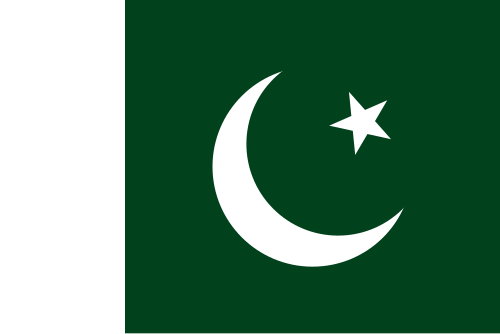
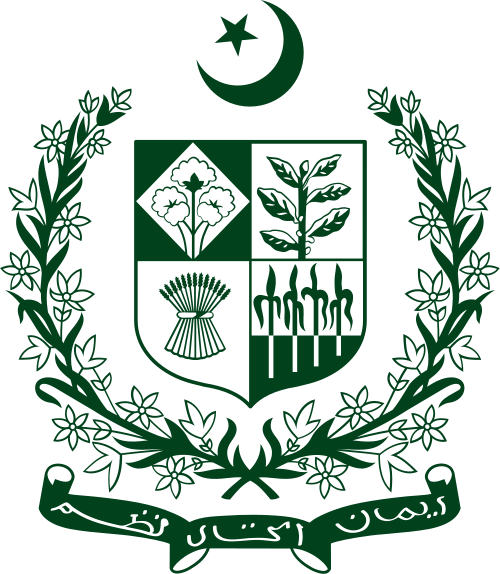

パキスタン[e]、正式にはパキスタン・イスラム共和国[f]は、南アジアの国である。人口は2億4150万人を超え、世界で5番目に人口の多い国であり、 [g] 2023年の時点でイスラム教徒の人口が2番目に多い。首都はイスラマバード、最大の都市で金融の中心地はカラチである。パキスタンは面積で33番目に大きい国である。南はアラビア海、南西はオマーン湾、南東はサークリークに囲まれ、東はインド、西はアフガニスタン、南西はイラン、北東は中国と陸上の国境を接している。オマーン湾ではオマーンと海上で国境を接し、北西ではアフガニスタンの狭いワハーン回廊によってタジキスタンと隔てられている。
パキスタンは、バロチスタン州の8,500年前の新石器時代の遺跡であるメヘルガル、青銅器時代のインダス文明[10]、古代ガンダーラ文明[11]など、いくつかの古代文化の拠点です。現代のパキスタンを構成する地域は、アケメネス朝、マウリヤ朝、クシャーナ朝、グプタ朝[ 12]、南部のウマイヤ朝、ヒンドゥー教のシャーヒー朝、ガズナ朝、デリー・スルタン朝、サマ朝、シャー・ミリス朝、ムガル帝国[13]、そして最近では1858年から1947年までのイギリス領植民地など、複数の帝国と王朝の領域でした。
パキスタンは、英領インドのイスラム教徒の祖国を求めるパキスタン運動と、1946年の全インド・ムスリム連盟の選挙での勝利に刺激され、イスラム教徒が多数を占める地域に独立した州としての地位を与え、前例のない大量移住と死者を伴う英領インド帝国の分割後の1947年に独立した。 [14] [15]当初は英連邦の自治領であったパキスタンは、1956年に正式に憲法を起草し、宣言されたイスラム共和国として誕生した。1971年、東パキスタンの飛び地は9か月に及ぶ内戦の後、新しい国バングラデシュとして分離独立。その後40年間、パキスタンは複雑ではあるが、文民と軍人、民主主義と権威主義、比較的世俗的とイスラム主義の間で頻繁に入れ替わる政府によって統治されてきた。[16]
パキスタンは中堅国と考えられており[17] [h] 、世界第6位の常備軍を擁している。核兵器保有国であると宣言されており、新興成長国としてランク付けされており[18]、大規模で急速に成長している中流階級を擁している。[19] [20]パキスタンの独立以来の政治史は、著しい経済・軍事的成長の時期と政治的・経済的不安定の時期によって特徴づけられてきた。民族的・言語的に多様な国であり、同様に多様な地理と野生生物を有する。国は貧困、文盲、汚職、テロなどの課題に直面し続けている。[21] [22] [23]パキスタンは、国際連合、上海協力機構、イスラム協力機構、英連邦、南アジア地域協力連合、イスラム軍事対テロ連合の加盟国であり、米国から は主要な非NATO同盟国に指定されている。
語源
パキスタンという名前は、パキスタン運動活動家のチョウドリー・ラフマット・アリによって造られ、1933年1月にパンフレットNow or Neverの中で初めて(当初は「パクスタン」として)発表され、頭字語として使用された。[24] [25] [26]ラフマット・アリは、「それは、インドとアジアのすべての故郷の名前、パンジャブ、アフガニスタン、カシミール、シンド、バローチスタンから取った文字で構成されています」と説明した。彼は、「パキスタンはペルシャ語とウルドゥー語の両方の言葉です...それは、精神的に純粋できれいなパク人の土地を意味します」と付け加えた。 [27]語源学者は、پاک pāk はペルシャ語とパシュトー語で「純粋」であり、ペルシャ語の接尾辞ـستان -stan は「土地」または「場所」を意味すると指摘している。[25]
ラーマト・アリのパキスタン構想はインド亜大陸の北西部のみに関係していた。彼はまた、ベンガルのイスラム教徒の地域を「バングラスタン」、ハイデラバード州を「オスマニスタン」と名付け、3つの州を政治的に連合させることも提案した。[28]
歴史
インダス文明
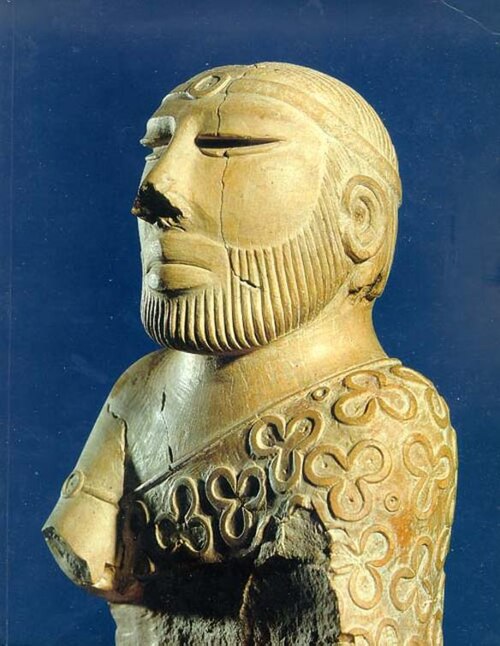
南アジアにおける最古の古代人類文明のいくつかは、現在のパキスタンを含む地域に起源を持つ。[30]この地域に最も古くから居住していたことが知られているのは前期旧石器時代のソアン人であり、彼らの遺物がパンジャブのソアン渓谷で発見されている。[31]現在のパキスタンの大部分を占めるインダス地域は、新石器時代(紀元前7000~4300年)のメヘルガル遺跡、[32] [ 33] [34]や、モヘンジョダロやハラッパーを含むインダス文明のさまざまな遺跡に至るまで、南アジアの5000年にわたる都市生活の歴史など、いくつかの古代文化が続いた場所である。[35] [36]
ヴェーダ時代

インダス文明の衰退に続いて、インド・アーリア部族はヴェーダ時代(紀元前1500-500年)に数回の移住の波で中央アジアからパンジャブに移住し、 [38]独特の宗教的伝統と慣習を持ち込み、地元の文化と融合しました。[39]バクトリア・マルギアナ文化からのインド・アーリア人の宗教的信念と慣習、および旧インダス文明のハラッパー・インダス土着の信念は、最終的にヴェーダ文化と部族を生み出しました。[39]その中で最も注目すべきはガンダーラ文明であり、インド、中央アジア、中東の交差点で繁栄し、交易路を結び、さまざまな文明からの文化的影響を吸収しました。[40]最初の初期ヴェーダ文化は、今日のパキスタンのインダス渓谷を中心とする部族の牧畜社会でした。[41]この時期に、ヒンドゥー教最古の聖典であるヴェーダが編纂されました。[42] [i]
古典時代
.jpeg/500px-Gandhara_Buddha_(tnm).jpeg)
パキスタン西部は紀元前517年頃にアケメネス朝の一部となった。 [44]紀元前326年、アレクサンダー大王がジェルムでポロス王をはじめとする様々な地方の支配者を破ってこの地域を征服した。[45]その後、チャンドラグプタ・マウリヤによって建国され、アショーカ王によって拡大されたマウリヤ帝国が紀元前185年まで続いた。[46] [47] [48]バクトリアのデメトリオス(紀元前180年 - 165年)によって建国されたインド・ギリシア王国はガンダーラとパンジャブを含み、メナンドロス(紀元前165年 - 150年)の治世中に最大規模に達し、この地域でギリシア仏教文化を繁栄させた。 [49] [50] [51]タキシラには世界最古の大学と高等教育センターの一つがあり、紀元前6世紀の後期ヴェーダ時代に設立されました。[52]この古代大学はアレクサンダー大王の侵略軍によって文書化されており、紀元4世紀または5世紀の中国人巡礼者によっても記録されています。[53] [54] [55]最盛期には、ライ王朝(紀元489年 - 632年)がシンド州とその周辺地域を支配していました。[56]
イスラムの征服
アラブの征服者ムハンマド・イブン・カシムは711年にシンド州とパンジャブ州の一部を征服した。[46] [57]パキスタン政府の公式年表では、この時期にパキスタンの基礎が築かれたとされている。[58]中世初期(642年~1219年)には、この地域でイスラム教が広まった。[59] 8世紀にイスラム教が到来する以前、パキスタンのこの地域にはヒンズー教、仏教、ジャイナ教、ゾロアスター教など、多様な信仰が共存していた。[60] [61]この期間中、スーフィー派の 宣教師たちが地域住民の大半をイスラム教に改宗させる上で重要な役割を果たした。[62] 7世紀から11世紀にかけてカブール渓谷、ガンダーラ(現在のハイバル・パフトゥンクワ)、西パンジャブを支配していたトルコとヒンドゥーのシャーヒー朝が敗北すると、ガズナ朝(975年 - 1187年)、ゴール朝、デリー・スルタン朝(1206年 - 1526年)など、いくつかのイスラム帝国がこの地域を支配しました。 [63]デリー・スルタン朝の最後のロディー朝は、ムガル帝国(1526年 - 1857年)に取って代わられました。[64]

ムガル帝国はペルシア文学と高度な文化をもたらし、この地域にインド・ペルシア文化の根を下ろした。 [65]現代のパキスタンの地域では、ムガル帝国時代の主要都市はムルターン、ラホール、ペシャワール、タッタであり、[66]これらの都市は印象的なムガル建築の場所として選ばれた。[67] 16世紀初頭、この地域はムガル帝国の支配下にあった。[68] 18世紀には、マラーター連合、後にシク教帝国というライバル勢力の台頭、 1739年のイランのナーディル・シャーの侵攻、 1759年のアフガニスタンのドゥッラーニー帝国の侵攻により、ムガル帝国の緩やかな崩壊が加速した。 [9] [69]ベンガルにおけるイギリスの政治的勢力の増大は、現代のパキスタンの領土にはまだ及んでいなかった。[70]
植民地支配
1839年、シンド州のタルプール族が統治し、泥の砦で港を守っていた小さな漁村カラチが占領されるまで、現代のパキスタンはイギリスの支配下になかった。 [75] [76]その後の第一次アフガニスタン戦争では、港と軍事基地を備えた飛び地として使用された。 [77]シンド州の残りの部分は1843年に獲得され、[78]その後、一連の戦争と条約を通じて、東インド会社が、そして後にセポイの反乱(1857-1858年)後は大英帝国のヴィクトリア女王の直接統治により、この地域の大半を獲得した。[79]主な紛争には、シンド州のミアニの戦い(1843年)で解決されたバローチ・タルプール王朝に対する紛争、 [80]英シク戦争(1845年 - 1849年)、[81]英アフガン戦争(1839年 - 1919年)などがある。[82] 1893年までに、現代のパキスタン全土はイギリス領インド帝国の一部となり、1947年の独立までその状態が続いた。[83]
イギリス統治下では、現代のパキスタンは主にシンド地方、パンジャブ州、バルチスタン地方に分かれていた。この地域には様々な藩王国もあり、最大のものはバハワルプルであった。[84] [85]
この地域におけるイギリスに対する主要な武装闘争は、1857年のセポイの反乱として知られる反乱であった。[86]ヒンズー教とイスラム教の関係の相違は、イギリス領インドで大きな緊張をもたらし、宗教的暴力につながった。言語論争はヒンズー教徒とイスラム教徒の間の緊張をさらに悪化させた。[73] [87]ヒンズー教の復興に対抗するためにサー・サイード・アフマド・カーンが率いたイスラム知識人運動は、2国家理論を主張し、 1906年に全インド・ムスリム連盟の設立につながった。[71] [72] [73]
1929年3月、ネルー報告への対応として、パキスタンの建国者ムハンマド・アリー・ジンナーは、統一インドにおけるイスラム教徒少数派の利益を保護する提案を含む14か条の提言を発表した。これらの提案は却下された。[88] [89] [90] 1930年12月29日の演説で、アラマ・イクバールは、パンジャブ、北西辺境州、シンド、バローチスターンを含む北西インドのイスラム教徒が多数派を占める州の合併を主張した。[90] [91] 1937年から1939年にかけて、議会主導のイギリスの州政府がムスリム連盟を無視していたという認識が、ジンナーと他のムスリム連盟指導者に二国家理論を受け入れる動機を与えた。[ 92] [93]これにより、シェール・エ・バングラA.K.ファズルル・ハック、別名パキスタン決議。[94]
1942年までに、イギリスは第二次世界大戦中にインドが日本軍の直接の脅威にさらされ、かなりの緊張に直面した。イギリスは戦時中の支援と引き換えにインドの自発的な独立を約束していた。しかし、この約束には、イギリス領インドのいかなる地域も結果として生じる自治領への参加を強制されないという条項が含まれており、独立したイスラム国家への支援と解釈される可能性があった。マハトマ・ガンジーの指導の下、インド国民会議はインド独立運動を開始し、イギリス統治の即時終了を要求した。対照的に、ムスリム連盟はイギリスの戦争努力を支持することを選択し、それによってイスラム国家樹立の可能性を育んだ。[95] [96]
独立

1946年の選挙では、シンド州とパンジャブ州の地主たちの支持を得て、ムスリム連盟がムスリム議席の90パーセントを獲得した。これにより、当初はインド人ムスリムの代表としてムスリム連盟に懐疑的だったインド国民会議も、同連盟の重要性を認めざるを得なくなった。[97]ジンナーがインド人ムスリムの声として台頭したことで、[58]イギリスはインド分割には消極的であったものの、自らの立場を再考せざるを得なくなった。分割を阻止する最後の試みとして、イギリスは内閣使節団計画を提案した。[98]
内閣使節団が失敗したため、イギリスは1948年6月までに統治を終わらせる意向を発表した。[99] [100]インド総督、ビルマのマウントバッテン卿、全インド・ムスリム連盟のムハンマド・アリー・ジンナー、インド国民会議のジャワハルラール・ネルーによる厳しい議論の末、1947年6月3日夜、マウントバッテンにより英領インドをパキスタンとインドの2つの独立した自治領に分割する正式な宣言が出された。マウントバッテンの大統領執務室には、世界中に放送される前に計画書のコピーを受け取るために12か国ほどの主要藩王国の首相が集まった。午後7時、全インド・ラジオが一般向け発表を放送し、総督の演説に続いてネルーとジンナーが個別に演説した。パキスタンの建国者ムハンマド・アリー・ジンナーは、 「パキスタン万歳」というスローガンで演説を締めくくった。[101]
イギリスがインドの分割に同意したため、[101] 1947年8月14日 (イスラム暦1366年ラマダン月27日、イスラムの観点から最も祝福された日とされる)に現代のパキスタン国家が樹立されました。[102] [103]この新しい国家は、イスラム教徒が多数を占めるイギリス領インドの東部と北西部の地域、つまりバロチスタン州、東ベンガル州、北西辺境州、西パンジャブ州、シンド州を統合しました。[104]
パンジャブ州の分割に伴う暴動では、20万人から200万人が殺害され、一部の人々はこれを宗教間の報復的大量虐殺と表現している。[105]約5万人のイスラム教徒女性がヒンズー教徒とシク教徒の男性に誘拐され強姦され、3万3000人のヒンズー教徒とシク教徒の女性もイスラム教徒の手で同様の運命をたどった。[106]約650万人のイスラム教徒がインドから西パキスタンに移住し、470万人のヒンズー教徒とシク教徒が西パキスタンからインドに移住した。[107]これは人類史上最大の大量移住であった。 [ 108]その後、ジャンムー・カシミール藩王国をめぐる紛争が、最終的に1947年から1948年にかけてのインド・パキスタン戦争を引き起こした。[109]
独立後

1947年の独立後、ムスリム連盟の議長であったジンナーはパキスタンの初代総督および初代議会議長となったが、1948年9月11日に結核で亡くなった。[111] [112]一方、パキスタンの建国の父たちは、党の書記長であったリアカット・アリー・ハーンを同国の初代首相に任命することに同意した。[110] [111] 1947年から1956年まで、パキスタンは英連邦内の君主制国家であり、共和国となる前には2人の君主がいた。[113]
パキスタンの建国は、マウントバッテン卿を含む多くの英国指導者に完全に受け入れられることはなかった。[114]マウントバッテンは、ムスリム連盟のパキスタン構想に対する支持と信頼の欠如を表明した。[115]ジンナーは、パキスタン総督に就任するというマウントバッテンからの申し出を断った。[116]マウントバッテンがコリンズとラピエールから、ジンナーが結核で死にかけていることを知っていたらパキスタンを破壊したかと尋ねられたとき、彼は「おそらく」と答えた。[117]
「あなたは自由です。寺院に行くのも、モスクに行くのも、パキスタン国内のその他の礼拝所に行くのも自由です。どんな宗教、カースト、信条に属していても構いません。それは国家の業務とは何の関係もありません。」
—ムハンマド・アリー・ジンナーのパキスタン制憲議会における最初の演説。[118]
1949年にパキスタンでシャイフ・アル・イスラームの地位にあったデオバンド派の尊敬される学者であるマウラナ・シャビル・アフマド・ウスマニと、ジャマート・エ・イスラーミのマウラナ・マウドゥーディーは、イスラム憲法の提唱において重要な役割を果たした。マウドゥーディーは、制憲議会が「神の至高の主権」とパキスタンにおけるシャリーアの至高性を宣言することを主張した。 [119]
ジャマート・エ・イスラーミとウラマーの努力により、1949年3月に目的決議が可決された。リアクアット・アリ・ハーンがパキスタン史上2番目に重要な一歩と評したこの決議は、「全宇宙の主権は全能の神のみに属し、神がパキスタン国民に委任した権限は神によって定められた範囲内で行使される神聖な信託である」と断言した。この決議は後に1956年、1962年、1973年の憲法の前文に盛り込まれた。[120]
イスカンダル・ミルザ大統領が戒厳令を発令し、アユーブ・カーン将軍が後を継いだため、民主主義は後退した。1962年に大統領制を採用した後、パキスタンは1965年の第二次インド戦争まで著しい成長を遂げたが、その結果1967年には経済低迷と国民の不満が広がった。 [121] [122] 1969年、ヤヒヤ・カーン大統領が政権を強化したが、東パキスタンで壊滅的なサイクロンが発生し、50万人が死亡した。[123]
1970年、パキスタンは独立以来初めて民主的な選挙を実施し、軍政から民主主義への移行を目指した。しかし、東パキスタンのアワミ連盟がパキスタン人民党(PPP)に勝利した後、ヤヒヤ・カーンと軍は権力の移譲を拒否した。[124]これがサーチライト作戦と呼ばれる軍による弾圧につながり、最終的には東パキスタンでベンガルのムクティ・バヒニ軍による解放戦争を引き起こした。 [125]西パキスタンでは、これは解放闘争というよりは内戦と評された。[126]

独立した研究者らは、この期間に30万人から50万人の民間人が死亡したと推定している一方、バングラデシュ政府は死者数を300万人としているが、[128]この数字は現在ではほぼ普遍的に過度に誇張されているとみなされている。[129]ルドルフ・ランメルやルーナク・ジャハンなどの学者は、双方が大量虐殺を犯したと述べている。[ 130]一方、リチャード・シッソンやレオ・E・ローズなど一部の学者は、大量虐殺はなかったと考えている。 [131]インドが東パキスタンの反乱を支援したことへの反応として、パキスタンの空軍、海軍、海兵隊によるインドへの先制攻撃が1971年の通常戦争を引き起こし、インドの勝利と東パキスタンのバングラデシュとしての独立をもたらした。[132]
パキスタンが戦争に降伏すると、 [133]ヤヒヤ・ハーンに代わりズルフィカール・アリー・ブットが大統領に就任し、同国は憲法を公布し民主主義への道を歩み始めた。[134] [135] 1972年、パキスタンは外国からの侵略を防ぐことを目標に核抑止力を開発するという野心的な計画に着手し、同年に同国初の原子力発電所が稼働した。 [136] [137] 1974年のインド初の核実験は、パキスタンに核開発計画を加速するさらなる正当性を与えた。[137]
1977年、左派の人民人民党に対する軍事クーデターで民主主義は終わりを告げ、 1978年にジアウルハク将軍が大統領に就任した。[138] 1977年から1988年にかけて、ジア大統領の企業化と経済のイスラム化の取り組みにより、パキスタンは南アジアで最も急速に成長する経済の一つとなった。[139]パキスタンは、国の核計画の構築、イスラム化の促進、自国生まれの保守主義哲学の台頭と同時に、ソ連の共産主義アフガニスタン介入に反対するムジャヒディンの各派閥への米国の資金援助と分配を支援した。[140] [141] [142]パキスタンの北西辺境州は反ソ連のアフガニスタン戦闘員の拠点となり、同州の有力なデオバンド派ウラマーが「ジハード」の奨励と組織化に重要な役割を果たした。[143]
ジア大統領は1988年に飛行機事故で亡くなり、ズルフィカール・アリ・ブットの娘であるベナジル・ブットが同国初の女性首相に選出された。パキスタン人民党(PPP)の後を保守派のパキスタン・ムスリム連盟(N)(PML(N))が継ぎ、その後10年間、両党の指導者は交互に政権を争いました。[144]この時期は、長期にわたるスタグフレーション、政治的不安定、汚職、失政、インドとの地政学的対立、左翼と右翼のイデオロギーの衝突が特徴的です。[145] [146] PML(N)が1997年の選挙で超多数派を獲得すると、[147]ナワズ・シャリフは、 1998年5月にインドが実施した2度目の核実験への報復として、核実験を承認しました。 [148]

カルギル地区における両国の軍事的緊張が1999年のカルギル戦争につながり、[150] [151]政軍関係の混乱により、ペルヴェーズ・ムシャラフ将軍が無血クーデターで政権を握った。[152]ムシャラフは1999年から2002年まで行政長官として、2001年から2008年まで大統領としてパキスタンを統治した[153] ―啓蒙時代、[154] [155]社会自由主義、[156]大規模な経済改革、[157]米国主導の対テロ戦争への直接関与の時代であった。[155]パキスタン自身の財務計算によると、対テロ戦争への関与により、最大1180億ドルの費用がかかり、8万1000人以上の死傷者が出、[158] 180万人以上の民間人が避難した。[159]
国民議会は歴史的に見て、2007年11月15日に最初の5年間の任期を終えた。[160] 2007年にベナジール・ブットーが暗殺された後、PPPは2008年の選挙で最多票を獲得し、党員のユスフ・ラザ・ギラーニを首相に任命した。[161]弾劾の脅威にさらされたムシャラフ大統領は2008年8月18日に辞任し、アシフ・アリー・ザルダリが後を継いだ。[162]司法府との衝突により、ギラーニは2012年6月に国会および首相の資格を剥奪された。 [163] 2013年に行われた総選挙ではPML(N)が勝利し、[164]続いてナワーズ・シャリフが3度目の首相に選出された。[165] 2018年、PTIが総選挙に勝利し、イムラン・カーンが第22代首相に就任した。[166] 2022年4月、イムラン・カーンが不信任投票で敗れた後、シェバズ・シャリフが首相に選出された。 [167] 2024年の総選挙では、PTIが支援する無所属が最大勢力となったが、[168] PML(N)とPPPPの連立政権の結果、シェバズ・シャリフが2期目の首相に選出された。[169]
地理
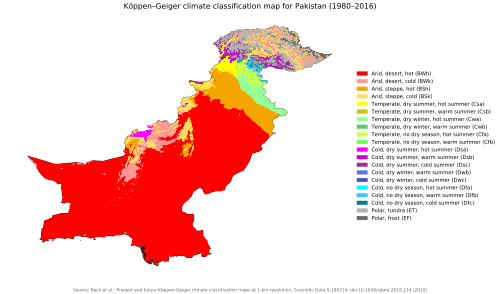
パキスタンの多様な地理と気候は、多種多様な野生生物の生息地となっている。[170] 881,913 km 2 (340,509 平方マイル) の面積を有するパキスタンの面積は、[171]フランスとイギリスを合わせた面積に匹敵する。[172]総面積では世界で33番目に大きい国であるが、[173]これはカシミールの係争中の地位によって変わる。パキスタンは、アラビア海とオマーン湾に沿った1,046 km (650 マイル) の海岸線を誇り、[174] [175]アフガニスタンとの2,430 km (1,510 マイル)、中国との523 km (325 マイル)、インドとの2,912 km (1,809 マイル)、イランとの909 km (565 マイル) を含む、合計6,774 km (4,209 マイル) の陸上国境を共有している。[176]オマーンとは海上で国境を接しており、[177]ワハーン回廊を介してタジキスタンとも国境を接している。[178]南アジア、中東、中央アジアの交差点に位置し、[179]パキスタンの位置は地政学的に重要である。[180]地質学的には、パキスタンはインダス・ツアンポ縫合帯とシンド州とパンジャブ州のインドプレートにまたがっており、一方バロチスタン州とハイバル・パフトゥンクワ州の大部分はユーラシアプレート、主にイラン高原に位置している。インドプレートの縁に沿ったギルギット・バルティスタン州とアザド・カシミール州は強力な地震の影響を受けやすい。[181]

パキスタンの風景は海岸平野から氷河に覆われた山々まで多様で、砂漠、森林、丘陵、高原がある。[183] パキスタンは、北部高地、インダス川平野、バロチスタン高原の3つの主要な地理的エリアに分かれている。[184]北部高地には、カラコルム山脈、ヒンドゥークシュ山脈、パミール高原があり、14ある8000メートル峰(標高8,000メートルまたは26,250フィートを超える山頂)のうち5つ、特にK2(8,611メートルまたは28,251フィート)とナンガ・パルバット(8,126メートルまたは26,660フィート)を含む世界最高峰のいくつかがある。[185] [186]バロチスタン高原は西側にあり、タール砂漠は東側に広がっている。[2] 1,609km(1,000マイル)のインダス川とその支流はカシミールからアラビア海まで国を横断し、パンジャブ地方とシンド地方に沿って沖積平野を支えています。[187]
気候は熱帯から温帯まで様々で、南部の沿岸部は乾燥している。雨量が多いため洪水が頻繁に起こるモンスーンシーズンと、雨量が大幅に少ないか全く降らない乾季がある。[188]パキスタンには4つの明確な季節がある。12月から2月は涼しく乾燥した冬、3月から5月は暑く乾燥した春、6月から9月は夏の雨季または南西モンスーン期、10月から11月はモンスーンが後退する時期である。[189]降雨量は年によって大きく異なり、洪水と干ばつが交互に起こるパターンが一般的である。[190]
動植物
パキスタンの多様な景観と気候は、多種多様な樹木や植物を育んでいます。[191]北部の山岳地帯に生育するトウヒ、マツ、ヒマラヤスギなどの高山・亜高山帯の針葉樹から、スレイマン山脈のシシャムなどの落葉樹、[188]南部のココナッツやナツメヤシなどのヤシまで。 [192] [193]西部の丘陵地帯には、ジュニパー、ギョリュウ、粗い草、低木植物が生育しています。[194]南部の沿岸湿地では、マングローブ林が広がっています。 [195]針葉樹林は、北部および北西部の高地のほとんどで、標高1,000~4,000メートル(3,300~13,100フィート)に広がっています。[196]バロチスタン州の乾燥地域では、ナツメヤシやエフェドラが広く生育しています。[192] [197]パンジャブ州とシンド州のインダス平原には、熱帯・亜熱帯の乾燥・湿潤広葉樹林や熱帯・乾燥低木林が繁茂している。[198] 2021年にはパキスタンの約4.8%、36,845.6平方キロメートル(3,684,560ヘクタール)が森林であった。[199] [j]
.jpg/500px-Markhor_Horns_(5779055412).jpg)
パキスタンの動物相は、その多様な気候を反映している。この国には、カラス、スズメ、九官鳥、タカ、ハヤブサ、ワシなど約668種の鳥類が生息している[201]。コヒスタン州パラスは、ヨーロッパ、中央アジア、インドから多くの渡り鳥が訪れるニシトラスオウムの生息地である。 [202]南部の平原には、マングース[203]、インドジャコウネコ[204]、[205] 、アジアジャッカル[206]、インドセンザンコウ[207]、[ 208]、スナネコ[209]が生息している。インダスには、マガーワニ[210]が生息し、周辺地域にはイノシシ[211]、[212]、ヤマアラシが生息している。[213]パキスタン中部の砂地の低木地帯には、アジアジャッカル、[206]シマハイエナ、[214]ヤマネコ、ヒョウが生息しています。北部の山岳地帯には、マルコポーロ羊、[215]ウリアル、マーコールヤギ、アイベックスヤギ、ツキノワグマ、ヒマラヤヒグマなど、さまざまな動物が生息しています。[188]
植物被覆の不足、厳しい気候、砂漠での放牧の影響により、野生動物が絶滅の危機に瀕している。[216]チョリスタンで大量に見られる動物はチンカラのみで、[ 217]パキスタンとインドの国境沿いやチョリスタンの一部にはニルガイが数頭生息している。 [218]希少動物にはユキヒョウや盲目のインダス川イルカがおり、 [ 188 ]シンド州のインダス川イルカ保護区で保護されており、約1,816頭が生息していると考えられている。[219]合計で、174種の哺乳類、177種の爬虫類、22種の両生類、198種の淡水魚、668種の鳥類、5,000種以上の昆虫、5,700種以上の植物がパキスタンで記録されている。[201]パキスタンは森林破壊、狩猟、汚染に直面しており、2019年の森林景観完全性指数の平均スコアは7.42/10で、172カ国中世界41位にランクされています。[220]
政府と政治

パキスタンは民主的な議会制 連邦共和国として運営されており、イスラム教が国教とされている。[221] [222]パキスタンは1956年に最初に憲法を採択したが、1958年にアユーブ・カーンによって停止され、1962年に第二の憲法に置き換えられた。 [223]包括的な憲法は1973年に制定され、1977年にジアウルハクによって停止されたが、1985年に復活し、国の統治を形作った。[176]軍はパキスタンの歴史を通じて主流政治に大きな影響を与えてきた。[224] 1958~1971年、1977~1988年、1999~2008年には軍事クーデターが起こり、戒厳令が敷かれ、軍の指導者が事実上大統領として統治した。[225]現在、パキスタンは複数政党制の 議会制度を採用しており、[226]各政府機関の間に明確な抑制と均衡が保たれている。 [227]最初の民主化移行は2013年5月に成功した。[228]パキスタンの政治は社会主義、保守主義、第三の道の融合を中心に展開しており、[229]主要政党は保守派のPML(N)、社会主義派のPPP、中道派のPTIの3つである。[230] 2010年の憲法改正により大統領の権限が制限され、首相の役割が強化された。[231]
- 国家元首:パキスタンの儀礼上の元首であり、パキスタン軍の文民最高司令官は大統領であり、選挙人団によって選出される。[230]首相は軍や司法の役職を含む重要な人事について大統領に助言し、大統領はこの助言に基づいて行動する憲法上の義務がある。[232] [233]大統領はまた、恩赦や寛大な処置を与える権限も有する。[234]
- 立法:二院制の議会には、96人の上院(上院)と336人の国会議員(下院)が含まれる。国会議員は、普通選挙による小選挙区制で選出され、国会議員選挙区を代表する。憲法では、女性と宗教的少数派のために70議席が確保されており、比例代表制に基づいて政党に割り当てられる。上院議員は州議会議員によって選出され、すべての州で平等な代表権が確保されている。[235]

- 行政:首相は、通常、国会(下院)における多数派政党または連合のリーダーであり、 [236]国の最高行政官および政府の長としての役割を果たします。責任には、内閣の組織、[237]行政上の決定を下すこと、[232]行政の承認を条件に高級公務員を任命することが含まれます。[238]
- 州政府: 4つの州はそれぞれ同様の統治システムを採用しており、直接選挙で選ばれる州議会が、通常は最大政党または連合から首相を選出する。首相は州内閣を率いて州の統治を監督する。[239] [240]首相によって任命される首席秘書官が州官僚機構を率いる。[ 241 ]州議会は州予算を立法し、承認する。予算は通常、州財務大臣によって毎年提出される。[240] [242]州の儀礼上の長である州知事は、首相の拘束力のある助言に基づいて大統領によって任命される。[239] [243]

- 司法:パキスタンの司法は上級司法と下級司法の2つの階級に分かれている。上級司法にはパキスタン最高裁判所[244] 、連邦シャリア裁判所、5つの高等裁判所[245]があり、最高裁判所が頂点にある。最高裁判所は憲法を守る責任がある。[244]アザド・カシミールとギルギット・バルティスタンには独自の裁判所制度がある。[246] [247]
イスラム教の役割
イスラムの名の下に建国された唯一の国であるパキスタン[248]は、イスラム教徒の間で圧倒的な支持を得ており、特にイスラム教徒が少数派であった連合州などの州ではその支持が強かった。 [249]ムスリム連盟、イスラム聖職者、ジンナーによって表明されたこの考えは、イスラム国家を思い描いていた。[250]ウラマーと密接な関係にあったジンナーは、死去時にマウラナ・シャビール・アフマド・ウスマニによって、世界中のイスラム教徒をイスラムの下に統一することを目指したアウラングゼーブ後の最も偉大なイスラム教徒と評された。[251]
1949年3月の目的決議は、神を唯一の主権者として認め、この目標に向けた最初の一歩を踏み出した。[120] [252]ムスリム連盟の指導者チャウドリ・カリクザマンは、パキスタンが真のイスラム国家になるには、すべてのイスラム教徒を単一の政治単位にまとめる必要があると主張した。[253]キース・カラードは、パキスタン人はイスラム世界の目的と見解の本質的な統一を信じており、世界中のイスラム教徒にも宗教と国籍に関する同様の見解を期待していると述べた。[254]

パキスタンはイスラミスタンと呼ばれる統一イスラム圏の実現を望んだが、他のイスラム諸国の政府はこれを支持しなかった。[255]パレスチナの最高指導者アル・ハジ・アミン・アル・フセイニやムスリム同胞団の指導者らはパキスタンに引き寄せられた。イスラム諸国の国際組織に対するパキスタンの望みは、1970年代にイスラム諸国会議機構(OIC)が結成されたことで実現した。[256]東パキスタンのベンガル人ムスリムはイスラム主義国家に反対し、イスラム的アイデンティティを重視する西パキスタン人と衝突した。[257] [258]イスラム主義政党ジャマーアト・エ・イスラミはイスラム国家を支持し、ベンガル民族主義に反対した。[259]
1970年の総選挙後、議会は1973年憲法を起草した。[260]憲法はパキスタンをイスラム共和国と宣言し、イスラム教を国教とし、コーランとスンナに定められたイスラムの教えに従う法律を義務付け、そのような命令に反する法律は制定できないとした。[261]さらに、イスラム教を解釈し適用するためにシャリーア裁判所やイスラム思想評議会などの機関を設立した。[262]
ズルフィカール・アリー・ブットーはニザム・エ・ムスタファ(預言者の統治)の旗印の下、イスラム国家樹立を主張する反対勢力に直面した[263]。ブットーはクーデターで追放される前に、イスラム主義者の要求に一部屈した[264] 。
ジアウルハク将軍は権力を掌握した後、イスラム国家の樹立とシャリーア法の施行に尽力した。[264]彼はシャリーア法廷[265]と法廷[266] [267]を設立し、イスラムの教義に基づいて裁判を行った。[268]ジアはデオバンド派の組織と連携し[269] 、反シーア派政策で宗派間の緊張を悪化させた。[270]
ピュー・リサーチ・センター(PEW)の世論調査によると、パキスタン人のほとんどはシャリーア法を公式法として支持しており[271]、他の国のイスラム教徒と比較して、94パーセントが国籍よりも宗教を重視している[272] 。
行政単位
パキスタンは連邦議会制共和国であり、パンジャブ州、ハイバル・パフトゥンクワ州、シンド州、バロチスタン州の4州と、イスラマバード首都圏、ギルギット・バルティスタン州、アザド・カシミール州の3つの地域から構成されている。[280]パキスタン政府はカシミール地方の西部を統治しており、アザド・カシミール州とギルギット・バルティスタン州という別々の政治体として組織されている。[281] 2009年、憲法上の割り当て(ギルギット・バルティスタン権限委譲および自治命令)により、ギルギット・バルティスタン州は準州の地位を与えられ、自治権が与えられた。[282]
地方自治制度は地区、テシル、連合評議会で構成され、各階層に選挙で選ばれた機関がある。[283]
パキスタンの 4 つの州と 3 つの連邦直轄地のクリック可能な地図。

外交関係
パキスタンは独立以来、独立した外交政策を維持することを目指してきた。[284]パキスタンの外交政策と地政学は、経済、安全保障、国家のアイデンティティ、領土保全、および他のイスラム諸国との緊密な関係の構築に重点を置いている。[285]外交政策の専門家であるハサン・アスカリ・リズヴィによると、「パキスタンは、国家の主権平等、二国間主義、利益の相互性、および互いの内政への不干渉を外交政策の基本的な特徴として強調している。」[286]
カシミール紛争はパキスタンとインドの間で依然として大きな問題であり、両国間の4回の戦争のうち3回はカシミール紛争をめぐって争われた。[287]インドとの関係が緊張していることもあって、パキスタンはトルコやイランと緊密な関係にあり、両国ともパキスタンの外交政策の焦点となっている。[288]サウジアラビアもパキスタンの外交関係において重要な位置を占めている。[289]
核拡散防止条約に署名していないパキスタンは、 IAEAで影響力を持っている。[290]パキスタンは長年、核分裂性物質を制限する国際条約を阻止しており、その備蓄量は長期的なニーズを満たしていないと主張している。[291] 20世紀のパキスタンの核計画は、この地域でのインドの核野望に対抗することを目的としており、インドの核実験の後に相互の核実験が続き、パキスタンの核保有国としての地位を固めた。[292]パキスタンは、自国の核計画が外国の侵略を抑止するために不可欠であると考え、全スペクトル抑止政策を維持している。 [293]
.jpg/500px-SCO_meeting_(2022-09-16).jpg)
パキスタンは、世界の主要な海上石油供給ラインと通信光ファイバー回廊の戦略的位置にあり、中央アジア諸国の天然資源にも近い。[295]パキスタンは、国際政治における立場を代表する常任代表を擁し、国連に積極的に参加している。 [296]パキスタンは、イスラム世界における「啓蒙的穏健主義」の概念を主張している。 [297]パキスタンは、英連邦諸国、南アジア地域協力連合(SAARC ) 、経済共同体(ECO)、[298] [299]およびG20発展途上国のメンバーである。[300]

パキスタンは中国から「鉄の兄弟」と呼ばれ、両国の緊密で協力的な関係の重要性を強調している。[302] 1950年代、パキスタンは地政学的な理由からソ連に反対した。1980年代のソ連・アフガニスタン戦争中は、米国の緊密な同盟国であった。[286]冷戦終結以来、ロシアとの関係は改善しているが、[303]パキスタンと米国の関係は「断続的」である。[286]冷戦中は当初緊密な同盟国であったが、[304] 1990年代には、秘密の核計画に対する制裁により、パキスタンと米国の関係は悪化した。 [305] 9/11以降、パキスタンは対テロで米国の同盟国となっているが、 20年に及ぶ戦争とテロ問題による利害の相違と不信感から、両国の関係は緊張している。パキスタンは2004年に米国から主要な非NATO同盟国の地位を与えられたが、 [306]アフガニスタンのタリバン反乱軍を支援しているという非難に直面した。[307]
パキスタンはイスラエルと正式な外交関係を結んでいないが、2005年にトルコが仲介役となって両国間で交流が行われた。[308]
中国との関係

パキスタンは中国と正式な外交関係を樹立した最初の国の一つであり、[311] 1962年の中国とインドの紛争以来、強い関係を築き、特別な絆で結ばれた。[312] 1970年代、パキスタンは中国の世界的影響力において重要な役割を果たし、[313]リチャード・ニクソン米大統領の歴史的な中国訪問を促進した。 [314]パキスタンの統治や地域的/世界的な動向の変化にもかかわらず、パキスタンにおける中国の影響力は依然として最も大きい。[313]そのお返しに、中国はパキスタン最大の貿易相手国であり、パキスタンのインフラ、特にグワダル港に多額の投資を行っている。[315] 2015年だけでも、両国は協力のための協定や覚書(MoU)を51件締結した。[316]両国は2006年に自由貿易協定を締結し、[317]中国はCPECを通じてパキスタン史上最大の投資を行った。[318]パキスタンはイスラム世界に対する中国の連絡役を務めており、[319]両国はカシミール、台湾、新疆などの敏感な問題で互いに支援し合っている。[320]
イスラム世界との関係
独立後、パキスタンは他のイスラム諸国との二国間関係を積極的に追求した。[ 321]アリ兄弟は、パキスタンの優れた人的資源と軍事力もあって、パキスタンをイスラム世界の自然なリーダーとして位置づけようとした。[322]ムスリム連盟の著名な指導者であるハリクザマンは、すべてのイスラム諸国を汎イスラム国家であるイスラミスタンに統合するというパキスタンの野望を宣言した。 [323]
これらの動きとパキスタンの建国は米国から承認されず、英国首相クレメント・アトリーはインドとパキスタンの再統一に希望を表明した。[324]しかし、当時アラブ世界で民族主義が目覚めていたため、パキスタンの汎イスラム主義の願望にはほとんど関心がなかった。[325]一部のアラブ諸国は「イスラミスタン」計画をパキスタンによる他のイスラム諸国への支配の試みと受け止めた。[326]
パキスタンの建国者、ムハンマド・アリー・ジンナーは、一貫してパレスチナの大義を主張し、イスラム教徒の連帯というより広い枠組みの中でパレスチナ人の権利を支持するというパキスタンの外交政策を形成した。[327] 1967年の第一次中東戦争の間、パキスタンはアラブ諸国を支援し、国連内外でアラブの大義に対するイランの支援を確保する上で重要な役割を果たした。[328]
パキスタンとイランの関係は宗派間の緊張により緊張しており、[329]イランとサウジアラビアはともにパキスタンを代理宗派戦争の戦場として利用している。[330]イラン・イラク戦争の初期から、ジアウルハク大統領は重要な仲介役を果たし、パキスタンは紛争を終わらせるために積極的に取り組んできた。[331] [332]パキスタンは湾岸戦争中にサウジアラビアを支援した。[333]パキスタンは「決然とした嵐」作戦中は中立を保ち、イエメンに対するサウジアラビアの攻勢に軍事支援を送らないことを選択した。その代わりに、パキスタンは危機の解決に積極的な外交的役割を果たすことを目指したが、[334]それが両国間の緊張につながった。[333] 2016年、パキスタンはシーア派聖職者ニムル・アル・ニムルの処刑を受けてサウジアラビアとイランの仲介を行い、当時のナワーズ・シャリフ首相とラヒール・シャリフ陸軍参謀総長が両国を訪問した。[335]
パキスタンは、ソ連の侵攻後、数百万人のアフガニスタン難民に避難所を提供し、ソ連軍をアフガニスタンから追い出そうとするアフガニスタンのムジャヒディーンを支援した。 [336]ソ連が撤退した後、アフガニスタンの支配をめぐってムジャヒディーン派の間で内紛が勃発した。パキスタンは紛争終結のため和平交渉を促進した。 [337]敵対するムジャヒディーングループ間の紛争が4年間未解決だった後、パキスタンはタリバンを安定勢力として確立するのを支援した。[338]パキスタンによるアフガニスタンのスンニ派タリバンへの支援は、タリバン支配のアフガニスタンに反対するシーア派主導のイランにとって挑戦となった。[330]
パキスタンは世界中のイスラム教徒の自決を積極的に主張した。インドネシア、アルジェリア、チュニジア、モロッコ、エリトリアなどの国の独立運動を支援する努力は強い絆を育んだ。[339]ナゴルノ・カラバフ紛争でアゼルバイジャンを支援したため、パキスタンはアルメニアと外交関係を樹立していない。[340] [341]
パキスタンとバングラデシュは、特にシェイク・ハシナ率いるアワミ連盟政権下で、彼女の親インド的立場と歴史的恨みから、緊張関係を経験してきた。 [342]
イスラム協力機構(OIC)の主要メンバーであるパキスタンは、外交政策においてアラブ諸国やその他のイスラム教徒が多数を占める国々との文化的、政治的、社会的、経済的関係を維持することを優先している。[343]
カシミール紛争
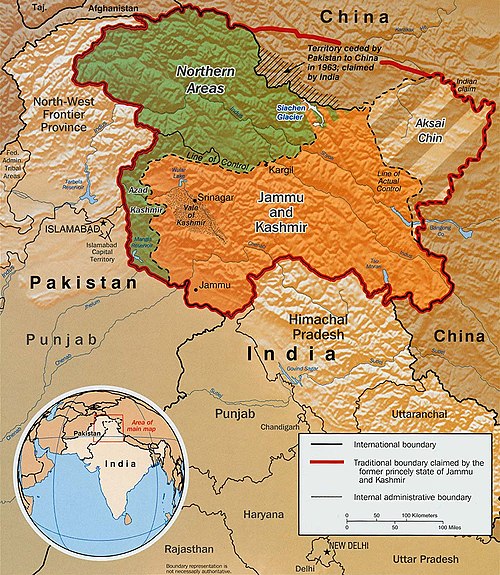
インド亜大陸の北端に位置するヒマラヤ地域のカシミールは、 1947年8月のインド分割以前はイギリス領時代、ジャンムー・カシミール自治藩王国として統治されていた。これがインドとパキスタンの間で大きな領土紛争を引き起こし、この地域をめぐっていくつかの紛争が発生した。インドはジャンムー・カシミールとラダックを含むカシミールの約45.1%を支配しており、パキスタンはアーザド・ジャンムー・カシミールとギルギット・バルティスタンを含む約38.2%を支配している。さらに、アクサイチンとシャクスガム渓谷として知られるこの地域の約20%は中国の支配下にある。[345]インドは、藩王国の統治者マハラジャ・ハリ・シンが署名した加盟文書に基づいてカシミール地方全体の領有権を主張しているが、 [346]パキスタンは、イスラム教徒が多数を占める人口、[347]およびパキスタンへの地理的な近さを主張している。[348]国連は紛争の解決に関与し、1949年に停戦が成立し、事実上の国境として実効支配線(LoC)が確立された。[349]インドはカシミールの分離を恐れ、約束されていた住民投票を行わなかった。カシミール人がパキスタンへの参加に投票すると信じていたためである。[350]

パキスタンは、国連の義務に従い、公平な選挙を通じてカシミール人が自らの将来を決定する権利があると主張しているが、インドは、 1972年のシムラー協定と定期的に地方選挙が行われているという事実に言及し、カシミールはインドの「不可分の一部」であると主張している。[ 352]一部のカシミール独立グループは、カシミールはインドとパキスタンの両方から独立すべきだと考えている。[353]
軍隊

パキスタン軍は、2024年時点で約66万人の現役兵力と29万1千人の準軍事組織を擁し、人員規模で世界第6位である。 [354] 1947年に設立され、国政に大きな影響力を持っている。[355]主な軍種には陸軍、海軍、空軍があり、多数の準軍事組織に支えられている。[356]
統合参謀本部議長(CJCSC)は最高位の軍人であり、文民政府に助言する。[357]しかし、彼らは各軍種を直接指揮することはできず、軍と文民指導部の間の意思疎通を確保する仲介役を務める。[357]彼らは統合参謀本部を監督し、軍種間の協力と共同軍事任務を調整する。[357] [358]
パキスタンの戦略兵器の開発と運用に関する指揮と統制は国家指揮当局に委ねられており、全スペクトル抑止力を維持するための核ドクトリンの作業を監督している。[148]
アメリカ、トルコ、中国はパキスタン軍と緊密な軍事関係を維持しており、定期的に軍事装備の輸出や技術移転を行っている。[359] SIPRIによると、パキスタンは2019年から2023年の間に5番目に大きな武器の受取国および輸入国であった。[360]
中国とトルコの軍隊との合同演習や軍事演習が時々行われている。 [361] [362]
パキスタン憲法は、緊急時の徴兵の哲学的根拠を導入しているが、実際に徴兵が実施されたことはない。 [363]
軍事史
1947年以来、パキスタンはインドとの通常戦争を4回 経験している。最初の紛争はカシミールで発生し、パキスタンが西カシミールを掌握し、インドが東カシミールを保持した。領土紛争は1965年に別の戦争を引き起こした。1971年の戦争でパキスタンは東パキスタンを無条件降伏した。[364]カルギルでの緊張により、両国は戦争の瀬戸際に立たされた。[365] 1947年以来、アフガニスタンとの領土問題は未解決のままであり、国境での小競り合いは主に山岳地帯の国境で発生していた。1961年、軍と諜報機関はデュランドライン国境付近でのアフガニスタンの侵攻を撃退した。[366]
ソ連・アフガニスタン戦争中、パキスタンの情報機関、主にISIは、ソ連軍に対抗するためにアフガニスタンのムジャヒディーンや外国人戦闘員を支援するため、米国の資源を調整した。 パキスタン空軍は紛争中、ソ連空軍およびアフガニスタン空軍と交戦した。[367]パキスタンは国連平和維持活動に積極的に参加しており、 1993年のソマリアのモガディシュでの救出活動などの活動で重要な役割を果たした。[368] [369]国連の報告書によると、パキスタン軍はエチオピアとインドに次いで国連平和維持活動に3番目に大きな兵力を提供している。[370]
パキスタンは、いくつかのアラブ諸国に軍隊を派遣し、防衛、訓練、顧問の役割を果たしている。[371]パキスタン空軍と海軍の戦闘機パイロットは、六日戦争とヨムキプール戦争でイスラエルと戦うアラブ諸国の軍隊に所属していた。[368]パキスタンの特殊部隊は、メッカのグランドモスク占領時にサウジアラビア軍を支援した。[372]パキスタンはまた、湾岸戦争中にサウジアラビア防衛のために米国主導の連合軍の一部として5,000人の兵士を派遣した。[373]
ボスニアに対する国連の武器禁輸にもかかわらず、ジャベド・ナシル将軍率いるISIはボスニアのムジャヒディーンに対戦車兵器とミサイルを空輸し、ボスニアのイスラム教徒に有利な形勢に転換した。ナシル将軍の指揮の下、ISIは新疆ウイグル自治区の中国人イスラム教徒、フィリピンの反政府勢力、中央アジアの宗教団体を支援した。[374] [375]
2004年以来、軍はハイバル・パフトゥンクワ州で主にタリバン運動に対する反乱活動を行っている。主な作戦にはブラック・サンダーストーム作戦、ラーヘ・ニジャット作戦、ザルブ・エ・アズブ作戦などがある。[376] [377]
法執行
パキスタンの法執行機関は、連邦警察と州警察から構成されている。4つの州(パンジャブ州、シンド州、ハイバル・パフトゥンクワ州、バロチスタン州)にはそれぞれ独自の警察部隊があり、イスラマバード首都圏(ICT)にはイスラマバード警察がある。[378]州警察は州政府によって任命された警察総監(IGP)が率いている。しかし、最高幹部はパキスタン警察(PSP)出身であり、州警察全体で国家基準を確保している。
専門ユニット:
- 国道・高速道路警察(NHMP): パキスタンの州間高速道路網の交通法規を施行し、安全を確保します。
- エリート警察部隊: パンジャブエリート部隊などの各州警察部隊は、対テロ作戦と危険度の高い状況に重点を置いています。
民間武装部隊(CAF)は、暴動鎮圧、反乱鎮圧、国境警備などの任務を支援し、パキスタンの法執行能力を強化しながら、通常の法執行機関を支援している。[379]
国家情報調整委員会は、 ISI 、 MI 、 IB 、 FIA 、警察、民間武装部隊を含む連邦および州レベルの諜報活動を監督している。[380]パキスタンの主要諜報機関である統合情報局(ISI)は、1947年のパキスタン独立から1年以内に設立された。[381] [382]
人権
2018年、パキスタンは国境なき記者団による報道の自由度ランキングで180カ国中139位にランクされ、報道の自由に対する制限が浮き彫りになった。[383]テレビ局や新聞は、政府や軍を批判する記事を掲載すると閉鎖の危機に瀕している。[384]パキスタンでは男性同性愛は違法であり、最高終身刑に処せられる。[385]
経済
パキスタンの経済は、購買力平価(PPP)で世界第24位、名目GDPで第43位である。歴史的に、パキスタンは紀元1千年紀には最も裕福な地域の一部であったが、18世紀までに中国や西ヨーロッパなどの地域に地位を奪われた。 [393]パキスタンは発展途上国であり、[394]ネクストイレブンの一員であり、21世紀にはBRICSと並んで世界最大の経済大国の一つになる準備ができている。[395]
近年、パキスタンは社会不安とマクロ経済の不均衡に直面しており、鉄道輸送や発電などのサービスが不足している。[396]半工業化経済はインダス川沿いに成長の中心地を持っている。[397] [398] [399]カラチとパンジャブの都市中心部の多様な経済は、特にバロチスタン州などの国内の他の地域の未開発地域と共存している。[398]パキスタンは世界で67番目に大きな輸出経済、106番目に複雑な経済であり、2015〜2016年度の貿易収支は239億6000万米ドルの赤字となっている。[400] [401]
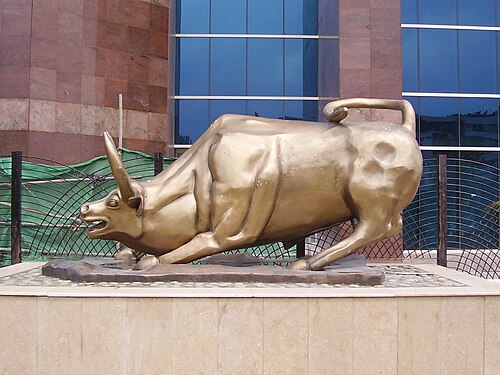
2022年現在[update]、パキスタンの推定名目GDPは3764億9300万米ドルである。[402] PPPによるGDPは1兆5120億米ドルである。推定名目一人当たりGDPは1,658米ドル、GDP(PPP)/一人当たりは6,662米ドル(国際ドル)である。[386]世界銀行によると、パキスタンは重要な戦略的財産と開発の潜在力を有している。パキスタンの若者の割合が増加していることは、潜在的な人口ボーナスと、十分なサービスと雇用を提供するという課題の両方を国に提供している。[403]人口の21.04%が1日1.25米ドルの国際貧困ラインを下回る生活を送っている。15歳以上の人口の失業率は5.5%である。[404]パキスタンには推定4000万人の中流階級の国民がおり、2050年までに1億人に増加すると予測されている。 [405]世界銀行が2015年に発表した報告書によると、パキスタンの経済は購買力で世界第24位[406] 、絶対額では第41位[407]と評価されている。パキスタンは南アジアで2番目に大きな経済であり、地域のGDPの約15.0%を占めている。[408]
パキスタンの経済成長は時間の経過とともに変化し、民主化への移行期にはゆっくりとした進歩があったが、戒厳令下では力強い拡大を見せたが、持続可能な基盤を欠いていた。[122] 2000年代前半から中頃にかけて、開発支出の増加を含む急速な改革により、貧困が10%減少し、GDPが3%増加した。 [378] [409] 2007年以降、経済は冷え込み、[378]インフレは2008年に25.0%でピークに達し、[410]破産を防ぐためにIMFの介入が必要となった。 [411]アジア開発銀行は後に、パキスタンの経済的緊張が緩和していると述べた。[412] 2010~2011年度のインフレ率は14.1%だった。[413] 2013年以降、パキスタン経済はIMFプログラムの下で成長している。ゴールドマン・サックスはパキスタンの経済が2050年までに15倍に成長する可能性があると予測し、[414]ルチル・シャルマは2016年の著書で、2020年までに中所得国への転換を予測した。[415]
パキスタンは、膨大な天然資源の生産と第10位の労働市場を誇り、 2015年から2016年にかけて700万人の海外移住者から199億ドルの貢献をもらい、重要な地位を占めている[416] [417] [418] 。しかし、世界貿易機関によると、パキスタンの世界の輸出シェアは減少しており、2007年にはわずか0.13%であった[419]。
農業および鉱業部門

パキスタン経済は農業からサービス業へと移行しており、2015年時点で農業がGDPに占める割合はわずか20.9%である。 [421]それにもかかわらず、2005年のパキスタンの小麦生産量はアフリカを上回り、南米にほぼ匹敵し、その農業の重要性を浮き彫りにした。[422]この部門は労働力の43.5%を雇用しており、主要な外貨獲得源となっている。[421] [423]
綿や皮革などの農産物原料に大きく依存する工業製品の輸出は、供給不足や市場の混乱によりインフレ圧力に直面している。パキスタンは綿花生産で世界第5位、サトウキビは自給自足、牛乳生産では世界第4位である。土地と水資源は比例して増加していないが、生産性の向上、特に1960年代後半から1970年代の緑の革命により、小麦と米の収穫量が大幅に増加した。民間の掘削井戸と高収量品種(HYV)により、作物の収穫量はさらに増加した。[424]食肉産業はGDP全体の1.4%を占めている。[425]
業界
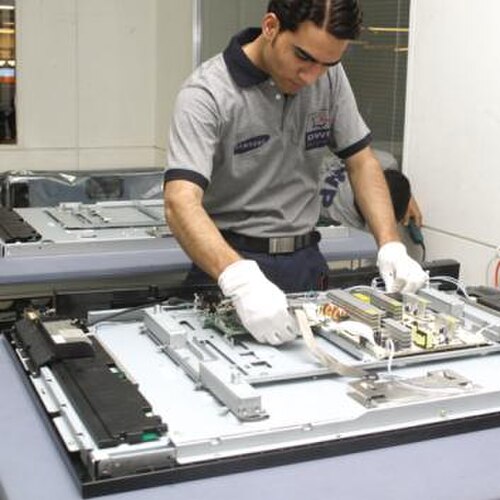
工業はGDPの19.74%、総雇用の24%を占め、2番目に大きなセクターである。大規模製造業(LSM)がGDPの12.2%を占め、アフガニスタンと国内不動産セクターからの需要によりセメント生産が盛んである。[427] 2013年、パキスタンは7,708,557トンのセメントを輸出し、設備容量は44,768,250トンであった。[428]パキスタンの製造業の主要プレーヤーである繊維産業は、GDPの9.5%に貢献し、約1,500万人を雇用している。パキスタンは綿花生産で世界第4位であり、かなりの紡績能力を持ち、アジアの繊維製品の主要輸出国となっている。[429]中国はパキスタンの繊維製品の重要な買い手であり、昨年度は15億2,700万米ドル相当の繊維を輸入した。[430]
サービス

2014~2015年時点で、サービス部門はGDPの58.8%を占め、[421]消費志向の社会であるパキスタンの経済成長の主な原動力となっている[431]。この部門の成長率は農業や工業を上回り、GDPの54%、総雇用の3分の1以上を占めている。他の部門と密接なつながりがあり、農業や製造業に不可欠な投入物を提供している。[432]パキスタンのIT部門は最も急速に成長している部門の1つであり、世界経済フォーラムによるICT開発のランキングで110位にランクされている。 [ 433] 2020年5月時点で約8,200万人のインターネットユーザーを抱えるパキスタンは、世界で9位にランクされています。 [434] [435]また、ICT産業は2020年までに100億ドルを超えると予測されています。 [436] 12,000人の従業員を抱えるパキスタンは、フリーランスの国としてトップ5にランクされており、[437]通信、コンピューター、情報サービスにおける輸出実績は著しく向上しています。[438]
観光

多様な文化、風景、名所を持つパキスタンは、2018年に約660万人の外国人観光客を魅了しました。 [439]しかし、これは人気のヒッピートレイルに牽引された1970年代の観光のピークからは減少しています。[440]パキスタンは、南部のマングローブから北東部のヒマラヤの丘陵地帯まで、タフティバヒやタキシラの古代仏教遺跡、モヘンジョダロやハラッパーなどの5000年前のインダス文明の遺跡、[441]標高7000メートル(23,000フィート)を超える山頂など、見どころを誇っています。 [442]パキスタンの北部には、古代の建築を展示する古い要塞が数多くあります。それは、アレクサンダー大王の子孫であると主張するイスラム以前の小さなカラシャ人のコミュニティが住んでいるフンザ渓谷とチトラル渓谷を囲んでいます。 [443]パキスタンの文化の中心地であるラホールには、バードシャーヒー・マスジド、シャリマール庭園、ジャハーンギール廟、ラホール城など、ムガル建築の数多くの例が展示されています。2005年のカシミール地震の後、ガーディアン紙は観光を促進するために「パキスタンのトップ5の観光地」を強調し、タキシラ、ラホール、カラコルムハイウェイ、カリマバード、サイフル・ムルク湖などの目的地を取り上げました。[444]フェスティバルや政府の取り組みは、パキスタンの文化遺産を促進することを目的としています。[445] 2015年、世界経済フォーラムは旅行と観光の競争力レポートでパキスタンを141カ国中125位にランク付けしました。[446]
インフラストラクチャー
パキスタンは、2016年のIMFと世界銀行の年次総会で、南アジアにおけるインフラ開発のトップ国として称賛された。[447]
パワーとエネルギー

2021年5月現在、パキスタンは認可を受けた商業用原子力発電所6基を稼働させている。[448]パキスタン原子力委員会(PAEC)がこれらの発電所を監督し、パキスタン原子力規制局が安全な運転を確保している。[449]これらの発電所はパキスタンの電力供給の約5.8%を占めており、化石燃料(原油と天然ガス)が64.2%、水力発電が29.9%、石炭が0.1%を占めている。[450] [451]パキスタン初の商業用原子力発電所であるKANUPP -Iは、1971年にカナダから供給された。中国とパキスタンの原子力協力は1980年代に始まり、CHASNUPP-Iが設立された。 2005年に両国は共同エネルギー安全保障計画を提案し、2030年までに16万MWeを超える発電能力を目指した。パキスタンの原子力エネルギービジョン2050は4万MWeの発電能力を目標としており[452]、2030年までに8,900MWeに達すると予想されている[453]。
2008年6月、パンジャブ州チャシュマの原子力施設は、それぞれ325〜340MWeのチャシュマIIIとチャシュマIV原子炉の設置により拡張され、費用は1290億ルピーで、主に中国などの国際的資金源からの800億ルピーでした。 2008年10月には、米印協定への対応と見られる中国の支援に関する別の協定が締結されました。プロジェクトの費用は当時17億米ドルで、外国からの融資は10億7000万米ドルでした。 2013年、パキスタンはチャシュマと同様の原子炉をさらに建設する計画で、カラチに2番目の原子力施設を設立しました。[454] パキスタンの電力はさまざまな企業によって生産され、国家電力規制庁(NEPRA)によって4つの州に均等に分配されています。[455] 2023年、パキスタンの発電設備容量は約45,885MWtでした。[456]パキスタンは2016年10月に1,135メガワットの再生可能エネルギーを生産しました。パキスタンは2025年までに10,000メガワットの再生可能エネルギーを生産する予定です。[457]
輸送
パキスタンには2,567kmの高速道路と約263,942kmの幹線道路があり、旅客交通の92%と貨物交通の96%を処理している。これらの南北を結ぶ道路は、総道路距離のわずか4.6%を占めるに過ぎないが、国の交通量の85%を管理している。これらの道路は、カラチ港やシンド州のカシム港、バロチスタン州のグワダル港やパスニ港などの南部の港を、国内ではパンジャブ州やハイバル・パフトゥンクワ州などの人口の多い州と結び、中国・パキスタン経済回廊を通じてアフガニスタン、中央アジア、中国などの近隣諸国とも結んでいる。[458] [459] [460] [461] WEFの世界競争力レポートによると、パキスタンの港湾インフラの品質評価は2007年から2016年の間に3.7から4.1に上昇しました。 [462]鉄道の内陸交通のシェアは、旅客で8%未満、貨物で4%未満に減少しました。[421]この変化により、鉄道の総路線距離は1990年から1991年の8,775キロメートル(5,453マイル)から2011年には7,791キロメートル(4,841マイル)に減少しました。[459] [458]
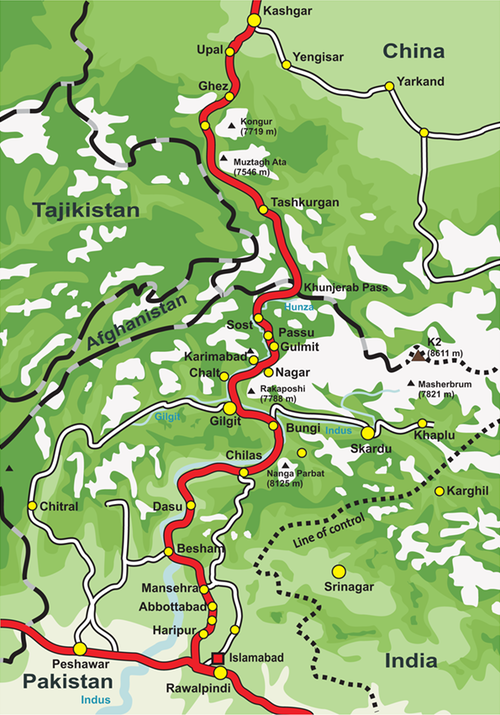
パキスタンの交通事情には、様々な近代的な公共交通システムが存在している。2020年に開業したラホールのオレンジライン地下鉄は[463] 、全長27.1km(16.8マイル)[464]で、高架区間と地下区間があり、毎日25万人以上の乗客を収容している。[465]ラホールには、パキスタン初となるラホールメトロバスもあり、2013年2月から運行されている。 [466]ラーワルピンディー・イスラマバードメトロバスは全長48.1kmで、2015年6月に第一期が開始され、その後延長され、電子チケットとインテリジェント交通システムを採用している。[467] [468] 2017年1月に開業した ムルターンメトロバスは、ムルターンに高速交通サービスを提供している。[469] [470] 2020年8月に開通したペシャワールのバス高速輸送システムは、パキスタンで4番目のBRTシステムとなる。2021年12月から運行されているカラチのグリーンラインメトロバスは、パキスタン政府が資金を提供し、2016年2月に開始されたより大規模なメトロバスプロジェクトの一部である。 [471] [472] [473]一方、ファイサラバードは、提案されている高速輸送プロジェクトであるファイサラバードメトロバスを待っている。[474] 2020年11月に部分的に復活した カラチ環状鉄道は、カラチ都市圏で公共交通サービスを提供している。[475] [476]さらに、オーストリアの専門家と協力して、1975年に運行を停止したカラチの路面電車サービスを復活させる計画が進行中である。[477] [478]
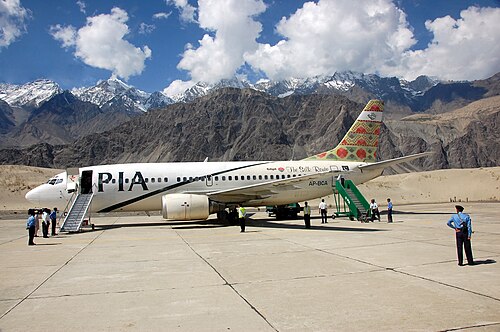
2013年現在、パキスタンには約151の空港と飛行場があり、軍事施設と民間施設の両方があります。[479]ジンナー国際空港が主要な国際玄関口となっているものの、ラホール、イスラマバード、ペシャワール、クエッタ、ファイサラバード、シアルコート、ムルターンの各空港にもかなりの国際交通が流れています。1993年に規制緩和された民間航空業界は、公的機関と民間企業が混在して運営されていますが、国営の パキスタン国際航空(PIA)が国内旅客の73%と国内貨物すべてを運んでいるのが主流です。
科学技術
科学技術の発展はパキスタンのインフラにおいて重要な役割を果たし、国を国際社会に結びつけている。[480]パキスタン科学アカデミーと政府は毎年、世界中の科学者を国際ナティアガリ夏期物理学大学に招待している。[481] 2005年、パキスタンは国際物理年に「発展途上国の物理学」に関する国際セミナーを主催した。[482]パキスタンの理論物理学者アブドゥス・サラムは電弱相互作用に関する研究でノーベル物理学賞を受賞した。[483]パキスタンの科学者は数学、生物学、経済学、コンピューターサイエンス、遺伝学で顕著な貢献をしている。[484]
化学では、サリムザマン・シッディキがニームの木の成分の薬効を特定した。[485] [486] アユーブ・K・オマヤは脳疾患の治療にオマヤ貯留層を開発した。 [487]科学研究はパキスタンの大学、国立研究所、サイエンスパーク、産業界にとって不可欠である。[488] アブドゥル・カディール・カーンは、パキスタンの原子爆弾プロジェクトのための高濃縮ウランベースのガス遠心分離 ウラン濃縮プログラムを先導した。[489]彼は1976年にカフタ研究研究所(KRL)を設立し、2001年に引退するまで上級科学者と所長を務めた。原子爆弾プロジェクト以外にも、彼は分子形態学、物理的マルテンサイト、およびそれらの凝縮物理学と材料物理学への応用に多大な貢献をした。[490]
2010年、パキスタンは出版された科学論文数で世界第43位にランクされました。[491]影響力のあるパキスタン科学アカデミーは、科学政策について政府を指導しています。[492]パキスタンは、2023年までに世界イノベーション指数で107位から88位に上昇しました。 [493] [494] [495]
1960年代は、 SUPARCOが主導するパキスタンの宇宙計画の台頭の年であり、ロケット工学、電子工学、航空学の進歩をもたらした。特にパキスタンは初のロケットを宇宙に打ち上げ、南アジアの宇宙探査の先駆けとなった。[496] 1990年には初の衛星打ち上げに成功し、イスラム教国としては初、南アジアでは2番目にこのマイルストーンを達成した国となった。[497]
パキスタンでは、過去10年間で科学的生産性が4倍に増加し、2006年の年間約2,000件から2015年には9,000件以上に急増しました。パキスタンの引用論文数は、BRIC諸国の合計を上回っています。
—トムソン・ロイターのもう一つのBRICs in the Wall 2016レポート[498]
1971年のインドとの戦争の後、パキスタンは外国の介入を阻止するために急いで核兵器を開発し、核時代に突入した。[499]インドとの緊張により、パキスタンは1998年に地下 核実験を実施し、そのような兵器を保有する7番目の国となった。 [500]
パキスタンは南極研究に積極的に取り組んでいる唯一のイスラム教国であり、1992年以来ジンナー南極研究基地を維持している。 [501] 2020年5月までにパキスタンのインターネットユーザー数は8200万人に達し、世界で9位となった。[434] [435]政府は情報技術プロジェクトに多額の投資を行っており、電子政府とインフラに重点を置いている。[502]
人口統計
2023年の国勢調査の最終結果によると、パキスタンの人口は2億4149万5112人であった。[503] [504] [505]この数字には、パンジャブ州、シンド州、KPK州、バロチスタン州、イスラマバード首都圏のパキスタンの4つの州が含まれている。AJK州とギルギット・バルティスタン州の国勢調査データは、パキスタンCCI評議会によってまだ承認されていない。パキスタンは世界で5番目に人口の多い国である。[506]
1951年から2017年の間に、パキスタンの人口は3,370万人から2億770万人へと6倍以上に増加しました。この国は、高い出生率と低い死亡率に支えられ、減少傾向にあるものの比較的高い成長率を誇っています。1998年から2017年までの平均年間人口増加率は+2.40%でした。
劇的な社会変化により都市化が進み、カラチとラホールという2つの巨大都市が誕生した。1981年から2017年の間にパキスタンの都市人口は3倍以上に増加し(2,380万人から7,570万人)、都市化率は28.2%から36.4%に上昇した。それでも、パキスタンの都市化率は世界でも最低水準にとどまっており、2017年には1億3,000万人を超えるパキスタン人(人口の約65%)が農村部に住んでいた。
パキスタンは出生率が高く、2022年には3.5人と推定されており、世界で最も若い人口を抱える国の一つです。2017年の国勢調査では、国の人口の40.3%が15歳未満であり、65歳以上のパキスタン人はわずか3.7%でした。[507]国の平均年齢は19歳で、 [507]性比は女性100人に対して男性105人と記録されています。[503]
古代インダス文明から現代までのパキスタンの人口動態史に は、ユーラシア大陸や近隣の中東から現代のパキスタン地域に多くの文化や民族が到来し、定住したことが含まれている。このため、パキスタンは多文化、多言語、多民族社会となっている。ウルドゥー語がパキスタンの共通語であるにもかかわらず、国内で話されている言語の数は75から85と推定されており、[508] [509] 2023年には、同国の3大民族言語グループはパンジャブ人(全人口の36.98%を占める)、パシュトゥーン人(18.15%)、シンド人(14.31%)であった。[510]パキスタンはまた、世界で4番目に多い難民人口を抱えていると考えられており、 UNHCRは2021年半ばの時点で140万人と推定している。[511]都市化
インドの分割による独立以来、都市化は様々な理由から急速に進んできた。南部では、カラチがインダス川沿いで最も人口の多い商業の中心地となっている。[512]東西北では、ラホール、ファイサラバード、ラーワルピンディー、イスラマバード、サルゴダ、グジュラーンワーラ、シアルコート、グジュラート、ジェルム、シェイクプーラ、ノウシェラ、マルダン、ペシャワールなどの都市に人口密度の高い弧が広がっている。1990~2008年までに、都市部に住む人がパキスタンの人口の36%を占め、南アジアで最も都市化された国となり、50%以上が人口5,000人以上の町に住んでいる。[513]国内外からの移民が都市の成長を大きく促進している。インド、特に最大の都市カラチや近隣諸国からの移住は都市化を加速させ、新たな政治的、社会経済的課題を引き起こしている。緑の革命のような経済の変化や政治的発展も重要な役割を果たしている。[514]
民族と言語
パキスタンは多様な社会であり、75から85の言語があると推定されています。[517] [518]ウルドゥー語と英語が公用語であり、ウルドゥー語はパキスタン人の75%以上を結びつける力となっています。[519] [520] 2023年の国勢調査によると、最大の民族言語グループは、パンジャブ人(36.98%)、パシュトゥーン人(18.15%)、シンド人(14.31%)、サライキ人(12%)、ウルドゥー語を話す人々(9.25%)、バローチ人(3.38%)、ヒンドコワン人/ハザレワル人(2.32%)、ブラフイ人(1.16%)です。[521] [516]残りの人口は、カシミール人、パハリ人、チトラル人、ギルギット・バルティスタン州の様々な人々 、コヒスターニ人、トルワリ人、メオ人、ハザラ人、カラーシュ人、シッディ人など、様々な少数民族で構成されています。[522] [523]パキスタンのディアスポラは700万人を超え、世界で6番目に大きいです。[ 524]
移民

1947年の分離独立後も、インドのイスラム教徒はパキスタン、特にカラチとシンド州に移住し続けた。[526] 1980年代から1990年代にかけて隣国アフガニスタンで起きた戦争により、数百万人のアフガニスタン難民がパキスタンに流入した。主にハイバル・パフトゥンクワ州と部族地域に流入し、一部はカラチとクエッタにも流入した。パキスタンは世界最大の難民人口を抱える国の一つである。[527]さらに、約200万人のバングラデシュ人と、ミャンマー、イラン、イラク、アフリカ出身とされる50万人の不法滞在者がパキスタンに住んでいる。 [528] 2023年10月、パキスタンはパキスタンからのアフガニスタン人の追放を命じた。[529]
ベンガル人とロヒンギャ族のパキスタンへの移住は1980年代に始まり、1998年まで続いた。カラチには多数のベンガル人居住地があり、ロヒンギャ族の大規模な移住により、カラチはミャンマー国外で最大の人口を有する都市の一つとなった。[530]カラチのビルマ人コミュニティは、市内のさまざまなスラム街に住んでいる。[531]
数千人のウイグル人イスラム教徒が、中国の新疆ウイグル自治区での迫害から逃れ、ギルギット・バルティスタンに避難した。 [532] 1989年以来、数千人のカシミール人イスラム教徒難民が、インド軍による強姦や強制移住を訴えてパキスタンに逃れた。[533]
ディアスポラ

国連経済社会局によると、パキスタンは世界で6番目に大きなディアスポラを抱えている。[524]約700万人のパキスタン人が海外に居住しており、主に中東、ヨーロッパ、北米に居住している。[534]パキスタンは母国への送金において世界第10位である。[417] [535]サウジアラビアは最大の送金元であり、2016年時点で59億ドルを送金している[update]。[536]海外パキスタン人という用語はパキスタン政府によって正式に認められており、海外パキスタン人・人材開発省が彼らのニーズ、福祉、問題に取り組んでいる。海外パキスタン人はパキスタンへの外貨送金の第2位の元となっており、送金額は2009〜2010年の89億ドルから2015〜2016年には199億ドルへと100%以上増加している。[416] [535]
宗教
イスラム教が国教であり[222] 、憲法で信教の自由が保障されている。[538] [539]人口の大半はイスラム教徒(96.47%)で、ヒンズー教徒(2.14%)、キリスト教徒(1.27%)がそれに続く。少数派にはシク教徒、仏教徒、ジャイナ教徒、ゾロアスター教徒(パールシー教徒)、アニミズムを実践する独特のカラーシュ族がいる。[540]さらに、1998年の国勢調査によると、無信仰を公言する人も少数いる。
イスラム教

パキスタンではイスラム教が主流で、人口の約96.5%がイスラム教徒です。[541]パキスタンはイスラム教徒の人口で世界第2位であり、[542]世界のイスラム教徒の10.5%が住んでいます。[543]カラチは世界最大のイスラム教徒の都市です。[544]
大多数はイスラム教スンニ派を信仰し、スーフィズムもかなり存在し、シーア派は少数派である。[545] [546]シーア派は5~25%を占める。[545] [378] [547]パキスタンのシーア派人口は2019年には4200万人と推定されている。[548] 2012年時点で、パキスタンのイスラム教徒の12%が非宗派イスラム教徒[update]であると自認している。[549]
アフマディ派は少数派であり、公式には非イスラム教徒とみなされている。[550] [551]アフマディ派は迫害に直面しており、1974年以来、自らをイスラム教徒と呼ぶことを禁じられている。[552]
ヒンズー教

パキスタン統計局によると、2017年のパキスタンの各地区におけるヒンズー教徒の割合
ヒンズー教は2番目に大きな宗教であり、2017年の国勢調査によると人口の2.14%がそれに続いています。[553] [554]パキスタンは2010年に世界で5番目に多いヒンズー教徒の人口を抱えていました。 [555] 2017年のヒンズー教徒の数は4,444,437人でした。[556]彼らはパキスタン全土に住んでいますが、シンド州に集中しており、そこでは人口の8.73%を占めています。[553] ウメルコット県はヒンズー教徒が多数派を占める唯一の地域です。タルパーカー県はヒンズー教徒の人口が最も多い地域です。ウメルコット、タルパーカー、ミルプルカス、サンガルの4つの県にパキスタンのヒンズー教徒の半数以上が住んでいます。[557]
パキスタンの建国当初、「人質理論」は、インドのイスラム教徒を保護するためにヒンズー教徒を公平に扱うことを示唆していた。[558] [559]しかし、パキスタンのヒンズー教徒の中には疎外感を感じ、インドに移住した者もいた。[560]彼らはバーブリー・マスジドの破壊後に暴力に直面し、[561]強制改宗や拉致に耐えた。 [562]
キリスト教と他の宗教

パキスタン統計局によると、2017年のパキスタンの各地区におけるキリスト教徒の割合
キリスト教徒はヒンズー教徒に次いで2番目に大きな宗教的少数派であり、人口の1.27%を占めている。[519]彼らはラホール地区(5%)とイスラマバード首都圏(4%以上)に集中している。カラチには、イギリス植民地支配時代にゴア人とタミル人の移民によって設立された歴史的なローマカトリックのコミュニティがある。[557]
キリスト教に次いで、バハイ教の信者数は2008年には3万人に達し、続いてシク教、仏教、ゾロアスター教がそれぞれ2008年には約2万人の信者を抱え、[563]小規模なジャイナ教コミュニティも存在する。
2005年には人口の1%が無神論者と自認していた。ギャラップによると、2012年までにこの数字は2.0%に上昇した。[564]
教育
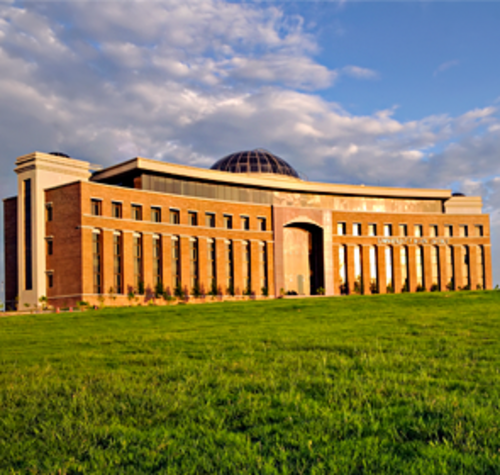
パキスタンの憲法は初等・中等教育の無償化を義務付けており[565]、各州にはパンジャブ大学、シンド大学、ペシャワール大学、カラチ大学、バロチスタン大学などの公立大学が設立されている。この国の教育環境には公立・私立大学の両方が含まれており、新しい機関の教育の質に関する懸念はあるものの、研究と高等教育の機会を強化するための協力を促進している。 [566]パキスタンの 技術・職業訓練校は約3,193校あり[567]、学生に無料のイスラム教育を提供するマドラサが補完しており[568]、過激派の勧誘に対する懸念がある中、政府はマドラサの質を規制し監視する努力をしている。[569] 教育は、保育園、初等、中等、入学、中等、大学プログラムの6つの主要なレベルに分かれている。 [567]さらに、私立学校はケンブリッジ国際試験によって設定されたカリキュラムに基づいた並行した中等教育システムを提供しており、[570]パキスタンには439校のインターナショナルスクールがあると報告されています。[571]

2007年以降の取り組みにより、英語による中等教育が全国で義務化された。2012年に活動家マララ・ユスフザイがタリバンに襲撃された後、彼女は教育擁護活動により最年少のノーベル賞受賞者となった。[572] 2013年の改革により、シンド州で中国語コースが義務付けられ、中国の影響力の拡大を反映している。2018年現在、パキスタンの識字率は62.3%で、地域や男女間の格差が大きい。[573] 1995年以来のコンピューターリテラシーを含む政府の取り組みは、非識字を撲滅することを目指しており、2015年までに小学校就学年齢の子供の100%の就学と約86%の識字率を目標としている。[574]パキスタンはGDPの2.3%を教育に割り当てているが、[575]南アジアで最も低い水準にある。[576]
文化
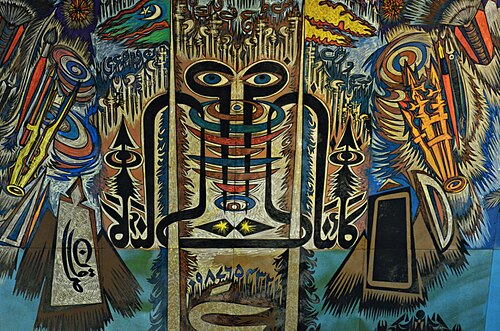
パキスタンの市民社会は階層的であり、地元の文化的エチケットと伝統的なイスラムの価値観を重視している。主な家族単位は拡大家族であるが、社会経済的要因により核家族化の傾向が高まっている。 [577] [578]男性も女性も通常シャルワール・カミーズを着用し、男性はズボン、ジーンズ、シャツも好む。[579]中流階級は約3,500万人に増加し、さらに1,700万人が上流階級と上流中流階級であり、地方の地主から都市のエリートへの権力の移行につながっている。[580]イード・アル=フィトル、イード・アル=アザ、ラマダン、クリスマス、イースター、ホーリー、ディワリなどの祭りは主に宗教的なものである。 [577]パキスタンは、グローバル化の進行により、ATカーニー/FPグローバリゼーション指数で56位にランクされている。 [581]
建築
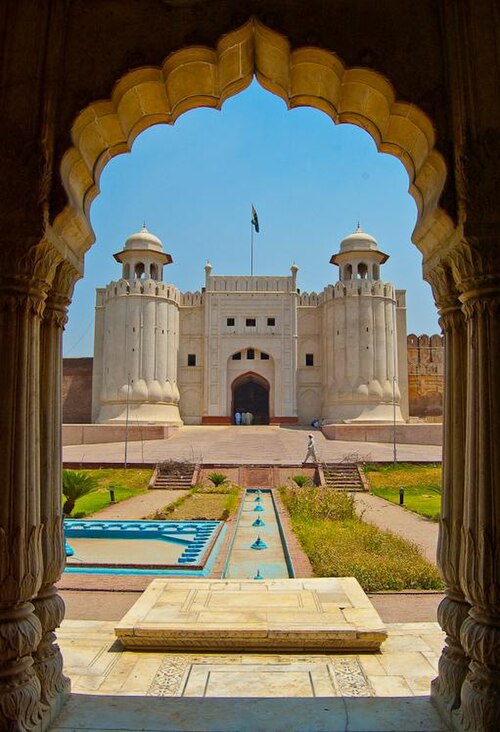
パキスタンの建築は、プレ・イスラム、イスラム、植民地、ポスト・コロニアルの4つの時代によって定義される。紀元前3千年紀中頃のインダス文明の始まりは、現存する大きな建造物によって証明されている都市文化の先駆けとなった。[582]著名なプレ・イスラムの集落には、モヘンジョダロ、ハラッパー、コート・ディジなどがある。[583]仏教とギリシャの影響が融合して、西暦1世紀から独特のグレコ仏教様式が生まれ、有名なガンダーラ様式に代表される。[584]著名な仏教建築の遺跡には、ハイバル・パフトゥンクワのタフティ・バーイ修道院がある。[585]
現在のパキスタンにおけるイスラム教の到来は、仏教建築の終焉を告げ、イスラム建築の到来を告げました。インド・イスラム建築の著名な建造物であるムルターンのシャー・ルクネ・アーラム廟は、今でも重要な意味を持っています。ムガル帝国時代には、ペルシャ・イスラムのデザインがヒンドゥスターニー美術と融合し、バードシャーヒ・モスクや象徴的なアラムギリ門のあるラホール城など、ラホールの建築の至宝に見られます。ラホールはまた、活気に満ちたワズィル・ハーン・モスク[586]や緑豊かなシャリマール庭園を誇っています。イギリス植民地時代には、インド・ヨーロッパ建築が現れ、ヨーロッパとインド・イスラムのスタイルが融合しました。ファイサル・モスク、ミナール・エ・パキスタン、マザーリ・エ・カイドなどの現代のランドマークには、ポスト植民地時代のアイデンティティが光っています。イギリス建築の影響はラホール、ペシャワール、カラチの建造物に今も残っている。[587]
衣服、芸術、ファッション

シャルワール・カミーズはパキスタンの民族衣装で、パンジャブ、シンド、バロチスタン、カイバル・パフトゥンクワ、アザド・カシミールのすべての州で着用されています。各州には独自のスタイルがあります。パキスタン人はシルク、シフォン、綿などさまざまな生地を着用しています。民族衣装に加えて、男性は特にオフィス、学校、社交の場では国内で仕立てたスーツとネクタイを着用することがよくあります。 [588]
パキスタンのファッション業界は、伝統と現代を融合させて独自の文化的アイデンティティを創り出すことで繁栄してきました。地域の伝統的な衣装は、地元の伝統の重要なシンボルであり続け、現代的かつより純粋な形へと進化しています。ラホールのパキスタンファッションデザイン評議会やカラチのファッションパキスタン評議会などの組織は、 PFDCファッションウィークやファッションパキスタンウィークなどのイベントを主催しています。パキスタンで最初のファッションウィークは2009年11月に開催されました。[589]
文学と哲学
パキスタンはウルドゥー語、シンド語、パンジャブ語、パシュトー語、バローチ語、ペルシャ語、英語など、様々な言語の文学を誇っています。 [590]パキスタン文学アカデミーは国内外で文学や詩を積極的に推進しています。[591] 国立図書館は文学の普及に貢献しています。 歴史的に、パキスタン文学は主に抒情詩、宗教詩、民俗詩で構成されていましたが、後に植民地の影響を受けて散文小説へと多様化し、現在では広く受け入れられています。[592] [593]
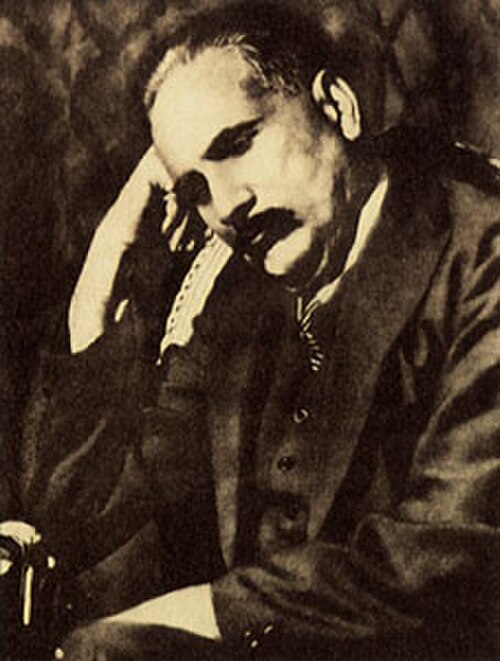
パキスタンの国民的詩人であるムハンマド・イクバールは、イスラム文明の復興を訴える影響力のある詩をウルドゥー語とペルシャ語で書いた。[594]現代ウルドゥー文学の著名人には、ジョシュ・マリハバディ、ファイズ・アハメド・ファイズ、サアダト・ハサン・マントがいる。[593]シャー・アブドゥル・ラティーフやブッレ・シャーのような人気のあるスーフィー詩人は尊敬されている。 [595] ミルザ・カリチ・ベグは、現代シンド語散文の父として称賛されている。 [596]パキスタンの哲学は、イギリスとアメリカの哲学の影響を受けており、MMシャリフのような著名人がその発展に貢献した。 [ 597 ] 1971年以降、ジャラルディン・アブドゥル・ラヒムのような人物を通じて、マルクス主義思想がパキスタン哲学で目立つようになった。[598]
メディアとエンターテイメント
民間の印刷メディア、国営のパキスタンテレビ(PTV)、パキスタン放送公社(PBC)は、21世紀までメディアを支配していた。パキスタンは現在、国内の民間所有の24時間ニュースメディアとテレビチャンネルの広大なネットワークを誇っている。[599]国境なき記者団による2021年の報告書では、パキスタンは報道の自由度指数で180カ国中157位にランクされており、特に軍や政府に反対する報道をする際にパキスタンの記者が直面する圧力に言及している。[600] BBCはパキスタンのメディアを「南アジアで最も率直なメディアの1つ」と評している。[601]パキスタンのメディアは汚職の暴露に重要な役割を果たしてきた。[602]
ロリウッド、パンジャブ語、パシュトゥー語の映画産業は、カラチ、ラホール、ペシャワールに集中している。ボリウッド映画は1965年から2008年まで公共の映画館で上映が禁止されていたが、パキスタンの大衆文化に影響を与え続けた。[ 603]しかし、2019年には、ボリウッド映画の上映が無期限に禁止された。[604]パキスタン映画産業が直面している課題にもかかわらず、ウルドゥー語のテレビドラマや演劇は依然として人気があり、多くの娯楽メディアで頻繁に放送されている。[605]ウルドゥー語のドラマはテレビ娯楽産業を支配しており、1990年代からその質の高さで知られている。[606]パキスタンの音楽は、地方の民俗音楽やカウワーリやガザル・ガヤキなどの伝統的なスタイルから、伝統音楽と西洋音楽の現代的な融合まで、多様な形式を網羅している。[607]パキスタンには数多くの有名なフォークシンガーがおり、アフガニスタン難民が西部の州に到着したことで、時折不寛容な態度が見られるものの、パシュトゥー語音楽への関心が高まっている。[608]
料理

パキスタン料理は、16世紀のムガル帝国の王室の厨房にルーツを持ち、イギリス、インド、中央アジア、中東の料理の伝統の影響が融合している。[609]中東料理とは異なり、パキスタン料理はニンニク、ショウガ、ターメリック、唐辛子、ガラムマサラでスパイスが効いている。小麦ベースの平らなパンであるロティは、カレー、肉、野菜、レンズ豆とともに、ほとんどの食事に添えられる。米も一般的で、プレーン、スパイス入り、または甘い料理として提供される。[179] [610] パンジャブ地方の伝統的な飲み物であるラッシーと、ミルクと砂糖を入れた紅茶は、全国的に人気のある飲み物である。[579] [611]南パンジャブの愛されている甘い料理であるソハンハルワは、パキスタン全土で楽しまれています。[612]
スポーツ
パキスタンではクリケットが最も人気のあるスポーツで、サッカーがそれに続きます。フィールドホッケーは国民的スポーツです。スカッシュ、ポロ、伝統的なゲームなどの他のスポーツも楽しまれています。
クリケットでは、パキスタンはICCクリケットワールドカップ、ICCワールドトゥエンティ20、ICCチャンピオンズトロフィーなど、すべての主要なICCトーナメントで優勝を誇っています。パキスタンスーパーリーグは世界でもトップクラスのT20リーグにランクされています。[613] [614]
サッカーでは、パキスタンは設立後すぐにパキスタンサッカー連盟を設立し、FIFAワールドカップのボールを生産していることで知られています。[615] [616]
フィールドホッケーでは、パキスタンはホッケーワールドカップで4回優勝、アジア競技大会で8回金メダル、オリンピックで3回金メダルを獲得している。スカッシュ選手のジャハンギル・カーンはプロスポーツ史上最長の連勝記録を保持しており、555試合連続勝利している。[617] [618]パキスタンはクリケットやホッケーのワールドカップ、アジア競技大会など、さまざまな国際イベントを主催してきた。[619]
参照
.svg/500px-Asia_(orthographic_projection).svg.png)
注記
- ^ パキスタン憲法第251条[3]
- ^ 「パキスタン領カシミール、アザド・カシミール(13,297 km 2または 5,134 平方マイル)とギルギット・バルティスタン(72,520 km 2または 28,000 平方マイル)のデータが含まれています。[5]これらの地域を除外すると、面積は 796,095 km 2 (307,374 平方マイル) になります。」
- ^ 「この数字にはパキスタン統治下のカシミール地域、アザド・カシミール、ギルギット・バルティスタンのデータは含まれません。」
- ^ パキスタンの日付と時刻の表記法を参照してください。
- ^ ウルドゥー語: پَاکِسْتَان、ウルドゥー語の発音: [ˈpɑːkɪst̪ɑːn] ; 英語では/ ˈ p æ k ɪ s t æ n /と発音される。 ,/ ˈ p ɑː k ɪ s t ɑː n / 、/ ˌ p æ k ɪ ˈ s t æ n /、および/ ˌ p ɑː k ɪ ˈ s t ɑː n /。
- ^ ISO : اِسْلامی جُمْہُورِیَہ پَاکِسْتَان、イスラム ジュムフリヤ パキスタン
- ^ 「この数字にはパキスタン統治下のカシミール地域、アザド・カシミール、ギルギット・バルティスタンのデータは含まれません。」
- ^ バリー・ブザンとオーレ・ヴァーヴァーは、地域安全保障複合体理論(RSCT)の枠組みにおいて、世界レベル(またはシステムレベル)で行動し影響を及ぼす超大国や大国と、地域では大きな影響力を持つものの、世界レベルでは影響力が小さい地域大国を区別している。この地域大国のカテゴリには、ブラジル、エジプト、インド、イラン、イラク、イスラエル、ナイジェリア、パキスタン、サウジアラビア、南アフリカ、トルコが含まれる。
- ^ この期間の正確な期間は不明である。文献学および言語学の証拠によれば、ヴェーダの中で最も古いリグ・ヴェーダは、おおよそ紀元前1700年から1100年の間に作曲されたとされ、初期ヴェーダ時代とも呼ばれている。オベルリーズは、第10巻の最も新しい賛歌について、紀元前1200年から1100年と推定している。最も古い賛歌の終末期の推定は、より不確かである。他の「累積的な証拠」は、1700年から1100年という広い範囲を設定している。
- ^ 世界銀行のデータによれば、パキスタンの総面積はギルギット・バルティスタン州、アザド・カシミール州、水域を除いて 770,880 km² となっている。
参考文献
- ^ ミナハン 2009.
- ^ コプカ 2011より。
- ^ エアーズ 2009年。
- ^ エバーハルト、シモンズ、フェニッヒ 2022年。
- ^ James 2022.
- ^ Bhandari 2022.
- ^ a b c d IMF 2024.
- ^ a b IMF 2023.
- ^ a b Haleem 2013.
- ^ Wright (2009) "The Indus civilisation is one of three in the 'Ancient East' that, along with Mesopotamia and Pharaonic Egypt, was a cradle of early civilisation in the Old World (Childe, 1950). Mesopotamia and Egypt were longer lived, but coexisted with Indus civilisation during its florescence between 2600 and 1900 B.C. Of the three, the Indus was the most expansive, extending from today's northeast Afghanistan to Pakistan and India."
- ^ Badian 1987.
- ^ Wynbrandt 2009.
- ^ Spuler 1969.
- ^ Copland (2001) "However, the real turning point for the new Muslim League came with the general election of December 1945 and January 1946. Despite facing a rejuvenated Congress, the League won four-fifths of all the Muslim-reserved seats ... The result left no one, not least the British, in doubt about where the locus of power within the Muslim community now lay ... In most respects, therefore, the League's success in the elections of 1945–46 can be interpreted as a clear Muslim mandate for Pakistan. (p 72)"
- ^ Metcalf & Metcalf (2006) "The loss of life was immense, with estimates ranging from several hundred thousand up to a million. But, even for those who survived, fear generated a widespread perception that one could be safe only among members of one's own community; and this in turn helped consolidate loyalties towards the state, whether India or Pakistan, in which one might find a secure haven. This was especially important for Pakistan, where the succour it offered to Muslims gave that state for the first time a visible territorial reality. Fear too drove forward a mass migration unparalleled in the history of South Asia. ... Overall, partition uprooted some 12.5 million of undivided India's people."
- ^ Talbot 2016.
- ^ Middle power: multiple sources:
- Buzan (2004)
- Solomon (1997)
- Rajagopalan (2011)
- Buzan & Waever (2003)
- Paul (2012, p. 11) "The regional powers such as Israel or Pakistan are not simple bystanders of great power politics in their regions; they attempt to asymmetrically influence the major power system often in their own distinct ways."
- Vandamme (2014, p. 14) "Countries like Saudi Arabia and Pakistan have enough influence to not be considered small, but not enough to be major powers. Within the limits of their regions, they play a significant political role. Thus instinctively, they would qualify as middle powers. While it is not the objective here to question the characteristics of Jordan's definition of middle powers, we argue that Pakistan is in fact a middle power despite its being nuclear-armed. When looking at the numbers, for instance, it appears that Saudi Arabia and Pakistan can be classified as middle powers."
- ^ Zia & Burton 2023.
- ^ Rais 2017.
- ^ Cornwall & Edwards 2014.
- ^ Joseph 2016.
- ^ Baqir 2018.
- ^ SATP 2024.
- ^ Aziz 1987.
- ^ a b Saqib & Malik 2018.
- ^ Lahiri 2023.
- ^ Tummala 1996.
- ^ Anand 1991.
- ^ Parker 2017.
- ^ Allchin & Petraglia 2007.
- ^ Ahmed 2014.
- ^ Coningham & Young (2015) "Mehrgarh remains one of the key sites in South Asia because it has provided the earliest known undisputed evidence for farming and pastoral communities in the region, and its plant and animal material provide clear evidence for the ongoing manipulation, and domestication, of certain species. Perhaps most importantly in a South Asian context, the role played by zebu makes this a distinctive, localised development, with a character completely different from other parts of the world. Finally, the longevity of the site, and its articulation with the neighbouring site of Nausharo (c. 2800—2000 BCE), provides a very clear continuity from South Asia's first farming villages to the emergence of its first cities (Jarrige, 1984)."
- ^ Fisher (2018) "The earliest discovered instance in India of well-established, settled agricultural society is at Mehrgarh in the hills between the Bolan Pass and the Indus plain (today in Pakistan) (see Map 3.1). From as early as 7000 BCE, communities there started investing increased labor in preparing the land and selecting, planting, tending, and harvesting particular grain-producing plants. They also domesticated animals, including sheep, goats, pigs, and oxen (both humped zebu [Bos indicus] and unhumped [Bos taurus]). Castrating oxen, for instance, turned them from mainly meat sources into domesticated draft-animals as well."
- ^ Dyson (2018) "The subcontinent's people were hunter-gatherers for many millennia. There were very few of them. Indeed, 10,000 years ago there may only have been a couple of hundred thousand people, living in small, often isolated groups, the descendants of various 'modern' human incomers. Then, perhaps linked to events in Mesopotamia, about 8,500 years ago agriculture emerged in Baluchistan."
- ^ Allchin & Allchin (1982) "During the second half of the fourth and early part of the third millennium B.C., a new development begins to become apparent in the greater Indus system, which we can now see to be a formative stage underlying the Mature Indus of the middle and late third millennium. This development seems to have involved the whole Indus system, and to a lesser extent the Indo-Iranian borderlands to its west, but largely left untouched the subcontinent east of the Indus system."
- ^ Dales, Kenoyer & Alcock 1986.
- ^ Burrison 2017.
- ^ Oursel 2015.
- ^ a b Vedic period: multiple sources:
- Ninan (2018)
- Parmar (2018)
- Consiglio (2015)
- Carmichael (2022)
- ^ Behrendt 2007.
- ^ Rahmaan 2017.
- ^ Oberlies 2023.
- ^ Stonard 2017.
- ^ Dandamaev 2023.
- ^ Sadasivan 2011.
- ^ a b James 1980.
- ^ Khan 2022, p. 114.
- ^ Cooke 2017.
- ^ Pollitt 1986.
- ^ Quintanilla 2007.
- ^ Kubica 2023.
- ^ Westmoreland 2019.
- ^ Needham (1994) "When the men of Alexander the Great came to Taxila in India in the fourth century BCE they found a university there the like of which had not been seen in Greece, a university which taught the three Vedas and the eighteen accomplishments and was still existing when the Chinese pilgrim Fa-Hsien went there about CE 400."
- ^ Kulke & Rothermund (2016) "In the early centuries the centre of Buddhist scholarship was the University of Taxila."
- ^ Mookerji 1989.
- ^ Banerjee 2022.
- ^ Mufti 2013.
- ^ a b Hoodbhoy 2023.
- ^ Cavendish 2006, p. 318.
- ^ Stubbs & Thomson (2016) "Perhaps best known as home to Asia's earliest cities, the Harappan sites of Mohenjo-Daro and Harappa, Pakistan's rich history includes contributions from prominent Buddhist, Hindu, Hellenistic, Jain and Zoroastrian civilizations, as well as those connected to its Islamic heritage."
- ^ Malik 2006, p. 47.
- ^ Lapidus 2014.
- ^ Samad 2011.
- ^ Faroqhi 2019.
- ^ Canfield 2002.
- ^ Chandra 2005.
- ^ Malik 2006, p. 79.
- ^ Metcalf & Metcalf 2006.
- ^ MacDonald 2017.
- ^ Simpson 2007.
- ^ a b Wolpert (1984, p. 17) "Barrister Jinnah of Bombay remained as remote from such feelings, as out of tune with such reasoning, as he had been in London in 1893, when Sir Sayyid first spoke of Hindus and Muslims as "different nationalities.""
- ^ a b Sengupta (2023) "Syed Ahmad Khan, the founder of the Muhammadan Anglo-Oriental College (which later became Aligarh Muslim University), had declared in a speech in Meerut what would become famous as the "two nation theory.""......"Is it possible that under these circumstances two nations — the Mahomedans and the Hindus — could sit on the same throne and remain equal in power? Most certainly not."
- ^ a b c Holt & Curta 2016.
- ^ Wolpert 1984.
- ^ Rustomji 1952.
- ^ Walbridge 2012.
- ^ Gayer 2014.
- ^ Sharma, D'Angelo & Giri 2020.
- ^ Pirbhai 2009.
- ^ Harjani 2018.
- ^ Cook 1975.
- ^ Khan 2022, p. 119.
- ^ Cavendish 2006, p. 365.
- ^ Law 1999.
- ^ Hussain 2015.
- ^ Malleson 2016.
- ^ Hali & Akhtar 1993.
- ^ Hardy (1972) "Much has been made' of the failure of Congress and the Muslim parties to agree over the Nehru Report and of the rejection of Jinnah's 'Fourteen Points' as a significant milestone along the way to the partition of India. A great opportunity was lost, it is thought, for the abandonment of separate electorates by voluntary Muslim agreement."
- ^ Wuthnow (2013) "To satisfy Muslims' determination to have guaranteed rights in the future political system of India and to maintain territorial unity of the Indian state, by 1929 Jinnah produced the formula known as the Fourteen Points of Mr. Jinnah. The Fourteen Points included separate electorates for Muslims in the provinces of India, parity of electoral representation in the Punjab and Bengal, and electoral considerations for Muslims in those provinces in which they were a minority, although they would retain clear majority in the Northwest Frontier Province, Baluchistan, and Sind."
- ^ a b Singh & Shani (2021) "Jinnah's famous 'fourteen points' as a condition for support for India's unity, with strong provinces within a weak Indian federation, marked the parting of ways between the Congress and the Muslim national leadership (Jalal 1994, 10–11). At the 1930 session of the All-Indian Muslim Conference, Sir Mohammed Iqbal proposed a Muslim homeland that would serve 'as a symbolic cultural expression of the common striving of Muslim fulfilment – a political manifestation of a common mission' (Gilmartin 1988, 167). The idea of self-determination for India's Muslims was constructed mainly in fear of the majoritarian 'secular' (Hindu) nationalism of the Congress."
- ^ Iqbal (two-nation theory): multiple sources:
- N. Khan (2012)
- Basu & Miroshnik (2023) "Mohammed Iqbal was credited with coming up with the two-nation theory in his speech at Allahabad in 1930 to the Muslim League in a very formal way by saying: "I would like to see the Punjab, North-West Frontier Province, Sind, and Baluchistan amalgamated into a single State. Self-government within the British Empire or without the British Empire, the formation of a consolidated North-West Indian Moslem State appears to me to be the final destiny of the Moslems, at least of NorthWest India" (Zaidi, 1993; Ahmed, 1970)."
- Hussain (2018) "After repeated demands for stronger constitutional safeguards to protect the rights of minorities, Iqbal eventually opted for a separate Islamic Republic instead. As opposed to putting the free and rational individual at the centre of his democratic theory, Iqbal’s republic primarily required Muslims endowed with a specific character and smelted together by a peculiar vision of individuality. Like a number of his contemporaries, Iqbal warmed up to the two nation-theory. Unlike the mainstream view, however, which read an eternal struggle of Hindus and Muslims back into Indian history, Iqbal’s concept of the Muslim nation was something to be striven towards, not something to be replanted from the past. Iqbal believed that the best way to actualize this national sentiment in the present, was through individual political action."
- ^ Pandeya 2003.
- ^ Basu & Miroshnik 2017.
- ^ M. H. Khan 2016.
- ^ Tucker (2020) "Gandhi's decision played directly into the hands of Jinnah. Jinnah's Muslim League strongly supported the Allied war effort and thereby greatly advanced the possibility of the creation of a separate Muslim state in the Indian subcontinent after the war."
- ^ Chandra 2008.
- ^ Mohiuddin (2007, p. 70) "In the elections of 1946, the Muslim League won 90 percent of the legislative seats reserved for Muslims. It was the power of the big zamindars in Punjab and Sindh behind the Muslim League candidates that led to this massive landslide victory (Alavi 2002, 14). Even Congress, which had always denied the League's claim to be the only true representative of Indian Muslims had to concede the truth of that claim. The 1946 election was, in effect, a plebiscite among Muslims on Pakistan."
- ^ Mohiuddin (2007, p. 71) "Despite the League's victory in the elections, the British did not want the partition of British India. As a last attempt to avoid it, Britain put forward the Cabinet Mission Plan, according to which India would become a federation of three large, self-governing provinces and the central government would be limited to power over foreign policy and defense, implying a weak center."
- ^ Wolpert 1984, p. 309.
- ^ Markovits 2012.
- ^ a b Wolpert 1984, pp. 328–329.
- ^ Hasanie 2013.
- ^ Akbarzadeh 2020.
- ^ Cohen 2004, p. 6.
- ^ Casualties/Genocide: multiple sources:
- Sikand (2004)
- Butalia (2000)
- Isaacs (1975) "2,000,000 killed in the Hindu-Muslim holocaust during the partition of British-India and the creation of India and Pakistan"
- Basrur (2008) "An estimated 12–15 million people were displaced, and some 2 million died. The legacy of Partition (never without a capital P) remains strong today ..."
- D'Costa (2011) "Estimates of the dead vary from 200,000 (the contemporary British figure) to 2 million (a subsequent Indian speculation). Today, however, it is widely accepted that nearly a million people died during Partition (Butalia, 1997)."
- Brass (2003) "In the event, largely but not exclusively as a consequence of their efforts, the entire Muslim population of the eastern Punjab districts migrated to West Punjab and the entire Sikh and Hindu populations moved to East Punjab in the midst of widespread intimidation, terror, violence, abduction, rape, and murder."
- ^ Rape figures: multiple sources:
- Visweswaran (2011)
- Daiya (2011) "The official estimate of the number of abducted women during Partition was placed at 33,000 non-Muslim (Hindu or Sikh predominantly) women in Pakistan, and 50,000 Muslim women in India."
- Abraham (2002) "In addition thousands of women on both sides of the newly formed borders (estimated range from 29,000 to 50,000 Muslim women and 15,000 to 35,000 Hindu and Sikh women) were abducted, raped, forced to convert, forced into marriage, forced back into what the two States defined as 'their proper homes', torn apart from their families once during partition by those who abducted them, and again, after partition, by the State which tried to 'recover' and 'rehabilitate' them."
- Singh, Iyer & Gairola (2016) "The horrific statistics that surround women refugees-between 75,000–100,000 Hindu, Muslim and Sikh women who were abducted by men of the other communities, subjected to multiple rapes, mutilations, and, for some, forced marriages and conversions-is matched by the treatment of the abducted women in the hands of the nation-state. In the Constituent Assembly in 1949 it was recorded that of the 50,000 Muslim women abducted in India, 8,000 of then were recovered, and of the 33,000 Hindu and Sikh women abducted, 12,000 were recovered."
- ^ Hasan & Raza (2009) "When the British Indian Empire was partitioned in 1947, 4.7 million Sikhs and Hindus left what is today Pakistan for India, and 6.5 million Muslims migrated from India to Pakistan."
- ^ Riggs 2024.
- ^ Bhaumik 1996.
- ^ a b Kazmi 2003.
- ^ a b c Tucker 2017.
- ^ Akbar 2018.
- ^ Kumarasingham (2013) "Few today, including those who work on the subcontinent, recollect that India, Pakistan and Sri Lanka did not become republics the day British rule ended. Even distinguished scholars of Empire like Perry Anderson and A. G. Hopkins have made the common assumption that India naturally became a republic upon independence on 15 August 1947. Instead, all three of these South Asian states began their independent life as Realms within the British Commonwealth and mirrored the style and institutions of the Dominions of Canada, Australia, South Africa and New Zealand. Though their sovereignty was in no way impaired by this seemingly ambiguous position they all held the British sovereign as their head of state who was represented in each capital by a governor- general appointed on the advice of the local prime minister. India, Pakistan and Ceylon were Realms from 1947 to 1950, 1947 to 1956 and 1948 to 1972 respectively."
- ^ McGrath (1996) "Undivided India, their magnificent imperial trophy, was besmirched by the creation of Pakistan, and the division of India was never emotionally accepted by many British leaders, Mountbatten among them."
- ^ Ahmed (1997) "Mountbatten's partiality was apparent in his own statements. He tilted openly and heavily towards Congress. While doing so he clearly expressed his lack of support and faith in the Muslim League and its Pakistan idea."
- ^ Wolpert (2009) "Mountbatten tried to convince Jinnah of the value of accepting him, Mountbatten, as Pakistan's first governor-general, but Jinnah refused to be moved from his determination to take that job himself."
- ^ Lapierre & Collins (2015) "Not only was I not aware, but nobody was aware. Nobody had a clue. I'm glad I didn't because I just don't know what I would have done if I'd known that. You see, Jinnah was so much of a one-man band. If somebody had told me he's going to be dead in x months would I then -I am asking myself this question now-would I have said, Let's hold India together and not divide it? Would I have put back the clock, and held the position? Most probably. I have a feeling Jinnah may not have known himself he had tuberculosis. He was a very severe, cold and repressed person. Nothing would have surprised me about him. He was an extraordinary creature."
- ^ Wilson 2009.
- ^ Hussain (2008) "Mawlānā Shabbīr Ahmad Usmānī, a respected Deobandī ʿālim (scholar) who was appointed to the prestigious position of Shaykh al-Islām of Pakistan in 1949, was the first to demand that Pakistan become an Islamic state. But Mawdūdī and his Jamāʿat-i Islāmī played the central part in the demand for an Islamic constitution. Mawdūdī demanded that the Constituent Assembly make an unequivocal declaration affirming the "supreme sovereignty of God" and the supremacy of the sharīʿah as the basic law of Pakistan."
- ^ a b Hussain (2008) "The first important result of the combined efforts of the Jamāʿat-i Islāmī and the ʿulamāʿ was the passage of the Objectives Resolution in March 1949, whose formulation reflected compromise between traditionalists and modernists. The resolution embodied "the main principles on which the constitution of Pakistan is to be based". It declared that "sovereignty over the entire universe belongs to God Almighty alone and the authority which He has delegated to the State of Pakistan through its people for being exercised within the limits prescribed by Him is a sacred trust", that "the principles of democracy, freedom, equality, tolerance and social justice, as enunciated by Islam shall be fully observed", and that "the Muslims shall be enabled to order their lives in the individual and collective spheres in accord with the teaching and requirements of Islam as set out in the Holy Qurʿan and Sunna". The Objectives Resolution has been reproduced as a preamble to the constitutions of 1956, 1962, and 1973."
- ^ Wynbrandt 2009, p. 190–197.
- ^ a b Chowdhury & Mahmud 2008.
- ^ Kathpalia 1986.
- ^ Koumar 2023.
- ^ Lewis 2011.
- ^ Bose 2005.
- ^ Khan 2008.
- ^ Sunkara, Walter & Rojas 2024.
- ^ Hiro 2015.
- ^ Rummel 1998.
- ^ Beachler 2011.
- ^ Totten 2000.
- ^ Agha 2021.
- ^ Paxton 2016.
- ^ Oldenburg 2010.
- ^ Fitzpatrick 2007.
- ^ a b Hoodbhoy 2011.
- ^ Krasno & LaPides 2015.
- ^ Khanna 2002.
- ^ Hajari 2015.
- ^ Coll 2004.
- ^ Westad 2005.
- ^ Haroon 2008.
- ^ Tucker 2015.
- ^ Chapman 2018.
- ^ Husain 2010.
- ^ Yap & Abeyratne 2023, p. 68.
- ^ a b Khan 2012.
- ^ Ahmad 2023.
- ^ Mazari 2003.
- ^ Chakma 2014.
- ^ Yarbakhsh 2019.
- ^ Khoja-Moolji 2021.
- ^ Fair 2014.
- ^ a b Kennedy 2021.
- ^ Zulfiqar 2011.
- ^ Mohiuddin 2007, p. 219.
- ^ Martini, Ford & Jackson 2020.
- ^ Mansbach, Pirro & Taylor 2017.
- ^ United States Senate Committee on Foreign Relations 2008.
- ^ Jaffrelot 2015.
- ^ Kapoor 2009.
- ^ Waseem 2022.
- ^ Dede & Sadioglu 2016.
- ^ Ruhland 2019.
- ^ Burnett 2020.
- ^ Central Intelligence Agency 2023.
- ^ Afzal 2024.
- ^ Tariq & Stenson 2024.
- ^ Cheng et al. 2022.
- ^ Agarwal & Ahmad 2021.
- ^ Malik 2015.
- ^ Mordi & Adisa 2022.
- ^ Haque 2002.
- ^ Britannica (Gulf of Oman) 2024.
- ^ a b Factbook 2024.
- ^ Karaman 2012.
- ^ Banerjee 2019.
- ^ a b Mohiuddin 2007, p. 3, 317, 323–324.
- ^ Kreft 2007.
- ^ Geology: multiple sources:
- Hibbert (2015)
- DeVivo et al. (2021)
- Alisibramulisi et al. (2022)
- Britannica (Azad Kashmir) (2024)
- ^ Descloitres 2002.
- ^ Cavendish 2006, p. 297.
- ^ Blood 1996, p. 82.
- ^ Jiwani 2021.
- ^ Bright 2017.
- ^ Samuel 2016.
- ^ a b c d Chandrappa, Gupta & Kulshrestha 2011.
- ^ Blood 1996, p. 87.
- ^ Lane, Norton & Ryan 2017.
- ^ El-Esawi 2019.
- ^ a b Abul-Soad 2011.
- ^ Descals et al. 2023.
- ^ Spate & Learmonth 2017.
- ^ Sandhu 2010.
- ^ UNEP-WCMC 2024.
- ^ Akhtar & Mirza 2006.
- ^ PEPA 2016.
- ^ World Bank 2024.
- ^ Fatima 2020.
- ^ a b Faridah-Hanum et al. 2015.
- ^ Grimmett & Inskipp 2021.
- ^ Hunter 2018.
- ^ San et al. 2021.
- ^ Flux & Chapman 1990.
- ^ a b Srinivasulu & Srinivasulu 2012.
- ^ Waseem et al. 2020.
- ^ Sunquist & Sunquist 2014.
- ^ Sunquist & Sunquist 2017.
- ^ Stoneman 2021.
- ^ Tisdell 2013.
- ^ Srinivasulu 2018.
- ^ Roze 2012.
- ^ Somerville 2021.
- ^ Nyrop 1975.
- ^ CBD Report 2009.
- ^ Mallon & Kingswood 2001.
- ^ Woods, Mufti & Hasan 1997.
- ^ WWF 2024.
- ^ Grantham et al. 2020.
- ^ Inter-Parliamentary Union 1973.
- ^ a b Munir 1975.
- ^ Cohen 2004, p. 65.
- ^ Cohen 2004.
- ^ Tertrais & Sokolski 2013.
- ^ He, Breen & Allison-Reumann 2023.
- ^ Bloor 2023.
- ^ B. Chakma 2014.
- ^ Chengappa 2002.
- ^ a b CRS 2023.
- ^ Rafiq & Ahmad 2016.
- ^ a b Aziz 2018.
- ^ F. Hussain 2015.
- ^ Mahmood 1965.
- ^ Yap & Abeyratne 2023, p. 272.
- ^ Dowding & Dumont 2014.
- ^ Zierke, Stockmann & Meyer 2023.
- ^ Establishment Division 2013.
- ^ a b Mahmood 2007.
- ^ a b IFES 2013.
- ^ Establishment Division 2021.
- ^ Ahmad & Asif 2007.
- ^ Senate of Pakistan 2018.
- ^ a b Wu, Bandyopadhyay & Lee 2021.
- ^ Jha 2016.
- ^ Oberst 2018.
- ^ Ejaz 2022.
- ^ Esposito 2003.
- ^ Dhulipala (2015, p. 496) "The idea of Pakistan may have had its share of ambiguities, but its dismissal as a vague emotive symbol hardly illuminates the reasons as to why it received such overwhelmingly popular support among Indian Muslims, especially those in the 'minority provinces' of British India such as U.P."
- ^ Dhulipala (2015, p. 497) "As the book has demonstrated, local ML functionaries, (U.P.) ML leadership, Muslim modernists at Aligarh, the ulama and even Jinnah at times articulated their vision of Pakistan in terms of an Islamic state."
- ^ Dhulipala (2015, p. 489) "But what is undeniable is the close association he developed with the ulama, for when he died a little over a year after Pakistan was born, Maulana Shabbir Ahmad Usmani, in his funeral oration, described Jinnah as the greatest Muslim after the Mughal Emperor Aurangzeb."……"Similarly, Usmani asked Pakistanis to remember the Qaid's ceaseless message of Unity, Faith and Discipline and work to fulfil his dream to create a solid bloc of all Muslim states from Karachi to Ankara, from Pakistan to Morocco. He [Jinnah] wanted to see the Muslims of the world united under the banner of Islam as an effective check against the aggressive designs of their enemies."
- ^ Haqqani (2010, p. 16) "The first formal step toward transforming Pakistan into an Islamic ideological state was taken in March 1949 when the country's first prime minister, Liaquat Ali Khan, presented the Objectives Resolution in the constituent assembly."
- ^ Dhulipala (2015, p. 491) "Khaliq drew a sharp distinction between this Islamic state and a Muslim state. He claimed that as of now Pakistan was only a Muslim state in view of the majority of its population being Muslim, and indeed could never be an Islamic state by itself. It could certainly fulfill its promise and destiny by bringing together all the believers of Islam into one political unit and it is only then that an Islamic state would be achieved."
- ^ Haqqani (2010, p. 18) "One of the earliest Western scholars of Pakistani politics, Keith Callard, observed that Pakistanis seemed to believe in the essential unity of purpose and outlook in the Muslim world: Pakistan was founded to advance the cause of Muslims. Other Muslims might have been expected to be sympathetic, even enthusiastic. But this assumed that other Muslim states would take the same view of the relation between religion and nationality."
- ^ Haqqani (2010, p. 18) "Pakistan's pan-Islamic aspirations, however, were neither shared nor supported by the Muslim governments of the time. Nationalism in other parts of the Muslim world was based on ethnicity, language, or territory."
- ^ Haqqani (2010, p. 19) "Although Muslim governments were initially unsympathetic to Pakistan's pan-Islamic aspirations, Islamists from the world over were drawn to Pakistan. Controversial figures such as the pro-Nazi former grand mufti of Palestine, Al-Haj Amin al-Husseini, and leaders of Islamist political movements like the Arab Muslim Brotherhood became frequent visitors to the country."
- ^ Haqqani 2010, p. 19.
- ^ Cochrane (2009) "The social scientist, Nasim Ahmad Jawed has conducted a survey of nationalism in pre-divided Pakistan and identifies the links between religion, politics and nationalism in both wings of Pakistan. His findings are fascinating and go some way to explain the differing attitudes of West and East Pakistan to the relationship between Islam and Pakistani nationalism and how this affected the views of people in both wings, especially the views of the peoples of both wings towards each other. In 1969, Jawed conducted a survey on the type of national identity that was used by educated professional people. He found that just over 60% in the East wing professed to have a secular national identity. However, in the West wing, the same figure professed an Islamic and not a secular identity. Furthermore, the same figure in the East wing described their identity in terms of their ethnicity and not in terms of Islam. He found that the opposite was the case in the West wing where Islam was stated to be more important than ethnicity."
- ^ Lintner 2002.
- ^ Diamantides & Gearey (2011, p. 196) "The Constitution of 1973 was created by a parliament that was elected in the 1970 elections. In this first ever general elections ..."
- ^ Iqbal 2009.
- ^ Diamantides & Gearey (2011, p. 198) "The 1973 constitution also created certain institutions to channel the application and interpretation of Islam: the Council of Islamic Ideology and the Shariat Court."
- ^ Nasr 1996.
- ^ a b Kepel 2006.
- ^ Diamantides & Gearey (2011, p. 198) "The Shariat judicial courts were not present in the original Constitution of 1973 and were later inserted in 1979 by General Zia-ul Haq ..."
- ^ Haqqani 2010, p. 400.
- ^ Asia Watch Committee (U.S.) 1992.
- ^ Wynbrandt (2009, p. 216–217) "Zia, however, tried to bolster the influence of Islamic parties and the ulama on government and society."
- ^ Syed et al. (2016, p. 379) "... the military dictator Zia ul Haq (1977–1988) forged a strong alliance between the military and Deobani institutions and movements (e.g. the TJ)."
- ^ Syed et al. (2016, p. 346) "The grave impact of that legacy was compunded by the Iranian Revolution, and Zia-ul Haq's anti-Shia policies, which added the violence and regimentation of the organization."
- ^ Ziegfeld 2016.
- ^ PRC 2011.
- ^ Nee 2013.
- ^ Wasti 2009.
- ^ Schuurmans 2023, p. 63.
- ^ Fischer-Tahir & Naumann 2013.
- ^ PBS 2023.
- ^ Hussain 2020.
- ^ Davis 2023.
- ^ Adibelli et al. 2022.
- ^ Jan 2015.
- ^ Lansford & Muller 2012.
- ^ Berman & Sabharwal 2017.
- ^ Lodhi 2022.
- ^ Hamid et al. 2023.
- ^ a b c Rizvi 2004.
- ^ Stewart-Ingersoll & Frazier 2012.
- ^ Anwar 2006.
- ^ Pande 2011, p. 167.
- ^ Chakma 2012.
- ^ Kmentt 2021.
- ^ Izuyama & Ogawa 2003.
- ^ Noor 2023.
- ^ Embassy of the Russian Federation to the Republic of Malta 2022.
- ^ Shah 1997.
- ^ Wasi 2005.
- ^ Zahra et al. 2022.
- ^ Turner 2016.
- ^ Kemal 2004.
- ^ Hoekman & Kostecki 2009.
- ^ Picone 2020.
- ^ Qingyan 2021.
- ^ Clary 2022.
- ^ Karat 2007.
- ^ Mazzetti 2013.
- ^ Zaidi & Ahmad 2021.
- ^ Yousafzai 2021.
- ^ Zelnick 2013.
- ^ van Tonder 2018.
- ^ Schuurmans 2023, p. 73.
- ^ Cohen 2011.
- ^ Schwinghammer 2018.
- ^ a b Afridi & Bajoria 2010.
- ^ Roos 2024.
- ^ Raju 2021.
- ^ Rimmer 2020.
- ^ Zreik 2024.
- ^ Dorsey 2018.
- ^ Shih 2022.
- ^ Pant 2011.
- ^ Pasha (2005, p. 225) "Pakistan's expression of solidarity was followed, after Independence, by a vigorous pursuit of bilateral relations with Muslim countries like Iran and Turkey."
- ^ Pasha (2005, p. 226) "Following Khaliquzzaman, the Ali brothers had sought to project Pakistan, with its comparatively larger manpower and military strength, as the natural leader of the Islamic world."
- ^ Dhulipala (2015, p. 18) "As a top ranking ML leader Khaliquzzaman declared, 'Pakistan would bring all Muslim countries together into Islamistan – a pan-Islamic entity'."
- ^ Haqqani (2013, pp. 20–21) "Within a few years the president of the Muslim League, Chaudhry Khaliq-uz-Zaman, announced that Pakistan would bring all Muslim countries together into Islamistan – a pan-Islamic entity. None of these developments within the new country elicited approval among Americans for the idea of India's partition ... British Prime Minister Clement Attlee voiced the international consensus at the time when he told the House of Commons of his hope that 'this severance may not endure.' He hoped that the proposed dominions of India and Pakistan would in course of time, come together to form one great Member State of the British Commonwealth of Nations."
- ^ Haqqani (2013, p. 22) "During this time most of the Arab world was going through a nationalist awakening. Pan-Islamic dreams involving the unification of Muslim countries, possibly under Pakistani leadership, had little attraction."
- ^ Roberts (2003) "The following year, Choudhry Khaliquzzaman toured the Middle East, pleading for the formation of an alliance or confederation of Muslim states. The Arab states, often citing Pakistan's inability to solve its problems with Muslim neighbor Afghanistan, showed little enthusiasm ... Some saw the effort to form 'Islamistan' as a Pakistani attempt to dominate other Muslim states."
- ^ Jafri, Sultana & Ijaz 2021.
- ^ Arora & Grover 1995.
- ^ Hunter (2010) "Since then, Pakistan's sectarian tensions have been a major irritant in Iranian-Pakistan relations."
- ^ a b Pande (2011, p. 159) "Both Saudi Arabia and Iran used Pakistan as a battleground for their proxy war for the 'hearts and minds' of Pakistani Sunnis and Shias with the resultant rise in sectarian tensions in Pakistan. The rise of the Taliban in Afghanistan in the 1990s further strained Pakistan-Iran relations. Pakistan's support of the Sunni Pashtun organization created problems for Shia Iran for whom a Taliban-controlled Afghanistan was a nightmare."
- ^ Talbot 2020.
- ^ Rose & Husain 1985.
- ^ a b Halladay, Matei & Bruneau 2021.
- ^ Panda 2019.
- ^ Basharat 2023.
- ^ Riedel 2010.
- ^ Visoka & Richmond 2022.
- ^ Maizland 2023.
- ^ Pande (2011, p. 178) "The belief that the creation of Pakistan made Pakistan the true leader of Muslim causes around the world led Pakistan's diplomats to vigorously champion the cause of self-determination for fellow Muslims at the United Nations. Pakistan's founders, including Jinnah, supported anti-colonial movements: "Our heart and soul go out in sympathy with those who are struggling for their freedom ... If subjugation and exploitation are carried on, there will be no peace and there will be no end to wars." Pakistani efforts on behalf of Indonesia (1948), Algeria (1948–1949), Tunisia (1948–1949), Morocco (1948–1956) and Eritrea (1960–1991) were significant and initially led to close ties between these countries and Pakistan."
- ^ Berg & Kursani 2021.
- ^ Babayev, Schoch & Spanger 2019.
- ^ Mahmood, Farooq & Awan 2015.
- ^ Pande 2011.
- ^ CIA 1988.
- ^ Kudaisya & Yong 2004.
- ^ Zahoor & Rumi 2020.
- ^ Bhattacharyya 2023.
- ^ Raghavan 2012.
- ^ Stone 2017.
- ^ Endrst (1965) "Former Indian Defense Minister Krishna Menon who for years influenced the decisions of late Prime Minister Nehru himself a Kashmiri-put it bluntly last March in an interview with an American newsman when he said India could never agree to a U.N. sponsored plebiscite because 'Kashmir would vote to join Pakistan, and no Indian government responsible for agreeing to the plebiscite could survive.'"
- ^ Ganguly 2019.
- ^ Khurshid 2016.
- ^ Oldenburg 2019.
- ^ IISS 2024.
- ^ Bartholomees 2008.
- ^ DeRouen & Heo 2005.
- ^ a b c Blood, Peter R. (1995). Pakistan: A Country Study. Washington, DC: Diane Publishing Co. p. 287. ISBN 978-0-7881-3631-3.
- ^ Singh, R.S.N. (2008). The military factor in Pakistan. New Delhi: Lancer Publishers. p. 409. ISBN 978-0-9815378-9-4.
- ^ "Importer/Exporter TIV Tables". Armstrade.sipri.org. Archived from the original on 25 November 2015. Retrieved 16 April 2011.
- ^ "Trends in International Arms Transfers, 2023" (PDF). SIPRI. Retrieved 19 April 2024.
- ^ "Pakistan Armed Forces". Center For Defense Information. Archived from the original on 10 February 1998. Retrieved 24 July 2010.
- ^ "Pakistan and China participate in drill". Dawn. 26 November 2011. Archived from the original on 27 November 2011. Retrieved 11 March 2012.
- Kamran Yousaf (15 November 2011). "Joint military exercise: Pakistan, China begin war games near Jhelum". Tribune. Retrieved 11 March 2012. - ^ "Child Soldiers Global Report 2008 – Pakistan". UNHCR. 20 May 2008. Archived from the original on 19 January 2012. Retrieved 9 October 2010.
- ^ "War History". Pakistan Army. Archived from the original on 25 December 2011. Retrieved 24 December 2011.
- ^ Busch 2014.
- ^ "Daoud as Prime Minister, 1953–63". 1997. Retrieved 6 November 2013.
- Ian Talbot (1999). The Armed Forces of Pakistan. Macmillan. p. 99. ISBN 978-0-312-21606-1. - ^ "HISTORY OF PAF". Pakistan Air Force. Archived from the original on 15 December 2011. Retrieved 20 December 2011.
- ^ a b "Pakistan Armed Forces". Scramble. Archived from the original on 17 December 2001. Retrieved 24 July 2010.
- ^ "Pakistan Army". Pakistan Defense. Archived from the original on 22 August 2013. Retrieved 11 March 2009.
- "UN Peace Keeping Missions". Pakistan Army. Archived from the original on 24 December 2011. Retrieved 29 December 2011. - ^ "Contributors to United Nations peacekeeping operations" (PDF). United Nations. Retrieved 10 February 2017.
- "Pakistan's peacekeeping role highlighted". Dawn. 24 October 2015. Retrieved 26 December 2016.Pakistan has contributed more than 160,000 troops to-date in 41 missions spread over 23 countries in almost all continents, it said. The country has remained one of the largest troop contributing countries consistently for many years.
- ^ Anthony H. Cordesman (1986). Western Strategic Interests in Saudi Arabia. Croom Helm. pp. 139–140. ISBN 978-0-7099-4823-0.
- Bidanda M. Chengappa (2005). Pakistan Islamisation. APH Publishing Corporation. p. 42. ISBN 978-81-7648-548-7. - ^ Miller, Flagg (2015). The Audacious Ascetic: What the Bin Laden Tapes Reveal About Al-Qa'ida. Oxford University Press. ISBN 978-0-19-061339-6.
Not since the tenth century had such a maverick crew occupied Islam's holiest sanctuary, and for nearly two weeks Saudi Special Forces assisted by Pakistani and French commandos fought pitched battles to reclaim the compound.
- Valentine, Simon Ross (2015). Force and Fanaticism: Wahhabism in Saudi Arabia and Beyond. Oxford University Press. p. 219. ISBN 978-1-84904-616-9.
- Irfan Husain (2012). Fatal Faultlines : Pakistan, Islam and the West. Rockville, Maryland: Arc Manor Publishers. p. 129. ISBN 978-1-60450-478-1. - ^ "The 1991 Gulf war". San Francisco Chronicle. 24 September 2002. Retrieved 16 March 2009.
- ^ Wiebes, Cees (2003). Intelligence and the War in Bosnia, 1992–1995: Volume 1 of Studies in intelligence history. LIT Verlag. p. 195. ISBN 978-3-8258-6347-0.
Pakistan definitely defied the United Nations ban on supply of arms to the Bosnian Muslims and sophisticated anti-tank guided missiles were airlifted by the Pakistani intelligence agency, ISI, to help Bosnians fight the Serbs.
- ^ Abbas, Hassan (2015). Pakistan's Drift Into Extremism: Allah, the Army, and America's War on Terror. Routledge. p. 148. ISBN 978-1-317-46328-3.
Javed Nasir confesses that despite the U.N. ban on supplying arms to the besieged Bosnians, he successfully airlifted sophisticated antitank guided missiles which turned the tide in favour of Bosnian Muslims and forced the Serbs to lift the siege. Under his leadership the ISI also got involved in supporting Chinese Muslims in Xinjiang Province, rebel Muslim groups in the Philippines, and some religious groups in Central Asia.
- ^ Abbas, Zaffar (10 September 2004). "Pakistan's undeclared war". BBC News. Retrieved 19 October 2008.
- "The War in Pakistan". The Washington Post. 25 January 2006. Retrieved 19 October 2008. - ^ "Troops make gains in Swat and South Waziristan". Dawn. 21 June 2009. Archived from the original on 20 June 2009. Retrieved 29 December 2011.
- "26 killed as troops hit Taliban hideouts in Dir". Daily Times. 28 April 2009. Archived from the original on 2 May 2009. Retrieved 29 December 2011. - ^ a b c d "Pakistan". World Factbook. CIA. Retrieved 13 February 2008.
- ^ "Our Partners". National Police Bureau, Government of Pakistan. Archived from the original on 18 January 2012. Retrieved 1 July 2008.
- ^ Asad Jamal (2010). Police Organisations in Pakistan. CHRI and HRCP. pp. 9–15. ISBN 978-81-88205-79-0.
- ^ Manoj Shrivastava (2013). Re-Energising Indian Intelligence. Vij Books India Pvt Ltd. p. 89. ISBN 978-93-82573-55-5.
- ^ "Top 10 Best Intelligence Agencies in The World 2016". ABC News Point. 15 December 2014. Archived from the original on 5 January 2015. Retrieved 27 December 2016.
- ^ "2018 World Press Freedom Index". Reporters Without Borders. 30 January 2013. Retrieved 3 May 2018.
- ^ Jon Boone (6 June 2014). "Pakistani TV news channel ordered off air after criticising spy agency". The Guardian.
- Roy Greenslade (9 June 2014). "Intimidated journalists in Pakistan cannot exercise press freedom". The Guardian.
- "Redlining the News in Pakistan". VOA News. 22 September 2019. - ^ "The countries where homosexuality is still illegal". The Week. 12 June 2019. Archived from the original on 28 November 2019. Retrieved 22 November 2019.
- "Home Office refused thousands of LGBT asylum claims, figures reveal". The Guardian. 2 September 2019. - ^ a b "World Economic Outlook Database, October 2020". IMF.org. International Monetary Fund. Retrieved 17 December 2020.
- ^ "World Economic". www.imf.org.
- ^ "PTI achieves lowest GDP rate of 3.29pc since 2010–11". www.thenews.com.pk.
- ^ "Price statistics – Monthly_price" (PDF).
- ^ "PAKISTAN EMPLOYMENT TRENDS 2018" (PDF). www.pbs.gov.pk. Archived from the original (PDF) on 23 February 2021. Retrieved 11 November 2019.
- ^ "Employment to population ratio, 15+, total (%) (national estimate) – Pakistan | Data". data.worldbank.org.
- ^ Global wealth databook 2019 (PDF) (Report). Credit Suisse Research Institute. October 2019. Archived from the original (PDF) on 23 October 2019. Retrieved 11 November 2019.
- ^ Maddison, Angus (2006). The World Economy. A Millennial Perspective (Vol. 1). Historical Statistics (Vol. 2). OECD. pp. 241, 261. ISBN 978-92-64-02261-4.
- ^ Faryal Leghari (3 January 2007). "GCC investments in Pakistan and future trends". Gulf Research Center. Archived from the original on 11 January 2012. Retrieved 12 February 2008.
- Contextualizing Entrepreneurship in Emerging Economies and Developing Countries. Edward Elgar Publishing. 2017. p. 133. ISBN 978-1-78536-753-3. - ^ Tavia Grant (8 December 2011). "On 10th birthday, BRICs poised for more growth". The Globe and Mail. Toronto. Retrieved 4 January 2012.
- ^ Declan Walsh (18 May 2013). "Pakistan, Rusting in Its Tracks". The New York Times. Retrieved 19 May 2013.
natural disasters and entrenched insurgencies, abject poverty and feudal kleptocrats, and an economy near meltdown
- ^ Henneberry, S. (2000). "An analysis of industrial–agricultural interactions: A case study in Pakistan" (PDF). Agricultural Economics. 22: 17–27. doi:10.1016/S0169-5150(99)00041-9 (inactive 27 May 2024). ISSN 0169-5150.
{{cite journal}}: CS1 maint: DOI inactive as of May 2024 (link) - ^ a b "World Bank Document" (PDF). 2008. p. 14. Retrieved 2 January 2010.
- ^ "Pakistan Country Report" (PDF). RAD-AID. 2010. pp. 3, 7. Archived from the original (PDF) on 12 January 2012. Retrieved 26 December 2011.
- ^ "Pakistan". atlas.media.mit.edu. Archived from the original on 18 March 2017. Retrieved 4 March 2017.
- ^ Hamza, Abrar (16 July 2016). "Pakistan's trade deficit widens to 35-year high in FY16". Daily Times. Pakistan. Retrieved 14 February 2017.
- ^ "Report for Selected Countries and Subjects".
- ^ "Pakistan Overview". worldbank.org.
- ^ "Human Development Indices" (PDF). United Nations Development Programme, Human Development Reports. p. 15. Archived from the original (PDF) on 19 December 2008. Retrieved 6 October 2015.
- ^ "How U.S. Higher Education Partnerships Can Promote Development In Pakistan". Forbes. Retrieved 4 March 2016.
- ^ "Gross domestic product 2015, PPP" (PDF). World Bank. Retrieved 14 February 2017.
- ^ "Gross domestic product 2015" (PDF). World Bank. Retrieved 14 February 2017.
- ^ "Recent developments". World Bank. June 2011. Archived from the original on 20 January 2012. Retrieved 30 December 2011.
- "Pakistan May Keep Key Rate Unchanged After Two Cuts This Year". Bloomberg. 28 September 2009. Archived from the original on 2 December 2010. Retrieved 2 January 2010. - ^ John Wall. "Concluding Remarks at the Pakistan Development Forum 2006". World Bank. Archived from the original on 11 March 2012. Retrieved 30 December 2011.
- ^ Sajid Chaudhry (17 January 2009). "Inflation Outlook 2008–09". Daily Times. Archived from the original on 11 January 2012. Retrieved 30 December 2011.
- ^ Isambard Wilkinson (6 October 2008). "Pakistan facing bankruptcy—Telegraph". The Daily Telegraph. London. Archived from the original on 7 October 2008. Retrieved 6 October 2008.
- ^ "Pakistan's economic crisis eases in 2009: ADB". AAJ News. Associated Press of Pakistan. 22 September 2009. Archived from the original on 22 October 2017. Retrieved 27 February 2017.
- ^ "Labour Force Survey 2010–11" (PDF). Federal Bureau of Statistics, Pakistan. 2011. p. 12. Archived from the original (PDF) on 25 April 2012. Retrieved 2 July 2012.
- ^ "Global ranking: Pakistan billed to become 18th largest economy by 2050 – The Express Tribune". The Express Tribune. 20 January 2014. Retrieved 4 March 2016.
- ^ "Pakistan's economy ready for takeoff". The News on Sunday. 18 September 2016. Archived from the original on 6 August 2017. Retrieved 7 November 2016.
- ^ a b Iqbal, Shahid (16 July 2016). "$20 billion remittances received in FY16". Dawn. Retrieved 20 February 2017.
- ^ a b "OP News Discussions Archives". Overseaspakistanis.net. Archived from the original on 11 December 2018. Retrieved 15 October 2013.
- ^ "Pakistan | State Bank of Pakistan" (PDF). sbp.org. Retrieved 15 July 2011.
- ^ Yasir kamal. "Understanding Pakistan's Exports Flows: Results from Gravity Model Estimation". Pakistan Institute of Trade and Development. Retrieved 30 December 2011.
- ^ "US needs to look at Pakistan in a broader way, not just through security prism: Forbes report". Pakistan Today. Archived from the original on 4 March 2016. Retrieved 16 March 2016.
- ^ a b c d "Pakistan Economic Survey 2014–15" (PDF). Ministry of Finance. Archived from the original (PDF) on 17 May 2017. Retrieved 4 April 2017.
- ^ "Sectoral Share in Gross Domestic Product" (PDF). Federal Bureau of Statistics. 2010. p. 10. Retrieved 30 December 2011.
- ^ "Agriculture Statistics | Pakistan Bureau of Statistics". www.pbs.gov.pk. Retrieved 4 March 2016.
- ^ "AGRICULTURE SECTOR: ISSUES AND PROSPECTS". Retrieved 4 March 2016.
- ^ "Manufacturing in Pakistan" (PDF). Government of Pakistan. Archived from the original (PDF) on 19 April 2016. Retrieved 4 March 2016.
- ^ "Industry". www.pbs.gov.pk. Pakistan Bureau of Statistics. Retrieved 23 October 2016.
- ^ "All Pakistan Cement Manufacturers Association Export Data". Apcma.com. Archived from the original on 29 August 2013. Retrieved 15 October 2013.
- ^ Bhutta, Zafar (21 May 2013). "Can't get enough: Soaring profits not enough for cement industry". Tribune.com.pk. Retrieved 15 October 2013.
- ^ "Statistics on textile industry in Pakistan". Express Tribune. 18 March 2013. Retrieved 4 March 2017.
- ^ Baig, Khurram (18 March 2013). "Why the Pakistan textile industry cannot die". Express Tribune. Retrieved 15 October 2013.
- ^ "The unparalleled growth of the services sector". Express Tribune. Retrieved 4 March 2016.
- ^ "Contribution of Services Sector in the Economy of Pakistan" (PDF). Retrieved 4 March 2016.
- ^ "Pakistan most affordable country in world for telecom, ICT services: WEF". Express Tribune. 4 November 2016. Retrieved 5 March 2017.
- ^ a b "Telecom Indicators". PTA.
- ^ a b "Digital 2020: Pakistan". DataReportal – Global Digital Insights. 18 February 2020.
- ^ "Upward move: Pakistan's ICT sector to cross $10b mark, says P@SHA". The Express Tribune. Retrieved 4 March 2016.
- ^ "Pakistan: The Next Colombia Success Story?". Forbes. Retrieved 4 March 2016.
- ^ Bhatti, Muhammad Umer Saleem (22 June 2015). "Services sector: domestic and outward growth". Dawn. Retrieved 4 March 2016.
- ^ Junaidi, Ikram (30 September 2019). "Tourist traffic witnesses sharp increase in five years". Dawn.
- ^ "Richard Gregory". www.richardgregory.org.uk. Archived from the original on 28 July 2020. Retrieved 17 June 2016.
- ^ "The road between China and Pakistan". Financial Times. 4 July 2009. Archived from the original on 10 December 2022. Retrieved 27 September 2010.
- ^ "5 Pakistani peaks that are among world's highest". The Nation. 11 December 2015. Retrieved 9 January 2017.
Pakistan is home to 108 peaks above 7,000 metres and probably as many peaks above 6,000 m.
- ^ Bezhan, Frud (19 April 2017). "Pakistan's Forgotten Pagans Get Their Due". Radio Free Europe/Radio Liberty. Retrieved 11 July 2017.
About half of the Kalash practice a form of ancient Hinduism infused with old pagan and animist beliefs.
- ^ Windsor, Antonia (17 October 2006). "Out of the rubble". The Guardian. London. Retrieved 25 May 2010.
- ^ "Tourism Events in Pakistan in 2010". Tourism.gov.pk. Archived from the original on 9 February 2007. Retrieved 27 September 2010.
- ^ "The Travel & Tourism Competitiveness Report 2015" (PDF). World Economic Forum. Retrieved 24 February 2017.
- ^ "Pakistan has been recognized as Best Country for Infrastructure Development in South Asia by the Emerging Markets, the newspaper of the IMF/World Bank Annual Meeting – Embassy of Pakistan, Washington D.C".
- ^ "Pakistan's largest Chinese-built nuclear plant to start operating". Reuters. 21 May 2021. Retrieved 18 June 2021.
- ^ (PAEC), Pakistan Atomic Energy Commission. "Nuclear Power Generation Programme". Government of Pakistan. PAEC. Archived from the original on 9 February 2005. Retrieved 15 January 2017.
- ^ Kazmi, Zahir (7 January 2014). "Pakistan's energy security". Express Tribune. Retrieved 23 February 2015.
Special report on Energy security efforts in Pakistan
- ^ Syed Yousaf, Raza (31 July 2012). "Current Picture of Electrical Energy In Pakistan". Pakistan Atomic Energy Commission. Directorate-General for Nuclear Power Generation. Retrieved 28 November 2012.
- Zulfikar, Saman (23 April 2012). "Pak-China energy cooperation". Pakistan Observer. Archived from the original on 27 September 2013. Retrieved 23 April 2012. - ^ "PAEC plans 40,000MW by 2050 using environment-friendly nuclear power". The News International. 17 September 2015. Retrieved 30 April 2017.
- ^ Syed, Baqir Sajjad (2 January 2014). "8,900MW nuclear power generation planned". Dawn. Retrieved 30 April 2017.
- Ijaz, Muhammad, Director of Scientific Information and Public Relation (SIPR) (December 2010). "PAEC assigned 8,800 MWe nuclear power target by 2030:PAEC contributing to socio-economic uplift of the country" (PDF). PakAtom Newsletter. 49 (1–2): 1–8.{{cite journal}}: CS1 maint: multiple names: authors list (link) [dead link] - ^ Bhutta, Zafar (7 June 2013). "Govt to kick off work on 1,100MW nuclear power plant". Express Tribune. Retrieved 19 January 2015.
- ^ "Power Sector Situation in Pakistan" (PDF). Alternate Energy Development Board and GTZ. 2005. p. 1. Archived from the original (PDF) on 24 January 2011. Retrieved 26 December 2011.
- ^ "State of Industry Report 2023" (PDF). nepra.org.pk. Archived from the original (PDF) on 18 April 2024. Retrieved 19 April 2024.
- ^ "Pakistan producing more than 1,000MW of clean energy". The Express Tribune. 3 November 2016. Retrieved 3 November 2016.
- ^ a b "PAKISTAN". Encyclopedia Nation. Retrieved 31 December 2011.
- ^ a b Ahmed Jamal Pirzada (2011). "Draft: Role of Connectivity in Growth Strategy of Pakistan" (PDF). Planning Commission, Pakistan. pp. 4, 7, 9. Archived from the original (PDF) on 21 April 2012. Retrieved 31 December 2011.
- ^ "National Highway Development Sector Investment Program" (PDF). Asian Development Bank. 2005. pp. 11, 12. Archived from the original (PDF) on 7 October 2007. Retrieved 31 December 2011.
- ^ "Proposed Multitranche Financing Facility Pakistan: National Trade Corridor Highway Investment Program" (PDF). ADB. April 2007. Retrieved 11 January 2021.
- ^ "Quality of port infrastructure, WEF". Retrieved 12 April 2017.
- ^ "Good news on track: Lahore to get Pakistan's first metro train". The Express Tribune. 23 May 2014. Retrieved 12 April 2022.
- ^ "Norinco Technical Proposal" (PDF). January 2016. p. 12. Archived from the original (PDF) on 2 February 2017. Retrieved 25 January 2017.
- ^ "Punjab CM inaugurates Lahore's much-delayed Orange Line Metro Train". Daily Pakistan. 25 October 2020. Retrieved 25 October 2020.
- ^ "Metro Bus Lahore Pakistan -Rapid Bus Transport". pakvisit.com. Archived from the original on 9 June 2018. Retrieved 9 June 2018.
- ^ "Islamabad Starts Trial of Orange Line Metro Bus Service". INCPAK. 16 April 2022. Retrieved 18 April 2022.
- ^ "PM Shehbaz Sharif confident his 'speedy work' will frighten ex-premier Imran Khan". GEO News. 18 April 2022. Retrieved 18 April 2022.
- ^ "Work on Multan Metro Bus to Begin on August 14". The Nation. Retrieved 30 January 2018.
- ^ "Prime Minister inaugurates Multan Metrobus". Dawn News. 24 January 2017. Retrieved 24 January 2018.
- ^ "PM Imran inaugurates Karachi's much-awaited Green Line bus service". Dawn. 10 December 2021. Retrieved 12 February 2022.
- ^ "Ground-breaking ceremony: Green Line BRT finally gets go-ahead – The Express Tribune". The Express Tribune. 26 February 2016. Retrieved 11 June 2016.
- ^ Dawn.com (26 February 2016). "Karachi's Green Line bus will be more beautiful than Lahore metro: PM Nawaz". www.dawn.com. Retrieved 11 June 2016.
- ^ "Special shuttle train service to be launched for workers of CPEC SEZ". Daily Times. 20 January 2020. Archived from the original on 17 May 2023. Retrieved 18 June 2020.
- "CM to take metro bus to Faisalabad – Daily Times". Daily Times. 15 April 2017. Retrieved 9 June 2018. - ^ "Chairman Railways visits KCR track". The Nation. 10 August 2020. Retrieved 12 January 2021.
- "Supreme Court gives four more months to overhaul railways". The Express Tribune. 20 August 2020. Retrieved 12 January 2021. - ^ "Karachi Circular Railway begins partial operations". Dawn News. 19 November 2020. Retrieved 12 January 2021.
- ^ Adnan, Imran (1 April 2019). "OLMT project to face further delay". The Express Tribune. Retrieved 2 April 2019.
As per the direction of the apex court, he said, the civil works of the project will be completed by end of July 2019. But the project will not enter into commercial operations by August or November 2019.
- "Manufacturing of orange trains starts, says Kh Hassan". The News. 26 May 2016. Retrieved 24 January 2017.Latest technology will be employed for fabricating these trains and the rolling-stock will be fully computerised, automatic and driverless.
- ^ "Karachi is Planning to Restart Tram Services". propakistani.pk. 2 January 2019.
- ^ "Airports – The World Factbook". Central Intelligence Agency. Retrieved 29 May 2021.
- ^ Ministry of Science and Technology. "National Science, Technology and Innovation Policy 2012" (PDF). Ministry of Science and Technology. Retrieved 3 February 2015.
- ^ "Address by Prime Minister". Press Information Department (Government of Pakistan). Archived from the original (DOC) on 12 January 2012. Retrieved 24 December 2011.
- ^ Hameed A. Khan; M. M. Qurashi; Tajammul Hussain; Irfan Hayee, eds. (April 2006). Physics in Developing Countries – Past, Present & Future (PDF). COMSATS' Series of Publications on Science and Technology. Vol. 8. Commission on Science and Technology for Sustainable Development in the South. p. 9. Archived (PDF) from the original on 24 May 2012. Retrieved 1 January 2012.
- ^ Coleman, Sidney (1979). "1979 Nobel Prize in Physics". Science. 206 (4424): 1290–1292. Bibcode:1979Sci...206.1290C. doi:10.1126/science.206.4424.1290. PMID 17799637.
- ^ Mian, Zia; Kothari, Smitu, eds. (2001). Out of the nuclear shadow. London: Zed. ISBN 978-1-84277-059-7.
- ^ Muniapan & Shaikh 2007.
- ^ "The scientist who painted: Dr. Salimuzzaman Siddiqui" (PDF). Technology Times. Vol. II, no. 11. Islamabad: Mediaventures. 14 March 2011. p. 3. Archived from the original (PDF) on 10 July 2012. Retrieved 18 March 2020.
- Ahmed, Irshad (29 October 2013). "Using RP Model to solve Current Challenges of Pakistan by PHd Scholar Irshad Ahmed Sumra". Archived from the original on 6 May 2013. Retrieved 20 April 2013 – via Academia.edu. - ^ Leonidas C. Goudas; et al. (1999). "Decreases in Cerebrospinal Fluid Glutathione Levels after Intracerebroventricular Morphine for Cancer Pain". Anesthesia & Analgesia. 89 (5). International Anesthesia Research Society: 1209. doi:10.1213/00000539-199911000-00023. Retrieved 1 January 2012.
- ^ Osama, Athar; Najam, Adil; Kassim-Lakha, Shamsh; Zulfiqar Gilani, Syed; King, Christopher (3 September 2009). "Pakistan's reform experiment". Nature. 461 (7260): 38–39. Bibcode:2009Natur.461...38O. doi:10.1038/461038a. PMID 19727184. S2CID 205048760.
- ^ (IISS), International Institute for Strategic Studies (2006). "Bhutto was father of Pakistan's Atom Bomb Program". International Institute for Strategic Studies. Archived from the original on 14 March 2012. Retrieved 24 July 2015.
- ^ "Chronology: A.Q. Khan". The New York Times. 16 April 2006. Retrieved 24 July 2015.
- ^ Junaidi, Ikram (25 December 2011). "Pakistan ranks 43rd in scientific research publication". Dawn. Retrieved 18 February 2015.
- ^ "Introduction to the Academy". Introduction of the Academy. Archived from the original on 19 February 2015. Retrieved 16 February 2015.
- ^ Global Innovation Index 2023, 15th Edition. World Intellectual Property Organization. 27 May 2024. doi:10.34667/tind.46596. ISBN 978-92-805-3432-0. Retrieved 29 October 2023 – via www.wipo.int.
- ^ "Global Innovation Index 2019". www.wipo.int. Retrieved 2 September 2021.
- ^ "Global Innovation Index". INSEAD Knowledge. 28 October 2013. Archived from the original on 2 September 2021. Retrieved 2 September 2021.
- ^ "History of SUPARCO". SUPARCO. Archived from the original on 17 April 2008. Retrieved 24 December 2011.
- ^ Lele, Ajey (2012). Asian Space Race: Rhetoric or Reality?. Springer Science & Business Media. p. 46. ISBN 978-81-322-0733-7.
Headquartered in SUPARCO headquarters, Karachi, it has been responsible directly and indirectly for the fabrication, processing and launch of the Muslim Ummah's first experimental satellite, Badr-1. It was a historical event not only for the people of Pakistan but also for the entire Muslim Ummah as it was the first satellite built by any Islamic country based on indigenous resources and manpower.
- "The Launching of Badr-I". Aero Space Guide. Archived from the original on 2 February 2015. Retrieved 24 December 2011. - ^ "Pakistani articles 'cited more than BRICs put together', says report". Tribune. 19 September 2016. Retrieved 19 September 2016.
- ^ Haqqani, Husain (2005). "§Chapter 3". Pakistan : between mosque and military (1. print. ed.). Washington, DC: United Book Press. ISBN 978-0-87003-214-1.
The trauma was extremely severe in Pakistan when the news of secession of East Pakistan as Bangladesh arrived—a psychological setback, complete and humiliating defeat that shattered the prestige of Pakistan Armed Forces.
- ^ "Pakistan Nuclear Weapons". Federation of American Scientists. Retrieved 22 February 2007.
- ^ Sayar, M.A. (April–June 1995). "Should We Exploit The Last Wilderness?". The Fountain Magazine. Archived from the original on 15 February 2016. Retrieved 9 February 2016.
Pakistan became the first Muslim country to send an official expedition to Antarctica. Pakistan in 1992, established its Jinnah Antarctic Research Station.
- "Huge Oil Deposits Located Near Coast". Economic Review. 22. 1991.To a question Dr. Farah said, Pakistan was the first country to carry out research and establish its station at the same time in Antarctica.
- Farah, Abul; Rizvi, S.H. Niaz (1995). Pakistan's Scientific Expeditions to Antarctica. National Institute of Oceanography. p. 15.Pakistan's presence in Antarctica also appears imperative as none of the Muslim countries seem to be in a position to undertake research there.
- Farah, Abul; Rizvi, S.H. Niaz (1995). Pakistan's Scientific Expeditions to Antarctica. National Institute of Oceanography. p. 17.We have already taken the lead amongst the Muslim countries by launching our first expedition in 1990–1991 with an investment of large funds and national talent towards Antarctic research.
- "News Bulletin". National Institute of Oceanography (Pakistan). 7: 1. 1992.This makes Pakistan the first Muslim country to undertake Antarctic Expedition and to establish a research station in Antarctica.
- ^ "Govt to spend Rs4.6b on IT projects". Express Tribune. 6 September 2012. Retrieved 6 September 2012.
- ^ a b "TABLE – 1 AREA, POPULATION BY SEX, SEX RATIO, POPULATION DENSITY, URBAN PROPORTION, HOUSEHOLD SIZE AND ANNUAL GROWTH RATE" (PDF). National.pdf. Pakistan Bureau of Statistics. 19 May 2021. Archived (PDF) from the original on 27 September 2021. Retrieved 17 October 2021.
- ^ "STATISTICAL YEAROOK 2020" (PDF). Statistical Yearbook 2020.pdf. AJ&K BUREAU OF STATISTICS PLANNING & DEVELOPMENT DEPARTMENT. 5 January 2021. Archived (PDF) from the original on 17 October 2021. Retrieved 17 October 2021.
- ^ "GILGIT-BALTISTAN at a GLANCE 2020" (PDF). Gilgit Baltistan at a Glance New Design.cdr. Government of Gilgit-Baltistan Planning & Development Department Statistical & Research Cell (SRC). 20 January 2021. Archived (PDF) from the original on 17 October 2021. Retrieved 17 October 2021.
- ^ "World Population Prospects 2019". World Population Prospects – Population Division – United Nations. United Nations. June 2019. Retrieved 8 May 2022.
- ^ a b "TABLE 4 – POPULATION BY SINGLE YEAR AGE, SEX AND RURAL/URBAN" (PDF). Table 04n.pdf. Pakistan Bureau of Statistics. 2021. Archived (PDF) from the original on 24 December 2021. Retrieved 9 May 2022.
- ^ Simons, Gary F.; Fennig, Charles D., eds. (2017). "Pakistan – Languages". Ethnologue: Languages of the World (20th ed.). Archived from the original on 2 September 2017.
- ^ "Languages of Pakistan". Glottolog 4.5 – Languages. Glottolog. Archived from the original on 12 May 2022. Retrieved 12 May 2022.
- ^ https://www.pbs.gov.pk/sites/default/files/population/2023/key_findings_report.pdf
- ^ "Refugee Data Finder". UNHCR – Refugee Statistics. UNHCR. Archived from the original on 12 May 2022. Retrieved 12 May 2022.
- ^ "The Urban Frontier—Karachi". NPR. National Public Radio. 2 June 2008. Retrieved 2 July 2008.
- ^ Jason Burke (17 August 2008). "Pakistan looks to life without the general". The Guardian. London. Retrieved 20 May 2010.
- ^ Clark, David (2006). The Elgar Companion to Development Studies. Edward Elgar Publishing. p. 668. ISBN 978-1-84376-475-5.
- ^ "Pakistan: Provinces and Major Cities – Population Statistics, Maps, Charts, Weather and Web Information".
- ^ a b https://www.pbs.gov.pk/sites/default/files/population/2023/tables/national/table_11.pdf [bare URL PDF]
- ^ Simons, Gary F.; Fennig, Charles D., eds. (2017). "Pakistan – Languages". Ethnologue: Languages of the World (20th ed.). Archived from the original on 2 September 2017.
- ^ "Languages of Pakistan". Glottolog 4.5 – Languages. Glottolog. Archived from the original on 12 May 2022. Retrieved 12 May 2022.
- ^ a b "CCI defers approval of census results until elections". Dawn. Retrieved 26 April 2020.
- ^ Braj B. Kachru; Yamuna Kachru; S.N. Sridhar (27 March 2008). Language in South Asia. Cambridge University Press. p. 138. ISBN 978-1-139-46550-2.-
"Urdu In Contempt". The Nation. 31 December 2015. Retrieved 12 January 2016. - ^ Rana, Shahbaz (19 July 2024). "Pakistan 27th in global population growth". The Express Tribune. Retrieved 23 July 2024.
One of the questions in the population census was about the mother-tongue. The number of Urdu speaking people have increased to 9.3% by 2023. But Punjabi-origin people have reduced to 37%. There is also a reduction in the Sindh language speaking people from 14.6% to 14.3%. the Pashto speaking people reduced from 18.3% to 18.2% but Balochi-language people increased from 3% to 3.4%. The number of Saraiki-language people was reduced from 12.2% to 12%.
- ^ "Brahui". Encyclopædia Britannica.
- ^ Abbas, Zaffar (13 March 2002). "Pakistan's Sidi keep heritage alive". BBC News. Retrieved 26 December 2016.
- ^ a b "India has largest diaspora population in world: UN". The Tribune. 15 January 2016. Retrieved 3 March 2016.
- ^ Rafi, Yumna (17 June 2015). "Pakistan hosts second largest refugee population globally". DAWN.COM. Retrieved 29 October 2016.
- ^ Khalidi, Omar (1 January 1998). "From torrent to trickle: Indian Muslim migration to Pakistan, 1947–97". Islamic Studies. 37 (3): 339–352. JSTOR 20837002.
- ^ "Ten countries host half of world's refugees: report". Al Jazeera English. 4 October 2016. Retrieved 30 April 2017.
- ^ "Five million illegal immigrants residing in Pakistan". Express Tribune. 16 January 2012. Retrieved 26 December 2016.
- ^ "'What's wrong?': The silence of Pakistanis on expulsion of Afghan refugees". Al Jazeera. 22 November 2023.
- ^ Rehman, Zia Ur (23 February 2015). "Identity issue haunts Karachi's Rohingya population". Dawn. Retrieved 26 December 2016.
Their large-scale migration had made Karachi one of the largest Rohingya population centres outside Myanmar but afterwards the situation started turning against them.
- ^ Khan, Naimat (12 June 2015). "The Rohingyas of Karachi".
- ^ Jaffrey, Shumaila (12 August 2015). "How the Uighurs keep their culture alive in Pakistan". BBC. Retrieved 26 December 2016.
Insa is one of a few thousand Uighur Muslims who live in Gilgit. The community is a mix of generations. Some left Xinjiang and the thriving trading town of Kashgar in 1949, while others are later arrivals. All say they were forced to leave as they were the victims of cultural and religious oppression in China.
- ^ Istvan, Zoltan (13 March 2003). "Refugee Crisis Worsening In Western Kashmir". National Geographic. Archived from the original on 5 March 2010. Retrieved 15 January 2017.
The refugees claim that Indian soldiers forced them out of their homes ... For Kashmiri Muslims, Pakistan appeared safer than Indian-held Kashmir ... "She was also raped by the soldiers," Ahmad said. "Many of the other female refugees were also raped."
- ^ "Pride and the Pakistani Diaspora". Archives.dawn.com. 14 February 2009. Archived from the original on 15 October 2013. Retrieved 15 October 2013.
- ^ a b "Migration and Remittances: Top Countries" (PDF). Siteresources.worldbank.org. 2010. Retrieved 19 December 2013.
- ^ "Saudi Arabia remains largest source of remittances for Pakistan". The Express Tribune. 16 July 2016. Retrieved 24 December 2016.
- ^ "Religious Demographics of Pakistan 2023" (PDF).
- ^ "Constitution of Pakistan". Story of Pakistan. Nazaria-e-Pakistan, Part IV. June 2003. Archived from the original on 2 October 2013. Retrieved 6 October 2020.
- "Religions in Pakistan | PEW-GRF". www.globalreligiousfutures.org. Archived from the original on 23 January 2014. Retrieved 14 July 2021.
- Refugees, United Nations High Commissioner for. "World Directory of Minorities and Indigenous Peoples – Pakistan : Christians". Refworld. Retrieved 14 July 2021.
- "Headcount finalised sans third-party audit". The Express Tribune. 26 May 2018. Retrieved 14 July 2021. - ^ "The Constitution of Pakistan, Part II: Chapter 1: Fundamental Rights". Pakistani.org. Retrieved 22 August 2018.
- ^ "Pakistan's Forgotten Pagans Get Their Due". Radio Free Europe/Radio Liberty. 19 April 2017.
- ^ Muhammad Qasim Zaman, Islam in Pakistan: A History (Princeton UP, 2018) online review
- ^ Singh, Dr. Y P (2016). Islam in India and Pakistan – A Religious History. Vij Books India Pvt Ltd. ISBN 978-93-85505-63-8.
Pakistan has the second largest Muslim population in the world after Indonesia.
- see: Islam by country - ^ "The Global Religious Landscape". Pew Research Center. December 2012. Retrieved 5 November 2018.
- ^ Khan, Nichola (2016). Cityscapes of Violence in Karachi: Publics and Counterpublics. Oxford University Press. ISBN 978-0-19-086978-6.
... With a population of over 23 million Karachi is also the world's largest Muslim city, the world's seventh largest conurbation ...
- ^ a b "Country Profile: Pakistan" (PDF). Library of Congress Country Studies on Pakistan. Library of Congress. February 2005. Retrieved 1 September 2010.
Religion: The overwhelming majority of the population (96.4 percent) is Muslim, of whom approximately 95 percent are Sunni follows Sufism and 5 percent Shia.
- ^ "Religions: Muslim 96.4% (Sunni 75%, Shia 20%), other". Pakistan (includes Christian and Hindu) 5%. The World Factbook. CIA. 2010. Archived from the original on 26 December 2018. Retrieved 28 August 2010.
- Miller, Tracy, ed. (7 October 2009). "Mapping the Global Muslim Population: A Report on the Size and Distribution of the World's Muslim Population". Pew Research Center. Archived from the original on 27 March 2010. Retrieved 9 June 2010.
- Miller, Tracy, ed. (October 2009). Mapping the Global Muslim Population: A Report on the Size and Distribution of the World's Muslim Population (PDF). Pew Research Center. Archived from the original (PDF) on 13 January 2010. Retrieved 28 August 2010.
- "Pakistan – International Religious Freedom Report 2008". United States Department of State. 19 September 2008. Retrieved 28 August 2010. - ^ "The World's Muslims: Unity and Diversity". Pew Research Center. 9 August 2012. Retrieved 26 December 2016.
On the other hand, in Pakistan, where 6% of the survey respondents identify as Shia, Sunni attitudes are more mixed: 50% say Shias are Muslims, while 41% say they are not.
- "Field Listing : Religions". The World Factbook. Central Intelligence Agency. 2010. Archived from the original on 26 December 2018. Retrieved 24 August 2010. - ^ Qureshi, Ammar Ali (10 November 2019). "Non-fiction: Pakistan's Shia dynamics". Dawn.
- ^ "Chapter 1: Religious Affiliation". Pew Research Center's Religion & Public Life Project. 9 August 2012. Retrieved 12 April 2022.
- ^ The 1998 Pakistani census states that there are 291,000 (0.22%) Ahmadis in Pakistan. However, the Ahmadiyya Muslim Community has boycotted the census since 1974 which renders official Pakistani figures to be inaccurate. Independent groups have estimated the Pakistani Ahmadiyya population to be somewhere between 2 million and 4 million Ahmadis. However, the 4 million figure is the most quoted figure and is approximately 2.2% of the country. See:
- over 2 million: Immigration and Refugee Board of Canada (4 December 2008). "Pakistan: The situation of Ahmadis, including legal status and political, education and employment rights; societal attitudes toward Ahmadis (2006 – Nov. 2008)". Retrieved 28 June 2012.
- 3 million: International Federation for Human Rights: International Fact-Finding Mission. Freedoms of Expression, of Association and of Assembly in Pakistan. Ausgabe 408/2, January 2005, S. 61 (PDF)
- 3–4 million: Commission on International Religious Freedom: Annual Report of the United States Commission on International Religious Freedom. 2005, S. 130
- "Pakistan: Situation of members of the Lahori Ahmadiyya Movement in Pakistan". Retrieved 30 April 2014.
- ^ "International Religious Freedom Report 2008: Pakistan". US State Department. 19 September 2008. Retrieved 24 June 2010.
- ^ New Approaches to the Analysis of Jihadism: Online and Offline, p. 38, Rüdiger Lohlker – 2012
- ^ a b "SALIENT FEATURES OF FINAL RESULTS CENSUS-2017" (PDF). Archived from the original (PDF) on 7 April 2022. Retrieved 20 May 2021.
- ^ "Population Distribution by Religion, 1998 Census" (PDF). Pakistan Bureau of Statistics. Archived from the original (PDF) on 26 December 2016. Retrieved 26 December 2016.
- ^ "10 Countries With the Largest Hindu Populations, 2010 and 2050". Pew Research Center. 2 April 2015. Archived from the original on 26 December 2018. Retrieved 13 January 2017.
- ^ Riazul Haq and Shahbaz Rana (27 May 2018). "Headcount finalised sans third-party audit". Retrieved 11 June 2021.
- ^ a b "District wise census". Archived from the original on 4 August 2021. Retrieved 12 August 2021.
- ^ Zamindar, Vazira Fazila-Yacoobali (2010). The Long Partition and the Making of Modern South Asia: Refugees, Boundaries, Histories. Columbia University Press. p. 72. ISBN 978-0-231-13847-5.
The logic of the hostage theory tied the treatment of Muslim minorities in India to the treatment meted out to Hindus in Pakistan.
- ^ Dhulipala (2015, p. 19) "Within the subcontinent, ML propaganda claimed that besides liberating the 'majority provinces' Muslims it would guarantee protection for Muslims who would be left behind in Hindu India. In this regard, it repeatedly stressed the hostage population theory that held that 'hostage' Hindu and Sikh minorities inside Pakistan would guarantee Hindu India's good behaviour towards its own Muslim minority."
- ^ Sohail, Riaz (2 March 2007). "Hindus feel the heat in Pakistan". BBC News. Retrieved 22 February 2011.
But many Hindu families who stayed in Pakistan after partition have already lost faith and migrated to India.
- ^ "Pakistanis Attack 30 Hindu Temples". The New York Times. 7 December 1992. Retrieved 15 April 2011.
Muslims attacked more than 30 Hindu temples across Pakistan today, and the Government of this overwhelmingly Muslim nation closed offices and schools for a day to protest the destruction of a mosque in India.
- ^ "Pakistan: 25 Hindu girls abducted every month; forcibly converted to Islam | Responsible for Equality And Liberty (R.E.A.L.)". www.realcourage.org. Retrieved 12 April 2022.
- ^ "Pakistan—International Religious Freedom Report 2008". United States Department of State. 2008. Retrieved 28 August 2010.
The majority of Muslims in the country are Sunni, with a Shi'a minority ranging between 10 to 20 percent.
- ^ Husain, Irfan (27 August 2012). "Faith in decline". Dawn, Irfan. Archived from the original on 4 December 2012. Retrieved 16 December 2012.
Interestingly, and somewhat intriguingly, 2 per cent of the Pakistanis surveyed see themselves as atheists, up from 1pc in 2005.
- ^ "Chapter 1: "Fundamental Rights" of Part II: "Fundamental Rights and Principles of Policy"". pakistani.org.
- "Right to Education in Pakistan". World Council of Churches. 21 April 2006. Archived from the original on 13 March 2012. Retrieved 25 July 2010. - ^ "Number of universities rises while education standard falls". DailyTimes. 10 September 2015. Archived from the original on 6 October 2015. Retrieved 11 September 2015.
- ^ a b "Education" (PDF). Economic Survey 2009–10 (Report). Ministry of Finance, Pakistan. p. 147 & Table 11.1 (p. 160). Archived from the original (PDF) on 13 January 2012. Retrieved 2 January 2012.
- ^ "Pakistani madrassahs". United States Institute of Peace. Archived from the original on 14 February 2005. Retrieved 21 February 2009.
- ^ Synovitz, Ron (24 February 2004). "Pakistan: Despite Reform Plan, Few Changes Seen At Most Radical Madrassahs". Radio Free Europe Radio Liberty. Retrieved 21 February 2009.
- Ali, Syed Mohammad. "Policy Brief: Another Approach to Madrassa Reforms in Pakistan". Jinnah Institute of Peace. Archived from the original on 18 May 2015. Retrieved 21 February 2015. - ^ "GCE O and A level exams in Pakistan". British Council. Archived from the original on 1 February 2008. Retrieved 13 February 2008.
- ^ "ISC News". International School Consultancy Group. Archived from the original on 4 March 2016.
- ^ McNicoll, Kristen. "English medium education improvement in Pakistan supported". British Council Pakistan Bureau. Retrieved 21 February 2015.
- "Ministry of Education-Government of Pakistan". Moe.gov.pk. Archived from the original on 5 January 2007. Retrieved 1 January 2012. - ^ "Pakistan Economic Survey 2018–19 Chapter 10: Education" (PDF). Dawn. 10 June 2019. Archived from the original (PDF) on 7 July 2019. Retrieved 7 July 2019.
- ^ "National Plan of Action 2001–2015". Ministry of Education, Government of Pakistan. Archived from the original (ZIP) on 17 May 2006. Retrieved 13 February 2008.
- ^ "Pakistan Economic Survey 2019–20 (Education)" (PDF). Archived from the original (PDF) on 21 June 2021. Retrieved 25 May 2021.
- ^ "Pakistan's education spending lowest in South Asia". Dawn. 28 April 2016.
- ^ a b "Pakistan- Language, Religion, Culture, Customs and Etiquette". Kwint Essential. Archived from the original on 23 March 2009. Retrieved 17 March 2009.
- ^ Anwar Alam (2008). "Factors and Consequences of Nuclearization of Family at Hayatabad Phase-II, Peshawar" (PDF). Sarhad J. Agric. 24 (3). Archived from the original (PDF) on 11 April 2019. Retrieved 21 April 2012.
- ^ a b Sarina Singh; Lindsay Brow; Paul Clammer; Rodney Cocks; John Mock (2008). Pakistan & the Karakoram Highway. Lonely Planet. pp. 60, 128, 376. ISBN 978-1-74104-542-0.
- ^ Irfan Husain (17 April 2010). "The rise of Mehran man". Dawn. Pakistan News. Archived from the original on 25 November 2010. Retrieved 25 July 2010.
- ^ "A.T. Kearney/Foreign Policy Magazine Globalization Index 2006" (PDF). A.T. Kearney. November–December 2006. p. 4. Retrieved 1 January 2012. [dead link]
- ^ Vidja Dehejia. "South Asian Art and Culture". The Metropolitan Museum of Art. Retrieved 10 February 2008.
- ^ "PTDC page on mountaineering". Pakistan Tourism Development Corporation. Archived from the original on 10 November 2006. Retrieved 10 November 2006.
- ^ Maity, Sachindra Kumar (1983). Cultural Heritage of Ancient India. Abhinav Publications. ISBN 978-0-391-02809-8.
- ^ "UNESCO Advisory Body Evaluation of Takht Bhai" (PDF). International Council on Monuments and Sites. 29 December 1979. pp. 1–2. Retrieved 25 July 2010.
- ^ Valentine, Simon Ross (2008). Islam and the Ahmadiyya Jama'at: History, Belief, Practice. Hurst & Company. ISBN 978-1-85065-916-7.
- ^ Kamil Khan Mumtaz (1985). Architecture in Pakistan. Concept Media Pte Ltd. pp. 32, 51, 160. ISBN 978-9971-84-141-6.
- ^ Stephanie Koerner; Ian Russell (2010). Unquiet Pasts: Risk Society, Lived Cultural Heritage, Re-designing Reflexivity. Ashgate Publishing, Ltd. p. 382. ISBN 978-0-7546-7548-8.
- ^ Michele Langevine Leiby (25 April 2012). "In Pakistan, fashion weeks thrive beyond the style capitals of the world". Washington Post. Retrieved 20 April 2013.
- ^ Alamgir Hashmi (1996). Radhika Mohanram (ed.). English postcoloniality: literatures from around the world. Gita Rajan. Greenwood Publishing Group. pp. 107–112. ISBN 978-0-313-28854-8.
- ^ Official website in English Pakistan Academy of Letters Archived 6 March 2013 at the Wayback Machine
- ^ Gilani Kamran (January 2002). "Pakistani Literature – Evolution & trends". The South Asian Magazine. Retrieved 24 December 2011.
- ^ a b Huma Imtiaz (26 September 2010). "Granta: The global reach of Pakistani literature". The Express Tribune. Retrieved 24 December 2011.
- ^ Annemarie Schimmel (15 December 2004). "Iqbal, Muhammad". Encyclopædia Iranica. Retrieved 1 January 2012.
- ^ Muhammad Zahid Rifat (3 October 2011). "Paying tributes to popular Sufi poets". The Nation. Archived from the original on 17 January 2013. Retrieved 25 December 2011.
- ^ Chetan Karnani (2003). L.H. Ajwani. Sahitya Akademi. p. 50. ISBN 978-81-260-1664-8.
- ^ Richard V. DeSemet; et al. "Philosophical Activities in Pakistan:1947–1961". Work published by Pakistan Philosophical Congress. Archived from the original on 9 May 2013. Retrieved 25 November 2013.
- ^ Ahmad, Naeem, ed. (1998). Philosophy in Pakistan. Washington, DC: Council for Research in Values and Philosophy. ISBN 978-1-56518-108-3.
- ^ "Media in Pakistan" (PDF). International Media Support. July 2009. pp. 14–16, 21. Retrieved 10 August 2020.
- ^ "Pakistan slips further on World Press Freedom Index". The Print. 4 May 2022.
- ^ "Pakistan profile – Media". BBC News. 2 March 2017. Retrieved 23 April 2016.
- ^ "Between radicalisation and democratisation in an unfolding conflict: Media in Pakistan" (PDF). International Media Support. July 2009. Retrieved 10 August 2020.
- ^ Randhava, Naseem (11 October 2011). "Bollywood films may be banned in Pakistan". Yahoo! News. Retrieved 31 October 2011.
- "Pakistan to show Bollywood film". BBC News. 23 January 2006. Retrieved 13 February 2008. - ^ Zeb, Parkha (22 February 2023). "Pakistan is (finally) getting over its Bollywood mania". Images. Retrieved 22 February 2023.
- ^ Shaikh, Naila (21 January 2015). "The Evolving World of Pakistani Dramas Builds Stronger Relations With India". Brown Girl. Archived from the original on 28 April 2015. Retrieved 25 May 2015.
- ^ "Pakistani dramas contribute to the evolution of Indian television". Daily Times. 25 December 2014. Archived from the original on 19 July 2015. Retrieved 25 May 2015.
- ^ Amit Baruah; R. Padmanabhan (6 September 1997). "The stilled voice". Frontline. Chennai, India. Archived from the original on 27 September 2013. Retrieved 30 June 2011.
- ^ Owais Tohid (7 June 2005). "Music soothes extremism along troubled Afghan border". The Christian Science Monitor. Retrieved 20 January 2012.
- ^ Goodwin, William (2002). Pakistan. Lucent Books. p. 79. ISBN 978-1-59018-218-5.
Pakistani food is similar to that of northern India, with a splash of Middle Eastern influence derived from other Muslim cultures over the centuries.
- ^ Kathleen W. Deady (2001). Countries of the world :Pakistan. Capstone Press. pp. 13–15. ISBN 978-0-7368-0815-6.
- ^ Tarla Dalal (2007). Punjabi Khana. Sanjay & Co. p. 8. ISBN 978-81-89491-54-3.
- ^ "Sohan Halwa a gift of saints' city". Dawn.com. 16 December 2013. Retrieved 28 February 2014.
- ^ Narayanan, Deepu (19 June 2017). "CT17 final stats: Pakistan become fourth team to win all three ICC crowns". Cricbuzz. Retrieved 21 August 2022.
- ^ "PSL's brand value stands at $230m or Rs 32.258 bn". The News International. 13 February 2019.
- ^ Ahsan, Ali (23 December 2010). "A history of football in Pakistan — Part I". Dawn. Retrieved 22 August 2022.
- ^ "Footballs made in Pakistan to be used in FIFA World Cup 2018". The Express Tribune. 28 January 2018. Retrieved 21 August 2022.
- ^ Bill Mallon; Jeroen Heijmans (2011). Historical Dictionary of the Olympic Movement (4th revised ed.). Scarecrow. p. 291. ISBN 978-0-8108-7249-3.
- ^ "Jahangir Khan recognised as greatest squash player of all time". UNSQUASHABLE. Retrieved 28 August 2023.
- ^ "USA to stage T20 World Cup: 2024–2031 ICC Men's tournament hosts confirmed". International Cricket Council. 16 November 2021. Retrieved 21 August 2022.
Bibliography
Overview
- Ayres, Alyssa (23 July 2009). Speaking Like a State: Language and Nationalism in Pakistan. Cambridge University Press. p. 38. ISBN 978-0-521-51931-1. Retrieved 30 April 2024.
- Badian, Ernst (1987). "Alexander at Peucelaotis". The Classical Quarterly. 37 (1): 117–128. doi:10.1017/S0009838800031712. JSTOR 639350. S2CID 246878679.
- Baqir, Fayyaz (6 August 2018). Poverty Alleviation and Poverty of Aid: Pakistan. Taylor & Francis. ISBN 978-0-429-87153-5. Retrieved 30 April 2024.
- Bhandari, Medani P. (September 2022). Getting the Climate Science Facts Right: The Role of the IPCC. River Publishers. ISBN 978-1-000-79720-6. Retrieved 30 April 2024.
- Buzan, Barry; Waever, Ole (2003). Regions and Powers: The Structure of International Security. Cambridge University Press. p. 55. ISBN 978-0-521-89111-0. Retrieved 30 April 2024.
- Buzan, Barry (2004). The United States and the great powers: world politics in the twenty-first century. Polity. pp. 71, 99. ISBN 978-0-7456-3374-9. Retrieved 30 April 2024.
- Copland, Ian (2001). India, 1885–1947: The Unmaking of an Empire. Seminar Studies in History. Longman. ISBN 978-0-582-38173-5. Retrieved 30 April 2024.
- Cornwall, Andrea; Edwards, Jenny, eds. (13 March 2014). Feminisms, Empowerment and Development: Changing Womens Lives. Zed Books. ISBN 978-1-78032-586-6. Retrieved 30 April 2024.
- Eberhard, David M.; Simons, Gary F.; Fennig, Charles D., eds. (2022). "Pakistan". Ethnologue: Languages of the World (25 ed.). Dallas, Texas: SIL International.
- Haleem, Safia (May 2013). "1, 7". Pakistan – Culture Smart!: The Essential Guide to Customs & Culture. Kuperard. ISBN 978-1-85733-678-8. Retrieved 30 April 2024.
- "World Economic Outlook Database, April 2024 Edition. (Pakistan)". International Monetary Fund. 16 April 2024. Retrieved 17 April 2024.
- Pakistan: Request for a Stand-by Arrangement-Press Release; Staff Report; Staff Statement; and Statement by the Executive Director for Pakistan. International Monetary Fund. 18 July 2023. p. 54. ISBN 979-8-4002-4851-1. Retrieved 30 April 2024.
- James, Orpha (22 December 2022). Faith Restored: "A Pakistani Women's Journey from Land of Islam to a Nation Under God' a Christian Perspective. WestBow Press. ISBN 978-1-6642-8702-0. Retrieved 30 April 2024.
- Mathew Joseph C. (2016). Understanding Pakistan: Emerging Voices from India. Taylor & Francis. p. 337. ISBN 978-1-351-99725-6. OCLC 958566633.
- Kopka, Deborah (September 2011). Welcome to Pakistan: Passport to the Middle East. Milliken Publishing Company. p. 97. ISBN 978-0-7877-2782-6. Retrieved 30 April 2024.
- Metcalf, Barbara D.; Metcalf, Thomas R. (2006). A Concise History of Modern India. Cambridge University Press. p. 221. ISBN 978-1-139-45887-0. Retrieved 30 April 2024.
- Minahan, James (2009). The Complete Guide to National Symbols and Emblems [2 volumes]. ABC-CLIO. p. 141. ISBN 978-0-313-34497-8. Retrieved 30 April 2024.
- Paul, T. V. (2012). International Relations Theory and Regional Transformation. Cambridge University Press. p. 11. ISBN 978-1-107-02021-4. Retrieved 3 February 2017.
- Rais, Rasul Bakhsh (30 August 2017). Imagining Pakistan: Modernism, State, and the Politics of Islamic Revival. Lexington Books. p. 191. ISBN 978-1-4985-5396-4. Retrieved 30 April 2024.
- Rajagopalan, Rajesh (2011). "Pakistan: regional power, global problem?". In Nadine Godehardt; Dirk Nabers (eds.). Regional Orders and Regional Powers. Routledge. pp. 193–208. ISBN 978-1-136-71891-5.
- SATP (2024). "Pakistan: Assessment-2024". South Asian Terrorism Portal. Retrieved 25 April 2024.
- Solomon, Hussein (May 1997). "South African Foreign Policy and Middle Power Leadership". Archived from the original on 24 June 2002. Retrieved 27 December 2011.
- Spuler, Bertold (1969). The Muslim World: a Historical Survey. Leiden, Netherlands: E.J. Brill. ISBN 978-90-04-02104-4. Retrieved 30 April 2024.
- Talbot, Ian (2016). A History of Modern South Asia: Politics, States, Diasporas. Yale University Press. pp. 227–240. ISBN 978-0-300-21659-2. Retrieved 30 April 2024.
- Wright, Rita P. (26 October 2009). The Ancient Indus: Urbanism, Economy, and Society. Cambridge University Press. p. 1–2. ISBN 978-0-521-57219-4. Retrieved 30 April 2024.
- Vandamme, Dorothee (August 2014), Pakistan and Saudi Arabia : Towards Greater Independence in their Afghan Foreign Policy? (PDF), Université catholique de Louvain, archived from the original (PDF) on 10 October 2017, retrieved 25 April 2024
- Wynbrandt, James (2009). A Brief History of Pakistan. Infobase Publishing. ISBN 978-0-8160-6184-6. Retrieved 30 April 2024.
- Zia, Nadeem; Burton, Bruce (24 October 2023). Corporate Governance Challenges in Pakistan: Perceptions and Potential Routes Forward. De Gruyter. ISBN 978-3-11-077306-4. Retrieved 30 April 2024.
Etymology
- Anand, Sugam (1991). Modern Indian Historiography: From Pillai to Azad. MG Publishers. p. 178. ISBN 978-81-85532-09-7. Retrieved 30 April 2024.
- Aziz, Khursheed Kamal (1987). Rahmat Ali: A Biography. Vanguard. p. 88. ISBN 978-3-515-05051-7. Retrieved 30 April 2024.
- Lahiri, Ashok (23 January 2023). India in Search of Glory: Political Calculus and Economy. Penguin Random House India Private Limited. ISBN 978-93-5492-837-6. Retrieved 30 April 2024.
- Saqib, Muhammad Amjad; Malik, Aneeqa (21 September 2018). Integral Finance – Akhuwat: A Case Study of the Solidarity Economy. Taylor & Francis. ISBN 978-1-351-72767-9. Retrieved 30 April 2024.
- Tummala, Krishna K. (1996). Public Administration in India. Allied Publishers (P) Limited. p. 42. ISBN 978-81-7023-590-3. Retrieved 30 April 2024.
History
- Abraham, Taisha (2002). Women and the Politics of Violence. Har-Anand Publications. p. 131. ISBN 978-81-241-0847-5.
- Afzal, Madiha (29 February 2024). "Pakistan's surprising and marred 2024 election, and what comes next". Brookings Institution. Retrieved 21 May 2024.
- Agha, Karrar Ali (8 May 2021). Fall of East Pakistan: The Forgotten War: Forgotten Yet Never Forgiven. Amazon Digital Services LLC – KDP Print US. ISBN 978-969-23257-0-7. Retrieved 16 May 2024.
- Ahmad, Samir (23 November 2023). Track Two Diplomacy Between India and Pakistan: Peace Negotiations and Initiatives. Taylor & Francis. ISBN 978-1-000-99914-3. Retrieved 19 May 2024.
- Ahmed, Akbar S. (1997). Jinnah, Pakistan and Islamic Identity: The Search for Saladin. Psychology Press. p. 136. ISBN 978-0-415-14966-2. Retrieved 13 May 2024.
- Ahmed, Mukhtar (29 May 2014). Ancient Pakistan - An Archaeological History: Volume I: The Stone Age. CreateSpace Independent Publishing Platform. p. 113. ISBN 978-1-4954-9047-7. Retrieved 30 April 2024.
- Akbar, M. J. (8 February 2018). India: The Siege Within. Roli Books. ISBN 978-81-936009-7-9. Retrieved 26 May 2024.
- Akbarzadeh, Shahram, ed. (29 December 2020). Routledge Handbook of Political Islam. Taylor & Francis. ISBN 978-0-429-75717-4. Retrieved 8 May 2024.
- Allchin, Bridget; Allchin, Raymond (1982). The Rise of Civilization in India and Pakistan. Cambridge University Press. p. 131. ISBN 978-0-521-28550-6. Retrieved 30 April 2024.
- Allchin, Bridget; Petraglia, Michael D., eds. (22 May 2007). The Evolution and History of Human Populations in South Asia: Inter-disciplinary Studies in Archaeology, Biological Anthropology, Linguistics and Genetics. Springer Netherlands. p. 5. ISBN 978-1-4020-5562-1. Retrieved 30 April 2024.
- Banerjee, Kanchan (20 May 2022). The Crash Of A Civilization. Prabhat Prakashan. ISBN 978-93-5521-240-5. Retrieved 30 April 2024.
- Basrur, Rajesh M. (2008). South Asia's Cold War: Nuclear Weapons and Conflict in Comparative Perspective. Routledge. p. 36. ISBN 978-1-134-16531-5. Retrieved 9 May 2024.
- Basu, Dipak; Miroshnik, Victoria (16 August 2017). India as an Organization: Volume One: A Strategic Risk Analysis of Ideals, Heritage and Vision · Volume 1. Springer International Publishing. p. 158. ISBN 978-3-319-53371-1. Retrieved 7 May 2024.
- Basu, Dipak; Miroshnik, Victoria W. (9 January 2023). How Pakistan Was Formed: The Economic Rationale for Partition. Lexington Books. p. 125. ISBN 978-1-6669-1745-1. Retrieved 7 May 2024.
- Beachler, Donald W. (14 August 2011). The Genocide Debate: Politicians, Academics, and Victims. Palgrave Macmillan. p. 16. ISBN 978-0-230-33763-3. Retrieved 16 May 2024.
- Behrendt, Kurt A. (2007). The Art of Gandhara in the Metropolitan Museum of Art. New York City: Metropolitan Museum of Art. p. 4—5, 91. ISBN 978-1-58839-224-4. Retrieved 30 April 2024.
- Bhaumik, Subir (1996). Insurgent Crossfire: North-East India. Lancer Publishers. p. 6. ISBN 978-1-897829-12-7. Retrieved 12 May 2024.
- Bose, Sarmila (2005). "Anatomy of Violence: Analysis of Civil War in East Pakistan in 1971". Economic and Political Weekly. 40 (41): 4463–4471. ISSN 2349-8846. JSTOR 4417267.
- Brass, Paul R. (2003). "The partition of India and retributive genocide in the Punjab, 1946–47: means, methods, and purposes" (PDF). Journal of Genocide Research. 5 (1). Taylor and Francis: 81–82. doi:10.1080/14623520305657. Archived from the original (PDF) on 14 April 2015. Retrieved 16 August 2014.
- Burnett, M. Troy, ed. (4 August 2020). Nationalism Today: Extreme Political Movements Around the World [2 Volumes]. ABC-CLIO. p. 566. ISBN 978-1-4408-5000-4. Retrieved 21 May 2024.
- Burrison, John A. (16 June 2017). Global Clay: Themes in World Ceramic Traditions. Indiana University Press. p. 110. ISBN 978-0-253-03189-1. Retrieved 30 April 2024.
- Busch, Nathan E. (17 October 2014). No End in Sight: The Continuing Menace of Nuclear Proliferation. University Press of Kentucky. p. 184. ISBN 978-0-8131-5662-0. Retrieved 19 May 2024.
- Butalia, Urvashi (2000). The Other Side of Silence: Voices From the Partition of British India. Duke University Press. ISBN 978-0-8223-2494-2.
- Canfield, Robert L. (2002). Turko-Persia in historical perspective. Cambridge University Press. pp. 4–21. ISBN 978-0-521-52291-5. Retrieved 30 April 2024.
- Carmichael, A. J. (22 December 2022). Ancient India, Rise and Fall: Exploring the Greatest Dynasties and Legacy of Empire in South Asia. Draft2digital. ISBN 979-8-215-06793-2. Retrieved 30 April 2024.
- Cavendish, Marshall (September 2006). World and Its Peoples: Volume 1. Marshall Cavendish Corporation. ISBN 978-0-7614-7571-2. Retrieved 30 April 2024.
- Central Intelligence Agency (20 June 2023). The CIA World Factbook 2023-2024. Skyhorse Publishing. ISBN 978-1-5107-7593-0. Retrieved 21 May 2024.
- Chakma, Bhumitra (17 December 2014). South Asia's Nuclear Security. Taylor & Francis. ISBN 978-1-317-58688-3. Retrieved 19 May 2024.
- Chandra, Anjana Motihar (15 July 2008). India Condensed. Marshall Cavendish. p. 71. ISBN 978-981-261-975-4. Retrieved 7 May 2024.
- Chandra, Satish (2005). Medieval India: From Sultanat to the Mughals Part II. Har-Anand Publications. p. 365. ISBN 978-81-241-1066-9.
- Chapman, Graham P. (6 February 2018). The Geopolitics of South Asia: From Early Empires to India, Pakistan and Bangladesh. Taylor & Francis. ISBN 978-1-351-73468-4. Retrieved 19 May 2024.
- Chowdhury, Anis; Mahmud, Wahiduddin (2008). Handbook on the South Asian economies. Edward Elgar Publishing. pp. 72–75. ISBN 978-1-84376-988-0. Retrieved 27 December 2011.
- Cohen, Stephen Philip (2004). The idea of Pakistan (1st pbk. ed.). Washington, DC: Brookings Institution Press. ISBN 978-0-8157-9761-6. Retrieved 8 May 2024.
- Coll, Steve (2004). Ghost Wars: The Secret History of the CIA, Afghanistan, and Bin Laden, from the Soviet Invasion to September 10, 2001 (23 February 2004 ed.). Penguin Press HC. p. 720. ISBN 978-1-59420-007-6.
- Coningham, Robin; Young, Ruth (31 August 2015). The Archaeology of South Asia: From the Indus to Asoka, c. 6500 BCE – 200 CE. Cambridge University Press. p. 138. ISBN 978-0-521-84697-4. Retrieved 30 April 2024.
- Consiglio, Cyprian (7 January 2015). Spirit, Soul, Body: Toward an Integral Christian Spirituality. Liturgical Press. p. 27. ISBN 978-0-8146-3582-7. Retrieved 30 April 2024.
- Cook, Hugh C. B. (1975). The Sikh Wars: The British Army in the Punjab, 1845-1849. L. Cooper. ISBN 978-0-85052-164-1. Retrieved 4 May 2024.
- Cooke, Tim (15 July 2017). Human Rights. Cavendish Square Publishing, LLC. p. 14. ISBN 978-1-5026-2824-4. Retrieved 30 April 2024.
- Daiya, Kavita (2011). Violent Belongings: Partition, Gender, and National Culture in Postcolonial India. Temple University Press. p. 75. ISBN 978-1-59213-744-2.
- Dales, George; Kenoyer, Jonathan Mark; Alcock, Leslie (1986). Excavations at Mohenjo Daro, Pakistan: The Pottery, with an Account of the Pottery from the 1950 Excavations of Sir Mortimer Wheeler. UPenn Museum of Archaeology. p. 4. ISBN 978-0-934718-52-3. Retrieved 30 April 2024.
- Dandamaev, M. A. (20 October 2023). A Political History of the Achaemenid Empire. Brill. p. 147. ISBN 978-90-04-66763-1. Retrieved 30 April 2024.
- D'Costa, Bina (2011). Nationbuilding, Gender and War Crimes in South Asia. Routledge. p. 53. ISBN 978-0-415-56566-0. Retrieved 9 May 2024.
- Dede, Kadir; Sadioglu, Ugur, eds. (20 June 2016). Comparative Studies and Regionally-Focused Cases Examining Local Governments. IGI Global. p. 270. ISBN 978-1-5225-0321-7. Retrieved 21 May 2024.
- Dyson, Tim (2018). A Population History of India: From the First Modern People to the Present Day. Oxford University Press. p. 29. ISBN 978-0-19-882905-8. Retrieved 30 April 2024.
- Fair, C. Christine (2014). Fighting to the End: The Pakistan Army's Way of War. Oxford University Press. p. 78. ISBN 978-0-19-989270-9. Retrieved 19 May 2024.
- Faroqhi, Suraiya (8 August 2019). The Ottoman and Mughal Empires Social History in the Early Modern World. Bloomsbury Publishing. ISBN 978-1-78831-872-3. Retrieved 30 April 2024.
- Fisher, Michael H. (2018). An Environmental History of India: From Earliest Times to the Twenty-First Century. Cambridge University Press. p. 33. ISBN 978-1-107-11162-2. Retrieved 30 April 2024.
- Fitzpatrick, Mark (2007). Nuclear Black Markets: Pakistan, A.Q. Khan and the Rise of Proliferation Networks : a Net Assessment. International Institute for Strategic Studies. pp. 115–116. ISBN 978-0-86079-201-7. Retrieved 17 May 2024.
- Gayer, Laurent (2014). Karachi: Ordered Disorder and the Struggle for the City. Oxford University Press. p. 42. ISBN 978-0-19-935444-3. Retrieved 3 May 2024.
- Gwillim Law (1999). Administrative Subdivisions of Countries: A Comprehensive World Reference, 1900 Through 1998. McFarland, Incorporated, Publishers. p. 276. ISBN 978-1-4766-0447-3. Retrieved 5 May 2024.
- Hajari, Nisid (9 June 2015). Midnight's Furies: The Deadly Legacy of India's Partition. Houghton Mifflin Harcourt. ISBN 978-0-547-66924-3. Retrieved 18 May 2024.
- Hali, Khvajah Altaf Husain; Akhtar, Saleem (1993). Ḥayāt-i jāved. Lāhore: Sang-i Mīl Publications. ISBN 978-969-35-0186-5.
- Hardy, Peter (7 December 1972). The Muslims of British India. Cambridge University Press. p. 213. ISBN 978-0-521-08488-8. Retrieved 6 May 2024.
- Harjani, Dayal N. (19 July 2018). Sindhi Roots & Rituals - Part 1. Notion Press. ISBN 978-1-64249-289-7. Retrieved 4 May 2024.
- Haroon, Sana (2008). "The Rise of Deobandi Islam in the North-West Frontier Province and Its Implications in Colonial India and Pakistan 1914–1996". Journal of the Royal Asiatic Society. 18 (1). Cambridge University Press: 66–67. doi:10.1017/S1356186307007778. JSTOR 27755911. S2CID 154959326.
- Hasan, Arif; Raza, Mansoor (2009). Migration and Small Towns in Pakistan. IIED. p. 12. ISBN 978-1-84369-734-3.
- Hasanie, Ali Abbas (30 April 2013). Democracy in Pakistan: Crises, Conflicts and Hope for a Change. AuthorHouse UK. p. 1. ISBN 978-1-4817-9113-7. Retrieved 8 May 2024.
- Hiro, Dilip (2015). The Longest August: The Unflinching Rivalry Between India and Pakistan. Nation Books. p. 216. ISBN 978-1-56858-503-1.
- Holt, Andrew; Curta, Florin, eds. (28 November 2016). Great Events in Religion: An Encyclopedia of Pivotal Events in Religious History [3 Volumes]. Bloomsbury Publishing. ISBN 979-8-216-09187-5. Retrieved 6 May 2024.
- Hoodbhoy, Pervez (23 January 2011). "Pakistan's nuclear bayonet". The Herald. Archived from the original on 18 February 2011. Retrieved 9 September 2011.
- Hoodbhoy, Pervez (2023). Pakistan: Origins, Identity and Future. Taylor & Francis. ISBN 978-1-000-85667-5. Retrieved 30 April 2024.
- Husain, Ishrat (25 March 2010). "The Role of Politics in Pakistan's Economy". Journal of International Affairs. 63 (1). Columbia University: 1–18. ISSN 0022-197X. JSTOR 24384169. Retrieved 19 May 2024.
- Hussain, Adeel (8 November 2018). "Muhammad Iqbal's constitutionalism". Indian Law Review. 2 (2). Taylor & Francis: 135–158. doi:10.1080/24730580.2018.1544023. hdl:1887/79342. ISSN 2473-0599. Retrieved 23 May 2024.
- Hussain, Rizwan (2008). "Pakistan". The Oxford Encyclopedia of the Islamic World. Archived from the original on 21 November 2008.
- Hussain, Shafqat (2015). Remoteness and Modernity: Transformation and Continuity in Northern Pakistan. Yale University Press. p. 112. ISBN 978-0-300-20555-8. Retrieved 4 May 2024.
- Isaacs, Harold Robert (1975). Idols of the Tribe: Group Identity and Political Change. Harvard University Press. p. 3. ISBN 978-0-674-44315-0. Retrieved 9 May 2024.
- Jaffrelot, Christophe (2015). The Pakistan Paradox: Instability and Resilience. Oxford University Press. p. 261. ISBN 978-0-19-023518-5. Retrieved 21 May 2024.
- James, Gilad (1980). Introduction to Pakistan. Gilad James Mystery School. ISBN 978-80-625-7501-8. Retrieved 30 April 2024.
- Kapoor, Deepak (2009). Pentagon's South Asia Defence and Strategic Year Book 2009. Pentagon Press. p. 3. ISBN 978-81-8274-399-1. Retrieved 21 May 2024.
- Kathpalia, Pran Nath (1986). Mission with a Difference: The Exploits of 71 Mountain Brigade. Lancer International. p. 17. ISBN 978-81-7062-069-3.
- Kazmi, Muhammad Raza (2003). Liaquat Ali Khan: His Life and Work. Oxford University Press. ISBN 978-0-19-579788-6. Retrieved 13 May 2024.
- Kennedy, Kerry J., ed. (22 July 2021). Social Studies Education in South and South East Asian Contexts. Taylor & Francis. ISBN 978-1-000-39426-9. Retrieved 20 May 2024.
- Khan, Asghar (23 August 2022). Mainstreaming the Tribal Areas (ex-FATA) of Pakistan Bordering Afghanistan: Challenges and Prospects. Springer Nature Singapore. p. 114, 119. ISBN 978-981-19-1794-3. Retrieved 30 April 2024.
- Khan, Feroz (7 November 2012). Eating Grass: The Making of the Pakistani Bomb. Stanford University Press. ISBN 978-0-8047-8480-1. Retrieved 19 May 2024.
- Khan, Gohar Ayub (29 August 2008). Glimpses Into the Corridors of Power. Oxford University Press. p. 184. ISBN 978-0-19-547354-4. Retrieved 15 May 2024.
- Khan, M. H. (September 2016). Memoir of M. H. Khan: Turbulence in the Indian Subcontinent. Mereo Books. p. 17. ISBN 978-1-86151-569-8. Retrieved 7 May 2024.
- Khanna, Sushil (April 2002). "The Crisis in the Pakistan Economy". Revolutionary Democracy. 8 (1). Retrieved 16 November 2011.
- Khan, Naveeda (22 May 2012). Muslim Becoming: Aspiration and Skepticism in Pakistan. Duke University Press. p. 58. ISBN 978-0-8223-5231-0. Retrieved 6 May 2024.
- Khoja-Moolji, Shenila (15 June 2021). Sovereign Attachments: Masculinity, Muslimness, and Affective Politics in Pakistan. University of California Press. p. 32. ISBN 978-0-520-97439-5. Retrieved 19 May 2024.
- Koumar, Shaupaun (16 January 2023). Naturocracy. Zorba Books. ISBN 978-93-952172-0-0. Retrieved 15 May 2024.
- Krasno, Jean; LaPides, Sean (7 July 2015). Personality, Political Leadership, and Decision Making: A Global Perspective. Bloomsbury Publishing. ISBN 979-8-216-12791-8. Retrieved 17 May 2024.
- Kubica, Olga (14 April 2023). Greco-Buddhist Relations in the Hellenistic Far East: Sources and Contexts. Taylor & Francis. p. 153. ISBN 978-1-000-86852-4. Retrieved 30 April 2024.
- Kulke, Hermann; Rothermund, Dietmar (27 May 2016). A History of India. Taylor & Francis. ISBN 978-1-317-24212-3. Retrieved 30 April 2024.
- Kumarasingham, Harshan (2013). "The 'Tropical Dominions': The Appeal of Dominion Status in the Decolonisation of India, Pakistan, and Ceylon, vol. 23". Transactions of the Royal Historical Society. 23. Cambridge University Press: 223–245. doi:10.1017/S0080440113000108. JSTOR 23726109.
- Lapidus, Ira M. (13 October 2014). A History of Islamic Societies. Cambridge University Press. p. 274. ISBN 978-0-521-73297-0. Retrieved 30 April 2024.
- Lapierre, Dominique; Collins, Larry, eds. (2015). Mountbatten and the Partition of India. Wide Canvas. p. 57. ISBN 978-93-259-8601-5. Retrieved 13 May 2024.
- Law, Gwillim (1999). Administrative Subdivisions of Countries: A Comprehensive World Reference, 1900 Through 1998. McFarland & Company. p. 276. ISBN 978-1-4766-0447-3. Retrieved 5 May 2024.
- Lewis, David (2011). Bangladesh. Cambridge University Press. p. 70. ISBN 978-0-521-71377-1. Retrieved 15 May 2024.
- MacDonald, Myra (2017). Defeat is an Orphan: How Pakistan Lost the Great South Asian War. C. Hurst & Co. p. 85. ISBN 978-1-84904-858-3. Retrieved 2 May 2024.
- Malik, Iftikhar Haider (2006). Culture and Customs of Pakistan. Greenwood Publishing Group. ISBN 978-0-313-33126-8. Retrieved 30 April 2024.
- Malleson, George (8 November 2016). The Indian Mutiny Of 1857. CreateSpace Independent Publishing Platform. ISBN 978-1-5399-7981-4. Retrieved 5 May 2024.
- Mansbach, Richard W.; Pirro, Ellen B.; Taylor, Kirsten L. (10 November 2017). Introduction to Global Politics. Taylor & Francis. ISBN 978-1-315-30181-5. Retrieved 21 May 2024.
- Markovits, Claude, ed. (2012). History of Modern India. Orient Blackswan. p. 350. ISBN 978-1-316-16517-1. Retrieved 8 May 2024.
- Martini, Alice; Ford, Kieran; Jackson, Richard, eds. (18 August 2020). Encountering Extremism: Theoretical Issues and Local Challenges. Manchester University Press. ISBN 978-1-5261-3663-3. Retrieved 20 May 2024.
- Mazari, Shireen M. (2003). The Kargil Conflict, 1999: Separating Fact from Fiction. Institute of Strategic Studies Islamabad. ISBN 978-969-8772-00-0. Retrieved 19 May 2024.
- McGrath, Allen (1996). The Destruction of Pakistan's Democracy. Oxford University Press. p. 38. ISBN 978-0-19-577583-9.
- Mohiuddin, Yasmin Niaz (2007). Pakistan: A Global Studies Handbook. ABC-CLIO. ISBN 978-1-85109-801-9.
- Mookerji, Radhakumud (1989). Ancient Indian Education: Brahmanical and Buddhist. Motilal Banarsidass. pp. 478–479. ISBN 978-81-208-0423-4. Retrieved 30 April 2024.
- Mufti, Shahan (2013). The Faithful Scribe: A Story of Islam, Pakistan, Family and War. Other Press. p. 124. ISBN 978-1-59051-505-1. Retrieved 30 April 2024.
- Muniapan, Balakrishnan; Shaikh, Junaid M. (February 2007). "Lessons in corporate governance from Kautilya's Arthashastra in ancient India". World Review of Entrepreneurship, Management and Sustainable Development. 3 (1): 50. doi:10.1504/WREMSD.2007.012130.
- Needham, Joseph (1994). A selection from the writings of Joseph Needham. McFarland & Company. p. 24. ISBN 978-0-89950-903-7. Retrieved 30 April 2024.
- Ninan, M M. (13 September 2018). Brahman: The Discovery of the God of Abraham. Lulu.com. p. 54. ISBN 978-0-359-08707-5. Retrieved 30 April 2024.
- Oberlies, Thomas (12 December 2023). The Religion of the Rigveda. OUP Oxford. p. 25. ISBN 978-0-19-269432-4. Retrieved 30 April 2024.
- Oldenburg, Philip (13 September 2010). India, Pakistan, and Democracy: Solving the Puzzle of Divergent Paths. Taylor & Francis. p. 226. ISBN 978-1-136-93930-3. Retrieved 17 May 2024.
- Oursel, Paul (19 December 2015). Ancient India and Indian Civilization: Volume I. Independently Published. ISBN 979-8-7737-7381-8. Retrieved 30 April 2024.
- Pandeya, Visva Mohana (2003). Historiography of India's Partition: An Analysis of Imperialist Writings. Atlantic Publishers & Distributors. p. 37. ISBN 978-81-269-0314-6. Retrieved 7 May 2024.
- Parker, Philip (3 October 2017). World History: From the Ancient World to the Information Age. DK. p. 75. ISBN 978-0-7440-3345-8. Retrieved 30 April 2024.
- Parmar, Manish Singh (10 April 2018). Ancient India: A Glimpse of Indias' Glorious Ancient Past. BookRix. ISBN 978-3-7438-6452-8. Retrieved 30 April 2024.
- Paxton, John, ed. (22 December 2016). The Statesman's Year-Book 1986-87. Palgrave Macmillan. p. 949. ISBN 978-0-230-27115-9. Retrieved 17 May 2024.
- Pirbhai, M. Reza (2009). Reconsidering Islam in a South Asian Context. Brill Publishers. ISBN 978-90-04-17758-1. Retrieved 3 May 2024.
- Pollitt, Jerome Jordan (12 June 1986). Art in the Hellenistic Age. Cambridge University Press. p. 285. ISBN 978-0-521-27672-6. Retrieved 30 April 2024.
- Quintanilla, Sonya Rhie (15 March 2007). History of Early Stone Sculpture at Mathura, Ca. 150 BCE - 100 CE. Brill. p. 9. ISBN 978-90-474-1930-3. Retrieved 30 April 2024.
- Rahmaan, Anis Ur (16 October 2017). Evolution of Town Planning in Pakistan: With a Specific Reference to Punjab Province. Xlibris US. ISBN 978-1-5245-8482-5. Retrieved 30 April 2024.
- Riggs, Erin P. (2024). A Contemporary Archaeology of Post-Displacement Resettlement: Delhi's 1947 Partition Refugee Homescapes. Routledge. ISBN 978-1-003-24714-2. Retrieved 10 May 2024.
- Ruhland, Heike (2019). Peacebuilding in Pakistan: A Study on the Religious Minorities and Initiatives for Interfaith Harmony. Waxmann Verlag GmbH. p. 49. ISBN 978-3-8309-9121-2. Retrieved 21 May 2024.
- Rummel, Rudolph J. (1998). Statistics of Democide: Genocide and Mass Murder Since 1900. LIT Verlag. p. 153. ISBN 978-3-8258-4010-5. Retrieved 16 May 2024.
- Rustomji, Behram Sohrab H. J. (1952). Karachi, 1839-1947 (a Short History of the Foundation and Growth of Karachi). Excelsior Electric Printing Works. Retrieved 3 May 2024.
- Sadasivan, Balaji (2011). The Dancing Girl: A History of Early India. Institute of Southeast Asian Studies. ISBN 978-981-4311-67-0. Retrieved 30 April 2024.
- Samad, Rafi U. (2011). The Grandeur of Gandhara: The Ancient Buddhist Civilization of the Swat, Peshawar, Kabul and Indus Valleys. Algora Pib. p. 275. ISBN 978-0-87586-860-8. Retrieved 30 April 2024.
- Sengupta, Hindol (December 2023). Soul and Sword: The Endless Battle Over Political Hinduism. Rowman & Littlefield Publishers. p. 53. ISBN 978-1-5381-2684-4. Retrieved 3 May 2024.
- Sharma, Anamika; D'Angelo, James; Giri, Ram Ashish, eds. (14 September 2020). Functional Variations in English: Theoretical Considerations and Practical Challenges. Springer International Publishing. p. 130. ISBN 978-3-030-52225-4. Retrieved 3 May 2024.
- Sikand, Yoginder (2004). Muslims in India Since 1947: Islamic Perspectives on Inter-Faith Relations. Routledge. p. 5. ISBN 978-1-134-37825-8. Retrieved 9 May 2024.
- Simpson, Andrew (30 August 2007). Language and National Identity in Asia. OUP Oxford. p. 102. ISBN 978-0-19-153308-2. Retrieved 2 May 2024.
- Singh, Amritjit; Iyer, Nalini; Gairola, Rahul K. (2016). Revisiting India's Partition: New Essays on Memory, Culture, and Politics. Lexington Books. p. 14. ISBN 978-1-4985-3105-4.
- Singh, Gurharpal; Shani, Giorgio (25 November 2021). Sikh Nationalism. Cambridge University Press. p. 75. ISBN 978-1-009-21344-8. Retrieved 23 May 2024.
- Stonard, John-Paul (16 October 2017). Creation: A Fully Illustrated, Panoramic World History of Art from Ancient Civilisation to the Present Day. Bloomsbury Publishing. ISBN 978-1-4088-7966-5. Retrieved 30 April 2024.
- Stubbs, John H.; Thomson, Robert G. (10 November 2016). Architectural Conservation in Asia: National Experiences and Practice. Taylor & Francis. p. 427. ISBN 978-1-317-40619-8. Retrieved 30 April 2024.
- Sunkara, Bhaskar; Walter, Jonah; Rojas, René, eds. (17 January 2024). The Good Die Young: The Verdict on Henry Kissinger. Verso Books. p. 113. ISBN 978-1-78873-030-3. Retrieved 15 May 2024.
- Tariq, Shrouq; Stenson, Joe (3 March 2024). "Shehbaz Sharif Voted In As Pakistan's Prime Minister For Second Time". Barron's. Retrieved 22 May 2024.
- Totten, Samuel, ed. (September 2000). Teaching about Genocide: Issues, Approaches, and Resources. Information Age Publishing. pp. 147–148. ISBN 978-1-60752-968-2.
- Tucker, Spencer C., ed. (14 December 2015). U.S. Conflicts in the 21st Century: Afghanistan War, Iraq War, and the War on Terror [3 Volumes]. Bloomsbury Publishing. ISBN 979-8-216-15822-6. Retrieved 18 May 2024.
- Tucker, Spencer C. (17 April 2017). Modern Conflict in the Greater Middle East: A Country-by-Country Guide. Bloomsbury Publishing. p. 241. ISBN 979-8-216-11844-2. Retrieved 13 May 2024.
- Tucker, Spencer C. (2020). The Cold War [5 volumes]: The Definitive Encyclopedia and Document Collection [5 volumes]. Bloomsbury Publishing. p. 1567. ISBN 979-8-216-06249-3. Retrieved 7 May 2024.
- United States Senate Committee on Foreign Relations (2008). U.S. Policy Options in Post-election Pakistan: Hearing Before the Committee on Foreign Relations, United States Senate, One Hundred Tenth Congress, Second Session, February 28, 2008 · Volume 4. United States Government Printing Office. p. 54. ISBN 978-0-16-082307-7. Retrieved 20 May 2024.
- Visweswaran, Kamala, ed. (6 May 2011). Perspectives on Modern South Asia: A Reader in Culture, History, and Representation. Wiley. p. 125. ISBN 978-1-4051-0062-5.
- Walbridge, Linda (12 October 2012). The Christians of Pakistan: The Passion of Bishop John Joseph. Taylor & Francis. p. 177. ISBN 978-1-136-13186-8. Retrieved 3 May 2024.
- Waseem, Mohammad (April 2022). Political Conflict in Pakistan. Oxford University Press. ISBN 978-0-19-765426-2. Retrieved 21 May 2024.
- Westad, Odd Arne (2005). The global Cold War: third world interventions and the making of our times. Cambridge University Press. pp. 348–358. ISBN 978-0-521-85364-4. Retrieved 22 January 2012.
- Westmoreland, Perry L. (9 December 2019). Life's Wonders. Dorrance Publishing Company, Incorporated. ISBN 978-1-64426-834-6. Retrieved 30 April 2024.
- Wilson, John, ed. (2009). Pakistan: The Struggle Within. Longman. p. 93. ISBN 978-81-317-2504-7. Retrieved 14 May 2024.
- Wolpert, Stanley A. (1984). Jinnah of Pakistan. Oxford University Press. ISBN 978-0-19-503412-7. Retrieved 2 May 2024.
- Wolpert, Stanley A. (2009). Shameful Flight: The Last Years of the British Empire in India. Oxford University Press. p. 163. ISBN 978-0-19-974504-3.
- Wuthnow, Robert, ed. (4 December 2013). The Encyclopedia of Politics and Religion: 2-volume Set. Taylor & Francis. p. 427. ISBN 978-1-136-28493-9. Retrieved 6 May 2024.
- Yap, Po Jen; Abeyratne, Rehan, eds. (24 March 2023). Routledge Handbook of Asian Parliaments. Taylor & Francis. ISBN 978-1-000-85060-4. Retrieved 7 July 2024.
- Yarbakhsh, Elisabeth (9 October 2019). The Middle East and South Asia 2019-2020. Rowman & Littlefield. p. 270. ISBN 978-1-4758-5217-2. Retrieved 19 May 2024.
- Zulfiqar, Bushra (December 2011). A Daughter's Heart: Tribute to My Father. Author Solutions. ISBN 978-1-4497-3126-7. Retrieved 20 May 2024.
Geography
- Abul-Soad, Adel Ahmed (2011), Date Palm in Pakistan, Current Status and Prospective (PDF), United States Agency for International Development, retrieved 27 May 2024
- Agarwal, Aakash; Ahmad, Alaaeldin Azmi, eds. (27 January 2021). Early Onset Scoliosis: Guidelines for Management in Resource-Limited Settings. CRC Press. ISBN 978-1-000-29866-6. Retrieved 22 May 2024.
- Akhtar, Rubina; Mirza, Sarwat Naz (January–June 2006). "Arid steppes of Balochistan (Pakistan)" (PDF). Science et changements planétaires / Sécheresse. 17 (1). John Libbey: 203–209. ISSN 1777-5922. Archived from the original (PDF) on 30 October 2023. Retrieved 28 May 2024.
- Alisibramulisi, Anizahyati; Che Ibrahim, Che Khairil Izam; Mansor, Hazrina; Billah, Muntasir; Belayutham, Sheila, eds. (6 April 2022). Proceedings of the 5th International Conference on Sustainable Civil Engineering Structures and Construction Materials: SCESCM 2020. Singapore: Springer Nature. p. 207. ISBN 978-981-16-7924-7. Retrieved 24 May 2024.
- Banerjee, Gautam (2 April 2019). China's Great Leap Forward-II: The China Pakistan Economic Corridorand Strategic Reshaping of Indian Neighbourhood. Lancer Publishers. ISBN 978-1-940988-43-6. Retrieved 23 May 2024.
- Blood, Peter R. (December 1996). Pakistan: A Country Study. DIANE Publishing Company. ISBN 978-0-7881-3631-3. Retrieved 26 May 2024.
- Bright, Michael (24 October 2017). 1001 Natural Wonders You Must See Before You Die. Book Sales. p. 681. ISBN 978-0-7858-3583-7. Retrieved 26 May 2024.
- Azad Kashmir. Encyclopedia Britannica. 13 May 2024. Retrieved 25 May 2024.
- Gulf of Oman. Encyclopedia Britannica. 13 April 2024. Retrieved 23 May 2024.
- "Pakistan: Fourth National Report" (PDF), Government of Pakistan (Ministry of Environment), Convention on Biological Diversity, 2009, retrieved 2 July 2024
- Chandrappa, Ramesha W.; Gupta, Sushil; Kulshrestha, Umesh Chandra (17 June 2011). Coping with Climate Change: Principles and Asian Context. Springer Berlin Heidelberg. p. 347. ISBN 978-3-642-19674-4. Retrieved 26 May 2024.
- Cheng, Gong; Wang, Sibao; Zhou, Xiao-Nong; Guo, Xiao-kui; Feng, Xinyu, eds. (23 December 2022). Needs and potential application of one health approach in the control of vector-borne and zoonotic infectious disease. Frontiers Media. p. 81. ISBN 978-2-8325-0956-2. Retrieved 22 May 2024.
- Descals, Adrià; Wich, Serge; Szantoi, Zoltan; Struebig, Matthew J.; Dennis, Rona; Hatton, Zoe; Ariffin, Thina; Unus, Nabillah; Gaveau, David L. A.; Meijaard, Erik (8 September 2023). "High-resolution global map of closed-canopy coconut palm" (PDF). Earth System Science Data. 15 (9): 3991–4010. Bibcode:2023ESSD...15.3991D. doi:10.5194/essd-15-3991-2023. ISSN 1866-3516. Retrieved 27 May 2024.
- Descloitres, Jacques (26 October 2002). "Indus River, Pakistan". MODIS Rapid Response Team, NASA/GSFC. NASA Visible Earth. Retrieved 25 May 2024.
- DeVivo, Benedetto; Laor, Efraim; Panza, Giuliano; Kossobokov, Vladimir G., eds. (21 May 2021). Earthquakes and Sustainable Infrastructure: Neodeterministic (NDSHA) Approach Guarantees Prevention Rather Than Cure. Elsevier Science. pp. 546–547. ISBN 978-0-12-823541-6. Retrieved 25 May 2024.
- El-Esawi, Mohamed, ed. (11 December 2019). Legume Crops: Characterization and Breeding for Improved Food Security. IntechOpen. p. 24. ISBN 978-1-83968-086-1. Retrieved 27 May 2024.
- "Pakistan". The World Factbook. Central Intelligence Agency. 22 May 2024. Retrieved 23 May 2024.
- Faridah-Hanum, I.; Hakeem, Khalid Rehman; Öztürk, Münir; Efe, Recep, eds. (5 May 2015). Climate Change Impacts on High-Altitude Ecosystems. Springer International Publishing. pp. 461–462. ISBN 978-3-319-12859-7. Retrieved 29 May 2024.
- Fatima, Naz (30 June 2020). "Some Interesting facts about National Animal of Pakistan". MARKHOR (The Journal of Zoology). 1 (1): 02. doi:10.54393/mjz.v1i1.13. ISSN 2790-4385. S2CID 246708061.
- Flux, John E. C.; Chapman, Joseph A., eds. (1990). Rabbits, Hares and Pikas: Status Survey and Conservation Action Plan. International Union for Conservation of Nature and Natural Resources. p. 82. ISBN 978-2-8317-0019-9. Retrieved 31 May 2024.
- Grantham, H. S.; et al. (2020). "Anthropogenic modification of forests means only 40% of remaining forests have high ecosystem integrity – Supplementary Material". Nature Communications. 11 (1): 5978. Bibcode:2020NatCo..11.5978G. doi:10.1038/s41467-020-19493-3. ISSN 2041-1723. PMC 7723057. PMID 33293507.
- Grimmett, Richard; Inskipp, Tim (7 January 2021). Birds of Pakistan. Bloomsbury Publishing. ISBN 978-1-4729-9031-0. Retrieved 29 May 2024.
- Haque, Jameel (2002). Pakistan. Gareth Stevens. p. 6. ISBN 978-0-8368-2352-3. Retrieved 22 May 2024.
- Hibbert, Ian (11 November 2015). Alpamayo to Everest: It's Not about the Summit. Lulu Publishing Services. p. 142. ISBN 978-1-4834-4072-9. Retrieved 25 May 2024.
- Hunter, Luke (2018). Carnivores of the World: Second Edition. Princeton University Press. p. 56. ISBN 978-0-691-18295-7. Retrieved 30 May 2024.
- Jiwani, Azam H. (19 August 2021). Humanizing Medicine: Making Health Tangible: Memoirs of Engagement with a Global Development Network. FriesenPress. p. 54. ISBN 978-1-0391-0908-7. Retrieved 26 May 2024.
- Karaman, Igor V. (2012). Dispute Resolution in the Law of the Sea. Martinus Nijhoff Publishers. p. 346. ISBN 978-90-04-21202-2. Retrieved 23 May 2024.
- Kreft, Heinrich (2007), The Geopolitical Importance of Pakistan (PDF), ETH Zurich, retrieved 24 May 2024
- Lane, Alexander; Norton, Michael; Ryan, Sandra (13 July 2017). Water Resources: A New Water Architecture. Wiley. ISBN 978-1-118-79407-4. Retrieved 26 May 2024.
- Malik, Akhtar Hussain (12 April 2015). A Comparative Study of Elite English-Medium Schools, Public Schools, and Islamic Madaris in Contemporary Pakistan. Lulu.com. p. 12. ISBN 978-1-329-05775-3. Retrieved 22 May 2024.
- Mallon, David P.; Kingswood, Steven Charles, eds. (2001). Antelopes: North Africa, the Middle East, and Asia. International Union for Conservation of Nature. p. 124. ISBN 978-2-8317-0594-1. Retrieved 2 July 2024.
- Mordi, Chima; Adisa, Toyin Ajibade, eds. (16 May 2022). HRM in the Global South: A Critical Perspective. Springer International Publishing. p. 292. ISBN 978-3-030-98309-3. Retrieved 22 May 2024.
- Nyrop, Richard F. (1975). Area Handbook for Pakistan. U. S. Government Printing Office. p. 74. Retrieved 24 June 2024.
- "National Environment Report" (PDF), Geomatic Center for Climate Change & Sustainable Development, Pakistan Environmental Protection Agency (Ministry of Climate Change), p. 18, 2016, retrieved 28 May 2024
- Roze, Uldis (28 September 2012). Porcupines: The Animal Answer Guide. Johns Hopkins University Press. p. 132. ISBN 978-1-4214-0735-7. Retrieved 12 June 2024.
- Samuel, Paul S., ed. (24 February 2016). Meteorology and Energy Security: Simulations, Projections, and Management. Apple Academic Press. p. 129. ISBN 978-1-77188-387-0. Retrieved 26 May 2024.
- Sandhu, Parvinder Singh (2010). Environmental Science and Technology. Research Publishing Services. ISBN 978-981-08-5716-5. Retrieved 28 May 2024.
- San, Emmanuel Do Linh; Belant, Jerrold L.; Sato, Jun J.; Somers, Michael, eds. (25 October 2021). Small Carnivores: Evolution, Ecology, Behaviour and Conservation. Wiley. p. 263. ISBN 978-1-118-94328-1. Retrieved 30 May 2024.
- Somerville, Keith (18 March 2021). Humans and Hyenas: Monster Or Misunderstood. Taylor & Francis. ISBN 978-1-000-36056-1. Retrieved 23 June 2024.
- Spate, O. H. K.; Learmonth, A. T. A. (7 April 2017). India and Pakistan: A General and Regional Geography. Taylor & Francis. ISBN 978-1-351-96898-0. Retrieved 28 May 2024.
- Srinivasulu, Chelmala (3 September 2018). South Asian Mammals: An Updated Checklist and Their Scientific Names. CRC Press. ISBN 978-0-429-88089-6. Retrieved 12 June 2024.
- Srinivasulu, Chelmala; Srinivasulu, Bhargavi, eds. (19 May 2012). South Asian Mammals: Their Diversity, Distribution, and Status. Springer New York. p. 305. ISBN 978-1-4614-3449-8. Retrieved 31 May 2024.
- Stoneman, Richard (8 June 2021). The Greek Experience of India: From Alexander to the Indo-Greeks. Princeton University Press. p. 26. ISBN 978-0-691-21747-5. Retrieved 11 June 2024.
- Sunquist, Fiona; Sunquist, Mel (2 October 2014). The Wild Cat Book: Everything You Ever Wanted to Know about Cats. University of Chicago Press. p. 239. ISBN 978-0-226-78026-9. Retrieved 5 June 2024.
- Sunquist, Mel; Sunquist, Fiona (15 May 2017). Wild Cats of the World. University of Chicago Press. p. 72. ISBN 978-0-226-51823-7. Retrieved 11 June 2024.
- Tisdell, C. A. (22 October 2013). Wild Pigs: Environmental Pest Or Economic Resource?. Elsevier Science. p. 20. ISBN 978-1-4831-8225-4. Retrieved 12 June 2024.
- UNEP-WCMC (2024). "East Afghan Montane Conifer Forests". One Earth. Retrieved 28 May 2024.
- Waseem, Muhammad; Khan, Barkatullah; Mahmood, Tariq; Hussain, Hafiz Sajid; Aziz, Rizwana; Akrim, Faraz; Ahmad, Tariq; Nazir, Rabia; Ali, Mirza Wajid; Awan, Muhammad Naeem (September 2020). "Occupancy, habitat suitability and habitat preference of endangered indian pangolin (Manis crassicaudata) in Potohar Plateau and Azad Jammu and Kashmir, Pakistan". Global Ecology and Conservation (GECCO). 23. Elsevier B.V.: e01135. Bibcode:2020GEcoC..2301135W. doi:10.1016/j.gecco.2020.e01135. ISSN 2351-9894.
- Woods, Charles Arthur; Mufti, Shahzad Ahmad; Hasan, Syed Azhar, eds. (1997). Biodiversity of Pakistan. Pakistan Museum of Natural History. p. 533. ISBN 978-0-9660913-0-4. Retrieved 2 July 2024.
- "Forest area (% of land area) - Pakistan". World Bank. Food and Agriculture Organization. 2024. Retrieved 29 May 2024.
- "Indus River Dolphin". WWF. 2024. Retrieved 3 July 2024.
Government and politics
- Adibelli, Barış; Gülbaş, Elif; Keskin, Ghulam Faroq; Ünlü, Hayati; Türkmen, Hediye Gamze; Şahin, H. Hilal; Ansari, Mohammed Javed; Islam, Nazmul; Aslan, Ömer (15 December 2022). South Asia Country Analyses: Afghanistan, Bangladesh, Bhutan, India, Maldives, Nepal, Pakistan, Sri Lanka. South Asia Strategic Research Center. pp. 131–132. ISBN 978-605-72072-1-0. Retrieved 21 July 2024.
- Afridi, Jamal; Bajoria, Jayshree (6 July 2010). "China-Pakistan Relations". Council on Foreign Relations. Retrieved 14 August 2024.
- Ahmad, Dawood; Asif, Aizaz (June 2007), "A Guide to Understanding the Budget in Pakistan" (PDF), Parliament of Pakistan, p. 12, retrieved 10 July 2024
- Anwar, Muhammad (27 November 2006). Friends Near Home: Pakistan's Strategic Security Options. Islamabad: AuthorHouse UK. ISBN 978-1-4670-1541-7. Retrieved 30 July 2024.
- Arora, Ranjana; Grover, Verinder, eds. (1995). Political System in Pakistan: The Islamic state of Pakistan: role of religion in politics. Deep & Deep. p. 189. ISBN 978-81-7100-737-0. Retrieved 24 August 2024.
- Asia Watch Committee (U.S.) (1992). Double Jeopardy: Police Abuse of Women in Pakistan. Human Rights Watch. p. 17. ISBN 978-1-56432-063-6. Retrieved 20 July 2024.
- Aziz, Sadaf (11 January 2018). The Constitution of Pakistan: A Contextual Analysis. Bloomsbury Publishing. pp. 94–95. ISBN 978-1-5099-1912-3. Retrieved 6 July 2024.
- Babayev, Azer; Schoch, Bruno; Spanger, Hans-Joachim, eds. (2 May 2019). The Nagorno-Karabakh Deadlock: Insights from Successful Conflict Settlements. Springer Fachmedien Wiesbaden. p. 286. ISBN 978-3-658-25199-4. Retrieved 11 August 2024.
- Bartholomees, J. Boone, ed. (2008). U.S. Army War College Guide to National Security Issues: National security policy and strategy. Strategic Studies Institute. p. 247. Retrieved 1 October 2024.
- Basharat, Iqra (17 December 2023), "Diplomatic Evolution: Pakistan's Transition from Neutrality to Mediation in the Saudi-Iran Rivalry [2015-2023] Section: BSIR-A", International Islamic University, retrieved 23 August 2024
- Berg, Eiki; Kursani, Shpend (21 December 2021). De Facto States and Land-for-Peace Agreements: Territory and Recognition at Odds?. Taylor & Francis. ISBN 978-1-000-51859-7. Retrieved 9 August 2024.
- Berman, Evan M.; Sabharwal, Meghna, eds. (25 September 2017). Public Administration in South Asia: India, Bangladesh, and Pakistan. Taylor & Francis. p. 424. ISBN 978-1-351-55266-0. Retrieved 23 July 2024.
- Bhattacharyya, Rituparna, ed. (7 July 2023). Genocides and Xenophobia in South Asia and Beyond: A Transdisciplinary Perspective on Known, Lesser-known and Unknown Crime of Crimes. Taylor & Francis. ISBN 978-1-000-90434-5. Retrieved 31 August 2024.
- Bloor, Kevin (9 March 2023). Global Politics. AuthorHouse UK. ISBN 979-8-8230-8099-6. Retrieved 4 July 2024.
- Chakma, Bhumitra (12 October 2012). Pakistan's Nuclear Weapons. Taylor & Francis. ISBN 978-1-134-13254-6. Retrieved 31 July 2024.
- Chakma, Bhumitra, ed. (25 June 2014). South Asia in Transition: Democracy, Political Economy and Security. Palgrave Macmillan. p. 270. ISBN 978-1-137-35664-2. Retrieved 4 July 2024.
- Chengappa, Bidanda M. (January–March 2002). "Pakistan: Impact of Islamic Socialism". Strategic Analysis. 26 (1). Taylor & Francis: 27–47. doi:10.1080/09700160208450024. ISSN 0970-0161. Retrieved 5 July 2024.
- United States Central Intelligence Agency (1988). India--Pakistan Border Kashmir Area (map). Central Intelligence Agency. Retrieved 27 August 2024.
- Clary, Christopher (31 October 2022). "Russia–Pakistan Relations and the Constraints of Geoeconomics". Asian Survey. 62 (5–6). University of California Press: 838–865. doi:10.1525/as.2022.1801312. ISSN 0004-4687. Retrieved 7 August 2024.
- Cochrane, Iain (29 December 2009). The Causes of the Bangladesh War. Lulu.com. ISBN 978-1-4452-4043-5. Retrieved 19 July 2024.
- Cohen, Stephen P. (October 2011). The Future of Pakistan. Brookings Institution Press. p. 123. ISBN 978-0-8157-2181-9. Retrieved 12 August 2024.
- "Pakistan's Domestic Political Setting", Congressional Research Service, 2 November 2023, retrieved 6 July 2024
- Davis, Alexander E. (12 May 2023). The Geopolitics of Melting Mountains: An International Political Ecology of the Himalaya. Singapore: Springer Nature. p. 83. ISBN 978-981-9916-81-8. Retrieved 27 July 2024.
- DeRouen, Karl R.; Heo, Uk, eds. (2005). Defense and Security: A Compendium of National Armed Forces and Security Policies. ABC-Clio. p. 579. Retrieved 1 October 2024.
- Dhulipala, Venkat (2015). Creating a New Medina: State Power, Islam, and the Quest for Pakistan in Late Colonial North India. Cambridge University Press. ISBN 978-1-316-25838-5. Retrieved 15 July 2024.
- Diamantides, Marinos; Gearey, Adam, eds. (8 August 2011). Islam, Law and Identity. Routledge. pp. 196–198. ISBN 978-1-136-67565-2. Retrieved 20 July 2024.
- Dorsey, James M. (19 July 2018). China and the Middle East: Venturing Into the Maelstrom. Springer International Publishing. p. 180. ISBN 978-3-319-64355-7. Retrieved 19 August 2024.
- Dowding, Keith; Dumont, Patrick, eds. (13 August 2014). The Selection of Ministers Around the World. Taylor & Francis. p. 120. ISBN 978-1-317-63445-4. Retrieved 7 July 2024.
- Ejaz, Noor (2022). "The Gilgit Baltistan Constitutional Crisis". Research Society of International Law. Retrieved 13 July 2024.
- "Press Release on the 2022 annual summit of the Shangai Cooperation Organisation". Embassy of the Russian Federation to the Republic of Malta. 19 September 2022. Retrieved 2 August 2024.
- Endrst, Jeff (8 September 1965). "Kashmir Old Headache For U.N." The Pittsburgh Press. Retrieved 31 August 2024.
- Esposito, John L., ed. (15 May 2003). The Oxford Dictionary of Islam. Oxford University Press. p. 242. ISBN 978-0-19-975726-8. Retrieved 15 July 2024.
- "A Manual on Appointment, Promotion and Transfer" (PDF), Establishment Division, 2013, retrieved 9 July 2024
- "Civil Service of Pakistan (Composition and Cadre) Rules, 1954" (PDF), Establishment Division, 2021, retrieved 9 July 2024
- Fischer-Tahir, Andrea; Naumann, Matthias, eds. (12 January 2013). Peripheralization: The Making of Spatial Dependencies and Social Injustice. Springer Fachmedien Wiesbaden. p. 79. ISBN 978-3-531-19018-1. Retrieved 26 July 2024.
- Ganguly, A. K. (16 May 2019). Kashmir: An Affair of Continued Existence. Vij Books India Private Limited. ISBN 978-93-88161-42-8. Retrieved 31 August 2024.
- Halladay, Carolyn; Matei, Florina Cristiana; Bruneau, Thomas C., eds. (November 2021). The Routledge Handbook of Civil-Military Relations. Taylor & Francis. p. 53. ISBN 978-1-000-47155-7. Retrieved 24 August 2024.
- Hamid, Mairaj ul; Aquil, Saira; Mubarakzeb; Khan, Salman; Zaman, Faisal; Hamza (2023). "Pakistan's Foreign Policy: An Abridgement Of Internal And External Determinants". Journal of Positive School Psychology. 7 (4): 1089–1098. ISSN 2717-7564. Retrieved 29 July 2024.
- Haqqani, Husain (2010). Pakistan: Between Mosque and Military. Carnegie Endowment. ISBN 978-0-87003-285-1. Retrieved 18 July 2024.
- Haqqani, Husain (5 November 2013). Magnificent Delusions: Pakistan, the United States, and an Epic History of Misunderstanding. PublicAffairs. pp. 20–22. ISBN 978-1-61039-317-1. Retrieved 20 August 2024.
- He, Baogang; Breen, Michael G.; Allison-Reumann, Laura (23 June 2023). Comparative Federalism in Asia: Democracy, Ethnicity and Religion. Taylor & Francis. ISBN 978-1-000-90105-4. Retrieved 4 July 2024.
- Hoekman, Bernard M.; Kostecki, M. M. (2009). The Political Economy of the World Trading System: The WTO and Beyond. Oxford University Press. p. 285. ISBN 978-0-19-955377-8. Retrieved 4 August 2024.
- Hunter, Shireen T. (20 May 2010). Iran's Foreign Policy in the Post-Soviet Era: Resisting the New International Order. Bloomsbury Academic. p. 144. ISBN 978-0-313-38194-2. Retrieved 22 August 2024.
- Hussain, Faqir (May 2015), "The Judicial System of Pakistan" (PDF), Supreme Court of Pakistan, p. 8, retrieved 6 July 2024
- Hussain, Syed Asif (2020), "Azad Jammu & Kashmir At A Glance – 2020" (PDF), Bureau of Statistics, Planning and Development Department, Government of Azad Kashmir, p. 3, retrieved 26 July 2024
- "Provincial Assemblies" (PDF), International Foundation for Electoral Systems, 27 March 2013, retrieved 10 July 2024
- International Institute for Strategic Studies (13 February 2024). The Military Balance 2024. Taylor & Francis. pp. 301–304. ISBN 978-1-04-005115-3. Retrieved 16 September 2024.
- Inter-Parliamentary Union (1973). Constitutional and Parliamentary Information: Volumes 93–104. Association of Secretaries General of Parliaments. p. 122. Retrieved 3 July 2024.
- Iqbal, Khurshid (10 September 2009). The Right to Development in International Law: The Case of Pakistan. Routledge. p. 189. ISBN 978-1-134-01999-1. Retrieved 20 July 2024.
- Izuyama, Marie; Ogawa, Shinichi (March 2003), "The Nuclear Policy of India and Pakistan" (PDF), National Institute for Defense Studies, Japan, retrieved 1 August 2024
- Jafri, Mubashar Hasan; Sultana, Summer; Ijaz, Sabir (29 March 2021). "Muhammad Ali Jinnah's Views on Palestine and Question of Recognizing Israel". Pakistan Journal of International Affairs. 4 (1). Karachi, Pakistan: Society for Social Sciences & Research Association: 727–739. doi:10.58575/pjia.v4i1.164 (inactive 24 August 2024). ISSN 2664-360X. Retrieved 24 August 2024.
{{cite journal}}: CS1 maint: DOI inactive as of August 2024 (link) - Jan, Faizullah (12 November 2015). The Muslim Extremist Discourse: Constructing Us Versus Them. Lexington Books. p. 30. ISBN 978-1-4985-2038-6. Retrieved 22 July 2024.
- Jha, U. C. (15 August 2016). Pakistan Army: Legislator, Judge and Executioner. KW Publishers. ISBN 978-93-86288-30-1. Retrieved 13 July 2024.
- Karat, Prakash (2007). Subordinate Ally: The Nuclear Deal and India-US Strategic Relations. LeftWord Books. p. 10. ISBN 978-81-87496-73-1. Retrieved 7 August 2024.
- Kemal, A. R. (February 2004). "Exploring Pakistan's Regional Economic Cooperation Potential" (PDF). The Pakistan Development Review. 43 (4). Islamabad: Pakistan Institute of Development Economics: 313–334. doi:10.30541/v43i4Ipp.313-334. ISSN 0030-9729. JSTOR 41260693. Retrieved 4 August 2024.
- Kepel, Gilles (2006). Jihad: The Trail of Political Islam. Bloomsbury Publishing. pp. 100–101. ISBN 978-1-84511-257-8. Retrieved 5 December 2014.
- Khurshid, Tooba (2016). "United Nations Security Council Resolutions: Status of the People of Jammu and Kashmir" (PDF). Strategic Studies. 36 (4). Institute of Strategic Studies Islamabad: 100–122. ISSN 1811-9557. JSTOR 48535976. Retrieved 2 September 2024.
- Kmentt, Alexander (17 May 2021). The Treaty Prohibiting Nuclear Weapons: How it was Achieved and Why it Matters. Taylor & Francis. ISBN 978-1-000-39348-4. Retrieved 31 July 2024.
- Kudaisya, Gyanesh; Yong, Tan Tai (March 2004). The Aftermath of Partition in South Asia. Taylor & Francis. p. 217. ISBN 978-1-134-44048-1. Retrieved 29 August 2024.
- Lansford, Tom; Muller, Tom, eds. (2 April 2012). Political Handbook of the World 2012. Sage Publishing. p. 1102. ISBN 978-1-60871-995-2. Retrieved 22 July 2024.
- Lintner, Bertil (19–22 August 2002). Religious Extremism and Nationalism in Bangladesh (PDF). Religion & Security in South Asia – An International Workshop. Asia-Pacific Center for Security Studies. Honolulu, Hawaii. p. 418. Retrieved 19 July 2024.
- Lodhi, Maleeha (2 May 2022). "Independent foreign policy?". Dawn. Retrieved 28 July 2024.
- Mahmood, Amna; Farooq, Sadaf; Awan, Nadia (April 2015). "Bangladesh-Pakistan Relations: A Hostage to History" (PDF). American International Journal of Contemporary Research. 5 (2). Center for Promoting Ideas: 1037–1048. ISSN 2162-142X. Retrieved 21 August 2024.
- Mahmood, Shaukat (1965). The Constitution of Pakistan. Pakistan Law Times Publications. p. 132. Retrieved 7 July 2024.
- Mahmood, Sohail (2007). Good Governance Reform Agenda in Pakistan: Current Challenges. Nova Science Publishers. p. 77. ISBN 978-1-60021-418-9. Retrieved 9 July 2024.
- Maizland, Lindsay (19 January 2023). "Pakistan's Role in the Afghanistan War's Outcome". Council on Foreign Relations. Retrieved 27 August 2024.
- Mazzetti, Mark (9 April 2013). The Way of the Knife: The CIA, a Secret Army, and a War at the Ends of the Earth. Penguin Random House. ISBN 978-1-101-61794-6. Retrieved 7 August 2024.
- Munir, Muhammad (1975). Constitution of the Islamic Republic of Pakistan: Being a Commentary on the Constitution of Pakistan, 1973. Law Publishing Company. p. 78. Retrieved 30 April 2024.
- Nasr, Seyyed Vali Reza (1996). Mawdudi and the Making of Islamic Revivalism. Oxford University Press. pp. 45–46. ISBN 978-0-19-535711-0. Retrieved 20 July 2024.
- Nee, Patrick (12 March 2013). Key Facts on Pakistan: Essential Information on Pakistan. CreateSpace Independent Publishing Platform. ISBN 978-1-4827-5470-4. Retrieved 25 July 2024.
- Noor, Sitara (1 October 2023). "Pakistan's Evolving Nuclear Doctrine". Arms Control Today. 53 (8). Arms Control Association: 26–32. ISSN 0196-125X. Retrieved 1 August 2024.
- Oberst, Robert C. (19 April 2018). Government and Politics in South Asia. Taylor & Francis. ISBN 978-0-429-97484-7. Retrieved 13 July 2024.
- Oldenburg, Philip, ed. (8 April 2019). India Briefing, 1991. Taylor & Francis. ISBN 978-0-429-72264-6. Retrieved 4 September 2024.
- Panda, Ankit (February 2019), "Pakistan's Approach to Navigating the Saudi-Iranian Split" (PDF), United States Institute of Peace, no. 439, p. 12, retrieved 22 August 2024
- Pande, Aparna (16 March 2011). Explaining Pakistan's Foreign Policy: Escaping India. Taylor & Francis. ISBN 978-1-136-81894-3. Retrieved 31 July 2024.
- Pant, Harsh V. (6 October 2011). China's Rising Global Profile: The Great Power Tradition. Liverpool University Press. p. 31. ISBN 978-1-83624-059-4. Retrieved 20 August 2024.
- Pasha, Sayed Abdul Muneem (2005). Islam in Pakistan's Foreign Policy. Global Media Publications. pp. 225–226. ISBN 978-81-88869-15-2. Retrieved 20 August 2024.
- Table 1: Households, Population, Household Size and Annual Growth Rate (PDF), Pakistan Bureau of Statistics, 2023, retrieved 26 July 2024
- Picone, Louis L. (4 February 2020). The President Is Dead!: The Extraordinary Stories of Presidential Deaths, Final Days, Burials, and Beyond. Skyhorse. p. 10. ISBN 978-1-5107-5454-6. Retrieved 5 August 2024.
- "Chapter 2. How Muslims and Westerners View Each Other". Pew Research Center. 21 July 2011. Retrieved 22 July 2024.
- Qingyan, Li (8 September 2021). "China–Pakistan "Iron Brotherhood": 70 Years Hand in Hand". China Institute of International Studies. Retrieved 6 August 2024.
- Rafiq, Adnan; Ahmad, Ishtiaq, eds. (3 November 2016). Pakistan's Democratic Transition: Change and Persistence. Taylor & Francis. p. 174. ISBN 978-1-317-23595-8. Retrieved 6 July 2024.
- Raghavan, V. R., ed. (9 May 2012). Conflicts in Jammu and Kashmir: Impact on Polity, Society and Economy. Vij Books India Private Limited. p. 83. ISBN 978-93-82573-33-3. Retrieved 31 August 2024.
- Raju, Adluri Subramanyam, ed. (5 October 2021). South Asia and China: Engagement in the Twenty-First Century. Taylor & Francis. ISBN 978-1-000-45953-1. Retrieved 17 August 2024.
- Riedel, Bruce (20 May 2010). "Pakistan's Role in the Afghanistan War's Outcome". Brookings Institution. Retrieved 26 August 2024.
- Rimmer, Peter J. (27 November 2020). China's Global Vision and Actions: Reactions to Belt, Road and Beyond. Edward Elgar Publishing. p. 61. ISBN 978-1-78897-897-2. Retrieved 18 August 2024.
- Rizvi, Hasan Askari (April 2004), Pakistan's Foreign Policy:An Overview 1947–2004 (PDF), Pakistan Institute of Legislative Development and Transparency, pp. 10–12, 20, retrieved 29 July 2024
- Roberts, Jeffery (30 December 2003). The Origins of Conflict in Afghanistan. Bloomsbury Academic. p. 134. ISBN 978-0-275-97878-5. Retrieved 21 August 2024.
- Roos, Dave (22 February 2024). "How Nixon's 1972 Visit to China Changed the Balance of Cold War Power". History Channel. Retrieved 14 August 2024.
- Rose, Leo E.; Husain, Noor A., eds. (1985). United States-Pakistan Relations. Institute of East Asian Studies, University of California. p. 209. ISBN 978-0-912966-78-6. Retrieved 24 August 2024.
- Schuurmans, Laura (2023). Azaadi, Freedom and Change in Kashmir. Arena Books. ISBN 978-1-914390-10-4. Retrieved 12 August 2024.
- Schwinghammer, Torsten (24 April 2018). Warfare Since the Second World War. Taylor & Francis. ISBN 978-1-351-28970-2. Retrieved 13 August 2024.
- "The Constitution of The Islamic Republic of Pakistan" (PDF), Senate of Pakistan, p. 57, 31 May 2018, retrieved 10 July 2024
- Shah, Mehtab Ali (31 December 1997). The Foreign Policy of Pakistan: Ethnic Impacts on Diplomacy, 1971–94. Bloomsbury Academic. ISBN 978-1-86064-169-5.
- Shih, Chih-yu (April 2022). Post-Chineseness: Cultural Politics and International Relations. State University of New York Press. ISBN 978-1-4384-8772-4. Retrieved 19 August 2024.
- Stewart-Ingersoll, Robert; Frazier, Derrick (23 May 2012). Regional Powers and Security Orders: A Theoretical Framework. Taylor & Francis. p. 217. ISBN 978-1-136-64497-9. Retrieved 30 July 2024.
- Stone, Lester B. (February 2017). War and the Market Economy. Vij Books India Private Limited. ISBN 978-93-86834-41-6. Retrieved 31 August 2024.
- Syed, Jawad; Pio, Edwina; Kamran, Tahir; Zaidi, Abbas, eds. (2016). Faith-Based Violence and Deobandi Militancy in Pakistan. Springer Publishing. ISBN 978-1-349-94966-3. Retrieved 21 July 2024.
- Talbot, Ian (28 December 2020). The History of British Diplomacy in Pakistan. Taylor & Francis. ISBN 978-1-000-32670-3. Retrieved 24 August 2024.
- Tertrais, Bruno; Sokolski, Henry D., eds. (2013). Nuclear Weapons Security Crises: What Does History Teach?. Strategic Studies Institute and U. S. Army War College Press. pp. 145–188. ISBN 978-1-58487-574-1. Retrieved 4 July 2024.
- Turner, B., ed. (28 December 2016). The Statesman's Yearbook 2000. Palgrave Macmillan UK. p. 1236. ISBN 978-0-230-27128-9. Retrieved 4 August 2024.
- van Tonder, Gerry (30 July 2018). Sino-Indian War: Border Clash: October–November 1962. Pen & Sword Books. ISBN 978-1-5267-2838-8. Retrieved 12 August 2024.
- Visoka, Gëzim; Richmond, Oliver P., eds. (21 June 2022). The Palgrave Encyclopedia of Peace and Conflict Studies. Springer International Publishing. p. 305. ISBN 978-3-030-77954-2. Retrieved 27 August 2024.
- Wasi, Nausheen (July 2005). "Pakistan and the United Nations". Pakistan Horizon. 58 (3). Karachi: Pakistan Institute of International Affairs: 89–100. ISSN 0030-980X. JSTOR 41394104. Retrieved 3 August 2024.
- Wasti, Tahir (28 February 2009). The Application of Islamic Criminal Law in Pakistan: Sharia in Practice. Brill Publishers. p. 248. ISBN 978-90-474-2572-4. Retrieved 25 July 2024.
- Wu, Chin-en; Bandyopadhyay, Kaustuv Kanti; Lee, Sook Jong, eds. (11 January 2021). Populism in Asian Democracies: Features, Structures, and Impacts. Brill Publishers. p. 82. ISBN 978-90-04-44446-1. Retrieved 10 July 2024.
- Yousafzai, Zafar Iqbal (7 December 2021). The Troubled Triangle: US-Pakistan Relations Under the Taliban's Shadow. Taylor & Francis. ISBN 978-1-000-51596-1. Retrieved 9 August 2024.
- Zahoor, Bilal; Rumi, Raza, eds. (23 September 2020). Rethinking Pakistan: A 21st Century Perspective. Anthem Press. p. 221. ISBN 978-1-78527-493-0. Retrieved 30 August 2024.
- Zahra, Abiha; Bouckaert, Geert; Jadoon, Muhammad Zafar Iqbal; Jabeen, Nasira, eds. (10 June 2022). Public Sector Reforms in Pakistan: Hierarchies, Markets and Networks. Springer International Publishing. p. 43. ISBN 978-3-030-96825-0. Retrieved 3 August 2024.
- Zaidi, Syed Muhammad Saad; Ahmad, Azhar (12 April 2021). "From friend to foe: Post-9/11 Pakistan–US relations; a realist perspective". Asian Journal of Comparative Politics. 7 (4). Sage Journals: 727–743. doi:10.1177/20578911211007936. ISSN 2057-8911. Retrieved 8 August 2024.
- Zelnick, Robert (September 2013). Israel's Unilateralism: Beyond Gaza. Hoover Institution Press. p. 126. ISBN 978-0-8179-4773-6. Retrieved 9 August 2024.
- Ziegfeld, Adam (19 February 2016). Why Regional Parties?: Clientelism, Elites, and the Indian Party System. Cambridge University Press. ISBN 978-1-316-53900-2. Retrieved 21 July 2024.
- Zierke, Niklas; Stockmann, Reinhard; Meyer, Wolfgang, eds. (21 November 2023). The Institutionalisation of Evaluation in Asia-Pacific. Springer International Publishing. p. 274. ISBN 978-3-031-36918-6. Retrieved 8 July 2024.
- Zreik, Mohamad, ed. (2024). Soft Power and Diplomatic Strategies in Asia and the Middle East. IGI Global. p. 209. ISBN 979-8-3693-2445-5. Retrieved 18 August 2024.
Further reading
- Allchin, F. Raymond (1993). "The Urban Position of Taxila and Its Place in Northwest India-Pakistan". Studies in the History of Art. 31: 69–81. JSTOR 42620473.
- Lieven, Anatol (2012). Pakistan: A Hard Country. PublicAffairs. ISBN 978-1-61039-145-0.
- Malik, Hafeez (2006). The Encyclopedia of Pakistan. Oxford University Press. ISBN 978-0-19-597735-6.
- Malik, Iftikhar (2005). Culture and Customs of Pakistan (Culture and Customs of Asia). Greenwood. ISBN 978-0-313-33126-8.
- McCartney, Matthew (2011). Pakistan: The Political Economy of Growth, Stagnation and the State, 1951–2009. Routledge. ISBN 978-0-415-57747-2.
- Raja, Masood Ashraf (2010). Constructing Pakistan: Foundational Texts and the Rise of Muslim National Identity. Oxford University Press. ISBN 978-0-19-547811-2.
- Spear, Percival (2007). India, Pakistan and the West. Read Books Publishers. ISBN 978-1-4067-1215-5.
- Stimson, Robert; Haynes, Kingsley E. (1 January 2012). Studies in Applied Geography and Spatial Analysis: Addressing Real World Issues. Edward Elgar Publishing. ISBN 978-1-78100-796-9.
External links
Pakistan at Wikipedia's sister projects
 Definitions from Wiktionary
 Media from Commons
 News from Wikinews
 Quotations from Wikiquote
 Texts from Wikisource
 Textbooks from Wikibooks
 Resources from Wikiversity
 Travel information from Wikivoyage
 Data from Wikidata
Government
- Official website
- Pakistan Public Policies & Researches
General information
- Pakistan. The World Factbook. Central Intelligence Agency.
- Pakistan from UCB Libraries GovPubs
- Pakistan at Curlie
- Pakistan from BBC News
 Wikimedia Atlas of Pakistan
- Key Development Forecasts for Pakistan from International Futures
 Geographic data related to Pakistan at OpenStreetMap
30°N 70°E / 30°N 70°E / 30; 70