
Loading article…
大英博物館は、ロンドンのブルームズベリー地区にある、人類の歴史、芸術、文化に特化した公立博物館です。800万点の常設コレクションは世界最大です。[ 3 ]人類文化の始まりから現在までの歴史を記録しています。[ a ] 1753年に設立された大英博物館は、世界初の公立国立博物館でした。[ 4 ] 2025年には、博物館は6,440,120人の来館者を迎え、英国で2番目に訪問者数の多い観光名所となりました。[ 2 ]
当初、この博物館は主にアングロ・アイリッシュの医師で科学者のサー・ハンス・スローンのコレクションに基づいていた。[ 5 ] 1759年に現在の建物の敷地にあるモンタギュー・ハウスで一般公開された。その後250年間の博物館の拡張は主にイギリスの植民地化の結果であり、いくつかの分館、つまり独立したスピンオフの設立につながり、最初のものは1881年の自然史博物館である。ギリシャのエルギン・マーブルやエジプトのロゼッタ・ストーンなど、最も有名な収蔵品のいくつかは、長期にわたる紛争と返還請求の対象となっている。[ 6 ] [ 7 ]
1973年、1972年大英図書館法[ 8 ]により図書館部門は大英博物館から分離されましたが、博物館は1997年まで、分離された大英図書館を博物館と同じ閲覧室と建物に引き続き収容していました。博物館は文化・メディア・スポーツ省が後援する非省庁公共機関です。英国のすべての国立博物館と同様に、貸出展示を除き入場料は無料です。[ 9 ]

現在では主に文化美術品や古代遺物を収蔵する博物館となっている大英博物館だが、創設当初は「万国博物館」として構想された。その礎は、アイルランド系イギリス人の医師であり博物学者でもあったハンス・スローン卿(1660年~1753年)の遺言にある。彼はアルスター出身で、ロンドンを拠点に活動した医師兼科学者であった。スローン氏は生涯を通じて、特に裕福なジャマイカのプランテーション所有者の未亡人と結婚してからは、多くの珍品を収集し、死後にコレクションが散逸するのを望まなかったため、国のためにジョージ2世に2万ポンド(2025年換算で3,834,052ポンドに相当)を議会から相続人に支払う形で遺贈した[ 11 ]。これは、当時の推定価値である5万ポンド(2025年換算で9,585,130ポンドに相当)以上、あるいは8万ポンド(2025年換算で15,336,208ポンドに相当)以上と推定されていた遺品の価値よりも意図的にはるかに低い金額であった[ 12 ] [ 13 ]。
当時、スローンのコレクションは、約40,000冊の印刷本、7,000点の写本、337巻の乾燥植物を含む広範な自然史標本、アルブレヒト・デューラーの作品を含む版画や素描、スーダン、エジプト、ギリシャ、ローマ、古代近東および極東、アメリカ大陸の古代遺物など、あらゆる種類の約71,000点の品々で構成されていた[ 14][15 ]。
1753年6月7日、ジョージ2世は、大英博物館を設立する議会法に国王の裁可を与えた。 [ b ] 1753年大英博物館法では、スローン・コレクションにさらに2つの図書館、すなわちエリザベス朝時代に遡るロバート・コットン卿によって収集されたコットニアン図書館と、初代オックスフォード伯爵兼モーティマー伯爵ロバート・ハーレーのコレクションであるハーレーアン図書館が加わった。1757年には、様々な英国君主によって収集された「旧王立図書館」(現在の王立写本)が加わった。これら4つの「創設コレクション」には、リンディスファーン福音書や唯一現存するベオウルフの写本など、現在大英図書館に所蔵されている最も貴重な書籍の多くが含まれていた。[ 17 ]
大英博物館は、新しいタイプの博物館の先駆けでした。国立であり、教会にも国王にも属さず、一般に自由に公開され、あらゆるものを収集することを目指していました。スローンのコレクションは、膨大な雑多な品々を含んでいましたが、彼の科学的関心を反映している傾向がありました。[ 18 ]コットンとハーレーの写本が加わったことで、文学的および古物的な要素が加わり、大英博物館は国立博物館と図書館の両方になりました。[ 19 ]

評議員会は、博物館の場所として、 17世紀の邸宅を改装したモンタギュー・ハウスを決定し、モンタギュー家から2万ポンドで購入した。評議員会は、費用と立地の不適切さを理由に、後に現在のバッキンガム宮殿となったバッキンガム・ハウスを却下した。 [ 20 ] [ d ]
モンタギュー・ハウスの取得に伴い、最初の展示ギャラリーと学者向けの閲覧室が1759年1月15日にオープンした。[ 21 ]当時、コレクションの大部分は、1階の部屋の大部分を占める図書館と、2階の翼全体を占める自然史の展示物であった。1763年、ピーター・コリンソンとウィリアム・ワトソンの影響を受けた大英博物館の評議員は、カール・リンネの元弟子であるダニエル・ソランダーを雇い、リンネ式分類法に従って自然史コレクションを再分類させ、博物館をヨーロッパのあらゆる自然史家が利用できる公共の学習センターとした。[ 22 ] 1823年、ジョージ4世はジョージ3世が収集したキングス・ライブラリーを寄贈し、[ 23 ]議会は国内で出版されたすべての書籍のコピーを受け取る権利を与え、博物館の図書館が際限なく拡大することを保証した。創設後数年の間に、大英博物館は、トマソン・コレクションの内戦関連文書や、デイヴィッド・ギャリックの1,000冊の印刷戯曲の蔵書など、さらにいくつかの寄贈を受けた。自然史、書籍、写本の優位性は、1772年にウィリアム・ハミルトン卿の「最初の」ギリシャ陶器コレクションを8,410ポンドで取得したことで徐々に薄れていった。[ 24 ]

1778年からは、ジェームズ・クック船長の世界一周航海や他の探検家たちの旅から持ち帰られた南太平洋の品々の展示が、これまで知られていなかった土地を垣間見ることができるという魅力で来館者を惹きつけました。1800年にクレイトン・モーダント・クラチェロードが寄贈した書籍、彫刻された宝石、コイン、版画、素描のコレクションは、博物館の評判を高めるのに大いに役立ちましたが、モンタギュー・ハウスはますます混雑し老朽化が進み、これ以上の拡張には対応できないことが明らかになりました。[ 25 ]
博物館の創設以来、最初に注目すべき収蔵品となったのは、ナポリ駐在英国大使ウィリアム・ハミルトン卿(1730~1803年)によるもので、彼は1784年にギリシャ・ローマ時代の遺物コレクションを、他の多くの古代遺物や自然史標本とともに博物館に売却した。1784年1月31日付の博物館への寄贈リストには、ハミルトンが「大理石製の巨大なアポロの足」を遺贈したと記されている。これは、ピエトロ・ファブリスの弟子であるフランチェスコ・プロジェニエがハミルトンのために描いた2つの古代遺物のうちの1つで、プロジェニエはハミルトンがロンドンの王立協会に送ったヴェスヴィオ山のスケッチも数多く提供している。

19世紀初頭、彫刻の大規模なコレクションの基礎が築かれ始め、古代遺物の展示はギリシャ、ローマ、エジプトの遺物で占められていた。 1801年のナイルの戦いでフランス軍が敗北した後、大英博物館はさらに多くのエジプト彫刻を入手し、1802年にはジョージ3世がヒエログリフ解読の鍵となるロゼッタストーンを贈呈した。 [ 26 ] 1818年のラムセス2世の巨大な胸像を皮切りに、エジプト駐在英国総領事ヘンリー・ソルトからの寄贈や購入によって、エジプト記念碑彫刻コレクションの基礎が築かれた。[ 27 ]続いて多くのギリシャ彫刻が展示され、特に1805年には、ローマ彫刻を多く含む、初の専用展示スペースであるチャールズ・タウンリー・コレクションが展示された。1806年、 1799年から1803年までオスマン帝国大使を務めた第7代エルギン伯爵トーマス・ブルースは、アテネのアクロポリスにあるパルテノン神殿から大理石彫刻の大規模なコレクションを運び出し、イギリスに移送した。1816年、これらの西洋美術の傑作は、1816年大英博物館法(56 Geo. 3 . c. 99)により大英博物館に取得され、その後博物館に収蔵された。[ 28 ] 1815年にギリシャのフィガレイアからバッサエのフリーズがコレクションに加わった。古代近東コレクションも1825年にアッシリア学者クラウディウス・ジェームズ・リッチの未亡人メアリー・マッキントッシュ・リッチからアッシリアとバビロニアの古代遺物を購入したことから始まった。[ 29 ]
1802年に博物館の拡張を計画するための建築委員会が設立され、1822年にジョージ3世の個人図書館であるキングス・ライブラリー(65,000冊の本、19,000冊のパンフレット、地図、海図、地形図を含む)が寄贈されたことで、さらに注目を集めました。[ 30 ]新古典主義建築家のサー・ロバート・スミークは、博物館の東側拡張計画を作成するよう依頼され、「王立図書館 の受け入れと、その上の絵画ギャラリー」[ 31 ]を策定し、今日見られる四角形の建物の計画を提案しました。老朽化したオールド・モンタギュー・ハウスは取り壊され、1823年にキングス・ライブラリー・ギャラリーの建設が始まった。増築部分である東棟は1831年までに完成した。しかし、1824年にロンドンにナショナル・ギャラリーが設立されたため、計画されていた絵画ギャラリーは不要となり、上階のスペースは自然史コレクションに充てられた。[ 32 ]
大英博物館の最初の概要書は1808年に出版された。この概要書には博物館の内容と、部屋ごとの展示方法が記述されており、その後数年ごとに改訂版が出版された。
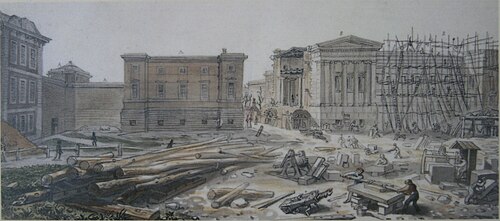
ロバート・スミーク卿による壮大な新古典主義建築が徐々に姿を現すにつれ、博物館は建設現場と化した。東棟1階にあるキングス・ライブラリーは1827年に引き渡され、ロンドンで最も素晴らしい部屋の一つと評された。一般公開は1857年まで行われなかったが、 1851年のロンドン万国博覧会の期間中には特別公開が行われた。
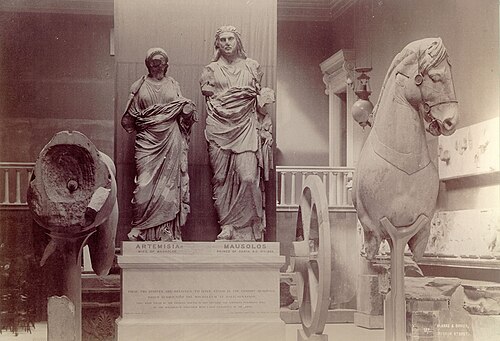
1840年、博物館は初の海外発掘調査に参加し、チャールズ・フェローズによる小アジアのクサントスへの探検隊に参加した。そこからは、ネレイドとパヤヴァの記念碑を含む、古代リュキアの支配者の墓の遺物が発見された。1857年、チャールズ・ニュートンは、古代世界の七不思議の1つであるハリカルナッソスの紀元前4世紀のマウソロス霊廟を発見した。1840年代と1850年代には、博物館はニムルドやニネベなどの遺跡でAHレイヤードらによるアッシリアの発掘調査を支援した。学芸員にとって特に興味深かったのは、最終的に発見されたアッシュールバニパルの楔形文字粘土板の膨大な図書館であり、これが博物館をアッシリア研究の中心にするのに役立った。[ 33 ]

1830年から大英博物館の理事を務めたトーマス・グレンヴィル卿(1755年~1846年)は、20,240冊もの蔵書を集め、遺言で博物館に寄贈した。これらの書籍は1847年1月に21台の馬車で運ばれてきた。この膨大な蔵書を収容できる唯一の空きスペースは、正面玄関ホールと写本室の間にある、もともと写本保管用に作られた部屋だった。書籍は、大英図書館が1998年にセント・パンクラス駅に移転するまで、この部屋に保管された。
1852年の前庭の開園は、ロバート・スミークが1823年に立てた計画の完成を意味したが、すでに予想外の収蔵品の増加に対応するため調整が必要となっていた。アッシリア彫刻のための増築ギャラリーが建設され、 100万冊の本を収容できるシドニー・スミーク設計の円形閲覧室が1857年に開館した。スペース不足が続いたため、自然史部門をサウス・ケンジントンの新館に移転することが決定され、そこは後に大英自然史博物館となった。
新館の建設とほぼ同時期に、大英博物館の「第二の創設者」とも呼ばれるイタリア人司書アンソニー・パニッツィのキャリアがあった。彼の監督の下、大英博物館図書館(現在は大英図書館の一部)は規模が5倍になり、国立図書館と呼ばれるにふさわしい組織化された機関となり、パリ国立図書館に次ぐ世界最大の図書館となった。[ 19 ]スミルケの設計の中心にある中庭は貴重なスペースの無駄遣いであることが判明し、パニッツィの要望により、スミルケの弟シドニー・スミルケが設計した鋳鉄製の円形閲覧室が設置された。[ 34 ]
19 世紀半ばまで、博物館のコレクションは比較的限定的でしたが、1851 年にオーガスタス・ウォラストン・フランクスがコレクションのキュレーターとしてスタッフに任命されたことにより、博物館は初めてイギリスとヨーロッパの中世の古代遺物、先史時代の遺物を収集し始め、アジアにまで範囲を広げ、民族誌の所蔵品を多様化しました。博物館にとって真の快挙は、1867 年にフランスの反対を押し切って、ブラカス公爵の広範囲にわたる貴重な古代遺物コレクションを購入したことでした。海外での発掘は続き、ジョン・タートル・ウッドはエフェソスで紀元前4 世紀のアルテミス神殿の遺跡を発見しました。これも古代世界の七不思議の一つです。[ 35 ]
自然史コレクションは、1887年に新しい大英自然史博物館(現在のサウスケンジントンの自然史博物館)に移されるまで、大英博物館の不可欠な一部でした。移転と1884年の新ホワイトウィング(モンタギュー通りに面している)の完成により、古代遺物や民族誌のためのスペースがさらに確保され、図書館もさらに拡張することができました。閲覧室や展示ギャラリーに電灯が導入されたこの時代は、革新の時代でした。[ 36 ]
ウィリアム・バージェスの武器コレクションは1881年に博物館に遺贈された。1882年、博物館はエジプトで調査を行った最初の英国団体である独立エジプト探検基金(現在の協会)の設立に関わった。1892年のエマ・ターナー嬢からの遺贈により、キプロスでの発掘調査が資金提供された。1897年、偉大な収集家であり学芸員であったAWフランクスの死後、3,300個の指輪、153個の酒器、512個のヨーロッパ大陸の磁器、1,500個の根付、850個の印籠、30,000枚以上の蔵書票、その他宝飾品や銀器類など、膨大な遺贈品が寄せられ、その中にはオクサス宝物も含まれていた。[ 37 ]
1898年、フェルディナンド・ド・ロスチャイルド男爵は、ワデスドン・マナーの新しい喫煙室にあったきらびやかな品々、ワデスドン遺贈品を遺贈した。これは、宝石、銀器、エナメル、彫刻、ガラス、マヨリカ焼きなど、精巧な美術品や工芸品約300点からなり、その中には、おそらく1390年代にパリでベリー公ジョンのために作られた聖なるイバラの聖遺物箱も含まれていた。このコレクションは、ヨーロッパのルネサンス期の君主たちが築いたような宝物庫の伝統に則ったものであった。 [ 38 ]フェルディナンド男爵の遺言は非常に具体的で、その条項に従わなければ無効となり、コレクションは
ワデスドン遺贈室と呼ばれる特別な部屋に、博物館の他の収蔵品とは別に保管し、その後は永久に、その部屋またはそれに代わる別の部屋に保管するものとする。[ 38 ]
これらの条件は現在も遵守されており、コレクションは2a号室に保管されている。

19世紀末までに、大英博物館の収蔵品は増加し、建物が手狭になった。1895年、理事会は博物館周辺の69軒の家屋を購入し、それらを解体して博物館の西、北、東側に建物を建設する計画を立てた。最初の段階として、1906年に北棟の建設が始まった。

その間もコレクションは増え続けた。エミール・トルデイは中央アフリカで、オーレル・スタインは中央アジアで収集を行い、DG・ホガース、レナード・ウーリー、T・E・ローレンスはカルケミシュで発掘調査を行った。この頃、アメリカの収集家で慈善家のJ・ピアポント・モルガンは、ウィリアム・グリーンウェルが1908年に1万ポンドで購入したヨーロッパ各地の先史時代の遺物コレクションを含む、相当数の品々を博物館に寄贈した[ 40 ] 。モルガンはまた、ジョン・エヴァンス卿のコインコレクションの大部分も取得しており、それは後に1915年に彼の息子であるJPモルガン・ジュニアによって博物館に売却された。1918年、戦時中の爆撃の脅威のため、一部の品々はロンドン郵便局鉄道を経由してホルボーン、ウェールズ国立図書館(アベリストウィス)、マルバーン近郊の田舎の邸宅に疎開した。 1919年に戦時中に保管されていた古代遺物が返還された際、一部の遺物が劣化していることが判明した。1920年5月に保存研究所が設立され、1931年に常設部門となった。今日では、継続して存在する最古の部門である。[ 41 ] [ 42 ] 1923年には、大英博物館に100万人以上の来館者が訪れた。
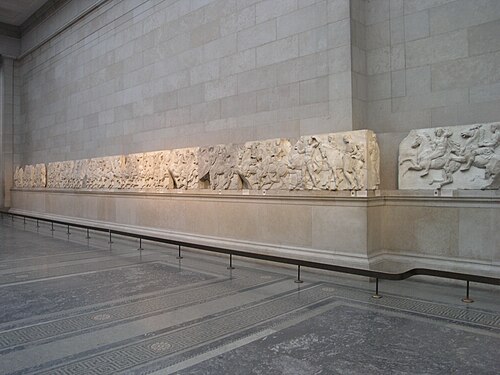
大量の書籍に対応するため、新しい中二階が建設され、書架が再建された。1931年、美術商のジョセフ・デュヴィーン卿は、パルテノン神殿の彫刻を展示するギャラリー建設のための資金を提供した。アメリカ人建築家ジョン・ラッセル・ポープが設計したこのギャラリーは、1938年に完成した。展示ギャラリーの外観は、濃いビクトリア朝の赤色が現代的なパステルカラーに取って代わられるにつれて変化し始めた。[ f ]
1936年にジョージ・フランシス・ヒルが館長兼主任司書を退任した後、ジョン・フォースダイクが後任となった。
ナチス・ドイツとの緊張が高まり、戦争が差し迫っているように見えたため、フォースダイクは、第一次世界大戦で経験した空襲よりもはるかにひどい空襲が起こる可能性が高いことから、博物館は最も貴重な品々を安全な場所に移す準備をしなければならないと考えるようになった。ミュンヘン危機の後、フォースダイクは釘を打たない箱を3,300個注文し、デュヴィーン・ギャラリーの地下に保管した。同時に、彼は適切な場所を特定し、確保し始めた。その結果、博物館は1939年8月24日(内務大臣がそうするように助言したわずか1日後)に、安全な地下室、カントリーハウス、アルドウィッチ地下鉄駅、ウェールズ国立図書館に選別品を迅速に移すことができた。[ 44 ]多くの品々は1942年初頭に、最初の分散場所からウィルトシャーのウェストウッド採石場に新しく開発された施設に移された。[ 44 ] 1940年にデュヴィーン・ギャラリーが爆撃で甚大な被害を受けたため、避難は時宜を得たものであった。[ 45 ]一方、戦争前、ナチスは「アングロ・ユダヤ人の反ユダヤ主義的な歴史を編纂する」目的で、数年間研究者を大英博物館に派遣していた。[ 46 ]
戦後、博物館はあらゆる国、あらゆる時代の収蔵品を収集し続けました。中でも特に目を見張るものとしては、レナード・ウーリーが1922年から1934年にかけて行った発掘調査で発見された、紀元前2600年のメソポタミアのウル遺跡からの宝物、サットン・フー遺跡のアングロ・サクソン時代の船葬墓から出土した金、銀、ガーネットの副葬品(1939年)、サフォーク州ミルデンホール遺跡から出土したローマ時代後期の銀食器(1946年)などが挙げられます。戦後間もない時期は、保護下にあった収蔵品の返還と、空襲後の博物館の修復に多くの時間を費やしました。また、損傷を受けたデュヴィーン・ギャラリーの修復作業も開始されました。

1953年、博物館は創立200周年を祝いました。その後、多くの変化がありました。1964年には初の常勤デザイナーと出版担当官が任命され、 1968年には友の会が設立され、1970年には教育サービスが、1973年には出版部門が設立されました。 1963年大英博物館法により、行政改革が導入されました。物品の貸し出しが容易になり、理事会の構成が変更され、自然史博物館は完全に独立しました。1959年までに、戦争中に完全に破壊されたコインとメダルのオフィススイートが再建され、再開され、ギャラリーの仕事に注目が集まり、新しいデザインの趣味がロバート・スミークの古典ギャラリーと近東ギャラリーの改修につながりました。[ 47 ] 1962年には、デュヴィーンギャラリーがついに修復され、パルテノン彫刻が再び博物館の中心に戻されました。[ g ]
1970年代までに、博物館は再び拡張を始めた。一般向けサービスが拡充され、来館者数は急増した。1972年に開催された特別展「ツタンカーメンの秘宝」には1,694,117人が訪れ、英国史上最も成功した展覧会となった。同年、1972年大英図書館法が可決され、写本と印刷本のコレクションが大英博物館から分離された。これにより、博物館には古代遺物、硬貨、メダル、紙幣、版画、素描、民族誌が残った。喫緊の課題は、図書館の蔵書を増やすためのスペースを見つけることだった。図書館には毎年1.5マイル(2.0km)分の書架が必要となった。政府は新しい大英図書館の建設地としてセント・パンクラスを提案したが、書籍が博物館から運び出されたのは1997年になってからだった。
1998年にようやく実現した大英図書館のセント・パンクラス駅への移転により、蔵書を収蔵するための十分なスペースが確保された。また、ロバート・スミークが19世紀に設計した中央広場の空きスペースを再開発し、2000年に開館したヨーロッパ最大の屋根付き広場、クイーン・エリザベス2世グレート・コートを建設する機会も生まれた。1970年からバーリントン・ガーデンズ6番地にあった短命に終わった人類博物館に収蔵されていた民族誌コレクションは、2000年に博物館内に新設された専用ギャラリーに戻された。
博物館は、版画、素描、メダル、装飾美術といった「近代」の品々への関心が再び高まったことを受けて、収集方針を再び調整した。民族誌的フィールドワークは、ニューギニア、マダガスカル、ルーマニア、グアテマラ、インドネシアなど多様な場所で実施され、近東、エジプト、スーダン、イギリスで発掘が行われた。1997年に開館したウェストン・ギャラリー・オブ・ローマ・ブリテンでは、ローマ帝国の重要でない部分と考えられていたものの豊かさを示す、最近発見された数々の財宝が展示された。博物館は、建物、購入、その他の目的のために、ますます民間の資金に頼るようになった。[ 49 ] 2000年、大英博物館はナショナル・ヘリテージ・ミュージアム・オブ・ザ・イヤーを受賞した。[ 50 ]

現在、この博物館には自然史に関するコレクションは収蔵されておらず、かつて所蔵していた書籍や写本は独立した大英図書館の一部となっている。しかしながら、博物館は古代から現代に至るまで世界の文化を代表する遺物を所蔵することで、その普遍性を維持している。1753年に創設された当初のコレクションは、現在では 大英博物館で1300万点以上、自然史博物館 で7000万点、大英図書館で1億5000万点にまで拡大している。
建築家シドニー・スミークが設計した円形閲覧室は1857年に開室しました。約150年間、研究者たちはここで博物館の膨大な蔵書を閲覧していました。閲覧室は、国立図書館(大英図書館)がセント・パンクラス駅の新館に移転した1997年に閉鎖されました。現在はウォルター・アンド・レオノーレ・アンネンバーグ・センターとして生まれ変わっています。
博物館の中央中庭にある書架が空になったことで、フォスター卿設計のガラス屋根のグレートコート建設のための解体工事が始まった。2000年にオープンしたグレートコートは、博物館内の動線を確かに改善したが、博物館が深刻な財政難に陥り、多くのギャラリーが一般公開されていなかった時期に展示スペースが不足しているとして批判された。同時に、一時的にバーリントン・ガーデンズ6番地に保管されていたアフリカのコレクションは、セインズベリー家が2500万ポンドの寄付金で北棟に新しいギャラリーを与えられた 。[ 51 ]
博物館のオンラインデータベースには、2023年初頭時点で約450万点の個々のオブジェクトエントリが200万件のレコードに登録されていました。 [ 52 ] 2022年から2023年にかけて、ウェブサイトへのアクセス数は2700万回に達しました。[ 53 ] これは、2013年のウェブサイトへのアクセス数1950万回と比較したものです。[ 54 ]
2025年には博物館に6,440,120人の来館者があり、自然史博物館に次いで2番目に人気のある観光スポットとなった。[ 2 ]
大英博物館は、文化・メディア・スポーツ省が3年間の資金提供契約を通じて後援する非省庁公共機関です。その長は大英博物館館長です。大英博物館は、設立当初から「主任司書」(書籍コレクションがまだ博物館の一部であった頃)によって運営されていましたが、この役職は1898年に「館長兼主任司書」に、1973年に(大英図書館の分離に伴い)「館長」に改称されました。[ 56 ]
1963 年大英博物館法および1992 年博物館・美術館法に従い、25 名の評議員からなる理事会(政府への報告の目的では館長が会計責任者となる)が博物館の一般的な管理と統制を担当している。[ 57 ] 1963 年法以前は、カンタベリー大主教、大法官、下院議長が議長を務めていた。25 名の評議員のうち、15 名は首相が、1 名は国王が、4 名は関連業界団体が任命し、残りの 5 名は他の評議員が任命する。[ 58 ]理事会は博物館の設立時に、実際に所有することなく国のためにコレクションを信託として保管するために設立され、現在は主に諮問的な役割を果たしている。評議員の任命は、公職任命委員会事務局が発行する公職任命に関する実務規範に定められた規制枠組みによって管理されている。[ 59 ]

グレート・ラッセル・ストリートに面したギリシャ復興様式のファサードは、サー・ロバート・スミークの特徴的な建築物で、高さ45フィート(14メートル)のイオニア式 の柱が43本あり、小アジアのプリエネにあるアテナ・ポリアス神殿の柱を参考にしている。[ 60 ]メインエントランスの上のペディメントは、サー・リチャード・ウェストマコットによる「文明の進歩」を描いた彫刻で装飾されており、15体の寓意像からなり、1852年に設置された。[ 61 ]
中庭の周りの建設は、1823年から1828年にかけて東棟(キングス・ライブラリー)から始まり、続いて1833年から1838年にかけて北棟が建設されました。北棟には当初、他のギャラリーとともに読書室がありましたが、現在はウェルカム・ギャラリーとなっています。西棟の北半分(エジプト彫刻ギャラリー)の工事も1826年から1831年にかけて進められ、西棟の最後の部分(1846年完成)と、壮大な列柱のある南棟(1843年着工、1847年完成、正面ホールと大階段が一般公開)のためのスペースを確保するために、1842年にモンタギュー・ハウスが取り壊されました。博物館はポートランド石で覆われていますが、外周壁や建物の他の部分は、南デボンのダートムーア産のヘイトー花崗岩を使用して建設され、独特なヘイトー花崗岩路面電車で運ばれました。[ 63 ]


1846年、ロバート・スミークは博物館の建築家の座を弟のシドニー・スミークに譲り、シドニーが手がけた主要な増築部分は1854年から1857年にかけて建設された円形閲覧室である。直径140フィート(43メートル)のこのドームは、当時世界で2番目に広く、ローマのパンテオンがわずかに幅広かった。
次に大きな増築が行われたのは、1882年から1884年にかけて南正面の東端の後ろに増築されたホワイトウィングで、設計はジョン・テイラー卿が担当した。
1895年、議会は博物館の評議員に20万ポンドの融資を行い、博物館の建物の裏手にある5つの通り(グレート・ラッセル・ストリート、モンタギュー・ストリート、モンタギュー・プレイス、ベッドフォード・スクエア、ブルームズベリー・ストリート)にある69軒の家すべてをベッドフォード公爵から購入した。[ 64 ]評議員はこれらの家を取り壊し、博物館の西、北、東の周囲に新しいギャラリーを建設して、博物館が建っているブロックを完全に埋め尽くす計画を立てた。建築家のジョン・ジェームズ・バーネット卿は、建物を3面すべてに拡張するという野心的な長期計画を提案するよう請願された。モンタギュー・プレイスの家のほとんどは、売却から数年後に取り壊された。この壮大な計画のうち、実際に建設されたのは北正面中央にあるエドワード7世ギャラリーのみである。これらはJJバーネットの設計に基づき1906年から1914年にかけて建設され、 1914年にジョージ5世とメアリー王妃によって開館された。現在、ここには博物館の版画・素描コレクションと東洋美術品が収蔵されている。新たな建物を建設する資金が不足していたため、他の通りの家屋はほとんどが今も残っている。
エジプト、ギリシャ、アッシリアの彫刻ギャラリーの西に位置するデュヴィーン・ギャラリーは、アメリカのボザール様式の建築家ジョン・ラッセル・ポープによってエルギン・マーブルを収蔵するために設計されました。1938年に完成しましたが、1940年に爆撃を受け、1962年に再開されるまで22年間半ば廃墟状態でした。第二次世界大戦の爆撃で被害を受けたその他のエリアには、1940年9月にエドワード7世ギャラリーに不発弾2発が着弾し、キングス・ライブラリーが高性能爆弾の直撃を受け、円形閲覧室のドームに焼夷弾が落ちましたが、被害はほとんどありませんでした。 1941年5月10日から11日の夜、博物館の南西の角に数発の焼夷弾が着弾し、書架と中庭の15万冊の本、そして大階段上部のギャラリーが破壊された。この被害は1960年代初頭まで完全には修復されなかった。[ 65 ]

クイーン・エリザベス2世グレート・コートは、エンジニアリング会社Buro Happoldと建築家Foster and Partnersによって設計された、大英博物館の中央にある屋根付き広場です。[ 66 ]グレート・コートは2000年12月にオープンし、ヨーロッパ最大の屋根付き広場です。屋根はオーストリアの鉄鋼会社によって建設されたガラスと鉄骨構造で、 1,656枚の独特な形状のガラス板が使用されています。 [ 67 ]グレート・コートの中央には、大英図書館が使用していた閲覧室があり、その機能は現在セント・パンクラス駅に移されています。
今日、大英博物館は世界最大級の博物館の一つに成長し、92,000 m 2 (990,000 平方フィート) を超える面積を擁しています。[ 68 ] [ 69 ]さらに、21,600 m 2 (232,000 平方フィート) [ 70 ]の敷地内保管スペースと、9,400 m 2 (101,000 平方フィート) [ 70 ]の外部保管スペースがあります。全体として、大英博物館は全コレクションの 1% 未満[ 70 ] 、約 50,000 点のアイテムを一般公開しています。[ 71 ]
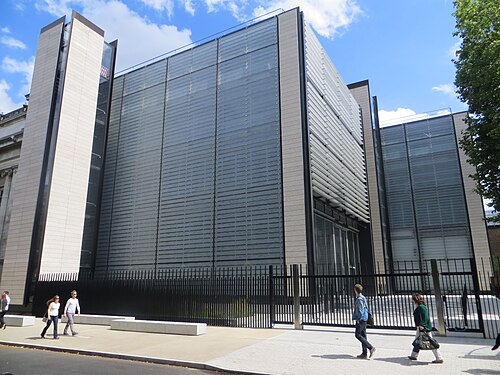
約 100 のギャラリーが一般公開されており、展示スペースは2 マイル (3.2 km)に及ぶが、人気のないギャラリーは開館時間が限られている。しかし、大規模な臨時展示スペースが不足していたため、1 億 3500万ポンドの世界保存展示センターが建設され、博物館のすべての保存施設を 1 つのセンターに集約することになった。このプロジェクトは、2007 年 7 月に発表され、建築家はロジャース スターク ハーバー アンド パートナーズであった。2009 年 12 月に計画許可が下り、2014 年 3 月に開催されたバイキング展に間に合うように完成した。[ 72 ] [ 73 ] 2017 年に、世界保存展示センターは建築の優秀性を称えるスターリング賞の最終候補に選ばれた。[ 74 ]
ウェストケンジントンのブライスハウスは、2024年にレディング近郊に専用に建設された大英博物館考古学コレクション保管施設が開設されるまで、博物館によって小型および中型の遺物の外部保管場所として使用されていました。[ 75 ]イーストロンドンのフランクスハウスは、「初期先史時代」(旧石器時代と中石器時代)およびその他のコレクションの保管と作業に使用されています。 [ 76 ]

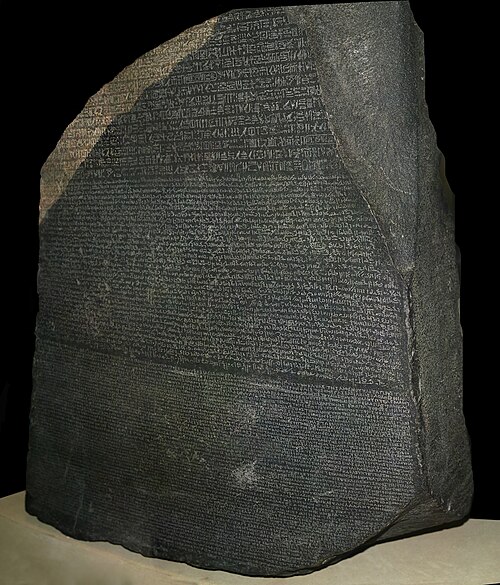
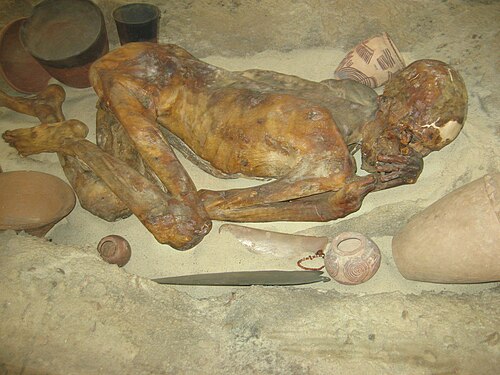
大英博物館には、エジプトとスーダンの多くの重要な遺跡から出土した、あらゆる時代の10万点を超えるエジプトの古代遺物が収蔵されている。[ 77 ]これらは、先王朝新石器時代(紀元前1万年頃)からコプト(キリスト教)時代(西暦12世紀)を経て現代に至るまで、1万1000年以上にわたるナイル川流域(ヌビアを含む)の文化のあらゆる側面を示している。 [ 78 ]
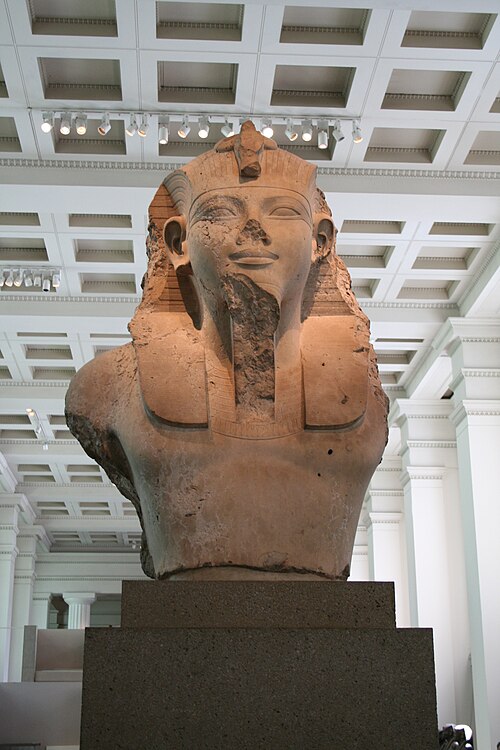
エジプトの古代遺物は、 1753年にハンス・スローン卿から160点のエジプトの遺物[ 79 ]を受け取って以来、大英博物館のコレクションの一部となっている。 1801年のナイルの戦いでナポレオン率いるフランス軍が敗北した後、収集されたエジプトの古代遺物はイギリス軍によって没収され、1803年に大英博物館に寄贈された。有名なロゼッタストーンを含むこれらの作品は、博物館が取得した最初の重要な大型彫刻群であった。その後、イギリスはヘンリー・ソルトをエジプト領事に任命し、彼は膨大な古代遺物を集めた。その一部は、有名なイタリアの探検家ジョヴァンニ・ベルツォーニによって非常に巧妙に収集され、運ばれた。ソルトが収集した古代遺物のほとんどは、大英博物館とルーブル美術館によって購入された。
1866年までに、コレクションは約1万点の遺物で構成されていた。19世紀後半、E・A・ウォリス・バッジの尽力によるエジプト探検基金の活動の結果、発掘された古代遺物が博物館に収蔵され始めた。長年にわたり、アマルナ、ブバスティス、デイル・エル・バハリからの遺物を含む1万1000点以上の遺物がこの基金から集められた。フリンダーズ・ペトリーのエジプト研究基金やエジプト英国考古学学校、スーダンのカワとファラスへのオックスフォード大学探検隊など、他の組織や個人も発掘を行い、大英博物館に遺物を寄贈した。

エジプトでの発掘に対する博物館の積極的な支援は、20世紀を通じて重要な収蔵品をもたらし続け、エジプトの文化財法の改正により出土品の輸出を許可する政策が停止されるまで続いたが、スーダンでは分割が現在も続いている。大英博物館はエジプトで独自の発掘調査を実施し、アシュート(1907年)、モスタゲッダとマトマル(1920年代)、アシュムネイン(1980年代)などの出土品の分割を受け入れたほか、スーダンのソバ、カワ、北ドンゴラ地域(1990年代)などの遺跡も収蔵している。エジプトのコレクションは現在11万点を超える規模となっている。[ 80 ]
2001 年秋、博物館の常設コレクションを構成する 800 万点の品々は、ウェンドルフ コレクションのエジプトおよびスーダン先史時代の600 万点の品々の追加によりさらに拡大されました。[ 81 ]これらはテキサス州のサザン メソジスト大学のフレッド ウェンドルフ教授から寄贈されたもので、1963 年~1997 年の間にサハラ砂漠の先史時代の遺跡で行われた彼の発掘調査で発見された遺物と環境遺物の全コレクションで構成されています。その他のフィールドワーク コレクションは、最近ではミュンヘン大学のディートリッヒとローズマリー クレム、およびケンタッキー大学のウィリアム アダムスから寄贈されています。
大英博物館にある7つの常設エジプトギャラリー(最大の展示スペースである第4室は記念碑的な彫刻を展示)には、所蔵するエジプト美術品のわずか4%しか展示できない。2階のギャラリーには、カイロ以外では最大規模となる140体のミイラと棺のコレクションが展示されている。コレクションの大部分は、死者崇拝に関連する墓や遺跡から出土したものであり、特にミイラは、博物館を訪れる人々にとって最も人気の高い展示品となっている。
コレクションの主な特徴は以下のとおりです。
先王朝時代および初期王朝時代(紀元前6000年頃~紀元前2690年頃)
古王国時代(紀元前2690年~2181年)
中王国時代(紀元前2134年~1690年)
第二中間期(紀元前1650年~1550年)
新王国時代(紀元前1549年~1069年)
第三中間期(紀元前1069年~664年)
末期王朝時代(紀元前664年~紀元前332年)
プトレマイオス朝(紀元前305年~紀元前30年)
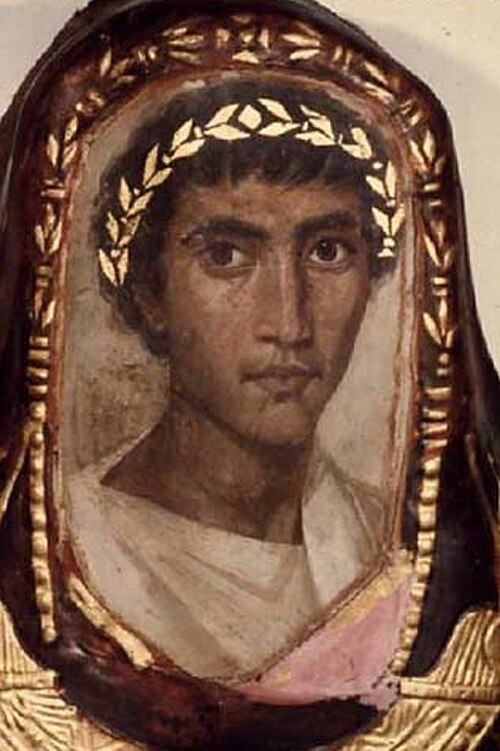
ローマ時代(紀元前30年~紀元後641年)








大英博物館は、古典世界の古代遺物を世界最大かつ最も包括的に所蔵しており、10万点以上の遺物を所蔵しています。[ 82 ]これらの遺物のほとんどは、ギリシャ青銅器時代の始まり(紀元前3200年頃)から、ローマ皇帝コンスタンティヌス1世の治世下、313年にミラノ勅令によってキリスト教がローマ帝国の国教として確立されるまでの年代に及びます。19世紀は考古学が黎明期にあり、多くの先駆者が古典世界の各地で遺跡の発掘を開始しました。博物館にとって主要な人物としては、チャールズ・ニュートン、ジョン・タートル・ウッド、ロバート・マードック・スミス、チャールズ・フェローズなどが挙げられます。
ギリシャの遺物は、ギリシャ本土やエーゲ海の島々から、東地中海の小アジアやエジプトといった近隣地域、そしてシチリア島や南イタリアを含むマグナ・グラエキアの西方の地域まで、古代ギリシャ世界全域から集められたものである。キュクラデス文明、ミノア文明、ミケーネ文明の遺物が収蔵されており、ギリシャのコレクションには、アテネのパルテノン神殿からの重要な彫刻のほか、古代世界の七不思議のうちの二つ、ハリカルナッソスのマウソロス霊廟とエフェソスのアルテミス神殿の遺物も含まれている。[ 82 ]
青銅器時代初期から始まるこの部門は、イタリア国外では最も広範なイタリアおよびエトルリアの古代遺物コレクションの一つを所蔵しているほか、キプロスや小アジアのリキアとカリアにある非ギリシャ植民地からの膨大な資料群も所蔵している。ローマ共和政時代の資料も一部あるが、このコレクションの強みは、ブリテン島(先史時代・ヨーロッパ部門の主力となっている)を除くローマ帝国全域からの包括的な遺物群にある。
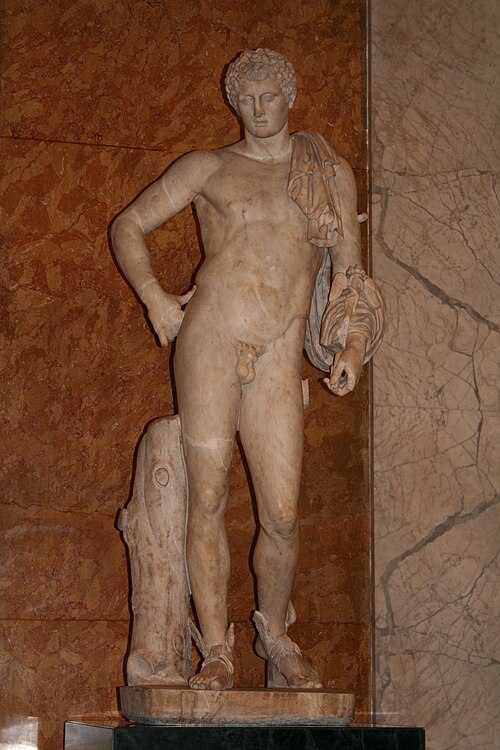
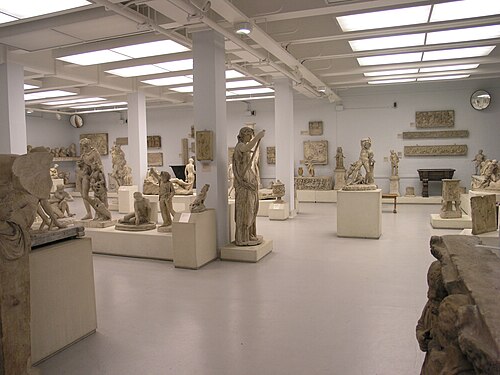
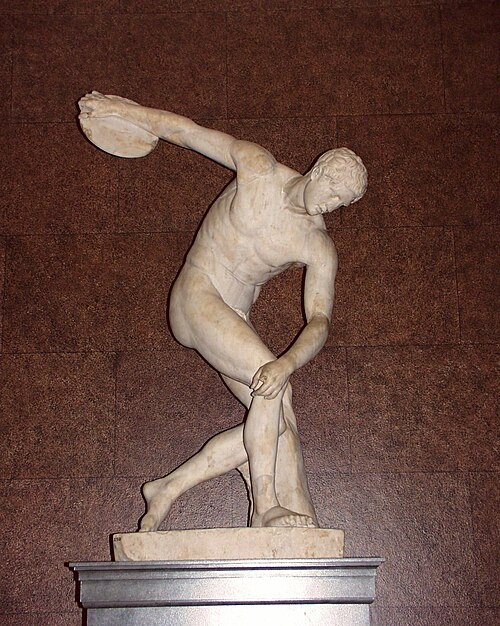
古代の宝飾品や青銅器、ギリシャの壺(多くは南イタリアの墓から出土したもので、かつてはウィリアム・ハミルトン卿やシュヴァリエ・デュランのコレクションの一部だった)、有名なカメオガラスのポートランドの壺を含むローマ時代のガラス、ローマ時代の金ガラス(バチカン美術館に次ぐ2番目に大きなコレクション)、ネイサン・デイヴィスが発掘した北アフリカのカルタゴとウティカのローマ時代のモザイク、そしてローマ時代のガリアの銀の埋蔵品(その一部は慈善家で博物館の理事であったリチャード・ペイン・ナイトが遺贈したもの)のコレクションは特に重要である。キプロスの古代遺物も充実しており、ロバート・ハミルトン・ラング卿のコレクションの購入や、1892年のエマ・ターナーの遺贈によって、島内の多くの発掘調査が資金援助された。ローマ彫刻(その多くはギリシャのオリジナル作品の複製)は、タウンリー・コレクションによって特に充実しており、有名なファルネーゼ・コレクションから残された彫刻作品も所蔵されている。
ギリシャ・ローマ部門の展示品は博物館全体に点在していますが、建築遺産の多くは1階にあり、ギャラリー5からギャラリー23までが繋がっています。2階には、古代イタリア、ギリシャ、キプロス、ローマ帝国の小型の遺物を展示するギャラリーがあります。
現在のコレクションには以下が含まれます。
より幅広いコレクション
先史時代のギリシャとイタリア(紀元前3300年~紀元前8世紀)
エトルリア人(紀元前8世紀~紀元前1世紀)
古代ギリシャ(紀元前8世紀~紀元後4世紀)
古代ローマ(紀元前1世紀~紀元後4世紀)
このコレクションには、アマトス、アトリパルダ、アフロディシアス、デロス、イアソス、イダリオン、リンドゥス、カリムノス、ケルチ、ラムヌス、サラミス、セストス、スニオン、トミス、テッサロニキなど、古典世界の他の多くの遺跡からの建築物、彫刻、碑文などが含まれています。




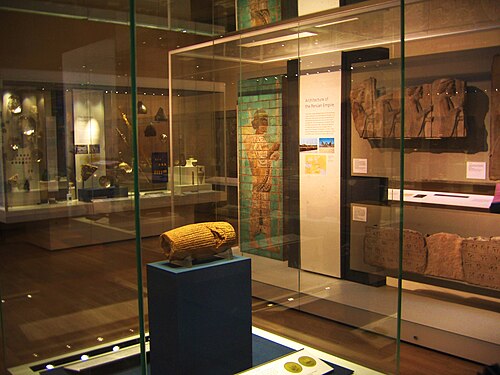
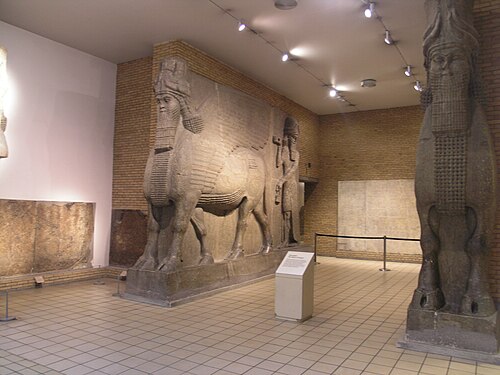
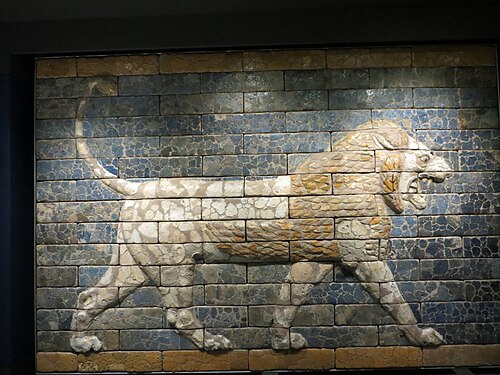
約33万点の作品を所蔵する大英博物館[ 87 ]は、イラク以外では世界最大かつ最も重要なメソポタミア古代遺物のコレクションを所有している。アッシリア彫刻、バビロニア、シュメールの古代遺物の所蔵品は非常に重要で、ニムルド、ニネベ、コルサバードのアラバスター製アッシリア宮殿レリーフで装飾された部屋全体が展示されているなど、世界でも最も包括的なコレクションの一つである。
このコレクションは、古代近東とその周辺地域の文明を代表するものです。メソポタミア、ペルシャ、アラビア半島、アナトリア、コーカサス地方、中央アジアの一部、シリア、聖地、そして先史時代の西地中海におけるフェニキア人の居住地を網羅しており、7世紀の遺物も含まれています。
メソポタミアの遺物が初めて本格的に収蔵されたのは、1825年にクラウディウス・ジェームズ・リッチのコレクションからであった。その後、1845年から1851年にかけてA・H・レイヤードがアッシリアの遺跡ニムルドとニネベで行った発掘調査によって、コレクションは飛躍的に拡大した。ニムルドでは、レイヤードはアッシュールナシルパル2世の北西宮殿をはじめ、3つの宮殿や様々な神殿を発見した。さらに後には、ニネベで「71もの広間」を持つセンナケリブの宮殿を発掘した。その結果、多数のラマッス像、宮殿のレリーフ、石碑、そしてシャルマネセル3世の黒オベリスクなどが大英博物館に収蔵された。
レイヤードの研究は助手ホルムズド・ラッサムによって引き継がれ、1852年から1854年にかけて、ニネベのアッシュールバニパルの北宮殿を発見し、有名なアッシュールバニパルのライオン狩りやラキシュのレリーフなど、多くの壮麗なレリーフを発見した。彼はまた、アッシュールバニパルの王立図書館も発見し、今日では約13万点に及ぶ非常に重要な楔形文字粘土板の大規模なコレクションを発見した。WKロフタスは1850年から1855年にかけてニムルドを発掘し、焼けた宮殿で驚くべき象牙の宝庫を発見した。 1878年から1882年にかけて、ラッサムはバビロンのキュロス円筒碑、バラワットの青銅製の門、シッパルの重要な遺物、そして翼のある人頭の雄牛の銅像を含むトプラッカレのウラルトゥ青銅器の素晴らしいコレクションなど、貴重な品々によって博物館の所蔵品を大幅に充実させた。
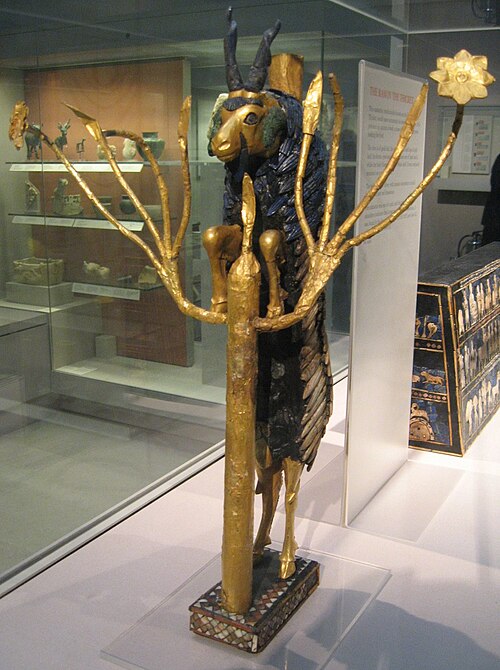
20世紀初頭、トルコのカルケミシュでDGホガースとレナード・ウーリーが発掘調査を行い、後者はT.E.ローレンスの協力を得た。第一次世界大戦後、イラク南部での発掘調査によりメソポタミアのコレクションが大幅に拡充された。テル・アル・ウバイドからは、等身大のライオンや、 1919年から1924年にかけてH.R.ホールが発見したライオンの頭を持つ鷲インドゥグドを描いたパネルなど、シュメール神殿の青銅製調度品が発見された。ウーリーは1922年から1934年にかけてウルを発掘し、紀元前3千年紀の王家の墓地を発見した。傑作の中には、ウルの旗、茂みの中の雄羊、ウルの王家のゲーム、そして2つの雄牛の頭を持つ竪琴などがある。同部門には、古代ラガシュ王国の支配者グデアの閃緑岩製の像3体と、古代メソポタミア各地から出土した一連の石灰岩製のクドゥル(境界石)も所蔵されている。
コレクションの中心はメソポタミアですが、周辺地域のほとんども十分に網羅されています。アケメネス朝コレクションは、 1897年にオクサス宝物と、ドイツ人学者エルンスト・ヘルツフェルトとハンガリー系イギリス人探検家サー・オーレル・スタインによって発掘された遺物が加わったことで充実しました。ペルセポリス遺跡からのレリーフと彫刻は、1825年にサー・ゴア・オウスリー、1861年に第5代アバディーン伯爵によって寄贈されました。また、博物館は1963年の出土品の分割によりパサルガダエの宝物壺の一部と、1971年にジウィエの宝物の一部を受け取りました。ペルセポリスの百柱ホールの大きな柱台座は、シカゴのオリエンタル・インスティテュートとの交換で入手しました。さらに、博物館は世界でも有数のアケメネス朝銀器コレクションを所蔵しています。後期のササン朝も、ライオンや鹿を狩る君主を描いた装飾的な銀の皿や杯でよく知られています。フェニキアの古代遺物は地域全体から出土していますが、サルデーニャのタロス・コレクション、ニムルドの約150個の金属製の鉢と数百個の象牙の宝庫、カルタゴのフェニキア碑文(バールシレクの息子の大理石の台座、カルタゴ関税、カルタゴの塔の模型など)、カルタゴとチュニジアのマグラーワの多くのフェニキアの石碑(ゴラファの石碑など)は傑出しています。キプロス各地の遺跡から出土したフェニキア碑文の数も相当なもので、キティオンのネクロポリスで発見された遺物(2つのキティオン関税には島で発見された最長のフェニキア碑文がある)、イダリオン神殿遺跡、タマソスで発見された2つの二言語の台座などが含まれます。見落とされがちなもう一つの見どころは、イエメンの古代遺物で、同国以外では最高級のコレクションを誇ります。さらに、この博物館には、バーレーンのアアリとシャフラの古代遺跡にある様々な墳丘墓から発掘された、ディルムンとパルティアの代表的な遺物コレクション(ローマ時代の溝付きガラス鉢も含まれる)が所蔵されています。
現代のシリアからは、パルミラ遺跡から出土した約40点の葬儀用胸像と、マックス・フォン・オッペンハイムがテル・ハラフで発掘した石のレリーフ群が1920年に購入された。その後、1935年から1938年にかけてマックス・マロワンがチャガル・バザールとテル・ブラクで行った発掘調査、そして第二次世界大戦の直前と直後にウーリーがアララフで行った発掘調査からも多くの資料が寄せられた。マロワンは戦後、妻のアガサ・クリスティとともにニムルドに戻り、さらなる発掘調査を行い、ニムルドの象牙細工など多くの重要な遺物を博物館のために確保した。パレスチナ関連の資料コレクションは、1950年代にキャスリーン・ケニヨンがテル・エス・スルタン(エリコ)で行った調査と、1980年にウェルカム・マーストン探検隊(1932年~1938年)がラキシュで発見した約1万7000点の遺物を入手したことで強化された。中東では許可されている場所で考古学的発掘調査が今も続けられており、国によっては、ヨルダンのテル・エス・サイディエなどの遺跡からの出土品の一部が博物館に収蔵されている。
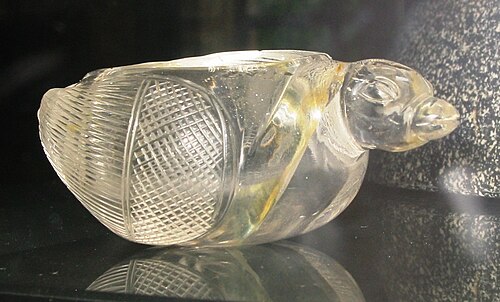
同博物館のイスラム美術コレクションは、考古学的資料を含め約4万点に及び、[ 88 ]世界最大級の規模を誇ります。そのため、西はスペインから東はインドまで、イスラム世界各地の陶器、絵画、タイル、金属工芸品、ガラス製品、印章、碑文など、幅広い品々が収蔵されています。特に有名なのは、イズニク陶器のコレクション(世界最大)、岩のドームのランプを含む多数のモスクのランプ、黄道十二宮を描いたヴァソ・ヴェスコヴァリなどの中世の金属工芸品、優れたアストロラーベのコレクション、ムガル絵画、そして皇帝ジャハーンギールのために作られた大きな翡翠の亀などの貴重な美術品です。戦後、専門の考古学者たちがイランの遺跡、例えばデイビッド・ホワイトハウスによるシラフ遺跡やピーター・ウィリーによるアラムート城遺跡などで数千点もの遺物を発掘した。1983年には、ゴッドマンの遺贈により、イズニク陶器、ヒスパノ・モレスク陶器、初期イラン陶器がコレクションに加わった。イスラム世界の遺物は、博物館のギャラリー34に展示されている。
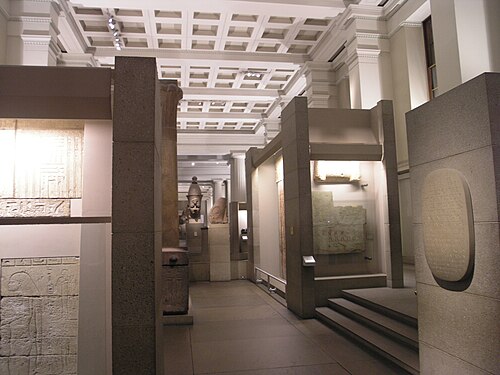
中東部門の代表的な作品群(最も重要な作品を含む)が、博物館内の13のギャラリーに展示されており、総数は約4,500点に及ぶ。1階の一連の部屋には、ニネベ、ニムルド、コルサバードのアッシリア宮殿から出土した彫刻レリーフが展示されている。一方、上階の8つのギャラリーには、中東各地の古代遺跡から出土した小型の資料が収蔵されている。残りは研究コレクションを構成しており、ビーズから大型彫刻まで様々なサイズがある。これらには、メソポタミアの楔形文字粘土板約13万点が含まれる。 [ 89 ]
コレクションの主な特徴は以下のとおりです。






版画・素描部門は、西洋版画と素描の国立コレクションを所蔵しています。ウィーンのアルベルティーナ美術館、パリのコレクション、エルミタージュ美術館と並び、現存する最大かつ最高の版画コレクションの一つです。多くのコレクションとは異なり、所蔵品は研究室で一般の人々にも容易に閲覧できます。[ 90 ]また、同部門は90号室に独自の展示ギャラリーも有しており、展示内容は年に数回変更されます。[ 91 ]
1808年の創設以来、版画と素描のコレクションは、世界で最も豊かで代表的なコレクションの1つとして国際的に有名になりました。素描は約5万点、版画は200万点以上あります。[ 91 ]素描のコレクションは14世紀から現在までの期間を網羅しており、ヨーロッパの流派を代表する芸術家による最高品質の作品を多数含んでいます。版画のコレクションは、 15世紀の始まりから現在までの優れた版画制作の伝統を網羅しており、19世紀以前の偉大な人物のほとんどをほぼ完全に所蔵しています。この部門の主な寄贈者は、クレイトン・モーダント・クラチェロード、リチャード・ペイン・ナイト、ジョン・マルコム、キャンベル・ドジソン、セザール・マンジュ・ド・ハウケ、トマス・ハリスです。1869年から1894年まで同部門で働いていた作家で著述家のルイス・アレクサンダー・フェイガンは、同部門に多大な貢献をし、また博物館全般に関する様々な書籍も執筆した。 [ 92 ]
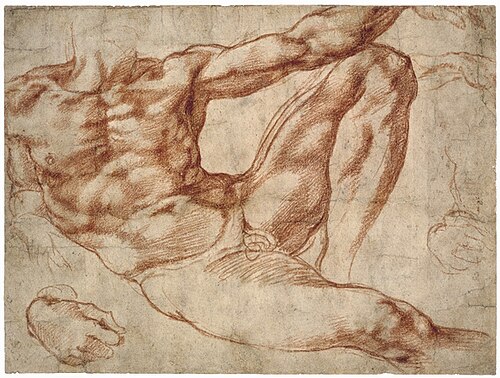
レオナルド・ダ・ヴィンチ、ラファエロ、ミケランジェロ(現存する唯一の実物大の下絵を含む)、アルブレヒト・デューラー(138点の素描からなるコレクションは現存する中でも最高級のもののひとつ)、ピーテル・パウル・ルーベンス、レンブラント、クロード・ロラン、アントワーヌ・ワトーの素描群、そしてデューラー(99点の銅版画、6点のエッチング、そして346点の木版画のほとんど)、レンブラント、フランシスコ・ゴヤなど、偉大な版画家たちの作品のほぼ完全なコレクションが所蔵されている。 30,000点を超えるイギリスの素描と水彩画には、ウィリアム・ホガース、ポール・サンドビー、JMWターナー、トーマス・ガーティン、ジョン・コンスタブル、ジョン・セル・コットマン、デイヴィッド・コックス、ジェームズ・ギルレイ、トーマス・ローランドソン、フランシス・タウン、ジョージ・クルックシャンクなどの重要な作品のほか、ヴィクトリア朝の偉大な画家たちの作品も含まれています。このコレクションには、開拓時代の入植者であり、アメリカ大陸初のイギリス人画家、そしてネイティブ・アメリカンを描いた最初のヨーロッパ人であるジョン・ホワイトによる唯一無二の水彩画一式が含まれています。約100万点のイギリスの版画には、20,000点を超える風刺画や、ウィリアム・ブレイクとトーマス・ビューイックの傑出した作品コレクションが含まれています。 1870年から1954年にかけて編纂された、大英博物館版画・素描部門に所蔵されている政治風刺画と個人風刺画のカタログ(全11巻)は、イギリスの風刺版画の研究における決定的な参考資料です。同部門の50万点を超える作品がオンラインコレクションデータベースに登録されており、その多くは高画質の画像付きである。[ 93 ] 2011年の100万ポンドの寄付により、美術館はパブロ・ピカソの「ヴォラール組曲」全セットを入手することができた。[ 94 ]




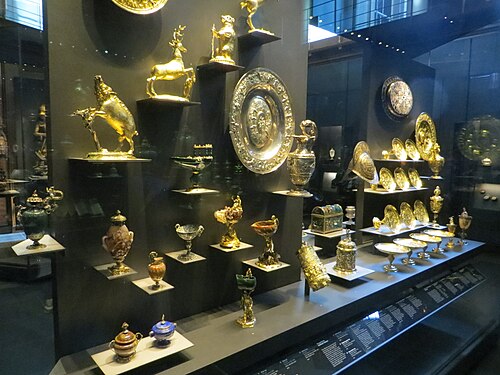
The Department of Britain, Europe and Prehistory is responsible for collections that cover a vast expanse of time and geography. It includes some of the earliest objects made by humans in east Africa over 2 million years ago, as well as Prehistoric and neolithic objects from other parts of the world; and the art and archaeology of Europe from the earliest times to the present day. Archeological excavation of prehistoric material took off and expanded considerably in the twentieth century and the department now has literally millions of objects from the Paleolithic and Mesolithic periods throughout the world, as well as from the Neolithic, Bronze Age and Iron Age in Europe. Stone Age material from Africa has been donated by famous archaeologists such as Louis and Mary Leakey, and Gertrude Caton–Thompson. Paleolithic objects from the Sturge, Christy and Lartet collections include some of the earliest works of art from Europe. Many Bronze Age objects from across Europe were added during the nineteenth century, often from large collections built up by excavators and scholars such as Greenwell in Britain, Tobin and Cooke in Ireland, Lukis and de la Grancière in Brittany, Worsaae in Denmark, Siret at El Argar in Spain, and Klemm and Edelmann in Germany. A representative selection of Iron Age artefacts from Hallstatt were acquired as a result of the Evans/Lubbock excavations and from Giubiasco in Ticino through the Swiss National Museum.
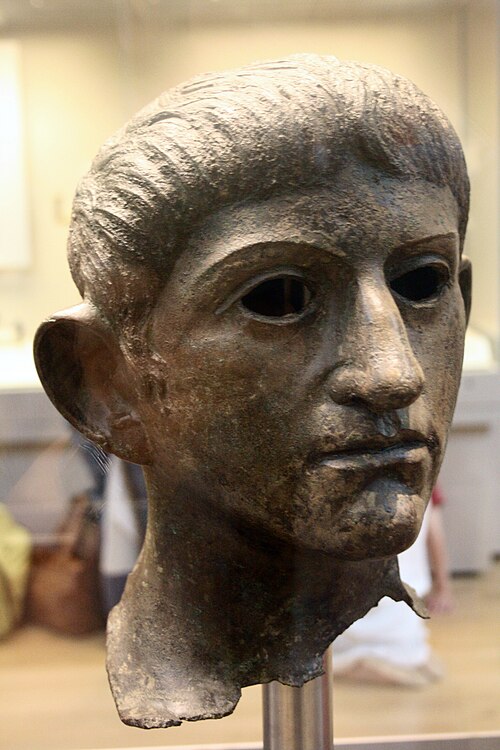
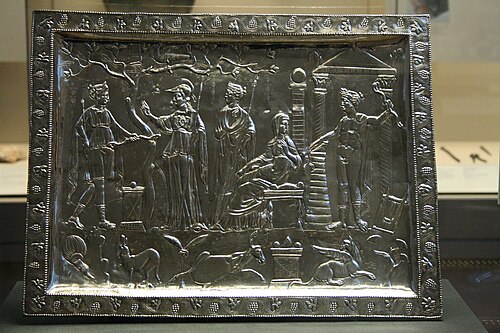
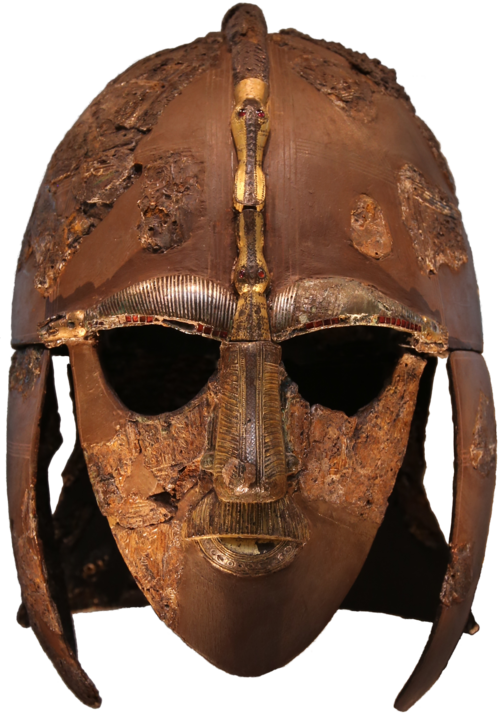
In addition, the British Museum's collections covering the period AD 300 to 1100 are among the largest and most comprehensive in the world, extending from Spain to the Black Sea and from North Africa to Scandinavia; a representative selection of these has recently been redisplayed in a newly refurbished gallery. Important collections include Latvian, Norwegian, Gotlandic and Merovingian material from Johann Karl Bähr, Alfred Heneage Cocks, Sir James Curle and Philippe Delamain respectively. However, the undoubted highlight from the early mediaeval period is the magnificent items from the Sutton Hoo royal grave, generously donated to the nation by the landowner Edith Pretty. The late mediaeval collection includes a large number of seal-dies from across Europe, the most famous of which include those from the Town of Boppard in Germany, Isabella of Hainault from her tomb in Notre Dame Cathedral, Paris, Inchaffray Abbey in Scotland and Robert Fitzwalter, one of the Barons who led the revolt against King John in England. There is also a large collection of medieval signet rings, prominent among them is the gold signet ring belonging to Jean III de Grailly who fought in the Hundred Years' War, as well as those of Mary, Queen of Scots and Richard I of England. Other groups of artefacts represented in the department include the national collection of (c.100) icon paintings, most of which originate from the Byzantine Empire and Russia, and over 40 mediaeval astrolabes from across Europe and the Middle East. The department also includes the national collection of horology with one of the most wide-ranging assemblage of clocks, watches and other timepieces in Europe, with masterpieces from every period in the development of time-keeping. Choice horological pieces came from the Morgan and Ilbert collections. The department is also responsible for the curation of Romano-British objects – the museum has by far the most extensive such collection in Britain and one of the most representative regional collections in Europe outside Italy. It is particularly famous for the large number of late Roman silver treasures, many of which were found in East Anglia, the most important of which is the Mildenhall Treasure. The museum purchased many Roman-British objects from the antiquarian Charles Roach Smith in 1856. These quickly formed the nucleus of the collection. The department also includes ethnographic material from across Europe including a collection of Bulgarian costumes and shadow puppets from Greece and Turkey. A particular highlight are the three Sámi drums from northern Sweden of which only about 70 are extant.
Objects from the Department of Britain, Europe and Prehistory are mostly found on the upper floor of the museum, with a suite of galleries numbered from 38 to 51. Most of the collection is stored in its archive facilities, where it is available for research and study.
Highlights of the collections include:
Stone Age (c. 3.4 million years BC – c. 2000 BC)
Bronze Age (c.3300 BC – c.600 BC)
Iron Age (c.600 BC – c.1st century AD)
Romano-British (43 AD – 410 AD)
Early Mediaeval (c.4th century AD – c.1000 AD)
Mediaeval (c.1000 AD – c.1500 AD)
Renaissance to Modern (c.1500 AD – present)
The many hoards of treasure include those of Esquiline, Carthage, First Cyprus, Hockwold, Hoxne, Lampsacus, Mildenhall, Vale of York and Water Newton, (4th–10th centuries AD)


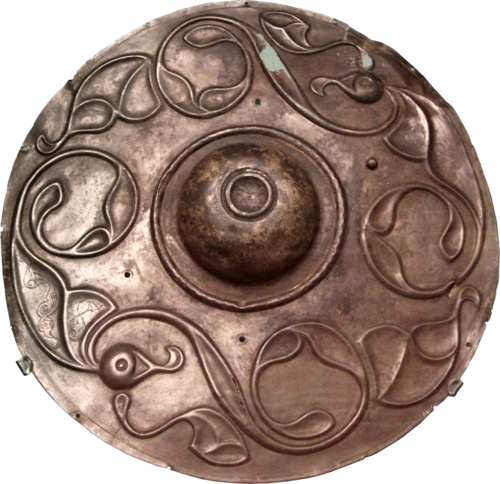
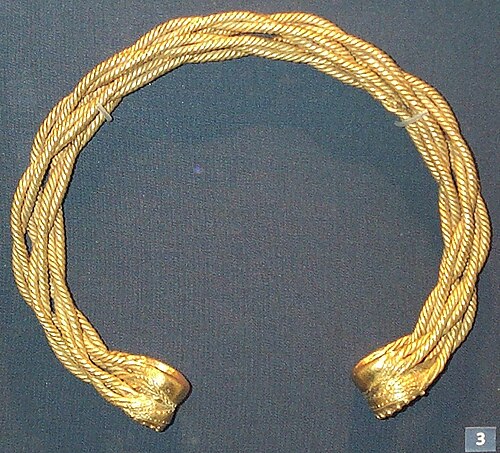





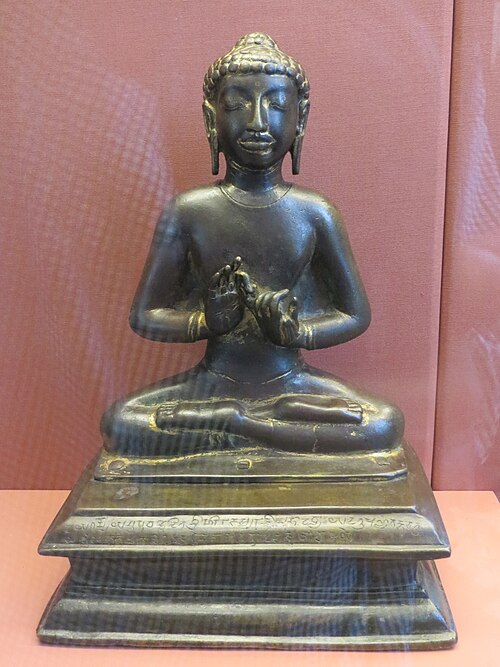
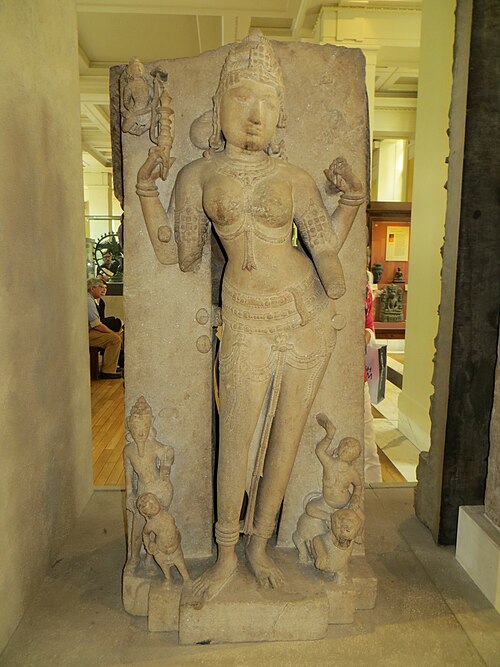
The scope of the Department of Asia is extremely broad; its collections of over 75,000 objects cover the material culture of the whole Asian continent and from the Neolithic up to the present day. Until recently, this department concentrated on collecting Oriental antiquities from urban or semi-urban societies across the Asian continent. Many of those objects were collected by colonial officers and explorers in former parts of the British Empire, especially the Indian subcontinent.[101][102][103] Examples include the collections made by individuals such as James Wilkinson Breeks, Sir Alexander Cunningham, Sir Harold Deane, Sir Walter Elliot, James Prinsep, Charles Masson, Sir John Marshall and Charles Stuart.
A large number of Chinese antiquities were purchased from the Anglo-Greek banker George Eumorfopoulos in the 1930s. The large collection of some 1,800 Japanese prints and paintings owned by Arthur Morrison was acquired in the early twentieth century. In the second half of the twentieth century, the museum greatly benefited from the bequest of the philanthropist PT Brooke Sewell, which allowed the department to purchase many objects and fill in gaps in the collection.[101][102][103]
In 2004, the ethnographic collections from Asia were transferred to the department. These reflect the diverse environment of the largest continent in the world and range from India to China, the Middle East to Japan. Much of the ethnographic material comes from objects originally owned by tribal cultures and hunter-gatherers, many of whose way of life has disappeared in the last century.
Particularly valuable collections are from the Andaman and Nicobar Islands (much assembled by the British naval officer Maurice Portman), Sri Lanka (especially through the colonial administrator Hugh Nevill), Northern Thailand, south-west China, the Ainu of Hokkaido in Japan (chief among them the collection of the Scottish zoologist John Anderson), Siberia (with artefacts collected by the explorer Kate Marsden and Bassett Digby and is notable for its Sakha pieces, especially the ivory model of a summer festival at Yakutsk) and the islands of South-East Asia, especially Borneo. The latter benefited from the purchase in 1905 of the Sarawak collection put together by Dr Charles Hose, as well as from other colonial officers such as Edward A Jeffreys. A unique and valuable group of objects from Java, including shadow puppets and a gamelan musical set, was assembled by Sir Stamford Raffles.
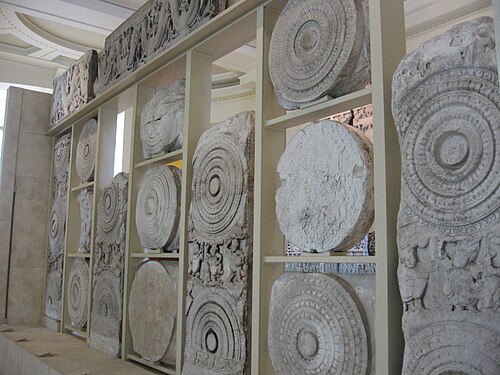
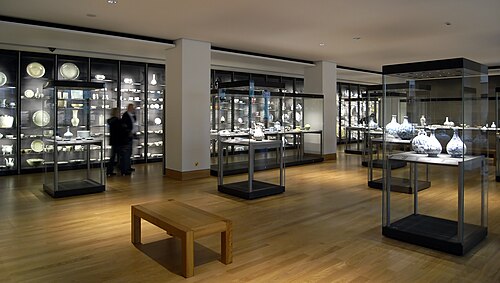
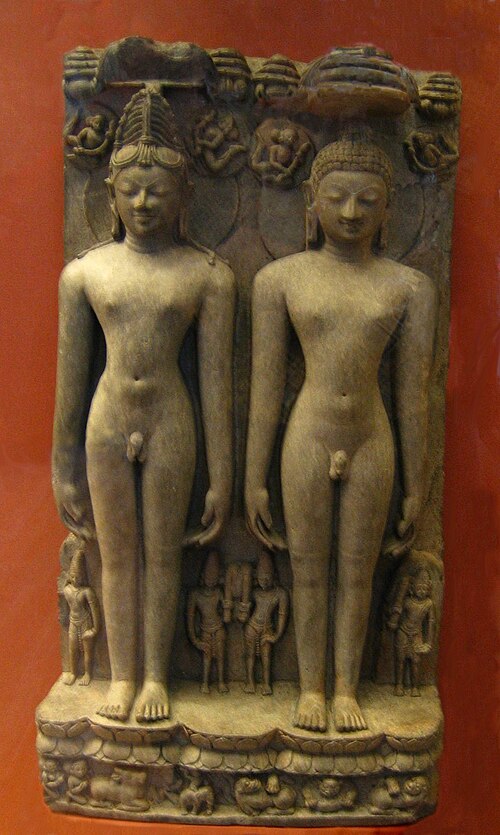
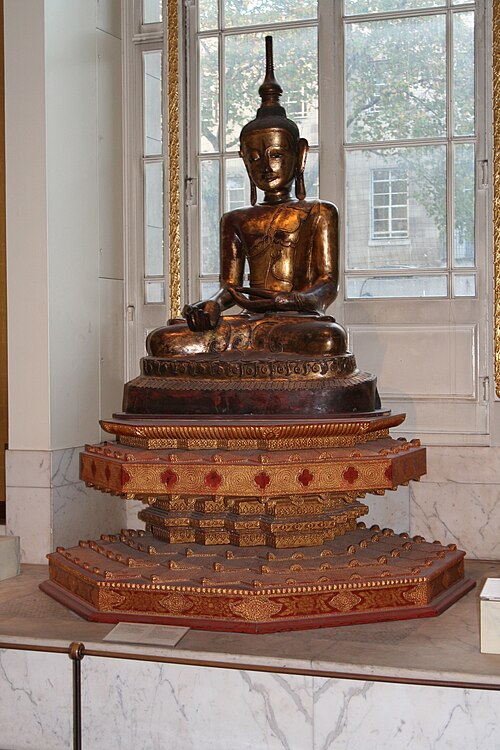
The principal gallery devoted to Asian art in the museum is Gallery 33 with its comprehensive display of Chinese, Indian subcontinent and South-east Asian objects. An adjacent gallery showcases the Amaravati sculptures and monuments. Other galleries on the upper floors are devoted to its Japanese, Korean, painting and calligraphy, and Chinese ceramics collections.
Highlights of the collections include:[104]
East Asia
South Asia
Southeast Asia










The British Museum houses one of the world's most comprehensive collections of ethnographic material from Africa, Oceania and the Americas, representing the cultures of indigenous peoples throughout the world. Over 350,000 objects[106] spanning thousands of years tells the history of mankind from three major continents and many rich and diverse cultures; the collecting of modern artefacts is ongoing. Many individuals have added to the department's collection over the years but those assembled by Henry Christy, Harry Beasley and William Oldman are outstanding.
Objects from this department are mostly on display in several galleries on the ground and lower floors. Gallery 24 displays ethnographic from every continent while adjacent galleries focus on North America and Mexico. A long suite of rooms (Gallery 25) on the lower floor display African art. There are plans in place to develop permanent galleries for displaying art from Oceania and South America.
The Sainsbury African Galleries display 600 objects from the greatest permanent collection of African arts and culture in the world. The three permanent galleries provide a substantial exhibition space for the museum's African collection comprising over 200,000 objects. A curatorial scope that encompasses both archaeological and contemporary material, including both unique masterpieces of artistry and objects of everyday life. A great addition was material amassed by Sir Henry Wellcome, which was donated by the Wellcome Historical Medical Museum in 1954.
Highlights of the African collection include objects found at megalithic circles in The Gambia, a dozen exquisite Afro-Portuguese ivories, a series of soapstone figures from the Kissi people in Sierra Leone and Liberia, hoard of bronze Kru currency rings from the Sinoe River in Liberia, Asante goldwork and regalia from Ghana including the Bowdich collection, the rare Akan Drum from the same region in west Africa, pair of door panels and lintel from the palace at Ikere-Ekiti in Yorubaland, the Benin and Igbo-Ukwu bronze sculptures, the beautiful Bronze Head of Queen Idia, a magnificent brass head of a Yoruba ruler and quartz throne from Ife, a similar terracotta head from Iwinrin Grove near Ife, the Apapa Hoard from Lagos and other mediaeval bronze hoards from Allabia and the Forçados River in southern Nigeria.
Included is an Ikom monolith from Cross River State, several ancestral screens from the Kalabari tribe in the Niger Delta, the Torday collection of central African sculpture, textiles and weaponry from the Kuba Kingdom including three royal figures, the unique Luzira Head from Uganda, processional crosses and other ecclesiastical and royal material from Gondar and Magdala, Ethiopia following the British Expedition to Abyssinia, excavated objects from Great Zimbabwe (that includes a unique soapstone, anthropomorphic figure) and satellite towns such as Mutare including a large hoard of Iron Age soapstone figures, a rare divining bowl from the Venda peoples and cave paintings and petroglyphs from South Africa.
The British Museum's Oceanic collections originate from the vast area of the Pacific Ocean, stretching from Papua New Guinea to Easter Island, from New Zealand to Hawaii. The three main anthropological groups represented in the collection are Polynesia, Melanesia and Micronesia – Aboriginal art from Australia is considered separately in its own right. Metal working was not indigenous to Oceania before Europeans arrived, so many of the artefacts from the collection are made from stone, shell, bone and bamboo. Prehistoric objects from the region include a bird-shaped pestle and a group of stone mortars from Papua New Guinea.
The British Museum is fortunate in having some of the earliest Oceanic and Pacific collections, many of which were put together by members of Cook's and Vancouver's expeditions or by colonial administrators and explorers such as Sir George Grey, Sir Frederick Broome, Joseph Bradshaw, Robert Christison, Gregory Mathews, Frederick Meinertzhagen, Thomas Mitchell and Arthur Gordon, before Western culture significantly impacted on indigenous cultures. The department has also benefited greatly from the legacy of pioneering anthropologists such as AC Haddon, Bronisław Malinowski and Katherine Routledge. An important artefact is a wooden Aboriginal shield, probably dating from the late eighteenth century and one of the earliest precontact objects from Australia.[107]
The Wilson cabinet of curiosities from Palau is an example of pre-contact ware. Another outstanding exemplar is the mourner's dress from Tahiti given to Cook on his second voyage, one of only ten in existence. In the collection is a large war canoe from the island of Vella Lavella in the Solomon Islands, one of the last ever to be built in the archipelago.[108]
The Māori collection is the finest outside New Zealand with many intricately carved wooden and jade objects and the Aboriginal art collection is distinguished by its wide range of bark paintings, including two very early bark etchings collected by John Hunter Kerr. A particularly important group of objects was purchased from the London Missionary Society in 1911, that includes the unique statue of A'a from Rurutu Island, the rare idol from the isle of Mangareva and the Cook Islands deity figure. Other highlights include the huge Hawaiian statue of Kū-ka-ili-moku or god of war (one of three extant in the world) and the famous Easter Island statues Hoa Hakananai'a and Moai Hava.
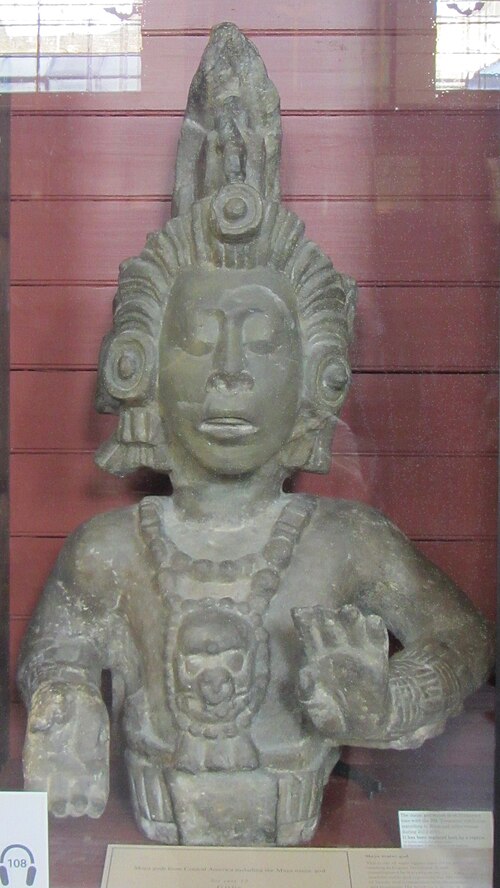
The Americas collection mainly consists of 19th and 20th century items although the Paracas, Moche, Inca, Maya, Aztec, Taino and other early cultures are well represented. The Kayung totem pole, which was made in the late nineteenth century on Haida Gwaii, dominates the Great Court and provides a fitting introduction to this very wide-ranging collection that stretches from the very north of the North American continent where the Inuit population has lived for centuries, to the tip of South America where indigenous tribes have long thrived in Patagonia.
Highlights of the collection include Aboriginal Canadian and Native American objects from North America collected by the 5th Earl of Lonsdale, the Marquis of Lorne, the explorer David Haig-Thomas and Bryan Mullanphy, Mayor of St. Louis, the Squier and Davis collection of prehistoric mound relics from North America, two carved stone bowls in the form of a seated human figure made by ancient North West Coast peoples from British Columbia, the headdress of Chief Yellow Calf from the Arapaho tribe in Wyoming, a lidded rivercane basket from South Carolina and the earliest historic example of Cherokee basketry, a selection of pottery vessels found in prehistoric dwellings at Mesa Verde and Casas Grandes, one of the enigmatic crystal skulls of unknown origin, a collection of nine turquoise Aztec mosaics from Mexico (the largest in Europe), important artefacts from Teotihuacan and Isla de Sacrificios.
There are several rare pre-Columbian manuscripts including the Codex Zouche-Nuttall and Codex Waecker-Gotter and post-colonial ones such as the Codex Aubin and Codex Kingsborough, a spectacular series of Mayan lintels from Yaxchilan excavated by the British Mayanist Alfred Maudslay, a very high quality Mayan collection that includes sculptures from Copan, Tikal, Tulum, Pusilha, Naranjo and Nebaj (including the celebrated Fenton Vase), an ornate calcite vase with jaguar handles from the Ulua Valley in Honduras, the Lord Moyne collection from the Bay Islands, Honduras and Boyle collection from Nicaragua, over 20 stone metates with zoomorphic and anthropomorphic ornamentation from Costa Rica, a group of Zemi Figures from Vere, Jamaica, and wooden duhos from the Dominican Republic and The Bahamas.
There are a collection of Pre-Columbian human mummies from sites across South America including Ancon, Acari, Arica and Leyva, a number of prestigious pre-Columbian gold and votive objects from Colombia, three axe-shaped gold diadems found near Camaná from the Siguas culture in Peru, unique collection of Moche wooden figures and staffs from the Macabi islands off Peru, ethnographic objects from across the Amazon region including the Schomburgk and Maybury Lewis collections and part of the von Martius and von Spix collection, two rare Tiwanaku pottery vessels from Lake Titicaca and important items from Tierra del Fuego donated by Commander Phillip Parker King.




The British Museum is home to one of the world's finest numismatic collections, comprising about a million objects, including coins, medals, tokens and paper money. The collection spans the entire history of coinage from its origins in the 7th century BC to the present day and is representative of both the East and West. The Department of Coins and Medals was created in 1861 and celebrated its 150th anniversary in 2011.[109]
This department was founded in 1920. Conservation has six specialist areas: ceramics & glass; metals; organic material (including textiles); stone, wall paintings and mosaics; Eastern pictorial art and Western pictorial art. The science department[110] has and continues to develop techniques to date artefacts, analyse and identify the materials used in their manufacture, to identify the place an artefact originated and the techniques used in their creation. The department also publishes its findings and discoveries.
This department covers all levels of education, from casual visitors, schools, degree level and beyond. The museum's various libraries hold in excess of 350,000 books, journals and pamphlets covering all areas of the museum's collection. Also the general museum archives which date from its foundation in 1753 are overseen by this department; the individual departments have their own separate archives and libraries covering their various areas of responsibility, which can be consulted by the public on application. The Anthropology Library is especially large, with 120,000 volumes.[111] However, the Paul Hamlyn Library, which had become the central reference library of the British Museum and the only library there freely open to the general public, closed permanently in August 2011.[112] The website and online database of the collection also provide increasing amounts of information.
The British Museum Press (BMP) is the publishing business and a division of the British Museum Company Ltd., a company and a charity (established in 1973) wholly owned by the trustees of the British Museum.[113]
The BMP publishes both popular and scholarly illustrated books to accompany the exhibition programme and explore aspects of the general collection. Profits from their sales goes to support the British Museum.[113]
Scholarly titles are published in the Research Publications series, all of which are peer-reviewed. This series was started in 1978 and was originally called Occasional Papers. The series is designed to disseminate research on items in the collection. To date, over 200 books have been published in this series. Between six and eight titles are published each year in this series.[114] They can be found on the British Museum Research Repository.

It is a point of controversy whether museums should possess artefacts illegally taken from other countries,[7][115] and the British Museum is a notable target for criticism. The Elgin Marbles, the Benin Bronzes, Ethiopian Tabots and the Rosetta Stone are among the most disputed objects in its collections, and organisations have been formed demanding the return of these artefacts to their native countries.
The Elgin Marbles or Parthenon Marbles claimed by Greece have been cited by UNESCO, among others, for restitution. From 1801 to 1812, Thomas Bruce, 7th Earl of Elgin's agents removed about half of the surviving sculptures from the Parthenon, as well as sculptures from the Propylaea and Erechtheion. The former director of the museum has stated, "We are indebted to Elgin for having rescued the Parthenon sculptures and others from the Acropolis from the destruction they were suffering, as well as from the damage that the Acropolis monuments, including the sculptures that he did not remove, have suffered since."[116] The British Museum itself damaged some of the artefacts during restoration in the 1930s.[117] In late 2022, the British Museum had entered into preliminary negotiations with the Greek government about the future of the sculptures.[118]
There is also controversy over artefacts taken during the destruction of the Old Summer Palace in Beijing by an Anglo-French expeditionary force during the Second Opium War in 1860, an event which drew protest from Victor Hugo.[119][120] The British Museum and the Victoria and Albert Museum, among others, have been asked since 2009 to open their archives for investigation by a team of Chinese investigators as a part of an international mission to document Chinese national treasures in foreign collections.[121] In 2010 Neil MacGregor, the former Director of the British Museum, said he hoped that both British and Chinese investigators would work together on the controversial collection.[122] In 2020 the museum appointed a curator to research the history of its collections, including disputed items.[123]
The British Museum has stated that the "restitutionist premise, that whatever was made in a country must return to an original geographical site, would empty both the British Museum and the other great museums of the world".[124] The museum has also argued that the British Museum Act of 1963 prevents any object from leaving its collection once it has entered it. "The Museum owns its collections, but its Trustees are not empowered to dispose of them".[124][125] Nevertheless, it has returned items such as Tasmanian Aboriginal burial remains when this was consistent with legislation regarding the disposal of items in the collections.[126]
In 2002 the heirs of Arthur Feldmann, an art collector murdered in the Holocaust, requested that four old master drawings stolen by the Gestapo in 1939 be returned to the family. A High Court of Justice judge ruled in 2005 that it would be illegal for the British Museum to return artworks looted by the Nazis to a Jewish family, despite its willingness and moral obligation to do so.[150][151] The law was changed in 2009,[152] and again in 2022[153] giving museums additional powers to return looted art or provide compensation. Feldmann's heirs accepted a compensation payment for a looted drawing and stated that they were happy the drawing would remain in the British Museum collection.[154]
According to the British Museum Spoliation report published by the Collections Trust in 2017, "Around 30% of some 21,350 continental and British drawings acquired since 1933 have an uncertain or incomplete provenance for the 1933–1945 period".[155] The museum lists these works on its website and investigates claims for restitution.[156]
Since 2016, there have been a number of protests by activist groups, trade unions and the public against the British Museum's relationship with the oil company BP which the protesters believe implicates the museum in global warming.[157] In July 2019, Ahdaf Soueif resigned from the British Museum's board of trustees in protest against the sponsorship.[158] In February 2020, 1,500 demonstrators, including British Museum staff, took part in a day of protest over the issue.[159] In December 2023, it was announced that the British Museum had agreed to a new £50 million sponsorship deal with BP.[160]
The Chairman's Advisory Group is an informal group of business leaders who provide advice to the chairman on various issues including the museum's relationship with the British government and policy on the museum's collections. Its existence was made public after a freedom of information request by a group campaigning against the museum's links with the fossil fuel industry. The museum has declined to name the members of the advisory group as they are acting in their personal capacity.[161]
Thefts from the museum include: several historic coins and medals in the 1970s;[162] a 17th-century Japanese Kakiemon figure in 1990; two Meiji figurines and a fragment of a gold ring in 1991; fifteen Roman coins and jewellery worth £250,000 in 1993; and a Japanese chest and two Persian books in 1996.[163]
In July 2002 a marble head, valued at £50,000, was stolen from the Archaic Greek gallery.[164] In 2004, 15 Chinese artefacts including jewels, ornate hairpins and fingernail guards were stolen. In 2017, it was revealed that a Cartier diamond had been missing since 2011.[162]
In August 2023, a staff member was fired after it emerged that items including gold, jewellery and gems had been stolen over a "significant" period of time. The incident led to an investigation by the Metropolitan Police and an independent review by the museum.[165] Some of the missing artefacts were later found to have been sold on eBay for considerably less than their estimated value.[162] The museum had been warned of the thefts as early as 2021. The museum's director, Hartwig Fischer, resigned because of the museum's inadequate response to the warnings of theft.[166] The number of artefacts stolen was estimated to be about 2,000.[167] As a consequence of the thefts, the museum announced a five-year plan to digitise the complete collection and make it available to view online.[168] By May 2024, 626 of the missing items had been recovered.[169]
In August 2023, the British Museum reached a settlement with the translator Yilin Wang over her translations of poetry by Qiu Jin. The museum had used her work without credit or permission in their exhibition China's Hidden Century which ran between May 2023 and October 2023.[170]
In January 2025, the British Museum was criticized by Tibetan human rights groups for referring to Tibet as "Xizang," the current preferred term of the government of the People's Republic of China.[171]
In 2026, the British Museum revised the terminology used in certain ancient Middle East exhibits, particularly those concerning the southern Levant during the late 2nd millennium BC. Labels on maps and display panels were changed from Palestine to the historical region of Canaan or the Kingdoms of Israel and Judah, as appropriate to the period in question. The museum said the update was made for "historical accuracy," following concerns that the terms "Palestine" and "people of Palestinian descent" were being applied retroactively to periods when no such distinct entity existed in ancient Israel and Judah.[172][173][174]


Department of Ancient Egypt and Sudan


Department of the Middle East


Department of Greece and Rome



The museum has a collaboration with the Google Cultural Institute to bring the collection online.[175]
Forgotten Empire Exhibition (October 2005 – January 2006)


From January to April 2012 the museum presented Hajj: Journey to the Heart of Islam, the first major exhibition on the topic of the Hajj, the pilgrimage that is one of the five pillars of Islam.[176][177]
The old Elgin Gallery was painted a deep terracotta red, which, though in some ways satisfactory, diminished its apparent size, and was apt to produce a depressing effect on the visitor. It was decided to experiment with lighter colours, and the walls of the large room were painted with what was, at its first application, a pure cold white, but which after a year's exposure had unfortunately yellowed. The small Elgin Room was painted with pure white tinted with prussian blue, and the Room of the metopes was painted with pure white tinted with cobalt blue and black; it was necessary, for practical reasons, to colour all the dadoes a darker colour[43]
It is, I suppose, not positively bad, but it could have been infinitely better. It is pretentious, in that it uses the ancient Marbles to decorate itself. This is a long outmoded idea, and the exact opposite of what a sculpture gallery should do. And, although it incorporates them, it is out of scale, and tends to dwarf them with its bogus Doric features, including those columns, supporting almost nothing which would have made an ancient Greek artist architect wince. The source of daylight is too high above the sculptures, a fault that is only concealed by the amount of reflection from the pinkish marble walls. These are too similar in colour to the marbles... These half-dozen elementary errors were pointed out by everyone in the Museum, and by many scholars outside, when the building was projected.[48]It was not until the 1980s that the installation of a lighting scheme removed his greatest criticism of the building.
{{cite book}}: CS1 maint: multiple names: authors list (link)Beyond the new Lycian room is the READING ROOM: [...]; circular structure; original suggestion of Thomas Watts, improved by A. (Sir A.) Panizzi, carried out by Mr. Sidney Smirke; [...]
The Nazis, in fact, went to great lengths in exploiting Jewish (as well as general) literature. For instance, they arranged for a German researcher to spend several years at the British Museum for the purpose of compiling an anti-Semitic history of Anglo-Jewry, which, at the time, with its 562 pages and a bibliography of some 600 items, was an effort more ambitious than hitherto attempted.

51°31′10″N0°07′37″W / 51.5194°N 0.1269°W / 51.5194; -0.1269