
Loading article…
ルーマニア ルーマニア (ルーマニア語) | |
|---|---|
| 国歌: 「Deřteaptă-te, române!」 (「目覚めよ、ルーマニア人!」) | |
.svg/500px-EU-Romania_(orthographic_projection).svg.png) 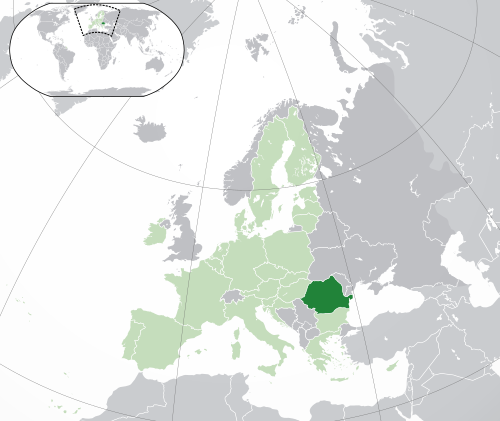 | |
| 資本 そして最大の都市 | ブカレスト 44°25′N 26°06′E / 44.417°N 26.100°E / 44.417; 26.100 |
| 公用語 | ルーマニア語[1] |
| 公認少数 言語[2] | |
| 民族グループ (2021年)[3] | |
| 宗教 (2021年)[4] [5] | |
| 異名 | ルーマニア語 |
| 政府 | 単一半大統領制共和国 |
• 社長 | クラウス・イオハニス |
• 首相 | マルセル・チオラク |
• 上院議長 | ニコラエ・チュカ |
• 下院議長 | ダニエル・スシウ |
| 立法府 | 議会 |
• 上院 | 上院 |
• 下院 | 下院 |
| 形成 | |
• ワラキア公国 | 1330 |
• モルダビア公国 | 1346 |
• リトルユニオン | 1859年1月24日 |
| 1878年7月13日 | |
• 立憲君主制 | 1881年3月25日 |
• グレートユニオン | 1918年12月1日 |
• 中華人民共和国 | 1947年12月30日 |
• 現憲法 | 1991年12月8日 |
| エリア | |
• 合計 | 238,397 km 2 (92,046平方マイル) [6] ( 81位) |
• 水 (%) | 3 |
| 人口 | |
• 2024年1月の推定 | 19,064,409 [7] ( 63位) |
• 2021年 国勢調査 |  19,053,815 [8] ( 67位) 19,053,815 [8] ( 67位) |
• 密度 | 79.9/km 2 (206.9/平方マイル) ( 136位) |
| GDP (購買力平価) | 2024年推定 |
• 合計 |  8179億8600万ドル[9](第35位) 8179億8600万ドル[9](第35位) |
• 一人当たり | 43,179ドル[9] ( 48位) |
| GDP (名目) | 2024年推定 |
• 合計 | 3699億7100万ドル[9](第41位) |
• 一人当たり | 19,530ドル[9] ( 56位) |
| ジニ (2023) |  31.0 [10] 31.0 [10]中程度の不平等 |
| HDI (2022) | 0.827 [11]非常に高い (53位) |
| 通貨 | ルーマニア・レイ( RON ) |
| タイムゾーン | UTC +2 ( EET ) |
• 夏 ( DST ) | UTC +3 ( EEST ) |
| 呼び出しコード | +40 |
| ISO 3166 コード | ロ |
| インターネットTLD | .ro [あ] |


ルーマニア[b]は、中央ヨーロッパ、東ヨーロッパ、南東ヨーロッパの交差点に位置する国です。[12] [13] [14]北と東はウクライナ、西はハンガリー、南西はセルビア、南はブルガリア、東はモルドバ、南東は黒海と国境を接しています。主に大陸性気候で、面積は238,397 km 2 (92,046 平方マイル)、人口は1,900万人です(2023年)。ルーマニアはヨーロッパで12番目に大きい国であり、欧州連合加盟国の中で6番目に人口が多い国です。首都で最大の都市はブカレストで、続いてクルージュ=ナポカ、ヤシ、ティミショアラ、コンスタンツァ、クラヨーヴァ、ブラショフ、ガラツィが続きます。ヨーロッパで2番目に長い川であるドナウ川は、ルーマニア南東部のドナウ川デルタに注いでいます。カルパティア山脈はルーマニアを北から南西に横断しており、標高2,544メートル(8,346フィート)のモルドヴェアヌ峰を含んでいます。[15]
ルーマニアの現在の領土への入植は前期旧石器時代に始まり、その後、後期古代におけるダキア王国とその征服、それに続くローマ帝国によるローマ化を証明する文書記録が残っています。現代のルーマニア国家は、1859年にドナウ川沿岸のモルダビア公国とワラキア公国の同君連合によって形成されました。1866年以来正式にルーマニアと名付けられたこの新国家は、1877年にオスマン帝国から独立しました。第一次世界大戦中、ルーマニアは1914年に中立を宣言した後、 1916年から連合国と共に戦いました。戦争後、ブコビナ、ベッサラビア、トランシルヴァニア、およびバナト、クリシャナ、マラムレシュの一部がルーマニア王国の一部となりました。[16] 1940年6月から8月にかけて、モロトフ・リッベントロップ協定と第二次ウィーン裁定の結果、ルーマニアはベッサラビアと北ブコビナをソ連に、北トランシルヴァニアをハンガリーに割譲せざるを得なくなった。1940年11月、ルーマニアは三国同盟に調印し、その結果、1941年6月に枢軸国側で第二次世界大戦に参戦し、 1944年8月に連合国に加わり北トランシルヴァニアを奪還するまでソ連と戦った。戦争と赤軍による占領の後、ルーマニアは社会主義共和国となり、ワルシャワ条約機構の加盟国となった。 1989年の革命後、ルーマニアは民主主義と市場経済への移行を開始した。
ルーマニアは高所得経済を有する発展途上国であり、[17] [18]国際情勢において中堅国として台頭しつつある。 [19] [20]ルーマニアは2023年のグローバル・イノベーション・インデックスで47位にランクされた。 [21]ルーマニアの経済は欧州連合で最も急速に成長している国の一つであり、[22] [23]名目GDPでは世界第41位、購買力平価では第35位であり、主にサービス業を基盤としている。ルーマニア国民は世界最速かつ最安のインターネット速度を享受している。 [24]ルーマニアは、 Automobile DaciaやOMV Petromなどの企業を通じて、自動車と電気エネルギーの生産国であり、純輸出国でもある。ルーマニアの人口の大半はルーマニア人で、宗教的には東方正教会のキリスト教徒を信仰し、ロマンス語族(より正確には東方ロマンス語)であるルーマニア語を話す。ルーマニアは、国連、欧州連合、シェンゲン協定、NATO、欧州評議会、BSEC、WTOの加盟国です。
語源
「ルーマニア」は、ルーマニア人の現地名(ルーマニア語:român)に由来し、これはラテン語のromanusに由来し、「ローマの」または「ローマの」を意味する。[25]ルーマニア人を表すこの民族名は、16世紀にトランシルヴァニア、モルダヴィア、ワラキアを旅したイタリアの人文主義者によって初めて確認された。[26] [27] [28]ルーマニア語で書かれた、正確な日付が判明している現存する最古の文書は、1521年の「クムプルングからのネアチュの手紙」として知られる手紙である。[29]この手紙には、国名にルーマニア語が初めて登場していることが記録されている。ワラキアはŚara Rumâneascăとして言及されている。
歴史
先史時代
ペステラ・ク・オアセ(「骨の洞窟」)で発見された人骨は、放射性炭素年代測定によると約4万年前のもので、ヨーロッパで知られている最古のホモ・サピエンスである。 [30] 新石器時代の農業は、紀元前6千年紀にテッサリアから混血の人々が到着した後に広まった。 [31] [32]ルンカの塩泉付近の発掘調査で、ヨーロッパで塩の採掘が行われていた最古の証拠が見つかった。ここでは、紀元前5千年紀から4千年紀の間に塩の生産が始まった。[33]最初の恒久的な集落は「原始都市」に発展し、[34] 320ヘクタール(800エーカー)以上の広さがあった。[35] [36]


古代ヨーロッパの考古学的な文化として最もよく知られているククテニ・トリピリア文化は、紀元前5500年から2750年頃、ムンテニア、トランシルヴァニア南東部、モルダヴィア北東部で栄えた。 [37]中期(紀元前4000年から3500年頃)には、ククテニ・トリピリア文化に属する人々が新石器時代ヨーロッパで最大の集落を築き、その中には3000もの建造物があり、2万人から4万6000人が住んでいた可能性がある。[38]
最初の要塞化された集落は紀元前1800年頃に出現し、青銅器時代の社会の戦闘的な性格を示しています。[36]
古代
紀元前7世紀に黒海沿岸に築かれたギリシャの植民地は、現地の部族との重要な商業中心地となった。 [39] [40]先住民族として、ヘロドトスは紀元前5世紀初頭にドナウ川下流地域のゲタイ族、トランシルヴァニアのアガティルシ族、ティサ川沿いの平原のシギンネ族を挙げている。 [41]数世紀後、ストラボンはゲタイ族を、紀元前1世紀にカルパティア山脈南部の土地を支配していたダキア人と関連付けた。[42]
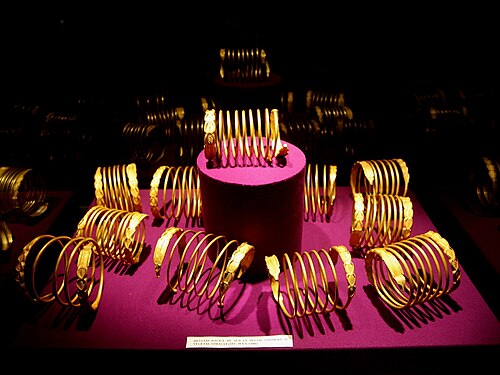
ブレビスタは地元の部族を統一した最初のダキアの支配者でした。[42] [44]彼はまた、紀元前55年から44年の間に、ドブルジャのギリシャ植民地と、ドナウ川中流域やバルカン山脈にまで及ぶ近隣の民族を征服しました。 [42] [45]ブレビスタが紀元前44年に殺害された後、彼の王国は崩壊しました。[42] [46]
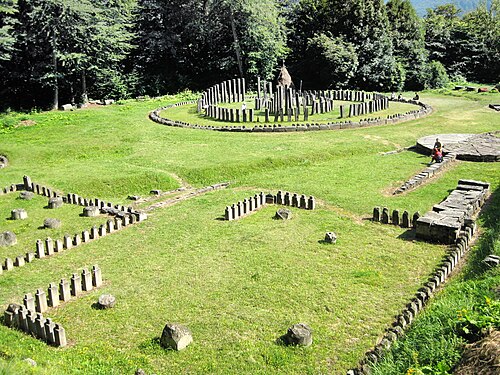

ローマ人はブレビスタの治世中にダキアに到達し、46年にドブルジャを征服した。 [46] ダキアは85年頃にデケバルスによって再び統一された。 [42] [47]彼は数十年にわたってローマ人に抵抗したが、ローマ軍は106年に彼の軍隊を打ち破った。[48]トラヤヌス帝はバナト、オルテニア、およびトランシルヴァニアの大部分をローマのダキアと呼ばれる新しい州に変えたが、ダキア人とサルマティア人の部族はローマ国境沿いの土地を支配し続けた。[49] [50]
ローマ人は組織的な植民政策を追求し、属州民は2世紀に長い平和と繁栄の時代を享受した。[51] [52]ルーマニア人の起源に関する主要理論の1つであるダキア・ローマ連続説を支持する学者は、ローマのダキアにおける先住ダキア人とローマ植民者の共存がルーマニア人の民族形成の第一段階であったと述べている。[53] [54]カルピス人、ゴート人、その他の近隣部族は210年代からダキアに対して定期的な襲撃を行った。[55]
ローマ人は抵抗できず、アウレリアヌス帝は270年代にダキア・トラヤナ属州の撤退を命じた。 [56]継続説を支持する学者たちは、軍隊と民政が撤退した後、ラテン語を話す一般人の大半が留まったと確信している。[57]ローマ人は数十年にわたってドナウ川下流の北岸沿いの要塞を放棄せず、ドブロジャ(小スキタイとして知られる)は7世紀初頭までローマ帝国の不可欠な一部であり続けた。[53] [58]
中世
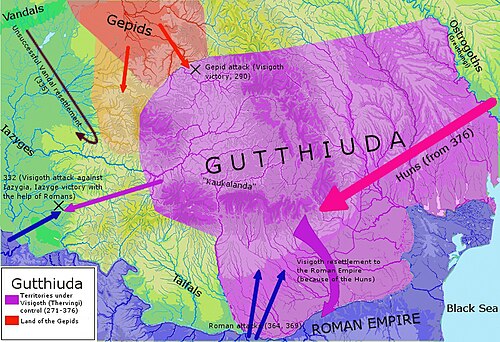
230年代からゴート族はドナウ川下流域に勢力を拡大し、先住民はローマ帝国へ逃れるか、その宗主権を受け入れるかの選択を迫られた。[59] [60] [61]ゴート族の支配は、376年にフン族が彼らの領土に侵入し、新たな移住の波を引き起こしたことで突然終わった。 [59] [61] [62]フン族は現地住民の残存者を強制的に服従させたが、その帝国は454年に崩壊した。 [59] [63]ゲピド族は旧ダキア州を占領した。[64] [65]ルーマニアにはスラヴ語起源の地名が多く、その地域に相当数のスラヴ語を話す人々が住んでいたことを示している。[66]最初のスラヴ人の集団は6世紀にモルダヴィアとワラキアに定住し、[67] 600年頃にはトランシルヴァニアに定住した。 [68]遊牧民のアヴァール人はゲピド族を破り、570年頃に強力な帝国を築いた。[59] [69]ヨーロッパのポントス草原から来たブルガール人は、680年にドナウ川下流地域を占領した。[59]
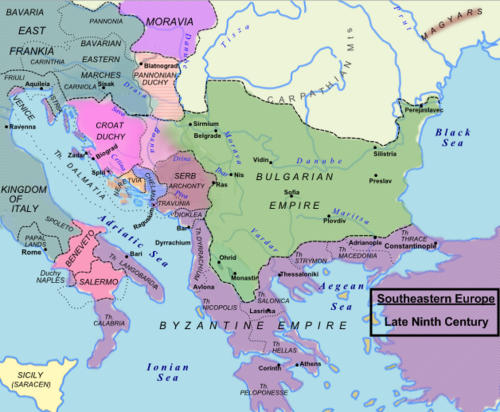
790年代にアヴァール・カガン国が崩壊した後、第一ブルガリア帝国がこの地方の支配的勢力となり、ティサ川までの領土を占領した。[59]第一ブルガリア帝国はブルガリア人の征服者、スラヴ人、ヴラフ人(またはルーマニア人)の混血人口で構成されていたが、ブルガリア人のエリート層のスラヴ化は9世紀にはすでに始まっていた。830年頃の南トランシルヴァニアの征服後、ブルガリア帝国の人々は地元の塩鉱山で塩を採掘した。[70]プレスラフ会議は893年に古教会スラヴ語を国内の典礼言語と宣言した。 [71]ヴラフ人も古教会スラヴ語を典礼言語として採用した。[72]
マジャル人(ハンガリー人)は830年代にドナウ川下流域の北のステップ地帯を支配したが、894年頃にブルガリア人とペチェネグ人が共同で彼らにこの地域を放棄させ、ドナウ川中流域の低地へ移住させた。 [73]数世紀後、ゲスタ・フンガロールムには、侵略してきたマジャル人がバナト、クリシャナ、トランシルヴァニアをめぐって3人の公爵(グラッド、メヌモルト、ヴラフ人ゲロウ)と戦ったことが記されている。 [74] [75]ゲスタには、同じ地域に住むスラヴ人、ブルガリア人、ヴラフ人、ハザール人、セーケイ人など多くの民族も記載されている。 [76] [77]ゲスタの信頼性については議論がある。ある学者は基本的に正確な記述であると考えているが、他の学者はそれを捏造された詳細に満ちた文学作品であると述べた。[78] [79] [80]ペチェネグ人はカルパティア山脈の東にあるハンガリー人が放棄した低地を占領した。[81]
ビザンチン宣教師は940年代からティサ川東側の土地で布教活動を行い[82]、ビザンチン軍は970年代にドブルジャを占領した。[83]西ヨーロッパの宣教師を支援したハンガリーの初代国王イシュトヴァーン1世は、地元の族長たちを倒し、 11世紀初頭にトランシルヴァニアとバナトにカトリックの司教区(司教職)を設立した。[84] [85] 1040年代にはペチェネグ人の大集団がビザンチン帝国に逃れ、オグズ・トルコ人もそれに続き、1060年代には遊牧民のクマン人がステップ地帯の支配的勢力となった。[86]クマン人とヴラフ人がビザンチン帝国に対して協力したことは、11世紀末からよく記録されている。[87]ダコ・ローマ連続説を否定する学者は、最初のヴラフ人の集団が11世紀にバルカン半島の故郷を離れ、東カルパティア山脈と南カルパティア山脈の山岳牧草地へ移動し、ドナウ川下流域の北の土地にルーマニア人の存在を確立したと主張している。[88]


遊牧民の侵入にさらされたトランシルヴァニアは、ハンガリー王国の重要な国境州に発展した。[89] [90]自由戦士のコミュニティであるセーケイ人が1100年頃にトランシルヴァニア中央部に定住し、1200年頃に最東端の地域に移動した。[91]神聖ローマ帝国からの入植者(トランシルヴァニアのザクセン人の祖先)は、1150年代にこの州にやって来た。[91] [92]ヴォイヴォダと呼ばれる高位の王室職員が1170年代からトランシルヴァニアの郡を統治したが、セーケイとザクセンの所在地(または地区)はヴォイヴォダの権威に服していなかった。[93] 13世紀初頭の王室勅許状には、南トランシルヴァニアの「ヴラフ人の土地」について書かれており、自治権を持つルーマニア人コミュニティの存在を示している。[94]教皇の書簡には、1230年代にムンテニアのルーマニア人の間で正教会の高位聖職者が活動していたことが記されている。[95]また、13世紀にはジェノヴァ共和国がカラファトやコンスタンツァを含む黒海沿岸に植民地の建設を開始した。[96] [97]
モンゴル人は1241年と1242年に東ヨーロッパと中央ヨーロッパを侵略した際に広大な領土を破壊した。[ 98]モンゴルのジョチ・ウルスが東ヨーロッパの支配的な勢力として台頭したが、ハンガリーのベーラ4世がオルテニアとムンテニアのホスピタル騎士団に土地を与えたことは、1247年に地元のヴラフ人の支配者が王の権威に従属していたことを示している。 [99] [100] ワラキアのバサラブ1世は1310年代に南カルパティア山脈とドナウ川下流域のルーマニアの政体を統一した。[101]彼はポサダの戦いでハンガリー王国軍を破り、 1330年にワラキアの独立を確保した。 [102] [103]ルーマニアの2番目の公国であるモルダヴィアは、 1360年頃にボグダン1世の治世中に完全な自治を獲得した。 [103] 14世紀後半には地元の王朝がドブロジャ専制君主国を統治したが、1388年以降はオスマン帝国が領土を占領した。[104]
ワラキア公ミルチャ1世とヴラド3世、モルダヴィア公イシュトヴァーン3世は、オスマン帝国から自国の独立を守った。ワラキア公とモルダヴィア公のほとんどは、それぞれ1417年と1456年からオスマン帝国のスルタンに定期的に貢物を納めていた。[105] [106]ルーマニア出身の軍司令官フニャディ・ヤンは、 1456年に死去するまでハンガリー王国の防衛を組織した。[107]税の増大はトランシルヴァニアの農民を激怒させ、 1437年に公然と反乱を起こしたが、ハンガリー貴族とザクセン人およびセーケイ人の長らが共同で反乱を鎮圧した。[108]ハンガリー、ザクセン、セーケイの指導者による正式な同盟は三国連合として知られ、トランシルヴァニアの自治の重要な要素となった。[109]ルーマニア正教会のクネーゼ(「首長」)は連合から除外された。[109]
近世と国民の覚醒
ハンガリー王国は崩壊し、オスマン帝国は1541年にバナトとクリシャナの一部を占領した。[109]トランシルヴァニアとマラムレシュは、バナトとクリシャナの残りの地域とともに、オスマン帝国の宗主権の下で新しい国家、トランシルヴァニア公国に発展した。 [110]宗教改革が広がり、カルヴァン派、ルター派、ユニテリアン派、ローマカトリックの4つの宗派が1568年に公式に認められた。 [111]ルーマニア人の正教の信仰は容認されただけだったが、[111] 17世紀の推定によると、人口の3分の1以上を占めていた。[112] [113]
トランシルヴァニア、ワラキア、モルダヴィアの公子たちは1594年にオスマン帝国に対抗する神聖同盟に加わった。 [114]ワラキア公子ミカエル勇敢公は1600年5月に3つの公国を統一した。[115] [116]近隣諸国は9月に彼に退位を強制したが、彼は19世紀にルーマニアの統一の象徴となった。[115] 3つの公国の統治者はオスマン帝国に貢物を支払い続けたが、最も有能な公子たち、トランシルヴァニアのガブリエル・ベトレン、ワラキアのマテイ・バサラブ、モルダヴィアのヴァシレ・ルプは自治権を強化した。[117]
神聖同盟の連合軍は1684年から1699年の間にオスマン帝国軍を中央ヨーロッパから駆逐し、トランシルヴァニア公国はハプスブルク家の君主国に統合された。[118]ハプスブルク家はカトリック聖職者を支援し、1699年にルーマニア正教会の高位聖職者たちにローマカトリック教会との統合を受け入れるよう説得した。 [119]教会統合はルーマニア知識人のローマの伝統への献身を強めた。[120]正教会は1744年と1759年に正教会の修道士が反乱を起こした後にのみトランシルヴァニアで復活した。 [121] 1764年にトランシルヴァニア軍事国境の組織化は特にセーケイ人の間でさらなる混乱を引き起こした。[122]
モルダヴィアのディミトリエ・カンテミール王子とワラキアのコンスタンティン・ブランコヴェアヌ王子は、オスマン帝国に対抗するためにハプスブルク帝国およびロシアと同盟を結んだが、それぞれ1711年と1714年に廃位された。[123]スルタンは現地の王子たちへの信頼を失い、イスタンブールのファナル地区出身の正教会の商人をモルドバとワラキアの統治者に任命した。[124] [125]ファナルの王子たちは抑圧的な財政政策を追求し、軍隊を解散した。[126]近隣諸国はこの状況を利用し、ハプスブルク帝国は1775年にモルダヴィアの北西部、通称ブコヴィナを併合し、ロシア帝国は1812年にモルダヴィアの東半分、通称ベッサラビアを占領した。 [127] [128]
1733年の国勢調査で、ルーマニア人はトランシルヴァニアの他のどの民族よりも数が多かったことが明らかになったが、法律ではルーマニア人について言及する際に軽蔑的な形容詞(「容認した」や「認めた」など)を使用し続けた。[129] [130]ルーマニア人を第4の特権民族として承認するよう要求したユニエイト派の司教イノセンティウ・ミク=クラインは亡命を余儀なくされた。[ 131 ] [ 130 ]ユニエイト派と正教会の聖職者と信徒は1791年に共同でトランシルヴァニアのルーマニア人の解放を求める嘆願書に署名したが、君主と地方当局は彼らの要求を認めなかった。[132] [129]
1774年のキュチュク・カイナルカ条約は、イスタンブール駐在のロシア大使にモルダヴィアとワラキア(ドナウ公国として知られる)の自治権を守る権限を与えた。 [133]ワラキアの下級貴族であるトゥドル・ウラジミレスクは、ギリシャ独立戦争に乗じて1821年1月にオスマン帝国に対する反乱を起こしたが、6月にファナリオットのギリシャ人によって殺害された。[134]露土戦争後の1829年、アドリアノープル条約はドナウ公国の自治権を強化したが、同時にスルタンの公子選挙確認権も認めた。[135]
ミハイル・コガルニセアヌ、ニコラエ・バルチェスクら1848年のモルダヴィアとワラキアの革命の指導者たちは農民の解放と2つの公国の統合を要求したが、ロシア軍とオスマン帝国軍が彼らの反乱を鎮圧した。[136] [137]ワラキアの革命家たちは青、黄、赤の三色旗を国旗として初めて採用した。[138]トランシルヴァニアでは、議会がトランシルヴァニアとハンガリーの統合に関する法律を可決した後、ほとんどのルーマニア人がハンガリーの革命家に対して帝国政府を支持した。 [138]アンドレイ・サグナ司教はハプスブルク君主国のルーマニア人を別の公国に統合することを提案したが、中央政府は国内の国境変更を拒否した。[139]
.jpg/500px-Alexander_Johann_Cuza_Kriehuber_(cropped).jpg)
独立と君主制
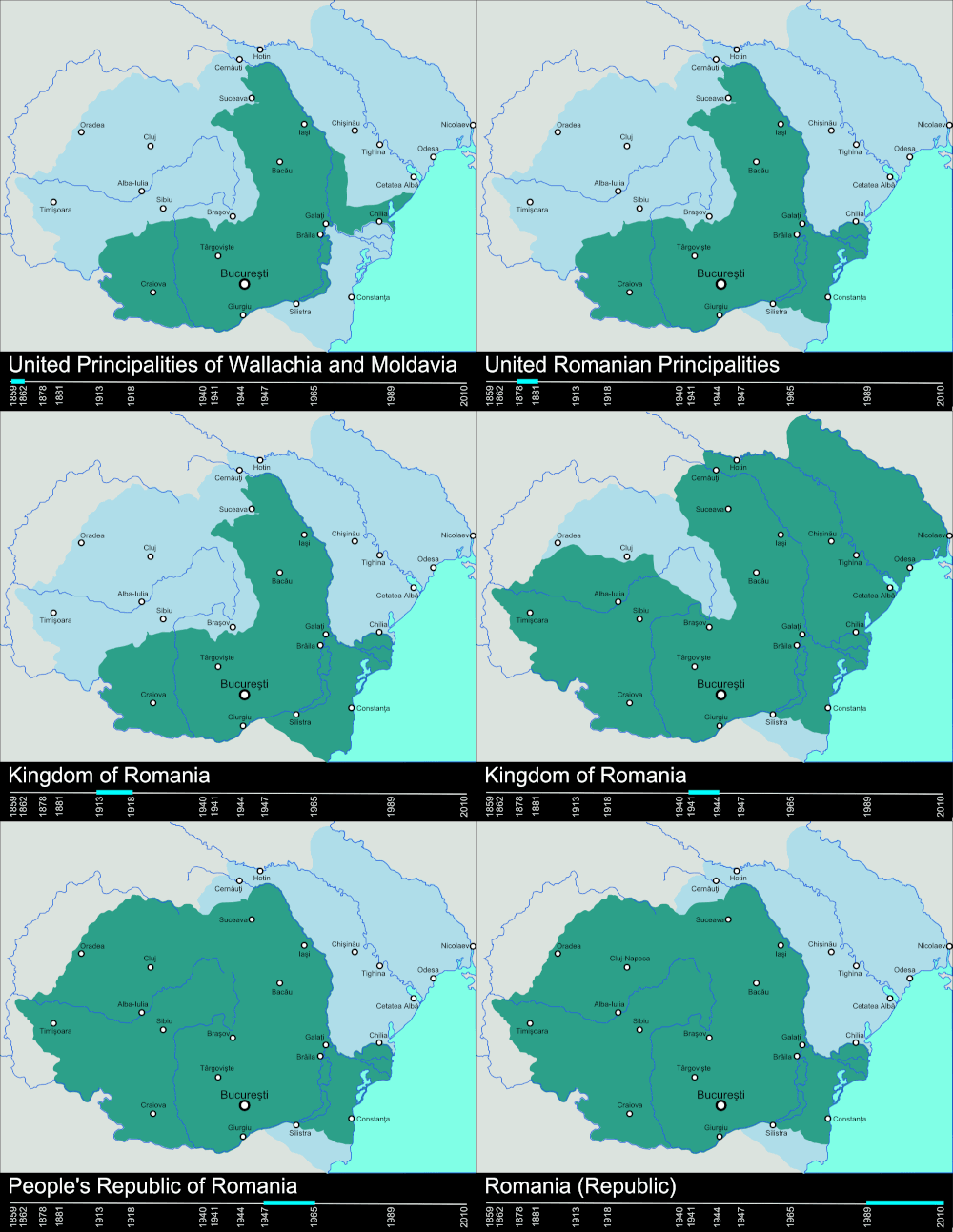
1856年のパリ条約により、ドナウ公国は列強の共同後見下に置かれました。 [137]モルダヴィアとワラキアで召集された特別議会が2つの公国の統一を促した後、列強は1859年1月にアレクサンドル・ヨアン・クザが共同ドミトル(統治公)に選出されることを阻止しませんでした。 [140]統一された公国は1862年2月21日に正式にルーマニアという国名を採用しました。 [141]クザの政府は修道院の財産の世俗化や農地改革を含む一連の改革を実行しましたが、保守派と急進派の政治家の連合により1866年2月に退位を余儀なくされました。[142] [143]
5月にはクザの後継者としてドイツの王子カール・フォン・ホーエンツォレルン=ジグマリンゲン(カロル1世)が選出された。[144]同年、議会はルーマニア初の憲法を採択した。 [145]列強はベルリン会議でルーマニアの完全独立を承認し、カロル1世は1881年に国王に即位した。 [146]会議ではドナウ川デルタとドブロジャもルーマニアに与えられた。[146]ルーマニアの学者たちはすべてのルーマニア人を大ルーマニアに統一しようと努力したが、政府は彼らの領土回復計画を公然と支持しなかった。[147]
トランシルヴァニアのルーマニア人とザクセン人は、ハプスブルク帝国におけるトランシルヴァニアの独立の地位を維持することを望んだが、オーストリア・ハンガリー帝国の妥協により、1867年にこの地方はハンガリーと統合された。[148]ルーマニア系政治家は、ハンガリーを国民国家にしようとするハンガリー政府の試み、特にハンガリー語の義務教育を規定する法律に強く反対した。[146]ルーマニア国民党の指導者はオーストリア・ハンガリー帝国の連邦化を提案し、ルーマニアの知識人はルーマニア語の使用を促進する文化協会を設立した。[149] [150]
世界大戦と大ルーマニア
.jpg/500px-Austria-Hungary_(ethnic).jpg)
ルーマニアはロシアの拡張主義を恐れ、1883年に秘密裏にドイツ、オーストリア=ハンガリー、イタリアの三国同盟に加盟したが、世論はオーストリア=ハンガリーに敵対したままだった。 [151] [152]ルーマニアは1913年の第二次バルカン戦争でブルガリアから南ドブロジャを奪取した。 [153]ドイツとオーストリア=ハンガリーの外交は戦争中にブルガリアを支援し、ルーマニアとフランス、ロシア、イギリスの三国協商との和解をもたらした。 [153] 1914年に第一次世界大戦が勃発したとき、ルーマニアは中立を保っていたが、首相のイオン・IC・ブラティアヌが協商国との交渉を開始した。[154]ブカレスト条約でオーストリア=ハンガリー帝国がルーマニア民族が多数を占める領土をルーマニアに約束した後、ルーマニアは1916年に中央同盟国との戦争に参戦した。[154] [155]ドイツ軍とオーストリア=ハンガリー帝国軍はルーマニア軍を破り、1917年初頭までに国の4分の3を占領した。[156]十月革命でロシアが同盟国から敵国に変わった後、ルーマニアは1918年5月に中央同盟国と厳しい平和条約に署名せざるを得なかったが、 [157]ロシアの崩壊によりベッサラビアとルーマニアの統合も可能になった。[158]フェルディナンド国王は、 1918年11月11日にドイツが降伏する前日に、再び協商国のためにルーマニア軍を動員した。[157]

オーストリア=ハンガリー帝国は戦後急速に崩壊した。[157]ブコヴィナ総会は1918年11月28日に同州とルーマニアの統合を宣言し、大国民議会は12月1日にトランシルヴァニア、バナト、クリシャナ、マラムレシュの王国への統合を宣言した。 [159] [160]オーストリア、ブルガリア、ハンガリーとの平和条約で1919年と1920年に新たな国境が定められたが、ソ連はベッサラビアの喪失を認めなかった。[161]ルーマニアは最大の領土拡大を達成し、戦前の137,000 km2から295,000 km2(53,000平方マイルから114,000平方マイル)に拡大した。[162]新しい選挙制度により、成人男性市民全員に投票権が与えられ、一連の急進的な農地改革により、1918年から1921年の間に国は「小地主国家」に変貌した。[163] 男女平等が原則として制定されたが、女性は投票することも候補者になることもできなかった。[164] カリプソ・ボテスは、フェミニストの考えを推進するためにルーマニア女性全国協議会を設立した。[164]ルーマニアは多民族国家であり、少数民族が人口の約30%を占めていたが、 1923年に新しい憲法で単一民族国家と宣言された。[162] [165] [166]少数民族は独自の学校を設立できたが、ルーマニア語、歴史、地理はルーマニア語でのみ教えることができた。[167]
農業は依然として経済の主要部門であったが、いくつかの産業部門、特に石炭、石油、金属、合成ゴム、爆薬、化粧品の生産は、戦間期に発展した。[168] [169] 1930年のルーマニアの石油生産量は580万トンで、世界第6位であった。[169]国民自由党と国民農民党の2つの政党が政治生活を支配していたが、ルーマニアの大恐慌は1930年代に大きな変化をもたらした。[170] [171]民主党は、ファシストで反ユダヤ主義の 鉄衛団との対立と、国王カロル2世の権威主義的傾向の間で窮地に陥った。[172]国王は1938年に新憲法を公布して政党を解散し、議会制度を王室独裁制に置き換えた。[173] [174]

1938年のミュンヘン協定により、カロル2世はフランスとイギリスではルーマニアの利益を守れないと確信した。[175]ドイツは新たな戦争に備えるために、ルーマニアの石油と農産物の定期的な供給を必要としていた。[175]両国は1939年に経済政策の調整に関する条約を締結したが、国王はアドルフ・ヒトラーを説得してルーマニアの国境を保証させることはできなかった。[176]ルーマニアは1940年6月26日にベッサラビアと北ブコヴィナをソ連に、8月30日に北トランシルヴァニアをハンガリーに、9月に南ドブルジャをブルガリアに割譲せざるを得なかった。[177]領土を失った後、国王は9月6日に未成年の息子ミハイル1世に王位を譲ることを余儀なくされ、ルーマニアはイオン・アントネスク将軍の指導の下、民族軍団国家へと変貌した。[178]アントネスクは11月23日にドイツ、イタリア、日本の三国同盟に署名した。 [179]鉄衛団はアントネスクに対してクーデターを起こしたが、アントネスクはドイツの支援を受けて暴動を鎮圧し、1941年初頭に軍事独裁政権を導入した。[180]

ルーマニアは、1941年6月のドイツによるソ連侵攻後すぐに第二次世界大戦に参戦した。 [181]ルーマニアはベッサラビアと北ブコビナを奪還し、ドイツはトランスニストリア(ドニエストル川とドニエプル川に挟まれた地域)をルーマニアの管理下に置いた。[182]ルーマニア軍とドイツ軍はこれらの地域で少なくとも16万人の地元ユダヤ人を虐殺し、ベッサラビアからトランスニストリアへの移送中に10万5千人以上のユダヤ人と約1万1千人のジプシーが死亡した。[183] モルダビア、ワラキア、バナト、南トランシルヴァニアのユダヤ人のほとんどは生き残ったが、[184]基本的権利は制限されていた。[185] 1943年9月のイタリアとの連合国休戦後、ルーマニアは1943年から1944年にかけてヨーロッパで2番目の枢軸国となった。[186] [187] 1944年3月にドイツがハンガリーを占領した後、ハンガリー当局の支援を受けて、約132,000人のユダヤ人(主にハンガリー語を話す)が北トランシルヴァニアから絶滅収容所に移送されました。 [183] [188]
1943年のスターリングラード攻防戦でソ連が勝利した後、アントネスク反対派の指導者ユリウ・マニウはイギリスの外交官と秘密交渉に入り、ルーマニアはソ連との和解を求めなければならないことを明確にした。 [189]アントネスク政権に対する活動の調整を容易にするため、国民自由党と国民農民党は社会民主党と共産党を含む国民民主ブロックを設立した。[190]ソ連の攻勢が成功した後、若き国王ミハイ1世はアントネスクの逮捕を命じ、1944年8月23日に国民民主ブロックから政治家を任命して新政府を樹立した。[191]ルーマニアは戦争中に側を変え、約25万人のルーマニア軍がハンガリーとドイツに対する赤軍の軍事作戦に加わったが、ヨシフ・スターリンはルーマニアをソ連の影響圏内の占領地とみなした。[192]スターリンの副官は1945年3月に共産党候補のペトル・グローザを首相に任命するよう国王に指示した。[193] [194]北トランシルヴァニアのルーマニア政権はすぐに復活し、グローザ政権は農業改革を実施した。[194] 1947年2月、パリ平和条約は北トランシルヴァニアのルーマニアへの返還を確認したが、同時に同国における赤軍部隊の存在も合法化した。[195] [196]
共産主義
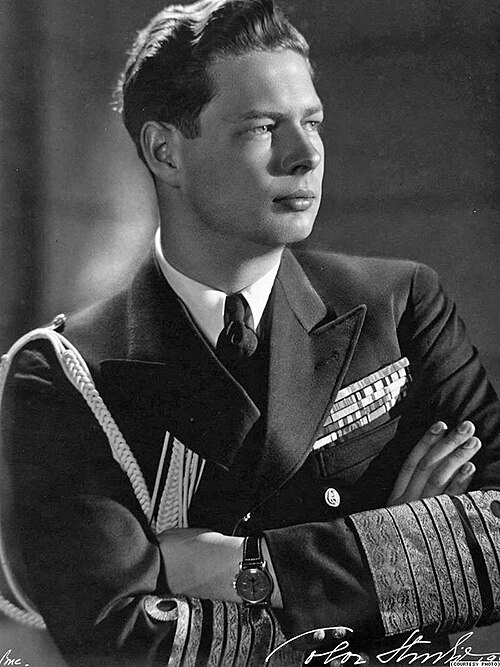
ソ連によるルーマニア占領中、共産党主導の政府は1946年に新たな選挙を要求し、捏造した70%の多数決で不正に勝利した。 [197]こうして彼らは急速に支配的な政治勢力としての地位を築いた。[198] 1933年に投獄された共産党指導者ゲオルゲ・ゲオルギュー・デイは1944年に脱走し、ルーマニア初の共産党指導者となった。1947年2月、彼と他の人々はミハイ1世に退位と国外退去を強制し、ルーマニアを人民共和国と宣言した。[199] [200]ルーマニアは1950年代後半までソ連の直接的な軍事占領と経済管理下にあった。この期間中、ルーマニアの膨大な天然資源は一方的な搾取目的で設立されたソ連・ルーマニア混合企業( SovRoms )によって継続的に枯渇させられた。 [201] [202] [203]
1948年、国家は民間企業の国有化と農業の集団化を開始した。[204] 1960年代初頭まで、政府は政治的自由を厳しく制限し、ルーマニアの秘密警察であるセクリタテの助けを借りてあらゆる反対意見を厳しく抑圧した。この期間中、政権はいくつかの粛清キャンペーンを開始し、多数の「国家の敵」と「寄生分子」が、国外追放、国内亡命、強制労働キャンプや刑務所への収容(時には終身)、法外な処刑など、さまざまな形の処罰の対象となった。[205]それにもかかわらず、反共産主義抵抗は東側諸国で最も長く続き、最も強い抵抗の1つであった。[206] 2006年の委員会は、共産主義弾圧の直接の犠牲者の数を200万人と推定した。[207]

1965年、ニコラエ・チャウシェスクが政権に就き、ソ連からより独立した外交政策を遂行し始めた。そのため、共産主義ルーマニアは、1968年にソ連が率いたチェコスロバキア侵攻への参加を拒否した唯一のワルシャワ条約機構加盟国となった。チャウシェスクは、この行動を「大きな過ちであり、ヨーロッパの平和と世界の共産主義の運命に対する深刻な危険」と公に非難した。[208]ルーマニアは、1967年の六日戦争後もイスラエルとの外交関係を維持した唯一の共産主義国であり、同年、西ドイツとの外交関係を樹立した。 [209]同時に、アラブ諸国やパレスチナ解放機構(PLO)との緊密な関係により、ルーマニアはイスラエル・エジプトおよびイスラエル・PLO和平交渉で重要な役割を果たすことができた。[210]

ルーマニアの対外債務が1977年から1981年の間に急増した(30億ドルから100億ドルへ)ため、[211]国際通貨基金(IMF)や世界銀行などの国際金融機関の影響力が高まり、徐々にチャウシェスクの独裁政治と衝突するようになった。チャウシェスクは最終的に、国民を貧困に陥れ経済を疲弊させる緊縮政策を課すことで対外債務の全額返済政策を開始した。このプロセスにより、1989年にルーマニアの対外政府債務の全額返済に成功した。同時に、チャウシェスクはセクリタテ秘密警察の権限を大幅に拡大し、厳しい個人崇拝を強めたため、独裁者の人気は劇的に低下し、1989年12月の暴力的なルーマニア革命で打倒され、数千人が死亡または負傷した。
裁判の後、チャウシェスクとその妻は1989年12月25日にブカレスト郊外の軍事基地で銃殺刑に処された。[212] [213]彼らが処刑された罪状は、飢餓による大量虐殺などであった。
現代

1989年の革命後、イオン・イリエスク率いる救国戦線(FSN)は暫定統治機関として権力を掌握した後、部分的かつ表面的な複数政党制による民主主義および自由市場の措置をとった。[214] [215] 1990年3月、この地域におけるハンガリーの弾圧の結果、トゥルグ・ムレシュで暴動が起きた。1990年4月、その年の議会選挙の結果に異議を唱え、イリエスクを含む救国戦線が元共産党員とセクリタテアのメンバーで構成されていると非難する座り込み抗議が急速に拡大し、ゴラニアドと呼ばれるようになった。平和的なデモが暴力に発展し、イリエスクが召集した炭鉱労働者が介入した。このエピソードは地元メディア[216]と海外メディア[217]の両方で広く記録され、 1990年6月のミネリアドとして記憶されている。[218] [219]
その後の戦線の崩壊により、社会民主党(PDSR、その後PSD)と民主党(PD、その後PDL)を含むいくつかの政党が誕生した。前者は1990年から1996年まで、イオン・イリエスクを国家元首として、いくつかの連立政権と政府を通じてルーマニアを統治した。それ以来、民主的な政権交代が何度かあった。1996年にエミル・コンスタンティネスクが大統領に選出され、2000年にイリエスクが権力に復帰し、 2004年にトラヤン・バシェスクが選出され、2009年に僅差で再選された。[220]
2009年、欧州大不況の余波として、ルーマニアは国際通貨基金(IMF)の救済を受けた。[221] 2014年11月、シビウ元FDGR/DFDR市長のクラウス・ヨハニスが、世論調査でそれまで首位に立っていたヴィクトル・ポンタ元首相を予想外に破り、大統領に選出された。多くのアナリストは、この驚きの勝利は、投票プロセスにおけるルーマニア人ディアスポラの影響によるものとし、第1回投票ではクラウス・ヨハニスにほぼ50%が投票したのに対し、ポンタにはわずか16%が投票しただけだった。[222] 2019年、ヨハニスはヴィオリツァ・ダンチラ元首相を圧勝して大統領に再選された。[223]

1989年以降の時代は、共産主義時代に建設され運営されていた旧工業・経済企業のほとんどが、主に1989年以降の政権の民営化政策の結果として閉鎖されたという事実によって特徴づけられる。[224]
ルーマニアの現代政治では、汚職が大きな問題となっている。 [225] 2015年11月、コレクティフ・ナイトクラブ火災をきっかけに大規模な反汚職抗議運動が起こり、ルーマニアのヴィクトル・ポンタ首相が辞任した。 [226] 2017年から2018年にかけて、汚職撲滅を弱めるとみなされた措置に反応して、ルーマニアでは1989年以来最大規模の抗議運動がいくつか起こり、全国で50万人以上が抗議した。[227] [228]それにもかかわらず、汚職撲滅を目的とした重要な改革が行われてきた。ベルギー、ノルウェー、スペインの同様の機関に触発され、2002年にルーマニアに国家汚職対策局が設立された。[229]ルーマニアは2014年以来、汚職対策に取り組んでおり、国家汚職対策局が中・高レベルの政治、司法、行政犯罪を起訴している。[230]
NATOとEUの統合
.jpg/500px-Tratado_de_Lisboa_13_12_2007_(081).jpg)
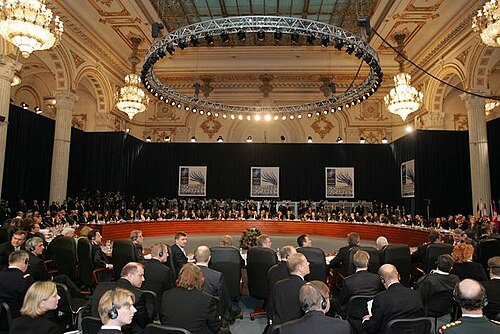
冷戦終結後、ルーマニアは西欧諸国や米国との緊密な関係を築き、 2004年にNATOに加盟し、 2008年にはブカレストで首脳会議を主催した。 [231]同国は1993年6月に欧州連合への加盟を申請し、1995年にEU加盟国、2004年に加盟国、そして2007年1月1日に正式加盟国となった。 [232]
2000年代、ルーマニアはヨーロッパで最も高い経済成長率を記録し、「東欧の虎」と呼ばれることもあった。[233]国内の貧困削減と機能的な民主国家の樹立に成功し、生活水準も大幅に向上した。[234] [235]しかし、ルーマニアの発展は2000年代後半の不況で大きな後退に見舞われ、2009年には国内総生産(GDP)の大幅な縮小と財政赤字に陥った。 [236]これにより、ルーマニアは国際通貨基金(IMF)から借り入れを行った。[237]経済状況の悪化は不安を招き、2012年には政治危機を引き起こした。[238]
2013年末、エコノミスト誌は、ルーマニアは同年再び4.1%の「好調な」経済成長を享受し、賃金は急上昇し、失業率は英国よりも低いと報じた。経済成長は、エネルギーと通信を筆頭に、新しい分野を競争と投資に開放する政府の自由化のさなか加速した。[239] 2016年、人間開発指数はルーマニアを「非常に高い人間開発」の国にランク付けした。[240]
1990年代の経済不安とEUとの自由渡航協定の実施を受けて、多数のルーマニア人が西ヨーロッパや北アメリカに移住したが、特にイタリア、ドイツ、スペインに大きなコミュニティがあった。2016年にはルーマニア人のディアスポラは360万人以上と推定され、世界で5番目に多い移民人口となった。[241]
地理
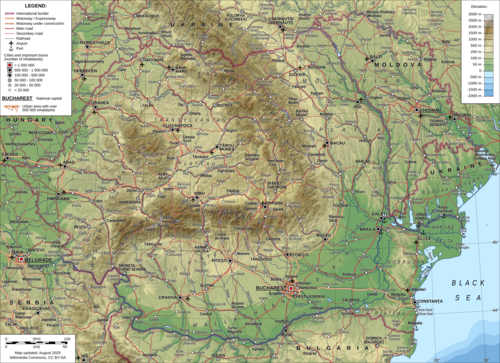
ルーマニアは南東ヨーロッパ最大の国であり、ヨーロッパで12番目に大きい国で、面積は238,397平方キロメートル(92,046平方マイル)です。[242] : 17 北緯43度から49度、東経20度から30度の間に位置しています。地形は山、丘、平野がほぼ均等に分布しています。カルパティア山脈がルーマニアの中央部を占めており、標高2,000メートル(6,600フィート)を超える山脈が14あり、最も高いのは2,544メートル(8,346フィート)のモルドヴェアヌ峰です。 [242] : 11 周囲をモルダヴィア高原、トランシルヴァニア高原、パンノニア平原、ワラキア平原が囲んでいます。
ルーマニアには、バルカン混合林、中央ヨーロッパ混合林、東ヨーロッパ森林ステップ、パンノニア混合林、カルパティア山岳針葉樹林、ポンティックステップの6つの陸上生態地域がある。[243]自然および半自然生態系は、国の陸地面積の約47%を占めている。[244]ルーマニアには、 13の国立公園と3つの生物圏保護区を含む 約10,000 km 2 (3,900平方マイル) (総面積の約5%) の保護地域がある。[245]ドナウ川はセルビアとブルガリアとの国境の大部分を形成し、黒海に流れ込み、ヨーロッパで2番目に大きく、最も保存状態の良いドナウデルタを形成し、生物圏保護区および生物多様性の世界遺産に登録されている。[246]ドナウ川デルタは5,800km2 (2,200平方マイル)の面積を誇り、[ 247]ヨーロッパ最大の連続湿地帯であり、[248]植物種だけでも1,688種が生息しています。[249]
ルーマニアは、ヨーロッパで最大の手つかずの森林地帯を有し、国土の約27%を占めています。[250]この国の2019年の森林景観完全性指数の平均スコアは5.95/10で、172か国中世界90位にランクされています。[251]この国では約3,700種の植物が確認されており、これまでに23種が天然記念物、74種が絶滅、39種が絶滅危惧、171種が脆弱、1,253種が希少と指定されています。[252]
ルーマニアの動物相は、33,792種の動物、33,085種の無 脊椎動物、707種の 脊椎動物[252]で構成されており、哺乳類、鳥類、爬虫類、両生類の固有種は約400種あり、[ 253]ヨーロッパ(ロシアを除く)のヒグマの約50% [254]とオオカミの20% [255]が含まれています。
気候

ルーマニアは外海から遠く、ヨーロッパ大陸の南東部に位置しているため、大陸性気候で四季がはっきりしている。年間平均気温は南部で11℃(52℉)、北部で8℃(46℉)である。[256]夏のブカレストの平均最高気温は28℃(82℉)まで上昇し、低地では35℃(95℉)を超える気温も珍しくない。[257]冬の平均最高気温は2℃(36℉)を下回る。[257]降水量は平均的で、西部の最も高い山岳地帯でのみ年間750mm(30インチ)を超えるが、ブカレスト周辺では約570mm(22インチ)まで下がる。[242] : 29 地域によって違いがあり、バナトなどの西部では気候は穏やかで地中海の影響を多少受けていますが、国の東部では大陸性気候がより顕著です。ドブルジャでは黒海もこの地域の気候に影響を与えています。[258]
政治
ルーマニア憲法はフランス第五共和政の憲法に基づいており、1991年12月8日の国民投票で承認され、2003年10月にEU法に準拠するように改正された。エコノミスト・インテリジェンス・ユニットは、2023年にルーマニアを「欠陥のある民主主義」と評価した。フリーダム・ハウスもルーマニアを自由であるとみなしている。[259] [260]
政府
この国は、複数政党制の民主制度と、立法、行政、司法の三権分立に基づいて統治されている。半大統領制共和国であり、行政権は政府と大統領の双方が担っている。[261]大統領は国民投票で最長2期5年の任期で選出され、首相を任命し、首相は閣僚評議会を任命する。政府の立法府は総称して議会(国会議事堂に所在)と呼ばれ、2つの院(上院と下院)で構成され、議員は4年ごとに単純多数決で選出される。[262] [263]
司法制度は政府の他の部門から独立しており、最高裁判所である最高裁判所を中心とする階層的な裁判所制度で構成されている。[264]他に控訴裁判所、郡裁判所、地方裁判所がある。ルーマニアの司法制度はフランスのモデルに強く影響を受けており、民法に基づいており、本質的に異端審問的である。憲法裁判所( Curtea Constituțională ) は、法律やその他の国家規制が国の基本法である憲法に準拠しているかどうかを判定する責任を負っており、国民投票によってのみ改正できる。[262] [265]ルーマニアの2007年のEU加盟は、司法改革、他の加盟国との司法協力の強化、汚職対策など、国内政策に大きな影響を与えている。 [266]
外交関係
.jpg/500px-Secretary_Tillerson_and_Romanian_President_Iohannis_Meet_Before_Reporters_in_Washington_(34356507264).jpg)
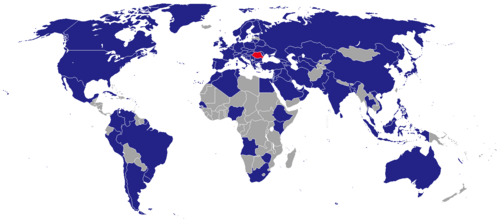
ルーマニアは1989年12月以来、ロシア連邦との関係は限定的であるものの、西側諸国全般、特に米国および欧州連合との関係を強化する政策を追求してきた。ルーマニアは2004年3月29日にNATOに加盟し、2007年1月1日に欧州連合(EU)に加盟した。また、1972年には国際通貨基金と世界銀行に加盟し、世界貿易機関の創設メンバーでもある。[267]
過去において、最近の政府は、他の国々(特にモルドバ、ウクライナ、ジョージア)との関係を強化し、西側諸国との統合プロセスを支援することが目標の1つであると述べてきました。[268]ルーマニアはまた、1990年代後半から、東ヨーロッパとコーカサスの旧ソビエト連邦の民主主義共和国のNATOとEUへの加盟を支持することを明らかにしてきました。[268]ルーマニアはまた、トルコとクロアチアの欧州連合への加盟を公に支持することを宣言しました。 [268]
ルーマニアは2007年1月1日にシェンゲン圏への加盟を選択し、 2011年6月に欧州議会で加盟申請が承認されたが、2011年9月にEU理事会で拒否された。 2019年8月現在、欧州理事会がルーマニアのEU加盟の基本原則である法の支配の遵守に疑念を抱いているため、シェンゲン圏への加盟は妨げられている。 [ 269 ]
2005年12月、トライアン・バシェスク大統領とコンドリーザ・ライス米国務長官は、 主にルーマニア東部のいくつかの施設に米軍が駐留することを認める協定に署名した。[271] 2009年5月、ヒラリー・クリントン米国務長官は「ルーマニアは米国にとって最も信頼でき、尊敬できるパートナーの一つである」と宣言した。[272]
モルドバとの関係は、両国が同じ言語と共通の歴史を共有していることを考えると特別なケースです。[268]モルドバとルーマニアの統一運動は、両国が共産主義支配からの解放を達成した後の1990年代初頭に現れましたが、[273] 1990年代半ばにモルドバの新政府がルーマニアから独立したモルドバ共和国の維持に向けた議題を追求したため、勢いを失いました。[274] 2009年のモルドバでの抗議活動とそれに続く共産党の権力の排除の後、両国の関係は大幅に改善しました。[275]
軍隊

ルーマニア軍は陸、空、海軍で構成され、国防省の監督下で最高司令官が指揮し、戦時には大統領が最高司令官となる。軍は予備役約55,000人と現役軍人71,500人で構成され、陸軍35,800人、空軍10,700人、海軍6,600人、その他16,500人である。[276] 2023年の防衛費総額は国内総生産の2.44%、約84億8,000万米ドルを占め、[277] 2026年までに近代化と新装備の取得に総額90億米ドルを費やす予定である。[278]ルーマニアが志願兵制に移行した2007年に徴兵制は廃止された。
空軍はF-16AM/BM MLU戦闘機[279] 、 C-27Jスパルタン、C-130ハーキュリーズ輸送機、IAR 330およびIAR 316 ヘリコプターを運用している。[280] F-35第5世代戦闘機の調達プログラムも現在実施されている。[281]海軍は3隻のフリゲート艦を運用しており、そのうち2隻はイギリス海軍から取得した22型フリゲート艦、[282]と4隻のコルベット艦を運用している。河川艦隊はミハイル・コガルニセアヌ級河川モニター艦とスマルダン級河川モニター艦を運用している。[283]
ルーマニアは2002年からアフガニスタンの国際連合に部隊を派遣しており[284] 、 2010年には1,600人の兵士を派遣した(米国によれば4番目に大きな派遣であった)。[285] [286]同国での戦闘任務は2014年に終了した。[287]ルーマニア軍はイラク占領に参加し、730人の兵士がピークに達した後、徐々に350人まで削減された。ルーマニアはイラクでの任務を終了し、2009年7月24日に最後の部隊を撤退させた。これはそうした最後の国々の一つである。フリゲート艦レゲレ・フェルディナンドは2011年のリビアへの軍事介入に参加した。[288]
2011年12月、ルーマニア上院は、同年9月に署名されたルーマニアと米国の協定を批准する法案を全会一致で可決した。この協定は、NATOの大陸間ミサイル防衛網構築の一環として、ルーマニアにおける米国の地上配備型弾道ミサイル防衛システムの構築と運用を認めるものである。[289]デヴェスルに配備されているイージス・アショア・ミサイルシステムは、2016年に運用を開始した。[290]
2024年、ミハイル・コガルニセアヌ空軍基地(ロシア空軍第57空軍基地)の拡張工事が開始された。この空軍基地は、20年にわたるプロジェクトの実施後、ヨーロッパ最大のNATO基地となる予定である。[291] [292]
行政区分
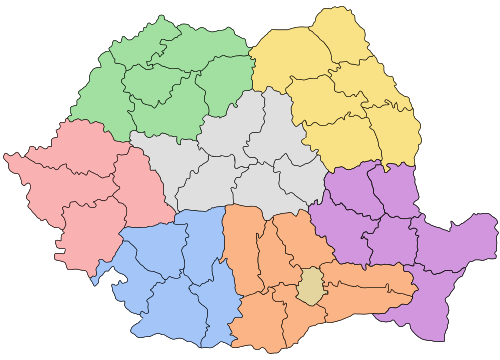
ルーマニアは41の郡(județe 、発音はjudetse)とブカレスト市に分かれている。各郡は、地方問題を担当する郡議会と、郡レベルでの国家問題の管理を担当する知事によって統治されている。知事は中央政府によって任命されるが、いかなる政党にも所属することはできない。[293]各郡はさらに市とコミューンに細分化され、市とコミューンには市長と地方議会がある。ルーマニアには合計で320の市と2,861のコミューンがある。[242] :17 大都市のうち103は自治体としての地位を有しており、地方問題に対するより大きな行政権が与えられている。ブカレスト市は特別なケースで、郡と同等の地位を享受している。さらに6 つのセクター[242]に分かれており、知事、市長(プリマール)、市議会が置かれています。
欧州連合のNUTS-3(統計地域単位名)レベルの区分は、ルーマニアの行政地域構造を反映しており、41の郡とブカレストに相当します。 [294]市とコミューンはNUTS-5レベルの区分に相当しますが、現在NUTS-4レベルの区分はありません。NUTS-1(4つのマクロ地域)とNUTS-2 [295](8つの開発地域)の区分は存在しますが、行政能力はなく、代わりに地域開発プロジェクトと統計目的の調整に使用されます。[294]
経済

2024年には、ルーマニアのGDP(購買力平価)は約8,170億ドル、一人当たりGDP(購買力平価)は43,179ドルとなる。[9]世界銀行によると、ルーマニアは高所得国である。[17]ユーロスタットによると、ルーマニアの一人当たりGDP(PPS)は2022年にEU平均(100%)の77%となり、2007年(ルーマニアがEUに加盟した年)の44%から増加し、ルーマニアはEUで最も急速に成長する経済の一つとなっている。[297]
1989年以降、ルーマニアは産業基盤の老朽化と構造改革の欠如により、10年間にわたって経済の不安定化と衰退を経験した。しかし、2000年以降、ルーマニア経済は高成長、低失業率、インフレ率の低下を特徴とする比較的マクロ経済的に安定した経済へと変貌した。ルーマニア統計局によると、2006年の実質GDP成長率は7.7%で、欧州でも最高水準だった。[298]しかし、大不況により、政府はIMFの200億ユーロの救済プログラムを含む対外借り入れを余儀なくされた。[299]世界銀行によると、購買力平価での一人当たりGDPは2007年の13,687ドルから2018年には28,206ドルに増加しました。[300]ルーマニアの平均純月額賃金は2023年時点で913ユーロに増加し、[301] 2016年のインフレ率は-1.1%でした。[302]

最大の地元企業には、自動車メーカーのAutomobile Dacia、Petrom、Rompetrol、Ford Romania、Electrica、Romgaz、RCS&RDS、Banca Transilvaniaなどがあります。[303] 2020年現在、輸出は毎月約6000件あります。ルーマニアの主な輸出品は、自動車、ソフトウェア、衣類と繊維、産業機械、電気電子機器、冶金製品、原材料、軍事装備、医薬品、ファインケミカル、農産物(果物、野菜、花)です。貿易は主に欧州連合加盟国に集中しており、ドイツとイタリアが同国の最大の貿易相手国です。2012年の勘定残高はGDPの4.52%と推定されました。[304]
1990年代後半から2000年代にかけて一連の民営化と改革が行われた後、ルーマニア経済への政府の介入は他のヨーロッパ諸国に比べてやや少ない。[305] 2005年に政府は累進課税制度を廃止し、個人所得と法人利益の両方に16%の均一税率を適用した。これは欧州連合で最も低い税率である。 [306]ルーマニアの経済は主にサービス業に基づいており、2017年時点で同国の総GDPの56.2%を占め、工業と農業はそれぞれ30%と4.4%を占めている。[307] ルーマニアの労働力の約25.8%が農業に従事しており、これはヨーロッパで最も高い割合の1つである。[308]
ルーマニアは共産主義の終焉後、外国からの投資を増やしており、2019年6月にはルーマニアへの外国直接投資(FDI)の残高が838億ユーロに増加した。 [309]ルーマニアの対外直接投資残高(外部または外国の企業による地元経済の株式への投資または購入)は2018年12月に7億4500万ドルで、EU加盟28か国の中で最も低い値であった。[309]ルーマニアに投資した企業には、コカ・コーラ、マクドナルド、ピザハット、プロクター・アンド・ギャンブル、シティバンク、IBMなどがある。[310]
2019年の世界銀行の報告書によると、ルーマニアはビジネスのしやすさにおいて190カ国中52位にランクされており、隣国ハンガリーより1つ上、イタリアより1つ下となっている。[311]報告書は、同国における契約の一貫した履行と信用へのアクセスを称賛する一方で、電力へのアクセスと建設許可の取得の難しさを指摘している。[311]
1867年以来、公式通貨はルーマニア・レイ(「ライオン」)であり、2005年に額面が変更されました。[312]ルーマニアは2007年にEUに加盟した後、2029年にユーロを導入する予定です。 [313]
CEICのデータによると、2020年1月のルーマニアの対外債務は1,220億米ドルと報告されている。[314]
インフラストラクチャー
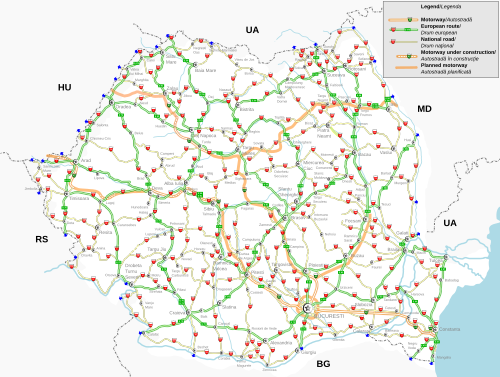

ルーマニア国立統計局(INSSE)によると、ルーマニアの道路網の総延長は2015年に86,080キロメートル(53,488マイル)と推定されている。[315]世界銀行は鉄道網の線路長を22,298キロメートル(13,855マイル)と推定しており、これはヨーロッパで4番目に大きい鉄道網である。[316]ルーマニアの鉄道輸送は1989年以降劇的な衰退を経験し、2004年には乗客数が9,900万人と推定されたが、インフラの改善と路線の部分的な民営化により最近(2013年)回復し、[262]国内の乗客と貨物の移動全体の45%を占めている。[262] 唯一の地下鉄システムであるブカレスト地下鉄は1979年に開通し、全長は80.01 km(49.72マイル)で、2021年の平日の平均乗客数は72万人です。[317]現在、 16の国際商業空港が稼働しています。2017年には、 1,280万人を超える乗客がブカレストのアンリ・コアンダ国際空港を利用しました。[318]
ルーマニアは電力の純輸出国であり、電力消費量では世界第52位である。[319]生産されるエネルギーの約3分の1は再生可能エネルギー源から来ており、そのほとんどは水力発電である。[320] 2015年の主なエネルギー源は、石炭(28%)、水力(30%)、原子力(18%)、炭化水素(14%)であった。[321]石油と天然ガスの生産は10年以上減少しているにもかかわらず、東ヨーロッパで最大の精製能力を持っている。[322]ヨーロッパで最大の原油とシェールガスの埋蔵量の一つを誇り[323]、欧州連合で最もエネルギー自立度の高い国の一つであり[324] 、チェルナヴォダの原子力発電所のさらなる拡張を検討している。[325]
2014年6月のインターネット接続数は約1,830万件でした。[326]ブルームバーグによると、2013年のルーマニアのインターネット速度は世界第5位で、インディペンデントによると、インターネット速度ではヨーロッパ第1位です。 [327] [328]ティミショアラは世界でも最高水準です。[329]
観光
観光業はルーマニア経済に大きく貢献しており、GDPの約5%を生み出している。[330]世界銀行によると、観光客数は着実に増加しており、2016年には外国人観光客が933万人に達した。[331]ルーマニアの観光業は2005年に4億ユーロの投資を集めた。 [332] 2007年の外国人観光客の60%以上は他のEU諸国からの観光客だった。[333]ママイアやその他の黒海リゾートの人気の夏の観光スポットは、2009年に130万人の観光客を集めた。[334] [335]
最も人気のあるスキーリゾートは、ヴァレア・プラホヴェイ沿いとポヤナ・ブラショフにあります。城、要塞、要塞、および保存された中世のトランシルヴァニアの都市や町、例えばクルージュ=ナポカ、シビウ、ブラショフ、アルバ・ユリア、バイア・マレ、ビストリツァ、メディアシュ、チスナディエ、セベシュ、シギショアラも多くの観光客を魅了しています。ブラショフ近郊のブラン城はルーマニアで最も有名な観光地の1つで、ドラキュラ城として宣伝されることも多く、毎年何十万人もの観光客が訪れます。[336]その他の観光地には、ドナウ・デルタやトゥルグ・ジウのコンスタンティン・ブランクーシの彫刻アンサンブルなどがあります。[337] [338]
田舎の観光は、訪問者に地元の民間伝承や習慣を知ってもらうことに重点を置き、重要な選択肢となっている。[339]ブランとそのドラキュラ城、北モルダビアの壁画教会、マラムレシュの木造教会、トランシルヴァニアの要塞教会のある村などの観光地の宣伝を目的としている。[340]トランシルヴァニア、バナト、ブコヴィナ地方の10の郡を横断する長距離ハイキングとサイクリングの 道、ヴィア・トランシルヴァニカは、田舎のスローツーリズムをさらに促進している。[341]
2014年、ルーマニアにはホテル・レストラン業界で活動する企業が3万2500社あり、総売上高は26億ユーロだった。[342] 2014年にルーマニアを訪れた外国人観光客は190万人を超え、2013年より12%増加した。[343]同国の国立統計研究所によると、約77%がヨーロッパ(特にドイツ、イタリア、フランス)から、12%がアジアから、7%未満が北米から来ていた。[343]
科学技術
歴史的に、ルーマニアの研究者や発明家はいくつかの分野で顕著な貢献をしてきました。飛行の歴史では、トライアン・ヴイアが自力で離陸する最初の飛行機を製作し[344]、オーレル・ヴライクが初期の成功した航空機のいくつかを製作して飛行させました[345] 。一方、アンリ・コアンダは流体工学のコアンダ効果を発見しました[346] 。 ヴィクトル・バベシュは50種類以上の細菌を発見しました[347] 。生物学者のニコラエ・パウレスクは膵臓の抽出物を開発し、糖尿病の犬の血糖値を下げることを示しました。これはインスリンの歴史において重要なことです[348] 。一方、エミール・パラデは細胞生物学への貢献によりノーベル賞を受賞しました[349] 。ラザール・エデレアヌはアンフェタミンを合成した最初の化学者であり、選択的溶媒で貴重な石油成分を分離する方法も発明しました[350] 。
1990年代から2000年代にかけて、研究の発展は、汚職、資金不足、かなりの頭脳流出など、いくつかの要因によって妨げられました。[351]近年、ルーマニアは、GDPに占める研究開発費の割合で、欧州連合(EU)内で最低または2番目に低いランクにあり、2016年と2017年には約0.5%で、わずか2%強のEU平均を大幅に下回っています。[352] [353]同国は、2011年に欧州宇宙機関(ESA)に加盟し、[354] 2016年にはCERNに加盟しました。 [355]しかし、2018年にルーマニアは、機関への会員費5,680万ユーロの支払いを怠ったため、ESAでの投票権を失いました。[356]
2010年代初頭、ルーマニアの科学の状況は、低い水準からではあるものの、「急速に改善している」と特徴づけられた。[357] 2011年1月、議会は「大学に対する厳格な品質管理を実施し、資金評価と査読に厳しい規則を導入する」法律を可決した。[358]ルーマニアは、2023年にはグローバルイノベーション指数で2019年の50位から47位にランクされた。 [359] [360] [361]
欧州連合が提案する極限光インフラストラクチャ(ELI)レーザーの核物理学施設はルーマニアに建設される予定である。[362]ルーマニアは2012年初頭、フランス領ギアナのガイアナ宇宙センターから初の衛星を打ち上げた。 [363]ルーマニアは2014年12月から国際宇宙ステーションの共同所有者となった。[364]
人口統計
.jpg/500px-Rom%C3%A2nii_pe_jude%C8%9Be_(Rom%C3%A2nia,_1930-2021).jpg)

2021年のルーマニア国勢調査によると、ルーマニアの人口は19,053,815人であった。[8]地域の他の国々と同様に、ルーマニアの人口は、人口置換水準を下回る出生率とマイナスの純移民率の結果として、徐々に減少すると見込まれている。 2021年のルーマニア国勢調査によると、ルーマニア人が人口の89.33%、ハンガリー人が6.05%、ロマ人が3.44%を占めているが、[8]多くの民族はIDカードを持っていないため、記録されていない。[365]国際的な情報源は、ロマの数字を公式の国勢調査よりも高くしている。[ 366 ] [ 367] [368]欧州評議会によると、ロマは人口の8.32%を占めている。[ 369] [検証に失敗したその他の少数民族には、ウクライナ人、ドイツ人、トルコ人、リポバ人、アルーマニア人、タタール人、セルビア人などがいる。[370] 1930年にはルーマニアに745,421人のドイツ人が住んでいたが、[371]現在でも国内に残っているのは36,000人ほどである。[370] 2009年現在、ルーマニアには主にモルドバと中国からの移民約133,000人も住んでいる。[234][update]
The total fertility rate (TFR) in 2018 was estimated at 1.36 children born per woman, which is below the replacement rate of 2.1, and one of the lowest in the world,[372] it remains considerably below the high of 5.82 children born per woman in 1912.[373] In 2014, 31.2% of births were to unmarried women.[374] The birth rate (9.49‰, 2012) is much lower than the mortality rate (11.84‰, 2012), resulting in a shrinking (−0.26% per year, 2012) and aging population (median age: 41.6 years, 2018), one of the oldest populations in the world,[372] with approximately 16.8% of total population aged 65 years and over.[372][375][376] The life expectancy in 2015 was estimated at 74.92 years (71.46 years male, 78.59 years female).[377] The number of Romanians and individuals with ancestors born in Romania living abroad is estimated at 12 million.[378] After the Romanian Revolution of 1989, a significant number of Romanians emigrated to other European countries, North America or Australia.[379] For example, in 1990, 96,919 Romanians permanently settled abroad.[380]
Languages
The official language is Romanian, a Romance language (the most widely spoken of the Eastern Romance branch), which presents a consistent degree of similarity to Aromanian, Megleno-Romanian, and Istro-Romanian, but shares many features equally with the rest of the Western Romance languages, specifically Italian, French, Spanish, Portuguese, and Catalan.[382] The Romanian alphabet contains the same 26 letters of the standard Latin alphabet, as well as five additional ones (namely ă, â, î, ț, and ș), totaling 31.[382]
Romanian is spoken as a first language by 91.55% of the entire population, while Hungarian and Vlax Romani are spoken by 6.28% and 1.20% of the population, respectively. There are also 40,861 native speakers of Ukrainian (concentrated in some compact regions near the border, where they form local majorities),[383] 17,101 native speakers of Turkish, 15,943 native speakers of German, and 14,414 native speakers of Russian living in Romania.[381][384]

According to the Constitution, local councils ensure linguistic rights to all minorities. In localities with ethnic minorities of over 20%, that minority's language can be used in the public administration, justice system, and education. Foreign citizens and stateless persons who live in Romania have access to justice and education in their own language.[385] English and French are the main foreign languages taught in schools.[386] In 2010, the Organisation internationale de la Francophonie identified 4,756,100 French speakers in the country.[387] According to the 2012 Eurobarometer, English is spoken by 31% of Romanians, French is spoken by 17%, and Italian and German, each by 7%.[388]
Religion

Romania is a secular state and has no state religion. An overwhelming majority of the population identify themselves as Christians. At the country's 2021 census,[4] 73.86% of respondents identified as Orthodox Christians, with 73.42% belonging to the Romanian Orthodox Church. Other denominations include Protestantism (6.22%), Roman Catholicism (3.89%), and Greek Catholicism (0.61%). From the remaining population 128,291 people belong to other Christian denominations or have another religion, which includes 58,335 Muslims (mostly of Turkish and Tatar ethnicity) and 2,707 Jewish (Jews once constituted 4% of the Romanian population—728,115 persons in the 1930 census). Additionally, 71,417 people are irreligious, 57,205 are atheist, 25,485 are agnostic, and 2,895,539 people chose to not declare their religion.[4]
The Romanian Orthodox Church is an autocephalous Eastern Orthodox Church in full communion with other Orthodox churches, with a Patriarch as its leader. It is the third-largest Eastern Orthodox Church in the world,[389] and unlike other Orthodox churches, it functions within a Latin culture and uses a Romance liturgical language.[390] Its canonical jurisdiction covers the territories of Romania and Moldova.[391] Romania has the world's third-largest Eastern Orthodox population.[392][393]
Urbanisation
Although 54.0% of the population lived in urban areas in 2011,[394] this percentage has been declining since 1996.[395] Counties with over 2⁄3 urban population are Hunedoara, Brașov and Constanța, while those with less than a third are Dâmbovița (30.06%) and Giurgiu and Teleorman.[394] Bucharest is the capital and the largest city in Romania, with a population of over 1.7 million in 2021.[396] Its larger urban zone has a population of almost 2.2 million,[397] which are planned to be included into a metropolitan area up to 20 times the area of the city proper.[398][399][400]
Another 17 cities have a population of over 100,000, with Cluj-Napoca, Iași, Constanța and Timișoara of more than 250,000 inhabitants, and Craiova, Brașov and Galați with over 200,000 inhabitants.[396] Metropolitan areas have been constituted for most of these cities.
Education

.jpg/500px-Bucuresti,_Romania._SPITALUL_COLTEA_(B-II-m-A-18220.02).jpg)
Since the Romanian Revolution of 1989, the Romanian educational system has been in a continuous process of reform that has received mixed criticism.[403] In 2004, some 4.4 million individuals were enrolled in school. Of these, 650,000 were in kindergarten (three-six years), 3.11 million in primary and secondary level, and 650,000 in tertiary level (universities).[404] In 2018, the adult literacy rate was 98.8%.[405] Kindergarten is optional between three and five years. Since 2020, compulsory schooling starts at age 5 with the last year of kindergarten (grupa mare) and is compulsory until twelfth grade.[406][407] Primary and secondary education is divided into 12 or 13 grades. There is also a semi-legal, informal private tutoring system used mostly during secondary school, which prospered during the Communist regime.[408]
Alexandru Ioan Cuza University of Iași, Babeș-Bolyai University of Cluj-Napoca, University of Bucharest, and West University of Timișoara have been included in the QS World University Rankings' top 800.[409]
Romania ranks fifth in the all-time medal count at the International Mathematical Olympiad with 316 total medals, dating back to 1959. Ciprian Manolescu managed to write a perfect paper (42 points) for a gold medal more times than anybody else in the history of the competition, in 1995, 1996 and 1997.[410] Romania has achieved the highest team score in the competition, after China, Russia, the United States and Hungary. Romania also ranks sixth in the all-time medal count at the International Olympiad in Informatics with 107 total medals, dating back to 1989.[411][412][413]
Healthcare
Romania has a universal health care system; total health expenditures by the government are roughly 5% of GDP.[414] It covers medical examinations, any surgical operations, and any post-operative medical care, and provides free or subsidised medicine for a range of diseases. The state is obliged to fund public hospitals and clinics. The most common causes of death are cardiovascular diseases and cancer. Transmissible diseases are quite common by European standards.[415] In 2010, Romania had 428 state and 25 private hospitals,[416] with 6.2 hospital beds per 1,000 people,[417] and over 200,000 medical staff, including over 52,000 doctors.[418] As of 2013[update], the emigration rate of doctors was 9%, higher than the European average of 2.5%.[419]
Culture
Arts and monuments


The topic of the origin of Romanian culture began to be discussed by the end of the 18th century among the Transylvanian School scholars.[420] Several writers rose to prominence in the 19th century, including: George Coșbuc, Ioan Slavici, Mihail Kogălniceanu, Vasile Alecsandri, Nicolae Bălcescu, Ion Luca Caragiale, Ion Creangă, and Mihai Eminescu, the later being considered the greatest and most influential Romanian poet, particularly for the poem Luceafărul.[421]
In the 20th century, a number of Romanian artists and writers achieved international acclaim, including: Tristan Tzara, Marcel Janco,[422] Mircea Eliade, Nicolae Grigorescu, Marin Preda, Liviu Rebreanu,[423] Eugène Ionesco, Emil Cioran, and Constantin Brâncuși. Brâncuși has a sculptural ensemble in Târgu Jiu, while his sculpture Bird in Space, was auctioned in 2005 for $27.5 million.[424][425] Romanian-born Holocaust survivor Elie Wiesel received the Nobel Peace Prize in 1986, while Banat Swabian writer Herta Müller received the 2009 Nobel Prize in Literature.[426]
Prominent Romanian painters include: Nicolae Grigorescu, Ștefan Luchian, Ion Andreescu Nicolae Tonitza, and Theodor Aman. Notable Romanian classical composers of the 19th and 20th centuries include: Ciprian Porumbescu, Anton Pann, Eduard Caudella, Mihail Jora, Dinu Lipatti, and especially George Enescu. The annual George Enescu Festival is held in Bucharest in honour of the 20th-century composer.[427]
Contemporary musicians like Angela Gheorghiu, Gheorghe Zamfir,[428][429] Inna,[430] Alexandra Stan,[431] and many others have achieved various levels of international acclaim. From the late 2000s through the early 2010s, the Romanian popcorn music style had established itself in the international mainstream.[432][433][434] At the Eurovision Song Contest Romanian singers achieved third place in 2005 and 2010.[435]
In cinema, several movies of the Romanian New Wave have achieved international acclaim. At the Cannes Film Festival, The Death of Mr. Lazarescu by Cristi Puiu won the Prix Un Certain Regard in 2005,[436] while 4 Months, 3 Weeks and 2 Days by Cristian Mungiu won the festival's top prize, the Palme d'Or, in 2007.[437] At the Berlin International Film Festival, Child's Pose by Călin Peter Netzer won the Golden Bear in 2013.[438]
The list of World Heritage Sites includes six cultural sites located within Romania, including eight painted churches of northern Moldavia, eight wooden churches of Maramureș, seven villages with fortified churches in Transylvania, the Horezu Monastery, and the Historic Centre of Sighișoara.[439] The city of Sibiu, with its Brukenthal National Museum, was selected as the 2007 European Capital of Culture and the 2019 European Region of Gastronomy.[440][441] Multiple castles exist in Romania, including the popular tourist attractions of Peleș Castle,[442] Corvin Castle, and Bran Castle or "Dracula's Castle".[443]
Holidays, traditions, and cuisine

There are 12 non-working public holidays, including the Great Union Day, celebrated on 1 December in commemoration of the 1918 union of Transylvania with Romania.[444] Winter holidays include the Christmas and New Year festivities during which various unique folklore dances and games are common: plugușorul, sorcova, ursul, and capra.[445][446] The traditional Romanian dress that otherwise has largely fallen out of use during the 20th century, is a popular ceremonial vestment worn on these festivities, especially in rural areas.[447] There are sacrifices of live pigs during Christmas and lambs during Easter that has required a special exemption from EU law after 2007.[448] In the Easter, traditions such as painting the eggs are very common. On 1 March mărțișor gifting is featured, which is a tradition whereby females are gifted with a type of talisman that is given for good luck.[449]
Romanian cuisine has been influenced by Austrian and German cuisine (especially in the historical regions that had been formerly administered by the Habsburg monarchy), but also shares some similarities with other cuisines in the Balkan region such as the Greek, Bulgarian, or Serbian cuisine.[450] Ciorbă includes a wide range of sour soups, while mititei, mămăligă (similar to polenta), and sarmale are featured commonly in main courses.[451]
Pork, chicken, and beef are the preferred types of meat, but lamb and fish are also quite popular.[452][453] Certain traditional recipes are made in direct connection with the holidays: chiftele, tobă and tochitură at Christmas; drob, pască and cozonac at Easter and other Romanian holidays.[454] Țuică is a strong plum brandy reaching a 70% alcohol content which is the country's traditional alcoholic beverage, taking as much as 75% of the national crop (Romania is one of the largest plum producers in the world).[455][456] Traditional alcoholic beverages also include wine, rachiu, palincă and vișinată, but beer consumption has increased dramatically over recent years.[457]
Media
Sports
Noted athletes in the history of Romanian sports (clockwise from top left): Nadia Comăneci, Gheorghe Hagi, Simona Halep, and Cristina Neagu
Football is the most popular sport in Romania with over 219,000 registered players as of 2018[update]. The market for professional football in Romania is roughly €740 million according to UEFA.[458]
The governing body is the Romanian Football Federation, which belongs to UEFA. The Romania national football team played its first match in 1922 and is one of only four national teams to have taken part in the first three FIFA World Cups, the other three being Brazil, France, and Belgium. Overall, it has played in seven World Cups and had its most successful period during the 1990s, when it finished 6th at the 1994 FIFA World Cup, eventually being ranked 3rd by FIFA in 1997.[459]
The core player of this golden generation was Gheorghe Hagi, who was nicknamed "Maradona of the Carpathians".[460] Other successful players include the European Golden Shoe winners: Dudu Georgescu, Dorin Mateuț and Rodion Cămătaru, Nicolae Dobrin,[461] Ilie Balaci,[462] Florea Dumitrache,[463] Mihai Mocanu,[464] Michael Klein,[465] Mircea Rednic,[465] Cornel Dinu,[463] Mircea Lucescu,[466] Costică Ștefănescu,[467] Liță Dumitru,[468] Lajos Sătmăreanu,[469] Ștefan Sameș,[470] Ladislau Bölöni,[471] Anghel Iordănescu,[472] Miodrag Belodedici,[473] Helmuth Duckadam,[474] Marius Lăcătuș,[465] Victor Pițurcă[475] and many others, and most recently Gheorghe Popescu,[476] Florin Răducioiu,[477] Dorinel Munteanu,[478] Dan Petrescu,[479] Adrian Mutu,[480] Cristian Chivu,[480] or Cosmin Contra.[480] Romania's home ground is the Arena Națională in Bucharest.
The most successful club is Steaua București, who were the first Eastern European team to win the UEFA Champions League in 1986, and were runners-up in 1989.[481] Dinamo București reached the UEFA Champions League semi-final in 1984 and the UEFA Cup Winners' Cup semi-final in 1990.[482] Other important Romanian football clubs are Rapid București,[483] UTA Arad,[484] Universitatea Craiova,[485] Petrolul Ploiești,[486] CFR Cluj,[487] Astra Giurgiu,[488] and Viitorul Constanța[489] (the latter having recently merged with FCV Farul Constanța).[490]
Tennis is the second most popular sport.[491] Romania reached the Davis Cup finals three times in 1969, 1971 and 1972.[492] In singles, Ilie Năstase was the first year-end World Number 1 in the ATP rankings in 1973, winning several Grand Slam titles. Also Virginia Ruzici won the French Open in 1978, and was runner-up in 1980, Simona Halep won the French Open in 2018 and Wimbledon in 2019 after losing her first three Grand Slam finals. She has ended 2017 and 2018 as WTA's World Number 1. And in doubles Horia Tecău won three Grand Slams and the ATP Finals final. He was World Number 2 in 2015.[493]
The second most popular team sport is handball.[491] The men's team won the handball world championship in 1961, 1964, 1970, 1974 making them the third most successful nation ever in the tournament. The women's team won the world championship in 1962 and have enjoyed more success than their male counterparts in recent years. In the club competition Romanian teams have won the EHF Champions League a total of three times, Steaua București won in 1968 as well as 1977 and Dinamo București won in 1965. The most notable players include Ștefan Birtalan, Vasile Stîngă (all-time top scorer in the national team) and Gheorghe Gruia who was named the best player ever in 1992.[494] In present-day Cristina Neagu is the most notable player and has a record four IHF World Player of the Year awards.[495] In women's handball, powerhouse CSM București lifted the EHF Champions League trophy in 2016.[496]
Popular individual sports include combat sports,[491] martial arts,[491] and swimming.[491] In professional boxing, Romania has produced many world champions across the weight divisions internationally recognised by governing bodies. World champions include Lucian Bute, Leonard Dorin Doroftei, Adrian Diaconu, and Michael Loewe.[497] Another popular combat sport is professional kickboxing, which has produced prominent practitioners including Daniel Ghiță,[498] and Benjamin Adegbuyi.[499]
Romania's 306 all-time Summer Olympics medals would rank 12th most among all countries, while its 89 gold medals would be 14th most. The 1984 Summer Olympics was their most successful run, where they won 53 medals in total, 20 of them gold, ultimately placing 2nd to the hosts United States in the medal rankings. Amongst countries who have never hosted the event themselves, they are second in the total number of medals earned.[500]
Gymnastics is the country's major medal-producing sport,[501] with Olympic and sport icon Nadia Comăneci becoming the first gymnast ever to score a perfect ten in an Olympic event at the 1976 Summer Olympics.[502] Other Romanian athletes who collected five gold medals like Comăneci are rowers Elisabeta Lipa (1984–2004) and Georgeta Damian (2000–2008).[503] The Romanian competitors have won gold medals in other Olympic sports: athletics, canoeing, wrestling, shooting, fencing, swimming, weightlifting, boxing, and judo.[504]
See also
Notes
- ^ The .eu domain is also used, as it is shared with other European Union member states.
- ^ /roʊˈmeɪniə/ roh-MAY-nee-ə; Romanian: România [romɨˈni.a]
References
- ^ "Constitution of Romania". Cdep.ro. Archived from the original on 7 September 2017. Retrieved 2 October 2013.
- ^ "Reservations and Declarations for Treaty No.148 – European Charter for Regional or Minority Languages". Council of Europe. Archived from the original on 8 December 2015. Retrieved 3 December 2015.
- ^ "Populaţia rezidentă după etnie (Recensământ 2021)". www.insse.ro (in Romanian). INSSE. Archived from the original on 2 July 2023. Retrieved 21 September 2023.
- ^ a b c "Populaţia rezidentă după religie (Recensământ 2021)". www.insse.ro (in Romanian). INSSE. Archived from the original on 4 August 2023. Retrieved 21 September 2023.
- ^ Kivu, Mircea (19 August 2022). "Un recensământ cu grave probleme". Contributors. Retrieved 13 January 2023.
- ^ a b "Romanian Statistical Yearbook (2023) – 1.8 Administrative organisation of Romanian territory, on December 31, 2022 (pg.17)" (PDF). www.insse.ro. National Institute of Statistics (Romania) - INSSE. 19 February 2024.
- ^ "On 1st January 2024, the usually resident population amounted to 19064409 persons, a growth of 9.9 thousand persons compared to 1st January 2023" (PDF). www.insse.ro. National Institute of Statistics (Romania) - INSSE. 30 August 2024. Retrieved 30 August 2024.
- ^ a b c d "Populația după etnie la recensămintele din perioada 1930-2021". www.insse.ro (in Romanian). National Institute of Statistics (Romania) - INSSE. Archived from the original on 28 September 2023. Retrieved 4 March 2024.
- ^ a b c d e "World Economic Outlook Database, April 2024 Edition. (Romania)". www.imf.org. International Monetary Fund. 16 April 2024. Retrieved 16 April 2024.
- ^ "Gini coefficient of equivalised disposable income – EU-SILC survey". ec.europa.eu. Eurostat. Archived from the original on 9 October 2020. Retrieved 13 April 2024.
- ^ "Human Development Report 2023/2024" (PDF). United Nations Development Programme. 13 March 2024. Archived (PDF) from the original on 13 March 2024. Retrieved 13 March 2024.
- ^ *"Romania". presidency.ro. Presidential Administration of Romania. Retrieved 26 February 2024.
Geographical Facts ― Romania lies in the northern hemisphere, in the south-eastern Central Europe at the junction with Eastern Europe and the Balkan Peninsula and at the crossroad of important routes.
- Jordan, Peter (2005). "Großgliederung Europas nach kulturräumlichen Kriterien" [The large-scale division of Europe according to cultural-spatial criteria]. Europa Regional. 13 (4). Leipzig: Leibniz-Institut für Länderkunde (IfL): 162–173. Archived from the original on 27 December 2023. Retrieved 26 February 2024 – via Ständiger Ausschuss für geographische Namen (StAGN).
- Săgeată, Radu (2 December 2009). "Romania: a geopolitical outline". Potsdamer geographische Forschungen - Am östlichen Rand der Europäischen Union (28). Brandenburg: University of Potsdam: 45–58. ISBN 978-3-940793-97-3. Archived from the original on 29 February 2024. Retrieved 29 February 2024.
- Coord. Andrei, Tudorel (2019). ROMÂNIA ÎN CIFRE - breviar statistic [ROMANIA IN FIGURES - statistical breviary] (PDF) (in Romanian). Bucharest: National Institute of Statistics (Romania). p. 5. ISSN 2066-4079. Retrieved 29 February 2024.
Romania is located [longitudinally] in the geographical center of Europe (south-east Central Europe), north of the Balkan Peninsula, halfway between the Atlantic Coast and the Ural Mountains, [Translation]
- "Romania". dig.watch. Geneva Internet Platform - Digital Watch Observatory. 22 February 2024. Archived from the original on 19 March 2024. Retrieved 19 March 2024.
- Christine Lagarde (16 July 2013). "Eastern Europe and Romania—The Path to Prosperity". imf.org. International Monetary Fund. Archived from the original on 1 March 2024. Retrieved 1 March 2024.
Romania epitomizes the goal of an open and inclusive Europe. Romania is at the heart of three regions: Central Europe, Eastern Europe, and the Balkans. It is where three worlds meet, not to collide, but to converge.
- ^ *"7 Invitees - Romania at a glance". nato.int. NATO. 19 February 2004. Archived from the original on 29 October 2023. Retrieved 28 February 2024.
Romania is located in South-East Central Europe, north of the Balkan Peninsula, on the Lower Danube, within and outside the Carpathian arch, bordering on the Black Sea. [...] The parallel of 45º north latitude (midway between the Equator and the North Pole) crosses Romania 70 km north of the capital, and the meridian of 25º east longitude (midway between the shore of the Atlantic and the Ural Mountains) passes 90 km west of Bucharest. Romania is situated at the contact of Central Europe with Eastern Europe and the Balkan Peninsula, [...] its territory constituting a bridge between Central and Southeastern Europe and the Near East.
- "GDP growth (annual %) - Central Europe and the Baltics". data.worldbank.org. World Bank. Retrieved 21 March 2024.
- "Central Europe: Higher funding costs in bond markets". economic-research.bnpparibas.com. BNP Paribas. 13 June 2022. Archived from the original on 19 March 2024. Retrieved 19 March 2024.
- "The Evolution of Central Europe". Stratfor. 16 December 2013. Archived from the original on 2 March 2024. Retrieved 2 March 2024.
- Prince Michael of Liechtenstein (13 November 2018). "The lessons from the last 100 years of Central Europe's history". → "The Central European dilemma". GIS Reports. 4 November 2021. Retrieved 2 March 2024.
- ^ Henrique Horta (14 November 2022). "The future of Romania in Europe, its relations with Moldova and the continental chessboard with Russia". blue-europe.eu. Blue Europe - The European Think Hub. Archived from the original on 27 February 2024. Retrieved 26 February 2024.
Romania is located in the northern part of the Balkan peninsula, on the western beaches of the Black Sea. [...] Minor geographical modifications have been made since [the 19th century], but the majority of what is now modern Romania is made up of Moldavia, Wallachia, and Transylvania. [...] Wallachia's development was influenced by South Europe and the Ottoman Empire because of its proximity to the Balkans. [...] The Transylvanian Highlands are connected to Central Europe, where the Catholic religion and Austro-Hungarian influences can still be seen today. [...] However, Moldavia has a significant cultural impact, and was impacted by Eastern European elements like the Orthodox religion and the Russian Empire. [...] In this context, Romania is seen as being on the outskirts of South, East, and Central Europe. [...] Constanza's deep-water port serves as a geo-economic center connecting the markets of Central and Eastern Europe by road, rail, and air. [...] Romania has a fair share of geopolitical goals due to its location at the intersection of Central, East, and South Europe.
- ^ "Romania Geography". aboutromania.com. Archived from the original on 28 March 2015. Retrieved 4 April 2015.
- ^ Stoleru, Ciprian (13 September 2018). "Romania during the period of neutrality". Europe Centenary. Archived from the original on 28 July 2020. Retrieved 4 March 2020.
- ^ a b "World Bank Country and Lending Groups". datahelpdesk.worldbank.org. World Bank. Archived from the original on 28 October 2019. Retrieved 19 March 2024.
- ^ "Country & Product Complexity Rankings". atlas.cid.harvard.edu. The Atlas of Economic Complexity. Archived from the original on 4 May 2021. Retrieved 19 March 2024. → "Romania". Harvard Kennedy School - Growth Lab. 2022. Retrieved 19 March 2024.
Romania is a high-income country, ranking as the 45th richest economy per capita [in 2021] out of 133 studied. [...] Romania ranks as the 19th most complex country in the Economic Complexity Index (ECI) ranking. Compared to a decade prior, Romania's economy has become more complex, improving 9 positions in the ECI ranking. [...] Romania is more complex than expected for its income level.
- ^ Radu Magdin (February 2021). "Middle Powers Realities in the EU amid Great Power Ambitions" (PDF). ier.gov.ro. European Institute of Romania. Archived (PDF) from the original on 13 March 2024. Retrieved 19 March 2024.
- ^ "A Balancing Act - Strategic Monitor 2018-2019". Clingendael Institute. Archived from the original on 23 December 2019. Retrieved 1 April 2023.
- ^ WIPO (2022). Global Innovation Index 2023, 15th Edition (PDF). World Intellectual Property Organization. doi:10.34667/tind.46596. ISBN 978-92-805-3432-0. Archived (PDF) from the original on 25 April 2024. Retrieved 4 April 2024.
- ^ Băzăvan, Adrian (20 August 2023). "România are, de departe, cea mai mare creștere economică din Europa". Cred în România (in Romanian). Archived from the original on 18 June 2024. Retrieved 29 January 2024.
- ^ "România, premiantă în UE la creștere economică. Dar Galați și Dâmbovița au crescut cu 0,1%, în timp ce Cluj și Timiș cu 4%. Cum stau alte județe- HARTA - HotNews.ro" (in Romanian). 14 August 2024. Retrieved 2 September 2024.
- ^ "30 de ani de Internet în România. Țara noastră rămâne în primele 10 state din lume la viteza de navigare grație rețelelor fixe". www.digi24.ro (in Romanian). 17 May 2023. Archived from the original on 29 January 2024. Retrieved 29 January 2024.
- ^ "Explanatory Dictionary of the Romanian Language, 1998; New Explanatory Dictionary of the Romanian Language, 2002" (in Romanian). Dexonline.ro. Archived from the original on 17 May 2016. Retrieved 25 September 2010.
- ^ Cl. Isopescu (1929). "Notizie intorno ai romeni nella letteratura geografica italiana del Cinquecento". Bulletin de la Section Historique. XVI: 1–90.
... si dimandano in lingua loro Romei ... se alcuno dimanda se sano parlare in la lingua valacca, dicono a questo in questo modo: Sti Rominest ? Che vol dire: Sai tu Romano, ...
- ^ Holban, Maria (1983). Călători străini despre Țările Române (in Romanian). Vol. II. Ed. Științifică și Enciclopedică. pp. 158–161.
Anzi essi si chiamano romanesci, e vogliono molti che erano mandati quì quei che erano dannati a cavar metalli ...
- ^ Cernovodeanu, Paul (1960). "Voyage fait par moy, Pierre Lescalopier l'an 1574 de Venise a Constantinople, fol 48". Studii și Materiale de Istorie Medievală (in Romanian). IV: 444.
Tout ce pays la Wallachie et Moldavie et la plus part de la Transilvanie a eté peuplé des colonies romaines du temps de Traian l'empereur ... Ceux du pays se disent vrais successeurs des Romains et nomment leur parler romanechte, c'est-à-dire romain ...
- ^ Iliescu, Maria (26 May 2021), "History of the Romanian Lexicon", Oxford Research Encyclopedia of Linguistics, Oxford University Press, doi:10.1093/acrefore/9780199384655.013.471, ISBN 978-0-19-938465-5, archived from the original on 18 June 2024, retrieved 22 August 2023
- ^ Price 2013, pp. 60–61.
- ^ Georgescu 1991, pp. 1–2.
- ^ Price 2013, pp. 125–127.
- ^ Gibbs, Patrick. "Antiquity Vol 79 No 306 December 2005 The earliest salt production in the world: an early Neolithic exploitation in Poiana Slatinei-Lunca, Romania Olivier Weller & Gheorghe Dumitroaia". Antiquity.ac.uk. Archived from the original on 30 April 2011. Retrieved 12 October 2012.
- ^ Price 2013, p. 149.
- ^ John Noble Wilford (1 December 2009). "A Lost European Culture, Pulled From Obscurity". The New York Times (30 November 2009). Archived from the original on 23 April 2017.
- ^ a b Georgescu 1991, p. 2.
- ^ Mantu, Cornelia-Magda (2000). "Cucuteni–Tripolye cultural complex: relations and synchronisms with other contemporaneous cultures from the Black Sea area". Studia Antiqua et Archaeologica. VII. Iași, Romania: Iași University: 267. OCLC 228808567. Archived from the original on 11 July 2011.
- ^ Müller, Johannes. "High precision Tripolye settlement plans, demographic estimations and settlement organization". academia.edu. Archived from the original on 13 January 2017. Retrieved 6 May 2018.
- ^ Georgescu 1991, p. 3.
- ^ Hitchins 2014, p. 3.
- ^ Rustoiu 2005, pp. 32, 35–36.
- ^ a b c d e Hitchins 2014, p. 7.
- ^ Trohani, George (2007). "Brățară 'bracelet'". cIMeC; Muzeul Național de Istorie a României – București. p. 1.
- ^ Pop 1999, p. 14.
- ^ Pop 1999, pp. 14–15.
- ^ a b Georgescu 1991, p. 4.
- ^ Pop 1999, p. 15.
- ^ Hitchins 2014, pp. 9–10.
- ^ Georgescu 1991, p. 6.
- ^ Opreanu 2005, pp. 68–69, 97–98.
- ^ Pop 1999, pp. 22–23.
- ^ Hitchins 2014, pp. 13–14.
- ^ a b Georgescu 1991, p. 10.
- ^ Pop 1999, pp. 19–20.
- ^ Hitchins 2014, p. 14.
- ^ Opreanu 2005, pp. 105–107.
- ^ Georgescu 1991, pp. 8, 10.
- ^ Opreanu 2005, p. 108, 110–111.
- ^ a b c d e f Hitchins 2014, p. 16.
- ^ Heather 2010, pp. 116–117, 165.
- ^ a b Opreanu 2005, pp. 117–118.
- ^ Heather 2010, p. 151.
- ^ Heather 2010, pp. 151, 207–208.
- ^ Bóna 1994, pp. 66–67.
- ^ Curta 2006, p. 54.
- ^ Opreanu 2005, p. 131.
- ^ Heather 2010, pp. 395–397.
- ^ Bóna 1994, pp. 97–99.
- ^ Curta 2006, pp. 62–63.
- ^ Bóna, István (2001). "Southern Transylvania under Bulgar Rule". In Köpeczi, Béla; Barta, Gábor; Bóna, István; Makkai, László; Szász, Zoltán; Borus, Judit (eds.). History of Transylvania. Akadémiai Kiadó. ISBN 0-88033-479-7. Archived from the original on 26 March 2023. Retrieved 10 April 2023.
- ^ Curta 2006, pp. 168, 177.
- ^ Hitchins 2014, p. 37.
- ^ Curta 2006, pp. 123, 178.
- ^ Hitchins 2014, p. 20.
- ^ Georgescu 1991, pp. 14–15.
- ^ Sălăgean 2005, p. 140.
- ^ Pop 1999, p. 36.
- ^ Curta 2006, pp. 15–16 (note 41).
- ^ Sălăgean 2005, pp. 140–141.
- ^ Bóna 1994, p. 111.
- ^ Curta 2006, pp. 182–183.
- ^ Curta 2006, pp. 189–190.
- ^ Sălăgean 2005, p. 152.
- ^ Curta 2006, pp. 248–250.
- ^ Pop 1999, pp. 40–41.
- ^ Curta 2006, pp. 304–305.
- ^ Sălăgean 2005, p. 157.
- ^ Bóna 1994, p. 183.
- ^ Sălăgean 2005, pp. 158–159.
- ^ Bóna 1994, pp. 144–145.
- ^ a b Pop 1999, p. 43.
- ^ Hitchins 2014, p. 21.
- ^ Pop 1999, pp. 41–43.
- ^ Bóna 1994, p. 189.
- ^ Curta 2006, p. 408.
- ^ Heyd, Guglielmo. Le Colonie Commerciali Degli Italiani in Oriente Nel Medio Evo (in Italian). HardPress Publishing. p. 97.
- ^ Iliescu, Octavian. Revue Roumaine d'Histoire (Contributions à l'histoire des colonies génoises en Roumanie aux XIIIe – XVe siècles). Editions de l'Académie de la République socialiste de Roumanie. pp. 25–52.
- ^ Pop 1999, pp. 43–44.
- ^ Curta 2006, pp. 407, 414.
- ^ Pop 1999, p. 44.
- ^ Pop 1999, p. 45.
- ^ Pop 1999, p. 46.
- ^ a b Georgescu 1991, p. 17.
- ^ Sălăgean 2005, p. 202.
- ^ Hitchins 2014, pp. 26–29.
- ^ Pop 1999, pp. 60–61, 63–66.
- ^ Pop 1999, pp. 61–62.
- ^ Georgescu 1991, pp. 30–31.
- ^ a b c Pop 1999, pp. 52–53.
- ^ Georgescu 1991, p. 41.
- ^ a b Pop 1999, p. 69.
- ^ Trócsányi & Miskolczy 1994, p. 419.
- ^ Georgescu 1991, p. 71.
- ^ Georgescu 1991, p. 54.
- ^ a b Hitchins 2014, p. 35.
- ^ Georgescu 1991, pp. 55–56.
- ^ Pop 1999, pp. 75–76.
- ^ Pop 1999, p. 79.
- ^ Georgescu 1991, p. 42.
- ^ Hitchins 2014, p. 60.
- ^ Hitchins 2014, p. 61.
- ^ Trócsányi & Miskolczy 1994, pp. 432–434.
- ^ Hitchins 2014, pp. 44–45.
- ^ Hitchins 2014, pp. 55–56.
- ^ Georgescu 1991, pp. 73–74.
- ^ Georgescu 1991, pp. 74–75, 78.
- ^ Pop 1999, p. 92.
- ^ Georgescu 1991, pp. 75–76.
- ^ a b Pop 1999, p. 87.
- ^ a b Trócsányi & Miskolczy 1994, pp. 427–428.
- ^ Georgescu 1991, pp. 89–90.
- ^ Hitchins 2014, pp. 73–74.
- ^ Hitchins 2014, p. 68.
- ^ Georgescu 1991, pp. 103–104.
- ^ Hitchins 2014, p. 81.
- ^ Pop 1999, p. 99.
- ^ a b Hitchins 2014, pp. 96–97.
- ^ a b Pop 1999, p. 100.
- ^ Hitchins 2014, p. 99.
- ^ Pop 1999, p. 108.
- ^ Hitchins 2014, pp. 105–106.
- ^ Pop 1999, pp. 109–111.
- ^ Hitchins 2014, pp. 109–111.
- ^ Pop 1999, p. 111.
- ^ Pop 1999, p. 112.
- ^ a b c Hitchins 2014, p. 118.
- ^ Georgescu 1991, p. 166.
- ^ Georgescu 1991, p. 157.
- ^ Hitchins 2014, p. 145.
- ^ Pop 1999, pp. 118–119.
- ^ Hitchins 2014, pp. 149–150.
- ^ Georgescu 1991, p. 165.
- ^ a b Hitchins 2014, p. 150.
- ^ a b Pop 1999, p. 122.
- ^ Hitchins 2014, p. 151.
- ^ Georgescu 1991, pp. 169–170.
- ^ a b c Hitchins 2014, p. 155.
- ^ Georgescu 1991, pp. 170–171.
- ^ Hitchins 2014, p. 156.
- ^ Pop 1999, pp. 124–125.
- ^ Pop 1999, p. 125.
- ^ a b Georgescu 1991, p. 189.
- ^ Hitchins 2014, p. 167.
- ^ a b Hitchins 2014, p. 180.
- ^ Pop 1999, p. 127.
- ^ Hitchins 2014, pp. 158, 183.
- ^ Hitchins 2014, p. 183.
- ^ Pop 1999, p. 128.
- ^ a b Hitchins 2014, p. 179.
- ^ Pop 1999, p. 129.
- ^ Hitchins 2014, pp. 167–169.
- ^ Hitchins 2014, pp. 167–168.
- ^ Hitchins 2014, pp. 174–175.
- ^ Georgescu 1991, p. 207.
- ^ a b Hitchins 2014, p. 198.
- ^ Hitchins 2014, pp. 198–199.
- ^ Pop 1999, pp. 131–132.
- ^ Pop 1999, p. 133.
- ^ Georgescu 1991, p. 213.
- ^ Georgescu 1991, pp. 214–215.
- ^ Hitchins 2014, p. 208.
- ^ Georgescu 1991, pp. 216–217.
- ^ a b International Commission on the Holocaust in Romania (28 January 2012). "Executive Summary: Historical Findings and Recommendations" (PDF). Final Report of the International Commission on the Holocaust in Romania. Yad Vashem (The Holocaust Martyrs' and Heroes' Remembrance Authority). Archived (PDF) from the original on 12 January 2012. Retrieved 28 January 2012.
- ^ Georgescu 1991, p. 222.
- ^ Hitchins 2014, p. 210.
- ^ Stahel, David (2018). David Stahel, Cambridge University Press, 2018, Joining Hitler's Crusade, p. 78. Cambridge University Press. ISBN 978-1-316-51034-6. Archived from the original on 18 March 2023. Retrieved 30 June 2023.
- ^ Mark Axworthy, London: Arms and Armour, 1995, Third Axis, Fourth Ally: Romanian Armed Forces in the European War, 1941–1945, p. 9
- ^ Köpeczi 1994, p. 689.
- ^ Hitchins 2014, pp. 211–212.
- ^ Georgescu 1991, p. 219.
- ^ Hitchins 2014, p. 215.
- ^ Hitchins 2014, pp. 215, 221.
- ^ Georgescu 1991, pp. 223–224.
- ^ a b Pop 1999, p. 138.
- ^ Köpeczi 1994, p. 692.
- ^ Georgescu 1991, p. 224.
- ^ Giurescu, "'Alegeri' după model sovietic", p.17 (citing Berry), 18 (citing Berry and note); Macuc, p.40; Tismăneanu, p.113
- ^ "Romania: Country studies – Chapter 1.7.1 "Petru Groza's Premiership"". Federal Research Division, Library of Congress. Archived from the original on 14 September 2008. Retrieved 31 August 2008.
- ^ "Romania". CIA – The World Factbook. Archived from the original on 8 March 2023. Retrieved 31 August 2008.
- ^ "Romania – Country Background and Profile". ed-u.com. Archived from the original on 10 December 2008. Retrieved 31 August 2008.
- ^ Rîjnoveanu, Carmen (2003). "Romania's Policy of Autonomy in the Context of the Sino-Soviet Conflict" (PDF). Czech Republic Military History Institute, Militärgeschichtliches Forscheungamt. p. 1. Archived from the original (PDF) on 24 June 2008. Retrieved 31 August 2008.
- ^ Roper, Stephen D. (2000). Romania: The Unfinished Revolution. London: Routledge. p. 18. ISBN 978-90-5823-027-0.
- ^ Cioroianu, Adrian (2005). On the Shoulders of Marx. An Incursion into the History of Romanian Communism (in Romanian). Bucharest: Editura Curtea Veche. pp. 68–73. ISBN 978-973-669-175-1.
- ^ Stoica, Stan (2007). Dicționar de Istorie a României (in Romanian). Bucharest: Editura Merona. pp. 77–78, 233–34. ISBN 978-973-7839-21-3.
- ^ Ionițoiu, Cicerone (2000). Victimele terorii comuniste. Arestați, torturați, întemnițați, uciși. Dicționar (in Romanian). Bucharest: Editura Mașina de scris. ISBN 978-973-99994-2-7.[page needed]
- ^ Consiliul National pentru Studierea Ahivelor Securității, Bande, bandiți si eroi; Grupurile de rezistență și Securitatea (1948–1968), Editura Enciclopedica, București, 2003
- ^ Raportul Comisiei Prezidențiale pentru Analiza Dictaturii Comuniste din România (PDF) (Report). Comisia Prezidențială pentru Analiza Dictaturii Comuniste din România. 15 December 2006. pp. 215–217. Archived (PDF) from the original on 6 March 2019. Retrieved 3 April 2021.
- ^ Political Tension 1968 (in Romanian). Bucharest: British Pathé. 21 August 1968. Archived from the original on 21 August 2014.
- ^ "Romania: Soviet Union and Eastern Europe". Country Studies.us. Archived from the original on 5 July 2009. Retrieved 31 August 2008.
- ^ "Middle East policies in Communist Romania". Country Studies.us. Archived from the original on 5 July 2009. Retrieved 31 August 2008.
- ^ Deletant, Dennis. "New Evidence on Romania and the Warsaw Pact, 1955–1989" (PDF). Cold War International History Project e-Dossier Series. Archived (PDF) from the original on 17 January 2012.
- ^ "EVOLUTION IN EUROPE; Ceausescu Wept as He Faced Firing Squad, Footage Shows". The New York Times. 23 April 1990. Archived from the original on 22 September 2022. Retrieved 10 August 2022.
- ^ "Upheaval in the East; Report on Ceausescus' Burial". New York Times. 27 January 1990. Archived from the original on 10 August 2022. Retrieved 10 August 2022.
- ^ Carothers, Thomas. "Romania: The Political Background" (PDF). Archived from the original (PDF) on 27 August 2008. Retrieved 31 August 2008.
This seven-year period can be characterised as a gradualistic, often ambiguous transition away from communist rule towards democracy.
- ^ Hellman, Joel (January 1998). "Winners Take All: The Politics of Partial Reform in Postcommunist". Transitions World Politics. 50 (2): 203–234. doi:10.1017/S0043887100008091. ISSN 0043-8871. S2CID 55115094.
- ^ "Institutul de Investigare a Crimelor Comunismului și Memoria Exilului Românesc". mineriade.iiccr.ro. Archived from the original on 22 August 2011. Retrieved 14 March 2011.
- ^ "Institutul de Investigare a Crimelor Comunismului și Memoria Exilului Românesc". mineriade.iiccr.ro. Archived from the original on 22 August 2011. Retrieved 14 March 2011.
- ^ Bohlen, Celestine (15 June 1990). "Evolution in Europe; Romanian miners invade Bucharest". The New York Times. Archived from the original on 9 February 2010. Retrieved 31 August 2008.
Responding to an emergency appeal by President Ion Iliescu, thousands of miners from northern Romania descended on the capital city today
- ^ "Institutul de Investigare a Crimelor Comunismului și Memoria Exilului Românesc". mineriade.iiccr.ro. Archived from the original on 22 August 2011. Retrieved 14 March 2011.
- ^ Presa internationala despre alegerile din Romania: Traian Basescu a castigat la limita; Romanii au mici sperante sa se dezghete ajutorul de la FMI – International Archived 4 March 2016 at the Wayback Machine. HotNews.ro. Retrieved on 21 August 2010.
- ^ Reguly, Eric (20 May 2014). "In Gold Blood". Newsweek. Archived from the original on 21 April 2021. Retrieved 21 March 2021.
- ^ "Romania profile – Leaders – BBC News-GB". BBC News. 20 April 2012. Archived from the original on 17 July 2016. Retrieved 28 June 2016.
- ^ "Romanian centrist president re-elected by a landslide". The Guardian. Agence France-Presse. 24 November 2019.
- ^ Popescu, Claudia. "Deindustrialization and Urban Shrinkage in Romania. What Lessons for the Spatial Policy?". Archived from the original on 31 December 2016. Retrieved 8 October 2016.
- ^ Ilie, Luiza (October 2015). "Romania's powerful mayors tumble in corruption crackdown". Reuters. Archived from the original on 16 August 2018. Retrieved 15 August 2018.
- ^ "Romania PM Ponta resigns over Bucharest nightclub fire Archived 15 November 2015 at the Wayback Machine". BBC News. 4 November 2015.
- ^ "Huge Romania rally despite decree repeal". BBC News. 6 February 2017. Archived from the original on 12 August 2018. Retrieved 15 August 2018.
- ^ Marinas, Radu-Sorin (26 November 2017). "Thousands of Romanians rally against ruling party's judicial overhaul". Reuters. Archived from the original on 16 August 2018. Retrieved 15 August 2018.
- ^ "Direcția Națională Anticorupție". Archived from the original on 2 May 2023. Retrieved 5 September 2023.
- ^ "2015 Investment Climate Statement - Romania". The US Department of State. Archived from the original on 5 December 2022. Retrieved 17 August 2015.
- ^ "NATO update: NATO welcomes seven new members". NATO. Archived from the original on 11 September 2008. Retrieved 31 August 2008.
- ^ "EU approves Bulgaria and Romania". BBC News. 26 September 2006. Archived from the original on 3 December 2008. Retrieved 31 August 2008.
- ^ "Adevarul". Adevarul.ro. Archived from the original on 20 September 2008. Retrieved 25 September 2010.
- ^ a b Human Development Report 2009 – Country Fact Sheets – Romania Archived 1 November 2013 at the Wayback Machine. Hdrstats.undp.org. Retrieved on 21 August 2010.
- ^ Tracking the Millennium Development Goal Archived 26 November 2013 at the Wayback Machine. MDG Monitor. Retrieved on 21 August 2010.
- ^ Joe Parkinson (4 December 2009). "Romania Faces Crucial Vote". The Wall Street Journal. Archived from the original on 10 July 2017.
- ^ "Romania and the IMF". IMF. Archived from the original on 9 April 2015.
- ^ Gheorghe Stoica; Lavinia Stan. "Romanian Politics in 2012: Intra-Cabinet Coexistence and Political Instability". South-East European Journal of Political Science. Archived from the original on 24 February 2014.
- ^ "Romania is booming". The Economist. 17 December 2013. Archived from the original on 1 July 2017.
- ^ "Human Development Report 2016 – "Human Development for Everyone"" (PDF). HDRO (Human Development Report Office) United Nations Development Programme. Archived (PDF) from the original on 25 August 2017. Retrieved 22 March 2017.
- ^ "Report: Romanian diaspora, fifth largest in the world". Romania Insider. 16 July 2019. Archived from the original on 7 September 2019. Retrieved 10 September 2019.
- ^ a b c d e Romanian Statistical Yearbook 2017 (PDF) (Report). National Institute of Statistics (Romania). 2018. Archived (PDF) from the original on 12 June 2018. Retrieved 7 June 2018.
- ^ Dinerstein, Eric; et al. (2017). "An Ecoregion-Based Approach to Protecting Half the Terrestrial Realm". BioScience. 67 (6): 534–545. doi:10.1093/biosci/bix014. ISSN 0006-3568. PMC 5451287. PMID 28608869.
- ^ "Romania's Biodiversity". Ministry of Waters, Forests and Environmental Protection of Romania (via enrin.grida.no). Archived from the original on 10 February 2008.
- ^ "Protected Areas in Romania". Romanian Ministry of Waters, Forests and Environmental Protection (via envir.ee). Archived from the original on 17 November 2007. Retrieved 10 January 2008.
- ^ "Danube Delta". UNESCO's World Heritage Centre. Archived from the original on 27 January 2008. Retrieved 9 January 2008.
- ^ "Danube Delta Reserve Biosphere". Romanian Ministry of Waters, Forests and Environmental Protection (via envir.ee). Archived from the original on 26 April 2005. Retrieved 10 January 2008.
- ^ "Danube Delta". UNESCO's World Heritage Centre. Archived from the original on 27 January 2008. Retrieved 10 January 2008.
- ^ Wohl, Ellen (2010). A World of Rivers: Environmental Change on Ten of the World's Great Rivers. University of Chicago Press. p. 130. ISBN 978-0-226-90480-1. Archived from the original on 22 January 2023. Retrieved 7 September 2015.
- ^ "Romania". Fao.org. Archived from the original on 10 August 2014. Retrieved 15 August 2014.
- ^ Grantham, H. S.; et al. (2020). "Anthropogenic modification of forests means only 40% of remaining forests have high ecosystem integrity – Supplementary Material". Nature Communications. 11 (1): 5978. Bibcode:2020NatCo..11.5978G. doi:10.1038/s41467-020-19493-3. ISSN 2041-1723. PMC 7723057. PMID 33293507.
- ^ a b "Flora si fauna salbatica" (in Romanian). enrin.grida.no. Archived from the original on 23 February 2009. Retrieved 7 September 2009.
- ^ "EarthTrends: Biodiversity and Protected Areas – Romania" (PDF). Archived from the original (PDF) on 26 September 2007. Retrieved 10 January 2008.
- ^ "Bears. Status Survey and Conservation Action Plan" (PDF). Archived from the original (PDF) on 23 September 2015. Retrieved 2 October 2014.
- ^ "Canids: Foxes, Wolves, Jackals and Dogs. Status Survey and Conservation Action Plan" (PDF). IUCN/SSC Canid Specialist Group. Archived (PDF) from the original on 23 September 2015. Retrieved 2 October 2014.
- ^ "Romania: Climate". U.S. Library of Congress. Archived from the original on 23 September 2006. Retrieved 10 January 2008.
- ^ a b "Permafrost Monitoring and Prediction in Southern Carpathians, Romania". CliC International Project Office (CIPO). 22 December 2004. Archived from the original on 16 May 2011. Retrieved 31 August 2008.
- ^ "Meteo Romania | Site-ul Administratiei Nationale de Meteorologie". Archived from the original on 22 January 2016.
- ^ "Democracy Index 2022". Economist Intelligence Unit. Archived from the original on 10 February 2022. Retrieved 2 September 2023.
- ^ "Romania: Freedom in the World 2023 Country Report". Freedom House. Archived from the original on 2 September 2023. Retrieved 2 September 2023.
- ^ Verheijen, Tony (14 March 1990). Oxford Scholarship Online: Semi-Presidentialism in Europe. Oxfordscholarship.com. ISBN 9780191599156. Retrieved 29 August 2011.
- ^ a b c d "Romania". The Europa World Year Book. Vol. 2 (48 ed.). London and New York: Routledge. 2007. pp. 3734–3759. ISBN 978-1-85743-412-5.
- ^ "Se schimbă sistemul de vot. Deputații au adoptat noua Lege Electorală propusă de USL". Antena3.ro. Archived from the original on 31 October 2012. Retrieved 12 October 2012.
- ^ "Presentation". High Court of Cassation and Justice -—Romania. Archived from the original on 10 September 2012. Retrieved 31 August 2008.
- ^ "Romanian Legal system". CIA Factbook. 2000. Archived from the original on 25 January 2008. Retrieved 11 January 2008.
- ^ Tanasoiu, Cosmina; Racovita, Mihaela (2012). "Post-Accession (Anti-)Corruption Record in Romania and Bulgaria". L'Europe en Formation. 364 (2): 243–263. doi:10.3917/eufor.364.0243. Archived from the original on 9 July 2021. Retrieved 15 April 2020.
- ^ "Understanding the WTO – members". WTO. Archived from the original on 29 December 2009. Retrieved 29 August 2011.
- ^ a b c d "Foreign Policy Priorities of Romania for 2008" (in Romanian). Romanian Ministry of Foreign Affairs. Archived from the original on 14 September 2008. Retrieved 28 August 2008.
- ^ "Romania's Schengen Accession in Jeopardy Over Rule of Law". Schengen Visa Info. 14 May 2019. Archived from the original on 13 August 2019. Retrieved 13 August 2019.
- ^ "EU". europarlamentti.info. Archived from the original on 26 August 2019. Retrieved 13 August 2019.
- ^ "Background Note: Romania – U.S.-Romanian Relations". U.S. Department of State. Archived from the original on 4 June 2019. Retrieved 21 May 2019.
- ^ "Bucharest Herald Resources & Information". www.bucharestherald.com. Archived from the original on 12 May 2009.
- ^ Gabriel Andreescu; Valentin Stan; Renate Weber (30 October 1994). "Romania'S Relations with the Republic of Moldova". International Studies. Centre for International Studies. Archived from the original on 23 February 2008. Retrieved 31 August 2008.
- ^ Ihrig, Stefan. "Rediscovering History, Rediscovering Ultimate Truth" (PDF). Archived from the original (PDF) on 1 October 2008. Retrieved 17 September 2008.
- ^ "Moldova, Romania open new chapter in bilateral relations". People's Daily. 29 April 2010. Archived from the original on 18 May 2013. Retrieved 11 August 2011.
- ^ International Institute for Strategic Studies (February 2022). The Military Balance 2022. Routledge. pp. 140–141. ISBN 978-1032279008.
- ^ "Defence Expenditure of NATO Countries (2014-2023)" (PDF). NATO. 7 July 2023. Archived (PDF) from the original on 15 July 2023. Retrieved 12 July 2023.
- ^ "Romania intends to buy F35 fighter jets - president". SeeNews. 3 February 2022. Archived from the original on 5 February 2022. Retrieved 12 February 2022.
- ^ Donald, David. "Romania Finally Settles On Portuguese F-16s". Aviation International News. Archived from the original on 6 August 2016.
- ^ "World Air Forces 2023". Flight Global. Flightglobal Insight. 2022. Archived from the original on 7 December 2022. Retrieved 12 January 2023.
- ^ Jaroslaw Adamowski (10 August 2023). "Romania eyes 32 F-35s under $6.5 billion deal". defensenews.com. Archived from the original on 18 June 2024. Retrieved 21 August 2023.
- ^ "Spartan Order". Aviation Week & Space Technology. 11 December 2006.
- ^ International Institute for Strategic Studies (February 2022). The Military Balance 2022. Routledge. pp. 140–141. ISBN 978-1032279008.
- ^ "Romania: 2 soldiers killed, 1 injured in Afghanistan". Colorado Springs Gazette. Associated Press. 7 May 2016. Archived from the original on 17 August 2016. Retrieved 7 July 2016.
- ^ "Joint Press Conference of the President of Romania Klaus Iohannis and US President Donald Trump, Rose Garden, White House – Embassy of Romania to the United States of America". washington.mae.ro. Archived from the original on 13 January 2019. Retrieved 13 January 2019.
- ^ "Romania To Send 450 More Troops To Afghanistan". Radio Free Europe/Radio Liberty. 21 December 2014. Archived from the original on 19 September 2016. Retrieved 7 July 2016.
- ^ "Romania ends combat mission in Afghanistan with visit from Prime Minister". Associated Press. 30 June 2014. Archived from the original on 14 October 2017. Retrieved 7 July 2016.
- ^ "Traian Basescu: Romania va trimite fregata Regele Ferdinand cu 205 militari in Mediterana pentru operatiuni de blocare a oricarei nave suspecte ca transporta armament" (in Romanian). HotNews.ro. 22 March 2011. Archived from the original on 25 March 2011. Retrieved 22 March 2011.
- ^ "Romania ratifies US missile shield agreement". SpaceWar. 6 December 2012. Archived from the original on 2 February 2013.
- ^ LaGrone, Sam (12 May 2016). "Aegis Ashore Site in Romania Declared Operational". news.usni.org. Archived from the original on 9 June 2020. Retrieved 2 June 2020.
- ^ Thorpe, Nick (22 June 2024). "Romanian village set to become Nato's biggest airbase in Europe". BBC. Retrieved 23 June 2024.
- ^ Allied Air Command Public Affairs Office (3 January 2023). "Allied Air Forces work together to improve Romanian Air Base". ac.nato.int.
- ^ "Geografia Romaniei" (in Romanian). descopera.net. Archived from the original on 19 February 2009. Retrieved 7 September 2009.
- ^ a b "Hierarchical list of the Nomenclature of territorial units for statistics – NUTS and the Statistical regions of Europe". Archived from the original on 18 January 2008. Retrieved 31 August 2008.
- ^ "LEGE nr. 151 din 15 iulie 1998" (in Romanian). Archived from the original on 2 December 2013. Retrieved 1 July 2012.
- ^ "Population at 20 October 2011" (in Romanian). INSSE. 5 July 2013. Retrieved 5 July 2013.[dead link]
- ^ "GDP per capita in PPS". ec.europa.eu/eurostat. Eurostat. Archived from the original on 4 September 2023. Retrieved 4 September 2023.
- ^ "GDP in 2006" (PDF) (in Romanian). Romanian National Institute of Statistics. Archived from the original (PDF) on 16 February 2008. Retrieved 10 January 2008.
- ^ "Romania to Get Next Installment of Bailout". 1 November 2010. Archived from the original on 21 July 2016 – via The New York Times.
- ^ "GDP per capita, PPP (current international $) – Romania". data.worldbank.org. World Bank. Archived from the original on 22 September 2020. Retrieved 23 January 2020.
- ^ "În luna Iunie 2023, câștigul salarial mediu brut pe economie a fost 7364 LEI și cel net 4600 LEI" (PDF). www.insse.ro. National Institute of Statistics - Romania. Archived (PDF) from the original on 11 August 2023. Retrieved 11 August 2023.
- ^ "Eurostat, HICP – monthly data (12-month average rate of change)". Eurostat. Archived from the original on 5 March 2017. Retrieved 5 March 2017.
- ^ Chirileasa, Andrei (9 June 2014). "Top 20 companies in Romania by turnover". Romania-Insider.com. Archived from the original on 12 June 2014. Retrieved 15 August 2014.
- ^ "IMF World Economic Outlook Database, April 2011 – Central and Eastern Europe". IMF. April 2011. Archived from the original on 15 October 2011. Retrieved 27 April 2011.
- ^ "Romania". Index of Economic Freedom. heritage.org. Archived from the original on 5 January 2005. Retrieved 31 August 2008.
- ^ Taxation trends in the EU (PDF) (Report). Eurostat. 26 June 2007. Archived from the original (PDF) on 28 June 2007. Retrieved 31 August 2008.
- ^ "Romania – share of economic sectors in the gross domestic product 2018". Statista. Archived from the original on 22 September 2015. Retrieved 10 September 2019.
- ^ "Farmers in the EU – statistics – Statistics Explained". ec.europa.eu. Archived from the original on 15 June 2018. Retrieved 26 March 2021.
- ^ a b "FDI stock in Romania approaches EUR 84 bln". 5 September 2019. Archived from the original on 9 September 2019. Retrieved 10 September 2019.
- ^ Willis, Terri (2001). Romania: Enchantment of the World. Children's Press. pp. 80–81. ISBN 0-516-21635-X.
- ^ a b "Explore Economies". World Bank. Archived from the original on 14 September 2018. Retrieved 10 September 2019.
- ^ "Banca Națională a României – "The History of the Romanian Leu" Exhibition". www.bnr.ro. Archived from the original on 28 July 2020. Retrieved 1 May 2020.
- ^ "Romania wants to push euro adoption by 2026". 20 March 2023. Archived from the original on 12 April 2023. Retrieved 4 May 2023.
- ^ "Romania External Debt 2004–2020 Monthly USD mn CEIC Data". ceicdata.com. Archived from the original on 12 June 2017. Retrieved 25 March 2020.
- ^ "Length of roads in Romania 2015" (PDF). INSSE. Archived from the original (PDF) on 13 November 2016. Retrieved 16 March 2017.
- ^ "Reteaua feroviara" (in Romanian). cfr.to. Archived from the original on 8 June 2009. Retrieved 6 September 2009.
- ^ "Metroul București". Metroul București (in Romanian). Retrieved 25 June 2024.
- ^ "Ann. aero database". Archived from the original on 26 March 2017.
- ^ "Country Comparison-Electricity Consumptiom". cia.gov. Archived from the original on 7 March 2017. Retrieved 25 March 2020.
- ^ "Planul Național de Acțiune în Domeniul Energiei din Surse Regenerabile (PNAER)" (PDF) (in Romanian). 2010. Archived from the original (PDF) on 11 December 2015. Retrieved 9 August 2014.
- ^ "Raport Anual 2015 energie" (PDF). Archived from the original (PDF) on 10 October 2017. Retrieved 20 February 2017.
- ^ Lazar, Cornel and Mirela. "Economic Insights – Trends and Challenges Vol.IV(LXVII) No. 4/2015 37 – 44Romanian Oil Industry Decline" (PDF). upg-bulletin-so.ro. Archived from the original (PDF) on 21 April 2018. Retrieved 26 March 2020.
- ^ "World Shale Resource Assessments". eia.gov. Archived from the original on 1 July 2018. Retrieved 26 March 2020.
- ^ Ana Hontz-Ward (14 July 2014). "Romania Expects to be Energy Independent Despite Ukraine Crisis". Voanews.com. Archived from the original on 18 August 2014. Retrieved 15 August 2014.
- ^ "Contractul pentru unitățile 3 și 4 de la centrala nucleară Cernavodă se va parafa în mai. Chinezii vor avea 51% din acțiuni – Nicolae Moga (PSD) – Energie – HotNews.ro". Economie.hotnews.ro. 17 January 2014. Archived from the original on 19 August 2014. Retrieved 15 August 2014.
- ^ "Numărul conexiunilor la internet a crescut cu 22,8%. Câte milioane de români au acces la internet". Gândul. 4 December 2014. Archived from the original on 9 April 2015. Retrieved 4 April 2015.
- ^ "• Chart: Blistering broadband: Europe's fastest downloaders | Statista". www.statista.com. Archived from the original on 22 February 2017.
- ^ "Top 10: Where to Find the World's Fastest Internet". Bloomberg. 23 January 2013. Archived from the original on 28 June 2016.
- ^ "Romanian city comes out first in the world in Internet download speed ranking". Net Index. 3 July 2013. Archived from the original on 6 July 2013.
- ^ "Country/Economy Profiles: Romania, Page 329 Travel&Tourism" (PDF). World Economic Forum. Archived (PDF) from the original on 5 April 2013. Retrieved 16 March 2017.
- ^ "Worldbank Tourism in Romania". worldbank.org. Archived from the original on 25 August 2017. Retrieved 5 May 2017.
- ^ "Tourism attracted in 2005 investments worth €400 million" (in Romanian). Gandul Newspaper. Archived from the original on 9 August 2018. Retrieved 11 January 2008.
- ^ Report from Romanian National Institute of Statistics (PDF) (Report). Archived from the original (PDF) on 16 February 2008. Retrieved 11 January 2008.
for the first 9 months of 2007 an increase from the previous year of 8.7% to 16.5 million tourists; of these 94.0% came from European countries and 61.7% from EU
- ^ Criza ne strică vacanța Archived 2 November 2012 at the Wayback Machine, 9 July 2010, jurnalul.ro, accessed on 21 August 2010
- ^ "Tan and fun at the Black Sea". UnseenRomania. Archived from the original on 11 October 2007. Retrieved 10 January 2008.
- ^ "Castelul Bran, marcat de istorie, dar și de legenda lui Dracula atrage anual sute de mii de turiști". www.digi24.ro. 21 February 2016. Archived from the original on 22 August 2016. Retrieved 28 June 2016.
- ^ "Turism in Romania". Turism.ro. Archived from the original on 2 September 2011. Retrieved 29 August 2011.
- ^ "Ansamblul sculptural Constantin Brancusi din Targu Jiu". Romaniaturistica.com. 16 March 1957. Archived from the original on 9 September 2012. Retrieved 29 August 2011.
- ^ "Turismul renaste la tara" (in Romanian). Romania Libera. 5 July 2008. Archived from the original on 2 August 2008. Retrieved 28 August 2008.
- ^ "Bine ati venit pe site-ul de promovare a pensiunilor agroturistice din Romania !!!" (in Romanian). RuralTourism.ro. Archived from the original on 14 September 2008. Retrieved 28 August 2008.
- ^ "Concept - Via Transilvanica". www.viatransilvanica.com. Archived from the original on 12 August 2023. Retrieved 10 August 2023.
- ^ "How important is tourism in Romania's economy?". romania-insider.com. Archived from the original on 6 November 2015.
- ^ a b "Over 1.9 million tourists visit Romania, where do they come from – Romania Insider". Archived from the original on 4 February 2015.
- ^ "Traian Vuia in a Century of Aviation". Romanian Academy Library. p. 1. Archived from the original on 10 March 2012. Retrieved 7 August 2012.
- ^ "AUREL VLAICU". www2.rosa.ro. Archived from the original on 26 September 2020. Retrieved 15 April 2020.
- ^ "Henri Coandă". www2.rosa.ro. Archived from the original on 31 October 2020. Retrieved 15 April 2020.
- ^ "Victor Babeș, savantul român care a descoperit 50 de noi tipuri de microbi și un vaccin împotriva turbării". adevarul.ro. 27 November 2017. Archived from the original on 8 March 2021. Retrieved 15 April 2020.
- ^ "Nicolae Paulescu was a Romanian scientist who claimed to have been the first person to discover insulin, which he called pancreine". Diabetes. 15 January 2019. Archived from the original on 19 March 2022. Retrieved 15 April 2020.
- ^ "The Nobel Prize in Physiology or Medicine 1974". NobelPrize.org. Archived from the original on 18 May 2020. Retrieved 15 April 2020.
- ^ Moore, Elaine A. (10 January 2014). The Amphetamine Debate: The Use of Adderall, Ritalin and Related Drugs for Behavior Modification, Neuroenhancement and Anti-Aging Purposes. McFarland. ISBN 978-0-7864-8012-8. Archived from the original on 18 June 2024. Retrieved 20 November 2020.
- ^ "Science in post-communist Romania: The future is not inviting" (PDF). Archived (PDF) from the original on 10 May 2011. Retrieved 9 February 2011.
- ^ "R&D expenditure in the EU remained stable in 2016 at just over 2% of GDP" (Press release). Eurostat. 1 December 2017. Archived from the original on 14 June 2019. Retrieved 8 July 2019.
- ^ "Romania, last in the EU on R&D expenditure". Romania Insider. 10 January 2019. Archived from the original on 8 July 2019. Retrieved 8 July 2019.
- ^ "Romania accedes to ESA Convention" (Press release). European Space Agency. 20 January 2011. Archived from the original on 8 July 2019. Retrieved 8 July 2019.
- ^ "CERN welcomes Romania as its twenty-second Member State" (Press release). CERN. 5 September 2016. Archived from the original on 8 July 2019. Retrieved 8 July 2019.
- ^ "Romania loses voting right at European Space Agency due to unpaid debts". Romania Insider. 3 October 2018. Archived from the original on 8 July 2019. Retrieved 8 July 2019.
- ^ Abbott, Alison (12 January 2011). "Romania's high hopes for science". Nature. doi:10.1038/news.2011.8.
- ^ Abbott, Alison (12 January 2011). "Science fortunes of Balkan neighbours diverge". Nature. 469 (7329): 142–143. Bibcode:2011Natur.469..142A. doi:10.1038/469142a. PMID 21228844.
- ^ WIPO (2022). Global Innovation Index 2023, 15th Edition. World Intellectual Property Organization. doi:10.34667/tind.46596. ISBN 978-92-805-3432-0. Archived from the original on 22 October 2023. Retrieved 28 October 2023.
- ^ "Global Innovation Index 2019". www.wipo.int. Archived from the original on 2 September 2021. Retrieved 2 September 2021.
- ^ "Global Innovation Index". INSEAD Knowledge. 28 October 2013. Archived from the original on 2 September 2021. Retrieved 2 September 2021.
- ^ "ELI-NP | Extreme Light Infrastructure – Nuclear Physics". Eli-np.ro. Archived from the original on 6 September 2011. Retrieved 29 August 2011.
- ^ "VIDEO Romania's first satellite Goliat successfully launch from Kourou base in French Guyana – Top News". HotNews.ro. 13 February 2012. Archived from the original on 6 April 2014. Retrieved 4 April 2014.
- ^ "Romania will own a part of the International Space Station and will contribute to the development of the latest European rocket, Ariane 6". Romanian Space Agency. 3 December 2014. Archived from the original on 8 December 2014.
- ^ "Romii din România" (PDF). Archived (PDF) from the original on 15 November 2013. Retrieved 5 November 2007.
- ^ "Roma in the Balkan context" (PDF). Archived from the original (PDF) on 1 November 2013. Retrieved 5 November 2007.
- ^ "International Association for Official Statistics" (PDF). Archived from the original (PDF) on 26 February 2008.
- ^ "European effort spotlights plight of the Roma". usatoday. 10 February 2005. Archived from the original on 23 January 2008. Retrieved 31 August 2008.
- ^ "Funding, strategy, facts and figures and contact details for national Roma contact points in Romania". Archived from the original on 4 February 2023. Retrieved 5 July 2023.
- ^ a b Official site of the results of the 2002 Census (Report) (in Romanian). Archived from the original on 5 February 2012. Retrieved 31 August 2008.
- ^ "German Population of Romania, 1930–1948". hungarian-history.hu. Archived from the original on 17 August 2007. Retrieved 7 September 2009.
- ^ a b c "World Factbook EUROPE : Romania", The World Factbook, 12 July 2018, archived from the original on 8 March 2023, retrieved 23 January 2021
 This article incorporates text from this source, which is in the public domain.
- ^ Max Roser (2014), "Total Fertility Rate around the world over the last centuries", Our World in Data, Gapminder Foundation, archived from the original on 9 February 2019, retrieved 8 May 2019
- ^ "Eurostat – Tables, Graphs and Maps Interface (TGM) table". ec.europa.eu. Archived from the original on 27 May 2016.
- ^ Villeret, Graeme. "Roumanie". PopulationData.net. Archived from the original on 15 March 2016. Retrieved 29 August 2011.
- ^ "Romania demographics profile (2011)". Indexmundi.com. 12 July 2011. Archived from the original on 8 November 2011. Retrieved 29 August 2011.
- ^ "Europe :: Romania — The World Factbook – Central Intelligence Agency". www.cia.gov. 29 September 2021. Archived from the original on 8 March 2023. Retrieved 23 January 2021.
- ^ "Romania". Germany: focus-migration.de. Archived from the original on 7 February 2009. Retrieved 28 August 2008.
- ^ "Focus-Migration: Romania". focus-migration.hwwi.de (in German). Archived from the original on 20 July 2017. Retrieved 2 May 2017.
- ^ MIGRATION AND ASYLUM IN CENTRAL AND EASTERN EUROPE Archived 16 September 2015 at the Wayback Machine European Parliament
- ^ a b "Populaţia rezidentă după limba maternă (Recensământ 2021)". www.insse.ro (in Romanian). INSSE. Archived from the original on 1 July 2023. Retrieved 21 September 2023.
- ^ a b "Romanian Translation | Romanian, Italian, English & French translations". Parolando. Archived from the original on 28 July 2020. Retrieved 27 April 2020.
- ^ "Iarna Ucraineană – Află care sunt localitățile din Maramureș în care se prăznuiesc sărbătorile de iarnă după rit vechi" [Ukrainian winter: find out in which communes of Maramureș are the Winter holidays celebrated by the old calendar], Infomm.ro, archived from the original on 18 May 2015, retrieved 5 May 2015
- ^ "2011 census results by native language" (xls). www.recensamantromania.ro, website of the Romanian Institute of Statistics. Archived from the original on 24 September 2015. Retrieved 5 May 2015.
- ^ "Constitutia României". Cdep.ro. Archived from the original on 7 September 2011. Retrieved 29 August 2011.
- ^ "Two-thirds of working age adults in the EU28 in 2011 state they know a foreign language" (PDF). Eurostat. 26 September 2013. Archived from the original (PDF) on 26 September 2013. Retrieved 21 August 2014.
- ^ "Roumanie – Organisation internationale de la Francophonie". francophonie.org. Archived from the original on 14 March 2017. Retrieved 2 November 2014.
- ^ "EUROPEANS AND THEIR LANGUAGES, REPORT" (PDF). Eurostat. 2012. Archived from the original (PDF) on 6 January 2016. Retrieved 21 August 2014.
- ^ "Orthodox Christianity in the 21st Century". pewforum.org. 8 November 2017. Archived from the original on 25 February 2018. Retrieved 25 March 2020.
- ^ Profiles of the Eastern Churches Archived 29 December 2016 at the Wayback Machine at cnewa.org
- ^ "European Court of Human Rights – Case of Metropolitan Church of Bessarabia" (PDF). Archived from the original (PDF) on 30 December 2016.
- ^ "Religious Belief and National Belonging in Central and Eastern Europe". Pew Research Center's Religion & Public Life Project. 10 May 2017. Archived from the original on 10 May 2017. Retrieved 21 November 2020.
- ^ "Orthodox Christianity in the 21st Century". Pew Research Center's Religion & Public Life Project. 10 November 2017. Archived from the original on 25 January 2021. Retrieved 21 November 2020.
- ^ a b "Romanian 2011 census (final results)" (PDF) (in Romanian). INSSE. Archived (PDF) from the original on 17 July 2013. Retrieved 28 August 2012.
- ^ "Urbanization of Romania: how urban population increased from 3.7 million in 1948 to 12 million in 1989". Businessday.ro. Archived from the original on 22 April 2014. Retrieved 24 April 2012.
- ^ a b "Populaţia rezidentă după grupa de vârstă, pe județe și municipii, orașe, comune, la 1 decembrie 2021" (in Romanian). INSSE. 31 May 2023. Archived from the original on 26 June 2023. Retrieved 10 June 2023.
- ^ "Urban Audit". Urban Audit. Archived from the original on 31 May 2013. Retrieved 29 August 2011.
- ^ "Proiect – Zona metropolitana Bucuresti". Zmb.ro. Archived from the original on 2 September 2011. Retrieved 29 August 2011.
- ^ "Metropolitan Zone of Bucharest will be ready in 10 years" (in Romanian). Romania Libera. Archived from the original on 3 April 2008. Retrieved 31 August 2008.
- ^ "Official site of Metropolitan Zone of Bucharest Project" (in Romanian). Archived from the original on 2 September 2008. Retrieved 31 August 2008.
- ^ "Population at 1 December 2021, Final results" (in Romanian). INSSE. 31 May 2023.
- ^ "Galerie foto: Cum arată noul spital Colţea, după o investiţie de 90 de milioane de dolari" (in Romanian). România Liberă. 25 January 2011. Archived from the original on 23 January 2019. Retrieved 22 January 2019.
- ^ The Romanian Educational Policy in Transition (Report). UNESCO. Archived from the original on 2 October 2008. Retrieved 31 August 2008.
- ^ "Romanian Institute of Statistics Yearbook – Chapter 8" (PDF) (in Romanian). Archived (PDF) from the original on 27 August 2008. Retrieved 31 August 2008.
- ^ "Romania Literacy" (in Romanian). indexmundi.com. Archived from the original on 22 January 2019. Retrieved 22 January 2019.
- ^ "14 ani de școală obligatoriu începând din toamnă! Reguli pentru înscrierea la clasa pregătitoare". BitTV.Info (in Romanian). 4 July 2020. Archived from the original on 12 October 2020.
- ^ "Ministrul Educației: Grupa mare la grădiniță devine obligatorie. Altminteri nu mai poți fi înscris la pregătitoare". EduPedu (in Romanian). 10 May 2020. Archived from the original on 28 September 2020.
- ^ "Limited relevants. What feminists can learn from the eastern experience" (PDF). genderomania.ro. Archived from the original (PDF) on 4 September 2008. Retrieved 25 August 2008.
- ^ "QS World University Rankings 2013". topuniversities.com. October 2013. Archived from the original on 21 October 2016. All four universities are ranked at 700+ which means they are ranked among the 701–800 places.
- ^ "IMO team record". Archived from the original on 20 February 2008. Retrieved 5 March 2008.
- ^ "Romania's brains rank first in Europe, 10th in the world after Math Olympiad" (in Romanian). romania-insider.com. 16 July 2012. Archived from the original on 18 July 2012.
- ^ "Romanian students win four medals, two gold, at the European Girls Mathematical Olympiad". business-review.eu. 16 April 2014. Archived from the original on 9 April 2015.
- ^ "Romanian students win 32 medals at SEEMOUS International Mathematical Olympiad". AGERPRES. 11 March 2014. Archived from the original on 8 April 2015.
- ^ "Ritli: Ministry of Health budget for 2012 can provide the assistance at least at the level of previous year" Archived 24 February 2013 at the Wayback Machine, Mediafax.ro
- ^ "Romania, 4th in Europe in TB" Archived 24 February 2013 at the Wayback Machine, România Liberă
- ^ "Our patients vs. theirs: How many hospitals has Romania compared to other EU countries", Wall-Street.ro
- ^ "Fewer hospital beds for sick Romanians" Archived 5 November 2013 at the Wayback Machine, România Liberă
- ^ "Personalul medico-sanitar pe categorii, forme de proprietate, sexe, macroregiuni, regiuni de dezvoltare și județe" Archived 23 June 2007 at the Wayback Machine, Institutul Național de Statistică
- ^ ""De profesie: medic în România". Cum încearcă ministrul Nicolăescu să-i țină pe doctori în țară" Archived 1 July 2013 at the Wayback Machine, Adevărul, 2 April 2013
- ^ "Cultural aspects". National Institute for Research & Development in Informatics, Romania. Archived from the original on 7 March 2008. Retrieved 28 August 2008.
- ^ "Mihai Eminescu" (in Romanian). National Institute for Research & Development in Informatics, Romania. Archived from the original on 31 December 2007. Retrieved 20 January 2008.
- ^ Tom Sandqvist, DADA EAST: The Romanians of Cabaret Voltaire, London MIT Press, 2006.
- ^ Ștefănescu, Alex. (1999). Nichita Stănescu, The Angel with a Book in His Hands (in Romanian). Mașina de scris. p. 8. ISBN 978-973-99297-4-5.
- ^ "Brancusi's 'Bird in Space' Sets World Auction Record for Sculpture at $27,456,000". Antiques and the Arts Online. Archived from the original on 13 February 2006. Retrieved 20 January 2008.
- ^ "November 9, The price record for a Brancusi masterpiece was set up in 2005 when "Bird in Space" was sold for USD 27.5 M". Romanian Information Center in Brussels. Archived from the original on 14 May 2011. Retrieved 20 January 2008.
- ^ "The Nobel Prize in Literature 2009". NobelPrize.org. Archived from the original on 8 August 2020. Retrieved 15 April 2020.
- ^ "George Enescu, the composer". International Enescu Society. Archived from the original on 19 October 2007. Retrieved 20 January 2008.
- ^ "Sounds Like Canada feat. Gheorghe Zamfir". CBC Radio. 17 January 2006. Archived from the original on 28 April 2008. Retrieved 31 August 2008.
- ^ "Gheorghe Zamfir, master of the pan pipe". Gheorghe Zamfir, Official Homepage. Archived from the original on 30 October 2007. Retrieved 20 January 2008.
- ^ "Inna Biography". BBC. Archived from the original on 5 June 2013. Retrieved 26 October 2013.
- ^ "10 One-Hit Wonders to Be or Not to Be?". vh1.i. 7 March 2014. Archived from the original on 13 March 2014.
- ^ "Romanian Popcorn". Rate Your Music. Archived from the original on 1 June 2022. Retrieved 23 May 2024.
- ^ Ghinea, Andreea (18 July 2013). "De ce muzica popcorn a cucerit Romania si rockul clasic a fost uitat?" [Why did popcorn music conquer Romania and classic rock got forgotten?] (in Romanian). Ziare.com. Archived from the original on 17 April 2024. Retrieved 23 April 2024.
- ^ Smith, Gary (12 June 2010). "Romanian dance beats prove a hit throughout Europe". Reuters. Archived from the original on 9 May 2021. Retrieved 21 March 2024.
- ^ Arsenie, Dan. "Paula Seling despre rezultatul la Eurovision 2010: "Mai bine de atât nu se putea!"". EVZ.ro. Archived from the original on 28 August 2011. Retrieved 29 August 2011.
- ^ "Moartea Domnului Lazarescu". Festival de Cannes. Association Française du Festival International du Film. Archived from the original on 28 November 2018. Retrieved 28 November 2018.
- ^ "Cannes 2007 Winners". Alternative Film Guide. Archived from the original on 4 July 2008. Retrieved 31 August 2008.
- ^ Mike Collett-White (16 February 2013). "Romanian film "Child's Pose" wins Berlin Golden Bear". Reuters. Archived from the original on 24 September 2015.
- ^ "World Heritage Site – Romania". UNESCO. Archived from the original on 31 October 2004. Retrieved 31 January 2008.
- ^ "Report on the Nominations from Luxembourg and Romania for the European Capital of Culture 2007" (PDF). The Selection Panel for the European Capital of Culture (ECOC) 2007. 5 April 2004. Archived from the original (PDF) on 4 September 2008. Retrieved 31 August 2008.
- ^ "Sibiu 2019". europeanregionofgastronomy.org. International Institute of Gastronomy, Culture, Arts and Tourism. Archived from the original on 10 June 2021. Retrieved 10 June 2021.
- ^ "Muzeul National Peles | Site-ul oficial al castelelor Peles si Pelisor". Peles.ro. Archived from the original on 28 August 2011. Retrieved 29 August 2011.
- ^ "Castelul Bran". Viaromania.eu. Archived from the original on 8 October 2011. Retrieved 29 August 2011.
- ^ "Public holidays enacted by labour code" Archived 18 June 2017 at the Wayback Machine, Labor code, 22 March 2017
- ^ Improve It Grup S.R.L. "Traditii si obiceiuri romanesti. Artizanat traditional romanesc. Arta populara". Traditii.ro. Archived from the original on 3 September 2011. Retrieved 29 August 2011.
- ^ Insider, Romania (21 December 2012). "Winter holidays and Christmas traditions in Romania: the Bear dance, the Masked carolers and the Goat". Romania-Insider.com. Archived from the original on 12 August 2014. Retrieved 15 August 2014.
- ^ "ROMANIA – Traditions and Folklore – Official Travel and Tourism Information". Romaniatourism.com. Archived from the original on 23 July 2014. Retrieved 15 August 2014.
- ^ "Ministrul Agriculturii: UE accepta ca mieii de Pasti si porcii de Craciun sa fie sacrificati in mod traditional – Actualitate". HotNews.ro. 11 August 2014. Archived from the original on 12 August 2014. Retrieved 15 August 2014.
- ^ Martisor, a Spring celebration for Eastern Europeans (29 June 2014). "Martisor, a Spring celebration for Eastern Europeans". Foreigners in Uk. Archived from the original on 12 August 2014. Retrieved 15 August 2014.
- ^ "Christina Bradatan, Cuisine and Cultural Identity in Balkans". Scholarworks.iu.edu. Archived from the original on 12 August 2014. Retrieved 15 August 2014.
- ^ Recipes, Gourmet European. "Romanian Recipes – like mom used to make". www.gourmet-european-recipes.com-gb. Archived from the original on 21 December 2016. Retrieved 2 May 2017.
- ^ "28 Romanian Foods The Whole World Should Know – oneJive". onejive.com-US. 5 March 2014. Archived from the original on 12 August 2017. Retrieved 2 May 2017.
- ^ "Retete traditionale Moldova: retete peste sau cu carne de porc". Bucataras.ro. 15 December 2008. Archived from the original on 5 January 2011. Retrieved 29 August 2011.
- ^ "Bucatarie romaneasca – Cultura si retete – Articole". Gastronomie.ele.ro. Archived from the original on 30 April 2007. Retrieved 29 August 2011.
- ^ "Țuica production consumed 75% of Romanian plums in 2003". Regard-est.com. Archived from the original on 29 September 2011. Retrieved 29 August 2011.
- ^ "Study in Romania". Educations.com. 5 February 2008. Archived from the original on 28 December 2010. Retrieved 14 March 2011.
- ^ "Beer consumption per capita in 2008". kirinholdings.co.jp. Retrieved 7 February 2023.
- ^ "Football's impact in the Romanian economy reaches EUR 740 million annually, FRF estimates show". 28 August 2018.
- ^ "The FIFA/Coca-Cola World Ranking – Associations – Romania – Men's". FIFA.com. Archived from the original on 19 February 2015.
- ^ Scragg, Steven (24 August 2017). "Gheorghe Hagi: the Maradona of the Carpathians". Archived from the original on 5 November 2019. Retrieved 22 July 2019.
- ^ "Nicolae Dobrin: Romania's true greatest ever player". The Versed. 1 August 2017.
- ^ "Romania mourns Ilie Balaci". UEFA.com. 21 October 2018.
- ^ a b "European Footballer of the Year ("Ballon d'Or") 1970". RSSSF.
- ^ "Adio, Mihai Mocanu! | Liga 2". liga2.prosport.ro. 21 June 2009.
- ^ a b c "Echipa de vis all-time a Romaniei". Ziare.com.
- ^ "Video Un Rio Formidabil: Mircea Lucescu, atacant dreapta în echipa de vis". Stiriletvr.ro. Archived from the original on 23 August 2019. Retrieved 18 August 2019.
- ^ "Former Romania captain Costica Stefanescu dies aged 62". The Guardian. Associated Press. 21 August 2013 – via www.theguardian.com.
- ^ "Concluzia dura a unei legende de la Steaua: Totul e un dezastru! – Interviu". Ziare.com.
- ^ "EXCLUSIV | "Angelo Niculescu mi-a zis că nu mă bagă pentru că sunt maghiar şi Partidul crede că vând meciul. Sper să nu prind ziua când ne vor bate iar"". Telekomsport.ro. 6 October 2014.
- ^ "Ne-a părăsit Ştefan Sameş, fostul mare fundaş al Stelei". jurnalul.antena3.ro.
- ^ "L'Equipe: Nicolae Dobrin, cel mai valoros jucător român din istorie. Cine sunt următorii în Top 5". www.digi24.ro. 8 June 2016.
- ^ "La multi ani Anghel Iordanescu!". www.revistavip.net. Archived from the original on 18 August 2019. Retrieved 18 August 2019.
- ^ Wilson, Jonathan (17 May 2011). "Miodrag Belodedici: the fugitive libero who conquered Europe twice | Jonathan Wilson". The Guardian – via www.theguardian.com.
- ^ House, Future Publishing Limited Quay; Ambury, The; Engl, Bath BA1 1UA All rights reserved; number 2008885, Wales company registration (19 February 2019). "What happened to Helmuth Duckadam? "I saved four penalties to win the European Cup... but it was my last ever game"". FourFourTwo.
{{cite web}}: CS1 maint: numeric names: authors list (link) - ^ "Victor Pițurcă. Amintiri târzii cu 'Gerd Muller al României' – Fanatik.ro". 8 May 2018.
- ^ "Barca ex-captain Popescu turns 51". Tribuna.com. Archived from the original on 28 July 2020. Retrieved 22 July 2019.
- ^ "Florin Răducioiu returns to AC Milan". 24 December 2018. Archived from the original on 30 September 2020.
- ^ "Kicker: "Nemuritorul" Dorinel Munteanu | Romania Libera". romanialibera.ro. 11 September 2007.
- ^ "Petrescu set to reject Crystal Palace". fourfourtwo.com. 19 November 2013.
- ^ a b c "Roménia na máxima força". UEFA.com.[permanent dead link]
- ^ [Champions League: Once feared across Europe, Chelsea opponents Steaua Bucharest went the way of the Wall]
- ^ "Cum putea Dinamo domina Europa, în viziunea lui Lucescu! Ce strategie ar trebui să aplice!". ProSport. 10 March 2011.
- ^ "Bucharest back to 1980s best". UEFA.com.[permanent dead link]
- ^ Ciprian, Boitiu (17 April 2019). "Arad: "Bătrâna Doamnă", UTA Arad, împlinește, joi, 74 de ani. Lansare de carte și o inedită expoziție. Care este povestea "Campioanei Provinciei"".[permanent dead link]
- ^ "Video Istoria unei legende". Stiriletvr.ro. 10 November 2017.
- ^ "FC Petrolul – UTA Arad/Duelul celor zece titluri! – FC Petrolul Ploiești". fcpetrolul.ro. 13 August 2023.
- ^ "Man Utd 0–1 CFR Cluj". BBC Sport. 5 December 2012.
- ^ "EL: Roma and Astra Giurgiu celebrate | Football Italia". www.football-italia.net. 8 December 2016.
- ^ "Viitorul confirmed as Romanian champions after row over rules". Eurosport. 13 July 2017.
- ^ "Fuziunea Farul – Viitorul, anunțată oficial! Gică Hagi revine pe bancă. Ce nume va avea noua echipă" [The Farul – Viitorul merger, officially announced! Gica Hagi returns to the bench. What name will the new team have] (in Romanian). digisport.ro. 21 June 2021. Retrieved 21 June 2021.
- ^ a b c d e "Studiu IRES: Fotbalul, cel mai iubit sport in Romania; Simona Halep, locul patru in clasamentul celor mai mari sportivi romani ai tuturor timpurilor – Fotbal – HotNews.ro". sport.hotnews.ro. 13 June 2014.
- ^ "Davis Cup – Teams". www.daviscup.com.
- ^ "Horia Tecau", atptour.com, retrieved 20 July 2019
- ^ "Handball World Mourns the Loss of Icon, Friend & Teacher". archive.ihf.info. Retrieved 9 July 2020.
- ^ "Neagu and Hansen named 2018 World Players of the Year | IHF". www.ihf.info. Archived from the original on 28 August 2019.
- ^ "Women's handball: CSM Bucharest wins Champions League trophy!". 8 May 2016.
- ^ "Jo Jo Dan le poate calca pe urme lui Leu, Doroftei, Bute si Diaconu saptamana viitoare: "Sunt crescut in Rahova, asta spune tot"". Sport.ro.
- ^ "Ghita vs. Verhoeven: Kickboxing's top heavyweights go to war on Twitter". Bloodyelbow.com. 20 May 2014. Archived from the original on 21 May 2014. Retrieved 22 July 2019.
- ^ "Adegbuyi: 'I'll show Wilnis why I'm ranked #1 at Heavyweight'". Fight Site. Archived from the original on 6 July 2019. Retrieved 22 July 2019.
- ^ "Romanian Results and Medals in the Olympic Games". www.olympiandatabase.com.
- ^ "Tokyo 2020 >> Romaniangymnastics.ro". www.romaniangymnastics.ro. Retrieved 15 April 2020.
- ^ Armour, Nancy. "40 years after perfect 10, gymnast Nadia Comaneci remains an Olympic icon". USA Today.
- ^ "Romania at the Olympic Games". www.topendsports.com.
- ^ "Analysis. What to expect from Romania at Rio 2016 Olympic Games". Business Review (in Romanian). 26 July 2016. Retrieved 15 April 2020.
Sources
- The Ancient History of Herodotus (Translated by William Beloe) (1859). Derby & Jackson.
- Eutropius, Abridgment of Roman History (Translated by John Selby Watson) (1886). George Bell and Sons.
- Bóna, István (1994). "From Dacia to Transylvania: The Period of the Great Migrations (271–895); The Hungarian–Slav Period (895–1172)". In Köpeczi, Béla; Barta, Gábor; Bóna, István; Makkai, László; Szász, Zoltán; Borus, Judit (eds.). History of Transylvania. Akadémiai Kiadó. pp. 62–177. ISBN 963-05-6703-2.
- Curta, Florin (2006). Southeastern Europe in the Middle Ages, 500–1250. Cambridge University Press.
- Georgescu, Vlad (1991). The Romanians: A History. Ohio State University Press. ISBN 978-0-8142-0511-2.
- Gyóni, Mátyás (1944). Elekes, Lajos (ed.). "A legrégibb vélemény a román nép eredetéről" [The oldeest opinion of the origin of the Romanian people] (PDF). Századok (in Hungarian). 78. Budapest.
- Heather, Peter (2010). Empires and Barbarians: The Fall of Rome and the Birth of Europe. Oxford University Press. ISBN 978-0-19-973560-0.
- Hitchins, Keith (2014). A Concise History of Romania. Cambridge University Press. ISBN 978-0-521-69413-1. excerpt
- Hitchins, Keith. Rumania 1866-1947 (1994) (Oxford History of Modern Europe) excerpt
- Köpeczi, Béla (1994). "Transylvania under the Habsburg Empire". In Köpeczi, Béla; Barta, Gábor; Bóna, István; Makkai, László; Szász, Zoltán; Borus, Judit (eds.). History of Transylvania. Akadémiai Kiadó. pp. 663–692. ISBN 963-05-6703-2.
- Kristó, Gyula (2003). Early Transylvania (895-1324). Lucidus Kiadó. ISBN 978-963-9465-12-1.
- Madgearu, Alexandru (2005a). The Romanians in the Anonymous Gesta Hungarorum: Truth and Fiction. Romanian Cultural Institute, Center for Transylvanian Studies. ISBN 978-973-7784-01-8.
- Opreanu, Coriolan Horațiu (2005). "The North-Danube Regions from the Roman Province of Dacia to the Emergence of the Romanian Language (2nd–8th Centuries AD)". In Pop, Ioan-Aurel; Bolovan, Ioan (eds.). History of Romania: Compendium. Romanian Cultural Institute (Center for Transylvanian Studies). pp. 59–132. ISBN 978-973-7784-12-4.
- Pohl, Walter (2013). "National origin narratives in the Austro-Hungarian Monarchy". In Geary, Patrick J.; Klaniczay, Gábor (eds.). Manufacturing Middle Ages: Entangled History of Medievalism in Nineteenth-Century Europe. BRILL. pp. 13–50. ISBN 978-90-04-24487-0.
- Pop, Ioan-Aurel (1999). Romanians and Romania: A Brief History. Boulder. ISBN 978-0-88033-440-2.
- Price, T. Douglas (2013). Europe Before Rome: A Site-by-Site Tour of the Stone, Bronze, and Iron Ages. Oxford University Press. ISBN 978-0-19-991470-8.
- Rustoiu, Aurel (2005). "Dacia before the Romans". In Pop, Ioan-Aurel; Bolovan, Ioan (eds.). History of Romania: Compendium. Romanian Cultural Institute (Center for Transylvanian Studies). pp. 31–58. ISBN 978-973-7784-12-4.
- Sălăgean, Tudor (2005). "Romanian Society in the Early Middle Ages (9th–14th Centuries AD)". In Pop, Ioan-Aurel; Bolovan, Ioan (eds.). History of Romania: Compendium. Romanian Cultural Institute (Center for Transylvanian Studies). pp. 133–207. ISBN 978-973-7784-12-4.
- Schramm, Gottfried (1997). Ein Damm bricht. Die römische Donaugrenze und die Invasionen des 5-7. Jahrhunderts in Lichte der Namen und Wörter [=A Dam Breaks: The Roman Danube frontier and the Invasions of the 5th-7th Centuries in the Light of Names and Words] (in German). R. Oldenbourg Verlag. ISBN 978-3-486-56262-0.
- Spinei, Victor (2009). The Romanians and the Turkic Nomads North of the Danube Delta from the Tenth to the Mid-Thirteenth century. Koninklijke Brill NV. ISBN 978-90-04-17536-5.
- Stavrianos, L.S. The Balkans Since 1453 (1958), major scholarly history; online free to borrow
- Trócsányi, Zsolt; Miskolczy, Ambrus (1994). "Transylvania under the Habsburg Empire". In Köpeczi, Béla; Barta, Gábor; Bóna, István; Makkai, László; Szász, Zoltán; Borus, Judit (eds.). History of Transylvania. Akadémiai Kiadó. pp. 413–523. ISBN 963-05-6703-2.
- Vékony, Gábor (2000). Dacians, Romans, Romanians. Matthias Corvinus Publishing. ISBN 978-1-882785-13-1.
External links
Romania at Wikipedia's sister projects
 Definitions from Wiktionary
 Media from Commons
 News from Wikinews
 Quotations from Wikiquote
 Texts from Wikisource
 Textbooks from Wikibooks
 Resources from Wikiversity
 Travel information from Wikivoyage
- Country Profile from BBC News.
- Romania Article and Country Profile from Encyclopædia Britannica
- Romania Profile from Balkan Insight.
- România Un Secol de Istorie – statistical data from INS
- Romania. The World Factbook. Central Intelligence Agency.
- Government
- Romanian Presidency
- Romanian Parliament Archived 28 December 2006 at the Wayback Machine
- Culture and history links
- Treasures of the national library of Romania
- Historic Houses of Romania
46°N 25°E / 46°N 25°E / 46; 25