
Loading article…
ナイジェリア連邦共和国 | |
|---|---|
| モットー: 「団結と信仰、平和と進歩」 | |
| 国歌: 「ナイジェリアよ、われらは汝を讃える」 | |
.svg/500px-Nigeria_(orthographic_projection).svg.png)  | |
| 資本 | アブジャ 北緯9度4分 東経7度29分 / 北緯9.067度 東経7.483度 / 9.067; 7.483 |
| 最大の都市 | ラゴス |
| 公用語 | 英語 |
| 国語 | |
| 地域言語[1] | 525以上の言語[2] |
| 民族グループ (2018年)[3] | |
| 異名 | ナイジェリア |
| 政府 | 連邦大統領制共和国 |
• 社長 | ボラ・ティヌブ |
• 副社長 | カシム・シェティマ |
• 上院議長 | ゴッドウィル・アクパビオ |
• 下院議長 | タジュディーン・アッバス |
• 最高裁判所長官 | クディラト・ケケレ・エクン |
| 立法府 | 国会 |
• 上院 | 上院 |
• 下院 | 衆議院 |
| 独立 イギリスから | |
| 1900年1月1日 | |
| 1900年1月1日 | |
| 1914年1月1日 | |
| 1960年10月1日 | |
• 共和国になった | 1963年10月1日 |
• 現憲法 | 1999年5月29日 |
| エリア | |
• 合計 | 923,769 km 2 (356,669 平方マイル) ( 31 位) |
• 水 (%) | 1.4 |
| 人口 | |
• 2023年の推定 |  230,842,743 [4] ( 6位) 230,842,743 [4] ( 6位) |
• 密度 | 249.8/km 2 (647.0/平方マイル) ( 42位) |
| GDP (購買力平価) | 2024年推定 |
• 合計 |  1兆4,430億ドル[5](27位) 1兆4,430億ドル[5](27位) |
• 一人当たり | 6,340ドル[5] ( 142位) |
| GDP (名目) | 2024年推定 |
• 合計 |  2527億3800万ドル[5] (第53位) 2527億3800万ドル[5] (第53位) |
• 一人当たり | 1,110ドル[5] ( 167位) |
| ジーニ (2020) |  35.1 [6] 35.1 [6]中程度の不平等 |
| HDI (2022) | 0.548 [7]最低 (161位) |
| 通貨 | ナイラ(₦) ( NGN ) |
| タイムゾーン | UTC +01:00 (ワット) |
| 日付形式 | 年/月/日 |
| ドライブを続ける | 右[8] |
| 呼び出しコード | +234 |
| ISO 3166 コード | NG |
| インターネットTLD | .ng |

ナイジェリア[a]は、正式にはナイジェリア連邦共和国であり、西アフリカの国です。[9]北はサヘル地帯、南は大西洋のギニア湾 の間に位置しています。面積は923,769平方キロメートル(356,669平方マイル)です。人口は2億3千万人を超え、アフリカで最も人口の多い国であり、世界でも6番目に人口の多い国です。ナイジェリアは、北はニジェール、北東はチャド、東はカメルーン、西はベナンと国境を接しています。ナイジェリアは、 36の州と連邦首都区からなる連邦共和国であり、首都はアブジャがあります。ナイジェリア最大の都市はラゴスで、世界でも有数の大都市圏であり、アフリカでも最大の都市です。
ナイジェリアには紀元前2千年紀から植民地時代以前のいくつかの先住民族国家や王国が存在し、紀元前15世紀のノク文明が最初の内部統一を象徴した。 [10]近代国家は19世紀のイギリスの植民地化に始まり、 1914年に南ナイジェリア保護領と北ナイジェリア保護領が合併して現在の領土形態となった。イギリスは伝統的な首長制による間接統治を実施しながら、行政上および法的構造を整えた。[11]ナイジェリアは1960年10月1日に正式に独立した連邦となった。 1967年から1970年にかけて内戦を経験し、その後は軍事独裁政権と民主的に選出された文民政府が相次ぎ、 1999年のナイジェリア大統領選挙で人民民主党のオルシェグン・オバサンジョが選出され安定した政権が誕生した。しかし、ナイジェリアでは選挙詐欺が頻繁に発生しており、ナイジェリアの政治のさまざまなレベルで汚職が蔓延しています。
ナイジェリアは、500の異なる言語を話す250以上の民族が住む多民族国家であり、それぞれが多様な文化を自認している。[12] [13] [14] 3大民族は、北部のハウサ族、西部のヨルバ族、東部のイボ族で、合わせて全人口の60%以上を占める。[15]公用語は英語であり、国家レベルでの言語統一を促進するために選ばれた。[16]ナイジェリアの憲法は、法律上、宗教の自由を保証しており、[17]世界でも有数のイスラム教徒とキリスト教徒の人口を抱える国である。[18]ナイジェリアは、主に国の北部に住むイスラム教徒と、主に南部に住むキリスト教徒にほぼ半分ずつ分かれており、イボ族やヨルバ族などの土着宗教は少数派である。[19]
ナイジェリアはアフリカの地域大国であり、国際情勢においては中規模国である。ナイジェリアの経済規模はアフリカで4番目、名目GDPでは世界で53番目、購買力平価では27番目である。ナイジェリアは、その大きな人口と経済規模からしばしばアフリカの巨人と呼ばれ、[20]世界銀行からは新興市場とみなされている。ナイジェリアはアフリカ連合の創設メンバーであり、国連、英連邦、NAM、[21]西アフリカ諸国経済共同体、イスラム協力機構、OPECなど、多くの国際機関のメンバーである。また、非公式のMINTグループのメンバーでもあり、ネクストイレブン経済圏の1つである。
語源
ナイジェリアという名前は、国土を流れるニジェール川に由来する。この名前は、1897年1月8日にイギリス人ジャーナリストのフローラ・ショーによって作られた。隣国のニジェール共和国も同じ川にちなんで名付けられた。ニジェールという名前の由来は、もともとニジェール川の中流域のみを指していたが、はっきりしていない。この言葉は、19世紀のヨーロッパの植民地主義以前にトンブクトゥ周辺のニジェール川中流域の住民が使っていたトゥアレグ語の名前「egerew n-iger ewen」が変化したものと思われる。[22] [23]フローラ・ショーがナイジェリアという名前を提案する以前には、ロイヤル・ニジェール・カンパニー領、中央スーダン、ニジェール帝国、ニジェール・スーダン、ハウサ領などの名前が提案されていた。[24]
歴史
先史時代
カインジダムの発掘調査では、紀元前2世紀までに製鉄が行われていたことがわかった。新石器時代から鉄器時代への移行は、中間の青銅生産なしに達成された。この技術はナイル渓谷から西へ移ったと示唆する者もいる。しかし、ニジェール川渓谷と森林地帯の鉄器時代は、ナイル渓谷だけでなく、上部サバンナでの冶金の導入より800年以上も前のことと思われる。最近の研究では、鉄の冶金はサハラ以南のアフリカで独自に発展したことが示唆されている。[25] [26] [27] [28]

ノク文明は紀元前1500年から紀元後200年の間に繁栄した。サハラ以南のアフリカで最古の彫刻として知られる実物大のテラコッタ像を制作し[29] [30] [31] [32] [33]、紀元前550年頃、おそらくは数世紀前には鉄の製錬を行っていた。[25] [26] [27]鉄の製錬の証拠はナイジェリア南東部のヌスカ地域の遺跡からも発掘されており、紀元前2000年のレジャ遺跡[34]や紀元前750年のオピ遺跡からも発掘されている。
初期の歴史

カノ年代記は、ハウサ ・サヘル都市国家カノの西暦999年頃の古代史に焦点を当てており、ダウラ、ハデイジャ、カノ、カツィナ、ザザウ、ラノ、ゴビルなどの他の主要なハウサ都市(またはハウサ・バクワイ)には、すべて10世紀にまで遡る歴史が記録されています。西暦7世紀からのイスラム教の広がりとともに、この地域はスーダンまたはビラド・アル・スーダン(英語:黒人の国)として知られるようになりました。住民は部分的に北アフリカのアラブ・イスラム文化に属していたため、サハラを越えた貿易を開始し、イスラム世界の拡大した一部と見なされていたため、アラビア語話者からアル・スーダン(「黒人」の意)と呼ばれました。中世のアラブおよびイスラムの歴史家や地理学者による初期の歴史的言及では、カネム・ボルヌ帝国がこの地域のイスラム文明の主要な中心地であったと言及されている。[出典が必要]
イボ族のンリ王国は10世紀に統一され、1911年にイギリスに主権を失うまで存続した。[35] [36]ンリはエゼ・ンリによって統治され、ンリ市はイボ文化の基盤であると考えられている。イボの創世神話の発祥地であるンリとアグレリはウメウリ一族の領土内にある。同一族の血統は、家父長制の王様であるエリにまで遡る。[37]西アフリカでは、ロストワックス法で作られた最古の青銅器は、ンリの影響下にあった都市イボ・ウクウで発見された。 [35]
ナイジェリア南西部のイフェとオヨのヨルバ王国は、それぞれ12世紀[38] [39]と14世紀[40]に繁栄しました。イフェの現在の場所に人類が定住した最も古い痕跡は9世紀に遡り[38]、その物質文化にはテラコッタと青銅像が含まれています。
植民地時代以前

16世紀、ポルトガルの探検家たちは、彼らがラゴス(旧称エコ)と名付けた港と奴隷海岸沿いのカラバルで、ナイジェリア南部の人々と重要な直接貿易を始めた最初のヨーロッパ人となった。ヨーロッパ人は海岸の人々と商品を取引し、ヨーロッパ人との沿岸貿易は大西洋奴隷貿易の始まりでもあった。[41]歴史的なビアフラ湾(現在では一般にボニー湾と呼ばれる)のカラバル港は、この時代、西アフリカ最大の奴隷貿易拠点の一つとなった。その他の主要な奴隷港は、バダグリ、ベニン湾のラゴス、ビアフラ湾のボニー島にあった。 [41] [42]これらの港に連れて行かれた人々の大半は、襲撃や戦争で捕らえられた。[43]通常、捕虜は強制労働者として征服者の領土に連れ戻された。奴隷たちは徐々に文化を変え、征服者の社会に吸収されていった。内陸部と主要な沿岸港を結ぶ奴隷ルートがナイジェリア全土に確立された。大西洋奴隷貿易に参加した奴隷貿易の盛んな王国には、南部のエドのベニン帝国、南西部のオヨ帝国、南東部のアロ連邦と関係があった。 [41] [42]ベニンの勢力は15世紀から19世紀まで続いた。[44]オヨは17世紀後半から18世紀初頭に領土の最盛期を迎え、その影響力はナイジェリア西部から現代のトーゴにまで広がった。
北部では、ハウサ族の都市国家間の絶え間ない戦闘とボルヌ帝国の衰退により、フラニ族がこの地域に進出するようになった。この時点まで、遊牧民族であるフラニ族は、主にスーダン北部の半砂漠のサヘル地域を牛とともに移動し、スーダン人との交易や混交を避けていた。19世紀初頭、ウスマン・ダン・フォディオがハウサ王国に対するジハードを成功させ、中央集権的なソコト・カリフ国を建国した。アラビア語を公用語とするこの帝国は、彼と彼の子孫の統治下で急速に成長し、彼らはあらゆる方向に侵略軍を送り込んだ。広大な内陸帝国は、東部と西部スーダン地域を結び、南に進出してオヨ帝国(現在のクワラ)の一部を征服し、ヨルバ族の中心地であるイバダンに向かって進軍し、大西洋に到達した。帝国の支配地域には、現在のナイジェリア北部と中央部の大半が含まれていた。スルタンは征服した領土に宗主権を確立し、イスラム文明を推進するために首長を派遣した。首長は貿易と奴隷制度を通じてますます富と権力を獲得していった。1890年代までに、世界最大の奴隷人口である約200万人がソコト・カリフ国の領土に集中していた。奴隷労働は、特に農業において広範囲に及んだ。[45] 1903年にヨーロッパの植民地に分裂した時点では、ソコト・カリフ国は植民地化以前のアフリカ最大の国家の一つであった。[46]
変化する法的要請( 1807年の大西洋奴隷貿易の禁止)と経済的要請(政治的および社会的安定の願望)により、ほとんどのヨーロッパ列強は、ヨーロッパの産業で使用するために、ヤシなどの農産物の広範な栽培を支援するようになりました。奴隷貿易は禁止後も続き、違法な密輸業者が沿岸で現地の奴隷商人から奴隷を購入しました。イギリスの西アフリカ艦隊は、海上で密輸業者を阻止しようとしました。救出された奴隷は、アメリカ独立戦争後にイギリスによって北米で解放された奴隷を再定住させるためにジョン・クラークソン中尉によって設立された西アフリカの植民地、フリータウンに連れて行かれました。
イギリスの植民地化
イギリスは1851年にラゴスを砲撃してラゴスの王権争いに介入し、奴隷貿易に友好的なオバ・コソコを退位させ、従順なオバ・アキトエの就任を支援し、1852年1月1日にイギリスとラゴスの間の条約に署名した。イギリスは1861年8月にラゴス割譲条約でラゴスを王室植民地として併合した。イギリスの宣教師たちは活動を拡大し、さらに内陸部へと旅した。1864年、サミュエル・アジャイ・クロウザーが英国国教会の最初のアフリカ人司教となった。[47]
.svg/500px-Flag_of_Lagos_Colony_(1888%E2%80%931906).svg.png)
1885年、イギリスの西アフリカ勢力圏に対する主張は、ベルリン会議で他のヨーロッパ諸国から承認された。翌年、イギリスはジョージ・タウブマン・ゴールディ卿の指揮の下、ロイヤル・ニジェール会社を設立した。19世紀後半から20世紀初頭までに、同社はニジェール川沿いの独立した南部王国の征服に大きく成功し、イギリスは1897年にベニンを征服し、アングロ・アロ戦争(1901年 - 1902年)では他の敵国を打ち負かした。これらの国の敗北により、ニジェール地域はイギリスの支配下に入った。1900年、同社の領土はイギリス政府の直接管理下に入り、南ナイジェリア保護領がイギリスの保護領として大英帝国の一部となった。

1902年までに、イギリスは北のソコト・カリフ国へ進攻する計画を開始していた。植民地省は、イギリス将軍フレデリック・ルガード卿にこの計画を実行するよう命じた。ルガードは、カリフ国の南部にいる多くの首長とソコト中央政権との間の対立を利用して、首都へ向かう防衛を阻止した。イギリス軍がソコト市に近づくと、スルタン・ムハンマド・アタヒル1世は市の迅速な防衛を組織し、進軍してくるイギリス主導の軍と戦った。イギリス軍はすぐに勝利し、アタヒル1世と数千人の追随者をマフディー派のヒジュラに送り込んだ。北東部では、ボルヌ帝国の衰退によりイギリスの支配するボルノ首長国が誕生し、ボルノのアブバカル・ガルバイが統治者となった。

1903 年、カノの戦いでイギリス軍が勝利したことで、ソコト カリフ国の中心地と旧ボルヌ帝国の一部を平定する上で、イギリス軍は兵站面で優位に立った。1903 年 3 月 13 日、ソコトの大市場広場で、カリフ国の最後の宰相がイギリスの統治に正式に服従した。イギリス軍はムハンマド アタヒル 2 世を新しいカリフに任命した。ルガードはカリフ国を廃止したが、新たに組織された北ナイジェリア保護領における象徴的な地位としてスルタンの称号を保持した。この残存勢力は「ソコト スルタン国会議」として知られるようになった。1903 年 6 月、イギリス軍はアタヒルの残っていた北部軍を破った。1906 年までに、イギリス統治に対する抵抗はすべて終わった。
1914年1月1日、イギリスは正式にナイジェリア南部保護領とナイジェリア北部保護領を統合し、ナイジェリア植民地と保護領とした。行政上、ナイジェリアは北部保護領と南部保護領、ラゴス植民地に分かれたままであった。南部の住民は沿岸経済のおかげで、イギリスや他のヨーロッパ人との経済的、文化的交流をより多く維持していた。[48]キリスト教宣教師は保護領内に西洋の教育機関を設立した。イギリスの間接統治政策とイスラム正統主義の伝統の承認の下、国王は国の北部のイスラム教徒地域でのキリスト教宣教師の活動を奨励しなかった。[49]
第二次世界大戦 後の20世紀半ばまでに、独立の波がアフリカ全土に広がり、ナイジェリアのナショナリズムの高まりと独立要求に応えて、英国政府が制定した一連の憲法により、ナイジェリアは代表制と連邦制に基づく自治へと向かっていった。1960年の独立前夜までに、近代教育へのアクセスにおける地域差が顕著になった。その遺産は、それほど顕著ではないものの、現在まで続いている。北と南のバランスはナイジェリアの政治生活にも表れていた。たとえば、ナイジェリア北部では1936年まで奴隷制が禁止されなかったが、ナイジェリアの他の地域では植民地化後すぐに奴隷制が廃止された。[50] [42]

独立と連邦共和国
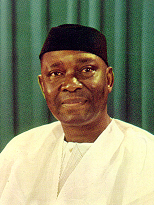
ナイジェリアは1954年にある程度の自治権を獲得し、1960年10月1日にイギリスから完全に独立し、アブバカル・タファワ・バレワを首相とするナイジェリア連邦が成立した。一方、名目上の国家元首およびナイジェリア女王はイギリス女王エリザベス2世が留任した。アジキウェは1960年11月に植民地総督の後任となった。独立当時、ナイジェリアの主要民族グループ間の文化的、政治的な違いは顕著であり、北部はハウサ族、東部はイボ族、西部はヨルバ族がいた。 [51]ウェストミンスター制度は維持されたため、大統領の権力は概して儀礼的なものであった。[52]議院内閣制のもと、アブバカル・タファワ・バレワが首相、ンナムディ・アジキウェが儀礼上の大統領となった。建国政府は保守政党の連合体であった。北部のイスラム教徒が多数を占めるサー・アフマドゥ・ベロ率いる北部人民会議と、イボ族とキリスト教徒が多数を占めるンナムディ・アジキウェ率いるナイジェリア・カメルーン国民評議会である。野党は比較的リベラルな行動グループで、主にヨルバ族が多数を占め、オバフェミ・アウォロウォが率いていた。 1961年の国民投票の結果、政体に不均衡が生じた。南部カメルーン人はカメルーン共和国への加盟を選び、北部カメルーン人はナイジェリアへの加盟を選んだ。そのため、国の北部は南部よりも広くなった。

第一共和国の崩壊と南北戦争
選挙と政治プロセスの不均衡と腐敗が、1966年に2度の軍事クーデターにつながった。最初のクーデターは1966年1月に発生し、エマニュエル・イフェアジュナ少佐(イボ族)、チュクマ・カドゥナ・ンゼオグウ少佐(東部出身の北部人)、アデワレ・アデモイエガ少佐(西部出身のヨルバ族)の指揮下にある兵士らが主導した。クーデター首謀者は、サー・アフマドゥ・ベロ、サー・アブバカル・タファワ・バレワ、北部地域の著名な指導者、西部地域の首相サミュエル・アキントラの暗殺に成功したが、中央政府の樹立には苦戦した。上院議長ヌワフォル・オリズが政府の実権を陸軍に委ね、陸軍は別のイボ族将校、ジョンソン・アグイイ・イロンシ少将[53]の指揮下に入った。その後、主に北部の軍将校の支援を受けた1966年の反クーデターにより、ヤクブ・ゴウォンが軍事国家元首として台頭した。南北間の緊張が高まり、北部の都市のイボ族は迫害を受け、多くが東部地域に逃げた。[54]

1967年5月、東部地域知事のエメカ・オジュクウ中佐は、1966年のポグロムとして知られるイボ族と東部出身者に対する継続的かつ組織的に計画された攻撃の結果として、この地域を連邦から独立させ、ビアフラ共和国とすると発表した。[55] [56]この宣言がきっかけとなり、1967年7月6日、ナイジェリア政府側がガルケムでビアフラを攻撃し、ナイジェリア内戦が始まった。ビアフラの長期にわたる封鎖と貿易および国際救援からの孤立を伴った30ヶ月に及ぶ戦争は、1970年1月に終結した。[57] 30ヶ月に及ぶ内戦での旧東部地域の死者数は、100万から300万人と推定されている。[58]イギリスとソ連はナイジェリア政府の主な軍事的支援国であり、ナイジェリアはガマール・アブドゥル・ナーセルが提供したエジプトのパイロットによる航空支援を活用し、[59] [60]フランスとイスラエルはビアフラを支援した。ジョゼフ・デシレ・モブツ大統領率いるコンゴ政府はビアフラの分離独立に対して早い段階から立場を表明し、ナイジェリア連邦政府への強力な支持を表明し[61] 、分離主義者と戦うために数千人の軍隊を派遣した。[62] [63]
戦争後、ナイジェリアは1970年代に石油ブームに沸き、その間に国はOPECに加盟し、巨額の石油収入を得た。これらの収入にもかかわらず、軍事政権は生活水準の向上、中小企業の支援、インフラ投資にほとんど取り組まなかった。石油収入が州への連邦補助金の増加を促したため、連邦政府は政治闘争の中心となり、国の権力の入り口となった。石油生産と収入が増加するにつれ、ナイジェリア政府は予算と経済の問題で石油収入と国際商品市場にますます依存するようになった。[64]シェフ・ムサ・ヤラドゥア将軍とジョセフ・ガルバ将軍が率いた1975年7月のクーデターで ゴウォンは追放され、[65]ゴウォンはイギリスに逃亡した。[66]クーデター計画者は、ゴウォンの独裁的な統治を、最高軍事評議会で拒否権を行使できる3人の准将による三頭政治に置き換えようとした。この三頭政治では、彼らはムルタラ・ムハンマド将軍を軍の元首に、オルシェグン・オバサンジョ将軍を副官に、テオフィラス・ダンジュマ将軍を三番目に任命するよう説得した。[67]三頭政治はインフレ抑制のために緊縮財政を導入し、汚職調査局を設立し、すべての軍知事を新しい将校に交代させ、「デッドウッド作戦」を開始して公務員11,000人を解雇した。[68]
ブカ・スカ・ディムカ大佐は1976年2月にクーデター未遂を起こし、[69]その最中にムルタラ・ムハンマド将軍が暗殺された。ディムカは軍部から幅広い支持を得られず、クーデターは失敗に終わり逃亡を余儀なくされた。[70]クーデター未遂の後、オルシェグン・オバサンジョ将軍が軍の国家元首に任命された。[71]オバサンジョはムルタラの政策を継続することを誓った。[72]オバサンジョは北部ナイジェリア人を疎外する危険性を認識し、シェフ・ヤラドゥア将軍を後任として迎え、最高司令部参謀総長に副司令官として迎え入れ、軍の三頭政治を完成させた。オバサンジョが国家元首、テオフィラス・ダンジュマ将軍が陸軍参謀総長となり、3人は軍事政権に対する統制を再構築し、軍の権力移譲計画、すなわち州の創設と国家の境界線の設定、地方自治制度の改革、新共和国の憲法起草委員会を組織した。 [73]
第二共和制と軍事独裁政権
軍は民政復帰を慎重に計画し、政党が第1共和国の時よりも幅広い支持を得られるよう対策を講じた。1979年、5つの政党が一連の選挙で競い合い、ナイジェリア国民党(NPN)のアルハジ・シェフ・シャガリが大統領に選出された。5つの政党すべてが国会で代表権を獲得した。1979年10月1日、シェフ・シャガリはナイジェリア連邦共和国の初代大統領兼最高司令官として宣誓就任した。オバサンジョはシャガリに平和的に権力を委譲し、ナイジェリア史上初めて自ら退陣した国家元首となった。

シャガリ政権は、ナイジェリア社会のほぼすべての層から腐敗しているとみなされるようになった。1983年、国営ナイジェリア国営石油公社の検査官は「この国の水がゆっくりと汚染されつつある」ことに気づき始めた。[74] 1983年8月、シャガリとナイジェリア石油公社は圧勝で政権に復帰し、国民議会の過半数の議席と12の州政府を掌握した。しかし、選挙は暴力に汚され、不正投票や選挙不正の疑惑が広まり、選挙結果をめぐる法廷闘争が勃発した。また、第1共和制のときのように、政治指導者が適切に統治できないかもしれないという不確実性もあった。
1983年の軍事クーデターはナイジェリア軍の主要将校らによって指揮され、政府を打倒し、ムハンマドゥ・ブハリ少将を国家元首に据えた。1984年の政権再選直後に起きたムハンマドゥ・ブハリの軍事クーデターは、一般的に前向きな展開とみなされた。[75] 1985年、イブラヒム・ババンギダがクーデターでブハリを打倒した。1986年、ババンギダはナイジェリア政治局を設立し、第三ナイジェリア共和国への移行に関する勧告を行った。1989年、ババンギダは第三ナイジェリア共和国への移行計画の策定を開始した。ババンギダは1990年のナイジェリアクーデター未遂を生き延び、その後、約束していた民主主義への復帰を1992年に延期した。 [76]
6月12日と第三共和政の危機
ババンギダは政党結成を合法化し、1992年の総選挙を前に社会民主党と国民共和党による二大政党制を樹立した。彼はナイジェリア国民全員にどちらかの政党に加入するよう促し、ボラ・イゲ首長はこれを「らい病患者の2つの手」と呼んだ。1993年6月12日に行われた大統領選挙は、1983年の軍事クーデター以来初めての選挙だった。選挙結果は国家選挙管理委員会によって正式に発表されなかったが、社会民主党のモショッド・アビオラとババ・ガナ・キンギベの2人が国民共和党のバシル・トファとシルベスター・ウゴの2人を230万票以上の差で破った。しかし、ババンギダは選挙を無効とし、数週間にわたって国を事実上閉鎖する大規模な市民抗議運動を引き起こした。 1993年8月、ババンギダはついに民政に権力を譲るという約束を守ったが、その前にアーネスト・ショネカンを暫定国家政府の長に任命した。[77]ババンギダ政権は最も腐敗しており、ナイジェリアに腐敗文化を生み出した責任があると考えられている。[78]

ショネカン暫定政権はナイジェリア政治史上最短だったが、1993年のクーデターで打倒された。アバチャ将軍は、続く市民の騒乱を鎮圧するために大規模な軍事力を行使した。1995年、政府はオゴニ族の長老4人の死に関する捏造された容疑で環境保護活動家ケン・サロウィワを絞首刑に処し、これによりナイジェリア連邦からの資格停止処分を受けた。ロイヤル・ダッチ・シェル社とシェル社のナイジェリア事業責任者ブライアン・アンダーソン社に対する米国外国人不法行為法に基づく訴訟は、シェル社が引き続き責任を否定したことで示談に終わった。[79] 1999年には、アバチャ氏に遡る数億ドルの口座が発見された。 [80]独裁者が別荘で死亡した1998年、政権は終焉を迎えた。彼は西欧の銀行のオフショア口座に資金を略奪し、将軍や政治家を逮捕し賄賂を贈ることでクーデター計画を阻止した。彼の後継者であるアブドゥルサラミ・アブバカール将軍は、1999年5月5日に複数政党制選挙を規定した新憲法を採択した。
民主主義への回帰(1999年~現在)

1999年5月29日、アブバカールは1999年の大統領選挙の勝者で元軍事指導者のオルシェグン・オバサンジョ将軍にナイジェリア大統領の地位を譲った。オバサンジョはアバチャの独裁政権下で投獄されていた。オバサンジョの就任は第四次ナイジェリア共和国の始まりを告げるものとなり、[81] 39年間続いた短命な民主主義、内戦、軍事独裁の時代を終わらせた。オバサンジョを権力の座に就かせ、2003年の大統領選挙で2期目に立候補することを可能にした選挙は不自由で不公平であると非難されたが、ナイジェリアはオバサンジョの下で民主化において大きな進歩を遂げた。[82]
2007年の総選挙では、人民民主党のウマル・ヤラドゥアが政権を握った。自由で公正なプロセスを促進するためにナイジェリアの選挙を監視していた国際社会は、この選挙を重大な欠陥があったと非難した。 [83]ヤラドゥアは2010年5月5日に亡くなり、その3か月前に上院で副大統領のグッドラック・ジョナサンがヤラドゥアの後任として大統領代行として宣誓していた。[84] [85]ジョナサンは2011年の大統領選挙で勝利した。投票は順調に進み、暴力や選挙違反は比較的少なかった。[86]ジョナサンの在任中は経済が回復し、ナイジェリアはアフリカを代表する経済大国となった。[87] [88]ジョナサン政権下では前例のない汚職も増加し、国営石油会社を通じてナイジェリア政府が失った金額は200億ドルにも上ると言われている。しかし、何よりもジョナサンの在任期間中に、 2014年のグウォザ虐殺やチボクの女子生徒誘拐など、ボコ・ハラムの反乱によるテロの波が起こった。[89]
2015年の総選挙を前に、ナイジェリアの最大野党であるナイジェリア行動会議、進歩変革会議、全ナイジェリア人民党、全進歩大同盟の一派、新しいPDP(与党人民民主党の現職知事の派閥)が合併し、ボラ・アハメド・ティヌブ現大統領率いる全進歩会議が結成された。当時、この選挙はアフリカ大陸で行われた選挙の中で最も費用のかかった選挙となった(これを上回るのは2019年と2023年の選挙のみ)。この新しい巨大野党は、元軍事独裁者のムハンマド・ブハリを候補者に選んだ。2015年のブハリの選挙運動は人気があり、頑固な反汚職戦士というイメージを軸に展開され、200万票以上の差で勝利した。観測筋は総じて選挙が公正だったと称賛した。[90] [91] [92] [93]この選挙はナイジェリアで現職大統領が再選に敗れた初めての選挙となった。2019年の大統領選挙ではブハリが再選された。[94]
2023年の大統領選挙 では4人の候補者が争った。民主主義が復活して以来初めて、元軍事指導者が大統領選に出馬しなかったことは、民主主義と複数政党制への信頼の強化を示している。この選挙では、新候補者の換喩的支持者も台頭した。アナムブラ州知事だったピーター・オビの「オビディエント運動」は若い都市部の有権者に広くアピールし、南東部に中核的な支持基盤を持っている。 [95]北西部では、カノ州知事だったラビウ・クワンクワソの「クワンクワシヤ」である。[96]

与党のボラ・ティヌブ氏は36.61%の得票率で争われた選挙に勝利したが[97] 、次点者の両者は勝利を主張し、選挙裁判所で訴訟が続いている。[98]ボラ・ティヌブ氏の就任式は2023年5月29日に行われた。 [99]ナイジェリアでは誘拐が蔓延する問題が続いている。[100]
地理

ナイジェリアは西アフリカのギニア湾に位置し、総面積は923,768 km 2 (356,669 平方マイル)で[101] 、世界で32番目に大きい国である。国境は4,047キロメートル(2,515マイル)に及び、ベナン(773キロメートルまたは480マイル)、ニジェール(1,497キロメートルまたは930マイル)、チャド(87キロメートルまたは54マイル)、カメルーン(分離独立国アンバゾニアを含む)と1,690キロメートル(1,050マイル)の国境を共有している。海岸線は少なくとも853キロメートル(530マイル)である。[102]ナイジェリアは北緯4度から14度、東経2度から15度の間に位置する。ナイジェリアの最高地点は、標高2,419 メートル (7,936 フィート) のチャパル ワディです。主な川はニジェール川とベヌエ川で、ニジェール デルタに合流して流れ込みます。ここは世界最大の川デルタの 1 つで、中央アフリカのマングローブ林が広大に広がっています。
ナイジェリアで最も広大な地形的地域は、ニジェール川とベヌエ川の谷(合流してY字型を形成)である。[103]ニジェール川の南西には「険しい」高地がある。ベヌエ川の南東には丘と山があり、ナイジェリアで最も高い高原であるマンビラ高原を形成している。この高原はカメルーンとの国境まで広がっており、山岳地帯はカメルーンのバメンダ高原の一部となっている。
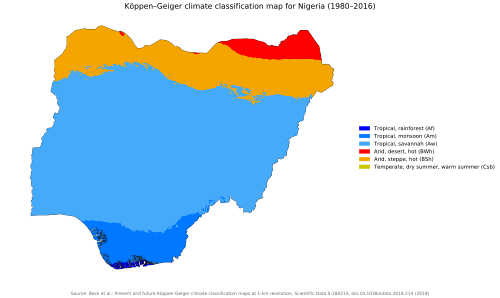
最南部は熱帯雨林気候で、年間降水量は1,500~2,000ミリメートル(60~80インチ)です。[104]南東部にはオブドゥ高原があります。海岸平野は南西部と南東部の両方にあります。[103] 海岸沿いにはマングローブの湿地があります。 [105]
カメルーンとの国境近くの海岸に近い地域は、豊かな熱帯雨林で、生物多様性の重要な中心地であるクロス・サナガ・ビオコ沿岸林 生態地域の一部です。ここはドリル霊長類の生息地で、野生ではこの地域と国境を越えたカメルーンでのみ見られます。クロスリバー州カラバル周辺の地域もこの森林にあり、世界で最も多様な蝶が生息していると考えられています。ニジェール川とクロスリバーの間にあるナイジェリア南部の地域は、開発と人口増加による伐採のために森林のほとんどを失い、草原に取って代わられました。
最南端と最北端の間のすべてはサバンナ(樹木に覆われているのはわずかで、草や花は木の間に生えている)である。降雨量は年間500〜1,500ミリメートル(20〜60インチ)とさらに限られている。[104]サバンナ地帯は、ギニア森林サバンナモザイク、スーダンサバンナ、サヘルサバンナの3つのカテゴリに分類される。ギニア森林サバンナモザイクは、木々が邪魔をする背の高い草の平原である。スーダンサバンナは似ているが、草と木はより短い。サヘルサバンナは、北東部に見られる草と砂の斑点からなる。[105]

水文学
ナイジェリアは、チャド湖とニジェール湖の2つの主要な集水域に分かれています。ニジェール川の集水域は国土の約63%を占めています。ニジェール川の主な支流はベヌエ川で、その支流はカメルーンを越えてカメルーン、チャド、シャリー集水域にまで及んでいます。サヘル地域では、年間降水量は500ミリメートル(20インチ)未満で、サハラ砂漠が侵食しています。[104]国の乾燥した北東隅には、ニジェール、チャド、カメルーンと共有する水域境界上にチャド湖があります。
チャド盆地はナイジェリア北東部から水が流れ込んでいる。バウチ高原はニジェール/ベヌエ川とコマドゥグヨベ川水系の分水嶺を形成している。ナイジェリア北東部の平坦な平野は地理的にはチャド盆地の一部であり、エルベイド川の流れがマンダラ山脈からチャド湖までカメルーンとの国境を形成している。コマドゥグヨベ川水系は雨期にングル湖周辺に国際的に重要なハデジア・ングル湿地とオックスボウ湖を生み出す。[106] [107]北東部の他の川にはンガダ川とイェドセラム川があり、どちらもサンビサ湿地を流れて水系を形成している。北東部の水系も主要な水系である。[108]さらに、ナイジェリアには多数の沿岸河川がある。

ナイジェリア北東部の チャド湖は、過去数百万年にわたり、数千年にわたって何度も干上がり、同じ頻度で現在の何倍もの大きさにまで拡大してきた。ここ数十年で湖の表面積は大幅に減少しているが、これは人間が農地の灌漑のために入江から水を汲み上げたことも原因の可能性がある。
植生
ナイジェリアは3種類の植生に覆われている。森林(樹木が茂っている)、サバンナ(樹木は少なく、木の間に草や花が生い茂っている)、山岳地帯(最も少なく、主にカメルーン国境付近の山岳地帯に見られる)である。森林地帯とサバンナ地帯はどちらも3つの部分に分かれている。[109]
森林地帯の最南端、特にニジェール川とクロス川のデルタ地帯の一部はマングローブ湿地である。この北は淡水湿地で、塩水マングローブ湿地とは異なる植生があり、その北は熱帯雨林である。[109]
The savannah zone's three categories are divided into Guinean forest-savanna mosaic, made up of plains of tall grass which are interrupted by trees, the most common across the country; Sudan savannah, with short grasses and short trees; and Sahel savannah patches of grass and sand, found in the northeast.[109]

Environmental issues

Waste management including sewage treatment, the linked processes of deforestation and soil degradation, and climate change or global warming are the major environmental problems in Nigeria. Waste management presents problems in a megacity like Lagos and other major Nigerian cities which are linked with economic development, population growth and the inability of municipal councils to manage the resulting rise in industrial and domestic waste. This waste management problem is also attributable to unsustainable environmental management lifestyles of Kubwa community in the Federal Capital Territory, where there are habits of indiscriminate disposal of waste, dumping of waste along or into the canals, sewerage systems that are channels for water flows, and the like. Haphazard industrial planning, increased urbanisation, poverty and lack of competence of the municipal government are seen as the major reasons for high levels of waste pollution in major cities of the country. Some of the solutions have been disastrous to the environment, resulting in untreated waste being dumped in places where it can pollute waterways and groundwater.[111]
In 2005, Nigeria had the highest rate of deforestation in the world, according to the Food and Agriculture Organization of the United Nations.[112] That year, 12.2%, the equivalent of 11,089,000 hectares, had been forested in the country. Between 1990 and 2000, Nigeria lost an average of 409,700 hectares of forest every year equal to an average annual deforestation rate of 2.4%. Between 1990 and 2005, in total Nigeria lost 35.7% of its forest cover or around 6,145,000 hectares.[113] Nigeria had a 2019 Forest Landscape Integrity Index mean score of 6.2/10, ranking it 82nd globally out of 172 countries.[114]
In the year 2010, thousands of people were inadvertently exposed to lead-containing soil from informal gold mining within the northern state of Zamfara. While estimates vary, it is thought that upwards of 400 children died of acute lead poisoning, making this perhaps the largest lead poisoning fatality outbreak ever encountered.[115]
Nigeria's Delta region is one of the most polluted regions in the world due to serious oil spills and other environmental problems caused by its oil industry.[116][117] The heavy contamination of the air, ground and water with toxic pollutants is often used as an example of ecocide.[118][119][120][121][122] In additional to the environmental damage it has caused conflict in the Delta region.
Illegal oil refineries, in which local operators convert stolen crude oil into petrol and diesel, are considered particularly "dirty, dangerous and lucrative".[123] Safety and environmental aspects are usually ignored. Refining petroleum also inevitably produces heavy oil, which is "cracked" into lighter fuel components in regular plants at great technical expense. Illegal refineries do not have these technical possibilities and "dispose" of the heavy oil where it accumulates. The lighter components of crude oil (methane to butane, isobutane) create a certain risk of explosion, which often leads to disasters at illegal plants.[124] In 2022, Nigeria suffered 125 deaths from explosions at local, illegal refineries.[125]
Politics
Government

Nigeria is a federal republic modelled after the United States,[126] with 36 states and capital Abuja as an independent unit. The executive power is exercised by the President. The president is both head of state and head of the federal government; the president is elected by popular vote to a maximum of two four-year terms.[127] State governors, like the president, are elected for four years and may serve a maximum of two terms. The president's power is checked by a Senate and a House of Representatives, which are combined in a bicameral body called the National Assembly. The Senate is a 109-seat body with three members from each state and one from the capital region of Abuja; members are elected by popular vote to four-year terms. The House contains 360 seats, with the number of seats per state determined by population.[127]
The Nigerian president is elected in a modified two-round system. To be elected in the first round, a candidate must receive a relative majority of the votes and more than 25% of the votes in at least 24 of the 36 states.[128] If no candidate reaches this hurdle, a second round of voting takes place between the leading candidate and the next candidate who received the majority of votes in the highest number of states. By convention, presidential candidates take a running mate (candidate for the vice presidency) who is both ethnically and religiously the opposite of themselves. There is no law prescribing this, yet all presidential candidates since the existence of the Fourth Republic until 2023 adhered to this rule.
However, this principle of religious and ethnic diversity in leadership was ignored in the 2023 General Elections, where the candidate for the All Progressives Congress, Bola Ahmed Tinubu, a Muslim, selected another Muslim, Senator Kashim Shettima, as running mate.
Administrative divisions

Nigeria is divided into thirty-six states and one Federal Capital Territory, which are further sub-divided into 774 local government areas. In some contexts, the states are aggregated into six geopolitical zones: North West, North East, North Central, South West, South East, and South South.[129][130]
Nigeria has five cities with a population of over a million (from largest to smallest): Lagos, Kano, Ibadan, Benin City and Port Harcourt. Lagos is the largest city in Africa, with a population of over 12 million in its urban area.[131]
The south of the country in particular is characterised by very strong urbanisation and a relatively large number of cities. According to an estimate from 2015,[132] there are 20 cities in Nigeria with more than 500,000 inhabitants, including ten cities with a population of one million.
Law
The Constitution of Nigeria is the supreme law of the country. There are four distinct legal systems in Nigeria, which include English law, common law, customary law, and Sharia law:
- English law in Nigeria consists of the collection of British laws from colonial times.
- Common law is the collection of authoritative judicial decisions in the field of civil law (so-called precedents) that have been handed down in the country concerned - in this case Nigeria. (This system is mainly found in Anglo-Saxon countries; in continental Europe, on the other hand, codified and, as far as possible, abstracted civil law predominates, as in the Napoleonic Code in France).[133]
- Customary law is derived from indigenous traditional norms and practices, including the dispute resolution meetings of pre-colonial Yoruba land secret societies and the Èkpè and Okónkò of Igboland and Ibibioland.[134]
- Sharia law (also known as Islamic Law) used to be used only in Northern Nigeria, where Islam is the predominant religion. It is also being used in Lagos State, Oyo State, Kwara State, Ogun State, and Osun State by Muslims. Muslim penal codes are not the same in every state and they differentiate in punishment and offences according to religious affiliation (for example, alcohol consumption and distribution).
The country has a judicial branch, the highest court of which is the Supreme Court of Nigeria.[135]
Foreign relations

Upon gaining independence in 1960, Nigeria made African unity the centrepiece of its foreign policy.[136] One exception to the African focus was Nigeria's close relationship with Israel throughout the 1960s. Israel sponsored and oversaw the construction of Nigeria's parliament buildings.[137]
Nigeria's foreign policy was put to the test in the 1970s after the country emerged united from its civil war. It supported movements against white minority governments in Southern Africa. Nigeria backed the African National Congress by taking a committed tough line about the South African government. Nigeria was a founding member of the Organisation for African Unity (now the African Union) and had tremendous influence in West Africa and Africa on the whole. Nigeria founded regional cooperative efforts in West Africa, functioning as the standard-bearer for the Economic Community of West African States (ECOWAS) and ECOMOG (especially during the Liberia and Sierra Leone civil wars).
With this Africa-centred stance, Nigeria readily sent troops to the Congo at the behest of the United Nations shortly after independence (and has maintained membership since that time). Nigeria also supported several Pan-African and pro-self-government causes in the 1970s, including garnering support for Angola's MPLA, SWAPO in Namibia, and aiding opposition to the minority governments of Portuguese Mozambique, and Rhodesia. Nigeria retains membership in the Non-Aligned Movement. In late November 2006, it organized an Africa-South America Summit in Abuja to promote what some attendees termed "South-South" linkages on a variety of fronts.[138] Nigeria is also a member of the International Criminal Court and the Commonwealth of Nations. It was temporarily expelled from the latter in 1995 when ruled by the Abacha regime.
Nigeria has remained a key player in the international oil industry since the 1970s and maintains membership in OPEC, which it joined in July 1971. Its status as a major petroleum producer figures prominently in its sometimes volatile international relations with developed countries, notably the United States, and with developing countries.[139]
Since 2000, Chinese–Nigerian trade relations have risen exponentially. There has been an increase in total trade of over 10.3 billion dollars between the two nations from 2000 to 2016.[140] However, the structure of the Chinese–Nigerian trade relationship has become a major political issue for the Nigerian state. Chinese exports account for around 80 per cent of total bilateral trade volumes.[141] This has resulted in a serious trade imbalance, with Nigeria importing ten times more than it exports to China.[142] Subsequently, Nigeria's economy is becoming over-reliant on cheap imports to sustain itself, resulting in a clear decline in Nigerian industry under such arrangements.[143]
Continuing its Africa-centred foreign policy, Nigeria introduced the idea of a single currency for West Africa known as the Eco under the presumption that it would be led by the naira. But on 21 December 2019, Ivorian President Alassane Ouattara, Emmanuel Macron, and multiple other UEMOA states announced that they would merely rename the CFA franc instead of replacing the currency as originally intended. As of 2020, the Eco currency has been delayed to 2025.[144]
Military

The Nigerian Armed Forces are the combined military forces of Nigeria. It consists of three uniformed service branches: the Nigerian Army, Nigerian Navy, and Nigerian Air Force. The President of Nigeria functions as the commander-in-chief of the armed forces, exercising his constitutional authority through the Ministry of Defence, which is responsible for the management of the military and its personnel. The operational head of the AFN is the Chief of the Defence Staff, who is subordinate to the Nigerian Defence Minister. With a force of more than 223,000 active personnel, the Nigerian military is one of the largest uniformed combat services in Africa.[145]

Nigeria has 143,000 troops in the armed forces (army 100,000, navy 25,000, air force 18,000) and another 80,000 personnel for "gendarmerie & paramilitary" in 2020, according to the International Institute for Strategic Studies.[146] Nigeria spent just under 0.4 per cent of its economic output, or US$1.6 billion, on its armed forces in 2017.[147][148] For 2022, US$2.26 billion has been budgeted for the Nigerian armed forces, which is just over a third of Belgium's defence budget (US$5.99 billion).[146]
Communal conflicts

Boko Haram and the bandit conflict have been responsible for numerous serious attacks with thousands of casualties since mid-2010. Since then, according to the Council on Foreign Relations' Nigeria Security Tracker, over 41,600 lives have been lost to this conflict (as of October 2022).[149] The United Nations refugee agency UNHCR counts about 1.8 million internally displaced persons and about 200,000 Nigerian refugees in neighbouring countries.
The Boko Haram-affected states agreed in February 2015 to establish an 8,700-strong Multinational Joint Task Force to jointly fight Boko Haram. By October 2015, Boko Haram had been driven out of all the cities it controlled and almost all the counties in northeastern Nigeria. In 2016, Boko Haram split and in 2022, 40,000 fighters surrendered.[150] The splinter group ISWAP (Islamic State in West Africa) remains active.
The fight against Boko Haram, other sectarians and criminals has been accompanied by increasing police attacks. The Council on Foreign Relations' Nigeria Security Tracker counted 1,086 deaths from Boko Haram attacks and 290 deaths from police violence in the first 12 months of its establishment in May 2011. In the 12 months after October 2021, 2,193 people died from police violence and 498 from Boko Haram and ISWAP,[149] according to the NST. The Nigerian police are notorious for vigilante justice.[149]
The Niger Delta saw intense attacks on oil infrastructure in 2016 by militant groups such as the Movement for the Emancipation of the Niger Delta (MEND), the Niger Delta People's Volunteer Force (NDPVF), the Ijaw National Congress (INC) and the Pan Niger Delta Forum (PANDEF). In response, the new Buhari government pursued a dual strategy of repression and negotiation.
In late 2016, the Nigerian federal government resorted to the gambit of offering the militant groups a 4.5 billion naira (US$144 million) contract to guard oil infrastructure. Most accepted. The contract was renewed in August 2022, but led to fierce disputes among the above-mentioned groups over the distribution of the funds. Representatives speak of "war"[151] - against each other. The high propensity for violence and the pettiness of the leaders, as well as the complete absence of social and environmental arguments in this dispute[151] give rise to fears that the militant groups, despite their lofty names, have discarded responsibility for their region and ethnic groups and have moved into the realm of protection rackets and self-enrichment. In any case, the pipelines in the Niger Delta are not very effectively "guarded" - the pollution of the Niger Delta with stolen crude oil and illegally produced heavy fuel oil continued unhindered after 2016.[152]
In central Nigeria, conflicts between Muslim Hausa-Fulani herders and indigenous Christian farmers flared up again, especially in Kaduna, Plateau, Taraba and Benue states. In individual cases, these clashes have claimed several hundred lives. Conflict over land and resources is increasing due to the ongoing desertification in northern Nigeria, population growth and the generally tense economic situation.
In June 2022, a massacre took place in the St. Francis Xavier Church, in Owo. The Government blamed ISWAP for the murder of over 50 parishioners, but locals suspect Fulani herdsmen's involvement.[153]
Economy
Nigeria's economy is the forth largest in Africa, the 31st-largest in the world by nominal GDP, and 30th-largest by PPP. GDP (PPP) per capita is US$9,148[154] (as of 2022), which is less than South Africa, Egypt and Morocco, but slightly higher than Ghana and Ivory Coast.
Nigeria is a leader in Africa as an energy power, financial market, in pharmaceuticals and in the entertainment industry. After petroleum, the largest source of foreign exchange earnings for Nigeria are remittances sent home by Nigerians living abroad.[155]
Nigeria has a highly developed financial services sector, with a mix of local and international banks, asset management companies, brokerage houses, insurance companies and brokers, private equity funds and investment banks.[156]
Nigeria has a lower-middle-income economy[157] with an abundant supply of natural resources. Its wide array of underexploited mineral resources include coal, bauxite, tantalite, gold, tin, iron ore, limestone, niobium, lead and zinc.[158] Despite huge deposits of these natural resources, the mining industry in Nigeria is still in its infancy.
Before 1999, economic development has been hindered by years of military rule, corruption, and mismanagement. The restoration of democracy and subsequent economic reforms have supported economic potential.
After 2015, the Nigerian economy was able to diversify somewhat. Apart from oil and gas, Nigeria exports fertilisers and cement/cement board, moulded polypropylene (plastic) products, personal care products, paint, malt beverages and armoured vehicles.
Agriculture

In 2021, about 23.4% of Nigeria's GDP is contributed by agriculture, forestry and fishing combined.[159] Nigeria is the world's largest producer of cassava.[160] Further major crops include maize, rice, millet, yam beans, and guinea corn (sorghum).[161] Cocoa is the principal agricultural export, and one of the country's most significant non-petroleum products.[162][163] Nigeria is also one of the world's top twenty exporters of natural rubber, generating $20.9 million in 2019.[164]
Before the Nigerian Civil War and the oil boom, Nigeria was self-sufficient in food.[165][166][167] Agriculture used to be the principal foreign exchange earner of Nigeria.[168] Agriculture has failed to keep pace with Nigeria's rapid population growth, and Nigeria now relies upon food imports to sustain itself.[166][169] It spends US$6.7 billion yearly for food imports, four times more than revenues from food export.[160] The Nigerian government promoted the use of inorganic fertilizers in the 1970s.[170]
Nigeria's rice production increased by 10% from 2017/18 to 2021/22 to 5 million tonnes a year,[171] but could hardly keep up with the increased demand. Rice imports therefore remained constant at 2 million tonnes per year. In August 2019, Nigeria closed its border with Benin and other neighbouring countries to stop rice smuggling into the country as part of efforts to boost local production.[172]
Until now, Nigeria exported unhusked rice but had to import husked rice, the country's staple food. - The rice mill in Imota, near Lagos, is intended to handle the corresponding processing at home, improve the balance of trade and the labour market, and save unnecessary costs for transport and middlemen. When fully operational at the end of 2022, the plant, the largest south of the Sahara, is expected to employ 250,000 people and produce 2.5 million 50-kg bags of rice annually.[173]
Oil and natural gas
Nigeria is the 15th largest producer of petroleum in the world, the 6th largest exporter, and has the 9th largest proven reserves. Petroleum plays a large role in the Nigerian economy and politics, accounting for about 80% of government earnings. Nigeria also has the 9th largest proven natural gas reserves estimated by OPEC; the government's value of its about 206.53 trillion cubic feet has been valued at $803.4 trillion.[174] Natural gas is seen as having the potential to unlock an economic miracle on the Niger River.[175] Nigeria each year loses to gas flaring an estimate of US$2.5 billion,[176] and over 120,000 barrels of oil per day to crude theft in the Niger Delta, its main oil-producing region.[177][178] This has led to piracy and conflict for control in the region and has led to disruptions in production preventing the country from meeting its OPEC quota and exporting petroleum at full capability.[179]
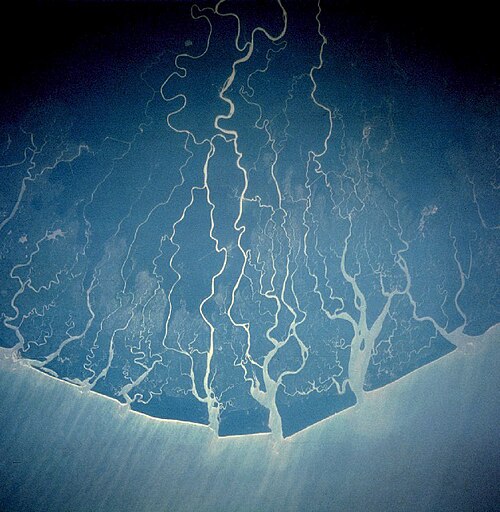
Nigeria has a total of 159 oil fields and 1,481 wells in operation according to the Department of Petroleum Resources.[180] The most productive region of the nation is the coastal Niger Delta Basin in the Niger Delta or "south-south" region which encompasses 78 of the 159 oil fields. Most of Nigeria's oil fields are small and scattered, and as of 1990, these small fields accounted for 62.1% of all Nigerian production. This contrasts with the sixteen largest fields which produced 37.9% of Nigeria's petroleum at that time.[181] Petrol was Nigeria's main import commodity until 2021, accounting for 24% of import volume.[182]
The Niger Delta Nembe Creek oil field was discovered in 1973 and produces from the middle Miocene deltaic sandstone-shale in an anticline structural trap at a depth of 2 to 4 kilometres (7,000 to 13,000 feet).[183] In June 2013, Shell announced a strategic review of its operations in Nigeria, hinting that assets could be divested. While many international oil companies have operated there for decades, by 2014 most were making moves to divest their interests, citing a range of issues including oil theft. In August 2014, Shell said it was finalising its interests in four Nigerian oil fields.[184]
The supply of natural gas to Europe, threatened by the Russian invasion of Ukraine, is pushing projects to transport Nigerian natural gas via pipelines to Morocco or Algeria.[185][186][187] As of May 2022, however, there are no results on this yet.
Energy

Nigeria's energy consumption is much more than its generation capacity. Most of the energy comes from traditional fossil fuels, which account for 73% of total primary production. The rest is from hydropower (27%). Since independence, Nigeria has tried to develop a domestic nuclear industry for energy. Nigeria opened 2004 a Chinese-origin research reactor at Ahmadu Bello University and has sought the support of the International Atomic Energy Agency to develop plans for up to 4,000 MWe of nuclear capacity by 2027 according to the National Program for the Deployment of Nuclear Power for Generation of Electricity. In 2007, President Umaru Yar'Adua urged the country to embrace nuclear power to meet its growing energy needs. In 2017, Nigeria signed the UN Treaty on the Prohibition of Nuclear Weapons.[188] In April 2015, Nigeria began talks with Russia's state-owned Rosatom to collaborate on the design, construction and operation of four nuclear power plants by 2035, the first of which will be in operation by 2025. In June 2015, Nigeria selected two sites for the planned construction of the nuclear plants. Neither the Nigerian government nor Rosatom would disclose the specific locations of the sites, but it is believed that the nuclear plants will be sited in Akwa Ibom State and Kogi State. The sites are planned to house two plants each. In 2017 agreements were signed for the construction of the Itu nuclear power plant.
Electricity
According to the survey, 94% of Nigerians are connected to the national grid, but only 57% have their electricity consumption recorded by an electricity meter.[189] Only 1% of Nigerians surveyed reported having electricity 24 hours a day. 68% have electricity 1 to 9 hours a day, according to the NIO. Two-thirds of Nigerians, or 66%, pay up to 10,000 Naira (US$13) a month for electricity, which is almost 3% of the average income in Nigeria.[189] Over two-thirds of respondents, or 67%, were willing to pay more for uninterrupted electricity supply. Power generators are owned by 21% of Nigerians, while 14% use solar energy.[189]
Manufacturing and technology

Nigeria has a manufacturing industry that includes leather and textiles (centred in Kano, Abeokuta, Onitsha, and Lagos), plastics and processed food. Ogun is considered to be Nigeria's current industrial hub, as most factories are located in Ogun and more companies are moving there, followed by Lagos.[190][191][192] The city of Aba in the south-eastern part of the country is well known for handicrafts and shoes, known as "Aba made".[193] Nigeria has a market of 720,000 cars per year, but less than 20% of these are produced domestically.[194]
In 2016, Nigeria was the leading cement producer south of the Sahara, ahead of South Africa.[195] Aliko Dangote, Nigeria's richest inhabitant, based his wealth on cement production, as well as agricultural commodities.[196] According to its own information, the Ajaokuta Steel Company Limited produces 1.3 million tonnes of steel per year.[197] This would be equivalent to one-sixth of the United Kingdom's steel production in 2021.[198] However, steel plants in Katsina, Jos and Osogbo no longer appear to be active.[199]
In June 2019, Nigeria EduSat-1 was deployed from the International Space Station. It is the first satellite that was built in Nigeria, which followed many other Nigerian satellites that were built by other countries.[b][200] In 2021, Nigeria hosts about 60 percent of the pharmaceutical production capacity in Africa,[201] the larger pharmaceutical companies are located in Lagos.[202] The pharmaceutical producer with the most employees in Nigeria is Emzor Pharmaceutical Industries Ltd.[203] Nigeria has a few electronic manufacturers like Zinox, the first branded Nigerian computer, and manufacturers of electronic gadgets such as tablet PCs.[204] As of January 2022, Nigeria is the host to 5 out of the 7 unicorn companies in Africa.[205]
Internet and telecommunications

The Nigerian telecommunications market is one of the fastest-growing in the world, with major emerging market operators (like MTN, 9mobile, Airtel and Globacom) basing their largest and most profitable centres in the country.[206] Nigeria's ICT sector has experienced a lot of growth, representing 10% of the nation's GDP in 2018 as compared to just 1% in 2001.[207] Lagos is regarded as one of the largest technology hubs in Africa with its thriving tech ecosystem.[208] According to a survey by the GSM Association, 92% of adult Nigerian men and 88% of women owned a mobile phone.[209] Using various measures including but not limited to illegal arrest, taking down of websites, passport seizures, and restricted access to bank accounts, the Nigerian government is punishing citizens for expressing themselves on the internet and working to stifle internet freedom.[210]
Tourism

Tourism in Nigeria centres largely on events, because of the country's ample amount of ethnic groups, but also includes rain forests, savannahs, waterfalls, and other natural attractions.[211] Abuja is home to several parks and green areas. The largest, Millennium Park, was designed by architect Manfredi Nicoletti and officially opened in December 2003. After the re-modernization project achieved by the administration of Governor Raji Babatunde Fashola, Lagos is gradually becoming a major tourist destination. Lagos is currently taking steps to become a global city. The 2009 Eyo carnival (a yearly festival originating from Iperu Remo, Ogun State) was a step toward world city status. Currently, Lagos is primarily known as a business-oriented and fast-paced community.[212] Lagos has become an important location for African and black cultural identity.[213]
Lagos has sandy beaches by the Atlantic Ocean, including Elegushi Beach and Alpha Beach. Lagos also has many private beach resorts including Inagbe Grand Beach Resort and several others in the outskirts. Lagos has a variety of hotels ranging from three-star to five-star hotels, with a mixture of local hotels such as Eko Hotels and Suites, Federal Palace Hotel and franchises of multinational chains such as Intercontinental Hotel, Sheraton, and Four Points by Sheraton. Other places of interest include the Tafawa Balewa Square, Festac town, The Nike Art Gallery, Freedom Park, and the Cathedral Church of Christ.
Transport
Due to Nigeria's location in the centre of West Africa, transport plays a major role in the national service sector. Government investments have seen an increase in extensive road repairs and new construction has been carried out gradually as states in particular spend their share of increased government allocations. Representative of these improvements is the Second Niger Bridge near Onitsha, which was largely completed in 2022.[214] A 2017 World Bank report on logistics hubs in Africa placed the country in fourth place, behind Côte d'Ivoire, Senegal, and Sao Tome,[215] but in 2021, Nigeria joined the World Logistics Passport, a private sector group working to increase the effiency of global trade.[216]
Roads
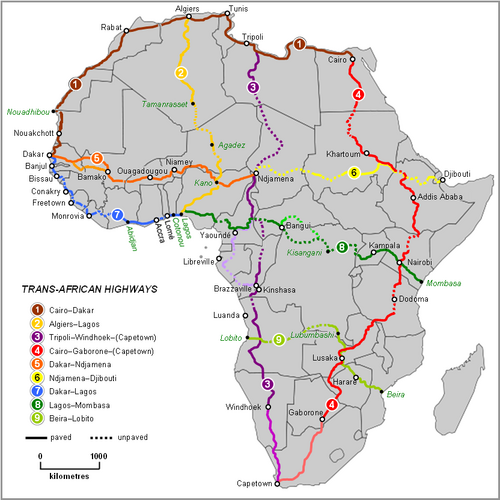

Four trans-African automobile routes pass through Nigeria:



Nigeria has the largest road network in West Africa. It covers about 200,000 km, of which 60,000 km are asphalted. Nigeria's roads and highways handle 90% of all passenger and freight traffic. It contributes N2.4trn ($6.4bn) to GDP in 2020. The federal government is responsible for 35,000 km of the road network. The motorway links of important economic centres such as Lagos-Ibadan, Lagos-Badagry and Enugu-Onitsha have been renovated.[217]
The rest of the road network is a state matter and therefore in very different shape, depending on which state you are in. Economically strong states such as Lagos, Anambra and Rivers receive particularly poor evaluations.[218] Most roads were built in the 1980s and early 1990s. Poor maintenance and inferior materials have worsened the condition of the roads. Travelling is very difficult. Especially during the rainy season, the use of secondary roads is sometimes almost impossible due to potholes.[219] Road bandits often take advantage of this situation for their criminal purposes.[220][221]
Rail transport
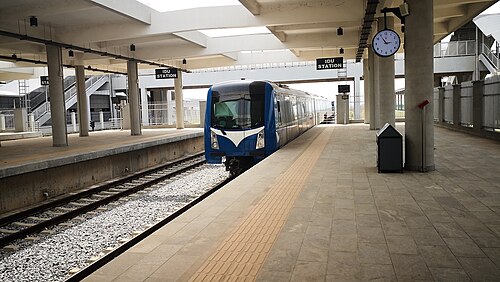
Railways have undergone a massive revamping with projects such as the Lagos-Kano Standard Gauge Railway being completed connecting northern cities of Kano, Kaduna, Abuja, Ibadan and Lagos.
Air transport

The Nigerian aviation industry generated 198.62 billion naira (€400 million) in 2019, representing a contribution of 0.14% to GDP. It was the fastest-growing sector of the Nigerian economy in 2019. Passenger traffic increased from 9,358,166 in 2020 to 15,886,955 in 2021, a significant increase of over 69%. Aircraft movements increased by more than 46% from 2020 to 2021. Total freight volumes were 191 tonnes in 2020 but increased to 391 tonnes in 2021.[222] In December 2021, the Anambra International Cargo Airport started its operation.[223] In April 2022, the second terminal of the Murtala Muhammed International Airport has been inaugurated. It will increase the capacity of the airport to 14 million passengers per year.[224]

There are 54 airports in Nigeria, The principal airports are:
- Murtala Muhammed International Airport in Lagos,
- Nnamdi Azikiwe International Airport in Abuja,
- Mallam Aminu Kano International Airport in Kano,
- Akanu Ibiam International Airport in Enugu and
- Port Harcourt International Airport in Port Harcourt.
Nigeria had in the past operated a state-owned airline Nigeria Airways which was over-indebted in 2003 and was bought by the British Virgin Group; since 28 June 2005, it has flown under the name Virgin Nigeria Airways. At the end of 2008, the Virgin Group announced its withdrawal from the airline; since September 2009 the airline has been operating as Nigerian Eagle Airlines. The largest airline in Nigeria is privately owned Air Peace, founded in 2012.
Demographics

The United Nations estimates that the population of Nigeria in 2021 was at 213,401,323[225][226], distributed as 51.7% rural and 48.3% urban, and with a population density of 167.5 people per square kilometre. Around 42.5% of the population were 14 years or younger, 19.6% were aged 15–24, 30.7% were aged 25–54, 4.0% were aged 55–64, and 3.1% were aged 65 years or older. The median age in 2017 was 18.4 years.[227] Nigeria is the world's sixth-most populous country. The birth rate is 35.2-births/1,000 population and the death rate is 9.6 deaths/1,000 population as of 2017, while the total fertility rate is 5.07 children born/woman.[227] Nigeria's population increased by 57 million from 1990 to 2008, a 60% growth rate in less than two decades.[228] Nigeria is the most populous country in Africa[229] and accounts for about 17% of the continent's total population as of 2017; however, exactly how populous is a subject of speculation.[230]
Millions of Nigerians have emigrated during times of economic hardship, primarily to Europe, North America and Australia. It is estimated that over a million Nigerians have emigrated to the United States and constitute the Nigerian American populace. Individuals in many such Diasporic communities have joined the "Egbe Omo Yoruba" society, a national association of Yoruba descendants in North America.[231][232] Nigeria's largest city is Lagos. Lagos has grown from about 300,000 in 1950[233] to an estimated 13.4 million in 2017.[234]
Nigeria has more than 250 ethnic groups, with varying languages and customs, creating a country of rich ethnic diversity. The three largest ethnic groups are the Hausa, Yoruba and Igbo, together accounting for more than 60% of the population, while the Edo, Ijaw, Fulɓe, Kanuri, Urhobo-Isoko, Ibibio, Ebira, Nupe, Gbagyi, Jukun, Igala, Idoma, Ogoni and Tiv account for between 35 and 40%; other minorities make up the remaining 5%.[235] The Middle Belt of Nigeria is known for its diversity of ethnic groups, including the Atyap, Berom, Goemai, Igala, Kofyar, Pyem, and Tiv.[131][236][237] There are small minorities of British, American, Indian, Chinese (est. 50,000),[238] white Zimbabwean,[239] Japanese, Greek, Syrian and Lebanese immigrants. Immigrants also include those from other West African or East African nations.
Languages

Religion in Nigeria (2018 estimate in The World Factbook of CIA)[240]
Islam (53.5%)
Protestant (35.3%)
Roman Catholic (10.6%)
Other (0.6%)
Five hundred and twenty-five languages have been spoken in Nigeria; out of these 525 languages, eight are now extinct.[241] In some areas of Nigeria, ethnic groups speak more than one language. The official language of Nigeria, English, was chosen to facilitate the cultural and linguistic unity of the country, owing to the influence of British colonisation which ended in 1960. Many French speakers from surrounding countries have influenced the English spoken in the border regions of Nigeria and some Nigerian citizens have become fluent enough in French to work in the surrounding countries. The French spoken in Nigeria may be mixed with some native languages and English.[citation needed]
The major languages spoken in Nigeria represent three major families of languages of Africa: the majority are Niger-Congo languages, such as Igbo, Yoruba, Ibibio, Ijaw, Fulfulde, Ogoni, and Edo. Kanuri, spoken in the northeast, primarily in Borno and Yobe State, is part of the Nilo-Saharan family, and Hausa is an Afroasiatic language. Even though most ethnic groups prefer to communicate in their languages, English as the official language is widely used for education, business transactions and official purposes. English as a first language is used by only a small minority of the country's urban elite, and it is not spoken at all in some rural areas. Hausa is the most widely spoken of the three main languages spoken in Nigeria.
With the majority of Nigeria's populace in rural areas, the major languages of communication in the country remain indigenous languages. Some of the largest of these, notably Yoruba and Igbo, have derived standardised languages from several different dialects and are widely spoken by those ethnic groups. Nigerian Pidgin English, often known simply as "Pidgin" or "Broken" (Broken English), is also a popular lingua franca, though with varying regional influences on dialect and slang. The pidgin English or Nigerian English is widely spoken within the Niger Delta Region.[242]
Religion
Nigeria is a religiously diverse society, with Islam (predominantly in the north) and Christianity (predominantly in the south) being the most widely professed religions. Nigerians are nearly equally divided into Muslims and Christians, with a tiny minority of adherents of traditional African religions and other religions.[243] The Christian share of Nigeria's population is in decline because of the lower fertility rate compared to Muslims in the country.[244] As in other parts of Africa where Islam and Christianity are dominant, religious syncretism with the traditional African religions is common.[245]
A 2012 report on religion and public life by the Pew Research Center stated that in 2010, 49.3% of Nigeria's population was Christian, 48.8% was Muslim, and 1.9% were followers of indigenous and other religions (such as the Bori in the North) or unaffiliated.[246] However, in a report released by Pew Research Center in 2015, the Muslim population was estimated to be 50%, and by 2060, according to the report, Muslims will account for about 60% of the country.[247] The 2010 census of Association of Religion Data Archives has also reported that 48.8% of the total population was Christian, slightly larger than the Muslim population of 43.4%, while 7.5% were members of other religions.[248] However, these estimates should be taken with caution because sample data is mostly collected from major urban areas in the south, which are predominantly Christian.[249][250][251] According to a 2018 estimate in The World Factbook by the CIA, the population is estimated to be 53.5% Muslim, 45.9% Christian (10.6% Roman Catholic and 35.3% Protestant and other Christian), and 0.6% as other.[252]
Islam dominates northwestern Nigeria and northeastern Nigeria (Kanuri, Fulani and other groups). In the west, the Yoruba people are predominantly Muslim with a significant Christian minority in addition to a few adherents of traditional religions.[253] Protestant and locally cultivated Christianity are widely practised in Western areas, while Roman Catholicism is a more prominent Christian feature of southeastern Nigeria. Both Roman Catholicism and Protestantism are observed in the Ibibio, Efik, Ijo and Ogoni lands of the south. The Igbos (predominant in the east) and the Ibibio (south) are 98% Christian, with 2% practising traditional religions.[254] The middle belt of Nigeria contains the largest number of minority ethnic groups in Nigeria, who were found to be majority Christians and members of traditional religions, with a significant Muslim minority.[255]
Health

Health care delivery in Nigeria is a concurrent responsibility of the three tiers of government in the country, and the private sector.[256] Nigeria has been reorganising its health system since the Bamako Initiative of 1987, which formally promoted community-based methods of increasing accessibility of drugs and health care services to the population, in part by implementing user fees.[257] The new strategy dramatically increased accessibility through community-based health care reform, resulting in more efficient and equitable provision of services. A comprehensive approach strategy was extended to all areas of health care, with subsequent improvement in the health care indicators and improvement in health care efficiency and cost.[258]
Almost half of Nigerians, or 48%, report that they or a household member has fallen ill in the last three months. Malaria had been diagnosed in 88% of the cases and typhoid fever in 32%.[259] High blood pressure was in third place with 8%. For symptoms of malaria, 41% of Nigerians turn to a hospital, 22% to a chemist's shop, 21% to a pharmacy and 11% seek cure through herbs.[259]
The HIV/AIDS rate in Nigeria is much lower than in other African nations such as Botswana or South Africa whose prevalence (percentage) rates are in the double digits. As of 2019[update], the HIV prevalence rate among adults of ages 15–49 was 1.5 per cent.[260] Life expectancy in Nigeria is 54.7 years on average,[260] and 71% and 39% of the population have access to improved water sources and improved sanitation, respectively.[261] As of 2019[update], the infant mortality is 74.2 deaths per 1,000 live births.[262]
In 2012, a new bone marrow donor program was launched by the University of Nigeria to help people with leukaemia, lymphoma, or sickle cell disease to find a compatible donor for a life-saving bone marrow transplant, which cures them of their conditions. Nigeria became the second African country to have successfully carried out this surgery.[263] In the 2014 Ebola outbreak, Nigeria was the first country to effectively contain and eliminate the Ebola threat that was ravaging three other countries in the West African region; the unique method of contact tracing employed by Nigeria became an effective method later used by countries such as the United States when Ebola threats were discovered.[264][265][266]
The Nigerian health care system is continuously faced with a shortage of doctors known as "brain drain", because of emigration by skilled Nigerian doctors to North America and Europe. In 1995, an estimated 21,000 Nigerian doctors were practising in the United States alone, which is about the same as the number of doctors working in the Nigerian public service. Retaining these expensively trained professionals has been identified as one of the goals of the government.[267]
Education

Education in Nigeria is overseen by the Ministry of Education. Local authorities take responsibility for implementing policy for state-controlled public education and state schools at a regional level. The education system is divided into kindergarten, primary education, secondary education and tertiary education. After the 1970s oil boom, tertiary education was improved so it would reach every subregion of Nigeria. 68% of the Nigerian population is literate, and the rate for men (75.7%) is higher than that for women (60.6%).[268]
Nigeria provides free, government-supported education, but attendance is not compulsory at any level, and certain groups, such as nomads and the handicapped, are under-served. Nearly 10.5 million Nigerian children aged 5–14 years are not in school. Only 61% of 6–11 year-olds regularly attend primary school.[269] The education system consists of six years of primary school, three years of junior secondary school, three years of senior secondary school, and four, five or six years of university education leading to a bachelor's degree.[268] The government has majority control of university education. Tertiary education in Nigeria consists of universities (public and private), polytechnics, monotechnics, and colleges of education. The country has a total of 138 universities, with 40 federally owned, 39 state-owned, and 59 privately owned. Nigeria was ranked 109th in the Global Innovation Index in 2023, up from 118th in 2021.[270][271]
Crime

The security situation in Nigeria is considered inadequate despite political stability. 68% of Nigerians feel "not safe" in their country. 77% do not know of an alarm number ("helpline") for emergencies.[272] Nigerians, according to the above survey, fear being robbed (24%) or kidnapped (also 24%), being victims of armed bandits or of petty theft (both 8%), or being harmed in the herdsmen-farmers conflict (also 8%).[272] This is followed by "ritual killings" (4%) and "Boko Haram" (3.5%). Respondents see "more security personnel and better training" (37%), "reduction of unemployment" (13%) and "prayers / divine intervention" (8%) as promising countermeasures.[272]

The number of homicides in Nigeria varies greatly depending on the state. Metropoles such as Lagos, Kano and Ibadan seem much safer than rural areas. Kano has better statistics than the UK, with one and one-half homicides per year and one million inhabitants - which can be explained by the fact that the region's religious and morality police not only monitor the morality of the inhabitants and crack down on drug users, but also have a curbing effect on murder and manslaughter.[273] This contrasts with other cities that are also Islamic, such as Maiduguri and Kaduna, which have worrying statistics on homicides.
There is some piracy in the Gulf of Guinea, with attacks directed at all types of vessels. However, security measures on board of mentioned vessels have recently meant that pirates are now more likely to attack fishing villages.[274]
Internationally, Nigeria is infamous for a type of advance-fee scam along with a form of confidence trick. The victim is talked into sending money or bank account information to the scammer on the premise that a larger amount of money will be transferred to them. In reality, the scammer collects money from the victim with no payout occurring.[275] In 2003, the Nigerian Economic and Financial Crimes Commission was created to combat this and other forms of organised financial crime.[276] The EFCC is quite active.[277][278][279]
Poverty

According to the International Monetary Fund, 32% of Nigeria's population lives in extreme poverty (as of 2017), living on less than US$2.15 a day.[280] The World Bank stated in March 2022 that the number of poor Nigerians had increased by 5 million to 95.1 million during the Covid period.[281] Accordingly, 40% of Nigerians live below the poverty line of US$1.90 as handled by the World Bank.[282]
The threshold amounts used internationally by the IMF and the World Bank do not take into account the local purchasing power of a US dollar.[citation needed] The methodology is therefore not without controversy.[283][284] Despite the undoubted existence of slums in Nigeria, for example, the fact that 92% of men and 88% of women in Nigeria own a mobile phone[285] is difficult to reconcile with the poverty percentages published by the IMF and the World Bank.
Human rights

Nigeria's human rights record remains poor.[286] According to the U.S. Department of State,[286] the most significant human rights problems are the use of excessive force by security forces, impunity for abuses by security forces, arbitrary arrests, prolonged pretrial detention, judicial corruption and executive influence on the judiciary, rape, torture and other cruel, inhuman or degrading treatment of prisoners, detainees and suspects; harsh and life‑threatening prison and detention centre conditions; human trafficking for prostitution and forced labour, societal violence and vigilante killings, child labour, child abuse and child sexual exploitation, domestic violence, discrimination based on ethnicity, region and religion.
Nigeria is a state party of the Convention on the Elimination of All Forms of Discrimination Against Women[287] It also has signed the Maputo Protocol, an international treaty on women's rights, and the African Union Women's Rights Framework.[288] Discrimination based on sex is a significant human rights issue. Forced marriages are common.[289] Child marriage remains common in Northern Nigeria;[290] 39% of girls are married before age 15, although the Marriage Rights Act banning marriage of girls under 18 was introduced on a federal level in 2008.[291] There is rampant polygamy in Northern Nigeria.[292] Domestic violence is common. Women have fewer land rights.[293] Maternal mortality was at 814 per 100,000 live births in 2015.[294] Female genital mutilation is common, although a ban was implemented in 2015.[295] At least half a million suffer from vaginal fistula, largely as a result of lack of medical care.[296][297]
Women face a large amount of inequality Politically in Nigeria, being subjugated to a bias that is sexist and reinforced by socio-cultural, economic and oppressive ways.[298] Women throughout the country were only politically emancipated in 1979.[299] Yet husbands continue to dictate the votes for many women, which upholds the patriarchal system.[300] Most workers in the informal sector are women.[301] Women's representation in government since independence from Britain is very poor. Women have been reduced to sideline roles in appointive posts throughout all levels of government and still make up a tiny minority of elected officials.[300] But nowadays with more education available to the public, Nigerian women are taking steps to have more active roles in the public, and with the help of different initiatives, more businesses are being started by women.
Under the Shari'a penal code that applies to Muslims in twelve northern states, offences such as alcohol consumption, homosexuality,[302] infidelity and theft carry harsh sentences, including amputation, lashing, stoning and long prison terms.[303] Nigeria is considered to be one of the most homophobic countries in the world.[304][305][306] In the 23 years up to September 2022, university workers in Nigeria went on strike 17 times, for a total of 57 months.[307] As a result, the 2022 summer semester was cancelled nationwide.[308]
Culture
Literature
.jpg/500px-Chinua_Achebe,_1966_(cropped).jpg)
Most Nigerian literature is written in English, partly because this language is understood by most Nigerians. Literature in the Yoruba, Hausa and Igbo languages (the three most populous language groups in Nigeria) does exist, however, and in the case of the Hausa, for example, can look back on a centuries-old tradition. With Wole Soyinka, Nigeria can present a Nobel Prize winner for literature. Ben Okri won the prestigious Booker Prize in 1991; Chinua Achebe did the same in 2007. Achebe also won the Peace Award of the German Book Trade in 2002. Lola Shoneyin has won several awards for her book The Secret Lives of Baba Segi's Wives.
Music
The earliest known form of popular music in Nigeria was the palm-wine music which dominated the music landscape in the 1920s. Tunde King was a prominent name in the genre.[309][310]
The 1930s saw the emergence of Onitsha Native Orchestra. They explored various social themes and trends in their native singing style.[309][310]
In the 1950s and 1960s, Highlife music became a popular staple in the country with regional genres such as the Igbo Highlife. A notable exponent of the genre were the genre's first Nigerian boy band Oriental Brothers International, Bobby Benson, Osita Osadebe, Victor Olaiya, Rex Lawson, Dr Sir Warrior and Oliver De Coque.[309][310]
The 1970s was the era of Fela Kuti, the pioneer of Afrobeat genre - fused from Highlife, Jazz and Yoruba Music. Fela later evolved into social activism and black consciousness.[309][310]
In the 1980s, King Sunny Ade achieved success with Juju Music. Prominent singer of the era is William Onyeabor who is known for his fusion of Funk Music and Disco.[309][311]
By the 1990s, reggae music transitioned into the music scene. Prominent reggae artiste of the era was Majek Fashek. By the mid-1990s, Hip hop Music began to gain popularity, led by acts such as Remedies, Trybes Men, JJC, etc. Throughout the years, highlife music retained its popularity in the country.
At the turn of the century, famous 2000s acts like P-Square, 2face, and Dbanj were credited to have made tremendous impact in the evolution of Afrobeats and its popularization on the international stage.[312][313][314]
In November 2008, Nigeria's music scene (and that of Africa) received international attention when MTV hosted the continent's first African music awards show in Abuja.[315] Over a decade later, the Afrobeat genre has widely taken over, with artist like Davido, Wizkid and Burna Boy.
Cinema
Top five highest grossing Nigerian films:
- Omo Ghetto: The Saga (₦636 million)[316]
- The Wedding Party (₦452 million)[317]
- The Wedding Party 2 (₦433 million)[318]
- Chief Daddy (₦387 million)[319]
- King of Thieves (2022, ₦321 million)[320]
The Nigerian film industry is known as Nollywood (a blend of "Nigeria" and "Hollywood")[321] and is now the second-largest producer of movies in the world, having surpassed Hollywood. Only India's Bollywood is larger. Nigerian film studios are based in Lagos, Kano, and Enugu, and form a major portion of the local economy of these cities. Nigerian cinema is Africa's largest movie industry in terms of both value and the number of movies produced per year. Although Nigerian films have been produced since the 1960s, the country's film industry has been aided by the rise of affordable digital filming and editing technologies. The 2009 thriller film The Figurine heightened the media attention towards the New Nigerian Cinema revolution. The film was a critical and commercial success in Nigeria, and it was also screened in international film festivals.[322] The 2010 film Ijé by Chineze Anyaene, overtook The Figurine to become the highest-grossing Nigerian film; a record it held for four years until it was overtaken in 2014 by Half of a Yellow Sun (2013).[323][324] By 2016, this record was held by The Wedding Party by Kemi Adetiba.
By the end of 2013, the film industry reportedly hit a record-breaking revenue of ₦1.72 trillion (US$4.1 billion). As of 2014, the industry was worth ₦853.9 billion (US$5.1 billion), making it the third most valuable film industry in the world behind the United States and India. It contributed about 1.4% to Nigeria's economy; this was attributed to the increase in the number of quality films produced and more formal distribution methods.[325][326]
T.B. Joshua's Emmanuel TV, originating from Nigeria, is one of the most viewed television stations across Africa.[327]
Festival
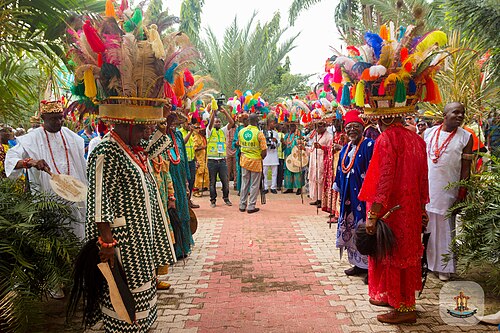

There are many festivals in Nigeria, some of which date to the period before the arrival of the major religions in this ethnically and culturally diverse society. The main Muslim and Christian festivals are often celebrated in ways that are unique to Nigeria or unique to the people of a locality.[328] The Nigerian Tourism Development Corporation has been working with the states to upgrade the traditional festivals, which may become important sources of tourism revenue.[329]
Cuisine
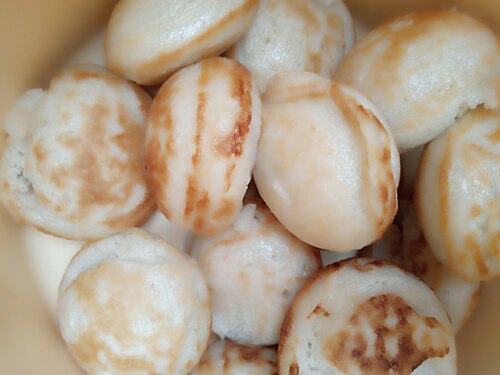
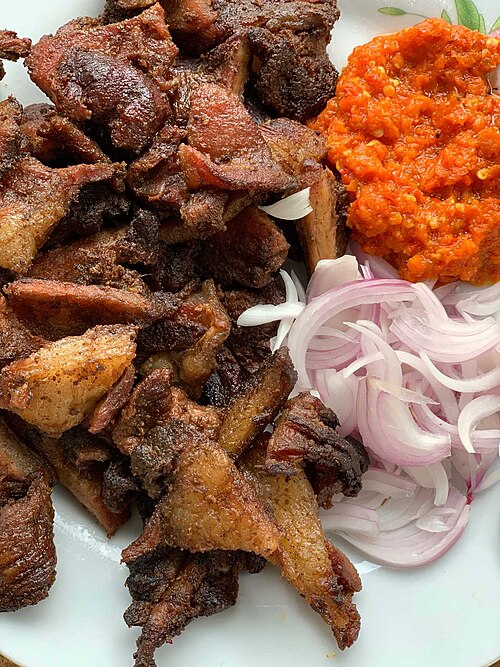
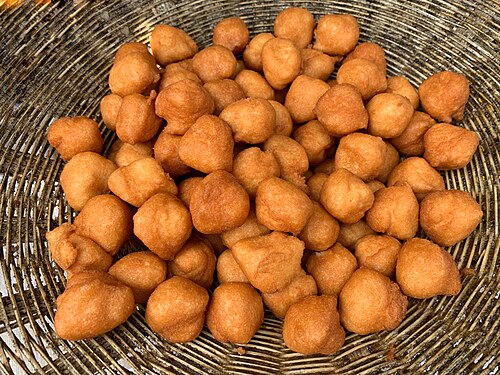

Nigerian cuisine, like West African cuisine in general, is known for its richness and variety. Many different spices, herbs, and flavourings are used in conjunction with palm oil or groundnut oil to create deeply flavoured sauces and soups often made very hot with chilli peppers. Nigerian feasts are colourful and lavish, while aromatic market and roadside snacks cooked on barbecues or fried in oil are plentiful and varied. Suya is usually sold in urban areas especially during night-time.[330]
Fashion
The fashion industry in Nigeria contributes significantly to the country's economics. Casual attire is commonly worn but formal and traditional styles are also worn depending on the occasion. Nigeria is known not only for its fashionable textiles and garments, but also for its fashion designers who have increasingly gained international recognition. Euromonitor estimates the Sub-Saharan fashion market to be worth $31 billion, with Nigeria accounting for 15% of these $31 billion.[331] Nigeria is not only known for their many fashion textiles and garment pieces that are secret to their culture. They also outputted many fashion designers who have developed many techniques and businesses along the way.
Sports
.jpg/500px-NIG-ARG_(2).jpg)
Football is largely considered Nigeria's national sport, and the country has its own Premier League of football. Nigeria's national football team, known as the "Super Eagles", has played in the FIFA World Cup on six occasions (1994, 1998, 2002, 2010, 2014, and 2018). In April 1994, the Super Eagles ranked fifth in the FIFA World Rankings, the highest ranking achieved by an African team. They won the Africa Cup of Nations in 1980, 1994, and 2013, and have also hosted both the U17 and U20 FIFA World Cup. They won the gold medal for football in the 1996 Summer Olympics (in which they beat Argentina) becoming the first African football team to win gold in Olympic football.
Nigeria is also involved in other sports such as basketball, cricket and track and field.[332] Nigeria's national basketball team made the headlines internationally when it became the first African team to beat the United States men's national team.[333] In earlier years, Nigeria qualified for the 2012 Summer Olympics as it beat heavily favoured world elite teams such as Greece and Lithuania.[334] Nigeria has been home to numerous internationally recognised basketball players in the world's top leagues in America, Europe and Asia. These players include Basketball Hall of Famer Hakeem Olajuwon, and later players in the NBA. The Nigerian Premier League has become one of the biggest and most-watched basketball competitions in Africa. The games have aired on Kwese TV and have averaged a viewership of over a million people.[335]
Nigeria made history by qualifying the first bobsled team for the Winter Olympics from Africa when their women's two-person team qualified for the bobsled competition at the XXIII Olympic Winter Games.[336] In the early 1990s, Scrabble was made an official sport in Nigeria; by the end of 2017, there were around 4,000 players in more than 100 clubs in the country.[337] In 2018, the Nigerian Curling Federation was established to introduce a new sport to the country with the hope of getting the game to be a part of the curriculum at the elementary, high school, and university levels respectively. At the 2019 World Mixed Doubles Curling Championship in Norway, Nigeria won their first international match beating France 8–5.[338]
Nigeria's women's and men's national teams in beach volleyball competed at the 2018–2020 CAVB Beach Volleyball Continental Cup.[339] The country's U21 national teams qualified for the 2019 FIVB Beach Volleyball U21 World Championships.[340]
Nigeria is the birthplace of the sport loofball.[341]
See also
Notes
- ^ /naɪˈdʒɪəriə/ ny-JEER-ee-ə; Hausa: Najeriya Hausa pronunciation: [nàː.(d)ʒéː.rí.jàː] , Igbo: Naìjíríyà, Yoruba: Nàìjíríà, Nigerian Pidgin: Naijá [ˈnaɪ.dʒə], Fula: Naajeeriya, Tyap: Naijeriya
- ^ NigeriaSat-1, NigeriaSat-2, NigeriaSat-X, NigComSat-1, and NigComSat-1R
References
- ^ "Languages of Nigeria". Ethnologue. Archived from the original on 15 September 2008. Retrieved 12 September 2010.
- ^ Blench, Roger (2014). An Atlas Of Nigerian Languages. Oxford: Kay Williamson Educational Foundation.
- ^ "Africa: Nigeria". The World Factbook. Central Intelligence Agency. Archived from the original on 9 January 2021. Retrieved 21 June 2020.
- ^ "Nigeria". The World Factbook (2024 ed.). Central Intelligence Agency. Retrieved 4 March 2023. (Archived 2022 edition.)
- ^ a b c d "World Economic Outlook Database, October 2023 Edition. (Nigeria)". IMF.org. International Monetary Fund. 10 October 2023. Archived from the original on 16 October 2023. Retrieved 12 October 2023.
- ^ "Poverty and Inequality Index". National Bureau of Statistics. Archived from the original on 13 April 2021. Retrieved 8 June 2020.
- ^ "Human Development Report 2023/24". United Nations Development Programme. 13 March 2024. Archived from the original on 19 March 2024. Retrieved 22 March 2023.
- ^ Akinbode, Ayomide (2 April 2019). "Why Nigeria changed from Right-Hand Drive to Left-Hand Drive in 1972". thehistoryville.com. Archived from the original on 9 July 2021. Retrieved 9 July 2021.
The terms 'right- and left-hand drive' refer to the position of the driver in the vehicle and are the reverse of the terms 'right- and left-hand traffic'.
- ^ "About Nigeria". nigeriaembassygermany.org. Archived from the original on 15 October 2023. Retrieved 8 September 2023.
- ^ "Nigeria - Colonialism, Independence, Civil War". Britannica. Archived from the original on 2 October 2023. Retrieved 8 September 2023.
- ^ Achebe, Nwando. The female king of colonial Nigeria : Ahebi Ugbabe. Bloomington. ISBN 978-0-253-00507-6. OCLC 707092916. Archived from the original on 5 March 2021. Retrieved 15 December 2020.
- ^ "Ethnicity in Nigeria". PBS. 5 April 2007. Archived from the original on 6 October 2017. Retrieved 9 May 2015.
- ^ "Nigeria". Ethnologue. Archived from the original on 27 February 2021. Retrieved 4 July 2019.
- ^ Pereltsvaig, Asya (16 June 2011). "Linguistic diversity in Africa and Europe – Languages Of The World". Archived from the original on 15 May 2012. Retrieved 4 July 2019.
- ^ "Nigeria – CIA World Factbook 2019" (PDF). Archived from the original (PDF) on 23 September 2020. Retrieved 25 May 2020.
- ^ Mann, Charles C. (1990). "Choosing an Indigenous Official Language for Nigeria" (PDF). Archived (PDF) from the original on 2 December 2020. Retrieved 10 July 2020.
- ^ "Nigerian Constitution". Nigeria Law. Archived from the original on 25 May 2016. Retrieved 17 July 2015.
- ^ "The countries with the 10 largest Christian populations and the 10 largest Muslim populations". Pew Research Center. April 2019. Archived from the original on 18 January 2021. Retrieved 25 May 2020.
- ^ "Nigeria Fact Sheet" (PDF). United States Embassy in Nigeria. Archived from the original (PDF) on 18 October 2020. Retrieved 23 September 2018.
- ^ "Nigeria: The African giant". The Round Table. 50 (197): 55–63. 1959. doi:10.1080/00358535908452221. ISSN 0035-8533.
- ^ "Non-Aligned Movement (NAM) - The Nuclear Threat Initiative". Archived from the original on 19 October 2021. Retrieved 19 October 2021.
- ^ The Arabic name nahr al-anhur is a direct translation of the Tuareg.
- ^ "Online Etymological Dictionary". Etymonline.com. Archived from the original on 2 July 2017. Retrieved 28 July 2014.
- ^ Kperogi, Farooq A. "Natasha H. Akpoti's Wildly Inaccurate History of Nigeria". Notes From Atlanta. Archived from the original on 11 August 2023. Retrieved 11 August 2023.
- ^ a b Tylecote 1975 (see below)
- ^ a b Eggert, Manfred (2014). "Early iron in West and Central Africa". In Breunig, P (ed.). Nok: African Sculpture in Archaeological Context. Frankfurt, Germany: Africa Magna Verlag Press. pp. 51–59.
- ^ a b Eggert, Manfred (2014). "Early iron in West and Central Africa". In Breunig, P (ed.). Nok: African Sculpture in Archaeological Context. Frankfurt, Germany: Africa Magna Verlag Press. pp. 53–54. ISBN 9783937248462.
- ^ Holl, Augustin F. C. (June 2020). "The Origins of African Metallurgies". Oxford Research Encyclopedias. 22 (4): 12–13. doi:10.1093/acrefore/9780190854584.013.63. ISBN 9780190854584. OCLC 7869925414.
- ^ Breunig, Peter. 2014. Nok: African Sculpture in Archaeological Context: p. 21.
- ^ Nicole Rupp, Peter Breunig & Stefanie Kahlheber, "Exploring the Nok Enigma Archived 4 March 2016 at the Wayback Machine", Antiquity 82.316, June 2008.
- ^ B.E.B. Fagg, "The Nok Culture in Prehistory", Journal of the Historical Society of Nigeria 1.4, December 1959.
- ^ Kleiner, Fred S.; Mamiya, Christin J. (2009). Gardner's Art Through the Ages: Non-Western Perspectives (13, revised ed.). Cengage Learning. p. 194. ISBN 978-0-495-57367-8.
- ^ "Nok Terracottas (500 B.C.–200 A.D.) | Thematic Essay | Heilbrunn Timeline of Art History | The Metropolitan Museum of Art". Metmuseum.org. 2 June 2014. Archived from the original on 24 October 2019. Retrieved 16 July 2014.
- ^ Eze–Uzomaka, Pamela. "Iron and its influence on the prehistoric site of Lejja". Academia.edu. University of Nigeria, Nsukka, Nigeria. Archived from the original on 6 December 2020. Retrieved 12 December 2014.
- ^ a b Juang, Richard M. (2008). Africa and the Americas: culture, politics, and history: a multidisciplinary encyclopedia, Volume 2. ABC-CLIO. p. 597. ISBN 978-1-85109-441-7.
- ^ Hrbek, Ivan (1992). Africa from the seventh to the eleventh Century. James Currey Publishers. p. 254. ISBN 978-0-85255-093-9.
- ^ Uzukwu, E. Elochukwu (1997). Worship as Body Language. Liturgical Press. p. 93. ISBN 978-0-8146-6151-2. Archived from the original on 27 June 2024. Retrieved 27 June 2024.
- ^ a b Falola, Toyin; Heaton, Matthew M. (2008). A History of Nigeria. Cambridge University Press. p. 23. ISBN 978-0-521-68157-5.
- ^ Laitin, David D. (1986). Hegemony and culture: politics and religious change among the Yoruba. University of Chicago Press. p. 111. ISBN 978-0-226-46790-0.
- ^ MacDonald, Fiona; Paren, Elizabeth; Shillington, Kevin; Stacey, Gillian; Steele, Philip (2000). Peoples of Africa, Volume 1. Marshall Cavendish. p. 385. ISBN 978-0-7614-7158-5.
- ^ a b c Gordon, April A. (2003). Nigeria's Diverse Peoples: A Reference Sourcebook. ABC-CLIO. pp. 44–54. ISBN 978-1-57607-682-8. Retrieved 29 March 2015.
- ^ a b c Falola, Toyin; Genova, Ann (2009). Historical Dictionary of Nigeria. Scarecrow Press. p. 328. ISBN 978-0-8108-6316-3. Retrieved 29 March 2015.
- ^ Falola, Toyin; Paddock, Adam (2012). Environment and Economics in Nigeria. Routledge. p. 78. ISBN 978-1-136-66247-8. Retrieved 29 March 2015.
- ^ Metz, Helen Chapin (1991). "Nigeria: A Country Study – The Slave Trade". Library of Congress Country Studies. Archived from the original on 23 June 2011. Retrieved 28 May 2011.
- ^ Shillington, Kevin, Encyclopedia of African History. (U of Michigan Press, 2005) p. 1401.
- ^ Adam, Abba Idris, "Re-inventing Islamic Civilization in the Sudanic Belt: The Role of Sheikh Usman Dan Fodio." Journal of Modern Education Review 4.6 (2014): 457–465. online Archived 15 April 2021 at the Wayback Machine
- ^ Peterson, Derek R., ed., Abolitionism and imperialism in Britain, Africa, and the Atlantic (Ohio University Press, 2010).
- ^ Falola, Toyin, and Matthew M. Heaton, A History of Nigeria (2008), pp. 85–109.
- ^ "Slow death slavery course abolition northern Nigeria 18971936 | Regional history after 1500". Cambridge University Press. Archived from the original on 8 March 2021. Retrieved 22 January 2020.
- ^ "The end of slavery". The Story of Africa. BBC News. Archived from the original on 23 July 2020. Retrieved 28 May 2011.
- ^ Udofia, O.E. (1981). "Nigerian Political Parties: Their Role in Modernizing the Political System, 1920–1966". Journal of Black Studies. 11 (4): 435–447. doi:10.1177/002193478101100404. JSTOR 2784073. S2CID 143073983.
- ^ "The Constitution of the Federal Republic of Nigeria" (PDF). 1963. Archived from the original (PDF) on 18 August 2021.
- ^ Irede, Akin (17 March 2022). "Aguiyi-Ironsi: The murder that birthed Nigeria's northern hegemony". The Africa Report. Archived from the original on 23 February 2023. Retrieved 23 February 2023.
- ^ Falola and Heaton, A History of Nigeria (2008) pp 158–59.
- ^ Murray, Senan (30 May 2007). "Reopening Nigeria's civil war wounds". BBC News. Archived from the original on 5 March 2012. Retrieved 28 May 2011.
- ^ Daly, Samuel Fury Childs (7 August 2020). A History of the Republic of Biafra. Cambridge University Press. doi:10.1017/9781108887748. ISBN 978-1-108-88774-8. S2CID 225266768.
- ^ "Background Paper on Nigeria and Biafra, Declassified Documents Reference System.
- ^ Metz, Helen Chapin (1991). "Nigeria: A Country Study – Civil War". Library of Congress Country Studies. Archived from the original on 5 June 2011. Retrieved 28 May 2011.
- ^ "The Biafra War and the Age of Pestilence". Litencyc.com. Archived from the original on 20 August 2018. Retrieved 28 July 2014.
- ^ Michael I. Draper, Shadows: Airlift and Airwar in Biafra and Nigeria 1967–1970.
- ^ McDonald, Gordon C., Area Handbook for the Democratic Republic of the Congo (Congo Kinshasa) (1971), p. 263
- ^ Stearns, Jason K. Dancing in the Glory of Monsters: The Collapse of the Congo and the Great War of Africa (2011), p. 115
- ^ Wrong, Michela. In the Footsteps of Mr Kurtz: Living on the Brink of Disaster in Mobutu's Congo (2000), p. 266
- ^ Watts, Michael (1987) State, Oil and Agriculture in Nigeria, Institute of International Studies, University of California, ISBN 0-87725-166-5.
- ^ Iliffe 2011, pp. 42–43; Derfler 2011, p. 81.
- ^ Derfler 2011, p. 82.
- ^ Iliffe 2011, p. 43; Derfler 2011, p. 81.
- ^ Iliffe 2011, p. 44.
- ^ Joliba (13 February 2015). "Failed Coup Attempt of 1976". Joliba. Archived from the original on 27 June 2023. Retrieved 27 June 2023.
- ^ Iliffe 2011, p. 48.
- ^ Iliffe 2011, pp. 48–49; Derfler 2011, p. 85.
- ^ Iliffe 2011, p. 50; Derfler 2011, p. 85.
- ^ African Concord (1990). The New Helmsmen. Concord Press, Ikeja, Lagos. 13 August 1990
- ^ David Williams, President and power in Nigeria: The life of Shehu Shagari (Routledge, 2018).
- ^ "Nigeria, Military Faces Daunting Challenges", AP Press International, 3 March 1984. Retrieved 22 February 2007.
- ^ Siollun, Max (25 October 2018), Levan, Carl; Ukata, Patrick (eds.), "Civil Military Affairs and Military Culture in Post-Transition Nigeria", The Oxford Handbook of Nigerian Politics, Oxford University Press, pp. 272–287, doi:10.1093/oxfordhb/9780198804307.013.13, ISBN 978-0-19-880430-7
- ^ Bilski, Andrew, "Broken Promises", Maclean, 6 September 1993.
- ^ Diamond, Larry; Kirk-Greene, Anthony; Oyeleye Oyediran (1997) Transition without End: Nigerian Politics and Civil Society Under Babangida, Vantage Publishers, ISBN 978-2458-54-6.
- ^ "Wiwa et al v. Royal Dutch Petroleum et al". Center for Constitutional Rights. Archived from the original on 26 March 2015. Retrieved 24 August 2016.
- ^ "Nigerian Lawyer: Abacha accounts apparently in Switzerland, Luxembourg, France, and Germany", AP press, 10 January 2000.
- ^ "Abdusalam Abubakar" Archived 4 May 2015 at the Wayback Machine, Encyclopædia Britannica Online, accessed 26 October 2012.
- ^ Falola and Heaton, A History of Nigeria (2008) pp. 211–34.
- ^ "Final Report" (PDF). EU Election Observation Mission Nigeria 2007. Archived from the original (PDF) on 16 February 2008. Retrieved 24 January 2008.
- ^ "NASS confirms Sambo as vice president". The Nigerian Voice. 18 May 2010. Archived from the original on 5 August 2020. Retrieved 29 May 2011.
- ^ Akinlade, Muruf (18 May 2010). "National Assembly confirms Sambo as Vice President". MyOndoState.Com. Archived from the original on 27 April 2011. Retrieved 29 May 2011.
- ^ Nossiter, Adam (16 April 2011). "Nigerians Vote in Presidential Election". The New York Times. Archived from the original on 24 August 2019. Retrieved 17 April 2011.
- ^ Times, Premium (23 December 2014). "Nigerian economy among world's largest - Jonathan". Premium Times Nigeria. Archived from the original on 4 October 2022. Retrieved 5 October 2022.
- ^ eribake, akintayo (24 December 2014). "Nigeria's economy among largest in the world — Jonathan". Vanguard News. Archived from the original on 4 October 2022. Retrieved 5 October 2022.
- ^ Udo, Bassey (14 May 2015). "Missing $20 bn: Sanusi faults Alison-Madueke, says audit report proves at least $18.5bn lost". Premium Times Nigeria. Archived from the original on 4 October 2022. Retrieved 5 October 2022.
- ^ "Nigeria election: Muhammadu Buhari wins". BBC. Archived from the original on 25 November 2020. Retrieved 31 March 2015.
- ^ "Obama praises Nigeria's president for conceding defeat". Vanguard. 1 April 2015. Archived from the original on 21 August 2019. Retrieved 4 April 2015.
- ^ "APC praises Jonathan for conceding defeat". The Nation. Archived from the original on 8 July 2015. Retrieved 4 April 2015.
- ^ "Anyaoku Praises Jonathan For Conceding Defeat". Channels Television. 31 March 2015. Archived from the original on 21 August 2019. Retrieved 4 April 2015.
- ^ AfricaNews (27 February 2019). "Buhari beats Atiku to secure re-election as Nigeria president". Africanews. Archived from the original on 24 September 2020. Retrieved 5 July 2020.
- ^ Lasisi, Olukayode Joshua (29 September 2022). "Peter Obi leads in new poll, Google search interest". Businessday NG. Archived from the original on 2 December 2022. Retrieved 5 October 2022.
- ^ Olurounbi, Eromo Egbejule,Ruth. "How Rabiu Kwankwaso became wildcard in Nigerian presidential race". aljazeera.com. Archived from the original on 24 September 2023. Retrieved 24 August 2023.
{{cite news}}: CS1 maint: multiple names: authors list (link) - ^ "Nigeria presidential election results 2023 by the numbers". aljazeera.com. Archived from the original on 9 August 2023. Retrieved 18 August 2023.
- ^ "Nigeria local elections open in shadow of contested national vote". www.aljazeera.com. Archived from the original on 18 August 2023. Retrieved 18 August 2023.
- ^ "Bola Tinubu sworn in as Nigeria's president, succeeds Buhari". www.aljazeera.com. Archived from the original on 6 September 2023. Retrieved 18 August 2023.
- ^ Emmanuel Akinwotu (16 January 2024). "A kidnapping of six sisters and a murder has gripped Nigeria". DevOne Africa. NPR. Archived from the original on 19 February 2024. Retrieved 19 February 2024.
- ^ "Rank Order – Area". The World Factbook. Central Intelligence Agency. Archived from the original on 9 February 2014. Retrieved 29 May 2011.
- ^ "Africa :: Nigeria". The World Factbook. Central Intelligence Agency. 17 May 2011. Archived from the original on 9 January 2021. Retrieved 29 May 2011. *Note that coastlines, and borders based on rivers or natural features, are fractals, the length of which is imprecise and depends on the measurement convention adopted.
- ^ a b "Nigeria". Encarta. Microsoft. Archived from the original on 11 November 2003. Retrieved 19 July 2007.
- ^ a b c "Regions Used to Interpret the Complexity of Nigeria". Geographical Alliance of Iowa. University of Northern Iowa. Archived from the original on 14 April 2009. Retrieved 19 July 2007.
- ^ a b "The Human and Physical Characteristics of Nigeria". Geographical Alliance of Iowa. University of Northern Iowa. Archived from the original on 28 March 2010. Retrieved 13 August 2007.
- ^ Gbolagade, Lameed (2011). "Species diversity and richness of wild birds in Dagona Waterfowl Sanctuary, Nigeria". African Journal of Environmental Science and Technology (5 ed.): 855–866. ISSN 1996-0786.
- ^ "Chad Basin National Park". 2 October 2013. Archived from the original on 2 October 2013. Retrieved 22 October 2022.
- ^ "TRANSBOUNDARY DIAGNOSTIC ANALYSIS OF THE LAKE CHAD BASIN". 4 March 2016. Archived from the original on 4 March 2016. Retrieved 22 October 2022.
- ^ a b c "The Human and Physical Characteristics of Nigeria". Geographical Alliance of Iowa. University of Northern Iowa. Archived from the original on 28 March 2010. Retrieved 13 August 2007.
- ^ Fashae, Olutoyin (2017). "Geospatial Analysis of Changes in Vegetation Cover over Nigeria". Bulletin of Geography (13): 17–27. Archived from the original on 27 June 2024. Retrieved 18 September 2022.
- ^ Ogbonna, D.N.; Ekweozor, I.K.E.; Igwe, F.U. (2002). "Waste Management: A Tool for Environmental Protection in Nigeria". Ambio: A Journal of the Human Environment. 31 (1): 55–57. doi:10.1639/0044-7447(2002)031[0055:wmatfe]2.0.co;2. JSTOR 4315211.
- ^ "News.mongabay.com". News.mongabay.com. 17 November 2005. Archived from the original on 18 June 2009. Retrieved 28 July 2014.
- ^ "Rainforest analysis at Mongabay.com". Rainforests.mongabay.com. 1 January 2010. Archived from the original on 12 February 2014. Retrieved 28 July 2014.
- ^ Grantham, H. S.; et al. (2020). "Anthropogenic modification of forests means only 40% of remaining forests have high ecosystem integrity - Supplementary Material". Nature Communications. 11 (1): 5978. Bibcode:2020NatCo..11.5978G. doi:10.1038/s41467-020-19493-3. ISSN 2041-1723. PMC 7723057. PMID 33293507.
- ^ Bashir, Muhammed; Umar-Tsafe, Nasir; Getso, Kabiru; Kaita, Ibrahim M.; Nasidi, Abdulsalami; Sani-Gwarzo, Nasir; Nguku, Patrick; Davis, Lora; Brown, Mary Jean (18 April 2014). "Assessment of blood lead levels among children aged ≤ 5 years—Zamfara State, Nigeria, June–July 2012". MMWR. Morbidity and Mortality Weekly Report. 63 (15): 325–327. ISSN 1545-861X. PMC 5779393. PMID 24739340.
- ^ Donatus, Peter (15 October 2016). "Shell's Nigeria ecocide is creating a refugee crisis". greenleft.org.au. Retrieved 6 July 2023.[permanent dead link]
- ^ "UNEP Ogoniland Oil Assessment Reveals Extent of Environmental Contamination and Threats to Human Health". UNEP. 7 August 2017. Archived from the original on 8 July 2023. Retrieved 6 July 2023.
- ^ "'Ecocide' movement pushes for a new international crime: Environmental destruction". NBC News. 7 April 2021. Archived from the original on 22 June 2023. Retrieved 6 July 2023.
- ^ "Fighting ecocide in Nigeria". theecologist.org. 5 February 2014. Archived from the original on 6 December 2023. Retrieved 6 July 2023.
- ^ "UNPO: Ogoni: An Ecocide in the Making?". unpo.org. 2 November 2009. Archived from the original on 7 July 2023. Retrieved 6 July 2023.
- ^ "How an ecocide law could prevent another Nigerian oil disaster". The Guardian. 22 August 2011. ISSN 0261-3077. Archived from the original on 27 June 2024. Retrieved 6 July 2023.
- ^ "Spotlighting oil majors' 'ecocide' of Niger Delta: Q&A with Michael J. Watts". Mongabay Environmental News. 2 June 2023. Archived from the original on 7 July 2023. Retrieved 6 July 2023.
- ^ "Nigeria's illegal oil refineries: Dirty, dangerous, lucrative". BBC News. 26 April 2022. Archived from the original on 10 October 2022. Retrieved 10 October 2022.
- ^ Okereke, Chukwumerije; Emodi, Nnaemeka Vincent; Diemuodeke, Ogheneruona E. (9 May 2022). "Three things that can go wrong at an illegal oil refinery in Nigeria". The Conversation. Archived from the original on 12 October 2022. Retrieved 10 October 2022.
- ^ Onukwue, Alexander (25 April 2022). "Nigeria's illegal oil refineries keep killing people". Quartz. Archived from the original on 15 October 2022. Retrieved 10 October 2022.
- ^ Charles Mwalimu. The Nigerian Legal System: Public Law. Peter Lang. 2005. p. 6 Archived 5 April 2023 at the Wayback Machine.
- ^ a b "Nigeria". The World Factbook. Central Intelligence Agency (United States). 14 February 2022. Archived from the original on 9 January 2021. Retrieved 23 January 2021.
- ^ "Patrick Obahiagbon: Labour Party won't get 25% of votes in 24 states". TheCable. 4 September 2022. Archived from the original on 15 October 2022. Retrieved 15 October 2022.
- ^ "Constitution amendment: What the people want". 4 November 2012. Archived from the original on 1 March 2021. Retrieved 14 December 2012.
- ^ "Constitutional review: Nigeria needs broader representation". 6 December 2012. Archived from the original on 11 May 2013. Retrieved 14 December 2012.
- ^ a b Onuah, Felix (29 December 2006). "Nigeria gives census result, avoids risky details". Reuters. Archived from the original on 26 January 2009. Retrieved 23 November 2008.
- ^ "Nigeria: States & Agglomerations - Population Statistics, Maps, Charts, Weather and Web Information". citypopulation.de. Archived from the original on 30 September 2022. Retrieved 17 October 2022.
- ^ Siliquini-Cinelli, Luca; Hutchison, Andrew (6 April 2017). The Constitutional Dimension of Contract Law: A Comparative Perspective. Springer. ISBN 978-3-319-49843-0. Archived from the original on 27 June 2024. Retrieved 20 August 2022.
- ^ ProjectSolutionz (22 June 2021). "Law and the political structure in Nigeria". ProjectSolutionz. Archived from the original on 8 July 2022. Retrieved 8 July 2022.
- ^ "Africa :: Nigeria". The World Factbook. Central Intelligence Agency (United States). 12 September 2022. Archived from the original on 9 January 2021. Retrieved 23 January 2021.
- ^ Young, Andrew (20 July 2006) "Collins Edomaruse, how Obasanjo cut UK, US to size", This Day (Nigeria).
- ^ Burkett, Elinor (2009) Golda, HarperCollins, ISBN 0-06-187395-0, p. 202.
- ^ "ASAS – Africa-South America Summit". African Union. 30 November 2006. Archived from the original on 18 May 2011. Retrieved 29 May 2011.
- ^ Timothy, Shaw (1984). "The State of Nigeria: Oil Prices Power Bases and Foreign Policy". Canadian Journal of African Studies. 18 (2): 393–405. doi:10.2307/484337. JSTOR 484337.
- ^ LeVan, Carl; Ukata, Patrick (2018). The Oxford Handbook of Nigerian Politics. Oxford: Oxford University Press. p. 751. ISBN 978-0-19-880430-7.
- ^ LeVan, Carl; Ukata, Patrick (2018). The Oxford Handbook of Nigerian Politics. Oxford: Oxford University Press. p. 756. ISBN 978-0-19-880430-7.
- ^ LeVan, Carl; Ukata, Patrick (2018). The Oxford Handbook of Nigerian Politics. Oxford: Oxford University Press. p. 754. ISBN 978-0-19-880430-7.
- ^ LeVan, Carl; Ukata, Patrick (2018). The Oxford Handbook of Nigerian Politics. Oxford: Oxford University Press. p. 754–755. ISBN 978-0-19-880430-7.
- ^ Smith, Elliot (29 September 2020). "West Africa's new currency could now be delayed by five years". CNBC. Archived from the original on 13 February 2021. Retrieved 17 November 2020.
- ^ "Armed forces personnel, total – Data". Archived from the original on 18 November 2018. Retrieved 24 January 2017.
- ^ a b The International Institute for Strategic Studies (IISS) (2022). The Military Balance 2022. London: Taylor & Francis. ISBN 9781032279008.
- ^ 3_Data for all countries from 1988 to 2017 as a share of GDP.pdf (sipri.org)
- ^ 1_Data for all countries from 1988 to 2017 in constant (2016) USD.pdf (sipri.org)
- ^ a b c d "Nigeria Security Tracker". Council on Foreign Relations. Archived from the original on 15 November 2018. Retrieved 15 October 2022.
- ^ Agency Report (24 March 2022). "Over 40,000 terrorists surrender to troops – DHQ". Premium Times Nigeria. Archived from the original on 5 October 2022. Retrieved 15 October 2022.
- ^ a b Bankole, Idowu (15 September 2022). "Niger Delta militants at war over pipelines surveillance contract". Vanguard News. Archived from the original on 18 October 2022. Retrieved 18 October 2022.
- ^ "Niger Delta Avengers group says ends ceasefire in Nigeria oil hub - website". Reuters. 3 November 2017. Archived from the original on 15 October 2022. Retrieved 15 October 2022.
- ^ ACN (7 June 2022). "ACN statement about the Pentecost massacre in St. Francis Xavier Church in Owo, Nigeria". ACN International. Archived from the original on 18 November 2022. Retrieved 18 November 2022.
- ^ "GDP Per Capita | By Country | 2022 | Data". World Economics. Archived from the original on 10 May 2023. Retrieved 24 October 2022.
- ^ Gbola Subair-Abuja (8 September 2014). "Remittances from diaspora Nigerians as lubricant for the economy". Nigerian Tribune. Archived from the original on 17 March 2015. Retrieved 17 April 2015.
- ^ Lewis, Peter (2007). Growing Apart: Oil, Politics, and Economic Change in Indonesia and Nigeria. University of Michigan Press. p. 168. ISBN 978-0-472-06980-4. Archived from the original on 27 June 2024. Retrieved 26 December 2008.
- ^ "World Bank list of economies". http: www.worldbank.org. January 2011. Archived from the original on 22 May 2011. Retrieved 27 May 2011.
- ^ Ekene, Mfon Abel (12 March 2020). "Natural resources in Nigeria and their locations". MakeMoney.ng. Archived from the original on 10 June 2023. Retrieved 11 December 2022.
- ^ "Agriculture, forestry, and fishing, value added (% of GDP)". World Bank. Archived from the original on 12 November 2022. Retrieved 12 November 2022.
- ^ a b "Nigeria at a glance|FAO in Nigeria|Food and Agriculture Organization of the United Nations". fao.org. Archived from the original on 7 June 2022. Retrieved 11 June 2022.
- ^ "Nigeria at a glance". fao.org. Archived from the original on 7 June 2022. Retrieved 26 March 2023.
- ^ Cadoni, P. (2013), "Analysis of Incentives and Disincentives for Cocoa in Nigeria" (PDF), Technical notes series, MAFAP, Rome: FAO, archived (PDF) from the original on 30 January 2023, retrieved 26 March 2023
- ^ Ibirogba, Femi (17 December 2018). "Stakeholders' strategies for re-awakening Nigeria's cocoa economy". The Guardian Nigeria News - Nigeria and World News. Archived from the original on 26 March 2023. Retrieved 26 March 2023.
"Among the six major agricultural exports of the pre-petroleum exporting years (cocoa, palm oil, palm kernel, rubber, groundnuts and cotton), cocoa is the one still standing tall in terms of non-oil exports," [Professor Adegboyega Oguntade] said.
- ^ "Rubber in Nigeria | OEC". OEC - The Observatory of Economic Complexity. Archived from the original on 26 March 2023. Retrieved 26 March 2023.
- ^ Ekpo, Akpan H. (1986). "Food dependency and the Nigerian economy: an ex-post analysis, 1960-80". The Nigerian Journal of Economic and Social Studies. 28 (2): 257–273. Archived from the original on 26 March 2023. Retrieved 26 March 2023.
Up to 1974, the Nigerian economy was self-sufficient in the production of food. In recent years, however, Nigeria has become a net importer of basic foods.
- ^ a b Nwozor, Agaptus; Olanrewaju, John Shola; Ake, Modupe B. (2019). "National Insecurity and the Challenges of Food Security in Nigeria" (PDF). Academic Journal of Interdisciplinary Studies. 8 (4). Richtmann Publishing. doi:10.36941/ajis-2019-0032. ISSN 2281-3993. S2CID 213869061. Archived (PDF) from the original on 2 May 2023. Retrieved 26 March 2023.
- ^ Okotie, Sylvester (1 January 2018), Ndimele, Prince E. (ed.), "Chapter 5 - The Nigerian Economy Before the Discovery of Crude Oil", The Political Ecology of Oil and Gas Activities in the Nigerian Aquatic Ecosystem, Academic Press, pp. 71–81, ISBN 978-0-12-809399-3, archived from the original on 26 March 2023, retrieved 26 March 2023
- ^ Ake, Claude (1996). Democracy and Development in Africa. Brookings Institution Press. p. 48. ISBN 978-0-8157-0220-7. Archived from the original on 27 June 2024. Retrieved 26 December 2008.
- ^ "Why Nigeria has restricted food imports". BBC News. 16 August 2019. Archived from the original on 26 March 2023. Retrieved 26 March 2023.
- ^ Pasquini, MW; Alexander, MJ (2005). "Soil fertility management strategies on the Jos Plateau: the need for integrating 'empirical' and 'scientific' knowledge in agricultural development". Geographical Journal. 171 (2): 112–124. Bibcode:2005GeogJ.171..112P. doi:10.1111/j.1475-4959.2005.00154.x.
- ^ "Rice pyramids and Nigeria's production puzzle". The Guardian Nigeria News - Nigeria and World News. 22 April 2022. Archived from the original on 5 June 2022. Retrieved 17 June 2022.
- ^ "Nigeria closes part of border with Benin to check rice smuggling". Reuters. 29 August 2019. Archived from the original on 29 August 2019. Retrieved 29 August 2019.
- ^ "Lagos today: Like Tinubu like Sanwo-Olu". TheCable. 4 May 2022. Archived from the original on 22 May 2022. Retrieved 26 May 2022.
- ^ Nnodim, Okechukwu (29 April 2022). "Nigeria's proven gas reserves worth over $803.4tn – FG". Punch Newspapers. Archived from the original on 21 April 2023. Retrieved 14 June 2023.
- ^ PricewaterhouseCoopers. "Evaluating Nigeria's Gas Value Chain". PwC. Archived from the original on 14 June 2023. Retrieved 14 June 2023.
- ^ Ejiogu, Amanze R. (2013). "Gas Flaring in Nigeria: Costs and Policy". Energy & Environment. 24 (6): 983–998. Bibcode:2013EnEnv..24..983E. doi:10.1260/0958-305X.24.6.983. ISSN 0958-305X. JSTOR 43735213. S2CID 153746438. Archived from the original on 14 June 2023. Retrieved 14 June 2023.
- ^ Onuah, Felix (19 August 2022). "Nigeria's Buhari worried over large scale crude oil theft". Reuters. Archived from the original on 14 June 2023. Retrieved 14 June 2023.
- ^ "Shell Nigeria says crude oil theft an existential threat to industry". Reuters. 7 July 2022. Archived from the original on 11 February 2023. Retrieved 14 June 2023.
- ^ Williams, Lizzie (2008). Nigeria: The Bradt Travel Guide. Bradt Travel Guides. p. 26. ISBN 978-1-84162-239-2. Archived from the original on 27 June 2024. Retrieved 26 December 2008.
- ^ Environmental Resources Managers Ltd, Niger Delta Environmental Survey Final Report Phase I; Volume I: Environmental and Socio-Economic Characteristics (Lagos: Niger Delta Environmental Survey, September 1997)
- ^ Nigeria: The Political Economy of Oil ISBN 0-19-730014-6 (Khan, Ahmad)
- ^ "Reports | National Bureau of Statistics". nigerianstat.gov.ng. Archived from the original on 17 June 2022. Retrieved 28 May 2022.
- ^ Nelson, P.H.H., Role of Reflection Seismic in Development of Nembe Creek Field, Nigeria, 1980, in Giant Oil and Gas Fields of the Decade: 1968–1978, AAPG Memoir 30, Halbouty, M.T., editor, Tulsa: American Association of Petroleum Geologists, ISBN 0-89181-306-3, pp. 565–576
- ^ "Stakes in four Nigerian oil fields being sold by Shell". Nigeria Sun. 27 August 2014. Archived from the original on 31 August 2014. Retrieved 28 August 2014.
- ^ "Morocco closer to activating the gas pipeline with Nigeria". Atalayar. 27 April 2022. Archived from the original on 24 May 2022. Retrieved 26 May 2022.
- ^ "Nigeria's president launches new gas pipeline project". aa.com.tr. Archived from the original on 22 May 2022. Retrieved 26 May 2022.
- ^ "Nigeria-Morocco Gas Pipeline (NMGP) Project Updates". Construction Review Online. 9 May 2022. Archived from the original on 28 May 2022. Retrieved 26 May 2022.
- ^ "Chapter XXVI: Disarmament – No. 9 Treaty on the Prohibition of Nuclear Weapons". United Nations Treaty Collection. 7 July 2017. Archived from the original on 6 August 2019. Retrieved 16 August 2019.
- ^ a b c "Only 57 Percent of Nigerian Electricity Customers are Metered". NOIPolls. 23 June 2023. Archived from the original on 7 July 2023. Retrieved 6 July 2023.
- ^ "Industrial hub: Why more companies are moving to Ogun". Vanguard Nigeria. 19 June 2013. Archived from the original on 24 September 2020. Retrieved 14 March 2014.
- ^ "Ogun State's rising investment profile". Daily NewsWatch. 5 May 2013. Archived from the original on 14 March 2014. Retrieved 14 March 2014.
- ^ "Ogun State: Nigeria's new Industrial hub". Online Nigeria News. 27 November 2012. Archived from the original on 29 November 2013. Retrieved 14 March 2014.
- ^ "Nigeria now generates 13,000mw of power, says Minister – Chukwuma". Naijalitz – No 1 Entertainment Portal. Retrieved 28 October 2020.[permanent dead link]
- ^ "A new car assembly plant begins operation in Nigeria". NTU-SBF Centre for African Studies (CAS). Archived from the original on 4 July 2022. Retrieved 30 May 2022.
- ^ Yager, Thomas R. (March 2022). "The Mineral Industry of Nigeria" (PDF). Archived (PDF) from the original on 10 June 2022. Retrieved 10 June 2022.
- ^ Umoh, Ruth (5 December 2018). "Billionaire Aliko Dangote is the world's richest black person—here's how he made his wealth". CNBC. Archived from the original on 26 March 2023. Retrieved 26 March 2023.
- ^ "Products: Ajaokuta Steel Company: ...the Bedrock of Nigeria's Industrialization". ajaokutasteel.com. Archived from the original on 25 June 2022. Retrieved 26 May 2022.
- ^ "Steel Production by Country 2022". worldpopulationreview.com. Archived from the original on 26 May 2022. Retrieved 26 May 2022.
- ^ "Nigeria to revive steel rolling mills – Official | Premium Times Nigeria". 28 April 2014. Archived from the original on 24 May 2022. Retrieved 26 May 2022.
- ^ Polycarp, Nwafor (18 May 2017). "Nigeria to launch Africa's 1st nanosatellite". Vanguard. Archived from the original on 17 February 2018. Retrieved 17 February 2018.
- ^ Onyesi, Chika (6 October 2021). "'Nigeria's pharmaceutical sector dwindling despite 60 percent production capacity'". Daily Post Nigeria. Archived from the original on 5 June 2022. Retrieved 5 June 2022.
- ^ Yahaya, Abdulwali (19 September 2019). "Top 10 Best Pharmaceutical Companies in Nigeria & Their Products". Nigerian Infopedia. Archived from the original on 17 May 2022. Retrieved 2 June 2022.
- ^ "About Emzor Pharmaceutical Industries Limited". Emzor. Archived from the original on 1 August 2022. Retrieved 2 June 2022.
- ^ Okonji, Emma (24 October 2013). "Zinox Introduces Tablet Range of Computers, Plans Commercial Launch". This Day. This Day Live. Archived from the original on 27 October 2013. Retrieved 14 March 2014.
- ^ "Nigeria produces five of seven unicorns in Africa". The Guardian Nigeria News - Nigeria and World News. 26 January 2022. Archived from the original on 17 October 2022. Retrieved 17 October 2022.
- ^ DeRouen, Karl R. & Bellamy, Paul (2008). International Security and the United States: An Encyclopedia. Greenwood Publishing Group. p. 546. ISBN 978-0-275-99253-8. Archived from the original on 27 June 2024. Retrieved 26 December 2008.
- ^ "The New Economy of Africa". Center For Global Development. Archived from the original on 12 February 2020. Retrieved 24 January 2020.
- ^ "Africa's Booming Tech Hubs Are "Backbone of Tech Ecosystem" Having Grown 40% This Year". Forbes. Archived from the original on 15 January 2021. Retrieved 24 January 2020.
- ^ "92% of Nigerian adult males own mobile device, says GSMA". Punch Newspapers. 26 June 2022. Archived from the original on 19 August 2022. Retrieved 19 August 2022.
- ^ Paul, Emmanuel (28 November 2019). "Everything you need to know about Nigeria's Social Media Bill and what you can do about it". Techpoint Africa. Archived from the original on 20 May 2021. Retrieved 20 May 2021.
- ^ Archibong, Maurice (18 March 2004). "Nigeria: Gold mine waiting to be tapped". The Sun Online. The Sun Publishing Ltd. Archived from the original on 26 April 2007. Retrieved 21 June 2007.
- ^ "Managing Metropolitan Lagos" (PDF). R.Rasaki. Archived from the original (PDF) on 13 May 2012. Retrieved 4 April 2012.
- ^ Appiah, Anthony; Gates, Henry Louis (2010). Encyclopedia of Africa, Volume 2. Oxford University Press. p. 53. ISBN 978-0-19-533770-9. Archived from the original on 27 June 2024. Retrieved 19 August 2019.
- ^ "Sustainability In The Nigerian Financial Sector – ESRM Africa". Archived from the original on 25 June 2022. Retrieved 26 May 2022.
- ^ "Cote d'Ivoire, others ahead of Nigeria on global logistics hub". The Guardian Nigeria News - Nigeria and World News. 25 April 2017. Archived from the original on 6 March 2021. Retrieved 26 March 2023.
- ^ Anagor, Amaka (8 October 2021). "Nigeria joins World Logistics Passport as strategic trade hub in West Africa". Businessday NG. Archived from the original on 15 April 2023. Retrieved 26 March 2023.
- ^ Shuaibu, Faruk (1 May 2022). "How FG moves to save 35,000km road networks". Daily Trust. Archived from the original on 14 September 2022. Retrieved 14 September 2022.
- ^ "7 States With the Worst Road Networks in Nigeria". 24 April 2022. Retrieved 14 September 2022.[permanent dead link]
- ^ "2.3 Nigeria Road Network - Logistics Capacity Assessment - Digital Logistics Capacity Assessments". dlca.logcluster.org. Archived from the original on 14 September 2022. Retrieved 14 September 2022.
- ^ "UPDATED: Motorists List Nigeria's Most Dangerous Roads, Say Bandits Built Dens Along Them | Sahara Reporters". saharareporters.com. Archived from the original on 14 September 2022. Retrieved 14 September 2022.
- ^ Babangida, Mohammed (18 May 2022). "Bandits abduct motorists on Abuja - Kaduna highway". Premium Times Nigeria. Archived from the original on 14 September 2022. Retrieved 14 September 2022.
- ^ "Nigerian airports processed 15.8m passengers in 1 year | Dailytrust". dailytrust.com. 22 September 2022. Archived from the original on 20 October 2022. Retrieved 21 October 2022.
- ^ Report, Agency (9 January 2022). "New Anambra airport records 142 flights, 3,865 passengers in one month — Official". Premium Times. Archived from the original on 26 February 2022. Retrieved 26 February 2022.
- ^ "Lagos Airport's Terminal 2 opens – the Nigerian president wants concessions 'fast-tracked'". CAPA - Centre for Aviation. Archived from the original on 30 May 2022. Retrieved 30 May 2022.
- ^ "World Population Prospects 2022". United Nations Department of Economic and Social Affairs, Population Division. Retrieved 17 July 2022.
- ^ "World Population Prospects 2022: Demographic indicators by region, subregion and country, annually for 1950-2100" (XSLX) ("Total Population, as of 1 July (thousands)"). United Nations Department of Economic and Social Affairs, Population Division. Retrieved 17 July 2022.
- ^ a b "People and Society: Population". The World Fact Book. Central Intelligence Agency. Archived from the original on 9 January 2021. Retrieved 17 October 2018.
- ^ CO2 Emissions from Fuel Combustion Archived 12 October 2009 at the Wayback Machine Population 1971–2008 IEA pdf Archived 6 January 2012 at the Wayback Machine pp. 83–85
- ^ Dunne, Daisy (17 February 2023). "The Carbon Brief Profile: Nigeria". Carbon Brief. Archived from the original on 25 August 2020. Retrieved 24 February 2023.
- ^ "Human Development Data (1990–2017)". United Nations Development Programme. Archived from the original on 2 November 2010. Retrieved 17 October 2018.
- ^ "Egbe Omo Yoruba, National Association of Yoruba descendants in North America". yorubanation.org. 19 May 2007. Archived from the original on 9 March 2018. Retrieved 29 May 2011.
- ^ Kent, Mary Mederios; Haub, Carl (December 2005). "The Demographic Divide: What It Is and Why It Matters". Population Reference Bureau. Archived from the original on 26 April 2011. Retrieved 6 June 2011.
- ^ McDonald, John F.; McMillen, Daniel P. (2010). Urban Economics and Real Estate: Theory and Policy. Wiley Desktop Editions (2 ed.). John Wiley & Sons. p. 9. ISBN 978-0-470-59148-2.
- ^ "Major Urban Areas: Population". The World Fact Book. Central Intelligence Agency. Archived from the original on 9 January 2021. Retrieved 17 October 2018.
- ^ "Nigeria" in Geographica: The complete Atlas of the world, Random House, 2002, ISBN 0-375-72037-5
- ^ Lewis, Peter (2007). Growing Apart: Oil, Politics, and Economic Change in Indonesia and Nigeria. University of Michigan Press. p. 132. ISBN 978-0-472-06980-4. Archived from the original on 27 June 2024. Retrieved 27 June 2024.
- ^ Suberu, Rotimi T. (2001). Federalism and Ethnic Conflict in Nigeria. US Institute of Peace Press. p. 154. ISBN 978-1-929223-28-2. Archived from the original on 27 June 2024. Retrieved 27 June 2024.
- ^ Politzer, Malia (August 2008). "China and Africa: Stronger Economic Ties Mean More Migration". Migration Information Source. Archived from the original on 29 January 2014. Retrieved 7 June 2011.
- ^ Simpson, Sarah (August 2008). "Why white Zimbabwean farmers plan to stay in Nigeria". The Christian Science Monitor. Archived from the original on 4 May 2008. Retrieved 7 June 2011.
- ^ "The World Factbook – Central Intelligence Agency". www.cia.gov. 7 August 2024.
- ^ Ebihard, David M.; Simons, Gary F.; Fennig, Charles D., eds. (2019). "Nigeria". Ethnologue: Languages of the World (22th ed.). Dallas, TX: SIL International Publications. Archived from the original on 12 September 2019.
- ^ Adegbija, Efurosibina E. (2003). Multilingualism: A Nigerian Case Study. Last paragraph: Africa World Press. p. 55. ISBN 978-1-59221-173-9. Archived from the original on 27 June 2024. Retrieved 26 December 2008.
- ^ CIA Factbook: Nigeria [1] (retrieved 9 May 2020)
- ^ McKinnon, Andrew (2021). "Christians, Muslims and Traditional Worshippers in Nigeria: Estimating the Relative Proportions from Eleven Nationally Representative Social Surveys". Review of Religious Research. 63 (2): 303–315. doi:10.1007/s13644-021-00450-5. hdl:2164/16008. S2CID 233821494. Archived from the original on 31 May 2021. Retrieved 10 May 2021.
- ^ Chitando, Ezra (editor: Afe Adogame), African Traditions in the Study of Religion, Diaspora and Gendered Societies, Routledge (2016), p. 31, ISBN 9781317184188 [2] Archived 27 June 2024 at the Wayback Machine
- ^ "Table: Religious Composition by Country, in Percentages". Pew Research Center's Religion & Public Life Project. 18 December 2012. Archived from the original on 1 January 2013. Retrieved 9 August 2013.
- ^ Diamant, Jeff (April 2019). "The countries with the 10 largest Christian populations and the 10 largest Muslim populations". Archived from the original on 18 January 2021. Retrieved 21 November 2019.
- ^ "Religious Adherents, 2010 – Nigeria". World Christian Database. Archived from the original on 16 October 2018. Retrieved 28 July 2013.
- ^ "Regional Distribution of Christians". Pewforum.org. 19 December 2011. Archived from the original on 1 August 2013. Retrieved 28 July 2014.
- ^ "Distribution of Christians". 4 June 2013.[permanent dead link]
- ^ "The Future of the Global Muslim Population". Pewforum.org. 27 January 2011. Archived from the original on 24 December 2018. Retrieved 28 July 2014.
- ^ "Nigeria - The World Factbook". CIA. 6 February 2024. Archived from the original on 9 January 2021. Retrieved 23 January 2021.
- ^ "Research note: Exploring survey data for historical and anthropological research: Muslim–Christian relations in south-west Nigeria". Academic.oup.com. Archived from the original on 30 September 2022. Retrieved 14 February 2022.
- ^ "Nigeria: a secular or multi-religious state – 2". Archived from the original on 6 March 2014. Retrieved 15 April 2014.
- ^ "The Middle Belt: History and politics". Nasarawastate.org. 29 November 2004. Archived from the original on 29 February 2012. Retrieved 13 March 2012.
- ^ Akhtar, Rais (1991), Health Care Patterns and Planning in Developing Countries, Greenwood Press, p. 264.
- ^ "User fees for health: a background". Archived from the original on 28 November 2006. Retrieved 28 December 2006.
- ^ "Effect of the Bamako-Initiative drug revolving fund on availability and rational use of essential drugs in primary health care facilities in south-east Nigeria". Archived from the original on 28 August 2007. Retrieved 28 December 2006.
- ^ a b "Malaria Disease: A Worrisome Health Challenge in Nigeria". NOIPolls. 15 May 2023. Archived from the original on 7 July 2023. Retrieved 6 July 2023.
- ^ a b "| Human Development Reports". hdr.undp.org. Archived from the original on 1 February 2021. Retrieved 4 February 2021.
- ^ "Countdown Country Profiles". profiles.countdown2030.org. Archived from the original on 2 December 2020. Retrieved 4 February 2021.
- ^ "Mortality rate, infant (per 1,000 live births) - Nigeria | Data". data.worldbank.org. Archived from the original on 7 March 2021. Retrieved 4 February 2021.
- ^ McNeil, Donald (11 May 2012). "Finding a Match, and a Mission: Helping Blacks Survive Cancer". The New York Times. Archived from the original on 11 April 2017. Retrieved 15 May 2012.
- ^ Schiavenza, Matt (14 October 2014). "Why Nigeria Was Able to Beat Ebola, but Not Boko Haram". The Atlantic. Archived from the original on 26 January 2021. Retrieved 17 April 2015.
- ^ "US sends experts to study Nigeria's anti-Ebola strategies". The Punch. 3 October 2014. Archived from the original on 5 December 2014. Retrieved 8 May 2015.
- ^ Odiogor, Hugo (2 October 2014). "US sends medical experts to study how Nigeria tamed Ebola". Vanguard. Archived from the original on 12 November 2020. Retrieved 8 May 2015.
- ^ Anekwe, Mike Chinedu (April 2003). "BRAIN DRAIN: THE NIGERIAN EXPERIENCE (1)". Niger Delta Congress. Archived from the original on 27 May 2011. Retrieved 7 June 2011.
- ^ a b "Country Profile – Nigeria" (PDF). United States Library of Congress – Federal Research Division. July 2008. Archived (PDF) from the original on 27 May 2008. Retrieved 28 May 2011.
- ^ "Education | UNICEF Nigeria". www.unicef.org. Archived from the original on 26 January 2024. Retrieved 18 January 2024.
- ^ WIPO (2022). Global Innovation Index 2023, 15th Edition. World Intellectual Property Organization. doi:10.34667/tind.46596. ISBN 978-92-805-3432-0. Archived from the original on 22 October 2023. Retrieved 30 October 2023.
{{cite book}}:|website=ignored (help) - ^ "Global Innovation Index 2021". World Intellectual Property Organization. United Nations. Archived from the original on 20 November 2021. Retrieved 5 March 2022.
- ^ a b c "7 In 10 Nigerians find "state of security" dreadful". noi-polls.com. 27 May 2022. Archived from the original on 4 October 2023. Retrieved 3 October 2023.
- ^ "Nigeria Security Tracker". Council on Foreign Relations. Archived from the original on 15 November 2018. Retrieved 1 October 2023.
- ^ Igwe, Uchenna (17 January 2023). "Murder, kidnapping and arson: Nigerian pirates switch targets from ships to shore". The Guardian. ISSN 0261-3077. Archived from the original on 27 June 2024. Retrieved 4 October 2023.
- ^ "Types of Consumer Fraud". Office of the Comptroller of the Currency. Retrieved 1 September 2024.
- ^ "The Establishment Act". Economic and Financial Crimes Commission. Archived from the original on 25 June 2021. Retrieved 1 July 2021.
- ^ Sanni, Kunle (4 January 2023). "EFCC secures 3,785 convictions in 2022". Premium Times Nigeria. Archived from the original on 5 October 2023. Retrieved 4 October 2023.
- ^ Agbana, Rotimi (20 May 2023). "Corrupt politicians planning to flee before May 29 - EFCC". Punch Newspapers. Archived from the original on 5 October 2023. Retrieved 4 October 2023.
- ^ "Nigeria's President Tinubu suspends anti-corruption agency head". aljazeera.com. Archived from the original on 5 October 2023. Retrieved 4 October 2023.
- ^ "Poverty headcount ratio at $2.15 a day (2017 PPP) (% of population) - Nigeria | Data". data.worldbank.org. Archived from the original on 28 September 2022. Retrieved 12 October 2022.
- ^ Olawoyin, Oladeinde (30 March 2022). "Number of poor people in Nigeria to reach 95 million in 2022 – World Bank". Premium Times Nigeria. Archived from the original on 12 October 2022. Retrieved 12 October 2022.
- ^ "Nigeria Poverty Assessment". World Bank. Archived from the original on 11 October 2022. Retrieved 12 October 2022.
- ^ "Perspective | The official U.S. poverty rate is based on a hopelessly out-of-date metric". The Washington Post. ISSN 0190-8286. Archived from the original on 31 May 2023. Retrieved 12 October 2022.
- ^ "SOLVED:Why is it difficult to determine a universal poverty threshold?". numerade.com. Archived from the original on 12 October 2022. Retrieved 12 October 2022.
- ^ "92% of Nigerian adult males own mobile device, says GSMA". Punch Newspapers. 26 June 2022. Archived from the original on 19 August 2022. Retrieved 12 October 2022.
- ^ a b "2008 Human Rights Report: Nigeria". 2008 Country Reports on Human Rights Practices. United States, Department of State, Bureau of Democracy, Human Rights, and Labor. 25 February 2009. Archived from the original on 26 February 2009. Retrieved 20 March 2009.
- ^ "OHCHR | Committee on the Elimination of Discrimination against Women". ohchr.org. Archived from the original on 1 March 2021. Retrieved 2 March 2021.
- ^ Guilbert, Kieran (17 March 2017). "Failure to pass equality bill betrays Nigerian women, activists say". Reuters. Archived from the original on 25 October 2020. Retrieved 1 July 2017.
- ^ Refugees, United Nations High Commissioner for. "Refworld – Nigeria: Prevalence of forced marriage, particularly in Muslim and Yoruba communities; information on legislation, including state protection; ability of women to refuse a forced marriage". Archived from the original on 24 February 2021. Retrieved 14 October 2016.
- ^ Mark, Monica (2 September 2013). "Nigeria's child brides: 'I thought being in labour would never end'". The Guardian. Archived from the original on 1 March 2021. Retrieved 21 June 2021.
- ^ Clarke, Joe Sandler (11 March 2015). "Nigeria: Child brides facing death sentences a decade after child marriage prohibited". The Guardian. Archived from the original on 25 February 2021. Retrieved 14 October 2016.
- ^ Shoneyin, Lola (19 March 2010). "Polygamy? No thanks". The Guardian. Archived from the original on 9 September 2013. Retrieved 21 June 2021.
- ^ Aluko, Bioye Tajudeen & Amidu, Abdul–Rasheed (2006). "Women and Land Rights Reforms in Nigeria" (PDF). 5th FIG Regional Conference. Archived (PDF) from the original on 26 January 2021. Retrieved 21 June 2021.
- ^ "Maternal mortality ratio (modeled estimate, per 100,000 live births) | Data". data.worldbank.org. Archived from the original on 14 February 2021. Retrieved 2 March 2021.
- ^ Topping, Alexandra (29 May 2015). "Nigeria's female genital mutilation ban is important precedent, say campaigners". The Guardian. Archived from the original on 5 February 2021. Retrieved 14 October 2016.
- ^ Oduah, Chika (11 June 2015). "In Nigeria, neglected women bear the shame of fistulas". america.aljazeera.com. Archived from the original on 24 February 2021. Retrieved 21 June 2021.
- ^ "The Dutch doctor and the river spirit". Radio Netherlands Archives. 6 March 2002. Archived from the original on 24 February 2021. Retrieved 21 June 2021.
- ^ Ajayi, Kunle (2007). "Gender Self-Endangering: The Sexist Issue in Nigerian Politics". The Social Science Journal. 14: 137–147 – via Department of Political Science, University of Ado.
- ^ Epiphany Azinge, "The Right to Vote in Nigeria: A Critical Commentary on the Open Ballot System," Journal of African Law, Vol. 38, No. 2 (1994), pp. 173–180.
- ^ a b Ajayi, Kunle (2007). "Gender Self-Endangering: The Sexist Issue in Nigerian Politics". The Social Science Journal. 14 (137–147 –) – via Department of Political Science, University of Ado.
- ^ Fapohunda, Tinuke M (1 January 2012). "Women and the Informal Sector in Nigeria: Implications for Development". British Journal of Arts and Social Sciences. 4 (1). ISSN 2046-9578. Archived from the original on 4 August 2020. Retrieved 14 October 2016.
- ^ Bearak, Max; Cameron, Darla (16 June 2016). "Here are the 10 countries where homosexuality may be punished by death". The Washington Post. Archived from the original on 23 June 2021. Retrieved 21 June 2021.
- ^ "Sub Saharan Africa, Nigeria". Travel advice by country. United Kingdom, Foreign & Commonwealth Office. 20 March 2009. Archived from the original on 24 May 2011. Retrieved 20 March 2009.
- ^ "The Global Divide on Homosexuality". pewglobal. 4 June 2013. Archived from the original on 3 November 2013. Retrieved 6 August 2019.
- ^ "Country policy and information note: sexual orientation and gender identity or expression, Nigeria, February 2022 (accessible version)". Gov.uk. Archived from the original on 12 October 2023. Retrieved 10 October 2023.
- ^ Hansford, Amelia (5 September 2023). "More than 60 people remanded in jail for attending alleged gay wedding in Nigeria". PinkNews. Archived from the original on 12 October 2023. Retrieved 10 October 2023.
- ^ Spooner, Moina; Oluwagbile, Segun (18 September 2022). "Nigeria's endless lecturer strikes: insights from some essential reads". The Conversation. Archived from the original on 30 September 2022. Retrieved 29 September 2022.
- ^ AfricaNews (6 September 2022). "Nigeria: students abandoned as teachers' strike drags on". Africanews. Archived from the original on 29 September 2022. Retrieved 29 September 2022.
- ^ a b c d e "100 years of pop music in Nigeria: What shaped four eras". 14 July 2022. Archived from the original on 16 October 2023. Retrieved 15 October 2023.
- ^ a b c d "Nigerians and their music: A historical perspective". The Sun Nigeria. 10 March 2023. Archived from the original on 16 October 2023. Retrieved 15 October 2023.
- ^ "William Onyeabor Songs, Albums, Reviews, Bio & More". AllMusic. Archived from the original on 31 October 2023. Retrieved 16 October 2023.
- ^ Oluwafemi, Taiwo (20 February 2023). "2face, D'banj, P-Square - Who Was The Biggest Artiste Of Their Era?". tooXclusive. Archived from the original on 16 October 2023. Retrieved 15 October 2023.
- ^ Azeez, Makinde (8 September 2018). "2Baba, D'banj And Psquare - Which One Of Them Is Worth Calling A Musical Legend?". Naijaloaded. Archived from the original on 16 October 2023. Retrieved 15 October 2023.
- ^ HOPKID (25 April 2023). "PSquare Paved The Way For Afrobeat Not D'banj or 2face". THE NSG. Archived from the original on 16 October 2023. Retrieved 15 October 2023.
- ^ "AP/CNN: MTV launches first-ever African music award show". CNN. 22 November 2008. Archived from the original on 9 December 2008. Retrieved 26 November 2008.
- ^ "Top 20 Films Report 9th-15th April 2021". Nigeria: CEAN. Archived from the original on 20 April 2021. Retrieved 10 August 2021.
- ^ "'The Wedding Party 2 -Destination Dubai" costs N300m–Producer". 31 January 2018. Archived from the original on 9 July 2021. Retrieved 3 July 2021.
- ^ "Top 20 films 27th December 2019 2nd January 2020 - Cinema Exhibitors Association of Nigeria". ceanigeria.com. Archived from the original on 3 December 2022. Retrieved 12 November 2022.
- ^ "Top 20 films 24th - 26th June 2022 - Cinema Exhibitors Association of Nigeria". ceanigeria.com. Archived from the original on 12 November 2022. Retrieved 12 November 2022.
- ^ "Lights, camera, Africa". The Economist. ISSN 0013-0613. Archived from the original on 12 November 2020. Retrieved 12 November 2022.
- ^ Thorburn, Jane. "NOLLYWOOD 2 Doing It Right". Archived from the original on 11 March 2016. Retrieved 18 February 2015.
- ^ "Nigerian films try to move upmarket: Nollywood's new scoreboard". The Economist. 17 July 2014. Archived from the original on 9 February 2018. Retrieved 20 March 2015.
- ^ Akande, Victor (14 September 2014). "Toronto: Nigerians disagree over new Nollywood". The Nation Newspaper. The Nation Online. Archived from the original on 22 September 2013. Retrieved 24 March 2015.
- ^ Liston, Enjoli (10 April 2014). "Hello Nollywood: how Nigeria became Africa's biggest economy overnight". The Guardian Newspaper. Archived from the original on 12 April 2014. Retrieved 12 April 2014.
- ^ Hazlewood, Phil (7 April 2014). "Nollywood helps Nigeria kick South Africa's economic butt". Sowetan Live. Archived from the original on 13 April 2014. Retrieved 12 April 2014.
- ^ Manasa, Makweembo (11 February 2010). "TB Joshua – 21st Century Prophet in Our Midst?". Zambian Watchdog. Archived from the original on 10 July 2010. Retrieved 8 September 2010.
- ^ "Festivals in Nigeria". Online Nigeria. Archived from the original on 16 November 2011. Retrieved 26 April 2011.
- ^ "Patchwork of Celebration". The Report: Nigeria 2010. Oxford Business Group. p. 243. ISBN 978-1-907065-14-9.
- ^ Anthonio, H.O. and Isoun, M. (1982), Nigerian Cookbook, Macmillan, Lagos, ISBN 0-333-32698-9.
- ^ None (11 June 2019). "The state of Nigeria's Fashion Industry". stearsng.com. Archived from the original on 17 June 2022. Retrieved 19 June 2022.
- ^ "Nigerian Basketball". Africabasket.com. 2011. Archived from the original on 26 August 2012. Retrieved 7 June 2011.
- ^ Selbe, Nick (10 July 2021). "Nigeria Upsets Team USA in Pre-Olympics Exhibition". Sports Illustrated. Archived from the original on 6 April 2023. Retrieved 28 August 2021.
- ^ OQTM – Nigeria celebrates 'greatest' victory, fiba.com, accessed 16 December 2012.
- ^ Nxumalo, Lee (20 December 2020). "Basketball's next frontier is Africa". New Frame. Archived from the original on 16 January 2021. Retrieved 11 January 2021.
- ^ Udoh, Colin (17 November 2017). "Nigeria bobsled women qualify for Winter Olympics". ESPN. Archived from the original on 25 November 2020. Retrieved 29 January 2018.
- ^ "Why Nigeria produces Scrabble champions". The Economist. 30 November 2017. Archived from the original on 3 December 2020. Retrieved 30 November 2017.
- ^ "First African curling facility begins development in Nigeria". World Curling Federation. 18 June 2020. Archived from the original on 7 June 2023. Retrieved 1 May 2021.
- ^ "Continental Cup Finals start in Africa". FIVB. 22 June 2021. Archived from the original on 7 August 2021. Retrieved 7 August 2021.
- ^ "Beach Volleyball: Team Nigeria lands in Cape Verde". The Sun (Nigeria). 25 February 2019. Archived from the original on 29 August 2021. Retrieved 7 August 2021.
- ^ "About Loofball". topendsports.com. Archived from the original on 31 May 2023. Retrieved 3 May 2023.
Bibliography
- Derfler, Leslie (2011). The Fall and Rise of Political Leaders: Olof Palme, Olusegun Obasanjo, and Indira Gandhi. New York: Palgrave Macmillan. ISBN 978-1349290512.
- Iliffe, John (2011). Obasanjo, Nigeria and the World. Boydell & Brewer. ISBN 9781847010278. JSTOR 10.7722/j.ctt81pgm. OCLC 796383923.
- Shillington, Kevin (2005). History of Africa (2nd ed.). Palgrave Macmillan. ISBN 9780333599570.
Further reading
- Hill, Sam (15 January 2020). "Black China: Africa's First Superpower Is Coming Sooner Than You Think". Newsweek. Archived from the original on 15 January 2020. Retrieved 15 January 2020.
- Dibua, Jeremiah I. Modernization and the Crisis of Development in Africa: The Nigerian Experience (Routledge, 2017)
- Ekundare, Olufemi R. An Economic History of Nigeria 1860–1960 (Methuen & Co Ltd, 1973)
- Falola, Toyin; and Adam Paddock. Environment and Economics in Nigeria (2012)
- Falola, Toyin, Ann Genova, and Matthew M. Heaton. Historical Dictionary of Nigeria (Rowman & Littlefield, 2018) online Archived 1 April 2022 at the Wayback Machine
- Falola, Toyin, and Matthew M. Heaton. A History of Nigeria (2008)
- Shillington, Kevin. Encyclopedia of African History. (University of Michigan Press, 2005) p. 1401.
- Metz, Helen Chapin, ed. Nigeria: a country study (U.S. Library of Congress. Federal Research Division, 1992) online free Archived 5 November 2020 at the Wayback Machine, comprehensive historical and current coverage; not copyright.
- Jones, Cunliffe-Peter. My Nigeria: Five Decades of Independence (Palgrave Macmillan, 2010)
- Achebe, Chinua. The Trouble with Nigeria (Fourth Dimension, 1983)
External links
Nigeria at Wikipedia's sister projects
 Definitions from Wiktionary
 Media from Commons
 News from Wikinews
 Quotations from Wikiquote
 Texts from Wikisource
 Textbooks from Wikibooks
 Resources from Wikiversity
 Travel information from Wikivoyage
- Official website
 Wikimedia Atlas of Nigeria
 Geographic data related to Nigeria at OpenStreetMap
- Know More about Nigeria Archived 9 October 2021 at the Wayback Machine
- Nigeria Archived 9 January 2021 at the Wayback Machine. The World Factbook. Central Intelligence Agency.
8°N 10°E / 8°N 10°E / 8; 10