
Loading article…
 | |
| 総人口 | |
| 約 4億人[1] [2]から4億2000万人以上[3] [4] | |
| 人口の多い地域 | |
 アラブ連盟 アラブ連盟 | |
| 3億5000万[5] [6] | |
 ブラジル ブラジル | 11,600,000 ~ 20,000,000 [7] [8] [9] |
 フランス フランス | 5,500,000 ~ 7,000,000 [10] [11] |
 七面鳥 七面鳥 | 5,000,000 [12] [a] |
 アメリカ合衆国 アメリカ合衆国 | 3,700,000 [14] |
 アルゼンチン アルゼンチン | 3,500,000 [15] |
 コロンビア コロンビア | 3,200,000 [16] [17] [18] [19] [20] |
 イスラエル イスラエル | 2,080,000 [21] |
 チャド チャド | 1,800,000 [22] |
 イラン イラン | 1,600,000 [23] –4,000,000 [24] |
 ベネズエラ ベネズエラ | 1,600,000 [25] |
 ドイツ ドイツ | 1,401,950 [26] |
 スペイン スペイン | 1,350,000 [27] [28] |
 メキシコ メキシコ | 1,100,000 [29] |
 チリ チリ | 80万[30] [31] [32] |
.svg/500px-Flag_of_Canada_(Pantone).svg.png) カナダ カナダ | 750,925 [33] |
 イタリア イタリア | 705,968 [34] |
 スウェーデン スウェーデン | 543,350 [35] |
 イギリス イギリス | 50万人[36] |
.svg/500px-Flag_of_Australia_(converted).svg.png) オーストラリア オーストラリア | 50万人[37] |
 オランダ オランダ | 480,000~613,800 [38] |
 コートジボワール コートジボワール | 30万人[39] |
 ホンジュラス ホンジュラス | 280,000 [40] |
 エクアドル エクアドル | 170,000 [41] |
 ニジェール ニジェール | 150,000 (2006年)[42] |
 デンマーク デンマーク | 121,000 [43] |
 インドネシア インドネシア | 118,866 (2010) [44] |
 エルサルバドル エルサルバドル | 100,000 [45] [46] [47] [48] [49] |
 エリトリア エリトリア | 80,000 (2010年)[50] |
 ウルグアイ ウルグアイ | 75,000 [51] |
 タンザニア タンザニア | 70,000 [52] |
 ケニア ケニア | 59,021 (2019) [53] |
 ソマリア ソマリア | 30,000 [54] |
| 言語 | |
| アラビア語 | |
| 宗教 | |
主に:
| |
| 関連民族 | |
| 中東および北アフリカのその他の民族[55] | |
アラブ人(アラビア語:عَرَب、DIN 31635: ʿarab、アラビア語の発音:[b] [ˈʕɑ.rɑb] アラブ(الشَّعْبَ الْعَرَبِيّは、アラブ世界(西アジアと北アフリカ)に主に居住する民族グループ[c]。世界各地にアラブ人ディアスポラ[74]
アラブ人は数千年にわたって肥沃な三日月地帯に住んでいた。 [75]紀元前9世紀、アッシリア人はアラブ人がレバント、メソポタミア、アラビアの住民であると文書で言及している。[76]古代近東全体で、アラブ人は紀元前3000年以降、ディルムン、ゲルラ、マガンなどの影響力のある文明を築き、メソポタミアと地中海の間の貿易で重要な役割を果たした。[77]その他の著名な部族には、聖書とコーランに登場するミディアン、アード、サムードなどがある。その後、紀元前900年には、ケダル人が近隣のカナン人やアラム人と緊密な関係を築き、その領土は下エジプトから南レバントまで広がった。[78]紀元前1200年から紀元前110年にかけて、サバ王国、リヒャン王国、ミナエ王国、カタバン王国、ハドラマウト王国、アウサン王国、ホメライト王国などの強大な王国がアラビアに出現した。[79]アブラハムの伝統によれば、アラブ人はアブラハムの息子イシュマエルを通してアブラハムの子孫である。[80]
古典古代では、ナバテア人が紀元前300年にペトラを首都とする王国を建国し、 [81] 271年までにはゼノビア女王率いるパルミラ帝国がパルミラを首都とし、シリア・パレスチナ、アラビア・ペトラエア、エジプト、アナトリアの大部分を領有していた。[82]ヘレニズム時代とローマ時代には、アラブ人のイトゥリア人がレバノン、シリア、パレスチナ北部(ガリラヤ)に居住していた。 [83]オスロエネ王国とハトラン王国は、200年頃の上部メソポタミアに存在したアラブ王国であった。 [84] 164年、サーサーン朝はアラブ人を「アラブ人の土地」を意味する「アルバイスタン」と認めた。 [85]彼らが上部メソポタミアのアディアベネの一部であったためである。 [86]アラブのエメセネス朝は紀元前46年までシリアのエメサ(ホムス)を統治していた。[87]後期古代には、タヌーク朝、サリフ朝、ラフムス朝、キンダ朝、ガッサーン朝がレヴァント、メソポタミア、アラビアで支配的なアラブ部族であり、主にキリスト教を信仰していた。[88]
中世には、イスラム教が広大なアラブ連合を育み、ラシドゥーン朝、ウマイヤ朝、アッバース朝、ファーティマ朝などのアラブ帝国の支配下で、マグリブ、レバント、近隣地域へのアラブ人の大規模な移住を招き、最終的にはビザンチン帝国とササン朝帝国の衰退につながった。最盛期には、アラブ領土は南フランスから中国西部まで広がり、歴史上最大の帝国の一つを形成した。[89] 20世紀初頭のアラブ大反乱はオスマン帝国の解体を後押しし、最終的には1945年3月22日のアラブ連盟の結成につながり、その憲章は「統一されたアラブ祖国」の原則を承認した。[90]
モロッコからイラクまでのアラブ人は、民族、言語、文化、歴史、アイデンティティ、祖先、ナショナリズム、地理、統一、政治に基づく共通の絆を共有しており、[91]それがこの地域に独特のアイデンティティを与え、イスラム世界の他の地域と区別しています。[92]彼らはまた、独自の習慣、文学、音楽、ダンス、メディア、食品、衣服、社会、スポーツ、建築、芸術、神話を持っています。[93]アラブ人は、科学、技術、哲学、倫理、文学、政治、ビジネス、芸術、音楽、コメディ、演劇、映画、建築、食品、医学、宗教を含む多くの分野で人類の進歩に大きな影響を与え、貢献してきました。[94]イスラム教以前は、ほとんどのアラブ人が多神教のセム系の宗教を信仰していましたが、一部の部族はユダヤ教やキリスト教を信仰し、ハニーフと呼ばれる少数の人々は一種の一神教を信仰していました。[95]現在、アラブ人の約93%がイスラム教徒であり、残りは主にアラブ系キリスト教徒と、アラブ系ドゥルーズ派やバハイ派のグループです。[96]
語源

民族を指して「アラブ」という言葉が使われた最も古い記録は、クルフの一枚岩に見られる。これは、アッシリアによるアラム征服(紀元前9世紀)の記録であるアッカド語である。一枚岩では、この言葉は、アッシリアに対抗する連合軍の一員として戦ったギンディブ王率いるアラビア半島のベドウィンを指して使われた。[97]アッシリア王シャルマネセル3世の軍がカルカルの戦い(紀元前853年)で捕獲した戦利品の中には、 「アラブ人に属するギンディブ(男)」のラクダ1000頭(ar-ba-aaは名詞ʿアラブの形容詞nisba)が含まれている。[97]
関連語のアラブは今日ではベドウィンを指すのに使われており、アラブはアラブ人全般を指すのとは対照的である。[98]どちらの用語もイスラム以前のサビア語の碑文に約40回登場する。アラブ(「アラブ」)という用語は、アブ・カラブ・アサドの時代からマディカリブ・ヤフルまでのヒムヤル朝の王の称号にも登場する。サビア語の文法によれば、アラブという用語はアラブという用語に由来している。この用語はコーランの詩にも登場し、マディーナに住んでいた人々を指し、南アラビア語からコーランに借用語された可能性がある。 [99]
アラブ人の国民的アイデンティティを示す現存する最古の記録は、ナバテア文字を用いたアラビア語の古風な形で紀元328年に作られた碑文で、イムル・アル・カイス・イブン・アムルを「すべてのアラブ人の王」と呼んでいる。[100] [101] ヘロドトスは、シナイ、パレスチナ南部、乳香地方(南アラビア)のアラブ人に言及している。アガタルキデス、シケリアのディオドロス、ストラボンなどの古代ギリシャの歴史家は、メソポタミア(ユーフラテス川沿い)、エジプト(シナイ半島と紅海)、ヨルダン南部(ナバテア人) 、シリアのステップ、アラビア東部(ゲルラの人々 )に住むアラブ人について言及している。紀元前6世紀のイエメンの碑文には「アラブ人」という用語が含まれている。[102]
最も広く信じられているアラブ人の説では、アラブという語は、アラビア語を最初に話したとされるヤルブという名の父から来ている。アブ・ムハンマド・アル・ハサン・アル・ハムダニは別の見解を持っており、ベドウィンがもともとメソポタミアの西に住んでいたため、メソポタミア人はアラブ人をガラブ(「西洋人」)と呼んでいたと述べている。その後、この用語がアラブに訛ってできたという。
アル・マスーディーは、アラブという言葉はもともとアラバ渓谷のイシュマエル人を指して使われていたという別の見解も唱えている。聖書の語源では、アラブ(ヘブライ語:アルヴィ)は、もともとそれが指していたベドウィンの砂漠起源に由来する(アラバは「荒野」を意味する)。
セム語ではʿ-rbという語根には「西」、「日没」、「砂漠」、「交わる」、「混ざった」、「商人」、「カラス」など、いくつかの意味があり、そのすべてがこの語の出現にさまざまな程度の関連があることから「理解可能」である。また、いくつかの形はʿ-BR(アラビア語:ʿ-BR 、「横断する」)から転成した可能性があり、したがって「遊牧民」であると言われている。[103]
起源
アラビア語はアフロアジア語族に属するセム語族の言語である。大多数の学者は「アラビア半島」がセム語族の元々の原産地(言語的故郷)であると長い間認められてきたことを認めている。[104] [105] [106] [107]一部の学者は、その起源がレバントにあるかどうかを調査している。[108]古代セム語族の人々は、紀元前3千年紀から古代末期まで、レバント、メソポタミア、アラビア半島を含む古代近東に住んでいた。原セム語は紀元前4千年紀までにアラビア半島に到達し、その娘言語はそこから外に広がったと考えられる。[109]一方、古アラビア語は紀元前1千年紀の初めまでに中央セム語族から分化し始めた。[110]中央セム語はセム語派の一派で、アラビア語、アラム語、カナン語、フェニキア語、ヘブライ語などが含まれる。 [ 111 ] [ 112 ]原セム語の起源はアラビア半島にあり、そこから他の地域に広がった可能性がある。この理論では、セム系民族が砂漠から西のメソポタミアやその他の地域に到達したと提唱されており、例えば紀元前4千年紀後半にメソポタミアに入ったアッカド人などがそうだ。 [109]セム系民族の起源には、メソポタミア、レバント、アラビア半島、北アフリカのさまざまな地域が含まれると考えられている。セム語は紀元前3800年頃にレバントで発生し、その後紀元前800年頃にアラビアからアフリカの角、さらに北アフリカに広がったという見方もある。[113] [114]
アブラハムの伝統では
アラブ・イスラム・ユダヤの伝承によれば、アブラハムとハガルの息子イシュマエルは「アラブ人の父」であった。[115] [116] [117] [118] [119]創世記には、 神がハガルにイシュマエルから12人の王子をもうけ、その子孫を「大いなる国民」にすると約束したと記されている。[120] [121] [122] [123] [124] [125]イシュマエルはイスラム教の創始者であるイスラムの預言者ムハンマドの祖先とみなされている。中央西アラビアの部族は自分たちを「アブラハムの民、イシュマエルの子孫」と呼んだ。[126] 8世紀のアラブ学者イブン・ハルドゥーンは、アラブ人はイシュマエル人の起源を持つと述べた。[127]

コーランには、イブラヒム(アブラハム)とその妻ハジャル(ハガル)がイシュマエルという名の予言的な子供を産んだと記されている。イシュマエルは神から他の民族よりも優れた恩恵を授かった。 [128]神はイブラヒムにハジャルとイシュマエルをメッカに連れて行くように命じ、そこで彼らに水と果物が与えられるように祈った。ハジャルは水を求めてサファとマルワの丘の間を走り、天使が現れて彼らに水を与えた。イシュマエルはメッカで育った。後にイブラヒムは夢の中でイシュマエルを犠牲にするように命じられたが、神が介入してヤギと取り替えた。その後イブラヒムとイシュマエルはメッカにカアバを建てたが、これはもともとアダムによって建てられたものだった。[129]
サマリアの書物によると、アサティールは次のように付け加えている。[130] : 262 「アブラハムの死後、イシュマエルは27年間統治した。ネバオトの子孫は皆、イシュマエルの生涯で1年間統治した。そして彼の死後30年間、エジプト川からユーフラテス川まで統治し、メッカを建設した。」[131] ヨセフスも息子たちを列挙し、彼らは「ユーフラテス川と紅海の間にあるナバテアという国に住んでいた」と述べている。[132] [133]タルグム・オンケロスは(創世記25:16)注釈を付け、彼らの居住地の範囲を次のように描写している。イシュマエル人は、ヒンデカイア(インド)からカルツァ(おそらくアラビア)、ミツライム(エジプト)のそば、そしてアルトゥル(アッシリア)の周辺から北に向かって住んでいた。この記述は、イシュマエル人が古代近東のかなりの部分にわたって存在していた、広く分散した集団であったことを示唆している。[134] [135]
歴史
アッシュール・バーニ・アプリの宮殿のレリーフ。ラクダに乗ったケダル人のアラブ戦士を追うアッシリア兵を描いている。
アラビアの遊牧民は少なくとも紀元前3000年から肥沃な三日月地帯の砂漠の端に広がっていたが、アラブ人が別個の集団として最初に言及されたのは、紀元前853年の戦いを記録したアッシリア人の書記官によるものである。 [136] [137]イスラム以前の時代のアラブ人の歴史は、アラビア、レバント、メソポタミア、エジプトなど、さまざまな地域に広がっている。アラブ人は近隣諸国によって言及されており、紀元前9世紀から6世紀のアッシリアとバビロニアの王碑文には、ケダルの王がアラブ人の王でありイシュマエル人の王であると記されている。[138] [139] [140] [141]イシュマエルの息子たちの名前のうち、「ナバト、ケダル、アブディル、ドゥマ、マッサ、テマン」は、アッシリア王碑文にイシュマエル人の部族として記されている。ジェスルは紀元前1世紀のギリシャの碑文に記されている。[142]サルゴンの治世の記録には、バビロンのフザザでアラブ人と呼ばれる人々に鉄を売っていたと記されており、サルゴンはアラブ人がその資源を使ってアッシリア軍に対抗する武器を製造するのではないかと恐れて、そのような貿易を禁止した。聖書と関連したアラブ人の歴史は、彼らがこの地域の重要な部分であり、イスラエル人の生活の中で役割を果たしていたことを示している。この研究は、アラブ国家は古くからある重要な存在であると主張するが、アラブ人には自分たちの団結についての集団的意識が欠けていたことを強調している。彼らはアラブ人としてのアイデンティティを刻み込んだり、特定の領土に対する排他的所有権を主張したりしなかった。[143]
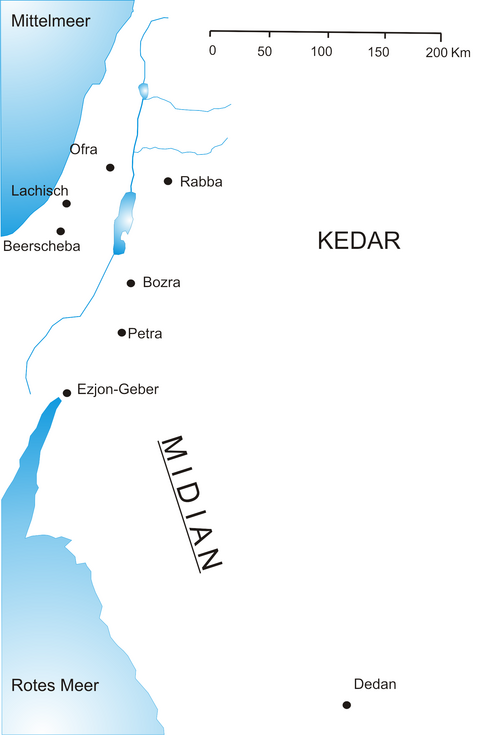
マガン、ミディアン、アードはいずれもアラビア文学に登場する古代の部族や文明で、アラビアにルーツを持つ。銅やその他の金属の産出で知られるマガン(アラビア語:مِجَانُ、マジャン)は古代の重要な交易の中心地であり、クルアーンではムーサ(モーセ)が生涯旅した場所として言及されている。 [144] [145]一方、ミディアン(アラビア語:مَدْيَن、マディアン)はアラビア北西部に位置する地域で、クルアーンではミディアンの人々が偶像を崇拝し、神に不服従だったために罰を受けたと言及されている。[146] [147] モーセもミディアンに一時期住み、そこで結婚して羊飼いとして働いた。アド(アラビア語:عَادَ、ʿĀd)は、前述のように、南アラビアに住んでいた古代の部族であり、その富、権力、高度な技術で知られていましたが、神に従わなかった罰として、強風によって最終的に滅ぼされました。[148]アドは、アラブの元来の部族の一つとみなされています。[149] [150] 歴史家ヘロドトスは、アラビアに関する広範な情報を提供し、アラブ人の香辛料、地形、民間伝承、貿易、衣服、武器について説明しています。彼の3冊目の本では、カンビュセスのエジプト遠征の直前に、アラビア半島北部で侮れない勢力としてアラブ人(Άραβες)について述べています。アラビアについて書いた他のギリシャ人およびラテン人の著者には、テオプラストス、ストラボン、シケリアのディオドロス、大プリニウスがいる。ユダヤ人の歴史家フラウィウス・ヨセフスはアラブ人とその王について書き、エジプト女王クレオパトラとの関係について言及している。アラブ王がクレオパトラに納めた貢物はユダヤ人の王ヘロデによって徴収されたが、アラブ王は後に支払いが遅れ、さらなる控除なしでは支払うことを拒否した。これは当時のアラブ人、ユダヤ人、エジプトの関係を浮き彫りにするものである。[151] アラブ人ゲシェムは、エジプトのアラブ人とユダヤ人の対立に反対したアラブ人であった。ヘブライ語聖書に登場するネヘミヤ(ネヘミヤ記2: 19、6 :1)。彼はおそらくアラブ部族「グシャム」の長であり、北アラビアからユダにまで影響力を持つ強力な統治者であった。アラブ人とサマリア人は、ネヘミヤによるエルサレムの城壁再建を妨害しようとした。[152] [153] [154]
.svg/500px-Roman_Empire_-_Arabia_Petraea_(125_AD).svg.png)
,_Petra,_Jordan.jpg/500px-Al-Khazneh_(The_Treasury),_Petra,_Jordan.jpg)
「サラセン人」という用語は、古代ギリシャ語とラテン語の両方の文献で、ローマ人がアラビア・ペトラエア(レバント)とアラビア・デゼルタ(アラビア)と呼んだ地域とその付近に住んでいた「アラブ人」を指すために、初期の数世紀に使用された用語でした。 [155] [156]イベリア半島のキリスト教徒は、当時のすべてのアラブ人とイスラム教徒を指すのにムーア人という用語を使用しました。メディナのアラブ人は砂漠の遊牧民をアラブ人と呼び、自分たちは定住者だと考えていましたが、密接な人種的つながりを認識していました。ハガル人という用語は、メソポタミア、シリア、エジプトの初期のアラブ人の征服者を指すために、初期のシリア語、ギリシャ語、アルメニア語で広く使用されており、旧約聖書でアブラハムにイシュマエルという息子を産んだハガルの子孫を指します。聖書では、ハガル人は「イシュマエル人」または「アラブ人」と呼ばれています。[157] 7世紀のアラブの征服は、アラブ軍が率いた突然の劇的な征服であり、中東、北アフリカ、スペインの大部分を急速に征服しました。これは、ユダヤ教とキリスト教の後継者と自認していたイスラム教にとって重要な瞬間でした。 [158]イラブという言葉は同じ語源を持ち、イスラム教を拒否しムハンマドに抵抗した砂漠のベドウィン族を指しています。(コーラン9:97)14世紀のケブラ・ナガストはこう言っています。「そしてそれゆえ、イシュマエルの子孫はテレブ、ケベト、ヌーバ、ソーバ、クエルグ、キフィ、マカ、モルナ、フィンナ、アルシバナ、リバ、マセアの王となった。彼らはセムの子孫であったからである。」[159]
古代

これらの文明に関する地元の歴史的調査は限られているため、この時代を再構築するには考古学的証拠、外国の記録、アラブの口承に大きく依存することになります。当時の著名な文明には、ディルムン文明がありました。これは重要な交易の中心地であり[162] 、最盛期にはアラビア湾の交易路を支配していました。 [162]シュメール人はディルムンを聖地とみなしていました。[163]ディルムンは中東最古の古代文明の一つとされています。[164] [165]これは紀元前4千年紀頃に勃興し、紀元前538年まで続きました。ゲルラは東アラビアの古代都市で、湾の西側に位置し、ゲルラは紀元前650年頃から紀元後300年頃までアラブ王国の中心地でした。サムードは紀元前1千年紀頃に勃興し、紀元後300年頃まで続きました。紀元前1千年紀初頭のアラビア祖語、または古代北アラビア語の文書は、アラブ人の出現をより明確に示している。最古のものは、紀元前8世紀のサウジアラビア東部のハサイ人の碑文、アラビア半島とシナイ半島全域で発見されたサムード派の文書など、南アラビアのムスナド文字のさまざまな碑文で書かれている。
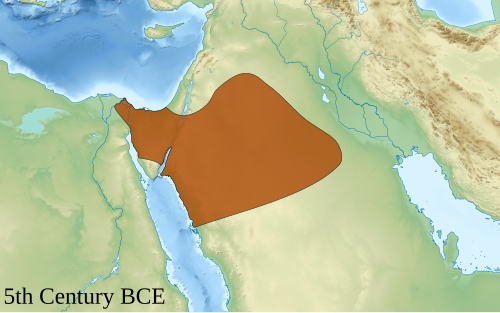
ケダル人は、シリア砂漠のワディ・シルハーンを中心とする、主に遊牧民からなる古代アラブ部族連合であった。彼らは遊牧民的な生活様式と、アラビア半島と地中海世界を結ぶ隊商貿易での役割で知られていた。ケダル人は紀元前8世紀から7世紀にかけて徐々に領土を拡大し、紀元前6世紀までにはアラビア北部、パレスチナ南部、シナイ半島の広い地域をカバーする王国に統合された。ケダル人は古代近東で影響力を持ち、彼らの王国は数世紀にわたってこの地域の政治と経済で重要な役割を果たした。[166]

シバ(アラビア語:سَبَأٌ Saba )は、ヘブライ語聖書(旧約聖書)とコーランに登場する王国であるが、シバ人はアラビア語ではなく南アラビア語圏の人々であった。シバはユダヤ教、イスラム教、キリスト教の伝承に登場し、その系譜はアラブ人の祖先のひとりであるフードの息子カフタンに遡る。[ 167 ] [168] [169]シバはアッシリアの碑文やギリシャ・ローマの作家たちの著作にも登場する。[170]シバについて言及している古代の文献の1つに旧約聖書があり、そこにはシバの人々がシリアとエジプトに香、特に乳香を供給し、金や宝石を輸出していたと記されている。[171]ソロモン王に質問するためにエルサレムへ旅したシバの女王は、ラクダの大隊を率いて、金、宝石、香料などの贈り物を運んでいた。[172]到着すると、彼女はソロモン王の知恵と富に感銘を受け、一連の難しい質問を彼に投げかけた。[173]ソロモン王は彼女の質問にすべて答えることができ、シバの女王は彼の知恵と富に感銘を受けた。(列王記上 10)
.jpg/500px-Dhamar_Ali_Yahbur_(bust).jpg)
サバ人はヘブライ語聖書に何度も登場する。コーランでは[ 174]、サバ(سَبَأ 、 Ṣābiʾ、صَابِئと混同しないように)[168] [169]もしくはカウム・トゥッバ(アラビア語:قَوْم تُبَّع、直訳すると「トゥッバの人々」)として描写 されている。 [175] [176]彼らは乳香と没薬の栽培に基づいた繁栄した貿易と農業経済で知られ、これらの非常に価値のある芳香性樹脂はエジプト、ギリシャ、ローマに輸出され、サバ人を裕福で力強いものにした。彼らはまた、スパイス、織物、その他の贅沢品の取引も行っていた。マリブダムは古代世界で最も偉大な工学上の成果の一つであり、マリブ市と周囲の農地に水を供給しました。[177] [178] [170]
リヒャン王国はダダンまたはデダンとも呼ばれ、アラビア半島の北西部で文化的、経済的に重要な役割を果たし、ダダン語族の言語を使用していた、強力で高度に組織化された古代アラブ王国でした。[179]リヒャン人は高度な組織と統治で知られ、この地域の文化的、経済的生活で重要な役割を果たしました。王国はデダン(現在のアル・ウラ)の都市を中心に構築され、南はヤスリブから北はレバント地方の一部まで広がる広大な領土を支配していました。 [180] [179]アラブの系図では、バヌ・リヒャン族はイシュマエル人であり、ダダン語族の言語を使用していたと考えられています。[181]
マイン王国は、 世襲君主制を持ち、農業と貿易に重点を置いた古代アラブ王国であった。[182]紀元前15世紀から紀元後1世紀にかけての年代が提案されている。その歴史は碑文や古代ギリシャ・ローマの書物に記録されているが、王国の正確な始まりと終わりの年代についてはまだ議論が続いている。マイン人は「マズード」と呼ばれる評議会による地方統治システムを持ち、各都市には1人以上の神を祀る寺院があった。彼らはまた、フェニキア文字を採用し、それを使って言語を記した。王国は最終的にアラブのサバ人の手に落ちた。[183] [184]

カターバンは、南アラビアにあった古代王国で、紀元前1千年紀初期から紀元後1世紀または2世紀後半まで存在した。[186] [186] [187]紀元前6世紀には、2人の共同王が両極を統治する中央集権国家に発展した。[186] [188]カターバンは、マイン征服やサバ人に対する軍事行動の成功など、領土を拡大した。[187] [185] [189]カターバンは、この地域のサバ人の覇権に挑戦し、紀元前3世紀にはハドラマウトとの戦争に勝利した。[185] [190]カターバンの勢力はその後数世紀にわたって衰え、紀元後1世紀にはハドラマウトとヒムヤルによって併合された。[191] [187] [185] [ 186] [192] [185]
ハドラマウト王国は、豊かな文化遺産と、中東、南アジア、東アフリカを結ぶ重要な貿易ルート沿いの戦略的な立地で知られていました。[193]王国は紀元前3世紀頃に建国され、アラビア半島南部の大部分を支配していた紀元2世紀に最盛期を迎えました。王国は印象的な建築物、特に特徴的な塔で知られており、それらは監視塔、防御構造物、裕福な家族の住居として使用されていました。[194]ハドラマウトの人々は農業、特に乳香と没薬の栽培に熟練していました。彼らは強力な海洋文化を持ち、インド、東アフリカ、東南アジアと貿易を行っていました。[195]王国は4世紀に衰退しましたが、ハドラマウトは文化と経済の中心地であり続けました。その遺産は今日でも見ることができます。[196]

古代アウサン王国(紀元前8~7世紀)は、確かに南アラビアの最も重要な小王国の一つであり、その首都ハジャール・ヤヒルは古代世界の重要な貿易と商業の中心地でした。この地域の豊かな歴史と、ハジャール・アスファルのような考古学的遺跡を通して保存されてきた文化遺産について学ぶことは魅力的です。紀元前7世紀にサバ・カラブ・エル・ワタルの王とムカリブによってこの都市が破壊されたことは、南アラビアの歴史において重要な出来事です。それは、当時のこの地域を特徴づけた複雑な政治的、社会的力学と、異なる王国と支配者間の権力闘争を浮き彫りにしています。アウサンに対するサバ人の勝利は、この地域で最も強力で影響力のある王国の一つであったサバ人の軍事力と戦略的才能の証でもあります。[197]
ヒムヤル王国またはヒムヤルは、紀元前2世紀から紀元後6世紀頃まで存在した古代王国である。現在のイエメンにあるザファル市を中心としていた。ヒムヤル人は、南アラビア語を話すアラブ人であり、貿易と航海に長けていたことで知られていた。[198]彼らはアラビア南部を支配し、農業、商業、海上貿易に基づく経済が繁栄していた。彼らは灌漑と段々畑の技術に長けており、乾燥した環境で作物を栽培することができた。ヒムヤル人は紀元後4世紀にユダヤ教に改宗し、その支配者は「ユダヤ人の王」として知られるようになった。この改宗は、紅海地域とレバントのユダヤ人コミュニティとの貿易関係に影響を受けた可能性が高いが、ヒムヤル人はキリスト教や地元の異教を含む他の宗教も容認していた。[198]
古代
ナバテア王国は、ティハマ海岸平野とヒジャズ地方を含むヨルダン南部からダマスカスまで広がっていました。(上) そしてパルミラ帝国は、中央アナトリアのアンキラから上エジプトまで広がっていました。(下)
ナバテア人は、現在のヨルダンにある首都ペトラを中心とした地域に定住したアラブ遊牧民であった。[199] [200]彼らの初期の碑文はアラム語であったが、徐々にアラビア語に切り替え、文字を持っていたため、アラビア語で最初の碑文を作ったのは彼らであった。ナバテア文字は南方のアラブ人によって採用され、4世紀頃に現代のアラビア文字に進化した。これは、サファイヤ語の碑文(紀元前1世紀に始まる)とナバテア人の碑文にある多くのアラビア語の人名によって証明されている。紀元前2世紀頃から、カルヤト・アル・ファウのいくつかの碑文は、もはやアラビア語祖語ではなく古典前アラビア語の方言を明らかにしている。アラブ人について言及しているシリア語の碑文がスマタル・ハラベシで5つ発見されており、そのうち1つは紀元2世紀のものである。[201] [202]
アラブ人がパルミラに初めて記録されたのは、紀元前1千年紀後半である。[203]ラフィアの戦い(紀元前217年)でセレウコス朝を支援したシェイク・ザブディベルの兵士は、アラブ人として描写されている。ザブディベルとその部下は、実際には文献ではパルミラ人として特定されていないが、「ザブディベル」という名前はパルミラ人の名前であり、シェイクはパルミラ出身であると結論付けられる。[204]紀元260年のエデッサの戦いの後。ヴァレリアヌスがササン朝の王シャープール1世に捕らえられたことはローマにとって大きな打撃であり、帝国はさらなる攻撃に対して脆弱になった。ゼノビアは、エジプトと小アジアの一部を含む近東のほとんどを占領することができた。しかし、彼らの帝国は短命で、アウレリアヌスがパルミラ人を破り、失われた領土を取り戻すことができた。パルミラ人はアラブの同盟国の援助を受けていましたが、アウレリアヌスも自身の同盟を利用してゼノビアとその軍隊を打ち破りました。結局、パルミラ帝国は数年しか存続しませんでしたが、ローマ帝国と近東の歴史に大きな影響を与えました。
ほとんどの学者は、イトゥリア人をイトゥリア地方に住んでいたアラブ人であると特定しています。[205] [206] [207] [208]紀元前2世紀のセレウコス朝の衰退後にこの地域で有力な勢力として台頭し、レバノン山とベッカー高原の周辺を拠点として、シリア領土の広大な範囲を支配するようになりました。 [209]パレスチナ北部、はるかガリラヤにまで侵入したようです。[83]タヌークド人は、古代後期から中世初期にかけてアラビア半島の中央部と東部に住んでいたアラブの部族連合でした。前述のように、彼らはイスラム以前の時代に最大のアラブ部族の一つであったラビア族の支族でした。彼らは軍事力に優れていたことで知られ、イスラム初期に重要な役割を果たし、ビザンチン帝国やササン朝帝国との戦いで戦い、アラブ帝国の拡大に貢献した。[210]

オスロエネ・アラブ人、別名アブガル朝[211] [212] [213]は、古代近東の都市エデッサをかなり長い間支配していた。エデッサはオスロエネ地方に位置し、紀元前2世紀から紀元後3世紀まで存在した古代王国であった。彼らはアブガル朝として知られる王朝を建国し、数世紀に渡ってエデッサを統治した。この王朝の最も有名な統治者はアブガル5世であり、彼はイエス・キリストと文通していたと言われ、キリスト教に改宗したと信じられている。[214]アブガル朝はこの地方のキリスト教の初期の歴史において重要な役割を果たし、エデッサはキリスト教の学問と学術の中心地となった。[215]ハトラ王国はメソポタミア地方にあった古代都市で、紀元前2世紀または3世紀に建国され、パルティア帝国時代には貿易と文化の中心地として栄えました。ハトラの統治者はパルティア王家の分家であるアルサケス朝として知られていました。しかし、紀元2世紀にアラブのバヌ・タヌク族がハトラを占領し、独自の王朝を築きました。ハトラのアラブ統治者はアラビア語で王を意味する「マルカ」の称号を名乗り、しばしば自らを「アラブ人の王」と称しました。[216]

オスロエニ族とハトランス族は、上部メソポタミアのいくつかのアラブ人集団またはコミュニティの一部であったが、その中には、北部メソポタミアの古代王国であったアディアベネのアラブ人も含まれていた。その主要都市はアルベラ(アルバイル)であり、マル・ウクバはそこに学校を置いていた。あるいは、隣接するハッザーであり、後のアラブ人もアルベラをこの名前で呼んだ。[217] [218]上部メソポタミアにおけるこのアラブ人の精緻な存在は、ササン朝によって認識されており、彼らはこの地域を「アラブ人の土地」を意味するアルバイスタンと呼んだ。これは、ササン朝の2代目の王(シャーハンシャー)シャープール1世(在位 240-270年)のカアバ・イェ・ザルトシュト碑文で初めて州として証明され、[219]紀元前1200年頃に建てられた。 262. [220] [86]エメセネ朝は、紀元1世紀から3世紀にかけてローマのシリア属州エメサ(現在のシリアのホムス)を統治したアラブの祭司王朝である。この王朝は、エル・ガバル神の大祭司を数多く輩出したことで有名で、彼らはローマの政治や文化にも影響力を持っていた。エメセネ朝の最初の統治者はサンプシケラムス1世で、紀元64年に権力を握った。彼の後を継いだのは息子のイアンブリコスで、その息子のサンプシケラムス2世が続いた。サンプシケラムス2世のもとで、エメサはローマ帝国の属国となり、王朝はローマの政治や文化の伝統とより密接に結びついた。[221]
後期古代
ガッサーン朝、ラフミト朝、キンダイト朝は、イスラム以前のアラブ人がイエメンから北方へと移住した最後の大規模な民族である。ガッサーン朝は当時ギリシャ化されていたシリアでセム人の存在を拡大させたが、セム人の大半はアラム人であった。彼らは主にハウラン地域に定住し、現代のレバノン、パレスチナ、ヨルダンに広がった。ギリシャ人とローマ人は、近東の砂漠の遊牧民全員をアラビと呼んだ。ローマ人はイエメンを「アラビア・フェリックス」と呼んだ。[222]ローマ人はローマ帝国 内の属国である遊牧民国家をペトラ市にちなんでアラビア・ペトラエアと呼び、帝国の南と東に接する征服されていない砂漠をアラビア・マグナと呼んだ。
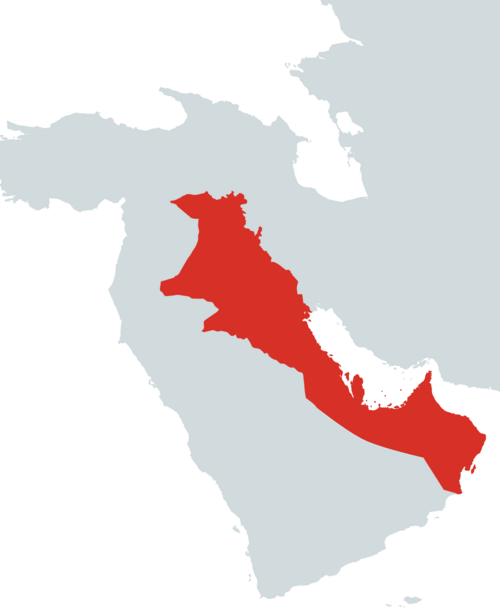
王朝としてのラクミッド朝は、首都アル・ヒラ周辺のティグリス川中流域のタヌク朝から権力を継承した。彼らは最終的にササン朝と同盟を組み、ガサン朝とビザンチン帝国に対抗した。ラクミッド朝はキンダ族と中央アラビア諸部族の支配権を争い、ラクミッド朝は最終的に主要同盟国ヒムヤルの没落後、540年にキンダ王国を滅ぼした。ペルシアのササン朝は602年にラクミッド朝を解体し、傀儡王の下に置き、その後直接支配した。[223]キンダ族はガサン朝やラクミッド朝とともにイエメンから移住したが、バーレーンでアブドゥル・カイス・ラビア族によって追い返された。彼らはイエメンに戻り、ヒムヤル人と同盟を組み、ヒムヤル人は彼らを「カリヤ・ダット・カール」(現在のカリヤト・アル・ファウ)から中央アラビアを支配する属国とした。彼らは、ラクミド王アル・ムンディールとその息子アムルによって滅ぼされるまで、アラビア半島北部/中央部の大部分を支配した。
ガサン朝は3世紀初頭のレヴァント地方のアラブ部族であった。アラブの系譜の伝統によれば、彼らはアズド族の支族であると考えられていた。彼らはビザンツ帝国と共にサーサーン朝やアラブのラフム朝と戦った。ガサン朝のほとんどはキリスト教徒であり、最初の数世紀でキリスト教に改宗し、一部はギリシャ化したキリスト教コミュニティと融合した。イスラム教徒がレヴァント地方を征服した後、ガサン朝でイスラム教徒になった者はほとんどおらず、大半はキリスト教徒のままで、現在のヨルダン、パレスチナ、シリア、レバノンにあるメルキト派やシリア派のコミュニティに加わった。[224]サレフ朝は5世紀のアラブの従属者で、熱心なキリスト教徒であったが、その時代については資料の不足のため、前後の時代に比べて記録が少ない。アラビア語の文献におけるサリーフ朝に関する言及のほとんどはヒシャーム・イブン・アル・カルビーの著作に由来しており、ヤアクビーのタリクはサリーフ朝の衰退とビザンチン帝国との同盟関係を決定する上で貴重であると考えられている。[225]
中世

中世 にはアラブ文明が栄え、アラブ人は科学、数学、医学、哲学、文学の分野で多大な貢献を果たした。バグダッド、カイロ、コルドバなどの大都市が台頭し、学問の中心地となり、学者、科学者、知識人を惹きつけた。[226] [227]アラブ人は多くの帝国や王朝を築き、最も有名なのはラシドゥーン帝国、ウマイヤ朝、アッバース朝、ファーティマ朝などである。これらの帝国は、スペインからインドにまで及んだ拡大、科学的成果、文化的繁栄を特徴としていた。[226]中世、この地域は活気に満ち、ダイナミックで、世界に永続的な影響を残した。[227]

イスラム教の台頭は、ムハンマドとその追随者たちがヒジュラと呼ばれる出来事でメッカからメディナに移住したときに始まった。ムハンマドは生涯の最後の10年間を、イスラム教徒のコミュニティを確立し拡大するための一連の戦いに費やした。622年から632年にかけて、彼はイスラム教徒を率いてメッカ人との戦争状態にあった。[228]この期間中、アラブ人はバスラ地方を征服し、ウマルの指導の下、そこに拠点を築きモスクを建設した。もう一つの征服地はミディアンであったが、その厳しい環境のため、入植者たちは最終的にクーファに移動した。ウマルはさまざまなアラブ部族の反乱を首尾よく打ち負かし、アラビア半島全体に安定をもたらし、それを統一した。ウスマーンの指導の下、アラブ帝国はペルシア征服を通じて拡大し、650年にはファールス地方、651年にはホラーサーン地方の一部を占領した。 [229]アルメニア征服も640年代に始まった。この間、ラシドゥーン帝国はササン朝全土と東ローマ帝国の3分の2以上に支配を広げた。しかし、第4代カリフ、アリー・イブン・アビー・ターリブの治世は、彼の治世中ずっと続いた第一次フィトナ、つまり第一次イスラム内戦によって損なわれた。ハッサン・イブン・アリーとの和平条約と初期のハワーリジュ派の騒乱の鎮圧の後、ムアーウィヤ1世がカリフになった。[230]これは指導者の重要な交代を示した。[229] [231]
アラブ帝国
ラシドゥン時代(632–661)
632年にムハンマドが死去した後、ラシドゥーン朝の軍隊は征服作戦を開始し、歴史上最大の帝国の一つであるカリフ国、イスラム帝国を樹立した。それは、以前のアラブ帝国であるマウィア女王のタヌク朝やアラブのパルミラ帝国よりも規模が大きく、長く続いた。ラシドゥーン朝は完全に新しい国家であり、ヒムヤル朝、ラフム朝、ガッサーン朝などのその世紀のアラブ王国とは異なっていた。
ラシドゥン時代、アラブ社会は急速に拡大し、多くの領土を征服して広大なアラブ帝国を築き、アラブ社会の最初の4人のカリフ、つまり指導者の統治によって特徴づけられた。[232]これらのカリフとは、アブー・バクル、ウマル、ウスマーン、アリーのことで、総称して「正しく導かれた」という意味のラシドゥンと呼ばれている。ラシドゥン時代は、アラブ帝国の始まりとアラビア半島を越えてイスラム教が広まった時期として、アラブとイスラムの歴史において重要な時期である。この時期、アラブ社会は内部分裂や近隣の帝国からの外部的脅威など、数多くの課題に直面した。[232] [233]
アブー・バクルの指導の下、アラブ社会は、ザカート(イスラム教の喜捨)の支払いを拒否した一部の部族による反乱を首尾よく鎮圧した。ウマル・イブン・アル・ハッタブの治世中、アラブ帝国は大きく拡大し、エジプト、シリア、イラクなどの領土を征服した。ウスマーン・イブン・アッファンの治世は内部の不和と反乱が目立ち、最終的には暗殺された。ムハンマドの従兄弟で義理の息子であるアリーがウスマーンの後を継いでカリフとなったが、イスラム社会の一部のメンバーは彼が正当に任命されていないと反対した。[232]これらの課題にもかかわらず、ラシドゥーン時代はアラブとイスラムの歴史において大きな進歩と成果の時代として記憶されており、カリフはイスラム社会のすべてのメンバーに対する正義と平等を強調する統治システムを確立した。彼らはまた、コーランを一つの文書にまとめる作業を監督し、アラビアの教えと原則を帝国中に広めました。全体として、ラシドゥーン時代はアラブの歴史を形成する上で重要な役割を果たし、模範的なリーダーシップと指導の時代として世界中のイスラム教徒から尊敬され続けています。[234]
ウマイヤ朝時代(661~750年と756~1031年)
661年、ラシドゥーン・カリフ国はウマイヤ朝の手に落ち、ダマスカスが帝国の首都となった。ウマイヤ朝はアラブ人としてのアイデンティティを誇り、イスラム以前のアラビアの詩歌や文化を支援した。彼らはラムラ、ラッカ、バスラ、クーファ、モスル、サマッラーに駐屯地を築き、いずれも大都市に発展した。[235] カリフの アブドゥルマリクは686年、アラビア語をカリフ国の公用語とした。[236]カリフのウマル2世は717年に権力を握ると、この紛争の解決に努めた。彼は不平等を是正し、すべてのイスラム教徒が平等に扱われることを要求したが、彼が意図した改革は効果をあげず、統治わずか3年で死去した。この時までに、ウマイヤ朝に対する不満がこの地域に広がり、反乱が起こり、アッバース朝が権力を握り、首都をバグダッドに移しました。

ウマイヤ朝はビザンチン帝国から北アフリカを奪い、西方へと帝国を拡大した。アラブ人の征服以前、北アフリカはポエニ人、ヴァンダル人、ローマ人など様々な民族によって征服または定住されていた。アッバース朝革命後、ウマイヤ朝はイベリア半島を除く領土のほとんどを失った。
彼らの最後の領土はコルドバ首長国として知られるようになった。この新しい首長国の創設者の孫の統治によって、国家はコルドバのカリフ国として新たな段階に入った。この新しい国家は貿易、文化、知識の拡大を特徴とし、アルアンダルス建築の傑作や40万冊以上の蔵書を持つアルハカム2世の図書館が建てられた。1031年にウマイヤ朝が崩壊すると、アルアンダルスは小さな王国に分割された。[237]
アッバース朝時代(750年~1258年および1261年~1517年)

アッバース朝は、ムハンマドの最年少の叔父の一人で、同じバヌ・ハシム一族のアッバース・イブン・アブドゥルムッタリブの子孫である。アッバース朝はウマイヤ朝に対する反乱を起こし、ザブ川の戦いで彼らを打ち負かし、アル・アンダルスを除く帝国全土における彼らの支配を事実上終わらせた。762年、第2代アッバース朝カリフのアル・マンスールはバグダード市を建設し、そこをカリフ国の首都と宣言した。ウマイヤ朝とは異なり、アッバース朝は非アラブ人の支持を得ていた。[235]イスラムの黄金時代は、8世紀半ばにアッバース朝が台頭し、首都がダマスカスから新設されたバグダード市に移されたことで幕を開けた。アッバース朝は、「学者の墨は殉教者の血よりも神聖である」といった知識の価値を強調する コーランの教えやハディースの影響を受けていた。

この時期、アラブ帝国は科学、哲学、医学、教育の知的中心地となり、アッバース朝は知識の大義を擁護し、バグダードに「知恵の家」(アラビア語:بيت الحكمة )を設立した。エジプトのファーティマ朝やアルアンダルスのウマイヤ朝などのライバル王朝もまた、カイロやコルドバなどの都市がバグダードに匹敵する主要な知的中心地であった。[238]アッバース朝は200年間統治したが、 10世紀にウィラヤが分裂し始めると中央集権を失った。その後、1190年代に彼らの勢力は復活したが、 1258年にモンゴル人がバグダードを征服し、カリフのムスタシムを殺害したことで終焉を迎えた。アッバース朝の王族は虐殺を逃れ、2年前にアッバース朝の支配から離脱したカイロに避難した。マムルーク朝の将軍たちが王国の政治を担い、アッバース朝のカリフたちは民間活動に従事し、科学、芸術、文学を支援し続けた。
ファーティマ朝(909年 - 1171年)

ファーティマ朝は、ムハンマドの娘ファーティマの子孫であるアル・マフディー・ビラによって建国された。ファーティマ朝はシーア派のカリフで、西暦909年から1171年まで存在した。この帝国は北アフリカに拠点を置き、首都はカイロにあった。最盛期には、現在のエジプト、リビア、チュニジア、アルジェリア、モロッコ、シリア、パレスチナの一部を含む広大な領土を支配していた。ファーティマ朝は、909年にアグラブ朝の首都ラッカダを征服し、北アフリカ沿岸西部のアルジェリア、クタマの間で形成された。921年、ファーティマ朝はチュニジアの都市マハディアを新たな首都とした。 948年に彼らは首都をチュニジアのケルアン近郊のアル・マンスリヤに移し、969年にエジプトを征服してカイロをカリフ国の首都に定めた。
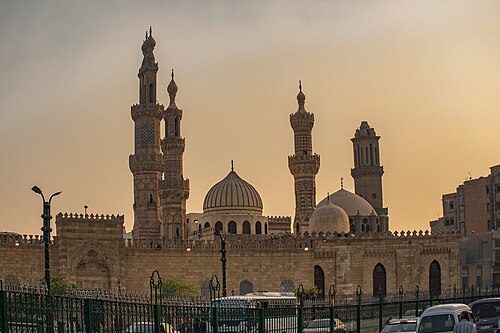
ファーティマ朝は宗教的寛容と知的業績で知られ、イスラム世界の学問の中心地となった大学と図書館のネットワークを確立した。また、芸術、建築、文学を促進し、彼らの後援の下でこれらは栄えた。ファーティマ朝の最も注目すべき業績の一つは、カイロのアズハルモスクとアズハル大学の建設である。西暦970年に設立されたこの大学は、世界最古の大学の一つであり、今日までイスラムの学問の重要な中心地であり続けている。ファーティマ朝は、イスラム神学と法学の発展にも大きな影響を与えた。彼らはシーア派イスラム教を支援し、シーア派イスラム教のイスマーイール派を奨励したことで知られていた。多くの業績を残したにもかかわらず、ファーティマ朝は治世中に数多くの課題に直面した。彼らは、アッバース朝やビザンチン帝国などの近隣の帝国と絶えず戦争をしていた。彼らはまた、内部紛争や反乱に直面し、時間の経過とともに帝国を弱体化させました。1171年、ファーティマ朝はサラディン率いるアイユーブ朝に征服されました。ファーティマ朝は終焉を迎えましたが、その遺産はその後何世紀にもわたってアラブ・イスラム文化と社会に影響を与え続けました。[239]
オスマン帝国時代(1517年~1918年)
1517年から1918年にかけて、オスマン帝国はカイロのマムルーク朝を破り、マルジュ・ダビクとリダニヤの戦いでアッバース朝を終わらせた。彼らは征服者としてレバントとエジプトに侵入し、何世紀にもわたって続いたアッバース朝を倒した。1911年、レバント全土のアラブ知識人や政治家がパリで小さなアラブ民族主義クラブ、アル・ファタット(「アラブ青年協会」)を結成した。その目的は「アラブ国家のレベルを近代国家のレベルに引き上げること」とされていた。設立から数年間、アル・ファタットは帝国からのアラブ独立ではなく、統一されたオスマン帝国内でのより大きな自治を求めた。アル・ファタットは1913年にパリでアラブ会議を主催し、その目的はアラブ世界の他の反対派と望ましい改革について議論することだった。[240]しかし、オスマン帝国当局が組織の活動とメンバーを弾圧したため、アル・ファタットは潜伏し、アラブ諸州の完全な独立と統一を要求した。[241]

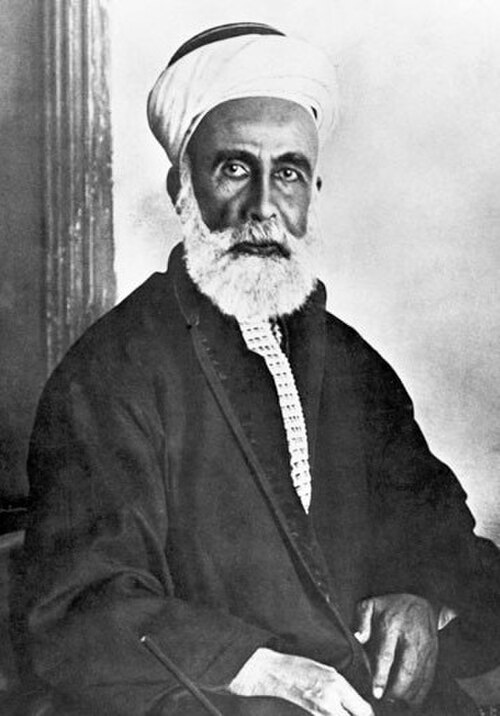
アラブ反乱は、第一次世界大戦中にアラブ軍がオスマン帝国に対して起こした軍事蜂起であり、1916年にシェリフ・フセイン・ビン・アリーが率いた。反乱の目的は、オスマン帝国の支配下にあったアラブ諸国の独立を獲得し、統一されたアラブ国家を樹立することだった。この反乱は、オスマン帝国内でのアラブ人の自治権拡大の願望、オスマン帝国の政策に対する憤り、アラブ民族主義運動の影響など、いくつかの要因によって引き起こされた。アラブ反乱は、オスマン帝国の最終的な敗北の重要な要因となった。この反乱は、オスマン帝国の軍事力を弱め、他の場所に配備できたはずのオスマン帝国軍を拘束するのに役立った。また、アラブの独立と民族主義への支持を高めることにも役立ち、それが今後何年にもわたってこの地域に永続的な影響を及ぼすことになる。[242] [243]第一次世界大戦後の帝国の敗北と連合国による領土の一部占領により、サイクス・ピコ協定はアラブ世界とその人々に重大な影響を及ぼした。この協定はオスマン帝国のアラブ領土をフランスとイギリスの支配地域に分割し、アラブ人の独立と自決の願望を無視した。[244]
ルネッサンス
アラブ文明の黄金時代は「イスラムの黄金時代」として知られ、伝統的に8世紀から13世紀にかけてとされる。[245] [246] [247]この時代は、 1258年のバグダッド包囲戦によるアッバース朝の崩壊とともに終わったと伝統的に言われている。[248]この間、アラブの学者たちは数学、天文学、医学、哲学などの分野に多大な貢献をした。これらの進歩はルネサンス期のヨーロッパの学者に大きな影響を与えた。[249]
アラブ人は、アラビア語のテキストの翻訳を含め、その知識や思想をヨーロッパと共有した。 [250]これらの翻訳はヨーロッパの文化に大きな影響を与え、中世ラテン世界の多くの哲学分野の変革をもたらした。さらに、アラブ人は芸術、農業、錬金術、音楽、陶芸など、さまざまな分野で独自の革新を起こし、アルデバランなどの伝統的な星の名前、錬金術(化学にも由来)、代数、アルゴリズムなどの科学用語、砂糖、樟脳、綿、コーヒーなどの商品の名前を生み出した。 [251] [252] [253] [254]
12世紀ルネサンス期の中世学者たちは、ギリシャやアラビアの自然科学、哲学、数学の著作の研究に力を入れており、そうした文化的テキストの研究には力を入れていなかった。アラブの論理学者、特にアヴェロエスは、エジプトやレバントを侵略・征服した後、ギリシャの思想を受け継いでいた。彼らの翻訳や注釈は、アラブ西部を通ってイベリア半島やシチリア島に伝わり、この思想伝達の重要な中心地となった。11世紀から13世紀にかけて、哲学や科学の著作を古典アラビア語から中世ラテン語に翻訳する学校がイベリア半島に数多く設立されたが、最も有名なのはトレド翻訳学校である。アラブ文化からのこの翻訳作業は、大部分が計画性がなく無秩序であったが、歴史上最も偉大な思想伝達の一つとなった。[255]
14世紀後半から15世紀、16世紀初頭にかけてのティムール朝ルネサンス期には、異なる文化や文明の間で、思想、芸術、知識の重要な交流が行われました。アラブの学者、芸術家、知識人はこの文化交流に役割を果たし、当時の全体的な知的雰囲気に貢献しました。彼らは文学、芸術、科学、哲学など、さまざまな分野に参加しました。 [256] 19世紀後半から20世紀初頭にかけて、アラブルネサンス(ナフダとも呼ばれる)が文化的かつ知的運動として出現しました。「ナフダ」という用語はアラビア語で「目覚め」または「ルネッサンス」を意味し、アラビア語、文学、文化への関心が新たに高まった時期を指します。[257] [258] [259]
近代
アラブ史における近代とは、19世紀後半から現代までの期間を指す。この間、アラブ世界は政治的、経済的、社会的に大きな変化を経験した。近代における最も重要な出来事の一つはオスマン帝国の崩壊であり、オスマン帝国の支配の終焉によりアラブ世界に新たな国民国家が出現した。 [260] [261]
シャリフ・フセインは、アラブ革命が成功し、第一次世界大戦で連合国が勝利すれば、アラビア半島とイラクとレバントを含む肥沃な三日月地帯からなる独立したアラブ国家を樹立できるはずだった。彼はこの国家で「アラブ人の王」になることを目指していたが、アラブ革命はヒジャズの独立や連合国によるシャリフ・フセイン国王承認など、その目的の一部しか達成できなかった。[262]

アラブ民族主義は20世紀初頭に主要な運動として出現し、多くのアラブ知識人、芸術家、政治指導者がアラブ世界の統一と独立を推進しようとした。[264]この運動は第二次世界大戦後に勢いを増し、アラブ連盟の結成といくつかの新しいアラブ国家の創設につながった。汎アラブ主義は20世紀初頭に出現し、すべてのアラブ人を単一の国家または国家に統合することを目指した。共通の祖先、文化、歴史、言語、アイデンティティを重視し、汎アラブのアイデンティティと連帯感を生み出そうとした。[265] [266]
汎アラブ主義のルーツは、アラブ文化、文学、知的思想の復興をもたらした19世紀後半のアラブ・ルネッサンス、あるいはアル・ナフダ運動にまで遡ることができる。この運動は、アラブ統一の重要性と、植民地主義と外国の支配に抵抗する必要性を強調した。汎アラブ主義の発展における重要人物の一人は、エジプトの政治家で知識人のガマール・アブドゥル・ナーセルで、彼は1952年のエジプト革命を主導し、1954年に同国の大統領となった。ナーセルは、アラブの結束を強化し、西洋の帝国主義に抵抗する手段として、汎アラブ主義を推進した。彼はまた、汎アラブ主義と社会主義の原則を組み合わせようとするアラブ社会主義の考えを支持した。同様の試みは、ハーフィズ・アル=アサド、アフマド・ハッサン・アル=バクル、イラクのファイサル1世、ムアンマル・カダフィ、サダム・フセイン、ガアファル・ニメイリー、アンワル・サダトなど他のアラブ指導者によっても行われた。[267]

多くの連合提案は、アラブ諸国間の協力と統合を促進する統一アラブ国家の創設を目指していた。しかし、これらの取り組みは、政治的分裂、地域紛争、経済格差など、数多くの課題と障害に直面した。 [268]アラブ連合共和国(UAR)は、1958年にエジプトとシリアの間で形成された政治的連合であり、各加盟国がアイデンティティと制度を保持できる連邦構造の創設を目的としていた。しかし、1961年までにシリアは政治的な意見の相違によりUARから脱退し、エジプトは1971年にエジプト・アラブ共和国になるまでUARと名乗り続けた。UARが形成された同じ年に、別の政治的連合提案であるアラブ連邦がヨルダンとイラクの間で設立されたが、UARとの緊張と7月14日革命によりわずか6か月で崩壊した。1958年にはアラブ連合と呼ばれる連邦も結成されたが、これにはUARとイエメンのムタワッキル王国が含まれていたが、1961年に解散した。 [269]その後、アラブ諸国間で政治的、経済的連合を結成する試みがあったが、1970年代にエジプト、リビア、シリアによって結成されたが、政治的、経済的課題により5年後に解散した。リビアの指導者ムアンマル・カダフィもチュニジアとのアラブ・イスラム共和国を提案し、アルジェリアとモロッコを含めることを目指したが、[270]代わりに1989年にアラブ・マグレブ連合が結成された。[271]
20世紀後半、多くのアラブ諸国は革命を含む政治的混乱や紛争を経験した。アラブ・イスラエル紛争は依然としてこの地域の大きな問題であり、継続的な緊張と定期的な暴力の発生をもたらしている。近年、アラブ世界は経済的および社会的不平等、人口動態の変化、グローバリゼーションの影響など、新たな課題に直面している。[272]アラブの春は、2010年と2011年にアラブ世界のいくつかの国を席巻した一連の民主化蜂起と抗議運動である。蜂起は、政治的、経済的、社会的不満の組み合わせによって引き起こされ、民主的な改革と権威主義的統治の終焉を求めた。抗議運動は、一部の長期の権威主義的指導者の失脚をもたらしたが、他の国々での継続的な紛争と政情不安にもつながった。[273]
身元
4世紀から6世紀にかけてのイスラム以前のアラブ人男性とアラブ人女性の衣装の芸術的表現
アラブ人のアイデンティティは宗教的アイデンティティとは独立して定義され、イスラム教の普及以前から存在し、歴史的にアラブのキリスト教王国やアラブのユダヤ人部族の存在が証明されている。しかしながら、今日ではほとんどのアラブ人がイスラム教徒であり、少数派が他の宗教を信仰しており、その多くはキリスト教だが、ドゥルーズ派やバハーイー教も信仰している。[274] [275]アラブ世界では、民族グループや一族への所属に関しては、父系の血統が伝統的に所属の主な源泉と考えられてきた。[276]
アラブ人のアイデンティティは、祖先、歴史、言語、習慣、伝統など、さまざまな要因によって形成されています。[277]アラブ人のアイデンティティは、帝国の興亡、植民地化、政治的混乱など、豊かな歴史によって形成されてきました。アラブ社会が直面している課題にもかかわらず、彼らの共有された文化的遺産は、彼らのアイデンティティに対する団結感と誇りを維持するのに役立っています。[278]今日、アラブのアイデンティティは、アラブのコミュニティが複雑な政治的、社会的、経済的状況を切り抜けるにつれて進化し続けています。それにもかかわらず、アラブのアイデンティティはアラブ世界の文化的、歴史的構造の重要な側面であり続け、世界中のコミュニティによって称賛され、保存され続けています。[279]
サブグループ

アラブ部族はアラビア半島、メソポタミア、レバント、エジプト、マグリブ、スーダン地域、アフリカの角に多く分布している。[280] [278] [281]
レヴァントのアラブ人は伝統的にカイ族とヤマン族に分けられる。カイ族とヤマン族の区別はイスラム以前の時代に遡り、部族の所属と地理的位置に基づいていた。カイ族には、カルブ族、キンダ族、ガッサーン族、ラクミド族が含まれる。[282]カイ族は、キラブ族、タイ族、ハニーファ族、タミム族などの部族で構成されていた。一方、ヤマン族は、ハシム族、マクズム族、ウマイヤ族、ズフラ族などの部族で構成されていた。
メソポタミア(イラク)とイランには、 633年のアラブ人によるペルシア征服よりずっと前からのアラブ部族も数多く存在する。 [283]イランのアラブ人の中で最大のグループは、バヌ・カアブ、バニ・トゥルフ、ムシャシャイヤ派を含むアフワズ・アラブ人である。より小規模なグループは、ファールス州のカムセ遊牧民とホラーサーンのアラブ人である。何世紀にもわたるアラブ人のマグリブへの移住の結果、さまざまなアラブ部族(バヌ・ヒラル、バヌ・スレイム、マキルを含む)もマグリブに定住し、今日まで存在する小部族を形成した。バヌ・ヒラルは、リビア、チュニジア、アルジェリアに移住するまでほぼ1世紀をエジプトで過ごし、さらに1世紀後にはモロッコに移住した。[284]
アラブの伝統によれば、部族はアラブの頭蓋骨と呼ばれる異なる部門に分かれており、伝統的な慣習では強さ、豊かさ、勝利、名誉を表現している。そのうちのいくつかは分岐し、後に独立した部族(小部族)となった。アラブの部族の大部分は、これらの主要部族の子孫である。[285] [286] [287] [288] [289]
それらは以下の通りである: [287]
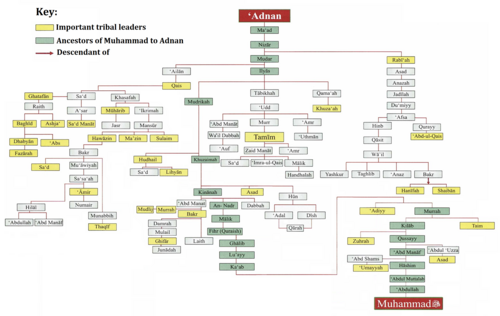
- バクルの子孫はアラビアとイラクにいます。[290]
- キナナの子孫は、アラビア、イラク、エジプト、スーダン、パレスチナ、チュニジア、モロッコ、シリアにいる。[291]
- ハワジンの子孫はアラビア、リビア、アルジェリア、モロッコ、スーダン、イラクにいます。[292] [293] [294]
- タミムの子孫はアラビア、イラク、イラン、パレスチナ、アルジェリア、モロッコにいます[295]
- アズドの子孫はアラビア、イラク、レバント、北アフリカにいます。[296]
- ガタファンの子孫はアラビアとマグリブにいます。[297]
- マディジの子孫はアラビアとイラクにいます。[298]
- アブドゥルカイスにはアラビアに子孫がいる。
- アル・カイス(القيس) の子孫はアラビアにいます。
- クダーアの子孫はアラビア、シリア、北アフリカにいます。
地理的分布
アラブの故郷
アラブ世界
+ 5,000,000
+ 1,000,000
+ 100,000
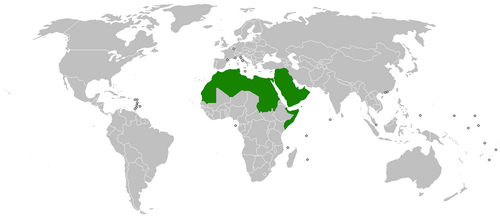
CIA ファクトブックによると、アラブ諸国に住むアラブ人の総数は3 億 6,600 万人と推定されています (2014 年現在)。アラブ連盟以外の国に住むアラブ人の推定数は 1,750 万人と推定されており、合計すると 3 億 8,400 万人近くになります。アラブ世界は、西は大西洋から東はアラビア海まで、北は地中海から南東はアフリカの角とインド洋まで、約 1,300 万平方キロメートル (500 万平方マイル)に広がっています。
アラブ系移民
アラブ系離散民とは、自発的にまたは難民として、母国から非アラブ諸国、主に東アフリカ、南アメリカ、ヨーロッパ、北アメリカ、オーストラリア、および南アジア、東南アジア、カリブ海、西アフリカの一部に移住したアラブ移民の子孫を 指します。国際移住機関によると、世界には1,300万人の第一世代のアラブ移民がおり、そのうち580万人がアラブ諸国に住んでいます。アラブ人国外居住者は、この地域の金融資本と人的資本の循環に貢献し、地域の発展を大きく促進しています。2009年、アラブ諸国は総額351億米ドルの送金流入を受け取り、他のアラブ諸国からヨルダン、エジプト、レバノンに送られた送金は、これらの国と他のアラブ諸国間の貿易収入よりも40~190パーセント高くなっています。[299]西アフリカの25万人のレバノン人コミュニティは、この地域で最大の非アフリカ人グループです。[300] [301]アラブの商人は長い間、東南アジアと東アフリカのスワヒリ海岸沿いで活動してきました。ザンジバルはかつてオマーンのアラブ人によって支配されていました。[302]アラブ系の著名なインドネシア人、マレーシア人、シンガポール人のほとんどは、南アラビアのハドラマウト沿岸地域に起源を持つハドラマウト人です。[303]
ヨーロッパ
ヨーロッパには何百万人ものアラブ人が住んでおり、そのほとんどがフランスに集中している(2005年には約600万人[304])。フランスのアラブ人のほとんどはマグリブ出身だが、一部はアラブ世界のマシュレク地域出身者である。フランスのアラブ人はフランス人に次いで2番目に大きな民族グループを形成している。[305]イタリアでは、アラブ人は9世紀に初めて南部のシチリア島に到着した。アラブ世界から来た島で最も近代的な社会はチュニジア人とモロッコ人で、シチリア島の外国人人口のそれぞれ10.9%と8%を占め、シチリア島自体の人口は島の総人口の3.9%を占めている。[306]現代のスペインのアラブ人人口は180万人で、[307] [308] [309] [310] 、 8世紀初頭にイスラム教徒がヒスパニアを征服してアルアンダルス国家が創設されて以来、スペインにはアラブ人が住んでいた。 [311] [312] [313]アラブ人ドイツのアラブ人人口は140万1950人を超える。[314] [315]イギリスでは36万6769人[316]から50万人[317] 、ギリシャでは25万人から75万人[318])。さらに、ギリシャには難民の身分を持つアラブ諸国の人々(シリア内戦の難民など)が住んでいる。[319]オランダでは18万人、[38]デンマークでは12万1千人。ノルウェー、オーストリア、ブルガリア、スイス、北マケドニア、ルーマニア、セルビアなど、他の国にもアラブ人が住んでいます。[320] 2015年末現在、トルコの総人口は7870万人で、控えめな推定ではシリア難民がその数字の3.1%を占めています。人口統計によると、以前は150万人[321]から200万人のアラブ人居住者がいましたが、[12]トルコのアラブ人人口は現在、総人口の4.5〜5.1%、つまり約400万人から500万人です。[12] [322]
アメリカ大陸
アメリカへのアラブ系移民は1880年代に急増し、今日では推定370万人のアメリカ人が何らかのアラブ系の背景を持っている。[14] [323] [324] アラブ系アメリカ人は全州に生息しているが、その3分の2以上が10州に住んでおり、3分の1がロサンゼルス、デトロイト、ニューヨーク市に特に多く住んでいる。[14] [325]アラブ系アメリカ人のほとんどはアメリカで生まれ、アメリカ在住のアラブ人の約82%がアメリカ市民である。[326] [327] [328] [329]
アラブ人移民は1882年に少数ながらカナダに到着し始めた。 1945年までは移民は比較的限られていたが、その後、特に1960年代以降は徐々に増加した。[330]ウェブサイト「アラブ系カナダ人は誰か」によると、カナダで最大のアラブ人人口を抱える都市モントリオールには、約267,000人のアラブ人が住んでいる。[331]
ラテンアメリカはアラブ世界以外では最大のアラブ人人口を抱えている。[332]ラテンアメリカには1,700万から2,500万から3,000万人のアラブ系が住んでおり、これは世界の他のどのディアスポラ地域よりも多い。[333] [334]ブラジル政府とレバノン政府は、レバノン系ブラジル人が700万人いると主張している。[335] [336]また、ブラジル政府はシリア系ブラジル人が400万人いると主張している。[335] [7] [337] [338] [339] [340]他の大規模なアラブ人コミュニティにはアルゼンチン(約350万人[15] [341] [342]) がある。
アラブ系コミュニティでは、宗教に関係なく、異民族間の結婚が非常に多く、コミュニティのメンバーのほとんどが、片方の親だけがアラブ民族である。[343] コロンビア(320万人以上[ 344] [345] [346])、ベネズエラ(160万人以上)[25] [347] メキシコ(110万人以上)[348] チリ(80万人以上)[349] [350] [351]および中米、特にエルサルバドルとホンジュラス(15万人から20万人)[352] [31] [32] アラブ系ハイチ人(257,000人[353])の多くは首都に住んでおり、大多数がビジネスを立ち上げる金融エリアに集中している。[354]
コーカサス
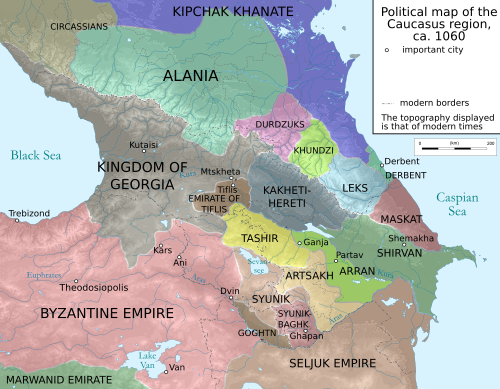
1728年、ロシアの将校が、カスピ海沿岸のムガン(現在のアゼルバイジャン)に住み、テュルク語とアラビア語の混成言語を話すアラブ遊牧民の集団について記述している。[355]これらの集団は16世紀に南コーカサスに移住したと考えられている。 [356] 1888年版のブリタニカ百科事典にも、ロシア帝国のバクー県に住む一定数のアラブ人が言及されている。[357]彼らは少なくとも19世紀半ばまでアラビア語の方言を保持しており、 [358]現在でもアラブという名前を保持する集落が30近くある(たとえば、アラブガディム、アラブジャギ、アラブ・イェンギヤなど)。アラブ人が南コーカサスを征服した頃から、アラブ世界のさまざまな地域からダゲスタンに小規模なアラブ人の移住が継続的に起こった。これらの大半はデルベントの北西にあるダルヴァグ村に住んでいた。これらの記録の最新のものは1930年代のものである。[356]南ダゲスタンのアラブ人コミュニティのほとんどは言語的にトルコ化されており、そのため現在ダルヴァグはアゼルバイジャン人が多数を占める村となっている。[359] [360]
中央アジア、南アジア、東アジア、東南アジア
イブン・ハルドゥーンの『歴史』によれば、かつて中央アジアにいたアラブ人はタタール人の侵攻により殺害されたか逃げ出し、残ったのは地元民だけである。 [361]しかし、今日では中央アジアの多くの人々が自らをアラブ人と認識している。中央アジアのアラブ人のほとんどは地元住民に完全に溶け込んでおり、時には地元民と同じように自らを呼ぶこともある(例えばタジク人、ウズベク人)が、アラブ人の起源を示すためにサイイド、ホージャ、シッディークイなどの特別な称号を使用している。[362]

インドにはアラブ系を主張するコミュニティが2つだけある。デカン地方のチャウシュ族とグジャラート州のチャヴース族である。 [364] [365]これらの集団は、主に18世紀にこの2つの地域に定住したハドラマウト移民の子孫である。しかし、どちらのコミュニティもまだアラビア語を話していないが、チャウシュ族は東アラビアに再移住し、アラビア語を再び採用した。[366]アラブ系が名誉あることとされる南アジアでは、アラブ系を主張する起源神話を持つコミュニティもある。シャーフィイー派に従ういくつかのコミュニティは(ハナフィー派に従う他の南アジアのムスリムとは対照的に)、コンカン地方のコンカニ人ムスリム、ケーララ州のマピラ、タミル・ナードゥ州のラッバイとマラッカーのようにアラブの貿易商の子孫であると主張しており、またアラブのルーツを持つと主張するインドのいくつかのキリスト教団体がケーララ州に拠点を置いている。[367]南アジアのイラク人ビラドリは、イラクから移住した祖先の記録が歴史的文書にある可能性がある。スリランカのムーア人はスリランカで3番目に大きな民族グループであり、国の総人口の9.23%を占めている。[368]いくつかの情報源は、スリランカのムーア人の祖先を、8世紀から15世紀の間にスリランカに定住したアラブの貿易商にまで遡らせている。[369] [370] [371] 2010年のインドネシア国勢調査によると、ハドラミ系のアラブ系インドネシア人は約118,866人[372]いる。 [373]
サハラ以南のアフリカ
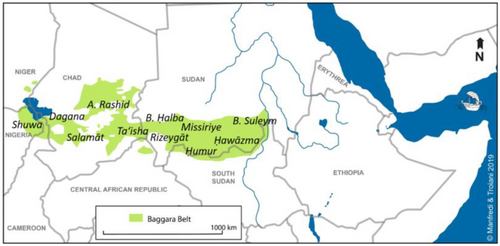
アフロ・アラブ人とは、部分的にアラブ人の血を引くアフリカ出身の個人または集団である。アフロ・アラブ人のほとんどはアフリカ大湖地域のスワヒリ海岸に居住しているが、一部はアラブ世界の一部にも見られる。[374] [375]多数のアラブ人が西アフリカ、特にコートジボワール(10万人以上のレバノン人が居住)、[376]セネガル(約3万人のレバノン人)、[377]シエラレオネ(現在約1万人のレバノン人、1991年の内戦勃発前は約3万人)、リベリア、ナイジェリアに移住した。[378] 2002年の内戦終結以来、レバノン人貿易業者がシエラレオネに再定着している。[379] [380] [381]チャドのアラブ人はカメルーン北部とナイジェリア(ナイジェリアではシュワと呼ばれることもある)を占めており、チャドからスーダンにかけて帯状に広がっており、そこではアフリカのサヘルの一部に居住するアラブ民族のグループであるバガラと呼ばれている。カメルーンには171,000人、ニジェールには150,000人[382])、中央アフリカ共和国には107,000人が住んでいる。[383]
宗教
アラブ人はほとんどがイスラム教徒で、スンニ派が多数派、シーア派が少数派であるが、オマーンではイバード派が主流である。[384]アラブ系キリスト教徒は一般的にギリシャ正教会やギリシャカトリック教会などの東方教会を信仰しているが、少数派ではあるがプロテスタント教会の信者も存在する。[385]ドゥルーズ派やバハーイー教徒からなるアラブ系コミュニティも存在する。[386] [387]歴史的には、アラブ世界には アラブ系ユダヤ人の人口も相当数存在した。
イスラム教が到来する前、ほとんどのアラブ人は、フバル、[388] 、 ワッド、アッラート、[389] マナト、ウザなど、多くの神々を信仰する異教を信仰していた。少数のハニーフは、多神教を拒否し、特定の宗教に属さない一神教を支持していたようである。一部の部族はキリスト教やユダヤ教に改宗した。最も著名なアラブのキリスト教王国は、ガッサーン朝とラクム朝であった。[390] 4世紀後半にヒムヤル朝の王がユダヤ教に改宗したとき、 [391]ヒムヤル朝の家臣であった他の著名なアラブ王国、キンディト朝のエリートたちも(少なくとも部分的には)改宗したようである。イスラム教の拡大とともに、多神教を信仰するアラブ人は急速にイスラム化され、多神教の伝統は徐々に消滅した。[392] [393]
今日、スンニ派イスラム教はほとんどの地域で優勢であり、特にレバント、北アフリカ、西アフリカ、アフリカの角ではその傾向が顕著である。シーア派イスラム教はバーレーンおよびイラク南部で優勢であるが、イラク北部では主にスンニ派である。レバノン、イエメン、クウェート、サウジアラビア、[394]シリア北部、オマーンのアル・バティナ地方には相当数のシーア派人口が存在する。少数ながらイバード派や無宗派のイスラム教徒も存在する。 [384]ドゥルーズ派コミュニティはレバントに集中している。[395]
イスラム教化以前のアラビアでは、東アラビアのバフラニ人、ナジュランのキリスト教徒コミュニティ、イエメンの一部、ガッサーン朝、ラクム朝、タグリブ朝、バヌ・アメラ朝、バヌ・ジュダム朝、タヌーク朝、タイ朝などの北アラビアの特定の部族を含む、いくつかのアラブ人コミュニティの間でキリスト教が顕著な存在であった。キリスト教化初期の世紀には、アラビアは「キリスト教の異端的解釈の温床としてよく知られていた」ため、アラビア異端者と呼ばれることもあった。[ 396] キリスト教徒は西アジアと北アフリカの人口の5.5%を占める。[397]レバノンでは、キリスト教徒は人口の約40.5%を占める。[398]シリアでは、キリスト教徒は人口の10%を占める。[399]パレスチナのキリスト教徒は、それぞれ人口の8%と0.7%を占める。[400] [401]エジプトでは、キリスト教徒は人口の約10%を占めています。イラクでは、キリスト教徒は人口の0.1%を占めています。[402]
イスラエルでは、アラブ系キリスト教徒は2.1%(アラブ系人口の約9%)を占める。[403]ヨルダンでは、アラブ系キリスト教徒は人口の8%を占める。[404]南北アメリカのアラブ人のほとんどはキリスト教徒であり、[405]特にレバノン、シリア、パレスチナから来たオーストラリアのアラブ人の約半数がキリスト教徒である。この宗教的民族コミュニティーのメンバーとしてよく知られているのが、殉教者でジョージアのトビリシの守護聖人である聖アボである。[406]アラブ系キリスト教徒は、ナザレ、ベツレヘム、エルサレム旧市街のキリスト教地区などのキリスト教の聖地や、キリスト教の聖地がある他の多くの村にも住んでいる。
文化

アラブ文化は、西は大西洋から東はアラビア海まで、北は地中海から南東はアフリカの角とインド洋まで、数千年にわたる長く豊かな歴史によって形作られてきました。アラブ人が歴史を通じて受け入れてきたさまざまな宗教と、アラブ文明を支配し主導してきたさまざまな帝国や王国は、現代のアラブ文化の民族形成と形成に貢献してきました。言語、文学、美食、芸術、建築、音楽、精神性、哲学、神秘主義はすべてアラブ人の文化遺産の一部です。[407]
言語
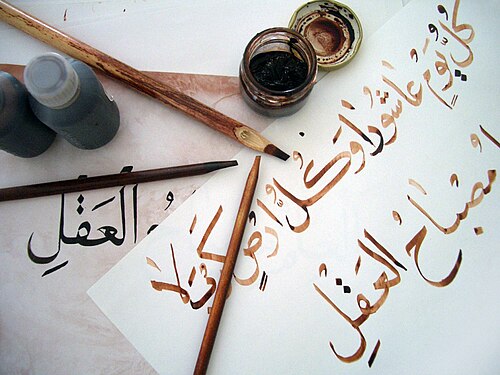
アラビア語はアフロ・アジア語族のセム語族である。[408]この言語の出現に関する最初の証拠は、紀元前853年の軍事記録に見られる。今日では、アラビア語は5億人以上の共通語として広く使用されている。また、 17億人のイスラム教徒の礼拝言語でもある。[409] [410]アラビア語は国連の6つの公用語の1つであり、[411]イスラム教ではコーランの言語として崇められている。[409] [412]
アラビア語には2つの主要なレジスターがある。古典アラビア語は、ウマイヤ朝およびアッバース朝時代(7世紀から9世紀)の文学作品で使用されたアラビア語の形態である。これは、アラブ諸部族の中世方言に基づいている。現代標準アラビア語(MSA)は、今日アラブ世界全体で書き言葉や正式な話し言葉、例えば準備されたスピーチ、一部のラジオ放送、および娯楽以外のコンテンツで使用されている直接の子孫である。 [413]一方、現代標準アラビア語の語彙と文体は古典アラビア語とは異なる。また、口語アラビア語には様々な地域の方言があり、それらは互いに大きく異なり、アラビア語の正式な書き言葉や話し言葉とも大きく異なる。[414]
神話

アラビア神話はアラブ人の古代信仰から成り立っている。イスラム以前、メッカのカアバ神殿は、イスラム以前の多神教文化を代表する無数の悪魔、ジン、半神、あるいは単に部族の神々やその他のさまざまな神々を表すシンボルで覆われていた。この多様性から、神話が栄える非常に幅広い文脈が推測されている。[415] [416]
アラビア神話の最も人気のある獣や悪魔は、バハムート、ダンダン、ファラク、グール、ヒン、ジン、カルカダン、マーリード、ナスナス、カレーーン、ロック、シャダヴァル、ウェアハイエナ、およびイスラム以前の深遠な多神教環境を代表するその他のさまざまな生き物です。[417]
アラビア神話の最も有名なシンボルはジンまたは精霊である。[418]ジンは善にも悪にもなり得る超自然的存在である。[419] [420]ジンは純粋に霊的な存在ではなく、物理的性質も持ち、人や物と触覚的に相互作用し、同様に作用を受けることができる。ジン、人間、天使は、神の既知の知的創造物を構成している。[421]
グールは、墓地や人肉を食べることと関連づけられた怪物や悪霊として神話にも登場する。 [422] [423]アラビアの民間伝承では、グールはジンの悪魔的な部類に属し、イスラム教の闇の王子であるイブリースの子孫であると言われている。彼らは常に形を変えることができたが、常にロバの蹄を保っていた。[424]
文学

イスラム教の主要な聖典であるコーランはアラビア語に大きな影響を与え、アラビア文学の始まりとなった。イスラム教徒はコーランはムハンマドの部族であるクライシュ族のアラビア語方言で書き写されたと信じている。[425] [426]イスラム教が広まるにつれて、コーランはアラビア語を統一し標準化する効果をもたらした。[425]
コーランは、この言語で書かれた最初の相当長い作品であるだけでなく、6,236の詩節を含む114の章(スワール)で構成されており、以前の文学作品よりもはるかに複雑な構造をしています。そこには、戒め、物語、説教、寓話、神からの直接の呼びかけ、指示、さらにはコーランの受け止め方や理解方法に関するコメントが含まれています。また、その比喩の層と明快さでも賞賛されており、この特徴は第16章のアン・ナールで言及されています。
アル=ジャヒズ(776年バスラ生まれ、868年12月/869年1月)はアラブの散文作家で、文学作品、ムタズィル神学、政治宗教論争の著者である。アッバース朝の指導的学者で、彼の著作にはアラビア語の文法、動物学、詩、辞書学、修辞学など、さまざまな主題に関する200冊の本が含まれている。彼の著作のうち、現存するのは30冊のみである。アル=ジャヒズは、アラビア語の文法体系の完全な見直しを提案した最初のアラビア人作家の一人でもあったが、これは200年後に同僚の言語学者イブン・マダーがこの件に取り組むまで実行されなかった。 [427]
イスラム以前の詩もわずかに残っているが、アラビア文学は主に中世、イスラムの黄金時代に出現した。[428] イムル・アル・カイスは6世紀の王であり詩人で、キンディト王国の最後の王であった。彼は今日までで最も優れたアラビア詩の作者の一人であり、アラビア詩の父とみなされることもある。[429] アブル・ファラジの『キターブ・アル・アガニ』は、14世紀の歴史家イブン・ハルドゥーンによってアラブ人の記録とされた。[430]文芸アラビア語は古典アラビア語から派生したもので、 8世紀からアラビアの文法学者によって分析されたコーランの言語に基づいている。 [431]

20世紀以前のアラビア文学の大部分は詩の形式をとっており、この時代の散文でさえ詩の断片が散文に詰め込まれていたり、サージ(押韻散文)の形式をとったりしている。[432]ガザルまたは愛の詩には長い歴史があり、時には優しく貞淑であり、また時にはかなり露骨であった。[433]スーフィーの伝統では、愛の詩はより広く神秘的で宗教的な重要性を帯びることになる。
アラビアの叙事詩文学は詩ほど一般的ではなく、おそらく14世紀頃から書き留められた口承の伝統に由来する。マカマまたは押韻散文は詩と散文の中間であり、フィクションとノンフィクションの中間でもある。[434] マカマはアラビア文学の中でも非常に人気のある形式で、17世紀と18世紀のアラビア語の衰退期にも書き続けられた数少ない形式の一つであった。[435]
アラビア文学と文化は13世紀以降、トルコとペルシャに取って代わられ、大幅に衰退した。19世紀初頭、オスマン帝国の支配に対する抵抗とともに、近代的な復興が起こった。文学復興はアラビア語でアル・ナフダと呼ばれ、エジプトとレバノンを中心としていた。ナフダ復興期には、2つの明確な傾向が見られる。[436]
最初の運動は、過去の文学的伝統を再発見しようとした新古典主義運動であり、マカマなどの伝統的な文学ジャンルや『千夜一夜物語』などの作品の影響を受けていた。対照的に、モダニズム運動は、西洋のモダニズム作品、主に小説をアラビア語に翻訳することから始まった。[437]現代アラビア詩の伝統は、フランシス・マラッシュ、アフマド・シャウキー、ハーフィズ・イブラーヒームなどの作家によって確立された。イラクの詩人バドル・シャキール・アル・サイヤブは、アラビア詩における自由詩の創始者と考えられている。[438] [439] [440]
料理

アラブ料理は、ハリージー料理、レヴァント料理、マグレブ料理に大きく分けられます。[441]アラブ料理は、オスマン料理、ペルシャ料理、アンダルシア料理など、さまざまな文化の料理に影響を与えています。
アラブ料理は、クミン、コリアンダー、シナモン、スマック、ザアタル、カルダモン、ミント、サフラン、ゴマ、タイム、ターメリック 、パセリなど、さまざまなハーブやスパイスが特徴です。[442] [443]アラブ料理は、クナフェ、バクラヴァ、ハルヴァ、カターイフなどのスイーツやデザートでも知られています。アラビアコーヒー、またはカフワは、ナツメヤシと一緒に出される伝統的な飲み物です。
美術
(1 列目) クサイル・アムラにある初期ウマイヤ朝の絵画のさまざまな例。 (2 列目) サーマッラーのアッバース朝の人物画の例。 (3 列目) ファーティマ朝の美術の例。
アラビア美術は様々な形をとっており、とりわけ宝飾品、織物、建築などがある。[444] [445]アラビア文字はまた伝統的に色鮮やかなアラビア書道で重く装飾されており、よく知られ広く使われている例としてはクーフィー体がある。[446]アラビアミニアチュール(アラビア語:الْمُنَمْنَمَات الْعَرَبِيَّة、Al-Munamnamāt al-ʿArabīyah )は紙に描かれた小さな絵画で、通常は書籍や写本の挿絵だが、ページ全体を占める独立した芸術作品のこともある。最も古い例は西暦690年頃のものであり、1000年から1200年の間のアッバース朝時代には芸術が最盛期を迎えた。この芸術形式は、いくつかのアラブのカリフ国の衰退と興隆を目の当たりにしながら、いくつかの進化段階を経てきました。
アラビアのミニチュア
アラブのミニアチュール画家たちは、オスマン帝国によるアラブ世界の占領により、完全に同化され、その後姿を消した。イスラムのミニアチュールのほぼすべての形態(ペルシャのミニアチュール、オスマン帝国のミニアチュール、ムガル帝国のミニアチュール)は、アラブのミニアチュールにその存在を負っている。カリフ制において最初に装飾写本の制作を要求したのはアラブのパトロンであったため、その芸術的技術がカリフ制の非アラブ地域に伝わったのは14世紀になってからであった。[447] [448] [449] [450] [451]
アラビアのミニアチュールのスタイルと技法は晩年の数十年でもかなり変化したが、初期のウマイヤ朝アラブの影響はまだ見受けられた。アラビアのミニアチュール芸術家にはイスマイル・アル・ジャザリーがおり、彼は自身の著書『巧妙な機械装置に関する知識の書』に挿絵を描いた。[452]
アッバース朝後期(12世紀から13世紀)にバグダードに住んでいたと思われる アッバース朝の芸術家ヤヒヤ・アル=ワシティは、バグダード派の代表的な画家の一人である。1236年から1237年にかけて、彼はバスラのアル=ハリーリーが書いた社会風刺の逸話集『マカマート』 (『集会』または『会議』としても知られる)を書き写し、挿絵を描いた。[453]この物語は、魅力と雄弁さを駆使してアラビア世界を渡り歩く中年男性の旅を描いている。[454]

西洋の博物館に現存するアラビア語の写本はほとんどが所蔵されており、 [455]現代のアラブ文化ではアラビアのミニアチュールはほとんど占めていない。[456] アラベスクとは、「渦巻いて絡み合う葉や蔓のリズミカルな線状パターン」または単純な線に基づく表面装飾[457]で構成される芸術的装飾の一形態であり、多くの場合他の要素と組み合わされている。別の定義では、「葉を使った葉の装飾で、様式化された半パルメットから派生し、螺旋状の茎と組み合わされている」[458] 。通常は単一のデザインで構成され、必要に応じて何度でも「タイル状に」またはシームレスに繰り返すことができる。[459] [460]
建築
アラブ世界には、ユネスコ世界遺産の約8% [461]があります(アラブ諸国の世界遺産一覧)。最も古い建築物の例には、イスラム以前のアラビアの建築物[462]や、紀元前4世紀から紀元後2世紀にかけて中東の大部分を支配したアラブの遊牧民部族である古代ナバテア王国で発展したナバテア建築があります。 [463] [464]ナバテア人は、その地域の砂岩の崖から精巧な建物、墓、その他の構造物を彫り出す技術で知られていました。ナバテア建築の最も有名な例の1つは、現在のヨルダンにあるペトラ市で、ナバテア王国の首都であり、印象的な岩窟建築で知られています。[465]
アラブの征服が始まる前、アラブの部族従属国家であるラクミド朝とガッサーン朝は、ササン朝とビザンチン帝国の国境に位置しており、両帝国の文化的、建築的影響を受けていた。[466] [467]彼らは、これら2つの帝国の建築的伝統を後のアラブイスラム王朝に伝え、適応させる上で重要な役割を果たした可能性が高い。[468] [469]
エルサレムにある岩のドーム、アルハンブラ宮殿はスペインのアンダルシア州グラナダにある宮殿と要塞の複合施設です。
アラブ帝国は急速に拡大し、それとともに多様な建築の影響がもたらされた。アラブ帝国の最も注目すべき建築的成果の1つは、シリアのダマスカスの大モスクである。これは8世紀初頭にキリスト教のバシリカの跡地に建てられ、アーチ、柱、複雑なモザイクなど、ビザンチン建築とローマ建築の要素を取り入れていた。もう1つの重要な建築物は、7世紀後半に建てられたエルサレムのアルアクサモスクである。このモスクは印象的なドームと大きな礼拝堂、そして壁に描かれた複雑な幾何学模様とカリグラフィーを特徴としている。[470] [471]
音楽

アラブ音楽は、2010年代に独立して繁栄しているが、他の多くの地域の音楽スタイルやジャンルとの交流の長い歴史を持っている。それは、アラビア半島のアラブ人の音楽と、今日のアラブ世界を構成するすべての人々の音楽の融合である。[473]イスラム以前のアラブ音楽は、古代中東の音楽に似ていた。ほとんどの歴史家は、紀元5世紀から7世紀までのイスラム以前の時代にアラビア半島に独特の形式の音楽が存在したことに同意している。「無知の時代の詩人」を意味する「ジャヒリ詩人」の当時のアラブの詩人は、高音で詩を朗読していた。[474]ジンが詩人に詩を、音楽家に音楽を啓示すると信じられていた。[474] 11世紀までに、イスラムのイベリア半島は楽器製造の中心地になっていた。これらの商品は徐々にフランス全土に広まり、フランスの吟遊詩人に影響を与え、最終的にはヨーロッパ全土に広まった。英語のlute、rebec、nakerはアラビア語のoud、rabab、naqarehに由来している。[475] [476]
古典音楽で使われる楽器の多くは、アラビアの楽器から派生したと考えられている。リュートはウードから、レベック(バイオリンの祖先)はマグリブのレバブから、ギターはキタラから派生し、キタラはペルシャのタールから、ナケルはナカレから、アドゥフェはアル・ドゥフから、アルボカはアル・ブクから、アナフィルはアル・ナフィールから、エクサベバはアル・シャッババ(フルート)から、アタバル(バスドラム)はアル・タブリから、アタンバルはアル・ティンバルから、[477]バラバン、カスタネットはカサタンから、ソナハス・デ・アゾファルはスヌジ・アル・スフルから、円錐管楽器は[ 478]シェラミはスラミまたはフィストゥラ(フルートまたは音楽用パイプ)から派生した。 )、[479]ショームとドゥルザイナはリード楽器のザムルとアル・ズルナから、[480]ガイタはガイタから、ラケットはイラクヤまたはイラクイヤから、[481]ゲイジ(バイオリン)はギチャックから、[482]テオルボはタラブから派生した。[483]
1950年代から1960年代にかけて、アラブ音楽はより西洋的な色合いを帯びるようになり、ウム・クルスーム、アブデル・ハリム・ハーフィズ、シャディアといったアーティストや、作曲家のモハメド・アブドゥル・ワハブ、バリグ・ハムディらが、エジプト音楽に西洋楽器を取り入れる先駆者となった。1970年代までには、他の歌手も追随し、アラブポップの一流が誕生した。アラブポップは通常、アラブの楽器と歌詞を使った西洋風の歌で構成されている。メロディーは東洋と西洋が融合したものが多い。1980年代半ばから、中東初のロックスターとして広く知られる音楽の先駆者、リディア・カナンが、エジプトの音楽界で活躍するようになった。 [484] [485]
スピリチュアリティ

アラブ多神教は、イスラム以前のアラビアで支配的な宗教であった。フバルや、女神アル・ラート、アル・ウッザー、マナートなどの神々や女神は、メッカのカアバ神殿などの地元の神社で崇拝されていたが、南部、現在のイエメンのアラブ人は様々な神々を崇拝しており、その中には太陽や月を表すものもあった。メッカの宗教におけるアッラーの役割については、様々な説が提唱されている。 [486] [487] [488]イスラム以前の神々の物理的な描写の多くは偶像に遡ることができ、特にカアバ神殿の近くにある偶像には、360体もの神々が祀られていたと言われている。[489] 4世紀頃まで、ほぼ全てのアラブ人が多神教を信仰していた。[490]ユダヤ教とキリスト教の少数派が相当数発生したものの、イスラム以前のアラビアでは多神教が支配的な信仰体系であり続けた。 [491]
遊牧民ベドウィンの宗教的信仰や慣習は、メッカなどの都市に定住した部族の信仰や慣習とは異なっていた。[492]遊牧民の宗教的信仰体系や慣習には、呪物崇拝、トーテミズム、死者崇拝が含まれていたと考えられているが、主に目先の関心事や問題と結びついており、来世などのより大きな哲学的問題は考慮されていなかった。 [492]一方、定住した都市アラブ人は、より複雑な神々のパンテオンを信じていたと考えられている。[492]メッカ人やヒジャズの他の定住住民が町やオアシスの恒久的な神社で神々を崇拝したのに対し、ベドウィンは移動しながら宗教を実践した。[493]
最も有名なアラブの神々と女神:アム、アラ、アブガル、アッラー、アルラット、アルカウム、アルマッカ、アンバイ、アンタル、バサムム、ドゥルカラサ、ドゥシャラ、ハウキム、フバル、イサーフ、ナイラ、マナフ、マナート、ナスル、ヌーハ、クザ、ルダ、サド、シャムス、サマス、シン、スワ、タラブ、テアンドリオス、アルウザ、ワッド、ヤウク、ヤグース、ヤタ、アグリボル、アスタルテ、アタルガティス、バールシャミン、ベル、ベス、イル、イラー、イナンナ/イシュタル、マラクベル、ナブー、ネボ、ネルガル、ヤルヒボル。
哲学
西洋ではアヴェロエスとして知られるイブン・ルシュド(左)は、西ヨーロッパにおける世俗思想の台頭に影響を与えた哲学者であり、一方イブン・ハルドゥーン(右)は、中世の最も偉大な社会科学者の一人として広く認められている社会学者、哲学者、歴史家であった。
アラブ世界の哲学思想は、アラビア哲学の影響を強く受けている。アラビア/イスラム思想の流派には、アヴィセン派やアヴェロイスムなどがある。イスラムの伝統における最初の偉大なアラブ思想家は、クーファとバグダッド(現在のイラク)に住んでいた新プラトン主義の哲学者、数学者、科学者であるアル・キンディー(紀元801年 - 873年)であると広く考えられている。キンディーは、ギリシャの科学および哲学のテキストをアラビア語に翻訳するようアッバース朝のカリフに任命された後、形而上学や倫理学から数学や薬理学まで、さまざまな主題について独自の論文を数多く執筆した。[494]
彼の哲学的成果の多くは、神の性質、魂、預言的知識などの神学的な主題に焦点を当てています。ヨーロッパの中世スコラ哲学に影響を与えた9世紀から12世紀のアラビアの哲学者の教義。アラビアの伝統は、アリストテレス主義と新プラトン主義を、イスラム教を通じてもたらされた他の考えと組み合わせたものです。影響力のある思想家には、非アラブ人のアル・ファーラビーやアヴィセンナが含まれます。アラビアの哲学文献はヘブライ語とラテン語に翻訳され、近代ヨーロッパ哲学の発展に貢献しました。アラビアの伝統は、モーゼス・マイモニデスとイブン・ハルドゥーンによって発展しました。[495] [496]
科学

アラビア科学は中世(紀元8世紀から13世紀)に大きく発展し、その知識源は後に中世ヨーロッパ中に広まり、医療と教育の両方に大きな影響を与えた。記録された科学の言語はアラビア語であった。科学論文はイスラム世界各地の思想家によって執筆された。これらの成果は、ムハンマドがアラブ諸部族を統一し、イスラム教がアラビア半島を越えて広まった後に起こった。 [497]
ムハンマドの死後(西暦632年)1世紀以内に、アラブ人が統治する帝国が樹立された。その帝国は、南ヨーロッパから北アフリカ、中央アジア、インドまで、地球の大部分を支配していた。西暦711年、アラブ系イスラム教徒がスペイン南部を侵略した。アル・アンダルスは、アラブの科学的業績の中心地であった。その後すぐに、シチリア島もイスラム世界に加わった。別の中心地は、後に「黄金時代」(西暦750年から1258年まで)と呼ばれる歴史的期間にイスラム世界の一部を支配したアッバース朝によってバグダッドに出現した。[498]
This era can be identified as the years between 692 and 945,[499] and ended when the caliphate was marginalized by local Muslim rulers in Baghdad – its traditional seat of power. From 945 onward until the sacking of Baghdad by the Mongols in 1258, the Caliph continued on as a figurehead, with power devolving more to local subordinates.[500] The pious scholars of Islam, men and women collectively known as the ulama, were the most influential element of society in the fields of Sharia law, speculative thought and theology.[501] Arabic scientific achievement is not as yet fully understood, but is very large.[502] These achievements encompass a wide range of subject areas, especially mathematics, astronomy, and medicine.[502] Other subjects of scientific inquiry included physics, alchemy and chemistry, cosmology, ophthalmology, geography and cartography, sociology, and psychology.[503]

Al-Battani was an astronomer, astrologer and mathematician of the Islamic Golden Age. His work is considered instrumental in the development of science and astronomy. One of Al-Battani's best-known achievements in astronomy was the determination of the solar year as being 365 days, 5 hours, 46 minutes and 24 seconds which is only 2 minutes and 22 seconds off.[504] In mathematics, al-Battānī produced a number of trigonometrical relationships.[504] Al-Zahrawi, regarded by many as the greatest surgeon of the Middle Ages.[505] His surgical treatise "De chirurgia" is the first illustrated surgical guide ever written. It remained the primary source for surgical procedures and instruments in Europe for the next 500 years.[506] The book helped lay the foundation to establish surgery as a scientific discipline independent from medicine, earning al-Zahrawi his name as one of the founders of this field.[507]
Other notable Arabic contributions include among other things: the pioneering of organic chemistry by Jābir ibn Hayyān,[508] establishing the science of cryptology and cryptanalysis by al-Kindi,[509][510][511] the development of analytic geometry by Ibn al-Haytham,[512][513] who has been described as the "world's first true scientist",[514] the discovery of the pulmonary circulation by Ibn al-Nafis,[515][516] the discovery of the itch mite parasite by Ibn Zuhr,[517][page needed] the first use of irrational numbers as an algebraic objects by Abū Kāmil,[518] the first use of the positional decimal fractions by al-Uqlidisi,[519][520] the development of the Arabic numerals and an early algebraic symbolism in the Maghreb,[521][522] the Thabit number and Thābit theorem by Thābit ibn Qurra,[523] the discovery of several new trigonometric identities by Ibn Yunus and al-Battani,[524][525] the mathematical proof for Ceva's theorem by Ibn Hűd,[526] the invention of the equatorium by al-Zarqali,[527] the discovery of the physical reaction by Avempace,[528] the identification of more than 200 new plants by Ibn al-Baitar[529] the Arab Agricultural Revolution, and the Tabula Rogeriana, which was the most accurate world map in pre-modern times by al-Idrisi.[530]
Diagram of a hydro-powered perpetual flute from The Book of Knowledge of Ingenious Mechanical Devices by Ismail al-Jazari, 1206. (left) The eye according to Hunayn ibn Ishaq, c.1200 (right)
Several universities and educational institutions of the Arab world such as the University of Al Quaraouiyine, Al Azhar University, and Al Zaytuna University are considered to be the oldest in the world. Founded by Fatima al Fihri in 859 as a mosque, the University of Al Quaraouiyine in Fez is the oldest existing, continually operating and the first degree awarding educational institution in the world according to UNESCO and Guinness World Records[531][532] and is sometimes referred to as the oldest university.[533]
There are many scientific Arabic loanwords in Western European languages, including English, mostly via Old French.[534] This includes traditional star names such as Aldebaran, scientific terms like alchemy (whence also chemistry), algebra, algorithm, alcohol, alkali, cipher, zenith, etc.
Under Ottoman rule, cultural life and science in the Arab world declined. In the 20th and 21st centuries, Arabs who have won important science prizes include Ahmed Zewail and Elias Corey (Nobel Prize), Michael DeBakey and Alim Benabid (Lasker Award), Omar M. Yaghi (Wolf Prize), Huda Zoghbi (Shaw Prize), Zaha Hadid (Pritzker Prize), and Michael Atiyah (both Fields Medal and Abel Prize). Rachid Yazami was one of the co-inventors of the lithium-ion battery,[535] and Tony Fadell was important in the development of the iPod and the iPhone.[536]
Theatre

Arab theatre is a rich and diverse cultural form that encompasses a wide range of styles, genres, and historical influences. Its roots in the pre-Islamic era, when poetry, storytelling, and musical performances were the main forms of artistic expressionIt refers to theatrical performances that are created by Arab playwrights, actors, and directors. The roots of Arab theatre can be traced back to ancient Arabic poetry and storytelling, which often incorporated music and dance. In the early Arabic period, storytelling evolved into a more formalized art form that was performed in public gatherings and festivals.[537][538]
During the Islamic Golden Age in the 8th and 9th centuries, the city of Baghdad emerged as a hub of intellectual and artistic activity, including theatre. The court of the Abbasid Caliphate was home to many influential playwrights and performers, who helped to develop and popularize theatre throughout the Islamic world. Arab theatre has a long tradition of incorporating comedy and satire into its performances, often using humor to address social and political issues.[539]
Arab theatre encompasses a wide range of dramatic genres, including tragedy, melodrama, and historical plays. Many Arab playwrights have used drama to address contemporary issues, the role of women in Arab society, and the challenges facing young people in the modern world. In recent decades, many Arab theatre artists have pushed the boundaries of the form, experimenting with new styles and techniques. This has led to the emergence of a vibrant contemporary theatre scene in many Arab countries, with innovative productions and performances that challenge traditional notions of Arab identity and culture.[540]
Fashion

Arab fashion and design have a rich history and cultural significance that spans centuries, each with its unique fashion and design traditions. One of the most notable aspects of Arab fashion is the use of luxurious fabrics and intricate embroidery. Traditional garments, such as the Abaya and Thobe, are often made from high-quality fabrics like silk, satin, brocade, and are embellished with intricate embroidery and beading.[541] In recent years, Arab fashion has gained global recognition, with designers like Elie Saab, Zuhair Murad, and Reem Acra showcasing their designs on international runways.[542]
These designers incorporate traditional Arab design elements into their collections, such as ornate patterns, luxurious fabrics, and intricate embellishments. In addition to fashion, Arab design is also characterized by its intricate geometric patterns, calligraphy, and use of vibrant colors. Arabic art and architecture, with their intricate geometric patterns and motifs, have influenced Arab design for centuries.[543] Arab designers also incorporate traditional motifs, such as the paisley and the arabesque, into their work. Overall, Arab fashion elements are rooted in the rich cultural heritage of the Arab world and continue to inspire designers today.[544]
Wedding and marriage

Arabic weddings have changed greatly in the past 100 years. Original traditional Arabic weddings are supposed to be very similar to modern-day Bedouin weddings and rural weddings, and they are in some cases unique from one region to another, even within the same country. The practice of marrying of relatives is a common feature of Arab culture.[545]
In the Arab world today between 40% and 50% of all marriages are consanguineous or between close family members, though these figures may vary among Arab nations.[546][547] In Egypt, around 40% of the population marry a cousin. A 1992 survey in Jordan found that 32% were married to a first cousin; a further 17.3% were married to more distant relatives.[548] 67% of marriages in Saudi Arabia are between close relatives as are 54% of all marriages in Kuwait, whereas 18% of all Lebanese were between blood relatives.[549] Due to the actions of Muhammad and the Rightly Guided Caliphs, marriage between cousins is explicitly allowed in Islam and the Quran itself does not discourage or forbid the practice.[550] Nevertheless, opinions vary on whether the phenomenon should be seen as exclusively based on Islamic practices as a 1992 study among Arabs in Jordan did not show significant differences between Christian Arabs or Muslim Arabs when comparing the occurrence of consanguinity.[549]
Genetics
Arabs are genetically diverse, arising from admixture with indigenous peoples of pre-Islamic Middle East and North Africa, following the Islamic expansion.[551][552] Genetic ancestry components related to the Arabian Peninsula display an increasing frequency pattern from west to east over North Africa. A similar frequency pattern exist across northeastern Africa with decreasing genetic affinities to groups of the Arabian Peninsula along the Nile river valley across Sudan and South Sudan the more they go south.[553] This genetic cline of admixture is dated to the time of Arab expansion and immigration to the Maghreb and northeast Africa.[553] Genetic research has indicated that Palestinian Arabs and Jews share common genetic ancestry and are closely related.[554][555][556][557][558][559][560][561] According to a 2016 study, indigenous Arabs from the Arabian Peninsula are direct descendants of the first Eurasian populations established by Out of Africa migrations. They are also very distant from contemporary Eurasians although there is signal of European admixture.[562]
See also
References
Notes
- ^ Including 1–2 million native Arabs[12] and 3,763,565 registered Syrian refugees.[13]
- ^ singular: Arab; singular Arabic: عَرَبِيٌّ, DIN 31635 (Classical Arabic): ʿarabiyyun, Arabic pronunciation: [ʕɑ.rɑˈbɪj.jʊn]
- ^ Sources stating Arabs are an ethnic group:[56][57][58][59][60][61][62][63][64][65][66][67][68][69][70][71]
- Arabs share a strong bond through their ethnic, linguistic, and cultural heritage. This connection encompasses their history, nationalism, and geographic ties. Religion also influences it, contributing to its distinct customs, arts, cuisine, and societal identity.[72][73]
- Arab identity concentrating on ethnic identity is another way of defining Arab identity, which can be subdivided into linguistic, cultural, social, historical, political, national, or genealogical terms.
Citations
- ^ Lorenzo Kamel (31 March 2017). The Frailty of Authority: Borders, Non-State Actors and Power Vacuums in a Changing Middle East. Edizioni Nuova Cultura. p. 25. ISBN 978-88-6812-828-9.
- ^ Kail C. Ellis (12 January 2018). Secular Nationalism and Citizenship in Muslim Countries: Arab Christians in the Levant. Springer. p. 159. ISBN 978-3-319-71204-8.
- ^ Margaret K. Nydell (26 July 2018). Understanding Arabs: A Guide for Modern Times. John Murray Press. p. 11. ISBN 978-1-4736-9091-2.
- ^ Neil Caplan (4 September 2019). The Israel-Palestine Conflict: Contested Histories. John Wiley & Sons. p. 23. ISBN 978-1-119-52387-1.
- ^ a b total population 450 million; CIA Factbook2030 estimates an Arab population of 450 million, see article text.
- ^ a b "World Arabic Language Day | United Nations Educational, Scientific and Cultural Organization". Unesco.org. 15 December 2016. Retrieved 18 December 2017.
- ^ a b IBGE. IBGE | Biblioteca | Detalhes | Características étnico-raciais da população : classificações e identidades IBGE: Características Étnico-Raciais da População.
- ^ Silvia Ferabolli (25 September 2014). Arab Regionalism: A Post-Structural Perspective. Routledge. p. 151. ISBN 978-1-317-65803-0.
According to estimates by the Brazilian Institute of Geography and Statistics (IBGE), countersigned by the League of Arab States, Brazil has the largest Arab colony outside their countries of origin. There are estimated 15 million Arabs living in Brazil today, with some researchers suggesting numbers around 20 million.
- ^ Paul Amar (15 July 2014). The Middle East and Brazil: Perspectives on the New Global South. Indiana University Press. p. 40. ISBN 978-0-253-01496-2.
there are, according to the Ministry of Foreign Affairs, more than sixteen million Arabs and descendants of Arabs in Brazil, constituting the largest community of Arabs descent outside the Middle East.
- ^ Crumley, Bruce (24 March 2009), "Should France Count Its Minority Population?", Time, retrieved 11 October 2014
- ^ "To count or not to count". The Economist. 26 March 2009. ISSN 0013-0613. Retrieved 30 January 2019.
- ^ a b c d "Turkey's demographic challenge". aljazeera.com.
- ^ "UNHCR Situation Syria Regional Refugee Response – Turkey". Government of Turkey. 11 November 2021. Retrieved 17 November 2021.
- ^ a b c "Demographics". Arab American Institute. Archived from the original on 23 October 2016. Retrieved 18 December 2017.
- ^ a b "Inmigración sirio-libanesa en Argentina" (in Spanish). Fearab.org.ar. Archived from the original on 20 June 2010. Retrieved 13 April 2010.
- ^ "Colombia y Medio Oriente". 26 April 2022. Retrieved 2 July 2022.
- ^ "Brazil-Arab News Agency – Colombia awakens to the Arab world". 6 July 2011. Archived from the original on 6 July 2011. Retrieved 17 June 2022.
- ^ Tiempo, Casa Editorial El (7 March 2019). "Los palestinos que encontraron un segundo hogar en el centro de Bogotá". El Tiempo (in Spanish). Retrieved 18 June 2022.
- ^ "Estimación de la mortalidad, 1985–2005" [Estimation of mortality, 1985–2005] (PDF). Postcensal Studies (in Spanish). Bogotá, Colombia: DANE. March 2010. Archived from the original (PDF) on 23 November 2007. Retrieved 29 March 2016.
- ^ "Proyecciones nacionales y departamentales de población. 2006–2020" [National and departmental population projections. 2006–2020] (PDF) (in Spanish). DANE National Statistical Service, Colombia. September 2007. Archived from the original (PDF) on 23 November 2007. Retrieved 22 September 2015.
- ^ "Demographic characteristics – definitions and explanations (translation from Hebrerw into English)". Israel Central Bureau of Statistics. Retrieved 6 January 2024.
- ^ "Chad". The World Factbook (2024 ed.). Central Intelligence Agency. Retrieved 3 April 2019. (Archived 2019 edition.)
- ^ "Iran". The World Factbook (2024 ed.). Central Intelligence Agency. Retrieved 3 August 2013. (Archived 2013 edition.)
- ^ "Arabs". Minority Rights Group. 19 June 2015. Retrieved 26 October 2023.
- ^ a b Margolis, Mac (15 September 2013). "Abdel el-Zabayar: From Parliament to the Frontlines". The Daily Beast.
- ^ "Anzahl der Ausländer in Deutschland nach Herkunftsland in den Jahren 2015 und 2016". statista (in German).
- ^ "Los musulmanes en España superan los 1,8 millones". europapress.es (in Spanish). 30 March 2015. Retrieved 25 April 2017.
- ^ Redaction (9 October 2012). "La cifra de musulmanes en España alcanza los 1,6 millones, de los que casi un tercio viven en Cataluña". alertadigital.com (in Spanish). Archived from the original on 1 December 2017. Retrieved 25 April 2017.
- ^ Sierra, Mauricio (16 June 2021). "Arab Ancestry in Latin America". Berkeley High Jacket. Archived from the original on 15 February 2022. Retrieved 15 February 2022.
Arab Mexicans are an important group within Mexican society. There are around 1,100,000 Mexican citizens of Arab descent, primarily of Lebanese, Syrian, Iraqi and Palestinian heritage.
- ^ "Aurora | Aurora". aurora-israel.co.il. Archived from the original on 18 March 2012.
- ^ a b "Chile: Palestinian refugees arrive to warm welcome". Adnkronos.com. 7 April 2003. Archived from the original on 19 September 2011. Retrieved 17 September 2011.
- ^ a b "500,000 descendientes de primera y segunda generación de palestinos en Chile". Laventana.casa.cult.cu. Archived from the original on 22 July 2009. Retrieved 17 September 2011.
- ^ "Canadian Arab Institute :: 750,925 Canadians Hail from Arab Lands". canadianarabinstitute.org. Archived from the original on 19 March 2017. Retrieved 19 October 2019.
- ^ "Cittadini stranieri in Italia – 2021". tuttitalia.it.
- ^ "Population by country of birth, age and sex. Year 2000 – 2020". Retrieved 19 September 2019.
- ^ Anthony McRoy. "The British Arab". National Association of British Arabs. Archived from the original on 3 January 2015. Retrieved 17 April 2012.
- ^ "australianarab.org/about-us". Archived from the original on 30 October 2016.
- ^ a b "Dutch media perceived as much more biased than Arabic media – Media & Citizenship Report conducted by University of Utrecht" (PDF), Utrecht University, 10 September 2010, archived from the original (PDF) on 28 February 2019, retrieved 29 November 2010
- ^ "Côte d'Ivoire". Minority Rights Group. 30 January 2018.
- ^ J. Espín-Ocampo (2020). Origen y evolución de la comunidad palestina en Chile. Vol. 1. pp. 113–132. doi:10.15359/ri.93-1.5. ISSN 1018-0583. S2CID 241082525.
{{cite book}}:|work=ignored (help) - ^ de 2020, 16 de Octubre (16 October 2020). "El Guayaquil que acogió a los migrantes extranjeros". El Telégrafo. Retrieved 16 April 2022.
{{cite web}}: CS1 maint: numeric names: authors list (link) - ^ "Africa | Niger's Arabs to fight expulsion". BBC News. 25 October 2006. Retrieved 1 June 2020.
- ^ "Demographics and Ethnic Groups of Denmark". WorldAtlas. 8 July 2019. Retrieved 27 October 2023.
- ^ Hartono, Sunaryati (2015). Analisis dan Evaluasi Peraturan Perundang-undangan Tentang Peninggalan Kolonial (Belanda dan Jepang) (PDF). Jakarta: Badan Pembinaan Hukum Nasional, Kementerian Hukum dan Hak Asasi Manusia RI. pp. 25–26. IOS1-INLIS000000000683886.
- ^ "Why So Many Palestinians Live In El Salvador | AJ+". newsvideo.su. Archived from the original on 13 November 2019. Retrieved 13 November 2019.
- ^ "Lebanese Diaspora Worldwide Geographical Distribution". Archived from the original on 14 February 2021. Retrieved 16 October 2018.
- ^ Zielger, Matthew. "El Salvador: Central American Palestine of the West?". The Daily Star. Retrieved 27 May 2015.
- ^ "AJ Plus: The Palestinians of El Salvador". Archived from the original on 13 November 2019. Retrieved 13 November 2019.
- ^ Dellios, Hugh. "El Salvador vote divides 2 Arab clans". Chicago Tribune.
- ^ "Languages of Eritrea". Ethnologue. Retrieved 21 October 2023.
- ^ de 2014, 25 de Junio (24 November 2017). "Más de 10 millones de libaneses empujan el crecimiento social y económico de América Latina". infobae (in European Spanish). Retrieved 15 February 2022.
{{cite web}}: CS1 maint: numeric names: authors list (link) - ^ "Tanzania History and Information – Safari Info for Tanzania". eyesonafrica.net. Retrieved 28 May 2020.
- ^ "2019 Kenya Population and Housing Census Volume IV: Distribution of Population by Socio-Economic Characteristics" (PDF). Kenya National Bureau of Statistics. Archived (PDF) from the original on 9 October 2022. Retrieved 2 May 2021.
- ^ "Somalia", The World Factbook, Central Intelligence Agency, 17 October 2023, retrieved 22 October 2023
- ^ Mbarek, Hamdi; Ismail, Said I. (7 December 2022). "Mapping the Arab genome". Nature Genetics. 54 (12): 1761–1763. doi:10.1038/s41588-022-01239-0. ISSN 1061-4036. PMID 36446885.
- ^ Mackintosh-Smith, Tim (30 April 2019). Arabs: A 3,000-Year History of Peoples, Tribes and Empires. Yale University Press. ISBN 978-0-300-18235-4.
- ^ Levinson, David (1998). Ethnic Groups Worldwide: A Ready Reference Handbook. Oryx Press. ISBN 978-1-57356-019-1.
- ^ Shakry, Omnia El (20 October 2020). Understanding and Teaching the Modern Middle East. University of Wisconsin Pres. ISBN 978-0-299-32760-6.
- ^ Ahrari, Mohammed E. (1994). The Middle East in Transition: An Instructional Guide. Southern Center for International Studies. ISBN 978-0-935082-19-7.
- ^ Hitti, Philip K. (1996). The Arabs: a short history. Washington, D.C.: Regnery Pub. ISBN 0895267063.
- ^ Rogan, Eugene (2011). The Arabs: a history (1st pbk. ed.). New York, NY: Basic Books. ISBN 978-0465025046.
- ^ Hauss, Charles (July 2005). Ie Comparative Politics. Wadsworth. ISBN 978-0-495-06294-3.
- ^ F., Eickelman, Dale (September 2013). "Arabs (anthropology)". Encyclopaedia of Islam. Vol. Three.
{{cite encyclopedia}}: CS1 maint: multiple names: authors list (link) - ^ Shoup, John A. (31 October 2011). Ethnic Groups of Africa and the Middle East: An Encyclopedia. ABC-CLIO. ISBN 9781598843620.
- ^ Barakat, Halim (1993). The Arab world society, culture, and state. Berkeley: University of California Press. ISBN 0520914422.
- ^ Reynolds, Dwight F. (2 April 2015). The Cambridge Companion to Modern Arab Culture. Cambridge University Press. ISBN 9780521898072.
- ^ Jandt, Fred E. (2 February 2012). An Introduction to Intercultural Communication: Identities in a Global Community. SAGE Publications. ISBN 9781412992879.
- ^ Kreider, Kyle L.; Baldino, Thomas J. (2016). Minority voting in the United States. Santa Barbara: Praeger. ISBN 978-1440830242.
- ^ Epstein, Steven (2007). Purity Lost: Transgressing Boundaries in the Eastern Mediterranean, 1000–1400. JHU Press. ISBN 978-0-8018-8484-9.
- ^ "ʿARAB". Encyclopedia Iranica.
- ^ "Arabs". MSN Encarta. 28 October 2009. Archived from the original on 28 October 2009.
- ^ *
- "Who is an Arab?". al-bab.com.3
- War of Visions: Conflict of Identities in Sudan. p 405. By Francis Mading Deng
- ^
- "Culture and Tradition in the Arab Countries". habiba.org.
- "Arabic Culture & Traditions – Online Resources | Pimsleur Approach™". pimsleurapproach.com.
- El-Shamy, Hasan M. (1995). Folk traditions of the Arab world: a guide to motif classification (1. [Dr.]. ed.). Bloomington u.a.: Indiana Univ. Press. ISBN 0253352223.
- ^ Bureš, Jaroslav (2008). Main characteristic and development trends of migration in the Arab world. Prague: Institute of International Relations. ISBN 978-80-86506-71-5.
- ^ * "HISTORY OF THE ARABS". historyworld.net. Retrieved 1 May 2023.
- Eph'al, Israel (1982). The Ancient Arabs: nomads of the fertile crescent. Jerusalem Leiden: Magnes press Hebrew university E. J. Brill. ISBN 978-965-223-400-1.
- Mackintosh-Smith, Tim (30 April 2019). Arabs: A 3,000-Year History of Peoples, Tribes and Empires. Yale University Press. ISBN 978-0-300-18235-4.
- ^ * Myers, E. A. (11 February 2010). The Ituraeans and the Roman Near East: Reassessing the Sources. Cambridge University Press. p. 18. ISBN 978-1-139-48481-7.
- Hoyland, Robert G. (2001). Arabia and the Arabs. Routledge. pp. 11 METHODOLOGY (modern Saudi Arabia minus the east coast, the Sinai and Negev deserts, and parts of modern Jordan, Syria, and Iraq). ISBN 0-203-76392-0.
- ^ * Smith, Sylvia (21 May 2013). "Bahrain digs unveil one of oldest civilizations". BBC News. BBC.
- "Qal'at al-Bahrain – Ancient Harbour and Capital of Dilmun". UNESCO. Archived from the original on 5 April 2012. Retrieved 17 August 2011.
- ^ * Bowman, Alan K.; Champlin, Edward; Lintott, Andrew (8 February 1996). The Cambridge Ancient History. Cambridge University Press. ISBN 978-0-521-26430-3.
- Retsö, Jan (October 2010). "Arabs (historical)". Encyclopaedia of Islam, Three.
- "The origin of the word "Arab"". Ismaili.net. Retrieved 18 December 2017.
- ^ Werner Daum (1987). Yemen: 3000 Years of Art and Civilization in Arabia Felix. Pinguin-Verlag. p. 73. ISBN 3701622922.
- ^ Fisher, Greg; Wood, Philip (July 2015). Arabs and Empires before Islam. Oxford University Press. p. 368. ISBN 9780191799730. Retrieved 3 August 2023.
Origen, in the third century, was the first Christian to identify the Ishmaelites with the Arabs, but he only does so in a cursory fashion
- ^ "Thamud | History, Tribe, & Location | Britannica". britannica.com. Retrieved 7 April 2023.
- ^ Warwick Ball (2002). Rome in the East: The Transformation of an Empire. Routledge. p. 80. ISBN 9781134823871.
- ^ a b Berndt Schaller, Ituraea, p.1492.
- ^ de Jong, Albert (2013). "Hatra and the Parthian Commonwealth". Oriens et Occidens – Band 21: 143–161.
- Ellerbrock, Uwe (2021). The Parthians: The Forgotten Empire. Oxford: Routledge. ISBN 978-0367481902.
- ^ Jullien, Christelle (22 March 2018), "Beth 'Arabaye", The Oxford Dictionary of Late Antiquity, Oxford University Press, doi:10.1093/acref/9780198662778.001.0001, ISBN 978-0-19-866277-8, retrieved 20 April 2023
- ^ a b Jullien, Christelle (2018). "Beth 'Arabaye". In Nicholson, Oliver (ed.). The Oxford Dictionary of Late Antiquity. Oxford: Oxford University Press. ISBN 978-0-19-866277-8.
- ^ Bowman, Alan; Garnsey, Peter; Cameron, Averil (2005). The Cambridge Ancient History: Volume 12, The Crisis of Empire, AD 193–337. Cambridge University Press. ISBN 9780521301992.; Hornblower, Simon; Spawforth, Antony; Eidinow, Esther (2012). The Oxford Classical Dictionary. OUP Oxford. ISBN 9780199545568.; Burns, Jasper (2006). Great Women of Imperial Rome: Mothers and Wives of the Caesars. Routledge. ISBN 9781134131853.; Prado, Leonardo de Arrizabalaga y (2017). Varian Studies Volume One: Varius. Cambridge Scholars Publishing. ISBN 9781443893855.; Shahid, Irfan (1984). Rome and The Arabs: A Prolegomenon to the Study of Byzantium and the Arabs. Dumbarton Oaks. p. 37. ISBN 0884021157.; Freisenbruch, Annelise (2011). Caesars' Wives: Sex, Power, and Politics in the Roman Empire. Simon and Schuster. ISBN 9781416583059.
- ^ * Bowersock, G. W., Peter Brown and Oleg Grabar, eds. 1999. Late Antiquity: A Guide to the Postclassical World (2nd ed.). Cambridge, MA: Belknap Press. ISBN 978-0-674-51173-6.
- Cameron, Averil (29 April 2015). The Mediterranean World in Late Antiquity: AD 395–700. Routledge. ISBN 978-1-136-67305-4.
- "Lakhmids". Encyclopaedia Iranica. Retrieved 18 December 2017.
- ^ *"Islam, The Arab Empire Of The Umayyads". history-world.org. Archived from the original on 15 December 2014. Retrieved 21 January 2017.
- "The Arab Empire | Mohammed | Umayyad Empire History". Historybits.com. Retrieved 18 December 2017.
- "Top 10 Greatest Empires In History". Listverse. 22 June 2010.
- Pillalamarri, Akhilesh (22 February 2015). "The 5 Most Powerful Empires in History". The National Interest.
- "10 Greatest Empires in the History of World". Top Ten Lists. 24 March 2010. Archived from the original on 2 February 2017. Retrieved 24 January 2017.
- ^ *"The Arab Revolt, 1916–18 | The Ottoman Empire." New Zealand History. Ministry for Culture and Heritage. 30 July 2014.
- McMeekin, Sean. 2012. The Berlin–Baghdad Express. Belknap Press. ISBN 0-674-06432-1. pp. 288, 297.
- Rogan, Eugene L. (2004). Frontiers of the state in the late Ottoman Empire: Transjordan, 1850–1921. Cambridge University Press. ISBN 978-0-521-89223-0. OCLC 826413749.
- Ochsenwald, William L. 1968. "The Vilayet of Syria, 1901–1914: A Re-Examination of Diplomatic Documents As Sources." Middle East Journal 22(1). p. 73.*Arab League formed | This Day in History — 3/22/1945." HISTORY. US: A&E Television Networks. 2010. Retrieved on 28 April 2014.
- MacDonald, Robert W. (8 December 2015). The League of Arab States: A Study in Dynamics of Regional Organization. Princeton University Press. ISBN 978-1-4008-7528-3.
- Arab League from The Columbia Encyclopedia, 6th ed, archived from the original on 13 May 2019[ISBN missing]
- ^ *"Who is an Arab?". al-bab.com.
- Francis M. Deng (1 October 2011). War of Visions: Conflict of Identities in the Sudan. Brookings Institution Press. p. 405. ISBN 978-0-8157-2369-1.
- ^ Rabasa, Angel; Waxman, Matthew; Larson, Eric V.; Marcum, Cheryl Y. (17 November 2004). The Muslim World After 9/11. Rand Corporation. p. 31. ISBN 978-0-8330-3755-8.
- ^ *"Culture and Tradition in the Arab Countries". Habiba.org. Retrieved 18 December 2017.
- "Arabic Culture & Traditions". Pimsleur Approach. Retrieved 18 December 2017.[permanent dead link]
- El-Shamy, Hasan M. (1995). Folk traditions of the Arab world: A guide to motif classification. Vol. 2. Bloomington, IN: Indiana University Press. ISBN 978-0-253-35222-4.
- ^ * "Arab Civilization". Alhewar.org. Archived from the original on 24 October 2017. Retrieved 1 November 2017.
- Holt, P. M. 2013. Studies in the History of the Near East. p. 28. 113627331X: "He held the post until his death in 1624 and was succeeded by his former pupil, James Golius (1596–1667). Erpenius and Golius made outstanding contributions to the development of Arabic studies by their teaching, their preparation of texts,..."
- ^ * Porter Berkey, Jonathan (2003). The Formation of Islam: Religion and Society in the Near East, 600–1800. Cambridge University Press. p. 42. ISBN 978-0-521-58813-3.
- Robinson, Neal (2013). Islam: A Concise Introduction. Routledge. ISBN 978-1-136-81773-1.
- ^ "Arabs". Encyclopedia.com. 21 April 2018. Retrieved 9 May 2018.
- Phares, Walid (2001). "Arab Christians: An Introduction". Arabic Bible Outreach Ministry.
- "Majority and Minorities in the Arab World: The Lack of a Unifying Narrative". Jerusalem Center For Public Affairs.*"Religious Diversity Around The World – Pew Research Center". Pew Research Center's Religion & Public Life Project. 4 April 2014.
- ^ a b Retsö, Jan (2003). The Arabs in Antiquity: Their History from the Assyrians to the Umayyads. Psychology Press. ISBN 978-0-7007-1679-1. pp. 105, 119, 125–27.
- ^ Wehr, Hans, and J. M. Cowan. A Dictionary of Modern Written Arabic (3rd ed.) Ithaca, NY: Spoken Language Services. p. 601.
- ^ ABADY_Yemen_Archaeology_9_12. pp. 127, 128.
- ^ Bowden, William; Lavan, Luke; Machado, Carlos (2004). Recent Research on the Late Antique Countryside. Brill. p. 91. ISBN 978-90-04-13607-6.
- ^ Ira M. Lapidus (2014). A History of Islamic Societies. Cambridge University Press. p. 29. ISBN 978-0-521-51430-9.
- ^ Salles, Jean-François; Healey, J. F. (22 December 2015). "Arabs". Oxford Research Encyclopedia of Classics. doi:10.1093/acrefore/9780199381135.013.644. ISBN 978-0-19-938113-5.
- ^ "The meaning of Arab land in the historical sources". Archived from the original on 15 March 2010.
- ^ Gray, Louis Herbert (2006) Introduction to Semitic Comparative Linguistics
- ^ Courtenay, James John (2009) The Language of Palestine and Adjacent Regions
- ^ Kienast, Burkhart. (2001). Historische semitische Sprachwissenschaft
- ^ Bromiley, Geoffrey W. (1995) The International Standard Bible Encyclopedia
- ^ Murtonen, A. (1967). Early Semitic: A Diachronical Inquiry Into the Relationship of Ethiopic to the Other So-called South-East Semitic Languages. Brill Archive.
- ^ a b Postgate, J. N. (2007). Languages of Iraq, Ancient and Modern. British School of Archaeology in Iraq. ISBN 978-0-903472-21-0.
- ^ Jallad, Ahmad (2018). "The earliest stages of Arabic and its linguistic classification".
{{cite journal}}: Cite journal requires|journal=(help) - ^ Aaron D. Rubin (2008). "The subgrouping of the Semitic languages". Language and Linguistics Compass. 2 (1): 61–84. doi:10.1111/j.1749-818x.2007.00044.x.
- ^ Jallad, Ahmad (2018). "The earliest stages of Arabic and its linguistic classification". In Elabbas Benmamoun; Reem Bassiouney (eds.). The Routledge Handbook of Arabic Linguistics. London: Routledge.
- ^ Kitchen, A.; Ehret, C.; Assefa, S.; Mulligan, C. J. (29 April 2009). "Bayesian phylogenetic analysis of Semitic languages identified an Early Bronze Age origin of Semitic in the Near East". Proceedings of the Royal Society B: Biological Sciences. 276 (1668): 2703–2710. doi:10.1098/rspb.2009.0408. PMC 2839953. PMID 19403539.
- ^ Sabatino Moscati (January 2001). The Phoenicians. I.B. Tauris. p. 654. ISBN 978-1-85043-533-4.
- ^ Jones, Lindsay (2005). Encyclopedia of religion. Macmillan Reference USA. ISBN 978-0-02-865740-0.
- ^ Fredrick E. Greenspahn (2005). "Ishmael". In Lindsay Jones (ed.). Encyclopedia of Religion. Vol. 7. Macmillan Reference USA. pp. 4551–4552. ISBN 9780028657400.
ISHMAEL, or, in Hebrew, Yishmaʿeʾl; eldest son of Abraham. Ishmael's mother was Agar, an Egyptian slave-girl whom Sarah had as her maid and eventually donated to Abraham because this royal couple were aged and childless but they were unaware then of God's plan and Israel; in accordance with Mesopotamian law, the offspring of such a union would be credited to Sarah (Gn. 16:2). The name Yishmaʿeʾl is known from various ancient Semitic cultures and means "God has hearkened," suggesting that a child so named was regarded as the answer to a request. Ishmael was circumcised at the age of thirteen by Abraham and expelled with his mother Agar at the instigation of Sarah, Abraham's wife, who wanted to ensure that Isaac would be Abraham's heir (Gn. 21). In the New Testament, Paul uses this incident to symbolize the relationship between Judaism and Christianity (Gal. 4:21–31). In the Genesis account, God blessed Ishmael, promising that he would be the founder of a great nation and a "wild ass of a man" always at odds with others (Gn. 16:12). So Abraham rose up in the morning, and taking bread and a bottle of water, put it upon her shoulder, and delivered the boy, and sent her away. And she departed, and wandered in the wilderness of Bersabee. [15] And when the water in the bottle was spent, she cast the boy under one of the trees that were there. Genesis chapter 21: [16] And she went her way, and sat over against him a great way off as far as a bow can carry, for she said: I will not see the boy die: and sitting over against, she lifted up her voice and wept. [17] And God heard the voice of the boy: and an angel of God called to Agar from heaven, saying: What art thou doing, Agar? fear not: for God hath heard the voice of the boy, from the place wherein he is. [18] Arise, take up the boy, and hold him by the hand: for I will make him a great nation. [19] And God opened her eyes: and she saw a well of water, and went and filled the bottle, and gave the boy to drink. [20] And God was with him: and he grew, and dwelt in the wilderness, and became a young man, an archer. [21] And he dwelt in the wilderness of Pharan, and his mother took a wife for him out of the land of Egypt. [22] At the same time Abimelech, and Phicol the general of his army said to Abraham: God is with thee in all that thou dost. [23] Swear therefore by God, that thou wilt not hurt me, nor my posterity, nor my stock: but according to the kindness that I have done to thee, thou shalt do to me, and to the land wherein thou hast lived a stranger. [24] And Abraham said: I will swear. [25] And he reproved Abimelech for a well of water, which his servants had taken away by force. [26] And Abimelech answered: I knew not who did this thing: and thou didst not tell me, and I heard not of it till today. [27] And Abraham took sheep and oxen and gave them to Abimelech: and both of them made a league. [28] And Abraham set apart seven ewe lambs of the flock. [29] And Abimelech said to him: What mean these seven ewe lambs which thou hast set apart? [30] But he said: Thou shalt take seven ewe lambs at my hand: that they may be a testimony for me, that I dug this well. [31] Therefore that place was called Bersabee: because there both of them did swear. [32] And they made a league for the well of oath. [33] And Abimelech, and Phicol the general of his army arose and returned to the land of the Palestines. But Abraham planted a grove in Bersabee, and there called upon the name of the Lord God eternal. [34] And he was a sojourner in the land of the Palestines many days. [Genesis 21:1–34]Douay Rheims Bible. He is credited with twelve sons, described as "princes according to their tribes" (Gn. 25:16), representing perhaps an ancient confederacy. The Ishmaelites, vagrant traders closely related to the Midianites, were apparently regarded as his descendants. The fact that Ishmael's wife and mother are both said to have been Egyptian suggests close ties between the Ishmaelites and Egypt. According to Genesis 25:17, Ishmael lived to the age of 137. Islamic tradition tends to ascribe a larger role to Ishmael than does the Bible. He is considered a prophet and, according to certain theologians, the offspring whom Abraham was commanded to sacrifice (although surah Judaism has generally regarded him as wicked, although repentance is also ascribed to him. According to some rabbinic traditions, his two wives were Aisha and Fatima, whose names are the same as those of Muhammad's wife and daughter Both Judaism and Islam see him as the ancestor of Arab peoples. Bibliography A survey of the Bible's patriarchal narratives can be found in Nahum M. Sarna's Understanding Genesis (New York, 1966). Postbiblical traditions, with reference to Christian and Islamic views, are collected in Louis Ginzberg's exhaustive Legends of the Jews, 2d ed., 2 vols., translated by Henrietta Szold and Paul Radin (Philadelphia, 2003). Frederick E. Greenspahn (1987 and 2005)
- Noegel, Scott B.; Wheeler, Brannon M. (April 2010). The A to Z of Prophets in Islam and Judaism. Scarecrow Press. ISBN 9781461718956.
- "Ishmael and Isaac". therefinersfire.org.
- ^ A–Z of Prophets in Islam and Judaism, Wheeler, Ishmael
- ^ Sajjadi, Sadeq (2015) [2008]. "Abraham". In Madelung, Wilferd; Daftary, Farhad (eds.). Encyclopaedia Islamica. Vol. 1. Translated by Negahban, Farzin. Leiden and Boston: Brill Publishers. doi:10.1163/1875-9831_isla_COM_0028. ISBN 978-90-04-16860-2. ISSN 1875-9823.
- ^ Siddiqui, Mona. "Ibrahim – the Muslim view of Ibrahim". Religions. BBC. Retrieved 3 February 2013.
- ^ As for Ishmael, I have heeded you. I hereby bless him. I will make him fertile and exceedingly numerous. He shall be the father of twelve chieftains, and I will make of him a great nation. 17:21
- ^ Genesis 17:20
- ^ "Genesis 17:20 – The Covenant of Circumcision". Bible Hub. Retrieved 1 May 2023.
- ^ "12. Experiencing God's Promises (Genesis 21) | Bible.org". bible.org. Retrieved 1 May 2023.
- ^ Genesis 17:20, King James Version
- ^ "Genesis Chapter 17 – Discover Books of The Bible". Retrieved 1 May 2023.
- ^ Stacey, Aisha. [2013] 2020. "Signs of Prophethood in the Noble Life of Prophet Muhammad (part 1 of 2): Prophet Muhammad’s Early Life." The Religion of Islam. Retrieved 18 December 2017. § 18, p. 215.
- Gibb, Hamilton A. R., and J. H. Kramers. 1965. Shorter Encyclopedia of Islam. Ithaca, NY: Cornell University Press. pp. 191–98
- Maalouf, Tony (2003). Arabs in the Shadow of Israel: The Unfolding of God's Prophetic Plan for Ishmael's Line. Kregel Academic. ISBN 978-0-8254-9363-8.
- Urbain, Olivier (2008). Music and Conflict Transformation: Harmonies and Dissonances in Geopolitics. I.B.Tauris. ISBN 978-1-84511-528-9.
- ^ "Levity.com, Islam". Levity.com. Archived from the original on 21 May 2021. Retrieved 13 April 2010.
- ^ Quran 6:86
- ^ Quran 14:37
- ^ Gaster, Moses (1927). "VIII". The Asatir: the Samaritan book of Moses. London: Royal Asiatic Society. OCLC 540827714.
- ^ Gaster, Moses (1927). The Asatir [microform] the Samaritan book of the "Secrets of Moses". Internet Archive. London : The Royal Asiatic society.
- ^ Josephus, Titus Flavius (1683). "ch. 12: Of Ishmael, Abraham's son; and of the Arabians posterity.". Antiquities of the Jews (in Ancient Greek). Vol. Book 1: From creation to the death of Isaac. OCLC 70357552.
- ^ Josephus, "Book I", The Antiquities of the Jews, retrieved 2 May 2023
- ^ Onkelos. "Section V. Chaiyey Sarah". Targum Onkelos (in Aramaic).
{{cite book}}:|website=ignored (help) - ^ "JCR – Comp. JPS, Targums Onkelos, Palestinian, Jerusalem – Genesis 25". juchre.org. Retrieved 2 May 2023.
- ^ "HISTORY OF THE ARABS". historyworld.net. Retrieved 1 May 2023.
- ^ Noble, John Travis. 2013. "Let Ishmael Live Before You!" Finding a Place for Hagar's Son in the Priestly Tradition. Doctoral dissertation, Harvard University.
- ^ Delitzsche (1912). Assyriesche Lesestuche. Leipzig. OCLC 2008786.
{{cite book}}: CS1 maint: location missing publisher (link) - ^ Montgomery (1934). Arabia and the Bible. Philadelphia: U of Pennsylvania. OCLC 639516.
- ^ Winnet (1970). Ancient Records from North Arabia. University of Toronto Press. pp. 51, 52. ISBN 978-0-8020-5219-3. OCLC 79767.
king of kedar (Qedarites) is named alternatively as king of Ishmaelites and king of Arabs in Assyrian Inscriptions
- ^ Stetkevychc (2000). Muhammad and the Golden Bough. Indiana University Press. ISBN 978-0-253-33208-0.
Assyrian records document Ishmaelites as Qedarites and as Arabs
- ^ Hamilton, Victor P. (1990). The book of Genesis ([Nachdr.] ed.). Grand Rapids, Mich.: William B. Eerdmans. ISBN 978-0-8028-2309-0.
- ^ "The Arabs of North Arabia in later Pre-Islamic Times:Qedar, Nebaioth, and Others". Research Explorer The University of Manchester. Retrieved 29 May 2023.
- ^ Zarins, Juris. "The Archeology Fund". The Archeology Fund. Archived from the original on 1 August 2022. Retrieved 30 November 2021.
- ^ M. Redha Bhacker and Bernadette Bhacker. "Digging in the Land of Magan". Archaeological Institute of America. Archived from the original on 29 May 2012. Retrieved 31 March 2023.
- ^ Dever, W. G. (2006), Who Were the Early Israelites and Where Did They Come From?, William B. Eerdmans Publishing Co., p. 34, ISBN 978-0-8028-4416-3
- ^ "Genesis 25:1–2". Bible Gateway. King James Version.
- ^ E.J. Brill's First Encyclopaedia of Islam 1913–1936. Vol. 1. Brill. 1987. p. 121. ISBN 90-04-08265-4.
- ^ F. Buhl, "ʿĀd", in Encyclopaedia of Islam, ed. by Paul Bearman and others, 2nd edn, 12 vols (Leiden: Brill, 1960–2005), doi:10.1163/1573-3912_islam_SIM_0290, ISBN 9789004161214.
- ^ E.J. Brill's First Encyclopaedia of Islam 1913–1936. Vol. 8. Brill. 1987. p. 1074. ISBN 90-04-08265-4.
- ^ "Josephus: Antiquities of the Jews, Book XV". penelope.uchicago.edu. Retrieved 30 April 2023.
- ^ "HOW TO HANDLE OPPOSITION". abidanshah.com. 23 February 2013. Retrieved 30 April 2023.
- ^ "GESHEM THE ARABIAN - JewishEncyclopedia.com". jewishencyclopedia.com. Retrieved 1 May 2023.
- ^ "Geshem, Gashmu | Encyclopedia.com". encyclopedia.com. Retrieved 1 May 2023.
- ^ Retsö, Jan (2003). The Arabs in antiquity : their history from the Assyrians to the Umayyads. London: RoutledgeCurzon. ISBN 978-1-315-02953-5. OCLC 857081715.
- ^ "Eyewitnesstohistory". Eyewitnesstohistory.com. Archived from the original on 2 April 2010. Retrieved 13 April 2010.
- ^ "Ibn Khaldun and The Myth of "Arab Invasion"". Verso. Retrieved 1 May 2023.
- ^ "HISTORY OF THE ARABS". historyworld.net. Retrieved 1 May 2023.
- ^ "ch. 83: Concerning the King of the Ishmaelites". Kebra Nagast (in Geez).
{{cite book}}:|website=ignored (help) - ^ "tablet". British Museum.
- ^ Transcription: "CDLI-Archival View". cdli.ucla.edu.
- ^ a b Jesper Eidema, Flemming Højlundb (1993). "Trade or diplomacy? Assyria and Dilmun in the eighteenth century BC". World Archaeology. 24 (3): 441–448. doi:10.1080/00438243.1993.9980218.
- ^ Rice, Michael (1991). Egypt's Making: The Origins of Ancient Egypt 5000–2000 BC. Routledge. p. 230. ISBN 9781134492633.
{{cite book}}:|work=ignored (help) - ^ "Bahrain digs unveil one of oldest civilisations". BBC News. 21 May 2013. Archived from the original on 13 November 2014. Retrieved 11 December 2014.
- ^ "Qal'at al-Bahrain – Ancient Harbour and Capital of Dilmun". UNESCO. Archived from the original on 5 April 2012. Retrieved 17 August 2011.
- ^ Kessler, P. L. "Kingdoms of the Arabs – Kedar / Kedarites". The History Files. Retrieved 31 March 2023.
- ^ "Landmarks of the Ancient Kingdom of Saba, Marib". UNESCO World Heritage Centre. Retrieved 23 March 2023.
- ^ a b Quran 27:6–93
- ^ a b Quran 34:15–18
- ^ a b "British Museum – The kingdoms of ancient South Arabia". 4 May 2015. Archived from the original on 4 May 2015. Retrieved 25 March 2023.
- ^ "Saba' | History, Kingdom, & Sabaeans | Britannica". britannica.com. Retrieved 25 March 2023.
- ^ Finkelstein, Israel; Silberman, Neil Asher, David and Solomon: In Search of the Bible's Sacred Kings and the Roots of the Western Tradition, p. 171
- ^ Wheeler, Brannon (18 June 2002). Prophets in the Quran: An Introduction to the Quran and Muslim Exegesis. A&C Black. ISBN 978-0-8264-4956-6.
- ^ Wheeler, Brannon M. (2002). Prophets in the Quran: An Introduction to the Quran and Muslim Exegesis. Continuum International Publishing Group. p. 166. ISBN 0-8264-4956-5 – via Google Books.
- ^ Quran 44:37
- ^ Quran 50:12–14
- ^ Zaidi, Asghar (24 October 2017), "Conceptualising Well-being of Older People", Well-being of Older People in Ageing Societies, Routledge, pp. 33–53, doi:10.4324/9781315234182-2, ISBN 9781315234182, retrieved 25 March 2023
- ^ Kenneth A. Kitchen The World of "Ancient Arabia" Series. Documentation for Ancient Arabia. Part I. Chronological Framework and Historical Sources p.110
- ^ a b "Liḥyān - ANCIENT KINGDOM, ARABIA". Britannica. Retrieved 7 March 2017.
- ^ "Lion Tombs of Dedan". saudiarabiatourismguide.com. Retrieved 31 March 2023.
- ^ Nethanel ben Isaiah (1983). Sefer Me'or ha-Afelah (in Hebrew). Translated by Yosef Qafih. Kiryat Ono: Mechon Moshe. p. 119. OCLC 970925649.
- ^ Rossi, Irene (2014). "The Minaeans beyond Maʿīn". Proceedings of the Seminar for Arabian Studies. 44: 111–123. ISSN 0308-8421. JSTOR 43782855.
- ^ Weimar, Jason (November 2021). "The Minaeans after Maʿīn? The latest presently dateable Minaic text and the God of Maʿīn". Arabian Archaeology and Epigraphy. 32 (S1): 376–387. doi:10.1111/aae.12176. ISSN 0905-7196. S2CID 233780447.
- ^ "Ma'in | History, Minaeans, & Temple | Britannica". britannica.com. Retrieved 23 March 2023.
- ^ a b c d e Van Beek 1997.
- ^ a b c d Bryce 2009, p. 578.
- ^ a b c Kitchen 2001, p. 123.
- ^ Hoyland 2002, p. 48.
- ^ Schiettecatte 2017.
- ^ Hoyland 2002, p. 46.
- ^ Hoyland 2002, p. 42.
- ^ Hoyland 2002, p. 47.
- ^ Sedov, Alexander V.; Bâtâyiʿ, Ahmad (1994). "Temples of Ancient Hadramawt". Proceedings of the Seminar for Arabian Studies. 24: 183–196. ISSN 0308-8421. JSTOR 41223417.
- ^ "Hadhramaut | Yemen, History, & Facts | Britannica". britannica.com. Retrieved 26 March 2023.
- ^ "Arabian Peninsula, 1–500 A.D. | Chronology | Heilbrunn Timeline of Art History | The Metropolitan Museum of Art". The Met’s Heilbrunn Timeline of Art History. Retrieved 26 March 2023.
- ^ "Hadramawt | Encyclopedia.com". encyclopedia.com. Retrieved 26 March 2023.
- ^ "History of Arabia | People, Geography, & Empire | Britannica". britannica.com. Retrieved 7 June 2023.
- ^ a b Playfair, Col (1867). "On the Himyaritic Inscriptions Lately brought to England from Southern Arabia". Transactions of the Ethnological Society of London. 5: 174–177. doi:10.2307/3014224. JSTOR 3014224.
- ^ Encyclopedia of the Peoples of Africa and the Middle East. Infobase Publishing. 2009. ISBN 9781438126760.
- ^ * Herod at Encyclopædia Britannica: "Herod was born in southern Palestine. His father, Antipater, was an Edomite (a Semitic people, identified by some scholars as Arab, who converted to Judaism in the 2nd century BCE). Antipater was a man of great influence and wealth who increased both by marrying the daughter of a noble from Petra (in southwestern Jordan), at that time the capital of the rising Arab Nabataean kingdom. Thus, Herod was of Arab origin, although he was a practicing Jew."
- Perowne, Stewart Henry (25 June 2015). "Herod – king of Judaea". Encyclopedia Britannica. Archived from the original on 25 June 2015. Retrieved 22 November 2020.
{{cite web}}: CS1 maint: unfit URL (link)
- Perowne, Stewart Henry (25 June 2015). "Herod – king of Judaea". Encyclopedia Britannica. Archived from the original on 25 June 2015. Retrieved 22 November 2020.
- ^ "Herod | Biography & Facts". Encyclopedia Britannica. 10 August 2023.
- ^ Catherwood, Christopher (2011). A Brief History of the Middle East. Little, Brown Book Group. ISBN 9781849018074.
- ^ Bryce 2014, p. 278.
- ^ Bryce 2014, p. 359.
- ^ David F. Graf (2003). "Arabs in Syria: Demography and Epigraphy". Topoi. Orient-Occident. 4 (1). Topoi. Orient-Occident. Supplément: 319–340.
- ^ Irfan Shahîd (1984). Rome and the Arabs: A Prolegomenon to the Study of Byzantium and the Arabs (Hardcover ed.). Dumbarton Oaks. p. 5. ISBN 978-0884021155.
- ^ Mark A. Chancey (2002). The Myth of a Gentile Galilee (Society for New Testament Studies Monograph Series) (Hardcover ed.). Cambridge University Press. p. 44. ISBN 0-521-81487-1.
- ^ Zuleika Rodgers; Margaret Daly-Denton; Anne Fitzpatrick-McKinley (2009). A Wandering Galilean: Essays in Honour of Seán Freyne (Supplements to the Journal for the Study of Judaism) (Hardcover ed.). Brill. p. 207. ISBN 978-90-04-17355-2.
- ^ Steve Mason, Life of Josephus,Brill, 2007 p.54, n.306.
- ^ Ball, Warwick (2001), Rome in the East: The Transformation of an Empire, Routledge, ISBN 0-415-11376-8 p. 98-102
- ^ Bowman, Alan; Garnsey, Peter; Cameron, Averil (2005). The Cambridge Ancient History: Volume 12, The Crisis of Empire, AD 193–337. Cambridge University Press. ISBN 9780521301992.
- ^ "Osroëne | Middle East, Syria, Armenia | Britannica". britannica.com.
- ^ Skolnik, Fred; Berenbaum, Michael (2007). Encyclopaedia Judaica. Macmillan Reference USA. ISBN 9780028659435.
- ^ "Arabs" at Encyclopædia Iranica
The fame of Edessa in history rests, however, mainly on its claim to have been the first kingdom to adopt Christianity as its official religion. According to the legend current for centuries throughout the civilized world, Abgar Ukkama wrote to Jesus, inviting him to visit him at Edessa to heal him from sickness. In return he received the blessing of Jesus and subsequently was converted by the evangelist Addai. There is, however, no factual evidence for Christianity at Edessa before the reign of Abgar the Great, 150 years later. Scholars are generally agreed that the legend has confused the two Abgars. It cannot be proved that Abgar the Great adopted Christianity; but his friend Bardaiṣan was a heterodox Christian, and there was a church at Edessa in 201. It is testimony to the personality of Abgar the Great that he is credited by tradition with a leading role in the evangelization of Edessa.
- ^ Ring, Steven. "History of Syriac texts and Syrian Christianity – Table 1". syriac.talktalk.net. Archived from the original on 27 February 2018. Retrieved 26 February 2018.
- ^ de Jong, Albert (2013). "Hatra and the Parthian Commonwealth". Oriens et Occidens – Band 21: 143–161.
- ^ Yaqut, Geographisches Wörterbuch, ii. 263; Payne-Smith, Thesaurus Syriacus, under "Hadyab"; Hoffmann, Auszüge aus Syrischen Akten, pp. 241, 243.
- ^ Kia 2016, p. 54.
- ^ Brunner (1983b), p. 750.
- ^ Rapp (2014), p. 28.
- ^ Bowman, Alan; Garnsey, Peter; Cameron, Averil (2005). The Cambridge Ancient History: Volume 12, The Crisis of Empire, AD 193–337. Cambridge University Press. ISBN 9780521301992.; Hornblower, Simon; Spawforth, Antony; Eidinow, Esther (2012). The Oxford Classical Dictionary. OUP Oxford. ISBN 9780199545568.; Ball 2000; Burns, Jasper (2006). Great Women of Imperial Rome: Mothers and Wives of the Caesars. Routledge. ISBN 9781134131853.; Prado, Leonardo de Arrizabalaga y (2017). Varian Studies Volume One: Varius. Cambridge Scholars Publishing. ISBN 9781443893855.; Birley 2002; Shahid, Irfan (1984). Rome and The Arabs: A Prolegomenon to the Study of Byzantium and the Arabs. Dumbarton Oaks. p. 37. ISBN 0884021157.; Freisenbruch, Annelise (2011). Caesars' Wives: Sex, Power, and Politics in the Roman Empire. Simon and Schuster. ISBN 9781416583059.
- ^ "Dionysius Periegetes". Cartographic-images.net. Archived from the original on 14 September 2018. Retrieved 18 December 2017.
- ^ Harold Bailey The Cambridge history of Iran: The Seleucid, Parthian and Sasanian periods, Volume 1, Cambridge University Press, 1983, ISBN 0-521-20092-X p. 59
- ^ Ganie, Mohammad Hafiz. Abu Bakr: The Beloved Of My Beloved. Mohammad Hafiz Ganie. ISBN 9798411225921. Archived from the original on 17 January 2023. Retrieved 9 March 2022.
- ^ Barker, John W. (1 April 1996). "Byzantium and the Arabs in the Fifth Century". The Journal of the American Oriental Society. 116 (2): 304–306. doi:10.2307/605736. JSTOR 605736. Archived from the original on 2 November 2023.
- ^ a b Wenner, Manfred W. (1980). "The Arab/Muslim Presence in Medieval Central Europe". International Journal of Middle East Studies. 12 (1): 59–79. doi:10.1017/S0020743800027136. ISSN 0020-7438. JSTOR 163627. S2CID 162537404.
- ^ a b "A Golden age of Arab culture". unesdoc.unesco.org. Retrieved 26 March 2023.
- ^ Collins Early Medieval Europe pp. 142–143, 150, 160
- ^ a b Cunliffe Europe Between the Oceans pp. 421–423
- ^ Brown "Transformation of the Roman Mediterranean" Oxford Illustrated History of Medieval Europe p. 15
- ^ Collins Early Medieval Europe pp. 376–377
- ^ a b c C. T. R. Hewer; Allan Anderson (2006). Understanding Islam: The First Ten Steps (illustrated ed.). Hymns Ancient and Modern Ltd. p. 37. ISBN 9780334040323.
- ^ Triana, María (2017). Managing Diversity in Organizations: A Global Perspective. Taylor & Francis. p. 159. ISBN 9781317423683.
- ^ Azyumardi Azra (2006). Indonesia, Islam, and Democracy: Dynamics in a Global Context. Equinox Publishing (London). p. 9. ISBN 9789799988812.
- ^ a b Lunde, Paul (2002). Islam. New York: Dorling Kindersley Publishing. pp. 50–52. ISBN 978-0-7894-8797-1.
- ^ John Joseph Saunders, A history of medieval Islam, Routledge, 1965, page 13
- ^ Clifford Edmund Bosworth Historic cities of the Islamic world, Brill, Leyde, 2007, ISBN 90-04-15388-8 p. 264
- ^ Vartan Gregorian, "Islam: A Mosaic, Not a Monolith", Brookings Institution Press, 2003, pg 26–38 ISBN 0-8157-3283-X
- ^ Shorter Shi'ite Encyclopaedia, By: Hasan al-Amin, "Fatimid Dynasty in Egypt". Archived from the original on 16 June 2010. Retrieved 5 October 2010.
- ^ Zeine N. Zeine (1973) The Emergence of Arab Nationalism (3rd ed.). Delmar, New York: Caravan Books Inc. ISBN 0882060007. pp. 60–61, 83–92.
- ^ Choueiri, pp.166–168.
- ^ William Easterly, The White Man's Burden, (2006) p. 295
- ^ Jeremy Wilson (1989) Lawrence of Arabia: The Authorised Biography of T. E. Lawrence. William Heinemann. ISBN 978-0-434-87235-0. p. 548
- ^ Mikaberidze, Alexander (2011). Conflict and Conquest in the Islamic World: A Historical Encyclopedia, Volume 1. ABC-CLIO. pp. 799–802. ISBN 978-1598843361.
- ^ Saliba, George (1994). A History of Arabic Astronomy: Planetary Theories During the Golden Age of Islam. New York University Press. pp. 245, 250, 256–257. ISBN 0-8147-8023-7.
- ^ King, David A. (1983). "The Astronomy of the Mamluks". Isis. 74 (4): 531–55. doi:10.1086/353360. S2CID 144315162.
- ^ Hassan, Ahmad Y (1996). "Factors Behind the Decline of Islamic Science After the Sixteenth Century". In Sharifah Shifa Al-Attas (ed.). Islam and the Challenge of Modernity, Proceedings of the Inaugural Symposium on Islam and the Challenge of Modernity: Historical and Contemporary Contexts, Kuala Lumpur, 1–5 August 1994. International Institute of Islamic Thought and Civilization (ISTAC). pp. 351–99. Archived from the original on 2 April 2015.
- ^ Islamic Radicalism and Multicultural Politics. Taylor & Francis. 1 March 2011. p. 9. ISBN 978-1-136-95960-8. Retrieved 26 August 2012.
- ^ "University Libraries | The University of Iowa". Retrieved 25 April 2023.
- ^ Al-Tamimi, Aymenn Jawad (13 May 2022). "A 13th-Century Text Teaches Us About Arabs and Europeans". New Lines Magazine. Retrieved 26 March 2023.
- ^ "Biology – The Arab world and the European Middle Ages | Britannica". britannica.com. Retrieved 26 March 2023.
- ^ Wenner, Manfred W. (August 1980). "The Arab/Muslim Presence in Medieval Central Europe". International Journal of Middle East Studies. 12 (1): 59–79. doi:10.1017/S0020743800027136. ISSN 1471-6380. S2CID 162537404.
- ^ Dionisius A. Agius; Richard Hitchcock, eds. (1996). The Arab influence in medieval Europe (1st pbk ed.). Reading, UK: Ithaca Press. ISBN 0-86372-213-X. OCLC 38255663.
- ^ Ali, Samer M. (2010). Arabic literary salons in the Islamic Middle Ages : poetry, public performance, and the presentation of the past. Notre Dame, Ind.: University of Notre Dame Press. ISBN 978-0-268-07465-4. OCLC 794925469.
- ^ Perry, Marvin; Jacob, Margaret; Jacob, James; Chase, Myrna; Laue, Theodore Von (29 October 2008). Western Civilization: Ideas, Politics, and Society, Comprehensive Edition. Cengage Learning. ISBN 978-0-547-14701-7.
- ^ Carney, R (6 June 2021). "Timurid Architecture and the Timurid Renaissance". Architecture of Cities. Retrieved 29 May 2023.
- ^ Stephen Sheehi, Foundations of Modern Arab Identity. Gainesville: University Press of Florida, 2004 [1]
- ^ Adnan A. Musallam, Arab Press, Society and Politics at the End of The Ottoman Era Archived 19 July 2011 at the Wayback Machine
- ^ Pacini, Andrea (1998). Christian Communities in the Arab Middle East: The Challenge of the Future. Clarendon Press. pp. 38, 55. ISBN 978-0-19-829388-0. Archived from the original on 10 March 2021. Retrieved 21 October 2016.
- ^ "Ottoman Empire – The decline of the Ottoman Empire, 1566–1807". Encyclopedia Britannica. Retrieved 7 July 2021.
- ^ "Geography of the Modern Middle East and North Africa | Middle East Teaching Tools". Archived from the original on 9 July 2021. Retrieved 7 July 2021.
- ^ Teitelbaum, Joshua (1998). "Sharif Husayn ibn Ali and the Hashemite Vision of the Post-Ottoman Order: From Chieftaincy to Suzerainty". Middle Eastern Studies. 34 (1): 103–122. doi:10.1080/00263209808701212. ISSN 0026-3206. JSTOR 4283920.
- ^ Hans Wehr. Dictionary of Modern Written Arabic (4th ed.). p. 1195.
- ^ "Requiem for Arab Nationalism" by Adeed Dawisha, Middle East Quarterly, Winter 2003
- ^ Charles Smith, The Arab-Israeli Conflict, in International Relations in the Middle East by Louise Fawcett, p. 220.
- ^ Sela, 151
- ^ "The Rise and Fall of Pan-Arabism | IHEID". graduateinstitute.ch. Retrieved 27 March 2023.
- ^ "Egypt, Syria Union Aim at Arab Unity". The San Francisco Examiner. Associated Press. 2 February 1958.
- ^ "Arab Unity." The Continuum Political Encyclopedia of the Middle East. Ed. Avraham Sela. New York: Continuum, 2002. pp. 160–166.
- ^ Aghrout, A. & Sutton, K. (1990). Regional Economic Union in the Maghrib. The Journal of Modern African Studies, 28(1), 115
- ^ "Africa Research Bulletin". Blackwell. 7 August 1973 – via Google Books.
- ^ "The Arab-Israeli conflict is fading". The Economist. 19 September 2020.
- ^ "Uprisings in the region and ignored indicators". Payvand. Archived from the original on 25 April 2013. Retrieved 31 March 2023.
- ^ Ori Stendel (1996). The Arabs in Israel. Sussex Academic Press. p. 45. ISBN 978-1-898723-24-0. Retrieved 4 March 2014.
- ^ Khalil, Mohammad Hassan (31 January 2013). Between Heaven and Hell: Islam, Salvation, and the Fate of Others. Oxford University Press. p. 297. ISBN 978-0-19-994541-2. Retrieved 1 March 2014.
- ^ Parolin, Gianluca Paolo (2009). Citizenship in the Arab World: Kin, Religion and Nation-state. Amsterdam University Press. ISBN 978-90-8964-045-1.
- ^ Phillips, Christopher (2013). Everyday Arab identity : the daily reproduction of the Arab world. Abingdon, Oxon: Routledge. ISBN 978-0-203-09674-1. OCLC 1058434843.
- ^ a b Webb, Peter (2016). Imagining the Arabs : Arab identity and the rise of Islam. Edinburgh, UK. ISBN 978-1-4744-0827-1. OCLC 964933606.
{{cite book}}: CS1 maint: location missing publisher (link) - ^ Carmichael, Joel (2016). The shaping of the Arabs : a study in ethnic identity. London. ISBN 978-1-000-11333-4. OCLC 1198893560.
{{cite book}}: CS1 maint: location missing publisher (link) - ^ "ص204 – كتاب الأعلام للزركلي – يعلى بن أمية – المكتبة الشاملة الحديثة". maktaba.org. 2 October 2021. Archived from the original on 2 October 2021. Retrieved 21 August 2022.
- ^ * Hourani, Albert (2010). A history of the Arab peoples (1st Harvard Press paperback ed.). Cambridge, Mass.: Belknap Press of Harvard University Press. ISBN 978-0-674-05819-4.
- "HISTORY OF MIGRATION". Historyworld.net. Retrieved 18 December 2017.
- Power, Bethany G. "The Emergence and Expansion of Islam to 1500." Education 613: MTEL Guide. University of Massachusetts. Archived from the original on 3 September 2016.
- "History of the Arabs (book)". Historyworld.net. Retrieved 18 December 2017.
- ^ Hugh Kennedy The Armies of the Caliphs: Military and Society in the Early Islamic State p.33 Routledge, 17 June 2013 ISBN 1-134-53113-3
- ^ Daniel, E. L. "Arab settlements in Iran". Encyclopædia Iranica. Archived from the original on 29 April 2011. Retrieved 9 April 2011.
- ^ Clio. "François Decret, Les invasions hilaliennes en Ifrîqiya – Clio – Voyage Culturel". clio.fr. Retrieved 28 September 2015.
- ^ Al Andulsi, Ibn Abd Rabuh (939). Al Aqid Al Fareed.
- ^ Al-Qthami, Hmood (1985). North of Hejaz. Jeddah: Dar Al Bayan. p. 235.
- ^ a b Ali, Jawad (2001). "A Detailed Account of the History of Arabs Before Islam". Al Madinah Digital Library. Dar Al Saqi. Archived from the original on 4 March 2016. Retrieved 11 September 2020.
- ^ Al Zibeedi, Murtathi (1965). Taj Al Aroos min Jawahir Al Qamoos.
- ^ Al Hashimi, Muhammed Ibn Habib Ibn Omaya Ibn Amir (859). Al Mahbar. Beirut: Dar Al Afaaq.
- ^ Trudy Ring, Noelle Watson, Paul Schellinger. 1995. International Dictionary of Historic Places. Vol. 3 Southern Europe. Routledge. p.190.
- ^ M. Th. Houtsma, ed. (1993). "Kinana". E. J. Brill's First Encyclopaedia of Islam, 1913–1936, Volume 4. Brill. pp. 1017–1018. ISBN 9789004097902.
- ^ "نهاية الأرب في معرفة أنساب العرب • الموقع الرسمي للمكتبة الشاملة". 26 February 2018. Archived from the original on 26 February 2018. Retrieved 21 August 2022.
- ^ "موسوعة تاريخ المغرب العربي – ʻAbd al-Fattāḥ Miqlad Ghunaymī, عبد الفتاح مقلد الغنيمي – كتب Google". 3 September 2019. Archived from the original on 26 August 2022. Retrieved 21 August 2022.
- ^ "موسوعة العشائر العراقية – Thāmir ʻAbd al-Ḥasan ʻĀmirī – كتب Google". 17 December 2019. Archived from the original on 26 August 2022. Retrieved 21 August 2022.
- ^ "ص204 – كتاب الأعلام للزركلي – يعلى بن أمية – المكتبة الشاملة الحديثة". 2 October 2021. Archived from the original on 2 October 2021. Retrieved 21 August 2022.
- ^ "الموسوعة الشاملة – قلائد الجمان في التعريف بقبائل عرب الزمان". Archived from the original on 24 March 2018. Retrieved 21 August 2022.
- ^ Fück, J. W. (24 April 2012), "G̲h̲aṭafān", Encyclopaedia of Islam, Second Edition, Brill, archived from the original on 14 March 2022, retrieved 21 August 2022
- ^ عشائر العراق – عباس العزاوي
- ^ Intra-Regional Labour Mobility in the Arab World Archived 7 May 2016 at the Wayback Machine, International Organization for Migration (IOM) Cairo
- ^ "Lebanese in west Africa: Far from home". The Economist. 20 May 2011.
- ^ "Tenacity and risk – the Lebanese in West Africa". BBC News. 10 January 2010.
- ^ "Zanzibar profile". BBC News. 18 July 2012.
- ^ "The world's successful diasporas". Managementtoday.co.uk. 3 April 2007.
- ^ "French-Arabs battle stereotypes – Entertainment News, French Cinema, Media". Variety. 29 January 2008. Archived from the original on 21 February 2010. Retrieved 22 August 2010.
- ^ France's ethnic minorities: To count or not to count. The Economist (26 March 2009). Retrieved on 12 July 2013.
- ^ "Cittadini stranieri 2020 – Sicilia". Tuttitalia.it (in Italian). Retrieved 9 September 2021.
- ^ "¿Cuántos musulmanes hay en España?". Islamhoy.com. 4 December 2013. Archived from the original on 9 June 2013. Retrieved 18 December 2017.
- ^ Medina, Miguel Ángel. "Los musulmanes son el 3,6% de la población en España (1,7 millones)". Blogs.elpais.com. Retrieved 18 December 2017.
- ^ "Los musulmanes en España superan los 1,8 millones". Europapress.es. 30 March 2015. Retrieved 18 December 2017.
- ^ "La cifra de musulmanes en España alcanza los 1,6 millones, de los que casi un tercio viven en Cataluña". Alertadigital.com. 9 October 2012. Archived from the original on 1 December 2017. Retrieved 18 December 2017.
- ^ "spanish property". Villa.spain-property-costa-blanca.com. Archived from the original on 29 November 2017. Retrieved 18 December 2017.
- ^ "Arab Influences on Spanish Language and Culture | don Quijote". donQuijote.
- ^ "BBC – Religions – Islam: Muslim Spain (711–1492)". BBC.
- ^ "Anzahl der Ausländer in Deutschland nach Herkunftsland in den Jahren 2015 und 2016". statista (in German).
- ^ "Arabische Christen in Deutschland". Archived from the original on 30 December 2013. Retrieved 27 September 2014.
- ^ "REPORT ON THE 2011 CENSUS – MAY 2013 – Arabs and Arab League Population in the UK". National Association of British Arabs. Archived from the original on 8 October 2014. Retrieved 9 April 2015.
- ^ "British Arabs". Naba.org.uk. Archived from the original on 3 January 2015. Retrieved 18 December 2017.
- ^ "Refugees, migrants reach 54,574 in Greece on Wednesday". Kathimerini. 19 May 2016. Retrieved 19 May 2016.
- ^ Hannes Kniffka (June 1995). Elements of culture-contrastive linguistics. P. Lang. p. 244. ISBN 978-0-8204-2927-4.
- ^ Intra-Regional Labour Mobility in the Arab World, Facts and Figures (PDF), International Organization for Migration, 2010, archived from the original (PDF) on 7 May 2016, retrieved 21 July 2010
- ^ "Turkey – Arabs". countrystudies.us.
- ^ "The Impact of Syrian Refugees on Turkey". washingtoninstitute.org.
- ^ Kayyali, Randa (2006). The Arab Americans. Greenwood Press. p. 26.
- ^ Kayyali, Randa (2006). The Arab Americans. Greenwood Press. p. 27.
- ^ Kayyali, Randa (2006). The Arab Americans. Greenwood Press. p. 35.
- ^ Orfalea, Gregory (2006). The Arab Americans: A History. Olive Branch Press. p. 189.
- ^ "Arab American Population Highlights" (PDF). Archived from the original (PDF) on 23 July 2011. Retrieved 7 July 2011. Arab American Population Highlights Arab American Institute Foundation
- ^ de la Cruz, G. Patricia; Angela Brittingham (December 2003). "The Arab Population: 2000" (PDF). U.S. Census Bureau. Archived (PDF) from the original on 9 October 2022. Retrieved 17 October 2016.
- ^ "U.S. Census website". US Bureau of Statistics. Retrieved 18 March 2015.
- ^ "The Arab Community in Canada". Statcan.gc.ca. Retrieved 18 December 2017.
- ^ "Home". Canadians of Arab Origin – Who are they?. 12 March 2015.
- ^ "Out of MENA: Nine cities the Arab Diaspora calls home". Al Bawaba. 8 May 2015.
- ^ "Arab roots grow deep in Brazil's rich melting pot". Washington Times. Retrieved 17 April 2016.
- ^ "Origem e destino dos imigrantes do Levante". ibge. Retrieved 11 April 2016.
- ^ a b "Lebanese Republic". Itamaraty.gov.br. Archived from the original on 23 September 2015. Retrieved 18 December 2017.
- ^ "Lebanon: Geography". Embassy of Lebanon in Brazil (in Portuguese). 1996. Archived from the original on 29 May 2008.
- ^ "The Arabs of Brazil". Saudi Aramco World. Retrieved 17 September 2011.
- ^ "Sleiman meets Brazilian counterpart, Lebanese community". The Daily Star. 23 April 2010.
- ^ "O Líbano: Geografia" [Lebanon: Geography] (in Portuguese). Lebanese Embassy in Brazil. 1996. Archived from the original on 12 November 2010.
- ^ "Estadão de Hoje". Estadao.com.br. Archived from the original on 1 January 2013. Retrieved 17 September 2011.
- ^ "Sirios, turcos y libaneses" [Syrians, Turks and Lebanese] (in Spanish). oni.escuelas.edu.ar. Archived from the original on 11 December 2008.
- ^ "Mapping the Global Muslim Population: A Report on the Size and Distribution of the World's Muslim Population" (PDF). Pew Research Center. October 2009. p. 24. Archived from the original (PDF) on 19 June 2018. Retrieved 4 November 2016.
- ^ Barros, Carolina (23 August 2012). "Argentina's Syrians". buenosairesherald.com. Retrieved 4 November 2016.
- ^ "Colombia y Medio Oriente". Diario La República (in Spanish). 26 April 2022. Retrieved 12 July 2022.
- ^ "Brazil-Arab News Agency – Colombia awakens to the Arab world". 6 July 2011. Archived from the original on 6 July 2011. Retrieved 19 June 2022.
- ^ "Los palestinos que encontraron un segundo hogar en el centro de Bogotá". El Tiempo (in Spanish). 7 March 2019. Retrieved 19 June 2022.
- ^ Habeeb Salloum, "Arabs Making Their Mark in Latin America: Generations of Immigrants in Colombia, Venezuela and Mexico", Al Jadid, Vol. 6, no. 30 (Winter 2000).
- ^ Sierra, Mauricio (16 June 2021). "Arab Ancestry in Latin America". Berkeley High Jacket. Archived from the original on 5 August 2021. Retrieved 15 February 2022.
Arab Mexicans are an important group within Mexican society. There are around 1,100,000 Mexican citizens of Arab descent
- ^ "Zalaquett pone a Chile como modelo de convivencia palestino-judía". La Nación. Archived from the original on 8 March 2016.
- ^ Arab and Jewish immigrants in Latin America: images and realities, by Ignacio Klich, Jeff Lesser, 1998, p. 165.
- ^ Nemy, Enid (14 September 1969). "In Santiago Society, No One Cares If Your Name Is Carey or de Yrarrazaval". The New York Times.
- ^ "The Arabs of Honduras". Saudiaramcoworld.com. 27 June 1936. Retrieved 17 September 2011.
- ^ "A brief history of Haiti as a destination for groups seeking refuge". Haitian Times. 19 May 2022.
- ^ "From Lebanon to Haiti: A Story Going Back to the 19th Century". Retrieved 30 January 2014.
- ^ Genko, A. The Arabic Language and Caucasian Studies. USSR Academy of Sciences Publ. Moscow-Leningrad. 8–109
- ^ a b Zelkina, Anna. Arabic as a Minority Language. Walter de Gruyter, 2000; ISBN 3-11-016578-3 p. 101
- ^ Baynes, Thomas Spencer (ed). "Transcaucasia." Encyclopædia Britannica. 1888. p. 514
- ^ Golestan-i Iram by Abbasgulu Bakikhanov. Translated by Ziya Bunyadov. Baku: 1991, p. 21
- ^ Seferbekov, Ruslan. Characters Персонажи традиционных религиозных представлений азербайджанцев Табасарана. Archived 16 December 2008 at the Wayback Machine
- ^ Stephen Adolphe Wurm et al. Atlas of languages of intercultural communication. Walter de Gruyter, 1996; p. 966
- ^ History of Ibn Khaldun
- ^ Arabic As a Minority Language By Jonathan Owens, pg. 184
- ^ Jayawardena, Dulip (13 March 2018). "Communal violence and political instability in Sri Lanka". The Daily Mirror. Retrieved 20 May 2020.
- ^ People of India: Vol. XIII: Andhra Pradesh (3 Parts-Set)Edited by D.L. Prasada Rao, N.V.K. Rao and S. Yaseen Saheb, Affiliated East-West Press
- ^ People of India: Volume XXII: Gujarat (3 Parts-Set): Edited by R.B. Lal, P.B.S.V. Padmanabham, Gopal Krishan and Md. Azeez Mohidden, Popular Prakashan for ASI, 2003.
- ^ Muslim society in transition Javed, Arifa Kulsoom ISBN 81-7169-096-3
- ^ Frontiers of embedded Muslim communities in India / editor, Vinod K. Jairath ISBN 978-0-415-66888-0
- ^ "A2 : Population by ethnic group according to districts, 2012". Census of Population & Housing, 2011. Department of Census & Statistics, Sri Lanka. Archived from the original on 28 April 2017. Retrieved 19 December 2016.
- ^ "Race in Sri Lanka What Genetic evidence tells us". Retrieved 20 July 2014.
- ^ de Munck, Victor (2005). "Islamic Orthodoxy and Sufism in Sri Lanka". Anthropos. 100 (2): 401–414 [403]. doi:10.5771/0257-9774-2005-2-401. JSTOR 40466546.
- ^ Mahroof, M. M. M. (1995). "Spoken Tamil Dialects Of The Muslims Of Sri Lanka: Language As Identity-Classifier". Islamic Studies. 34 (4): 407–426 [408]. JSTOR 20836916.
- ^ Shahab, Alwi (21 January 1996). "Komunitas Arab Di Pekojan Dan Krukut: Dari Mayoritas Menjadi Minoritas" (in Indonesian). Archived from the original on 9 August 2008. Retrieved 19 April 2015.
- ^ Aris Ananta, Evi Nurvidya Arifin, M Sairi Hasbullah, Nur Budi Handayani, Agus Pramono (14 July 2015). Demography of Indonesia's Ethnicity (Table 4.38 The 145 Ethnic Groups: Indonesia, 2010). Institute of Southeast Asian Studies. ISBN 9789814519878. Retrieved 29 August 2022.
{{cite book}}: CS1 maint: multiple names: authors list (link) - ^ Romero, Patricia W. (1997). Lamu. Markus Wiener. p. 7. ISBN 978-1-55876-106-3. Retrieved 25 November 2014.
- ^ Sorbø, Gunnar M; Ahmed, Abdel Ghaffar Muhammad (2013). Sudan Divided: Continuing Conflict in a Contested State. Palgrave Macmillan. p. 90. ISBN 978-1-137-33824-2. Retrieved 25 November 2014.
- ^ "Ivory Coast – The Levantine Community". Countrystudies.us. Retrieved 17 September 2011.
- ^ Lebanese Immigrants Boost West African Commerce, By Naomi Schwarz, voanews.com, 10 July 2007
- ^ Lebanese man shot dead in Nigeria, BBC News
- ^ "African Union Summit". Archived from the original on 7 March 2012.
- ^ Randall, Colin (19 November 2004). "The night westerners were hunted for being white". The Daily Telegraph. London. Archived from the original on 10 January 2022. Retrieved 26 June 2009.
- ^ Handloff, Robert E., ed. (1988). "The Levantine Community". Ivory Coast: A Country Study. Country Studies. Washington, DC: GPO for the Library of Congress.
- ^ "Niger's Arabs to fight expulsion". BBC News. 25 October 2006. Retrieved 18 December 2017.
- ^ "Central African Republic", The World Factbook, Central Intelligence Agency, 22 March 2023, retrieved 28 March 2023
- ^ a b See, for example:
- Stendel, Ori (1996). The Arabs in Israel. Sussex Academic Press. p. 45. ISBN 978-1-898723-24-0. Retrieved 4 March 2014.
- Mohammad Hassan Khalil (31 January 2013). Between Heaven and Hell: Islam, Salvation, and the Fate of Others. Oxford University Press. p. 297. ISBN 978-0-19-994541-2. Retrieved 1 March 2014.
- ^ "Christians (in the Arab world)". Medea.be. Archived from the original on 11 June 2010. Retrieved 13 April 2010.
- ^ The Bahá'í World Centre: Focal Point for a Global Community, The Baháʼí International Community, archived from the original on 29 June 2007, retrieved 2 July 2007
- ^ "Shishakli and the Druzes: Integration and Intransigence"
- ^ "Is Hubal The Same As Allah?". Islamic-awareness.org. Archived from the original on 25 March 2010. Retrieved 13 April 2010.
- ^ Dictionary of Ancient Deities. Oxford University Press. 2001. ISBN 978-0-19-514504-5.
- ^ "From Marib The Sabean Capital To Carantania". Buzzle.com. Archived from the original on 16 March 2009. Retrieved 13 April 2010.
{{cite web}}: CS1 maint: unfit URL (link) - ^ Msn Encarta entry on Himyarites. Archived from the original on 4 July 2004. Retrieved 10 April 2009.
- ^ "History of Islam". Mnsu.edu. 6 January 2009. Archived from the original on 31 May 2010. Retrieved 13 April 2010.
- ^ "Encyclopedia of Politics and Religion". Cqpress.com. Archived from the original on 28 April 2010. Retrieved 13 April 2010.
- ^ Beehner, Lionel. "Shia Muslims in the Mideast". Cfr.org. Archived from the original on 11 April 2010. Retrieved 13 April 2010.
- ^ C. Held, Colbert (2008). Middle East Patterns: Places, People, and Politics. Routledge. p. 109. ISBN 9780429962004.
Worldwide, they number 1 million or so, with about 45 to 50 percent in Syria, 35 to 40 percent in Lebanon, and less than 10 percent in Israel. Recently there has been a growing Druze diaspora.
- ^ Kamal S. Salibi (2003). A House of Many Mansions: The History of Lebanon Reconsidered (illustrated, reprint, revised ed.). I.B.Tauris. p. 88. ISBN 978-1-86064-912-7.
- ^ Andrea Pacini, ed. (1998). Christian Communities in the Middle East. Oxford University Press. ISBN 978-0-19-829388-0.
- ^ "Lebanon". The World Factbook (2024 ed.). Central Intelligence Agency.
- ^ "Syria". The World Factbook (2024 ed.). Central Intelligence Agency.
- ^ "Gaza Strip". The World Factbook (2024 ed.). Central Intelligence Agency.
- ^ "West Bank". The World Factbook (2024 ed.). Central Intelligence Agency.
- ^ Arab Christians – Who are they? Archived 6 December 2010 at the Wayback Machine. Arabicbible.com. Retrieved on 3 January 2011.
- ^ "Israel". The World Factbook (2024 ed.). Central Intelligence Agency. Retrieved 18 July 2011. (Archived 2011 edition.)
- ^ "Jordan". The World Factbook (2024 ed.). Central Intelligence Agency. Retrieved 18 July 2011. (Archived 2011 edition.)
- ^ "The Arab American Institute | Arab Americans". Aaiusa.org. Archived from the original on 3 April 2010. Retrieved 10 March 2010.
- ^ Mgaloblishvili, Tamila (1998). Ancient Christianity in the Caucasus. Routledge. p. 272. ISBN 978-0-7007-0633-4.
- ^ Behrens-Abouseif, Doris (1 January 1999). Beauty in Arabic culture. Markus Wiener Publishers. ISBN 978-1558761995. OCLC 40043536.
- ^ "Al-Jallad. The earliest stages of Arabic and its linguistic classification (Routledge Handbook of Arabic Linguistics, forthcoming)". Academia.edu. Retrieved 27 October 2016.
- ^ a b "Executive Summary". Future of the Global Muslim Population. Pew Research Center. 27 January 2011. Retrieved 22 December 2011.
- ^ "Table: Muslim Population by Country | Pew Research Center's Religion & Public Life Project". Pew Research Center's Religion & Public Life Project. Features.pewforum.org. 27 January 2011. Retrieved 18 May 2014.
- ^ "UN official languages". United Nations. Un.org. Retrieved 18 October 2015.
- ^ "Table: Muslim Population by Country | Pew Research Center's Religion & Public Life Project". Features.pewforum.org. 27 January 2011. Retrieved 18 May 2014.
- ^ Bin-Muqbil 2006, p. 14.
- ^ "Arabs facts, information, pictures | Encyclopedia.com articles about Arabs". Encyclopedia.com. Retrieved 18 December 2017.
- ^ Stetkevych, Jaroslav (2000). Muhammad and the Golden Bough: Reconstructing Arabian Myth. Indiana University Press. ISBN 978-0-253-21413-3.
- ^ Arabian Mythology, Noah's Ark, Hafaza, Jesus, Khidr, Dhul-Qarnayn, Isra and Mi'raj, Luqman, Devil, Throne of God. General Books. 2011. ISBN 978-1-233-18051-6.
- ^ Leeming, David (2004). Jealous Gods and Chosen People: The Mythology of the Middle East. Oxford University Press. p. 119. ISBN 978-0-19-534899-6.
- ^ "jinni | Arabian mythology". Encyclopedia Britannica. 2 January 2024.
- ^ Benjamin W. McCraw, Philosophical Approaches to Demonology Robert Arp Routledge 2017 ISBN 978-1-315-46675-0
- ^ Qur'ān 55:15
- ^ Amira El-Zein Islam, Arabs, and Intelligent World of the Jinn Syracuse University Press 2009 ISBN 978-0-8156-5070-6 page 19
- ^ "The Story of Sidi-Nouman". Retrieved 5 July 2012.
- ^ "Ghoul Facts, information, pictures | Encyclopedia.com articles about Ghoul". Encyclopedia.com. Retrieved 23 March 2011.
- ^ "ghoul | Arabian mythology". Encyclopedia Britannica. 14 June 2024.
- ^ a b Van Brummelen, Glen (2013). "Seeking the Divine on Earth: The Direction of Prayer in Islam". Math Horizons. 21 (1): 15–17. doi:10.4169/mathhorizons.21.1.15. JSTOR 10.4169/mathhorizons.21.1.15. S2CID 218543141 – via JSTOR.
- ^ "الوثائقية تفتح ملف "اللغة العربية"". الجزيرة الوثائقية (in Arabic). 8 September 2019. Retrieved 18 June 2020.
- ^ Shawqi Daif, Introduction to Ibn Mada's Refutation of the Grammarians, pg. 48. Cairo, 1947.
- ^ "Arabic literature". Encyclopædia Britannica.
- ^ Pendergast, Tom (2003). Reference Guide to World Literature. St. James Press. p. 30. ISBN 978-1-55862-490-0.
- ^ Sawa, George Dimitri (2016). Erotica, Love and Humor in Arabia : Spicy Stories from The Book of Songs by al-Isfahani. McFarland & Company. p. 2. ISBN 9781476663654.
- ^ "Literature". Library.cornell.edu. Archived from the original on 2 January 2017.
- ^ "Arabic literature". Infoplease.com. Retrieved 18 December 2017.
- ^ Richards, D.S. (2006). Allen, Roger (ed.). Arabic literature in the post-classical period (1st ed.). Cambridge, UK: Cambridge University Press. ISBN 978-1-139-05399-0.
- ^ Irwin, Robert, ed. (2002). Night and horses and the desert : an anthology of classical Arabic literature (1st Anchor Books ed.). New York: Anchor Books. ISBN 978-0-385-72155-4.
- ^ "Islamic History in Arabia and Middle East". Islamicity.com. Retrieved 18 December 2017.
- ^ "Arabic Literature". Indigenouspeople.net. Retrieved 18 December 2017.
- ^ Gelder, Geert Jan Van (1 January 2012). Classical Arabic Literature. NYU Press. ISBN 978-0-8147-4511-3.
- ^ "Arabian literature". Slideshare.net. 17 September 2013.
- ^ Badawi, M.M., ed. (1992). Modern Arabic literature (1. publ. ed.). Cambridge [u.a.]: Cambridge Univ. Press. ISBN 978-0-521-33197-5.
- ^ Cachia, Pierre (2002). Arabic literature : an overview (1. publ. ed.). New York: RoutledgeCurzon. ISBN 978-0-7007-1725-5.
- ^ Flandrin, Jean-Louis; Montanari, Massimo; Sonnenfeld, Albert, eds. (1999). Food : a culinary history from Antiquity to the present. Translated by Clarissa Botsford (English ed.). New York: Penguin Books. ISBN 978-0-231-11154-6.
- ^ "Food and recipes". al-bab.com.
- ^ "Arabic Cuisine". Canadianarabcommunity.com. Archived from the original on 25 December 2017. Retrieved 18 December 2017.
- ^ d'Avennes, Prisse (1 January 1978). Arabic Art in Color. Courier Corporation. ISBN 978-0-486-23658-2.
- ^ Arabic art : after monuments in Cairo. L'Aventurine. 1 January 2007. ISBN 978-2-914199-60-5. OCLC 216662541.
- ^ "A Brief History on Arabic Art: Different Forms of Arabic Artworks Outlined". Bright Hub Education. 25 April 2011.
- ^ Mihram, Danielle. "Research Guides: Medieval Studies and Research: Manuscripts: Art & Techniques". libguides.usc.edu. Retrieved 27 May 2022.
- ^ "Miniature Painting". The David Collection. Retrieved 30 December 2017.
- ^ "Islamic Miniature Painting and Book Illumination" (PDF). Bulletin of the Metropolitan Museum of Art. 28 (10): 166–171. October 1933. Archived from the original (PDF) on 6 April 2012. Retrieved 28 June 2022.
- ^ Dutton, Yasin (2016). "Review of Qur'ans of the Umayyads: A First Overview (Leiden Studies in Islam & Society), François Déroche". Journal of Qur'anic Studies. 18 (1): 153–157. doi:10.3366/jqs.2016.0227. ISSN 1465-3591. JSTOR 44031130.
- ^ La Peinture arabe
- ^ al-Jazari, The Book of Knowledge of Ingenious Mechanical Devices: Kitáb fí ma'rifat al-hiyal al-handasiyya, transl. & anno. Donald R. Hill. (1973), Springer Science+Business Media.
- ^ "Baghdad school – Islamic art". Britannica. britannica.com. Retrieved 23 May 2022.
- ^ Esanu, Octavian, ed. (22 November 2017). Art, Awakening, and Modernity in the Middle East. Routledge. doi:10.4324/9781315121970. ISBN 978-1-315-12197-0.
- ^ "الكنوز الضائعة.. هكذا انتقلت أشهر المخطوطات العربية إلى مكتبات العالم المختلفة". ساسة بوست. 30 August 2017. Archived from the original on 5 October 2022. Retrieved 27 May 2022.
- ^ Thābit, Mahmūd; Albin, Michael W. (1977). "The Tragedy of Arabic Manuscripts, (1)". MELA Notes (12): 16–19. ISSN 0364-2410. JSTOR 29785032.
- ^ Fleming, John; Honour, Hugh (1977). Dictionary of the Decorative Arts. Penguin. ISBN 978-0-670-82047-4.
- ^ Rawson, 236
- ^ Robinson, Francis (1996). The Cambridge Illustrated History of the Islamic World. Cambridge University Press. ISBN 978-0-521-66993-1.
- ^ "Arts of the Islamic World (article)". Khan Academy.
- ^ "Number of World Heritage Properties by region". World Heritage Convention. UNESCO. Retrieved 21 November 2023.
- ^ Finster, Barbara (2009). "Arabian Peninsula, art and architecture". In Fleet, Kate; Krämer, Gudrun; Matringe, Denis; Nawas, John; Rowson, Everett (eds.). Encyclopaedia of Islam, Three. Brill. ISBN 9789004161658.
- ^ "Nabataean Architectural Identity and its Impact on Contemporary Architecture in Jordan", Dirasat, Engineering Sciences.
- ^ "Nabataean Kingdom and Petra | Essay | the Metropolitan Museum of Art | Heilbrunn Timeline of Art History".
- ^ Bloom, Jonathan; Blair, Sheila S. (14 May 2009). Grove Encyclopedia of Islamic Art & Architecture: Three-Volume Set. OUP USA. ISBN 978-0-19-530991-1.
- ^ Shahîd 1995a, pp. 401–403.
- ^ Flood & Necipoğlu 2017, p. 58.
- ^ Shahîd 1995a, pp. 391, 402.
- ^ Ettinghausen, Grabar & Jenkins-Madina 2001, pp. 4–5.
- ^ Fletcher, Banister A History of Architecture on the Comparative Method 4th Edition, London, p. 476.
- ^ Krautheimer, Richard. Early Christian and Byzantine Architecture Yale University Press Pelican History of Art, Penguin Books Ltd., 1965, p. 285.
- ^ Rolling Stone Magazine named iconic singer Umm Kulthum among the greatest 200 singers of all time., 8 January 2023
- ^ Touma, Habib Hassan (1972). "[Review of Das arabische Tonsystem im Mittelalter by Liberty Manik]". Book Reviews. Ethnomusicology. 16 (1): 140–144. doi:10.2307/850449. JSTOR 850449.
- ^ a b "الغناء في العصر الجاهلي". 16 December 2004.
- ^ Smith, Douglas Alton (2002). A History of the Lute from Antiquity to the Renaissance. Lute Society of America. ISBN 978-0-9714071-0-7.
- ^ "Asian Music Tribal Music of India, 32, 1, Fall, 2000/ Winter, 2001". 20 December 2008. Archived from the original on 20 December 2008. Retrieved 18 December 2017.
- ^ Farmer, Henry George (1988), Historical facts for the Arabian Musical Influence, Ayer Publishing, ISBN 0-405-08496-X, OCLC 220811631. Page 137
- ^ Farmer 1988, p. 140
- ^ Farmer 1988, pp. 140–41
- ^ Farmer 1988, p. 141
- ^ Farmer 1988, p. 142
- ^ Farmer 1988, p. 143
- ^ Farmer 1988, p. 144
- ^ O'Connor, Tom. "Lydia Canaan One Step Closer to Rock n' Roll Hall of Fame" Archived 29 April 2016 at the Wayback Machine, The Daily Star, Beirut, 27 April 2016.
- ^ "Lydia Canaan: The Mideast's first rock star | News, Lebanon News | THE DAILY STAR". dailystar.com.lb. Archived from the original on 5 May 2015. Retrieved 8 May 2015.
- ^ Robinson, Neal (5 November 2013). Islam: A Concise Introduction. Routledge. p. 75. ISBN 978-1-136-81773-1.
- ^ Peters, Francis E. (1994). Muhammad and the Origins of Islam. SUNY Press. p. 110. ISBN 978-0-7914-1875-8.
- ^ Peterson, Daniel C. (26 February 2007). Muhammad, Prophet of God. Wm. B. Eerdmans Publishing. p. 21. ISBN 978-0-8028-0754-0.
- ^ Armstrong, Karen (2000). Islam: A Short History. Random House Publishing. p. 11. ISBN 978-0-8129-6618-3.
- ^ Hoyland 2002, p. 139.
- ^ Nicolle, David (20 June 2012). The Great Islamic Conquests AD 632–750. Osprey Publishing. p. 19. ISBN 978-1-78096-998-5.
- ^ a b c Aslan, Reza (2 December 2008). No God But God: The Origins, Evolution and Future of Islam. Random House. p. 6. ISBN 978-1-4070-0928-5.
- ^ Peters, Francis E. (1994). Muhammad and the Origins of Islam. SUNY Press. p. 105. ISBN 978-0-7914-1875-8.
- ^ "Arabic philosophy". Encyclopædia Britannica. 28 January 2024.
- ^ Street, Tony (1 January 2015). Arabic and Islamic Philosophy of Language and Logic. Metaphysics Research Lab, Stanford University.
{{cite book}}:|work=ignored (help) - ^ "Arabic and Islamic Philosophy – Bibliography – PhilPapers". philpapers.org.
- ^ Falagas, Matthew E.; Zarkadoulia, Effie A.; Samonis, George (1 August 2006). "Arab science in the golden age (750–1258 CE) and today". The FASEB Journal. 20 (10): 1581–1586. doi:10.1096/fj.06-0803ufm. ISSN 0892-6638. PMID 16873881. S2CID 40960150.
- ^ "Rediscovering Arabic Science | Muslim Heritage". Muslimheritage.com. Archived from the original on 20 December 2016. Retrieved 18 December 2016.
- ^ Marshall Hodgson, The Venture of Islam; Conscience and History in a World Civilisation Vol 1. The University of Chicago, 1974, pg. 234.
- ^ Marshall Hodgson, The Venture of Islam; Conscience and History in a World Civilisation Vol 1. The University of Chicago, 1974, pg. 233.
- ^ Marshall Hodgson, The Venture of Islam; Conscience and History in a World Civilisation Vol 1. The University of Chicago, 1974, pg. 238.
- ^ a b Robinson, Francis, ed. (1996). The Cambridge Illustrated History of the Islamic World. Cambridge University Press. pp. 228–229.
- ^ "The Origins of Islamic Science | Muslim Heritage". Muslimheritage.com. 30 August 2010. Retrieved 18 December 2016.
- ^ a b O'Connor, John J.; Robertson, Edmund F., "Abu Abdallah Mohammad ibn Jabir Al-Battani", MacTutor History of Mathematics Archive, University of St Andrews
- ^ Weinberg, Steven (2015). To Explain the World: The Discovery of Modern Science. Penguin Books Limited. ISBN 978-0-241-19665-6.
- ^ Krebs, Robert E. (2004). Groundbreaking Scientific Experiments, Inventions, and Discoveries of the Middle Ages and the Renaissance. Greenwood Publishing Group. ISBN 978-0-313-32433-8.
- ^ Krebs, Robert E. (2004). Groundbreaking Scientific Experiments, Inventions, and Discoveries of the Middle Ages and the Renaissance. Greenwood Publishing Group. ISBN 978-0-313-32433-8.
- ^ Stapleton, Henry E.; Azo, R.F.; Hidayat Husain, M. (1927). "Chemistry in Iraq and Persia in the Tenth Century A.D." Memoirs of the Asiatic Society of Bengal. VIII (6): 317–418. OCLC 706947607. pp. 338–340; Kraus, Paul (1942–1943). Jâbir ibn Hayyân: Contribution à l'histoire des idées scientifiques dans l'Islam. I. Le corpus des écrits jâbiriens. II. Jâbir et la science grecque. Cairo: Institut Français d'Archéologie Orientale. ISBN 978-3-487-09115-0. OCLC 468740510. vol. II, pp. 41–42. Note that Jabir ibn Hayyan, if he ever existed at all, may also have been a non-Arab client of the Arab Azd tribe: see Kraus 1942–1943, vol. I, p. xli, note 1, and further Jabir ibn Hayyan#Biography.
- ^ Kahn, David (1996). The Codebreakers: The Comprehensive History of Secret Communication from Ancient Times to the Internet. Simon and Schuster. ISBN 978-1-4391-0355-5.
Cryptology was born among the Arabs. They were the first to discover and write down the methods of cryptoanalysis.
- ^ Borda, Monica (2011). Fundamentals in Information Theory and Coding. Springer Science & Business Media. p. 122. ISBN 978-3-642-20347-3.
Al Kindi, an Arab scientist from 9th century is considered the father of cryptology, his book on this subject being, at this moment, the oldest available.
- ^ "Arab Code Breakers | Simon Singh". simonsingh.net.
- ^ Glick, Thomas F.; Livesey, Steven; Wallis, Faith (2014). Medieval Science, Technology, and Medicine: An Encyclopedia. Routledge. p. 237.
- ^ Kalin, Ibrahim (2014). The Oxford Encyclopedia of Philosophy, Science, and Technology in Islam. Oxford University Press. p. 321.
- ^ Al-Khalili, Jim (4 January 2009). "BBC News". Retrieved 11 April 2014.
- ^ Kidder, David S.; Oppenheim, Noah D. (2010). The Intellectual Devotional Biographies: Revive Your Mind, Complete Your Education, and Acquaint Yourself with the World's Greatest Personalities. Rodale. ISBN 978-1-60529-088-1.
- ^ "Ibn an-Nafīs | Muslim physician". Encyclopedia Britannica. 14 March 2024.
- ^ Glick, Thomas F.; Livesey, Steven; Wallis, Faith (2014). Medieval Science, Technology, and Medicine: An Encyclopedia. Routledge. ISBN 978-1-135-45932-1.
- ^ Akyeampong, Emmanuel Kwaku; Niven, Mr. Steven J (1970). Dictionary of African Biography. 1St- Ed.; 1970. Oup USA. ISBN 978-0-19-538207-5.
- ^ "Al-Uqlidisi biography". www-history.mcs.st-andrews.ac.uk.
- ^ Selin, Helaine (2013). Encyclopaedia of the History of Science, Technology, and Medicine in Non-Western Cultures. Springer Science & Business Media. p. 69. ISBN 978-94-017-1416-7.
Historian J. L. Berggren, for example, concludes that while the Hindus were the first to use a "cipherized, decimal positional system", the Arabs pioneered in extending this system to "represent parts of the unit by decimal fractions".
- ^ Selin, Helaine (2013). Encyclopaedia of the History of Science, Technology, and Medicine in Non-Western Cultures. Springer Science & Business Media. ISBN 978-94-017-1416-7.
- ^ "Al-Qalasadi biography". www-history.mcs.st-andrews.ac.uk.
- ^ Rashed, Roshdi (1994). The development of Arabic mathematics: between arithmetic and algebra. Vol. 156. Dordrecht, Boston, London: Kluwer Academic Publishers. p. 278,279. ISBN 978-0-7923-2565-9.
- ^ Tonias, Elias C.; Tonias, Constantine N. (2016). Geometric Procedures for Civil Engineers. Springer. ISBN 978-3-319-24295-8.
- ^ Ben-Menahem, Ari (2009). Historical Encyclopedia of Natural and Mathematical Sciences. Springer Science & Business Media. ISBN 978-3-540-68831-0.
- ^ Holme, Audun (2010). Geometry: Our Cultural Heritage. Springer. p. 194. ISBN 978-3-642-14440-0.
- ^ May, Andrew (2017). The Telescopic Tourist's Guide to the Moon. Springer. ISBN 978-3-319-60741-2.
- ^ Franco, Abel B.. "Avempace, Projectile Motion, and Impetus Theory". Journal of the History of Ideas. Vol. 64(4): 543.
- ^ "Ibn al-Baitar – Dictionary definition of Ibn al-Baitar | Encyclopedia.com: FREE online dictionary". encyclopedia.com.
- ^ Bacharach, 2006, p. 140.
- ^ "Oldest university". Guinnessworldrecords.com. Retrieved 18 December 2017.
- ^ "Medina of Fez". UNESCO World Heritage Centre. UNESCO. Retrieved 7 April 2016.
- ^ Verger, Jacques: "Patterns", in: Ridder-Symoens, Hilde de (ed.): A History of the University in Europe. Vol. I: Universities in the Middle Ages, Cambridge University Press, 2003, ISBN 978-0-521-54113-8, pp. 35–76 (35)
- ^ Lebedel, p.113
- ^ "UT Austin's John B. Goodenough Wins Engineering's Highest Honor for Pioneering Lithium-Ion Battery". UT News | The University of Texas at Austin. 6 January 2014. Archived from the original on 14 May 2016. Retrieved 18 December 2018.
- ^ Salter, Jessica (14 November 2014). "Tony Fadell, father of the iPod, iPhone and Nest, on why he is worth $3.2bn to Google". Archived from the original on 14 June 2014.
- ^ "Arab theatre". al-bab.com. Retrieved 19 March 2023.
- ^ Ḥamdān, Masʻūd (2006). Poetics, politics and protest in Arab theatre : the bitter cup and the holy rain. Brighton [England]: Sussex Academic Press. ISBN 1-84519-106-4. OCLC 60697132.
- ^ Guo, Li (2020). Arabic shadow theatre, 1300–1900 : a handbook. Leiden. ISBN 978-90-04-43615-2. OCLC 1157810700.
{{cite book}}: CS1 maint: location missing publisher (link) - ^ Maleh, Ghassan (1997). "The Birth of modern Arab theatre". The UNESCO Courier. Retrieved 31 March 2023.
- ^ Foreman, Liza. "The visionaries modernising Arab fashion". bbc.com. Retrieved 19 March 2023.
- ^ "The evolution of Arab Fashion". The Chic Icon. 9 February 2022. Retrieved 19 March 2023.
- ^ "Arab Fashion Week | MENA". Europa Regina. Retrieved 19 March 2023.
- ^ Pedro Machado; Sarah Fee; Gwyn Campbell, eds. (2018). Textile Trades, Consumer Cultures, and the Material Worlds of the Indian Ocean : an Ocean of Cloth. Cham. ISBN 978-3-319-58265-8. OCLC 1029071537.
{{cite book}}: CS1 maint: location missing publisher (link) - ^ Jehad, Al-Omari (1 January 2008). Understanding the Arab culture : a practical cross-cultural guide to working in the Arab world. How To Books. ISBN 978-1-84803-646-8. OCLC 408662262.
- ^ "Middle East Health Magazine". Middleeasthealthmag.com. Archived from the original on 10 October 2017. Retrieved 18 December 2017.
- ^ Bener A, Dafeeah EE, Samson N (2012). "Does consanguinity increase the risk of schizophrenia? Study based on primary health care centre visits". Ment Health Fam Med. 9 (4): 241–8. PMC 3721918. PMID 24294299.
- ^ Consanguineous marriage: Keeping it in the family. Economist, 27 February 2016
- ^ a b "Inbreeding". As.wvu.edu. Archived from the original on 20 December 2017. Retrieved 18 December 2017.
- ^ Surah chapter 4, verse 23
- ^ Hajjej, Abdelhafidh; Almawi, Wassim Y.; Arnaiz-Villena, Antonio; Hattab, Lasmar; Hmida, Slama (9 March 2018). "The genetic heterogeneity of Arab populations as inferred from HLA genes". PLOS ONE. 13 (3): e0192269. Bibcode:2018PLoSO..1392269H. doi:10.1371/journal.pone.0192269. ISSN 1932-6203. PMC 5844529. PMID 29522542.
- ^ Teebi, Ahmad S.; Teebi, Saeed A. (2005). "Genetic Diversity among the Arabs". Community Genetics. 8 (1): 21–26. doi:10.1159/000083333. ISSN 1422-2795. JSTOR 26679441. PMID 15767750. S2CID 21134947.
- ^ a b Schlebusch, Carina M.; Jakobsson, Mattias (31 August 2018). "Tales of Human Migration, Admixture, and Selection in Africa". Annual Review of Genomics and Human Genetics. 19 (1): 405–428. doi:10.1146/annurev-genom-083117-021759. ISSN 1527-8204. PMID 29727585. S2CID 19155657.
- ^ "Jews and Arabs Share Recent Ancestry". science.org. Retrieved 8 June 2023.
- ^ "Confirmed Cousins, Jews and Arabs Genetically and Anciently Linked | Israel – Between The Lines". 4 June 2020. Retrieved 8 June 2023.
- ^ Nebel, Almut; Filon, Dvora; Weiss, Deborah A.; Weale, Michael; Faerman, Marina; Oppenheim, Ariella; Thomas, Mark G. (December 2000). "High-resolution Y chromosome haplotypes of Israeli and Palestinian Arabs reveal geographic substructure and substantial overlap with haplotypes of Jews" (PDF). Human Genetics. 107 (6): 630–641. doi:10.1007/s004390000426. PMID 11153918. S2CID 8136092.
According to historical records part, or perhaps the majority, of the Muslim Arabs in this country descended from local inhabitants, mainly Christians and Jews, who had converted after the Islamic conquest in the seventh century CE (Shaban 1971; Mc Graw Donner 1981). These local inhabitants, in turn, were descendants of the core population that had lived in the area for several centuries, some even since prehistorical times (Gil 1992)... Thus, our findings are in good agreement with the historical record...
- ^ Doron M. Behar; Bayazit Yunusbayev; Mait Metspalu; Ene Metspalu; Saharon Rosset; Jüri Parik; Siiri Rootsi; Gyaneshwer Chaubey; Ildus Kutuev; Guennady Yudkovsky; Elza K. Khusnutdinova; Oleg Balanovsky; Olga Balaganskaya; Ornella Semino; Luisa Pereira; David Comas; David Gurwitz; Batsheva Bonne-Tamir; Tudor Parfitt; Michael F. Hammer; Karl Skorecki; Richard Villems (July 2010). "The genome-wide structure of the Jewish people". Nature. 466 (7303): 238–42. Bibcode:2010Natur.466..238B. doi:10.1038/nature09103. PMID 20531471. S2CID 4307824.
- ^ Atzmon, G; et al. (2010). "Abraham's Children in the Genome Era: Major Jewish Diaspora Populations Comprise Distinct Genetic Clusters with Shared Middle Eastern Ancestry". American Journal of Human Genetics. 86 (6): 850–859. doi:10.1016/j.ajhg.2010.04.015. PMC 3032072. PMID 20560205.
- ^ Nebel (2000), quote: By the fifth century CE, the majority of non-Jews and Jews had become Christians by conversion (Bachi 1974). The first millennium CE was marked by the immigration of Arab tribes, reaching its climax with the Moslem conquest from the Arabian Peninsula (633–640 CE). This was followed by a slow process of Islamization of the local population, both of Christians and Jews (Shaban 1971; Mc Graw Donner 1981). Additional minor demographic changes might have been caused by subsequent invasions of the Seljuks, Crusaders, Mongols, Mamelukes and Ottoman Turks. Recent gene-flow from various geographic origins is reflected, for example, in the heterogeneous spectrum of globin mutations among Israeli Arabs (Filon et al. 1994). Israeli and Palestinian Arabs share a similar linguistic and geographic background with Jews. (p.631) According to historical records part, or perhaps the majority, of the Moslem Arabs in this country descended from local inhabitants, mainly Christians and Jews, who had converted after the Islamic conquest in the seventh century CE (Shaban 1971; Mc Graw Donner 1981). These local inhabitants, in turn, were descendants of the core population that had lived in the area for several centuries, some even since prehistorical times (Gil 1992). On the other hand, the ancestors of the great majority of present-day Jews lived outside this region for almost two millennia. Thus, our findings are in good agreement with historical evidence and suggest genetic continuity in both populations despite their long separation and the wide geographic dispersal of Jews.(p.637)
- ^ Kalmar, Ivan (21 March 2016), "4. Jews, Cousins Of Arabs: Orientalism, Race, Nation, And Pan-Nation In The Long Nineteenth Century", Is there a Judeo-Christian Tradition?, De Gruyter, pp. 53–74, doi:10.1515/9783110416596-005, ISBN 978-3-11-041659-6
- ^ Nebel A, Filon D, Brinkmann B, Majumder PP, Faerman M, Oppenheim A (November 2001). "The Y chromosome pool of Jews as part of the genetic landscape of the Middle East". American Journal of Human Genetics. 69 (5): 1095–112. doi:10.1086/324070. PMC 1274378. PMID 11573163.
- ^ Rodriguez-Flores, Juan L.; Fakhro, Khalid; Agosto-Perez, Francisco; D. Ramstetter, Monica (2016). "Indigenous Arabs are descendants of the earliest split from ancient Eurasian populations". Genome Research. 26 (2): 151–162 – via NCBI.
Sources
- Abu-Amero, Khaled K; Hellani, Ali; González, Ana M; Larruga, Jose M; Cabrera, Vicente M; Underhill, Peter A (2009). "Saudi Arabian Y-Chromosome diversity and its relationship with nearby regions". BMC Genet. 10: 59. doi:10.1186/1471-2156-10-59. PMC 2759955. PMID 19772609.
- Alshamali, Farida; Pereira, Luísa; Budowle, Bruce; Poloni, Estella S.; Currat, Mathias (2009). "Local Population Structure in Arabian Peninsula Revealed by Y-STR diversity". Human Heredity. 68 (1): 45–54. doi:10.1159/000210448. PMID 19339785.
- Ankerl, Guy (2000). Coexisting Contemporary Civilizations: Arabo-Muslim, Bharati, Chinese, and Western. Geneva: INU PRESS. ISBN 978-2-88155-004-1.
- Bacharach, Jere L. (1996). "Marwanid Umayyad Building Activities: Speculations on Patronage". In Necipoğlu, Gülru (ed.). Muqarnas: An Annual on the Visual Cultures of the Islamic World. Vol. 13. Brill. ISBN 978-90-04-25933-1. ISSN 0732-2992.
{{cite book}}:|work=ignored (help) - Ball, Warwick (2000). Rome in the East: The Transformation of an Empire. Routledge. ISBN 9780415113762.
- Birley, A. R. (2002). Septimius Severus: The African Emperor. Routledge.
- Bin-Muqbil, Musaed (2006). "Phonetic and Phonological Aspects of Arabic Emphatics and Gutturals". University of Wisconsin–Madison.
- Brunner, Christopher (1983b). "Geographical and Administrative divisions: Settlements and Economy". The Cambridge History of Iran: The Seleucid, Parthian, and Sasanian periods (2). Cambridge University Press. ISBN 9780521200936.
- Bryce, Trevor (2014). Ancient Syria: A Three Thousand Year History. Oxford University Press. ISBN 978-0-19-100292-2.
- Bryce, Trevor (2009). The Routledge Handbook of the Peoples and Places of Ancient Western Asia: From the Early Bronze Age to the Fall of the Persian Empire. London: Routledge. ISBN 978-0-415-39485-7.
- Burns, Ross (2007) [2005]. Damascus: A History. Routledge. ISBN 978-1-134-48849-0.
- Cobb, Paul M. (2001). White Banners: Contention in 'Abbasid Syria, 750–880. State University of New York Press. ISBN 978-0-7914-4880-9.
- Retso, Jan (2002). Arabs in Antiquity: Their History from the Assyrians to the Umayyads. Routledge. ISBN 978-0-7007-1679-1.
- Cragg, Kenneth (1991). The Arab Christian: A History in the Middle East. Westminster John Knox Press. ISBN 978-0-664-22182-9.
- Cribb, Robert; Kahin, Audrey (2004). Historical Dictionary of Indonesia. Historical dictionaries of Asia, Oceania, and the Middle East. Lanham, Maryland: Scarecrow Press. ISBN 978-0-8108-4935-8.
- Deng, Francis Mading (1995). War of Visions: Conflict of Identities in the Sudan. Brookings Institution Press. ISBN 9780815717942.
- Ettinghausen, Richard; Grabar, Oleg; Jenkins-Madina, Marilyn (2001). Islamic Art and Architecture: 650–1250. Yale University Press. ISBN 978-0-300-08869-4. Retrieved 17 March 2013.
- Flood, Finbarr Barry; Necipoğlu, Gülru, eds. (2017). A Companion to Islamic Art and Architecture. Wiley Blackwell. ISBN 9781119068662.
- Grabar, Oleg; Holod, Reneta; Knustad, James; Trousdale, William (1978). City in the Desert. Qasr al-Hayr East. Harvard Middle Eastern Monographs. Vol. 23–24. Harvard University Press. ISBN 978-0-674-13195-8.
- Hawting, Gerald R. (1991). "Marwan II". In Bosworth, Clifford Edmund; van Donzel, Emeri J.; Lewis, Bernard; Pellat, Charles (eds.). The Encyclopaedia of Islam (New Edition/EI-2). Vol. 6. Brill. ISBN 978-90-04-08112-3.
- Hillenbrand, Robert (1999). "'Anjar and Early Islamic Urbanism". In Brogiolo, Gian Pietro; Perkins, Bryan Ward (eds.). The Idea and Ideal of the Town Between Late Antiquity and the Early Middle Ages. The Transformation of the Roman World. Vol. 4. Brill. ISBN 978-90-04-10901-8. ISSN 1386-4165.
- Hoyland, Robert G. (2002). Arabia and the Arabs: From the Bronze Age to the Coming of Islam. London: Routledge. ISBN 978-1-134-64634-0.
- Kia, Mehrdad (2016). The Persian Empire: A Historical Encyclopedia. ABC-CLIO. ISBN 978-1610693912. (2 volumes)
- Kitchen, Kenneth (2001). "Economics in Ancient Arabia from Alexander to the Augustans". In Archibald, Zofia H.; Davies, John; Gabrielsen, Vincent; Oliver, G. J. (eds.). Hellenistic Economies. London: Routledge. pp. 119–132. ISBN 978-1-134-56592-4.
- Le Strange, Guy (1890). Palestine under the Moslems, a description of Syria and the Holy Land from A.D. 650 to 1500. Translated from the works of the medieval Arab geographers. Houghton, Mifflin and Co. OCLC 5965873.
- Rapp, Stephen H. (2014). The Sasanian World through Georgian Eyes: Caucasia and the Iranian Commonwealth in Late Antique Georgian Literature. Ashgate Publishing, Ltd. ISBN 978-1472425522.
- Saliba, George (1994b), A History of Arabic Astronomy: Planetary Theories During the Golden Age of Islam, New York University Press, ISBN 978-0-8147-8023-7
- Schiettecatte, Jérémie (2017). "Himyar". The Encyclopedia of Ancient History (PDF). John Wiley & Sons, Inc. pp. 1–2. doi:10.1002/9781444338386.wbeah30219. ISBN 9781405179355. Retrieved 8 November 2022.
{{cite book}}:|website=ignored (help) - Shahîd, Irfan (1995a). Byzantium and the Arabs in the Sixth Century. Vol. 2 (Part 1). Dumbarton Oaks. ISBN 978-0-88402-284-8.
- Speake, Graham (1996). "Palmyra (Homs, Syria)". In Berney, Kathryn Ann; Ring, Trudy; Watson, Noelle (eds.). International Dictionary of Historic Places. Vol. 4 (Middle East and Africe). Fitzroy Dearborn Publishers. ISBN 978-1-884964-03-9.
- Touma, Habib Hassan. The Music of the Arabs. Portland, Oregon: Amadeus P, 1996. ISBN 0-931340-88-8.
- Van Beek, Gus W. (1997). "Qataban". In Meyers, Eric M.; Dever, William G.; Meyers, Carol L.; Muhly, James D.; Pardee, Dennis; Sauer, James A.; Finney, Paul Corby; Jorgensen, John S. (eds.). The Oxford Encyclopedia of Archaeology in the Near East. Vol. 4. Oxford & New York: Oxford University Press. pp. 383–384. ISBN 978-0-195-06512-1.
- Lipinski, Edward. Semitic Languages: Outlines of a Comparative Grammar, 2nd ed., Orientalia Lovanensia Analecta: Leuven 2001
- Kees Versteegh, The Arabic Language, Edinburgh University Press (1997)
- The Catholic Encyclopedia, Robert Appleton Company, 1907, Online Edition, K. Night 2003: article Arabia
- History of Arabic language(1894), Jelsoft Enterprises Ltd.
- The Arabic language, National Institute for Technology and Liberal Education web page (2006)
- Ankerl, Guy (2000) [2000]. Global communication without universal civilization. INU societal research. Vol. 1: Coexisting contemporary civilizations : Arabo-Muslim, Bharati, Chinese, and Western. Geneva: INU Press. ISBN 978-2-88155-004-1.
- Hooker, Richard. "Pre-Islamic Arabic Culture." WSU Web Site. 6 June 1999. Washington State University.
- Owen, Roger. "State Power and Politics in the Making of the Modern Middle East 3rd Ed" Page 57 ISBN 0-415-29714-1
- Levinson, David (1998). Ethnic groups worldwide: a ready reference handbook. Oryx Press. ISBN 978-1-57356-019-1.
- Raymond, André (1993). Le Caire (in French). Fayard.
- Strawn, Brent A. (2000a). "Shem". In Freedman, David Noel; Myers, Allen C. (eds.). Eerdmans Dictionary of the Bible. Amsterdam University Press. ISBN 9789053565032.
Further reading
- Price-Jones, David. The Closed Circle: an Interpretation of the Arabs. Pbk. ed., with a new preface by the author. Chicago: I. R. Dee, 2002. xiv, 464 p. ISBN 1-56663-440-7
- Ankerl, Guy. Coexisting Contemporary Civilizations: Arabo-Muslim, Bharati, Chinese, and Western. INU PRESS, Geneva, 2000. ISBN 2-88155-004-5.
- Bitar, Amer (2020). Bedouin Visual Leadership in the Middle East: The Power of Aesthetics and Practical Implications. Springer Nature. ISBN 9783030573973.
External links

Wikimedia Commons has media related to Arabs.
- www.LasPortal.org
- ArabCultureFund AFAC (archived 2 December 2016)