
Loading article…
| セム語 | |
|---|---|
| 地理的 分布 | 西アジア、北アフリカ、アフリカの角、マルタ |
| 言語分類 | アフロアジア
|
| 祖語 | 祖セム語 |
| 区分 | |
| ISO 639-2 / 5 | セム |
| グロトログ | セミ1276 |
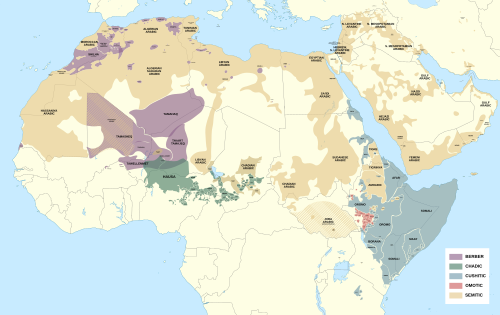
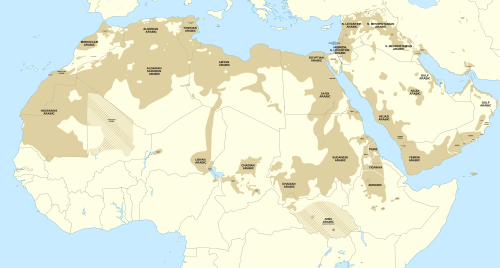 セム語族の現代的分布 | |
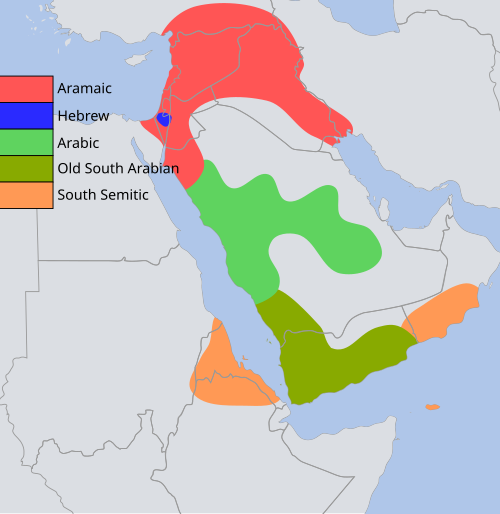
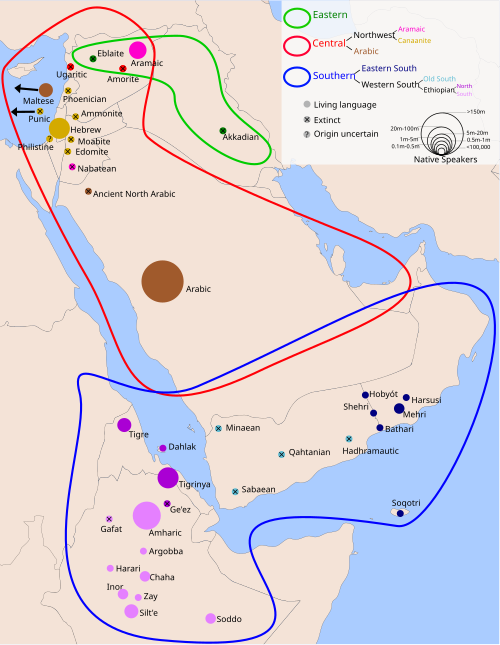 セム語族のおおよその歴史的分布 | |
セム語族はアフロアジア語族の一派である。アラビア語、 アムハラ語、ティグリニャ語、アラム語、ヘブライ語、マルタ語、その他多数の古代言語と現代言語が含まれる。西アジア、北アフリカ、[a]アフリカの角、[b] [c]マルタ、[d]の大半、および北米、ヨーロッパ、オーストラリアの大規模な移民・外国人コミュニティで、 3億3千万人以上がセム語を話している。この用語は1780年代にゲッティンゲン学派の歴史家によって初めて使用され、その名前は創世記に登場するノアの3人の息子の1人、セムに由来している。
セム語族の言語は西アジアでは非常に古い歴史の時代から書き言葉として見られ、東セム語族の アッカド語(アッシリア語、バビロニア語としても知られる)とエブラ語(シュメールの楔形文字を改変した文字で書かれた)の文書はそれぞれ紀元前2600年頃からメソポタミアと北東レバントで登場している。 これより古い言語として確認されているのは、シュメール語とエラム語(紀元前2800年~紀元前550年)で、どちらも孤立言語である。エジプト語(紀元前 3000年頃)はアフロアジア語族内の姉妹語派で、セム語族と関連はあるものの、セム語族の一部ではない。アモリ語は紀元前3000年頃にメソポタミアと北レバントに登場した。 紀元前2100年頃には、相互に理解可能なカナン語(ヘブライ語、フェニキア語、モアブ語、エドム語、アンモン語、おそらくはエクロン語、アマレク語、ステア語を含む)、紀元前2千年紀にはまだ話されていたアラム語、ウガリット語が続いた。
セム語族の言語表記に用いられる文字のほとんどはアブジャド文字である。これはアルファベットの文字 の一種で、一部または全部の母音を省略したものであるが、セム語族の言語では子音が意味を主に伝えるので、この方法はセム語族の言語には可能である。これにはウガリット語、フェニキア語、アラム語、ヘブライ語、シリア語、アラビア語、古代南アラビアのアルファベットが含まれる。エチオピアとエリトリアのセム語族の言語表記に用いられるゲエズ文字は、厳密にはアブギダ文字である 。これは修正されたアブジャド文字であり、他のセム語族の言語では必要に応じて、または導入目的で母音を示すのとは対照的に、母音は常に子音に付加された発音区別符号を用いて表記される。マルタ語はラテン文字で書かれる唯一のセム語族であり、欧州連合の公用語となっている唯一のセム語族の言語である。
セム語族は非連結形態論で有名です。つまり、語根はそれ自体が音節や単語ではなく、独立した子音のセットです (通常は 3 つで、いわゆる三文字語根を形成します)。語根から単語が構成されるのは、接頭辞や接尾辞を追加することではなく、語根子音の間に母音を埋め込むことによって行われますが、接頭辞や接尾辞が追加されることもよくあります。たとえば、アラビア語では、「書く」という意味の語根はktb という形式になります。この語源から、母音を埋め、時には子音を追加することで単語が形成されます。例: كِتاب k i t ā b「本」、كُتُب k u t u b「本」、كاتِب k ā t i b「作家」、كُتّاب k u tt ā b「作家」、كَتَب k a t a b a「彼は書いた」、يكتُب ya kt u b u「彼は書く」など。
名前と身分証明書

ヘブライ語、アラビア語、アラム語の類似性は、中世以来、すべての学者によって認められてきました。これらの言語は、近隣の近東諸国との歴史的な接触や聖書研究を通じて西ヨーロッパの学者によく知られており、ヘブライ語、アラビア語、アラム語の比較分析は、1538年にギヨーム・ポステルによってラテン語で出版されました。[4]ほぼ2世紀後、ヒオブ・ルドルフは、これら3つの言語とエチオピアのセム語族の言語との類似性を説明しました。 [5] [ページが必要]しかし、どちらの学者もこのグループを「セム語族」とは名付けませんでした。[ 5] [ページが必要]
「セム語」という用語は、ゲッティンゲン学派の歴史学者、最初はアウグスト・ルートヴィヒ・フォン・シュレーツァー(1781)によって、アラビア語、アラム語、ヘブライ語と密接な関係のある言語を指すために作られた。[6] [7]この名前の選択は、聖書の創世記の系図の記述にあるノアの3人の息子の1人であるセムに由来している。[8]より正確には、コイネーギリシャ語のΣήμ (Sēm)から派生した。ヨハン・ゴットフリート・アイヒホルンがこの用語を普及させたとされており、[9] [10] [8]特に1795年の論文「セム語派」で、カナンは諸国家一覧表で「ハム語派」であるにもかかわらず、ヘブライ語とカナン語は同じ言語であるという批判に対してこの用語を正当化した。[11]
モザイクの民族表でセム人として挙げられている名前は、純粋に、いわゆる東洋言語を話し、南西アジアに住む部族の名前です。これらの言語の歴史を遡る限り、これらの言語は常に音節文字またはアルファベット文字で書かれてきました(象形文字や象形文字で書かれたことはありません)。音節文字とアルファベット文字の発明に関する伝説は、セム人にまで遡ります。対照的に、いわゆるハム族はすべて、もともと象形文字を使用していましたが、セム人との接触、または彼らの間での定住を通じて、あちこちで彼らの音節文字またはアルファベット文字に親しみ、部分的に取り入れるようになりました。この観点からも、使用されているアルファベットに関して、「セム語族」という名前は完全に適切です。[12]
以前、これらの言語はヨーロッパ文学では「東洋言語」として一般的に知られていました。 [13] 19世紀には「セム語」が慣例的な名前になりましたが、後にジェームズ・カウルズ・プリチャードによって「シリア・アラビア語」という別名が提唱され、一部の作家によって使用されました。[10]
歴史
古代セム語族
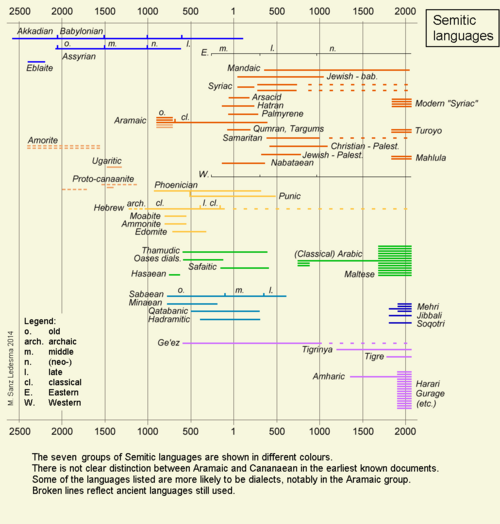
セム語族の言語は青銅器時代と鉄器時代に中東と小アジアの多くの地域で話され、書かれていたが、最も古い言語は紀元前3千年紀のメソポタミア(アッカド、アッシリア、イシン、ラルサ、バビロニア)の東セム系アッカド語であることが確認されている。[14]
セム語族の起源については、いまだ議論が続いている。セム語族の先史時代の起源の可能性がある場所として、メソポタミア、レバント、エチオピア、[15]東地中海地域、アラビア半島、北アフリカなどいくつかの場所が提案されている。2009年の研究によると、セム語族の言語は紀元前3750年頃にレバントで始まり、 紀元前800年頃にアラビア半島南部から アフリカの角に、ほぼ同時期にフェニキア人入植者によって北アフリカにもたらされた。 [16] [17]セム語族がアフリカの角に到着したのは、もっと古い時期だと考える人もいる。[18]別の仮説によると、セム語はさらに古い北アフリカの言語の分派から始まり、砂漠化によって紀元前4千年紀に住民が現在のエチオピアに移住し、他の住民はアフリカ北西部から西アジアに移住した。[19]
北西セム語族の一派であるカナン語族には、エドム語、ヘブライ語、アンモン語、モアブ語、フェニキア語(カルタゴ語)、サマリア語、エクロン語などがあり、これらは極めて近縁で相互に理解可能 な言語である。これらは、現在のイスラエルおよびパレスチナ自治区、シリア、レバノン、ヨルダン、シナイ半島北部、アラビア半島の北部および東部の一部、トルコ南西部で話されており、フェニキア語の場合は、チュニジア(カルタゴ)、リビア、アルジェリア、モロッコ、スペインの一部の沿岸地域、おそらくはマルタ島などの地中海諸島でも話されていた。北西セム語族のウガリット語は、カナン語族と近縁だがカナン語族とは異なる言語であり、シリア北西部の ウガリット王国で話されていた。

紀元前14世紀にはカナン(イスラエルとパレスチナ自治区、ヨルダン、レバノン)で、アッシリアとバビロニアのメソポタミア東セム語派のアッカド語と西セム語派のカナン語派の要素を組み合わせたカナン語とアッカド語の混合言語も出現した。[21]
アラム語は、紀元前12世紀に北レバント地方で初めて使用が確認できる、今も使われている古代北西セム語派の言語であり、紀元前8世紀にティグラト・ピレセル3世によって広大な新アッシリア帝国(紀元前911-605年)の共通語として採用され、その後、新バビロニア帝国やアケメネス朝にも引き継がれて、近東の多くの地域で東セム語派やカナン語派に徐々に取って代わっていった。[ 22 ]
カルデア語(アラム語やその聖書的変種、カルデア語と呼ばれることもある)は北西セム語族の言語であり、おそらくアラム語と密接な関係があるが、紀元前9世紀にレバントからメソポタミア南東部に定住した後、カルデア人は先住民のメソポタミア人のアッカド語とアラム語を急速に取り入れたようで、その言語の例は残っていない。
古代南アラビア語族(南セム語族に分類され、したがって中央セム語族のアラビア語とは異なる)は、ディルムン、シバ、ウバル、ソコトラ、マガンの各王国で話されていた。これらは現代の言葉で言えば、サウジアラビアの東海岸の一部、バーレーン、カタール、オマーン、イエメンにまたがっていた。[要出典]南セム語族は紀元前8世紀頃にアフリカの角に広まったと考えられており、そこでゲエズ語が出現した(ただし、影響の方向は不明である)。
西暦

古典シリア語は、紀元200年頃の[23] 中期アラム語の方言[24]で、メソポタミア、レバント、インドのケララ州で典礼言語として使用され、[25] 3世紀から5世紀にかけて初期キリスト教の文学言語として重要になり、初期イスラム時代まで続きました。
アラビア語はアラビア半島に起源を持つが、文字として最初に現れたのは西暦1世紀から4世紀にかけてレバント南部の地域である。7世紀と8世紀の初期のアラブ人の征服により、古典アラビア語は最終的に近東の土着のセム語族の言語と文化の多く(すべてではない)に取って代わった。近東と北アフリカの両方にアラビア半島からのイスラム教徒のアラブ人が流入し、その後、非セム系のイスラム教徒のイラン人とトルコ人が続いた。アッシリア人、バビロニア人、ペルシャ人によって維持されていた、かつては優勢だったアラム語の方言は徐々に脇に追いやられ始めましたが、東アラム語の子孫の方言(スレト(アッシリア方言とカルデア方言)、トゥロヨ、マンダ語を含む)は、イラク北部と南部、イラン北西部、シリア北東部、トルコ南東部のアッシリア人/シリア人やマンダ教徒の間で今日まで生き残っており、流暢に話す人は100万人に上ります。シリア語はイラクで公認言語であり、さらにメソポタミア・アラビア語は、シリア語、特にエデッサ方言がメソポタミアに起源を持つことから、アラビア語の中で最もシリアの影響を受けている方言の1つです。 [26]一方、西アラム語は現在、シリア西部の数千人のキリスト教徒とイスラム教徒のアラム人(シリア人)によってのみ話されています。アラブ人は中央セム語を北アフリカ(エジプト、リビア、チュニジア、アルジェリア、モロッコ、スーダン北部、モーリタニア)に広め、そこで徐々にエジプトのコプト語や多くのベルベル語に取って代わっていった(ベルベル語は多くの地域で今でも広く使用されているが)。また、一時期はイベリア半島(現在のスペイン、ポルトガル、ジブラルタル)やマルタにも広まった。
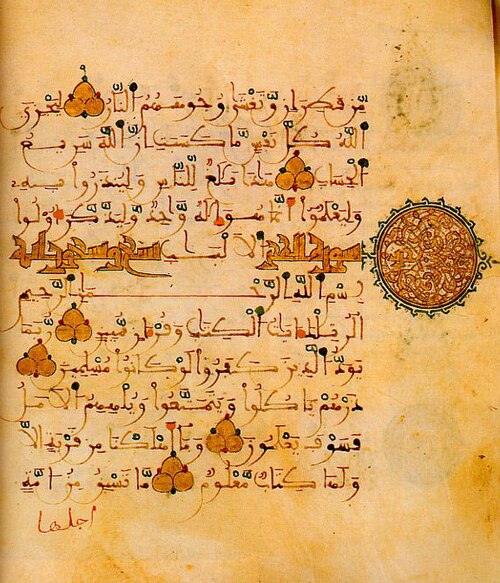
カリフの保護と典礼での地位の威信により、アラビア語は急速に世界の主要な文語の一つとなった。しかし、アラビア半島外の原住民の多く(すべてではないが)が徐々に自らの言語を捨ててアラビア語に移行したため、一般大衆への普及にはそれよりかなり長い時間を要した。ベドウィン族が征服地に定住すると、アラビア語は中央アラビアだけでなく、イエメン、[27]肥沃な三日月地帯、エジプトでも主要言語となった。マグリブの大半も、特に11世紀のバヌ・ヒラルの侵攻をきっかけにこれに続き、アル・アンダルスの多くの住民にとってアラビア語が母国語となった。14世紀にヌビアのドンゴラ王国が崩壊した後、アラビア語はエジプト南部の現代のスーダンに広がり始め、その後まもなくベニ・ハッサンがモーリタニアにアラビア化をもたらした。アラビア語とは異なる現代南アラビア語の多くは今も生き残っており、ソコトラ島、イエメン、オマーン などで主に話されているソコトリ語、メフリ語、シェフリ語などがある。
一方、紀元前8世紀にアラビア南部から伝わったセム語族の言語はエチオピアとエリトリアで多様化し、クシ語族の影響を強く受けてアムハラ語やティグリニャ語を含むいくつかの言語に分かれた。ソロモン王朝時代のエチオピアの拡大に伴い、以前はマイナーな地方言語であったアムハラ語が国土の大半に広がり、セム語族(ガファト語など)と非セム語族(ウェイト語など)の両方に取って代わり、主要な文語としてはゲエズ語に取って代わった(ただし、ゲエズ語は依然としてこの地域のキリスト教徒の典礼言語である)。この広がりは今日まで続いており、キマント語は次の世代で消滅すると見込まれている。
現在の分布
アラビア語は現在、モーリタニアからオマーン、イラクからスーダンに至る大多数の人々の母国語です。古典アラビア語はコーランの言語です。また、アラビア語を話さないイスラム世界でも広く学ばれています。マルタ語は、かつてシチリアで話されていたマグレブ・アラビア語の一種である、絶滅したシキュロ・アラビア語の子孫です。現代のマルタ語のアルファベットは、ラテン文字をベースに、発音区別符号と二重音字の付いた文字をいくつか追加したものです。マルタ語は、欧州連合内で唯一のセム語系の公用語です。
セム語族の言語の中には、現代の第一言語話者の数をはるかに超えて第二言語として成功しているものもあり、今日ではイスラム教(アラビア語)、ユダヤ教(ヘブライ語とアラム語(聖書とタルムード))、シリア正教会(古典シリア語)、エチオピアとエリトリアの正教会(ゲエズ語)など、世界の主要な宗教の聖典の基礎となっている言語がいくつかある。何百万人もの人々がこれらを第二言語(または現代語の古風なバージョン)として学んでいる。多くのイスラム教徒はコーランの読み書きを学んでおり、ユダヤ教徒はトーラー、ミドラーシュ、その他のユダヤ教の経典の言語である聖書ヘブライ語を話し、学んでいる。アッシリア東方教会、カルデア・カトリック教会、古代東方教会、アッシリア・ペンテコステ派教会、アッシリア福音教会、シリア正教会の信者は東方アラム語を話し、古典シリア語を典礼言語として使用する。古典シリア語は、主にアラビア語を話すマロン派教会、シリア・カトリック教会の信者によっても典礼で使用されており、もともとはアンティオキアと古代シリアのメルキト派の典礼言語であった。[28] [29] [30] [31 ] [32]コイネー・ギリシャ語と古典アラビア語は、アンティオキア、エルサレム、アレクサンドリアの総主教区を構成する中東の東方正教会の主要な典礼言語である。マンダ語はマンダ教徒によって話され、典礼言語としても使用されている。今日話されている新アラム語の方言の大部分は東部諸語から派生したものですが、シリアの 2 つの村では今でも 西方新アラム語が話されています。
中東ではアラビア語が優勢であるにもかかわらず、他のセム語族の言語もまだ存在している。聖書ヘブライ語は口語としては長い間消滅しており、ユダヤ人の文学、知的活動、典礼活動でのみ使用されていたが、19世紀末に話し言葉として復活した。現代ヘブライ語はイスラエルの主要言語であり、聖書ヘブライ語は世界中のユダヤ人の典礼と宗教学の言語として残っている。
アラビア半島の南端に位置するアラブ人が多数を占めるイエメンとオマーンでは、少数の部族がマハリ語やソコトリ語などの現代南アラビア語を話し続けている。これらの言語は、周囲のアラビア語方言とも、古南アラビア語碑文の言語とも大きく異なっている。
エチオピアとエリトリアは、古代南アラビア語族の半島の故郷と歴史的に結びついており、同国では現在ラジヒ語のみが残っているが、同国には相当数のセム語族の言語が存在する。最も広く話されているのは、エチオピアではアムハラ語、エリトリアではティグレ語、そして両国ではティグリニャ語である。アムハラ語はエチオピアの公用語である。ティグリニャ語はエリトリアでの使用言語である。ティグレ語は、エリトリアの北部および中央低地とスーダン東部の一部で100万人以上が話している。中央エチオピアの半山岳地帯では、多くのグラゲ語族の言語が話されているが、ハラリ語はハラール市に限定されて使用されている。ゲエズ語は、エチオピアとエリトリアの特定のキリスト教徒の集団にとって今でも礼拝言語となっている。
音韻論
ここでは、証明されたセム語族の音韻論を比較の観点から提示する(この記事で使用されているセム祖語の音韻的再構築の詳細については、セム祖語#音韻論を参照)。セム祖語(PS)の再構築は、もともと主にアラビア語に基づいていたが、その音韻論と形態論(特に古典アラビア語)は非常に保守的で、明らかな29の子音音素のうち28を対照的に保存している。[33] *s [ s ]と*š [ ʃ ]はアラビア語の/ s / ⟨ س ⟩に融合し、*ś [ ɬ ]はアラビア語の/ ʃ / ⟨ ش ⟩になる。
注: 摩擦音 *s、*z、*ṣ、*ś、*ṣ́、*ṱ は、破擦音 (/t͡s/、/d͡z/、/t͡sʼ/、/t͡ɬ/、/t͡ɬʼ/、/t͡θʼ/) として解釈されることもあります。これについては、セム祖語 § 摩擦音で説明されています。
この比較アプローチは子音に対しては自然です。なぜなら、セム語族の子音間の音の対応は、その時代的深さを考えると非常に単純だからです。母音に影響する音の変化はより多く、時にはそれほど規則的ではありません。
子音
それぞれのセム祖語の音素は、さまざまなセム語族の言語間の一定の規則的な音の対応を説明するために再構築されました。絶滅した言語のラテン文字の値 (イタリック体) は転写の問題であり、正確な発音は記録されていないことに注意してください。
証明された言語のほとんどは、再構築された元の摩擦音のいくつかを統合していますが、南アラビア語では 14 個の摩擦音がすべて保持されています (さらに、*p > f から 15 番目の摩擦音が追加されています)。
アラム語とヘブライ語では、母音の後に単独で現れるすべての非強勢破裂音は摩擦音に軟化され、その結果、二重音化が失われ、後に音素化されることが多かった。
強勢音の咽頭化を示す言語では、元々の軟口蓋強勢音はむしろ口蓋垂破裂音[q]へと発達した。
注意: 摩擦音 *s、*z、*ṣ、*ś、*ṣ́、*ṱ は破擦音 (/t͡s/、/d͡z/、/t͡sʼ/、/t͡ɬ/、/t͡ɬʼ/、/t͡θʼ/) として解釈されることもあります。
注:
- セム祖語の*ś は聖書ヘブライ語では依然として[ ɬ ]と発音されていたが、初期線文字には文字が存在せず、そのため ש は/ʃ/と/ɬ/ の両方を表す二重の役割を果たしていた。しかし後に/ɬ/ は/s/と合併したが、古い綴りはほぼそのまま残り、 ש の 2 つの発音はティベリアヘブライ語でשׁ /ʃ/とשׂ / s/ < /ɬ/として図式的に区別された。
- 七十人訳聖書の転写に基づくと、紀元前3世紀の時点でも聖書ヘブライ語ではġ /ʁ/とḫ /χ/の音素をそれぞれʻ /ʕ/とḥ /ħ/と区別していたようです。 /ɬ/の場合と同様に、これらの音を表す文字はなく、既存の文字が ח /χ/ /ħ/と ע /ʁ/ /ʕ/という2つの役割を果たしていました。しかし、どちらの場合も、同じ文字で表される2つの音は最終的に融合し、以前の区別を示す証拠は(初期の転写以外には)残っていません。
- 初期アラム語(紀元前7世紀以前)のアルファベットには子音が22個しかありませんでしたが、 *ḏ、*ṯ、*ṱ、*ś、*ṣ́、*ġ、*ḫを含む元々のセム祖語の29個の音素をすべて区別していたようです。 ただし、中期アラム語の時代までに、これらはすべて他の音と融合していました。この結論は主に、語源的にこれらの音を含む単語の表現の変化に基づいています。初期アラム語の表記では、最初の5つはそれぞれz、š、ṣ、š、qと融合していますが、後にd、t、ṭ、s、ʿと融合しています。[37] [38] (また、この合併後に起こったベガドケファト・スピラント化により、OAm. t > ṯ および d > ḏ の位置があり、PS *t,ṯ および *d, ḏ は、それぞれ t、ṯ および d、ḏ のいずれかとして実現されることにも留意してください。)音*ġおよび*ḫ は常に咽頭文字ʿおよびḥ を使用して表されましたが、紀元前200年頃に書かれたデモティック文字のパピルス Amherst 63では、これらは咽頭文字とは区別されています。 [39]これは、これらの音も古期アラム語では区別されていたが、後に合併したのと同じ文字を使用して書かれていたことを示唆しています。
- アッカド語では、初期の咽頭音は、隣接する*aをeで着色することで、*ḥ、*ʕの零反射音と区別できます。例:pS *ˈbaʕal-um「所有者、領主」> Akk. bēlu(m)。[40]
- ヘブライ語とアラム語は、ある時点でベガドケファト・スピラント化を経た。これにより、破裂音/b ɡ d k p t/ は、母音の後に現れて二重音化されない場合、対応する摩擦音[v ɣ ð x f θ] ( ḇ ḡ ḏ ḵ p̄ ṯと表記)に軟音化された。この変化は、おそらく元の古アラム語の音素/θ, ð/ が紀元前7世紀に消失した後に起こり、[41]最も可能性の高いのは、ヘブライ語の/χ, ʁ/が紀元前 200年頃に消失した後に起こった。[注 1]これは、西暦2世紀までにヘブライ語で起こったことが知られている。[43]ある時点以降、この交替は、語中および語尾の位置では対照的になったが(機能的負荷は低い)、語頭の位置では異音のままであった。[44]現代ヘブライ語では、二重音化が失われたため、この区別はより重要な機能を持つようになったが、摩擦音の3つ/v χ f/のみが依然として保持されている(摩擦音/x/は現代ヘブライ語では/χ/と発音される)。サマリア語では、このプロセスはまったく行われていない。
- 北西セム語族では、単語の先頭の*/w/ は*/j/になりました。たとえば、ヘブライ語では「boy」と叫びました< *wald (アラビア語のwaladを参照)。
- /j/が前主音位で後続の冠音に同化する規則の証拠があり、これはヘブライ語、フェニキア語、アラム語で共通している[説明が必要] 。 [45]
- アッシリア新アラム語には[ ħ ]は存在しない。一般的に、この言語には咽頭摩擦音[ ʕ ]がない(アイン語で聞かれる)。しかし、/ʕ/ は教育用語、特にアッシリアの司祭の間では保持されている。[46]
- セム祖語のgīm /g/ がアラビア語の/d͡ʒ/ jīmに軟口蓋化されたのは、おそらくqāf /q/ を/g/ gāf と発音したことと関係があると思われます ( この音変化はイエメン系ヘブライ語でも発生) 。そのため、アラビア半島(アラビア語の発祥地)のほとんどではجは jīm /d͡ʒ/、قは gāf /g/ですが、イエメン西部と南部、オマーンの一部ではجが gīm /g/、قが qāf /q/となっています。
- ウガリット語の正書法では、声門閉鎖音の後に母音が示されている。
- アラビア語の文字jīm ( ج ) には、現代標準アラビア語で主に 3 つの発音があります。[ d͡ʒ ]はアルジェリア北部、イラク、アラビア半島のほとんど、およびアラブ世界以外での文芸アラビア語の主な発音として使用され、[ ʒ ] はレバントのほとんどと北アフリカのほとんどで使用され、[ ɡ ] はエジプト北部、イエメンとオマーンの一部の地域で使用されます。その他のマイナーな異音に加えて。
- アラビア語の文字qāf ( ق )には、口語で主に 3 つの発音がある。[ ɡ ]アラビア半島の大部分、イエメン北部と東部、オマーンの一部、イラク南部、上エジプト、スーダン、リビア、レバント地方の一部、および程度は低いがマグリブの一部 (主に田舎) 。[ q ]チュニジア、アルジェリア、モロッコの大部分、イエメン南部と西部、オマーンの一部、イラク北部、レバント地方の一部、特にドゥルーズ派の方言。[ ʔ ]レバント地方と下エジプトの大部分、およびトレムセンやフェズなどの北アフリカの町の一部。その他、少数の異音。
- ṱ はẓ と書かれることもありウガリットとアラビア語のでは常にこの書き方になります。ウガリット語では、ġmʔ「渇いた」のようにġと同義になることもあります (アラビア語ではẓmʔ、ヘブライ語ではṣmʔですが、ウガリット語のmẓmủ「渇いた」、語源はẓmʔことも確認されています)。
- 初期のアムハラ語は異なる音韻を持っていた可能性がある。
- ʿAyinとḤetの発音 /ʕ/ と /ħ/ は、古いミズラヒ語話者の間では今でも使われていますが、現代のイスラエル人のほとんどにとって、ʿAyinとḤet はそれぞれ /ʔ、-/、/χ ~ x/ として認識されています。
次の表は、ヘブライ語、アラム語、アラビア語、マルタ語のさまざまな摩擦音が同源語を通じてどのように発展してきたかを示しています。
- おそらく破擦音 (/dz/ /tɬʼ/ /ʦʼ/ /tθʼ/ /tɬ/)
母音
祖セム語の母音は、セム語族の非連結形態論のため、一般的に推測するのが困難です。言語における母音の変化の歴史により、完全な対応表を作成することは不可能であるため、最も一般的な反射音のみを示すことができます。
- 強勢のある開音節で
- 二重音節の前の強勢のある閉音節で
- 子音連結の前の強勢のある閉音節
- 祖セム語の強勢母音が強勢のままであったとき
- pS *a,*ā > Akk. e,ē は pS *ʕ,*ħ の近くで r の前
- つまり、ps *g,*k,*ḳ,*χ > Ge'ez gʷ, kʷ,ḳʷ,χʷ / _u
文法
セム語族の言語は多くの文法的特徴を共有していますが、個々の言語間および言語自体の中での変化は時間の経過とともに自然に発生しました。
語順
祖セム語で再構築されたデフォルトの語順は、動詞–主語–目的語(VSO)、所有–所有者 (NG)、名詞–形容詞 (NA) である。これは古典アラビア語や聖書ヘブライ語でも当てはまり、例えば古典アラビア語 رأى محمد فريدا ra'ā muħammadun farīdan . (文字通り「ムハンマド・ファリドを見た」、ムハンマドはファリドを見た)。しかし、現代アラビア語の方言や、現代標準アラビア語(古典アラビア語に基づく現代文語) や現代ヘブライ語では、古典的な VSO の語順は SVO に取って代わられている。現代エチオピアのセム語族の言語は、SOV、所有–所有、形容詞–名詞という異なる語順になっている。しかし、最も古いエチオピアのセム語派の言語であるゲエズは、所有物-所有者、名詞-形容詞からなるVSOであった。[48]アッカド語も主にSOVであった。
名詞と形容詞の格
異なる母音語尾 (-u、-a -i) を伴うセム祖語の三格体系 (主格、目的格、属格) は、コーラン・アラビア語 ( ʾIʿrabを参照)、アッカド語、ウガリット語で完全に保存されているが、セム語族の多くの口語形態ではどこからも消えてしまった。現代標準アラビア語ではこのような格の区別が維持されているが、口語の影響により自由言語では典型的には失われている。エチオピア・セム語では対格語尾-nが保存されている。[注 3]北西部では、ほとんど確認されていないサマリア語で、複数形の主格-ūと斜格-īの格の区別が反映されている(古典アラビア語の同じ区別と比較)。[50]さらに、セム語の名詞と形容詞には状態のカテゴリがあり、不定状態は名詞化によって表現された。[51]
名詞の数
セム語族の言語には、もともと単数、双数、複数という 3 つの文法数がありました。古典アラビア語には、名詞、動詞、形容詞、代名詞に付される必須の双数 (つまり、2 つの実体を指すときは常に使用しなければならない) がまだあります。アラビア語の現代の多くの方言には、国名であるバーレーン ( baħr「海」+ -ayn「2」) のように、名詞にのみ付される双数があります。ヘブライ語にも、いくつかの名詞に双数が登場しますが ( šanaは「1 年」、šnatayimは「2 年」、šanimは「年」)、それらでは必須です。アラビア語とエチオピアの言語に最も多く見られる、複数形の不連続という奇妙な現象 (例えば、アラビア語のsadd「一つのダム」とsudūd「ダム」)は、部分的には原セム語に由来し、部分的にはより単純な語源から発展したものである可能性がある。
動詞の相と時制
すべてのセム語族言語は、動詞の活用に 2 つの異なる形態論スタイルを使用する。接尾辞の活用は、主語の人称、数、性別を示す接尾辞を取り、これは動詞の直接目的語 (「私は彼を見た」) や名詞の所有物 (「彼の犬」) を示すために使用される代名詞接尾辞にいくらか類似している。いわゆる接頭辞の活用は、実際には接頭辞と接尾辞の両方を取り、接頭辞は主に人称 (および場合によっては数や性別) を示し、接尾辞 (接尾辞の活用で使用されるものとはまったく異なる) は、接頭辞がこれを示していない場合は常に数と性別を示す。接頭辞の活用は、ʔ- t- y- n-接頭辞の特定のパターンで特徴付けられ、(1)接頭辞t-は単数形で二人称と三人称女性を示すために使用され、接頭辞y- は三人称男性を示す。 (2) 二人称男性単数と三人称女性単数に同じ単語が使われている。接頭辞の活用は非常に古く、アフロアジア語族のほぼすべての語族に明らかな類似語がある(つまり、少なくとも1万年前から存在している)。右の表は、セム祖語に近い形式を持つ古典アラビア語の接頭辞と接尾辞の活用例を示している。
セム祖語では、東セム語に大きく反映されているように、接頭辞活用は過去と非過去の両方に使用され、異なる発音が用いられる。アッカド語のniprus「我々は決めた」(過去形)、niptaras「我々は決めた」(完了形)、niparras「我々は決める」(非過去または未完了形)、および接尾辞活用のparsānu「我々は決めている/していた/決めるだろう」(状態)を参照。これらの特徴の一部、例えば非過去/未完了を示す二重音化は、一般にアフロアジア語に帰せられる。セム祖語には命令法という追加の形式があり、これは強勢の位置によってのみ過去形と区別された。命令法は終止強勢を持ち、過去形は終止強勢ではない(後退した)強勢を持つ。[52]
西セム語族は、この体系を大きく作り変えた。最も大きな変化は、中央セム語族(現代のヘブライ語、アラビア語、アラム語の祖先)で起きた。本質的には、古い接頭辞活用の命令法または過去形は新しい非過去形(または未完了形)になり、状態法は新しい過去形(または完了形)になり、古い接頭辞活用の二重助詞付き非過去形(または未完了形)は廃止された。新しい接尾辞は、非過去の異なる法を表すために使用された。例えば、古典アラビア語の-u(直説法)、-a(接続法)、および接尾辞なし(命令法)。さまざまなセム語の体系が、時制(過去形と非過去形)で解釈するのがよいのか、それとも相(完了形と未完了形)で解釈するのがよいのかについては、一般的には意見が一致していない。古典ヘブライ語の特徴は、動詞の時制や相を変えるために動詞の前に文字wawを付ける、 waw 連続形です。南セム語族は、東セム語族と中央セム語族の中間のような体系を示しています。
後の言語では、さらなる発展が見られます。たとえば、アラビア語の現代語形変化では、古い法接尾辞が削除され、新しい法接頭辞が開発されました (たとえば、直説法にはbi- が付くのに対し、多くの語形変化では接続法には接頭辞がありません)。極端な例では、新アラム語では、動詞の活用がイランの影響下で完全に作り直されました。
形態論: 三文字語根
すべてのセム語族の言語は、セム語根と呼ばれる独特の語幹パターンを示します。セム語根は、通常、3 文字または 3 つの子音からなる子音語根 (2 つまたは 4 つの子音からなる語根も存在します) で構成され、そこから名詞、形容詞、動詞がさまざまな方法 (たとえば、母音の挿入、子音の重複、母音の延長、接頭辞、接尾辞、または挿入語の追加) で形成されます。
たとえば、語根ktb (一般的に「書くこと」を扱います) は、アラビア語では次のようになります。
- k a t a b tu كَتَبْتُ または كتبت 「私は書きました」 (f と m)
- yu kt a b (u) يُكْتَب または يكتب 「書かれている」(男性)
- tu kt a b (u) تُكتَب または تكتب 「書かれている」(女性)
- yata k ā t a b ōn(a) يَتَكَاتَبُونَ または يتكاتبون 「彼らはお互いに手紙を書きます」(男性語)
- isti kt ā b اِستِكتاب または استكتاب 「書かせる」
- k i t ā b كِتَاب または كتاب 「本」(ハイフンはさまざまな格語尾の前の語幹の終わりを示します)
- k u t ayyi b كُتَيِّب または كتيب 「小冊子」(小文字)
- k i t ā bでكِتَابَة または كتابة 「書く」
- k u tt ā b كُتاب または كتاب 「作家」(複数形の崩れた形)
- k a t a bでكَتَبَة または كتبة 「店員」 (分割複数形)
- ma kt a b مَكتَب または مكتب 「デスク」または「オフィス」
- ma kt a b at مَكتَبة または مكتبة 「図書館」または「本屋」
- ma kt ü b مَكتوب または مكتوب 「書かれた」(分詞)または「郵便レター」(名詞)
- k a t ī b كَتيبةまたは كتيبة 「飛行隊」または「文書」
- i k ti t ā b اِكتِتاب または اكتتاب 「登録」または「資金の寄付」
- mu k ta t ib مُكتَتِب または مكتتب 「サブスクリプション」
ヘブライ語でも同じ語源です。
- k ā ṯ a ḇ ti כתבתי または כָּתַבְתִּי 「私は書きました」
- k a tt ā ḇ כתב または כַּתָּב 「記者」 ( m )
- k a tt e ḇ eṯ כתבת または כַּתָּבֶת 「記者」 ( f )
- k a tt ā ḇ ā כתבה または כַּתָּבָה 「記事」(複数形k a tt ā ḇ ōṯ כתבות)
- mi ḵt ā ḇ מכתב または מִכְתָּב 「郵便手紙」(複数形mi ḵt ā ḇ īm מכתבים)
- mi ḵt ā ḇ ā מכתבה 「ライティングデスク」 (複数形mi ḵt ā ḇ ōṯ מכתבות)
- k ə ṯ ō ḇ eṯ כתובת 「住所」(複数形k ə ṯ ō ḇ ōṯ כתובות)
- k ə ṯ ā ḇ כתב 「手書き」
- k ā ṯ ō ḇ כתוב 「書かれた」 ( f k ə ṯ ō ḇ ā כתובה)
- hi ḵt ī ḇ הכתיב 「彼は口述しました」 ( f hi ḵt ī ḇ ā הכתיבה)
- hiṯ k a tt ē ḇ התכתב 「彼は文通しました ( f hiṯ k a tt ə ḇ ā התכתבה)
- ni ḵt a ḇ נכתב 「それは書かれていた」 ( m )
- ni ḵt ə ḇ ā נכתבה 「それは書かれた」 ( f )
- k ə ṯ ī ḇ כתיב 「スペル」 ( m )
- ta ḵt ī ḇ תכתיב 「処方箋」 ( m )
- m' ə' ḵ u tt ā ḇ מכותב 「宛先人」 ( me ḵ u tt e ḇ eṯ מכותבת f )
- k ə ṯ u bb ā כתובה 「ケトゥバ(ユダヤ人の結婚契約)」 ( f )
(下線付きの子音⟨ḵ⟩、⟨ṯ⟩、⟨ḇ⟩はそれぞれ摩擦音/x/、/θ/、/v/ を表します。)
ティグリニャ語とアムハラ語では、この語根は広く使われていたが、現在では古風な形とみなされている。エチオピア語由来の言語では、書くこと(場合によっては数えること)に関係するものに異なる語根が使われている。原始語根ṣ-fと、三辺語幹m-ṣ-f、ṣ-hf、ṣ-frが使われている。この語根は、ヘブライ語などの他のセム語にも存在し、sep̄er「本」、sōp̄er「筆記者」、mispār「数」、sippūr 「物語」などがある。この語根はアラビア語にも存在し、 ṣhaḥāfa「ジャーナリズム」、ṣaḥīfa 「新聞」または「羊皮紙」など、「書くこと」に近い意味を持つ単語を形成するのに使われている。他の非セム系アフロアジア語族の動詞も同様の語根パターンを示すが、通常は二子音語根を持つ。例えば、カビル語の afeg は「飛べ!」を意味し、 affug は「飛行」を意味し、yufeg は「彼は飛んだ」を意味する(ヘブライ語と比較すると、hap̄lēḡは「出航!」を意味し、hap̄lāḡā は「航海旅行」を意味し、hip̄līḡ は「彼は航海した」を意味し、無関係なʕūp̄、təʕūp̄ā、およびʕāp̄ は飛行に関連する)。
独立した人称代名詞
基数
これらは、女性接尾辞のない基本的な数詞語幹です。ほとんどの古いセム語では、3 から 10 までの数詞の形は性別の極性(「キアズマ的一致」または「逆一致」とも呼ばれます) を示します。つまり、可算名詞が男性名詞の場合、数詞は女性名詞になり、その逆も同様です。
類型論
初期のセム語族の言語の中には、弱い能格特性を持っていたと推測されるものがある。[57]
共通語彙
セム語族の言語は共通の起源を持つため、いくつかの単語や語源は共通しています。その他の単語や語源は異なります。例:
括弧内の用語は、それぞれの祖セム語の語源から派生したものではないが、祖セム語から派生した可能性もある(例えばアラビア語のdār、聖書のヘブライ語dōr「住居」を参照)。
時々、特定の語源はセム語族の間で意味が異なります。たとえば、アラビア語の語源by-ḍ は「白」と「卵」の意味を持ちますが、ヘブライ語では「卵」のみを意味します。語源lbn はアラビア語では「ミルク」を意味しますが、ヘブライ語では「白」の色を意味します。語源l-ḥ-m はアラビア語では「肉」を意味しますが、ヘブライ語では「パン」、エチオピア・セム語では「牛」を意味します。元の意味はおそらく「食べ物」でした。medina (語源: dyn / dwn ) という単語は、アムハラ語では「大都市」、アラビア語と古代ヘブライ語では「都市」、現代ヘブライ語では「国家」の意味を持ちます。
もちろん、語源同士に関係がないこともあります。たとえば、「知識」はヘブライ語では語源yd-ʿで表されますが、アラビア語では語源ʿ-rfとʿ-lmで、エチオピア語では語源ʿ-wqとfl-ṭで表されます。
より詳しい比較語彙リストについては、ウィクショナリーの付録「セム祖語語幹一覧」を参照してください。
分類
セム語族には、東セム語族、北西セム語族、北アラビア語族、古南アラビア語族(サイハード語族としても知られる)、現代南アラビア語族、エチオピアセム語族の6つの比較的議論の余地のないグループがある。これらは通常さらにグループ化されるが、どれが一緒に属するかについては議論が続いている。以下に示す共通の革新に基づく分類は、 1976年にロバート・ヘッツロンによって確立され、後にジョン・ヒューナーガードとロジャーズによって修正され、ヘッツロン(1997)にまとめられているように、今日最も広く受け入れられている。特に、多くのセム学者は依然としてアラビア語を南セム語族の一部とする伝統的な(部分的に非言語的な)見解を主張しており、少数の人々(例えばアレクサンダー・ミリタレフやドイツ系エジプト人の教授アラファ・フセイン・ムスタファ[要出典])は現代南アラビア語族を南セム語族のサブグループではなく、東セム語族と西セム語族に並ぶセム語族の第3の支族と見なしている。しかし、新しい分類では、古代南アラビア語族を中央セム語族として分類しています。[58]
ロジャー・ブレンチは、グラゲ語族は非常に多様であり、エチオピアまたはその近辺でアフロアジア語族の起源を反映して、グラゲ語族が主要な分派ではないのではないかと指摘している。[59]より低いレベルでは、「言語」と「方言」の境界線をどこに引くかについて、いまだに一般的な合意が得られていない。これはアラビア語、アラム語、グラゲ語に特に関係する問題であり、アラビア語方言間の強い相互影響により、それらの遺伝的サブ分類が特に困難になっている。
キッチンら(2009)による計算系統解析では、セム語族の言語は前期青銅器時代の紀元前 3750年頃にレバント地方で発生し、初期のエチオピアセム語族は 紀元前 800年頃にアラビア南部で発生したと考えられています。[16]これと一致する遺伝子移動の証拠は、アルマリら(2021)で発見されました。[60]
ヒムヤール語族とステアン語族はセム語族であったと思われるが、データが不十分なため分類されていない。
- 概要分類
詳細リスト
- セム語
- 東セム語族(全絶滅)
- アッカド語
- 古代アッカド語
- バビロニア
- アッシリア
- カナン語-アッカド語
- エブライテ
- キシテ
- アッカド語
- 西セム語
- 中央セム語
- 北西セム語
- 北アラビア
- 古代アラビア語
- 古代アラビア語
- アラビア語
- 古典アラビア語
- マシュリク語(東アラビア語)(方言連続体)
- アラビア半島語(方言連続体)
- 古代ヒジャーズ語アラビア語
- アラビア湾岸言語
- バハラニ語(アラビア語)
- オマーン語アラビア語
- アラビア語のシーヒ語
- アラビア語ドファリ語
- イエメンアラビア語(方言連続体)
- ハドラマウ語アラビア語
- サンアニー語(アラビア語)
- アラビア語タジ・アデニ語
- アラビア語のタイッツィ
- アデニ語(アラビア語)
- ジブチ アラビア語
- ユダヤ・イエメン・アラビア語
- ティハミヤ アラビア語
- ヤフィア語
- 北西アラビア語(レバントベダウィ語、東エジプトベダウィ語)
- ナジュド語アラビア語
- アラビア語のバレキ
- エジプト・スーダン語アラビア語 (方言連続体)
- Levantine Arabic (dialect continuum)
- Mesopotamian Arabic/Iraqi Arabic (dialect continuum)
- Central Asian Arabic (dialect continuum)
- Bakhtiari Arabic
- Bukharian Arabic
- Kashkadarian Arabic
- Khorasani Arabic
- Shirvani Arabic (extinct)
- アラビア半島語(方言連続体)
- Maghrebi Arabic (Western Arabic) (dialect continuum)
- Pre-Hilalian dialects
- Pre-Hilalian Urban Arabic dialects
- Jebli Arabic
- Jijel Arabic
- Maghrebi Judeo-Arabic
- Siculo-Arabic
- Andalusi Arabic (extinct)
- Eastern pre-Hilali Dialects
- Western pre-Hilali dialects
- Hilalian dialects
- Sulaym dialects
- Eastern Hilali dialects
- Central Hilali dialects
- Western Hilali dialects
- Maqil dialects
- Koines
- Pre-Hilalian dialects
- ˀAzd dialect (extinct)
- Huḏayl dialect (extinct)
- Ṭayyiˀ dialect (extinct)
- アラビア語
- Safaitic (extinct)
- Hismaic (extinct)
- Hasaitic (extinct)
- Nabataean Arabic (extinct)
- 古代アラビア語
- Dadanitic ? (extinct)
- Thamudic ? (extinct)
- 古代アラビア語
- South Semitic
- Western South Semitic
- Ethiopic
- North Ethiopic
- South Ethiopic
- Transversal South Ethiopic
- Outer South Ethiopic
- n-group
- tt-group
- Mesmes (extinct)
- Muher
- West Gurage
- Mesqan
- Sebat Bet
- Old South Arabian (Ṣayhadic)
- Sabaic (extinct)
- Minaean (extinct)
- Qatabanian (extinct)
- Awsānian (extinct)
- Hadramautic (extinct)
- Razihi ?
- Faifi ?
- Himyaritic ? (extinct)
- Ethiopic
- Modern South Arabian (Eastern South Semitic)
- Western South Semitic
- 中央セム語
- Unclassified
- Sutean (extinct)
- 東セム語族(全絶滅)
Semitic-speaking peoples
The following is a list of some modern and ancient Semitic-speaking peoples and nations:
Central Semitic
- Amorites
- Arabs
- Alawites
- Ancient North Arabian-speaking bedouins
- Itureans
- Nabataeans
- Tayy
- Thamud – 2nd to 5th centuries AD
- Arameans – an ancient Northwest Semitic people. They had various kingdoms and city-states and were historically organized in tribal structures.
- Ahlamu
- Arameans (Syriacs) – a minority ethnic group in the Qalamoun mountains who still speak Western Aramaic.[61][62][63][64][65][66][67][68][69][70]
- Mhallami
- Canaanite-speaking nations of the early Iron Age:
- Ammonites
- Edomites – appeared in Transjordan between 11th to 2nd centuries BCE. Eventually assimilated into Jewish population during Hasmonean conquest.[71]
- Hebrews/Israelites – founded the nation of Israel which later split into the Kingdoms of Israel and Judah.
- Moabites
- Phoenicians – founded Mediterranean colonies including Tyre, Sidon and ancient Carthage/Punics. The remnants of these people became the modern inhabitants of Lebanon.
- Chaldea – appeared in southern Mesopotamia c. 1000 BC and eventually disappeared into the general Babylonian population.
- Druze
- Maltese
- Mandaeans
- Maronites
- Samalians
- Ugarites – 14th to 12th centuries BC
East Semitic
- Akkadians – ancient East Semitic speakers who moved from the Arabian Desert[72] into Mesopotamia in the fourth millennium BC and settled among the indigenous peoples of Sumer.[73][74]
- Assyrians
- Modern Assyrian people
- Babylonians
- Assyrians
- Eblaites – 23rd century BC
South Semitic
- Abyssinian-speaking peoples
- Axum – 4th century BC to 7th century AD
- Amhara people
- Argobba people
- Dahalik people
- Gurage people
- Harari people
- Beta Israel, Beta Abraham, and Falash Muras.
- Jeberti people
- Silt'e people
- Tigrigna People
- Tigray people
- Tigre people
- Wolane people
- Zay people
- Old and Modern South Arabian-speaking peoples
- Bathari people
- Faifi people
- Ancient Hadramitic-speakers. Eventually evolved into the modern day Hadhrami people.
- Himyarites from 110 BCE until 578 CE
- Harsusi people
- Hobyot people
- Mehri people
- Minaeans – 8th century BCE to 2nd centuries BC
- Qatabanians
- Shehri people
- Razihi people
- Sabaeans of Yemen – 8th to 1st centuries BC
- Soqotri people
Unknown
- Suteans – 14th century BC
See also
Notes
- ^ According to the generally accepted view, it is unlikely that begadkefat spirantization occurred before the merger of /χ, ʁ/ and /ħ, ʕ/, or else [x, χ] and [ɣ, ʁ] would have to be contrastive, which is cross-linguistically rare. However, Blau argues that it is possible that lenited /k/ and /χ/ could coexist even if pronounced identically, since one would be recognized as an alternating allophone (as apparently is the case in Nestorian Syriac).[42]
- ^ see Canaanite shift
- ^ "In the historically attested Semitic languages, the endings of the singular noun-flexions survive, as is well known, only partially: in Akkadian and Arabic and Ugaritic and, limited to the accusative, in Ethiopic."[49]
- ^ While some believe that *ʔanāku was an innovation in some branches of Semitic utilizing an "intensifying" *-ku, comparison to other Afro-Asiatic 1ps pronouns (e.g. 3nk, Coptic anak, anok, proto-Berber *ənakkʷ) suggests that this goes further back.[53]
- ^ The Akkadian form is from Sargonic Akkadian. Among the Semitic languages, there are languages with /i/ as the final vowel (this is the form in Mehri). For a recent discussion concerning the reconstruction of the forms of the dual pronouns, see Bar-Asher, Elitzur. 2009. "Dual Pronouns in Semitics and an Evaluation of the Evidence for their Existence in Biblical Hebrew," Ancient Near Eastern Studies 46: 32–49
- ^ This root underwent regressive assimilation.[55][page needed] This parallels the non-adjacent assimilation of *ś... > *š...š in proto-Canaanite or proto-North-West-Semitic in the roots *śam?š > *šamš 'sun' and *śur?š > *šurš 'root'.[56] The form *ṯalāṯ- appears in most languages (e.g. Aramaic, Arabic, Ugaritic), but the original form ślṯ appears in the Old South Arabian languages, and a form with s < *ś (rather than š < *ṯ) appears in Akkadian.
- ^ This root was also assimilated in various ways. For example, Hebrew reflects *šišš-, with total assimilation; Arabic reflects *šitt- in cardinal numerals, but less assimilated *šādiš- in ordinal numerals. Epigraphic South Arabian reflects original *šdṯ; Ugaritic has a form ṯṯ, in which the ṯ has been assimilated throughout the root.[55][page needed]
References
- ^ Owens 2013, p. 2.
- ^ Hudson & Kogan 1997, p. 457.
- ^ Hudson & Kogan 1997, p. 424; Austin 2008, p. 74
- ^ Kuntz 1981, p. 25.
- ^ a b Ruhlen 1991.
- ^ Vermeulen, H.F. (2015). Before Boas: The Genesis of Ethnography and Ethnology in the German Enlightenment. Critical Studies in the History of Anthropology Series. University of Nebraska Press. ISBN 978-0-8032-7738-0. Archived from the original on 7 October 2022. Retrieved 7 October 2022.
Schlözer 1781: p.161 "From the Mediterranean to the Euphrates, from Mesopotamia to Arabia ruled one language, as is well known. Thus Syrians, Babylonians, Hebrews, and Arabs were one people (ein Volk). Phoenicians (Hamites) also spoke this language, which I would like to call the Semitic (die Semitische). To the north and east of this Semitic language and national district (Semitische Sprach- und VölkerBezirke) begins a second one: With Moses and Leibniz I would like to call it the Japhetic."
- ^ Kiraz 2001, p. 25; Baasten 2003, p. 67
- ^ a b Kiraz 2001, p. 25.
- ^ Baasten 2003, p. 68-69.
- ^ a b Kitto 1845, p. 192.
- ^ Eichhorn 1794, pp. 773–6; Baasten 2003, p. 69
- '^ Johann Gottfried Eichhorn, Semitische Sprachen, 1795
- ^ Kiraz 2001, p. 25; Kitto 1845, p. 192
- ^ [1] Archived 2020-07-31 at the Wayback Machine Andrew George, "Babylonian and Assyrian: A History of Akkadian", In: Postgate, J. N., (ed.), Languages of Iraq, Ancient and Modern. London: British School of Archaeology in Iraq, pp. 37.
- ^ Murtonen, A. (1967). "Early Semitic. A diachronical inquiry into the relationship of Ethiopic to the other so-called South-East Semitic languages". Archived from the original on 13 May 2023. Retrieved 28 March 2023.
- ^ a b Kitchen, Ehret & Assefa 2009, pp. 2703–10.
- ^ "Semite". Encyclopædia Britannica. Archived from the original on 7 May 2015. Retrieved 24 March 2014.
- ^ Phillipson, David (2012). Foundations of an African Civilization, Aksum and the Northern Horn 1000 BC-AD 1300. Boydell & Brewer. p. 11. ISBN 9781846158735. Archived from the original on 6 May 2021. Retrieved 6 May 2021.
The former belief that this arrival of South-Semitic-speakers took place in about the second quarter of the first millennium BC can no longer be accepted in view of linguistic indications that these languages were spoken in the northern Horn at a much earlier date.
- ^ "The Origin of the Jews: The Quest for Roots in a Rootless Age By Steven Weitzman page 69". Archived from the original on 16 July 2023. Retrieved 14 March 2023.
- ^ Brandão 2020, p. 23.
- ^ Izre'el 1987c, p. 4.
- ^ Waltke & O'Connor 1990, p. 8.
- ^ "…Syriac, the Classical dialect of Aramaic first attested in Edessa, about 200 CE, but which spread through the Christian communities of Mesopotamia and the Levant in the following centuries.", Revival and Awakening American Evangelical Missionaries in Iran and the Origins of Assyrian Nationalism, p.49
- ^ Brock 1998, p. 708.
- ^ Harrak 1992, pp. 209–14.
- ^ Afsaruddin & Zahniser 1997, p. 464; Smart 2013, p. 253; Sánchez 2013, p. 129
- ^ Nebes 2005, p. 335.
- ^ CLASSICAL SYRIAC. Gorgias Handbooks. p. 14.
In contrast to "Nestorians" and "Jacobites", a small group of Syriacs accepted the decisions of the Council of Chalcedon. Non-Chalcedonian Syriacs called them "Melkites" (from Aramaic malka "king"), thereby connecting them to the Byzantine Emperor's denomination. Melkite Syriacs were mostly concentrated around Antioch and adjacent regions of northern Syria and used Syriac as their literary and liturgical language. The Melkite community also included the Aramaic-speaking Jewish converts to Christianity in Palestine and the Orthodox Christians of Transjordan. During the 5th-6th centuries, they were engaged in literary work (mainly translation) in Palestinian Christian Aramaic, a Western Aramaic dialect, using a script closely resembling the Estrangela cursive of Osrhoene.
- ^ "JACOB BARcLAY, Melkite Orthodox Syro-Byzantine Manuscripts in Syriac and Palestinian Aramaic" quote from the German book Internationale Zeitschriftenschau für Bibelwissenschaft und Grenzgebiete, p. 291
- ^ "However, in contrast to what went on in northern Syria and Mesopotamia, where Syriac competed well with Greek to remain a great cultural language, Syropalestinian was in a weak position with regard to Greek and, later, to Arabic." quote from the book The Fourth International Conference on the History of Bilād Al-Shām During the Umayyad Period: English section, p.31
- ^ "Some Chalcedonians of Palestine and the Transjordan chose to write in Christian Palestinian Aramaic (CPA) rather than Syriac." quote from the book A Companion to Byzantine Epistolography, p.68
- ^ Arman Akopian (11 December 2017). "Other branches of Syriac Christianity: Melkites and Maronites". Introduction to Aramean and Syriac Studies. Gorgias Press. p. 573. ISBN 9781463238933.
The main center of Aramaic-speaking Melkites was Palestine. During the 5th-6th centuries, they were engaged in literary, mainly translation work in the local Western Aramaic dialect, known as "Palestinian Christian Aramaic", using a script closely resembling the cursive Estrangela of Osrhoene. Palestinian Melkites were mostly Jewish converts to Christianity, who had a long tradition of using Palestinian Aramaic dialects as literary languages. Closely associated with the Palestinian Melkites were the Melkites of Transjordan, who also used Palestinian Christian Aramaic. Another community of Aramaic-speaking Melkites existed in the vicinity of Antioch and parts of Syria. These Melkites used Classical Syriac as a written language, the common literary language of the overwhelming majority of Christian Arameans.
- ^ Versteegh 1997, p. 13.
- ^ Kogan (2011), p. 54.
- ^ Kogan 2012, pp. 54–151.
- ^ Watson 2002, p. 13.
- ^ Bekins, Peter (12 September 2008). "Old Aramaic (c. 850 to c. 612 BCE)". Archived from the original on 18 October 2011. Retrieved 22 August 2011.
- ^ Harrison, Shelly. "LIN325: Introduction to Semitic Languages. Common Consonant Changes" (PDF). Archived from the original (PDF) on 21 August 2006. Retrieved 25 June 2006.
- ^ Kaufman, Stephen (1997), "Aramaic", in Hetzron, Robert (ed.), The Semitic Languages, Routledge, pp. 117–119.
- ^ Dolgopolsky 1999, p. 35.
- ^ Dolgopolsky 1999, p. 72.
- ^ Blau 2010, p. 56.
- ^ Dolgopolsky 1999, p. 73.
- ^ Blau (2010:78–81)
- ^ Garnier, Romain; Jacques, Guillaume (2012). "A neglected phonetic law: The assimilation of pretonic yod to a following coronal in North-West Semitic". Bulletin of the School of Oriental and African Studies. 75 (1): 135–145. CiteSeerX 10.1.1.395.1033. doi:10.1017/s0041977x11001261. S2CID 16649580. Archived from the original on 12 April 2023. Retrieved 29 June 2014.
- ^ Brock, Sebastian (2006). An Introduction to Syriac Studies. Piscataway, NJ: Gorgias Press. ISBN 1-59333-349-8.
- ^ Dolgopolsky 1999, pp. 85–86.
- ^ Greenberg 1999, p. 157.
- ^ Moscati 1958, pp. 142–43.
- ^ Hetzron 1997, p. 123.
- ^ "Semitic languages | Definition, Map, Tree, Distribution, & Facts". Encyclopedia Britannica. Archived from the original on 25 April 2020. Retrieved 23 January 2020.
- ^ Hetzron, Kaye & Zuckermann 2018, p. 568.
- ^ Dolgopolsky 1999, pp. 10–11.
- ^ Weninger, Stefan (2011). "Reconstructive Morphology". In Weninger, Stefan (ed.). Semitic languages: an international handbook. Berlin: Walter de Gruyter. p. 166. doi:10.1515/9783110251586.151. ISBN 978-3-11-018613-0.
- ^ a b Lipiński 2001.
- ^ Dolgopolsky 1999, pp. 61–62.
- ^ Müller 1995, pp. 261–71; Coghill 2016[page needed]
- ^ Hackett 2006, pp. 929–35.
- ^ Blench, Roger (2006). Archaeology, Language, and the African Past. Lanham, Maryland: Altamira Press. p. 157. ISBN 978-0-7591-0466-2. Archived from the original on 26 May 2024. Retrieved 3 February 2024.
- ^ Almarri, Mohamed A.; Haber, Marc; Lootah, Reem A.; Hallast, Pille; Turki, Saeed Al; Martin, Hilary C.; Xue, Yali; Tyler-Smith, Chris (2020). "The Genomic History of the Middle East". Cell. 184 (18): 4612–4625.e14. bioRxiv 10.1101/2020.10.18.342816. doi:10.1016/j.cell.2021.07.013. PMC 8445022. PMID 34352227. Archived from the original on 25 February 2022. Retrieved 24 December 2021.
- ^ Abū al-Faraj ʻIshsh. اثرنا في الايقليم السوري (in Arabic). Al-Maṭbaʻah al-Jadīdah. p. 56.
السريان في معلولا وجبعدين ولا يزال الأهلون فيها يتكلمون
- ^ iنصر الله، إلياس أنطون. إلياس أنطون نصر الله في معلولا (in Arabic). لينين. p. 45.
... معلولا السريان منذ القديم ، والذين ثبتت سريانيتهم بأدلة كثيرة هم وعين التينة وبخعا وجبعدين فحافظوا على لغتهم وكتبهم أكثر من غيرهم . وكان للقوم في تلك الأيام لهجتان ، لهجة عاميّة وهي الباقية الآن في معلولا وجوارها ( جبعدين وبخعا ) ...
- ^ Rafik Schami (25 July 2011). Märchen aus Malula (in German). Carl Hanser Verlag GmbH & Company KG. p. 151. ISBN 9783446239005.
Ich kenne das Dorf nicht, doch gehört habe ich davon. Was ist mit Malula?‹ fragte der festgehaltene Derwisch. >Das letzte Dorf der Aramäer< lachte einer der…
- ^ Yaron Matras; Jeanette Sakel (2007). Grammatical Borrowing in Cross-Linguistic Perspective. De Gruyter. p. 185. doi:10.1515/9783110199192. ISBN 9783110199192. Archived from the original on 26 May 2024. Retrieved 1 May 2024.
The fact that nearly all Arabic loans in Ma'lula originate from the period before the change from the rural dialect to the city dialect of Damascus shows that the contact between the Aramaeans and the Arabs was intimate…
- ^ Dr. Emna Labidi (2022). Untersuchungen zum Spracherwerb zweisprachiger Kinder im Aramäerdorf Dschubbadin (Syrien) (in German). LIT. p. 133. ISBN 9783643152619. Archived from the original on 26 May 2024. Retrieved 1 May 2024.
Aramäer von Ǧubbˁadīn
- ^ Prof. Dr. Werner Arnold; P. Behnstedt (1993). Arabisch-aramäische Sprachbeziehungen im Qalamūn (Syrien) (in German). Harassowitz. p. 42. ISBN 9783447033268.
Die arabischen Dialekte der Aramäer
- ^ Prof. Dr. Werner Arnold; P. Behnstedt (1993). Arabisch-aramäische Sprachbeziehungen im Qalamūn (Syrien) (in German). Harassowitz. p. 5. ISBN 9783447033268.
Die Kontakte zwischen den drei Aramäer-dörfern sind nicht besonders stark.
- ^ Prof. Dr. Werner Arnold (2006). Lehrbuch des Neuwestaramäischen (in German). Harrassowitz. p. 133. ISBN 9783447053136. Archived from the original on 26 May 2024. Retrieved 1 May 2024.
Aramäern in Ma'lūla
- ^ Prof. Dr. Werner Arnold (2006). Lehrbuch des Neuwestaramäischen (in German). Harrassowitz. p. 15. ISBN 9783447053136.
Viele Aramäer arbeiten heute in Damaskus, Beirut oder in den Golfstaaten und verbringen nur die Sommermonate im Dorf.
- ^ "Hilfe für das Aramäerdorf Maaloula e.V. | an aid project in Syria". Archived from the original on 16 January 2024. Retrieved 1 December 2023.
- ^ Weitzman, Steven (1999). "Forced Circumcision and the Shifting Role of Gentiles in Hasmonean Ideology". The Harvard Theological Review. 92 (1): 37–59. doi:10.1017/S0017816000017843. ISSN 0017-8160. JSTOR 1510155. S2CID 162887617. Archived from the original on 26 May 2024. Retrieved 28 December 2023.
- ^ Zaide, Gregorio F. (16 December 1994). World History. Rex Bookstore. p. 57. ISBN 9789712314728.
About 3000 B.C. the nomadic Akkadians, a Semitic people from the Arabian Desert, migrated to Mesopotamia and founded the city-state of Akkad in a region north of Sumer.
- ^ "Mesopotamian religion – Britannica Online Encyclopedia". Britannica.com. Archived from the original on 30 March 2019. Retrieved 27 January 2013.
- ^ "Akkadian language – Britannica Online Encyclopedia". Britannica.com. Archived from the original on 26 July 2008. Retrieved 27 January 2013.
Bibliography
- Afsaruddin, Asma; Zahniser, A. H. Mathias (1997). Humanism, Culture, and Language in the Near East: Studies in Honor of Georg Krotkoff. Winona Lake, Ind.: Penn State University Press. doi:10.5325/j.ctv1w36pkt. ISBN 978-1-57506-020-0. JSTOR 10.5325/j.ctv1w36pkt. Archived from the original on 27 March 2022. Retrieved 27 March 2022.
- Austin, Peter K., ed. (2008). One Thousand Languages: Living, Endangered, and Lost. Berkeley: University of California Press. ISBN 978-0-520-25560-9. Archived from the original on 26 May 2024. Retrieved 19 December 2021.
- Baasten, Martin F. J. (2003). "A Note on the History of 'Semitic'". In Baasten, M. F. J.; Van Peursen, W. Th. (eds.). Hamlet on a Hill: Semitic and Greek Studies Presented to Professor T. Muraoka on the Occasion of His Sixty-fifth Birthday. Peeters. pp. 57–73. ISBN 90-429-1215-4.
- Bennett, Patrick R. (1998). Comparative Semitic Linguistics: A Manual. Winona Lake, Indiana: Eisenbrauns. ISBN 1-57506-021-3.
- Blau, Joshua (2010). Phonology and Morphology of Biblical Hebrew. Winona Lake, Indiana: Eisenbrauns. ISBN 978-1-57506-129-0.
- Coghill, Eleanor (2016). The Rise and Fall of Ergativity in Aramaic: Cycles of Alignment Change. Oxford: Oxford University Press. ISBN 978-0-19-872380-6.
- Davies, John (1854). "On the Semitic Languages, and their relations with the Indo-European Class. Pt I. On the Nature and Development of Semitic Roots". Transactions of the Philological Society (10). Archived from the original on 25 February 2022. Retrieved 21 September 2018.
- Davies, John (1854). "On the Semitic Languages, and their relations with the Indo-European Class. Pt II. On the Connection of Semitic Roots with corresponding forms in the Indo-European Class of Languages". Transactions of the Philological Society (13). Archived from the original on 25 February 2022. Retrieved 21 September 2018.
- Dolgopolsky, Aron (1999). From Proto-Semitic to Hebrew. Milan: Centro Studi Camito-Semitici di Milano.
- Eichhorn, Johann Gottfried (1794). Allgemeine Bibliothek der biblischen Literatur [General Library of Biblical Literature] (in German). Vol. 6. Archived from the original on 26 May 2024. Retrieved 26 August 2020.
- Brock, Sebastian (1998). "Syriac Culture, 337–425". In Cameron, Averil; Garnsey, Peter (eds.). The Cambridge Ancient History. Vol. 13: The Late Empire, A.D. 337–425. Cambridge: Cambridge University Press. pp. 708–719. ISBN 0-521-85073-8. Archived from the original on 26 May 2024. Retrieved 19 December 2021.
- Greenberg, Joseph H. (1999). "The Diachronic Typological Approach to Language". In Shibatani, Masayoshi; Bynon, Theodora (eds.). Approaches to Language Typology. Oxford: Oxford University Press. pp. 145–166. ISBN 0-19-823866-5. Archived from the original on 26 May 2024. Retrieved 2 January 2022.
- Bergsträsser, Gotthelf (1995). Introduction to the Semitic Languages: Text Specimens and Grammatical Sketches. Translated by Daniels, Peter T. Winona Lake, Indiana: Eisenbrauns. ISBN 0-931464-10-2.
- Garbini, Giovanni (1984). Le lingue semitiche: studi di storia linguistica [Semitic languages: studies of linguistic history] (in Italian). Naples: Istituto Orientale.
- Garbini, Giovanni; Durand, Olivier (1994). Introduzione alle lingue semitiche [Introduction to Semitic languages] (in Italian). Brescia: Paideia.
- Goldenberg, Gideon (2013). Semitic Languages: Features, Structures, Relations, Processes. Oxford University Press. ISBN 978-0-19-964491-9.
- Hackett, Jo Ann (2006). "Semitic Languages". In Keith Brown; Sarah Ogilvie (eds.). Concise Encyclopedia of Languages of the World. Elsevier. pp. 929–935. ISBN 9780080877754. Archived from the original on 26 May 2024. Retrieved 26 August 2020 – via Google Books.
- Harrak, Amir (1992). "The ancient name of Edessa". Journal of Near Eastern Studies. 51 (3): 209–214. doi:10.1086/373553. JSTOR 545546. S2CID 162190342.
- Hetzron, Robert (1997). The Semitic Languages. Routledge. ISBN 978-0-415-05767-7.
- Hetzron, Robert; Kaye, Alan S.; Zuckermann, Ghil'ad (2018). "Semitic Languages". In Comrie, Bernard (ed.). The World's Major Languages (3rd ed.). London: Routledge. pp. 568–576. doi:10.4324/9781315644936. ISBN 978-1-315-64493-6. Archived from the original on 19 December 2021. Retrieved 19 December 2021.
- Hudson, Grover; Kogan, Leonid E. (1997). "Amharic and Argobba". In Hetzron, Robert (ed.). The Semitic Languages. New York: Routledge. pp. 457–485. ISBN 0-415-05767-1. Archived from the original on 26 May 2024. Retrieved 26 August 2020.
- Izre'el, Shlomo (1987c), Canaano-Akkadian (PDF), archived (PDF) from the original on 21 October 2020, retrieved 10 August 2020
- Kiraz, George Anton (2001). Computational Nonlinear Morphology: With Emphasis on Semitic Languages. Cambridge University Press. p. 25. ISBN 9780521631969.
The term "Semitic" is borrowed from the Bible (Gene. x.21 and xi.10–26). It was first used by the Orientalist A. L. Schlözer in 1781 to designate the languages spoken by the Aramæans, Hebrews, Arabs, and other peoples of the Near East (Moscati et al., 1969, Sect. 1.2). Before Schlözer, these languages and dialects were known as Oriental languages.
- Kitchen, A.; Ehret, C.; Assefa, S. (2009). "Bayesian phylogenetic analysis of Semitic languages identifies an Early Bronze Age origin of Semitic in the Near East". Proceedings. Biological Sciences. 276 (1668): 2703–10. doi:10.1098/rspb.2009.0408. PMC 2839953. PMID 19403539.
- Kitto, John (1845). A Cyclopædia of Biblical Literature. London: W. Clowes and Sons.
That important family of languages, of which the Arabic is the most cultivated and most widely-extended branch, has long wanted an appropriate common name. The term Oriental languages, which was exclusively applied to it from the time of Jerome down to the end of the last century, and which is even now not entirely abandoned, must always have been an unscientific one, inasmuch as the countries in which these languages prevailed are only the east in respect to Europe; and when Sanskrit, Chinese, and other idioms of the remoter East were brought within the reach of our research, it became palpably incorrect. Under a sense of this impropriety, Eichhorn was the first, as he says himself (Allg. Bibl. Biblioth. vi. 772), to introduce the name Semitic languages, which was soon generally adopted, and which is the most usual one at the present day. [...] In modern times, however, the very appropriate designation Syro-Arabian languages has been proposed by Dr. Prichard, in his Physical History of Man. This term, [...] has the advantage of forming an exact counterpart to the name by which the only other great family of languages with which we are likely to bring the Syro-Arabian into relations of contrast or accordance, is now universally known—the Indo-Germanic. Like it, by taking up only the two extreme members of a whole sisterhood according to their geographical position when in their native seats, it embraces all the intermediate branches under a common band; and, like it, it constitutes a name which is not only at once intelligible, but one which in itself conveys a notion of that affinity between the sister dialects, which it is one of the objects of comparative philology to demonstrate and to apply.
- Kogan, Leonid (2012). "Proto-Semitic Phonology and Phonetics". In Weninger, Stefan (ed.). The Semitic Languages: An International Handbook. Walter de Gruyter. ISBN 978-3-11-025158-6.
- Kuntz, Marion Leathers (1981). Guillaume Postel: Prophet of the Restitution of All Things His Life and Thought. The Hague: Nijhoff. ISBN 90-247-2523-2. Archived from the original on 26 May 2024. Retrieved 17 December 2021.
- Kogan, Leonid (2011). "Proto-Semitic Phonology and Phonetics". In Weninger, Stefan (ed.). The Semitic Languages: An International Handbook. Walter de Gruyter. ISBN 978-3-11-025158-6. Archived from the original on 18 October 2023. Retrieved 7 May 2017.
- Levine, Donald N. (2000). Greater Ethiopia: The Evolution of a Multiethnic Society (2. ed.). University of Chicago Press. ISBN 978-0-226-22967-6. Archived from the original on 26 May 2024. Retrieved 17 December 2021.
- Lipiński, Edward (2001). Semitic Languages: Outline of a Comparative Grammar (2nd ed.). Leuven: Peeters. ISBN 90-429-0815-7.
- Mustafa, Arafa Hussein. 1974. Analytical study of phrases and sentences in epic texts of Ugarit. (German title: Untersuchungen zu Satztypen in den epischen Texten von Ugarit). Dissertation. Halle-Wittenberg: Martin-Luther-University.
- Moscati, Sabatino (1969). An Introduction to the Comparative Grammar of the Semitic Languages: Phonology and Morphology. Wiesbaden: Harrassowitz.
- Moscati, Sabatino (1958). "On Semitic Case-Endings". Journal of Near Eastern Studies. 17 (2): 142–144. doi:10.1086/371454. S2CID 161828505.
- Müller, Hans-Peter (1995). "Ergative Constructions In Early Semitic Languages". Journal of Near Eastern Studies. 54 (4): 261–271. doi:10.1086/373769. JSTOR 545846. S2CID 161626451.
- Nebes, Norbert (2005). "Epigraphic South Arabian". In Uhlig, Siegbert (ed.). Encyclopaedia Aethiopica. Wiesbaden: Harrassowitz. ISBN 978-3-447-05238-2.
- Ullendorff, Edward (1955). The Semitic Languages of Ethiopia: A Comparative Phonology. London: Taylor's (Foreign) Press.
- Owens, Jonathan (2013). The Oxford Handbook of Arabic Linguistics. Oxford University Press. ISBN 978-0199344093. Archived from the original on 26 May 2024. Retrieved 26 August 2020.
- Phillipson, David (2012). Foundations of an African Civilization, Aksum and the Northern Horn 1000 BC-AD 1300. Boydell & Brewer. ISBN 9781846158735. Archived from the original on 26 May 2024. Retrieved 6 May 2021.
The former belief that this arrival of South-Semitic-speakers took place in about the second quarter of the first millennium BC can no longer be accepted in view of linguistic indications that these languages were spoken in the northern Horn at a much earlier date.
- Ruhlen, Merritt (1991). A Guide to the World's Languages: Classification. Stanford, California: Stanford University Press. ISBN 0-8047-1894-6. Archived from the original on 26 May 2024. Retrieved 26 August 2020.
The other linguistic group to be recognized in the eighteenth century was the Semitic family. The German scholar Ludwig von Schlozer is often credited with having recognized, and named, the Semitic family in 1781. But the affinity of Hebrew, Arabic, and Aramaic had been recognized for centuries by Jewish, Christian and Islamic scholars, and this knowledge was published in Western Europe as early as 1538 (see Postel 1538). Around 1700 Hiob Ludolf, who had written grammars of Geez and Amharic (both Ethiopic Semitic languages) in the seventeenth century, recognized the extension of the Semitic family into East Africa. Thus when von Schlozer named the family in 1781 he was merely recognizing genetic relationships that had been known for centuries. Three Semitic languages (Aramaic, Arabic, and Hebrew) were long familiar to Europeans both because of their geographic proximity and because the Bible was written in Hebrew and Aramaic.
- Sánchez, Francisco del Río (2013). Monferrer-Sala, Juan Pedro; Watson, Wilfred G. E. (eds.). Archaism and Innovation in the Semitic Languages. Selected Papers. Córdoba: Oriens Academic. ISBN 978-84-695-7829-2. Archived from the original on 11 September 2021. Retrieved 19 February 2022.
- Smart, J. R. (2013). Tradition and modernity in Arabic language and literature. Smart, J. R., Shaban Memorial Conference (2nd : 1994 : University of Exeter). Richmond, Surrey, U.K.: Taylor & Francis. ISBN 978-1-13678-812-3.
- Versteegh, Kees (1997). The Arabic Language. New York: Columbia University Press. ISBN 978-0-231-11152-2. Archived from the original on 26 May 2024. Retrieved 21 December 2018.
- Waltke, Bruce K.; O'Connor, Michael Patrick (1990). An Introduction to Biblical Hebrew Syntax. Vol. 3. Winona Lake, Indiana: Eisenbrauns. ISBN 0-931464-31-5. Archived from the original on 26 May 2024. Retrieved 17 December 2021.
- ワトソン、ジャネット CE (2002)。アラビア語の音韻論と形態論(PDF)。ニューヨーク:オックスフォード大学出版局。ISBN 0-19-824137-22016年3月1日時点のオリジナル(PDF)からアーカイブ – Wayback Machine経由。
- Woodard, Roger D. 編 (2008). The Ancient Languages of Syrio-Palestine and Arabia (PDF) . Cambridge: Cambridge University Press. 2020年11月11日時点のオリジナルよりアーカイブ(PDF) . 2017年5月17日閲覧。
- ライト、ウィリアム; スミス、ウィリアム・ロバートソン (1890)。セム語族の比較文法に関する講義。ケンブリッジ: ケンブリッジ大学出版局。[2002年版:ISBN 1-931956-12-X ]
外部リンク
セム語族 Wikipediaの姉妹プロジェクト
 ウィクショナリーの定義
 コモンズからのメディア
 ウィキクォートからの引用
 ウィキソースからのテキスト
 ウィキブックスの教科書
 Wikiversity からのリソース
- セム語族の系譜(およびアフロアジア語族の系譜)は、アレクサンダー・ミリタレフが講演「最新データによるアフロアジア語族の系譜分類」( 2004 年モスクワ、ウラジスラフ・イリイチ=スヴィティチ生誕 70 周年記念会議)で発表したもの。講演の短い注釈(ロシア語)
- パターンと語源の屈折形態論:アラビア語の複数形の破線
- エジプトのピラミッドに刻まれた古代の蛇の呪文はセム語の碑文としては最古のものかもしれない
- Alexis Neme と Sébastien Paumier (2019)、「省略を許容する辞書検索によるアラビア語の母音の復元」、Lang Resources & Evaluation、第 53 巻、1 ~ 65 ページ
- セム語族のスワデシュ語語彙リスト(ウィクショナリーのスワデシュ語リスト付録より)