
Loading article…
チリ共和国 チリ共和国 (スペイン語) | |
|---|---|
| 座右の銘: Por la razón o la fuerza (「理由によってか、力によってか」) | |
| 国歌: ヒムノ・ナシオナル・デ・チリ (「チリ国歌」) | |
.svg/500px-CHL_orthographic_(+all_claims).svg.png) 濃い緑はチリ領土、薄い緑は領有権を主張しているが管理されていない地域 | |
| 資本 そして最大の都市 | サンティアゴa 33°26′S 70°40′W / 33.433°S 70.667°W / -33.433; -70.667 |
| 国語 | スペイン語 |
| 宗教 (2021年)[1] | |
| 異名 | |
| 政府 | 大統領制単一共和国 |
• 社長 | ガブリエル・ボリック |
• 上院議長 | ホセ・ガルシア・ルミノット |
• 下院議長 | カロル・カリオラ |
• 最高裁判所長官 | フアン・フエンテス・ベルマー |
| 立法府 | 国民会議 |
• 上院 | 上院 |
• 下院 | 下院 |
| 独立 スペインから | |
• 政府軍事政権 | 1810年9月18日 |
• 宣言済み | 1818年2月12日 |
• 認識された | 1844年4月25日 |
• 現憲法 | 1981年3月11日 |
| エリア | |
• 合計 | 756,101.96 [2] [3] km 2 (291,932.60 平方マイル) b ( 37番目) |
• 水 (%) | 2.1(2015年現在)[4] |
| 人口 | |
• 2023年の推定 | 19,629,588 [5] ( 63位) |
• 密度 | 24/km 2 (62.2/平方マイル) ( 198位) |
| GDP (購買力平価) | 2023年推定 |
• 合計 |  5975.2億ドル[6] (第45位) 5975.2億ドル[6] (第45位) |
• 一人当たり | 29,934ドル[6] ( 64位) |
| GDP (名目) | 2023年推定 |
• 合計 | 3444億ドル[6] (第45位) |
• 一人当たり | 17,253ドル[6] ( 62位) |
| ジーニ (2021) |  46 [7] 46 [7]高い不平等 |
| HDI (2022) | 0.860 [8]非常に高い (44位) |
| 通貨 | チリペソ( CLP ) |
| タイムゾーン | UTC −4 と −6 ( CLT と EAST ) |
• 夏 ( DST ) | UTC -3 および −5 |
| 4月から9月 | |
| 呼び出しコード | +56 |
| ISO 3166 コード | CL |
| インターネットTLD | .cl |
| |
.svg/500px-Coat_of_arms_of_Chile_(c).svg.png)
チリ[a]は、正式にはチリ共和国[b]であり、南アメリカ西部の国です。世界で最も南に位置し、南極に最も近い国であり、アンデス山脈と太平洋の間の細長い陸地に沿って広がっています。2017年の最新の国勢調査によると、チリの人口は1,750万人で、領土面積は756,102平方キロメートル(291,933平方マイル)です[10] [3]。北はペルー、北東はボリビア、東はアルゼンチン、南はドレーク海峡と国境を接しています。チリは、フアン・フェルナンデス島、サラス・イ・ゴメス島、デスベントゥラダス島、イースター島など太平洋の島々も支配しており、南極大陸の約125万平方キロメートル(48万平方マイル)をチリ南極領土として主張している。[注 2]チリの首都であり最大の都市はサンティアゴであり、国語はスペイン語である。
スペインは16世紀半ばにインカ帝国に代わってこの地域を征服し植民地化したが、現在のチリ中南部に居住していた独立民族マプチェ族を征服することはできなかった。チリは1818年にスペインから独立を宣言した後、1830年代に比較的安定した権威主義共和国として台頭した。19世紀にはチリは著しい経済的・領土的成長を遂げ、1880年代にはマプチェ族の抵抗に終止符を打ち、太平洋戦争(1879~1883年)ではペルーとボリビアを破って現在の北部領土を獲得した。20世紀には1970年代までチリは民主化の過程を経て[11] [12]、急速な人口増加と都市化を経験し[13]、経済を支えるために銅鉱山からの輸出にますます依存するようになった。[14] [15] 1960年代から1970年代にかけて、チリは深刻な左右の政治的二極化と混乱に見舞われ、1973年のクーデターでサルバドール・アジェンデの民主的に選ばれた左翼政権が打倒された。その後、アウグスト・ピノチェトによる16年間の右翼軍事独裁政権が続き、3,000人以上が死亡または行方不明になった。[16]この政権は1988年の国民投票で1990年に終焉し、中道左派連合が2010年まで政権を握った。
チリは高所得経済を有する発展途上国であり、南米で最も経済的、社会的に安定した国の一つである。[17]チリはまた、国家の持続可能性と民主主義の発展の点でもこの地域で優れた成績を収めており、 [18]殺人率はカナダに次いでアメリカ大陸で2番目に低い。チリは国連、ラテンアメリカ・カリブ諸国共同体(CELAC)、太平洋同盟の創設メンバーであり、 2010年にOECDに加盟した。
語源
チリという言葉の由来については様々な説がある。17世紀のスペインの年代記作者ディエゴ・デ・ロサレスによると[19]、インカ人はアコンカグア の谷をチリと呼んだが、これは15世紀のインカ人の征服時にこの地域を支配していたピクンチェ 族の部族長(カシケ)ティリの名前が訛ったものだという。 [20] [21]別の説では、アコンカグアの谷がペルーのカスマ渓谷と似ていると指摘されており、そこにはチリという名前の町と谷があった。[21]
他の説では、チリの名前は、ネイティブアメリカンの言葉で「地球の果て」または「カモメ」を意味する言葉に由来しているという。[22]マプチェ語の「chilli」(「土地の果て」を意味する)[23]またはケチュア語 の「chiri」(「寒い」) [ 24 ]または「tchili」(「雪」を意味する)[25] [26]または「地球の最深部」を意味する[27]から来ているという。チリのもう一つの起源は、マプチェ語で「 cheele-cheele 」という擬音語である。これは、地元では「trile 」として知られる鳥のさえずりを模倣したものである。[23] [28]
スペインの征服者たちはインカ人からこの名前について聞き、 1535年から1536年にかけてペルーから南下したディエゴ・デ・アルマグロの最初のスペイン遠征隊の生存者数名は自分たちを「チリの男たち」と呼んだ。[23]最終的に、アルマグロはマポチョ渓谷をチリと名付け、チリという名前を広く普及させたとされている。[21]古い綴りの「Chili」は20世紀初頭まで英語で使用されていたが、「Chile」に変わった。[29]
歴史
初期の歴史


石器の証拠から、人類は18,500年前からモンテベルデ渓谷地域に散発的に出入りしていたことがわかる。約10,000年前、移住してきた先住民が現在のチリの肥沃な渓谷と沿岸地域に定住した。非常に初期の人類居住地の集落跡には、モンテベルデ、ミロドン洞窟、パリアイケクレーターの溶岩洞などがある。[30]
インカ人は一時的にその帝国を現在のチリ北部にまで拡大したが、マプチェ族(スペイン人にはアラウカニア人と呼ばれていた)は国家組織がなかったにもかかわらず、インカ帝国による征服の試みに何度も抵抗した。 [31]彼らはサパ・インカのトゥパック・ユパンキとその軍隊と戦った。マウレ川の戦いとして知られる3日間の血なまぐさい対決の結果、インカによるチリ領土の征服はマウレ川で終わった。[32]
スペインの植民地化

1520年、フェルディナンド・マゼランは世界一周の旅の途中で、現在彼の名にちなんで名付けられた南の航路(マゼラン海峡)を発見し、現在のチリに足を踏み入れた最初のヨーロッパ人となった。次にチリに到達したヨーロッパ人は、 1535年にペルーから金を求めてやって来たディエゴ・デ・アルマグロとそのスペイン人征服者一行であった。スペイン人は、主に焼畑農業と狩猟で生計を立てているさまざまな文化に出会った。 [32]
チリの征服は1540年に本格的に始まり、フランシスコ・ピサロの副官の一人であるペドロ・デ・バルディビアによって遂行され、1541年2月12日にサンティアゴ市を建設した。スペイン人は求めていた大量の金と銀を発見することはできなかったが、チリ中央渓谷の農業の可能性を認識し、チリはスペイン帝国の一部となった。[32]
征服は徐々に進み、ヨーロッパ人は度重なる挫折を経験した。1553年に始まった大規模なマプチェ族の反乱は、バルディビアの死と植民地の主要集落の多くを破壊した。その後の大きな反乱は1598年と1655年に起こった。マプチェ族や他の先住民族が反乱を起こすたびに、植民地の南の境界は北に押しやられた。 1683年にスペイン王室が奴隷制度を廃止したのは、マプチェ族を奴隷にすることは彼らを屈服させるよりも抵抗を強めるという認識に基づいていた。王室の禁止にもかかわらず、関係は植民地主義者の継続的な干渉によって緊張したままだった。[37] [要検証]
北は砂漠、南はマプチェ族、東はアンデス山脈、西は海に隔てられたチリは、スペイン領アメリカで最も中央集権化され均質化された領土の 1 つとなった。植民地は一種の国境守備隊として機能し、マプチェ族とスペインのヨーロッパの敵、特にイギリスとオランダ人の侵入を未然に防ぐという使命を負っていた。マプチェ族に加えて、海賊も植民地を脅かしていた。これはフランシス・ドレーク卿が 1578 年に植民地の主要港であるバルパライソを襲撃したことからも明らかである。チリはアメリカ大陸で最大の常備軍を抱え、スペイン領の中でも最も軍事化された領土の 1 つであり、ペルー副王領の財政を圧迫していた。[23]

最初の国勢調査は、1777年から1778年にかけてアウグスティン・デ・ハウレギ政府によって実施された。人口は259,646人で、内訳はヨーロッパ系が73.5% 、メスティーソが7.9%、先住民が8.6% 、黒人が9.8%であった。チロエ州知事フランシスコ・ウルタドは1784年に国勢調査を実施し、人口は26,703人で、そのうち64.4%が白人、33.5%が原住民であることがわかった。コンセプシオン教区は1812年にマウレ川の南側の地域で国勢調査を実施したが、先住民やチロエ州の住民は調査対象に含まれていなかった。人口は210,567人と推定され、そのうち86.1%がスペイン人またはヨーロッパ系、10%が先住民、3.7%がメスティーソ、黒人、ムラートである。[38]
バテンとロルカ=ハニャによる2021年の研究では、北ヨーロッパからの移民の割合が比較的高い地域では、移民の総数は少なかったとしても、算数の発達が早かったことが示されている。この効果は外部性と関係している可能性がある。つまり、周辺住民が少数の非ヨーロッパ系移民グループと同様の行動を取り、新しい学校が設立されたのだ。皮肉なことに、移民による教育投資からプラスの波及効果があったかもしれないが、同時にこれらの地域では不平等が拡大したために算数の能力が低下した可能性がある。しかし、移民のプラス効果の方が明らかに強かった。[39]
独立と国家建設

1808年、ナポレオンが弟のジョゼフをスペイン王として即位させたことで、チリはスペインからの独立を目指す動きが加速した。1810年9月18日、廃位された国王の後継者であるフェルディナンドの名の下に国家軍事政権が樹立された。チリ軍事政権はスペイン王政下でチリの自治政府を宣言した(この日を記念して、チリは毎年9月18日に 建国記念日を祝っている)。
これらの出来事の後、ホセ・ミゲル・カレーラ(最も有名な愛国者の一人)とその二人の兄弟、フアン・ホセとルイス・カレーラの指揮の下、完全な独立を求める運動がすぐにより広い支持者を獲得した。レコンキスタと呼ばれる運動中にスペインが再び独裁的な統治を試みたことは、カレーラのリーダーシップに異議を唱えたベルナルド・オイギンスによる内紛を含め、長期にわたる闘争を招いた。
断続的な戦争は1817年まで続いた。カレーラがアルゼンチンで投獄されている間、オイギンスと反カレーラ派の仲間でアルゼンチン独立戦争の英雄であるホセ・デ・サン・マルティンは軍を率いてアンデス山脈を越えチリに侵入し、王党派を打ち破った。1818年2月12日、チリは独立共和国であると宣言された。しかし、この政治的反乱は社会的な変化をほとんどもたらさず、19世紀のチリ社会は階層化された植民地社会構造の本質を保持し、それは家族政治とローマカトリック教会に大きく影響されていた。最終的には強力な大統領制が生まれたが、裕福な地主たちの力は残った。[32]ベルナルド・オイギンスはかつて、フィリピンをスペインから解放し島々を併合することでチリを拡大する計画を立てていた。この点に関して、彼は1821年11月12日付けの手紙でスコットランド海軍士官トーマス・コクラン卿に、グアヤキル、ガラパゴス諸島、フィリピンを征服する計画を表明した。準備はされていたが、オイギンスが追放されていたため、計画は実行されなかった。[40]
チリはゆっくりとその影響力を拡大し、国境を確立し始めた。1826年、タンタウコ条約によりチロエ諸島が編入された。チャニャルシージョでの銀鉱石の発見とバルパライソ港の貿易の拡大により経済が活況を呈し始めたが、これは太平洋における海洋覇権をめぐるペルーとの紛争につながった。同時に、チリ南部の主権を強化する試みがなされ、 1848年にはアラウカニアへの進出を強め、ドイツ人移民によるランキウエの植民地化が行われた。ジョン・ウィリアムズ・ウィルソン指揮下のスクーナー船アンクッド号によるブルネス砦の建設により、 1843年にはマガジャネス地方が国の支配下に入り、当時ボリビアと紛争中だったアントファガスタ地方には人々が集まり始めた。

1829年から1830年にかけてのチリ内戦で保守派が勝利した後、ホアキン・プリエト政権下で、三大臣ディエゴ・ポルタルレスの強い影響力により、1833年のチリ憲法が起草され、施行された。
1850年代にチリではさらに2つの内戦が発生しました。1つは1851年、もう1つは1859年です。

.jpg/500px-Arturo_Prat_-_por_W._H._Walton_(2).jpg)

19世紀末にかけて、サンティアゴの政府はアラウカニア占領によって南部での地位を固めた。1881年にチリとアルゼンチンの間で締結された国境条約は、マゼラン海峡に対するチリの主権を確認したが、同時に1842年に始まった紛争の後、東パタゴニアの残りの地域に対するチリの主張を放棄することを定めた。[42]ペルー、ボリビアとの太平洋戦争(1879-83)の結果、チリは領土をほぼ3分の1北に拡大し、ボリビアの太平洋へのアクセスを排除した。また、貴重な硝酸塩鉱床を獲得し、その採掘によって国家の豊かさの時代が到来した。1870年までにチリは南米の高所得国の一つとしての地位に加わった。[43]
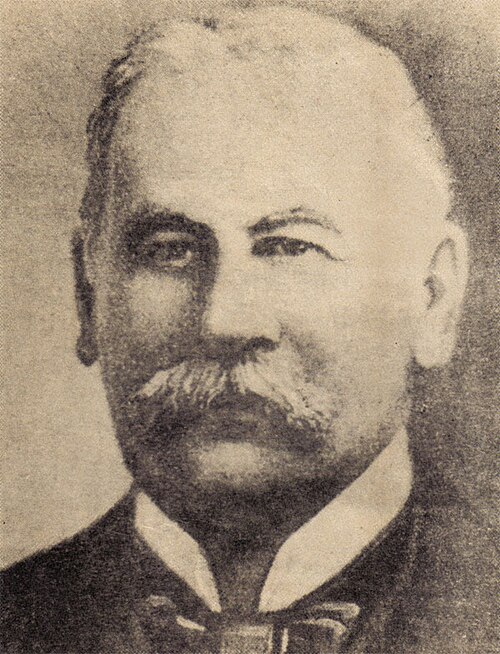
1888年9月9日、イースター島は奴隷商人の攻撃を頻繁に受けていたため、タヒチ司教ホセ・マリア・ベルディエ大司教の尽力により、チリは現地王との相互遺言書に署名し、同島を占領した。海軍士官ポリカルポ・トロがチリ政府を代表し、アタム・テケナがラパヌイ評議会の長となった。ラパヌイの長老たちは、首長の称号、土地の所有権、文化と伝統の正当性を放棄することなく、平等な条件で主権を譲渡した。ラパヌイは何も売らず、平等な条件でチリに統合された。[44]
1891 年のチリ内戦により大統領と議会の権力再配分が起こり、チリは議会制民主主義を確立しました。しかし内戦は、国内産業の発展を支持する人々と、特に外国投資家と強いつながりを持つエドワード家などのチリの有力な銀行家との争いでもありました。その後すぐに、チリはアルゼンチンとの莫大な費用がかかる海軍軍拡競争に突入し、プナ・デ・アタカマ紛争もあって、戦争寸前まで行きました。
太平洋戦争後、チリはアメリカ大陸の海軍大国となり、1885年のパナマ危機では当時のコロンビア領土への米国の介入に抗議して艦船を派遣した。米国とチリの間ではボルチモア危機が起こり、チリは西半球における米国の覇権の意図に対する潜在的な脅威であったため、戦争にまで発展しそうになった。[45]
20世紀

1902年、チリとアルゼンチンはイギリス王室によって解決されたアンデスの仲裁裁定の結果を受け取った。
1903年にプナ・デ・アタカマ紛争は解決した。
1904年、チリとボリビアは両国の国境を明確にする 平和友好条約に署名しました。
チリ経済は部分的に、支配的寡頭政治の利益を守るシステムへと堕落した。1920年代までに、台頭してきた中産階級と労働者階級は、改革派の大統領アルトゥーロ・アレッサンドリを選出できるほどの力を持つようになったが、彼の政策は保守的な議会によって挫折した。1920年代には、国民の強い支持を得たマルクス主義グループが台頭した。 [32]
1924年にルイス・アルタミラーノ将軍が率いた軍事クーデターにより、1932年まで政治的不安定な時期が続いた。この時期に権力を握った10の政府のうち、最も長く続いたのはカルロス・イバニェス・デル・カンポ将軍の政権で、1925年に短期間、その後1927年から1931年まで事実上の独裁政権を敷いた(ただし、その厳しさや腐敗の点では、ラテンアメリカの他の国々を悩ませてきたタイプの軍事独裁政権とは比較にならない)。[46] [47]
イバニェス・デル・カンポは、そのイデオロギーが曖昧で移り気であったにもかかわらず、民主的に選出された後継者に権力を譲り渡し、30年以上にわたり有力な政治家であり続けるのに十分な数の国民の尊敬を維持した。1932年に憲法による統治が回復されると、強力な中流階級政党である急進党が出現した。この政党はその後20年間、連立政権の主要勢力となった。急進党が優勢だった時代(1932~1952年)には、国家が経済において果たす役割が増大した。1952年、有権者はイバニェス・デル・カンポを再選し、さらに6年間の任期を務めた。 1958年、ホルヘ・アレサンドリがイバニェス・デル・カンポの後を継ぎ、チリ保守主義を民主的に政権に復帰させ、さらに1期務めた。
1964年の大統領選挙でキリスト教民主党 のエドゥアルド・フライ・モンタルバが絶対多数で勝利し、大きな改革の時代が始まった。「自由の革命」というスローガンの下、フライ政権は、特に教育、住宅、農業労働者の農村組合化を含む農業改革など、広範囲にわたる社会経済プログラムに着手した。しかし、1967年までに、フライは改革が不十分であると非難する左派と、改革が行き過ぎであると考える保守派からの反対に遭った。任期の終わりまでに、フライは党の野心的な目標を完全に達成することはできなかった。[32]

1970年の選挙では、チリ社会党(当時は共産党、急進派、社会民主党、反体制キリスト教民主党、人民統一行動運動、独立人民行動を含む「人民連合」連合の一員)のサルバドール・アジェンデ上院議員が、三つ巴の争いで多数票で部分的多数を獲得し、キリスト教民主党の候補者ラドミロ・トミックと保守党の候補者ホルヘ・アレサンドリが続いた。アジェンデは絶対多数で選出されず、得票率は35%未満だった。
チリ議会は、主要候補者であるアジェンデとホルヘ・アレサンドリ元大統領の間で決選投票を行い、慣例に従い、153対35の投票でアジェンデを選出した。フレイは、キリスト教民主党は労働者党であり、右派とは共通の目的を達成できないという理由で、アジェンデに対抗するためにアレサンドリと同盟を結ぶことを拒否した。[48] [49]
1972年に始まった経済不況は、資本逃避、民間投資の急落、アジェンデの社会主義政策に対する銀行預金の引き揚げによって悪化した。生産は落ち込み、失業は上昇した。アジェンデは、消費者支出を増やし、所得を下方へ再分配するために、価格凍結、賃金引き上げ、税制改革などの措置を採用した。[50]官民共同の公共事業プロジェクトは失業率の削減に貢献した。[51] [ページが必要]銀行部門の多くは国有化された。銅、石炭、鉄、硝酸塩、鉄鋼産業の多くの企業が没収、国有化、または国家介入の対象となった。アジェンデ政権の最初の年、工業生産は急激に増加し、失業率は低下した。[51]
アジェンデの政策には、労働者の利益の促進、[51] [52]司法制度を「社会主義的合法性」に置き換えること、[53]銀行の国有化と他の銀行の破産の強制、[53] MIRとして知られる「人民民兵」の強化が含まれていた。[53]フレイ前大統領の下で開始された人民連合の政策綱領は、憲法改正の形でチリの主要銅鉱山の国有化も求めていた。この措置は議会で満場一致で可決された。その結果、[54]リチャード・ニクソン政権は、アジェンデ政権を迅速に不安定化させるために、チリに秘密工作員を組織して派遣した。 [55]さらに、米国の財政的圧力により、チリへの国際経済信用が制限された。[56]
経済問題は、主に紙幣の印刷で賄われたアジェンデの公共支出と、商業銀行の信用格付けの低さによっても悪化した。[57] 同時に、野党メディア、政治家、企業組合、その他の組織は、米国も支援していた国内の政治および経済の不安定化キャンペーンを加速させた。[56] [58] 1973年初頭までに、インフレは制御不能になった。1973年5月26日、アジェンデ政権に反対していたチリの最高裁判所は、アジェンデによる国家の合法性の混乱を全員一致で非難した。チリ憲法では違法であったが、裁判所はピノチェトが間もなく権力を掌握することを支持し、強化した。[53] [59]
ピノチェト時代(1973年~1990年)

1973年9月11日、軍事クーデターによりアジェンデは打倒された。軍が大統領官邸を砲撃すると、アジェンデは自殺したとみられる。[60] [61]クーデター後、ヘンリー・キッシンジャーはリチャード・ニクソン米大統領 に対し、米国はクーデターを「支援した」と語った。[62] 1970年、アジェンデが初めて大統領に選出された際、ヘンリー・キッシンジャーは「国民の無責任さのせいで国が共産主義化するのを傍観する必要があるのか分からない」と発言していた。[63]
アウグスト・ピノチェト将軍率いる軍事政権が国を掌握した。政権の時代は人権侵害が目立った。チリはコンドル作戦に積極的に参加した。[64] 1973年10月、少なくとも72人が死のキャラバンによって殺害された。[65]レティグ報告書とヴァレック委員会によると、少なくとも2,115人が殺害され、[66]少なくとも27,265人[67]が拷問を受けた(12歳未満の子供88人を含む)。[67] 2011年、チリはさらに9,800人の犠牲者を認定し、政治的な理由で殺害、拷問、投獄された人の総数は40,018人となった。[68]被拘禁者でいっぱいの国立競技場で拷問され殺害された者の中には、国際的に知られる詩人であり歌手のビクトル・ハラもいた(下記「音楽とダンス」参照)。

1980年9月11日、物議を醸した国民投票により新憲法が承認され、ピノチェト将軍が8年間の任期で共和国の大統領に就任した。ピノチェトが国の支配権を握った後、数百人のチリの革命家がニカラグアのサンディニスタ軍、アルゼンチンのゲリラ部隊、キューバ、東ヨーロッパ、北アフリカの訓練キャンプに参加した。[69]
1980年代後半、1982年の経済崩壊[70]や1983年から88年にかけての大規模な市民抵抗などの出来事の結果、政府は徐々に集会、言論、結社の自由を拡大し、労働組合や政治活動も認めるようになった。[71]政府はエルナン・ブチを財務大臣に迎え、市場志向の改革を開始した。チリは自由市場経済へと移行し、国内外の民間投資が増加したが、銅産業やその他の重要な鉱物資源は競争に開放されなかった。 1988年10月5日の国民投票で、ピノチェトは大統領として2期目の8年間の任期を拒否された(56%対44%)。チリ国民は1989年12月14日、新大統領と二院制議会の過半数の議員を選出した。[72]エイルウィン会長は1990年から1994年まで、移行期間とみなされていた期間に会長を務めた。
21世紀

1993年12月、前大統領エドゥアルド・フレイ・モンタルバの息子でキリスト教民主党のエドゥアルド・フレイ・ルイス=タグレが率いるコンセルタシオン連合が絶対多数(58%)の票を獲得して勝利した。 [73] 2000年にフレイ・ルイス=タグレの後を継いだのは社会党のリカルド・ラゴスで、彼は前例のない決選投票で右派チリ同盟のホアキン・ラビンを破って大統領に就任した。[74] 2006年1月、チリ国民は社会党のミシェル・バチェレ・ヘリアを国民刷新党のセバスティアン・ピニェラを破り、初の女性大統領を選出し、コンセルタシオン政権がさらに4年間延長された。[75] [76] 2010年1月、チリ国民はセバスティアン・ピニェラを20年ぶりの右派大統領に選出し、コンセルタシオンの元大統領エドゥアルド・フレイ・ルイス・タグレを破り、バチェレの後任として4年間の任期を務めた。任期制限のため、セバスティアン・ピニェラは2013年の再選に立候補せず、2014年3月に任期が切れ、ミシェル・バチェレが復帰した。[77]セバスティアン・ピニェラは2017年12月の大統領選挙で勝利し、2018年に再びバチェレの後任としてチリ大統領に就任した。[78] [79]
2010年2月27日、チリは当時記録された中で5番目に大きなマグニチュード8.8の地震に見舞われた。500人以上が死亡し(そのほとんどはその後の津波による)、 100万人以上が家を失った。地震の後にも複数の余震が続いた。[80]当初の被害額は150億~300億米ドルと推定され、チリの実質国内総生産の約10~15%に相当する。[81]
チリは2010年に閉じ込められた33人の鉱山労働者の救出に成功したことで世界的に有名になった。2010年8月5日、チリ北部コピアポ近郊のアタカマ砂漠にあるサンホセ銅金鉱山のアクセストンネルが崩落し、33人の男性が地下700メートル(2,300フィート)に閉じ込められた。チリ政府が組織した救出活動により、17日後に鉱山労働者が発見された。2か月後の2010年10月13日、33人全員がほぼ24時間かけて地上に引き上げられ、その様子はテレビで世界中に生中継された。[82]

2019年から2020年にかけてのチリ抗議運動は、サンティアゴ地下鉄の運賃値上げ、生活費の高騰、民営化、国内に蔓延する不平等に反応した全国規模の一連の抗議運動である。 [83] 11月15日、国会に代表されるほとんどの政党は、2020年4月に新憲法制定に関する国民投票を実施する合意に署名したが、その後COVID-19パンデミックのため10月に延期された。[84] 2020年10月25日、チリ国民の78.28%が新憲法に賛成し、21.72%が変更に反対した。投票率は51%だった。憲法制定会議のメンバーのための選挙は、2021年5月15日から16日の間にチリで行われた。[85]
2021年12月19日、左派候補で35歳の元学生運動指導者ガブリエル・ボリッチがチリ大統領選挙で勝利し、同国史上最年少の指導者となった。[86] 2022年3月11日、ボリッチは退任するセバスティアン・ピニェラ大統領の後任として大統領に就任した。[87]ガブリエル・ボリッチの女性多数派内閣の24人のうち14人が女性である。[88]
2022年9月4日、有権者は左派の憲法制定会議が提出した新憲法案を国民投票で否決した。[89] 2023年12月17日、有権者は保守派主導の憲法評議会が作成した2番目の新憲法案を国民投票で否決した。 [ 90] [91] [92]
地理
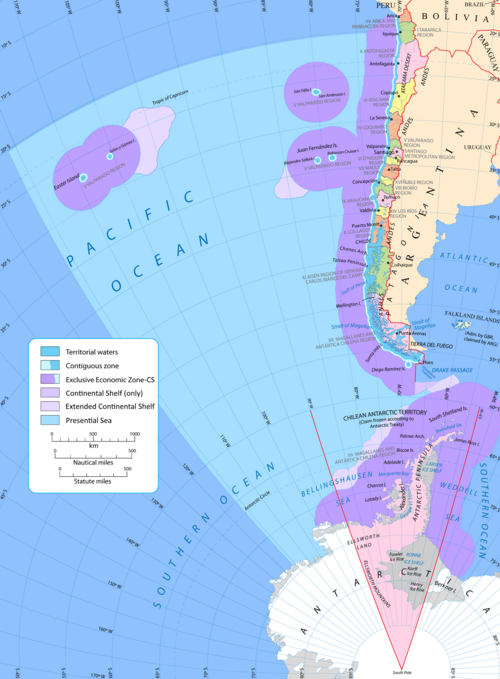
アンデス山脈の西側に位置する細長い海岸沿いの南部コーンの国、チリは、南北に4,300 km (2,670 mi) にわたって広がっていますが、東西に最も広い部分でも350 km (217 mi) [93]、最も狭い部分でも64 km (40 mi) で、平均幅は175 km (109 mi) です。このため、驚くほど多様な気候と景観が広がっています。国土面積は756,950平方キロメートル (292,260 sq mi) です。環太平洋火山帯内に位置しています。太平洋諸島と南極の領有権を主張する地域を除き、チリは南緯17度から56度、西経66度から75度の間に位置しています。
チリは世界で最も南北に長い国の一つである。大陸の領土だけを考えれば、チリは東西に狭いという点でこのグループの中では独特である。南北に長い他の国(ブラジル、ロシア、カナダ、米国など)は、東西に10倍以上広い。チリはまた、南極大陸の125万km2(48万平方マイル)を自国の領土(チリ南極領土)の一部であると主張している。しかし、この後者の主張は、チリが署名している南極条約の条項により保留されている。 [94]チリは、地理的に大陸にある世界最南端の国である。[95]
チリは、1888年に自国領に編入したポリネシア最東端のイースター島とサラ・イ・ゴメス島、および本土から600キロ以上離れたフアン・フェルナンデス諸島を支配している。サンアンブロシオ島とサンフェリックス島も支配下にあるが、一時的に居住しているだけ(地元の漁師が数人いる) 。これらの島々は、チリの領海主張を海岸から太平洋にまで広げていることで注目に値する。[96]
アタカマ砂漠北部には、銅や硝酸塩を主とする鉱物資源が豊富にあります。サンティアゴを含む比較的小規模なセントラルバレーには、人口と農業資源の面でチリの大部分が集中しています。この地域は、19 世紀後半にチリが北部と南部を統合して拡大した歴史的中心地でもあります。チリ南部は森林や牧草地が豊富で、火山や湖が連なっています。南海岸はフィヨルド、入り江、運河、曲がりくねった半島、島々が迷路のように入り組んでいます。アンデス山脈は東の国境に位置しています。
地形

チリは、南アメリカプレートへのナスカプレートと南極プレートの沈み込みにより、太平洋火山帯の一部となり、地震や火山活動が活発な地域に位置しています。2億5100万年前の古生代後期には、チリはゴンドワナと呼ばれる大陸ブロックに属していました。6600万年前の中生代末期には、ナスカプレートと南アメリカプレートの衝突により、沈み込んだ海底堆積物が隆起し始め、アンデス山脈が形成されました。この地域は、何百万年もかけて岩石が折り重なって現在の地形が形成されました。
チリの地形は、国土を縦断する中央低地と、国土の約 80% を占める 2 つの山脈に挟まれた地形で構成されています。東はアタカマ地方にあるボリビアとアルゼンチンとの自然国境にあるアンデス山脈、西はアンデス山脈からわずかに高い海岸山脈です。チリの最高峰はネバド・オホス・デル・サラードで、標高 6,891.3 メートルです。これは世界で最も高い火山でもあります。海岸山脈の最高地点は、アントファガスタの南、シエラ・ビクーニャ・マッケナにあるビクーニャ・マッケナで、標高 3,114 メートルです。海岸山脈と太平洋の間には、長さの異なる一連の海岸平野があり、沿岸の町や大きな港の開拓が可能になっています。平原地帯の一部は、アンデス山脈の東側、パタゴニアの草原地帯、マゼラン山脈を含む地域、またはアルティプラーノやプナ・デ・アタカマなどの高い山脈に囲まれた高原です。
極北は、国の北の境界線と南緯26 度の間の地域で、最初の 3 つの地域をカバーしています。世界で最も乾燥したアタカマ砂漠の存在が特徴です。砂漠は、パンパス タマルガルと呼ばれる地域に源を発する小川によって断片化されています。2 つに分かれ、東側がボリビアを通っているアンデス山脈は、標高が高く火山活動が活発で、時間の経過とともに堆積物が徐々に蓄積された結果、 アンデス高原とアタカマ塩原のような塩の構造が形成されました。
To the south is the Norte Chico, extending to the Aconcagua river. Los Andes begin to decrease its altitude to the south and closer to the coast, reaching 90 km away at the height of Illapel, the narrowest part of the Chilean territory. The two mountain ranges intersect, virtually eliminating the intermediate depression. The existence of rivers flowing through the territory allows the formation of transverse valleys, where agriculture has developed strongly in recent times, while the coastal plains begin to expand.
.jpg/500px-Amalia_Glacier_(47461801572).jpg)
The Central area is the most populated region of the country. The coastal plains are wide and allow the establishment of cities and ports along the Pacific. The Andes maintain altitudes above 6000m but descend slowly in height to 4000 meters on average. The intermediate depression reappears becoming a fertile valley that allows agricultural development and human settlement, due to sediment accumulation. To the south, the Cordillera de la Costa reappears in the range of Nahuelbuta while glacial sediments create a series of lakes in the area of La Frontera.
Patagonia extends from within Reloncavi, at the height of parallel 41°S, to the south. During the last glaciation, this area was covered by ice that strongly eroded Chilean relief structures. As a result, the intermediate depression sinks in the sea, while the coastal mountains rise to a series of archipelagos, such as Chiloé and the Chonos, disappearing in Taitao peninsula, in the parallel 47°S. The Andes mountain range loses height and erosion caused by the action of glaciers has caused fjords. East of the Andes, on the continent, or north of it, on the island of Tierra del Fuego are located relatively flat plains, which in the Strait of Magellan cover large areas. The Andes, as he had done previously Cordillera de la Costa, begins to break in the ocean causing a myriad of islands and islets and disappear into it, sinking and reappearing in the Southern Antilles arc and then the Antarctic Peninsula, where it is called Antartandes, in the Chilean Antarctic Territory, lying between the meridians 53°W and 90°W.
In the middle of the Pacific, the country has sovereignty over several islands of volcanic origin, collectively known as Insular Chile. The archipelago of Juan Fernandez and Easter Island is located in the fracture zone between the Nazca plate and the Pacific plate known as East Pacific Rise.
Climate and hydrography

The diverse climate of Chile ranges from the world's driest desert in the north—the Atacama Desert—through a Mediterranean climate in the center, tropical in Easter Island,[97] to an oceanic climate, including alpine tundra and glaciers in the east and south.[16] According to the Köppen system, Chile within its borders hosts at least eighteen major climatic subtypes.[98] There are four seasons in most of the country: summer (December to February), autumn (March to May), winter (June to August), and spring (September to November).
Due to the characteristics of the territory, Chile is crossed by numerous rivers generally short in length and with low flow rates. They commonly extend from the Andes to the Pacific Ocean, flowing from East to West. Because of the Atacama desert, in the Norte Grande there are only short endorheic character streams, except for the Loa River, the longest in the country 440 km.[99] In the high valleys, wetland areas generate Chungará Lake, located at 4500 meters above sea level. It and the Lauca River are shared with Bolivia, as well as the Lluta River. In the center-north of the country, the number of rivers that form valleys of agricultural importance increases. Noteworthy are the Elqui with 75 km[99] long, 142 km Aconcagua, Maipo with 250 km[99] and its tributary, the Mapocho with 110 km, and Maule with 240 km. Their waters mainly flow from Andean snowmelt in the summer and winter rains. The major lakes in this area are the artificial lake Rapel, the Colbun Maule lagoon and the lagoon of La Laja.
Biodiversity

The flora and fauna of Chile are characterized by a high degree of endemism, due to its particular geography. In continental Chile, the Atacama Desert in the north and the Andes mountains to the east are barriers that have led to the isolation of flora and fauna. Add to that the enormous length of Chile (over 4,300 km (2,672 mi)) and this results in a wide range of climates and environments that can be divided into three general zones: the desert provinces of the north, central Chile, and the humid regions of the south.
The native flora of Chile consists of relatively fewer species compared to the flora of other South American countries. The northernmost coastal and central region is largely barren of vegetation, approaching the most absolute desert in the world.[100] On the slopes of the Andes, in addition to the scattered tola desert brush, grasses are found. The central valley is characterized by several species of cacti, the hardy espinos, the Chilean pine, the southern beeches and the copihue, a red bell-shaped flower that is Chile's national flower.[100]
In southern Chile, south of the Biobío River, heavy precipitation has produced dense forests of laurels, magnolias, and various species of conifers and beeches, which become smaller and more stunted to the south.[101] The cold temperatures and winds of the extreme south preclude heavy forestation. Grassland is found in East Magallanes Province and northern Tierra del Fuego (in Patagonia). Much of the Chilean flora is distinct from that of neighboring Argentina, indicating that the Andean barrier existed during its formation.[101]
Some of Chile's flora has an Antarctic origin due to land bridges which formed during the Cretaceous ice ages, allowing plants to migrate from Antarctica to South America.[102] Chile had a 2018 Forest Landscape Integrity Index mean score of 7.37/10, ranking it 43rd globally out of 172 countries.[103]
Just over 3,000 species of fungi are recorded in Chile,[104][105] but this number is far from complete. The true total number of fungal species occurring in Chile is likely to be far higher, given the generally accepted estimate that only about 7 percent of all fungi worldwide have so far been discovered.[106] Although the amount of available information is still very small, a first effort has been made to estimate the number of fungal species endemic to Chile, and 1995 species have been tentatively identified as possible endemics of the country.[107]
Chile's geographical isolation has restricted the immigration of faunal life so that only a few of the many distinctive South American animals are found. Among the larger mammals are the puma or cougar, the llama-like guanaco and the fox-like chilla. In the forest region, several types of marsupials and a small deer known as the pudu are found.[100]
There are many species of small birds, but most of the larger common Latin American types are absent. Few freshwater fish are native, but North American trout have been successfully introduced into the Andean lakes.[100] Owing to the vicinity of the Humboldt Current, ocean waters abound with fish and other forms of marine life, which in turn support a rich variety of waterfowl, including several penguins. Whales are abundant, and some six species of seals are found in the area.[100]
Government and politics
.jpg/500px-Chile-02559_-_La_Moneda_Presidential_Palace_(49033259257).jpg)


The current Constitution of Chile was drafted by Jaime Guzmán in 1980[108] and subsequently approved via a national plebiscite—regarded as "highly irregular" by some observers[23]—in September of that year, under the military dictatorship of Augusto Pinochet. It entered into force in March 1981. After Pinochet's defeat in the 1988 plebiscite, the constitution was amended to ease provisions for future amendments to the Constitution. In September 2005, President Ricardo Lagos signed into law several constitutional amendments passed by Congress. These include eliminating the positions of appointed senators and senators for life, granting the President authority to remove the commanders-in-chief of the armed forces, and reducing the presidential term from six to four years.[109]
Chile's judiciary is independent and includes a court of appeal, a system of military courts, a constitutional tribunal, and the Supreme Court of Chile. In June 2005, Chile completed a nationwide overhaul of its criminal justice system.[110] The reform has replaced inquisitorial proceedings with an adversarial system with greater similarity to that of common law jurisdictions such as the United States.
For parliamentary elections, between 1989 and 2013 the binominal system was used, which promoted the establishment of two majority political blocs -Concertación and Alliance- at the expense of the exclusion of non-majority political groups. The opponents of this system approved in 2015 a moderate proportional electoral system that has been in force since the 2017 parliamentary elections, allowing the entry of new parties and coalitions. The Congress of Chile has a 50-seat Senate and a 155-member Chamber of Deputies. Senators serve for eight years with staggered terms, while deputies are elected every 4 years. The last congressional elections were held on 21 November 2021, concurrently with the presidential election. The Congress is located in the port city of Valparaíso, about 140 kilometers (90 miles) west of the capital, Santiago.
The main existing political coalitions in Chile are:
Government:
- Apruebo Dignidad (Approve Dignity) is a left-wing coalition that has its origin in the 2021 Chilean Constitutional Convention election. After the success in that election, it held presidential primaries, in which Gabriel Boric (CS, FA) was the winner. It is formed by the coalition Frente Amplio (Broad Front) and the coalition Chile Digno (Worthy Chile) formed by the Communist Party of Chile and other left-wing parties.
- Democratic Socialism is a center-left coalition, successor of the Constituent Unity coalition, itself a successor of the Concertation coalition – which supported the "NO" option in the 1988 plebiscite and subsequently governed the country from 1990 to 2010. This pact is formed by the Socialist, for Democracy, Radical, and Liberal parties.
Opposition:
- Chile Vamos (Let's go Chile) is a center-right coalition with roots of liberal conservatism, formed by the parties Renovación Nacional (National Renewal), Unión Demócrata Independiente (Independent Democratic Union) and Evópoli. It has its origins in the Alliance coalition, formed by the main parties that supported the "YES" option in the 1988 plebiscite, although it has used different names since then. It was the ruling coalition during the first and second government of Sebastián Piñera, (2010–2014) and (2018–2022).
In the National Congress, Chile Vamos has 52 deputies and 24 senators, while the parliamentary group of Apruebo Dignidad is formed by 37 deputies and 6 senators. Democratic Socialism is the third political force with 30 deputies and 13 senators. The other groups with parliamentary representation are the Republican Party (15 deputies and 1 senator), the Christian Democratic Party (8 deputies and 5 senators), the Party of the People (8 deputies) and the independents outside of a coalition (5 deputies and 1 senator).
Foreign relations

Chile
Country with diplomatic relations and Chilean embassy in the country.
Country with diplomatic relations and an embassy in Chile, but no Chilean embassy.
Country with diplomatic relations but without ambassadors.
Country with no diplomatic relations currently.
Since the early decades after independence, Chile has always had an active involvement in foreign affairs. In 1837, the country aggressively challenged the dominance of Peru's port of Callao for preeminence in the Pacific trade routes, defeating the short-lived alliance between Peru and Bolivia, the Peru–Bolivian Confederation (1836–39) in the War of the Confederation. The war dissolved the confederation while distributing power in the Pacific. A second international war, the War of the Pacific (1879–83), further increased Chile's regional role, while adding considerably to its territory.[23]
During the 19th century, Chile's commercial ties were primarily with Britain, a nation that had a major influence on the formation of the Chilean navy. The French, influenced Chile's legal and educational systems and had a decisive impact on Chile, through the architecture of the capital in the boom years at the turn of the 20th century. German influence came from the organization and training of the army by Prussians.[23]
On 26 June 1945, Chile participated as a founding member of the United Nations being among 50 countries that signed the United Nations Charter in San Francisco, California.[111][112] With the military coup of 1973, Chile became isolated politically as a result of widespread human rights abuses.[23]
Since its return to democracy in 1990, Chile has been an active participant in the international political arena. Chile completed a two-year non-permanent position on the UN Security Council in January 2005. Jose Miguel Insulza, a Chilean national, was elected Secretary General of the Organization of American States in May 2005 and confirmed in his position, being re-elected in 2009. Chile is currently serving on the International Atomic Energy Agency (IAEA) Board of Governors, and the 2007–2008 chair of the board is Chile's ambassador to the IAEA, Milenko E. Skoknic. The country is an active member of the UN family of agencies and participates in UN peacekeeping activities. It was re-elected as a member of the UN Human Rights Council in 2011 for a three-year term.[113] It was also elected to one of five non-permanent seats on the UN Security Council in 2013.[114] Chile hosted the Defense Ministerial of the Americas in 2002 and the APEC summit and related meetings in 2004. It also hosted the Community of Democracies ministerial in April 2005 and the Ibero-American Summit in November 2007. An associate member of Mercosur and a full member of APEC, Chile has been a major player in international economic issues and hemispheric free trade.[32]
Military
.jpg/500px-Almirante_Blanco_Encalada_(FF-15).jpg)
The Armed Forces of Chile are subject to civilian control exercised by the president through the Minister of Defense. The president has the authority to remove the commanders-in-chief of the armed forces.[32]
The commander-in-chief of the Chilean Army is Army General Ricardo Martínez Menanteau. The Chilean Army is 45,000 strong and is organized with an Army headquarters in Santiago, six divisions throughout its territory, an Air Brigade in Rancagua, and a Special Forces Command in Colina. The Chilean Army is one of the most professional and technologically advanced armies in Latin America.[32]
Admiral Julio Leiva Molina directs the around 25,000-person Chilean Navy,[115] including 2,500 Marines. Of the fleet of 29 surface vessels, only eight are operational major combatants (frigates). Those ships are based in Valparaíso.[116] The Navy operates its own aircraft for transport and patrol; there are no Navy fighter or bomber aircraft. The Navy also operates four submarines based in Talcahuano.[32][117]
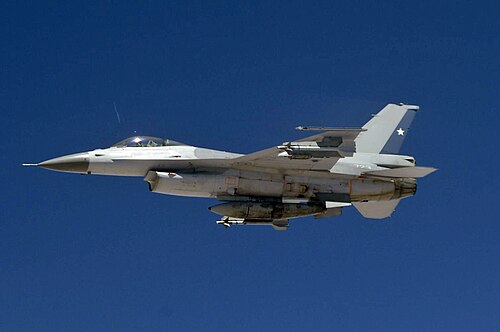
Air Force General (four-star) Jorge Rojas Ávila heads the 12,500-strong Chilean Air Force. Air assets are distributed among five air brigades headquartered in Iquique, Antofagasta, Santiago, Puerto Montt, and Punta Arenas. The Air Force also operates an airbase on King George Island, Antarctica. The Air Force took delivery of the final two of ten F-16s, all purchased from the U.S., in March 2007 after several decades of U.S. debate and previous refusal to sell. Chile also took delivery in 2007 of a number of reconditioned Block 15 F-16s from the Netherlands, bringing to 18 the total of F-16s purchased from the Dutch.[32]
After the military coup in September 1973, the Chilean national police (Carabineros) were incorporated into the Defense Ministry. With the return of democratic government, the police were placed under the operational control of the Interior Ministry but remained under the nominal control of the Defense Ministry. Gen. Gustavo González Jure is the head of the national police force of 40,964[118] men and women who are responsible for law enforcement, traffic management, narcotics suppression, border control, and counter-terrorism throughout Chile.[32]
In 2017, Chile signed the UN treaty on the Prohibition of Nuclear Weapons.[119]
Chile is the 64th most peaceful country in the world, according to the 2024 Global Peace Index.[120]
Administrative divisions
In 1978 Chile was administratively divided into regions,[121] and in 1979 subdivided into provinces and these into communes.[122][123] In total the country has 16 regions,[124][125] 56 provinces and 348 communes.[126]
Each region was designated by a name and a Roman numeral assigned from north to south, except for the Santiago Metropolitan Region, which did not have a number. The creation of two new regions in 2007, Arica and Parinacota (XV) and Los Ríos (XIV), and a third region in 2018, Ñuble (XVI) made this numbering lose its original order meaning.
,_administrative_divisions_-_en_-_colored_2018.svg/500px-Chile_(+Antarctica_&_Islands),_administrative_divisions_-_en_-_colored_2018.svg.png)
National symbols
The national flower is the copihue (Lapageria rosea, Chilean bellflower), which grows in the woods of southern Chile.
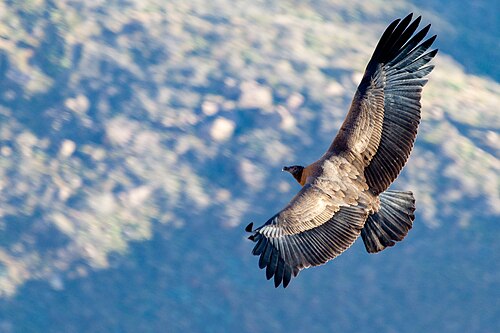
The coat of arms depicts the two national animals: the condor (Vultur gryphus, a very large bird that lives in the mountains) and the huemul (Hippocamelus bisulcus, an endangered white tail deer). It also has the legend Por la razón o la fuerza (By reason or by force).
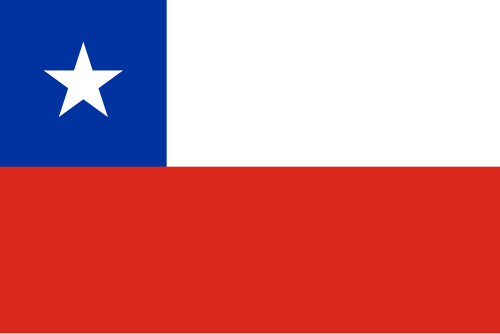
The flag of Chile consists of two equal horizontal bands of white (top) and red; there is a blue square the same height as the white band at the hoist-side end of the white band; the square bears a white five-pointed star in the center representing a guide to progress and honor; blue symbolizes the sky, white is for the snow-covered Andes, and red stands for the blood spilled to achieve independence. The flag of Chile is similar to the Flag of Texas, although the Chilean flag is 21 years older. However, like the Texan flag, the flag of Chile is modeled after the Flag of the United States.[127]
Economy

The Central Bank of Chile in Santiago serves as the central bank for the country. The Chilean currency is the Chilean peso (CLP). Chile is one of South America's most stable and prosperous nations,[16] leading Latin American nations in human development, competitiveness, globalization, economic freedom, and low perception of corruption.[17] Since July 2013, Chile is considered by the World Bank as a "high-income economy".[128][129][130]
The think tank The Heritage Foundation states that Chile has the highest degree of economic freedom in South America (ranking 22nd worldwide), owing to its independent and efficient judicial system and prudent public finance management.[131] In May 2010 Chile became the first South American country to join the OECD.[132] In 2006, Chile became the country with the highest nominal GDP per capita in Latin America.[133] As of 2020, Chile ranks third in Latin America (behind Uruguay and Panama) in nominal GDP per capita.
Copper mining makes up 20% of Chilean GDP and 60% of exports.[134] Escondida is the largest copper mine in the world, producing over 5% of global supplies.[134] Overall, Chile produces a third of the world's copper.[134] Codelco, the state mining firm, competes with private copper mining companies.[134]
Sound economic policies, maintained consistently since the 1980s, have contributed to steady economic growth in Chile and have more than halved poverty rates.[135][32] Chile began to experience a moderate economic downturn in 1999. The economy remained sluggish until 2003, when it began to show clear signs of recovery, achieving 4.0% GDP growth.[136] The Chilean economy finished 2004 with growth of 6%. Real GDP growth reached 5.7% in 2005 before falling back to 4% in 2006. GDP expanded by 5% in 2007.[32] Faced with the financial crisis of 2007–2008 the government announced an economic stimulus plan to spur employment and growth, and despite the Great Recession, aimed for an expansion of between 2% and 3% of GDP for 2009. Nonetheless, economic analysts disagreed with government estimates and predicted economic growth at a median of 1.5%.[137] Real GDP growth in 2012 was 5.5%. Growth slowed to 4.1% in the first quarter of 2013.[138]
_(2).jpg/500px-Gran_Torre_Santiago_(39693576311)_(2).jpg)
The unemployment rate was 7.8% in 2022, according to The World Bank.[139] There are reported labor shortages in agriculture, mining, and construction.[138] The percentage of Chileans with per capita household incomes below the poverty line—defined as twice the cost of satisfying a person's minimal nutritional needs—fell from 45.1% in 1987 to 11.5% in 2009, according to government surveys.[140][141] Critics in Chile, however, argue that true poverty figures are considerably higher than those officially published.[142] Using the relative yardstick favoured in many European countries, 27% of Chileans would be poor, according to Juan Carlos Feres of the ECLAC.[143]
As of November 2012[update], about 11.1 million people (64% of the population) benefit from government welfare programs,[144][clarification needed] via the "Social Protection Card", which includes the population living in poverty and those at a risk of falling into poverty.[145] The privatized national pension system (AFP) has encouraged domestic investment and contributed to an estimated total domestic savings rate of approximately 21% of GDP.[146] Under the compulsory private pension system, most formal sector employees pay 10% of their salaries into privately managed funds.[32]
Chile has signed free trade agreements (FTAs) with a whole network of countries, including an FTA with the United States that was signed in 2003 and implemented in January 2004.[147] Internal Government of Chile figures show that even when factoring out inflation and the recent high price of copper, bilateral trade between the U.S. and Chile has grown over 60% since then.[32] Chile's total trade with China reached US$8.8 billion in 2006, representing nearly 66% of the value of its trade relationship with Asia.[32] Exports to Asia increased from US$15.2 billion in 2005 to US$19.7 billion in 2006, a 29.9% increase.[32] Year-on-year growth of imports was especially strong from a number of countries: Ecuador (123.9%), Thailand (72.1%), South Korea (52.6%), and China (36.9%).[32]
Chile's approach to foreign direct investment is codified in the country's Foreign Investment Law. Registration is reported to be simple and transparent, and foreign investors are guaranteed access to the official foreign exchange market to repatriate their profits and capital.[32] The Chilean Government has formed a Council on Innovation and Competition, hoping to bring in additional FDI to new parts of the economy.[32]
Standard & Poor's gives Chile a credit rating of A.[148] The Government of Chile continues to pay down its foreign debt, with public debt only 3.9% of GDP at the end of 2006.[32] The Chilean central government is a net creditor with a net asset position of 7% of GDP at end 2012.[138] The current account deficit was 4% in the first quarter of 2013, financed mostly by foreign direct investment.[138] 14% of central government revenue came directly from copper in 2012.[138] Chile was ranked 52nd in the Global Innovation Index in 2023[149]
Mineral resources

Chile is rich in mineral resources, especially copper and lithium. It is thought that due to the importance of lithium for batteries for electric vehicles and stabilization of electric grids with large proportions of intermittent renewables in the electricity mix, Chile could be strengthened geopolitically. However, this perspective has also been criticized for underestimating the power of economic incentives for expanded production in other parts of the world.[150]
The country was, in 2019, the world's largest producer of copper,[151] iodine[152] and rhenium,[153] the second largest producer of lithium[154] and molybdenum,[155] the sixth largest producer of silver,[156] the seventh largest producer of salt,[157] the eighth largest producer of potash,[158] the thirteenth producer of sulfur[159] and the thirteenth producer of iron ore[160] in the world. The country also has considerable gold production: between 2006 and 2017, the country produced annual amounts ranging from 35.9 tonnes in 2017 to 51.3 tonnes in 2013.[161]
Agriculture

Agriculture in Chile encompasses a wide range of different activities due to its particular geography, climate and geology and human factors. Historically agriculture is one of the bases of Chile's economy. Now agriculture and allied sectors like forestry, logging and fishing account for only 4.9% of the GDP as of 2007[update] and employ 13.6% of the country's labor force. Chile is one of the 5 largest world producers of cherry and blueberry, and one of the 10 largest world producers of grape, apple, kiwi, peach, plum and hazelnut, focusing on exporting high-value fruits.[162] Some other major agriculture products of Chile include pears, onions, wheat, maize, oats, garlic, asparagus, beans, beef, poultry, wool, fish, timber and hemp. Due to its geographical isolation and strict customs policies Chile is free from diseases and pests such as mad cow disease, fruit fly and Phylloxera. This, its location in the Southern Hemisphere, which has quite different harvesting times from the Northern Hemisphere, and its wide range of agriculture conditions are considered Chile's main comparative advantages. However, Chile's mountainous landscape limits the extent and intensity of agriculture so that arable land corresponds only to 2.62% of the total territory. Chile currently utilizes 14,015 Hectares of agricultural land.[163]
Chile is the world's second largest producer of salmon, after Norway. In 2019, it was responsible for 26% of the global supply.[164] In wine, Chile is usually among the 10 largest producers in the world. In 2018 it was in 6th place.[165]
Tourism


Tourism in Chile has experienced sustained growth over the last few decades. In 2005, tourism grew by 13.6%, generating more than 4.5 billion dollars of which 1.5 billion was attributed to foreign tourists. According to the National Service of Tourism (Sernatur), 2 million people a year visit the country. Most of these visitors come from other countries in the American continent, mainly Argentina; followed by a growing number from the United States, Europe, and Brazil with a growing number of Asians from South Korea and China.[166]
The main attractions for tourists are places of natural beauty situated in the extreme zones of the country: San Pedro de Atacama, in the north, is very popular with foreign tourists who arrive to admire the Incaic architecture, the altiplano lakes, and the Valley of the Moon.[citation needed] In Putre, also in the north, there is the Chungará Lake, as well as the Parinacota and the Pomerape volcanoes, with altitudes of 6,348 m and 6,282 m, respectively. Throughout the central Andes there are many ski resorts of international repute,[citation needed] including Portillo, Valle Nevado and Termas de Chillán.
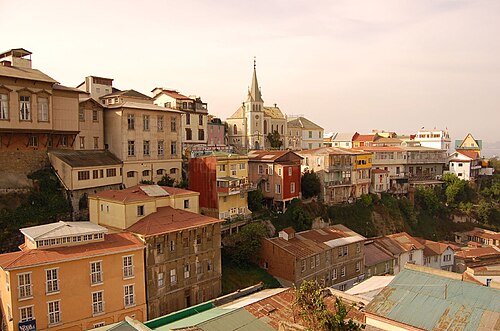
The main tourist sites in the south are national parks (the most popular is Conguillío National Park in the Araucanía)[167] and the coastal area around Tirúa and Cañete with the Isla Mocha and the Nahuelbuta National Park, Chiloé Archipelago and Patagonia, which includes Laguna San Rafael National Park, with its many glaciers, and the Torres del Paine National Park. The central port city of Valparaíso, which is World Heritage with its unique architecture, is also popular.[168] Finally, Easter Island in the Pacific Ocean is one of the main Chilean tourist destinations.
For locals, tourism is concentrated mostly in the summer (December to March), and mainly in the coastal beach towns.[citation needed] Arica, Iquique, Antofagasta, La Serena and Coquimbo are the main summer centers in the north, and Pucón on the shores of Lake Villarrica is the main center in the south. Because of its proximity to Santiago, the coast of the Valparaíso Region, with its many beach resorts, receives the largest number of tourists. Viña del Mar, Valparaíso's more affluent northern neighbor, is popular because of its beaches, casino, and its annual song festival, the most important musical event in Latin America.[citation needed] Pichilemu in the O'Higgins Region is widely known as South America's "best surfing spot" according to Fodor's.[citation needed]
In November 2005 the government launched a campaign under the brand "Chile: All Ways Surprising" intended to promote the country internationally for both business and tourism.[169] Museums in Chile such as the Chilean National Museum of Fine Arts built in 1880, feature works by Chilean artists.
Chile is home to the world-renowned Patagonian Trail that resides on the border between Argentina and Chile. Chile recently launched a massive scenic route for tourism in hopes of encouraging development based on conservation. The Route of Parks covers 1,740 miles (2,800 km) and was designed by Tompkin Conservation (founders Douglas Tompkins and wife Kristine).[170]
Transport

Due to Chile's topography a functioning transport network is vital to its economy. In 2020, Chile had 85,984 km (53,428 mi) of highways, with 21,289 km (13,228 mi) paved.[171] In the same year, the country had 3,347 km (2,080 mi) of duplicated highways, the second largest network in South America, after Brazil.[172] Since the mid-1990s, there has been a significant improvement in the country's roads, through bidding processes that allowed the construction of an efficient road network, with emphasis on the duplication of continuous 1,950 km (1,212 mi) of the Panamerican Highway (Chile Route 5) between Puerto Montt and Caldera (in addition to the planned duplication in the Atacama Desert area),[173] the excerpts in between Santiago, Valparaiso and the Central Coast, and the northern access to Concepción and the large project of the Santiago urban highways network, opened between 2004 and 2006.[174] Buses are now the main means of long-distance transportation in Chile, following the decline of its railway network.[175] The bus system covers the entire country, from Arica to Santiago (a 30-hour journey) and from Santiago to Punta Arenas (about 40 hours, with a change at Osorno).
Chile has a total of 372 runways (62 paved and 310 unpaved). Important airports in Chile include Chacalluta International Airport (Arica), Diego Aracena International Airport (Iquique), Andrés Sabella Gálvez International Airport (Antofagasta), Carriel Sur International Airport (Concepción), El Tepual International Airport (Puerto Montt), Presidente Carlos Ibáñez del Campo International Airport (Punta Arenas), La Araucanía International Airport (Temuco), Mataveri International Airport (Easter Island), the most remote airport in the world, as defined by distance to another airport, and the Arturo Merino Benítez International Airport (Santiago) with a traffic of 12,105,524 passengers in 2011. Santiago is headquarters of Latin America's largest airline holding company and Chilean flag carrier LATAM Airlines.
Internet and telecommunications

Chile has a telecommunication system which covers much of the country, including Chilean insular and Antarctic bases. Privatization of the telephone system began in 1988; Chile has one of the most advanced telecommunications infrastructure in South America with a modern system based on extensive microwave radio relay facilities and a domestic satellite system with 3 earth stations.[135] In 2012, there were 3.276 million main lines in use and 24.13 million mobile cellular telephone subscribers.[135]
According to a 2012 database of the International Telecommunication Union (ITU), 61.42% of the Chilean population uses the internet, making Chile the country with the highest internet penetration in South America.[176]
The Chilean internet country code is ".cl".[177] In 2017 the government of Chile launched its first cyber security strategy, which receives technical support from the Organization of American States (OAS) Cyber Security Program of the Inter-American Committee against Terrorism (CICTE).[178]
Energy

Chile's total energy supply (TES) was 23.0GJ per capita in 2020.[179] Energy in Chile is dominated by fossil fuels, with coal, oil and gas accounting for 73.4% of the total primary energy. Biofuels and waste account for another 20.5% of primary energy supply, with the rest sourced from hydro and other renewables.[179]
Electricity consumption was 68.90 TWh in 2014. Main sources of electricity in Chile are hydroelectricity, gas, oil and coal. Renewable energy in the forms of wind and solar energy are also coming into use, encouraged by collaboration since 2009 with the United States Department of Energy. The electricity industry is privatized with ENDESA as the largest company in the field.
In 2021, Chile had, in terms of installed renewable electricity, 6,807 MW in hydropower (28th largest in the world), 3,137 MW in wind power (28th largest in the world), 4,468 MW in solar (22nd largest in the world), and 375 MW in biomass.[180] As the Atacama Desert has the highest solar irradiation in the world, and Chile has always had problems obtaining oil, gas and coal (the country basically does not produce them, so it has to import them), renewable energy is seen as the solution for the country's shortcomings in the energy field.[181][182]
Demographics
Chile's 2017 census reported a population of 17,574,003. Its rate of population growth has been decreasing since 1990, due to a declining birth rate.[183] By 2050 the population is expected to reach approximately 20.2 million people.[184]
Ancestry and ethnicity


Mexican professor Francisco Lizcano, of the National Autonomous University of Mexico, estimated that 52.7% of Chileans were white, 39.3% were mestizo, and 8% were Amerindian.[185]
In 1984, a study called Sociogenetic Reference Framework for Public Health Studies in Chile, from the Revista de Pediatría de Chile determined an ancestry of 67.9% European, and 32.1% Native American.[186][187] In 1994, a biological study determined that the Chilean composition was 64% European and 35% Amerindian.[188] The recent study in the Candela Project establishes that the genetic composition of Chile is 52% of European origin, with 44% of the genome coming from Native Americans (Amerindians), and 4% coming from Africa, making Chile a primarily mestizo country with traces of African descent present in half of the population.[189] Another genetic study conducted by the University of Brasília in several South American countries shows a similar genetic composition for Chile, with a European contribution of 51.6%, an Amerindian contribution of 42.1%, and an African contribution of 6.3%.[190] In 2015 another study established genetic composition in 57% European, 38% Native American, and 2.5% African.[191]
A public health booklet from the University of Chile states that 35% of the population is of Caucasian origin; "predominantly White" Mestizos are estimated to amount to a total of 65%, while Native Americans (Amerindians) comprise the remaining 5%.[192]
Despite the genetic considerations, many Chileans, if asked, would self-identify as White. The 2011 Latinobarómetro survey asked respondents in Chile what race they considered themselves to belong to. Most answered "White" (59%), while 25% said "Mestizo" and 8% self-classified as "indigenous".[193] A 2002 national poll revealed that a majority of Chileans believed they possessed some (43.4%) or much (8.3%) "indigenous blood", while 40.3% responded that they had none.[194]
Chile is one of 22 countries to have signed and ratified the only binding international law concerning indigenous peoples, the Indigenous and Tribal Peoples Convention, 1989.[195] It was adopted in 1989 as the International Labour Organization (ILO) Convention 169. Chile ratified it in 2008. A Chilean court decision in November 2009, considered to be a landmark ruling on indigenous rights, made use of the convention. The Supreme Court decision on Aymara water rights upheld rulings by both the Pozo Almonte tribunal and the Iquique Court of Appeals and marks the first judicial application of ILO Convention 169 in Chile.[196]
The earliest European immigrants were Spanish colonizers who arrived in the 16th century.[197] The Amerindian population of central Chile was absorbed into the Spanish settler population in the beginning of the colonial period to form the large mestizo population that exists in Chile today; mestizos create modern middle and lower classes. In the 18th and 19th centuries, many Basques came to Chile where they integrated into the existing elites of Castilian origin. Postcolonial Chile was never a particularly attractive destination for migrants, owing to its remoteness and distance from Europe.[198][199] Europeans preferred to stay in countries closer to their homelands instead of taking the long journey through the Straits of Magellan or crossing the Andes.[198] European migration did not result in a significant change in the ethnic composition of Chile, except in the region of Magellan.[200] Spaniards were the only major European migrant group to Chile,[198] and there was never large-scale immigration such as that to Argentina or Brazil.[199] Between 1851 and 1924, Chile only received 0.5% of European immigration to Latin America, compared to 46% to Argentina, 33% to Brazil, 14% to Cuba, and 4% to Uruguay.[198] However, it is undeniable that immigrants have played a significant role in Chilean society.[199]
Immigrants to Chile during the 19th and 20th centuries came from France,[201] Great Britain,[202] Germany,[203] and Croatia,[204] among others. Descendants of different European ethnic groups often intermarried in Chile. This intermarriage and mixture of cultures and races have helped to shape the present society and culture of the Chilean middle and upper classes.[205] Also, roughly 500,000 of Chile's population is of full or partial Palestinian origin,[206][207] and 800,000 Arab descents.[208] Chile currently has 1.5 million of Latin American immigrants, mainly from Venezuela, Peru, Haiti, Colombia, Bolivia and Argentina; 8% of the total population in 2019, without counting descendants.[209][210] According to the 2002 national census, Chile's foreign-born population has increased by 75% since 1992.[211] As of November 2021, numbers of people entering Chile from elsewhere in Latin America have grown swiftly in the last decade, tripling in the last three years to 1.5 million, with arrivals stemming from humanitarian crises in Haiti (ca. 180,000) and Venezuela (ca 460,000).[212]
Urbanization
About 85% of the country's population lives in urban areas, with 40% living in Greater Santiago. The largest agglomerations according to the 2002 census are Greater Santiago with 5.6 million people, Greater Concepción with 861,000 and Greater Valparaíso with 824,000.[213]
Religion


Historically, the indigenous peoples in Chile observed a variety of religions before the Spanish conquest in the 16th century. During Spanish rule and the first century of Chilean independence, the Catholic Church was one of the most powerful institutions in the country. In the late 19th century, liberal policies (the so-called Leyes laicas or "lay laws") started to reduce the influence of the clergy and the promulgation of a new Constitution in 1925 established the separation of church and state.[217]
As of 2012[update], 66.6%[218] of Chilean population over 15 years of age claimed to adhere to the Roman Catholic church, a decrease from the 70%[219] reported in the 2002 census. In the same census of 2012, 17% of Chileans reported adherence to an Evangelical church ("Evangelical" in the census referred to all Christian denominations other than the Roman Catholic and Orthodox—Greek, Persian, Serbian, Ukrainian, and Armenian—churches, the Church of Jesus Christ of Latter-day Saints, Seventh-day Adventists, and Jehovah's Witnesses: essentially, those denominations generally still termed "Protestant" in most English-speaking lands, although Adventism is often considered an Evangelical denomination as well). Approximately 90% of Evangelical Christians are Pentecostal. but Wesleyan, Lutheran, Anglican, Episcopalian, Presbyterian, other Reformed, Baptist, and Methodist churches also are present amongst Chilean Evangelical churches.[220] Irreligious people, atheists, and agnostics account for around 12% of the population.
By 2015, the major religion in Chile remained Christianity (68%), with an estimated 55% of Chileans belonging to the Roman Catholic church, 13% to various Evangelical churches, and just 7% adhering to any other religion. Agnostics and atheist were estimated at 25% of the population.[221]
Chile has a Baháʼí religious community, and is home to the Baháʼí mother temple, or continental House of Worship, for Latin America. Completed in 2016, it serves as a space for people of all religions and backgrounds to gather, meditate, reflect, and worship.[222] It is formed from cast glass and translucent marble and has been described as innovative in its architectural style.[223]
The Constitution guarantees the right to freedom of religion, and other laws and policies contribute to generally free religious practice. The law at all levels fully protects this right against abuse by either governmental or private actors.[220] Church and state are officially separate in Chile. A 1999 law on religion prohibits religious discrimination. However, the Roman Catholic church for mostly historical and social reasons enjoys a privileged status and occasionally receives preferential treatment.[224] Government officials attend Roman Catholic events as well as major Evangelical and Jewish ceremonies.[220]
The Chilean government treats the religious holidays of Christmas, Good Friday, the Feast of the Virgin of Carmen, the Feast of Saints Peter and Paul, the Feast of the Assumption, All Saints' Day, and the Feast of the Immaculate Conception as national holidays.[220] Recently, the government declared 31 October, Reformation Day, to be an additional national holiday, in honor of the Evangelical churches of the country.[225][226]
The patron saints of Chile are Our Lady of Mount Carmel and Saint James the Greater (Santiago).[227] In 2005, Pope Benedict XVI canonized Alberto Hurtado, who became the country's second native Roman Catholic saint after Teresa de los Andes.[228]
Languages
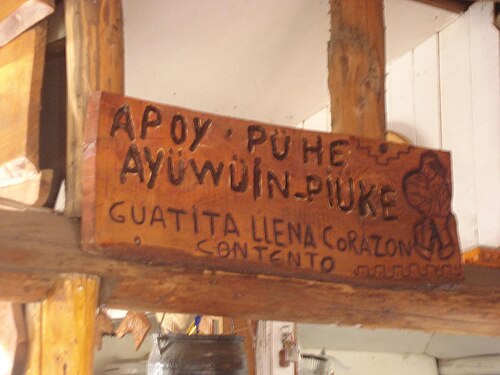
The Spanish spoken in Chile is distinctively accented and quite unlike that of neighboring South American countries because final syllables are often dropped, and some consonants have a soft pronunciation.[clarification needed] Accent varies only very slightly from north to south; more noticeable are the differences in accent based on social class or whether one lives in the city or the country. That the Chilean population was largely formed in a small section at the center of the country and then migrated in modest numbers to the north and south helps explain this relative lack of differentiation, which was maintained by the national reach of radio, and now television, which also helps to diffuse and homogenize colloquial expressions.[32]
There are several indigenous languages spoken in Chile: Mapudungun, Aymara, Rapa Nui, Chilean Sign Language and (barely surviving) Qawasqar and Yaghan, along with non-indigenous German, Italian, English, Greek and Quechua. After the Spanish conquest, Spanish took over as the lingua franca and the indigenous languages have become minority languages, with some now extinct or close to extinction.[230]
German is still spoken to some extent in southern Chile,[231] either in small countryside pockets or as a second language among the communities of larger cities.
Through initiatives such as the English Opens Doors Program, the government made English mandatory for students in fifth grade and above in public schools. Most private schools in Chile start teaching English from kindergarten.[232] Common English words have been absorbed and appropriated into everyday Spanish speech.[233]
Health

The Ministry of Health (Minsal) is the cabinet-level administrative office in charge of planning, directing, coordinating, executing, controlling and informing the public health policies formulated by the President of Chile. The National Health Fund (Fonasa), created in 1979, is the financial entity entrusted to collect, manage and distribute state funds for health in Chile. It is funded by the public. All employees pay 7% of their monthly income to the fund.[234]
Fonasa is part of the NHSS and has executive power through the Ministry of Health (Chile). Its headquarters are in Santiago and decentralized public service is conducted by various Regional Offices. More than 12 million beneficiaries benefit from Fonasa. Beneficiaries can also opt for more costly private insurance through Isapre.
Education

In Chile, education begins with preschool until the age of 5. Primary school is provided for children between ages 6 and 13. Students then attend secondary school until graduation at age 17.
Secondary education is divided into two parts: During the first two years, students receive a general education. Then, they choose a branch: scientific humanistic education, artistic education, or technical and professional education. Secondary school ends two years later on the acquirement of a certificate (licencia de enseñanza media).[235]
Chilean education is segregated by wealth in a three-tiered system – the quality of the schools reflects socioeconomic backgrounds:
- city schools (colegios municipales) that are mostly free and have the worst education results, mostly attended by poor students;
- subsidized schools that receive some money from the government which can be supplemented by fees paid by the student's family, which are attended by mid-income students and typically get mid-level results; and
- entirely private schools that consistently get the best results. Many private schools charge attendance fees of 0,5 to 1 median household income.[236]
Upon successful graduation of secondary school, students may continue into higher education. The higher education schools in Chile consist of Chilean Traditional Universities and are divided into public universities or private universities. There are medical schools and both the Universidad de Chile and Universidad Diego Portales offer law schools in a partnership with Yale University.[237]
Culture
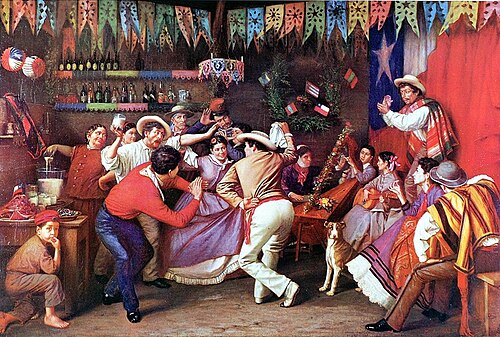
From the period between early agricultural settlements and up to the late pre-Columbian period, northern Chile was a region of Andean culture that was influenced by altiplano traditions spreading to the coastal valleys of the north, while southern regions were areas of Mapuche cultural activities. Throughout the colonial period following the conquest, and during the early Republican period, the country's culture was dominated by the Spanish. Other European influences, primarily English, French, and German began in the 19th century and have continued to this day. German migrants influenced the Bavarian style rural architecture and cuisine in the south of Chile in cities such as Valdivia, Frutillar, Puerto Varas, Osorno, Temuco, Puerto Octay, Llanquihue, Faja Maisan, Pitrufquén, Victoria, Pucón and Puerto Montt.[238][239][240][241]
Music and dance

Music in Chile ranges from folkloric, popular and classical music. Its large geography generates different musical styles in the north, center and south of the country, including also Easter Island and Mapuche music.[242] The national dance is the cueca. Another form of traditional Chilean song, though not a dance, is the tonada. Arising from music imported by the Spanish colonists, it is distinguished from the cueca by an intermediate melodic section and a more prominent melody.
From the 1950s to the 1970s, native folk musical forms were revitalized with the Nueva canción chilena movement led by composers such as Violeta Parra, Raúl de Ramón and Pedro Messone, which was also associated with political activists and reformers such as Víctor Jara, Inti-Illimani, and Quilapayún. Also, many Chilean rock bands like Los Jaivas, Los Prisioneros, La Ley, Los Tres and Los Bunkers have reached international success, some incorporating strong folk influences, such as Los Jaivas. In February, annual music and comedy festivals are held in Viña del Mar.[243]
Literature
Pablo Neruda and Gabriela Mistral, Nobel Prize recipients in literature
Chile is a country of poets.[244] Gabriela Mistral was the first Latin American to receive a Nobel Prize in Literature (1945). Chile's most famous poet is Pablo Neruda, who received the Nobel Prize for Literature (1971) and is world-renowned for his extensive library of works on romance, nature, and politics. His three highly personalized homes in Isla Negra, Santiago and Valparaíso are popular tourist destinations.
Among the list of other Chilean poets are Carlos Pezoa Véliz, Vicente Huidobro, Gonzalo Rojas, Pablo de Rokha, Nicanor Parra, Ivonne Coñuecar and Raúl Zurita. Isabel Allende is the best-selling Chilean novelist, with 51 million of her novels sold worldwide.[245] Novelist José Donoso's novel The Obscene Bird of Night is considered by critic Harold Bloom to be one of the canonical works of 20th-century Western literature. Another internationally recognized Chilean novelist and poet is Roberto Bolaño whose translations into English have had an excellent reception from the critics.[246][247][248]
Cuisine

Chilean cuisine is a reflection of the country's topographical variety, featuring an assortment of seafood, beef, fruits, and vegetables. Traditional recipes include asado, cazuela, empanadas, humitas, pastel de choclo, pastel de papas, curanto, and sopaipillas.[249] Crudos is an example of the mixture of culinary contributions from the various ethnic influences in Chile. The raw minced llama, heavy use of shellfish, and rice bread were taken from native Quechua Andean cuisine, (although beef, brought to Chile by Europeans, is also used in place of the llama meat), lemon and onions were brought by the Spanish colonists, and the use of mayonnaise and yogurt was introduced by German immigrants, as was beer.
Folklore
The folklore of Chile, cultural and demographic characteristics of the country, is the result of the mixture of Spanish and Amerindian elements that occurred during the colonial period. Due to cultural and historical reasons, they are classified and distinguished four major areas in the country: northern areas, central, southern and south. Most of the traditions of the culture of Chile have a festive purpose, but some, such as dances and ceremonies, have religious components. [250]
Chilean mythology is the mythology and beliefs of the Folklore of Chile. This includes Chilote mythology, Rapa Nui mythology and Mapuche mythology.
Sports

Chile's most popular sport is association football. Chile has appeared in nine FIFA World Cups which includes hosting the 1962 FIFA World Cup where the national football team finished third. Other results achieved by the national football team include two Copa América titles (2015 and 2016), two runners-up positions, one silver and two bronze medals at the Pan American Games, a bronze medal at the 2000 Summer Olympics and two third places finishes in the FIFA under-17 and under-20 youth tournaments. The top league in the Chilean football league system is the Chilean Primera División, which is named by the IFFHS as the ninth strongest national football league in the world.[251]
The main football clubs are Colo-Colo, Universidad de Chile and Universidad Católica. Colo-Colo is the country's most successful football club, having both the most national and international championships, including the coveted Copa Libertadores South American club tournament. Universidad de Chile was the last international champion (Copa Sudamericana 2011).
Tennis is Chile's most successful sport. Its national team won the World Team Cup clay tournament twice (2003 & 2004), and played the Davis Cup final against Italy in 1976. At the 2004 Summer Olympics the country captured gold and bronze in men's singles and gold in men's doubles (Nicolás Massú obtained two gold medals). Marcelo Ríos became the first Latin American man to reach the number one spot in the ATP singles rankings in 1998. Anita Lizana won the US Open in 1937, becoming the first woman from Latin America to win a Grand Slam tournament. Luis Ayala was twice a runner-up at the French Open and both Ríos and Fernando González reached the Australian Open men's singles finals. González also won a silver medal in singles at the 2008 Summer Olympics in Beijing.
At the Summer Olympic Games Chile boasts a total of two gold medals (tennis), seven silver medals (athletics, equestrian, boxing, shooting and tennis) and four bronze medals (tennis, boxing and football). In 2012, Chile won its first Paralympic Games medal (gold in Athletics).
.jpg/500px-15_Abril_2015,_Ministro_%C3%81lvaro_Elizalde_junto_a_la_Presidenta_Michelle_Bachelet_reciben_al_Equipo_Campe%C3%B3n_Mundial_de_Polo_en_La_Moneda._(17160926755).jpg)
Rodeo is the country's national sport and is practiced in the more rural areas of the nation. A sport similar to hockey called chueca was played by the Mapuche people during the Spanish conquest. Skiing and snowboarding are practiced at ski centers located in the Central Andes, and in southern ski centers near to cities as Osorno, Puerto Varas, Temuco and Punta Arenas. Surfing is popular at some coastal towns. Polo is professionally practiced within Chile, with the country achieving top prize in the 2008 and 2015 World Polo Championship.
Basketball is a popular sport in which Chile earned a bronze medal in the first men's FIBA World Championship held in 1950 and won a second bronze medal when Chile hosted the 1959 FIBA World Championship. Chile hosted the first FIBA World Championship for Women in 1953 finishing the tournament with the silver medal. San Pedro de Atacama is host to the annual "Atacama Crossing", a six-stage, 250-kilometer (160 mi) footrace which annually attracts about 150 competitors from 35 countries. The Dakar Rally off-road automobile race has been held in both Chile and Argentina since 2009.
Cultural heritage
The cultural heritage of Chile consists, first, of its intangible heritage, composed of various cultural events and activities, such as visual arts, crafts, dances, holidays, cuisine, games, music and traditions. Secondly, its tangible heritage consists of those buildings, objects and sites of archaeological, architectural, traditional, artistic, ethnographic, folkloric, historical, religious or technological significance scattered through Chilean territory. Among them, some are declared World Heritage Sites by UNESCO, in accordance with the provisions of the Convention concerning the Protection of World Cultural and Natural Heritage of 1972, ratified by Chile in 1980. These cultural sites are the Rapa Nui National Park (1995), the Churches of Chiloé (2000), the historical district of the port city of Valparaíso (2003), Humberstone and Santa Laura Saltpeter Works (2005) and the mining city Sewell (2006).
In 1999 Cultural Heritage Day was established as a way to honour and commemorate Chile's cultural heritage. It is an official national event celebrated in May every year.[252]
See also
.svg/500px-Latin_America_(orthographic_projection).svg.png)
References
Notes
- ^ /ˈtʃɪli/ CHILL-ee, /ˈtʃɪleɪ/ CHILL-ay;[9] Spanish: [ˈtʃile],[nb 1]
- ^ Spanish:
- ^ In Chilean Spanish, pronunciation ranges from [ˈʃi.leː] ~ [ˈt͡ʃiːle] on a spectrum from lower to upper classes, respectively, the former being a somewhat-stigmatized basilect. See the Sample section for an IPA transcribed text in a lower-class form of the dialect.
- ^ Since 1961, all claims to Antarctic land are de jure suspended under the Antarctic Treaty System
Citations
- ^ "Country Summary". Retrieved 31 July 2024.
- ^ a b "Compendio estadístico 2006" (PDF). Instituto Nacional de Estadísticas. October 2006. Archived (PDF) from the original on 9 October 2022. Retrieved 29 November 2007.
- ^ a b "Chile country profile". BBC News. 17 October 2023. Archived from the original on 11 April 2023. Retrieved 17 October 2023.
- ^ "Surface water and surface water change". Organisation for Economic Co-operation and Development (OECD). Archived from the original on 24 March 2021. Retrieved 11 October 2020.
- ^ "Our World in Data". Archived from the original on 12 January 2024. Retrieved 11 January 2024.
- ^ a b c d "World Economic Outlook Database, October 2023 Edition. (Chile)". International Monetary Fund. 10 October 2023. Archived from the original on 11 November 2023. Retrieved 12 October 2023.
- ^ "Inequality – Income inequality". OECD. Archived from the original on 1 July 2022. Retrieved 25 July 2021.
- ^ "Human Development Report 2023/24" (PDF). United Nations Development Programme. 13 March 2024. p. 288. Archived (PDF) from the original on 13 March 2024. Retrieved 13 March 2024.
- ^ Wells, John C. (2008). Longman Pronunciation Dictionary (3rd ed.). Longman. ISBN 978-1-4058-8118-0.
- ^ a b "Resutados Censo 2017" (PDF). National Statistics Institute. 1 January 2018. Archived (PDF) from the original on 9 October 2022. Retrieved 18 January 2017.
- ^ "Elecciones, sufragio y democracia en Chile (1810–2012)". Memoria Chilena (in Spanish). National Library of Chile. Archived from the original on 6 June 2021. Retrieved 20 June 2021.
- ^ "Sufragio femenino universal". Memoria Chilena (in Spanish). National Library of Chile. Archived from the original on 27 June 2021. Retrieved 20 June 2021.
- ^ "Desarrollo y dinámica de la población en el siglo XX". Memoria Chilena (in Spanish). National Library of Chile. Archived from the original on 11 July 2021. Retrieved 20 June 2021.
- ^ Salazar, Gabriel; Pinto, Julio (2002). Historia contemporánea de Chile III. La economía: mercados empresarios y trabajadores. LOM Ediciones. [ISBN missing]. Pages 124–125.
- ^ Villalobos, Sergio; Silva, Osvaldo; Silva, Fernando; Estelle, Patricio (1974). Historia De Chile (14th ed.). Editorial Universitaria. ISBN 956-11-1163-2. Pages 773–775.
- ^ a b c "Country profile: Chile". BBC News. 16 December 2009. Archived from the original on 14 January 2010. Retrieved 31 December 2009.
- ^ a b "Human and income poverty: developing countries". UNDP. Archived from the original on 12 February 2009.
- ^ "World Development Indicators". World Bank. 17 April 2012. Archived from the original on 26 December 2018. Retrieved 12 May 2012.
- ^ "La Incógnita Sobre el Origen de la Palabra Chile". Chile.com. 15 June 2000. Archived from the original on 15 April 2009. Retrieved 17 December 2009.
- ^ "Picunche (people)". Encyclopædia Britannica. Archived from the original on 22 November 2009. Retrieved 17 December 2009.
- ^ a b c Encina, Francisco A.; Leopoldo Castedo (1961). Resumen de la Historia de Chile. Vol. I (4th ed.). Santiago: Zig-Zag. p. 44. Archived from the original on 5 February 2009.
- ^ "Chile". Encyclopedia Americana. Grolier Online. 2005. Archived from the original on 21 July 2002. Retrieved 2 March 2005.
The name Chile is of Native American origin, meaning possibly 'ends of the earth' or simply 'sea gulls'.
- ^ a b c d e f g h Hudson, Rex A., ed. (1995). "Chile: A Country Study". GPO for the Library of Congress. Archived from the original on 25 June 2015. Retrieved 27 February 2005.
- ^ "chiri in English - Quechua-English Dictionary". Glosbe.
- ^ a b This article incorporates text from a publication now in the public domain: Chisholm, Hugh, ed. (1911). "Chile". Encyclopædia Britannica (11th ed.). Cambridge University Press.
derived, it is said, from the Quichua chiri, cold, or tchili, snow
- ^ "Chile (república)". Enciclopedia Microsoft Encarta Online. 2005. Archived from the original on 10 May 2008. Retrieved 26 February 2005.
The region was then known to its native population as Tchili, a Native American word meaning 'snow'.
- ^ Pearson, Neale J. (2004). "Chile". Grolier Multimedia Encyclopedia. Scholastic Library Publishing. Archived from the original on 10 February 1999. Retrieved 2 March 2005.
Chile's name comes from an Indian word, Tchili, meaning 'the deepest point of the Earth'.
- ^ de Olivares, Miguel; González, SJ (1864) [1736]. "Historia de la Compañía de Jesús en Chile". Colección de historiadores de Chile y documentos relativos a la historia nacional. Vol. 4. Santiago: Imprenta del Ferrocarril.
- ^ Appletons' annual cyclopaedia and register of noteworthy events of the year: 1900. New York: Appletons. p. 87.
- ^ Bower, Bruce (26 December 2015). "People roamed tip of South America 18,500 years ago". Science News. p. 10. Archived from the original on 10 May 2020. Retrieved 26 December 2015.
- ^ Insight Guides: Chile. Langenscheidt Publishing Group. 2002. p. 27. ISBN 978-981-234-890-6. Archived from the original on 21 February 2024. Retrieved 14 July 2013.
- ^ a b c d e f g h i j k l m n o p q r s t u v w x "Development and Breakdown of Democracy, 1830–1973". Country Studies. Library of Congress. 31 March 1994. Archived from the original on 9 July 2011. Retrieved 21 April 2009.
- ^ Eyzaguirre, Jaime (1967). Breve historia de las fronteras de Chile. Editorial Universitaria.
- ^ Lagos Carmona, Guillermo (1985). Los Títulos Históricos: Historia de Las Fronteras de Chile. Andrés Bello.
(p. 197) We note that the Loa river is at 22 degrees and that Baleato, in 1793, indicated 21.5 degrees for the beginning of the Kingdom of Chile, with the Loa at its mouth in the Pacific. (...) (p. 540) According to the Map of Cano y Olmedilla, the limit of the Kingdom of Chile "(...) through the desert of Atacama (...) From here it turns to the S., S.E., S.E., and S., keeping in general this last course until near the 29° parallel, from where it takes a S.E. direction. SE. and S., generally keeping this last course until the vicinity of the 29° parallel, from where it takes a S.E. direction, skirting to the east the 'Province of Cuyo' which, of course, appears to be included in the territory of the Kingdom of Chile. In the latitude of 32°30' the line turns to the S.W. until reaching the Quinto river, which, as the legend says 'communicates by channels with the Saladillo in time of floods'. It follows the river down to the meridian 316°, counting to the E. of Tenerife, where it turns a stretch until it reaches the Hueuque-Leuvu river (or Barrancas river) at 371/2° latitude. From here it runs along the river for a stretch to the S.E., and then turns to the E. and falls into the Atlantic Sea in the vicinity of parallel 37° between Cape Lobos and Cape Corrientes", "a little north of the current Mar del Plata". (...) (p. 543) In this document it is seen that those of the province of Cuyo end to the south at the source of the Diamante River, and that from that point to the east, the dividing line goes to the point where the Quinto River crosses the road that goes from Santiago to Buenos Aires.
- ^ Amunátegui, Miguel Luis (1985). Títulos de la República de Chile a la soberanía i dominio de la Estremidad. Archived from the original on 12 November 2022. Retrieved 14 November 2022.
- ^ Morla Vicuña, Carlos (1903). Estudio histórico sobre el descubrimiento y conquista de la Patagonia y de la Tierra del Fuego. Leipzig: F. A. Brockhaus.
- ^ Caivano, Tommaso (1 April 1882). "Storia della guerra d'America fra Chilì, il Perù e la Bolivia" (in Italian). Torino: Ermanno Loescher – via Internet Archive.
- ^ Silva Castro, Raúl (1953). Censo de 1813. Santiago: Imprenta Chile. p. 370 – via Biblioteca Nacional de Chile.
- ^ Baten, Joerg; Llorca-Jaña, Manuel (2021). "Inequality, Low-Intensity Immigration and Human Capital Formation in the Regions of Chile, 1820–1939" (PDF). Economics and Human Biology. 43: 101030. doi:10.1016/j.ehb.2021.101030. ISSN 1570-677X. PMID 34171763. S2CID 219382958. Archived (PDF) from the original on 9 October 2022.
- ^ Intercolonial Intimacies: Relinking Latin/o America to the Philippines. 1898-1964 By Paula C. Park Archived 1 November 2022 at the Wayback Machine (INTRODUCTION: Residual Intercolonial Intimacies across the "Hispanic" Pacific)
- ^ Eyzaguirre, Jaime (1967). Breve historia de las fronteras de Chile (in Spanish). Editorial Universitaria.
- ^ Mateo Martinic Beros (1971). Presencia de Chile en la Patagonia austral 1843 – 1879 (in Spanish). Editorial Andrés Bello. Archived from the original on 31 March 2023. Retrieved 8 December 2022.
- ^ Baten, Jörg (2016). A History of the Global Economy. From 1500 to the Present. Cambridge University Press. p. 137. ISBN 9781107507180.
- ^ "Historia de la Isla de Pascua: Su Incorporación y Su Conflicto Con La Williamson & Balfour. Daños Patrimoniales, Pretensiones Internacionales e Independentismos". Archived from the original on 21 March 2023. Retrieved 26 January 2024.
- ^ William Sater, Chile and the United States: Empires in Conflict, Athens, GA; University of Georgia Press, ISBN 0-8203-1249-5 p.51
- ^ Fowler, Will (1996). Authoritarianism in Latin America since independence. University of Virginia: Greenwood Press. pp. 30–96. ISBN 0-313-29843-2.
- ^ Frazier, Lessie Jo (17 July 2007). Salt in the Sand: Memory, Violence, and the Nation-State in Chile, 1890 to the Present. Duke University Press. pp. 163–184. ISBN 978-0-8223-4003-4. Archived from the original on 29 November 2023. Retrieved 14 July 2013.
- ^ Mares, David; Francisco Rojas Aravena (2001). The United States and Chile: Coming in from the Cold. Routledge. p. 145. ISBN 978-0-415-93125-0. Archived from the original on 29 November 2023. Retrieved 14 July 2013.
- ^ Trento, Joseph J. (2005). The Secret History of the CIA. Carroll & Graf Publishers. p. 560. ISBN 978-0-7867-1500-8. Archived from the original on 19 March 2015. Retrieved 14 July 2013.
- ^ Lois Hecht Oppenheim (2007). Politics in Chile: Socialism, Authoritarianism, and Market Democracy. Westview Press. p. 52. ISBN 978-0-7867-3426-9. Archived from the original on 29 November 2023. Retrieved 14 July 2013.
- ^ a b c De Vylder, Stefan (5 March 2009). Allende's Chile: The Political Economy of the Rise and Fall of the Unidad Popular. Cambridge University Press. ISBN 978-0-521-10757-0.
- ^ "Allende wins the elections: first coup attempt". Grace.evergreen.edu. Archived from the original on 7 January 2008. Retrieved 17 December 2009.
- ^ a b c d Friedman, Norman (1 March 2007). The Fifty-Year War: Conflict and Strategy in the Cold War. Naval Institute Press. pp. 367–368. ISBN 978-1-59114-287-4. Archived from the original on 29 November 2023. Retrieved 14 July 2013.
- ^ Qureshi, Lubna Z. (2009). Nixon, Kissinger, and Allende: U.S. Involvement in the 1973 Coup in Chile. Lexington Books. pp. 86–97. ISBN 978-0-7391-2655-4. Archived from the original on 29 November 2023. Retrieved 14 July 2013.
- ^ "Report on CIA Chilean Task Force activities". Chile and the United States: Declassified Documents relating to the Military Coup, 1970–1976. The National Security Archive: Electronic Briefing Books (George Washington University). Archived from the original on 11 February 2010. Retrieved 11 March 2010.
- ^ a b "Covert Action In Chile 1963–1973, Staff Report Of The Select Committee To Study Governmental Operations With Respect To Intelligence Activities". Federation of American Scientists. Archived from the original on 3 October 2009. Retrieved 17 December 2009.
- ^ "Tightening the Belt". Time. 7 August 1972. Archived from the original on 22 October 2010.
- ^ "Equipo Nizkor – CIA Activities in Chile – September 18, 2000". Derechos.org. Archived from the original on 13 May 2008. Retrieved 17 December 2009.
- ^ "Transition to Democracy in Latin America: The Role of the judiciary" (PDF). Yale University. Archived from the original (PDF) on 19 August 2013.
- ^ Soto, Óscar (1999). El último día de Salvador Allende. Aguilar. ISBN 978-956-239-084-2.[page needed]
- ^ Ahumada, Eugeno. Chile: La memoria prohibida.[page needed]
- ^ "Kissinger and Chile: the Declassified Record". The National Security Archive. 16 September 2013. Archived from the original on 17 September 2013. Retrieved 16 September 2013.
- ^ Lewis, Anthony (27 February 1975). "The Kissinger Doctrine". The New York Times. Archived from the original on 12 September 2022. Retrieved 8 May 2024.
- ^ Dinges, John. "Operation Condor". latinamericanstudies.org. Columbia University. Archived from the original on 22 July 2018. Retrieved 6 July 2018.
- ^ "Flashback: Caravan of Death". BBC. 25 July 2000. Archived from the original on 26 February 2008. Retrieved 11 March 2008.
- ^ Ministerio del Interior (3 August 1999). "Ministerio del Interior, Programa de Derechos Humanos – ddhh_rettig". Ddhh.gov.cl. Archived from the original on 23 December 2009. Retrieved 17 December 2009.
- ^ a b "Sintesis Ok" (PDF). Archived from the original (PDF) on 27 July 2007. Retrieved 17 December 2009.
- ^ Eva Vergara (18 August 2015). Chile Recognizes 9,800 More Pinochet Victims Archived 31 December 2015 at the Wayback Machine. The Associated Press via The Huffington Post. Retrieved 25 August 2015.
- ^ Pamela Constable; Arturo Valenzuela (1993). A Nation of Enemies: Chile Under Pinochet. W W Norton & Company Incorporated. p. 150. ISBN 978-0-393-30985-0.
- ^ Klein, Naomi (1 April 2010). The Shock Doctrine: The Rise of Disaster Capitalism. Henry Holt and Company (2007). p. 85. ISBN 978-1-4299-1948-7. Archived from the original on 29 November 2023. Retrieved 14 July 2013.
- ^ Huneeus, Carlos (3 September 2009). "Political Mass Mobilization against Authoritarian Rule: Pinochet's Chile, 1983–88". In Adam Roberts; Timothy Garton Ash (eds.). Civil Resistance and Power Politics:The Experience of Non-violent Action from Gandhi to the Present. Oxford University Press. pp. 197–212. ISBN 978-0-19-161917-5. Archived from the original on 29 November 2023. Retrieved 14 July 2013.
- ^ Christian, Shirley (16 December 1989). "Man in the News: Patricio Aylwin; A Moderate Leads Chile". The New York Times. Archived from the original on 29 July 2018. Retrieved 28 July 2018.
- ^ "Chile elects new leader Late president's son wins big". Encyclopedia.com. 12 December 1993. Archived from the original on 26 May 2008. Retrieved 14 July 2013.
- ^ "Moderate socialist Lagos wins Chilean presidential election". CNN. 16 January 2000. Archived from the original on 6 May 2008.
- ^ "Chile elects first woman president". NBC News. 12 January 2006. Archived from the original on 9 November 2013. Retrieved 10 November 2019.
- ^ Reel, Monte (12 March 2006). "Bachelet Sworn in As Chile's President". The Washington Post. Archived from the original on 1 July 2017. Retrieved 22 August 2017.
- ^ "Michelle Bachelet sworn in as Chile's president". BBC News. 11 March 2014. Archived from the original on 12 March 2014. Retrieved 12 August 2021.
- ^ "Chile election: Conservative Piñera elected president". BBC News. 18 December 2017. Archived from the original on 18 December 2017. Retrieved 12 August 2021.
- ^ "Pinera, a conservative billionaire, is sworn in as president of Chile". Yahoo! News. Agence France Presse. 11 March 2018. Archived from the original on 1 August 2021. Retrieved 12 August 2021.
- ^ "US ready to help Chile: Obama". The Australia Times. Archived from the original on 27 April 2011. Retrieved 3 March 2010.
- ^ More Quakes Shake Chile's Infrastructure, Adam Figman, Contract, 1 March 2010 Archived 14 November 2014 at the Wayback Machine
- ^ "Background Note: Chile". Bureau of Western Hemisphere Affairs, United States Department of State. 16 December 2011. Archived from the original on 21 January 2017. Retrieved 19 March 2012.
- ^ Naomi Larsson (26 October 2019). "Chile protests: More than one million bring Santiago to a halt". Al Jazeera. Archived from the original on 26 October 2019. Retrieved 19 November 2019.
- ^ Sandra Cuffe (19 November 2019). "One month on: Protests in Chile persist despite gov't concessions". Al Jazeera. Archived from the original on 17 March 2020. Retrieved 19 November 2019.
- ^ "Presidente Piñera promulga reforma que posterga elecciones al 15 y 16 de mayo". El Mostrador (in Spanish). 6 April 2021. Archived from the original on 5 May 2021. Retrieved 7 April 2021.
- ^ "Leftist Gabriel Boric to become Chile's youngest ever president". BBC News. 20 December 2021. Archived from the original on 20 December 2021. Retrieved 21 December 2021.
- ^ "Gabriel Boric, 36, sworn in as president to herald new era for Chile". The Guardian. 11 March 2022. Archived from the original on 12 March 2022. Retrieved 15 March 2022.
- ^ "Chile's president-elect names progressive, majority-women cabinet". The Guardian. 21 January 2022. Archived from the original on 25 January 2022. Retrieved 15 March 2022.
- ^ "Chile constitution: Voters overwhelmingly reject radical change". BBC News. 5 September 2022. Archived from the original on 5 September 2022. Retrieved 14 September 2022.
- ^ Villegas, A. "Chileans reject conservative constitution to replace dictatorship-era text". Reuters. Retrieved 18 December 2023.
- ^ "Chilean voters reject conservative constitution, after defeating leftist charter last year". AP News. 17 December 2023. Archived from the original on 18 December 2023. Retrieved 18 December 2023.
- ^ "Chile rejects second attempt to renew constitution". dw.com. Archived from the original on 18 December 2023. Retrieved 19 December 2023.
- ^ "Chile". Encyclopædia Britannica. Archived from the original on 16 June 2013. Retrieved 7 May 2013.
- ^ "Antarctic Treaty: Information about the Antarctic Treaty and how Antarctica is governed". Polar Conservation Organisation. 1 February 2008. Archived from the original on 10 February 2010. Retrieved 11 March 2010.
- ^ Collin, Robert (2015). Trash Talk: An Encyclopedia of Garbage and Recycling around the World. p. 121.
- ^ Blanco, Alejandro Vergara (1998). Derecho de aguas. Editorial Jurídica de Chile. ISBN 978-956-10-1241-7. Archived from the original on 29 November 2023. Retrieved 14 July 2013.
- ^ K, Ana María Errázuriz (1998). Manual de geografía de Chile (in Spanish). Andres Bello. p. 74. ISBN 978-956-13-1523-5. Archived from the original on 21 November 2023. Retrieved 21 November 2023.
- ^ Santibáñez, F; Uribe, J. 1997. Atlas Agroclimático de Chile. Santiago, Chile. Fondo Nacional de Desarrollo Científico y Tecnológico.
- ^ a b c Niemeyer, Hans; Cereceda, Pilar (1983). "Hydrography". Geography of Chile. 8 (1st ed.). Santiago: Military Geographic Institute.
- ^ a b c d e "Flora y Fauna de Chilena". Icarito. Archived from the original on 10 April 2006.
- ^ a b Smith-Ramírez, Cecilia; Díaz, Iván; Pliscoff, Patricio; Valdovinos, Claudio; Méndez, Marco A.; Larraín, Juan; Samaniego, Horacio (August 2007). "Distribution patterns of flora and fauna in southern Chilean Coastal rain forests: Integrating Natural History and GIS". Biodiversity and Conservation. 16 (9): 2627–2648. Bibcode:2007BiCon..16.2627S. doi:10.1007/s10531-006-9073-2. S2CID 6879631.
- ^ Posada-Swafford, Ángela. "Chilean and Antarctic Fossils Reveal the Last "Geologic Minutes" of the Age of Dinosaurs [Slide Show]". Scientific American. Archived from the original on 6 April 2017. Retrieved 5 April 2017.
- ^ Grantham, H. S.; Duncan, A.; Evans, T. D.; Jones, K. R.; Beyer, H. L.; Schuster, R.; Walston, J.; Ray, J. C.; Robinson, J. G.; Callow, M.; Clements, T.; Costa, H. M.; DeGemmis, A.; Elsen, P. R.; Ervin, J.; Franco, P.; Goldman, E.; Goetz, S.; Hansen, A.; Hofsvang, E.; Jantz, P.; Jupiter, S.; Kang, A.; Langhammer, P.; Laurance, W. F.; Lieberman, S.; Linkie, M.; Malhi, Y.; Maxwell, S.; Mendez, M.; Mittermeier, R.; Murray, N. J.; Possingham, H.; Radachowsky, J.; Saatchi, S.; Samper, C.; Silverman, J.; Shapiro, A.; Strassburg, B.; Stevens, T.; Stokes, E.; Taylor, R.; Tear, T.; Tizard, R.; Venter, O.; Visconti, P.; Wang, S.; Watson, J. E. M. (2020). "Anthropogenic modification of forests means only 40% of remaining forests have high ecosystem integrity – Supplementary Material". Nature Communications. 11 (1): 5978. Bibcode:2020NatCo..11.5978G. doi:10.1038/s41467-020-19493-3. ISSN 2041-1723. PMC 7723057. PMID 33293507.
- ^ Oehrens, E.B. "Flora Fungosa Chilena". Universidad de Chile, Santiago de Chile, 1980
- ^ "Cybertruffle's Robigalia – Observations of fungi and their associated organisms". cybertruffle.org.uk. Archived from the original on 29 December 2018. Retrieved 9 July 2011.
- ^ Kirk, P.M., Cannon, P.F., Minter, D.W. and Stalpers, J. "Dictionary of the Fungi". Edn 10. CABI, 2008
- ^ "Fungi of Chile – potential endemics". cybertruffle.org.uk. Archived from the original on 27 September 2011. Retrieved 9 July 2011.
- ^ Aislinn Laing; Fabian Cambero (25 October 2020). "Polls open in Chile for historic constitutional plebiscite". Reuters. Archived from the original on 30 October 2020. Retrieved 25 October 2020.
- ^ "Chile scraps Pinochet-era system". BBC. 16 August 2005. Archived from the original on 8 May 2020. Retrieved 31 December 2009.
- ^ "President Lagos: We can make a greater effort to make yesterday's and today's trials equally just". Chilean Government. Archived from the original on 23 April 2008.
- ^ "Founding Member States". United Nations. Archived from the original on 4 July 2019. Retrieved 14 September 2019.
- ^ "Chile". United Nations. Archived from the original on 14 September 2019. Retrieved 14 September 2019.
- ^ "Election (13 May 2010) Human Rights Council". 64th Session. United Nations General Assembly. Archived from the original on 30 June 2017. Retrieved 28 June 2017.
- ^ "Chad, Chile, Lithuania, Nigeria and Saudi Arabia were elected to serve on the UN Security Council". United Nations. 17 October 2013. Archived from the original on 20 October 2013. Retrieved 17 October 2013.
- ^ "Almirante Julio Leiva Nuevo Comandante en Jefe de la Armada". Ministry of Defence of Chile. Archived from the original on 24 September 2017. Retrieved 10 January 2018.
- ^ "The National Fleet". Chilean Navy. Archived from the original on 10 June 2007. Retrieved 30 May 2014.
- ^ "Submarine Force". Archived from the original on 10 June 2007. Retrieved 14 July 2013.
- ^ "Carabineros de Chile". 24 October 2007. Archived from the original on 12 March 2012. Retrieved 13 July 2013.
- ^ "Chapter XXVI: Disarmament – No. 9 Treaty on the Prohibition of Nuclear Weapons". United Nations Treaty Collection. 7 July 2017. Archived from the original on 6 August 2019. Retrieved 19 August 2019.
- ^ "2024 Global Peace Index" (PDF).
- ^ a b Ministerio del Interior (10 October 1978). "Decreto ley 2339 de 1978". Archived from the original on 29 January 2012. Retrieved 28 June 2011.
- ^ Ministerio del Interior (26 October 1979). "Decreto ley 2867 de 1979". Archived from the original on 10 September 2011. Retrieved 20 March 2011.
- ^ Ministerio del Interior (26 October 1979). "Decreto ley 2868 de 1979". Archived from the original on 10 September 2011. Retrieved 20 March 2011.
- ^ a b Ministerio del Interior (5 April 2007). "Ley 20174 de 2007". Archived from the original on 10 September 2011. Retrieved 20 March 2011.
- ^ a b Ministerio del Interior (11 April 2007). "Ley 20175 de 2007". Archived from the original on 10 September 2011. Retrieved 20 March 2011.
- ^ Instituto Nacional de Estadísticas (18 March 2008). División político-administrativa y censal, 2007 (PDF). Instituto Nacional de Estadísticas. p. 12. ISBN 978-956-7952-68-7. Archived (PDF) from the original on 9 October 2022. Retrieved 27 February 2013.
- ^ "Chile flag and description". Worldatlas.com. Archived from the original on 18 July 2011. Retrieved 1 August 2011.
- ^ "How does the World Bank classify countries?". World Bank. Archived from the original on 22 May 2020. Retrieved 8 April 2021.
- ^ "High-income economies ($12,616 or more)". Country and Lending Groups. The World Bank. 1 July 2013. Archived from the original on 18 March 2011. Retrieved 14 September 2013.
- ^ "GNI per capita, Atlas method (current US$)". Washington, D.C.: The World Bank. 1 August 2013. Archived from the original (xls) on 21 September 2013. Retrieved 14 September 2013.
GNI-WB
- ^ "Chile Economy: Population, GDP, Inflation, Business, Trade, FDI, Corruption". The Heritage Foundation. Archived from the original on 22 June 2019. Retrieved 13 November 2023.
- ^ "Chile's accession to the OECD". OECD. 7 May 2010. Archived from the original on 29 August 2012. Retrieved 22 July 2016.
- ^ Table 4: The Global Competitiveness Index 2009–2010 rankings and 2008–2009 comparisons Archived 30 October 2010 at the Wayback Machine. The Global Competitiveness Index 2009–2010. World Economic Forum
- ^ a b c d "Mining in Chile: Copper solution". The Economist. 27 April 2013. Archived from the original on 15 July 2013. Retrieved 13 July 2013.
- ^ a b c "Chile". The World Factbook (2024 ed.). Central Intelligence Agency. Retrieved 17 February 2014. (Archived 2014 edition.)
- ^ "Chile GDP – real growth rate". Indexmundi.com. 21 February 2013. Archived from the original on 12 June 2019. Retrieved 13 July 2013.
- ^ "Chile finmin says no recession seen in 2009-report". Reuters. 10 January 2009. Archived from the original on 11 January 2009. Retrieved 17 December 2009.
- ^ a b c d e "Chile: 2013 Article IV Consultation; IMF Country Report 13/198" (PDF). IMF. 14 June 2013. Archived (PDF) from the original on 17 July 2013. Retrieved 13 July 2013.
- ^ "World Bank Open Data". World Bank Open Data. Archived from the original on 26 May 2023. Retrieved 11 November 2023.
- ^ "Casen 2006 en profundidad" (PDF). Libertad y Desarrollo. 22 June 2007. Archived from the original (PDF) on 13 January 2013. Retrieved 22 October 2007.
- ^ "Panorama social de América Latina" (PDF). ECLAC. 2010. Archived from the original (PDF) on 7 July 2011. Retrieved 13 July 2013.
- ^ "Una muy necesaria corrección: Hay cuatro millones de pobres en Chile". El Mercurio. 14 October 2007. Archived from the original on 15 August 2021. Retrieved 22 October 2007.
- ^ "Destitute no more". The Economist. 16 August 2007. Archived from the original on 16 October 2007. Retrieved 22 October 2007.(subscription required)
- ^ "Ficha de Protección Social – Ministerio de Desarrollo Social". Fichaproteccionsocial.gob.cl. 20 November 2012. Archived from the original on 18 May 2016. Retrieved 12 March 2013.
- ^ "Ficha de Protección Social – Ministerio de Desarrollo Social". Fichaproteccionsocial.gob.cl. Archived from the original on 15 September 2012. Retrieved 9 November 2012.
- ^ "The Chilean pension system" (PDF). Archived from the original (PDF) on 12 May 2012. Retrieved 13 July 2013.
- ^ "USA-Chile FTA Final Text". Ustr.gov. Archived from the original on 28 March 2016. Retrieved 13 July 2013.
- ^ "Rating: Chile Credit Rating". 2023.
- ^ Dutta, Soumitra; Lanvin, Bruno; Wunsch-Vincent, Sacha; León, Lorena Rivera; World Intellectual Property Organization (13 December 2023). Global Innovation Index 2023, 15th Edition. World Intellectual Property Organization. doi:10.34667/tind.46596. ISBN 9789280534320. Archived from the original on 22 October 2023. Retrieved 28 October 2023 – via www.wipo.int.
- ^ Overland, Indra (1 March 2019). "The geopolitics of renewable energy: Debunking four emerging myths" (PDF). Energy Research & Social Science. 49: 36–40. Bibcode:2019ERSS...49...36O. doi:10.1016/j.erss.2018.10.018. ISSN 2214-6296. Archived (PDF) from the original on 9 October 2022.
- ^ "USGS Copper Production Statistics" (PDF). Archived (PDF) from the original on 9 October 2022. Retrieved 11 July 2022.
- ^ "USGS Iodine Production Statistics" (PDF). Archived (PDF) from the original on 25 June 2021. Retrieved 11 July 2022.
- ^ "USGS Rhenium Production Statistics" (PDF). Archived (PDF) from the original on 21 June 2021. Retrieved 11 July 2022.
- ^ "USGS Lithium Production Statistics" (PDF). Archived (PDF) from the original on 9 October 2022. Retrieved 11 July 2022.
- ^ "USGS Molybdenum Production Statistics" (PDF). Archived (PDF) from the original on 9 October 2022. Retrieved 11 July 2022.
- ^ "USGS Silver Production Statistics" (PDF). Archived (PDF) from the original on 15 May 2021. Retrieved 11 July 2022.
- ^ "USGS Salt Production Statistics" (PDF). Archived (PDF) from the original on 9 October 2022. Retrieved 11 July 2022.
- ^ "USGS Potash Product ion Statistics" (PDF). Archived (PDF) from the original on 9 October 2022. Retrieved 11 July 2022.
- ^ "USGS Sulfur Production Statistics" (PDF). Archived (PDF) from the original on 9 October 2022. Retrieved 11 July 2022.
- ^ "USGS Iron Ore Production Statistics" (PDF). Archived (PDF) from the original on 9 October 2022. Retrieved 11 July 2022.
- ^ "Gold Production in Chile". Archived from the original on 18 October 2022. Retrieved 11 July 2022.
- ^ "Agriculture in Chile, by FAO". Archived from the original on 11 May 2017. Retrieved 11 July 2022.
- ^ "Chile – OECD Data". theOECD. Archived from the original on 25 November 2018. Retrieved 2 November 2018.
- ^ "Algas nocivas matam mais de 4,2 mil toneladas de salmão no Chile". Archived from the original on 24 October 2022. Retrieved 4 September 2022.
- ^ "2019 Statistical Report on World Vitiviniculture" (PDF). International Organisation of Vine and Wine. 2019. Archived (PDF) from the original on 6 February 2021. Retrieved 7 March 2021.
- ^ Blanco, Hernán et al. (August 2007) International Trade and Sustainable Tourism in Chile. International Institute for Sustainable Development
- ^ "Conguillio National Park (Official GANP Park Page)". national-parks.org. Archived from the original on 26 October 2022. Retrieved 26 October 2022.
- ^ Centre, UNESCO World Heritage. "Historic Quarter of the Seaport City of Valparaíso". UNESCO World Heritage Centre. Archived from the original on 27 January 2024. Retrieved 22 January 2024.
- ^ "Pro|Chile – Importadores | Selección idiomas". Prochile.us. Archived from the original on 19 July 2014. Retrieved 22 December 2013.
- ^ "Chile unveils huge Patagonia scenic route". BBC News. 27 September 2018. Archived from the original on 24 November 2018. Retrieved 24 November 2018.
- ^ "Data of interest 1 – National Network according to category". Archived from the original on 29 May 2022. Retrieved 11 July 2022.
- ^ "Data of interest 3 – Red vial national de dobles calzadas por región año 2020". Archived from the original on 29 May 2022. Retrieved 11 July 2022.
- ^ "In 2021 they will bid for roads that unite Antofagasta with Caldera and Iquique". 13 March 2019. Archived from the original on 23 October 2022. Retrieved 11 July 2022.
- ^ "115 nuevos km de autopistas". Archived from the original on 11 July 2022. Retrieved 11 July 2022.
- ^ Omnilineas. "Omnilineas website". Archived from the original on 19 February 2014. Retrieved 17 February 2014.
- ^ "Percentage of Individuals using the Internet 2000". International Telecommunication Union. June 2013. Archived from the original on 9 February 2014. Retrieved 22 June 2013.
- ^ Internet Assigned Numbers Authority. ".cl Domain Delegation Data". www.iana.org. Archived from the original on 20 February 2024. Retrieved 3 April 2024.
- ^ Carlos Solar (2023). Cybersecurity Governance in Latin America: States, Threats, and Alliances. State University of New York Press. ISBN 9781438491424.
- ^ a b "IEA – Report". Archived from the original on 2 February 2017. Retrieved 4 November 2020.
- ^ IRENA (April 2022). "Renewable Capacity Statistics 2022" (PDF). Archived (PDF) from the original on 9 October 2022. Retrieved 8 May 2022.
- ^ "Energia Renovável para a irigação no Deserto do Atacama". Archived from the original on 16 October 2017. Retrieved 11 July 2022.
- ^ "Chile inaugura 1ª planta de energia termossolar da América Latina". Archived from the original on 21 March 2022. Retrieved 11 July 2022.
- ^ "Anuario Estadísticas Vitales 2003". Instituto National de Estadísticas. Archived from the original on 1 May 2020. Retrieved 30 May 2008.
- ^ "Chile: Proyecciones y Estimaciones de Población. Total País 1950–2050" (PDF). Instituto National de Estadísticas. Archived from the original (PDF) on 30 December 2009.
- ^ Lizcano Fernández, Francisco (August 2005). "Composición Étnica de las Tres Áreas Culturales del Continente Americano al Comienzo del Siglo XXI" [Ethnic Composition of the Three Cultural Areas of the American Continent at the Beginning of the 21st Century]. Convergencia (in Spanish). 12 (38): 185–232. Archived from the original on 22 September 2022. Retrieved 23 November 2020.
- ^ Valenzuela, C. (1984). "Marco de referencia sociogenético para los estudios de Salud Pública en Chile" [Sociogenetic reference limits for public health studies in Chile]. Revista Chilena de Pediatría (in Spanish). 55 (2): 123–127. PMID 6473850. S2CID 162443939.
- ^ Vanegas L, Jairo; Villalón C, Marcelo; Valenzuela Y, Carlos (May 2008). "Ethnicity and race as variables in epidemiological research about inequity". Revista médica de Chile. 136 (5): 637–644. doi:10.4067/S0034-98872008000500014. PMID 18769813.
- ^ Cruz-Coke, Ricardo (1994). "Genetic epidemiology of single gene defects in Chile". Facultad de Medicina de la Universidad de Chile. 31 (9). Santiago de Chile: 702–706. doi:10.1136/jmg.31.9.702. PMC 1050080. PMID 7815439.
- ^ "Estudio genético en chilenos muestra desconocida herencia africana | El Dínamo". Eldinamo.cl. 19 August 2013. Archived from the original on 6 July 2014. Retrieved 22 December 2013.
- ^ Godinho, Neide Maria de Oliveira (2008). O impacto das migrações na constituição genética de populações latino-americanas [The impact of migration on the genetic makeup of Latin American populations] (Thesis) (in Portuguese). Archived from the original on 12 November 2020. Retrieved 23 November 2020.
- ^ Homburger, Julian; et al. (2015). "Genomic Insights into the Ancestry and Demographic History of South America". PLOS Genetics. 11 (12). 1005602. doi:10.1371/journal.pgen.1005602. PMC 4670080. PMID 26636962.
- ^ "5.2.6. Estructura racial". La Universidad de Chile. Archived from the original on 16 October 2007. Retrieved 26 August 2007. (Main page Archived 16 September 2009 at the Wayback Machine)
- ^ "Informe Latinobarómetro 2011". Latinobarometro.org. Archived from the original on 13 January 2016. Retrieved 13 July 2013.
- ^ "Encuesta CEP, Julio 2002" (in Spanish). July 2002. Archived from the original on 29 April 2013. Retrieved 18 May 2012.
- ^ "ILOLEX: submits English query". Ilo.org. 9 January 2004. Archived from the original on 25 December 2009.
- ^ "Chile's Supreme Court Upholds Indigenous Water Use Rights". The Santiago Times. 30 November 2009. Archived from the original on 3 March 2010. Retrieved 2 March 2010.
- ^ "Osasuna Saila - Eusko Jaurlaritza". Euskadi.eus (in Basque). Archived from the original on 10 April 2021. Retrieved 1 April 2021.
- ^ a b c d Waldo Ayarza Elorza. "De los Vascos, Oñati y los Elorza" (PDF). pp. 59, 65, 66. Archived from the original (PDF) on 19 August 2013. Retrieved 13 July 2013.
- ^ a b c Salazar Vergara, Gabriel; Pinto, Julio (1999). "La Presencia Inmigrante". Historia contemporánea de Chile: Actores, identidad y movimiento. II. Lom Ediciones. pp. 76–81. ISBN 978-956-282-174-2. Archived from the original on 29 November 2023. Retrieved 14 July 2013.
- ^ "Memoria presentada al Supremo Gobierno por la Comision Central del Censo" (PDF) (in Spanish). 1907. Archived from the original (PDF) on 19 September 2009. Retrieved 13 February 2013.
- ^ Parvex, R. (2014). "Le Chili et les mouvements migratoires". Hommes & Migrations (Nº 1305): 71–76. doi:10.4000/hommesmigrations.2720. Archived from the original on 1 August 2020. Retrieved 21 July 2020.
- ^ Jorge Sanhueza Aviléz. "Historia de Chile: Otros Artículos. Británicos y Anglosajones en Chile durante el siglo XIX". Biografía de Chile. Archived from the original on 12 November 2020. Retrieved 16 March 2012.
- ^ Victoria Dannemann. "Alemanes en Chile: entre el pasado colono y el presente empresarial". Deustche-Welle. Archived from the original on 1 May 2015. Retrieved 21 July 2020.
- ^ "Inmigración a Chile". Domivina. Archived from the original on 2 July 2015.
- ^ "entrevista al Presidente de la Cámara vasca". Deia.com. 22 May 2008. Archived from the original on 11 May 2009.
- ^ "Chile: Palestinian refugees arrive to warm welcome". Adnkronos.com. 7 April 2003. Archived from the original on 24 November 2017. Retrieved 29 October 2009.
- ^ "500,000 descendientes de primera y segunda generación de palestinos en Chile". Laventana.casa.cult.cu. Archived from the original on 22 July 2009. Retrieved 13 July 2013.
- ^ Ghosh P. "Arabs in the Andes? Chile, The Unlikely Long-Term Home of a Large Palestinian Community". International Business Times. Archived from the original on 23 April 2021. Retrieved 29 September 2017.
- ^ Estimación de Población Extranjera en Chile, al 31 de diciembre de 2019 Archived 4 May 2022 at the Wayback Machine, del Departamento de Extranjería y Migración (DEM) del Instituto Nacional de Estadísticas de Chile (INE), pp. 21. Retrieved 29 Juny 2020.
- ^ "Chile: Moving Towards a Migration Policy". Migrationinformation.org. Archived from the original on 15 February 2014. Retrieved 1 August 2011.
- ^ Landaburu, Juan (24 June 2007). "El debate sobre la inmigración ilegal se extiende a la región". La Nación. Archived from the original on 13 February 2009. Retrieved 31 December 2008.
- ^ "Chilean Election Unlikely to Halt New Barriers to Immigration". 20 November 2021. Archived from the original on 21 November 2021. Retrieved 21 November 2021.
- ^ "List of Chilean cities". Observatorio Urbano, Ministerio de Vivienda y Urbanismo de Chile. Archived from the original on 4 March 2016.
- ^ Chile: Ciudades, Pueblos, Aldeas y Caseríos 2005, Instituto Nacional de Estadísticas – June 2005.
- ^ "Chile". The World Factbook (2024 ed.). Central Intelligence Agency. Retrieved 29 January 2017. (Archived 2017 edition.)
- ^ "Resultados XVIII Censo de Población" (PDF). 2012. Archived (PDF) from the original on 15 April 2014.
- ^ H., Smith, Brian (2014). The Church and Politics in Chile Challenges to Modern Catholicism. Princeton University Press. ISBN 978-1-4008-5697-8. OCLC 1170509102.
{{cite book}}: CS1 maint: multiple names: authors list (link) - ^ "Population 15 years of age or older, by religion, region, sex and age groups. (censused population)" (PDF) (in Spanish). 7 September 2015. Archived from the original (.pdf) on 7 February 2017. Retrieved 23 March 2018.
- ^ 7,853,428 out of 11,226,309 people over 15 years of age. "Population 15 years of age or older, by religion, administrative division, sex and age groups" (PDF). Censo 2002 (in Spanish). Archived (PDF) from the original on 19 May 2006. Retrieved 1 March 2014.
- ^ a b c d "Chile". International Religious Freedom Report. United States Department of State. 19 September 2008. Archived from the original on 4 April 2023. Retrieved 22 May 2019.
- ^ "Track semanal de Opinión Pública" [Weekly Public Opinion Track] (PDF) (in Spanish). 7 September 2015. Archived from the original (PDF) on 7 February 2017. Retrieved 11 December 2018.
- ^ Purushotma, Shastri (6 December 2017). "Breathtaking Baha'i Temple Rises in Chile". HuffPost. HuffPost. Archived from the original on 5 December 2016. Retrieved 5 August 2021.
- ^ Purushotma, Shastri (6 December 2017). "Breathtaking Baha'i Temple Rises in Chile". HuffPost. HuffPost. Archived from the original on 5 December 2016. Retrieved 21 February 2019.
- ^ Bill Kte'pi, "Chile", in Robert E. Emery, Cultural Sociology of Divorce: An Encyclopedia, Volume 1 (London: Sage, 2013), 266–68. books.google.com/books?id=wzJdSIfeeTQC&pg=PA266 ISBN 9781412999588
- ^ "Hola, Luther". The Economist. 6 November 2008. Archived from the original on 10 December 2008.
- ^ Andrea Henríquez (31 October 2008). "Los evangélicos tienen su feriado". BBC Mundo. Archived from the original on 25 June 2018. Retrieved 17 December 2009.
- ^ "Patron Saints: 'C'". Catholic Online. Archived from the original on 9 April 2019. Retrieved 28 June 2012.
- ^ "Las fechas del proceso de Canonización del Padre Hurtado" (in Spanish). Archived from the original on 22 January 2008. Retrieved 9 January 2008.
- ^ Montrul, Silvina. El Bilinguismo En El Mundo Hispanohablante. Hoboken: John Wiley & Sons Inc, 2013. p. 249
- ^ "Ethnologue report for Chile". Ethnologue.com. Archived from the original on 3 February 2013. Retrieved 1 August 2011.
- ^ Oliver Zoellner. "Oliver Zoellner | Generating Samples of Ethnic Minorities in Chile". Research-worldwide.de. Archived from the original on 2 December 2009. Retrieved 17 December 2009.
- ^ "Repeat after me: Hello, my name is". Globalpost.com. Archived from the original on 11 August 2010. Retrieved 22 February 2010.
- ^ Sáez Godoy, Leopoldo (2005). "Anglicismos en el español de Chile" [Anglicisms in Chilean Spanish]. Atenea (Concepción) (in Spanish) (492): 171–177. doi:10.4067/S0718-04622005000200010.
- ^ "¿Cuál es la cotización legal para salud de un trabajador activo y en qué plazo deben ser declaradas y pagadas?". supersalud.gob.cl. Superintendence of Health. Archived from the original on 26 September 2021. Retrieved 26 September 2021.
- ^ "Chile". UNESCO International Centre for Technical and Vocational Education and Training. TVET Country Profiles. Archived from the original on 29 April 2014. Retrieved 29 April 2014.
- ^ "Mensualidad de los colegios con los mejores puntajes en la PSU supera los mil". Emol.com. 30 December 2013. Archived from the original on 19 July 2014. Retrieved 18 July 2014.
- ^ "Program in Chile | Yale Law School". Law.yale.edu. Archived from the original on 24 December 2013. Retrieved 22 December 2013.
- ^ "Valdivia Chile". Allsouthernchile.com. Archived from the original on 19 September 2009. Retrieved 1 August 2011.
- ^ International Web Solutions, Inc. <http://www.iwsinc.net>. "Latin America :: Chile". Global Adrenaline. Archived from the original on 11 July 2011. Retrieved 1 August 2011.
- ^ "Learning About Each Other". Learnapec.org. Archived from the original on 29 April 2011. Retrieved 1 August 2011.
- ^ "Chile Foreign Relations". Country-studies.com. Archived from the original on 8 July 2011. Retrieved 1 August 2011.
- ^ "Memoria Chilena". Memoriachilena.cl. Archived from the original on 12 January 2009. Retrieved 6 December 2008.
- ^ Martinez, Jessica. "Top Cultural Celebrations and Festivals in Chile". USA Today. Archived from the original on 8 May 2020. Retrieved 27 September 2013.
- ^ "Un mapa por completar: la joven poesia chilena – ¿Por qué tanta y tan variada poesía?". Uchile.cl. Archived from the original on 10 May 2020. Retrieved 17 December 2009.
- ^ "Latin American Herald Tribune – Isabel Allende Named to Council of Cervantes Institute". Laht.com. Archived from the original on 30 April 2011. Retrieved 14 November 2010.
- ^ Grossman, Lev (10 November 2008). "Bolaño's 2666: The Best Book of 2008". Time. Archived from the original on 15 November 2008. Retrieved 28 April 2010.
- ^ Sarah Kerr (18 December 2008). "The Triumph of Roberto Bolaño". The New York Review of Books. Archived from the original on 4 March 2010. Retrieved 20 February 2010.
- ^ Wood, James (15 April 2007). "The Visceral Realist". The New York Times. Archived from the original on 11 April 2009. Retrieved 1 April 2010.
- ^ Maria Baez Kijac (2003). The South American Table: The Flavor and Soul of Authentic... Harvard Common Press. ISBN 978-1-55832-249-3. Archived from the original on 29 November 2023. Retrieved 14 July 2013.
- ^ Whole paragraph same as in Ravi Jyee et al., eds., World Encyclopaedia of American Countries, vol. 1 New Delhi: Afro-Asian-American Chamber of Commerce Occupational Research and Development, 2016. 179–80. http://164.100.47.193/Ebooks/Writereaddate/52_2017.pdf Archived 3 February 2020 at the Wayback Machine
- ^ "The strongest National League in the World 2011". IFFHS. Archived from the original on 5 November 2018. Retrieved 18 April 2012.
- ^ "Día del patrimonio cultural". chileatiende.gob.cl/. 14 May 2019. Archived from the original on 20 June 2020. Retrieved 13 May 2020.
Further reading
- Christian Balteum: The Strip. A Marxist critique of a semicomparador economy, University of Vermont Press, 2018
- Simon Collier and William F. Sater, A History of Chile, 1808–1894, Cambridge University Press, 1996
- Paul W. Drake, and others., Chile: A Country Study, Library of Congress, 1994
- Luis Galdames, A History of Chile, University of North Carolina Press, 1941
- Lamoureux, Andrew Jackson; and three others (1911). . Encyclopædia Britannica. Vol. 6 (11th ed.). pp. 142–160.
- Brian Lovemen, Chile: The Legacy of Hispanic Capitalism, 3rd ed., Oxford University Press, 2001
- John L. Rector, The History of Chile, Greenwood Press, 2003
External links
Chile at Wikipedia's sister projects
 Definitions from Wiktionary
 Media from Commons
 News from Wikinews
 Quotations from Wikiquote
 Texts from Wikisource
 Textbooks from Wikibooks
 Resources from Wikiversity
 Travel information from Wikivoyage
- Official Chile Government website
- ThisIsChile Tourism & Commerce Website Archived 20 December 2019 at the Wayback Machine
- Chile. The World Factbook. Central Intelligence Agency.
- Chile from UCB Libraries GovPubs
- Chile profile from the BBC News
- Road maps of Chile, interactive
- World Bank Summary Trade Statistics Chile
 Wikimedia Atlas of Chile
 Geographic data related to Chile at OpenStreetMap
- Key Development Forecasts for Chile from International Futures
- Chile Cultural Society
34°S 71°W / 34°S 71°W / -34; -71