
Loading article…
.svg/500px-South_America_(orthographic_projection).svg.png) | |
| エリア | 17,840,000 km 2 (6,890,000平方マイル) ( 4位) |
|---|---|
| 人口 | 434,254,119 (2021年、5位)[1] [2] |
| 人口密度 | 21.4/km 2 (56.0/平方マイル) |
| GDP (購買力平価) | 7 兆 6,100 億ドル (2022 年推定、5 位) [3] |
| GDP(名目) | 3.62兆ドル(2022年推定、第4位)[4] |
| 一人当たりGDP | 8,340ドル(2022年推定;5位)[5] |
| 宗教 | |
| 異名 | 南米 |
| 国 | |
| 依存関係 | |
| 言語 | |
| タイムゾーン | UTC−02:00からUTC−05:00 |
| 最大の都市 | |
| UN M49コード | 005– 南アメリカ419–ラテンアメリカとカリブ海019–アメリカ大陸001–世界 |









南アメリカは、全体が西半球[i]にあり、大部分が南半球にあり、かなり小さな部分が北半球にある大陸[h]です。アメリカ大陸の南の亜地域とも言えます。
南アメリカは西側は太平洋、北側と東側は大西洋に面しており、北西側には 北アメリカとカリブ海が広がっています。
大陸には、アルゼンチン、ボリビア、ブラジル、チリ、コロンビア、エクアドル、ガイアナ、パラグアイ、ペルー、スリナム、ウルグアイ、ベネズエラの12の主権国家と、2つの従属領であるフォークランド諸島とサウスジョージア島およびサウスサンドウィッチ諸島、[j]および1つの内領であるフランス領ギアナが含まれます。[k]
オランダ王国のABC諸島(西カリブ海でベネズエラの北に位置する)、イギリス海外領土のアセンション島、セントヘレナ島およびトリスタンダクーニャ島(南大西洋に位置する)、ブーベ島(ノルウェーの属国)、パナマ、および島嶼国のトリニダード・トバゴ共和国の領土も南アメリカの一部とみなされることがあります。
南米の面積は1784万平方キロメートル(689万平方マイル)である。2021年時点での人口は[update]4億3400万人以上と推定されている。[1] [2]南米は面積では第4位(アジア、アフリカ、北米に次ぐ)、人口では第5位(アジア、アフリカ、ヨーロッパ、北米に次ぐ)である。ブラジルは南米で最も人口の多い国であり、南米大陸の人口のほぼ半分を占め、コロンビア、アルゼンチン、ベネズエラ、ペルーがそれに続いている。ここ数十年で、ブラジルは南米大陸のGDPの半分を生み出し、南米大陸初の地域大国となった。[8]
人口の大部分は大陸の西海岸または東海岸近くに居住しており、内陸部と最南部には人口がまばらです。南アメリカ西部の地理はアンデス山脈が大部分を占め、対照的に東部には高地とアマゾン川、オリノコ川、パラナ川などの川が流れる広大な低地があります。中緯度に位置する南米南部の大部分を除き、大陸の大部分は熱帯地方にあります。
大陸の文化的、民族的観点は、先住民とヨーロッパの征服者や移民、そしてより地域的にはアフリカ人奴隷との交流に端を発している。植民地主義の長い歴史を考えると、南米人の圧倒的多数は スペイン語かポルトガル語を話し、社会や国家は西洋の伝統に富んでいる。ヨーロッパ、アジア、アフリカと比較すると、1900年以降の南米は戦争の少ない平和な大陸であったが、[9] [10] [l]一部の国では暴力犯罪率の高さが依然として懸念されている。[12] [13]
地理

南アメリカはアメリカ大陸の南部を占めています。この大陸は一般的に北西部でコロンビア・パナマ国境に沿ったダリエン流域によって区切られていますが、国境はパナマ運河であると考える人もいます。地政学的[14]および地理的には、パナマのすべて(地峡のパナマ運河東側を含む)は通常、北アメリカのみに含まれ[15] [16] [17]、中央アメリカ諸国に含まれます。[18] [19]南アメリカ本土のほぼすべては南アメリカプレート上に位置しています。
南米には、世界で最も高い途切れない滝であるベネズエラのエンジェルフォール、ガイアナの最も高い一条の滝カイエトゥール滝、水量最大の川であるアマゾン川、最長の山脈であるアンデス山脈(最高峰は標高6,962メートルのアコンカグア)、極地以外では地球上で最も乾燥した場所であるアタカマ砂漠、[20] [21] [22]世界で最も雨の多い場所であるコロンビアのロペス・デ・ミカイ、最大の熱帯雨林であるアマゾンの熱帯雨林、最も標高の高い首都であるボリビアのラパス、世界で最も高い商業航行可能な湖であるチチカカ湖、そして南極の研究基地を除いて世界最南端の恒久的な居住地であるチリのプエルト・トロなど、数々の最上級の場所がある。
南米の主要な鉱物資源は、金、銀、銅、鉄鉱石、錫、石油である。これらの資源は、特に戦時や他の先進国の急速な経済成長の時期に、南米諸国に高い収入をもたらしてきた。しかし、1つまたは少数の主要輸出品の生産への集中は、南米経済の発展と多様化を妨げてきた。国際市場における商品価格の変動は、歴史的に南米諸国の経済に大きな高値と安値、好況と不況をもたらし、しばしば政情不安を引き起こしてきた。 [23]このことが、南米国内での生産の多様化と貿易の拡大を求める声につながっている。 [ 23 ]
ブラジルは南米最大の国であり、大陸の陸地面積の半分弱を占め、大陸の人口の約半分を占めています。[24]残りの国と地域は、アンデス諸国、カリブ海南アメリカ、ギアナ、南部コーンの4つの地域に分かれています。[25]
離島
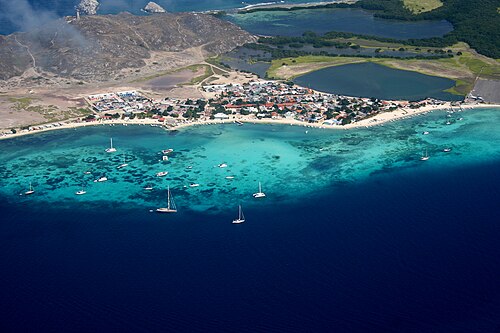
地理学的には、南アメリカには近隣の島々も含まれる。オランダ領ABC諸島(アルバ島、ボネール島、キュラソー島)、トリニダード・トバゴ諸島(トリニダード島、トバゴ島など)、ヌエバ・エスパルタ州、ベネズエラ連邦属領は南アメリカ大陸棚の北部に位置し、大陸の一部とみなされることもある。地政学的には、カリブ海の島国と領土はすべて、一般的に北アメリカのサブリージョンとしてグループ化されている。対照的に、アベス島(ベネズエラが管理)とサンアンドレス島、プロビデンシア島、サンタカタリナ諸島(サンアンドレス島、プロビデンシア島、サンタカタリナ島など、コロンビアが管理)は、政治的には南アメリカ諸国の一部だが、地理学的には北アメリカの一部である。[17] [26] [27]
地政学的に南アメリカと関連付けられることが多い他の島々には、チロエ諸島とロビンソン・クルーソー島(ともにチリが管理)、イースター島(文化的にはオセアニアの一部だが、チリも管理)[28]ガラパゴス諸島(エクアドルが管理、オセアニアの一部とみなされることもある)[28] [29] [30]ティエラ・デル・フエゴ(アルゼンチンとチリにまたがる)がある。大西洋では、ブラジルがフェルナンド・デ・ノローニャ諸島、トリンダーデ・ヴァス島およびマルチン・ヴァス島、サン・ピエトロ・サン・パウロ諸島を管理している一方、フォークランド諸島(スペイン語:マルビナス諸島)とサウスジョージア島およびサウスサンドウィッチ諸島(生物地理学的および水文学的には南極大陸と関連)[31] は、イギリスの海外領土として2つ、王室の管理下にあるが、アルゼンチンがその島々の領有権を争っている。
特別なケース
南アメリカプレート上の孤立した火山島であるアセンション島は、地質学的には南アメリカの一部です。 [32]セントヘレナ・アセンションおよびトリスタンダクーニャの属領として管理されているこの島は、地政学的にはアフリカの一部です。
気候

南アメリカには世界の主要な気候帯がすべて存在します。[34]
この地域の平均気温の分布は南緯30度から一定の規則性を示しており、等温線は緯度と混同される傾向がますます強まっている。[35]
温帯緯度では、冬も夏も北アメリカよりも穏やかです。これは、大陸の大部分が赤道地帯にあるためです(この地域は他のどの地域よりも赤道平野の面積が広いです)。[35]そのため、南米大陸は海洋の影響をより強く受け、年間を通じて気温が穏やかになります。
アマゾン川流域の年間平均気温は27℃(81℉)前後で変動し、気温の変動幅は小さく、降水量指数は高い。マラカイボ湖とオリノコ川の河口の間はコンゴ型の赤道気候が優勢で、ブラジル領土の一部も含まれる。[35]
ブラジルの東中部高原は、湿潤で温暖な熱帯気候である。アルゼンチンのパンパの北部と東部は、中国型の乾燥した冬と湿潤な夏の湿潤亜熱帯気候であるが、西部と東部の山脈はディナル型の亜熱帯気候である。アンデス地域の最高地点の気候は、ノルウェーのフィヨルドの最高地点よりも寒い。アンデス高原では、標高によって緩和されるものの、温暖な気候が優勢であり、海岸地帯ではギニア型の赤道気候である。この地点からチリ海岸の北まで、地中海海洋性気候、ブルターニュ型の温帯気候、そしてティエラデルフエゴではすでにシベリア型の寒冷気候が順に現れる。[35]

降雨量の分布は、風や気団の状況に関係している。アンデス山脈の東側の熱帯地域のほとんどでは、北東、東、南東から吹く風が大西洋から水分を運び、豊富な降雨をもたらす。しかし、一貫して強い風のシアーと弱い熱帯収束帯のため、南大西洋の熱帯低気圧はまれである。[36]オリノコ・リャノスとギアナス高原では、降水量は中程度から多い。コロンビアの太平洋沿岸とエクアドル北部は雨の多い地域で、コロンビアのチョコはインドヒマラヤの北斜面と並んで世界で最も雨の多い場所である。[37]この海岸沿いのアタカマ砂漠は、世界で最も乾燥した地域の1つである。チリの中央部と南部は温帯低気圧の影響を受けやすく、アルゼンチンのパタゴニアのほとんどは砂漠である。アルゼンチン、ウルグアイ、ブラジル南部のパンパでは降雨量は中程度で、年間を通じて雨がよく降ります。チャコの適度に乾燥した気候は、パラグアイ東部の激しい降雨とは対照的です。ブラジル北東部の半乾燥海岸では、雨はモンスーン気候と関連しています。[35]
気候を決定する重要な要素は、フンボルト海流やフォークランド海流などの海流です。南大西洋の赤道海流は北東海岸にぶつかり、そこで2つに分かれます。ブラジル海流とアンティル諸島に向かって北西に流れる沿岸海流です。アンティル諸島では北東方向に進み、世界で最も重要で有名な海流であるメキシコ湾流を形成します。[35] [38]
動物相
南アメリカは、地球上で最も生物多様性に富んだ大陸の 1 つです。ラマ、アナコンダ、ピラニア、ジャガー、ビクーニャ、バクなど、多くの固有の動物種が生息しており、世界最大の昆虫の 1 つであるタイタンビートルも生息しています。アマゾンの熱帯雨林は生物多様性に富んでおり、ブラジルには地球上の種の 10% が生息していると推定されています。[39]南米の大型哺乳類(メガファウナ)の83%は、約11,000年前の更新世の終わりに、第四紀の絶滅イベントの一環として絶滅しました。これはどの大陸でも最も高いものの一つであり、犠牲者にはサーベルタイガー、地上ナマケモノ、グリプトドン、ゴンフォテリウム、ウマ科のヒッピディオンとエクウス・ネオゲウス、そして南米に残っていたすべての有蹄類が含まれていました。[40]
歴史
先史時代

南アメリカに人類が初めて居住したのは、少なくとも1万5000年前、現在のロシアの領土からベーリング陸橋(現在のベーリング海峡)を渡ったときだと考えられています。彼らは北アメリカを通って南に移動し、最終的にパナマ地峡を通って南アメリカに到達しました。
南米における人類の存在を示す最も古い証拠の一つは、チリのモンテ・ベルデ II遺跡で、約 14,500 年前のものと考えられています。[41]約 13,000 年前以降、フィッシュテール型の尖頭器は南米全域に広まり、約 11,000 年前に南米の大型動物が絶滅したのと同時期に消失しました。[42]トウモロコシは、約 6,000 年前までに南米北部に存在していました。[43]
紀元前2000年までに、多くの農耕コミュニティがアンデス山脈とその周辺地域に定住しました。漁業は沿岸で広く行われるようになり、魚が主要な食料源として定着しました。灌漑システムもこの時期に開発され、農業社会の台頭を助けました。[44]
南米の文化では、紀元前3500年頃にアンデス高地でラマ、ビクーニャ、グアナコ、アルパカの家畜化が始まりました。肉や毛皮の原料として使われるほか、これらの動物は物資の輸送にも使われました。[44]
先コロンブス文明

植物栽培の台頭とそれに続く恒久的な人間の居住地の出現により、南アメリカでは文明が複数かつ重なり合って始まりました。
南米で最古の文明の一つは、ペルー中央海岸のカラル・スペにあった。陶器以前の文化ではあったが、カラル・スペの記念碑的な建築物は、フォルタレザ地域のワリカンガに世界最古の都市の一つを創り出した。この都市は、一般的に紀元前3500年頃とされており、古代エジプトのピラミッドと同時期のもので、アメリカ大陸で知られている最古の文明の一つであり、古代世界で文明が別々に始まった6つの場所の一つである。[45]カラル・スペの支配階級は交易ネットワークを確立し、農業を発達させ、その後、紀元前900年までにチャビンが続いたと推定され、考古学的発見もある。現代のペルーにある標高3,177メートル(10,423フィート)のチャビン・デ・ワンタルと呼ばれる場所で遺物が発見されている。チャビン文明は紀元前900年から紀元前300年まで続いた。
ペルーの中央海岸では、紀元後1千年紀の初め頃、モチェ(ペルー北海岸の紀元前100年~紀元後700年)、パラカス、ナスカ(ペルーの紀元前400年~紀元後800年)の文化が栄え、中央集権国家と常駐民兵が灌漑と新しいスタイルの陶芸で農業を改善しました。アルティプラノでは、ティアワナコまたはティワナク(ボリビアの紀元前100年~紀元後1200年)が宗教に基づいた大規模な商業ネットワークを管理していました。
7 世紀頃、ティアワナコとワリ、またはワリ帝国 (600 ~ 1200 年、ペルー中部および北部) は、その影響力をアンデス地域全体に拡大し、ワリの都市計画とティアワナコの宗教的図像を押し付けました。
ムイスカ族は、現在のコロンビアの先住民族の主要な文明でした。彼らは、多くの氏族、つまりカシカズゴからなるムイスカ連邦を創設し、氏族間で自由貿易ネットワークを構築していました。多くは金細工師や農民でした。
その他の重要な先コロンブス文化には、カニャリ(エクアドル中南部)、チムー帝国(1300~1470年、ペルー北海岸)、チャチャポヤ、アイマラ王国(1000~1450年、ボリビア西部およびペルー南部)がある。インカ文明は、大都市クスコを首都として、1438年から1533年までアンデス地方を支配した。ケチュア語で「4つの地域の土地」を意味するタワンティン・スユとして知られるインカ帝国は、非常に独特で発展していた。インカの支配は、25,000キロメートルの道路網で結ばれた約900万~1400万人の100近くの言語または民族コミュニティに及んだ。都市は、山岳地帯の多くの段々に、精密で比類のない石積みで建設された。
チリ中部と南部のマプチェ族はヨーロッパ人とチリ人の入植者に抵抗し、300年以上にわたって アラウコ戦争を繰り広げた。
ヨーロッパの植民地化
.jpg/500px-Desembarque_de_Pedro_%C3%81lvares_Cabral_em_Porto_Seguro_em_1500_by_Oscar_Pereira_da_Silva_(1865%E2%80%931939).jpg)
1494年、当時のヨーロッパの二大海洋国家であったポルトガルとスペインは、西方で新たな土地が発見されることを期待してトルデシリャス条約に署名し、教皇の支持を得て、ヨーロッパ以外のすべての土地を両国が独占することで合意した。 [46]
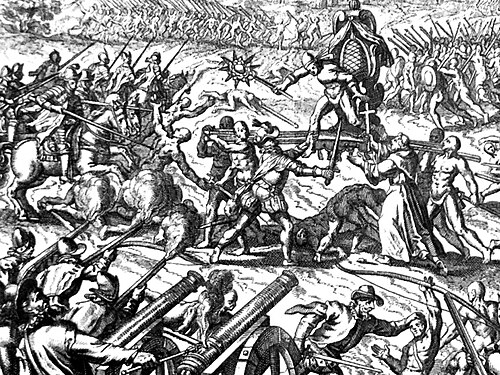
この条約は、カーボベルデ諸島の西370リーグ、およそ西経46度37分に南北子午線に沿った仮想線を定めた。条約によれば、この線より西側のすべての土地(南米の土地の大半を占めることが知られている)はスペインに、東側のすべての土地はポルトガルに帰属することになっていた。当時は経度の正確な測定が不可能だったため、この線は厳密に施行されず、その結果、ポルトガルは子午線を越えて ブラジルを拡大することになった。
1530 年代以降、南アメリカの人々と天然資源は、最初はスペイン、後にポルトガルからの外国の征服者によって繰り返し搾取されました。これらの競合する植民地国家は、土地と資源を自分たちのものであると主張し、植民地に分割しました。
ヨーロッパの感染症(天然痘、インフルエンザ、麻疹、チフス)は、先住民が免疫を持っていなかったため、スペインの支配下で先住民の大規模な人口減少を引き起こした。アシエンダや鉱山産業のミタなどの強制労働システムも人口減少の一因となった。その後、これらの病気に対する免疫を発達させた奴隷のアフリカ人が、すぐに彼らの代わりとして連れてこられた。

スペイン人は先住民をキリスト教に改宗させることに熱心で、その目的を妨げる先住民の文化的慣習を速やかに排除した。しかし、先住民の集団がカトリックを自分たちの確立した信仰や慣習と単純に融合させたため、初期の試みの多くは部分的にしか成功しなかった。さらに、スペイン人は宗教と同様に言語も持ち込んだが、ローマカトリック教会によるケチュア語、アイマラ語、グアラニー語の伝道活動は、口頭形式のみではあったものの、これらの先住民言語の継続的な使用に実際に貢献した。
最終的に、原住民とスペイン人が混血し、メスティーソ階級が形成されました。当初、アンデス地域のメスティーソの多くは、アメリカインディアンの母親とスペイン人の父親の子孫でした。独立後、ほとんどのメスティーソは、原住民の父親とヨーロッパ人またはメスティーソの母親から生まれました。
多くの先住民の芸術作品は異教の偶像とみなされ、スペインの探検家によって破壊されました。これには南米で発見された多くの金や銀の彫刻やその他の工芸品が含まれており、スペインやポルトガルに輸送される前に溶かされました。スペイン人とポルトガル人は西ヨーロッパの建築様式を大陸に持ち込み、発見または征服した都市の橋、道路、下水道などのインフラの改善に貢献しました。彼らはまた、旧世界と新世界の間だけでなく、南米のさまざまな地域や人々の間での経済貿易関係を大幅に強化しました。最後に、ポルトガル語とスペイン語の拡張により、以前は分離されていた多くの文化がラテンアメリカの文化を通じて統合されました。
ガイアナは当初オランダの植民地となり、その後イギリスの支配下に入ったが、ナポレオン戦争中には短期間フランスに占領されていた。この地域は当初オランダ、フランス、イギリスの間で分割され、その後完全にイギリスの支配下に入った。
スリナムは16世紀にスペイン人によって初めて探検され、その後17世紀半ばにイギリス人が定住した。 1667年にオランダの植民地となった。[47]
南米における奴隷制度

様々なヨーロッパ植民地のアメリカ大陸の先住民は、ヨーロッパ人のプランテーションや鉱山で働くことを強いられた。また、数世紀後に奴隷貿易によって連れてこられたアフリカ人も奴隷とされた。ヨーロッパの植民者は、入植の初期段階では自給自足の経済を維持するために先住民の労働力に大きく依存しており、先住民はしばしば探検隊に捕らえられた。アフリカ人奴隷の輸入は16世紀半ばに始まったが、先住民の奴隷化は17世紀、18世紀まで続いた。大西洋奴隷貿易は、1502年以降ポルトガル人によって始まり、主に南米の植民地に奴隷化されたアフリカ人を連れて行った。 [48]この段階の主な目的地はカリブ海植民地とブラジルであり、ヨーロッパ諸国は新世界に経済的に奴隷に依存する植民地を築いていった。アメリカ大陸に人身売買されたアフリカ人奴隷の約40%はブラジルに送られた。 1501年から1866年の間に、推定490万人のアフリカからの奴隷がブラジルにやって来た。[49] [50]
アメリカ大陸の他のヨーロッパ植民地が主にアフリカ人奴隷を労働力として使っていたのとは対照的に、スペインの入植者は主にアメリカ先住民を奴隷にした。1750年、ポルトガル王室は、先住民は労働に不向きであり、奴隷にされたアフリカ人よりも非効率的であるという考えのもと、植民地ブラジルにおける先住民の奴隷制度を廃止した。奴隷にされたアフリカ人は、非人道的な環境と虐待の下で奴隷船でアメリカ大陸に連れてこられ、生き残った者は奴隷市場で売られた。[51]独立後、南米諸国はすべてしばらくの間奴隷制を維持した。南米で最初に奴隷制度を廃止したのはチリ(1823年)、ウルグアイ(1830年)、ボリビア(1831年)、ガイアナ(1833年)、コロンビアとエクアドル(1851年)、アルゼンチン(1853年)、ペルーとベネズエラ(1854年)、スリナム(1863年)、パラグアイ(1869年)であり、1888年にはブラジルが南米で最後に、西洋世界で最後に奴隷制度を廃止した国となった。[52]
スペインとポルトガルからの独立
ナポレオン戦争の舞台となったヨーロッパ半島戦争(1807年 - 1814年)は、スペインとポルトガルの植民地の政治状況を変えた。まずナポレオンはポルトガルに侵攻したが、ブラガンサ家はブラジルに逃れて捕らえを免れた。ナポレオンはスペイン国王フェルナンド7世を捕らえ、代わりに自分の弟を皇帝に任命した。この任命は民衆の抵抗を招き、捕らえられた国王の名の下に統治するフンタ(軍事政権)が誕生した。

しかし、スペイン植民地の多くの都市は、スペインと同様に地方のフンタを任命する権限が自分たちにもあると考えていた。これが、そのような自治を推進する愛国者と、アメリカ大陸に対するスペインの権威を支持する王党派との間で、米州独立戦争の始まりとなった。スペインとアメリカ大陸の両方のフンタは啓蒙思想を推進した。戦争開始から5年後、フェルナンド7世が王位に復帰し、王政復古を開始し、王党派が紛争で優位に立った。
南米の独立は、シモン・ボリバル(ベネズエラ)とホセ・デ・サン・マルティン(アルゼンチン)という2人の最も重要なリベルタドーレスによって確保された。ボリバルは北部で大規模な反乱を起こし、その後軍を率いて南下し、ペルー副王領の首都リマに向かった。一方、サン・マルティンはチリの移民とともに軍を率いてアンデス山脈を越え、チリを解放した。彼は海路ペルーに到達する艦隊を組織し、ペルー副王領のさまざまな反乱軍に軍事支援を求めた。1822年、2人はエクアドルのグアヤキル会議で会談したが、解放された国々の統治戦略について合意に至らなかった。[53] 2年後、ボリバルの軍はアヤクチョの戦いでスペイン軍を破り、ペルーと南米の他の地域の独立を確保した。[53]
ポルトガル領ブラジル王国では、ポルトガル国王ジョアン6世の息子ペドロ1世(ポルトガル国王ペドロ4世とも)が1822年にブラジル王国の独立を宣言し、これが後にブラジル帝国となった。バイーア、シスプラティナ、パラーの駐屯軍はポルトガルに忠誠を誓っていたが、1825年にポルトガルはイギリスの仲介によりブラジルが多額の賠償金を支払うという条件で外交的に独立を承認した。
国家建設と分裂


新しく独立した国々は分裂の過程に入り、いくつかの内戦や国際戦争が起こりました。しかし、その分裂は中央アメリカほど激しくはありませんでした。大国の州から作られた国の中には、現代までそのままの状態が続いた国(パラグアイやウルグアイなど)もあれば、再征服されて元の国に再編入された国(エントレ・リオス共和国やリオグランデセ共和国など)もありました。
最初の分離独立の試みは、1820年にアルゼンチンのエントレ・リオス州で、幹部が率いた。[54]名称に「共和国」とあるにもかかわらず、幹部のラミレス将軍はエントレ・リオスの独立を宣言するつもりはなかった。むしろ、彼は当時ブエノスアイレスの政治に浸透していた君主主義と中央集権主義の考えに反対する政治的声明を出していた。「国」は1821年に連合州で再編入された。
1825年、シスプラティーナ州はブラジル帝国からの独立を宣言し、帝国とリオ・デ・ラ・プラタ連合州のアルゼンチンとの間でこの地域の支配をめぐるシスプラティーナ戦争が勃発した。3年後、イギリスはこの問題に介入し、同胞団を宣言して旧シスプラティーナ州に新たな独立国、ウルグアイ東方共和国を樹立した。
1836年後半、ブラジルが摂政の混乱に陥る中、リオグランデ・ド・スル州は税制危機を理由に 独立を宣言した。ペドロ2世のブラジル王位戴冠を期待して、国は安定し、サンタカタリーナ州が1839年に加わった分離主義者と戦うことができた。この紛争は、リオグランデ共和国とジュリアナ共和国の両方が1845年に州として再編入される妥協の過程で終結した。[55] [56]

ペルーとボリビアの短命な連合であるペルー・ボリビア連邦は、連邦戦争(1836年~1839年)でチリによって阻止され、太平洋戦争(1879年~1883年)でも再び阻止された。パラグアイはパラグアイ戦争でアルゼンチン、ブラジル、ウルグアイによって事実上破壊された。
戦争と紛争
米西独立戦争やブラジル独立戦争にもかかわらず、新興国家はすぐに内部紛争や戦争に苦しみ始めた。1810年に各国が「uti possidetis iuris」の原則に基づいて当初受け入れた国境のほとんどは、1848年までに戦争によって変更されたか、争われていた。[57]
1825年、シスプラティーナの独立宣言により、ブラジル帝国とアルゼンチンの前身であるリオデラプラタ連合州という歴史的ライバル国の間でシスプラティーナ戦争が勃発した。戦争は膠着状態に陥り、イギリス政府がウルグアイの独立を手配して終わった。その後すぐに、ブラジルの別の州が独立を宣言し、ラガマフィン戦争が勃発したが、ブラジルが勝利した。
1836年から1839年にかけて、短命だったペルー・ボリビア連邦とチリの間で、アルゼンチン連邦の支援を受けて連邦戦争が勃発した。戦争は主にペルーの実際の領土で戦われ、連邦の敗北と連邦の解体、そしてアルゼンチンによる多くの領土の併合で終わった。
一方、アルゼンチン内戦はアルゼンチン独立以来、アルゼンチンを苦しめてきた。この対立は主にブエノスアイレスの中央集権を擁護する者と連邦を擁護する者の間で起こった。この時期は「アルゼンチンには2つの国があった」と言える。アルゼンチン連邦とアルゼンチン共和国である。同時に、ウルグアイの政情不安は、国内の主要政治派閥間のウルグアイ内戦を招いた。プラティーヌ地方のこうした不安定さはすべて、ブラジルなどの他の国の目標を妨げ、ブラジルはすぐにどちらかの側につくことを余儀なくされた。1851年、中央集権主義のユニタリアンを支持するブラジル帝国とウルグアイ政府がアルゼンチンに侵攻し、連邦を強権的に支配していたカウディーリョ、フアン・マヌエル・ロサスを退位させた。プラティーヌ戦争はアルゼンチンの政治的混乱と内戦に終止符を打つことはなかったが、ウルグアイに一時的な平和をもたらし、ブラジル、イギリス、フランス、アルゼンチン統一党の支援を受けたコロラド派が勝利した。 [58]
平和は長く続かなかった。1864年、ウルグアイの派閥はウルグアイ戦争で再び対立した。パラグアイの支援を受けたブランコ党は国境付近でブラジルとアルゼンチンの農民を攻撃し始めた。帝国はブランコ党とコロラド党の間の紛争を解決しようとしたが、成功しなかった。1864年、ブラジルの最後通牒が拒否された後、帝国政府はブラジル軍が報復を開始すると宣言した。ブラジルは正式な戦争状態を認めず、そのほとんどの期間、ウルグアイとブラジルの武力紛争は宣戦布告のない戦争となり、ブランコ党は追放され、親ブラジル派のコロラド党が再び権力を握った。これに激怒したパラグアイ政府は戦争が終わる前にブラジルに侵攻し、ラテンアメリカ史上最も長く血なまぐさい国家間戦争、パラグアイ戦争が始まった。[59]

パラグアイ戦争は、パラグアイの独裁者フランシスコ・ソラーノ・ロペスがブラジルのマットグロッソ州とリオグランデ・ド・スル州への侵攻を命じたことから始まった。彼がアルゼンチンの承認なしにアルゼンチン領土を越えようとしたため、親ブラジル派のアルゼンチン政府が戦争に参戦した。親ブラジル派のウルグアイ政府は軍隊を派遣して支援を示した。1865年、3か国はパラグアイに対する三国同盟条約に調印した。戦争当初はパラグアイが数回の勝利でリードしていたが、三国同盟が組織され侵略者を撃退し効果的に戦った。これはアメリカ南北戦争に次ぐ世界で2番目の総力戦の経験であった。これは参加国すべての歴史上最大の戦争努力とみなされ、ほぼ6年を要し、パラグアイの完全な荒廃で終わった。ブラジルとアルゼンチンに領土の40%を奪われ、人口の60%(男性の90%を含む)を失った。独裁者ロペスは戦闘で死亡し、ブラジルと同盟を組んだ新政府が樹立され、1876年まで占領軍が駐留した。[60]
19世紀最後の南米戦争は、ボリビアとペルー、チリが対立した太平洋戦争であった。1879年、チリ軍がボリビアの港を占領したことで戦争が始まり、続いてボリビアがチリに宣戦布告し、ペルーとの同盟条約が発効した。ボリビアは1880年に完全に敗北し、1881年にリマは占領された。1883年にペルーとの和平協定が締結され、1884年にはボリビアとの休戦協定が締結された。チリは両国の領土を併合し、ボリビアを内陸国にした。[61]

21世紀に入り、戦争の暴力性や頻度が減ると、ブラジルは1902年に獲得したアクレの領有をめぐってボリビアと小規模な紛争を起こした。1917年、ブラジルは中央同盟国に宣戦布告し、第一次世界大戦では同盟国側に加わり、地中海に小規模な艦隊を派遣し、同地域のイギリス軍とフランス軍に統合する部隊を派遣した。ブラジルは第一次世界大戦に参加した唯一の南米の国であった。[62] [63]その後1932年、コロンビアとペルーはアマゾンの領土をめぐって短期間の武力紛争を起こした。同年、パラグアイはチャコの領有をめぐってボリビアに宣戦布告し、この紛争は3年後にパラグアイの勝利で終結した。1941年から1942年にかけて、ペルーとエクアドルは両国が領有権を主張していた領土をめぐって戦い、ペルーはエクアドルとブラジルの国境を奪った。 [64]
またこの時期には、大陸本土に近い南大西洋で第二次世界大戦初の大規模な海戦、ラプラタ沖海戦が起こった。イギリスの巡洋艦隊とドイツのポケット戦艦との間で行われた。[65]それでもドイツ軍は沿岸部のブラジル艦船に何度も攻撃を仕掛け、ブラジルは1942年に枢軸国に宣戦布告した。ブラジルは南米諸国で唯一この戦争(および両世界大戦)に参加した国となった。ブラジルは大陸沖と南大西洋全域でドイツとイタリアの潜水艦と戦うために海軍と空軍を派遣し、さらにイタリア戦線に遠征軍を派遣して戦った。[66] [67]
1982年、アルゼンチンがフォークランド諸島に侵攻した後、アルゼンチンと英国の間で短い戦争が起こり、アルゼンチンの敗北に終わった。南米の地で戦われた最後の国際戦争は、1995年にエクアドルとペルーの国境沿いで起きた セネパ戦争である。
軍事独裁政権の興亡
20世紀には戦争は少なくなり、ボリビアとパラグアイ、ペルーとエクアドルが最後の国家間戦争を戦った。20世紀初頭、南米の最も裕福な3カ国は、新しい軍艦タイプ「ドレッドノート」の導入後に始まった、莫大な費用がかかる海軍軍拡競争に参加した。ある時点で、アルゼンチン政府は、わずか2隻のドレッドノートに年間予算の5分の1を費やしていたが、この価格には後の運用コストは含まれておらず、ブラジルのドレッドノートの場合、初期購入の60%であった。[68] [69]

ペルー大陸は20世紀後半に冷戦の戦場となった。アルゼンチン、ブラジル、チリ、ウルグアイ、パラグアイの民主的に選出された政府は、1960年代から1970年代にかけて軍事独裁政権によって打倒されたり、政権を追われたりした。反対勢力を抑えるため、政府は数万人の政治犯を拘留し、その多くは国家間の協力関係の中で拷問を受けたり、殺害された。経済的には、新自由主義経済政策への移行が始まった。彼らは自らの行動を、内部転覆に対抗する米国の冷戦の「国家安全保障」原則の範囲内に位置付けた。1980年代から1990年代にかけて、ペルーは内紛に苦しんだ。
1982年、アルゼンチンはイギリス領フォークランド諸島に侵攻した。フォークランド戦争が始まり、74日後にアルゼンチン軍は降伏した。[70]
コロンビアでは、1964年にマルクス主義 ゲリラ(FARC-EP)の結成に始まり、その後左翼思想の非合法武装グループや有力な麻薬王の私兵が関与するようになった、現在も減少傾向にあるものの内戦が続いている。現在、これらの多くは解散しており、ELNのごく一部と、同じく大幅に縮小しているもののより強力になったFARCのみが残っている。
革命運動と右翼軍事独裁政権は第二次世界大戦後に一般的になったが、1980年代以降、大陸に民主化の波が押し寄せ、現在では民主的な統治が広く行われている。[71]とはいえ、汚職疑惑は依然として非常に一般的であり、いくつかの国では政府の辞任を余儀なくされる危機が発生しているが、ほとんどの場合、通常の文民継承が続いている。
1980年代後半には国際債務が大きな問題となり、一部の国では強力な民主主義国家であるにもかかわらず、非正統的な経済政策に頼らずにこうした危機に対処できる政治制度が整備されていない。これは21世紀初頭のアルゼンチンの債務不履行に象徴される。 [72]アンデス共同体、メルコスール、UNASURRなど南米独自の制度が創設され、地域統合への動きが強まっている。 1998年にベネズエラでウゴ・チャベスが選出されてから、この地域ではピンク色の潮流が起こり、ギアナとコロンビアを除くほとんどの国で左派および中道左派の政権が複数誕生した。
現代の問題
1990年代以降の南米の政治地理は、外国の影響を減らしたいという願望によって特徴づけられてきた。[73]産業の国有化、つまり国家が経済セクター全体を管理すること(民間企業による管理とは対照的)は、この地域の重要な政治問題となっている。[73]南米のいくつかの国は電力産業を国有化している。[73]
国と地域
政府と政治
.jpg/500px-UNASUR_(Ecuador).jpg)
歴史的に、スペイン諸国はカウディーリョが率いる共和制独裁国家として建国された。ブラジルは唯一の例外で、独立後67年間は立憲君主制だったが、クーデターで共和制が宣言された。19世紀後半、最も民主的な国はブラジル、[74] 、 チリ、アルゼンチン、ウルグアイであった。[75]
南米諸国はすべて大統領制共和国だが、スリナムだけは議会制共和国である。フランス領ギアナはフランスの海外県、フォークランド諸島、サウスジョージア島およびサウスサンドウィッチ諸島はイギリスの海外領土である。現在、フランス領ギアナは世界で唯一君主制のない有人大陸である。19世紀にはブラジル帝国が存在し、アルゼンチン南部とチリではアラウカニア・パタゴニア王国を樹立する試みがあったが失敗に終わった。また、20世紀にはスリナムがネーデルラント王国の構成王国として樹立され、ガイアナは独立後4年間イギリス君主を国家元首として留まらせた。
最近、既存の2つの関税同盟であるメルコスールとアンデス共同体を統合し、世界で3番目に大きな貿易ブロックを形成することを目的とした政府間組織が結成されました。[76]南米諸国連合 として知られるこの新しい政治組織は、人々の自由な移動、経済発展、共通の防衛政策、関税の撤廃を確立することを目指しています。
人口統計

南米の人口は4億2800万人を超えている。彼らは「空洞の大陸」を形成するように分布しており、人口の大部分は大陸の周縁部に集中している。[73]一方で、熱帯雨林、アタカマ砂漠、パタゴニアの氷河地帯など、人口の少ない地域がいくつかある。他方、大陸には大都市中心部など人口密度の高い地域もある。人口はヨーロッパ人(主にスペイン人、ポルトガル人、イタリア人)、アフリカ人、アメリカ先住民の子孫で構成されている。地域によって構成が大きく異なる混血の割合が高い。約500万人のアジア人がおり、そのほとんどは東アジア人で、特にブラジル、ペルー、アルゼンチンに多い。2大言語は圧倒的にスペイン語とポルトガル語で、英語、フランス語、オランダ語がそれに続く。
言語
.svg/500px-Languages_of_South_America_(en).svg.png)
スペイン語とポルトガル語は南米で最も話されている言語で、それぞれ約2億人の話者がいる。スペイン語はほとんどの国で公用語であり、一部の国では他の母国語も使用されている。ポルトガル語はブラジルの公用語である。オランダ語はスリナムの公用語である。英語はガイアナの公用語であるが、ポルトガル語、中国語、ヒンドゥスターニー語、およびいくつかの母国語を含む少なくとも12の言語が話されている。 [77]英語はフォークランド諸島でも話されている。フランス語はフランス領ギアナの公用語であり、ブラジルのアマパでは第二言語である。
南米の先住民言語には、ペルー、ボリビア、エクアドル、チリ、アルゼンチン、コロンビアのケチュア語、コロンビア北部 (ラ・グアヒーラ) とベネズエラ北西部 (スリア) のワユナイキ語、パラグアイと、ごく一部ではあるがボリビアのグアラニー語、ボリビア、ペルー、およびまれにチリのアイマラ語、チリ南部の一部で話されているマプドゥングン語などがあります。少なくとも 3 つの南米先住民言語 (ケチュア語、アイマラ語、グアラニー語) が、スペイン語とともに国語として認められています。
南米で話されている他の言語としては、スリナムのスラナン・トンゴ語、ヒンドゥスターニー語、ジャワ語、アルゼンチン、ブラジル、ウルグアイ、ベネズエラのイタリア語、アルゼンチン、チリ、ブラジルの一部の地域で話されているドイツ語などがある。ドイツ語はブラジル南部の多くの地域で話されており、リオグランデンセ・フンスリュツキッシュ語は国内で最も広く話されているドイツ語の方言である。他のゲルマン語方言の中でも、東ポメラニア語のブラジル版もよく知られており、復活を遂げている。ウェールズ語はアルゼンチンのパタゴニアにある歴史的な町トレレウとラウソンで今も話され、書かれており、クロアチア語はチリ南部で話されている。レバノン人、シリア人、パレスチナ人系のアラビア語話者は、アルゼンチン、コロンビア、ブラジル、ベネズエラ、パラグアイのアラブ人コミュニティに多く見られる。[78]
宗教

南米人の推定90%はキリスト教徒であり[79](82%がローマカトリック、8%が他のキリスト教宗派(主に伝統的なプロテスタントと福音派、また正教会))、世界中のキリスト教徒の19%を占めています。
アフリカ系および先住民族の宗教は南米全域で一般的であり、例としてはサント・ダイメ、カンドンブレ、ウンバンダなどがある。隠れユダヤ人、すなわちマラーノ、コンベルソ、アヌシムはラテンアメリカの植民地生活において重要な部分を占めていた。ブエノスアイレスとサンパウロは、都市部で見るとユダヤ人の人口が最も多い都市の1つである。
日本の仏教、神道、神道から派生した 日本の新宗教などの東アジアの宗教は、ブラジルとペルーで一般的です。韓国の儒教は特にブラジルで見られ、中国の仏教と中国の儒教は大陸全体に広まっています。カルデシスト心霊術はいくつかの国で見られます。
ヒンズー教徒はガイアナの人口の25%、スリナムの人口の22%を占めている。[80] [81]
ガイアナの人口の7%、スリナムの人口の14%をイスラム教徒が占めている。[80] [81]スリナムのイスラム教徒のほとんどはインドネシア人かインド人であり、ガイアナではそのほとんどがインド人である。
南アメリカの宗教(2013年)の一部:[82]
民族の人口統計


南米では遺伝的混合が高度に起こっている。アルゼンチンでは、ヨーロッパの影響が遺伝的背景の65~80%を占め、アメリカインディアン(先住民)が17~31%、サハラ以南のアフリカ人が2~4%を占めている。コロンビアでは、サハラ以南のアフリカ人の遺伝的背景は1%~89%で、ヨーロッパ人の遺伝的背景は地域によって20~79%と様々であった。ペルーでは、ヨーロッパ人の祖先は1%~31%で、アフリカ人の寄与はわずか1~3%であった。[83]ジェノグラフィック・プロジェクトは、リマ出身のペルー人の平均は、ヨーロッパ人の祖先が約25%、ネイティブアメリカンが68%、南西アジア人が3%、サハラ以南のアフリカ人が2%であると判定した。[84]
ケチュア族やアイマラ族、アマゾンのウラリナ族[85]などの先住民の子孫は、ボリビア(56%)とペルー(44%)の人口の大半を占めています。[86] [87]エクアドルでは、アメリカインディアンが人口の5分の2を占めています。南米の他のほとんどの国でも、先住民人口は重要な要素です。
主にまたは完全にヨーロッパ系であると自認する人々、またはそのようなグループに該当する表現型であると自認する人々は、ウルグアイ[88]、アルゼンチン[89]、チリ(64.7%)[90]では多数派であり、ブラジルでは人口の43.5%を占めています。[91] [ 92] [93]ベネズエラでは、国勢調査によると、人口の42%が主にスペイン、イタリア、またはポルトガル系の子孫です。[94]コロンビアでは、ヨーロッパ系の子孫であると自認する人々は約37%です。[95] [96]ペルーでは、ヨーロッパ系の子孫は数で3番目のグループです(15%)。[97]
メスティーソ(ヨーロッパ人とアメリカインディアンの混血)は、ボリビア、パラグアイ、ベネズエラ、コロンビア[95] 、エクアドルで最大の民族グループであり、ペルー、チリ、アルゼンチンでは2番目に大きなグループです。
南米はアフリカ系人口が最も多い国の一つです。このグループはブラジル、コロンビア、ガイアナ、スリナム、フランス領ギアナ、ベネズエラ、エクアドルに多く存在します。ブラジル、ペルーに続いて南米最大の日本人、韓国人、中国人のコミュニティがあります。リマにはラテンアメリカ最大の中国系コミュニティがあります。[98]ガイアナとスリナムには最大の東インド系コミュニティがあります。
先住民
一部の地域では、先住民が自給自足の農業や狩猟採集に基づく伝統的な生活様式を今も続けている。アマゾンの熱帯雨林には未接触の部族が今も居住している。 [102]
- アグアルナス
- アラカルフェ
- アラワク族
- アシャンティカ
- アタカメノス
- アワ
- アイマラ族–ボリビア、チリ、ペルーのアルティプラノに住んでいます。彼らの言語はボリビアとペルーの公用語です。伝統的な生活様式にはラマの飼育が含まれます。
- バナワ
- カニャリス
- カイアポス
- チブチャ
- コカマ
- チャヤウイタ
- ディアギタ
- エンゼット
- ゲ、
- グアラニ族– パラグアイに居住。パラグアイではグアラニ語がスペイン語と公用語となっている。ボリビアにも居住している。
- ジュリス
- クナ族はコロンビアとパナマの国境に住んでいます。
- マプチェ族– 主にチリ南部とアルゼンチン南西部に居住(アラウカノ語を参照)。
- マツェス
- ペウェンチェ族– 南部のアンデス渓谷に住んでいたマプチェ族の一派(アラウカノ語を参照)。
- ケチュア人– ペルーとボリビアの人口の大部分を占めています。民族グループとしては多様です。インカ人は南ケチュア語を話していました。
- セルクナム
- シピボ語
- シュアール語(ヒヴァロ語を参照)。
- トゥピ語
- ウラリナ
- ワイワイ
- ワユウ
- シュクル
- ヤガン
- ヤグア
- ヤノマモ
- ザパロス
民衆
南米の都市
ブラジル、アルゼンチン、コロンビアは人口が最も多い国ですが、大都市の人口はこれらの国に限ったものではありません。2015 年現在、国勢調査に基づく南米の人口上位 10 大都市圏は次のとおりです。
上位 10 大都市圏のうち 5 つはブラジルにあります。これらの都市圏はすべて人口 400 万人を超えており、サンパウロ都市圏、リオデジャネイロ都市圏、ベロオリゾンテ都市圏が含まれます。最大の都市圏の大半はブラジル国内にありますが、アルゼンチンには南米で 2 番目に人口が多い都市圏、ブエノスアイレス都市圏があり、人口は 1,300 万人を超えています。
南米では巨大都市圏の成長が見られています。ブラジルには、3,200万人以上の住民を抱えるサンパウロの拡大都市圏を含む4つの巨大地域が存在します。他の巨大地域は、リオ大都市圏、ベロオリゾンテ大都市圏、ポルトアレグレ大都市圏です。コロンビアにも4つの巨大地域があり、その人口の72%を占めています。続いてベネズエラ、アルゼンチン、ペルーにも巨大地域があります。
経済
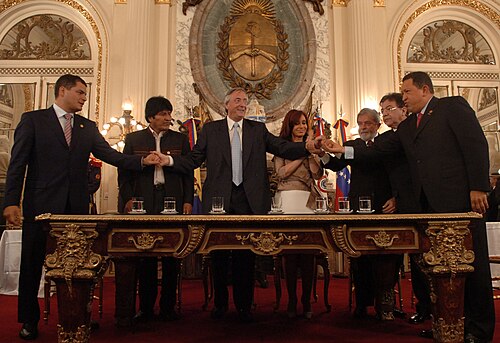


.jpg/500px-Apresenta%C3%A7%C3%A3o_KC-390_(15414135738).jpg)

1930年以降、アフリカ大陸はほとんどの経済分野で成長と多様化を経験してきた。農産物や畜産物のほとんどは国内市場と地元消費向けである。しかし、農産物の輸出はほとんどの国で貿易収支に不可欠である。[110]
主な農作物は、大豆や小麦などの輸出作物です。野菜、トウモロコシ、豆などの主食の生産は大規模ですが、国内消費に重点を置いています。肉の輸出用の畜産業は、アルゼンチン、パラグアイ、ウルグアイ、コロンビアで顕著です。熱帯地域では、主にブラジル、コロンビア、エクアドルで、コーヒー、カカオ、バナナが最も重要な作物です。伝統的に、輸出用の砂糖を生産している国はペルー、ガイアナ、スリナムであり、ブラジルではサトウキビはエタノールの製造にも使用されています。ペルーの海岸、ブラジルの北東と南では、綿花が栽培されています。南アメリカの陸地面積の51%は森林で覆われています。[111]多国籍企業は、輸出用の木材を開発するために アマゾンの熱帯雨林に定住しています。
太平洋沿岸海域は商業漁業にとって最も重要な海域である。カタクチイワシの漁獲量は数千トンに達し、マグロも豊富でペルーが主要輸出国となっている。甲殻類の漁獲量も多く、特にブラジル北東部とチリで多い。[110]
ブラジルとアルゼンチンはG20先進国の一員であるが、ブラジルだけがG8+5(世界で最も強力で影響力のある国)の一員である。観光分野では、2005年に観光を促進し、地域内の航空路線を増やすための交渉が始まった。プンタ・デル・エステ、フロリアノーポリス、マル・デル・プラタは南米最大のリゾート地の一つである。[110]
南米で最も工業化が進んでいる国は、それぞれブラジル、アルゼンチン、コロンビア、チリである。これらの国だけで、南米経済の80%以上を占めている。南米の産業は、米国やその他の地域での大恐慌により大陸の工業生産が急増した1930年代から大きく発展した。この地域は部分的に農業から離れ、高い経済成長率を達成し始めたが、1990年代初頭に政情不安と経済危機により成長が鈍化した。[110]
1998年から2002年にかけてブラジルとアルゼンチンで経済危機が起こり、景気後退、失業率の上昇、所得の減少を招いたが、その後、工業部門とサービス部門は回復した。南米は、インフレと為替レートの抑制、継続的な成長、社会的不平等と失業の減少など、産業に有利な要因により、経済安定の兆しを見せている。[110]
主な産業は、電子機器、繊維、食品、自動車、冶金、航空、海軍、衣料、飲料、鉄鋼、タバコ、木材、化学などである。[110]
南米諸国の大半における貧富の差は、他の大陸の大半よりも大きい。ボリビア、ブラジル、コロンビアでは、最も裕福な10%が国民所得の40%以上を得ているのに対し、 [112]最も貧しい20%は4%以下しか得ていない。[113]この大きな格差は、高層ビルや高級マンションの近くに仮設の小屋やスラム街が立ち並ぶ南米の大都市で見られる。南米人の多くは1日2ドル以下で暮らしている。[107]
農業
農業が最も盛んな4カ国は、ブラジル、アルゼンチン、チリ、コロンビアです。現在:
- ブラジルは、サトウキビ、大豆、コーヒー、オレンジ、ガラナ、アサイー、ブラジルナッツの世界最大の生産国です。トウモロコシ、パパイヤ、タバコ、パイナップル、バナナ、綿花、豆、ココナッツ、スイカ、レモン、マテ茶のトップ5の生産国の一つです。カカオ、カシューナッツ、アボカド、ミカン、柿、マンゴー、グアバ、米、オート麦、モロコシ、トマトの世界トップ10の生産国の一つです。ブドウ、リンゴ、メロン、ピーナッツ、イチジク、桃、タマネギ、パーム油、天然ゴムの世界トップ15の生産国の一つです。
- アルゼンチンは、マテ茶の世界最大の生産国であり、大豆、トウモロコシ、ヒマワリの種、レモン、梨の世界5大生産国の一つであり、大麦、ブドウ、アーティチョーク、タバコ、綿花の世界10大生産国の一つであり、小麦、オート麦、ヒヨコ豆、サトウキビ、モロコシ、グレープフルーツの世界15大生産国の一つである。
- チリは、サクランボとクランベリーの世界5大生産国の一つであり、ブドウ、リンゴ、キウイ、桃、プラム、ヘーゼルナッツの世界10大生産国の一つでもあり、高価値の果物の輸出に力を入れています。
- コロンビアは、コーヒー、アボカド、パーム油の世界5大生産国の一つであり、サトウキビ、バナナ、パイナップル、カカオの世界10大生産国の一つです。
- ペルーはキヌアの世界最大の生産国であり、アボカド、ブルーベリー、アーティチョーク、アスパラガスの世界5大生産国の一つであり、コーヒーとココアの世界10大生産国の一つであり、ジャガイモとパイナップルの世界15大生産国の一つである。また、ブドウ、サトウキビ、米、バナナ、トウモロコシ、キャッサバも相当な生産量があり、農業はかなり多様化している。
- パラグアイの農業は現在発展しており、現在世界第6位の大豆生産国であり、トウモロコシとサトウキビの生産量上位20カ国にランクインしている。[114]
ブラジルは世界最大の鶏肉輸出国で、2019年には380万トンを輸出した。 [115] [116]同国は世界で2番目に大きい牛の群れを保有しており、世界の群れの22%を占めている。 同国は2019年に世界第2位の牛肉生産国となり、世界の生産量の15%を占めた。[117]また、2018年には350億リットルの牛乳を生産し、世界第3位となった。 [118] 2019年、ブラジルは世界第4位の豚肉生産国で、約400万トンを生産した。[119] 2018年、アルゼンチンは世界第4位の牛肉生産国で、生産量は300万トンであった(米国、ブラジル、中国に次ぐ)。[120]
鶏肉の生産では、アルゼンチンは世界第15位の生産国にランクされており、ペルーとコロンビアは第20位の生産国にランクされています。牛肉の生産では、コロンビアは世界第20位の生産国の一つです。蜂蜜の生産では、アルゼンチンは第5位にランクされています。牛乳では、アルゼンチンは第20位の生産国にランクされています。[121]
-
 サンパウロのサトウキビ農園。2018年、ブラジルは7億4600万トンで世界最大の生産国となった。南米は世界のサトウキビの半分を生産している。
 -
 マットグロッソ州の大豆農園。2020年、ブラジルは1億3000万トンで世界最大の生産国となった。南米は世界の大豆の半分を生産している。
 -
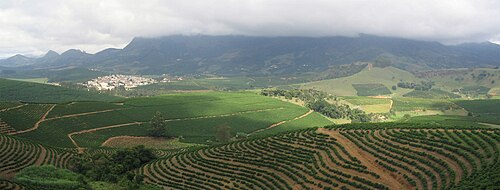 ミナスジェライス州のコーヒー。2018年、ブラジルは350万トンで世界最大の生産国となった。南米は世界のコーヒーの半分を生産している。
 -
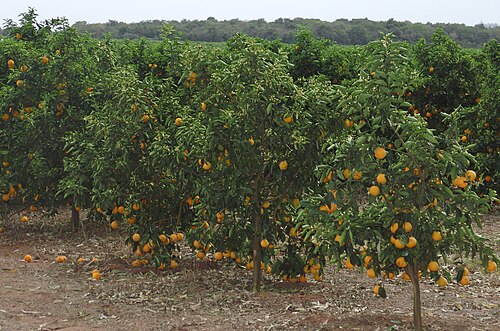 サンパウロのオレンジ。2018年、ブラジルは1,700万トンで世界最大の生産国となった。南米は世界のオレンジの25%を生産している。
 -
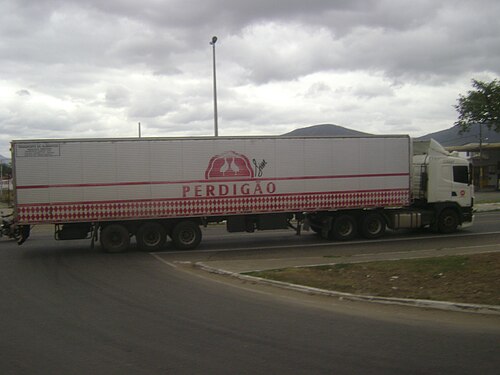 ブラジルの食肉会社のトラック。南米は世界の牛肉と鶏肉の20%を生産している。
製造業

世界銀行は毎年、製造業全体の価値で上位の製造国をリストアップしている。2019年のリストによると、ブラジルは世界で13番目に価値の高い産業(1,740億ドル)、ベネズエラは30番目(582億ドル、ただしこの価値を得るには石油に頼っている)、アルゼンチンは31番目(577億ドル)、コロンビアは46番目(354億ドル)、ペルーは50番目(287億ドル)、チリは51番目(283億ドル)となっている。[122]
ブラジルは、南北アメリカで3番目に大きな製造業を擁している。GDPの29%を占めるブラジルの産業は、自動車、鉄鋼、石油化学製品から、コンピューター、航空機(エンブラエル)、食品、医薬品、履物、冶金、耐久消費財にまで及ぶ。食品産業では、2019年にブラジルは世界第2位の加工食品輸出国となった。[123] [124] [125] 2016年、ブラジルはパルプ生産量で第2位、紙生産量で第8位であった。[126] [127] [128]履物産業では、2019年にブラジルは世界第4位の生産国となった。[129] [130] [131] [132] 2019年、ブラジルは世界第8位の自動車生産国、世界第9位の鉄鋼生産国であった。[133] [134] [135] 2018年、ブラジルの化学産業は世界第8位でした。[136] [137] [138]繊維産業では、ブラジルは2013年に世界最大の生産国5カ国のうちの1つでしたが、世界貿易にはほとんど統合されていません。[139]
鉱業


南米、特にチリ、ペルー、ボリビアでは、鉱業は最も重要な経済部門の一つであり、これらの国の経済は鉱業に大きく依存している。この大陸は、金(主にペルー、ブラジル、アルゼンチン)[140]、銀(主にペルー、チリ、ボリビア、アルゼンチン)[141]、銅(主にチリ、ペルー、ブラジル)[142]、鉄鉱石(ブラジル、ペルー、チリ)[143]、 亜鉛(ペルー、ボリビア、ブラジル)[144]、 モリブデン(チリ、ペルー)[145]、 リチウム(チリ、アルゼンチン、ブラジル)[146]、鉛(ペルー、ボリビア)[147] 、 ボーキサイト(ブラジル)[148] 、 錫(ペルー、ボリビア、ブラジル)[149]、 マンガン(ブラジル)[150]、 アンチモン(ボリビア、エクアドル)の主要な産出国である。[151] ニッケル(ブラジル)、[152] ニオブ(ブラジル)、[153] レニウム(チリ)、[154] ヨウ素(チリ)、[155]など。
ブラジルは鉄鉱石(世界第2位の生産国および輸出国。鉄鉱石は通常、同国の貿易収支で最も大きな価値を生み出す3つの輸出品目の1つである)、銅、金、ボーキサイト(世界5大生産国の1つ)、マンガン(世界5大生産国の1つ)、錫(世界有数の生産国の1つ)、ニオブ(世界に知られている埋蔵量の98%を集中)、ニッケルの採掘で傑出している。宝石に関しては、ブラジルはアメジスト、トパーズ、瑪瑙の世界最大の生産国であり、トルマリン、エメラルド、アクアマリン、ガーネット、オパールの主要生産国の1つである。[156] [157] [158] [159] [160] [161]
チリは世界の銅生産量の約3分の1を占めています。[162]銅に加えて、チリは2019年には世界最大のヨウ素[163]とレニウム[164]の生産国であり、リチウム[165]とモリブデン[145]の世界第2位の生産国、銀[166]の世界第7位の生産国、カリ[167]の世界第8位の生産国、[168]の世界第13位の生産国、硫黄[169]の世界第13位の生産国、鉄鉱石[170]の世界 第13位の生産国でした。
2019年、ペルーは銅[171]と銀の世界第2位の生産国[166] 、金の世界第8位の生産国[172] 、鉛の世界第3位の生産国[147] 、亜鉛の世界第2位の生産国[173]、錫の世界第4位の生産国[174]、ホウ素の世界第5位の生産国[175] 、モリブデンの世界第4位の生産国[145]であった。
2019年、ボリビアは銀の世界第8位の生産国でした。[166]ホウ素の世界第4位の生産国。[175]アンチモンの世界第5位の生産国。[ 176 ]錫の世界第5位の生産国。[174]タングステンの生産国第6位。[177]亜鉛の生産国第7位。[178]鉛の生産国第8位。[147] [179] [180]
2019年、アルゼンチンはリチウムの世界第4位の生産国であり、[165]銀の世界第9位の生産国であり、[166]金の世界第17位の生産国であり、 [172]ホウ素の世界第7位の生産国であった。[175]
コロンビアは世界最大のエメラルド生産国である。[181]金の生産では、2006年から2017年まで、同国は年間15トンを生産していたが、2007年に生産量が大幅に増加し、2012年には66.1トンの記録を更新した。2017年には52.2トンを採掘した。同国は世界でも25位の金生産国である。[182]銀の生産では、2017年に15.5トンを採掘した。[179] [180] [183]
石油生産では、ブラジルは2019年に280万バレル/日で世界第10位の石油生産国でした。ベネズエラは87万7千バレル/日で21位、コロンビアは88万6千バレルで22位でした。ベネズエラとエクアドルは石油の消費量が少なく、生産量のほとんどを輸出しているため、両国はOPECに加盟しています。ベネズエラは2015年(250万バレル/日)以降、投資不足により生産量が大幅に減少し、2018年には140万バレル、2019年には87万7千バレルに落ち込みました。[184]
天然ガスについては、2018年にアルゼンチンが1524bcf(10億立方フィート)、ベネズエラが946bcf、ブラジルが877bcf、ボリビアが617bcf、ペルーが451bcf、コロンビアが379bcfを生産した。[185]
2020年初頭、ブラジルの石油・天然ガス生産量は初めて日量400万バレルを突破した。2021年1月には日量316万8000バレルの石油と1億3900万立方メートルの天然ガスが採掘された。 [186] 2018年の世界石炭生産量上位30カ国のうち2カ国は、コロンビア(12位)とブラジル(27位)だった。[187]
観光
南米諸国にとって、観光業はますます重要な収入源となってきています。[188] [189]
歴史的遺跡、建築物や自然の驚異、多様な食べ物や文化、色とりどりの都市、美しい風景が、毎年何百万人もの観光客を南米に引き寄せます。この地域で最も訪問される場所には、ブラジルのリオデジャネイロ、フロリアノポリス、イグアスの滝、サンパウロ、アルマサオン・ドス・ブジオス、サルバドール、ボンビーニャス、アングラ・ドス・レイス、バルネアーリオ・カンボリウ、パラティ、イポジュカ、ナタール、カイルー、フォルタレザ、イタペマなどがあります。 ; [190]ブエノスアイレス、バリローチェ、サルタ、フフイ、ペリト・モレノ氷河、バルデス半島、ミシオネス市とコリエンテス市のグアラニ・イエズス会伝道所、イスキグアラスト州立公園、アルゼンチンのウシュアイア、パタゴニア。[191]マルガリータ島、エンジェルフォール、ロスロケス諸島、ベネズエラのグランサバナ。マチュピチュ、リマ、ナスカの地上絵、ペルーのクスコ。チチカカ湖、ウユニ塩湖、ラパス、ボリビアのチキートスのイエズス会伝道所。タイロナ国立自然公園、サンタ マルタ、ボゴタ、カリ、メデジン、コロンビアのカルタヘナ、エクアドルのガラパゴス諸島。[192] [193] 2016年、ブラジルは2016年夏季オリンピックを開催した。

文化
南米の人々は、先住民、イベリア半島やアフリカとの歴史的なつながり、そして世界中から押し寄せる移民の波によって文化的に影響を受けています。
南米諸国には、多種多様な音楽があります。最も有名なジャンルには、コロンビアのバジェナートやクンビア、コロンビアとエクアドルのパシージョ、ブラジルのサンバ、ボサノバ、ムジカ・セルタネーハ、ベネズエラのホローポ、アルゼンチンとウルグアイのタンゴなどがあります。また、アルゼンチンとチリで生まれ、すぐにラテンアメリカの他の国々に広まった非商業的なフォークジャンル、ヌエバ・カンシオン運動もよく知られています。
ペルー沿岸の人々は、マリネーラ(リマ)、トンデロ(ピウラ)、19世紀に流行したクレオール・ワルツやペルー・ワルツ、ソウルフルなアレキパンのヤラビ、20世紀初頭のパラグアイのグアラニアなど、南米の最も混血的なリズムで、ギターとカホンの素晴らしいデュオやトリオを創作しました。20世紀後半には、イギリスのポップスやアメリカのロックの影響を受けた若いヒップスターたちによってスペインのロックが登場しました。ブラジルには、ポルトガル語のポップロック産業のほか、さまざまな音楽ジャンルがあります。ボリビアの中央部と西部では、ディアブラーダ、カポラレス、モレナーダなどのアンデス音楽や民俗音楽がこの国の最も代表的なもので、ヨーロッパ、アイマラ語、ケチュア語の影響を受けて生まれました。
南米文学は、特に1960年代と1970年代のラテンアメリカブーム、小説ではマリオ・バルガス・リョサ、ガブリエル・ガルシア・マルケス、他のジャンルではホルヘ・ルイス・ボルヘスやパブロ・ネルーダなどの作家の台頭により、批評家や一般の人々からかなりの称賛を集めてきました。ブラジル人のマシャード・デ・アシスとジョアン・ギマランイス・ロサは、ブラジルで最も偉大な作家として広く認められています。
飲食
南米は民族が幅広く混ざり合っているため、南米料理にはアフリカ、メスティーソ、南アジア、東アジア、ヨーロッパの影響が見られます。ブラジルのバイーア州は、西アフリカの影響を受けた料理で特に有名です。アルゼンチン、チリ、ウルグアイ、ブラジル、ボリビア、ベネズエラの人々は、日常的にワインを消費します。アルゼンチン、パラグアイ、ウルグアイ、チリ南部、ボリビア、ブラジル南部の人々は、ハーブのマテ茶を煎じて飲みます。パラグアイ版のテレレは、冷やして提供される点で、他のマテ茶とは異なります。ピスコは、ペルーとチリのブドウから蒸留される酒です。ペルー料理は、中国、日本、スペイン、イタリア、アフリカ、アラブ、アンデス、アマゾンの料理の要素が混ざり合っています。
造形芸術
,_Singapore_-_20040616.jpg/500px-Fernando_Botero,_Bird_(1990),_Singapore_-_20040616.jpg)

エクアドル出身の芸術家オスワルド・グアヤサミン(1919–1999)は、その絵画スタイルでラテンアメリカの人々の感情を表現し[194]、世界各地の社会的不正義を浮き彫りにしました。コロンビアのフェルナンド・ボテロ(1932–2023)は、絵画と彫刻の最も偉大な代表者の一人で、独自の認識可能なスタイルを開発することができました[195] 。一方、ベネズエラのカルロス・クルス・ディエスは、世界中に作品を発表し 、 [196]現代美術に大きく貢献しました。
現在、数人の南米の新進アーティストが国際的な美術評論家から認められています。 チリの画家ギジェルモ・ロルカ[197] [198] 、エクアドルの彫刻家 テディ・コベーニャ (フランスで国際彫刻賞を受賞) [199] [200] [201]、チューリッヒ美術館美術賞を受賞したアルゼンチンのアーティスト、アドリアン・ビリャール・ロハス[202] [203] などです。
スポーツ

南米大陸ではさまざまなスポーツがプレーされていますが、全体的にはサッカーが最も人気があり、ベネズエラでは野球が最も人気があります。
その他のスポーツとしては、バスケットボール、サイクリング、ポロ、バレーボール、フットサル、モータースポーツ、ラグビー(主にアルゼンチンとウルグアイ)、ハンドボール、テニス、ゴルフ、フィールドホッケー、ボクシング、クリケットなどがあります。
南米では、2016年にブラジルのリオデジャネイロで初のオリンピックが開催され、 2018年にはアルゼンチンのブエノスアイレスでユースオリンピックが開催されました。南米競技大会は、4年ごとに開催される多種目競技大会です。第1回大会は1978年にラパスで開催され、直近の大会は2014年にサンティアゴで開催されました。
南米はヨーロッパと並んでサッカーの覇権を握っており、FIFAワールドカップとFIFAクラブワールドカップの優勝国はすべてこの2大陸のチームである。ブラジルはFIFAワールドカップで最多の5回優勝しており、アルゼンチンは3回、ウルグアイは2回優勝している。ウルグアイでの第1回大会(1930年)を含め、南米の5か国が大会を開催した。ブラジル(1950年、2014年)、チリ(1962年)、アルゼンチン(1978年)の3か国で開催されている。南米は、1916年から続く最も歴史の長い国際サッカー大会、コパ・アメリカの開催地でもある。アルゼンチンはコパ・アメリカで16回優勝しており、これはすべての国の中で最多である。
南米クリケット選手権は、 1995年から開催されている国際的なワンデイクリケットトーナメントで、南米の代表チームと、北米のチームを含む特定の招待チームが参加し、現在は毎年開催されていますが、2013年までは通常2シーズンごとに開催されていました。
インフラストラクチャー
エネルギー
地形と降雨条件の多様性のため、この地域の水資源は地域によって大きく異なります。アンデスでは、マグダレナ川、チチカカ湖、チリとアルゼンチンの南部地域の湖を除いて、航行の可能性は限られています。灌漑はペルー北西部からパタゴニアにかけての農業にとって重要な要素です。1960年代半ばまで、アンデスの既知の電位の10%未満しか使用されていませんでした。
ブラジル高原地帯は、アンデス地域よりもはるかに高い水力発電の潜在能力を有しており[要出典]、パウロ・アフォンソ川、イグアス川などのように、水位の高い大河川がいくつか存在し、大きな滝を形成する大きな差があるため、開発の可能性はより高くなります。アマゾン川水系には約 13,000 km の水路がありますが、水力発電への利用の可能性はまだ不明です。
大陸のエネルギーのほとんどは水力発電所で生産されていますが、火力および風力エネルギーも重要な割合を占めています。ブラジルとアルゼンチンは、それぞれ2つの原子力発電所を所有し、原子力発電を行っている南米の唯一の国です。1991年に、これらの国は平和的な原子力協力協定に署名しました。


ブラジル政府は、輸入石油への依存を減らすための野心的なプログラムに着手した。以前は輸入が同国の石油需要の70%以上を占めていたが、ブラジルは2006年から2007年にかけて石油の自給自足を達成した。ブラジルは2019年に280万バレル/日で世界第10位の石油生産国となった。生産は国内の需要を満たすのに十分である。[184] 2020年の初め、石油と天然ガスの生産において、同国は初めて1日あたり400万バレルの石油換算値を超えた。今年1月には、1日あたり316万8000バレルの石油と1億3875万3000立方メートルの天然ガスが採掘された。[186]
ブラジルは世界有数の水力発電国である。2019年、ブラジルでは217の水力発電所が稼働しており、設備容量は98,581MWで、同国のエネルギー生産量の60.16%を占めた。[204]総発電量では、2019年にブラジルは17万メガワットの設備容量に達し、その75%以上が再生可能エネルギー(大部分は水力発電)によるものであった。[205] [206]
2013年、南東部地域は国家統合システム(SIN)の負荷の約50%を使用し、国内の主なエネルギー消費地域となっています。この地域の発電設備容量は合計で約42,500MWで、これはブラジルの発電能力の約3分の1に相当します。水力発電は地域の設備容量の58%を占め、残りの42%は主に火力発電によるものです。サンパウロはこの容量の40%を占め、ミナスジェライス州は約25%、リオデジャネイロは13.3%、エスピリトサントは残りを占めています。南部地域はイタイプダムを所有しており、中国の三峡ダムが稼働するまで数年間、世界最大の水力発電所でした。これは現在でも世界で2番目に大きい稼働中の水力発電所です。ブラジルはパラグアイと共同でイタイプ発電所を所有している。このダムはパラナ川沿いの国境に位置し、700MWの発電ユニット20基を備え、14GWの発電能力がある。北部地域にはベロモンテダムやトゥクルイダムなど、国のエネルギーの多くを生産する大規模な水力発電所がある。ブラジルの水力発電の潜在力はまだ十分に活用されていないため、国内に再生可能エネルギー発電所を数基建設する余地がまだある。[207] [208]
[ref]ONSによると、2022年7月現在、風力発電の総設備容量は22GWで、平均設備利用率は58%である。[209] [210]世界の平均風力発電設備利用率は24.7%であるが、ブラジル北部、特にバイーア州では、いくつかの風力発電所の平均設備利用率が60%を超えている地域がある。 [211] [212]北東部の平均設備利用率は、沿岸部で45%、内陸部で49%である。[213] 2019年、風力エネルギーは国内で発電されたエネルギーの9%を占めた。[214] 2019年には、同国の風力発電の潜在能力は約522GW(陸上のみ)と推定され、これは同国の現在の需要の3倍を満たすのに十分なエネルギーである。[215] [216] 2021年、ブラジルは風力発電設備容量(21GW)で世界第7位の国であり、[217] [218]中国、米国、ドイツに次いで世界第4位の風力エネルギー生産国(72TWh)であった。[219] [220]
原子力エネルギーはブラジルの電力の約4%を占めている。[221]原子力発電の独占は、エレトロブラスの完全子会社であるエレトロニュークリア(Eletrobrás Eletronuclear S/A)が所有している。原子力エネルギーはアングラの2基の原子炉で生産されている。アングラはリオデジャネイロのアングラ・ドス・レイスのイタオルナ海岸にあるアルミランテ・アルバロ・アルベルト中央原子力発電所(CNAAA)にある。アングラは2基の加圧水型原子炉で構成されており、1982年に電力網に接続されたアングラI(出力657MW)と、2000年に電力網に接続されたアングラII(出力1,350MW)である。3基目の原子炉であるアングラIIIは、予想出力1,350MWで完成予定である。[222]
ONSによると、2022年10月現在、太陽光発電[ref]の総設備容量は21GWで、平均設備利用率は23%である。最も放射線量の高いブラジルの州には、MG(「ミナスジェライス」)、BA(「バイーア」)、GO(ゴイアス)があり、これらは確かに世界放射線レベルの記録を持っている。[223] [212] [224] 2019年、太陽光発電は国内で生成されたエネルギーの1.27%を占めた。[214] 2021年、ブラジルは太陽光発電の設置量(13GW)で世界第14位、[225]であり、世界で11番目に大きな太陽エネルギー生産国(16.8TWh)であった。[226]
2020年、ブラジルはバイオマス(固形バイオ燃料と再生可能廃棄物からのエネルギー生産)によるエネルギー生産において世界第2位の国であり、15.2GWの設置量がありました。[227]
After Brazil, Colombia is the country in South America that most stands out in energy production. In 2020, the country was the 20th largest petroleum producer in the world, and in 2015 it was the 19th largest exporter. In natural gas, the country was, in 2015, the 40th largest producer in the world. Colombia's biggest highlight is in coal, where the country was, in 2018, the world's 12th largest producer and the 5th largest exporter. In renewable energies, in 2020, the country ranked 45th in the world in terms of installed wind energy (0.5 GW), 76th in the world in terms of installed solar energy (0.1 GW) and 20th in the world in terms of installed hydroelectric power (12.6 GW). Venezuela, which was one of the world's largest oil producers (about 2.5 million barrels/day in 2015) and one of the largest exporters, due to its political problems, has had its production drastically reduced in recent years: in 2016, it dropped to 2.2 million, in 2017 to 2 million, in 2018 to 1.4 million and in 2019 to 877 thousand, reaching only 300,000 barrels/day at a given point. The country also stands out in hydroelectricity, where it was the 14th country in the world in terms of installed capacity in 2020 (16,5 GW). Argentina was, in 2017, the 18th largest producer in the world, and the largest producer in Latin America, of natural gas, in addition to being the 28th largest oil producer; although the country has the Vaca Muerta field, which holds close to 16 billion barrels of technically recoverable shale oil, and is the second largest shale natural gas deposit in the world, the country lacks the capacity to exploit the deposit: it is necessary capital, technology and knowledge that can only come from offshore energy companies, who view Argentina and its erratic economic policies with considerable suspicion, not wanting to invest in the country. In renewable energies, in 2020, the country ranked 27th in the world in terms of installed wind energy (2.6 GW), 42nd in the world in terms of installed solar energy (0.7 GW) and 21st in the world in terms of installed hydroelectric power (11.3 GW). The country has great future potential for the production of wind energy in the Patagonia region. Chile, although currently not a major energy producer, has great future potential for solar energy production in the Atacama Desert region. Paraguay stands out today in hydroelectric production thanks to the Itaipu Power Plant. Bolivia stand out in the production of natural gas, where it was the 31st largest in the world in 2015. Ecuador, because it consumes little energy, is part of OPEC and was the 27th largest oil producer in the world in 2020, being the 22nd largest exporter in 2014.[228][229][230][220]
Transport
Transport in South America is basically carried out using various modes including: roads, seaports and airports. The railway and fluvial sector, although having more robust contemporary potential, are still somewhat treated in a secondary way.
Roads

Due to the Andes Mountains, Amazon River and Amazon Forest, there have always been difficulties in implementing larger scale transcontinental or bioceanic highways. Practically the only route that existed was the one that connected Brazil to Buenos Aires, (in Argentina) and later to Santiago, (in Chile). However, in recent years, with the combined effort of countries, new routes have started to emerge, such as Brazil-Peru (Interoceanic Highway), and a new highway between Brazil, Paraguay, northern Argentina and northern Chile (Bioceanic Corridor).
Some of the most modern roads extend through northern and south-east Argentina; and south of Brazil, a vast road complex aims to link Brasília, the federal capital, to the South, Southeast, Northeast and Northern regions of Brazil.
Brazil has more than 1.7 million km of roads, of which 215,000 km are paved, and about 14,000 km are divided highways. The two most important highways in the country are BR-101 and BR-116.[231] Argentina has more than 600,000 km of roads, of which about 70,000 km are paved, and about 2,500 km are divided highways. The three most important highways in the country are Route 9, Route 7 and Route 14.[231] Colombia has about 210,000 km of roads, and about 2,300 km are divided highways.[232] Chile has about 82,000 km of roads, 20,000 km of which are paved, and about 2,000 km are divided highways. The most important highway in the country is the Route 5 (Pan-American Highway)[233] These 4 countries are the ones with the best road infrastructure and with the largest number of double-lane highways.
In addition, there is a reputed Pan-American Highway, which crosses Argentina and the Andean countries from north to south, although various stretches are unfinished.[234]
Aviation
.jpg/500px-Riodejaneiro_aerea_aeroportogaleao-131756(cut).jpg)
In South America, commercial aviation has a magnificent expansion field, which has one of the largest traffic density lines in the world, Rio de Janeiro–São Paulo, and large airports, such as Congonhas, São Paulo–Guarulhos International and Viracopos (São Paulo), Rio de Janeiro International and Santos Dumont (Rio de Janeiro), El Dorado (Bogotá), Ezeiza (Buenos Aires), Tancredo Neves International Airport (Belo Horizonte), Curitiba International Airport (Curitiba), Brasilia, Caracas, Montevideo, Lima, Viru Viru International Airport (Santa Cruz de la Sierra), Recife, Salvador, Salgado Filho International Airport (Porto Alegre), Fortaleza, Manaus and Belém.
There are more than 2,000 airports in Brazil. The country has the second largest number of airports in the world, behind only the United States. São Paulo International Airport, located in the Metropolitan Region of São Paulo, is the largest and busiest in the country – the airport connects São Paulo to practically all major cities around the world. Brazil has 44 international airports, such as those in Rio de Janeiro, Brasília, Belo Horizonte, Porto Alegre, Florianópolis, Cuiabá, Salvador, Recife, Fortaleza, Belém and Manaus, among others. Argentina has important international airports such as Buenos Aires, Cordoba, Bariloche, Mendoza, Salta, Puerto Iguazú, Neuquén and Usuhaia, among others. Chile has important international airports such as Santiago, Antofagasta, Puerto Montt, Punta Arenas and Iquique, among others. Colombia has important international airports such as Bogotá, Medellín, Cartagena, Cali and Barranquilla, among others. Other important airports are those in the capitals of Uruguay (Montevideo), Paraguay (Asunción), Peru (Lima), Bolivia (La Paz) and Ecuador (Quito). The 10 busiest airports in South America in 2017 were: São Paulo-Guarulhos (Brazil), Bogotá (Colombia), São Paulo-Congonhas (Brazil), Santiago (Chile), Lima (Peru), Brasília (Brazil), Rio de Janeiro (Brazil), Buenos Aires-Aeroparque (Argentina), Buenos Aires-Ezeiza (Argentina), and Minas Gerais (Brazil).[235]
Seaports and harbors
.jpg/500px-A_Sa%C3%BAde_dos_Portos_(7110638275).jpg)
The two main merchant fleets also belong to Brazil and Argentina. The following are those of Chile, Venezuela, Peru and Colombia. The largest ports in commercial movement are those of Buenos Aires, Santos, Rio de Janeiro, Bahía Blanca, Rosario, Valparaíso, Recife, Salvador, Montevideo, Paranaguá, Rio Grande, Fortaleza, Belém and Maracaibo.
About ports, Brazil has some of the busiest seaports in South America, such as Port of Santos, Port of Rio de Janeiro, Port of Paranaguá, Port of Itajaí, Port of Rio Grande, Port of São Francisco do Sul and Suape Port. Argentina has ports such as Port of Buenos Aires and Port of Rosario. Chile has important ports in Valparaíso, Caldera, Mejillones, Antofagasta, Iquique, Arica and Puerto Montt. Colombia has important ports such as Buenaventura, Cartagena Container Terminal and Puerto Bolivar. Peru has important ports in Callao, Ilo and Matarani. The 15 busiest ports in South America are: Port of Santos (Brazil), Port of Bahia de Cartagena (Colombia), Callao (Peru), Guayaquil (Ecuador), Buenos Aires (Argentina), San Antonio (Chile), Buenaventura (Colombia), Itajaí (Brazil), Valparaíso (Chile), Montevideo (Uruguay), Paranaguá (Brazil), Rio Grande (Brazil), São Francisco do Sul (Brazil), Manaus (Brazil) and Coronel (Chile).[236]
Rail
Two primary railroads are continental: the Transandina, which connects Buenos Aires, in Argentina to Valparaíso, in Chile, and the Brazil–Bolivia Railroad, which makes it the connection between the port of Santos in Brazil and the city of Santa Cruz de la Sierra, in Bolivia.
Two areas of greater density occur in the railway sector: the platinum network, which develops around the Platine region, largely belonging to Argentina, with more than 45,000 km in length; And the Southeast Brazil network, which mainly serves the state of São Paulo, state of Rio de Janeiro and Minas Gerais.
The Argentine rail network, with 47,000 km of tracks, and at one stage was one of the largest in the world and continues to be the most extensive in Latin America. It came to have about 100,000 km of rails, but the lifting of tracks and the emphasis placed on motor transport gradually reduced it. It has four different trails and international connections with Paraguay, Bolivia, Chile, Brazil and Uruguay. The Brazilian railway network has an extension of about 30,000 kilometers. It is basically used for transporting ores.[237] Chile has almost 7,000 km of railways, with connections to Argentina, Bolivia and Peru. Colombia has about 3,500 km of railways.[238]
Waterways

South America has one of the largest bays of navigable inland waterways in the world, represented mainly by the Amazon basin, the Platine basin, the São Francisco and the Orinoco basins, Brazil having about 54,000 km navigable, while Argentina has 6,500 km and Venezuela, 1,200 km.
Among the main Brazilian waterways, two stand out: Hidrovia Tietê-Paraná (which has a length of 2,400 km, 1,600 on the Paraná River and 800 km on the Tietê River, draining agricultural production from the states of Mato Grosso, Mato Grosso do Sul, Goiás and part of Rondônia, Tocantins and Minas Gerais) and Hidrovia do Solimões-Amazonas (it has two sections: Solimões, which extends from Tabatinga to Manaus, with approximately 1600 km, and Amazonas, which extends from Manaus to Belém, with 1650 km. Almost entirely passenger transport from the Amazon plain is done by this waterway, in addition to practically all cargo transportation that is directed to the major regional centers of Belém and Manaus). In Brazil, this transport is still underused: the most important waterway stretches, from an economic point of view, are found in the Southeast and South of the country. Its full use still depends on the construction of locks, major dredging works and, mainly, of ports that allow intermodal integration. In Argentina, the waterway network is made up of the La Plata, Paraná, Paraguay and Uruguay rivers. The main river ports are Zárate and Campana. The port of Buenos Aires is historically the first in individual importance, but the area known as Up-River, which stretches along 67 km of the Santa Fé portion of the Paraná River, brings together 17 ports that concentrate 50% of the total exports of the country.
Public transport
The main public transport in major cities is the bus. Many cities have a diverse system of metro and subway trains, the first of which was the Buenos Aires subte, opened 1913.[239] The Santiago subway[240] is the largest network in South America, with 103 km, while the São Paulo subway is the most heavily used, with more than 4.6 million passengers per day.[241] Rio de Janeiro installed the continent's first railroad in 1854. Today the city has a diversified system of metropolitan trains, integrated with buses and subway. It has a Light Rail System called VLT, with small electrical trams at low speed, while São Paulo has inaugurated a monorail. In Brazil, an express bus system called Bus Rapid Transit (BRT), which operates in several cities, has been developed. Mi Teleférico, also known as Teleférico La Paz–El Alto (La Paz–El Alto Cable Car), is an aerial cable car urban transit system serving the La Paz–El Alto metropolitan area in Bolivia.
See also
Notes
- ^ Sometimes included. Depending on the definition of North America–South America boundary, Panama could be classified as a transcontinental country. Panama is a member state of Atletismo Sudamericano and ODESUR.
- ^ a b Sometimes included. Physiographically a part of South America, but geopolitically a part of North America.
- ^ Sometimes included. Physiographically a part of South America, but geopolitically a part of North America. Aruba is a member nation of ODESUR.
- ^ Occasionally included. An isolated volcanic island near the boundary between the African Plate and the Antarctic Plate, Bouvet Island is biogeographically and geologically associated with Antarctica. Despite being closer to Antarctica and Africa geographically, the United Nations geoscheme has included Bouvet Island in South America instead.
- ^ Sometimes included. Physiographically a part of South America, but geopolitically a part of North America. Curaçao is a member nation of ODESUR.
- ^ Geologically, South Georgia Island and the southernmost portion of mainland South America are both on the Scotia Plate while the South Sandwich Islands is on the nearby Sandwich Plate. Biogeographically and hydrologically, South Georgia and the South Sandwich Islands is associated with Antarctica. The United Nations geoscheme has included the disputed territory in South America.
- ^ Occasionally included. An isolated volcanic island on the South American Plate, Ascension Island is geologically a part of South America, but geopolitically a part of Africa.
- ^ In some parts of the world, for example, Latin America, Latin Europe, and Iran, South America is viewed as a subcontinent of the Americas (a single continent named America).[7] However, in many countries with English as an official language, it is considered a continent; see Americas (terminology).
- ^ Except Bouvet Island, which has occasionally been included as a part of South America.
- ^ Both administered as British Overseas Territories under The Crown, claimed by Argentina.
- ^ An overseas department and region of France.
- ^ Despite relative peace, some international tensions persist and intra-state levels of violence are high.[10][11]
- ^ Land areas and population estimates are taken from The 2008 World Factbook which currently uses July 2007 data, unless otherwise noted.
- ^ La Paz is the administrative capital of Bolivia; Sucre is the constitutional and judicial capital of Bolivia.
- ^ Includes Easter Island in the Pacific Ocean, a Chilean territory frequently reckoned in Oceania.
- ^ Santiago is the administrative capital of Chile; Valparaíso is the site of legislative meetings.
- ^ The territory has been fully integrated into the French central state and the European Union.
- ^ South Georgia and the South Sandwich Islands in the South Atlantic Ocean has no permanent population, only hosting a periodic contingent of about 100 researchers and visitors.
References
Citations
- ^ a b c "World Population Prospects 2022". United Nations Department of Economic and Social Affairs, Population Division. Retrieved 17 July 2022.
- ^ a b c "World Population Prospects 2022: Demographic indicators by region, subregion and country, annually for 1950-2100" (XSLX) ("Total Population, as of 1 July (thousands)"). United Nations Department of Economic and Social Affairs, Population Division. Retrieved 17 July 2022.
- ^ "GDP PPP, current prices". International Monetary Fund. 2022. Archived from the original on 22 January 2021. Retrieved 16 January 2022.
- ^ "GDP Nominal, current prices". International Monetary Fund. 2022. Archived from the original on 25 February 2017. Retrieved 16 January 2022.
- ^ "Nominal GDP per capita". International Monetary Fund. 2022. Archived from the original on 11 January 2020. Retrieved 16 January 2022.
- ^ a b c "The Global Religious Landscape" (PDF). Pewforum.org. Archived from the original (PDF) on 25 January 2017. Retrieved 7 May 2020.
- ^ Ambassador Rubens A. Barbosa. "Mercosul in the Regional Context". Archived from the original on 30 September 2006. Retrieved 19 May 2007.
- ^ Schenoni, Luis L. (1 January 1970). "Unveiling the South American Balance". Estudos Internacionais 2(2): 215–232. Archived from the original on 12 May 2020. Retrieved 8 December 2016.
- ^ Holsti 1996, p. 155
- ^ a b Franchi, Tássio; Ferreira Glaser Migon, Eduardo Xavier; Jiménez Villarreal, Roberto Xavier (2017). "Taxonomy of interstate conflicts: is South America a peaceful region?". Brazilian Political Science Review. 2 (11). doi:10.1590/1981-3821201700020008. ISSN 1981-3821.
- ^ Terradas, Nicolás (26 May 2021). "The Latin American Long Peace". Oxford Research Encyclopedia of International Studies. doi:10.1093/acrefore/9780190846626.013.587. ISBN 978-0-19-084662-6 – via oxfordre.com.
- ^ "Homicide and Organized Crime in Latin America and the Caribbean" (PDF). United Nations Office on Drugs and Crime. 2023. Retrieved 15 May 2024.
- ^ "Homicide rates in selected Latin American and Caribbean countries 2023". Statista. Retrieved 15 May 2024.
- ^ Cohen, Saul Bernard. 2003. "North and Middle America" (Ch. 5) Archived 1 January 2016 at the Wayback Machine. Geopolitics of the World System, ISBN 0847699072
- ^ "Americas" Archived 26 December 2018 at the Wayback Machine Standard Country and Area Codes Classifications (M49), United Nations Statistics Division
- ^ "North America". Atlas of Canada. 14 November 2003. Archived from the original on 3 March 2008. Retrieved 21 May 2012.
- ^ a b North America Atlas Archived 25 May 2020 at the Wayback Machine National Geographic
- ^ "Panama". Britannica.com. 31 December 1999. Archived from the original on 2 May 2015. Retrieved 21 May 2012.
- ^ "Panama". The World Factbook. Cia.gov. Archived from the original on 23 January 2021. Retrieved 21 May 2012.
- ^ "Parts of Chile's Atacama Desert haven't seen a drop of rain since recordkeeping began. Somehow, more than a million people squeeze life from this parched land". National Geographic Magazine. Archived from the original on 15 August 2014. Retrieved 18 April 2009.
- ^ "Driest Place | Driest Desert Atacama Desert". Extremescience.com. 25 January 2007. Archived from the original on 8 April 2009. Retrieved 18 April 2009.
- ^ McKay, C.P. (May–June 2002). "Two dry for life: The Atacama Desert and Mars" (PDF). Ad Astra. 14 (3): 30. Archived from the original (PDF) on 26 August 2009.
- ^ a b "Why Latin America Lost at Globalization—and How It Can Win Now".
- ^ "Bacc Travel brazilian Vacation Experts". www.bacctravel.com. Archived from the original on 7 March 2021. Retrieved 15 April 2021.
- ^ "South America: Physical Geography". National Geographic Society. 4 January 2012. Archived from the original on 10 February 2021. Retrieved 19 February 2021.
- ^ South America Atlas Archived 16 November 2018 at the Wayback Machine National Geographic
- ^ "United Nations Statistics Division – Standard Country and Area Codes Classifications (M49)". Unstats.un.org. 20 September 2011. Archived from the original on 26 December 2018. Retrieved 21 May 2012.
- ^ a b Review of the Protected Areas System in Oceania (PDF). International Union for Conservation of Nature and Natural Resources. 1986. Archived (PDF) from the original on 20 January 2022. Retrieved 17 January 2022.
Easter Island on the east has been included on the basis of its Polynesian and biogeographic affinities even though it is politically apart. The other islands of the eastern Pacific (Galapagos, Juan Fernandez, etc.) have sometimes been included in Oceania.
- ^ Hull, Frank M. (1937). A Check List of the Syrphidae of Oceania (PDF). Department of Biology, University of Missouri. Archived (PDF) from the original on 26 January 2022. Retrieved 17 January 2022.
Oceania is primarily considered as the restricted region treated in this paper, but for comparative purposes, in the table only, it is also considered in a broad sense as including New Guinea, Australia, New Caledonia, New Zealand, the Antipodes, and Galapagos.
- ^ "Oceania Bibliography" (PDF). Helictite: Journal of Australasian Cave Research. 25 (1). 1987. Archived (PDF) from the original on 22 March 2022. Retrieved 16 March 2022.
This paper covers the region from Irian Jaya (Western New Guinea, a province of New Guinea) in the west to Galapagos Islands (Equador) and Easter Island (Chile) in the east.
- ^ South Georgia and the South Sandwich Islands. p. 2017.
- ^ "Ascension Island Geology". mcee.ou.edu. Archived from the original on 19 February 2020. Retrieved 25 October 2020.
- ^ Beck, Hylke E.; Zimmermann, Niklaus E.; McVicar, Tim R.; Vergopolan, Noemi; Berg, Alexis; Wood, Eric F. (30 October 2018). "Present and future Köppen-Geiger climate classification maps at 1-km resolution". Scientific Data. 5: 180214. Bibcode:2018NatSD...580214B. doi:10.1038/sdata.2018.214. PMC 6207062. PMID 30375988.
- ^ Martyn, Danuta (1992). "The climates of South America". Climates of the World. Translated by Senn, Peter. Elsevier. p. 308. ISBN 0-444-98739-8.
- ^ a b c d e f O CLIMA. In: Atlas Mundial. São Paulo: Cia. Melhoramentos de São Paulo, 1999, pp. 20–21 ISBN 85-06-02889-2
- ^ Landsea, Chris (13 July 2005). "Why doesn't the South Atlantic Ocean experience tropical cyclones?". Atlantic Oceanographic and Meteorological Laboratory. National Oceanographic and Atmospheric Administration. Archived from the original on 16 July 2012. Retrieved 9 June 2018.
- ^ "Wettest Places On Earth By Annual Rainfall". World Atlas. 27 March 2019. Archived from the original on 12 May 2019. Retrieved 12 May 2019.
- ^ "Apresentação da Corrente do Golfo" [Presentation of the Gulf Stream]. knoow.net (in Portuguese). Archived from the original on 11 April 2015. Retrieved 26 January 2017.
- ^ Lewinsohn, Thomas M; Prado, Paulo Inácio (7 June 2005). "How Many Species Are There in Brazil?". Conservation Biology. 19 (3): 619–624. Bibcode:2005ConBi..19..619L. doi:10.1111/j.1523-1739.2005.00680.x. S2CID 84691981.
- ^ Prado, José L.; Martinez-Maza, Cayetana; Alberdi, María T. (May 2015). "Megafauna extinction in South America: A new chronology for the Argentine Pampas". Palaeogeography, Palaeoclimatology, Palaeoecology. 425: 41–49. Bibcode:2015PPP...425...41P. doi:10.1016/j.palaeo.2015.02.026.
- ^ Pino, Mario; Dillehay, Tom D. (May 2023). "Monte Verde II: an assessment of new radiocarbon dates and their sedimentological context". Antiquity. 97 (393): 524–540. doi:10.15184/aqy.2023.32. ISSN 0003-598X. S2CID 257854108.
- ^ Prates, Luciano; Perez, S. Ivan (12 April 2021). "Late Pleistocene South American megafaunal extinctions associated with rise of Fishtail points and human population". Nature Communications. 12 (1): 2175. Bibcode:2021NatCo..12.2175P. doi:10.1038/s41467-021-22506-4. ISSN 2041-1723. PMC 8041891. PMID 33846353.
- ^ Pagán-Jiménez, Jaime R.; Rodríguez-Ramos, Reniel; Reid, Basil A.; van den Bel, Martijn; Hofman, Corinne L. (September 2015). "Early dispersals of maize and other food plants into the Southern Caribbean and Northeastern South America". Quaternary Science Reviews. 123: 231–246. Bibcode:2015QSRv..123..231P. doi:10.1016/j.quascirev.2015.07.005.
- ^ a b O'Brien, Patrick. (General Editor). Oxford Atlas of World History. New York: Oxford University Press, 2005. p. 25
- ^ "The Ancient Andes". History Guild. Retrieved 2 April 2023.
- ^ Horst Pietschmann, Atlantic history : history of the Atlantic System 1580–1830 Archived 18 May 2021 at the Wayback Machine, Göttingen : Vandenhoeck & Ruprecht, 2002, p. 239
- ^ C.R. Boxer (1990). The Dutch Seaborne Empire. Penguin. pp. 271–272. ISBN 978-0140136180.
- ^ Anstey, Roger: The Atlantic Slave Trade and British abolition, 1760–1810. London: Macmillan, 1975, p. 5.
- ^ "Vergonha Ainda Maior: Novas informações disponíveis em um enorme banco de dados mostram que a escravidão no Brasil foi muito pior do que se sabia antes (". Veja (in Portuguese). Archived from the original on 13 March 2015. Retrieved 16 March 2015.
- ^ Stephen D. Behrendt, David Richardson, and David Eltis, W.E.B. Du Bois Institute for African and African-American Research, Harvard University. Based on "records for 27,233 voyages that set out to obtain slaves for the Americas". Stephen Behrendt (1999). "Transatlantic Slave Trade". Africana: The Encyclopedia of the African and African American Experience. New York: Basic Civitas Books. ISBN 978-0-465-00071-5.
- ^ Yeager, Timothy J. (December 1995). "Encomienda or Slavery? The Spanish Crown's Choice of Labor Organization in Sixteenth-Century Spanish America". The Journal of Economic History. 55 (4): 842–859. doi:10.1017/S0022050700042182. S2CID 155030781.
- ^ "The "Golden Law" Abolishing Slavery in Brazil". Encyclopedia of emancipation and abolition in the Transatlantic world. London, United Kingdom: Routledge. 2007.
- ^ a b "Guayaquil Conference | Latin America, Ecuador, Independence | Britannica". www.britannica.com. 19 July 2024.
- ^ "Caudilhismo". Brasil Escola. Archived from the original on 14 April 2021. Retrieved 22 March 2021.
- ^ Day, Peter (17 December 1997). "Ragamuffin War". Brasil Escola. Archived from the original on 3 March 2007. Retrieved 27 March 2007.
- ^ Souza, Rainer (20 January 2002). "Ragamuffin Revolution". RioGrande. Archived from the original on 18 July 2012. Retrieved 27 March 2007.
- ^ Holsti 1996, p. 153
- ^ Scheina, Robert L. (2003). Latin America's Wars. Potomac Books, Inc. ISBN 978-1597974776. Archived from the original on 14 April 2021. Retrieved 28 October 2020 – via Google Books.
- ^ Bethell, Leslie (2018). "3. The Paraguayan War (1864–70)". Brazil: Essays on History and Politics. London: University of London. pp. 93–112. ISBN 978-1-908857-61-3.
- ^ Borges, Fernando Tadeu de Miranda. "A Guerra do Paraguai – História – Resumo". Historiadobrasil.net (in Portuguese). Archived from the original on 8 March 2017. Retrieved 26 January 2017.
- ^ Rossi, Carlos (9 July 2007). "América Latina – Guerra do Pacífico" (in Portuguese). Archived from the original on 4 March 2009.
- ^ Woodard, James P. "A Place in Politics: São Paulo, Brazil; From Seigneurial Republicanism to Regionalist Revolt" Duke University Press 2009 Chapter 3 "War and the Health of the State" especially pp. 77–81 visualization on Google Books Archived 21 April 2020 at the Wayback Machine
- ^ Conniff, Michael L. and McCann, Frank D. "Modern Brazil, Elites and Masses in Historical Perspective" University of Nebraska Press 1991 ISBN 0803263481 p. 168 visualization on Google Books Archived 16 February 2017 at the Wayback Machine
- ^ "Peru". Uppsala Conflict Data Program. Uppsala Universitet. Archived from the original on 20 December 2021. Retrieved 29 May 2019.
- ^ Smyers, Richard P. (1990). "Review: Panzerschiff "Admiral Gragg Spee" by Siegfried Breyer". Warship International. 27 (1): 44. JSTOR 44891302; Landsborough, Gordon (2016). The Battle of the River Plate: the First Naval Battle of the Second World War. Frontline Books. ISBN 978-1473878952.
- ^ Maximiano, Cesar. with Bonalume, Ricardo N. & Bujeiro, Ramiro. Brazilian Expeditionary Force in World War II Archived 5 January 2016 at the Wayback Machine. Osprey Publishing Ltd., 2011. ISBN 978-1849084833 (Print version).
- ^ Frank D. MacCann – 'Estudios Interdisciplinarios de America Latina y el Caribe', vol. 6, No. 2, 1995.
- ^ Richard Hough, The Big Battleship (London: Michael Joseph, 1966), 19. OCLC 8898108.
- ^ Robert Scheina, Latin America: A Naval History, 1810–1987 (Annapolis, MD: Naval Institute Press, 1987), 86. ISBN 0-87021-295-8. OCLC 15696006.
- ^ "June 14, 1982: Falklands War comes to an end as Britain accepts Argentina's surrender". BT Group. Archived from the original on 6 August 2020. Retrieved 6 December 2020.
- ^ "The Cambridge History of Latin America", edited by Leslie Bethell, Cambridge University Press (1995) ISBN 0-521-39525-9
- ^ Leslie Bethell (1995). Bibliographical Essays. Cambridge University Press. ISBN 978-0-521-39525-0. Archived from the original on 1 January 2016. Retrieved 17 October 2015.
- ^ a b c d Society, National Geographic (4 January 2012). "South America: Human Geography". National Geographic Society. National Geographic. Archived from the original on 7 November 2021. Retrieved 7 November 2021.
- ^ Lira, Heitor (1977). História de Dom Pedro II (1825–1891): Fastígio (1870–1880) (in Portuguese). Vol. 2. Belo Horizonte: Itatiaia.
- ^ Tungodden, Bertil; Stern, Nicholas Herbert; Stern, Nicholas; Kolstad, Ivar (2004). Toward Pro-poor Policies: Aid, Institutions, and Globalization. World Bank Publications. p. 219. ISBN 978-0821353882. Archived from the original on 14 April 2021. Retrieved 28 October 2020.
- ^ "Globalpolicy.org". Globalpolicy.org. 29 October 2008. Archived from the original on 29 April 2009. Retrieved 24 October 2010.
- ^ "The Languages spoken in Guyana". Studylands. Archived from the original on 11 May 2016. Retrieved 12 April 2016.
- ^ Karam, John Tofik (2013). "On the Trail and Trial of a Palestinian Diaspora: Mapping South America in the Arab–Israeli Conflict, 1967–1972". Journal of Latin American Studies. 45 (4): 751–777. doi:10.1017/S0022216X13001156. S2CID 145423526.
- ^ "Christians". Pewforum.org. 18 December 2012. Archived from the original on 5 July 2013. Retrieved 11 November 2017.
- ^ a b "Guyana – The World Factbook". www.cia.gov. Archived from the original on 7 January 2021. Retrieved 4 January 2021.
- ^ a b "Suriname – The World Factbook". www.cia.gov. Archived from the original on 7 January 2021. Retrieved 4 January 2021.
- ^ "Las religiones en tiempos del Papa Francisco" (in Spanish). Latinobarómetro. April 2014. p. 7. Archived from the original (PDF) on 10 May 2015. Retrieved 4 April 2015.
- ^ Salzano, FM; Sans, M (2014). "Interethnic admixture and the evolution of Latin American populations". Genet. Mol. Biol. 37 (1 Suppl): 151–170. doi:10.1590/s1415-47572014000200003. PMC 3983580. PMID 24764751.
- ^ "Your Regional Ancestry: Reference Populations". Genographic.nationalgeographic.com. Archived from the original on 27 February 2017. Retrieved 31 December 2016.
- ^ Dean, Bartholomew 2009 Urarina Society, Cosmology, and History in Peruvian Amazonia, Gainesville: University Press of Florida ISBN 978-0-8130-3378-5. Archived 17 July 2011 at the Wayback Machine
- ^ "Peru". World Factbook. CIA. Archived from the original on 19 November 2021. Retrieved 18 April 2009.
- ^ "Bolivia". World Factbook. CIA. Archived from the original on 27 September 2021. Retrieved 18 April 2009.
- ^ "Argentina y Uruguay, su población está formada casi exclusivamente por una población blanca e blanca mestiza procedente del sur de Europa, más del 90% E. García Zarza, 1992, 19". Geografia.fflch.usp.br. Archived from the original on 4 June 2009. Retrieved 18 April 2009.
- ^ "Argentina". World Factbook. CIA. Archived from the original on 17 April 2021. Retrieved 18 April 2009.
- ^ Cruz-Coke, R; Moreno, RS (1994). "Genetic epidemiology of single gene defects in Chile". Journal of Medical Genetics. 31 (9): 702–706. doi:10.1136/jmg.31.9.702. PMC 1050080. PMID 7815439.
- ^ "Censo 2022: Pela 1ª vez, Brasil se declara mais pardo que branco; populações preta e indígena também crescem". 22 December 2023. Archived from the original on 22 December 2023. Retrieved 22 December 2023.
- ^ "Latinoamerica" (PDF). Revistas.ucm.es. Archived from the original (PDF) on 18 March 2009. Retrieved 24 October 2010.
- ^ "The Chilean population is rather homogeneous with 95.4% of its population having European ancestors". Studentsgoabroad.com. 11 September 1973. Archived from the original on 7 January 2011. Retrieved 24 October 2010.
- ^ "Calendario de Publicaciones del Censo 2011" (PDF). Ine.gov.ve. Archived (PDF) from the original on 15 November 2018. Retrieved 11 November 2017.
- ^ a b Bushnell, David & Rex A. Hudson (2010) "The Society and Its Environment Archived 5 June 2011 at the Wayback Machine"; Colombia: a country study: 87. Washington, DC: Federal Research Division, Library of Congress.
- ^ Schwartzman, Simon (27 January 2008). "Étnia, condiciones de vida y discriminación" (PDF) (in Spanish). Archived (PDF) from the original on 11 September 2018. Retrieved 3 April 2014.
- ^ "Peru – An Overview of the Market". Fppmedia.com. Archived from the original on 11 July 2011.
- ^ Nakamura, Akemi (15 January 2008). "Japan, Brazil mark a century of settlement, family ties". Japan Times. Archived from the original on 4 December 2008.
- ^ "The World Factbook". Cia.gov. Archived from the original on 6 January 2019. Retrieved 11 November 2017.
- ^ Lizcano Fernández, Francisco (May–August 2005). "Composición Étnica de las Tres Áreas Culturales del Continente Americano al Comienzo del Siglo XXI" (PDF). Convergencia (in Spanish). 38: 185–232, table on p. 218. ISSN 1405-1435. Archived from the original (PDF) on 20 September 2008.
- ^ "Compendium 2: Population Composition" (PDF). Bureau of Statistics, Guyana. July 2016. Archived (PDF) from the original on 5 January 2021. Retrieved 28 September 2021.
- ^ Indigenous peoples of Archived 23 July 2015 at the Wayback Machine South America Archived 18 June 2016 at the Wayback Machine. Astromonos.org. Retrieved on 20 October 2015.
- ^ a b c "World Economic Outlook Database, October 2023 Edition". IMF.org. International Monetary Fund. Retrieved 11 April 2023.
- ^ "WEO Database, October 2023. Report for Selected Countries and Subjects: World, European Union". IMF.org. International Monetary Fund. 10 October 2023. Retrieved 10 October 2023.
- ^ "Exports of goods and services (BoP, current US$)". World Bank Open Data. Retrieved 20 August 2023.
- ^ "Human Development Report 2014. Human development indices" (PDF). The United Nations. January 2011. p. 23. Archived (PDF) from the original on 4 February 2012. Retrieved 24 May 2011.
- ^ a b "World Bank Open Data". World Bank Open Data.
- ^ Falkland Islands (Islas Malvinas) Archived 9 January 2021 at the Wayback Machine. The World Factbook. Central Intelligence Agency.
- ^ "Produits intérieurs bruts régionaux et valeurs ajoutées régionales de 1990 à 2021 | Insee". www.insee.fr.
- ^ a b c d e f O Sistema Econômico / América do Sul. In: Atlas Mundial. São Paulo: Cia. Melhoramentos de São Paulo, 1999, pp. 26–27, 88–107 ISBN 85-06-02889-2
- ^ "Chapter 43. Tropical South America". Global Forest Resources Assessment 2000. Food and Agriculture Organization. Archived from the original on 25 January 2021. Retrieved 1 March 2021.
- ^ "Income share held by lowest 20%". The World Bank. 2017. Archived from the original on 19 June 2016. Retrieved 29 May 2019.
- ^ "FAOSTAT". Food and Agriculture Organization. Archived from the original on 12 November 2016. Retrieved 4 December 2020.
- ^ "Conheça os 3 países que desafiam o Brasil nas exportações de frango". Avicultura Industrial. 22 January 2020. Archived from the original on 14 August 2021. Retrieved 4 December 2020.
- ^ Formigoni, Ivan (30 May 2019). "Maiores exportadores de carne de frango entre 2015 e 2019". Archived from the original on 13 April 2021. Retrieved 22 March 2021.
- ^ "IBGE: rebanho de bovinos tinha 218,23 milhões de cabeças em 2016 | BeefPoint". www.beefpoint.com.br. 29 September 2017. Archived from the original on 9 May 2021. Retrieved 4 December 2020.
- ^ "Brasil é o 3º maior produtor de leite do mundo, superando o padrão Europeu em alguns municípios". Archived from the original on 17 September 2020. Retrieved 4 December 2020.
- ^ Formigoni, Ivan (23 July 2019). "Principais países produtores de carne suína entre 2017 e 2019". Archived from the original on 16 August 2021. Retrieved 4 December 2020.
- ^ "FAOSTAT". Food and Agriculture Organization. Archived from the original on 12 November 2016. Retrieved 4 December 2020.
- ^ "FAOSTAT". Food and Agriculture Organization. Archived from the original on 16 October 2020. Retrieved 4 December 2020.
- ^ "Manufacturing, value added (current US$) | Data". data.worldbank.org. Archived from the original on 7 January 2020. Retrieved 4 December 2020.
- ^ "Alimentos Processados | A indústria de alimentos e bebidas na sociedade brasileira atual". alimentosprocessados.com.br. Archived from the original on 25 March 2018. Retrieved 4 December 2020.
- ^ "Faturamento da indústria de alimentos cresceu 6,7% em 2019". G1. 18 February 2020. Archived from the original on 19 February 2020. Retrieved 4 December 2020.
- ^ "Indústria de alimentos e bebidas faturou R$ 699,9 bi em 2019". Agência Brasil. 18 February 2020. Archived from the original on 19 February 2020. Retrieved 4 December 2020.
- ^ "Produção nacional de celulose cai 6,6% em 2019, aponta Ibá". Valor Econômico. 21 February 2020. Archived from the original on 21 February 2020. Retrieved 4 December 2020.
- ^ "Sabe qual é o estado brasileiro que mais produz Madeira?". 9 October 2017. Archived from the original on 12 October 2017. Retrieved 4 December 2020.
- ^ "São Mateus é o 6º maior produtor de madeira em tora para papel e celulose no país, diz IBGE". G1. 28 September 2017. Archived from the original on 14 June 2020. Retrieved 4 December 2020.
- ^ "Indústrias calçadistas em Franca, SP registram queda de 40% nas vagas de trabalho em 6 anos". G1. 14 July 2019. Archived from the original on 14 July 2019. Retrieved 4 December 2020.
- ^ Digital, Agência Maya: Criação de Sites e Marketing. "Fenac – Centro de Eventos e Negócios | Produção de calçados deve crescer 3% em 2019". fenac.com.br. Archived from the original on 1 November 2019. Retrieved 4 December 2020.
- ^ "Abicalçados apresenta Relatório Setorial 2019". abicalcados.com.br. Archived from the original on 22 April 2020. Retrieved 4 December 2020.
- ^ "Exportação de Calçados: Saiba mais". 27 February 2020. Archived from the original on 17 June 2020. Retrieved 4 December 2020.
- ^ Comércio, Diário do (24 January 2020). "Minas Gerais produz 32,3% do aço nacional em 2019". Archived from the original on 14 June 2020. Retrieved 4 December 2020.
- ^ "O novo mapa das montadoras, que agora rumam para o interior do País". 8 March 2019. Archived from the original on 8 March 2019. Retrieved 4 December 2020.
- ^ "Indústria automobilística do Sul do Rio impulsiona superavit na economia". G1. 12 July 2017. Archived from the original on 19 July 2017. Retrieved 4 December 2020.
- ^ "Indústria Química no Brasil" (PDF). Archived (PDF) from the original on 14 June 2020. Retrieved 4 December 2020.
- ^ "Estudo de 2018" (PDF). Archived (PDF) from the original on 10 August 2019. Retrieved 4 December 2020.
- ^ "Produção nacional da indústria de químicos cai 5,7% em 2019, diz Abiquim". economia.uol.com.br. Archived from the original on 14 June 2020. Retrieved 4 December 2020.
- ^ "Industria Textil no Brasil". Archived from the original on 19 June 2020. Retrieved 4 December 2020.
- ^ "USGS Online Publications Directory". pubs.usgs.gov. Archived from the original on 15 June 2021. Retrieved 27 June 2021.
- ^ "Production statistics of USGS Silver" (PDF). Archived (PDF) from the original on 15 May 2021. Retrieved 27 June 2021.
- ^ "Copper production statistics for the USGS" (PDF). Archived (PDF) from the original on 21 June 2021. Retrieved 27 June 2021.
- ^ "Production statistics of USGS iron ore" (PDF). Archived (PDF) from the original on 21 June 2021. Retrieved 27 June 2021.
- ^ "Zinc production statistics from USGS" (PDF). Archived (PDF) from the original on 26 June 2021. Retrieved 27 June 2021.
- ^ a b c "USGS Molybdenum Production Statistics" (PDF). Archived (PDF) from the original on 28 June 2021. Retrieved 27 June 2021.
- ^ "USGS lithium production statistics" (PDF). Archived (PDF) from the original on 9 May 2021. Retrieved 27 June 2021.
- ^ a b c "USGS Lead Production Statistics" (PDF). Archived (PDF) from the original on 15 May 2021. Retrieved 27 June 2021.
- ^ "USGS Bauxite Production Statistics" (PDF). Archived (PDF) from the original on 8 December 2021. Retrieved 27 June 2021.
- ^ "USGS tin production statistics" (PDF). Archived (PDF) from the original on 13 August 2021. Retrieved 27 June 2021.
- ^ "Manganese production statistics from the USGS" (PDF). Archived (PDF) from the original on 25 June 2021. Retrieved 27 June 2021.
- ^ "USGS antimony production statistics" (PDF). Archived (PDF) from the original on 21 June 2021. Retrieved 27 June 2021.
- ^ "USGS Nickel Production Statistics" (PDF). Archived (PDF) from the original on 12 April 2022. Retrieved 27 June 2021.
- ^ "USGS Niobium Production Statistics" (PDF). Archived (PDF) from the original on 25 June 2021. Retrieved 27 June 2021.
- ^ "USGS rhenium production statistics" (PDF). Archived (PDF) from the original on 21 June 2021. Retrieved 27 June 2021.
- ^ "USGS iodine production statistics" (PDF). Archived (PDF) from the original on 25 June 2021. Retrieved 27 June 2021.
- ^ "ANM". gov.br Agência Nacional de Mineração. Archived from the original on 4 August 2020. Retrieved 22 March 2021.
- ^ "Brasil extrai cerca de 2 gramas de ouro por habitante em 5 anos". R7.com. 29 June 2019. Archived from the original on 12 July 2020. Retrieved 27 June 2021.
- ^ "G1 > Economia e Negócios – Noticías – Votorantim Metais adquire reservas de zinco da Masa". g1.globo.com. Archived from the original on 18 January 2021. Retrieved 27 June 2021.
- ^ "Nióbio: G1 visita em MG complexo industrial do maior produtor do mundo". G1. 12 December 2019. Archived from the original on 12 December 2019. Retrieved 27 June 2021.
- ^ "Serviço Geológico do Brasil". cprm.gov.br. Archived from the original on 6 September 2019. Retrieved 27 June 2021.
- ^ "Rio Grande do Sul: o maior exportador de pedras preciosas do Brasil". Band.com.br. Archived from the original on 2 May 2018. Retrieved 27 June 2021.
- ^ "Copper production in 2019 by USGS" (PDF). Archived (PDF) from the original on 21 June 2021. Retrieved 27 June 2021.
- ^ "USGS Iodine Production Statistics" (PDF). Archived (PDF) from the original on 25 June 2021. Retrieved 27 June 2021.
- ^ "USGS Rhenium Production Statistics" (PDF). Archived (PDF) from the original on 21 June 2021. Retrieved 27 June 2021.
- ^ a b "USGS Lithium Production Statistics" (PDF). Archived (PDF) from the original on 9 May 2021. Retrieved 27 June 2021.
- ^ a b c d "USGS Silver Production Statistics" (PDF). Archived (PDF) from the original on 15 May 2021. Retrieved 27 June 2021.
- ^ "USGS Salt Production Statistics" (PDF). Archived (PDF) from the original on 23 June 2021. Retrieved 27 June 2021.
- ^ "USGS Potash Product ion Statistics" (PDF). Archived (PDF) from the original on 14 July 2021. Retrieved 27 June 2021.
- ^ "USGS Sulfur Production Statistics" (PDF). Archived (PDF) from the original on 24 June 2021. Retrieved 27 June 2021.
- ^ "USGS Iron Ore Production Statistics" (PDF). Archived (PDF) from the original on 21 June 2021. Retrieved 27 June 2021.
- ^ "USGS Copper Production Statistics" (PDF). Archived (PDF) from the original on 21 June 2021. Retrieved 27 June 2021.
- ^ a b "USGS Gold Production Statistics" (PDF). Archived (PDF) from the original on 21 June 2021. Retrieved 27 June 2021.
- ^ "USGS Zinc Production Statistics" (PDF). Archived (PDF) from the original on 26 June 2021. Retrieved 27 June 2021.
- ^ a b "USGS Tin Production Statistics" (PDF). Archived (PDF) from the original on 13 August 2021. Retrieved 27 June 2021.
- ^ a b c "USGS Boron Production Statistics" (PDF). Archived (PDF) from the original on 18 July 2021. Retrieved 27 June 2021.
- ^ "USGS Antimony Production Statistics" (PDF). Archived (PDF) from the original on 21 June 2021. Retrieved 27 June 2021.
- ^ "USGS Tungsten Production Statistics" (PDF). Archived (PDF) from the original on 5 July 2021. Retrieved 27 June 2021.
- ^ "USGS ZincProduction Statistics" (PDF). Archived (PDF) from the original on 26 June 2021. Retrieved 27 June 2021.
- ^ a b Campbell, Keith. "The state of mining in South America – an overview". Mining Weekly. Archived from the original on 14 April 2021. Retrieved 1 March 2021.
- ^ a b "ANM". Agência Nacional de Mineração. Archived from the original on 4 August 2020. Retrieved 22 March 2021.
- ^ "Notícias – Região colombiana vive 'febre das esmeraldas'". BBC Brasil. 2012. Archived from the original on 21 December 2021. Retrieved 27 June 2021.
- ^ "Colombia Gold Production, 1990–2021". CEIC Data. Archived from the original on 16 August 2021. Retrieved 27 June 2021.
- ^ "Colombia Silver Production, 1990–2021". CEIC Data. Archived from the original on 16 August 2021. Retrieved 27 June 2021.
- ^ a b "International - Data - Petroleum and other liquids". U.S. Energy Information Administration. Archived from the original on 4 March 2021. Retrieved 4 December 2020.
- ^ "International - Data - Natural gas". U.S. Energy Information Administration. Archived from the original on 19 October 2020. Retrieved 4 December 2020.
- ^ a b "Produção de petróleo e gás no Brasil ultrapassa 4 milhões de boe/d pela primeira vez". anp.gov.br. 2020. Archived from the original on 20 February 2020. Retrieved 4 December 2020.
- ^ "Statistical Review of World Energy | Energy economics | Home". bp global. Archived from the original on 12 October 2015. Retrieved 26 June 2021.
- ^ "Latin & South America Tourism Statistics & Visitor Numbers". Bigtravelweb.com. 13 October 2008. Archived from the original on 12 August 2011. Retrieved 21 May 2012.
- ^ Juan Luis Eugenio-Martín, Noelia Martín Morales, Riccardo Scarpa (February 2004) Tourism and Economic Growth in Latin American Countries: A Panel Data Approach Archived 30 July 2022 at the Wayback Machine. FEEM Working Paper No. 26.2004
- ^ Anuário Estatístio de Turismo 2021 Brasil
- ^ Destape, El (10 December 2021). "Los 10 destinos más visitados de Argentina según los portales de turismo". www.eldestapeweb.com.
- ^ "Top attractions". Gosouthamerica.about.com. 4 December 2007. Archived from the original on 2 February 2012. Retrieved 18 April 2009.
- ^ "South America – Destination South America". vipbackpackers.com. 2005. Archived from the original on 4 August 2008.
- ^ "Guayasamín, el pintor ecuatoriano que retrató los sufrimientos latinoamericanos". Andes, Agencia de Noticias. Archived from the original on 20 May 2017. Retrieved 30 May 2017.
- ^ "Fenando Botero, Sala de Exposciones, Bilbao". Museo de Bellas Artes de Bilbao. Archived from the original on 28 February 2017. Retrieved 30 May 2017.
- ^ "Carlos Cruz-Díez redefines colour with new work". Wallpaper*. 29 December 2015. Archived from the original on 25 June 2017. Retrieved 30 May 2017.
- ^ "Museo de Bellas Artes de Chile" (PDF). Museo de Bellas Artes. Archived from the original (PDF) on 20 October 2016. Retrieved 14 April 2017.
- ^ Oda Marín, Loreto (11 June 2014). "Pintor Guillermo Lorca: "para un artista el miedo a que ignoren tu obra es terrible"". Life style (in Spanish). America Economia. Archived from the original on 28 February 2017. Retrieved 30 May 2017.
- ^ "Las esculturas de Teddy Cobeña las favoritas del público". Europa Press. 19 December 2016. Archived from the original on 2 February 2017. Retrieved 22 April 2017.
- ^ "Teddy Cobeña lleva sus esculturas a Paris". El Universo. Archived from the original on 2 February 2017. Retrieved 22 April 2017.
- ^ "Las esculturas de Teddy Cobeña las favoritas en Francia". EFE. 19 December 2016. Archived from the original on 5 August 2017. Retrieved 30 May 2017.
- ^ "Adrián Villar Rojas o cómo convertir las ruinas en un éxito planetario". La Nacion. Archived from the original on 10 June 2017. Retrieved 30 May 2017.
- ^ "Tiempo-ficción de Adrián Villar Rojas". El Cultural. 14 January 2016. Archived from the original on 28 February 2017. Retrieved 30 May 2017.
- ^ "How many power plants do we have in Brazil?". 5 April 2019. Archived from the original on 31 October 2020. Retrieved 4 December 2020.
- ^ "Brasil alcança 170 mil megawatts de capacidade instalada em 2019 – Sala de Imprensa – ANEEL". www.aneel.gov.br. Archived from the original on 13 April 2021. Retrieved 4 December 2020.
- ^ "Uso de água em termoelétricas" (PDF) (in Portuguese). 1 April 2018. Archived from the original (PDF) on 1 April 2018.
- ^ "O BNDES e a questão energética e logística da Região Sudeste" (PDF). Archived (PDF) from the original on 9 July 2020. Retrieved 4 December 2020.
- ^ "Power: World's biggest hydroelectric facility". 19 May 2006. Archived from the original on 19 May 2006.
- ^ "Boletim Mensal de Geração Eólica Fevereiro/2021" (PDF) (in Portuguese). Operador Nacional do Sistema Elétrico – ONS. 20 February 2021. pp. 6, 14. Archived (PDF) from the original on 10 April 2021. Retrieved 7 April 2021.
- ^ "Eólica supera 22 GW em operação no Brasil" (in Brazilian Portuguese). Megawhar. 21 July 2022. Retrieved 2 August 2022.
- ^ "Brasil é o país com melhor fator de aproveitamento da energia eólica". Governo do Brasil (in Brazilian Portuguese). Archived from the original on 7 October 2018. Retrieved 7 October 2018.
- ^ a b "Invest in Brazil". Capital Invest: Top M&A Financial Advisors in Brazil (Sao Paulo). 23 August 2018. Archived from the original on 13 January 2021. Retrieved 7 October 2018.
- ^ "Boletim Trimestral de Energia Eólica – Junho de 2020" (PDF) (in Brazilian Portuguese). Empresa de Pesquisa Energética. 23 June 2020. p. 4. Archived (PDF) from the original on 11 August 2021. Retrieved 24 October 2020.
- ^ a b "Quantas usinas geradoras de energia temos no Brasil?". 5 April 2019. Archived from the original on 31 October 2020. Retrieved 4 December 2020.
- ^ "Ventos promissores a caminho". revistapesquisa.fapesp.br. Archived from the original on 29 November 2020. Retrieved 4 December 2020.
- ^ "Brazilian onshore wind potential could be 880 GW, study indicates". Archived from the original on 14 August 2020. Retrieved 4 December 2020.
- ^ Renewable Capacity Statistics 2021
- ^ "Global wind statistics" (PDF). IRENA. 22 April 2022. Retrieved 22 April 2022.
- ^ Hannah Ritchie and Max Roser, Wind Power generation
- ^ a b "Renewable Capacity Statistics 2021" (PDF). Archived (PDF) from the original on 24 August 2021. Retrieved 23 April 2021.
- ^ "Nuclear Power in Brazil. Briefing Paper # 95". Uranium Information Centre. May 2007. Archived from the original on 8 February 2007. Retrieved 19 May 2007.
- ^ "Brazil plans to build seven nuclear reactors". Mecropress. 23 October 2006. Archived from the original on 19 February 2007. Retrieved 19 May 2007.
- ^ "Quais as melhores regiões do Brasil para geração de energia fotovoltaica? – Sharenergy". Sharenergy (in Brazilian Portuguese). 3 February 2017. Archived from the original on 7 October 2018. Retrieved 7 October 2018.
- ^ "Boletim Mensal de Geração Solar Fotovoltaica Setembro/2020" (PDF) (in Portuguese). Operador Nacional do Sistema Elétrico – ONS. 13 October 2020. pp. 6, 13. Archived (PDF) from the original on 2 November 2020. Retrieved 21 October 2020.
- ^ Renewable Capacity Statistics 2022
- ^ Ritchie, Hannah; Roser, Max; Rosado, Pablo (11 October 2023). "Renewable Energy". Our World in Data – via ourworldindata.org.
- ^ "Renewable Capacity Statistics 2021" (PDF). p. 41. Archived (PDF) from the original on 24 August 2021. Retrieved 24 May 2021.
- ^ "International – U.S. Energy Information Administration (EIA)". www.eia.gov. Archived from the original on 27 June 2020. Retrieved 4 December 2020.
- ^ "IEA. Key World Energy Statistics 2014. Natural Gas" (PDF). Archived from the original (PDF) on 21 October 2014.
- ^ "html CIA. The World Factbook. Natural gas – production".[permanent dead link]
- ^ a b "Anuário CNT do Transporte". anuariodotransporte.cnt.org.br. Archived from the original on 11 November 2019. Retrieved 4 December 2020.
- ^ "Transporte en Cifras Estadísticas 2015". Archived from the original on 27 January 2021. Retrieved 4 December 2020.
- ^ "Carta Caminera 2017" (PDF). Archived (PDF) from the original on 14 April 2021. Retrieved 4 December 2020.
- ^ "A Gap in the Andes: Image of the Day". Earthobservatory.nasa.gov. 2 April 2015. Archived from the original on 2 February 2017. Retrieved 22 January 2017.
- ^ Andrade, Artur Luiz (29 October 2018). "Brasil tem 9 dos maiores aeroportos da América Latina". Portal Panrotas. Archived from the original on 11 January 2021. Retrieved 4 December 2020.
- ^ "Port Activity of Latin America and the Caribbean 2018" (PDF). Archived (PDF) from the original on 14 January 2021. Retrieved 4 December 2020.
- ^ "Brazil – The World Factbook". www.cia.gov. 8 November 2021. Archived from the original on 12 August 2021. Retrieved 24 January 2021.
- ^ "Ministerio de transporte". continuidad-mintrans.nexura.com. Archived from the original on 14 June 2021. Retrieved 26 August 2021.
- ^ Lin, Luna (10 September 2014). "A short history of world metro systems – in pictures". The Guardian. London. Archived from the original on 18 September 2018. Retrieved 18 September 2018.
- ^ "Guía del Viajero" (in Spanish). Metro de Santiago. Archived from the original on 28 March 2016. Retrieved 3 July 2015.
- ^ "Metro – Passengers" (in Portuguese). Companhia Do Metropolitano De São Paulo. 2014. Archived from the original on 15 February 2017. Retrieved 14 June 2014.
General and cited references
- "South America". The Columbia Gazetteer of the World Online. New York: Columbia University Press. 2005. Archived from the original on 1 September 2006. Retrieved 28 February 2023.
- "Latin American Network Information Database". Archived from the original on 10 December 2009. Retrieved 28 February 2023.
- Holsti, Kalevi J. (1996). The State, War and the State of War. Cambridge Studies in International Relations. Cambridge University Press. doi:10.1017/CBO9780511628306. ISBN 978-0511628306. S2CID 150457372.
- Peck, Annie Smith (1922). Industrial and commercial South America. New York: E. P. Dutton & Company.
External links
South America at Wikipedia's sister projects
 Media from Commons
 News from Wikinews
 Textbooks from Wikibooks
 Travel information from Wikivoyage
- South America web resources provided by GovPubs at the University of Colorado Boulder Libraries
- South America at the Encyclopædia Britannica
- South America's Ancient Civilisations at the National Geographic Society
- South America at Curlie
- The Columbia Gazetteer of the World Online Columbia University Press
- . Encyclopædia Britannica. Vol. 25 (11th ed.). 1911. pp. 485–489.