Loading article…
デトロイト | |
|---|---|
.svg/500px-Seal_of_Detroit_(B&W).svg.png) シール | |
| 語源:フランス語:デトロイト(海峡) | |
| ニックネーム: モーター シティ、モータウン、D、313、D タウン、ルネッサンス シティ、世界を車輪に乗せた街、ホッケータウン、デトロイト ロック シティ | |
| モットー: | |
 デトロイトのインタラクティブマップ | |
  デトロイト  デトロイト | |
| 座標: 42°19′53″N 83°02′45″W / 42.33139°N 83.04583°W / 42.33139; -83.04583 [1] | |
| 国 |  アメリカ合衆国 アメリカ合衆国 |
| 州 |  ミシガン州 ミシガン州 |
| 郡 | ウェイン |
| 設立 | 1701年7月24日 |
| 法人化 | 1806年9月13日 |
| 設立者 | アントワーヌ・ド・ラ・モット・キャデラック&アルフォンス・ド・トンティ |
| 名前の由来 | デトロイト川 |
| 政府 | |
| • タイプ | 強い市長 |
| • 体 | デトロイト市議会 |
| • 市長 | マイク・ダガン( D ) |
| • 店員 | ジャニス・ウィンフリー |
| • 市議会 | メンバー
|
| エリア [2] | |
| • 市 | 142.89平方マイル(370.09 km 2) |
| • 土地 | 138.73平方マイル(359.31 km 2) |
| • 水 | 4.16平方マイル(10.78 km 2) |
| • 都会的な | 1,284.8平方マイル(3,327.7 km 2) |
| • メトロ | 3,888.4平方マイル(10,071 km 2) |
| 標高 [1] | 656フィート(200メートル) |
| 人口 (2020年)[3] | |
| • 市 | 639,111 |
| • 見積もり (2023年)[4] | 633,218 |
| • ランク | 北米78位米国 26位ミシガン州 1位 |
| • 密度 | 4,606.84/平方マイル (1,778.71/km 2 ) |
| • 都会的な [5] | 3,776,890 (米国: 12位) |
| • 都市の密度 | 2,939.6/平方マイル (1,135.0/km 2 ) |
| • メトロ [6] | 4,365,205 (米国: 14位) |
| 異名 | デトロイト人 |
| 国内総生産 [7] | |
| • MSA | 3,054億1,200万ドル(2022年) |
| タイムゾーン | UTC−5(東部標準時) |
| • 夏 ( DST ) | UTC−4 ( EDT ) |
| 郵便番号 | 482XX |
| 市外局番 | 313 |
| FIPS コード | 26-22000 |
| GNISフィーチャ ID | 1617959 [1] |
| 主要空港 | デトロイトメトロポリタン空港、コールマンA.ヤング国際空港 |
| 公共交通機関 | デトロイト交通局、デトロイトピープルムーバー、QLine |
| Webサイト | デトロイトmi.gov |
.jpeg/500px-Detroit_Skyline_(123143197).jpeg)




.jpg/500px-Motown_Museum_Detroit_(52755960301).jpg)


デトロイト(/ d ɪ ˈ t r ɔɪ t /、 dih - TROYT、地元では/ ˈ d iː t r ɔɪ t /、 DEE -troytとも呼ばれる)[8]は、アメリカ合衆国ミシガン州で最も人口の多い都市である。カナダ国境では最大の米国都市であり、ウェイン郡の郡庁所在地でもある。 2020年の国勢調査ではデトロイトの人口は639,111人で、[9]アメリカ合衆国で26番目に人口の多い都市となっている。430万人が住むデトロイト大都市圏は、シカゴ大都市圏に次いで中西部で2番目に大きく、アメリカ合衆国で14番目に大きい。重要な文化の中心地であるデトロイトは、歴史的な自動車産業の背景に加えて、音楽、芸術、建築、デザインへの貢献で知られている。[10] [11]
1701年、アントワーヌ・ド・ラ・モット・キャディラックとアルフォンス・ド・トンティがデトロイト砦を建設した。19世紀後半から20世紀初頭にかけて、この街は五大湖地域の中心にある重要な産業拠点となった。20世紀初頭の自動車産業の拡大に伴い、1920年までにこの都市の人口はニューヨーク市、シカゴ、フィラデルフィアに次いで国内で4番目に多くなった。 [12]街の主要な特徴の1つであるデトロイト川は、毎年6,500万トン以上の船舶取引が行われる、世界で最も忙しい商業拠点となった。20世紀半ば、デトロイトは産業再編、自動車産業の雇用喪失、急速な郊外化の結果、現在まで続く都市衰退の状態に入った。デトロイトの人口は、 1950年の国勢調査で185万人のピークに達して以来、65%以上減少しました。[9] 2013年、デトロイトは米国で最大の破産申請都市となりましたが、2014年12月に破産から脱却しました。[13]
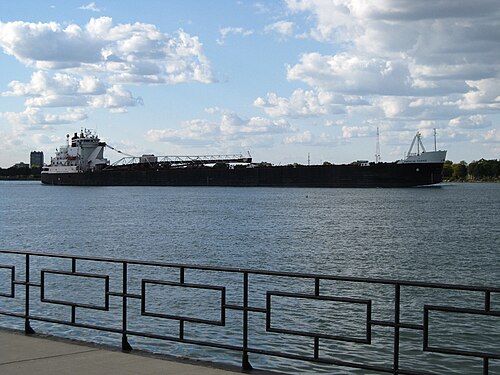
デトロイトはデトロイト川沿いの港町で、五大湖群とセントローレンス海路を結ぶ4つの主要な海峡の1つである。この都市は中西部で3番目、米国で16番目に大きな地域経済の中心地である。[14]また、米国の自動車産業の中心地としても知られており、「ビッグスリー」自動車メーカーであるゼネラルモーターズ、フォード、ステランティスノースアメリカ(クライスラー)はすべてデトロイト大都市圏に本社を置いている。[15]デトロイトには、米国で最も重要なハブ空港の1つであるデトロイトメトロポリタン空港がある。デトロイトと隣接するカナダの都市ウィンザーは、サンディエゴ・ティファナに次いで北米で2番目に忙しい国際航路を構成している。[16]
デトロイトの文化は多様性に富み、地元と海外の両方の影響を受けている。デトロイトはモータウンやテクノといった音楽ジャンルを生み出し、ジャズ、ヒップホップ、ロック、パンクの発展にも重要な役割を果たした。世界的にもユニークな建築記念碑や歴史的場所のストックは、好景気時代の急速な成長の結果である。2000年代以降、保存活動により多くの建築物が保存され、歴史的な劇場や娯楽施設の修復、高層ビルの改修、新しいスポーツスタジアム、川沿いの再活性化プロジェクトなど、いくつかの大規模な再活性化が達成された。デトロイトは、年間約1600万人の観光客が訪れる、ますます人気の観光地となっている。 [17] 2015年、デトロイトはユネスコから「デザイン都市」という名前を与えられた。これは、この指定を受けた最初の、そして唯一の米国の都市である。[18]
歴史
地名学
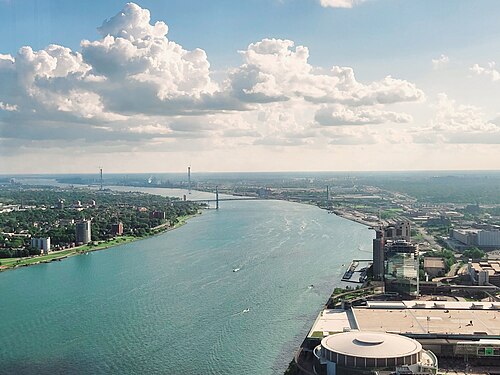
デトロイトはヒューロン湖とエリー湖を結ぶデトロイト川にちなんで名付けられました。この名前は、街が2つの湖を結ぶ狭い水路に位置していたため、「海峡」を意味するフランス語のdétroitに由来しています。この川はフランス語でle détroit du Lac Ériéとして知られており、「エリー湖の海峡」を意味します。[19] [20]歴史的には、海峡にはセントクレア川、セントクレア湖、デトロイト川が含まれていました。[21] [22]
初期の入植

.svg/500px-Flag_of_Great_Britain_(1707%E2%80%931800).svg.png)

古代インディアンは、マウンドビルダーと呼ばれる文化を含め、11,000年前にはすでにデトロイト近郊に居住していました。[23] 17世紀までに、この地域にはヒューロン族、オダワ族、ポタワトミ族、イロコイ族が住んでいました。 [24]この地域は、アニシナベ族によってワアウィーヤアタアノンとして知られており、翻訳すると「水が曲がる場所」になります。[25]
最初のヨーロッパ人がこの地域に侵入してデトロイト海峡に到達したのは、1630年代に戦争状態にあったイロコイ連盟を迂回してフランス人宣教師と貿易商が行動を起こしたときだった。[26]ヒューロン族とニュートラル族は1650年代までエリー湖の北側を支配していたが、 1649年から1655年のビーバー戦争でイロコイ族は彼らとエリー族を湖とビーバーの豊富な支流から追い出した。[26] 1670年代までには、戦争で弱体化したイロコイ族は、南はケンタッキー州北部のオハイオ川流域まで狩猟場として領有権を主張し、 [26]戦争で他の多くのイロコイ族を打ち負かした後、彼らを吸収していた。[26]その後の100年間、イギリスやフランスがイロコイ族と協議せずに行動したり、彼らの反応を考慮に入れたりすることはほとんどなかった。[26]フレンチ・インディアン戦争でフランス王国がカナダから追放されたことで、アメリカの入植者が西へ移住する障壁が一つ取り除かれた。[27]
イギリスとイロコイ族の交渉は決定的なものとなり、五大湖以南とアレゲニー山脈以西の入植地を制限するという国王の政策につながった。多くの植民地アメリカ人の移住希望者はこの制限に憤慨し、アメリカ独立戦争の支持者となった。1778年の襲撃と、その結果生じた1779年の決定的なサリバン遠征により、オハイオ地方は再び西方への移住に開放され、移住はほぼ即座に始まった。1800年までに白人入植者が西方へと押し寄せていた。[28]
フランス人の入植
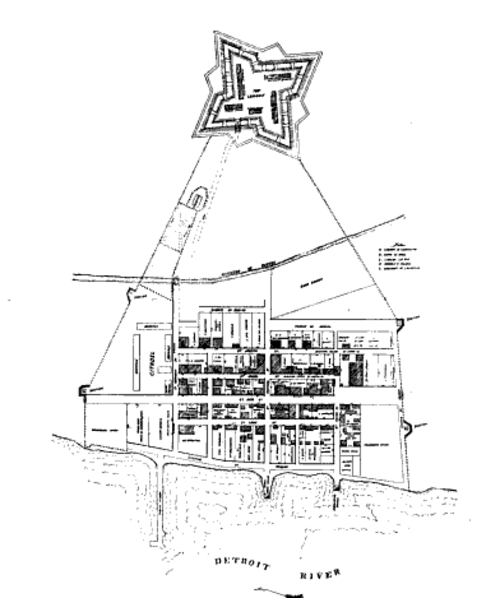
1701年7月24日、フランスの探検家アントワーヌ・ド・ラ・モット・キャディヤックは、中尉の アルフォンス・ド・トンティおよび100人以上の開拓者とともに、デトロイト川の北岸に小さな砦の建設を始めた。キャディヤックは、ルイ14世の下で海軍大臣を務めたポンシャルトラン伯爵ルイ・フェリポーにちなんで、この開拓地をポンシャルトラン・デュ・デトロイト砦と名付けた。 [ 29 ]サント・アン・ド・デトロイトは7月26日に設立され、米国で2番目に古くから継続して運営されているローマカトリックの教区である。[31] フランスは、デトロイトに家族を呼び込むために入植者に土地を無料で提供した。1765年に人口が800人に達すると、かつてのヌーベルフランス植民地とラ・ルイジアナ植民地にあった、同じくフランスの開拓地であるモントリオールとニューオーリンズの間で最大のヨーロッパ人開拓地となった。[32]
1773年、イギリス系アメリカ人の入植者が加わった後、デトロイトの人口は1,400人になった。1778年までに人口は2,144人に達し、七年戦争でイギリスが勝利してフランス植民地を占領して以来、ケベック州として知られていた地域で3番目に大きな都市となった。[33]
この地域の経済は、多くのネイティブアメリカンが罠猟師や交易業者として重要な役割を果たした、利益の多い毛皮貿易に基づいていた。今日、デトロイトの旗は、フランス植民地時代の遺産を反映している。最初期のフランス人とフランス系カナダ人の入植者の子孫は、まとまりのあるコミュニティを形成したが、19世紀初頭にアメリカの西方への移住とともにより多くのアングロアメリカ人入植者が到着すると、徐々に主要な人口の地位を奪われていった。セントクレア湖の岸沿い、南はモンロー、下流の郊外に住むデトロイトのフランス系カナダ人は、毛皮貿易にちなんでマスクラット・フレンチとも呼ばれ、21世紀のこの地域のサブカルチャーであり続けている。[34] [35]
フランス・インディアン戦争(1754年 - 1763年)(イギリスとフランスの間で起こった七年戦争の北米戦線)の間、イギリス軍は1760年にこの集落を制圧し、その名前をデトロイトに短縮した。ポトワトミ族、オジブウェー族、ヒューロン族など、この地域のいくつかのネイティブアメリカン部族は1763年にポンティアック戦争を起こし、デトロイト砦を包囲したが、占領には失敗した。フランスは戦争に敗れ、ミシシッピ川以東の北米の領土をイギリスに譲渡した。[36]
アメリカ独立戦争とアメリカ合衆国の独立後、イギリスはジェイ条約に基づき、デトロイトをその地域の他の領土とともにカナダ植民地との北の国境を定めた。[37] 1805 年の大火は、主に木造の建物があったデトロイトの入植地のほとんどを破壊した。残ったのは、石造りの砦 1 つ、川沿いの倉庫、かつての木造住宅のレンガ造りの煙突だけだった。[38]この地域のデトロイトの住民 600 人のうち、火災で亡くなった人はいなかった。[39] 1805 年の火災の遺産は、現代のデトロイトの遺産の多くの側面に生き続けている。市のモットー「Speramus Meliora; Resurget Cineribus」は、火災後の街の廃墟を眺めていたガブリエル・リチャード神父によって作られたものである。 [40] [41] 1827年にJOルイスによってデザインされた市の紋章は、1805年の大火を直接的に描いています。2人の女性が前景に立っており、左側の背景では街が燃え、女性が破壊を嘆いています。右側の女性は、その場所に新しい街が立ち上がることを身振りで示して彼女を慰めています。[42]市の紋章は、市の旗の中央にもなっています。
19世紀
上から: 1865 年のウッドワード アベニュー ショッピング ディストリクト、 1872 年の AC ウォーレン作「デトロイト市 (カナダ ショアより)」 、 1891 年のベル アイル パーク
1805年から1847年まで、デトロイトは準州としても州としてもミシガン州の首都だった。米英戦争中のデトロイトのアメリカ軍司令官ウィリアム・ハルは、自軍が圧倒的に数で劣勢であると考え、デトロイトの包囲戦で戦うことなくイギリス軍とその同盟先住民に降伏した。フレンチタウンの戦いはアメリカ軍が市を奪還する試みの一環であり、アメリカ軍は戦争中のどの戦闘よりも多くの死者を出した。この戦いはデトロイトの南、モンロー郡にあるリバー・レイズン国立戦場跡公園で記念されている。デトロイトはその年の後半にアメリカ軍に奪還された。[43]
この集落は1815年に市として法人化された。[44]都市が拡大するにつれ、首席裁判官オーガスタス・B・ウッドワードが考案した放射状の幾何学的街路計画が採用され、パリのような大通りが設けられた。[45] 1817年、ウッドワードは市内にミシガン大学、つまりカトレピステミアードを設立した。ミシガン準州の学校、図書館、その他の文化的、科学的機関の集中システムとなることを意図したカトレピステミアードは、現代のミシガン大学へと発展した。
南北戦争以前は、この都市はカナダとアメリカの国境に面していたため、地下鉄道に沿って北部で自由を獲得した難民奴隷にとって重要な中継地となっていた。多くは奴隷捕獲者の追跡を逃れるためにデトロイト川を渡ってカナダに渡った。[46] [44]推定2万から3万人のアフリカ系アメリカ人難民がカナダに定住した。[47]ジョージ・デバティストはデトロイト地下鉄道の「社長」、ウィリアム・ランバートは「副社長」または「秘書」、ローラ・スミス・ハビランドは「監督」とみなされていた。[48]
南北戦争中、デトロイトからは多数の兵士が北軍のために志願兵として戦い、その中には第24ミシガン歩兵連隊もいた。この連隊はアイアン旅団の一部であり、1863年のゲティスバーグの戦いで82%の死傷者を出しながらも立派な戦いを見せた。ワシントンD.C.の要塞化のため第1志願歩兵連隊が到着したとき、エイブラハム・リンカーン大統領は「ミシガンに感謝!」と言ったと伝えられている。ジョージ・アームストロング・カスターは南北戦争中にミシガン旅団を率い、彼らを「ウルヴァリンズ」と呼んだ。 [49]
19世紀後半、裕福な産業および海運業界の大物たちが、現在のダウンタウンの東西、ウッドワード計画の主要通り沿いに、金ぴか時代の邸宅の設計と建設を依頼した。その中で最も有名なのは、ウッドワード通り4421番地のデイビッド・ホイットニー邸で、この大通りは邸宅の好まれる住所となった。この時期、デトロイトの建築、パリ風の大通り、そしてトーマス・エジソンによって最近電化されたワシントン大通りから、デトロイトを「西のパリ」と呼ぶ者もいた。[44]この都市は、1830年代から海運、造船、製造業の台頭とともに着実に成長した。五大湖水路沿いの戦略的な位置にあったデトロイトは、主要な港と交通の中心地として台頭した。[要出典]
1896年、馬車貿易の繁栄により、ヘンリー・フォードはマック・アベニューのレンタル工場で最初の自動車を製造しました。この成長期に、デトロイトは周辺のいくつかの村や町の全部または一部を併合することでその境界を拡大しました。[50]
20世紀
1903年、ヘンリー・フォードはフォード・モーター社を設立した。フォードの製造業、そして自動車産業の先駆者であるウィリアム・C・デュラント、ホレスとジョン・ダッジ、ジェームズとウィリアム・パッカード、そしてウォルター・クライスラーの製造業により、デトロイトは20世紀初頭に世界の自動車産業の中心地としての地位を確立した。[44]自動車産業の成長は、中西部と国中のビジネスの変化に反映され、自動車を整備するガレージやガソリンスタンド、部品やタイヤの工場が開発された。[要出典]自動車産業の急成長により、デトロイトは1920年までにニューヨーク市、シカゴ、フィラデルフィアに次ぐ国内第4位の都市となった。[51]
1907年、デトロイト川はデトロイトを経由して世界各地へ67,292,504トンの貨物を輸送した。比較すると、ロンドンは18,727,230トン、ニューヨークは20,390,953トンだった。デトロイト川は1908年にデトロイト・ニュース紙によって「地球上で最も偉大な商業動脈」と称された。 1920年から1933年までの禁酒法により、デトロイト川は違法なカナダ産酒類の密輸の主要経路となった。[12]
自動車工場の産業労働者が急増する中、アメリカ労働総同盟や全米自動車労働組合(UAW)などの労働組合は労働者を組織化し、労働条件と賃金の向上を求めて闘った。労働組合は、 8時間労働/週40時間労働、賃金の引き上げ、福利厚生の充実、労働条件の改善などの改善策を支持するストライキやその他の戦術を開始した。この時期の労働運動により、チームスターズのジミー・ホッファや全米自動車労働組合のウォルター・ルーサーなど、市内の労働組合指導者の影響力は高まった。[52]
デトロイトは、米国の他の多くの場所と同様に、20 世紀に急速な人口構成の変化に伴って、数十万人の新しい労働者がこの工業都市に引き寄せられ、人種間の対立と差別が生じた。大移動によって南部の田舎の黒人がやって来たが、彼らよりも数が多かったのは、同じくこの都市に移住した南部の白人だった。移民によって、カトリック教徒やユダヤ教徒の南欧および東欧人がやって来た。これらの新しいグループは、急成長する都市で仕事や住居を求めて、地元生まれの白人と競争した。[出典が必要]
デトロイトは中西部の主要都市の一つで、1915年にクー・クラックス・クラン(KKK)が劇的に都市復興を遂げた場所だった。「1920年代までにデトロイトはKKKの拠点となった」。KKKのメンバーは主にカトリック教徒やユダヤ教徒の移民に反対していたが、黒人アメリカ人に対する差別も行っていた。 [53] 1920年代後半にKKKが衰退した後も、 1930年代には秘密自警団であるブラック・レギオンがデトロイト周辺で活動していた。ミシガン州の推定2万から3万人のメンバーのうち3分の1がデトロイトを拠点としていた。1936年に連邦公共事業促進局のカトリックの活動家チャールズ・プールが誘拐され殺害された後、多数の訴追を受けたが、この組織は敗北した。ブラック・レギオンのメンバー49人が多数の罪で有罪判決を受け、その多くが殺人罪で終身刑を宣告された。[54]
1940年までに、デトロイトの不動産証書の80%には、アフリカ系アメリカ人が購入可能な住宅を購入することを禁じる制限条項が含まれていた。これらの差別的戦術は成功し、デトロイトの黒人の大半はブラックボトムやパラダイスバレーなどの黒人専用地域に住むことになった。この時点で、白人は依然として市の人口の約90.4%を占めていた。[55]白人住民は黒人の家を襲撃し、窓を割ったり、放火したり、爆弾を爆発させたりした。[56] [57]
1940年代には、世界で初めて「都市型低床フリーウェイ」として建設されたデイヴィソン[58]が建設された。第二次世界大戦中、政府は連合国を支援するためにアメリカの自動車産業の再編を奨励し、デトロイトはアメリカの民主主義の兵器庫における重要な役割を担うことになった。[59]第二次世界大戦中の防衛力増強により雇用が急速に拡大し、1941年から1943年にかけて40万人がデトロイトに移住した。この中には、大移動の第二波で5万人の黒人と、多くが南部出身の35万人の白人が含まれていた。ヨーロッパ系を含む白人は、黒人との雇用の競争や住宅不足を恐れた。連邦政府は防衛産業における差別を禁止したが、1943年6月にパッカードが3人の黒人を昇進させて組立ラインで白人の隣で働くようにしたとき、2万5千人の白人労働者がストライキを起こした。[60] 1943年のデトロイト人種暴動は、パッカード工場の抗議行動の3週間後の6月にベルアイルでの口論から始まった。合計34人が死亡し、そのうち25人が黒人で、ほとんどが白人警官の手によるものだった。433人が負傷し(そのうち75%が黒人)、200万ドル相当(2020年の価値で3040万ドル相当)の財産が破壊された。暴徒は市内を移動し、若い白人は町中を移動して、パラダイスバレーの近所に住むより落ち着いた黒人を攻撃した。[61] [62]

戦後
1950年代の産業合併、特に自動車部門の合併により、アメリカの自動車産業の寡占が進んだ。パッカードやハドソンなどのデトロイトの製造業者は他の企業と合併し、最終的には消滅した。 1950年の国勢調査では、人口がピークの1,849,568人に達し、この都市は米国で5番目に大きな都市であった。[63]
この戦後の時代に、自動車産業は南部の多くのアフリカ系アメリカ人に機会を創出し続け、彼らは南部の厳格なジム・クロウ法と人種差別政策から逃れるためにデトロイトやその他の北部および西部の都市への大移動を続けた。戦後のデトロイトは大量生産の繁栄した工業中心地だった。自動車産業は市内のすべての産業の約60%を占め、ストーブ製造、醸造、家具製造、石油精製、医薬品製造など、多数の個別の急成長ビジネスのための余地を残した。雇用の拡大は黒人アメリカ人に独自の機会を生み出し、彼らはこれまでにない高い雇用率を経験した。戦後のデトロイトで雇用された黒人の数は103%増加した。南部から北部の工業都市に移住した黒人アメリカ人は、雇用部門で依然として激しい人種差別に直面していた。人種差別のために労働力とより良い仕事は主に白人のままであり、多くの黒人デトロイト人はより低賃金の工場の仕事に就いていた。黒人人口の増加による人口動態の変化にもかかわらず、デトロイトの警察、消防署、その他の市の職は主に白人住民によって占められ続けた。これにより、人種間の力関係に不均衡が生じていた。[64]
雇用機会の不平等は、黒人コミュニティの大多数にとって住宅機会の不平等をもたらした。全体的な収入が低く、差別的な住宅政策の反発に直面した黒人コミュニティは、市内の低価格で低品質の住宅に限られていた。黒人人口の急増は住宅不足の圧力を増大させた。黒人コミュニティが利用できる居住可能なエリアは限られており、その結果、家族はしばしば不衛生で安全でない違法な地区に密集していた。このような差別は、銀行や連邦住宅団体が実施したレッドライニング政策でますます顕著になり、この政策は黒人が住宅を改善する能力をほぼ完全に制限し、白人が彼らの地域を定義する人種的分断を守ることを奨励した。その結果、黒人はより良い住宅を取得するための銀行ローンを拒否されることが多く、金利と家賃は白人の地域への引っ越しを防ぐために不当に高騰した。白人住民と政治指導者は、黒人のデトロイト人が白人の地域に流入することに大部分反対し、彼らの存在は地域の荒廃につながると信じていた。これにより、デトロイトの黒人住民を市内で最も不健康で最も安全でない地域に閉じ込め、彼らの主体性を疎外する排他的循環プロセスが永続化した。[64]
戦後のアメリカの他の大都市と同様に、近代主義的な計画思想がデトロイト周辺に連邦政府の補助金を受けた広範囲な高速道路とフリーウェイの建設を促し、新しい住宅に対する抑制された需要が郊外化を刺激した。高速道路は高所得者の自動車通勤を容易にした。しかし、この建設は多くの低所得の都市住民にマイナスの影響を及ぼした。高速道路は貧困者や反対する政治的力が弱い黒人コミュニティの地域を貫いて建設され、完全に破壊された。これらの地域は主に低所得者で荒廃していると考えられていたか、人種的差別により投資が不足していた古い住宅で構成されていたため、高速道路は一種の都市再開発として提示された。これらの地域(ブラックボトムやパラダイスバレーなど)はデトロイトの黒人コミュニティにとって非常に重要であり、独立した黒人企業や社会/文化団体にスペースを提供していた。これらの地域が破壊されたことで、機能している地域や企業が解体される影響についてはほとんど考慮されずに住民が立ち退きを余儀なくされた。[64]
1956年、ウッドワード通りに沿って走っていたデトロイトの最後の頻繁に利用されていた電気路面電車の路線が撤去され、ガソリンで動くバスに置き換えられた。これは、かつて534マイルの電気路面電車のネットワークだった最後の路線だった。1941年には、ピーク時にはウッドワード通りを60秒ごとに路面電車が走っていた。[65] [66]
この地域の交通システムにおけるこうした変化は、高密度の都市開発よりも、低密度で自動車中心の開発を後押しした。産業も郊外に移転し、平屋建ての工場のための広い土地を求めた。21世紀までに、デトロイト都市圏は米国で最も広大な雇用市場の一つとして発展したが、公共交通機関の貧弱さと相まって、多くの新しい仕事が都市部の低所得労働者の手の届かないものとなった。[67]

1950年、デトロイトの人口は州人口の約3分の1を占めていた。その後60年間で、デトロイトの人口は州人口の10%未満にまで減少した。同時期に、広大な大都市圏はミシガン州の人口の半分以上を占めるまでに成長した。[44]人口と雇用の移動により、デトロイトの税基盤は侵食された。[要出典]
1963年6月、マーティン・ルーサー・キング牧師は、デトロイトでの公民権デモの一環として重要な演説を行った。これは、2か月後にワシントンDCで行われた「私には夢がある」演説の前兆となった。公民権運動は1964年と1965年に重要な連邦公民権法を成立させたが、長年の不平等により、警察と変化を求めるスラム街の黒人青年との対立が生じた。[68]
今日の午後、私は夢を見ます。私の 4 人の幼い子供たちが、私が育ったのと同じ青春時代を過ごすのではなく、肌の色ではなく、人格の中身に基づいて判断されるようになることを。今晩、私は夢を見ます。いつの日か、ジェファーソンの言葉、「すべての人間は平等に創られ、創造主によって、生命、自由、幸福の追求など、奪うことのできない一定の権利を授けられている」が理解されるようになることを。私には夢があります。
—マーティン・ルーサー・キング・ジュニア(1963年6月デトロイト大行進での演説)[69]

デトロイトの長年の緊張は、1967年7月の12番街暴動で頂点に達した。ジョージ・W・ロムニー知事はミシガン州兵にデトロイトへの派遣を命じ、リンドン・B・ジョンソン大統領は米軍部隊を派遣した。その結果、43人が死亡、467人が負傷、7,200人以上が逮捕され、2,000棟以上の建物が破壊されたが、そのほとんどは黒人居住地域と商業地域であった。何千もの中小企業が永久に閉鎖されるか、より安全な地域に移転した。被害を受けた地区は数十年間廃墟のままであった。[70]シカゴ・トリビューンによると、これは米国で3番目に被害額の大きい暴動であった。[71]
1970年8月18日、NAACPはウィリアム・ミリケン知事を含むミシガン州当局者を相手取り、事実上の公立学校の人種隔離を訴えて訴訟を起こした。NAACPは、学校は法的に隔離されていないものの、デトロイト市とその周辺郡は公立学校で人種隔離を維持する政策を制定していると主張した。NAACPはまた、学校の生徒の構成が隔離された地域に従っていることから、不公平な住宅慣行と教育上の隔離の間には直接的な関係があると示唆した。[72]地方裁判所は判決の中で、あらゆるレベルの政府が人種隔離の責任を負っているとした。第6巡回控訴裁判所は判決の一部を支持し、隔離された大都市圏全体で統合するのは州の責任であると判断した。[73 ]合衆国最高裁判所は1974年2月27日にこの事件を取り上げ最高裁判所は、学校は地方自治の対象であり、郊外の自治体は市の学区の人種差別撤廃に協力することを強制されないという僅差の判決を下した。[74]
「ミリケンはおそらくその時期の最大のチャンスを逃した」とミネソタ大学ロースクールの法学教授マイロン・オーフィールドは言う。「もしそれが逆の結果になっていたら、デトロイトの現在の問題のほとんどすべてを解決する扉が開かれていただろう。」[75]デトロイトのウェイン州立大学ロースクールの法学教授で都市計画の専門家であるジョン・モグクは言う。
誰もが、白人家族がデトロイトを去ったのは暴動(1967年)のせいだと考えている。当時も何人かは去っていたが、実際には、郊外への大量逃避が見られたのがミリケン事件の後だった。もし事件が逆の結果になっていたら、デトロイトはその後起こった税基盤の急激な減少を経験しなかっただろう。[75]
1970年代と衰退
最初のウィリアムズ ブロック、1915 年 (左) と 1989 年 (右)

1973年11月、市はコールマン・ヤングを初の黒人市長に選出した。就任後、ヤングは主に白人であった警察署における人種的多様性の向上を強調した。[76]ヤングはデトロイトの交通システムの改善にも取り組んだが、ヤングと郊外の同僚たちとの間の地域問題をめぐる緊張は、彼の市長任期中ずっと問題となっていた。
1976年、連邦政府は、単一の地域当局の下で地域高速輸送システムを構築するために6億ドル(2023年には約25億ドル)を提供しました。 [77]しかし、デトロイトとその郊外の近隣諸国が交通計画をめぐる対立を解決できなかったため、この地域は高速輸送のための資金の大半を失うことになりました。[要出典]その後、市はシステムの高架ダウンタウン循環部分の建設を進め、デトロイトピープルムーバーとして知られるようになりました。[78]
1973年と1979年のガソリン危機は自動車産業に影響を及ぼした。ガソリン価格が上昇する中、購入者は外国メーカー製の小型で燃費の良い車を選ぶようになった。自動車産業の苦戦により、市の復興努力は妨げられ、自動車産業の売上と市場シェアは低下した。自動車メーカーは数千人の従業員を解雇し、市内の工場を閉鎖したため、税基盤はさらに侵食された。これに対抗するため、市は土地収用権を行使し、市内に2つの大規模な新しい自動車組立工場を建設した。[79]
ヤングは衰退しつつあるダウンタウンへの投資を増やすことで、街の復興を図った。1977年にオフィスと小売の複合施設であるルネッサンスセンターがオープンした。この高層ビル群は、ダウンタウンにビジネスを留めておくための試みだった。 [44] [80] [81]ヤングはまた、中流階級と上流階級の住民を街に呼び戻すために、他の大規模な開発にも市の支援を与えた。ルネッサンスセンターや他のプロジェクトにもかかわらず、ダウンタウンエリアは自動車に依存する郊外にビジネスを奪われ続けた。大手の店やホテルは閉まり、多くの大きなオフィスビルは空き家になった。ヤングはダウンタウンの開発に集中しすぎて、街の高い犯罪率を下げ、住民への市のサービスを改善するために十分な努力をしていないと批判された。[要出典]
失業率の高さは、中流階級が郊外に逃げ、一部の住民が職を求めて州を離れたことでさらに悪化した。その結果、市の人口に占める貧困層の割合が増加し、税基盤が縮小し、不動産価値が下がり、建物や地域が廃墟となり、犯罪率が上昇した。[82]
1987年8月16日、ノースウエスト航空255便がデトロイトメトロ空港付近で墜落し、乗客155人のうち1人を除く全員と地上の2人が死亡した。[83]
1993年、デトロイト最長在任市長だったヤングは6期目を目指さないことを決めて退任し、デニス・アーチャーが後任となった。アーチャーはダウンタウンの開発を優先し、郊外の近隣との緊張を緩和した。1996年には市内でのカジノ賭博を許可する住民投票が可決され、1999年にはいくつかの臨時カジノ施設がオープンし、2007年から2008年にはホテルを併設したダウンタウンの常設カジノがオープンした。[84]
21世紀
キャンパス・マルティウスは、ダウンタウンの主要交差点を新しい公園として再構成したもので、2004年にオープンしました。この公園は、米国で最も優れた公共スペースの1つとして挙げられています。[85] [86] [87] 2001年には、市の300周年記念の一環として、インターナショナル・リバーフロントの再開発の最初の部分が完了しました。 [88]
2008年9月、6年間市長を務めたクワメ・キルパトリックは重罪で有罪判決を受けた後辞任した。2013年、キルパトリックは郵便詐欺、通信詐欺、恐喝を含む24件の連邦重罪で有罪判決を受け、[89]連邦刑務所で28年の刑を宣告された。[90]前市長の活動により、市は推定2,000万ドルの損害を被った。[91]デトロイトの305,000の不動産の所有者の約半数が2011年の税金を支払わなかったため、約2億4,600万ドル(2023年には約3億2,900万ドル)の税金と手数料が未徴収となり、そのほぼ半分がデトロイトに支払われることになった。残りのお金はウェイン郡、デトロイト公立学校、図書館システムに充てられるはずだった。[92]
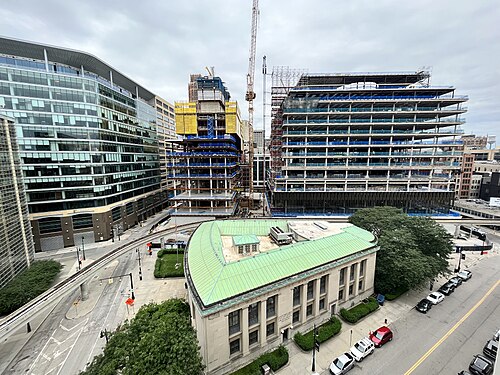
市の財政危機により、ミシガン州がデトロイトの行政管理を引き継ぐことになった。[93]リック・スナイダー知事は2013年3月に財政非常事態を宣言し、市は3億2700万ドルの予算赤字と140億ドル以上の長期債務を抱えていると述べた。市の財政は州のエスクロー口座に保管されている債券資金の助けを借りて月ごとにやりくりしており、多くの市職員に無給休暇を義務付けていた。これらの問題に加え、警察や消防署などの市のサービスの資金不足、ビング市長と市議会の非効率的な再建計画により、[94]ミシガン州はデトロイトに緊急管理者を任命した。 2013年6月14日、デトロイトは3,970万ドルの利払いを保留して25億ドルの債務不履行に陥り、緊急管理者のケヴィン・オール氏は債券保有者や他の債権者と会談し、市の185億ドルの負債を再編して破産を回避しようとした。[95] 2013年7月18日、デトロイトは破産を申請した米国最大の都市となった。[96] 12月3日、米国地方裁判所は185億ドルの負債を抱えて破産宣告をした。[97] 2014年11月7日、市の破産脱却計画が承認された。12月11日、市は正式に破産から脱却した。この計画により、市は70億ドルの負債を削減し、17億ドルを都市サービスの改善に投資することができた。[98]
市がこの資金を獲得した方法の一つは、デトロイト美術館(DIA) を通じてだった。60,000 点を超える数十億ドル相当の美術品を所蔵しており、この投資資金の鍵となると考える者もいた。市は美術品を収益化して販売する計画を立て、DIA は民間組織となった。数ヶ月に及ぶ法廷闘争の後、市はついに新しいデトロイトに資金を提供するため数億ドルを獲得した。[99]
破産後、市のサービス向上のために行われた最大の取り組みの一つは、壊れた街路照明システムの修復だった。一時は街路照明の40%が機能していないと推定され、公共の安全上の問題や住宅放棄につながった。計画では、時代遅れの高圧ナトリウム灯を65,000個のLED灯に交換することになっていた。工事は2014年後半に始まり、2016年12月に完了した。デトロイトは、街路照明がすべてLEDである米国最大の都市である。[100]
2010年代には、デトロイトの市民と新しい居住者によって、近隣地域の改修と再活性化によって都市景観を改善するいくつかの取り組みが行われました。そのようなプロジェクトには、ボランティア改修グループ[101]やさまざまな都市ガーデニング運動が含まれます。[102]近年、数マイルにわたる関連する公園と造園が完成しました。2011年には、ポートオーソリティ旅客ターミナルがオープンし、ハートプラザとルネッサンスセンターを結ぶ川沿いの遊歩道ができました。[81]

数十年にわたる市の衰退の象徴であるミシガン中央駅は長い間空き地となっていた。市は新しい窓、エレベーター、設備を備えた改修工事を行い、2015年12月に工事を完了した。[104] 2018年にフォードモーターカンパニーがこの建物を購入し、モビリティテストに使用することを計画しており、鉄道サービスの復活も検討している。[105]他のいくつかのランドマークビルは民間によって改修され、マンション、ホテル、オフィス、または文化的な用途に改造されている。デトロイトはルネッサンスの都市として言及され、過去数十年間の傾向の多くを逆転させた。[106] [107]
市内ではジェントリフィケーションが進んでいる。[108]例えばダウンタウンでは、リトル・シーザーズ・アリーナの建設により、ウッドワード・アベニュー沿いに高級ショップやレストランがオープンした。オフィスビルやマンションの建設により裕福な家庭が流入したが、長年の住民や文化が追い出された。[109] [110]ダウンタウン以外の地域や最近再開発が進んだ地域では、平均世帯収入がジェントリフィケーションが進んだ地域よりも約25%低く、その格差は拡大し続けている。[111]これらのジェントリフィケーションが進んだ地域の家賃や生活費は毎年上昇しており、少数民族や貧困層を追い出し、市内の人種間の格差や分離がますます拡大している。 2019年、リバータウンの1ベッドルームロフトの価格は30万ドル(2023年には約35万2,668ドル)に達し、5年間の販売価格は500%以上変化し、平均収入は18%増加しました。[112] [より良い情報源が必要]
地理
.jpg/500px-Metro_Detroit_by_Sentinel-2,_2021-09-06_(big_version).jpg)
首都圏
デトロイトは、3郡の都市圏(2010年国勢調査によると、面積1,337平方マイル(3,460 km 2 )内に3,734,090人の人口)、6郡の大都市統計地域(2010年国勢調査時点では、面積3,913平方マイル(10,130 km 2)内に5,322,219人の人口)、および9郡の複合統計地域( 2010年時点では、面積5,814平方マイル(15,060 km 2 )内に530万人の人口)の中心地である。[113] [114] [115][update]
地形
アメリカ合衆国国勢調査局によると、市の総面積は142.87平方マイル(370.03 km 2)で、そのうち138.75平方マイル(359.36 km 2)が陸地、4.12平方マイル(10.67 km 2)が水域である。[116]デトロイトは、メトロデトロイトとミシガン州南東部の主要都市である。アメリカ中西部と五大湖地域に位置する。[117]
デトロイト川国際野生生物保護区は、北米で唯一の国際野生生物保護区であり、大都市圏の中心部に位置するというユニークな立地条件を備えています。保護区には、デトロイト川とエリー湖西岸の48マイル(77 km)にわたる島々、沿岸湿地、沼地、浅瀬、水辺の土地が含まれます。[118]
市は北西から南東にかけて緩やかに傾斜しており、その平野は主に氷河と湖沼の粘土でできている。市内で最も顕著な地形的特徴はデトロイト・モレーンである。これはデトロイトとウィンザーの古い部分が位置する広い粘土の尾根で、最高地点では川面から約62フィート(19メートル)隆起している。[119]市内で最も標高が高いのは、8マイル・ロードの南約3ブロック北西側、ゴーハム・プレイグラウンドの真北で、標高は675~680フィート(206~207メートル)である。[120]デトロイトの最も標高が低いのはデトロイト川沿いで、地表高は572フィート(174メートル)である。[121]
ベルアイル公園は、デトロイト川に浮かぶ、オンタリオ州デトロイトとウィンザーの間の島にある、982エーカー(1.534平方マイル、397ヘクタール)の公園です。本土とはマッカーサー橋でつながっています。ベルアイル公園には、ジェームズ・スコット記念噴水、ベルアイル温室、隣接する島にあるデトロイトヨットクラブ、半マイル(800メートル)のビーチ、ゴルフコース、自然センター、記念碑、庭園などのアトラクションがあります。島のサンセットポイントからは、デトロイトとウィンザーの両方のスカイラインを眺めることができます。[122]
市内には3つの道路網が通っている。フランスのオリジナル道路網で、ウォーターフロントから放射状に広がる大通りと、北西条例の町区制度に基づいた真の南北道路である。この都市はオンタリオ州ウィンザーの北に位置している。デトロイトはカナダとアメリカの国境沿いにある主要都市の中で、南に進んでカナダに入る唯一の都市である。[123]
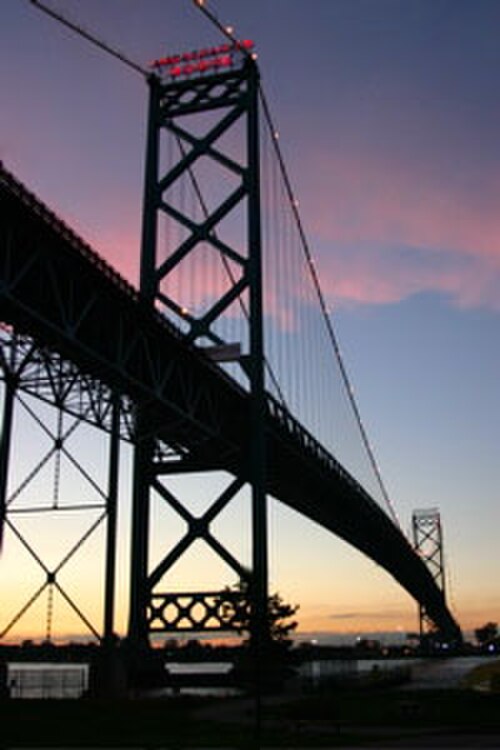
デトロイトには4つの国境検問所がある。アンバサダー橋とデトロイト・ウィンザートンネルは自動車の通路となっており、ミシガン中央鉄道トンネルはカナダとの鉄道アクセスを提供している。4つ目の国境検問所はウィンザー岩塩鉱山とザグ島に近いデトロイト・ウィンザートラックフェリーである。ザグ島の近く、市の南西部は地表から1,100フィート (340 m) 下の1,500エーカー (610 ha) の塩鉱山の上に開発された。デトロイト塩会社が運営するデトロイト岩塩鉱山には、100マイル (160 km) を超える道路がある。[124] [125]
都市景観

.jpg/500px-Detroit_-_panoramio_(4).jpg)
建築
.jpg/500px-One_Detroit_Center_(Detroit,_MI,_USA).jpg)
.jpg/500px-Skyline_of_Detroit,_Michigan_from_S_2014-12-07_(cropped,_Financial_District).jpg)
デトロイトのウォーターフロントはパノラマで見ると、様々な建築様式が見られます。アリー・デトロイト・センターのポストモダンの ネオゴシック様式の尖塔は、市内のアールデコ様式の高層ビルを参考にして設計されました。ルネッサンス・センターとともに、これらの建物は独特で認識しやすいスカイラインを形成しています。アールデコ様式の例としては、ダウンタウンのガーディアン・ビルやペノブスコット・ビル、ウェイン州立大学近くのニューセンター地区にあるフィッシャー・ビルやキャデラック・プレイスなどがあります。市内の著名な建造物には、米国最大のフォックス劇場、デトロイト・オペラハウス、デトロイト美術館があり、すべて20世紀初頭に建てられました。[126] [127]
ダウンタウンとニューセンター地区には高層ビルが建ち並んでいるが、市街地の周辺の大部分は低層建築物と一戸建て住宅で構成されている。市の中心部以外では、イーストリバーフロントやグロースポイント方面、ウッドワードの西側にあるパーマーパーク地区など、上流階級の居住地区に高層住宅が建っている。デトロイト北西部のユニバーシティコモンズ-パーマーパーク地区は、デトロイトマーシー大学とメアリーグローブ大学の近くにあり、パーマーウッズ、シャーウッドフォレスト、ユニバーシティディストリクトなどの歴史ある地区の中心となっている。[要出典]
42 の重要な建造物や遺跡が国家歴史登録財に登録されています。第二次世界大戦前に建設された地区は当時の建築様式を特徴としており、労働者階級の地区には木造やレンガ造りの家が、中流階級の地区には大きなレンガ造りの家が、ブラッシュ パーク、ウッドブリッジ、インディアン ビレッジ、パーマー ウッズ、ボストン エジソンなどの上流階級の地区には華麗な邸宅が建っています。[出典が必要]
最も古い地区のいくつかは、市の背骨を形成する主要なウッドワード回廊とイーストジェファーソン回廊沿いにあります。比較的新しい住宅建設もウッドワード回廊沿いや西端、北東に見られます。現存する最も古い地区には、ウェストキャンフィールドとブラッシュパークがあります。ここでは数百万ドルをかけて既存の住宅を修復し、新しい住宅やマンションを建設してきました。[80] [128]
この都市には、19世紀後半から20世紀初頭にかけての建築物がアメリカ国内でも最大規模で現存している。[127]市内の建築的に重要な教会や大聖堂には、セントジョセフ教会、オールドセントメアリー教会、スウィーテストハートオブメアリー教会、モストブレスドサクラメント大聖堂などがある。[126]
この都市では、都市デザイン、歴史的建造物の保存、建築の分野で活発な活動が行われています。[129]ダウンタウンの再開発プロジェクトが数多く行われ、その中でもキャンパス・マルティウス公園は最も有名なものの1つであり、市内の各所が再活性化しました。グランド・サーカス公園と歴史地区は、市の劇場街、デトロイト・ライオンズの本拠地であるフォード・フィールド、デトロイト・タイガースの本拠地であるコメリカ・パークの近くにあります。[126]デトロイト・レッドウィングスとデトロイト・ピストンズの新しい本拠地であるリトル・シーザーズ・アリーナは、住宅、ホテル、小売店が併設されており、2017年にオープンしました。[130]このプロジェクトの計画では、アリーナ周辺のブロックに多目的住宅を建設し、空きビルとなっている14階建てのエディストーン・ホテルを改修することになっています。この施設は、コメリカ・パークやデトロイト・オペラハウスなどを含むオリンピア・エンターテインメント社が所有する施設群「ディストリクト・デトロイト」の一部となる。 [要出典]
デトロイト国際リバーフロントには、公園、住宅ビル、商業地区を組み合わせた、部分的に完成した3.5マイルの川沿いの遊歩道が含まれています。ハートプラザからマッカーサー橋まで伸びており、マッカーサー橋は米国の都市で最大の島公園であるベルアイルパークに接続しています。リバーフロントには、ミシガン州初の都市州立公園であるトライセンテニアル州立公園とハーバーがあります。第2フェーズは、ハートプラザからアンバサダー橋までの2マイル(3.2キロメートル)の延長で、橋から橋までの合計5マイル(8.0キロメートル)の公園道路になります。都市計画者は、歩行者専用公園が、収用権で没収された川沿いの不動産の住宅再開発を促進すると考えています。[131]
その他の主要な公園としては、デトロイト最大の公園であるリバールージュ(南西部)、パーマー(ハイランドパークの北)、シェーンパーク(ダウンタウンの東川沿い)などがある。[132]
近隣地域

デトロイトには様々なタイプの地区がある。再開発が進んだダウンタウン、ミッドタウン、コークタウン、ニューセンター地区には多くの歴史的建造物が立ち並び、高密度である一方、さらに北東部や郊外では[133] 、高い空き家率が問題となっており、いくつかの解決策が提案されている。2007年、デトロイトのダウンタウンは、 CNNMoneyの編集者によって、米国最大の都市圏の中で引退後の生活に最適な都市地区として認められた。 [134]
ラファイエット パークは、市の東側にある再活性化された地区で、ルートヴィヒ ミース ファン デル ローエの住宅地区の一部です。[135] 78 エーカー (32 ヘクタール) の開発は、もともとグラティオット パークと呼ばれていました。ミース ファン デル ローエ、ルートヴィヒ ヒルベルザイマー、アルフレッド コールドウェルによって計画されたこの開発には、19 エーカー (7.7 ヘクタール) の交通のない美しい公園が含まれており、その中にこれらの低層アパートやその他の建物が建っています。[135]移民は、特にデトロイト南西部で、市の地区の再活性化に貢献してきました。[136]南西部デトロイトは、新しい住宅、ビジネスの増加、最近オープンしたメキシカンタウン国際ウェルカム センターに見られるように、近年経済が活況を呈しています。[137]
市内には空き家の多い地区が数多くあり、その地域の居住密度が低いため、市のサービスやインフラが逼迫している。こうした地区は北東部と市の外れに集中している。[133] 2009年の区画調査では、市内の住宅用地の約4分の1が未開発または空き地であり、市内の住宅の約10%が空き家であることが判明した。[133] [138] [139]この調査では、市内の住宅のほとんど(86%)が良好な状態であり、少数(9%)が軽微な修理のみを必要とする良好な状態であると報告されている。[138] [139] [140] [141]
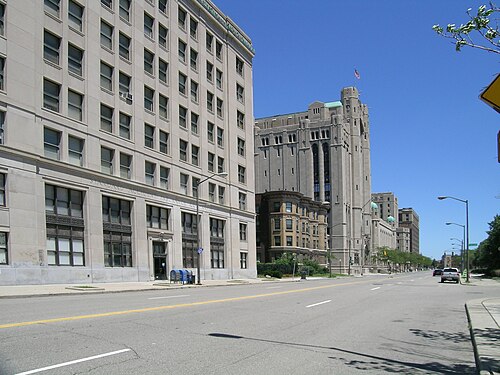
.jpg/500px-New_Amsterdam_Lofts_(4634813321).jpg)
空き家問題に対処するため、市は廃屋の取り壊しを開始し、2010年には全1万軒のうち3,000軒を破壊したが[142] 、その結果生じた低密度は市のインフラに負担をかけている。これを改善するために、人口密度の低い地域からの住民移転や、ハンツ・ウッドランズなどの未使用スペースを都市農業用に転用するなど、いくつかの解決策が提案されているが、市は計画段階にさらに2年ほどかかると予想している。[143] [144]
公的資金と民間投資は、地域の再開発を約束して行われてきた。2008年4月、市は雇用を創出し、地域の再活性化を図る3億ドル(2023年には約4億1,700万ドル)の景気刺激策を発表した。これは市債で賄われ、賭博税の約15%が充てられる。 [143]市の地域再活性化の作業計画には、7マイル/リバーノア、ブライトムーア、イーストイングリッシュビレッジ、グランドリバー/グリーンフィールド、ノースエンド、オズボーンなどがある。[143]民間組織は、この取り組みに多額の資金提供を約束している。[145] [146]さらに、市は1,200エーカー(490ヘクタール)の土地を大規模な地域建設のために整地しており、市はこれをファーイーストサイド計画と呼んでいる。[147] 2011年、デイブ・ビング市長は、地域をニーズに応じて分類し、その地域に最も必要なサービスを優先する計画を発表しました。[148]
公園
デトロイト公園・レクリエーション局は、合計 4,950 エーカー (2,003 ヘクタール) の広さ、つまり市の土地面積の約 5.6% にあたる 308 の公共公園を管理しています。デトロイト最大かつ最も訪問者が多い公園であるベル アイル パークは、982 エーカー (397 ヘクタール) の広さを誇る米国最大の市営島公園です。
気候
| ミシガン州デトロイト | ||||||||||||||||||||||||||||||||||||||||||||||||||||||||||||
|---|---|---|---|---|---|---|---|---|---|---|---|---|---|---|---|---|---|---|---|---|---|---|---|---|---|---|---|---|---|---|---|---|---|---|---|---|---|---|---|---|---|---|---|---|---|---|---|---|---|---|---|---|---|---|---|---|---|---|---|---|
| 気候図(説明) | ||||||||||||||||||||||||||||||||||||||||||||||||||||||||||||
| ||||||||||||||||||||||||||||||||||||||||||||||||||||||||||||
| ||||||||||||||||||||||||||||||||||||||||||||||||||||||||||||
デトロイトとミシガン州南東部の残りの地域は、他の州と同様に五大湖の影響を受ける、夏が暑い湿潤大陸性気候(ケッペンの気候区分:Dfa )である。[149] [150] [151]市と近郊の郊外は米国農務省耐寒性ゾーン6bに属し、より離れた北部と西部の郊外は通常ゾーン6aに含まれる。[152]冬は寒く、降雪量は中程度で、気温が氷点下を超える日が年間平均44日、0°F(−18°C)以下になる日が年間平均4.4日である。夏は暖かくから暑く、気温が90°F(32°C)を超える日が12日ある。[153]温暖な季節は5月から9月である。月間平均気温は1月の25.6 °F (−3.6 °C)から7月の73.6 °F (23.1 °C)までの範囲である。公式の最高気温は1934年7月24日の105 °F (41 °C)から1984年1月21日の−21 °F (−29 °C)までである。最高気温の最低記録は1994年1月19日の−4 °F (−20 °C)で、逆に最高気温の最低記録は2006年8月1日の80 °F (27 °C)で、これは5回のうちの最新のものである。[153]最高気温が100 °F (38 °C)以上になる間隔は10年か20年ほど空くことがあり、最後に記録されたのは2012年7月17日である。氷点下の気温が平均して10月20日から4月22日まで続くため、生育期間は180日間となる。[153]
降水量は中程度で、年間を通じてある程度均等に分布しているが、5月や6月などの暖かい月には平均して多くなり、年間平均33.5インチ(850 mm)であるが、歴史的には1963年の20.49インチ(520 mm)から2011年の47.70インチ(1,212 mm)までの範囲である。[153]降雪は通常11月15日から4月4日(時折10月、非常に稀に5月)の間に測定可能な量が降り、[153]シーズンあたり平均42.5インチ(108 cm)であるが、歴史的には1881〜82年の11.5インチ(29 cm)から2013〜14年の94.9インチ(241 cm)までの範囲である。[153]厚い積雪はめったに見られず、積雪が3インチ(7.6cm)以上の日は平均27.5日しかありません。[153]デトロイト地域では 雷雨が頻繁に発生します。これは通常、春と夏に発生します。[154]
生のグラフ データを表示または編集します。
人口統計

2020年の米国国勢調査 では、この都市の住民は639,111人で、米国で27番目に人口の多い都市であった。 [161] [162]米国の大都市の中で、デトロイトは過去70年間で最も劇的な人口減少(1,210,457人減)と2番目に大きな減少率(65.4%減)を記録した。デトロイトの人口減少は1950年以来続いているが、最も劇的な時期は2000年の国勢調査から2010年の国勢調査までの25%の大幅な減少であった。[162]

デトロイトの住民は 639,111 人で、269,445 世帯、162,924 家族が市内に居住しています。人口密度は 5,144.3 人/平方マイル (1,986.2 人/km 2 ) です。住宅戸数は 349,170 戸で、平均密度は 2,516.5 戸/平方マイル (971.6 戸/km 2 ) です。269,445 世帯のうち、34.4% に 18 歳未満の子供が同居しており、21.5% は夫婦同居、31.4% は女性の世帯主で夫がいない世帯、39.5% は非家族、34.0% は個人、3.9% には 65 歳以上の独り暮らしの世帯があります。平均世帯人数は2.59人、平均家族人数は3.36人でした。
市内の年齢分布は広く、18歳未満が31.1%、18歳から24歳が9.7%、25歳から44歳が29.5%、45歳から64歳が19.3%、65歳以上が10.4%でした。年齢の中央値は31歳でした。女性100人に対して男性は89.1人でした。18歳以上の女性100人に対して男性は83.5人でした。
宗教
2014年の調査によると、市の人口の67%がキリスト教徒であり、49%がプロテスタント教会に通い、16%がローマカトリックの信仰を公言している[163] [164] 。一方、24%は無宗教を主張している。その他の宗教は全体で人口の約8%を占めている。
収入と雇用
市内の工業および労働者階級の雇用の喪失は、高い貧困率とそれに伴う諸問題を招いている。[165] 2000年から2009年にかけて、市の推定世帯収入の中央値は29,526ドルから26,098ドルに減少した。[166] 2010年現在[update]、デトロイトの平均収入は米国全体の平均を数千ドル下回っている。デトロイトの住民3人に1人は貧困生活を送っている。『Getting Ghost: Two Young Lives and the Struggle for the Soul of an American City』の著者ルーク・バーグマンは2010年に「デトロイトは今や国内で最も貧しい大都市の一つだ」と述べた。[167]
2018年のアメリカのコミュニティ調査では、市内の世帯収入の中央値は31,283ドルで、ミシガン州の中央値は56,697ドルであった。[168]家族の平均収入は36,842ドルで、州の中央値72,036ドルを大きく下回っている。[169]家族の33.4%が連邦政府が定義する貧困レベル以下の収入であった。全人口のうち、18歳未満の47.3%と65歳以上の21.0%が連邦政府が定義する貧困ライン以下の収入であった。[170]
人種と民族
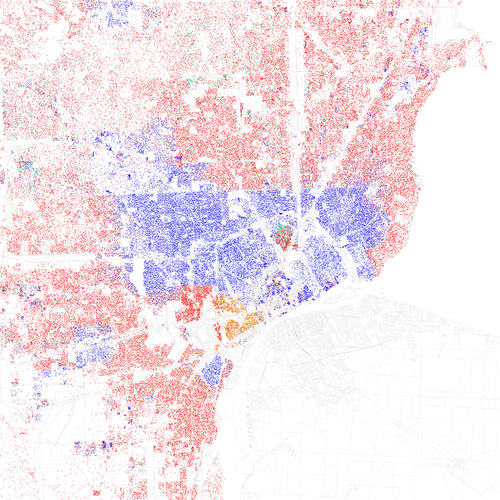
自動車産業の勃興とともに、ヨーロッパ、中東(レバノン、アッシリア/カルデア)、南部からの移民が家族を連れてデトロイトに流入したため、20世紀前半にはデトロイトの人口は6倍以上に増加した。[178]第一次世界大戦後のこの経済成長により、アフリカ系アメリカ人の人口は1910年のわずか6,000人から[179] 1930年には120,000人以上に増加した。[180]おそらく最も明白な地域差別の例の一つは、1925年にアフリカ系アメリカ人の医師オシアン・スウィートが、伝統的に白人の多い地域への引っ越しに激しく抗議する敵対的な白人隣人の怒った暴徒に自宅を取り囲まれたときに起こった。スウィートと彼の家族と友人10人が殺人罪で裁判にかけられたが、これは、[181]
デトロイトには比較的多くのメキシコ系アメリカ人が住んでいる。20世紀初頭、何千人ものメキシコ人が農業、自動車、鉄鋼業に従事するためにデトロイトにやって来た。1930年代のメキシコ人送還の際、デトロイトの多くのメキシコ人は自発的に送還されたか、強制的に送還された。1940年代までには、メキシコ人コミュニティの多くが現在のメキシカンタウンに定住し始めた。[182]ハリスコ州からの移民により、1990年代にはラテン系人口が大幅に増加した。2010年までにデトロイトのヒスパニック人口は48,679人で、そのうち36,452人がメキシコ人で、1990年から70%増加した。[183]

第二次世界大戦後、アパラチア地方出身の多くの人々もデトロイトに定住した。アパラチア地方出身者はコミュニティを形成し、その子供たちは南部のアクセントを身につけた。[184]また、第二次世界大戦中には多くのリトアニア人もデトロイトに定住し、特に市の南西部のウェストバーナー地区に定住した。[185]そこでは、改装されたリトアニアホールが2006年に再オープンした。[186] [187]
以前は[いつ? ]アフリカ系アメリカ人はミシガン州の人口のわずか13%を占めていましたが、2010年までにデトロイトの人口のほぼ82%を占めるようになりました。次に多い人口グループは白人で10%、ヒスパニックで6%でした。[188] 2001年には、103,000人のユダヤ人、つまり人口の約1.9%がデトロイト地域に住んでいました。[189] 2010年の国勢調査によると、デトロイトの人種差別は絶対的にも相対的にも減少しており、21世紀の最初の10年間で、大都市圏の黒人人口の約3分の2がデトロイト市域内に住んでいました。[190] [191]統合された地域の数は、2000年の100から2010年には204に増加しました。デトロイトはまた、最も隔離された都市の第1位から第4位にランクを下げました。[192] 2011年のニューヨークタイムズの論説では、人種隔離率の低下は市からの全体的な人口流出によるものだと述べ、これらの地域ではすぐにさらに人種隔離が進む可能性があると警告した。

2002年時点で、デトロイトのアジア人の割合は1%でした。[193]デトロイトにはアジア人とアジア系アメリカ人の人口が多い地域が4つあります。北東デトロイトにはモン族の人口が多く[194] 、ラオス人の少数のグループがいます。東ハムトラミックに隣接するデトロイトの一部には、バングラデシュ系アメリカ人、インド系アメリカ人、パキスタン系アメリカ人がおり、デトロイトのバングラデシュ人人口のほぼ全員がその地域に住んでいます。ダウンタウンの北の地域には、大学生や病院職員など、アジア系の国籍を持つ短期滞在者がいます。学校を卒業した後、永住権を持つ人はほとんどいません。ほとんどは中国人とインド人ですが、フィリピン人、韓国人、パキスタン人も含まれています。南西デトロイトと西デトロイトには、小規模で散在するアジア人コミュニティがあります。[193] [195]
経済
デトロイトには、フォーチュン 500 企業 3 社を含む、いくつかの大企業が拠点を置いています。最も多く存在する部門は、製造業 (特に自動車)、金融、テクノロジー、医療です。デトロイトに拠点を置く最も重要な企業には、ゼネラルモーターズ、ロケットモーゲージ、アリーファイナンシャル、コンピュウェア、シャイノーラ、アメリカンアクスル、リトルシーザーズ、DTE エナジー、ロウキャンベルエウォルド、ブルークロスブルーシールドオブミシガン、ロセッティアーキテクツなどがあります。
デトロイトのダウンタウンには約80,500人が働いており、市の雇用基盤の5分の1を占めています。[197] [198]上記の多数のデトロイトを拠点とする企業の他に、ダウンタウンにはコメリカ、クライスラー、フィフスサードバンク、HPエンタープライズ、デロイト、プライスウォーターハウスクーパース、KPMG、アーンストアンドヤングの大規模なオフィスがあります。フォードモーターカンパニーは隣接するディアボーン市にあります。[199]
さらに数千人の従業員が、中央ビジネス地区の北にあるミッドタウンで働いている。ミッドタウンの中心は、市内最大の雇用主であるデトロイト医療センター、ウェイン州立大学、ニューセンターのヘンリー・フォード・ヘルスシステムである。ミッドタウンには、時計メーカーのシャイノーラや、数多くの中小企業や新興企業もある。ニューセンターには、ウェイン州立大学システムの一部である研究およびビジネスインキュベーターハブであるテックタウンがある。 [200]ダウンタウンと同様に、コークタウンは、新しいフォードコークタウンキャンパスの開発により成長を遂げている。[201] [202]

ダウンタウンの雇用主の多くは比較的新しい企業であり、企業が郊外の衛星都市からダウンタウンの中心部に移転する傾向が顕著である。[203] Compuware は 2003 年にダウンタウンに世界本社を完成した。OnStar、Blue Cross Blue Shield、HP Enterprise Servicesはルネッサンスセンターにある。PricewaterhouseCoopers Plaza のオフィスはFord Fieldに隣接しており、Ernst & Young は2006 年にOne Kennedy Squareにオフィス ビルを完成させた。おそらく最も顕著なのは、2010 年に最大手の住宅ローン貸し手の 1 つである Quicken Loans が世界本社と 4,000 人の従業員をデトロイトのダウンタウンに移転し、郊外のオフィスを統合したことだ。 [204] 2012 年 7 月、米国特許商標庁はワシントン DCの都市圏外では初となる、リバータウン/ウェアハウス地区に Elijah J. McCoy サテライト オフィスを開設した。 [205]
2014年4月、アメリカ合衆国労働省は市の失業率が14.5%であると報告した。[206]
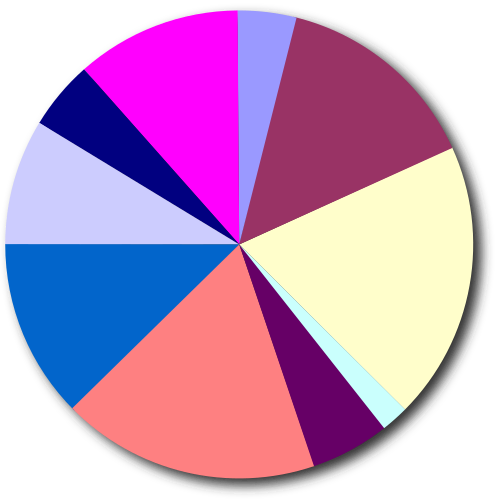
工事
製造業
貿易、運輸、公共事業
情報
ファイナンス
専門およびビジネスサービス
教育と保健サービス
レジャーとホスピタリティ
その他のサービス
政府
デトロイト市とその他の官民パートナーシップは、ダウンタウンの高層住宅の建設と歴史的建造物の修復を促進し、多くの事業税優遇措置を提供するゾーンを設定し、デトロイト リバーウォーク、キャンパスマルティウス パーク、デキンドレ カットグリーンウェイ、ミッドタウンのグリーン アレイなどのレクリエーション スペースを創出することで、地域の成長を促進しようと試みてきました。市は、再開発を促進するために、歴史的に重要な空きビルの一部を残しながら、土地の一部を整地しました。 [207]財政難に苦しんでいるにもかかわらず、市は 2008 年に債券を発行し、荒廃した建物を取り壊すための継続的な作業に資金を提供しました。[143]その 2 年前、ダウンタウンは 13 億ドルの修復と新しい開発を報告し、市内の建設雇用の数を増やしました。[80] 2006 年までの 10 年間で、ダウンタウンは民間および公共部門から 150 億ドル以上の新規投資を獲得しました。[208]
市の最近の財政問題にもかかわらず、多くの開発業者はデトロイトの問題に動じていない。[209]ミッドタウンはデトロイトで最も成功している地域の1つで、住宅入居率は96%である。[210]最近、数多くの開発が完了、またはさまざまな建設段階にある。これには、ダウンタウンのデビッド・ホイットニー・ビル(現在はアロフト・ホテルと高級住宅)の8200万ドルの再建、ミッドタウンのウッドワード・ガーデン・ブロック開発、ダウンタウンのデビッド・ブロデリック・タワーの住宅への転換、ダウンタウンのブック・キャデラック・ホテル(現在はウェスティンと高級コンドミニアム)とフォート・シェルビー・ホテル(現在はダブルツリー)の改修、およびさまざまな小規模プロジェクトが含まれる。[211] [80]
ダウンタウンの若手プロフェッショナルの人口は増加しており、小売業も拡大している。[212] [213] 2007年の調査によると、ダウンタウンの新居住者は主に若手プロフェッショナル(57%が25歳から34歳、45%が学士号、34%が修士号または専門職学位)であることが判明した。[197] [212] [214]この傾向は過去10年間で加速している。2006年以来、ダウンタウンとその周辺地域に90億ドルが投資されており、そのうち52億ドルは2013年と2014年に投入された。[215]建設活動、特にダウンタウンの歴史的な建物の改修が著しく増加している。2014年現在、ダウンタウンの空きビルの数は50近くから13程度に減少している。[216]
2013年、中西部の小売チェーンであるマイヤーはデトロイトに初のスーパーセンター店をオープンした。 [217]これは市の北部に2000万ドルを投じた19万平方フィートの店舗で、ゲートウェイ・マーケットプレイスという7200万ドルの新しいショッピングセンターの中心でもある。[218] 2015年、マイヤーは市内に2番目のスーパーセンター店をオープンした。[219] 2019年、JPモルガン・チェースは2022年末までに手頃な価格の住宅、職業訓練、起業家精神にさらに5000万ドルを投資し、投資額を2億ドルに増やす計画を発表した。[220]
芸術と文化
.jpg/500px-March_for_Science_IMG_20170422_145254_(41912894840).jpg)
.jpg/500px-View_from_upper_level_of_Ford_display_--_2018_North_American_International_Auto_Show_(40540943864).jpg)
デトロイトの中心部では、若い専門家、芸術家、その他の移住者の人口が増加しており、小売店が拡大しています。[212]この動きにより、新たな居住者や他の都市から戻ってきた元居住者が、市のダウンタウン、再活性化されたミッドタウン、ニューセンターエリアに引き寄せられています。[197] [212] [214]
都会の雰囲気に近づきたいという欲求から、若い専門家の中にはファーンデールやロイヤルオークなどの内環状郊外に住む人もいます。[221]ウィンザーに近いため景色やナイトライフを楽しむことができ、オンタリオ州の飲酒年齢は19歳です。[222]ウォークスコアによる2011年の調査では、デトロイトは米国の大都市の中で平均以上の歩きやすさがあると評価されました。[223]郊外住民の約3分の2は、市内で食事をしたり、文化的なイベントに参加したり、プロの試合を観戦したりすることがあります。[224]
ニックネーム
世界の自動車の中心地として知られるデトロイトは、 [225]自動車産業の換喩である。[226]モーターシティとモータウンという2つの愛称で称えられるポピュラー音楽の遺産の重要な源泉でもある。[227] 20世紀には、個人スポーツとチームスポーツでの成功から1930年代に始まったチャンピオンの街[228] 、 D、ホッケータウン(デトロイトレッドウィングスが所有する商標)、ロックシティ(キッスの曲「デトロイトロックシティ」にちなんで)、313(電話の市外局番)などの他のニックネームが生まれた。[ d] [229]
音楽


ライブ音楽は1940年代後半からデトロイトのナイトライフの目玉となっており、この街は「モータウン」という愛称で知られるようになった。[230]大都市圏には全国的に有名なライブ音楽会場が数多くある。ライブ・ネイションが主催するコンサートはデトロイト地域全体で上演される。劇場巡回は米国で2番目に大きく、ブロードウェイの公演も行われる。[231] [232]
この都市は豊かな音楽の伝統を持ち、何十年にもわたって多くのジャンルに貢献してきました。[229]重要な音楽イベントには、デトロイト国際ジャズフェスティバル、デトロイトエレクトロニックミュージックフェスティバル、モーターシティミュージックカンファレンス(MC2)、アーバンオーガニックミュージックカンファレンス、コンサートオブカラーズ、ヒップホップサマージャムズフェスティバルなどがあります。[229]
1940年代、デトロイトのブルース・アーティスト、ジョン・リー・フッカーがデルレイ地区に長期滞在するようになった。フッカーは他の重要なブルース・ミュージシャンとともに故郷のミシシッピから移住し、デルタ・ブルースをデトロイトにもたらした。フッカーは、モータウン以前の最大のブルース/ソウル・レーベル、フォーチュン・レコードでレコーディングを行った。1950年代、デトロイトはジャズの中心地となり、ブラックボトム地区ではスターたちが演奏していた。[44]著名な新進ジャズ・ミュージシャンには、トランペット奏者のドナルド・バード(キャス・テックに通い、キャリアの初期にはアート・ブレイキーとジャズ・メッセンジャーズと共演)やサックス奏者のペッパー・アダムス(ソロ活動も行い、バードのアルバム数枚で伴奏)がいる。グレイストーン国際ジャズ博物館にはデトロイトのジャズに関する資料が収められている。[233]
1950年代から1960年代初頭にかけてのモーターシティのR&B界のスターには、ノーラン・ストロング、アンドレ・ウィリアムズ、ナサニエル・メイヤーなどがおり、彼らは全員フォーチュン・レコードから地元や全国でヒット曲を出した。スモーキー・ロビンソンによると、ストロングは10代のロビンソンの歌声に最も影響を与えたという。サードアベニューにあった家族経営のレーベル、フォーチュン・レーベルは、ジャック・ブラウンとデヴォラ・ブラウンの夫婦が所有していた。カントリー、ゴスペル、ロカビリーのLPや45回転レコードもリリースしていたフォーチュンは、デトロイトで最も伝説的なレコードレーベルとなるモータウンの基礎を築いた。[234]
ベリー・ゴーディ・ジュニアはモータウン・レコードを設立し、1960年代から1970年代初頭にかけて、スティーヴィー・ワンダー、テンプテーションズ、フォー・トップス、スモーキー・ロビンソン&ミラクルズ、ダイアナ・ロス&シュープリームス、ジャクソン5、マーサ&ザ・ヴァンデラス、スピナーズ、グラディス・ナイト&ザ・ピップス、マーヴェレッツ、エルギンズ、モニターズ、ヴェルヴェレッツ、マーヴィン・ゲイなどのアーティストを擁し、有名になった。アーティストたちは、 アンダンテスやファンク・ブラザーズといった専属ボーカリストによってバックアップされていた。
「モータウンサウンド」は、アフリカ系アメリカ人が所有するレコードレーベルとしては初めて、主にアフリカ系アメリカ人アーティストをフィーチャーしたレーベルであったため、ポピュラー音楽とのクロスオーバーの魅力において重要な役割を果たした。ゴーディは1972年に映画製作を追求するためにモータウンをロサンゼルスに移転したが、その後会社はデトロイトに戻った。デトロイトのR&Bスターのもう1人、アレサ・フランクリンはモータウンサウンドを担ったが、ベリーのモータウンレーベルではレコーディングしなかった。[229]
1960年代から70年代にかけて、MC5、グレン・フライ、ストゥージズ、ボブ・シーガー、テッド・ニュージェント、ミッチ・ライダー、デトロイト・ホイールズをフィーチャーしたアンボイ・デュークス、レア・アース、アリス・クーパー、スージー・クアトロなど、地元のアーティストやバンドが台頭した。キッスは、「デトロイト・ロック・シティ」という歌や1999年に制作された映画で、この都市とロックのつながりを強調した。1980年代、デトロイトはハードコア・パンク・ロックのアンダーグラウンドの重要な中心地であり、ネクロス、ミートメン、ネガティブ・アプローチなど、市内や郊外から多くの全国的に知られるバンドが輩出されていた。 [ 234]
1990年代から2000年代にかけて、この都市は、最も売上の多いヒップホップアーティストであるエミネム、彼のラップグループD12、ヒップホップラッパー兼プロデューサーのロイス・ダ・ファイブ・ナイン、ヒップホッププロデューサーのデナウン・ポーター、ヒップホッププロデューサーのJ・ディラ、ラッパー兼ミュージシャンのキッド・ロック、ラッパーのビッグ・ショーンとダニー・ブラウンなど、多くの影響力のあるヒップホップアーティストを輩出しました。バンドのスポンジはツアーや音楽制作を行いました。[229] [234]この都市には、ホワイト・ストライプス、フォン・ボンディーズ、デトロイト・コブラズ、ダートボムズ、エレクトリック・シックス、ハード・レッスンズなどのアーティストが全国的に注目を集めている活発なガレージロックシーンもあります。[229]デトロイトは、1980年代初頭のテクノミュージックの発祥の地と言われています。 [236]この都市は、初期および中期のテクノミュージックの発祥地でもあります。エレクトロニックダンスミュージックの先駆的なジャンル、「デトロイトテクノ」。SFのイメージとロボットのテーマを特徴とするその未来的なスタイルは、デトロイトの都市衰退の地理と産業の過去に大きく影響されました。[44]著名なデトロイトテクノアーティストには、フアンアトキンス、デリックメイ、ケビンサンダーソン、ジェフミルズなどがいます。現在ムーブメントとして知られるデトロイトエレクトロニックミュージックフェスティバルは、毎年5月下旬のメモリアルデーウィークエンドにハートプラザで開催されます。
舞台芸術
.jpg/500px-Detroit_December_2019_14_(Fox_Theatre).jpg)
デトロイトの主な劇場には、フォックス劇場(5,174席)、ミュージックホールセンターフォーザパフォーミングアーツ (1,770席)、ジェム劇場(451席)、メイソニックテンプル劇場(4,404席)、デトロイトオペラハウス(2,765席)、フィッシャー劇場(2,089席)、フィルモアデトロイト(2,200席)、セントアンドリュースホール、マジェスティック劇場、有名なデトロイト交響楽団の本拠地であるオーケストラホール(2,286席)などがあります。ニューヨーク市で最大のブロードウェイ作品の管理者であるネダーランダー組織は、 1922年にネダーランダー家がデトロイトオペラハウスを購入したことに端を発しています。[229]
モータウン・モーション・ピクチャー・スタジオは535,000平方フィート(49,700平方メートル)の広さがあり、デトロイトとその周辺地域で映画を製作しており、ポンティアック・センターポイント・ビジネス・キャンパスを拠点としており、映画産業はメトロエリアで4,000人以上を雇用すると予想されている。[237]
観光
デトロイトには世界初の観光地マーケティング組織であるデトロイトメトロコンベンション&ビジターズビューロー(別名デトロイト観光局)がある。[238] [239] 1896年に設立されたこの組織は現在、ウェストフォートストリート211番地でデトロイト観光局として運営されている。[240]

デトロイトは、そのユニークな文化、特徴的な建築、そして21世紀の再活性化と都市再開発の取り組みにより、近年観光地としてますます注目を集めています。ニューヨークタイムズは、 2017年に訪れるべき52の場所のリストでデトロイトを9番目に良い目的地に挙げました。[241]一方、旅行ガイド出版社のロンリープラネットは、 2018年に訪れるべき世界で2番目に良い都市にデトロイトを選びました。 [242]タイムは、2022年に探索すべき世界で最も素晴らしい50の場所の1つにデトロイトを選びました。[243]
この地域の有名な博物館の多くは、ウェイン州立大学とクリエイティブ スタディーズ カレッジの周辺にある歴史文化センター地区にあります。これらの博物館には、デトロイト美術館、デトロイト歴史博物館、チャールズ H. ライト アフリカン アメリカン歴史博物館、デトロイト科学センター、デトロイト公共図書館本館などがあります。その他の文化的名所には、モータウン歴史博物館、フォード ピケット アベニュー プラント博物館、ピュービック陶芸スタジオおよび学校、フォート ウェインタスキーギ エアメン博物館、ドッシン グレート レイクス博物館、デトロイト現代美術館、デトロイト現代美術館、ベル アイル音楽院などがあります。
2010年、ミッドタウンの16,000平方フィート(1,500 m 2 )の複合施設内にGR N'Namdiギャラリーがオープンしました。アメリカとデトロイト地域の重要な歴史は、米国最大の屋内外博物館複合施設であるディアボーンのヘンリーフォードで展示されています。 [244]デトロイト歴史協会は、地域の教会、高層ビル、大邸宅のツアーに関する情報を提供しています。Inside Detroitでは、ツアー、教育プログラム、ダウンタウンのウェルカムセンターを主催しています。その他の興味深い場所には、ロイヤルオークのデトロイト動物園、ブルームフィールドヒルズのクランブルック美術館、ベルアイルのアンナスクリップスホイットコム温室、オーバーンヒルズのウォルターP.クライスラー博物館があります。[126]
グリークタウンとダウンタウンの3つのカジノリゾートホテルは、エンターテイメントの中心地の一部となっています。イースタンマーケットの農家流通センターは、アメリカ最大の屋外花壇市場であり、150以上の食品や専門店が出店しています。[245]土曜日には約45,000人が買い物に訪れます。[246]ミッドタウンで毎年開催されるデトロイト芸術祭には、約350,000人が来場します。[247]

毎年夏に開催されるイベントには、エレクトロニック・ミュージック・フェスティバル、国際ジャズ・フェスティバル、ウッドワード・ドリーム・クルーズ、アフリカン・ワールド・フェスティバル、カントリー・ミュージックのホーダウン、ノエル・ナイト、ダリー・イン・ザ・アリーなどがある。ダウンタウンのキャンパス・マルティウス公園では、毎年恒例のモータウン・ウィンター・ブラストなど、大規模なイベントが開催されます。世界の伝統的な自動車の中心地として、この都市では北米国際オートショーが開催されます。1924年から開催されているアメリカの感謝祭パレードは、国内最大級のパレードです。[248 ]国際リバーフロントで5日間にわたって行われる夏のフェスティバル、リバー・デイズは、ウィンザー・デトロイト国際フリーダム・フェスティバルの花火大会の前哨戦で、数十万人から300万人を超える大勢の観客が集まります。[224] [229] [249]
重要な市の彫刻としては、コールマン・ヤング市センターにあるマーシャル・フレデリックスの「デトロイトの精神」がある。この像はデトロイトのシンボルとしてよく使われ、デトロイトのチームが好調なときは、それを祝ってスポーツジャージを着せることもある。 [250]ジョー・ルイスの記念碑はジェファーソン通りとウッドワード通りの交差点にある。スポーツ・イラストレイテッド誌の依頼でロバート・グラハムが制作したこの彫刻は、ピラミッド型の骨組みで吊るされた握りこぶしの付いた24フィート(7.3メートル)の腕である。
スポーツ
上:アメリカンリーグのデトロイト・タイガースの本拠地であるコメリカ・パーク、中:デトロイト・ライオンズの本拠地であるフォード・フィールド、下:デトロイト・レッドウィングスとデトロイト・ピストンズの本拠地であるリトル・シーザーズ・アリーナ
デトロイトは、北米の4大スポーツを代表する会場を市内に持つ米国の4都市のうちの1つです。デトロイトは、市内のダウンタウン地区で4大スポーツチームが試合を行う唯一の都市です。[251]会場には、コメリカ・パーク( MLBの デトロイト・タイガースの本拠地)、フォード・フィールド(NFLの デトロイト・ライオンズの本拠地)、リトル・シーザーズ・アリーナ(NHLの デトロイト・レッドウィングスとNBAの デトロイト・ピストンズの本拠地)などがあります。
デトロイトは4大プロスポーツリーグの全てでタイトルを獲得している。タイガースはワールドシリーズで4回優勝している(1935年、1945年、1968年、1984年)。レッドウィングスはスタンレーカップを11回優勝している(1935– 36年、 1936–37年、 1942–43年、 1949–50年、1951–52年、1953–54年、1954 – 55年、1996 – 97年、 1997–98年、2001–02年、2007–08年)(アメリカのNHLフランチャイズとしては最多)。[252]ライオンズはNFLで4回優勝している(1935年、1952年、1953年、1957年)。ピストンズはNBAで3回優勝している(1989年、1990年、2004年)。[229] 1930年代半ば以降、デトロイトはタイガース、ライオンズ、レッドウィングスが7か月間で当時存在していた3大プロスポーツ選手権を制覇したことから「チャンピオンの街」と呼ばれた(タイガースは1935年10月にワールドシリーズで優勝、ライオンズは1935年12月にNFLチャンピオンシップで優勝、レッドウィングスは1936年4月にスタンレーカップで優勝)。[228]
デトロイト・シティFCは、2012年にセミプロサッカークラブとして設立され、USLチャンピオンシップでプロサッカーをプレーしています。愛称はル・ルージュで、2020年に加盟して以来、 NISAで2度優勝しています。ホームゲームは、ハムトラムックの飛び地にあるキーワース・スタジアムで行われます。[253]
大学スポーツでは、デトロイトはミッドアメリカン カンファレンス(MAC)の中心に位置しているため、リーグのチャンピオンシップ イベントが頻繁に開催されています。MAC バスケットボール トーナメントは2000 年からクリーブランドに恒久的に移転しましたが、MAC フットボール チャンピオンシップ ゲームは 2004 年からフォード フィールドで開催されており、毎年 25,000 ~ 30,000 人のファンが訪れます。デトロイト マーシー大学にはNCAA ディビジョン Iプログラムがあり、ウェイン州立大学には NCAA ディビジョン I とII の両方のプログラムがあります。NCAA フットボールのクイック レーン ボウルは毎年 12 月にフォード フィールドで開催されます。
この都市では、2005年のMLBオールスターゲーム、 2006年のスーパーボウルXL、2006年と2012年のワールドシリーズ、 2007年のレッスルマニア23、2009年4月のNCAA ファイナルフォーが開催されました。デトロイトインディグランプリはベルアイルパークで開催されます。2007年には、インディレーシングリーグとアメリカンルマンシリーズレーシングの両方で、オープンホイールレースがベルアイルに戻ってきました。[254] 1982年から1988年まで、デトロイトはデトロイトストリートサーキットでデトロイトグランプリを開催しました。
1932年、デトロイト出身のエディ・「ミッドナイト・エクスプレス」トラン選手が100メートルと200メートルのレースで優勝し、1932年夏季オリンピックで金メダル2個を獲得した。ジョー・ルイス選手は1937年に世界ヘビー級チャンピオンに輝いた。デトロイトは夏季オリンピックの開催地に最も多く立候補したが、一度も開催権を獲得することはなかった。1944年、1952年、1956年、1960年、1964年、1968年、1972年の夏季オリンピックに7回も立候補したが、いずれも落選している。[229]
2024年、デトロイトはNFLドラフトを開催した。3日間のイベント期間中、デトロイトのダウンタウンには77万5000人以上が集まり、ドラフトの参加者数としては過去最高となった。[255]
政府

市はデトロイト市自治 憲章に基づいて統治されている。政府は市長、9人のデトロイト市議会、11人の警察委員、書記官によって運営されている。これらの役員は全員無党派の投票で選ばれるが、警察委員のうち4人は市長によって任命される。デトロイトは「強力な市長制」を採用しており、市長が部署の任命を承認する。市議会は予算を承認するが、市長には予算指定に従う義務はない。市書記官は選挙を監督し、市の記録の保管を正式に担当する。市条例やかなり大規模な契約は市議会の承認を受けなければならない。[256] [257]デトロイト市法典はデトロイトの地方条例を成文化したものである。
現在、3つのコミュニティ諮問委員会が市議会議員に助言を行っている。デトロイトの7つの地区の住民はそれぞれコミュニティ諮問委員会を選出する権利がある。[258]市書記官は選挙を監督し、正式には市記録の維持管理を任されている。市長、市議会、市書記官の市議会選挙は大統領選挙の翌年に4年ごとに行われる。[257] 2009年11月の住民投票の結果、2013年から7人の市議会議員が地区から選出され、2人は引き続き全市から選出される。[259]
デトロイトの裁判所は州が管理しており、選挙は無党派である。ウェイン郡の検認裁判所はダウンタウンのコールマン・A・ヤング市役所内にある。巡回裁判所はグラティオット通りの向かいのフランク・マーフィー司法ホール内にある。市内には第36地区裁判所、ミシガン州控訴裁判所第1地区、ミシガン州東部地区の合衆国地方裁判所がある。市はデトロイト警察署を通じて法執行を行い、デトロイト消防署を通じて緊急サービスを提供している。[260] [261]
政治
1802年の市制施行以来、デトロイトには合計74人の市長がいた。共和党出身のデトロイト最後の市長はルイス・ミリアーニで、1957年から1962年まで務めた。1973年、市は初の黒人市長、コールマン・ヤングを選出した。開発努力にもかかわらず、在任5期中の彼の戦闘的なスタイルは多くの郊外住民に受け入れられなかった。[262]ミシガン州最高裁判所判事のデニス・アーチャー市長は、ダウンタウンに3つのカジノを許可する計画で市の再開発に再び焦点を合わせた。2008年までに、3つの主要なカジノリゾートホテルが市内で営業を開始した。[263]
2000年、市は米国司法省にデトロイト警察の捜査を要請し、2003年に武力行使と公民権侵害の疑いで捜査が終了した。市はデトロイト警察の大規模な再編を進めた。[264] 2013年には、7人の建築検査官が重罪の賄賂容疑で起訴された。[ 265] 2016年には、12人の校長、元教育長、および供給業者が、1200万ドル(2023年には約1490万ドル)の賄賂計画でさらに汚職容疑で起訴された。[267] [268]しかし、法学教授のピーター・ヘニングは、デトロイトの汚職は、特にシカゴと比較すると、その規模の都市としては珍しいことではないと主張している。[269]
デトロイトは「反プロファイリング条例」があり、犯罪の疑いのない人の移民ステータスについて地元警察が質問することを一般的に禁止しているため、聖域都市と呼ばれることもあります。 [270]近年、この都市は民主党の拠点となっており、 2020年の大統領選挙では市内の投票の約94%が民主党候補のジョー・バイデンに集まりました。
教育
大学
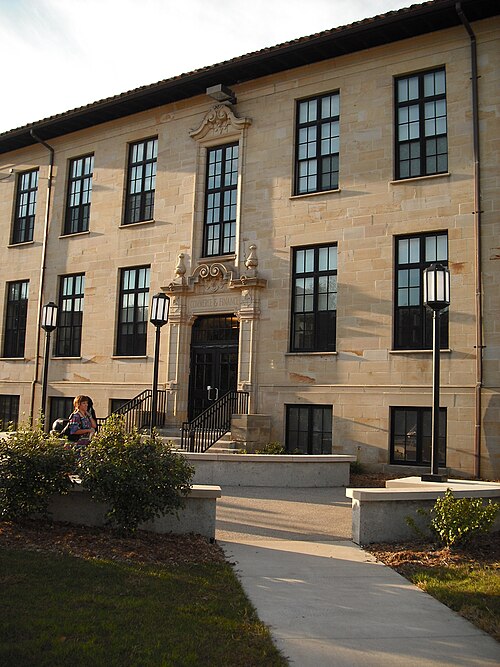
デトロイトには、ウェイン州立大学など、数多くの高等教育機関がある。同大学は国立の研究大学で、ミッドタウン地区に医学部と法学部があり、数百の学位とプログラムを提供している。デトロイト北西部の大学地区にあるデトロイトマーシー大学は、イエズス会と慈悲の姉妹会に所属する著名なローマカトリックの男女共学の大学である。デトロイトマーシー大学法学部は、ダウンタウンのルネッサンスセンターの向かい側にある。[271]
グランドバレー州立大学のデトロイトセンターでは、ワークショップ、セミナー、専門能力開発、その他の大規模な集会が開催されます。コメリカパークとデトロイトアスレチッククラブの隣にあるダウンタウンの中心部に位置するこのセンターは、市内の教育活動の重要な要素となっています。[272]

1919年に設立されたセイクリッド・ハート大神学校は、ローマのアンジェリクムにある聖トマス・アクィナス教皇庁大学と提携しており、教皇学位のほか、文系の学部および大学院学位も提供しています。市内の他の教育機関には、カレッジ・フォー・クリエイティブ・スタディーズやウェイン郡コミュニティ・カレッジなどがあります。2009年6月、イーストランシングに拠点を置くミシガン州立大学オステオパシー医学部は、デトロイト医療センターにサテライトキャンパスを開設しました。
小中学校
2016年現在、[update]デトロイトのK-12の生徒の多くは頻繁に転校しており、中にはK-12のキャリアを終えるまでに7つの学校に在籍している子供もいる。デトロイトの他の地域に比べて裕福な住民が多く、高級化が進んでいるダウンタウンエリアには、高校やチャータースクールが集中している。ダウンタウン、デトロイト北西部、デトロイト北東部には、それぞれ1,894人、3,742人、6,018人の高校生がおり、高校の数はそれぞれ11校、3校、2校である。[273] 2016年現在、[update]公共交通機関やスクールバスのサービスが不足しているため、多くのデトロイトの家庭は子供たちを学校に送り迎えするために自力で行かなければならない。[273]
公立学校とチャータースクール
.jpg/500px-Western_International_High_School_(Detroit).jpg)

デトロイト公立学校(DPS)学区は、約66,000人の公立学校の生徒(2011-12年)を抱え、ミシガン州最大の学区です。デトロイトにはさらに56,000人のチャータースクールの生徒がおり、合わせて約122,000人の生徒が在籍しています。[274] [275] 2009年現在、[update]チャータースクールの生徒数は学区の学校とほぼ同じです。[276] 2016年現在、[update]DPSは引き続き特別支援教育の生徒の大半を抱えています。さらに、2016年現在、デトロイトの生徒の中には他の自治体の公立学校に通っている人もいます。[273]
1999年、ミシガン州議会は、管理不行き届きの疑いで地方選出の教育委員会を廃止し、市長と知事が任命する改革委員会に置き換えた。選出教育委員会は、2005年の市の住民投票で再設置された。新しい11人で構成される教育委員会の最初の選挙は、2005年11月8日に行われた。[277]
With growing charter schools enrollment as well as a continued exodus of population, the city planned to close many public schools.[274] State officials report a 68% graduation rate for Detroit's public schools adjusted for those who change schools.[278][279] Traditional public and charter school students in the city have performed poorly on standardized tests. c. 2009 and 2011, while Detroit traditional public schools scored a record low on national tests, the publicly funded charter schools did even worse than the traditional public schools.[280][281] As of 2016[update] there were 30,000 excess openings in Detroit traditional public and charter schools, bearing in mind the number of K-12-aged children in the city. In 2016, Kate Zernike of The New York Times stated school performance did not improve despite the proliferation of charters, describing the situation as "lots of choice, with no good choice".[273]
Detroit public schools students scored the lowest on tests of reading and writing of all major cities in the United States in 2015. Among eighth-graders, only 27% showed basic proficiency in math and 44% in reading.[282] Nearly half of Detroit's adults are functionally illiterate.[283]
Private schools
Detroit is served by various private schools, as well as parochial Roman Catholic schools operated by the Archdiocese of Detroit. As of 2013[update] there are four Catholic grade schools and three Catholic high schools in the City of Detroit, with all of them in the city's west side.[284] The Archdiocese of Detroit lists a number of primary and secondary schools in the metro area as Catholic education has emigrated to the suburbs.[285][286] Of the three Catholic high schools, two are operated by the Society of Jesus and the third is co-sponsored by the Sisters, Servants of the Immaculate Heart of Mary and the Congregation of St. Basil.[287][288]
Media
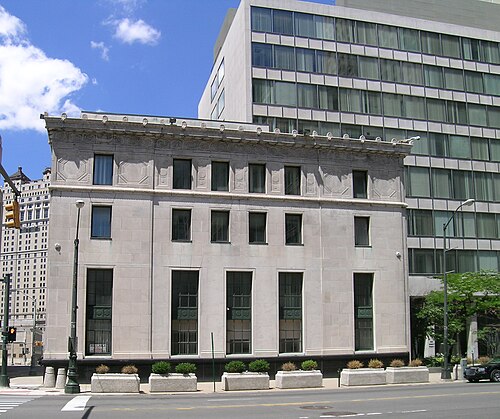
The Detroit Free Press and The Detroit News are the major daily newspapers, both broadsheet publications published together under a joint operating agreement called the Detroit Media Partnership. Media philanthropy includes the Detroit Free Press high school journalism program and the Old Newsboys' Goodfellow Fund of Detroit.[289] In March 2009, the two newspapers reduced home delivery to three days per week, print reduced newsstand issues of the papers on non-delivery days and focus resources on Internet-based news delivery.[290] The Metro Times, founded in 1980, is a weekly publication, covering news, arts & entertainment.[291]
Founded in 1935 and based in Detroit, the Michigan Chronicle is one of the oldest and most respected African-American weekly newspapers in America, covering politics, entertainment, sports and community events.[292] The Detroit television market is the 11th largest in the United States;[293] according to estimates that do not include audiences in large areas of Ontario (Windsor and its surrounding area on broadcast and cable TV, as well as several other cable markets in Ontario, such as Ottawa) which receive and watch Detroit television stations.[293]
Detroit has the 11th largest radio market in the United States,[294] though this ranking does not take into account Canadian audiences.[294] Nearby Canadian stations such as Windsor's CKLW (whose jingles formerly proclaimed "CKLW-the Motor City") are popular in Detroit.[295]
Crime
| Detroit | |
|---|---|
| Crime rates* (2019) | |
| Violent crimes | |
| Homicide | 41.4  |
| Rape | 143.4  |
| Robbery | 353.3 |
| Aggravated assault | 1,425.8 |
| Total violent crime | 1,965.3 |
| Property crimes | |
| Burglary | 1,027.1 |
| Larceny-theft | 2,235.5 |
| Motor vehicle theft | 1,037.0 |
| Total property crime | 4,299.7 |
Notes *Number of reported crimes per 100,000 population. Source: FBI 2019 UCR data | |
Detroit has gained notoriety for its high amount of crime, having struggled with it for decades. The number of homicides in 1974 was 714.[296][297] The homicide rate in 2022 was the third highest in the nation at 50.0 per 100,000.[298] Downtown typically has lower crime than national and state averages.[299] According to a 2007 analysis, Detroit officials note about 65 to 70 percent of homicides in the city were drug related,[300] with the rate of unsolved murders roughly 70%.[165]
Although the rate of violent crime dropped 11% in 2008,[301] violent crime in Detroit has not declined as much as the national average from 2007 to 2011.[302] The violent crime rate is one of the highest in the United States. Neighborhoodscout.com reported a crime rate of 62.18 per 1,000 residents for property crimes, and 16.73 per 1,000 for violent crimes (compared to national figures of 32 per 1,000 for property crimes and 5 per 1,000 for violent crime in 2008).[303] In 2012, crime in the city was among the reasons for more expensive car insurance.[304]
Areas of the city adjacent to the Detroit River are also patrolled by the United States Border Patrol.[305]
Infrastructure

Health systems
There are over a dozen major hospitals, which include the Detroit Medical Center (DMC), Henry Ford Health System, St. John Health System, and the John D. Dingell VA Medical Center. DMC, a regional Level I trauma center, consists of Detroit Receiving Hospital and University Health Center, Children's Hospital of Michigan, Harper University Hospital, Hutzel Women's Hospital, Kresge Eye Institute, Rehabilitation Institute of Michigan, Sinai-Grace Hospital, and the Karmanos Cancer Institute. DMC has more than 2,000 licensed beds and 3,000 affiliated physicians. It is the largest private employer in the city.[306] The center is staffed by physicians from the Wayne State University School of Medicine, the largest single-campus medical school in the United States and the fourth largest medical school overall.[306]
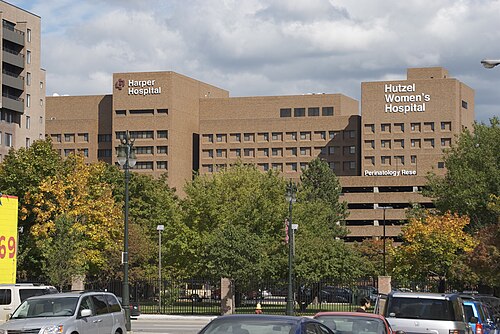
DMC formally became a part of Vanguard Health Systems on December 30, 2010, as a for-profit corporation. Vanguard has agreed to invest nearly $1.5 B in the DMC complex.[307][308] Vanguard has agreed to assume all debts and pension obligations.[307] The metro area has many other hospitals including William Beaumont Hospital, St. Joseph's, and University of Michigan Medical Center.
In 2011, DMC and Henry Ford Health System substantially increased investments in medical research facilities and hospitals in the city's Midtown and New Center.[307][309] In 2012, two major construction projects were begun in New Center. The Henry Ford Health System started the first phase of a $500 million, 300-acre revitalization project, with the construction of a new $30 million, 275,000-square-foot, Medical Distribution Center for Cardinal Health, Inc.[310][311] and Wayne State University started construction on a new $93 million, 207,000-square-foot, Integrative Biosciences Center (IBio).[312][313] As many as 500 researchers and staff will work out of the IBio Center.[314]
Transportation

With its proximity to Canada and its facilities, ports, major highways, rail connections and international airports, Detroit is an important transportation hub. The city has three international border crossings, the Ambassador Bridge, Detroit–Windsor Tunnel and Michigan Central Railway Tunnel, linking Detroit to Windsor. The Ambassador Bridge is the single busiest border crossing in North America, carrying 27% of the total trade between the U.S. and Canada.[315]
In 2015 Canadian Transport Minister Lisa Raitt announced Canada agreed to pay the entire cost to build a $250 million U.S. Customs plaza adjacent to the planned new Detroit–Windsor bridge, now the Gordie Howe International Bridge. Canada had already planned to pay for 95% of the bridge, which will cost $2.1 billion and is expected to open in 2024.[316] "This allows Canada and Michigan to move the project forward immediately to its next steps which include further design work and property acquisition on the U.S. side of the border", Raitt said in a statement issued after she spoke in the House of Commons. [317]
Transit systems

Mass transit in the region is provided by bus services. The Detroit Department of Transportation provides service within city limits up to the outer edges of the city. From there, the Suburban Mobility Authority for Regional Transportation (SMART) provides service to the suburbs and the city regionally with local routes and SMART's FAST service. FAST is a new service provided by SMART which offers limited stops along major corridors throughout the Detroit metropolitan area connecting the suburbs to downtown. The new high-frequency service travels along three of Detroit's busiest corridors, Gratiot, Woodward, and Michigan, and only stops at designated FAST stops. Cross border service between the downtown areas of Windsor and Detroit is provided by Transit Windsor via the Tunnel Bus.[318]
An elevated rail system known as the People Mover, completed in 1987, provides daily service around a 2.94-mile (4.73 km) loop downtown. The QLINE serves as a link between the People Mover and the Amtrak station via Woodward Avenue.[319] The Ann Arbor–Detroit Regional Rail line will extend from New Center, connecting to Ann Arbor via Dearborn, Wayne, and Ypsilanti when it is opened.[320]
The Regional Transit Authority (RTA) was established by an act of the Michigan legislature in 2012 to oversee and coordinate all existing regional mass transit operations, and to develop new transit services in the region. The RTA's first project was the introduction of RelfeX, a limited-stop, cross-county bus service connecting downtown and midtown Detroit with Oakland county via Woodward avenue.[321]

Amtrak provides service to Detroit, operating its Wolverine service between Chicago and Pontiac. The Amtrak station is in New Center north of downtown. Intercity bus service is offered at the Detroit Bus Station. Greyhound Lines, Flixbus, Indian Trails, and Barons Bus Lines connect Detroit with numerous cities across the Midwest.
Car ownership
The city of Detroit has a higher than average percentage of households without a car. In 2016, 24.7% of Detroit households lacked a car, much higher than the national average of 8.7%. Detroit averaged 1.15 cars per household in 2016, compared to a national average of 1.8.[322]
Freight railroads
Freight railroad operations in the city of Detroit are provided by Canadian National Railway, Canadian Pacific Railway, Conrail Shared Assets, CSX Transportation and Norfolk Southern Railway, each of which have local yards within the city. Detroit is also served by the Delray Connecting Railroad and Detroit Connecting Railroad shortlines.[323]
Airports
.jpg/500px-DTW_McNamara_terminal_interior_(29559579673).jpg)
Detroit Metropolitan Wayne County Airport (DTW), the principal airport serving Detroit, is in nearby Romulus. DTW is a primary hub for Delta Air Lines (following its acquisition of Northwest Airlines), and a secondary hub for Spirit Airlines. The airport is connected to Downtown Detroit by the Suburban Mobility Authority for Regional Transportation (SMART) FAST Michigan route.[324]
Coleman A. Young International Airport (DET), previously called Detroit City Airport, is on Detroit's northeast side; the airport now maintains only charter service and general aviation.[325] Willow Run Airport, in western Wayne County near Ypsilanti, is a general aviation and cargo airport.[326]
Freeways
Metro Detroit has an extensive toll-free network of freeways administered by the Michigan Department of Transportation. Four major Interstate Highways surround the city. Detroit is connected via I-75 and I-96 to Kings Highway 401 and to major Southern Ontario cities such as London, Ontario and the Greater Toronto Area. I-75 (Chrysler and Fisher freeways) is the region's main north–south route, serving Flint, Pontiac, Troy, and Detroit, before continuing south (as the Detroit–Toledo and Seaway Freeways) to serve many of the communities along the shore of Lake Erie.[327]
I-94 (Edsel Ford Freeway) runs east–west through Detroit and serves Ann Arbor to the west (where it continues to Chicago) and Port Huron to the northeast. The stretch of the I-94 freeway from Ypsilanti to Detroit was one of America's earlier limited-access highways. Henry Ford built it to link the factories at Willow Run and Dearborn during World War II. A portion was known as the Willow Run Expressway. The I-96 freeway runs northwest–southeast through Livingston, Oakland and Wayne counties and (as the Jeffries Freeway through Wayne County) has its eastern terminus in downtown Detroit.[327]
I-275 runs north–south from I-75 in the south to the junction of I-96 and I-696 in the north, providing a bypass through the western suburbs of Detroit. I-375 is a short spur route in downtown Detroit, an extension of the Chrysler Freeway. I-696 (Reuther Freeway) runs east–west from the junction of I-96 and I-275, providing a route through the northern suburbs of Detroit. Taken together, I-275 and I-696 form a semicircle around Detroit. Michigan state highways designated with the letter M serve to connect major freeways.[327]
Floating post office

Detroit has a floating post office, the J. W. Westcott II, which serves lake freighters along the Detroit River. Its ZIP Code is 48222.[328] The ZIP Code is used exclusively for the J. W. Westcott II, which makes it the only floating ZIP Code in the United States. It has a land-based office at 12 24th Street, just south of the Ambassador Bridge. The J.W. Westcott Company was established in 1874 by Captain John Ward Westcott as a maritime reporting agency to inform other vessels about port conditions,[329] and the J. W. Westcott II vessel began service in 1949 and is still in operation today.[330]
Notable people
Sister cities
Detroit's sister cities include the following:[331]
 Chongqing, China
 Dubai, United Arab Emirates
 Kitwe, Zambia
 Minsk, Belarus
 Nassau, Bahamas
 Toyota, Japan[332]
 Turin, Italy[333]

See also
- USS Detroit, at least 6 ships
Notes
- ^ Mean monthly maxima and minima (i.e. the highest and lowest temperature readings during an entire month or year) calculated based on data at said location from 1991 to 2020.
- ^ Official records for Detroit were kept at downtown from January 1874 to December 1933, Detroit City Airport from February 1934 to March 1966, and at DTW since April 1966. For more information, see ThreadEx.
- ^ a b From 15% sample
- ^ Commemorated in the movie 8 Mile (2002)
References
- ^ a b c "Detroit". Geographic Names Information System. United States Geological Survey, United States Department of the Interior. Retrieved July 27, 2009..
- ^ "2020 U.S. Gazetteer Files". United States Census Bureau. Retrieved May 21, 2022.
- ^ "City and Town Population Totals: 2020-2021". United States Census Bureau. May 30, 2022. Retrieved May 30, 2022.
- ^ a b "City and Town Population Totals: 2020-2023". United States Census Bureau. May 16, 2024. Retrieved May 16, 2024.
- ^ "List of 2020 Census Urban Areas". census.gov. United States Census Bureau. Retrieved January 8, 2023.
- ^ "2020 Population and Housing State Data". Census.gov. United States Census Bureau. Retrieved August 22, 2021.
- ^ "Total Gross Domestic Product for Detroit-Warren-Dearborn, MI (MSA)". fred.stlouisfed.org.
- ^ "Detroit – Definition and More from the Free Merriam-Webster Dictionary". Merriam-webster.com. April 25, 2007. Retrieved July 1, 2010.
- ^ a b c "QuickFacts: Detroit city, Michigan". United States Census Bureau. Retrieved August 22, 2021.
- ^ "Michigan - Cultural life". Britannica. Retrieved July 9, 2022.
- ^ Clark, Anna (May 18, 2015). "An insider's cultural guide to Detroit: The Motor City moves on". The Guardian. Retrieved July 9, 2022.
- ^ a b Nolan, Jenny (June 15, 1999).How Prohibition made Detroit a bootlegger's dream town Archived July 9, 2012, at archive.today. Michigan History, The Detroit News. Retrieved on November 23, 2007.
- ^ "Detroit bankruptcy officially over, finances handed back to the city". WXYZ. December 10, 2014. Archived from the original on March 4, 2016.
- ^ "Gross Domestic Product by County and Metropolitan Area | FRED | St. Louis Fed". fred.stlouisfed.org. Retrieved July 5, 2024.
- ^ Livengood, Chad (March 3, 2019). "Commentary: A MEGA bargain for Michigan's future". Crain's Detroit Business. Detroit. Archived from the original on March 6, 2019. Retrieved February 3, 2020.
- ^ Emmott, Robin (April 19, 2007). "Massive traffic cripples Tijuana border crossing". Reuters.
- ^ "Travel USA Visitor Profile". Michigan Economic Development Corporation Box. Longwoods International. Retrieved July 20, 2022.
- ^ Hadley Keller (December 16, 2015). "Detroit Named First American City of Design by UNESCO". Architectural Digest.
- ^ Rousseau, Mary (October 16, 2018). "How Did Michigan Cities Get Their Names?". Michigan. Retrieved February 16, 2022.
- ^ "Detroit word origin". Etymologeek. Retrieved February 16, 2022.
- ^ "La rivière du Détroit depuis le lac Érié, 1764". Archived from the original on July 3, 2008. Retrieved May 5, 2009.
- ^ List of U.S. place names of French origin
- ^ Lemke, Ashley (2015). "Great Lakes Rangifer and Paleoindians: Archaeological and Paleontological Caribou Remains from Michigan". PaleoAmerica. 1 (3): 277. doi:10.1179/2055557115Y.0000000003. ISSN 2055-5563. S2CID 129841191.
- ^ Teasdale, Guillaume (2012). "Old Friends and New Foes: French Settlers and Indians in the Detroit River Border Region". Michigan Historical Review. 38 (2): 35–62. doi:10.5342/michhistrevi.38.2.0035.
- ^ DeVito, Lee. "How New Red Order and MOCAD could redefine 'land acknowledgment' for Indigenous people". Detroit Metro Times. Retrieved June 27, 2021.
- ^ a b c d e William Brandon (1961). Alvin M. Josephy, Jr. (ed.). The American Heritage Book of Indians. American Heritage Publishing Co., Inc. pp. 187–219. LCCN 61-14871.
- ^ "The French & Indian War, Seven Years War Summary". Totally History. September 9, 2011.
- ^ "Museum Outreach". exhibitions.nysm.nysed.gov.
- ^ Woodford, Arthur M. (2001). This is Detroit, 1701–2001. Wayne State University Press. pp. 15. ISBN 0814329144.
- ^ Riley, John L. (2013). The Once and Future Great Lakes Country: An Ecological History. McGill-Queen's University Press. ISBN 978-0-7735-4177-1., p. 56.
- ^ Stechschulte, Michael (March 1, 2020). "Pope names Ste. Anne Church a basilica, cementing historic parish's importance to Detroit". Detroit Catholic. Retrieved November 13, 2023.
- ^ French Ontario in the 17th and 18th centuries – Detroit Archived August 24, 2004, at the Wayback Machine. Archives of Ontario July 14, 2008. Retrieved July 23, 2008.
- ^ Jacqueline Peterson, Jennifer S. H. Brown, Many Roads to Red River (2001), p69
- ^ LaForest, James (March 7, 2014). "'Muskrat French': French-Canadian River Culture in the Windsor/Detroit Region". Voyageur Heritage: Community Journal and Resource Guide. James LaForest. Retrieved September 5, 2015.
- ^ Beneteau, Marcel. "Detroit River: A Special Place in French North American History". Encyclopedia of French Cultural Heritage in North America. Retrieved September 5, 2015.
- ^ Ross, Marc (January 18, 2017). "Why Detroit is Built to Succeed: Looking at Detroit's Past to See Its Future". Diplomatic Courier. Global Affairs Media. Archived from the original on February 17, 2020. Retrieved February 17, 2020.
- ^ ""History of Detroit: A Chronicle of Its Progress" Page 71, 1912". Mocavo.com. Retrieved June 29, 2014.
- ^ "Ste. Anne of Detroit" Archived September 27, 2011, at the Wayback Machine, St. Anne Church. Retrieved on April 29, 2006.
- ^ "Great Fire of 1805 | Detroit Historical Society". detroithistorical.org.
- ^ "RICHARD, FATHER GABRIEL". Detroit Historical Society. Retrieved June 16, 2024.
- ^ "FLAG OF DETROIT". Detroit Historical Society. Retrieved June 16, 2024.
- ^ "Flag of Detroit | Detroit Historical Society". detroithistorical.org. Retrieved June 16, 2024.
- ^ "River Raisin National Battlefield Park". Nps.gov.
- ^ a b c d e f g h Woodford, Arthur M. (2001). This is Detroit 1701–2001. Wayne State University Press. ISBN 0-8143-2914-4.
- ^ Jackman, Michael (June 1, 2018). "How the Woodward Plan for greater Detroit died 200 years ago today". Detroit Metro Times. Archived from the original on November 12, 2020.
- ^ Chadwick, Bruce (1999). Traveling the underground railroad : a visitor's guide to more than 300 sites. Secaucus, NJ: Carol Pub. Group. p. 272. ISBN 0806520930.
- ^ US Department of Interior, National Park Service, Denver Service Center (1995). Underground Railroad. DIANE Publishing. p. 168.
{{cite book}}: CS1 maint: multiple names: authors list (link) - ^ Tobin, Jacqueline L. From Midnight to Dawn: The Last Tracks of the Underground Railroad. Anchor, 2008. p200-209
- ^ Rosentreter, Roger (July/August 1998). "Come on you Wolverines, Michigan at Gettysburg", Michigan History.
- ^ "Why do Hamtramck and Highland Park exist inside the city of Detroit?". Wdet.org. September 19, 2014. Retrieved January 14, 2021.
- ^ "Biggest US Cities in 1920 - Historical Population Data". www.biggestuscities.com. Retrieved June 4, 2021.
- ^ "Important U.S. Labor Leaders: Jimmy Hoffa". Cross Currents. CULCON (A Digital Cultural Resource of the US-Japan Conference on Cultural and Educational Interchange). 2003. Retrieved October 19, 2017.
- ^ "Detroit Race Riots 1943" Archived March 1, 2017, at the Wayback Machine. Eleanor Roosevelt, WGBH, American Experience, PBS (June 20, 1983). Retrieved on September 5, 2013.
- ^ Bak, Richard (February 23, 2009). "The Dark Days of the Black Legion". Hour Detroit. Retrieved January 14, 2021.
- ^ a b c d e f g h "Race and Hispanic Origin for Selected Cities and Other Places: Earliest Census to 1990". U.S. Census Bureau. Archived from the original on August 12, 2012.
- ^ Sugrue, Thomas J. (March 26, 2011). "A Dream Still Deferred". The New York Times. Archived from the original on January 1, 2022. Retrieved July 27, 2012.
- ^ Reynolds Farley; Sheldon Danziger; Harry J. Holzer (2002). "The Evolution of Racial Segregation". Detroit divided. New York: Russell Sage Foundation. ISBN 978-0-87154-281-6.
- ^ Route Listings: M-8. Michigan Highways. Retrieved on July 16, 2013.
- ^ Nolan, Jenny (January 28, 1997).Willow Run and the Arsenal of Democracy Archived December 4, 2012, at archive.today. Michigan History, The Detroit News. Retrieved on November 23, 2007.
- ^ Philip A. Klinkner, Rogers M. Smith, The Unsteady March: The Rise and Decline of Racial Equality in America – Google Books. Retrieved on July 16, 2013.
- ^ Dominic J. Capeci, Jr., and Martha Wilkerson, "The Detroit Rioters of 1943: A Reinterpretation", Michigan Historical Review, January 1990, Vol. 16 Issue 1, pp. 49–72.
- ^ "The 1943 Detroit race riots – Michigan History" Archived October 29, 2013, at the Wayback Machine, The Detroit News, February 10, 1999; Retrieved on July 16, 2013.
- ^ Population of the 100 Largest Cities and Other Urban Places in the United States: 1790 to 1990, U.S. Census Bureau, 1998
- ^ a b c Sugrue, Thomas J. (August 21, 2005). The origins of the urban crisis: race and inequality in postwar Detroit : with a new preface by the author (1st Princeton Classic ed.). Princeton. ISBN 0-691-12186-9. OCLC 59879791.
{{cite book}}: CS1 maint: location missing publisher (link) - ^ Peter Gavrilovich & Bill McGraw (2000) The Detroit Almanac: 300 Years of Life in the Motor City. p. 232
- ^ "News+Views: Back track" Archived March 17, 2012, at the Wayback Machine, Metro Times, Retrieved on July 16, 2013.
- ^ "Metro Detroit job sprawl worst in U.S.; many jobs beyond reach of poor" Archived April 23, 2013, at the Wayback Machine, Detroit Free Press. Retrieved on July 16, 2013.
- ^ s. "1967 Detroit Riots". HISTORY. Retrieved January 14, 2021.
- ^ "23 June 1963 Speech at the Great March on Detroit". Martin Luther King Jr. Research and Education Institute Encyclopedia. Archived from the original on March 4, 2018. Retrieved January 15, 2018.
- ^ Sidney Fine, Violence in the Model City: The Cavanaugh Administration, Race Relations, and the Detroit Riot of 1967 (1989)
- ^ "The 10 most-costly riots in the U.S." Chicago Tribune. November 26, 2014. Retrieved November 2, 2022.
- ^ a b Meinke, Samantha (September 2011). "Milliken v Bradley: The Northern Battle for Desegregation" (PDF). Michigan Bar Journal. 90 (9): 20–22. Archived (PDF) from the original on December 15, 2012. Retrieved July 27, 2012.
- ^ Sedler, Robert A. (1987). "The Profound Impact of Milliken v Bradley". Wayne Law Review. 33 (5): 1693. Retrieved July 29, 2012.
- ^ Marshall, Justice Thurgood (1974). "This Supreme Court Case Made School District Lines A Tool For Segregation". NPR. Retrieved January 14, 2021.
- ^ a b "Squandered opportunities leave Detroit isolated" Archived November 3, 2013, at the Wayback Machine, Remapping Debate website. Retrieved on July 16, 2013.
- ^ "Detroit Police Department". Detroit Historical Society. Retrieved April 23, 2015.
- ^ Austin, Dan (February 6, 2015). "How metro Detroit transit went from best to worst". Detroit Free Press. Retrieved April 21, 2015.
- ^ Felton, Ryan (March 11, 2014). "How Detroit ended up with the worst public transit". Metro Times. Retrieved April 21, 2015.
- ^ Risen, James (September 18, 1985). "Poletown Becomes Just a Memory: GM Plant Opens, Replacing Old Detroit Neighborhood". Los Angeles Times.
- ^ a b c d "Development and Growth". City of Detroit Partnership. Archived from the original on June 13, 2008. Retrieved May 16, 2009.
{{cite web}}: CS1 maint: unfit URL (link) - ^ a b Bailey, Ruby L.(August 22, 2007). "The D is a draw: Most suburbanites are repeat visitors", Detroit Free Press. Quote: A Local 4 poll conducted by Selzer and Co., finds, "nearly two-thirds of residents of suburban Wayne, Oakland, and Macomb counties say they at least occasionally dine, attend cultural events or take in professional games in Detroit."
- ^ "Detroit and Deindustrialization | Dollars & Sense". www.dollarsandsense.org. Retrieved March 6, 2024.
- ^ "Aircraft Accident Report, Northwest Airlines, Inc. McDonnell Douglas DC-9-82, N312RC, Detroit Metropolitan Wayne County Airport, Romulus, Michigan, August 16, 1987" (PDF). National Transportation Safety Board. May 10, 1988. NTSB/AAR-88/05. Archived (PDF) from the original on April 9, 2016. Retrieved January 16, 2015.
- ^ "East Riverfront History". Detroit Economic Growth Corporation. Archived from the original on June 29, 2015. Retrieved April 21, 2015.
- ^ Bleiberg, Larry (April 10, 2015). "10 Best: Campus Martius among parks that revived cities". Detroit Free Press.
- ^ "Campus Martius Park". Project For Public Spaces. Retrieved April 23, 2015.
- ^ Walsh, Tom (September 2, 2014). "High Tech Companies Key to Detroit's Future". Detroit Free Press. Retrieved November 18, 2021.
- ^ WELLS-REID, ELLIOTT (July 22, 2001). "Tricentennial Celebration". The Michigan Daily. Retrieved July 5, 2023.
- ^ "Ex Detroit Mayor Faces New Corruption Charges". National Public Radio. December 15, 2010.[dead link]
- ^ Baldas, Tresa; Shaefer, Jim; Damron, Gina (October 10, 2013). "'Corruption no more': Judge sends a message with 28-year sentence for Kilpatrick". Detroit Free Press. Retrieved October 21, 2013.
- ^ Baldas, Tresa (October 6, 2013). "How corruption deepened Detroit's crisis". USA Today. Retrieved July 23, 2017.
- ^ MacDonald, Christine; Wilkinson, Mike (February 21, 2013). "Half of Detroit property owners don't pay taxes". Detroit News. Archived from the original on August 9, 2013.
- ^ Eagleton, Terry (July 2007). "Detroit Arcadia". Harper's Magazine. Vol. July 2007. Retrieved March 29, 2013.
- ^ Williams, Corey (March 1, 2013). "Governor declares financial emergency in Detroit – Yahoo! Finance". Finance.yahoo.com. Retrieved March 29, 2013.
- ^ "Debt default by Detroit city rocks bondholders". Detroit Star. Archived from the original on November 2, 2013. Retrieved June 15, 2013.
- ^ "Creditors to fight Detroit insolvency claim". The Detroit News. July 18, 2013. Archived from the original on August 10, 2013. Retrieved October 31, 2013.
- ^ Lichterman, Joseph; Woodall, Bernie (December 3, 2013). "In largest-ever U.S. city bankruptcy, cuts coming for Detroit creditors, retirees". Reuters. Archived from the original on September 24, 2015. Retrieved June 30, 2017.
- ^ Davey, Monica; Williams Walsh, Mary (November 7, 2014). "Plan to Exit Bankruptcy Is Approved for Detroit". The New York Times. Archived from the original on January 1, 2022.
- ^ Stryker, Nathan Bomey, John Gallagher and Mark (November 9, 2014). "HOW DETROIT WAS REBORN". Detroit Free Press. Retrieved November 20, 2020.
{{cite web}}: CS1 maint: multiple names: authors list (link) - ^ Reindl, JC (November 11, 2014). "Detroit Rising: And then there were streetlights". Detroit Free Press.
- ^ Wallace, Nicole (August 11, 2014). "Detroit Charity Turns Blight into Gardens, Parks, and Homes". The Chronicle of Philanthropy. Retrieved September 17, 2016.
- ^ "Farm City Detroit". City Parks Alliance. Archived from the original on September 19, 2016. Retrieved September 17, 2016.
- ^ Marcus, Jonathan (July 11, 2019). "Michigan Central and the rebirth of Detroit". BBC News. Retrieved June 20, 2024.
- ^ Thibodeau, Ian (February 4, 2016). "Windows at Michigan Central Station completed on time and budget". M Live. Retrieved June 22, 2016.
- ^ Williams, Candice (January 29, 2020). "Ford will make Michigan Central Depot a place for mobility innovators, disruptors". The Detroit News. Retrieved October 17, 2020.
- ^ Hammel, Katie (May 6, 2016). "Detroit, finally on the verge of a real renaissance". New York Daily News. Retrieved September 17, 2016.
- ^ Davey, Monica (April 30, 2018). "Detroit Was Crumbling. Here's How It's Reviving". The New York Times. Retrieved May 7, 2018.
- ^ Mondry, Aaron (November 25, 2019). "Trends that defined Detroit in the 2010s". Detroit Curbed. Retrieved June 12, 2023.
With more investment comes higher property values. Much higher. … But as property values rise, so do rents. In a city where 35 percent of its population is below the poverty line, that can result in displacement and parts of the city being unaffordable to people in lower income brackets.
- ^ Mondry, Aaron (November 21, 2019). "10 redevelopments that shaped Detroit over the last 10 years". Curbed Detroit. Retrieved November 20, 2020.
- ^ Carlisle, John (May 24, 2020). "Detroit neighborhood group sees gentrification as the enemy". Detroit Free Press. Retrieved November 20, 2020.
- ^ Moskowitz, Peter (February 5, 2015). "The two Detroits: a city both collapsing and gentrifying at the same time". The Guardian. ISSN 0261-3077. Retrieved November 20, 2020.
- ^ "America's 10 Fastest-Gentrifying Neighborhoods". Real Estate News and Advice | Realtor.com®. April 15, 2019. Retrieved November 20, 2020.
- ^ "Table 2. Annual Estimates of the Population of Combined Statistical Areas: April 1, 2010 to July 1, 2012". U.S. Census Bureau. Archived from the original on May 17, 2013. Retrieved June 11, 2013.
- ^ "Table 1. Annual Estimates of the Population of Metropolitan and Micropolitan Statistical Areas: April 1, 2010 to July 1, 2011". U.S. Census Bureau. Archived from the original on April 27, 2012. Retrieved September 14, 2012.
- ^ "Detroit Metro Convention & Visitors Bureau". Archived from the original on March 12, 2012.
- ^ "US Gazetteer files 2010". United States Census Bureau. Archived from the original on July 2, 2012. Retrieved November 25, 2012.
- ^ "Figure 3.1: Map showing the location of Detroit in Michigan, USA". ResearchGate. Retrieved May 1, 2022.
- ^ "About the Refuge". Detroit River. Archived from the original on March 30, 2021. Retrieved February 27, 2021.
- ^ Perkins, Almon. "The Historical Geography of Detroit". Michigan Historical Commission. Retrieved February 17, 2013.
- ^ "Detroit High Point". Peakbagger.com. Retrieved February 17, 2013.
- ^ "Great Lakes, Connecting Channels and St. Lawrence River Water Levels and Depths". United States Army Corps of Engineers – Detroit District. Archived from the original on January 14, 2013. Retrieved February 17, 2013.
- ^ "Belle Isle Park | Visit Detroit Itinerary". VisitDetroit.com. Retrieved November 2, 2022.
- ^ D'Amours, Andrew (July 5, 2020). "In Which Direction Must You Drive To Enter Canada If You Are In Detroit?". Flytrippers. Retrieved November 2, 2022.
- ^ Zacharias, Patricia (January 23, 2000). The ghostly salt city beneath Detroit Archived July 10, 2012, at archive.today. Michigan History, The Detroit News. Retrieved on November 23, 2007.
- ^ "The Detroit Salt Company --Explore the City under the City". Archived from the original on April 12, 2009. Retrieved May 5, 2009.
- ^ a b c d Hill, Eric J.; John Gallagher (2002). AIA Detroit: The American Institute of Architects Guide to Detroit Architecture. Wayne State University Press.
- ^ a b Sharoff, Robert (2005). American City: Detroit Architecture. Wayne State University Press. ISBN 0-8143-3270-6.
- ^ Pfeffer, Jaime (September 12, 2006). "Falling for Brush Park". Model D Media. Retrieved on April 21, 2009.
- ^ Cityscape Detroit.www.cityscapedetroit.org Archived December 15, 2013, at the Wayback Machine Retrieved on April 8, 2007.
- ^ Gallagher, John (July 14, 2014). "Hockey, basketball, housing and more: Ilitches unveil 'bold vision' for Red Wings & Pistons arena district". Detroit Free Press.
- ^ "Our Story | Detroit Riverfront Conservancy". detroitriverfront.org.
- ^ Editorial: "At Last, Sensible Dream for Detroit's Riverfront", Detroit News, December 13, 2002
- ^ a b c Detroit Parcel Survey. Retrieved on July 23, 2011.
- ^ Bigda, Carolyn, Erin Chambers, Lawrence Lanahan, Joe Light, Sarah Max, and Jennifer Merritt.Detroit Best place to retire: Downtown Archived December 14, 2012, at the Wayback Machine. CNNMoney. Retrieved July 5, 2012.
- ^ a b Vitullo-Martin, Julio, (December 22, 2007). "The Biggest Mies Collection: His Lafayette Park residential development thrives in Detroit". The Wall Street Journal. Retrieved July 5, 2012.
- ^ Rodriguez, Cindy (May 23, 2007). "A Detroit success story: Can-do spirit revives southwest neighborhood". Detroit News.
- ^ Williams, Corey (February 28, 2008).New Latino Wave Helps Revitalize Detroit. USA Today. Retrieved July 5, 2012.
- ^ a b Associated Press (February 10, 2010). Survey. Mlive.com. Retrieved July 5, 2012.
- ^ a b "Housing in Detroit". Archived from the original on January 28, 2012. Retrieved November 27, 2011.
95% of Detroit homes are deemed suitable for occupancy, 86% of Detroit's single family homes are in good condition, 9% are generally in need of minor repair
- ^ Gallagher, John (February 20, 2010). "Survey finds third of Detroit lots vacant". Detroit Free Press. pp. 1A, 9A. Retrieved November 27, 2011.
- ^ Kavanaugh, Kelli B. (March 2, 2010).Intensive property survey captures state of Detroit housing, vacancy. Model D. Retrieved July 5, 2012.
- ^ "Crews to start tearing down derelict buildings in Detroit". Detroit Free Press. April 1, 2010. Retrieved July 1, 2010.
- ^ a b c d "Next Detroit". Archived from the original on May 2, 2008. Retrieved January 2, 2009.. City of Detroit. Retrieved July 5, 2012.
- ^ Saulny, Susan (June 20, 2010). "Razing the City to Save the City". The New York Times. Archived from the original on January 1, 2022. Retrieved June 23, 2010.
- ^ "Community Development". Archived from the original on February 4, 2008. Retrieved January 3, 2009.. DEGA. Retrieved on January 2, 2009.
- ^ Detroit Neighborhood Fund Archived February 6, 2009, at the Wayback Machine. Community Foundation for Southeast Michigan. Retrieved January 2, 2009.
- ^ Rose, Judy (May 11, 2003). Detroit to revive 1 neighborhood at a time. Chicago Tribune. Retrieved November 29, 2011.
- ^ Kaffer, Nancy (July 27, 2011). "Detroit Works project to be measured in three demonstration areas". Crain's Detroit. Retrieved August 2, 2011.
- ^ "Detroit, Michigan Climate Detroit, Michigan Temperatures Detroit, Michigan Weather Averages". Detroit.climatemps.com. Archived from the original on March 24, 2020. Retrieved March 24, 2020.
- ^ Muller, M. J. (December 6, 2012). Selected climatic data for a global set of standard stations for vegetation science. Springer Science & Business Media. ISBN 978-94-009-8040-2.
- ^ "Michigan - Climate". Encyclopedia Britannica. Retrieved March 24, 2020.
- ^ "USDA Plant Hardiness Zone Map". United States Department of Agriculture. Archived from the original on February 27, 2014. Retrieved June 1, 2014.
- ^ a b c d e f g h "NOWData – NOAA Online Weather Data/". National Oceanic and Atmospheric Administration. Retrieved May 4, 2021.
- ^ "Articles | Encyclopédie du patrimoine culturel de l'Amérique française – histoire, culture, religion, héritage". Ameriquefrancaise.org. May 2, 1941. Retrieved March 29, 2013.
- ^ "Summary of Monthly Normals 1991–2020". National Oceanic and Atmospheric Administration. Archived from the original on May 4, 2021. Retrieved May 4, 2021.
- ^ "Detroit/Metropolitan ARPT MI Climate Normals 1961–1990". National Oceanic and Atmospheric Administration. Retrieved July 18, 2020.
- ^ "Historical UV Index Data - Detroit, MI". UV Index Today. Retrieved April 21, 2023.
- ^ "NOAA Online Weather Data: Detroit Area, MI". National Weather Service. Retrieved April 17, 2024.
- ^ "Detroit, Michigan, USA – Monthly weather forecast and Climate data". Weather Atlas. Retrieved January 25, 2019.
- ^ "Census of Population and Housing". Census.gov. Retrieved June 4, 2015.
- ^ "2010 Census Interactive Population Search". U.S. Census Bureau. Archived from the original on May 25, 2012. Retrieved March 3, 2012.
- ^ a b Seelye, Katherine Q. (March 22, 2011). "Detroit Population Down 25 Percent, Census Finds". The New York Times. Retrieved March 23, 2011.
- ^ Major U.S. metropolitan areas differ in their religious profiles, Pew Research Center
- ^ "America's Changing Religious Landscape". Pew Research Center: Religion & Public Life. May 12, 2015.
- ^ a b Huey, John (September 24, 2009). "Assignment Detroit: Why Time Inc. Is in Motown". Time. Archived from the original on September 27, 2009.
- ^ "Detroit, Michigan". City-Data.com. Retrieved February 10, 2013.
- ^ Bergmann, p. 39
- ^ "Median household income in the past 12 months". data.census.gov. Retrieved September 2, 2020.
- ^ "Median family income in the past 12 months". data.census.gov. Retrieved September 2, 2020.
- ^ "Poverty status in the past 12 months by age". data.census.gov. Retrieved September 2, 2020.
- ^ "U.S. Census Bureau QuickFacts: United States; Wayne County, Michigan; Detroit city, Michigan". U.S. Census Bureau. Retrieved September 22, 2021.
- ^ "Detroit (city), Michigan". Data IndyStar. U.S. Census Bureau. Archived from the original on November 24, 2021.
- ^ "Detroit (city), Michigan". State & County QuickFacts. U.S. Census Bureau. Archived from the original on July 15, 2006.
- ^ "Michigan: 1990" (PDF). Retrieved September 12, 2024.
- ^ "P004: Hispanic or Latino, and Not Hispanic or Latino by Race – 2000: DEC Summary File 1 – Detroit city, Michigan". United States Census Bureau.
- ^ "P2 Hispanic or Latino, and Not Hispanic or Latino by Race – 2010: DEC Redistricting Data (PL 94-171) – Detroit city, Michigan". United States Census Bureau.
- ^ "P2 Hispanic or Latino, and Not Hispanic or Latino by Race – 2020: DEC Redistricting Data (PL 94-171) – Detroit city, Michigan". United States Census Bureau.
- ^ Baulch, Vivian M. (September 4, 1999). Michigan's greatest treasure – Its people Archived July 31, 2007, at archive.today. Michigan History, The Detroit News. Retrieved on October 22, 2007.
- ^ Vivian M. Baulch, Archived July 10, 2012, at archive.today "How Detroit got its first black hospital", The Detroit News, November 28, 1995.
- ^ "Important Cities in Black History". Infoplease.com.
- ^ Sugrue, Thomas J. (2014). The Origins of the Urban Crisis: Race and Inequality in Postwar Detroit. Princeton, NJ: Princeton University Press. p. 24. ISBN 978-0-691-16255-3.
- ^ "INS Records for 1930s Mexican Repatriations | USCIS". www.uscis.gov. July 29, 2020. Retrieved December 19, 2021.
- ^ Denvir, Daniel. "The Paradox of Mexicantown: Detroit's Uncomfortable Relationship With the Immigrants it Desperately Needs". (Archive) The Atlantic Cities. September 24, 2012. Retrieved on January 15, 2013.
- ^ Detroitblogger John. "Southland". (Archive) Metro Times. April 28, 2010. Retrieved on May 12, 2012.
- ^ Grazulis, Marius K. (2009). Lithuanians in Michigan. Michigan State University Press. ISBN 9780870138133. JSTOR 10.14321/j.ctt7ztcn0.
- ^ (November 28, 2006). Southwest Detroit's Lithuanian Hall to reopen after $2 million renovation, Modeldmedia.com
- ^ Bello, Marisol (November 28, 2006). "Lithuanian center to reopen Thursday". Detroit Free Press. Archived from the original on November 2, 2013.
- ^ "Detroit, MI Population by Race and Ethnicity". CLRSearch. Archived from the original on March 2, 2013. Retrieved March 29, 2013.
- ^ "Detroit". Jewishvirtuallibrary.org. Retrieved March 29, 2013.
- ^ Wisely, John; Spangler, Todd (March 24, 2011). "Motor City population declines 25%". USA Today. Retrieved June 20, 2011.
- ^ Towbridge, Gordon. "Racial divide widest in U.S." Archived June 18, 2010, at the Wayback Machine The Detroit News. January 14, 2002. Retrieved on March 30, 2009.
- ^ Wilkinson, Mike (March 29, 2011). "Metro Detroit no longer most segregated". Yahoo News. Retrieved July 27, 2012.
- ^ a b Metzger, Kurt; Booza, Jason (January 2002). "Asians in the United States, Michigan and Metropolitan Detroit" (PDF). Center for Urban Studies. Wayne State University. Archived from the original (Working Paper Series, No. 7. p. 8) on November 9, 2013.
- ^ Chou, Kimberly (December 7, 2006). "Growing up Hmong in Detroit". The Michigan Daily. Retrieved December 31, 2012.
- ^ Archambault, Dennis. "Young and Asian in Detroit". (Archive) Model D Media. Issue Media Group, LLC. Tuesday November 14, 2006. Retrieved on November 5, 2012.
- ^ Crain's Detroit Business: Largest Detroit Employers (August 2013 ). Retrieved on January 12, 2014.
- ^ a b c The Urban Markets Initiative, Brookings Institution Metropolitan Policy Program, The Social Compact Inc., University of Michigan Graduate Real Estate Program, (October 2006).Downtown Detroit in Focus: A Profile of Market Opportunity Archived August 12, 2011, at the Wayback Machine. Detroit Economic Growth Corporation and Downtown Detroit Partnership. Retrieved on June 14, 2008.
- ^ Henion, Andy (March 22, 2007). City puts transit idea in motion. The Detroit News.(About 80,500 people work in downtown Detroit which is 21% of the city's employment base). Retrieved on May 14, 2007.
- ^ "Ford Motor Company | History & Facts". Encyclopedia Britannica. Retrieved January 14, 2021.
- ^ "WSU economic development leader named TechTown president and CEO - Wayne State University". Archived from the original on March 19, 2015. Retrieved March 20, 2015.
- ^ "Ford Motor Co. REVEALS PLANS for its New Corktown Campus". November 17, 2020.
- ^ "The Corktown campus is composed of several buildings". Archived from the original on June 8, 2021. Retrieved June 8, 2021.
- ^ Muller, David (March 8, 2013). "While companies move into Downtown Detroit, suburbs continue to suffer". Mlive.com. Retrieved August 18, 2017.
- ^ Howes, Daniel (November 12, 2007). Quicken moving to downtown Detroit. The Detroit News. Retrieved on November 12, 2007.[dead link]
- ^ "Press Release, 12–41". Uspto.gov. July 13, 2012. Archived from the original on June 25, 2014. Retrieved June 29, 2014.
- ^ "Detroit, MI Unemployment Rate". Ycharts.com. Retrieved July 21, 2014.
- ^ Morice, Zach (September 21, 2007).Planting community in fallow fields Archived July 23, 2011, at the Wayback Machine. American Institute of Architects. Retrieved on December 23, 2009.
- ^ The Urban Markets Initiative, Brookings Institution Metropolitan Policy Program The Social Compact, Inc. University of Michigan Graduate Real Estate Program (October 2006).Downtown Detroit In Focus: A Profile of Market Opportunity Archived September 18, 2011, at the Wayback Machine. Downtown Detroit Partnership. Retrieved on July 10, 2010.
- ^ Maynard, Micheline (July 29, 2013). "Detroit's Developers Unfazed by Bankruptcy". Time. Retrieved on September 5, 2013.
- ^ Lawrence Tech anchoring Midtown Detroit development, joining neighborhood's boom. MLive.com (May 7, 2013). Retrieved on September 5, 2013.
- ^ Sands, David (June 1, 2013). "Detroit Development Projects, Real Estate Investments Are Booming in 2013". HuffPost.
- ^ a b c d Harrison, Sheena (June 25, 2007). DEGA enlists help to spur Detroit retail Archived May 24, 2011, at the Wayback Machine. Crain's Detroit Business. Retrieved on November 28, 2007. "New downtown residents are largely young professionals according to Social Compact".
- ^ Muller, Joanne (July 10, 2012). "A Shocking Sight in Downtown Detroit – People". Forbes. Retrieved August 10, 2013.
- ^ a b Reppert, Joe (October 2007).Detroit Neighborhood Market Drill Down Archived September 26, 2011, at the Wayback Machine. Social Compact. Retrieved on July 10, 2010.
- ^ "Detroit 7.2". Hudson-Webber Foundation. Archived from the original on August 11, 2015. Retrieved August 15, 2015.
- ^ "MARY KRAMER: Rebuilding city takes patience, vision – Crain's Detroit Business". Crainsdetroit.com. September 28, 2014. Retrieved July 23, 2017.
- ^ "First Meijer super center store opens in Detroit". Detroit Free Press. Retrieved June 29, 2014.
- ^ New $20M Meijer Store Opens In Detroit. CBS Detroit (July 25, 2013). Retrieved on September 5, 2013.
- ^ Helms, Matt (June 11, 2015). "Meijer opens its 2nd Detroit store amid song, donations". Detroit Free Press. Retrieved July 23, 2017.
- ^ Livengood, Chad (June 26, 2019). "JPMorgan Chase expanding Detroit investment to $200 Million".
- ^ Danner, Marcia (July 2, 2007). "Waterfront Living: River rebirth draws residents downtown". Crainsdetroit.com. Retrieved July 1, 2010.
- ^ La Canfora, Jason (February 4, 2006). "Detroit's Big Party Next Door. In Windsor, Temptation Waits for Players, Fans". The Washington Post. Retrieved May 5, 2009.
- ^ "2011 City and Neighborhood Rankings". Walk Score. 2011. Retrieved August 28, 2011.
- ^ a b Bailey, Ruby L (August 22, 2007). The D is a draw: Most suburbanites are repeat visitors. Detroit Free Press. New Detroit Free Press-Local 4 poll conducted by Selzer and Co., finds, "nearly two-thirds of residents of suburban Wayne, Oakland, and Macomb counties say they at least occasionally dine, attend cultural events or take in professional games in Detroit."
- ^ Lawrence, Peter (2009).Interview with Michigan's Governor Archived November 20, 2008, at the Wayback Machine, Corporate Design Foundation. Retrieved on May 1, 2009.
- ^ "Michigan Cities". Encyclopædia Britannica. Archived from the original on October 12, 2007. Retrieved April 8, 2007.
[Detroit] is the automobile capital of the world
- ^ "SAE World Congress convenes in Detroit". Archived from the original on February 10, 2007. Retrieved April 12, 2007.
- ^ a b Zacharias, Patricia (August 22, 2000). "Detroit, the City of Champions". Michigan History, The Detroit News. Archived from the original on January 10, 2013. Retrieved May 5, 2009.
- ^ a b c d e f g h i j Gavrilovich, Peter; Bill McGraw (2006). The Detroit Almanac (2nd ed.). Detroit Free Press. ISBN 978-0-937247-48-8.
- ^ "Searching for "Motown" within on Discogs". Discogs.com. Retrieved July 23, 2017.
- ^ "Firsts and facts". Archived from the original on May 1, 2008. Retrieved July 25, 2008. Detroit Tourism Economic Development Council. Retrieved on July 24, 2008.
- ^ Arts & Culture Archived April 11, 2005, at the Wayback Machine Detroit Economic Growth Corporation. Retrieved on July 24, 2008. "Detroit is home to the second largest theatre district in the United States."
- ^ "The Graystone Online". Internet Public Library of the University of Michigan. Archived from the original on September 11, 2009. Retrieved May 5, 2009.
- ^ a b c Carson, David A. (2005). Noise, and Revolution: The Birth of Detroit Rock 'n' Roll. University of Michigan Press. ISBN 0-472-11503-0.
- ^ Girl Groups – Fabulous Females Who Rocked The World, by John Clemente
- ^ Jessica Edwards. "High Tech Soul". Plexifilm. Archived from the original on December 6, 2013. Retrieved July 1, 2010.
- ^ Gallaher, John and Kathleen Gray and Chris Christoff (February 3, 2009). "Pontiac film studio to bring jobs". Detroit Free Press.
- ^ Ford, Robert C.; Peeper, William C. (August 1, 2007). "The past as prologue: Predicting the future of the convention and visitor bureau industry on the basis of its history". Tourism Management. 28 (4): 1104–1114. doi:10.1016/j.tourman.2006.07.002. ISSN 0261-5177.
- ^ "Detroit Metro Convention & Visitors Bureau Profile". Top Workplaces. Retrieved June 28, 2024.
- ^ "About Detroit Metro Convention & Visitors Bureau". Visit Detroit. Retrieved June 28, 2024.
- ^ "52 Places to Go in 2017". NYT Travel, The New York Times. January 4, 2017. Retrieved on February 7, 2018.
- ^ "Top 10 cities to visit in 2018". Lonely Planet. Retrieved on February 7, 2018.
- ^ "Detroit: World's Greatest Places 2022". Time. Retrieved July 13, 2022.
- ^ America's Story, Explore the States: Michigan (2006). Henry Ford Museum and Greenfield Village Archived October 14, 2009, at the Wayback Machine Library of Congress Retrieved August 14, 2011.
- ^ "History of Eastern Market". Archived from the original on May 6, 2008. Retrieved May 6, 2008.. Eastern Market Merchant's Association. Retrieved on March 8, 2006.
- ^ "Eastern Market". Archived from the original on April 5, 2008. Retrieved April 5, 2007.. Model D Media (April 5, 2008). Retrieved January 24, 2011.
- ^ "Midtown". Archived from the original on April 5, 2008. Retrieved April 5, 2007.. Model D Media (April 4, 2008). Retrieved on January 24, 2011.
- ^ "The Parade Company | Home of America's Thanksgiving Day Parade". Theparade.org. Retrieved July 23, 2017.
- ^ Fifth Third Bank rocks the Winter Blast. Michigan Chronicle. (March 14, 2006).
- ^ Baulch, Vivian M. (August 4, 1998). Marshall Fredericks – the Spirit of Detroit Archived July 11, 2012, at archive.today. Michigan History, The Detroit News. Retrieved on November 23, 2007.
- ^ Block, Dustin (November 22, 2016). "Pistons move makes Detroit only North American city with 4 pro teams in its downtown". Clickondetroit.com.
- ^ "Rearview Mirror index". Detroit News. Archived from the original on July 10, 2012. Retrieved July 1, 2010.
- ^ "Detroit City Football Club". Detcityfc.com. Retrieved December 9, 2012.
- ^ "Indy racing will return to Detroit". SportingNews.com. Associated Press. September 29, 2006. Archived from the original on May 27, 2008. Retrieved May 5, 2009.
- ^ Altavena, Eric D. Lawrence, Paul Egan, Clara Hendrickson, Darcie Moran, Dana Afana, Eric Guzmán and Lily. "Final day of NFL draft was a victory lap for fans, families and Detroit". Detroit Free Press. Retrieved June 28, 2024.
{{cite web}}: CS1 maint: multiple names: authors list (link) - ^ "Charter of the City of Detroit" (PDF). detroitmi.gov. City of Detroit. January 1, 2012. Archived (PDF) from the original on April 25, 2016. Retrieved October 19, 2017.
- ^ a b Ward, George E. (July 1993). Detroit Charter Revision – A Brief History Archived December 28, 2016, at the Wayback Machine. Citizens Research Council of Michigan (pdf file).
- ^ "The Detroit Charter and City Government ARTICLE 9. CHAPTER 1. COMMUNITY ADVISORY COUNCILS". detcharter.com. 2012 Detroit Charter Revision Commission. Retrieved March 19, 2019.
- "Detroiters Push to Establish Community Advisory Councils in City Districts". wdet.org. WDET 101.9 and Wayne State University. Archived from the original on August 6, 2019. Retrieved August 6, 2019.
- "Action Alert: City Council Evening Meeting Monday March 3rd". detroitpeoplesplatform.org. Detroit Peoples Platform. March 3, 2012. Archived from the original on July 20, 2019. Retrieved August 6, 2019.
- "Wayne Co., Mi General Election 11/08/16 Total Results" (PDF). waynecounty.com. County of Wayne. November 23, 2016. Archived from the original (PDF) on July 20, 2019. Retrieved August 6, 2019.
- Losinski, Brendan (October 15, 2019). "Community Advisory Council approved for Detroit's 4th District". candgnews.com. C & G Publishing. Retrieved November 16, 2020.
- "Community Activist Files 1,570 Signatures to Create Community Advisory Council". telegramnews.net. Telegram Newspaper. October 3, 2019. Retrieved November 16, 2020.
- "City of Detroit Community Advisory Council District 4 Partial Term Ending 01/01/2022" (PDF). waynecounty.com. Wayne County Michigan. November 5, 2020. Archived from the original (PDF) on November 5, 2020. Retrieved November 16, 2020.
- Carter, Piper (October 25, 2022). "Detroit Community Advisory Council {CAC} Candidates Running For District 5 on Nov 8". Youtube.com. Retrieved November 3, 2023.
- "District 5 Community Advisory Council". detroitmi.gov. City of Detroit. Retrieved November 3, 2023.
- ^ Nelson, Gabe (November 3, 2009).Voters overwhelmingly approve Detroit Proposal D. Crains Detroit Business. Retrieved on December 23, 2009.
- ^ "Police Department". City of Detroit. Retrieved September 11, 2022.
- ^ "Detroit Fire Department". City of Detroit. Retrieved September 11, 2022.
- ^ "Detroit's 'great warrior,' Coleman Young, dies". CNN. November 29, 1997.
- ^ "Detroit Council Approves Plan For 3 Casinos". The New York Times. April 10, 1998. Retrieved March 19, 2023.
- ^ Lin, Judy and David Joser, (August 30, 2005). Detroit to trim 150 cops, precincts. Detroit News.
- ^ Abbey-Lambertz, Kate (August 29, 2013). "Detroit Corruption Rooted Out As Felony Bribery Charges Filed Against 7 Building Inspectors". HuffPost.
- ^ Baldas, Tresa (April 17, 2016). "Vendor in DPS corruption case lived like a king". Detroit Free Press. Retrieved July 23, 2017.
- ^ Cwiek, Sarah (April 22, 2016). "(The Latest) Corruption Charges in Detroit's Struggling Schools". NPR.
- ^ Quinlan, Casey (March 30, 2016). "Feds Bring Corruption Charges Against Current And Former Detroit School Principals". Thinkprogress.org. Archived from the original on May 22, 2016. Retrieved July 23, 2017.
- ^ Gabriel, Larry (March 14, 2012). "How corrupt is Detroit?". Detroit Metro Times.
- ^ Jonathan Oosting, Push to ban 'sanctuary cities' in Michigan faces criticism from immigrant advocates, MLive (September 30, 2015).
- ^ "Walking Directions between University of Detroit Mercy School of Law and Renaissance Center" (Map). Google Maps. Retrieved May 24, 2021.
- ^ "Detroit Center - Grand Valley State University". Gvsu.edu. Retrieved December 2, 2020.
- ^ a b c d Zernike, Kate (June 29, 2016). "A Sea of Charter Schools in Detroit Leaves Students Adrift". The New York Times. Archived from the original on January 1, 2022. Retrieved May 11, 2019.
Dawn Wilson's four oldest children have attended between five and seven schools each – not uncommon in Detroit – moving among charter schools, traditional schools, private religious schools and suburban districts that take Detroit students,
- ^ a b Hing, Julianne (March 17, 2010).Where Have All The Students Gone? Archived February 1, 2015, at the Wayback Machine. Color Lines.com. Retrieved on August 19, 2010.
- ^ Dawsey, Chastity Pratt (October 20, 2011). Detroit Public Schools hits enrollment goal. Detroit Free Press
- ^ Winerip, Michael. "For Detroit Schools, Mixed Picture on Reforms". The New York Times. March 13, 2011. Retrieved on November 9, 2012.
- ^ LewAllen, Dave (August 3, 2005). Detroiters Vote for New School Board Archived June 21, 2006, at the Wayback Machine. WXYZ.com.
- ^ Shultz, Marissa and Greg Wilkerson (June 13, 2007).Graduation rate. Detroit News. Retrieved on March 17, 2009.[dead link]
- ^ Detroit Public Schools news Archived January 12, 2018, at the Wayback Machine (June 15, 2007). Retrieved February 13, 2017.
- ^ Resmovits, Joy (July 8, 2011). "Detroit Charter High Schools Underperform Public Counterparts, Analysis Shows". HuffPost.
- ^ Erb, Robin and Chastity Pratt Dawsey. "Detroit students' scores a record low on national test". Detroit Free Press. December 8, 2009.
- ^ Lewis, Shawn D. (October 28, 2015). "Detroit worst in math, reading scores among big cities". Detroitnews.com. Retrieved July 23, 2017.
- ^ "Nearly Half Of Detroit's Adults Are Functionally Illiterate, Report Finds". HuffPost. May 7, 2011.
- ^ "Detroit area's Catholic schools shrink, but tradition endures" (Archive). Detroit Free Press. February 1, 2013. Retrieved on September 13, 2014.
- ^ "Detroit Catholic high school 'sees God in the challenges'". Educationreport.org. August 16, 2005. Retrieved July 1, 2010.
- ^ Pratt, Chastity, Patricia Montemurri, and Lori Higgins. "Parents, Kids Scramble As Education Options Narrow". Detroit Free Press. March 17, 2005. A1 News. Retrieved on April 30, 2011.
- ^ "Archdiocese of Detroit – Schools". Aodonline.org. Archived from the original on June 26, 2010. Retrieved July 1, 2010.
- ^ "About | Detroit Cristo Rey High School". Detroitcristorey.org. Archived from the original on February 11, 2010. Retrieved July 1, 2010.
- ^ "Detroit Goodfellows > Home". Archived from the original on January 31, 2009. Retrieved April 21, 2009.
- ^ "Bold Transformation Of Detroit Free Press and the Detroit News Lead Nation And Industry With Expanded Digital Offerings; Launch Of New Magazine; Colorful, Easy-To-Use Newsstand Editions". Detroitmedia.com. December 16, 2008. Archived from the original on July 3, 2010. Retrieved July 1, 2010.
- ^ "Metro Times". Metro Times. Retrieved December 9, 2012.
- ^ "Michigan Chronicle". Michronicleonline.com. Retrieved December 9, 2012.
- ^ a b Nielsen Media Research Local Universe Estimates (September 24, 2005) Archived May 17, 2006, at the Wayback Machine The Nielson Company
- ^ a b "Market Ranks and Schedule". Arbitron.com. Retrieved December 31, 2012.
- ^ Ltd, TheGridNet. "About Detroit". The Detroit Grid. Retrieved July 23, 2022.
- ^ Stevens, William K. (April 28, 1974). "April in Detroit Is Murder". The New York Times. ISSN 0362-4331. Retrieved December 5, 2019.
- ^ "Detroit Reports Rise in Homicides". The New York Times. March 7, 1971. ISSN 0362-4331. Retrieved December 5, 2019.
- ^ "2022 Homicide Statistics for 24 U.S. Cities" (PDF). RIT Center for Public Safety Initiatives. Retrieved December 24, 2023.
- ^ Booza, Jason C. (July 23, 2008).Reality v. Perceptions: An Analysis of Crime and Safety in Downtown Detroit. (Archive) Michigan Metropolitan Information Center, Wayne State University Center for Urban Studies. Retrieved August 14, 2011.
- ^ Shelton, Steve M. (January 30, 2008). "Top cop urges vigilance against crime". Michigan Chronicle. Archived from the original on August 2, 2008. Retrieved December 4, 2019.
- ^ "Kym Worthy on reported Detroit crime drop: 'Public knows those numbers aren't true'". Michigan Live. April 4, 2019. Retrieved September 18, 2009.
- ^ "Offense Analysis, United States, 2007 to 2011". Federal Bureau of Investigation. 2012. Retrieved February 6, 2013.
- ^ "Detroit crime rates and statistics". Neighborhood Scout. Retrieved July 1, 2010.
- ^ "Most Expensive Cities for Car Insurance". yahoo.com. February 19, 2012. Retrieved February 19, 2012.
I ... it has a high crime rate – it scored an 889 on the City-Data.com 2010 crime index, ... * Source: Runzheimer International. Average insurance rates are as of August 2011, and based on business driving for a 2012 Chevrolet Malibu LS. Assumes $100,000/$300,000/$50,000 liability limits, collision, and comprehensive with $500 deductibles, 100/300 uninsured motorist coverage, and any mandatory insurance coverage.
- ^ "Detroit Sector Michigan | U.S. Customs and Border Protection". Cbp.gov. August 21, 2023.
- ^ a b "Organization History and Profile". Archived from the original on April 15, 2006. Retrieved April 20, 2006. Wayne State University Retrieved January 24, 2011.
- ^ a b c Lane, Amy (June 11, 2010). "For-profit Vanguard signs deal to buy nonprofit Detroit Medical Center". Crainsdetroit.com. Retrieved July 1, 2010.
- ^ Anstett, Patricia (March 20, 2010).$1.5 billion for new DMC. Detroit Free Press. DMC.org. Retrieved on June 12, 2010.
- ^ Greene, Jay (April 5, 2010).Henry Ford Health System plans $500 million expansion. Crains Detroit Business. Retrieved on June 12, 2010.
- ^ "Henry Ford Health System Plans $500 Million, 300-Acre Detroit Development". HuffPost. May 30, 2012.
- ^ King, R. J. (October 2, 2014). "Block By Block". dbusiness.
- ^ Henderson, Tom (April 15, 2012).WSU to build $93M biotech hub. Crains Detroit Business. Retrieved on March 15, 2015.
- ^ "Wayne State University IBio – The Integrative Biosciences Center". Archived from the original on September 25, 2015.
- ^ "Wayne State breaks ground on Multidisciplinary Biomedical Research Building". Media.wayne.edu. July 2, 2020.
- ^ Ambassador Bridge Crossing Summary Archived November 18, 2005, at the Wayback Machine (May 11, 2005). U.S. Department of Transportation. Retrieved on April 8, 2007.
- ^ "Welcome". Gordie Howe International Bridge. Retrieved July 5, 2023.
- ^ "$250M U.S. customs plaza to be paid for by Canada". CBC News. February 18, 2015.
- ^ "Routes and Schedules". Transit Windsor. Archived from the original on September 27, 2007. Retrieved May 5, 2009.
- ^ "Construction Starts on Detroit Rail". The Mining Journal. Marquette, Michigan. Associated Press. July 28, 2014. p. 5A.
- ^ Ann Arbor – Detroit Regional Rail Project SEMCOG. Retrieved on February 4, 2010.
- ^ Lawrence, Eric D. (September 19, 2016). "New express bus connects Detroit to Somerset mall". Detroit Free Press.
- ^ Maciag, Mike (December 9, 2014). "Vehicle Ownership in U.S. Cities Data and Map". Governing. Archived from the original on January 15, 2024.
- ^ "Michigan's Railroad System" (PDF). Michigan Department of Transportation. Archived (PDF) from the original on March 9, 2017. Retrieved January 12, 2020.
- ^ "Ride Smart-Fast". Smartbus.org. Retrieved October 10, 2018.
- ^ Sapte, Benjamin (2003). "Southwest Airlines: Route Network Development since 1971". Archived from the original on April 11, 2006. Retrieved April 10, 2007.. Embry-Riddle Aeronautical University Retrieved on April 20, 2006. Retrieved January 24, 2011.
- ^ "Home | Willow Run Airport". Home | Willow Run Airport. Retrieved July 5, 2023.
- ^ a b c Cantor, George (2005). Detroit: An Insiders Guide to Michigan. University of Michigan Press. ISBN 0-472-03092-2.
- ^ "ZIP Code 48222: Detroit, MI (Detroit River Station)". www,zipcodestogo.com. 2022. Retrieved April 3, 2022.
- ^ "48222". 48222. Retrieved July 5, 2023.
- ^ Kelley, Tyler J. (August 20, 2016). "A Mail Boat Stays Afloat". The New York Times. ISSN 0362-4331. Archived from the original on January 1, 2022. Retrieved June 10, 2019.
- ^ "Some things you may not have known about Detroit". michiganchronicle.com. Michigan Chronicle. August 4, 2015. Archived from the original on April 8, 2022. Retrieved April 2, 2021.
- ^ "International Sister Cities". City.toyota.aichi.jp. Archived from the original on January 17, 2010. Retrieved July 1, 2010.
- ^ "Twinnings and Agreements". Comune.torino.it. Retrieved April 2, 2021.
Further reading
- Arnaud, Michel (2017). Detroit: the dream is now: the design, art, and resurgence of an American city. Abrams.
- Babson, Steve (1984). Working Detroit. Adama Books.
- Bak, Richard (2001). Detroit Across Three Centuries. Thomson Gale. ISBN 1-58536-001-5.
- Barrow, Heather B. Henry Ford's Plan for the American Suburb: Dearborn and Detroit. DeKalb, IL: Northern Illinois University Press, 2015.
- Bates, Beth Tompkins. The Making of Black Detroit in the Age of Henry Ford. Chapel Hill, NC: University of North Carolina Press, 2012.
- Bergmann, Luke (September 8, 2010). Getting Ghost: Two Young Lives and the Struggle for the Soul of an American City. University of Michigan Press. ISBN 978-0-472-03436-9.
- Berman, Lila Corwin (2016). Metropolitan Jews : politics, race, and religion in postwar Detroit. University of Chicago Press.
- Bjorn, Lars; Jim Gallert (2001). Before Motown: a history of Jazz in Detroit. University of Michigan Press.
- Boland, S. R.; Marilyn Bond (2002). The birth of Detroit sound. Arcadia.
- Borden, Ernest H. (2003). Detroit's Paradise Valley. Arcadia.
- Bolkosky, Sidney M (1991). Harmony & dissonance: voices of Jewish identity in Detroit. Wayne State University Press.
- Burton, Clarence M (1896). Cadillac's Village: A History of the Settlement, 1701–1710. Detroit Society for Genealogical Research. ISBN 0-943112-21-4.
- Burton, Clarence M (1912). Early Detroit: A sketch of some of the interesting affairs of the olden time. Burton Abstracts. OCLC 926958.
- Cangany, Catherine (2014). Frontier Seaport: Detroit's Transformation into an Atlantic Entrepôt. Chicago: University of Chicago Press.
- Catlin, George B. (1923). The Story of Detroit. The Detroit News Association.
- Chafets, Zeʼev (1990). Devil's Night and Other True Tales of Detroit. Random House.
- Clemens, Paul (2005). Made in Detroit: a south of 8 Mile memoir. Doubleday.
- Dunnigan, Brian Leigh (2001). Frontier Metropolis, Picturing Early Detroit, 1701–1838. Great Lakes Books. ISBN 0-8143-2767-2.
- Farley, Reynolds; et al. (2002). Detroit Divided. Russell Sage Foundation Publications. ISBN 0-87154-281-1.
- Foley, Aaron (2017). The Detroit neighborhood guidebook. Belt Publishing.
- Foley, Aaron (2015). How to live in Detroit without being a Jackass. Belt Publishing.
- Farmer, Silas. (1884) (July 1969) The history of Detroit and Michigan, or, The metropolis illustrated: a chronological cyclopaedia of the past and present: including a full record of territorial days in Michigan, and the annuals of Wayne County, in various formats at Open Library.
- Farmer, Silas (1889). History of Detroit and Wayne County and Early Michigan. Omnigraphics Inc; Reprint edition (October 1998). ISBN 1-55888-991-4.
- Gallagher, John (2010). Reimagining Detroit: opportunities for redefining an American city. Wayne State University Press.
- Galster, George. (2012). Driving Detroit: The Quest for Respect in the Motor City University of Pennsylvania Press
- Gavrilovich, Peter; Bill McGraw (2006). The Detroit Almanac, 2nd edition. Detroit Free Press. ISBN 978-0-937247-48-8.
- Godzak, Roman (2004). Catholic Churches of Detroit. Arcadia.
- Goldstein, Laurence, ed. (1986). "Detroit: An American City". Special Issue of Michigan Quarterly Review. Spring 1986. Arcadia.
- Hartigan, John (1999). Racial Situations: Class Predicaments of Whiteness in Detroit. Princeton University Press.
- Hill, Eric J.; John Gallagher (2002). AIA Detroit: The American Institute of Architects Guide to Detroit Architecture. Wayne State University Press. ISBN 0-8143-3120-3.
- Holli, Melvin G., and Jones, Peter d'A., eds. Biographical Dictionary of American Mayors, 1820-1980 (Greenwood Press, 1981) short scholarly biographies each of the city's mayors 1820 to 1980. online; see index at p. 408 for list.
- Ibbotson, Patricia (2007). Detroit's historic hotels and restaurants. Arcadia.
- Jarvis, Donna (2008). Detroit Police Department. Arcadia.
- LeDuff, Charlie (2014). Detroit: An American Autopsy. Penguin Books.
- Lichtenstein, Nelson (1995). The most dangerous man in Detroit. Basic Books.
- Locke, Hubert G. (1969). The Detroit Riot of 1967. Wayne State University Press.
- Maraniss, David (2015). Once in a great city: A Detroit story. Simon & Schuster.
- Martelle, Scott (2012). Detroit (a biography). Chicago Review Press.
- Morrison, Jeff (2019). Guardians of Detroit: Architectural Sculpture in the Motor City. Wayne State University Press.
- Philp, Drew (2017). A $500 house in Detroit: rebuilding an abandoned home and an American city. Scribner.
- Poremba, David Lee (2001). Detroit in Its World Setting. Wayne State University. ISBN 0-8143-2870-9.
- Poremba, David Lee (2003). Detroit: A Motor City History (Images of America). Arcadia Publishing. ISBN 0-7385-2435-2.
- Posner, Gerald (2002). Motown. Random House.
- Powell, L. P (1901). "Detroit, the Queen City", Historic Towns of the Western States (New York).
- Sharoff, Robert (2005). American City: Detroit Architecture. Wayne State University Press. ISBN 0-8143-3270-6.
- Sobocinski, Melanie Grunow (2005). Detroit and Rome: building on the past. Regents of the University of Michigan. ISBN 0-933691-09-2.
- Stahl, Kenneth (2009). Detroit's Great Rebellion. Kenneth Stahl. ISBN 978-0-9799157-0-3.
- Taylor, Paul (2013). "Old Slow Town": Detroit during the Civil War. Wayne State University Press. ISBN 978-0-8143-3603-8.
- Vergara, Camilo José (2016). Detroit Is No Dry Bones: The Eternal City of the Industrial Age. University of Michigan Press.
- Whitall, Susan (1998). Women of Motown. Avon.
- Widick, J.J. (1972). Detroit: City of race and class violence. Wayne State University Press.
- Woodford, Arthur M. (2001). This is Detroit 1701–2001. Wayne State University Press. ISBN 0-8143-2914-4.
Primary sources
- Moon, Elaine Latzman (1994). Untold tales, unsung heroes: an oral history of Detroit's African American community, 1918-1967, online.
External links
Detroit at Wikipedia's sister projects
 Definitions from Wiktionary
 Media from Commons
 News from Wikinews
 Quotations from Wikiquote
 Texts from Wikisource
 Textbooks from Wikibooks
 Resources from Wikiversity
 Travel information from Wikivoyage
- Official website
- Detroit Regional Chamber
- Labor, Urban Affairs and Detroit History archival collections at the Walter P. Reuther Library
- Virtual Motor City Collection at Wayne State University Library, contains over 30,000 images of Detroit from 1890 to 1980
- "In Energized Detroit, Savoring an Architectural Legacy". The New York Times. March 26, 2018.

.svg/500px-North_America_(orthographic_projection).svg.png)