Loading article…
シャリーア(Sharia)[a] シャリーア、シャリーア、シャリーアまたはシャリア(アラビア語:شريعة、直訳すると 「水への道」)は、イスラムの伝統[1] [2] [3]の一部を形成する宗教法体系であり、イスラムの聖典、特にコーランとハディース[1]に基づいています。イスラム用語では、シャリーアは神の不変で無形の神聖な法を指します。フィクフとは対照的に、フィクフはイスラム学者による解釈[4] [5] [6] (ある意味ではシャリーアの実際の適用)を指し、資格のある法律家によって発行された法的意見によって何世紀にもわたって詳述され発展し、イスラムの歴史のごく初期から常に慣習法と並んで使用されてきました。[7] [8]統治者によって任命された裁判官によって裁判所に適用され、[4] [6]イスラムの統治者によって発布されたさまざまな経済法、刑法、行政法と統合されました。[9]
イスラム法学の伝統的な理論では、アフカム・アル・シャリーアの源泉として、クルアーン、スンナ(真正なハディース)、イジュマー(文字通り、合意)(イジュマー・アル・ウンマ(アラビア語:إجماع الأمة)- イスラム共同体全体の合意、またはイジュマー・アル・アイマ(アラビア語:إجماع الائـمـة)- 宗教的権威による合意と理解される[10])、類推の4つが認められている[注 1] [13]。スンニ派イスラム教の4つの法学派、ハナフィー派、マリキ派、シャーフィイー派、ハンバリー派は、イジュティハード(文字通り、精神的努力)として知られるプロセスを使用して、聖典から判決を導き出す方法論を開発した。[4] [5]伝統的な法学では、儀式と社会的取引という2つの主要な法分野を区別しています。家族法、人間関係(商業、政治/行政)、刑法のサブセクションは、幅広いトピックについてです。[4] [6]その判決は、法的規範と同じくらい倫理基準に関係しており、[14] [15]行為を5つのカテゴリの1つに割り当てます:必須、推奨、中立、嫌悪、禁止。[4] [5] [6]信者の属性に関してコーランで頻繁に繰り返される善と悪の定義は「マルーフを命じ、ムンカールを禁じる者」(アル・イムラン:104)であり、イスラム教の教化でも使用されています[16]この分類には隠されていると主張する人もいます。[17]
社会学的変化によってもたらされた必要性とともに、前述の解釈研究に基づいて、特定の社会や政府、および法律や規則の理論的および実践的適用に関するイスラム学者やイマームの好みを反映した法学派が出現しました。シャリーアは、他の側面に加えて統治の一形態として提示されていますが[18] (特に現代のイスラム主義者の理解による)、一部の研究者は、ほとんどのイスラム教徒によってモデル化され称賛されてきたイスラムの初期の歴史を、シャリーアが支配的だった時代ではなく、一種の「世俗的なアラブの拡大」と見ています。[19] [20]
21世紀におけるシャリーアへのアプローチは多種多様であり、変化する世界におけるシャリーアの役割と可変性[21]は、イスラム教においてますます議論されるトピックとなっている。 [5]宗派の違いを超えて、原理主義者は「正確な/純粋なシャリーア」を修正なしで完全かつ妥協なく実施することを主張し[2] [22]、一方近代主義者は、シャリーアは新しい法学によって人権やその他の現代的な問題、例えば民主主義、少数派の権利、思想の自由、女性の権利、銀行業と一致させることができる/すべきであると主張する。[23] [24] [25]イスラム教徒が多数派の国では、伝統的な法律が[5] [26]ヨーロッパのモデルに従って広く使用されているか、または変更されている。司法手続きと法教育も同様にヨーロッパの慣行と一致するように調整されている。[5]イスラム教徒が多数派の国の憲法のほとんどにはシャリーアへの言及があるが、その規則は主に家族法でのみ保持されている。[5] 20世紀後半のイスラム復興により、イスラム運動は石打ちなどのフドゥード体罰を含むシャリーアの完全な実施を求めるようになった。[5] [27]
語源と用法
現代の用法
シャリーアという言葉は、中東のアラビア語圏の人々によって、預言的な宗教全体を指すために使用されています。[28]たとえば、シャリーアト・ムーサはモーセの法または宗教を意味し、シャリーアトゥ・ナは一神教の信仰に関して「私たちの宗教」を意味することがあります。[28]イスラム教の言説では、シャリーアはイスラム教徒の生活を統制する宗教的規則を指します。[28]多くのイスラム教徒にとって、この言葉は単に「正義」を意味し、正義と社会福祉を促進する法律はすべてシャリーアに準拠していると考えています。[5]シャリーアは4つの扉の最初のものであり、スーフィズムや、イスマーイール派やアラウィー派などスーフィズムの影響を受けたイスラムの分派における神への道の最低レベルです。シャリーアからタリーカへ、そこからマリファへ、そして最後にハキーカへ到達する必要がある。これらの門のそれぞれには、修道僧が通過しなければならない10の階層がある。 [29]
ヤン・ミヒール・オットーは、談話の中でシャリーアという言葉が伝える4つの意味を区別することで、理解の進化段階を要約しています。[30]
- 神聖で抽象的なシャリーア:この意味では、シャリーアはむしろ抽象的な概念であり、人間によるさまざまな具体的な解釈の余地が十分に残されています。
- 古典的なシャリーア:これは、ムハンマド後の最初の2世紀の間に宗教学者によって編纂されたイスラムの規則、原則、事例の集合であり、イジュティハードを含む。
- 歴史的シャリーア: これには、自由な解釈の門が閉ざされて以来現在に至るまで、イスラム世界全体で千年以上の歴史を通じて開発され、伝えられてきたすべての原則、規則、事例、解釈の全体が含まれます。
- 現代のシャリーア: 現在開発され適用されている原則、規則、事例、解釈の全範囲が含まれています。移住、近代化、情報通信の新技術により、古典的なシャリーアの法学派の優位性は低下しています。
関連用語である「アル・カーヌーン・アル・イスラーミー(イスラム法)」は19世紀後半にヨーロッパで使われていたもので、イスラム世界では近代国家の文脈における法制度を指すために使われている。[31]
語源
アラビア語のšarīʿahの主な意味は、語源がš-r-ʕである。[28]辞書学の研究によると、この語には宗教的な意味合いを伴わずに現れる2つの主要な意味がある。牧歌的または遊牧的な環境を想起させるテキストでは、šarīʿahとその派生語は、恒久的な水場または海岸で動物に水を飲ませることを指す。もう1つの使用分野は、伸びたまたは長いという概念に関連している。[32]この語はヘブライ語のsaraʿ שָׂרַעと同源であり、「道」または「小道」の意味の起源である可能性が高い。[32]一部の学者は、これを「たどるべき道」(ヘブライ語のハラハー(「進むべき道」)に類似)を意味する古アラビア語であると説明し、 [33]または「水場への道」[34] [35]、神が定めた生き方の比喩として採用されたのは、乾燥した砂漠環境における水の重要性から生じたと主張しています。[35]
宗教文書での使用
コーランでは、šarīʿahとその同義語širʿahがそれぞれ1回ずつ登場し、「道」や「経路」を意味します。[28] [36] [37] šarīʿahという言葉は中世のアラビア語圏のユダヤ人によって広く使用されており、10世紀のSaʿadya Gaonによるトーラーのアラビア語訳ではTorahという単語の最も一般的な翻訳でした。[28]この用語の同様の使用はキリスト教の作家にも見られます。[28]アラビア語の表現シャリーアットアッラー(شريعة الله「神の法」)は、新約聖書(ローマ7:22)におけるヘブライ語のתורת אלוהים(「神の法」)およびギリシャ語のνόμος τοῦ θεοῦ(「神の法」)の一般的な翻訳です。 [38]イスラム文献では、シャリーアは、学者による解釈を指すフィクフとは対照的に、預言者または神の法律またはメッセージを指します。 [39]
19世紀後半から20世紀初頭にかけての古い英語の法律関連の著作では、シャリーアを表す言葉として「シェリ」が使われていた。[40]これは、フランス語の変形である「シェリ」とともに、オスマン帝国時代に使われていた言葉で、トルコ語の 「シェリ(i)」に由来している。[41]
歴史的起源

シャリーア法や儀式の前身と考えられる条項が、イスラーム以前のアラブ宗教にいくつか見受けられる。ハッジ、サラート、ザカートなどはイスラーム以前のサファイヤ・アラビア語の碑文に見られ、[42]特に今日のハッジやウムラの儀式では、多くの細部に継続性が見られる。[43]イスラームにおいて 奴隷[44]と自由女性を区別するベール着用の命令も、イスラーム以前の文明で見られた同様の区別と一致している。[45] [46]キサスは、イスラーム以前のアラブ社会における部族間の紛争の解決手段として用いられた慣習である。この解決法の根拠は、殺人者が属する部族の一員が、殺害された人物の社会的地位に相当する、処刑のために被害者の家族に引き渡されるというものであった。[47]「社会的同等性の条件」とは、殺害された人物と同等の殺人者の部族の一員を処刑することを意味した。例えば、奴隷の代わりには奴隷しか、女性の代わりには女性しか殺されなかった。その他の場合、補償金(ディヤ)が殺害された人物の家族に支払われた。このイスラム以前の理解に加えて、イスラム時代にはイスラム教徒が非イスラム教徒の代わりに処刑されるかどうかについての議論が加わった。イスラムで実施されている主要な節は、アル・バカラ178である。「信仰者よ! あなた方のために、殺された人々に対する報復が定められている。自由人に対しては自由人、奴隷に対しては奴隷、女性に対しては女性。犠牲者の兄弟から代償金で許された者は、慣習に従い、代償金をきちんと支払え。」
伝統主義(アタリー)イスラム教徒の見解によれば、シャリーアの主要な戒律は「歴史的発展」なしに直接イスラムの預言者ムハンマドから受け継がれ、イスラム法学(フィクフ)の出現もムハンマドの生涯に遡る。[5] [6]この見解では、ムハンマドの仲間や信奉者は、彼が行い承認したことをモデル(スンナ)として採用し、この情報をハディースの形で後世に伝えた。[5] [6]これらの報告書は、最初は非公式な議論につながり、その後体系的な法思想に発展し、8世紀と9世紀にアブー・ハニーファ、マリク・イブン・アナス、アル・シャーフィイー、アフマド・イブン・ハンバルといった法学者によって最も大きな成功を収めて表現されました。彼らはスンニ派法学のハナフィー派、マリク派、シャーフィイー派、ハンバル派(マダーヒブ)の創始者と見なされています。[6]
現代の歴史家は、フィクフの形成に関する代替理論を提示している。[5] [6]当初、西洋の学者は伝統主義者の説明の概略を受け入れた。[49] 19世紀後半には、影響力のある修正主義仮説がイグナーツ・ゴールドツィアーによって提唱され、20世紀半ばにはジョセフ・シャハトによって詳述された。 [6]シャハトと他の学者[50]は、既存の法律と法的ニーズを備えたはるかに人口の多い農業社会と都市社会を征服したイスラム教徒の初期の法的規範を策定する取り組み[注2]では、 コーラン[注3]とムハンマドのハディースを単なる1つの法源と見なし、[注4]、法律家の個人的意見、征服された人々の法的実践、カリフの法令と決定も有効な法源であるとみなしたと主張した。[55]

この理論によれば、正典ハディースのほとんどはムハンマドが発祥したのではなく、ハディース学者が捏造を排除しようと努力したにもかかわらず、実際には後世に作られたものである。[注 5] 法規範は聖典に正式に基づかなければならないと認められるようになると、ハディースに裏付けられた法学規則の支持者は、ハディースの伝承の連鎖をムハンマドの仲間にまで遡らせた。 [6]彼の見解では、イスラム法学の真の設計者はアル・シャーフィイー(820年/ヒジュラ暦204年死去)であり、彼はこの考え(法規範は聖典に正式に基づかなければならない)と古典的な法理論の他の要素を著書『アル・リサーラ』 [ 6] [49]で定式化したが、彼に先立ってムハンマドのハディースの優位性に基づかないイスラム法体系があった。
ハディースの起源は依然として学術的論争の的となっているが、この理論(ゴルトツィハーとシャハトの理論)は異論を招いており、現代の歴史家は一般的により慎重な中間的な立場を取っている。[49] また、初期イスラム法学は、イスラムの宗教的、倫理的戒律によって形成された行政的および民間的慣行の組み合わせから発展したことが一般的に認められている。[57] [5] [58]それは、初期の征服の余波でイスラム教徒の支配下に入った土地のイスラム以前の法律と慣習のいくつかの側面を継承し、他の側面を修正し、イスラムの行動規範を確立し、初期イスラム教徒のコミュニティで生じた紛争を裁定するという実際的な必要性を満たすことを目指した。[59]法思想は、独立した学者が地元の師匠から学び、宗教的な話題について議論するために集まる研究サークルで徐々に発展した。[59] [60]当初、これらの法学派のメンバーは流動的であったが、時が経つにつれて、方法論的原則を共有する地域的な法学派が形成された。[5] [60]法学派の境界が明確に定義されるにつれて、その教義の権威は、それ以後、法学派の創始者とみなされる、以前の法学者の権威に委ねられるようになった。[5] [60]イスラム教の最初の3世紀の間に、すべての法学派は、イスラム法はコーランとハディースにしっかりと根ざしている必要があるという古典的な法理論の大まかな概要を受け入れるようになった。[5] [61]
伝統的な法学(フィクフ)
フィクフは伝統的に、法学の理論的原理を研究するウシュール・アル・フィクフ(文字通りフィクフの根源)と、これらの原理に基づいて判決を精緻化することに専念するフルーア・アル・フィクフ(文字通りフィクフの枝)の分野に分かれています。 [6] [12]
法学の原則(ウシュール・アル・フィクフ)
イスラム古典法学とは、その文脈における「手続き原則」の枠組みの中で、信頼できると考えられる宗教的情報源を、言語的および「修辞的手段」などの枠組みの中で、特定の目的とメサリフを考慮して新しい状況に対する判断を導き出す方法を指します。テキストのフレーズは通常、一般と特殊、命令と禁止、不明瞭と明確、真実と隠喩などの単純な対照的な見出しで扱われます。また、ハディースの信憑性を確立する方法や、後日明らかにされた聖典の一節によって聖典の一節の法的効力がいつ無効になるかを判断する方法も含まれます。 [ 6]
古典的なフィクフにおける判断の源泉は、大きく分けてマンクラート(コーランとハディース)とアクリアート(イジュマー、キヤース、イジュティハードなど)の2つに分けられる。[62]そのうちのいくつか(アクリアート)は、スコラ神学とアリストテレス論理学の産物であると考えられている。[63]伝統的なフィクフ学者の間では、宗教テキストから条項を抜粋するなどの条項作成の合理的な方法、また変化する状況に直面して新しい社会学とともに目的と利益を考慮し、新しい状況に応じてこれらの条項を拡大、制限、廃止、延期するなどの方法にどれだけの余地を与えるべきかが重要な議論の領域であった。[64]
このような文脈において、古典期には、ウラマーたちは(政治的な分裂などの他の分裂の中でも)ナクルに対する「アクル」の位置づけに関していくつかのグループに分かれていた:[65]伝承に依拠する者(アサル主義者、ハディース)、理性に依拠する者(カラム派、ムタズィラ派、ライ派)、そして神学におけるアブー・アル・ハサン・アル・アシュアリーのように両者の態度の中間点を見つけようとした者(シンクレティスト)である。[66]イスラムの古典時代には、クルアーンとハディース、あるいはクルアーンとハディースを理解する上での理性の位置づけをめぐって、合理主義者(アクリユーン、アル・ムタズィラ、カラミヤ)と伝統主義者(ナクリユーン、文字通りの解釈者、アフル・アル・ハディース)のグループや宗派の間で激しい対立があった。 [67]それはミーナの例に見られる。[68] [69]当初この対立では合理主義者が優位に立っているように見えたが、文字通りの解釈の台頭により、ムタズィラは歴史の中に埋もれ、文字通りの解釈は支持者を増やしながら生き続けた。[70]
この文脈において、スンニ派の見解の定式化は次のように要約できる。人間の理性は神からの賜物であり、最大限に活用されるべきである。[71]しかし、理性のみを使用するのは善悪を区別するのに不十分であり、合理的な議論は、コーランとムハンマドのスンナを通じて明らかにされた超越的知識の体系からその内容を引き出さなければならない。[11] [71]コーランとスンナに加えて、スンニ派のフィクフの古典的な理論は、法律上のコンセンサス(イジュマー)と類推的推論(キヤース)という2つの他の法源を認識している。[57]したがって、類推の適用と限界、コンセンサスの価値と限界、およびその他の方法論的原則を研究し、そのいくつかは特定の法学派のみが受け入れている。[6]この解釈装置はイジュティハードという概念の下にまとめられており、これは特定の問題について判決を下そうとする法学者の努力を指す。[6]
十二イマーム派の法学理論はスンニ派の法学理論と類似しているが、キヤーの代わりに法源として理性(アクル)を認めることや、スンナの概念をイマームの伝統にまで拡張することなど、いくつかの相違点がある。[11] [72]
アカム・アル・シャリアの情報源
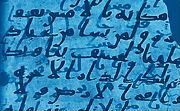
イスラム学者ラシッド・リダ(1865-1935 CE)は、すべてのスンニ派イスラム教徒が同意するイスラム法の4つの基本的な法源を次のように挙げている。「イスラム法の[よく知られた]法源は4つである。コーラン、スンナ、ウンマの総意、そして有能な法学者によるイジュティハードである。」 [73]伝統的なイスラム教の主要な法源とみなされているコーランのテキストの完全性と神性は、疑問視したり、軽視したり、批判や笑いのネタにしたりしてはならない。ハディースの信憑性は、伝承の連鎖を通じてのみ疑問視することができる。それに反する行為は、否認や棄教として罰せられる可能性がある。
しかし、一部の研究者は、従来の知識に反して、一次資料も進化している可能性があると示唆している。ゲルト・R・プイン、ローレンス・コンラッド、パトリシア・クローン、ジョセフ・シャハトは、初期のコーランの写本[74] 、イスラム初期に書かれた シーラ書[75]、スンナとハディースの用語の変化[76] [77] [78] [79] 、ハディースの伝承の連鎖[80]をそれぞれ調査して、これらの結論に達した。
- コーラン:イスラム教では、コーランが最も神聖な法源とみなされている。 [81]古典派法学者は、コーランが各世代で多くの人々に伝えられてきたことを理由に、その「テキストの完全性」は疑いの余地がないと考えていた。これは「反復」または「同時伝達」(タワトゥル)として知られている。 [57] [81] [82]古典派主流法学者によると、イスラム語で「後から啓示された」コーランの節は、以前の節を制限または廃止した可能性がある。 [83]したがって、他の知識とスキルに加えて、コーランのどの節を使用するかを決定することは、これらの問題を詳細に知っている法律家の役割である可能性がある。スンナがコーランを制限できるかどうかは議論の余地がある。
コーランのいくつかの節だけが直接法的関連性があり、それらは相続などのいくつかの特定の分野に集中しているが、他の節は他の手段によって法的影響が詳述された一般原則の源として使用されている。[5] [81]イスラム文献では、シャリーアでコーランに関連する可能性のある法律を「フドゥード」(アッラーによって定められた制限を意味する)と呼んでいる。
- スンナ/ハディース:今日では正統派の法律ではハディースがスンナに取って代わっているが、ある研究によれば、初期のイスラム社会ではその逆であった。スンナはもともと善悪の定義を含まない伝統を意味していた。 [76] [84] [85] [77] [86] その後、「良い伝統」はスンナと呼ばれるようになり、「ムハンマドのスンナ」という概念が確立された。 [76]ムハンマドのスンナは「ムハンマドのハディース」に取って代わられ、それは口頭で伝えられ、 [87]その後数世紀の間に文書に記録され、体系化され、精製された。
ハディース集はより詳細で実用的な法的指針を提供しているが、そのすべてが真正であるとは限らないことが早くから認識されていた。[5] [81]初期のイスラム学者は、伝承の連鎖に挙げられている個人の信頼性を評価することによって、その真正性を評価するための個人的な基準を開発した。[81]これらの研究により、膨大な預言伝承集は数千の「健全な(収集者にとって)ハディース」に絞り込まれ、いくつかの正典集にまとめられた。[81 ]同時に伝承されたハディースはムタワティルとみなされたが、ハディースの大部分は1人または数人の伝承者によって伝えられたため、推定上の知識しか提供していないとみなされた。[81] [57]一部のハディースやコーランに含まれる言語の曖昧さによって、不確実性はさらに高まった。[81]テキストソースの相対的な価値と解釈に関する意見の不一致により、法学者は代替判決を策定する際にかなりの裁量を持つことができた。[5]
- イジュマー:原則として、蓋然的な証拠に基づく判決を絶対的な確実性にまで高めることができる合意である。 [88] [5]この古典的な教義は、イスラム共同体が誤りについて合意することは決してできないとする一連のハディースからその権威を得た。 [88]この形式の合意は、コミュニティの代表として行動する、特定の世代のすべての有能な法学者の合意として技術的に定義された。 [88] [5] [89]しかし、そのような合意を得て確かめることは実際上困難であったため、法の発展にはほとんど影響がなかった。 [88] [5]著名な法学者の著作を参考にして決定できる、より実用的な形式の合意は、判決を確定するために使用され、判決がさらなる議論のために再開されることがないようにした。 [5]合意があった事件は、古典的な法学全体の1%未満を占める。 [88]
- キヤース:聖典で扱われていない状況に対して、聖典に基づいた規則との類推によって判決を導き出すために使用される類推的推論です。 [57]典型的な例として、コーランの飲酒禁止は、これらの状況に共通する「原因」(イラ)に基づいて、すべての酔わせる物質にまで拡大され、この場合、酔いであると特定されています。 [57]規則の原因は明らかではない可能性があるため、その選択は一般的に論争と広範な議論を引き起こしました。 [90]スンニ派イスラム教徒の大多数は、キヤースをイジュティハードの中心的な柱とます。 [91]一方、ザヒル派、アフマド・イブン・ハンバル、アル・ブハーリー、初期のハンバル派などは、スンニ派の間でキヤースを拒絶しました。 [92] [93] [94]十二イマーム派の法学もキヤスの使用を認めずその代わりに理性( ʿ 'aql )に依存しています。 [11] [12]
シャリーアの目的と公共の利益
シャリーアのマカーシド(目的)とマスラハ(福祉または公共の利益)は、現代においてますます重要な役割を果たすようになった2つの関連する古典的な教義である。[95] [96] [97] アブー・ハーミド・ガザーリー、イッズ・アルディーン・イブン・アブドゥル・サラム、アブー・イスハーク・アル・シャティビは、マスラハとマダスドを同義語として使用した。[98] [99] maqāṣid aš-šarīʿaという用語の同義語には、maqāṣid aš-šāriʿ(「立法者の意図」)、maqāṣid at-tašrīʿ(「立法者の意図」)、ruḥ aš -šarīʿa(「シャリーアの精神」)、ḥikmat at-tašrīʿ(「立法の知恵」)、falsafat at-tašrīʿ(「立法の哲学」)という表現があります。[100]

これらは、アル=ガザーリー(1111年没)によって初めて明確に述べられました。ガザーリーは、マカーシドとマスラハは神が神の法を啓示した一般的な目的であり、その具体的な目的は人間の幸福に不可欠な5つの要素、すなわち宗教、生命、知性、子孫、財産の保全であると主張しました。[101]
古典期の法学者のほとんどは、マスラハとマカーシドを重要な法的原理と認識していたが、それらがイスラム法で果たすべき役割については異なる見解を持っていた。[95] [97]一部の法学者は、それらを聖典や類推的推論によって制約される補助的な理論的根拠とみなした。 [95] [ 102]他の法学者は、それらを「独立した」法源とみなし、その一般原則は聖典の文言に基づく特定の推論に優先する可能性があると考えた。[95] [103]マカーシドとマスラハを補助的なものでなく「独立した」シャリーアの源と見なすことは、マカーシドとマスラハの文脈におけるアフカムの再批判と再編成への道を開くだろう。 [104]したがって(フドゥードを含む)今日の価値観の観点からしばしば批判され、問題があると見なされているが、[105]シャリーアの目的と社会的利益の観点から、新しいものに置き換えられるだろう。アブダラ・ビン・バイヤはさらに、シャリーアの源泉の中で目的と利益を優先するアプローチを採用し、それを「ウスル・アル・フィクフ」の中心であると宣言している。[106]
後者の見解は少数の古典法学者によって支持されていたが、近代では、伝統的な法学の知的遺産を活用してイスラム法を変化する社会状況に適応させようとした著名な学者によって、さまざまな形で擁護されるようになった。[95] [57] [96]これらの学者は、改革と女性の権利(ラシッド・リダ)、正義と自由(モハメッド・アル・ガザーリー)、人権と尊厳(ユースフ・アル・カラーダーウィー)などのシャリーアの目的を含むようにマカーシドの目録を拡大した。[95]
イジュティハード
イジュティ ハードとは、文字通り「肉体的」 または「精神的努力」[107]であり、イスラム法の専門家による独自の推論[108]、または法的問題の解決策を見つけるための法学者の精神の発揮[107]を指し、タクリド(先例への適合イジュティハード)[108] とは対照的である。 [109]理論によれば、イジュティハードにはアラビア語、神学、宗教テキスト、法学原則(ウスル・アル・フィクフ)の専門知識が必要であり、 [108]真正で信頼できるテキスト(コーランとハディース)が問題に関して明確であると考えられる場合、または既存の学術的コンセンサス(イジュマー)がある場合は採用されない。 [107]イジュティハードを行うイスラム学者は「ムジュタヒド」と呼ばれる。 [107] [110]
イスラム教の最初の5世紀を通じて、スンニ派イスラム教徒の間ではイジュティハードが実践され続けた。イジュティハードをめぐる論争は12世紀初頭に始まった。[111] 14世紀までに、イスラム法学は、主要な法的問題は解決され、その後イジュティハードは徐々に制限されたとスンニ派の法学者が主張するよう促した。 [107]近代では、このことが東洋学者やイスラム教徒の一部の間で、いわゆる「イジュティハードの門」は古典時代の初めに閉ざされたという認識を生み出した。[107] [112]
18世紀以降、イスラム改革者たちはタクリドの放棄とイジュティハードの重視を訴え始め、それをイスラムの起源への回帰とみなした。[107]イジュティハード の提唱は、特にイスラム近代主義やサラフィー主義運動と関連している。西洋の現代イスラム教徒の間では、伝統的な法的理解よりも実質的な道徳的価値を重視するイジュティハードの新しいビジョンが生まれている。[107]

シーア派の法学者は12世紀までイジュティハードという用語を使用しなかった。ザイド派を除いて、初期のイマーミ・ シーア派は、シーア派がムタズィラや古典的なスンニ派のフィクフのさまざまな教義を受け入れるまで、法の分野(アカム)におけるイジュティハードを全会一致で非難していた。[107] [115] 19世紀までに、法を原則(ウスル)に基づくウスール派が、報告や伝承(ハバル)を重視するアフバーリー派(「伝統主義者」)に勝利した後、イジュティハードはシーア派の主流の慣行となった。[116]
古典的なイジュティハードのプロセスは、一般的に認められたこれらの原則と、イスティフサン(法律上の優先)、イスティスラ(公共の利益の考慮)、イスティシャブ(継続性の推定)など、すべての法学派が採用したわけではない他の方法を組み合わせたものである。[57]
シャリーアの源泉には、原則として階層と権力の序列があったことを考慮すると、 [117] [118]たとえば、サブカテゴリや補助的な源泉は、主要な源泉に明確に述べられている条項を削除したり、預言者時代に知られ実践されていたが禁止されていなかった慣行を禁止したりすることはできない。ムタ結婚の有効性の廃止などの例を見ると、コーラン4:24で触れられており、[119]禁止されていない(スンニ派は、関連する節で使用されている単語を、通常の結婚行事を説明するために使用される用語に翻訳している)スンニ派によると、ムハンマドが生涯の終わり頃に禁止し、[120]シーア派によると、ウマルが「自分の意見に従って」権力に頼った。シーア派はウマルの法学を受け入れず、最初からその政治的および宗教的権威を拒否した。
Ahkam al-shariyya (意思決定の種類、ラベル)
フィクフは、法的規範と同じくらい倫理基準に関心があり、何が合法で何が違法かだけでなく、道徳的に正しいか間違っているかを定めようとします。[14] [15]シャリーアの判決は、「5つの決定」(al-aḥkām al-khamsa)として知られる5つのカテゴリのいずれかに分類されます:必須(farḍまたはwājib)、推奨(mandūbまたはmustaḥabb)、中立(mubāḥ)、非難されるべき(makrūh)、および禁止(ḥarām)。[5] [12]
禁じられた行為をしたり、義務的な行為をしなかったりすることは罪または犯罪である。[5]非難されるべき行為は避けるべきであるが、法廷で罪深い、または処罰されるべき行為とはみなされない。[5] [121]非難されるべき行為を避け、推奨される行為を行うことは来世で報いを受けるとされ、一方、中立的な行為は神からの裁きを伴わない。[5] [121]法学者は、ハラールという用語が最初の3つのカテゴリーをカバーするのか、最初の4つのカテゴリーをカバーするのかで意見が分かれている。[5]法的および道徳的判決は、行為が必要に迫られて行われたかどうか (ダルラ) と、その根底にある意図 (ニヤ) によって決まり、これは「行為は意図に従って評価される」という法格言に表現されている。[5]
ハナフィー派では、この2つの用語を同義語とは考えず、「ファルド」と「ワジブ」を区別しています。ハナフィー派では、ファルド規則を適用するには2つの条件が必要です。1.ナス(ここではクルアーンの詩節のみが証拠として受け入れられ、ハディースは受け入れられません)2.主題に言及するテキストの表現は、他の解釈を許さないほど明確かつ正確でなければなりません。ワジブという用語は、これらの条件の2番目を満たさない状況で使用されます。[122] ただし、この理解ではあらゆる状況を説明するのに十分ではない場合があります。たとえば、ハナフィー派は1日5回の祈りをファルドとして受け入れています。しかし、コーラン信者やシーア派など、今日存在するコーランが宗教的な源泉であることを疑わない一部の宗教グループは、同じ節から、5回ではなく2回または3回の祈りが明確に命じられていると推論しています[123] [124] [125] [126]。さらに、宗教文献では、ワジブはフィクフの定義を表明することなく、あらゆる種類の宗教的要件に対して広く使用されています。
女性が公共の場でどのように服を着るべきかについては、約6節で述べられています。 [127]イスラム学者の間では、これらの節の解釈について意見が分かれており、ヒジャブは遵守すべき命令(ファルド)であると主張する学者もいます。 [128]また、そうではないと主張する学者もいます。[129]

上記や他の多くの例からもわかるように、分類は主観的です。たとえば、アウリヤの存在と奇跡を信じることは、アル=タハウィーやナサフィ[132] [133]などの多くの著名なスンニ派の信条の著者によって正統派イスラムの「条件」として提示されており、伝統的なスンニ派やシーア派でも受け入れられています。しかし、この理解は、聖人への敬意の表明や墓参りとともに、サラフィー主義、ワッハーブ主義、イスラム近代主義などの清教徒的および復興主義的なイスラム運動では受け入れられない異端と見なされています。[134]
特定の宗教的決定は、人、グループ、組織、出来事、状況、信仰、生活のさまざまな分野における慣習に「特有」であり、通常は判決の承認/不承認を含み、ファトワと呼ばれます。キサス法とフドゥード法の範囲外であるタジール刑罰は成文化されておらず、その裁量と実施は裁判官または政治権力の主導と権限の下にあります。[5] [135]
個人に関する管轄権は個人的なものであり、例えばイスラムの Qisas や賠償決定においては、裁判官は性別、自由、宗教的および社会的地位(ムアミン、カーフィール、ムスタミン、ズィンミー、背教者など)などの「個人的ラベル」を考慮しなければなりません。イスラムの説教師は常にアダラの重要性を強調しており、裁判では裁判官は裁判を受ける者同士の平等を観察する必要はなく、公平に、またはバランスよく行動することが求められます。伝統的なフィクフでは、法的および宗教的責任はルシュドから始まるとされています。
支店と詳細(フルーアルフィクフ)
フィクフ(フィクフの分野)の領域は、伝統的にイバーダート(儀式または礼拝行為)とムアーマラート(社会関係)に分けられます。[6] [58]多くの法学者は、実体法学の体系をさらに「4つの四半期」に分け、儀式、売買、結婚、損害賠償と呼びました。[136]これらの用語はそれぞれ比喩的にさまざまな主題を表しています。[136]たとえば、売買の四半期には、パートナーシップ、保証、贈与、遺贈などのトピックが含まれます。[136]法学書は、このような小さなトピックの連続として構成され、それぞれが「本」(キタブ)と呼ばれました。[6] [136]儀式の特別な重要性は、その議論を常に作品の冒頭に置くことで示されました。[6] [136]
歴史家の中には、イスラム刑法の一分野を区別し、いくつかの伝統的なカテゴリーを組み合わせている者もいる。[5] [135] [12]聖典で刑罰が規定されている犯罪の中には、フドゥードと呼ばれるものもある。[5]法学者らは様々な制限を設けたが、その多くは実質的に適用不可能なものであった。[5]故意の身体的危害を伴うその他の犯罪は、犯罪に類似した刑罰(qisas )を規定するlex talionisのバージョンに従って裁かれるが、被害者またはその相続人は金銭的補償(diya)を受け入れるか、代わりに加害者を赦免することができる。意図的でない危害に対してはdiyaのみが科される。 [5] [135]その他の刑事事件はtaʿzīrのカテゴリーに属し、刑罰の目的は犯人の矯正または更生であり、その形式は主に裁判官の裁量に委ねられている。[5] [ 135]実際には、イスラムの歴史の初期から、刑事事件は通常、シャリーア法とわずかに関係のある手続きを使用して、統治者によって運営される裁判所または地方警察によって処理されていました。[6] [135]
フルー文学の2つの主要なジャンルは、ムフタサール(法律の簡潔な要約)とマブスート(広範な注釈)です。[6] ムフタサールは、教室で使用したり、裁判官が参照したりできる短い専門論文または概要でした。[6] [5] [137]マブスートは、通常、ムフタサールの注釈を提供し、数十巻に及ぶこともあり、代替判決とその正当化を記録し、多くの場合、事例と概念的区別の急増を伴っていました。[6] [137]法文学の用語は保守的で、実用的な関連性を失った概念を保持する傾向がありました。[6]同時に、要約と注釈のサイクルにより、各世代の法学者は、変化する社会状況に合わせて修正された法律体系を明確に表現することができました。[137]その他の法学ジャンルとしては、カワイド(学生が一般原則を覚えるのを助けるための簡潔な定式)や特定の学者によるファトワ集などがある。[5]
古典法学は「イスラムの主要な知的成果の一つ」と評されており[138] 、イスラムにおけるその重要性はキリスト教における神学の重要性と比較されている。[注 6]
法学部
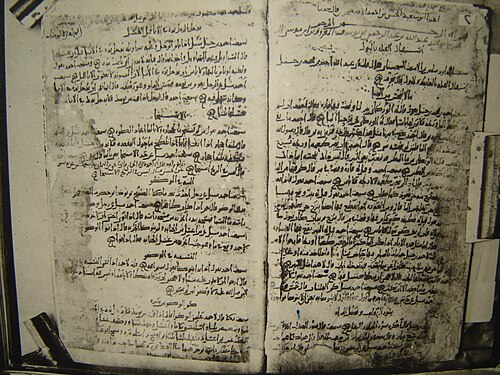
スンニ派の主な法学派(マズハブ)は、ハナフィー派、マリキ派、シャーフィイー派、ハンバリー派である。[58]これらは9世紀から10世紀にかけて出現し、12世紀までにはほぼ全ての法学者が特定のマズハブに所属していた。[141]これら4つの学派は互いの正当性を認めており、何世紀にもわたって法的な議論で交流してきた。[141] [58]これらの学派の判決は、地域的な限定なしにイスラム世界全体で採用されているが、それぞれが世界の異なる地域で優勢となった。[141] [58] たとえば、マリキ学派は北アフリカと西アフリカで、ハナフィー学派は南アジアと中央アジアで、シャーフィイー学派は下エジプト、東アフリカ、東南アジアで、ハンバリー学派は北アラビアと中央アラビアで優勢である。[141] [58] [5]イスラム教の最初の数世紀には、短命に終わったスンニ派の学派も数多く存在した。[ 6]一般に消滅したとされるザーヒリ学派は、法思想に影響を与え続けている。[6] [58] [141]シーア派の法学派の発展は神学上の相違に沿って起こり、十二イマーム派、ザイド派、イスマーイール派の学派が形成されたが、これらとスンニ派の法学派との相違は、スンニ派間の相違とほぼ同じ程度である。[6] [5]オマーンでは、スンニ派やシーア派の学派とは異なるイバード派の法学派が主流である。[58]
近代におけるイスラム法制度の変容は、マズハブ制度に重大な影響を及ぼしてきた。[141] イスラム世界のほとんどの国では、法実践が政府の政策と国家法によって統制されるようになったため、個人的な儀式実践を超えたマズハブの影響力は、国家法制度内での地位によって左右される。[141]国家法の成文化では、タカユール(特定のマズハブに制限されない判決の選択)とタルフィク(同じ問題に関する異なる判決の一部を組み合わせる)の手法が一般的に利用された。 [141]現代の法学校で訓練を受けた法律専門家が、結果として生じる法律の解釈者として、伝統的なウラマーに取って代わってきた。 [141]世界的なイスラム運動は、時には異なるマズハブを利用し、時には古典的な法学よりも聖典の出典に重点を置いた。[141]ハンバリー学派は、コーランとハディースを特に厳格に遵守しており、サラフィー派とワッハーブ派の運動による直接的な聖典解釈の保守的な潮流に影響を与えてきました。[141]インドネシアのウラマーのネットワークやイスラム少数派諸国に住むイスラム学者などの他の潮流は、特定のマドハブの伝統に焦点を当てることなく、イスラム法の自由な解釈を進めてきました。[141]
前近代イスラム法制度
法学者
シャリーアは伝統的にムフティによって解釈されていた。イスラム教の最初の数世紀の間、ムフティは通常他の仕事も兼務している民間の法律専門家であった。彼らは一般人からの質問や裁判官からの相談要請に応えて、一般的に無料でファトワ(法律意見)を発行し、一般的な言葉で述べられた。ファトワは裁判所で定期的に支持されたが、支持されなかった場合は通常、より権威のある法律意見と矛盾していたためであった。[ 142]法学者の地位は彼らの学問的評判によって決定された。[143] [144]著述家である法学者によって書かれた古典的な法律作品の大部分は、著名なムフティのファトワに基づいていた。[143]これらのファトワは、特定の事件にのみ有効な裁判所の判決とは異なり、一種の法的判例として機能した。[145]独立したムフティが消滅することはなかったが、12世紀以降、イスラムの統治者は国民の質問に答えるために給与制のムフティを任命し始めた。[146]何世紀にもわたって、スンニ派のムフティは徐々に国家官僚機構に組み込まれ、一方でイランのシーア派法学者は近世から徐々に自治権を主張した。[147]
.jpg/500px-Samarkand,_Registan,_Ulugbek_Medressa_(6238565020).jpg)
イスラム法は当初、モスクや個人の家に集まる学習サークルで教えられていた。教師は、優秀な生徒の助けを借りて、簡潔な法律論文の解説を行い、生徒のテキスト理解度を試験した。この伝統は、10世紀から11世紀にかけて広まったマドラサでも引き続き実践された。 [148] [149]マドラサは、主に法律の研究に専念する高等教育機関であったが、神学、医学、数学などの他の科目も提供していた。マドラサの施設は通常、モスク、寄宿舎、図書館で構成されていた。マドラサはワクフ(慈善基金)によって維持され、教授の給料、学生の奨学金を支払い、建設費と維持費を負担した。コースの最後に、教授は学生にその科目に関する能力を証明するライセンス(イジャザ)を与えた。 [149]法律を専攻する学生は、準備学習、特定のマドハブの教義、法的論争の訓練からなるカリキュラムを修了し、最終的に論文を書き、教授資格とファトワ発行資格を取得する。[146] [148]
裁判所

裁判官(カーディー)は、シャリーア裁判所とも呼ばれるカーディーの裁判所(マフカマ)を担当していました。カーディーはイスラム法の訓練を受けていましたが、必ずしもファトワを発行するのに必要なレベルではありませんでした。 [5] [150]裁判所の職員には、さまざまな役割を果たす多くの補佐官も含まれていました。[151]裁判官は理論的には決定において独立していましたが、統治者によって任命され、彼らの利益が絡んでいる場合には支配エリートのメンバーから圧力を受けることが多かった。[146]カーディーの役割は、証拠を評価し、事件の事実を確立し、イスラム法の適用可能な判決に基づいて判決を下すことでした。[5]法律を事件にどのように適用すべきかが不明な場合は、カーディーはムフティにファトワを求めることになっていた。[5] [152]イスラム法理論では私法と公法の区別が認められていないため、民事訴訟と刑事訴訟の裁判手続きは同一であり、私人原告は被告に対して証拠を提出する必要があった。主な証拠は口頭による証人証言であった。刑事訴訟の証拠基準は非常に厳格であったため、一見明確なケースであっても有罪判決を得るのが困難な場合が多かった。[5]多くの歴史家は、これらの厳格な手続き規範のために、カーディーの裁判所は早い時期に刑事訴訟の管轄権を失い、代わりに他の種類の裁判所で刑事訴訟が扱われるようになったと考えている。[153]
告発がカディの裁判所で判決に至らなかった場合は、原告はしばしば統治者の評議会が管理するマザリム裁判所と呼ばれる別の種類の裁判所で訴訟を起こすことができた。 [5]マザリム(文字通り、不正、不満)裁判所の理論的根拠は、政府職員に対する苦情など、シャリーア裁判所が対処できない不正に対処することであった。イスラム法学者が通常出席し、裁判官が統治者の代理人として裁判所を主宰することが多かった。[5] [146] マザリムの判決はシャリーアの精神に従うことになっていたが、法律の文言やカディの裁判所の手続き上の制約に縛られていなかった。[5] [152]
警察(シュルタ)は、犯罪の予防と捜査に率先して取り組み、独自の裁判所を運営していた。[146]マザリーム裁判所と同様に、警察裁判所はシャリーアの規則に縛られず、裁量で刑罰を科す権限を持っていた。[153]公共秩序を維持するためのもう一つの役職は、ムフタスィブ(市場検査官)であり、経済取引における詐欺や公序良俗に反する行為の防止を任務としていた。[146]ムフタスィブは、これらの種類の犯罪の追及に積極的な役割を果たし、地元の慣習に基づいて刑罰を科した。[153]
社会政治的背景
前近代のイスラム社会の社会構造は、親族グループや地元近隣住民を中心に組織された緊密なコミュニティによって大きく特徴づけられていた。個人間の対立は、支援グループ間の対立にエスカレートし、コミュニティ全体の生活を混乱させる可能性があった。法廷での訴訟は、非公式の調停が失敗した場合の最後の手段とみなされていた。この姿勢は、「友好的な解決が最良の判決である」(アル・スルフ・サイイド・アル・アカム) という法的な格言に反映されている。法廷での争いでは、カディは一般に、法理論よりも、紛争当事者が以前の社会的関係を再開できるような結果を得ることに関心があった。これは、敗訴側が全面的に負けるのを避けるか、単に公の場で自分の立場を明確にし、ある程度の心理的正当化を得る機会を与えることで達成できた。[154] [155]イスラム法では裁判官が地元の慣習に精通していることが求められており、裁判官は地域社会において調停や仲裁、公共事業の監督、ワクフの財務監査、孤児の利益の保護など、他の多くの公的機能を果たしていた。[150] [153]

統治王朝が法律を公布した前近代文化とは異なり、イスラム法は統治者の関与なしに宗教学者によって策定された。法律の権威は政治的支配からではなく、むしろ経典の解釈者としての法学派(マズハブ)の集合的な教義的立場から生まれた。ウラマー(宗教学者)は共同体の事務の管理に関与し、近代以前は直接統治する能力が限られていた統治王朝に対してイスラム教徒の代表として行動した。[156]軍エリートは宗教的正当性を得るためにウラマーに依存し、宗教機関への財政的支援はこれらのエリートが正当性を確立する主な手段の一つであった。[157] [156]一方、ウラマーは宗教機関の継続的な運営のために統治エリートの支援に依存していた。世俗の統治者と宗教学者の関係は、時代や場所によって何度も変化を遂げたが、この相互依存関係は近代が始まるまでイスラムの歴史を特徴づけていた。[158] [156]さらに、シャリーアには公法のいくつかの分野で規定がほとんどなかったため、イスラム教徒の統治者はイスラム法学者の管轄外でさまざまな経済法、刑法、行政法を制定することができ、その中で最も有名なのは15世紀以降にオスマン帝国のスルタンが公布したカーヌーンである。 [9]ムガル帝国の皇帝アウラングゼーブ(在位1658-1707)は、ハナフィー派のファトワとイスラム法廷の判決に基づいたファタワー・エ・アラムギリと呼ばれる混合法体系を公布し、インド亜大陸のすべての宗教コミュニティに適用できるようにした。イスラム法を半ば成文化された国家立法にしようとするこの初期の試みは、ムガル帝国に対する反乱を引き起こした。[159]
女性、非イスラム教徒、奴隷
民事紛争の規則と刑法の適用の両方において、古典的なシャリーアは男性と女性、イスラム教徒と非イスラム教徒、自由人と奴隷を区別しています。[5]
伝統的なイスラム法は、男性が世帯主である家父長制社会を前提としている。[160]さまざまな法学派が、男性または女性に有利になるように操作できるさまざまな法規範を策定したが[161]、女性は一般に相続や証人証言のルールに関して不利であり、場合によっては女性の証人証言が男性の半分として扱われる。[160]夫に課せられたさまざまな金銭的義務は、一方的な離婚の抑止力として機能し、一般的に妻が離婚手続きで金銭的な影響力を持つようになった。[161]女性は、さまざまな事件で原告および被告の両方としてシャリーア法廷で活動したが、男性親族に代理を依頼した女性もいた。[162] [5]
シャリーアは、イスラム教徒のコミュニティの問題を規制することを目的としていた。[5]イスラムの支配下に住む非イスラム教徒は、ジズヤ税の支払いを含む多くの保護、制限、自由、法的不平等を伴うズィンミーの法的地位を持っていた。 [163]ズィンミーコミュニティは、内部問題を裁定する法的自治権を持っていた。2つの異なる宗教グループの訴訟当事者を含む事件はシャリーア裁判所の管轄下に入り、[5](世俗裁判所とは異なり)[164]非イスラム教徒の証人のイスラム教徒に対する証言は刑事事件では容認されず、[165]まったく容認されなかった。[166]この法的枠組みは、さまざまな厳しさで実施された。いくつかの時代や町では、すべての住民が宗教に関係なく同じ裁判所を使用していたようだ。[5]ムガル帝国の皇帝アウラングゼーブは、伝統的にイスラム教徒だけに適用されていた規定も含めて、すべての臣民にイスラム法を課したが、彼の前任者と後継者の中にはジズヤを廃止した者もいると言われている。[159] [167] オスマン帝国の記録によると、非イスラム教徒の女性は、結婚、離婚、財産の問題でキリスト教やユダヤ教の裁判所よりも有利な結果を期待した場合、シャリーア法廷に訴訟を起こした。[168] 時が経つにつれて、オスマン帝国の非イスラム教徒がイスラム法廷を利用する可能性は高まったり低くなったりした。例えば、1729年のガラタのイスラム法廷では、非イスラム教徒が関与する訴訟はわずか2%だったが、1789年には非イスラム教徒が訴訟の30%を占めていた。[169]オスマン帝国の法廷記録には、以前は非イスラム教徒だった女性によるイスラム法廷の利用も記録されている。[170]オスマン帝国では、非イスラム教徒がイスラム教徒を所有したり、非イスラム教徒の男性がイスラム教徒の女性と結婚したりすることは違法であったため、イスラム教への改宗は、非イスラム教徒の女性にとって、従属したくない配偶者や主人から解放される選択肢であっただろう。[170]しかし、これはおそらく、以前のコミュニティから疎外されることにつながるだろう。[170]
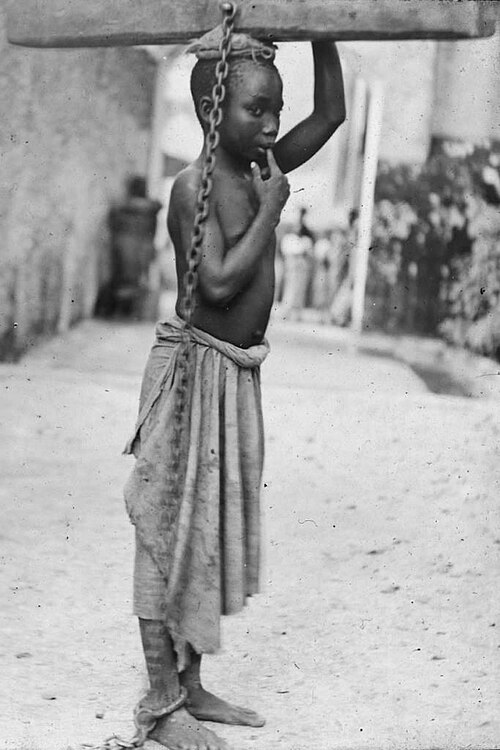
古典的なフィクフは奴隷制度を正当な制度として認め、規制している。[160]奴隷に一定の権利と保護を与え、ギリシャ法やローマ法に比べて奴隷の地位を向上させ、奴隷化される状況を制限した。[171] [172]しかし、奴隷は相続や契約を結ぶことはできず、さまざまな点で主人の意志に従わなければならなかった。[171] [172]奴隷の労働力と財産は主人の所有であり、主人は未婚の奴隷を性的に服従させる権利も持っていた。[172] [173]
一部のグループに対する正式な法的無能力は、シャリーアを普遍的な正義の原則の反映と見なす法文化と共存していた。この原則には、強者が犯した不正から弱者を保護することが含まれていた。この概念は、シャリーア法廷の歴史的慣行によって強化された。シャリーア法廷では、農民が「ほぼ常に」抑圧的な地主に対して訴訟に勝ち、非イスラム教徒がイスラム教徒との紛争で勝利することが多かった。これには、州知事などの有力者も含まれていた。[174] [175]家族の問題では、シャリーア法廷は、女性が夫の違法行為に対して権利を主張できる場所と見なされていた。[5]
現代の法改正
植民地支配下
17世紀以降、ヨーロッパ列強はイスラム王朝が統治する土地に政治的影響力を及ぼし始め、19世紀末までにはイスラム世界の大部分が植民地支配下に入った。イスラム法が最初に影響を受けたのは通常、商法と刑法であり、植民地統治の妨げとなったため、すぐにヨーロッパの規制に置き換えられた。[176]イスラム商法は、形式的な独立を維持したイスラム諸国でもヨーロッパ(主にフランス)の法律に置き換えられた。これらの国々はますます西洋資本に依存するようになり、イスラム規制に従うことを拒否する外国商人のビジネスを失うわけにはいかなかったからである。[5]

イギリス領インドの法制度に対する最初の重要な改革は、18世紀後半にベンガル総督ウォーレン・ヘイスティングスによって始められた。ヘイスティングスの法改革計画は、イスラム教徒の人々のために多層的な裁判制度を構想し、中層には地元のイスラム法学者の助言を受けるイギリス人裁判官、下層にはカーディーが運営する裁判所を据えた。ヘイスティングスはまた、ハナフィー法学の古典であるアル・ヒダヤをアラビア語からペルシャ語、次いで英語に翻訳するよう依頼し、後に他の文献も追加した。[177] [178]これらの翻訳によって、イギリス人裁判官はシャリーア法と判例法の教義を組み合わせたイスラム法の名の下に判決を下すことが可能となり、彼らが信用していなかった地元のウラマーとの協議に頼る必要がなくなった。伝統的なイスラムの文脈では、アル・ヒダヤのような簡潔なテキストは教授の授業解説の基礎として使用され、こうして学んだ教義は裁判所の裁量、現地の慣習の考慮、事件の事実に合う可能性のあるさまざまな法的見解の利用可能性によって法廷で調停される。意図せずにシャリーアを成文化したアル・ヒダヤをイギリスが使用し、西洋の法的伝統で訓練された裁判官がその解釈を行ったことは、イスラム世界における後の法改正を予期するものであった。[177] [179]
イギリスの行政官は、シャリーアの規定では犯罪者が処罰を逃れることが多すぎると感じていた。これは、ヘイスティングスがイスラム法は「最も寛大な原則と流血の嫌悪に基づいている」と不満を述べたことに例証されている。[177] 19世紀の間に、インドにおける刑法やイスラム法制度の他の側面は、家族法や一部の財産取引に残されたシャリーアの規定を除いて、イギリス法に取って代わられた。[177] [178]これらの改革は、他の変化の中でも、奴隷制の廃止、児童婚の禁止、死刑のより頻繁な適用をもたらした。[180] [178] その結果生じた法制度は、アングロ・ムハンマド法として知られ、イギリスによって他の植民地における法改革のモデルとして扱われた。インドにおけるイギリスのように、植民地政府は現地の法律に関する正確で権威ある情報を得ることに努め、それが地元の司法慣行よりもイスラムの古典的な法典を優先するきっかけとなった。これは、イスラム法を柔軟性のない規則の集合体とみなす彼らの考えと相まって、植民地時代以前には厳密に適用されていなかった伝統的なシャリーア法の形態を重視する結果となり、イスラム世界の現代のアイデンティティ政治に形成的な影響を与えた。[178]
オスマン帝国

植民地時代、イスラム教徒の支配者たちは、軍隊を近代化し、西洋のモデルに沿って中央集権的な国家を築かない限り、ヨーロッパの圧力に抵抗できないという結論を下した。オスマン帝国では、法の分野で最初にそうした変化が起こり、以前は独立していたワクフを国家の管理下に置くこととなった。1826年に可決されたこの改革により、ワクフを犠牲にして国庫が充実し、伝統的なイスラム法教育への財政的支援が枯渇した。19世紀後半には、ほとんどの宗教裁判所を補完し、最終的には置き換えるために、世俗裁判所の新しい階層制度が確立された。新しい裁判制度で法律家としてのキャリアを志す学生たちは、経済的見通しが暗い伝統的な法教育の道よりも、世俗学校に通うことをますます好むようになった。[ 181] 19世紀のタンジマート改革では、ナポレオン法典をモデルに、イスラム民法とスルタン刑法の両方が再編された。[58] 1870年代には、シャリーア法廷と世俗法廷の両方で使用するために、メツェレと呼ばれる民法と手続き(結婚と離婚を除く)の成文化が作成された。この成文化は、伝統的な法学のアラビア語の表現力を失った新しい法曹階級のためにトルコ語を採用した。この法典はハナフィー法に基づいており、その作成者は少数派の意見の方が「現在の状況に合っている」と感じた場合、権威ある意見よりも少数派の意見を選択した。メツェレはカヌーン(スルタン法典)として公布され、伝統的にウラマーの領域であったイスラム民法に対する国家の権威を前例のない形で主張した。[181] 1917年のオスマン帝国の家族権利法は、近代化の意図を持って、すべてのスンニ派の学派の少数派と多数派の意見から規則を引き出すという革新的なアプローチを採用した。[27]オスマン帝国の崩壊後に誕生したトルコ共和国はシャリーア法廷を廃止し、オスマン帝国の民法をスイス民法典に置き換えたが、[58] オスマン帝国の民法はヨルダン、レバノン、パレスチナ、シリア、イラクでは数十年間にわたって効力を維持した。[27] [58]
国民国家

植民地時代に始まった法制度の西洋化と法のあらゆる分野における国家統制の拡大は、イスラム世界の国民国家で続いた。[182]シャリーア法廷は当初、以前のように国家法廷と並んで存在し続けていたが、スルタン法廷がシャリーアの理想を実施すべきであるという教義は、徐々にヨーロッパから輸入された法規範に取って代わられた。裁判手続きもヨーロッパの慣行に合わせるようにされた。イスラム用語のカディとマフカマ(カディ/シャリーア法廷)は保持されたが、これらは一般に西洋的な意味での裁判官と裁判所を意味するようになった。伝統的なシャリーア法廷ではすべての当事者が自らを代表していたが、現代の法廷では西洋式の法学校で教育を受けた専門の弁護士が代表し、判決は控訴裁判所で再審される。20世紀には、ほとんどの国がシャリーア法廷の並行システムを廃止し、すべての事件を国家民事裁判所システムの下に置いた。[5]
イスラム教徒が多数派を占める国のほとんどでは、古典的なフィクフの伝統的なルールは、主に家族法においてのみ保存されてきた。一部の国では、キリスト教徒やシーア派イスラム教徒などの宗教的少数派は、別の家族法制度の対象となっている。[5]今日、多くのイスラム教徒は、現代のシャリーア法に基づく法律が前近代の法的伝統の真の表現であると信じている。実際には、それらは一般的に近代に行われた広範な法改正の結果を表している。[182]伝統的なイスラム法学者が裁判所で適用される法律の権威ある解釈者としての役割を失ったため、これらの法律は立法者によって成文化され、変更を行うためにいくつかの手段を採用した国家システムによって施行された。[5]これには以下が含まれる。
- 伝統的な法文献(タカユール)から複数のマドハブや宗派の間で代替的な意見を選択し、異なる判決の一部を組み合わせる(タルフィク)。[182] [183]
- 必要性(ダルラ)、公共の利益(マスラハ)、シャリーアの目的(マカーシド)という古典的な教義に訴える。これらは古典的なフィクフでは限られた役割しか果たしていなかったが、今ではより広い実用的な適用が与えられている。[182] [183] [179]
- 行政法の改正により、実体法で禁じられていない特定の慣行(例えば、一夫多妻)を制限する裁量権が裁判所に与えられ、場合によっては追加的な抑止力として刑事罰が科される。[182] [183]
- 伝統的な法学の規則や方法論に従わないイスラム教の聖典の近代主義的解釈は、ネオ・イジュティハードとして知られている。[182] [183]
_-_TIMEA.jpg/500px-The_Late_Grand_Moufti_(1906)_-_TIMEA.jpg)
リベラル改革思想に最も大きな影響を与えたのは、エジプトのイスラム学者ムハンマド・アブドゥフ(1849-1905)の著作である。アブドゥフは、宗教儀式に関するシャリーア法のみを柔軟性のないものとみなし、その他のイスラム法は社会福祉を考慮し、変化する状況に基づいて適応されるべきであると主張した。彼は、以前のイスラム思想家の先例に従い、中世の法学派に従うのではなく、コーランとスンナに戻ることでイスラム教を本来の純粋さに戻すことを提唱した。[27]彼は、経典の直接解釈やタハイユルとタルフィクの方法を含むイジュティハードへの創造的なアプローチを擁護した。[6] [27]
近代の法改正において最も影響力のあった人物の一人は、イスラム法と西洋法の両方に精通していたエジプトの法学者アブド・エル・ラッザーク・エル・サンフーリ(1895-1971)である。サンフーリは、現代社会のニーズに応える形でイスラム法の遺産を復活させるには、比較法という近代科学に照らした分析が必要だと主張した。彼は、古典的なフィクフ、ヨーロッパの法律、既存のアラブとトルコの法典、地方裁判所の判決史など、さまざまな資料に基づいて、エジプト(1949年)とイラク(1951年)の民法を起草した。[27] [159]サンフーリのエジプト法典には古典的なシャリーア法はほとんど取り入れられなかったが、イラク法典では伝統的な法学をより頻繁に参考にした。[159]サンフーリの法典は、その後、ほとんどのアラブ諸国で何らかの形で採用された。[27]
チュニジア(1956年)とイラン(1967年)で行われたイスラム家族法の急進的な改革とは別に、政府は宗教保守派の反対を最小限に抑えるために、規則自体を変更するのではなく、行政上のハードルを課すことによって伝統的なシャリーアの規則から明確に決別する変更を行うことをしばしば好んだ。一夫多妻を制限し、離婚において女性にさらなる権利を与え、児童婚をなくすために、多くの国でさまざまな手続きの変更が行われた。相続は改革の影響が最も受けにくい法的領域であり、それは立法者が一般的にコーランの遺産という高度に技術的なシステムに手を加えることに消極的だったためである。[27] [159]いくつかの改革は強い保守派の反対に直面した。例えば、1979年にアンワル・サダト大統領が大統領令で公布したエジプトの家族法改革は激しい抗議を呼び、1985年に手続き上の理由で最高裁判所によって無効とされ、後に妥協案に置き換えられた。[27] 2003年にモロッコで行われた家族法改革は、普遍的な人権規範と国のイスラムの伝統を調和させることを目指したもので、国会議員、宗教学者、フェミニスト活動家を含む委員会によって起草され、その結果はイスラムの枠組み内で達成された進歩的な立法の例として国際人権団体から賞賛されている。[184] [27]
イスラム化
20世紀後半のイスラム復興は、シャリーアの完全な実施を求めるイスラム世界での数多くの政治運動の形で、シャリーアの問題を国際的な注目を集めた。[5] [185]イスラム主義または政治的イスラム という見出しで分類されるこれらの運動の台頭には、権威主義的な世俗政権が国民の期待に応えられなかったことや、西洋からの文化的侵略に直面してより文化的に本物の形態の社会政治組織に戻りたいというイスラム教徒の願望など、多くの要因が寄与している。[185] [186]ホメイニ師などのシーア派指導者は、シャリーアの要求を抵抗闘争として位置づけることで、左派の反植民地主義のレトリックを利用した。彼らは世俗的指導者の腐敗と略奪的行動を非難し、シャリーアへの回帰によって独裁的な支配者が社会的、経済的正義のために努力する敬虔な指導者に取って代わられると主張した。アラブ世界では、これらの立場はしばしば「イスラムこそが解決策である」(アル・イスラム・フワ・アル・ホール)というスローガンに集約されている。[185]
シャリーアの完全な実施とは、理論的には、その適用範囲をすべての法律分野とすべての公的生活領域に拡大することを意味する。[5]実際には、イスラム化運動は、保守的なイスラム教徒のアイデンティティに関連するいくつかの非常に目立つ問題、特に女性のヒジャブと特定の犯罪に対して規定されているフドゥード刑罰(鞭打ち、石打ち、手足切断)に焦点を当ててきた。[185]多くのイスラム主義者にとって、フドゥード刑罰は神聖なシャリーアの中核である。なぜなら、それは人間の解釈者ではなく聖書の文字によって規定されているからである。現代のイスラム主義者は、少なくとも理論的には、その適用を制限するために古典法学者によって開発された厳格な手続き上の制約をしばしば拒否してきた。[5]より広範なイスラム教徒の一般大衆にとって、シャリーアを求めることは、特定の要求よりも、現在の経済的および政治的状況が「公正なユートピア」に置き換えられるという漠然としたビジョンを表すことが多い。[186]
これらの運動の影響下で、1970年代にエジプトとシリアが憲法を改正し、シャリーアを立法の基礎として明記して以来、多くの法改正が行われてきた。[185] 1979年のイラン革命はシーア派の支持者にとっての分岐点となり、世俗政権を神政政治に置き換えることが可能であることを示した。[185]イラン、パキスタン、スーダン、ナイジェリアの一部の州を含むいくつかの国は、刑事司法制度にフドゥード規則を取り入れているが、それらの制度は以前の西洋化改革の根本的な影響を保持している。[5] [27]実際には、これらの変更は主に象徴的なものであり、新しい規則が施行されていることを示すために裁判にかけられたいくつかの事件を除けば、フドゥード刑罰は使用されなくなる傾向があり、地元の政治情勢に応じて復活することもあった。[5] [187]スーダンとイランの最高裁判所は石打ちや切断の判決をほとんど承認しておらず、パキスタンとナイジェリアの最高裁判所も一度もそうした判決を下したことがない。[187]それにもかかわらず、イスラム化運動は他のいくつかの法律分野にも影響を及ぼし、女性や宗教的少数派の権利の制限につながり、スーダンの場合は内戦の勃発の一因となった。[27]
イスラム化の支持者は、伝統的な法学よりもイデオロギーに関心を寄せることが多く、シャリーア法に基づく現代の「イスラム国家」がどのような形態をとるべきかについて、彼らの間で合意が得られていない。これは特に、自由市場と社会主義経済モデルの両方を主張してきたイスラム経済とイスラム金融の理論家に当てはまる。 [27]「シャリーア準拠」金融の概念は、教義の革新が活発に行われている分野となり、その発展は世界中のビジネス活動に大きな影響を与えている。[185]
現代のアプリケーション
人権団体によると、古典的なシャリーアの慣行の一部は、基本的人権、男女平等、表現の自由に対する重大な侵害を伴い、シャリーアが施行されている国の慣行は批判されている。[188]ストラスブールの欧州人権裁判所( ECtHR)は、いくつかの訴訟でシャリーアは「民主主義の基本原則と相容れない」との判決を下した。[189] [190]イランやサウジアラビアなどの政府は、「人権概念」は世俗的で西洋的な価値観に属すると主張し、シャリーアの下では断固として排除してきた。 [191]一方、イスラム協力機構によるカイロ会議は、人権はイスラムと相容れる場合にのみ尊重されると宣言した。[192]

シャリーアは司法制度において何ら役割を果たさない。
シャリーアは身分(家族)に関する法律に影響を与えます。
シャリーアは個人の地位や刑法に影響を及ぼします。
シャリーアの適用における地域差。
イスラム教徒が多数派を占める国
イスラム教徒が多数派を占める国の法制度は、世俗法と混合法のいずれかに分類できます。世俗法ではシャリーアは役割を果たしません。混合法では、シャリーアの規則が一部の国内法に影響を与えることが認められており、これらの国内法は成文化され、ヨーロッパやインドのモデルに基づいている場合があります。また、中心的な立法の役割は、ウラマー(伝統的なイスラム学者)ではなく、政治家や現代の法学者によって担われています。
サウジアラビアと他のペルシャ湾岸諸国は、いわゆる古典的なシャリーア制度を有しており、国内法は大部分が成文化されておらず、正式にはシャリーアと同等とみなされ、ウラマーが解釈において決定的な役割を果たしている。イランは古典的なシャリーア制度のいくつかの特徴を採用しているが、成文化された法律や議会などの混合制度の特徴も維持している。[193]
憲法
多くのイスラム教徒が多数を占める国の憲法では、シャリーアを法源または主要な法源として言及しているが、これらの言及自体が、法制度がシャリーアの影響をどの程度受けているか、またその影響が伝統主義的か近代主義的かを示すものではない。[5] [6]同じ憲法では通常、民主主義や人権などの普遍的原則にも言及しており、これらの規範を実際にどのように調和させるかは立法者と司法に委ねられている。[194]逆に、憲法でシャリーアについて言及していない国(アルジェリアなど)では、シャリーアに基づく家族法が施行されている。[6]ニスリーン・アビアドは、バーレーン、イラン、パキスタン、サウジアラビアを「権力の組織と機能にシャリーアが憲法上強い影響を及ぼす」国として挙げている。[195]
家族法
世俗的な制度を除き、イスラム教徒が多数を占める国では、家族問題(結婚、相続など)を扱うシャリーア法に基づく法律がある。これらの法律は一般的にさまざまな近代改革の影響を反映しており、曖昧さを特徴とする傾向があり、伝統的解釈と近代主義的解釈が、同じ国で立法と裁判所の判決の両方で現れることが多い。[26]一部の国(ナイジェリアの一部など)では、人々はシャリーア法廷で訴訟を起こすか世俗的な裁判所で訴訟を起こすかを選択できる。[26] [196]
刑法
イスラム世界の国々は、一般的に、民法や慣習法の影響を受けた刑法を持ち、場合によっては西洋の法的伝統を組み合わせたものもある。サウジアラビアは刑法を採用したことがなく、同国の裁判官は今でも伝統的なハンバル法学に従っている。イスラム化運動の過程で、いくつかの国(リビア、パキスタン、イラン、スーダン、モーリタニア、イエメン)は、西洋のモデルに基づいた刑法にイスラム刑法を組み込んだ。一部の国ではフドゥード刑罰のみが追加されたが、他の国ではキサス(報復法)やディヤ(金銭賠償)の規定も制定された。その後、イランは新しい「イスラム刑法」を制定した。アフガニスタンとアラブ首長国連邦の刑法には、特定の犯罪はイスラム法に従って処罰されるべきであるという一般規定が含まれているが、刑罰は明記されていない。ナイジェリアのいくつかの州もイスラム刑法を制定している。インドネシアのアチェ州の法律では、イスラムの規範に違反した場合、裁量刑(タズィール)を適用することが規定されているが、フドゥードとキサスは明示的に除外されている。[197] ブルネイは、 2014年から段階的に石打ちや切断の規定を含む「シャリーア刑法」を実施している。 [198] [199]フドゥード刑が合法である国では、石打ちや切断は日常的に行われておらず、代わりに他の刑罰が適用されるのが一般的である。[5] [187] [200]
財産法
シャリーアはハックの概念を認めている。[201] ハックとは個人の権利と富を生み出し蓄積する権利を指す。シャリーアの下で財産を取得する方法は、購入、相続、遺贈、肉体的または精神的努力、ディヤ、寄付など様々である。[202]シャリーアにおける財産に関する概念には、ムルク、ワクフ、マワット、モタサルフなどがある。[202]
裁判手続き

シャリーア法廷は伝統的に弁護士に頼らず、原告と被告が自らを代表します。シャリーア法廷の伝統的な手続きを維持しているサウジアラビアとカタールでは、裁判は裁判官のみによって行われ、陪審制度はありません。裁判前の証拠開示手続きや証人尋問はありません。判例法とは異なり、判事の判決は先例拘束の原則[203]の下で拘束力のある前例を設定しません。また、シャリーアは民法とは異なり、各事件の解釈に委ねられており、正式に成文化された普遍的な法令はありません。[205]
シャリーア法廷における証拠規則は伝統的に口頭証言を優先し、証人はイスラム教徒でなければならない。[206] [207] [208] [209] [210]刑事事件では、サウジアラビアの法律の基礎となっているハンバル法学に見られるような、より厳格で伝統的なシャリーアの解釈では、女性の証人は受け入れられない。[206]
刑事事件
伝統的なシャリーア法廷では、フドゥード犯罪、すなわち姦通、淫行、強姦、不法な性行為の告発を立証できなかったこと、棄教、飲酒、窃盗などの宗教犯罪に対して、イスラム教徒の証人の告白、宣誓、または口頭証言が主な証拠として認められる。 [ 211] [212] [213] [214]
古典的法学によれば、証言は少なくとも2人の自由なイスラム教徒の男性証人、または1人のイスラム教徒の男性と2人のイスラム教徒の女性証人からでなければならない。これらの証人は血縁関係になく、健全な精神と信頼できる性格を持っている。姦通、淫行、強姦の罪を立証するには4人のイスラム教徒の男性証人からの証言が必要であり、フィクフによっては最大3人の男性証人と6人の女性証人の交代を認めているが、少なくとも1人はイスラム教徒の男性でなければならない。[215]
現代的解釈によれば、フドゥード事件では法医学的証拠(指紋、弾道、血液サンプル、DNAなど)やその他の状況証拠も同様に、目撃証言を優先して却下される可能性がある。マレーシアの現地法の一部であった規制が施行されなかった場合には、強姦事件の女性原告に深刻な問題を引き起こす可能性がある。[216] [217]パキスタンでは、子の嫡出推定を支持する法律に基づき、父子鑑定事件ではDNA証拠が却下されるが、性的暴行事件ではDNA証拠は専門家の意見と同等とみなされ、個別に評価される。[218]
民事訴訟
Quran 2:282 recommends written financial contracts with reliable witnesses, although there is dispute about equality of female testimony.[210]
Marriage is solemnized as a written financial contract, in the presence of two Muslim male witnesses, and it includes a brideprice (Mahr) payable from a Muslim man to a Muslim woman. The brideprice is considered by a Sharia court as a form of debt. Written contracts were traditionally considered paramount in Sharia courts in the matters of dispute that are debt-related, which includes marriage contracts.[219] Written contracts in debt-related cases, when notarized by a judge, is deemed more reliable.[220]
In commercial and civil contracts, such as those relating to exchange of merchandise, agreement to supply or purchase goods or property, and others, oral contracts and the testimony of Muslim witnesses historically triumphed over written contracts. Islamic jurists traditionally held that written commercial contracts may be forged.[220][221] Timur Kuran states that the treatment of written evidence in religious courts in Islamic regions created an incentive for opaque transactions, and the avoidance of written contracts in economic relations. This led to a continuation of a "largely oral contracting culture" in Muslim-majority nations and communities.[221][222]
In lieu of written evidence, oaths are traditionally accorded much greater weight; rather than being used simply to guarantee the truth of ensuing testimony, they are themselves used as evidence. Plaintiffs lacking other evidence to support their claims may demand that defendants take an oath swearing their innocence, refusal thereof can result in a verdict for the plaintiff.[223] Taking an oath for Muslims can be a grave act; one study of courts in Morocco found that lying litigants would often "maintain their testimony right up to the moment of oath-taking and then to stop, refuse the oath, and surrender the case."[224] Accordingly, defendants are not routinely required to swear before testifying, which would risk casually profaning the Quran should the defendant commit perjury.[224]
Diya
In classical jurisprudence monetary compensation for bodily harm (diya or blood money) is assessed differently for different classes of victims. For example, for Muslim women the amount was half that assessed for a Muslim man.[225][226] Diya for the death of a free Muslim man is twice as high as for Jewish and Christian victims according to the Maliki and Hanbali madhhabs and three times as high according to Shafi'i rules.[227] Several legal schools assessed diya for Magians (majus) at one-fifteenth the value of a free Muslim male.[227]
Modern countries which incorporate classical diya rules into their legal system treat them in different ways. The Pakistan Penal Code modernized the Hanafi doctrine by eliminating distinctions between Muslims and non-Muslims.[228] In Iran, diya for non-Muslim victims professing one of the faiths protected under the constitution (Jews, Christians, and Zoroastrians) was made equal to diya for Muslims in 2004,[229] though according to a 2006 US State Department report, the penal code still discriminates against other religious minorities and women.[230] According to Human Rights Watch and the US State Department, in Saudi Arabia Jewish or Christian male plaintiffs are entitled to half the amount a Muslim male would receive, while for all other non-Muslim males the proportion is one-sixteenth.[231][232][233]
Role of fatwas

The spread of codified state laws and Western-style legal education in the modern Muslim world has displaced traditional muftis from their historical role of clarifying and elaborating the laws applied in courts.[234][235] Instead, fatwas have increasingly served to advise the general public on other aspects of Sharia, particularly questions regarding religious rituals and everyday life.[234][236] Modern fatwas deal with topics as diverse as insurance, sex-change operations, moon exploration and beer drinking.[236] Most Muslim-majority states have established national organizations devoted to issuing fatwas, and these organizations to a considerable extent replaced independent muftis as religious guides for the general population.[237] State-employed muftis generally promote a vision of Islam that is compatible with state law of their country.[147]
Modern public and political fatwas have addressed and sometimes sparked controversies in the Muslim world and beyond.[147] Ayatollah Khomeini's proclamation condemning Salman Rushdie to death for his novel The Satanic Verses is credited with bringing the notion of fatwa to world's attention,[147][236] although some scholars have argued that it did not qualify as one.[note 7] Together with later militant fatwas, it has contributed to the popular misconception of the fatwa as a religious death warrant.[239]
Modern fatwas have been marked by an increased reliance on the process of ijtihad, i.e. deriving legal rulings based on an independent analysis rather than conformity with the opinions of earlier legal authorities (taqlid),[239] and some of them are issued by individuals who do not possess the qualifications traditionally required of a mufti.[147] The most notorious examples are the fatwas of militant extremists.[239] When Osama bin Laden and his associates issued a fatwa in 1998 proclaiming "jihad against Jews and Crusaders", many Islamic jurists, in addition to denouncing its content, stressed that bin Laden was not qualified to either issue a fatwa or proclaim a jihad.[147] New forms of ijtihad have also given rise to fatwas that support such notions as gender equality and banking interest, which are at variance with classical jurisprudence.[239]
In the internet age, a large number of websites provide fatwas in response to queries from around the world, in addition to radio shows and satellite television programs offering call-in fatwas.[147] Erroneous and sometimes bizarre fatwas issued by unqualified or eccentric individuals in recent times have sometimes given rise to complaints about a "chaos" in the modern practice of issuing fatwas.[236] There exists no international Islamic authority to settle differences in interpretation of Islamic law. An International Islamic Fiqh Academy was created by the Organisation of Islamic Cooperation, but its legal opinions are not binding.[235] The vast amount of fatwas produced in the modern world attests to the importance of Islamic authenticity to many Muslims. However, there is little research available to indicate to what extent Muslims acknowledge the authority of different muftis or heed their rulings in real life.[239]
Role of hisba
The classical doctrine of hisba, associated with the Quranic injunction of enjoining good and forbidding wrong, refers to the duty of Muslims to promote moral rectitude and intervene when another Muslim is acting wrongly.[240][241] Historically, its legal implementation was entrusted to a public official called muhtasib (market inspector), who was charged with preventing fraud, disturbance of public order and infractions against public morality. This office disappeared in the modern era everywhere in the Muslim world, but it was revived in Arabia by the first Saudi state, and later instituted as a government committee responsible for supervising markets and public order. It has been aided by volunteers enforcing attendance of daily prayers, gender segregation in public places, and a conservative notion of hijab.[240] Committee officers were authorized to detain violators before a 2016 reform.[242] With the rising international influence of Wahhabism, the conception of hisba as an individual obligation to police religious observance has become more widespread, which led to the appearance of activists around the world who urge fellow Muslims to observe Islamic rituals, dress code, and other aspects of Sharia.[240]

In Iran, hisba was enshrined in the constitution after the 1979 Revolution as a "universal and reciprocal duty", incumbent upon both the government and the people. Its implementation has been carried out by official committees as well as volunteer forces (basij).[240][245] Elsewhere, policing of various interpretations of Sharia-based public morality has been carried out by the Kano State Hisbah Corps in the Nigerian state of Kano,[246] by Wilayatul Hisbah in the Aceh province of Indonesia,[247] by the Committee for the Propagation of Virtue and the Prevention of Vice in the Gaza Strip, and by the Taliban during their 1996–2001 and 2021– rule of Afghanistan.[240] Religious police organizations tend to have support from conservative currents of public opinion, but their activities are often disliked by other segments of the population, especially liberals, urban women, and younger people.[248]
In Egypt, a law based on the doctrine of hisba had for a time allowed a Muslim to sue another Muslim over beliefs that may harm society, though because of abuses it has been amended so that only the state prosecutor may bring suit based on private requests.[249] Before the amendment was passed, a hisba suit brought by a group of Islamists against the liberal theologian Nasr Abu Zayd on charges of apostasy led to the annulment of his marriage.[250][251] The law was also invoked in an unsuccessful blasphemy suit against the feminist author Nawal El Saadawi.[249] Hisba has also been invoked in several Muslim-majority countries as rationale for blocking pornographic content on the internet and for other forms of faith-based censorship.[252]
Muslim-minority countries
Sharia also plays a role beyond religious rituals and personal ethics in some countries with Muslim minorities. For example, in Israel Sharia-based family laws are administered for the Muslim population by the Ministry of Justice through the Sharia Courts.[253] In India, the Muslim Personal Law (Shariat) Application Act provides for the use of Islamic law for Muslims in several areas, mainly related to family law.[254] In England, the Muslim Arbitration Tribunal makes use of Sharia family law to settle disputes, though this limited adoption of Sharia is controversial.[255][256][257]
Support and opposition
Support
A 2013 survey based on interviews of 38,000 Muslims, randomly selected from urban and rural parts in 39 countries using area probability designs, by the Pew Forum on Religion and Public Life found that a majority—in some cases "overwhelming" majority—of Muslims in a number of countries support making "Sharia" or "Islamic law" the law of the land, including Afghanistan (99%), Iraq (91%), Niger (86%), Malaysia (86%), Pakistan (84%), Morocco (83%), Bangladesh (82%), Egypt (74%), Indonesia (72%), Jordan (71%), Uganda (66%), Ethiopia (65%), Mali (63%), Ghana (58%), and Tunisia (56%).[258] In Muslim regions of Southern-Eastern Europe and Central Asia, the support is less than 50%: Russia (42%), Kyrgyzstan (35%), Tajikistan (27%), Kosovo (20%), Albania (12%), Turkey (12%), Kazakhstan (10%), Azerbaijan (8%). Regional averages of support were 84% in South Asia, 77% in Southeast Asia, 74% in the Middle-East/North Africa, 64%, in Sub-Saharan Africa, 18% in Southern-Eastern Europe, and 12% in Central Asia .[258]
However, while most of those who support implementation of Sharia favor using it in family and property disputes, fewer supported application of severe punishments such as whippings and cutting off hands, and interpretations of some aspects differed widely.[258] According to the Pew poll, among Muslims who support making Sharia the law of the land, most do not believe that it should be applied to non-Muslims. In the Muslim-majority countries surveyed this proportion varied between 74% (of 74% in Egypt) and 19% (of 10% in Kazakhstan), as percentage of those who favored making Sharia the law of the land.[259]
In all of the countries surveyed, respondents were more likely to define Sharia as "the revealed word of God" rather than as "a body of law developed by men based on the word of God".[260] In analyzing the poll, Amaney Jamal has argued that there is no single, shared understanding of the notions "Sharia" and "Islamic law" among the respondents. In particular, in countries where Muslim citizens have little experience with rigid application of Sharia-based state laws, these notions tend to be more associated with Islamic ideals like equality and social justice than with prohibitions.[261] Other polls have indicated that for Egyptians, the word "Sharia" is associated with notions of political, social and gender justice.[262]
In 2008, Rowan Williams, the Archbishop of Canterbury, has suggested that Islamic and Orthodox Jewish courts should be integrated into the British legal system alongside ecclesiastical courts to handle marriage and divorce, subject to agreement of all parties and strict requirements for protection of equal rights for women.[263] His reference to the sharia sparked a controversy.[263] Later that year, Nicholas Phillips, then Lord Chief Justice of England and Wales, stated that there was "no reason why sharia principles [...] should not be the basis for mediation or other forms of alternative dispute resolution."[264] A 2008 YouGov poll in the United Kingdom found 40% of Muslim students interviewed supported the introduction of sharia into British law for Muslims.[265] Michael Broyde, professor of law at Emory University specializing in alternative dispute resolution and Jewish law,[266] has argued that sharia courts can be integrated into the American religious arbitration system, provided that they adopt appropriate institutional requirements as American rabbinical courts have done.[267]
Opposition

In the Western world, Sharia has been called a source of "hysteria",[268] "more controversial than ever", the one aspect of Islam that inspires "particular dread".[269] On the Internet, "dozens of self-styled counter-jihadis" emerged to campaign against Sharia law, describing it in strict interpretations resembling those of Salafi Muslims.[269] Also, fear of Sharia law and of the ideology of extremism among Muslims as well as certain congregations donating money to terrorist organizations within the Muslim community reportedly spread to mainstream conservative Republicans in the United States.[270] Former House Speaker Newt Gingrich won ovations calling for a federal ban on Sharia law.[270] The issue of "liberty versus Sharia" was called a "momentous civilisational debate" by right-wing pundit Diana West.[271] In 2008 in Britain, the future Prime Minister (David Cameron) declared his opposition to "any expansion of Sharia law in the UK."[272] In Germany, in 2014, the Interior Minister (Thomas de Maizière) told a newspaper (Bild), "Sharia law is not tolerated on German soil."[273]
Some countries and jurisdictions have explicit bans on sharia law. In Canada, for example, sharia law has been explicitly banned in Quebec by a 2005 unanimous vote of the National Assembly,[274] while the province of Ontario allows family law disputes to be arbitrated only under Ontario law.[275] In the U.S., opponents of Sharia have sought to ban it from being considered in courts, where it has been routinely used alongside traditional Jewish and Catholic laws to decide legal, business, and family disputes subject to contracts drafted with reference to such laws, as long as they do not violate secular law or the U.S. constitution.[276] After failing to gather support for a federal law making observing Sharia a felony punishable by up to 20 years in prison, anti-Sharia activists have focused on state legislatures.[276] By 2014, bills aimed against use of Sharia have been introduced in 34 states and passed in 11.[276] A notable example of this would be 2010 Oklahoma State Question 755, which sought to permanently ban the use of Sharia law in courts. While approved by voters, the Tenth Circuit Court of Appeals placed an injunction on the law. Citing the unconstitutionality of the law's impartial focus on a specific religion, the law was struck down and never took effect.[277] These bills have generally referred to banning foreign or religious law in order to thwart legal challenges.[276]
According to Jan Michiel Otto, Professor of Law and Governance in Developing Countries at Leiden University, "[a]nthropological research shows that people in local communities often do not distinguish clearly whether and to what extent their norms and practices are based on local tradition, tribal custom, or religion. Those who adhere to a confrontational view of Sharia tend to ascribe many undesirable practices to Sharia and religion overlooking custom and culture, even if high-ranking religious authorities have stated the opposite."[278]
Contemporary debates and controversies
Compatibility with democracy
It has been argued that the extent to which Sharia is compatible with democracy depends on how it is culturally interpreted,[279] with a cultural position that Sharia represents the human attempt to interpret God's message associated with a greater preference for democracy than an Islamist interpretation that Sharia law is the literal word of God.[279]
General Muslim views
Scholars John L. Esposito and DeLong-Bas distinguish four attitudes toward Sharia and democracy prominent among contemporary Muslims:[280]
- Advocacy of democratic ideas, often accompanied by a belief that they are compatible with Islam, which can play a public role within a democratic system, as exemplified by many protestors who took part in the Arab Spring uprisings;
- Support for democratic procedures such as elections, combined with religious or moral objections toward some aspects of Western democracy seen as incompatible with sharia, as exemplified by Islamic scholars like Yusuf al-Qaradawi;
- Rejection of democracy as a Western import and advocacy of traditional Islamic institutions, such as shura (consultation) and ijma (consensus), as exemplified by supporters of absolute monarchy and radical Islamist movements;
- Belief that democracy requires restricting religion to private life, held by a minority in the Muslim world.
According to Polls conducted by Gallup and PEW in Muslim-majority countries; most Muslims see no contradiction between democratic values and religious principles, desiring neither a theocracy, nor a secular democracy, but rather a political model where democratic institutions and values can coexist with the values and principles of Sharia.[281][282][283]
Islamic political theories
Muslih and Browers identify three major perspectives on democracy among prominent Muslims thinkers who have sought to develop modern, distinctly Islamic theories of socio-political organization conforming to Islamic values and law:[284]
- The rejectionist Islamic view, elaborated by Sayyid Qutb and Abul A'la Maududi, condemns imitation of foreign ideas, drawing a distinction between Western democracy and the Islamic doctrine of shura (consultation between ruler and ruled). This perspective, which stresses comprehensive implementation of Sharia, was widespread in the 1970s and 1980s among various movements seeking to establish an Islamic state, but its popularity has diminished in recent years.
- The moderate Islamic view stresses the concepts of maslaha (public interest), ʿadl (justice), and shura. Islamic leaders are considered to uphold justice if they promote public interest, as defined through shura. In this view, shura provides the basis for representative government institutions that are similar to Western democracy, but reflect Islamic rather than Western liberal values. Hasan al-Turabi, Rashid al-Ghannushi, and Yusuf al-Qaradawi have advocated different forms of this view.
- The liberal Islamic view is influenced by Muhammad Abduh's emphasis on the role of reason in understanding religion. It stresses democratic principles based on pluralism and freedom of thought. Authors like Fahmi Huwaidi and Tariq al-Bishri have constructed Islamic justifications for full citizenship of non-Muslims in an Islamic state by drawing on early Islamic texts. Others, like Mohammed Arkoun and Nasr Hamid Abu Zayd, have justified pluralism and freedom through non-literalist approaches to textual interpretation. Abdolkarim Soroush has argued for a "religious democracy" based on religious thought that is democratic, tolerant, and just. Islamic liberals argue for the necessity of constant reexamination of religious understanding, which can only be done in a democratic context.
European Court of Human Rights
In 1998 the Constitutional Court of Turkey banned and dissolved Turkey's Refah Party over its announced intention to introduce Sharia-based laws, ruling that it would change Turkey's secular order and undermine democracy.[285] On appeal by Refah the European Court of Human Rights determined that "sharia is incompatible with the fundamental principles of democracy".[286][287][288] Refah's Sharia-based notion of a "plurality of legal systems, grounded on religion" was ruled to contravene the European Convention for the Protection of Human Rights and Fundamental Freedoms. It was determined that it would "do away with the State's role as the guarantor of individual rights and freedoms" and "infringe the principle of non-discrimination between individuals as regards their enjoyment of public freedoms, which is one of the fundamental principles of democracy".[289] In an analysis, Maurits S. Berger found the ruling to be "nebulous" and surprising from a legal point of view, since the Court neglected to define what it meant by "Sharia" and would not, for example, be expected to regard Sharia rules for Islamic rituals as contravening European human rights values.[290] Kevin Boyle also criticized the decision for not distinguishing between extremist and mainstream interpretations of Islam and implying that peaceful advocacy of Islamic doctrines ("an attitude which fails to respect [the principle of secularism]") is not protected by the European Convention provisions for freedom of religion.[291]
Compatibility with human rights
Governments of several predominantly Muslim countries have criticized the Universal Declaration of Human Rights (UDHR) for its perceived failure to take into account the cultural and religious context of non-Western countries. Iran declared in the UN assembly that UDHR was "a secular understanding of the Judeo-Christian tradition", which could not be implemented by Muslims without trespassing the Islamic law.[292] Islamic scholars and Islamist political parties consider 'universal human rights' arguments as imposition of a non-Muslim culture on Muslim people, a disrespect of customary cultural practices and of Islam.[293][294] In 1990, the Organisation of Islamic Cooperation, a group representing all Muslim-majority nations, met in Cairo to respond to the UDHR, then adopted the Cairo Declaration on Human Rights in Islam.[295][296]
Ann Elizabeth Mayer points to notable absences from the Cairo Declaration: provisions for democratic principles, protection for religious freedom, freedom of association and freedom of the press, as well as equality in rights and equal protection under the law. Article 24 of the Cairo declaration states that "all the rights and freedoms stipulated in this Declaration are subject to the Islamic shari'a".[297]
In 2009, the journal Free Inquiry summarized the criticism of the Cairo Declaration in an editorial: "We are deeply concerned with the changes to the Universal Declaration of Human Rights by a coalition of Islamic states within the United Nations that wishes to prohibit any criticism of religion and would thus protect Islam's limited view of human rights. In view of the conditions inside the Islamic Republic of Iran, Egypt, Pakistan, Saudi Arabia, the Sudan, Syria, Bangladesh, Iraq, and Afghanistan, we should expect that at the top of their human rights agenda would be to rectify the legal inequality of women, the suppression of political dissent, the curtailment of free expression, the persecution of ethnic minorities and religious dissenters—in short, protecting their citizens from egregious human rights violations. Instead, they are worrying about protecting Islam."[298]
H. Patrick Glenn states that Sharia is structured around the concept of mutual obligations of a collective, and it considers individual human rights as potentially disruptive and unnecessary to its revealed code of mutual obligations. In giving priority to this religious collective rather than individual liberty, the Islamic law justifies the formal inequality of individuals (women, non-Islamic people).[299] Bassam Tibi states that Sharia framework and human rights are incompatible.[300] Abdel al-Hakeem Carney, in contrast, states that Sharia is misunderstood from a failure to distinguish Sharia from siyasah (politics).[301]
Blasphemy

Subnational restrictions
Fines and restrictions
Prison sentences
Death sentences
In classical fiqh, blasphemy refers to any form of cursing, questioning or annoying God, Muhammad or anything considered sacred in Islam,[302][303][304][305] including denying one of the Islamic prophets or scriptures, insulting an angel or refusing to accept a religious commandment.[306] Jurists of different schools prescribed different punishment for blasphemy against Islam, by Muslims and non-Muslims, ranging from imprisonment or fines to the death penalty.[302][307][308][309] In some cases, sharia allows non-Muslims to escape death by converting and becoming a devout follower of Islam.[310] In the modern Muslim world, the laws pertaining to blasphemy vary by country, and some countries prescribe punishments consisting of fines, imprisonment, flogging, hanging, or beheading.[311]
Blasphemy laws were rarely enforced in pre-modern Islamic societies, but in the modern era some states and radical groups have used charges of blasphemy in an effort to burnish their religious credentials and gain popular support at the expense of liberal Muslim intellectuals and religious minorities.[312]
Blasphemy, as interpreted under Sharia, is controversial.[313] Representatives of the Organisation of Islamic Cooperation have petitioned the United Nations to condemn "defamation of religions" because "Unrestricted and disrespectful freedom of opinion creates hatred and is contrary to the spirit of peaceful dialogue".[314] The Cairo Declaration on Human Rights in Islam subjects free speech to unspecified Sharia restrictions: Article 22(a) of the Declaration states that "Everyone shall have the right to express his opinion freely in such manner as would not be contrary to the principles of the Shariah."[315] Others, in contrast, consider blasphemy laws to violate freedom of speech,[316] stating that freedom of expression is essential to empowering both Muslims and non-Muslims, and point to the abuse of blasphemy laws in prosecuting members of religious minorities, political opponents, and settling personal scores.[317][318][319] In Pakistan, blasphemy laws have been used to convict more than a thousand people, about half of them Ahmadis and Christians.[320][319] While none have been legally executed,[320] two Pakistani politicians, Shahbaz Bhatti and Salmaan Taseer, have been assassinated over their criticism of the blasphemy laws. The Pakistani blasphemy laws are based upon colonial-era legislation which made it a "crime to disturb a religious assembly, trespass on burial grounds, insult religious beliefs or intentionally destroy or defile a place or an object of worship", with these laws being modified between 1980 and 1986 by the military government of General Zia-ul Haq to make them more severe. A number of clauses were added by the government in order to "Islamicise" the laws and deny the Muslim character of the Ahmadi minority.[319]
Apostasy


According to Islam, apostasy from Islam is a sin[322][323] while Al-Baqara 256 says "there is no compulsion in religion".[324] Typically there is a waiting period to allow the apostate time to repent and to return to Islam.[322][325][326][327] Wael Hallaq writes that "[in] a culture whose lynchpin is religion, religious principles and religious morality, apostasy is in some way equivalent to high treason in the modern nation-state".[328] Early Islamic jurists set the standard for apostasy from Islam so high that practically no apostasy verdict could be passed before the 11th century,[329] but later jurists lowered the bar for applying the death penalty, allowing judges to interpret the apostasy law in different ways,[329] which they did sometimes leniently and sometimes strictly.[330] In the late 19th century, the use of criminal penalties for apostasy fell into disuse, although civil penalties were still applied.[322]
Some Islamic jurists continue to regard apostasy as a crime deserving the death penalty.[325] A number of liberal and progressive Islamic scholars have argued that apostasy should not be viewed as a crime.[331] [332][322][333] Others argue that the death penalty is an inappropriate punishment,[334][335] inconsistent with the Qur'anic verses such as Al-Baqara 256 containing "no compulsion in religion";[331] or that it was a man-made rule enacted in the early Islamic community to prevent and punish the equivalent of desertion or treason,[336] and should be enforced only if apostasy becomes a mechanism of public disobedience and disorder (fitna).[337] According to Khaled Abou El Fadl, moderate Muslims do not believe that apostasy requires punishment.[338] The death penalty[339][340] or other punishment for apostasy in Islam is a violation of universal human rights, and an issue of freedom of faith and conscience.[334][341]
Twenty-three Muslim-majority countries, as of 2013[update], penalized apostasy from Islam through their criminal laws.[342] As of 2014[update], apostasy from Islam was a capital offense in Afghanistan, Brunei, Mauritania, Qatar, Saudi Arabia, Sudan, the United Arab Emirates, and Yemen.[343][344] In other countries, Sharia courts could use family laws to void the Muslim apostate's marriage and to deny child-custody rights as well as inheritance rights.[345] In the years 1985–2006, four individuals were legally executed for apostasy from Islam: "one in Sudan in 1985; two in Iran, in 1989 and 1998; and one in Saudi Arabia in 1992."[331] While modern states have rarely prosecuted apostasy, the issue has a "deep cultural resonance" in some Muslim societies and Islamists have tended to exploit it for political gain.[331] In a 2008–2012 Pew Research Center poll, public support for capital punishment for apostasy among Muslims ranged from 78% in Afghanistan to less than 1% in Kazakhstan, reaching over 50% in 6 of the 20 countries surveyed.
LGBT rights

Death penalty on books but not applied
Up to life in prison
Imprisonment
Prison on books but not enforced
Homosexual intercourse is illegal in classical Sharia, with different penalties, including capital punishment, stipulated depending on the situation and legal school. In pre-modern Islam, the penalties prescribed for homosexual acts were "to a large extent theoretical" according to the Encyclopaedia of Islam, owing in part to stringent procedural requirements for their harsher (hudud) forms and in part to prevailing social tolerance toward same-sex relationships.[346] Historical instances of prosecution for homosexual acts are rare, and those which followed Sharia rules are even rarer.[347] Public attitudes toward homosexuality in the Muslim world turned more negative starting from the 19th century through the gradual spread of Islamic fundamentalist movements such as Salafism and Wahhabism,[348][349][350] and under the influence of sexual notions prevalent in Europe at that time.[351][352] A number of Muslim-majority[353] countries have retained criminal penalties for homosexual acts enacted under colonial rule.[354][355] In recent decades, prejudice against LGBT individuals in the Muslim world has been exacerbated by increasingly conservative attitudes and the rise of Islamist movements, resulting in Sharia-based penalties enacted in several countries.[355] The death penalty for homosexual acts is currently a legal punishment in Brunei, Iran, Mauritania, some northern states in Nigeria, Pakistan, Qatar, Saudi Arabia, parts of Somalia, and Yemen, all of which have Sharia-based criminal laws. It is unclear whether the laws of Afghanistan and United Arab Emirates provide for the death penalty for gay sex, as they have never been carried out.[needs update][356][357] Criminalization of consensual homosexual acts and especially making them liable to capital punishment has been condemned by international rights groups. According to polls, the level of social acceptance for homosexuality ranges from 52% among Muslims in the U.S. to less than 10% in a number of Muslim-majority nations.
Women
Personal status and child marriage
Shari'a is the basis for personal status laws in most Islamic-majority nations. These personal status laws determine rights of women in matters of marriage, divorce and child custody. A 2011 UNICEF report mentions that Sharia law provisions are different for women in financial matters than from general human rights provisions. In many countries, in legal proceedings relating to Sharia-based personal status law, in financial cases a woman's testimony is worth half of a man's before a court.[209]
The 1917 codification of Islamic family law in the Ottoman empire distinguished between the age of competence for marriage, which was set at 18 for boys and 17 for girls, and the minimum age for marriage, which followed the traditional Hanafi limits of 12 for boys and 9 for girls. Marriage below the age of competence was permissible only if proof of sexual maturity was accepted in court, while marriage under the minimum age was forbidden. During the 20th century, most countries in the Middle East followed the Ottoman precedent in defining the age of competence, while raising the minimum age to 15 or 16 for boys and 13–16 for girls. Marriage below the age of competence is subject to approval by a judge and the legal guardian of the adolescent. Egypt diverged from this pattern by setting the age limits of 18 for boys and 16 for girls, without a distinction between competence for marriage and minimum age.[358]
Property rights
Islamic law granted Muslim women certain legal rights, such as property rights which women in the West did not possess until "comparatively recent times".[359][360][361] Starting with the 20th century, Western legal systems evolved to expand women's rights, but women's rights in the Muslim world have to varying degree remained tied to the Quran, hadiths and their traditional interpretations by Islamic jurists.[362][363] Sharia grants women the right to inherit property from other family members, and these rights are detailed in the Quran.[364] A woman's inheritance can be unequal is she inherits from her father as a daughter's inheritance is usually half of that of her brother's.[Quran 4:11][365]
Domestic violence
Jonathan A.C. Brown says:
The vast majority of the ulama across the Sunni schools of law inherited the Prophet's unease over domestic violence and placed further restrictions on the evident meaning of the 'Wife Beating Verse'. A leading Meccan scholar from the second generation of Muslims, Ata' bin Abi Rabah, counseled a husband not to beat his wife even if she ignored him but rather to express his anger in some other way. Darimi, a teacher of both Tirmidhi and Muslim bin Hajjaj as well as a leading early scholar in Iran, collected all the Hadiths showing Muhammad's disapproval of beating in a chapter entitled 'The Prohibition on Striking Women'. A thirteenth-century scholar from Granada, Ibn Faras, notes that one camp of ulama had staked out a stance forbidding striking a wife altogether, declaring it contrary to the Prophet's example and denying the authenticity of any Hadiths that seemed to permit beating. Even Ibn Hajar, the pillar of late medieval Sunni Hadith scholarship, concludes that, contrary to what seems to be an explicit command in the Qur'an, the Hadiths of the Prophet leave no doubt that striking one's wife to discipline her actually falls under the Shariah ruling of 'strongly disliked' or 'disliked verging on prohibited'.[366]
The Surah 4:34, in the Quran, has been debated for domestic violence and also has been the subject to varied interpretations.[367][368] According to some interpretations, Sharia condones certain forms of domestic violence against women, when a husband suspects nushuz (disobedience, disloyalty, rebellion, ill conduct) in his wife only after admonishing and staying away from the bed does not work.[369] These interpretations have been criticized as inconsistent with women's rights in domestic abuse cases.[370][371][372][373] Musawah, CEDAW, KAFA and other organizations have proposed ways to modify Sharia-inspired laws to improve women's rights in Muslim-majority nations, including women's rights in domestic abuse cases.[374][375][376][377]
Others believe that wife-beating is not consistent with a more modernist perspective of the Quran.[378] Many Imams and scholars who learned Shariah in traditional Islamic seminaries object to the misuse of this verse to justify domestic violence. Muslims for White Ribbon Campaign was launched in 2010 with Imams and Muslim leaders committing to join with others to work to end violence against women.[379] Khutbah campaigns were held in many parts of the world to speak out against domestic violence and encourage Muslim congregants to eradicate domestic abuse.[380][381][382]
Rape
Rape is considered a serious crime in the Sharia law since the Islamic prophet Muhammad ordered rapists to be punished by stoning.[383] The terms ghasaba and ightasaba have been used by traditional jurists when discussing sexual assault and its punishment. Imam Al-Shāfi‘ī defined rape as: "Forcing a woman to commit zinā against her will". To the Ḥanafis, illegal intercourse is considered rape when there is no consent and no deliberate action from the victim. In Mālik's view, rape refers to any kind of unlawful sexual intercourse by usurpation and without consent. This includes instances when the condition of the victims prevents them from expressing their resistance, such as insanity, sleep or being under age. The Hanbalites, similar to the Mālikites, consider the use of any kind of force as a denial of consent from the victim. The threat of starvation or suffering the cold of winter are also regarded as against one's will.[384]
Slavery
.jpg/500px-Odalisque_(Boston_Public_Library).jpg)
Sharia authorized the institution of slavery, using the words abd (slave) and the phrase ma malakat aymanukum ("that which your right hand owns") to refer to women slaves, seized as captives of war.[385][386] Under Islamic law, Muslim men could have sexual relations with female captives and slaves.[387][362][388][389] Sharia, in Islam's history, provided a religious foundation for enslaving non-Muslim women and men, but allowed for the manumission of slaves.[390][391] A slave woman who bore a child to her Muslim master (umm al-walad) could not be sold, becoming legally free upon her master's death, and the child was considered free and a legitimate heir of the father.[392][393]
Terrorism

Some extremists have used their interpretation of Islamic scriptures and Sharia, in particular the doctrine of jihad, to justify acts of war and terror against Muslim as well as non-Muslim individuals and governments.[394][395][396] The expert on terrorism Rachel Ehrenfeld wrote that the "Sharia's finance (Islamic banking) is a new weapon in the arsenal of what might be termed fifth-generation warfare (5GW)".[397] However, sharia-complaint financing actually requires a person to stay away from weapons manufacturing.[398][399][400]
In classical fiqh, the term jihad refers to armed struggle against oppressors.[401][402] Classical jurists developed an elaborate set of rules pertaining to jihad, including prohibitions on harming those who are not engaged in combat.[403][404] According to Bernard Lewis, "[a]t no time did the classical jurists offer any approval or legitimacy to what we nowadays call terrorism"[405] and the terrorist practice of suicide bombing "has no justification in terms of Islamic theology, law or tradition".[406] In the modern era the notion of jihad has lost its jurisprudential relevance and instead gave rise to an ideological and political discourse.[407] While modernist Islamic scholars have emphasized defensive and non-military aspects of jihad, some radicals have advanced aggressive interpretations that go beyond the classical theory.[407] For al-Qaeda ideologues, in jihad all means are legitimate, including targeting Muslim non-combatants and the mass killing of non-Muslim civilians.[394]
Some modern ulema, such as Yusuf al-Qaradawi and Sulaiman Al-Alwan, have supported attacks against Israeli army reservists and hence should be considered as soldiers, while Hamid bin Abdallah al-Ali declared that suicide attacks in Chechnya were justified as a "sacrifice".[394][408] Many prominent Islamic scholars, including al-Qaradawi himself, have issued condemnations of terrorism in general terms.[409] For example, Abdul-Aziz ibn Abdullah Al ash-Sheikh, the Grand Mufti of Saudi Arabia has stated that "terrorizing innocent people [...] constitute[s] a form of injustice that cannot be tolerated by Islam", while Muhammad Sayyid Tantawy, Grand Imam of al-Azhar and former Grand Mufti of Egypt has stated that "attacking innocent people is not courageous; it is stupid and will be punished on the Day of Judgment".[394][410]
Comparison with other legal systems
Jewish law
Islamic legal tradition has a number of parallels with Judaism. In both religions, revealed law holds a central place, in contrast to Christianity which does not possess a body of revealed law, and where theology rather than law is considered to be the principal field of religious study. [3][411] Both Islamic and Jewish law (Halakha) are derived from formal textual revelations (Quran and Pentateuch) as well as less formal, orally transmitted prophetic traditions (hadith and mishna). According to some scholars, the words sharia and halakha both mean literally "the path to follow". The fiqh literature parallels rabbinical law developed in the Talmud, with fatwas being analogous to rabbinic responsa.[412][237]
However, the emphasis on qiyas in classical Sunni legal theory is both more explicitly permissive than Talmudic law with respect to authorizing individual reason as a source of law, and more implicitly restrictive, in excluding other, unauthorized forms of reasoning.[412]
Western legal systems
Early Islamic law developed a number of legal concepts that anticipated similar such concepts that later appeared in English common law.[413][414] Similarities exist between the royal English contract protected by the action of debt and the Islamic Aqd, between the English assize of novel disseisin and the Islamic Istihqaq, and between the English jury and the Islamic Lafif in classical Maliki jurisprudence.[413][415] The law schools known as Inns of Court also parallel Madrasahs.[413] The methodology of legal precedent and reasoning by analogy (Qiyas) are also similar in both the Islamic and common law systems,[416] as are the English trust and agency institutions to the Islamic Waqf and Hawala institutions, respectively.[417][418][414]
Elements of Islamic law also have other parallels in Western legal systems. For example, the influence of Islam on the development of an international law of the sea can be discerned alongside that of the Roman influence.[419] George Makdisi has argued that the madrasa system of attestation paralleled the legal scholastic system in the West, which gave rise to the modern university system. The triple status of faqih ("master of law"), mufti ("professor of legal opinions") and mudarris ("teacher"), conferred by the classical Islamic legal degree, had its equivalents in the medieval Latin terms magister, professor and doctor, respectively, although they all came to be used synonymously in both East and West.[420]
Makdisi suggested that the medieval European doctorate, licentia docendi was modeled on the Islamic degree ijazat al-tadris wa-l-ifta’, of which it is a word-for-word translation, with the term ifta’ (issuing of fatwas) omitted.[420][421] He also argued that these systems shared fundamental freedoms: the freedom of a professor to profess his personal opinion and the freedom of a student to pass judgement on what he is learning.[420]
There are differences between Islamic and Western legal systems. For example, Sharia classically recognizes only natural persons, and never developed the concept of a legal person, or corporation, i.e., a legal entity that limits the liabilities of its managers, shareholders, and employees; exists beyond the lifetimes of its founders; and that can own assets, sign contracts, and appear in court through representatives.[422] Interest prohibitions imposed secondary costs by discouraging record keeping and delaying the introduction of modern accounting.[423] Such factors, according to Timur Kuran, have played a significant role in retarding economic development in the Middle East.[424] However, the rise of monopoly wealth and corporations have proven to also be detrimental to the economic equality of a society. Ziauddin Sardar also suggests that the promotion of equitable wealth distribution and suppression of monopoly capital are a part of Islam's message that emphasises genuine equity and justice.[425]
See also
- Criticism of Islam
- Criticism of Islamism
- Dīn
- Glossary of Islam
- Guardianship of the Islamic Jurists
- Imam Nawawi's Forty Hadith – a brief collection of forty hadith by the founder of the Shāfiʿī school – each used to illustrate a fundamental of shariah
- Islamic advice literature
- Islamic republic
- Islamic Sharia Council – a court in the United Kingdom with no legal authority
- Ma'ruf
- Principle of legality in French criminal law
- Sources of Islamic law
- Halakha
- Theonomy
Notes
- ^ Twelver Shia jurisprudence does not recognize the use of qiyas, but relies on reason (ʿaql) in their place. [11] [12]
- ^ "...the essential features of old Muhammadan jurisprudence, such as the idea of the 'living tradition' of the ancient schools of law [local practices of early Muslim communities]; a body of common doctrine expressing the earliest effort to systematize; legal maxims which often reflect a slightly later stage, and an important nucleus of legal traditions... it is safe to say that [this] Muhammadan legal science started in the later part of the Umaiyad period, taking the legal practice of the time as its raw material and endorsing, modifying, or rejecting it"[51]
- ^ Islamic "law did not derive directly from the Koran but developed... out of popular and administrative practices under the Umayyads, and this practice often diverged from the intentions and even the explicit wording of the Koran... Norms derived from the Koran were introduced into Muhammadan law almost invariably at a secondary stage"[52]
- ^ "In the time of Shafi’i, traditions from the Prophet were already recognized as one of the material bases of Muhammadan law. Their position in the ancient schools of law was, as we have seen, much less certain."[53] Another example is that an early major works of fiqh—Muwatta Imam Malik (edited by Shaibani)—contains 429 ahadith by Muhammad but 750 by the Companions, Successors and others,[54] in contrast to later works by al-Bukhari, Muslim, etc. that contain only ahadith by Muhammad.
- ^ "...a great many traditions in the classical and other collections were put into circulation only after Shafi'i's time; the first considerable body of legal traditions from the Prophet originated towards the middle of the second century..."[56]
- ^ "What theology is for the Christian, law is for the Muslim."[139] referenced in [140]
- ^ Khomeini himself did not call this proclamation a fatwa, and in Islamic legal theory only a court can decide whether an accused is guilty. However, after the proclamation was presented as a fatwa in Western press, this characterization was widely accepted by both its critics and its supporters.[234][238]
Citations
- ^ a b Bassiouni, M. Cherif (2014) [2013]. "The Sharīa, Sunni Islamic Law (Fiqh), and Legal Methods (Ilm Uṣūl al-Fiqh)". In Bassiouni, M. Cherif (ed.). The Shari'a and Islamic Criminal Justice in Time of War and Peace. Cambridge: Cambridge University Press. pp. 18–87. doi:10.1017/CBO9781139629249.003. ISBN 9781139629249. LCCN 2013019592. Archived from the original on 17 October 2021. Retrieved 17 October 2021.
- ^ a b "British & World English: sharia". Oxford: Oxford University Press. Archived from the original on 8 December 2015. Retrieved 4 December 2015.
- ^ a b Dahlén 2003, chpt. 2a.
- ^ a b c d e John L. Esposito, ed. (2014). "Islamic Law". The Oxford Dictionary of Islam. Oxford: Oxford University Press. Archived from the original on 31 March 2019. Retrieved 29 January 2017.
- ^ a b c d e f g h i j k l m n o p q r s t u v w x y z aa ab ac ad ae af ag ah ai aj ak al am an ao ap aq ar as at au av aw ax ay az ba bb bc bd be bf bg bh bi bj bk Vikør 2014.
- ^ a b c d e f g h i j k l m n o p q r s t u v w x y z aa ab ac Calder 2009.
- ^ "Customary law has also been an important part of Islamic law. It was used to resolve disputes that were not covered by sharia, and it also helped to adapt sharia to the needs of men in different societies and cultures." Islamic Law: An Introduction by John Esposito (2019) Esposito, John. Islamic Law: An Introduction. Oxford University Press, 2019. Page 31
- ^ "Another key principle that the early Islamic jurists developed was the concept of urf, or customary law. Urf is the customary practices of a particular community. The early jurists recognized that urf could be used to supplement or complement Islamic law. For example, if there was no clear ruling on a particular issue in the Quran or hadith, the jurists could look to urf for guidance." The Oxford Handbook of Islamic Law; Emon, Anver M., and Rumee Ahmed, editors. The Oxford Handbook of Islamic Law. Oxford University Press, 2018. p. 25.
- ^ a b Stewart 2013, p. 500.
- ^ Corinna Standke (30 August 2008). Sharia - The Islamic Law. GRIN Verlag. pp. 4–5. ISBN 978-3-640-14967-4. Retrieved 9 June 2012.
- ^ a b c d Dahlén 2003, chpt. 4c.
- ^ a b c d e Schneider 2014.
- ^ John L. Esposito, Natana J. DeLong-Bas (2001), Women in Muslim family law Archived 19 October 2017 at the Wayback Machine, p. 2. Syracuse University Press, ISBN 978-0815629085. Quote: "... by the ninth century, the classical theory of law fixed the sources of Islamic law at four: the Quran, the Sunnah of the Prophet, qiyas (analogical reasoning), and ijma (consensus)."
- ^ a b Coulson & El Shamsy 2019.
- ^ a b Hallaq 2010, p. 145.
- ^ In addition to encouraging religious violent behavior, textualism and Islamism also correlate positively with general violent behavior and state violence https://www.jurnalhunafa.org/index.php/hunafa/article/download/618/518/
- ^ Islam has classified the values vis-a-vis the ahkams into two categories: an action or thing is considered to be bad (qabih) if it falls within the categories of makruh or haram. Those actions and things falling within the remaining three categories of mubah, mustahabb and halal are said to be good (hasan). https://dergipark.org.tr/tr/download/article-file/10064
- ^ "The System of Rule in Islam". 20 June 2010.
- ^ Robert G. Hoyland: In God's Path. The Arab Conquests and the Creation of an Islamic Empire (2015)
- ^ Patricia Crone / Martin Hinds: God's Caliph: Religious Authority in the First Centuries of Islam (1986)
- ^ https://dergipark.org.tr/tr/download/article-file/1699430 [bare URL]
- ^ Amanat 2009: "Muslim fundamentalists [...] claim that Shari’a and its sources [...] constitute a divine law that regulates all aspects of Muslim life, as well as Muslim societies and Muslim states [...]. Muslim modernists, [...] on the other hand, criticize the old approaches to Shari’a by traditional Muslim jurists as obsolete and instead advocate innovative approaches to Shari’a that accommodate more pluralist and relativist views within a democratic framework."
- ^ An-Na'im, Abdullahi A (1996). "Islamic Foundations of Religious Human Rights". In Witte, John; van der Vyver, Johan D. (eds.). Religious Human Rights in Global Perspective: Religious Perspectives. BRILL. pp. 337–59. ISBN 978-9041101792.
- ^ Hajjar, Lisa (2004). "Religion, State Power, and Domestic Violence in Muslim Societies: A Framework for Comparative Analysis". Law & Social Inquiry. 29 (1): 1–38. doi:10.1111/j.1747-4469.2004.tb00329.x. ISSN 0897-6546. JSTOR 4092696. S2CID 145681085.
- ^ Al-Suwaidi, J. (1995). Arab and western conceptions of democracy; in Democracy, war, and peace in the Middle East (Editors: David Garnham, Mark A. Tessler), Indiana University Press, see Chapters 5 and 6; ISBN 978-0253209399[page needed]
- ^ a b c Otto 2008, p. 19.
- ^ a b c d e f g h i j k l m Mayer 2009.
- ^ a b c d e f g Calder & Hooker 2007, p. 321.
- ^ Sevim, Erdem (1 October 2016). "Path to the Universal Self in Haji Baktash Walî: Four Doors - Forty Stations" (PDF). Spiritual Psychology and Counseling. 1 (2). Association for Spiritual Psychology and Counseling. doi:10.12738/spc.2016.2.0014. ISSN 2458-9675.
- ^ Otto 2008, pp. 9–10.
- ^ Calder & Hooker 2007, p. 323.
- ^ a b Calder & Hooker 2007, p. 326.
- ^ Abdal-Haqq, Irshad (2006). Understanding Islamic Law – From Classical to Contemporary (edited by Aminah Beverly McCloud). Chapter 1 Islamic Law – An Overview of its Origin and Elements. AltaMira Press. p. 4.
- ^ Hashim Kamali, Mohammad (2008). Shari'ah Law: An Introduction. Oneworld Publications. pp. 2, 14. ISBN 978-1851685653.
- ^ a b Weiss, Bernard G. (1998). The Spirit of Islamic Law. Athens, Georgia: University of Georgia Press. p. 17. ISBN 978-0820319773.
- ^ 45:18
- ^ 5:48
- ^ Ullmann, M. (2002). Wörterbuch der griechisch-arabischen Übersetzungen des neunten Jahrhunderts. Wiesbaden. p. 437.
Rom. 7: 22: 'συνήδομαι γὰρ τῷ νόμῳ τοῦ θεοῦ' is translated as 'أني أفرح بشريعة الله'
{{cite book}}: CS1 maint: location missing publisher (link) - ^ Calder & Hooker 2007, p. 322.
- ^ "Corps de Droit Ottoman". Law Quarterly Review. 21. Stevens and Sons: 443–44. October 1905., Number LXXXIV "The religious law of the Sheri, of which the ultimate source is the Koran,[...]" – A review of Corps de Droit Ottoman
- ^ Strauss, Johann (2010). "A Constitution for a Multilingual Empire: Translations of the Kanun-ı Esasi and Other Official Texts into Minority Languages". In Herzog, Christoph; Malek Sharif (eds.). The First Ottoman Experiment in Democracy. Würzburg. pp. 21–51. Archived from the original on 11 October 2019. Retrieved 15 September 2019.
{{cite book}}: CS1 maint: location missing publisher (link) (info page on book Archived 20 September 2019 at the Wayback Machine at Martin Luther University) // Cited: p. 39 (PDF p. 41/338) // ""Chéri" may sound ambiguous in French but the term, used in our context for Islamic law (Turkish: şer’(i), is widely used in the legal literature at that time." - ^ Al-Jallad 2022, p. 41–44, 68.
- ^ Dost 2023.
- ^ Khaled Abou El Fadl (1 October 2014). Speaking in God's Name: Islamic Law, Authority and Women. Oneworld Publications. pp. 525–526. ISBN 9781780744681.
- ^ Ahmed, Leila (1992). Women and Gender in Islam. New Haven: Yale University Press. p. 15.
- ^ El Guindi, Fadwa; Sherifa Zahur (2009). Hijab. The Oxford Encyclopedia of the Islamic World. doi:10.1093/acref/9780195305135.001.0001. ISBN 9780195305135.
- ^ KIRAZLI, SADIK (2011). "Conflict and Conflict Resolution in the pre-Islamic Arab Society". Islamic Studies. 50 (1): 25–53. ISSN 0578-8072. JSTOR 41932575.
- ^ Forte, David F. (1978). "Islamic Law; the impact of Joseph Schacht" (PDF). Loyola Los Angeles International and Comparative Law Review. 1: 8. Archived (PDF) from the original on 20 April 2018. Retrieved 19 April 2018.
- ^ a b c Jokisch 2015.
- ^ Brown, Daniel W. (1996). Rethinking tradition in modern Islamic thought. Cambridge University Press. pp. 18–24. ISBN 978-0521570770. Archived from the original on 21 March 2019. Retrieved 10 May 2018.
- ^ Schacht, Joseph (1959) [1950]. The Origins of Muhammadan Jurisprudence. Oxford University Press. p. 190.
- ^ Schacht, Origins, p. 224
- ^ Schacht, Joseph (1959) [1950]. The Origins of Muhammadan Jurisprudence. Oxford University Press. p. 40.
- ^ Schacht, Joseph (1959) [1950]. The Origins of Muhammadan Jurisprudence. Oxford University Press. p. 22.
- ^ Jokisch, Benjamin (2018). "Origins of and influences on Islamic Law". In Anver M. Emon; Rumee Ahmed (eds.). The Oxford Handbook of Islamic Law. Oxford University Press. p. 393. ISBN 9780191668265. Archived from the original on 27 December 2020. Retrieved 11 November 2019.
- ^ Schacht, Joseph (1959) [1950]. The Origins of Muhammadan Jurisprudence. Oxford University Press. p. 4.
- ^ a b c d e f g h Ziadeh 2009.
- ^ a b c d e f g h i j k Rabb 2009b.
- ^ a b Lapidus 2014, p. 125.
- ^ a b c Hallaq 2009, pp. 31–35.
- ^ Lapidus 2014, p. 130.
- ^ https://nou.edu.ng/coursewarecontent/ISL431%20Principles%20of%20Islamic%20Jurisprudence%20100713.pdf [bare URL PDF]
- ^ Some are derived from the science of Aristotelian logic which the philosopher-theologian writers mutakallimun had become accustomed to discussing in the introductions to their works. ........... Some are derived from Ilm al Kalam Scholastic Theology, and include discussions of such questions as the nature of the Sovereign Hakim, in the sense of whether it is the Shari'ah itself or reason which decides what is right and what is wrong;.... https://www.iefpedia.com/english/wp-content/uploads/2009/11/USUL-FIQH.pdf
- ^ Legal acts are valid when they fulfill all the essential requirements (arkān), causes, conditions and hindrances. They are void when any of these is lacking or deficient. https://nou.edu.ng/coursewarecontent/ISL431%20Principles%20of%20Islamic%20Jurisprudence%20100713.pdf
- ^ So, it was in this way that the Ummah, those who had not become involved with either the Shi'ah or the Khawarij, was divided into two groups, Ahl al Hadith and Ahl al Ra'i; and the conflict between them intensified.https://www.iefpedia.com/english/wp-content/uploads/2009/11/USUL-FIQH.pdf
- ^ Blankinship (2008, p. 53)
- ^ Mirzaee, A. (2012). 'Decline of Mu'tazilite Thought: The Heritage of Conflict between Ahl Al-Hadith and Mu'tazilites', Journal of Seven Heavens, 14(54), pp. 7-26
- ^ "The Mihna. Deconstruction and reconsideration of the Mu'tazilite role in the "Inquisition".
- ^ Taareq Oubrou. "Coran créé ou incréé".
- ^ Mirzaee, A. (2012). 'Decline of Mu'tazilite Thought: The Heritage of Conflict between Ahl Al-Hadith and Mu'tazilites', Journal of Seven Heavens, 14(54), pp. 7-26
- ^ a b Hallaq 2009, p. 15.
- ^ Kamali 1999, pp. 121–22.
- ^ Rashīd Riḍā, Muhammad (1996). The Muhammadan Revelation. Alexandria, VA: Al-Saadawi Publications. p. 127. ISBN 1-881963-55-1.
- ^ Lester, Toby (January 1999). "What Is the Koran?". Atlantic. Retrieved 24 September 2019.
- ^ "well into the second century A.H. [Islamic] scholarly opinion on the birth date of the Prophet displayed a range of variance of 85 years. On the assumption that chronology is crucial to the stabilization of any tradition of historical narrative, whether transmitted orally or in writing, one can see in this state of affairs a clear indication that sīra studies in the second century were still in a state of flux" Conrad (June 1987). "Abraha and Muhammad: Some Observations Apropos of Chronology and Literary topoi in the Early Arabic Historical Tradition". Bulletin of the School of Oriental and African Studies. 50 (2): 239. doi:10.1017/S0041977X00049016
- ^ a b c Juynboll, G. H. A. (1997). "Sunna". In Bearman, P.; Bianquis, Th.; Bosworth, C. E.; van Donzel, E.; Heinrichs, W. P. (eds.). Encyclopaedia of Islam. Vol. 9 (2nd ed.). Brill. pp. 878–879.
- ^ a b "Sunnah". Oxford Islamic Studies Online. Archived from the original on 16 June 2013. Retrieved 15 June 2020.
- ^ Schacht, Joseph (1959) [1950]. The Origins of Muhammadan Jurisprudence. Oxford University Press. p. 58.
- ^ "short reports (sometimes just a line or two) recording what an early figure, such as a companion of the prophet or Muhammad himself, said or did on a particular occasion, preceded by a chain of transmitters". However, she adds that "nowadays, hadith almost always means hadith from Muhammad himself." Crone, Patricia (10 June 2008). "What do we actually know about Muhammad?". Open Democracy. Retrieved 16 April 2018.
- ^ Reza Aslan quotes Schacht's maxim: `the more perfect the isnad, the later the tradition`, which he (Aslan) calls "whimsical but accurate" Future of Islam by Reza Aslan, (Random House, 2005) p.16
- ^ a b c d e f g h Hallaq 2009, pp. 16–18.
- ^ Dahlén 2003, chpt. 4b.
- ^ Burton, Islamic Theories of Abrogation, 1990: pp. 43-44, 56-59, 122-124
- ^ "Archived copy". Archived from the original on 5 December 2010. Retrieved 14 May 2024.
{{cite web}}: CS1 maint: archived copy as title (link) - ^ Wehr, Hans. "A Dictionary of Modern Written Arabic" (PDF). Hans Wehr Searchable PDF. p. 369. Retrieved 15 June 2020.
- ^ Schacht, Joseph (1959) [1950]. The Origins of Muhammadan Jurisprudence. Oxford University Press. p. 58.
- ^ Brown 2009, p. 3.
- ^ a b c d e Hallaq 2009, pp. 21–22.
- ^ Kamali 1999, p. 146.
- ^ Hallaq 2009, pp. 23–24.
- ^ Irshad Abdel Haqq (2006). Ramadan, Hisham M. (ed.). Understanding Islamic Law: From Classical to Contemporary. Rowman Altamira. ISBN 9780759109919. Archived from the original on 20 September 2021. Retrieved 17 August 2016.
- ^ B. Hallaq, Wael (2005). The Origins and Evolution of Islamic Law. Cambridge, UK: Cambridge University Press. pp. 124, 127. ISBN 978-0-521-80332-8.
- ^ Lucas, Scott C. (2006). "The Legal Principles of Muhammad B. Ismāʿīl Al-Bukhārī and Their Relationship to Classical Salafi Islam". Islamic Law and Society. 13 (3): 292. doi:10.1163/156851906778946341.
- ^ Mansoor Moaddel, Islamic Modernism, Nationalism, and Fundamentalism: Episode and Discourse, pg. 32. Chicago: University of Chicago Press, 2005.
- ^ a b c d e f Duderija 2014, pp. 2–6.
- ^ a b Brown 2009.
- ^ a b Gleave 2012.
- ^ Al-Ghazālī: al-Mustaṣfā min ʿilm al-ʾuṣūl. Ed. Aḥmad Zakī Ḥammād. SIDRA, Riad, 2009?. S. 328. (Sharia is available for free viewing and download at the Internet Archive).
- ^ Abdeljelil: „Die Maximen der islamischen Jurisprudenz“. 2014, S. 68–70.
- ^ Kurnaz: Der Diskurs über maqāṣid aš-šarīʿa. 2014, S. 92.
- ^ Opwis 2007, p. 65.
- ^ Opwis 2007, pp. 66–68.
- ^ Opwis 2007, pp. 68–69.
- ^ https://files.eric.ed.gov/fulltext/EJ1128456.pdf [bare URL PDF]
- ^ Gontowska, Luiza Maria, "Human Rights Violations Under the Sharia'a : A Comparative Study of the Kingdom of Saudi Arabia and the Islamic Republic of Iran" (2005). Honors College Theses. Paper 13.
- ^ https://files.eric.ed.gov/fulltext/EJ1128456.pdf [bare URL PDF]
- ^ a b c d e f g h i Rabb 2009c.
- ^ a b c John L. Esposito, ed. (2014). "Taqiyah". Ijtihad. The Oxford Dictionary of Islam. Oxford: Oxford University Press. ISBN 978-0-19-512558-0.
- ^ John L. Esposito, ed. (2014). "Taqlid". The Oxford Dictionary of Islam. Oxford: Oxford University Press. ISBN 978-0-19-512558-0.
- ^ sometimes spelt mojtahed
- ^ B. Hallaq, Wael (March 1984). "Was the Gate of Ijtihad Closed?". International Journal of Middle East Studies. 16 (1): 20, 33. doi:10.1017/S0020743800027598. JSTOR 162939. S2CID 159897995 – via JSTOR.
- ^ Gould, Rebecca (January 2015). "Ijtihād against Madhhab: Legal Hybridity and the Meanings of Modernity in Early Modern Daghestan". Comparative Studies in Society and History. 57 (1): 50–51. doi:10.1017/S0010417514000590. JSTOR 43908333. S2CID 121170987 – via JSTOR.
- ^ Sociology of religions: perspectives of Ali Shariati (2008) Mir Mohammed Ibrahim
- ^ Newman in Meri 2006, p. 734
- ^ Rahman, Fazlur (2000). REVIVAL AND REFORM IN ISLAM: A Study of Islamic Fundamentalism. Oxford, England: One World Publications Oxford. pp. 63–64. ISBN 1-85168-204-X.
- ^ Mohammad Farzaneh, Mateo (2015). The Iranian Constitutional Revolution and the Clerical Leadership of Khurasani. Syracuse, New York: Syracuse University Press. p. 6. ISBN 978-0-8156-3388-4.
- ^ Subsequently, the sources of Islamic Law are clarified, showing their legal basis, binding force and position on the hierarchical chart https://www.elevenjournals.com/tijdschrift/ejlr/2014/2/EJLR_1387-2370_2014_016_002_003
- ^ https://classic.austlii.edu.au/au/journals/AUFPPlatypus/2006/46.pdf [bare URL PDF]
- ^ And you are allowed to seek out wives with your wealth in decorous conduct, but not in fornication, but give them their reward for what you have enjoyed of them in keeping with your promise.(4:24)https://www.britannica.com/topic/mutah
- ^ https://sunnah.com/search?q=temporary+marriage [bare URL]
- ^ a b Hallaq 2009, p. 20.
- ^ "According to the Bishair the fardh, is like the wajib but the wajib expresses [that something should] occur and the fard, expresses [that something has] a definitive assessment. https://brill.com/display/book/edcoll/9789047400851/B9789047400851_s012.xml?language=en
- ^ Zum Beispiel Sayyid Ahmad Khan. Vgl. Ahmad: Islamic Modernism in India and Pakistan 1857–1964. 1967, S. 49.
- ^ "Ek 15 – Dini Görevler: Tanrı'dan Bir Armağan". Teslimolanlar. Archived from the original on 5 November 2021. Retrieved 30 May 2021.
- ^ Vgl. Birışık: "Kurʾâniyyûn" in Türkiye Diyanet Vakfı İslâm Ansiklopedisi. 2002, Bd. 26, S. 429.; Yüksel; al-Shaiban; Schulte-Nafeh: Quran: A Reformist Translation. 2007, S. 507.
- ^ "10. How Can we Observe the Sala Prayers by Following the Quran Alone? - Edip-Layth - quranix.org". quranix.org. Retrieved 14 August 2023.
- ^ Elizabeth M. Bucar (2011). Creative Conformity: The Feminist Politics of U.S. Catholic and Iranian Shi'i Women. Georgetown University Press. p. 118. ISBN 9781589017528.
- ^ Hameed, Shahul (9 October 2003). "Is Hijab a Qur'anic Commandment?". Archived from the original on 4 April 2023. Retrieved 1 June 2023.
- ^ Nomani, Asra Q.; Arafa, Hala (21 December 2015). "Opinion: As Muslim women, we actually ask you not to wear the hijab in the name of interfaith solidarity". Washington Post. Retrieved 22 December 2022.
- ^ Jonathan E. Brockopp (2000), Early Mālikī Law: Ibn ʻAbd Al-Ḥakam and His Major Compendium of Jurisprudence, Brill, ISBN 978-9004116283, pp. 131
- ^ Levy (1957) p. 77
- ^ Jonathan A. C. Brown, "Faithful Dissenters: Sunni Skepticism about the Miracles of Saints", Journal of Sufi Studies 1 (2012), p. 123
- ^ Christopher Taylor, In the Vicinity of the Righteous (Leiden: Brill, 1999), pp. 5–6
- ^ Heinrichs, Wolfhart; Bosworth, Clifford Edmund; van Donzel, Emeri Johannes; Bianquis, Thierry, eds. (2012). "Encyclopedia of Islam". Encyclopaedia of Islam. ISBN 978-90-04-16121-4.
- ^ a b c d e Ziadeh 2009c.
- ^ a b c d e Hallaq 2009, pp. 28–30.
- ^ a b c Hallaq 2009, pp. 10–11.
- ^ Lewis, Bernard (1995). The Middle East, a brief history of the last 2000 years. NY: Simon and Schuster. p. 223. ISBN 978-0684832807.
- ^ Smith, W. (1957). Islam in Modern History. p. 57.
- ^ Forte, David F. (1978). "Islamic Law; the impact of Joseph Schacht" (PDF). Loyola Los Angeles International and Comparative Law Review. 1: 2. Archived (PDF) from the original on 20 April 2018. Retrieved 19 April 2018.
- ^ a b c d e f g h i j k l Hussin 2014.
- ^ Hallaq 2009, pp. 9–10, 13.
- ^ a b Hallaq 2009, pp. 9–10.
- ^ Stewart 2013, p. 499.
- ^ Hallaq 2010, p. 180.
- ^ a b c d e f Stewart 2013, p. 501.
- ^ a b c d e f g Dallal & Hendrickson 2009.
- ^ a b Hallaq 2009, pp. 45–47.
- ^ a b Lapidus 2014, p. 217.
- ^ a b Hallaq 2009, pp. 11–12.
- ^ Hallaq 2010, p. 158.
- ^ a b Rabb 2009.
- ^ a b c d Tillier 2014.
- ^ Hallaq 2009, pp. 57–60.
- ^ Hallaq 2009b, pp. 159–62.
- ^ a b c Hallaq 2010, pp. 166–67.
- ^ Berkey 2003, pp. 225–26.
- ^ Hodgson 1974, pp. 176–77.
- ^ a b c d e Jones-Pauly 2009.
- ^ a b c Stewart 2013, p. 502.
- ^ a b Lapidus & Salaymeh 2014, p. 212.
- ^ Lapidus & Salaymeh 2014, p. 213.
- ^ Nettler 2009.
- ^ Esposito & DeLong-Bas 2018, p. 85.
- ^ Masters 2009.
- ^ Lapidus 2014, p. 351.
- ^ Hardy 1991, p. 566.
- ^ Lapidus & Salaymeh 2014, p. 360.
- ^ Gocek, Fatma Muge (2005). "The Legal Recourse of Minorities in History: Eighteenth-Century Appeals to the Islamic Court of Galata". Interdisciplinary Journal of Middle Eastern Studies: 53, 54.
- ^ a b c Baer, Marc (August 2004). "Islamic Conversion Narratives of Women: Social Change and Gendered Religious Hierarchy in Early Modern Ottoman Istanbul". Gender & History. 16 (2): 426, 427. doi:10.1111/j.0953-5233.2004.00347.x. S2CID 145552242.
- ^ a b Lewis 1992, p. 7.
- ^ a b c El Achi 2018.
- ^ Ali 2010, p. 39.
- ^ Hallaq 2009, p. 61.
- ^ Hallaq 2009b, p. 167.
- ^ Hallaq 2010, p. 174.
- ^ a b c d Hallaq 2010, pp. 176–81.
- ^ a b c d Masud 2009.
- ^ a b Stewart 2013, p. 503.
- ^ Hallaq 2009b, p. 378.
- ^ a b Hallaq 2010, pp. 174–76.
- ^ a b c d e f Hallaq 2010, pp. 182–83.
- ^ a b c d Schacht & Layish 2000, p. 155.
- ^ Rabb 2009d.
- ^ a b c d e f g Stewart 2013, pp. 503–04.
- ^ a b Lapidus 2014, p. 835.
- ^ a b c Otto 2008, p. 20.
- ^ Gontowska, Luiza Maria, "Human Rights Violations Under the Sharia'a : A Comparative Study of the Kingdom of Saudi Arabia and the Islamic Republic of Iran" (2005). Honors College Theses. Paper 13.
- ^ See Refah Partİsİ (The Welfare Party) And Others V. Turkey (Applications nos. 41340/98, 41342/98, 41343/98 and 41344/98), Judgment, Strasbourg, 13 February 2003, No. 123 (siehe S. 39): "sharia is incompatible with the fundamental principles of democracy, since principles such as pluralism in the political sphere and the constant evolution of public freedoms have no place in it and a regime based on sharia clearly diverges from Convention values"; see Alastair Mowbray, Cases, Materials, and Commentary on the European Convention on Human Rights, OUP Oxford, 2012, p 744, Google-Books preview.
- ^ Janisch, Wolfgang (14 September 2017). "EuGH - Gegen Scheidungen nach Scharia-Recht". Süddeutsche.de (in German). Retrieved 3 February 2023.
- ^ Gontowska, Luiza Maria, "Human Rights Violations Under the Sharia'a : A Comparative Study of the Kingdom of Saudi Arabia and the Islamic Republic of Iran" (2005). Honors College Theses. Paper 13.
- ^ https://rwi.lu.se/wp-content/uploads/2021/01/2020-OIC-Declaration-of-Human-Rights.pdf [bare URL PDF]
- ^ Otto 2008, pp. 8–9.
- ^ Otto 2008, pp. 18–19.
- ^ Abiad 2008, pp. 38–42.
- ^ Niki Kitsantonis (10 January 2018). "Greece Scraps Compulsory Shariah for Muslim Minority". The New York Times. Archived from the original on 16 April 2019. Retrieved 16 April 2019.
- ^ Tellenbach 2015, pp. 249–50.
- ^ Austin Ramzy (28 March 2019). "Brunei to Punish Adultery and Gay Sex With Death by Stoning". New York Times. Archived from the original on 25 February 2021. Retrieved 28 March 2019.
- ^ "Brunei Shariah law applies death sentence for homosexuality". Deutsche Welle. 27 March 2019. Archived from the original on 31 March 2019. Retrieved 27 March 2019.
- ^ Brown 2017.
- ^ Birnhack, Michael; Khoury, Amir (10 May 2017). "The Emergence and Development of Intellectual Property Law in the Middle East". In Dreyfuss, Rochelle; Pila, Justine (eds.). The Oxford Handbook of Intellectual Property Law. Oxford Handbooks (online ed.). Oxford Academic. doi:10.1093/oxfordhb/9780198758457.013.19.
- ^ a b "Outlines of Muhammadan Law. By Asaf A. A. Fyzee. [India: Oxford University Press. 1949. xvi and 443 pp. 25s.]". The Cambridge Law Journal. 11 (1): 139–140. March 1951. doi:10.1017/s0008197300015518. ISSN 0008-1973.
- ^ "Qatar: The Duality of the Legal System". Archived from the original on 8 July 2010. Retrieved 28 April 2010.
- ^ Saudi Arabia Basic Industries Corp. v. Mobil Yanbu Petrochemical Co., Supreme Court of Delaware, January 14, 2005 p. 52. "The Saudi law system differs in critically important respects from the system of legal thought employed by the common law countries, including the United States. Perhaps most significant is that Islamic law does not embrace the common law system of binding precedent and stare decisis. In Saudi Arabia, judicial decisions are not in themselves a source of law, and with minor exceptions, court decisions in Saudi Arabia are not published or even open to public inspection."
- ^ Tetley (1999), Mixed Jurisdictions: Common Law v. Civil Law (Codified and Uncodified), La. Law Review, 60, 677
- ^ a b Antoinette Vlieger (2012), Domestic Workers in Saudi Arabia and the Emirates, ISBN 978-1610271288, Chapter 4[page needed]
- ^ Tahir Wasti (2009), The Application of Islamic Criminal Law in Pakistan, Brill Academic, ISBN 978-9004172258, pp. 126–27
- ^ Etannibi E. O. Alemika (2005), "Human Rights and Shariah Penal Code in Northern Nigeria", UN Human Rights Monitor, pp. 110–27
- ^ a b "MENA Gender Equality Profile – Status of Girls and Women in the Middle East and North Africa, UNICEF (October 2011)" (PDF). Archived (PDF) from the original on 5 June 2012. Retrieved 22 March 2016.
- ^ a b Fadel, Mohammad (2009). "Two Women, One Man: Knowledge, Power, and Gender in Medieval Sunni Legal Thought". International Journal of Middle East Studies. 29 (2): 185–204. doi:10.1017/S0020743800064461. JSTOR 164016. S2CID 143083939. SSRN 1113891.
- ^ Mohamed S. El-Awa (1993), Punishment In Islamic Law, American Trust Publications, ISBN 978-0892591428, pp. 1–68[not specific enough to verify]
- ^ Philip Reichel and Jay Albanese (2013), Handbook of Transnational Crime and Justice, Sage publications, ISBN 978-1452240350, pp. 36–37
- ^ Otto 2008, p. 663.
- ^ Otto 2008, p. 31.
- ^ Ajijola, Alhaji A.D. (1989). Introduction to Islamic Law. Karachi: International Islamic Publishers. p. 133.
- ^ Kamali, Mohammad Hashim (1998). "Punishment in Islamic Law: A Critique of the Hudud Bill of Kelantan, Malaysia". Arab Law Quarterly. 13 (3): 203–34. doi:10.1163/026805598125826102. JSTOR 3382008.[need quotation to verify]
- ^ Mohd Noor, Azman; Ibrahim, Ahmad Basri (2008). "The rights of a rape victim in Islamic Law". IIUM Law Journal. 16 (1): 65–83. Archived from the original on 27 December 2020. Retrieved 19 July 2016.
- ^ Shahbaz Ahmad Cheema (30 January 2017). "DNA Evidence in Pakistani Courts: An Analysis". Lums Law Journal. 3. Archived from the original on 25 March 2019. Retrieved 25 March 2019.
- ^ Paul Powers (2005). Intent in Islamic Law: Motive and Meaning in Medieval Sunnī Fiqh. Brill Academic. pp. 97–110, 125–41. ISBN 978-9004145924.
- ^ a b Reem Meshal (2014), Sharia and the Making of the Modern Egyptian, Oxford University Press, ISBN 978-9774166174, pp. 96–101 and Chapter 4
- ^ a b Timur Kuran (2012), The Long Divergence: How Islamic Law Held Back the Middle East, Princeton University Press, ISBN 978-0691156415, pp. 246–49 and Chapter 12
- ^ "Explaining the Economic Trajectories of Civilizations – Musings on the Systemic Approach" Archived 20 October 2014 at the Wayback Machine pp. 7, 10.
- ^ Lippman, Matthew Ross; McConville, Seán; Yerushalmi, Mordechai (1988). Islamic Criminal Law and Procedure – An Introduction. New York City: Praeger Publishers. p. 71. ISBN 978-0275930097.
- ^ a b Frank, Michael J. (April 2006). "Trying Times – The Prosecution of Terrorists in the Central Criminal Court of Iraq". Florida Journal of International Law.[page needed]
- ^ William, Arsani (Spring 2010). "An Unjust Doctrine of Civil Arbitration: Sharia Courts in Canada and England" (PDF). Stanford Journal of International Relations. 11 (2): 40–47. Archived (PDF) from the original on 18 August 2016. Retrieved 18 July 2016.
- ^ M Kar (2005), Encyclopedia of Women and Islamic Cultures: Family, Law and Politics (Ed: Suad Joseph, Afsāna Naǧmābādī), Brill, ISBN 978-9004128187, pp. 406–07
- ^ a b Anver M. Emon (2012), Religious Pluralism and Islamic Law: Dhimmis and Others in the Empire of Law, Oxford University Press, ISBN 978-0199661633, pp. 234–35
- ^ Tahir Wasti (2009). The Application of Islamic Criminal Law in Pakistan. Brill. p. 49. ISBN 978-9004172258. Archived from the original on 11 October 2017. Retrieved 17 June 2017.
- ^ Silvia Tellenbach (2014). "Islamic Criminal Law". In Markus D. Dubber; Tatjana Hörnle (eds.). The Oxford Handbook of Criminal Law. p. 261. doi:10.1093/oxfordhb/9780199673599.001.0001. ISBN 978-0199673599.
- ^ U.S. State Department (17 October 2008). "International Religious Freedom Report 2006, U.S. State Department". Archived from the original on 25 May 2019. Retrieved 22 May 2019.
- ^ State Department of the U.S. Government (2012), Saudi Arabia 2012, International Religious Freedom Report, p. 4 Archived 28 March 2017 at the Wayback Machine
- ^ Human Rights Watch (2004), Migrant Communities in Saudi Arabia Archived 10 October 2017 at the Wayback Machine
- ^ Saudi Arabia Archived 27 December 2020 at the Wayback Machine Bureau of Democracy, Human Rights, and Labor, US State Department, 2011 Report on International Religious Freedom Report (2011)
- ^ a b c Hendrickson 2013.
- ^ a b Masud & Kéchichian 2009.
- ^ a b c d Messick 2017.
- ^ a b Messick & Kéchichian 2009.
- ^ Vikør 2005, p. 142.
- ^ a b c d e Berger 2014.
- ^ a b c d e Thielmann 2017.
- ^ Mack 2018.
- ^ Chan 2016.
- ^ "Movies". Revolutionary Association of the Women of Afghanistan (RAWA). Archived from the original (MPG) on 25 March 2009.
- ^ Nitya Ramakrishnan (2013). In Custody: Law, Impunity and Prisoner Abuse in South Asia. Sage Publishing India. p. 437. ISBN 978-8132117513. Archived from the original on 27 December 2020. Retrieved 16 July 2019.
- ^ "Iran's Basij Force – The Mainstay Of Domestic Security". RadioFreeEurope/RadioLiberty. 15 January 2009. Archived from the original on 10 January 2012. Retrieved 24 May 2014.
- ^ Olaniyi, Rasheed Oyewole (2011). "Hisbah and Sharia Law Enforcement in Metropolitan Kano". Africa Today. 57 (4): 71–96. doi:10.2979/africatoday.57.4.71. S2CID 154801688.
- ^ Uddin, Asma (2010). "Religious Freedom Implications of Sharia Implementation in Aceh, Indonesia". University of St. Thomas Law Journal. 7 (3): 603–48. SSRN 1885776. Archived from the original on 28 May 2016. Retrieved 10 June 2016.
- ^ "Who are Islamic 'morality police'?". BBC News Online. 22 April 2016. Archived from the original on 13 April 2019. Retrieved 18 April 2019.
- ^ a b Nancy Gallagher (2005), Apostasy, Encyclopedia of Women and Islamic Cultures: Family, Law and Politics, Editors: Suad Joseph and Afsāna Naǧmābād, ISBN 978-9004128187, p. 9
- ^ Berger, Maurits (2003). "Apostasy and Public Policy in Contemporary Egypt: An Evaluation of Recent Cases from Egypt's Highest Courts" (PDF). Human Rights Quarterly. 25 (3): 720–40. doi:10.1353/hrq.2003.0026. hdl:1887/13673. JSTOR 20069684. S2CID 144601396. Archived (PDF) from the original on 18 April 2019. Retrieved 11 April 2019.
- ^ Olsson, Susanne (2008). "Apostasy in Egypt: Contemporary Cases of Ḥisbah". The Muslim World. 98 (1): 95–115. doi:10.1111/j.1478-1913.2008.00212.x.
- ^ Helmi Noman (2013), "In the name of God – Faith based internet censorship in majority Muslim countries", in Routledge Handbook of Media Law (Editors: Monroe E. Price, et al.), Routledge, ISBN 978-0415683166, Chapter 14, p. 257
- ^ "The Sharia Courts". Israel Ministry of Justice. Archived from the original on 25 March 2019. Retrieved 19 March 2019.
- ^ "India". Law.emory.edu. Archived from the original on 16 January 2013. Retrieved 18 February 2013.
- ^ Taher, Abul (14 September 2008). Revealed: UK’s first official sharia courts. The Sunday Times
- ^ Inside Britain's Sharia courts Archived 18 May 2018 at the Wayback Machine Jane Corbin, The Telegraph (7 April 2013)
- ^ Bowen, John R. (2010). "How could English courts recognize Shariah?". University of St. Thomas Law Journal. 7 (3): 411–35. Archived from the original on 21 August 2016. Retrieved 19 July 2016.
- ^ a b c Stence, Sandra, ed. (2013). The World's Muslims: Religion, Politics and Society (PDF). Research: Alan Cooperman, Neha Sahgal, Jessica Hamar Martinez, et al. The Pew Forum on Religion & Public Life. pp. 15–19, 46, 147–48. Archived from the original (PDF) on 30 October 2014. Retrieved 31 August 2015.
- ^ Stence 2013, p. 48.
- ^ "The World's Muslims: Religion, Politics and Society. Chapter 1: Beliefs About Sharia". Pew Research Center. 30 April 2013. Archived from the original on 23 March 2019. Retrieved 18 April 2019.
- ^ "Conference Call Transcript: The World's Muslims: Religion, Politics and Society". Pew Research Center. 30 April 2013. Archived from the original on 18 April 2019. Retrieved 18 April 2019.
- ^ Jonathan A.C. Brown, Misquoting Muhammad, p. 131.
- ^ a b Feldman, Noah (16 March 2008). "Why Shariah?". New York Times Magazine. Archived from the original on 27 April 2019. Retrieved 23 February 2017.
- ^ "Sharia law 'could have UK role'". BBC News. 4 July 2008. Archived from the original on 21 September 2008. Retrieved 4 September 2016.
- ^ Killing for religion is justified, say third of Muslim students Archived 11 February 2018 at the Wayback Machine The Telegraph (26 July 2008)
- ^ "Michael J. Broyde". Emory University School of Law. Archived from the original on 15 July 2017. Retrieved 3 July 2017.
- ^ Michael Broyde (30 June 2017). "Sharia in America". Volokh Conspiracy, via Washington Post. Archived from the original on 1 July 2017. Retrieved 3 July 2017.
- ^ Awad, Abed (14 June 2012). "The Nation". The Nation. Archived from the original on 10 December 2015. Retrieved 10 December 2015.
- ^ a b Kadri, Sadakat (2012). Heaven on Earth: A Journey Through Shari'a Law from the Deserts of Ancient Arabia. Macmillan. pp. 267–68. ISBN 978-0099523277. Archived from the original on 27 December 2020. Retrieved 21 November 2020.
- ^ a b Slajda, Rachel (23 September 2010). "The War On Sharia Started Long Before You Ever Heard 'Ground Zero Mosque'". Talking Points Memo. TPM Muckraker. Archived from the original on 10 December 2015. Retrieved 10 December 2015.
- ^ West, Diana (23 February 2008). "Don't Ignore Sharia's Advance". Times – News [Burlington, N.C]. Archived from the original on 10 December 2015. Retrieved 10 December 2015.
- ^ "Cameron steps into Sharia law row". BBC. 26 February 2008. Archived from the original on 2 October 2015. Retrieved 10 December 2015.
- ^ "Germany won't tolerate 'Sharia police'". DW. 6 September 2014. Archived from the original on 22 September 2015. Retrieved 8 September 2015.
- ^ "Quebec gives thumbs down to Shariah law". Archived from the original on 9 October 2017. Retrieved 31 July 2017.
- ^ Choski, Bilal M. (14 March 2012). "Religious Arbitration in Ontario – Making the Case Based on the British Example of the Muslim Arbitration Tribunal". law.upenn.edu. Archived from the original on 4 March 2016. Retrieved 10 December 2015.
- ^ a b c d Thomas, Jeffrey L. (2015). Scapegoating Islam: Intolerance, Security, and the American Muslim. ABC-CLIO. pp. 83–86. ISBN 978-1440831003. Archived from the original on 13 December 2016. Retrieved 13 January 2017.
- ^ "Oklahoma International and Sharia Law, State Question 755 (2010)". Ballotpedia. Archived from the original on 18 May 2021. Retrieved 19 March 2021.
- ^ Otto 2008, p. 30.
- ^ a b Berger, Lars (17 February 2019). "Sharīʻa, Islamism and Arab support for democracy". Democratization. 26 (2): 309–26. doi:10.1080/13510347.2018.1527316. ISSN 1351-0347. S2CID 150075053. Archived from the original on 27 December 2020. Retrieved 4 April 2020.
- ^ Esposito & DeLong-Bas 2018, pp. 142–43.
- ^ Esposito & DeLong-Bas 2018, p. 145.
- ^ "Most Muslims Want Democracy, Personal Freedoms, and Islam in Political Life". Pew Research Center. 10 July 2012. Archived from the original on 17 April 2019. Retrieved 17 April 2019.
- ^ Magali Rheault; Dalia Mogahed (3 October 2017). "Majorities See Religion and Democracy as Compatible". Gallup. Archived from the original on 17 April 2019. Retrieved 17 April 2019.
- ^ Muslih & Browers 2009.
- ^ Kevin Boyle (2004). "Human Rights, Religion and Democracy: The Refah Party Case" (PDF). Essex Human Rights Review. 1 (1): 2. Archived (PDF) from the original on 21 April 2018. Retrieved 16 April 2019.
- ^ "Refah Partisi (The Welfare Party) and Others v. Turkey". The International Journal of Not-for-Profit Law. 13 February 2003. Archived from the original on 29 November 2014. Retrieved 20 November 2014.
- ^ Hearing of the European Court of Human Rights Archived 28 May 2006 at the Wayback Machine, 22 January 2004 (PDF)
- ^ "ECHR press release Refah Partisi (2001)". Echr.coe.int. Archived from the original on 24 January 2010. Retrieved 4 April 2012.
- ^ Christian Moe (2012), Refah Revisited: Strasbourg's Construction of Islam, in Islam, Europe and emerging legal issues (editors: W. Cole Durham Jr. et al.), ISBN 978-1409434443, pp. 235–71
- ^ Maurits S. Berger (2018). "Understanding Sharia in the West". Journal of Law, Religion and State. 6 (2–3). Brill: 236–73. doi:10.1163/22124810-00602005. hdl:1887/62331.
- ^ Kevin Boyle (2004). "Human Rights, Religion and Democracy: The Refah Party Case" (PDF). Essex Human Rights Review. 1 (1): 12. Archived (PDF) from the original on 21 April 2018. Retrieved 16 April 2019.
- ^ David P. Forsythe (2009), Encyclopedia of Human Rights: Vol. 1, Oxford University Press, pp. 239–45
- ^ Sajoo, Amyn B (Spring 1990). "Islam and Human Rights: Congruence or Dichotomy". Temple International and Comparative Law Journal. 4 (1): 23–34. ISBN 978-0520360051. OCLC 81814299.
- ^ Ali, Kecia (2003). "Progressive Muslims and Islamic jurisprudence: the necessity for critical engagement with marriage and divorce law". In Safi, Omid (ed.). Progressive Muslims: On Justice, Gender, and Pluralism. Oneworld. pp. 163–87. ISBN 978-1780740454. Archived from the original on 12 December 2016. Retrieved 20 July 2016.
- ^ Bielefeldt, Heiner (2000). "'Western' versus 'Islamic' Human Rights Conceptions?: A Critique of Cultural Essentialism in the Discussion on Human Rights". Political Theory. 28 (1): 90–121. doi:10.1177/0090591700028001005. JSTOR 192285. S2CID 144825564.
- ^ Anver M. Emon, Mark Ellis, Benjamin Glahn (2012), Islamic Law and International Human Rights Law, Oxford University Press, ISBN 978-0199641444[page needed]
- ^ Mayer, Ann Elizabeth (2016). "Islamic Law and Human Rights: Conundrums and Equivocations". In Gustafson, Carrie; Juviler, Peter H. (eds.). Religion and Human Rights: Competing Claims?: Competing Claims?. Routledge. ISBN 978-1315502557.[page needed]
- ^ Paul Kurtz, Austin Dacey, and Tom Flynn. "Defaming Human Rights". Free Inquiry. February/March 2009, Vol. 29, No. 2.
- ^ Glenn, H. Patrick (2014), pp. 199–205
- ^ Tibi, Bassam (2008). "The Return of the Sacred to Politics as a Constitutional Law The Case of the Shari'atization of Politics in Islamic Civilization". Theoria. 55 (115): 91–119. doi:10.3167/th.2008.5511506. JSTOR 41802396.
- ^ Carney, ABD Al-Hakeem (2003). "The Desacralisation of Power in Islam". Religion, State and Society. 31 (2): 203–19. doi:10.1080/09637490308281. S2CID 144779047.
- ^ a b Siraj Khan, Blasphemy against the Prophet, in Muhammad in History, Thought, and Culture (Editors: Coeli Fitzpatrick and Adam Hani Walker), ISBN 978-1610691772, pp. 59–67
- ^ R Ibrahim (2013), Crucified Again, ISBN 978-1621570257, pp. 100–01
- ^ Wiederhold, Lutz (1997). "Blasphemy against the Prophet Muhammad and his companions (sabb al-rasul, sabb al-sahabah): The introduction of the topic into shafi'i legal literature and its relevance for legal practice under Mamluk rule". Journal of Semitic Studies. 42 (1): 39–70. doi:10.1093/jss/XLII.1.39.
- ^ Saeed, Abdullah; Hassan Saeed (2004). Freedom of Religion, Apostasy and Islam. Burlington VT: Ashgate Publishing Company. pp. 38–39. ISBN 978-0754630838.
- ^ Lorenz Langer (2014). Religious Offence and Human Rights: The Implications of Defamation of Religions Cambridge University Press. ISBN 978-1107039575 p. 332
- ^ "Blasphemy: Islamic Concept". Encyclopedia of Religion. Vol. 2. Farmington Hills, MI: Thomson Gale. 2005. pp. 974–76.
- ^ Ibn Taymiyyah (a Salafi, related to Hanbali school), al-Sārim al-Maslūl ‘ala Shātim al-Rasūl (or, A ready sword against those who insult the Messenger), Published in 1297 AD in Arabic, Reprinted in 1975 and 2003 by Dar-ibn Hazm (Beirut), the book is on blasphemy/insulting Muhammad and the punishment per sharia
- ^ Jerusha Lamptey (2014), Never Wholly Other: A Muslima Theology of Religious Pluralism, Oxford University Press, Chapter 1 with footnotes 28, 29 p. 258
- ^ Carl Ernst (2005), "Blasphemy: Islamic Concept", Encyclopedia of Religion (Editor: Lindsay Jones), Vol 2, Macmillan Reference, ISBN 0028657357
- ^ P Smith (2003). "Speak No Evil: Apostasy, Blasphemy and Heresy in Malaysian Syariah Law". UC Davis Journal Int'l Law & Policy. 10, pp. 357–73.
- N Swazo (2014). "The Case of Hamza Kashgari: Examining Apostasy, Heresy, and Blasphemy Under Sharia". The Review of Faith & International Affairs 12(4). pp. 16–26.
- ^ Juan Eduardo Campo, ed. (2009). "Blasphemy". Encyclopedia of Islam. Infobase Publishing.
- ^ Harun Omer, "The Invented Islam – 'Punishment for Blasphemy'" Archived 22 December 2015 at the Wayback Machine, TheSharia.com, 2015
- ^ An Anti-Blasphemy Measure Laid to Rest Archived 19 January 2015 at the Wayback Machine Nina Shea, National Review (31 March 2011)
- ^ "University of Minnesota Human Rights Library". Archived from the original on 3 November 2018. Retrieved 13 January 2017.
- ^ Brian Winston (2014), The Rushdie Fatwa and After: A Lesson to the Circumspect, Palgrave Macmillan, ISBN 978-1137388599, p. 74, Quote: "(In the case of blasphemy and Salman Rushdie) the death sentence it pronounced was grounded in a jurisprudential gloss on the Surah al-Ahzab (33:57)"
- ^ Bad-mouthing: Pakistan’s blasphemy laws legitimise intolerance Archived 10 September 2017 at the Wayback Machine The Economist (29 November 2014)
- ^ Blasphemy: Dangerous words Archived 7 July 2017 at the Wayback Machine The Economist (7 January 2015)
- ^ a b c "What are Pakistan's blasphemy laws?". BBC News. 6 November 2014. Archived from the original on 5 April 2019. Retrieved 18 April 2019.
- ^ a b Gerhard Böwering; Patricia Crone; Mahan Mirza, eds. (2013). The Princeton Encyclopedia of Islamic Political Thought. Princeton University Press. p. 72. ISBN 978-0691134840. Archived from the original on 6 April 2019. Retrieved 18 April 2019.
- ^ Which countries still outlaw apostasy and blasphemy? Archived 25 July 2016 at the Wayback Machine Pew Research Center, United States (May 2014)
- ^ a b c d Peters, Rudolph; Vries, Gert J. J. De (1976). "Apostasy in Islam". Die Welt des Islams. 17 (1/4): 1–25. doi:10.2307/1570336. JSTOR 1570336.
- ^ Lewis, Bernard (1995). The Middle East, a Brief History of the Last 2000 Years. Touchstone Books. p. 229. ISBN 978-0684807126. Archived from the original on 27 December 2020. Retrieved 27 November 2015.
- ^ Quran 2:256
- ^ a b Omar, Abdul Rashied (2009). "The Right to religious conversion: Between apostasy and proselytization". In Mohammed Abu-Nimer; David Augsburger (eds.). Peace-Building by, between, and beyond Muslims and Evangelical Christians. Lexington Books. pp. 179–94. ISBN 978-0-7391-3523-5. Archived from the original on 11 January 2016.
- ^ Kecia Ali; Oliver Leaman (2008). Islam: the key concepts. Routledge. p. 10. ISBN 978-0415396387. Archived from the original on 12 December 2013. Retrieved 29 November 2013.
- ^ John L. Esposito (2004). The Oxford dictionary of Islam. Oxford University Press. p. 22. ISBN 978-0195125597. Archived from the original on 12 December 2013. Retrieved 28 November 2013.
- ^ Wael, B. Hallaq (2009). Sharī'a: Theory, Practice and Transformations. Cambridge University Press. p. 319. ISBN 978-0-521-86147-2.
- ^ a b Gerhard Bowering, ed. (2013). The Princeton encyclopedia of Islamic political thought. associate editors Patricia Crone, Wadid Kadi, Devin J. Stewart and Muhammad Qasim Zaman; assistant editor Mahan Mirza. Princeton, N.J.: Princeton University Press. p. 40. ISBN 978-0691134840.
- ^ Vikør 2005, p. 291.
- ^ a b c d Elliott, Andrea (26 March 2006). "In Kabul, a Test for Shariah". The New York Times. New York Times. Archived from the original on 11 January 2016. Retrieved 28 November 2015.
- ^ Abdelhadi, Magdi (27 March 2006). "What Islam says on religious freedom". BBC News. Archived from the original on 11 February 2017. Retrieved 14 October 2009.
- ^ "Sudan woman faces death for apostasy". BBC News. 15 May 2014. Archived from the original on 19 May 2014.
There is a long-running debate in Islam over whether apostasy is a crime. Some liberal scholars hold the view that it is not (...), Others say apostasy is (...). The latter is the dominant view in conservative Muslim states such as Sudan, Saudi Arabia and Pakistan (...).
- ^ a b Ibrahim, Hassan (2006). Abu-Rabi', Ibrahim M. (ed.). The Blackwell Companion to Contemporary Islamic Thought. Blackwell Publishing. pp. 167–69. ISBN 978-1-4051-2174-3.
- ^ Zwemer, Samuel M. "The Law of Apostasy". The Muslim World. 14 (4): 36–37, chapter 2. ISSN 0027-4909.
- ^ John Esposito (2011). What Everyone Needs to Know About Islam. Oxford University Press. p. 74. ISBN 978-0199794133. Archived from the original on 11 June 2020. Retrieved 18 April 2019.
- ^ Ahmet Albayrak writes in The Qur'an: An Encyclopedia that regarding apostasy as a wrongdoing is not a sign of intolerance of other religions, and is not aimed at one's freedom to choose a religion or to leave Islam and embrace another faith, but that on the contrary, it is more correct to say that the punishment is enforced as a safety precaution when warranted if apostasy becomes a mechanism of public disobedience and disorder (fitna). Oliver Leaman, The Qur'an: An Encyclopedia, pp. 526–27.
- ^ Abou El Fadl, Khaled (2007). The Great Theft: Wrestling Islam from the Extremists. HarperOne. p. 158. ISBN 978-0061189036.
- ^ "UN rights office deeply concerned over Sudanese woman facing death for apostasy". UN News Centre. 16 May 2014. Archived from the original on 17 April 2017. Retrieved 17 April 2017.
- ^ "Saudi Arabia: Writer Faces Apostasy Trial". Human Rights Watch. 13 February 2012. Archived from the original on 17 April 2017. Retrieved 17 April 2017.
- ^ Human Rights Diplomacy. Psychology Press. 1997. p. 64. ISBN 978-0-415-15390-4. Archived from the original on 11 January 2016.
- ^ Laws Criminalizing Apostasy Archived 31 December 2017 at Wikiwix Library of Congress (2014)
- ^ Laws Criminalizing Apostasy Archived 11 October 2017 at the Wayback Machine Library of Congress (2014)
- ^ Apostasy Archived 4 September 2014 at the Wayback Machine Oxford Islamic Studies Online, Oxford University Press (2012)
- ^ Zwemer, Samuel M. "The Law of Apostasy". The Muslim World. 14 (4): 41–43, Chapter 2. ISSN 0027-4909.
- ^ Bearman, P.; Bianquis, Th.; Bosworth, C.E.; van Donzel, E.; Heinrichs, W.P., eds. (2012). "Liwāṭ". Encyclopaedia of Islam (2nd ed.). Brill. doi:10.1163/1573-3912_islam_SIM_4677.
- ^ E. K. Rowson (2012). "Homosexuality in Islamic Law". Encyclopedia Iranica. Archived from the original on 9 April 2019. Retrieved 9 April 2019.
- ^ Falaky, Fayçal (2018). "Radical Islam, Tolerance, and the Enlightenment". Studies in Eighteenth-Century Culture. 47: 265–66. doi:10.1353/sec.2018.0026. S2CID 149570040.
- ^ Evans, Daniel (2013). "Oppression and Subalternity: Homosexual and Transgender in Islam". Journal of the International Relations and Affairs Group. 3 (1): 109–10. ISBN 978-1304399694. Archived from the original on 14 May 2021. Retrieved 18 December 2020.
- ^ Dialmy, Abdessamad (13 May 2010). "Sexuality and Islam". The European Journal of Contraception & Reproductive Health Care. 15 (3): 160–68. doi:10.3109/13625181003793339. PMID 20441406. S2CID 1099061.
- ^ Ira M. Lapidus; Lena Salaymeh (2014). A History of Islamic Societies (Kindle ed.). Cambridge University Press. pp. 361–362. ISBN 978-0-521-51430-9.
- ^ Tilo Beckers, "Islam and the Acceptance of Homosexuality", in Islam and Homosexuality, Volume 1, ed. Samar Habib, 64–65 (Praeger, 2009).
- ^ "How homosexuality became a crime in the Middle East". The Economist. ISSN 0013-0613. Retrieved 9 May 2024.
- ^ Shafiqa Ahmadi (2012). "Islam and Homosexuality: Religious Dogma, Colonial Rule, and the Quest for Belonging". Journal of Civil Rights and Economic Development. 26 (3): 557–558. Archived from the original on 4 April 2019. Retrieved 9 April 2019.
- ^ a b "How homosexuality became a crime in the Middle East". The Economist. 6 June 2018. Archived from the original on 7 April 2019. Retrieved 9 April 2019.
- ^ "The Death Penalty in Afghanistan". Death Penalty Worldwide. Archived from the original on 14 September 2017. Retrieved 25 August 2017.
- ^ Bearak, Max; Cameron, Darla (16 June 2016). "Analysis – Here are the 10 countries where homosexuality may be punished by death". The Washington Post. Archived from the original on 11 November 2016. Retrieved 9 April 2019.
- ^ Schacht, J.; Layish, A.; Shaham, R.; Ansari, Ghaus; Otto, J.M.; Pompe, S.; Knappert, J.; Boyd, Jean (1995). "Nikāḥ". In P. Bearman; Th. Bianquis; C.E. Bosworth; E. van Donzel; W.P. Heinrichs (eds.). Encyclopaedia of Islam. Vol. 8 (2nd ed.). Brill. p. 29.
- ^ Bernard Lewis (2002), What Went Wrong?, ISBN 0195144201, p. 83
- ^ Badawi, Jamal A. (September 1971). "The Status of Women in Islam". Al-Ittihad Journal of Islamic Studies. 8 (2).[page needed]
- ^ Feldman, Noah (16 March 2008). "Why Shariah?". The New York Times. Archived from the original on 16 November 2012. Retrieved 17 September 2011.
- ^ a b Ali, K. (2010). Marriage and slavery in early Islam. Harvard University Press.[page needed]
- ^ Hafez, Mohammed (September 2006). "Why Muslims Rebel". Al-Ittihad Journal of Islamic Studies. 1 (2).
- ^ Horrie & Chippindale 1991, p. 49.
- ^ Powers, David S. (1993). "The Islamic Inheritance System: a Socio-Historical Approach". Arab Law Quarterly. 8 (1): 13–29. doi:10.1163/157302593X00285. JSTOR 3381490.
- ^ Jonathan A.C. Brown, Misquoting Muhammad: The Challenge and Choices of Interpreting the Prophet's Legacy, Oneworld Publications (2014), pp. 275-276
- ^ "Surah 4:34 (An-Nisaa), Alim – Translated by Mohammad Asad, Gibraltar (1980)". Archived from the original on 27 September 2013. Retrieved 29 July 2013.
- ^ "Salhi and Grami (2011), Gender and Violence in the Middle East and North Africa, Florence (Italy), European University Institute". Archived from the original on 27 September 2013.
- ^ Esack, Farid (2014). "Islam and Gender Justice: Beyond Simplistic Apologia". In Raines, John C.; Maguire, Daniel C. (eds.). What Men Owe to Women: Men's Voices from World Religions. SUNY. pp. 187–210. ISBN 978-0791491553.
- ^ Rohe, Mathias (2009). "Shari'a in a European Context". In Grillo, Ralpho; Ballard, Roger; Ferrari, Alessandro; Hoekema, André J.; Maussen, Marcel; Shah, Prakash (eds.). Legal Practice and Cultural Diversity. Ashgate. pp. 93–114. ISBN 978-0754675471.
- ^ Funder, Anna (1993). "De Minimis Non Curat Lex: The Clitoris, Culture and the Law". Transnational Law & Contemporary Problems. 3 (2): 417–67.
- ^ Anwar, Zainah (2005). "Law-Making in the Name of Islam: Implications for Democratic Governance". In Nathan, K S; Kamali, Mohammad Hashim (eds.). Islam in Southeast Asia: Political, Social and Strategic Challenges for the 21st Century. Institute of Southeast Asian Studies. pp. 121–34. ISBN 978-9812302830.
- ^ Bakht, Natasha (2007). "Family Arbitration Using Sharia Law: Examining Ontario's Arbitration Act and its Impact on Women". Muslim World Journal of Human Rights. 1 (1). doi:10.2202/1554-4419.1022. S2CID 144491368. SSRN 1121953.
- ^ CEDAW and Muslim Family Laws: In Search of Common Ground. Musawah. 2012. Archived from the original on 24 June 2016. Retrieved 18 July 2016.[page needed]
- ^ Brandt, Michele; Kaplan, Jeffrey A. (1995). "The Tension between Women's Rights and Religious Rights: Reservations to Cedaw by Egypt, Bangladesh and Tunisia". Journal of Law and Religion. 12 (1): 105–42. doi:10.2307/1051612. JSTOR 1051612. S2CID 154841891.
- ^ "Lebanon – IRIN, United Nations Office of Humanitarian Affairs (2009)". IRINnews. 22 September 2009. Archived from the original on 12 August 2013. Retrieved 31 July 2013.
- ^ "UAE: Spousal Abuse never a Right". Human Rights Watch. 19 October 2010. Archived from the original on 26 February 2017. Retrieved 13 January 2017.
- ^ Kusha, Hamid R. (2007). "Qur'anic Perspectives on Wife Abuse". In Jackson, Nicky Ali (ed.). Encyclopedia of Domestic Violence. Taylor & Francis. pp. 595–602. ISBN 978-0415969680.
- ^ "Canadian Muslims Launch Annual White Ribbon Campaign". Iqra.ca. 15 November 2013. Archived from the original on 27 December 2020. Retrieved 12 September 2020.
- ^ "Call to Action to Eradicate Domestic Violence". Iqra.ca. 16 November 2011. Archived from the original on 27 December 2020. Retrieved 12 September 2020.
- ^ "Muslim Council of Britain urges Imams to speak out against domestic abuse this Friday". Muslim Council of Britain (MCB). 19 March 2014. Archived from the original on 27 December 2020. Retrieved 12 September 2020.
- ^ Stewart, Philippa H. "Imams rally against domestic violence in the UK". www.aljazeera.com. Archived from the original on 27 December 2020. Retrieved 12 September 2020.
- ^ Mohammad Hashim Kamali. Crime and Punishment in Islamic Law: A Fresh Interpretation. Oxford University Press. p. 67.
- ^ Noor, Azman Mohd (1 January 2010). "Rape: A Problem of Crime Classification in Islamic Law". Arab Law Quarterly. 24 (4): 417–438. doi:10.1163/157302510X526724.
- ^ * Bernard Lewis (2002), What Went Wrong?, ISBN 0195144201, pp. 82–83;
- Brunschvig. 'Abd; Encyclopedia of Islam, Brill, 2nd Edition, Vol 1, pp. 13–40.
- ^ Slavery in Islam Archived 6 October 2018 at the Wayback Machine BBC Religions Archives
- ^ Mazrui, Ali A. (1997). "Islamic and Western Values". Foreign Affairs. 76 (5): 118–32. doi:10.2307/20048203. JSTOR 20048203.
- ^ Sikainga, Ahmad A. (1996). Slaves Into Workers: Emancipation and Labor in Colonial Sudan. University of Texas Press. ISBN 0292776942.
- ^ Tucker, Judith E.; Nashat, Guity (1999). Women in the Middle East and North Africa. Indiana University Press. ISBN 0253212642.
- ^ Jean Pierre Angenot; et al. (2008). Uncovering the History of Africans in Asia. Brill Academic. p. 60. ISBN 978-9004162914.
Islam imposed upon the Muslim master an obligation to convert non-Muslim slaves and become members of the greater Muslim society. Indeed, the daily observation of well defined Islamic religious rituals was the outward manifestation of conversion without which emancipation was impossible.
- ^ Lovejoy, Paul (2000). Transformations in Slavery: A History of Slavery in Africa. Cambridge University Press. pp. 16–17. ISBN 978-0521784306.
The religious requirement that new slaves be pagans and need for continued imports to maintain slave population made Africa an important source of slaves for the Islamic world. (...) In Islamic tradition, slavery was perceived as a means of converting non-Muslims. One task of the master was religious instruction and theoretically Muslims could not be enslaved. Conversion (of a non-Muslim to Islam) did not automatically lead to emancipation, but assimilation into Muslim society was deemed a prerequisite for emancipation.
- ^ Kecia Ali (15 October 2010). Bernadette J. Brooten (ed.). Slavery and Sexual Ethics in Islam, in Beyond Slavery: Overcoming Its Religious and Sexual Legacies. Palgrave Macmillan. pp. 107–119. ISBN 978-0230100169.
The slave who bore her master's child became known in Arabic as an "umm walad"; she could not be sold, and she was automatically freed upon her master's death. [p. 113]
- ^ John L. Esposito, ed. (2014). "Umm al-Walad". The Oxford Dictionary of Islam. Oxford: Oxford University Press. Archived from the original on 1 August 2017. Retrieved 18 March 2019.
- ^ a b c d Anisseh Engeland-Nourai, The Challenge of Fragmentation of International Humanitarian Law Regarding the Protection of Civilians – An Islamic Perspective Archived 22 January 2015 at the Wayback Machine School of Law, University of Bedfordshire, pp. 18–25
- ^ Horrie & Chippindale 1991, p. 4.
- ^ Horrie & Chippindale 1991, p. 100.
- ^ Norwitz, Jeffrey H. (2009). Pirates, Terrorists, and Warlords: The History, Influence, and Future of Armed Groups Around the World. New York: Skyhorse Publishing. pp. 84–86.
- ^ Jamaldeen, Faleel. "Seven Prohibited Industries in Islamic Financial Investments". Archived from the original on 27 December 2020. Retrieved 7 September 2020.
- ^ Chen, James. "Shariah-Compliant Funds". Investopedia. Archived from the original on 27 December 2020. Retrieved 7 September 2020.
- ^ Todorof, Maria (1 August 2018). "Shariah-compliant FinTech in the banking industry". ERA Forum. 19 (1): 1–17. doi:10.1007/s12027-018-0505-8.
- ^ Peters, Rudolph; Cook, David (2014). "Jihād". The Oxford Encyclopedia of Islam and Politics. Oxford: Oxford University Press. doi:10.1093/acref:oiso/9780199739356.001.0001. ISBN 978-0199739356. Archived from the original on 23 January 2017. Retrieved 16 April 2019.
- ^ Tyan, E. (2012). "D̲j̲ihād". In P. Bearman; Th. Bianquis; C.E. Bosworth; E. van Donzel; W.P. Heinrichs (eds.). Encyclopaedia of Islam (2nd ed.). Brill. doi:10.1163/1573-3912_islam_COM_0189.
- ^ Bernard Lewis (27 September 2001). "Jihad vs. Crusade". Opinionjournal.com. Archived from the original on 16 August 2016. Retrieved 4 August 2016.
- ^ Blankinship, Khalid Yahya (2011). "Parity of Muslim and Western Concepts of Just War". The Muslim World. 101 (3): 416. doi:10.1111/j.1478-1913.2011.01384.x. ISSN 1478-1913.
In classical Muslim doctrine on war, likewise, genuine non-combatants are not to be harmed. These include women, minors, servants and slaves who do not take part in the fighting, the blind, monks, hermits, the aged, those physically unable to fight, the insane, the delirious, farmers who do not fight, traders, merchants, and contractors. The main criterion distinguishing combatants from non-combatants is that the latter do not fight and do not contribute to the war effort.
- ^ Bernard Lewis (with Buntzie Ellis Churchill) 'Islam: The Religion and the People' (2008). Pearson Prentice Hall. p. 151
- ^ Bernard Lewis (with Buntzie Ellis Churchill) 'Islam: The Religion and the People' (2008). Pearson Prentice Hall p. 153
- ^ a b Wael B. Hallaq (2009). Sharī'a: Theory, Practice, Transformations. Cambridge University Press. p. 335. ISBN 978-1107394124. Archived from the original on 12 December 2016. Retrieved 13 January 2017.
- ^ Controversial preacher with 'star status' Archived 29 December 2016 at the Wayback Machine BBC article, by Agdi Abdelhadi on 7 July 2004
- ^ Charles Kurzman. "Islamic Statements Against Terrorism". Archived from the original on 10 April 2019. Retrieved 13 January 2017.
- ^ Ira Lapidus, The Cambridge Illustrated History of the Islamic World edited by Francis Robinson. Cambridge University Press, 1996, pp. 297–98 see Bibliography for Conclusion.
- ^ Stewart 2013, p. 496.
- ^ a b Glenn 2014, pp. 183–84.
- ^ a b c Makdisi, John A. (June 1999), "The Islamic Origins of the Common Law", North Carolina Law Review, 77 (5): 1635–1739
- ^ a b Mukul Devichand (24 September 2008). "Is English law related to Muslim law?". BBC News. Archived from the original on 27 September 2008. Retrieved 5 October 2008.
- ^ Hussain, Jamila (2001). "Book Review: The Justice of Islam by Lawrence Rosen". Melbourne University Law Review. 30.
- ^ El-Gamal, Mahmoud A. (2006). Islamic Finance: Law, Economics, and Practice. Cambridge University Press. p. 16. ISBN 978-0521864145.
- ^ Gaudiosi, Monica M. (April 1988). "The Influence of the Islamic Law of Waqf on the Development of the Trust in England: The Case of Merton College". University of Pennsylvania Law Review (Submitted manuscript). 136 (4): 1231–61. doi:10.2307/3312162. JSTOR 3312162. S2CID 153149243. Archived from the original on 29 March 2018. Retrieved 22 September 2018.
- ^ Badr, Gamal Moursi (Spring 1978). "Islamic Law: Its Relation to Other Legal Systems". The American Journal of Comparative Law. 26 (2 – Proceedings of an International Conference on Comparative Law, Salt Lake City, Utah, 24–25 February 1977): 187–98 [196–98]. doi:10.2307/839667. JSTOR 839667.
- ^ Tai, Emily Sohmer (2007). "Book Reviews: Hassan S. Khalilieh, Admiralty and Maritime Laws in the Mediterranean Sea (ca. 800–1050): The "Kitāb Akriyat al-Sufun" vis-à-vis the "Nomos Rhodion Nautikos"". Medieval Encounters. 13 (3): 608–12. doi:10.1163/157006707X222812.
- ^ a b c Makdisi, George (1989). "Scholasticism and Humanism in Classical Islam and the Christian West". Journal of the American Oriental Society. 109 (2): 175–82. doi:10.2307/604423. JSTOR 604423.
- ^ Stewart, Devin J. (2005). "Degrees, or Ijaza". In Josef W. Meri (ed.). Medieval Islamic Civilization: An Encyclopedia. Routledge. p. 203. ISBN 978-0415966917. Archived from the original on 12 December 2016. Retrieved 28 July 2016.
- ^ Kuran, Timur (Fall 2005). "The Absence of the Corporation in Islamic Law: Origins and Persistence". The American Journal of Comparative Law. 53 (4): 785–834. doi:10.1093/ajcl/53.4.785. hdl:10161/2546. JSTOR 30038724.
- ^ Kuran, Timur (2005). "The logic of financial westernization in the Middle East". Journal of Economic Behavior & Organization. 56 (4): 593–615. doi:10.1016/j.jebo.2004.04.002.
- ^ Kuran, Timur (Summer 2004). "Why the Middle East is Economically Underdeveloped: Historical Mechanisms of Institutional Stagnation". Journal of Economic Perspectives. 18 (3): 71–90. doi:10.1257/0895330042162421.
- ^ Ziauddin Sardar (28 January 2011). "The Long Divergence: How Islamic Law Held Back the Middle East, By Timur Kuran". The Independent. Archived from the original on 2 May 2021. Retrieved 2 May 2021.
Sources
- Abiad, Nisrine (2008). Sharia, Muslim States and International Human Rights Treaty Obligations: A Comparative Study. British Institute of International and Comparative Law.
- Ali, Kecia (2010). Marriage and Slavery in Early Islam. Harvard University Press.
- Amanat, Abbas (2009). "Preface". In Abbas Amanat; Frank Griffel (eds.). Shari'a: Islamic Law in the Contemporary Context. Stanford University Press (Kindle Edition).
- An-Na'im, Abdullahi Ahmed (1996). "Islamic Foundations of Religious Human Rights" (PDF). In Witte, John Jr.; Van der Vyver, Johan David (eds.). Religious Human Rights in Global Perspective: Religious Perspectives. Vol. 1. The Hague / Boston / London: Martinus Nijhoff. ISBN 9789041101761. Archived from the original (PDF) on 16 January 2014.
- Berger, Maurits S. (2014). "Fatwa". In Emad El-Din Shahin (ed.). The Oxford Encyclopedia of Islam and Politics. Oxford University Press. Archived from the original on 17 April 2019.
- Berkey, Jonathan Porter (2003). The Formation of Islam: Religion and Society in the Near East, 600-1800. Cambridge University Press.
- Brown, Jonathan A. C. (2009). "Maṣlaḥah". In John L. Esposito (ed.). The Oxford Encyclopedia of the Islamic World. Oxford: Oxford University Press. Archived from the original on 11 October 2017.
- Brown, Jonathan A. C. (2017). "Stoning and Hand Cutting—Understanding the Hudud and the Shariah in Islam". Yaqeen Institute. Retrieved 24 March 2019.
- Calder, Norman; Hooker, Michael Barry (2007). "S̲h̲arīʿa". In P. Bearman; Th. Bianquis; C.E. Bosworth; E. van Donzel; W.P. Heinrichs (eds.). Encyclopaedia of Islam. Vol. 9 (2nd ed.). Brill. pp. 321–26.
- Calder, Norman (2009). "Law. Legal Thought and Jurisprudence". In John L. Esposito (ed.). The Oxford Encyclopedia of the Islamic World. Oxford: Oxford University Press. Archived from the original on 21 November 2008.
- Chan, Sewell (2016). "Saudi Arabia Moves to Curb Its Feared Religious Police". The New York Times. Retrieved 18 April 2018.
- Coulson, Noel James; El Shamsy, Ahmed (2019). "Sharīʿah". Encyclopædia Britannica.
- Dahlén, Ashk (2003), Islamic Law, Epistemology and Modernity. Legal Philosophy in Contemporary Iran, New York: Routledge, ISBN 9780415945295
- Dallal, Ahmad S.; Hendrickson, Jocelyn (2009). "Fatwā. Modern usage". In John L. Esposito (ed.). The Oxford Encyclopedia of the Islamic World. Oxford: Oxford University Press. Archived from the original on 20 November 2015.
- Duderija, Adis (2014). Adis Duderija (ed.). Contemporary Muslim Reformist Thought and Maqāṣid cum Maṣlaḥa Approaches to Islamic Law: An Introduction. Vol. Maqasid al-Shari’a and Contemporary Reformist Muslim Thought: An Examination. Springer.
- El Achi, Soha (2018). "Slavery". In Jonathan Brown (ed.). The Oxford Encyclopedia of Islam and Law. Oxford University Press.
- Esposito, John L.; DeLong-Bas, Natana J. (2018). Shariah: What Everyone Needs to Know. Oxford University Press.
- Gleave, R.M. (2012). "Maḳāṣid al-Sharīʿa". In P. Bearman; Th. Bianquis; C.E. Bosworth; E. van Donzel; W.P. Heinrichs (eds.). Encyclopaedia of Islam (2nd ed.). Brill. doi:10.1163/1573-3912_islam_SIM_8809.
- Glenn, H. Patrick (2014). Legal Traditions of the World – Sustainable Diversity in Law (5th edition) ed.). Oxford University Press. ISBN 978-0199669837
- Hallaq, Wael B. (2009). An Introduction to Islamic Law. Cambridge University Press. ISBN 978-0521678735.
- Hallaq, Wael B. (2009b). Sharī'a: Theory, Practice, Transformations. Cambridge University Press (Kindle edition).
- Hallaq, Wael B. (2010). "Islamic Law: History and Transformation". In Robert Irwin (ed.). The New Cambridge History of Islam. Vol. 4. Cambridge University Press.
- Harnischfeger, Johannes (2008). Democratization and Islamic Law – The Sharia Conflict in Nigeria. Frankfurt; New York City: Campus Verlag and Chicago: University of Chicago Press (distributor). ISBN 978-3593382562.
- Hardy, P. (1991). "Djizya. iii. India". In P. Bearman; Th. Bianquis; C.E. Bosworth; E. van Donzel; W.P. Heinrichs (eds.). Encyclopaedia of Islam. Vol. 2 (2nd ed.). Brill.
- Hendrickson, Jocelyn (2013). "Fatwa". In Gerhard Böwering, Patricia Crone (ed.). The Princeton Encyclopedia of Islamic Political Thought. Princeton University Press.
- Hodgson, Marshall G. S. (1974). The Venture of Islam, Volume 3: The Gunpowder Empires and Modern Times. University of Chicago Press (Kindle edition).
- Holland, Tom (2012). In the Shadow of the Sword. UK: Doubleday. ISBN 978-0-385-53135-1. Retrieved 29 August 2019.
- Horrie, Chris; Chippindale, Peter (1991). What Is Islam? A Comprehensive Introduction. Virgin Books. ISBN 978-0753508275.
- Hussin, Iza (2014). "Sunni Schools of Jurisprudence". In Emad El-Din Shahin (ed.). The Oxford Encyclopedia of Islam and Politics. Oxford University Press. doi:10.1093/acref:oiso/9780199739356.001.0001. ISBN 9780199739356.
- Jokisch, Benjamin (2015). "Origins of and Influences on Islamic law". In Anver M. Emon; Rumee Ahmed (eds.). The Oxford Handbook of Islamic Law. Oxford: Oxford University Press. doi:10.1093/oxfordhb/9780199679010.001.0001. ISBN 9780199679010.
- Jones-Pauly, Cristina (2009). "Codes and Codification". In Stanley N. Katz (ed.). Codes and Codification. Islamic Law. The Oxford International Encyclopedia of Legal History. Oxford: Oxford University Press. doi:10.1093/acref/9780195134056.001.0001. hdl:10261/117259. ISBN 9780195134056.
- Khadduri, Majid (1955). War and Peace in the Law of Islam. Baltimore: Johns Hopkins. OCLC 647084498.
- Kamali, Mohammad Hashim (1999). John Esposito (ed.). Law and Society. Vol. The Oxford History of Islam. Oxford University Press (Kindle edition).
- Khadduri, Majid; Liebesny, Herbert J., eds. (1955). Law in the Middle East. Middle East Institute. OCLC 578890367.
- Köndgen, Olaf (2022). A Bibliography of Islamic Criminal Law. Brill.
- Lapidus, Ira M. (2014). A History of Islamic Societies. Cambridge University Press (Kindle edition). ISBN 978-0521514309.
- Lapidus, Ira M.; Salaymeh, Lena (2014). A History of Islamic Societies. Cambridge University Press (Kindle edition). ISBN 978-0-521-51430-9.
- Lewis, Bernard (1992). Race and Slavery in the Middle East: An Historical Enquiry. Oxford University Press.
- Mack, Gregory (2018). "Ḥisbah". In Jonathan Brown (ed.). The Oxford Encyclopedia of Islam and Law. Oxford University Press.
- Masters, Bruce (2009). "Dhimmi". In Gábor Ágoston; Bruce Masters (eds.). Encyclopedia of the Ottoman Empire. Infobase Publishing.
- Masud, Muhammad Khalid (2009). "Anglo-Muhammadan Law". In Kate Fleet; Gudrun Krämer; Denis Matringe; John Nawas; Everett Rowson (eds.). Encyclopaedia of Islam (3rd ed.). Brill. doi:10.1163/1573-3912_ei3_COM_22716.
- Masud, Muhammad Khalid; Kéchichian, Joseph A. (2009). "Fatwā. Concepts of Fatwā". In John L. Esposito (ed.). The Oxford Encyclopedia of the Islamic World. Oxford: Oxford University Press. Archived from the original on 20 November 2015.
- Mayer, Ann Elizabeth (2009). "Law. Modern Legal Reform". In John L. Esposito (ed.). The Oxford Encyclopedia of the Islamic World. Oxford: Oxford University Press. Archived from the original on 21 November 2008.
- Messick, Brinkley (2017). "Fatwā, modern". In Kate Fleet; Gudrun Krämer; Denis Matringe; John Nawas; Everett Rowson (eds.). Encyclopaedia of Islam (3rd ed.). Brill. doi:10.1163/1573-3912_ei3_COM_27049.
- Messick, Brinkley; Kéchichian, Joseph A. (2009). "Fatwā. Process and Function". In John L. Esposito (ed.). The Oxford Encyclopedia of the Islamic World. Oxford: Oxford University Press. Archived from the original on 20 November 2015.
- Muslih, Muhammad; Browers, Michaelle (2009). "Democracy". In John L. Esposito (ed.). The Oxford Encyclopedia of the Islamic World. Oxford: Oxford University Press. Archived from the original on 11 June 2017.
- Nettler, Ronald L. (2009). "Dhimmī". In John L. Esposito (ed.). The Oxford Encyclopedia of the Islamic World. doi:10.1093/acref/9780195305135.001.0001. ISBN 9780195305135.
- Opwis, Felicitas (2007). Abbas Amanat; Frank Griffel (eds.). Islamic Law and Legal Change: The Concept of Maslaha in Classical and Contemporary Legal Theory. Vol. Shari'a: Islamic Law in the Contemporary Context (Kindle ed.). Stanford University Press.
- Otto, Jan Michiel (2008). Sharia and National Law in Muslim Countries: Tensions and Opportunities for Dutch and EU Foreign Policy (PDF). Amsterdam University Press. ISBN 978-9087280482.
- Otto, Jan Michiel, ed. (2010). Sharia Incorporated: A Comparative Overview of the Legal Systems of Twelve Muslim Countries in Past and Present. Leiden University Press. ISBN 978-9400600171.
- Rabb, Intisar A. (2009). "Law. Courts". In John L. Esposito (ed.). The Oxford Encyclopedia of the Islamic World. Oxford: Oxford University Press. Archived from the original on 21 November 2008.
- Rabb, Intisar A. (2009b). "Fiqh". In John L. Esposito (ed.). The Oxford Encyclopedia of the Islamic World. Oxford: Oxford University Press. doi:10.1093/acref/9780195305135.001.0001. ISBN 9780195305135.
- Rabb, Intisar A. (2009c). "Ijtihād". In John L. Esposito (ed.). The Oxford Encyclopedia of the Islamic World. Oxford: Oxford University Press. doi:10.1093/acref/9780195305135.001.0001. ISBN 9780195305135.
- Rabb, Intisar A. (2009d). "Law. Civil Law". In John L. Esposito (ed.). The Oxford Encyclopedia of the Islamic World. Oxford: Oxford University Press. Archived from the original on 21 November 2008.
- Schacht, Joseph; Layish, Aharon (2000). "Ṭalāḳ". In P. Bearman; Th. Bianquis; C.E. Bosworth; E. van Donzel; W.P. Heinrichs (eds.). Encyclopaedia of Islam. Vol. 10 (2nd ed.). Brill.
- Schneider, Irene (2014). "Fiqh". In Emad El-Din Shahin (ed.). The Oxford Encyclopedia of Islam and Politics. Oxford University Press. doi:10.1093/acref:oiso/9780199739356.001.0001. ISBN 9780199739356.
- Stewart, Devin J. (2013). "Shari'a". In Gerhard Böwering, Patricia Crone (ed.). The Princeton Encyclopedia of Islamic Political Thought. Princeton University Press.
- Tellenbach, Silvia (2015). "Islamic Criminal Law". In Markus D. Dubber; Tatjana Hornle (eds.). The Oxford Handbook of Criminal Law. Oxford University Press. ISBN 978-0199673599
- Thielmann, Jörn (2017). "Ḥisba (modern times)". In Kate Fleet; Gudrun Krämer; Denis Matringe; John Nawas; Everett Rowson (eds.). Encyclopaedia of Islam (3rd ed.). Brill. doi:10.1163/1573-3912_ei3_COM_30485.
- Tillier, Mathieu (2014). "Courts". In Emad El-Din Shahin (ed.). The Oxford Encyclopedia of Islam and Politics. Oxford University Press. doi:10.1093/acref:oiso/9780199739356.001.0001. ISBN 9780199739356.
- Vikør, Knut S. (2005). Between God and the Sultan: A History of Islamic Law. Oxford University Press.
- Vikør, Knut S. (2014). "Sharīʿah". In Emad El-Din Shahin (ed.). The Oxford Encyclopedia of Islam and Politics. Oxford University Press. Archived from the original on 4 June 2014.
- Ziadeh, Farhat J. (2009). "Uṣūl al-fiqh". In John L. Esposito (ed.). The Oxford Encyclopedia of the Islamic World. Oxford: Oxford University Press. doi:10.1093/acref/9780195305135.001.0001. ISBN 9780195305135.
- Ziadeh, Farhat J. (2009b). "Law. Sunnī Schools of Law". In John L. Esposito (ed.). The Oxford Encyclopedia of the Islamic World. Oxford: Oxford University Press. Archived from the original on 21 November 2008.
- Ziadeh, Farhat J. (2009c). "Criminal Law". In John L. Esposito (ed.). The Oxford Encyclopedia of the Islamic World. Oxford: Oxford University Press. Archived from the original on 1 November 2008.
Further reading
- Ahmad ibn Naqib al-Misri, Nuh Ha Mim Keller (1368). "Reliance of the Traveller" (PDF). Amana Publications. Retrieved 5 August 2022.
- Brockopp, Jonathan E. (2001). "Concubines". In Jane Dammen McAuliffe (ed.). Encyclopaedia of the Quran. Vol. 1. pp. 396–397.
- Coulson, Noel J. (1964). A History of Islamic Law. Edinburgh: Edinburgh U.P.
- Potz, Richard (2011)「イスラム法とヨーロッパ法の移転」、EGO – European History Online、マインツ: ヨーロッパ史研究所、2021年3月25日取得 (pdf)。
- シャハト、ジョセフ(1964年)。イスラム法入門。オックスフォード:クラレンドン
外部リンク

ウィキメディア・コモンズには、シャリーアに関連するメディアがあります。

無料辞書『ウィクショナリー』でシャリアを調べてください。

Wikiquote には、シャリーアに関する引用があります。
- 「イスラム法」 -オックスフォード・イスラム辞典、オックスフォード・イスラム研究オンラインより
- シャリーア法 – シャリーア法に関する情報と誤解
- 「シャリーア」クヌート・S・ヴィコール著 -オックスフォード・イスラム政治百科事典、ブリッジング・カルチャーズ、国立人文科学基金、ジョージ・メイソン大学経由
- 「法」ノーマン・カルダー他著 -オックスフォード・イスラム百科事典、オックスフォード・イスラム研究経由
- ブルネイがシャリア法を実施 – UNAA(国連)
- 国際法分野におけるシャリーア法 – イェール大学
- 「私的取り決め:英国における『シャリーアの承認』」 - 人類学者ジョン・R・ボーエンがボストン・レビューの記事で英国のシャリーア裁判所の仕組みを解説
- コーランによる相続の分割(2015年2月20日アーカイブ、Wayback Machine)
- 「全能者の報奨」の説明 - 19 世紀後半または 20 世紀初頭のシャリーアに関するアラビア語の写本。