
Loading article…
ギリシャ共和国 | |
|---|---|
| 座右の銘: Ελευθερία ή Θάνατος Elefthería í Thánatos (英語: 「自由か死か」) | |
| 国歌: Ύμνος εις την Ελευθερίαν Ímnos is tin Eleftherían (英語: " Hymn to Liberty ") | |
.svg/500px-EU-Greece_(orthographic_projection).svg.png) 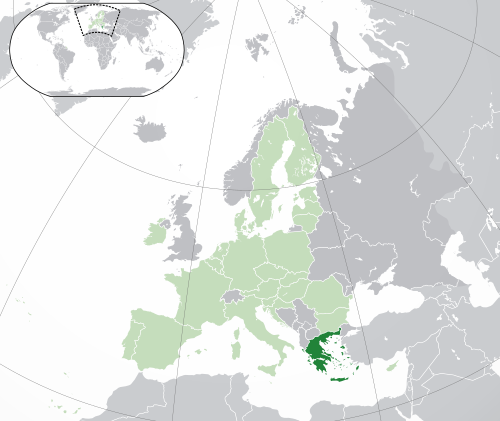 | |
| 資本 そして最大の都市 | アテネ 37°58′N 23°43′E / 37.967°N 23.717°E / 37.967; 23.717 |
| 公用語 と国語 | ギリシャ語 |
| 宗教 (2017年) | |
| 異名 |
|
| 政府 | 単一議会制共和国 |
• 社長 | カテリーナ・サケラロプロウ |
• 首相 | キリアコス・ミツォタキス |
• 国会議長 | コンスタンティノス・タソウラス |
| 立法府 | ギリシャ議会 |
| 設立の経緯 | |
| 1821年3月25日(ギリシャ独立戦争の伝統的な開始日)、1822年1月15日(公式宣言) | |
• 認識された | 1830年2月3日 |
| 1974年7月24日 | |
• 現憲法 | 1975年6月11日 |
| エリア | |
• 合計 | 131,957 km 2 (50,949 平方マイル) [3] ( 95 位) |
• 水 (%) | 1.51(2015)[2] |
| 人口 | |
• 2023年の推定 |  10,413,982 (2023年1月1日)[4](第90回) 10,413,982 (2023年1月1日)[4](第90回) |
• 2021年国勢調査 | 10,432,481 [5] |
• 密度 | 78.9/km 2 (204.4/平方マイル) ( 105位) |
| GDP (購買力平価) | 2024年推定 |
• 合計 |  4301億2500万ドル[6] ( 55位) 4301億2500万ドル[6] ( 55位) |
• 一人当たり | 41,188ドル[6] ( 52位) |
| GDP (名目) | 2024年推定 |
• 合計 | 2502億7600万ドル[6] ( 54位) |
• 一人当たり | 23,966ドル[6] ( 45位) |
| ジニ (2023) |  31.8 [7] 31.8 [7]中程度の不平等 |
| HDI (2022) | 0.893 [8]非常に高い (33位) |
| 通貨 | ユーロ( € ) ( EUR ) |
| タイムゾーン | UTC +02:00 ( EET ) |
• 夏 ( DST ) | UTC +03:00 ( EEST ) |
| 日付形式 | dd . mm . yyyy (西暦) b |
| ドライブを続ける | 右 |
| 呼び出しコード | +30 |
| ISO 3166 コード | GR |
| インターネットTLD | |
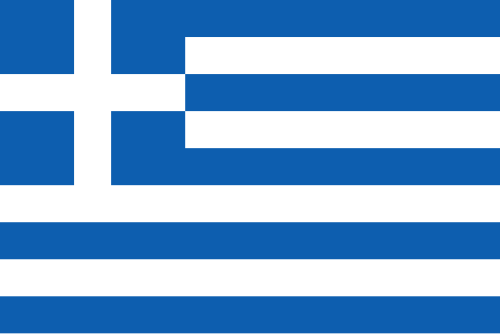

ギリシャ[a]は、正式にはギリシャ共和国[b]であり、南東ヨーロッパの国です。バルカン半島の南端に位置し、北西はアルバニア、北は北マケドニアとブルガリア、東はトルコと国境を接しています。本土の東はエーゲ海、西はイオニア海、南はクレタ海と地中海に面しています。ギリシャは地中海盆地で最も長い海岸線を持ち、何千もの島々が点在しています。国土は9つの伝統的な地理的地域から成り、人口は1,040万人を超えています。アテネが国の首都であり最大の都市で、テッサロニキとパトラスがそれに続きます。
ギリシャは西洋文明の発祥地と考えられており、民主主義、西洋哲学、西洋文学、歴史学、政治学、主要な科学と数学の原理、演劇、オリンピックの発祥地です。紀元前8世紀から、ギリシャ人は地中海と黒海にまたがるポリス(単数形はポリス)として知られるさまざまな独立した都市国家に組織されました。マケドニア王フィリップ2世は紀元前4世紀に現在のギリシャのほとんどを統一し、その息子のアレクサンダー大王は東地中海から北西インドまで、既知の古代世界の多くを急速に征服しました。その後のヘレニズム時代は、古代におけるギリシャ文化と影響力の絶頂期でした。ギリシャは紀元前2世紀にローマに併合され、ローマ帝国とその後継であるビザンチン帝国の不可分の一部となり、文化と言語は主にギリシャ語でした。紀元1世紀に出現したギリシャ正教会は、現代ギリシャのアイデンティティの形成に貢献し、ギリシャの伝統をより広い正教世界に伝えました。1204年の第4回十字軍の後、ギリシャ半島の一部にラテン系の領土が確立されましたが、その地域の大部分は15世紀半ばまでに オスマン帝国の支配下に入りました。
1821年に始まった長期にわたる独立戦争の後、ギリシャは1830年に近代的な国民国家として出現した。最初の100年間、ギリシャ王国は領土の拡大を模索し、それは主に20世紀初頭のバルカン戦争中に実現し、 1922年の小アジア戦役での壊滅的な敗北まで続いた。1924年に樹立された短命の共和国は、内戦の余波とトルコからの難民の再定住という課題に悩まされた。1936年、王党派の独裁政権が軍事占領、内戦、軍事独裁を特徴とする長期にわたる権威主義的統治を開始した。1974年から1975年にかけて民主主義が回復され、現在の議会制共和国となった。1974年のトルコによるキプロス侵攻では、ギリシャ系キプロス人側の交戦国となった。
ギリシャは1950年から1970年代にかけて記録的な経済成長を遂げ、高度に発達した高所得経済を有する先進国です。国際連合の創設メンバーであるギリシャは、1981年に現在の欧州連合に10番目に加盟し、ユーロ圏に属しています。欧州評議会、NATO(1952年以降)、OECD、WTO、OSCEなど、他の国際機関にも加盟しています。ギリシャは、独自の文化遺産、大規模な観光産業、著名な海運部門を誇ります。この国の豊かな歴史的遺産は、19のユネスコ世界遺産に部分的に反映されています。ギリシャは、2023年に世界で 9番目に訪問者数が多い国でした。
名前
現代ギリシャ語でのこの国の固有名はΕλλάδα( 、 [eˈlaða]と発音)である。これに対応する古代ギリシャ語および保守的な正式現代ギリシャ語(Katharevousa)はἙλλάς(Hellas、古典語:[hel.lás]、現代語:[eˈlas] )である。これは、今日では主に古語または詩の文脈で見られる英語の別名Hellasの由来である。ギリシア語の形容詞形ελληνικός(ellinikos、[eliniˈkos] )は、時にはHellenicと翻訳され、ギリシャ国家の正式名称であるギリシャ共和国(Ελληνική Δημοκρατία、[eliniˈci ðimokraˈti.a])のように、ギリシャの機関の正式名称でもこの意味で表現されることが多い。 [11]
英語名のGreeceおよびGreekは、ラテン語のGraeciaおよびGraecus を経て、南イタリアのMagna Graeciaに最初に定住した古代ギリシャの部族の 1 つであるGraeci ( Γραικοί、Graikoí、単数形は Γραικός、Graikós )の名前に由来しています。
歴史
先史時代とエーゲ海文明

ギリシャ南部のマニにあるアピディマ洞窟には、アフリカ以外では最古の20万年前の初期現代人の遺跡があると考えられている。 [12]しかし、この遺跡は原始人のものだと主張する人もいる。[13]ギリシャには、例えばフランキティ洞窟など、石器時代の3つの段階すべてが残っている。[14]ギリシャの新石器時代の集落は紀元前7千年紀に遡り、[15]ヨーロッパ最古である。これは、ギリシャが農業が近東からヨーロッパに広まったルート上にあるためである。[16]
ギリシャはヨーロッパで最初の高度な文明の本拠地であり、西洋文明発祥の地と見なされることが多い。[17] [18]最も古いのはキクラデス文化で、紀元前3200年頃からエーゲ海の島々で栄え、腕を組んだ像やその他の大理石の像を豊富に生み出した。[19]紀元前 3100年頃から紀元前1100年頃まで、主要な文化と経済の中心地であったクレタ島は、宗教的な像、色鮮やかなフレスコ画、記念碑的な宮殿で知られるミノア文明の本拠地であった。[20] [21]ミノア人は、線文字Aとクレタ島の象形文字として知られる文字を使用して、解読されていない言語を記した。[22] [23]本土では、ミケーネ文明が紀元前1750年頃に発達し、紀元前1100年頃まで続い た。[24]ミケーネ人は高度な軍事力を持ち、大きな要塞を築きました。[25]彼らは多くの神を崇拝し[26]線文字Bを使用して、ミケーネ語として知られる最も古いギリシャ語を書き記しました。 [ 27 ] [ 28]
古代ギリシャ
ミケーネ文明の崩壊は、記録が残っていないギリシャ暗黒時代の到来を告げた。暗黒時代の終わりは、伝統的に第1回オリンピック大会が開催された紀元前776年とされている。[29]西洋文学の基礎となるテキストである『イリアス』と『オデュッセイア』は、紀元前7世紀か8世紀にホメロスが書いたと考えられている。 [30] [31]詩はオリンポスの神々への信仰を形作ったが、古代ギリシャの宗教には司祭階級や体系的な教義はなく、ディオニュソスのような民間信仰、秘儀や魔術などの他の潮流も含んでいた。[32]この頃、ギリシャ半島全土に王国や都市国家が出現し、黒海沿岸、イタリア南部のマグナ・グラエキア、小アジアにまで広がった。これらは大きな繁栄を遂げ、建築、演劇、科学、数学、哲学に表れた古代ギリシャの文化ブームをもたらした。紀元前508年、クレイステネスはアテネで世界初の民主的な政治制度を制定した。[33] [34]

紀元前500年までに、ペルシャ帝国は小アジアとマケドニアのギリシャ都市国家を支配していた。[35]小アジアのギリシャ都市国家によるペルシャ支配打倒の試みは失敗し、ペルシャは紀元前492年にギリシャ本土の諸国に侵攻したが、紀元前490年のマラトンの戦いで敗北して撤退を余儀なくされた。これに応じて、ギリシャ都市国家はスパルタの指揮下で紀元前481年にギリシャ同盟を結成した。これはトロイ戦争の神話的な連合以来、記録に残る最初のギリシャ諸国の連合であった。[36] [37]ペルシャによる2度目のギリシャ侵攻は紀元前480年~479年にサラミスとプラタイアで決定的な敗北を喫し、ペルシャ人は最終的にヨーロッパ全土から撤退した。ペルシア戦争におけるギリシャの勝利は歴史上極めて重要な瞬間であり、[38]その後の50年間の平和はアテネの黄金時代として知られ、西洋文明の多くの基礎を築いた重要な時代である。政治的統一の欠如により、ギリシャ諸国間の紛争が頻繁に発生した。最も壊滅的なギリシャ国内戦争はペロポネソス戦争(紀元前431-404年)であり、アテネ帝国の終焉とスパルタ、そして後にテーベの覇権の出現を象徴した。[39]紀元前4世紀の絶え間ない戦争によって弱体化したギリシャのポリスは、フィリップ2世率いるマケドニア王国の台頭に屈服し、ギリシャ同盟として知られる同盟を結成した。[40]
アレクサンダー大王の征服によりヘレニズム時代が到来した。
紀元前336年にフィリップが暗殺された後、その息子でマケドニア王のアレクサンダーは、ペルシア帝国に対する汎ギリシャ 運動の指揮官となり、同帝国を滅ぼした。戦いで負け知らずだったアレクサンダーは、紀元前323年に早すぎる死を迎えるまで、インダス川のほとりまで進軍した。[41]アレクサンダーの帝国は分裂し、ヘレニズム時代が始まった。アレクサンダーの後を継いだ将軍たちとその後継者たちは、激しい争いの末、彼が征服した地域に、エジプトのプトレマイオス朝やシリア、メソポタミア、イランのセレウコス朝のような大きな私領を築いた。[42]これらの王国で新たに築かれた都市国家、例えばアレクサンドリアやアンティオキアには、支配者少数派のギリシャ人が定住した。その結果、その後の数世紀の間に、コイネーとして知られるギリシャ語の俗語とギリシャ文化が広まり、ギリシャ人は東方の神々と崇拝を取り入れた。[43]ギリシャの科学、技術、数学はヘレニズム時代に頂点に達した。[44]マケドニアのアンティゴノス朝の王たちから自治と独立を維持することを目指して、ギリシャの多くのポリスはコイネーまたはシンポリテイアイ、つまり連合体で団結し、東方との経済関係が確立した後は、裕福なエウエルゲタイの層が内部生活を支配した。[45]
ローマ属州(紀元前146年~紀元後4世紀)

紀元前200年頃から、ローマ共和国はギリシャ情勢にますます関与するようになり、マケドニアとの一連の戦争に従事した。[46]紀元前168年のピュドナの戦いでのマケドニアの敗北は、アンティゴノス朝の終焉を告げた。[47]紀元前146年、マケドニアはローマによって属州として併合され、ギリシャの残りの地域はローマの保護領となった。[46] [48]このプロセスは紀元前27年に完了し、皇帝アウグストゥスがギリシャの残りの地域を併合し、元老院管轄のアカイア属州とした。 [ 48]軍事的に優位であったにもかかわらず、ローマ人はギリシャ文化を賞賛し、大きな影響を受けるようになった。 [49]
ギリシャ化された東方のギリシア語圏のコミュニティは、2世紀と3世紀のキリスト教の普及に重要な役割を果たしました。 [50]また、キリスト教の初期の指導者や著述家は、ギリシア出身ではないものの、ほとんどがギリシア語を話していました。[51]新約聖書はギリシア語で書かれており、いくつかの章では初期キリスト教におけるギリシアの教会の重要性を証明しています。しかし、ギリシアの大部分は異教に固執し、古代ギリシアの宗教的慣習は4世紀後半になってもまだ流行していましたが、[52] 391年から392年にローマ皇帝テオドシウス1世によって禁止されました。 [53]記録に残る最後のオリンピックは393年に開催され、[54]次の世紀には多くの寺院が破壊または損傷を受けました。[55] [56] 529年にユスティニアヌス帝によってアテネの新プラトン主義アカデミーが閉鎖されたことが古代の終わりと考えられていますが、アカデミーが存続した証拠があります。[55] [57]
中世(4世紀~15世紀)
5世紀の西ローマ帝国の崩壊後、東ローマ帝国はビザンチン帝国として知られているが、当時は「ローマ王国」と呼ばれていた。首都はコンスタンティノープルで、言語と文化はギリシャ語、宗教は主に東方正教会であった。[58]
ギリシャを含む帝国のバルカン半島は蛮族の侵略による混乱に見舞われた。[59] 4世紀と5世紀のゴート族とフン族の襲撃、および7世紀のスラヴ人の侵略により、ギリシャ半島における帝国の権威は崩壊した。[60]帝国政府は島嶼部と沿岸地域、特にアテネ、コリントス、テッサロニキなどの人口の多い城壁都市のみを支配下に置いた。[60] [61] [62]しかし、4世紀から6世紀にかけて都市は制度的継続性と繁栄を示しているため、ギリシャが衰退、分裂、人口減少を経験したという見方は時代遅れであると考えられている。シネクデモス年代記によると、6世紀初頭のギリシャには約80の都市があり、 4世紀から7世紀は繁栄の時代と考えられている。[63]

8世紀まで、現代ギリシャのほぼ全域はローマ教皇庁の管轄下にあった。ビザンチン帝国のレオ3世は、 8世紀にコンスタンティノープル総主教区の境界を西と北に移動させた。 [64]ビザンチン帝国は、アラブ・ビザンチン戦争中に失われた属州の回復を8世紀に開始し、ギリシャ半島の大部分が再び帝国の支配下に入った。[65] [66]このプロセスは、シチリア島と小アジアからギリシャ人が大量にギリシャ半島に流入したことで促進され、多くのスラブ人が捕らえられて小アジアに再定住した。[61] 11世紀と12世紀には安定が回復し、ギリシャ半島は経済成長の恩恵を受けた。[65]ギリシャ正教会は、ギリシャの思想をより広い正教世界に広める上で重要な役割を果たした。[67] [全文引用が必要]

1204年の第4回十字軍とコンスタンティノープルの「ラテン人」による陥落の後、ギリシャ本土はエピロスのギリシャ専制君主国とフランス統治に分割された[68](フランコクラティア)。[69] 1261年にコンスタンティノープルに帝国の首都が再建され、ギリシャ半島の大部分が帝国に回復されたが、島々はジェノバとヴェネツィアの支配下にとどまった。[68]パレオロギ王朝(1261-1453)の時代には、古代ギリシャへの回帰を伴ったギリシャ愛国主義の新時代が到来した。[70] [71] [72] [73] [74]
14世紀にはギリシャ半島の大部分がビザンチン帝国からセルビア人、そしてオスマン帝国に奪われた。[75]コンスタンティノープルは1453年にオスマン帝国に陥落し、1460年までにオスマン帝国によるギリシャ本土の征服は完了した。[76]
ヴェネツィアの領有とオスマン帝国の統治(15 世紀 - 1821 年)
15世紀末までにギリシャ本土とエーゲ海の島々の大半はオスマン帝国の支配下にあったが、キプロス島とクレタ島はヴェネツィア領のままで、それぞれ1571年と1669年までオスマン帝国の手に落ちなかった。ヴェネツィアは1797年までイオニア諸島の支配権を維持したが、その後はフランス、次いでイギリスの支配下に入った。[77]イオニア諸島とコンスタンティノープルの一部のギリシャ人は繁栄し、コンスタンティノープルのギリシャ人(ファナリオット)はオスマン帝国政権内で権力を握ったが、[78]ギリシャの大部分はオスマン帝国の征服による経済的影響に苦しんだ。重税が課され、後年オスマン帝国は世襲領地創設政策を制定して実質的にギリシャの農村住民を農奴に変えた。[79]一方、オスマン帝国の征服によりギリシャはヨーロッパの歴史的発展から切り離されていた。[80]
オスマン帝国政府は、ギリシャ正教会とコンスタンティノープル総主教区を、民族的にギリシャ人であるかどうかに関わらず、オスマン帝国の正教徒全体の統治機関とみなしていた。オスマン帝国は非イスラム教徒にイスラム教への改宗を強制しなかったが、キリスト教徒は差別に直面した。差別は、特に地元のオスマン帝国当局による厳しい扱いと相まって、表面的であったとしてもイスラム教への改宗につながった。19世紀には、多くの「隠れキリスト教徒」が古い宗教的忠誠心に戻った。[81]

オスマン帝国のギリシャ統治の性質は様々であったが、それは常に独断的で、しばしば厳格であった。[81]一部の都市ではスルタンが知事を任命したが、アテネのように自治自治体であった都市もあった。内陸部の山岳地帯や多くの島々は、何世紀にもわたってオスマン帝国中央政府から事実上独立していた。[82] [ページが必要] 16世紀と17世紀はギリシャ史における「暗黒時代」と見なされており、[83]オスマン帝国の支配を打倒できる見込みは遠いと思われていた。[要出典]しかし、1821年のギリシャ革命以前にも、 1571年のレパントの海戦へのギリシャの参加、 [83] 1684年-1699年のモレア戦争、1770年のロシアが扇動したオルロフの反乱など、ギリシャ人がオスマン帝国と戦う戦争があった。 [要出典]これらの反乱はオスマン帝国によって大流血で鎮圧された。[84] [85]多くのギリシャ人がオスマン帝国の臣民として徴兵され、オスマン帝国の陸軍、特に海軍に従軍したが、正教会を管轄するコンスタンティノープル総主教区は概して帝国に忠誠を誓い続けた。
近代国民国家
ギリシャ独立戦争(1821年 - 1832年)

18世紀には、ギリシャ商人がオスマン帝国内での貿易を支配するようになり、地中海、バルカン半島、ヨーロッパ各地にコミュニティを築き、[86]その富を教育活動に充てて、若い世代に西洋の思想に触れさせた。[87] 18世紀には、近代ギリシャ啓蒙主義の時代に学問が進歩し、西洋化したギリシャ語圏のエリート層の間でギリシャ国家という概念が生まれた。この環境で1814年に結成された秘密組織がフィリキ・エテリアである。 [88]彼らはギリシャ正教世界の伝統的な階層を、彼らの自由主義的民族主義の大義に巻き込んだ。[89]
最初の反乱は1821年3月6日にドナウ川流域の諸侯国で始まったが、オスマン帝国によって鎮圧された。これがペロポネソス半島のギリシャ人を刺激し、3月17日にマニオット族はオスマン帝国に宣戦布告した。[90] 1821年10月までにギリシャ人はトリポリツァを占領した。クレタ島、マケドニア、中央ギリシャでも反乱があったが鎮圧された。1822年と1824年にはトルコ人とエジプト人が島々を荒らし、虐殺を行った。[90] [91] [92]これにより西ヨーロッパの世論はギリシャ人に有利になった。[93]オスマン帝国のスルタン、 マフムード2世はエジプトのメフメト・アリーと交渉し、領土獲得と引き換えに息子のイブラヒム・パシャを軍隊と共に派遣することに同意した。[94] 1825年末までに、ペロポネソス半島の大半はエジプトの支配下に入った。[95]フランス、ロシア帝国、イギリスの3大国はそれぞれ海軍を派遣した。[96]連合艦隊はナヴァリノの海戦でオスマン・エジプト連合艦隊を破り、ギリシャは1828年までに中央ギリシャを占領した。新生ギリシャ国家は1830年にロンドン議定書に基づいて承認された。 [97]
ギリシャ王国
.jpg/500px-Peter_v_Hess_Empfang_K%C3%B6nig_Otto_(1).jpg)
1827年、トロイゼンで開かれた第三国民議会は、イオアニス・カポディストリアスを第一ギリシャ共和国の初代総督に選出した。カポディストリアスは国家、経済、軍事の各機関を設立した。彼と地方勢力との間に緊張が生じ、1831年に彼が暗殺され、1832年にロンドン会議が開かれた後、イギリス、フランス、ロシアはバイエルン公オットー・フォン・ヴィッテルスバッハを君主に据えた。[98]オットーの治世は専制的で、独立後11年間は、ギリシャはヨーゼフ・ルートヴィヒ・フォン・アルマンスペルク率いるバイエルン寡頭政治によって統治され、後にオットー自身が国王兼首相となった。[98]ギリシャは3つの保護大国の影響下に置かれ続けた。[99] 1843年、蜂起によりオットーは憲法と代表議会の発布を余儀なくされた。
オットーの統治は絶対主義であったが、ギリシャの行政と教育の基盤となっている制度の発展に役立った。[100]教育、海上・郵便通信、効果的な民政、法典の改革が行われた。[101] 歴史修正主義は、古代ギリシャの遺産を推進するために、脱ビザンチン化と脱オスマン化の形をとった。 [102]首都は、1829年以来あったナフプリオから、当時はより小さな町であったアテネに移された。 [103]ギリシャ教会がギリシャの国教会として設立され、受胎告知の日である3月25日がギリシャ独立戦争の記念日に選ばれ、ギリシャのアイデンティティと正教のつながりを強化した。[102]
オットーは1862年にバイエルン人が支配する政府、重税、オスマン帝国からクレタ島を併合する試みの失敗により廃位された。[ 98] [100]後任にはデンマーク王子ヴィルヘルムが就任し、ジョージ1世と名乗り、イギリスからの戴冠式の贈り物としてイオニア諸島を持ち帰った。1864年の新憲法により、ギリシャの政治形態は立憲君主制からより民主的な戴冠共和国へと変更された。[104][ 105] [106] 1875年には議会の多数派が政府の要件として導入され、[107]君主が少数派政府を任命する権限が制限された。腐敗とコリントス運河などのインフラへの支出増加が相まって[108]弱い経済に過重な負担がかかり、1893年には国債の返済不能が宣言された。

しかし、ギリシャ人はオスマン帝国支配下のギリシャ領土を解放する決意で団結していた。クレタ島の反乱(1866-1869)が民族主義的な熱狂を高めていたからである。1877年にロシアとオスマン帝国の間で戦争が勃発すると、ギリシャの感情はロシアに集まったが、ギリシャは貧しく、イギリスの介入を懸念していたため参戦できなかった。[109]クレタ島のギリシャ人は反乱を起こし続け、1897年、ギリシャ政府は国民の圧力に屈してオスマン帝国に宣戦布告した。その後の1897年の希土戦争で、訓練も装備も不十分なギリシャ軍は敗北した。しかし、列強の介入により、ギリシャはほとんど領土を失うことなく、クレタ島はギリシャ王子ゲオルギオス1世の下で自治国家として設立された。国庫が空になったため、財政政策は国際金融管理下に入った。[110]政府はコミタジスを鎮圧し、この地域のスラヴ語圏の農民をブルガリアの影響から切り離すことを目指し、オスマン帝国支配下のマケドニアでマケドニア闘争として知られるゲリラ運動を支援し、 1908年の青年トルコ革命で終結した。 [111]
拡大、災害、そして復興
国家の願望が停滞し、達成不可能であるように思われることに不満を抱いた軍将校らは、1909年にクーデターを組織し、国家再生のビジョンを伝えたクレタ島の政治家エレフテリオス・ヴェニゼロスを呼びかけた。2度の 選挙に勝利して1910年に首相となった後、[112]ヴェニゼロスは財政、社会、憲法の改革を開始し、軍を再編し、ギリシャをバルカン同盟に加盟させ、バルカン戦争を指揮した。1913年までにギリシャの領土と人口は倍増し、クレタ島、イピロス、マケドニアを併合した。第一次世界大戦前夜の外交政策をめぐるコンスタンティノス1世とカリスマ的なヴェニゼロスとの争いは政治を支配し、国を2つの対立するグループに分裂させた。戦争中、ギリシャには二つの政府があった。アテネの王党派親ドイツ政府と、テッサロニキのヴェニゼル派親協商政府である。1917年にギリシャが協商国側で参戦し、この二つの政府は統合された。
戦後、ギリシャはギリシャ人先住民が多数居住する小アジアへの進出を試みたが、希土戦争(1919年 - 1922年)で敗れ、小アジアのギリシャ人の逃亡を招いた。[113] [114]これらの出来事は、ギリシャ人虐殺(1914年 - 1922年)の時期に重なり、[115] [116] [117] [ 118] [119]オスマン帝国とトルコの役人が、数十万人の小アジアのギリシャ人、同数のアッシリア人、そしてより多数のアルメニア人の死に貢献した際に起こった。結果として生じた小アジアからのギリシャ人の脱出は、戦争を終結させたローザンヌ条約の一環として、ギリシャとトルコの間で公式の人口交換が行われ、恒久化され、拡大された。[120]次の時代は不安定な時代となり、トルコから150万人以上の財産を持たないギリシャ難民(ギリシャ語を話せない人もいた)がギリシャ社会に統合されなければならなかった。難民はギリシャの以前の人口の4分の1以上を占め、劇的な人口増加をもたらした。[121]
小アジアでの悲惨な出来事の後、1924年に国民投票によって王政が廃止され、第二ギリシャ共和国が宣言された。[122] 1935年、王党派の将軍から政治家に転身したゲオルギオス・コンディリスがクーデターで権力を握り、不正な国民投票を行って共和国を廃止し、その後ジョージ2世が王位に復帰した。
独裁政治、第二次世界大戦、そして復興
1936年にはイオアニス・メタクサス首相とジョージ2世の間で協定が結ばれ、メタクサスは8月4日体制として知られる独裁政権の指導者に就任し、1974年まで続く権威主義的な統治が始まった。 [123]ギリシャはイギリスと良好な関係を維持し、枢軸国とは同盟を組まなかった。

1940年10月、ファシストイタリアはギリシャの降伏を要求したがギリシャは拒否し、希土類戦争でギリシャはイタリア軍をアルバニアに撃退した。[124]フランスの将軍シャルル・ド・ゴールはギリシャのレジスタンスの激しさを称賛したが、ギリシャはギリシャの戦いで緊急派遣されたドイツ軍に陥落した。ナチスはアテネとテッサロニキの統治を進め、他の地域はファシストイタリアとブルガリアに与えられた。1941年から42年の冬の間に10万人以上の民間人が飢餓で死亡し、ナチスとその協力者による報復でさらに数万人が死亡し、経済は破綻し、ほとんどのギリシャのユダヤ人(数万人)は移送されナチスの強制収容所で殺害された。[125] [126]最も効果的なレジスタンス運動の一つであるギリシャレジスタンスがナチスと戦った。ドイツ占領軍は報復として残虐行為、大量処刑、民間人の大量虐殺、町や村の破壊を行った。数百の村が組織的に放火され、100万人近くのギリシャ人が家を失った。[126]ドイツ軍はギリシャ人約21,000人を処刑し、ブルガリア人は40,000人、イタリア人は9,000人を処刑した。[127]
解放後、ギリシャはイタリアからドデカネス諸島を併合し、ブルガリアから西トラキアを奪還した。ギリシャは共産主義勢力と反共産主義ギリシャ政府との間で血なまぐさい内戦に陥り、1949年にギリシャ政府が勝利するまで続いた。この内戦は冷戦初期の闘争の一つであり[128]、その後30年間にわたりさらなる経済荒廃、人口流出、政治的二極化をもたらした[129]。
戦後は社会的な争いと左派の疎外が特徴であったが、ギリシャは米国のマーシャル・プランの推進もあり、急速な経済成長と復興を経験した。[130] 1952年、ギリシャはNATOに加盟し、冷戦の西側陣営における地位を強化した。 [131]
1965年にコンスタンティノス2世国王がゲオルギオス・パパドプロスの中道政権を解任したことで政治的混乱が起こり、1967年にはゲオルギオス・パパドプロス率いるギリシャ軍事政権によるクーデターに至った。公民権は停止され、政治的弾圧は激化し、拷問などの人権侵害が横行した。経済成長は1972年に頭打ちになるまで急速なままだった。 1973年のアテネ工科大学蜂起に対する残忍な鎮圧が政権の崩壊のきっかけとなり、対抗クーデターで准将ディミトリオス・イオアニディスが新たな軍事政権の独裁者となった。1974年7月20日、トルコはギリシャが支援するキプロス人のクーデターへの報復としてキプロス島に侵攻し、ギリシャ危機を引き起こして政権が崩壊し、メタポリテフシを通じて民主主義が回復された。[132]
第三ギリシャ共和国

元首相コンスタンティノス・カラマンリスは亡命先から呼び戻され、工科大学蜂起の1周年に1964年以来初の複数政党選挙が実施された。1975年には国民投票で王政復古を選ばなかったこと を受けて、民主共和制の憲法が公布された。
一方、ジョージ・パパンドレウの息子アンドレアス・パパンドレウは、カラマンリスの保守的な新民主主義党に対抗して全ギリシャ社会主義運動(PASOK)を設立し、その後40年間、この2つの政治組織が政府を支配した。ギリシャは1980年にNATOに再加盟した。[c] [133]ギリシャは1981年に欧州共同体の10番目の加盟国となり、持続的な成長を導いた。工業企業や重厚なインフラへの投資、欧州連合からの資金、観光、海運、急成長するサービス部門からの収益の増加により、生活水準が向上した。1981年、アンドレアス・パパンドレウの選出は、1980年代の改革をもたらした。彼は民事婚を承認し、持参金は廃止され、教育と外交政策の原則が変更された。しかし、パパンドレウの在任期間は汚職、高インフレ、停滞、財政赤字と関連付けられており、後に問題を引き起こした。[134]
同国は2001年にユーロを導入し、 2004年にはアテネで夏季オリンピックを成功裏に開催した。 [135] 2010年、ギリシャは大不況とそれに伴う欧州債務危機に見舞われた。ユーロ導入により、ギリシャはもはや通貨を切り下げて競争力を取り戻すことができなくなった。 [136] 2012年の選挙では大きな政治的変化があり、PASOKと新民主主義党の2大政党が崩壊して新政党が誕生した。[137] 2015年、アレクシス・チプラスが2大政党以外で初めて首相に選出された。[138]ギリシャの政府債務危機とその後の緊縮政策は社会的争いをもたらした。この危機は2018年頃に救済メカニズムの終了と成長の回復とともに終結した。[139]同時に、チプラス首相と北マケドニアの指導者ゾラン・ザエフはプレスパ協定に署名し、両国の関係を緊張させていた国名紛争を解決し、北マケドニアがEUとNATOに加盟する道を容易にした。[140]
2019年、中道右派の新民主主義党が選挙に勝利し、キリアコス・ミツォタキス氏がギリシャの新首相に就任した。[141] 2020年、ギリシャ議会は無党派候補のカテリーナ・サケラロプロウ氏をギリシャ初の女性大統領に選出した。[142] 2024年2月、ギリシャは同性婚と同性カップルによる養子縁組を認める初の正教会キリスト教国となった。[143]
地理
.jpg/500px-Shipwreck_Beach_-_Western_coast_of_Zakynthos,_Greece_(12).jpg)
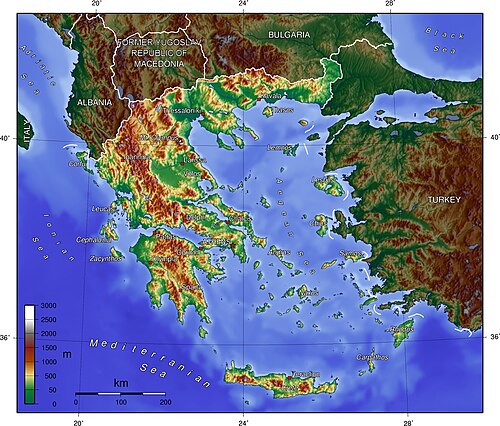
ギリシャは南ヨーロッパ[144]と南東ヨーロッパ[145]に位置し、バルカン半島の南端で海に突き出た山岳地帯の半島本土から成り、ペロポネソス半島(コリントス地峡の運河によって本土から隔てられている)で終わり、ヨーロッパ、アジア、アフリカの交差点という戦略的な位置にある。[d]非常に入り組んだ海岸線と多数の島々により、ギリシャの海岸線は13,676 km(8,498マイル)で世界で11番目に長い。[151]陸地の境界線は1,160 km(721マイル)である。国土はおよそ北緯34度から42度、東経19度から30度の間に位置し、極地は[152]北はオルメニオ村、南はガヴドス島、東はカステロリゾ島/メギスティ島近くのストロンギリ島、西はオトノイ島である。ガヴドス島はヨーロッパ最南端の島とされている。[153] [154]

ギリシャのおよそ80%は山や丘陵で構成されており、ヨーロッパで最も山の多い国の一つとなっている。ギリシャの神々の神話上の住処であるオリンポス山は、標高2,918メートル(9,573フィート)のミュティカス山頂で頂点に達し、[155]国内で最も高い。ギリシャ西部には多くの湖や湿地帯があり、ピンダス山脈がそびえ立っている。ディナルアルプスの延長であるピンダス山脈は、スモリカス山(ギリシャで2番目に高い山)で最高標高2,637メートル(8,652フィート)に達し、歴史的に東西の移動の大きな障壁となってきた。その延長はペロポネソス半島を横断し、クレタ島で終わる。ピンドス山脈のヴィコス・アオス国立公園の一部であるヴィコス渓谷は、ギネスブックに世界で最も深い渓谷として登録されています。[156]もう一つの注目すべき地形はメテオラの岩柱で、その頂上には中世のギリシャ正教の修道院が建てられています。[157]
ギリシャ北東部には、東マケドニアとトラキア地方に広がるロドピ山脈という別の標高の高い山脈があります。この地域は、国土の北東端にある エヴロス地方の有名なダディアの森を含む、広大で深い古代の森林に覆われています。
広大な平原は主にテッサリア、中央マケドニア、トラキア地方に位置しており、国内でも数少ない耕作地であるため、重要な経済地域を構成しています。
島々

ギリシャには、定義によって1,200から6,000の島々があり、 [158]そのうち227の島に人が住んでいます。クレタ島は最大かつ最も人口の多い島です。幅60メートルのエウリポス海峡で本土と隔てられたエウボイア島は2番目に大きく、レスボス島とロドス島がそれに続きます。
ギリシャの島々は、伝統的に以下のグループに分けられています。アテネ近郊のサロニコス湾にあるアルゴサロニコス諸島、エーゲ海中央部を占める大規模だが密集したキクラデス諸島、トルコ西岸沖に緩やかに集まった北エーゲ海諸島、クレタ島とトルコの間の南東部に緩やかに集まったドデカネス諸島、エヴィア島北東部沖に小さく密集した スポラデス諸島、そしてイオニア海の本土の西に位置するイオニア諸島です。
気候

ギリシャの気候は主に地中海性気候(ケッペンの気候区分:Csa)であり、[159]穏やかから涼しく雨の多い冬と暑く乾燥した夏が特徴です。[160]この気候は、アテネ、キクラデス諸島、ドデカネス諸島、クレタ島、ペロポネソス半島、イオニア諸島、ギリシャ本土の一部を含むほとんどの沿岸地域で見られます。ピンドス山脈は国の気候に強い影響を及ぼしており、山脈の西側の地域は(湿気をもたらす南西風の影響をより多く受けるため)山脈の東側の地域(雨陰効果のため)よりも平均してかなり湿潤しており、[161]その結果、アテネ・リビエラの一部やキクラデス諸島の一部など、南部の沿岸地域の一部は高温半乾燥気候(ケッペンの気候区分:BSh )に分類され、テッサロニキやラリサなどの北部の一部の地域は低温同等の気候(ケッペンの気候区分:BSk )となっている。
ギリシャ北西部の山岳地帯と高地(エピロス、中央ギリシャ、テッサリア、西マケドニアの一部)およびペロポネソス半島の中央山岳地帯(アカイア、アルカディア、ラコニアの一部の地域を含む )は、アルプス気候(ケッペンの気候区分:D、E)で、冬には大雪が降る。ギリシャ北部の内陸部のほとんど、中央マケドニア、西マケドニアの低地、東マケドニア・トラキアは、湿潤亜熱帯気候(ケッペンの気候区分:Cfa )で、冬は寒く湿気が多く、夏は暑く適度に乾燥し、時折雷雨が降る。山岳地帯や北部地域では毎年降雪があり、アテネなどの低地南部でも短期間の降雪があることがある。[162]
生物多様性
植物地理学的には、ギリシャは北方王国に属し、地中海地域の東地中海州と環北方地域のイリュリア州にまたがっている。世界自然保護基金と欧州環境機関によると、ギリシャの領土はイリュリアの落葉樹林、ピンドス山脈の混交林、バルカン混交林、ロドピ山地混交林、エーゲ海とトルコ西部の硬葉樹林と混交林、クレタ島の地中海林の6つの生態地域に分けられる。[163] 2018年の森林景観完全性指数の平均点は6.6/10で、172カ国中世界70位であった。[164] 2024年にギリシャは、海洋生物多様性を保護するため、海洋保護区での底引き網漁を禁止する欧州連合初の国となった。[165]ギリシャ本土を囲む海には、 アザラシやアカウミガメなどの希少な海洋生物が生息しており、密林には絶滅危惧種のヒグマ、オオヤマネコ、ノロジカ、ヤギが生息しています。
政治

ギリシャを議会制共和国とする現在の憲法[166]は、 1967年から1974年の軍事独裁政権の崩壊後の1975年に制定され、それ以来4回改正されています。120条から成り、行政、立法、司法の三権分立を規定し、市民の自由と社会権の広範な具体的な保障(2001年にさらに強化)を与えています。[167] [168]
立法権は300名の議員からなる一院制議会によって行使される。[166]憲法によれば、行政権は政府によって行使され、名目上の国家元首である共和国大統領は議会によって5年の任期で選出され、議会で可決された法律を公布する。[166]しかし、1986年の憲法改正によって大統領職は主に儀礼的なものとなり、最高権力者はギリシャの政府の長である首相となった。 [169]この地位は議会の信任投票を得られる政党の現党首によって務められる。共和国大統領は正式に首相を任命し、その推薦に基づいて内閣の他の閣僚を任命または解任する。[166]
国会議員は直接選挙で選出される。直接選挙は「強化」比例代表制で行われ、多数決で勝利した政党が有利となり、一党独裁政権が樹立される。[要出典]国会議員選挙は4年ごとに行われるが、内閣の提案または国会で不信任決議が可決された場合、大統領が早期選挙を宣言する。[166]選挙権年齢は17歳である。[170]女性参政権は1952年に制定された。
OECDの報告書によると、ギリシャ人の社会参加は他の先進国のほとんどに比べて中程度であり、最近の選挙での投票率は58%で、OECD平均の69%を下回っている。[171]
政党
1974年から1975年にかけて民主主義が回復した後、ギリシャの政党システムは自由保守派の新民主主義党(ND)と社会民主主義派の全ギリシャ社会主義運動(PASOK)によって支配された。[e] PASOKと新民主主義党は、2009年に政府債務危機が発生するまで、主に交互に政権を握っていたが、それ以降は人気が急落し、[172] [173] [174] [175] [176] 2012年5月の議会選挙で左派のSYRIZAが第2党となり、[177] PASOKを追い抜いて中道左派の主要政党となったことにそのことが表れた。[178] 2023年6月の再選挙後、新民主主義党は一般投票の約41%と議会の過半数158を獲得し、そのリーダーであるキリアコス・ミツォタキスは、2019年から2023年5月の決着のつかない選挙まで首相を務めており、 2期目の4年間の任期で宣誓しました。[179]ギリシャ議会で代表される他の政党は、ギリシャ共産党(KKE)、ギリシャ解決党、新左翼党、スパルタ党、勝利党、自由の道党です。
外交関係

大使館
他国の大使館
総領事館
表現なし
ギリシャ
外交政策は外務省とその長であるニコス・デンディアス外務大臣を通じて行われる。同省の目的は、他の国々や国際機関に対してギリシャを代表すること、国外における国家と国民の利益を守ること、ギリシャ文化を促進すること、ギリシャ人ディアスポラとのより緊密な関係を育むこと、そして国際協力を奨励することである。[181]ギリシャはキプロス、イタリア、フランス、アルメニア、オーストラリア、イスラエル、米国、英国と特別な関係にあると言われている。 [182] [183] [184] [185] [186] [187]
2018年にプレスパ協定でマケドニアの命名紛争が解決された後、ギリシャ外務省は、ギリシャ国家にとって特に重要な2つの問題を特定した。エーゲ海とそれに対応する空域におけるギリシャの主権に対するトルコの異議申し立てと、北キプロスのトルコ占領を含むキプロス問題である。[188]トルコとギリシャの間には、東地中海の天然資源をめぐる長年の対立がある。トルコは、ギリシャ諸島周辺の法的大陸棚と排他的経済水域を認めていない。[189]
ギリシャは、ヨーロッパ、アジア、中東、アフリカに地理的に近いことから地政学的に重要な国であり、これを活用してバルカン半島、地中海、中東の平和と安定を促進する地域政策を展開してきた。[190]これにより、ギリシャは中規模国の地位を獲得した。[191]
ギリシャは、欧州評議会、欧州連合、地中海連合、NATO、国際フランス語圏機構、そして創設メンバーでもある国連など 、数多くの国際機関に加盟しています。
軍隊
ギリシャ軍はギリシャ国防参謀本部(ギリシャ語:Γενικό Επιτελείο Εθνικής Άμυνας – ΓΕΕΘΑ)によって監督され、文民権限は国防省に与えられている。ギリシャ軍は3つの部門、すなわちギリシャ陸軍(Ellinikos Stratos、ES)、ギリシャ海軍(Elliniko Polemiko Navtiko、EPN)、ギリシャ空軍(Elliniki Polemiki Aeroporia、EPA) から構成される。 [ 192]
さらに、ギリシャは海上での法執行、捜索救助、港湾運営のためにギリシャ沿岸警備隊を維持している。戦時には海軍を支援することができるが、海運省の管轄下にある。
ギリシャ軍の兵員は合計364,050人で、そのうち142,700人が現役、221,350人が予備役である。ギリシャは軍隊に所属する国民の数で世界第28位である。義務兵役は通常19歳から45歳までで1年間である。[144]さらに、戦略的に敏感な地域に住む18歳から60歳までのギリシャ人男性は、国家警備隊にパートタイムで従事することが求められる場合がある。
ギリシャ軍はNATO加盟国として、同盟の支援の下で演習や展開に参加しているが、NATOの任務への関与は最小限である。[193]ギリシャは年間70億ドル以上を軍事費に費やしており、これはGDPの2.3%に相当し、絶対額では世界で24番目に高く、一人当たりでは7番目に高く、NATOでは米国に次いで2番目に高い。さらに、ギリシャはGDPの2%という最低防衛費目標を達成または上回っているわずか5カ国のうちの1つである。
法と正義
司法は行政および立法府から独立しており、ギリシャ最高民事刑事裁判所、国家評議会、会計検査院の3つの最高裁判所から構成されています。司法制度は、民事および刑事事件を裁く民事裁判所と、市民とギリシャ行政当局の間の紛争を裁く行政裁判所からも構成されています。
ギリシャ警察は国家警察であり、道路交通管制からテロ対策まで幅広い任務を担う大規模な機関である。1984年にギリシャ憲兵隊と都市警察が合併して設立された。[194]
行政区分
2011年1月にカリクラティス綱領改革が発効して以来、ギリシャは13の地域からなり、2019年からは332(クライステニスI綱領)の自治体に細分化されている。54の旧県と県レベルの行政機関は、主に地域の下位単位として保持されている。7つの地方分権行政機関が、地域ベースの行政目的で1~3の地域をグループ化している。アトス山(ギリシャ語:アギオ・オロス、「聖なる山」)[195]という自治区が1つあり、中央マケドニア地域に接している。[196]
経済

2023年現在[update]、ギリシャの経済規模は購買力平価(PPP)で4170億ドルで世界第54位である。 [199] [200]ギリシャは27カ国からなる欧州連合の中で第15位の経済大国である。[201]一人当たりの所得では、ギリシャは4万ドルで世界第51位である。経済は先進国であり[202] [203] [204] [205] [206]高所得国である。[207] [205]
ギリシャは生活水準が高く、人間開発指数でも高い順位にある先進国である。[208] [209] [210]ギリシャの経済は主にサービス部門(85%)と工業(12%)で構成され、農業は3%を占めている。[211]ギリシャの重要な産業には観光(2023年には3,300万人[212]の国際観光客が訪れ、世界で9番目に訪問者が多い国となる)と商船(世界の総容量の18%を占め、[213]ギリシャの商船は世界最大)があり、同国はEU内でかなりの農業生産国(漁業を含む)である。2021年の失業率は13%、若者の失業率は33%で、EUとユーロ圏ではそれぞれ7%と16%であった。[214]
ギリシャはバルカン半島で最大の経済規模を誇り、[215] [216] [217]重要な地域投資家でもある。[215] [216]アルバニアにとっては第2位の外国資本投資家であり、北マケドニアにとっては最も重要な貿易相手国であり最大の外国投資家である。[218] [219]ギリシャの通信会社OTEは他のバルカン諸国への強力な投資家となっている。[220]
ギリシャはOECDと黒海経済協力機構(BSEC)の創設メンバーであった。1979年に欧州共同体と単一市場への加盟が調印され、1982年に完了した。ギリシャは2000年6月に欧州連合の経済通貨同盟に加盟し、2001年1月にはギリシャのドラクマに代わってユーロを通貨として採用した。[221]ギリシャは国際通貨基金と世界貿易機関の加盟国である。
債務危機(2010年~2018年)

2007年から2008年の金融危機に至るまで、ギリシャは高い構造的赤字を抱えていた。[222] 2009年には、赤字が公式の数字よりもかなり高かったことが明らかになった。[223]銀行は各国政府による将来の支払いと引き換えに現金を供給していた。その代わりに、各国の負債は「帳簿外」にされ、借入額が隠蔽されていた。[224] [225] [226]これにより、ギリシャはマーストリヒト条約の赤字目標を技術的に達成しながら、財源を超えた支出を行うことができた。[227]
危機は大不況によって引き起こされ、ギリシャのGDPは2009年に2.5%縮小した。[228]同時に、2008年と2009年に財政赤字が10%と15%に達したことが明らかになった。これにより、ギリシャの債務対GDP比は127%に増加した。[229]ユーロ圏の一員として、ギリシャには自律的な金融政策の柔軟性がなかった。ギリシャの借入金利が上昇し、2010年初頭にギリシャのローン返済能力に対する信頼の危機を引き起こした。[230] [231]
ギリシャ、他のユーロ圏諸国、国際通貨基金は、国家債務不履行を回避するため、 2010年5月に1100億ユーロの救済パッケージに合意した。 [232] [233]ギリシャは、財政赤字を削減するために厳しい緊縮財政措置を講じる必要があった。 [234] 2012年には、金融改革とさらなる緊縮財政を条件に、1300億ユーロの第2次救済に合意した。[235]債務削減が合意された。[235]ギリシャは2013年に財政黒字を達成し、2014年には成長に復帰した。[236] [237]
課された緊縮財政もあって、[223]ギリシャは2009年から2015年の間にGDPが25%減少した。 [238]債務比率は経済の縮小により127%から約170%に跳ね上がった。[239] 2013年、IMFは増税と予算削減の影響を過小評価していたことを認め、非公式の謝罪を発表した。[240] [241] [242]これらの政策が危機を悪化させたと非難されているが、[243] [244]債権者の責任を強調する声もある。[245] [246] [239]救済措置は2018年に終了した。[139]
2024年にはギリシャ経済は3%近く成長すると予測されており、これは危機前の2009年の規模に近づき、ユーロ圏の平均経済成長率0.8%を大きく上回ることを意味する。[247]
農業

ギリシャは、欧州連合最大の綿花生産国[248]とピスタチオ(2021年には7,200トン)であり、[249] [250]オリーブ(2021年には300万トン)で第2位、イチジク(2022年には8,400トン)とスイカ(2022年には44万トン)で第3位、アーモンド(2022年には4万トン)で第4位です。 [250]農業はGDPの3.8%を占め、労働力の12%を雇用しています。
ギリシャはEUの共通農業政策の大きな受益国である。欧州共同体への加盟の結果、ギリシャの農業インフラの多くが向上し、生産量が増加した。
エネルギー

電力生産の大部分は国営の電力公社(略称ΔΕΗ、DEIと表記)が担っており、2021年には電力の75%を供給した。 [251] DEIの発電の一部は亜炭を使用して行われている。[252] ギリシャの再生可能エネルギーは2022年にギリシャの電力の46%を占め、[253] 2011年の11%から増加している。[254] 風力発電は22%、太陽光発電は14%、水力発電は9%、天然ガスは38%を占めている。[255]独立系企業のエネルギー生産は増加している。ギリシャには原子力発電所はない。
海運
海運業は古代から経済活動の重要な要素となっている。[256]海運業は今でも国の最も重要な産業の一つであり、GDPの5%を占め、約16万人(労働力の4%)を雇用している。[257]
ギリシャの商船隊は世界最大で、世界の18%を占めている。[213]商船隊は、トン数(3億8400万重量トン)で第1位、船舶数(4,870隻)で第2位、[213]タンカーとドライバルクキャリアで第1位、コンテナ数で第4位、その他の船舶で第5位である。[258]ギリシャ国旗を掲げる船舶の数(ギリシャ以外の船団を含む)は1,517隻で、世界のトン数の5%(世界第5位)である。今日の船隊は、1970年代後半の史上最高5,000隻よりも小さい。[256] 1960年代には、海運王アリストテレス・オナシスとスタブロス・ニアルコスによる投資により、ギリシャ船隊はほぼ倍増した。 [ 259]現代のギリシャの海運産業は、第二次世界大戦後、ギリシャの海運業者が1940年代の船舶売却法を通じて米国政府から売却された余剰船舶を蓄積することができた時に形成されました。[259]
ギリシャには造船業と船舶整備業が盛んである。ピレウス港周辺の6つの造船所はヨーロッパでも最大級の規模を誇る。[260]ギリシャは高級ヨットの建造と整備のリーダーとなっている。[261]
観光
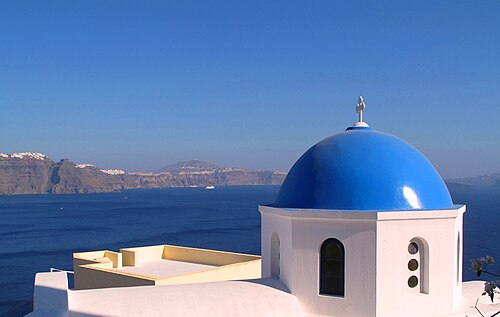
観光は経済の重要な要素であり、最も重要なセクターの1つであり、2018年には国内総生産の21%を占めました。[264]ギリシャは2022年に世界で9番目に訪問者が多い国であり、2800万人の観光客を迎えました。[265] 2007年の1800万人の観光客から増加しています。[266]
訪問者のほとんどはヨーロッパ大陸から来ているが[267]、単一国籍ではイギリスが最も多く、次いでドイツとなっている。ギリシャで最も訪問者が多い地域は中央マケドニアである[268]。
2011年、サントリーニ島はトラベル+レジャー誌で「世界最高の島」に選ばれた。[269]隣のミコノス島はヨーロッパ部門で5位となった。[269]ギリシャには19のユネスコ世界遺産があり、[270]ギリシャは世界遺産の総数で17位にランクされている。さらに13の遺産が暫定リストに載っており、推薦を待っている。[270]

輸送
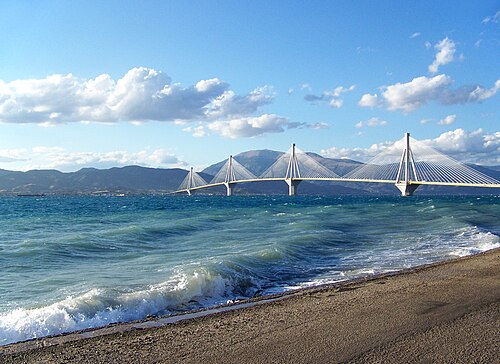

1980年代以降、道路と鉄道網は近代化されてきた。2020年時点で総延長約2,320km(1,440マイル)のギリシャの高速道路網は、南東ヨーロッパで最も広範囲に及び、ヨーロッパで最も進んだものの1つである。 [271]ギリシャ北部の東西A2(エグナティア・オドス)、本土東海岸沿いの南北A1(アテネ・テッサロニキ・エヴゾノイ、AThE)、西海岸沿いのA5 (イオニア・オドス)が含まれ、ペロポネソス半島のリオとギリシャ西部のアンティリオを結ぶヨーロッパ最長の吊り橋(長さ2,250メートル)であるリオ・アンティリオ橋につながる。アテネ首都圏には、民営のアッティキ・オドス(A6 / A62 / A621 / A64 / A65)高速道路網と拡張されたアテネ地下鉄システムが整備されており、テッサロニキ地下鉄は現在建設中です。
鉄道の接続は他の多くのヨーロッパ諸国ほど重要な役割を果たしていないが、アテネ、テッサロニキ、パトラス周辺のプロアスティコスによって提供される新しい郊外/通勤鉄道の接続によって拡張されている。アテネとテッサロニキの間には近代的な都市間鉄道が確立されており、2,500 km (1,600 mi) のネットワークの多くの部分で複線へのアップグレードが進行中である。また、アテネとパトラスの間に新しい複線の標準軌鉄道(古いメートルゲージのピレウス-パトラス鉄道に代わる)が建設中で、段階的に開通している。[272]国際鉄道路線はギリシャの都市をヨーロッパの他の地域、バルカン半島、トルコと結んでいる。
主要な島々にはすべて本土行きのフェリーが運航している。アテネの港であるピレウスは、2021年時点でヨーロッパで3番目に利用者数の多い旅客港である。2019年には3,700万人の乗客がギリシャを船で旅し、ヨーロッパで2番目に多い数となった。 [273]ギリシャには39の空港があり、そのうち15は国際線に就航している。[274] アテネ国際空港は2023年に2,800万人以上の乗客にサービスを提供した。 [275]ギリシャの島々と主要都市のほとんどは、オリンピック航空とエーゲ航空という2大航空会社によって空路で結ばれている。
通信
現代のデジタル情報通信ネットワークはあらゆる地域に広がっています。光ファイバーの総延長は35,000 km (21,748 mi) を超え、オープンワイヤーネットワークも広範囲にわたります。ブロードバンドインターネットはギリシャで広く普及しており、2011年初頭の時点でブロードバンド接続は合計2,252,653件あり[update]、ブロードバンド普及率は20%でした。[276] 2017年には人口の約82%がインターネットを定期的に使用していました。[277]
ネットアクセス、オフィスアプリケーション、マルチプレイヤーゲームを提供するインターネットカフェはよく見かけるが、3Gおよび4G - LTE携帯電話ネットワークでのモバイルインターネットやWi-Fi接続はほぼどこでも見られる。[278] 2022年7月現在、5Gサービスはほとんどの主要都市で利用可能である。国連はギリシャを高度に発達した情報通信インフラを持つ上位30カ国にランク付けしている。[279]
科学技術

開発競争力省の研究技術総局は、国家の研究技術政策の立案、実施、監督を担当している。2017年、研究開発(R&D)への支出は過去最高の20億ユーロに達し、GDPの1.1%に相当した。[280]
ギリシャは2023年の世界イノベーション指数で42位にランクされました。[281]
ギリシャには、インキュベーター施設を備えた大規模なテクノロジーパークがある。ギリシャ国家宇宙委員会は、 1994年に欧州宇宙機関(ESA)との協力を開始し、2005年からはメンバーとなっている。[282]ギリシャは、ESAの通信および技術活動、および環境と安全保障のための地球規模監視イニシアチブに参加している。[282]国立科学研究センター「デモクリトス」は1959年に設立され、ギリシャ最大の学際研究センターである。その活動は、科学と工学の複数の分野に及んでいる。[283]
ギリシャは世界でも高等教育への進学率が最も高い国の一つであり[284]、ギリシャ人は世界中の学界で活躍しており、西側諸国の主要大学ではギリシャ人教員が不釣り合いなほど多く雇用されている。[285]ギリシャの科学出版物は研究の影響力の面で大幅に成長しており、2012年から2016年にかけてEUおよび世界の平均を上回っている。[286]
現代の著名なギリシャの科学者には、ゲオルギオス・パパニコラウ(パップテストの発明者)、数学者コンスタンティン・カラテオドリ(カラテオドリの定理とカラテオドリ予想で知られる)、天文学者EMアントニアディ、考古学者イオアニス・スヴォロノス、ヴァレリオス・ステイス、スピリドン・マリナトス、マノリス・アンドロニコス(ヴェルギナでマケドニア王フィリップ2世の墓を発見)、インド学者ディミトリオス・ガラノス、植物学者テオドロス・G・オルファニデス、そしてマイケル・デルトゥーゾス、ニコラス・ネグロポンテ、ジョン・アルギリス、ジョン・イリオポロス(チャームクォークの物理学への貢献により2007年ディラック賞受賞)、ジョセフ・シファキス(2007年チューリング賞、コンピュータサイエンスの「ノーベル賞」)、クリストス・パパディミトリウ(2002年クヌース賞、2012年ゲーデル賞)、ミハリス・ヤナカキス(2005年クヌース賞)、物理学者ディミトリ・ナノポロス。
人口統計
ユーロスタットは2022年の人口を1,060万人と推定した。[287]
.jpg/500px-Greece_Population_Density,_2000_(cropped).jpg)
ギリシャ社会はここ数十年で変化しており、これはヨーロッパ全体の出生率低下と高齢化の傾向と一致している。 2016年の出生率は1,000人あたり8.5人で、1981年の14.5人よりも大幅に低い。死亡率は1981年の1,000人あたり8.9人から2016年には11.2人に増加した。[144]
女性1人当たり1.4人の出生率は人口置換率2.1を大きく下回っており、世界でも最低水準の1つで、1900年の最高値5.5人を大きく下回っている。[288]ギリシャの平均年齢は44.2歳で、世界で7番目に高い。[144] 2001年には、人口の17%が65歳以上、68%が15歳から64歳、15%が14歳以下だった。[289] 2016年までに、65歳以上の人口の割合は21%に上昇し、14歳以下の人口の割合は14%をわずかに下回るまで減少した。結婚率は1981年の1,000人あたり約71人から2004年には51人にまで減少し始めた。[289]離婚率は1991年の1,000組の結婚のうち191人から2004年には1,000組の結婚のうち240人に増加した。[289]
これらの傾向の結果、平均的な世帯は以前の世代よりも小さく、高齢化しています。経済危機によりこの傾向は悪化し、2010年以降、主に若年成人である35万人から45万人のギリシャ人が国外に移住しました。[290]
都市
ギリシャ人のほぼ3分の2が都市部に住んでいます。ギリシャで最大かつ最も影響力のある大都市は、アテネ( 2021年の国勢調査によると人口3,744,059人)とテッサロニキ( 2021年の人口1,092,919人)で、後者は一般にシンプロテヴーサ(συμπρωτεύουσα、文字通り「共同首都」)と呼ばれています。 [291]人口10万人を超える他の著名な都市には、パトラス、イラクリオン、ラリサ、ヴォロス、ロードス、ヨアニナ、アグリニオ、ハニア、カルキスなどがあります。[292]
宗教
ギリシャ憲法は、東方正教を国の「主流」の信仰と認め、すべての人に宗教信仰の自由を保証している。[166] [298]政府は宗教団体に関する統計を取っておらず、国勢調査でも宗教的所属を尋ねていない。米国務省によると、ギリシャ国民の約97%が東方正教徒であり、ビザンチン典礼と新約聖書の原語であるギリシャ語を使用するギリシャ正教会に属していると推定されている。ギリシャ領土の行政は、ギリシャ教会とコンスタンティノープル総主教区が分担している。
In a 2010 Eurostat–Eurobarometer poll, 79% of Greek citizens responded that they "believe there is a God".[300] According to other sources, 16% of Greeks describe themselves as "very religious", which is the highest among all European countries. The survey found just 3.5% never attend a church, compared to 5% in Poland and 59% in the Czech Republic.[301] Estimates of the recognised Muslim minority of Greece, mostly located in Thrace, range around 100,000,[299][302] about 1% of the population. Some of the Albanian immigrants to Greece come from a nominally Muslim background, though most are secular.[303] Following the 1919–1922 Greco-Turkish War and the 1923 Treaty of Lausanne, Greece and Turkey agreed to a population transfer based on cultural and religious identity. About 500,000 Muslims from Greece, predominantly those defined as Turks, but also Greek Muslims, were exchanged with approximately 1.5 million Greeks from Turkey. However, many refugees who settled in former Ottoman Muslim villages in Central Macedonia, and were defined as Christian Orthodox Caucasus Greeks, arrived from the former Russian Transcaucasus province of Kars Oblast, after it had been retroceded to Turkey prior to the population exchange.[304]
Judaism has been present in Greece for more than 2,000 years. The ancient community of Greek Jews is called Romaniotes, while the Sephardi Jews were once a prominent community in Thessaloniki, numbering some 80,000, or more than half of the population, by 1900.[305] However, after the German occupation of Greece and the Holocaust, it is estimated to number around 5,500 people.[299][302]
The Roman Catholic community is estimated to be around 250,000[299][302] of which 50,000 are Greek citizens.[299] Their community is nominally separate from the smaller Greek Byzantine Catholic Church, which recognises the primacy of the Pope but maintains the liturgy of the Byzantine Rite.[306] Old Calendarists account for 500,000 followers.[302] Protestants, including the Greek Evangelical Church and Free Evangelical Churches, stand at about 30,000.[299][302] Other Christian minorities, such as Assemblies of God, International Church of the Foursquare Gospel and various Pentecostal churches of the Greek Synod of Apostolic Church total about 12,000 members.[307] The independent Free Apostolic Church of Pentecost is the biggest Protestant denomination in Greece with 120 churches.[308] There are no official statistics about the Free Apostolic Church of Pentecost, but the Orthodox Church estimates the followers as 20,000.[309] The Jehovah's Witnesses report having 28,874 active members.[310]
Since 2017, Hellenic Polytheism, or Hellenism has been legally recognised as an actively practised religion,[311] with estimates of 2,000 active practitioners and an additional 100,000 "sympathisers".[312][313][314] Hellenism refers to religious movements that continue, revive, or reconstruct ancient Greek religious practices.
Languages

Greece is relatively homogeneous in linguistic terms, with a large majority of the native population using Greek as their first or only language. Among the Greek-speaking population, speakers of the distinctive Pontic dialect came to Greece from Asia Minor after the Greek genocide and constitute a sizable group. The Cappadocian dialect came due to the genocide as well, but is endangered and barely spoken. Indigenous Greek dialects include the archaic Greek spoken by the Sarakatsani, traditionally transhumant mountain shepherds of Greek Macedonia and other parts of Northern Greece. The Tsakonian language, a distinct Greek language derived from Doric Greek instead of Koine Greek, is still spoken in villages in the southeastern Peloponnese.
The Muslim minority in Thrace, approximately 0.95% of the population, consists of speakers of Turkish, Bulgarian (Pomaks)[320] and Romani. Romani is spoken by Christian Roma in other parts of the country. The Council of Europe has estimated that there are approximately 265,000 Romani people are living in Greece (2.47% of the population).[321] Other minority languages have traditionally been spoken by regional population groups in various areas. Their use decreased radically in the course of the 20th century through assimilation with the Greek-speaking majority. They are only maintained by the older generations and almost extinct. The same is true for the Arvanites, an Albanian-speaking group mostly located in rural areas around Athens, and for the Aromanians and Megleno-Romanians whose language is closely related to Romanian and who used to live scattered across areas of mountainous central Greece. Members of these groups usually identify ethnically as Greek[322] and are bilingual in Greek.
Near the northern Greek borders there are some Slavic–speaking groups, most of whom identify ethnically as Greeks. It is estimated that after the population exchanges of 1923, Macedonia had 200,000 to 400,000 Slavic speakers.[323] The Jewish community traditionally spoke Ladino (Judeo-Spanish), today maintained by a few thousand speakers. Other notable minority languages include Armenian, Georgian, and the Greco-Turkic dialect spoken by the Urums, a community of Caucasus Greeks from the Tsalka region of central Georgia and ethnic Greeks from southeastern Ukraine who arrived in Northern Greece as economic migrants in the 1990s.
Migration

Throughout the 20th century, millions of Greeks migrated to the United States, United Kingdom, Australia, Canada, and Germany, creating a large Greek diaspora. Net migration started to show positive numbers from the 1970s, but until the beginning of the 1990s, the main influx was returning Greek migrants or of Pontic Greeks and others from Russia, Georgia, Turkey the Czech Republic, and elsewhere in the former Soviet Bloc.[324]
A study from the Mediterranean Migration Observatory maintains that the 2001 census recorded 762,191 persons residing in Greece without Greek citizenship, constituting around 7% of the population. Of the non-citizen residents, 48,560 were EU or European Free Trade Association nationals and 17,426 were Cypriots with privileged status. The majority come from Eastern European countries: Albania (56%), Bulgaria (5%), and Romania (3%), while migrants from the former Soviet Union (Georgia, Russia, Ukraine, Moldova, etc.) comprise 10% of the total.[325] Some immigrants from Albania are from the Greek minority in Albania centred on the region of Northern Epirus. The total Albanian national population which includes temporary migrants and undocumented persons is around 600,000.[326]
The 2011 census recorded 9,903,268 Greek citizens (92%), 480,824 Albanian citizens (4.4%), 75,915 Bulgarian citizens (0.7%), 46,523 Romanian citizenship (0.4%), 34,177 Pakistani citizens (0.3%), 27,400 Georgian citizens (0.25%) and 247,090 people had other or unidentified citizenship (2%).[327] 189,000 people of the total population of Albanian citizens were reported in 2008 as ethnic Greeks from Southern Albania, in the historical region of Northern Epirus.[324]
The greatest cluster of non-EU immigrant population are in the larger urban centers, especially Athens, with 132,000 immigrants comprising 17% of the local population, and then Thessaloniki, with 27,000 immigrants reaching 7% of the local population. There is a considerable number of co-ethnics that came from the Greek communities of Albania and former Soviet Union.[324]
Greece, together with Italy and Spain, is a major entry point for illegal immigrants trying to enter the EU. Illegal immigrants entering mostly do so from the border with Turkey at the Evros River and the islands of the eastern Aegean across from Turkey. In 2012, most illegal immigrants came from Afghanistan, followed by Pakistanis and Bangladeshis.[328] In 2015, arrivals of refugees by sea had increased dramatically due to the Syrian civil war. There were 856,723 arrivals by sea in Greece, an almost fivefold increase to the same period of 2014, of which the Syrians represented almost 45%.[329] Most refugees and migrants use Greece as a transit country to Northern Europe.[330][331]
Education


Greeks have a long tradition of valuing and investing in paideia (education), which was upheld as one of the highest societal values in the Greek and Hellenistic world. The first European institution described as a university was founded in fifth-century Constantinople and continued operating in various incarnations until the city's fall to the Ottomans in 1453.[332] The University of Constantinople was Christian Europe's first secular institution of higher learning,[333] and by some measures was the world's first university.[332]
Compulsory education in Greece comprises primary schools (Δημοτικό Σχολείο, Dimotikó Scholeio) and gymnasium (Γυμνάσιο). Nursery schools (Παιδικός σταθμός, Paidikós Stathmós) are popular but not compulsory. Kindergartens (Νηπιαγωγείο, Nipiagogeío) are compulsory for any child above four. Children start primary school aged six and remain there for six years. Attendance at gymnasia starts aged 12 and lasts for three years.
Greece's post-compulsory secondary education consists of two school types: unified upper secondary schools (Γενικό Λύκειο, Genikό Lykeiό) and technical–vocational educational schools (Τεχνικά και Επαγγελματικά Εκπαιδευτήρια, "TEE"). Post-compulsory secondary education also includes vocational training institutes (Ινστιτούτα Επαγγελματικής Κατάρτισης, "IEK") which provide a formal but unclassified level of education. As they can accept both Gymnasio (lower secondary school) and Lykeio (upper secondary school) graduates, these institutes are not classified as offering a particular level of education.
According to the Framework Law (3549/2007), Public higher education "Highest Educational Institutions" (Ανώτατα Εκπαιδευτικά Ιδρύματα, Anótata Ekpaideytiká Idrýmata, "ΑΕΙ") consists of two parallel sectors:the university sector (Universities, Polytechnics, Fine Arts Schools, the Open University) and the Technological sector (Technological Education Institutions (TEI) and the School of Pedagogic and Technological Education). There are State Non-University Tertiary Institutes offering vocationally oriented courses of shorter duration (2–3 years) which operate under the authority of other Ministries. Students are admitted to these Institutes according to their performance at national level examinations taking place after completion of the third grade of Lykeio. Students over 22 may be admitted to the Hellenic Open University through a lottery.
The education system provides special kindergartens, primary, and secondary schools for people with special needs or difficulties in learning. There are specialist gymnasia and high schools offering musical, theological, and physical education.
72% of adults aged 25–64 have completed upper secondary education, which is slightly less than the OECD average of 74%. The average Greek pupil scored 458 in reading literacy, maths and science in the OECD's 2015 Programme for International Student Assessment (PISA). This is lower than the OECD average of 486. Girls outperformed boys by 15 points, much more than the average OECD gap of 2.[334]
Healthcare system
Greece has universal health care. The system is mixed, combining a national health service with social health insurance (SHI). Per a 2000 World Health Organization report, its health system ranked 14th in overall performance of 191 countries surveyed.[335] In a 2013 Save the Children report, Greece was ranked the 19th out of 176 countries for the state of mothers and newborn babies.[336] As of 2014[update], there were 124 public hospitals, of which 106 were general hospitals and 18 specialised hospitals, with a total capacity of about 30,000 beds.[337]
Greece's health care expenditures was 9.6% of GDP in 2007. By 2015, it declined to 8.4%, compared with the EU average of 9.5%. Nevertheless, the country maintains the highest doctor-to-population ratio of any OECD country[338] and the highest doctor-to-patient ratio in the EU.[339]
Life expectancy is among the highest in the world; life expectancy in 2015 was 81.1 years, slightly above the EU average of 80.6.[339] The island of Icaria has the highest percentage of nonagenarians in the world; 33% of islanders are 90 or older.[340] Icaria is subsequently classified as a "Blue Zone", a region where people allegedly live longer than average and have lower rates of cancer, heart disease, or other chronic illnesses.[341]
A 2011, OECD report showed Greece had the largest percentage of adult daily smokers of any of the 34 OECD members.[338] The obesity rate is 18%, above the OECD average of 15%.[338]
In 2008, infant mortality, with a rate of 3.6 deaths per 1,000 live births, was below the 2007 OECD average of 4.9.[338]
Culture
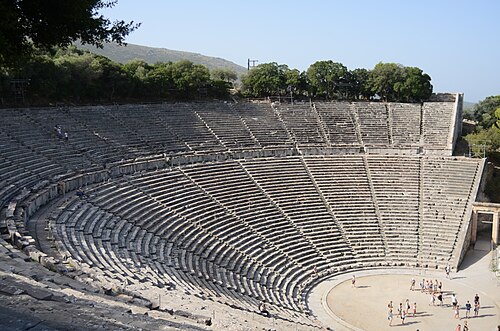
The culture of Greece has evolved, beginning in Mycenaean Greece and continuing into Classical Greece, through the influence of the Roman Empire and its Greek Eastern continuation, the Byzantine Empire. Other cultures and nations, such as the Latin and Frankish states, the Ottoman Empire, the Venetian Republic, the Genoese Republic, and the British Empire have left their influence on modern Greek culture, though historians credit the Greek War of Independence with revitalising Greece and giving birth to a single, cohesive entity of its multifaceted culture.
In ancient times, Greece was the birthplace of Western culture.[342][343] Modern democracies owe a debt to Greek beliefs in government by the people, trial by jury, and equality under the law. The ancient Greeks pioneered in many fields that rely on systematic thought, including logic, biology, geometry, government, geography, medicine, history,[344] philosophy,[345] physics, and mathematics.[346] They introduced important literary forms as epic and lyrical poetry, history, tragedy, comedy and drama. In their pursuit of order and proportion, the Greeks created an ideal of beauty that strongly influenced Western art.[347]
Visual arts
.jpg/500px-Detail_of_the_Charioteer,_Delphi_(4691931414).jpg)
Artistic production in Greece began in the prehistoric pre-Greek Cycladic and the Minoan civilizations, both of which were influenced by local traditions and the art of ancient Egypt.[348]
There were interconnected traditions of painting in ancient Greece. Due to technical differences, they underwent differentiated developments. Not all painting techniques are equally well represented in the archaeological record. The most respected form of art, according to Pliny or Pausanias, were individual, mobile paintings on wooden boards, described as panel paintings. Wall painting in Greece goes back at least to the Minoan and Mycenaean civilizations, with the lavish fresco decoration of sites like Knossos, Tiryns, and Mycenae.
Ancient Greek sculpture was composed almost entirely of workable and durable materials, marble or bronze, bronze becoming the favoured medium for major works by the early 5th century, while chryselephantine sculptures, made largely of gold and ivory and used for temple cult images and luxury works, were much rarer. It has been established that ancient Greek sculptures were painted[349] with a variety of colours, a feature known as polychromy.[350]
Art production continued during the Byzantine era. The most salient feature of this new aesthetic was its "abstract", or anti-naturalistic character. Classical art was marked by attempts to create representations that mimicked reality, Byzantine art favoured a more symbolic approach. Byzantine painting concentrated mainly on icons and hagiographies. The Macedonian art (Byzantine) was the artistic expression of Macedonian Renaissance, a label used to describe the Macedonian dynasty of the Byzantine Empire (867–1056), which scholars have seen as a time of increased interest in classical scholarship and the assimilation of classical motifs into Christian artwork.
Post Byzantine art schools include the Cretan School and Heptanese School. The first artistic movement in the Greek Kingdom can be considered the Greek academic art of the 19th century (Munich School). Modern Greek painters include Nikolaos Gyzis, Georgios Jakobides, Theodoros Vryzakis, Nikiforos Lytras, Konstantinos Volanakis, Nikos Engonopoulos and Yannis Tsarouchis, while notable sculptors are Pavlos Prosalentis, Ioannis Kossos, Leonidas Drosis, Georgios Bonanos, and Yannoulis Chalepas.
Architecture

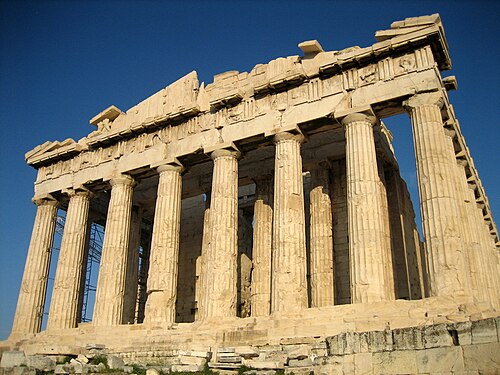
The architecture of ancient Greece was produced by the ancient Greeks (Hellenes), whose culture flourished on the Greek mainland, the Aegean Islands and their colonies, from about 900 BC until the 1st century AD, with the earliest remaining architectural works dating from around 600 BC. The formal vocabulary of ancient Greek architecture, in particular the division of architectural style into three defined orders: the Doric Order, the Ionic Order, and the Corinthian Order, was to have profound effect on Western architecture.
Byzantine architecture was dominant in the Greek speaking world and significantly influenced Medieval architecture throughout Europe and the Near East, becoming the primary progenitor of the Renaissance and Ottoman architectural traditions that followed the Byzantine Empire's collapse.
After Greek Independence, modern Greek architects combined traditional Greek and Byzantine elements and motives with the western European movements and styles. Patras was the first city of the modern Greek state to develop a city plan applying the orthogonal rule by Stamatis Voulgaris, a Greek engineer of the French army, in 1829.[351]
Two special genres can be considered the Cycladic architecture, featuring white-coloured houses, in the Cyclades and the Epirotic architecture in the region of Epirus.[352][353] Important is also the influence of the Venetian style in the Ionian islands and the "Mediterranean style" of Florestano Di Fausto (during the fascist regime) in the Dodecanese islands.[354]
After the establishment of the Greek Kingdom, the architecture of Athens and other cities was mostly influenced by the Neoclassical architecture. For Athens, the first King of Greece, Otto of Greece, commissioned the architects Stamatios Kleanthis and Eduard Schaubert to design a modern city plan fit for a capital. After the Great Thessaloniki Fire of 1917, the government ordered for a new city plan under the supervision of Ernest Hébrard. Other modern Greek architects include Anastasios Metaxas, Lysandros Kaftanzoglou, Panagis Kalkos, Ernst Ziller, Xenophon Paionidis, Dimitris Pikionis, and Georges Candilis.
There is an emerging need to secure the long-term preservation of the archaeological sites and monuments against the growing threats of climate change.[355]
Theatre

Theatre in its western form was born in Greece.[356] Tragedy (late 6th century BC), comedy (486 BC), and the satyr play were the three dramatic genres that emerged in the city-state of Classical Athens and were institutionalised as part of a festival called the Dionysia, which honoured the god Dionysus. Of the hundreds of tragedies written and performed during the classical age, only a limited number of plays by three authors have survived: Aeschylus, Sophocles, and Euripides. The surviving plays by Aristophanes are a treasure trove of comic presentation.
During the Byzantine period, theatrical art declined, the only form that survived was folk theatre (Mimos and Pantomimos), despite the hostility of the state.[357] During the Ottoman period, the main theatrical folk art was the Karagiozis. The renaissance which led to the modern Greek theatre, took place in the Venetian Crete. Significal dramatists of the era include Vitsentzos Kornaros and Georgios Chortatzis.
Modern Greek theatre was born after independence, in the early 19th century, and initially was influenced by Heptanesean theatre and melodrama, such as the Italian opera. The Nobile Teatro di San Giacomo di Corfù was the first theatre and opera house of modern Greece and the place where the first Greek opera, Spyridon Xyndas' The Parliamentary Candidate was performed. During the late 19th and early 20th century, the Athenian theatre scene was dominated by revues, musical comedies, operettas and nocturnes and notable playwrights included Spyridon Samaras, Dionysios Lavrangas, Theophrastos Sakellaridis.
The National Theatre of Greece was opened in 1900 as Royal Theatre.[358] Notable playwrights of the modern Greek theatre include Gregorios Xenopoulos, Nikos Kazantzakis, Pantelis Horn, Alekos Sakellarios, and Iakovos Kambanellis, while notable actors include Cybele Andrianou, Marika Kotopouli, Aimilios Veakis, Orestis Makris, Katina Paxinou, Manos Katrakis, and Dimitris Horn. Significant directors include Dimitris Rontiris, Alexis Minotis, and Karolos Koun.
Literature
Greek literature can be divided into three main categories: Ancient, Byzantine and modern Greek.[359] Athens is considered the birthplace of Western literature.[360] At the beginning of Greek literature stand the monumental works of Homer: the Iliad and the Odyssey, composed around 800 BC or after. In the classical period many of the genres of western literature became more prominent. Lyrical poetry, odes, pastorals, elegies, epigrams; dramatic presentations of comedy and tragedy; historiography, rhetorical treatises, philosophical dialectics, and philosophical treatises all arose in this period. The two major lyrical poets were Sappho and Pindar. Herodotus and Thucydides are two of the most influential historians in this period.
Byzantine literature written in Atticizing, Medieval and early Modern Greek, is the expression of the intellectual life of the Byzantine Greeks during the Christian Middle Ages. Although popular Byzantine literature and early Modern Greek literature both began in the 11th century, the two are indistinguishable.[361]
Constantine P. Cavafy, whose work was inspired mainly by the Hellenistic past, while Odysseas Elytis (centre) and Giorgos Seferis (right) were representatives of the Generation of the '30s and Nobel laureates in Literature.
Modern Greek literature refers to literature written in common Modern Greek, emerging from late Byzantine times in the 11th century. The Cretan Renaissance poem Erotokritos is considered the masterpiece of this period. It is a verse romance written around 1600 by Vitsentzos Kornaros (1553–1613). Later, during the period of Greek enlightenment (Diafotismos), writers such as Adamantios Korais and Rigas Feraios prepared with their works the Greek Revolution.
Leading figures of modern Greek literature include Dionysios Solomos, Andreas Kalvos, Angelos Sikelianos, Emmanuel Rhoides, Demetrius Vikelas, Kostis Palamas, Penelope Delta, Yannis Ritsos, Alexandros Papadiamantis, Nikos Kazantzakis, Andreas Embirikos, Kostas Karyotakis, Gregorios Xenopoulos, Constantine Cavafy, Nikos Kavvadias, Kostas Varnalis, and Kiki Dimoula. Two Greek authors have been awarded the Nobel Prize in Literature: George Seferis in 1963, and Odysseas Elytis in 1979.
Philosophy
.jpg/500px-Academy_of_Athens_by_ArmAg_(2).jpg)
Ancient Greek philosophy involved a disposition to value reasoning and thinking critical of traditional culture, thus inaugurating the Western intellectual tradition. While thinkers before him provided proto-scientific explanations of the natural world, Socrates in 5th-century Athens systematically enquired ethics; the next century, his disciple, Plato, wrote presently still pertinent dialogues about ethics, politics, metaphysics, and epistemology. There were also topics of treatises composed by Plato's prolific student, Aristotle, whose thought, especially in physics, infused the West for centuries. Other philosophical schools emerged during the Hellenistic period, Cynicism, Stoicism, Epicureanism and Skepticism, while Neoplatonism dominated subsequent thought.[362]
Byzantine philosophy was characterised by a Christian world-view, but one which could draw ideas directly from the Greek texts of Plato, Aristotle, and the Neoplatonists. On the eve of the Fall of Constantinople, Gemistus Pletho tried to restore the use of the term "Hellene" and advocated the return to the Olympian Gods of the ancient world.[citation needed] Byzantine Greek scholars, who were largely responsible for preserving Classical Greek knowledge, fled to the West after the fall of Byzantium, taking with them literature and significantly contributing to the Renaissance.[363]
In the modern period, Diafotismos (Greek: Διαφωτισμός, "enlightenment", "illumination")[364] was the Greek expression of the Age of Enlightenment and its philosophical and political ideas. Notable representatives were Adamantios Korais, Rigas Feraios and Theophilos Kairis. Other modern era Greek philosophers or political scientists include Cornelius Castoriadis, Nicos Poulantzas and Christos Yannaras.
Music and dances
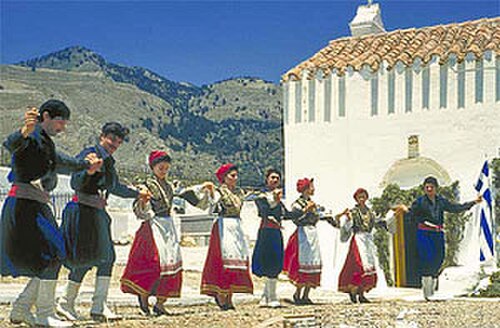

Greek vocal music extends back into ancient times where mixed-gender choruses performed for entertainment, celebration and spiritual reasons. Instruments included the double-reed aulos and the plucked string instrument, the lyre, especially the special kind called a kithara. Music played an important role in education. Boys were taught music from the age of six. Later influences from the Roman Empire, Middle East, and the Byzantine Empire affected Greek music.
While the new technique of polyphony was developing in the West, the Eastern Orthodox Church resisted change. Therefore, Byzantine music remained monophonic and without any form of instrumental accompaniment. As a result, and despite certain attempts by certain Greek chanters, Byzantine music was deprived of elements which, in the West, encouraged an unimpeded development of art. Byzantium presented the monophonic Byzantine chant, a melodic music, with rhythmical variety and expressive power.
Along with Byzantine chant and music, the Greeks cultivated the Greek folk song (Demotiko) which is divided into two cycles, the akritic and klephtic. The akritic was created between the 9th and 10th centuries and expressed the life and struggles of the akrites (frontier guards) of the Byzantine empire, the most well known associated with Digenes Akritas. The klephtic cycle came into being between the late Byzantine period and start of the Greek War of Independence. The klephtic cycle, together with historical songs, paraloghes (narrative song or ballad), love songs, mantinades, wedding songs, songs of exile and dirges express the life of the Greeks.
The Heptanesean kantádhes (καντάδες 'serenades'; sing.: καντάδα) became the forerunners of the Greek modern urban popular song, influencing its development. For the first part of the next century, Greek composers continued to borrow elements from the Heptanesean style. The most successful songs during 1870–1930 were the so-called Athenian serenades, and the songs performed on stage ('theatrical revue songs') in revues, operettas and nocturnes that dominated Athens' theater scene.
Rebetiko, initially a music associated with the lower classes, later reached greater acceptance as the rough edges of its overt subcultural character were softened and, sometimes to the point of unrecognizability.[citation needed] It was the base of the later laïkó (song of the people). The leading performers of the genre include Vassilis Tsitsanis, Grigoris Bithikotsis, Stelios Kazantzidis, George Dalaras, Haris Alexiou and Glykeria.
It was through the Ionian islands (which were under western rule) that major advances of the western European classical music were introduced to mainland Greeks. The region is notable for the birth of the first school of modern Greek classical music (Heptanesean or Ionian School), established in 1815. Prominent representatives of this genre include Nikolaos Mantzaros, Spyridon Xyndas, Spyridon Samaras and Pavlos Carrer. Manolis Kalomiris is considered the founder of the Greek National School of Music.
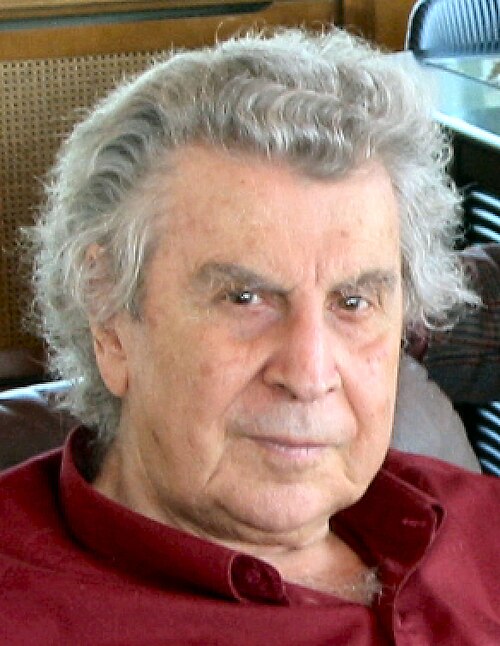
In the 20th century, Greek composers had significant impact on the development of avant garde and modern classical music, with figures such as Iannis Xenakis, Nikos Skalkottas, and Dimitri Mitropoulos achieving international prominence. Composers and musicians such as Mikis Theodorakis, Manos Hatzidakis, Eleni Karaindrou, Vangelis and Demis Roussos garnered an international following, which include famous film scores such as Zorba the Greek, Serpico, Never on Sunday, America America, Eternity and a Day, Chariots of Fire, and Blade Runner. Greek American composers known for their film scores include Yanni and Basil Poledouris. Greek opera singers and classical musicians of the 20th and 21st century include Maria Callas, Nana Mouskouri, Mario Frangoulis, Leonidas Kavakos, and Dimitris Sgouros.
During the Greek junta of 1967–74, the music of Mikis Theodorakis was banned, the composer jailed, internally exiled, and put in a concentration camp,[365] before finally being allowed to leave Greece due to international reaction. Released during the junta years, Make Love, Stop the Gunfire, by pop group Poll is considered the first anti-war protest song in Greek rock.[366]
Greece participated in the Eurovision Song Contest 35 times after its debut at the 1974 Contest. In 2005, Greece won with "My Number One", performed by Greek-Swedish singer Elena Paparizou, which became a smash hit in different countries and especially in Greece, and the 51st Eurovision Song Contest of 2006 was held in Athens.
Cuisine

Greek cuisine is characteristic of the Mediterranean diet, which is epitomised by dishes of Crete.[367] Greek cuisine incorporates fresh ingredients into local dishes such as moussaka, pastitsio, classic Greek salad, fasolada, spanakopita and souvlaki. Some dishes can be traced back to ancient Greece like skordalia (a thick purée of walnuts, almonds, crushed garlic and olive oil), lentil soup, retsina (white or rosé wine sealed with pine resin) and pasteli (candy bar with sesame seeds baked with honey). People often enjoy eating from small dishes such as meze with dips such as tzatziki, grilled octopus and small fish, feta cheese, dolmades (rice, currants and pine kernels wrapped in vine leaves), various pulses, olives and cheese. Olive oil is a widespread addition.[368]
Sweet desserts include melomakarona, diples and galaktoboureko, and drinks such as ouzo, metaxa and wines including retsina. Greek cuisine differs from different parts of the mainland and island to island. It uses some flavorings more often than other Mediterranean cuisines: oregano, mint, garlic, onion, dill and bay laurel leaves. Other common herbs and spices include basil, thyme and fennel seed. Many recipes, especially in the northern parts of the country, use "sweet" spices in combination with meat, for example cinnamon and cloves in stews.[369][368] Koutoukia are an underground restaurant common in Greece.[370]
Cinema

Cinema first appeared in Greece in 1896, but the first cine-theatre was opened in 1907 in Athens. In 1914, the Asty Films Company was founded and the production of long films began. Golfo, a well known traditional love story, is considered the first Greek feature film, although there were minor productions such as newscasts before. In 1931, Orestis Laskos directed Daphnis and Chloe, containing one of the first nude scene in European cinema;[371] it was the first Greek movie played abroad.[372] In 1944, Katina Paxinou was honoured with the Best Supporting Actress Academy Award for For Whom the Bell Tolls.[373]
The 1950s and early 1960s are considered to be a "golden age" of Greek cinema.[374] Directors and actors of this era were recognised as important figures in Greece and some gained international acclaim: George Tzavellas, Irene Papas, Melina Mercouri, Michael Cacoyannis, Alekos Sakellarios, Nikos Tsiforos, Iakovos Kambanelis, Katina Paxinou, Nikos Koundouros, Ellie Lambeti and others. More than sixty films per year were made, with most having film noir elements. Notable films include The Drunkard (1950, directed by George Tzavellas), The Counterfeit Coin (1955, by Giorgos Tzavellas), Πικρό Ψωμί (1951, by Grigoris Grigoriou), O Drakos (1956, by Nikos Koundouros), Stella (1955, directed by Cacoyannis and written by Kampanellis), Woe to the Young (1961, by Alekos Sakellarios), Glory Sky (1962, by Takis Kanellopoulos) and The Red Lanterns (1963, by Vasilis Georgiadis)
Cacoyannis directed Zorba the Greek with Anthony Quinn which received Best Director, Best Adapted Screenplay and Best Film nominations.[375] Finos Film contributed in this period with movies such as Λατέρνα, Φτώχεια και Φιλότιμο, Madalena, I theia ap' to Chicago, Το ξύλο βγήκε από τον Παράδεισο and many more.
During the 1970s and 1980s, Theo Angelopoulos directed notable movies. His film Eternity and a Day won the Palme d'Or and the Prize of the Ecumenical Jury at the 1998 Cannes Film Festival.[376][377][378]
There are internationally renowned filmmakers in the Greek diaspora, such as the Greek-French Costa-Gavras and the Greek-Americans Elia Kazan, John Cassavetes and Alexander Payne. Yorgos Lanthimos has received four Academy Award nominations for his work, including Best Foreign Language Film for Dogtooth (2009), Best Original Screenplay for The Lobster (2015), and Best Picture and Best Director for The Favourite (2018).[379]
Sports


Greece is the birthplace of the ancient Olympic Games, first recorded in 776 BC in Olympia, and hosted the modern Olympic Games twice, the inaugural 1896 Summer Olympics and the 2004 Summer Olympics. During the parade of nations, Greece is always called first, as the founding nation of the ancient precursor of modern Olympics. The nation has competed at every Summer Olympic Games, one of only four countries to have done so. Having won a total of 121 medals (35 gold, 45 silver and 41 bronze), Greece is ranked 33rd by gold medals in the all-time Summer Olympic medal count. Their best ever performance was in the 1896 Summer Olympics, when Greece finished second in the medal table with 10 gold medals.
The Greece national football team, ranked 54th in the world as of 2024 (and having reached a high of 8th in 2008 and 2011),[380] were crowned European Champions in Euro 2004 in one of the biggest upsets in the history of the sport.[381] The Greek Super League is the highest professional football league, comprising fourteen teams. The most successful are Olympiacos, Panathinaikos, and AEK Athens.
The Greek national basketball team has a decades-long tradition of excellence, being considered among the world's top basketball powers. As of 2012[update], it ranked 4th in the world and 2nd in Europe.[382] They have won the European Championship twice in 1987 and 2005,[383] and have reached the final four in two of the last four FIBA World Championships, taking the second place in the world in 2006 FIBA World Championship. The domestic top basketball league, A1 Ethniki, is composed of fourteen teams. The most successful Greek teams are Panathinaikos, Olympiacos, Aris Thessaloniki, AEK Athens and P.A.O.K. Greek basketball teams are the most successful in European basketball the last 25 years. After the 2005 European Championship triumph of the Greek national basketball team, Greece became the reigning European Champion in both football and basketball.
The Greece women's national water polo team have emerged as one of the leading powers in the world, becoming World Champions in 2011. They won gold at the 2005 World League and silver at the 2010 and 2012 European Championships. The Greece men's national water polo team became the third best water polo team in the world in 2005. The domestic top water polo leagues, Greek Men's Water Polo League and Greek Women's Water Polo League are considered amongst the top national leagues in European water polo, as its clubs have made significant success in European competitions.
The Greek men's national volleyball team has won two bronze medals, one in the European Volleyball Championship and another one in the Men's European Volleyball League and a 5th place in the Olympic Games. The Greek league, the A1 Ethniki, is considered one of the top volleyball leagues in Europe and Greek clubs have had significant success in European competitions. Olympiacos is the most successful volleyball club in the country. In handball, AC Diomidis Argous is the only Greek club to have won a European Cup.
Public holidays and festivals

According to Greek law, every Sunday of the year is a public holiday. Since the late '70s, Saturday also is a non-school and not working day. In addition, there are four mandatory official public holidays: 25 March (Greek Independence Day), Easter Monday, 15 August (Assumption or Dormition of the Holy Virgin), and 25 December (Christmas). 1 May (Labour Day) and 28 October (Ohi Day) are regulated by law as being optional but it is customary for employees to be given the day off. There are, however, more public holidays celebrated in Greece than announced by the Ministry of Labour each year as either obligatory or optional. The list of these non-fixed national holidays rarely changes and has not changed in recent decades, giving a total of eleven national holidays each year. In addition to the national holidays, there are public holidays that are not celebrated nationwide, but only by a specific professional group or a local community. For example, many municipalities have a "Patron Saint" parallel to "Name Days", or a "Liberation Day".[384] On such days it is customary for schools to take the day off.
Notable festivals, beyond the religious fests, include Patras Carnival, Athens Festival and local wine festivals. The city of Thessaloniki is also home of a number of festivals and events. The Thessaloniki International Film Festival is one of the most important film festivals in Southern Europe.[385]
See also
Notes
- ^ Greek: Ελλάδα, romanized: Elláda, IPA: [eˈlaða], or Ελλάς, Ellás, IPA: [eˈlas].
- ^ Greek: Ελληνική Δημοκρατία, romanized: Ellinikí Dimokratía, IPA: [eliniˈci ðimokraˈti.a].
- ^ On 14 August 1974 Greek forces withdrew from the integrated military structure of NATO in protest at the Turkish occupation of northern Cyprus; Greece rejoined NATO in 1980.
- ^ See:[146][147][148][149][150]
- ^ For a diachronic analysis of the Greek party system, see Pappas 2003, who distinguishes three distinct types of party system which developed in consecutive order, namely, a predominant-party system (from 1952 to 1963), a system of polarised pluralism (between 1963 and 1981), and a two-party system (since 1981).
References
Citations
- ^ a b "Religious Belief and National Belonging in Central and Eastern Europe". Pew Research Center. 10 May 2017. Archived from the original on 24 February 2018. Retrieved 9 September 2017.
- ^ "Surface water and surface water change". Organisation for Economic Co-operation and Development (OECD). Archived from the original on 24 March 2021. Retrieved 11 October 2020.
- ^ "Country Comparison: Area". The World Factbook. Central Intelligence Agency. Archived from the original on 13 November 2020. Retrieved 7 January 2013.
- ^ "Estimated Population and Migration Flows, 2023". Piraeus: Hellenic Statistical Authority. 29 December 2023. Archived from the original on 8 January 2024. Retrieved 8 January 2024.
- ^ Αποτελέσματα Απογραφής Πληθυσμού - Κατοικιών 2021 [Results of Population-Housing Census 2021] (in Greek). Piraeus: Hellenic Statistical Authority. 19 July 2022. Archived from the original on 6 June 2023. Retrieved 8 January 2024.
- ^ a b c d "World Economic Outlook Database, April 2024". Washington, D.C.: International Monetary Fund. 16 April 2024. Archived from the original on 18 April 2024. Retrieved 18 April 2024.
- ^ "Income inequality, 2023". Piraeus: Hellenic Statistical Authority. 3 April 2024. Retrieved 3 April 2024.
- ^ "Human Development Report 2023/24" (PDF). United Nations Development Programme. 13 March 2024. Archived (PDF) from the original on 13 March 2024. Retrieved 13 March 2024.
- ^ "The Constitution of Greece: Section II Relations of Church and State: Article 3". Archived from the original on 2 October 2017. Hellenic Resources network
- ^ Enyedi, Zsolt; Madeley, John T.S. (2 August 2004). Church and State in Contemporary Europe. Routledge. p. 228. ISBN 9781135761417.
Both as a state church and as a national church, the Orthodox Church of Greece has a lot in common with Protestant state churches, and even with Catholicism in some countries.
- ^ "Government and Politics". Ministry of Foreign Affairs. Archived from the original on 27 December 2019. Retrieved 28 April 2020.
- ^ Harvati, Katerina; et al. (10 July 2019). "Apidima Cave fossils provide earliest evidence of Homo sapiens in Eurasia". Nature. 571 (7766): 500–504. doi:10.1038/s41586-019-1376-z. ISSN 0028-0836. PMID 31292546. S2CID 195873640. Archived from the original on 1 August 2022. Retrieved 16 July 2022.
- ^ Marie-Antoinette de Lumley, Gaspard Guipert, Henry de Lumley, Natassa Protopapa, Théodoros Pitsios, Apidima 1 and Apidima 2: Two anteneandertal skulls in the Peloponnese, Greece, L'Anthropologie, Volume 124, Issue 1, 2020, 102743, ISSN 0003-5521, https://doi.org/10.1016/j.anthro.2019.102743 Archived 10 June 2024 at the Wayback Machine.
- ^ Douka, K.; Perles, C.; Valladas, H.; Vanhaeren, M.; Hedges, R.E.M. (2011). "Franchthi Cave revisited: the age of the Aurignacian in south-eastern Europe". Antiquity Magazine: 1133. Archived from the original on 22 December 2023. Retrieved 20 December 2017.
- ^ Eugene N. Borza (1992). In the Shadow of Olympus: The Emergence of Macedon. Princeton University Press. p. 58. ISBN 978-0-691-00880-6. Archived from the original on 10 June 2024. Retrieved 11 October 2015.
- ^ Perlès, Catherine (2001). The Early Neolithic in Greece: The First Farming Communities in Europe. Cambridge University Press. p. 1. ISBN 9780521000277. Archived from the original on 10 June 2024. Retrieved 11 November 2020.
- ^ Duchesne 2011, p. 297: "The list of books which have celebrated Greece as the "cradle" of the West is endless; two more examples are Charles Freeman's The Greek Achievement: The Foundation of the Western World (1999) and Bruce Thornton's Greek Ways: How the Greeks Created Western Civilization (2000)".
- ^ Bottici & Challand 2013, p. 88: "The reason why even such a sophisticated historian as Pagden can do it is that the idea that Greece is the cradle of civilisation is so much rooted in western minds and school curricula as to be taken for granted.".
- ^ Sansone 2004, pp. xviii–xix; Neer 2019, pp. 25–26; Renfrew 2012, pp. 83–96
- ^ Neer 2019, pp. 27–38; Tomkins & Schoep 2012, pp. 66–82
- ^ Watrous 2021; McEnroe 2010
- ^ Tomas 2012, pp. 113–125.
- ^ Salgarella 2022.
- ^ Knodell 2021, pp. 7.
- ^ Neer 2019, pp. 48–70.
- ^ Neer 2019, pp. 65–66.
- ^ Sansone 2004, pp. 3–4.
- ^ Chadwick 1990.
- ^ Short, John R. (1987). An Introduction to Urban Geography. Routledge. p. 10. ISBN 9780710203724. Archived from the original on 10 June 2024. Retrieved 11 November 2020.
- ^ Vidal-Naquet, Pierre. Le monde d'Homère (The World of Homer), Perrin (2000), p. 19.
- ^ D.C.H. Rieu's introduction to The Odyssey (Penguin, 2003), p. xi.
- ^ Schuller 2008, pp. 27, 88–89
- ^ Dunn, John (1994). Democracy: the unfinished journey 508 BC – 1993 AD. Oxford University Press. ISBN 978-0-19-827934-1.
- ^ Raaflaub, Kurt A; Ober, Josiah; Wallace, Robert W (2007). Origin of Democracy in Ancient Greece. University of California Press. ISBN 978-0-520-24562-4.
- ^ Joseph Roisman, Ian Worthington. "A companion to Ancient Macedonia" Archived 30 March 2024 at the Wayback Machine John Wiley & Sons, 2011. ISBN 144435163X pp 135–138, p 343
- ^ Robin Waterfield (19 April 2018). Creators, Conquerors, and Citizens: A History of Ancient Greece. Oxford University Press. p. 148. ISBN 978-0-19-872788-0. Archived from the original on 10 June 2024. Retrieved 1 September 2018.
They formed an alliance, which we call the Hellenic League, and bound themselves not just to repel the Persians, but to help one another whatever particular enemy threatened the freedom of the Greek cities. This was a real acknowledgment of a shared Greekness, and a first attempt to unify the Greek states under such a banner.
- ^ John Van Antwerp Fine (1983). The Ancient Greeks: A Critical History. Harvard University Press. p. 297. ISBN 978-0-674-03314-6. Archived from the original on 10 June 2024. Retrieved 1 September 2018.
This Hellenic League – the first union of Greek states since the mythical times of the Trojan War – was the instrument through which the Greeks organised their successful resistance to Persia.
- ^ Barry Strauss (16 August 2005). The Battle of Salamis: The Naval Encounter That Saved Greece – and Western Civilization. Simon and Schuster. pp. 1–11. ISBN 978-0-7432-7453-1. Archived from the original on 29 April 2024. Retrieved 29 October 2015.
- ^ Worthington 2015, pp. 42–43.
- ^ Walbank 1993, pp. 13–14, 29–30, Schuller 2008, pp. 49–51, 52–53, Hornblower 2011, pp. 268–270, 285–9.
- ^ Walbank 1993, pp. 31–2, 34–5, 36–7, Gehrke 1995, pp. 10–3, 16–7, 21, 24–5, 28–9
- ^ Walbank 1993, pp. 46–48, 59, 74–75, Gehrke 1995, pp. 30, 32, 45–48, 54–55
- ^ Walbank 1993, pp. 62–3, 133–9, Gehrke 1995, pp. 63–65, 73, 75–6.
- ^ Kosso, Cynthia; Scott, Anne (2009). The Nature and Function of Water, Baths, Bathing, and Hygiene from Antiquity Through the Renaissance. Brill. p. 51. ISBN 978-9004173576. Archived from the original on 18 March 2024. Retrieved 11 November 2020.
- ^ Walbank 1993, pp. 79–80, 91–2, 141–2, 151–2, Gehrke 1995, pp. 68–70.
- ^ a b Flower, Harriet, ed. (2004). The Roman Republic. Cambridge University Press. pp. 248, 258. ISBN 978-0-521-00390-2.
- ^ "Antigonid dynasty". Britannica (online ed.). 2008.
- ^ a b Ward, Allen Mason; et al. (2003). A history of the Roman people. Prentice Hall. p. 276. ISBN 978-0-13-038480-5.
- ^ Zoch, Paul (2000). Ancient Rome: An Introductory History. University of Oklahoma Press. p. 136. ISBN 978-0-8061-3287-7. Archived from the original on 10 June 2024. Retrieved 29 April 2012.
- ^ Ferguson, Everett (2003). Backgrounds of Early Christianity. Wm. B. Eerdmans. pp. 617–18. ISBN 978-0-8028-2221-5. Archived from the original on 10 June 2024. Retrieved 18 May 2022.
- ^ Dunstan, William (2011). Ancient Rome. Rowman & Littlefield Publishers. p. 500. ISBN 978-0-7425-6834-1. Archived from the original on 10 June 2024. Retrieved 29 April 2012.
- ^ Milburn, Robert (1992). Early Christian Art and Architecture. University of California Press. p. 158. ISBN 9780520074125. Archived from the original on 10 June 2024. Retrieved 29 April 2012.
- ^ Gerard Friell; Peabody Professor of North American Archaeology and Ethnography Emeritus Stephen Williams; Stephen Williams (8 August 2005). Theodosius: The Empire at Bay. Routledge. p. 105. ISBN 978-1-135-78262-7. Archived from the original on 29 April 2024. Retrieved 19 October 2015.
- ^ Tony Perrottet (8 June 2004). The Naked Olympics: The True Story of the Ancient Games. Random House Digital, Inc. pp. 190–. ISBN 978-1-58836-382-4. Retrieved 1 April 2013.
- ^ a b James Allan Stewart Evans (January 2005). The Emperor Justinian and the Byzantine Empire. Greenwood Publishing Group. pp. 65–70. ISBN 978-0-313-32582-3.
- ^ J. F. Haldon (1990). Byzantium in the Seventh Century: The Transformation of a Culture. Cambridge University Press. p. 329. ISBN 978-0-521-31917-1. Archived from the original on 27 September 2023. Retrieved 19 October 2015.
- ^ Makrides, Nikolaos (2009). Hellenic Temples and Christian Churches: A Concise History of the Religious Cultures of Greece from Antiquity to the Present. NYU Press. p. 206. ISBN 978-0-8147-9568-2. Archived from the original on 10 June 2024. Retrieved 29 April 2012.
- ^ Jeffreys, Elizabeth, ed. (2008). The Oxford Handbook of Byzantine Studies. Oxford University Press. p. 4. ISBN 978-0-19-925246-6. Archived from the original on 10 June 2024. Retrieved 11 October 2015.
- ^ Halsall, Guy (2007). Barbarian Migrations and the Roman West. Cambridge University Press. pp. 376–568.
- ^ a b Fine 1991, pp. 35–6.
- ^ a b Fine 1991, pp. 63–6.
- ^ Gregory, TE (2010). A History of Byzantium. Wiley-Blackwell. p. 169.
It is now generally agreed that the people who lived in the Balkans after the Slavic "invasions" were probably for the most part the same as those who had lived there earlier, although the creation of new political groups and arrival of small immigrants caused people to look at themselves as distinct from their neighbors, including the Byzantines.
- ^ Richard M. Rothaus (2000). Corinth, the First City of Greece: An Urban History of Late Antique Cult and Religion. BRILL. p. 10. ISBN 978-90-04-10922-3. Archived from the original on 10 June 2024. Retrieved 7 September 2018.
- ^ Geanakoplos, Deno John (1984). Byzantium: Church, Society, and Civilization Seen Through Contemporary Eyes. University of Chicago Press. ISBN 978-0226284606. Archived from the original on 10 June 2024. Retrieved 19 October 2018.
- ^ a b "Greece During the Byzantine Period: Byzantine recovery". Online. Encyclopædia Britannica. Retrieved 28 April 2012.
- ^ Fine 1991, pp. 79–83.
- ^ "Greece during the Byzantine period (c. AD 300 – c. 1453), Population and languages, Emerging Greek identity". Encyclopædia Britannica. 2008. Online Edition.
- ^ a b "Greece During the Byzantine Period: Results of the Fourth Crusade". Online Encyclopædia Britannica. Archived from the original on 22 April 2012. Retrieved 28 April 2012.
- ^ "Greece During the Byzantine Period: The islands". Online Encyclopædia Britannica. Archived from the original on 24 February 2013. Retrieved 14 May 2012.
- ^ Moles, Ian (1969). "Nationalism and Byzantine Greece". Greek, Roman and Byzantine Studies: 102. Archived from the original on 10 June 2024. Retrieved 27 September 2020.
Greek nationalism, in other words, was articulated as the boundaries of Byzantium shrank... the Palaeologian restoration that the two words are brought into definite and cognate relationship with 'nation' (Έθνος).
- ^ Steven Runciman; Sir Steven Runciman (24 October 1985). The Great Church in Captivity: A Study of the Patriarchate of Constantinople from the Eve of the Turkish Conquest to the Greek War of Independence. Cambridge University Press. p. 120. ISBN 978-0-521-31310-0. Archived from the original on 10 June 2024. Retrieved 9 September 2018.
By the fifteenth century most Byzantine intellectuals alluded to themselves as Hellenes. John Argyropoulus even calls the Emperor 'Emperor of the Hellenes' and describes the last wars of Byzantium as a struggle for the freedom of Hellas.
- ^ Vasiliev, Alexander A. (1964). History of the Byzantine Empire, 324–1453. University of Wisconsin Press. p. 582. ISBN 978-0299809256.
- ^ Jane Perry Clark Carey; Andrew Galbraith Carey (1968). The Web of Modern Greek Politics. Columbia University Press. p. 33. ISBN 978-0231031707. Archived from the original on 27 September 2023. Retrieved 9 September 2018.
By the end of the fourteenth century the Byzantine emperor was often called "Emperor of the Hellenes"
- ^ Hilsdale, Cecily J. (2014). Byzantine Art and Diplomacy in an Age of Decline. Cambridge University Press. pp. 82–83. ISBN 978-1107729384. Archived from the original on 10 June 2024. Retrieved 27 September 2020.
- ^ "Greece During the Byzantine Period: Serbian and Ottoman advances". Online Encyclopædia Britannica. Archived from the original on 24 February 2013. Retrieved 28 April 2012.
- ^ "Greece During the Byzantine Period: The Peloponnese advances". Online Encyclopædia Britannica. Archived from the original on 24 February 2013. Retrieved 28 April 2012.
- ^ Clogg 1992, p. 10.
- ^ Clogg 1992, p. 23.
- ^ Kourvetaris, George; Dobratz, Betty (1987). A profile of modern Greece: in search of identity. Clarendon Press. p. 33. ISBN 9780198275510. Archived from the original on 10 June 2024. Retrieved 11 October 2015.
- ^ Clogg 1992, pp. 3.
- ^ a b Clogg 1992, p. 14.
- ^ Clogg 1992.
- ^ a b Clogg 1992, p. 15.
- ^ Harrington, Lyn (1968). Greece and the Greeks. T Nelson. p. 124. Archived from the original on 10 June 2024. Retrieved 11 October 2015. 221 pp.
- ^ Stokes, Jamie; Gorman, Anthony (2010). Encyclopedia of the Peoples of Africa and the Middle East. Infobase. p. 256. ISBN 978-1-4381-2676-0. Archived from the original on 10 June 2024. Retrieved 11 November 2020.
- ^ Clogg 1992, pp. 21, 23.
- ^ Clogg 1992, p. 25, 26, 27.
- ^ Hatzopoulos 2009, pp. 81–3.
- ^ Hatzopoulos 2009. For the crisis of maritime trade from 1815 onwards, see Kremmydas 1977 and Kremmydas 2002.
- ^ a b Brewer, D. The Greek War of Independence: The Struggle for Freedom from Ottoman Oppression and the Birth of the Modern Greek Nation. Overlook Press, 2001, ISBN 1-58567-172-X, pp. 235–36.
- ^ Tucker, Spencer C. (2009). A Global Chronology of Conflict: From the Ancient World to the Modern Middle East. ABC-CLIO. p. 1140. ISBN 9781851096725. Archived from the original on 10 June 2024. Retrieved 11 November 2018.
- ^ "The Chios Massacre Of 1822". Queens Gazette. Archived from the original on 11 November 2018. Retrieved 11 November 2018.
- ^ Klose, Fabian (2016). The Emergence of Humanitarian Intervention: Ideas and Practice... Clays. p. 175. ISBN 9781107075511. Archived from the original on 12 September 2024. Retrieved 6 August 2017.
- ^ Willert, Trine Stauning (4 September 2018). The New Ottoman Greece in History and Fiction. Springer. pp. 71–100. ISBN 978-3-319-93849-3. Archived from the original on 10 June 2024. Retrieved 29 December 2020.
- ^ One or more of the preceding sentences incorporates text from a publication now in the public domain: Chisholm, Hugh, ed. (1911). "Ibrahim Pasha". Encyclopædia Britannica. Vol. 14 (11th ed.). Cambridge University Press. pp. 223–224.
- ^ Woodhouse, Christopher Montague (1965). The Battle of Navarino. pp. 117–18, 137, 139.
- ^ Λούκος, Χρήστος (1988). Η αντιπολίτευση κατά του κυβερνήτη Ιωάννη Καποδίστρια (in Greek). Αθήνα, Ελλάδα: Θεμέλιο. p. 187.
- ^ a b c "Otto". Encyclopedia Britannica. Archived from the original on 9 September 2018. Retrieved 1 September 2018.
- ^ Jong, M. de; Lalenis, K.; Mamadouh, V. D. (31 December 2002). The Theory and Practice of Institutional Transplantation: Experiences with the Transfer of Policy Institutions. Springer Science & Business Media. p. 71. ISBN 9781402011085. Archived from the original on 10 June 2024. Retrieved 11 November 2020.
- ^ a b Hodge, Carl Cavanagh (2008). Encyclopedia of the Age of Imperialism, 1800–1914. Greenwood Publishing Group. p. 291. ISBN 9780313043413. Retrieved 9 September 2018.
- ^ Great Greek Encyclopedia, p. 50–51.
- ^ a b Roudometof 2001, pp. 101–113.
- ^ Wynn, Martin (1984). Planning and Urban Growth in Southern Europe. Mansell. p. 6. ISBN 9780720116083. Archived from the original on 10 June 2024. Retrieved 27 September 2020.
- ^ Great Greek Encyclopedia, p. 239, "Διὰ τοῦ Συντάγματος τοῦ 1864 καθιερώθει ὡς πολίτευμα διὰ τὴν Ἑλλάδα ἡ κοινοβουλευτικὴ μοναρχία, ἣ, ὅπως ἄλλως ἐχαρακτηρίσθη, ἡ «βασιλευομένη δημοκρατία» ἣ «δημοκρατικὴ βασιλεία»" [Through the Constitution of 1864, constitutional monarchy, or, as it had been described, "crowned democracy", or "democratic monarchy", was consolidated as the form of government in Greece].
- ^ "Constitutional History". hellenicparliament.gr. Hellenic Parliament. Archived from the original on 26 May 2019. Retrieved 4 September 2018.
The revolt marked the end of constitutional monarchy and the beginning of a crowned democracy with George-Christian-Wilhelm of the Schleswig-Holstein-Sønderburg-Glücksburg dynasty as monarch.
- ^ Greece Country Study Guide: Strategic Information and Developments. International Business Publications, US. 3 March 2012. p. 131. ISBN 978-1-4387-7447-3.
In 1862, however, a revolt brought about important changes in the political system that led to the so-called "crowned democracy", i.e. a kingdom with a democratic government.
[permanent dead link] - ^ "Constitutional History". hellenicparliament.gr. Hellenic Parliament. Archived from the original on 26 May 2019. Retrieved 4 September 2018.
- ^ "The Countdown". Archived from the original on 28 March 2012. Retrieved 18 May 2022.
- ^ Immig, Nicole (2009). "The "New" Muslim Minorities in Greece: Between Emigration and Political Participation, 1881–1886". Journal of Muslim Minority Affairs. 29 (4): 511–522. doi:10.1080/13602000903411408. S2CID 143664377.
- ^ Marie Charrel (16 July 2015). "Quand la France et l'Allemagne mirent la Grèce sous tutelle… en 1898". Le Monde. Archived from the original on 17 May 2022. Retrieved 17 May 2022.
- ^ Livanios 1999, pp. 195–196, Koliopoulos & Veremis 2002, pp. 280–281, Kostopoulos 2011.
- ^ Mazower 1992, pp. 886, 890–893, 895–900, 904.
- ^ Matthew J. Gibney, Randall Hansen. (2005). Immigration and Asylum: from 1900 to the Present, Volume 3. ABC-CLIO. p. 377. ISBN 978-1-57607-796-2.
The total number of Christians who fled to Greece was probably in the region of I.2 million with the main wave occurring in 1922 before the signing of the convention. According to the official records of the Mixed Commission set up to monitor the movements, the Greeks who were transferred after 1923 numbered 189,916 and the number of Muslims expelled to Turkey was 355,635 (Ladas I932, 438–439), but using the same source Eddy 1931, 201 states that the post-1923 exchange involved 192,356 Greeks from Turkey and 354,647 Muslims from Greece.
- ^ Sofos, Spyros A.; Özkirimli, Umut (2008). Tormented by History: Nationalism in Greece and Turkey. C Hurst & Co Publishers Ltd. pp. 116–117. ISBN 978-1-85065-899-3.
- ^ Schaller, Dominik J; Zimmerer, Jürgen (2008). "Late Ottoman genocides: the dissolution of the Ottoman Empire and Young Turkish population and extermination policies – introduction". Journal of Genocide Research. 10 (1): 7–14. doi:10.1080/14623520801950820. S2CID 71515470.
- ^ "Genocide Resolution approved by Swedish Parliament". News.AM. Archived from the original on 16 April 2019. Retrieved 9 December 2014., containing both the IAGS and the Swedish resolutions.
- ^ Gaunt, David. Massacres, Resistance, Protectors: Muslim-Christian Relations in Eastern Anatolia during World War I. Piscataway, NJ: Gorgias Press, 2006.
- ^ Hedges, Chris (17 September 2000). "A Few Words in Greek Tell of a Homeland Lost". The New York Times. Archived from the original on 25 November 2018. Retrieved 19 February 2017.
- ^ Rummel, RJ (1998). "The Holocaust in Comparative and Historical Perspective". Idea Journal of Social Issues. 3 (2).
- ^ Annette Grossbongardt (28 November 2006). "Christians in Turkey: The Diaspora Welcomes the Pope". Der Spiegel. Archived from the original on 24 September 2015. Retrieved 3 September 2015.
- ^ Howland, Charles P. "Greece and Her Refugees" Archived 7 April 2015 at the Wayback Machine, Foreign Affairs, The Council on Foreign Relations. July 1926.
- ^ "Newspaper of the Government – Issue 64". Government Newspaper of the Hellenic State. 25 March 1924. Archived from the original on 18 May 2022. Retrieved 18 May 2022.
- ^ Hagen, Fleischer (2006). "Authoritarian Rule in Greece (1936–1974) and Its Heritage". Totalitarian and Authoritarian Regimes in Europe: Legacies and Lessons from the Twentieth Century. New York/Oxford: Berghahn. p. 237.
- ^ Fafalios & Hadjipateras 1995, p. 157.
- ^ "Greek history since World War I". Encyclopædia Britannica. 14 June 2023. Archived from the original on 10 June 2024. Retrieved 21 June 2022.
- ^ a b Mazower 2001, p. 155.
- ^ Guido Knopp; Mario Sporn (2009). Die Wehrmacht eine Bilanz (1st ed.). München: Goldmann. ISBN 978-3-442-15561-3. OCLC 423851310.
- ^ Chomsky, Noam (1994). World Orders, Old And New. Pluto Press London.
- ^ Mazower 2016, p. [page needed].
- ^ Baten, Jörg (2016). A History of the Global Economy. From 1500 to the Present. Cambridge University Press. p. 51, Figure 2.3 "Numeracy in selected Balkan and Caucasus countries", based on data from Crayen and Baten (2010). ISBN 978-1-107-50718-0.
- ^ Chourchoulis, Dionysios; Kourkouvelas, Lykourgos (26 November 2012). "Greek perceptions of NATO during the Cold War". Southeast European and Black Sea Studies. 12 (4). Informa UK Limited: 497–514. doi:10.1080/14683857.2012.741848. ISSN 1468-3857. S2CID 153476225.
- ^ "34. Cyprus (1960–present)". uca.edu. Archived from the original on 2 June 2023. Retrieved 2 June 2023.
- ^ History, Editorial Consultant: Adam Hart-Davis. Dorling Kindersley. ISBN 978-1-85613-062-2.
- ^ "The ideal Greek everyman: Andreas Papandreou at 100". EUROPP. 5 February 2019. Archived from the original on 9 May 2023. Retrieved 9 May 2023.
- ^ "Greece". European Union. Archived from the original on 26 July 2016. Retrieved 7 April 2007.
- ^ Baten, Jörg (2016). A History of the Global Economy. From 1500 to the Present. Cambridge University Press. p. 66. ISBN 978-1-107-50718-0.
- ^ Konstantinidou, Diana (28 June 2012). "Elections 2012: the Greek political system in flux?". Greece@LSE. Retrieved 9 May 2023.
- ^ "Syriza's historic win puts Greece on collision course with Europe". amp.theguardian.com. 26 January 2015. Archived from the original on 10 June 2024. Retrieved 9 May 2023.
- ^ a b "Greece exits final bailout successfully: ESM". Reuters. 20 August 2018. Archived from the original on 31 August 2018. Retrieved 31 August 2018.
- ^ "After the Prespa Agreement: Why North Macedonia's Accession to EU won't happen in the near future | Ústav mezinárodních vztahů – Expertise to impact". www.iir.cz (in Czech). Archived from the original on 9 May 2023. Retrieved 9 May 2023.
- ^ "New era as Mitsotakis is sworn in as Greece's new PM". www.aljazeera.com. Archived from the original on 26 September 2022. Retrieved 12 May 2021.
- ^ "Greece swears in first female president". www.aljazeera.com.
- ^ Smith, Helena (15 February 2024). "Greece becomes first Orthodox Christian country to legalise same-sex marriage". The Guardian. Archived from the original on 10 June 2024. Retrieved 16 February 2024.
- ^ a b c d "The World Factbook – Greece". cia.gov. Central Intelligence Agency. Archived from the original on 9 January 2021. Retrieved 10 November 2017.
- ^ "UNITED NATIONS GROUP OF EXPERTS ON GEOGRAPHICAL NAMES: Working Paper No. 48" (PDF). UN. 2006. Archived (PDF) from the original on 14 May 2011. Retrieved 2 September 2015.
- ^ Chrēstos G. Kollias; Gülay Günlük-Şenesen; Gülden Ayman (2003). Greece and Turkey in the 21st Century: Conflict Or Cooperation: a Political Economy Perspective. Nova Publishers. p. 10. ISBN 978-1-59033-753-0. Retrieved 12 April 2013.
Greece's Strategic Position in the Balkans And Eastern Mediterranean Greece is located at the crossroads of three continents (Europe, Asia and Africa). It is an integral part of the Balkans (where it is the only country that is a member of the ...)
- ^ Christina Bratt Paulston; Scott F. Kiesling; Elizabeth S. Rangel (13 February 2012). The Handbook of Intercultural Discourse and Communication. John Wiley & Sons. p. 292. ISBN 978-1-4051-6272-2. Retrieved 12 April 2013.
Introduction Greece and Turkey are situated at the crossroads of Europe, Asia, the Middle East and Africa, and their inhabitants have had a long history of cultural interaction even though their languages are neither genetically nor typologically ...
- ^ Caralampo Focas (2004). Transport Issues And Problems in Southeastern Europe. Ashgate Publishing, Ltd. p. 114. ISBN 978-0-7546-1970-3. Retrieved 12 April 2013.
Greece itself shows a special geopolitical importance as it is situated at the crossroads of three continents – Europe, Asia and Africa – and can be therefore considered as a natural bridge between Europe and the Middle East
- ^ Glytsos, Nicholas P.; Katseli, Louka T. (2005). "10. Greek Migration: The Two Faces of Janus". In Zimmermann, Klaus F. (ed.). European Migration: What Do We Know?. Oxford University Press. p. 337. ISBN 978-0-19-925735-5.
Introduction Migration movements from and to, or via Greece, are an age-old phenomenon. Situated at the crossroads of three continents (Europe, Asia, and Africa), Greece has been, at different historical times, both a labour...
- ^ Sladjana Petkovic; Howard Williamson (21 July 2015). Youth policy in Greece: Council of Europe international review. Council of Europe. p. 48. ISBN 978-92-871-8181-7.
As reports from the GSY (2007) show, young people have the opportunity to become acquainted with many diverse civilisations and cultures, through Greece's strategic location at the crossroads of Europe, Asia, and Africa. Accordingly, many ...
- ^ "The World Fact Book – Field Listing :: Coastline". Central Intelligence Agency. Archived from the original on 13 June 2009. Retrieved 17 March 2011.
- ^ "Statistical Yearbook of Greece 2009 & 2010" (PDF). Hellenic Statistical Authority. p. 27. Archived from the original (PDF) on 13 December 2013.
- ^ Sansone, David (2011). Ancient Greek civilization. Wiley. p. 5. ISBN 9781444358773. Archived from the original on 10 June 2024. Retrieved 11 November 2020.
- ^ Drews, Robert (1995). The End of the Bronze Age: Changes in Warfare and the Catastrophe Ca. 1200 BC. Princeton University Press. p. 3. ISBN 0691025916. Archived from the original on 10 June 2024. Retrieved 11 November 2020.
- ^ "Olympus the First National Park". Management Agency of Olympus National Park. 2008. Archived from the original on 14 January 2017. Retrieved 5 December 2015.
- ^ Guinness World Records 2005: Special 50th Anniversary Edition. Guinness World Records. 2004. p. 52. ISBN 978-1-892051-22-6. Archived from the original on 10 June 2024. Retrieved 27 September 2020.
- ^ Sofianos, D.Z.: "Metéora". Holy Monastery of Great Meteoro, 1991.
- ^ Marker, Sherry; Bowman, John; Kerasiotis, Peter; Sarna, Heidi (2010). Frommer's Greek Islands. John Wiley & Sons. p. 12. ISBN 978-0-470-52664-4. Archived from the original on 10 June 2024. Retrieved 27 September 2020.
- ^ "The Climate of Greece". Hellenic National Meteorological Service. Archived from the original on 3 December 2019. Retrieved 3 December 2019.
- ^ "Climate Atlas of Greece" (PDF). Hellenic National Meteorological Service. Archived from the original (PDF) on 21 September 2017. Retrieved 30 December 2019.
- ^ "Mountain Weather in Greece : Articles : SummitPost". www.summitpost.org. Archived from the original on 13 June 2023. Retrieved 19 June 2023.
- ^ "Greece – Climate". Encyclopedia Britannica. Archived from the original on 22 October 2014. Retrieved 21 June 2020.
- ^ Dinerstein, Eric; Olson, David; Joshi, Anup; Vynne, Carly; Burgess, Neil D.; Wikramanayake, Eric; Hahn, Nathan; Palminteri, Suzanne; Hedao, Prashant; Noss, Reed; Hansen, Matt; Locke, Harvey; Ellis, Erle C; Jones, Benjamin; Barber, Charles Victor; Hayes, Randy; Kormos, Cyril; Martin, Vance; Crist, Eileen; Sechrest, Wes; Price, Lori; Baillie, Jonathan E. M.; Weeden, Don; Suckling, Kierán; Davis, Crystal; Sizer, Nigel; Moore, Rebecca; Thau, David; Birch, Tanya; Potapov, Peter; Turubanova, Svetlana; Tyukavina, Alexandra; de Souza, Nadia; Pintea, Lilian; Brito, José C.; Llewellyn, Othman A.; Miller, Anthony G.; Patzelt, Annette; Ghazanfar, Shahina A.; Timberlake, Jonathan; Klöser, Heinz; Shennan-Farpón, Yara; Kindt, Roeland; Lillesø, Jens-Peter Barnekow; van Breugel, Paulo; Graudal, Lars; Voge, Maianna; Al-Shammari, Khalaf F.; Saleem, Muhammad (2017). "An Ecoregion-Based Approach to Protecting Half the Terrestrial Realm". BioScience. 67 (6): 534–545. doi:10.1093/biosci/bix014. ISSN 0006-3568. PMC 5451287. PMID 28608869.
- ^ Grantham, H. S.; Duncan, A.; Evans, T. D.; Jones, K. R.; Beyer, H. L.; Schuster, R.; Walston, J.; Ray, J. C.; Robinson, J. G.; Callow, M.; Clements, T.; Costa, H. M.; DeGemmis, A.; Elsen, P. R.; Ervin, J.; Franco, P.; Goldman, E.; Goetz, S.; Hansen, A.; Hofsvang, E.; Jantz, P.; Jupiter, S.; Kang, A.; Langhammer, P.; Laurance, W. F.; Lieberman, S.; Linkie, M.; Malhi, Y.; Maxwell, S.; Mendez, M.; Mittermeier, R.; Murray, N. J.; Possingham, H.; Radachowsky, J.; Saatchi, S.; Samper, C.; Silverman, J.; Shapiro, A.; Strassburg, B.; Stevens, T.; Stokes, E.; Taylor, R.; Tear, T.; Tizard, R.; Venter, O.; Visconti, P.; Wang, S.; Watson, J. E. M. (2020). "Anthropogenic modification of forests means only 40% of remaining forests have high ecosystem integrity – Supplementary Material". Nature Communications. 11 (1): 5978. Bibcode:2020NatCo..11.5978G. doi:10.1038/s41467-020-19493-3. ISSN 2041-1723. PMC 7723057. PMID 33293507.
- ^ Frost, Rosie (16 April 2024). "Greece becomes the first country in Europe to ban bottom trawling in marine protected areas". Euronews. Archived from the original on 21 April 2024. Retrieved 21 April 2024.
- ^ a b c d e f "Syntagma" (PDF) (in Greek). Archived from the original (PDF) on 25 September 2007. Retrieved 2 August 2009.
- ^ Dagtoglou 1991, p. 21.
- ^ Venizelos 2002, pp. 131–32, 165–72.
- ^ Mavrias 2002, pp. 477–78, 486–87
- ^ Εφημερίδα της Κυβερνήσεως τη Ελληνικής Δημοκρατίας [Government Gazette of the Hellenic Republic] (in Greek), vol. A, Athens: National Publishing House, 27 July 2016, archived from the original on 8 August 2019, retrieved 12 February 2019
- ^ "OECD Better Life Index – Greece". www.oecdbetterlifeindex.org. OECD. Archived from the original on 13 August 2022. Retrieved 20 February 2018.
- ^ "Πολιτική Συγκυρία & Διακυβέρνηση" [Political climate & governance] (PDF). GR: VPRC. 22 December 2011. Archived from the original (PDF) on 25 April 2012. Retrieved 22 December 2011.
- ^ "Πολιτική Συγκυρία & Διακυβέρνηση" [Political conjuncture & governance] (PDF). VPRC. GR. 26 January 2012. Archived from the original (PDF) on 23 September 2015. Retrieved 26 January 2012.
- ^ "Πανελλαδικη Ερευνα για την ET3" (PDF). To The Point. GR. 29 January 2012. Archived from the original (PDF) on 24 September 2015. Retrieved 29 January 2012.
- ^ "Ερευνα της Pulse RC για το Ποντικι" (PDF). GR: Pulse RC. 2 February 2012. Archived from the original (PDF) on 23 September 2015. Retrieved 2 February 2012 – via Ek logika.
- ^ "Πολιτικό Βαρόμετρο 99" [Political barometer] (PDF). Public Issue. Ek logika. 7 February 2012. Archived (PDF) from the original on 26 February 2012. Retrieved 7 February 2011.
- ^ "June 2012 Greek legislative election" (PDF). Archived from the original (PDF) on 28 June 2015. Retrieved 19 May 2022.
- ^ Katsourides, Yiannos (22 September 2016). Radical Left Parties in Government: The Cases of SYRIZA and AKEL. Springer. p. 94. ISBN 9781137588418. Archived from the original on 10 June 2024. Retrieved 11 November 2020.
- ^ "Mitsotakis sworn in as Greek PM, promises more jobs and 'big changes'". Reuters. 26 June 2023. Archived from the original on 2 July 2023. Retrieved 19 May 2024.
- ^ Αρχές του Εξωτερικού [Missions Abroad] (in Greek). Hellenic Republic Ministry of Foreign Affairs. Archived from the original on 21 May 2011. Retrieved 2 July 2011.
- ^ "Mission and Competences". Ministry for Foreign Affairs. Archived from the original on 13 February 2012. Retrieved 23 February 2012.
- ^ "Greece hails 'special relationship' with France on Hollande visit". France 24. 22 October 2015. Archived from the original on 8 July 2019. Retrieved 1 January 2023.
- ^ "Παυλόπουλος και Ματαρέλα επιβεβαίωσαν τη μακρόχρονη ελληνοϊταλική φιλία" [Pavlopoulos and Mattarella confirm the longstanding Greek-Italian friendship]. Documento (in Greek). Archived from the original on 11 December 2019. Retrieved 5 March 2017.
- ^ "Παυλόπουλος – Ματαρέλα: Δυνατή φιλία και κοινή οπτική μεταξύ Ελλάδας και Ιταλίας" [Pavlopoulos – Mattarella: Strong friendship and a common vision between Greece and Italy]. news247 (in Greek). 17 January 2017. Archived from the original on 6 March 2017. Retrieved 2 January 2023.
- ^ "Greece-Italy alliance (Ελλάδα-Ιταλία συμμαχία)". makthes.gr. Archived from the original on 6 March 2017. Retrieved 2 January 2023.
- ^ "A medal of honor for the Greek-Italian relations (Ενα παράσημο για τις ελληνοϊταλικές σχέσεις)". enet.gr. Archived from the original on 8 June 2021. Retrieved 2 January 2023.
- ^ "How Greece Became One of America's—and Israel's—Closest Allies". washingtonmonthly.com. 18 June 2019. Archived from the original on 18 June 2019. Retrieved 2 January 2023.
- ^ "Foreign Policy Issues". Ministry for Foreign Affairs. Archived from the original on 6 February 2012. Retrieved 23 February 2012.
- ^ "Turkey threatens Greece over disputed Mediterranean territorial claims". Deutsche Welle. 5 September 2020. Archived from the original on 7 April 2022. Retrieved 13 September 2020.
- ^ "Regional Policy". Ministry for Foreign Affairs. Archived from the original on 4 February 2012. Retrieved 23 February 2012.
- ^ Thanos Veremēs (1997) The Military in Greek Politics Archived 4 April 2023 at the Wayback Machine "Black Rose Books"
- ^ Central Intelligence Agency (2013). The CIA World Factbook 2014. Skyhorse. p. 991. ISBN 978-1-62873-451-5. Archived from the original on 4 April 2023. Retrieved 14 February 2023.
- ^ Dempsey, Judy. "EU and NATO Look on at Greece's Pampered Armed Forces". Carnegie Europe. Archived from the original on 24 July 2017. Retrieved 19 July 2017.
- ^ Law 1481/1 October 1984, Official Journal of the Hellenic Republic, A-152
- ^ "Σύνταγμα της Ελληνικής Δημοκρατίας" (PDF). Hellenicparliament.gr. 1927. Archived (PDF) from the original on 5 July 2011. Retrieved 21 May 2022.
- ^ Draper, Robert (December 2009). "Mount Athos". National Geographic. Archived from the original on 11 August 2011. Retrieved 21 May 2022.
- ^ "Census 2021 GR" (PDF) (Press release). Hellenic Statistical Authority. 19 July 2022. Archived (PDF) from the original on 9 October 2022. Retrieved 12 September 2022.
- ^ "Regional GDP per capita ranged from 29% to 611% of the EU average in 2016". Eurostat. 2016. Archived from the original on 2 October 2018. Retrieved 5 October 2018.
- ^ "Report for Selected Countries and Subjects". International Monetary Fund. Archived from the original on 2 January 2024. Retrieved 11 October 2023.
- ^ "Gross domestic product 2013, PPP". World Bank. 14 February 2015. Archived from the original on 10 June 2024. Retrieved 14 February 2015.
- ^ "Gross domestic product at market prices (tec00001)". Eurostat. Archived from the original on 14 August 2012. Retrieved 22 February 2012.
- ^ "World Economic Outlook" (PDF). International Monetary Fund. Archived (PDF) from the original on 18 October 2011. Retrieved 23 February 2012.
- ^ "Groups and Aggregates Information". World Economic Outlook Database. International Monetary Fund. April 2013. Archived from the original on 11 May 2013. Retrieved 10 September 2013.
- ^ "Appendix B: International Organizations and Groups". The World Factbook. Central Intelligence Agency. Archived from the original on 13 June 2007. Retrieved 10 September 2013.
- ^ a b "Country and Lending Groups – Data". World Bank. Archived from the original on 18 March 2011. Retrieved 3 August 2017.
- ^ "WEO Groups and Aggregates Information". World Economic Outlook Database. Washington, D.C.: International Monetary Fund. 8 April 2014. Archived from the original on 15 May 2021. Retrieved 2 August 2014.
- ^ "Country and Lending Groups". Washington, D.C.: World Bank. Archived from the original on 2 July 2014. Retrieved 2 August 2014.
- ^ The world's best countries: 2010 index Archived 28 July 2011 at the Wayback Machine, Newsweek. Accessed on line 15 August 2010.
- ^ "The lottery of life". The Economist. London. 21 November 2012. Archived from the original on 20 July 2014. Retrieved 2 August 2014.
- ^ "Table 1: Human Development Index and its components". Human Development Report 2014. New York: United Nations Development Programme. 24 July 2014. Archived from the original on 20 November 2015. Retrieved 2 August 2014.
- ^ "Gross Added Value by Industry (A17; Years 2000–2011)". Piraeus: Hellenic Statistical Authority. Archived from the original on 13 November 2012. Retrieved 22 March 2012.
- ^ "World Tourism Barometer" (PDF). World Tourism Organization. May 2024. p. 19. Retrieved 24 June 2024.
- ^ a b c "Handbook of Statistics 2022 - Fact sheet #14: Merchant Fleet" (PDF). UN Trade and Development. Archived (PDF) from the original on 9 May 2024. Retrieved 15 April 2024.
- ^ "Euro area unemployment at 7.3%". Eurostat. Archived from the original on 2 December 2021.
- ^ a b Likmeta, Besar; Birn, Gjirokastra (11 July 2012). "Albania Eyes New Markets as Greek Crisis Hits Home Businesses affected by the economic downturn in Greece are seeking new markets in the West, hoping that a cheap and qualified labour force will draw fresh clients". Balkan Insight. Archived from the original on 6 October 2018. Retrieved 18 April 2014.
Greece is the Balkan region's largest economy and has been an important investor in Southeast Europe over the past decade
- ^ a b Keridis, Dimitris (3 March 2006). "Greece and the Balkans: From Stabilization to Growth" (lecture). Montreal, QC, Canada: Hellenic Studies Unit at Concordia University. Archived from the original on 17 May 2014. Retrieved 17 May 2014.
Greece has a larger economy than all the Balkan countries combined. Greece is also an important regional investor
- ^ Nicholas Economides. "The Greek and EU Crisis for non-economists" (PDF). Archived (PDF) from the original on 19 June 2013.
Largest economy than all rest of Balkans combined
- ^ Mustafa Aydin; Kostas Ifantis (28 February 2004). Turkish-Greek Relations: The Security Dilemma in the Aegean. Taylor & Francis. pp. 266–267. ISBN 978-0-203-50191-7. Retrieved 27 May 2013.
second largest investor of foreign capital in Albania, and the third largest foreign investor in Bulgaria. Greece is the most important trading partner of the Former Yugoslav Republic of Macedonia.
- ^ Wayne C. Thompson (9 August 2012). Western Europe 2012. Stryker Post. p. 283. ISBN 978-1-61048-898-3. Retrieved 27 May 2013.
Greeks are already among the three largest investors in Bulgaria, Romania and Serbia, and overall Greek investment in the ... Its banking sector represents 16% of banking activities in the region, and Greek banks open a new branch in a Balkan country almost weekly.
- ^ Imogen Bell (2002). Central and South-Eastern Europe: 2003. Routledge. p. 282. ISBN 978-1-85743-136-0. Retrieved 27 May 2013.
show that Greece has become the largest investor into Macedonia (FYRM), while Greek companies such as OTE have also developed strong presences in countries of the former Yugoslavia and other Balkan countries.
- ^ "Fixed Euro conversion rates". European Central Bank. Archived from the original on 10 July 2013. Retrieved 23 February 2012.
- ^ Skartsis, Labros (2018). "2010–2018 Greek Debt Crisis and Greece's Past: Myths, Popular Notions and Implications". Academia.edu. Archived from the original on 4 May 2023. Retrieved 14 October 2018.
- ^ a b "Is the Greek financial crisis over at last?". The Economist. Archived from the original on 26 December 2022. Retrieved 26 December 2022.
- ^ Louise Story; Landon Thomas Jr.; Nelson D. Schwartz (13 February 2010). "Wall St. Helped to Mask Debt Fueling Europe's Crisis". The New York Times. Archived from the original on 12 August 2021. Retrieved 19 February 2017.
In dozens of deals across the Continent, banks provided cash upfront in return for government payments in the future, with those liabilities then left off the books. Greece, for example, traded away the rights to airport fees and lottery proceeds in years to come.
- ^ Nicholas Dunbar; Elisa Martinuzzi (5 March 2012). "Goldman Secret Greece Loan Shows Two Sinners as Client Unravels". Bloomberg L.P. Archived from the original on 13 January 2015. Retrieved 7 March 2017.
Greece actually executed the swap transactions to reduce its debt-to-gross-domestic-product ratio because all member states were required by the Maastricht Treaty to show an improvement in their public finances," Laffan said in an e-mail. "The swaps were one of several techniques that many European governments used to meet the terms of the treaty."
- ^ Elena Moya (16 February 2010). "Banks that inflated Greek debt should be investigated, EU urges". The Guardian. Archived from the original on 10 June 2024. Retrieved 11 December 2016.
"These instruments were not invented by Greece, nor did investment banks discover them just for Greece," said Christophoros Sardelis, who was chief of Greece's debt management agency when the contracts were conducted with Goldman Sachs.Such contracts were also used by other European countries until Eurostat, the EU's statistic agency, stopped accepting them later in the decade. Eurostat has also asked Athens to clarify the contracts.
- ^ Beat Balzli (8 February 2010). "Greek Debt Crisis: How Goldman Sachs Helped Greece to Mask its True Debt". Der Spiegel. Archived from the original on 26 October 2013. Retrieved 29 October 2013.
This credit disguised as a swap didn't show up in the Greek debt statistics. Eurostat's reporting rules don't comprehensively record transactions involving financial derivatives. "The Maastricht rules can be circumvented quite legally through swaps," says a German derivatives dealer. In previous years, Italy used a similar trick to mask its true debt with the help of a different US bank.
- ^ "Country notes: Greece". Restoring public finances (PDF). OECD. 2011. p. 119. Archived (PDF) from the original on 29 January 2023. Retrieved 26 December 2022.
- ^ "Eurostat (Government debt data)". Eurostat. Archived from the original on 6 September 2018. Retrieved 5 September 2018.
- ^ "Papandreou Faces Bond Rout as Budget Worsens, Workers Strike". Bloomberg L.P. 22 April 2010. Archived from the original on 23 June 2011. Retrieved 2 May 2010.
- ^ Staff (19 February 2010). "Britain's Deficit Third Worst in the World, Table". The Daily Telegraph. London. Archived from the original on 22 February 2010. Retrieved 5 August 2011.
- ^ Thesing, Gabi; Krause-Jackson, Flavia (3 May 2010). "Greece Faces 'Unprecedented' Cuts as $159B Rescue Nears". Bloomberg. Archived from the original on 14 September 2010. Retrieved 6 May 2010.
- ^ Kerin Hope (2 May 2010). "EU Puts Positive Spin on Greek Rescue". Financial Times. Archived from the original on 10 December 2022. Retrieved 6 May 2010.
- ^ Newman, Rick (3 November 2011). "Lessons for Congress From the Chaos in Greece". US News. Archived from the original on 4 November 2011. Retrieved 3 November 2011.
- ^ a b "Q&A: Greek debt". BBC News Online. Archived from the original on 10 May 2019. Retrieved 14 May 2012.
- ^ Bensasson, Marcus (4 November 2014). "Greece exited recession in second quarter, says EU Commission". Kathimerini. Archived from the original on 7 January 2015. Retrieved 4 November 2014.
- ^ "Greek growth rates put Germany, eurozone to shame". MarketWatch. 14 November 2014. Archived from the original on 16 November 2014. Retrieved 16 November 2014.
- ^ "The Greek debt crisis story in numbers". BBC News. 10 July 2015. Archived from the original on 26 December 2022. Retrieved 26 December 2022.
- ^ a b "Eurostat (2017 Government debt data)". Eurostat. 24 April 2018. Archived from the original on 28 April 2018. Retrieved 5 September 2018.
- ^ "IMF 'to admit mistakes' in handling Greek debt crisis and bailout (The Guardian)". 5 June 2013. Archived from the original on 10 June 2024. Retrieved 22 June 2018.
- ^ "For hard-hit Greeks, IMF mea culpa comes too late (Reuters)". 6 June 2013. Retrieved 22 June 2018.
- ^ "Should other Eurozone programme countries worry about a reduced Greek primary surplus target?". 25 February 2015. Archived from the original on 12 September 2018. Retrieved 28 May 2017.
- ^ "Why Three Rescues Didn't Solve Greece's Debt Problem (Bloomberg)". 18 June 2018. Archived from the original on 23 June 2018. Retrieved 22 June 2018.
- ^ "Will the IMF Apologize to Greece ? (WSJ)". 15 June 2014. Archived from the original on 23 June 2018. Retrieved 22 June 2018.
- ^ "Pavlopoulos to Moscovici: the mistakes that led to painful sacrifices for the Greek people should not be repeated (Kathimerini, in Greek))". 3 July 2018. Archived from the original on 1 August 2018. Retrieved 30 July 2018.
- ^ "Tsipras says Greece won't go back to old spending ways". 27 June 2018. Archived from the original on 1 August 2018. Retrieved 30 July 2018.
- ^ "Greek economy surges after decade of pain". reuters,com. Retrieved 23 April 2024.
- ^ "Cotton - European Commission". Archived from the original on 2 April 2024. Retrieved 18 April 2024.
- ^ "3 Top pistachio producing countries". 13 July 2022. Archived from the original on 18 April 2024. Retrieved 18 April 2024.
- ^ a b "FAOSTAT". www.fao.org. Archived from the original on 12 November 2016. Retrieved 18 April 2024.
- ^ "Έφτασαν το 1,5 εκατ. οι πελάτες των εναλλακτικών προμηθευτών ρεύματος - Τι δείχνουν τα στοιχεία του ΔΕΔΔΗΕ για την μετακίνηση πελατών". energypress.gr. 18 August 2021.
- ^ "Public Power Corporation S.A. Financial Report (January 1, 2010 – December 31, 2010)" (PDF). Public Power Corporation of Greece. 2010. Archived from the original (PDF) on 27 September 2011. Retrieved 24 October 2011.
- ^ "Greece - Countries & Regions". IEA. Archived from the original on 18 April 2024. Retrieved 18 April 2024.
- ^ "Share of renewable energy in gross final energy consumption %". Eurostat. 2008. Archived from the original on 22 April 2012. Retrieved 24 October 2011.
- ^ "Greece - Countries & Regions". IEA. Archived from the original on 18 April 2024. Retrieved 18 April 2024.
- ^ a b Polemis, Spyros M. "The History of Greek Shipping". greece.org. Archived from the original on 11 October 1997. Retrieved 9 April 2007.
- ^ "Greek Shipping Is Modernized To Remain a Global Leader and Expand Its Contribution to the Greek Economy" (Press release). National Bank of Greece. 11 May 2006. Archived from the original on 31 August 2007. Retrieved 8 April 2007.
- ^ "Top 15 Ranking of World Merchant Fleet by Country of Owner, Year-End 2006". U.S. Bureau of Transportation Statistics. 2001. Archived from the original on 29 October 2013. Retrieved 11 June 2013.
- ^ a b Engber, Daniel (17 August 2005). "So Many Greek Shipping Magnates..." Slate. Archived from the original on 5 August 2011. Retrieved 5 August 2011.
- ^ Jill Dubois; Xenia Skoura; Olga Gratsaniti (2003). Greece. Marshall Cavendish. p. 42. ISBN 978-0-7614-1499-5. Archived from the original on 10 June 2024. Retrieved 14 April 2013.
Greek ships make up 70 percent of the European Union's total merchant fleet. Greece has a large shipbuilding and ship refitting industry. Its six shipyards near Piraeus are among the biggest in Europe. As Greek ships primarily transport ...
- ^ Bellos, Ilias (17 February 2017). "Mega yacht owners choose Greece for construction and maintenance". ekathimerini.com. Archived from the original on 22 February 2017. Retrieved 13 February 2018.
- ^ "2011 World's Best Awards". Travel+Leisure. Archived from the original on 12 July 2011. Retrieved 16 July 2011.
- ^ "World's Best Islands". BBC. Archived from the original on 1 December 2011. Retrieved 1 December 2011.
- ^ Chloe Wynne. "Greek tourism sector growing over three times faster than wider economy says new WTTC research". WTTC. Archived from the original on 21 April 2019. Retrieved 21 April 2019.
- ^ "International Tourism – 2023 starts on a strong note with the Middle East recovering 2019 levels in the first quarter" (PDF). webunwto.s3.eu-west-1.amazonaws.com. Archived from the original (PDF) on 2 August 2023.
- ^ "Tourism" (PDF). Eurostat. 2010. Archived from the original (PDF) on 16 May 2011. Retrieved 10 August 2011.
- ^ 02. Αφίξεις αλλοδαπών από το εξωτερικό κατά υπηκοότητα και μέσο ταξιδίου ( Δεκέμβριος 2007 ) [02. Arrivals of foreigners from abroad by nationality and means of travel (December 2007)] (PDF) (in Greek). Hellenic National Statistics Agency. December 2007. Archived from the original (PDF) on 14 November 2010. Retrieved 10 August 2011.
- ^ "Nights spent in tourist accommodation establishments – regional – annual data". Eurostat. 2010. Archived from the original on 22 August 2019. Retrieved 10 August 2011.
- ^ a b "World's Best Awards – Islands". Travel + Leisure. Archived from the original on 12 July 2011. Retrieved 10 August 2011.
- ^ a b "Greece Properties inscribed on the World Heritage List (17)". Unesco. Archived from the original on 18 September 2018. Retrieved 26 December 2019.
- ^ "Αυτοκινητόδρομοι: Δίκτυο 2.500 χιλιόμετρα μέχρι το 2017 - ypodomes.com". Archived from the original on 25 June 2018. Retrieved 28 July 2017.
- ^ "Αρχική". ΕΡΓΟΣΕ. 5 February 2024. Archived from the original on 19 April 2024. Retrieved 19 April 2024.
- ^ "Maritime passenger statistics". European Commission. Archived from the original on 27 February 2021. Retrieved 6 October 2023.
- ^ "Hellenic Civil Aviation Authority - Our Airports". Υπηρεσία Πολιτικής Αεροπορίας - Αρχική. Archived from the original on 13 April 2016. Retrieved 6 October 2023.
- ^ "Athens International Airport "El.Venizelos" Facts & Figures". aia.gr. Archived from the original on 7 March 2023. Retrieved 12 January 2021.
- ^ Το 20% του πληθυσμού πλησιάζει η διείσδυση της ευρυζωνικότητας στην Ελλάδα [20% of the population approaching broadband penetration in Greece] (in Greek). in.gr. 2 May 2011. Archived from the original on 10 June 2024. Retrieved 18 April 2014.
- ^ "Το 81,8 των Ελληνων σερφαρει στο ιντερνετ" [81.8% of Greeks surf the Internet]. Kathimerini.gr. Archived from the original on 17 August 2017. Retrieved 28 October 2016.
- ^ "Finding Free WiFi Internet in the Greek Islands". Open Journey. 29 June 2011. Archived from the original on 22 December 2011. Retrieved 20 August 2011.
- ^ "ICT Development Index (IDI), 2010 and 2008" (PDF). The United Nations Telecommunication Union|International Telecommunication Union. Archived (PDF) from the original on 16 February 2010. Retrieved 22 July 2012. p. 15.
- ^ "R&D spending in Greece reached a record high in 2017". www.greeknewsagenda.gr. 26 November 2018. Archived from the original on 4 April 2023. Retrieved 3 August 2019.
- ^ Dutta, Soumitra; Lanvin, Bruno; Wunsch-Vincent, Sacha; León, Lorena Rivera; World Intellectual Property Organization (4 November 2023). Global Innovation Index 2023 (15th ed.). World Intellectual Property Organization. doi:10.34667/tind.46596. ISBN 9789280534320. Archived from the original on 22 October 2023. Retrieved 28 October 2023.
- ^ a b "Greece becomes 16th ESA Member State". ESA. 22 March 2005. Archived from the original on 18 January 2024. Retrieved 15 May 2012.
- ^ "National Center for Scientific Research Demokritos (NCSR Demokritos)". EuroCC@Greece. Archived from the original on 1 December 2023. Retrieved 10 April 2023.
- ^ "School enrollment, tertiary (% gross) – Country Ranking". indexmundi.com. Index Mundi. Archived from the original on 2 May 2023. Retrieved 26 February 2018.
- ^ "University reforms in Greece face student protests". The Economist. 6 July 2006. Archived from the original on 7 December 2008. Retrieved 19 December 2008.
- ^ "Greek scientific publications increase their impact". greeknewsagenda.gr. 30 October 2018. Archived from the original on 4 April 2023. Retrieved 15 May 2020.
- ^ "Population on 1 January by age and sex". Eurostat. 2023. Archived from the original on 21 January 2022. Retrieved 31 March 2023.
- ^ Max Roser (2014), "Total Fertility Rate around the world over the last centuries", Our World in Data, Gapminder Foundation, archived from the original on 7 August 2018, retrieved 7 May 2019
- ^ a b c "Greece in Numbers" (PDF). Hellenic Statistical Authority. 2006. Archived from the original (PDF) on 7 July 2004. Retrieved 14 December 2007.
- ^ Hope, Kerin (16 August 2018). "Greece brain drain hampers recovery from economic crisis". Financial Times. Archived from the original on 10 December 2022. Retrieved 3 August 2019.
- ^ Harry Coccossis; Yannis Psycharis (2008). Regional analysis and policy: the Greek experience. Springer. ISBN 9783790820867. Archived from the original on 10 June 2024. Retrieved 19 August 2011.
- ^ "Athena 2001 Census". National Statistical Service of Greece. Archived from the original on 17 January 2008. Retrieved 14 December 2007.
- ^ https://www.statistics.gr/documents/20181/17286366/APOF_APOT_MON_DHM_KOIN.pdf/41ae8e6c-5860-b58e-84f7-b64f9bc53ec4 This table lists the largest cities, contained in their contiguous built-up urban areas, which are made up of many municipalities (as in Athens and Thessaloniki) or contained within a larger single municipality (most smaller cities).
- ^ https://www.statistics.gr/documents/20181/17286366/APOF_APOT_MON_DHM_KOIN.pdf/41ae8e6c-5860-b58e-84f7-b64f9bc53ec4
- ^ https://www.statistics.gr/documents/20181/17286366/APOF_APOT_MON_DHM_KOIN.pdf/41ae8e6c-5860-b58e-84f7-b64f9bc53ec4
- ^ https://www.statistics.gr/documents/20181/17286366/APOF_APOT_MON_DHM_KOIN.pdf/41ae8e6c-5860-b58e-84f7-b64f9bc53ec4
- ^ https://www.statistics.gr/documents/20181/17286366/APOF_APOT_MON_DHM_KOIN.pdf/41ae8e6c-5860-b58e-84f7-b64f9bc53ec4
- ^ "The Constitution of Greece". Hellenic Resources Network. Archived from the original on 2 October 2017. Retrieved 4 October 2014.
- ^ a b c d e f "Greece". International Religious Freedom Report 2007. United States Department of State, Bureau of Democracy, Human Rights, and Labor. 15 September 2006. Archived from the original on 23 May 2019. Retrieved 14 April 2007.
- ^ "Special Eurobarometer, biotechnology; Fieldwork: January–February 2010" (PDF). October 2010. p. 204. Archived from the original (PDF) on 15 December 2010.
- ^ "Dagens ESS: Religiøsitet og kirkebesøk" [Today ESS: Religiosity and church visits] (in Norwegian). Forskning. 11 October 2005. Archived from the original on 10 June 2024. Retrieved 11 September 2010.
- ^ a b c d e Ktistakis, Ioannis; Sitaropoulos, Nicholas (22 June 2004). "Executive Summary Discrimination on the Grounds of Religion and Belief Greece" (PDF). European Commission. Archived from the original (PDF) on 5 June 2007. Retrieved 14 April 2007.
- ^ "Greece". United States Department of State. 26 August 2005. Archived from the original on 23 May 2019. Retrieved 6 January 2009.
- ^ "Turkey – Population". Countrystudies.us. US: Library of Congress. Archived from the original on 29 June 2011. Retrieved 23 September 2014.
- ^ Jones, Sam (30 July 2020). "Thessaloniki's Jews: 'We can't let this be forgotten; if it's forgotten, it will die'". The Guardian. Archived from the original on 10 June 2024. Retrieved 3 March 2021.
- ^ Leustean, Lucian N. (2014). "Eastern Christianity and Politics in the Twenty-First Century: an Overview" in Lucian N. Leustean (editor), Eastern Christianity and Politics in the Twenty-First Century, pp. 1–20. New York: Routledge. ISBN 978-0-415-68490-3, pp 8–9.
- ^ "Synod of Apostolic Church of Christ". Pentecost. Archived from the original on 16 December 2004. Retrieved 22 March 2009.
- ^ "Christianity Ministries" (in Greek). christianity.gr. Archived from the original on 30 May 2005. Retrieved 22 March 2009.
- ^ Ελευθέρα Αποστολική Εκκλησία της Πεντηκοστής [Free Apostolic Church of Pentecost] (in Greek). egolpio.com. Archived from the original on 2 December 2008. Retrieved 22 March 2009.
- ^ "2014 Yearbook of Jehovah's Witnesses" (PDF). Watchtower Bible and Tract Society of New York, Inc. 2014. pp. 178–187. Archived from the original (PDF) on 31 December 2014. Retrieved 31 December 2014.
- ^ "Hellenism legally recognized as religion in Greece". wildhunt.org. Archived from the original on 19 January 2020. Retrieved 9 April 2017.
- ^ "Newstatesman – The ancient Gods of Greece are not extinct". Archived from the original on 2 December 2008.
- ^ "Modern Athenians fight for the right to worship the ancient Greek gods". The Daily Telegraph. Archived from the original on 1 September 2004. Retrieved 22 December 2021.
- ^ "Helena Smith on why some Greeks are worshipping the ancient gods". The Guardian. London. Archived from the original on 3 May 2020. Retrieved 11 December 2016.
- ^ "Languages of Greece". Ethnologue. Summer institute of Linguistics. Archived from the original on 6 April 2013. Retrieved 19 December 2010.
- ^ "Euromosaic – Le [slavo]macédonien / bulgare en Grèce". www.uoc.edu. Archived from the original on 4 March 2016. Retrieved 8 February 2019.
- ^ "Euromosaic – L'arvanite / albanais en Grèce". www.uoc.edu. Archived from the original on 2 July 2019. Retrieved 8 February 2019.
- ^ "Euromosaic – Le valaque (aromoune, aroumane) en Grèce". www.uoc.edu. Archived from the original on 3 March 2016. Retrieved 8 February 2019.
- ^ "Turkish The Turkish language in Education in Greece" (PDF). mercator-research.eu. Archived (PDF) from the original on 9 February 2019.
- ^ a b Trudgill 2000.
- ^ "Greece - European Commission". commission.europa.eu. Archived from the original on 20 May 2024. Retrieved 20 May 2024.
- ^ "Minority Rights Group, Greece, Report about Compliance with the Principles of the Framework Convention for the Protection of National Minorities (along guidelines for state reports according to Article 25.1 of the Convention)". Greek Helsinki Monitor. 8 September 1999. Archived from the original on 11 January 2012. Retrieved 27 December 2011.
- ^ Roudometof 2001, p. 186.
- ^ a b c Triandafyllidou, Anna. "Migration and Migration Policy in Greece" Archived 23 September 2013 at the Wayback Machine. Critical Review and Policy Recommendations. Hellenic Foundation for European and Foreign Policy. No. 3, April 2009
- ^ Kasimis, Charalambos; Kassimi, Chryssa (June 2004). "Greece: A History of Migration" Archived 7 October 2015 at the Wayback Machine. Migration Information Source.
- ^ Managing Migration: The Promise of Cooperation. By Philip L. Martin, Susan Forbes Martin, Patrick Weil
- ^ "Announcement of the demographic and social characteristics of the Resident Population of Greece according to the 2011 Population" (PDF) (Press release). Greek National Statistics Agency. 23 August 2013. p. 9. Archived from the original (PDF) on 25 December 2013. Retrieved 3 June 2014.
- ^ "In crisis, Greece rounds up immigrants – Associated Press". The Guardian. London. 22 August 2012. Retrieved 11 June 2013.
- ^ "Refugees/Migrants Emergency Response – Mediterranean, Greece". UNHCR. 13 February 2016. Archived from the original on 17 February 2016. Retrieved 20 February 2016.
- ^ "Migrant crisis: Migration to Europe explained in seven charts". BBC News. 4 March 2016. Retrieved 7 June 2017.
- ^ Simpson, John (24 December 2015). "This migrant crisis is different from all others". BBC News. Retrieved 7 June 2017.
- ^ a b "Jerome Bump, University of Constantinople". The Origin of Universities. University of Texas at Austin. Archived from the original on 20 February 2009. Retrieved 19 December 2008.
- ^ Tatakes, Vasileios N.; Moutafakis, Nicholas J. (2003). Byzantine Philosophy. Hackett Publishing. p. 189. ISBN 978-0-87220-563-5.
- ^ "OECD Better Life Index – Greece". oecdbetterlifeindex.org. OECD. Retrieved 20 February 2018.
- ^ "Health Systems: Improving Performance" (PDF). World Health Report. World Health Organization. 2000. Archived (PDF) from the original on 17 September 2004. Retrieved 22 July 2011.
- ^ "State of the World's Mothers 2013". Save the Children. 2013. Archived from the original on 5 May 2013. Retrieved 7 May 2013.
- ^ Hellenic Statistical Authority, 2018
- ^ a b c d "How Does Greece Compare" (PDF). Health Data. Organisation for Economic Co-operation and Development. 2011. Archived from the original (PDF) on 2 September 2009. Retrieved 22 July 2011.
- ^ a b Economou C, Kaitelidou D, Karanikolos M, Maresso A. Greece: Health system review. Health Systems in Transition, 2017; 19(5):1–192.
- ^ "The Island Where People Live Longer". NPR. 2 May 2009. Retrieved 6 April 2013.
Buettner and a team of demographers work with census data to identify blue zones around the world. They found Icaria had the highest percentage of 90-year-olds anywhere on the planet — nearly 1 out of 3 people make it to their 90s.
- ^ DAN BUETTNER (24 October 2012). "The Island Where People Forget to Die". The New York Times. Archived from the original on 2 January 2022. Retrieved 6 April 2013.
- ^ Mazlish, Bruce. Civilization And Its Contents. Stanford University Press, 2004. p. 3. Web. 25 June 2012.
- ^ William J. Broad (2007). The Oracle: Ancient Delphi and the Science Behind Its Lost Secrets. Penguin Publishing Group. p. 120. ISBN 978-0-14-303859-7.
In 1979, a friend of de Boer's invited him to join a team of scientists that was going to Greece to assess the suitability of the ... But the idea of learning more about Greece – the cradle of Western civilization, a fresh example of tectonic forces at ...
- ^ Myres, John. Herodotus, Father of History. Oxford: Clarendon Press, 1953. Web. 25 June 2012.
- ^ Copleston, Frederick. History of Philosophy, Volume 1.
- ^ Thomas Heath (1981). A History of Greek Mathematics. Courier Dover Publications. p. 1. ISBN 978-0-486-24073-2. Retrieved 19 August 2013.
- ^ Krentz, Peter (2012). "Greece, Ancient". World Book Advanced. World Book.
- ^ "Egypt the Birthplace of Greek Decorative Art". digital.library.upenn.edu. Archived from the original on 15 September 2018. Retrieved 10 August 2017.
- ^ Gurewitsch, Matthew (July 2008). "True Colors". Smithsonian: 66–71.
- ^ Harris, Cyril M. (1977). Illustrated Dictionary of Historic Architecture (1983 ed.). New York: Dover Publications.
- ^ Παύλος Κυριαζής, «Σταμάτης Βούλγαρης. Ο αγωνιστής, ο πολεοδόμος, ο άνθρωπος», στο: Συλλογικό, Πρώτοι Έλληνες τεχνικοί επιστήμονες περιόδου απελευθέρωσης, εκδ. Τεχνικό Επιμελητήριο Ελλάδος, Αθήνα, 1976, σελ.158
- ^ "23 Best Examples of Cycladic Architecture". 23 April 2015.
- ^ "Architecture of Epirus, Greece - Greeka.com". Greekacom.
- ^ Anderson, Sean (2010). "The Light and the Line: Florestano Di Fausto and the Politics of 'Mediterraneità'". California Italian Studies. doi:10.5070/C311008864.
- ^ Kountouri, E.; Benissi, C.; Spyropoulou, S. (2022). "Integrating Climate Change into Protection Policies in Greece". Internet Archaeology (60). doi:10.11141/ia.60.8.
- ^ Brockett, Oscar G. (1991) History of the Theatre (sixth edition). Boston; London: Allyn & Bacon.
- ^ "Culture e-Magazine – Free eBooks – WebTV " Το Θέατρο στο Βυζάντιο και την Οθωμανική περίοδο". 24grammata.com. 18 March 2012. Retrieved 23 April 2014.
- ^ "ΓΝΩΡΙΣΤΕ ΜΑΣ – Εθνικό Θέατρο". n-t.gr.
- ^ Encyclopædia Britannica – "Greek literature: Byzantine literature"
- ^ Carol Strickland (2007). The Illustrated Timeline of Western Literature: A Crash Course in Words & Pictures. Sterling Publishing Company, Inc. p. 2. ISBN 978-1-4027-4860-8.
Although the first writing originates in the cradle of civilization along Middle Eastern rivers – the Tigris, Euphrates, and Nile – the true cradle of Western literature is Athens. As the poet Percy Bysshe Shelley says, "We are all Greeks."
- ^ "The Modern Greek language in its relation to Ancient Greek", E. M. Geldart
- ^ "Ancient Greek Philosophy". Internet encyclopedia of philosophy. Retrieved 23 March 2016.
- ^ Norwich, John Julius (1997). A Short History of Byzantium. Vintage Books. p. xxi. ISBN 978-0-679-77269-9.
- ^ Patiniotis M. (2015) "Neo-Hellenic Enlightenment: In Search of a European Identity," in Arabatzis T., Renn J., Simões A. (eds), Relocating the History of Science. Boston Studies in the Philosophy and History of Science, vol 312. Springer, Cham. https://doi.org/10.1007/978-3-319-14553-2_9
- ^ Thomas S. Hischak (16 April 2015). The Encyclopedia of Film Composers. Rowman & Littlefield Publishers. p. 664. ISBN 978-1-4422-4550-1.
- ^ "Kostas Tournas". europopmusic.eu. Archived from the original on 11 March 2013. Retrieved 10 March 2013.
- ^ Edelstein, Sari (22 October 2010). Food, Cuisine, and Cultural Competency for Culinary, Hospitality, and Nutrition Professionals. Jones & Bartlett. pp. 147–49. ISBN 978-0-7637-5965-0. Retrieved 27 December 2011.
- ^ a b Global Cuisine 2: Europe, the Mediterranean, the Middle East, and Asia (PDF). National Restaurant Association Educational Foundation. 2017. p. 19.
- ^ "Greek Food Ingredients". Angelfoods. Retrieved 4 January 2024.
- ^ Wolfert, Paula (2009). Mediterranean clay pot cooking : traditional and modern recipes to savor and share. Hoboken, NJ: John Wiley & Sons. p. 235. ISBN 978-0-7645-7633-1. OCLC 298538015.
- ^ "Οι Ιταλοί θαυμάζουν το Δάφνις και Χλόη". Ελευθεροτυπία (in Greek). 3 July 2009. Retrieved 13 May 2022.
- ^ "Δάφνις και Χλόη στην Μπολόνια". Το Βήμα. 4 July 2009. Retrieved 13 May 2022.
- ^ "The 16th Academy Awards (1943) Nominees and Winners". Academy of Motion Picture Arts and Sciences. 5 October 2014. Retrieved 13 May 2022.
- ^ Ephraim, Katz (2001). "Greece". The Film Encyclopedia. New York: HarperResource. pp. 554–555.
- ^ "NY Times: Zorba the Greek". Movies & TV Dept. The New York Times. 2009. Archived from the original on 28 September 2009. Retrieved 13 May 2022.
- ^ "51ème Festival International du Film – Cannes". Cinema-francais.fr (in French). Retrieved 13 May 2022.
- ^ "1998 – 51e édition (50th edition)". Cannes-fest.com (in French). Retrieved 13 May 2022.
- ^ "Cannes 1998: News (2)". Urbancinefile.com. Archived from the original on 7 September 2013. Retrieved 13 May 2022.
- ^ "Oscar Winners 2019: The Complete List". Variety. 24 February 2019. Archived from the original on 15 January 2021. Retrieved 13 May 2022.
- ^ "Men's Rankings". FIFA. July 2024. Retrieved 1 August 2024.
- ^ McNulty, Phil (4 July 2004). "Greece Win Euro 2004". News. BBC. Retrieved 7 May 2007.
- ^ "Ranking Men after Olympic Games: Tournament Men (2008)". International Basketball Federation. August 2008. Archived from the original on 7 June 2007. Retrieved 24 August 2008.
- ^ Wilkinson, Simon (26 September 2005). "Greece Tops Germany for Euro Title". ESPN. Retrieved 7 May 2007.
- ^ "Greek Name Days for the Year 2018". Retrieved 20 May 2021.
- ^ Διεθνές Φεστιβάλ Κινηματογράφου Θεσσαλονίκης – Προφίλ [Thessaloniki International Film Festival – Profile] (in Greek). Archived from the original on 5 September 2015. Retrieved 3 September 2015.
Bibliography
- Bottici, Chiara; Challand, Benoît (2013). The Myth of the Clash of Civilizations. Routledge. ISBN 978-1-136-95119-0.
- Chadwick, John (1990) [1958]. The Decipherment of Linear B (2nd ed.). Cambridge University Press. ISBN 0-521-39830-4.
- Clogg, Richard (1992). A Concise History of Greece (1st ed.). Cambridge University Press. pp. 10–37. ISBN 978-0-521-37228-2. Retrieved 23 March 2016., 257 pp.
- Dagtoglou, PD (1991). "Protection of Individual Rights". Constitutional Law – Individual Rights (in Greek). Vol. I. Athens-Komotini: Ant. N. Sakkoulas.
- Duchesne, Ricardo (2011). The Uniqueness of Western Civilization. BRILL. ISBN 978-90-04-19248-5.
- Fafalios, Maria; Hadjipateras, Costas (1995). Greece 1940–41: Eyewitnessed (in Greek). Athens: Efstathiadis. ISBN 978-960-226-533-8.
- Fine, John Van Antwerp (1991). The Early Medieval Balkans: A Critical Survey from the Sixth to the Late Twelfth Century. University of Michigan Press. ISBN 978-0-472-08149-3. Retrieved 23 March 2016., 376 pp.
- Gehrke, Hans-Joachim (1995). Geschichte des Hellenismus. Oldenbourg Grundriss der Geschichte (in German). München: Oldenbourg Wissenschaftsverlag.
- Hatzopoulos, Marios (2009). "From resurrection to insurrection: 'sacred' myths, motifs, and symbols in the Greek War of Independence". In Beaton, Roderick; Ricks, David (eds.). The making of Modern Greece: Nationalism, Romanticism, and the Uses of the Past (1797–1896). Ashgate. pp. 81–93.
- Hornblower, Simon (2011). The Greek World, 479-323 BC. Routledge History of the Ancient World (4th ed.). London: Routledge.
- Knodell, Alex R. (2021). Societies in Transition in Early Greece: An Archaeological History. Oakland, CA: University of California Press. doi:10.1525/luminos.101. ISBN 978-0-520-38054-7.
- Koliopoulos, John S.; Veremis, Thanos M. (2002). Greece: The Modern Sequel. From 1831 to the Present. London: Hurst & Co.
- Kostopoulos, Tasos (2011). "La guerre civile macédonienne de 1903–1908 et ses représentations dans l'historiographie nationale grecque". Cahiers Balkaniques. 38–39: 213–226. doi:10.4000/ceb.835.
- Kremmydas, Vassilis (1977). Η οικονομική κρίση στον ελλαδικό χώρο στις αρχές του 19ου αιώνα και οι επιπτώσεις της στην Επανάσταση του 1821 [The economic crisis in Greek lands in the beginning of 19th century and its effects on the Revolution of 1821]. Μνήμων (in Greek). 6: 16–33. doi:10.12681/mnimon.171.
- Kremmydas, Vassilis (2002). Προεπαναστατικές πραγματικότητες. Η οικονομική κρίση και η πορεία προς το Εικοσιένα [Pre-revolutionary realities. The economic crisis and the course to '21]. Μνήμων (in Greek). 24 (2): 71–84. doi:10.12681/mnimon.735.
- Livanios, Dimitris (1999). "Conquering the souls: nationalism and Greek guerrilla warfare in Ottoman Macedonia, 1904-1908". Byzantine and Modern Greek Studies. 23: 195–221. doi:10.1179/byz.1999.23.1.195. S2CID 162410083.
- Mavrias, Kostas G (2002). Constitutional Law (in Greek). Athens: Ant. N. Sakkoulas. ISBN 978-960-15-0663-0.
- Mazower, Mark (1992). "The Messiah and the Bourgeoisie: Venizelos and Politics in Greece, 1909–1912". The Historical Journal. 35 (4): 885–904. doi:10.1017/S0018246X00026200. S2CID 154495315.
- Mazower, Mark (2001). Inside Hitler's Greece: The Experience of Occupation, 1941–44. Yale University Press. ISBN 9780300089233.
- Mazower, Mark (2016). After the War Was Over: Reconstructing the Family, Nation, and State in Greece, 1943-1960. Princeton University Press. ISBN 9781400884438.
McEnroe, John C. (2010). Architecture of Minoan Crete: Constructing Identity in the Aegean Bronze Age. Austin: University of Texas Press.
- Neer, Richard (2019). Art & Archaeology of the Greek World (2nd ed.). Thames & Hudson. ISBN 9780500052082.
- Pappas, Takis (April 2003). "The Transformation of the Greek Party System Since 1951". West European Politics. 26 (2): 90–114. doi:10.1080/01402380512331341121. S2CID 153514846.
- Renfrew, Colin (2012). "Early Bronze Age: Cyclades". In Cline, Eric (ed.). The Oxford Handbook of the Bronze Age Aegean. Oxford University Press. pp. 66–82. doi:10.1093/oxfordhb/9780199873609.013.0006. ISBN 978-0199873609.
- Roudometof, Victor (2001). Nationalism, Globalization, and Orthodoxy: The Social Origins of Ethnic Conflict in the Balkans. Westport, Connecticut: Greenwood Publishing Group. ISBN 978-0-313-31949-5.
- Salgarella, Ester (2022). "Cracking the Cretan code". Aeon. Retrieved 30 March 2024.
- Sansone, David (2004). Ancient Greek civilization. Wiley. ISBN 9780631232360.
- Schuller, Wolfgang [in German] (2008). Griechische Geschichte. Oldenbourg Grundriss der Geschichte (in German) (6th ed.). München: Oldenbourg Wissenschaftsverlag.
- Tomas, Helena (2012). "Cretan Hieroglyphic and Linear A". In Cline, Eric (ed.). The Oxford Handbook of the Bronze Age Aegean. Oxford University Press. pp. 113–125. doi:10.1093/oxfordhb/9780199873609.013.0026. ISBN 978-0199873609.
- Tomkins, Peter; Schoep, Ilse (2012). "Crete". In Cline, Eric (ed.). The Oxford Handbook of the Bronze Age Aegean. Oxford University Press. pp. 66–82. doi:10.1093/oxfordhb/9780199873609.013.0005. ISBN 978-0199873609.
- Trudgill, P. (2000). "Greece and European Turkey: From Religious to Linguistic Identity". In Barbour, S.; Carmichael, C. (eds.). Language and Nationalism in Europe. Oxford: Oxford University Press..
- Venizelos, Evangelos (2002). "The Contribution of the Revision of 2001". The "Acquis" of the Constitutional Revision (in Greek). Athens: Ant. N. Sakkoulas. ISBN 978-960-15-0617-3.
- Walbank, F. W. (1993). The Hellenistic World (Revised ed.). Cambridge, Massachusetts: Harvard University Press.
- Watrous, L. Vance (2021). Minoan Crete: An Introduction. Cambridge University Press. ISBN 9781108440493.
- Worthington, Ian (2015). Demosthenes of Athens and the Fall of Classical Greece. Oxford University Press. ISBN 9780190263560.
- "Ἑλλάς - Ἑλληνισμὸς" [Greece – Hellenism], Μεγάλη Ἐλληνικὴ Ἐγκυκλοπαιδεῖα [Great Greek Encyclopedia] (in Greek), vol. 10, Athens: Pyrsos Co. Ltd., 1934
Further reading
- "Minorities in Greece – Historical Issues and New Perspectives". History and Culture of South Eastern Europe. An Annual Journal. München (Slavica) 2003.
- The Constitution of Greece (PDF). Translated by Paparrigopoulos, Xenophon; Vassilouni, Stavroula. Athens: Hellenic Parliament. 2008. ISBN 978-960-560-073-0. Retrieved 21 March 2011.
External links
Greece at Wikipedia's sister projects
 Definitions from Wiktionary
 Media from Commons
 News from Wikinews
 Quotations from Wikiquote
 Texts from Wikisource
 Textbooks from Wikibooks
 Resources from Wikiversity
 Travel information from Wikivoyage
 Wikimedia Atlas of Greece
 Geographic data related to Greece at OpenStreetMap
39°N 22°E / 39°N 22°E / 39; 22