
Loading article…
  | |
| 総人口 | |
|---|---|
| ≈800,000 [1] [2] [3] –2,000,000 [4] | |
| 創設者 | |
| ハムザ・イブン・アリ・イブン・アフマド[5] | |
| 人口の多い地域 | |
 シリア シリア | 60万人[6] [7] |
 レバノン レバノン | 250,000 [8] |
 イスラエルとゴラン高原 イスラエルとゴラン高原 | 143,000 [9] |
 ベネズエラ ベネズエラ | 60,000 [10] [11] |
 アメリカ合衆国 アメリカ合衆国 | 50,000 [12] [11] |
.svg/500px-Flag_of_Canada_(Pantone).svg.png) カナダ カナダ | 25,000 [13] |
 ヨルダン ヨルダン | 20,000 [14] |
 ドイツ ドイツ | 10,000 [15] |
.svg/500px-Flag_of_Australia_(converted).svg.png) オーストラリア オーストラリア | 4,268 [16] |
| 宗教 | |
| ドルージズム | |
| 聖書 | |
| 知恵の書簡 (ラサーイル・アル・ヒクマ) | |
| 言語 | |
ドゥルーズ派(/ ˈ d r uː z / DROOZ ; [19] アラビア語:دَرْزِيّ , darzīまたはدُرْزِيّ durzī、複数形: دُرُوز , durūz)は、自らを アル・ムワヒディドゥーン(文字通り「一神教徒」または「単一主義者」)と呼び、[20]西アジアのアラブの 秘教的 宗教グループ[21] [22] [23] [24]であり、アブラハムの一神教的かつ融合的な宗教であるドゥルーズ派の信仰を信奉しており、その主な教義は神の一体性、輪廻転生、魂の永遠性を主張する。[25] [26] [27] [28]
ドゥルーズ派はイスマーイール派から発展したが、ドゥルーズ派はイスラム教徒とは自認していない。[29] [30] [31]彼らはアラビア語とアラビア文化をアイデンティティの不可欠な部分として維持しており、[32] [33] [34]アラビア語が彼らの主要言語である。[35]ドゥルーズ派の宗教的慣習のほとんどは秘密にされており、[36]部外者は改宗できない。[37] 異教徒間の結婚はまれであり、強く勧められていない。彼らは、信仰の秘密を保持する「ウッカル」と呼ばれる精神的な個人と、世俗的な事柄に焦点を当てる「ジュハル」と呼ばれる世俗的な個人を区別している。[38]ドゥルーズ派は、連続した転生を通じて再生のサイクルを完了した後、魂は宇宙の精神(アル・アクル・アル・クルリー)と再会すると信じている。[39]
ドゥルーズ派の知恵の書簡は、ドゥルーズ派の信仰の基盤となる中心的なテキストです。[40]ドゥルーズ派の信仰は、イスマーイール派(シーア派イスラム教の一派)に端を発し、 [41]キリスト教、[42] [43] [44] グノーシス主義、新プラトン主義、[42] [43] ゾロアスター教、[45] [46] マニ教、[47] [48] ピタゴラス主義など、多様な伝統の影響を受けています。[49] [50]これにより、心と誠実さの重要性を強調する秘教的な聖典解釈を特徴とする、独特で秘密主義的な神学が発展しました。[20] [50]ドゥルーズ派の信仰には、神の顕現と輪廻の概念が含まれます。[51]
ドゥルーズ派はシュアイブを高く評価しており、聖書のエテロと同一人物であると信じています。[52]彼らはアダム、ノア、アブラハム、モーゼ、イエス、ムハンマド、イスマーイール派のイマームであるムハンマド ・イブン・イスマーイールを預言者と見なしています。[53]さらに、ドゥルーズ派の伝統では、ペルシャ人のサルマン、[54]アル・ヒドル(彼らはこれをエリヤ、洗礼者ヨハネ、聖ゲオルギオスと同一視しています)、[55]ヨブ、福音記者ルカなどの人物を「指導者」や「預言者」として尊敬しています。[56]
ドゥルーズ派はレバント地方の主要な宗教グループの一つで、信者は80万人から100万人に上る。彼らは主にレバノン、シリア、イスラエルに居住し、ヨルダンにも小規模なコミュニティがある。彼らはレバノンの人口の5.5%、シリアの人口の3%、イスラエルの人口の1.6%を占める。最も古く、最も人口密度の高いドゥルーズ派コミュニティはレバノン山地とシリア南部のジャバル・アル・ドゥルーズ(文字通り「ドゥルーズ派の山」)周辺に存在する。[57] ドゥルーズ派コミュニティはレバント地方の歴史を形成する上で極めて重要な役割を果たし、現在も政治的に重要な役割を果たしている。[58]宗教的少数派として、彼らは現代のイスラム過激派 を含むさまざまなイスラム政権からの迫害にしばしば直面してきた。[59] [60] [61]
ドゥルーズ派の起源についてはいくつかの説が提唱されているが、アラビア説はドゥルーズ派コミュニティの歴史家、知識人、宗教指導者の間で最も広く受け入れられている。[33]この仮説はドゥルーズ派の自己認識、文化的アイデンティティ、口承と書面による伝統に大きな影響を与えている。[32] この仮説は、ドゥルーズ派がイスラム初期以前およびその間にシリアに移住した12のアラブ部族の子孫であることを示唆している。 [62] [63] [64]この見解は、シリアとレバノンのドゥルーズ派コミュニティ全体と、イスラエルのほとんどのドゥルーズ派に受け入れられている。[注 1] [69]
語源
ドゥルーズ派という名前は、初期の説教師であったムハンマド・ビン・イスマイル・ナシュタキン・アド・ダラジ(ペルシャ語の darzi 、「縫い子」に由来)の名前に由来しています。ドゥルーズ派はアド・ダラジを異端者と見なしていますが、[70]この名前は、おそらく彼らの歴史的な敵対者によって、自分たちのコミュニティをアド・ダラジの悪評と結び付ける方法として、彼らを識別するのに使用されました。
運動は公になる前は秘密主義で、知恵の会として知られる非公開の会合を開いていた。この段階で、アド・ダラジとハムザ・ビン・アリの間で論争が起こった。その論争は主に、神が人間に化身したという信仰を指すアド・ダラジのグルウ(誇張)についてであり、アド・ダラジは自らを「信仰の剣」と名乗った。このためハムザは、信仰を広めるために剣が必要であることを否定する書簡と、グルラトの信仰を否定する書簡を数通書いた。
1016年、ダラジとその支持者たちは自らの信仰を公然と宣言し、人々に加わるよう呼びかけ、カイロでハムザ・ビン・アリーとその支持者を含むユニタリアン運動に対する暴動を引き起こした。これにより運動は1年間停止され、ダラジとその支持者たちは追放された。[71]
ドゥルーズ派の宗教書では、アド・ダラジは「傲慢な者」であり、心が狭く性急な「子牛」であると説明されているが、「ドゥルーズ派」という名前は、識別のため、また歴史的な理由から今でも使用されている。1018年、アド・ダラジは教えを理由に暗殺されたが、一部の資料では、アル・ハキム・ビ・アムル・アッラーによって処刑されたと主張している。[70] [72]
一部の権威者は、「ドゥルーズ派」という名前を、アラビア語の「ダリサ(学問する者)」から派生した形容詞と見ている。[73]また、この語はペルシャ語の「ダラゾ(至福)」から来ている、あるいはこの信仰に初期に改宗した一人であるシェイク・フサイン・アド・ダラジーから来ているのではないかと推測する者もいる。 [74]運動の初期段階では、「ドゥルーズ派」という言葉は歴史家によってほとんど言及されておらず、ドゥルーズ派の宗教文書には「ムワヒディドゥーン(統一派)」という言葉しか登場しない。ドゥルーズ派について言及している唯一の初期アラブ歴史家は、11世紀のキリスト教学者ヤヒヤ・オブ・アンティオキアであるが、彼は明らかにアド・ダラジーが創設した異端集団を指しており、ハムザ・イブン・アリーの信奉者を指しているわけではない。[74]西洋の文献では、1165年頃にレバノンを通過したユダヤ人旅行者ベンジャミン・トゥデラが、ドゥルーズ派を名前で言及した最初のヨーロッパ人作家の一人である。彼の旅行記の初期のヘブライ語版には「Dogziyin」(「ドゥルーズ派」)という言葉が登場するが、これは筆写上の誤りであることは明らかである。いずれにせよ、彼はドゥルーズ派を「山岳住民、一神教徒、魂の永遠と輪廻を信じる」と表現した。[75]また、「彼らはユダヤ人を愛していた」とも述べた。[76]
位置
世界中のドゥルーズ派の人口は80万人から100万人で、その大部分はレバント地方に居住している。[77]ドゥルーズ派の人口が多い主な国はシリア、レバノン、イスラエル、ヨルダンである。[78] [79]
ドゥルーズ派研究所によれば、1998年時点でドゥルーズ派の約40~50%がシリアに、30~40%がレバノンに、6~7%がイスラエルに、1~2%がヨルダンに住んでいます。[78]ドゥルーズ派の約2%が他の中東諸国に散らばっており、当時米国には約2万人のドゥルーズ派がいました。[78] [80]ネブラスカ大学の学者コルバート・C・ヘルド・リンカーンは、世界中のドゥルーズ派の人口は約100万人と推定しています。彼によると、約45%から50%がシリアに、35%から40%がレバノンに、10%未満がイスラエルに住んでいます。最近、ドゥルーズ派のディアスポラが増加しています。[81]
中東以外では、オーストラリア、カナダ、ヨーロッパ、ラテンアメリカ(主にベネズエラ、[10]コロンビア、ブラジル[疑わしい–議論])、米国、西アフリカに大きなドゥルーズ派コミュニティが存在する。彼らはレバントアラビア語を話し、レバント(東地中海)の他の民族と非常によく似た社会パターンに従うアラブ人である。 [82] 2021年現在、中東以外で最大のドゥルーズ派コミュニティはベネズエラで約6万人、米国で約5万人である。[83] 2017年、ロサンゼルスタイムズは米国に約3万人のドゥルーズ派がおり、南カリフォルニア に最も集中していると報じた。[84]
歴史
初期の歴史
| ドルージズム | |
|---|---|
 | |
| タイプ | 民族宗教、秘教宗教 |
| 分類 | アブラハムの |
| 聖書 | 知恵の書簡 |
| 神学 | 一神教 |
| 地域 | シリア、レバノン、イスラエル、ヨルダン、そしてディサポラ |
| 言語 | 古典アラビア語 |
| 本部 | ハルワット・アル・バヤダ |
| 地域 | ジャバル・アル・ドゥルーズ、ワディ・アル・タイム |
| 創設者 | ハムザ・イブン・アリ[85] |
| 起源 | 1017年から1018年の間、 カイロ、ファーティマ朝[86] |
| から分離 | イスラム教(イスマーイール派)[87] |
| フォロワー数 | c. 800,000 – 2,000,000 [88] (アル・ムワハドゥン・アル・ドゥルーズと呼ばれる) |
1017年から1018年にかけてのドゥルーズ派の信仰の創始の物語は、3人の男と彼らの影響力をめぐる闘争によって中心的に展開されます。
- ハムザ・イブン・アリー・イブン・アフマドはホラーサーン出身のイスマーイール派神秘主義者で学者であり、1014年か1016年にファーティマ朝エジプトに到着し[89] 、ムワヒドゥン(「ユニテリアン」)の教義を説き始めた。
- ファーティマ朝の第6代カリフ、アル・ハキム・ビー・アムル・アッラーは、ハムザ・イブン・アリー・イブン・アフマドが説いていた信仰の中心人物となった。
- ムハンマド・ビン・イスマイル・ナシュタキン・アド・ダラジは、1015年か1017年におそらくブハラからカイロに到着し、運動に加わり重要な説教者となった。
ハムザ・イブン・アリ・イブン・アフマドがカイロに到着
ハムザ・イブン・アリー・イブン・アフマドは、サーマーン朝ホラーサーン地方ゾザン出身のイスマーイール派神秘主義者で学者である。[89] 1014年か1016年にファーティマ朝エジプトに到着した。 [89]彼は、アル・ハキム・モスク近くのレイダン・モスクで定期的に会合を持つ学者のグループを結成した。[90] 1017年、ハムザはムワヒドゥン(統一派)の教義を説き始めた。
ハムザはファーティマ朝のカリフ、アル・ハキム・ビー・アムル・アッラーの支持を得て、宗教の自由を促進する法令を発布し[91] [92]、最終的にドゥルーズ派の中心人物となった[93] [94] [95] 。 [ページが必要]
アル・ダラジがカイロに到着
アル・ダラジの初期の人生についてはほとんど知られていない。ほとんどの情報源によると、彼はブハラで生まれた。彼はペルシャ系であると考えられており、彼の称号アル・ダラジはペルシャ語に由来し、「仕立て屋」を意味する。[96]彼は1015年または1017年にカイロに到着し、その後、新たに出現したドゥルーズ派運動に参加した。[97]
アル=ダラーズィーは早くからユニテリアン信仰に改宗し、その初期の説教師の一人となった。当時、この運動は多数の信奉者を集めていた。[98]信者が増えるにつれ、彼はリーダーシップに執着するようになり、自らに「信仰の剣」という称号を与えた。アル=ダラーズィーは、ハムザ・イブン・アリではなく自分がダアワの指導者であるべきだと主張し、カリフ・アル=ハキムがハムザを「同意した者の指導者」と呼んでいたことから、自らに「指導者の主」という称号を与えた。アル=ダラーズィーはワインを許し、結婚を禁じ、輪廻転生を教えたと言われている[99]が、これは同時代および後代の歴史家や論客による誇張である可能性がある。
この態度は、アル・ダラジと、彼の振る舞いと傲慢さを嫌っていたハムザ・イブン・アリーとの間に争いをもたらした。『英知の書簡』の中で、ハムザ・イブン・アリー・イブン・アフマドは「信仰にはそれを助ける剣は必要ない」とアル・ダラジに警告しているが、アル・ダラジはハムザの警告を無視し、イマームに挑戦し続けた。
アル・ダラジがユニタリアンの呼びかけを発する

神の呼びかけ、あるいはユニタリアンの呼びかけは、1017年5月30日木曜日の日没にアド・ダラジによって始まったドゥルーズ派の期間である。この呼びかけは、神からすべての属性(賢明、公正、外部、内部など)を取り除いた真のユニタリアン信仰に人々を召喚した。[ 100]これは絶対的な一神教と、仲間を支援すること、真の言葉、神との一体性の追求という概念を推進した。これらの概念はすべての儀式、法律、教義に取って代わり、巡礼、断食、聖日、祈り、慈善、献身、信条の要件、および預言者や人物の特定の崇拝は軽視された。シャリーアは反対され、呼びかけの間に始まったドゥルーズ派の伝統は今日まで続いており、例えば金曜日ではなく木曜日にモスクではなくハルワートで読書、祈り、社交の集まりが行われる。このような集会や伝統は強制的なものではなく、人々は宇宙を支配する自然の真の法則に従う状態を追求するよう奨励されていました。[101]知恵の書簡の第13書簡では、それを「儀式的な強制のない精神的な教義」と呼んでいます。[引用が必要]
召命の時代は真実の革命とみなされ、宣教師たちは中東各地でそのメッセージを説いた。これらの使者はドゥルーズ派の書簡を携えて派遣され、信者から誓約書を受け取った。その魂は今日のドゥルーズ派の中にまだ存在していると考えられている。召命中に誓約した人々の魂は、アル・ハキムが戻って第二の神の召命を宣言し、すべての人々のための正義と平和の黄金時代を確立するまで、ドゥルーズ派の次の世代に絶えず転生していると信じられている。[102]
アル・ダラジが処刑される
1018年までに、アル=ダラジは周囲に支持者「ダラジ派」を集めていた。彼らは、普遍的な理性は世界の始まりにアダムに具現化し、その後預言者に受け継がれ、次にアリに、そしてその子孫であるファーティマ朝カリフに受け継がれたと信じている。[99]アル=ダラジはこの教義を説いた本を書いたが、カイロの主要モスクでその本を朗読すると、彼の主張に対する暴動と抗議が起こり、多くの信者が殺害された。
ハムザ・イブン・アリーはアル・ダラジの思想を拒絶し、彼を「傲慢な者、悪魔」と呼んだ。[99]この論争により、カリフのアル・ハキムは1018年にドゥルーズ派のダアワを停止した。 [103]
アル・ダラジーズは、アル・ハキムの支持を得ようと、アル・ハキムとその先祖は神の化身であると説き始めた。 [98]生来謙虚な性格のアル・ハキムは、自分が神であると信じず、アル・ダラジーズが自分を新しい預言者として描こうとしていると感じた。[98] 1018年、アル・ハキムはアル・ダラジーズを処刑し、ハムザが新しい信仰の唯一の指導者となり、アル・ダラジーズは背教者とみなされた。[98] [103] [99]
アル・ハキムの失踪
アル・ハキムはある晩、夜の乗馬中に姿を消した。おそらくは、彼の恐るべき姉シット・アル・ムルクの命令で暗殺されたのだろう。ドゥルーズ派は、彼がハムザ・イブン・アリと他の3人の著名な説教師とともに隠遁生活に入り、「ユニテリアン宣教運動」の運営を新しい指導者アル・ムクタナ・バハオッディンに託したと信じている。[要出典]
この呼びかけは、1018年5月19日から1019年5月9日までのダラジーの棄教期間中、また1021年から1026年の間、呼びかけに応じると誓った人々に対するファーティマ朝のカリフ 、ザーヒル・リ・イザズ・ディン・アッラーの迫害期間中に一時的に中断された。[要出典]
迫害は、20年以上にわたって人々をユニテリアン信仰に改宗させてきたと考えられていたアル・ハキムが隠遁生活を送ってから40日後に始まった。[要出典]アル・ハキムは、アル・ダラジーのような異端の信者たちに自らの救済論的な 神性を納得させ、宗教の自由を促進する布告を発した後、神の召命を公式に宣言した。[要出典]
アル=ハキムの後任には、彼の未成年の息子、アル=ザーヒル・リ=イザズ・ディン・アッラーが就いた。ユニタリアン/ドゥルーズ派はアル=ザーヒルをカリフとして認めたが、ハムザをイマームとみなし続けた。[72]若きカリフの摂政シット・アル=ムルクは、1021年に軍にこの運動を壊滅させるよう命じた。 [70]同時に、ハムザはバハー・アル=ディーンのユニタリアン派の指導者としての地位をバハー・アル=ディーンの手に委ねた。[72]
その後7年間、ドゥルーズ派は信仰を根絶しようとしたザーヒル・リ・イザズ・ディン・アッラーによる激しい迫害に直面した。[104]これはファーティマ朝内部の権力闘争の結果であり、ドゥルーズ派は新しいカリフをイマームとして認めなかったため疑いの目で見られた。
多くのスパイ、主にアル・ダラジの信奉者たちが、ユニテリアン運動に参加し、ドゥルーズ派に潜入した。スパイたちは騒動を煽り、ドゥルーズ派の評判を汚そうとした。その結果、新カリフとドゥルーズ派は軍事的に衝突し、衝突はアンティオキアからアレクサンドリアにまで及び、そこでファーティマ朝の軍によって何万人ものドゥルーズ派が虐殺された。[70] 「この大量虐殺はドゥルーズ派によってミナの時代と呼ばれている」。[105]最大の虐殺はアンティオキアで、5000人の著名なドゥルーズ派が殺害され、アレッポで続いた。[70]その結果、捕らえられた者たちは信仰を放棄するか殺害されるかのどちらかを強いられたため、信仰は生き残ることを望み、地下に潜った。ドゥルーズ派の生存者は「主に南レバノンとシリアで発見された」。
1038年、アル・ザーヒル・リ・イザズ・ディン・アッラーの死から2年後、彼に代わった新しい指導者が少なくとも1人の著名なドゥルーズ派指導者と友好的な政治的つながりを持っていたため、ドゥルーズ派運動は再開することができました。[104]
ユニテリアンの呼びかけの終了
1043年、バハ・アル=ディーン・アル=ムクタナは宗派が新たな誓約を受け入れないことを宣言し、それ以来、アル=ハキムが最後の審判で戻ってきて新たな黄金時代を迎えるのを待ちながら、布教活動は禁止されている。 [106] [104]
サミー・スウェイドやサミ・マカレムのような一部のドゥルーズ派および非ドゥルーズ派の学者は、この混乱は、ドゥルーズ派が異端としてその教えを拒絶した初期の説教者アル・ダラジの役割についての混乱によるものだと述べている。[107]これらの情報源は、アル・ハキムがアル・ダラジの神性の主張を拒絶し、[72] [108] [109] [ページが必要]、ハムザ・イブン・アリーの運動を支持しながら、彼の運動の排除を命じたと主張している。[110]
十字軍の時代
レバノンのワディ・アル・タイムは、11世紀にドゥルーズ派の宣教活動の最も重要な2つの中心地の1つであり[111]、歴史の記録に「ドゥルーズ」という名前でドゥルーズ派が登場する最初の地域でした。[112]一般的にドゥルーズ派の信仰の発祥地と考えられています。[113]
ドゥルーズ派が初めて歴史に登場したのは、レヴァントにおける十字軍支配の時代(1099-1291年)のことで、シュフのガルブ地方でのことだった。ダマスカスの指導者たちに十字軍と戦う強力な戦士として、ドゥルーズ派はベイルートの港で十字軍を監視し、内陸部への侵攻を防ぐ任務を与えられた。その後、ガルブのドゥルーズ派の首長たちは、その豊富な軍事経験をエジプトのマムルーク朝のスルタン(1250-1516年)に提供した。最初は沿岸部のレヴァントにおける十字軍支配の残余を終わらせるのを助け、後には海からの十字軍の報復からレバノン沿岸を守るのを助けた。[114]
十字軍時代の初期、ドゥルーズ派の封建権力はタヌーク家とアルスラーン家の2つの一族の手に握られていた。タヌーク家はガルブ地域(現在はレバノン山岳県南部のアレイ地区)の要塞からフェニキア海岸への侵攻を開始し、最終的にフランク人からベイルートと海辺の平野を守ることに成功した。十字軍との激しい戦いにより、ドゥルーズ派はスンニ派のカリフの尊敬を集め、重要な政治的権力を獲得した。
12世紀半ば以降、マアン家がタヌーク家に代わってドゥルーズ派の指導者となった。同家の起源は、アッバース朝カリフのムスタルシド(1118-35)の時代にレバノンに現れたマアン王子に遡る。マアン家は、ベイルートとシドンの間の海沿いの平野を見下ろすレバノン南西部(レバノン山岳地方南部)のチョウフを住居に選び、現在でもドゥルーズ派の有力な村であるバークリンに本拠地を置いた。彼らは、スルタン・ヌールッディーン・ゼンギーによって封建的権威を与えられ、十字軍との戦いにおいてイスラム教徒の戦列に立派な部隊を供給した。[115] [ページが必要]
信者間の魂の輪廻や転生など、信仰の特定の側面は、スンニ派とシーア派のイスラム教徒からは異端またはクフル(不信心)で異質であると見なされていましたが[116]、迫害の脅威により1046年に新しい改宗者に宗教を閉ざしたドルーズ派の間の結束に貢献しました。[117]サラフィー主義の原始的な思想家であるイブン・タイミーヤは、ドルーズ派は棄教者であるだけでなく、高いレベルの不信心を持っていると信じていました。したがって、彼らは信頼に値せず、許されるべきではないと考えました。彼はまた、イスラム教徒はドルーズ派の懺悔を受け入れることも、彼らを生かしておくこともできないと教え、ドルーズ派の財産は没収され、女性たちは奴隷にされるべきであると教えました。[116] [118]
聖地から十字軍を追い払ったマムルーク朝は、次にシリアの分裂派イスラム教徒に目を向けた。1305年、学者イブン・タイミーヤがドゥルーズ派、アラウィー派、イスマーイール派、十二イマーム派など、すべての非スンニ派イスラム教徒グループに対するジハードを求めるファトワを発布した後、アル=ナシル・ムハンマドはケセルワンでドゥルーズ派に悲惨な敗北を与え、彼らにスンニ派への表面的な服従を強制した。スンニ派のマムルーク朝の軍事行動により、多くのキリスト教の教会や修道院、ドゥルーズ派の聖域(キルワット)が破壊され、マロン派とドゥルーズ派の村々が大量に破壊され、住民が殺害され、大量に移住させられた。[119]レバノンのスンニ派著者は一般的にマムルーク派の立場からこの運動について書き、正当なイスラム国家がレバノン山をイスラム圏に組み入れようとする努力と見なしている。一方、ドゥルーズ派著者はドゥルーズ派コミュニティとレバノン山との一貫したつながりとその実質的な自治権の防衛に焦点を当てて書いている。[120]
その後、 1585年のオスマン帝国によるドゥルーズ派に対する遠征で、オスマン帝国はトリポリ近郊でドゥルーズ派のキャラバンを襲撃したと主張し、サウファルでドゥルーズ派は激しい攻撃を受けた。[115] [要ページ]反乱を起こしたドゥルーズ派に対するオスマン帝国の経験の結果、トルコ語の「Durzi」という言葉は究極の凶悪犯を意味するようになり、現在もその意味を持ち続けている。[121]
16 世紀と 17 世紀には、オスマン帝国に対するドゥルーズ派の武装反乱が相次ぎ、オスマン帝国はシューフに対して度重なる懲罰的遠征を行い、この地域のドゥルーズ派の人口は激減し、多くの村が破壊された。これらの軍事的措置は厳しかったが、地元のドゥルーズ派を必要な従属レベルまで引き下げることはできなかった。このため、オスマン帝国政府は、シューフのさまざまなナヒヤ(地区) を地域の首長の 1 人にイルティザム(「財政的譲歩」)で付与し、その地域の法と秩序の維持と税金の徴収を任命された首長の手に委ねるという取り決めに同意した。この取り決めは、最終的にレバノン山地全体、ドゥルーズ派、キリスト教地域が同様に享受する特権的地位の礎となった。[114]
馬安王朝

1516年にオスマントルコが到来し、スルタン・セリム1世がシリアを征服すると、マアン族は新たな支配者から南レバノンの封建領主として認められた。その地域にはドゥルーズ派の村が広がり繁栄し、マアンの指導の下でその地域は繁栄し、ジャバル・バイト・マアン(マアンの山の故郷)またはジャバル・アル・ドゥルーズという総称が付けられた。後者の称号はその後ハウラン地域に奪われ、19世紀半ば以降はレバノンからのドゥルーズ派移民の避難場所となり、ドゥルーズ派の勢力の拠点となった。[115] [ページが必要]
ファフル・アッディーン2世(ファクレディン2世)の治世中、ドゥルーズ派の支配は拡大し、レバノン・フェニキアとシリアほぼ全域を含むようになり、北はアンティオキア平原の端から南はサファドまで広がり、シリア砂漠の一部は、ゼノビアの古都タドムール(パルミラ)のファフル・アッディーンの城によって支配されていた。この城の遺跡は、町を見下ろす急な丘の上に今も残っている。ファフル・アッディーンはコンスタンティノープルのトルコの君主にとって強大になり、1608年にはトスカーナ公フェルディナンド1世と秘密軍事条項を含む通商条約に署名するまでに至った。その後、スルタンは彼に対して軍を送り、彼は国外に逃亡し、 1613年にトスカーナ、 1615年にナポリの宮廷にそれぞれ避難することを余儀なくされた。
1618 年、オスマン帝国の政変によりファフル・アッディーンの敵の多くが権力の座から追われ、王子はすぐにレバノンに凱旋した。賄賂と戦争を巧みに利用した政策により、彼は領土を現在のレバノン全土、シリアの一部、北ガリラヤまで拡大した。
1632年、キュチュク・アフメド・パシャがダマスカスの領主に任命された。キュチュク・アフメド・パシャはファフル・アッディーンと対立し、ムラト4世の友人でもあった。ムラト4世はパシャとスルタン国の海軍にレバノンを攻撃しファフル・アッディーンを廃位するよう命じた。
今回、王子はレバノンに留まり、攻撃に抵抗することを決意したが、ワディ・アル・タイムで息子のアリが死亡したことが敗北の始まりとなった。その後、王子はジェジンの洞窟に避難したが、キュチュク・アフメド・パシャがすぐ後に続き、最終的に王子とその家族に追いついた。
.png/500px-Emir_Fa%E1%B8%ABereddin_Ibn_Ma'n-Beit_eddin_(cropped).png)
ファフル・アッディーン王は捕らえられ、イスタンブールに連行され、2人の息子とともに悪名高いイェディ・クレ監獄に投獄された。スルタンは1635年4月13日、イスタンブールでファフル・アッディーン王とその息子たちを殺害し、レバノンの歴史に一つの時代を終わらせた。レバノンは1920年に委任統治領および共和国と宣言されるまで、現在の国境を取り戻すことはなかった。一説によると、下の息子は助命され、ハーレムで育てられ、オスマン帝国のインド大使になったという。[122]
ファフル・アッディーン2世は、近代レバノンで初めて外国の西洋の影響に国を開いた統治者でした。彼の支援のもと、フランスはシドンにハーン(宿舎)を、フィレンツェは領事館を設立し、キリスト教宣教師は国内への入国を許可されました。ファフル・アッディーン2世が美化したベイルートとシドンには、彼の温和な統治の痕跡が今も残っています。彼の生涯の最新情報を知るには、TJ ゴートンによる原典に基づくこの王子の新しい伝記『ルネサンス時代のエミール:メディチ家の宮廷にいたドゥルーズ派の将軍』(ロンドン、カルテット・ブックス、2013年)をご覧ください。
ファフル・アド・ディーン2世は1635年に甥のムルヒム・マーンに継承され、1658年に死去するまで統治した。(ファフル・アド・ディーンの唯一生き残った息子フサインは、コンスタンティノープルの宮廷官吏として余生を送った。)ムルヒム首長は、レバノンのシュフ、ガルブ、ジュルド、マトゥン、キスラワン地区でイルティザム課税権を行使した。1642年、ムルヒムの軍はダマスカスのベイレルベイ、ムスタファ・パシャの軍と戦い、勝利したが、歴史家によれば、彼はオスマン帝国の統治に忠実であったと報告されている。[123]
ムルヒムの死後、その息子のアフマドとコルクマズは、オスマン帝国の支援を受けた他のドゥルーズ派指導者と権力闘争を開始した。1660年、オスマン帝国は地域の再編に着手し、シドン・ベイルートとサフェドのサンジャク(地区)を新設のシドン県に置いたが、地元のドゥルーズ派はこれを支配権を主張する試みとみなした。[124]現代の歴史家イスティファン・アル・ドゥワイヒは、コルクマズは1662年にダマスカスのベイレルベイの裏切り行為により殺害されたと報告している。[124]しかし、アフマドは1667年にドゥルーズ派間の権力闘争に勝利したが、マーニー家はサファドの支配権を失い[125]、シュフ山脈とキスラワンのイルティザムの支配に後退した。[126]アフマドは1697年に後継者を残さずに自然死するまで、地方統治者としての地位を維持した。[125]
オスマン・ハプスブルク戦争(1683-1699)の間、アフマド・マーンはオスマン帝国に対する反乱に協力し、その反乱は彼の死後も続いた。[125]シュフとキスラワンのイルティザムの権利は、女系相続を通じて台頭していたシハブ家に引き継がれた。 [126]
シハブ王朝

早くもサラディンの時代、マアン族がまだ南レバノンを完全に支配していたころ、もともとヒジャーズ・アラブ人で後にホウランに定住したシハブ族が1172年にホウランから進軍し、ヘルモン山の麓のワディ・アル=タイムに定住した。彼らはすぐにマアン族と同盟を結び、ワディ・アル=タイムのドルーズ族の首長として認められた。17世紀末(1697年)にシハブ族はマアン族の後を継いで南レバノンのドルーズ族の封建的指導者となったが、伝えられるところによると彼らはスンニ派イスラム教を信仰していたが、臣民の大多数の宗教であるドルーズ主義に共感を示した。
シハブの指導力は19世紀半ばまで続き、ファフル・アッディーンに次いでレバノンで最も強力な封建領主となったアミール・バシール・シハブ2世(1788年 - 1840年)の輝かしい総督職で頂点に達した。バシールはドゥルーズ山脈の総督であったが隠れキリスト教徒であり、 1799年のシリアに対するナポレオンの軍事行動の際、バシールに援助を求めた。この世紀の「ドゥルーズ・キリスト教徒同盟」は、シハブ王朝が権力を維持できた主な要因であった。[127]
エジプト総督ムハンマド・アリー・パシャの息子であるイブラヒム・パシャは、シリアでの征服を固めた後(1831年~1838年)、レバノンのキリスト教徒とドルーズ派の武装解除と自軍への徴兵という致命的な過ちを犯した。これは、これらの山岳民族が常に生きてきた独立生活の原則に反するものであり、エジプト支配に対する総蜂起を招いた。[128]ワディ・アル・タイムとハウランのドルーズ派は、シブリ・アル・アーリヤンの指導の下、ダマスカス南東に位置するアクセス困難な本部、アル・ラジャで頑強に抵抗し、際立った存在となった。[115] [ページが必要]
カイシト人とイエメン人

7世紀半ばのイスラム教徒アラブ人によるシリア征服により、後にカイス派とイエメン派と呼ばれる2つの政治派閥がこの地にもたらされた。カイス派はベドウィン・アラブ人を代表していたが、イエメン人は南アラビアからシリアに早くから移住し、より教養の高い移民であった。ドルーズ派とキリスト教徒は宗教的ではなく政治的な政党に集まった。レバノンの政党路線は民族的、宗教的境界線を消し去り、人々は宗教的所属に関わらず、これら2つの政党のいずれかに集まった。これら2つの派閥間の血なまぐさい確執により、時が経つにつれてレバノンの男らしさは失われ、 1711年のアイン・ダラの決戦でイエメン派は完全に敗北した。多くのイエメンのドルーズ派がハウラン地域に移住し、そこでドルーズ派の勢力の基礎を築いた。[115] [ページが必要]
カイス派はシハブ朝のエミール・ハイダルが率いており、ジュンブラット、タルホク、イマード、アブド・アルマリクといったドゥルーズ派の氏族とハゼンといったマロン派の氏族で構成されていた。ヤマニ派はマフムード・アブ・ハルムーシュが率いており、ドゥルーズ派のアラム・アッディーン、アルスラーン、サワフといった氏族で構成されていた。ヤマニ派はシドンとダマスカスのオスマン帝国の地方当局からも支援を受けていた。[129]戦いはヤマニ派の敗走に終わり、レバノン山地におけるカイス派の政治的、財政的支配が強化された。[129]この戦いの結果、ヤマニ派のドルーズ派貴族と農民がレバノン山からハウラン東部、今日ジャバル・アル・ドルーズとして知られる山岳地帯に大量に移住することになった。この地域は1685年に始まったドルーズ派の移住の波が以前にもあった。その結果、レバノン山のマロン派キリスト教徒が支配的なグループとなった。[129]ヤマニ派ドルーズ派の脱出はレバノン山の人口構成の変化に大きく貢献し、マロン派と他のキリスト教徒、具体的にはギリシャ正教とメルキト派の宗派が、ドルーズ派を犠牲にして人口の大部分を占めるようになった。[130]
1860年の内戦

ドゥルーズ派とキリスト教徒の関係は調和と共存を特徴としており、[131] [132] [133] [134]歴史を通じて両グループの間には友好的な関係が続いてきたが、 1860年のレバノン山とダマスカスでの内戦など一部の時期は例外であった。[135] [136] 1840年、それまで友好関係にあったドゥルーズ派とキリスト教マロン派の隣人との間で社会不安が始まった。これが1860年の内戦に至った。[115] [ページが必要]
シハブ王朝がキリスト教に改宗した後、シハブ派の親密な同盟者であったドゥルーズ派のアビ・ラマ一族を含むいくつかの著名なドゥルーズ派の家系もキリスト教に改宗し、マロン派教会に加わった。[137] [138] [139]ドゥルーズ派のコミュニティと封建主義指導者は、マロン派カトリック教会の協力を得て政権から攻撃を受け、ドゥルーズ派は政治的および封建的な権力のほとんどを失った。[140]また、ドゥルーズ派はイギリスと同盟を結び、プロテスタント宣教師がレバノン山に入ることを許可したため、カトリックのマロン派との間に緊張が生じた。[141]
1840年から1860年にかけてのマロン派とドゥルーズ派の紛争は、ドゥルーズ派、ドゥルーズ派の封建主義、オスマントルコに対するマロン派独立運動の副産物であった。したがって、内戦は宗教戦争ではなかった。[要出典]ただし、ダマスカスでは内戦が拡大し、非ドゥルーズ派住民の大部分が反キリスト教徒であった。[142]この敵意は経済格差によって煽られ、一般的に裕福で繁栄しているキリスト教徒と、経済的に苦しいイスラム教徒住民を比較した。[143]この運動は、1859年から1860年にかけてのドゥルーズ派によるマロン派の虐殺と敗北で頂点に達した。 1860年の内戦では、ダマスカス、ザレ、デイル・アル・カマル、ハスバヤ、そしてレバノンの他の町でマロン派の約1万人が命を落とした。[144]
ヨーロッパ列強は介入を決意し、ボーフォール・ドープール将軍率いるフランス軍部隊のベイルート上陸を認可した。その将軍の碑文は今でもナフル・アル・カルブ河口の歴史的な岩に見ることができる。フランスがマロン派のために介入したことはマロン派の民族運動の助けにはならなかった。フランスは1860年にオスマン帝国の解体を望まなかったイギリス政府によって制限されていたからだ。しかしヨーロッパの介入はトルコに対しマロン派をより公平に扱うよう圧力をかけた。[145]列強の勧告に従い、オスマン帝国は列強によって保証されたマロン派総督のもとレバノンに地方自治権を与えた。この自治権は第一次世界大戦まで維持された。[115] [ページ必要] [146] [ページ必要]
マロン派 カトリック教徒とドゥルーズ派は、オスマン帝国時代のレバノン山岳ムタサリファトで発展した「マロン派・ドゥルーズ派二元論」として知られる統治・社会システムを通じて、18世紀初頭に現代レバノンを建国し、[147]レバノン史上最も穏やかな雰囲気の一つを生み出した。[148]レバノン山岳ムタサリファトの統治・社会システムは、マロン派・ドゥルーズ派二元論から形成され、ムタサリファトにおける治安の安定とドゥルーズ派・マロン派の共存により、経済と政治システムの発展が可能になった。[148]
ハウランの反乱
ハウランの反乱は、1909年5月に勃発した、シリア地方におけるオスマン帝国に対するドゥルーズ派の暴力的な反乱である。反乱はアル・アトラシュ家が主導し、地域紛争と、ドゥルーズ派が納税とオスマン帝国軍への徴兵を嫌がったことに端を発した。反乱は、サミ・パシャ・アル・ファルーキ将軍によるドゥルーズ派への残忍な弾圧、ハウラン地方の大幅な人口減少、そして1910年のドゥルーズ派指導者の処刑で終わった。反乱の結果、2,000人のドゥルーズ派が殺害され、同数の負傷者が出、数百人のドゥルーズ派戦闘員が投獄された。[149]アル・ファルーキはまた、住民の武装解除、多額の税金の徴収、および地域の人口調査を開始した。
近代史
レバノン、シリア、イスラエル、ヨルダンでは、ドゥルーズ派は独自の宗教裁判所制度を持つ独立した宗教共同体として公式に認められている。ドゥルーズ派は居住国への忠誠心で知られているが[150] [要ページ] [要検証]、国境を越えても自分たちは親戚であると認識する強い共同体意識を持っている。[151]
ほとんどのドゥルーズ派はもはや自分たちをイスラム教徒とはみなしていないが、ガマール・アブドゥル・ナーセルが自身の魅力と影響力をアラブ世界全体に広める手段とみなしたため、政治的な理由から、エジプトのアズハルは1959年に彼らをアズハル・シーア派ファトワのイスラム教宗派の一つとして承認した。[152] [153] [154] [155] [156]
ドゥルーズ派は分離主義を支持しておらず、居住するコミュニティに溶け込むことを推奨している。ドゥルーズ派は迫害を避けるためにしばしばそうしてきた。しかしドゥルーズ派は占領軍に抵抗してきた歴史もあり、時にはレバント地方に住む他のほとんどのグループよりも多くの自由を享受してきた。[151]
シリアでは
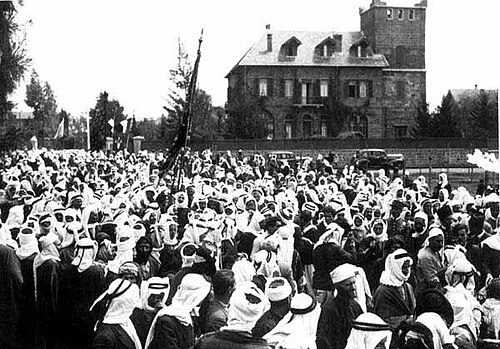
シリアでは、ほとんどのドゥルーズ派は、国南西部の険しい山岳地帯であるジェベル・アル・ドゥルーズに住んでおり、この地域の90パーセント以上がドゥルーズ派で、約120の村がドゥルーズ派のみの村である。 [157] [要ページ]他の注目すべきコミュニティは、ハリム山脈、ダマスカス郊外のジャラマナ、ヘルモン山の南東斜面に住んでいる。大きなシリアのドゥルーズ派コミュニティは歴史的にゴラン高原に住んでいたが、1967年と1973年のイスラエルとの戦争の後、これらのドゥルーズ派の多くはシリア国内の他の地域に逃げた。残った人々のほとんどは紛争地域のいくつかの村に住んでいるが、ほんの数人だけが、依然としてシリアによる実効支配下にある クネイトラ県の狭い残存地域に住んでいる。
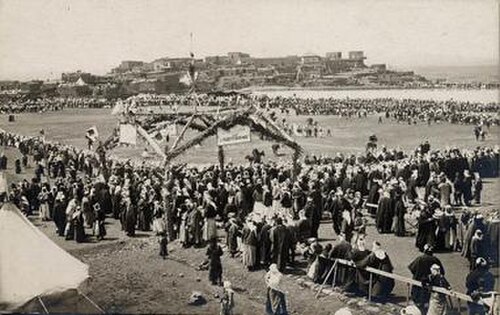
ドゥルーズ派は、比較的人口が少ないことから想像されるよりもはるかに重要な役割を常にシリア政治で果たしてきた。1949年には10万人強、つまりシリア人口の約3%を占めるシリア南西部山岳地帯のドゥルーズ派は、シリア政治で強力な勢力を形成し、フランスに対する民族主義闘争で主導的な役割を果たした。スルタン・パシャ・アル・アトラシュの軍事指導の下、ドゥルーズ派は1925年から1927年のシリア革命の背後で軍事力の多くを提供した。1945年、ジェベル・アル・ドゥルーズ派の最高政治指導者アミール・ハサン・アル・アトラシュは、ドゥルーズ派の軍部隊を率いてフランスに対する反乱を成功させ、ジェベル・アル・ドゥルーズ派はイギリスの支援なしにフランスの支配から解放されたシリアで最初で唯一の地域となった。独立後、ドゥルーズ派は成功に自信を深め、戦場での多くの犠牲に対してダマスカスが報いてくれると期待した。彼らはフランスから与えられた自治権と多くの政治的特権を維持することを要求し、新たに独立した政府に寛大な経済援助を求めた。[157] [ページが必要]
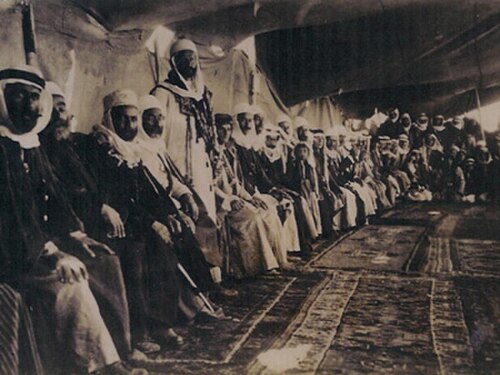
1945年に地元紙がシュクリ・アル=クワトリ大統領 (1943-49年)がドゥルーズ派を「危険な少数派」と呼んだと報じたとき、スルタン・パシャ・アル=アトラシュは激怒し、公に撤回を要求した。撤回されなければ、ドゥルーズ派は実際に「危険」となり、4,000人のドゥルーズ派戦士が「ダマスカス市を占領する」と宣言した。クワトリはスルタン・パシャの脅しを無視できなかった。シリアの軍事力のバランスは、少なくとも1948年のパレスチナ戦争で軍備が増強されるまでは、ドゥルーズ派に有利に傾いていた。シリア国防省の顧問の1人は1946年に、シリア軍は「役に立たない」、ドゥルーズ派は「ダマスカスを占領し、現指導者を楽々と捕らえる」と警告した。[157] [ページが必要]
アディブ・シシャクリがシリアを統治した4年間(1949年12月から1954年2月)(1952年8月25日:アディブ・アル=シシャクリは汎アラブ主義と社会主義の見解を持つ進歩的な政党、アラブ解放運動(ALM)を結成)、 [158]ドゥルーズ派コミュニティはシリア政府による激しい攻撃にさらされた。シシャクリは、シリアの多くの敵の中でもドゥルーズ派が最も潜在的に危険であると信じ、彼らを打ち負かすことを決意した。彼は頻繁に「私の敵は蛇のようだ。頭はドゥルーズ山、腹はホムス、尾はアレッポだ。頭を砕けば蛇は死ぬだろう」と宣言した。シシャクリはドゥルーズ山を占領するために1万人の正規軍を派遣した。いくつかの町が重火器で砲撃され、多数の民間人が死亡し、多くの家屋が破壊された。ドゥルーズ派の記録によると、シシャクリは近隣のベドウィン族に無防備な住民を略奪するよう奨励し、自らの軍隊が暴れ回るのを許した。[157] [ページが必要]
シシャクリは、ドゥルーズ派の宗教と政治を中傷する残忍なキャンペーンを開始した。彼はコミュニティ全体を反逆罪で告発し、時には彼らがイギリスとハシミテ派に雇われていると主張し、また時には彼らがイスラエルのためにアラブ人と戦っていると主張した。彼はジャバルで発見されたとされるイスラエルの武器の隠し場所さえも提示した。ドゥルーズ派にとってさらに苦痛だったのは、宗派間の憎悪をかき立てるために「偽造されたドゥルーズ派の宗教文書」と主要なドゥルーズ派のシェイクによる偽の証言を出版したことだった。このプロパガンダはアラブ世界、主にエジプトでも放送された。シシャクリは、1964年9月27日にブラジルで、ジェベル・アル・ドゥルーズへのシシャクリの砲撃に対する復讐を企てたドゥルーズ派の一人によって暗殺された。 [157] [ページが必要]

彼は少数民族をシリアの国家社会構造に強制的に統合した。アラウィー派とドゥルーズ派の領土の「シリア化」は、部分的には暴力を使って達成されなければならなかった。この目的のために、アル・シシャクリは少数民族の汚名を着せることを奨励した。彼は少数民族の要求を反逆行為に等しいとみなした。彼のますます偏狭なアラブ民族主義の観念は、シリアに「少数民族」が存在することを否定することに基づいていた。[159] [ページが必要]
シシャクリの軍事作戦の後、ドゥルーズ派は政治的影響力の多くを失ったが、多くのドゥルーズ派の軍将校が現在シリアを統治しているバース党政権で重要な役割を果たした。[157] [ページが必要]
1967年、ゴラン高原のドゥルーズ派のコミュニティがイスラエルの支配下に入り、現在その数は23,000人(2019年現在)に達している。[160] [161] [162]
シリア内戦前の2010年にはシリアには約70万人のドゥルーズ派が住み、人口の約3%を占めていたと推定されている。[163]このうち約337,500人がアス・スワイダ県に居住しており、この地域ではドゥルーズ派が約90%と多数派で、キリスト教徒もかなりの数いる。[164] [163]この地域はシリア全体のドゥルーズ派人口の48.2%を占めている。[165]さらに、約25万人のドゥルーズ派、つまり全ドゥルーズ派人口の35.7%がダマスカスとその周辺地域、ジャラマナ、サフナヤ、ジュデイダット・アルトゥズなどに住んでいた。ヘルモン山の東側には約3万人のドゥルーズ派が居住し、イドリブ県のジャバル・アル・スマクにある14の村には約2万5千人のドゥルーズ派が分散していた。[163]
カルブ・ロゼ虐殺は、2015年6月10日にシリア北西部イドリブ県のカルブ・ロゼ村で起きたシリアのドゥルーズ派に対する虐殺とされ、20~24人のドゥルーズ派が殺害された。2018年7月25日、 ISISと関係のある攻撃者グループがドゥルーズ派の都市アス・スワイダに侵入し、路上で一連の銃撃戦と自爆テロを開始し、少なくとも258人が死亡、その大部分は民間人であった。[166]
レバノンでは
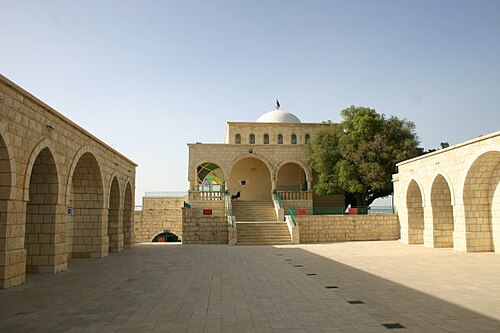
レバノンのドゥルーズ派コミュニティは、レバノンの近代国家の形成に重要な役割を果たした。 [147]彼らは少数派であるにもかかわらず、レバノンの政治シーンで重要な役割を果たしている。レバノン内戦(1975-1990年)の前と最中、ドゥルーズ派は汎アラブ主義とPLOに代表されるパレスチナ抵抗を支持していた。コミュニティの大部分は、彼らの指導者カマル・ジュンブラットによって結成された進歩社会党を支持し、他の左翼政党やパレスチナ政党と共に、主にキリスト教徒で構成されたレバノン戦線と戦った。当時、レバノンの政府と経済は、マロン派キリスト教コミュニティ内のエリート層の大きな影響下で運営されていた。[168] [169] 1977年3月16日にカマル・ジュンブラットが暗殺された後、彼の息子ワリード・ジュンブラットが党の指導権を握り、山岳戦争での勝利後、父の遺産を守る上で重要な役割を果たし、1990年まで続いた宗派間の流血の間、ドゥルーズ派コミュニティの存在を維持した。
2001年8月、マロン派カトリック総 主教ナスララ・ブトロス・スフェイルは、レバノン山岳部のドゥルーズ派が多数を占めるシューフ地方を視察し、ドゥルーズ派指導者ワリード・ジュンブラットの先祖代々の拠点であるムフタラを訪れた。スフェイルが受けた騒々しい歓迎は、1983年から1984年にかけて血なまぐさい戦争を戦ったマロン派とドゥルーズ派の歴史的和解を意味しただけでなく、レバノン主権の旗印が幅広い多宗派に訴えかけ[170]、 2005年のシーダー革命の礎となったという事実を強調するものでもあった。ジュンブラットの2005年以降の立場は、彼の家族の伝統から大きく逸脱していた。彼はまた、 1977年の父カマル・ジュンブラットの暗殺の背後にダマスカスがいたと非難し、彼が個人的に疑っていたことを初めて表明した。 BBCはジュンブラット氏を「レバノンで最も強力なドゥルーズ派一族の指導者であり、左派政治王朝の後継者」と評している。[171]ドゥルーズ派が支持する2番目に大きな政党は、レバノン独立の英雄マジド・アルスラン首長の息子、タラール・アルスラン王子が率いるレバノン民主党である。
ドゥルーズ派コミュニティは、主にベイルートの東と南の農村部と山岳地帯に居住している。[172]彼らはレバノンの人口の約5.2%を占め、ハスバヤ、ラシャヤ、チョウフ、アレイ、マルジェユン、ベイルートなどの地域の136の村に分布している。アレイ、バークリーン、ハスバヤ、ラシャヤではドゥルーズ派が大多数を占めている。具体的には、アレイ地区では人口の半分以上、ラシャヤ地区では約3分の1 、チョウフ地区とマトゥン地区では約4分の1を占めている。[173]
イスラエルでは

イスラエルではドゥルーズ派が10万人以上の宗教的少数派を形成しており、そのほとんどは同国北部に居住している。[175] 2004年には、国内に10万2千人のドゥルーズ派が住んでいた。 [176] 2010年には、イスラエルのドゥルーズ派の人口は12万5千人を超えた。2018年末の時点で、イスラエルとゴラン高原のイスラエル占領地域には14万3千人が住んでいる。 [9]イスラエルのドゥルーズ派のほとんどは、民族的にはアラブ人であると自認している。[177]今日、何千人ものイスラエルのドゥルーズ派が「ドゥルーズ・シオニスト」運動に属している。 [174]
イスラエル中央統計局の2020年の国勢調査によると、イスラエルのアラブ系市民の約7.6%をドゥルーズ派が占めている。[178] 2019年末までに、イスラエルのドゥルーズ派人口の約81%が北部地区に居住し、19%がハイファ地区に住んでいた。最大のドゥルーズ派コミュニティは、ダリヤット・アル・カルメルとイルカ(ヤルカとしても知られる)にある。[179]ドゥルーズ派は、イスラエル北部の山頂に点在する19の町や村に住んでおり、ドゥルーズ派のみの地域か、キリスト教徒とイスラム教徒が混在するコミュニティである。[179]
ガリラヤのドゥルーズ派とハイファ地域のドゥルーズ派は、1948年に自動的にイスラエル国籍を取得した。イスラエルが1967年にゴラン高原をシリアから奪取し、1981年にイスラエルに併合した後、ゴラン高原のドゥルーズ派はゴラン高原法に基づいて完全なイスラエル国籍を提供された。大半はイスラエル国籍を辞退し、シリア国籍とアイデンティティを保持し、イスラエルの永住者として扱われている。[180] 2011年時点で、ゴラン高原のドゥルーズ派人口のうちイスラエル国籍を受け入れた人は10%未満であった。[181]
1957年、イスラエル政府は、そのコミュニティの指導者の要請により、ドゥルーズ派を独自の宗教コミュニティに指定した。[182] [183] ドゥルーズ派はアラビア語を話すイスラエル国民であり、イスラエルのほとんどの国民と同様に、イスラエル国防軍に勤務している。コミュニティのメンバーは、イスラエルの政治や公務でトップの地位を獲得している。[184]ドゥルーズ派の国会議員の数は、通常、イスラエルの人口に占める割合を上回っており、いくつかの政党に統合されている。
一部の学者は、イスラエルがドゥルーズ派を他のアラブ人コミュニティから分離しようとしており、その努力がイスラエルのドゥルーズ派が自分たちの現代的なアイデンティティを認識する方法に影響を与えていると主張している。[185] [186]調査データによると、イスラエルのドゥルーズ派は、第一にドゥルーズ派(宗教的)、第二にアラブ人(文化的および民族的)、第三にイスラエル人(市民権上)としてのアイデンティティを優先していることが示唆されている。[187]彼らのうちの少数はパレスチナ人であると自認しており、主にパレスチナ人を自認するイスラエルの他のアラブ市民の大多数とは区別されている。[188]
ヨルダン
ヨルダンではドゥルーズ派が約3万2千人の宗教的少数派を形成しており、そのほとんどは同国の北西部に居住している。[14]彼らが居住する主な地域は、アンマン、アズラク、ザルカ、ルシエファ、ウンム・アル・クッティン、アカバ、マフラクである。ヨルダンにおけるドゥルーズ派の定住は、トルコ人がこの地域から撤退した後、22のドゥルーズ派家族がジャバル・アル・ドゥルーズからアル・アズラクに移住した1918年に始まりました 。 [189]
ディアスポラで
ベネズエラには中東以外では最大のドゥルーズ派コミュニティがあり、[190] [191]約6万人と推定されている。[192]彼らのほとんどは、レバノンとシリアに祖先を遡る。アス・スワイダ地域の20万人以上の人々がベネズエラ国籍を有しており、その大半はシリアのドゥルーズ派に属し、前世紀にベネズエラに移住した。[193]ベネズエラへのアラブ人の移民は19世紀と20世紀に始まり、主にオスマン帝国のレバノン、シリア、パレスチナの地域から移住してきた。彼らは主にカラカスに定住し、特にアラブ料理と音楽の面でベネズエラの文化に大きな影響を与えてきた。宗教的には、アラブ系ベネズエラ人コミュニティは主にドゥルーズ派とキリスト教徒で構成されており、ローマカトリック教会、東方正教会、東方典礼カトリック教会に属している。[194]ベネズエラへの初期のドゥルーズ派移民は地元住民にうまく同化し、中にはカトリックに改宗した者もいた。[195]それでも、多くはドゥルーズ派およびアラブ人としての強いアイデンティティを保持し、ドゥルーズ派の価値観を固守した。ベネズエラにおけるドゥルーズ派の影響の顕著な例としては、ドゥルーズ派の血を引く元副大統領のタレク・エル・アイサミが挙げられる。 [196] [197]ドゥルーズ派出身のベネズエラ人著名人には、ハイファ・エル・アイサミやタレク・ウィリアム・サーブなどがいる。[198]
アメリカ合衆国は中東以外ではベネズエラに次いで2番目にドゥルーズ派コミュニティが多い。[199]アメリカ合衆国のドゥルーズ派の人口は3万人[200]から5万人[199]と推定されており、南カリフォルニアに最も多く集中している。 [200]アメリカのドゥルーズ派は主にレバノン系とシリア系である。[200] ドゥルーズ派の信者はドゥルーズ派のパートナーを見つけることや同族結婚の実施が困難であり、ドゥルーズ派の教義では信者以外との結婚は強く推奨されていない。また、アメリカ合衆国への多くのドゥルーズ派移民がプロテスタントに改宗し、長老派教会やメソジスト教会の信徒となったため、宗教を存続させるプレッシャーにも直面している。[201] [202]
信念
神
ドゥルーズ派の神の概念は、厳格で妥協のない統一性であると彼らは宣言している。ドゥルーズ派の主な教義は、神は超越的であると同時に内在的であり、すべての属性を超えているが、同時に存在しているとしている。[203]
彼らは、統一性を堅固に主張したいという願望から、神からすべての属性 ( tanzīh ) を剥奪した。神には、その本質から区別される属性はない。神は、知恵、力、正義によってではなく、神自身の本質によって、賢く、力強く、公正である。神は「存在の全体」であり、「存在を超えた」存在や王座に就く存在ではなく、神を「限定された」存在とみなす。神には「どのように」「いつ」「どこ」という概念はなく、神を理解することはできない。[204] [ページが必要]
この教義において、彼らは、アル・マムーンのもとで繁栄し、ムタズィラという名前で知られていた半哲学的、半宗教的な団体や、清浄兄弟団(イフワーン・サファ)に類似している。[115] [ページが必要]
ムタズィラ派とは異なり、またスーフィズムのいくつかの分派と同様に、ドゥルーズ派はタジャリ(「神の顕現」を意味する)の概念を信じている。[204] [要ページ] タジャリは学者や作家に誤解されることが多く、通常は化身の概念と混同される。
[化身]は、ドゥルーズ派やその他の知的・精神的伝統における中核的な精神的信念です...神秘的な意味では、それは精神的な旅で高いレベルの純粋さに達した特定の神秘家が経験する神の光を指します。したがって、神は、ナスート[物質界]の駅(マカーム)で光を顕現するラウト[神]として認識されますが、ナスートはラウトにはなりません。これは、鏡に映る自分の姿のようなものです。人は鏡の中にいますが、鏡にはなりません。ドゥルーズ派の写本は、ナスートが神であるという信念に対して強調して警告しています...この警告を無視して、個々の探求者、学者、その他の観客は、アル=ハキムや他の人物を神と見なしてきました。...ドゥルーズ派の聖典の見解では、タジャリが中心的な役割を果たします。ある著者は、タジャリは探求者の人間性が消滅し、人が神の属性と光を経験するときに発生するとコメントしています。[204] [ページが必要]
聖書
ドゥルーズ派の聖典にはコーランや英知の書簡などがある。[205]その他の古代ドゥルーズ派の著作には、ラサイル・アル=ヒンド(インドの書簡)や、以前は失われた(または隠されていた)写本であるアル=ムンファリード・ビ・ダティヒやアル=シャリーア・アル=ルハニヤ、その他教訓的・論争的な 論文などがある。[206]
生まれ変わり
輪廻転生はドゥルーズ派の信仰において最も重要な原則である。[207]輪廻転生は死後すぐに起こる。なぜなら肉体と魂は永遠に二元性があり、魂は肉体なしでは存在できないからである。魂はどんな生き物にも移ることができるとする新プラトン主義、ヒンズー教、仏教の信仰体系とは対照的に、人間の魂は人間の肉体にのみ移る。さらに、男性のドゥルーズ派は別の男性のドゥルーズ派としてのみ、女性のドゥルーズ派は別の女性のドゥルーズ派としてのみ転生できる。ドゥルーズ派は非ドゥルーズ派の肉体に転生することはできない。さらに、魂は分割できず、宇宙に存在する魂の数は有限である。[208]輪廻転生は連続的であり、そこから逃れる唯一の方法は連続した輪廻転生を経ることである。これが起こると、魂は宇宙の精神と一体となり、究極の幸福を達成する。[39]
時間の契約の守護者
時間の管理者の協定 (ミタック・ワリー・アルザマーン) は、ドゥルーズ派の宗教への入り口であると考えられており、ドゥルーズ派の人々は、過去世ですべてのドゥルーズ派の人々がこの憲章に署名したと信じており、この憲章は死後、人間の魂に具現化するとドゥルーズ派は信じています。
私は、孤独な神、個人、永遠の存在である我らのムーラ・アル・ハキムに頼ります。彼はカップルや数字から外れ、(誰かの)息子であり、(誰かの)心身が健全な状態で、自分自身と魂に課せられた承認を承認し、許容は従順であり強制されず、あらゆる信条、記事、そしてさまざまな宗教や信念を拒否し、全能のムーラナ・アル・ハキムへの服従以外は何も知りません。服従とは崇拝であり、誰かが参加したり待ったりした崇拝には従いません。彼は自分の魂と体、お金、そして所有するすべてのものを全能のムーラナ・アル・ハキムに委ねました。[209] [要説明]
ドゥルーズ派も、ウッカルに入会する際には、アル・アハドと呼ばれる同様の儀式を用いる。[210]
聖域

ドゥルーズ派の礼拝所は、ヒルワ、 ハルワ、ヒルワット、またはハルワットと呼ばれます。ドゥルーズ派の主要な聖域は、ハルワット・アル・バヤダにあります。[211]
秘教主義
ドゥルーズ派は、預言者、宗教指導者、聖典によって与えられた多くの教えには、知性ある人々のために保存された難解な意味があり、その中のいくつかの教えは本質的に象徴的かつ寓話的であると信じており、聖典と教えの理解を3つの層に分けます。
ドゥルーズ派によれば、これらの層は次のとおりです。
- 明白または外面的な (zahir)は、読んだり聞いたりできる人なら誰でも理解できる。
- 隠されたもの、または難解なもの (バティン)は、解釈の概念を通して探求し学ぶ意志のある人にとってはアクセス可能です。
- そして、隠されたものの中の隠されたもの、アナゴーゲとして知られる概念は、宇宙の本質を真に理解している少数の真に悟りを開いた個人以外にはアクセスできない。[212]
ドゥルーズ派は、秘教的な意味が外面的な意味を否定したり、必ずしも廃止したりするとは考えていない。ハムザ・ビン・アリは、タハーラ(清浄)の秘教的解釈が心と魂の清浄であるとしても、人が肉体的な清浄を捨ててよいということにはならない、なぜなら、人が言葉に嘘をついているならサラート(祈り)は無意味であり、秘教的意味と外面的意味は互いに補完し合うからである、と述べて、そのような主張を否定している。[213]
ドゥルーズ派の七つの戒律
ドゥルーズ派は信仰の核心とされる7つの道徳的戒律や義務に従っています。[39] ドゥルーズ派の7つの戒律は以下のとおりです。[214]
- 言葉の真実性と舌の誠実さ。
- 信仰の兄弟たちへの保護と相互援助。
- あらゆる形態の以前の崇拝(具体的には無効な信条)と誤った信念を放棄すること。
- 悪魔(イブリース)とすべての悪の勢力(アラビア語の「専制政治」を意味するトギャンから翻訳)の否定。
- 神の一体性の告白。
- 神の行為が何であれそれに従うこと。
- 秘密でも公でも神の神聖な意志に絶対的に服従し、従うこと。
タキーヤ
彼らのアイデンティティを複雑にしているのは、タキーヤ(必要に応じて信仰を隠したり偽装したりする)という慣習で、これはイスマーイール派から取り入れたもので、多くの教えが秘密にされているという信仰の秘教的性質もその一つである。これは、教えを受け入れる準備ができていない人々から宗教を遠ざけるため、つまり誤解する恐れのある人々から宗教を守るため、またコミュニティが危険にさらされたときにコミュニティを守るために行われている。迫害を避けるためにイスラム教徒またはキリスト教徒であると主張する者もいれば、そうでない者もいる。[215]ドゥルーズ派は州によって生活様式が根本的に異なる場合がある。[216]
神の顕現
ハムザ・イブン・アリー・イブン・アフマドは、ドゥルーズ派の創始者であり、ドゥルーズ派の写本の主な著者であると考えられています。[5]彼は、神が人間となり、人の姿をとったと宣言しました。[217] [218] [219] [220] [221] [過剰な引用] アル・ハキム・ビ・アムル・アッラーは、ドゥルーズ派の信仰において重要な人物であり、その名を冠した創始者アド・ダラジーは、 1018年に彼を神の化身であると宣言しました。[217] [218]ドゥルーズ派は、アル・ハキムが世界の終わりに再臨し、世界を裁き、王国を樹立すると信じており、ハムザ・イブン・アリーは、アル・ハキムと密接な関係にある普遍精神であるイエス・キリストの生まれ変わりであると考えられています。 [44]
『知恵の書簡』第1巻の一部である書簡「ユダヤ人とキリスト教徒の報告」(Khabar al-Yahud wal Nasara )の著者は、ドルーズ派の人物であったと思われる。その記述自体では、著者はアル・ハキムの神性を支持し、ドルーズ派の創始者であるハムザ・イブン・アリであるとされている。 [222]
歴史家デイヴィッド・RW・ブライアーは、ドゥルーズ派がカリフのアル・ハキム・ビ・アムル・アッラーの崇拝を誇張し、彼を神とみなしていたことから、彼らをイスマーイール派のグラートと定義している。また、彼はドゥルーズ派をイスラム教から逸脱した宗教と定義している。[223]彼はまた、この逸脱の結果、ドゥルーズ派の信仰は「イスラム教がキリスト教と、あるいはキリスト教がユダヤ教と異なるのと同じくらいイスラム教と異なっているようだ」と付け加えた。[224]
預言者
_-_Nebi_Shueib_Festival.jpg/500px-Flickr_-_Government_Press_Office_(GPO)_-_Nebi_Shueib_Festival.jpg)
ドゥルーズ派の預言者の認識は、預言者自身 (ナティク)、その弟子 (アサ)、そして預言者のメッセージの証人 (フッジャ)という 3 つのサブカテゴリに分けられます。
5という数字には、ドゥルーズ派の信仰において暗黙の意味が含まれています。この地域では、偉大な預言者は5人組で現れると信じられています。古代ギリシャの時代には、この5人はピタゴラス、プラトン、アリストテレス、パルメニデス、エンペドクレスによって代表されました。1世紀には、この5人はイエス・キリスト、[225] [226] 洗礼者ヨハネ、[227] 聖マタイ、聖マルコ、聖ルカによって代表されました。[228]信仰の創設当時、その5人はハムザ・イブン・アリー・イブン・アフマド、ムハンマド・イブン・ワハブ・アル・クラシ、アブール・ハイル・サラマ・イブン・アブドゥ・アル・ワッハブ・アル・サムリ、イスマール・イブン・ムハンマド・アット・タミーミー、そしてアル・ムクタナであった。ウディン。
ドゥルーズ派の伝統では、ハムザ・イブン・アリー・アフマドとペルシャ人のサルマンを「指導者」と「預言者」として尊敬し、一神教の思想の生まれ変わりであると信じられています。[229] [230]
その他の信念
ドゥルーズ派は離婚を認めているが、推奨されておらず、割礼も必須ではない。棄教は禁じられており[231] 、通常は木曜日の夜に宗教儀式を行っている。[38]ドゥルーズ派は、自らの信仰に特別な規定がない問題についてはスンニ派ハナフィー法に従う。 [232] [233]
正式なドゥルーズ派の礼拝は毎週木曜日の夜に行われる集会に限られており、その集会ではコミュニティのメンバー全員が集まり、地元の問題について話し合います。その後、信仰の秘密を知らない人々(ジュハル、つまり無知な人々)は解散し、「ウッカル」つまり「悟りを開いた人々」(ドゥルーズ派の聖典を学んだ少数の人々)は残って読書や勉強をします。[38]
宗教的シンボル
ドゥルーズ派は図像表現を厳格に避けているが、宗教的シンボルとして5つの色(「五つの限界」 خمس حدود khams ḥudūd )を使用している: [234] [235]緑、赤、黄、青、白。5つの限界は、イスマイール・アト・タミミ(1030年没)が『ろうそくの手紙』 (risalat ash-sham'a)で次のように列挙している。
- 最初の制限: ハムザ・イブン・アリ ( حمزة إبن علي إبن أحمد ) (または他の情報源によるとイエス) [236]
- 2 番目の制限: イスマイル・イブン・ムハメド・イブン・ハメド・アット・タミミ (イスマイル・アット・タミミ) ( إسماعيل إبن محمد بن حامد التميمي )
- 3番目の制限: ムハメド・イブン・ワフブ ( محمد إبن وهب )
- 第 4 の限界 (前方のas-Sabiq ): Salama ibn abd al-Wahhab ( سلامة إبن عبد الوهاب )
- 第 5 限界 (後部アル・ラヒク): アリ・ブン・アーメド・アズ・サムウキ ( علي إبن أحمد السموقي )
5 つの限界を表す各色は、文字通り「限界」を意味するḥaddと呼ばれる形而上学的な力に関係しており、人間と動物を区別する区別、または人間を動物の身体にする力に関係しています。各ḥadd は、次のように色分けされています。
- 緑は「普遍的な精神/知性/知恵」を意味する。
- 赤はナフス「普遍的な魂/アニマ・ムンディ」を表します。
- 黄色はカリマ「言葉/ロゴス」、
- 青はSābiq(السابق)「先行/可能性/原因/前例」、最初の知性を表します。
- 白はal-llahiq ( اللاحق )「後部/未来/効果/内在性」を表します。
心はクオリアを生成し、意識を与えます。[237]魂は心を具現化し、輪廻と自己の性格を担っています。言語の原子である言葉は、人間の間でクオリアを伝え、感覚的な世界におけるプラトンの形を表します。サービクとターリーは、過去を認識して学び、未来を計画して予測する能力です。
色は、縦に下がる縞模様(旗のように)または五芒星の形に並べることができます。[238]縞模様は新プラトン哲学における球体の図式的な切り口であり、五芒星は黄金比ファイを体現し、節制と中庸な生活の 象徴です。
祈りの家と聖地

ドゥルーズ派の聖地は、コミュニティにとって重要で宗教的な祝日と関連のある考古学的遺跡である。 [239]最も顕著な例は、ドゥルーズ派の中心人物であるジェトロに捧げられたナビー・シュアイブである。ドゥルーズ派は、ジヤラト・アル・ナビー・シュアイブの祝日にこの場所に巡礼する。[240]

社会生活において中心的な役割を担うドゥルーズ派の村の最も重要な特徴の一つは、祈り、隠遁、宗教的結束のための家であるヒルワまたはハルワットである。ハルワットは地元の言語でマジリスと呼ばれることもある。[241]
2つ目のタイプの宗教的聖地は、歴史的出来事や預言者の死の記念日に関連するものである。それが霊廟であればドゥルーズ派はそれをマザールと呼び、神社であればマカームと呼ぶ。聖地は逆境や災難の時にコミュニティにとってより重要になる。ドゥルーズ派の聖地や神社は、保護され、世話されている様々な村に点在している。それらはシリア、レバノン、イスラエルに見られる。[239]
入会者と「無知な」会員
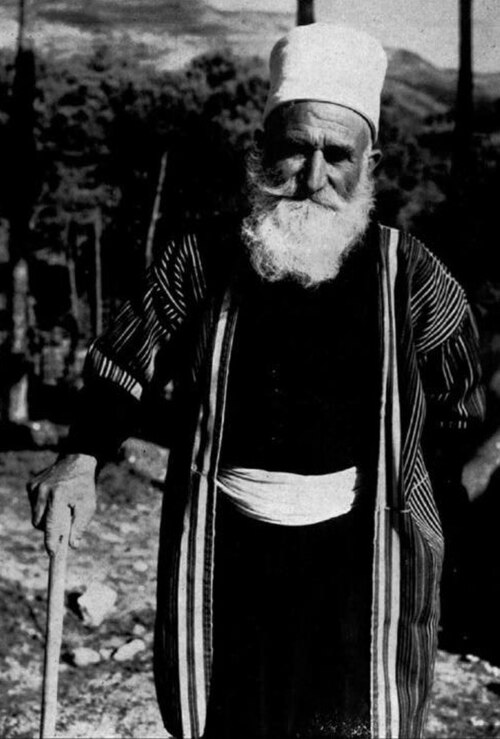
ドゥルーズ派はいかなる宗教的階層も認めていない。[242]そのため、「ドゥルーズ派聖職者」は存在しない。ドゥルーズ派の聖典に入信した少数の者は「ウッカル」と呼ばれ、[243]一方、グループの「無知な」一般メンバーは「ジュハル」と呼ばれる。[244]
厳格な宗教的、知的、精神的要件のため、ドゥルーズ派のほとんどは入信しておらず、アル・ジュハル(جهال)と呼ばれることもある。これは文字通り「無知な者」という意味だが、実際には入信していないドゥルーズ派を指す。[245]しかし、その用語はドゥルーズ派によってめったに使用されない。これらのドゥルーズ派は、ドゥルーズ派の聖典を読むことも、ウッカルの入信した宗教集会に参加することも許されない。「ジュハル」はドゥルーズ派コミュニティの大多数である。[242]しかし、結束力とコミュニティ間の頻繁な社会的交流により、ほとんどのドゥルーズ派は、自分たちの幅広い倫理的要件についてのアイデアを持ち、自分たちの神学が何で構成されているかをある程度理解することができる(多くの場合、欠陥があるが)。
男性と女性の両方を含む(人口の10%未満)入信者の宗教グループは、アル・ウッカル(عقال「知識ある入信者」)と呼ばれています。彼らは服装が異なっている場合もあれば、そうでない場合もありますが、ほとんどは前世紀の山岳民族の特徴的な衣装を着ています。女性は、特に他の人がいる場合は、ゆったりとした白いベールであるアル・マンディルを着用することを選択できます。彼らは、アル・マンディルを頭にかぶって髪を覆い、口の周りに巻き付けます。彼らは黒いシャツと足首まで覆う長いスカートを着用します。男性のウッカルは口ひげを生やしていることが多く、シルワルと呼ばれる暗いレバント-トルコの伝統的なドレスを着て、ウッカルの年長者に応じて異なる白いターバンを巻きます。伝統的に、ドゥルーズ派の女性はコミュニティ内で社会的にも宗教的にも重要な役割を果たしてきました。[242]
アル・ウッカールはアル・ジュッハルと同等の権利を持つが、宗教的奉仕に基づいた尊敬の階層を確立する。アル・ウッカールの中で最も影響力のある者はアジャウィードと呼ばれる公認の宗教指導者となり、このグループからドゥルーズ派の精神的指導者が任命される。シリア、レバノン、イスラエルの公的な地位であるシャイフ・アル・アクルは地元のコミュニティによって選出され、ドゥルーズ派の宗教評議会の長を務めるが、この地位にはドゥルーズ派の宗教裁判所の裁判官が通常選出される。精神的指導者とは異なり、シャイフ・アル・アクルの権限は選出された国に限定されているが、精神的指導者がこの地位に選出される場合もある。[246]
ドゥルーズ派は神の統一性を信じており、しばしば「一神教の人々」または単に「一神教徒」として知られている。[247]彼らの神学は、神が放射を通じて世界とどのように相互作用するかについてのネオプラトニズム的見解を持ち、グノーシス主義やその他の秘教宗派と類似している。ドゥルーズ派の哲学にはスーフィーの影響も見られる。 [248]
ドゥルーズ派の信条は、誠実さ、忠誠心、親孝行、利他主義、愛国的犠牲、一神教に重点を置いている。[249]彼らはニコチン、アルコール、その他の薬物を拒否し、豚肉の消費もしばしば拒否する(ウッカルでは拒否し、ジュハルでは必ずしも拒否するわけではない)。[250]ドゥルーズ派は一夫多妻制を拒否し、輪廻転生を信じており、宗教儀式のほとんどを守る義務はない。[251]ドゥルーズ派は、儀式は象徴的であり、個人に個人的な影響を及ぼすと信じており、そのため、ドゥルーズ派は儀式を行うか行わないかは自由である。しかし、ドゥルーズ派はイード・アル=アドハーを最も重要な祝日とみなしているが、その儀式の形式はほとんどのイスラム教徒とは異なる。[252]
文化
.jpg/500px-DRUZE_WOMAN_PREPARING_A_TRADITIONAL_DISH_PN12IGA02320_ITAMAR_GRINBERG_IMOT_(14033392419).jpg)
ドゥルーズ派は、アラビア語と文化を自分たちのアイデンティティの中核要素として維持している。[253] [32] [35]アラビア語が彼らの主要言語であり、ドゥルーズ派の文化的慣習と伝統は、より広範なアラブの遺産と深く絡み合っている。[254] [255]ドゥルーズ派は独自の宗教的信念と慣習を持っているが、レバントにおけるアラブ文化と社会生活を積極的に保存し、貢献している。 [ 32]彼らはこの地域の歴史と文化に大きな影響を与えており、注目すべき政治的役割を果たし続けている。[256]
伝統的に、ほとんどのドゥルーズ派は信仰のより深い秘密を知らされず、「ジュハル」つまり「無知な者」と見なされている。「ウッカル」つまり「悟りを開いた者」と呼ばれる少数派だけがドゥルーズ派の聖典を知り、宗教研究に従事している。平均的なドゥルーズ派(「ジュハル」)の宗教生活は、誕生と割礼、婚約と結婚、死と埋葬といったごく少数の行事を中心に展開し、特別なドゥルーズ派の祈りや礼拝はない。[257]ドゥルーズ派以外の結婚は禁じられており、[84]ドゥルーズ派が非ドゥルーズ派と結婚した場合、そのドゥルーズ派はコミュニティから追放され、疎外される可能性がある。[258]非ドゥルーズ派のパートナーはドゥルーズ派に改宗できないため、夫婦はドゥルーズ派の子供を持つことができない。なぜなら、ドゥルーズ派の信仰は、出産を通じてのみ、2人のドゥルーズ派の両親に受け継がれるからである。[13]
割礼はドゥルーズ派によって広く行われている。[259]この処置は文化的伝統として行われており、ドゥルーズ派の信仰において宗教的な意味はない。[260]ドゥルーズ派の信仰において割礼に特別な日付はない。ドゥルーズ派の男児は通常、生後すぐに割礼を受けるが、[257] 10歳かそれ以上になるまで割礼を受けない者もいる。[257]ドゥルーズ派の中には男児に割礼を行わず、この「一般的なイスラム教の慣習」に従うことを拒否する者もいる。[261]
ドゥルーズ派のコミュニティは結束が強く、強いアイデンティティと連帯感を維持している。彼らの宗教的実践の重要な側面には、ジヤラート、つまり聖地への訪問が含まれる。ドゥルーズ派の宗教生活で最も重要な行事の一つは、4月25日から28日の間に行われるシュアイブ神殿への毎年恒例の巡礼である。 [262]この巡礼は、ドゥルーズ派が預言者と信じ、この神殿に彼の墓があるとされるシュアイブに捧げられる。この行事は非常に重要であるため、イスラエルでは公式に祝日として認められている。[262]
言語
シリア、レバノン、イスラエルのドゥルーズ派の母語はレバント・アラビア語である[255]。ただし、ベネズエラなどのドゥルーズ派ディアスポラで生まれ暮らしている人々は例外で、これらの地域ではアラビア語は教えられておらず、家庭でも話されていない。[255]ドゥルーズ派アラビア語の方言は、特に農村部では、他の地域のアラビア語方言と異なることが多い。[255]ドゥルーズ派アラビア語の方言は、音素/ q /を保持していることで他の方言と区別され、[255]ドゥルーズ派によるこの方言の使用は山岳地帯で特に顕著であり、都市部ではそれほど多くない。
イスラエルのドゥルーズ派の市民は言語と文化においてアラビア語圏に属しており[18]、言語的に言えば、彼らの大多数は流暢なバイリンガルであり、中央北部レバントのアラビア語方言とヘブライ語の両方を話します。イスラエルのドゥルーズ派アラブ人の家庭や町では、主にアラビア語が話されていますが、ヘブライ語の一部は口語のアラビア語方言に入り込んでいます[263]。彼らは、オンラインでアラビア語の方言を書く際にヘブライ文字をよく使用します。 [264]
文化的アイデンティティ

様々な学者が、ドゥルーズ派の文化的アイデンティティは彼らのアラブの伝統と深く絡み合っていることに同意している。歴史家のネジュラ・アブ・イッゼディンとカマル・サリビはともに、ドゥルーズ派は共通の言語と社会慣習に見られるように、アラブの文化的枠組みに深く根ざしていると主張している。[265] [266]彼らは、この統合は、ドゥルーズ派が独自の宗教的、哲学的信念にもかかわらず、地域の伝統に積極的に参加し、アラブ社会に同化していることから明らかであると主張している。[267] [268]
学者ロバート・ブレントン・ベッツは、ドゥルーズ派の社会構造は強い共同体意識と「シェイク」と呼ばれる宗教的長老のリーダーシップによって特徴づけられると説明している。これらのリーダーは、ドゥルーズ派の生活の精神的側面と社会的側面の両方を導く上で極めて重要であり、それが彼らの独自のアイデンティティの保持に不可欠である。[269]ベッツはまた、シュアイブ神殿への毎年の巡礼などの特定のドゥルーズ派の慣習を、これらの伝統がシェイクの役割とともにドゥルーズ派の社会生活に深く根付いている例として指摘している。彼は、これらの慣習は単なる宗教儀式ではなく、ドゥルーズ派の団結と継続性を強化するための基本的なものであると主張している。[270]
一部の学者によると、ドゥルーズ派の文化的アイデンティティは、キリスト教とイスラム教の両コミュニティとの交流によって形成され、宗教的および文化的影響の統合を反映している。歴史家は、ドゥルーズ派は歴史的にキリスト教徒と良好な関係を維持してきたと指摘しており、これはレバノン山岳地帯での共通の伝統と社会的慣習によって証明されている。[271] [272]この交流により、重複するシンボル、慣習、聖人およびその聖地の相互崇拝、および神の共通用語が生まれた。[273] [274]歴史的にドゥルーズ派の間で人気の高い聖母マリア巡礼地であるデイル・エル・カマルのサイデット・エト・タレ教会などの遺跡は、この文化交流の好例である。[275]ドゥルーズ派は、聖ゲオルギオスや預言者エリヤなどのキリスト教の聖人を崇拝し、その「勇敢さと戦士のような資質」を称賛している。[273]学者ピエール・イヴ・ボーレペールは、これらの戦士の聖人はドゥルーズ派の軍事的伝統との類似点があるため、ドゥルーズ派と共鳴していると指摘している。[273]
逆に、歴史的ルーツをイスラム教徒と共有しているにもかかわらず、ドゥルーズ派は独特の宗教的信念と慣習のために、イスラム教徒のコミュニティとより複雑な関係を経験することが多い。[272]歴史的に、ドゥルーズ派はイスラム政権から大きな迫害に直面し、宗教的信念を秘密にしてきた。[276] [277] [278]ドゥルーズ派の物語によると、これらの迫害行為はコミュニティ全体を根絶することを目的としていた。[279]この物語は、ドゥルーズ派のアイデンティティ感覚と生存意識を形作ってきた。[280]生き残るための戦略として、一部のドゥルーズ派は歴史的にイスラム教徒を装っており、これはタキーヤとして知られている。[281]この隠蔽は、学者が指摘するように、ドゥルーズ派の宗教的慣習と文化的アイデンティティとイスラムの要素の統合につながった。[282]
料理

ドゥルーズ料理はアラブ料理であり、[283]他のレヴァント料理と多くの類似点があります。豊富な穀物、肉、ジャガイモ、チーズ、パン、全粒穀物、果物、野菜、新鮮な魚、トマトが特徴です。ドゥルーズ料理とレヴァント料理の特徴は、タブーリ、フムス、ババガヌーシュを含むメゼです。キッベ・ナイエもドゥルーズ派の間で人気のメゼです。ドゥルーズ派の間でよく知られている他の料理には、ファラフェル、スフィーハ、シャワルマ、ドルマ、キッベ、クサ・マフシ、シシュバラク、ムハマラ、ムジャッダラなどがあります。ドゥルーズ派に人気の伝統的なアラビアのデザートには、クナフェがあります。[284]イスラエルでは、サジパンは「ドゥルーズ派ピタ」として知られています。イスラエルのユダヤ人にとって、アラブ人よりもドゥルーズ派と共感しやすかったからです。[285]これは、ラブネ(濃厚なヨーグルト)を詰めたピタパンで、オリーブオイルとザアタルをトッピングしています。 [286]イスラエルでは非常に人気のあるパンです。[287]アル・メレは、ハウラン地域(アス・スワイダ県)のドゥルーズ派の間で人気のある料理で、圧力鍋で調理され、結婚式、休日、その他の特別な機会に巨大な特製皿に盛られて提供されます。ギーに浸したブルグル小麦、ラム肉、ヨーグルトで構成され、揚げたキッベと野菜と一緒に温かい状態で提供されます。[288]
理由は不明であるが、ファーティマ朝のカリフ、アル=ハキム・ビ=アムル・アッラーの治世中(996-1021)に、ムルキヤ料理は禁止された。この禁止は最終的に彼の治世の終わりに解除されたが、アル=ハキムを高く評価し、彼に準神のような権威を与えるドゥルーズ派は[221]この禁止を尊重し続け、今日までいかなる種類のムルキヤも食べていない[289] 。
マテ茶(アラビア語レバント語ではمتة /mæte/)は、19世紀にアルゼンチンからのシリア人移民によってレバント地方にもたらされた、ドゥルーズ派に人気の飲み物である。 [290]マテ茶は、南米の植物であるマテ茶の乾燥した葉をお湯に浸して作られ、ひょうたん(فنجان finjānまたはقَرْعَة qarʻah )に挿した金属のストロー( بمبيجة bambījaまたはمصاصة maṣṣāṣah )とともに提供される。マテ茶は、ドゥルーズ派の家庭に入ると最初に出されることが多い。マテ茶は社交的な飲み物であり、複数の参加者でシェアすることができる。飲んだ後は、金属のストローをレモンの皮で拭く。マテ茶と一緒に食べられる伝統的な軽食には、レーズン、ナッツ、干しイチジク、ビスケット、チップスなどがある。[291] [290]
結婚

ドゥルーズ派が一夫多妻制を否定していることは、伝統的なイスラム教の伝統とは異なり、キリスト教が彼らの信仰に多大な影響を与えていることを反映している。 [44]ドゥルーズ派はコーランの特定の節を引用して自らの立場を正当化しているが、それはキリスト教の結婚観をより忠実に反映している。[292]さらに、一部のドゥルーズ派のシェイクによる修道生活は、彼らのコミュニティ内で高く評価されている。シェイクが婚約者に独身を要求することは珍しくなく、多くのドゥルーズ派のシェイクは生涯独身を貫く。[293]ドゥルーズ派の信仰では、セックスはそれ自体が目的ではなく、生殖の手段とみなされており、特定の性行為は罪深いとされている。[293]
ドゥルーズ派の教義では、部外者がドゥルーズ派に改宗することは認められておらず、ドゥルーズ派の両親から生まれた者だけがドゥルーズ派とみなされる。ドゥルーズ派以外との結婚は珍しく、男女ともに強く勧められない。ドゥルーズ派の人が男性であれ女性であれ、非ドゥルーズ派と結婚すると、コミュニティから追放され、疎外される可能性がある。[37]非ドゥルーズ派のパートナーはドゥルーズ派に改宗できないため、そのカップルはドゥルーズ派の子供を持つことができない。なぜなら、ドゥルーズ派の信仰は、出生時に2人のドゥルーズ派の両親からのみ受け継がれるからである。[294]非ドゥルーズ派との結婚は、男性であれ女性であれ、ドゥルーズ派からの背教とみなされる。 [295]ドゥルーズ派コミュニティは、宗教外で結婚する背教者に対して否定的な見方をしている。その結果、異教徒間の結婚によりドゥルーズ派を離れた人々は村を離れることを余儀なくされ、遠く離れた非ドゥルーズ派の地域に追放される。この宗教的、社会的圧力により、彼らはドゥルーズ派コミュニティ内で孤立し、追放者として分類されることになる。[296]
ドゥルーズ派と他の宗教
イスラム教徒との関係
ドゥルーズ派はしばしばイスマーイール派の一派として分類されるが、様々な学者によれば、ドゥルーズ派は「スンニ派、シーア派ともにイスラム教から大きく逸脱している」。[297] [298]もともとこの信仰はイスマーイール派イスラム教から発展したものの、ほとんどのドゥルーズ派はイスラム教徒とは自認しておらず、[299] [300] [301] [302] [303] [304]イスラムの五行を受け入れていない。[29]歴史家デイビッド・RW・ブライアーは、ドゥルーズ派がカリフのアル・ハキム・ビー・アムル・アッラーの崇拝を誇張し、彼を神とみなしていたため、ドゥルーズ派をイスマーイール派のグラート(異端者)と定義し、またドゥルーズ派をイスラム教から逸脱した宗教と定義している。[305]彼はまた、この逸脱の結果として、ドゥルーズ派の信仰は「イスラム教がキリスト教と、あるいはキリスト教がユダヤ教と異なるのと同じくらいイスラム教とは異なっているようだ」と付け加えた。[224]
歴史的に、ドゥルーズ派とイスラム教徒の関係は激しい迫害によって特徴づけられてきた。[132] [306] [307] [308]ドゥルーズ派は、シーア派の ファーティマ朝、[70] [105] マムルーク朝、[115] スンニ派の オスマン帝国、[309] [125]エジプト・アイヤレットなど、さまざまなイスラム政権による迫害を頻繁に経験してきた。[310] [311]ドゥルーズ派への迫害には、虐殺、ドゥルーズ派の祈祷所や聖地の破壊、イスラム教への強制改宗が含まれていた。 [312]ドゥルーズ派の語りによれば、これらの迫害行為はコミュニティ全体を根絶することを意図していた。[313]最近では、 2011年に始まったシリア内戦で、イスラム過激派の手によりドゥルーズ派が迫害された。[314] [315]
ドゥルーズ派はイスラム教から生まれ、イスラム教と特定の信仰を共有しているため、ドゥルーズ派が別の宗教なのかイスラム教の一派なのかという立場は、イスラム教学者の間で議論の的となることがある。[316]ドゥルーズ派は、正統派イスラム思想に属する人々からはイスラム教徒とは見なされていない。[317] [318] [319] [320] [321]著名なイスラム 学者ムハッディースであるイブン・タイミーヤは、ドゥルーズ派を非イスラム教徒として退け、[322]彼のファトワ(布告)では、ドゥルーズ派について「彼らは啓典の民(アフル・アル・キタブ)のレベルにも、多神教徒(ムシュリキン)のレベルにも達していない。むしろ、彼らは最も逸脱したクッファー(異教徒)である…彼らの女性は奴隷にされ、財産は没収される…彼らは見つかったときはいつでも殺され、彼らが述べたように呪われる…彼らの学者や宗教的指導者は、他者を誤った方向に導かないように殺さなければならない」と述べている[116] 。これは、その状況下では、背教者として彼らに対する暴力を正当化するものであった。[323] [324]オスマン帝国は、ドゥルーズ派迫害を正当化するために、しばしばイブン・タイミーヤの宗教的判決に依拠した。[325]対照的に、ラッド・アル・ムフタル・アラ・アル・ドゥル・アル・ムフタルが今日でもハナフィー法学の権威ある文献とみなされているイブン・アビディンによれば、[326]ドゥルーズ派はイスラム教徒でも背教者でもない。[327]
1959年、1958年にエジプトとシリアの間でアラブ連合共和国が樹立された後、エジプトの ガマール・アブドゥル・ナーセル大統領が政治的支持を広げようとしたエキュメニカルな動きの中で、 [328]カイロのアズハル大学のイスラム学者マフムード・シャルトゥトはドゥルーズ派をイスラム教徒に分類したが[329] 、ほとんどのドゥルーズ派はもはや自分たちをイスラム教徒とは考えていない。[330] [331]このファトワは、ドゥルーズ派が二重のシャハーダを朗読し、コーランと一神教を信じ、言葉でも行動でもイスラム教に反対しないことを理由にイスラム教徒であると宣言している。[332]このファトワはイスラム世界のすべてに受け入れられたわけではなく、多くの反対派の学者は、ドゥルーズ派がシャハーダを朗読するのは、迫害に直面した際の予防措置としての宗教的信念と実践の偽装または否定であるタキーヤの一形態であると主張している。シーア派を含むイスラム教の一部の宗派は、アル・アズハル大学の宗教的権威を認めていないが、認める宗派は、シャルトゥートのファトワが政治的な理由で発せられたものであり、ガマール・アブドゥル・ナーセルがそれをアラブ世界全体に自身の魅力と影響力を広めるための手段とみなしていたため、その宗教的正当性に異議を唱えることがある。[333] [334]
2012年、アル・アズハルにおけるサラフィー主義への傾向と、ムスリム同胞団がエジプトの政治指導者に昇格したことにより、アル・アズハルのイスラム研究学部長は1959年のファトワに強く反対するファトワを発布した。[335]

両宗教ともシュアイブとムハンマドを崇拝している。シュアイブ(イェスロ)はドゥルーズ派の最高預言者として崇められており[336]、イスラム教では神の預言者とみなされている。イスラム教徒はムハンマドを神によって遣わされた最後の最高の預言者とみなしており[337] [338]、ドゥルーズ派にとってムハンマドは歴史のさまざまな時代に神によって遣わされた7人の預言者の1人として崇められている。[225] [226] [42]
宗教的な比較では、イスラムの学派や分派は輪廻転生を信じていない。[51]これはドゥルーズ派の最も重要な教義である。[207]イスラム教はダワーを教えるが、ドゥルーズ派は改宗者を受け入れない。ドゥルーズ派以外の結婚はまれであり、強く勧められない。イスラムの学派や分派は離婚を認めており、男性が複数の女性と結婚するのを認めているが、これは一夫一婦 制を信奉し、離婚を認めないというドゥルーズ派の見解に反する。イスラムの学派や分派とドゥルーズ派の違いには、神の顕現に対する信仰が含まれる。 [ 51] ハムザ・イブン・アリー・イブン・アフマドはドゥルーズ派の創始者であり、ドゥルーズ派の写本の主な著者であると考えられている。[5]彼は神が人間となり、人間の姿をとった、アル・ハキム・ビ・アムル・アッラーを唱えた。[217] [218] [219] [220] [221]しかしながら、イスラム教においては、このような神の顕現の概念は一神教を否定するものである。
ドゥルーズ派の信仰には、イスラム教の要素がいくつか取り入れられている。 [42] [43]ドゥルーズ派の聖典には、コーランや英知の書簡(ラサイル・アル・ヒクマ رسائل الحكمة)がある。 [205]ドゥルーズ派は、イード・アル=アドハーを最も重要な祝日として祝うが、その祝い方はほとんどのイスラム教徒とは異なる。[252]ドゥルーズ派は、シャハーダを朗読すること以外は、シャリーア法やイスラムの五行のいずれにも従わない。[281]学者たちは、ドゥルーズ派がシャハーダを朗読するのは、自分たちの宗教と自分たちの安全を守り、イスラム教徒による迫害を避けるためだと主張する。[281]
キリスト教徒との関係

キリスト教とドゥルーズ派は、いくつかの大きな神学上の違いはあるものの、歴史的かつ伝統的なつながりを共有するアブラハムの宗教である。この2つの宗教は中東に共通の起源を持ち、ともに一神教である。ドゥルーズ派とキリスト教徒の関係は、おおむね調和と平和的共存を特徴としてきた。[131] [132] [133] [134]歴史の大半を通じて、2つのグループの間には友好的な関係が築かれてきたが、 1860年のレバノン山とダマスカスでの内戦など、いくつかの例外も存在する。[135] [136] レバント地方では、ドゥルーズ派からキリスト教への改宗はかつて一般的な慣習であった。[339] [258]何世紀にもわたって、ドゥルーズ派の著名なメンバーの何人かがキリスト教を受け入れてきました。[340] [341] [342] [343]その中にはシハブ王朝の一部のメンバーや[344]アビ・ラマ一族も含まれています。[345] [346]
キリスト教とドゥルーズ派のコミュニティは、特にレバノン山岳部で、およそ1000年遡る長い交流の歴史を共有しています。[347]キリスト教コミュニティ(マロン派、東方正教会、メルキト派、その他の教会のメンバー)とユニテリアンのドゥルーズ派との交流により、レバノン山岳部、シューフ、[134] ジャバル・アル・ドゥルーズ派、[348]ガリラヤ地方、カルメル山、ゴラン高原に混合村や町が存在するようになりました。[349]マロン派カトリック教徒とドゥルーズ派は、18世紀初頭、レバノン山岳ムタサリファトにおける「マロン派・ドゥルーズ派二元論」として知られる統治および社会システムを通じて、現代レバノンを建国しました。[147]
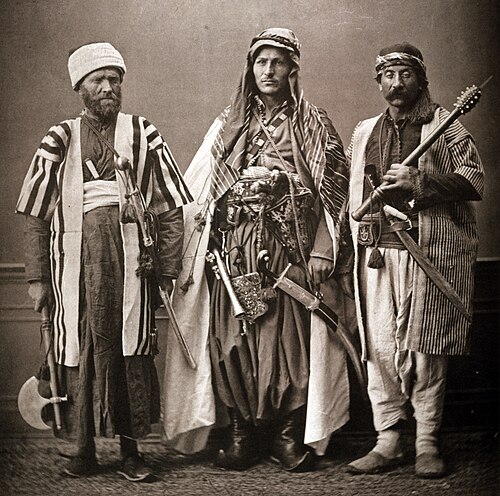
ドゥルーズ派の教義では、キリスト教は「尊重され称賛されるべき」であると教えており、福音書の筆者は「知恵の担い手」とみなされている。[350]ドゥルーズ派の信仰にはキリスト教の要素がいくつか取り入れられている。[42] [43]加えて、知恵の書簡にはキリスト教の要素が取り入れられている。 [351] [44]ドゥルーズ派の正典、すなわちドゥルーズ派の聖典(知恵の書簡)には、旧約聖書、[352]新約聖書、[352]コーラン、および他の宗教や哲学者の作品の中でもプラトンとソクラテスの影響を受けた哲学作品が含まれている。[352]ドゥルーズ派の信仰には、他の宗教的慣習の中でもキリスト教の修道制の影響が見られる。[353] [44]一部の学者は、初期キリスト教のグノーシス主義の信仰が、特に神の知識と輪廻転生の概念において、ドゥルーズ派の神学に影響を与えた可能性があると示唆しています。[44]これらの影響とキリスト教要素の取り入れには、アル・マフディーのペルソナをキリスト教化する概念をドゥルーズ派に採用したことや、特定のドゥルーズ派の創始者による聖書のメシアに関する詩の統合が含まれます。[44]
宗教的な比較では、主流のキリスト教宗派は、ドゥルーズ派とは異なり、輪廻転生や魂の輪廻を信じていない。 [51] キリスト教信仰では、改宗者を受け入れないドゥルーズ派とは異なり、伝道が中心であると広くみなされている。ドゥルーズ派以外の結婚はまれであり、強く勧められていない。ドゥルーズ派とキリスト教徒の類似点には、一夫一婦制の結婚観や離婚と 再婚の禁止[51]、さらに神の唯一性と神の顕現に対する信仰などがある。[354]
主流派キリスト教宗派もドゥルーズ派も男性の割礼を義務付けてはいないが[355] [260] 、男性の割礼は多くのキリスト教徒が多数を占める国や多くのキリスト教コミュニティで一般的に行われており[356] 、コプト正教会、エチオピア正教会、エリトリア正教会テワヘド教会では通過儀礼として行われている。[357] [358] [359] [360] [361]男性の割礼はドゥルーズ派でも広く行われているが[259] 、それは文化的伝統としてであり、ドゥルーズ派の信仰では割礼に宗教的な意味はない。[260]

どちらの信仰もイエスを重要な位置づけとしている。[225] [226]キリスト教では、イエスは中心人物であり、救世主とみなされている。ドゥルーズ派にとって、イエスは神の重要な預言者であり、[225] [226]歴史のさまざまな時期に現れた7人の預言者(ムハンマドを含む)の一人である。[362]ドゥルーズ派は、「ヨセフとマリアの息子」であるイエスと、福音書を書いた4人の弟子を崇拝している。 [363]ドゥルーズ派の写本によると、イエスは最も偉大なイマームであり、地球上の究極の理性(アクル)と最初の宇宙原理(ハッド)の化身であり、[363] [236]イエスとハムザ・イブン・アリーを、彼らのシステムの一部を形成する5つの偉大な天の力のうちの1つの化身と見なしている。[364]ドゥルーズ派の伝統では、イエスは3つの称号で知られています。真の救世主(アル・マシフ・アル・ハク)、すべての国の救世主(マシフ・アル・ウマム)、そして罪人の救世主です。これはそれぞれ、イエスが真の福音のメッセージを伝えたという信念、彼がすべての国の救世主であるという信念、そして彼が赦しを与えるという信念によるものです。[365]
どちらの宗教も聖母マリア、[366] 洗礼者ヨハネ、[227] [367] 聖ジョージ、[368] エリヤ、[227] 福音記者ルカ、[369] ヨブなどの一般的な人物を崇拝しています。[369]旧約聖書の人物であるアダム、ノア、アブラハム、モーセ、エテロは、ドゥルーズ派の信仰において、歴史のさまざまな時代に現れた7人の預言者の1人として、神の重要な預言者とみなされています。[225] [226]
ユダヤ人との関係

ドゥルーズ派とユダヤ人の関係は議論の的となっている。[370] 反ユダヤ主義的な内容は『知恵の書簡』などのドゥルーズ派文献に含まれている。例えば、ドルーズ派の創始者の一人、バハー・アル=ディーン・アル=ムクタナに帰せられる書簡[371]は、おそらく西暦1027年から1042年の間に書かれたもので、ユダヤ人がイエスを十字架につけたと非難している。[372]他の書簡では、特に『知恵の書簡』の第13章から第14章では、ユダヤ人は「道徳的に堕落した、預言者を殺害した」と否定的に描かれている。[373]『言い訳と警告』という書簡では、終末の兆しとして、ユダヤ人がエルサレムを掌握し、その住民だけでなくアッコの住民にも復讐すると予言している。その後、メシアであるイエスは、ユダヤ人が世界中に道徳的腐敗を広めたため、彼らをエルサレムから追放する。そして、アル・ハキム・ビ・アムル・アッラーによる神の審判が行われる最後の審判の日まで、キリスト教徒がイスラム教徒を支配することになる。[373] [374]
一方、 12世紀のユダヤ人旅行者ベンジャミン・オブ・トゥデラ[375]は、ドゥルーズ派が近隣のユダヤ人と良好な商業関係を維持していたことを指摘し、彼によれば、これはドゥルーズ派がユダヤ人を好んでいたためだという。[376]しかし、ユダヤ人とドゥルーズ派は、デイル・アル=カマルやペキンなどの少数の混在する町を除いて、互いに孤立して暮らしていた。[376] [377]デイル・アル=カマルのシナゴーグは、オスマン帝国時代のレバノンで、地元のユダヤ人住民に奉仕するために建てられた。その一部は、ドゥルーズ派のエミール・ファフル ・アッディーン2世の側近であった。[要出典]
オスマン帝国時代、ガリラヤのドゥルーズ派とユダヤ人コミュニティとの関係は、概して緊張しており、対立が目立った。[378] 1660年、レバノン山地でのドゥルーズ派の権力闘争中に、ドゥルーズ派の勢力は、サファドやティベリアを含むガリラヤのユダヤ人居住地を破壊した。[379] [380] 1834年の農民反乱の際に緊張が高まり、サファドのユダヤ人コミュニティは、ドゥルーズ派とイスラム教徒の両方による大規模な略奪、暴力、ユダヤ人の財産の破壊を含む1か月に及ぶ攻撃に耐えた。[381]エジプトのイブラヒム・パシャの統治に対するドゥルーズ派の反乱の間、サファドのユダヤ人コミュニティは1838年7月初旬にドゥルーズ派の反乱軍に攻撃され、ユダヤ人に対する暴力には家屋の略奪やシナゴーグの冒涜が含まれていた。[382] [383] [384]

1948年のイスラエル建国以前は、ユダヤ人とドゥルーズ派の交流は稀であった。歴史的に両者は孤立して暮らしていたからである。[385] [386]イギリス委任統治領パレスチナの間、ドゥルーズ派は当時台頭していたアラブ民族主義を受け入れず、ユダヤ人移民との暴力的な衝突にも参加しなかった。1948年には多くのドゥルーズ派がイスラエル軍に志願し、ドゥルーズ派の村が破壊されたり永久に放棄されたりすることはなかった。[387]イスラエル建国以来、ドゥルーズ派はイスラエルとの連帯を示し、アラブのイスラム過激主義から距離を置いている。[388]イスラエルのドゥルーズ派男性市民はイスラエル国防軍に勤務している。[389]ユダヤ人とドゥルーズ派のパートナーシップは、国の安全のために両民族が共通の軍事的負担を負っていることを認識して、しばしば「血の契約」(ヘブライ語:ברית דמים、 brit damim )と呼ばれた。 [390] [372] [391]イスラエルのドゥルーズ派学者カイス・M・フィロとラバ・ハラビは、イスラエルのドゥルーズ派とユダヤ人の間の「特別な歴史的絆」または「血の契約」の物語は、イスラエルのアラブの宗教コミュニティを分割して制御するために初期のシオニスト界が作り上げた神話であり、歴史的根拠はないと主張している。[392] [393]対照的に、シリア、レバノン、ゴラン高原のドゥルーズ派コミュニティは、一般的にアラブ民族主義と一致しており、主に反シオニストの見解を抱いている。[394]
1957年より、イスラエル政府はドゥルーズ派を独立した宗教コミュニティとして正式に認め、[395]イスラエル内務省の国勢調査登録ではドゥルーズ派は別個の民族グループとして定義されている。 [395] イスラエルのドゥルーズ派は自分たちをイスラム教徒とは考えておらず、自分たちの信仰を別個の独立した宗教とみなしている。[395]他のイスラエルのキリスト教徒やイスラム教徒と比較すると、ドゥルーズ派はアラブ人としてのアイデンティティをあまり重視せず、イスラエル人としての自己認識が強い。しかし、彼らはイスラエルのイスラム教徒やキリスト教徒と比較すると、ユダヤ人との個人的な関係を築く準備ができていなかった。[396]学者たちはこの傾向をユダヤ人とドゥルーズ派の文化的な違いに起因するものと考えている。[397]
宗教の比較では、学者はユダヤ教とドゥルーズ派を民族宗教的グループとみなしており、[24]どちらも同族結婚を実践し、[23]どちらも通常は布教活動を行っていない。輪廻転生(ギルガル)の信仰は、ハシディズムのユダヤ教など、カバラの影響を受けた一部のユダヤ教の流れに存在するが、主流のユダヤ教宗派(改革派ユダヤ教、保守派ユダヤ教、正統派ユダヤ教)では否定されている。[398]ヘブライ語聖書の人物、アダム、ノア、アブラハム、モーセは、ドゥルーズ派では歴史のさまざまな時代に現れた7人の預言者の1人として、神の重要な預言者とみなされている。[225] [226]どちらの宗教もエリヤ、[227]ヨブなどの一般的な人物を崇拝している。ヘブライ語聖書では、エテロはモーセの義父であり、ミディアンのケニト族の羊飼いであり祭司であった。[399]ミディアンのエテロは、彼を精神的創始者および主たる預言者として崇拝するドルーズ派の祖先であると考えられている。
起源
民族的起源
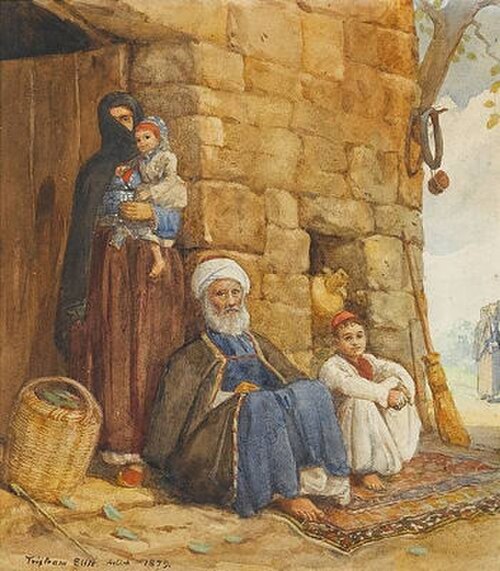
イスラエルのドゥルーズ派歴史家カイス・M・フィロによる研究では、アラム人、アラブ人、イテュリア人、クティ人、ヒビ人、アルメニア人、ペルシャ人、トルコ人とのつながりの可能性など、ドゥルーズ派の起源に関するさまざまな説が検討されている。中にはヨーロッパ起源説もある。[400] 17世紀、フランスではドゥルーズ派はヨーロッパのキリスト教 十字軍の失われた軍隊の子孫であるという考えが広まっていた。[401]この考えによれば、1291年にキリスト教の拠点であるアッコが陥落し、勝利したマムルーク朝による迫害を受けた後、これらの十字軍はレバノンの山岳地帯に避難し、そこに永住した。[401]
フィロによれば、ドゥルーズ派の起源をたどるために2つの主なアプローチが使われてきた。1つ目は宗教文書と初期のドゥルーズ派指導者の民族的背景を調べることである。2つ目は11世紀以前のドゥルーズ派地域における古代民族と部族の移動と定住パターンに焦点を当てるものである。3つ目は人体測定学の研究である。[400]
最初のアプローチの主な提唱者は歴史家フィリップ・ヒッティであり、彼の理論はドゥルーズ派の起源をたどる上で重要な参考文献となっている。[402]ヒッティは、ドゥルーズ派はペルシャ人、イラク人、そして新しい信仰を取り入れたペルシャ化したアラブ人の混合であると提唱した。彼はこれを3つの議論で支持した。第一に、ドゥルーズ派の宗教の初期の創始者と普及者は ペルシャ人起源である。第二に、ドゥルーズ派の宗教用語の一部はペルシャ語である。そして第三に、ドゥルーズ派の信仰が最初に広まったワディ・アル・タイムの先住民は、 1077年以前にペルシャとイラクまたはペルシャ化したアラブ文化の影響を受けていた。 [402]しかし、マーティン・スプレングリングはヒッティの理論を批判し、初期のドゥルーズ派指導者全員がペルシャ人起源ではなかったと主張し、アラブ起源の例としてバハー・アル=ディーン・ムクタナを挙げた。スプレングリングはまた、1077年以前のワディ・アル=タイムの住民はタヌク朝やタイム・アッラー族などの純粋なアラブ人部族がほとんどであったと指摘している。 [402]彼は、ドゥルーズ派は主にさまざまな民族の混合であり、アラブ人、特に南部のアラブ人の影響が大きく、アラム語起源の山岳地帯の土着の人口も含まれていると結論付けた。[62] [403]さらに、2人のイギリス人研究者、ガートルード・ベルとデイヴィッド・ホガースも、ドゥルーズ派は南アラビアのアラブ人と山岳地帯に住むアラム人の混血であると提唱した。 [63]

2 つ目のアプローチは、ドゥルーズ派の歴史家、学者、知識人、聖職者によって用いられ、アラブ部族の移住と定住を強調し、11 世紀にドゥルーズ派の信仰を受け入れた人々の純粋なアラブの血統を強調するものである。[62]支持者は、ドゥルーズ派は「純粋なアラブ方言」を話し、「純粋なアラブの血」であり、厳格な同族結婚の慣習によりトルコやその他の影響が混じっていないと主張する。 [62]この見解では、ほとんどのドゥルーズ派はイスラム時代以前にシリアに移住した 12 のアラブ部族の子孫であると主張している。[62]この見解は、歴史記録、ドゥルーズ派の年代記、およびドゥルーズ派の家族によって再構築された系図に基づいて、彼らの祖先とシリアへの定住をたどっている。[62]フィロによれば、レバノンとシリアのドゥルーズ派の歴史家、学者、指導者は皆、ドゥルーズ派をアラブ人とみなしており、この見解は両国のドゥルーズ派コミュニティ全体に受け入れられている。[69]対照的に、イスラエルのドゥルーズ派のほとんどは自分たちをアラブ人とみなしているが、イスラエルのドゥルーズ派政治家の中には、政治的な理由から、アラブ人種的起源がドゥルーズ派の国民的アイデンティティの要素であるという考えを拒否し始めている者もいる。[69]
フィロによれば、ドゥルーズ派の起源に関する研究における3番目のアプローチは、研究者や人類学者の結論に基づいている。フェリックス・フォン・ルシャン、アリエス、カッパーズによる研究では、レバントのドゥルーズ派は、イスラム教徒やキリスト教徒と同じ起源を共有していることが判明した。 [62]同様に、ドゥルーズ派の歴史家であるネジュラ・アブ・イッゼディンは、レバントのドゥルーズ派、キリスト教徒、イスラム教徒は同じ人種的背景を持っていると結論付けている。[62]
ドゥルーズ派の歴史家アミン・タレアによると、ドゥルーズ派の口承と文書による伝承では、12のアラブ部族がイスラム教に改宗し、イスラム教徒の戦士たちと共に戦ったが、ファーティマ朝のカリフ、アル=ハキム・ビ=アムル・アッラーがエジプトから派遣した説教師によってドゥルーズ派の宗教に導かれたと伝えられている。タレアは、ドゥルーズ派は時が経つにつれて、自分たちの純粋なアラブ起源に対する強い意識を育み、独自の宗教的慣習は別として、自分たちの精神的・物質的文化は大シリアのより広範な住民のそれと非常によく似ていると信じるようになったと付け加えている。[404]
アラビア仮説
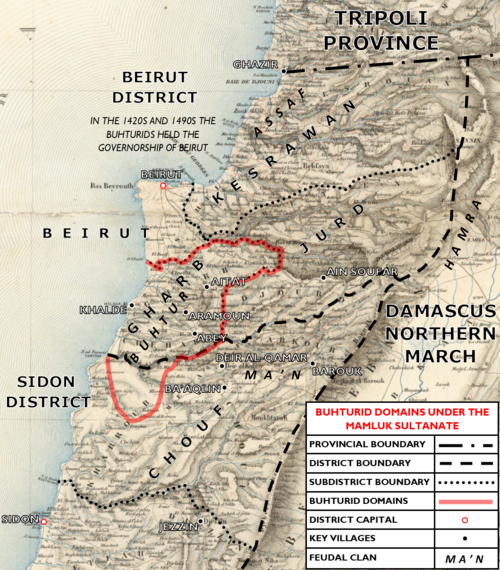
ドゥルーズ派の信仰は中東の多くの地域に広がっていたが、現代のドゥルーズ派のほとんどは、南レバノンのワディ・アル・タイムに起源を遡ることができる。この地は、イスラム歴史家タバリによれば、アラブの部族タイム・アッラー(あるいはタイム・アラット)にちなんで名付けられた。この部族は、最初にアラビア半島からユーフラテス川流域にやって来て、レバノンに移住する前にそこでキリスト教化されていた。ハイダル・アル・シハーブとアフマド・ファリス・アル・シドヤクという二人の現代シリア人年代記作家によって系図が保存されているドゥルーズ派の封建家系の多くも、この起源の方向を指し示しているようである。アラブの部族はペルシャ湾経由で移住し、後にシリアへとつながるルートの途中でイラクに立ち寄った。十字軍との戦いで名を馳せた最初の封建的ドゥルーズ派一族、タヌクフ朝は、ハイダル・アル・シハビーによれば、メソポタミア出身のアラブ部族であり、同地で支配階級の地位を占め、キリスト教化されていたようだ。[115] [ページが必要]
ニーバーのような旅行者やマックス・フォン・オッペンハイムのような学者は、ドゥルーズ派の起源に関する一般的な信念を反映して、彼らをアラブ人として分類した。[63]
アラビア仮説は、ドゥルーズ派コミュニティの歴史家、学者、知識人、宗教指導者の間では、ドゥルーズ人の起源に関する有力な説明として広くみなされている。[33]この理論は、ドゥルーズ人がイスラム初期以前およびその期間中にシリアへ移住した12のアラブ部族の子孫であることを示唆している。[62] [63] [64]この理論はまた、彼らの口承伝統や文書文学に反映されているように、彼らの歴史的および人種的起源を理解するための主要な枠組みとしても機能している。この仮説は、ドゥルーズ派の自己認識と文化的アイデンティティの中心である。[32]この見解は、シリアとレバノンのドゥルーズ派コミュニティ全体、およびイスラエルのほとんどのドゥルーズ派に受け入れられている。[69]アラビア語はドゥルーズ人が話しており、彼らの聖典が書かれている言語でもある。この見解を支持する学者は、この言語的つながりがドゥルーズ人の民族的アラブ人としてのアイデンティティを強調していると主張している。
According to Druze historian Nejla Abu-Izzedin, the Druze people are of Arab origin, both culturally and historically.[32] She explains that Druze traditions and narratives consistently trace their roots to Arab tribes who settled in Syria, some prior to the advent of Islam and others during the Muslim conquest.[63] Abu-Izzedin further notes that when the Druze community was established, its members were spread across a wide area of Syria. The majority of those who embraced the Druze faith were Arab tribes from the northern region, making the Arab elements of the community predominant.[405] According to Abu-Izzedin, "ethnically", the "Wadi al-Taym has been authoritatively stated to be one of the most Arab regions of [geographical] Syria".[406] The area was one of the two most important centers of Druze missionary activity in the 11th century.[406]
Additionally, Abu-Izzedin highlights that the Tanukhids, an Arab tribe, hold a significant place in Druze history.[405] She asserts that the Druze claims of Arab origin were not driven by self-interest, as Arabs were no longer in a dominant position when the Druze community was founded in the 11th century.[407] Furthermore, Druze narratives recount their involvement in pivotal events in Arab history.[32] In modern times, the Druze have largely adopted Arab nationalism and played a notable role in the Great Syrian Revolt of 1920's.[32]
Druze scholar Sami Makarem notes that Wadi Taym and southern Lebanon (Jabal Amel) were pivotal centers for Druze missionary activity in the 11th century, inhabited by Arab tribes.[64] He explains that Druze oral traditions and religious documents suggest that most Druze ancestors came from twelve Arab tribes in Maarat al-Numan during the early period of Islam and its conquests. Later, they migrated and settled in Lebanon.[64] Makarem highlights the Druze's strong Arab heritage, noting that early Druze followers were predominantly of Arab descent.[64] He also points out that many tribes settling in the Levant before Islam came from southern Arabia, including Yamani and Qaysi tribes. According to Makarem, Druze belief links their ancestry to tribes that lived in [geographical] Syria, some before Islam and others arriving during the conquest.[64]
Israeli Druze historian Salman Hamud Fallah asserted that the Druze people of today originated from the Arabian Peninsula. He noted that some of their ancestors came from the northern part of the peninsula, while others came from the southern region, specifically Yemen.[408] In addition, Israeli Druze historian Yusri Hazran describes the Druze narrative, which holds that twelve Arab tribes migrated into the Syrian region either before the rise of Islam or during the early Islamic period. These tribes were predominantly of Yamani tribes, with the Tanukhids being the most dominant among them. Subsequently, these tribes adopted the Druze doctrine. Hazran affirms that this narrative is recognized within Druze doctrine and its scriptures.[409][410]
Druze researchers and historians from Israel, such as Kais M. Firro, Rabah Halabi, Munir Fakhr El-Din, and Afifa E. Kheir, confirm that the Druze are Arabs and note that this was not a contentious issue in Israel before 1962.[69][411][412] Halabi observes that Israeli policies aimed at granting the Druze a distinct community status and political identity led some Druze to see this separate "Druze-Israeli identity" as an ethnic marker for social integration within Israeli society.[413] Firro argues that efforts to create a separate Druze identity distinct from Arabs are politically motivated and lack historical basis, citing Druze religious and historical literature that affirms their Arab heritage.[414] Scholar Michael Cohen adds that, despite the Israeli and Zionist narrative promoting a distinct "Druze ethnic identity", most Druze in Israel view their origins as Arab and consider their Druze identity primarily as religious.[415]
Druze as a mixture of Western Asian tribes
The 1911 edition of Encyclopædia Britannica states that the Druze are "a mixture of refugee stocks, in which the Arab largely predominates, grafted on to an original mountain population of Aramaic blood".[73]
Iturean hypothesis
According to Jewish contemporary literature, the Druze, who were visited and described in 1165 by Benjamin of Tudela, were pictured as descendants of the Itureans,[416] an Ismaelite Arab tribe, which used to reside in the northern parts of the Golan plateau through Hellenistic and Roman periods. The word Druzes, in an early Hebrew edition of his travels, occurs as Dogziyin, but it is clear that this is a scribal error.
Archaeological assessments of the Druze region have also proposed the possibility of Druze descending from Itureans,[417] who had inhabited Mount Lebanon and Golan Heights in late classic antiquity, but their traces fade in the Middle Ages.
Genetics
Lebanese Christians and Druze became a genetic isolate in the predominantly Islamic world.[418]
In a 2005 study of ASPM gene variants, Mekel-Bobrov et al. found that the Israeli Druze people of the Mount Carmel region have among the highest rate of the newly evolved ASPM- Haplogroup D, at 52.2% occurrence of the approximately 6,000-year-old allele.[419] While it is not yet known exactly what selective advantage is provided by this gene variant, the Haplogroup D allele is thought[by whom?] to be positively selected in populations and to confer some substantial advantage that has caused its frequency to rapidly increase.
A 2004 DNA study has shown that Israeli Druze are remarkable for the high frequency (35%) of males who carry the Y-chromosomal haplogroup L, which is otherwise uncommon in the Middle East (Shen et al. 2004).[420] This haplogroup originates from prehistoric South Asia and has spread from Pakistan into southern Iran. A 2008 study done on larger samples showed that L-M20 averages 27% in Mount Carmel Druze, 2% in Galilee Druze, 8% in Lebanese Druze, and it was not found in a sample of 59 Syrian Druze (Slush et al. 2008).[421]
Cruciani, in 2007, found E1b1b1a2 (E-V13) [a subclade of E1b1b1a (E-M78)] in high levels (>10% of the male population) in Cypriot and Druze lineages. Recent genetic clustering analyses of ethnic groups are consistent with the close ancestral relationship between the Druze and Cypriots, and also identified similarity to the general Syrian and Lebanese populations, as well as the major Jewish divisions (Ashkenazi, Sephardi, Iraqi, and Moroccan Jews) (Behar et al. 2010).[422]
Also, a new study concluded that the Druze harbor a remarkable diversity of mitochondrial DNA lineages that appear to have separated from each other thousands of years ago. But instead of dispersing throughout the world after their separation, the full range of lineages can still be found within the Druze population.[423]
The researchers noted that the Druze villages contained a striking range of high frequency and high diversity of the X haplogroup, suggesting that this population provides a glimpse into the past genetic landscape of the Near East at a time when the X haplogroup was more prevalent.[423]
These findings are consistent with the Druze oral tradition that claims that the adherents of the faith came from diverse ancestral lineages stretching back tens of thousands of years.[423] The Shroud of Turin analysis shows significant traces of mitochondrial DNA unique to the Druze community.[424]
A 2008 study published on the genetic background of Druze communities in Israel showed highly heterogeneous parental origins. A total of 311 Israeli Druze were sampled: 37 from the Golan Heights, 183 from the Galilee, and 35 from Mount Carmel, as well as 27 Druze immigrants from Syria and 29 from Lebanon (Slush et al. 2008). The researchers found the following frequencies of Y-chromosomal and MtDNA haplogroups:[421]
- Mount Carmel: L 27%, R 27%, J 18%, E 15%, G 12%.
- Galilee: J 31%, R 20%, E 18%, G 14%, K 11%, Q 4%, L 2%.
- Golan Heights: J 54%, E 29%, I 8%, G 4%, C 4%.
- Lebanon: J 58%, K 17%, Q 8%, R 8%, L 8%.
- Syria: J 39%, E 29%, R 14%, G 14%, K 4%.
- Maternal MtDNA haplogroup frequencies: H 32%, X 13%, K 12.5%, U 10 %, T 7.5%, HV 4.8 %, J 4.8%, I 3.5%, pre HV 3%, L2a3 2.25%, N1b 2.25%, M1 1.6%, W 1.29%.
According to a 2015 study, Druze have a largely similar genome with Middle Eastern Arabs, but they have not married outside of their clans in 1000 years and Druze families from different regions share a similarity with each other that distinguishes them from other Middle Eastern populations.[425]
A 2016 study based on testing samples of Druze in the historic region of Syria, in comparison with ancient humans (including Anatolian and Armenian), and on Geographic Population Structure (GPS) tool by converting genetic distances into geographic distances, concluded that Druze might hail from the Zagros Mountains and the surroundings of Lake Van in eastern Anatolia, then they later migrated south to settle in the mountainous regions in Syria, Lebanon and Israel.[426]
A 2020 study on remains from Canaanaite (Bronze Age southern Levantine) populations suggests a significant degree of genetic continuity in currently Arabic-speaking Levantine populations (including the Druze, Lebanese, Palestinians, and Syrians), as well as in most Jewish groups (including Sephardi Jews, Ashkenazi Jews, Mizrahi Jews, and Maghrebi Jews) from the populations of the Bronze Age Levant, suggesting that the aforementioned groups all derive more than half of their overall ancestry (atDNA) from Canaanite / Bronze Age Levantine populations,[427][428] albeit with varying sources and degrees of admixture from differing host or invading populations depending on each group.
In a principal component analysis of a 2014 study, Druze were located between Lebanese people and Mizrahi Jews.[429] In a PCA in a 2021 study, Druze were close to Lebanese people and a part of the larger Levant-Iraq cluster.[430]
See also
- Sword Battalion
- Jaysh al-Muwahhideen
- Jabal Druze State
- List of Druze
- Neoplatonism and Gnosticism
- Religious syncretism
- Christianity and Druze
Notes
- ^ In 1962, Israel redefined the Druze's ethnic identity from "Arab" to "Druze" on official documents, creating a distinct political and national identity and establishing a separate education system to foster a "Druze and Israeli" consciousness. This initiative aimed to counteract "Arabization" and "Palestinianization", resulted in an independent Druze curriculum. While most Druze in Israel continue to identify as Arabs, some have adopted a distinct "Druze ethnic identity" for political or social reasons. Scholars argue that this policy, supported by a co-opted Druze political elite, privileges the Druze's communal aspects while marginalizing their broader ethnic and national identity.[65][66][67][68]
References
Citations
- ^ Carl Skutsch (2013). Skutsch, Carl (ed.). Encyclopedia of the World's Minorities. Routledge. p. 410. ISBN 978-1-135-19388-1.
Total Population: 800,000
- ^ Robert Brenton Betts (1990). The Druze (illustrated, reprint, revised ed.). Yale University Press. p. 55. ISBN 978-0-300-04810-0.
The total population of Druze throughout the world probably approaches one million.
- ^ Donna Marsh (2015). Doing Business in the Middle East: A cultural and practical guide for all Business Professionals (revised ed.). Hachette UK. ISBN 978-1-4721-3567-4.
It is believed there are no more than 1 million Druze worldwide; most live in the Levant.
- ^ Samy Swayd (2015). Historical Dictionary of the Druzes (2nd ed.). Rowman & Littlefield. p. 3. ISBN 978-1-4422-4617-1.
The Druze world population at present is perhaps nearing two million; ...
- ^ a b c Hendrix, Scott; Okeja, Uchenna, eds. (2018). The World's Greatest Religious Leaders: How Religious Figures Helped Shape World History [2 volumes]. ABC-CLIO. p. 11. ISBN 978-1440841385.
- ^ "Syria region map" (PNG). gulf2000.columbia.edu.
- ^ Irshaid, Faisal (19 June 2015). "Syria's Druze under threat as conflict spreads". BBC News.
- ^ Lebanon – International Religious Freedom Report 2008 U.S. Department of State. Retrieved on 2013-06-13.
- ^ a b "The Druze population in Israel – a collection of data on the occasion of the Prophet Shuaib holiday" (PDF). CBS – Israel. Israel Central Bureau of Statistics. 17 April 2019. Retrieved 8 May 2019.
- ^ a b "Tariq Alaiseme [reportedly to be] vice-president of Venezuela" (in Arabic). Aamama. 2013.: Referring governor Tareck El Aissami.
- ^ a b "Sending relief – and a message of inclusion and love – to our Druze sisters and brothers".
- ^ Druze Traditions, Institute of Druze Studies, archived from the original on 14 January 2009
- ^ a b "Dating Druze: The struggle to find love in a dwindling diaspora". www.cbc.ca. Retrieved 1 May 2019.
- ^ a b International Religious Freedom Report, US State Department, 2005
- ^ "Drusentum – Die geheime Religion (2020)". Deutschlandfunk. 14 July 2020. Retrieved 5 January 2021.
- ^ "Cultural diversity: Census, 2021". Australian Bureau of Statistics. 10 August 2021. Retrieved 30 May 2023.
- ^ Berdichevsky, Norman (2004). Nations, Language and Citizenship. McFarland. ISBN 978-0-7864-2700-0.
- ^ a b Brockman, Norbert (2011). Encyclopedia of Sacred Places, [2 volumes] (2nd ed.). ABC-CLIO. p. 259. ISBN 9781598846546.
- ^ "Definition of druze". Dictionary.com. 18 July 2013. Retrieved 26 August 2019.
- ^ a b Doniger, Wendy (1999). Merriam-Webster's Encyclopedia of World Religions. Merriam-Webster, Inc. ISBN 978-0-87779-044-0.
- ^ "Druze – History, Religion, & Facts". Encyclopedia Britannica. 20 July 1998. Retrieved 21 June 2023.
- ^ Quigley, John B. (2005). The Case for Palestine An International Law Perspective. Duke University Press. p. 135. ISBN 978-0-8223-3539-9.
- ^ a b Chatty, Dawn (2010). Displacement and Dispossession in the Modern Middle East. Cambridge University Press. ISBN 978-0-521-81792-9.
- ^ a b Harrison, Simon (2006). Fracturing Resemblances: Identity and Mimetic Conflict in Melanesia and the West. Berghahn Books. pp. 121–. ISBN 978-1-57181-680-1.
- ^ Abulafia, Anna Sapir (23 September 2019). "The Abrahamic religions". www.bl.uk. London: British Library. Archived from the original on 12 July 2020. Retrieved 9 March 2021.
- ^ Obeid, Anis (2006). The Druze & Their Faith in Tawhid. Syracuse University Press. p. 1. ISBN 978-0-8156-5257-1.
- ^ Dana, Léo-Paul (2010). Entrepreneurship and Religion. Edward Elgar Publishing. p. 314. ISBN 978-1-84980-632-9.
- ^ Morrison, Terri; Conaway, Wayne A. (2006). Kiss, Bow, Or Shake Hands: The Bestselling Guide to Doing Business in More Than 60 Countries (illustrated ed.). Adams Media. p. 259. ISBN 978-1-59337-368-9.
- ^ a b De McLaurin, Ronald (1979). The Political Role of Minority Groups in the Middle East. Michigan University Press. p. 114. ISBN 9780030525964.
Theologically, one would have to conclude that the Druze are not Muslims. They do not accept the five pillars of Islam. In place of these principles the Druze have instituted the seven precepts noted above.
- ^ "Druze in Syria". Harvard University.
The Druze are an ethnoreligious group concentrated in Syria, Lebanon, and Israel with around one million adherents worldwide. The Druze follow a millenarian offshoot of Isma'ili Shi'ism. Followers emphasize Abrahamic monotheism but consider the religion as separate from Islam.
- ^ J. Stewart, Dona (2008). The Middle East Today: Political, Geographical and Cultural Perspectives. Routledge. p. 33. ISBN 9781135980795.
Most Druze do not consider themselves Muslim. Historically they faced much persecution and keep their religious beliefs secrets.
- ^ a b c d e f g h Abu-Izeddin 1993, p. 14.
- ^ a b c Firro 2023, p. 19-20.
- ^ Brockman, Norbert (2011). Encyclopedia of Sacred Places [2 volumes] (2nd ed.). ABC-CLIO. p. 259. ISBN 978-1-59884-654-6.
- ^ a b Nili, Shmuel (2019). The People's Duty: Collective Agency and the Morality of Public Policy. Cambridge University Press. p. 195. ISBN 9781108480925.
- ^ "Druze | History, Religion, & Facts | Britannica". www.britannica.com. Retrieved 13 November 2022.
- ^ a b Daftary 2007, pp. 188–189.
- ^ a b c Samy S. Swayd (2009). The A to Z of the Druzes. Rowman & Littlefield. p. xxxix. ISBN 978-0-8108-6836-6.
- ^ a b c "Druze". druze.org.au. 2015. Archived from the original on 14 February 2016.
- ^ Abu Izzeddin, Nejla M. (1993). The Druzes: A New Study of their History, Faith, and Society. Brill. p. 108. ISBN 978-90-04-09705-6.
- ^ Daftary, Farhad (2013). A History of Shi'i Islam. I.B. Tauris. ISBN 978-0-85773-524-9.
- ^ a b c d e Quilliam, Neil (1999). Syria and the New World Order. Michigan University press. p. 42. ISBN 9780863722493.
- ^ a b c d The New Encyclopaedia Britannica. Encyclopaedia Britannica. 1992. p. 237. ISBN 9780852295533.
Druze religious beliefs developed out of Isma'ill teachings. Various Jewish, Christian, Gnostic, Neoplatonic, and Iranian elements, however, are combined under a doctrine of strict monotheism.
- ^ a b c d e f g Mahmut, R. İbrahim (2023). "The Christian Influences in Ismaili Thought". The Journal of Iranian Studies. 7 (1): 83–99. doi:10.33201/iranian.1199758.
- ^ Philip Khuri Hitti (1928). The Origins of the Druze People and Religion: With Extracts from Their Sacred Writings. Library of Alexandria. pp. 27–. ISBN 978-1-4655-4662-3.
- ^ Sālibī, Kamāl (2005). The Druze: realities & perceptions. Druze Heritage Foundation. pp. 186–190. ISBN 978-1-904850-06-9.
- ^ Conder, Claude Reignier (2018). Palestine. BoD – Books on Demand. pp. 80–. ISBN 978-3-7340-3986-7.
- ^ Al-Rāfidān. Kokushikan Daigaku, Iraku Kodai Bunka Kenkyūjo. 1989. pp. 2–.
- ^ Rosenthal, Donna (2003). The Israelis: Ordinary People in an Extraordinary Land. Simon and Schuster. p. 296. ISBN 978-0-684-86972-8.
- ^ a b Kapur, Kamlesh (2010). History of Ancient India. Sterling Publishers Pvt. Ltd. ISBN 978-81-207-4910-8.
- ^ a b c d e Nisan 2002, p. 95.
- ^ A Political and Economic Dictionary of the Middle East. Routledge. 2013. ISBN 9781135355616.
- ^ Finegan, Jack (1981). Discovering Israel: An Archeological Guide to the Holy Land. Eerdmans. ISBN 978-0-8028-1869-0.
- ^ D Nisan, Mordechai (2015). Minorities in the Middle East: A History of Struggle and Self-Expression (2nd ed.). McFarland. p. 94. ISBN 9780786451333.
- ^ Swayd, Samy (2015). Historical Dictionary of the Druzes. Rowman & Littlefield. p. 77. ISBN 978-1442246171.
- ^ S. Swayd, Samy (2009). The A to Z of the Druzes. Rowman & Littlefield. p. 109. ISBN 9780810868366.
They also cover the lives and teachings of some biblical personages, such as Job, Jethro, Jesus, John, Luke, and others
- ^ Radwan, Chad K. (June 2009). Assessing Druze identity and strategies for preserving Druze heritage in North America (MA thesis). University of South Florida.
- ^ Zabad, Ibrahim (2017). Middle Eastern Minorities: The Impact of the Arab Spring. Taylor & Francis. p. 125. ISBN 9781317096733.
Although the Druze are a tiny community, they have played a vital role in the politics of the Levant
- ^ Stewart, Dona J. (2008). The Middle East Today: Political, Geographical and Cultural Perspectives. Routledge. p. 33. ISBN 9781135980795.
- ^ Al-Khalidi, Suleiman (11 June 2015). "Calls for aid to Syria's Druze after al Qaeda kills 20". Reuters.
- ^ "Syria: ISIS Imposes 'Sharia' on Idlib's Druze". Archived from the original on 20 May 2015. Retrieved 12 May 2015.
- ^ a b c d e f g h i Firro 2023, p. 19.
- ^ a b c d e Abu-Izeddin 1993, p. 10.
- ^ a b c d e f Makarim 1974, p. 2-3.
- ^ Firro, Kais (1999). The Druzes in the Jewish State: A Brief History. Brill. pp. 9, 171. ISBN 90-04-11251-0.
- ^ 'Weingrod, Alex (1985). Studies in Israeli Ethnicity: After the Ingathering. Taylor & Francis. pp. 259–279. ISBN 978-2-88124-007-2.
- ^ M. Firro, Kais (2001). "Reshaping Druze Particularism in Israel". Journal of Palestine Studies. 30 (3): 40–53. doi:10.1525/jps.2001.30.3.40.
- ^ Halabi, Rabah (2014). "Invention of a Nation: The Druze in Israel". Journal of Asian and African Studies. 49 (3): 267–281. doi:10.1177/0021909613485700.
- ^ a b c d e Firro 2023, p. 20.
- ^ a b c d e f Moukarim, Moustafa F., About the Faith of The Mo'wa'he'doon Druze, archived from the original on 26 April 2012
- ^ Hodgson, Marshall G. S. (1962). "Al-Darazî and Ḥamza in the Origin of the Druze Religion". Journal of the American Oriental Society. 82 (1): 5–20. doi:10.2307/595974. ISSN 0003-0279. JSTOR 595974.
- ^ a b c d Swayd, Samy (1998). The Druzes: An Annotated Bibliography. Kirkland, Washington, USA: ISES Publications. ISBN 978-0-9662932-0-3.
- ^ a b Chisholm 1911, p. 605.
- ^ a b Al-Najjar, 'Abdullāh (1965). Madhhab ad-Durūz wa t-Tawḥīd (The Druze Sect and Unism) (in Arabic). Egypt: Dār al-Ma'ārif.
- ^ Hitti, Philip K. (2007) [1924]. Origins of the Druze People and Religion, with Extracts from their Sacred Writings. Columbia University Oriental Studies. Vol. 28 (new ed.). London: Saqi. pp. 13–14. ISBN 978-0-86356-690-5.
- ^ Nisan 2002, p. 283.
- ^ "Druze set to visit Syria". BBC News. 30 August 2004. Retrieved 8 September 2006.
The worldwide population of Druze is put at up to one million, with most living in mountainous regions in Syria, Lebanon, Jordan and Israel.
- ^ a b c Druzes, Institute of Druze Studies, archived from the original on 17 June 2006
- ^ Jordanian Druze can be found in Amman and Zarka; about 50% live in the town of Azraq, and a smaller number in Irbid and Aqaba."Localities and Population, by District, Sub-District, Religion and Population Group" (PDF). Archived from the original (PDF) on 14 June 2007.
- ^ Dana 2003, p. 99.
- ^ Held, Colbert (2008). Middle East Patterns: Places, People, and Politics. Routledge. p. 109. ISBN 9780429962004.
Worldwide, they number 1 million or so, with about 45 to 50 percent in Syria, 35 to 40 percent in Lebanon, and less than 10 percent in Israel. Recently there has been a growing Druze diaspora.
- ^ Halabi, Rabah, Citizens of equal duties—Druze identity and the Jewish State (in Hebrew), p. 55
- ^ "Sending relief—and a message of inclusion and love—to our Druze sisters and brothers". Los Angeles Times. 6 April 2021.
- ^ a b "Finding a life partner is hard enough. For those of the Druze faith, their future depends on it". Los Angeles Times. 27 August 2017.
- ^ Halm, Heinz (2003). Die Kalifen von Kairo: Die Fāṭimiden in Ägypten, 973–1074 [The Caliphs of Cairo: The Fatimids in Egypt, 973–1074] (in German). Munich: C. H. Beck. p. 286. ISBN 3-406-48654-1.
- ^ Hodgson, Marshall G. S. (1962). "Al-Darazî and Ḥamza in the Origin of the Druze Religion". Journal of the American Oriental Society. 82 (1): 5–20. doi:10.2307/595974. ISSN 0003-0279. JSTOR 595974.
- ^ "Druze in Syria". Harvard University.
The Druze are an ethnoreligious group concentrated in Syria, Lebanon, and Israel with around one million adherents worldwide. The Druze follow a millenarian offshoot of Isma'ili Shi'ism. Followers emphasize Abrahamic monotheism but consider the religion as separate from Islam.
- ^ Samy Swayd (10 March 2015). Historical Dictionary of the Druzes (2 ed.). Rowman & Littlefield. p. 3. ISBN 978-1-4422-4617-1.
The Druze world population at present is perhaps nearing two million; ...
- ^ a b c Hendrix, Scott; Okeja, Uchenna, eds. (2018). The World's Greatest Religious Leaders: How Religious Figures Helped Shape World History [2 volumes]. ABC-CLIO. p. 11. ISBN 978-1-4408-4138-5.
- ^ Luminaries: Al Hakim (PDF), Druze, archived from the original (PDF) on 20 August 2008
- ^
Remove ye the causes of fear and estrangement from yourselves. Do away with the corruption of delusion and conformity. Be ye certain that the Prince of Believers hath given unto you free will, and hath spared you the trouble of disguising and concealing your true beliefs, so that when ye work ye may keep your deeds pure for God. He hath done thus so that when you relinquish your previous beliefs and doctrines ye shall not indeed lean on such causes of impediments and pretensions. By conveying to you the reality of his intention, the Prince of Believers hath spared you any excuse for doing so. He hath urged you to declare your belief openly. Ye are now safe from any hand which may bring harm unto you. Ye now may find rest in his assurance ye shall not be wronged. Let those who are present convey this message unto the absent so that it may be known by both the distinguished and the common people. It shall thus become a rule to mankind; and Divine Wisdom shall prevail for all the days to come.
- ^ Ismaili, Islam Heritage Field, archived from the original on 11 September 2019, retrieved 5 June 2008
- ^ al-Hakim bi-Amr Allah became a central figure in the Druze faith, although his religious position was disputed among scholars. John Esposito states that al-Hakim believed that "he was not only the divinely appointed religio-political leader, but also the cosmic intellect linking God with creation", Potter, William (2004), Melville's Clarel and the Intersympathy of Creeds, Kent State University Press, p. 156, ISBN 978-0-87338-797-2, while others like Nissim Dana and Mordechai Nisan state that he is perceived as the manifestation and the reincarnation of God or presumably the image of God.
- ^ Nisan, Mordechai (2015). Minorities in the Middle East: A History of Struggle and Self-Expression (2d ed.). McFarland. p. 98. ISBN 978-0-7864-5133-3.
- ^ Dana 2003.
- ^ Daftary, Farhad (2011). Historical Dictionary of the Ismailis. Scarecrow Press. p. 40. ISBN 9780810879706.
- ^ Swayd, Samy (2009). The A to Z of the Druzes (annotated ed.). Scarecrow Press. p. xxxii. ISBN 9780810870024.
- ^ a b c d Westheimer, Ruth; Sedan, Gil (2007). The Olive and the Tree: The Secret Strength of the Druze. Lantern Books. ISBN 9781590561027 – via Google Books.
- ^ a b c d First Encyclopaedia of Islam: 1913–1936. Brill. 1993. ISBN 9004097961 – via Google Books.
- ^ Philip Khūri Hitti (1966). Origins of the Druze People and Religion. Forgotten Books. p. 31. ISBN 978-1-60506-068-2.
- ^ Betts, Robert Brenton (1990). The Druze. Yale University Press. p. 131. ISBN 978-0-300-04810-0.
- ^ Clark, Malcolm (2011). Islam For Dummies. John Wiley & Sons. p. 240. ISBN 978-1-118-05396-6.
- ^ a b "About the Faith of the Mo'wa'he'doon Druze by Moustafa F. Moukarim". Archived from the original on 26 April 2012.
- ^ a b c Erickson, Rebecca. "The Druze" (PDF). Encyclopedia of New Religious Movements. Archived from the original (PDF) on 18 May 2015.
- ^ a b Parsons, L. (2000). The Druze between Palestine and Israel 1947–49. Springer. p. 2. ISBN 9780230595989.
With the succession of al-Zahir to the Fatimid caliphate a mass persecution (known by the Druze as the period of the mihna) of the Muwaḥḥidūn was instigated ...
- ^ Beattie, Andrew; Pepper, Timothy (2001). The Rough Guide to Syria. Rough Guides. p. 2. ISBN 978-1-85828-718-8. Retrieved 2 October 2012.
- ^ Meri, Josef W. (2006). Medieval Islamic Civilization: An Encyclopedia. Psychology Press. p. 217. ISBN 978-0-415-96690-0.
- ^ Westheimer, Ruth; Sedan, Gil (2007). The Olive and the Tree: The Secret Strength of the Druze. Lantern Books. p. 128. ISBN 978-1-59056-102-7.
- ^ Swayd 2006.
- ^ First Encyclopaedia of Islam: 1913–1936. Brill. 1993. p. 921. ISBN 90-04-09796-1.
- ^ Abu Izzeddin 1993, p. 12.
- ^ Hitti 1966, p. 21.
- ^ Khuri Hitti, Philip (1996). The Origins of the Druze People: With Extracts from Their Sacred Writings. University of California Press. p. 10. ISBN 9781538124185.
Lebanon therefore was the distributing center of the Druze people and Wādi-al-Taym was the birthplace of their faith.
- ^ a b History, Druze Heritage, archived from the original on 3 March 2016
- ^ a b c d e f g h i j Hitti 1924.
- ^ a b c Zabad, Ibrahim (2017). Middle Eastern Minorities: The Impact of the Arab Spring. Taylor & Francis. p. 126. ISBN 9781317096733.
- ^ Harris 2012, pp. 45–47.
- ^ Druze Identity, Religion – Tradition and Apostasy (PDF), shaanan, May 2015, archived from the original (PDF) on 4 March 2016, retrieved 12 May 2015
- ^ Harris 2012, p. 71.
- ^ Reilly, James A. (2016). The Ottoman Cities of Lebanon: Historical Legacy and Identity in the Modern Middle East. London: I. B. Tauris. p. 15. ISBN 978-1-78672-036-8.
- ^ Stefan Winter (2010). The Shiites of Lebanon under Ottoman Rule, 1516–1788. Cambridge University Press. p. 37. ISBN 978-1-139-48681-1.
- ^ TJ Gorton, Renaissance Emir: a Druze Warlord at the court of the Medici (London: Quartet Books, 2013), pp 167–175.
- ^ Abu-Husayn, Abdul-Rahim (2004). The View from Istanbul: Lebanon and the Druze Emirate in the Ottoman Chancery Documents, 1546–1711. I.B. Tauris. pp. 21–22. ISBN 978-1-86064-856-4.
- ^ a b Abu-Husayn, Abdul-Rahim (2004). The View from Istanbul: Lebanon and the Druze Emirate in the Ottoman Chancery Documents, 1546–1711. I.B. Tauris. p. 22. ISBN 978-1-86064-856-4.
- ^ a b c d Abu-Husayn, Abdul-Rahim (2004). The view from Istanbul: Lebanon and the Druze Emirate in the Ottoman chancery documents, 1546–1711. I.B. Tauris. pp. 22–23. ISBN 978-1-86064-856-4.
- ^ a b Salibi, Kamal S. (2005). A house of many mansions: the history of Lebanon reconsidered. I.B. Tauris. p. 66. ISBN 978-1-86064-912-7.
- ^ El-Firro, Kais (1952). A History of the Druzes. Brill Publishers. p. 49. ISBN 9789004094376.
- ^ Safi, Khaled M. (2008), "Territorial Awareness in the 1834 Palestinian Revolt", in Roger Heacock (ed.), Of Times and Spaces in Palestine: The Flows and Resistances of Identity, Beirut: Presses de l'Ifpo, ISBN 9782351592656
- ^ a b c Najem, Tom; Amore, Roy C.; Abu Khalil, As'ad (2021). Historical Dictionary of Lebanon. Historical Dictionaries of Asia, Oceania, and the Middle East (2nd ed.). Lanham Boulder New York London: Rowman & Littlefield. p. 50. ISBN 978-1-5381-2043-9.
- ^ Abu-Izeddin 1993, p. 202.
- ^ a b Hazran, Yusri (2013). The Druze Community and the Lebanese State: Between Confrontation and Reconciliation. Routledge. p. 32. ISBN 9781317931737.
the Druze had been able to live in harmony with the Christian
- ^ a b c Artzi, Pinḥas (1984). Confrontation and Coexistence. Bar-Ilan University Press. p. 166. ISBN 9789652260499.
.. Europeans who visited the area during this period related that the Druze "love the Christians more than the other believers," and that they "hate the Turks, the Muslims and the Arabs [Bedouin] with an intense hatred.
- ^ a b Churchill (1862). The Druzes and the Maronites. Montserrat Abbey Library. p. 25.
..the Druzes and Christians lived together in the most perfect harmony and good-will..
- ^ a b c d Hobby (1985). Near East/South Asia Report. Foreign Broadcast Information Service. p. 53.
the Druze and the Christians in the Shouf Mountains in the past lived in complete harmony..
- ^ a b Fawaz, L.T. (1994). An Occasion for War: Civil Conflict in Lebanon and Damascus in 1860. University of California Press. ISBN 9780520087828. Retrieved 16 April 2015.
- ^ a b Vocke, Harald (1978). The Lebanese war: its origins and political dimensions. C. Hurst. p. 10. ISBN 0-903983-92-3.
- ^ F. Harik, Iliya (2017). Politics and Change in a Traditional Society: Lebanon 1711–1845. Princeton University Press. p. 241. ISBN 9781400886869.
the Abillama' amirs, were mostly Christians converted from the Druze faith.
- ^ al- H̲azīn, Farīd (2000). The Breakdown of the State in Lebanon, 1967–1976. Harvard University Press. p. 35. ISBN 9780674081055.
So did other amirs, like the originally Druze Abi-llamah family, which also became Maronite
- ^ Salibi, Kamal (1900). A House of Many Mansions: The History of Lebanon Reconsidered. University of California Press. p. 162. ISBN 9780520071964.
namely the emirs of the house of Abul - Lama, used to be Druzes before they converted to Christianity and became Maronites
- ^ Masters, Bruce Alan (2010). Encyclopedia of the Ottoman Empire. Infobase Publishing. p. 352. ISBN 9781438110257.
- ^ Özavcı, Hilmi Ozan (2021). Dangerous Gifts: Imperialism, Security, and Civil Wars in the Levant, 1798-1864. Oxford University Press. p. 235. ISBN 9780198852964.
- ^ Fawaz 1994, p. 81.
- ^ Fawaz 1994, p. 79–80.
- ^ Fawaz 1994, p. 58.
- ^ Abraham, Antoine (1977). "Lebanese Communal Relations". Muslim World. 67 (2): 91–105. doi:10.1111/j.1478-1913.1977.tb03313.x. ISSN 0027-4909.
- ^ Churchill, Charles (1862), The Druzes and the Maronites under the Turkish Rule from 1840 to 1860
- ^ a b c Deeb, Marius (2013). Syria, Iran, and Hezbollah: The Unholy Alliance and Its War on Lebanon. Hoover Press. ISBN 9780817916664.
the Maronites and the Druze, who founded Lebanon in the early eighteenth century.
- ^ a b Yu Chen, Ying (2021). Handbook of Asian States: Geography – History – Culture – Politics – Economy. LIT Verlag Münster. p. 344. ISBN 9783643911001.
- ^ Rogan, E.L. (2002). Frontiers of the State in the Late Ottoman Empire: Transjordan, 1850–1921. Cambridge University Press. p. 192. ISBN 9780521892230. Retrieved 1 September 2013.
- ^ Totten, Michael J. (2014). Tower of the Sun: Stories from the Middle East and North Africa. Belmont Estate Books. ISBN 978-0-692-29753-7.
- ^ a b Kjeilen, Tore. "Druze". Archived from the original on 1 October 2018. Retrieved 31 May 2007.
- ^ "Reforming Islam in Egypt". Economist. 18 February 2017.
- ^ Nisan, Mordechai (2015). Minorities in the Middle East: A History of Struggle and Self-Expression. McFarland. ISBN 978-0-7864-5133-3.
- ^ Kayyali, Randa (2006). The Arab Americans. Greenwood Publishing Group. ISBN 0-313-33219-3.
- ^ Sorenson, David (2009). Global Security Watch – Lebanon: A Reference Handbook: A Reference Handbook. ABC-CLIO. ISBN 978-0-313-36579-9.
- ^ Abdul-Rahman, Muhammed Saed (2003). Islam: Questions And Answers – Schools of Thought, Religions and Sects. AMSA Publication Ltd. ISBN 5-551-29049-2.
- ^ a b c d e f Landis, Joshua (1998). Philipp, T; Schäbler, B (eds.). "Shishakli and the Druzes: Integration and intransigence". The Syrian Land: Processes of Integration and Fragmentation. Stuttgart: Franz Steiner Verlag. pp. 369–396.
- ^ Syrian History
- ^ Syria's Kurds: History, Politics and Society, Taylor & Francis, 2008, ISBN 978-0-203-89211-4
- ^ "Localities (1) and Population, by Population Group, District, Sub-District and Natural Region" (PDF). CBS Israeli Central Bureau of Statistics. 31 December 2017. Archived (PDF) from the original on 20 November 2019.
- ^ Melhem, Ahmad (11 April 2019). "Trump paves way for Israel to expand settlements in Golan". Al-Monitor. Retrieved 9 May 2019.
- ^ Kershner, Isabel (23 April 2019). "Netanyahu Seeks to Name a Golan Heights Settlement for President Trump". The New York Times. ISSN 0362-4331. Archived from the original on 1 January 2022. Retrieved 9 May 2019.
- ^ a b c "The Druze and Assad: Strategic Bedfellows". The Washington Institute. Archived from the original on 25 September 2019. Retrieved 4 May 2023.
- ^ Balanche, Fabrice (2017). Atlas of the Near East: State Formation and the Arab-Israeli Conflict, 1918–2010. Brill. p. 27. ISBN 9789004345188.
...comprised 50,328 inhabitants, of whom 85 per cent were Druze, and it integrated Christian communities (7,000 people) who had long lived in these mountains in harmony with the Druze.
- ^ "Syria – Sunnis". www.country-data.com. Archived from the original on 23 October 2018. Retrieved 12 May 2020.
- ^ "ISIS kidnaps dozens of women, girls in deadly Syria raids". CBS News. 30 July 2018.
- ^ Panagakos, Anastasia (2015). Religious Diversity Today: Experiencing Religion in the Contemporary World [3 volumes]: Experiencing Religion in the Contemporary World. ABC-CLIO. p. 99. ISBN 9781440833328.
- ^ Inhorn, Marcia C., and Soraya Tremayne. 2012. Islam and Assisted Reproductive Technologies. p. 238.
- ^ "Who are the Maronites?". BBC News – Middle East. 6 August 2007.
- ^ Nasrallah Boutros Sfeir, Meib, May 2003, archived from the original (dossier) on 11 June 2003
- ^ "Who's who in Lebanon". BBC News. 14 March 2005. Retrieved 13 August 2011.
- ^ Lebanon 2015 International Religious Freedom Report U.S. Department of State. Retrieved on 2019-04-23.
- ^ Barakat, Halim (2011). Lebanon in Strife: Student Preludes to the Civil War. University of Texas Press. ISBN 978-0-292-73981-9.
- ^ a b Eli Ashkenazi (3 November 2005). הרצל והתקווה בחגיגות 30 לתנועה הדרוזית הציונית [Herzl and hope in celebrating 30 (years of the) Druze Zionist movement]. Haaretz (in Hebrew). Retrieved 14 October 2014.
- ^ "The Druze", Jewish virtual library, retrieved 23 January 2012
- ^ Amara, Muhammad; Schnell, Izhak (2004), "Identity Repertoires among Arabs in Israel", Journal of Ethnic and Migration Studies, 30: 175–193, doi:10.1080/1369183032000170222, S2CID 144424824
- ^ "Israel's Religiously Divided Society". Pew Research Center. 8 March 2016. Retrieved 8 December 2017.
Virtually all Muslims (99%) and Christians (96%) surveyed in Israel identify as Arab. A somewhat smaller share of Druze (71%) say they are ethnically Arab. Other Druze respondents identify their ethnicity as "Other," "Druze" or "Druze-Arab."
- ^ "The Druze population in Israel" (PDF). Central Bureau of Statistics (Israel). 24 April 2020.
- ^ a b The Druze Population of Israel
- ^ Scott Wilson (30 October 2006). "Golan Heights Land, Lifestyle Lure Settlers". The Washington Post. Retrieved 6 May 2007.
- ^ Isabel Kershner (22 May 2011). "In the Golan Heights, Anxious Eyes Look East". The New York Times. Retrieved 23 January 2012.
- ^ Khair Abbas, Randa (2011). The Israeli Druze Community in Transition. ABC-CLIO. p. 11. ISBN 9781527567399.
In 1957, the Druze were declared a religious community in Israel.
- ^ Cohen, Hillel (2015). Good Arabs: The Israeli Security Agencies and the Israeli Arabs, 1948–1967. University of California Press. p. 167. ISBN 9780520944886.
In 1957, the Druze were recognized as a distinct religious confession.
- ^ Religious Freedoms: Druze, The Israel project, archived from the original on 14 September 2012, retrieved 23 January 2012
- ^ Firro, Kais (1999). The Druzes in the Jewish State: A Brief History. Brill. pp. 9, 171. ISBN 90-04-11251-0.
- ^ 'Weingrod, Alex (1985). Studies in Israeli Ethnicity: After the Ingathering. Taylor & Francis. pp. 259–279. ISBN 978-2-88124-007-2.
- ^ Nili, Shmuel (2019). The People's Duty: Collective Agency and the Morality of Public Policy. Cambridge University Press. p. 195. ISBN 9781108480925.
- ^ Muhammad Amara and Izhak Schnell (2004). "Identity Repertoires among Arabs in Israel". Journal of Ethnic and Migration Studies. 30: 175–193. doi:10.1080/1369183032000170222. S2CID 144424824.
- ^ Faulkner, Neil (2016). Lawrence of Arabia's War: The Arabs, the British and the Remaking of the Middle East in WWI. New Haven: Yale University Press. pp. 273, 367–368, 426. ISBN 9780300226393.
- ^ "Sending relief--and a message of inclusion and love—to our Druze sisters and brothers". Los Angeles Times. 6 April 2021.
- ^ Khalifa, Mustafa (2013), "The impossible partition of Syria", Arab Reform Initiative: 6–7
- ^ "Sending relief—and a message of inclusion and love—to our Druze sisters and brothers". Los Angeles Times. 6 April 2021.
- ^ "Chavez tells Israelis to disobey 'genocidal' govt". 26 September News. September 2009. Archived from the original on 6 October 2018. Retrieved 15 January 2017.
More than 200,000 people from the Sweida area carry Venezuelan citizenship and most are members of Syria's Druse sect, who immigrated to Venezuela in the past century.
- ^ S Rowe, Paul (2018). Routledge Handbook of Minorities in the Middle East. Routledge. p. 352. ISBN 9781317233794.
- ^ Isḥāq Khūrī, Fuʼād (2009). Being a Druze. University of Michigan Press. p. 7. ISBN 9781904850014.
The early migrants tended to mix well with the local population in Venezuela. The Eastern Christians, regardless of the long-standing disagreements (to put it lightly) between the Catholic and Eastern Christian faiths, converted quickly, and even the Druze and Muslims converted to Catholicism
- ^ "Tariq Alaiseme [reportedly to be] vice-president of Venezuela" (in Arabic). Aamama. 2013.: Referring governor Tareck El Aissami.
- ^ Toro, Francisco (14 February 2017). "The U.S. Treasury says that Venezuela's vice president is a drug trafficker". The Washington Post.
El Aissami is a member of Venezuela's sizable Druze community. His father is Syrian, his mother Lebanese.
- ^ Padgett, Tim (18 January 2009). "Latin America Looks for a Fresh Start with Obama". Time. ISSN 0040-781X. Retrieved 3 May 2019.
- ^ a b "Sending relief--and a message of inclusion and love—to our Druze sisters and brothers". Los Angeles Times. 6 April 2021. Archived from the original on 15 November 2021. Retrieved 22 November 2021.
- ^ a b c "Finding a life partner is hard enough. For those of the Druze faith, their future depends on it". Los Angeles Times. 27 August 2017. Archived from the original on 22 November 2021. Retrieved 22 November 2021.
- ^ A. Kayyali, Randa (2006). The Arab Americans. Greenwood Publishing Group. p. 21. ISBN 9780313332197.
Many of the Druze have chosen to deemphasize their ethnic identity, and some have officially converted to Christianity.
- ^ Hobby, Jeneen (2011). Encyclopedia of Cultures and Daily Life. University of Philadelphia Press. p. 232. ISBN 9781414448916.
US Druze settled in small towns and kept a low profile, joining Protestant churches (usually Presbyterian or Methodist) and often Americanizing their names..
- ^ Makarem, Sami Nasib, The Druze Faith
- ^ a b c Swayd, SDSU, Dr. Samy, Druze Spirituality and Asceticism, Eial, archived from the original (an abridged rough draft; RTF) on 5 October 2006
- ^ a b Religion, AU: Druze, archived from the original on 14 February 2016
- ^ The Encyclopedia Americana. Grolier Inc. 1996. ISBN 9780717201303.
- ^ a b Seabrook, W. B., Adventures in Arabia, Harrap and Sons 1928, (chapters on Druze religion)
- ^ Dwairy, Marwan (2006) "The Psychosocial Function of Reincarnation Among Druze in Israel" Culture, Medicine and Psychiatry, pp. 29–53
- ^ Ḥamza ibn ʻAli ibn Aḥmad and Baha'a El-Din. "Elmithaq". The Druze holy book Epistles of Wisdom (PDF). Christoph Heger. p. 47. Archived (PDF) from the original on 23 October 2007. Retrieved 18 March 2011.
- ^ Hanna Batatu (2012). Syria's Peasantry, the Descendants of Its Lesser Rural Notables, and Their Politics. Princeton University Press. pp. 15–16. ISBN 978-1-4008-4584-2.
I ... son of ... being sane of spirit and body and duly qualified, attest on my soul, without compulsion or constraint, that I renounce all the different cults, religions, and creeds and acknowledge nothing other than obedience to our Lord al-Hakim, revered be his name, and obedience is worship; that in his worship I associate no past, present, or future being; that I commit my soul, my body, my property, and my offspring ... to our Lord al-Hakim ... and accept all his decrees, be they in my favour or against me ... He who attests that there is in heaven no adored god and on the earth no living imam other than our Lord al-Hakim ... belongs to the triumphant muwahhidin [unitarians]. Signed ... in the year ... of the slave of our Lord ... Hamzah bin 'Ali bin Ahmad, the guide of those who respond [to the divine call] and the avenger on the polytheists with the sword of our Lord.
- ^ Nissîm Dānā (2003). The Druze in the Middle East: Their Faith, Leadership, Identity and Status. Sussex Academic Press. p. 38. ISBN 978-1-903900-36-9.
- ^ "The Druze", h2g2, UK: BBC, 8 April 2005
- ^ "The Epistle Answering the People of Esotericism (batinids)". Epistles of Wisdom. Vol. Second. (a rough translation from the Arabic)
- ^ Hitti 1924, p. 51.
- ^ Firro, Kais (1992). A History of the Druzes, Volume 1. Brill. ISBN 978-90-04-09437-6.
- ^ Dana 2003, p. 18.
- ^ a b c Willi Frischauer (1970). The Aga Khans. Bodley Head. p. ?. (Which page?)
- ^ a b c Ismail K. Poonawala. "Review – The Fatimids and Their Traditions of Learning". Journal of the American Oriental Society. 119 (3): 542. doi:10.2307/605981. JSTOR 605981.
- ^ a b "Minorities in the Middle East: A History of Struggle and Self-expression", p. 95 by Mordechai Nisan
- ^ a b "The Druze in the Middle East: Their Faith, Leadership, Identity and Status", p. 41 by Nissim Dana
- ^ a b c "Encyclopaedic Survey of Islamic Culture", p. 94 by Mohamed Taher
- ^ Mallett, Alexander (2010). Christian-Muslim Relations. A Bibliographical History. Volume 2 (900–1050). Brill. pp. 640–645. ISBN 9789004129382.
- ^ Bryer, David R. W. (1975). "The Origins of the Druze Religion". Der Islam. 52 (1): 52–65. doi:10.1515/islm.1975.52.1.47. ISSN 1613-0928. S2CID 201807131.
- ^ a b Bryer, David R. W. (1975). "The Origins of the Druze Religion (Fortsetzung)". Der Islam. 52 (2): 239–262. doi:10.1515/islm.1975.52.2.239. ISSN 1613-0928. S2CID 162363556.
- ^ a b c d e f g Hitti, Philip K. (1928). The Origins of the Druze People and Religion: With Extracts from Their Sacred Writings. Library of Alexandria. p. 37. ISBN 9781465546623.
- ^ a b c d e f Dana, Nissim (2008). The Druze in the Middle East: Their Faith, Leadership, Identity and Status. Michigan University press. p. 17. ISBN 9781903900369.
- ^ a b c d Swayd, Samy (2015). Historical Dictionary of the Druzes. Rowman & Littlefield. p. 77. ISBN 978-1442246171.
- ^ S. Swayd, Samy (2009). The A to Z of the Druzes. Rowman & Littlefield. p. 109. ISBN 9780810868366.
They also cover the lives and teachings of some biblical personages, such as Job, Jethro, Jesus, John, Luke, and others
- ^ Dana, Léo-Paul (2010). Entrepreneurship and Religion. Edward Elgar Publishing. p. 314. ISBN 9781849806329.
- ^ D Nisan, Mordechai (2015). Minorities in the Middle East: A History of Struggle and Self-Expression (2nd ed.). McFarland. p. 94. ISBN 9780786451333.
- ^ Farhad Daftary (2007). The Isma'ilis: Their History and Doctrines (2nd illustrated, revised ed.). Cambridge University Press. p. 189. ISBN 978-1-139-46578-6.
- ^ Morgan Clarke (2013). Islam And New Kinship: Reproductive Technology and the Shariah in Lebanon. Berghahn Books. p. 17. ISBN 978-0-85745-382-2.
- ^ Samy S. Swayd (2009). The A to Z of the Druzes. Rowman & Littlefield. pp. 44, 61, 147. ISBN 978-0-8108-6836-6.
- ^ Schmermund, Elizabeth (2017). Lebanon: Cultures of the World (3rd ed.). Cavendish Square Publishing, LLC. p. 87. ISBN 9781502626127.
While the Druze do not permit iconography in their religion, they have a religious symbol known as the Druze Star
- ^ Stewart, Dona J. (2008). The Middle East Today: Political, Geographical and Cultural Perspectives. Routledge. ISBN 9781135980788.
The Druze symbol is a five colored star, with each color representing cosmic principles believed by the Druze
- ^ a b Massignon, Louis (2019). The Passion of Al-Hallaj, Mystic and Martyr of Islam, Volume 1: The Life of Al-Hallaj. Princeton University Press. p. 594. ISBN 9780691610832.
- ^ Swayd, Sammy (2015). Historical Dictionary of the Druzes. Rowman & Littlefield. p. 8. ISBN 9781442246171.
- ^ Swayd, Sammy (2015). Historical Dictionary of the Druzes. Rowman & Littlefield. p. 8. ISBN 9781442246171.
The five colors that form the Druze flag and five-pointed star are religious symbols of the luminaries.
- ^ a b "Holy places of the Druze". Aamama.
- ^ Kais Firro (1999). The Druzes in the Jewish State: A Brief History. Brill. p. 95. ISBN 9004112510.
- ^ "Khalwah the prayer place of the Druze". Druze sect site. 29 August 2010. Archived from the original on 3 December 2013.
- ^ a b c Raudvere, Catharina (2005). Alevi Identity: Cultural, Religious and Social Perspectives. Routledge. p. 163. ISBN 9781135797256.
- ^ "Druze | History, Religion, & Facts". Encyclopedia Britannica. 12 May 2023.
- ^ Kellner-Heikele, Barbara (2018). Syncretistic Religious Communities in the Near East: Collected Papers of the International Symposium "Alevism in Turkey and Comparable Syncretistic Religious Communities in the Near East in the Past and Present", Berlin, 14–17 April 1995. Brill. p. 230. ISBN 9789004378988.
- ^ Council of Europe (2010). Mosaic: The Training Kit for Euro-mediterranean Youth Work. p. 214.
- ^ Vloeberghs, Ward (2015). Architecture, Power and Religion in Lebanon: Rafiq Hariri and the Politics of Sacred Space in Beirut. Brill. p. 285. ISBN 9789004307056.
- ^ Lampros-Monroe, Chloe (2014). A Darkling Plain. Cambridge University Press. p. 231. ISBN 9781107034990.
- ^ L. Stanton, Andrea (2012). Cultural Sociology of the Middle East, Asia, and Africa: An Encyclopedia. Sage. p. 330. ISBN 9781412981767.
- ^ L. Torstrick, Rebecca (2004). Culture and Customs of Israel. Greenwood Publishing Group. p. 48. ISBN 9780313320910.
- ^ R. Williams, Victoria (2020). Indigenous Peoples: An Encyclopedia of Culture, History, and Threats to Survival [4 volumes]. ABC-CLIO. p. 318. ISBN 9781440861185.
- ^ W. Lesch, David (2021). Historical Dictionary of Syria. Rowman & Littlefield. p. 129. ISBN 9781538122860.
- ^ a b "Eid al-Adha celebrated differently by Druze, Alawites".
- ^ Brockman, Norbert (2011). Encyclopedia of Sacred Places [2 volumes] (2nd ed.). ABC-CLIO. p. 259. ISBN 978-1-59884-654-6.
- ^ Halabi, Rabah, Citizens of equal duties—Druze identity and the Jewish State (in Hebrew), p. 55
- ^ a b c d e Swayd 2006, p. 50.
- ^ Zabad, Ibrahim (2017). Middle Eastern Minorities: The Impact of the Arab Spring. Taylor & Francis. p. 125. ISBN 9781317096733.
Although the Druze are a tiny community, they have played a vital role in the politics of the Levant
- ^ a b c Dana 2003, p. 56.
- ^ a b "Refugee Review Tribunal: What is the attitude of the Druze community toward inter-religious marriages?" (PDF). Refworl. 6 June 2006.
- ^ a b Ubayd, Anis (2006). The Druze and Their Faith in Tawhid. Syracuse University Press. p. 150. ISBN 9780815630975.
Male circumcision is standard practice, by tradition, among the Druze
- ^ a b c Jacobs, Daniel (1998). Israel and the Palestinian Territories: The Rough Guide. Rough Guides. p. 147. ISBN 9781858282480.
Circumcision is not compulsory and has no religious significance.
- ^ Brenton Betts, Robert (2013). The Sunni-Shi'a Divide: Islam's Internal Divisions and Their Global Consequences. Potomac Books, Inc. p. 56. ISBN 9781612345239.
There are many references to the Druze refusal to observe this common Muslim practice, one of the earliest being the rediscoverer of the ruins of Petra, John Burckhardt. "The Druses do not circumcise their children
- ^ a b Firro 2023, p. 95.
- ^ Dr. Dekel, N., Prof. Brosh, H. Languages in Contact: Preliminary Clues on an Emergence of an Israeli Arabic Variety. June 2013.
- ^ Gaash, Amir (2016). "Colloquial Arabic written in Hebrew characters on Israeli websites by Druzes (and other non-Jews)". Jerusalem Studies in Arabic and Islam (43–44): 15.
- ^ Abu-Izeddin 1993, p. 45-67.
- ^ Salibi, K. (1988). A House of Many Mansions: The History of Lebanon Reconsidered. University of California Press. p. 25-50. ISBN 978-0-520-07196-4.
- ^ Abu-Izeddin 1993, p. 145.
- ^ Salibi, K. (1988). A House of Many Mansions: The History of Lebanon Reconsidered. University of California Press. p. 85-110. ISBN 978-0-520-07196-4.
- ^ B. Betts, Robert (1988). The Druze. Yale University Press. p. 92. ISBN 978-0300041002.
- ^ B. Betts, Robert (1988). The Druze. Yale University Press. p. 85-110. ISBN 978-0300041002.
- ^ Hitti, Philip (2010). Lebanon in History: From the Earliest Times to the Present. University of Michigan Press. p. 408-410. ISBN 9789004129382.
- ^ a b Mackey, Sandra (2006). Lebanon: A House Divided. W. W. Norton. p. 62. ISBN 9780393352764.
- ^ a b c Beaurepaire, Pierre-Yves (2017). Religious Interactions in Europe and the Mediterranean World: Coexistence and Dialogue from the 12th to the 20th Centuries. Taylor & Francis. pp. 310–314. ISBN 9781351722179.
- ^ Munro, Dane; Haddad, Nour Fara (2019). Peace Journeys: A New Direction in Religious Tourism and Pilgrimage Research. Cambridge: Cambridge Scholars Publishing. p. 7. ISBN 9781527543133.
- ^ Bowman, Glenn (2012). Sharing the Sacra: The Politics and Pragmatics of Intercommunal Relations Around Holy Places. Berghahn Books. p. 17. ISBN 9780857454867.
- ^ Swayd, Samy (2015). Historical Dictionary of the Druzes. Rowman & Littlefield. p. 132. ISBN 9781442246171.
Some Muslim rulers and jurists have advocated the persecution of members of the Druze Movement beginning with the seventh Fatimi Caliph Al-Zahir, in 1022. Recurring period of persecutions in subsequent centuries ... failure to elucidate their beliefs and practices, have contributed to the ambiguous relationship between Muslims and Druzes
- ^ K. Zartman, Jonathan (2020). Conflict in the Modern Middle East: An Encyclopedia of Civil War, Revolutions, and Regime Change. ABC-CLIO. p. 199. ISBN 9781440865039.
Historically, Islam classified Christians, Jews, and Zoroastrians as protected "People of the Book," a secondary status subject to payment of a poll tax. Nevertheless, Zoroastrians suffered significant persecution. Other religions such as the Alawites, Alevis, and Druze often suffered more.
- ^ Layiš, Aharôn (1982). Marriage, Divorce, and Succession in the Druze Family: A Study Based on Decisions of Druze Arbitrators and Religious Courts in Israel and the Golan Heights. Brill. p. 1. ISBN 9789004064126.
the Druze religion, though originating from the Isma'lliyya, an extreme branch of the Shia, seceded completely from Islam and has, therefore, experienced periods of persecution by the latter.
- ^ Zabad, Ibrahim (2017). Middle Eastern Minorities: The Impact of the Arab Spring. Routledge. ISBN 9781317096726.
- ^ Zabad, Ibrahim (2017). Middle Eastern Minorities: The Impact of the Arab Spring. Routledge. ISBN 9781317096726.
- ^ a b c James Lewis (2002). The Encyclopedia of Cults, Sects, and New Religions. Prometheus Books. Retrieved 13 May 2015.
- ^ Keddie, Nikki R; Rudolph P Matthee (2002). Iran and the Surrounding World: Interactions in Culture and Cultural Politics (illustrated ed.). University of Washington Press. p. 306. ISBN 9780295982069.
- ^ Kessler, Dana (15 November 2019). "A Taste of Druze Cuisine". Tablet Magazine.
- ^ Ashkenazi, Michael (2020). Food Cultures of Israel: Recipes, Customs, and Issues. ABC-CLIO. p. XXIII. ISBN 9781440866869.
- ^ Vered, Ronit (20 November 2022). "In Israel, a Druze and a Jew Bond Over a Shared Tradition: Syrian Coo…". Haaretz. Retrieved 10 August 2024.
- ^ Isalska, Anita (2018). Lonely Planet Israel & the Palestinian Territories. Lonely Planet. p. 5. ISBN 9781787019249.
- ^ "A Taste of Druze Cuisine". Tabletmag. 20 November 2019.
- ^ Aryain, Ed (2006). From Syria to Seminole: Memoir of a High Plains Merchant. Texas Tech University Press. p. 213. ISBN 9780896725867.
- ^ R. Williams, Victoria (2020). Indigenous Peoples: An Encyclopedia of Culture, History, and Threats to Survival [4 volumes]. ABC-CLIO. p. 318. ISBN 9781440861185.
- ^ a b "South American 'mate' tea a long-time Lebanese hit". Middle East Online. 22 March 2018. Archived from the original on 12 March 2014. Retrieved 11 March 2014.
- ^ Barceloux, Donald (2012). Medical Toxicology of Drug Abuse: Synthesized Chemicals and Psychoactive Plants. John Wiley & Sons. ISBN 978-1-118-10605-1.
- ^ W. Lesch, David (2021). Historical Dictionary of Syria. Rowman & Littlefield. p. 129. ISBN 9781538122860.
- ^ a b Dana 2003, p. 60.
- ^ "Dating Druze: The struggle to find love in a dwindling diaspora". CBC. Retrieved 1 May 2019.
- ^ Farhad Daftary (20 September 2007). The Isma'ilis: Their History and Doctrines (2, illustrated, revised ed.). Cambridge University Press. p. 189. ISBN 978-1-139-46578-6.
- ^ Farhad Daftary (20 September 2007). The Isma'ilis: Their History and Doctrines (2, illustrated, revised ed.). Cambridge University Press. p. 189. ISBN 978-1-139-46578-6.
- ^ Zaman, Muhammad Qasim; Stewart, Devin J.; Mirza, Mahan; Kadi, Wadad; Crone, Patricia; Gerhard, Bowering; Hefner, Robert W.; Fahmy, Khaled; Kuran, Timur (2013). The Princeton Encyclopedia of Islamic Political Thought. Princeton University Press. pp. 139–140. ISBN 9780691134840.
Druze who survive as a small minority in Syria, Lebanon, Israel, and Jordan (their estimated number in these countries totaled around one million in the beginning of the 21st century) diverge substantially from Islam, both Sunni and Shīʿa.
- ^ R. W. Bryer, David (1979). The Origins of the Druze Religion: An Edition of Ḥamza's Writings and an Analysis of His Doctrine. University of Oxford Press. p. 239. ISBN 9780030525964.
- ^ "Are the Druze People Arabs or Muslims? Deciphering Who They Are". Arab America. 8 August 2018. Retrieved 13 April 2020.
- ^ J. Stewart, Dona (2008). The Middle East Today: Political, Geographical and Cultural Perspectives. Routledge. p. 33. ISBN 9781135980795.
Most Druze do not consider themselves Muslim. Historically they faced much persecution and keep their religious beliefs secrets.
- ^ Yazbeck Haddad, Yvonne (2014). The Oxford Handbook of American Islam. Oxford University Press. p. 142. ISBN 9780199862634.
While they appear parallel to those of normative Islam, in the Druze religion they are different in meaning and interpretation. The religion is considered distinct from the Ismaili as well as from other Muslims belief and practice... Most Druze consider themselves fully assimilated in American society and do not necessarily identify as Muslims..
- ^ Cohen, Hillel (2010). Good Arabs: The Israeli Security Agencies and the Israeli Arabs, 1948–1967. University of California Press. p. 170. ISBN 9780520944886.
the Druze connection to the Muslims remained a matter of controversy.
- ^ Jacobs, Martin (2014). Reorienting the East: Jewish Travelers to the Medieval Muslim World. University of Pennsylvania Press. p. 193. ISBN 9780812290011.
Though their religion is related to that of the Ismailis from a historical standpoint, the Druze—who see themselves as true "unitarians" (muwah.h.idūn)—are usually not considered Muslims.
- ^ Hajjar, Lisa (2005). Courting Conflict: The Israeli Military Court System in the West Bank and Gaza. University of California Press. p. 279. ISBN 9780520241947.
[Druze] although today it is widely considered to be a separate religion, some still consider it an Islamic sect
- ^ Bryer, David R. W. (1975). "The Origins of the Druze Religion". Der Islam. 52 (1): 52–65. doi:10.1515/islm.1975.52.1.47. ISSN 1613-0928. S2CID 201807131.
- ^ Swayd, Samy (2015). Historical Dictionary of the Druzes. Rowman & Littlefield. p. 132. ISBN 9781442246171.
Some Muslim rulers and jurists have advocated the persecution of members of the Druze Movement beginning with the seventh Fatimi Caliph Al-Zahir, in 1022. Recurring period of persecutions in subsequent centuries ... failure to elucidate their beliefs and practices, have contributed to the ambiguous relationship between Muslims and Druzes
- ^ K. Zartman, Jonathan (2020). Conflict in the Modern Middle East: An Encyclopedia of Civil War, Revolutions, and Regime Change. ABC-CLIO. p. 199. ISBN 9781440865039.
Historically, Islam classified Christians, Jews, and Zoroastrians as protected "People of the Book," a secondary status subject to payment of a poll tax. Nevertheless, Zoroastrians suffered significant persecution. Other religions such as the Alawites, Alevis, and Druze often suffered more.
- ^ Layiš, Aharôn (1982). Marriage, Divorce, and Succession in the Druze Family: A Study Based on Decisions of Druze Arbitrators and Religious Courts in Israel and the Golan Heights. Brill. p. 1. ISBN 9789004064126.
the Druze religion, though originating from the Isma'lliyya, an extreme branch of the Shia, seceded completely from Islam and has, therefore, experienced periods of persecution by the latter.
- ^ C. Tucker, Spencer C. (2019). Middle East Conflicts from Ancient Egypt to the 21st Century: An Encyclopedia and Document Collection [4 volumes]. ABC-CLIO. pp. 364–366. ISBN 9781440853531.
- ^ Taraze Fawaz, Leila. An occasion for war: civil conflict in Lebanon and Damascus in 1860. p. 63.
- ^ Goren, Haim. Dead Sea Level: Science, Exploration and Imperial Interests in the Near East. pp. 95–96.
- ^ C. Tucker, Spencer C. (2019). Middle East Conflicts from Ancient Egypt to the 21st Century: An Encyclopedia and Document Collection [4 volumes]. ABC-CLIO. p. 364. ISBN 9781440853531.
- ^ Zabad, Ibrahim (2017). Middle Eastern Minorities: The Impact of the Arab Spring. Routledge. ISBN 9781317096726.
- ^ "Syria conflict: Al-Nusra fighters kill Druze villagers". BBC News. 11 June 2015. Retrieved 27 July 2015.
- ^ "Nusra Front kills Syrian villagers from minority Druze sect". thestar.com. 11 June 2015. Retrieved 27 July 2015.
- ^ M. Firro, Kais (2021). The Druzes in the Jewish State: A Brief History. Brill. p. 94. ISBN 9789004491915.
- ^ Hunter, Shireen (2010). The Politics of Islamic Revivalism: Diversity and Unity: Center for Strategic and International Studies (Washington, D.C.), Georgetown University. Center for Strategic and International Studies. University of Michigan Press. p. 33. ISBN 9780253345493.
Druze – An offshoot of Shi'ism; its members are not considered Muslims by orthodox Muslims.
- ^ D. Grafton, David (2009). Piety, Politics, and Power: Lutherans Encountering Islam in the Middle East. Wipf and Stock Publishers. p. 14. ISBN 9781630877187.
In addition, there are several quasi-Muslim sects, in that, although they follow many of the beliefs and practices of orthodox Islam, the majority of Sunnis consider them heretical. These would be the Ahmadiyya, Druze, Ibadi, and the Yazidis.
- ^ R. Williams, Victoria (2020). Indigenous Peoples: An Encyclopedia of Culture, History, and Threats to Survival [4 volumes]. ABC-CLIO. p. 318. ISBN 9781440861185.
As Druze is a nonritualistic religion without requirements to pray, fast, make pilgrimages, or observe days of rest, the Druze are not considered an Islamic people by Sunni Muslims.
- ^ "'Allah has spoken to us: we must keep silent.' In the folds of secrecy, the Holy Book of the Druze". Aix-Marseille University. 30 January 2017.
Orientalist literature frequently affiliates the Druze religion with the Muslim faith, although it seems as different from Islam as Islam is from Christianity or Christianity is from Judaism (Bryer 1975b, 239). The Muslim consider Druze doctrine to be heresy specifically because it extols the transmigration of the soul (taqammoṣ əl-arwaḥ) and the repeal of religion.
- ^ Nestorović, Čedomir (2016). Islamic Marketing: Understanding the Socio-Economic, Cultural, and Politico-Legal Environment. Springer. p. 66. ISBN 9783319327549.
As far as the Druze are concerned, many Muslims regard them suspiciously, arguing that they are not in fact Muslims, but rather a religion in their own.
- ^ Roald, Anne Sofie (2011). Religious Minorities in the Middle East: Domination, Self-Empowerment, Accommodation. Brill. p. 255. ISBN 9789004207424.
Therefore, many of these scholars follow Ibn Taymiyya'sfatwa from the beginning of the fourteenth century that declared the Druzes and the Alawis as heretics outside Islam ...
- ^ Knight, Michael (2009). Journey to the End of Islam. Soft Skull Press. p. 129. ISBN 9781593765521.
- ^ S. Swayd, Samy (2009). The A to Z of the Druzes. Rowman & Littlefield. p. 37. ISBN 9780810868366.
Subsequently, Muslim opponents of the Druzes have often relied on Ibn Taymiyya's religious ruling to justify their attitudes and actions against Druzes...
- ^ S. Swayd, Samy (2009). The Druzes: An Annotated Bibliography. University of Michigan Press. p. 25. ISBN 9780966293203.
- ^ an-Nubala (2011)
- ^ Ahmad, A. (2009). Islam, Modernity, Violence, and Everyday Life. Springer. p. 164. ISBN 9780230619562.
- ^ Aburish, Saïd K. (2004). Nasser: the last Arab (illustrated ed.). Duckworth. pp. 200–201. ISBN 9780715633007.
But perhaps the most far reaching change [initiated by Nasser's guidance] was the fatwa commanding the readmission to mainstream Islam of the Shia, Alawis, and Druze. They had been considered heretics and idolaters for hundreds of years, but Nasser put an end to this for once and for all. While endearing himself to the majority Shia of Iraq and undermining Kassem [the communist ruler of Iraq at the time] might have played a part in that decision, there is no doubting the liberalism of the man in this regard.
- ^ Rainer Brünner (2004). Islamic Ecumenism In The 20th Century: The Azhar And Shiism Between Rapprochement And Restraint (revised ed.). Brill. p. 360. ISBN 9789004125483.
- ^ Pintak, Lawrence (2019). America & Islam: Soundbites, Suicide Bombs and the Road to Donald Trump. Bloomsbury Publishing. p. 86. ISBN 9781788315593.
- ^ Jonas, Margaret (2011). The Templar Spirit: The Esoteric Inspiration, Rituals and Beliefs of the Knights Templar. Temple Lodge Publishing. p. 83. ISBN 9781906999254.
[Druze] often they are not regarded as being Muslim at all, nor do all the Druze consider themselves as Muslim
- ^ Asian and African Studies: Vol. 19, No. 3. p. 271
- ^ Asian and African Studies: Vol. 19, No. 3. p. 277
- ^ Keddie, Nikki R; Rudolph P Matthee (2002). Iran and the Surrounding World: Interactions in Culture and Cultural Politics (illustrated ed.). University of Washington Press. p. 306. ISBN 9780295982069.
- ^ Al-Araby, Mohamed (25 April 2013). "Identity politics, Egypt and the Shia". Al-Ahram Weekly. Archived from the original on 21 April 2014. Retrieved 20 April 2014.
- ^ Sandra Mackey (2009). Mirror of the Arab World: Lebanon in Conflict (illustrated, reprint ed.). W. W. Norton & Company. p. 28. ISBN 9780393333749.
- ^ Esposito (1998), p. 12.
- ^ Clark, Malcolm (2003). Islam for Dummies. Indiana: Wiley Publishing Inc. p. 100. ISBN 978-1-118-05396-6. Archived from the original on 24 September 2015.
- ^ Frazee, Charles A. (2006). Catholics and Sultans: The Church and the Ottoman Empire 1453–1923. Cambridge University Press. p. 191. ISBN 9780521027007.
the conversion to Christianity of several Muslim and Druze families aided this growth immeasurably
- ^ Kayyali, Randa A. (2006). The Arab Americans. Greenwood Publishing Group. p. 21. ISBN 9780313332197.
some Christians (mostly from the Orthodox faith), as well as Druze, converted to Protestantism...
- ^ Kayyali, Randa A. (2006). The Arab Americans. Greenwood Publishing Group. p. 21. ISBN 9780313332197.
Many of the Druze have chosen to deemphasize their ethnic identity, and some have officially converted to Christianity.
- ^ Hobby, Jeneen (2011). Encyclopedia of Cultures and Daily Life. University of Philadelphia Press. p. 232. ISBN 9781414448916.
US Druze settled in small towns and kept a low profile, joining Protestant churches (usually Presbyterian or Methodist) and often Americanizing their names..
- ^ Granli, Elisabet (2011). Religious conversion in Syria : Alawite and Druze believers (Master's thesis). University of Oslo. hdl:10852/16181.
- ^ Mishaqa, Mikhail (1988). Thackston, Wheeler McIntosh (ed.). Murder, Mayhem, Pillage, and Plunder: The History of the Lebanon in the 18th and 19th Centuries by Mikhayil Mishaqa (1800–1873). State University of New York Press. p. 23. ISBN 9780887067129.
- ^ Gábor Ágoston; Bruce Alan Masters (2009). Encyclopedia of the Ottoman Empire. Infobase Publishing. p. 530. ISBN 978-1-4381-1025-7. Retrieved 25 May 2013.
- ^ al- H̲azīn, Farīd (2000). The Breakdown of the State in Lebanon, 1967–1976. Harvard University Press. p. 35. ISBN 9780674081055.
So did other amirs, like the originally Druze Abi-llamah family, which also became Maronite
- ^ Mackey, Sandra (2006). Lebanon: A House Divided. W.W. Norton. p. 62. ISBN 9780393352764.
- ^ "The Druze and Assad: Strategic Bedfellows".
- ^ Fadwa N. Kirrish, "Druze Ethnicity in the Golan Heights: The Interface of Religion and Politics," Journal of the Institute of Muslim Minority Affairs 13.1 (1992), 122–135
- ^ "On the Horizon: The Strange World of the Druzes". Commentary Magazine. 20 January 1956.
- ^ D. De Smet; Ismāʻīl Tamīmī; Ḥamzah ibn ʻAlī ibn Aḥmad (2007). Les Epitres Sacrees Des Druzes Rasa'il Al-hikma: Introduction, Edition Critique Et Traduction Annotee Des Traites Attribues a Hamza B. 'ali Et Isma'il At-tamimi. Peeters. ISBN 978-90-429-1943-3. Retrieved 17 March 2011.
- ^ a b c Mordechai Nisan (2002). Minorities in the Middle East: a history of struggle and self-expression. McFarland. pp. 96–. ISBN 978-0-7864-1375-1. Retrieved 17 March 2011.
- ^ Stanton, Andrea L. (2012). Cultural Sociology of the Middle East, Asia, and Africa: An Encyclopedia. Sage. p. 330. ISBN 9781412981767.
- ^ Nisan 2002, p. 95.
- ^ Ellwood, Robert S. (2008). The Encyclopedia of World Religions. Infobase Publishing. p. 95. ISBN 9781438110387.
It is obligatory among Jews, Muslims, and Coptic Christians. Catholic, Orthodox, and Protestant Christians do not require circumcision. Starting in the last half of the 19th century, however, circumcision also became common among Christians in Europe and especially in North America.
- ^ Gruenbaum, Ellen (2015). The Female Circumcision Controversy: An Anthropological Perspective. University of Pennsylvania Press. p. 61. ISBN 9780812292510.
Christian theology generally interprets male circumcision to be an Old Testament rule that is no longer an obligation ... though in many countries (especially the United States and Sub-Saharan Africa, but not so much in Europe) it is widely practiced among Christians
- ^ Stearns, Peter N. (2008). The Oxford Encyclopedia of the Modern World. Oxford University Press. p. 179. ISBN 9780195176322.
Uniformly practiced by Jews, Muslims, and the members of Coptic, Ethiopian, and Eritrean Orthodox Churches, male circumcision remains prevalent in many regions of the world, particularly Africa, South and East Asia, Oceania, and Anglosphere countries.
- ^ "Male circumcision: Global trends and determinants of prevalence, safety and acceptability" (PDF). World Health Organization. 2007. Archived (PDF) from the original on 22 December 2015.
- ^ Thomas Riggs (2006). "Christianity: Coptic Christianity". Worldmark Encyclopedia of Religious Practices: Religions and denominations. Thomson Gale. ISBN 978-0-7876-6612-5. Archived from the original on 18 January 2016.
- ^ "Circumcision". Columbia Encyclopedia. Columbia University Press. 2011. Archived from the original on 24 September 2015.
- ^ Clark M (2011). Islam For Dummies. John Wiley & Sons. p. 170. ISBN 978-1-118-05396-6. Archived from the original on 18 January 2016.
- ^ A Political and Economic Dictionary of the Middle East. Routledge. 2013. ISBN 9781135355616.
...Druze believe in seven prophets: Adam, Noah, Abraham, Moses, Jesus, Muhammad, and Muhammad ibn Ismail ad-Darazi..
- ^ a b Dana, Nissim (2008). The Druze in the Middle East: Their Faith, Leadership, Identity and Status. Michigan University press. p. 47. ISBN 978-1-903900-36-9.
- ^ Crone, Patricia (2013). The Princeton Encyclopedia of Islamic Political Thought. Princeton University Press. p. 139. ISBN 9780691134840.
- ^ Swayd, Samy (2019). The A to Z of the Druzes. Rowman & Littlefield. p. 88. ISBN 9780810870024.
Jesus is known in the Druze tradition as the "True Messiah" (al-Masih al-Haq), for he delivered what Druzes view as the true message. He is also referred to as the "Messiah of the Nations" (Masih al-Umam) because he was sent to the world as "Masih of Sins" because he is the one who forgives.
- ^ Makdisi, Ussama (2000). The Culture of Sectarianism: Community, History, and Violence in Nineteenth-Century Ottoman Lebanon. University of California Press. p. 35. ISBN 978-0520218468.
- ^ Brockman, Norbert C. (2011). Encyclopedia of Sacred Places [2 volumes] (2nd ed.). ABC-CLIO. p. 259. ISBN 9781598846553.
They included Jesus, John the Baptist, Moses, and Mohammed—all teachers of monotheism
- ^ Murphy-O'Connor, Jerome (2008). The Holy Land: An Oxford Archaeological Guide from Earliest Times to 1700. OUP Oxford. p. 205. ISBN 9780191647666.
- ^ a b Swayd, Samy S. (2009). The A to Z of the Druzes. Rowman & Littlefield. p. 109. ISBN 9780810868366.
They also cover the lives and teachings of some biblical personages, such as Job, Jethro, Jesus, John, Luke, and others
- ^ Parsons, L. (2011). The Druze between Palestine and Israel 1947–49. Springer. p. 7. ISBN 9780230595989.
- ^ Nettler, Ronald (2014). Muslim-Jewish Encounters. Routledge. p. 140. ISBN 9781134408542.
...One example of Druze anti-Jewish bias is contained in an epistle ascribed to one of the founders of Druzism, Baha al-Din
- ^ a b L. Rogan, Eugene (2011). The War for Palestine: Rewriting the History of 1948. Cambridge University Press. p. 73. ISBN 9780521794763.
- ^ a b Stevenson, W.B (1954). The Muslim World: A Quarterly Review of History, Culture, Religions & the Christian Mission in Islamdom. University of California, Berkeley Press. p. 38. ISBN 9781468067279.
- ^ Branca, Paolo. "Some Druze ‘Catechisms' in Italian Libraries." Quaderni Di Studi Arabi, vol. 15, 1997, pp. 151–64. JSTOR 25802822. Accessed 22 Nov. 2023.
- ^ "Benjamin of Tudela". www.jewishvirtuallibrary.org. Retrieved 5 November 2017.
- ^ a b L. Rogan, Eugene (2011). The War for Palestine: Rewriting the History of 1948. Cambridge University Press. p. 71. ISBN 9780521794763.
- ^ Abraham David (2010). To Come to the Land: Immigration and Settlement in 16th-Century Eretz-Israel. University of Alabama Press. pp. 27–28. ISBN 978-0-8173-5643-9.
- ^ Salibi, K. (1988). A House of Many Mansions: The History of Lebanon Reconsidered. University of California Press. p. 66. ISBN 978-0-520-07196-4.
- ^ Joel Rappel. History of Eretz Israel from Prehistory up to 1882 (1980), Vol. 2, p. 531. "In 1662 Sabbathai Sevi arrived in Jerusalem. It was the time when the Jewish settlements of Galilee were destroyed by the Druze: Tiberias was completely desolate and only a few former Safed residents had returned..."
- ^ Barnay, Y. The Jews in Palestine in the eighteenth century: under the patronage of the Istanbul Committee of Officials for Palestine (University of Alabama Press 1992) ISBN 978-0-8173-0572-7 p. 149
- ^ Dovid Rossoff, Safed: The Mystical City. Feldheim Publishers, 1991 ISBN 978-0-873-06566-5 pp. 149ff: The Druze Massacre of Safed
- ^ Sherman Lieber (1992). Mystics and missionaries: the Jews in Palestine, 1799–1840. University of Utah Press. p. 334. ISBN 978-0-87480-391-4.
The Druze and local Muslims vandalised the Jewish quarter. During three days, though they enacted a replay of the 1834 plunder, looting homes and desecrating synagogues—no deaths were reported. What could not be stolen was smashed and burned. Jews caught outdoors were robbed and beaten.
- ^ Louis Finkelstein (1960). The Jews: their history, culture, and religion. Harper. p. 679.
In the summer of 1838 the Druses revolted against Ibrahim Pasha, and once more the Jews were the scapegoat. The Moslems joined the Druses in repeating the slaughter and plunder of 1834.
- ^ Ronald Florence (2004). Blood libel: the Damascus affair of 1840. Univ of Wisconsin Press. p. 47. ISBN 978-0-299-20280-4.
There had been pogroms against the Jews in Safed in 1834 and 1838.
- ^ Abraham David (2010). To Come to the Land: Immigration and Settlement in 16th-Century Eretz-Israel. University of Alabama Press. pp. 27–28. ISBN 978-0-8173-5643-9.
- ^ Parsons, L. (2011). The Druze between Palestine and Israel 1947–49. Springer. p. 7. ISBN 9780230595989.
- ^ "Internal Displacement Monitoring Center – Israel". Archived from the original on 3 September 2006. Retrieved 22 April 2009.
- ^ "The Druze in Israel: Questions of Identity, Citizenship, and Patriotism" (PDF). Archived from the original (PDF) on 4 March 2016. Retrieved 9 February 2022.
- ^ Stern, Yoav (23 March 2005). "Christian Arabs / Second in a series – Israel's Christian Arabs don't want to fight to fit in". Haaretz. Archived from the original on 10 December 2007. Retrieved 7 January 2006.
- ^ Firro, Kais (15 August 2006). "Druze Herev Battalion Fights 32 Days With No Casualties". Arutz Sheva. Archived from the original on 24 December 2018. Retrieved 15 August 2006.
- ^ Nisan, Mordechai (2015). Minorities in the Middle East: A History of Struggle and Self-Expression (2nd ed.). McFarland. p. 284. ISBN 9780786451333.
This Jewish-Druze partnership was often referred to as a "covenant of blood," in recognition of the common military yoke carried by the two peoples for the security of the country.
- ^ M. Firro, Kais (2001). "Reshaping Druze Particularism in Israel". Journal of Palestine Studies. 30 (3): 40–53. doi:10.1525/jps.2001.30.3.40.
- ^ Halabi, Rabah (2014). "Invention of a Nation: The Druze in Israel". Journal of Asian and African Studies. 49 (3): 267–281. doi:10.1177/0021909613485700.
- ^ Rubin, Barry (2015). The Middle East: A Guide to Politics, Economics, Society and Culture. Taylor & Francis. p. 369. ISBN 9781317455783.
- ^ a b c Sabri Jiryis (1969) [2nd impression]. The Arabs in Israel. The Institute for Palestine Studies. p. 145. ISBN 978-0-85345-377-2.
- ^ "Israel of Citizens Arab of Attitudes: Index Democracy Israeli 2016 The" (PDF).
- ^ Ibrahim, Ibtisam (2000). Israel's "ethnic Project" in the City of Shafa-amr: Particularization of Identity Along Religious Lines. University of Wisconsin-Madison. pp. 170–175. ISBN 9789651905889.
- ^ Trachtenberg, Joshua (2021). Jewish Magic and Superstition. Beyond Books Hub.
- ^ Harris, Stephen L., Understanding the Bible. Palo Alto: Mayfield. 1985.[ISBN missing][page needed]
- ^ a b Firro 2023, p. 17.
- ^ a b Kossaify, Ephrem (2 July 2018). "Druze: the great survivors How the world's most secretive faith has endured for a thousand years". rab News Minority Report.
- ^ a b c Firro 2023, p. 18.
- ^ Sprengling, Martin (1939). "The Berlin Druze Lexicon". The American Journal of Semitic Languages and Literatures. 56 (4): 388–414. doi:10.1086/370557.
- ^ Amin Talea', The Origins of the Al Almwahidun Al-Druze, (Beirut: Al Majles El Durzi, 1979), p. 13.
- ^ a b c Abu-Izeddin 1993, p. 11.
- ^ a b Abu-Izeddin 1993, p. 12.
- ^ Abu-Izeddin 1993, p. 10-11.
- ^ Salih Zaher-Eddin, History of the Muslem Al Muwahidun Al Druze (Katar: The Arabic Center for Research and Documentation, 1994), p. 78 [Arabic]
- ^ Hazran, Yusri (2014). The Druze Community and the Lebanese State: Between Confrontation and Reconciliation. Taylor & Francis. p. 18. ISBN 9781317931737.
- ^ S. Rowe, Paul (2018). Routledge Handbook of Minorities in the Middle East. Taylor & Francis. p. 201. ISBN 9781317233794.
- ^ M. Firro, Kais (2001). "Reshaping Druze Particularism in Israel". Journal of Palestine Studies. 30 (3): 40–53. doi:10.1525/jps.2001.30.3.40.
- ^ A. Kheir, Eve (2023). Codeswitching as an Index and Construct of Sociopolitical Identity: The Case of the Druze and Arabs in Israel. Brill. p. 55. ISBN 9789004534803.
- ^ Halabi, Rabah (2014). "Invention of a Nation: The Druze in Israel". Journal of Asian and African Studies. 49 (3): 267–281. doi:10.1177/0021909613485700.
- ^ M. Firro, Kais (2021). The Druzes in the Jewish State: A Brief History. Brill. p. 158-159. ISBN 9789004491915.
- ^ J. Cohen, Michael (2020). The British Mandate in Palestine: A Centenary Volume, 1920–2020. Taylor & Francis. ISBN 9780429640483.
- ^ Hitti, P. K. (1966). The Origins of the Druze People and Religion: With Extracts from Their Sacred Writings. Library of Alexandria. ISBN 978-1-4655-4662-3.
- ^ Dar, Shimon (1988). "The History of the Hermon Settlements". Palestine Exploration Quarterly. 120 (1): 26–44. doi:10.1179/peq.1988.120.1.26. ISSN 0031-0328.
Heretofore studies of the Ituraeans have been based on historical sources and written history. Archaeological surveys from 1968 to ... Proposes the possibility that the Druze descended from the Ituraeans.
- ^ Haber et al. 2013. Quote: 1 – "We show that religious affiliation had a strong impact on the genomes of the Levantines. In particular, conversion of the region's populations to Islam appears to have introduced major rearrangements in populations' relations through admixture with culturally similar but geographically remote populations, leading to genetic similarities between remarkably distant populations like Jordanians, Moroccans, and Yemenis. Conversely, other populations, like Christians and Druze, became genetically isolated in the new cultural environment. We reconstructed the genetic structure of the Levantines and found that a pre-Islamic expansion Levant was more genetically similar to Europeans than to Middle Easterners."
2 – "The predominantly Muslim populations of Syrians, Palestinians and Jordanians cluster on branches with other Muslim populations as distant as Morocco and Yemen."
3 – Lebanese Christians and all Druze cluster together, and Lebanese Muslims are extended towards Syrians, Palestinians, and Jordanians, which are close to Saudis and Bedouins." - ^ Mekel-Bobrov, N; Gilbert, SL; Evans, PD; et al. (9 September 2005), "Ongoing Adaptive Evolution of ASPM, a Brain Size Determinant in Homo sapiens", Science, 309 (5741): 1720–1722, Bibcode:2005Sci...309.1720M, doi:10.1126/science.1116815, PMID 16151010, S2CID 30403575
- ^ Peidong Shen; et al. (2004). "Reconstruction of Patrilineages and Matrilineages of Samaritans and Other Israeli Populations From Y-Chromosome and Mitochondrial DNA Sequence Variation" (PDF). Human Mutation. 24 (3): 248–260. doi:10.1002/humu.20077. PMID 15300852. S2CID 1571356. Archived (PDF) from the original on 15 April 2005. Retrieved 2 December 2016.
- ^ a b Shlush, LI; Behar, DM; Yudkovsky, G; et al. (2008), "The Druze: A Population Genetic Refugium of the Near East", PLOS ONE, 3 (5): Table S6, e2105, Bibcode:2008PLoSO...3.2105S, doi:10.1371/journal.pone.0002105, PMC 2324201, PMID 18461126
- ^ Doron M. Behar; Bayazit Yunusbayev; Mait Metspalu; Ene Metspalu; Saharon Rosset; Jüri Parik; Siiri Rootsi; Gyaneshwer Chaubey; Ildus Kutuev; Guennady Yudkovsky; Elza K. Khusnutdinova; Oleg Balanovsky; Olga Balaganskaya; Ornella Semino; Luisa Pereira; David Comas; David Gurwitz; Batsheva Bonne-Tamir; Tudor Parfitt; Michael F. Hammer; Karl Skorecki; Richard Villems (July 2010). "The genome-wide structure of the Jewish people". Nature. 466 (7303): 238–242. Bibcode:2010Natur.466..238B. doi:10.1038/nature09103. PMID 20531471. S2CID 4307824.
- ^ a b c "Genetics Confirm Oral Traditions of Druze in Israel", ScienceDaily, 12 May 2008
- ^ Barcaccia, Gianni; Galla, Giulio; Achilli, Alessandro; Olivieri, Anna; Torroni, Antonio (5 October 2015). "Uncovering the sources of DNA found on the Turin Shroud". Scientific Reports. 5 (1): 14484. Bibcode:2015NatSR...514484B. doi:10.1038/srep14484. PMC 4593049. PMID 26434580.
- ^ "An International Genetic Study Confirms the History of the Druze Community". www.newswise.com. 11 February 2015. Retrieved 20 August 2022.
- ^ Scarlett Marshall; Ranajit Das; Mehdi Pirooznia; Eran Elhaik (16 November 2016). "Reconstructing Druze population history". Scientific Reports. 6: 35837. Bibcode:2016NatSR...635837M. doi:10.1038/srep35837. PMC 5111078. PMID 27848937.
- ^ Agranat-Tamir L, Waldman S, Martin MS, Gokhman D, Mishol N, Eshel T, Cheronet O, Rohland N, Mallick S, Adamski N, Lawson AM, Mah M, Michel MM, Oppenheimer J, Stewardson K, Candilio F, Keating D, Gamarra B, Tzur S, Novak M, Kalisher R, Bechar S, Eshed V, Kennett DJ, Faerman M, Yahalom-Mack N, Monge JM, Govrin Y, Erel Y, Yakir B, Pinhasi R, Carmi S, Finkelstein I, Reich D (May 2020). "The Genomic History of the Bronze Age Southern Levant". Cell. 181 (5): 1146–1157.e11. doi:10.1016/j.cell.2020.04.024. PMC 10212583. PMID 32470400.
- ^ Lawler, Andrew (28 September 2020). "DNA from the Bible's Canaanites lives on in modern Arabs and Jews". National Geographic. Archived from the original on 2 June 2020. Retrieved 28 May 2020.
- ^ Lazaridis, Iosif; et al. (2014). "Ancient human genomes suggest three ancestral populations for present-day Europeans". Nature. 513 (7518): 409–413. arXiv:1312.6639. Bibcode:2014Natur.513..409L. doi:10.1038/nature13673. PMC 4170574. PMID 25230663.
- ^ Almarri, Mohamed A.; Haber, Marc; Lootah, Reem A.; Hallast, Pille; Al Turki, Saeed; Martin, Hilary C.; Xue, Yali; Tyler-Smith, Chris (2021). "The genomic history of the Middle East". Cell. 184 (18): 4612–4625.e14. doi:10.1016/j.cell.2021.07.013. PMC 8445022. PMID 34352227.
Bibliography
- Abu-Izeddin, Nejla (1993) [1984]. The Druzes: A New Study of Their History, Faith, and Society (Second ed.). Leiden, New York, Köln: Brill. ISBN 90-04-09705-8.
- Daftary, Farhad (2007). The Ismāʿı̄lı̄s: Their History and Doctrines (Second ed.). Cambridge: Cambridge University Press. ISBN 978-0-521-61636-2.
- Dana, Nissim (2003). The Druze in the Middle East: Their Faith, Leadership, Identity and Status. Sussex University Press. ISBN 978-1-903900-36-9..
- Fawaz, L.T (1994). An Occasion for War: Civil Conflict in Lebanon and Damascus in 1860. University of California Press. ISBN 9780520087828.
- Firro, Kais M. (2023). A History of the Druzes. Brill. ISBN 9789004661783.
- Harris, William (2012). Lebanon: A History, 600-2011. Oxford University Press. ISBN 9780195181111.
- Hitti, Philip Khūri (1924). Origins of the Druze People and Religion. Forgotten Books. ISBN 978-1-60506-068-2. Retrieved 4 April 2012..
- Makarim, Sami Nasib (1974). The Druze Faith. Caravan Books. ISBN 978-0-88206-003-3.
- Nisan, Mordechai (2002), Minorities in the Middle East: a history of struggle and self-expression (2nd, illustrated ed.), McFarland, ISBN 978-0-7864-1375-1, retrieved 4 April 2012
- Swayd, Samy S (2006). Historical dictionary of the Druzes. Vol. 3 (illustrated ed.). Scarecrow Press. ISBN 978-0-8108-5332-4. Retrieved 4 April 2012.
Further reading
- Jean-Marc Aractingi, La Face Cachée des Druzes "Les Francs-Maçons de l'Orient", 251 pages, Editeur : Independently published (2020), ISBN 978-1689584821
- Jean-Marc Aractingi, "Les Druzes et la Franc-maçonnerie", in Les Cahiers de l'Orient, no. 69, 1er trimestre 2003, Paris: L'Équerre et le Croissant, éditions Les Cahiers de l'Orient
- Jean-Marc Aractingi, "Points de convergence dans les rituels et symboles chez les Druzes et chez les francs-maçons", in Les Cahiers, Jean Scot Erigène, no 8, Franc-maçonnerie et Islamité, Paris: la Grande Loge de France.
- Pinhas Inabri – "Pan-Arabism versus Pan-Islam – Where Do the Druze Fit?"
- Abu Fakhr, Sakr (2000). "Voices from the Golan". Journal of Palestine Studies. 29 (4): 5–36. doi:10.1525/jps.2000.29.4.02p00787.
- Aractingi, Jean-Marc; Lochon, Christian (2008). Secrets initiatiques en Islam et rituels maçonniques-Ismaéliens, Druzes, Alaouites, Confréries soufies. Paris: L'Harmattan. ISBN 978-2-296-06536-9..
- Rabih Alameddine I, the Divine: A Novel in First Chapters, Norton (2002). ISBN 0-393-32356-0.
- B. Destani, ed. Minorities in the Middle East: Druze Communities 1840–1974, 4 volumes, Slough: Archive Editions (2006). ISBN 1-84097-165-7.
- R. Scott Kennedy "The Druze of the Golan: A Case of Non-Violent Resistance" Journal of Palestine Studies, Vol. 13, No. 2 (Winter, 1984), pp. 48–46.
- Dr. Anis Obeid: The Druze & Their Faith in Tawhid, Syracuse University Press (2006). ISBN 0-8156-3097-2.
- Shamai, Shmuel (1990). "Critical Sociology of Education Theory in Practice: The Druze Education in the Golan". British Journal of Sociology of Education. 11 (4): 449–463. doi:10.1080/0142569900110406.
- Samy Swayd The Druzes: An Annotated Bibliography, Kirkland, Washington: ISES Publications (1998). ISBN 0-9662932-0-7.
- Bashar Tarabieh "Education, Control and Resistance in the Golan Heights". Middle East Report, No. 194/195, Odds against Peace (May–August 1995), pp. 43–47.
- Chisholm, Hugh, ed. (1911). . Encyclopædia Britannica. Vol. 8 (11th ed.). Cambridge University Press. pp. 603–606.
- Dr. Said Hany:
- Druze Trilogy 1 – Philosophy. USA. 2020. ISBN 978-0-244-23549-9
- Druze Trilogy 2 – Theology. USA. 2020. ISBN 978-0-244-23701-1
- Druze Trilogy 3 – Genealogy. USA. 2020. ISBN 978-0-244-83701-3
External links

Wikimedia Commons has media related to Druze.

Look up druze in Wiktionary, the free dictionary.

Wikisource has the text of the 1905 New International Encyclopedia article "Druses".