
Loading article…
デンマーク デンマーク (デンマーク語) | |
|---|---|
| 国歌:Der er et yndigt land (デンマーク語) (英語:「美しい国があります」) | |
| 国歌および王室歌: Kong Christian stod ved højen mast (デンマーク語) [N 1] (英語: 「King Christian stod ved højen mast」 ) | |
.svg/500px-Denmark_(orthographic_projection).svg.png) 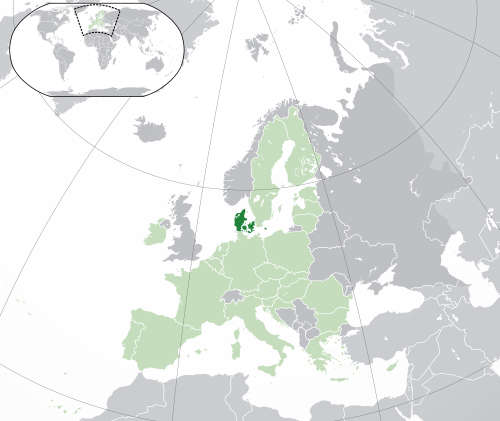 | |
| 主権国家 | デンマーク王国 |
| 統合 | 8世紀頃[2] |
| 憲法 | 1849年6月5日 |
| 資本 そして最大の都市 | コペンハーゲン 55°43′N 12°34′E / 55.717°N 12.567°E / 55.717; 12.567 |
| 公用語 | デンマーク語 |
| ドイツ語[N 2] | |
| 民族グループ (2020年) | |
| 異名 | |
| 政府 | 単一議会制立憲君主制 |
• モナーク | フレデリックX |
• 首相 | メッテ・フレデリクセン |
| 立法府 | フォルケティング |
| エリア | |
• 合計 | 43,094 [5] km 2 (16,639平方マイル) ( 130位) |
• 水 (%) | 1.74 [6] |
| 最高標高 (モルホイ) | 170.86メートル(560.56フィート) |
| 人口 | |
• 2023年2月の推定 |  5,935,619 [7] [N 4] ( 112位) 5,935,619 [7] [N 4] ( 112位) |
• 密度 | 138.29/km 2 (358.2/平方マイル) ( 93 位) |
| GDP (購買力平価) | 2024年推定 |
• 合計 |  4620億1900万ドル[N 5] [8] ( 52位) 4620億1900万ドル[N 5] [8] ( 52位) |
• 一人当たり | 77,641ドル[8] ( 10位) |
| GDP (名目) | 2024年推定 |
• 合計 | 4099億8900万ドル[N 5] [8] ( 37位) |
• 一人当たり | 68,898ドル[8] ( 9位) |
| ジーニ (2022) |  27.7 [9] 27.7 [9]低い |
| HDI (2022) | 0.952 [10]非常に高い · 5位 |
| 通貨 | デンマーククローネ[N 6] |
| タイムゾーン | UTC+01:00 (中央ヨーロッパ時間) |
• 夏 ( DST ) | UTC+02:00 (中央ヨーロッパ標準時) |
| 呼び出しコード | +45 |
| インターネットTLD | .dk [N 7] |
| Webサイト | デンマーク |
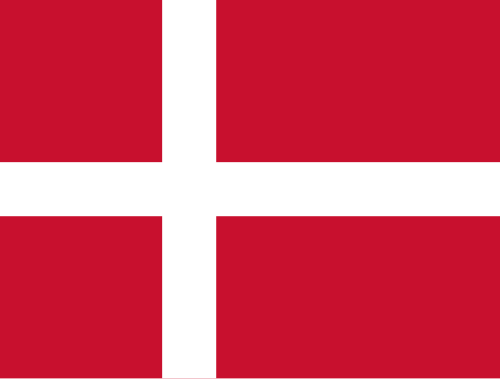

デンマーク(デンマーク語:Danmark、発音: [ˈtænmɑk]) )は、北欧の南中央部に位置する北欧の、人口は約600万人です。[11]コペンハーゲンには76万7千人が住んでいます(広域圏には190万人)。[12]デンマーク王国N 8、最も人口の多い北大西洋のフェロー諸島とグリーンランドの自治領を含む憲法上の単一国家。[13]デンマーク首都地域[N 9]スカンジナビアの最南端にありスウェーデンの南西と南、ノルウェー、[N 10]ドイツの北に、短い国境を接しています。
2013年現在、デンマーク王国には、フェロー諸島とグリーンランドを含め、面積が100平方メートル(1,100平方フィート)を超える島が合計1,419あり、そのうち443に名前が付けられ、78に人が住んでいます。[14]総面積42,943 km 2 (16,580平方マイル)に及ぶデンマーク首都圏は、[15]ユトランド 半島の北部と406の島々からなる群島で構成されています。[16]これらのうち、最も人口が多いのはシェラン島で、首都で最大の都市であるコペンハーゲンが位置しています。これにフュン島、北ユトランド諸島、アマー島が続きます。[17]デンマークは、平坦で耕作可能な土地、砂浜、低地、温暖な気候です。デンマークはデンマーク王国で覇権的影響力を行使し、内政を管轄する権限を委譲している。フェロー諸島では1948年に、グリーンランドでは1979年に自治権が確立され、グリーンランドは2009年にさらなる自治権を獲得した。 [18]
統一されたデンマーク王国は、バルト海の支配権をめぐる争いの中で、有能な海洋国家として8世紀に登場した。[2] 1397年、デンマークはノルウェーとスウェーデンと合同でカルマル同盟を結成し、これは1523年にスウェーデンが分離するまで存続した。残されたデンマーク・ノルウェー王国は、17世紀に一連の戦争に耐え、さらなる領土割譲を余儀なくされた。19世紀に盛り上がった民族主義運動は、1848年の第一次シュレースヴィヒ戦争で敗れた。 1849年6月5日のデンマーク憲法の採択により、絶対君主制は終焉し、現在の議会制度が導入された。19世紀後半には工業化された農産物輸出国であったデンマークは、20世紀初頭には社会・労働市場改革を導入し、それが現在の福祉国家 モデルと先進的な混合経済の基礎となった。デンマークは第一次世界大戦中は中立を保ったが、第二次世界大戦では1940年4月のドイツ軍の急速な侵攻により中立が破られた。占領中、1943年にレジスタンス運動が勃発し、アイスランドは1944年に独立を宣言した。デンマークは戦争終結後の1945年5月に解放された。1973年、デンマークはグリーンランドと共に現在の欧州連合に加盟したが、フェロー諸島は加盟しなかった。しかし、独自通貨クローネの保持など、一定の離脱条件を交渉した。
デンマークは生活水準の高い先進国であり、同性間のパートナーシップを法的に認めた最初の国である。NATO 、北欧理事会、OECD、OSCE、国連の創設メンバーであり、国連安全保障理事会のメンバーであり、シェンゲン協定にも加盟している。デンマークはスカンジナビア諸国と密接な政治的、文化的、言語的つながりを維持している。デンマークの政治制度は政治学においてほぼ完璧な統治の基準点として使われており、「デンマークに到達する」という言葉は他の国がいかにして政府を改善できるかを説明するのに使われている。[19] [20]
語源
「デンマーク」という名前の語源、「デンマーク人」と「デンマーク」の関係、そして統一王国としてのデンマークの出現は、学術的な議論が続いているテーマです。[21] [22]これは主に「ダン」という形態素と、それがダニ人を指すのか、それとも歴史上の人物であるダンを指すのか、そして「マーク」という語尾の正確な意味を中心にしています。
ほとんどの語源辞典やハンドブックでは、「Dan」は「平地」を意味する単語に由来しており、[23]ドイツ語の「脱穀場」を意味するTenne 、英語の「洞窟」を意味するdenに関連している。[23]要素markは森林地帯または国境地帯(辺境地帯を参照)を意味すると考えられており、おそらく南シュレースヴィヒの国境の森林を指していると思われる。[24]
デンマーク国内で「Danmark」という単語が最初に記録されたのは、 2つのイェリング石碑です。これらは、ゴルム3世( 955年頃)とハーラル・ブルートゥース( 965年頃)によって建てられたと考えられているルーン石碑です。 2つの石のうち大きい方は、デンマークの「洗礼証明書」(dåbsattest )としてよく引用されているが[25]、両方とも「デンマーク」という単語を使用しており、大きい石には対格のᛏᛅᚾᛘᛅᚢᚱᚴ tanmaurk ( [danmɒrk] )、小さい石には属格のᛏᛅᚾᛘᛅᚱᚴᛅᚱ「tanmarkar」(発音は[danmarkaɽ])であるのに対し、同時期に建てられたスキヴムの石には与格のtąnmarku (発音は[danmarkʊ] )が見られる。そこでは、デンマークの住民は、対格でタニ([danɪ])、つまり「デンマーク人」 と呼ばれている。
歴史
先史時代

デンマークで最も古い考古学的発見は、紀元前13万年から11万年のエーム間氷期に遡ります。[26]デンマークには紀元前1万2500年頃から人が住み、紀元前3900年から農業が行われていたことが明らかになっています。[27]デンマークの北欧青銅器時代(紀元前1800~600年)は、埋葬塚が特徴で、ルルや太陽の戦車など、多くの発見物が出土しています。
ローマ以前の鉄器時代(紀元前500年 - 紀元後1年)に、先住民族が南方へと移住し始め、最初のデンマーク部族がローマ以前の鉄器時代とゲルマン鉄器時代の間、つまりローマの鉄器時代(紀元後1年 - 400年)にこの国にやって来ました。[27]ローマの属州はデンマークの先住民部族との交易路と関係を維持しており、デンマークではローマの硬貨が発見されています。デンマークと北西ヨーロッパの多くでは、この時期に強いケルト文化の影響があったという証拠があり、グンデストルップの大釜の発見などにそれが表れています。
デンマーク部族は東デンマーク諸島(シェラン島)とスコーネからやって来て、初期の北ゲルマン語を話していた。歴史家は、彼らが到着する前、ユトランド半島と最も近い島々のほとんどにジュート部族が定住していたと考えている。多くのジュート人がイギリスに移住し、伝説によると、一部はブリトン王ヴォーティゲルンの傭兵として移住し、ケント南東部、ワイト島、その他の地域を形成して定住した。彼らは後に、侵入してきたアングル人やサクソン人によって吸収または民族浄化され、アングロサクソン人となった。ユトランド半島に残っていたジュート人は、定住したデンマーク人と同化した。
歴史家ヨルダネスによるゲティツァのダニ人に関する短いメモは、現代のデンマーク人の祖先である民族グループの一つであるデーン人に関する初期の言及であると考えられています。 [29] [30]ダーネヴィルケの防衛構造は3世紀以降に段階的に建設され、西暦737年の建設作業の規模の大きさは、デンマーク王の出現に起因しています。[31]新しいルーン文字が同じ頃に初めて使用され、デンマーク最古の町 リーベは西暦700年頃に設立されました。
ヴァイキングと中世

8世紀から10世紀にかけて、スカンジナビア半島全域がヴァイキングの起源となった。ヴァイキングはヨーロッパ全土に植民し、襲撃し、交易を行った。デンマークのヴァイキングは、イギリス諸島の東部と南部、および西ヨーロッパで最も活発に活動した。1013年にスヴェン・フォークビアード王の統治下でイングランドの一部(デーンロウとして知られる)に定住し、フランスでは、ロベール1世(ロロが初代支配者)への忠誠と引き換えに、デンマーク人とノルウェー人がノルマンディーとなる地域に定住することを許可された。この時期のアングロサクソンのペンス貨幣がデンマークで発見されている。[32]
デンマークは8世紀後半までにほぼ統一され、その統治者はフランクの文献では一貫して王(レゲス)と呼ばれている。804年のグドフレッドの統治下では、デンマーク王国はボーンホルムを除くユトランド半島、スカニア、デンマーク諸島の全域を領有していた可能性がある。 [ 33]

現存するデンマーク王政の起源は、10世紀初頭に統治を開始したゴーム3世に遡る。 [2]イェリング石碑が証明しているように、デンマーク人はゴーム3世とテューラの息子ハーラル3世によって965年頃にキリスト教化された。デンマークがキリスト教化されたのは、神聖ローマ帝国の侵略を避けるという政治的な理由からであると考えられている。ヨーロッパで台頭するキリスト教国である神聖ローマ帝国は、デンマーク人にとって重要な貿易相手国であった。この脅威に対する抑止力として、ハーラル3世はデンマーク周辺にトレレボリと呼ばれる6つの要塞を建設し、さらにダーネヴィルケを建設した。11世紀初頭、クヌート大王が勝利し、スカンジナビア軍とともにデンマーク、イングランド、ノルウェーをほぼ30年間統一した。[32]
中世盛期から後期にかけて、デンマークはスコーネランド地方(現在のスウェーデン南部のスコーネ、ハッランド、ブレーキンゲ地方)も領有し、デンマーク王はデンマーク領エストニア、シュレースヴィヒ公国、ホルシュタイン公国を統治した。シュレースヴィヒ公国とホルシュタイン公国の大部分は現在、ドイツ北部の シュレースヴィヒ=ホルシュタイン州を形成している。
1397年、デンマークはノルウェー、スウェーデンとカルマル同盟と呼ばれる同君連合を結成し、マーガレット1世女王の指揮下で統一された。[34] 3か国は連合において対等に扱われることになっていた。しかし、マーガレットは最初からそれほど理想主義的ではなかったのかもしれない。デンマークを連合の「上位」パートナーとして明確に扱っていたのだ。[35]そのため、スカンジナビアの歴史のその後125年間の大部分は、スウェーデンが離脱しては再征服を繰り返しながら、この連合を中心に展開した。この問題は、1523年6月17日にスウェーデン王グスタフ・ヴァーサがストックホルムを征服したことで実質的に解決された。 1530年代には宗教改革がスカンジナビアに広がり、伯爵の確執の内戦の後、デンマークは1536年にルター派に改宗した。その年の後半、デンマークはノルウェーと連合を組んだ。
近世史(1536年~1849年)

スウェーデンが同君連合から永久に離脱した後、デンマークは何度か隣国に対する支配権を再び主張しようとした。クリスチャン4世は1611年から1613年のカルマル戦争でスウェーデンを攻撃したが、連合への復帰を強いるという主目的は達成できなかった。この戦争で領土の変更はなかったが、スウェーデンはデンマークに100万銀リクスダールの戦争賠償金を支払わざるを得なかった。この金額はエルブスボーの身代金として知られている。 [36]クリスチャン4世はこのお金を使っていくつかの町や要塞を建設したが、最も有名なのはグリュックシュタット(ハンブルクのライバルとして建設)とクリスチャニアである。オランダ東インド会社に触発されて、彼は同様のデンマーク会社を設立し、セイロンを植民地とすることを計画したが、この会社はインドのコロマンデル海岸のトランケバルを獲得しただけだった。デンマークの大きな植民地化の野望には、アフリカとインドにおけるいくつかの重要な交易拠点が含まれていた。インドの交易拠点はあまり注目されなかったが、ガーナのオスにあるクリスチャンスボー砦の交易拠点を通じて、150万人の奴隷が取引され、非常に利益の大きい大西洋奴隷貿易で重要な役割を果たした。 [37]デンマークの植民地帝国は他の大国との貿易とプランテーションによって維持されていたが、最終的には資源不足が停滞を招いた。[38]
三十年戦争でクリスティアンはドイツのルター派諸国の指導者になろうとしたが、ルッターの戦いで大敗を喫した。[39]その結果、アルブレヒト・フォン・ヴァレンシュタイン率いるカトリック軍がユトランド半島に侵攻、占領、略奪を行い、デンマークは戦争から撤退せざるを得なくなった。[40]デンマークは領土譲歩を免れたが、グスタフ2世アドルフのドイツ介入は、スウェーデンの軍事力が高まり、デンマークのこの地域での影響力が衰えていることの表れとみなされた。スウェーデン軍は1643年にユトランド半島に侵攻し、1644年にスコーネの領有権を主張した。1645年のブロムセブロー条約で、デンマークはハッランド島、ゴトランド島、デンマーク領エストニアの最後の部分、ノルウェーのいくつかの州を明け渡した。
.jpg/500px-Stormen_p%C3%A5_K%C3%B8benhavn_(F.C._Lund).jpg)
1657年、デンマーク王フレゼリク3世は、ブロムセブロー条約を破棄する機会とみて、第二次北方戦争(1655年 - 1660年)に深く関与していたスウェーデンに宣戦布告し、ブレーメン=フェルデンに進軍した。これによりデンマークは大敗し、スウェーデン王カール10世グスタフの軍がユトランド半島を征服し、凍ったデンマーク海峡を渡ってフュン島とシェラン島の大部分を占領した後、1658年2月にロスキレ条約に調印し、スコーネ、ブレーキンゲ、ブーヒュースレーン、トロンデラーグ、ボーンホルム島の支配権をスウェーデンに与えた。カール10世グスタフはデンマークを滅ぼさなかったことをすぐに後悔し、1658年8月にデンマークへの2度目の攻撃を開始し、デンマークの島々のほとんどを征服し、2年間にわたるコペンハーゲン包囲戦を開始した。フレゼリク3世は積極的に市の防衛を指揮し、市民を結集して武器を取り、スウェーデンの攻撃を撃退した。[41] [42]包囲戦は1660年にカール10世グスタフが死去したことで終了した。[43]その後の和平協定で、デンマークは独立を維持し、トロンデラーグとボーンホルムの支配権を取り戻した。[44]戦後大きな人気を得たフレゼリク3世はこれを利用し、選挙王制を解体して絶対王政を採用した。これはデンマークで1848年まで続いた。[45]
デンマークはスコーネ戦争(1675年 - 1679年)でスコーネの支配権を取り戻そうとしたが失敗した。大北方戦争(1700年 - 1721年)の後、デンマークは1720年のフレゼリクスボー条約と1773年のツァールスコエ・セロー条約で、ホルシュタイン=ゴットルプ家が支配していたシュレースヴィヒとホルシュタインの一部をそれぞれ奪還することに成功した。デンマークは、18世紀最後の数十年間に、同時代の多くの戦争で中立国の立場から双方と貿易を行なったため、大いに繁栄した。ナポレオン戦争では、デンマークはフランス、イギリスの両国と貿易を行い、ロシア、スウェーデン、プロイセンとともに武装中立同盟に加盟した。[46]イギリスはこれを敵対行為とみなし、1801年と1807年にコペンハーゲンを攻撃し、あるときはデンマーク艦隊を奪い取り、またあるときはデンマークの首都の大部分を焼き払った。これがいわゆるデンマーク・イギリス砲艦戦争につながった。デンマークとノルウェー間の水路をイギリスが支配したことは連合国の経済に壊滅的な打撃を与え、1813年にデンマーク・ノルウェー連合は破産した。
1814年のキール条約でこの連合は解消され、デンマーク王室は「永久に」ノルウェー王国に対する領有権を放棄し、スウェーデン王を優先した。[47]デンマークはアイスランド(1944年までデンマーク王室が存続)、フェロー諸島、グリーンランドの領有権を保持したが、これらはすべて何世紀にもわたってノルウェーによって統治されていた。[48]北欧の植民地とは別に、デンマークは1620年から1869年までデンマーク領インド、 1658年から1850年までデンマーク領ゴールドコースト(ガーナ)、 1671年から1917年まで デンマーク領西インド諸島を統治し続けた。
立憲君主制(1849年~現在)

1830年代には、デンマークで自由主義と国民運動が勃興し、1848年の欧州革命の後、デンマークは1849年6月5日に平和的に立憲君主制となった。新憲法により二院制の議会が設立された。デンマークは、1864年2月から10月まで続いた第二次シュレースヴィヒ戦争で、プロイセンとオーストリア帝国の両国と戦争を繰り広げた。デンマークは敗れ、シュレースヴィヒとホルシュタインをプロイセンに割譲せざるを得なくなった。この敗北は、17世紀に始まった長い一連の敗北と領土喪失の最新の出来事であった。これらの出来事の後、デンマークはヨーロッパで中立政策を追求した。
デンマークでは19世紀後半に産業化が起こりました。 [49] 1850年代に国内初の鉄道が建設され、通信と海外貿易の改善により、デンマークの天然資源の不足にもかかわらず産業が発展しました。 1870年代から労働組合が発達しました。田舎から都市への人口の大幅な増加があり、デンマークの農業は乳製品と肉製品の輸出が中心になりました。
デンマークは第一次世界大戦中は中立の立場を保った。ドイツが敗戦すると、ヴェルサイユ条約諸国はシュレースヴィヒ=ホルシュタイン州をデンマークに返還することを提案した。ドイツの領土回復主義を恐れたデンマークは、住民投票なしでは同地域の返還を検討することを拒否した。シュレースヴィヒ住民投票は1920年2月10日と3月14日にそれぞれ行われた。1920年7月10日、北シュレースヴィヒがデンマークに返還され、人口は163,600人、面積は3,984平方キロメートル(1,538平方マイル)増加した。1924年、デンマーク初の社会民主政権が発足した。[50]
1939年、デンマークはナチスドイツと10年間の不可侵条約を結んだが、1940年4月9日にドイツがデンマークに侵攻し、デンマーク政府は速やかに降伏した。デンマークにおける第二次世界大戦は、1943年までドイツとの経済協力によって特徴づけられたが、デンマーク政府はそれ以上の協力を拒否し、海軍はほとんど の船舶を自沈させ、多くの士官を中立国であったスウェーデンに派遣した。デンマークのレジスタンスは救出作戦を実行し、ドイツが彼らを絶滅の収容所に送る前に、数千人のユダヤ人とその家族をスウェーデンの安全な場所に避難させることに成功した。デンマーク人の中には、デンマーク・ナチ党に入党したり、デンマーク自由軍団の一員としてドイツと共に戦うことを志願したりしてナチズムを支持した者もいた。[51]アイスランドは1944年にデンマークとの関係を断絶し、独立した共和国となった。ドイツは1945年5月に降伏した。1948年にフェロー諸島は自治権を獲得した。1949年にデンマークはNATOの創設メンバーとなった。
.jpg/500px-Tratado_de_Lisboa_13_12_2007_(081).jpg)
デンマークは欧州自由貿易連合(EFTA)の創設メンバーであった。1960年代、EFTA諸国は当時の欧州経済共同体(EEC)の内側の6つに対して、外側の7つと呼ばれることが多かった。[52] 1973年、デンマークは国民投票を経てイギリス、アイルランドとともに欧州経済共同体(現在の欧州連合)に加盟した。欧州統合のさらなる推進を盛り込んだマーストリヒト条約は、 1992年にデンマーク国民に否決された。1993年、 4つの政策からのオプトアウトを定めた2度目の国民投票を経てようやく承認された。デンマーク国民は2000年の国民投票でユーロを国の通貨として拒否した。グリーンランドは1979年に自治権を獲得し、2009年に自治権を与えられた。フェロー諸島もグリーンランドも欧州連合に加盟しておらず、フェロー諸島は1973年に、グリーンランドは1986年に、漁業政策を理由にEECへの加盟を辞退している。
1953年の憲法改正により、比例代表制による一院制議会、女性のデンマーク王位継承、そしてグリーンランドがデンマークの不可分の一部となった。中道左派の 社会民主党は、20世紀後半の大半を連立政権で過ごし、北欧の福祉モデルを導入した。自由党と保守人民党も中道右派政権を率いたことがある。
地理

北欧に位置するデンマーク[N 9]は、ユトランド半島の北部と406の島々からなる群島である。[16]これらのうち最大の島はシェラン島で、首都コペンハーゲンが位置し、北ユトランド諸島、フュン島、ロラン島が続く。[54]ボーンホルム島はデンマークの他の島々より東のバルト海にある。大きな島の多くは橋でつながっており、エーレスンド海峡を横切る橋トンネルがシェラン島とスウェーデンを結んでいる。グレートベルトリンクがフュン島とシェラン島を結んでいる。また、小ベルト橋がユトランド半島とフュン島を結んでいる。小さな島々とはフェリーや小型飛行機で結ばれている。人口10万人を超える4つの都市は、シェラン島の首都コペンハーゲン、ユトランド半島のオーフスとオールボー、フュン島のオーデンセである。
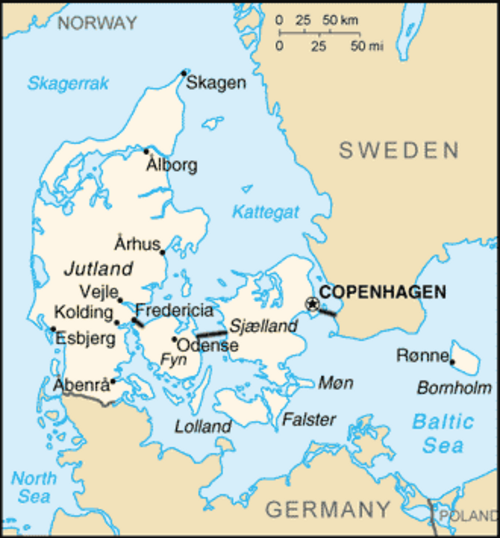
首都圏の総面積は42,943.9平方キロメートル(16,581平方マイル)である。[15]内水面の面積は43平方キロメートル(17平方マイル)である。 [ 55]陸地面積は、海洋による浸食が絶えず海岸線に物質を追加していることと、人間による干拓事業(浸食に対抗するため)のため、正確には分からない。氷河期後の隆起により、北部と東部では年間1センチメートル(0.4インチ)弱の土地が隆起し、海岸線が伸びている。デンマークと同じ面積を囲む円は、直径234キロメートル(145マイル)、円周は736キロメートル(457マイル)となる(陸地のみ:それぞれ232.33キロメートル(144.36マイル)、730キロメートル(454マイル))。南側はドイツと68キロメートルの国境を接しており、それ以外は8,750キロメートルの潮汐海岸線(小さな湾や入り江を含む)に囲まれている。[56]デンマーク国内で海岸から52キロメートル(32マイル)以内の場所はない。ユトランド半島の南西海岸では、潮の満ち引きは1メートルから2メートル(3.28フィートから6.56フィート)で、潮位線は10キロメートル(6.2マイル)にわたって外側と内側に動いている。[57]デンマークの領海は合計105,000平方キロメートル(40,541平方マイル)である。
デンマークの最北端は、北緯57° 45' 7"のスカーゲン岬(スコーの北岸)、最南端は北緯54° 33' 35"のゲッサー岬(ファルスター島の南端)、最西端は東経8° 4' 22"のブラヴァンズフーク、最東端は東経15° 11' 55"のオーステルスケルである。これは、ボーンホルム島の北東18キロメートル(11マイル)にある小さなエルソルメネ諸島にある。東西の距離は452キロメートル(281マイル)、南北の距離は368キロメートル(229マイル)である。

首都圏は平坦で標高はほとんどなく、平均海抜は31メートル(102フィート)である。最も高い自然地点はモレホイで、170.86メートル(560.56フィート)である。[58]これは北欧諸国の中では群を抜いて低い標高であり、南スウェーデンの最高地点の半分以下でもあるが、デンマーク内陸部の標高は概して海面上昇の影響を受けないレベルにある。デンマークの国土のかなりの部分は起伏のある平野で、海岸線は砂地で、ユトランド半島北部には大きな砂丘がある。かつては広大な森林に覆われていたが、今日のデンマークは大部分が耕作地で構成されている。10数本の川が流れており、最も重要な川にはグデノー川、オーデンセ川、スキャーン川、スーサ川、そしてドイツとの南の国境に沿って流れるヴィダ川がある。デンマークには1008の湖があり、そのうち16の湖の面積は500ヘクタール(1200エーカー)を超えている。コペンハーゲンの北西に位置するアレス湖が最大の湖である。[55]
デンマーク王国には、デンマークのかなり西に位置する2つの海外領土、世界最大の島であるグリーンランドと、北大西洋のフェロー諸島が含まれています。これらの領土は、独自の議会(ログティング議会とイナツィサルトゥット議会)の下で自治権を持ち、デンマーク本土とともにデンマーク王国の一部を形成しています。
気候
デンマークは温帯気候で、冬は涼しいから寒い(1月の平均気温は1.5℃(34.7℉))のと、夏は穏やか(8月の平均気温は17.2℃(63.0℉))である。[59]記録が始まった1874年以降、デンマークで記録された最も極端な気温は、1975年の36.4℃(97.5℉)と1982年の−31.2℃(−24.2℉)である。[60]デンマークでは、年間平均179日が降水量で、年間平均降水量は765ミリメートル(30インチ)である。秋が最も雨が多く、春が最も乾燥している。[59]大陸と海洋の間に位置しているため、天候が不安定になることが多い。[61]
デンマークは北に位置しているため、季節によって日照時間に大きな差があります。冬は日が短く、日の出は午前8時45分頃、日の入りは午後3時45分頃(標準時)ですが、夏は日が長く、日の出は午前4時30分、日の入りは午後10時(夏時間)です。[62]
エコロジー

デンマークは北方王国に属し、大西洋混合林とバルト海混合林の2つの生態地域に分けられる。[63] [64]デンマークの原始的な温帯林のほぼすべてが、過去1000年間に主に農業目的で破壊または断片化された。[65]森林破壊により、広大なヒース地帯と壊滅的な砂の漂流地が生まれた。[65]それにもかかわらず、国内にはいくつかのより大きな二次林があり、合計で国土の12.9%が現在森林になっている。 [66]ヨーロッパトウヒは最も広く分布している木(2017年)であり、クリスマスツリーの生産に重要な木である。デンマークの森林景観完全性指数の平均スコアは0.5/10で、172カ国中171位であり、サンマリノに次ぐ。[67] [さらに説明が必要]
ノロジカは田舎に増えつつあり、大きな枝角を持つアカシカはユトランド半島のまばらな森林地帯で見られる。デンマークにはケナガイタチ、ノウサギ、ハリネズミなどの小型哺乳類も生息している。[68]約400種の鳥類がデンマークに生息し、そのうち約160種が国内で繁殖している。[69]大型海洋哺乳類にはネズミイルカの健全な個体数、増加中の鰭脚類、シロナガスクジラやシャチなどの大型クジラが時折訪れる。タラ、ニシン、カレイはデンマーク海域に豊富に生息する食用魚であり、大規模な漁業の基盤となっている。[70]
環境

デンマークは2020年12月に石油・ガス採掘の新規ライセンスの発行を停止した。[71]
土地と水の汚染はデンマークの2つの最も重要な環境問題ですが、現在では国内の家庭廃棄物や産業廃棄物の多くが濾過され、時にはリサイクルされるようになっています。デンマークは歴史的に環境保護に対して進歩的な姿勢をとっており、1971年に環境省を設立し、 1973年には世界で初めて環境法を施行した国となりました。 [72]環境悪化と地球温暖化を緩和するために、デンマーク政府は気候変動京都議定書に署名しました。[73]しかし、国のエコロジカル・フットプリントは一人当たり8.26グローバル・ヘクタールであり、2010年の世界平均1.7と比較すると非常に高い。[74]この値の要因としては、耕作地の例外的に高い値だけでなく、放牧地の比較的高い値があり、[75]これはデンマークのかなり高い食肉生産量(一人当たり年間115.8キログラム(255ポンド)の肉)と、食肉産業と乳製品産業の大きな経済的役割によって説明できるかもしれない。[76] 2014年12月、 2015年の気候変動パフォーマンス指数ではデンマークがトップにランクされ、排出量はまだかなり高いものの、同国は効果的な気候保護政策を実施できたと説明されている。[77] 2020年、デンマークは再び指数で1位になった。[78] 2021年にデンマークはコスタリカと共同で化石燃料の使用を止めるための「石油・ガスを超えた同盟」を立ち上げた。[79]
デンマーク領であるグリーンランドとフェロー諸島では、年間約650頭のクジラが捕獲されている。[80] [81]グリーンランドの捕鯨割当量は、割当量決定権を持つ国際捕鯨委員会(IWC)の助言に基づいて決定される。 [82]
政府と政治
デンマークの政治は、デンマーク憲法に定められた枠組みに従って運営されている。[N 11] 1849年に初めて制定されたこの憲法は、一院制の代表制議会制度を備えた立憲君主制の形で主権国家を確立した。君主は正式には行政権を保持し、枢密院を主宰する。[84] [85]実際には、君主の職務は厳密に代表的かつ儀礼的なもので、[N 12] [86]首相やその他の政府大臣の正式な任命や解任などである。君主は自身の行動に責任を負わず、その人格は神聖視されている。[87]世襲君主のフレゼリク10世国王が2024年1月14日より国家元首となっている。[88]
政府
デンマーク議会は一院制で、フォルケティング(デンマーク語:Folketinget )と呼ばれる。デンマーク王国の立法府であり、デンマークおよびグリーンランドとフェロー諸島に適用される法律を可決する。フォルケティングはまた、国家予算の採択、国家会計の承認、政府の任命と管理、国際協力への参加についても責任を負っている。法案は政府または国会議員によって提出される。可決されたすべての法案は、法律となるために30日以内に国務院に提出され、国王の裁可を受けなければならない。 [89]
.jpg/500px-Christiansborg_(Matthias_Schalk).jpg)
デンマークは普通選挙権を有する代表制民主主義国である。[N 13]フォルケティングの議員構成は政党の比例代表制に基づいており、 [91] 2%の選挙基準がある。デンマークはフォルケティングに175人の議員を選出し、グリーンランドとフェロー諸島はそれぞれ2人ずつ選出し、合計179人の議員がいる。[92]議会選挙は少なくとも4年に1度行われるが、任期満了前に首相が国王に選挙の呼びかけを要請する権限がある。不信任投票では、フォルケティングは大臣1人または政府全体を辞任に追い込むことができる。[93]
デンマーク政府は内閣制を採用しており、行政権は形式的には君主に代わって首相と各省庁の長である閣僚によって行使される。行政府として、内閣は法案や予算の提案、法律の執行、デンマークの外交政策と内政政策の指導に責任を持つ。首相の地位は、議会の過半数の信任を最も得られる人物が務める。これは多くの場合、最大政党の現職党首、またはより効果的なのは政党連合の党首である。単一政党は一般に議席数という点で単独で内閣を組閣するのに十分な政治力を持たない。デンマークは連立政権によって統治されることが多く、それ自体が非政府政党に依存する少数派政権であることが多い。 [94]
2022年11月の2022年デンマーク総選挙を受けて、首相で社会民主党のリーダーである メッテ・フレデリクセンは、2022年12月に、当時の野党第一党であるヴェンストレと最近設立された穏健党との連立政権である現在のフレデリクセン2世内閣を結成した。[95]
法律と司法制度
.jpg/500px-Supreme_Court_of_Denmark_(1697).jpg)
デンマークには、ドイツ法を参考にした大陸法制度がある。デンマークは、イギリスやアメリカのような判例法や、フランスやドイツのような包括的な法典を一度も制定していない点で、ノルウェーやスウェーデンに似ている。デンマークの法律の多くは慣習法である。[96]
デンマークの司法制度は、通常の民事および刑事管轄権を持つ裁判所と、個人と行政の間の訴訟を管轄する行政裁判所に分かれている。憲法第62条および第64条は、裁判官は行為、法令および慣行を含む法律のみに従うと規定することにより、政府および議会からの司法の独立を保証している。 [97]デンマーク王国には単一の統一された司法制度がなく、デンマークに1つの制度、グリーンランドに別の制度、フェロー諸島に3番目の制度がある。[98]ただし、グリーンランドとフェロー諸島の最高裁判所の判決は、デンマーク高等裁判所に上訴することができる。デンマーク最高裁判所は、王国の司法行政に責任を負う最高の民事および刑事裁判所である。
デンマーク王国

デンマーク王国は、デンマーク本土に加え、北大西洋の2つの自治領[13]であるフェロー諸島とグリーンランドからなる単一国家である。これらは18世紀以来デンマーク王国の一部となっているが、それぞれ独自の歴史的、文化的アイデンティティを有しているため、デンマーク王国のこれらの地域は広範な政治的権力を持ち、相当数の分野で立法および行政の責任を負っている。 [99]フェロー諸島には1948年に、グリーンランドには1979年に自治権が認められたが、それぞれ以前は県の地位にあった。[100]
フェロー諸島とグリーンランドにはそれぞれ独自の政府と議会があり、司法制度と金融政策を除けば、内政に関しては事実上自治権を有している。 [100] 高等弁務官(リグソムブッズマン)は、フェロー諸島議会とグリーンランド議会においてデンマーク政府の代表として活動するが、投票することはできない。[100]フェロー諸島政府はデンマーク政府と対等なパートナーであると定義されており、[ 101]グリーンランド人は自己決定権を持つ別の民族と定義されている。[102]
行政区分
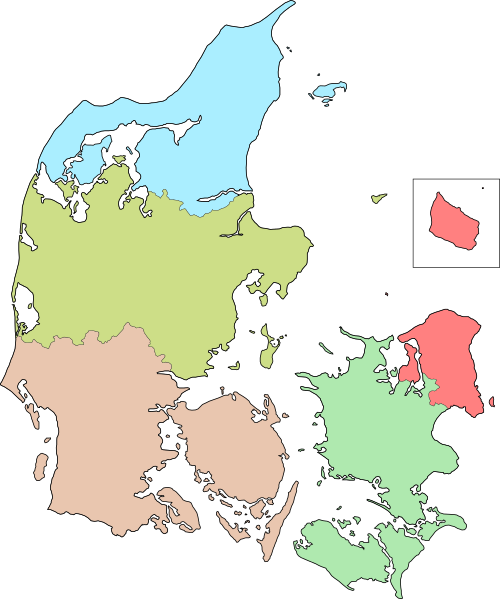
デンマークは総面積43,094平方キロメートル(16,639平方マイル)で、5つの行政地域(デンマーク語:regioner)に分かれている。地域はさらに98の自治体(kommuner)に細分化されている。デンマーク最東端のエルソルメネ諸島は面積39ヘクタール(0.16平方マイル)で、自治体でも地域でもないが、国防省の管轄である。 [ 105]デンマークの州はデンマークの統計上の区分であり、行政地域と市町村の間に位置する。州は行政区分ではなく、いかなる種類の選挙の対象でもなく、主に統計目的で使用されている。
地域は、2007年1月1日に16の旧県に代わって設立されました。同時に、小規模な自治体はより大きな単位に統合され、その数は270から減少しました。ほとんどの自治体は、財政的および職業的に持続可能なように少なくとも2万人の人口を持っていますが、このルールにはいくつかの例外があります。[106]行政区分は、4年ごとに比例代表で選出される直接選挙で選ばれた議会によって運営されています。最新のデンマーク地方選挙は2021年11月16日に実施されました。その他の地域構造は、警察管区、裁判所管区、選挙区など、市町村の境界をレイアウトとして使用しています。
地域
地域の統治機関は地域議会で、各地域議会は41人の議員で構成され、議員は4年の任期で選出される。議会は、議会によって選出された地域地区議長 ( regionsrådsformand ) が率いる。 [107] 地域議会の責任分野は、国民保健サービス、社会サービス、地域開発である。[107] [108]地域は、置き換えられた郡とは異なり、課税が認められておらず、保健サービスは、2018年まで国民保健サービス拠出金 ( sundhedsbidrag ) によって部分的に賄われ、一部は政府と地方自治体の両方からの資金によって賄われている。[109] 2019年1月1日からこの拠出金は廃止され、代わりに所得税の引き上げが予定されている。
地域の面積と人口は大きく異なり、例えば首都圏の人口は北デンマーク地域の3倍である。郡制度では、コペンハーゲン市やフレゼレクスベアなど、人口密度の高い特定の自治体は郡と同等の地位を与えられ、第一レベルの行政区画となった。これらの独自の自治体は、2007年の改革で新しい地域に編入された。
外交関係
.jpg/500px-20211103_Nordiska_Radets_session_Kopenhamn_808A9452_(51654525096).jpg)
デンマークは北欧で大きな影響力を持ち、国際情勢においては中堅国である。 [110]近年、グリーンランドとフェロー諸島は、漁業、捕鯨、地政学的な懸念などの外交政策問題で発言権を保証されている。デンマークの外交政策は、欧州連合(EU)の加盟国であることに大きく影響されており、デンマークはグリーンランドを含め、1973年にEUの前身である欧州経済共同体(EEC)に加盟した。 [N 14]デンマークは、欧州連合理事会の議長国を7回務め、直近では2012年1月から6月まで務めた。 [111]デンマークは第二次世界大戦後、200年続いた中立政策を終了した。1949年以来、北大西洋条約機構(NATO)の創設メンバーであり、加盟は依然として非常に人気がある。[112]
デンマークは開発援助委員会(DAC)の加盟国として、長年にわたり、国民総所得の最大の割合を開発援助に拠出している世界の国々の一つである。2015年、デンマークは国民総所得(GNI)の0.85%を対外援助に拠出し、GNIの0.7%という長年の国連目標を達成したわずか6カ国のうちの1つであった。[N 15] [113]デンマークは二国間援助と多国間援助の両方に参加しており、援助は通常外務省によって管理されている。特に二国間援助を運営する際には、デンマーク国際開発庁(DANIDA)という組織名がよく使用される。2024年世界平和度指数によると、デンマークは世界で8番目に平和な国である。[114]
軍隊
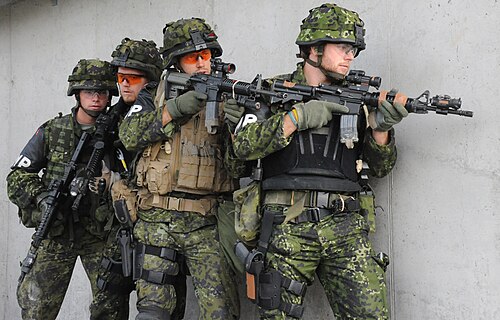
デンマークの軍隊はデンマーク国防軍(デンマーク語:Forsvaret )として知られている。国防大臣はデンマーク国防軍の最高司令官であり、海外での外交官長も務める。平時、国防省は合計で約33,000人を雇用している。主な軍部門は約27,000人を雇用しており、そのうち15,460人がデンマーク陸軍、5,300人がデンマーク海軍、6,050人がデンマーク空軍(いずれも徴兵を含む)である。[要出典]デンマーク緊急事態管理庁は2,000人を雇用しており(徴兵を含む)、約4,000人がデンマーク国防軍司令部やデンマーク国防情報局などの部門に特化しないサービスに従事している。さらに、約44,500人がデンマーク国内警備隊のボランティアとして勤務している。[115]
デンマークは長年国際平和維持活動を支持してきたが、1999年のNATOによるユーゴスラビア爆撃と2001年のアフガニスタン戦争以降、デンマークは交戦国としての新たな役割も見出し、いくつかの戦争や侵略に積極的に参加している。この比較的新しい状況は国内で批判を巻き起こしたが、デンマーク国民は一般的に、特にアフガニスタン戦争に対して非常に協力的である。[116] [117]デンマーク国防省は、 NATO SNMCMG1への常設拠出金を除いて、国際任務に約1,400人[118]の職員を擁している。デンマーク軍は、国連保護軍 ( UNPROFOR ) やIFOR、[119]そして現在はSFORとして旧ユーゴスラビアで精力的に活動していた。[120] 2003年から2007年の間に、約450人のデンマーク兵がイラクにいた。[121]デンマークはまた、アフガニスタンにおけるアメリカの作戦を強く支持し、 ISAFに金銭的にも物質的にも貢献してきた。[122]これらの取り組みは、デンマーク当局によってしばしば新たな「積極的外交政策」の一部であると説明されている。
経済

デンマークは、世界銀行によって高所得国に分類される発達した 混合経済を有している。[123] 2017年には、一人当たり国民総所得(PPP)で世界第16位、一人当たり名目GNIで第10位となった。[124]デンマーク経済は、経済自由度指数と世界経済自由度において、最も自由な国の一つとして際立っている。[125] [126]世界経済フォーラムの2018年世界競争力レポートによると、デンマークは世界で10番目に競争力のある経済であり、ヨーロッパでは6番目である。[127]
デンマークは高等教育修了者の割合が世界で4番目に高い。[128]この国は労働者の権利に関して世界最高位にランクされている。[129]労働時間当たりのGDPは2009年に13番目に高かった。この国の市場所得格差はOECD平均に近いが、[130] [131]税金と公的現金給付後では所得格差はかなり小さくなる。ユーロスタットによると、デンマークの可処分所得のジニ係数は2017年にEU諸国の中で7番目に低かった。[132]国際通貨基金 によると、デンマークの最低賃金は世界で最も高い。[133]デンマークには最低賃金法がないため、高い賃金水準は労働組合の力によるものとされている。例えば、 3F労働組合と雇用主団体ホレスタとの団体交渉協定の結果、マクドナルドや他のファーストフードチェーンの労働者は、1時間当たり20ドル相当の賃金を得ており、これは米国の労働者の2倍以上であり、有給休暇、育児休暇、年金制度を利用できる。[134] 2015年の労働組合組織率は68%であった。[135]
かつては耕作に適した土地柄、農業が盛んな国であったデンマークだが、1945年以降、工業基盤とサービス部門を大幅に拡大してきた。2017年までにサービス業がGDPの約75%を占め、製造業は約15%、農業は2%未満となった。[136]主要産業には、風力タービン、医薬品、医療機器、機械・輸送機器、食品加工、建設などがある。[137]総輸出額の約60%は商品の輸出によるもので、残りの40%はサービス輸出、主に海上輸送によるものである。同国の主な輸出品は、風力タービン、医薬品、機械・器具、肉・肉製品、乳製品、魚、家具、デザインなどである。[137]デンマークは食料とエネルギーの純輸出国であり、長年にわたり国際収支黒字を計上しており、純債務国から純債権国へと転身した。 2018年7月1日時点で、デンマークの純国際投資ポジション(または純対外資産)はGDPの64.6%に相当した。[138]
.jpg/500px-Svin_ved_Tarm,_Jylland_aug_2015_(20871345365).jpg)
デンマークは、5億800万人以上の消費者を代表する欧州連合(EU)の域内市場の一部である。いくつかの国内商業政策は、欧州連合(EU)加盟国間の協定とEUの法律によって決定される。デンマーク国民の間では自由貿易への支持が高く、2016年の世論調査では、57%がグローバル化を機会と見なし、18%が脅威と見なした。[139]貿易フローの70%は欧州連合(EU)内である。2017年現在[update]、デンマークの最大の輸出相手国はドイツ、スウェーデン、イギリス、アメリカである。[73]
デンマークの通貨クローネ( DKK)は、ERM IIを通じて1ユーロあたり約7.46クローネに固定されている。2000年9月の国民投票でユーロ導入は否決されたが[140]、同国は欧州連合経済通貨同盟(EMU)で定められた政策に従い、ユーロ導入に必要な経済収斂基準を満たしている。フォルケティングの政党の大半はEMUへの参加を支持しているが、2010年以来の世論調査では一貫してユーロ導入に反対する人が多数派となっている。2018年3月、ユーロバロメーター世論調査ではデンマークの回答者の29%がEMUとユーロに賛成し、65%が反対した。[141] 2023年11月に実施された全く同じ世論調査では、賛成31%、反対63%とほとんど変化がなかった。[142]
デンマークにおける売上高でランキングしたデンマーク最大の企業は、AP Møller-Mærsk (国際海運)、Novo Nordisk (医薬品)、ISS A/S (施設サービス)、Vestas (風力タービン)、Arla Foods (乳製品)、DSV (輸送)、カールスバーグ グループ(ビール)、サリング グループ(小売)、エルステッド A/S(電力)、ダンスケ銀行。[143]
デンマーク政府は2023年にエネルギー販売業者への税金を引き上げる方法に焦点を当てた。 [144]
公共政策
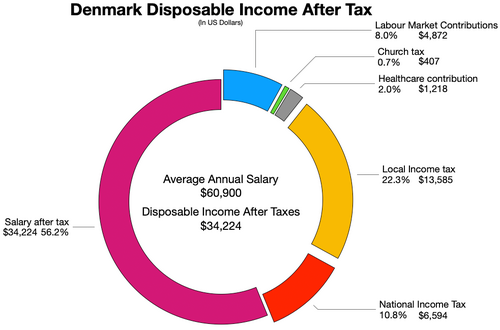
デンマーク人は高い生活水準を享受しており、デンマーク経済は政府の広範な福祉規定によって特徴付けられる。デンマークの法人税率は22%で、外国人駐在員には期間限定の特別税制がある。[145]デンマークの税制は幅広く、物品税、所得税、その他の手数料に加えて、25%の付加価値税がある。全体的な課税水準(すべての税金の合計、GDPの割合)は、2017年には46%だった。[146]デンマークの税制構造(さまざまな税金の相対的な重み)はOECD平均とは異なり、2015年のデンマークの税制は、OECD全体と比較して、個人所得税からの収入が大幅に高く、法人所得税と利得税、財産税からの収入の割合が低いという特徴があり、社会保障拠出金からの収入はまったくない。給与税、付加価値税、その他の物品・サービス税から生じる割合はOECD平均に相当する[147]
2014年時点で、税金と給付金を差し引いた場合、[update]人口の6%が貧困ライン以下の生活を送っていると報告されている。デンマークの相対的貧困率はOECD平均の11.3%を下回り、OECD諸国の中で2番目に低い。 [148]十分な食料を買う余裕がないと報告した人口の6%は、OECD平均の半分以下であった。[148]
労働市場
他の北欧諸国と同様に、デンマークは自由市場資本主義と包括的な福祉国家および強力な労働者保護を組み合わせた北欧モデルを採用している。[149]世界銀行によると、高く評価されている「フレキシキュリティ」モデルの結果、デンマークはヨーロッパで最も自由な労働市場を持っている。雇用主はいつでも雇用と解雇を行うことができ(柔軟性)、仕事と仕事の間での失業手当は比較的高い(安全性)。OECDによると、失業者の初期および長期の純代替率は2016年に以前の純収入の65%であり、OECD平均は53%である。[150]時間外労働に関する制限は適用されず、企業は1日24時間、1年365日稼働することができる。[151]デンマークの2017年の15~64歳の就業率は74.2%で、OECD諸国の中で9番目に高く、OECD平均の67.8%を上回っている。[152]失業率は2017年に5.7%で、[153]構造的水準に近いかそれを下回っていると考えられている。[154]
失業手当の額は、以前の雇用状況と、通常は労働組合と密接に関係する失業基金への加入状況、および以前の拠出金の支払い状況によって決まる。財源の約65%は、指定された加入者の拠出金から賄われ、残りの3分の1は中央政府、つまり一般税から賄われる。[155]
仕事
デンマークでの事業設立は、わずか数時間で、非常に低コストで行うことができます。[156]デンマーク政府は「デンマークビジネス庁」を運営しており、2012年にビジネスルールを簡素化し、関連法の目的を損なうことなくビジネスを運営しやすくすることを目的とした一連の取り組みを開始しました。[157]
科学技術

デンマークは科学技術の発明と関与の長い伝統があり、科学革命の始まりから国際的に関わってきました。現在、デンマークはCERN、ITER、ESA、ISS、E-ELTなど、多くの注目を集める国際科学技術プロジェクトに参加しています。デンマークは2023年にグローバルイノベーションインデックスで9位にランクされ、2020年の6位、2019年の7位から順位を下げました。[159] [160] [161] [162]
20世紀、デンマーク人はテクノロジー分野のいくつかの分野でも革新的でした。デンマーク企業は、世界最大かつ最もエネルギー効率の高いコンテナ船であるマースク・トリプルEクラスの設計により海運業界に影響を与え、デンマークのエンジニアはMANディーゼルエンジンの設計に貢献しました。ソフトウェアと電子分野では、デンマークはNordic Mobile Telephonesの設計と製造に貢献し、現在は解散したデンマークの会社DanCallは、 GSM携帯電話を最初に開発した企業の1つでした。
生命科学は、広範な研究開発活動が行われている重要な分野です。デンマークのエンジニアは、ノボノルディスクの糖尿病ケア機器や医薬品の提供において世界をリードしており、2000年以来、第一世代のデンプンベースのバイオエタノール用酵素の世界的マーケットリーダーであるデンマークのバイオテクノロジー企業ノボザイムズは、廃棄物をセルロースエタノールに変換する酵素の開発を先導してきました。[163]シェラン島とスウェーデンの間のエーレスンド地域に広がるメディコンバレーは、ヨーロッパ最大の生命科学クラスターの1つです。
デンマーク生まれのコンピュータ科学者やソフトウェアエンジニアは、世界のプログラミング言語のいくつかにおいて主導的な役割を果たしてきました。Anders Hejlsberg ( Turbo Pascal、Delphi、C# )、Rasmus Lerdorf ( PHP )、Bjarne Stroustrup ( C++ )、David Heinemeier Hansson ( Ruby on Rails )、仮想マシン ( V8、Java VM、Dart ) の先駆者であるLars Bakなどです。物理学者のLene Vestergaard Hauは、光を止めた最初の人物であり、量子コンピューティング、ナノスケールエンジニアリング、線形光学の進歩につながりました。
エネルギー

デンマークは北海にかなり大きな石油と天然ガスの埋蔵量があり、原油の純輸出国としては世界第32位にランクされており[164]、2009年には1日あたり259,980バレルの原油を生産していました。[165]デンマークは長年にわたり風力発電のリーダーであり、2015年には風力タービンが総電力消費量の42.1%を供給しました。[166] 2011年5月、[update]デンマークは再生可能(クリーン)エネルギー技術とエネルギー効率から国内総生産の3.1%、つまり約65億ユーロ(94億ドル)を生み出しました。[167]デンマークは送電線で他のヨーロッパ諸国とつながっています。
デンマークの電力部門は、風力発電などのエネルギー源を国の送電網に統合している。デンマークは現在、輸送部門においてインテリジェントバッテリーシステム( V2G)とプラグイン車両に重点を置くことを目指している。 [168]同国は国際再生可能エネルギー機関(IRENA)の加盟国である。[169]
デンマークは2018年に約4億6000万GJのエネルギーを輸出した。[170]
輸送


デンマークでは、地域間の道路や鉄道の接続の構築に多額の投資が行われており、最も有名なのは、シェラン島とフュン島を結ぶグレートベルト鉄道である。現在では、高速道路を離れることなく、ユトランド半島北部のフレゼリクスハウンからシェラン島東部のコペンハーゲンまで車で行くことができる。主な鉄道事業者は、旅客サービスがDSB 、貨物列車がDBカーゴである。鉄道の線路はBanedanmarkによって維持されている。北海とバルト海は、さまざまな国際フェリーリンクによって絡み合っている。デンマークとドイツを第2のリンクで結ぶフェーマルンベルト鉄道の建設は、2021年に開始された。[172]コペンハーゲンには、高速輸送システムのコペンハーゲンメトロと、広範囲にわたる電化された郊外鉄道網であるSトレインがある。コペンハーゲン、オーフス、オーデンセ、オールボーの4大都市では、 2020年頃にライトレールシステムが運行される予定です。[ 173]
デンマークでは、自転車は特に若者や都市部に住む人々にとって非常に一般的な交通手段です。自転車ルートのネットワークは12,000km以上に及び[174]、推定7,000km [175]の分離された自転車専用道路とレーンを備え、デンマークにはしっかりとした自転車インフラが整っています。
自家用車は交通手段としてますます利用されるようになっている。登録税(150%)、付加価値税(25%)、そして世界でも最も高い所得税率のため、新車は非常に高価である。この税金の目的は、自動車の所有を抑制することである。2007年、政府は環境に優しい自動車を優遇するため、燃費の良い自動車への税金をわずかに減らそうとした。しかし、これはほとんど効果がなく、2008年にはデンマークでは燃費の悪い古い自動車の輸入が増加した。[176]古い自動車のコストは、税金を含めても多くのデンマーク人の予算内で収まるためである。2011年現在[update]、自動車の平均年数は9.2年である。[177]
デンマークはノルウェー、スウェーデンとともにスカンジナビア航空の フラッグキャリアである。コペンハーゲン空港はスカンジナビアで最も利用者数の多い空港であり、2014年には2,500万人以上の乗客を扱った。 [171]その他の有名な空港としてはビルン空港、オールボー空港、オーフス空港がある。
人口統計
祖先別人口(2020年第2四半期): [12]
デンマーク系の人々(フェロー諸島およびグリーンランド諸島を含む)(86.11%)
移民(10.56%)
移民の子孫(3.34%)
人口
デンマーク統計局によると、2020年4月のデンマークの人口は582万5000人だった。 [12]デンマークは世界でも有数の高齢化社会であり、平均年齢は41.9歳で[178] 、女性1人に対して男性は0.97人である。出生率は低いものの、純移民と平均寿命の伸びにより、人口は年間平均0.59%増加している[137] 。世界幸福度報告書では、デンマークの人口は世界で最も幸福な国として頻繁にランク付けされている。[179] [180] [181]これは、同国の高い評価を得ている教育・医療制度と[182]所得格差の低さによるものとされている。[183] デンマークの人々は社会福祉に責任を感じている。税率は世界でも最も高く、デンマーク人の収入の半分にもなるが、医療費の大半は無料で、大学の授業料も無料で学生には助成金が支給され、育児には補助金が支給され、高齢者には年金と介護ヘルパーが支給される。[184]
デンマークは歴史的に同質国家である。[185]しかし、スカンジナビア諸国と同様に、デンマークは第二次世界大戦までの純移民国から、近年純移民国へと変化した。今日、居住許可証は主に他のEU諸国からの移民に発行されている(2017年の非スカンジナビア移民全体の54%)。居住許可証のその他の31%は研究または就労関連、4%は亡命希望者、10%は家族の扶養家族として到着した人に発行された。[186]全体として、2017年の純移民率は人口1,000人あたり2.1人で、英国や他の北欧諸国よりもやや低い。[137] [187] [188]
民族グループに関する公式な統計はないが、デンマーク統計局の2020年の数字によると、デンマークの人口の86.11%はデンマーク系(フェロー人とグリーンランド人を含む)であり、少なくとも一方の親がデンマーク王国で生まれ、デンマーク国籍を保有していると定義されています。[12] [N 5]残りの13.89%は移民または最近の移民の子孫と定義される外国背景です。同じ定義で、最も一般的な出身国はトルコ、ポーランド、シリア、ドイツ、イラク、ルーマニア、レバノン、パキスタン、ボスニア・ヘルツェゴビナ、ソマリアでした。[12]デンマークの少数民族には、トルコ人、ポーランド人、シリア人、ドイツ人、イラク人、ルーマニア人、旧ユーゴスラビア出身者が含まれます。国内には他のアジア人やアフリカ人の人口もいます。デンマークには少数のロマ人とハンガリー人が住んでいる。また、少数のユダヤ人も住んでいる。[189]
イヌイットは王国のグリーンランドの先住民であり、伝統的にグリーンランド、カナダ北部、北極圏のアラスカに居住しています。18 世紀から 1970 年代にかけて、デンマーク政府 (1814 年まではデンマーク・ノルウェー語) はグリーンランドのイヌイットを同化させ、多数派の言語と文化を受け入れるよう奨励しました。この「デンマーク化プロセス」により、イヌイットの祖先を持つ人々の中には、現在ではデンマーク語を母国語としている人もいます。
言語
デンマーク語はデンマークの事実上の 国語である。[190] フェロー語とグリーンランド語はそれぞれフェロー諸島とグリーンランドの公用語である。[190] ドイツ語は、ヴェルサイユ条約以前はドイツ帝国の一部であった旧南ユトランド県(現在は南デンマーク地域の一部)の地域で認められた少数言語である。[190]デンマーク語とフェロー語は、アイスランド語、ノルウェー語、スウェーデン語とともに、インド・ヨーロッパ語族の北ゲルマン語派に属する。[191]デンマーク語、ノルウェー語、スウェーデン語の間にはある程度の相互理解がある。デンマーク語は、西ゲルマン語であるドイツ語とより遠い関係にある。グリーンランド語または「カラアリスト」はイヌイット語であり、デンマーク語とはまったく無関係ですが、[191]数字を表す単語を含む 多くのデンマーク語の借用語を採用しています。
デンマーク人の大多数(86%)は英語を第二言語として話し、[192]一般的に高いレベルの能力を持っています。ドイツ語は2番目に多く話されている外国語であり、47%が会話レベルの能力があると報告しています。[190]デンマークには2007年に25,900人のドイツ語を母国語とする人がいました(ほとんどが南ユトランド地方)。[190]
宗教
デンマークではキリスト教が主流の宗教です。2024年現在、デンマークの人口の71.2% [193]はデンマーク国教会(Den Danske Folkekirke)の信者です。デンマーク国教会は正式に設立された教会で、分類はプロテスタント、方向性はルーテル派です。[194] [N 16] 1970年代以降、主に新生児の洗礼が減少しているため、信者の割合は着実に減少しています。[195]日曜の礼拝に定期的に出席する人口はわずか3%で[196] [197]、宗教を生活の重要な部分と考えるデンマーク人はわずか19%です。[198]

憲法では、君主はルーテル派の信仰を持たなければならないと定められているが、国民の残りは他の宗教に従う自由がある。[199] [200] [201] 1682年、国は国教会に反対する3つの宗教グループ、ローマカトリック、改革派教会、ユダヤ教を限定的に認可したが、[201]当初はデンマーク国教会からこれらのグループに改宗することは違法であった。1970年代まで、国は勅令によって「宗教団体」を正式に認可していた。今日では、宗教グループは政府の公式認可を必要とせず、認可がなくても結婚式やその他の儀式を執り行う権利を与えられる。[201] デンマークのイスラム教徒は人口の約4.4%を占め[202]、国内で2番目に大きな宗教コミュニティであり、最大の少数派宗教である。[203]デンマーク外務省は、他の宗教グループが個別に人口の1%未満を占め、全体で約2%を占めると推定しています。[204]
2010年のユーロバロメーター世論調査によると、[205]調査対象となったデンマーク国民の28%が「神は存在すると信じている」と回答し、47%が「何らかの霊や生命力が存在すると信じている」と回答し、24%が「いかなる霊、神、生命力も存在しないと信じている」と回答した。2009年に実施された別の世論調査では、デンマーク人の25%がイエスは神の子であると信じ、18%がイエスが世界の救世主であると信じていることがわかった。 [206]
教育

デンマークのすべての教育プログラムは教育省によって規制され、地方自治体によって運営されている。フォルケスコーレは義務教育の全期間を対象としており、初等教育と前期中等教育を含む。[207]ほとんどの子どもは6歳から16歳までの10年間、フォルケスコーレに通う。最終試験はないが、生徒は9年生(14〜15歳)を終えるときに試験を受けることを選ぶことができる。さらに教育を受ける場合は、この試験は必須である。あるいは、生徒は私立学校(フリスコーレ)またはキリスト教学校やヴァルドルフ学校などの私立学校(プリヴァツコーレ)に通うこともできる。
義務教育卒業後は、継続教育を受ける機会がいくつかあります。ギムナジウム (STX) では人文科学と科学を融合した教育に重点が置かれ、高等技術試験プログラム (HTX)では科学科目に重点が置かれ、高等商業試験プログラムでは経済学の科目に力を入れています。高等予備試験 (HF) はギムナジウム (STX)に似ていますが、1 年短くなっています。特定の職業については、職業教育があり、教育と徒弟制度を組み合わせて特定の職業に就くための若者の訓練を行います。
政府の記録によると、中等教育修了率は95%、高等教育への進学率および修了率は60%である。[208]デンマークの大学およびカレッジ(高等教育)教育はすべて無料であり、コースに登録するための授業料はない。18歳以上の学生は、Statens Uddannelsesstøtte(SU)と呼ばれる州の教育支援助成金を申請することができ、毎月一定の資金援助が支給される。[209]デンマークの大学は、留学生にデンマークで国際的に認められた資格を取得するためのさまざまな機会を提供している。多くのプログラムは、学士、修士、博士、および学生交換プログラムにおいて、学術的共通語である英語で教えられる。[210]
健康
.jpg/500px-Rigshospitalet_20130427_0004F_(8739514693).jpg)
2015年現在[update]、デンマークの平均寿命は出生時80.6歳(男性78.6歳、女性82.5歳)で、2000年の76.9歳から延びている。[212]これは193カ国中27位で、他の北欧諸国より低い。南デンマーク大学国立公衆衛生研究所は、デンマーク人の平均寿命低下につながる19の主要なリスク要因を計算しており、これには喫煙、アルコール、薬物乱用、運動不足が含まれる。[213]肥満率は北米や他のほとんどのヨーロッパ諸国よりも低いものの、[ 214]太りすぎのデンマーク人の数が多いため、医療制度で年間16億2500万デンマーククローネの追加消費が生じている。[213] 2012年の調査では、デンマークは世界がん研究基金インターナショナルがリストアップしたすべての国の中で最もがんの発生率が高かった。研究者らは、その理由として、より良い報告だけでなく、過度のアルコール摂取、喫煙、運動不足などのライフスタイル要因も挙げられると示唆している。[215] [216]
デンマークには国民皆 保険制度があり、税金で公的に賄われ、ほとんどのサービスが地方自治体によって直接運営されているのが特徴である。収入源の一つは国民医療費負担金(sundhedsbidrag)(2007~2011年:8%、2012年:7%、2013年:6%、2014年:5%、2015年:4%、2016年:3%、2017年:2%、2018年:1%、2019年:0%)であったが、2019年1月からは段階的に廃止され、代わりに所得税が導入された。[109]つまり、ほとんどの医療サービスは全住民に対して無料である。さらに、およそ5人に2人が、理学療法など国が全額負担しないサービスをカバーする補完的な民間保険に加入している。[217] 2012年時点で、デンマークはGDPの11.2%を医療に費やしている。これは2007年の9.8%(一人当たり3,512米ドル)から増加している。[217]これによりデンマークはOECD平均を上回り、他の北欧諸国よりも上位に位置づけられる。[217] [218][update]
脆弱な住宅地域

Certain social housing districts in Denmark fulfilling specific statistical criteria of relatively low employment, school attendance, relatively low income, a relatively low educational level or relatively many convicted inhabitants are officially listed by the government as vulnerable residential areas. In some cases, the majority of the neighbourhoods consist of non-Western immigrants and their descendants. Over the years, several government initiatives have been taken to further integration and counter urban decay in these neighbourhoods. Major plans to this end were presented in 1994 and 2000 by the governments of Poul Nyrup Rasmussen, in 2004 by the Anders Fogh Rasmussen I Cabinet, in 2010 by the Lars Løkke Rasmussen I Cabinet, in 2013 by the Helle Thorning-Schmidt I Cabinet, in 2018 by the Lars Løkke Rasmussen III Cabinet, and in 2021 by the Mette Frederiksen I Cabinet.[219][220][221] Some of the policies have been criticised for undercutting 'equality before law' and for portraying immigrants, especially Muslim immigrants, in a bad light.[222][223]
During the years 2010–2021, the term "ghetto" was used officially to designate some or all of the vulnerable areas.[222] The term was considered controversial, however, and removed in 2021.[224][225][226] Denmark is the only country to have officially used the word 'ghetto' in the 21st century to denote certain residential areas.[227] From 2021, four different lists are published, depending on the residents' income levels, employment status, education levels, criminal convictions and origin (a statistical criterion based on parents' geographical birthplace and citizenship).[228][222][229] In 2023, there were 19 vulnerable residential areas in Denmark.[230]
Culture
Denmark shares strong cultural and historic ties with its Scandinavian neighbours Sweden and Norway. It has historically been one of the most socially progressive cultures in the world. In 1969, Denmark was the first country to legalise pornography,[231] and in 2012, Denmark replaced its "registered partnership" laws, which it had been the first country to introduce in 1989,[232][233] with gender-neutral marriage, and allowed same-sex marriages to be performed in the Church of Denmark.[234][235] Modesty and social equality are important parts of Danish culture.[236] In a 2016 study comparing empathy scores of 63 countries, Denmark ranked 4th world-wide having the highest empathy among surveyed European countries.[237]


The astronomical discoveries of Tycho Brahe, Ludwig A. Colding's neglected articulation of the principle of conservation of energy, and the contributions to atomic physics of Niels Bohr indicate the range of Danish scientific achievement. The fairy tales of Hans Christian Andersen, the philosophical essays of Søren Kierkegaard, the short stories of Karen Blixen (penname Isak Dinesen), the plays of Ludvig Holberg, and the dense, aphoristic poetry of Piet Hein, have earned international recognition, as have the symphonies of Carl Nielsen. From the mid-1990s, Danish films have attracted international attention, especially those associated with Dogme 95 like those of Lars von Trier and Thomas Vinterberg.
A major feature of Danish culture is Jul (Danish Christmas). The holiday is celebrated throughout December, starting either at the beginning of Advent or on 1 December with a variety of traditions, culminating with the Christmas Eve meal.
There are seven heritage sites inscribed on the UNESCO World Heritage list in Northern Europe: Christiansfeld, a Moravian Church Settlement, the Jelling Mounds (Runic Stones and Church), Kronborg Castle, Roskilde Cathedral, and The par force hunting landscape in North Zealand and 3 in the World Heritage list in North America: Ilulissat Icefjord, Aasivissuit—Nipisat, Kujataa within the Kingdom of Denmark.[239]
Human rights
Denmark has been considered a progressive country, which has adopted legislation and policies to support women's rights, minority rights, and LGBT rights. Human rights in Denmark are protected by the state's Constitution of the Realm (Danmarks Riges Grundlov); applying equally in Denmark proper, Greenland and the Faroe Islands, and through the ratification of international human rights treaties.[240] Denmark has held a significant role in the adoption of both the European Convention on Human Rights and in the establishment of the European Court of Human Rights (ECHR). In 1987, the Kingdom Parliament (Folketinget) established a national human rights institution, the Danish Centre of Human Rights, now the Danish Institute for Human Rights.[240]
In 2009, a referendum on changing the Danish Act of Succession were held to grant absolute primogeniture to the Danish throne, meaning that the eldest child, regardless of gender, takes precedence in the line of succession. As it was not retroactive, the current successor to the throne is the eldest son of the King, rather than his eldest child. The Danish constitution Article 2 states that "The monarchy is inherited by men and women".[241]
The Inuit have for decades been the subject of discrimination and abuse by the dominant colonisers from Europe, those countries claiming possession of Inuit lands. The Inuit have never been a single community in a single region of Inuit.[242] From the 18th century up to the 1970s, the Danish government (Dano-Norwegian until 1814) tried to assimilate the Indigenous people of Greenland, the Greenlandic Inuit, encouraging them to adopt the majority language, culture and religion.[243] Denmark has been greatly criticised by the Greenlandic community for the politics of Danization (1950s and 1960s) of and discrimination against the Indigenous population of the country.[244][245] Critical treatment paying non-Inuit workers higher wages than the local people, the relocation of entire families from their traditional lands into settlements, and separating children from their parents and sending them away to Denmark for schooling has been practised.[245][246][247][248] Nevertheless, Denmark ratified, in 1996, to recognise the ILO-convention 169 on Indigenous people recommended by the UN.
Denmark was the first country in the world to grant legal recognition to same-sex unions in the form of registered partnerships in 1989. On 7 June 2012, the law was replaced by a new same-sex marriage law, which came into effect on 15 June 2012.[249] Greenland and the Faroe Islands legalised same-sex marriage in April 2016,[250] and in July 2017 respectively.[251] In January 2016, a resolution was implemented by the Danish parliament which prevented transgender identity being classified as a mental health condition. In doing so, Denmark became the first country in Europe to go against the World Health Organisation (WHO) standards, which classified transgender identity as being a mental health issue until June 2018.[252][253]
Media
.jpg/500px-Lars_von_Trier_2014_(cropped).jpg)
Danish cinema dates back to 1897 and since the 1980s has maintained a steady stream of productions due largely to funding by the state-supported Danish Film Institute. There have been three big internationally important waves of Danish cinema: erotic melodrama of the silent era; the increasingly explicit sex films of the 1960s and 1970s; and lastly, the Dogme 95 movement of the late 1990s, where directors often used hand-held cameras to dynamic effect in a conscious reaction against big-budget studios. Danish films have been noted for their realism, religious and moral themes, sexual frankness and technical innovation. The Danish filmmaker Carl Th. Dreyer is considered one of the greatest directors of early cinema.[254][255]
Other Danish filmmakers of note include Erik Balling, the creator of the popular Olsen-banden films; Gabriel Axel, an Oscar-winner for Babette's Feast in 1987; and Bille August, the Oscar-, Palme d'Or- and Golden Globe-winner for Pelle the Conqueror in 1988. In the modern era, notable filmmakers in Denmark include Lars von Trier, who co-created the Dogme 95 movement with Thomas Vinterberg, and multiple award-winners Susanne Bier and Nicolas Winding Refn. Mads Mikkelsen is a world-renowned Danish actor, as is Nikolaj Coster-Waldau.
Danish mass media date back to the 1540s, when handwritten fly sheets reported on the news. In 1666, Anders Bording, the father of Danish journalism, began a state paper. In 1834, the first liberal, factual newspaper appeared, and the 1849 Constitution established lasting freedom of the press in Denmark.
Modern Danish mass media and news programming are dominated by a few large corporations. In printed media JP/Politikens Hus and Berlingske Media, between them, control the largest newspapers Politiken, Berlingske Tidende and Jyllands-Posten and major tabloids B.T. and Ekstra Bladet. In television, publicly owned stations DR and TV 2 have large shares of the viewers.[256] DR in particular is famous for its high quality TV-series often sold to foreign broadcasters and often with leading female characters like internationally known actresses Sidse Babett Knudsen and Sofie Gråbøl. In radio, DR has a near monopoly, currently broadcasting on all four nationally available FM channels, competing only with local stations.[257]
Music
Denmark and its multiple outlying islands have a wide range of folk traditions. The country's most famous classical composer is Carl Nielsen (1865–1931), especially remembered for his six symphonies and his Wind Quintet, while the Royal Danish Ballet specialises in the work of the Danish choreographer August Bournonville. The Royal Danish Orchestra is among the world's oldest orchestras.[258] Danes have distinguished themselves as jazz musicians, and the Copenhagen Jazz Festival has acquired international recognition.
The modern pop and rock scene has produced a few names of international fame, including Aqua, Alphabeat, D-A-D, King Diamond, Kashmir, Lukas Graham, Mew, Michael Learns to Rock, MØ, Oh Land, The Raveonettes and Volbeat, among others. Lars Ulrich, the drummer of the band Metallica, has become the first Danish musician to be inducted into the Rock and Roll Hall of Fame.
Roskilde Festival near Copenhagen is the largest music festival in Northern Europe since 1971 and Denmark has many recurring music festivals of all genres throughout, including Aarhus International Jazz Festival, Skanderborg Festival, The Blue Festival in Aalborg, Esbjerg International Chamber Music Festival and Skagen Festival among many others.[259][260]
Denmark has participated in the Eurovision Song Contest since 1957 and has won the contest three times, in 1963, 2000 and 2013.
Architecture and design

Denmark's architecture became firmly established in the Middle Ages when first Romanesque, then Gothic churches and cathedrals sprang up throughout the country. From the 16th century, Dutch and Flemish designers were brought to Denmark, initially to improve the country's fortifications, but increasingly to build magnificent royal castles and palaces in the Renaissance style. During the 17th century, many impressive buildings were built in the Baroque style, both in the capital and the provinces. Neoclassicism from France was slowly adopted by native Danish architects who increasingly participated in defining architectural style. A productive period of Historicism ultimately merged into the 19th-century National Romantic style.[261]
The 20th century brought along new architectural styles; including expressionism, best exemplified by the designs of architect Peder Vilhelm Jensen-Klint, which relied heavily on Scandinavian brick Gothic traditions; and Nordic Classicism, which enjoyed brief popularity in the early decades of the century. It was in the 1960s that Danish architects such as Arne Jacobsen entered the world scene with their highly successful Functionalist architecture. This, in turn, has evolved into more recent world-class masterpieces including Jørn Utzon's Sydney Opera House and Johan Otto von Spreckelsen's Grande Arche de la Défense in Paris, paving the way for a number of contemporary Danish designers such as Bjarke Ingels to be rewarded for excellence both at home and abroad.[262]
Danish design is a term often used to describe a style of functionalistic design and architecture that was developed in the mid-20th century, originating in Denmark. Danish design is typically applied to industrial design, furniture and household objects, which have won many international awards. The Royal Porcelain Factory is famous for the quality of its ceramics. Danish design is also a well-known brand, often associated with world-famous, 20th-century designers and architects such as Børge Mogensen, Finn Juhl, Hans Wegner, Arne Jacobsen, Poul Henningsen and Verner Panton.[263] Other designers of note include Kristian Solmer Vedel in the area of industrial design, Jens Quistgaard for kitchen furniture and implements and Ole Wanscher who had a classical approach to furniture design.
Literature and philosophy

The first known Danish literature is myths and folklore from the 10th and 11th century. Saxo Grammaticus, normally considered the first Danish writer, worked on a chronicle of Danish history (Gesta Danorum). Very little is known of other Danish literature from the Middle Ages. With the Age of Enlightenment came Ludvig Holberg whose comedy plays are still being performed.
In the late 19th century, literature was seen as a way to influence society. Known as the Modern Breakthrough, this movement was championed by Georg Brandes, Henrik Pontoppidan (awarded the Nobel Prize in Literature) and J. P. Jacobsen. Romanticism influenced the renowned writer and poet Hans Christian Andersen, known for his stories and fairy tales, e.g. The Ugly Duckling, The Little Mermaid and The Snow Queen. In recent history Johannes Vilhelm Jensen was also awarded the Nobel Prize for Literature. Karen Blixen is famous for her novels and short stories. Other Danish writers of importance are Herman Bang, Gustav Wied, William Heinesen, Martin Andersen Nexø, Piet Hein, Hans Scherfig, Klaus Rifbjerg, Dan Turèll, Tove Ditlevsen, Inger Christensen and Peter Høeg.
Danish philosophy has a long tradition as part of Western philosophy. Perhaps the most influential Danish philosopher was Søren Kierkegaard, the creator of Christian existentialism. Kierkegaard had a few Danish followers, including Harald Høffding, who later in his life moved on to join the movement of positivism. Another Danish philosopher of note is Grundtvig, whose philosophy gave rise to a new form of non-aggressive nationalism in Denmark, and who is also influential for his theological and historical works.
Painting and photography

While Danish art was influenced over the centuries by trends in Germany and the Netherlands, the 15th and 16th century church frescos, which can be seen in many of the country's older churches, are of particular interest as they were painted in a style typical of native Danish painters.[264]
The Danish Golden Age, which began in the first half of the 19th century, was inspired by a new feeling of nationalism and romanticism, typified in the later previous century by history painter Nicolai Abildgaard. Christoffer Wilhelm Eckersberg was not only a productive artist in his own right but taught at the Royal Danish Academy of Fine Arts where his students included Wilhelm Bendz, Christen Købke, Martinus Rørbye, Constantin Hansen, and Wilhelm Marstrand.
In 1871, Holger Drachmann and Karl Madsen visited Skagen in the far north of Jutland where they quickly built up one of Scandinavia's most successful artists' colonies specialising in Naturalism and Realism rather than in the traditional approach favoured by the academy. Hosted by Michael and his wife Anna, they were soon joined by P.S. Krøyer, Carl Locher and Laurits Tuxen. All participated in painting the natural surroundings and local people.[265] Similar trends developed on Funen with the Fynboerne who included Johannes Larsen, Fritz Syberg and Peter Hansen,[266] and on the island of Bornholm with the Bornholm school of painters including Niels Lergaard, Kræsten Iversen and Oluf Høst.[267]
Painting has continued to be a prominent form of artistic expression in Danish culture, inspired by and also influencing major international trends in this area. These include impressionism and the modernist styles of expressionism, abstract painting and surrealism. While international co-operation and activity has almost always been essential to the Danish artistic community, influential art collectives with a firm Danish base includes De Tretten (1909–1912), Linien (1930s and 1940s), COBRA (1948–1951), Fluxus (1960s and 1970s), De Unge Vilde (1980s) and more recently Superflex (founded in 1993). Notable Danish painters from modern times representing various art movements include Theodor Philipsen (impressionism and naturalism), Anna Klindt Sørensen (expressionism), Franciska Clausen (Neue Sachlichkeit, cubism, surrealism and others), Henry Heerup (naivism), Robert Jacobsen (abstract painting), Carl Henning Pedersen (abstract painting), Asger Jorn (Situationist, abstract painting), Bjørn Wiinblad (art deco, orientalism), Per Kirkeby (neo-expressionism, abstract painting), Per Arnoldi (pop art), and Michael Kvium (neo-surrealism).
Danish photography has developed from strong participation and interest in the very beginnings of the art of photography in 1839. Pioneers such as Mads Alstrup and Georg Emil Hansen paved the way for a rapidly growing profession during the last half of the 19th century. Today Danish photographers such as Astrid Kruse Jensen and Jacob Aue Sobol are active in key exhibitions around the world.[268]
Cuisine

The traditional cuisine of Denmark, like that of the other Nordic countries and of Northern Germany, consists mainly of meat, fish and potatoes. Danish dishes are highly seasonal, stemming from the country's agricultural past, its geography, and its climate of long, cold winters.
The open sandwiches on rye bread, known as smørrebrød, can be considered a national speciality. Hot meals traditionally consist of ground meats, such as frikadeller (meat balls of veal and pork) and hakkebøf (minced beef patties), or of more substantial meat and fish dishes such as flæskesteg (roast pork with crackling) and kogt torsk (poached cod) with mustard sauce. Denmark is known for its Carlsberg and Tuborg beers and for its akvavit and bitters.
Since around 1970, chefs and restaurants across Denmark have introduced gourmet cooking, largely influenced by French cuisine. Also inspired by continental practices, Danish chefs have recently developed a new innovative cuisine and a series of gourmet dishes based on high-quality local produce known as New Danish cuisine.[269] As a result of these developments, Denmark now has a considerable number of internationally acclaimed restaurants of which several have been awarded Michelin stars. This includes Geranium and Noma in Copenhagen.
Sports
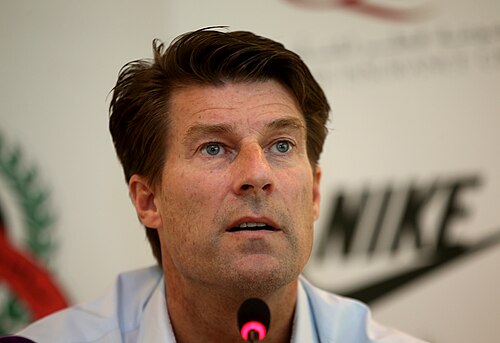
Sports are popular in Denmark, and its citizens participate in and watch a wide variety. The national sport is football, with over 320,000 players in more than 1600 clubs.[270] Denmark qualified six times consecutively for the European Championships between 1984 and 2004, and were crowned European champions in 1992; other significant achievements include winning the Confederations Cup in 1995 and reaching the quarter-final of the 1998 World Cup. The Denmark women's national handball team celebrated great successes during the 1990s and has won a total of 13 medals – seven gold (in 1994, 1996 (2), 1997, 2000, 2002 and 2004), four silver (in 1962, 1993, 1998 and 2004) and two bronze (in 1995 and 2013). On the men's side, Denmark has won 12 medals—four gold (in 2008, 2012, 2016 and 2019), four silver (in 1967, 2011, 2013 and 2014) and four bronze (in 2002, 2004, 2006 and 2007)—the most that have been won by any team in European Handball Championship history.[271] In 2019, the Danish men's national handball team won their first World Championship title.[272][273]
In recent years, Denmark has made a mark as a strong cycling nation, with Michael Rasmussen reaching King of the Mountains status in the Tour de France in 2005 and 2006. Other popular sports include golf—which is mostly popular among those in the older demographic;[274] tennis—in which Denmark is successful on a professional level; basketball—Denmark joined the international governing body FIBA in 1951;[275] rugby—the Danish Rugby Union dates back to 1950;[276] ice hockey—often competing in the top division in the Men's World Championships; rowing—Denmark specialise in lightweight rowing and are particularly known for their lightweight coxless four, having won six gold and two silver World Championship medals and three gold and two bronze Olympic medals; and several indoor sports—especially badminton, table tennis and gymnastics, in each of which Denmark holds World Championships and Olympic medals.
See also

Explanatory notes
- ^ Kong Christian has equal status as a national anthem but is generally used only on royal and military occasions.[1]
- ^ German is recognised as a protected minority language in the South Jutland area of Denmark.
- ^ including Faroese, Indigenous group Inuit, and minority group German
- ^ The Kingdom has a total population of 5,958,380.
- ^ a b c This data is for Denmark proper only. For data relevant to Greenland and the Faroe Islands see their respective articles.
- ^ In the Faroe Islands the currency has a separate design and is known as the króna, but is not a separate currency.[citation needed]
- ^ The top-level domain name .eu is shared with other European Union countries.
- ^ Danish: Kongeriget Danmark, pronounced [ˈkʰɔŋəʁiːð̩ ˈtænmɑk] .
- ^ a b The Kingdom of Denmark's territory in continental Europe is referred to as "metropolitan Denmark",[53] "Denmark proper" (Danish: egentlig Danmark), or simply "Denmark". In this article, usage of "Denmark" excludes the Faroe Islands and Greenland.
- ^ The island of Bornholm is offset to the east of the rest of the country, in the Baltic Sea.
- ^ Denmark has a codified constitution. Changes to it require an absolute majority in two consecutive parliamentary terms and the approval of at least 40% of the electorate through a referendum.[83]
- ^ The Constitution refers to "the King" (Danish: kongen), rather than the gender-neutral term "monarch". In light of the restriction of powers of the monarchy, this is best interpreted as referring to the government Cabinet.
- ^ The Economist Intelligence Unit, while acknowledging that democracy is difficult to measure, listed Denmark 5th on its index of democracy.[90]
- ^ The Faroese declined membership in 1973; Greenland chose to leave the EEC in 1985, following a referendum.
- ^ As measured in official development assistance (ODA). Denmark, Luxembourg, the Netherlands, Norway, Sweden and the United Kingdom exceeded the United Nations' ODA target of 0.7% of GNI.
- ^ The Church of Denmark is the established church (or state religion) in Denmark and Greenland; the Church of the Faroe Islands became an independent body in 2007.
Citations
- ^ "Not one but two national anthems". Ministry of Foreign Affairs of Denmark. Archived from the original on 15 May 2014. Retrieved 18 May 2014.
- ^ a b c Stone et al. (2008), p. 31.
- ^ "Bekendtgørelse af ILO-konvention nr. 169 af 28. juni 1989 vedrørende oprindelige folk og stammefolk i selvstændige stater". Retsinformation.dk. 9 October 1997. Archived from the original on 8 October 2020. Retrieved 30 September 2020.
- ^ "Den dansk-tyske mindretalsordning". UM.dk. Archived from the original on 29 September 2020. Retrieved 30 September 2020.
- ^ "Denmark". Central Intelligence Agency. 21 November 2023. Archived from the original on 5 July 2021. Retrieved 22 November 2023.
- ^ "Surface water and surface water change". Organisation for Economic Co-operation and Development (OECD). Archived from the original on 24 March 2021. Retrieved 11 October 2020.
- ^ "Population and population projections". Statistics Denmark. Archived from the original on 30 October 2018. Retrieved 11 August 2022.
- ^ a b c d "World Economic Outlook Database, April 2024 Edition. (Denmark)". www.imf.org. International Monetary Fund. 16 April 2024. Retrieved 17 April 2024.
- ^ "Gini coefficient of equivalised disposable income – EU-SILC survey". ec.europa.eu. Eurostat. Archived from the original on 9 October 2020. Retrieved 25 November 2023.
- ^ "Human Development Report 2023/24" (PDF). United Nations Development Programme. 13 March 2024. p. 288. Archived (PDF) from the original on 13 March 2024. Retrieved 13 March 2024.
- ^ "Denmark Population 2024 (Live)". worldpopulationreview.com. Retrieved 9 August 2024.
- ^ a b c d e "Population at the first day of the quarter by municipality, sex, age, marital status, ancestry, country of origin and citizenship". Statistics Denmark. Archived from the original on 22 December 2022. Retrieved 2 October 2020.
January 2020
- ^ a b *Benedikter, Thomas (19 June 2006). "The working autonomies in Europe". Society for Threatened Peoples. Archived from the original on 9 March 2008. Retrieved 8 June 2012.
Denmark has established very specific territorial autonomies with its two island territories
- Ackrén, Maria (November 2017). "Greenland". Autonomy Arrangements in the World. Archived from the original on 30 August 2019. Retrieved 30 August 2019.
Faroese and Greenlandic are seen as official regional languages in the self-governing territories belonging to Denmark.
- "Greenland". International Cooperation and Development. European Commission. 3 June 2013. Archived from the original on 16 September 2014. Retrieved 27 August 2019.
Greenland [...] is an autonomous territory within the Kingdom of Denmark
- Ackrén, Maria (November 2017). "Greenland". Autonomy Arrangements in the World. Archived from the original on 30 August 2019. Retrieved 30 August 2019.
- ^ "About Denmark". Archived from the original on 27 December 2022. Retrieved 27 December 2022.
- ^ a b "Area". Statistics Denmark. Archived from the original on 14 April 2019.
- ^ a b "Denmark in numbers 2010" (PDF). Statistics Denmark. Archived (PDF) from the original on 18 April 2013. Retrieved 2 May 2013.
- ^ "Statistikbanken". statistikbanken.dk. Archived from the original on 6 June 2023. Retrieved 27 December 2022.
- ^ "Greenland and the Faroe Islands". Ministry of Foreign Affairs Denmark. Archived from the original on 18 December 2023. Retrieved 18 December 2023.
- ^ "Getting to Denmark". The New Republic.
- ^ O'Sullivan, Mike. "Has Europe Turned The Corner On Immigration?". Forbes.
- ^ Kristian Andersen Nyrup, Middelalderstudier Bog IX. Kong Gorms Saga Archived 9 January 2010 at the Wayback Machine
- ^ Indvandrerne i Danmarks historie, Bent Østergaard, Syddansk Universitetsforlag 2007, ISBN 978-87-7674-204-1, pp. 19–24
- ^ a b J. de Vries, Altnordisches etymologisches Wörterbuch, 1962, 73; N. Å. Nielsen, Dansk etymologisk ordbog, 1989, 85–96.
- ^ Navneforskning, Københavns Universitet"Udvalgte stednavnes betydning". Archived from the original on 16 July 2006. Retrieved 27 January 2008.
- ^ O'Donoghue, Heather (2008). Old Norse-Icelandic Literature: A Short Introduction. John Wiley & Sons. p. 27. ISBN 978-0-470-77683-4. Archived from the original on 12 April 2016. Retrieved 21 October 2015.
- ^ Michaelsen (2002), p. 19.
- ^ a b Nielsen, Poul Otto (May 2003). "Denmark: History, Prehistory". Ministry of Foreign Affairs of Denmark. Archived from the original on 22 November 2005. Retrieved 1 May 2006.
- ^ Busck (2002), p. 20.
- ^ Busck (2002), p. 19.
- ^ Jordanes (22 April 1997). "The Origin and Deeds of the Goths, chapter III". Translated by Charles C. Mierow. Archived from the original on 24 April 2006. Retrieved 1 May 2006.
- ^ Michaelsen (2002), pp. 122–123.
- ^ a b *Lund, Niels (May 2003). "Denmark – History – The Viking Age". Ministry of Foreign Affairs of Denmark. Archived from the original on 10 May 2006. Retrieved 24 June 2012.
- ^ Berend, Nora (22 November 2007). Christianization and the Rise of Christian Monarchy: Scandinavia, Central Europe and Rus' c.900–1200. Cambridge University Press. ISBN 978-1-139-46836-7 – via Google Books.
- ^ Stone et al. (2008), p. 33.
- ^ Lauring, Palle (1960) A History of the Kingdom of Denmark, Host & Son Co.: Copenhagen, p. 108.
- ^ "Kalmarkriget 1611–1613". Svenskt Militärhistoriskt Bibliotek. Archived from the original on 11 October 2007. Retrieved 4 May 2007.
- ^ Rawlinson, Kevin (5 November 2018). "Prince Charles says Britain's role in slave trade was an atrocity". The Guardian. Archived from the original on 5 November 2018. Retrieved 6 November 2018.
- ^ Olson, James Stuart; Shadle, Robert, eds. (1991). Historical Dictionary of European Imperialism. Greenwood Publishing Group. ISBN 978-0-313-26257-9. Retrieved 15 May 2014.
- ^ Parker (1984), p. 78.
- ^ Parker (1984), p. 79.
- ^ Isacson (2002), p. 229.
- ^ Englund (2000), p. 610.
- ^ Stone et al. (2008), p. 35.
- ^ Frost (2000), pp. 180–183.
- ^ Ekman, Ernst (1957). "The Danish Royal Law of 1665". The Journal of Modern History. 29 (2): 102–107. doi:10.1086/237987. ISSN 0022-2801. S2CID 145652129. Archived from the original on 23 January 2022. Retrieved 27 March 2021.
- ^ "League of Armed Neutrality". Oxford Reference. Archived from the original on 24 September 2015. Retrieved 28 August 2015.
- ^ Jenssen-Tusch, Georg Friedrich (1852). Zur Regierungsgeschichte Friedrich VI. Königs von Dänemark, Herzogs von Schleswig, Holstein und Lauenburg (in German). Verlag Schröder. p. 166.
- ^ Dörr, Oliver (2004). Kompendium völkerrechtlicher Rechtsprechung : eine Auswahl für Studium und Praxis. Tübingen: Mohr Siebeck. p. 101. ISBN 978-3-16-148311-0.
- ^ Tellier, Luc-Normand (2009). Urban world history an economic and geographical perspective. Québec: Presses de l'Université du Québec. p. 457. ISBN 978-2-7605-2209-1. Archived from the original on 12 April 2016. Retrieved 21 October 2015.
- ^ "Lost in translation: Epic goes to Denmark". Politico. 6 June 2019. Archived from the original on 12 April 2020. Retrieved 10 June 2019.
- ^ Rugg, Andy. "Traitor Danes: most soldiers return heroes, but this lot came home total zeroes". Copenhagen Post. Archived from the original on 29 January 2013. Retrieved 30 January 2013.
- ^ "Finland: Now, the Seven and a Half". Time. 7 April 1961. Archived from the original on 4 November 2011. Retrieved 18 July 2009.
- ^ Administrative divisions – Denmark Archived 25 March 2021 at the Wayback Machine The World Factbook. Access date: 16 September 2021
- ^ "Facts and Figures Archived 30 June 2010 at the Wayback Machine", Danish Defence, Defence Command Denmark. Retrieved 11 June 2010.
- ^ a b Jensen 1999, p. 10.
- ^ "Nature & Environment". Ministry of Foreign Affairs of Denmark. Archived from the original on 3 April 2007. Retrieved 3 February 2007.
- ^ Nationalencyklopedin, (1990)
- ^ "Nyt højeste punkt i Danmark" (in Danish). Danish Geodata Agency. Archived from the original on 28 May 2014. Retrieved 26 May 2014.
- ^ a b "Climate Normals for Denmark". Danish Meteorological Institute. Archived from the original on 3 January 2015. Retrieved 2 January 2015. Figures, labelled in Danish: First plot is the whole country; Nedbør=Precipitation, Nedbørdage=Precipitation days (>1 mm), (Dag/Middel/Nat)temp.=(Daytime/Average/Nighttime) temperature, Solskinstimer=Hours of sunshine.
- ^ "Vejrekstremer i Danmark [Weather extremes in Denmark]" (in Danish). Danish Meteorological Institute (DMI). 6 October 2016. Archived from the original on 19 October 2016. Retrieved 19 October 2016.
- ^ "The weather cross – the four corners of autumn weather". Danish Meteorological Institute. Archived from the original on 21 September 2015. Retrieved 17 September 2015.
- ^ "Copenhagen, Denmark – Sunrise, sunset, dawn and dusk times for the whole year". Gaisma. Archived from the original on 2 July 2012. Retrieved 24 June 2012.
- ^ Dinerstein, Eric; Olson, David; Joshi, Anup; Vynne, Carly; Burgess, Neil D.; Wikramanayake, Eric; Hahn, Nathan; Palminteri, Suzanne; Hedao, Prashant; Noss, Reed; Hansen, Matt; Locke, Harvey; Ellis, Erle C.; Jones, Benjamin; Barber, Charles Victor; Hayes, Randy; Kormos, Cyril; Martin, Vance; Crist, Eileen; Sechrest, Wes; Price, Lori; Baillie, Jonathan E. M.; Weeden, Don; Suckling, Kierán; Davis, Crystal; Sizer, Nigel; Moore, Rebecca; Thau, David; Birch, Tanya; Potapov, Peter; Turubanova, Svetlana; Tyukavina, Alexandra; de Souza, Nadia; Pintea, Lilian; Brito, José C.; Llewellyn, Othman A.; Miller, Anthony G.; Patzelt, Annette; Ghazanfar, Shahina A.; Timberlake, Jonathan; Klöser, Heinz; Shennan-Farpón, Yara; Kindt, Roeland; Lillesø, Jens-Peter Barnekow; van Breugel, Paulo; Graudal, Lars; Voge, Maianna; Al-Shammari, Khalaf F.; Saleem, Muhammad (2017). "An Ecoregion-Based Approach to Protecting Half the Terrestrial Realm". BioScience. 67 (6): 534–545. doi:10.1093/biosci/bix014. ISSN 0006-3568. PMC 5451287. PMID 28608869.
- ^ Hogan, C. Michael. "Ecoregions of Denmark". Encyclopedia of Earth. Archived from the original on 24 September 2015. Retrieved 26 August 2015.
- ^ a b Jensen, Christian Lundmark. "Forests and forestry in Denmark – Thousands of years of interaction between man and nature" (PDF). Danish Ministry of the Environment Nature Agency. Archived from the original (PDF) on 15 July 2016. Retrieved 31 May 2016.
- ^ "Forest area (% of land area)". worldbank.org. The World Bank. Archived from the original on 5 September 2015. Retrieved 26 August 2015.
- ^ Grantham, H. S.; Duncan, A.; Evans, T. D.; Jones, K. R.; Beyer, H. L.; Schuster, R.; Walston, J.; Ray, J. C.; Robinson, J. G.; Callow, M.; Clements, T.; Costa, H. M.; DeGemmis, A.; Elsen, P. R.; Ervin, J.; Franco, P.; Goldman, E.; Goetz, S.; Hansen, A.; Hofsvang, E.; Jantz, P.; Jupiter, S.; Kang, A.; Langhammer, P.; Laurance, W. F.; Lieberman, S.; Linkie, M.; Malhi, Y.; Maxwell, S.; Mendez, M.; Mittermeier, R.; Murray, N. J.; Possingham, H.; Radachowsky, J.; Saatchi, S.; Samper, C.; Silverman, J.; Shapiro, A.; Strassburg, B.; Stevens, T.; Stokes, E.; Taylor, R.; Tear, T.; Tizard, R.; Venter, O.; Visconti, P.; Wang, S.; Watson, J. E. M. (2020). "Anthropogenic modification of forests means only 40% of remaining forests have high ecosystem integrity – Supplementary Material". Nature Communications. 11 (1): 5978. Bibcode:2020NatCo..11.5978G. doi:10.1038/s41467-020-19493-3. ISSN 2041-1723. PMC 7723057. PMID 33293507.
- ^ "Animals in Denmark". listofcountriesoftheworld.com. 2012. Archived from the original on 1 June 2016. Retrieved 31 May 2016.
- ^ "Bird list of Denmark". Netfugl.dk. Archived from the original on 5 September 2015. Retrieved 26 August 2015.
It involves all category A, B and C birds recorded in Denmark (according to SU/BOURC/AERC standard).
- ^ Byskov, Søren. "Theme: Herring, cod and other fish – 1001 Stories of Denmark". The Heritage Agency of Denmark. Archived from the original on 3 March 2016. Retrieved 31 May 2016.
- ^ Farand, Chloé (4 December 2020). "Denmark to phase out oil and gas production by 2050 in "watershed" decision". Climate Home News. Archived from the original on 4 December 2020. Retrieved 29 December 2020.
- ^ The law of environmental damage: liability and reparation. Marie-Louise Larsson.
- ^ a b "Denmark". The World Factbook. CIA. 19 January 2012. Archived from the original on 5 July 2021. Retrieved 4 February 2012.
- ^ "Ecological Footprint Atlas 2010". Global Footprint Network. 2010. Archived from the original on 9 July 2011. Retrieved 26 August 2015.
- ^ WWF (2014): Living Planet Report.
- ^ AMI (2012); preliminary data for 2011
- ^ Burck, Jan; Marten, Franziska; Bals, Christoph. "The Climate Change Performance Index: Results 2015" (PDF). Germanwatch. Archived from the original (PDF) on 9 December 2014. Retrieved 9 December 2014.
- ^ "2020 EPI Results". Environmental Performance Index. 3 June 2020. Archived from the original on 21 June 2023. Retrieved 20 November 2020.
- ^ "Climate change: Whisper it cautiously... there's been progress in run up to COP26". BBC. 25 September 2021. Archived from the original on 21 September 2022. Retrieved 10 October 2021.
- ^ "Almost Saving Whales: The Ambiguity of Success at the International Whaling Commission [Full Text] – Ethics & International Affairs". Ethics & International Affairs. 29 March 2012. Archived from the original on 27 December 2017. Retrieved 27 December 2017.
- ^ "Hundreds of whales slaughtered in Faroe Island's annual killing". The Independent. 20 June 2017. Archived from the original on 28 December 2017. Retrieved 27 December 2017.
- ^ "Greenland quotas for big whales". Government of Greenland. 5 January 2013. Archived from the original on 5 November 2018. Retrieved 4 November 2018.
- ^ Tschentscher, Axel. "The Constitution of Denmark – Section 88". Servat.unibe.ch. Archived from the original on 10 July 2011. Retrieved 12 February 2016.
- ^ "The executive power is vested in the King." The Constitution of Denmark – Section 3. Archived 10 July 2011 at the Wayback Machine
- ^ "The body of Ministers shall form the Council of State, in which the Successor to the Throne shall have a seat when he is of age. The Council of State shall be presided over by the King ..." The Constitution of Denmark – Section 17. Archived 10 July 2011 at the Wayback Machine
- ^ The Monarchy today Archived 15 February 2015 at the Wayback Machine – The Danish Monarchy (kongehuset.dk). Access date: 16 June 2012
- ^ "The King shall not be answerable for his actions; his person shall be sacrosanct." The Constitution of Denmark – Section 13. Archived 10 July 2011 at the Wayback Machine
- ^ Bryant, Miranda (14 January 2024). "Denmark's King Frederik X takes throne after Margrethe abdicates". The Guardian. Archived from the original on 21 February 2024. Retrieved 19 February 2024.
- ^ "A Bill passed by the Parliament shall become law if it receives the Royal Assent not later than thirty days after it was finally passed." The Constitution of Denmark – Section 22. Archived 10 July 2011 at the Wayback Machine
- ^ "Democracy Index 2014" (PDF). The Economist/Economist Intelligence Unit. 2015. Archived from the original (PDF) on 1 February 2016. Retrieved 23 August 2015.
- ^ "ICL – Denmark – Constitution – Section 31. Elections". unibe.ch. Archived from the original on 10 July 2011. Retrieved 12 February 2016.
- ^ Jørgensen 1995, p. 16.
- ^ "A Minister shall not remain in office after the Parliament has passed a vote of no confidence in him." The Constitution of Denmark – Section 15. Archived 10 July 2011 at the Wayback Machine
- ^ "Radikale ved historisk skillevej". Berlingske Tidende. 17 June 2007. Archived from the original on 11 August 2011. Retrieved 17 August 2007.
- ^ "Danish PM picks right-leaning rivals as key ministers in new government". Reuters. 15 December 2022. Archived from the original on 31 May 2023. Retrieved 4 January 2023.
- ^ Orfield, Lester Bernhardt Orfield (2002). The Growth of Scandinavian Law. Union, N.J.: Lawbook Exchange. p. 14. ISBN 978-1-58477-180-7.
- ^ "The administration of justice shall always remain independent of the executive power. Rules to this effect shall be laid down by Statute ..." The Constitution of Denmark – Sections/Articles 62 and 64. Archived 10 July 2011 at the Wayback Machine
- ^ Gammelgaard & Sørensen 1998, p. 18.
- ^ The working autonomies in Europe Archived 9 March 2008 at the Wayback Machine – Gesellschaft für bedrohte Völker (GFBV). Retrieved 13 March 2012.
- ^ a b c The unity of the Realm Archived 20 January 2013 at the Wayback Machine – Statsministeriet – stm.dk. Retrieved 13 March 2012.
- ^ "Act on the Faroese authorities acquisition of affairs and fields" [Lov om de færøske myndigheders overtagelse af sager og sagsområder]. retsinformation.dk (in Danish). 24 June 2005. Archived from the original on 20 January 2016. Retrieved 11 June 2014.
- ^ Lov om Grønlands Selvstyre Archived 6 November 2018 at the Wayback Machine (in Danish). Retsinformation.dk. "I erkendelse af, at det grønlandske folk er et folk i henhold til folkeretten med ret til selvbestemmelse, bygger loven på et ønske om at fremme ligeværdighed og gensidig respekt i partnerskabet mellem Danmark og Grønland."
- ^ "Faroe Islands Population". Hagstova Føroya. Archived from the original on 15 May 2020. Retrieved 1 April 2020.
- ^ "2020 Population". Archived from the original on 5 May 2020. Retrieved 1 April 2020.
- ^ Michael Kjær, Jonas (15 November 2006). "Christiansø betaler ikke sundhedsbidrag". dr.dk (in Danish). Archived from the original on 11 October 2007. Retrieved 12 August 2007.
- ^ Denmark: Regions, Municipalities, Cities & Major Urban Areas Archived 8 April 2012 at the Wayback Machine – Statistics and Maps on City Population.
- ^ a b The Danish Regions – in Brief (3rd revised ed.). Copenhagen: Danske Regioner. 2007. ISBN 978-87-7723-471-2.
- ^ "Regional Tasks in Denmark". Danske Regioner. Archived from the original on 10 May 2014. Retrieved 23 August 2015.
- ^ a b "The Danish Tax System". Aarhus University. Archived from the original on 21 August 2015. Retrieved 23 August 2015.
- ^ Behringer, Ronald M. (September 2005). "Middle Power Leadership on the Human Security Agenda". Cooperation and Conflict. 40 (3): 305–342. doi:10.1177/0010836705055068. ISSN 0010-8367. S2CID 144129970. Archived from the original on 6 January 2016. Retrieved 1 May 2016.
- ^ "Danish Presidency of the European Union 2012". European Union. Archived from the original on 3 January 2012. Retrieved 25 May 2014.
- ^ Government of the United States. "US Department of State: Denmark". Archived from the original on 20 March 2021. Retrieved 25 May 2014.
- ^ "2015 Preliminary ODA Figures" (PDF). Paris: OECD. 13 April 2016. Archived (PDF) from the original on 8 May 2016. Retrieved 1 May 2016.
- ^ "2024 Global Peace Index" (PDF).
- ^ "Hjemmeværnet » Se Karrieremuligheder, Job & Løn". Forsvaret (in Danish). Archived from the original on 18 October 2022. Retrieved 18 October 2022.
- ^ Olesen, Gunnar (7 September 2011). "Denmark as a warring nation: A bracket that should be closed" (in Danish). The council for international conflict resolution (RIKO). Archived from the original on 15 February 2016. Retrieved 1 January 2016.
- ^ Lavrsen, Lasse (19 June 2010). "Danmark er en krisnation" (in Danish). Information. Archived from the original on 25 February 2016. Retrieved 1 January 2016.
- ^ "Forsvarsministerens Verdenskort". Ministry of Defense of Denmark. 27 December 2007. Archived from the original on 27 December 2007. Retrieved 20 August 2009.
- ^ Clark, A.L. (1996). Bosnia: What Every American Should Know. New York: Berkley Books.
- ^ Phillips, R. Cody. Bosnia-Hertsegovinia: The U.S. Army's Role in Peace Enforcement Operations 1995–2004. Washington, D.C.: United States Army Center of Military History. CMH Pub 70-97-1. Archived from the original on 9 December 2013.
- ^ "Denmark follows UK Iraq pullout". Al Jazeera English. 21 February 2007. Archived from the original on 11 December 2012. Retrieved 20 August 2009.
- ^ "Danmarks Radio – Danmark mister flest soldater i Afghanistan". Dr.dk. 15 February 2009. Archived from the original on 19 February 2009. Retrieved 5 July 2010.
- ^ Country and Lending Groups. Archived 2 July 2014 at the Wayback Machine World Bank. Accessed on 14 March 2016.
- ^ "Gross national income per capita 2017, Atlas method and PPP. World Development Indicators database, World Bank, 21 September 2018. Retrieved 6 December 2018" (PDF). Archived (PDF) from the original on 12 September 2014. Retrieved 6 December 2018.
- ^ "Country Ratings" Archived 16 September 2017 at the Wayback Machine, 2012 Index of Economic Freedom. Retrieved 12 January 2012.
- ^ "Economic Freedom of the World: 2011 Annual Report Complete Publication (2.7 MB)" (PDF). freetheworld.com. Fraser Institute. 2011. Archived from the original (PDF) on 26 September 2011. Retrieved 20 September 2011.
- ^ "Global Competitiveness Report 2018". World Economic Forum. Archived from the original on 8 December 2018. Retrieved 6 December 2018.
- ^ UNESCO 2009 Global Education Digest Archived 28 November 2011 at the Wayback Machine, Shared fourth with Finland at a 30.3% ratio. Graph on p28, table on p194.
- ^ Kevin Short (28 May 2014). The Worst Places On The Planet To Be A Worker Archived 28 May 2014 at the Wayback Machine. The Huffington Post. Retrieved 28 May 2014.
- ^ Joumard, Isabelle; Pisu, Mauro; Bloch, Debbie (2012). "Tackling income inequality. The role of taxes and transfers" (PDF). OECD. Archived (PDF) from the original on 28 December 2014. Retrieved 10 February 2015.
- ^ Neamtu, Ioana; Westergaard-Nielsen, Niels (March 2013). "Sources and impact of rising inequality in Denmark" (PDF). Archived (PDF) from the original on 11 February 2015. Retrieved 10 February 2015.
- ^ "Gini coefficient of equivalised disposable income – EU-SILC survey. Eurostat, last data update 20 November 2018, retrieved 6 December 2018". Archived from the original on 6 October 2014. Retrieved 6 December 2018.
- ^ "World Economic Outlook Database, October 2010 Edition". IMF. 6 October 2010. Archived from the original on 22 February 2011. Retrieved 5 July 2012.
- ^ Liz Alderman and Steven Greenhouse (27 October 2014). Living Wages, Rarity for U.S. Fast-Food Workers, Served Up in Denmark Archived 28 October 2014 at the Wayback Machine. The New York Times. Retrieved 28 October 2014.
- ^ On Sweden and Denmark, see Anders Kjellberg and Christian Lyhne Ibsen "Attacks on union organizing: Reversible and irreversible changes to the Ghent-systems in Sweden and Denmark" Archived 9 March 2017 at the Wayback Machine in Trine Pernille Larsen and Anna Ilsøe (eds.)(2016) Den Danske Model set udefra (The Danish Model Inside Out) – komparative perspektiver på dansk arbejdsmarkedsregulering, Copenhagen: Jurist- og Økonomforbundets Forlag (pp.292)
- ^ "StatBank Denmark, Table NABP10: 1-2.1.1 Production and generation of income (10a3-grouping) by transaction, industry and price unit. Retrieved on December 6, 2018". Archived from the original on 17 November 2018. Retrieved 6 December 2018.
- ^ a b c d "Denmark". The World Factbook. CIA. 3 December 2018. Archived from the original on 5 July 2021. Retrieved 18 December 2018.
- ^ "Eurostat: Net international investment position – quarterly data, % of GDP. Last update 24 October 2018, retrieved December 6 2018". Archived from the original on 26 November 2018. Retrieved 6 December 2018.
- ^ (in Danish) Danskerne og LO elsker globalisering. Newspaper article 17 November 2016 on finans.dk. Retrieved 6 December 2018. Archived 6 December 2018 at the Wayback Machine
- ^ "Denmark and the euro". Danmarks Nationalbank. 17 November 2006. Archived from the original on 16 November 2006. Retrieved 3 February 2007.
- ^ "Standard Eurobarometer 89 - Spring 2018 - Factsheets Denmark". Eurobarometer. June 2018. Archived from the original on 16 January 2022. Retrieved 18 December 2018.
- ^ "Standard Eurobarometer 100 - Autumn 2023 - Country Factsheets in English - Denmark". Eurobarometer. December 2023. Archived from the original on 5 March 2024. Retrieved 7 March 2024.
- ^ "The largest companies by turnover in Denmark". largestcompanies.com. Nordic Netproducts AB. Archived from the original on 6 November 2018. Retrieved 18 December 2018.
- ^ "Denmark mulls higher taxes for energy traders". 4 May 2023. Archived from the original on 20 November 2023. Retrieved 5 May 2023.
- ^ Business Environment Archived 21 February 2012 at the Wayback Machine, Invest in Denmark
- ^ "StatBank Denmark, SKTRYK: Tax level by national account groups. Retrieved December 6 2018". Archived from the original on 25 November 2018. Retrieved 6 December 2018.
- ^ "OECD Revenue Statistics 2018 – Denmark. Retrieved 18 December 2018" (PDF). Archived (PDF) from the original on 8 September 2018. Retrieved 18 December 2018.
- ^ a b "Society at a Glance 2014 Highlights: DENMARK OECD Social Indicators" (PDF). OECD. Archived (PDF) from the original on 24 September 2015. Retrieved 23 August 2015.
- ^ "The surprising ingredients of Swedish success – free markets and social cohesion" (PDF). Institute of Economic Affairs. 25 June 2013. Archived (PDF) from the original on 2 November 2013. Retrieved 13 April 2014.
- ^ "Tax and Benefit Systems: OECD Indicators. Benefit generosity. Data retrieved 18 December 2018". Archived from the original on 27 December 2018. Retrieved 18 December 2018.
- ^ "10 Good Reasons to Invest in Denmark". Investindk.com. Archived from the original on 16 February 2016. Retrieved 12 February 2016.
- ^ "LFS by sex and age – indicators. OECD Statistics, data retrieved 18 December 2018". Archived from the original on 17 December 2018. Retrieved 18 December 2018.
- ^ "Eurostat Employment and Unemployment Database, Table une_rt_a. Unemployment by sex and age – annual average. Last update 31 October 2018. Retrieved 18 December 2018". Archived from the original on 23 December 2018. Retrieved 18 December 2018.
- ^ "The Danish Government: Denmark's Convergence Programme 2018, p. 8. Publication date April 2018, retrieved 18 December 2018" (PDF). Archived (PDF) from the original on 26 December 2018. Retrieved 18 December 2018.
- ^ "Ny undersøgelse: I dag er statens udgifter til dagpenge tre gange mindre end i 1995 | Information". Archived from the original on 27 December 2018.
- ^ "The world's best business environment". Investindk.com. Archived from the original on 1 July 2012. Retrieved 5 July 2012.
- ^ Danish Business Authority, Better business regulation, accessed on 1 September 2024
- ^ "Denmark Confirms Participation in E-ELT". ESO Announmentes. Archived from the original on 16 April 2013. Retrieved 17 April 2013.
- ^ WIPO (12 December 2023). Global Innovation Index 2023, 15th Edition. World Intellectual Property Organization. doi:10.34667/tind.46596. ISBN 9789280534320. Archived from the original on 22 October 2023. Retrieved 17 October 2023.
{{cite book}}:|website=ignored (help) - ^ WIPO (2022). Global Innovation Index 2022, 15th Edition. World Intellectual Property Organization. doi:10.34667/tind.46596. ISBN 9789280534320. Archived from the original on 3 December 2022. Retrieved 16 November 2022.
{{cite book}}:|website=ignored (help) - ^ "Release of the Global Innovation Index 2020: Who Will Finance Innovation?". World Intellectual Property Organization. Archived from the original on 3 June 2021. Retrieved 2 September 2021.
- ^ "Global Innovation Index 2019". World Intellectual Property Organization. Archived from the original on 2 September 2021. Retrieved 2 September 2021.
- ^ "Novozymes, the world's leading provider of enzymes to the biofuels industry". Canadian Biomass Magazine. Archived from the original on 10 October 2014. Retrieved 7 October 2014.
- ^ "EIA – International Energy Data and Analysis for Denmark". Tonto.eia.doe.gov. 15 May 2009. Archived from the original on 4 March 2010. Retrieved 29 May 2009.
- ^ Denmark Crude Oil Production and Consumption by Year (Thousand Barrels per Day) Archived 4 December 2011 at the Wayback Machine – indexmundi.
- ^ Wind energy in Denmark breaking world records Archived 19 January 2016 at the Wayback Machine The Copenhagen Post, Retrieved 17. January 2016.
- ^ Denmark Invests the Most in Clean Energy per GDP Archived 16 May 2012 at the Wayback Machine – yourolivebranch.org. Retrieved 3 January 2012
- ^ "Plug-in and Electrical Vehicles". EnergyMap.dk. Archived from the original on 19 July 2011. Retrieved 10 October 2009.
- ^ "Global support for International Renewable Energy Agency growing fast". IRENA. 10 September 2014. Archived from the original on 24 September 2014. Retrieved 10 September 2014.
- ^ "Energi og emissioner". www.dst.dk (in Danish). Archived from the original on 12 April 2020. Retrieved 12 April 2020.
- ^ a b "Group Annual Report 2014" (PDF). cph.dk. Copenhagen Airports A/S. Archived from the original (PDF) on 16 June 2015. Retrieved 19 August 2015.
- ^ Menteth, Thames (13 May 2022). "Construction of Fehmarnbelt tunnel portal begins in Denmark". Ground Engineering (GE). Archived from the original on 19 May 2023. Retrieved 4 December 2022.
- ^ "Ring 3 summary report" (PDF). Archived from the original (PDF) on 13 April 2014. Retrieved 12 April 2014.
- ^ "Cykelruter og regioner" (in Danish). Visitdenmark.com. Archived from the original on 15 March 2012.
- ^ "Vi cykler til arbejde 2011" (in Danish). Dansk Cyklist Forbund. Archived from the original on 24 July 2011. Retrieved 16 August 2011.
- ^ "Tyske miljøzoner sender gamle biler til Danmark". Politiken.dk (in Danish). 9 January 2009. Archived from the original on 30 April 2011. Retrieved 29 November 2010.
- ^ "Transport" (PDF). Statistical Yearbook 2012. dst.dk. Archived (PDF) from the original on 19 May 2023. Retrieved 3 September 2012.
- ^ "World Factbook EUROPE : DENMARK", The World Factbook, 12 July 2018, archived from the original on 5 July 2021, retrieved 23 January 2021
- ^ Helliwell, John; Layard, Richard; Sachs, Jeffrey (eds.). "World Happiness Report 2016" (PDF). Sustainable Development Solutions Network. Archived from the original (PDF) on 18 March 2016. Retrieved 17 March 2016.
- ^ Helliwell, John; Layard, Richard; Sachs, Jeffrey World Happiness Report Archived 2 September 2013 at the Wayback Machine. The Earth Institute at Columbia University, p. 8. See also: World Happiness Report 2013 Archived 4 October 2013 at the Wayback Machine, p. 23.; Denmark Is Considered The Happiest Country. You'll Never Guess Why. Archived 23 October 2013 at the Wayback Machine Huffington Post. 22 October 2013.
- ^ Stokes, Buce (8 June 2011). The Happiest Countries in the World Archived 25 April 2017 at the Wayback Machine. The Atlantic. Retrieved 20 September 2013
- ^ Taylor, Jerome (1 August 2006). "Denmark is the world's happiest country – official – Europe, World". The Independent. London. Archived from the original on 9 March 2009. Retrieved 5 May 2009.
- ^ "Gini coefficient of equivalised disposable income (source: SILC)". Eurostat Data Explorer. Archived from the original on 4 March 2016. Retrieved 4 December 2015.
- ^ "Finland is the No. 1 happiest country in the world for the sixth year in a row". CNBC. 21 March 2023. Archived from the original on 4 December 2023. Retrieved 4 December 2023.
- ^ Thomas, Alastair H. (2016). Historical Dictionary of Denmark. Rowman & Littlefield Publishers. p. 11. ISBN 978-1-4422-6465-6. Archived from the original on 17 January 2023. Retrieved 3 October 2018.
- ^ "VAN8A: Immigrations (year) by citizenship, sex and residence permit". Statistics Denmark. Archived from the original on 12 October 2018. Retrieved 18 December 2018.
- ^ For comparisons and developments see: "Denmark – Migration Profiles" (PDF). UNICEF. 2013. Archived (PDF) from the original on 4 March 2016. Retrieved 5 January 2016.
- ^ Statistics on migration only includes people changing citizenship and does not always provide a realistic picture of migration pressure. In Denmark, 5% of the population were non-citizens in 2005, which is a relatively high figure. See Counting Immigrant and Expatriates in OECD Countries: A New Perspective (PDF) (Report). OECD. 21 October 2005. pp. 119–120. Archived (PDF) from the original on 15 April 2016. Retrieved 5 January 2016. for example.
- ^ "Denmark - World Directory of Minorities & Indigenous Peoples". 2 November 2023. Archived from the original on 28 February 2024. Retrieved 4 January 2024.
- ^ a b c d e Lewis, M. Paul, ed. (2009). Ethnologue: Languages of the World (16th ed.). Dallas, Texas: SIL International. ISBN 978-1-55671-216-6. Archived from the original on 27 December 2007. Retrieved 27 August 2012.
- ^ a b "Language". The Nordic Council. Archived from the original on 21 July 2014. Retrieved 7 June 2014.
- ^ "Europeans and their Languages" (PDF). Eurobarometer. European Commission. February 2006. Archived (PDF) from the original on 14 April 2016. Retrieved 22 May 2014.
- ^ "Population at the first day of the quarter by parish and member of the National Church - StatBank Denmark - data and statistics". www.statbank.dk. Retrieved 11 June 2024.
- ^ Denmark – Constitution Archived 10 July 2011 at the Wayback Machine – Part I – Section 4 [State Church]: "The Evangelical Lutheran Church shall be the Established Church of Denmark, and, as such, it shall be supported by the State."
- ^ Thomsen Højsgaard, Morten (21 February 2018). "Derfor mister kirken mere af folket". Kristeligt Dagblad (in Danish). Archived from the original on 4 October 2022. Retrieved 5 April 2020.
- ^ "Denmark – Bureau of Democracy, Human Rights, and Labor". International Religious Freedom Report 2009. U.S. Department of State. 2009. Archived from the original on 26 October 2021. Retrieved 23 August 2012.
- ^ Manchin, Robert (21 September 2004). "Religion in Europe: Trust Not Filling the Pews". Gallup Poll. Gallup. Archived from the original on 20 January 2013. Retrieved 23 August 2012.
- ^ Crabtree, Steve (31 August 2010). "Religiosity Highest in World's Poorest Nations". Gallup. Archived from the original on 23 August 2017. Retrieved 27 May 2015.
- ^ Denmark – Constitution Archived 10 July 2011 at the Wayback Machine – Part II – Section 6 .
- ^ Denmark – Constitution Archived 10 July 2011 at the Wayback Machine – Part VII – Section 70: "No person shall for reasons of his creed or descent be deprived of access to complete enjoyment of his civic and political rights, nor shall he for such reasons evade compliance with any common civic duty."
- ^ a b c Freedom of religion and religious communities in Denmark Archived 5 February 2012 at the Wayback Machine – The Ministry of Ecclesiastical Affairs – May 2006
- ^ "Hvor mange muslimer er der i Danmark?". tjekdet.dk (in Danish). Archived from the original on 27 January 2021. Retrieved 14 November 2020.
- ^ "Hvor mange muslimer bor der i Danmark?". religion.dk (in Danish). Archived from the original on 9 December 2018. Retrieved 8 February 2018.
- ^ "Religion in Denmark". Archived from the original on 8 February 2006. Retrieved 8 February 2006. – From the Danish Foreign Ministry. Archive retrieved on 3 January 2012.
- ^ Biotechnology (PDF) (Report). Eurobarometer 73.1. October 2010 [Fieldwork: Jan–Feb 2010]. p. 204. Archived from the original (PDF) on 15 December 2010.
- ^ Tobias Stern Johansen (23 December 2009). "Hver fjerde dansker tror på Jesus" [One in four Danes believe in Jesus]. Kristeligt Dagblad (in Danish). Archived from the original on 25 December 2009.
Poll performed in December 2009 among 1114 Danes between ages 18 and 74
- ^ "Overview of the Danish Education System". Danish Ministry for Children, Education and Gender Equality. Archived from the original on 11 January 2012. Retrieved 28 April 2016.
- ^ "Education Policy Outlook: Denmark" (PDF). OECD. p. 4. Archived (PDF) from the original on 17 October 2016. Retrieved 27 April 2016.
- ^ Rick Noack (4 February 2015). Why Danish students are paid to go to college Archived 24 May 2015 at the Wayback Machine. The Washington Post. Retrieved 5 February 2015.
- ^ "Study in Denmark, official government website on international higher education in Denmark". Archived from the original on 10 May 2011. Retrieved 8 May 2011.
- ^ "Om hospitalet". www.rigshospitalet.dk. Archived from the original on 3 November 2022. Retrieved 3 November 2022.
- ^ "Life expectancy". World Health Organization. 6 July 2016. Archived from the original on 16 October 2014. Retrieved 20 August 2017.
- ^ a b Brønnum-Hansen, Knud Juel, Jan Sørensen, Henrik (2007). Risk factors and public health in Denmark – Summary report (PDF). København: National Institute of Public Health, University of Southern Denmark. ISBN 978-87-7899-123-2. Archived (PDF) from the original on 22 December 2014. Retrieved 31 May 2014.
{{cite book}}: CS1 maint: multiple names: authors list (link) - ^ "Obesity – Adult prevalence". CIA Factbook. Archived from the original on 10 October 2017. Retrieved 20 August 2017.
- ^ "Why is Denmark the cancer capital of the world?". The Daily Telegraph. London. Archived from the original on 4 March 2016. Retrieved 4 January 2016.
- ^ "Data for cancer frequency by country". WCRF. 2012. Archived from the original on 30 December 2015. Retrieved 4 January 2016.
- ^ a b c "International Profiles of Health Care Systems" (PDF). The Commonwealth Fund. Archived from the original (PDF) on 28 December 2013. Retrieved 31 May 2014.
- ^ "Country Comparison :: Life Expectancy at Birth". The World Factbook. CIA. Archived from the original on 20 January 2016. Retrieved 31 May 2014.
- ^ Allentoft, Nick (2 January 2018). "Regeringer har lanceret ghettoplaner seks gange på 25 år". www.denoffentlige.dk (in Danish). DenOffentlige. Archived from the original on 5 February 2023. Retrieved 4 February 2023.
- ^ "Politisk flertal opfinder helt ny kategori for boligområder i kampen mod parallelsamfund". Politiken (in Danish). 15 June 2021. Archived from the original on 5 February 2023. Retrieved 4 February 2023.
- ^ "What to Know About Denmark's Plan to End Immigrant "Ghettos"". Time. Archived from the original on 5 July 2018. Retrieved 4 July 2018.
- ^ a b c "In Denmark's Plan To Rid Country Of 'Ghettos,' Some Immigrants Hear 'Go Home'". NPR.org. Archived from the original on 4 July 2018. Retrieved 4 July 2018.
- ^ ""No ghettos in 2030": Denmark's controversial plan to get rid of immigrant neighborhoods". Vox. Archived from the original on 4 July 2018. Retrieved 4 July 2018.
- ^ Thelocal.dk. Denmark's housing minister wants to scrap 'ghetto' label for underprivileged areas. Archived 11 December 2023 at the Wayback Machine Retrieved 5 April 2020
- ^ DR. Ny boligminister vil undgå ordet 'ghetto'. Archived 12 November 2020 at the Wayback Machine (in Danish) Retrieved 6 April 2020
- ^ Danmarks Almene Boliger. Ghettolisten eller Parallelsamfundslisterne. Archived 8 December 2023 at the Wayback Machine (in Danish) Retrieved 28 April 2022.
- ^ Nielson, Emil Gjerding. "In Danish 'ghettos', immigrants feel stigmatized and shut out". U.S. Archived from the original on 4 July 2018. Retrieved 4 July 2018.
- ^ Barry, Ellen; Sorensen, Martin Selsoe (2 July 2018). "In Denmark, Harsh New Laws for Immigrant 'Ghettos'". The New York Times. Archived from the original on 6 July 2018. Retrieved 4 July 2018.
- ^ "Danes to double penalty for ghetto crime". BBC News. 27 February 2018. Archived from the original on 18 July 2018. Retrieved 4 July 2018.
- ^ "Nu går indsatserne i parallelsamfundene ind i en afgørende fase". sm.dk (in Danish). Ministry of Social Affairs, Housing and Senior Citizens. Archived from the original on 4 December 2023. Retrieved 4 December 2023.
- ^ "Denmark – An Overview". Royal Danish Ministry of Foreign Affairs. 22 September 2007. Archived from the original on 22 January 2008. Retrieved 22 September 2007.
- ^ Sheila Rule: "Rights for Gay Couples in Denmark" Archived 4 March 2016 at the Wayback Machine – The New York Times. Published: 2 October 1989. Retrieved 7 June 2012
- ^ "Same-Sex Marriage FAQ". Marriage.about.com. 17 June 2003. Archived from the original on 12 February 2009. Retrieved 5 May 2009.
- ^ "Denmark approves same-sex marriage and church weddings". BBC News. 7 June 2012. Archived from the original on 16 January 2019. Retrieved 20 January 2019.
- ^ "Denmark passes bill allowing gays to marry in church". AFP. 7 June 2012. Archived from the original on 10 June 2012. Retrieved 7 June 2012.
- ^ Denmark – Language, Culture, Customs and Etiquette. From Kwintessential Archived 10 June 2012 at the Wayback Machine. Retrieved 4 December 2008.
- ^ Chopik, William J.; O'Brien, Ed; Konrath, Sara H. (2017). "Differences in Empathic Concern and Perspective Taking Across 63 Countries". Journal of Cross-Cultural Psychology. 48 (1). Supplementary Table 1. doi:10.1177/0022022116673910. hdl:1805/14139. ISSN 0022-0221. S2CID 149314942.
- ^ "New exhibition: The Danish Golden Age just got longer". SMK – National Gallery of Denmark in Copenhagen (Statens Museum for Kunst). 13 June 2019. Archived from the original on 3 November 2022. Retrieved 3 November 2022.
- ^ "Denmark: Properties inscribed on the World Heritage List (8)". UNESCO. Archived from the original on 13 July 2012. Retrieved 19 July 2015.
- ^ a b "Human rights in Denmark". The Danish Institute for Human Rights. Archived from the original on 25 July 2019. Retrieved 14 May 2019.
- ^ "THE CONSTITUTIONAL ACT OF DENMARK". Folketinget.dk. Archived from the original on 2 July 2021. Retrieved 21 October 2020.
- ^ "Four Countries, One People: Inuit Strengthen Arctic Co-operation | Inuit Circumpolar Council Canada". 24 November 2016. Archived from the original on 24 October 2020. Retrieved 21 October 2020.
- ^ Archibald, Linda (2006). Decolonization and Healing: Indigenous Experiences in the United States, New Zealand, Australia and Greenland (PDF). Aboriginal Healing Foundation. pp. 22–23. ISBN 9781897285145.
- ^ Petersen, Robert (1995). "Colonialism as Seen from a Former Colonized Area". Arctic Anthropology. 32 (2): 121. ISSN 0066-6939. JSTOR 40316390 – via JSTOR.
- ^ a b Kočí, Adam; Baar, Vladimír (8 August 2021). "Greenland and the Faroe Islands: Denmark's autonomous territories from postcolonial perspectives". Norsk Geografisk Tidsskrift - Norwegian Journal of Geography. 75 (4): 193–194. Bibcode:2021NGTid..75..189K. doi:10.1080/00291951.2021.1951837. ISSN 0029-1951.
- ^ Hardt, Sofia Stærmose (2018). "By Gifts One Makes Slaves": Long-term Effects of Denmark's Colonization of Greenland (Senior project). Bard College. Archived from the original on 23 October 2020. Retrieved 21 October 2020.
- ^ [1] Archived 23 October 2020 at the Wayback Machine Report published by the Greenland Reconciliation Commission
- ^ Høeg, Kirstine (2019). "Forced assimilation of Indigenous children: The case of the Danish-Greenlandic experiment" (PDF). Malmö University. pp. 5–6. Archived from the original (PDF) on 18 November 2023. Retrieved 10 June 2024.
- ^ The Copenhagen Post, 7 June 2012: Gay marriage legalised Archived 16 February 2013 at the Wayback Machine Retrieved 19 September 2012
- ^ "Vedtaget af Folketinget ved 3. behandling den 19. januar 2016 Forslag til Lov om ændring af myndighedsloven for Grønland, lov om ikrafttræden for Grønland af lov om ægteskabets retsvirkninger, retsplejelov for Grønland og kriminallov for Grønland" (PDF) (in Danish). Folketinget. 19 January 2016. Archived (PDF) from the original on 17 February 2017. Retrieved 28 January 2016.
- ^ "Denmark approves same-sex marriage in the Faroe Islands". Pink News. 19 June 2017. Archived from the original on 27 March 2019. Retrieved 23 December 2017.
- ^ Williams, Steve (20 May 2016). "Denmark to the WHO: Trans Identity Is Not a Mental Illness". Care2 Causes. Archived from the original on 27 March 2019. Retrieved 7 June 2019.
- ^ Simon, Caroline (20 June 2018). "Being transgender no longer classified as mental illness. Here's why". USA TODAY. Archived from the original on 6 August 2021. Retrieved 7 June 2019.
- ^ "Carl Dreyer:Day of Wrath, Ordet, Gertrud". Bright Lights Film Journal. July 2000. Archived from the original on 7 March 2013. Retrieved 1 July 2013.
- ^ Ebert, Robert (16 February 1997). "The Passion of Joan of Arc". Chicago Sun Times. Archived from the original on 10 June 2013. Retrieved 1 July 2013.
Carl Theodor Dreyer (1889–1968), the Dane who was one of the greatest early directors.
- ^ TNS-Gallup meter Archived 19 February 2014 at the Wayback Machine; Television station viewer statistics, figures for July 2012 (week 28). Retrieved 20 July 2012.
- ^ "Commercial radio". Danish Agency for Culture. Archived from the original on 15 May 2014. Retrieved 14 May 2014.
- ^ "The Royal Danish Orchestra". The Royal Danish Theatre. Archived from the original on 7 May 2014. Retrieved 14 May 2014.
- ^ Festivalguide Gaffa (in Danish)
- ^ Musikfestivaler i Danmark Archived 3 July 2016 at the Wayback Machine VisitDenmark (in Danish)
- ^ "Danish Architecture: An Overview". Archived from the original on 19 July 2011. Retrieved 19 July 2011., Visit Denmark. Retrieved 3 September 2011.
- ^ "Architecture". Archived from the original on 6 February 2010. Retrieved 6 February 2010., Embassy of Denmark, Hanoi. Retrieved 3 October 2011.
- ^ "Danish by Design", DDC. Retrieved 4 September 2011.
- ^ Wall Paintings in Danish Churches from Panoramas.dk Archived 28 November 2009 at the Wayback Machine. Retrieved 12 August 2009. Adopting the Biblia pauperum approach, they present many of the most popular stories from the Old and New Testaments.
- ^ Art Encyclopedia: Skagen. Archived 1 March 2012 at the Wayback Machine Retrieved 9 December 2008.
- ^ "The Funish Art Colony" Archived 18 April 2013 at the Wayback Machine, Johannes Larsen Museet. Retrieved 12 August 2011.
- ^ The Bornholm School from the Rough Guide to Denmark. Archived 20 January 2013 at the Wayback Machine Retrieved 10 December 2008.
- ^ Contemporary Danish Photography. From Photography-Now Archived 7 July 2012 at the Wayback Machine . Retrieved 28 January 2010.
- ^ "new nordic recipes". Ministry of Foreign Affairs of Denmark. Archived from the original on 7 August 2016. Retrieved 15 August 2016.
- ^ "DIF specialforbunds medlems" (in Danish). Danmarks Idrætsforbund. 2013. Archived from the original on 26 May 2014. Retrieved 15 June 2014.
- ^ "National Team rankings". European Handball Federation. Archived from the original on 3 February 2014. Retrieved 13 May 2014.
- ^ Bo, Bentsen (27 January 2019). "Danmark er verdensmester - TV 2". sport.tv2.dk (in Danish). Retrieved 10 June 2024.
- ^ "Flawless Denmark Claim First World Title". www.ihf.info. 27 January 2019. Retrieved 10 June 2024.
- ^ "Om DIF – Medlemstal". Archived from the original on 16 July 2007. Retrieved 16 July 2007. (in Danish), The National Olympic Committee and Sports Confederation of Denmark
- ^ Profile | Denmark Archived 14 November 2015 at the Wayback Machine, Fiba.com. Retrieved 24 September 2015.
- ^ Bath, Richard (ed.) The Complete Book of Rugby (Seven Oaks Ltd, 1997 ISBN 978-1-86200-013-1) p66. Archived from July 2007 and Retrieved June 2012.
General and cited sources
- Stone, Andrew; Bain, Carolyn; Booth, Michael; Parnell, Fran (2008). Denmark (5th ed.). Footscray, Victoria: Lonely Planet. p. 31. ISBN 978-1-74104-669-4.
- Busck, Steen (2002). Poulsen, Henning (ed.). "Danmarks historie – i grundtræk" (in Danish). Aarhus Universitetsforlag. ISBN 978-87-7288-941-2.
- Englund, Peter (2000). Den oövervinnerlige (in Swedish). Stockholm: Atlantis. ISBN 978-91-7486-999-6.
- Frost, Robert I. (2000). The Northern Wars (1558–1721). Pearson Education. ISBN 978-0-582-06429-4.
- Gammelgaard, Frederik; Sørensen, Niels (1998). Danmark – en demokratisk stat (in Danish). Alinea. ISBN 978-87-23-00280-8.
- Isacson, Claes-Göran (2002). Karl X Gustavs krig (in Swedish). Lund: Historiska Media. ISBN 978-91-85057-25-2.
- Jensen, Lene (1999). "Current status and trends in inland fisheries in Denmark". In Lundqvist, Gunnar (ed.). Current Status and Trends in Inland Fisheries. Copenhagen: Nordic Council of Ministers. pp. 10–18. ISBN 978-9-28930-402-3.
- Jørgensen, Gitte (1995). Sådan styres Danmark (in Danish). Flachs. ISBN 978-87-7826-031-4.
- Michaelsen, Karsten Kjer (2002). "Politikens bog om Danmarks oldtid". Politikens Forlag (1. bogklubudgave) (in Danish). Gyldendals Bogklubber. ISBN 978-87-00-69328-9.
- (in Swedish) Nationalencyklopedin, vol. 4, Bokförlaget Bra Böcker, 2000, ISBN 978-91-7024-619-7.
- Parker, Geoffrey (1984). The Thirty Years' War. London and New York: Routledge. ISBN 0-415-02534-6.
External links
Denmark at Wikipedia's sister projects
 Definitions from Wiktionary
 Media from Commons
 News from Wikinews
 Texts from Wikisource
 Travel information from Wikivoyage

Scholia has a country profile for Denmark.
- Denmark.dk Archived 11 December 2020 at the Wayback Machine "The site is the official site of Denmark and is edited by the Ministry of Foreign Affairs of Denmark."
- Denmark. The World Factbook. Central Intelligence Agency.
- Denmark entry at Britannica.com.
- Gosse, Edmund William (1878). . Encyclopædia Britannica. Vol. VII (9th ed.). pp. 80–94.
- Gosse, Edmund William (1911). . Encyclopædia Britannica. Vol. 8 (11th ed.). pp. 23–44.
- Kristiansen, M. (1922). . Encyclopædia Britannica. Vol. 30 (12th ed.).
- Denmark at Curlie
- Denmark profile from the BBC News.
- Key Development Forecasts for Denmark from International Futures.
56°N 10°E / 56°N 10°E / 56; 10