
Loading article…
共和国はラテン語のres publica(「公共の問題」)に由来し、君主制とは対照的に、代表者を通じて 国民が政治権力を握っている国家である。[1] [2]
共和国における代表は、一般市民によって自由に選出される場合とされない場合がある。多くの歴史上の共和国では、代表は個人の身分に基づいており、選挙の役割は限られてきた。これは今日でも当てはまり、2017年時点で正式名称に共和国という言葉を使用している159の州、および正式に共和国として構成されている他の州の中には、代表権と選挙プロセスの両方を厳しく制限している州がある。 [update]
この用語は、紀元前509年の王の打倒から紀元前27年の帝政の樹立まで続いた古代ローマ共和国の憲法に関連して、現代的な意味を発展させました。この憲法は、大きな影響力を持つ裕福な貴族で構成される元老院、民衆から行政官を選出して法律を可決する権限を持つすべての自由市民によるいくつかの人民議会、およびさまざまな種類の市民的および政治的権限を持つ一連の行政官制度を特徴としていました。
ほとんどの場合、共和国は単一の主権国家ですが、共和国と呼ばれる地方国家体、または本質的に共和制であると説明される政府を持つ 地方国家体も存在します。
語源
_-_Palazzo_Nuovo_-_Musei_Capitolini_-_Rome_2016.jpg/500px-Bust_of_Cicero_(1st-cent._BC)_-_Palazzo_Nuovo_-_Musei_Capitolini_-_Rome_2016.jpg)
この用語は、ギリシア語のpoliteiaのラテン語訳に由来する。キケロをはじめとするラテン語の著述家はpoliteiaをラテン語でres publicaと翻訳し、それがルネサンスの学者によってrepublic(またはヨーロッパのさまざまな言語の同様の用語)と翻訳された。[3]この用語は文字通り「公共の問題」と翻訳できる。[4]ローマ帝国の時代でさえ、ローマの著述家はこれを国家や政府を指すのに使用していた。[5]
ポリテイアという用語は、政治形態、政体、体制と翻訳することができ、現代の言葉である共和国が時々そうであるように、必ずしも特定のタイプの体制を意味するわけではない。プラトンの政治哲学に関する主要な著作の1つで、英語では通常『国家』として知られているが、タイトルは『ポリテイア』であった。しかし、タイトル以外は、現代の翻訳が一般的に使用されている。[6] アリストテレスは、ポリテイアという用語がより具体的にポリテイアの一種を指すために使用できると述べた最初の古典作家であるようで、彼の政治学の第3巻で次のように主張している。「市民全体が公共の利益のために統治する場合、それはすべての政府に共通する名前(to koinon onoma pasōn tōn politicaliōn)、政府(ポリテイア)と呼ばれる」。後のラテン語の著作では、共和国という用語は、あらゆる体制を指す一般的な意味でも、公共の利益のために機能する政府を指す一般的な意味でも使用される。[7]
中世の北イタリアでは、多くの都市国家がコミューンやシニョリーアを基盤とした政府を持っていた。中世後期には、ジョヴァンニ・ヴィラーニなどの作家がこれらの国家を「自由民」を意味する「リベルタス・ポピュリ」などの用語で表現した。15世紀に古代ローマの文献への関心が高まり、作家が古典的な用語を好むようになったため、用語は変化した。非君主制国家を表現するために、作家(最も重要なのはレオナルド・ブルーニ)はラテン語の「res publica」という語句を採用した。[8]
ブルーニとマキャヴェッリは、君主制ではない北イタリアの国家を表すためにこの用語を使用したが、res publicaという用語は、元のラテン語では相互に関連する一連の意味を持っている。その後の数世紀で、英語のcommonwealthがres publicaの翻訳として使用されるようになり、英語での使用は、ローマ人がres publicaという用語を使用した方法に匹敵した。[9]注目すべきことに、オリバー・クロムウェルの護国卿時代には、 commonwealthという言葉が新しい君主のいない国家を指す最も一般的な用語であったが、republicという言葉も一般的に使用されていた。[10]
現在、共和国という用語は、一般的に、世襲や神権などの他の根拠ではなく、国民から権力を得る政治体制を意味します。[11]
歴史
哲学用語は古代ギリシャとローマで発達しましたが、アリストテレスがすでに指摘したように、ギリシャだけでなく中東でも、多種多様な憲法を持つ都市国家の長い歴史がすでにありました。古典期の後、中世には、ヴェネツィアなどの多くの自由都市が再び発展しました。
古典共和国

近代型の共和国自体は、古典世界に見られるいかなるタイプの国家とも異なっている。[12] [13]それにもかかわらず、古典時代の国家の中には今日でも共和国と呼ばれているものが数多くある。これには古代アテネやローマ共和国が含まれる。これらの国家の構造と統治は現代の共和国のそれとは異なっていたが、古典、中世、現代の共和国がどの程度歴史的連続体を形成しているかについては議論がある。JGAポコックは、古典世界から現在まで明確な共和制の伝統が続いていると主張した。[4] [14]他の学者はこれに反対している。[4]例えばポール・レイは、古典共和国の政治形態は現代のどの国ともほとんどつながりがないと主張している。[15]
古典共和国の政治哲学は、その後の数世紀にわたって共和主義思想に影響を与えてきました。マキャヴェッリ、モンテスキュー、アダムズ、マディソンなど、共和制を主張した哲学者や政治家は、さまざまな種類の政権を説明した古代ギリシャとローマの資料に大きく依存していました。
アリストテレスの『政治学』では、さまざまな政治形態について論じている。アリストテレスは、寡頭政治と民主政治という他の政治形態が混在する政治形態をポリテイアと名付けた。彼は、これが理想的な政治形態の 1 つであると主張した。ポリュビオスは、これらのアイデアの多くを拡張し、再び混合政治の考えに焦点を当て、基本的な政治形態を「善良な」君主政治、 貴族政治、民主政治と、「悪質な」専制政治、寡頭政治、 オクロクラシーに区別した。この伝統における最も重要なローマの著作は、キケロの『国家論』である。
時間の経過とともに、古典的な共和国は帝国になったり、帝国に征服されたりしました。ギリシャの共和国のほとんどは、アレクサンドロスのマケドニア帝国に併合されました。ローマ共和国は劇的に拡大し、カルタゴなど、共和国と見なされる地中海の他の国家を征服しました。その後、ローマ共和国自体がローマ帝国になりました。
その他の古代共和国
共和国という用語は、特にヨーロッパやギリシャ・ローマの影響下にあった地域以外では、古典以前の都市国家を指すのに一般的には使用されません。[4]しかし、ヨーロッパ以外の初期の国家の中には、今日では共和国に似ていると考えられる政府を持っていたところもありました。
古代近東では、東地中海の多くの都市が集団統治を実現した。共和制都市国家は、紀元前11世紀からレヴァント海岸沿いのフェニキアで繁栄した。古代フェニキアでは、ショフェトの概念はローマの執政官に非常に似ていた。ペルシア支配下(紀元前539-332年)では、ティルスなどのフェニキアの都市国家は王制を廃止し、「 6年間という短い任期で権力を握ったスフェテス(裁判官)の制度」を採用した。[16] [17]アルワドは、君主ではなく人民が主権者であるとされる共和制の最も古い例として挙げられている。[18] [信頼できない情報源? ]統一王政 以前の士師記時代のイスラエルの連合[19]も共和制の一種と考えられてきた。[4] [20] [21]現在のナイジェリアにおけるイボ族の政治体制は「直接参加型民主主義」と評されている。[22]
インド亜大陸
初期の共和制制度は、独立したガナサンガ(gaṇaは「部族」、サンガは「集会」を意味する)に由来する。これは紀元前6世紀には早くも存在し、インドでは紀元後4世紀まで一部の地域で存続していた可能性がある。しかし、これに関する証拠は散在しており、その時代に関する純粋な歴史的資料は存在しない。アレクサンダー大王のインド(現在のパキスタンと北西インド)侵攻から2世紀後に著作を残したギリシャの歴史家ディオドロスは、インドには独立した民主的な国家が存在したと述べているが、詳細は示していない。[23]現代の学者は、紀元前3世紀以降は民主主義という言葉が劣化し、どんなに貴族的な性質のものでも、あらゆる自治国家を意味する可能性があると指摘している。 [24] [25]
.png/500px-Mahajanapadas_(c._500_BCE).png)
ガナの主な特徴としては、ガナ・ムキヤ(族長)と審議集会が挙げられる。集会は定期的に開催され、国家のすべての主要な決定が議論された。少なくとも一部の州では、すべての自由人が参加できた。この機関はまた、完全な財政、行政、司法権を有していた。めったに言及されない他の役人たちは、集会の決定に従った。族長はガナによって選出され、常にクシャトリヤ・ ヴァルナという貴族階級の家系に属していたようである。族長は集会と活動を調整したが、一部の州では、他の貴族の評議会と調整していた。[26]リッチャヴィ朝には、最も重要な一族の長である7,077人のガナ・ムキヤからなる主要な統治機関があった。一方、ゴータマ・ブッダの時代のシャーキャ族、コーリヤ族、マラカ族、リッチャヴィ族[要説明]は、貧富を問わずすべての人に集会を開いていた。[27]マラカ族はクシナガラ市を中心とし、ヴァジカ(またはヴリジカ)同盟はヴァイシャリー市を中心とし、紀元前6世紀には早くも存在し、一部の地域では紀元後4世紀まで存続した。[29]ヴァッジ・マハージャナパダの支配的な同盟氏族の中で最も有名な氏族はリッチャヴィ族であった。[30]マガダ王国には、ラージャクマーラ族などの共和制のコミュニティが含まれていた。村にはグラマカと呼ばれる地元の首長の下で独自の集会があった。彼らの行政は行政、司法、軍事の機能に分かれていました。
こうした政府をどのように表現するのが最善かについては学者の間で意見が分かれており、証拠の質が曖昧で散発的であるため、意見の相違が広がっている。ある学者は議会の中心的役割を強調し、それを民主主義だと喧伝する。他の学者は、指導者層が支配し、議会が支配されている可能性に注目し、貴族制とみなしている。[31] [32]議会の明らかな権力にもかかわらず、その構成と参加が本当に民衆によるものであったかどうかはまだ明らかにされていない。これは、効率的な統治方法を記した君主向けの古代の手引書であるアルタシャーストラに反映されている。そこには僧伽を扱う方法に関する章があり、そこには貴族の指導者を操作するための命令が含まれているが、市民の大衆に影響を与える方法については触れられていない。これは、ガナサンガが民主主義というよりは貴族共和国に近いことを示している。[33]
アイスランド連邦
アイスランド共和国は、ハーラル3世王によるノルウェー統一から逃れてきた難民によって西暦930年に設立されました。共和国は族長によって運営されるいくつかの氏族で構成され、アルシングは議会と最高裁判所を兼ねており、下級裁判所から上訴された紛争を解決し、法律を決定し、国家的重要事項の決定を下しました。その一例は、 1000年のアイスランドのキリスト教化です。アルシングは、アイスランド人全員がキリスト教の洗礼を受けなければならないと布告し、異教の儀式を禁じました。ほとんどの国家とは異なり、アイスランド共和国には公式の指導者がいませんでした。
13世紀初頭、ストゥルルングの時代、共和国は長きにわたる氏族間の争いに悩まされ始めた。これとノルウェー王ホーコン4世がアイスランド人にノルウェーの「家族」に復帰するよう圧力をかけたことも重なり、アイスランドの首長たちは1262年にガムリ・サットマリ(「旧約」)に署名してホーコン4世を国王として受け入れた。これにより共和国は事実上終焉を迎えた。しかし、アルシングは800年近く経った今でもアイスランドの議会である。[34]
商業共和国

ヨーロッパでは中世後期に、多くの小国が共和制政治を採用し、新たな共和国が出現した。これらは一般に地中海沿岸共和国やハンザ同盟のような小規模だが裕福な貿易国家で、商人階級が台頭していた。クヌート・ハーコンセンは、ルネサンスまでにヨーロッパは土地所有エリートが支配する国家が君主制、商業エリートが支配する国家が共和国に分かれたと指摘している。 [9]
イタリアはヨーロッパで最も人口密度の高い地域であると同時に、中央政府が最も弱い地域でもあった。そのため、多くの町がかなりの独立性を獲得し、コミューン形式の政府を採用した。封建的な支配から完全に解放されたイタリアの都市国家は拡大し、農村地帯の支配権を獲得した。[35]最も強力だった2つの国は、ヴェネツィア共和国とそのライバルであるジェノヴァ共和国であった。どちらも大きな貿易港であり、海軍力を使って地中海の大部分を支配することでさらに拡大した。共和国を主張するイデオロギーが最初に生まれたのはイタリアであった。バルトロマイ・ダ・ルッカ、ブルネット・ラティーニ、パドヴァのマルシリウス、レオナルド・ブルーニなどの作家は、中世の都市国家をギリシャとローマの遺産の継承者と見なした。
ヨーロッパ全土の重要な貿易都市では裕福な商人階級が発達した。富裕であったにもかかわらず、彼らは地方の土地所有者が支配する封建制度の中ではほとんど権力を持たず、ヨーロッパ全土で自らの特権と権力を主張し始めた。フランスやイギリスなどの中央集権化が進んだ国家は、限定的な都市特許を与えた。

より緩やかな統治がなされた神聖ローマ帝国では、51の大都市が帝国自由都市となった。神聖ローマ帝国の支配下にあったが、権力の大半は地方に握られ、多くの都市が共和制の政府を採用した。[35]帝国直轄地としての同様の権利は、スイスの主要貿易都市にも確保されていた。アルプス地方のスイスの町や村は、地理的な都合上、中央の統制からほぼ除外されていた。イタリアやドイツとは異なり、農村地域の多くは封建領主ではなく、やはり共同体制の政府を採用していた独立した農民によって支配されていた。ハプスブルク家がこの地域の支配権を取り戻そうとしたとき、農村の農民と町の商人の両方が反乱に加わった。スイスが勝利し、スイス同盟が宣言され、スイスは現在まで共和制の政府を維持している。[21]
強力な商人階級を擁するロシアの2つの都市、ノヴゴロドとプスコフも、それぞれ12世紀と13世紀に共和制政府を採用したが、15世紀末から16世紀初頭にかけて共和国がモスクワ/ロシアに征服されたことで終焉を迎えた。 [36]
ルーム・セルジューク朝の崩壊とトルコ系 アナトリア・ベイリクの樹立に続いて、アヒラー商人団体はアンカラを中心とする国家を樹立したが、これはイタリアの商業共和国に例えられることもある。
これら初期の共和国の支配的な政治形態は、エリート貴族による限定された評議会による統制だった。選挙が行われる地域では、財産資格やギルドのメンバーシップによって、投票権と立候補権が制限されていた。多くの国家では直接選挙は行われず、評議会のメンバーは世襲か既存の評議会によって任命された。そのため、住民の大多数は政治的権力を持たず、下層階級による暴動や反乱は頻繁に起こった。中世後期には、神聖ローマ帝国の都市で200以上のそのような反乱が見られた。[37]同様の反乱がイタリアでも発生し、特にフィレンツェのチョンピの反乱が有名である。
カルヴァン派共和国
イタリアの共和国にとって古典作家が主要な思想源であったのに対し、北ヨーロッパではプロテスタント宗教改革が新しい共和国の樹立を正当化する根拠として使われた。[38]最も重要なのは、中世共和国の中で最大かつ最強だったスイス連邦で発展したカルヴァン主義神学であった。ジャン・カルヴァンは君主制の廃止を主張しなかったが、信心深い者は非宗教的な君主を打倒する義務があるとの教義を推し進めた。[39]共和制の擁護は、フランス宗教戦争中のユグノーの著作に現れている。[40]
カルヴァン主義は、イングランドとネーデルラントにおける共和主義の反乱において重要な役割を果たした。イタリアの都市国家やハンザ同盟と同様、両国は重要な貿易の中心地であり、大規模な商人階級が新世界との貿易で繁栄していた。両地域の住民の大部分もカルヴァン主義を信奉していた。ネーデルラント反乱(1566年開始)の間、スペイン・ハプスブルク家の支配を拒否してネーデルラント共和国が誕生した。しかし、国はすぐに共和制の政府を採用したわけではなく、正式な独立宣言( 1581年棄権法)では、フィリップ王の王位が空位であると宣言されただけで、ネーデルラントの行政官はアンジュー公、イングランド女王エリザベス2世、オラニエ公ウィリアムに次々にフィリップ王の後任を求めた。1588年になってようやく、三部会(当時の代表議会)が国の主権を自分たちに委ねることに決めた。
1641年、イングランド内戦が始まった。ピューリタンが先頭に立ち、ロンドンの商人が資金を提供したこの反乱は成功し、チャールズ1世は処刑された。イングランドでは、ジェームズ・ハリントン、アルジャーノン・シドニー、ジョン・ミルトンが君主制を否定し共和制の政治形態を採用すべきだと主張した最初の著述家となった。イングランド共和国は短命で、すぐに君主制が復活した。ネーデルラント共和国は名ばかりで1795年まで存続したが、18世紀半ばまでに総督が事実上の君主となった。カルヴァン派は、北アメリカのイギリスとオランダの植民地に最初に定住した人々でもあった。
自由主義共和国
近世ヨーロッパの自由主義共和国
初期の共和主義反乱とともに、近世ヨーロッパでは君主制の権力が大幅に増大しました。中世の大部分に存在した限定的かつ分権的な君主制に代わって、絶対君主制の時代が到来しました。また、一連の作家が自由主義として知られる思想を生み出し、君主の完全な統制に対する反発も起こりました。
これらの啓蒙思想家のほとんどは、共和国よりも立憲君主制の考えにはるかに興味を持っていました。クロムウェル政権は共和制を信用しなくなり、ほとんどの思想家は共和国が無政府状態か専制政治に終わると感じていました。[41]そのため、ヴォルテールのような哲学者は絶対主義に反対しながらも、同時に強く君主制を支持していました。
ジャン=ジャック・ルソーとモンテスキューは共和制を称賛し、ギリシャの都市国家をモデルとしていました。しかし、両者とも、人口 2,000 万人のフランスのような国を共和制で統治するのは不可能だと考えていました。ルソーはコルシカ島(1755-1769) での共和制の実験を称賛し、小規模で自治的なコミューンという理想的な政治構造を描きました。モンテスキューは、都市国家は理想的には共和制であるべきだと考えていましたが、より広い領土を持つ国には制限付きの君主制の方が適していると主張しました。
アメリカ独立戦争は、植民地に対するイギリス議会の権威の拒否から始まったのであって、君主制の拒否ではなかった。イギリス国王が、植民地の代表制に対する権利の侵害とみなされる行為から植民地を保護できなかったこと、補償を求める者を裏切り者と決めつけたこと、権威を示すために戦闘部隊を派遣することを支持したことなどにより、イギリス国王は暴君的であるという認識が広まった。
アメリカ独立宣言により、反乱の指導者たちは君主制を断固として拒絶し、共和主義を受け入れた。革命の指導者たちはフランスの自由主義思想家の著作や、古典共和国の歴史に精通していた。ジョン・アダムズは歴史上の共和国に関する本を著したことで有名である。さらに、広く配布され、朗読も盛んなトーマス・ペインの小冊子『コモン・センス』は、共和主義の理想と独立を大衆に簡潔かつ雄弁に訴えた。1789年に発効したアメリカ合衆国憲法は、1781年に批准された連合規約と永久連合による国家政府の最初の試みの下で比較的弱い連合に代わる、比較的強力な連邦共和国を創設した。合衆国権利章典と呼ばれる憲法修正第10条は、革命を正当化した共和主義の理想の根底にある特定の自然権を保証した。
フランス革命も、当初は共和制ではなかった。ヴァレンヌ逃避によって国王に対する同情がほとんどなくなった後に初めて共和制が宣言され、ルイ16世はギロチンに送られた。フランス革命戦争におけるフランスの驚くべき勝利により、ヨーロッパの多くの地域に武力で共和制が広がり、大陸中に一連の従属共和国が設立された。ナポレオンの台頭により、フランス第一共和制とその姉妹共和国は終焉を迎え、それぞれが「人民の君主制」に取って代わられた。ナポレオンの時代を通じて、勝者はヴェネツィア共和国、ジェノヴァ共和国、ネーデルラント共和国など、大陸で最も古い共和国の多くを消滅させた。これらの共和国は最終的に君主制に転換するか、近隣の君主制に吸収された。
ヨーロッパの外では、ナポレオン戦争でラテンアメリカの諸国が独立を獲得し、別の共和国のグループが誕生した。自由主義の思想はこれらの新しい共和国には限定的な影響しか及ぼさなかった。主な原動力となったのは、海外から派遣された総督であるペニンシュラレスと対立する、地元のヨーロッパ系のクレオール人だった。ラテンアメリカのほとんどの地域では、住民の大多数がアフリカ系かアメリカインディアン系であり、クレオールのエリート層はこれらのグループに権力と広範な国民主権を与えることにほとんど関心がなかった。反乱の主たる扇動者であり、その最も重要な理論家のひとりでもあるシモン・ボリバルは、自由主義の理想には共感していたが、ラテンアメリカにはそのようなシステムが機能するための社会的結束が欠けていると感じ、独裁政治が必要であると主張した。
メキシコでは、この独裁政治はメキシコ第一帝国において短期間君主制の形をとった。半島戦争により、ポルトガルの宮廷は1808年にブラジルに移転した。ブラジルは1822年9月7日に君主制として独立し、ブラジル帝国は1889年まで続いた。他の多くのラテンアメリカ諸国では、20世紀末にほとんどが自由化されるまで、さまざまな形態の独裁共和国が存在していた。[42]

フランス第二共和政は1848年に成立したが、1852年に皇帝を宣言したナポレオン3世によって廃止された。フランス第三共和政は、普仏戦争中に市民革命委員会がナポレオン3世の降伏を拒否した1870年に成立した。スペインは1873年から1874年にかけて一時的にスペイン第一共和国となったが、すぐに王政が復活した。20世紀初頭までに、ヨーロッパではフランス、スイス、サンマリノが唯一の共和国のままであった。1908年のリスボン国王殺害の後、1910年10月5日の革命でポルトガル共和国が成立し、状況は一変した。

東アジアでは、19 世紀に中国で反清感情が高まり、立憲君主制を求める抗議運動が数多く起こりました。これらの運動の最も重要な指導者は孫文で、彼の三民主義はアメリカ、ヨーロッパ、中国の考えを組み合わせたものでした。彼の指導の下、 1912 年 1 月 1 日に中華民国が宣言されました。
共和主義の思想は、特にアジアで広まりつつあった。19 世紀後半、米国はプロテスタントの宣教師が中心的役割を果たし、東アジアで大きな影響力を持つようになった。西洋の自由主義および共和主義の著述家たちも影響力を及ぼした。彼らは、天命を失った不当な政府を民衆が拒否する権利があると長らく主張してきた、儒教に影響を受けた土着の政治哲学と結びついた。
この期間中、東アジアでは、台湾共和国とフィリピン第一共和国という 2 つの短命の共和国が宣言されました。
第一次世界大戦後、ヨーロッパの主要帝国のいくつかが崩壊し、共和主義が大幅に拡大した。ロシア帝国(1917年)、ドイツ帝国(1918年)、オーストリア・ハンガリー帝国(1918年)、オスマン帝国(1922年)はすべて共和国に取って代わられた。この混乱の間に新しい国家が独立を獲得し、アイルランド、ポーランド、フィンランド、チェコスロバキアなどその多くが共和制の政府を選択した。希土戦争(1919年~22年)でギリシャが敗北した後、王政は短期間、第二ギリシャ共和国(1924年~35年)に取って代わられた。1931年、第二スペイン共和国(1931年~39年)の宣言によりスペイン内戦が勃発し、フランコ政権が樹立された。

第二次世界大戦後のイタリアには、経済の崩壊、社会の分裂、そしてファシスト政権を支持した王政に対する怒りが残された。これらの不満がイタリア共和主義運動の復活につながった。[48]ウンベルト2世国王は、イタリアが王政を維持するか共和国になるかを決定する1946年のイタリア制度に関する国民投票を召集するよう圧力を受けた。 [49]共和国支持者は、イタリアの国民を擬人化したイタリア・トゥッリータの肖像を、選挙運動や国家の制度形態に関する国民投票で使用する統一シンボルとして選択した。これは王政を象徴するサヴォイア家の紋章とは対照的であった。[50] 1946年6月2日、共和派が54.3%の票を獲得し、イタリアは正式に共和国となった。[51]この日はそれ以来、共和国記念日として祝われている。イタリアには成文民主主義憲法があり、これはイタリア解放の際にナチスとファシスト勢力の打倒に貢献したすべての反ファシスト勢力の代表者によって結成された制憲議会の活動の結果として生まれた。[52]
脱植民地化
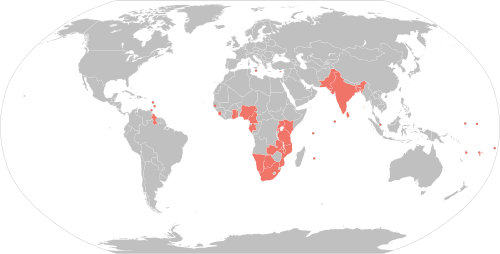
第二次世界大戦後の数年間で、残っていたヨーロッパの植民地のほとんどが独立し、ほとんどが共和国となった。二大植民地大国はフランスとイギリスであった。共和制のフランスは、旧植民地で共和国の樹立を奨励した。イギリスは、以前の入植植民地に倣って、同じ君主の下で結びついた独立した連邦王国を創設しようとした。ほとんどの入植植民地とカリブ海および太平洋の小国はこの制度を維持したが、アフリカとアジアの新しく独立した国々はこれを拒否し、憲法を改正して共和国となった。
英国は中東では別のモデルを採用し、イラク、ヨルダン、クウェート、バーレーン、オマーン、イエメン、リビアを含むいくつかの植民地や委任統治領に地方君主制を敷いた。その後の数十年間に革命やクーデターで多くの君主が倒され、共和国が樹立された。いくつかの君主制は今も残っており、中東はいくつかの大国がほぼ完全な政治的統制を持つ君主によって統治されている世界で唯一の地域である。[53]
社会主義共和国
第一次世界大戦後、ロシア革命でロシアの君主制は崩壊した。その代わりに自由主義共和国の路線でロシア臨時政府が樹立されたが、これはボルシェビキによって打倒され、ソビエト社会主義共和国連邦(USSR) が樹立された。これはマルクス・レーニン主義の思想の下で樹立された最初の共和国であった。共産主義は君主制に全面的に反対し、20世紀には多くの共和主義運動の重要な要素となった。ロシア革命はモンゴルに広がり、1924年に神権君主制を打倒した。第二次世界大戦後、共産主義者は徐々にルーマニア、ブルガリア、ユーゴスラビア、ハンガリー、アルバニアを掌握し、これらの国々が君主制ではなく社会主義共和国として再建されるようにした。
共産主義は他のイデオロギーとも混ざり合った。植民地解放運動の過程では多くの民族解放運動に受け入れられた。ベトナムでは共産主義共和主義者が阮朝を駆逐し、隣国のラオスとカンボジアでは1970年代に共産主義運動によって君主制が打倒された。アラブ社会主義は一連の反乱やクーデターを引き起こし、エジプト、イラク、リビア、イエメンの君主制は追放された。アフリカではマルクス・レーニン主義とアフリカ社会主義がブルンジやエチオピアなどの国で君主制の終焉と共和国の宣言をもたらした。
イスラム共和国
イスラムの政治哲学には、アル=ファラビーの著作に見られるように、絶対君主制に反対する長い歴史がある。シャリーア法は君主の意志よりも優先され、シューラを使って君主を選出することは重要な教義であった。初期のカリフ制(ラシドゥーン・カリフ制を参照)は選出された君主の原則を維持したが、後の国家は世襲制または軍事独裁制となったが、多くは諮問シューラの見せかけを維持した。
これらの国はいずれも、一般的に共和国とは呼ばれていない。イスラム諸国における共和国の現在の用法は、19世紀後半に言語に取り入れられた西洋の意味からの借用である。[54] 20世紀には、中東の多くの国で君主制が廃止され、共和主義が重要な思想となった。イラクは世俗国家となった。インドネシアやアゼルバイジャンなど、一部の国は世俗国家として始まった。イランでは、1979年の革命で王政が打倒され、イスラム民主主義の思想に基づくイスラム共和国が誕生した。
憲法
共和国は必ずしも憲法を持っているわけではないが、立憲主義の意味で憲法的であることが多い。つまり、共和国は権力の分立を提供する一連の制度によって構成されている。立憲共和国という用語は、特定の共和国における権力の分立を強調する方法であり、立憲君主制や絶対君主制が君主制の絶対的な独裁的性格を強調するのと同様である。
国家元首
構造
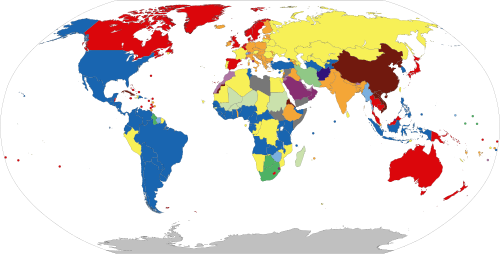
議会制:政府の長は議会によって選出または指名され、議会に対して責任を負う。
大統領制:政府の長(大統領)は国民によって選出され、議会から独立している
大統領制共和国
ハイブリッドシステム:
半大統領制共和国:大統領は立法府から独立しており、政府の長は大統領によって任命され、立法府に対して責任を負う。
議会から独立した共和国:政府の長(大統領または長官)は議会によって選出されるが、議会に対して責任を負わない。
半立憲君主制:君主が重要な行政権または立法権を有する
絶対君主制:君主は無制限の権力を持つ
一党制国家:憲法上、権力は単一の政党に結びついている
軍事政権:軍指導者の委員会が政府を統制、憲法規定は停止
暫定政府:現政権の憲法上の根拠は不明
属領および政府のない地域
注:この図は、事実上の民主主義の度合いではなく、法律上の政治システムを表しています。
君主がいない現代の共和国のほとんどでは、国家元首に大統領という称号が使われている。これはもともとイギリスで委員会や統治機関の議長を指すために使われていたが、13植民地(1608年当初はバージニア)の指導者を含む政治指導者にも使われ、正式名称は「評議会議長」だった。[55]この称号を採用した最初の共和国はアメリカ合衆国だった。委員会の長という用法を維持し、大陸会議の議長は当初の会議の指導者だった。新しい憲法が起草されたとき、合衆国大統領の称号は新しい行政府の長に与えられた。
共和国の国家元首が政府の長でもある場合、これは大統領制と呼ばれます。大統領制政府にはいくつかの形態があります。完全な大統領制では、大統領が大きな権限を持ち、中心的な政治的役割を担います。
その他の国では、立法府が優位であり、大統領の役割はほぼ純粋に儀礼的で非政治的であり、例としてドイツ、イタリア、インド、トリニダード・トバゴが挙げられます。これらの国は議会制共和国であり、議会制度を備えた立憲君主制と同様に機能し、君主の権力も大幅に制限されています。議会制度では、ほとんどの場合首相と呼ばれる政府の長が最も実際の政治権力を行使します。半大統領制では、大統領が重要な権限を持つ積極的な国家元首ですが、首相も重要な権限を持つ政府の長です。
大統領と政府のリーダーを任命するための規則では、いくつかの共和国では、反対の政治的信念を持つ大統領と首相の任命が認められています。フランスでは、与党内閣のメンバーと大統領が反対の政治派閥から来る場合、この状況は同居と呼ばれます。
ボスニア・ヘルツェゴビナ、サンマリノ、スイスなどの国では、国家元首は一人の人物ではなく、その職に就く数人からなる委員会(評議会)である。共和政ローマには2人の執政官がおり、市民権を証明できるすべての成人の自由出生の男性で構成されるコミティア・センチュリアータによって1年の任期で選出された。
選挙
民主主義国では、大統領は国民により直接選出されるか、議会や評議会により間接的に選出される。通常、大統領制および半大統領制では、大統領は国民により直接選出されるか、米国で行われているように間接的に選出される。米国では、大統領は州により選出される選挙人団により正式に選出される。米国のすべての州は、1832年以来、普通選挙により選挙人を選出している。選挙人団による大統領の間接選挙は、間接選挙制度を有する共和国の概念に合致している。一部の人々の意見では、直接選挙は大統領に正当性を与え、大統領職に多くの政治的権力を与える。 [56]しかし、この正当性の概念は、米国大統領の正当性を9つの州による憲法への署名の結果として確立した米国憲法で表現されている概念とは異なる。[57]正当性を得るには直接選挙が必要であるという考えは、偉大な妥協の精神にも矛盾しており、その実際の結果は、大統領選挙において小規模州の有権者に大規模州の有権者よりも多くの代表権を与える条項[58]に明らかになりました。たとえば、2016年のワイオミング州の住民は、カリフォルニア州の住民の3.6倍の選挙人票を持っていました。[59]
議会制の国では、大統領は通常議会によって選出される。この間接選挙により大統領は議会に従属するとともに、大統領の正当性は限定的となり、大統領の権限の大半は稀な状況でのみ行使できる予備権限となる。アイルランドのように、選出された大統領が儀礼的な権限しか持たない例外もある。
曖昧さ
The distinction between a republic and a monarchy is not always clear. The constitutional monarchies of the former British Empire and Western Europe today have almost all real political power vested in the elected representatives, with the monarchs only holding either theoretical powers, no powers or rarely used reserve powers. Real legitimacy for political decisions comes from the elected representatives and is derived from the will of the people. While hereditary monarchies remain in place, political power is derived from the people as in a republic. These states are thus sometimes referred to as crowned republics.[60]
Terms such as "liberal republic" are also used to describe all of the modern liberal democracies.[61]
There are also self-proclaimed republics that act similarly to absolute monarchies with absolute power vested in the leader and passed down from father to son. North Korea and Syria are two notable examples where a son has inherited political control. Neither of these states are officially monarchies. There is no constitutional requirement that power be passed down within one family, but it has occurred in practice.
There are also elective monarchies where ultimate power is vested in a monarch, but the monarch is chosen by some manner of election. A current example of such a state is Malaysia where the Yang di-Pertuan Agong is elected every five years by the Conference of Rulers composed of the nine hereditary rulers of the Malay states, and the Vatican City-State, where the pope is selected by cardinal-electors, currently all cardinals under the age of 80. While rare today, elective monarchs were common in the past. The Holy Roman Empire is an important example, where each new emperor was chosen by a group of electors. Islamic states also rarely employed primogeniture, instead relying on various forms of election to choose a monarch's successor.
The Polish–Lithuanian Commonwealth had an elective monarchy, with a wide suffrage of some 500,000 nobles. The system, known as the Golden Liberty, had developed as a method for powerful landowners to control the crown. The proponents of this system looked to classical examples, and the writings of the Italian Renaissance, and called their elective monarchy a rzeczpospolita, based on res publica.
Sub-national republics
.svg/500px-Maps_of_the_republics_of_Russia_(2014%E2%80%932022).svg.png)
In general being a republic also implies sovereignty as for the state to be ruled by the people it cannot be controlled by a foreign power. There are important exceptions to this, for example, republics in the Soviet Union were member states which had to meet three criteria to be named republics:
- be on the periphery of the Soviet Union so as to be able to take advantage of their theoretical right to secede;
- be economically strong enough to be self-sufficient upon secession; and
- be named after at least one million people of the ethnic group which should make up the majority population of said republic.
It is sometimes argued that the former Soviet Union was also a supra-national republic, based on the claim that the member states were different nation states.
The Socialist Federal Republic of Yugoslavia was a federal entity composed of six republics (Socialist Republic of Bosnia and Herzegovina, Croatia, Macedonia, Montenegro, Serbia, and Slovenia). Each republic had its parliament, government, institute of citizenship, constitution, etc., but certain functions were delegated to the federation (army, monetary matters). Each republic also had a right of self-determination according to the conclusions of the second session of the AVNOJ and according to the federal constitution.

In Switzerland, all cantons can be considered to have a republican form of government, with constitutions, legislatures, executives and courts; many of them being originally sovereign states. As a consequence, several Romance-speaking cantons are still officially referred to as republics, reflecting their history and will of independence within the Swiss Confederation. Notable examples are the Republic and Canton of Geneva and the Republic and Canton of Ticino.[62]
.jpg/500px-California_Republic_(4136725536).jpg)
States of the United States are required, like the federal government, to be republican in form, with final authority resting with the people. This was required because the states were intended to create and enforce most domestic laws, with the exception of areas delegated to the federal government and prohibited to the states. The founders of the country intended most domestic laws to be handled by the states. Requiring the states to be a republic in form was seen as protecting the citizens' rights and preventing a state from becoming a dictatorship or monarchy, and reflected unwillingness on the part of the original 13 states (all independent republics) to unite with other states that were not republics. Additionally, this requirement ensured that only other republics could join the union.
In the example of the United States, the original 13 British colonies became independent states after the American Revolution, each having a republican form of government. These independent states initially formed a loose confederation called the United States and then later formed the current United States by ratifying the current U.S. Constitution, creating a union that was a republic. Any state joining the union later was also required to be a republic.
Other meanings
Archaic meaning
Before the 17th Century, the term 'republic' could be used to refer to states of any form of government as long as it was not a tyrannical regime. French philosopher Jean Bodin's definition of the republic was "the rightly ordered government of a number of families, and of those things which are their common concern, by a sovereign power." Oligarchies and monarchies could also be included as they were also organised toward 'public' shared interests.[11] In medieval texts, 'republic' was used to refer to the body of shared interest with the king at its head.[63][64] For instance, the Holy Roman Empire was also known as the Sancta Respublica Romana, the Holy Roman Republic.[65][66] The Byzantine Empire also continued calling itself the Roman Republic as the Byzantines did not regard monarchy as a contradiction to republicanism. Instead, republics were defined as any state based on popular sovereignty and whose institutions were based on shared values.[67]
Democracy vs. republic debate
While the term democracy has been used interchangeably with the term republic by some, others have made sharp distinctions between the two for millennia. "Montesquieu, founder of the modern constitutional state, repeated in his The Spirit of the Laws of 1748 the insight that Aristotle had expressed two millennia earlier, 'Voting by lot is in the nature of democracy; voting by choice is in the nature of aristocracy.'"[68] Additional critics of elections include Rousseau, Robespierre, and Marat, who said of the new French Republic, "What use is it to us, that we have broken the aristocracy of the nobles, if that is replaced by the aristocracy of the rich?"[69]
Political philosophy
The term republic originated from the writers of the Renaissance as a descriptive term for states that were not monarchies. These writers, such as Machiavelli, also wrote important prescriptive works describing how such governments should function. These ideas of how a government and society should be structured is the basis for an ideology known as classical republicanism or civic humanism. This ideology is based on the Roman Republic and the city states of Ancient Greece and focuses on ideals such as civic virtue, rule of law and mixed government.[70]
This understanding of a republic as a form of government distinct from a liberal democracy is one of the main theses of the Cambridge School of historical analysis.[71] This grew out of the work of J. G. A. Pocock who in 1975 argued that a series of scholars had expressed a consistent set of republican ideals. These writers included Machiavelli, Milton, Montesquieu and the founders of the United States of America.
Pocock argued that this was an ideology with a history and principles distinct from liberalism.[72] These ideas were embraced by a number of different writers, including Quentin Skinner, Philip Pettit[73] and Cass Sunstein. These subsequent writers have further explored the history of the idea, and also outlined how a modern republic should function.
United States
A distinct set of definitions of the term "republic" evolved in the United States, where the term is often equated with "representative democracy." This narrower understanding of the term was originally developed by James Madison[74][75] and notably employed in Federalist Paper No. 10. This meaning was widely adopted early in the history of the United States, including in Noah Webster's dictionary of 1828.[76] It was a novel meaning to the term; representative democracy was not an idea mentioned by Machiavelli and did not exist in the classical republics.[77] There is also evidence that contemporaries of Madison considered the meaning of "republic" to reflect the broader definition found elsewhere, as is the case with a quotation of Benjamin Franklin taken from the notes of James McHenry where the question is put forth, "a Republic or a Monarchy?".[78]
The term republic does not appear in the Declaration of Independence, but it does appear in Article IV of the Constitution, which "guarantee[s] to every State in this Union a Republican form of Government." What exactly the writers of the constitution felt this should mean is uncertain. The Supreme Court, in Luther v. Borden (1849), declared that the definition of republic was a "political question" in which it would not intervene. In two later cases, it did establish a basic definition. In United States v. Cruikshank (1875), the court ruled that the "equal rights of citizens" were inherent to the idea of a republic.
However, the term republic is not synonymous with the republican form. The republican form is defined as one in which the powers of sovereignty are vested in the people and are exercised by the people, either directly, or through representatives chosen by the people, to whom those powers are specially delegated.[79][80][better source needed]
Beyond these basic definitions, the word republic has a number of other connotations. W. Paul Adams observes that republic is most often used in the United States as a synonym for "state" or "government," but with more positive connotations than either of those terms.[81] Republicanism is often referred to as the founding ideology of the United States.[82][83] Traditionally scholars believed this American republicanism was a derivation of the classical liberal ideologies of John Locke and others developed in Europe.[82]
In the 1960s and 1970s, Bernard Bailyn began to argue that republicanism was just as, or even more important than liberalism in the creation of the United States.[84] This issue is still much disputed and scholars like Isaac Kramnick completely reject this view.[85]
See also
- Free state
- Primus inter pares
- List of republics
- Index: Republics
- Guarantee Clause of the U.S. Constitution
References
- ^ "Republic | Definition of Republic by the Oxford English Dictionary". Oxford English Dictionary. Retrieved 2022-05-10.
A state in which power rests with the people or their representatives; specifically a state without a monarchy. Also: a government, or system of government, of such a state; a period of government of this type. The term is often (especially in the 18th and 19th centuries) taken to imply a state with a democratic or representative constitution and without a hereditary nobility, but more recently it has also been used of autocratic or dictatorial states not ruled by a monarch. It is now chiefly used to denote any non-monarchical state headed by an elected or appointed president.
- ^ "Definition of Republic". Merriam-Webster Dictionary. Retrieved 2017-02-18.
a government having a chief of state who is not a monarch
- ^ "Republic". Merriam Webster. Merrium-Webster Inc. Retrieved 5 June 2019.
- ^ a b c d e "Republic"j, New Dictionary of the History of Ideas. Ed. Maryanne Cline Horowitz. Vol. 5. Detroit: Charles Scribner's Sons, 2005. p. 2099
- ^ Lewis, Charlton T.; Short, Charles (1879). "res, II.K". A Latin Dictionary. Oxford: Oxford University Press. Retrieved August 14, 2010.
- ^ Bloom, Allan. The Republic. Basic Books, 1991. pp. 439–40
- ^ "Republic | Encyclopedia.com". www.encyclopedia.com. Retrieved 2018-10-20.
- ^ Rubinstein, Nicolai. "Machiavelli and Florentine Republican Experience" in Machiavelli and Republicanism Cambridge University Press, 1993.
- ^ a b Haakonssen, Knud. "Republicanism." A Companion to Contemporary Political Philosophy. Robert E. Goodin and Philip Pettit. eds. Cambridge: Blackwell, 1995.
- ^ Everdell (2000) p. xxiii.
- ^ a b Munro, André. "republic". Encyclopedia Britannica. Retrieved 15 Dec 2021.
- ^ Nippel, Wilfried. "Ancient and Modern Republicanism". The Invention of the Modern Republic ed. Biancamaria Fontana. Cambridge University Press, 1994 p. 6
- ^ Reno, Jeffrey. "republic". International Encyclopedia of the Social Sciences p. 184
- ^ Pocock, J.G.A. The Machiavellian Moment: Florentine Political Thought and the Atlantic Republican Tradition (1975; new ed. 2003)
- ^ Paul A. Rahe, Republics, Ancient and Modern, three volumes, University of North Carolina Press, Chapel Hill, 1994.
- ^ Jidejian, Nina (2018). TYRE Through The Ages (3rd ed.). Beirut: Librairie Orientale. pp. 57–99. ISBN 9789953171050.
- ^ Medlej, Youmna Jazzar; Medlej, Joumana (2010). Tyre and its history. Beirut: Anis Commercial Printing Press s.a.l. pp. 1–30. ISBN 978-9953-0-1849-2.
- ^ Bernal, M.; Moore, D.C. (2001). Black Athena Writes Back: Martin Bernal Responds to His Critics. History / Classics. Duke University Press. pp. 356-357. ISBN 978-0-8223-2717-2.
- ^
Clarke, Adam (1825). "PREFACE To The BOOK OF JUDGES". The Holy Bible Containing the Old and New Testaments: The Text Printed from the Most Correct Copies of the Present Authorized Translation Including the Marginal Readings and Parallel Texts with a Commentary and Critical Notes Designed as a Help to a Better Understanding of the Sacred Writings. Vol. 2. New-York: N. Bangs and J. Emory. p. 3. Retrieved 10 June 2019.
The persons called Judges [...] were the heads or chiefs of the Israelites who governed the Hebrew Republic from the days of Moses and Joshua, till the time of Saul.
- ^
Everdell, William Romeyn (1983). "Samuel and Solon: The Origins of the Republic in Tribalism". The End of Kings: A History of Republics and Republicans (2 ed.). Chicago: University of Chicago Press (published 2000). p. 18. ISBN 9780226224824. Retrieved 10 June 2019.
[...] Samuel [...] has the distinction of being the first self-conscious republican in his society of whom we have nearly contemporary written record and of whose actual existence we can be reasonably sure.
- ^ a b Everdell (2000)
- ^ Nwauwa, Apollos O. "Concepts of Democracy and Democratization in Africa Revisited". Archived from the original on 14 August 2012. Retrieved 8 March 2022.
- ^ Diodorus 2.39
- ^ Larsen, 1973, pp. 45–46
- ^ de Sainte, 2006, pp. 321–3
- ^ Robinson, 1997, p. 22
- ^ Robinson, 1997, p. 23
- ^ Thapar, Romila (2002). Early India: From the Origins to AD 1300. University of California. pp. 146–150. ISBN 9780520242258. Retrieved 28 October 2013.
- ^ Raychaudhuri Hemchandra (1972), Political History of Ancient India, Calcutta: University of Calcutta, p.107
- ^ Republics in ancient India. Brill Archive. pp. 93–. GGKEY:HYY6LT5CFT0.
- ^ Bongard-Levin, 1996, pp. 61–106
- ^ Sharma 1968, pp. 109–22
- ^ Trautmann T. R., Kautilya and the Arthashastra, Leiden 1971
- ^ Chu, Henry (April 2, 2011). "Iceland seeks to become sanctuary for free speech". Los Angeles Times.
- ^ a b Finer, Samuel. The History of Government from the Earliest Times Oxford University Press, 1999. pp. 950–55.
- ^ Ferdinand Joseph Maria Feldbrugge. Law in Medieval Russia, IDC Publishers, 2009
- ^ Finer, pp. 955–956.
- ^ Finer, Samuel. The History of Government from the Earliest Times. Oxford University Press, 1999. p. 1020.
- ^ "Republicanism". Encyclopedia of the Enlightenment p. 435
- ^ "Introduction". Republicanism: a Shared European Heritage. By Martin van Gelderen and Quentin Skinner. Cambridge University Press, 2002 p. 1
- ^ "Republicanism". Encyclopedia of the Enlightenment p. 431
- ^ "Latin American Republicanism" New Dictionary of the History of Ideas. Ed. Maryanne Cline Horowitz. Vol. 5. Detroit: Charles Scribner's Sons, 2005.
- ^ The Ottoman Empire and Russian Empire are counted amongst Europe. Counted as republics are the Swiss Confederation, the Free Cities of Hamburg, Bremen, Lübeck and Frankfurt, the Most Serene Republic of San Marino, the Republic of Cospaia, the Septinsular Republic and the German Confederation; however, member states of the German Confederation are also separately counted (35 monarchies).
- ^ The Ottoman Empire and Russian Empire are counted amongst Europe.
- ^ The Republic of Turkey is counted amongst Europe, the Union of Soviet Socialist Republics as a single republic, the Irish Free State as an independent monarchy (see also Irish head of state from 1922 to 1949), Vatican City as an elective monarchy, the Kingdom of Hungary as a nominal monarchy.
- ^ The Republic of Turkey is counted amongst Europe, the Union of Soviet Socialist Republics as a single republic, the Free Territory of Trieste as an independent republic, Vatican City as an elective monarchy, the Spanish State as a nominal monarchy.
- ^ The Republic of Turkey is counted amongst Europe, the Russian Federation as a single republic, the Republic of Kosovo (recognised by most other European states) as an independent republic, Vatican City as an elective monarchy. The Republic of Kazakhstan is not shown on this map and is excluded from the count. The Turkish Republic of Northern Cyprus (recognised only by Turkey) and all other unrecognised states are excluded from the count.
- ^ "Italia", Dizionario enciclopedico italiano (in Italian), vol. VI, Treccani, 1970, p. 456
- ^ Guichonnet, Paul (1975). Histoire de l'Italie (in French). Presses universitaires de France. p. 121. [ISBN unspecified]
- ^ Bazzano, Nicoletta (2011). Donna Italia. L'allegoria della Penisola dall'antichità ai giorni nostri (in Italian). Angelo Colla Editore. p. 72. ISBN 978-88-96817-06-3.
- ^ Bocca, Giorgio (1981). Storia della Repubblica italiana (in Italian). Rizzoli. pp. 14–16. [ISBN unspecified]
- ^ Smyth, Howard McGaw Italy: From Fascism to the Republic (1943–1946) The Western Political Quarterly vol. 1 no. 3 (pp. 205–222), September 1948.JSTOR 442274
- ^ Anderson, Lisa. "Absolutism and the Resilience of Monarchy in the Middle East." Political Science Quarterly, Vol. 106, No. 1 (Spring, 1991), pp. 1–15
- ^ Bernard Lewis. "The Concept of an Islamic Republic" Die Welt des Islams, New Series, Vol. 4, Issue 1 (1955), pp. 1–9
- ^ OED, s. v.
- ^ "Presidential Systems" Governments of the World: A Global Guide to Citizens' Rights and Responsibilities. Ed. C. Neal Tate. Vol. 4. Detroit: Macmillan Reference USA, 2006. pp. 7–11.
- ^ Article VII, Constitution of the United States
- ^ Article II, Para 2, Constitution of the United States
- ^ Petrocelli, William (10 November 2016). "Voters In Wyoming Have 3.6 Times The Voting Power That I Have. It's Time To End The Electoral College". huffingtonpost.com.
- ^ The novelist and essayist H. G. Wells regularly used the term crowned republic to describe the United Kingdom, for instance in his work A Short History of the World. Alfred, Lord Tennyson in his poem Idylls of the King .
- ^ Dunn, John. "The Identity of the Bourgeois Liberal Republic". The Invention of the Modern Republic. Cambridge: Cambridge University Press, 1994.
- ^ "République" (in French). Historical Dictionary of Switzerland. Retrieved 1 February 2021.
Les nouveaux cantons de la Suisse latine choisirent le titre de république, qui soulignait leur indépendance, alors que "canton" met l'accent sur l'appartenance à la Confédération; Genève, Neuchâtel et le Tessin l'ont conservé jusqu'à nos jours.
[The new cantons of Latin Switzerland chose the title of republic, which underlined their independence, while "canton" emphasizes membership of the Confederation; Geneva, Neuchâtel and Ticino have kept it to this day.] - ^ Mantello, Frank Anthony Carl; Rigg, A. G. (1996). Medieval Latin: An Introduction and Bibliographical Guide. CUA Press. p. 209. ISBN 9780813208428.
- ^ Glenn, Jason (2004). Politics and History in the Tenth Century: The Work and World of Richer of Reims. Cambridge University Press. p. 246. ISBN 9780521834872.
- ^ Christopher Dawson (2002). The Making of Europe: An Introduction to the History of European Unity. CUA Press. p. 101. ISBN 9780813210834.
- ^ Giuliano Amato, Enzo Moavero-Milanesi, Gianfranco Pasquino, Lucrezia Reichlin (2019). The History of the European Union: Constructing Utopia. Bloomsbury Publishing. p. 17. ISBN 9781509917426.
{{cite book}}: CS1 maint: multiple names: authors list (link) - ^ Anthony Kaldellis (2013). Ethnography After Antiquity: Foreign Lands and Peoples in Byzantine Literature. University of Pennsylvania Press. p. 14. ISBN 9780812208405.
- ^ Van Reybrouck, David. Against Elections (p. 75). Seven Stories Press. 2016.
- ^ Van Reybrouck, David. Against Elections (p. 85). Seven Stories Press. 2016.
- ^ "Republicanism Archived 2018-03-09 at the Wayback Machine" Stanford Encyclopedia of Philosophy. Jun 19, 2006
- ^ McCormick, John P. "Machiavelli against Republicanism: On the Cambridge School's 'Guicciardinian Moments'" Political Theory, Vol. 31, No. 5 (Oct., 2003), pp. 615–43
- ^ Pocock, J. G. A The Machiavellian Moment: Florentine Political Thought and the Atlantic Republican Tradition Princeton: 1975, 2003
- ^ Philip Pettit, Republicanism: A Theory of Freedom and Government, NY: Oxford U.P., 1997, ISBN 0-19-829083-7; Oxford: Clarendon Press, 1997.
- ^ "Democracy - Democracy or republic?". Encyclopedia Britannica. Retrieved 2021-06-27.
- ^ "What Is a Democracy? [ushistory.org]". www.ushistory.org. Retrieved 2021-06-27.
- ^ "SEARCHING -word- for [republic] :: Search the 1828 Noah Webster's Dictionary of the English Language (FREE) :: 1828.mshaffer.com". 1828.mshaffer.com. Retrieved 2021-06-27.
- ^ Everdell (2000) p. 6
- ^ "1593. Benjamin Franklin (1706–1790). Respectfully Quoted: A Dictionary of Quotations. 1989". 25 June 2022.
- ^ In re Duncan, 139 U.S. 449, 11 S.Ct. 573, 35 L.Ed. 219; Minor v. Happersett, 88 U.S. (21 Wall.) 162, 22 L.Ed. 627.
- ^ GOVERNMENT (Republican Form of Government) – One in which the powers of sovereignty are vested in the people and are exercised by the people ... directly ... Black's Law Dictionary, Sixth Edition, p. 695
- ^ W. Paul Adams "Republicanism in Political Rhetoric Before 1776". Political Science Quarterly, Vol. 85, No. 3 (Sep., 1970), pp. 397–421
- ^ a b Wood, Gordon (April 1990). "Classical Republicanism and the American Revolution". Chicago-Kent Law Review. 66: 13–20. Archived from the original on Mar 7, 2023.
- ^ Hutchins, Thomas; Washington, George; Paine, Thomas; Jefferson, Thomas; Adams, John; Fadden, Will (2008-04-12). "Founded on a Set of Beliefs - Creating the United States | Exhibitions". Library of Congress. Retrieved 2021-06-27.
- ^ Bailyn, Bernard. The Ideological Origins of the American Revolution. Cambridge: Belknap Press of Harvard University Press, 1967.
- ^ Kramnick, Isaac. Republicanism and Bourgeois Radicalism: Political Ideology in Late Eighteenth-Century England and America. Ithaca: Cornell University Press, 1990.
Further reading

- Martin van Gelderen & Quentin Skinner, eds., Republicanism: A Shared European Heritage, v. 1, Republicanism and Constitutionalism in Early Modern Europe, Cambridge: Cambridge U.P., 2002
- Martin van Gelderen & Quentin Skinner, eds., Republicanism: A Shared European Heritage, v. 2, The Values of Republicanism in Early Modern Europe, Cambridge: Cambridge U.P., 2002
- Willi Paul Adams, "Republicanism in Political Rhetoric before 1776", Political Science Quarterly 85(1970), pp. 397–421.
- Joyce Appleby, "Republicanism in Old and New Contexts", in William & Mary Quarterly, 3rd series, 43 (January, 1986), pp. 3–34.
- Joyce Appleby, ed., "Republicanism" issue of American Quarterly 37 (Fall, 1985).
- Sarah Barber, Regicide and Republicanism: Politics and Ethics in the English Republic, 1646–1649, Edinburgh: Edinburgh University Press, 1998.
- Gisela Bock, Quentin Skinner & Maurizio Viroli, eds., Machiavelli and Republicanism, Cambridge: Cambridge U.P., 1990.
- Everdell, William R. (2000), The End of Kings: A History of Republics and Republicans (2nd ed.), Chicago: University of Chicago Press
- Eric Gojosso, Le concept de république en France (XVIe – XVIIIe siècle), Aix/Marseille, 1998, pp. 205–45.
- James Hankins, "Exclusivist Republicanism and the Non-Monarchical Republic", Political Theory 38.4 (August 2010), 452–82.
- Frédéric Monera, L'idée de République et la jurisprudence du Conseil constitutionnel – Paris: L.G.D.J., 2004 Fnac, LGDJ.fr
- Philip Pettit, Republicanism: A Theory of Freedom and Government, Oxford: Clarendon Press, 1997, pp. x and 304.
- J. G. A. Pocock, The Machiavellian Moment: Florentine Political Thought and the Atlantic Republican Tradition, Princeton: Princeton University Press, 1975
- J. G. A. Pocock, "Between Gog and Magog: The Republican Thesis and the Ideologia Americana", Journal of the History of Ideas 48 (1987), p. 341
- JGA ポコック、「マキャベリ主義の瞬間の再考:歴史とイデオロギーの研究」近代史ジャーナル53 (1981)
- ポール・A・レイエ『古代と現代の共和国:古典的共和主義とアメリカ独立戦争』第3巻、チャペルヒル:ノースカロライナ大学出版局、1992年、1994年。
- ジャグディッシュ・P・シャルマ『古代インドの共和国、紀元前1500年頃~紀元前500年』1968年
- デイヴィッド・ウートン編『共和主義、自由、商業社会、1649-1776』(近代自由の形成シリーズ)、スタンフォード、カリフォルニア州:スタンフォード大学出版局、1994年。
外部リンク
 ウィキメディア・コモンズの共和国関連メディア
- ウィキメディア・コモンズの共和国関連メディア
 ウィクショナリーの共和国の辞書定義
 ウィキクォートにおける共和国に関する引用
- エバーデル、ウィリアム・R・エバーデル。「国家から自由国家へ:ジャン・ボーダンからジョン・アダムズまでの共和国という言葉の意味」。2019年3月24日、Wayback Machineにアーカイブ(第7回ISECS、ブダペスト、1987年7月31日)。バレーフォージジャーナル。1991年6月。