
Loading article…
内務地方自治省(DILG、フィリピン語:Kagawaran ng Interyor at Pamahalaang Lokal)は、平和と秩序の促進、公共の安全の確保、市民への基本的なサービスの効果的な提供を目指した地方自治体の能力強化を担当するフィリピン政府の行政部門である。 [ 3 ]
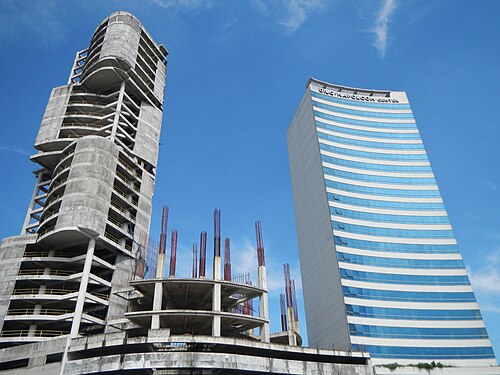
内務地方自治省は現在、フィリピン大統領が指名し、任命委員会が承認した内務地方自治長官によって率いられています。長官は内閣の一員です。現在の内務地方自治長官はジョンビック・レムラ氏です。
内務地方自治省は、スペイン帝国に対するフィリピン革命、特に1897年3月22日のテヘロス会議にその起源を持つ。当初は内務省と呼ばれ、エミリオ・アギナルド将軍が大統領に選出された革命政府の最初の閣僚ポストの一つであった。カティプナンのマグディワン派の指導者アンドレス・ボニファシオは最後に内務長官に選出されたが、物議を醸す異議申し立てによりマグディワン派が退席し、ボニファシオは辞退した。パスクアル・アルバレス将軍は、1897年4月17日のナイック会議でアギナルドによって長官に任命された。
内務省は、ビアク・ナ・バト共和国の公布に伴い、1897年11月1日に正式に設立され、イサベロ・アルタチョが長官に就任した。ビアク・ナ・バト憲法第15条では、統計、道路と橋、農業、広報と郵便局、公共秩序など、内務省の権限と機能が規定されている。[ 4 ]
Following the American Occupation, the Department of the Interior was among four departments under the Insular Government created by virtue of Philippine Commission Act No. 222.[5] Americans headed the department until 1917, when Rafael Palma was appointed by Governor-GeneralFrancis Harrison following the passage of the Jones Law. The Interior Department was tasked with various functions ranging from supervision over local units, forest conservation, public instructions, control and supervision over the police, counter-insurgency, rehabilitation, community development and cooperatives development programs.[4]
At the outbreak of World War II, President Manuel L. Quezon abolished the department via Executive Order 390. It was recreated as part of the Philippine Executive Commission in 1942 under the Japanese Occupation, but again abolished the following year with the establishment of Japanese-controlledSecond Philippine Republic. Its secretary before the abolition, José P. Laurel, was elected President by the National Assembly.
The department was reinstated by President Sergio Osmeña months after the country's liberation from Japanese forces in December 1944. It was then merged with the Department of National Defense in July 1945 until President Manuel Roxas' Executive Order No. 94 in 1947, which split the two, and tasked the reorganized Interior Department to administer the Philippine Constabulary and all local political subdivisions, among others.[6]
A 1950 reorganization via Executive Order No. 383[7] (in pursuance of Republic Act No. 422) by President Elipidio Querido abolished the Interior Department once again.[8] Its functions were transferred to the Office of Local Government (later the Local Government and Civil Affairs Office) under the Office of the President.
On January 6, 1956, under President Ramón Magsaysay, the Presidential Assistant on Community Development (PACD) office was created via Executive Order No. 156, with functions resembling that of the Interior Department sans supervision over the police force. It was renamed the Presidential Arm on Community Development in 1966.
The department was restored on November 7, 1972 under dictator President Ferdinand Marcos with the creation of the Department of Local Government and Community Development (DLGCD). The DLGCD was reorganized as a ministry in the parliamentary Batasang Pambansa in 1978, renamed the Ministry of Local Government in 1982,[9] and became the Department of Local Government (DLG) in 1987 under President Corazon Aquino.
On December 13, 1990, Republic Act No. 6975 placed the Philippine National Police, Bureau of Fire Protection, Bureau of Jail Management and Penology and the Philippine Public Safety College under the reorganized Department of the Interior and Local Government (DILG).[3] The new DILG merged the National Police Commission (NAPOLCOM), and all the bureaus, offices, and operating units of the former DLG under Executive Order No. 262.[10] RA No. 6975 paved the way for the union of local governments and the police force after nearly four decades of separation.
On its website, the department provides it powers and functions as:[11]

At present, the department is headed by the secretary of the interior and local government, with the following undersecretaries and assistant secretaries:[12]
長官室の下には、以下の部署およびサービスがあります。
フィリピンの18の地域それぞれに地域局長が配置されています。また、各州、市町村、バランガイにはDILG(内務地方自治省)の職員が配置されています。
DILGは、以下の4つの局で構成されています。
DILG(内務地方自治省)が認可するリーグ:
DILGには以下のものが添付されています。
 この記事には、パブリックドメインにあるこの情報源からのテキストが含まれています。