
Loading article…
プエルトリコ | |
|---|---|
| プエルトリコ連邦[b] プエルトリコ自由連合国Estado Libre Asociado de Puerto Rico (スペイン語) | |
 プエルトリコの国章 | |
| ニックネーム: | |
| モットー: | |
| 国歌: 「ラ・ボリンケーニャ」 (スペイン語) (「ボリンケンの歌」) | |
.svg/500px-Puerto_Rico_(orthographic_projection).svg.png) プエルトリコの位置 | |
| 主権国家 |  アメリカ合衆国[a] アメリカ合衆国[a] |
| 併合前 | プエルトリコ総司令官 |
| スペインからの割譲 | 1898年12月10日 |
| 現在の憲法 | 1952年7月25日 |
| 資本 | サンフアン 北緯18度27分 西経66度6分 / 北緯18.450度 西経66.100度 / 18.450; -66.100 |
| 最大の都市 | サンファン~カグアス~グアイナボ都市圏 |
| 共通言語 | 94.3% スペイン語 5.5% 英語 0.2% その他[2] |
| 公用語 | |
| 民族グループ (2020年)[4] | 人種別:
起源別:
|
| 異名 | プエルトリコ語(スペイン語: puertorriqueño -a ) boricua (中立) [c] borinqueño -a borincano -a [5] puertorro -a [d] [6] |
| 政府 | 大統領の 憲法上の 従属権限の委譲 |
• 社長 | ジョー・バイデン(民主党) |
• 知事 | ペドロ・ピエルルイジ( PNP / D ) |
| オマール・マレロ・ディアス( PNP ) | |
| アントニオ・パボン | |
| ドミンゴ・エマヌエリ | |
| 立法府 | 立法議会 |
• 上院 | 上院 |
• 下院 | 衆議院 |
| 司法 | プエルトリコ最高裁判所 |
| 米国議会 | |
| ジェニファー・ゴンザレス( PNP / R ) | |
| エリア | |
• 合計 | 13,792 km 2 (5,325 平方マイル) [e] |
• 土地 | 8,868 km 2 (3,424 平方マイル) |
• 水 | 4,924 km 2 (1,901 平方マイル) |
• 水 (%) | 35.6 |
| 寸法 [f] [14] | |
• 長さ | 178 km (111 マイル) |
• 幅 | 65 km (40 マイル) |
| 最高標高 | 1,338メートル(4,390フィート ) |
| 人口 | |
• 2023年の推定 | 3,205,691 [h] [15] ( 136位) |
• 2020年国勢調査 | 3,285,874 [16] |
• 密度 | 361.4/km 2 (936.0/平方マイル) ( 41位) |
| GDP (購買力平価) | 2023年推定 |
• 合計 |  1320億5200万ドル[17](第85位) 1320億5200万ドル[17](第85位) |
• 一人当たり | 41,682ドル[17] ( 40位) |
| GDP (名目) | 2023年推定 |
• 合計 | 1175億1500万ドル[17] ( 62位) |
• 一人当たり | 37,093ドル[17] ( 28日) |
| ジニ (2024) | 58 [18] 高い |
| HDI (2015) | 0.845 [19]非常に高い · 40位 |
| 通貨 | アメリカ合衆国ドル(US$) ( USD ) |
| タイムゾーン | UTC-04:00 ( AST ) |
| 日付形式 | yyyy/mm/dd yyyy/mm/dd |
| 運転側 | 右 |
| 呼び出しコード | +1 (787)、+1 (939) |
| USPSの略称 | 広報 |
| ISO 3166 コード |
|
| インターネットTLD | .pr |


プエルトリコ[i](スペイン語で「豊かな港」の意、略称はPR)[21]正式にはプエルトリコ自治領[b][j]、カリブ海の自治 諸島および島ありアメリカ合衆国の非法人地域として自治領の指定をフロリダ州マイアミの南東約1,000マイル(1,600 km)、大アンティル諸島のドミニカ共和国と小アンティル諸島の米領ヴァージン諸島の間に位置し、同名の本島と、ビエケス島、クレブラ島、モナ島など多数の小島から構成されている住民を擁し78の自治体に分かれており、最も人口が多いのは州都のサン。[21]政府の行政部門の公用語はスペイン語と英語である、[23]スペイン語が優勢である。[24]
プエルトリコには2000年から4000年前から次々と人々が定住した。[25]オルトイロイド、サラドイド、タイノなどである。 1493年のクリストファー・コロンブスの来航と1508年のフアン・ポンセ・デ・レオン による植民地化の後、スペインが領有権を主張した。 [21]プエルトリコは他のヨーロッパ列強によって争われたが、その後4世紀にわたってスペインの領土であり続けた。主にカナリア諸島とアンダルシアからのアフリカ人奴隷とスペイン人入植者の流入は、島の文化的および人口統計学的景観を大きく変えた。スペイン帝国内では、プエルトリコはペルーやヌエバ・エスパーニャのような裕福な植民地と比較して、二次的だが戦略的な役割を果たした。[26] [27] 19世紀後半には、先住民、アフリカ、ヨーロッパの要素が融合した独特のプエルトリコのアイデンティティが形成され始めました。[28] [29] 1898年、米西戦争後、プエルトリコはアメリカ合衆国に買収されました。[21] [30]
プエルトリコ人は1917年以来米国市民であり、島と本土の間を自由に移動できる。[31]しかし、米国の州に居住していないプエルトリコ人は連邦選挙の権利を剥奪され[ 32] 、一般的に連邦所得税を支払わない。[33] [34] [k]他の4つの準州と同様に、プエルトリコは居住委員と呼ばれる投票権のない代表者を米国議会に送り、大統領予備選挙に参加している。プエルトリコは州ではないため、1950年のプエルトリコ連邦関係法に基づいて統治される米国議会で投票権を持たない。議会は1952年に地方憲法を承認し、島に居住する米国市民が知事を選出できるようにした。プエルトリコの現在および将来の政治的地位は、常に重要な議論の対象となっている。[35] [36]
20世紀半ばから、米国政府はプエルトリコ産業開発会社と共同で、プエルトリコを工業高所得経済に発展させるための一連の経済プロジェクトを立ち上げた。国際通貨基金はプエルトリコを先進的な高所得経済を有する先進国に分類しており、[37]人間開発指数では40位にランクされている。プエルトリコ経済の主要部門は製造業(主に医薬品、石油化学製品、電子機器)であり、次いでサービス業(観光業と接客業)となっている。[38]
語源
プエルトリコはスペイン語で「豊かな港」を意味する。 [21] プエルトリコ人はこの島をボリンケンと呼ぶことが多いが、これは先住民族のタイノ語名であるボリケンに由来しており、一般に「勇敢な領主の土地」を意味すると言われている。 [39] [40] [41]ボリクア、ボリンケーニョ、ボリンカノという用語はプエルトリコ系の人を指すのによく使用され、[42] [43]それぞれボリケンとボリンケンに由来している。[44]この島はスペイン語で「魔法の島」を意味するラ・イスラ・デル・エンカントとしても知られている。 [45]
コロンブスは、洗礼者聖ヨハネに敬意を表して島をサン・ファン・バウティスタと名付け、首都をシウダー・デ・プエルトリコ(「豊かな港町」)と名付けました。[21]最終的に、貿易業者やその他の海上旅行者は島全体をプエルトリコと呼ぶようになり、サン・ファンは主要な貿易港/輸送港と首都に使用される名前になりました。[l]
1898年のパリ条約後、米国は島の名前をポルト・リコに変更した。[47]英語化された名前は米国政府と民間企業によって使用された(イタリア語、フランス語、ポルトガル語でもPorto )。1931年にフェリックス・コルドバ・ダビラが提出した議会の共同決議により、名前はプエルトリコに戻された。[48] [m] [53] [54] [55]
この団体のスペイン語での正式名称はEstado Libre Asociado de Puerto Rico(「プエルトリコ自由連合国」)であり、英語での正式名称はCommonwealth of Puerto Ricoである。[21]
歴史
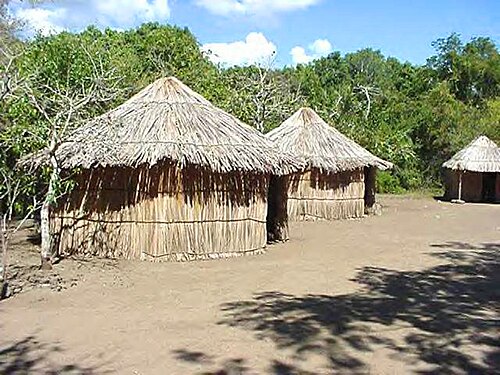

プエルトリコの歴史は紀元前430年以前のオルトイロイド人の定住から始まった。1493年にクリストファー・コロンブスが新世界に到着した当時、支配的な先住民文化はタイノ族の文化だった。16世紀後半、ヨーロッパ人がもたらした新しい伝染病、スペイン人入植者による搾取、戦争により、タイノ族の人口は危険なほど減少した。[57]
カリブ海北東部に位置するプエルトリコは、新世界の探検、征服、植民地化の初期からスペイン帝国の重要な一部を形成してきました。16 世紀、17 世紀、18 世紀にこの地域の支配をめぐってスペインと他のヨーロッパ諸国の間で行われた多くの戦争では、島は主要な軍事拠点でした。
1593年、フェリペ2世の命によりリスボンから派遣されたポルトガル兵が、プエルトリコのサン・フェリペ・デル・モロ要塞の最初の守備隊を構成した。妻を連れてきた者もいれば、プエルトリコ人女性と結婚した者もおり、今日ではポルトガル人の姓を持つプエルトリコ人家族が数多く存在する。大アンティル諸島の中で最も小さいプエルトリコは、ヨーロッパからキューバ、メキシコ、中央アメリカ、南米北部地域への通路の踏み石であった。19世紀のほとんどの時期、米西戦争の終結まで、プエルトリコとキューバは新世界における最後の2つのスペイン植民地であり、アメリカ大陸の支配権を取り戻すためのスペインの戦略における最後の前哨基地としての役割を果たした。スペイン国王は、残る2つのカリブ海地域を失う危険があると認識し、1815年の恩寵勅令を復活させた。この勅令は、ヨーロッパ人を引き付けるためにスペイン語、英語、フランス語で印刷され、新しい入植者の到着により独立運動の人気と勢いが失われることを期待した。島に移住したい人には、スペイン王室への忠誠とローマカトリック教会への忠誠を誓うという条件で、無料の土地が提供された。[58]
1898年、米西戦争中にプエルトリコは侵略され、その後米国の領土となった。20世紀の最初の数年間は、米国からより大きな民主的権利を獲得するための闘争によって特徴づけられた。
1900年のフォーラカー法は民政政府を樹立し、アメリカの将軍と陸軍省による統治を終わらせた。米国最高裁判所の判決、オルテガ対ララ、202 U.S. 339、342(1906)[n]はフォーラカー法に関係し、島を「獲得した国」と呼び、米国憲法がその領土内に適用され、それに矛盾しないプエルトリコの国内法は引き続き有効であるとすぐに確認した。[59]
プエルトリコ人を米国市民とした1917年のジョーンズ法は、プエルトリコ憲法の起草と、1952年の議会とプエルトリコの有権者による承認への道を開いた。しかし、米国が管理する自治領であるプエルトリコの政治的地位は、依然として異例である。
21世紀
2009年、国連の非植民地化特別委員会は、プエルトリコの人々が奪うことのできない自己決定権と独立権を完全に行使できるようにするプロセスを米国政府に迅速化するよう求める決議案を承認した。[60] 2012年11月、総選挙と同時に2つの質問からなる国民投票が行われた。[61] [62] 8月に投票された最初の質問は、米国憲法の領土条項に基づく現在の地位を維持するかどうかを有権者に尋ねた。54%が現状維持に反対票を投じ、11月に投票される2番目の質問を事実上承認した。2番目の質問では、州昇格、独立、自由連合の3つの代替ステータスオプションが提示された。[63] 61.16%が州昇格に、33.34%が主権自由連合州に、5.49%が独立に投票した。[64] [検証失敗]
2016年、バラク・オバマ大統領は、プエルトリコ政府に対する管理委員会を設立する法案HR5278: PROMESAに署名した。この委員会は、その設立と運営にかなりの程度の連邦政府の管理が関与することになる。特に、管理委員会を設立する権限は、米国領土に関する「すべての必要な規則と規制を制定する」連邦政府の憲法上の権限に由来する。大統領は委員会の投票権を持つ7人全員を任命する。委員会は、プエルトリコ議会、知事、その他の公的機関による決定を事実上覆す広範な主権を有することになる。[65]
プエルトリコは2020年11月3日の総選挙中に州昇格の国民投票を実施した。投票用紙には「プエルトリコは直ちに連邦に州として加盟すべきか?」という質問が1つあった。結果、プエルトリコの有権者の52%が賛成と回答した。[66]
地理

プエルトリコは、プエルトリコ本島と、ビエケス島、クレブラ島、モナ島、デセチョ島、カハ・デ・ムエルトス島などの小島から構成されています。この5島のうち、クレブラ島とビエケス島のみが一年中人が住んでいます。海事史で重要な役割を果たしてきたモナ島は、プエルトリコ天然資源局の職員を除いて、年間の大半は無人です。[67]モナの近くにあるモニト島や[68]サンファン湾にあるカブラス島とラ・イスレタ・デ・サンファン島など、さらに小さな小島がたくさんあります。後者は、オールド・サンファン島やプエルタ・デ・ティエラ島などの集落がある唯一の有人島で、橋で本島とつながっています。[69] [70]
.png/500px-NOAA_Bathymetry_Image_of_Puerto_Rico_(2020).png)
プエルトリコ自治領の面積は5,320平方マイル(13,800 km 2)で、そのうち3,420平方マイル(8,900 km 2)が陸地、1,900平方マイル(4,900 km 2)が水域である。[72]プエルトリコはデラウェア州やロードアイランド州より大きいが、コネチカット州より小さい。本島の東西の最大長は110マイル(180 km)、南北の最大幅は40マイル(64 km)である。[73]プエルトリコはグレーターアンティル諸島の中で最も小さい。ジャマイカの80% 、[74]イスパニョーラ島の18%強、グレーターアンティル諸島最大のキューバの8%の大きさである。 [75]
島の地形は大部分が山岳地帯で、北部と南部の海岸には広大な平地がある。島を東西に横切る主要な山脈は、コルディジェラ・セントラル(英語ではセントラル山脈とも呼ばれる)と呼ばれる。プエルトリコの最高標高であるセロ・デ・プンタの標高4,390フィート(1,340メートル)[72]はこの山脈にある。もう一つの重要な山はエル・ユンケで、エル・ユンケ国立森林公園のルキージョ山脈で最も高い山の一つで、標高は3,494フィート(1,065メートル)である。[76]

プエルトリコには17の湖(すべて人工湖)と50以上の川があり、そのほとんどはコルディリェラ・セントラル山脈に源を発しています。[77]島の北部地域の川は、南部の川よりも一般的に長く、水流量も高くなっています。これは、南部は中央部や北部地域よりも降雨量が少ないためです。
プエルトリコは白亜紀から始新世の 火山岩と深成岩で構成され、その上に漸新世以降の炭酸塩岩やその他の堆積岩が覆っています。[78]島の洞窟やカルスト地形のほとんどは北部にあります。最古の岩石は約1億9千万年前(ジュラ紀)のもので、島の南西部にあるシエラ・ベルメハにあります。これらは海洋地殻の一部である可能性があり、太平洋地域から来たものと考えられています。
プエルトリコはカリブ海プレートと北アメリカプレートの境界に位置し、両者の相互作用によって生じる地殻変動によって変形している。こうした応力は地震や津波を引き起こす可能性がある。こうした地震は地滑りとともに、島内および北東カリブ海地域で最も危険な地質災害のひとつとなっている。 1918年サンフェルミン地震は1918年10月11日に発生し、マグニチュードはリヒタースケールで7.5と推定されている。[79]この地震は北海岸から数キロ離れたアグアディヤ沖で発生し、津波を伴った。この地震により、広範囲にわたる物的損害と損失が発生し、インフラ、特に橋が損壊した。推定116人が死亡、物的損害は400万ドルに上った。政府が国民の福祉のために迅速に行動しなかったことが、反対派による政治運動を助長し、最終的にはプエルトリコ民族党の台頭につながった。 2020年1月7日、[80]同国は1918年以来最大の地震に見舞われ、[81]マグニチュード6.4と推定される地震に見舞われた。[82]経済損失は31億ドル以上と推定されている。[83]
プエルトリコ海溝は大西洋最大かつ最深の海溝で、プエルトリコの北約71マイル(114 km)のカリブ海プレートと北アメリカプレートの境界に位置している。[84]長さは170マイル(270 km)である。[85]最深部はミルウォーキーディープと呼ばれ、深さはほぼ27,600フィート(8,400 m)である。[84]プエルトリコとドミニカ共和国の間のモナ海峡に位置するモナキャニオンは、底から上部までの高さが1.25〜2.17マイル(2.01〜3.49 km)の急峻な壁を持つもう1つの著名な海洋地形である。[86]
気候

プエルトリコの気候は、ケッペンの気候区分では大部分が熱帯雨林気候です。気温は年間を通じて温暖から暑く、低地では平均85 °F (29 °C)、山岳部では70 °F (21 °C) です。東からの貿易風が年間を通じて島を横切ります。プエルトリコには4月から11月までが雨季、12月から3月が乾季です。コルディリェラ・セントラルの山々は雨陰を作り出し、非常に短い距離でも気温や降雨量が変化する主な原因となっています。また、山々は風を遮ったり導いたりする効果により、局所的な風速や風向に大きな変化をもたらし、気候の変化に拍車をかけます。季節による日々の気温変化は、低地や沿岸部では非常に小さいです。
乾季と雨季の間では、気温が約 6 °F (3.3 °C) 変化します。この変化は主に熱帯大西洋の暖かい海水によるもので、北と北西から流入する冷たい空気を大幅に変化させます。年間の沿岸水温は、2 月に約 75 °F (24 °C)、8 月に 85 °F (29 °C) です。記録された最高気温はアレシボの 110 °F (43 °C) で、 [ 87]記録された最低気温はアジュンタス、アイボニート、コロサルの山岳地帯で 40 °F (4 °C) でした。[88]年間平均降水量は 66 インチ (1,676 mm) です。[89]
ハリケーン
プエルトリコは、カリブ海や北大西洋の他の地域と同様に、大西洋ハリケーンシーズンを経験します。平均して、年間降水量の4分の1は熱帯低気圧によるもので、エルニーニョよりもラニーニャの期間に多く発生します。[90]熱帯暴風雨の強さのサイクロンがプエルトリコの近くを通過するのは、平均して5年ごとです。ハリケーンは、平均して7年ごとに島の近くを通過します。1851年以来、 1928年9月のオキーチョビー湖ハリケーン(プエルトリコではサンフェリペセグンドハリケーンとしても知られています)は、カテゴリー5のハリケーンとして上陸した唯一のハリケーンです。[91]
2017年大西洋ハリケーンシーズンの繁忙期、プエルトリコは2017年9月6日にカテゴリー5のハリケーン「イルマ」の直撃を免れ、同ハリケーンはプエルトリコの北約60マイル(97km)を通過したが、強風により約100万人の住民が停電した。病院のほぼ50%が発電機による電力で運営されていた。[92]カテゴリー4のハリケーン「ホセ」は予想通りプエルトリコから遠ざかった。[93]その後間もなく、壊滅的なハリケーン・マリアが9月20日水曜日、午前10時15分(UTC、現地時間午前6時15分)にプエルトリコのヤブコア市付近に上陸した。このハリケーンはカテゴリー4のハイエンドハリケーンで、風速155マイル(249キロメートル/時)の持続的な風、激しい雨、広範囲にわたる洪水により甚大な被害が発生し、島の多くの地域で電力網が4~6か月間停止した。[94] [95] [96]
2019年、ハリケーン・ドリアンは3年でプエルトリコを襲った3番目のハリケーンとなった。2017年のハリケーンからの復興中のインフラと新知事ワンダ・バスケス・ガルセドは、人道的危機の可能性に対する試練にさらされた。[97] [98] 熱帯暴風雨カレンも2019年にプエルトリコに影響を及ぼした。 [99]
気候変動
気候変動は、米国領プエルトリコの生態系と景観に大きな影響を与えています。2019年のGermanwatchのレポートによると、プエルトリコは気候変動の影響を最も受けています。この地域のエネルギー消費は主に輸入された化石燃料に由来しています。[100] [101]
プエルトリコ気候変動評議会(PRCCC)は、気温、降水量、異常気象、熱帯暴風雨とハリケーン、海洋酸性化、海面温度、海面上昇の7つのカテゴリーで深刻な変化を指摘した。[102]
気候変動はプエルトリコの人口、経済、人々の健康、そして移住を余儀なくされる人々の数にも影響を与えます。
調査によると、気候変動はほとんどのプエルトリコ人にとって懸念事項です。[ 103]この地域では、再生可能エネルギーの利用を含む気候変動の緩和と適応に関する法律と政策が制定されています。[104]地元の取り組みは緩和と適応の目標に向けて取り組んでおり、国際援助プログラムは異常気象後の復興を支援し、災害計画を奨励しています。[105]生物多様性
プエルトリコには、プエルトリコ湿潤林、プエルトリコ乾燥林、および大アンティル諸島マングローブの3つの陸上生態地域があります。[106]プエルトリコには、ユネスコの 人間と生物圏計画によって認定された2つの生物圏保護区があります。エルユンケ国立森林公園に代表されるルキージョ生物圏保護区とグアニカ生物圏保護区です。
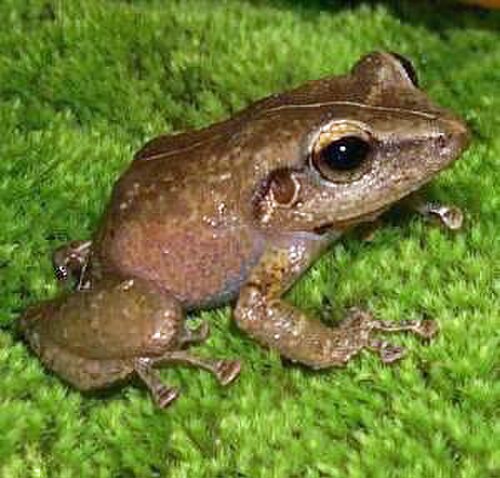
1998年現在、群島の固有種は、植物239種、鳥類16種、両生類/爬虫類39種と確認されている。これらのほとんど(それぞれ234種、12種、33種)は本島で見られる。[107]最もよく知られた固有種であり、プエルトリコの誇りのシンボルであるコキーは、鳴き声で簡単に識別できる小さなカエルで、その名前の由来となっている。コキーのほとんどの種(17種中13種)は、エル・ユンケ国立森林公園[108]に生息している。これは、島の北東部に位置する米国森林局システムで唯一の熱帯雨林である。以前はカリブ国立森林公園として知られていた。エル・ユンケには240種を超える植物が生息し、そのうち26種は島固有種である。また、絶滅が深刻に危惧されているプエルトリコアマゾンを含む50種の鳥類が生息している。
エル・ユンケ国立森林に加え、プエルトリコ湿潤林生態地域は、マリカオ州立森林やトロ・ネグロ 州立森林などの保護地域によって代表されている。これらの地域には、プエルトリコボア(Chilabothrus inornatus)、プエルトリコアシナガバタヒバリ(Accipiter striatus venator)、プエルトリコオオノスリ(Buteo platypterus brunnescens )、オオセッカムシクイ( Setophaga angelae )など、絶滅が危惧される固有種が生息している。北カルストのプエルトリコには、島に残る熱帯雨林地帯の1つもあり、リオ・アバホ州立森林は、シエラ・デ・ルキージョ以外で、絶滅の危機に瀕しているプエルトリコオウムの再導入の最初の焦点となっている。[109] [110]
南西部のグアニカ州立森林・生物圏保護区には、48種の絶滅危惧種とプエルトリコ固有の16種を含む600種を超える珍しい動植物が生息しており、プエルトリコの乾燥林生態地域の代表例であり、カリブ海で最も保存状態の良い乾燥林であると考えられています。[ 111]プエルトリコの他の保護された乾燥林は、カボ・ロホ、デセチェオ、クレブラ、ビエケス国立野生生物保護区のカリブ諸島国立野生生物保護区複合体内、およびカハ・デ・ムエルトス、モナ・モニト諸島自然保護区内に形成されています。[112]この生態地域で見られる固有種の例としては、ヒゴチュンボ(ハリシア・ポルトリセンシス)、プエルトリコトカゲ(ペルトフリン・キツネザル)、プエルトリコ原産の最大の陸上動物であるモナイグアナ(Cyclura stejnegeri)などがあげられる。[113]
プエルトリコには、カリブ海にある一年中生物発光する湾7つのうち3つがある。ファハルドのラグナ・グランデ、ラハスのラ・パルゲラ、ビエケスのプエルト・モスキートである。これらはマングローブに囲まれたユニークな水域で、渦鞭毛藻類のピロディニウム・バハメンセが生息している。[114] [115]しかし、観光、汚染、ハリケーンにより、これらのユニークな生態系は大きな脅威となっている。[116]
政府と政治
プエルトリコはアメリカをモデルにした共和制の政府であり、権力分立はアメリカ合衆国の管轄と主権に従っている。[117] [118]すべての政府権力はアメリカ合衆国議会によって委任され、国家元首はアメリカ合衆国大統領である。プエルトリコは非法人地域であるため、アメリカ合衆国憲法による完全な保護を受けていない。 [119]
プエルトリコ政府は3つの部門から成ります。行政は、現在ペドロ・ピエルルイシ・ウルティア知事が率いています。立法府は二院制の 立法議会で構成されており、上院が上院、下院が下院で構成されています。上院は現在ホセ・ルイス・ダルマウ大統領が率いており、下院は現在タティート・エルナンデス下院議長が率いています。知事と立法府の議員は4年ごとに一般投票で選出され、直近の選挙は2020年11月に行われました。司法府は、現在マイテ・オロノス・ロドリゲスプエルトリコ最高裁判所長官が率いています。司法府のメンバーは、上院の 助言と同意を得て知事が任命します。
プエルトリコは、米国議会において、下院への投票権のない代表、ジェニファー・ゴンザレス駐在コミッショナーによって代表されている。現在の議会規則では、コミッショナーは全体委員会で投票する権限を奪われているが、委員会では投票することができる。[120]
プエルトリコの選挙は連邦選挙委員会とプエルトリコ州選挙委員会によって統括されている。[121] [122]プエルトリコの住民は、他の米国市民を含め、米国大統領選挙で投票することはできないが、予備選挙で投票することはできる。米国の州またはワシントンDCの居住者となったプエルトリコ人は、大統領選挙で投票することができる。
プエルトリコには、8 つの上院選挙区、40 の下院選挙区、78 の自治体がある。米国政府が定義するような第一級の行政区分はない。自治体は区またはバリオに細分化され、区またはバリオはセクターに細分化される。各自治体には市長と、任期 4 年の市議会がある。サンファン自治体は最も古く、1521 年に設立された。[123]次に古い入植地は、1570 年のサン ヘルマン、 1579 年のコアモ、 1614 年のアレシボ、1692 年のアグアダ、1692 年のポンセである。18 世紀には入植地が増え、19 世紀の 34 に続いて 30 以上のコミュニティが設立された。20 世紀には 6 つのコミュニティが設立され、最も新しいのは1971 年のフロリダである。 [124]
政党と選挙

1952年以来、プエルトリコには3つの主要政党がある。人民民主党(スペイン語でPPD)、新進歩党(スペイン語でPNP)、プエルトリコ独立党(PIP)である。3つの政党はそれぞれ異なる政治的地位を主張している。例えば、PPDは米国の自治領としての島の地位を維持することを目指しているが、PNPはプエルトリコを米国の州にすることを目指している。一方、PIPはプエルトリコを米国の権威から自由な主権国家にすることを目指している。政党の力で言えば、PPDとPNPは通常それぞれ約47%の票を獲得し、PIPは約5%を獲得している。
2007年以降、島には他の政党も現れた。最初の政党はプエルトリコ人のためのプエルトリコ党で、同年に登録された。同党は、島の問題を地位中立の立場から解決しようとしていると主張している。しかし、2008年の総選挙で必要な票数を獲得できなかったため、登録政党としての地位を失った。4年後の2012年の選挙では、主権統一運動(英語:Sovereign Union Movement)と労働者党(英語:Partido del Pueblo Trabajador)が誕生したが、いずれも1%以上の票を獲得することはなかった。
その他の未登録政党としては、プエルトリコ民族党、社会主義労働者運動、ホストシア民族独立運動などがある。
政治的地位
プエルトリコと米国の政治的関係の性質は、プエルトリコ、米国議会、国連で現在も議論されている。[125]具体的には、プエルトリコが米国の非編入領土のままであるべきか、米国の州になるべきか、それとも独立国になるべきかという基本的な問題である。[126]
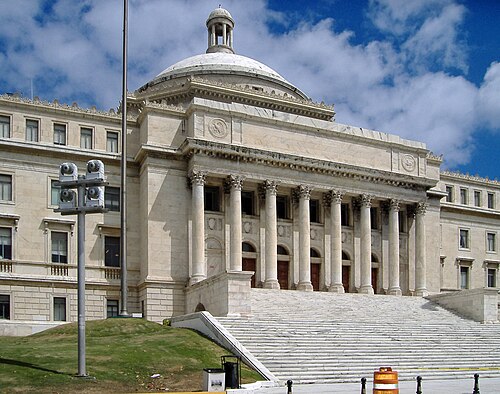
憲法上、プエルトリコは米国憲法第4条の領土条項に基づき、米国議会の全権に服する。[127]米国の連邦レベルで制定された法律は、政治的地位にかかわらず、プエルトリコにも適用される。プエルトリコの住民は米国議会で投票権を持たない。プエルトリコには「独立国家の完全な主権」が欠けており、たとえば「他国との対外関係」を管理する権限は米国連邦政府が持っている。米国最高裁判所は、米国憲法が(議会または裁判所によって)ある地域に拡大されると、その適用範囲は取り消すことができないとしている。政治部門が憲法を自由にオンまたはオフにできるとすると、この裁判所ではなく、政治部門が「法律とは何か」を決める体制につながるだろう。[128]
プエルトリコ人は1917年にジョーンズ・シャフロス法により「集団的に米国市民となった」。[129]プエルトリコ在住の米国市民は米国大統領選挙で投票することはできないが、共和党と民主党の両大政党はプエルトリコで予備選挙を行い、各党の大統領候補に投票する代議員を選出する。プエルトリコは非法人地域であり米国の州ではないため、米国憲法はプエルトリコ在住の米国市民に完全な参政権を与えていない。[119] [130]
プエルトリコ人には、アメリカ連邦憲法と判決に基づく基本的権利のみが適用されます。プエルトリコではどの権利が適用され、どの権利が適用されないかについては、他のさまざまな米国最高裁判所の判決で定められています。プエルトリコ人は米国軍に長く従軍しており、1917 年以降、米国の強制徴兵が実施されると、その対象に含まれてきました。
連邦政府には独自の税法があるが、プエルトリコの住民は、一般的な誤解に反して、米国連邦税を支払っている。関税(後にプエルトリコ財務省に返還される)、輸出入税、連邦物品税、社会保障税などである。住民は、社会保障やメディケアなどの連邦給与税、およびプエルトリコ自治領の所得税を支払っている。すべての連邦職員、連邦政府と取引のある者、米国に資金を送金する予定のプエルトリコに拠点を置く企業、その他、米軍に所属するプエルトリコ住民、プエルトリコ国外から収入を得たプエルトリコ住民なども、連邦所得税を支払っている。さらに、所得税のカットオフポイントが米国IRSコードよりも低く、プエルトリコの一人当たり所得が本土の平均一人当たり所得よりもはるかに低いため、島にIRSコードが適用された場合よりも多くのプエルトリコ住民が地方税務当局に所得税を支払っています。これは、「プエルトリコ自治政府には米国の州政府や地方政府よりも幅広い責任がある」ためです。[131] [132] [133] [134] [135] [136] [137]
2009年、プエルトリコは米国財務省に37億4200万ドルを支払った。[138]プエルトリコの住民は社会保障に加入しており、退職時に社会保障給付を受ける資格がある。彼らは補足的社会保障所得から除外されており、島は米国の州であった場合に受け取るメディケイド資金のより少ない部分しか受け取っていない。 [139]また、プエルトリコの受給者がシステムに全額を支払っているにもかかわらず、メディケア提供者はプエルトリコの受給者に提供したサービスに対して、州のような全額ではない償還を受けている。[140]
プエルトリコの刑法制定権は議会から来ており、州のように地方の主権から来ているわけではない。したがって、犯罪を犯した個人は連邦裁判所または準州の裁判所でのみ裁かれる。そうでない場合は二重処罰となり、憲法上許されない。[141]
1992 年、ジョージ HW ブッシュ大統領は、連邦政府とプエルトリコ自治領の現在の行政関係を確立する覚書を行政部門および機関の長に発行しました。この覚書は、連邦政府のプログラムや運営に支障をきたさない限り、すべての連邦部門、機関、および職員に、プエルトリコを州のように行政的に扱うよう指示しています。
プエルトリコには、他の州と同様、連邦捜査局、連邦緊急事態管理局、運輸保安局、社会保障局など、多くの連邦行政機関が大きな存在感を示している。プエルトリコには米国の州と同様の連邦司法制度があるが、米国連邦地方裁判所もあり、プエルトリコ人は任命時の居住状況に関わらず、その裁判所や米国本土の他の連邦裁判所で判事を務めてきた。ニューヨーク出身のプエルトリコ系ソトマイヨールは、米国最高裁判所の判事を務めている。プエルトリコ人はまた、他国への 米国大使としての勤務を含め、連邦政府の高官に頻繁に任命されている。
行政区分

米国の大多数の州とは異なり、プエルトリコには郡のような第一級の行政区画はないが、副次的な行政単位として78の市町村またはムニシピオがある。米国国勢調査では、市町村は郡に相当するものとみなされている。市町村はバリオに細分化され、バリオはセクターに細分化される。各市町村には、 1991年の自治市町村法に基づき、4年の任期で選出される市長と市議会がある。
外交および政府間関係
プエルトリコは米国憲法の通商領土条項の対象であり、そのため他国との関わり方が制限されており、州政府ではないにもかかわらず州政府が持つ機会と制限を共有している。州政府の場合と同様に、プエルトリコは他の国々、特にコロンビアやパナマなどのラテンアメリカ諸国といくつかの貿易協定を締結している。[142] [143]
また、プエルトリコはスペイン語圏の多くの外国や米国内に貿易促進事務所を設立しており、現在はスペイン、ドミニカ共和国、パナマ、コロンビア、ワシントンDC 、ニューヨーク市、フロリダに事務所があり、過去にはチリ、コスタリカ、メキシコにも事務所があった。このような協定には米国国務省の許可が必要であるが、そのほとんどはプエルトリコと米国の各州が追求している貿易協定に優先する米国と他国間の既存の法律または貿易条約によって許可されているだけである。プエルトリコには主に南北アメリカとヨーロッパの41か国の領事館があり、そのほとんどはサンファンにある。[123]
地方レベルでは、プエルトリコは、州や準州が関与することが認められている国際関係は、プエルトリコ国務省(行政部門)によって取り扱われなければならないと法律で定められており、プエルトリコ国務長官が率いており、同長官は未編入地域の副知事も務めている。同省はまた、プエルトリコに拠点を置く総領事や名誉領事との連絡も担当している。プエルトリコ連邦事務局は、駐在長官事務所とともに、米国内外の団体(米国連邦政府、米国の地方自治体および州政府、米国の公的機関または民間団体を含む)との政府間関係をすべて管理している。[要出典]
両機関は、米国国務省、国際開発庁など、プエルトリコの外交問題を扱うワシントンDCに拠点を置く大使や連邦機関との交渉において、プエルトリコ国務省を頻繁に支援している。現在の国務長官は新進歩党のラリー・セイルハマー・ロドリゲスであり、プエルトリコ連邦事務局の現在の長官は、同じく新進歩党のジェニファー・M・ストピランであり、米国共和党のメンバーである[要出典]。
プエルトリコの常駐コミッショナーは、プエルトリコ人によって選出され、米国議会を含む連邦政府に対してプエルトリコ人を代表する代表であり、米国下院に出席し、議会の委員会で活動し、投票し、下院の議場で法案の最終処分に関する投票を拒否されることを除いて、あらゆる点で立法者として機能する。現在の常駐コミッショナーは、 2016年に選出された共和党のジェニファー・ゴンザレス・コロンである。彼女はその年にプエルトリコで選出された他のどの役人よりも多くの票を獲得した。[144]
多くのプエルトリコ人が、主にラテンアメリカ諸国のさまざまな国や国際機関(米州機構など)の米国大使を務めてきたが、それらはすべてラテンアメリカに限られているわけではない。例えば、プエルトリコ人で現在は国務次官代理を務めるマリカルメン・アポンテは、以前はエルサルバドルの米国大使を務めていた。[145]
軍隊

プエルトリコは米国の非編入領土であるため、パリ条約に基づき米国大統領が最高司令官となり、プエルトリコの防衛は米国が担っている。プエルトリコには独自の州兵と州防衛軍であるプエルトリコ州兵があり、現地法によりプエルトリコ州兵の管轄となっている。
両現地軍の最高司令官はプエルトリコ知事であり、知事はプエルトリコ副官(現在はホセ・J・レイエス少将 )に権限を委譲している。副官は州兵に対する権限を別の将校に委譲するが、プエルトリコ州兵全体に対する権限は保持する。プエルトリコの米軍施設は米大西洋軍(1993年以降は米国軍)の一部であり、同軍は大西洋全域で行われる米軍の作戦すべてに対する権限を有していた。プエルトリコは1999年まで米大西洋軍が米統合軍司令部として改名され、新たな任務を与えられるまで、LANTCOMの任務を支援する上で極めて重要とみなされていた。プエルトリコは現在、米北方軍の管轄下にある。
カリブ海海軍部隊 (NFC) とカリブ海航空隊 (FAIR) はともに、以前はルーズベルト・ローズ海軍基地に拠点を置いていた。NFC はカリブ海域におけるすべての米海軍の活動に対する権限を持ち、FAIR はカリブ海上におけるすべての米軍の飛行と航空作戦に対する権限を持っていた。ルーズベルト・ローズとビエケス島の訓練施設が閉鎖されたことで、米海軍は、航行する船舶を除いてプエルトリコから基本的に撤退し、島内に駐留する重要な軍事施設は、フォート・ブキャナンの米陸軍、プエルトリコ陸軍・空軍州兵、および米沿岸警備隊のみとなった。爆撃訓練の騒音に対する抗議活動により、海軍基地は閉鎖を余儀なくされた。この結果、6,000 人の雇用が失われ、地元の収入は年間 3 億ドル減少した。[146]
プエルトリコには、プエルトリコ陸軍州兵として知られる米陸軍州兵の支部が駐留しており、地上防衛、災害救助、市民暴動の鎮圧など、米国各州の陸軍州兵と同等の任務を遂行しています。また、地元の州兵には、プエルトリコ空軍州兵として知られる米空軍州兵の支部も組み込まれており、米国各州の空軍州兵と同等の任務を遂行しています。
_1997.jpg/500px-USS_Maryland_(SSBN-738)_1997.jpg)
20世紀のさまざまな時期に、米国はプエルトリコに約25の軍事施設または海軍施設を置いていた。[147]これらの施設のうち最大のものは、セイバの旧ルーズベルト・ローズ海軍基地、ビエケス島の大西洋艦隊兵器訓練施設(AFWTF)、サリナスのキャンプ・サンティアゴの州兵訓練施設、フアナ・ディアスのフォート・アレン、サンファンの陸軍のフォート・ブキャナン、アグアディヤの旧米空軍のラミー空軍基地、およびサンファンのプエルトリコ空軍州兵のムニス空軍州兵基地である。[148]
ルーズベルト ロード、ビエケス、サバナ セカの旧米海軍施設は廃止され、一部は地元政府に引き渡されました。米国沿岸警備隊とプエルトリコ州兵の施設を除けば、プエルトリコには米陸軍の小規模なフォート ブキャナン (地元の退役軍人と予備役部隊を支援) と PRANG (プエルトリコ空軍州兵) ムニス空軍基地 (C-130 艦隊) の 2 つの軍事施設のみが残っています。近年、米国議会はこれらの施設の廃止を検討しましたが、フォート ブキャナンのサービスを利用している退役軍人など、プエルトリコのさまざまな公的機関と民間団体が反対しています。
プエルトリコ人は、アメリカ独立戦争を含め、多くの米軍紛争に参加してきた。アメリカ独立戦争では、1779年にベルナルド・デ・ガルベス将軍(1746-1786)の指揮の下、プエルトリコ、キューバ、メキシコからの志願兵がイギリス軍と戦った。 [149]イラクやアフガニスタンでの現在の紛争でも、プエルトリコ人が不釣り合いなほど多く参加し続けている。[150]最も顕著な例は、米陸軍第65歩兵連隊で、島の元々のタイノ語名(ボリンケン)にちなんで「ボリンケニアーズ」というニックネームが付けられている。プエルトリコ人のみで構成されるこの連隊は、第一次世界大戦、第二次世界大戦、朝鮮戦争、対テロ戦争に参加し、2014年には朝鮮戦争での英雄的行為により 議会名誉黄金勲章を授与された。
プエルトリコ人の多くは、主に州兵や民間人として米軍に勤務している。軍関係のコミュニティ全体の規模は、退役軍人を含めて10万人と推定されている。[148]フォートブキャナンには約4,000人の軍人と民間人が勤務している。さらに、約17,000人がプエルトリコ陸軍および空軍州兵、つまり米予備軍のメンバーである。[151]
法
島嶼国の法制度は、民法と慣習法の制度が融合したものです。
プエルトリコは現在、法制度が主にアメリカ英語以外の言語、すなわちスペイン語で運用されている唯一の米国管轄区域です。米国連邦政府は主に英語で運営されているため、プエルトリコの弁護士は全員、米国連邦裁判所で英語で訴訟を起こし、プエルトリコの裁判所で連邦優先権の問題を訴訟するためにはバイリンガルでなければなりません。 [152] [独自の研究? ]
合衆国法典第48編は、合衆国領土およびプエルトリコなどの島嶼地域に対する合衆国法典の役割を概説している。1901年に合衆国政府がプエルトリコの支配権を握った後、政府は法改正を開始し、カリフォルニア州で当時施行されていた刑法、刑事訴訟法、民事訴訟法をモデルにした法典を制定した。プエルトリコはその後、刑事訴訟法と民事訴訟法を制定法から司法府が公布した規則に移管するという連邦の例に従ったが、その刑法のいくつかの部分は依然としてカリフォルニア州刑法典の影響を反映している。
司法府はプエルトリコ最高裁判所の長官が率いており、同裁判所は憲法で定められた唯一の控訴裁判所である。他のすべての裁判所はプエルトリコ立法議会によって設置される。[153]プエルトリコには連邦地方裁判所もあり、連邦レベルで犯罪行為で告発された人物が連邦裁判所で同じ行為で告発されることはない。その逆も同様である。これは、プエルトリコは非法人地域であり、州のように議会から独立した主権を持っていないためである。[141]このような並行した告発は二重の危険を構成する。
犯罪
2014年の殺人率は10万人あたり19.2人で、米国のどの州よりも大幅に高かった。[154] [155]殺人被害者のほとんどはギャングのメンバーと麻薬密売人で、プエルトリコの殺人の約80%は麻薬関連である。[156]
1992年にFBIは武装カージャックを連邦犯罪とし、統計によれば発生率は減少したが[157]、 2019年現在、グアイナボなどの自治体では問題が続いている。[158] [159] [ 160] [161] [162] 2019年1月1日から2019年3月14日までの間に、島内で30件のカージャックが発生した。[163]
経済

プエルトリコは、世界銀行と国際通貨基金によって高所得国に分類されている。[37]世界経済フォーラムではラテンアメリカで最も競争力のある経済とみなされており、人間開発指数でも高い順位にある。世界銀行によると、2020年のプエルトリコの一人当たり国民総所得は21,740ドルだった。 [164]プエルトリコの経済は主に製造業(主に医薬品、繊維、石油化学、電子機器)とサービス業(主に金融、保険、不動産、観光)によって牽引されており、農業はGNPの1%未満を占めている。[165] [o] [p]近年では、サンファン港を見下ろす近代的なコンベンションセンター地区があり、MICE(会議、インセンティブツアー、カンファレンス、展示会)の人気スポットにもなっている。[ 166]
サンファン港の検査はPPQが担当している。[167]貨物輸送量が非常に多いため、1984年から2000年の間にサンファンPPQステーションは全検挙数の7.74%を記録し、国内第4位、昆虫では第2位、病原体では第3位であった。[167]ほとんどの種は、PRが本土への中継地であるため、もともと南米またはカリブ海の他の地域から来ている。 [167]ここは、問題の数と種の多様性の両方の点で、手荷物内の植物部分の昆虫、および手荷物と貨物内の植物部分の病原体に関して、切り花やその他の植物部分にとって最悪の場所の1つである。 [167]病原体の検挙数は、1985年から1986年よりも1999年から2000年の方が大幅に(17%)増加した。[167]
プエルトリコの地理と政治的地位は、その経済的繁栄を決定づける要因であり、その主な理由は、国土が比較的小さいこと、天然資源が不足して輸入に依存していること、そして、特に海運業界に関して米国の外交政策と貿易制限に対して脆弱であることです。
プエルトリコは2006年から2011年まで景気後退を経験し、4四半期の経済成長によって中断された後、財政不均衡の拡大と米国内国歳入法がプエルトリコに適用していたIRS第936条の企業優遇措置の失効を受けて、2013年に再び景気後退に陥った。このIRS条項は、プエルトリコに進出した米国企業に免税措置を設け、その島内の子会社が法人所得に対する連邦税を支払うことなくいつでも親会社に利益を送金できるようにしたため、経済にとって非常に重要であった。プエルトリコは過去10年間、比較的低いインフレ率を維持しながら、世界の他の80%よりも高い一人当たり購買力平価を維持している。 [168]

学術的には、プエルトリコの経済的苦境のほとんどは、期限切れ、廃止、またはプエルトリコには適用されなくなった連邦規制、歴史を通じて自給自足や自立ができなかったこと、[q]政党が権力を握るたびに変わる傾向のある高度に政治化された公共政策、[r]および、歴史的に国内総生産の 68% に相当する公的債務を蓄積してきた高度に非効率的な地方政府[s] [t]に起因しています。[u] [v]プエルトリコは現在、722 億 400 万ドルの公的債務 (GNP の 103% に相当) と 25 億ドルの政府赤字を抱えています。[174] [175]
アメリカの基準からすると、プエルトリコは未開発である。米国で最も貧しい州であるミシシッピ州よりも貧しく、人口の41%が貧困ライン以下である。[w]しかし、ラテンアメリカでは一人当たりのGDPが最も高い。プエルトリコの主な貿易相手国は米国、アイルランド、日本であり、ほとんどの製品は東アジア、主に中国、香港、台湾から来ている。プエルトリコは輸送と発電を石油に依存しており、また食料と原材料の輸入にも依存しているため、プエルトリコは世界経済と気候の変化に対して不安定で非常に敏感になっている。
観光

プエルトリコの観光業も経済の重要な部分を占めている。2017年、ハリケーン・マリアが島とそのインフラに深刻な被害をもたらし、何ヶ月にもわたって観光業が混乱した。被害額は1000億ドルと推定されている。2019年4月の報告書によると、その時点で閉鎖されていたホテルはわずか数軒で、首都とその周辺の観光客の生活はほぼ正常に戻っていた。[177] 2019年10月までに、サンファン、ポンセ、アレシボなどの主要な観光地にある観光客に人気の施設のほぼすべてが島で営業を再開し、観光業は回復しつつあった。ディスカバー・プエルトリコによると、観光業はプエルトリコのGDPの最大10%を占めているため、これは経済にとって重要だった。[178]
2018年にディスカバー・プエルトリコは、島の文化と歴史を強調し、他のカリブ海の観光地とは異なる独自のブランドを確立することを目的とした観光キャンペーンを開始しました。2019年、ディスカバー・プエルトリコはそのキャンペーンを継続する予定でした。[179]
財政債務
2017年初頭、プエルトリコ政府の債務危機は、 700億ドルに上る未払いの債券債務を抱えていた政府に深刻な問題を提起した。[180]債務は10年に及ぶ不況の間に増加していた。[181]
プエルトリコは2015年以来、債券を含む多くの債務不履行に陥っていた。債務返済期限が迫る中、知事は政府閉鎖のリスクとマネージドヘルスケアシステムへの資金供給の失敗に直面していた。[182] [183] 「4月までに行動を起こさなければ、プエルトリコがマネージドケア組織と2018年度の契約を履行する能力が脅かされ、その結果、2017年7月1日からプエルトリコに住む最大90万人の貧しい米国市民の医療が危険にさらされる」と財務長官と保健福祉長官が議会に送った書簡には記されている。また、「議会は共和党と民主党の双方が推奨する措置を制定し、プエルトリコの不公平な医療財政構造を修正し、持続的な経済成長を促進する必要がある」とも述べている。[183]
当初、 PROMESAに基づいて設置された監視委員会は、プエルトリコのリカルド・ロセロ知事に1月28日までに財政再建計画を提出するよう求めた。その期限の直前に、管理委員会は連邦政府に、問題を解決するための財政計画(債権者との債務再編交渉を含む)を2月28日までに提出するよう命じた。債務者による訴訟の一時停止は5月31日まで延長された。[181]プエルトリコがPROMESAの下で破産のようなプロセスを回避するには、再編合意に達することが不可欠である。[184]プエルトリコ経済学者協会が実施した内部調査では、プエルトリコの経済学者の大多数が委員会とロセロ政府の政策勧告を拒否し、80%以上の経済学者が債務監査に賛成していることが明らかになった。[185]
2017年8月初旬、島の財政監督委員会(PROMESAが設置)は、政府職員の無給休暇を当初の計画の月4日から2日に減らして月2日とする計画を立てた。この計画により2億1800万ドルの節約が見込まれていた。ロセロ知事はこの計画を不当かつ不必要として拒否した。年金改革についても議論され、500億ドルの未積立年金債務に対処するために給付金を10%削減する提案も含まれていた。[186]
財政
プエルトリコの運営予算は約98億ドルで、支出は約104億ドルであり、7億7500万ドル(予算の約7.9%)の構造的赤字を生み出している。[187]構造的赤字を伴う予算承認の慣行は、2000年から24年連続で行われてきた。現在を含むそれらの年を通して、すべての予算は、構造調整を行うのではなく、これらの予測される赤字を補うために債券を発行することを検討していた。この慣行はプエルトリコの累積債務を増加させた。なぜなら、政府は1973年から40年間、実際の予算を均衡させるために債券を発行していたからである。 [x] [189]

予測される赤字は、すでに負債を抱えている国に、710億ドル、つまりプエルトリコの国内総生産の約70%に相当する公的債務を積み上げ、大きな負担を課すことになった。プエルトリコの一般債務債権が3つの格付け機関によって投機的非投資格付け(「ジャンク債」)に格下げされた後、政府債務危機が続いている。財政管理の面では、プエルトリコの2014会計年度の中央政府予算支出のほぼ9.6%、つまり約15億ドルが債務返済に充てられると見込まれている。[y]プエルトリコは今後数年間でより大きな債務を返済しなければならないため、より厳しい予算削減が予想される。[更新が必要]
実用的な理由から、予算は 2 つの側面に分けられます。1 つはプエルトリコ財務省によってのみ資金提供される任務で構成される「一般予算」、もう 1 つは一般予算、プエルトリコの政府所有企業、ローンから予想される収入、国債の売却、米国連邦政府による補助金、およびその他の基金によって資金提供される任務で構成される「統合予算」です。
両予算は大きく対照的で、統合予算は通常、一般予算の 3 倍の規模で、現在はそれぞれ 290 億ドルと 90 億ドルです。統合予算のほぼ 4 ドルのうち 1 ドルは米国連邦政府の補助金から得られ、統合予算の 31% 以上は政府所有の企業によって構成されています。
重大な側面は、債券の売却から生じている。債券の売却は、統合予算の 7% を占めている。この比率は、政府が均衡予算を準備できないことに加え、すべての支出をカバーするのに十分な収入を生み出すことができないことから、毎年増加している。特に、政府所有の企業は、どれも自立していないため、全体の予算と公的債務に大きな負担をかけている。たとえば、2011 年度、政府所有の企業は合計 13 億ドル以上の損失を報告しており、プエルトリコ高速道路交通局(PRHTA) は 4 億 900 万ドルの損失を報告し、プエルトリコ電力公社(PREPA; 島のすべての電力を管理する政府独占企業) は 2 億 7200 万ドルの損失を報告し、プエルトリコ水道下水道公社(PRASA; 島のすべての水道事業を管理する政府独占企業) は 1 億 1200 万ドルの損失を報告した。[191]
政府所有企業の損失は債券の発行を通じて補填されており、その額は今日プエルトリコの公的債務全体の40%以上を占めている。[192]全体的に見ると、2000年度から2010年度にかけてプエルトリコの債務は年平均成長率(CAGR)9%で増加したが、GDPは停滞したままであった。[193]これは必ずしも長期的な解決策を提供したわけではない。例えば、2017年7月初旬、PREPA電力局は90億ドルの債券債務の再編計画で債務不履行に陥り、事実上破産した。同局は裁判所の保護を求める予定であった。[194]
生活費

プエルトリコの生活費は高く、過去10年間で増加しています。 [z] [196] [197] [198] [199] [200] [201] [202]
生活費の統計には、1キロワット時あたり24~30セントで推移する高騰する電気代、全国平均の2~3倍、長距離フライトによる旅費の増加、追加の配送料、そして「米国本土外」の顧客がプロモーションに参加できないことなど、特定の費用が考慮されていない場合があります。一部のオンラインストアではプエルトリコへの注文に送料無料を提供していますが、多くの販売業者はハワイ、アラスカ、プエルトリコ、その他の米国領土を除外しています。
米国国勢調査局の2015年最新版では、世帯収入の中央値は19,350ドル、平均収入は30,463ドルとされている。また、この報告書では、45.5%の人が貧困レベル以下であると示されている。[203]プエルトリコの住宅価格の中央値は100,000ドルから214,000ドルの範囲であるが、全国平均の住宅価格は119,600ドルである。[aa]

プエルトリコの生活費の高さの最もよく知られた原因の一つは、 1920年の商船法(ジョーンズ法としても知られる)である。この法律は、外国籍船がアメリカの2つの港の間で貨物を運ぶことを禁止しており、この慣行はカボタージュとして知られている。[205] ジョーンズ法により、中南米、西ヨーロッパ、アフリカから商品を積んだ外国船はプエルトリコに立ち寄ってプエルトリコ行きの商品を降ろし、アメリカ本土行きのプエルトリコ製商品を積み込み、アメリカの港へ向かうことができない。代わりに、それらの船はアメリカの港へ直接向かわなければならず、そこで卸売業者が荷降ろしし、プエルトリコ行きの製造商品をアメリカ国籍船で海を越えてプエルトリコへ送る。[205]プエルトリコの地方政府は、プエルトリコをジョーンズ法の規制から除外するようアメリカ議会に何度も要請しているが、成功していない。[ab]
2013年に会計検査院は、「ジョーンズ法の国内航行法を廃止または改正すれば、プエルトリコの輸送コストが削減される可能性がある」ことと、「船主は、米国船籍以外の船に貿易を開放すればコストが下がる可能性があると信じている」という結論を下した報告書を発表した。[ac] [ad]最終的に、報告書は「プエルトリコに対するジョーンズ法の適用を修正することの影響は、プエルトリコと米国の両方にとって、特に米国の海運業界と米国の軍事的備えにとって非常に不確実である」と結論付けた。 [207] [208]ボストンに拠点を置くリーブ・アンド・アソシエイツとプエルトリコに拠点を置くエスタジオス・テクニコスの経済学者による2018年の研究では、1920年のジョーンズ法はプエルトリコの小売価格にも生活費にも影響を与えないと結論付けている。[209]
交通機関

プエルトリコの都市や町は、米国運輸省の管轄下にある高速道路交通局が維持管理し、プエルトリコ警察がパトロールする道路、フリーウェイ、高速道路、幹線道路のシステムによって相互接続されています。島のサンファン都市圏には、公共バス輸送システムとトレン・ウルバーノ(「都市鉄道」)と呼ばれる地下鉄システムが運行しています。プエルトリコのその他の公共交通機関には、プエルトリコの群島を運行する海上フェリーや、民間のミニバス(カルロス・プブリコ)があります。
プエルトリコには、カロライナ州のルイス・ムニョス・マリン国際空港、ポンセのメルセディタ国際空港、アグアディヤのラファエル・エルナンデス国際空港の3つの国際空港と、27の地方空港がある。ルイス・ムニョス・マリン国際空港はカリブ海最大の航空輸送拠点である。[210]
.jpg/500px-Tren_Urbano_in_Bayam%C3%B3n_(Puerto_Rico).jpg)
プエルトリコには本島のさまざまな都市に9つの港がある。サンファン港はプエルトリコ最大の港であり、商業活動と貨物輸送の点ではそれぞれカリブ海で最も忙しい港、米国で10番目に忙しい港である。[210] 2番目に大きい港はポンセのアメリカス港で、現在拡張工事が行われており、貨物容量を年間150万個の20フィートコンテナ(TEU )に増やす予定である。 [211]
ユーティリティ
電気
プエルトリコ電力公社(PREPA、スペイン語:Autoridad de Energía Eléctrica、AEE)は、プエルトリコの発電、送電、配電を担当するプエルトリコ政府所有の電力会社です。 [212] PREPAは、法律によりプエルトリコでそのような事業を行う権限を持つ唯一の団体であり、2018年まで事実上政府の独占となっていました。電力公社は、プエルトリコ上院の助言と同意を得て知事が任命した理事会によって統治され、事務局長によって運営されています。
2018年7月20日、プエルトリコ法120-2018(プエルトリコ電力システムの変電所法)が署名された。この法律により、PREPAはインフラとサービスを他のプロバイダーに販売することが認められた。その結果、2020年6月22日に契約が締結され、LUMA Energyがエネルギー配電・送電インフラ、ならびにPREPAのその他の事業分野の新たな運営者となり、事実上プエルトリコの電力網が部分的に民営化された。買収は、一般市民や元PREPA労働者、組合員の観点から抗議と不確実性がある中、2021年6月1日に予定された。[213] [214]
水道と下水道
同様に、プエルトリコ水道下水道公社(PRASA、スペイン語:Autoridad de Acueductos y Alcantarillados、AAA)は水道会社であり、プエルトリコの水質、管理、供給に責任を持つ政府所有の法人です。[215]プエルトリコでそのような事業を行う権限を持つ唯一の団体であり、事実上政府の独占となっています。その存在は、1945年5月1日の法律第40号と関連する修正によって指定されています。[216]
通信
プエルトリコの電気通信には、ラジオ、テレビ、固定電話、携帯電話、インターネットなどがある。プエルトリコでの放送は、米国連邦通信委員会(FCC)によって規制されている。[217] 2007年の時点で[update]、島には30のテレビ局、125のラジオ局、およそ100万台のテレビがあった。ケーブルテレビの購読サービスが利用可能で、米国軍ラジオテレビ局も島で放送している。[218]プエルトリコには独自のアマチュア無線プレフィックスもあり、番号の前に2つの文字が付く点で本土のアメリカ合衆国のものと異なる。最もよく知られているプレフィックスはKP4だが、群島(デセチェオ島とモナ島を含む)で使用するために分離された他のプレフィックスは、KP3/KP4/NP3/NP4/WP3/WP4(プエルトリコ、ビエケス島、クレブラ島)およびKP5/NP5/WP5(デセチェオ島)である。[219]アマチュア無線家(ハムラジオオペレーターとも呼ばれる)は島内でよく知られたグループであり、コールサインが入った特別な車両ナンバープレートを取得することができます。[220]彼らは災害救助において重要な要素となっています。[221]
人口統計
プエルトリコの人口は、初期のアメリカインディアンの入植、ヨーロッパ人の植民地化、奴隷制度、経済移住、そしてプエルトリコが米国の非法人地域であるという状況によって形成されてきました。
人口分布
最も人口の多い自治体は首都サンファンで、 2020年の国勢調査によると人口は342,259人である。[223]その他の主要都市には、バヤモン、カロライナ、ポンセ、カグアスなどがある。島内で人口の多い10都市のうち、8つはサンファンの首都圏に位置し、他の2つは島の南部(ポンセ)と西部(マヤグエス)に位置している。
人口構成
プエルトリコは2020年に98.9%がヒスパニックまたはラテン系で、そのうち95.5%がプエルトリコ人、3.4%が非プエルトリコ系のヒスパニックだった。非ヒスパニック系は人口のわずか1.1%だった。[225] 2020年の国勢調査によると、プエルトリコの人口は3,285,874人で、2010年の米国国勢調査から11.8%減少した。[16]自治領の人口は2000年に3,808,610人でピークに達し、その後(国勢調査史上初めて)2010年に3,725,789人に減少した。[226]経済困難や自然災害による移民と低出生率が相まって、近年の人口減少が続いている。[227]
プエルトリコの国勢調査は1765年、1775年、1800年、1815年、1832年、1846年、1857年にスペインによって実施されたが、プリンストン大学人口調査局に勤務していたアメリカ人人口学者アイリーン・バーンズ・タウバーによると、一部のデータは未集計のままであり、信頼できるものではないと考えられていた。[228]
ヨーロッパからの継続的な移民と高い自然増加により、プエルトリコの人口は1800年の155,426人から19世紀末までにほぼ100万人に増加した。1858年9月30日に王令により実施された国勢調査によると、当時のプエルトリコ人の人口は、自由黒人が341,015人、白人が300,430人、奴隷が41,736人であった。[229] 1887年の国勢調査では、人口は約80万人で、そのうち32万人が黒人であった。[230]

19世紀には、何百もの家族が主にカナリア諸島やアンダルシアからプエルトリコに移住したが、カタルーニャ、アストゥリアス、ガリシア、バレアレス諸島などスペインの他の地域や、南アメリカのスペイン旧植民地からの多数のスペイン支持者も移住した。コルシカ島、フランス、レバノン、ポルトガル、アイルランド、スコットランド、ドイツ、イタリアなど、スペイン国外からの移住者も島に移住した。非ヒスパニック系諸国からのこの移民は、1815年の王権恩賜勅令(Real Cédula de Gracias de 1815)の結果であり、これによりヨーロッパのカトリック教徒は、税金を支払いカトリック教会を支援し続けることを条件に、島内陸部の土地を割り当てられて島に定住することができた。
1960 年から 1990 年まで、プエルトリコの国勢調査の質問票には人種や民族に関する質問はありませんでした。2000年の米国国勢調査では、プエルトリコの人種に関する自己認識の質問が含まれていました。国勢調査によると、プエルトリコ人の大半は白人およびラテン系であると自認しており、黒人や他の人種であると自認する人はほとんどいませんでした。
識字
ピュー研究所の調査によると、国連のデータに基づくと、2012年の成人識字率は90.4%であった。[231]
平均寿命
CIAワールドファクトブックによると、プエルトリコの平均寿命は約82.1歳で、2010年の78.7歳から改善している。[232]
移民と移住
合法、違法を問わず最近の移民の大部分はラテンアメリカから来ており、その半数以上がドミニカ共和国から来ている。ドミニカ人は非プエルトリコ系ヒスパニックの53%を占め、プエルトリコの人口の約1.8%を占めている。[195]一部の不法移民、特にハイチ、ドミニカ共和国、[233] [234]、キューバ[要出典]からの移民は、米国本土に渡るための一時的な中継地としてプエルトリコを利用している。その他の最近の移民の主な出身国としては、キューバ、コロンビア、メキシコ、ベネズエラ、ハイチ、ホンジュラス、パナマ、エクアドル、スペイン、ジャマイカなどがある。[235] [236]さらに、プエルトリコには米国本土から移住してきたプエルトリコ系以外の米国市民も多く、その大部分は白人アメリカ人で、少数は黒人アメリカ人である。実際、非ヒスパニック系の人々は1.1%を占め、その大半は米国本土出身である。少数の米国市民は米領バージン諸島出身である。また、多くのプエルトリコ人が「循環移住」を行っているため、ニューヨリカンや他の米国本土出身のプエルトリコ人が多数戻ってくる。[237]プエルトリコにいる少数の非プエルトリコ系ヒスパニック系は、実は米国本土出身のアメリカ生まれの移民であり、最近の移民ではない。最近の移民のほとんどはサンファン都市圏とその周辺に定住している。
移民は現代プエルトリコ史の大きな部分を占めている。第二次世界大戦後すぐに貧困、格安航空運賃、島政府によるプロモーションにより、プエルトリコ人が米国本土、特に北東部諸州や近隣のフロリダに次々と移住した。[238]この傾向はプエルトリコの経済が改善し出生率が低下した後も続いた。プエルトリコ人は「循環移住」のパターンを辿り続けており、一部の移民は島に戻ってくる。近年、人口は著しく減少しており、出生率の低下と移民により2012年には1%近く減少し、2013年にはさらに1% (36,000人) 減少した。[239] 2017年のハリケーン・マリアとイルマの影響と、未編入地域の経済悪化が相まって、米国が群島を獲得して以来最大の人口減少となった。
According to the 2020 U.S. census, the number of Puerto Ricans living outside of Puerto Rico in the U.S. is almost twice as many as those living in Puerto Rico.[240] As those who leave tend to be better educated than those who remain, this accentuates the drain on Puerto Rico's economy.
Based on 1 July 2019 estimate by the U.S. Census Bureau, the population of the Commonwealth had declined by 532,095 people since the 2010 Census data had been tabulated.[241]
Languages
The official languages[242] of the executive branch of government of Puerto Rico[243] are Spanish and English, with Spanish being the primary language. Spanish is, and has been, the only official language of the entire Commonwealth judiciary system, despite a 1902 English-only language law.[244] However, all official business of the U.S. District Court for the District of Puerto Rico is conducted in English. English is the primary language of less than 10% of the population. Spanish is the dominant language of business, education and daily life on the island, spoken by nearly 95% of the population.[245]
Out of people aged five and older, 94.3% speak only Spanish at home, 5.5% speak English, and 0.2% speak other languages.[2]
In Puerto Rico, public school instruction is conducted almost entirely in Spanish. There have been pilot programs in about a dozen of the over 1,400 public schools aimed at conducting instruction in English only. Objections from teaching staff are common, perhaps because many of them are not fully fluent in English.[246] English is taught as a second language and is a compulsory subject from elementary levels to high school. The languages of the deaf community are American Sign Language and its local variant, Puerto Rican Sign Language.
The Spanish of Puerto Rico has evolved into having many idiosyncrasies in vocabulary and syntax that differentiate it from the Spanish spoken elsewhere. Puerto Rican Spanish utilizes many Taíno words, as well as English words. The largest influence on the Spanish spoken in Puerto Rico is that of the Canary Islands. Taíno loanwords are most often used in the context of vegetation, natural phenomena, and native musical instruments. Similarly, words attributed to primarily West African languages were adopted in the contexts of foods, music, and dances, particularly in coastal towns with concentrations of descendants of Sub-Saharan Africans.[247]
Religion
Religious affiliation in Puerto Rico (2014)[248][249]
Roman Catholicism (56%)
Protestantism (33%)
Other (3%)
Irreligious (8%)
Catholicism was brought by Spanish colonists and gradually became the dominant religion in Puerto Rico. The first dioceses in the Americas, including that of Puerto Rico, were authorized by Pope Julius II in 1511.[250] In 1512, priests were established for the parochial churches. By 1759, there was a priest for each church.[251] One Pope, John Paul II, visited Puerto Rico in October 1984. All municipalities in Puerto Rico have at least one Catholic church, most of which are located at the town center, or plaza.
Protestantism, which was suppressed under the Spanish Catholic regime, has reemerged under U.S. rule, making contemporary Puerto Rico more interconfessional than in previous centuries, although Catholicism continues to be the dominant religion. The first Protestant church, Iglesia de la Santísima Trinidad, was established in Ponce by the Anglican Diocese of Antigua in 1872.[252] It was the first non-Catholic church in the entire Spanish Empire in the Americas.[253][254]
Pollster Pablo Ramos stated in 1998 that the population was 38% Roman Catholic, 28% Pentecostal, and 18% were members of independent churches, which would give a Protestant percentage of 46% if the last two populations are combined. Protestants collectively added up to almost two million people. Another researcher gave a more conservative assessment of the proportion of Protestants:
Puerto Rico, by virtue of its long political association with the United States, is the most Protestant of Latin American countries, with a Protestant population of approximately 33 to 38 percent, the majority of whom are Pentecostal. David Stoll calculates that if we extrapolate the growth rates of evangelical churches from 1960 to 1985 for another twenty-five years Puerto Rico will become 75 percent evangelical. (Ana Adams: "Brincando el Charco..." in Power, Politics and Pentecostals in Latin America, Edward Cleary, ed., 1997. p. 164).[255]
An Associated Press article in March 2014 stated that "more than 70 percent of whom identify themselves as Catholic" but provided no source for this information.[256]
The CIA World Factbook reports that 85% of the population of Puerto Rico identifies as Roman Catholic, while 15% identify as Protestant and Other. Neither a date or a source for that information is provided and may not be recent.[257] A 2013 Pew Research survey found that only about 45% of Puerto Rican adults identified themselves as Catholic, 29% as Protestant and 20% as unaffiliated with a religion. The people surveyed by Pew consisted of Puerto Ricans living in the 50 states and DC and may not be indicative of those living in the Commonwealth.[258]

By 2014, a Pew Research report, with the sub-title Widespread Change in a Historically Catholic Region, indicated that only 56% of Puerto Ricans were Catholic, 33% were Protestant, and 8% were unaffiliated; this survey was completed between October 2013 and February 2014.[259][231]
An Eastern Orthodox community, the Dormition of the Most Holy Theotokos / St. Spyridon's Church is located in Trujillo Alto, and serves the small Orthodox community in the area.[260] In 2017, the church entered communion with the Roman Catholic Church, becoming the first Eastern Catholic Church in Puerto Rico.[261] This affiliation accounted for under 1% of the population in 2010 according to the Pew Research report.[262] There are two Eastern Orthodox Churches in the territory; the Russian Orthodox Mission Saint John Climacus in San German and the Saint George Antiochian Orthodox Church in Carolina. Both have services in English and Spanish.[263][264]There is a small Syriac Orthodox church in Aguada which is also the only Oriental Orthodox in the Island and serves a small growing community in the area. In 1940, Juanita García Peraza founded the Mita Congregation, the first religion of Puerto Rican origin.[265] Taíno religious practices have been rediscovered/reinvented to a degree by a handful of advocates.[266] Similarly, some aspects of African religious traditions have been kept by some adherents. African slaves brought and maintained various ethnic African religious practices associated with different peoples; in particular, the Yoruba beliefs of Santería or Ifá, and the Kongo-derived Palo Mayombe. Some aspects were absorbed into syncretic Christianity. In 1952, a handful of American Jews established the island's first synagogue; this religion accounts for under 1% of the population in 2010 according to the Pew Research report.[267][268] The synagogue, called Sha'are Zedeck, hired its first rabbi in 1954.[269] Puerto Rico has the largest Jewish community in the Caribbean, numbering 3000 people,[270] and is the only Caribbean island in which the Conservative, Reform and Orthodox Jewish movements all are represented.[269][271] In 2007, there were about 5,000 Muslims in Puerto Rico, representing about 0.13% of the population.[272][273] Eight mosques are located throughout the island, with most Muslims living in Río Piedras and Caguas; most Muslims are of Palestinian and Jordanian descent.[274][275] There is also a Baháʼí community.[276] In 2023, the Church of Jesus Christ of Latter-day Saints dedicated a temple in San Juan,[277] and reported having a membership of approximately 23,000 in the commonwealth.[278] In 2015, the 25,832 Jehovah's Witnesses represented about 0.70% of the population, with 324 congregations.[279] Buddhism in Puerto Rico is represented with Nichiren, Zen and Tibetan Buddhism, with the New York Padmasambhava Buddhist Center for example having a branch in San Juan.[280] There are several atheist activist and educational organizations, and an atheistic parody religion called the Pastafarian Church of Puerto Rico.[281] An ISKCON temple in Gurabo is devoted to Krishna, with two preaching centers in the San Juan metropolitan area.
Education
The first school in Puerto Rico was the Escuela de Gramática (Grammar School). It was established by Bishop Alonso Manso in 1513, in the area where the Cathedral of San Juan was to be constructed. The school was free of charge and the courses taught were Latin language, literature, history, science, art, philosophy and theology.[282]
Education in Puerto Rico is divided in three levels—Primary (elementary school grades 1–6), Secondary (intermediate and high school grades 7–12), and Higher Level (undergraduate and graduate studies). As of 2002, the literacy rate of the Puerto Rican population was 94.1%; by gender, it was 93.9% for males and 94.4% for females.[283] According to the 2000 Census, 60.0% of the population attained a high school degree or higher level of education, and 18.3% has a bachelor's degree or higher.
Instruction at the primary school level is compulsory between the ages of 5 and 18. As of 2010[update], there are 1539 public schools and 806 private schools.[284]
The largest and oldest university system is the public University of Puerto Rico (UPR) with 11 campuses. The largest private university systems on the island are the Sistema Universitario Ana G. Mendez which operates the Universidad del Turabo, Metropolitan University and Universidad del Este. Other private universities include the multi-campus Inter American University, the Pontifical Catholic University, Universidad Politécnica de Puerto Rico, and the Universidad del Sagrado Corazón. Puerto Rico has four schools of Medicine and three ABA-approved Law Schools.
Health
.jpg/500px-Old_Dr._Pila_Hospital_in_Barrio_Primero,_Ponce,_Puerto_Rico_(IMG_2923).jpg)
In 2017, there were 69 hospitals in Puerto Rico.[285]
Reforma de Salud de Puerto Rico (Puerto Rico Health Reform) – locally referred to as La Reforma ('The Reform') – is a government-run program which provides medical and health care services to the indigent and impoverished, by means of contracting private health insurance companies, rather than employing government-owned hospitals and emergency centers. The Reform is administered by the Puerto Rico Health Insurance Administration.[286]
Culture
Modern Puerto Rican culture is a unique mix of cultural antecedents: including European (predominantly Spanish, Italian, French, German and Irish), African, and, more recently, some North American and many South Americans. Many Cubans and Dominicans have relocated to the island in the past few decades.
From the Spanish, Puerto Rico received the Spanish language, the Catholic religion and the vast majority of their cultural and moral values and traditions. The United States added English-language influence, the university system and the adoption of some holidays and practices. On 12 March 1903, the University of Puerto Rico was officially founded, branching out from the "Escuela Normal Industrial", a smaller organization that was founded in Fajardo three years earlier.
Much of Puerto Rican culture centers on the influence of music and has been shaped by other cultures combining with local and traditional rhythms. Early in the history of Puerto Rican music, the influences of Spanish and African traditions were most noticeable. The cultural movements across the Caribbean and North America have played a vital role in the more recent musical influences which have reached Puerto Rico.[287][288]
Puerto Rico has many symbols, but only the Flor de Maga has been made official by the Government of Puerto Rico.[289] Other popular, traditional, or unofficial symbols of Puerto Rico are the Puerto Rican spindalis, the kapok tree, the coquí frog, the jíbaro, the Taíno Indian, and Cerro Las Tetas with its jíbaro culture monument.[290][291]
Architecture
The architecture of Puerto Rico demonstrates a broad variety of traditions, styles and national influences accumulated over four centuries of Spanish rule, and a century of American rule. Spanish colonial architecture, Ibero-Islamic, art deco, post-modern, and many other architectural forms are visible throughout the island. From town to town, there are also many regional distinctions.
.jpg/500px-The_Colors_of_Old_San_Juan_(28488284470).jpg)
Old San Juan is one of the two barrios, in addition to Santurce, that made up the municipality of San Juan from 1864 to 1951, at which time the former independent municipality of Río Piedras was annexed. With its abundance of shops, historic places, museums, open air cafés, restaurants, gracious homes, tree-shaded plazas, and its old beauty and architectonical peculiarity, Old San Juan is a main spot for local and internal tourism. The district is also characterized by numerous public plazas and churches including San José Church and the Cathedral of San Juan Bautista, which contains the tomb of the Spanish explorer Juan Ponce de León. It also houses the oldest Catholic school for elementary education in Puerto Rico, the Colegio de Párvulos, built in 1865.
The oldest parts of the district of Old San Juan remain partly enclosed by massive walls. Several defensive structures and notable forts, such as the emblematic Fort San Felipe del Morro, Fort San Cristóbal, and El Palacio de Santa Catalina, also known as La Fortaleza, acted as the primary defenses of the settlement which was subjected to numerous attacks. La Fortaleza continues to serve also as the executive mansion for the governor of Puerto Rico. Many of the historic fortifications are part of San Juan National Historic Site.
During the 1940s, sections of Old San Juan fell into disrepair, and many renovation plans were suggested. There was even a strong push to develop Old San Juan as a "small Manhattan". Strict remodeling codes were implemented to prevent new constructions from affecting the common colonial Spanish architectural themes of the old city. When a project proposal suggested that the old Carmelite Convent in San Juan be demolished to erect a new hotel, the Institute had the building declared as a historic building, and then asked that it be converted to a hotel in a renewed facility. This was what became the Hotel El Convento in Old San Juan. The paradigm to reconstruct and renovate the old city and revitalize it has been followed by other cities in the Americas, particularly Havana, Lima and Cartagena de Indias.

Ponce Creole is a unique architectural style created in Ponce, Puerto Rico, in the late 19th and early 20th centuries. This style of Puerto Rican buildings is found predominantly in residential homes in Ponce that developed between 1895 and 1920. Ponce Creole architecture borrows heavily from the traditions of France, Spain and the Caribbean vernacular to create houses that were especially built to withstand the hot and dry climate of the region, and to take advantage of the sun and sea breezes characteristic of the southern Puerto Rico's Caribbean Sea coast.[292] It is a blend of wood and masonry, incorporating architectural elements of other styles, from Classical revival and Spanish Revival to Victorian.[293]
Arts
._Do%C3%B1a_Mar%C3%ADa_de_los_Dolores_Guti%C3%A9rrez_del_Mazo_y_P%C3%A9rez,_ca._1796..jpg/500px-Jos%C3%A9_Campeche_(Puerto_Rican,_1751-1809)._Do%C3%B1a_Mar%C3%ADa_de_los_Dolores_Guti%C3%A9rrez_del_Mazo_y_P%C3%A9rez,_ca._1796..jpg)
Puerto Rican art reflects many influences, much from its ethnically diverse background. A form of folk art, called santos evolved from the Catholic Church's use of sculptures to convert indigenous Puerto Ricans to Christianity. Santos depict figures of saints and other religious icons and are made from native wood, clay, and stone. After shaping simple, they are often finished by painting them in vivid colors. Santos vary in size, with the smallest examples around eight inches tall and the largest about twenty inches tall. Traditionally, santos were seen as messengers between the earth and Heaven. As such, they occupied a special place on household altars, where people prayed to them, asked for help, or tried to summon their protection.
Also popular, caretas or vejigantes are masks worn during carnivals. Similar masks signifying evil spirits were used in both Spain and Africa, though for different purposes. The Spanish used their masks to frighten lapsed Christians into returning to the church, while tribal Africans used them as protection from the evil spirits they represented. True to their historic origins, Puerto Rican caretas always bear at least several horns and fangs. While usually constructed of papier-mâché, coconut shells and fine metal screening are sometimes used as well. Red and black were the typical colors for caretas but their palette has expanded to include a wide variety of bright hues and patterns.
Literature

Puerto Rican literature evolved from the art of oral story telling to its present-day status. Written works by the native islanders of Puerto Rico were prohibited and repressed by the Spanish colonial government. Only those who were commissioned by the Spanish Crown to document the chronological history of the island were allowed to write. Diego de Torres Vargas was allowed to circumvent this strict prohibition and in 1647 wrote Descripción de la Ciudad e Isla de Puerto Rico ("Description of the Island and City of Puerto Rico"). This historical book was the first to make a detailed geographic description of the island.[295]
Some of Puerto Rico's earliest writers were influenced by the teachings of Rafael Cordero. Among these was Manuel A. Alonso, the first Puerto Rican writer of notable importance. In 1849 he published El Gíbaro, a collection of verses whose main themes were the poor Puerto Rican country farmer. Eugenio María de Hostos wrote La peregrinación de Bayoán in 1863, which used Bartolomé de las Casas as a springboard to reflect on Caribbean identity. After this first novel, Hostos abandoned fiction in favor of the essay which he saw as offering greater possibilities for inspiring social change.
In the late 19th century, with the arrival of the first printing press and the founding of the Royal Academy of Belles Letters, Puerto Rican literature began to flourish. The first writers to express their political views in regard to Spanish colonial rule of the island were journalists. Alejandro Tapia y Rivera, also known as the Father of Puerto Rican Literature, ushered in a new age of historiography with the publication of The Historical Library of Puerto Rico. Cayetano Coll y Toste was another Puerto Rican historian and writer. His work The Indo-Antillano Vocabulary is valuable in understanding the way the Taínos lived. Manuel Zeno Gandía in 1894 wrote La Charca and talked about the harsh life in the remote and mountainous coffee regions in Puerto Rico. Antonio S. Pedreira, described in his work Insularismo the cultural survival of the Puerto Rican identity after the American invasion.
With the Puerto Rican diaspora of the 1940s, Puerto Rican literature was greatly influenced by a phenomenon known as the Nuyorican Movement. Puerto Rican literature continued to flourish, and many Puerto Ricans have since distinguished themselves as authors, journalists, poets, novelists, playwrights, essayists, and screenwriters. The influence of Puerto Rican literature has transcended the boundaries of the island to the U.S. and the rest of the world. Over the past fifty years, significant writers include Ed Vega (Omaha Bigelow), Miguel Piñero (Short Eyes), Piri Thomas (Down These Mean Streets), Giannina Braschi (Yo-Yo Boing!), Rosario Ferrer (Eccentric Neighborhoods). and Esmeralda Santiago (When I was Puerto Rican).[296][297]
Media
The mass media in Puerto Rico includes local radio stations, television stations and newspapers, the majority of which are conducted in Spanish. There are also three stations of the U.S. Armed Forces Radio and Television Service. Newspapers with daily distribution are El Nuevo Día, El Vocero and Índice, Metro, and Primera Hora. El Vocero is distributed free of charge, as are Índice and Metro.
Newspapers distributed on a weekly or regional basis include Claridad, La Perla del Sur, La Opinión, Visión, and La Estrella del Norte, among others. Several television channels provide local content in the island. These include WIPR-TV, Telemundo, Univision affiliate WLII-DT (Teleonce), WAPA-TV, and WKAQ-TV.
Music
The music of Puerto Rico has evolved as a heterogeneous and dynamic product of diverse cultural resources. The most conspicuous musical sources have been Spain and West Africa, although many aspects of Puerto Rican music reflect origins elsewhere in Europe and the Caribbean and, over the last century, from the U.S. Puerto Rican music culture today comprises a wide and rich variety of genres, ranging from indigenous genres like bomba, plena, aguinaldo, danza and the popular salsa to recent hybrids like reggaeton.
Puerto Rico has some national instruments, like the cuatro (Spanish for "four"). The cuatro is a local instrument that was made by the "Jibaro" or people from the mountains. Originally, the Cuatro consisted of four steel strings, hence its name, but currently the Cuatro consists of five double steel strings. It is easily confused with a guitar, even by locals. When held upright, from right to left, the strings are G, D, A, E, B.
In the realm of classical music, the island hosts two main orchestras, the Orquesta Sinfónica de Puerto Rico and the Orquesta Filarmónica de Puerto Rico. The Casals Festival takes place annually in San Juan, drawing in classical musicians from around the world.
With respect to opera, the legendary Puerto Rican tenor Antonio Paoli was so celebrated, that he performed private recitals for Pope Pius X and Tsar Nicholas II of Russia. In 1907, Paoli was the first operatic artist in world history to record an entire opera – when he participated in a performance of Pagliacci by Ruggiero Leoncavallo in Milan, Italy.
Philately

Puerto Rico has been commemorated on four U.S. postal stamps. Insular Territories were commemorated in 1937, the third stamp honored Puerto Rico featuring 'La Fortaleza', the Spanish Governor's Palace.[298] The first free election for governor of the U.S. territory of Puerto Rico was honored on 27 April 1949, at San Juan, Puerto Rico. 'Inauguration' on the 3-cent stamp refers to the election of Luis Muñoz Marín, the first democratically elected governor of Puerto Rico.[299] San Juan, Puerto Rico was commemorated with an 8-cent stamp on its 450th anniversary issued 12 September 1971, featuring a sentry box from Castillo San Felipe del Morro.[300] In the "Flags of our nation series" 2008–2012, of the fifty-five, five territorial flags were featured. Forever stamps included the Puerto Rico Flag illustrated by a bird issued 2011.[301]
Cuisine

Puerto Rican cuisine has its roots in the cooking traditions and practices of Europe (Spain), Africa and the native Taínos. Basic ingredients include grains and legumes, herbs and spices, starchy tropical tubers, vegetables, meat and poultry, seafood and shellfish, and fruits. Main dishes include mofongo, arroz con gandules, pasteles, and pig roast (or lechón). Beverages include maví and piña colada. Desserts include flan, arroz con dulce (sweet rice pudding), piraguas, brazo gitanos, tembleque, polvorones, and dulce de leche.
Sports

Baseball was one of the first sports to gain widespread popularity in Puerto Rico. The Puerto Rico Baseball League serves as the only active professional league, operating as a winter league. No Major League Baseball franchise or affiliate plays in Puerto Rico; however, San Juan hosted the Montreal Expos for several series in 2003 and 2004 before they moved to Washington, D.C., and became the Washington Nationals.
The Puerto Rico national baseball team has participated in the World Cup of Baseball winning one gold (1951), four silver and four bronze medals, the Caribbean Series (winning fourteen times) and the World Baseball Classic. In March 2006, San Juan's Hiram Bithorn Stadium hosted the opening round as well as the second round of the newly formed World Baseball Classic. Puerto Rican baseball players include Hall of Famers Roberto Clemente, Orlando Cepeda and Roberto Alomar, enshrined in 1973, 1999, and 2011 respectively.[305][306][307]
Boxing, basketball, and volleyball are considered popular sports as well. Wilfredo Gómez and McWilliams Arroyo have won their respective divisions at the World Amateur Boxing Championships. Other medalists include José Pedraza, who holds a silver medal, and three boxers who finished in third place, José Luis Vellón, Nelson Dieppa and McJoe Arroyo. In the professional circuit, Puerto Rico has the third-most boxing world champions and it is the global leader in champions per capita. These include Miguel Cotto, Félix Trinidad, Wilfred Benítez and Gómez among others.
The Puerto Rico national basketball team joined the International Basketball Federation in 1957. Since then, it has won more than 30 medals in international competitions, including gold in three FIBA Americas Championships and the 1994 Goodwill Games 8 August 2004, became a landmark date for the team when it became the first team to defeat the United States in an Olympic tournament since the integration of National Basketball Association players. Winning the inaugural game with scores of 92–73 as part of the 2004 Summer Olympics organized in Athens, Greece.[308] Baloncesto Superior Nacional acts as the top-level professional basketball league in Puerto Rico and has experienced success since its beginning in 1930.

Puerto Rico is also a member of FIFA and CONCACAF. In 2008, the archipelago's first unified league, the Puerto Rico Soccer League, was established.
Other sports include professional wrestling and road running. The World Wrestling Council and International Wrestling Association are the largest wrestling promotions in the main island. The World's Best 10K, held annually in San Juan, has been ranked among the 20 most competitive races globally. The "Puerto Rico All Stars" team, which has won twelve world championships in unicycle basketball.[309]
Organized Streetball has gathered some exposition, with teams like "Puerto Rico Street Ball" competing against established organizations including the Capitanes de Arecibo and AND1's Mixtape Tour Team. Six years after the first visit, AND1 returned as part of their renamed Live Tour, losing to the Puerto Rico Streetballers.[310] Consequently, practitioners of this style have earned participation in international teams, including Orlando "El Gato" Meléndez, who became the first Puerto Rican born athlete to play for the Harlem Globetrotters.[311]
Puerto Rico has representation in all international competitions including the Summer and Winter Olympics, the Pan American Games, the Caribbean World Series, and the Central American and Caribbean Games. Puerto Rico hosted the Pan Am Games in 1979 (officially in San Juan), and The Central American and Caribbean Games were hosted in 1993 in Ponce and in 2010 in Mayagüez.
Puerto Rican athletes have won ten medals in Olympic competition (two gold, two silver, six bronze), the first one in 1948 by boxer Juan Evangelista Venegas. Monica Puig won the first gold medal for Puerto Rico in the Olympic Games by winning the Women's Tennis singles title in Rio 2016.[312][313]
See also
- Index of Puerto Rico-related articles
- Outline of Puerto Rico
- Stateside Puerto Ricans, living on mainland
- List of islands of Puerto Rico
Notes
- ^ Despite being under the sovereignty of the United States since 1898, Puerto Rico has not been fully incorporated into the country for constitutional purposes.[1] See the page for the Insular Cases for more information.
- ^ a b The definition of Commonwealth according to U.S. State Department policy (as codified in the department's Foreign Affairs Manual) reads: "The term 'Commonwealth' does not describe or provide for any specific political status or relationship."[22]
- ^ The term boricua is gender-neutral, whereas the terms puertorriqueño, borinqueño, borincano, and puertorro are male-specific when ending in «o» and female-specific when ending in «a».
- ^ The term puertorro -a is used popularly, spontaneously, and politely to refer to Puerto Ricans or Puerto Rico. It is occasionally mistaken for a pejorative, but the term is not considered offensive by Puerto Ricans. It has been most famously used by Puerto Rican musicians, including Bobby Valentín in his song Soy Boricua (1972), Andy Montañez in En Mi Puertorro (2006), and Bad Bunny in ACHO PR (2023).
- ^ The area of the main island of Puerto Rico is 5,325 m² (13,792 km²). The land and internal coastal water area is 3,513 m² (9,100 km²), with land covering 3,424 m² (8,868 km²) and internal costal waters 89 m² (232 km²). Its territorial waters stretch for 1,812 m² (4,692 km²).[7] The island of Vieques has a total land area of 51 m² (132 km²),[8] Mona has 22 m² (56 km²),[9] Culebra has 12 m² (31 km²),[10] Caja de Muertos has 0.62 m² (1.62 km²),[11] and Desecheo has 0.56 m² (1.45 km²).[12] In total, the entire archipelago of Puerto Rico has a land area of about 3,510 m² (9,090 km²) and an exclusive economic zone of 68,605 m² (177,327 km²).[13] See Geography of Puerto Rico.
- ^ Puerto Rico, the main island of the archipelago of the same name, is 178 kilometers long (110 statute miles; 96 nautical miles) and 65 kilometers wide (40 statute miles; 35 nautical miles). Boricuas often refer to Puerto Rico as 100x35 (Spanish: 100por35), a direct reference to the island's size in nautical miles. Various Puerto Rican singers have used the term, including Farruko and Pedro Capó in their song Jíbaro (2021).
- ^ Cerro de Punta in the Cordillera Central mountain range is the highest elevation in Puerto Rico.
- ^ Puerto Rico is the 4th most populated island in the Caribbean, 27th most populated island in the world, and 136th most populated country or dependency in the world.
- ^ Pronunciation:
- English: /ˌpɔːrtə ˈriːkoʊ, ˌpwɛərtə -, -toʊ -/ POR-tə REE-koh, PWAIR-tə -, -toh -;
- Spanish: [ˈpweɾto ˈriko], locally (in rural areas) [ˈpwelto ˈχiko, - ˈʀ̥iko].[20]
- Taino: Borikén or Borinquen
- ^ Spanish: Estado Libre Asociado de Puerto Rico, lit. 'Free Associated State of Puerto Rico'
- ^ See the Political status of Puerto Rico article for more information.
- ^ Proyecto Salón Hogar (in Spanish) "Los españoles le cambiaron el nombre de Borikén a San Juan Bautista y a la capital le llamaron Ciudad de Puerto Rico. Con los años, Ciudad de Puerto Rico pasó a ser San Juan, y San Juan Bautista pasó a ser Puerto Rico."[46]
- ^ In 1932, the U.S. Congress officially back-corrected the former Anglicization of Porto Rico into the Spanish name Puerto Rico.[49][50] It had been using the former spelling in its legislative and judicial records since it acquired the archipelago. Patricia Gherovici states that both Porto Rico and Puerto Rico were used interchangeably in the news media and documentation before, during, and after the U.S. conquest of the island in 1898. The Porto spelling, for instance, was used in the Treaty of Paris, but Puerto was used by The New York Times that same year. Nancy Morris clarifies that "a curious oversight in the drafting of the Foraker Act caused the name of the island to be officially misspelled".[51] However, Gervasio Luis Garcia traces the Anglicized spelling to a National Geographic article from 1899, after which the spelling was kept by many agencies and entities because of the ethnic and linguistic pride of the English-speaking citizens of the American mainland.[52]
- ^ Text of Ortega v. Lara, 202 U.S. 339, 342 (1906) is available from: Cornell Findlaw Justia OpenJurist
- ^ pr.gov (in Spanish) "La manufactura es el sector principal de la economía de Puerto Rico."[38]
- ^ pr.gov (in Spanish) "Algunas de las industrias más destacadas dentro del sector de la manufactura son: las farmacéuticas, los textiles, los petroquímicos, las computadoras, la electrónica y las compañías dedicadas a la manufactura de instrumentos médicos y científicos, entre otros."[38]
- ^ Torrech San Inocencio (2011; in Spanish) "Con los más de $1,500 millones anuales que recibimos en asistencia federal para alimentos podríamos desarrollar una industria alimentaria autosuficiente en Puerto Rico."[169]
- ^ Millán Rodriguez (2013; in Spanish) "Los representantes del Pueblo en la Junta de Gobierno de la Autoridad de Energía Eléctrica [...] denunciaron ayer que la propuesta del Gobernador para hacer cambios en la composición del organismo institucionaliza la intervención político partidista en la corporación pública y la convierte en una agencia del Ejecutivo.."[170]
- ^ Vera Rosa (2013; in Spanish) "Aunque Puerto Rico mueve entre el sector público y privado $15 billones en el área de salud, las deficiencias en el sistema todavía no alcanzan un nivel de eficiencia óptimo."[171]
- ^ Vera Rosado (2013; in Spanish) "Para mejorar la calidad de servicio, que se impacta principalmente por deficiencias administrativas y no por falta de dinero[...]"[171]
- ^ González (2012; in Spanish) "[...] al analizarse la deuda pública de la Isla contra el Producto Interno Bruto (PIB), se ubicaría en una relación deuda/PIB de 68% aproximadamente."[172]
- ^ Bauzá (2013; in Spanish) "La realidad de nuestra situación económica y fiscal es resultado de años de falta de acción. Al Gobierno le faltó creatividad, innovación y rapidez en la creación de un nuevo modelo económico que sustentara nuestra economía. Tras la eliminación de la Sección 936, debimos ser proactivos, y no lo fuimos."[173]
- ^ Quintero (2013; in Spanish) "Los indicadores de una economía débil son muchos, y la economía en Puerto Rico está sumamente debilitada, según lo evidencian la tasa de desempleo (13.5%), los altos niveles de pobreza (41.7%), los altos niveles de quiebra y la pérdida poblacional."[176]
- ^ Walsh (2013) "In each of the last six years, Puerto Rico sold hundreds of millions of dollars of new bonds just to meet payments on its older, outstanding bonds – a red flag. It also sold $2.5 billion worth of bonds to raise cash for its troubled pension system – a risky practice – and it sold still more long-term bonds to cover its yearly budget deficits."[188]
- ^ PRGDB "Financial Information and Operating Data Report to 18 October 2013" p. 142[190]
- ^ MRGI (2008) "Many female migrants leave their families behind due to the risk of illegal travel and the high cost of living in Puerto Rico."[195]
- ^ FRBNY (2011) "...home values vary considerably across municipios: for the metro area overall, the median value of owner-occupied homes was estimated at $126,000 (based on data for 2007–09), but these medians ranged from $214,000 in Guaynabo to around $100,000 in some of the outlying municipios. The median value in the San Juan municipio was estimated at $170,000."[204]
- ^ Santiago (2021) "Local detractors of the Jones Act [...] for many years have unsuccessfully tried to have Puerto Rico excluded from the law's provisions[...]"[206]
- ^ JOC (2013) "Repealing or amending the Jones Act cabotage law might cut Puerto Rico shipping costs"[207]
- ^ JOC (2013) "The GAO report said its interviews with shippers indicated they [...] believed that opening the trade to non-U.S.-flag competition could lower costs."[207]
References
- ^ "U.S. Territories - Developments in the Law". Harvard Law Review. 10 April 2017. Retrieved 11 June 2024.
- ^ a b "Puerto Rico 2015-2019 American Community Survey 5-Year Estimates". US Census. Department of Commerce. 2019. Archived from the original on 9 July 2021. Retrieved 7 July 2021.
- ^ "P. Rico Senate declares Spanish over English as first official language". Agencia EFE. San Juan, Puerto Rico. 4 September 2015. Archived from the original on 1 November 2020. Retrieved 7 February 2016.
- ^ a b "2020 Census Illuminates Racial and Ethnic Composition of the Country: Puerto Rico". United States Census. Archived from the original on 21 October 2021. Retrieved 17 August 2021.
- ^ "puertorriqueño". Diccionario de la Lengua Española por la Real Academia Española (in Spanish). Retrieved 19 January 2024.
- ^ "puertorro". Asociación de Academias de la Lengua Española: Diccionario de Americanismos (in Spanish). Retrieved 19 January 2024.
- ^ "State Area Measurements and Internal Point Coordinates". United States Census Bureau. Retrieved 24 February 2024.
- ^ "Vieques Municipio, Puerto Rico". US Census Bureau. Retrieved 24 February 2024.
- ^ "Mona Island". Earth Observatory. 28 February 2016. Retrieved 24 February 2024.
- ^ "Culebra Municipio, Puerto Rico". US Census Bureau. Retrieved 24 February 2024.
- ^ "Plan de Manejo Reserva Natural Isla Caja de Muertos" (PDF). Gobierno de Puerto Rico: Departamento de Recursos Naturales y Ambientales. Retrieved 24 February 2024.
- ^ "Desecheo National Wildlife Refuge". U.S. Fish & Wildlife Service. Retrieved 24 February 2024.
- ^ "Catches by Taxon in the waters of Puerto Rico (USA)". Sea Around Us. Retrieved 24 February 2024.
- ^ "Geografía de Puerto Rico". Sistemas de Información Geográfica (in Spanish). Retrieved 24 February 2024.
- ^ "Quick Facts Puerto Rico: Population Estimates, July 1, 2023". United States Census Bureau. 1 July 2023. Archived from the original on 30 March 2021. Retrieved 15 March 2024.
- ^ a b c "Table 2. Resident Population for the 50 States, the District of Columbia, and Puerto Rico: 2020 Census" (PDF). United States Census Bureau. 26 April 2021. Archived (PDF) from the original on 26 April 2021. Retrieved 26 April 2021.
- ^ a b c d "World Economic Outlook Database, October 2023 Edition. (PR)". International Monetary Fund. 10 October 2023. Archived from the original on 20 November 2023. Retrieved 13 October 2023.
- ^ "Socioeconomic Indicators - Puerto Rico | Market Forecast". August 2024. Retrieved 23 September 2024.
- ^ Fuentes-Ramírez, Ricardo R. (2017). "Human Development Index Trends and Inequality in Puerto Rico 2010–2015". Ceteris Paribus: Journal of Socio-Economic Research. 7. Archived from the original (PDF) on 25 May 2017. Retrieved 15 May 2017.
- ^ Amaral, Patrícia & Ana Maria Carvalho (2014). Portuguese-Spanish Interfaces: Diachrony, synchrony, and contact. Philadelphia: John Benjamins Publishing Company. p. 130. ISBN 978-90-272-5800-7.
- ^ a b c d e f g "CIA World Factbook – Puerto Rico". Archived from the original on 5 January 2021. Retrieved 5 August 2019.
- ^ "7 fam 1120 acquisition of u.s. nationality in u.s. territories and possessions". U.S. Department of State Foreign Affairs Manual Volume 7- Consular Affairs. U.S. Department of State. 3 January 2013. Archived from the original (PDF) on 22 December 2015. Retrieved 13 December 2015.
- ^ Pueblo v. Tribunal Superior, 92 D.P.R. 596 (1965). Translation taken from the English text, 92 P.R.R. 580 (1965), pp. 588–89. See also López-Baralt Negrón, Pueblo v. Tribunal Superior: Español: Idioma del proceso judicial, 36, Revista Jurídica de la Universidad de Puerto Rico. 396 (1967), and Vientós-Gastón, Informe del Procurador General sobre el idioma, 36 Revista del Colegio de Abogados de PuertO Rico. (P.R.) 843 (1975).
- ^ "Puerto Rico". Archived from the original on 12 September 2015. Retrieved 21 September 2015.
- ^ Stacy Taus-Bolstad (1 September 2004). Puerto Ricans in America. Lerner Publications. pp. 7–. ISBN 978-0-8225-3953-7. OCLC 1245779085.
- ^ Caban, Pedro A. (2009). Constructing a Colonial People: Puerto Rico and the United States, 1898–1932. Westview Press. p. 10. ISBN 978-0-7867-4817-4.
- ^ Santiago-Valles, Kelvin A. (1994). Subject People and Colonial Discourses: Economic Transformation and Social Disorder in Puerto Rico, 1898–1947. SUNY Press. p. ix. ISBN 978-0-7914-1589-4.
- ^ Lipski, John M. (2005). A History of Afro-Hispanic Language: Five Centuries, Five Continents. Cambridge University Press. p. 37. ISBN 978-1-107-32037-6.
- ^ "Documenting a Puerto Rican Identity | In Search of a National Identity: Nineteenth and Early-Twentieth-Century Puerto Rico | Articles and Essays | Puerto Rico at the Dawn of the Modern Age: Nineteenth- and Early-Twentieth-Century Perspectives". Digital Collections, Library of Congress. Archived from the original on 11 April 2020. Retrieved 11 April 2020.
- ^ José Trías Monge. Puerto Rico: The Trials of the Oldest Colony in the World. New Haven, CT; London: Yale University Press, 1999. p. 4.
- ^ 8 U.S. Code § 1402 – Persons born in Puerto Rico on or after 11 April 1899 Archived 8 July 2017 at the Wayback Machine (1941) Retrieved: 14 January 2015.
- ^ Igartúa–de la Rosa v. United States (Igartúa III) Archived 16 March 2012 at the Wayback Machine, 417 F.3d 145 (1st Cir. 2005) (en banc), GREGORIO IGARTÚA, ET AL., Plaintiffs, Appellants, v. UNITED STATES OF AMERICA, ET AL., Defendants, Appellees. No. 09-2186 Archived 5 September 2018 at the Wayback Machine (24 November 2010)
- ^ The trauma of Puerto Rico's 'Maria Generation' . Archived 24 September 2019 at the Wayback Machine Robin Ortiz. ABC News. 17 February 2019. Accessed 24 September 2019.
- ^ PUERTO RICO: Fiscal Relations with the Federal Government and Economic Trends during the Phaseout of the Possessions Tax Credit. Archived 26 July 2011 at the Wayback Machine General Accounting Office publication number GAO-06-541. US Gen. Acctg. Office, Washington, DC. 19 May 2006. Public Release: 23 June 2006. (Note: All residents of Puerto Rico pay federal taxes, with the exception of federal income taxes which only some residents of Puerto Rico must still pay).
- ^ "Puerto Rico's Political Status and the 2012 Plebiscite: Background and Key Questions" (PDF). Congressional Research Service. 25 June 2013. Archived (PDF) from the original on 3 March 2016. Retrieved 17 January 2016 – via fas.org.
- ^ "El Nuevo Día". Elnuevodia.com. 18 April 2017. Archived from the original on 27 August 2017. Retrieved 3 May 2017.
- ^ a b "Advanced economies". IMF. Archived from the original on 17 June 2019. Retrieved 1 August 2019.
- ^ a b c "Manufactura" (in Spanish). Government of Puerto Rico. Archived from the original on 2 October 2013. Retrieved 7 September 2013.
- ^ Allatson, Paul (2007). Key Terms in Latino/a Cultural and Literary Studies. Malden, Mass.: Blackwell Publishing. p. 47. ISBN 978-1-4051-0250-6.
- ^ Cayetano Coll y Toste, ed. (1972). "Taino Indigenous Peoples of the Caribbean". Clásicos de Puerto Rico (2nd ed.). Ediciones Latinoamericanas, S.A. Archived from the original on 13 October 2007.
- ^ Grose, Howard Benjamin (1910). H. B. Grose, Advance in the Antilles: the new era in Cuba and Porto Rico, Presbyterian Home Missions, 1910. Literature Dept., Presbyterian Home Missions. Retrieved 6 February 2011.
- ^ Boricua. Merriam-Webster Dictionary. Accessed 9 February 2022. Archived.
- ^ Borincano. Diccionario de la Real Academia Española. Accessed 9 February 2022.Archived.
- ^ Julian Granberry and Gary Vescelius. Languages of the Pre-Columbian Antilles. The University of Alabama Press. 2004. p.92. ISBN 978-0-8173-8191-2
- ^ Schechter, Patricia A. (2012). "¡Adelante Hermanas de la Raza!, Josefina Silva de Cintron and Puerto Rican Women's Feminismo. – The New York's World Fair: 1939–1940". Exploring the Decolonial Imaginary: Four Transnational Lives. New York: MacMillan. ISBN 978-1-137-01284-5. Note: The phase "The Island of Enchantment" has been traced back to a travel guide by that title that Theodore Roosevelt Jr. offered in House & Garden magazine in 1938.
- ^ "Historia de Puerto Rico". Proyectosalonhogar.com. Archived from the original on 30 April 2014. Retrieved 14 April 2014.
- ^ "Treaty of Peace Between the United States and Spain; December 10, 1898". The Avalon Project. Yale Law School. Archived from the original on 8 July 2012. Retrieved 27 July 2016.
- ^ "Crafting an Identity". History, Art & Archives. Office of the Historian and the Clerk of the House's Office of Art and Archives. Archived from the original on 19 August 2016. Retrieved 27 July 2016.
- ^ Pedro A. Malavet (2004). America's colony: the political and cultural conflict between the United States and Puerto Rico. NYU Press. pp. 43, 181 note 76. ISBN 978-0-8147-5680-5. Archived from the original on 8 February 2024. Retrieved 18 October 2020.
- ^ To change the name of the island of Porto Rico to Puerto Rico, S.J. Res 36, 72nd Congress, enacted 1932. (47 Stat. 158)
- ^ Patricia Gherovici (2003). The Puerto Rican syndrome. Other Press, LLC. pp. 140–141. ISBN 978-1-892746-75-7. Archived from the original on 8 February 2024. Retrieved 18 October 2020.
- ^ Historian, Office of the (1 January 2013). Hispanic Americans in Congress, 1822–2012. Government Printing Office. ISBN 978-0-16-092068-4. Archived from the original on 8 February 2024. Retrieved 17 August 2016.
- ^ Secretary's, Puerto Rico; Office, Puerto Rico Secretary's (1 January 1903). Register of Porto Rico. Office of the Secretary.
- ^ Van Deusen, Richard James; Van Deusen, Elizabeth Kneipple (1931). Porto Rico: A Caribbean Isle. Henry Holt. Archived from the original on 8 February 2024. Retrieved 17 August 2016.
- ^ Sciences, New York Academy of (1922). Scientific survey of Porto Rico and the Virgin Islands. New York Academy of Sciences.
- ^ Carmelo Rosario Natal. Ponce En Su Historia Moderna: 1945–2002. Secretaría de Cultura y Turismo. Gobierno Municipal de Ponce. Ponce, Puerto Rico. 2003. p. 141.
- ^ "How Europeans Brought Sickness to the New World". www.sciencemag.org. 3 June 2015.
- ^ "Teoría, Crítica e Historia: La abolición de la esclavitud y el mundo hispano". Ensayistas.
- ^ Roselló, Pedro Luis Perea (April–June 1963). Santiago, Maria García; Vega, Pedro Malavey; González, José M. Novoa; Goyco, Edwin Toro (eds.). "Res communes omnium". Doctrina. Revista de Derecho Puertorriqueño. Printed in Spain: Imprenta vda. de Daniel Cochs—Cros. 23.—Barcelona (in Spanish). 2 (8). Ponce, Puerto Rico: Pontifical Catholic University of Puerto Rico School of Law: 7–24. ISSN 0034-7930.
- ^ "Members Hear Petitioners Speak up for Independence, Statehood, Free Association". General Assembly of the United Nations. 15 June 2009. Archived from the original on 9 April 2020. Retrieved 11 August 2017.
- ^ Ley Numero 283 del 28 de diciembre de 2011. Archived 12 April 2019 at the Wayback Machine Legislative Assembly of Puerto Rico. 28 December 2011. Retrieved 10 January 2012.
- ^ Fortuño calls for status vote next August. Archived 24 November 2011 at the Wayback Machine John Marino. Caribbean Business. Released on 4 October 2011. Retrieved 8 December 2011.
- ^ casiano communications (4 October 2011). "Fortuño calls for status, legislative reform votes on 12 August 2012". Caribbeanbusinesspr.com. Archived from the original on 24 November 2011. Retrieved 30 October 2011.
- ^ "Puerto Rico votes on whether to change relationship with US, elects governor and legislators". Washington Post. Associated Press. Archived from the original on 14 January 2012. Retrieved 6 November 2012.
- ^ "H.R. 5278, Puerto Rico Oversight, Management and Economic Stability Act of 2016 (PROMESA)". Policy.house.gov. 6 June 2016. Archived from the original on 19 August 2016. Retrieved 14 July 2016.
- ^ "2020 Puerto Rican status referendum". elecciones2020.ceepur.org. 5 November 2020. Archived from the original on 3 November 2020. Retrieved 6 November 2020.
- ^ Cortés Zavala; María Teresa & José Alfredo Uribe Salas (2014). "Ciencia y economía del guano: La isla mona en puerto rico, siglo XIX". Memorias: Revista Digital de Historia y Arqueología Desde el Caribe. 11 (22): 81–106. doi:10.14482/memor.22.5948. ISSN 1794-8886.
- ^ Schärer-Umpierre, Michelle T.; et al. (2014). "Marine Managed Areas and Associated Fisheries in the US Caribbean". Marine Managed Areas and Fisheries. Advances in Marine Biology. 69: 140. doi:10.1016/B978-0-12-800214-8.00004-9. ISBN 978-0-12-800214-8. PMID 25358299. Archived from the original on 28 July 2020. Retrieved 10 December 2015.
- ^ Helmer, Etienne (2011). "La ciudad contemporanea, una polis sin politica?". Boletin Cientifico Sapiens Research. 1 (2): 88.
- ^ Esterrich, Carmelo (2009). "Edenes insostenibles: El campo de la ciudad en la intentona cultural de los cincuenta". CENTRO: Journal of the Center for Puerto Rican Studies. 21 (1): 180.
- ^ "Bathymetric Data Viewer". maps.ngdc.noaa.gov. Archived from the original on 9 July 2017. Retrieved 23 February 2021.
- ^ a b "The World Factbook – Puerto Rico#Geography". Cia.gov. Archived from the original on 5 January 2021. Retrieved 30 October 2011.
- ^ "Welcome to Puerto Rico!". topuertorico.org. Archived from the original on 24 December 2018. Retrieved 30 December 2007.
- ^ "The World Factbook – Jamaica". CIA. Archived from the original on 11 January 2021. Retrieved 24 April 2008.
- ^ "The World Factbook – Cuba". CIA. Archived from the original on 2 December 2021. Retrieved 24 April 2008.
- ^ "Caribbean National Forest – El Yunque Trail # 15". GORP.com. Archived from the original on 18 August 2010. Retrieved 14 August 2010.
- ^ "Los Lagos de Puerto Rico". Archived from the original on 25 December 2004. Retrieved 29 June 2007. (archived from on 29 June 2007). (in Spanish)
- ^ Andrzej Pisera; Michael Martínez; Hernan Santos (May 2006). "Late Cretaceous Siliceous Sponges From El Rayo Formation, Puerto Rico". Journal of Paleontology. Archived from the original on 5 January 2009. Retrieved 6 May 2008.
- ^ "Earthquake History of Puerto Rico". U.S. Geological Survey. Archived from the original on 14 July 2007. Retrieved 11 September 2007.
- ^ Morning Update for Puerto Rico - January 7, 2020: On Jan. 7, a magnitude 6.4 earthquake struck the region at 4:24 am local time (08:24:26 UTC). Significant damage is possible. Over the past several weeks, hundreds of small earthquakes have occurred in the Puerto Rico region, beginning in earnest with a M 4.7 earthquake late on December 28 and a M 5.0 event a few hours. Puerto Rico Earthquakes. 7 January 2020. Accessed 9 February 2022. Archived.
- ^ Puerto Rico hit by largest earthquake in 100 years. Cheryl Magness. Reporter. 8 January 2020. Accessed 9 February 2022. Archived.
- ^ 6.4-magnitude quake strikes Puerto Rico, killing at least 1 amid heavy seismic activity: "We've never been exposed to this kind of emergency in 102 years," Gov. Wanda Vázquez said as the island grapples with ongoing aftershocks and assesses the damage. Nicole Acevedo and Ben Kesslen. NBC News. 7 January 2020. Accessed 7 February 2022. Archived.
- ^ Analyst says earthquakes could cost Puerto Rico's economy up to $3.1 billion. Kate Trafecante. CNN. 7 January 2020. Accessed 9 February 2022. Archived.
- ^ a b Uri ten Brink. "Explorations: Puerto Rico Trench 2003 – Cruise Summary and Results". National Oceanic and Atmospheric Administration. Archived from the original on 24 July 2013. Retrieved 20 November 2009.
- ^ "NOAA Ocean Explorer: Puerto Rico Trench". Oceanexplorer.noaa.gov. Archived from the original on 24 July 2013. Retrieved 14 August 2010.
- ^ Mondziel, Steven A. (2007). "Morphology, Structure, and Tectonic Evolution of the Mona Canyon, Puerto Rico" (PDF). uncg.edu. University of North Carolina Wilmington. Archived (PDF) from the original on 20 August 2023. Retrieved 20 August 2023 – via Journal of Marine Geology.
- ^ Stillman, Dan (7 June 2023). "Historic heat is roasting Puerto Rico, where it feels like 125 degrees". The Washington Post. Archived from the original on 17 October 2023. Retrieved 9 June 2023.
- ^ "NOWData – NOAA Online Weather Data". National Oceanic and Atmospheric Administration. Archived from the original on 9 October 2011. Retrieved 27 October 2011.
- ^ Daly, Christopher; Helmer, Eileen H.; Quiñonez, Maya (2003). "Mapping the Climate of Puerto Rico, Vieques and Culebra". International Journal of Climatology. 23 (11): 1359–81. Bibcode:2003IJCli..23.1359D. doi:10.1002/joc.937.
- ^ Rodgers, Edward B.; Adler, Robert F.; Pierce, Harold F. (November 2001). "Contribution of Tropical Cyclones to the North Atlantic Climatological Rainfall as Observed from Satellites". Journal of Applied Meteorology. 40 (11): 1785–1800. Bibcode:2001JApMe..40.1785R. doi:10.1175/1520-0450(2001)040<1785:COTCTT>2.0.CO;2.
- ^ Aurelio Mercado and Harry Justiniano. Coastal Hazards of Puerto Rico. Archived 6 October 2011 at the Wayback Machine Retrieved on 23 January 2008.
- ^ "A look at the damage from Hurricane Irma in the Caribbean". ABC News. Archived from the original on 10 September 2017. Retrieved 20 September 2017.
- ^ "Jose remains dangerous Category 4 hurricane". KETV. 9 September 2017. Archived from the original on 10 September 2017. Retrieved 20 September 2017.
- ^ Berg, Robbie (20 September 2017). "Hurricane Maria". National Hurricane Center. Archived from the original on 21 September 2017. Retrieved 20 September 2017.
- ^ "Hurricane Maria cuts all electricity as it crushes Puerto Rico". NBC News. 21 September 2017. Archived from the original on 21 September 2017. Retrieved 21 September 2017.
- ^ "The entire island of Puerto Rico may be without electricity for months". 23 September 2017. Archived from the original on 28 September 2017. Retrieved 28 September 2017.
- ^ "Pittsburgh Army Corps teams in Puerto Rico, Florida ahead of Dorian's mainland arrival | TribLIVE.com". triblive.com. 28 August 2019. Archived from the original on 28 August 2019. Retrieved 28 August 2019.
- ^ "Puerto Rico is in Dorian's bull's-eye: Three things to know as island braces for the storm". NBC News. 28 August 2019. Archived from the original on 28 August 2019. Retrieved 28 August 2019.
- ^ Barbara Campbell, Paolo Ziaclita (24 September 2019). "Tropical Storm Karen's Squalls Hit Puerto Rico, Virgin Islands". NPR. Archived from the original on 1 February 2021. Retrieved 28 January 2021.
- ^ "Puerto Rico Territory Energy Profile". U.S. Energy Information Administration. Retrieved 1 May 2023.
- ^ World Bank (2023). "Climate Change Knowledge Portal".
- ^ Ezcurra, Paula; Rivera-Collazo, Isabel C. (1 July 2018). "An assessment of the impacts of climate change on Puerto Rico's Cultural Heritage with a case study on sea-level rise". Journal of Cultural Heritage. 32: 198–209. doi:10.1016/j.culher.2018.01.016. ISSN 1296-2074. S2CID 139358281 – via Science Direct.
- ^ PCCC 2022, p. 106.
- ^ PCCC 2022, p. 104.
- ^ Gobierno de Puerto Rico. "Puerto Rico Revolving Fund" (PDF). Retrieved 2 May 2023.
- ^ Dinerstein, Eric; et al. (2017). "An Ecoregion-Based Approach to Protecting Half the Terrestrial Realm". BioScience. 67 (6): 534–545. doi:10.1093/biosci/bix014. ISSN 0006-3568. PMC 5451287. PMID 28608869.
- ^ "Island Directory". Islands.unep.ch. Archived from the original on 7 September 2006. Retrieved 30 October 2011.
- ^ "Coquí in the Rainforest". Discover Puerto Rico. Archived from the original on 30 March 2023. Retrieved 30 March 2023.
- ^ "Iguaca Aviary Techniques used in the Puerto Rican Parrot Recovery Program" (PDF). US Fish & Wildlife Services. Archived (PDF) from the original on 8 December 2022. Retrieved 23 July 2022.
- ^ "View of News of the Rio Abajo Aviary for Puerto Rican Parrot". Journal of Caribbean Ornithology. 3 (3): 4. 18 December 1990. Archived from the original on 20 August 2023. Retrieved 23 July 2022.
- ^ Ewel, J.L. & J.L. Whitmore. 1973. The ecological life zones of Puerto Rico and the U.S. Virgin Islands. USDA For. Serv. Res. Pap. ITF-18.
- ^ Ewel, J. J.; Whitmore, J. L. (1973). The Ecological Life Zones of Puerto Rico and the U. S. Virgin Islands (PDF). USDA Forest Service Institute of Tropical Forestry. Forest Service Research Paper ITF-18. Archived (PDF) from the original on 20 August 2023. Retrieved 20 August 2023.
- ^ Alberts, Allison; Lemm, Jeffrey; Grant, Tandora; Jackintell, Lori (2004), "Testing the Utility of Headstarting as a Conservation Strategy for West Indian Iguanas", Iguanas: Biology and Conservation, University of California Press, p. 210, ISBN 978-0-520-23854-1
- ^ Soler-Figueroa, Brenda María; Otero, Ernesto (1 January 2015). "The Influence of Rain Regimes and Nutrient Loading on the Abundance of Two Dinoflagellate Species in a Tropical Bioluminescent Bay, Bahía Fosforescente, La Parguera, Puerto Rico". Estuaries and Coasts. 38 (1): 84–92. Bibcode:2015EstCo..38...84S. doi:10.1007/s12237-014-9827-0. ISSN 1559-2731. S2CID 85305359.
- ^ "Bioluminescent Bay, Puerto Rico - Unique Places around the World". WorldAtlas. Archived from the original on 15 February 2020. Retrieved 15 February 2020.
- ^ Yancey-Bragg, N'dea. "After Hurricane Maria, Puerto Rico's rare bioluminescent bays may go dark". USA TODAY. Archived from the original on 27 February 2020. Retrieved 29 June 2020.
- ^ "Constitution of the Commonwealth of Puerto Rico, Article I, Section 2" (PDF). Archived from the original (PDF) on 29 December 2009. Retrieved 14 August 2010.
- ^ "U.S. Department of State. Dependencies and Areas of Special Sovereignty". State.gov. Archived from the original on 21 June 2022. Retrieved 14 August 2010.
- ^ a b "U.S. Department of State. Foreign Affairs Manual: Volume 7 – Consular Affairs (7 FAM 1120), 'Acquisition of U.S. Nationality in U.S. Territories and Possessions', pp. 1–3". Archived from the original (PDF) on 22 December 2015. Retrieved 13 December 2015.
- ^ Rules of the House of Representatives. Rule III Archived 5 October 2015 at the Wayback Machine.
- ^ "Help America Vote Act (HAVA) 2018 ELECTION SECURITY GRANT" (PDF). Puerto Rico State Elections Commission. 25 July 2018. Archived (PDF) from the original on 29 July 2021. Retrieved 30 October 2011.
- ^ "2008 Presidential Primary Dates and Candidates Filling Datelines for Ballot Access" (PDF). Archived (PDF) from the original on 28 October 2011. Retrieved 30 October 2011.
- ^ a b "Consulados. Link to Puerto Rico". Archived from the original on 11 April 2004. Retrieved 3 February 2009.
- ^ "LinktoPR.com – Fundación de los Pueblos". Archived from the original on 21 April 2004. Retrieved 21 April 2004.
- ^ "Special committee on decolonization approves text calling on United States to expedite Puerto Rican self-determination process" (Press release). Department of Public Information, United Nations General Assembly. 13 June 2006. Archived from the original on 9 April 2020. Retrieved 1 October 2007.
- ^ Keith Bea (25 May 2005). "Political Status of Puerto Rico: Background, Options, and Issues in the 109th Congress" (PDF). Congressional Research Service. Archived (PDF) from the original on 28 September 2019. Retrieved 1 October 2007.
- ^ U.S. Const. art. IV, § 3, cl. 2 ("The Congress shall have Power to dispose of and make all needful Rules and Regulations respecting the Territory or other Property belonging to the United States ...").
- ^ Downes v. Bidwell, 182 U.S. 244, 261 (1901), commenting on an earlier Supreme Court decision, Loughborough v. Blake, 18 U.S. (5 Wheat.) 317 (1820); Rasmussen v. United States, 197 U.S. 516, 529–530, 536 (1905)(concurring opinions of Justices Harlan and Brown), that once the Constitution has been extended to an area, its coverage is irrevocable; Boumediene v. Bush – That where the Constitution has been once formally extended by Congress to territories, neither Congress nor the territorial legislature can enact laws inconsistent therewith. The Constitution grants Congress and the President the power to acquire, dispose of, and govern territory, not the power to decide when and where its terms apply.
- ^ The Louisiana Purchase and American Expansion: 1803–1898. By Sanford Levinson and Bartholomew H. Sparrow. New York: Rowman & Littlefield Publishers. 2005. pp. 166, 178. "U.S. citizenship was extended to residents of Puerto Rico by virtue of the Jones Act, chap. 190, 39 Stat. 951 (1971)(codified at 48 U.S.C. § 731 (1987)")
- ^ "Constitutional Topic: Citizenship". U.S. Constitution Online. Archived from the original on 11 December 2008. Retrieved 6 June 2009.
- ^ "Puerto Ricans pay federal commodity taxes". Stanford.wellsphere.com. Archived from the original on 1 April 2010. Retrieved 30 October 2011.
- ^ "Internal Revenue Service. ', Topic 903 – Federal Employment Tax in Puerto Rico'". Irs.gov. 18 December 2009. Archived from the original on 3 July 2017. Retrieved 14 August 2010.
- ^ a b "Reuters, 'Puerto Rico hopes to gain from U.S. healthcare reform', 24 September 2009". Reuters. 24 September 2009. Archived from the original on 30 November 2020. Retrieved 14 August 2010.
- ^ Schaefer, Brett. "The Heritage Foundation, 11 March 2009. "D.C. Voting Rights: No Representation? No Taxation!", By Robert A. Book, PhD". Heritage.org. Archived from the original on 29 April 2012. Retrieved 16 October 2010.
- ^ "Puerto Rico Manufacturers Association, CEO Summit, Federal and Local Incentives: Where we are, Where We Want to be. Amaya Iraolagoitia, Partner, Tax Dept" (PDF). Archived from the original (PDF) on 15 May 2011. Retrieved 14 August 2010.
- ^ a b "Joint Committee on Taxation. An Overview of the Special Tax Rules Related to Puerto Rico and an Analysis of the Tax and Economic Policy Implications of Recent Legislative Options" (PDF). Archived from the original (PDF) on 3 September 2009. Retrieved 14 August 2010.
- ^ Members of the military must pay federal income tax[133][136]
- ^ "Table 5. Internal Revenue Gross Collections, by Type of Tax and State, Fiscal year 2009" (XLS). Internal Revenue Service. Archived from the original on 9 July 2017. Retrieved 11 August 2017.
- ^ Puerto Rico hopes to gain from U.S. healthcare reform. Archived 16 October 2015 at the Wayback Machine Reuters. 24 September 2009. Retrieved 19 July 2012.
- ^ "News & Media". PRFAA. 6 July 2009. Archived from the original on 11 May 2011. Retrieved 30 October 2011.
- ^ a b Martínez Torres, Juez (Judge) (20 March 2015). "Opinión del Tribunal emitida por el Juez Asociado señor Martínez Torres" (PDF). Legal Document. El Tribunal Supremo de Puerto Rico. Archived (PDF) from the original on 22 January 2016. Retrieved 7 February 2016.
- ^ "Colombia y Puerto Rico se dan la mano". El Nuevo Día (in Spanish). 20 July 2013. Archived from the original on 24 August 2013. Retrieved 11 August 2013.
- ^ "Relaciones comerciales entre Colombia y Puerto Rico" (in Spanish). Universidad ICESI. 23 July 2013. Archived from the original on 2 October 2013. Retrieved 11 August 2013.
- ^ Wines, Michael (26 July 2019). "She's Puerto Rico's Only Link to Washington. She Could Be Its Future Governor". New York Times. Archived from the original on 26 July 2019.
She noted that her campaign to become resident commissioner garnered more votes in 2016 than any other candidate for office in the unincorporated territory.
- ^ "Mari Carmen Aponte". State.gov. Archived from the original on 21 May 2018. Retrieved 21 May 2019.
- ^ "After Closing of Navy Base, Hard Times in Puerto Rico". The New York Times. 3 April 2005. Archived from the original on 3 October 2017. Retrieved 31 October 2017.
- ^ OSD, Washington Headquarters Services, Directorate for Information Operations and Reports (DIOR); "Atlas/Data Abstract for the United States and Selected Areas – Fiscal Year 1997;" Department of Defense; 1998. Note: The count of 25 military installations included the branch component of the Roosevelt Roads Naval facility on the island of Vieques, as distinct from the Roosevelt Roads Naval station in Cieba
- ^ a b Meléndez, Edwin; Meléndez, Edgardo; Colonial Dilemma; South End Press; Boston; 1993
- ^ Maryland General Assembly (8 April 1997). "Participation of Hispanics in the American Revolution". SJR2. Archived from the original on 5 November 2011. Retrieved 9 August 2012.
- ^ Danny Nieves. "Special Announcements". Valerosos.com. Archived from the original on 13 July 2014. Retrieved 18 April 2014.
- ^ Office of the Assistant Secretary of Defense, Reserve Affairs; "Official Guard and Reserve Manpower Strengths and Statistics – Summary End Fiscal Year 1996;" 1996
- ^ Hunter, Britt. "Research Guides: Commonwealth Caribbean Law Research Guide: Puerto Rico". guides.law.fsu.edu. Archived from the original on 19 January 2024. Retrieved 19 January 2024.
- ^ Wilson, Steven H. (2021). The U.S. Justice System An Encyclopedia. ABC-CLIO. ISBN 978-1-59884-305-7.
- ^ "Table 5". FBI.
- ^ Chalabi, Mona (22 July 2012). "Gun homicides and gun ownership listed by country". The Guardian.
- ^ "Latin American Herald Tribune – 80% of Puerto Rico Murders Called Drug-Related". Laht.com. Archived from the original on 23 November 2016. Retrieved 22 November 2016.
- ^ Navarro, Mireya (31 July 1994). "After Carjacking Surge, Puerto Rico Is Wary Behind the Wheel". The New York Times. Retrieved 23 June 2019.
- ^ Rico, Metro Puerto (8 February 2018). "Sacan familia de auto para hacer carjacking en Guaynabo". Metro (in Spanish). Retrieved 23 June 2019.
- ^ "Video: Carjacking en centro comercial de Guaynabo". Telemundo PR (in Spanish). 9 March 2017. Retrieved 23 June 2019.
- ^ Nicole Candelaria (26 March 2018). "Investigan carjacking en Guaynabo". El Vocero de Puerto Rico (in Spanish). Retrieved 23 June 2019.
- ^ "Mujer víctima de carjacking a punta de pistola en Guaynabo". Primera Hora (in Spanish). 19 January 2019. Retrieved 23 June 2019.
- ^ "Arrests of Elvin Manuel Otero Tarzia, Sebastian Angelo Saldana, Kevin Rivera Ruiz, and a Male Juvenile". FBI. Retrieved 23 June 2019.
- ^ "Alarmante la cifra de "carjackings" en la Isla". UNO Radio Group. Redacción Digital. 14 March 2019. Retrieved 23 June 2019.
- ^ "GNI per capita, Atlas method (current US$) - Puerto Rico | Data". data.worldbank.org. Archived from the original on 12 December 2021. Retrieved 12 December 2021.
- ^ "PUERTO RICO FACT SHEET" (PDF). Gdb-pur.com. Archived from the original (PDF) on 25 May 2017. Retrieved 26 August 2017.
- ^ "Puerto Rico's tourism industry continues to expand". Business Destinations. Archived from the original on 28 April 2017. Retrieved 27 April 2017.
- ^ a b c d e
- • McCullough, Deborah G.; Work, Timothy T.; Cavey, Joseph F.; Liebhold, Andrew M.; Marshall, David (2006). "Interceptions of nonindigenous plant pests at US ports of entry and border crossings over a 17-year period". Biological Invasions. 8 (4). Springer: 611–630. Bibcode:2006BiInv...8..611M. doi:10.1007/s10530-005-1798-4. S2CID 23684940.
- • Hulme, Philip E. (2009). "Trade, transport and trouble: managing invasive species pathways in an era of globalization". Journal of Applied Ecology. 46 (1). Wiley Publishing (British Ecological Society): 10–18. Bibcode:2009JApEc..46...10H. doi:10.1111/j.1365-2664.2008.01600.x. ISSN 0021-8901. S2CID 1620024.
- • Early, Regan; Bradley, Bethany A.; Dukes, Jeffrey S.; Lawler, Joshua J.; Olden, Julian D.; Blumenthal, Dana M.; Gonzalez, Patrick; Grosholz, Edwin D.; Ibañez, Ines; Miller, Luke P.; Sorte, Cascade J. B.; Tatem, Andrew J. (2016). "Global threats from invasive alien species in the twenty-first century and national response capacities". Nature Communications. 7 (1). Nature Portfolio: 12485. Bibcode:2016NatCo...712485E. doi:10.1038/ncomms12485. ISSN 2041-1723. PMC 4996970. PMID 27549569. S2CID 1053793.
- • Herms, Daniel A.; McCullough, Deborah G. (2014). "Emerald Ash Borer Invasion of North America: History, Biology, Ecology, Impacts, and Management". Annual Review of Entomology. 59 (1). Annual Reviews: 13–30. doi:10.1146/annurev-ento-011613-162051. ISSN 0066-4170. PMID 24112110. S2CID 207608918.
- • Liebhold, Andrew M.; Tobin, Patrick C. (2008). "Population Ecology of Insect Invasions and Their Management". Annual Review of Entomology. 53 (1). Annual Reviews: 387–408. doi:10.1146/annurev.ento.52.110405.091401. ISSN 0066-4170. PMID 17877456. S2CID 11688227.
- • Liebhold, Andrew M; Brockerhoff, Eckehard G; Garrett, Lynn J; Parke, Jennifer L; Britton, Kerry O (2012). "Live plant imports: the major pathway for forest insect and pathogen invasions of the US". Frontiers in Ecology and the Environment. 10 (3). Wiley Publishing (Ecological Society of America): 135–143. Bibcode:2012FrEE...10..135L. doi:10.1890/110198. ISSN 1540-9295. S2CID 86218354.
- • Aukema, Juliann E.; McCullough, Deborah G.; Von Holle, Betsy; Liebhold, Andrew M.; Britton, Kerry; Frankel, Susan J. (2010). "Historical Accumulation of Nonindigenous Forest Pests in the Continental United States". BioScience. 60 (11). Oxford University Press (American Institute of Biological Sciences): 886–897. doi:10.1525/bio.2010.60.11.5. ISSN 1525-3244. S2CID 28154739.
- • Turner, Rebecca M.; Brockerhoff, Eckehard G.; Bertelsmeier, Cleo; Blake, Rachael E.; Caton, Barney; James, Alex; MacLeod, Alan; Nahrung, Helen F.; Pawson, Stephen M.; Plank, Michael J.; Pureswaran, Deepa S.; Seebens, Hanno; Yamanaka, Takehiko; Liebhold, Andrew M. (2021). "Worldwide border interceptions provide a window into human-mediated global insect movement". Ecological Applications. 31 (7). Wiley Publishing (Ecological Society of America): e02412. Bibcode:2021EcoAp..31E2412T. doi:10.1002/eap.2412. ISSN 1051-0761. PMID 34255404. S2CID 235809250. Archived from the original on 22 October 2022. Retrieved 28 September 2022.
- ^ Alan Heston, Robert Summers and Bettina Aten, Penn World Table Version 7.1, Center for International Comparisons of Production, Income and Prices at the University of Pennsylvania, July 2012. Accessed on 19 August 2012. Note: GDP per capita data are "PPP Converted GDP Per Capita, average GEKS-CPDW, at current prices (in I$)", labeled as variable "cgdp2".
- ^ Torrcech San Inocencio, Rafael (7 December 2011). "La autosuficiencia alimentaria". El Nuevo Día (in Spanish). Archived from the original on 6 November 2013. Retrieved 19 September 2013.
- ^ Millán Rodríguez, Yamilet (4 April 2013). "Denuncian politización de Junta AEE". El Vocero (in Spanish). Archived from the original on 4 November 2013. Retrieved 19 September 2013.
- ^ a b Vera Rosado, Ileanexis (17 May 2013). "Ineficiencia arropa a los recursos económicos de salud". El Vocero (in Spanish). Archived from the original on 4 November 2013. Retrieved 19 September 2013.
- ^ González, Jenisabel (13 June 2012). "Debemos más de lo que producimos". El Nuevo Día (in Spanish). Archived from the original on 6 November 2013. Retrieved 19 September 2013.
- ^ Bauzá, Nydia (2 December 2013). "García Padilla insiste en que heredó un país "en cantos"". El Nuevo Día (in Spanish). Archived from the original on 4 December 2013. Retrieved 2 December 2013.
- ^ World Bank Indicators; World Bank. "World Bank Indicators 2012: Puerto Rico". Archived from the original on 15 February 2020. Retrieved 5 February 2012.
- ^ Schwab, Klaus (2013). "The Global Competitiveness Report 2013–2014" (PDF). World Economic Forum. Archived (PDF) from the original on 20 September 2018. Retrieved 7 September 2013.
- ^ Quintero, Laura (14 September 2013). "Las estadísticas hablan: Puerto Rico camino a ser el "Detroit del Caribe"". NotiCel (in Spanish). Archived from the original on 1 February 2014. Retrieved 22 January 2014.
- ^ "Nearly two years after Hurricane Maria devastation, Puerto Rico welcomes record number of tourists". USA Today. 2 April 2019. Archived from the original on 27 November 2019. Retrieved 27 November 2019.
Brief power outages still hit occasionally as the government prepares to privatize an aging and poorly maintained grid that was destroyed by the hurricane, and water shortages have hit parts of Puerto Rico's north coast since 30 percent of the island is experiencing a moderate drought that is affecting 791,000 of its 3.2 million inhabitants.
- ^ "Nearly two years after Hurricane Maria devastation, Puerto Rico welcomes record number of tourists". ViaHero. 2 April 2019. Archived from the original on 27 November 2019. Retrieved 16 October 2019.
Almost all of Puerto Rico's hotels are open for business. The beaches are ready for swimming and sunbathing, and even remote places to visit like El Yunque rainforest are receiving visitors.
- ^ "Culture Is Central in Puerto Rico's New Marketing Campaign". Skift. 24 April 2019. Archived from the original on 27 November 2019. Retrieved 27 November 2019.
- ^ Nick Brown (18 January 2017). "Puerto Rico oversight board favors more time for restructuring talks". The Fiscal Times. Reuters. Archived from the original on 17 February 2017. Retrieved 16 February 2017.
- ^ a b "Puerto Rico Gets More Time". Star Herald. Scottsbluff, ME. Associated Press. 29 January 2017. Retrieved 16 February 2017.[permanent dead link]
- ^ Platt, Eric (19 January 2017). "New Puerto Rico governor seeks amicable debt crisis resolution". Financial Times. New York. Archived from the original on 10 December 2022. Retrieved 17 February 2017.
- ^ a b Watson, Dan (17 January 2017). "Secretary Lew Sends Letter to 115th Congress on Puerto Rico". Department of the Treasury. Archived from the original on 17 February 2017. Retrieved 16 February 2017.
- ^ Nick Brown (18 January 2017). "Puerto Rico oversight board favors more time for restructuring talks". The Fiscal Times. Reuters. Archived from the original on 17 February 2017. Retrieved 16 February 2017.
The bipartisan, seven-member oversight board was created under the federal Puerto Rico rescue law known as PROMESA, passed by the U.S. Congress last year. It is charged with helping the island manage its finances and navigate its way out of the economic jam, including by negotiating restructuring deals with creditors.
- ^ "Economistas se Oponen a las Reformas para 'estimular la economía'". El Nuevo Día. 20 February 2017.
- ^ Bases, Daniel (4 August 2017). "Puerto Rico to furlough workers, proposes pension plan reform". Cnbc.com. Archived from the original on 6 August 2017. Retrieved 26 August 2017.
- ^ Castrodad, José (7 April 2014). "La Estadidad es una, única, uniforme e irreversible". El Vocero. Archived from the original on 9 April 2014. Retrieved 8 April 2014.
- ^ Walsh, Mary (7 October 2013). "Worsening Debt Crisis Threatens Puerto Rico". The New York Times. Archived from the original on 2 November 2013. Retrieved 8 October 2013.
- ^ "¿Cómo Puerto Rico llegó a tener crédito chatarra?". El Nuevo Día (in Spanish). 4 February 2014. Archived from the original on 2 March 2014. Retrieved 2 March 2014.
- ^ "Financial Information and Operating Data Report to October 18, 2013" (PDF). Puerto Rico Government Development Bank. 18 October 2013. Archived from the original (PDF) on 22 April 2014. Retrieved 4 March 2014.
- ^ "San Juan 2023 o la decadencia de un País". Centro Para Una Nueva Economía. Center for a New Economy. 31 January 2013. Archived from the original on 29 April 2014. Retrieved 28 April 2014.
- ^ "SERVICIO DE LA DEUDA" (PDF). ".pr.gov. Archived from the original (PDF) on 25 May 2017. Retrieved 26 August 2017.
- ^ "Reporte General sobre Deuda Pública" (PDF). ".pr.gov. Archived from the original (PDF) on 25 May 2017. Retrieved 26 August 2017.
- ^ Walsh, Mary Williams (2 July 2017). "Puerto Rico's Power Authority Effectively Files for Bankruptcy". The New York Times. Archived from the original on 3 July 2017. Retrieved 26 August 2017.
- ^ a b "World Directory of Minorities and Indigenous Peoples – Puerto Rico: Dominicans". Minority Rights Group International. 2008. Archived from the original on 17 September 2013. Retrieved 6 September 2013.
- ^ "Fort Buchanan, Puerto Rico". Military Installations. Department of Defense. Retrieved 17 June 2014.
- ^ "Puerto Rico's Cost of Living Skyrockets". Huffingtonpost.com. 29 September 2013. Archived from the original on 13 March 2014. Retrieved 14 April 2014.
- ^ Alvarez, Lizette (8 February 2014). "Economy and Crime Spur New Puerto Rican Exodus". The New York Times.
- ^ "Home – El Nuevo Día". Elnuevodia.com. 31 August 2013. Archived from the original on 8 February 2014. Retrieved 14 April 2014.
- ^ "MIDA concluye alto costo de vida es la preocupación mayor del boricua". Primerahora.com. 13 February 2013. Retrieved 14 April 2014.
- ^ Dougherty, Conor (14 August 2007). "Puerto Rico's Economic Slump Weighs Hard on Consumers". Online.wsj.com. Retrieved 14 April 2014.
- ^ Coto, Danica (29 September 2013). "Life in Puerto Rico becomes costlier amid crisis". Nbclatino.com. Archived from the original on 13 April 2014. Retrieved 14 April 2014.
- ^ "Puerto Rico 2012–2016 American Community Survey 5-Year Estimates". US Census. Department of Commerce. 2016. Retrieved 25 September 2017.
- ^ "Puerto Rico". Federal Reserve Bank of New York. August 2011. Retrieved 6 September 2013.
- ^ a b Gutierrez, Elías. "Impact of the Coastwise Trade Laws on the Transportation System of the United States of America" (PDF). Archived from the original (PDF) on 2 October 2013. Retrieved 6 September 2013.
- ^ Santiago, Jaime (29 November 2012). "Jones Act requirement comes under new light". Caribbean Business. Archived from the original on 8 March 2014. Retrieved 6 September 2013.
- ^ a b c "GAO's Jones Act Report Is Inconclusive". The Journal of Commerce. 20 March 2013. Retrieved 6 September 2013.[permanent dead link]
- ^ "GAO-13-260, Puerto Rico: Characteristics of the Island's Maritime Trade and Potential Effects of Modifying the Jones Act" (PDF). United States Government Accountability Office. March 2013.
- ^ Reeve & Associates; Estudios Técnicos, Inc. (June 2018). Impact of the U.S. Jones Act on Puerto Rico (PDF) (Report). Archived from the original (PDF) on 21 January 2021. Retrieved 27 August 2018.
- ^ a b "Aeropuertos Internacionales y Regionales (Spanish)". Puerto Rico Ports Authority. Archived from the original on 7 October 2009. Retrieved 6 February 2011.
- ^ "About the Project – Overview". Port of the Americas Authority. Retrieved 28 July 2008.
- ^ "Ley de la Autoridad de Energía Eléctrica de Puerto Rico" (PDF). Presupuesto.gobierno.pr. Archived from the original (PDF) on 24 September 2015. Retrieved 26 August 2017.
- ^ Pagán, José Karlo (18 May 2021). "Empleados de la AEE se manifiestan contra LUMA en el Tribunal federal y en la sede de la Junta" [AEE Employees Protest Against LUMA at the Federal Courthouse and Fiscal Oversight Management Board Headquarters]. Primera Hora (in Spanish). Archived from the original on 10 June 2021. Retrieved 10 June 2021.
- ^ Rivera Clemente, Yaritza (4 June 2021). "Se organizan más protestas para exigir la salida de LUMA" [More Protests Are Organized to Demand LUMA's Departure]. El Vocero (in Spanish). Archived from the original on 10 June 2021. Retrieved 10 June 2021.
- ^ "Inicio - Acueductospr". acueductospr.com. Archived from the original on 17 May 2021. Retrieved 17 May 2021.
- ^ Asamblea Legislativa de Puerto Rico (2 October 2020). "Ley de Acueductos y Alcantarillados de Puerto Rico" (PDF). Biblioteca Virtual del Gobierno de Puerto Rico. Retrieved 17 May 2021.
- ^ "Puerto Rico profile", BBC News, 23 May 2013. Retrieved 8 January 2014.
- ^ "Communications: Puerto Rico", World Factbook, U.S. Central Intelligence Agency, 9 December 2013. Retrieved 8 January 2014.
- ^ "Amateur Call Sign Systems". Federal Communications Commission. 28 September 2016. Retrieved 17 May 2021.
- ^ "Ley de Vehículos y Tránsito de Puerto Rico del 2000". www.lexjuris.com. Retrieved 17 May 2021.
- ^ Murphy, Paul P.; Krupa, Michelle (27 September 2017). "Ham radio operators are saving Puerto Rico one transmission at a time". CNN. Retrieved 17 May 2021.
- ^ "Population History, 1765–2010". Welcome to Puerto Rico!. Archived from the original on 17 April 2021. Retrieved 7 September 2014.
- ^ Bureau, US Census. "Puerto Rico Population Declined 11.8% From 2010 to 2020". Census.gov. Archived from the original on 1 December 2021. Retrieved 29 November 2022.
{{cite web}}:|last=has generic name (help) - ^ "Puerto Rico Population Declined 11.8% from 2010 to 2020". Archived from the original on 1 December 2021. Retrieved 29 November 2022.
- ^ U.S. Census Bureau (2020). "Profile of general population and housing characteristics". Decennial Census, DEC Demographic Profile, Table DP1, 2020 (data table). Archived from the original on 4 October 2023. Retrieved 5 November 2023.
- ^ "Wall Street eyes PR population loss". Caribbean Business. 14 December 2012. Archived from the original on 5 November 2013. Retrieved 14 December 2012.
- ^ Cheatham, Amelia; Roy, Diana (29 September 2022). "Puerto Rico: A U.S. Territory in Crisis". Council on Foreign Relations. Archived from the original on 3 November 2023. Retrieved 27 March 2023.
- ^ Taeuber, Irene B. (1943). General Censuses and Vital Statistics in the Americas. United States Bureau of the Census. p. 147. ISBN 978-0-87917-036-3. Archived from the original on 24 March 2023. Retrieved 24 March 2023.
- ^ Van Middeldyk, R. A (1975). "Part 4". The History of Puerto Rico. Arno Press. ISBN 978-0-405-06241-4. Archived from the original on 7 May 2008. Retrieved 29 May 2008.
- ^ "Puerto Rico". Kalgoorlie Western Argus (WA : 1896 - 1916). 28 April 1898. Archived from the original on 28 July 2020. Retrieved 29 October 2019.
- ^ a b "Demography – Puerto Rico". Pew Research. Pew Research, DC. January 2017. Archived from the original on 11 May 2019. Retrieved 18 February 2017.
- ^ "The World Factbook: Central America: Puerto Rico". Central Intelligence Agency. Archived from the original on 5 January 2021. Retrieved 28 December 2019.
- ^ "The Other Border: Puerto Rico's Seas". Latino USA. 28 March 2014. Archived from the original on 24 July 2015. Retrieved 12 October 2014.
- ^ "Portadilla de Revista" (PDF). Archived from the original (PDF) on 25 May 2017. Retrieved 17 January 2019.
- ^ PLACE OF BIRTH FOR THE FOREIGN-BORN POPULATION IN PUERTO RICO Archived 19 July 2018 at the Wayback Machine Universe: Foreign-born population in Puerto Rico excluding population born at sea. 2010–2014 American Community Survey 5-Year Estimates
- ^ James Bargent (27 March 2017). "Dominican People Smugglers Trafficked Cubans to Puerto Rico". Archived from the original on 21 October 2014. Retrieved 12 October 2014.
- ^ "Puerto Rico's population swap: The middle class for millionaires". BBC. 5 May 2015. Archived from the original on 23 June 2015. Retrieved 3 June 2015.
- ^ Data Access and Dissemination Systems (DADS). "American FactFinder – Results". Archived from the original on 12 February 2020. Retrieved 5 April 2020.
- ^ "Economy and Crime Spur New Puerto Rican Exodus". The New York Times. 9 February 2014. Archived from the original on 27 June 2017. Retrieved 12 February 2017.
- ^ Peña, Jessica; Lowe, Ricardo Henrique Jr. (23 September 2023). "Eight Hispanic Groups Each Had a Million or More Population in 2020". United States Census Bureau. Retrieved 11 July 2024.
- ^ "QuickFacts Puerto Rico". United States Census Bureau. Archived from the original on 30 March 2021. Retrieved 20 April 2019.
- ^ "Official Language", Concise Oxford Companion to the English Language, Ed. Tom McArthur, Oxford University Press, 1998.
- ^ Pueblo v. Tribunal Superior, 92 D.P.R. 596 (1965). Translation taken from the English text, 92 P.R.R. 580 (1965), pp. 588–89. See also LOPEZ-BARALT NEGRON, "Pueblo v. Tribunal Superior: Espanol: Idioma del proceso judicial", 36 Revista Juridica de la Universidad de Puerto Rico. 396 (1967), and VIENTOS-GASTON, "Informe del Procurador General sobre el idioma", 36 Rev. Col. Ab. (P.R.) 843 (1975).
- ^ The Status of Languages in Puerto Rico. Muniz-Arguelles, Luis. University of Puerto Rico. c. 1988. Page 466. Retrieved 4 December 2012.
- ^ "U.S. Census Annual Population Estimates 2007". Factfinder.census.gov. Archived from the original on 24 May 2017. Retrieved 18 April 2014.
- ^ Puerto Rico Governor Luis Fortuño Proposes Plan For Island's Public Schools To Teach In English Instead Of Spanish. Archived 31 August 2012 at the Wayback Machine Danica Coto. Huffington Latino Voices. 05/08/12 (8 May 2012). Retrieved 4 December 2012.
- ^ "Language Education Policy in Puerto Rico". Language Education Policy Studies. International Association for Language Education Policy Studies. 2013. Archived from the original on 22 February 2017. Retrieved 21 February 2017.
- ^ "Key findings about Puerto Rico". 29 March 2017. Archived from the original on 27 March 2023. Retrieved 12 September 2017.
- ^ "Religion in Latin America". 13 November 2014. Archived from the original on 30 March 2022. Retrieved 12 September 2017.
- ^ Herbermann, Charles, ed. (1913). . Catholic Encyclopedia. New York: Robert Appleton Company.
- ^ Puerto Rico. Office of Historian (1949). Tesauro de datos historicos: indice compendioso de la literatura histórica de Puerto Rico, incluyendo algunos datos inéditos, periodísticos y cartográficos (in Spanish). Impr. del Gobierno de Puerto Rico. p. 306. Archived from the original on 11 January 2024. Retrieved 4 January 2020.
- ^ "Sobre Nosotros". Episcopalpr.org. Archived from the original on 17 March 2010. Retrieved 6 February 2011.
- ^ Luis Fortuño Janeiro. Album Histórico de Ponce (1692–1963). Page 165. Ponce, Puerto Rico: Imprenta Fortuño. 1963.
- ^ "La presencia Germanica en Puerto Rico". Preb.com. Archived from the original on 17 July 2018. Retrieved 6 February 2011.
- ^ "Protestants in Puerto Rico". english.turkcebilgi.com. Retrieved 21 April 2013.[permanent dead link]
- ^ "Catholic Church and Puerto Rico officials at odds in widening sex abuse investigation". Fox News. Associated Press. 12 March 2014. Archived from the original on 18 February 2017. Retrieved 17 February 2017.
- ^ "Puerto Rico People and Society". CIA Library. CIA. 2015. Archived from the original on 5 January 2021. Retrieved 17 February 2017.
Roman Catholic 85%, Protestant and other 15%
- ^ López, Gustavo (15 September 2015). "Hispanics of Puerto Rican Origin in the United States, 2013". Pew Research. Pew Research Center, DC. Archived from the original on 10 October 2018. Retrieved 17 February 2017.
Puerto Ricans in this statistical profile are people who self-identified as Hispanics of Puerto Rican origin; this means either they themselves were born in Puerto Rico1 or they were born in the 50 U.S. states, the District of Columbia or elsewhere, but trace their family ancestry to Puerto Rico.
- ^ "Religion in Latin America". Pew Research. Pew Research Center. 13 November 2014. Archived from the original on 30 March 2022. Retrieved 21 February 2017.
- ^ "Orthodox Church PR". www.orthodoxchurchpr.org. Archived from the original on 7 November 2020. Retrieved 1 November 2020.
- ^ Barillas, Martin (10 September 2017). "Puerto Rico Welcomes First-Ever Eastern Catholic Parish". Horizons. Archived from the original on 6 April 2023. Retrieved 1 November 2020.
- ^ "Welcome". Parish.orthodoxtheologicalinstitute.org. Archived from the original on 4 March 2011. Retrieved 25 November 2012.
- ^ "¡Bienvenidos!" (in Spanish). Misión Ortodoxa San Juan Clímaco. Retrieved 9 August 2024.
- ^ "Iglesia Ortodoxa Patriarcado de Antioquia". Archived from the original on 11 September 2023.
- ^ "Latin American issues Vol. 3". Webpub.allegheny.edu. Archived from the original on 2 December 2010. Retrieved 6 February 2011.
- ^ Puerto Rican Indigenous Communities Seek Recognition, Return of Their Ancestral Lands: The Jíbaro and Taíno indigenous communities are not recognized by the Puerto Rican government. But two organizations dedicated to preserving their respective history and traditions are working to gain recognition as indigenous groups, as well as unrestricted access to their ancestral lands. Archived 23 October 2020 at the Wayback Machine Coraly Cruz Mejias. Global Press Journal. Washington, DC. 14 October 2019. Accessed 23 October 2020.
- ^ Eduardo Giorgetti Y Su Mundo: La Aparente Paradoja De Un Millonario Genio Empresarial Y Su Noble Humanismo; by Delma S. Arrigoitia; Publisher: Ediciones Puerto; ISBN 978-0-942347-52-4
- ^ "Korber House". Prairieschooltraveler.com. Archived from the original on 11 May 2011. Retrieved 6 February 2011.
- ^ a b "The Virtual Jewish History Tour Puerto Rico". Jewishvirtuallibrary.org. Archived from the original on 26 December 2015. Retrieved 6 February 2011.
- ^ Dennis Wasko (11 July 2011). "The Jewish Palate: The Jews of Puerto Rico". The Jerusalem Post. Archived from the original on 23 December 2016. Retrieved 18 February 2017.
- ^ "Luxner News". Luxner.com. 3 August 2004. Archived from the original on 7 November 2005. Retrieved 6 February 2011.
- ^ "Number of Muslims and Percentage in Puero Rico". Institute of Islamic Information and Education. 8 February 2006. Archived from the original on 27 September 2011. Retrieved 30 October 2011.
- ^ "Percent Puerto Rican population that are Muslims". Archived from the original on 27 September 2007. Retrieved 14 February 2015. Retrieved 8 June, 2009.
- ^ "Muslim mosques in Pto. Rico". Pupr.edu. Archived from the original on 2 October 2011. Retrieved 30 October 2011.
- ^ "Muslims concentrated in Rio Piedras". Saudiaramcoworld.com. Archived from the original on 5 May 2012. Retrieved 6 February 2011.
- ^ "Home". Bahá'ís of Puerto Rico. Archived from the original on 7 July 2020. Retrieved 8 May 2018.
- ^ "San Juan Puerto Rico Temple | ChurchofJesusChristTemples.org". Temples of The Church of Jesus Christ of Latter-day Saints. Archived from the original on 3 April 2023. Retrieved 4 May 2023.
- ^ "Statistics and Church Facts | Total Church Membership". newsroom.churchofjesuschrist.org. Archived from the original on 17 May 2023. Retrieved 4 May 2023.
- ^ 2016 Yearbook of Jehovah's Witnesses, pp. 184–85
- ^ "BuddhaNet". Buddhanet.net. Archived from the original on 12 March 2011. Retrieved 6 February 2011.
- ^ "Iglesia Pastafariana de Puerto Rico". Facebook. Archived from the original on 28 July 2020. Retrieved 29 June 2018.
- ^ Nicolas Kanellos, "Hispanic Firsts", Visible Ink Press (ISBN 0-7876-0519-0), p. 40.
- ^ "CIA FactBook". Cia.gov. Retrieved 6 February 2011.
- ^ "Perfil del Sistema Educativo – Año Escolar 2010–2011". estadisticas.gobierno.pr. Archived from the original on 4 March 2016. Retrieved 8 January 2016.
- ^ Dorell, Oren (5 October 2017). "Puerto Rico's health system 'on life support' after blow". USA Today. Melbourne, Florida. pp. 1B, 2B. Archived from the original on 14 August 2021. Retrieved 6 October 2017.
- ^ Triple-S Management Corporation Annual Report (Form 10-K) for the fiscal year ended on 31 December 2005, pursuant to Section 13 or 15(d) of the Securities Exchange Act of 1934, accessed on 4 November 2006.
- ^ Giovannetti, Jorge L. "Popular Music and Culture in Puerto Rico: Jamaican and Rap Music as Cross-Cultural Symbols", in Musical Migrations: Transnationalism and Cultural Hybridity in the Americas, ed. Frances R. Aparicio and Cándida F. Jáquez, 81–98.
- ^ "Puerto Rican Music TV". Puerto Rican Music TV. Archived from the original on 22 July 2010. Retrieved 14 August 2010.
- ^ López Maldonado, Cesiach (21 August 2019). "Entre leyes y múltiples indultos" [Between laws and multiple pardons] (in Spanish). Primera Hora. Retrieved 16 March 2021.
- ^ Pérez Rivera, Raúl (2 December 2015). "Debate por el Ave Nacional (primera parte)" [Debate for the National Bird (first part)] (in Spanish). CienciaPR. Retrieved 16 March 2021.
- ^ Sánchez Martínez, Héctor (20 January 2017). "¿Tenemos o no un ave nacional?" [Do we or do we not have a national bird?] (in Spanish). La Perla del Sur. Archived from the original on 5 May 2022. Retrieved 16 March 2021.
- ^ Randall Peffer (2002). Puerto Rico, a Travel Guide. Lonely Planet. p. 225. ISBN 978-1-74059-274-1.
- ^ "National Geographic Traveler Article: Puerto Rico". www.nationalgeographic.com. Archived from the original on 2 March 2010.
- ^ José Campeche (1796). "Doña María de los Dolores Gutiérrez del Mazo y Pérez". Brooklyn Museum website. New York.
- ^ "Puerto Rico in the Great Depression". Newdeal.feri.org. Retrieved 18 April 2014.
- ^ Acosta Cruz, María (2014). Dream Nation: Puerto Rican Culture and the Fictions of Independence. New Brunswick, New Jersey: Rutgers University Press. ISBN 978-1-4619-5820-8. OCLC 871424250.
- ^ Zimmerman, Marc (2020). Defending Their Own in the Cold: The Cultural Turns of U.S. Puerto Ricans. University of Illinois Press. ISBN 978-0-252-08558-1. OCLC 1142708953.
- ^ 3-cent Puerto Rico Issue Archived 17 March 2014 at the Wayback Machine Arago: people, postage & the post. Viewed 4 March 2014.
- ^ Rod, Steven J. Puerto Rico Election Issue Archived 28 July 2020 at the Wayback Machine Arago: people, postage & the post. Viewed 4 March 2014.
- ^ San Juan Issue Archived 17 March 2014 at the Wayback Machine Arago: people, postage & the post. Viewed 17 March 2014.
- ^ "Flags of our nation series 2008–2012, Arago: people, postage & the post", National Postal Museum. Viewed 7 March 2014.
- ^ Reporter's Notebook. York Daily Record (York, Pennsylvania). 15 December 2003. Page 35. Accessed 24 January 2021.
- ^ El Gusto Boricua en el Sur de la Florida. Yined Ramírez-Hendrix. El Nuevo Herald (Miami, Florida). 27 July 2011. Page D12. Accessed 24 January 2021.
- ^ Sofrito, imprescindible para latinos. Viviana Caraballo. El Nuevo Herald (Miami, Florida). 6 January 1999. p. 19. Accessed 24 January 2021.
- ^ "Baseball Hall of Fame entry for Roberto Clemente". Baseballhall.org. Retrieved 30 October 2011.
- ^ "Baseball Hall of Fame entry for Orlando Cepeda". Baseballhall.org. Retrieved 30 October 2011.
- ^ "Baseball Hall of Fame entry for Roberto Alomar". Baseball Hall of Fame. Baseballhall.org. Retrieved 30 October 2011.
- ^ "Olympics 2004 – Basketball – Shock defeat for USA". BBC News. 15 August 2004. Retrieved 30 October 2011.
- ^ Jesús Omar Rivera (29 October 2008). "Boricuas lucíos en una rueda". Primera Hora (in Spanish). Archived from the original on 14 May 2011. Retrieved 16 October 2010.
- ^ Raul Sosa (27 July 2012). "AND1 & PR Streetball Put on a Show!". BoricuaBallers.com. Archived from the original on 16 October 2015. Retrieved 31 July 2012.
- ^ Joshua Hammann (14 October 2008). "Melendez adds a new country to Globetrotters' resume". ESPN. Retrieved 7 November 2008.
- ^ "Who is Mónica Puig the Puerto Rico player who won the gold medal in the Rio 2016 Olympic Games women's tennis final?". Rio2016.com. Rio 2016 Organising Committee for the Olympic and Paralympic Games. 14 August 2016. Archived from the original on 26 August 2016. Retrieved 14 August 2016.
- ^ Waldstein, David (25 August 2016). "Monica Puig, Puerto Rico's Favorite Daughter (and Only Gold Medalist)". The New York Times. Archived from the original on 26 August 2016.
External links
- Official website (in Spanish)
- Investment
- Tourism
- Department of Economic Development and Commerce
- U.S. Geological Survey Geographic Names Information System: Puerto Rico
- "Puerto Rico". Country profiles. BBC.
- "Puerto Rico". Encyclopædia Britannica. 24 August 2023.
- "Datos y Estadisticas de Puerto Rico y sus Municipios" [Data and Statistics about Puerto Rico and Its Municipalities]. Tendencias PR (in Spanish). Archived from the original on 9 February 2014. Retrieved 1 May 2010.
- Puerto Rico at Curlie
Geography
 Wikimedia Atlas of Puerto Rico
 Geographic data related to Puerto Rico at OpenStreetMap
United States government
- "Application of the U.S. Constitution in U.S. Insular Areas" (PDF). November 1997. Archived from the original (PDF) on 29 February 2020. Retrieved 28 March 2008.
- "Puerto Rico: Resource Guide". LOC.
United Nations Declaration on Puerto Rico
- "Special Committee on Decolonization Calls Upon United States to Expedite Puerto Rico's Self-Determination Process". Special Committee on Decolonization. Press release. U.N. General Assembly. 14 June 2007. Archived from the original on 26 December 2007.
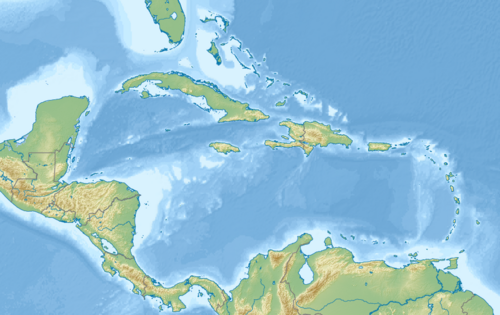






18°12′N 66°30′W / 18.2°N 66.5°W / 18.2; -66.5 (Commonwealth of Puerto Rico)