Loading article…
| サンスクリット | |
|---|---|
| संस्कृत-、サンスクリット語、サンスクタム | |
  (上) 紀元前400年~200年頃に編纂されたバガヴァッド・ギーター[ 1]のイラスト入り19世紀のサンスクリット語写本。[2] [3] (下)カルカッタにある3番目に古いサンスクリット大学、サンスクリット大学の175周年記念切手。1791年。 | |
| 発音 | [ˈsɐ̃skr̩tɐm] |
| 地域 | 南アジア(インド本土)、インド化された東南アジア、大チベット、大モンゴル、中央アジア(旧)。 |
| 時代 | 紀元前1500~600年頃(ヴェーダ語サンスクリット)[4] 紀元前700~1350年頃(古典サンスクリット)[5] |
| 復活 | サンスクリット語のネイティブ話者は知られていない。[6] [7] [8] [9] [10] [11] |
初期の形態 | |
| |
| 公式ステータス | |
公用語 |
|
少数 言語として認められている | 南アフリカ(保護言語)[14] |
| 言語コード | |
| 639-1 規格 | sa |
| 639-2 規格 | san |
| 639-3 規格 | san– 包括コード個別コード: cls – 古典サンスクリット語vsn – ヴェーダサンスクリット語 |
| グロトログ | sans1269 |
サンスクリット語(/ ˈ s æ n s k r ɪ t / ; 固有名詞はसंस्कृत-、saṃskṛta- ; [15] [16] 名目上は संस्कृतम्、saṃskṛtam、IPA: [ˈsɐ̃skr̩tɐm] [17] [b])は、インド・ヨーロッパ語族のインド・アーリア語派に属する古典言語である。[19] [20] [21]サンスクリット語は、青銅器時代後期に北西から南アジアに先行言語が広まった後に発生した。[22] [23]サンスクリットはヒンドゥー教の聖なる言語であり、古典的なヒンドゥー哲学の言語であり、仏教とジャイナ教の歴史的テキストの言語である。それは古代および中世の南アジアのリンク言語であり、中世初期にヒンドゥー教と仏教の文化が東南アジア、東アジア、中央アジアに伝わると、これらの地域の一部では宗教と高度な文化、そして政治エリートの言語となった。[24] [25]その結果、サンスクリットは南アジア、東南アジア、東アジアの言語に、特に正式な学術語彙において永続的な影響を与えた。[26]
サンスクリットは一般に、いくつかの古代インド・アーリア語の変種を暗示する。[27] [28]これらの中で最も古いのは、紀元前1500年から紀元前1200年の間に、現在のアフガニスタンからパキスタン北部を横断してインド北西部に東に移住したインド・アーリア部族によって作られた1,028の賛美歌集であるリグ・ヴェーダに見られる。[29] [30]ヴェーダ・サンスクリットは、インド亜大陸に以前から存在していた古代言語と相互作用し、新たに遭遇した動植物の名前を吸収した。さらに、古代ドラヴィダ語はサンスクリットの音韻論と統語論に影響を与えた。[31]サンスクリットは、より狭義には古典サンスクリットを指すこともある。古典サンスクリットは、紀元前1千年紀半ばに出現し、最も包括的な古代文法書である[c]パーニニのAṣṭādhyāyī (「8つの章」)に体系化された、洗練され標準化された文法形式である。[32]サンスクリットの最も偉大な劇作家カーリダーサは古典サンスクリットで著作を書き、現代算術の基礎は古典サンスクリットで初めて記述された。[d] [33]しかし、サンスクリットの2大叙事詩であるマハーバーラタとラーマーヤナは、紀元前400年から300年の間に北インドで使われていた、古典サンスクリットとほぼ同時代の、叙事詩サンスクリットと呼ばれる一連の口承物語の記録で構成されている。[34]その後数世紀にわたり、サンスクリット語は伝統に縛られ、第一言語として学習されることがなくなり、最終的には生きた言語としての発展も止まりました。[9]
リグ・ヴェーダの賛歌は、イラン語族やギリシャ語族の最も古い詩、古代アヴェスター語のガタやホメロスのイリアスと顕著に類似している。[35]リグ・ヴェーダは、並外れた複雑さ、厳密さ、忠実さを備えた暗記法によって口頭で伝えられたため、 [36] [37]異読のない単一のテキストとして、[38]その保存された古風な統語論と形態論は、共通の祖先言語であるインド・ヨーロッパ祖語の再構築において極めて重要である。[35]サンスクリットには証明された固有の文字がなく、西暦1千年紀の変わり目頃から、さまざまなブラーフミー文字で書かれ、現代では最も一般的にはデーヴァナーガリー文字で書かれてきた。[a] [12] [13]
サンスクリットの地位、機能、およびインドの文化遺産としての位置づけは、インド憲法の第8付表言語に含まれていることで認められている。[39] [40]しかし、復活の試みにもかかわらず、[8] [41]インドにはサンスクリットを第一言語とする人はいない。[8] [10] [42]インドの最近の10年ごとの国勢調査では、数千人の国民がサンスクリットを母国語であると報告しているが、[e]この数字は、言語の威信に沿うという願望を表していると考えられている。[6] [7] [8] [43]サンスクリットは古代から伝統的なグルクルで教えられており、今日では中等学校レベルで広く教えられている。最も古いサンスクリット大学は、東インド会社統治下の1791年に設立されたベナレスサンスクリット大学である。[44]サンスクリット語は、ヒンドゥー教や仏教の賛美歌や聖歌の中で、儀式や儀礼の言語として広く使われ続けています。
語源と命名法
歴史的なサンスクリット語写本:宗教文書(上)と医学文書
サンスクリット語では、動詞形容詞 sáṃskṛta-は、 sáṃ(「一緒に、良い、うまく、完成した」)とkṛta- (「作られた、形成された、作品」)からなる合成語です。 [45] [46]これは、「よく準備された、純粋で完璧な、磨かれた、神聖な」作品を意味します。[47] [48] [49]ビーダーマンによると、この単語の語源で文脈的に言及されている完璧さは、意味ではなく、音調の性質です。音声と口頭による伝達は古代インドで高く評価され、その賢者はアルファベット、単語の構造、厳密な文法を「音のコレクション、一種の崇高な音楽の型」に洗練させ、サンスクリットと名付けた統合言語にしました。[46]ヴェーダ時代後期以降、アネット・ウィルケとオリバー・モーブスによれば、共鳴音とその音楽的基礎はインドで「非常に多くの言語的、哲学的、宗教的文献」を惹きつけた。音は「すべての創造物に浸透している」ものとして視覚化され、それは世界そのもののもう一つの表現であり、ヒンドゥー教の思想の「神秘的なマグナム」であった。思考の完全性の探求と解放の目標は神聖な音の次元の中にあり、すべてのアイデアとインスピレーションを織り合わせた共通の糸は、古代インド人が完璧な言語であると信じていたサンスクリットの「音韻中心のエピステーメー」の探求となった。[50] [51]
サンスクリット語は、プラークリット語( prākṛta - ) と呼ばれる、正確さに欠ける多数のインド方言と競合した。フランクリン・サウスワースによれば、 prakrtaという用語は文字通り「本来の、自然な、普通の、素朴な」という意味である。[52]プラークリット語とサンスクリット語の関係は、紀元 1 千年紀のインドの文献に見られる。パタンジャリは、プラークリット語が最初の言語であり、その不完全さをすべて伴ってすべての子供が本能的に採用し、後に解釈や誤解の問題を引き起こす言語であることを認めた。サンスクリット語の純化構造は、これらの不完全さを排除する。たとえば、初期のサンスクリット語の文法学者ダンディンは、プラークリット語の多くは語源的にはサンスクリット語に由来しているが、「音の喪失」や「文法の無視」に起因する破損を伴うと述べている。ダンディンは、プラークリット語にはサンスクリット語とは独立して栄えている単語や紛らわしい構造があることを認めた。この見解は、古代のナティヤ・シャーストラの著者であるバラタ・ムニの著作に見られる。初期のジャイナ教学者ナミサードゥは、その違いを認めたものの、プラークリット語がサンスクリット語の転訛であるとは考えなかった。ナミサードゥは、プラークリット語はプールヴァム(「先祖、起源」)であり、子供たちに自然に伝わるものであるが、サンスクリット語は「文法による浄化」によってプラークリット語が洗練したものであると述べた。[53]
歴史
起源と発展
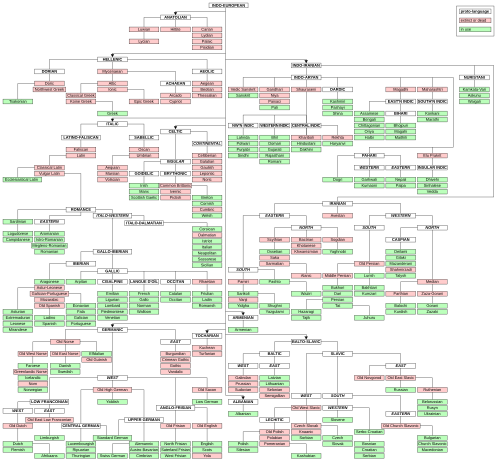
サンスクリット語はインド・ヨーロッパ語族に属し、現在インド・ヨーロッパ祖語と呼ばれる共通の語源から派生した、記録に残る最も古い3つの言語のうちの1つです。[ 19] [20] [21]
- ヴェーダ語サンスクリット語(紀元前1500年~500年頃)。
- ミケーネ古代ギリシャ語(紀元前1450年頃)[54]と古代ギリシャ語(紀元前750-400年頃)。
- ヒッタイト(紀元前1750年頃 - 紀元前1200年頃)。
サンスクリット語と遠縁のその他のインド・ヨーロッパ語族には、古ラテン語および古典ラテン語(紀元前600年頃-紀元後100年頃、イタリック語)、ゴート語(古ゲルマン語族、紀元後 350年頃)、古ノルド語(紀元後200年頃以降)、古アヴェスター語(紀元前 2千年紀後半頃[55])、新アヴェスター語(紀元前900年頃)がある。[20] [21]インド・ヨーロッパ語族の中でヴェーダ語サンスクリット語に最も近い古代の親戚は、アフガニスタン北東部のヒンドゥークシュ山脈とヒマラヤ北西部の遠隔地に見られるヌーリスタン語族の言語である[21] [56] [57]、および絶滅したアヴェスター語と古ペルシア語(どちらもイラン語)である。[58] [59] [60]サンスクリット語はインド・ヨーロッパ語族の サテム語族に属する。
ラテン語やギリシャ語に詳しい植民地時代の学者たちは、サンスクリット語が語彙と文法の両面でヨーロッパの古典語に似ていることに驚嘆した。『オックスフォード祖語入門と祖語世界』の中で、マロリーとアダムズは次のような同族語の例を挙げてその類似性を説明している[61](さらなる比較のために古英語も加えている)。
これらの対応関係は、世界のいくつかの遠い主要な古代言語の間に共通のルーツと歴史的なつながりがあることを示唆している。[f]
インド・アーリア人移住説は、サンスクリット語と他のインド・ヨーロッパ語族の共通点を、サンスクリット語の原語話者が紀元前2千年紀初期にインダス川流域の北西のどこかの共通起源地域から南アジアに移住したという説で説明する。この説の根拠には、インド・イラン語族とバルト語族およびスラヴ語族の密接な関係、非インド・ヨーロッパ語族のウラル語族との語彙交換、動植物を表すインド・ヨーロッパ語族の証明された単語の性質などがある。[63]
ヴェーダ・サンスクリット語に先立つインド・アーリア語族の先史時代は不明瞭で、さまざまな仮説によってかなり広い範囲に及んでいる。トーマス・バロウによれば、さまざまなインド・ヨーロッパ語族の関係に基づくと、これらすべての言語の起源は現在の中央ヨーロッパまたは東ヨーロッパにある可能性があり、インド・イラン語族は中央ロシアで発生した可能性がある。[64]イラン語族とインド・アーリア語族はかなり早い時期に分かれた。紀元前2千年紀前半に東イランに、そして南アジアに南下したのはインド・アーリア語族である。古代インドに到達すると、インド・アーリア語族は急速な言語的変化を遂げ、ヴェーダ・サンスクリット語に変化した。[65]
ヴェーダ語サンスクリット語
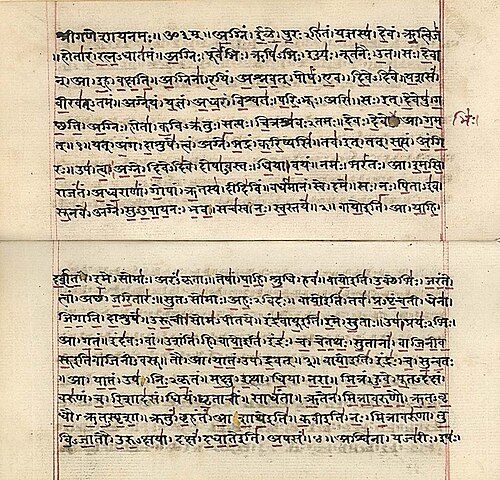
サンスクリットの古典以前の形態はヴェーダ・サンスクリットとして知られている。最も古いサンスクリットの文献は紀元前2千年紀中期から後期にかけてのヒンズー教の聖典リグ・ヴェーダである。このような初期の時代の記録は残っていないが、学者たちは一般に、文献の口頭伝承は信頼できると確信している。文献は儀式用の文学であり、正確な音声表現とその保存は歴史的伝統の一部であった。[66] [67] [68]
しかし、一部の学者は、オリジナルのリグ・ヴェーダは、現在入手可能な唯一の現存版と比較して、音韻の点でいくつかの基本的な点で異なっていると主張している。特に、逆屈折子音は最古のヴェーダ語の自然な一部としては存在せず、[69]これらは、作曲が完成してから数世紀後に、何世代にもわたる朗読者による口頭伝承の過程で徐々に無意識のうちに発達したという。[要出典]
この議論の主な根拠は、テキストの内部証拠であり、逆屈折現象の不安定性を示しており、同じフレーズが一部ではサンディ誘発逆屈折を起こしているが、他の部分では起こっていない。 [ 70]これは、例えばアイタレヤ・アーラニャカ(紀元前700年)の文章における論争の証拠とともに取り上げられており、特定のケースで逆屈折が有効かどうかについての議論が取り上げられている。[71]
リグ・ヴェーダは複数の著者によって書かれた本のコレクションである。これらの著者は異なる世代を代表しており、マンダラ2から7が最も古く、マンダラ1と10は比較的新しい。[72] [73]しかし、サンスクリット文学、特にリグ・ヴェーダの研究で知られるインド学者ルイ・ルヌーは、リグ・ヴェーダのこれらの本のヴェーダ語サンスクリット語には「方言の多様性はほとんど見られない」と述べている。ルヌーによると、これはヴェーダ語サンスクリット語が紀元前2千年紀後半までに「定まった言語パターン」を持っていたことを意味している。[74]リグ・ヴェーダ以外にも、現代まで残っているヴェーダ語サンスクリット語の古代文献には、サマヴェーダ、ヤジュルヴェーダ、アタルヴァヴェーダ、そしてブラフマナ、アーラニヤカ、初期のウパニシャッドなどの埋め込まれた階層化されたヴェーダのテキストがあります。[66]これらのヴェーダ文書は、インド亜大陸の北西部、北部、東部のさまざまな地域で見られるサンスクリット語の方言を反映しています。[75] [76]
マイケル・ヴィッツェルによれば、ヴェーダ・サンスクリットは半遊牧民のアーリア人が話していた言語で、彼らは一時的に一箇所に定住し、牛の群れを飼育し、限られた農業を営み、しばらくして幌馬車隊で移動し、グラマと呼んだ。[77] [78]ヴェーダ・サンスクリット語またはそれに近いインド・ヨーロッパ語族の変種は、古代インドを超えて認識されていた。その証拠として、現在のシリアとトルコの一部を含む地域で、古代ヒッタイト人とミタンニ人の間で結ばれた「ミタンニ条約」が岩に刻まれている。[79] [g]この条約の一部、例えばミタンニ王子の名前や馬の調教に関する専門用語は、理由は不明だが、ヴェーダ・サンスクリットの初期形態で書かれている。この条約ではまた、ヴェーダ文献の最初期の層に見られるヴァルナ、ミトラ、インドラ、ナサティヤの神々についても言及されている。 [79] [81]
ブリハスパティよ、名前をつけるとき
彼らは言語の始まりを最初に示し、
彼らの最も優れた、汚れのない秘密
愛によって明らかにされた、
賢者たちが心で言語を形成したとき、
それを箕で穀物を清めるように、
そして友人は友情を知る -
彼らの言語に付けられた縁起の良い印。
—リグ・ヴェーダ10.71.1–4
ロジャー・ウッダード訳[82]
リグ・ヴェーダに見られるヴェーダ語のサンスクリットは、他のヴェーダ文献よりも明らかに古風で、多くの点で、リグ・ヴェーダの言語は、古代アヴェスター語のゾロアスター教の ガタスやホメロスのイリアスとオデュッセイアなどの古風な文献に見られる言語と著しく類似している。[83]リグ・ヴェーダの翻訳で知られるインド学者のステファニー・W・ジェイミソンとジョエル・P・ブレレトンによると、ヴェーダ語のサンスクリット文学は、詩人や僧侶の役割、パトロン経済、句の等式、いくつかの詩の韻律などの社会構造をインド・イラン語族とインド・ヨーロッパ語族の時代から「明らかに受け継いだ」という。[84] [h]ジェイミソンとブレレトンは、類似点がある一方で、ヴェーダ語のサンスクリット、古代アヴェスター語、ミケーネ文明のギリシャ文学には違いもあると述べている。例えば、リグ・ヴェーダのサンスクリット語の直喩とは異なり、古代アヴェスター語のガタには直喩がまったくなく、後期の言語でも稀にしか見られません。ホメロス語のギリシア語はリグ・ヴェーダのサンスクリット語と同様に直喩を多用していますが、構造的には非常に異なります。[86]
古典サンスクリット語

サンスクリット語の初期のヴェーダ語は、紀元前1千年紀中頃までに文法学者によって定義された古典サンスクリット語に比べて、はるかに均質性が欠けていた。インド学者でサンスクリット語、パーリ語、仏教学の学者であるリチャード・ゴンブリッチによると、リグ・ヴェーダに見られる古風なヴェーダ・サンスクリット語は、後期のヴェーダ文献に見られるように、ヴェーダ時代にすでに進化していたという。ゴンブリッチは、ヒンドゥー教の初期ウパニシャッドと後期ヴェーダ文献の言語は古典サンスクリット語に近づいているが、古風なヴェーダ・サンスクリット語は、仏陀の時代までに、古代インドの賢者以外には理解できないものになっていたとしている。[87]
サンスクリット語の形式化は、パタンジャリの『マハーバーシャ』と、パタンジャリの著作に先立つカティヤーナの注釈とともに、パーニニの功績とされている。 [88]パーニニは『アシュターディヤーイー』(「八章文法」)を著した。彼が生きた世紀は不明で議論の余地があるが、彼の著作は紀元前6世紀から4世紀の間に書かれたものと一般に認められている。[89] [90] [91]
アシュターディヤーイーはサンスクリットの文法を最初に記述したものではないが、完全に現存する最古のものであり、フォートソンが言うところの「古代世界の知的驚異の一つ」である長い文法の伝統の集大成である。[92]パーニニは、彼以前のサンスクリット語の音韻と文法の側面、およびインドのさまざまな地域でのサンスクリット語の使用法の変種について10人の学者を引用している。[93]彼が引用する10人のヴェーダ学者とは、アーピシャリ、カシヤパ、ガルギャ、ガーラヴァ、チャクラヴァルマナ、バーラドヴァージャ、シャーカターヤナ、シャーカリャ、セーナカ、スポーターヤナである。[94] [95]パニニのアシュターディヤーイーは、ヴェーダーンガ(聖典)であるヴィヤーカラナの基礎となった。[93]
アシュターディヤーイーでは、言語はギリシャ語やラテン語の文法学者には類を見ない方法で観察されている。ルヌーとフィリオザットによれば、パーニニの文法は言語表現を定義し、サンスクリット語の基準を定めた古典である。[96]パーニニは、統語論、形態論、語彙からなる専門的メタ言語を利用した。このメタ言語は一連のメタルールに従って構成されており、そのうちのいくつかは明示的に述べられており、他のものは推測できる。[97]現代言語学の分析とは異なっているにもかかわらず、パーニニの研究は価値があり、20世紀まで言語学の最も先進的な分析であるとみなされてきた。[92]
パーニニの包括的かつ科学的な文法理論は、伝統的に古典サンスクリットの始まりを示すものとみなされている。[98]彼の体系的な論文は、サンスクリットを2千年にわたってインドの学問と文学の卓越した言語にし、影響を与えた。[99]パーニニ自身が論文を書いたのか、詳細で洗練された論文を口頭で作成し、それを弟子を通して伝えたのかは不明である。現代の学問では、Aṣṭādhyāyīの第3.2節にあるLipi(「文字」)やlipikara(「書記」)などの単語の言及に基づいて、彼が何らかの書き方を知っていたと一般的に認められている。[100] [101] [102] [i]
ルヌーは、パーニニが形式化した古典サンスクリット語は「貧弱な言語ではなく、むしろ「古風な表現や不必要な形式上の代替表現が排除された、統制された抑制された言語」であると述べている。[109]古典サンスクリット語はサンディ規則を簡素化しながらも、ヴェーダ語のさまざまな側面を保持し、厳格さと柔軟性を追加したため、考えを表現するのに十分な手段を持ち、「無限に多様化する文学の将来の高まる需要に応えることができる」とルヌーは述べている。パーニニは、ヴェーダサンスクリット語のバフラム枠組みを超えて、自由と創造性を尊重するために多数の「オプションの規則」を含め、伝統がサンスクリット語の競合形式に従う中、地理や時間によって隔てられた個々の作家が事実や見解を独自の方法で表現する選択肢を持つようにした。[110]
現存する文献の現状から判断すると、ヴェーダ・サンスクリットと古典サンスクリットの音声上の違いは、[71]ヴェーダ以前の時代にインド・アーリア祖語とヴェーダ・サンスクリットの間で起こったであろう激しい変化に比べれば取るに足らないものである。[111]ヴェーダ・サンスクリットと古典サンスクリットの顕著な違いには、大幅に拡張された文法と文法範疇、およびアクセント、意味論、統語論の違いがある。[112]また、名詞と動詞の一部の語尾の付け方や、内部および外部の連接規則にも若干の違いがある。[112]初期ヴェーダ・サンスクリット語に見られる単語の多くは、後期ヴェーダ・サンスクリットや古典サンスクリット文献には見られず、一部の単語は、文脈的に初期ヴェーダ・サンスクリット文献と比較すると、古典サンスクリットでは異なる新しい意味を持つ。[112]
アーサー・マクドネルは、植民地時代初期の学者の一人で、ヴェーダ語と古典サンスクリット語の相違点のいくつかをまとめた。[112] [113]ルイ・ルヌーは1956年にフランス語で、ヴェーダ語時代とその後の古典サンスクリット語におけるヴェーダ語の類似点、相違点、進化について、歴史に対する自身の見解とともにより広範囲にわたる議論を出版した。この作品はジャグバンス・バルビールによって翻訳されている。[114]
サンスクリット語とプラークリット語



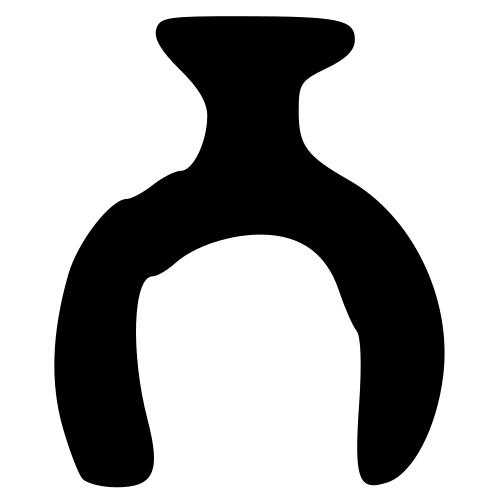 サンスクリタ
ヤショダルマン・ヴィシュヌヴァルダナのマンサウルスの石碑、西暦532年。[115]
サンスクリット(サンスクリット)という言葉が話し言葉や言語の文脈で使われている最も古い例は、『ラーマーヤナ』第5章第28節第17~19節である。[16]古典サンスクリットの書き言葉の学問的範囲の外では、俗語の口語(プラークリット)が進化し続けた。サンスクリットは古代インドの数多くの他のプラークリット語と共存していた。インドのプラークリット語も古代のルーツを持ち、一部のサンスクリット学者はこれらをアパブラムサ(文字通り「甘やかされた」)と呼んでいる。[116] [117]ヴェーダ文献には、他のインド・ヨーロッパ語族には音声的に同義語がないが、地域のプラークリット語には見られる単語が含まれており、言葉や考えの交流や共有はインドの歴史の早い時期に始まった可能性が高い。インドの思想が多様化し、特に仏教やジャイナ教の形でヒンドゥー教の以前の信仰に挑戦するにつれて、上座部仏教のパーリ語やジャイナ教のアルダマーガディ語などのプラークリット語は古代にサンスクリット語と競合した。[118] [119] [120]しかし、ジャイナ教の学者ポール・ダンダスは、これらの古代プラークリット語は「中世イタリア語とラテン語の関係とほぼ同じ関係をサンスクリット語に持っていた」と述べている。[120]インドの伝統では、釈迦とマハーヴィーラは誰もが理解できるようにプラークリット語を好んだとされている。しかし、ダンダスなどの学者はこの仮説に疑問を抱いている。彼らは、これには証拠がなく、入手可能な証拠が何であれ、紀元前までには、学識のある僧侶以外にアルダマーガディ語などの古いプラークリット語を理解する能力を持つ人はほとんどいなかったと述べている。[120]
植民地時代の学者たちは、サンスクリットが話し言葉であったのか、それとも単なる文語であったのかを疑問視した。[121]学者たちはその答えに意見が分かれている。一部の西洋の学者は、サンスクリットは話し言葉ではなかったと述べる一方、他の学者、特にほとんどのインドの学者はその反対を述べている。[122]サンスクリットが方言であったと断言する人々は、古代インドの膨大な数のサンスクリット写本を保存してきた口頭伝承にとって、サンスクリットが話し言葉である必要性を指摘する。第二に、彼らは、ヤクサ、パニーニ、パタナジャリの著作のテキスト証拠が、彼らの時代の古典サンスクリットは教養のある人々が話す(バシャ)言語であったことを裏付けている、と述べている。いくつかの経典は、サンスクリットの話し言葉と書き言葉のさまざまな形式について解説している。[122] 7世紀の中国の仏教徒玄奘三蔵は回想録の中で、インドにおける公式の哲学論争は、その地域の方言ではなくサンスクリット語で行われていたと述べています。[122]
サンスクリット語学者のマダブ・デシュパンデ教授によると、サンスクリット語は紀元前1千年紀半ばまでに口語の形で話し言葉となり、より形式的で文法的に正しい形のサンスクリット語の文学的形態と共存していた。[123]デシュパンデによれば、これは現代の言語にも当てはまり、口語の不正確な近似や方言が話され理解される一方で、文学作品には同じ言語のより「洗練され、洗練され、文法的に正確な」形態が見られる。[123]ウィンターニッツ(1996)によれば、インドの伝統では古代から複数の言語の学習と使用が好まれてきた。サンスクリットは知識階級やエリート階級で話されていた言語でしたが、より広い社会で理解されていたに違いない言語でもありました。なぜなら、ラーマーヤナ、マハーバーラタ、バガヴァタ・プラーナ、パンチャタントラなど、広く親しまれている民間叙事詩や物語、その他多くのテキストがすべてサンスクリット語で書かれているからです。[124]厳格な文法を持つ古典サンスクリットは、インドの学者や知識階級の言語であり、他の人々は、サンスクリットの近似または非文法的変種、および他の自然インドの言語でコミュニケーションをとっていました。[123]このように、古代インドの学問言語としてのサンスクリットは、方言のプラークリット語と共存していました。[123]多くのサンスクリット劇は、この言語が方言のプラークリット語と共存していたことを示しています。バラナシ、パイタン、プネー、カンチプラムの各都市は、植民地時代が到来するまで、古典的なサンスクリットの学問と公的な討論の中心地でした。[125]
インド学者で仏教学者のラモット(1976)によると、サンスクリット語はコミュニケーションの正確さから、文学や碑文の言語として主流になった。ラモットは、サンスクリット語は思想を表現するのに理想的な手段であり、サンスクリット語の知識が増えるにつれて、その広がりと影響力も高まったと述べている。[126]サンスクリット語は、高度な文化、芸術、そして深遠な思想の媒体として自発的に採用された。ポロックはラモットの意見に反対しているが、サンスクリット語の影響力が、南アジア全体と東南アジアの大部分を含む地域に「サンスクリット・コスモポリス」と呼ばれるものへと成長したという点では同意している。サンスクリット語コスモポリスは、西暦 300 年から 1300 年の間にインドを超えて繁栄した。[127]
現在、カシミール語はサンスクリット語に最も近い言語であると考えられています。[128] [129] [130]
サンスクリット語へのドラヴィダ語の影響
ラインオールは、ドラヴィダ語はサンスクリット語の語彙を借用しただけでなく、構造のより深いレベルでサンスクリット語に影響を与えたと述べている。「例えば、音韻論の領域では、インド・アーリア語の逆屈折音はドラヴィダ語の影響によるものとされている」。[131]同様に、フェレンツ・ルズカは、2000年にわたるインド・アーリア語の音声学におけるすべての大きな変化は、タミル語と類似した音声構造を持つドラヴィダ語の絶え間ない影響に起因すると述べている。 [132]ホックらは、ジョージ・ハートを引用して、サンスクリット語には古代タミル語の影響があったと述べている。 [133]ハートは、古代タミル語と古典サンスクリット語を比較して、これらの特徴の両方が由来する共通の言語があったという結論に達した。「タミル語とサンスクリット語は、共通の慣習、韻律、技法を共通の源から得た。どちらも、他方から直接借用したわけではないことは明らかである」。[134]
ラインオールはさらに、カンナダ語やタミル語などのドラヴィダ語とベンガル語やヒンディー語などのインド・アーリア語の間には対称的な関係があるが、ペルシア語や英語などの非インド・アーリア語には同様の関係は見られないと述べています。
タミル語やカンナダ語などのドラヴィダ語の文は、語順を変えずにドラヴィダ語の単語や形式をベンガル語やヒンディー語の同義語に置き換えることで、通常は適切なベンガル語やヒンディー語になります。しかし、ペルシア語や英語の文を非インド・アーリア語に翻訳する場合は同じことはできません。
— ライノール[131]
シュルマンは、「ドラヴィダ語の非限定動詞形式(タミル語でvinaiyeccamと呼ばれる)は、サンスクリット語の非限定動詞(もともとはヴェーダ語の動作名詞の屈折形に由来)の使用法を形作った。ドラヴィダ語がサンスクリットに影響を与えた可能性のあるこの顕著な例は、多くの統語的同化項目のうちの1つに過ぎないが、特に、探し方さえわかれば、古典サンスクリットと古典後サンスクリットのどこにでも見つけられる、形態的様相と相の大きなレパートリーは重要である」と述べている。[135]
ドラヴィダ語がサンスクリットに与えた主な影響は、後期ヴェーダ時代から古典サンスクリットの結晶化までの期間に集中していたことが分かっている。この時期にはインド・アーリア人部族はまだインド亜大陸南部の住民と接触していなかったため、北インド(中央ガンジス平原と古典マディヤーデーシャ)にはドラヴィダ語話者がかなり存在し、サンスクリットへのこの根本的な影響に重要な役割を果たしていたことが示唆されている。[136]
影響
サンスクリット語で現存する写本の数は3,000万点を超え、これはギリシャ語とラテン語を合わせた数の100倍にあたり、印刷機が発明される以前にあらゆる文明が生み出した最大の文化遺産を構成しています。
—サンスクリット計算言語学(2009)の序文、Gérard Huet、Amba Kulkarni、Peter Scharf [137] [138] [j]
サンスクリットは、哲学や宗教のテキスト、詩、音楽、演劇、科学、技術などの豊かな伝統を包含するヒンドゥー教のテキストの主要言語である。 [140] [141]サンスクリットは、歴史的写本の最大のコレクションの1つで主要言語となっている。サンスクリットで書かれた最も古い碑文は、紀元前1世紀のものであり、例えばダナのアヨーディヤー碑文とゴースンディ・ハティバダ(チットールガル)碑文がある。[142]
サンスクリット語はヒンズー教の正統派の学者によって開発され、育まれてきたが、仏教やジャイナ教などインド哲学の異端派の主要な文学作品や神学の言語でもあった。[143] [144]古典サンスクリット語の構造と能力は、「言語の性質と機能」、話者のコミュニティの文脈における単語とその意味の関係は何か、この関係は客観的か主観的か、発見されたものか創造されたものか、個人が言語を通じて周囲の世界を学び、関わる方法、そして言語の限界について、古代インドで思索が始まった。[143] [145]彼らは、言語の役割、音を通じて言葉のイメージを描くことの存在論的地位、そして地理や時間によって隔てられた話者のコミュニティがお互いの深遠な考えを共有し理解するための手段として言語が役立つようにするための規則の必要性について思索した。[145] [k]これらの推測は、ヒンドゥー哲学のミーマーンサー学派とニヤーヤ学派、そして後にはヴェーダーンタ仏教と大乗仏教にとって特に重要になったと、インド哲学とサンスクリットを専門とする言語学者フリッツ・スタールは述べています。 [143]ヒンドゥー教のテキストはさまざまな文字で書かれていますが、主にサンスクリット語が使用されています。サンスクリット語またはサンスクリット語の混合形式が、大乗仏教の研究で好まれる言語になりました。[148]たとえば、初期の影響力のある仏教哲学者の1人であるナーガールジュナ(約200年)は、古典サンスクリット語をテキストの言語として使用しました。[149]ルヌーによると、サンスクリット語は上座部仏教(以前は小乗仏教と呼ばれていました)の伝統では限られた役割しか果たしていませんが、生き残ったプラークリット語の作品の信憑性は疑わしいものです。 20世紀に発見された初期仏教の正典の断片の一部は、初期仏教の伝統が不完全だがかなり良いサンスクリット語、時にはパーリ語の構文を使用していたことを示唆しているとルヌーは述べている。後期小乗仏教の形態であるマハーサーンギカとマハーヴァストゥは、文学に混合サンスクリット語を使用していた。[150]サンスクリットはまた、ウマスワティのタットヴァルタ・スートラなど、現存する最古の権威ある多くの支持を受けているジャイナ教の哲学作品の言語でもあった。[l] [152]

サンスクリット語はアジアの歴史において、知識や思想を伝える主要な手段の一つであった。サンスクリット語で書かれたインドの文献は、すでに402年に中国に渡っており、有力な仏教徒の巡礼者法顕によって持ち込まれ、 418年には中国語に翻訳された。[156] もう一人の中国仏教徒巡礼者である玄奘三蔵はインドでサンスクリット語を学び、7世紀には657冊のサンスクリット語文献を中国に持ち込み、太宗皇帝の庇護の下、学問と言語翻訳の主要な中心地を設立した。 [157] [158]紀元1千年紀初頭までに、サンスクリット語は仏教とヒンズー教の思想を東南アジア、[159]東アジアの一部[160]および中央アジアに広めた。[161]サンスクリット語は高度な文化の言語として受け入れられ、これらの地域の一部の地元支配層エリートによって好まれる言語となった。[162]ダライ・ラマによれば、サンスクリット語はインドの多くの現代言語の基礎となった母語であり、インドの思想を他の遠い国々に広めた言語である。ダライ・ラマによれば、チベット仏教ではサンスクリット語は崇拝されており、レジャル・ライ・カ(神の優雅な言語)と呼ばれている。サンスクリット語は「仏教哲学の深遠な知恵」をチベットに伝える手段であった。[163]

サンスクリット語は、地域的にしか理解されていなかったプラークリット語とは対照的に、古代および中世において、インド・アーリア人が情報や知識にアクセスできるようにした。[125] [166]それは亜大陸全体に文化的なつながりを生み出した。[166]現地の言語や方言が進化し多様化するにつれ、サンスクリットは共通言語としての役割を果たした。[166]デシュパンデは、サンスクリット語はタミル・ナードゥ州やカシミール州など南アジアの遠隔地の学者や、異なる研究分野の学者を結びつけたが、それぞれの話者の母国語を考えると、発音には違いがあったに違いないと述べている。サンスクリット語は、インド・アーリア語を話す人々、特にそのエリート学者を結びつけた。[125]これらのインド史学者の中には、より広い聴衆に届くように、地域特有のサンスクリット語を作成した者もいた。これは、ラジャスタン州、グジャラート州、マハラシュトラ州で発見された文書によって証明されている。聴衆がサンスクリットのより理解しやすい方言版に慣れ親しんだ後、興味のある人は口語サンスクリットからより高度な古典サンスクリットへと進むことができます。儀式や通過儀礼は、幅広い層の人々がサンスクリットを聞き、時にはナマなどのサンスクリット語を話す機会であり続けています。[125]
古典サンスクリットは、紀元前4世紀頃のパーニニの文法書に定められた標準的な言語である。 [167]大インドの文化におけるサンスクリットの位置は、ヨーロッパにおけるラテン語や古代ギリシャ語に似ている。サンスクリットは、インド亜大陸のほとんどの現代言語、特にインド亜大陸の北部、西部、中部、東部の言語に大きな影響を与えてきた。 [168] [169] [170]
衰退
サンスクリット語は13世紀頃から衰退し始めた。[127] [171]これは、イスラム教が南アジアに侵攻し、スルタン国、そして後にムガル帝国という形でイスラム教の支配を拡大し始めた時期と一致している。[172]シェルドン・ポロックは、サンスクリット語の衰退を長期的な「文化的、社会的、政治的変化」と特徴づけている。彼は、サンスクリット語が「野蛮な侵略者との闘争」のために衰退したという考えを否定し、文学的表現における方言の魅力が増したなどの要因を強調している。[173]
サンスクリット文学の創作の中心地であったカシミールが13世紀頃に陥落すると、同地のサンスクリット文学は姿を消した。[174]おそらく「カシミールの首都を定期的に襲った火災」か「1320年のモンゴル侵攻」が原因だろうとポロックは述べている。[175]かつてはインド亜大陸の北西部から広く普及していたサンスクリット文学は、12世紀以降は途絶えた。[176]東インドと南インドのヒンドゥー王国、例えばヴィジャヤナガル帝国が滅亡すると、サンスクリットも滅びた。[174]例外的にサンスクリットに対する帝国の支援が短期間あったが、そのほとんどは寛容なムガル帝国のアクバル皇帝の治世中に集中していた。[177]イスラム教の支配者たちはペルシャやアラビアで発見された中東の言語と文字を後援し、インド人はイスラム教の支配者たちのもとで雇用を得るためにこのペルシャ化に言語的に適応した。[178]マラーター王国のシヴァージーなどのヒンドゥー教の支配者は、サンスクリット語を再採用し、社会言語的アイデンティティを再主張することで、このプロセスを逆転させました。[178] [179] [180]南アジアでイスラム支配が崩壊し、植民地支配の時代が始まると、サンスクリット語はベンガルなどの地域で「幽霊のような存在」の形で再出現しました。この衰退は、歴史的なサンスクリット文学文化をサポートしなかった「政治制度と市民精神」[174]と、新しいサンスクリット文学が変化する文化的および政治的環境に同化できなかった結果でした。[173]
シェルドン・ポロックは、ある重要な意味で「サンスクリットは死んだ」と述べています。[181] 12世紀以降、サンスクリット文学作品は、すでに探求されたアイデアの「再記譜と再表現」に限定され、創造性は賛美歌と詩に限定されました。これは、古典サンスクリットを使用したインドの学問において「道徳的および美的想像力の偉大な実験」が特徴的であった過去1,500年間とは対照的であるとポロックは述べています。[176]
学者たちは、サンスクリット語は消滅したのではなく、衰退しただけだと主張している。ユルゲン・ハンネダーはポロックの主張に反対し、彼の議論は洗練されているが「しばしば恣意的」であると考えている。ハンネダーによると、創造的で革新的な文学の衰退や地域的な欠如はポロックの仮説に対する否定的な証拠となるが、肯定的な証拠ではない。12世紀以降のインドの歴史におけるサンスクリット語を詳しく見ると、サンスクリット語は困難にもかかわらず生き残ったことがわかる。ハンネダーによると、[182]
より一般のレベルで、サンスクリット語が死語であるという主張は誤解を招くものである。なぜなら、サンスクリット語は明らかに他の死語ほど死んではいないし、話され、書かれ、読まれているという事実は、おそらく、最も一般的な用法では死語ではないとほとんどの人に納得させるだろうからである。ポロックの「サンスクリット語の死」という概念は、学問の世界と世論の間のこの不明確な領域にとどまっており、彼は「ほとんどの観察者は、ある重要な点でサンスクリット語は死んでいることに同意するだろう」と述べている。[174]
サンスクリット語の写本は、さまざまな文字で存在します。上から順に、イシャ・ウパニシャッド(デーヴァナーガリー文字)、サマヴェーダ(タミル・グランタ文字)、バガヴァッド・ギータ(グルムキー文字)、ヴェーダーンタ・サーラ(テルグ文字)、ジャータカマーラ(初期のシャラダ文字)。最後の仏教のテキストを除き、すべてヒンドゥー教のテキストです。
サンスクリット語学者のモリツ・ウィンターニッツは、サンスクリット語は死語ではなく、古代や中世ほど普及していないものの、今も生き続けていると述べている。サンスクリット語は、ヒンドゥー教の雑誌、祭り、ラムリーラ劇、演劇、儀式、通過儀礼の不可欠な部分であり続けている。[183] 同様に、ブライアン・ハッチャーは、ポロックの「歴史的断絶の比喩」は有効ではなく、13世紀から18世紀の間に生き残ったヒンドゥー王国の狭い範囲内でサンスクリット語が非常に生き生きとしていたという十分な証拠があり、その尊敬と伝統が続いていると述べている。[184]
ハンネダーは、サンスクリット語の近代作品は無視されるか、その「近代性」が疑問視されていると述べている。[185]
ロバート・P・ゴールドマンとサリー・サザーランドによれば 、サンスクリット語は従来の意味では「死んでいる」わけでも「生きている」わけでもない。サンスクリット語は、数多くの写本、日常の聖歌、儀式の朗唱の中に息づく、特別な、時代を超越した言語であり、インド人が文脈上高く評価し、一部の人々が実践している伝統言語である。 [186]
19世紀にイギリス人がインドに英語を紹介すると、サンスクリット語の研究はより伝統的なスタイルからヨーロッパのそれを反映した分析的かつ比較的な学問の形へと変化し、サンスクリット語と古代文学の知識は引き続き繁栄しました。[187]
現代インド・アーリア語
サンスクリット語とプラークリット語、特に現代のインド諸語との関係は複雑で、約3,500年にわたると、南アジア言語を専門とする言語学者コリン・マシカは述べている。困難さの一因は、パーリ語などのまれな例外を除いて、古代プラークリット語に関する十分なテキスト、考古学、碑文学的証拠が欠如していることで、時代錯誤の傾向につながっている。[188]サンスクリット語とプラークリット語は、古期インド・アーリア語(紀元前1500年~紀元前600年)、中期インド・アーリア語(紀元前600年~紀元後1000年)、新期インド・アーリア語(紀元後1000年~現在)に分けられ、それぞれがさらに初期、中期または第2、後期の進化段階に細分化できる。[188]
ヴェーダ・サンスクリットは前期古期インド・アーリア語に属し、古典サンスクリットは後期古期インド・アーリア語に属する。パーリ語(上座部仏教)やアルダマーガディ語(ジャイナ教)などのプラークリット語は、マガディ語、マハーラーシュトリ語、シンハラ語、サウラセニ語、ニヤ語(ガンダーラ語)とともに、中期インド・アーリア語段階で2つのバージョン(古風なものとより形式化されたもの)で出現し、紀元前600年から紀元後1000年までの期間の初期と中期のサブステージに位置付けられる可能性がある。[188] 2つの文学的インド・アーリア語は、後期中期インド・アーリア語段階に遡ることができ、アパブラムサ語とエル語(シンハラ語の文学的形式)である。ヒンディー語、グジャラート語、シンド語、パンジャブ語、カシミール語、ネパール語、ブラージ語、アワディ語、ベンガル語、アッサム語、オリヤー語、マラーティー語など、北インド、中央インド、東インド、西インドの多くの言語が新インド・アーリア語段階に属します。[188]
これらの新インド・アーリア語の語彙、音声、その他の面はサンスクリット語と広範囲に渡って重複しているが、それは言語間で普遍的でも同一でもない。これらは、古代サンスクリット語の伝統と様々な地方の方言の混合から生まれたものと思われる。各言語には、起源がはっきりしない、独自で地域的に創造的な側面がある。プラークリット語には文法構造があるが、ヴェーダ・サンスクリット語と同様に、古典サンスクリット語ほど厳密ではない。すべてのプラークリット語のルーツはヴェーダ・サンスクリット語、そして究極的には祖インド・アーリア語にあるかもしれないが、その構造の詳細は古典サンスクリット語とは異なる。[28] [188]ベンガル語、グジャラート語、ヒンディー語、パンジャブ語などの現代のインド・アーリア語はサンスクリット語の子孫であるというのが、学者の間では一般的に受け入れられており、インドでも広く信じられている。[189] [190] [191]ブルジョール・アヴァリによれば、サンスクリット語は「北インドのほぼすべての言語の母国語」と言える。[192]
地理的分布

サンスクリット語の歴史的存在は、南アジアを超えて広い地域で証明されています。碑文や文学的証拠は、サンスクリット語が西暦1千年紀にすでに僧侶、宗教巡礼者、商人を通じて東南アジアと中央アジアで採用されていたことを示唆しています。[193] [194] [195]
南アジアは、古代および18世紀以前のサンスクリット語の写本や碑文の最大のコレクションの地理的範囲です。[139]古代インド以外にも、中国(特にチベットの僧院)、[196] [197] ミャンマー、[198] インドネシア、[199] カンボジア、[200] ラオス、[201] ベトナム、[202] タイ、[203]マレーシアでサンスクリット語の写本と碑文の重要なコレクションが見つかっています。[201]サンスクリット語の碑文、写本またはその残骸は、ネパール、[204] [205] [m]チベット、[197] [206]アフガニスタン、[207] [208]モンゴル、[209]ウズベキスタン、 [210]トルクメニスタン、タジキスタン、[210 ]カザフスタンなどの乾燥した高地砂漠や山岳地帯で発見されています。[211]サンスクリット語のテキストや碑文は、韓国や日本でも発見されています。[212] [213] [214]
公式ステータス
インドでは、サンスクリットは憲法第8条に定められたインドの22の公用語の1つである。[215] 2010年、ウッタラーカンド州はインドで初めてサンスクリットを第二公用語とした州となった。[216] 2019年、ヒマーチャル・プラデーシュ州はサンスクリットを第二公用語とし、インドで2番目にサンスクリットを第二公用語とした州となった。[217]
音韻論
サンスクリット語は、多くの音韻的特徴をインド・ヨーロッパ祖語と共有しているが、異なる音素の数はより多い。子音体系も同じだが、異なる音の数は体系的に増えている。例えば、サンスクリット語は、印欧祖語に見られる無声音「t」、有声音「d」、有声音無声音「dʰ」に加えて、無声音「tʰ」を追加した。[218]
サンスクリットにおける最も重要で特徴的な音韻的発展は母音の融合である。[218]サンスクリットでは、短い*e、*o、*a はすべてa (अ)として融合し、長い*ē、*ō、*ā はすべて長いā (आ)として融合する。サンスクリットのnāman をラテン語のnōmenと比較するとよい。これらの融合は非常に早い時期に起こり、サンスクリットの形態論システムに大きな影響を与えた。[218]サンスクリットの音韻的発展の一部は、他のパイ・イースタン言語のものと似ている。たとえば、他のサテム言語と同様に、唇軟口蓋音は平軟口蓋音と融合した。結果として生じる分節の二次口蓋化は、サンスクリット内ではより徹底的かつ体系的である。[218]たとえば、初期ギリシャ語や関連する南東ヨーロッパの言語に見られる母音短縮による形態論的明瞭性の喪失とは異なり、サンスクリットでは形態論的明瞭性を提供するために母音間に*y、*w、*sが使用された。[218]
母音

サンスクリットでは、基本母音(スヴァラ)のi (इ)、u (उ)、a (अ) が長さを区別する。[219] [220]サンスクリットの短母音a (अ) は、 ā よりも近い母音で、シュワーに相当する。サンスクリットの中母音 ē (ए) と ō (ओ) は、インド・イラン語の二重母音*aiと*auの単母音化である。古代イラン語では*aiと*au が保存されている。[219]サンスクリットの母音は本来長いが、しばしば分音記号なしでeとoに転写される。サンスクリットの母音流動音r̥ は、インド・イラン語の*r̥と*l̥が融合したものである。長母音r̥ は新機軸であり、類推的に生成されたいくつかの形態論的カテゴリーで使用されている。[219] [221] [222]
マシカによれば、サンスクリット語には伝統的な半母音が 4 つあり、これらは「形態音韻上の理由から、流動音として y、r、l、v に分類された。つまり、y と v が i、u に対応する非音節音節であったように、r、l は r̥ と l̥ に対応する非音節音節音節であった」。[227]北西、中央、東部のサンスクリット方言では、「r」と「l」が歴史的に混同されてきた。中央方言に倣ったパニニ語体系では、おそらく「r」と「l」を区別するヴェーダ語サンスクリットへの敬意から、区別が維持された。しかし、北西方言には「r」しかなく、東部方言にはおそらく「l」しかなかったとマシカは述べている。したがって、古代インドのさまざまな地域の文学作品では、「r」と「l」の使用に一貫性がなく、意味的に区別される二重語が時々生じる。[227]
子音
サンスクリット語は、音の発音方法に基づいて対称的な子音音素構造を持っていますが、これらの音の実際の使用法は、言語内の歴史的な変化に起因する可能性のある、表面的な対称性における平行性の欠如を隠しています。[228]
サンスクリット語には歯音の条件付き交替音として始まった一連の反り返る破裂音があったが、サンスクリット語ではそれらは音素化していた。[228]
口蓋破裂音に関しては、発音が議論の的となっている。現代の証拠では、口蓋破裂音は、ほとんどのサンスクリット語の連音規則によってサポートされている、規則的な一連の口蓋破裂音である。しかし、子孫言語の反射音や、chに関する連音規則のいくつかは、破擦音の発音を示唆している可能性がある。
jh はサンスクリット語では境界音素であったため、その音韻を再構築するのはより困難です。音韻過程の結果、中期インド・アーリア語族ではより一般的に使用されていました。
口蓋鼻音は口蓋閉塞音の次に現れるnの条件付き変形である。[228]サンスクリットが使用するanusvaraは、一定のサンディ条件下での母音後鼻音の条件付き交替音である。[229]そのvisargaは、一定のサンディ条件下でのsとrの語末または形態素末尾の条件付き交替音である。[229]
サンスクリット語の音の体系
サンスクリット語の音の順序は、3 つの原則に従っています。単純なものから複雑なものへ、口の奥から前へ、そして似た音をグループ化します。 [...] 母音と子音はどちらも、口のどこで発音されるかに応じて、後ろから前へという順序になっています。
— AM Ruppel、ケンブリッジ サンスクリット入門[230]
無声気声シリーズもサンスクリット語における革新であるが、他の3つのシリーズよりもかなり稀である。[228]
サンスクリット語は、PIE言語に見られるものを超えた表現のために音を整理しているが、イラン語やバルト・スラヴ語に見られる多くの特徴を保持している。これら3つの言語に共通する同様のプロセスの例としては、i、u、r、kに続く歯音sの自動生成である歯擦音ʂが挙げられる。[229]
音韻交替、連打規則
サンスクリット語は、サンディ規則(文字通り「まとめる、結合、接続、同盟」の規則)を通じて、さまざまな言語レベルで広範な音韻交替を展開しており、これは英語の「going to」をgonnaに変えることに似ている。[231]サンスクリット語はそのような交替をその内部で受け入れるが、同じ文の中で隣り合う2つの単語、または2つの文をつなげる2つの単語のサンディについては正式な規則を提供している。外部サンディ規則では、類似した短母音は1つの長母音に融合し、類似しない母音は滑音を形成するか二重母音化するとされている。[231]子音のうち、ほとんどの外部サンディ規則では、有声音化時に明瞭性を確保するために退行同化を推奨している。これらの規則は通常、複合語の継ぎ目と形態素の境界に適用される。[231]ヴェーダ語サンスクリットでは、外部サンディ規則は古典語サンスクリットよりも多様である。[232]
内部連音規則はより複雑で、サンスクリット語の語源と標準構造を説明する。これらの規則は、現在バルトロメの法則およびグラスマンの法則として知られている法則を予見している。例えば、ジェイミソンは、「位置系列の無声音、有声音、有声有気音の阻害音は、規則的に互いに交互に現れる(p ≈ b ≈ bh、t ≈ d ≈ dhなど。ただし、c ≈ j ≈ hに注意)。そのため、例えば、有声無気音末尾を持つ形態素は、異なる内部連音条件下では、3つの破裂音すべてで交替音を示す可能性がある」と述べている。[233]軟口蓋系列(k、g、gʰ)は口蓋系列(c、j、h)と交互に現れるが、口蓋系列の構造的位置は、歯音が続く場合に後屈音クラスターに変化する。この規則により、単一の口蓋音系列から形態音韻的に異なる2つの系列が作成される。[233]
サンスクリットの形態論システムにおける母音交替は「強化」と呼ばれ、子音前バージョンではguṇaとvr̥ddhiと呼ばれています。インド・ヨーロッパ語の記述文法で使用されている用語と同等であり、サンスクリットの非強化状態はゼログレードと同じで、 guṇaは通常グレードに対応し、vr̥ddhiは長音状態と同じです。[234]質的アブラウトはイラン語に存在しないのと同様にサンスクリットには見られませんが、サンスクリットは母音強化を通じて量的アブラウトを保持しています。[234]非強化からguṇaへの変換は形態論システムで顕著であるとジェイミソンは述べていますが、vr̥ddhiは起源と付属物の形容詞が派生するときに特に重要な規則です。この方法はヴェーダ語と古典サンスクリット語では若干異なります。[234] [235]

サンスクリット語は非常に柔軟な音節構造を持ち、母音で始まったり終わったりすることも、単独の子音や連続子音になることもある。同様に、音節は任意の重みの母音を含むことができる。ヴェーダ語のサンスクリットには、ジーヴァース・エドガートンの法則に従った痕跡が見られるが、古典サンスクリットには見られない。[要出典]ヴェーダ語のサンスクリットには(印欧祖語から受け継いだ)ピッチアクセントシステムがあり、パーニニもそれを認めたとジェイミソンは述べているが、彼の古典サンスクリットではアクセントは消えている。[236]ヴェーダ語のサンスクリット語のほとんどの単語にはアクセントが1つある。しかし、このアクセントは音韻的に予測できないとジェイミソンは述べている。[236]それは単語のどこにでも起こる可能性があり、その位置は形態論的および統語論的な情報を伝えることが多い。[236]ヴェーダ語のサンスクリット語にアクセントシステムが存在することは、ヴェーダテキストのマークから証明されている。これはサンスクリット語とインド・ヨーロッパ諸語族の言語とのつながりや比較インド・ヨーロッパ言語学にとって重要である。[237]
サンスクリット語は、他の初期のインド・ヨーロッパ語族の言語と同様に、いわゆる「インド・ヨーロッパ祖語に存在する喉頭子音(覆い記号*H )」を失ったとジャミソンは述べている。[ 236]これは、サンスクリット語の音韻論と形態論の進化の道筋、特に語根の異形に大きな影響を与えた。[238]
発音
サンスクリット語は誰にとっても母国語ではないため、決まった発音はありません。人々は母国語と同じように発音する傾向があります。ヒンドゥスターニー語、マラーティー語、ネパール語、オリヤー語、ベンガル語の音韻論に関する記事には、遭遇する変化の兆候がいくつか示されています。サンスクリット語が話し言葉であったとき、その発音は地域によっても時代によっても変化しました。それでも、パニーニはサンスクリット語の音声体系を十分に説明していたため、人々は彼の意図をかなりよく理解しています。
形態学
サンスクリット語の形態論の基礎は語根であり、ジェイミソンは「語彙的意味を持つ形態素」であると述べている。[241]サンスクリット語の動詞語幹と名詞語幹は、この語根から音韻的母音段階化プロセス、接辞の追加、動詞語幹と名詞語幹を経て派生する。その後語尾が加わり、語幹の文法的および統語的同一性が確立される。ジェイミソンによると、「形態論の 3 つの主要な形式的要素は (i) 語根、(ii) 接辞、(iii) 語尾であり、それぞれ (i) 語彙的意味、(ii) 派生、(iii) 語形変化を担っている」。[242]
サンスクリット語の標準的な構造は次の通りである: [241]
ルート+接辞
0-n+エンディング
0~1
0-n+エンディング
0~1
語根構造には一定の音韻的制約がある。「語根」の最も重要な制約のうち2つは、短い「a」(अ)で終わらないということと、単音節であるということ。[241]対照的に、接辞と語尾は一般的に単音節である。サンスクリット語の接辞は、過去形の動詞に接頭辞として加えられる助動詞「a-」や、単動詞現在形の接頭辞「-na/n-」などの例外を除いて、ほとんどが接尾辞であるとジェイミソンは述べている。[241]
サンスクリット語の動詞は次のような標準的な構造を持っています。[243]
ルート+サフィックス
時制アスペクト+接尾辞
気分+エンディング
個人番号音声
時制アスペクト+接尾辞
気分+エンディング
個人番号音声
ルッペルによれば、サンスクリット語の動詞は英語などの他のインド・ヨーロッパ語と同じ情報を表現する。[244]サンスクリット語の動詞は動作や出来事や状態を表し、その埋め込まれた形態論は「誰がそれを行っているか」(人または人々)、「いつ行われるか」(時制)、「どのように行われるか」(法、声)に関する情報を提供する。インド・ヨーロッパ語は細部が異なっている。たとえば、サンスクリット語では動詞の語根に接辞と語尾が付くが、英語では動詞の前に小さな独立した単語が付く。サンスクリット語では、これらの要素が単語の中に共存している。[244] [x]
サンスクリット語の動詞と名詞は、どちらも主語的か無語的かのどちらかであるとジェイミソンは述べています。[246]無語的動詞では、能動態単数形の グナ(強勢)形が定期的に交互に現れます。古典サンスクリットの限定動詞には、人称、数、態、時制相、法という文法カテゴリがあります。ジェイミソンによると、混成形態素は一般にサンスクリット語の人称数態を表し、語尾または語尾のみを表すこともあります。語の法は接辞に埋め込まれています。[246]
これらの語構造の要素は古典サンスクリット語の典型的な構成要素であるが、ヴェーダ語のサンスクリット語ではこれらの要素は変動し、不明瞭である。例えば、リグ・ヴェーダでは 前動詞はtmesisで頻繁に出現し、これは「限定動詞から分離されている」ことを意味するとジェイミソンは述べている。[241]この曖昧さは、ヴェーダ語のサンスクリット語がアクセントを取り入れようとしたことと関係している可能性が高い。動詞の非限定形とその名詞派生語では、「前動詞はヴェーダ語では位置とアクセントの両方でより明確な統一性を示し、古典サンスクリット語では限定形でもtmesisはもはや不可能である」とジェイミソンは述べている。[241]
サンスクリット語では語根が一般的であるが、いくつかの単語は標準的な構造に従っていない。[242]語形変化と語根の両方を欠く形態もいくつかある。多くの単語は語形変化し(派生語になることもある)、認識できる語根がない。基本語彙の例には、mātar-(母)、nas-(鼻)、śvan-(犬)などの親族関係を表す語が含まれる。ジェイミソンによれば、代名詞や意味範疇外の単語にも語根がなく、数詞も同様である。同様に、サンスクリット語は語形変化を強制しないほど柔軟である。[242]
サンスクリット語には、互いに影響し合う複数の接辞が含まれることがある。サンスクリット語の接辞は、無主題接辞と主題接辞の両方がある、とジェイミソンは述べている。[247]無主題接辞は交互に現れることがある。サンスクリット語には、主格、目的格、具格、与格、奪格、属格、場所格、呼格の8つの格がある。[247]
サンスクリット語では、語幹、つまり「語根+接辞」は、母音語幹と子音語幹の2つのカテゴリーに分かれて現れる。ラテン語やギリシャ語など一部のインド・ヨーロッパ語族とは異なり、ジェイミソンによれば、「サンスクリット語には慣習的に表される名詞の語形変化の閉じた集合はない」。サンスクリット語には、かなり大規模な語幹型が含まれる。[248]古典サンスクリット語の語根、音韻セグメント、語彙項目、文法の言語的相互作用は、4つのパニン語構成要素から成る。ポール・キパルスキーによれば、これらは、4,000の文法規則からなる包括的なシステムで、そのうちの小さな集合が頻繁に使用されるアスタディヤーイー、プラティハーラ技法によって効率的な略語のために音韻セグメントを区切るアヌバンダ(マーカー)の一覧であるシヴァスートラである。Dhatupatha は、2,000の動詞語根を形態論と統語論的特性によって分類したリストで、発音区別符号を用いており、表記体系の指針となる構造となっている。Ganapathaは、語群、語彙体系のクラスの一覧である。[249]これら4つの付属書には、語根から不規則に形成された派生語に焦点を当てたUnadisutrasなどの周辺的な付属書もある。 [249]
サンスクリット語の形態論は、一般的に、名詞形と動詞形という2つの基本的なカテゴリーで研究されています。これらは語尾の種類と、文法的文脈で語尾が示す内容が異なります。[242]代名詞と名詞は同じ文法カテゴリーを共有していますが、語形変化は異なる場合があります。動詞ベースの形容詞と分詞は、名詞と形式的に区別されていません。副詞は、典型的には形容詞の固定格形式であり、「不定詞や動名詞などの非限定動詞形式も、明らかに固定名詞の格語尾を示しています」とジェイミソンは述べています。[242]
時制と声
サンスクリット語には、現在、未来、過去未完了、過去アオリスト、過去完了の5つの時制があります。[245]能動態、受動態、中間の3種類の態が概説されています。[245]中間は、メディオ受動態とも呼ばれ、サンスクリットでは正式にはパラスマイパダ(他人を表す言葉)とアトマネパダ(自分を表す言葉)と呼ばれます。[243]
The paradigm for the tense-aspect system in Sanskrit is the three-way contrast between the "present", the "aorist" and the "perfect" architecture.[250] Vedic Sanskrit is more elaborate and had several additional tenses. For example, the Rigveda includes perfect and a marginal pluperfect. Classical Sanskrit simplifies the "present" system down to two tenses, the perfect and the imperfect, while the "aorist" stems retain the aorist tense and the "perfect" stems retain the perfect and marginal pluperfect.[250] The classical version of the language has elaborate rules for both voice and the tense-aspect system to emphasize clarity, and this is more elaborate than in other Indo-European languages. The evolution of these systems can be seen from the earliest layers of the Vedic literature to the late Vedic literature.[251]
Number, person
Sanskrit recognizes three numbers—singular, dual, and plural.[247] The dual is a fully functioning category, used beyond naturally paired objects such as hands or eyes, extending to any collection of two. The elliptical dual is notable in the Vedic Sanskrit, according to Jamison, where a noun in the dual signals a paired opposition.[247] Illustrations include dyāvā (literally, "the two heavens" for heaven-and-earth), mātarā (literally, "the two mothers" for mother-and-father).[247] A verb may be singular, dual or plural, while the person recognized in the language are forms of "I", "you", "he/she/it", "we" and "they".[245]
There are three persons in Sanskrit: first, second and third.[243] Sanskrit uses the 3×3 grid formed by the three numbers and the three persons parameters as the paradigm and the basic building block of its verbal system.[251]
Gender, mood
The Sanskrit language incorporates three genders: feminine, masculine and neuter.[247] All nouns have inherent gender. With some exceptions, personal pronouns have no gender. Exceptions include demonstrative and anaphoric pronouns.[247] Derivation of a word is used to express the feminine. Two most common derivations come from feminine-forming suffixes, the -ā- (आ, Rādhā) and -ī- (ई, Rukmīnī). The masculine and neuter are much simpler, and the difference between them is primarily inflectional.[247][252] Similar affixes for the feminine are found in many Indo-European languages, states Burrow, suggesting links of the Sanskrit to its PIE heritage.[253]
Pronouns in Sanskrit include the personal pronouns of the first and second persons, unmarked for gender, and a larger number of gender-distinguishing pronouns and adjectives.[246] Examples of the former include ahám (first singular), vayám (first plural) and yūyám (second plural). The latter can be demonstrative, deictic or anaphoric.[246] Both the Vedic and Classical Sanskrit share the sá/tám pronominal stem, and this is the closest element to a third person pronoun and an article in the Sanskrit language, states Jamison.[246]
Indicative, potential and imperative are the three mood forms in Sanskrit.[245]
Prosody, metre
The Sanskrit language formally incorporates poetic metres.[254] By the late Vedic era, this developed into a field of study; it was central to the composition of the Hindu literature, including the later Vedic texts. This study of Sanskrit prosody is called chandas, and is considered one of the six Vedangas, or limbs of Vedic studies.[254][255]
Sanskrit prosody includes linear and non-linear systems.[256] The system started off with seven major metres, according to Annette Wilke and Oliver Moebus, called the "seven birds" or "seven mouths of Brihaspati", and each had its own rhythm, movements and aesthetics wherein a non-linear structure (aperiodicity) was mapped into a four verse polymorphic linear sequence.[256] A syllable in Sanskrit is classified as either laghu (light) or guru (heavy). This classification is based on a matra (literally, "count, measure, duration"), and typically a syllable that ends in a short vowel is a light syllable, while those that end in consonant, anusvara or visarga are heavy. The classical Sanskrit found in Hindu scriptures such as the Bhagavad Gita and many texts are so arranged that the light and heavy syllables in them follow a rhythm, though not necessarily a rhyme.[257][258][aa]
Sanskrit metres include those based on a fixed number of syllables per verse, and those based on fixed number of morae per verse.[260] The Vedic Sanskrit employs fifteen metres, of which seven are common, and the most frequent are three (8-, 11- and 12-syllable lines).[261] The Classical Sanskrit deploys both linear and non-linear metres, many of which are based on syllables and others based on diligently crafted verses based on repeating numbers of morae (matra per foot).[261]
There is no word without metre,
nor is there any metre without words.
— Natya Shastra[262]
Metre and rhythm is an important part of the Sanskrit language. It may have played a role in helping preserve the integrity of the message and Sanskrit texts. The verse perfection in the Vedic texts such as the verse Upanishads[ab] and post-Vedic Smṛti texts are rich in prosody. This feature of the Sanskrit language led some Indologists from the 19th century onwards to identify suspected portions of texts where a line or sections are off the expected metre.[263][264][ac]
The metre-feature of the Sanskrit language embeds another layer of communication to the listener or reader. A change in metres has been a tool of literary architecture and an embedded code to inform the reciter and audience that it marks the end of a section or chapter.[268] Each section or chapter of these texts uses identical metres, rhythmically presenting their ideas and making it easier to remember, recall and check for accuracy.[268] Authors coded a hymn's end by frequently using a verse of a metre different from that used in the hymn's body.[268] However, Hindu tradition does not use the Gayatri metre to end a hymn or composition, possibly because it has enjoyed a special level of reverence in Hinduism.[268]
Writing system
.jpg/500px-828_CE_Sanskrit_manuscript_page,_Gupta_script,_Nepal,_P%C4%81rame%C5%9Bvaratantra_(MS_Add.1049.1).jpg)
The early history of writing Sanskrit and other languages in ancient India is a problematic topic despite a century of scholarship, states Richard Salomon – an epigraphist and Indologist specializing in Sanskrit and Pali literature.[269] The earliest possible script from South Asia is from the Indus Valley civilization (3rd/2nd millennium BCE), but this script – if it is a script – remains undeciphered. If any scripts existed in the Vedic period, they have not survived. Scholars generally accept that Sanskrit was spoken in an oral society, and that an oral tradition preserved the extensive Vedic and Classical Sanskrit literature.[270] Other scholars such as Jack Goody argue that the Vedic Sanskrit texts are not the product of an oral society, basing this view by comparing inconsistencies in the transmitted versions of literature from various oral societies such as the Greek (Greco-Sanskrit), Serbian, and other cultures. This minority of scholars argue that the Vedic literature is too consistent and vast to have been composed and transmitted orally across generations, without having been written down.[271][272][273]
Lipi is the term in Sanskrit which means "writing, letters, alphabet". It contextually refers to scripts, the art or any manner of writing or drawing.[100] The term, in the sense of a writing system, appears in some of the earliest Buddhist, Hindu, and Jaina texts. Pāṇini's Astadhyayi, composed sometime around the 5th or 4th century BCE, for example, mentions lipi in the context of a writing script and education system in his times, but he does not name the script.[100][101][274] Several early Buddhist and Jaina texts, such as the Lalitavistara Sūtra and Pannavana Sutta include lists of numerous writing scripts in ancient India.[ad] The Buddhist texts list the sixty four lipi that the Buddha knew as a child, with the Brahmi script topping the list. "The historical value of this list is however limited by several factors", states Salomon. The list may be a later interpolation.[276][ae] The Jain canonical texts such as the Pannavana Sutta – probably older than the Buddhist texts – list eighteen writing systems, with the Brahmi topping the list and Kharotthi (Kharoshthi) listed as fourth. The Jaina text elsewhere states that the "Brahmi is written in 18 different forms", but the details are lacking.[278] However, the reliability of these lists has been questioned and the empirical evidence of writing systems in the form of Sanskrit or Prakrit inscriptions dated prior to the 3rd century BCE has not been found. If the ancient surfaces for writing Sanskrit were palm leaves, tree bark and cloth – the same as those in later times – these have not survived.[279][af] According to Salomon, many find it difficult to explain the "evidently high level of political organization and cultural complexity" of ancient India without a writing system for Sanskrit and other languages.[279][ag]
The oldest datable writing systems for Sanskrit are the Brāhmī script, the related Kharoṣṭhī script and the Brahmi derivatives.[282][283] The Kharosthi was used in the northwestern part of South Asia and it became extinct, while the Brahmi was used all over the subcontinent along with regional scripts such as Old Tamil.[284] Of these, the earliest records in the Sanskrit language are in Brahmi, a script that later evolved into numerous related Indic scripts for Sanskrit, along with Southeast Asian scripts (Burmese, Thai, Lao, Khmer, others) and many extinct Central Asian scripts such as those discovered along with the Kharosthi in the Tarim Basin of western China and in Uzbekistan.[285] The most extensive inscriptions that have survived into the modern era are the rock edicts and pillar inscriptions of the 3rd century BCE Mauryan emperor Ashoka, but these are not in Sanskrit.[286][ah]
Scripts
Over the centuries, and across countries, a number of scripts have been used to write Sanskrit.
Brahmi script

The Brahmi script for writing Sanskrit is a "modified consonant-syllabic" script. The graphic syllable is its basic unit, and this consists of a consonant with or without diacritic modifications.[283] Since the vowel is an integral part of the consonants, and given the efficiently compacted, fused consonant cluster morphology for Sanskrit words and grammar, the Brahmi and its derivative writing systems deploy ligatures, diacritics and relative positioning of the vowel to inform the reader how the vowel is related to the consonant and how it is expected to be pronounced for clarity.[283][288][aj] This feature of Brahmi and its modern Indic script derivatives makes it difficult to classify it under the main script types used for the writing systems for most of the world's languages, namely logographic, syllabic and alphabetic.[283]
The Brahmi script evolved into "a vast number of forms and derivatives", states Richard Salomon, and in theory, Sanskrit "can be represented in virtually any of the main Brahmi-based scripts and in practice it often is".[289] From the ancient times, it has been written in numerous regional scripts in South and Southeast Asia. Most of these are descendants of the Brahmi script.[ak] The earliest datable varnamala Brahmi alphabet system, found in later Sanskrit texts, is from the 2nd century BCE, in the form of a terracotta plaque found in Sughana, Haryana. It shows a "schoolboy's writing lessons", states Salomon.[291][292]
Nagari script
Many modern era manuscripts are written and available in the Nagari script, whose form is attestable to the 1st millennium CE.[293] The Nagari script is the ancestor of Devanagari (north India), Nandinagari (south India) and other variants. The Nāgarī script was in regular use by 7th century CE, and had fully evolved into Devanagari and Nandinagari[294] scripts by about the end of the first millennium of the common era.[295][296] The Devanagari script, states Banerji, became more popular for Sanskrit in India since about the 18th century.[297] However, Sanskrit does have special historical connection to the Nagari script as attested by the epigraphical evidence.[298]
The Nagari script has been thought of as a northern Indic script for Sanskrit as well as the regional languages such as Hindi, Marathi, and Nepali. However, it has had a "supra-local" status as evidenced by 1st-millennium CE epigraphy and manuscripts discovered all over India and as far as Sri Lanka, Burma, Indonesia, and in its parent form, called the Siddhamatrka script, found in manuscripts of East Asia.[299] The Sanskrit and Balinese languages Sanur inscription on Belanjong pillar of Bali (Indonesia), dated to about 914 CE, is in part in the Nagari script.[300]
The Nagari script used for Classical Sanskrit has the fullest repertoire of characters consisting of fourteen vowels and thirty three consonants. For Vedic Sanskrit, it has two more allophonic consonantal characters (the intervocalic ळ ḷa, and ळ्ह ḷha).[299] To communicate phonetic accuracy, it also includes several modifiers such as the anusvara dot and the visarga double dot, punctuation symbols and others such as the halanta sign.[299]
Other writing systems

Other scripts such as Gujarati, Bangla-Assamese, Odia and major south Indian scripts, states Salomon, "have been and often still are used in their proper territories for writing Sanskrit".[293] These and many Indian scripts look different to the untrained eye, but the differences between Indic scripts is "mostly superficial and they share the same phonetic repertoire and systemic features", states Salomon.[301] They all have essentially the same set of eleven to fourteen vowels and thirty-three consonants as established by the Sanskrit language and attestable in the Brahmi script. Further, a closer examination reveals that they all have the similar basic graphic principles, the same varnamala (literally, "garland of letters") alphabetic ordering following the same logical phonetic order, easing the work of historic skilled scribes writing or reproducing Sanskrit works across South Asia.[302][al] The Sanskrit language written in some Indic scripts exaggerate angles or round shapes, but this serves only to mask the underlying similarities. Nagari script favours symmetry set with squared outlines and right angles. In contrast, Sanskrit written in the Bengali script emphasizes the acute angles while the neighbouring Odia script emphasizes rounded shapes and uses cosmetically appealing "umbrella-like curves" above the script symbols.[304]

In the south, where Dravidian languages predominate, scripts used for Sanskrit include the Kannada, Telugu, Malayalam and Grantha alphabets.
Transliteration schemes, Romanisation
Since the late 18th century, Sanskrit has been transliterated using the Latin alphabet. The system most commonly used today is the IAST (International Alphabet of Sanskrit Transliteration), which has been the academic standard since 1888. ASCII-based transliteration schemes have also evolved because of difficulties representing Sanskrit characters in computer systems. These include Harvard-Kyoto and ITRANS, a transliteration scheme that is used widely on the Internet, especially in Usenet and in email, for considerations of speed of entry as well as rendering issues. With the wide availability of Unicode-aware web browsers, IAST has become common online. It is also possible to type using an alphanumeric keyboard and transliterate to Devanagari using software like Mac OS X's international support.
European scholars in the 19th century generally preferred Devanagari for the transcription and reproduction of whole texts and lengthy excerpts. However, references to individual words and names in texts composed in European Languages were usually represented with Roman transliteration. From the 20th century onwards, because of production costs, textual editions edited by Western scholars have mostly been in Romanised transliteration.[305]
Epigraphy
The earliest known stone inscriptions in Sanskrit are in the Brahmi script from the first century BCE.[142][am][an] These include the Ayodhyā (Uttar Pradesh) and Hāthībādā-Ghosuṇḍī (near Chittorgarh, Rajasthan) inscriptions.[142][308] Both of these, states Salomon, are "essentially standard" and "correct Sanskrit", with a few exceptions reflecting an "informal Sanskrit usage".[142] Other important Hindu inscriptions dated to the 1st century BCE, in relatively accurate classical Sanskrit and Brahmi script are the Yavanarajya inscription on a red sandstone slab and the long Naneghat inscription on the wall of a cave rest stop in the Western Ghats.[309]
Besides these few examples from the 1st century BCE, the earliest Sanskrit and hybrid dialect inscriptions are found in Mathura (Uttar Pradesh).[310] These date to the 1st and 2nd century CE, states Salomon, from the time of the Indo-Scythian Northern Satraps and the subsequent Kushan Empire.[ao] These are also in the Brahmi script.[312] The earliest of these, states Salomon, are attributed to Ksatrapa Sodasa from the early years of 1st century CE. Of the Mathura inscriptions, the most significant is the Mora Well Inscription.[312] In a manner similar to the Hathibada inscription, the Mora well inscription is a dedicatory inscription and is linked to the cult of the Vrishni heroes: it mentions a stone shrine (temple), pratima (murti, images) and calls the five Vrishnis as bhagavatam.[312][313] There are many other Mathura Sanskrit inscriptions in Brahmi script overlapping the era of Indo-Scythian Northern Satraps and early Kushanas.[312] Other significant 1st-century inscriptions in reasonably good classical Sanskrit in the Brahmi script include the Vasu Doorjamb Inscription and the Mountain Temple inscription.[314] The early ones are related to the Brahmanical, except for the inscription from Kankali Tila which may be Jaina, but none are Buddhist.[315][316] A few of the later inscriptions from the 2nd century CE include Buddhist Sanskrit, while others are in "more or less" standard Sanskrit and related to the Brahmanical tradition.[317]
Starting in about the 1st century BCE, Sanskrit has been written in many South Asian, Southeast Asian and Central Asian scripts.
In Maharashtra and Gujarat, Brahmi script Sanskrit inscriptions from the early centuries of the common era exist at the Nasik Caves site, near the Girnar mountain of Junagadh and elsewhere such as at Kanakhera, Kanheri, and Gunda.[318] The Nasik inscription dates to the mid-1st century CE, is a fair approximation of standard Sanskrit and has hybrid features.[318] The Junagadh rock inscription of Western Satraps ruler Rudradaman I (c. 150 CE, Gujarat) is the first long poetic-style inscription in "more or less" standard Sanskrit that has survived into the modern era. It represents a turning point in the history of Sanskrit epigraphy, states Salomon.[319][ap] Though no similar inscriptions are found for about two hundred years after the Rudradaman reign, it is important because its style is the prototype of the eulogy-style Sanskrit inscriptions found in the Gupta Empire era.[319] These inscriptions are also in the Brahmi script.[320]
The Nagarjunakonda inscriptions are the earliest known substantial South Indian Sanskrit inscriptions, probably from the late 3rd century or early 4th century CE, or both.[321] These inscriptions are related to Buddhism and the Shaivism tradition of Hinduism.[322] A few of these inscriptions from both traditions are verse-style in the classical Sanskrit language, while some such as the pillar inscription is written in prose and a hybridized Sanskrit language.[321] An earlier hybrid Sanskrit inscription found on Amaravati slab is dated to the late 2nd century, while a few later ones include Sanskrit inscriptions along with Prakrit inscriptions related to Hinduism and Buddhism.[323] After the 3rd century CE, Sanskrit inscriptions dominate and many have survived.[324] Between the 4th and 7th centuries CE, south Indian inscriptions are exclusively in the Sanskrit language.[aq] In the eastern regions of South Asia, scholars report minor Sanskrit inscriptions from the 2nd century, these being fragments and scattered. The earliest substantial true Sanskrit language inscription of Susuniya (West Bengal) is dated to the 4th century.[325] Elsewhere, such as Dehradun (Uttarakhand), inscriptions in more or less correct classical Sanskrit inscriptions are dated to the 3rd century.[325]
According to Salomon, the 4th-century reign of Samudragupta was the turning point when the classical Sanskrit language became established as the "epigraphic language par excellence" of the Indian world.[326] These Sanskrit language inscriptions are either "donative" or "panegyric" records. Generally in accurate classical Sanskrit, they deploy a wide range of regional Indic writing systems extant at the time.[327] They record the donation of a temple or stupa, images, land, monasteries, pilgrim's travel record, public infrastructure such as water reservoir and irrigation measures to prevent famine. Others praise the king or the donor in lofty poetic terms.[328] The Sanskrit language of these inscriptions is written on stone, various metals, terracotta, wood, crystal, ivory, shell, and cloth.[329][ar]
The evidence of the use of the Sanskrit language in Indic writing systems appears in southeast Asia in the first half of the 1st millennium CE.[332] A few of these in Vietnam are bilingual where both the Sanskrit and the local language is written in the Indian alphabet. Early Sanskrit language inscriptions in Indic writing systems are dated to the 4th century in Malaysia, 5th to 6th centuries in Thailand near Si Thep and the Sak River, early 5th century in Kutai (known as the Mulavarman inscription discovered in eastern Borneo), and mid-5th century in west Java (Indonesia).[333] Both major writing systems for Sanskrit, the North Indian and South Indian scripts, have been discovered in southeast Asia, but the Southern variety with its rounded shapes are far more common.[334] The Indic scripts, particularly the Pallava script prototype,[335] spread and ultimately evolved into Mon-Burmese, Khmer, Thai, Lao, Sumatran, Celebes, Javanese and Balinese scripts.[336] From about the 5th century, Sanskrit inscriptions become common in many parts of South Asia and Southeast Asia, with significant discoveries in Nepal, Vietnam and Cambodia.[326]
Literature
Literature in Sanskrit[as] can be broadly divided into texts composed in Vedic Sanskrit and the later Classical Sanskrit.[338] Vedic Sanskrit is the language of the extensive liturgical works of the Vedic religion,[at] which aside from the four Vedas, include the Brāhmaṇas and the Sūtras.[340][341][342]
The Vedic literature that survives is entirely of a religious form, whereas works in Classical Sanskrit exist in a wide variety of fields including epics, lyric, drama, romance, fairytale, fables, grammar, civil and religious law, the science of politics and practical life, the science of love and sex, philosophy, medicine, astronomy, astrology and mathematics, and is largely secular in subject-matter.[343][344]
While Vedic literature is essentially optimistic in spirit, portraying man as strong and powerful capable of finding fulfilment both here and in the afterworld, the later literature is pessimistic, portraying humans as controlled by the forces of fate with worldly pleasures deemed the cause of misery. These fundamental differences in psychology are attributed to the absence of the doctrines of Karma and reincarnation in the Vedic period, notions which are very prevalent in later times.[345]
Works
Sanskrit has been written in various scripts on a variety of media such as palm leaves, cloth, paper, rock and metal sheets, from ancient times.[346]
Lexicon
As an Indo-European language, Sanskrit's core lexicon is inherited from Proto-Indo-European. Over time however, the language exhibits a tendency to shed many of these inherited words and borrow others in their place from other sources.
In the oldest Vedic literature, there are few such non-Indo-European words, but these progressively grow in volume.[383]
The following are some of the old Indo-European words that eventually fade out of use in Sanskrit:[384]
Dravidian lexical influence
The sources of these new loanwords are many, and vary across the different regions of the Indian subcontinent. But of all influences on the lexicon of Sanskrit, the most important is Dravidian.
The following is a list of Dravidian entrants into Sanskrit lexicon, although some may have been contested:[385][386]
Nominal-form preference
While Vedic and epic form of speech is largely cognate to that of other Indo-European languages such as Greek and Latin, later Sanskrit shows a tendency to move away from using verbal forms to nominal ones. Examples of nominal forms taking the place of conventional conjugation are:
However the most notable development is the prolific use of word-compounding to express ideas normally conveyed by verbal forms and subclauses introduced by conjunctions.[387]
Classical Sanskrit's pre-eminent playwright Kālidāsa uses:
Influence on other languages
For nearly 2,000 years, Sanskrit was the language of a cultural order that exerted influence across South Asia, Inner Asia, Southeast Asia, and to a certain extent East Asia.[173] A significant form of post-Vedic Sanskrit is found in the Sanskrit of Indian epic poetry—the Ramayana and Mahabharata. The deviations from Pāṇini in the epics are generally considered to be on account of interference from Prakrits, or innovations, and not because they are pre-Paninian.[388] Traditional Sanskrit scholars call such deviations ārṣa (आर्ष), meaning 'of the ṛṣis', the traditional title for the ancient authors. In some contexts, there are also more "prakritisms" (borrowings from common speech) than in Classical Sanskrit proper. Buddhist Hybrid Sanskrit is a literary language heavily influenced by the Middle Indo-Aryan languages, based on early Buddhist Prakrit texts which subsequently assimilated to the Classical Sanskrit standard in varying degrees.[389]
Indian subcontinent
Sanskrit has greatly influenced the languages of India that grew from its vocabulary and grammatical base; for instance, Hindi is a "Sanskritised register" of Hindustani. All modern Indo-Aryan languages, as well as Munda and Dravidian languages have borrowed many words either directly from Sanskrit (tatsama words), or indirectly via middle Indo-Aryan languages (tadbhava words). Words originating in Sanskrit are estimated at roughly fifty percent of the vocabulary of modern Indo-Aryan languages, as well as the literary forms of Malayalam and Kannada.[390] Literary texts in Telugu are lexically Sanskrit or Sanskritised to an enormous extent, perhaps seventy percent or more.[391] Marathi is another prominent language in Western India, that derives most of its words and Marathi grammar from Sanskrit.[392] Sanskrit words are often preferred in the literary texts in Marathi over corresponding colloquial Marathi word.[393]
There has been a profound influence of Sanskrit on the lexical and grammatical systems of Dravidian languages. As per Dalby, India has been a single cultural area for about two millennia which has helped Sanskrit influence on all the Indic languages.[394] Emeneau and Burrow mention the tendency "for all four of the Dravidian literary languages in South to make literary use of total Sanskrit lexicon indiscriminately".[395] There are a large number of loanwords found in the vocabulary of the three major Dravidian languages Malayalam, Kannada and Telugu.[394] Tamil also has significant loanwords from Sanskrit.[396] Krishnamurthi mentions that although it is not clear when the Sanskrit influence happened on the Dravidian languages, it might have been around the 5th century BCE at the time of separation of Tamil and Kannada from a common ancestral stage.[397] The borrowed words are classified into two types based on phonological integration – tadbhava – those words derived from Prakrit and tatsama – unassimilated loanwords from Sanskrit.[398]
Strazny mentions that "so massive has been the influence that it is hard to utter Sanskrit words have influenced Kannada from the early times".[399] The first document in Kannada, the Halmidi inscription has a large number of Sanskrit words. As per Kachru, the influence has not only been on single lexical items in Kannada but also on "long nominal compounds and complicated syntactic expressions". New words have been created in Kannada using Sanskrit derivational prefixes and suffixes like vikēndrīkaraṇa, anilīkaraṇa, bahīskruṭa. Similar stratification is found in verb morphology. Sanskrit words readily undergo verbalization in Kannada, verbalizing suffixes as in: chāpisu, dauḍāyisu, ravānisu.[400]
George mentions that "No other Dravidian language has been so deeply influenced by Sanskrit as Malayalam".[401] According to Lambert, Malayalam is so immensely Sanskritised that every Sanskrit word can be used in Malayalam by integrating "prosodic phonological" changes as per Grant.[402] Loanwords have been integrated into Malayalam by "prosodic phonological" changes as per Grant. These phonological changes are either by replacement of a vowel as in sant-am coming from Sanskrit santa, sāgar-am from sāgara, or addition of prothetic vowel as in aracan from rājā-, uruvam from rūpa, codyam from sodhya.[398]
Hans Henrich et al. note that, the language of the pre-modern Telugu literature was also highly influenced by Sanskrit and was standardized between 11th and 14th centuries.[403] Aiyar has shown that in a class of tadbhavas in Telugu the first and second letters are often replaced by the third and fourth letters and fourth again replaced often by h. Examples of the same are: Sanskrit artha becomes ardhama, vīthi becomes vidhi, putra becomes bidda, mukham becomes muhamu.[404]
Tamil also has been influenced by Sanskrit. Hans Henrich et al. mention that propagation of Jainism and Buddhism into south India had its influence.[403] Shulman mentions that although contrary to the views held by Tamil purists, modern Tamil has been significantly influenced from Sanskrit, further states that "Indeed there may well be more Sanskrit in Tamil than in the Sanskrit derived north-Indian vernaculars". Sanskrit words have been Tamilized through the "Tamil phonematic grid".[396]
Beyond the Indian subcontinent
Sanskrit has had a historical presence and influence in many parts of Asia. Above (top clockwise): [i] a Sanskrit manuscript from Turkestan, [ii] another from Miran-China.
Sanskrit was a language for religious purposes and for the political elite in parts of medieval era Southeast Asia, Central Asia and East Asia, having been introduced in these regions mainly along with the spread of Buddhism. In some cases, it has competed with Pāli for prominence.[162][405]
East Asia
[i] a bell with Sanskrit engravings in South Korea [ii] the Kūkai calligraphy of Siddham-Sanskrit in Japan
Buddhist Sanskrit has had a considerable influence on Sino-Tibetan languages such as Chinese, state William Wang and Chaofen Sun.[406] Many words have been adopted from Sanskrit into Chinese, both in its historic religious discourse and everyday use.[406][ay] This process likely started about 200 CE and continued through about 1400 CE, with the efforts of monks such as Yuezhi, Anxi, Kangju, Tianzhu, Yan Fodiao, Faxian, Xuanzang and Yijing.[406]
Further, as the Chinese languages and culture influenced the rest of East Asia, the ideas in Sanskrit texts and some of its linguistic elements migrated further.[160][407]
Many terms were transliterated directly and added to the Chinese vocabulary. Chinese words like 剎那 chànà (Devanagari: क्षण kṣaṇa 'instantaneous period') were borrowed from Sanskrit. Many Sanskrit texts survive only in Tibetan collections of commentaries to the Buddhist teachings, the Tengyur.
Sanskrit has also influenced the religious register of Japanese mostly through transliterations. These were borrowed from Chinese transliterations.[408] In particular, the Shingon (lit. 'True Words') sect of esoteric Buddhism has been relying on Sanskrit and original Sanskrit mantras and writings, as a means of realizing Buddhahood.[409]
Southeast Asia
[i] the Thai script [ii] a Sanskrit inscription in Cambodia
A large number of inscriptions in Sanskrit across Southeast Asia testify the influence the language held in these regions.[410]
Languages such as Indonesian, Thai and Lao contain many loanwords from Sanskrit, as does Khmer. Many Sanskrit loanwords are also found in Austronesian languages, such as Javanese, particularly the older form in which nearly half the vocabulary is borrowed.[411]
Other Austronesian languages, such as Malay (descended into modern Malaysian and Indonesian standards) also derive much of their vocabulary from Sanskrit. Similarly, Philippine languages such as Tagalog have some Sanskrit loanwords, although more are derived from Spanish.
A Sanskrit loanword encountered in many Southeast Asian languages is the word bhāṣā, or spoken language, which is used to refer to the names of many languages.[412]
To this day, Southeast Asian languages such as Thai are known to draw upon Sanskrit for technical vocabulary.[413]
Indonesia
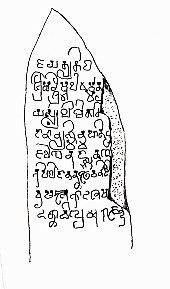
The earliest Sanskrit text which was founded in the Indonesian Archipelago was at Eastern Borneo dating back to 400 CE known as the Mulavarman inscription.[414] This is one of the reason of strong influence of Indian culture that entered the Malay Archipelago during the Indianization era, and since then, Indian culture has been absorbed towards Indonesian culture and language. Thus, the Sanskrit culture in Indonesia exists not as a religious aspect but more towards a cultural aspect that has been present for generations, resulting in a more cultural rather than Hinduistic value of the Indonesian people. As a result, it is common to find Muslim or Christian Indonesians with names that have Indian or Sanskrit nuances. Unlike names derived from Sanskrit in Thai and Khmer, the pronunciation of Sanskrit names in Indonesia is more similar to the original Indian pronunciation, except that "v" is changed to "w", for example, "Vishnu" in India will be spelled "Wisnu" in Indonesia.
Sanskrit has influenced Indonesian to a great extent.[415] Many words in Indonesian are taken from Sanskrit, for example from the word "language" (bhāṣa) itself comes from Sanskrit which means: "talking accent". In fact, names of cities such as Jayapura (the capital city of Papua province), including terms and mottoes of government, educational and military institutions use Sanskrit, such as the rank of general for example in the Indonesian Navy is "Laksamana" (taken from the Ramayana). The name of the environmental award given to cities throughout Indonesia by the central government is also taken from Sanskrit known as the "Adipura" award, namely from the words "Adi" (which means "role model") and "Pura" (which means "city") literally "A role model city" or "a city worthy of being an example". Sanskrit terms are also widely used in numerous government institutions such as the armed forces and national police, for example, the motto of the Indonesian National Police which reads Rashtra Sevakottama, the motto of the Indonesian Military Academy which reads Adhitakarya Mahatvavirya Nagarabhakti (अधिकाऱ्या विर्य नगरभक्ति) and the motto of the Indonesian Naval Academy which reads Hree Dharma Shanti are one of the small examples. Other Sanskrit terms such as Adhi Makayasa, Chandradimuka, Tri Dharma Eka Karma, Taruna, etc. are also used intensively in the Indonesian security and defence forces.[416]
Rest of the world
In ancient and medieval times, several Sanskrit words in the field of food and spices made their way into European languages including Greek, Latin and later English. Some of these are pepper, ginger and sugar. English today has several words of Sanskrit origin, most of them borrowed[417][better source needed] during the British Raj or later. Some of these words have in turn been borrowed by other European or world languages.
Modern era
Liturgy, ceremonies and meditation
Sanskrit is the sacred language of various Hindu, Buddhist, and Jain traditions. It is used during worship in Hindu temples. In Newar Buddhism, it is used in all monasteries, while Mahayana and Tibetan Buddhist religious texts and sutras are in Sanskrit as well as vernacular languages. Some of the revered texts of Jainism including the Tattvartha sutra, Ratnakaranda śrāvakācāra, the Bhaktamara Stotra and later versions of the Agamas are in Sanskrit. Further, states Paul Dundas, Sanskrit mantras and Sanskrit as a ritual language was commonplace among Jains throughout their medieval history.[418]
Many Hindu rituals and rites-of-passage such as the "giving away the bride" and mutual vows at weddings, a baby's naming or first solid food ceremony and the goodbye during a cremation invoke and chant Sanskrit hymns.[419] Major festivals such as the Durga Puja ritually recite entire Sanskrit texts such as the Devi Mahatmya every year particularly among the numerous communities of eastern India.[420][421] In the south, Sanskrit texts are recited at many major Hindu temples such as the Meenakshi Temple.[422] According to Richard H. Davis, a scholar of Religion and South Asian studies, the breadth and variety of oral recitations of the Sanskrit text Bhagavad Gita is remarkable. In India and beyond, its recitations include "simple private household readings, to family and neighborhood recitation sessions, to holy men reciting in temples or at pilgrimage places for passersby, to public Gita discourses held almost nightly at halls and auditoriums in every Indian city".[423]
Literature and arts
More than 3,000 Sanskrit works have been composed since India's independence in 1947.[424] Much of this work has been judged of high quality, in comparison to both classical Sanskrit literature and modern literature in other Indian languages.[425][426]
The Sahitya Akademi has given an award for the best creative work in Sanskrit every year since 1967. In 2009, Satya Vrat Shastri became the first Sanskrit author to win the Jnanpith Award, India's highest literary award.[427]
Sanskrit is used extensively in the Carnatic and Hindustani branches of classical music. Kirtanas, bhajans, stotras, and shlokas of Sanskrit are popular throughout India. The Samaveda uses musical notations in several of its recessions.[428]
In Mainland China, musicians such as Sa Dingding have written pop songs in Sanskrit.[429]
Numerous loan Sanskrit words are found in other major Asian languages. For example, Filipino,[430] Cebuano,[431] Lao, Khmer[432] Thai and its alphabets, Malay (including Malaysian and Indonesian), Javanese (old Javanese-English dictionary by P.J. Zoetmulder contains over 25,500 entries), and even in English.
Media
Since 1974, there has been a short daily news broadcast on state-run All India Radio.[433] These broadcasts are also made available on the internet on AIR's website.[434][435] Sanskrit news is broadcast on TV and on the internet through the DD National channel at 6:55 am IST.[436]
Over 90 weeklies, fortnightlies and quarterlies are published in Sanskrit. Sudharma, a daily printed newspaper in Sanskrit, has been published out of Mysore, India, since 1970. It was started by K.N. Varadaraja Iyengar, a Sanskrit scholar from Mysore. Sanskrit Vartman Patram and Vishwasya Vrittantam started in Gujarat during the last five years.[433]
Schools and contemporary status

Sanskrit has been taught in schools from time immemorial in India. In modern times, the first Sanskrit University was Sampurnanand Sanskrit University, established in 1791 in the Indian city of Varanasi. Sanskrit is taught in 5,000 traditional schools (Pathashalas), and 14,000 schools[437] in India, where there are also 22 colleges and universities dedicated to the exclusive study of the language.[citation needed] Sanskrit is one of the 22 scheduled languages of India.[281] Despite it being a studied school subject in contemporary India, Sanskrit has not been spoken as a native language in centuries.[438][439][440]
The Central Board of Secondary Education of India (CBSE), along with several other state education boards, has made Sanskrit an alternative option to the state's own official language as a second or third language choice in the schools it governs. In such schools, learning Sanskrit is an option for grades 5 to 8 (Classes V to VIII). This is true of most schools affiliated with the Indian Certificate of Secondary Education (ICSE) board, especially in states where the official language is Hindi. Sanskrit is also taught in traditional gurukulas throughout India.[441]
A number of colleges and universities in India have dedicated departments for Sanskrit studies. In March 2020, the Indian Parliament passed the Central Sanskrit Universities Act, 2020 which upgraded three universities, National Sanskrit University, Central Sanskrit University and Shri Lal Bahadur Shastri National Sanskrit University, from the deemed to be university status to a central university status.[442]
Dmitri Mendeleev used the Sanskrit numbers of one, two and three (eka-, dvi- or dwi-, and tri- respectively) to give provisional names to his predicted elements, like eka-boron being Gallium or eka-Francium being Ununennium.
In the province of Bali in Indonesia, a number of educational and scholarly institutions have also been conducting Sanskrit lessons for Hindu locals.[443][better source needed]
In the West
St James Junior School and Avanti Schools Trust in London, England, offer Sanskrit as part of the curriculum.[444] Since September 2009, US high school students have been able to receive credits as Independent Study or toward Foreign Language requirements by studying Sanskrit as part of the "SAFL: Samskritam as a Foreign Language" program coordinated by Samskrita Bharati.[445] In Australia, the private boys' high school Sydney Grammar School offers Sanskrit from years 7 through to 12, including for the Higher School Certificate.[446] Other schools that offer Sanskrit include the Ficino School in Auckland, New Zealand; St James Preparatory Schools in Cape Town, Durban and Johannesburg, South Africa; John Colet School, Sydney, Australia; Erasmus School, Melbourne, Australia.[447][448][449]
European studies and discourse
European scholarship in Sanskrit, begun by Heinrich Roth (1620–1668) and Johann Ernst Hanxleden (1681–1731), is considered responsible for the discovery of an Indo-European language family by Sir William Jones (1746–1794). This research played an important role in the development of Western philology, or historical linguistics.[450]
The 18th- and 19th-century speculations about the possible links of Sanskrit to ancient Egyptian language were later proven to be wrong, but it fed an orientalist discourse both in the form Indophobia and Indophilia, states Trautmann.[451] Sanskrit writings, when first discovered, were imagined by Indophiles to potentially be "repositories of the primitive experiences and religion of the human race, and as such confirmatory of the truth of Christian scripture", as well as a key to "universal ethnological narrative".[452]: 96–97 The Indophobes imagined the opposite, making the counterclaim that there is little of any value in Sanskrit, portraying it as "a language fabricated by artful [Brahmin] priests", with little original thought, possibly copied from the Greeks who came with Alexander or perhaps the Persians.[452]: 124–126
Scholars such as William Jones and his colleagues felt the need for systematic studies of Sanskrit language and literature. This launched the Asiatic Society, an idea that was soon transplanted to Europe starting with the efforts of Henry Thomas Colebrooke in Britain, then Alexander Hamilton who helped expand its studies to Paris and thereafter his student Friedrich Schlegel who introduced Sanskrit to the universities of Germany. Schlegel nurtured his own students into influential European Sanskrit scholars, particularly through Franz Bopp and Friedrich Max Müller. As these scholars translated the Sanskrit manuscripts, the enthusiasm for Sanskrit grew rapidly among European scholars, states Trautmann, and chairs for Sanskrit "were established in the universities of nearly every German statelet" creating a competition for Sanskrit experts.[452]: 133–142
Symbolic usage
In India, Indonesia, Nepal, Bangladesh, Sri Lanka, and Southeast Asia, Sanskrit phrases are widely used as mottoes for various national, educational and social organisations:
- India: Satyameva Jayate (सत्यमेव जयते), meaning 'truth alone triumphs'.[453]
- Nepal: Janani Janmabhūmischa Swargādapi Garīyasī (जननी जन्मभूमिश्च स्वर्गादपि गरीयसी), meaning 'mother and motherland are superior to heaven'.[citation needed]
- Indonesia: In Indonesia, Sanskrit is widely used as terms and mottoes of the armed forces and other national organizations (See: Indonesian Armed Forces mottoes). Rastra Sewakottama (राष्ट्र सेवकोत्तम, transl. 'people's main servants') is the official motto of the Indonesian National Police, Tri Dharma Eka Karma (त्रिधर्म एक कर्म) is the official motto of the Indonesian Military, Kartika Eka Paksi (कार्तिक एक पक्षी, transl. 'unmatchable bird with noble goals') is the official motto of the Indonesian Army,[454] Adhitakarya Mahatvavirya Nagarabhakti (अधीतकार्य महत्ववीर्य नगरभक्ति, transl. 'hard-working knights serving bravery as nations hero') is the official motto of the Indonesian Military Academy,[455] Upakriya Labdha Prayojana Balottama (उपक्रिया लब्ध प्रयोजन बालोत्तम, transl. 'purpose of the unit is to give the best service to the nation by finding the perfect soldier') is the official motto of the Army Psychological Corps, Karmanye Vadikaraste Mafalesu Kadatjana (कर्मण्येवाधिकारस्ते मा फलेषु कदाचन, transl. 'working without counting the profit and loss') is the official motto of the Air-Force Special Forces (Paskhas),[456] Jalesu Bhumyamca Jayamahe (जलेषु भूम्यम्च जयमहे, transl. 'on the sea and land we are glorious') is the official motto of the Indonesian Marine Corps,[457] and there are more units and organizations in Indonesia either Armed Forces or civil which use the Sanskrit language respectively as their mottoes and other purposes.
- Many of India's and Nepal's scientific and administrative terms use Sanskrit. The Indian guided missile program that was commenced in 1983 by the Defence Research and Development Organisation has named the five missiles (ballistic and others) that it developed Prithvi, Agni, Akash, Nag and the Trishul missile system. India's first modern fighter aircraft is named HAL Tejas.[citation needed]
In November 2020, Gaurav Sharma, a New Zealand politician of Indian origin swore into parliament using Sanskrit alongside Māori; the decision was made as a "homage to all Indian languages" compromising between his native Pahari and Punjabi.[458]
In popular culture
The song My Sweet Lord by George Harrison includes The Hare Krishna mantra, also referred to reverentially as the Maha Mantra, a 16-word Vaishnava mantra which is mentioned in the Kali-Santarana Upanishad. Satyagraha, an opera by Philip Glass, uses texts from the Bhagavad Gita, sung in Sanskrit.[459][460] In 1996, English psychedelic rock band Kula Shaker released Govinda, a song entirely sung in Sanskrit. The closing credits of The Matrix Revolutions has a prayer from the Brihadaranyaka Upanishad. The song "Cyber-raga" from Madonna's album Music includes Sanskrit chants,[461] and Shanti/Ashtangi from her 1998 album Ray of Light, which won a Grammy, is the ashtanga vinyasa yoga chant.[462] The lyrics include the mantra Om shanti.[463] Composer John Williams featured choirs singing in Sanskrit for Indiana Jones and the Temple of Doom and in Star Wars: Episode I – The Phantom Menace.[464][465][better source needed] The theme song of Battlestar Galactica 2004 is the Gayatri Mantra, taken from the Rigveda.[466] The lyrics of "The Child in Us" by Enigma also contain Sanskrit verses.[467][better source needed] In 2006, Mexican singer Paulina Rubio was influenced in Sanskrit for her concept album Ananda.[468]
See also
- Arsha prayoga
- Āryabhaṭa numeration
- List of Sanskrit-related topics
- Spitzer Manuscript
- Proto-Indo-Aryan
- Proto-Indo-Iranian
- Proto-Indo-European
Notes
- ^ a b "In conclusion, there are strong systemic and paleographic indications that the Brahmi script derived from a Semitic prototype, which, mainly on historical grounds, is most likely to have been Aramaic. However, the details of this problem remain to be worked out, and in any case, it is unlikely that a complete letter-by-letter derivation will ever be possible; for Brahmi may have been more of an adaptation and remodeling, rather than a direct derivation, of the presumptive Semitic prototype, perhaps under the influence of a preexisting Indian tradition of phonetic analysis. However, the Semitic hypothesis is not so strong as to rule out the remote possibility that further discoveries could drastically change the picture. In particular, a relationship of some kind, probably partial or indirect, with the protohistoric Indus Valley script should not be considered entirely out of the question." Salomon 1998, p. 30
- ^ "dhārayan·brāhmaṇam rupam·ilvalaḥ saṃskṛtam vadan..." – The Rāmāyaṇa 3.10.54 – said to be the first known use of saṃskṛta with reference to the language.[18]
- ^ "All these achievements are dwarfed, though, by the Sanskrit linguistic tradition culminating in the famous grammar by Pāṇini, known as the Aṣṭhādhyāyī. The elegance and comprehensiveness of its architecture have yet to be surpassed by any grammar of any language, and its ingenious methods of stratifying out use and mention, language and metalanguage, and theorem and metatheorem predate key discoveries in western philosophy by millennia."[32]
- ^ "The Sanskrit grammatical tradition is also the ultimate source of the notion of zero, which, once adopted in the Arabic system of numerals, allowed us to transcend the cumbersome notations of Roman arithmetic."[32]
- ^ 6,106 Indians in 1981, 49,736 in 1991, 14,135 in 2001, and 24,821 in 2011, have reported Sanskrit to be their mother tongue.[8]
- ^ William Jones (1786), quoted by Thomas Burrow in The Sanskrit Language:[62] "The Sanscrit language, whatever be its antiquity, is of a wonderful structure; more perfect than the Greek, more copious than the Latin, and more exquisitely refined than either, yet bearing to both of them a stronger affinity, both in the roots of verbs and the forms of grammar, than could possibly have been produced by accident; so strong indeed, that no philologer could examine them all three, without believing them to have sprung from some common source, which perhaps no longer exists. There is a similar reason, though not quite so forcible, for supposing that both the Gothick and the Celtick [sic], though blended with a very different idiom, had the same origin with the Sanscrit; and the Old Persian might be added to the same family."
- ^ The Mitanni treaty is generally dated to the 16th century BCE, but this date and its significance remains much debated.[80]
- ^ An example of the shared phrasal equations is the dyáuṣ pitṛ́ in Vedic Sanskrit, from Proto-Indo-European *dyḗws ph₂tḗr, meaning "sky father". The Mycenaean Greek equivalent is Zeus Pater, which evolved to Jupiter in Latin. Equivalent "paternal Heaven" phrasal equation is found in many Indo-European languages.[85]
- ^ Pāṇini's use of the term lipi has been a source of scholarly disagreements. Harry Falk in his 1993 overview states that ancient Indians neither knew nor used writing script, and Pāṇini's mention is likely a reference to Semitic and Greek scripts.[103] In his 1995 review, Salomon questions Falk's arguments and writes it is "speculative at best and hardly constitutes firm grounds for a late date for Kharoṣṭhī. The stronger argument for this position is that we have no specimen of the script before the time of Ashoka, nor any direct evidence of intermediate stages in its development; but of course this does not mean that such earlier forms did not exist, only that, if they did exist, they have not survived, presumably because they were not employed for monumental purposes before Ashoka".[104] According to Hartmut Scharfe, lipi of Pāṇini may be borrowed from the Old Persian dipi, in turn derived from Sumerian dup. Scharfe adds that the best evidence, at the time of his review, is that no script was used in India, aside from the Northwest Indian subcontinent, before c. 300 BCE because Indian tradition "at every occasion stresses the orality of the cultural and literary heritage".[105] Kenneth Norman states writing scripts in ancient India evolved over the long period of time like other cultures, that it is unlikely that ancient Indians developed a single complete writing system at one and the same time in the Maurya era. It is even less likely, states Norman, that a writing script was invented during Ashoka's rule, starting from nothing, for the specific purpose of writing his inscriptions and then it was understood all over South Asia where the Ashoka pillars are found.[106] Goody (1987) states that ancient India likely had a "very old culture of writing" along with its oral tradition of composing and transmitting knowledge, because the Vedic literature is too vast, consistent and complex to have been entirely created, memorized, accurately preserved and spread without a written system.[107] Falk disagrees with Goody, and suggests that it is a Western presumption and inability to imagine that remarkably early scientific achievements such as Pāṇini's grammar (5th to 4th century BCE), and the creation, preservation and wide distribution of the large corpus of the Brahmanic Vedic literature and the Buddhist canonical literature, without any writing scripts. Bronkhorst (2002) disagrees with Falk, and states, "Falk goes too far. It is fair to expect that we believe that Vedic memorisation—though without parallel in any other human society—has been able to preserve very long texts for many centuries without losing a syllable. ... However, the oral composition of a work as complex as Pāṇini's grammar is not only without parallel in other human cultures, it is without parallel in India itself. ... It just will not do to state that our difficulty in conceiving any such thing is our problem".[108]
- ^ The Indian Mission for Manuscripts initiative has already counted over 5 million manuscripts. The thirty million estimate is of David Pingree, a manuscriptologist and historian. – Peter M. Scharf[139]
- ^ A celebrated work on the philosophy of language is the Vakyapadiya by the 5th-century Hindu scholar Bhartrhari.[143][146][147]
- ^ 'That Which Is', known as the Tattvartha Sutra to Jains, is recognized by all four Jain traditions as the earliest, most authoritative, and comprehensive summary of their religion. — [151]
- ^ The oldest surviving Sanskrit inscription in the Kathmandu valley is dated to 464 CE.[205]
- ^ a b Sanskrit is written in many scripts. Sounds in grey are not phonemic.
- ^ ḹ is not an actual sound of Sanskrit, but rather a graphic convention included among the written vowels to maintain the symmetry of short–long pairs of letters.[224]
- ^ Correspondences are approximate.[239]
- ^ Consonant described as either at the roots of the teeth, alveolar, and retroflex. Vowels are very short, may be equivalent to short a, e or i.
- ^ a b Like the preceding but longer.
- ^ Pronounced somewhat like the lur in English "slurp".
- ^ Only found in the verb kl̥p "to be fit", "arrange".
- ^ As a nasal vowel or, if followed by a stop consonant (plosive, affricate or nasal), it is realized as the nasal in the same series as the following consonant.
- ^ Voiceless [h] followed by a short echo vowel. If the preceding vowel is /ai/ or /au/, the echo vowel will be [i] or [u], respectively.
- ^ Use depends on whether penultimate is light or heavy.
- ^ The "root + affix" is called the "stem".[245]
- ^ Other equivalents: bharāmi (I carry), bharati (he carries), bharāmas (we carry).[61] Similar morphology is found in some other Indo-European languages; for example, in the Gothic language, baira (I carry), bairis (you carry), bairiþ (he carries).
- ^ Ruppel gives the following endings for the "present indicative active" in the Sanskrit language: 1st dual: -vaḥ, 1st plural: -maḥ, 2nd dual: -thaḥ, 2nd plural: -tha and so on.[112]
- ^ The Sanskrit in the Indian epics such as the Mahabharata and the Ramayana are all in meter, and the structure of the metrics has attracted scholarly studies since the 19th century.[259]
- ^ Kena, Katha, Isha, Shvetashvatara, and Mundaka Upanishads are examples of verse-style ancient Upanishads.
- ^ Sudden or significant changes in metre, wherein the metre of succeeding sections return to earlier sections, suggest a corruption of the message, interpolations and insertion of text into a Sanskrit manuscript. It may also reflect that the text is a compilation of works of different authors and time periods.[265][266][267]
- ^ The Buddhist text Lalitavistara Sūtra describes the young Siddhartha—the future Buddha—to have mastered philology and scripts at a school from Brahmin Lipikara and Deva Vidyasinha.[275]
- ^ A version of this list of sixty-four ancient Indian scripts is found in the Chinese translation of an Indian Buddhist text, and this translation has been dated to 308 CE.[277]
- ^ The Greek Nearchos who visited ancient India with the army of Alexander the Great in the 4th century BCE, mentions that Indians wrote on cloth, but Nearchos could have confused Aramaic writers with the Indians.[280]
- ^ Salomon writes, in The World's Writing Systems (edited by Peter Daniels), that "many scholars feel that the origins of these scripts must have gone back further than this [mid-3rd century BCE Ashoka inscriptions], but there is no conclusive proof".[281]
- ^ Minor inscriptions discovered in the 20th century may be older, but their dating is uncertain.[286]
- ^ Salomon states that the inscription has a few scribal errors, but is essentially standard Sanskrit.[142]
- ^ Salomon illustrates this for the consonant ka which is written as "
 " in the Brahmi script and "क" in the Devanagari script, the vowel is marked together with the consonant before as in "कि", after "का", above "के" or below "कृ".[283]
- ^ Sanskrit and the Prakrits, at different times and places were written in a vast number of forms and derivatives of Brahmi. In the premodern period, in other words, these languages would be written by a given scribe in whatever happened to be the current local script ... – Richard Salomon, p 70 [290]
- ^ Salomon states that these shared graphic principles that combine syllabic and alphabetic writing are distinctive for Indic scripts when contrasted with other major world languages. The only known similarity is found in the Ethiopic scripts, but Ethiopic system lacks clusters and the Indic set of full vowels signs.[303]
- ^ Some scholars date these to the 2nd century BCE.[306][307]
- ^ Prakrit inscriptions of ancient India, such as those of Ashoka, are older. Louis Renou called it "the great linguistical paradox of India" that the Sanskrit inscriptions appear later than Prakrit inscriptions, although Prakrit is considered as a descendant of the Sanskrit language.[142]
- ^ According to Salomon, towards the end of pre-Christian era, "a smattering" of standard or nearly standard Sanskrit inscriptions came into vogue, and "we may assume that these are isolated survivals of what must have been then an increasingly common practice". He adds, that the Scythian rulers of northern and western India while not the originators, were promoters of the use of Sanskrit language for inscriptions, and "their motivation in promoting Sanskrit was presumably a desire to establish themselves as legitimate Indian or at least Indianized rulers and to curry the favor of the educated Brahmanical elite".[311]
- ^ The Rudradaman inscription is "not pure classical Sanskrit", but with few epic-vernacular Sanskrit exceptions, it approaches high classical Sanskrit.[319]
- ^ Finally, after this transitional period in the fourth and early fifth centuries CE, Prakrit fell out of use completely in southern Indian inscriptions. For the next few centuries Sanskrit was the sole epigraphic language, until the regional Dravidian languages began to come into use around the seventh century. — [325]
- ^ The use of the Sanskrit language in epigraphy gradually dropped after the arrival and the consolidation of Islamic Delhi Sultanate rule in the late 12th century, but it remained in active epigraphical use in the south and central regions of India. By about the 14th century, with the Islamic armies conquering more of South Asia, the use of Sanskrit language for inscriptions became rarer and it was replaced with Persian, Arabic, Dravidian and North-Indo-Aryan languages, states Salomon.[330] The Sanskrit language, particularly in bilingual form, re-emerged in the epigraphy of Hindu kingdoms such as the Vijayanagara, Yadavas, Hoysalas, Pandyas, and others that re-established themselves.[331] Some Muslim rulers such as Adil Shah also issued Sanskrit language inscriptions recording the donation of a mosque.[331]
- ^ "Since the Renaissance there has been no event of such worldwide significance in the history of culture as the discovery of Sanskrit literature in the latter part of the eighteenth century" – Macdonell[337]
- ^ 'The style of the [Vedic] works is more simple and spontaneous while that of the later works abounds in puns, conceits and long compounds. Rhetorical ornaments are more and more copious and complex and the rules of Poetic and Grammar more and more rigidly observed as time advances.' – Iyengar,[339]
- ^ These are just generic names for works of law
- ^ an account of Indian algebra
- ^ Kāma·śāstra, 'the science of love'
- ^ Most Tripiṭaka historic texts in the Pali language, but Sanskrit Tripiṭaka texts have been discovered.[378]
- ^ Examples of phonetically imported Sanskrit words in Chinese include samgha (Chinese: seng), bhiksuni (ni), kasaya (jiasha), namo or namas (namo), and nirvana (niepan). The list of phonetically transcribed and semantically translated words from Sanskrit into Chinese is substantial, states Xiangdong Shi.[406]
References
- ^ Mascaró, Juan (2003). The Bhagavad Gita. Penguin. pp. 13 ff. ISBN 978-0-14-044918-1. Archived from the original on 29 March 2024. Retrieved 11 October 2020.
The Bhagawad Gita, an intensely spiritual work, that forms one of the cornerstones of the Hindu faith, and is also one of the masterpieces of Sanskrit poetry. (from the backcover)
- ^ Besant, Annie (trans) (1922). "Discourse 1". The Bhagavad-gita; or, The Lord's Song, with text in Devanagari, and English translation. Madras: G. E. Natesan & Co. Archived from the original on 12 October 2020. Retrieved 10 October 2020.
प्रवृत्ते शस्त्रसम्पाते धनुरुद्यम्य पाण्डवः ॥ २० ॥
Then, beholding the sons of Dhritarâshtra standing arrayed, and flight of missiles about to begin, ... the son of Pându, took up his bow,(20)
हृषीकेशं तदा वाक्यमिदमाह महीपते । अर्जुन उवाच । ...॥ २१ ॥
And spake this word to Hrishîkesha, O Lord of Earth: Arjuna said: ... - ^ Radhakrishnan, S. (1948). The Bhagavadgītā: With an introductory essay, Sanskrit text, English translation, and notes. London: George Allen and Unwin Ltd. p. 86.
... pravyite Sastrasampate
dhanur udyamya pandavah (20)
Then Arjuna, ... looked at the sons of Dhrtarastra drawn up in battle order; and as the flight of missiles (almost) started, he took up his bow.
hystkesam tada vakyam
idam aha mahipate ... (21)
And, O Lord of earth, he spoke this word to Hrsikesha (Krsna): ... - ^ Uta Reinöhl (2016). Grammaticalization and the Rise of Configurationality in Indo-Aryan. Oxford University Press. pp. xiv, 1–16. ISBN 978-0-19-873666-0.
- ^ Colin P. Masica 1993, p. 55: "Thus Classical Sanskrit, fixed by Panini's grammar in probably the fourth century BC on the basis of a class dialect (and preceding grammatical tradition) of probably the seventh century BC, had its greatest literary flowering in the first millennium AD and even later, much of it therefore a full thousand years after the stage of the language it ostensibly represents."
- ^ a b McCartney, Patrick (10 May 2020), Searching for Sanskrit Speakers in the Indian Census, The Wire, archived from the original on 21 October 2020, retrieved 24 November 2020 Quote: "What this data tells us is that it is very difficult to believe the notion that Jhiri is a "Sanskrit village" where everyone only speaks fluent Sanskrit at a mother tongue level. It is also difficult to accept that the lingua franca of the rural masses is Sanskrit, when most the majority of L1, L2 and L3 Sanskrit tokens are linked to urban areas. The predominance of Sanskrit across the Hindi belt also shows a particular cultural/geographic affection that does not spread equally across the rest of the country. In addition, the clustering with Hindi and English, in the majority of variations possible, also suggests that a certain class element is involved. Essentially, people who identify as speakers of Sanskrit appear to be urban and educated, which possibly implies that the affiliation with Sanskrit is related in some way to at least some sort of Indian, if not, Hindu, nationalism."
- ^ a b McCartney, Patrick (11 May 2020), The Myth of 'Sanskrit Villages' and the Realm of Soft Power, The Wire, archived from the original on 24 January 2021, retrieved 24 November 2020 Quote: "Consider the example of this faith-based development narrative that has evolved over the past decade in the state of Uttarakhand. In 2010, Sanskrit became the state's second official language. ... Recently, an updated policy has increased this top-down imposition of language shift, toward Sanskrit. The new policy aims to create a Sanskrit village in every "block" (administrative division) of Uttarakhand. The state of Uttarakhand consists of two divisions, 13 districts, 79 sub-districts and 97 blocks. ... There is hardly a Sanskrit village in even one block in Uttarakhand. The curious thing is that, while 70% of the state's total population live in rural areas, 100pc of the total 246 L1-Sanskrit tokens returned at the 2011 census are from Urban areas. No L1-Sanskrit token comes from any villager who identifies as an L1-Sanskrit speaker in Uttarakhand."
- ^ a b c d e Sreevastan, Ajai (10 August 2014). "Where are the Sanskrit speakers?". The Hindu. Chennai. Archived from the original on 24 December 2021. Retrieved 11 October 2020.
Sanskrit is also the only scheduled language that shows wide fluctuations — rising from 6,106 speakers in 1981 to 49,736 in 1991 and then falling dramatically to 14,135 speakers in 2001. "This fluctuation is not necessarily an error of the Census method. People often switch language loyalties depending on the immediate political climate," says Prof. Ganesh Devy of the People's Linguistic Survey of India. ... Because some people "fictitiously" indicate Sanskrit as their mother tongue owing to its high prestige and Constitutional mandate, the Census captures the persisting memory of an ancient language that is no longer anyone's real mother tongue, says B. Mallikarjun of the Center for Classical Language. Hence, the numbers fluctuate in each Census. ... "Sanskrit has influence without presence," says Devy. "We all feel in some corner of the country, Sanskrit is spoken." But even in Karnataka's Mattur, which is often referred to as India's Sanskrit village, hardly a handful indicated Sanskrit as their mother tongue.
- ^ a b Lowe, John J. (2017). Transitive Nouns and Adjectives: Evidence from Early Indo-Aryan. Oxford University Press. p. 53. ISBN 978-0-19-879357-1.
The desire to preserve understanding and knowledge of Sanskrit in the face of ongoing linguistic change drove the development of an indigenous grammatical tradition, which culminated in the composition of the Aṣṭādhyāyī, attributed to the grammarian Pāṇini, no later than the early fourth century BCE. In subsequent centuries, Sanskrit ceased to be learnt as a native language, and eventually ceased to develop as living languages do, becoming increasingly fixed according to the prescriptions of the grammatical tradition.
- ^ a b Ruppel, A. M. (2017). The Cambridge Introduction to Sanskrit. Cambridge University Press. p. 2. ISBN 978-1-107-08828-3. Archived from the original on 29 March 2024. Retrieved 5 October 2020.
The study of any ancient (or dead) language is faced with one main challenge: ancient languages have no native speakers who could provide us with examples of simple everyday speech
- ^ Annamalai, E. (2008). "Contexts of multilingualism". In Braj B. Kachru; Yamuna Kachru; S. N. Sridhar (eds.). Language in South Asia. Cambridge University Press. pp. 223–. ISBN 978-1-139-46550-2. Archived from the original on 29 March 2024. Retrieved 5 October 2020.
Some of the migrated languages ... such as Sanskrit and English, remained primarily as a second language, even though their native speakers were lost. Some native languages like the language of the Indus valley were lost with their speakers, while some linguistic communities shifted their language to one or other of the migrants' languages.
- ^ a b Jain, Dhanesh (2007). "Sociolinguistics of the Indo-Aryan languages". In George Cardona; Dhanesh Jain (eds.). The Indo-Aryan Languages. Routledge. pp. 47–66, 51. ISBN 978-1-135-79711-9. Archived from the original on 29 March 2024. Retrieved 12 October 2020.
In the history of Indo-Aryan, writing was a later development and its adoption has been slow even in modern times. The first written word comes to us through Asokan inscriptions dating back to the third century BC. Originally, Brahmi was used to write Prakrit (MIA); for Sanskrit (OIA) it was used only four centuries later (Masica 1991: 135). The MIA traditions of Buddhist and Jain texts show greater regard for the written word than the OIA Brahminical tradition, though writing was available to Old Indo-Aryans.
- ^ a b Salomon, Richard (2007). "The Writing Systems of the Indo-Aryan Languages". In George Cardona; Dhanesh Jain (eds.). The Indo-Aryan Languages. Routledge. pp. 67–102. ISBN 978-1-135-79711-9. Archived from the original on 29 March 2024. Retrieved 12 October 2020.
Although in modern usage Sanskrit is most commonly written or printed in Nagari, in theory, it can be represented by virtually any of the main Brahmi-based scripts, and in practice it often is. Thus scripts such as Gujarati, Bangla, and Oriya, as well as the major south Indian scripts, traditionally have been and often still are used in their proper territories for writing Sanskrit. Sanskrit, in other words, is not inherently linked to any particular script, although it does have a special historical connection with Nagari.
- ^ "Constitution of the Republic of South Africa, 1996 – Chapter 1: Founding Provisions". gov.za. Archived from the original on 28 October 2014. Retrieved 6 December 2014.
- ^ Cardona, George; Luraghi, Silvia (2018). "Sanskrit". In Bernard Comrie (ed.). The World's Major Languages. Taylor & Francis. pp. 497–. ISBN 978-1-317-29049-0. Archived from the original on 29 March 2024. Retrieved 13 October 2020.
Sanskrit (samskrita- 'adorned, purified') ... It is in the Ramayana that the term saṃskṛta- is encountered probably for the first time with reference to the language.
- ^ a b Wright, J.C. (1990). "Reviewed Works: Pāṇini: His Work and Its Traditions. Vol. I. Background and Introduction by George Cardona; Grammaire sanskrite pâninéenne by Pierre-Sylvain Filliozat". Bulletin of the School of Oriental and African Studies, University of London. 53 (1). Cambridge University Press: 152–154. doi:10.1017/S0041977X0002156X. JSTOR 618999. Archived from the original on 21 January 2022. Retrieved 12 October 2020.
The first reference to 'Sanskrit' in the context of language is in the Ramayana, Book 5 (Sundarkanda), Canto 28, Verse 17: अहं ह्यतितनुश्चैव वनरश्च विशेषतः // वाचंचोदाहरिष्यामि मानुषीमिह संस्कृताम् // १७ // Hanuman says, 'First, my body is very subtle, second I am a monkey. Especially as a monkey, I will use here the human-appropriate Sanskrit speech / language.'
- ^ Apte, Vaman Shivaram (1957). Revised and enlarged edition of Prin. V.S. Apte's The practical Sanskrit-English Dictionary. Poona: Prasad Prakashan. p. 1596. Archived from the original on 7 April 2022. Retrieved 13 October 2020.
from संस्कृत saṃskṛitə past passive participle: Made perfect, refined, polished, cultivated. -तः -tah A word formed regularly according to the rules of grammar, a regular derivative. -तम् -tam Refined or highly polished speech, the Sanskṛit language; संस्कृतं नाम दैवी वागन्वाख्याता महर्षिभिः ("named sanskritam the divine language elaborated by the sages") from Kāvyadarśa.1. 33. of Daṇḍin
- ^ Cardona 1997, p. 557.
- ^ a b Roger D. Woodard (2008). The Ancient Languages of Asia and the Americas. Cambridge University Press. pp. 1–2. ISBN 978-0-521-68494-1. Archived from the original on 29 March 2024. Retrieved 18 July 2018.
The earliest form of this 'oldest' language, Sanskrit, is the one found in the ancient Brahmanic text called the Rigveda, composed c. 1500 BCE. The date makes Sanskrit one of the three earliest of the well-documented languages of the Indo-European family – the other two being Old Hittite and Myceanaean Greek – and, in keeping with its early appearance, Sanskrit has been a cornerstone in the reconstruction of the parent language of the Indo-European family – Proto-Indo-European.
- ^ a b c Bauer, Brigitte L. M. (2017). Nominal Apposition in Indo-European: Its forms and functions, and its evolution in Latin-romance. De Gruyter. pp. 90–92. ISBN 978-3-11-046175-6. For detailed comparison of the languages, see pp. 90–126.
- ^ a b c d Ramat, Anna Giacalone; Ramat, Paolo (2015). The Indo-European Languages. Routledge. pp. 26–31. ISBN 978-1-134-92187-4.
- ^ Dyson, Tim (2018). A Population History of India: From the First Modern People to the Present Day. Oxford University Press. pp. 14–15. ISBN 978-0-19-882905-8.
Although the collapse of the Indus valley civilization is no longer believed to have been due to an 'Aryan invasion' it is widely thought that, at roughly the same time, or perhaps a few centuries later, new Indo-Aryan-speaking people and influences began to enter the subcontinent from the north-west. Detailed evidence is lacking. Nevertheless, a predecessor of the language that would eventually be called Sanskrit was probably introduced into the north-west sometime between 3,900 and 3,000 years ago. This language was related to one then spoken in eastern Iran; and both of these languages belonged to the Indo-European language family.
- ^ Pinkney, Andrea Marion (2014). "Revealing the Vedas in 'Hinduism': Foundations and issues of interpretation of religions in South Asian Hindu traditions". In Bryan S. Turner; Oscar Salemink (eds.). Routledge Handbook of Religions in Asia. Routledge. pp. 38–. ISBN 978-1-317-63646-5.
According to Asko Parpola, the Proto-Indo-Aryan civilization was influenced by two external waves of migrations. The first group originated from the southern Urals (c. 2100 BCE) and mixed with the peoples of the Bactria-Margiana Archaeological Complex (BMAC); this group then proceeded to South Asia, arriving around 1900 BCE. The second wave arrived in northern South Asia around 1750 BCE and mixed with the formerly arrived group, producing the Mitanni Aryans (c. 1500 BCE), a precursor to the peoples of the Ṛgveda. Michael Witzel has assigned an approximate chronology to the strata of Vedic languages, arguing that the language of the Ṛgveda changed through the beginning of the Iron Age in South Asia, which started in the Northwest (Punjab) around 1000 BCE. On the basis of comparative philological evidence, Witzel has suggested a five-stage periodization of Vedic civilization, beginning with the Ṛgveda. On the basis of internal evidence, the Ṛgveda is dated as a late Bronze Age text composed by pastoral migrants with limited settlements, probably between 1350 and 1150 BCE in the Punjab region.
- ^ Michael C. Howard 2012, p. 21
- ^ Pollock, Sheldon (2006). The Language of the Gods in the World of Men: Sanskrit, Culture, and Power in Premodern India. University of California Press. p. 14. ISBN 978-0-520-24500-6.
Once Sanskrit emerged from the sacerdotal environment ... it became the sole medium by which ruling elites expressed their power ... Sanskrit probably never functioned as an everyday medium of communication anywhere in the cosmopolis—not in South Asia itself, let alone Southeast Asia ... The work Sanskrit did do ... was directed above all toward articulating a form of ... politics ... as celebration of aesthetic power.
- ^ Burrow 1973, pp. 62–64.
- ^ Cardona, George; Luraghi, Silvia (2018). "Sanskrit". In Bernard Comrie (ed.). The World's Major Languages. Taylor & Francis. pp. 497–. ISBN 978-1-317-29049-0.
Sanskrit (samskrita- 'adorned, purified') refers to several varieties of Old Indo-Aryan whose most archaic forms are found in Vedic texts: the Rigveda (Ṛgveda), Yajurveda, Sāmveda, Atharvaveda, with various branches.
- ^ a b Alfred C. Woolner (1986). Introduction to Prakrit. Motilal Banarsidass. pp. 3–4. ISBN 978-81-208-0189-9.
If in 'Sanskrit' we include the Vedic language and all dialects of the Old Indian period, then it is true to say that all the Prakrits are derived from Sanskrit. If on the other hand 'Sanskrit' is used more strictly of the Panini-Patanjali language or 'Classical Sanskrit,' then it is untrue to say that any Prakrit is derived from Sanskrit, except that Sauraseni, the Midland Prakrit, is derived from the Old Indian dialect of the Madhyadesa on which Classical Sanskrit was mainly based.
- ^ Lowe, John J. (2015). Participles in Rigvedic Sanskrit: The syntax and semantics of adjectival verb forms. Oxford University Press. pp. 1–2. ISBN 978-0-19-100505-3. Archived from the original on 10 October 2023. Retrieved 13 October 2020.
It consists of 1,028 hymns (suktas), highly crafted poetic compositions originally intended for recital during rituals and for the invocation of and communication with the Indo-Aryan gods. Modern scholarly opinion largely agrees that these hymns were composed between around 1500 BCE and 1200 BCE, during the eastward migration of the Indo-Aryan tribes from the mountains of what is today northern Afghanistan across the Punjab into north India.
- ^ Witzel, Michael (2006). "Early Loan Words in Western Central Asia: Indicators of Substrate Populations, Migrations, and Trade Relations". In Victor H. Mair (ed.). Contact And Exchange in the Ancient World. University of Hawaii Press. pp. 158–190, 160. ISBN 978-0-8248-2884-4.
The Vedas were composed (roughly between 1500-1200 and 500 BCE) in parts of present-day Afghanistan, northern Pakistan, and northern India. The oldest text at our disposal is the Rgveda (RV); it is composed in archaic Indo-Aryan (Vedic Sanskrit).
- ^ Shulman, David (2016). Tamil. Harvard University Press. pp. 17–19. ISBN 978-0-674-97465-4.
(p. 17) Similarly, we find a large number of other items relating to flora and fauna, grains, pulses, and spices—that is, words that we might expect to have made their way into Sanskrit from the linguistic environment of prehistoric or early-historic India. ... (p. 18) Dravidian certainly influenced Sanskrit phonology and syntax from early on ... (p 19) Vedic Sanskrit was in contact, from very ancient times, with speakers of Dravidian languages, and that the two language families profoundly influenced one another.
- ^ a b c Evans, Nicholas (2009). Dying Words: Endangered languages and what they have to tell us. John Wiley & Sons. pp. 27–. ISBN 978-0-631-23305-3.
- ^ Glenn Van Brummelen (2014). "Arithmetic". In Thomas F. Glick; Steven Livesey; Faith Wallis (eds.). Medieval Science, Technology, and Medicine: An Encyclopedia. Routledge. pp. 46–48. ISBN 978-1-135-45932-1. Archived from the original on 10 October 2023. Retrieved 15 October 2020.
The story of the growth of arithmetic from the ancient inheritance to the wealth passed on to the Renaissance is dramatic and passes through several cultures. The most groundbreaking achievement was the evolution of a positional number system, in which the position of a digit within a number determines its value according to powers (usually) of ten (e.g., in 3,285, the "2" refers to hundreds). Its extension to include decimal fractions and the procedures that were made possible by its adoption transformed the abilities of all who calculated, with an effect comparable to the modern invention of the electronic computer. Roughly speaking, this began in India, was transmitted to Islam, and then to the Latin West.
- ^ Lowe, John J. (2017). Transitive Nouns and Adjectives: Evidence from Early Indo-Aryan. Oxford University Press. p. 58. ISBN 978-0-19-879357-1.
The term 'Epic Sanskrit' refers to the language of the two great Sanskrit epics, the Mahābhārata and the Rāmāyaṇa. ... It is likely, therefore, that the epic-like elements found in Vedic sources and the two epics that we have are not directly related, but that both drew on the same source, an oral tradition of storytelling that existed before, throughout, and after the Vedic period.
- ^ a b Lowe, John J. (2015). Participles in Rigvedic Sanskrit: The Syntax and Semantics of Adjectival Verb Forms. Oxford University Press. pp. 2–. ISBN 978-0-19-100505-3. Archived from the original on 10 October 2023. Retrieved 13 October 2020.
The importance of the Rigveda for the study of early Indo-Aryan historical linguistics cannot be underestimated. ... its language is ... notably similar in many respects to the most archaic poetic texts of related language families, the Old Avestan Gathas and Homer's Iliad and Odyssey, respectively the earliest poetic representatives of the Iranian and Greek language families. Moreover, its manner of preservation, by a system of oral transmission which has preserved the hymns almost without change for 3,000 years, makes it a very trustworthy witness to the Indo-Aryan language of North India in the second millennium BC. Its importance for the reconstruction of Proto-Indo-European, particularly in respect of the archaic morphology and syntax it preserves, ... is considerable. Any linguistic investigation into Old Indo-Aryan, Indo-Iranian, or Proto-Indo-European cannot avoid treating the evidence of the Rigveda as of vital importance.
- ^ Staal 1986.
- ^ Filliozat 2004, pp. 360–375.
- ^ Filliozat 2004, p. 139.
- ^ Gazzola, Michele; Wickström, Bengt-Arne (2016). The Economics of Language Policy. MIT Press. pp. 469–. ISBN 978-0-262-03470-8.
The Eighth Schedule recognizes India's national languages as including the major regional languages as well as others, such as Sanskrit and Urdu, which contribute to India's cultural heritage. ... The original list of fourteen languages in the Eighth Schedule at the time of the adoption of the Constitution in 1949 has now grown to twenty-two.
- ^ Groff, Cynthia (2017). The Ecology of Language in Multilingual India: Voices of Women and Educators in the Himalayan Foothills. Palgrave Macmillan UK. pp. 58–. ISBN 978-1-137-51961-0.
As Mahapatra says: "It is generally believed that the significance for the Eighth Schedule lies in providing a list of languages from which Hindi is directed to draw the appropriate forms, style and expressions for its enrichment" ... Being recognized in the Constitution, however, has had significant relevance for a language's status and functions.
- ^ "Indian village where people speak in Sanskrit". BBC News. 22 December 2014. Archived from the original on 5 April 2023. Retrieved 30 September 2020.
- ^ Annamalai, E. (2008). "Contexts of multilingualism". In Braj B. Kachru; Yamuna Kachru; S. N. Sridhar (eds.). Language in South Asia. Cambridge University Press. pp. 223–. ISBN 978-1-139-46550-2.
Some of the migrated languages ... such as Sanskrit and English, remained primarily as a second language, even though their native speakers were lost. Some native languages like the language of the Indus valley were lost with their speakers, while some linguistic communities shifted their language to one or other of the migrants' languages.
- ^ Distribution of the 22 Scheduled Languages – India / States / Union Territories – Sanskrit (PDF), Census of India, 2011, p. 30, archived (PDF) from the original on 9 October 2022, retrieved 4 October 2020
- ^ Seth 2007, p. 171.
- ^ Angus Stevenson & Maurice Waite 2011, p. 1275
- ^ a b Shlomo Biderman 2008, p. 90.
- ^ Will Durant 1963, p. 406.
- ^ Sir Monier Monier-Williams 2005, p. 1120.
- ^ Louis Renou & Jagbans Kishore Balbir 2004, pp. 1–2.
- ^ Annette Wilke & Oliver Moebus 2011, pp. 62–66 with footnotes.
- ^ Guy L. Beck 2006, pp. 117–123.
- ^ Southworth 2004, p. 45.
- ^ Klein, Joseph & Fritz 2017, pp. 318–320.
- ^ "Ancient tablet found: Oldest readable writing in Europe". National Geographic. 1 April 2011. Archived from the original on 1 April 2011.
- ^ Rose, Jenny (18 August 2011). Zoroastrianism: A guide for the perplexed. Bloomsbury Publishing. pp. 75–76. ISBN 978-1-4411-2236-0.
- ^ Harmatta, J. (1992). "The Emergence of the Indo-Iranians: The Indo-Iranian Languages". In Dani, Ahmad Hasan; Masson, Vadim Mikhaĭlovich (eds.). History of Civilizations of Central Asia. Vol. I. UNESCO. pp. 357–358. ISBN 978-81-208-1407-3.
- ^ Colin P. Masica 1993, p. 34.
- ^ Levin, Saul (24 October 2002). Semitic and Indo-European. Current Issues in Linguistic Theory No. 226. Vol. II: Comparative morphology, syntax, and phonetics. John Benjamins Publishing Company. p. 431. ISBN 9781588112224. OCLC 32590410. ISBN 1588112225
- ^ Bryant & Patton 2005, p. 208.
- ^ Robins, R. H. (2014). General Linguistics. Routledge. pp. 346–347. ISBN 978-1-317-88763-8. Archived from the original on 29 March 2024. Retrieved 18 July 2018.
- ^ a b J. P. Mallory & D. Q. Adams 2006, p. 6.
- ^ Burrow 1973, p. 6.
- ^ Colin P. Masica 1993, pp. 36–38.
- ^ Burrow 1973, pp. 30–32.
- ^ Burrow 1973, pp. 30–34.
- ^ a b Meier-Brügger 2003, p. 20.
- ^ MacDonell 2004.
- ^ Keith 1996, pp. 3–4.
- ^ Deshpande 1993, p. 165.
- ^ Bloomfield & Edgerton 1932, §163–170.
- ^ a b Deshpande 1993, pp. 130–196.
- ^ Barbara A. Holdrege 2012, pp. 229–230.
- ^ Bryant 2001, pp. 66–67.
- ^ Louis Renou & Jagbans Kishore Balbir 2004, pp. 5–6.
- ^ Cardona 2012.
- ^ Witzel 1997, p. 9.
- ^ Witzel 1997, p. 16-17.
- ^ Harold G. Coward 1990, pp. 3–12, 36–47, 111–112, Note: Sanskrit was both a literary and spoken language in ancient India..
- ^ a b Cohen, Signe (2017). The Upanisads: A complete guide. Taylor & Francis. pp. 11–17. ISBN 978-1-317-63696-0. Archived from the original on 29 March 2024. Retrieved 18 July 2018.
- ^ Bryant 2001, p. 249.
- ^ Robinson, Andrew (2014). India: A Short History. Thames & Hudson. pp. 56–57. ISBN 978-0-500-77195-2. Archived from the original on 29 March 2024. Retrieved 18 July 2018.
- ^ Woodard, Roger D. (2008). The Ancient Languages of Asia and the Americas. Cambridge University Press. p. 1. ISBN 978-0-521-68494-1. Archived from the original on 29 March 2024. Retrieved 18 July 2018.
- ^ Lowe, John Jeffrey (2015). Participles in Rigvedic Sanskrit: The syntax and semantics of adjectival verb forms. Oxford University Press. pp. 2–3. ISBN 978-0-19-870136-1. Archived from the original on 7 September 2023. Retrieved 18 July 2018.
- ^ Stephanie W. Jamison & Joel P. Brereton 2014, pp. 10–11, 72.
- ^ Stephanie W. Jamison & Joel P. Brereton 2014, p. 50.
- ^ Stephanie W. Jamison & Joel P. Brereton 2014, pp. 66–67.
- ^ Gombrich, Richard (2006). Theravada Buddhism: A Social History from Ancient Benares to Modern Colombo. Routledge. pp. 24–25. ISBN 978-1-134-90352-8. Archived from the original on 3 July 2023. Retrieved 19 July 2018.
- ^ Huet, Gérard; Kulkarni, Amba; Scharf, Peter (2009). Sanskrit Computational Linguistics: First and Second International Symposia Rocquencourt, France, October 29–31, 2007 Providence, RI, USA, May 15–17, 2008, Revised Selected Papers. Springer. pp. v–vi. ISBN 978-3-642-00154-3. Archived from the original on 29 March 2024. Retrieved 19 July 2018.
- ^ Cardona, George (1998), Pāṇini: A Survey of Research, Motilal Banarsidass, p. 268, ISBN 978-81-208-1494-3, archived from the original on 29 March 2024, retrieved 18 July 2018
- ^ "Ashtadhyayi, Work by Panini". Encyclopædia Britannica. 2013. Archived from the original on 5 August 2017. Retrieved 23 October 2017.
Ashtadhyayi, Sanskrit Aṣṭādhyāyī ('Eight Chapters'), Sanskrit treatise on grammar written in the 6th to 5th century BCE by the Indian grammarian Panini.
- ^ Staal, Frits (April 1965). "Euclid and Pāṇini". Philosophy East and West. 15 (2): 99–116. doi:10.2307/1397332. JSTOR 1397332. Archived from the original on 5 March 2023. Retrieved 18 July 2018.
- ^ a b Fortson, §10.26.
- ^ a b Harold G. Coward 1990, pp. 13–14, 111.
- ^ Pāṇini; Katre, Sumitra Mangesh (1989). Aṣṭādhyāyī of Pāṇini. Motilal Banarsidass. pp. xix–xxi. ISBN 978-81-208-0521-7. Archived from the original on 29 March 2024. Retrieved 18 July 2018.
- ^ Cardona 1997, p. 2.
- ^ Renou, Louis, and Filliozat, Jean. L'Inde Classique, manuel des etudes indiennes. Vol. II. pp. 86–90. École française d'Extrême-Orient, 2000 [1953]. ISBN 2-85539-903-3.
- ^ Angot, Michel (2001). L'Inde Classique. pp. 213–215. Paris: Les Belles Lettres. ISBN 2-251-41015-5
- ^ Kawaguchi, Yuji; Minegishi, Makoto; Viereck, Wolfgang (2011). Corpus-based Analysis and Diachronic Linguistics. John Benjamins. pp. 223–224. ISBN 978-90-272-7215-7. Archived from the original on 29 March 2024. Retrieved 18 July 2018.
- ^ Bowman, John (2005). Columbia Chronologies of Asian History and Culture. Columbia University Press. p. 728. ISBN 978-0-231-50004-3.
- ^ a b c Salomon 1998, p. 11.
- ^ a b Rhi, Juhyung (2009). "On the Peripheries of Civilizations: The Evolution of a Visual Tradition in Gandhāra". Journal of Central Eurasian Studies. 1: 5, 1–13.
- ^ Sherma, Rita; Sharma, Arvind (2008). Hermeneutics and Hindu Thought: Toward a Fusion of Horizons. Springer. p. 235. ISBN 978-1-4020-8192-7.
- ^ Falk, Harry (1993). Schrift im alten Indien: ein Forschungsbericht mit Anmerkungen (in German). Gunter Narr. pp. 109–167.
- ^ Salomon 1995, pp. 271–279.
- ^ Scharfe, Hartmut (2002). Education in Ancient India. Handbook of Oriental Studies. Leiden, Netherlands: Brill. pp. 10–12.
- ^ von Hinüber, Oskar (1989). Der Beginn der Schrift und frühe Schriftlichkeit in Indien (in German). Akademie der Wissenschaften und der Literatur. pp. 241–245. ISBN 9783515056274. OCLC 22195130. Archived from the original on 15 December 2023. Retrieved 18 July 2018.
- ^ Goody 1987, pp. 110–124.
- ^ Bronkhorst, Johannes (2002). "Literacy and rationality in ancient India". Asiatische Studien. 56 (4): 803–804, 797–831.
- ^ Louis Renou & Jagbans Kishore Balbir 2004, p. 53.
- ^ Louis Renou & Jagbans Kishore Balbir 2004, pp. 53–54.
- ^ Burrow 1973, pp. 33–34.
- ^ a b c d e A. M. Ruppel 2017, pp. 378–383.
- ^ Macdonell, Arthur Anthony (1997). A Sanskrit Grammar for Students. Motilal Banarsidass. pp. 236–244. ISBN 978-81-208-0505-7. Archived from the original on 29 March 2024. Retrieved 19 July 2018.
- ^ Louis Renou & Jagbans Kishore Balbir 2004, pp. 1–59.
- ^ Fleet, John Faithfull (1907). Corpus Inscriptionum Indicarum Vol 3 (1970)ac 4616. p. 153, line 14 of the inscription.
- ^ Woolner, Alfred C. (1986). Introduction to Prakrit. Motilal Banarsidass. p. 6, context: 1–10. ISBN 978-81-208-0189-9.
- ^ Maloney, Clarence (1978). Language and Civilization Change in South Asia. Brill Academic. pp. 111–114. ISBN 978-90-04-05741-8. Archived from the original on 29 March 2024. Retrieved 20 July 2018.
- ^ Shastri, Gaurinath Bhattacharyya (1987). A Concise History of Classical Sanskrit Literature. Motilal Banarsidass. pp. 18–19. ISBN 978-81-208-0027-4. Archived from the original on 29 March 2024. Retrieved 19 July 2018.
- ^ Johansson, Rune Edvin Anders (1981). Pali Buddhist Texts: Explained to the beginner. Psychology Press. p. 7. ISBN 978-0-7007-1068-3. Archived from the original on 29 March 2024. Retrieved 20 July 2018.
Pali is known mainly as the language of Theravada Buddhism. ... very little is known about its origin. We do not know where it was spoken or if it originally was a spoken language at all. The ancient Ceylonese tradition says that the Buddha himself spoke Magadhi and that this language was identical to Pali.
- ^ a b c Dundas, Paul (2003). The Jains. Routledge. pp. 69–70. ISBN 978-0-415-26606-2. Archived from the original on 2 July 2023. Retrieved 20 July 2018.
- ^ Krishnavarma, P. S. (1881). Sanskrit as a living language in India: Journal of the National Indian Association. Henry S. King & Company. pp. 737–745. Archived from the original on 29 March 2024. Retrieved 19 July 2018.
- ^ a b c Gaurinath Bhattacharyya Shastri (1987). A Concise History of Classical Sanskrit Literature. Motilal Banarsidass. pp. 20–23. ISBN 978-81-208-0027-4. Archived from the original on 29 March 2024. Retrieved 19 July 2018.
- ^ a b c d Deshpande 2011, pp. 218–220.
- ^ Winternitz, Moriz (1996). A History of Indian Literature. Motilal Banarsidass. pp. 42–46. ISBN 978-81-208-0264-3. Archived from the original on 26 December 2023. Retrieved 20 July 2018.
- ^ a b c d Deshpande 2011, pp. 222–223.
- ^ Lamotte, Étienne (1976). "Histoire du buddhisme indien, des origines à l'ère saka". Institut orientaliste. Tijdschrift voor Filosofie (in French). 21 (3). Louvain-la-Neuve, France: Université de Louvain: 539–541.
- ^ a b Pollock, Sheldon (1996). "The Sanskrit cosmopolis, A.D. 300–1300: transculturation, vernacularization, and the question of ideology". In Houben, Jan (ed.). Ideology and Status of Sanskrit: Contributions to the history of the Sanskrit language. Leiden, New York: E. J. Brill. pp. 197–199, pp. 197–239 for context and details. ISBN 978-90-04-10613-0. Archived from the original on 29 March 2024. Retrieved 22 March 2024.
- ^ Reyar, Akrita (19 February 2019). "'Kashmir had an overwhelmingly Indic and Sanskritic identity and character'". timesnownews.com. Archived from the original on 8 January 2024.
- ^ P. 116 Sanskrit and Other Indian Languages By Śaśiprabhā Kumāra; "Their language was Vedic Sanskrit which is spoken by all Kashmiris presently."
- ^ Kashmir: Its Aborigines and Their Exodus By Colonel Tej K Tikoo
- ^ a b Reinöhl, Uta (2016). Grammaticalization and the Rise of Configurationality in Indo-Aryan. Oxford University Press. pp. 120–121.
- ^ Ruzca, Ferenc (2013). "The influence of Dravidian on Indo-Aryan phonetics". In Klein, Jared S. (ed.). Indic Across the Millennia: from the Rigveda to Modern Indo-Aryans. Hempen Verlag. pp. 145–152. ISBN 9783934106055.
- ^ Hock, Hans Henrich; Bashir, E.; Subbarao, K. V. (2016). The languages and linguistics of South Asia a comprehensive guide. Berlin de Gruyter Mouton. pp. 94–95.
- ^ Hart, George (1976). The relation between Tamil and classical Sanskrit literature. Wiesbaden: O. Harrassowitz. pp. 317–320. ISBN 3447017856.
- ^ Shulman, David Dean (2016). Tamil : a biography. London, UK: The Belknap Press of Harvard University Press. pp. 12–14, 20.
- ^ Burrow 1973, p. 386.
- ^ Gérard Huet; Amba Kulkarni; Peter Scharf (2009). Sanskrit Computational Linguistics. Springer. pp. v–vi. ISBN 978-3-642-00155-0. Archived from the original on 29 March 2024. Retrieved 20 July 2018.
- ^ P M Scharf; M Hyman (2009). V Govindaraju and S Setlur (ed.). Guide to OCR for Indic Scripts: Document Recognition and Retrieval. Springer. p. 238. ISBN 978-1-84800-330-9. Archived from the original on 29 March 2024. Retrieved 20 July 2018.
- ^ a b Justin McDaniel; Lynn Ransom (2015). From Mulberry Leaves to Silk Scrolls: New Approaches to the Study of Asian Manuscript Traditions. University of Pennsylvania Press. pp. 233–234. ISBN 978-0-8122-4736-7. Archived from the original on 29 March 2024. Retrieved 20 July 2018.
- ^ Gaurinath Bhattacharyya Shastri (1987). A Concise History of Classical Sanskrit Literature. Motilal Banarsidass. ISBN 978-81-208-0027-4. Archived from the original on 29 March 2024. Retrieved 19 July 2018.
- ^ Banerji 1989, pp. 618–632, see also the extended list of Sanskrit texts in Part II.
- ^ a b c d e f g Salomon 1998, pp. 86–87.
- ^ a b c d J.F. Staal (1976). Herman Parret (ed.). History of Linguistic Thought and Contemporary Linguistics. Walter de Gruyter. pp. 102–130. ISBN 978-3-11-005818-5. Archived from the original on 29 March 2024. Retrieved 20 July 2018.
- ^ Burrow 1973, pp. 57–64, 289, 319.
- ^ a b Madhav Deshpande (2010), Language and Testimony in Classical Indian Philosophy, Stanford Encyclopedia of Philosophy, Source Link Archived 29 March 2024 at the Wayback Machine
- ^ Stephanie Theodorou (2011), Bhartrihari (c. 450—510 CE), IEP, Source link Archived 20 July 2018 at the Wayback Machine
- ^ J.F. Staal (1976). Herman Parret (ed.). History of Linguistic Thought and Contemporary Linguistics. Walter de Gruyter. pp. 121–125. ISBN 978-3-11-005818-5. Archived from the original on 29 March 2024. Retrieved 20 July 2018.
- ^ Wayman 1965, pp. 111–115.
- ^ John Kelly (1996). Jan E.M. Houben (ed.). Ideology and Status of Sanskrit: Contributions to the History of the Sanskrit Language. BRILL Academic. pp. 87–102. ISBN 978-90-04-10613-0. Archived from the original on 29 March 2024. Retrieved 20 July 2018.
- ^ Louis Renou & Jagbans Kishore Balbir 2004, pp. 177–180.
- ^ Umāsvāti 1994, pp. xi–xiii.
- ^ Paul Dundas (2006). Patrick Olivelle (ed.). Between the Empires : Society in India 300 BCE to 400 CE. Oxford University Press. pp. 395–396. ISBN 978-0-19-977507-1. Archived from the original on 29 March 2024. Retrieved 20 July 2018.
- ^ K. Preisendanz (2018). Florence Bretelle-Establet; Stéphane Schmitt (eds.). Pieces and Parts in Scientific Texts. Springer. pp. 175–178 with footnotes. ISBN 978-3-319-78467-0. Archived from the original on 29 March 2024. Retrieved 16 December 2019.
- ^ Eli Franco (2004), The Spitzer Manuscript: The Oldest Philosophical Manuscript in Sanskrit, Volume 1 & 2, Verlag Der Österreichischen Akademie Der Wissenschaften (Austrian Academy of Sciences Press), ISBN 978-37001-3-3018, pp. 461–465
- ^ Eli Franco (2003). "The Oldest Philosophical Manuscript in Sanskrit". Journal of Indian Philosophy. 31 (1/3): 21–31. doi:10.1023/A:1024690001755. JSTOR 23497034. S2CID 169685693.
- ^ Robert E. Buswell Jr. & Donald S. Lopez Jr. 2013, p. 504.
- ^ Stephen K. Stein (2017). The Sea in World History: Exploration, Travel, and Trade [2 volumes]. ABC-CLIO. p. 147. ISBN 978-1-4408-3551-3. Archived from the original on 29 March 2024. Retrieved 20 July 2018.
- ^ Charles Taliaferro (2010). A Dictionary of Philosophy of Religion. Bloomsbury Publishing. pp. 245–246. ISBN 978-1-4411-8504-4. Archived from the original on 29 March 2024. Retrieved 20 July 2018.
- ^ Ramesh Chandra Majumdar 1974, pp. 1–4.
- ^ a b Charles Orzech; Henrik Sørensen; Richard Payne (2011). Esoteric Buddhism and the Tantras in East Asia. BRILL Academic. pp. 985–996. ISBN 978-90-04-18491-6.
- ^ Banerji 1989, pp. 595–596.
- ^ a b Michael C. Howard 2012, p. 21.
- ^ The Fourteenth Dalai Lama 1979, pp. 3–5.
- ^ Colin P. Masica 1993, pp. 55–56.
- ^ Ooi, Keat Gin (2004). Southeast Asia: A Historical Encyclopedia, from Angkor Wat to East Timor. ABC-CLIO. p. 643. ISBN 978-1-57607-770-2. Archived from the original on 16 January 2023. Retrieved 21 July 2018.
- ^ a b c Burrow 1973, p. 60.
- ^ Houben, Jan (1996). Ideology and status of Sanskrit: contributions to the history of the Sanskrit language. Leiden New York: E.J. Brill. p. 11. ISBN 978-90-04-10613-0.
- ^ William Bright (2014). American Indian Linguistics and Literature. Walter De Gruyter. pp. 16–17. ISBN 978-3-11-086311-6. Archived from the original on 29 March 2024. Retrieved 17 July 2018.
- ^ Cynthia Groff (2017). The Ecology of Language in Multilingual India: Voices of Women and Educators in the Himalayan Foothills. Palgrave Macmillan UK. pp. 183–185. ISBN 978-1-137-51961-0. Archived from the original on 29 March 2024. Retrieved 17 July 2018.
- ^ Iswari P. Pandey (2015). South Asian in the Mid-South: Migrations of Literacies. University of Pittsburgh Press. pp. 85–86. ISBN 978-0-8229-8102-2. Archived from the original on 29 March 2024. Retrieved 17 July 2018.
- ^ Hock 1983.
- ^ Sheldon Pollock 2009, pp. 167–168.
- ^ a b c Pollock 2001.
- ^ a b c d Hanneder 2002, pp. 293–310.
- ^ Pollock 2001, pp. 397–398.
- ^ a b Pollock 2001, p. 398.
- ^ Audrey Truschke (2016). Culture of Encounters: Sanskrit at the Mughal Court. Columbia University Press. pp. 9–15, 30–36, 45–47. ISBN 978-0-231-54097-1.
- ^ a b Deshpande, Madhav M. (1993). Sanskrit & Prakrit, Sociolinguistic Issues. Motilal Banarsidass. pp. 118–124. ISBN 978-81-208-1136-2.
- ^ B.B. Kachru (1981). Kashmiri Literature. Otto Harrassowitz Verlag. pp. 24–25. ISBN 978-3-447-02129-6. Archived from the original on 29 March 2024. Retrieved 20 July 2018.
- ^ Gurnam Singh Sidhu Brard (2007). East of Indus. Hemkunt Press. pp. 80–82. ISBN 978-81-7010-360-8. Archived from the original on 29 March 2024. Retrieved 20 July 2018.
- ^ Pollock 2001, p. 393.
- ^ Hatcher, B. A. (2007). "Sanskrit and the morning after: The metaphorics and theory of intellectual change". Indian Economic. 44 (3): 333–361. doi:10.1177/001946460704400303. S2CID 144219653.
- ^ Moriz Winternitz (1996). A History of Indian Literature, Volume 1. Motilal Banarsidass. pp. 37–39. ISBN 978-81-208-0264-3. Archived from the original on 26 December 2023. Retrieved 20 July 2018.
- ^ Hatcher, Brian A. (2016). "Sanskrit and the morning after". The Indian Economic & Social History Review. 44 (3): 333–361. doi:10.1177/001946460704400303. ISSN 0019-4646. S2CID 144219653.
- ^ Hanneder, J. (2009), "Modernes Sanskrit: eine vergessene Literatur", in Straube, Martin; Steiner, Roland; Soni, Jayandra; Hahn, Michael; Demoto, Mitsuyo (eds.), Pāsādikadānaṃ: Festschrift für Bhikkhu Pāsādika, Indica et Tibetica Verlag, pp. 205–228, archived from the original on 27 October 2014, retrieved 23 November 2014
- ^ Robert P. Goldman & Sally J Sutherland Goldman 2002, pp. xi–xii.
- ^ Seth 2007, pp. 172–176.
- ^ a b c d e Colin P. Masica 1993, pp. 50–57.
- ^ Philipp Strazny 2013, pp. 499–500.
- ^ Dutt, Sagarika (2014). India in a Globalized World. Oxford University Press. pp. 16–17. ISBN 978-0-7190-6901-7. Archived from the original on 29 March 2024. Retrieved 24 September 2018.
- ^ Groff, Cynthia (2017). The Ecology of Language in Multilingual India. Palgrave Macmillan. pp. 183–185. ISBN 978-1-137-51961-0. Archived from the original on 29 March 2024. Retrieved 17 July 2018.
- ^ Avari, Burjor (2016) [first published 2007]. India: The Ancient Past: A History of the Indian Subcontinent from c. 7000 BCE to CE 1200 (2nd ed.). Routledge. pp. 66–67. ISBN 978-1-317-23673-3. Archived from the original on 29 March 2024. Retrieved 24 July 2018.
- ^ Sheldon Pollock (1996). Jan E. M. Houben (ed.). Ideology and Status of Sanskrit. BRILL Academic. pp. 197–223 with footnotes. ISBN 978-90-04-10613-0. Archived from the original on 29 March 2024. Retrieved 20 July 2018.
- ^ William S.-Y. Wang; Chaofen Sun (2015). The Oxford Handbook of Chinese Linguistics. Oxford University Press. pp. 6–19, 203–212, 236–245. ISBN 978-0-19-985633-6. Archived from the original on 29 March 2024. Retrieved 27 July 2018.
- ^ Burrow 1973, pp. 63–66.
- ^ Jinah Kim (2013). Receptacle of the Sacred: Illustrated Manuscripts and the Buddhist Book Cult in South Asia. University of California Press. pp. 8, 13–15, 49. ISBN 978-0-520-27386-3.
- ^ a b Pieter C. Verhagen (1994). A History of Sanskrit Grammatical Literature in Tibet. BRILL. pp. 159–160. ISBN 978-90-04-09839-8. Archived from the original on 29 March 2024. Retrieved 28 July 2018.
- ^ Salomon 1998, pp. 154–155.
- ^ Salomon 1998, pp. 158–159.
- ^ Salomon 1998, pp. 155–157.
- ^ a b Salomon 1998, p. 158.
- ^ Salomon 1998, p. 157.
- ^ Salomon 1998, p. 155.
- ^ William M. Johnston (2013). Encyclopedia of Monasticism. Routledge. p. 926. ISBN 978-1-136-78716-4. Archived from the original on 9 April 2023. Retrieved 28 July 2018.
- ^ a b Todd T. Lewis; Subarna Man Tuladhar (2009). Sugata Saurabha An Epic Poem from Nepal on the Life of the Buddha by Chittadhar Hridaya. Oxford University Press. pp. 343–344. ISBN 978-0-19-988775-0. Archived from the original on 29 March 2024. Retrieved 28 July 2018.
- ^ Salomon 1998, pp. 159–160.
- ^ Olivelle, Patrick (2006). Between the Empires: Society in India 300 BCE to 400 CE. Oxford University Press. p. 356. ISBN 978-0-19-977507-1.
- ^ Salomon 1998, pp. 152–153.
- ^ Alley, Rewi (1957). Journey to Outer Mongolia: A diary with poems. Caxton Press. pp. 27–28. Archived from the original on 29 March 2024. Retrieved 28 July 2018.
- ^ a b Salomon 1998, pp. 153–154.
- ^ Gian Luca Bonora; Niccolò Pianciola; Paolo Sartori (2009). Kazakhstan: Religions and Society in the History of Central Eurasia. U. Allemandi. pp. 65, 140. ISBN 978-88-42217-558. Archived from the original on 29 March 2024. Retrieved 28 July 2018.
- ^ Bjarke Frellesvig (2010). A History of the Japanese Language. Cambridge University Press. pp. 164–165, 183. ISBN 978-1-139-48880-8. Archived from the original on 29 March 2024. Retrieved 28 July 2018.
- ^ Donald S. Lopez Jr. (2017). Hyecho's Journey: The world of Buddhism. University of Chicago Press. pp. 16–22, 33–42. ISBN 978-0-226-51806-0. Archived from the original on 29 March 2024. Retrieved 28 July 2018.
- ^ Salomon 1998, p. 160 with footnote 134.
- ^ Cynthia Groff (2013). Jo Arthur Shoba and Feliciano Chimbutane (ed.). Bilingual Education and Language Policy in the Global South. Routledge. p. 178. ISBN 978-1-135-06885-1. Archived from the original on 29 March 2024. Retrieved 28 July 2018.
- ^ "Sanskrit second official language of Uttarakhand". The Hindu. 21 January 2010. ISSN 0971-751X. Archived from the original on 3 March 2018. Retrieved 2 October 2018.
- ^ "HP Assy clears three Bills, Sanskrit becomes second official language". Archived from the original on 16 May 2023. Retrieved 26 May 2019.
- ^ a b c d e Jamison 2008, pp. 8–9.
- ^ a b c Jamison 2008, p. 9.
- ^ Robert P. Goldman & Sally J Sutherland Goldman 2002, pp. 1–9.
- ^ Michael Coulson, Richard Gombrich & James Benson 2011, pp. 21–36.
- ^ Colin P. Masica 1993, pp. 163–165.
- ^ a b Robert P. Goldman & Sally J Sutherland Goldman 2002, pp. 13–19.
- ^ Salomon 2007, p. 75.
- ^ Colin P. Masica 1993, p. 146 notes of this diacritic that "there is some controversy as to whether it represents a homorganic nasal stop [...], a nasalised vowel, a nasalised semivowel, or all these according to context".
- ^ This visarga is a consonant, not a vowel. It is a post-vocalic voiceless glottal fricative [h], and an allophone of s (or less commonly r) usually in word-final position. Some traditions of recitation append an echo of the preceding vowel after the [h] (Wikner, Charles (1996). "A Practical Sanskrit Introductory". p. 6. Archived from the original on 18 June 2008. Retrieved 26 June 2020.): इः [ihi]. Colin P. Masica 1993, p. 146 considers the visarga, along with letters ङ ṅa and ञ ña, for the "largely predictable" velar and palatal nasals, to be examples of "phonetic overkill in the [writing] system".
- ^ a b Colin P. Masica 1993, pp. 160–161.
- ^ a b c d Jamison 2008, pp. 9–10.
- ^ a b c Jamison 2008, p. 10.
- ^ A. M. Ruppel 2017, pp. 18–19.
- ^ a b c Jamison 2008, pp. 10–11.
- ^ Jamison 2008, p. 11.
- ^ a b Jamison 2008, pp. 11–12.
- ^ a b c Jamison 2008, p. 12.
- ^ Colin P. Masica 1993, pp. 164–166.
- ^ a b c d Jamison 2008, p. 13.
- ^ Colin P. Masica 1993, pp. 163–164.
- ^ Jamison 2008, pp. 13–14.
- ^ Goldman, Robert P.; Sutherland Goldman, Sally J. (2002). Devavāṇīpraveśikā: An introduction to the Sanskrit language. Center for South Asia Studies. University of California Press.
- ^ Jain; Cardona (2003). "Sanskrit". The Indo-Aryan Languages.
- ^ a b c d e f Jamison 2008, p. 15.
- ^ a b c d e Jamison 2008, pp. 15–16.
- ^ a b c d Jamison 2008, p. 20.
- ^ a b c A. M. Ruppel 2017, pp. 31–33.
- ^ a b c d e A. M. Ruppel 2017, pp. 33–34.
- ^ a b c d e Jamison 2008, pp. 19–20.
- ^ a b c d e f g h Jamison 2008, pp. 16–17.
- ^ Jamison 2008, pp. 17–18.
- ^ a b Kiparsky, Paul (2014). Koerner, E. F. K.; Asher, R. E. (eds.). Concise History of the Language Sciences: From the Sumerians to the Cognitivists. Elsevier. pp. 59–65. ISBN 978-1-4832-9754-5.
- ^ a b Jamison 2008, p. 21.
- ^ a b Jamison 2008, pp. 20–21.
- ^ Robert P. Goldman & Sally J Sutherland Goldman 2002, pp. 59, 79, 91, 113.
- ^ Burrow 1973, pp. 191–194.
- ^ a b James Lochtefeld, James (2002). "Chandas". In The Illustrated Encyclopedia of Hinduism. Vol. 1: A-M. Rosen. ISBN 0-8239-2287-1. p. 140
- ^ Winternitz, Moriz (1988). A History of Indian Literature: Buddhist literature and Jaina literature. Motilal Banarsidass. p. 577. ISBN 978-81-208-0265-0.
- ^ a b Annette Wilke & Oliver Moebus 2011, pp. 391–392 with footnotes.
- ^ Egenes, Thomas (1996). Introduction to Sanskrit. Motilal Banarsidass. pp. 86–91. ISBN 978-81-208-1693-0.
- ^ Sargeant, Winthrop (2010). Chapple, Christopher Key (ed.). The Bhagavad Gita: Twenty-fifth–Anniversary Edition. State University of New York Press. pp. 3–8. ISBN 978-1-4384-2840-6. Archived from the original on 21 July 2023. Retrieved 2 August 2018.
- ^ Brockington, J. L. (1998). The Sanskrit Epics. BRILL Academic. pp. 117–130. ISBN 978-90-04-10260-6.
- ^ Scharf, Peter (2013). Allan, Keith (ed.). The Oxford Handbook of the History of Linguistics. Oxford University Press. pp. 228–234. ISBN 978-0-19-164344-6.
- ^ a b Preminger, Alex; Warnke, Frank J.; Hardison Jr., O. B. (2015). Princeton Encyclopedia of Poetry and Poetics. Princeton University Press. pp. 394–395. ISBN 978-1-4008-7293-0.
- ^ Har Dutt Sharma (1951). "Suvrttatilaka". Poona Orientalist: A Quarterly Journal Devoted to Oriental Studies. XVII: 84.
- ^ Olivelle, Patrick (1998). The Early Upanisads: Annotated text and translation. Oxford University Press. pp. xvi–xviii, xxxvii. ISBN 978-0-19-535242-9.
- ^ Olivelle, Patrick (2008). Collected Essays: Language, texts, and society. Firenze University Press. pp. 293–295. ISBN 978-88-8453-729-4.
- ^ Winternitz, Maurice (1963). History of Indian Literature. Motilal Banarsidass. pp. 3–4, with footnotes. ISBN 978-81-208-0056-4.
- ^ Olivelle, Patrick (2008). Collected Essays: Language, texts, and society. Firenze University Press. pp. 264–265. ISBN 978-88-8453-729-4.
- ^ Hiltebeitel, Alf (2000). "Review: John Brockington, The Sanskrit Epics". Indo-Iranian Journal. 43 (2): 161–169. doi:10.1163/000000000124993958. S2CID 161239418.
- ^ a b c d Elizarenkova, Tatyana J. (1995). Language and Style of the Vedic Rsis. State University of New York Press. pp. 111–121. ISBN 978-0-7914-1668-6.
- ^ Salomon 1998, p. 10.
- ^ Salomon 1998, pp. 7–10, 86.
- ^ Goody 1987, pp. 110–121.
- ^ Donald S. Lopez Jr. 1995, pp. 21–47
- ^ N. J. Allen (2019). Arjuna–Odysseus: Shared Heritage in Indian and Greek Epic. Taylor & Francis. p. 364.
- ^ Rita Sherma; Arvind Sharma (2008). Hermeneutics and Hindu Thought: Toward a Fusion of Horizons. Springer. p. 235. ISBN 978-1-4020-8192-7.;
Takao Hayashi (2008). Gavin Flood (ed.). The Blackwell Companion to Hinduism. John Wiley & Sons. p. 365. ISBN 978-0-470-99868-7. Archived from the original on 29 March 2024. Retrieved 3 August 2018. - ^ Nado, Lopon (1982). "The development of language in Bhutan". The Journal of the International Association of Buddhist Studies. 5 (2): 95.
Under different teachers, such as the Brahmin Lipikara and Deva Vidyasinha, he mastered Indian philology and scripts. According to Lalitavistara, there were as many as sixty-four scripts in India.
- ^ Salomon 1998, pp. 8–9 with footnotes.
- ^ Salomon 1998, pp. 8–9.
- ^ Salomon 1998.
- ^ a b Salomon 1998, pp. 8–14.
- ^ Salomon 1998, pp. 11–12.
- ^ a b Peter T. Daniels 1996, pp. 371–372.
- ^ Peter T. Daniels 1996, pp. 373–374, 376–378.
- ^ a b c d e Salomon 1998, pp. 14–16.
- ^ Peter T. Daniels 1996, pp. 373–375.
- ^ Peter T. Daniels 1996, pp. 373–376.
- ^ a b Peter T. Daniels 1996, pp. 373–374.
- ^ Charles Higham (2014). Encyclopedia of Ancient Asian Civilizations. Infobase Publishing. p. 294. ISBN 978-1-4381-0996-1. Archived from the original on 15 January 2023. Retrieved 7 August 2018.
- ^ Peter T. Daniels 1996, pp. 376–380.
- ^ Dhanesh Jain & George Cardona 2007, pp. 69–70 in Chapter 3 by Salomon.
- ^ Dhanesh Jain & George Cardona 2007, pp. 68–72 in Chapter 3 by Salomon.
- ^ Dhanesh Jain & George Cardona 2007, p. 72 in Chapter 3 by Salomon.
- ^ Bahadur Chand Chhabra (1970). "Sugh Terracotta with Brahmi Barakhadi". Bull. National Mus. (2): 14–16.
- ^ a b Dhanesh Jain & George Cardona 2007, pp. 68–70 in Chapter 3 by Salomon.
- ^ "Nandanagiri" (PDF). Unicode Standards (Report). 2013. 13002. Archived (PDF) from the original on 9 March 2021. Retrieved 6 August 2018.
- ^ Kuiper, Kathleen (2010). The Culture of India. New York, NY: The Rosen Publishing Group. p. 83. ISBN 978-1615301492.
- ^ Salomon, Richard (2014). Indian Epigraphy. Oxford University Press. pp. 33–47. ISBN 978-0195356663.
- ^ Sures Chandra Banerji (1989). A Companion to Sanskrit Literature. Motilal Banarsidass. pp. 671–672. ISBN 978-81-208-0063-2. Archived from the original on 29 March 2024. Retrieved 6 August 2018.
- ^ Dhanesh Jain & George Cardona 2007, pp. 70, 75–77 in Chapter 3 by Salomon.
- ^ a b c Dhanesh Jain & George Cardona 2007, pp. 75–77 in Chapter 3 by Salomon.
- ^ John Norman Miksic; Goh Geok Yian (2016). Ancient Southeast Asia. Taylor & Francis. p. 178. ISBN 978-1-317-27904-4. Archived from the original on 29 March 2024. Retrieved 7 August 2018.
- ^ Dhanesh Jain & George Cardona 2007, pp. 70–78 in Chapter 3 by Salomon.
- ^ Dhanesh Jain & George Cardona 2007, pp. 70–71, 75–76 in Chapter 3 by Salomon.
- ^ Dhanesh Jain & George Cardona 2007, pp. 70–71 in Chapter 3 by Salomon.
- ^ Dhanesh Jain & George Cardona 2007, pp. 72–73 in Chapter 3 by Salomon.
- ^ "Modern Transcription of Sanskrit". autodidactus.org. Archived from the original on 7 January 2015. Retrieved 26 February 2015.
- ^ Jan Gonda (2016). Visnuism and Sivaism: A Comparison. Bloomsbury Academic. p. 166, note 243. ISBN 978-1-4742-8082-2. Archived from the original on 29 March 2024. Retrieved 8 August 2018.
- ^ James Hegarty (2013). Religion, Narrative and Public Imagination in South Asia: Past and place in the Sanskrit Mahabharata. Routledge. p. 46, note 118. ISBN 978-1-136-64589-1. Archived from the original on 29 March 2024. Retrieved 8 August 2018.
- ^ Theo Damsteegt (1978). Epigraphical Hybrid Sanskrit. Brill Academic. pp. 209–211. Archived from the original on 2 July 2023. Retrieved 8 August 2018.
- ^ Sonya Rhie Quintanilla (2007). History of Early Stone Sculpture at Mathura: ca. 150 BCE – 100 CE. BRILL Academic. pp. 254–255. ISBN 978-90-04-15537-4. Archived from the original on 2 July 2023. Retrieved 8 August 2018.
- ^ Salomon 1998, p. 87 with footnotes.
- ^ Salomon 1998, p. 93.
- ^ a b c d Salomon 1998, pp. 87–88.
- ^ Sonya Rhie Quintanilla (2007). History of Early Stone Sculpture at Mathura: ca. 150 BCE – 100 CE. BRILL Academic. pp. 260–263. ISBN 978-90-04-15537-4. Archived from the original on 2 July 2023. Retrieved 8 August 2018.
- ^ Sonya Rhie Quintanilla (2007). History of Early Stone Sculpture at Mathura: ca. 150 BCE – 100 CE. BRILL Academic. p. 260. ISBN 978-90-04-15537-4. Archived from the original on 2 July 2023. Retrieved 8 August 2018.
- ^ Salomon 1998, p. 88.
- ^ Inscription No 21 in Janert, l (1961). Mathura Inscriptions.
- ^ Salomon 1998, pp. 88–89.
- ^ a b Salomon 1998, pp. 89–90.
- ^ a b c Salomon 1998, p. 89.
- ^ Salomon 1998, pp. 10, 86–90
- ^ a b Salomon 1998, pp. 91–94.
- ^ Salomon 1998, pp. 90–91.
- ^ Salomon 1998, pp. 90–91 with footnote 51.
- ^ Salomon 1998, pp. 91–93.
- ^ a b c Salomon 1998, p. 92.
- ^ a b Salomon 1998, pp. 92–93.
- ^ Salomon 1998, pp. 110–112, 132–148.
- ^ Salomon 1998, pp. 110–126.
- ^ Salomon 1998, pp. 126–132.
- ^ Salomon 1998, pp. 148–149.
- ^ a b Salomon 1998, pp. 149–150.
- ^ Peter T. Daniels 1996, pp. 445–447, in the chapter by Christopher Court.
- ^ Peter T. Daniels 1996, pp. 445–447 in the chapter by Christopher Court.
- ^ Peter T. Daniels 1996, pp. 445–456 in the chapter by Christopher Court.
- ^ Peter T. Daniels 1996, pp. 446–448 in the chapter by Christopher Court.
- ^ Colin P. Masica 1993, pp. 143–144.
- ^ Macdonell, p. 1.
- ^ Fortson, §10.23.
- ^ Iyengar 1965, p. 2.
- ^ Keith, §1.
- ^ Macdonnell, §1.
- ^ Burrow, §2.9.
- ^ Iyengar 1965, pp. xxx–xxxiii, 5.
- ^ Macdonell, p. ix., §1
- ^ Iyengar 1965, p. 5.
- ^ Banerji 1989, p. 672 with footnotes.
- ^ Jan Gonda (1975), Vedic literature (Saṃhitās and Brāhmaṇas), Otto Harrassowitz Verlag, ISBN 3-447-01603-5
- ^ Teun Goudriaan, Hindu Tantric and Śākta Literature, Otto Harrassowitz Verlag, ISBN 3-447-02091-1
- ^ Dhanesh Jain & George Cardona 2007.
- ^ Hartmut Scharfe, A history of Indian literature. Vol. 5, Otto Harrassowitz Verlag, ISBN 3-447-01722-8
- ^ Keith 1996.
- ^ Duncan, J.; Derrett, M. (1978). Gonda, Jan (ed.). Dharmasastra and Juridical Literature: A history of Indian literature. Vol. 4. Otto Harrassowitz Verlag. ISBN 3-447-01519-5.
- ^ Keith 1996, ch 22.
- ^ Olivelle, Patrick (31 January 2013). King, Governance, and Law in Ancient India. Oxford University Press. ISBN 978-0-19-989182-5.
- ^ Kim Plofker (2009), Mathematics in India, Princeton University Press, ISBN 978-0-691-12067-6
- ^ Pingree, David (1970). A Census of the Exact Sciences in Sanskrit. Vol. 1–5. American Philosophical Society. ISBN 978-0-87169-213-9.
- ^ Valiathan, M.S. (2003). The Legacy of Caraka. Orient Blackswan. ISBN 978-81-250-2505-4.
- ^ Zysk, Kenneth (1998). Medicine in the Veda. Motilal Banarsidass. ISBN 978-81-208-1401-1.
- ^ Meyer, J.J. (22 February 2013). Sexual Life in Ancient India. Vol. 1 & 2. Oxford University Press. ISBN 978-1-4826-1588-3.
- ^ Keith 1996, ch 24.
- ^ John L. Brockington 1998.
- ^ Sures Chandra Banerji (1989). A Companion to Sanskrit Literature. Motilal Banarsidass. pp. 1–4, with a long list in Part II. ISBN 978-81-208-0063-2. Archived from the original on 29 March 2024. Retrieved 6 August 2018 – via Google Books.
Spanning a period of over three thousand years; containing brief accounts of authors, works, characters, technical terms, geographical names, myths, [and] legends, [with] several appendices.
- ^ Keith 1996, §4.
- ^ Sternbach, Ludwik (1974). Subhāṣita: Gnomic and didactic literature. Otto Harrassowitz Verlag. ISBN 978-3-447-01546-2.
- ^ Berriedale, Keith A. The Sanskrit Drama. Oxford University Press – via Archive.org.
- ^ Baumer, Rachel; Brandon, James (1993). Sanskrit Drama in Performance. Motilal Banarsidass. ISBN 81-208-0772-3.
- ^ Khokar, Mohan (1981). Traditions of Indian Classical Dance. Peter Owen Publishers. ISBN 978-0-7206-0574-7.
- ^ te Nijenhuis, E. "Musicological literature". Scientific and Technical Literature. A History of Indian Literature. Vol. 6. Otto Harrassowitz Verlag. ISBN 978-3-447-01831-9. Fasc. 1.
- ^ Lewis Rowell, Music and Musical Thought in Early India, University of Chicago Press, ISBN 0-226-73033-6
- ^ Edwin Gerow, A history of Indian literature. Vol. 5, Otto Harrassowitz Verlag, ISBN 3-447-01722-8
- ^ Ludo Rocher (1986), The Puranas, Otto Harrassowitz Verlag, ISBN 978-3-447-02522-5
- ^ Karl Potter, The Encyclopedia of Indian Philosophies, Volumes 1 through 27, Motilal Banarsidass, ISBN 81-208-0309-4
- ^ Gyula Wojtilla (2006), History of Kr̥ṣiśāstra, Otto Harrassowitz Verlag, ISBN 978-3-447-05306-8
- ^ Acharya, P.K. (1946). An Encyclopedia of Hindu Architecture. Vol. 7. Oxford University Press. Also see volumes 1–6.
- ^ Bruno Dagens (1995), Mayamata : An Indian Treatise on Housing Architecture and Iconography, ISBN 978-81-208-3525-2
- ^ Stella Kramrisch, Hindu Temple, Vol. 1 and 2, Motilal Banarsidass, ISBN 978-81-208-0222-3
- ^ Rajbali Pandey (2013), Hindu Saṁskāras: Socio-religious study of the Hindu sacraments, 2nd Edition, Motilal Banarsidass, ISBN 978-8120803961
- ^ a b Banerji 1989, pp. 634–635 with the list in Appendix IX.
- ^ Eltschinger 2017.
- ^ Wayman 1965.
- ^ Paul Dundas (2003). The Jains. Routledge. pp. 68–76, 149, 307–310. ISBN 978-1-134-50165-6. Archived from the original on 2 July 2023. Retrieved 20 July 2018.
- ^ Wendy Doniger (1993). Purana Perennis: Reciprocity and transformation in Hindu and Jaina texts. State University of New York Press. pp. 192–193. ISBN 978-0-7914-1381-4.
- ^ Burrow 2001, p. 375.
- ^ Burrow 2001, pp. 39–40.
- ^ Burrow 2001, pp. 381–385.
- ^ Parpola 1994, p. 168.
- ^ Keith 1996, pp. 20–21.
- ^ Oberlies 2003, pp. xxvii–xxix.
- ^ Edgerton, Franklin (2004). Buddhist Hybrid Sanskrit grammar and dictionary. Delhi: Motilal Banarsidass. ISBN 978-81-215-1110-0.
- ^ Staal 1963, p. 261.
- ^ Rao, Velcheru (2002). Classical Telugu poetry an anthology. Berkeley, Calif: University of California Press. p. 3. ISBN 978-0-520-22598-5.
- ^ Sugam Marathi Vyakaran & Lekhana. 2007. Nitin publications. Author: M. R. Walimbe.
- ^ Carey, William (1805). A Grammar of the Marathi Language. Serampur [sic]: Serampore Mission Press. ISBN 9781108056311.
- ^ a b Dalby, A (2004). Dictionary of languages : the definitive reference to more than 400 languages. New York: Columbia University Press. p. 155.
- ^ Emeneau, M.; Burrow, T. (1962). Dravidian Borrowings from Indo-Aryan. University of California.
- ^ a b Shulman, David Dean (2016). Tamil : a biography. London: The Belknap Press Of Harvard University Press. pp. 12–14.
- ^ Krishnamurti, Bhadriraju (2003). The Dravidian languages. . Cambridge: Cambridge University Press. p. 480.
- ^ a b Grant, A (2019). The Oxford handbook of language. New York: Oxford University Press. pp. Section 23.2, 23.3.
- ^ Strazny, Philipp (2005). Encyclopedia of linguistics. New York: Fitzroy Dearborn. pp. 501–502.
- ^ Kachru, B.B.; Kachru, Yamuna; Sridhar, S.N, eds. (2008). Language in South Asia. Cambridge, UK: Cambridge University Press. pp. 331–332.
- ^ George, K.M. (1998). Modern Indian Literature. Vol. 1. New Delhi: Sahitya Akademi. p. 8.
- ^ Lambert, H.M. (January 1958). [presentation title not cited]. Contemporary Indian Literature: A symposium. Journal of the Royal Asiatic Society. Vol. 90, no. 1–2. New Delhi: Sahitya Akademi. p. 89. doi:10.1017/s0035869x00116910. ISSN 1356-1863.
Foreword by S. Radhakrishnan, Ministry of Information, Delhi, p. 8.
- ^ a b Hock, Hans Henrich; Bashir, E.; Subbarao, K.V. (2016). The languages and linguistics of South Asia a comprehensive guide. Berlin De Gruyter Mouton. p. 95.
- ^ Aiyar, R Swaminatha (1987). Dravidian theories. Motilal Banarsidass. p. 294. ISBN 8120803310.
- ^ Burrow 2001, p. 63.
- ^ a b c d William S.-Y. Wang; Chaofen Sun (2015). The Oxford Handbook of Chinese Linguistics. Oxford University Press. pp. 5–6, 12, 236–247. ISBN 978-0-19-985633-6.
In chapter 18, Shi Xiangdong makes it clear that the influence of Buddhist Sanskrit on the Chinese language has been considerable. Many words have crossed the line from religious discourse to everyday use.
- ^ William S.-Y. Wang; Chaofen Sun (2015). The Oxford Handbook of Chinese Linguistics. Oxford University Press. pp. 5–6. ISBN 978-0-19-985633-6.
- ^ "Nichiren Buddhism Library". nichirenlibrary.org. Archived from the original on 22 February 2015.
- ^ Orzech, Charles; Sørensen, Henrik; Payne, Richard (2011). Esoteric Buddhism and the Tantras in East Asia. BRILL. p. 985. ISBN 978-9004184916.
- ^ Burrow 2001, pp. 63, 64.
- ^ Zoetmulder, P.J. (1982). Old Javanese-English Dictionary. Archived from the original on 1 June 2023. Retrieved 29 October 2014.
- ^ Joshi, Manoj. Passport India (eBook) (3rd ed.). World Trade Press. p. 15.
- ^ Burrow 2001, p. 64.
- ^ Kulke, Hermann (1998). A History of India. Psychology Press. p. 145. ISBN 9780415154826. Archived from the original on 23 December 2023. Retrieved 21 March 2023.
- ^ Kumar, Ravi (2014). Hindu Resurgence in Indonesia, Inspiring Story of Millions of Muslims converting to Hinduism. Suruchi Prakashan. p. 46. ISBN 9789381500477.
- ^ Jones, Russell (2007). Loan-Words in Indonesian and Malay. Yayasan Pustaka Obor Indonesia. p. XXIII. ISBN 9786024331740. Archived from the original on 26 March 2023. Retrieved 21 March 2023.
- ^ Yule, Henry; Burnell, Arthur Coke (2010), "Gujputty to Hackery", Hobson-Jobson: Being a Glossary of Anglo-Indian Colloquial Words and Phrases and of Kindred Terms Etymological, Historical, Geographical and Discursive, Cambridge: Cambridge University Press, pp. 402–407, doi:10.1017/cbo9781139197922.016, ISBN 978-1-139-19792-2, archived from the original on 8 February 2021, retrieved 20 February 2021
- ^ Paul Dundas (1996). Jan E. M. Houben (ed.). Ideology and Status of Sanskrit: Contributions to the History of the Sanskrit Language. BRILL. pp. 152–155. ISBN 978-90-04-10613-0. Archived from the original on 29 March 2024. Retrieved 20 July 2018.
- ^ Swami Veda Bharati (1968). Ritual Songs and Folk Songs of the Hindus of Surinam: Proefschrift. Brill Archive. pp. 11–22. GGKEY:GJ0YGRH08YW. Archived from the original on 29 March 2024. Retrieved 13 August 2018.
- ^ John Stratton Hawley (1996). Devi: Goddesses of India. University of California Press. pp. 42–44. ISBN 978-0-520-20058-6.
- ^ John Stratton Hawley (1996). Devi: Goddesses of India. University of California Press. pp. 187–188. ISBN 978-0-520-20058-6.
- ^ Christopher John Fuller (2003). The Renewal of the Priesthood: Modernity and Traditionalism in a South Indian Temple. Princeton University Press. pp. 49–53. ISBN 978-0-691-11658-7. Archived from the original on 29 March 2024. Retrieved 13 August 2018.
- ^ Richard H. Davis (2014). The Bhagavad Gita: A Biography. Princeton University Press. p. 179. ISBN 978-1-4008-5197-3. Archived from the original on 29 March 2024. Retrieved 13 August 2018.
- ^ Prajapati, Manibhai (2005). Post-independence Sanskrit literature: a critical survey (1 ed.). New Delhi: Standard publishers India.
- ^ Ranganath, S. (2009). Modern Sanskrit Writings in Karnataka (PDF) (1st ed.). New Delhi: Rashtriya Sanskrit Sansthan. p. 7. ISBN 978-81-86111-21-5. Archived from the original (PDF) on 1 May 2012. Retrieved 28 October 2014.
Contrary to popular belief, there is an astonishing quality of creative upsurge of writing in Sanskrit today. Modern Sanskrit writing is qualitatively of such high order that it can easily be treated on par with the best of Classical Sanskrit literature, It can also easily compete with the writings in other Indian languages.
- ^ "Adhunika Sanskrit Sahitya Pustakalaya". Rashtriya Sanskrit Sansthan. Archived from the original on 13 January 2013. Retrieved 28 October 2014.
The latter half of the nineteenth century marks the beginning of a new era in Sanskrit literature. Many of the modern Sanskrit writings are qualitatively of such high order that they can easily be treated at par with the best of classical Sanskrit works, and they can also be judged in contrast to the contemporary literature in other languages.
- ^ "Sanskrit's first Jnanpith winner is a 'poet by instinct'". The Indian Express. 14 January 2009. Archived from the original on 7 June 2009. Retrieved 26 October 2014.
- ^ "Samveda". Archived from the original on 29 April 2015. Retrieved 5 May 2015.
- ^ "Awards for World Music 2008". BBC Radio 3. Archived from the original on 24 April 2008. Retrieved 24 March 2011.
- ^ Haspelmath, Martin (2009). Loanwords in the World's Languages: A comparative handbook. De Gruyter Mouton. p. 724. ISBN 978-3110218435.
- ^ Kuizon, Jose G. (1964). "The Sanskrit Loan-words in the Cebuano-Bisayan Language". Asian Folklore Studies. 23 (1): 111–158. doi:10.2307/1177640. JSTOR 1177640. Archived from the original on 1 April 2022. Retrieved 15 March 2018.
- ^ Sak-Humphry, Channy (1993). "The syntax of nouns and noun phrases in dated pre-Angkorian inscriptions" (PDF). Mon Khmer Studies. 22: 1–26. Archived (PDF) from the original on 11 October 2017. Retrieved 15 March 2018.
- ^ a b Mayank Austen Soofi (23 November 2012). "Delhi's Belly | Sanskrit-vanskrit". Livemint. Archived from the original on 3 April 2015. Retrieved 6 December 2012.
- ^ "News on Air". News on Air. 15 August 2012. Archived from the original on 5 September 2012. Retrieved 6 December 2012.
- ^ "News archive search". Newsonair. 15 August 2012. Archived from the original on 15 January 2013. Retrieved 6 December 2012.
- ^ "Doordarshan News Live webcast". Webcast.gov.in. Archived from the original on 15 December 2012. Retrieved 6 December 2012.
- ^ "Vision and Roadmap of the Sanskrit Development" (PDF). Archived (PDF) from the original on 7 August 2020. Retrieved 3 May 2020.
- ^ "Searching for Sanskrit Speakers in the Indian Census". The Wire. Archived from the original on 21 October 2020. Retrieved 9 February 2021.
- ^ "The Myth of 'Sanskrit Villages' and the Realm of Soft Power". The Wire. Archived from the original on 24 January 2021. Retrieved 9 February 2021.
- ^ Sreevatsan, Ajai (10 August 2014). "Where are the Sanskrit speakers?". The Hindu. ISSN 0971-751X. Archived from the original on 24 December 2021. Retrieved 9 February 2021.
- ^ "In 2013, UPA to CBSE: Make Sanskrit a must". The Indian Express. 4 December 2014. Archived from the original on 26 February 2015. Retrieved 26 February 2015.
- ^ "Central Sanskrit Universities Act, 2020" (PDF). The Gazette of India. Government of India. 25 March 2020. Archived (PDF) from the original on 22 October 2020. Retrieved 22 November 2020.
- ^ "A Sanskrit class being conducted in a village in Bali, Indonesia". YouTube. Archived from the original on 26 August 2021. Retrieved 26 August 2021.
- ^ "Sanskrit @ St James". Sanskrit @ St James. Archived from the original on 9 October 2017. Retrieved 8 October 2017.
- ^ Varija Yelagalawadi. "Why SAFL?". Samskrita Bharati USA. Archived from the original on 12 May 2015.
- ^ Sydney Grammar School. "Headmaster's Introduction". Archived from the original on 15 March 2015.
- ^ "Home". John Scottus School. Archived from the original on 2 September 2023. Retrieved 24 May 2019.
- ^ "Sanskrit script opens the path to spirituality and helps improve focus". Independent Online. Saturday Star. South Africa. Archived from the original on 4 April 2023. Retrieved 24 May 2019.
- ^ Barrett, David V. (1996). Sects, Cults, and Alternative Religions: A world survey and sourcebook. London, UK: Blandford. ISBN 0713725672. OCLC 36909325.
- ^ Friedrich Max Müller (1859). A history of ancient Sanskrit literature so far as it illustrates the primitive religion of the Brahmans. Williams and Norgate. p. 1.
- ^ Thomas R. Trautmann (2004). Aryans and British India. Yoda Press. pp. 73–84, 62–87. ISBN 978-81-902272-1-6.
- ^ a b c Trautmann, Thomas R. (2004). Aryans and British India. Yoda Press. ISBN 978-81-902272-1-6.
- ^ Upadhyay, Pankaj; Jaiswal, Umesh Chandra; Ashish, Kumar (2014). "TranSish: Translator from Sanskrit to English-A Rule based Machine Translation". International Journal of Current Engineering and Technology: 2277–4106.
- ^ TNI Angkatan Darat Archived 26 June 2019 at the Wayback Machine. Official website of the Indonesian Army.
- ^ Akademi Militer Archived 23 April 2019 at the Wayback Machine. Official website of the Indonesian Military Academy.
- ^ Sejarah Archived 22 September 2018 at the Wayback Machine. Official website of the Air-Force Special Forces (Paskhas).
- ^ "Korps Marinir". Archived from the original on 31 December 2020. Retrieved 26 June 2019.
Official website of the Indonesian Marine Corps.
- ^ "Indian-origin New Zealand MP takes the oath in Sanskrit". The Hindu. 25 November 2020. ISSN 0971-751X. Archived from the original on 17 December 2020. Retrieved 27 December 2020.
- ^ Vibhuti Patel (18 December 2011). "Gandhi as operatic hero". The Hindu. Archived from the original on 17 October 2019. Retrieved 31 October 2014.
- ^ Rahim, Sameer (4 December 2013). "The opera novice: Satyagraha by Philip Glass". The Daily Telegraph. London, UK. Archived from the original on 10 January 2022.
- ^ Morgan, Les (2011). Croaking frogs: a guide to Sanskrit metrics and figures of speech. Los Angeles: Mahodara Press. p. 1. ISBN 978-1-4637-2562-4.
- ^ Doval, Nikita (24 June 2013). "Classic conversations". The Week. Archived from the original on 31 October 2014.
- ^ "Yoga and Music". Yoga Journal. 26 July 2012. Archived from the original on 31 October 2014. Retrieved 31 October 2014.
- ^ "Indiana Jones and the Temple of Doom (John Williams)". Filmtracks. 11 November 2008. Archived from the original on 18 November 2011. Retrieved 5 April 2012.
- ^ "Episode I FAQ". Star Wars FAQ. Archived from the original on 11 October 2003.
- ^ "Battlestar Galactica (TV Series 2004–2009)". IMDb. Archived from the original on 29 March 2024. Retrieved 21 July 2018.
- ^ "The Child in Us Lyrics – Enigma". Lyricsfreak.com. Archived from the original on 22 May 2013. Retrieved 27 January 2013.
- ^ "Paulina Rubio (Ananda Review)". mixup.com.mx (in Spanish). 7 January 2007. Archived from the original on 7 January 2007. Retrieved 30 May 2020.
Bibliography
- Banerji, Sures (1989). A Companion to Sanskrit Literature: Spanning a period of over three thousand years, containing brief accounts of authors, works, characters, technical terms, geographical names, myths, legends, and several appendices. Delhi: Motilal Banarsidass. ISBN 978-81-208-0063-2.
- Guy L. Beck (2006). Sacred Sound: Experiencing Music in World Religions. Wilfrid Laurier Univ. Press. ISBN 978-0-88920-421-8.
- Shlomo Biderman (2008). Crossing Horizons: World, Self, and Language in Indian and Western Thought. Columbia University Press. ISBN 978-0-231-51159-9. Archived from the original on 29 March 2024. Retrieved 16 July 2018.
- John L. Brockington (1998). The Sanskrit Epics. BRILL Academic. ISBN 978-90-04-10260-6.
- Bryant, Edwin (2001). The Quest for the Origins of Vedic Culture: The Indo-Aryan Migration Debate. Oxford, UK: Oxford University Press. ISBN 978-0-19-513777-4.
- Bryant, Edwin; Patton, Laurie (2005). The Indo-Aryan Controversy: Evidence and Inference in Indian History. Psychology Press. ISBN 978-0-7007-1463-6.
- Burrow, Thomas (1973). The Sanskrit Language (3rd, revised ed.). London: Faber & Faber.
- Burrow, Thomas (2001). The Sanskrit Language. Motilal Banarsidass. ISBN 81-208-1767-2.
- Robert E. Buswell Jr.; Donald S. Lopez Jr. (2013). The Princeton Dictionary of Buddhism. Princeton University Press. ISBN 978-1-4008-4805-8.
- Cardona, George (1997). Pāṇini - His work and its traditions. Motilal Banarsidass. ISBN 81-208-0419-8.
- Cardona, George (2012). Sanskrit Language. Encyclopaedia Britannica. Archived from the original on 16 October 2023. Retrieved 13 July 2018.
- Michael Coulson; Richard Gombrich; James Benson (2011). Complete Sanskrit: A Teach Yourself Guide. Mcgraw-Hill. ISBN 978-0-07-175266-4.
- Harold G. Coward (1990). Karl Potter (ed.). The Philosophy of the Grammarians, in Encyclopedia of Indian Philosophies. Vol. 5. Princeton University Press. ISBN 978-81-208-0426-5.
- Peter T. Daniels (1996). The World's Writing Systems. Oxford University Press. ISBN 978-0-19-507993-7. Archived from the original on 29 March 2024. Retrieved 4 August 2018.
- Deshpande, Madhav (2011). "Efforts to vernacularize Sanskrit: Degree of success and failure". In Joshua Fishman; Ofelia Garcia (eds.). Handbook of Language and Ethnic Identity: The success-failure continuum in language and ethnic identity efforts. Vol. 2. Oxford University Press. ISBN 978-0-19-983799-1.
- Will Durant (1963). Our oriental heritage. Simon & Schuster. ISBN 978-1567310122. Archived from the original on 29 March 2024. Retrieved 16 July 2018.
- Eltschinger, Vincent (2017). "Why Did the Buddhists Adopt Sanskrit?". Open Linguistics. 3 (1). doi:10.1515/opli-2017-0015. ISSN 2300-9969.
- Filliozat, Pierre-Sylvain (2004), "Ancient Sanskrit Mathematics: An Oral Tradition and a Written Literature", in Chemla, Karine; Cohen, Robert S.; Renn, Jürgen; et al. (eds.), History of Science, History of Text (Boston Series in the Philosophy of Science), Dordrecht: Springer Netherlands, pp. 360–375, doi:10.1007/1-4020-2321-9_7, ISBN 978-1-4020-2320-0
- Robert P. Goldman; Sally J Sutherland Goldman (2002). Devavāṇīpraveśikā: An Introduction to the Sanskrit Language. Center for South Asia Studies, University of California Press. Archived from the original on 29 March 2024. Retrieved 17 July 2018.
- Goody, Jack (1987). The Interface Between the Written and the Oral. Cambridge University Press. ISBN 978-0-521-33794-6.
- Hanneder, J. (2002). "On 'The Death of Sanskrit'". Indo-Iranian Journal. 45 (4): 293–310. doi:10.1163/000000002124994847. JSTOR 24664154. S2CID 189797805. Archived from the original on 28 June 2022. Retrieved 28 June 2022.
- Hock, Hans Henrich (1983). Kachru, Braj B (ed.). "Language-death phenomena in Sanskrit: grammatical evidence for attrition in contemporary spoken Sanskrit". Studies in the Linguistic Sciences. 13 (2).
- Barbara A. Holdrege (2012). Veda and Torah: Transcending the Textuality of Scripture. State University of New York Press. ISBN 978-1-4384-0695-4.
- Michael C. Howard (2012). Transnationalism in Ancient and Medieval Societies: The Role of Cross-Border Trade and Travel. McFarland. ISBN 978-0-7864-9033-2.
- Dhanesh Jain; George Cardona (2007). The Indo-Aryan Languages. Routledge. ISBN 978-1-135-79711-9.
- Jamison, Stephanie (2008). Roger D. Woodard (ed.). The Ancient Languages of Asia and the Americas. Cambridge University Press. ISBN 978-0-521-68494-1. Archived from the original on 29 March 2024. Retrieved 18 July 2018.
- Stephanie W. Jamison; Joel P. Brereton (2014). The Rigveda: 3-Volume Set, Volume I. Oxford University Press. ISBN 978-0-19-972078-1. Archived from the original on 7 September 2023. Retrieved 19 July 2018.
- Keith, A. Berriedale (1996) [First published 1920]. A History of Sanskrit Literature. Motilal Banarsidass. ISBN 978-81-208-1100-3. Archived from the original on 18 January 2024. Retrieved 15 November 2015.
- Klein, Jared; Joseph, Brian; Fritz, Matthias (2017). Handbook of Comparative and Historical Indo-European Linguistics: An International Handbook. Walter De Gruyter. ISBN 978-3-11-026128-8. Archived from the original on 29 March 2024. Retrieved 16 July 2018.
- The Fourteenth Dalai Lama (1979). "Sanskrit in Tibetan Literature". The Tibet Journal. 4 (2): 3–5. JSTOR 43299940.
- Donald S. Lopez Jr. (1995). "Authority and Orality in the Mahāyāna" (PDF). Numen. 42 (1). Brill Academic: 21–47. doi:10.1163/1568527952598800. hdl:2027.42/43799. JSTOR 3270278. Archived (PDF) from the original on 1 January 2011. Retrieved 29 August 2019.
- Colin P. Masica (1993). The Indo-Aryan Languages. Cambridge University Press. ISBN 978-0-521-29944-2. Archived from the original on 1 February 2023. Retrieved 17 July 2018.
- Meier-Brügger, Michael (2003). Indo-European Linguistics. Walter de Gruyter. ISBN 978-3-11-017433-5. Archived from the original on 29 March 2024. Retrieved 15 November 2015.
- J. P. Mallory; D. Q. Adams (2006). The Oxford Introduction to Proto-Indo-European and the Proto-Indo-European World. Oxford University Press. ISBN 978-0-19-928791-8.
- MacDonell, Arthur (2004). A History Of Sanskrit Literature. Kessinger Publishing. ISBN 978-1-4179-0619-2.
- Sir Monier Monier-Williams (2005). A Sanskrit-English Dictionary: Etymologically and Philologically Arranged with Special Reference to Cognate Indo-European Languages. Motilal Banarsidass. ISBN 978-81-208-3105-6. Archived from the original on 11 January 2023. Retrieved 16 July 2018.
- Ramesh Chandra Majumdar (1974). Study of Sanskrit in South-East Asia. Sanskrit College. Archived from the original on 29 March 2024. Retrieved 17 July 2018.
- Oberlies, Thomas (2003). A Grammar of Epic Sanskrit. Berlin New York: Walter de Gruyter. ISBN 978-3-11-014448-2.
- Sheldon Pollock (2009). The Language of the Gods in the World of Men: Sanskrit, Culture, and Power in Premodern India. University of California Press. ISBN 978-0-520-26003-0. Archived from the original on 29 March 2024. Retrieved 17 July 2018.
- Pollock, Sheldon (2001). "The Death of Sanskrit". Comparative Studies in Society and History. 43 (2). Cambridge University Press: 392–426. doi:10.1017/s001041750100353x. JSTOR 2696659. S2CID 35550166.
- Louis Renou; Jagbans Kishore Balbir (2004). A history of Sanskrit language. Ajanta. ISBN 978-8-1202-05291. Archived from the original on 29 March 2024. Retrieved 17 July 2018.
- A. M. Ruppel (2017). The Cambridge Introduction to Sanskrit. Cambridge University Press. ISBN 978-1-107-08828-3. Archived from the original on 29 March 2024. Retrieved 17 July 2018.
- Salomon, Richard (1998). Indian Epigraphy: A Guide to the Study of Inscriptions in Sanskrit, Prakrit, and the other Indo-Aryan Languages. Oxford University Press. ISBN 978-0-19-535666-3. Archived from the original on 2 July 2023. Retrieved 16 July 2018.
- Salomon, Richard (1995). "On the Origin of the Early Indian Scripts". Journal of the American Oriental Society. 115 (2): 271–279. doi:10.2307/604670. JSTOR 604670.
- Seth, Sanjay (2007). Subject lessons: the Western education of colonial India. Durham, NC: Duke University Press. ISBN 978-0-8223-4105-5.
- Staal, Frits (1986), The Fidelity of Oral Tradition and the Origins of Science, Mededelingen der Koninklijke Nederlandse Akademie von Wetenschappen, Amsterdam: North Holland Publishing Company
- Staal, J. F. (1963). "Sanskrit and Sanskritization". The Journal of Asian Studies. 22 (3). Cambridge University Press: 261–275. doi:10.2307/2050186. JSTOR 2050186. S2CID 162241490.
- Angus Stevenson; Maurice Waite (2011). Concise Oxford English Dictionary. Oxford University Press. ISBN 978-0-19-960110-3. Archived from the original on 14 April 2023. Retrieved 16 July 2018.
- Southworth, Franklin (2004). Linguistic Archaeology of South Asia. Routledge. ISBN 978-1-134-31777-6.
- Philipp Strazny (2013). Encyclopedia of Linguistics. Routledge. ISBN 978-1-135-45522-4. Archived from the original on 29 March 2024. Retrieved 18 July 2018.
- Umāsvāti, Umaswami (1994). That Which Is. Translated by Nathmal Tatia. Rowman & Littlefield. ISBN 978-0-06-068985-8. Archived from the original on 29 March 2024. Retrieved 20 July 2018.
- Wayman, Alex (1965). "The Buddhism and the Sanskrit of Buddhist Hybrid Sanskrit". Journal of the American Oriental Society. 85 (1): 111–115. doi:10.2307/597713. JSTOR 597713.
- Annette Wilke; Oliver Moebus (2011). Sound and Communication: An Aesthetic Cultural History of Sanskrit Hinduism. Walter de Gruyter. ISBN 978-3-11-024003-0. Archived from the original on 29 March 2024. Retrieved 16 July 2018.
- Witzel, M. (1997). Inside the texts, beyond the texts: New approaches to the study of the Vedas (PDF). Cambridge, Massachusetts: Harvard University Press. Archived (PDF) from the original on 19 November 2021. Retrieved 28 October 2014.
- Iyengar, V. Gopala (1965). A Concise History of Classical Sanskrit Literature.
- Parpola, Asko (1994). Deciphering the Indus Script. Great Britain: Cambridge University Press. ISBN 0-521-43079-8.
- Bloomfield, Maurice; Edgerton, Franklin (1932). Vedic Variants - Part II - Phonetics. Linguistic Society of America.
Further reading
- Bahadur, P.; Jain, A.; Chauhan, D.S. (2011). "English to Sanskrit Machine Translation". Proceedings of the International Conference & Workshop on Emerging Trends in Technology - ICWET '11. ICWET '11: Proceedings of the International Conference & Workshop on Emerging Trends in Technology. New York, NY, USA: Association for Computing Machinery. p. 641. doi:10.1145/1980022.1980161. ISBN 9781450304498. Archived from the original on 20 September 2021. Retrieved 20 September 2021.
- Bailey, H. W. (1955). "Buddhist Sanskrit". The Journal of the Royal Asiatic Society of Great Britain and Ireland. 87 (1/2). Cambridge University Press: 13–24. doi:10.1017/S0035869X00106975. JSTOR 25581326. S2CID 250346761.
- Beekes, Robert S.P. (2011). Comparative Indo-European Linguistics: An introduction (2nd ed.). John Benjamins Publishing. ISBN 978-90-272-8500-3. Archived from the original on 29 March 2024. Retrieved 17 July 2018.
- Benware, Wilbur (1974). The Study of Indo-European Vocalism in the 19th Century: From the Beginnings to Whitney and Scherer: A Critical-Historical Account. Benjamins. ISBN 978-90-272-0894-1.
- Bloomfield, Leonard (1984). Language. University of Chicago Press. ISBN 0226060675. Archived from the original on 29 March 2024. Retrieved 8 November 2021.
- Bowern, Claire; Evans, Bethwyn (2015). The Routledge Handbook of Historical Linguistics. Routledge. ISBN 978-1-317-74324-8. Archived from the original on 29 March 2024. Retrieved 17 July 2018.
- Briggs, Rick (15 March 1985). "Knowledge Representation in Sanskrit and Artificial Intelligence". AI Magazine. 6 (1). RIACS, NASA Ames Research Center. doi:10.1609/aimag.v6i1.466. S2CID 6836833. Archived from the original on 20 September 2021. Retrieved 20 September 2021.
- Bronkhorst, Johannes (1993). "Buddhist Hybrid Sanskrit: The Original Language". Aspects of Buddhist Sanskrit: Proceedings of the International Symposium on the Language of Sanskrit Buddhist Texts, 1–5 Oct. 1991. Sarnath. pp. 396–423. ISBN 978-81-900149-1-5.
- Chatterji, Suniti Kumar (1957). "Indianism and Sanskrit". Annals of the Bhandarkar Oriental Research Institute. 38 (1/2). Bhandarkar Oriental Research Institute: 1–33. JSTOR 44082791.
- Clackson, James (18 October 2007). Indo-European Linguistics: An Introduction. Cambridge University Press. ISBN 978-1-139-46734-6.
- Coulson, Michael (1992). Richard Gombrich; James Benson (eds.). Sanskrit : an introduction to the classical language (2nd, revised by Gombrich and Benson ed.). Random House. ISBN 978-0-340-56867-5. OCLC 26550827.
- Filliozat, J. (1955). "Sanskrit as Language of Communication". Annals of the Bhandarkar Oriental Research Institute. 36 (3/4). Bhandarkar Oriental Research Institute: 179–189. JSTOR 44082954.
- Filliozat, Pierre-Sylvain (2000). The Sanskrit Language: An Overview : History and Structure, Linguistic and Philosophical Representations, Uses and Users. Indica. ISBN 978-81-86569-17-7. Archived from the original on 29 March 2024. Retrieved 17 July 2018.
- Fortson, Benjamin W. IV (2011). Indo-European Language and Culture: An Introduction. John Wiley & Sons. ISBN 978-1-4443-5968-8. Archived from the original on 23 April 2023. Retrieved 17 July 2018.
- Gamkrelidze, Thomas V.; Ivanov, Vjaceslav V. (2010). Indo-European and the Indo-Europeans: A Reconstruction and Historical Analysis of a Proto-Language and Proto-Culture. Part I: The Text. Part II: Bibliography, Indexes. Walter de Gruyter. ISBN 978-3-11-081503-0. Archived from the original on 29 March 2024. Retrieved 17 July 2018.
- Gamkrelidze, Thomas V.; Ivanov, V. V. (1990). "The Early History of Indo-European Languages". Scientific American. 262 (3). Nature America: 110–117. Bibcode:1990SciAm.262c.110G. doi:10.1038/scientificamerican0390-110. JSTOR 24996796.
- Grünendahl, Reinhold (2001). South Indian Scripts in Sanskrit Manuscripts and Prints: Grantha Tamil, Malayalam, Telugu, Kannada, Nandinagari. Otto Harrassowitz Verlag. ISBN 978-3-447-04504-9. Archived from the original on 29 March 2024. Retrieved 13 July 2018.
- Huet, Gerard (2005). "A functional toolkit for morphological and phonological processing, application to a Sanskrit tagger". Journal of Functional Programming. 15 (4). Cambridge University Press: 573–614. doi:10.1017/S0956796804005416. S2CID 483509.
- Lehmann, Winfred Philipp (1996). Theoretical Bases of Indo-European Linguistics. Psychology Press. ISBN 978-0-415-13850-5. Archived from the original on 29 March 2024. Retrieved 17 July 2018.
- Keown, Damien; Prebish, Charles S. (2013). Encyclopedia of Buddhism. Taylor & Francis. ISBN 978-1-136-98595-9. Archived from the original on 29 March 2024. Retrieved 13 January 2017.
- Kak, Subhash C. (1987). "The Paninian approach to natural language processing". International Journal of Approximate Reasoning. 1 (1): 117–130. doi:10.1016/0888-613X(87)90007-7. Archived from the original on 29 March 2024. Retrieved 8 November 2021.
- Kessler-Persaud, Anne (2009). Knut A. Jacobsen; et al. (eds.). Brill's Encyclopedia of Hinduism: Sacred texts, ritual traditions, arts, concepts. Brill Academic. ISBN 978-90-04-17893-9.
- Mahadevan, Iravatham (2003). Early Tamil Epigraphy from the Earliest Times to the Sixth Century A.D. Harvard University Press. ISBN 978-0-674-01227-1.
- Malhotra, Rajiv (2016). The Battle for Sanskrit: Is Sanskrit Political or Sacred, Oppressive or Liberating, Dead or Alive?. Harper Collins. ISBN 978-9351775386.
- Mallory, J. P. (1992). "In Search of the Indo-Europeans / Language, Archaeology and Myth". Praehistorische Zeitschrift. 67 (1). Walter de Gruyter GmbH. doi:10.1515/pz-1992-0118. ISSN 1613-0804. S2CID 197841755.
- Mallory, J. P.; Adams, Douglas Q. (1997). Encyclopedia of Indo-European Culture. Taylor & Francis. ISBN 978-1-884964-98-5. Archived from the original on 19 February 2023. Retrieved 17 July 2018.
- Matilal, Bimal (2015). The word and the world : India's contribution to the study of language. New Delhi, India Oxford: Oxford University Press. ISBN 978-0-19-565512-4. OCLC 59319758.
- Maurer, Walter (2001). The Sanskrit language: an introductory grammar and reader. Surrey, England: Curzon. ISBN 978-0-7007-1382-0.
- Michael Meier-Brügger (2013). Indo-European Linguistics. Walter de Gruyter. ISBN 978-3-11-089514-8. Archived from the original on 29 March 2024. Retrieved 17 July 2018.
- Murray, Tim (2007). Milestones in Archaeology: A Chronological Encyclopedia. ABC-CLIO. ISBN 978-1-57607-186-1. Archived from the original on 29 March 2024. Retrieved 17 July 2018.
- Nedi︠a︡lkov, V. P. (2007). Reciprocal constructions. Amsterdam Philadelphia: J. Benjamins Pub. Co. ISBN 978-90-272-2983-0.
- Petersen, Walter (1912). "Vedic, Sanskrit, and Prakrit". Journal of the American Oriental Society. 32 (4). American Oriental Society: 414–428. doi:10.2307/3087594. ISSN 0003-0279. JSTOR 3087594.
- Ooi, Keat Gin (2004). Southeast Asia: A Historical Encyclopedia, from Angkor Wat to East Timor. ABC-CLIO. p. 643. ISBN 978-1-57607-770-2. Archived from the original on 16 January 2023. Retrieved 21 July 2018.
- Raghavan, V. (1968). "Sanskrit: Flow of Studies". Indian Literature. 11 (4). Sahitya Akademi: 82–87. JSTOR 24157111.
- Raghavan, V. (1965). "Sanskrit". Indian Literature. 8 (2). Sahitya Akademi: 110–115. JSTOR 23329146.
- Renfrew, Colin (1990). Archaeology and Language: The Puzzle of Indo-European Origins. Cambridge University Press. ISBN 978-0-521-38675-3. Archived from the original on 29 March 2024. Retrieved 17 July 2018.
- Sanyal, Ratna; Pappu, Aasish (2008). "Vaakkriti: Sanskrit Tokenizer". Proceedings of the Third International Joint Conference on Natural Language Processing: Volume-II. International Joint Conference on Natural Language Processing (IJCNLP). Archived from the original on 21 September 2021. Retrieved 20 September 2021.
- Shendge, Malati J. (1997). The Language of the Harappans: From Akkadian to Sanskrit. Abhinav Publications. ISBN 978-81-7017-325-0. Archived from the original on 29 March 2024. Retrieved 17 July 2018.
- Thieme, Paul (1958). "The Indo-European Language". Scientific American. 199 (4): 63–78. Bibcode:1958SciAm.199d..63T. doi:10.1038/scientificamerican1058-63. JSTOR 24944793.
- van der Veer, Peter (2008). "Does Sanskrit Knowledge Exist?". Journal of Indian Philosophy. 36 (5/6). Springer: 633–641. doi:10.1007/s10781-008-9038-8. JSTOR 23497502. S2CID 170594265.
- Whitney, W.D. (1885). "The Roots of the Sanskrit Language". Transactions of the American Philological Association. 16. JSTOR: 5–29. doi:10.2307/2935779. ISSN 0271-4442. JSTOR 2935779.
External links
- "INDICORPUS-31". 31 Sanskrit and Dravidian dictionaries for Lingvo.
- Karen Thomson; Jonathan Slocum. "Ancient Sanskrit Online". free online lessons from the "Linguistics Research Center". University of Texas at Austin.
- "Samskrita Bharati". an organisation promoting the usage of Sanskrit
- "Sanskrit Documents". — Documents in ITX format of Upanishads, Stotras etc.
- "Sanskrit texts". Sacred Text Archive.
- "Sanskrit Manuscripts". Cambridge Digital Library.
- "Lexilogos Devanagari Sanskrit Keyboard". for typing Sanskrit in the Devanagari script.
- "Online Sanskrit Dictionary". — sources results from Monier Williams etc.
- "The Sanskrit Grammarian". — dynamic online declension and conjugation tool
- "Online Sanskrit Dictionary". — Sanskrit hypertext dictionary
- "Sanskrit Shlokas collection". — Collection of Sanskrit Shlokas from Various Sanskrit Texts