
Loading article…
シャルル・ド・ゴール | |
|---|---|
-(c).jpg/500px-De_Gaulle-OWI_(cropped)-(c).jpg) 戦時中の肖像画、1942年 | |
| フランスの第18代大統領 | |
| 在任期間 :1959年1月8日~1969年4月28日 | |
| 首相 | |
| 先行 | ルネ・コティ |
| 後継者 | ジョルジュ・ポンピドゥー |
| フランス首相 | |
| 在任期間 :1958年6月1日~1959年1月8日 | |
| 社長 | ルネ・コティ |
| 先行 | ピエール・フリムラン |
| 後継者 | ミシェル・デブレ |
| フランス共和国臨時政府議長 | |
| 在任期間 :1944年6月3日~1946年1月26日 | |
| 先行 | |
| 後継者 | フェリックス・グアン |
| フランス国家委員会委員長[a] | |
| 在任期間 :1940年6月18日~1944年6月3日 | |
| 先行 | ポジションを確立[b] |
| 後継者 | ポジション廃止[c] |
| 国防大臣 | |
| 在任期間 :1958年6月1日~1959年1月8日 | |
| 首相 | 彼自身 |
| 先行 | ピエール・ド・シュヴィニエ |
| 後継者 | ピエール・ギヨマ |
| アルジェリア担当大臣 | |
| 在任期間 :1958年6月12日~1959年1月8日 | |
| 首相 | 彼自身 |
| 先行 | アンドレ・ムター |
| 後継者 | ルイ・ジョクス |
| 個人情報 | |
| 生まれる | シャルル・アンドレ・ジョゼフ・マリー・ド・ゴール 1890年11月22日フランス、 リール |
| 死亡 | 1970年11月9日(79歳)フランス、 コロンベイ・レ・ドゥー・エグリーズ |
| 休憩所 | コロンベイ レ ドゥ エグリーズ、フランス |
| 政党 | 共和国民主連合(1967年 - 1969年) |
| その他の政治的 所属 | 新共和国連合(1958年 - 1967年) |
| 配偶者 | |
| 子供たち | |
| 母校 | サンシール特殊軍事学校 |
| サイン |  |
| 兵役 | |
| 忠誠 | |
| 支店/サービス | |
| 勤続年数 | 1912–1944 |
| ランク | 旅団長 |
| ユニット |
|
| コマンド | |
| 戦闘/戦争 | |
| |
シャルル・アンドレ・ジョゼフ・マリー・ド・ゴール[a] [b](1890年11月22日 - 1970年11月9日)は、第二次世界大戦でナチスドイツに対する自由フランス軍を率いたフランスの軍人、政治家であり、1944年から1946年にかけてフランス共和国臨時政府の議長を務め、フランスの民主主義を回復した。1958年、アルジェリア戦争の最中に、ルネ・コティ大統領から首相に任命され、引退から復帰した。彼はフランス憲法を書き換え、国民投票での承認を受けて第五共和制を樹立した。彼はその年の後半にフランス大統領に選出され、 1969年に辞任するまで その職を務めた。
リール生まれのド・ゴールは、第一次世界大戦で勲章を受けた将校で、何度も負傷し、ドイツ軍の捕虜になった。戦間期には、機動性のある装甲師団を提唱した。1940年5月のドイツ侵攻の際には、装甲師団を率いて侵攻軍に反撃し、その後、陸軍次官に任命された。ド・ゴールは、自国政府とドイツとの休戦協定を拒否してイギリスに逃亡し、 6月18日のアピールでフランスに戦いを続けるよう訴えた。自由フランス軍を率い、後にフランス国民解放委員会の委員長を務め、自由フランスの誰もが認める指導者となった。 1944年6月、フランス解放後の暫定政府であるフランス共和国臨時政府の長となった。ド・ゴールは1944年という早い時期に、資本主義経済に対する国家による実質的な統制を含む統制主義経済政策を導入し、その後30年間にわたり「栄光の30年」として知られる前例のない成長が続いた。彼は1946年に辞任したが、フランス人民連合の創設者として政治活動を続けた。彼は1950年代初頭に引退し、戦争回想録を執筆した。これはすぐに現代フランス文学の定番となった。
アルジェリア戦争により不安定な第四共和制が崩壊の危機に瀕したとき、国民議会は1958年5月の危機の間に彼を権力の座に復帰させた。彼は強力な大統領職を持つ第五共和制を樹立し、 78%の票を得て大統領職に留任した。彼は戦争を終わらせる措置を取りながらフランスをまとめることに成功したが、これはピエ・ノワール (アルジェリア生まれのヨーロッパ系民族)と軍の怒りを買った。彼はアルジェリアに独立を与え、他のフランス植民地に対しても漸進的な行動をとった。冷戦の状況下でド・ゴールは「大国の政治」を開始し、大国としてのフランスは国家の安全と繁栄を米国などの他国に依存すべきではないと主張した。この目的のために彼は「国家の独立」政策を追求し、NATOの統合軍司令部から脱退して独立した核攻撃部隊を立ち上げ、フランスを世界第4の核保有国にした。彼はコンラート・アデナウアーとの友好的なフランスとドイツの関係を修復し、 1963年1月22日のエリゼ条約の調印を通じて、英米とソ連の勢力圏の間にヨーロッパの均衡を築こうとした。
ドゴールは、ヨーロッパを主権国家の大陸として捉え、超国家的なヨーロッパの発展に反対した。ドゴールは、ベトナムへの米国の介入と米ドルの「法外な特権」を公然と批判した。晩年、彼が「自由ケベック万歳」というスローガンを支持し、英国の欧州経済共同体への加盟を2度拒否したことで、北米とヨーロッパの両方でかなりの論争を巻き起こした。1965年に大統領に再選されたものの、 68年5月に学生と労働者による広範な抗議活動に直面したが、陸軍の支持を得て、国民議会で過半数を増やして解散総選挙に勝利した。ドゴールは、さらなる地方分権化を提案した国民投票で敗北し、1969年に辞任した。1年後、大統領回顧録を未完のまま79歳で亡くなった。彼の死後、 フランスや世界各地の多くの通りや記念碑が彼を偲んで建てられました。
若いころ
幼少期と起源
シャルル・アンドレ・ジョゼフ・マリー・ド・ゴールは1890年11月22日にリールで5人兄弟の3番目として生まれました。[2]彼は敬虔なカトリック教徒で伝統的な家庭に育ちました。彼の父アンリ・ド・ゴールはイエズス会の大学で歴史と文学の教授を務め、後に自身の学校を設立しました。[3] : 42–47
アンリ・ド・ゴールはノルマンディーとブルゴーニュの代々続く議会貴族の家系の出身である。[4] : 13–16 [5]この名前はオランダ語に由来すると考えられており、van der Walle、de Walle(「城壁、防御壁から」)、de Waal(「壁」)から派生した可能性がある。 [6] [3] : 42 ド・ゴールの母親、ジャンヌ(出生名はマイヨ)はリールの裕福な実業家の家の出身である。彼女にはフランス、アイルランド、スコットランド、ドイツの血が流れている。[4] : 13–16 [5]
ド・ゴールの父は子供たちの間で歴史や哲学の議論を奨励し、その奨励によりド・ゴールは幼い頃からフランスの歴史を学んだ。1870年にセダンでフランスがドイツに降伏したと聞いて子供の頃に泣いた母親の話に感銘を受けた彼は、軍事戦略に強い関心を抱くようになった。彼はまた、同じくシャルル・ド・ゴールという名前の叔父の影響も受けた。叔父は歴史家で熱心なケルト主義者で、ウェールズ人、スコットランド人、アイルランド人、ブルトン人の統一を主張した。祖父のジュリアン・フィリップも歴史家で、祖母のジョセフィン・マリーは彼のキリスト教信仰を熱烈に刺激する詩を書いた。[7] [3] : 42–47
教育と知的影響
ド・ゴールは10代前半から執筆を始め、特に詩作に力を入れた。家族が一幕物の詩劇を私家版で出版するためにお金を出した。[8]読書家でもあった彼は、ベルクソン、ペギー、バレスなどの哲学書を好んだ。ニーチェ、カント、ゲーテといったドイツの哲学者に加え、古代ギリシャ人の作品(特にプラトン)やシャトーブリアンの散文も読んだ。[8]
ド・ゴールはパリのスタニスラス校で教育を受け、短期間ベルギーで学んだ。[3] : 51–53 15歳のとき、彼は「ド・ゴール将軍」が1930年にフランス軍を率いてドイツに勝利する様子を想像したエッセイを書いた。後に彼は、若い頃は1870年のフランスの敗北の復讐としてドイツとの戦争が避けられないだろうと、いくぶんナイーブな期待を抱いていたと書いている。[9]
ド・ゴールが青年期だった頃のフランスは社会が分裂しており、社会主義とサンディカリズムの台頭、1905年の政教分離、兵役期間の2年への短縮など、ド・ゴール一家にとって歓迎されない出来事が数多くあった。イギリスとの英英協商、第一次モロッコ危機、そしてとりわけドレフュス事件も同様に歓迎されなかった。アンリ・ド・ゴールはドレフュスの支持者となったが、彼の無実そのものよりも、軍が自ら招いた不名誉を気にしていた。この時期には福音派カトリックの復活、パリのサクレ・クール寺院の奉献、ジャンヌ・ダルク信仰の台頭もあった。[3] : 50–51 [9]
ド・ゴールは10代半ばまでは優秀な生徒ではなかったが、1906年7月からはサン=シール陸軍士官学校への入学に力を注いだ。[10]ラクチュールは、作家や歴史家としてのキャリアの方が適していたにもかかわらず、父親を喜ばせるため、またフランス社会全体を代表する数少ない統合力の一つであったために、ド・ゴールは陸軍に入隊したと示唆している。[11]彼は後に「私が陸軍に入ったとき、それは世界で最も偉大なものの一つだった」と書いている。[3] : 51 ラクチュールは、この主張は慎重に扱う必要があると指摘している。陸軍の評判は低かったのだ。陸軍はスト破りに広く利用され、1908年のサン=シールへの志願者は700人未満で、世紀の変わり目の2,000人から減少していた。[11]
初期のキャリア
士官候補生と中尉

ド・ゴールは1909年にサン=シール校に入学した。階級は平凡(221人中119位)だった。[10] 1905年3月21日の法律により、陸軍士官を目指す者は士官学校に入学する前に、一等兵および下士官としての期間を含め、1年間の兵役を経ることが義務付けられた。これに従い、1909年10月、ド・ゴールはアラスに駐屯するフランス軍第33歩兵連隊徴兵期間は2年であるが、義務付けられた通り4年間) 。[12]この連隊は歴史のある連隊で、アウステルリッツ、ワグラム、ボロジノなどの戦闘栄誉を受けた。[13] 1910年4月、彼は伍長に昇進した。中隊長は、彼を将来の士官の通常の階級である軍曹に昇進させることを断り、この若者は明らかにフランス巡査以上の階級では十分ではないと考えていると述べた。[14] [12]彼は最終的に1910年9月に軍曹に昇進した。 [15]
ド・ゴールは1910年10月にサン=シール校に着任した。1年目の終わりまでに順位は45位にまで上昇した。[16]彼は身長(196cm、6フィート5インチ)、高い額、高い鼻から「偉大なアスパラガス」というあだ名をつけられた。[3] : 301 彼はアカデミーで優秀な成績を収め、その振る舞い、礼儀作法、知性、人格、軍人精神、疲労への耐性を称賛された。1912年に彼はクラスで13位で卒業し[17]、卒業報告書には彼が間違いなく優秀な将校になるであろう才能ある士官候補生であると記されていた。将来の元帥アルフォンス・ジュアンはクラスで首席だったが、当時二人は親しい間柄ではなかったようだ。[18]
海外植民地よりもフランスでの勤務を希望した彼は、1912年10月に第33歩兵連隊に少尉として復帰した。連隊はフィリップ・ペタン大佐(後に元帥)の指揮下にあり、ド・ゴールはその後15年間ペタンに従っていた。彼は後に回想録に「私の最初の大佐であるペタンが私に指揮の技術を教えてくれた」と記している。[19] [18]
第一次世界大戦に向けての準備段階で、ド・ゴールは騎兵隊と伝統的戦術の時代遅れについてペタンに同意し、上司と大規模な戦闘や来たるべき戦争の結果についてしばしば議論したとされている。 [7]ラクチュールは懐疑的で、ペタンが1913年にド・ゴールを熱烈に評価した文章を書いたにもかかわらず、彼の指揮下にあった19人の大尉と32人の中尉の中で彼が目立っていた可能性は低いと指摘している。ド・ゴールは1913年のアラス演習に同席していたはずで、その際ペタンはガレ将軍攻撃精神」を強調する支配的な教義に対抗して火力の重要性に関するペタンの時代遅れの考えを彼が受け入れたという証拠はない。ド・ゴールは、モーリス・ド・サクセが一斉射撃を禁止したこと、ナポレオン時代のフランス軍が歩兵縦隊攻撃に依存していたこと、そして19世紀にフランス軍事力が衰退したのは、おそらくは火力への集中が勢いよりも重視されていたためであることを強調した。彼はまた、日露戦争で士気の高い日本軍の銃剣突撃が敵の火力に打ち勝ったという当時流行していた教訓を受け入れたようだ。[20]
ドゴールは1913年10月に中尉に昇進した。[21]
第一次世界大戦
戦闘
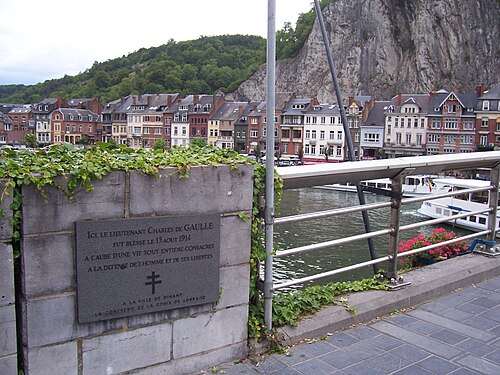
1914年8月初旬にフランスで戦争が勃発すると、フランスで最も優れた戦闘部隊の一つと考えられていた第33連隊は、すぐにディナンでドイツ軍の進撃を阻止する任務に就いた。しかし、フランス第5軍司令官シャルル・ランレザック将軍は19世紀の戦術に固執し、部隊をドイツ軍の砲兵隊に対して無意味な銃剣突撃に駆り立て、多大な損失を被った。[7]
小隊長として、ド・ゴールは最初から激しい戦闘に巻き込まれた。 8月15日に試練を受け、ディナンの戦いで膝に銃弾を受け、真っ先に負傷した者の一人となった。[15] [3] : 58 病院で、彼が使用された戦術に憤慨し、他の負傷した将校たちとフランス軍の時代遅れのやり方に反対したと時々言われる。しかし、彼が現代の戦争における砲兵の重要性を理解していたという当時の証拠はない。その代わりに、当時の著作の中で、彼は「急速すぎる」攻勢、フランス軍の将軍たちの無能さ、そして「イギリス軍の遅さ」を批判した。[22]
彼は10月に第7中隊の指揮官として連隊に復帰した。彼の元戦友の多くはすでに戦死していた。12月に彼は連隊副官となった。[15]
ド・ゴールの部隊は、敵の会話を聞くために無人地帯に何度も這い出て行ったことで評価され、持ち帰った情報は非常に貴重であったため、1915年1月18日にクロワ・ド・ゲール勲章を授与された。2月10日、彼は当初は試用期間であったが大尉に昇進した。[15] 1915年3月10日、ド・ゴールは左手を撃たれた。最初は軽い傷に見えたが、感染症を起こした。[23]この傷で彼は4か月間行動不能となり、後に右手に結婚指輪をはめざるを得なくなった。[3] : 61 [15] [24] 8月に彼は第10中隊を指揮し、その後連隊副官として任務に復帰した。1915年9月3日、彼の大尉の階級は永久となった。10月下旬、彼は第10中隊の指揮官に復帰した。[15]
1916年3月2日、ドゥオモン(ベルダンの戦い)で中隊長として包囲された陣地からの突破を試みる突撃を指揮していたとき、砲弾で気絶して左腿に銃剣傷を負い、毒ガスの影響で意識を失った後に捕虜となった。彼は大隊の数少ない生存者の一人であった。[25] [15] [3] : 63 彼が捕らえられた状況は後に議論の対象となり、反ドゴール派は彼が実際に降伏したという噂を広めたが、ドゴールはこれを平然と否定した。[26]
囚人

ドゴールは6つの異なる捕虜収容所で32か月を過ごしたが、ほとんどの時間をインゴルシュタット要塞[de]で過ごし、[27] : 40 そこでの待遇は満足のいくものだった[25] 。
捕虜となったド・ゴールは、ドイツの新聞を読み(学校でドイツ語を学び、夏休みをドイツで過ごしていた)、他の捕虜たちに戦争についての自分の見解を語った。愛国心と勝利への自信から、彼は中世フランス軍の最高司令官の称号である「ル・コネターブル(コンスタブル)」というあだ名を付けられた。 [28]インゴルシュタットには、後にド・ゴールの政治的同盟者となるジャーナリストのレミ・ルールや、 [29] [30]後に赤軍の司令官となるミハイル・トゥハチェフスキーもいた。ド・ゴールはトゥハチェフスキーと知り合いになったが、トゥハチェフスキーの機動力のある機械化軍隊に関する理論は、彼の理論とよく似ていた。彼はまた、ドイツ軍内の分裂を分析した最初の著書「敵の家は分裂している」を執筆した。この本は1924年に出版された。[3] : 83
ド・ゴールは当初ローゼンベルク要塞に収容されたが、すぐにインゴルシュタットのような次第に警備が厳しくなる施設に移送された。ド・ゴールは5回脱走を試みたものの失敗し、[15]長期間の独房監禁や新聞やタバコなどの特権の剥奪などの懲罰を日常的に受けた。彼は洗濯かごに隠れたり、トンネルを掘ったり、壁を掘ったり、さらには看護師のふりをしたりして脱走を試みている。 [31] [19]両親に宛てた手紙の中で、彼は戦争が自分抜きで続いていることへの不満を絶えず綴っていた。戦争が終わりに近づくにつれ、勝利に何の役割も果たしていないことに落ち込んでいったが、休戦協定が結ばれるまで監禁されたままだった。3週間後の1918年12月1日、彼はドルドーニュにある父親の家に戻り、軍に従軍して生き延びた3人の兄弟と再会した。
戦争の間
1920年代初頭: ポーランドとスタッフ大学

休戦後、ド・ゴールはフランス軍事使節団の一員として、共産主義ロシアとの戦争(1919-1921年)の間、ポーランド歩兵の教官を務めた。彼はズブルチ川付近での作戦で功績を挙げ、ポーランド軍少佐の階級に就き、ポーランド最高の軍事勲章であるヴィルトゥティ・ミリタリを受賞した。[3] : 71–74

ド・ゴールはフランスに戻り、サン=シール大学で軍事史の講師となった。[32]彼は1922年11月から1924年10月までエコール・ド・ゲール(参謀学校)で学んだ。ここで彼は教義よりも状況に基づいた戦術を主張して教官のモイラン大佐と衝突し、指揮官役を演じた演習の後、補給に関する質問に答えることを拒否し、「de minimis non curat praetor」(大まかに言えば、「リーダーは些細なことに関心を持たない」)と答えた後、責任者にモイラン大佐に答えるよう命じた。
彼は多くの評価でまずまずの成績を収めたが、傑出した成績ではなかった。モイラン氏は最終報告書で、彼は「知的で教養があり、真面目な士官であり、才気と才能がある」と記したが、コースから得られるはずの恩恵を十分に得られなかったこと、また彼の傲慢さ、「過度の自信」、他人の意見を厳しく否定すること、「亡命中の王様のような態度」を批判した。129人中33位で入学した彼は、52位で卒業し、アセ・ビアン(「十分良い」)の成績を取った。彼はマインツに配属され、フランス占領軍への食糧と装備の供給を監督した。[33] [3] : 82 ド・ゴールの著書『敵との不和』は1924年3月に出版された。1925年3月には状況に応じた戦術の使用に関するエッセイを出版したが、これはモワランに対する意図的な反抗であった。[34]
1920年代半ば: ペタンのゴーストライター
ド・ゴールのキャリアはペタンによって救われた。ペタンは彼の参謀大学の等級をビエン(「優秀」だが、参謀職に必要な「優秀」ではない)に修正するよう手配した。[3] : 82–83 1925年7月1日から、彼はペタン(メゾン・ペタンの一員)のために、主に「ペン・オフィサー」(代筆屋)として働いた。[35]ド・ゴールは、1925年にモロッコで指揮をとるというペタンの決定(後に「ペタン元帥は偉大な人物だった。1925年に亡くなったが、本人は知らなかった」と述べたことが知られている)と、ペタンとその妻が公に称賛されることを渇望していると彼が見たものに不満を抱いていた。1925年、ド・ゴールは最初の政治的パトロンであるジョゼフ・ポール・ボンクールを育て始めた。[36] 1925年12月1日、彼は「フランスの要塞の歴史的役割」に関するエッセイを出版した。これは当時計画されていたマジノ線のせいで人気の話題だったが、彼は要塞の目的は敵を弱体化させることであり、防衛費を節約することではないと主張した。[35]
ド・ゴールとペタンの間には、フランス軍の歴史書『兵士』をめぐって摩擦が生じた。ペタンはゴーストライターとして執筆し、より大きな執筆クレジットを得たかった。ペタンは主に歴史資料を執筆していたが、ペタンは最終章に自分の考えを加えたかった。1926年後半には少なくとも1回の激しい会議があり、その後ド・ゴールは怒りで顔面蒼白になりながらペタンのオフィスから出てきた。[37] 1926年10月、彼はライン軍司令部での任務に復帰した。[38]
ド・ゴールは司令官として以外はエコール・ド・ゲールに戻ることはないと誓っていたが、ペタンの招待とパトロンの演壇への紹介により、1927年4月に「戦時中のリーダーシップ」、「人格」、「威信」の3つの講義を行った。これらは後に彼の著書『剣の刃』(1932年)の基礎となった。[39]
1920年代後半: トリーアとベイルート
通常の期間である12年間大尉として過ごした後、ドゴールは1927年9月25日に司令官(少佐)に昇進した。 [39] 1927年11月からトリーアの占領軍で第19軽歩兵連隊(エリート軽歩兵大隊)の指揮官として2年間の任務に就いた。[40] [3] : 94
ドゴールは部下を厳しく訓練した(夜間に凍てつくモーゼル川を渡る訓練は上官の将軍に拒否された)。彼は、より楽な部隊への転属を副官に訴えた兵士を投獄し、調査を受けた際は当初はメゾン・ペタンの一員としての地位を主張しようとしたが、最終的には兵士の政治的権利を妨害したことに対する懲罰から身を守るためにペタンに訴えた。この時期のドゴールについて、ある観察者は、若い将校を励ましていたものの、「彼の自尊心は...遠くから輝いていた」と書いている。1928年から1929年の冬には、30人の兵士(「アンナメーゼは数えていない」)がいわゆる「ドイツ風邪」で死亡し、そのうち7人はドゴール大隊の兵士だった。調査の後、彼はその後の議会討論で特に有能な指揮官として称賛され、孤児である一等兵のために喪章をつけたことについては首相レイモン・ポアンカレから賞賛された。[41]
1928年、ド・ゴールとペタンの対立は『兵士』の代筆をめぐって深まった。ペタンは新しい代筆屋オーデ大佐を雇ったが、オーデ大佐は代筆を嫌がり、恥ずかしそうにド・ゴールにプロジェクトを引き継ぐよう手紙を書いた。ペタンはこの件については非常に友好的だったが、本は出版しなかった。[42] 1929年、ペタンはアカデミー・フランセーズの席を引き継いでいた故フェルディナン・フォッシュへの追悼文にド・ゴールの原稿を使用しなかった。[37]
連合軍によるラインラント占領は終わりに近づき、ド・ゴール大隊は解散される予定だったが、彼が次の任務に就いた後、この決定は撤回された。ド・ゴールは1929年にエコール・ド・ゲールの教職を希望した。 [43]彼が任命された場合、教員の大量辞職の恐れがあったようだ。コルシカ島か北アフリカへの派遣の話もあったが、ペタンの助言でレバノンとシリアへの2年間の派遣を受け入れた。[3] : 93–94 ベイルートではルイ・ポール・ガストン・ド・ビゴー・デュ・グランリュ将軍の第3局(軍事作戦)の責任者を務め、将軍は彼を最高司令官に推薦する熱烈な推薦状を書いた。[44]
1930年代: 参謀
1931年春、ベイルートでの任務が終わりに近づいた頃、ド・ゴールは再びペタンにエコール・ド・ゲールへの赴任を要請した。ペタンは彼を同校の歴史学教授に任命しようとしたが、再び教授陣は彼を受け入れなかった。その代わりにド・ゴールは、1928年に同校の改革のために作成した計画に基づき、エコール・ド・ゲールと高等軍事研究センター(CHEM、将軍のための上級参謀学校で「元帥学校」として知られる)の両方、高等師範学校の民間人、そして公務員に「戦争の遂行」について講義できる特別なポストをペタンに設けるよう要請した。 [45]
ペタンは代わりに、ド・ゴールにパリの最高戦争会議事務局(SGDN)への配属を申請するよう助言した。ペタンは、それが自分にとって良い経験になると考え、その任命のために働きかけることを約束した。ド・ゴールは1931年11月にSGDNに配属され、当初は「起草担当官」であった。[45] [3] : 94
彼は1932年12月に中佐に昇進し、第3課(作戦)の長に任命された。SGDNでの勤務で、彼は軍の計画と政府の接点に関する6年間の経験を積み、1940年に大臣職に就くことができた。[3] : 97 [46]
ドゴールはアメリカ、イタリア、ベルギーの体制を研究した後、戦時中の国家組織に関する法案を起草した。彼はCHEMに法案についてプレゼンテーションを行った。法案は下院を通過したが、上院では否決された。[47]
1930年代初頭: 装甲戦の提唱者
ペタンとは異なり、ド・ゴールは塹壕戦よりも戦車の使用と迅速な機動を信奉していた。[3] : 108 ド・ゴールは、退役中佐(ドレフュス事件で経歴に傷がついた)で軍事思想家のエミール・マイヤーの弟子となった。マイヤーは、戦争は起こるに決まっているが、文明国が互いに脅迫したり戦争を仕掛けたりするのは「時代遅れ」だと考えていた。彼はフランスの将軍たちを軽蔑し、マジノ線を批判し、機械化戦争を提唱していた。ラクーチュールは、マイヤーがド・ゴールの考えを、強いリーダーの神秘性への執着(Le Fil d'Epée : 1932)から、共和制と軍改革への忠誠へと向けさせたと示唆している。[48]
1934年、ド・ゴールは『職業的軍隊へ』を執筆した。彼は歩兵の機械化を提案し、10万人の精鋭部隊と3,000両の戦車に重点を置いた。この本では、戦車が騎兵隊のように国中を駆け巡る様子が描かれている。ド・ゴールの師であるエミール・マイヤーは、戦場における航空戦力の将来的重要性について、ド・ゴールよりもやや予言的だった。そのような軍隊は、フランスの人口不足を補うだけでなく、国際法、特にベルサイユ条約を施行する有効な手段となるだろう。彼はまた、それがより深い国家再編の前兆となると考え、「[...] 命令に異議を唱えることができない主人、つまり世論に支持される人物が登場しなければならない」と書いた。[49]
フランスでは700部しか売れなかった。ドイツでは数千部売れたという主張[19]は誇張だと考えられている。ド・ゴールはこの本を利用してジャーナリストとの人脈を広げ、特にレコー・ド・パリの編集者アンドレ・ピロノーと交流を深めた。この本は、市民軍という共和主義の理想を信奉する極左派を除いて、政治的立場を問わず賞賛された。[50]ド・ゴールの見解は異端の政治家ポール・レイノーの注目を集め、彼はレイノーに頻繁に手紙を書き、時には卑屈な言葉で伝えた。レイノーが初めてド・ゴールに会ったのは1934年12月5日だった。[51]
ド・ゴールは、この頃は自分のキャリアに深く集中していた。彼がファシズムに誘惑されたという証拠はなく、1934年と1936年の国内の動乱や、その10年間の多くの外交政策危機に対する彼の見解を示す証拠はほとんどない。[52]彼は、人民戦線政府が1936年に開始した再軍備運動を支持したが、フランス軍の教義では、歩兵支援のために戦車を小額で使用すべきという方針が維持されていた(皮肉なことに、1940年には、ド・ゴールが主張したのと同様の方法で使用されたのはドイツの装甲部隊であった)。[53]ド・ゴールの政治的見解を垣間見ることのできる稀な例として、ドイツとの戦争は避けられないと警告し、1935年にピエール・ラヴァルがソ連と結んだ条約は最善であると母親を安心させる手紙がある。この条約は、フランソワ1世が皇帝カール5世に対抗してトルコと結んだ同盟になぞらえられている。[54]
1930年代後半: 戦車連隊
1936年4月から、SGDNのスタッフ職に就きながら、ド・ゴールはCHEMで将軍たちへの講師を務めた。[47]ド・ゴールの上司は戦車に関する彼の見解を認めず、1936年に大佐への昇進を逃したが、これは彼の軍歴が十分ではなかったためだと言われている。彼は政治的パトロンであるレイノーを訪ね、レイノーは彼の軍歴を陸軍大臣エドゥアール・ダラディエに見せた。近代兵器による再軍備の熱狂的支持者だったダラディエは、翌年の昇進リストに彼の名前が載るようにした。[3] : 109 [55]
1937年、サン=シール大学でド・ゴールを指導したビノー将軍は、CHEMでの講義に関する報告書の中で、ド・ゴールは将来、高官に就くのに非常に有能だが、その資質を「冷淡で高尚な態度」の下に隠していると記した。[47] 1937年7月13日、ド・ゴールはメスで第507戦車連隊(中戦車D2大隊とR35軽戦車大隊)の指揮官に任命され、同年12月24日には大佐に昇進した。ド・ゴールは指揮戦車「アウステルリッツ」に乗ってメスのアルム広場に80台の戦車によるパレードを繰り広げ、世間の注目を集めた。[56]
この頃までにド・ゴールは「モーター大佐」として知られるようになり、よく知られた人物になっていた。[3] : 117 1938年、プロン出版社の招待で、彼は別の本「フランスとその軍隊」を出版した。ド・ゴールは、10年前にペタンのために書いた未完の本「兵士」のテキストの多くをこの本に取り入れたが、ペタンの不満を買った。ド・ゴールはペタンへの献辞を載せることに同意したが(ペタンが送った下書きではなく、自分で書いたが)、戦後の版からは削除された。ラクーチュールが言うように、1938年までペタンはド・ゴールを「限りない善意」で扱っていたが、1938年10月までに彼は内心、かつての弟子を「野心家で、非常に行儀の悪い男」と考えた。[57]
第二次世界大戦
初期の戦争
第二次世界大戦が勃発すると、ド・ゴールはアルザス地方のフランス第5軍の戦車部隊(5個散在大隊、主にR35軽戦車を装備)の指揮を任された。1939年9月12日、ザール攻勢と同時にビッチェを攻撃した。[58] [3] : 118
1939年10月初旬、レイノーはド・ゴールの下で参謀職に就くことを求めたが、財務大臣の職に留まった。ド・ゴールの戦車はルブラン大統領の視察を受け、大統領は感銘を受けたものの、自分の考えを実行するには遅すぎることを残念に思った。[59]彼は「機甲部隊の到来」と題する論文を書き、ジョルジュ将軍(北東戦線の司令官で、特に感銘を受けていなかった)と政治家レオン・ブルムに送った。当時の首相ダラディエは多忙でそれを読むことができなかった。[60]
1940年2月下旬、レイノーはド・ゴールに、機甲師団の指揮官が空いたらすぐにその指揮官に指名されると伝えた。[61] 1940年初頭(正確な日付は不明)、ド・ゴールはレイノーに軍事評議会の事務総長に任命するよう提案した。これは事実上、レイノーを政府の軍事顧問にすることになる。レイノーが3月に首相に就任したとき、彼はダラディエの支持を頼りにしていたため、代わりに政治家のポール・ボードワンがその職に就いた。[62]
3月下旬、レイノーはド・ゴールに第4機甲師団の指揮を任せ、5月15日までに編成すると伝えた。[63]連合軍がノルウェーで敗北した後、ダラディエとモーリス・ガムラン(総司令官)は攻撃を受けており、政府は再編される可能性が高いと見られていた。もしそうなっていたら、5月3日時点でまだレイノーに戦争統制の再編を働きかけていたド・ゴールは政府に加わっていたかもしれない。[64] 5月7日までに、彼は新しい師団のスタッフを集めていた。[65]
フランスの戦い
師団長
ドイツ軍は5月10日に西部を攻撃した。[64]ドゴールは5月12日に新しい師団を活性化した。[65]ドイツ軍は1940年5月15日にスダンを突破した。 [66]その日、3個戦車大隊が集結し、彼の紙上の戦力の3分の1にも満たない状態で、彼は司令部に呼び出され、ロバート・トゥション将軍の第6軍がマジノ線からエーヌに再展開するまでの時間を稼ぐために攻撃するよう指示された。ジョルジュ将軍は彼に、自分の考えを実行するチャンスだと伝えた。[67] [19]
ラオン近郊の主要道路交差点モンコルネへの攻撃は、5月17日午前4時30分頃に始まった。数で劣勢で航空支援もなかったため、フランス軍は90台の車両のうち23台を地雷、対戦車兵器、シュトゥーカで失った。5月18日には装甲騎兵2個連隊が新たに加わり、戦力は150台となった。5月19日に再び攻撃を仕掛けたが、フランス軍はまたも壊滅的な打撃を受けた。フランス軍はジョルジュ将軍の撤退命令を無視し、午後早くにトゥションにさらに2個師団の派遣を要求したが、トゥションは拒否した。[68]ドゴールの戦車はドイツ歩兵をコーモンまで撤退させたが、この行動は一時的な救済にすぎず、ドイツ軍の先鋒を遅らせることはほとんどできなかった。とはいえ、これはフランス軍が国中で敗北を喫する中で得た数少ない勝利の一つであった。[69] [70]
ド・ゴールの准将の階級は1940年6月1日に発効した。 [3] : 127 その日、彼はパリにいた。将軍の制服を仕立てるために仕立て屋を訪れたあと、彼はレイノーと会い、レイノーは彼に初めて政府の職をオファーしたようで、その後、マクシム・ウェイガン総司令官と会い、フランスの名誉を救ったことを祝福され、助言を求めた。[71] 6月2日、彼はウェイガンにメモを送り、フランスの装甲師団を4つの弱い師団から3つの強い師団に統合し、彼の指揮下にある装甲軍団に集結するよう無駄に勧めた。彼はレイノーにも同じ提案をした。[71]
政府大臣
6月5日、ドイツ軍が攻勢の第2段階(フォール・ロット)を開始した日、ポール・レイノー首相はド・ゴールを国防・戦争担当国務次官に任命し、[72]イギリスとの調整を特に担当させた。[73]ウェイガンは彼を「子供」だと考え、この任命に反対した。[74]ペタン(副首相)もこれに不満で、レイノーに『兵士』のゴーストライターの話を語った。[74]彼の任命はフランスとイギリスの両方でかなりの注目を集めた。彼は英語の話せる補佐官を求め、ジョフロワ・ショドロン・ド・クールセルがその職に就いた。[75]
6月8日、ドゴールはウェイガンを訪問した。ウェイガンはこれが「終わり」であり、フランスが敗北した後、イギリスはすぐに和平を求めるだろうと信じていた。[76]翌日、ドゴールはロンドンに飛び、イギリス首相ウィンストン・チャーチルと初めて会談した。イギリスとフランスの海軍と空軍が協力すれば、50万人をフランス領北アフリカに避難させることができると考えられていた。この会談か6月16日、彼はチャーチルにフランスの戦いにイギリス空軍(RAF)の航空機をさらに投入するよう無駄に促したが、チャーチルが拒否したのは正しかったと認めた。 [77]
6月11日、ド・ゴールは車でアルシ=シュル=オーブに行き、シャルル・フンツィジェ・ウェイガン将軍に司令官の職をオファーした。フンツィジェは原則として受け入れたが、ド・ゴールはウェイガンを解任するようレイノーを説得することができなかった。[78] 6月13日、ド・ゴールはチャーチル、ハリファックス卿、ビーバーブルック卿、エドワード・スピアーズ、イスメイ男爵、アレクサンダー・カドガンとともにトゥールで別の英仏会議に出席した。[79]ジョルジュ・マンデル内務大臣は戦争はまだ始まったばかりであり、ド・ゴールは名誉を汚さない必要があると主張し、ド・ゴールは辞任を思いとどまらせた。[80]それでも、6月17日午前9時頃、ド・ゴールはスピアーズとともにイギリスの航空機でロンドンに飛んだ。ド・ゴールは後にアンドレ・マルローに、フランス軍や承認された政府との決別によるロンドン逃亡が、多くの人々に反逆行為とみなされるであろう精神的苦痛を引き起こしたと語った。[81]
亡命中の自由フランス軍の指導者
ロンドンからのアピール

ドゴールは1940年6月17日12時30分過ぎにヘストン空港に着陸した。彼は15時頃チャーチルと会い、チャーチルは彼にBBCでの放送時間を提供した。二人とも、その日の早い時間にペタンが「戦闘は終わらなければならない」と述べ、ドイツに条件を交渉したことを知っていた。その夜、ドゴールはジャン・モネと会食し、ペタンの「裏切り」を非難した。[27] : 125–128 翌日、イギリス内閣(チャーチルは「最高の時」演説の日だったため不在)は、フランス艦隊の運命についてペタン政府とまだ連絡を取っていたため、ドゴールがラジオ演説を行うことに難色を示した。ダフ・クーパー(情報大臣)は演説の事前コピーを持っていたが、それには異論はなかった。内閣は最終的に、手書きの修正が閣議議事録に記されていることから、個別に働きかけた後に同意した。[82] [66]

ドゴールの6月18日のアピールは、フランス国民に士気を落とさず、占領に抵抗し続けるよう呼びかけた。彼はまた、明らかに自らの意志で、翌日に再度放送すると宣言した。[83] 6月18日の演説を聞いた者はほとんどいなかった。 [27] : 4–6 この演説はフランス本土のいくつかの新聞に掲載された。この演説は主に、ノルウェーとダンケルクから撤退してイギリスにいたフランス兵に向けたもので、大半はドゴールの自由フランス軍で戦うことに興味を示さず、フランスに送還されてドイツ軍捕虜となった。[84] 6月18日のアピールの聴衆は少なかったが、その後の演説では聴衆が増え、[27] : 5–6 8月初旬までに報道機関は自由フランス軍がドゴールの指揮下で戦っていると報じたが、[85]フランス国内でドゴールについて知っている人はほとんどいなかった。[27] : 5–6
ヴィシー政権は既にドゴールに懲役4年の刑を宣告していたが、1940年8月2日、ドゴールは欠席裁判で死刑を宣告された。[86]ペタンは、この判決が執行されないよう万全を期すと発言した。[87]ドゴールは判決について「ヴィシーの行為は無効だと考えている。勝利後に彼らに説明する」と述べた。[85]ドゴールとチャーチルは1940年8月7日、イギリスが自由フランスに資金を提供し、戦後に支払いを行うことで合意した(財政協定は1941年3月に最終決定)。別の書簡でフランス帝国の領土保全が保証された。[88]

ドゴールへの支持は、植民地フランス領赤道アフリカの拠点から生まれた。1940年秋、植民地帝国はヴィシー政権を大部分支持した。チャド総督フェリックス・エブエは9月に支持をドゴール将軍に切り替えた。勇気づけられたドゴールは10月にブラザヴィルを訪れ、 「ブラザヴィル宣言」 [89]で帝国防衛評議会の結成を発表し、[90]、ヴィシー政権を支持するすべての植民地に、ドイツとの戦いで彼と自由フランス軍に加わるよう呼びかけた。1943年までにほとんどの植民地が参加した。[89] [91]
アルジェ
1942年11月のトーチ作戦後、ド・ゴールはフランスのアフリカ植民地でフランスレジスタンスやその他の支援者と協力し、1943年5月にアルジェに本部を移した。彼はまず共同トップとなり(アメリカがド・ゴールをイギリスの傀儡と誤って疑っていた候補者で、あまり独立心が強くないアンリ・ジロー将軍と)、その後、ジローを人格の力で締め出してフランス民族解放委員会の単独議長となった。[66]
連合軍司令官のドワイト・アイゼンハワー将軍はドゴールを高く評価していた。[92] 1943年アルジェでアイゼンハワーはドゴールにフランス軍がパリを解放することを直接保証し、その解放を実行するためにフィリップ・ルクレール・ド・オートクロック将軍の陸軍師団を北アフリカから英国に移送するよう手配した。[92]アイゼンハワーは自由フランス軍の部隊の戦闘力に感銘を受け、「ドイツ抵抗勢力の残党掃討で彼らが果たした役割に感謝した」。また、多くの人々がドゴールにどれほど強く忠誠を誓い、国家指導者として彼を受け入れる用意ができているかを感じ取った。[92]
D-Day の準備

ヨーロッパ解放の準備が加速するにつれ、特にアメリカは、フランスの観点からすべてを見るドゴールの傾向を非常にうんざりするものとして感じた。選挙が行われるまでフランスの暫定政権を認めなかったルーズベルト大統領は、ドゴールを「独裁者見習い」と呼んだ。この見解は、後に現代の欧州連合につながる欧州石炭鉄鋼共同体の設立に尽力したジャン・モネを含むワシントンの多くのフランス人指導者によって支持された。ルーズベルトは、差し迫った侵攻の戦略的詳細をドゴールに提供しないようにチャーチルに指示した。なぜなら、彼が情報を秘密にしておくとは思えなかったからだ。フランスの暗号は脆弱であると考えられ、自由フランスがイギリスやアメリカの暗号の使用を拒否したため、危険をはらんでいた。[93]ドゴールは暗号情報をイギリスと共有することを拒否した。イギリスはフランスのメッセージを読むために秘密裏に暗号を解読しなければならなかった。[94]
1944年6月4日、ノーソルト空軍基地に到着したドゴールは公式の歓迎を受けた。[93]その後、ドゴールの専用列車の中でチャーチルはラジオ演説をしてほしいと伝えたが、アメリカがフランスにおける彼の権力の権利を認めようとしないという知らせや、チャーチルが大統領との関係改善のためにルーズベルトとの会談を要請するよう提案すると、ドゴールは激怒し、「フランス政府が存在するのに、なぜフランスにおける権力への立候補をルーズベルトに申し出なければならないのか」と問い詰めた。[3]
フランスへの帰国
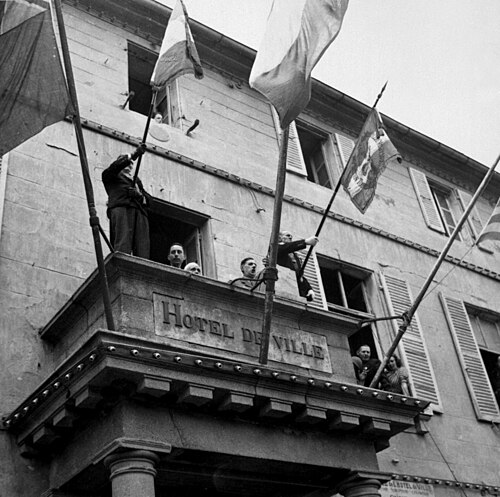
1944年6月14日、ド・ゴールはイギリスを離れ、ノルマンディーのバイユー市に向かい、ここを自由フランスの首都と宣言した。副官のフランソワ・クーレを民政長官に任命し、その夜、フランスの駆逐艦でイギリスに戻った。軍最高司令部の公式な立場は変わらなかったが、地元の連合軍将校たちは、日常的な事柄ではバイユーの新興政権と交渉する方が実用的だと考えた。[93]ド・ゴールは6月16日にアルジェに飛び、その後ローマに行き、教皇とイタリアの新政府に会った。

7月初め、彼はワシントンでルーズベルトを訪問し、訪問中の国家元首の21発の礼砲ではなく、上級軍指導者の17発の礼砲を受けた。[3]ドゴールは人道的見地からパリ解放を優先するよう働きかけ、連合軍最高司令官ドワイト・D・アイゼンハワー将軍からフランス軍が最初に首都に入ることを許可するという合意を取り付けた。数日後、ルクレール将軍の師団がパリ郊外に入り、レジスタンスが大きな役割を果たした6日間の戦闘の後、5000人のドイツ守備隊は8月25日に降伏したが、数日間散発的な戦闘が続いた。[95]
8月26日の夕方、ドイツ国防軍は報復としてパリに大規模な空襲と砲撃を開始し、数千人の死傷者を出した。[96]パリの状況は緊迫したままとなり、数日後、ドゴールはアイゼンハワー将軍に力を見せつけるためアメリカ軍をパリに派遣するよう要請した。8月29日、アメリカ第28歩兵師団は前線への旅程を変更し、シャンゼリゼ通りで行進を行った。[96] [97]
同日、ワシントンとロンドンは自由フランスの立場を受け入れることに同意した。翌日、アイゼンハワー将軍はパリの将軍を訪問し、事実上の承認を与えた。[98]
1944年~1946年: フランス共和国臨時政府

ルーズベルトはフランスで占領地連合軍政府(AMGOT)を樹立すべきだと主張したが、陸軍長官と次官、そして北アフリカでのAMGOTの施行に強く反対していたアイゼンハワーの反対を受けた。アイゼンハワーはルーズベルトと異なりドゴールとの協力を望み、Dデイ前夜には大統領から土壇場で連合軍将校は軍政官として行動せず、連合軍がフランス領土を解放する際には地方当局と協力するという約束を取り付けた。ドゴールは後に回想録でAMGOTを阻止したと主張している。[99]
戦前の政党とその指導者の大半が信用を失っていたため、ド・ゴールとその仲間が暫定政権を樹立することに反対する者はほとんどいなかった。このような厳しい時代に自分の地位を僭称していると思われないよう、ド・ゴールはマティニョン・ホテルやエリゼ宮などの豪華な官邸を使わず、陸軍省の古い事務所に短期間住んでいた。妻と娘たちが加わると、彼らはブローニュの森の端にある、かつてヘルマン・ゲーリングのために確保されていた小さな国有の別荘に移った。[100]
1944年11月10日、チャーチルはドゴールの歓迎会に出席するためにパリに飛び、翌日には二人は何千人もの歓声を上げるパリ市民に迎えられた。[101] ハロルド・ニコルソンは、アンソニー・イーデンが彼に「ウィンストンは一瞬たりとも泣き止むことはなく、パリの自由勲章を授与される頃にはバケツ一杯になるほどだった」と語ったと述べている。 [101]公式昼食会でドゴールは次のように述べた。
確かに、我々の古く勇敢な同盟国イギリスと、今日我々が尊敬する人々のまさにその衝動とインスピレーションの下にあるすべてのイギリス領土が、勝利への並外れた決意と、世界の自由を救ったあの素晴らしい勇気を発揮していなかったら、我々は[解放]を見ることはできなかったでしょう。これに心と魂の奥底から感動しないフランス人はいません。[101]
法的粛清(合法的な浄化)
主導権を握り、このプロセスを司法の厳格な管理下に置く必要があることを痛感していたド・ゴールは、フランソワ・ド・メントン法務大臣を任命し、裏切り者を処罰しヴィシー政権の痕跡を一掃するための法的粛清 ( Épuration légale ) を指揮させた。ヴィシー政権下で国家運営のため小さな役割しか担っていなかった警察官や公務員など、多くの「経済協力者」の恩赦が必要であることを知っていたド・ゴールは、国家元首として死刑を減刑する権利を得た。[3]裁判所から死刑判決を受けた約2,000人のうち、処刑されたのは800人未満だった。ド・ゴールは、彼に差し向けられた1,554件の死刑判決のうち998件を減刑したが、その中にはすべて女性も含まれていた。他の多くの人々は懲役刑を言い渡されたり、投票権やその他の法的権利を剥奪された。粛清は恣意的に行われ、しばしば不条理なほどに厳しい、あるいは過度に軽い処罰が下されたことは、一般的に認められている。[100]弁護士費用を払えない貧しい人々は、より厳しく扱われた。時が経ち、感情が和らぐにつれ、モーリス・パポンやルネ・ブスケなど、ヴィシー政権下でかなり上級の地位に就いていた多くの人々は、レジスタンスのために秘密裏に活動していた、あるいは、既存の秩序に奉仕することでフランスの利益のために働いていたという二重の策略を働いたと主張して、処罰を逃れた。[100]
ペタンは死刑判決を受けたが、古くからの弟子であるド・ゴールが終身刑に減刑し、マクシム・ウェイガンは最終的に無罪となった。特にその後数年間、ド・ゴールは第三共和政の政治家とラヴァルをスケープゴートにした元ヴィシー政権の指導者の両方をなだめようとしていたという見方が広まった。[100]
ヤルタとポツダム
ドゴールはヤルタやポツダムなどの連合国首脳会議に一度も招待されなかった。彼は三大指導者(チャーチル、ルーズベルト、スターリン)の怠慢を決して許さず、それがヨーロッパ政治のマイナス要因であったとして生涯怒り続けた。[7]
ライン川渡河後、フランス第1軍は南ドイツの広大な領土を占領したが、これによって後にフランスはドイツ降伏文書の調印に関与することができたが、特にルーズベルトは、戦後の世界のヨーロッパを形作ることになる三大会議にドゴールが参加することについていかなる議論も認めなかった。チャーチルはフランスを「連合国間のテーブル」に含めるよう強く求めたが、1944年12月6日、アメリカ大統領はスターリンとチャーチルの両者に電報を送り、ドゴールの存在は「単に複雑で望ましくない要素をもたらすだけ」だと伝えた。[102]
1945年2月のヤルタ会談では、スターリンの反対にもかかわらず、チャーチルとルーズベルトはフランスがドイツに戦後占領地域を設けることを認めるよう主張し、また国連設立会議に招待した5カ国の中にフランスが含まれるようにした。これによりフランスは国連安全保障理事会の常任理事国となることが保証された。[103]
ヨーロッパでの勝利

1945年5月、ドイツ軍はランスでアメリカ軍とイギリス軍に降伏し、ベルリンではフランスとの休戦協定が別途締結された。[104]ドゴールはパリでの戦勝記念パレードにイギリス軍の参加を一切認めなかった。しかし、参加した車両の中には、フランス人医師とイギリス人看護師を乗せたハドフィールド・スピアーズ救急隊の救急車もあった。看護師の一人はメアリー・スピアーズで、彼女はこの隊を設立し、フランス侵攻以来、中東、北アフリカ、イタリアで自由フランス軍と共にほぼ継続的に働いていた。メアリーの夫はエドワード・スピアーズ将軍で、1940年にド・ゴールをイギリスに救出した、自由フランス軍とのイギリス連絡係だった。救急車にイギリス国旗と三色旗が並んでいるのを見て、フランス兵が「スピアーズ万歳!スピアーズ万歳!」と叫ぶのを聞いたド・ゴールは、部隊を直ちに解散させ、イギリス人スタッフを帰国させるよう命じた。多くのフランス兵が抗議して勲章を返却し、メアリーは「偉大な人物が突然小さくなるというのは哀れなことだ」と書いている。[105]
休戦後すぐに、フランス軍がフランス語圏のイタリア国境地域であるヴァル・ダオストを占領するために軍隊を派遣した際に、アメリカとの別の衝突が勃発した。フランス軍司令官は、アメリカ軍が阻止しようとすれば発砲すると脅し、激怒したトルーマンはフランスへの武器輸送を即時停止するよう命じた。トルーマンはド・ゴールに怒りの手紙を送り、フランス解放のためにあれほどの努力をしたのに、フランスがアメリカ軍を攻撃すると脅すとは信じられないと述べた。[7]
同月、シリアで別の危機が発生した。フランス軍がレバントの占領継続に対する民族主義者の抗議を鎮圧しようとしたためである。ウィンストン・チャーチルはフランスの行動に反対し、フランスが交渉を拒否した後、トランスヨルダンからイギリス軍にシリアへの進攻を命じ、必要であればフランス軍に発砲するよう命令した。[106]レバント危機として知られるこの事件では、イギリス軍がシリアに侵攻してフランス軍を撤退させ、米国とソ連の政治的圧力も加わり、フランス軍は停戦を命じた。この危機はトルーマンをさらに激怒させ、フランスはその年の後半に軍を撤退させたが、ド・ゴールはイギリス大使ダフ・クーパーに「あなたはフランスを裏切り、西側諸国を裏切った。これは忘れてはならない」と述べた。[3] : 47
ドゴールは第二次世界大戦直後、米国で概ね好意的に迎えられ、公の場では米国を支持した。1945年8月27日、彼はニューヨーク市を訪問し、何千人もの市民と市長フィオレロ・ラガーディアから大歓迎を受けた。[107] [108]その日、ドゴールは「アメリカ合衆国万歳」を祈った。彼はニューヨーク市庁舎とアイドルワイルド空港(現在のジョン・F・ケネディ国際空港)を訪問し、ラガーディアにレジオンドヌール勲章グラン・クロワを授与した。[107] [108]
新たな選挙と辞任
解放以来、フランスにおける唯一の議会はアルジェ臨時諮問議会の拡大版であったが、1945年10月にようやく、第四共和政のための新憲法を制定することを主な任務とする新たな制憲議会の選挙が行われた。ド・ゴールは国家の強力な行政を支持したが、[19]主要三党はいずれも大統領の権限を厳しく制限することを望んだ。共産党は完全な憲法上の権限を持ち期限のない議会を望んだが、ド・ゴール、社会党、人民共和主義運動(MRP)は任期を7か月に制限し、その後憲法草案を再度国民投票にかけることを主張した。[109]
1945年11月13日、新議会は満場一致でシャルル・ド・ゴールを首相に選出したが、内閣の選出となると、共産党に重要な省庁の権限を与えることを彼が嫌がったため、すぐに問題が生じた。今や最大政党となり、カリスマ的な指導者モーリス・トレズが再び党首に就いた共産党は、これを再び受け入れるつもりはなく、激しい論争が起こり、その中でド・ゴールは議会議長に辞表を送り、警察と軍隊に対する権限を外国(ロシア)の代理人とみなす党に信頼を寄せたくないと宣言した。[7]
結局、11月21日に新内閣が成立し、共産党は22の省庁のうち5つを獲得した。共産党は依然として重要なポストを獲得していないが、ド・ゴールは、憲法草案は政党同盟が変動する議会に過大な権力を与えていると考えた。彼の大臣の一人は、彼は「権力を独占することも、共有することも同様にできない人物だ」と述べた。[110]
ドゴールはさらなる国有化と新しい経済計画の計画を概説し、それらは可決されたが、共産党が軍事予算の20パーセント削減を要求したことで、さらなる論争が起こった。「妥協による統治」を拒否したドゴールは、再び辞任すると脅した。議会を完全に従属させようと脅迫しているという印象が広まった。[100]共産党はなんとか妥協を仲介し、修正を加えた予算を承認させたが、それは一時的な措置に過ぎなかった。[7]
新政府を樹立してわずか2か月後、ド・ゴールは1946年1月20日に突然辞任した。この動きは「大胆で、結局は愚かな政治的策略」と呼ばれ、ド・ゴールは戦争の英雄として、フランス国民によってより強力な行政官としてすぐに呼び戻されるだろうと期待していた。[111]しかし、それは現実にはならなかった。戦争がようやく終わり、当初の危機は過ぎ去った。特にパンの不足は依然としてあったが、フランスは回復しつつあり、ド・ゴールは突然それほど不可欠な存在ではなくなった。共産党の出版物コンバットは「大惨事はなく、空の皿は割れなかった」と書いた。[100]
1946年~1958年: 権力の衰退

ド・ゴールは突然姿を消し、コロンベイの自宅に戻り、戦争の回想録を執筆した。ド・ゴールは1944年にピエール・ベルトーに、引退の理由について「フランスはいつか純粋なイメージを必要とするかもしれない...ジャンヌ・ダルクが結婚していたら、彼女はもはやジャンヌ・ダルクではなかっただろう」と語っていた。[112] 『戦争の回想録』の有名な冒頭の段落は、「私は生涯を通じて、フランスについて一定の考えを持っていた(une Certaine idée de la France)」と宣言して始まり、[113] : 2 、フランス政治の分裂的な性質を考えると、フランスは「壮大さ」の政策なしにはこの理想に真に従うことはできないと宣言して終わる。しかし、この正式な引退期間中、ド・ゴールはフランス領アルジェリアの政治発展に関与した同調者を含む過去の政治副官と定期的に連絡を取り、「おそらくフランスで最も情報通の人物」となった。[19]
1947年4月、ド・ゴールはフランス国民連合(RPF )を結成し、政治情勢を一変させようと新たな試みを行った。彼はこの政党が議会制度の党派争いを超越できると期待していた。新党は1951年の地方選挙で40パーセントの票を獲得し121議席を獲得したが、独自の報道機関やテレビ局を持たず、支持は衰えた。1953年5月、彼は再び政治活動から身を引いたが[ 19] 、 RPFは1955年9月まで存続した[114]。
他の植民地大国と同様、フランスもナショナリズムの高まりの中で海外の領土を失い始めた。19世紀半ばにフランスが植民地としたフランス領インドシナ(現在のベトナム、ラオス、カンボジア)は、1940年の敗戦後に日本軍の手に落ちた。ド・ゴールはフランスのインドシナ植民地を保持するつもりで、1944年後半から1945年初めにかけて、アメリカ軍が海岸に上陸すると同時に日本軍を攻撃するよう命令し、フランスのエージェントと武器をインドシナにパラシュートで降下させた。[115]ド・ゴールは1940年代の短い最初の大統領在任期間中に、この地域に対するフランスの支配を強化するべく迅速に動いたが、ホー・チミン率いる共産主義のベトミンは1946年から断固たる独立運動を開始した。フランスはインドシナを保持するため、7年間に及ぶ苦難の戦争(第一次インドシナ戦争)を戦った。この作戦は主に米国によって資金提供されていたが、 1954年5月のディエンビエンフーの戦いで大敗を喫して以降、ますます不人気となっていった。フランスは同年夏、ピエール・マンデス首相の下で撤退した。
モロッコとチュニジアの独立はフランスのメンデスによって取り決められ、1956 年 3 月に宣言されました。一方、アルジェリアでは約 35 万人のフランス軍がアルジェリア解放運動 (FLN) の 15 万人の戦闘員と戦っていました。数年のうちに、アルジェリア独立戦争は残虐性と流血の点で頂点に達し、フランス本土にまで波及する恐れがありました。
1946年から1958年まで、第四共和政には24の独立した省庁があった。際限のない分裂に苛立ったド・ゴールは、「246種類のチーズがある国をどうやって統治できるのか?」と有名な質問をした[116]。
1958年: 第四共和国の崩壊

第四共和政は、政治的不安定、インドシナでの失敗、アルジェリア問題の解決不能に悩まされた。[117] [118]
1958年5月13日、ピエ・ノワールの入植者たちはアルジェの政府庁舎を占拠し、FLNとの戦争遂行におけるフランス政府の弱点を攻撃した。ドゴール派の同調者であるジャック・マス将軍の議長の下、「民間および軍の公安委員会」が設立された。アルジェリアの最高司令官ラウル・サラン将軍はラジオで暫定政権を担うと発表し、自らに自信を求めた。[119]
5月19日の記者会見で、ドゴールは自分が国の意のままに行動できると断言した。あるジャーナリストが、ドゴールが市民の自由を侵害するのではないかと懸念する声をあげると、ドゴールはこう反論した。「私がそんなことをしたことがあるだろうか。それどころか、私は失われた自由を回復した。67歳にして独裁者としてのキャリアを始めると誰が本気で信じているだろうか」[120]。信念に基づく立憲主義者である彼は、合法的に構成された当局からのみ権力を受け入れると主張した。ドゴールは、自由フランス運動が正当な政府としての正当性を確立するのに経験した困難を繰り返すことは望まなかった。彼は側近に、反乱軍の将軍たちは「荷物の中にドゴールを見つけることはないだろう」と語った[19] 。
アルジェリアからのフランス空挺部隊がコルシカ島を占領し、パリ近郊への上陸が検討されるにつれて危機は深刻化した(復活作戦)。[121]
フランソワ・ミッテラン、ピエール・マンデス・フランス、アラン・サヴァリ、共産党、その他一部の左派 を除く多くの政党の政治指導者が、将軍の政権復帰を支持することに同意した。
5月29日、フランスのルネ・コティ 大統領は議会で、国が内戦の瀬戸際にあり、
フランス人の中で最も高名な人物、わが国の歴史の最も暗い時代に自由の回復を主導し、共和国再建のために独裁を拒否した人物に目を向けて、私はド・ゴール将軍に国家元首と協議し、共和制の合法性の枠内で国家の安全を保障する政府を直ちに樹立するために何が必要か、また、比較的短期間でわが国の制度を根本的に改革するために何ができるかについて検討するよう要請する。[122]
ドゴールは、強力な大統領制を創設する新憲法を導入し、7年間の任期で単独の行政官(その最初の人物はドゴール自身)を統治するという条件で、コティの提案を受け入れた。もう1つの条件は、6か月間、彼に特別権限を与えることだった。 [123]
ド・ゴールは第四共和制の脆弱な憲法を置き換えることに熱心であり続けた。彼は新憲法の起草を依頼し、その全体的な枠組みを担当したため、新憲法の著者と言われることもある。実際に憲法を起草したのはミシェル・ドブレで、彼はド・ゴールの政治思想を書き上げ、制定プロセスを通じて憲法を導いた。1958年6月1日、ド・ゴールは首相となり、国民議会から6か月間の非常事態権限を与えられ、[124]議会の正当性を求める彼の望みが叶った。[19]
ド・ゴール内閣は右派政党から強力な支持を受け、中道左派政党からは支持が割れ、共産党からは強い反対を受けた。1958年6月1日の投票では、593人の議員のうち329人が賛成、224人が反対した。[125] 1958年9月28日に国民投票が行われ、投票者の82.6%が新憲法と第五共和制の樹立を支持した。植民地(アルジェリアは正式にはフランスの一部であり、植民地ではなかった)は、即時独立か新憲法のどちらかを選択することができた。ギニアを除くすべてのアフリカ植民地は、新憲法とフランス連合からフランス共同体への置き換えに賛成票を投じた。ギニアはフランス領アフリカ植民地として初めて独立を果たし、直ちにフランスの援助をすべて失った。[126]
1958年~1969年: 政権復帰

1958 年 11 月の選挙では、シャルル ド ゴールとその支持者 (当初はヌーベル共和国・労働民主連合、次にヴェム共和国民主連合、後にはまだ共和国民主連合、UDR) が勝利しました。快適な多数派。 12月21日、彼はフランス大統領に選出された。彼は 1959 年 1 月に就任しました。国家元首として、職権によりアンドラ共同王子になりました。[127]
ドゴールは、新フランの発行を含む、国を活性化するための厳しい経済政策を監督した。[128]就任から1年も経たないうちに、彼は国家的な悲劇に直面した。 12月初旬にヴァールのマルパッセダムが決壊し、400人以上が死亡した。国際的には、彼は米国とソ連の両方を拒絶し、独自の核兵器を持つ独立したフランスを推進し、「自由なヨーロッパ」を強く奨励し、すべてのヨーロッパ諸国の連合が偉大なヨーロッパ帝国の過去の栄光を取り戻すと信じていた。[4] : 411、428
彼は欧州経済共同体(EEC)の礎となるフランスとドイツの協力関係の構築に着手し、1962年9月に西ドイツを公式訪問した。これはナポレオン以来初めてフランス国家元首がドイツを訪問したことになる。[129] 1963年1月、西ドイツとフランスは友好条約であるエリゼ条約に調印した。[4] : 422 フランスはまた、ドル準備金を減らして米国の金と交換し、海外における米国の経済的影響力を低下させた。[4] : 439
1959年11月23日、ストラスブールでの演説で、彼はヨーロッパに対するビジョンを発表しました。
ヨーロッパ、ヨーロッパ、大西洋、ヨーロッパ、運命の決定。
そうです、大西洋からウラル山脈までのヨーロッパ、つまりヨーロッパ全体が世界の運命を決めるのです。
彼の「大西洋からウラル山脈までのヨーロッパ」という表現は、ヨーロッパ統合の歴史を通じて頻繁に引用されてきた。彼のビジョンは、米国と英国の大西洋主義とは対照的であり、米国とソ連の間の第三の極として機能するヨーロッパを好んだ。第四共和制の最後の首相として、ド・ゴールは、欧州経済共同体を創設するローマ条約が完全に履行され、英国の自由貿易地域計画が拒否されることを確実にしたため、彼は「ヨーロッパの父」と見なされることもあった。[130]
アルジェリア
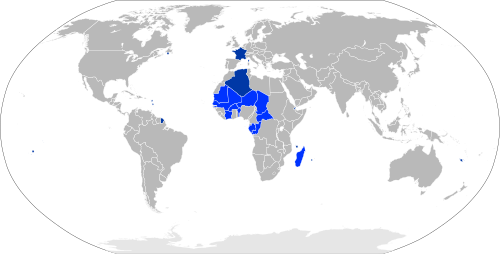
大統領に就任したド・ゴールは、アルジェリアでの血なまぐさい分裂戦争を終わらせるという緊急の課題に直面した。[131]軍のクーデターが権力の座に返り咲いたが、ド・ゴールはすぐに反乱を起こした公安委員会の役員全員に脱退を命じた。このような行動は、ピエ・ノワールとその軍の支持者を大いに怒らせた。[132]
彼は、アルジェリアでピエ・ノワールとフランス軍による蜂起に直面した。1958年6月に首相に就任すると、彼は直ちにアルジェリアに赴き、そこで軍を無力化した。長期的には、アルジェリアの伝統的な経済を近代化する計画を考案し、戦争を緩和し、1959年にアルジェリアに自決権を与えた。1960年のピエ・ノワールの反乱は失敗し、1961年4月には別のクーデター未遂も失敗した。フランスの有権者は、1961年のアルジェリア自決権に関する国民投票で彼の方針を承認した。ド・ゴールは、1962年3月のエビアン協定でアルジェリアの停戦を取り決め、1か月後の別の国民投票で合法化された。この協定はFLNの勝利をもたらし、独立を宣言した。[133]
ミシェル・ドブレ首相は最終的な和解をめぐって辞任し、ジョルジュ・ポンピドゥーが後任に就任した。フランスは1962年7月3日にアルジェリアの独立を承認し、1968年には遅ればせながらフランス軍が戦争中に犯したすべての犯罪を対象とする包括的恩赦法が可決された。1962年のわずか数か月の間に、90万人のピエ・ノワール族が国を離れた。7月5日以降、 1962年のオラン虐殺でフランス人が死亡したことをきっかけに、脱出は加速した。
暗殺未遂

ド・ゴールはアルジェリアでの彼の取り組みに対する報復として、秘密軍事機構(OAS)によって殺害の標的にされた。彼に対しては数回の暗殺未遂事件があったが、最も有名なのは1962年8月22日、彼と彼の妻がシトロエンDSのリムジンで組織的な機関銃の待ち伏せ攻撃からかろうじて逃れたときであった。[134]この攻撃はプティ・クラマールでジャン=マリー・バスティアン=ティリー大佐によって計画された。[4] : 381 ド・ゴールの生涯を通じて少なくとも30回の暗殺未遂事件があったと言われている。[135] [136] [137]
大統領直接選挙
1962年9月、ドゴールは大統領が国民によって直接選出されるよう憲法改正を求め、この目的のために再度国民投票を実施した。1962年10月4日に議会で不信任決議が可決された後、ドゴールは国民議会を解散し、新たな選挙を実施した。ドゴール派は多数派を拡大して勝利した。[138] [139]
フランス大統領選挙の手続きを変更するというドゴールの提案は、1962年10月28日の国民投票で承認された。これにより、大統領は1848年のルイ・ナポレオン以来初めて直接普通選挙で選出されることになった。[140]
1965年12月、ドゴールは大統領として2期目の7年間の任期に復帰した。
「栄光の30年」
アルジェリア紛争を克服したド・ゴールは、フランス経済の改革と発展、そして独立した外交政策の推進と国際舞台での強力な存在感という2つの主要目標を達成することができた。これは外国の観察者によって「壮大な政治」と名付けられた。[141]
戦後間もない頃、フランスはひどい状況にありました。[142]賃金は戦前の半分程度にとどまり、1946年から1947年の冬には農作物が甚大な被害を受けたためパンの配給が減り、飢餓と病気が蔓延し、闇市場が繁栄し続けました。ドイツはさらに悪い状況でしたが、1948年以降、マーシャル援助(ヨーロッパの経済とインフラの再建を支援するために与えられた大規模なアメリカの財政援助)の導入により、状況は劇的に改善し始めました。これにより、ジョルジュ・ポンピドゥー首相の政府が監督する、エネルギー、輸送、重工業への投資の綿密に計画されたプログラムの基礎が築かれました。
これらのプロジェクトの支援により、フランス経済は19世紀以来比類のない成長率を記録した。1964年には、ほぼ100年ぶりにフランスのGDPが一時的にイギリスのGDPを上回った。この時期はフランスでは「栄光の30年間」(1945年から1974年までの経済成長の「栄光の30年間」)のピークとして記憶されている。[144]
第4の原子力発電所

As early as April 1954, de Gaulle argued that France must have its own nuclear arsenal. Full-scale research began again in late 1954 when Prime Minister Pierre Mendès France authorized a plan to develop the atomic bomb. France's independent Force de Frappe (strike force) came into being soon after de Gaulle's election with his authorization for the first nuclear test.
With the cancellation of Blue Streak, the US agreed to supply Britain with its Skybolt and later Polaris weapons systems, and in 1958, the two nations signed the Mutual Defence Agreement. Although at the time it was still a full member of NATO, France proceeded to develop its own independent nuclear technologies—this would enable it to become a partner in any reprisals and would give it a voice in matters of atomic control.[145]
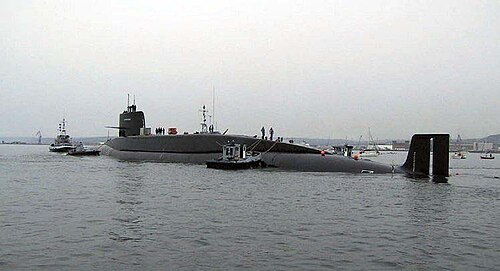
After six years of effort, on 13 February 1960, France became the world's fourth nuclear power when a high-powered nuclear device was exploded in the Sahara.[146] In August 1963, France decided against signing the Partial Test Ban Treaty because it would have prohibited it from testing nuclear weapons above ground. France continued to carry out tests at the Algerian site until 1966, under an agreement with the newly independent Algeria. France's testing program then moved to the Mururoa and Fangataufa Atolls in the South Pacific.
In November 1967, an article by the French Chief of the General Staff (but inspired by de Gaulle) in the Revue de la Défense Nationale caused international consternation. It was stated that the French nuclear force should be capable of firing "in all directions"—thus including even America as a potential target. This surprising statement was intended as a declaration of French national independence and was in retaliation to a warning issued long ago by Dean Rusk that US missiles would be aimed at France if it attempted to employ atomic weapons outside an agreed plan. However, criticism of de Gaulle was growing over his tendency to act alone with little regard for the views of others.[147]
Foreign policy

De Gaulle hosted a superpower summit on 17 May 1960 for arms limitation talks and détente efforts in the wake of the 1960 U-2 incident between United States President Dwight Eisenhower, Soviet Premier Nikita Khrushchev, and United Kingdom Prime Minister Harold Macmillan.[148] When Khrushchev condemned the United States U-2 flights, de Gaulle expressed to Khrushchev his disapproval of 18 near-simultaneous secret Soviet satellite overflights of French territory; Khrushchev denied knowledge of the overflights. Lieutenant General Vernon A. Walters was struck by de Gaulle's "unconditional support" of the United States during that "crucial time".[149] De Gaulle then tried to revive the talks by inviting all the delegates to another conference at the Élysée Palace to discuss the situation, but the summit ultimately dissolved in the wake of the U-2 incident.[148]
In February 1966, France withdrew from the NATO Military Command Structure but remained within the organisation. De Gaulle wanted France to remain the master of the decisions affecting it; he also ordered all foreign military personnel to leave France within a year.[4]: 431 This latter action, in particular, was poorly received in the US.[150]

De Gaulle established a good relationship with West German Chancellor Konrad Adenauer—culminating in the Elysee Treaty in 1963—and in the first few years of the Common Market, France's industrial exports to the other five members tripled and its farm export almost quadrupled. The franc became a solid, stable currency for the first time in half a century, and the economy mostly boomed. De Gaulle vetoed the British application to join the European Economic Community (EEC) in 1963,[151] and again in June 1967.[152] In June 1965, after France and the other five members could not agree, de Gaulle withdrew France's representatives from the EC. Their absence left the organisation essentially unable to run its affairs until the Luxembourg compromise was reached in January 1966.[153] De Gaulle succeeded in influencing the decision-making mechanism written into the Treaty of Rome by insisting on solidarity founded on mutual understanding.[154]
In January 1964, France was, after the UK, among the first of the major Western powers to open diplomatic relations with the People's Republic of China (PRC).[155] By recognizing Mao Zedong's government, de Gaulle signaled to both Washington and Moscow that France intended to deploy an independent foreign policy.[155] The move was criticized in the United States as it seemed to seriously damage US policy of containment in Asia.[155] De Gaulle justified this action by "the weight of evidence and reason", considering that China's demographic weight and geographic extent put it in a position to have a global leading role.[155] De Gaulle also used this opportunity to arouse rivalry between the USSR and China.[155] In September 1966, in a famous speech in Phnom Penh in Cambodia, he expressed France's disapproval of the US involvement in the Vietnam War, calling for a withdrawal.[156][157]
With tension rising in the Middle East in 1967, de Gaulle declared an arms embargo against Israel on 2 June, just three days before the outbreak of the Six-Day War. This, however, did not affect spare parts for the French military hardware with which the Israeli armed forces were equipped.[158][159] Under de Gaulle, following the independence of Algeria, France embarked on foreign policy more favorable to the Arab side. President de Gaulle's position in 1967 at the time of the Six-Day War played a part in France's new-found popularity in the Arab world.[160] In his letter to David Ben-Gurion dated 9 January 1968, de Gaulle expressed conviction that Israel had ignored his warnings and overstepped the bounds of moderation by taking the territory of neighbouring countries by force, believing that it amounted to annexation, and considered withdrawing from these areas the best course of action.[161]
Under de Gaulle's leadership, France supported the breakaway Republic of Biafra against the Nigerian government during the Nigerian Civil War.[162] Although French arms helped to keep Biafra in action for the final 15 months of the civil war, its involvement was seen as insufficient and counterproductive. The Biafran chief of staff stated that the French "did more harm than good by raising false hopes and by providing the British with an excuse to reinforce Nigeria."[163]

In July 1967, during a visit to Canada, de Gaulle shouted "Vive le Québec libre! Vive le Canada français! Et vive la France!" (Long live free Quebec! Long live French Canada, and long live France!) to a large crowd from a balcony at Montreal's city hall; de Gaulle abruptly left Canada two days later.[165] The speech was heavily criticized in both Canada and France,[166][167][168][169] but was seen as a watershed moment by the Quebec sovereignty movement.[170][171]
May 1968 and resignation
De Gaulle's government was criticized within France, particularly for its heavy-handed style. While the written press and elections were free, and private stations such as Europe 1 were able to broadcast in French from abroad, the state's ORTF had a monopoly on television and radio. This monopoly meant that the government was in a position to directly influence broadcast news. In many respects, Gaullist France was conservative, Catholic, and there were few women in high-level political posts (in May 1968, the government's ministers were 100% male).[172]
The mass demonstrations and strikes in France in May 1968 severely challenged De Gaulle's legitimacy. He and other government leaders feared that the country was on the brink of revolution or civil war. On 29 May, De Gaulle fled to Baden-Baden in Germany to meet with General Massu, head of the French military there, to discuss possible army intervention. De Gaulle returned to France after being assured of the military's support, in return for which De Gaulle agreed to amnesty for the 1961 coup plotters and OAS members.[173][174]
In a private meeting discussing the students' and workers' demands for direct participation in business and government he coined the phrase "La réforme oui, la chienlit non", which can be politely translated as 'reform yes, masquerade/chaos no.' It was a vernacular scatological pun meaning 'chie-en-lit, no' (shit-in-bed, no). The term is now common parlance in French political commentary.[175]
But de Gaulle offered to accept some of the reforms the demonstrators sought. He again considered a referendum to support his moves, but on 30 May, Pompidou persuaded him to dissolve parliament and hold new elections. The June 1968 elections were a major success for the Gaullists. His party won 352 of 487 seats,[176] but de Gaulle remained personally unpopular.[173]
De Gaulle resigned the presidency at noon, 28 April 1969,[177] following the rejection of his proposed reform of the Senate and local governments in a nationwide referendum. Two months later Georges Pompidou was elected as his successor.[178]
Later life
Retirement

De Gaulle retired once again to his nine-acre country estate, La Boisserie (the woodland glade), in Colombey-les-Deux-Églises, 120 miles southeast of Paris. There the General, who often described old age as a "shipwreck",[179] continued his memoirs, dictated to his secretary from notes. To visitors, de Gaulle said, "I will finish three books, if God grants me life." The Renewal, the first of three planned volumes to be called Memoirs of Hope, was quickly finished and immediately became the fastest seller in French publishing history.
Death
On the evening of 9 November 1970, de Gaulle, who had generally enjoyed good health in his lifetime, died suddenly from an aneurysm while watching the news on television. His wife asked that she be allowed to inform her family before the news was released. President Georges Pompidou, who was informed early the next day, announced the general's death on television, simply saying "General de Gaulle is dead. France is a widow."

De Gaulle had insisted his funeral be held at Colombey, and that no presidents or ministers attend—only his Compagnons de la Libération.[180] Since a large number of foreign dignitaries wanted to honor de Gaulle, Pompidou arranged a separate memorial service at the Notre-Dame Cathedral, to be held at the same time as his actual funeral.
The funeral on 12 November 1970 was the biggest such event in French history and a national mourning was declared.[181][182] Thousands of guests attended, included De Gaulle's successor Georges Pompidou, U.S. president Richard Nixon, British prime minister Edward Heath, UN secretary-general U Thant, Soviet statesman Nikolai Podgorny, Italian president Giuseppe Saragat, West German chancellor Willy Brandt and Queen Juliana of the Netherlands.[179] The General was conveyed to the church on a turretless Panhard EBR and carried to his grave, next to his daughter Anne, by eight young men of Colombey. As he was lowered into the ground, the bells of all the churches in France tolled, starting from Notre Dame and spreading out from there.[183]
De Gaulle specified that his tombstone bear the simple inscription of his name and his years of birth and death.[184]
Personal life

De Gaulle married Yvonne Vendroux on 7 April 1921 in Église Notre-Dame de Calais. They had three children: Philippe (1921–2024), Élisabeth (1924–2013), who married General Alain de Boissieu, and Anne (1928–1948). Anne had Down syndrome and died of pneumonia at the age of 20.
De Gaulle always had a particular love for his daughter Anne; one Colombey resident recalled how he used to walk with her hand-in-hand around the property, talking quietly about the things she understood.[179]
De Gaulle had an older brother Xavier and sister Marie-Agnes, and two younger brothers, Jacques and Pierre.
One of de Gaulle's grandsons, also named Charles de Gaulle, was a member of the European Parliament from 1994 to 2004, his last tenure being for the far-right National Front.[185] The younger Charles de Gaulle's move to the anti-Gaullist National Front was widely condemned by other family members. "It was like hearing the pope had converted to Islam", one said.[186] Another grandson, Jean de Gaulle, was a member of the French parliament for the centre-right UMP until his retirement in 2007.[187]
Legacy
Reputation

De Gaulle made 31 regional tours during his presidency, visiting every French department; for many small towns, the visit was an important moment in history. He enjoyed entering the welcoming crowds; an aide noted how often people said, "he saw me" or "he touched me", and another recalled how a mother begged de Gaulle for the king's touch on her baby. They, supporters, and opponents surmised that de Gaulle was a monarch-like figure for the French.[27]: 616–618
Historians have accorded Napoleon and de Gaulle the top-ranking status of French leaders in the 19th and 20th centuries.[188] According to a 2005 survey, carried out in the context of the tenth anniversary of the death of François Mitterrand, 35 percent of respondents said Mitterrand was the best French president ever, followed by Charles de Gaulle (30 percent) and Jacques Chirac (12 percent).[189] Another poll by BVA four years later showed that 87% of French people regarded his presidency positively.[190]
Statues honouring de Gaulle have been erected in London, Warsaw, in Moscow, Bucharest and Quebec. The first Algerian president, Ahmed Ben Bella, said that de Gaulle was the "military leader who brought us the hardest blows" prior to Algerian independence, but "saw further" than other politicians, and had a "universal dimension that is too often lacking in current leaders."[191] Likewise, Léopold Sédar Senghor, the first president of Senegal, said that few Western leaders could boast of having risked their lives to grant a colony independence.[citation needed] De Gaulle was admired by the US President Richard Nixon; after a meeting at the Palace of Versailles just before the general left office, Nixon declared that "He did not try to put on airs but an aura of majesty seemed to envelop him ... his performance—and I do not use that word disparagingly—was breathtaking."[192] On arriving for his funeral, Nixon said of him, "greatness knows no national boundaries".[179]
In 1990, President Mitterrand, de Gaulle's old political rival, presided over the celebrations to mark the 100th anniversary of his birth. Mitterrand, who once wrote a vitriolic critique of him called the "Permanent Coup d'État", quoted a recent opinion poll, saying, "As General de Gaulle, he has entered the pantheon of great national heroes, where he ranks ahead of Napoleon and behind only Charlemagne."[193] Under the influence of Jean-Pierre Chevènement, the leader of CERES, the left-wing and souverainist faction of the Socialist Party, Mitterrand had, except on certain economic and social policies, rallied to much of Gaullism. Between the mid-1970s and mid-1990s there developed a left-right consensus, dubbed "Gaullo-Mitterrandism", behind the "French status" in NATO: i.e., outside the integrated military command.
A number of commentators have been critical of his failure to prevent the massacres after Algerian independence,[104] while others take the view that the struggle had been so long and savage that it was inevitable.[3] The Australian historian Brian Crozier wrote, "that he was able to part with Algeria without civil war was a great though negative achievement which in all probability would have been beyond the capacity of any other leader France possessed."[194]
De Gaulle was an excellent manipulator of the media, as seen in his shrewd use of television to persuade around 80% of Metropolitan France to approve the new constitution for the Fifth Republic. He afterwards enjoyed massive approval ratings, and once said that "every Frenchman is, has been or will be Gaullist".[195]
That de Gaulle did not necessarily reflect mainstream French public opinion with his veto was suggested by the decisive majority of French people who voted in favour of British membership when Pompidou called a referendum on the matter in 1972. His early influence in setting the parameters of the EEC can still be seen, most notably with the controversial Common Agricultural Policy.
Some writers take the view that Pompidou was a more progressive and influential leader than de Gaulle because, though also a Gaullist, he was less autocratic and more interested in social reforms.[104][196] Although he followed the main tenets of de Gaulle's foreign policy, he was keen to work towards warmer relations with the United States.
In 1968, shortly before leaving office, de Gaulle refused to devalue the Franc on grounds of national prestige, but upon taking over Pompidou reversed the decision almost immediately. During the financial crisis of 1968, France had to rely on American (and West German) financial aid to shore up the economy.[104]
Perry has written that the
events of 1968 illustrated the brittleness of de Gaulle's rule. That he was taken by surprise is an indictment of his rule; he was too remote from real life and had no interest in the conditions under which ordinary French people lived. Problems like inadequate housing and social services had been ignored. The French greeted the news of his departure with some relief as the feeling had grown that he had outlived his usefulness. Perhaps he clung onto power too long, perhaps he should have retired in 1965 when he was still popular.[104]
Brian Crozier said "the fame of de Gaulle outstrips his achievements, he chose to make repeated gestures of petulance and defiance that weakened the west without compensating advantages to France"[194]
Régis Debray called de Gaulle "super-lucide"[195] and pointed out that virtually all of his predictions, such as the fall of communism, the reunification of Germany and the resurrection of 'old' Russia, came true after his death.[197] Debray compared him with Napoleon ('the great political myth of the 19th century'), calling de Gaulle his 20th-century equivalent.[195]
While de Gaulle had many admirers, he was also one of the most hated and reviled men in modern French history.[198]
Memorials

A number of monuments have been built to commemorate de Gaulle. France's largest airport, located in Roissy, outside Paris, is named Charles de Gaulle Airport. France's nuclear-powered aircraft carrier is also named after him.
Honours and awards
French
 Grand-Croix of the Légion d'honneur – 1945 (Officer – 1934; Knight – 1919)[199]
 Grand Master of the Ordre de la Libération[200]
 Grand-Croix of the Ordre national du Mérite – 1963[201]
 Croix de guerre 1915[15]
 Combatant's Cross
 Medal for the War Wounded
 1914–1918 Inter-Allied Victory medal (France)
 1914–1918 Commemorative war medal (France)
 1939–1945 Commemorative war medal (France)
_ribbon.svg/500px-Croix_du_Combattant_(1930_France)_ribbon.svg.png)
_des_Blesses_Militaires_ribbon.svg/500px-Medaille_(Insigne)_des_Blesses_Militaires_ribbon.svg.png)
Foreign
 Silver Cross of Virtuti Militari of Poland (1920)[202]
 Chief Commander of the US Legion of Merit (24 August 1945)
 Grand Cordon of the Order of the Dragon of Annam (last awarded 1945)
 Knight Grand Cross decorated with Grand Cordon of the Order of Merit of the Italian Republic (16 June 1959)
 Knight of the Order of the Royal House of Chakri of Thailand (11 October 1960)
 Knight of the Royal Order of the Seraphim (Sweden, 8 May 1963)[203]
 Collar of the Order of Merit of Chile (October 1964)[204]
 Knight of the Order of the Elephant (Denmark, 5 April 1965)[205]
 Knight Grand Cross with Collar of the Royal Norwegian Order of St. Olav (1962)[206]
 Knight Grand Cross of the Order of the White Rose of Finland with Collar (1962)[207]
 Knight Grand Cross of the Royal Order of Cambodia
 Grand Cross of the Order of the Million Elephants and the White Parasol of Laos
 Extraordinary Grand Cross of the Order of Boyaca of Colombia
 Grand Cross of the Sharifian Order of Military Merit of Morocco
 Grand Collar of the Order of the Liberator General San Martín
 National Order of Merit of Ecuador
 Grand Cordon of the Order of Military Merit of Brazil
 National Order of Merit of Paraguay
 Grand Cordon of the Order of the Sun of Peru
 Grand Collar and Medal of the Order of the Southern Cross of Brazil
 Grand Collar of the Order of Pahlavi of Iran
 Grand Cross of the Military Order of Ayacucho of Peru
 Grand Collar of the Order of the Aztec Eagle of Mexico
 Grand Cordon of the Order of the Two Rivers of Iraq
 Collar of the Order of the Liberator of Venezuela
 Collar of the National Order of the Condor of the Andes of Bolivia
 Grand Cordon of the Order of Umayyad of Syria
 Grand Cross of the National Order of the Cedar of Lebanon
 Member of the Order of the Benevolent Ruler of Nepal
 Grand Cordon of the Order of Leopold of Belgium
 Grand Cross of the Order of Saint-Charles of Monaco (5 October 1944)[208]
 Grand Cross of the Order of Merit of the Federal Republic of Germany
 Collar of the Order of Al-Hussein bin Ali (Jordan)
 Knight of the Supreme Order of Christ of the Vatican
 Knight Grand Collar of the Order of Pius IX of the Vatican
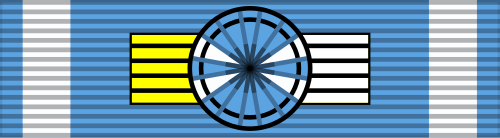 Grand Commander of the Order of the Redeemer of Greece
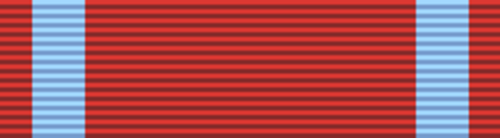 Papal Lateran Cross of the Vatican
 Grand Cross of the Order of Polonia Restituta of Poland
 Commander of the Bavarian Order of Merit[209]
_ribbon.svg/500px-Order_of_the_Royal_House_of_Chakri_(Thailand)_ribbon.svg.png)
.svg/500px-Ordre_du_M%C3%A9rite_Militaire_Ch%C3%A9rifien_ribbon_(Maroc).svg.png)
_-_ribbon_bar.gif/500px-National_Order_of_Merit_(Ecuador)_-_ribbon_bar.gif)
.gif/500px-Order_of_Pahlavi_(Iran).gif)
_-_ribbon_bar.png/500px-Military_Order_of_Ayacucho_(Peru)_-_ribbon_bar.png)
_-_ribbon_bar.png/500px-Order_of_the_Two_Rivers_-_Military_(Iraq)_-_ribbon_bar.png)
_-_ribbon_bar.gif/500px-Order_Of_Ummayad_(Syria)_-_ribbon_bar.gif)
_Ribbon.png/500px-Order_of_the_Cedar_-_Grand_Cordon_(Lebanon)_Ribbon.png)
_-_ribbon.svg/500px-Order_of_Ojaswi_Rajanya_(Nepal)_-_ribbon.svg.png)
Medals
- Medal of the Mexican Academy of Military Studies
- Medal of Rancagua of Chile
- Medal of Mexico
- Medal of the Legionnaires of Quebec
- Medal of the City of Valparaiso
- Medal of Honour of the Congress of Peru
- Iraqi medal
- Plaque and Medal of the City of Lima, Peru
- Royal Medal of Tunisia
- Medal of the City of New Orleans
- Pakistani medal
- Greek medal
- Order of the American Legion
- Medal of the College Joseph Celestine Mutis of Spain[210]
Works
French editions
- La Discorde Chez l'Ennemi (1924)
- Histoire des Troupes du Levant (1931) Written by Major de Gaulle and Major Yvon, with Staff Colonel de Mierry collaborating in the preparation of the final text.
- Le Fil de l'Épée (1932)
- Vers l'Armée de Métier (1934)
- La France et son Armée (1938)
- Trois Études (1945) (Rôle Historique des Places Fortes;[211] Mobilisation Economique à l'Étranger;[212] Comment Faire une Armée de Métier) followed by the Memorandum of 26 January 1940.
- Mémoires de Guerre
- Volume I – L'Appel 1940–1942 (1954)
- Volume II – L'Unité, 1942–1944 (1956)
- Volume III – Le Salut, 1944–1946 (1959)
- Mémoires d'Espoir
- Volume I – Le Renouveau 1958–1962 (1970)
- Discours et Messages
- Volume I – Pendant la Guerre 1940–1946 (1970)
- Volume II – Dans l'attente 1946–1958 (1970)
- Volume III – Avec le Renouveau 1958–1962 (1970)
- Volume IV – Pour l'Effort 1962–1965 (1970)
- Volume V – Vers le Terme 1966–1969
English translations
- The Enemy's House Divided (La Discorde chez l'ennemi). Tr. by Robert Eden. University of North Carolina Press, Chapel Hill, 2002.
- The Edge of the Sword (Le Fil de l'Épée). Tr. by Gerard Hopkins. Faber, London, 1960 Criterion Books, New York, 1960
- The Army of the Future (Vers l'Armée de Métier). Hutchinson, London-Melbourne, 1940. Lippincott, New York, 1940
- France and Her Army (La France et son Armée). Tr. by F. L. Dash. Hutchinson London, 1945. Ryerson Press, Toronto, 1945
- War Memoirs: Call to Honour, 1940–1942 (L'Appel). Tr. by Jonathan Griffin. Collins, London, 1955 (two volumes). Viking Press, New York, 1955.
- War Memoirs: Unity, 1942–1944 (L'Unité). Tr. by Richard Howard (narrative) and Joyce Murchie and Hamish Erskine (documents). Weidenfeld & Nicolson, London, 1959 (two volumes). Simon & Schuster, New York, 1959 (two volumes).
- War Memoirs: Salvation, 1944–1946 (Le Salut). Tr. by Richard Howard (narrative) and Joyce Murchie and Hamish Erskine (documents). Weidenfeld & Nicolson, London, 1960 (two volumes). Simon & Schuster, New York, 1960 (two volumes).
- Memoirs of Hope: Renewal, 1958–1962. Endeavour, 1962– (Le Renouveau) (L'Effort). Tr. by Terence Kilmartin. Weidenfeld & Nicolson, London, 1971.
See also
- Foreign policy of Charles de Gaulle
- France's neocolonialism
- Gaullism
- Gaullist Party
- List of things named after Charles de Gaulle
Notes
- ^ Also known by other names.
- ^ /də ˈɡoʊl, də ˈɡɔːl/ də GOHL, də GAWL; French: [ʃaʁl(ə) də ɡol] [1]
References
- ^ Wells, John C. (2008), Longman Pronunciation Dictionary (3rd ed.), Longman, ISBN 978-1-4058-8118-0
- ^ "1890: l'acte de naissance de Charles de Gaulle" [1890: Charles de Gaulle's birth certificate]. Lille Municipal Archives. 4 February 2016. Archived from the original on 26 January 2021. Retrieved 26 January 2021.
- ^ a b c d e f g h i j k l m n o p q r s t u v w x y z aa ab Fenby, Jonathan (2010). The General: Charles De Gaulle and the France He Saved. New York: Simon & Schuster. ISBN 978-1-84737-392-2. Archived from the original on 28 August 2018. Retrieved 19 November 2017.
- ^ a b c d e f g Crawley, Aidan (1969). De Gaulle: A Biography. Bobbs-Merrill Co. ISBN 978-0-00-211161-4. Archived from the original on 21 September 2020. Retrieved 24 August 2020.
- ^ a b Ledwidge p. 6
- ^ Frans Debrabandere: Woordenboek van de familienamen in België en Noord-Frankrijk, L.J. Veen, 2003.
- ^ a b c d e f g David Schoenbrun, The Three Lives of Charles de Gaulle (1966)
- ^ a b Alan Pedley (1996) As Mighty as the Sword: A Study of the Writings of Charles de Gaulle. pp. 170–72. Intellect Books; ISBN 978-0950259536.
- ^ a b Lacouture 1991, p. 13
- ^ a b Lacouture 1991, pp. 9–10
- ^ a b Lacouture 1991, pp. 14–15
- ^ a b Lacouture 1991, pp. 16–17
- ^ Lacouture 1991, p. 16
- ^ Fenby writes that he did promote him to sergeant at this point, which does not tally with Lacouture and other more detailed accounts
- ^ a b c d e f g h i "Chronologie 1909–1918". charles-de-gaulle.org. Archived from the original on 7 March 2016. Retrieved 14 January 2016.
- ^ Lacouture 1991, p. 19
- ^ "Charles de Gaulle". Archived from the original on 2 May 2019. Retrieved 16 April 2018.
- ^ a b Lacouture 1991, p. 21
- ^ a b c d e f g h i See, e.g., "Charles de Gaulle". Time. 5 January 1959. Archived from the original on 12 January 2007.
- ^ Lacouture 1991, pp. 21–5
- ^ Lacouture 1991, pp. 24–5
- ^ Lacouture 1991, p. 31
- ^ Lacouture 1991, p. 34
- ^ Neau-Dufour, Frédérique (2010). Yvonne de Gaulle. Fayard. p. 71. ISBN 978-2-213-66087-5. Archived from the original on 14 December 2021. Retrieved 18 April 2016.
- ^ a b Jean Lacouture, De Gaulle: The Rebel, 1890–1944 (1990) pp. 42–54.
- ^ The General: Charles de Gaulle and the France He Saved (p. 64)
- ^ a b c d e f Jackson, Julian (2018). A Certain Idea of France: The Life of Charles de Gaulle. London: Allen Lane. ISBN 9780674987210.
- ^ Ledwidge p. 24
- ^ "Rémy ROURE". Musée de l'Ordre de la Libération (in French). Archived from the original on 8 August 2020. Retrieved 29 September 2020.
- ^ Cordier, Daniel. Jean Moulin; la République des catacombes.
- ^ The General: Charles de Gaulle and the France He Saved (pp. 62–67)
- ^ Lacouture 1991, p. 64
- ^ Lacouture 1991, pp. 66–71, 213–5
- ^ Lacouture 1991, pp. 71–2
- ^ a b Lacouture 1991, pp. 77–86
- ^ Lacouture 1991, p. 80
- ^ a b Lacouture 1991, pp. 84–7
- ^ "Chronologie 1921–1939". charles-de-gaulle.org. Archived from the original on 3 March 2016. Retrieved 14 January 2016.
- ^ a b Lacouture 1991, p. 88
- ^ Lacouture 1991, p. 84
- ^ Lacouture 1991, pp. 90–2
- ^ Lacouture 1991, pp. 84–7, 213–5
- ^ Lacouture 1991, pp. 92–3
- ^ Lacouture 1991, pp. 99–100
- ^ a b Lacouture 1991, pp. 99, 118
- ^ Lacouture 1991, pp. 105, 119 – Lacouture gives the date of this promotion both as December 1932 (the date favoured by most accounts) and December 1933
- ^ a b c Lacouture 1991, p. 125
- ^ Lacouture 1991, pp. 114–7, 131, 154.
- ^ Lacouture 1991, pp. 133–5.
- ^ Lacouture 1991, p. 136.
- ^ Lacouture 1991, pp. 139–146.
- ^ Lacouture 1991, pp. 127–128, 143–144.
- ^ Lacouture 1991, p. 144.
- ^ Lacouture 1991, p. 127.
- ^ Lacouture 1991, pp. 147–148
- ^ Lacouture 1991, pp. 149–150, 169
- ^ Lacouture 1991, pp. 157–165, 213–215
- ^ Lacouture 1991, pp. 149, 169
- ^ Lacouture 1991, p. 170
- ^ Lacouture 1991, p. 171
- ^ Lacouture 1991, pp. 174–5
- ^ Lacouture 1991, p. 175
- ^ Lacouture 1991, p. 177
- ^ a b Lacouture 1991, p. 178
- ^ a b Lacouture 1991, pp. 180–1
- ^ a b c Brad DeLong (29 May 2000). "Charles de Gaulle". University of California at Berkeley. Archived from the original on 7 January 2006.
- ^ Lacouture 1991, pp. 180–2
- ^ Lacouture 1991, pp. 180–3, 213–5, in a list of acts of insubordination committed by de Gaulle prior to 18 June 1940, Lacouture mentions a demand on 25 May 1940 that he be given command of an extra two or three divisions to mount a stronger attack. This does not appear in the more detailed narrative and it is not clear whether it is a confusion of the events on 19 May.
- ^ Ledwidge pp. 50–52
- ^ Lacouture 1991, pp. 180–3
- ^ a b Lacouture 1991, p. 187
- ^ "Présidence du conseil: ministres et sous-secrétaires d'Etat". gallica.bnf.fr. Government of the French Republic. 6 June 1940. Archived from the original on 24 September 2021. Retrieved 24 September 2021.
- ^ "Cabinet Paul Reynaud". Assemblée Nationale Française. 2008. Archived from the original on 25 February 2014. Retrieved 2 November 2008.
- ^ a b Lacouture 1991, p. 190
- ^ Lacouture 1991, p. 191
- ^ Lacouture 1991, p. 193. Weygand later disputed the accuracy of de Gaulle's account of this conversation, and remarked on its similarity to a dialogue by Pierre Corneille. Lacouture suggests that de Gaulle's account is consistent with other evidence of Weygand's beliefs at the time and is therefore, allowing perhaps for a little literary embellishment, broadly plausible.
- ^ Lacouture 1991, p. 194
- ^ Lacouture 1991, pp. 195–196
- ^ Lacouture 1991, pp. 198–200, 238
- ^ Lacouture 1991, p. 201
- ^ Lacouture 1991, pp. 211–6
- ^ Lacouture 1991, pp. 221–223
- ^ Lacouture 1991, p. 208
- ^ Lacouture 1991, p. 226
- ^ a b "French Take Part in Air Raids". St. Petersburg Times. 3 August 1940. p. 1. Archived from the original on 16 October 2020. Retrieved 9 August 2018.
- ^ Lloyd, Christopher (16 September 2003). Collaboration and Resistance in Occupied France: Representing Treason and Sacrifice. Basingstoke, Hants.: Palgrave Macmillan UK. ISBN 978-0-230-50392-2. OCLC 69330013. Archived from the original on 14 December 2021. Retrieved 20 February 2021.
- ^ Lacouture 1:243-4
- ^ Lacouture 1991, p. 261
- ^ a b Shillington, Kevin (4 July 2013). Encyclopedia of African History 3-Volume Set. Vol. 1 A–G. Routledge. p. 448. ISBN 978-1-135-45669-6. OCLC 254075497. Archived from the original on 3 June 2020. Retrieved 2 June 2020.
There was much support for the Vichy regime among French colonial personnel, with the exception of Guianese-born governor of Chad, Félix Éboué, who in September 1940 announced his switch of allegiance from Vichy to the Gaullist Free French movement based in London. Encouraged by this support for his fledgling movement, Charles de Gaulle traveled to Brazzaville in October 1940 to announce the formation of an Empire Defense Council and to invite all French possessions loyal to Vichy to join it and continue the war against Germany; within two years, most did.
- ^ France libre (1940). Documents officiels. [Manifeste du 27 octobre 1940, à Brazzaville. Ordonnances n ° 1 et 2, du 27 octobre 1940, instituant un Conseil de défense de l'Empire. Déclaration organique complétant le manifeste du 27 octobre 1940, du 16 novembre 1940, à Brazzaville. Signé: De Gaulle.] [Official documents. Manifesto of 27 October 1940, in Brazzaville. Orders No. 1 and 2, of 27 October 1940, establishing an Empire Defense Council. Organic Declaration supplementing the Manifesto of 27 October 1940, of 16 November 1940, in Brazzaville. Signed: De Gaulle.]. Brazzaville: Impr. officielle. OCLC 460992617. Archived from the original on 3 June 2020. Retrieved 3 June 2020.
- ^ Wieviorka, Olivier (3 September 2019). The Resistance in Western Europe, 1940–1945. Translated by Todd, Jane Marie. New York: Columbia University Press. pp. 67–. ISBN 978-0-231-54864-9. Archived from the original on 3 June 2020. Retrieved 2 June 2020.
At the same time, de Gaulle was only one man, and had no eminent political supporters. He therefore had to broaden his base. An order of October 27, 1940, created the Conseil de défense de l'Empire (Empire Defense Council), which included, in addition to de Gaulle, the governors of the territories who had rallied to the cause (Edgard de Larminat, Félix Éboué, Leclerc, Henri Sautot) military leaders (Georges Catroux and Émile Muselier), and three personalities from varied backgrounds: Father Georges Thierry Argenlieu, a friar and alumnus of the E'cole Navale; Rene' Cassin, a distinguished jurist and prominent representative of the veterans movement; and the military doctor Adolph Sice'.
- ^ a b c Keegan p. 298
- ^ a b c Beevor, Antony (2009) D-Day: The Battle for Normandy, Penguin Group, ISBN 1101148721
- ^ Singh, Simon (2000). The Code Book: The Science of Secrecy from Ancient Egypt to Quantum Cryptography. Anchor; ISBN 0-385-49532-3.
- ^ "World War II: The Liberation of Paris". HistoryNet. 12 June 2006. Retrieved 5 November 2022.
- ^ a b Mondal, Jacques (1966) Purnell's History of the Second World War: No. 72 1966.
- ^ "Speech made by General de Gaulle at the Hotel de Ville in Paris on August 25th 1944". Fondation Charles de Gaulle. 2008. Archived from the original on 16 December 2008.
- ^ "Britain recognizes General Charles de Gaulle as the leader of the Free French". HISTORY. Archived from the original on 22 December 2019. Retrieved 18 November 2019.
- ^ Kim Munholland, Rock of Contention, Free French and Americans at War in New Caledonia 1940–1945, Berghahn Books, New York, Oxford, 2005, p. 190.
- ^ a b c d e f De Gaulle. Alexander Werth (1965)
- ^ a b c "Lion of Britain, Cross of Lorraine: Churchill and de Gaulle". winstonchurchill.org. 25 May 2010. Archived from the original on 21 May 2013. Retrieved 14 January 2016.
- ^ Winston S. Churchill (1950). Triumph and Tragedy: The Second World War. RosettaBooks. p. 259. ISBN 978-0-7953-1147-5. Archived from the original on 7 April 2015. Retrieved 27 June 2015.
- ^ Robottom, John (1972) Modern Russia, McGraw-Hill
- ^ a b c d e Perry, K. (1976) Modern European History, W.H. Allen; ISBN 0750604824
- ^ The Day the War Ended. London. Martin Gilbert (1995)
- ^ Luce, Henry Robinson (1945). Time. Vol. 45. pp. 25–26.
- ^ a b "Charles de Gaulle City Hall Reception". WNYC. Archived from the original on 21 November 2015. Retrieved 14 January 2016.
- ^ a b "French General Charles de Gaulle flanked by New York Mayor Fiorello... Nachrichtenfoto 102263730 | Getty Images". Archived from the original on 14 August 2014. Retrieved 14 August 2014.
- ^ Hilary Footitt and John Simmonds. France, 1943–1945 (1988) pp. 228–59.
- ^ Ronald Matthews, The death of the Fourth Republic (1954) p. 121.
- ^ Hitchcock, William I. (2004). The Struggle for Europe: The Turbulent History of a Divided Continent 1945 to the Present. Random House. p. 112. ISBN 978-0-385-49799-2. Archived from the original on 14 December 2021. Retrieved 24 August 2020.
- ^ Cate, Curtis (November 1960). "Charles de Gaulle: The Last Romantic". The Atlantic. Archived from the original on 11 August 2016. Retrieved 2 August 2016.
- ^ Fenby, Jonathan (2010). The General: Charles De Gaulle And The France He Saved. New York: Simon & Schuster. ISBN 978-1-84737-392-2. Archived from the original on 28 August 2018. Retrieved 19 November 2017.
De Gaulle did not invent the phrase; it was used by the writer Maurice Barrès in Mes Cahiers (1920)
- ^ "Charles de Gaulle". Grolier Online. Archived from the original on 23 February 2005.
- ^ Karnow, Stanley (1983). Vietnam: A History. New York: The Viking Press. pp. 143–4. ISBN 9780670746040. OCLC 779626081.
- ^ Time, 16 March 1962
- ^ Charles Sowerwine, France since 1870: Culture, Society and the Making of the Republic (2009) ch 20–21
- ^ Martin S. Alexander and John FV Keiger, eds. France and the Algerian War, 1954–1962: Strategy, Operations and Diplomacy (Routledge, 2013)
- ^ Alexander, and Keiger, eds. France and the Algerian War, 1954–1962: Strategy, Operations and Diplomacy (2013)
- ^ Alice L. Conklin; et al. (2014). France and Its Empire Since 1870. Oxford University Press. p. 281. ISBN 978-0-19-938444-0. Archived from the original on 7 April 2015. Retrieved 27 June 2015.
- ^ "General Massu – Obituary". The Times. London, UK. 29 October 2002. Archived from the original on 14 December 2021. Retrieved 27 December 2008.
- ^ Jonathan Fenby (2013). The General: Charles De Gaulle and the France He Saved. Skyhorse Publishing. p. 396. ISBN 978-1-62087-805-7. Archived from the original on 19 February 2020. Retrieved 29 November 2017.
- ^ W. Scott Haine (2000). The History of France. Greenwood Press. p. 180. ISBN 978-0-313-30328-9.
- ^ "Gen de Gaulle given a majority of 105 – Full powers demanded for six months". The Times. 2 June 1958.
- ^ "Assemblée nationale – Grands moments d'éloquence parlementaire – de Gaulle (1er juin 1958)". www.assemblee-nationale.fr. Retrieved 28 April 2022.
- ^ "Sweeping Vote for General de Gaulle – 4:1 Majority says "Yes" to new Constitution". The Times. 29 September 1958.
- ^ "Landslide Vote Repeated for de Gaulle – President of Fifth Republic – Sweeping Powers". The Times. 22 December 1958.
- ^ "New Year Brings in New Franc". The Times. 2 January 1960.
- ^ "Germans Give General de Gaulle a Hero's Welcome". The Times. 6 September 1962.
- ^ Warlouzet, 'De Gaulle as a Father of Europe Archived 19 June 2018 at the Wayback Machine' in Contemporary European History, 2011
- ^ Charles Sowerwine, France since 1870: Culture, Society and the Making of the Republic (2009) pp. 296–316
- ^ Alexander Harrison, Challenging De Gaulle: The OAS and the Counterrevolution in Algeria, 1954–1962 (Praeger, 1989).
- ^ Martin Evans, Algeria: France's Undeclared War (2012) excerpt and text search Archived 16 March 2016 at the Wayback Machine
- ^ Michael Mould (2011). The Routledge Dictionary of Cultural References in Modern French. Taylor & Francis. p. 331. ISBN 978-1-136-82573-6.
- ^ Willsher, Kim (22 August 2022). "France remembers De Gaulle's close escape depicted in The Day of the Jackal". The Guardian. ISSN 0261-3077. Retrieved 19 March 2023.
- ^ Ledsom, Alex (25 June 2018). "How Charles de Gaulle Survived Over Thirty Assassination Attempts". Culture Trip. Retrieved 19 March 2023.
- ^ MacIntyre, Ben (24 July 2021). "The Jackal's lessons for would-be assassins". The Sunday Times. Retrieved 19 March 2023.
- ^ "De Gaulle Challenge to Parliament – To Retire if Referendum not Approved – Call to Nation before Debate on Censure Motion". The Times. 5 October 1962.
- ^ "De Gaulle against the Politicians – Clear Issue for October Referendum – Assembly Election Likely after Solid Censure Vote". The Times. 6 October 1962.
- ^ ""Yes" Reply for Gen. De Gaulle – Over 60 p.c. of Valid Votes – President Likely to Keep Office". The Times. 29 October 1962.
- ^ Kolodziej, Edward A (1974). French International Policy under de Gaulle and Pompidou: The Politics of Grandeur. p. 618.
- ^ Macksey, Kenneth (1966) Purnell's History of the Second World War: No. 123. "The Liberation of Paris"
- ^ France's GDP was slightly higher than the UK's at the beginning of the 19th century, with the UK surpassing France around 1870. See e.g., Maddison, Angus (1995). L'économie mondiale 1820–1992: analyse et statistiques. OECD Publishing. p. 248. ISBN 978-92-64-24549-5. Archived from the original on 14 December 2021. Retrieved 24 August 2020.
- ^ Haine, W. Scott (1974). Culture and Customs of France. Westport CT: Greenwood Publishing Group, 2006. p. 315. ISBN 978-0-313-32892-3.
- ^ "Marshal Juin Defended – General de Gaulle on Moral Issue". The Times. 8 April 1954.
- ^ "Weekend of Rejoicing in France". The Times. 15 February 1960.
- ^ Ledwidge p. 341
- ^ a b 1960: East-West summit in tatters after spy plane row Archived 23 October 2012 at the Wayback Machine. BBC.co.uk; accessed 7 June 2016.
- ^ Walter, Vernon A. (2007) [1974]. "General De Gaulle in Action: 1960 Summit Conference". Studies in Intelligence. 38 (5). Archived from the original on 27 September 2012. Retrieved 12 December 2012.
- ^ Holland, Robert (1991) Fontana History of England – Britain & the World Role
- ^ Richards, Denis & Quick, Antony (1974) Twentieth Century Britain
- ^ "European NAvigator (ENA) – General de Gaulle's second veto". Archived from the original on 23 February 2010. Retrieved 22 October 2010.
- ^ "France Ends Boycott of Common Market – No Winners or Losers after Midnight Agreement". The Times. 31 January 1966.
- ^ "De Gaulle and Europe". Fondation Charles de Gaulle. Archived from the original on 18 November 2006.
- ^ a b c d e Gosset, David (8 January 2009). "A Return to De Gaulle's 'Eternal China'". Greater China. Asia Times. Archived from the original on 19 January 2009. Retrieved 14 January 2016.
- ^ "Allocution prononcée à la réunion populaire de Phnom-Penh, 1er septembre 1966" [Address by the President of the French Republic (General de Gaulle), Phnom Penh, Cambodia, 1 September 1966]. Fondation Charles de Gaulle. 2008. Archived from the original on 18 November 2008.
- ^ Gowland, David; Turner, Arthur: Reluctant Europeans: Britain and European Integration, 1945–1998 Archived 14 December 2021 at the Wayback Machine, Routledge, p. 166. Accessed on 31 October 2019.
- ^ "French Emphasis on Long-Term Issues". The Times. 7 June 1967.
- ^ Geller, Doron "The Cherbourg Boats". Archived from the original on 9 May 2008. Retrieved 20 May 2015.
- ^ "De Gaulle and the Third World". Fondation Charles de Gaulle. Archived from the original on 18 November 2006.
- ^ "Text of de Gaulle's Answer to Letter From Ben-Gurion". The New York Times. 10 January 1968. Archived from the original on 22 July 2018. Retrieved 22 July 2018.
- ^ "920 Days of Fighting, Death and Hunger". The Times. 12 January 1970.
- ^ Saha, Santosh C. (2006). Perspectives on Contemporary Ethnic Conflict: Primal Violence Or the Politics of Conviction?. Lanham MD: Lexington Books. pp. 184, 344. ISBN 978-0-7391-1085-0.
- ^ Samy Mesli, historien. "Charles de Gaulle au Québec 24 juillet 1967". Fondation Lionel-Groulx, 2017—2018 (in French). Charles de Gaulle au Québec en 1967. Retrieved 6 August 2023.
- ^ George Sherman, "De Gaulle Ends Visit in Canadian Dispute," The Evening Star, 26 July 1967, p. 1.
- ^ Depoe, Norman (24 July 1967). "Vive le Québec libre!". On This Day. CBC News. Archived from the original on 1 May 2012.
- ^ Gillan, Michael (26 July 1967). "Words unacceptable to Canadians: De Gaulle Rebuked by Pearson". The Globe and Mail. Toronto. pp. 1, 4.
- ^ "Gen De Gaulle Rebuked by Mr Pearson – Canada Rejects Efforts to Destroy Unity – Quebec Statements Unacceptable". The Times. London, UK. 26 July 1967.
- ^ Spicer, Keith (27 July 1967). "Paris perplexed by De Gaulle's Quebec conduct". The Globe and Mail. Toronto. p. 23.
- ^ "Levesque pays tribute to Charles de Gaulle". The Leader-Post. Regina, Saskatchewan. Reuters. 1 November 1977. p. 2. Archived from the original on 14 December 2021. Retrieved 3 April 2020.
- ^ "De Gaulle and "Vive le Québec Libre"". The Canadian Encyclopedia. 2012. Archived from the original on 19 January 2012.
- ^ "Les femmes et le pouvoir". 29 May 2007. Archived from the original on 20 July 2011. Retrieved 13 January 2009.
of the first eleven governments of the Fifth Republic, four contained no women whatsoever.
- ^ a b Dogan, Mattei (1984). "How Civil War Was Avoided in France". International Political Science Review. 5 (3): 245–277. doi:10.1177/019251218400500304. ISSN 0192-5121. JSTOR 1600894. S2CID 144698270.
- ^ "Autocrat of the Grand Manner". The Times. 28 April 1969.
- ^ Crawley (p. 454) also writes that de Gaulle was undoubtedly using the term in his barrack-room style to mean 'shit in the bed'. De Gaulle had said it first in Bucharest while on an official visit from which he returned on 19 May 1968. Pompidou told the press that de Gaulle used the phrase after the cabinet meeting on 19 May.
- ^ "Dropping the Pilot". The Times. 11 July 1968.
- ^ "Press Release re Resignation". Fondation Charles de Gaulle. 2008. Archived from the original on 18 November 2008.
- ^ Serge Berstein; Jean-Pierre Rioux (2000). The Pompidou Years, 1969–1974. Cambridge UP. pp. 4–8. ISBN 978-0-521-58061-8. Archived from the original on 25 January 2021. Retrieved 5 January 2017.
- ^ a b c d TIME, 23 November 1970
- ^ "Testament de Charles de Gaulle, 16 janvier 1952". Histoire de France et d'ailleurs. Archived from the original on 13 February 2009.
- ^ "Décret du 10 novembre 1970 FIXANT LE JEUDI 12 NOVEMBRE 1970 JOUR DE DEUIL NATIONAL EN RAISON DU DECES DU GENERAL DE-GAULLE". Légifrance.
- ^ "France Mourns De Gaulle; World Leaders To Attend A Service At Notre Dame – The New York Times". The New York Times. 11 November 1970. Retrieved 2 May 2022.
- ^ "1970 – Year in Review. De Gaulle and Nasser die". United Press International. Archived from the original on 24 July 2013.
- ^ "Retirement". Fondation Charles de Gaulle. Archived from the original on 18 November 2008.
- ^ "Listes de Gaulle". Parti socialiste français. Archived from the original on 19 November 2006.
- ^ La famille qui a dit non Archived 19 September 2018 at the Wayback Machine. Le Point, 16 July 1999.
- ^ "Assemblée nationale ~ Les députés : M. Jean de Gaulle". www.assemblee-nationale.fr. Archived from the original on 9 July 2007. Retrieved 15 January 2009.
- ^ Philip Thody (1989). French Caesarism from Napoleon I to Charles de Gaulle. Palgrave Macmillan. p. 150. ISBN 978-1-349-20089-4.
- ^ Mitterrand, le préféré des Français [archive], site de TF1-LCI, 2 janvier 2006.
- ^ "Charles de Gaulle, ex-président préféré des Français" [archive], Le Nouvel Observateur, 4 November 2009.
- ^ Ahmed Ben Bella, De Gaulle voyait plus loin, in L'Express, 26 October 1995.
- ^ Fenby, Jonathan (2010). The General: Charles De Gaulle and the France He Saved. New York: Simon & Schuster. ISBN 978-1-84737-392-2. Archived from the original on 28 August 2018. Retrieved 19 November 2017.
- ^ Mahoney, Daniel (2000) De Gaulle: Statesmanship, Grandeur and Modern Democracy, Transaction Publishers, ISBN 1412821274
- ^ a b De Gaulle: The Statesman. Brian Crozier (Methuen). 1974
- ^ a b c Régis Debray (1994) Charles de Gaulle: Futurist of the Nation translated by John Howe, Verso, New York, ISBN 0-86091-622-7; a translation of Debray, Régis (1990) A demain de Gaulle Gallimard, Paris, ISBN 2-07-072021-7
- ^ Richards, Denis and Quick, Anthony (1974) 20th Century Britain
- ^ In fact, several of de Gaulle's predictions, such as his often-repeated belief during the early cold war period that a Third World War, with its "nuclear bombardments, famine, deportations" was not only ineluctable, but imminent, have not yet materialized. Jean Lacouture, De Gaulle, Seuil, vol. II, p. 357.
- ^ Jackson, Julian (1999). "General de Gaulle and His Enemies: Anti-Gaullism in France Since 1940". Transactions of the Royal Historical Society. 9: 43–65. doi:10.2307/3679392. JSTOR 3679392. S2CID 154467724.
- ^ "Ministère de la culture – Base Léonore". culture.gouv.fr. Archived from the original on 22 February 2014. Retrieved 14 January 2016.
- ^ Leur, Thierry Van de. Parisis Code – tome 2 – Le Code secret des rues de Paris. Lulu.com. ISBN 979-1-09-128903-0. Archived from the original on 8 April 2017. Retrieved 14 January 2016 – via google.be.
- ^ "Cérémonies officielles du cinquantenaire de l'ordre national du Mérite" (PDF). Archived (PDF) from the original on 28 January 2015. Retrieved 24 January 2015.
- ^ "Virtuti Militari de Gaulle'a". Rzeczpospolita. Archived from the original on 13 January 2017. Retrieved 14 January 2016.
- ^ Coat of arms Archived 13 February 2016 at the Wayback Machine. flickr.com
- ^ Archivo fotográfico: rescate visual de la historia de Carabineros de Chile (PDF). p. 66. Archived (PDF) from the original on 9 September 2021. Retrieved 9 September 2021.
- ^ Coat of Arms in Frederiksborg Castle
- ^ "Den kongelige norske Sanct Olavs Orden", Norges Statskalender for Aaret 1970 (in Norwegian), Oslo: Forlagt av H. Aschehoug & Co. (w. Nygaard), 1970, pp. 1240–1241 – via runeberg.org
- ^ "Suomen Valkoisen Ruusun ritarikunnan suurristin ketjuineen ulkomaalaiset saajat". Ritarikunnat (in Finnish). 9 October 2020. Retrieved 12 January 2023.
- ^ "JOURNAL DE MONACO" (PDF). 5 October 1944.
- ^ "List of decorations". Archived from the original on 10 November 2013.
- ^ "Décorations du Général de Gaulle, musée de l'Ordre de la Libération – Le blog de cbx41". Archived from the original on 10 November 2013.
- ^ An essay which he wrote in the mid 1920s.
- ^ His report produced as a staff officer in the early 1930s.
- Lacouture, Jean, vol. 1 De Gaulle: The Rebel 1890–1944 (1984; English ed. 1991), 640 pp; vol. 2. De Gaulle: The Ruler 1945–1970 (1993), 700 pp. A standard scholarly biography.
- Ledwidge, Bernard (1982). De Gaulle. London: Weidenfeld and Nicolson. ISBN 978-0-297-77952-0.
Further reading
Biographies
- Cogan, Charles. Charles de Gaulle: A Brief Biography with Documents. (1995). 243 pp.
- Fenby, Jonathan, The General: Charles de Gaulle and the France He Saved. (2011). Simon & Schuster. ISBN 9781847394101
- Jackson, Julian, A Certain Idea of France: The Life of Charles de Gaulle (2018) 887pp.
- Shennan, Andrew (1993). De Gaulle 200 pp.
- Williams, Charles. The Last Great Frenchman: A Life of General De Gaulle (1997), 560pp. excerpt and text search
World War II
- Berthon, Simon. Allies at War: The Bitter Rivalry among Churchill, Roosevelt, and de Gaulle. (2001). 356 pp.
- Breuer, William B. (2008). Unexplained Mysteries of World War II (2008 ed.). Book Sales, Inc. ISBN 978-0-7858-2253-0. - Total pages: 238
- Danan, Yves Maxime, République française : capitale Alger (1940–1944), L'Harmattan, Paris, 2019.
- DePorte, Anton W. De Gaulle's foreign policy, 1944–1946 (1967)
- Funk, Arthur Layton. Charles de Gaulle: The Crucial Years, 1943–1944 (1959) online edition
- Keegan, John (1994) [1982] Six Armies in Normandy: From D-Day to the Liberation of Paris .
- Kersaudy, Francois. Churchill and De Gaulle (2nd ed 1990) 482pp.
- La Feber, Walter. "Roosevelt, Churchill, and Indochina: 1942–45." American Historical Review (1975): 1277–1295. . JSTOR 1852060.
- Picknett, Lynn; Prince, Clive; Prior, Stephen (2005). Friendly fire: the secret war between the allies (2005 ed.). Mainstream. ISBN 978-1-84018-996-4. - Total pages: 512
- Pratt, Julius W. "De Gaulle and the United States: How the Rift Began," History Teacher (1968) 1#4 pp. 5–15 . JSTOR 3054237.
- Rossi, Mario. "United States Military Authorities and Free France, 1942–1944," The Journal of Military History (1997) 61#1 pp. 49–64 . JSTOR 2953914.
- Weinberg, Gerhard L. Visions of Victory: The Hopes of Eight World War II Leaders. (2005). 292 pp. chapter on de Gaulle
Politics
- Berstein, Serge, and Peter Morris. The Republic of de Gaulle 1958–1969 (The Cambridge History of Modern France) (2006) excerpt and text search
- Cameron, David R. and Hofferbert, Richard I. "Continuity and Change in Gaullism: the General's Legacy." American Journal of Political Science 1973 17(1): 77–98. ISSN 0092-5853, a statistical analysis of the Gaullist voting coalition in elections 1958–73 Fulltext: . JSTOR 2110475.
- Cogan, Charles G. "The Break-up: General de Gaulle's Separation from Power," Journal of Contemporary History Vol. 27, No. 1 (Jan. 1992), pp. 167–199, re: 1969 . JSTOR 260783.
- Diamond, Robert A. France under de Gaulle (Facts on File, 1970), highly detailed chronology 1958–1969. 319pp
- Furniss, Edgar J. Jr. De Gaulle and the French Army. (1964)
- Gough, Hugh and Horne, John, eds. De Gaulle and Twentieth-Century France. (1994). 158 pp. essays by experts
- Hauss, Charles. Politics in Gaullist France: Coping with Chaos (1991) online edition Archived 28 June 2011 at the Wayback Machine
- Hoffmann, Stanley. Decline or Renewal? France since the 1930s (1974) online edition Archived 3 December 2008 at the Wayback Machine
- Jackson, Julian. "General de Gaulle and His Enemies: Anti-Gaullism in France Since 1940," Transactions of the Royal Historical Society 6th Ser., Vol. 9 (1999), pp. 43–65 . JSTOR 3679392.
- Merom, Gil. "A 'Grand Design'? Charles de Gaulle and the End of the Algerian War," Armed Forces & Society(1999) 25#2 pp: 267–287 online
- Nester, William R. De Gaulle's Legacy: The Art of Power in France's Fifth Republic (Palgrave Macmillan, 2014)
- Northcutt, Wayne. Historical Dictionary of the French Fourth and Fifth Republics, 1946–1991 (1992)
- Pierce, Roy, "De Gaulle and the RPF—A Post-Mortem," The Journal of Politics Vol. 16, No. 1 (Feb. 1954), pp. 96–119 . JSTOR 2126340.
- Rioux, Jean-Pierre, and Godfrey Rogers. The Fourth Republic, 1944–1958 (The Cambridge History of Modern France) (1989)
- Shepard, Todd. The Invention of Decolonization: The Algerian War and the Remaking of France. (2006). 288 pp.
- Williams, Philip M. and Martin Harrison. De Gaulle's Republic (1965) online edition Archived 28 June 2011 at the Wayback Machine
Foreign policy
- Bozo, Frédéric. Two Strategies for Europe: De Gaulle, the United States and the Atlantic Alliance (2000)
- Gordon, Philip H. A Certain Idea of France: French Security Policy and the Gaullist Legacy (1993) online edition Archived 21 April 2008 at the Wayback Machine
- Grosser, Alfred. French foreign policy under De Gaulle (Greenwood Press, 1977)
- Hoffmann, Stanley. "The Foreign Policy of Charles de Gaulle." in The Diplomats, 1939–1979 (Princeton University Press, 2019) pp. 228–254. online
- Kolodziej, Edward A. French International Policy under de Gaulle and Pompidou: The Politics of Grandeur (1974) online edition Archived 28 June 2011 at the Wayback Machine
- Kulski, W. W. De Gaulle and the World: The Foreign Policy of the Fifth French Republic (1966) online free to borrow
- Logevall, Fredrik. "De Gaulle, Neutralization, and American Involvement in Vietnam, 1963–1964," Pacific Historical Review 61#1 (Feb. 1992), pp. 69–102 . JSTOR 3640789.
- Mahan, E. Kennedy, De Gaulle and Western Europe. (2002). 229 pp.
- Mangold, Peter. The Almost Impossible Ally: Harold Macmillan and Charles de Gaulle. (2006). 275 pp. IB Tauris, London, ISBN 978-1-85043-800-7
- Martin, Garret Joseph. General de Gaulle's Cold War: Challenging American Hegemony, 1963–1968 (Berghahn Books; 2013) 272 pages
- Moravcsik, Andrew. "Charles de Gaulle and Europe: The New Revisionism." Journal of Cold War Studies (2012) 14#1 pp: 53–77.
- Nuenlist, Christian. Globalizing de Gaulle: International Perspectives on French Foreign Policies, 1958–1969 (2010)
- Newhouse, John. De Gaulle and the Anglo-Saxons (New York: Viking Press, 1970)
- Paxton, Robert O. and Wahl, Nicholas, eds. De Gaulle and the United States: A Centennial Reassessment. (1994). 433 pp.
- White, Dorothy Shipley. Black Africa and de Gaulle: From the French Empire to Independence. (1979). 314 pp.
Ideas and memory
- Cerny, Philip G. The Politics of Grandeur: Ideological Aspects of de Gaulle's Foreign Policy. (1980). 319 pp.
- Clague, Monique. "Conceptions of Leadership: Charles de Gaulle and Max Weber," Political Theory (1975) 3#4 pp. 423–440. JSTOR 190838.
- Converse, Philip E., et al. De Gaulle and Eisenhower: The public image of the victorious general (1961), Statistical analysis of public opinion polls in US and France
- Hazareesingh, Sudhir. In the Shadow of the General: Modern France and the Myth of De Gaulle (2012) online review
- Hoffmann, Stanley. "The Hero as History: De Gaulle's War Memoirs" in Hoffman Decline or Renewal? France since the 1930s (1974) pp 187–201 online edition Archived 4 December 2007 at the Wayback Machine
- Johnson, Douglas. "The Political Principles of General de Gaulle," International Affairs (1965) 41#4 pp. 650–662 . JSTOR 2610718.
- Mahoney, Daniel J. De Gaulle: Statesmanship, Grandeur, and Modern Democracy. (1996). 188 pp. intellectual history
- Mahoney, Daniel J. "A 'Man of Character': The Statesmanship of Charles de Gaulle," Polity (1994) 27#1 pp. 157–173 . JSTOR 3235090.
- Morrisey, Will. "Reflections on De Gaulle: Political Founding in Modernity." (2002). 266 pp. intellectual history
- Pedley, Alan. As Mighty as the Sword: A Study of the Writings of Charles de Gaulle (1996) 226pp
External links
Charles de Gaulle at Wikipedia's sister projects
 Media from Commons
 Quotations from Wikiquote
 Texts from Wikisource
 Textbooks from Wikibooks
- Fondation Charles-de-Gaulle
- Works by or about Charles de Gaulle at the Internet Archive
- Mémorial Charles de Gaulle
- Newspaper clippings about Charles de Gaulle in the 20th Century Press Archives of the ZBW