
Loading article…
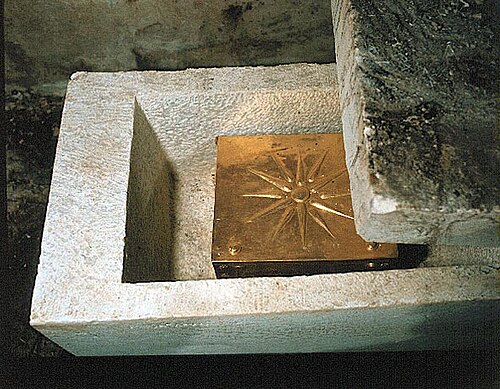
Vergina (Greek: Βεργίνα, Vergína[verˈʝina]) is a small town in northernGreece, part of the Veroia municipality in Imathia, Central Macedonia.
Vergina is best known as the site of ancient Aigai (Ancient Greek: Αἰγαί, Aigaí, Latinized: Aegae), the first capital of Macedon. In 336 BC Philip II was assassinated in Aigai's theatre and his son, Alexander the Great, was proclaimed king.
Vergina was established in 1922 in the aftermath of the population exchanges after the Treaty of Lausanne and was a separate municipality until 2011, when it was merged with Veroia under the Kallikratis Plan. While the resting place of Alexander the Great is unknown, researchers uncovered three tombs at Vergina in 1977 – referred to as tombs I, II and III. The archaeological museum of Vergina was built to house all the artifacts found at the site and is one of the most important museums in Greece.[2] Aigai has been awarded UNESCOWorld Heritage Site status as "an exceptional testimony to a significant development in European civilization, at the transition from classical city-state to the imperial structure of the Hellenistic and Roman periods".[2]
The area within 7 km of the later city was occupied by villages forming an important population centre by 1000BC. This has been shown by archaeology since 1995. Aigai followed a similar development as other ancient Greek cities.[3]
In the 7th century BC, the Temenids' dominance led to the Macedonians expanding and subduing local populations until the end of the 6th century BC, and establishing the dynasty at Aigai.
Ancient sources give conflicting accounts of the origins of the Argead dynasty.[4][5]Alexander I is the first truly historic figure and, based on the line of succession, the beginnings of the Macedonian dynasty have been traditionally dated to 750 BC.[6]Herodotus says[7] that the Argead dynasty was an ancient Greek royal house led by Perdiccas I who fled from Argos in about 650 BC.[8]
Aigai is the name of several ancient Greek cities (see Etymology of the Aegean Sea). Their name is often derived from the name of a legendary founder, Aegeus. In the case of this city, it is also etymologized as "city of goats" (from αἴξ, aíks, "goat") by Diodorus Siculus, who reports it was named so by Perdiccas I who was advised by the Pythian priestess to build the capital city of his kingdom where goats led him.[9]
Archaeologic evidence shows that Aigai developed as an organized collection of villages, spatially representing the aristocratic structure of tribes centred on the power of the king. It remained so throughout its history.[10] Indeed, Aigai never became a large city and most of its inhabitants lived in surrounding villages.[11] The walled asty (acropolis) was built at the centre of Aigai.[12]
From Aigai the Macedonians spread to the central part of Macedonia and displaced the local population of Pierians.
From 513 to 480 BC Aigai was part of the Persian Empire, but Amyntas I managed to keep its relative independence, avoid satrapy and extend its possessions.
In the first half of the 5th century BC Aigai became the capital of Macedonia. Life reached unseen levels of luxury and to meet the needs of the court merchants from all over the ancient world brought to Aigai valuable goods including perfume, carved ornaments and jewellery.[13] The city wall was built in the 5th century, probably by Perdiccas II. At the end of the 5th century Archelaus I brought to his court artists, poets, and philosophers from all over the Greek world; for example, it was at Aigai that Euripides wrote and presented his last tragedies.
紀元前4世紀初頭、アルケラオスはマケドニアの首都を北東の中央マケドニア平原のペラに移した。 [ 14 ] それにもかかわらず、アイガイはマケドニア王国の聖都としての役割、伝統的な祭祀の中心地、王宮、王家の墓がある場所としての役割を維持した。そのため、フィリップ2世は娘クレオパトラとエピロス王アレクサンドロスの結婚式に出席していた際に、劇場で護衛の一人に殺害された。[ 15 ] 彼の葬儀は、ギリシャの歴史上最も豪華なものであった。精巧な金と象牙の死の寝台に横たわり、貴重な金の樫の冠をかぶった王は、新たなヘラクレスのように火葬の薪に身を委ねた。
3世紀にアレクサンドロス大王の後継者たちの間で繰り広げられた激しい争いは、この都市に悪影響を及ぼした。紀元前276年には、ピュロス率いるガリア人傭兵が多くの墓を略奪した。
紀元前168年にローマ人によってマケドニア王国が滅ぼされた後、旧都と新都の両方が破壊され、城壁は取り壊され、すべての建物が焼失した。[ 10 ]紀元1世紀には、地滑りによって再建されたものが破壊された(発掘調査により、当時も一部は人が住んでいたことが分かっている)。[ 16 ] 紀元2世紀から5世紀にかけて、人々は徐々にピエリア山脈の麓から平野へと移動し、残ったのは小さな集落だけで、その名前「パラティツィア(宮殿)」だけでもかつての重要性を示している。
考古学者たちは、1850年代にはすでにヴェルギナ周辺の墳丘墓に興味を持ち、アイガイ遺跡がその近辺にあると考えていた。1861年、ナポレオン3世の支援を受けたフランス人考古学者レオン・ウーゼイの指揮のもと発掘調査が開始された。アンティゴノス3世ドソン(紀元前263~221年)の宮殿の一つと考えられていた大きな建物の断片が、火災で一部破壊された状態でパラティツァ近郊で発見された。パラティツァは、現代の名称に宮殿の名残を残している。しかし、マラリアの危険があったため、発掘調査は中止せざるを得なかった。発掘者は、ここが古代都市ヴァッラの遺跡であると示唆し、この見解は1976年まで広く受け入れられた。[ 17 ]
In 1937, the University of Thessaloniki resumed the excavations. More ruins of the ancient palace were found, but the excavations were abandoned on the outbreak of war with Italy in 1940. After the war the excavations were resumed, and during the 1950s and 1960s the rest of the royal capital was uncovered, including the theatre.
The Greek archaeologist Manolis Andronikos became convinced that a hill called the Great Tumulus (Μεγάλη Τούμπα) concealed the tombs of the Macedonian kings. In 1977, Andronikos undertook a six-week dig at the Great Tumulus and found four buried tombs, two of which had never been disturbed. Andronikos identified that these were the burial sites of the kings of Macedon, including the tomb of Philip II, father of Alexander the Great (Tomb II) and also of Alexander IV of Macedon, son of Alexander the Great and Roxana (Tomb III). This view was challenged by some archaeologists,[18][19][20] and in 2010 research based on detailed study of the skeletons, vindicated Andronikos and supports the evidence of facial asymmetry caused by a possible trauma of the cranium of the male, evidence that is consistent with the history of Philip II.[21][22] From 1987 the burial cluster of the queens was discovered including the tomb of Queen Eurydice. In March 2014, five more royal tombs were discovered in Vergina, possibly belonging to Alexander I of Macedon and his family or to the family of Cassander of Macedon. Some artifacts excavated at Vergina may be treated as influenced by Asian practices or even imported from Achaemenid Persia in late 6th and early 5th centuries BC,[23] which is during the time Macedon was under the Persian sway.
2023年、それから約50年後、デモクリトス大学トラキア校の人類学教授アントニオス・バルツィオカスが率いる研究により、長らくマケドニアのアレクサンドロス4世のものとされてきた骨格は、実際には彼の祖父であるマケドニアのフィリッポス2世のものであり、その逆もまた然りであることが「決定的に」明らかになった。第1号墓にはアレクサンドロス大王の父であるフィリッポス2世の遺骨が、第2号墓にはアレクサンドロス大王の異母兄弟であるマケドニアのフィリッポス3世の遺骨が、第3号墓にはアレクサンドロス大王の息子であるアレクサンドロス4世の遺骨が収められていた。 [ 24 ]第1号墓には女性と赤ん坊の遺骨も含まれており、バルツィオカスはそれをフィリッポス2世の若い妻クレオパトラ・エウリュディケとその新生児であると特定した。クレオパトラ・エウリュディケは新生児とともに暗殺された。[ 25 ]

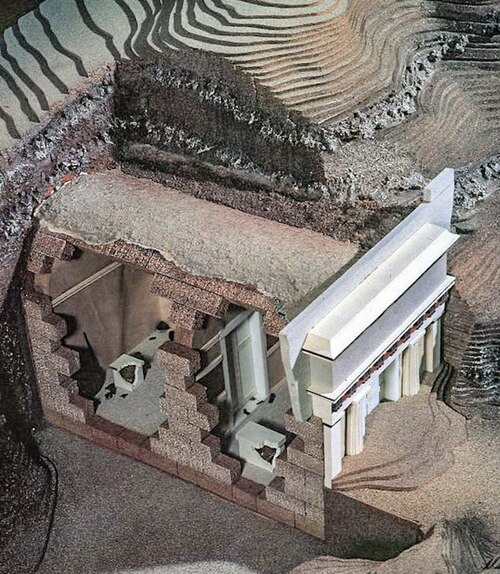
1993年に開館したフィリップ2世の墳丘博物館は、墓の上に建てられ、墓はそのままの状態で残され、発掘前の墳丘の様子が展示されている。博物館内には4つの墓と1つの小さな神殿があり、ヘローンはフィリップ2世の埋葬群のための神殿として建てられた。最も重要な2つの墓(IIとIII)は略奪されず、博物館の主要な宝物が収められている。アレクサンドロスの異母兄弟であるフィリップ3世のものと思われるIIの墓は1977年に発見され、2つの部屋に分けられた。
メインルームには大理石の箱があり、その中にはヴェルギナの太陽のシンボルが刻印された、重さ11キログラム(24ポンド)の24金製の黄金のラーナックスが入っていた。黄金のラーナックスの中には、死者の骨と、重さ717グラム(25.3オンス)の313枚の樫の葉と68個のどんぐりでできた金のリースが見つかった。この部屋には、死者の金と象牙の装束、遺体が横たえられ、後に火葬された豪華な彫刻が施された埋葬台、葬儀の宴のための精巧な銀の食器類も見つかった。その他の素晴らしい品々には、金で装飾された鎧、武器、青銅製の葬儀用具などがある。
前室には別の箱があり、その中には金色の紫色の布に包まれた女性の骨が入った別の金の棺があった。金色のティアラは花とエナメルで飾られており、これは王妃(フィリップ2世のトラキア人の妻メダのものと考えられている)[ 26 ]を示しており、彼女は伝統的に葬儀で自らを犠牲にした。また、火災で一部が破壊された別の埋葬ベッドがあり、その上にはギンバイカの葉と花を表す金のリースが置かれていた。墓のドーリア式の入口の上には、狩猟の場面を描いた壮大な壁画があり、長さは5.6メートル(18フィート)で、有名なエレトリアのフィロクセノスの作品と考えられており、フィリップとアレクサンドロスを描いたものと考えられている。
墓Iまたは墓IIには、それぞれマケドニア王フィリッポス2世またはその息子フィリッポス3世が納められていた。墓IIIには、アレクサンドロス大王の息子アレクサンドロス4世が納められていた。 [ 24 ] [ 25 ]
第一号墓は略奪されていたが、第二号墓と第三号墓は無傷で、多数の副葬品が発見された。この古代都市には広大な王宮もあった。
2025年、研究により、第2号墓に埋葬されているのは、これまで考えられていたフィリップ2世ではなくフィリップ3世であると示唆された後、研究者たちは、フィリップ3世がアレクサンドロス大王の多くの所有物を相続したことから、墓の副葬品の一部は実際にはアレクサンドロス大王のものであった可能性があると結論付けた。[ 27 ]

墓Iの彼の隣には、 フィリップ2世またはニケシポリスの遺物と考えられている[ 27 ]が、数年前に石棺墓に埋葬されたが、残念ながら略奪されていた。墓にある唯一の壁画には、冥界の神によるペルセポネの誘拐、沈黙のデメテルと偏見のない3人の運命の女神、魂の導き手であるヘルメスが先導し、恐ろしい出来事を目撃する怯えたニンフが描かれている。これは古代絵画のユニークな例であり、テーベの有名な画家ニコマコスの作品と考えられており、死後の世界に関する古代の神秘的な見解を描いた数少ない現存する作品の1つである。


1978年、フィリップの墓の近くで第3号墓が発見された。この墓は、フィリップの暗殺から25年後に殺害されたアレクサンドロス大王の息子、マケドニア王アレクサンドロス4世の墓と考えられている。第2号墓よりやや小さく、略奪もされていなかった。第3号墓も2つの部分に分かれていたが、火葬された遺体が納められていたのは主室のみだった。石の台座の上には、火葬された骨が納められた精巧な銀製のヒュドリアと、その上に金の樫のリースが置かれていた。また、王族の身分を示す精巧な銀製の道具や武器も発見された。墓の壁面には、偉大な画家による戦車競走を描いた細長いフリーズが飾られていた。金と象牙で装飾された木製の葬送用寝台の残骸には、笛吹きとサテュロスを伴ったディオニュソスの精巧な描写が見られる。
1980年に発見された第4号墓は、4本のドーリア式円柱を備えた印象的な入口を持つが、ひどく損傷しており、貴重な財宝が収められていた可能性がある。紀元前4世紀に建造され、アンティゴノス2世ゴナタスの墓であったと考えられている。
この巨大な墳丘は、紀元前3世紀初頭に(アンティゴノス・ゴナタスによって)築かれたもので、略奪を繰り返したガラティ族が墓地を破壊した後、王家の墓をさらなる略奪から守るために、おそらくはより小さな個々の墳丘の上に築かれたものと思われる。丘の土砂からは、それ以前の多くの墓碑が発見された。
発見された最も重要な建造物は、壮大なアイガイ宮殿である。アクロポリスの真下の台地に位置するこの建物は、2階建てか3階建てで、ドーリア式の列柱に囲まれた大きな中庭を中心としている。北側には、隣接する劇場の舞台とマケドニア平原全体を見渡せる大きなギャラリーがあった。宮殿はモザイクの床、彩色された漆喰の壁、精巧なレリーフタイルで豪華に装飾されていた。石積みや建築部材は、高品質の大理石のスタッコで覆われていた。発掘調査により、その建設時期はフィリップ2世の治世とされている[ 26 ] 。フィリップ2世は首都ペラにも宮殿を持っていたにもかかわらずである。この建物は、ハリカルナッソスのマウソロス霊廟の建設や都市計画、建築のプロポーションに関する見解で知られる建築家、プリエネのピュテオスによって設計されたと考えられている。劇場もまた紀元前4世紀後半に建てられたもので、宮殿と密接な関係にあった。
Nearly 30 large columns that surrounded the palace's main peristyle have been reconstructed, some towering to a height of 25 ft.[28] The frieze on the peristyle's southern section has also been reconstructed.[29] Over 5,000 square feet of mosaics depicting a range of scenes, including the ravishing of Europa and motifs from nature have been carefully conserved.
The Palace of Aigai is the largest building of classical Greece and is the location where Alexander the Great was proclaimed king in 336 BC.[30]
The Palace of Aigai reopened to the public in January 2024 after an extensive 16 year restoration.[30]

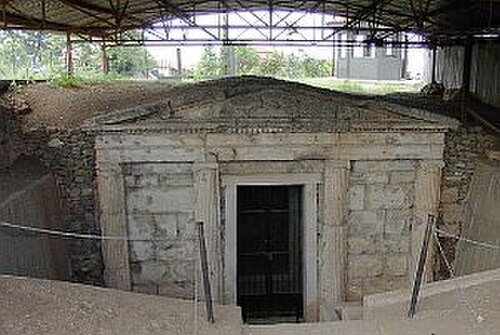
The cemetery of the tumuli[31] extends for over 3 km (1.9 mi) and contains over 500 grave-mounds of significant wealth, some dating as early as the 11th century BC.
To the north-west of the ancient city is the important group of tombs from the 6th and 5th centuries BC belonging to members of the Macedonian dynasty and their courts.
The Cluster of the Queens includes cist and pit tombs dating to the Greco-Persian Wars era, two of which probably belong to the mother and spouse of Alexander I: the all golden "Lady of Aigai" and her female relative, in whose funeral at least twenty-six small terracotta statues. One from around 340 BC with an imposing marble throne is identified as that of Eurydice, mother of Philip II.
The so-called "Ionic Tomb" or "Rhomaios's Tomb", named after its excavator, Konstantinos Rhomaios, is an elegant Macedonian tomb with an Ionic facade consisting of four engaged columns crowned by a painted floral frieze, now no longer visible because of weathering. It contained a marble throne with armrests supported by sphinxes.[32]


現代のヴェルギナ集落は、かつてオスマン帝国のパラティツィア・ベイリクの一部であった既存の2つの村、「クトレシュ」(Κούτλες、Koútles)と「バルベス」(Μπάρμπες、Bármpes )の間に1922年に設立されました。19世紀には、クトレシュとバルベスはどちらもオスマン帝国のベル・カザにあるギリシャ人の村でした。両村の住民の何人かは、1821年のギリシャ人の反乱に参加しました。アレクサンダー・シンヴェ(『オスマン帝国のギリシャ人。統計と民族誌の研究』)は1878年に、バルバスには120人のギリシャ人が住んでいたと書いています。ヴァシル・カンチョフの統計(「マケドニア。民族誌と統計」)によると、1900 年、クトレシュには 60 人のギリシャ正教徒が、バルベスには 50 人のギリシャ正教徒が住んでいた。ヴェルギナの町は、ローザンヌ条約後のギリシャとトルコ間の住民交換の過程で、小アジアのギリシャ人家族によって開拓された。「ヴェルギナ」という名前は、ヴェロイアの首都大司教の提案で、ハリアクモンの北のどこかを統治し、パラティツィアの近くに夏の宮殿を持っていたとされる伝説の女王ヴェルギナ(ベルギナ)から選ばれた。[ 33 ] ヴェルギナは 1922 年より 2011 年まで独立した自治体であったが、その後ヴェロイアに編入された。[ 34 ] 2011 年時点のヴェルギナ自治体の人口は 2,464 人であり、そのうち 1,242 人
{{cite book}}: CS1メンテナンス: 場所の発行元が見つかりません (リンク)