Loading article…
 2004年夏季オリンピックのエンブレム[a] | |
| 位置 | アテネ、ギリシャ |
|---|---|
| モットー | おかえりなさい (ギリシャ語: Καλώς ήρθατε σπίτι、ローマ字: Kalós írthate spíti ) |
| 国家 | 201 |
| アスリート | 10,557人(男性6,257人、女性4,300人) |
| イベント | 28競技(40種目)で301人 |
| オープニング | 2004年8月13日 |
| 終わりに | 2004年8月29日 |
| 開設者 | |
| 大釜 | |
| スタジアム | オリンピックスタジアム |
夏
冬
2004年夏季パラリンピック | |
2004 年夏季オリンピック(ギリシャ語: Θερινοί Ολυμπιακοί Αγώνες 2004、ローマ字: Therinoí Olympiakoí Agónes 2004 )、[b]正式には第 28 回オリンピック競技大会( Αγώνες) 28ης Ολυμπιάδας、Agónes tis 28is Olympiádas )、正式にアテネ 2004 ( Αθήνα )としてブランド化2004 ) は、2004 年 8 月 13 日から 29 日までギリシャのアテネで開催された国際的なマルチ スポーツ イベントです。この大会には10,625人の選手が参加し[2] 、 [3]、予想より約600人多い。201か国から5,501人のチーム役員が参加し[2]、 28の異なる競技で301のメダルが争われた[2]。2004年の大会は、1996年夏季オリンピック以来、国内オリンピック委員会を持つすべての国が参加した大会であり、 1896年に近代オリンピックが初めて開催されて以来、アテネでオリンピックが開催されたのは初めてであり、オリンピック発祥の地でオリンピックが復活したのもアテネであった。当時、夏季オリンピックを2回開催した都市は4つしかなかった(パリ、ロンドン、ロサンゼルス)。この大会で、 1928年以来使用されていたジュゼッペ・カッシオーリのデザインに代わる新しいメダルの表面が導入された。。新しいデザインではアテネのパナシナイコ競技場が描かれており[4]、ギリシャの競技場ではなくローマのコロッセオの描写を使用するという長年の誤りを修正しています[5] 。
2004年のオリンピックは、当時のIOC会長 ジャック・ロゲによって「忘れられない夢の大会」と称賛され、アテネのインフラは大幅に改善され、新しい空港、環状道路、地下鉄システムが完成した。[6]大会の費用と、それが2010年から2018年のギリシャ政府債務危機に寄与した可能性について(主に大衆メディアで)議論されてきたが、この主張を裏付ける証拠はほとんど、あるいは全くない。2004年の大会は、世界各国の競争水準が上昇したことから、概ね成功だったとみなされた。最終的なメダル獲得数は、米国がトップ、中国とロシアが続き、開催国ギリシャは15位だった。この大会では、いくつかの世界記録とオリンピック記録も破られた。
チリ、チャイニーズタイペイ、 ドミニカ共和国、ジョージア、イスラエルは初のオリンピック金メダルを獲得した。エリトリアとパラグアイは初のオリンピックメダルを獲得した。アラブ首長国連邦(UAE)は初のオリンピックメダルとこの種目で金メダルの両方を獲得した。
開催都市の選定
アテネは、1997年9月5日にスイスのローザンヌで開催された第106回IOC総会で開催都市に選ばれた。ギリシャの首都は、 1996年夏季オリンピックの開催権をめぐって、そのほぼ7年前、1990年9月18日に日本の東京で開催された第96回IOC総会で、アメリカのアトランタに敗れていた。アテネは、ジャンナ・アンゲロプロス・ダスカラキの指揮の下、今度は2004年夏季オリンピックの開催権を得るために、再度の立候補を果たした。アテネが2004年大会の開催権を獲得できたのは、主に、立候補が人間の価値観、古代から現代までの大会の歴史、そして近代オリンピック主義とオリンピック運動の推進においてギリシャとアテネが果たせる極めて重要な役割にアテネが置かれていることを強調したことによる。[7] 1996年の入札は市が立候補した当時は傲慢だと見られていたが、2004年の入札は規模が小さく、謙虚で、正直で真剣で、メッセージが的を絞っており、より現実的で詳細な入札コンセプトが評価された。[8] 1996年の入札は失敗に終わり、懸念や批判が上がった。主に市のインフラ整備、大気汚染、予算、大会イベントとその準備の政治化といった重要な問題に関してだった。[9]その後、1991年地中海競技大会、1994年男子バレーボール世界選手権、1994年世界フェンシング選手権、そしてオリンピック開催都市選挙の1か月前に行われた1997年世界陸上競技選手権など、他のイベントの成功は、スポーツ界やIOC委員の間でギリシャが国際スポーツイベントを主催する能力について長らく抱かれていた不安や懸念を和らげる上で極めて重要だった。[10]ギリシャの首都が選ばれたもう一つの要因は、IOCの一部委員の間で、1996年の夏季オリンピックで失われたと感じられた要素であるオリンピック本来の価値を近代オリンピックに復活させたいという感情が高まったことであった。[11]
アテネは全ての投票ラウンドでトップだったが、5回目の最終投票でローマを楽々と破った。IOCの最終候補に挙がった他の3都市、ケープタウン、ストックホルム、ブエノスアイレス(後者は2013年に2018年夏季ユースオリンピック開催権を獲得)は、それ以前の投票ラウンドで脱落した。他の6都市が立候補したが、1996年にIOCによって立候補が取り下げられた。これらの都市はイスタンブール、リール、リオデジャネイロ(後者は2009年に2016年夏季オリンピック開催権を獲得)、サンファン、セビリア、サンクトペテルブルクである。[12]
開発と準備
費用
2004年夏季オリンピックの開催には、ギリシャ政府が約90億ユーロを費やした。[13] オリンピックの準備と組織を担当するアテネ2004組織委員会(ATHOC)は、2005年に1億3060万ユーロの黒字で会社としての活動を終了した。ATHOCの総予算に対する国の拠出は、当初予想されていた14%に対して支出の8%であった。チケット、スポンサー、放映権、商品販売などからの収入を含むATHOCの総収入は、約21億ユーロに達した。その収入の最大の割合(38%)は、メディアの権利から得られたものである。2013年1月にギリシャ議会で財務大臣のヤニス・ストゥルナラス氏が提出したアテネ2004オリンピックの影響に関する費用便益評価によると、ギリシャ全体の純経済便益はプラスであった。[14]
ギリシャ財務省は2013年に、2004年アテネオリンピック・パラリンピック大会のギリシャ政府の支出は、インフラと組織の両方の費用を含めて85億ユーロに達したと報告した。同じ報告書はさらに、この金額のうち20億ユーロはATHOCの収入(チケット、スポンサー、放映権、商品販売など)で賄われ、さらに20億ユーロが病院の改修と遺跡の保存に直接投資されたと説明している。したがって、2004年アテネオリンピック大会の準備に関連する純インフラ費用は45億ユーロで、報告された推定値よりも大幅に低く、[15]主に多数の自治体および交通インフラへの長期にわたる固定資産投資が含まれていた。
収入面では、同じ報告書は、2000 年から 2004 年にかけて、アテネ 2004 オリンピックによって増加した活動から、約 35 億ユーロの増分税収が発生したと推定しています。これらの税収は、オリンピックに直接関与したすべての企業、専門家、サービス プロバイダーによって支払われた社会保障費、所得税、および付加価値税の増分という形で、ギリシャ政府に直接支払われました。さらに、アテネ 2004 オリンピックはギリシャ経済に大きな経済成長の影響を与えたと報告されており、ギリシャ財務大臣の言葉を借りれば、「費用便益分析の結果、オリンピックから純経済的利益があったという結論に達しました」ということです。
他のオリンピックとの比較
2004年アテネ大会のスポーツイベント1件あたりの費用は980万ドルでした。これに対し、2016年リオ大会では1,490万ドル、2012年ロンドン大会では4,950万ドル、2008年北京大会では2,250万ドルでした。1960年以降の夏季オリンピックのイベント1件あたりの平均費用は1,990万ドルです。
2004 年アテネ大会の選手 1 人あたりの費用は 30 万ドルでした。これに対し、2016 年リオ大会では 40 万ドル、2012 年ロンドン大会では 140 万ドル、2008 年北京大会では 60 万ドルでした。1960 年以降の夏季オリンピックの選手 1 人あたりの平均費用は 60 万ドルです。
2004年のアテネ大会のコスト超過は、オリンピック開催の入札から実質で測定すると49%でした。これは、2016年のリオ大会では51%、2012年のロンドン大会では76%です。1960年以降の夏季オリンピックの平均コスト超過は176%です。
工事
2004 年 3 月下旬までに、オリンピック プロジェクトの一部は依然として遅れており、ギリシャ当局は当初、水泳センターへのオプションで重要ではない追加として提案されていた屋根の建設を中止すると発表した。開会式と閉会式の会場となるメインのオリンピック スタジアムは、大会開幕のわずか 2 か月前に完成した。このスタジアムは、スペインの建築家サンティアゴ カラトラバが設計した開閉式ガラス屋根を備えて完成した。同じ建築家が、自転車競技場やその他の施設も設計した。
大会開始のわずか 2 か月前には、アテネ南部の会場と市中心部を結ぶ路面電車の路線や多数の会場などのインフラが大幅に遅れていました。しかし、その後の準備のペースにより、アテネの会場の完成はオリンピック史上最も急ピッチで進められました。ギリシャ側は動揺することなく、最後までやり遂げると主張しました。2004 年 7 月/8 月までに、すべての会場が完成しました。8 月にはオリンピック スタジアムが正式に完成、オープンし、これに先立ち、アテネ オリンピック スポーツ コンプレックス(OAKA) 内の他の会場、およびファリロとヘリニコのスポーツ コンプレックスが正式に完成、オープンしました。
7月下旬から8月上旬にかけて、アテネ・トラムが運行を開始し、このシステムにより、アテネ市内中心部とサロニコス湾沿岸のコミュニティ間の既存の接続がさらに強化されました。これらのコミュニティには、港湾都市ピレウス、アギオス・コスマス(セーリング会場の場所)、ヘリニコ(旧国際空港の跡地に、現在はフェンシング会場、カヌー/カヤックスラロームコース、15,000席のヘリニコオリンピックバスケットボールアリーナ、ソフトボールと野球のスタジアムがある)、ファリロ沿岸地域オリンピックコンプレックス(テコンドー、ハンドボール、インドアバレーボール、ビーチバレーボールの会場、およびサッカー用に新しく再建されたカライスカキスタジアムの場所)が含まれます。アテネ環状道路の改修も予定通りに完了した。また、アテネ中心部とマルコプロ(射撃・馬術競技会場)、新設のエレフテリオス・ヴェニゼロス国際空港、シニアス(ボート競技会場)、マルーシ(OAKA会場)、パルニサ(オリンピック村)、ガラツィ(新体操・卓球会場)、ブリアグメニ(トライアスロン会場)などの周辺地域を結ぶ高速道路の改修も予定通りに完了した。アテネ地下鉄の改修も完了し、新路線は夏の半ばまでに運行を開始した。
EMIはオリンピック開催に先立ち、アテネオリンピックの公式ポップアルバム『Unity』をリリースした。 [16]このアルバムにはスティング、レニー・クラヴィッツ、モビー、デスティニーズ・チャイルド、アヴリル・ラヴィーンらが参加している。[16] EMIはアルバムの収益18万ドルをサハラ以南のアフリカにおけるユニセフのHIV/AIDSプログラムに寄付することを約束している。[16]
施設の作業中に少なくとも14人が死亡した。そのほとんどはギリシャ出身者ではなかった。[17]
オリンピック開催前、ギリシャのホテル従業員は賃金をめぐる紛争で1日限りのストライキを何度も行った。彼らは、オリンピック開催期間中の大幅な昇給を要求していた。救急隊員や救急車の運転手も抗議した。彼らは、警備員に約束されているのと同じオリンピックのボーナスを受け取る権利があると主張した。

聖火リレー


オリンピック聖火の点火式は、2004年3月25日に古代オリンピアで行われました。聖火は史上初めて、夏季オリンピックの開催都市(過去および未来)やその他の大都市を巡回して世界中を巡り、ギリシャに戻りました。
マスコット
1968年にフランスのグルノーブルで開催された冬季オリンピック以来、オリンピックのマスコットは伝統となっている。2004年のオリンピックでは、アテナとフェボス(ギリシャ語の発音:アティナとフィボス)という2体の公式マスコットがいた。この姉と弟は、それぞれ知恵と戦略の女神アテナと光と音楽の神フォイボスにちなんで名付けられた。これらは、宗教的な意味合いもあった古代のおもちゃの人形、 ダイダラからヒントを得たものである。
放送
アテネオリンピック放送局はオリンピックのホスト放送局として機能し、世界中の300以上のテレビチャンネルに35,000時間以上の放送を提供した。オリンピックの現地放送権はERTが保有し、3つのチャンネル(ET1、NET、ET3)で24時間以上のオリンピック放送を行った。[18]
オンライン報道
初めて、大手放送局は、他の地域での放送契約を守るためにこのサービスを地理的に制限するという条件で、インターネット上でオリンピックのビデオ中継を行うことが許可された。[19]国際オリンピック委員会は、オリンピック選手、コーチ、サポートスタッフ、その他の役員が、オリンピックに対する個人的な見解を報道するための専門のウェブログやその他のウェブサイトを開設することを禁じた。彼らは、自分が撮影した音声、動画、または写真を掲載することは許可されなかった。選手がオリンピック専用に設定されていない個人のウェブサイトをすでに持っている場合は例外が認められた。[20] NBCは独自のオリンピックウェブサイト、NBCOlympics.comを立ち上げた。オリンピックのテレビ中継に重点を置き、ビデオクリップ、メダルの順位、ライブ結果を提供した。しかし、その主な目的は、NBCユニバーサルの多くの局でどのスポーツが放送されるかのスケジュールを提供することだった。オリンピックは、いずれかのネットワークで24時間テレビで放映された。
テクノロジー
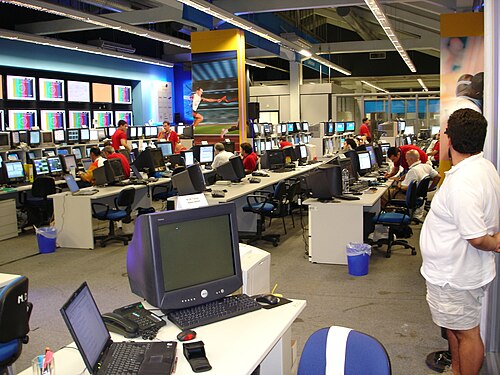
他の企業と同様、組織委員会と関係者全員がイベントを成功させるためにテクノロジーに大きく依存していました。ATHOC は 2 つの独立したデータ ネットワークを維持していました。1 つはゲームの準備用 (管理ネットワーク)、もう 1 つはゲーム自体用 (ゲーム ネットワーク) です。技術インフラストラクチャには、11,000 台を超えるコンピューター、600 台を超えるサーバー、2,000 台のプリンター、23,000 台の固定電話機、9,000 台の携帯電話、12,000 台のTETRAデバイス、16,000 台のテレビおよびビデオ デバイス、および 6,000 キロメートルを超えるケーブル (光ファイバーとツイスト ペアの両方) で相互接続された 17 台のビデオ ウォールが含まれていました。
このインフラストラクチャは、150,000 人を超える ATHOC スタッフ、ボランティア、オリンピック ファミリー メンバー ( IOC、NOC、連盟)、パートナーとスポンサー、メディアに直接サービスを提供するために作成され、維持されました。また、大会前と大会中、世界中のすべての観客、テレビ視聴者、Web サイト訪問者、ニュース読者に情報を流し続けました。メディア センターは、ギリシャの国立展示センターである ザッペイオン内にありました。
2004 年 6 月から 8 月の間、技術スタッフはテクノロジー オペレーション センター (TOC) で作業し、すべてのデバイスと情報の流れを一元的に監視および管理し、大会中に発生したあらゆる問題に対処しました。TOC は、TOC ディレクターと対応するチーム リーダー (シフト マネージャー) の指揮下で、チーム (システム、通信、情報セキュリティ、データ ネットワーク、スタッフなど) に編成されていました。TOC は、人員を 12 時間シフトに編成し、24 時間 365 日体制で運営されていました。
ゲーム
開会式

ゲームの開会式は、振付師ディミトリス・パパイオアヌーの指揮、ジャック・モートン・ワールドワイドのプロデュース、プロジェクトディレクターのデイヴィッド・ゾルクヴァの指揮のもと、2004年8月13日に開催された。式典は、増幅された心臓の鼓動の音に合わせて28秒(それまでのオリンピックの数)のカウントダウンで始まった。[21]カウントダウンが完了すると、花火が鳴り響き、頭上の空を照らした。太鼓隊とブズーキ奏者が開会の行進に加わった後、ビデオスクリーンには、アテネからギリシャの田園地帯を南西に横断して古代オリンピアに向かう飛行の映像が映し出された。その後、古代スタジアムの一人のドラマーがアテネのメインスタジアムの一人のドラマーとドラムデュエットを行い、本来の古代オリンピックと現代のオリンピックを象徴的に結びつけた。ドラムデュエットの最後に、ビデオスクリーンから(古代オリンピアを象徴する)一本の燃える矢がリフレクションプールに放たれ、スタジアムの中央で火が噴き、プールからオリンピックの輪が上がる燃えるイメージを作り出した。開会式は、神話の始まりまで遡る伝統的なギリシャ文化と歴史のページェントだった。プログラムは、マノス・ハジダキスの幻想的な音楽に合わせて開催国の国旗を振りながら「紙の船」に乗ってギリシャの少年がスタジアムに入ってくるところから始まり、続いてケンタウロスが現れ、続いてキクラデス諸島の巨大な像の頭が現れたが、それはやがてギリシャの島々を象徴する多くの破片に砕け散った。キクラデス諸島の像の頭の下には、ギリシャ美術に反映された完璧さの概念と信念を反映した、ヘレニズム風の人体の表現があった。男が、情熱と理性の間の永遠の「分裂」を象徴する浮遊する立方体の上でバランスを取っている姿が見られ、その後ろにはエロス神が彼らの上に浮かんでいる中、若い恋人たちがじゃれ合いながら追いかけっこをしている姿が続いていた。その後に、古代ミノア文明から現代までの ギリシャの歴史を時系列で記録した非常に色鮮やかな山車パレードが続いた。
米国のNBCは開会式を最初から最後まで放送したが、上半身裸のミノアの巫女はほんの一瞬しか映らなかった。当時は「乳首ゲート」事件がまだ視聴者の記憶に新しい時期だったため、論争や連邦通信委員会による罰金を避けるために、胸はデジタル処理でピクセル化されていた。また、古代ギリシャの彫像に扮した男性の下半身裸は、腰から下が画面の下部でカットされる形で放送された。全体として、NBCのオリンピック報道は称賛されており、同社はオリンピックの報道と技術制作で6つのエミー賞を受賞した。 [22] [23]さらに、NBCは2004年のオリンピックで28競技すべてを放映し、そうした放送局としては初めてとなった。[24]
芸術的なパフォーマンスに続いて、201カ国の旗の下、10,500人を超える選手が行進してスタジアムに入場した。国はギリシャ語のアルファベット順に並べられ、フィリピン、フィンランド、フィジー、チリ、香港の5カ国がギリシャ代表団の前にスタジアムに入場した最後の国となった。このとき、ギリシャ代表団がパレードを開き、開催国が閉じるという伝統に従い、ギリシャの旗手がパレードを開き、ギリシャ代表団全員がパレードを締めくくった。観客の反応を見ると、パレードの感動的なハイライトは、オリンピックには参加しておらず、初めて女性選手が出場したアフガニスタン代表団の入場だった。イラク代表団もまた感動を呼んだ。また、朝鮮統一旗の下、北朝鮮と韓国の選手が象徴的に一体となって行進したことも注目された。[c]キリバスがこの大会に初出場し、東ティモールは自国の旗の下で初出場した。オランダのDJティエストが音楽を提供した国家パレードの後、アイスランドの歌手ビョークが、彼女と詩人のショーンがこのイベントのために特別に書いた曲「オセアニア」を披露した。
開会式は、1996年ウィンドサーファーの金メダリスト、ニコラオス・カクラマナキスによる聖火台の点火で最高潮に達した。聖火台の点火を含む式典の多くの重要な瞬間には、ニュージーランドの作曲家ジョン・プササスが作曲・編曲した音楽が使われた。[25] 2004年アテネオリンピックの聖火を模した巨大な聖火台は、35歳のプササスによって点火されるために下方に旋回した後、ゆっくりと上昇して炎をスタジアムの上空に上げた。その後、式典を締めくくる花火大会が始まった。
参加各国オリンピック委員会


アテネ大会にはジブチを除く全ての国内オリンピック委員会(NOC)が参加した。2000年以降に2つの新しいNOCが設立され、この大会でデビューを果たした(キリバスと東ティモール)。そのため、アフガニスタン( 2000年夏季オリンピックから追放されていた)が復帰したことで、参加国の数は199か国から201か国に増加した。さらに、ユーゴスラビアは前年にセルビア・モンテネグロと国番号をYUGからSCGに変更していたが[26] 、同国は2年後に解体し[27] 、 [28]、これが新しい国名での唯一のオリンピック出場となった。ジョージアの新国旗は8月13日の開会式で掲揚され、オリンピックで初公開された。これは1994年のリレハンメル大会以来使用されていた旧ソ連の国旗に代わるものである。
下の表の括弧内の数字は、各 NOC が貢献した参加者数を示しています。
- ジブチからは4人の選手が開会式に参加したが、理由は不明だが、大会には出場しなかった。[29]

国内オリンピック委員会による選手数
2004 年夏季オリンピックには 201 のNOCから10,557 人の選手が参加しました。
スポーツ
2004年夏季オリンピックで実施された競技は以下のとおりです。公式には28競技301種目が実施されました。水泳、飛び込み、シンクロナイズドスイミング、水球はIOCによって水泳競技の1種目として分類されており、車いすレースは公開競技でした。レスリング部門では初めて女子レスリングが実施され、フェンシング競技では女子サーブルが出場しました。女子砲丸投げ予選で先頭に立ったアメリカ人のクリスティン・ヒーストンは、古代オリンピア遺跡で競技した最初の女性となりました。
車椅子レースの公開競技はオリンピックとパラリンピックの合同イベントであり、オリンピック内でパラリンピックイベントを開催することを可能にし、将来的には車椅子レースを健常者にも開放しました。2004年夏季パラリンピックも 9 月 17 日から 28 日までアテネで開催されました。
ギャラリー
-
 アテネオリンピックの米国男子軽量級舵手なしフォア
 -
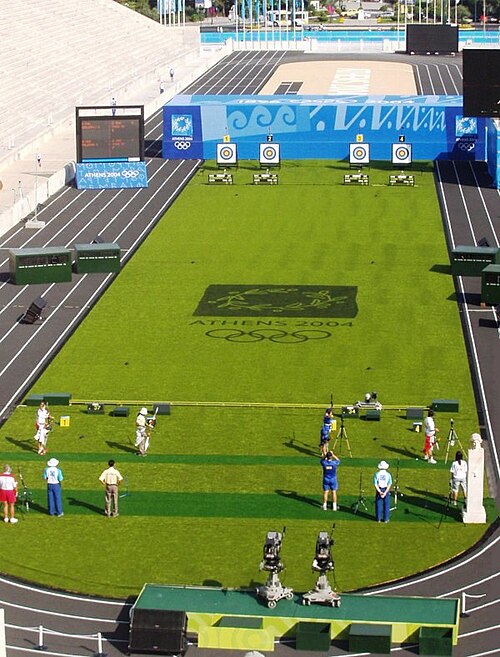 パナシナイコスタジアムでのアーチェリー競技
 -
-


カレンダー
ハイライト
- セルビア・モンテネグロとチュニジアが対戦した男子サッカーのグループリーグの試合では、チュニジアが蹴ったPKが5回もやり直された。
- ギリシャの短距離走者コンスタンティノス・ケンテリスとエカテリニ・タヌーは、薬物検査を避けるためにバイク事故を装った疑いで、大会から撤退した。
- アラブ首長国連邦は、ドバイ首長の遠縁であるシェイク・アハメド・アル・マクトゥームが射撃ダブルトラップ競技で金メダルを獲得し、初のオリンピックメダルを獲得した。彼はトラップ競技でも4位に入った。[30]
- 砲丸投げ競技は古代オリンピックの開催地である古代オリンピアで開催され(女性選手が古代オリンピアで競技したのはこれが初めてであった)、アーチェリー競技と男女マラソンは1896年のオリンピックが開催されたパナシナイコスタジアムで行われた。[31]
- キリバスと東ティモールが初めてオリンピックに参加した。[31]
- 女子レスリングと女子サーブルは2004年のオリンピックで初めてオリンピック競技となった。[31]
- ギリシャは金メダル6個、銀メダル6個、銅メダル4個を獲得し、1896年のオリンピック開催以来100年以上で最高のメダル数を記録し、 7月のユーロ2004優勝に続く同国のスポーツでの成功を継続した。
- マラソンは1896年のオリンピックと同じルートで開催され、マラトンの戦いの現場からアテネのパナシナイコ競技場までを走った。[31]
- オーストラリアは、2000年のシドニーオリンピックで16個の金メダルを獲得した直後、オリンピック史上初めて、より多くの金メダル(17個)を獲得した国となった。
- 世界記録保持者で優勝候補のイギリス人ポーラ・ラドクリフが女子マラソンで派手に敗退し、日本の野口みずきが金メダルを獲得した。
- 男子マラソンでトップを走っていたブラジルのランナー、ヴァンデルレイ・コルデイロ・デ・リマは、残り10キロを切ったところでアイルランドの司祭ニール・ホランに襲われ、群衆の中に引きずり込まれた。デ・リマは回復して銅メダルを獲得し、後にスポーツマンシップに対してピエール・ド・クーベルタン・メダルを授与された。[31] 12年後、 2016年夏季オリンピックの開会式で、彼はマラカナン・スタジアムで聖火台に点火した。
- イギリスのアスリート、ケリー・ホームズは800メートルと1500メートルで金メダルを獲得した。[31]
- 劉翔は110メートルハードルで中国初の男子陸上競技金メダルを獲得し、コリン・ジャクソンの1993年の世界記録12.91秒に並んだ。
- ケニアの選手たちは3000メートル障害走でメダルを総なめにした。[31]
- このオリンピックでは、アフガニスタンが1996年以来初めて競技に復帰した(タリバンの女性に対する過激な態度により禁止されたが、2002年に復活した)。
- ヒシャム・エルゲルージが1500メートルと5000メートルで金メダルを獲得。 1924年のパーヴォ・ヌルミ以来、オリンピックでこの偉業を達成した最初の人物となった。[31]
- ギリシャの陸上選手ファニ・ハルキアは引退から復帰し、400メートルハードルで優勝した。
- ナタリー・コフリン、カーリー・パイパー、ダナ・フォルマー、ケイトリン・サンデノからなる米国女子4×200m水泳チームが金メダルを獲得し、1987年にドイツ民主共和国が樹立した長年保持されていた世界記録を破った。
- アルゼンチンは男子バスケットボール決勝でイタリアを84対69で破り、同スポーツで初の金メダルを獲得した。
- ウィンドサーファーのガル・フリードマンがイスラエル初の金メダルを獲得した。
- Dominican athlete Félix Sánchez won the first gold medal for the Dominican Republic in the 400 m hurdles event.
- German kayaker Birgit Fischer won gold in the K-4 500 m and silver in the K-2 500 m. In so doing, she became the first woman in any sport to win gold medals at 6 different Olympics, the first woman to win gold 24 years apart and the first person in Olympic history to win two or more medals in five different Games.
- Swimmer Michael Phelps became the first athlete to win 8 medals (6 gold and 2 bronze) in non-boycotted Olympics.[31]
- United States' gymnast Carly Patterson became the second American woman to win the all-around gold medal, and the first American woman to win the all-around competition at a non-boycotted Olympic Games.
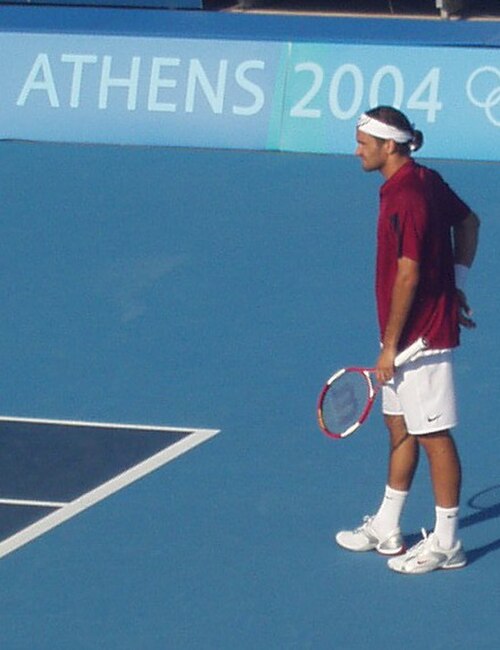
- Chilean Tennis players Nicolás Massu and Fernando Gonzalez won the gold medal in the Doubles Competition, while Massu won the gold and Gonzalez the bronze on the Singles competition. These were Chile's first-ever gold medals. With these victories, Massú became the thirteenth Tennis player (and the eighth male player) in history to have won the gold medal in both the Singles and Doubles Competition during the same Olympic Games. He also became the second Tennis player, and first male player, to have achieved this feat in modern Olympic Tennis (1988 onwards). The first player to do so was Venus Williams in 2000.[31]
- Usain Bolt of Jamaica, in his first career Olympic Games, finished fifth in his 200m dash heat in 21.05 seconds, failing to qualify for the second round. In the years to come, he would go on to become the world's fastest man, with multiple world records in the 100m, 200m and 4 × 100 m and a medal count of over 29 global medals, including 8 Olympic gold medals and 11 World Championships gold medals.
Closing ceremony

The Games were concluded on 29 August 2004. The closing ceremony was held at the Athens Olympic Stadium, where the Games had been opened 16 days earlier. Around 70,000 people gathered in the stadium to watch the ceremony.
The initial part of the ceremony interspersed the performances of various Greek singers, and featured traditional Greek dance performances from various regions of Greece (Crete, Thessaly, etc.). The event was meant to highlight the pride of the Greeks in their culture and country for the world to see.
A significant part of the closing ceremony was the exchange of the Olympic flag of the Athens Games between the mayor of Athens and the mayor of Beijing, host city of the next Olympics. After the flag exchange a presentation from the Beijing delegation presented a glimpse into Chinese culture for the world to see. Beijing University students (who were at first incorrectly cited as the Twelve Girls Band) sang Mo Li Hua (Jasmine Flower) accompanied by a ribbon dancer, then some male dancers did a routine with tai chi and acrobatics, followed by dancers from the Peking Opera and finally, a little Chinese girl Chen Tianjia singing a reprise of Mo Li Hua and concluded the presentation by saying "Welcome to Beijing!"
The medal ceremony for the last event of the Olympics, the men's marathon, was conducted, with Stefano Baldini from Italy as the winner. The bronze medal winner, Vanderlei Cordeiro de Lima of Brazil, was simultaneously announced as a recipient of the Pierre de Coubertin Medal for his bravery in finishing the race despite being attacked by a rogue spectator while leading with 7 km to go.
A flag-bearer from each nation's delegation then entered along the stage, followed by the competitors en masse on the floor. All of them were led by Pyrros Dimas (weightlifter) and Liu Xiang (hurdler).
Short speeches were presented by Gianna Angelopoulos-Daskalaki, President of the Organising Committee, and by President Dr. Jacques Rogge of the IOC, in which he described the Athens Olympics as "unforgettable, dream Games".[6]
Dr. Rogge had previously declared he would be breaking with tradition in his closing speech as President of the IOC and that he would never use the words of his predecessor Juan Antonio Samaranch, who used to always say 'these were the best ever games'.[6] Dr. Rogge had described Salt Lake City 2002 as "superb games" and in turn would continue after Athens 2004 and describe Turin 2006 as "truly magnificent games."
The national anthems of Greece and China were played in a handover ceremony as both nations' flags were raised. The Mayor of Athens, Dora Bakoyianni, passed the Olympic Flag to the Mayor of Beijing, Wang Qishan. After a short cultural performance by Chinese actors, dancers, and musicians directed by eminent Chinese director Zhang Yimou, Rogge declared the 2004 Olympic Games closed. The Olympic flag was next raised again on 10 February 2006 during the opening ceremony of the next Winter Olympics in Torino.
A young Greek girl, 10-year-old Fotini Papaleonidopoulou, lit a symbolic lantern with the Olympic Flame and passed it on to other children before "extinguishing" the flame in the cauldron by blowing a puff of air. The ceremony ended with a variety of musical performances by Greek singers, including Dionysis Savvopoulos, George Dalaras, Haris Alexiou, Anna Vissi, Sakis Rouvas, Eleftheria Arvanitaki, Alkistis Protopsalti, Antonis Remos, Michalis Hatzigiannis, Marinella, and Dimitra Galani, as thousands of athletes carried out symbolic displays on the stadium floor.
Medal table

These are the top ten nations that won medals in the 2004 Games.
* Host nation (Greece)
Venues
OAKA
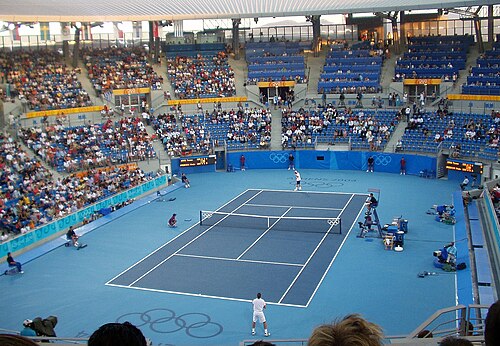
- Athens Olympic Aquatic Centre – diving, swimming, synchronized swimming, water polo
- Athens Olympic Tennis Centre – tennis
- Athens Olympic Velodrome – cycling (track)
- Olympic Indoor Hall – basketball (final), gymnastics (artistic, trampolining)
- Olympic Stadium – ceremonies (opening/ closing), athletics, football (final)
HOC
- Fencing Hall – fencing
- Helliniko Indoor Arena – basketball, handball (final)
- Olympic Baseball Centre – baseball
- Olympic Canoe/Kayak Slalom Centre – canoeing (slalom)
- Olympic Hockey Centre – field hockey
- Olympic Softball Stadium – softball
Faliro
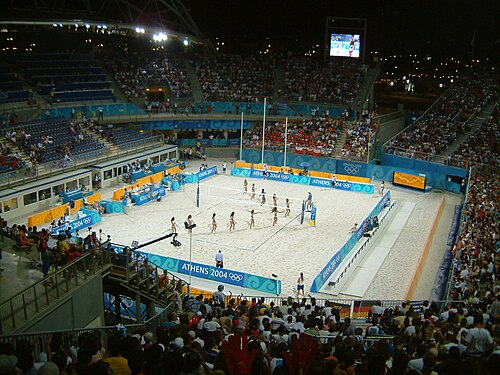
- Faliro Olympic Beach Volleyball Centre – volleyball (beach)
- Faliro Sports Pavilion Arena – handball, taekwondo
- Peace and Friendship Stadium – volleyball (indoor)
GOC
- Goudi Olympic Hall – badminton
- Olympic Modern Pentathlon Centre – modern pentathlon
MOC
- Markopoulo Olympic Equestrian Centre – equestrian
- Markopoulo Olympic Shooting Centre – shooting
Football venues
- Kaftanzoglio Stadium (Thessaloniki)
- Karaiskakis Stadium (Piraeus)
- Pampeloponnisiako Stadium (Patras)
- Pankritio Stadium (Heraklion)
- Panthessaliko Stadium (Volos)
Other venues
- Agios Kosmas Olympic Sailing Centre – sailing
- Ano Liosia Olympic Hall – judo, wrestling
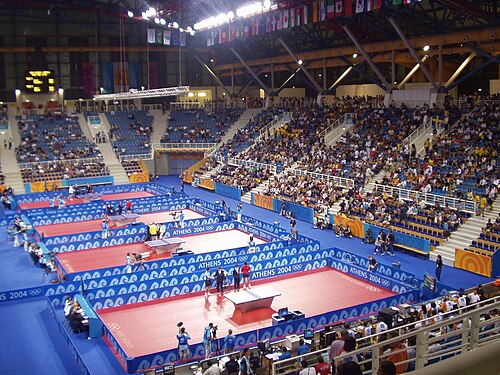
- Galatsi Olympic Hall – gymnastics (rhythmic), table tennis
- Kotzia Square – cycling (individual road race)
- Marathon (city) – athletics (marathon start)
- Nikaia Olympic Weightlifting Hall – weightlifting
- Panathenaic Stadium – archery, athletics (marathons finish)
- Peristeri Olympic Boxing Hall – boxing
- Schinias Olympic Rowing and Canoeing Centre – canoeing (sprint), rowing
- Stadium at Olympia – athletics (shot put)
- Vouliagmeni Olympic Centre – cycling (individual time trial), triathlon
Sponsors
Legacy
To commemorate the 2004 Olympics, a series of Greek high value euro collectors' coins were minted by the Mint of Greece, in both silver and gold. The pieces depict landmarks in Greece as well as ancient and modern sports on the obverse of the coin. On the reverse, a common motif with the logo of the Games, circled by an olive branch representing the spirit of the Games.
Preparations to stage the Olympics led to a number of positive developments for the city's infrastructure. These improvements included the establishment of Eleftherios Venizelos International Airport, a modern new international airport serving as Greece's main aviation gateway;[33] expansions to the Athens Metro[34] system; the "Tram", a new metropolitan tram (light rail) system[35] system; the "Proastiakos", a new suburban railway system linking the airport and suburban towns to the city of Athens; the "Attiki Odos", a new toll motorway encircling the city,[36] and the conversion of streets into pedestrianized walkways in the historic center of Athens which link several of the city's main tourist sites, including the Parthenon and the Panathenaic Stadium (the site of the first modern Olympic Games in 1896).[37][38] All of the above infrastructure is still in use to this day, and there have been continued expansions and proposals to expand Athens' metro, tram, suburban rail and motorway network, the airport, as well as further plans to pedestrianize more thoroughfares in the historic center of Athens.
The Greek Government has created a corporation, Olympic Properties SA, which is overseeing the post-Olympics management, development and conversion of these facilities, some of which will be sold off (or have already been sold off) to the private sector,[39][40] while some other facilities are still in use, or have been converted for commercial use or modified for other sports.[41]
As of 2012 many conversion schemes have stalled owing to the Greek government-debt crisis, though many of these facilities are now under the control of domestic sporting clubs and organizations or the private sector.[citation needed]
Ongoing maintenance costs for the facilities were problematic due to the Greek government-debt crisis, leading to facilities falling into disrepair, and, according to reports during the crisis period, many Greek Olympians at the time chose to train in Cyprus instead, owing to its then superior facilities.[42]
The legacy of the facilities is also debated: although many facilities had plans for post-games utilisation, many of these plans never materialised, while questions remain about whether the initially limited post-games usage of certain facilities is outweighed by the significant initial expenditure on the facilities, alongside the ongoing maintenance costs[43] (such arguments were mostly presented during the country's debt crisis, which had affected many aspects of its functions[44]).
The table below delineates the current status of the Athens Olympic facilities:
Arguments about possible effects on Greece's debt crisis
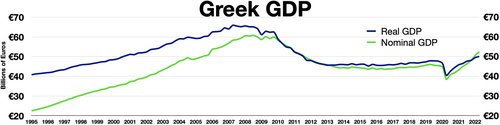
Real Quarterly GDP (chained 2010 Euros)
Nominal Quarterly GDP

There have been arguments (mostly in popular media) that the cost of the 2004 Athens Summer Games was a contributor to the Greek government-debt crisis that started in 2010, while a lot of focus has been on the use of the facilities after the Games.[112][failed verification] This argument contradicts the fact that Greece's Debt to GDP ratio was essentially not affected until the 2008 world financial crisis,[113] while according to Olympic officials and some financial experts, the cost of the Games, which was spread over years of preparation, was insignificant compared to Greece's GDP and public debt.[114] Furthermore, the aforementioned arguments do not even take into account the profits (direct and indirect) generated by the Games, which may well have surpassed the above costs. Finally, popular arguments about "rotting" of many of the facilities, appear to ignore the actual utilization of many of these structures. On the other hand, the general government's deficit increase between 2000 and 2004 from 4.1% to 8.8% was a result of multiple factors and, until 2008, the effect of Greece's chronic - and widely fluctuating - deficits was counterbalanced by high GDP growth rates, leaving the Debt to GDP ratio essentially unaffected - see chart).
See also

- 2004 Summer Paralympics
- Olympic Games held in Greece
- 1896 Summer Olympics – Athens
- 2004 Summer Olympics – Athens
- List of IOC country codes
- List of 2004 Summer Olympics medal winners
- Olympic records at the 2004 Summer Olympics
- Use of performance-enhancing drugs in the Olympic Games – 2004 Athens
- World records at the 2004 Summer Olympics
Notes
- ^ The 2004 Olympic Games emblem is a wreath made from an olive tree branch, or kotinos. The emblem is a reference to the ancient Olympic Games, where the kotinos was the official award of Olympic champions. In addition, the olive was the sacred tree of Athens. The colours of the emblem symbolise the shades of white and blue found in the Greek countryside; Down below the word "ATHENS 2004" was put above the Olympic ring.
- ^ Standard Modern Greek pronunciation is [θeriˈni olibi.aˈci aˈɣonez ðˈio çiˈʎaðes ˈtesera].
- ^ The national teams of North Korea and South Korea competed separately in the Olympic events, even though they marched together as a unified Korean team in the opening ceremony. Later, in Beijing, the two Koreas marched separately. In Pyeongchang, these countries marched and competed together as host, bearing the name United Korean.
References
- ^ a b "Factsheet - Opening Ceremony of the Games of the Olympiad" (PDF) (Press release). International Olympic Committee. 9 October 2014. Archived from the original (PDF) on 14 August 2016. Retrieved 22 December 2018.
- ^ a b c "Athens 2004". International Olympic Committee. olympic.org. Archived from the original on 17 January 2013. Retrieved 19 January 2008.
- ^ "The Olympic Summer Games Factsheet" (PDF). International Olympic Committee. Archived from the original (PDF) on 12 January 2011. Retrieved 5 August 2012.
- ^ "Athens' New Olympic Medal Design Win IOC's Nod". People's Daily. 2 July 2003. Retrieved 5 August 2011.
- ^ "Winner Medals". olympic-museum.de. Archived from the original on 4 July 2011. Retrieved 27 July 2011.
- ^ a b c "Rogge: Athens 'unforgettable, dream Games'". ESPN. Associated Press. 29 August 2004. Retrieved 28 July 2012.
- ^ Weisman, Steven R. (19 September 1990). "Atlanta Selected Over Athens for 1996 Olympics". The New York Times. Retrieved 23 September 2008.
- ^ Rowbottom, Mike (6 September 1997). "Athens wins 2004 Olympics". The Independent. London. Archived from the original on 1 May 2022. Retrieved 25 May 2010.
- ^ Longman, Jere (6 September 1997). "Athens Wins a Vote for Tradition, and the 2004 Olympics". The New York Times. Retrieved 25 May 2010.
- ^ Longman, Jere (3 August 1997). "Athens Pins Olympic Bid to World Meet". The New York Times. Retrieved 23 September 2008.
- ^ Anderson, Dave (7 September 1997). "Athens Can Thank Atlanta for 2004 Games". The New York Times. Retrieved 25 May 2010.
- ^ "International Olympic Committee – Athens 2004 – Election". Olympic.org. Retrieved 15 March 2010.
- ^ "Cost of Athens 2004 Olympics". Embassy of Greek. greekembassy.org. Archived from the original on 19 December 2007. Retrieved 13 November 2004.
- ^ "Στα 8,5 δισ. ευρώ το συνολικό ακαθάριστο κόστος των Ολυμπιακών Αγώνων του 2004date=18 January 2013". 18 January 2013.
- ^ "Olympics 'may cost Greece dear'". 2 June 2004 – via news.bbc.co.uk.
- ^ a b c "Unity Olympics Album". The Star Online eCentral. 2004. Archived from the original on 22 April 2008. Retrieved 16 August 2008.
- ^ "Workers in peril at Athens sites". BBC News. 23 July 2004. Retrieved 16 August 2008.
- ^ "Global TV viewing of Athens 2004 Olympic Games breaks records". International Olympic Committee. 12 October 2004. Retrieved 13 August 2023.
- ^ Pfanner, Eric (30 August 2004). "Athens Games beating Sydney in TV race". International Herald Tribune. Archived from the original on 12 September 2007. Retrieved 18 August 2006.
- ^ "You're Athletes, Not Journalists". Wired News. 20 August 2004. Archived from the original on 1 January 2007. Retrieved 18 August 2006.
- ^ "Master of Olympic Pageantry Prepares One Final Blowout". The New York Times. Associated Press. 29 August 2004. Retrieved 25 May 2010.
- ^ "Athens Olympics close, and NBC cashes in - Aug. 30, 2004". money.cnn.com.
- ^ Grohmann, Karolos (19 January 2005). "Olympics chief rebuffs lewd claims". Reuters. Archived from the original on 28 November 2020. Retrieved 13 May 2020.
- ^ "Volleyball Well Represented by NBC's Around-the-Clock Olympic TV Coverage". Olympic-USA.org. Archived from the original on 27 December 2004. Retrieved 8 May 2008.
- ^ "SOUNZ – NZ composer – John Psathas". Archived from the original on 6 January 2009. Retrieved 7 August 2009.
- ^ "Yugoslavia consigned to history". BBC News. 4 February 2003. Archived from the original on 8 November 2022. Retrieved 29 July 2020.
- ^ "Montenegro declares independence". BBC News. 4 June 2006. Archived from the original on 11 September 2017. Retrieved 29 July 2020.
- ^ "Recount call in Montenegro vote". BBC News. 22 May 2006. Archived from the original on 28 July 2011. Retrieved 29 July 2020.
- ^ Matthews, Peter (22 March 2012). Historical Dictionary of Track and Field. Scarecrow Press. p. xciv.
- ^ "Shaikh Ahmed Almaktoum". Olympics.com. 5 June 2018. Retrieved 11 February 2024.
- ^ a b c d e f g h i j "Athens 2004". IOC. Archived from the original on 17 January 2013. Retrieved 28 July 2012.
- ^ "Athens 2004 Olympic Medal Table – Gold, Silver & Bronze". International Olympic Committee. Retrieved 12 September 2024.
- ^ "The Company". Aia.gr. 28 March 2001. Archived from the original on 18 February 2010. Retrieved 15 March 2010.
- ^ "AttikoMetro Inside". Ametro.gr. 9 September 2009. Archived from the original on 11 February 2010. Retrieved 15 March 2010.
- ^ "Tram Sa". Tramsa.gr. 22 February 2010. Archived from the original on 23 March 2010. Retrieved 15 March 2010.
- ^ [1] [dead link]
- ^ "Unification of Archaeological Sites in the Centre of Athens". Minenv.gr. 4 November 1995. Archived from the original on 16 July 2011. Retrieved 15 March 2010.
- ^ "As Olympic Glow Fades, Athens Questions $15 Billion Cost". Csmonitor.com. 21 July 2008. Retrieved 15 March 2010.
- ^ "Hellenic Olympic Properties: The Company". Olympicproperties.gr. Archived from the original on 12 December 2008. Retrieved 15 March 2010.
- ^ "After The Party: What happens when the Olympics leave town". The Independent. London. 19 August 2008. Archived from the original on 1 May 2022. Retrieved 15 March 2010.
- ^ (AFP) – 30 July 2008 (30 July 2008). "Four years after Athens Greeks have Olympics blues". Archived from the original on 6 August 2008. Retrieved 15 March 2010.
{{cite web}}: CS1 maint: numeric names: authors list (link) - ^ Smith, Helena (9 May 2012). "Athens 2004 Olympics: What happened after the athletes went home?". The Guardian.
- ^ Smith, Helena (9 May 2012). "Athens 2004 Olympics: What happened after the athletes went home?". The Guardian.
- ^ Nevradakis, Michael (7 August 2012). "The True Olympic Legacy of Athens: Refuting the Mythology". The Huffington Post. Retrieved 19 February 2017.
- ^ [2] Archived 16 April 2009 at the Wayback Machine
- ^ "AEK F.C. Official Web Site". Aekfctickets.gr. Archived from the original on 12 February 2010. Retrieved 15 March 2010.
- ^ McNulty, Phil (23 May 2007). "BBC SPORT | Football | Europe | AC Milan 2–1 Liverpool". BBC News. Archived from the original on 2 March 2010. Retrieved 15 March 2010.
- ^ "Athens Grand Prix 2009". Tsiklitiria.org. 13 July 2009. Archived from the original on 30 July 2008. Retrieved 15 March 2010.
- ^ "Madonna.com > Home". Archived from the original on 19 September 2008. Retrieved 28 September 2008.
{{cite web}}: CS1 maint: bot: original URL status unknown (link) - ^ "Athens, Greece Concert, Sat. September 20, 2008". Jenniferlopez.com. Archived from the original on 14 May 2010. Retrieved 15 March 2010.
- ^ "Ολυμπιακό Αθλητικό Κέντρο Αθηνών". Oaka.com.gr. Archived from the original on 27 April 2010. Retrieved 15 March 2010.
- ^ "Panathinaikos Bc::::Εδρα::::". Paobc.gr. Archived from the original on 10 March 2010. Retrieved 15 March 2010.
- ^ "AEK B.C. | Official Web Site". Aekbc.gr. Retrieved 8 September 2015.
- ^ "www.athens2008.fiba.com – Home page". Archived from the original on 27 May 2008. Retrieved 24 May 2008.
- ^ "Pop icon set for show in Athens this September". ekathimerini.com. 11 June 2008. Retrieved 15 March 2010.
- ^ "Eurovision Song Contest 2006 Final | Year page | Eurovision Song Contest – Oslo 2010". Eurovision.tv. 20 May 2006. Archived from the original on 2 December 2008. Retrieved 15 March 2010.
- ^ "Ολυμπιακό Αθλητικό Κέντρο Αθηνών". Oaka.com.gr. Archived from the original on 1 May 2009. Retrieved 15 March 2010.
- ^ "Ολυμπιακό Αθλητικό Κέντρο Αθηνών". Oaka.com.gr. 22 March 2008. Archived from the original on 1 May 2009. Retrieved 15 March 2010.
- ^ "Ολυμπιακό Αθλητικό Κέντρο Αθηνών". Oaka.com.gr. 16 July 2006. Archived from the original on 1 May 2009. Retrieved 15 March 2010.
- ^ a b c d e f g h i j k l m n "E-Tipos – Remedios naturales – Official Blog". Archived from the original on 7 December 2013. Retrieved 28 September 2008.
{{cite web}}: CS1 maint: bot: original URL status unknown (link) - ^ "Ολυμπιακό Αθλητικό Κέντρο Αθηνών". Oaka.com.gr. Archived from the original on 1 May 2009. Retrieved 15 March 2010.
- ^ "Athens Tennis Academy". Athenstennisacademy.gr. Archived from the original on 10 February 2009. Retrieved 15 March 2010.
- ^ "Ολυμπιακό Αθλητικό Κέντρο Αθηνών". Oaka.com.gr. Archived from the original on 1 May 2009. Retrieved 15 March 2010.
- ^ "Olympiacos.org / Official Website of Olympiacos Piraeus". Archived from the original on 10 August 2015. Retrieved 28 September 2008.
{{cite web}}: CS1 maint: bot: original URL status unknown (link) - ^ "Αρχειο Εκδηλωσεων". Sef-stadium.gr. Archived from the original on 8 April 2008. Retrieved 15 March 2010.
- ^ "Πανιωνιοσ – Κ.Α.Ε". Panioniosbc.gr. 20 October 2009. Archived from the original on 10 February 2010. Retrieved 15 March 2010.
- ^ "High hopes for park at Hellenikon". ekathimerini.com. 3 August 2007. Archived from the original on 30 October 2008. Retrieved 15 March 2010.
- ^ etipos/
- ^ "Olympics: Athens venues lie empty as tenth anniversary nears". BBC Sport. 7 August 2014.
- ^ "Ολυμπιακά Ακίνητα: Μεταολυμπιακή Αξιοποίηση". Olympicproperties.gr. Archived from the original on 1 August 2013. Retrieved 15 March 2010.
- ^ "File:Olympic Hockey Centre.JPG".
- ^ Bloor, Steven (13 August 2014). "Abandoned Athens Olympic 2004 venues, 10 years on – in pictures". The Guardian.
- ^ "Εθνικός". Sport.gr. Archived from the original on 9 June 2009. Retrieved 15 March 2010.
- ^ a b c "Ολυμπιακά Ακίνητα: Η πορεία της μεταολυμπιακής αξιοποίησης των Ολυμπιακών Ακινήτων". Olympicproperties.gr. Archived from the original on 8 May 2009. Retrieved 15 March 2010.
- ^ "Renzo Piano Chosen to Design New Greek Opera, Library Complex". Bloomberg. 21 February 2008. Retrieved 15 March 2010.
- ^ "Ολυμπιακά Ακίνητα: Μεταολυμπιακή Αξιοποίηση". Olympicproperties.gr. Archived from the original on 1 August 2013. Retrieved 15 March 2010.
- ^ a b c d Media
- ^ "Ολυμπιακά Ακίνητα: GFestival 2005". Olympicproperties.gr. 15 June 2005. Archived from the original on 1 August 2013. Retrieved 15 March 2010.
- ^ "I went to explore the ruins of the Athens 2004 Olympics and found hope in the weeds". 22 July 2024.
- ^ "Ολυμπιακά Ακίνητα: Μεταολυμπιακή Αξιοποίηση". Olympicproperties.gr. Archived from the original on 1 August 2013. Retrieved 15 March 2010.
- ^ "Isaac Hayes Στο Κλειστο Φαληρου". i-stores.gr. Archived from the original on 22 December 2005. Retrieved 15 March 2010.
- ^ "Κλειστό Γυμναστήριο Φαλήρου – Morrissey | Siteseein.gr Blog". Siteseein.gr. 27 November 2006. Archived from the original on 16 July 2010. Retrieved 15 March 2010.
- ^ "Ολυμπιακά Ακίνητα: Μεταολυμπιακή Αξιοποίηση". Olympicproperties.gr. Archived from the original on 1 August 2013. Retrieved 15 March 2010.
- ^ Metaforce – Fuel. "Badminton Theater". Badmintontheater.gr. Archived from the original on 26 January 2010. Retrieved 15 March 2010.
- ^ "Ολυμπιακά Ακίνητα: Ολυμπιακό Κέντρο Γουδή". Olympicproperties.gr. Archived from the original on 15 September 2008. Retrieved 15 March 2010.
- ^ "Horse Racing | Hellas Vegas". Hellasvegas.gr. Archived from the original on 30 May 2009. Retrieved 15 March 2010.
- ^ "FEI European Jumping Championship for Children – Markopoulo (GRE), 10–13 July 2008". Hunter Jumper News. 30 June 2008. Archived from the original on 20 July 2011. Retrieved 15 March 2010.
- ^ "Ολυμπιακά Ακίνητα: Ελληνική Ομοσπονδία Ιππασίας – Αγωνιστικό Πρόγραμμα 2008". Olympicproperties.gr. 24 May 2008. Archived from the original on 1 August 2013. Retrieved 15 March 2010.
- ^ "The Subaru Enthuisast Website". Subdriven. 25 May 2007. Archived from the original on 17 January 2010. Retrieved 15 March 2010.
- ^ "Ολυμπιακά Ακίνητα: Μεταολυμπιακή Αξιοποίηση". Olympicproperties.gr. Archived from the original on 1 August 2013. Retrieved 15 March 2010.
- ^ "Ανακοινώσεις, Εκδηλώσεις, Νέα". Unipi.gr. Archived from the original on 7 September 2009. Retrieved 15 March 2010.
- ^ "Ορεινη Ποδηλασια". Parnitha-np.gr. Retrieved 15 March 2010.
- ^ "Parnitha Olympic Mountain Bike Venue – Attraction in Athens, Greece – Ratings and Information". TravelMuse. Retrieved 15 March 2010.
- ^ "eurorowing-2008.com". eurorowing-2008.com. Retrieved 15 March 2010.
- ^ WebSide Associates SA. "Official Website". World Rowing. Archived from the original on 17 March 2009. Retrieved 15 March 2010.
- ^ "IRAKLIS FC Official Web site". Iraklis-fc.gr. Archived from the original on 23 June 2009. Retrieved 15 March 2010.
- ^ "apollonkalamariasfc.gr". www.apollonkalamariasfc.gr. Archived from the original on 5 August 2008.
- ^ "Καυτανζόγλειο Στάδιο – Θεσσαλονίκη". Kaftanzoglio.gr. 27 August 2004. Archived from the original on 6 March 2010. Retrieved 15 March 2010.
- ^ George Xenides. "Georgios Karaiskakis Stadium". Stadia.gr. Retrieved 1 February 2012.
- ^ "Site Map". Archived from the original on 18 June 2009.
- ^ "Eisitiria Diarkeias 2008-09.indd" (PDF). Archived from the original (PDF) on 24 August 2009. Retrieved 15 March 2010.
- ^ a b George Xenides (20 February 2005). "Παγκρήτιο Στάδιο". Stadia.gr. Archived from the original on 4 April 2010. Retrieved 15 March 2010.
- ^ "Παε Διεθνησ Ενωσισ Εργοτελησ". Ergotelis.gr. Retrieved 15 March 2010.
- ^ "Hellenic Ministry of Culture and Tourism | Panathenaic Stadium". Odysseus.culture.gr. Archived from the original on 17 April 2010. Retrieved 15 March 2010.
- ^ "event details". Archived from the original on 28 September 2008. Retrieved 28 September 2008.
{{cite web}}: CS1 maint: bot: original URL status unknown (link) - ^ "news in.gr – Δωρεάν συναυλία στο Καλλιμάρμαρο δίνουν οι R.E.M". In.gr. Archived from the original on 5 December 2008. Retrieved 15 March 2010.
- ^ "Πρόγραμμα Τηλεοπτικών Σειρών - e-go.gr". Πρόγραμμα Τηλεοπτικών Σειρών - e-go.gr. Archived from the original on 11 September 2008.
- ^ "Hellenic Ministry of Culture and Tourism | Olympia". Odysseus.culture.gr. Archived from the original on 9 March 2010. Retrieved 15 March 2010.
- ^ "Lamda Development". Lamda Development. Archived from the original on 25 December 2008. Retrieved 15 March 2010.
- ^ "Ελλάδα – Ευρώπη – Κόσμος : Η ζωή έχει χρώμα". fe-mail.gr. Archived from the original on 10 February 2010. Retrieved 15 March 2010.
- ^ "Greece's Olympic dream has turned into a nightmare for Village residents". 23 June 2011.
- ^ "Olympic Cities: Booms and Busts". CNBC. 19 January 2012. Retrieved 7 February 2014.
- ^ "2010-2018 Greek Debt Crisis and Greece's Past: Myths, Popular Notions and Implications". Academia.edu. Retrieved 14 October 2018.
- ^ "Did 2004 Olympics Spark Greek Financial Crisis?". CNBC. 3 June 2010. Retrieved 17 December 2018.
External links
| External videos | |
|---|---|
 Athens 2004 Olympic Games - Official Olympic Film on YouTube Athens 2004 Olympic Games - Official Olympic Film on YouTube |
 Media related to 2004 Summer Olympics at Wikimedia Commons
- "Athens 2004". Olympics.com. International Olympic Committee.
- Official website
- Pictures from the opening ceremony
- Project to fly the 2004 Olympic Flame around the world on a B747 aircraft
- Pictures backstage from the opening ceremony
- 2004 Athens Olympics at Curlie
- BBC coverage