
Loading article…

啓蒙時代(理性の時代、啓蒙主義とも呼ばれる)は、 17世紀から18世紀にかけてヨーロッパで起こった知的かつ哲学的な運動であった。[1] [2]
啓蒙主義は、合理主義と経験主義によって得られた知識の価値と、自然法、自由と進歩、寛容と友愛、立憲政治、政教分離などの政治的理想を中心とした幅広い社会的思想を特徴としていました。[3] [4] [5]
啓蒙時代には、科学革命やヨハネス・ケプラー、ガリレオ・ガリレイ、フランシス・ベーコン、ピエール・ガッサンディ、アイザック・ニュートンなどの研究、そしてデカルト、ホッブズ、スピノザ、ライプニッツ、ジョン・ロックなどの合理主義哲学が先行し、重なっていた。啓蒙時代の始まりを、 1637年のルネ・デカルトの『方法序説』の出版まで遡る人もいる。この著書には、十分に根拠のある理由がない限りすべてを体系的に信じないというデカルトの方法が書かれており、有名な格言「我思う、ゆえに我あり」が特徴的である。また、アイザック・ニュートンの『原理』 (1687年)の出版を科学革命の頂点であり啓蒙時代の始まりだとする人もいる。[6] [7] [8]ヨーロッパの歴史家は伝統的に啓蒙主義の始まりを1715年のフランス国王ルイ14世の死去、終わりを1789年のフランス革命の勃発としてきました。現在多くの歴史家は啓蒙主義の終わりを19世紀の始まりとしており、最新の提唱年は1804年のイマヌエル・カントの死去です。 [9]実際には、歴史上の各時代には明確に定義された始まりや終わりの日付はありません。
当時の哲学者や科学者は、科学アカデミー、フリーメーソンのロッジ、文学サロン、コーヒーハウスでの会合や、書籍、雑誌、パンフレットの出版を通じて、自らの思想を広く広めた。啓蒙主義の思想は君主制や宗教官僚の権威を弱め、18世紀と19世紀の政治革命への道を開いた。19世紀の自由主義、社会主義、[10]、新古典主義など、さまざまな運動は、その知的遺産を啓蒙主義に遡ることができる。[11]
啓蒙主義の中心的教義は、絶対君主制と宗教的権威の権力に反対する個人の自由と宗教的寛容であった。啓蒙主義は、精神と世界の日常的なメディアとの関係に対する認識の高まりと、科学的方法と還元主義の強調、宗教的正統性に対する疑問の高まりによって特徴づけられた。この姿勢は、カントのエッセイ「啓蒙とは何か」に表れており、そこには「sapere aude (知る勇気)」というフレーズが見られる。[13]
影響力のある知識人
啓蒙時代の前には科学革命があり、科学革命と密接に関係していた。[14]啓蒙時代に影響を与えた初期の哲学者には、フランシス・ベーコン、ピエール・ガッサンディ、ルネ・デカルト、トーマス・ホッブズ、スピノザ、ジョン・ロック、ピエール・ベール、ゴットフリート・ヴィルヘルム・ライプニッツなどがいた。[15] [16]啓蒙時代の主要人物には、チェーザレ・ベッカリーア、ジョージ・バークリー、デニス・ディドロ、デイヴィッド・ヒューム、イマヌエル・カント、モンボド卿、モンテスキュー、ジャン=ジャック・ルソー、アダム・スミス、ヒューゴ・グロティウス、ヴォルテールなどがいた。[17]
啓蒙主義の出版物で影響力のあったものの一つに『百科全書』がある。 1751年から1772年にかけて35巻で出版され、ディドロ、ジャン・ル・ロン・ダランベール、その他150名のチームによって編纂された。『百科全書』は啓蒙主義の思想をヨーロッパ中、そしてそれ以外の地域にも広める一助となった。[18]啓蒙主義の他の出版物には、バークリーの『人間認識原理』(1710年)、ヴォルテールの『英語書簡』(1733年)と『哲学辞典』(1764年)、ヒュームの『人間性論』(1740年)、モンテスキューの『法の精神』(1748年)、ルソーの『不平等論』(1754年)と『社会契約論』(1762年)などがある。チェーザレ・ベッカリーアの『罪と罰について』(1764年)、アダム・スミスの『道徳感情論』(1759年)と『国富論』(1776年)、カントの『純粋理性批判』(1781年)。[要出典]
トピック
哲学

ベーコンの経験主義とデカルトの合理主義哲学は啓蒙思想の基礎を築いた。[19]デカルトは科学を形而上学的に確固とした基礎の上に構築しようとしたが、哲学の領域で応用された懐疑の方法ほど成功せず、精神と物質の二元論に至った。彼の懐疑主義は、ロックの『人間知性論』 (1690年)やヒュームの1740年代の著作によって洗練されていった。彼の二元論は、スピノザの『哲学論考』(1670年)や『エチカ』 (1677年)における物質の統一性に関する妥協のない主張によって挑戦を受けた。[20]
ジョナサン・イスラエルによると、これらは啓蒙思想の2つの異なる流れを規定した。1つはデカルト、ロック、クリスティアン・ヴォルフに従い、改革と伝統的な権力と信仰のシステムとの間の妥協を模索した穏健派であり、もう1つはスピノザの哲学に触発され、民主主義、個人の自由、表現の自由、宗教的権威の根絶を主張した急進的啓蒙主義である。[21] [22]穏健派は理神論的傾向があり、急進派は道徳の基礎を神学から完全に切り離した。両方の思想の流れは最終的に、信仰への回帰を模索した保守的な反啓蒙主義によって反対された。 [23]
18世紀半ば、パリは伝統的な教義や教義に挑戦する哲学的、科学的活動の中心地となった。1685年のフォンテーヌブロー勅令以降、教会と絶対主義政府の関係は非常に強固なものとなった。初期啓蒙主義はこうした状況に抗議する形で現れ、ルイ15世の愛妾ポンパドゥール夫人の支援を受けて勢力を増していった。[24]啓蒙主義の哲学運動は「光の世紀」と呼ばれ、ピエール・ベールが啓蒙主義による宗教批判を一般向けに、また学術的に開始した18世紀初頭には既に始まっていた。懐疑論者だったベールは合理性の哲学と原理を部分的にしか受け入れなかった。彼は道徳と宗教の間に厳格な境界線を引いた。彼の著書『歴史・批評辞典』の厳密さは、多くの啓蒙主義百科事典に影響を与えた。[25] 18世紀半ばまでに、フランス啓蒙主義は百科全書の出版に焦点を定めた。[24]この哲学運動はヴォルテールとルソーが主導し、信仰やカトリックの教義ではなく理性に基づいた社会、自然法に基づいた新しい市民秩序、実験と観察に基づいた科学を主張した。政治哲学者モンテスキューは政府における三権分立の考えを提唱し、この概念はアメリカ合衆国憲法の起草者たちに熱心に採用された。フランス啓蒙主義の哲学者たちは革命家ではなく、多くが貴族であったが、彼らの思想は旧体制の正当性を揺るがし、フランス革命を形作る上で重要な役割を果たした。[26]
道徳哲学者でありスコットランド啓蒙主義の創始者であるフランシス・ハッチソンは、功利主義と帰結主義の原理について述べ、美徳とは彼の言葉を借りれば「最大多数の最大の幸福」をもたらすものであるとした。科学的方法(知識、証拠、経験、因果関係の性質)に組み込まれているものの多くと、科学と宗教の関係に対するいくつかの現代的な態度は、エディンバラのハッチソンの弟子であるデイヴィッド・ヒュームとアダム・スミスによって発展させられた。[27] [28]ヒュームは懐疑主義哲学と経験主義哲学の伝統における主要人物となった。

カントは合理主義と宗教的信仰、個人の自由と政治的権威を調和させ、私的理性と公的理性を通して公共圏の見方を描き出そうとした。[29]カントの研究は20世紀に入ってもドイツ思想、そしてヨーロッパ哲学全体を形作り続けた。[30]
メアリ・ウルストンクラフトは、イギリスの初期のフェミニスト哲学者の一人である。[31]彼女は理性に基づいた社会を主張し、男性と同様に女性も理性的な人間として扱われるべきであると主張した。彼女は『女性の権利の擁護』(1791年)で最もよく知られている。[32]
科学
科学は啓蒙主義の言説と思想において重要な役割を果たした。啓蒙主義の作家や思想家の多くは科学のバックグラウンドを持ち、科学の進歩を宗教と伝統的権威の打倒と結び付け、言論と思想の自由の発展を支持した。[33]すぐに実用的な結果が出た。アントワーヌ・ラボアジエの実験はパリで最初の近代的な化学工場を作るために使われ、モンゴルフィエ兄弟の実験は1783年に熱気球による最初の有人飛行を可能にした。 [34]
大まかに言えば、啓蒙科学は経験主義と合理的思考を非常に重視し、啓蒙主義の理想である進歩と発展に根ざしていた。自然哲学という見出しの下、科学の研究は物理学と化学および博物学の集合体に分かれており、これには解剖学、生物学、地質学、鉱物学、動物学が含まれていた。[35]ほとんどの啓蒙主義の見解と同様に、科学の恩恵は普遍的に認識されていたわけではなく、ルソーは科学が人間を自然から遠ざけ、人々を幸せにするために機能していないと批判した。[36]
啓蒙時代の科学は、科学協会やアカデミーによって支配され、それらは主に大学に取って代わり、科学研究開発の中心となっていた。協会やアカデミーは、科学専門職の成熟のバックボーンでもあった。科学アカデミーや協会は、大学のスコラ哲学とは対照的に、科学革命から科学的知識の創造者として生まれた。[37]一部の協会は大学とのつながりを作ったり維持したりしたが、当時の資料では、大学の有用性は知識の伝達にあるのに対し、協会は知識の創造に機能すると主張して、大学と科学協会を区別していた。[38]制度化された科学における大学の役割が減少し始めると、学会が組織化された科学の礎となった。公式の科学協会は、技術的専門知識を提供するために国家によって認可された。[39]
ほとんどの学会は、自らの出版物を監督し、新会員の選出や学会の運営を管理する許可を与えられた。[40] 18世紀には、ヨーロッパで膨大な数の公式アカデミーや学会が設立され、1789年までに70を超える公式科学学会が存在した。この成長について、ベルナール・ド・フォントネルは18世紀を「アカデミーの時代」と呼んだ。[41]
もう一つの重要な発展は、知識が深まった人々の間で科学が普及したことだ。哲学者たちは、百科全書やヴォルテールとエミリー・デュ・シャトレによるニュートン主義の普及など、多くの科学理論を一般大衆に紹介した。歴史家の中には、18世紀を科学史における退屈な時代と位置づける者もいる。[42]この世紀には、医学、数学、物理学の実践における大きな進歩、生物分類学の発展、磁気と電気に関する新たな理解、そして現代化学の基礎を確立した学問としての化学の成熟が見られた。[要出典]
科学の影響は、詩や文学によく現れ始めた。詩の中には科学的な比喩やイメージが込められたものもあれば、科学的なテーマについて直接書かれたものもあった。リチャード・ブラックモアは『創造、七巻の哲学詩』 (1712年)でニュートンの理論を詩に取り入れた。ニュートンが1727年に死去した後、数十年にわたって彼を讃える詩が作られた。[43] ジェームズ・トムソンは「ニュートンを偲ぶ詩」を著し、ニュートンの死を悼み、彼の科学と遺産を称賛した。[44]
社会学、経済学、法学

ヒュームと他のスコットランド啓蒙思想家たちは「人間の科学」を展開した。 [45]これは歴史的にはジェームズ・バーネット、アダム・ファーガソン、ジョン・ミラー、ウィリアム・ロバートソンなどの著作に表現されており、彼らは皆、古代および原始文化における人間の行動に関する科学的研究と、近代化の決定的な力に対する強い認識を融合させた。近代社会学は主にこの運動から始まり、[46]ヒュームの哲学的概念はジェームズ・マディソン(そして米国憲法)に直接影響を与え、デュガルド・スチュワートによって普及され、古典的自由主義の基礎となった。[47]
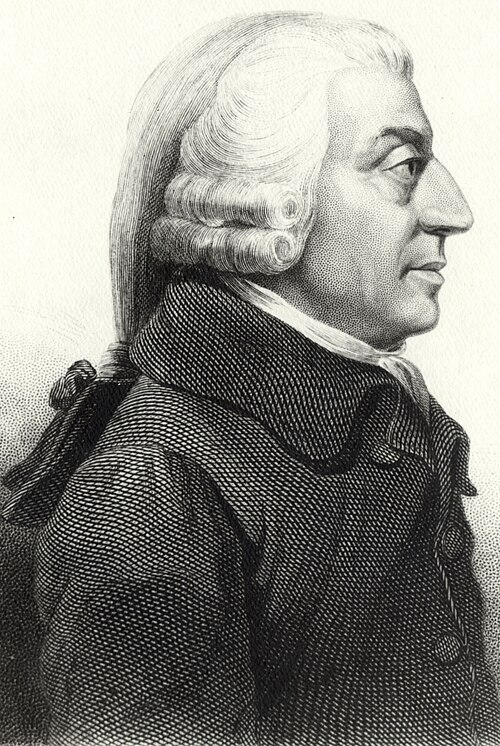
1776年、アダム・スミスは『国富論』を出版した。これは、21世紀まで続くイギリスの経済政策に直接影響を与えたため、近代経済学の最初の著作とみなされることが多い。[48]その直前には、アンヌ・ロベール・ジャック・テュルゴーの『富の形成と分配についての省察』(1766年)の草稿があり、影響を受けている。スミスは負債を認めており、おそらく英語の原訳者であったと思われる。[49]
ベッカリアは法学者、犯罪学者、哲学者、政治家であり、啓蒙主義の偉大な作家の一人であるが、傑作『罪と罰』(1764年)で有名になり、後に22か国語に翻訳された[50]。この本では拷問と死刑を非難し、刑事司法を推進することで刑罰学と古典派犯罪学の分野における基礎的な著作となった。フランチェスコ・マリオ・パガーノは『政治論文集』(1783年)や『刑事裁判に関する考察』(1787年)などの重要な研究書を執筆し、刑法の国際的権威としての地位を確立した。[51]
政治
啓蒙主義は長い間、近代西洋の政治・知的文化の基礎と見なされてきた。[52]啓蒙主義は、民主主義の価値観と制度を導入し、近代的で自由主義的な民主主義を創設するという点で、西洋に政治的近代化をもたらした。このテーゼは学者に広く受け入れられており、ロバート・ダーントン、ロイ・ポーター、そして最近ではジョナサン・イスラエルによる大規模な研究によって強化されている。[53] [54]啓蒙思想は政治の領域に深い影響を与えた。ロシアのエカチェリーナ2世、オーストリアのヨーゼフ2世、プロイセンのフリードリヒ2世などのヨーロッパの統治者は、啓蒙思想を宗教的および政治的寛容に適用しようとし、それは啓蒙絶対主義として知られるようになった。[17]アメリカ独立戦争の背後にいる主要な政治家や知識人の多くは、啓蒙主義と密接な関係があった。ベンジャミン・フランクリンはヨーロッパを何度も訪れ、そこでの科学的および政治的議論に積極的に貢献し、最新のアイデアをフィラデルフィアに持ち帰った。トーマス・ジェファーソンはヨーロッパの思想を忠実に守り、後に啓蒙主義の理想の一部を独立宣言に取り入れました。マディソンは1787年のアメリカ合衆国憲法制定時にこれらの理想を憲法に取り入れました。[55]
政府の理論
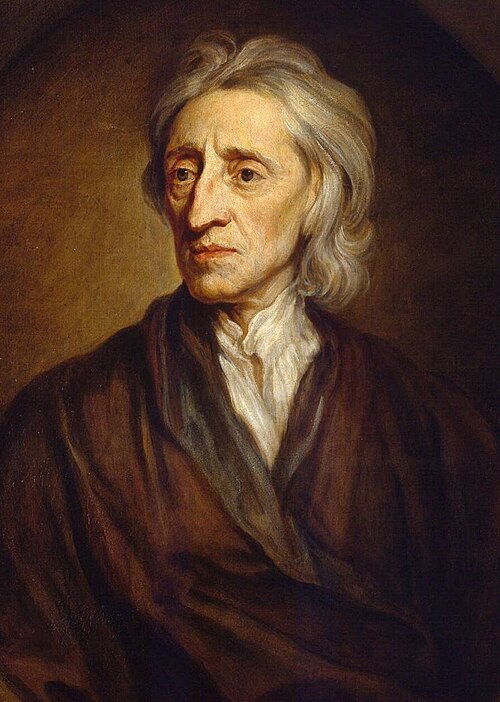
最も影響力のある啓蒙思想家の一人であるロック[56]は、社会契約理論に基づいて統治哲学を考案した。社会契約理論は啓蒙政治思想に浸透した主題である。イギリスの哲学者トーマス・ホッブスは、 1651年に著作『リヴァイアサン』でこの新しい議論の先駆けとなった。ホッブスは、ヨーロッパの自由主義思想の根本原理のいくつかを発展させた。個人の権利、すべての人の自然な平等、政治秩序の人工的な性格(これが後に市民社会と国家の区別につながった)、すべての正当な政治権力は「代表的」で人々の同意に基づくものでなければならないという見解、そして法律が明示的に禁止していないことはすべて人々に自由に行えるという法の自由主義的解釈である[57] 。
ロックとルソーは、それぞれ『統治二論』と『不平等論』で社会契約理論を展開した。ロック、ホッブズ、ルソーは、それぞれ全く異なる著作ではあるが、統治の権威が被統治者の同意にある社会契約[58]は、人間が市民社会で生きるために必要であるという点で一致している。ロックは、自然状態を、人間が理性的で自然法に従う状態、すなわちすべての人間が生まれながらにして平等で、生命、自由、財産の権利を持つ状態と定義している。しかし、一人の市民が自然法を破ると、違反者と被害者の両方が戦争状態に陥り、そこから抜け出すことは事実上不可能になる。したがって、ロックは、個人が市民社会に入るのは、「公平な裁判官」または裁判所などの共通の権威を通じて、自分たちの自然権を保護するためであると述べた。これとは対照的に、ルソーの考えは、「市民」は堕落しているが、「自然」には自分で満たせない欲求はないという仮定に依拠している。自然人は、私有財産に関連する不平等が確立されたときにのみ、自然状態から外されます。[59]ルソーは、人々は社会契約を通じて市民社会に参加し、個人の自由を維持しながら団結を達成すると述べました。これは、市民によって構成された道徳的かつ集団的な立法機関である一般意志の主権に具体化されています。[要出典]
ロックは、個人には「生命、自由、財産」の権利があるという主張と、財産に対する自然権は労働から生まれるという信念で知られている。ロックの指導を受けた第3代シャフツベリ伯爵アンソニー・アシュリー・クーパーは1706年に「特にイギリスとオランダという2つの自由国家に、世界中に広がる強力な光がある。ヨーロッパの情勢は今やこの2つの国にかかっている」と書いている。[60]ロックの自然権理論は、アメリカ独立宣言やフランス憲法制定国民議会の人間と市民の権利宣言など、多くの政治文書に影響を与えている。
一部の哲学者は、権利の契約的基盤の確立は、市場メカニズムと資本主義、科学的方法、宗教的寛容、そして民主的な手段による自治共和国への国家の組織化につながると主張した。この見解では、特に哲学者があらゆる問題に合理性を適用する傾向が本質的な変化であると考えられている。[61]
啓蒙主義の政治思想の多くは社会契約論者によって支配されていたが、ヒュームとファーガソンはこの陣営を批判した。ヒュームのエッセイ「原初契約について」は、同意から生まれた政府はめったに見られず、市民政府は支配者の習慣的な権威と力に基づいていると論じている。支配者が主体に対して権威を持っているからこそ、主体は暗黙のうちに同意するのであり、ヒュームは、主体は「自分たちの同意によって支配者が主権者になるとは決して想像しない」と述べ、むしろ権威がそうするのだとしている。[62]同様に、ファーガソンは市民が国家を築くのではなく、社会の発展から政治体制が生まれたと信じていた。1767年の著書「市民社会史に関するエッセイ」で、ファーガソンは当時スコットランドで人気があった進歩の4段階理論を用いて、人間が社会契約に同意することなく狩猟採集社会から商業社会および市民社会に進む仕組みを説明している。
ルソーとロックの社会契約論はどちらも自然権という前提に基づいています。自然権は法律や慣習の結果ではなく、政治以前の社会ですべての人が持つものであり、したがって普遍的で譲渡不可能なものです。最も有名な自然権の定式化は、自然状態を紹介したロックの第二論文に由来しています。ロックにとって、自然法は相互の安全保障、つまりすべての人は平等であり、同じ譲渡不可能な権利を持っているため、他人の自然権を侵害することはできないという考えに基づいています。これらの自然権には、完全な平等と自由、および生命と財産を保持する権利が含まれます。
ロックは、自由は絶対であり、誰もそれを奪うことはできないという理由で、自分自身を奴隷にすることは自然法に反するとして、年季奉公に反対している。ロックは、道徳的に非難されるべき行為であるため、人が他の人を奴隷にすることはできないと主張しているが、戦時中に合法的な捕虜を奴隷にすることは、その人の自然権に反するものではないと警告している。
啓蒙された絶対主義
啓蒙主義の指導者たちは特に民主的というわけではなく、知識人によって考案された改革を強制するための鍵として絶対君主を頼りにすることが多かった。ヴォルテールは民主主義を軽蔑し、絶対君主は啓蒙され、理性と正義に従って行動しなければならない、つまり「哲人王」でなければならないと述べた。[63]
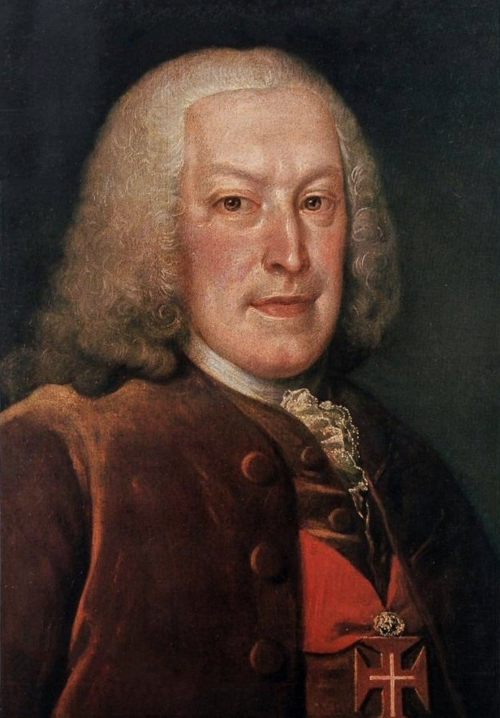
いくつかの国では、統治者たちが啓蒙主義の指導者たちを宮廷に迎え、典型的にはより強い国家を築くために、制度を改革するための法律や計画の立案に協力するよう依頼した。歴史家たちはこれらの統治者たちを「啓蒙独裁者」と呼んでいる。[64]彼らにはプロイセンのフリードリヒ大王、ロシアのエカチェリーナ2世、トスカーナのレオポルド2世、オーストリアのヨーゼフ2世などが含まれる。ヨーゼフは熱心すぎるあまり、支持の少ない改革を数多く発表したため反乱が起こり、彼の政権は失敗の喜劇となり、彼の計画のほとんどが覆された。[65]ポルトガルのポンバルやデンマークのヨハン・フリードリヒ・ストルーエンゼーといった高官たちも啓蒙主義の理想に従って統治した。ポーランドでは、1791年のモデル憲法が啓蒙主義の理想を表明したが、国家が近隣諸国に分割されるまでの1年間しか有効ではなかった。より持続したのは、ポーランドに国民主義精神を生み出した文化的成果であった。[66]

1740年から1786年までプロイセン王であったフリードリヒ大王は、啓蒙主義の指導者を自認し、ベルリンの宮廷で哲学者や科学者を庇護した。フランス政府によって投獄され虐待されていたヴォルテールは、フリードリヒ大王の宮殿に住むようという招待を喜んで受け入れた。フリードリヒ大王は次のように説明した。「私の主な仕事は、無知と偏見と戦うことです...心を啓蒙し、道徳を養い、人間の本性に合う限り、そして私が自由に使える手段が許す限り、人々を幸せにすることです。」[67]
アメリカ独立戦争とフランス革命
啓蒙主義は、1776年のアメリカ独立戦争[68]や1789年のフランス革命と頻繁に結び付けられてきたが、どちらもトーマス・ジェファーソンの知的影響を受けていた。 [69] [70]啓蒙主義の間に起こった政治的変化に関する1つの見解は、ロックが『統治二論』 (1689年)で述べた「統治される者の同意」の哲学が、「王権神授説」として知られる封建制下の古い統治パラダイムからのパラダイムシフトを表していたというものである。この見解では、この統治パラダイムシフトはしばしば平和的に解決することができず、その結果として暴力革命が起こったという事実が革命の原因であった。王が決して間違うことのない統治哲学は、市民が自然法によって政府の行為や判決に同意しなければならないという統治哲学と直接矛盾するであろう。
アレクシス・ド・トクヴィルは、フランス革命は18世紀に王政と啓蒙主義の文人の間に生じた急進的な対立の必然的な結果であると提唱した。これらの文人は、一種の「全権を持ちながら実権を持たない代理貴族」を構成していた。この幻想的な権力は、絶対主義的な中央集権化によって貴族とブルジョワジーが政治の領域から排除されたときに生まれた「世論」の台頭から生まれた。その結果生じた「文芸政治」は平等の言説を促進し、したがって王政体制と根本的に対立していた。[71]ド・トクヴィルは「権力の行使の形態の変化が文化的に及ぼす影響をはっきりと指摘している」[72]
宗教
キリスト教徒が互いに寛容であるべきであることを証明するのに、偉大な芸術や見事に訓練された雄弁さは必要ありません。しかし、私はさらに進んで、すべての人を兄弟とみなすべきだと言います。何ですか? トルコ人は私の兄弟ですか? 中国人は私の兄弟ですか? ユダヤ人は? シャム人は? はい、間違いなく、私たちは皆同じ父親の子供であり、同じ神の創造物ではないでしょうか?
ヴォルテール(1763)[73]

啓蒙時代の宗教評論は、ヨーロッパにおける前世紀の宗教紛争、特に三十年戦争への反応でした。[74]啓蒙時代の神学者たちは、神への真の信仰を維持しながら、信仰をその一般的に非対立的なルーツに改革し、宗教論争が政治や戦争に波及する可能性を制限したいと考えました。穏健派のキリスト教徒にとって、これは単純な聖書への回帰を意味しました。ロックは、神の言葉のみを「偏見のない検討」することを支持して、神学評論の集成を放棄しました。彼は、キリスト教の本質は救世主キリストへの信仰であると判断し、より詳細な議論を避けることを推奨しました。[75]イギリスの 自由思想家の一人であるアンソニー・コリンズは、「人間の証言に依拠する命題における理性の使用に関する論文」(1707年)を出版し、その中で「理性を超える」と「理性に反する」の区別を否定し、啓示は人間の自然な神観念に従うべきだと主張した。ジェファーソン聖書では、トーマス・ジェファーソンはさらに踏み込み、奇跡、天使の訪問、イエスの死後の復活に関する文章を削除し、新約聖書の実践的なキリスト教の道徳規範を抽出しようとした。[76]
啓蒙学者たちは、組織化された宗教の政治的権力を抑制し、それによって再び不寛容な宗教戦争の時代が来るのを防ごうとした。 [77]スピノザは、現代および歴史上の神学から政治を排除することを決意した(例えば、ユダヤ法を無視する)。[78] モーゼス・メンデルスゾーンは、いかなる組織化された宗教にも政治的影響力を与えないように助言し、代わりに各人が最も説得力のあると思うものに従うことを推奨した。[79]彼らは、本能的な道徳と神への信仰に基づく良い宗教は、理論的には信者の秩序を維持するために力を必要としないはずであると信じ、メンデルスゾーンとスピノザはどちらも、宗教をその神学の論理ではなく、道徳的な成果で判断した。[80]
啓蒙主義とともに、理神論や無神論の話など、宗教に関するいくつかの新しい考えが生まれました。トーマス・ペインによると、理神論とは、聖書やその他の奇跡的な情報源を参照せずに、創造主である神を単純に信じることです。代わりに、理神論者は自分の信条を導くために個人的な理性だけに頼り、[81]当時の多くの思想家が大いに同意しました。[82]無神論は盛んに議論されましたが、支持者はほとんどいませんでした。ウィルソンとライルは、「実際、啓蒙された知識人の中には、キリスト教を声高に批判していたときでさえ、真の無神論者はほとんどいませんでした。むしろ、彼らは正統派の信仰を批判し、懐疑論、理神論、生気論、あるいは汎神論に固執していました。」と述べています。 [83]ピエール・ベールに倣い、無神論者は確かに道徳的な人間である可能性があると主張する人もいました。[84]ヴォルテールのように、悪を罰する神を信じなければ、社会の道徳秩序が損なわれると考える人も多くいました。つまり、無神論者は最高権威や法律に身を委ねず、永遠の結末を恐れないので、社会を混乱させる可能性がはるかに高かった。[85]ベイルは、当時「賢明な人々は常に[宗教]の外見を維持する」と述べ、無神論者でさえ名誉の概念を持ち、自分の利己心を超えて社会を創造し、交流することができると信じていた。[86]ロックは、神も神の法も存在しない場合、結果は道徳的無政府状態になるだろうと述べた。すべての個人は「自分の意志以外の法はなく、自分自身以外の目的もない。彼は自分自身にとって神であり、自分の意志の満足が彼のすべての行動の唯一の基準と目的となるだろう。」[87]
政教分離
「急進的啓蒙主義」[88] [89] は、教会と国家を分離するという概念を推進したが、[90]この考えはロックの功績とされることが多い。[91]社会契約の原理によれば、ロックは、個人の良心の領域では政府に権威がなく、これは理性的な人々が政府や他の者に支配させるために政府に譲り渡すことができないものであると述べた。ロックにとって、これは良心の自由という自然権を生み出し、したがっていかなる政府権力からも保護されなければならないと彼は述べた。
宗教的寛容と個人の良心の重要性に関するこれらの見解は、社会契約とともに、特にアメリカ植民地と合衆国憲法の起草に影響を与えた。[92]コネチカット州ダンベリー・バプテスト協会への手紙の中で、トーマス・ジェファーソンは連邦レベルで「教会と国家の分離の壁」を求めている。彼は以前、バージニア州でイングランド国教会を廃止する取り組みを支持して成功を収めており[93]、バージニア州宗教の自由に関する法令を起草した。[94]ジェファーソンの政治的理想は、ロック、ベーコン、ニュートンの著作に大きく影響されており[95] 、彼は彼らを史上最も偉大な3人の人物とみなしていた。[96]
国による違い

啓蒙主義はヨーロッパのほとんどの国に定着し、多くの場合、特定の地域に重点を置きながら、世界中の国々に影響を与えた。たとえば、フランスでは反政府、反教会の急進主義と結び付けられたが、ドイツでは中流階級に深く浸透し、政府や国教会を脅かすことなく、精神主義的かつ国家主義的な調子を表現した。[97]政府の対応は大きく異なっていた。フランスでは、政府は敵対的で、哲学者たちは政府の検閲に抵抗し、時には投獄されたり、追放されたりした。イギリス政府は、イングランドとスコットランドの啓蒙主義指導者をほとんど無視したが、ニュートンにナイトの称号と非常に高給な政府職を与えた。
啓蒙思想をヨーロッパから得たほとんどの国に共通するテーマは、奴隷制に関する啓蒙思想を意図的に取り入れなかったことである。もともと啓蒙思想に深く影響を受けたフランス革命の際、「フランスの革命政府は奴隷制を非難したが、財産を所有する『革命家』たちは銀行口座のことを思い出した」[98] 。奴隷制は、ヨーロッパの植民地主義に関連する啓蒙思想の限界を頻繁に示した。ヨーロッパの多くの植民地は奴隷労働によって支えられたプランテーション経済で運営されていたからである。1791年、サン=ドマング植民地におけるフランスの植民地支配に対する解放奴隷による反乱であるハイチ革命が勃発した。ヨーロッパ諸国と米国は、啓蒙思想に対する強力な支持にもかかわらず、「サン=ドマングの反植民地闘争への[支援]」を拒否した[98] 。
イギリス
イングランド
イギリス啓蒙主義の存在そのものが、学者の間で激しく議論されてきた。イギリス史の教科書の大半は、イギリス啓蒙主義についてほとんど、あるいは全く触れていない。啓蒙主義全体に関する概説の中には、イギリスを含めているものもあれば、無視しているものもあるが、ジョセフ・アディソン、エドワード・ギボン、ジョン・ロック、アイザック・ニュートン、アレクサンダー・ポープ、ジョシュア・レイノルズ、ジョナサン・スウィフトなどの主要な知識人については取り上げている。[99]教会の制度や聖書の文字通りの信仰に反対する人々を表す用語である 自由思想は、遅くとも1713年にアンソニー・コリンズが「自由思想論」を執筆し、大きな人気を得た頃にはイギリスで始まったと言える。このエッセイは、すべての教会の聖職者を攻撃し、理神論を訴えるものだった。
ロイ・ポーターは、この無視の理由は、この運動が主にフランスに触発されたもので、大部分が非宗教的または反教権主義的であり、既存の秩序に公然と反抗するものであるという思い込みにあると論じている。[100]ポーターは、1720年代以降、イギリスにはディドロ、ヴォルテール、ルソーに匹敵する思想家がいると認めている。しかし、ギボン、 [101] エドマンド・バーク、サミュエル・ジョンソンなど、イギリスの指導的知識人は皆、かなり保守的で、既存の秩序を支持していた。ポーターは、その理由は、啓蒙主義がイギリスに早く到来し、成功したため、文化が政治的自由主義、哲学的経験主義、宗教的寛容を受け入れたためであり、大陸の知識人は、これらの立場を大きな困難と戦わなければならなかったと述べている。さらに、イギリスは大陸の集団主義を拒否し、啓蒙主義の主な目標として個人の向上を強調した。[102]
デレク・ハーストによると、1640年代と1650年代には、製造業の成長、金融および信用手段の精緻化、通信の商業化を特徴とする経済の復活が見られました。貴族階級は競馬やボーリングなどの余暇活動に時間を費やしました。高級文化における重要な革新には、音楽の大衆市場の発達、科学研究の促進、出版の拡大などがありました。新しく設立されたコーヒーハウスでは、すべてのトレンドが詳細に議論されました。[103] [104]
スコットランド
スコットランド啓蒙主義では、学校や大学で社交性、平等、有用性の原則が広められ、その多くは哲学と日常生活を融合させた洗練された教授法を用いていた。[105]スコットランドの主要都市は、学校、大学、読書会、図書館、定期刊行物、博物館、フリーメーソンのロッジなど、相互に支援し合う機関の知的インフラストラクチャを作り上げていた。 [106]スコットランドのネットワークは「主に自由主義的なカルヴァン主義、ニュートン主義、そして『デザイン』志向の性格を持ち、大西洋を越えた啓蒙主義のさらなる発展に大きな役割を果たした。」[107]フランスでは、ヴォルテールが「我々は文明に関するすべてのアイデアをスコットランドに求める」と述べた。[108]スコットランド啓蒙主義の焦点は、知的および経済的問題から、医師で化学者のウィリアム・カレン、農学者のジェームズ・アンダーソン、物理学者で化学者のジョセフ・ブラックなどの作品に見られるような特に科学的なものにまで及んだ。そして、最初の近代地質学者であるジェームズ・ハットン。[27] [109]
英米植民地
,_by_John_Trumbull.jpg/500px-Declaration_of_Independence_(1819),_by_John_Trumbull.jpg)
数人のアメリカ人、特にベンジャミン・フランクリンとトーマス・ジェファーソンは、新世界に啓蒙思想をもたらし、イギリスとフランスの思想家に影響を与える上で重要な役割を果たした。[110]フランクリンは、その政治活動と物理学の進歩で影響力があった。[111] [112]啓蒙時代の文化交流は、大西洋を挟んで双方向に行われた。ペイン、ロック、ルソーなどの思想家は皆、ネイティブアメリカンの文化的慣習を自然の自由の例としている。[113]アメリカ人は、イングランドとスコットランドの政治思想、そしてモンテスキューなどのフランスの思想家を密接に追随した。[114]彼らは理神論者であったため、ジョン・トーランドとマシュー・ティンダルの思想に影響を受けた。自由、共和主義、宗教的寛容が非常に重視された。君主制や世襲の政治権力に対する尊重はなかった。理神論者は予言、奇跡、聖書神学を否定することで科学と宗教を調和させた。代表的な理神論者には『理性の時代』のトーマス・ペインや超自然的側面をすべて排除した短い『ジェファーソン聖書』のトーマス・ジェファーソンがいる。[115]
ドイツの州
プロイセンは、啓蒙思想家が絶対君主に採用するよう促した政治改革を後押しする点で、ドイツ諸州の中で先頭に立った。バイエルン、ザクセン、ハノーファー、プファルツといった小国でも重要な動きがあった。いずれの場合も、啓蒙主義の価値観が受け入れられ、近代国家創設の基盤となる重要な政治・行政改革につながった。[116]たとえば、ザクセン諸侯は、財政、行政、司法、教育、文化、経済全般にわたる一連の抜本的な改革を実施した。この改革は、国の強力な都市構造と影響力のある商業グループに支えられ、1789年以前のザクセンを古典的な啓蒙主義の原則に沿って近代化した。[117] [118]

1750年以前、ドイツの上流階級は、フランス語が上流社会の言語であったため、知的、文化的、建築的なリーダーシップをフランスに求めていた。18世紀半ばまでに、啓蒙主義(アウフクレルング)は、音楽、哲学、科学、文学の分野でドイツの高級文化を変革した。クリスティアン・ヴォルフは、啓蒙主義をドイツの読者に解説し、ドイツ語を哲学的言語として正当化した作家の先駆者であった。[119]
ヨハン・ゴットフリート・フォン・ヘルダーは、プロトロマン主義のシュトゥルム・ウント・ドラング運動の指導者として、哲学と詩において新境地を開いた。ワイマール古典主義(Weimarer Klassik)は、ワイマールを拠点とした文化・文学運動で、ロマン主義、古典主義、啓蒙主義の思想を統合することで新しいヒューマニズムを確立しようとした。この運動(1772年から1805年)には、ヘルダーのほか、博学者のヨハン・ヴォルフガング・フォン・ゲーテ、詩人で歴史家のフリードリヒ・シラーが関わった。劇場長のアベル・ザイラーは、ドイツ演劇の発展に大きな影響を与え、本格的なドイツオペラ、新作や実験的な作品、そして国立劇場の構想を推進した。[120]ヘルダーは、あらゆる集団には独自のアイデンティティがあり、それが言語と文化に表れると主張した。シラーの戯曲は、社会的な圧力や運命の力に抗う主人公の闘いを描き、同世代の落ち着きのない精神を表現した。[121]
ドイツ音楽は上流階級の支援を受け、ヨハン・セバスチャン・バッハ、ヨーゼフ・ハイドン、ヴォルフガング・アマデウス・モーツァルトなどの作曲家のもとで成熟した。[122]
遠く離れたケーニヒスベルクで、カントは合理主義と宗教的信仰、個人の自由、そして政治的権威を調和させようとした。カントの著作には、20世紀に入ってもドイツ思想、そしてヨーロッパ哲学全体を形作り続けることになる基本的な緊張関係が含まれていた。[123]ドイツ啓蒙主義は、王子、貴族、中産階級の支持を得て、文化を永久に作り変えた。[124]しかし、行き過ぎを戒める保守主義がエリート層に存在した。[125]
1788年、プロイセンは「宗教に関する勅令」を発布し、聖三位一体や聖書に対する一般の信仰を揺るがす説教を禁じた。その目的は、国内の平穏を脅かす神学上の論争を避けることだった。啓蒙主義の価値を疑う人々はこの措置を支持したが、多くの支持者も同様だった。ドイツの大学は、論争を呼ぶ問題について大学内で議論できる閉鎖的なエリート層を作り上げていたが、それを一般大衆に広めるのはリスクが大きすぎるとみなされていた。この知的エリート層は国家に支持されていたが、啓蒙主義のプロセスが政治的または社会的に不安定化をもたらすことが判明すれば、その傾向は逆転するかもしれない。[126]
ハプスブルク家
いくつかの分野で啓蒙主義の影響を受けたとされる最初のハプスブルク家の君主マリア・テレジアの治世は、啓蒙主義と保守主義の混合で特徴づけられた。彼女の息子ヨーゼフ2世の短い治世は、この対立で特徴づけられ、彼のヨーゼフ主義の思想は反対に直面した。ヨーゼフ2世は啓蒙主義の精神で多くの改革を実行し、例えば学校制度、修道院、法制度に影響を与えた。死刑に早くから反対していたレオポルド2世皇帝の統治は、短く論争の多い統治であり、そのほとんどはフランスとの関係によって特徴づけられた。同様に、フランツ2世皇帝の統治も、主にフランスとの関係によって特徴づけられた。
啓蒙主義の思想は文学や演劇にも現れています。ヨーゼフ・フォン・ゾンネンフェルスは重要な代表者でした。音楽では、ヨーゼフ・ハイドンやヴォルフガング・アマデウス・モーツァルトなどのオーストリアの音楽家が啓蒙主義と関係していました。
イタリア
_Monumento_a_Cesare_Beccaria,_1837,_Milano.jpg/500px-Pompeo_Marchesi_(1783.1858)_Monumento_a_Cesare_Beccaria,_1837,_Milano.jpg)
イタリアでは啓蒙思想の普及の中心地はナポリとミラノであった。[127]両都市で知識人が公職に就き、ブルボン家やハプスブルク家の政権と協力した。ナポリでは、アントニオ・ジェノヴェージ、フェルディナンド・ガリアーニ、ガエターノ・フィランジェリが寛容なブルボン王カール1世の下で活躍した。しかし、ナポリ啓蒙思想はヴィーコの哲学と同様、ほとんど常に理論の領域にとどまっていた。[128]後になって、多くの啓蒙主義者がパルテノペス共和国の不幸な経験を活気づけた。しかし、ミラノでは、運動は問題に対する具体的な解決策を見つけようと努めた。議論の中心となったのは、ピエトロとアレッサンドロの兄弟(有名な哲学者、作家、および兄弟のジョヴァンニ)が創刊した雑誌『イル・カフェ』(1762年 - 1766年)であり、1761年に創刊されたアカデミア・デイ・プーニの創始者でもある。マイナーな中心地はトスカーナ、ヴェネト、ピエモンテで、ポンペオ・ネーリなどが活動していた。
ジェノヴェージはナポリ出身で、南イタリアの知識人や大学生の世代に影響を与えた。彼の教科書『Della diceosina, o sia della Filosofia del Giusto e dell'Onesto』(1766年)は、道徳哲学の歴史と18世紀の商業社会が直面した特定の問題の間を仲介しようとする物議を醸す試みであった。この本にはジェノヴェージの政治、哲学、経済思想の大部分が含まれており、ナポリの経済と社会の発展のガイドブックとなった。[129]
アレッサンドロ・ボルタとルイージ・ガルヴァーニが電気に関する画期的な発見をしたことで、科学は繁栄した。ピエトロ・ヴェッリはロンバルディアの代表的な経済学者だった。歴史家ジョセフ・シュンペーターは、ヴェッリを「スミス以前の最も重要な安かろう悪かろうの権威」と評している。 [130]イタリア啓蒙主義に関する最も影響力のある学者はフランコ・ヴェントゥーリである。[131] [132]イタリアはまた、ベッカリア、ジャンバッティスタ・ヴィーコ、フランチェスコ・マリオ・パガーノなど、啓蒙主義の最も偉大な法理論家を輩出した。
ブルボン朝スペインとスペイン領アメリカ

スペイン・ハプスブルク家の最後の君主であるカルロス2世が死去すると、フランスのブルボン家出身者が後継者となり、スペインとスペイン帝国におけるフランス啓蒙主義の影響の時代が始まった。[133] [134]
18世紀、スペインはカリフォルニアのスペイン伝道所を通じてアメリカ大陸での帝国を拡大し続け、南アメリカの内陸部に伝道所を設立した。カルロス3世の治世下、国王は重大な構造改革を実施し始めた。王政はカトリック教会の権力を制限し、スペイン領アメリカに常備軍を設置した。地域は制限的な商業システムではなく、他のスペインの港から出航する商人とも取引できる自由貿易の下で、より自由な貿易が促進された。国王は、スペインが領有権を主張しながらも支配していない領土に対するスペインの主権を主張するためだけでなく、その広大な帝国の経済的可能性を発見するためにも科学探検隊を派遣した。植物学探検隊は、帝国に役立つ植物を探した。[135] カルロス4世は、通常外国人には閉ざされているスペイン領アメリカへのプロイセンの科学者アレクサンダー・フォン・フンボルトの自由な旅行と、さらに重要なことに、科学探検の成功を助けるために国王の役人との接触を許可した。[136]
1808年にナポレオンがスペインに侵攻すると、フェルナンド7世は退位し、ナポレオンは弟のジョゼフ・ボナパルトを王位に就けた。この動きに正当性を与えるため、スペインの海外勢力からの代表を含んだバイヨンヌ憲法が公布されたが、大半のスペイン人はナポレオンの計画全体を拒否した。国民的抵抗戦争が勃発した。正当な君主フェルナンドの不在を受けてスペインを統治するため、コルテス・デ・カディス(議会)が招集された。議会は新たな統治文書である1812年憲法を作成し、行政、立法、司法の3部門を定め、立憲君主制を創設することで国王に制限を設け、アフリカ系でないスペイン帝国の市民を定義し、男子普通選挙を確立し、小学校から大学までの公教育と表現の自由を確立した。この憲法は1812年から1814年まで有効であったが、ナポレオンが敗北し、フェルディナンドがスペイン王位に復帰した。フェルディナンドは帰国後、この憲法を否定し、絶対主義的な統治を再開した。[137]
ハイチ
ハイチ革命は1791年に始まり1804年に終了したが、啓蒙思想が「複雑な異文化の流れの一部であった」ことを示している。[2]フランス革命中および革命後のパリの急進的な思想は、トゥーサン・ルーヴェルチュールなどによってハイチで動員された。[2]トゥーサンは、ギヨーム・トマ・フランソワ・レイナルの著書『二インドの歴史』でヨーロッパの植民地主義批判を読んでおり、「レイナルが『黒いスパルタクス』の到来を予言したことに特に感銘を受けた」[2]
革命は啓蒙思想とハイチの奴隷たちの経験を組み合わせたもので、奴隷たちの3分の2はアフリカ生まれで、「西アフリカと中央アフリカの王国と公正な政府という特定の概念を取り入れ、革命的なコミュニティの形成にブードゥー教などの宗教的慣習を採用することができた」 [2] 。革命はフランスにも影響を及ぼし、「1794年にフランス国民公会に奴隷制廃止を強いた」[2]。
ポルトガルとブラジル
ポルトガル啓蒙主義 (イルミニズモ) は、1756年から1777年にかけてジョゼフ1世の下で宰相ポンバル侯爵が統治したことで顕著に表れた。リスボンの大部分を破壊した1755年のリスボン地震の後、ポンバル侯爵は重要な経済政策を実施し、商業活動 (特にブラジルやイギリスとの取引) を規制し、国全体で品質を標準化した (たとえば、ポルトガル初の統合産業の導入)。彼がリスボンの川沿いの地区を直線と直交する通り (リスボン・バイシャ) で再建し、商業と交換を促進するために系統的に組織化した (たとえば、各通りに異なる製品やサービスを割り当てる) ことは、啓蒙主義の考えを統治と都市計画に直接適用したものと見ることができる。彼の都市計画のアイデアは、地震工学の最初の大規模な例でもあり、総称してポンバル様式として知られるようになり、彼が在任中に王国全土で実施された。彼の統治は啓蒙的であると同時に冷酷でもあった。例えばターヴォラ事件を見ればそれがわかる。
文学において、ポルトガルにおける最初の啓蒙思想は、外交官、哲学者、作家のアントニオ・ヴィエイラ[138]に遡ることができます。彼は人生のかなりの時間を植民地ブラジルで過ごし、ブラジルの新キリスト教徒と先住民に対する差別を非難しました。18世紀には、アルカディア・ルシタナ(1756年から1776年まで続き、その後1790年から1794年までノヴァ・アルカディアに取って代わられました)などの啓蒙文学運動が学術界で表面化し、特にコインブラ大学の卒業生が参加しました。このグループの代表的なメンバーは詩人のマヌエル・マリア・バルボサ・デュ・ボカージュです。医師のアントニオ・ヌネス・リベイロ・サンチェスも啓蒙主義の重要な人物で、百科全書に寄稿し、ロシア宮廷の一員でもありました。啓蒙思想は、ホセ・デ・アゼレド・コウチーニョ、ホセ・ダ・シルバ・リスボア、クラウディオ・マノエル・ダ・コスタ、トマス・アントニオ・ゴンザーガなど、ポルトガル帝国中のさまざまな経済学者や反植民地知識人に影響を与えた。
ナポレオンのポルトガル侵攻は、ポルトガル王政に影響を及ぼした。イギリス海軍の援助により、ポルトガル王室は最も重要な植民地であるブラジルに避難した。ナポレオンは敗れたものの、王室はブラジルに残った。1820年の自由主義革命により、王室はポルトガルに帰還せざるを得なくなった。復位した国王は、ポルトガル憲法に基づく立憲君主制のもとで統治することとなった。ブラジルは1822年にポルトガルからの独立を宣言し、君主制となった。
ロシア
.jpg/500px-Elizabeth_of_Russia_visiting_Lomonosov's_mosaic_workshop_by_A.V.Makovskiy_(priv.coll.).jpg)
ロシアでは、18世紀半ばに政府が芸術と科学の普及を積極的に奨励し始めた。この時代に、ロシア初の大学、図書館、劇場、公立博物館、独立系出版局が誕生した。他の啓蒙専制君主たちと同様、エカチェリーナ2世も芸術、科学、教育の育成に重要な役割を果たした。彼女は啓蒙主義の理想を独自に解釈し、ヴォルテール(通信による)などの著名な国際的専門家や、レオンハルト・オイラーやピーター・シモン・パラスなどの世界クラスの科学者の支援を受けた。国家啓蒙主義は、ロシア生活のあらゆる側面のさらなる近代化を推進し、ロシアの農奴制度を打破することに関心があった点で、西ヨーロッパの啓蒙主義とは異なっていた。ロシア啓蒙主義は、社会啓蒙ではなく個人に焦点を当て、啓蒙された生活を送ることを奨励した。[139] [140]宗教的な敬虔さと博識、学問の普及への献身を組み合わせたプロスヴェシチェニエは強力な要素であったが、西ヨーロッパ啓蒙主義のような懐疑的で批判的な精神は欠けていた。[141]
ポーランドとリトアニア

啓蒙思想 (オシフィエツェニエ) はポーランドで後期に出現したが、これはポーランドの中産階級が弱体化し、シュラフタ(貴族) 文化 (サルマティア) がポーランド・リトアニア共和国の政治体制 (黄金の自由)とともに深刻な危機に陥っていたためである。この政治体制は貴族共和主義に基づいていたが、強力な隣国であるロシア、プロイセン、オーストリアが繰り返し地域を切り離したため、独立したポーランドは何も残らなかったため、自国を守ることはできなかった。ポーランド啓蒙主義は1730年代から1740年代に始まり、特に演劇と芸術においてスタニスワフ・アウグスト・ポニャトフスキ王の治世(18世紀後半) にピークに達した。
ワルシャワは1750年以降、学校や教育機関の拡大と王宮での芸術支援により主要な中心地となった。[142]指導者たちは寛容と教育の促進に努めた。彼らにはスタニスワフ2世アウグストや改革者のピョートル・スフィトコフスキ、アントニ・ポプラフスキ、ヨゼフ・ニエムツェヴィチ、ヨゼフ・パヴリンコフスキ、ポーランド化した劇作家のボードワン・ド・コルトナイなどがいた。反対者にはフロリアン・ヤロシェヴィチ、グラツィアン・ピオトロフスキ、カロル・ヴィルヴィチ、ヴォイチェフ・スカルシェフスキがいた。[143]この運動は第三次ポーランド分割(1795年)で衰退し、 1822年に終了し、ロマン主義に取って代わられた。[144]
中国
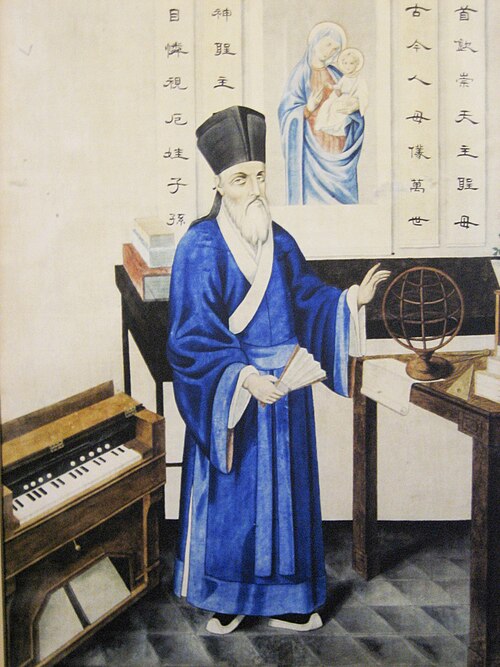
18世紀の中国では、「ヨーロッパの啓蒙主義の時代に広まり始めた幻滅感と似て、龍や奇跡が減る傾向が見られた」[2] 。さらに、「ヨーロッパの啓蒙主義と関連づけられる発展のいくつかは、中国での出来事と驚くほど似ている」[2]。この時期、中国社会の理想は「清朝の康熙帝と乾隆帝の治世に反映され、中国は啓蒙された実力主義社会の具現化として位置づけられ、ヨーロッパの絶対主義的統治に対する批判の道具とされた」 [2] 。
日本
1641年から1853年まで、日本の徳川幕府は「会禁」と呼ばれる政策を施行した。この政策は、ほとんどの外国との外国との接触を禁止した。[145] ロバート・ベラは、 「近代日本の起源は、マックス・ウェーバーが西洋資本主義の原動力として指摘した『プロテスタント倫理の機能的類似物』である儒教思想の特定の流れにある」と考えた。 [2]日本の儒教と啓蒙思想は、例えば1870年代の日本の改革者津田真道の著作の中で融合した。彼は「我々が口を開くときはいつでも、それは『啓蒙』について語るためである」と述べた。 [2]
日本や東アジアの多くの国では、儒教の思想は置き換えられなかったが、「啓蒙主義に関連する思想は、既存の宇宙論と融合し、世界的な相互作用の条件下で作り直された」[2] 。特に日本では、 「人間社会の秩序と調和」という儒教の思想である「理」という用語は、「自由放任主義の思想と市場取引の合理性」も表すようになった[2]。 1880年代までに、「文明開化」というスローガンは日本、中国、韓国全土で影響力を持ち、グローバリゼーションの課題に対処するために採用された[2]。
韓国
この時期、韓国は「孤立を目指し」ており、「隠遁国家」として知られていましたが、1890年代には独立クラブの活動などを通じて啓蒙思想に目覚めました。[2]韓国は中国と日本の影響を受けましたが、韓国全土で啓蒙という言葉を広めた韓国の知識人、柳吉春とともに独自の啓蒙の道も見つけました。[2]啓蒙思想の使用は「1890年代の韓国の特定の状況への反応であり、ヴォルテールへの遅れた回答ではありませんでした。」[2]
インド
18世紀のインドでは、ティプー・スルタンは啓蒙主義の君主であり、「セリンガパタムの(フランスの)ジャコバン派クラブの創立メンバーの一人で、自由の木を植え、ティプー市民を意味する『ティプー・シトイエン』と呼ばれることを求めた」。[2]インドの一部では、「ベンガル・ルネッサンス」と呼ばれる重要な運動が、1820年代に啓蒙主義改革につながった。[2]ラム・モハン・ロイは「社会改革のプロジェクトでさまざまな伝統を融合させ、『理性の宗教』の提唱者となった」改革者だった。[2]
エジプト

18世紀のエジプトでは「ナポレオンのエジプト遠征よりずっと前から、イスラムに端を発した近代化という、ある種の『文化復興』が進行していた」[2] 。 ナポレオンのエジプト遠征は「イスラム内部の改革に関する議論を思い起こさせる社会変革を促したが、啓蒙主義の権威に言及することで正当化された」[2]。イスラム近代主義とエジプトにおける啓蒙主義の拡大に多大な知的影響を与えたリファ・アル・タフタウィーは「アラビア語で数百ものヨーロッパの著作の出版を監督した」[2] 。
オスマン帝国
啓蒙主義は1830年代にオスマン帝国に影響を及ぼし始め、19世紀後半まで続いた。 [2] タンジマートはオスマン帝国における改革の時代であり、1839年のギュルハネ・ハット・シェリフで始まり、1876年の第1回立憲政体で終わった。
政治活動家で青年オスマン人の一員であったナミック・ケマルは、主要な啓蒙思想家や「社会と政治の改革を追求する中で、さまざまな知的資源」を活用した。[2] 1893年、ケマルはイスラム教を非難したエルネスト・ルナンに対し、独自の啓蒙主義で応えた。それは「18世紀のフランスの議論の粗悪なコピーではなく、19世紀後半のオスマン社会の緊急性に応える独自の立場であった」[2]
歴史学
啓蒙主義の思想は常に論争の的となってきた。キース・トーマスによれば、啓蒙主義の支持者は「啓蒙主義を現代世界の進歩的なすべての源泉として歓迎する。彼らにとって啓蒙主義は、思想の自由、理性的な探究、批判的思考、宗教的寛容、政治的自由、科学的業績、幸福の追求、そして未来への希望を意味する」[146]。トーマスは、啓蒙主義を批判する人々は啓蒙主義を浅薄な合理主義、素朴な楽観主義、非現実的な普遍主義、そして道徳的暗黒であると非難すると付け加えている。当初から、伝統的宗教の保守派および聖職者たちは、唯物論と懐疑論を不道徳を助長する邪悪な力として攻撃した。1794年までに、彼らはフランス革命中の恐怖政治を彼らの予測の裏付けとして指摘した。
ロマン主義の哲学者たちは、啓蒙主義が理性に過度に依存したことは誤りであり、社会をまとめるのに必要な歴史、神話、信仰、伝統の絆を無視して継続したと主張した。[147] リッチー・ロバートソンは、啓蒙主義をニュートンの強力な物理法則をモデルにした社会の「科学」を提供する壮大な知的かつ政治的プログラムとして描写している。「社会科学」は人類の向上の手段と見なされていた。それは真実を明らかにし、人類の幸福を拡大するだろう。[148]
意味
「啓蒙主義」という用語は、19世紀後半に英語で登場し、[149]特にフランス哲学に関連して、フランス語の「Lumières」 (1733年にジャン=バティスト・デュボスが初めて使用し、1751年にはすでに定着していた)に相当するものであった。カントの1784年のエッセイ「問いに対する回答:啓蒙主義とは何か? 」から、ドイツ語の用語はAufklärun g(aufklären = 照らす、sich aufklären = 明らかにする)となった。しかし、学者たちは啓蒙主義の定義やその年代順や地理的範囲について合意に至っていない。les Lumières(フランス語)、illuminism o(イタリア語)、ilustración(スペイン語)、Aufklärung (ドイツ語)などの用語は、部分的に重複する運動を指していました。19世紀後半になってようやく、イギリスの学者たちは「啓蒙主義」について語っていることに同意しました。[147] [150]

啓蒙主義の歴史学は、啓蒙主義者が自らの業績について語ったことから、啓蒙主義の時代そのものから始まった。支配的な要素は、彼らが取った知的な視点であった。ジャン・ル・ロン・ダランベールの『百科全書予備論』は、啓蒙主義の歴史を記しており、百科全書が頂点を成す知識の領域における発展を年代順に列挙している。[151] 1783年、メンデルスゾーンは啓蒙主義を、人間が理性の使い方を教育される過程と呼んだ。[152]カントは啓蒙主義を「自ら招いた指導からの人間の解放」と呼び、指導とは「他人からの指示なしに自分の理解を活用できないこと」である。[153]「カントにとって、啓蒙主義は人類の最終的な成熟であり、人間の意識が未熟な無知の状態から解放されることであった。」[154]ドイツの学者エルンスト・カッシーラーは啓蒙主義を「近代哲学思想が特徴的な自信と自意識を獲得した知的発展全体の一部であり特別な段階」と呼んだ。[155]歴史家ロイ・ポーターによると、独断的な無知の状態からの人間の精神の解放は、啓蒙時代が捉えようとしていたものの典型である。[156]
バートランド・ラッセルは啓蒙主義を古代に始まった進歩的発展の一段階とみなし、理性と既成秩序への挑戦は当時を通して変わらぬ理想であったとした。[157]ラッセルは、啓蒙主義は究極的にはカトリックの対抗宗教改革に対するプロテスタントの反応から生まれたものであり、君主制に対する民主主義への親和性などの哲学的見解は、カトリック教会からの離脱を正当化するために16世紀のプロテスタントの間で生まれたものだと述べた。これらの哲学的理想の多くはカトリック教徒に取り入れられたが、ラッセルは18世紀までに啓蒙主義はマルティン・ルターに始まった分裂の主な現れであったと主張する。[157]
ジョナサン・イスラエルは、ポストモダンやマルクス主義の歴史家が、この時代の革命的な思想を単に社会経済的変革の副産物として理解しようとする試みを否定している。[158]彼は代わりに、1650年から18世紀末までの思想史に焦点を当て、18世紀後半から19世紀初頭の革命へと最終的につながった変化を引き起こしたのは思想そのものであったと主張している。[159]イスラエルは、1650年代まで西洋文明は「信仰、伝統、権威という、ほぼ共有された中核に基づいていた」と主張している。[160]
期間
啓蒙時代の正確な始まりについてはほとんど合意がないが、多くの歴史家や哲学者は、啓蒙時代はデカルトの1637年の哲学「我思う、故に我あり」によって特徴づけられ、認識論的基盤が外部権威から内部確実性へと移行したと主張している。[161] [162] [163]フランスでは、多くの人がニュートンの『原理』 (1687)の出版を引用した。 [164]これは、以前の科学者の研究を基にして、運動の法則と万有引力の法則を定式化した。[165]フランスの歴史家は通常、シエクル・デ・リュミエール(啓蒙の世紀) を1715年から1789年の間、つまりルイ15世の治世の始まりからフランス革命までとしている。 [ 166]ほとんどの学者は、啓蒙主義の終焉を定めるのに都合の良い時点として、 20世紀の最後の年を採用しており、フランス革命やナポレオン戦争の始まり(1804年)を選ぶことが多い。 [167]
近年、学者たちは啓蒙主義の期間と世界的視点を拡大し、(1)ヨーロッパの知識人が単独で活動したのではなく、他の人々が啓蒙主義の考えを広め、適応させたこと、(2)啓蒙主義の考えが「国境を越えた交流と世界的統合への反応」であったこと、(3)啓蒙主義が「19世紀を通じて、そしてそれ以降も続いたこと」を検証している。[2]啓蒙主義は「単なる普及の歴史ではなく」、世界中の歴史上の人物がそれぞれの特定の目的のためにその言葉を使った仕事であった。[2]
現代研究
1947 年の著書『啓蒙の弁証法』の中で、 フランクフルト学派の哲学者マックス・ホルクハイマーとテオドール・W・アドルノは次のように主張しています。
啓蒙は、最も広い意味では思想の進歩として理解され、常に人間を恐怖から解放し、支配者として据えることを目指してきました。しかし、完全に啓蒙された地球は、災害の勝利の兆しの下で輝いています。[168]
ホルクハイマーとアドルノの議論を拡張して、思想史家ジェイソン・ジョセフソン・ストームは、啓蒙時代を初期のルネサンスやその後のロマン主義や反啓蒙主義とは別の明確に定義された時代とする考えは神話であると主張する。ストームは、啓蒙時代の時代区分は国、研究分野、思想の流派によって大きく異なり、相互に矛盾していること、科学革命を指す「啓蒙」という用語とカテゴリーは実際には事後的に適用されたこと、啓蒙時代には幻滅感の増加や機械論的世界観の優位性は見られなかったこと、人文科学と自然科学の近代初期の考え方が曖昧であったため、科学革命を限定することが困難であることを指摘している。[169]ストームは、啓蒙主義を「神話」と分類したことを擁護し、啓蒙主義と魔法の消失の時代の思想が現代の西洋文化において規制的な役割を果たしており、魔法、心霊術、さらには宗教への信仰が知識層ではタブー視されていると指摘している。[170]
1970年代には、啓蒙主義の研究は、啓蒙主義の思想がヨーロッパの植民地にどのように広まったか、植民地が先住民の文化とどのように関わり合ったか、そしてイタリア、ギリシャ、バルカン半島、ポーランド、ハンガリー、ロシアなど、これまで研究されていなかった地域で啓蒙主義がどのように起こったかを含むように拡大しました。 [171]ロバート・ダーントンやユルゲン・ハーバーマスなどの知識人は、啓蒙主義の社会的状況に焦点を当ててきました。ハーバーマスは、18世紀ヨーロッパで「ブルジョア公共圏」が創設され、合理的な交換を可能にする新しい場所とコミュニケーションのモードが含まれていたと述べました。ハーバーマスは、公共圏はブルジョア的で平等主義的で合理的であり、国家から独立しているため、知識人が既存の権威の干渉から離れて現代の政治と社会を批判的に検討するための理想的な場所であると述べました。公共圏は一般に啓蒙主義の社会研究の不可欠な要素であるが、他の歴史家[注2]は公共圏がこれらの特徴を持っていたかどうか疑問視している。
社会と文化

啓蒙主義の知的歴史学的なアプローチは、17 世紀から 18 世紀のヨーロッパの文脈における知的思想のさまざまな潮流や言説を調査しますが、文化的 (または社会的) アプローチは、ヨーロッパの社会と文化に生じた変化を調査します。このアプローチは、啓蒙主義の時代における社会性と文化的慣習の変化のプロセスを研究します。
啓蒙文化の主要要素の 1 つは、17 世紀後半から18 世紀にかけての「新しい議論の場、よりオープンでアクセスしやすい都市の公共空間と社交性、印刷文化の爆発的な増加を特徴とするコミュニケーション領域」である公共圏の台頭でした。[172]公共圏の要素には、平等主義であること、「共通の関心」の領域について議論していること、議論が理性に基づいていることなどがありました。[173]ハーバーマスは、「共通の関心」という用語を、以前は国家と宗教当局の独占領域であったが、現在は公共圏による批判的な検討に開かれている政治的/社会的知識と議論の領域を説明するために使用しています。このブルジョア公共圏の価値観には、理性を至上とみなすこと、あらゆるものが批判に開かれていると考えること (公共圏は批判的である)、あらゆる種類の秘密主義に反対することなどが含まれていました。[174]

公共圏の創設は、2つの長期的な歴史的潮流、すなわち近代国民国家の台頭と資本主義の台頭と関連づけられてきた。近代国民国家は、公権力の強化によって、国家から独立した社会の私的領域を対位的に創出し、公共圏の成立を可能にした。資本主義はまた、社会の自律性と自己認識を高め、情報交換の必要性を増大させた。初期の公共圏が拡大するにつれ、多種多様な機関が包摂されるようになり、最もよく挙げられるのは、コーヒーハウスやカフェ、サロン、そして文学の公共圏であり、比喩的に言えば文芸共和国にローカライズされた。[176]フランスでは、貴族が1720年頃に王宮のヴェルサイユからパリに移ったことが公共圏の創設を後押しした。貴族の豪勢な支出がぜいたく品や芸術作品、特に高級絵画の取引を刺激したからである。[177]
公共圏の台頭の背景は、産業革命によく関連する経済的、社会的変化であった。「前世紀の停滞と比較すると、経済の拡大、都市化の進行、人口の増加、通信の改善」[178]生産技術と通信の効率化により、消費財の価格が下がり、消費者が利用できる商品の量と種類が増えた(公共圏に不可欠な文学を含む)。一方、植民地時代の経験(18世紀にはほとんどのヨーロッパ諸国が植民地帝国を持っていた)により、ヨーロッパ社会は極めて異質な文化にさらされるようになり、「文化システム、宗教的分裂、性差、地理的領域間の障壁」が崩壊した[179] 。
「公共」という言葉は、最高レベルの包括性を意味する。つまり、公共領域は定義上、すべての人に開かれているべきである。しかし、この領域は相対的な程度でしか公共ではなかった。啓蒙思想家たちは、しばしば「公共」の概念を人民の概念と対比した。コンドルセは「意見」を民衆と対比し、マルモンテルは「文人の意見」を「大衆の意見」と対比し、ダランベールは「真に啓蒙された大衆」を「盲目で騒々しい大衆」と対比した。[180]さらに、公共領域のほとんどの機関は、女性と下層階級の両方を排除していた。[181]貴族と下層階級がコーヒーハウスやフリーメーソンのロッジなどの分野に参加することで、階級を超えた影響が生じた。
芸術への影響
Because of the focus on reason over superstition, the Enlightenment cultivated the arts.[182] Emphasis on learning, art, and music became more widespread, especially with the growing middle class. Areas of study such as literature, philosophy, science, and the fine arts increasingly explored subject matter to which the general public, in addition to the previously more segregated professionals and patrons, could relate.[183]

As musicians depended more on public support, public concerts became increasingly popular and helped supplement performers' and composers' incomes. The concerts also helped them to reach a wider audience. Handel, for example, epitomized this with his highly public musical activities in London. He gained considerable fame there with performances of his operas and oratorios. The music of Haydn and Mozart, with their Viennese Classical styles, are usually regarded as being the most in line with the Enlightenment ideals.[184]
The desire to explore, record, and systematize knowledge had a meaningful impact on music publications. Rousseau's Dictionnaire de musique (published 1767 in Geneva and 1768 in Paris) was a leading text in the late 18th century.[184] This widely available dictionary gave short definitions of words like genius and taste and was clearly influenced by the Enlightenment movement. Another text influenced by Enlightenment values was Charles Burney's A General History of Music: From the Earliest Ages to the Present Period (1776), which was a historical survey and an attempt to rationalize elements in music systematically over time.[185] Recently, musicologists have shown renewed interest in the ideas and consequences of the Enlightenment. For example, Rose Rosengard Subotnik's Deconstructive Variations (subtitled Music and Reason in Western Society) compares Mozart's Die Zauberflöte (1791) using the Enlightenment and Romantic perspectives and concludes that the work is "an ideal musical representation of the Enlightenment."[185]
As the economy and the middle class expanded, there was an increasing number of amateur musicians. One manifestation of this involved women, who became more involved with music on a social level. Women were already engaged in professional roles as singers and increased their presence in the amateur performers' scene, especially with keyboard music.[186] Music publishers began to print music that amateurs could understand and play. The majority of the works that were published were for keyboard, voice and keyboard, and chamber ensemble.[186] After these initial genres were popularized, from the mid-century on, amateur groups sang choral music, which then became a new trend for publishers to capitalize on. The increasing study of the fine arts, as well as access to amateur-friendly published works, led to more people becoming interested in reading and discussing music. Music magazines, reviews, and critical works which suited amateurs as well as connoisseurs began to surface.[186]
Dissemination of ideas
The philosophes spent a great deal of energy disseminating their ideas among educated men and women in cosmopolitan cities. They used many venues, some of them quite new.

Republic of Letters
The term "Republic of Letters" was coined in 1664 by Pierre Bayle in his journal Nouvelles de la Republique des Lettres. Towards the end of the 18th century, the editor of Histoire de la République des Lettres en France, a literary survey, described the Republic of Letters as being:
In the midst of all the governments that decide the fate of men; in the bosom of so many states, the majority of them despotic ... there exists a certain realm which holds sway only over the mind ... that we honor with the name Republic, because it preserves a measure of independence, and because it is almost its essence to be free. It is the realm of talent and of thought.[187]
The Republic of Letters was the sum of a number of Enlightenment ideals: an egalitarian realm governed by knowledge that could act across political boundaries and rival state power.[187] It was a forum that supported "free public examination of questions regarding religion or legislation."[188] Kant considered written communication essential to his conception of the public sphere; once everyone was a part of the "reading public," then society could be said to be enlightened.[189] The people who participated in the Republic of Letters, such as Diderot and Voltaire, are frequently known today as important Enlightenment figures. Indeed, the men who wrote Diderot's Encyclopédie arguably formed a microcosm of the larger "republic."[190]
Many women played an essential part in the French Enlightenment because of the role they played as salonnières in Parisian salons, as the contrast to the male philosophes. The salon was the principal social institution of the republic[191] and "became the civil working spaces of the project of Enlightenment." Women, as salonnières, were "the legitimate governors of [the] potentially unruly discourse" that took place within.[192] While women were marginalized in the public culture of the Old Regime, the French Revolution destroyed the old cultural and economic restraints of patronage and corporatism (guilds), opening French society to female participation, particularly in the literary sphere.[193]
In France, the established men of letters (gens de lettres) had fused with the elites (les grands) of French society by the mid-18th century. This led to the creation of an oppositional literary sphere, Grub Street, the domain of a "multitude of versifiers and would-be authors."[194] These men came to London to become authors only to discover that the literary market could not support large numbers of writers, who in any case were very poorly remunerated by the publishing-bookselling guilds.[195]
The writers of Grub Street, the Grub Street Hacks, were left feeling bitter about the relative success of the men of letters[196] and found an outlet for their literature which was typified by the libelle. Written mostly in the form of pamphlets, the libelles "slandered the court, the Church, the aristocracy, the academies, the salons, everything elevated and respectable, including the monarchy itself."[197] Le Gazetier cuirassé by Charles Théveneau de Morande was a prototype of the genre. It was Grub Street literature that was most read by the public during the Enlightenment.[198] According to Darnton, more importantly the Grub Street hacks inherited the "revolutionary spirit" once displayed by the philosophes and paved the way for the French Revolution by desacralizing figures of political, moral, and religious authority in France.[199]
Book industry

The increased consumption of reading materials of all sorts was one of the key features of the "social" Enlightenment. Developments in the Industrial Revolution allowed consumer goods to be produced in greater quantities at lower prices, encouraging the spread of books, pamphlets, newspapers, and journals – "media of the transmission of ideas and attitudes." Commercial development likewise increased the demand for information, along with rising populations and increased urbanisation.[200] However, demand for reading material extended outside of the realm of the commercial and outside the realm of the upper and middle classes, as evidenced by the bibliothèque bleue. Literacy rates are difficult to gauge, but in France the rates doubled over the course of the 18th century.[201] Reflecting the decreasing influence of religion, the number of books about science and art published in Paris doubled from 1720 to 1780, while the number of books about religion dropped to just one-tenth of the total.[26]
Reading underwent serious changes in the 18th century. In particular, Rolf Engelsing has argued for the existence of a reading revolution. Until 1750, reading was done intensively: people tended to own a small number of books and read them repeatedly, often to small audience. After 1750, people began to read "extensively," finding as many books as they could, increasingly reading them alone.[202] This is supported by increasing literacy rates, particularly among women.[203]
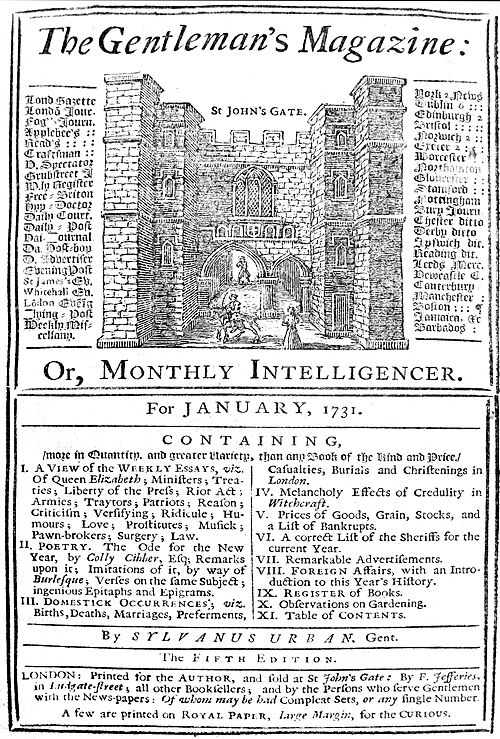
The vast majority of the reading public could not afford to own a private library, and while most of the state-run "universal libraries" set up in the 17th and 18th centuries were open to the public, they were not the only sources of reading material. On one end of the spectrum was the bibliothèque bleue, a collection of cheaply produced books published in Troyes, France. Intended for a largely rural and semi-literate audience these books included almanacs, retellings of medieval romances and condensed versions of popular novels, among other things. While some historians have argued against the Enlightenment's penetration into the lower classes, the bibliothèque bleue represents at least a desire to participate in Enlightenment sociability.[204] Moving up the classes, a variety of institutions offered readers access to material without needing to buy anything. Libraries that lent out their material for a small price started to appear, and occasionally bookstores would offer a small lending library to their patrons. Coffee houses commonly offered books, journals, and sometimes even popular novels to their customers. Tatler and The Spectator, two influential periodicals sold from 1709 to 1714, were closely associated with coffee house culture in London, being both read and produced in various establishments in the city.[205] This is an example of the triple or even quadruple function of the coffee house: reading material was often obtained, read, discussed, and even produced on the premises.[206]

It is difficult to determine what people actually read during the Enlightenment. For example, examining the catalogs of private libraries gives an image skewed in favor of the classes wealthy enough to afford libraries and also ignores censored works unlikely to be publicly acknowledged. For this reason, a study of publishing would be much more fruitful for discerning reading habits.[207] Across continental Europe, but in France especially, booksellers and publishers had to negotiate censorship laws of varying strictness. For example, the Encyclopédie narrowly escaped seizure and had to be saved by Malesherbes, the man in charge of the French censor. Indeed, many publishing companies were conveniently located outside France so as to avoid overzealous French censors. They would smuggle their merchandise across the border, where it would then be transported to clandestine booksellers or small-time peddlers.[208] The records of clandestine booksellers may give a better representation of what literate Frenchmen might have truly read, since their clandestine nature provided a less restrictive product choice.[209] In one case, political books were the most popular category, primarily libels and pamphlets. Readers were more interested in sensationalist stories about criminals and political corruption than they were in political theory itself. The second most popular category, "general works" (those books "that did not have a dominant motif and that contained something to offend almost everyone in authority"), demonstrated a high demand for generally low-brow subversive literature. However, these works never became part of literary canon and are largely forgotten today as a result.[209]
A healthy, legal publishing industry existed throughout Europe, although established publishers and book sellers occasionally ran afoul of the law. For example, the Encyclopédie, condemned by both the King and Clement XII, nevertheless found its way into print with the help of the aforementioned Malesherbes and creative use of French censorship law.[210] However, many works were sold without running into any legal trouble at all. Borrowing records from libraries in England, Germany, and North America indicate that more than 70% of books borrowed were novels. Less than 1% of the books were of a religious nature, indicating the general trend of declining religiosity.[187]
Natural history

A genre that greatly rose in importance was that of scientific literature. Natural history in particular became increasingly popular among the upper classes. Works of natural history include René-Antoine Ferchault de Réaumur's Histoire naturelle des insectes and Jacques Gautier d'Agoty's La Myologie complète, ou description de tous les muscles du corps humain (1746). Outside Ancien Régime France, natural history was an important part of medicine and industry, encompassing the fields of botany, zoology, meteorology, hydrology, and mineralogy. Students in Enlightenment universities and academies were taught these subjects to prepare them for careers as diverse as medicine and theology. As shown by Matthew Daniel Eddy, natural history in this context was a very middle class pursuit and operated as a fertile trading zone for the interdisciplinary exchange of diverse scientific ideas.[211]
The target audience of natural history was French upper class, evidenced more by the specific discourse of the genre than by the generally high prices of its works. Naturalists catered to upper class desire for erudition: many texts had an explicit instructive purpose. However, natural history was often a political affair. As Emma Spary writes, the classifications used by naturalists "slipped between the natural world and the social ... to establish not only the expertise of the naturalists over the natural, but also the dominance of the natural over the social."[212] The idea of taste (le goût) was a social indicator: to truly be able to categorize nature, one had to have the proper taste, an ability of discretion shared by all members of the upper class. In this way, natural history spread many of the scientific developments of the time but also provided a new source of legitimacy for the dominant class.[213] From this basis, naturalists could then develop their own social ideals based on their scientific works.[214]
Scientific and literary journals

The first scientific and literary journals were established during the Enlightenment. The first journal, the Parisian Journal des sçavans, appeared in 1665. However, it was not until 1682 that periodicals began to be more widely produced. French and Latin were the dominant languages of publication, but there was also a steady demand for material in German and Dutch. There was generally low demand for English publications on the continent, which was echoed by England's similar lack of desire for French works. Languages commanding less of an international market—such as Danish, Spanish, and Portuguese—found journal success more difficult, and a more international language was used instead. French slowly took over Latin's status as the lingua franca of learned circles. This in turn gave precedence to the publishing industry in Holland, where the vast majority of these French language periodicals were produced.[215]
Jonathan Israel called the journals the most influential cultural innovation of European intellectual culture.[216] They shifted the attention of the "cultivated public" away from established authorities to novelty and innovation, and instead promoted the Enlightened ideals of toleration and intellectual objectivity. Being a source of knowledge derived from science and reason, they were an implicit critique of existing notions of universal truth monopolized by monarchies, parliaments, and religious authorities. They also advanced Christian Enlightenment that upheld "the legitimacy of God-ordained authority"—the Bible—in which there had to be agreement between the biblical and natural theories.[217]
Encyclopedias and dictionaries

Although the existence of dictionaries and encyclopedias spanned into ancient times, the texts changed from defining words in a long running list to far more detailed discussions of those words in 18th-century encyclopedic dictionaries.[218] The works were part of an Enlightenment movement to systematize knowledge and provide education to a wider audience than the elite. As the 18th century progressed, the content of encyclopedias also changed according to readers' tastes. Volumes tended to focus more strongly on secular affairs, particularly science and technology, rather than matters of theology.
Along with secular matters, readers also favoured an alphabetical ordering scheme over cumbersome works arranged along thematic lines.[219] Commenting on alphabetization, the historian Charles Porset has said that "as the zero degree of taxonomy, alphabetical order authorizes all reading strategies; in this respect it could be considered an emblem of the Enlightenment." For Porset, the avoidance of thematic and hierarchical systems thus allows free interpretation of the works and becomes an example of egalitarianism.[220] Encyclopedias and dictionaries also became more popular during the Age of Enlightenment as the number of educated consumers who could afford such texts began to multiply.[218] In the latter half of the 18th century, the number of dictionaries and encyclopedias published by decade increased from 63 between 1760 and 1769 to approximately 148 in the decade proceeding the French Revolution.[221] Along with growth in numbers, dictionaries and encyclopedias also grew in length, often having multiple print runs that sometimes included in supplemented editions.[219]
The first technical dictionary was drafted by John Harris and entitled Lexicon Technicum: Or, An Universal English Dictionary of Arts and Sciences. Harris' book avoids theological and biographical entries and instead concentrates on science and technology. Published in 1704, the Lexicon Technicum was the first book to be written in English that took a methodical approach to describing mathematics and commercial arithmetic along with the physical sciences and navigation. Other technical dictionaries followed Harris' model, including Ephraim Chambers' Cyclopaedia (1728), which included five editions and is a substantially larger work than Harris'. The folio edition of the work even included foldout engravings. The Cyclopaedia emphasized Newtonian theories, Lockean philosophy and contained thorough examinations of technologies, such as engraving, brewing, and dyeing.
In Germany, practical reference works intended for the uneducated majority became popular in the 18th century. The Marperger Curieuses Natur-, Kunst-, Berg-, Gewerk- und Handlungs-Lexicon (1712) explained terms that usefully described the trades and scientific and commercial education. Jablonksi Allgemeines Lexicon (1721) was better known than the Handlungs-Lexicon and underscored technical subjects rather than scientific theory. For example, over five columns of text were dedicated to wine while geometry and logic were allocated only twenty-two and seventeen lines, respectively. The first edition of the Encyclopædia Britannica (1771) was modelled along the same lines as the German lexicons.[222]
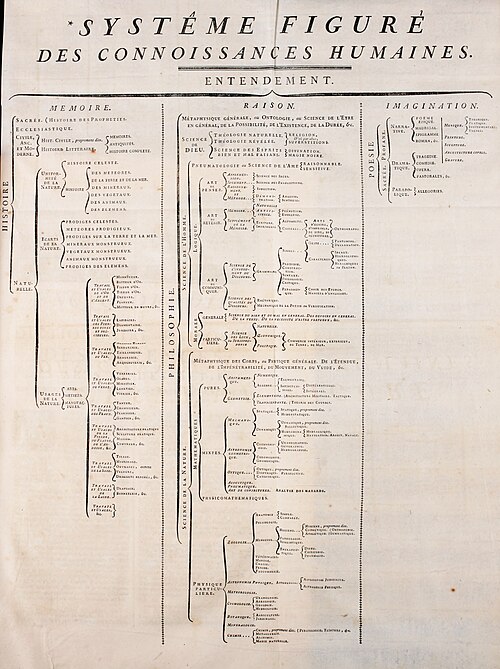
However, the prime example of reference works that systematized scientific knowledge in the Age of Enlightenment were universal encyclopedias rather than technical dictionaries. It was the goal of universal encyclopedias to record all human knowledge in a comprehensive reference work.[223] The most well-known of these works is Diderot and d'Alembert's Encyclopédie, ou dictionnaire raisonné des sciences, des arts et des métiers. The work, which began publication in 1751, was composed of 35 volumes and over 71,000 separate entries. A great number of the entries were dedicated to describing the sciences and crafts in detail and provided intellectuals across Europe with a high-quality survey of human knowledge. In d'Alembert's Preliminary Discourse to the Encyclopedia of Diderot, the work's goal to record the extent of human knowledge in the arts and sciences is outlined:
As an Encyclopédie, it is to set forth as well as possible the order and connection of the parts of human knowledge. As a Reasoned Dictionary of the Sciences, Arts, and Trades, it is to contain the general principles that form the basis of each science and each art, liberal or mechanical, and the most essential facts that make up the body and substance of each.[224]
The massive work was arranged according to a "tree of knowledge." The tree reflected the marked division between the arts and sciences, which was largely a result of the rise of empiricism. Both areas of knowledge were united by philosophy, or the trunk of the tree of knowledge. The Enlightenment's desacrilization of religion was pronounced in the tree's design, particularly where theology accounted for a peripheral branch, with black magic as a close neighbour.[225] As the Encyclopédie gained popularity, it was published in quarto and octavo editions after 1777. The quarto and octavo editions were much less expensive than previous editions, making the Encyclopédie more accessible to the non-elite. Robert Darnton estimates that there were approximately 25,000 copies of the Encyclopédie in circulation throughout France and Europe before the French Revolution.[226] The extensive yet affordable encyclopedia came to represent the transmission of Enlightenment and scientific education to an expanding audience.[227]
Popularization of science
One of the most important developments that the Enlightenment era brought to the discipline of science was its popularization. An increasingly literate population seeking knowledge and education in both the arts and the sciences drove the expansion of print culture and the dissemination of scientific learning. The new literate population was precipitated by a high rise in the availability of food; this enabled many people to rise out of poverty, and instead of paying more for food, they had money for education.[228] Popularization was generally part of an overarching Enlightenment ideal that endeavoured "to make information available to the greatest number of people."[229] As public interest in natural philosophy grew during the 18th century, public lecture courses and the publication of popular texts opened up new roads to money and fame for amateurs and scientists who remained on the periphery of universities and academies.[230] More formal works included explanations of scientific theories for individuals lacking the educational background to comprehend the original scientific text. Newton's celebrated Philosophiae Naturalis Principia Mathematica was published in Latin and remained inaccessible to readers without education in the classics until Enlightenment writers began to translate and analyze the text in the vernacular.
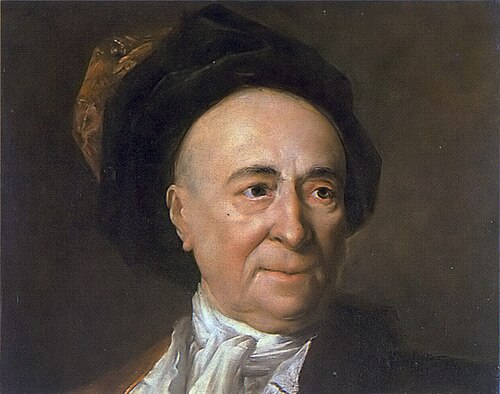
The first significant work that expressed scientific theory and knowledge expressly for the laity, in the vernacular and with the entertainment of readers in mind, was Bernard de Fontenelle's Conversations on the Plurality of Worlds (1686). The book was produced specifically for women with an interest in scientific writing and inspired a variety of similar works.[231] These popular works were written in a discursive style, which was laid out much more clearly for the reader than the complicated articles, treatises, and books published by the academies and scientists. Charles Leadbetter's Astronomy (1727) was advertised as "a Work entirely New" that would include "short and easie [sic] Rules and Astronomical Tables."[232]
The first French introduction to Newtonianism and the Principia was Eléments de la philosophie de Newton, published by Voltaire in 1738.[233] Émilie du Châtelet's translation of the Principia, published after her death in 1756, also helped to spread Newton's theories beyond scientific academies and the university.[234] Writing for a growing female audience, Francesco Algarotti published Il Newtonianism per le dame, which was a tremendously popular work and was translated from Italian into English by Elizabeth Carter. A similar introduction to Newtonianism for women was produced by Henry Pemberton. His A View of Sir Isaac Newton's Philosophy was published by subscription. Extant records of subscribers show that women from a wide range of social standings purchased the book, indicating the growing number of scientifically inclined female readers among the middling class.[235] During the Enlightenment, women also began producing popular scientific works. Sarah Trimmer wrote a successful natural history textbook for children titled The Easy Introduction to the Knowledge of Nature (1782), which was published for many years in eleven editions.[236]
Schools and universities
Most work on the Enlightenment emphasizes the ideals discussed by intellectuals, rather than the actual state of education at the time. Leading educational theorists like England's John Locke and Switzerland's Jean Jacques Rousseau both emphasized the importance of shaping young minds early. By the late Enlightenment, there was a rising demand for a more universal approach to education, particularly after the American Revolution and the French Revolution.
The predominant educational psychology from the 1750s onward, especially in northern European countries, was associationism: the notion that the mind associates or dissociates ideas through repeated routines. In addition to being conducive to Enlightenment ideologies of liberty, self-determination, and personal responsibility, it offered a practical theory of the mind that allowed teachers to transform longstanding forms of print and manuscript culture into effective graphic tools of learning for the lower and middle orders of society.[237] Children were taught to memorize facts through oral and graphic methods that originated during the Renaissance.[238]
Many of the leading universities associated with Enlightenment progressive principles were located in northern Europe, with the most renowned being the universities of Leiden, Göttingen, Halle, Montpellier, Uppsala, and Edinburgh. These universities, especially Edinburgh, produced professors whose ideas had a significant impact on Britain's North American colonies and later the American Republic. Within the natural sciences, Edinburgh's medical school also led the way in chemistry, anatomy, and pharmacology.[239] In other parts of Europe, the universities and schools of France and most of Europe were bastions of traditionalism and were not hospitable to the Enlightenment. In France, the major exception was the medical university at Montpellier.[240]
Learned academies


The history of Academies in France during the Enlightenment begins with the Academy of Science, founded in 1635 in Paris. It was closely tied to the French state, acting as an extension of a government seriously lacking in scientists. It helped promote and organize new disciplines and it trained new scientists. It also contributed to the enhancement of scientists' social status, considering them to be the "most useful of all citizens." Academies demonstrate the rising interest in science along with its increasing secularization, as evidenced by the small number of clerics who were members (13%).[242] The presence of the French academies in the public sphere cannot be attributed to their membership, as although the majority of their members were bourgeois, the exclusive institution was only open to elite Parisian scholars. They perceived themselves as "interpreters of the sciences for the people." For example, it was with this in mind that academicians took it upon themselves to disprove the popular pseudo-science of mesmerism.[243]
The strongest contribution of the French Academies to the public sphere comes from the concours académiques (roughly translated as "academic contests") they sponsored throughout France. These academic contests were perhaps the most public of any institution during the Enlightenment.[244] The practice of contests dated back to the Middle Ages and was revived in the mid-17th century. The subject matter had previously been generally religious and/or monarchical, featuring essays, poetry, and painting. However, by roughly 1725 this subject matter had radically expanded and diversified, including "royal propaganda, philosophical battles, and critical ruminations on the social and political institutions of the Old Regime." Topics of public controversy were also discussed such as the theories of Newton and Descartes, the slave trade, women's education, and justice in France.[245] More importantly, the contests were open to all, and the enforced anonymity of each submission guaranteed that neither gender nor social rank would determine the judging. Indeed, although the "vast majority" of participants belonged to the wealthier strata of society ("the liberal arts, the clergy, the judiciary and the medical profession"), there were some cases of the popular classes submitting essays and even winning.[246] Similarly, a significant number of women participated—and won—the competitions. Of a total of 2,300 prize competitions offered in France, women won 49—perhaps a small number by modern standards but very significant in an age in which most women did not have any academic training. Indeed, the majority of the winning entries were for poetry competitions, a genre commonly stressed in women's education.[247]
In England, the Royal Society of London played a significant role in the public sphere and the spread of Enlightenment ideas. It was founded by a group of independent scientists and given a royal charter in 1662.[248] The society played a large role in spreading Robert Boyle's experimental philosophy around Europe and acted as a clearinghouse for intellectual correspondence and exchange.[249] Boyle was "a founder of the experimental world in which scientists now live and operate" and his method based knowledge on experimentation, which had to be witnessed to provide proper empirical legitimacy. This is where the Royal Society came into play: witnessing had to be a "collective act" and the Royal Society's assembly rooms were ideal locations for relatively public demonstrations.[250] However, not just any witness was considered to be credible: "Oxford professors were accounted more reliable witnesses than Oxfordshire peasants." Two factors were taken into account: a witness's knowledge in the area and a witness's "moral constitution." In other words, only civil society were considered for Boyle's public.[251]
Salons
Salons were places where philosophes were reunited and discussed old, actual, or new ideas. This led to salons being the birthplace of intellectual and enlightened ideas.
Coffeehouses
Coffeehouses were especially important to the spread of knowledge during the Enlightenment because they created a unique environment in which people from many different walks of life gathered and shared ideas. They were frequently criticized by nobles who feared the possibility of an environment in which class and its accompanying titles and privileges were disregarded. Such an environment was especially intimidating to monarchs who derived much of their power from the disparity between classes of people. If the different classes joined together under the influence of Enlightenment thinking, they might recognize the all-encompassing oppression and abuses of their monarchs and because of the numbers of their members might be able to successfully revolt. Monarchs also resented the idea of their subjects convening as one to discuss political matters, especially matters of foreign affairs. Rulers thought political affairs were their business only, a result of their divine right to rule.[252]
Coffeeshops became homes away from home for many who sought to engage in discourse with their neighbors and discuss intriguing and thought-provoking matters, from philosophy to politics. Coffeehouses were essential to the Enlightenment, for they were centers of free-thinking and self-discovery. Although many coffeehouse patrons were scholars, many were not. Coffeehouses attracted a diverse set of people, including the educated wealthy and bourgeois as well as the lower classes. Patrons, being doctors, lawyers, merchants, represented almost all classes, so the coffeeshop environment sparked fear in those who wanted to preserve class distinction. One of the most popular critiques of the coffeehouse said that it "allowed promiscuous association among people from different rungs of the social ladder, from the artisan to the aristocrat" and was therefore compared to Noah's Ark, receiving all types of animals, clean and unclean.[253] This unique culture served as a catalyst for journalism, when Joseph Addison and Richard Steele recognized its potential as an audience. Together, Steele and Addison published The Spectator (1711), a daily publication which aimed, through fictional narrator Mr. Spectator, to both entertain and provoke discussion on serious philosophical matters.
The first English coffeehouse opened in Oxford in 1650. Brian Cowan said that Oxford coffeehouses developed into "penny universities," offering a locus of learning that was less formal than at structured institutions. These penny universities occupied a significant position in Oxford academic life, as they were frequented by those consequently referred to as the virtuosi, who conducted their research on some of the premises. According to Cowan, "the coffeehouse was a place for like-minded scholars to congregate, to read, as well as learn from and to debate with each other, but was emphatically not a university institution, and the discourse there was of a far different order than any university tutorial."[254]
The Café Procope was established in Paris in 1686, and by the 1720s there were around 400 cafés in the city. The Café Procope in particular became a center of Enlightenment, welcoming such celebrities as Voltaire and Rousseau. The Café Procope was where Diderot and D'Alembert decided to create the Encyclopédie. [255] The cafés were one of the various "nerve centers" for bruits publics, public noise or rumour. These bruits were allegedly a much better source of information than were the actual newspapers available at the time.[256]
Debating societies
The debating societies are an example of the public sphere during the Enlightenment.[257] Their origins include:
- Clubs of fifty or more men who, at the beginning of the 18th century, met in pubs to discuss religious issues and affairs of state.
- Mooting clubs, set up by law students to practice rhetoric.
- Spouting clubs, established to help actors train for theatrical roles.
- John Henley's Oratory, which mixed outrageous sermons with even more absurd questions, like "Whether Scotland be anywhere in the world?"[258]
In the late 1770s, popular debating societies began to move into more "genteel" rooms, a change which helped establish a new standard of sociability.[259] The backdrop to these developments was "an explosion of interest in the theory and practice of public elocution." The debating societies were commercial enterprises that responded to this demand, sometimes very successfully. Some societies welcomed from 800 to 1,200 spectators per night.[260]
The debating societies discussed an extremely wide range of topics. Before the Enlightenment, most intellectual debates revolved around "confessional"—that is, Catholic, Lutheran, Reformed (Calvinist) or Anglican issues, debated primarily to establish which bloc of faith ought to have the "monopoly of truth and a God-given title to authority." [261] After Enlightenment, everything that previously had been rooted in tradition was questioned, and often replaced by new concepts. After the second half of the 17th century and during the 18th century, a "general process of rationalization and secularization set in" and confessional disputes were reduced to a secondary status in favor of the "escalating contest between faith and incredulity." [261]
In addition to debates on religion, societies discussed issues such as politics and the role of women. However, the critical subject matter of these debates did not necessarily translate into opposition to the government; the results of the debate quite frequently upheld the status quo. [262] From a historical standpoint, one of the most important features of the debating society was their openness to the public, as women attended and even participated in almost every debating society, which were likewise open to all classes providing they could pay the entrance fee. Once inside, spectators were able to participate in a largely egalitarian form of sociability that helped spread Enlightenment ideas.[263]
Masonic lodges

Historians have debated the extent to which the secret network of Freemasonry was a main factor in the Enlightenment.[264] Leaders of the Enlightenment included Freemasons such as Diderot, Montesquieu, Voltaire, Lessing, Pope,[265] Horace Walpole, Sir Robert Walpole, Mozart, Goethe, Frederick the Great, Benjamin Franklin[266] and George Washington.[267] Norman Davies said Freemasonry was a powerful force on behalf of liberalism in Europe from about 1700 to the twentieth century. It expanded during the Enlightenment, reaching practically every country in Europe. It was especially attractive to powerful aristocrats and politicians as well as intellectuals, artists, and political activists.[268]
During the Enlightenment, Freemasons comprised an international network of like-minded men, often meeting in secret in ritualistic programs at their lodges. They promoted the ideals of the Enlightenment and helped diffuse these values across Britain, France, and other places. Freemasonry as a systematic creed with its own myths, values, and rituals originated in Scotland c. 1600 and spread to England and then across the Continent in the 18th century. They fostered new codes of conduct—including a communal understanding of liberty and equality inherited from guild sociability—"liberty, fraternity, and equality."[269] Scottish soldiers and Jacobite Scots brought to the Continent ideals of fraternity, which reflected not the local system of Scottish customs, but the institutions and ideals originating in the English Revolution against royal absolutism.[270] Freemasonry was particularly prevalent in France—by 1789, there were perhaps as many as 100,000 French Masons, making Freemasonry the most popular of all Enlightenment associations.[271] The Freemasons displayed a passion for secrecy and created new degrees and ceremonies. Similar societies, partially imitating Freemasonry, emerged in France, Germany, Sweden, and Russia. One example was the Illuminati, founded in Bavaria in 1776, which was copied after the Freemasons, but was never part of the movement. The name itself translates to "enlightened," chosen to reflect their original intent to promote the values of the movement. The Illuminati was an overtly political group, which most Masonic lodges decidedly were not.[272]
Masonic lodges created a private model for public affairs. They "reconstituted the polity and established a constitutional form of self-government, complete with constitutions and laws, elections, and representatives." In other words, the micro-society set up within the lodges constituted a normative model for society as a whole. This was especially true on the continent: when the first lodges began to appear in the 1730s, their embodiment of British values was often seen as threatening by state authorities. For example, the Parisian lodge that met in the mid 1720s was composed of English Jacobite exiles.[273] Furthermore, freemasons across Europe explicitly linked themselves to the Enlightenment as a whole. For example, in French lodges the line "As the means to be enlightened I search for the enlightened" was a part of their initiation rites. British lodges assigned themselves the duty to "initiate the unenlightened." This did not necessarily link lodges to the irreligious, but neither did this exclude them from the occasional heresy. In fact, many lodges praised the Grand Architect, the masonic terminology for the deistic divine being who created a scientifically ordered universe.[274]
German historian Reinhart Koselleck claimed: "On the Continent there were two social structures that left a decisive imprint on the Age of Enlightenment: the Republic of Letters and the Masonic lodges."[275] Scottish professor Thomas Munck argues that "although the Masons did promote international and cross-social contacts which were essentially non-religious and broadly in agreement with enlightened values, they can hardly be described as a major radical or reformist network in their own right."[276] Many of the Masons values seemed to greatly appeal to Enlightenment values and thinkers. Diderot discusses the link between Freemason ideals and the enlightenment in D'Alembert's Dream, exploring masonry as a way of spreading enlightenment beliefs.[277] Historian Margaret Jacob stresses the importance of the Masons in indirectly inspiring enlightened political thought.[278] On the negative side, Daniel Roche contests claims that Masonry promoted egalitarianism and he argues the lodges only attracted men of similar social backgrounds.[279] The presence of noble women in the French "lodges of adoption" that formed in the 1780s was largely due to the close ties shared between these lodges and aristocratic society.[280]
The major opponent of Freemasonry was the Catholic Church so in countries with a large Catholic element, such as France, Italy, Spain, and Mexico, much of the ferocity of the political battles involve the confrontation between what Davies calls the reactionary Church and enlightened Freemasonry.[281][282] Even in France, Masons did not act as a group.[283] American historians, while noting that Benjamin Franklin and George Washington were indeed active Masons, have downplayed the importance of Freemasonry in causing the American Revolution because the Masonic order was non-political and included both Patriots and their enemy the Loyalists.[284]
Art
The art produced during the Enlightenment focused on a search for morality that was absent from the art in previous eras.[citation needed] At the same time, the Classical art of Greece and Rome became interesting to people again, since archaeological teams discovered Pompeii and Herculaneum.[285] People took inspiration from it and revived classical art into neo-classical art. This can especially be seen in early American art and architecture, which featured arches, goddesses, and other classical architectural designs.[clarification needed]
See also
- Atlantic Revolutions
- Early modern philosophy
- European and American voyages of scientific exploration
- Haskalah, Jewish Enlightenment
- Midlands Enlightenment
- Modern Greek Enlightenment
- Nahda, Arab Enlightenment
- Renaissance philosophy
- Witch trials in the early modern period
- Illuminism
Notes
- ^ Back row, left to right: Jean-Baptiste-Louis Gresset, Pierre de Marivaux, Jean-François Marmontel, Joseph-Marie Vien, Antoine Léonard Thomas, Charles Marie de La Condamine, Guillaume Thomas François Raynal, Jean-Jacques Rousseau, Jean-Philippe Rameau, La Clairon, Charles-Jean-François Hénault, Étienne François, duc de Choiseul, a bust of Voltaire, Charles-Augustin de Ferriol d'Argental, Jean François de Saint-Lambert, Edmé Bouchardon, Jacques-Germain Soufflot, Jean-Baptiste Bourguignon d'Anville, Anne Claude de Caylus, Fortunato Felice, François Quesnay, Denis Diderot, Anne-Robert-Jacques Turgot, Baron de Laune, Chrétien Guillaume de Lamoignon de Malesherbes, Armand de Vignerot du Plessis, Pierre Louis Maupertuis, Jean-Jacques Dortous de Mairan, Henri François d'Aguesseau, Alexis Clairaut.
Front row, right to left: Montesquieu, Sophie d'Houdetot, Claude Joseph Vernet, Bernard Le Bouyer de Fontenelle, Marie-Thérèse Rodet Geoffrin, Louis François, Prince of Conti, Marie Louise Nicole Élisabeth de La Rochefoucauld, Duchesse d'Anville, Philippe Jules François Mancini, François-Joachim de Pierre de Bernis, Claude Prosper Jolyot de Crébillon, Alexis Piron, Charles Pinot Duclos, Claude-Adrien Helvétius, Charles-André van Loo, Jean le Rond d'Alembert, Lekain at the desk reading aloud, Jeanne Julie Éléonore de Lespinasse, Anne-Marie du Boccage, René Antoine Ferchault de Réaumur, Françoise de Graffigny, Étienne Bonnot de Condillac, Bernard de Jussieu, Louis-Jean-Marie Daubenton, Georges-Louis Leclerc, Comte de Buffon. - ^ For example, Robert Darnton, Roger Chartier, Brian Cowan, Donna T. Andrew.
References
Citations
- ^ "The Age of Enlightenment: A History From Beginning to End: Chapter 3". publishinghau5.com. Archived from the original on 3 March 2017. Retrieved 3 April 2017.
{{cite web}}: CS1 maint: unfit URL (link) - ^ a b c d e f g h i j k l m n o p q r s t u v w x y z aa ab Conrad, Sebastian (1 October 2012). "Enlightenment in Global History: A Historiographical Critique". The American Historical Review. 117 (4): 999–1027. doi:10.1093/ahr/117.4.999. ISSN 0002-8762.
- ^ Outram, Dorinda (2006), Panorama of the Enlightenment, Getty Publications, p. 29, ISBN 978-0892368617
- ^ Zafirovski, Milan (2010), The Enlightenment and Its Effects on Modern Society, p. 144
- ^ Jacob, Margaret C. The Secular Enlightenment. Princeton: Princeton University Press 2019 1
- ^ "The Enlightenment". Encyclopædia Britannica. Retrieved 16 November 2023.
- ^ Bristow, William (29 August 2017). "Enlightenment". In Zalta, Edward N.; Nodelman, Uri (eds.). The Stanford Encyclopedia of Philosophy. Metaphysics Research Lab, Stanford University.
- ^ Casini, Paolo (January 1988). "Newton's Principia and the Philosophers of the Enlightenment". Notes and Records of the Royal Society of London. 42 (1): 35–52. doi:10.1098/rsnr.1988.0006. ISSN 0035-9149. S2CID 145282986.
- ^ "British Library- The Enlightenment". Archived from the original on 24 August 2023. Retrieved 21 June 2018.
- ^ Smaldone, William (2014). European socialism: a concise history with documents. Lanham: Rowman & Littlefield Publishers, Inc. pp. 3–4. ISBN 978-1-4422-0909-1.
- ^ Eugen Weber, Movements, Currents, Trends: Aspects of European Thought in the Nineteenth and Twentieth Centuries (1992).
- ^ Eddy, Matthew Daniel (2022). Media and the Mind: Art, Science and Notebooks as Paper Machines, 1700–1830. University of Chicago Press.
- ^ Gay, Peter (1996), The Enlightenment: An Interpretation, W.W. Norton & Company, ISBN 0-393-00870-3
- ^ I. Bernard Cohen, "Scientific Revolution and Creativity in the Enlightenment." Eighteenth-Century Life 7.2 (1982): 41–54.
- ^ Israel, Jonathan I. Democratic Enlightenment. Oxford: Oxford University Press 2011,9
- ^ Sootin, Harry. Isaac Newton. New York: Messner (1955)
- ^ a b Jeremy Black, "Ancien Regime and Enlightenment. Some Recent Writing on Seventeenth-and Eighteenth-Century Europe," European History Quarterly 22.2 (1992): 247–55.
- ^ Robert Darnton, The Business of Enlightenment: a publishing history of the Encyclopédie, 1775–1800 (2009).
- ^ The Dream of Enlightenment: The Rise of Modern Philosophy. W. W. Norton & Company. 30 August 2016. ISBN 9781631492082.
- ^ Rahman, Shoaib (20 November 2023). The Roots of Enlightenment: A HISTORICAL ANALYSIS OF THE AGE OF REASON IN THE EIGHTEENTH CENTURY EUROPE (Hardcover ed.). Fadew, Inc. ISBN 979-8-8681-1641-4.
- ^ Israel 2006, p. 15.
- ^ Israel 2010, pp. vii–viii, 19.
- ^ Israel 2010, p. 11.
- ^ a b Haakonssen 2008, p. 33.
- ^ Haakonssen 2008, p. 34.
- ^ a b Petitfils 2005, pp. 99–105.
- ^ a b Denby, David (11 October 2004), "Northern Lights: How modern life emerged from eighteenth-century Edinburgh", The New Yorker, archived from the original on 6 June 2011
- ^ Barroso, José Manuel (28 November 2006), The Scottish enlightenment and the challenges for Europe in the 21st century; climate change and energy
- ^ "Kant's essay What is Enlightenment?". mnstate.edu. Archived from the original on 17 February 2020. Retrieved 4 November 2015.
- ^ Manfred Kuehn, Kant: A Biography (2001).
- ^ Kreis, Steven (13 April 2012). "Mary Wollstonecraft, 1759–1797". Historyguide.org. Archived from the original on 11 January 2014. Retrieved 14 January 2014.
- ^ Mary Wollstonecraft, A Vindication of the Rights of Woman (Renascence Editions, 2000) online
- ^ Bruce P. Lenman, Integration and Enlightenment: Scotland, 1746–1832 (1993) excerpt and text search
- ^ Sarmant, Thierry, Histoire de Paris, p. 120.
- ^ Porter (2003), 79–80.
- ^ Burns (2003), entry: 7,103.
- ^ Gillispie, (1980), p. xix.
- ^ James E. McClellan III, "Learned Societies," in Encyclopedia of the Enlightenment, ed. Alan Charles Kors (Oxford: Oxford University Press, 2003) "Oxford University Press: Encyclopedia of the Enlightenment: Alan Charles Kors". Archived from the original on 30 March 2012. Retrieved 16 October 2015. (accessed on 8 June 2008).
- ^ Porter, (2003), p. 91.
- ^ See Gillispie, (1980), "Conclusion."
- ^ Porter, (2003), p. 90.
- ^ see Hall (1954), iii; Mason (1956), 223.
- ^ Burns, (2003), entry: 158.
- ^ Thomson, (1786), p. 203.
- ^ M. Magnusson (10 November 2003), "Review of James Buchan, Capital of the Mind: how Edinburgh Changed the World", New Statesman, archived from the original on 6 June 2011, retrieved 27 April 2014
- ^ Swingewood, Alan (1970). "Origins of Sociology: The Case of the Scottish Enlightenment". The British Journal of Sociology. 21 (2): 164–180. doi:10.2307/588406. JSTOR 588406.
- ^ D. Daiches, P. Jones and J. Jones, A Hotbed of Genius: The Scottish Enlightenment, 1730–1790 (1986).
- ^ M. Fry, Adam Smith's Legacy: His Place in the Development of Modern Economics (Routledge, 1992).
- ^ The Illusion of Free Markets, Bernard E. Harcourt, p. 260, notes 11–14.
- ^ "The Enlightenment throughout Europe". History-world.org. Archived from the original on 23 January 2013. Retrieved 25 March 2013.
{{cite web}}: CS1 maint: unfit URL (link) - ^ Roland Sarti, Italy: A Reference Guide from the Renaissance to the Present, Infobase Publishing, 2009, p. 457
- ^ Daniel Brewer, The Enlightenment Past: reconstructing eighteenth-century French thought (2008), p. 1
- ^ De Dijn, Annelien (2012). "The Politics of Enlightenment: From Peter Gay to Jonathan Israel". Historical Journal. 55 (3): 785–805. doi:10.1017/s0018246x12000301. S2CID 145439970.
- ^ von Guttner, Darius (2015). The French Revolution. Nelson Cengage. pp. 34–35.[permanent dead link]
- ^ Robert A. Ferguson, The American Enlightenment, 1750–1820 (1994).
- ^ "John Locke > The Influence of John Locke's Works (Stanford Encyclopedia of Philosophy)". Plato.stanford.edu. Retrieved 14 January 2014.
- ^ Pierre Manent, An Intellectual History of Liberalism (1994) pp. 20–38
- ^ Lessnoff, Michael H. Social Contract Theory. New York: NYU, 1990. Print.[page needed]
- ^ Discourse on the Origin of Inequality
- ^ Rand, B. (1900), The Life, Unpublished Letters and Philosophical Regimen of Anthony, Earl of Shaftesbury, p. 353 quoted in Porter, Roy (2000), Enlightenment, Britain and the Creation of the Modern World, Allen Lane, The Penguin Press, p. 3
- ^ Lorraine Y. Landry, Marx and the postmodernism debates: an agenda for critical theory (2000) p. 7
- ^ Of the Original Contract
- ^ David Williams, ed. (1994). Voltaire: Political Writings. Cambridge University Press. pp. xiv–xv. ISBN 978-0-521-43727-1.
- ^ Stephen J. Lee, Aspects of European history, 1494–1789 (1990) pp. 258–266
- ^ Nicholas Henderson, "Joseph II," History Today (March 1991) 41:21–27
- ^ John Stanley, "Towards A New Nation: The Enlightenment and National Revival in Poland," Canadian Review of Studies in Nationalism, 1983, Vol. 10 Issue 2, pp. 83–110
- ^ Giles MacDonogh, Frederick the Great: A Life in Deed and Letters (2001) p. 341
- ^ "Enlightenment ideals of rationalism and intellectual and religious freedom pervaded the American colonial religious landscape, and these values were instrumental in the American Revolution and the creation of a nation without an established religion." Enlightenment and Revolution, Pluralism Project, Harvard University.
- ^ Fremont-Barnes, Gregory (2007). Encyclopedia of the Age of Political Revolutions and New Ideologies, 1760–1815. Greenwood. p. 190. ISBN 9780313049514.
- ^ "Recognized in Europe as the author of the Declaration of Independence, Thomas Jefferson quickly became a focal point or lightning rod for revolutionaries in Europe and the Americas. As United States minister to France when revolutionary fervor was rising toward the storming of the Bastille in 1789, Jefferson became an ardent supporter of the French Revolution, even allowing his residence to be used as a meeting place for the rebels led by Lafayette." Thomas Jefferson. A Revolutionary World. Library of Congress.
- ^ Chartier, 8. See also Alexis de Tocqueville, L'Ancien Régime et la Révolution, 1850, Book Three, Chapter One.
- ^ Chartier, 13.
- ^ A Treatise on Toleration
- ^ Margaret C. Jacob, ed. The Enlightenment: Brief History with Documents, Boston: Bedford/St. Martin's, 2001, Introduction, pp. 1–72.
- ^ Locke, John (1695). Reasonableness of Christianity. Vol. "Preface" The Reasonableness of Christianity, as delivered in the Scriptures.
- ^ R.B. Bernstein (2003). Thomas Jefferson. Oxford University Press. p. 179. ISBN 978-0-19-975844-9.
- ^ Ole Peter Grell; Porter, Roy (2000). Toleration in Enlightenment Europe. Cambridge University Press. pp. 1–68. ISBN 978-0-521-65196-7.
- ^ Baruch Spinoza, Theologico-Political Treatise, "Preface," 1677, gutenberg.com
- ^ Mendelssohn, Moses (1783). "Jerusalem: Or on Religious Power and Judaism" (PDF).
- ^ Goetschel, Willi (2004). Spinoza's Modernity: Mendelssohn, Lessing, and Heine. Univ of Wisconsin Press. p. 126. ISBN 978-0-299-19083-5.
- ^ Thomas Paine, Of the Religion of Deism Compared with the Christian Religion, 1804, Internet History Sourcebook
- ^ Ellen Judy Wilson; Peter Hanns Reill (2004). Encyclopedia Of The Enlightenment. Infobase Publishing. p. 148. ISBN 978-1-4381-1021-9.
- ^ Wilson and Reill (2004). Encyclopedia Of The Enlightenment. Infobase Publishing. p. 26. ISBN 978-1-4381-1021-9.
- ^ Pagden, Anthony (2013). The Enlightenment: And Why it Still Matters. Oxford University Press. p. 100. ISBN 978-0-19-966093-3.
- ^ Brown, Stuart (2003). British Philosophy and the Age of Enlightenment: Routledge History of Philosophy. Taylor & Francis. p. 256. ISBN 978-0-415-30877-9.
- ^ Bayle, Pierre (1741). A general dictionary: historical and critical: in which a new and accurate translation of that of the celebrated Mr. Bayle, with the corrections and observations printed in the late edition at Paris, is included; and interspersed with several thousand lives never before published. The whole containing the history of the most illustrious persons of all ages and nations particularly those of Great Britain and Ireland, distinguished by their rank, actions, learning and other accomplishments. With reflections on such passages of Bayle, as seem to favor scepticism and the Manichee system. p. 778.
- ^ ENR // AgencyND // University of Notre Dame (4 May 2003). "God, Locke and Equality: Christian Foundations of Locke's Political Thought". Nd.edu.
- ^ Israel 2011, pp. 11.
- ^ Israel 2010, p. 19.
- ^ Israel 2010, pp. vii–viii.
- ^ Feldman, Noah (2005). Divided by God. Farrar, Straus, and Giroux, p. 29 ("It took John Locke to translate the demand for liberty of conscience into a systematic argument for distinguishing the realm of government from the realm of religion.")
- ^ Feldman, Noah (2005). Divided by God. Farrar, Straus, and Giroux, p. 29
- ^ Ferling, 2000, p. 158
- ^ Mayer, 1994 p. 76
- ^ Hayes, 2008, p. 10
- ^ Cogliano, 2003, p. 14
- ^ David N. Livingstone and Charles W.J. Withers, Geography and Enlightenment (1999)
- ^ a b A History of Modern Latin America: 1800 to the Present, Second Edition, by Teresa A. Meade
- ^ Peter Gay, ed. The Enlightenment: A comprehensive anthology (1973) p. 14
- ^ Roy Porter, "England" in Alan Charles Kors, ed., Encyclopedia of the Enlightenment (2003) 1:409–15.
- ^ Karen O'Brien, "English Enlightenment Histories, 1750–c.1815" in José Rabasa, ed. (2012). The Oxford History of Historical Writing: Volume 3: 1400–1800. Oxford, England: OUP. pp. 518–535. ISBN 978-0-19-921917-9.
- ^ Roy Porter, The creation of the modern world: the untold story of the British Enlightenment (2000), pp. 1–12, 482–484.
- ^ Hirst, Derek (1996). "Locating the 1650s in England's Seventeenth Century". History. 81 (263): 359–383. doi:10.1111/1468-229X.00016. ISSN 0018-2648. JSTOR 24423269.
- ^ "The Enlightenment (1650–1800): The English Enlightenment". SparkNotes. Retrieved 18 December 2023.
- ^ Eddy, Matthew Daniel (2022). Media and the Mind: Art, Science and Notebooks as Paper Machines, 1700–1830. Chicago: University of Chicago Press.
- ^ Towsey, Mark (2010). Reading the Scottish Enlightenment Books and Their Readers in Provincial Scotland, 1750–1820. Brill. ISBN 9789004193512.
- ^ A. Herman, How the Scots Invented the Modern World (Crown Publishing Group, 2001).
- ^ Harrison, Lawrence E. (2012). Jews, Confucians, and Protestants: Cultural Capital and the End of Multiculturalism. Rowman & Littlefield. p. 92. ISBN 978-1-4422-1964-9.
- ^ J. Repcheck, The Man Who Found Time: James Hutton and the Discovery of the Earth's Antiquity (Basic Books, 2003), pp. 117–143.
- ^ Henry F. May, The Enlightenment in America (1978)
- ^ Michael Atiyah, "Benjamin Franklin and the Edinburgh Enlightenment," Proceedings of the American Philosophical Society (Dec 2006) 150#4 pp. 591–606.
- ^ Jack Fruchtman, Jr., Atlantic Cousins: Benjamin Franklin and His Visionary Friends (2007)
- ^ Charles C. Mann, 1491 (2005)
- ^ Paul M. Spurlin, Montesquieu in America, 1760–1801 (1941)
- ^ "The Founding Fathers, Deism, and Christianity". Encyclopædia Britannica.
- ^ Charles W. Ingrao, "A Pre-Revolutionary Sonderweg." German History 20#3 (2002), pp. 279–286.
- ^ Katrin Keller, "Saxony: Rétablissement and Enlightened Absolutism." German History 20.3 (2002): 309–331.
- ^ "The German Enlightenment," German History (Dec 2017) 35#4 pp. 588–602, round table discussion of historiography.
- ^ Gagliardo, John G. (1991). Germany under the Old Regime, 1600–1790. pp. 217–234, 375–395.
- ^ Wilhelm Kosch, "Seyler, Abel", in Dictionary of German Biography, eds. Walther Killy and Rudolf Vierhaus, Vol. 9, Walter de Gruyter, 2005, ISBN 3110966298, p. 308
- ^ Richter, Simon J., ed. (2005), The Literature of Weimar Classicism
- ^ Owens, Samantha; Reul, Barbara M.; Stockigt, Janice B., eds. (2011). Music at German Courts, 1715–1760: Changing Artistic Priorities.
- ^ Kuehn, Manfred (2001). Kant: A Biography.
- ^ Van Dulmen, Richard; Williams, Anthony, eds. (1992). The Society of the Enlightenment: The Rise of the Middle Class and Enlightenment Culture in Germany.
- ^ Thomas P. Saine, The Problem of Being Modern, or the German Pursuit of Enlightenment from Leibniz to the French Revolution (1997)
- ^ Michael J. Sauter, "The Enlightenment on trial: state service and social discipline in eighteenth-century Germany's public sphere." Modern Intellectual History 5.2 (2008): 195–223.
- ^ Mori, Massimo (1 February 2015). Storia della filosofia moderna (in Italian). Gius.Laterza & Figli Spa. ISBN 978-88-581-1845-0.
- ^ D'Onofrio, Federico (2015). On the caoncept of 'felicitas publica' in Eighteenth-Century political economy, in History of economic thought.
- ^ Niccolò Guasti, "Antonio Genovesi's Diceosina: Source of the Neapolitan Enlightenment." History of European ideas 32.4 (2006): 385–405.
- ^ Pier Luigi Porta, "Lombard enlightenment and classical political economy." The European Journal of the History of Economic Thought 18.4 (2011): 521–50.
- ^ Franco Venturi, Italy and the Enlightenment: studies in a cosmopolitan century (1972) online
- ^ Anna Maria Rao, "Enlightenment and reform: an overview of culture and politics in Enlightenment Italy." Journal of Modern Italian Studies 10.2 (2005): 142–67.
- ^ Aldridge, Alfred Owen. The Ibero-American Enlightenment. Urbana: University of Illinois Press 1971.
- ^ De Vos, Paula S. "Research, Development, and Empire: State Support of Science in Spain and Spanish America, Sixteenth to Eighteenth Centuries," Colonial Latin America Review 15, no. 1 (June 2006) 55–79.
- ^ Bleichmar, Daniela. Visible Empire: Botanical Expeditions & Visual Culture in the Hispanic Enlightenment. Chicago: University of Chicago Press 2012.
- ^ Brading, D. A. The First America: The Spanish Monarchy, Creole Patriots, and the Liberal State, 1492–1867 Chapter 23, "Scientific Traveller." New York: Cambridge University Press 1991 ISBN 0-521-39130-X
- ^ Thiessen, Heather. "Spain: Constitution of 1812." Encyclopedia of Latin American History and Culture, vol. 5, p. 165. New York: Charles Scribner's Sons 1996.
- ^ Cohen, Thomas M. (15 November 2018). "Six Sermons, written by António Vieira". Journal of Jesuit Studies. 5 (4): 692–695. doi:10.1163/22141332-00504010-11. ISSN 2214-1324.
- ^ Elise Kimerling Wirtschafter, "Thoughts on the Enlightenment and Enlightenment in Russia," Modern Russian History & Historiography, 2009, Vol. 2 Issue 2, pp. 1–26
- ^ Israel 2011, pp. 609–32.
- ^ Colum Leckey, "What is Prosveshchenie? Nikolai Novikov's Historical Dictionary of Russian Writers Revisited." Russian History 37.4 (2010): 360–77.
- ^ Maciej Janowski, "Warsaw and Its Intelligentsia: Urban Space and Social Change, 1750–1831." Acta Poloniae Historica 100 (2009): 57–77. ISSN 0001-6829
- ^ Richard Butterwick, "What is Enlightenment (oświecenie)? Some Polish Answers, 1765–1820." Central Europe 3.1 (2005): 19–37. online[dead link]
- ^ Jerzy Snopek, "The Polish Literature of the Enlightenment." Archived 5 October 2011 at the Wayback Machine (PDF 122 KB) Poland.pl. Retrieved 7 October 2011.
- ^ Ronald P. Toby, State and Diplomacy in Early Modern Japan: Asia in the Development of the Tokugawa Bakufu, Stanford, Calif.: Stanford University Press, (1984) 1991.
- ^ Keith Thomas, "The Great Fight Over the Enlightenment," The New York Review April 3, 2014
- ^ a b Thomas, 2014
- ^ Ritchie Robertson, "The Enlightenment: The Pursuit of Happiness, 1680–1790." (2020) ch. 1.
- ^ Oxford English Dictionary, 3rd Edn (revised)
- ^ Lough, John (1985). "Reflections on Enlightenment and Lumieres". Journal for Eighteenth-Century Studies. 8#1 (1): 1–15. doi:10.1111/j.1754-0208.1985.tb00093.x.
- ^ Jean le Rond d'Alembert, Discours préliminaire de l'Encyclopédie
- ^ Outram, 1. The past tense is used deliberately as whether man would educate himself or be educated by certain exemplary figures was a common issue at the time. D'Alembert's introduction to l'Encyclopédie, for example, along with Immanuel Kant's essay response (the "independent thinkers"), both support the later model.
- ^ Immanuel Kant, "What is Enlightenment?", 1.
- ^ Porter 2001, p. 1
- ^ Ernst Cassirer, The Philosophy of the Enlightenment, (1951), p. vi
- ^ Porter 2001, p. 70
- ^ a b Russell, Bertrand. A History of Western Philosophy. pp. 492–494
- ^ Israel 2010, pp. 49–50.
- ^ Israel 2006, pp. v–viii.
- ^ Israel 2001, pp. 3.
- ^ Martin Heidegger [1938] (2002) The Age of the World Picture quotation:
For up to Descartes ... a particular sub-iectum ... lies at the foundation of its own fixed qualities and changing circumstances. The superiority of a sub-iectum ... arises out of the claim of man to a ... self-supported, unshakeable foundation of truth, in the sense of certainty. Why and how does this claim acquire its decisive authority? The claim originates in that emancipation of man in which he frees himself from obligation to Christian revelational truth and Church doctrine to a legislating for himself that takes its stand upon itself.
- ^ Ingraffia, Brian D. (1995) Postmodern theory and biblical theology: vanquishing God's shadow p. 126
- ^ Norman K. Swazo (2002) Crisis theory and world order: Heideggerian reflections pp. 97–99
- ^ Shank, J. B. The Newton Wars and the Beginning of the French Enlightenment (2008), "Introduction"[page needed]
- ^ "PHYS 200 – Lecture 3 – Newton's Laws of Motion – Open Yale Courses". oyc.yale.edu.
- ^ Anderson, M. S. Historians and eighteenth-century Europe, 1715–1789 (Oxford UP, 1979); Jean de Viguerie, Histoire et dictionnaire du temps des Lumières (1715–1789) (Paris: Robert Laffont, 1995).
- ^ Frost, Martin (2008), The age of Enlightenment, archived from the original on 10 October 2007, retrieved 18 January 2008
- ^ Theodor W. Adorno; Horkheimer, Max (1947). "The Concept of Enlightenment". In G.S. Noerr (ed.). Dialectic of Enlightenment: Philosophical Fragments. Translated by E. Jephcott. Stanford, CA: Stanford University Press. p. 3. ISBN 978-1-85984-154-9.
- ^ Josephson-Storm, Jason (2017). The Myth of Disenchantment: Magic, Modernity, and the Birth of the Human Sciences. Chicago: University of Chicago Press. pp. 58–61. ISBN 978-0-226-40336-6.
- ^ Josephson-Storm, Jason (2017). The Myth of Disenchantment: Magic, Modernity, and the Birth of the Human Sciences. Chicago: University of Chicago Press. pp. 61–62. ISBN 978-0-226-40336-6.
- ^ Outram, 6. See also, A. Owen Alridge (ed.), The Ibero-American Enlightenment (1971)., Franco Venturi, The End of the Old Regime in Europe 1768–1776: The First Crisis.
- ^ James Van Horn Melton, The Rise of the Public in Enlightenment Europe (2001), p. 4.
- ^ Jürgen Habermas, The Structural Transformation of the Public Sphere, (1989), pp. 36, 37.
- ^ Melton, 8.
- ^ Nicolaas A. Rupke (2008). "Alexander Von Humboldt: A Metabiography." University of Chicago Press. p. 138 ISBN 0-226-73149-9
- ^ Melton, 4, 5. Habermas, 14–26.
- ^ Daniel Brewer, ed. (2014). The Cambridge Companion to the French Enlightenment. Cambridge UP. pp. 91ff. ISBN 978-1-316-19432-4.
- ^ Outram, Dorinda. The Enlightenment (2nd ed.). Cambridge University Press, 2005, p. 12.
- ^ Outram 2005, p. 13.
- ^ Chartier, 27.
- ^ Mona Ozouf, "'Public Opinion' at the End of the Old Regime"
- ^ David Beard and Kenneth Gloag, Musicology, The Key Concepts (New York: Routledge, 2005), 58.
- ^ J. Peter Burkholder, Donald J. Grout, and Claude V. Palisca, A History of Western Music, Seventh Edition, (New York: W.W. Norton & Company, Inc., 2006), 475.
- ^ a b Beard and Gloag, Musicology, 59.
- ^ a b Beard and Gloag, Musicology, 60.
- ^ a b c Burkholder, Grout, and Palisca, A History of Western Music, 475.
- ^ a b c Outram, 21.
- ^ Chartier, 26.
- ^ Chartier, 26, 26. Kant, "What is Enlightenment?"
- ^ Outram, 23.
- ^ Goodman, 3.
- ^ Dena Goodman, The Republic of Letters: A Cultural History of the French Enlightenment (1994), 53.
- ^ Carla Hesse, The Other Enlightenment: How French Women Became Modern (2001), 42.
- ^ Crébillon fils, quoted from Darnton, The Literary Underground, 17.
- ^ Darnton, The Literary Underground, 19, 20.
- ^ Darnton, "The Literary Underground," 21, 23.
- ^ Darnton, The Literary Underground, 29
- ^ Outram, 22.
- ^ Darnton, The Literary Underground, 35–40.
- ^ Outram, 17, 20.
- ^ Darnton, "The Literary Underground," 16.
- ^ from Outram, 19. See Rolf Engelsing, "Die Perioden der Lesergeschichte in der Neuzeit. Das statische Ausmass und die soziokulturelle Bedeutung der Lektüre," Archiv für Geschichte des Buchwesens, 10 (1969), cols. 944–1002 and Der Bürger als Leser: Lesergeschichte in Deutschland, 1500–1800 (Stuttgart, 1974).
- ^ "history of publishing :: Developments in the 18th century". Encyclopædia Britannica. 5 October 2023.
- ^ Outram, 27–29
- ^ Erin Mackie, The Commerce of Everyday Life: Selections from The Tatler and The Spectator (Boston: Bedford/St. Martin's, 1998), 16.
- ^ See Mackie, Darnton, An Early Information Society
- ^ In particular, see Chapter 6, "Reading, Writing and Publishing"
- ^ See Darnton, The Literary Underground, 184.
- ^ a b Darnton, The Literary Underground, 135–47.
- ^ Darnton, The Business of Enlightenment, 12, 13. For a more detailed description of French censorship laws, see Darnton, The Literary Underground
- ^ Eddy, Matthew Daniel (2008). The Language of Mineralogy: John Walker, Chemistry and the Edinburgh Medical School, 1750–1800. Ashgate.
- ^ Emma Spary, "The 'Nature' of Enlightenment" in The Sciences in Enlightened Europe, William Clark, Jan Golinski, and Steven Schaffer, eds. (Chicago: University of Chicago Press, 1999), 281–82.
- ^ Spary, 289–93.
- ^ See Thomas Laqueur, Making sex: body and gender from the Greeks to Freud (1990).
- ^ Israel 2001, pp. 143–44.
- ^ Israel 2001, pp. 142.
- ^ Israel 2001, pp. 150–51.
- ^ a b Headrick, (2000), p. 144.
- ^ a b Headrick, (2000), p. 172.
- ^ Porter, (2003), pp. 249–250.
- ^ Headrick, (2000), p. 168.
- ^ Headrick, (2000), pp. 150–152.
- ^ Headrick, (2000), p. 153.
- ^ d'Alembert, p. 4.
- ^ Darnton, (1979), p. 7.
- ^ Darnton, (1979), p. 37.
- ^ Darnton, (1979), p. 6.
- ^ Jacob, (1988), p. 191; Melton, (2001), pp. 82–83
- ^ Headrick, (2000), p. 15
- ^ Headrick, (2000), p. 19.
- ^ Phillips, (1991), pp. 85, 90
- ^ Phillips, (1991), p. 90.
- ^ Porter, (2003), p. 300.
- ^ Porter, (2003), p. 101.
- ^ Phillips, (1991), p. 92.
- ^ Phillips, (1991), p. 107.
- ^ Eddy, Matthew Daniel (2013). "The Shape of Knowledge: Children and the Visual Culture of Literacy and Numeracy". Science in Context. 26 (2): 215–245. doi:10.1017/s0269889713000045. S2CID 147123263.
- ^ Hotson, Howard (2007). Commonplace Learning: Ramism and Its German Ramifications 1543–1630. Oxford: Oxford University Press.
- ^ Eddy, Matthew Daniel (2008). The Language of Mineralogy: John Walker, Chemistry and the Edinburgh Medical School, 1750–1800. Aldershot: Ashgate.
- ^ Elizabeth Williams, A Cultural History of Medical Vitalism in Enlightenment Montpellier (2003) p. 50
- ^ Peter Barrett (2004), Science and Theology Since Copernicus: The Search for Understanding, p. 14, Continuum International Publishing Group, ISBN 0-567-08969-X
- ^ Daniel Roche, France in the Enlightenment, (1998), 420.
- ^ Roche, 515–16.
- ^ Caradonna JL. Annales, "Prendre part au siècle des Lumières: Le concours académique et la culture intellectuelle au XVIIIe siècle"
- ^ Jeremy L. Caradonna, "Prendre part au siècle des Lumières: Le concours académique et la culture intellectuelle au XVIIIe siècle," Annales. Histoire, Sciences sociales, vol. 64 (mai-juin 2009), n. 3, 633–62.
- ^ Caradonna, 634–36.
- ^ Caradonna, 653–54.
- ^ "Royal Charters". royalsociety.org.
- ^ Steven Shapin, A Social History of Truth: Civility and Science in Seventeenth-Century England, Chicago; London: University of Chicago Press, 1994.
- ^ Steven Shapin and Simon Schaffer, Leviathan and the Air-Pump: Hobbes, Boyle, and the Experimental Life (Princeton: Princeton University Press, 1985), 5, 56, 57. This same desire for multiple witnesses led to attempts at replication in other locations and a complex iconography and literary technology developed to provide visual and written proof of experimentation. See pp. 59–65.
- ^ Shapin and Schaffer, 58, 59.
- ^ Klein, Lawrence E. (1 January 1996). "Coffeehouse Civility, 1660–1714: An Aspect of Post-Courtly Culture in England". Huntington Library Quarterly. 59 (1): 31–51. doi:10.2307/3817904. JSTOR 3817904.
- ^ Klein, 35.
- ^ Cowan, 90, 91.
- ^ Colin Jones, Paris: Biography of a City (New York: Viking, 2004), 188, 189.
- ^ Darnton, Robert (2000). "An Early Information Society: News and the Media in Eighteenth-Century Paris". The American Historical Review. 105#1 (1): 1–35. doi:10.2307/2652433. JSTOR 2652433.
- ^ Donna T. Andrew, "Popular Culture and Public Debate: London 1780," This Historical Journal, Vol. 39, No. 2. (June 1996), pp. 405–423.
- ^ Andrew, 406. Andrew gives the name as "William Henley," which must be a lapse of writing.
- ^ Andrew, 408.
- ^ Andrew, 406–08, 411.
- ^ a b Israel 2001, p. 4.
- ^ Andrew, 412–15.
- ^ Andrew, 422.
- ^ Crow, Matthew; Jacob, Margaret (2014). "Freemasonry and the Enlightenment". In Bodgan, Henrik; Snoek, Jan A. M. (eds.). Handbook of Freemasonry. Brill Handbooks on Contemporary Religion. Vol. 8. Leiden: Brill Publishers. pp. 100–116. doi:10.1163/9789004273122_008. ISBN 978-90-04-21833-8. ISSN 1874-6691.
- ^ Maynard Mack, Alexander Pope: A Life, Yale University Press, 1985 p. 437–440. Pope, a Catholic, was a Freemason in 1730, eight years before membership was prohibited by the Catholic Church (1738). Pope's name is on the membership list of the Goat Tavern Lodge (p. 439). Pope's name appears on a 1723 list and a 1730 list.
- ^ J.A. Leo Lemay (2013). The Life of Benjamin Franklin, Volume 2: Printer and Publisher, 1730–1747. University of Pennsylvania Press. pp. 83–92. ISBN 978-0-8122-0929-7.
- ^ Bullock, Steven C. (1996). "Initiating the Enlightenment?: Recent Scholarship on European Freemasonry". Eighteenth-Century Life. 20 (1): 81.
- ^ Norman Davies, Europe: A History (1996) pp. 634–635
- ^ Margaret C. Jacob's seminal work on Enlightenment freemasonry, Margaret C. Jacob, Living the Enlightenment: Free masonry and Politics in Eighteenth-Century Europe (Oxford University Press, 1991) p. 49.
- ^ Margaret C. Jacob, "Polite worlds of Enlightenment," in Martin Fitzpatrick and Peter Jones, eds. The Enlightenment World (Routledge, 2004) pp. 272–287.
- ^ Roche, 436.
- ^ Fitzpatrick and Jones, eds. The Enlightenment World p. 281
- ^ Jacob, pp. 20, 73, 89.
- ^ Jacob, 145–47.
- ^ Reinhart Koselleck, Critique and Crisis, p. 62, (The MIT Press, 1988)
- ^ Thomas Munck, 1994, p. 70.
- ^ Diderot, Denis (1769). "D'Alembert's Dream" (PDF). Archived from the original (PDF) on 29 November 2014. Retrieved 17 November 2014.
- ^ Margaret C. Jacob, Living the Enlightenment: Freemasonry and politics in eighteenth-century Europe (Oxford University Press, 1991.)
- ^ Roche, 437.
- ^ Jacob, 139. See also Janet M. Burke, "Freemasonry, Friendship and Noblewomen: The Role of the Secret Society in Bringing Enlightenment Thought to Pre-Revolutionary Women Elites," History of European Ideas 10 no. 3 (1989): 283–94.
- ^ Davies, Europe: A History (1996) pp. 634–635
- ^ Richard Weisberger et al., eds., Freemasonry on both sides of the Atlantic: essays concerning the craft in the British Isles, Europe, the United States, and Mexico (2002)
- ^ Robert R. Palmer, The Age of the Democratic Revolution: The Struggle (1970) p. 53
- ^ Neil L. York, "Freemasons and the American Revolution," The Historian Volume: 55. Issue: 2. 1993, pp. 315+.
- ^ Janson, H. W.; Janson, Anthony (2003). A Basic History of Art. New York: Harry N. Abrams, Inc. pp. 458–474.
Sources
- Andrew, Donna T. "Popular Culture and Public Debate: London 1780." The Historical Journal, Vol. 39, No. 2. (June 1996), pp. 405–423. in JSTOR
- Burns, William. Science in the Enlightenment: An Encyclopædia (2003)
- Cowan, Brian, The Social Life of Coffee: The Emergence of the British Coffeehouse. New Haven: Yale University Press, 2005
- Darnton, Robert. The Literary Underground of the Old Regime. (1982).
- Haakonssen, Knud (2008). The Cambridge History of Eighteenth-Century Philosophy. Cambridge University Press.
- Israel, Jonathan I. (2001). Radical Enlightenment; Philosophy and the Making of Modernity 1650–1750. Oxford University Press.
- Israel, Jonathan I. (2006). Enlightenment Contested. Oxford University Press.
- Israel, Jonathan I. (2010). A Revolution of the Mind: Radical Enlightenment and the Intellectual Origins of Modern Democracy. Princeton.
- Israel, Jonathan I. (2011). Democratic Enlightenment: Philosophy, Revolution, and Human Rights 1750–1790. Oxford University Press.
- Melton, James Van Horn. The Rise of the Public in Enlightenment Europe. (2001).
- Petitfils, Jean-Christian (2005). Louis XVI. Perrin. ISBN 978-2-7441-9130-5.
- Robertson, Ritchie. The Enlightenment: The Pursuit of Happiness, 1680–1790. London: Allen Lane, 2020; New York: HarperCollins, 2021
- Porter, Roy (2001), The Enlightenment (2nd ed.), Macmillan Education UK, ISBN 978-0-333-94505-6
- Roche, Daniel. France in the Enlightenment. (1998).
Further reading
Reference and surveys
- Becker, Carl L. The Heavenly City of the Eighteenth-Century Philosophers. (1932), a famous short classic
- Chisick, Harvey. Historical Dictionary of the Enlightenment (2005)
- Delon, Michel. Encyclopædia of the Enlightenment (2001) 1480 pp.
- Dupré, Louis. The Enlightenment and the Intellectual Foundations of Modern Culture (2004)
- Gay, Peter. The Enlightenment: The Rise of Modern Paganism (1966, 2nd ed. 1995), 592 pp. excerpt and text search vol 1.
- Gay, Peter. The Enlightenment: The Science of Freedom (1969, 2nd ed. 1995), a highly influential study excerpt and text search vol 2;
- Greensides F., Hyland P., Gomez O. (ed.). The Enlightenment (2002)
- Ferrone, Vincenzo (2017). The Enlightenment: History of an Idea. Princeton University Press.
- Fitzpatrick, Martin et al., eds. The Enlightenment World (2004). 714 pp. 39 essays by scholars
- Hampson, Norman. The Enlightenment (1981) online
- Hazard, Paul. European Thought in the 18th Century: From Montesquieu to Lessing (1965)
- Hesmyr, Atle. From Enlightenment to Romanticism in 18th Century Europe (2018)
- Himmelfarb, Gertrude. The Roads to Modernity: The British, French, and American Enlightenments (2004) excerpt and text search
- Jacob, Margaret. Enlightenment: A Brief History with Documents 2000
- Kors, Alan Charles. Encyclopædia of the Enlightenment (4 vol. 1990; 2nd ed. 2003), 1984 pp. excerpt and text search
- Lehner, Ulrich L. The Catholic Enlightenment (2016)
- Lehner, Ulrich L. Women, Catholicism and Enlightenment (2017)
- Munck, Thomas. Enlightenment: A Comparative Social History, 1721–1794 (1994)
- Outram, Dorinda. The Enlightenment (1995) 157 pp. excerpt and text search; also online
- Outram, Dorinda. Panorama of the Enlightenment (2006), emphasis on Germany; heavily illustrated
- Pinker, Steven (2018). Enlightenment Now: The Case for Reason, Science, Humanism, and Progress. Penguin Books.
- Reill, Peter Hanns, and Wilson, Ellen Judy. Encyclopædia of the Enlightenment. (2nd ed. 2004). 670 pp.
- Robertson, Ritchie. The Enlightenment: The Pursuit of Happiness, 1680–1790. (2021).
- Sarmant, Thierry (2012). Histoire de Paris: Politique, urbanisme, civilisation. Editions Jean-Paul Gisserot. ISBN 978-2-7558-0330-3.
- Statman, Alexander (2023). A Global Enlightenment: Western Progress and Chinese Science. University of Chicago Press. ISBN 978-0226825762.
- Warman, Caroline; et al. (2016), Warman, Caroline (ed.), Tolerance: The Beacon of the Enlightenment, Open Book Publishers, doi:10.11647/OBP.0088, ISBN 978-1-78374-203-5
- Yolton, John W. et al. The Blackwell Companion to the Enlightenment. (1992). 581 pp.
Specialty studies
- Aldridge, A. Owen (ed.). The Ibero-American Enlightenment (1971).
- Artz, Frederick B. The Enlightenment in France (1998) online
- Brewer, Daniel. The Enlightenment Past: Reconstructing 18th-Century French Thought (2008)
- Broadie, Alexander. The Scottish Enlightenment: The Historical Age of the Historical Nation (2007)
- Broadie, Alexander. The Cambridge Companion to the Scottish Enlightenment (2003) excerpt and text search
- Bronner, Stephen (1995). "The Great Divide: The Enlightenment and its Critics". New Politics. 5: 65–86.
- Brown, Stuart, ed. British Philosophy in the Age of Enlightenment (2002)
- Buchan, James. Crowded with Genius: The Scottish Enlightenment: Edinburgh's Moment of the Mind (2004) excerpt and text search
- Burrows, Simon. (2013) "In Search of Enlightenment: From Mapping Books to Cultural History." Journal for Early Modern Cultural Studies 13, no. 4: 3–28.
- Campbell, R.S. and Skinner, A.S., (eds.) The Origins and Nature of the Scottish Enlightenment, Edinburgh, 1982
- Cassirer, Ernst. The Philosophy of the Enlightenment. 1955. a highly influential study by a neoKantian philosopher excerpt and text search
- Chartier, Roger. The Cultural Origins of the French Revolution. Translated by Lydia G. Cochrane. Duke University Press, 1991.
- Europe in the age of enlightenment and revolution. New York: The Metropolitan Museum of Art. 1989. ISBN 978-0-87099-451-7.
- Edelstein, Dan. The Enlightenment: A Genealogy (University of Chicago Press; 2010) 209 pp.
- Golinski, Jan (2011). "Science in the Enlightenment, Revisited". History of Science. 49 (2): 217–231. Bibcode:2011HisSc..49..217G. doi:10.1177/007327531104900204. S2CID 142886527.
- Goodman, Dena. The Republic of Letters: A Cultural History of the French Enlightenment. (1994).
- Hesse, Carla. The Other Enlightenment: How French Women Became Modern. Princeton: Princeton University Press, 2001.
- Hankins, Thomas L. Science and the Enlightenment (1985).
- May, Henry F. The Enlightenment in America. 1976. 419 pp.
- Porter, Roy. The Creation of the Modern World: The Untold Story of the British Enlightenment. 2000. 608 pp. excerpt and text search
- Redkop, Benjamin. The Enlightenment and Community, 1999
- Reid-Maroney, Nina. Philadelphia's Enlightenment, 1740–1800: Kingdom of Christ, Empire of Reason. 2001. 199 pp.
- Schmidt, James (2003). "Inventing the Enlightenment: Anti-Jacobins, British Hegelians, and the 'Oxford English Dictionary'". Journal of the History of Ideas. 64 (3): 421–443. doi:10.2307/3654234. JSTOR 3654234.
- Sorkin, David. The Religious Enlightenment: Protestants, Jews, and Catholics from London to Vienna (2008)
- Staloff, Darren. Hamilton, Adams, Jefferson: The Politics of Enlightenment and the American Founding. 2005. 419 pp. excerpt and text search
- Suitner, Riccarda. The Dialogues of the Dead of the Early German Enlightenment (Leiden-Boston: Brill, 2022)
- Till, Nicholas. Mozart and the Enlightenment: Truth, Virtue, and Beauty in Mozart's Operas. 1993. 384 pp.
- Tunstall, Kate E. Blindness and Enlightenment. An Essay. With a new translation of Diderot's Letter on the Blind (Continuum, 2011)
- Venturi, Franco. Utopia and Reform in the Enlightenment. George Macaulay Trevelyan Lecture, (1971)
- Venturi, Franco. Italy and the Enlightenment: studies in a cosmopolitan century (1972) online
- Wills, Garry. Cincinnatus: George Washington and the Enlightenment (1984) online
- Winterer, Caroline. American Enlightenments: Pursuing Happiness in the Age of Reason (New Haven: Yale University Press, 2016)
- Navarro i Soriano, Ferran (2019). Harca, harca, harca! Músiques per a la recreació històrica de la Guerra de Successió (1794–1715). Editorial DENES. ISBN 978-84-16473-45-8.
Primary sources
- Broadie, Alexander, ed. The Scottish Enlightenment: An Anthology (2001) excerpt and text search
- Diderot, Denis. Rameau's Nephew and other Works (2008) excerpt and text search.
- Diderot, Denis. "Letter on the Blind" in Tunstall, Kate E. Blindness and Enlightenment. An Essay. With a new translation of Diderot's Letter on the Blind (Continuum, 2011)
- Diderot, Denis. The Encyclopédie of Diderot and D'Alembert: Selected Articles (1969) excerpt and text search Collaborative Translation Project of the University of Michigan
- Gay, Peter, ed. (1973). The Enlightenment: A Comprehensive Anthology. Simon and Schuster. ISBN 0671217070.
- Gomez, Olga, et al. eds. The Enlightenment: A Sourcebook and Reader (2001) excerpt and text search
- Kramnick, Issac, ed. The Portable Enlightenment Reader (1995) excerpt and text search
- Manuel, Frank Edward, ed. The Enlightenment (1965) online, excerpts
- Schmidt, James, ed. What is Enlightenment?: Eighteenth-Century Answers and Twentieth-Century Questions (1996) excerpt and text search
External links
Age of Enlightenment at Wikipedia's sister projects
 Definitions from Wiktionary
 Media from Commons
 Quotations from Wikiquote
 Data from Wikidata
- Zalta, Edward N. (ed.). "Enlightenment". Stanford Encyclopedia of Philosophy.
- Age of Enlightenment at PhilPapers
- Age of Enlightenment at the Indiana Philosophy Ontology Project
- Collection: Art of the Enlightenment Era[permanent dead link] from the University of Michigan Museum of Art