
Loading article…

キリスト教徒に対する迫害は、紀元1世紀から現代まで歴史的に遡ることができます。キリスト教の出現以来、キリスト教の宣教師と改宗者はともに迫害の対象となり、信仰のために殉教することもありました。
初期のキリスト教徒は、キリスト教の起源となったユダヤ人と、ローマ帝国の初期のキリスト教の中心地の多くを支配していたローマ人の両方から迫害された。後期古代にキリスト教国家が出現して以来、キリスト教徒は異端とされた教義の違いのために他のキリスト教徒からも迫害されてきた。4世紀初頭、帝国の公式な迫害は311年のセルディカ勅令によって終わり、キリスト教の実践は312年のミラノ勅令によって合法化された。380年までには、キリスト教徒はお互いに迫害し始めていた。後期古代と中世の分裂―ローマ・コンスタンティノープル分裂や多くのキリスト教論争を含む ― は、後のプロテスタント宗教改革と相まって、キリスト教宗派間の深刻な対立を引き起こした。これらの紛争の間、さまざまな宗派のメンバーは頻繁にお互いを迫害し、宗派間の暴力に従事しました。20世紀には、ハミディアン虐殺、アルメニア人虐殺、アッシリア人虐殺、ギリシャ人虐殺、ディヤルバクル虐殺を犯したオスマン帝国とその後継国、そして旧東側諸国のような無神論国家を含むさまざまな国によって、キリスト教徒は迫害され、時には虐殺にまで至りました。
キリスト教徒に対する迫害は21世紀も続いている。キリスト教は世界最大の宗教であり、信者は世界中に居住している。世界のキリスト教徒の約10%は、非キリスト教多数派国に住む少数派グループのメンバーである。[10]現代のキリスト教徒に対する迫害には、国教を持っているか、政府や社会が宗教的偏向を行っているために、主にアフリカやアジアの国々で起こっている公式の国家による迫害が含まれる。このような偏向は、宗教的差別や宗教的迫害を伴うことが多い。
米国国際宗教自由委員会の2020年の報告書によると、ビルマ、中国、エリトリア、インド、イラン、ナイジェリア、北朝鮮、パキスタン、ロシア、サウジアラビア、シリア、ベトナムのキリスト教徒は迫害されており、これらの国は、政府が「宗教の自由の重大な侵害」に関与または容認しているため、米国国務省によって「特に懸念される国」に指定されています。[ 11 ] : 2 同じ報告書は、アフガニスタン、アルジェリア、アゼルバイジャン、バーレーン、中央アフリカ共和国、キューバ、エジプト、インドネシア、イラク、カザフスタン、マレーシア、スーダン、トルコが、政府が「宗教の自由の重大な侵害」を容認または関与している国として米国国務省の「特別監視リスト」を構成することを推奨しています。[11] : 2
近年のキリスト教徒への迫害の多くは、米国務省が「特に懸念される団体」と指定する非国家主体によって行われており、その中にはナイジェリアのイスラム主義グループであるボコ・ハラム、イエメンのフーシ派、パキスタンのイラクおよびレバント・ホラーサーン州のイスラム国、ソマリアのアルシャバブ、アフガニスタンのタリバン、イスラム国、ワ州連合軍、ミャンマーのカチン紛争の参加者などが含まれる。[11] : 2
古代

.jpg/500px-Crucifixion_of_Saint_Peter-Caravaggio_(c.1600).jpg)
新約聖書
初期のキリスト教は第二神殿時代のユダヤ人の宗派として始まった。すぐに宗派間の不和が始まった。[12]新約聖書の記述 によると、タルソのサウロはキリスト教に改宗する前に初期のユダヤ教徒を迫害した。使徒言行録によると、イエスのローマでの磔刑の1年後、ステファノはユダヤの律法違反で石打ちにされた。[13]そしてサウロ(パウロとしても知られる)はステファノの死を黙認し、目撃した。[12]その後、パウロはコリントの信徒への手紙第2章11節で改宗後の自身の苦しみを列挙し始めている。「ユダヤ人から40回余りの鞭打ちを受けたことが5回、むちで打たれたことが3回、石打ちにされたことが1回…」[14]
初期ユダヤ・キリスト教
紀元後41年、ヘロデ・アグリッパはヘロデ・アンティパスとフィリポ(ヘロデ四分国での元同僚)の領土をすでに掌握しており、ユダヤ人の王の称号を得て、ある意味ではヘロデ大王(在位紀元前 37年-紀元前4年)のユダヤ王国を再編した。伝えられるところによると、ヘロデ・アグリッパはユダヤ人の臣民に気に入られようと熱心に迫害を続け、その結果、ヤコブ大王は命を落とし、聖ペテロは辛うじて逃れ、残りの使徒たちは逃亡した。[12]紀元後44年にアグリッパが死去した後、ローマの行政長官制度が始まり(紀元前41年以前はユダヤ州の長官であった)、これらの指導者たちは中立の平和を維持したが、行政長官ポルキウス・フェストゥスが紀元前62年に死去し、大祭司アナヌス・ベン・アナヌスが権力の空白を利用して教会を攻撃し、当時エルサレムのキリスト教徒の指導者であった義人ヤコブを処刑した。
新約聖書によれば、パウロ自身もローマ当局によって何度も投獄され、パリサイ人によって石打ちにされ、一度は死にそうに放置され、最終的に囚人としてローマに連行された。ペテロや他の初期キリスト教徒も投獄され、殴打され、嫌がらせを受けた。ローマ人が3,000人のユダヤ人を殺害したことに端を発した第一次ユダヤ反乱は、紀元70年のエルサレムの破壊、第二神殿時代のユダヤ教の終焉(およびその後のラビ派ユダヤ教の緩やかな台頭)につながった。[12]
クラウディア・セッツァーは、「ユダヤ人は少なくとも2世紀半ばまではキリスト教徒を自分たちのコミュニティから明確に分離した存在として見ていなかった」と主張しているが、ほとんどの学者は「道の分離」はもっと早くに起こり、神学的な分離はすぐに起こったとしている。[15]第二神殿時代のユダヤ教は、ユダヤ人になるには複数の道を認めていた。神殿崩壊後、1つの道はラビ派ユダヤ教につながり、もう1つの道はキリスト教になった。しかしキリスト教は、「ユダヤ人、ナザレのイエスはユダヤ人に約束された救世主であるだけでなく、神の子であり、非ユダヤ人にもユダヤ人と同程度、そしておそらく最終的にはそれ以上に、神へのアクセスと神の祝福を与えるという確信に基づいて形作られた」。[16] : 189 メシア的終末論はユダヤ教に深く根ざしており、メシア・エフライムとして知られる苦しみのしもべの考えはイザヤの時代(紀元前7世紀)から存在していたが、1世紀にはこの考えはキリスト教徒によって奪われたとみなされた。その後抑圧され、7世紀のペシクタ・ラバティの著作までラビの教えに再び取り入れられることはなかった。[17]
ユダヤ教とキリスト教の分離に関する伝統的な見解では、ユダヤ教徒の迫害と憎悪の結果、ユダヤ教徒のキリスト教徒がペラ(紀元70年の神殿陥落の直前)に集団で逃げたとされている。 [18]スティーブン・D・カッツは「70年以降の状況がユダヤ教徒とキリスト教徒の関係に変化をもたらしたことは疑いようがない」と述べている。[19]ユダヤ教は、この災難の後、ユダヤ教への適切な対応を決定することを含め、自らを立て直そうとした。その正確な形は直接は知られていないが、伝統的に4つの形をとったとされている。公式の反キリスト教声明の流布、シナゴーグへのキリスト教徒の出席禁止の公式発令、キリスト教の書物を読むことの禁止、そしてキリスト教異端者に対する呪いの拡散、ビルカット・ハミニムである。[19]
ローマ帝国
ネロの迫害

ローマ帝国において皇帝の監督下でキリスト教徒が迫害された最初の記録は、ネロ(54–68)の時代から始まる。年代記でタキトゥスは、ネロがローマ大火の責任をキリスト教徒に押し付けたと述べている。これは一般に信憑性があり信頼できるものだと考えられているが、現代の学者の中にはこの見解に疑問を投げかける者もいる。それは主に、ネロがキリスト教徒を火事の責任に置いたという記述が4世紀後半まで見られないことによる。[20] [21] スエトニウスは、キリスト教徒(新しい有害な迷信に従う人々と定義)に科せられた罰について述べているが、罰の理由は明記しておらず、単にネロが行った他の虐待とともにその事実を列挙しているだけである。[21] : 269 ヨハネの黙示録の獣の数字666は、ネロ・カエサルの名前のゲマトリアに由来するものであることが広く認められており、ネロが例外的に邪悪な人物とみなされていたことを示している。[22]いくつかのキリスト教の資料によると、使徒パウロと聖ペテロはネロの迫害中に亡くなったと伝えられています。[23] [24] [25] [26]
ネロからデキウスまで

最初の 2 世紀、キリスト教は比較的小さな宗派であり、皇帝にとって大きな関心事ではありませんでした。ロドニー スタークは、100 年のキリスト教徒は 1 万人未満だったと推定しています。200 年までにキリスト教の信者は約 20 万人に増え、これは帝国の人口の約 0.36% に相当し、250 年までに 200 万人近くになりましたが、それでも帝国全体の人口の 2% 未満を占めています。[27]ガイ ローリーによると、教会は最初の数世紀、存続のために争っていませんでした。[28]しかし、バーナード グリーンは、キリスト教徒に対する初期の迫害は一般に散発的で、地域的であり、皇帝ではなく地方の知事の指示によるものでしたが、キリスト教徒は「常に抑圧を受け、公然と迫害される危険にさらされていた」と述べています。[29] トラヤヌスのキリスト教徒に対する政策は他の宗派に対するものと何ら変わらず、彼らは皇帝と神々への崇拝を拒否した場合にのみ罰せられ、追い出されることはなかった。[30]

ジェームズ・L・パパンドレアは、キリスト教徒に対する国家公認の迫害を支援したと一般に認められている皇帝は10人いると述べているが[31] 、帝国全体で政府が支援した最初の迫害は249年のデキウス帝のときであった。[32]大量虐殺の初期の記録の一つは、リヨンでの迫害であり、エイレナイオスによれば、キリスト教徒は信仰を放棄することを拒否したとしてローマ当局の布告により野獣に投げ込まれ、大量虐殺されたとされている。 [33] [34] 3世紀、皇帝セウェルス・アレクサンダーの一族には多くのキリスト教徒がいたが、後継者のマクシミヌス・トラクスはこの一族を憎み、教会の指導者を処刑するよう命じた。[35] [36]エウセビオスによれば、この迫害によりローマのヒッポリュトスと教皇ポンティアヌスは追放されたが、他の証拠は、迫害は皇帝の指示の下で起こったのではなく、迫害が起こった属州に固有のものであったことを示唆している。[37]
2つの異なるキリスト教の伝承によれば、ローマに対する第二次ユダヤ人反乱(132-136年)の指導者であり、救世主と宣言されたシモン・バル・コクバがキリスト教徒を迫害した。殉教者ユスティノスは、キリスト教徒がイエス・キリストを否定し冒涜しなかった場合は罰せられたと主張し、一方エウセビオスは、バル・コクバがローマに対する反乱に加わることを拒否したためにキリスト教徒を嫌がらせしたと主張している。[38]
自発的な殉教

初期キリスト教徒の中には殉教を望み、歓迎した者もいた。[39] [40]ドロゲとタボルによれば、「185年、アジアの総督アリウス・アントニヌスのもとに、処刑を求めるキリスト教徒の一団がやって来た。総督は一部のキリスト教徒の要求を受け入れ、残りのキリスト教徒を、自殺したければロープや崖から飛び降りる場所はたくさんあると言って追い払った。」[41]死に対するこのような熱狂は、逮捕され、犯罪者として有罪判決を受けた後、処刑に向かう途中で手紙を書いたアンティオキアの聖イグナティウスの手紙に見られる。イグナティウスは自らの殉教を、受け入れられるべき自発的な聖体犠牲として位置づけている。[42] : 55
「多くの殉教者の行為は、生か死か、救済か破滅か、キリストか背教かといったキリスト教のアイデンティティの核心に切り込む厳しい選択として殉教を描いている...」[42] : 145 その後、殉教者に関する文献では、自発的な殉教を熱心に支持する者(モンタヌス派とドナトゥス派)、中立的で穏健な立場をとる者(正統派)、殉教に反対する者(グノーシス派)に区別がつけられるようになった。[42] : 145
自発的殉教者というカテゴリーは、迫害からの逃亡を正当化する試みの文脈で、3世紀になって初めて現れ始めた。[43]自発的殉教の非難は、クレメンスが西暦202年にアレクサンドリアでセウェルス朝の迫害から逃亡したことを正当化するために使われ、ポリカルポスの殉教は、同じ理由でポリカルポスの逃亡を正当化している。「自発的殉教は情熱的な愚かさとして解釈される」のに対し、「迫害からの逃亡は忍耐」であり、その結果は真の殉教である。[42] : 155
ダニエル・ボヤリンは「自発的殉教」という用語の使用を拒否し、「殉教が自発的でないなら、それは殉教ではない」と述べている。[44] GEM de Ste. Croix は「準自発的殉教」というカテゴリーを追加している。「自らの逮捕に直接責任はないが、逮捕された後、頑固に権威に従うことを拒否した殉教者」である。[42] : 153 カンディダ・モスは、死に値する価値についての De Ste. Croix の判断は現代的なものであり、古典的な価値を代表するものではないと主張している。彼女によると、古代には「準自発的殉教」という概念はなかった。[42] : 153
デキウス帝の迫害
デキウス帝(在位 249-251年)の治世中、帝国の全住民に犠牲を捧げることを義務付ける勅令が発布され、各人に必要な儀式を捧げたことを証明する書状を発行することでその義務が課された。 [45]デキウス帝の勅令の動機や、キリスト教徒を標的にしたものかどうかは不明だが、皇帝がカルピ族やゴート族との今後の戦争で神の恵みを求めていた可能性はある。[45]ローマの神々に公然と犠牲を捧げたり香を焚いたりすることを拒否したキリスト教徒は不敬虔とされ、逮捕、投獄、拷問、処刑などの罰を受けた。[32]エウセビオスによれば、エルサレムの司教アレクサンダー、アンティオキアのバビラス、ローマのファビアヌスはいずれも投獄され、殺害された。[45]アレクサンドリアの総主教ディオニュシウスは捕虜から逃れ、カルタゴの司教キプリアヌスは司教職を離れて田舎に逃げた。[45]キリスト教会は、現存する文書にこの勅令が特定の集団を標的としたという記述はないにもかかわらず、彼らが「残忍な暴君」と呼んだデキウスの治世を決して忘れなかった。[32]デキウスが死去した後、トレボニアヌス・ガルス(在位 251-253)が後を継ぎ、その治世中デキウスの迫害を続けた。[45]
バレリアニコス迫害
トレボニアヌス・ガルスの後継者ウァレリアヌス(在位 253-260 )の即位により、デキウス帝の迫害は終結した。[45]しかし、257年にウァレリアヌスは公の宗教を強制し始めた。カルタゴのキプリアヌスは翌年追放され処刑され、教皇シクストゥス2世も処刑された。[45]アレクサンドリアのディオニュシオスは裁判にかけられ、信徒たちが彼に倣うことを期待して「自然の神々」を認めるよう促されたが、拒否したため追放された。[45]
ヴァレリアヌスはエデッサの戦いでペルシア人に敗れ、260年に捕虜となった。エウセビオスによれば、ヴァレリアヌスの息子で共同アウグストゥスであり後継者となったガリエヌス(在位 253-268)は、キリスト教徒の共同体に墓地を再び使用することを許可し、没収された建物を返還した。[45]エウセビオスは、ガリエヌスがキリスト教徒に「行動の自由」を与えたと書いている。[45]
後期古代
ローマ帝国
.jpg/500px-Barbara_of_Nicomedia_(Menologion_of_Basil_II).jpg)
大迫害
大迫害、またはディオクレティアヌス迫害は、303年2月23日、上級アウグストゥスでローマ皇帝 ディオクレティアヌス(在位 284-305 )によって開始された。 [45]東ローマ帝国では、公式の迫害は313年まで断続的に続いたが、西ローマ帝国では、迫害は306年以降強制されなくなった。[45]ラクタンティウスの『迫害者の死について』 (「迫害者の死について」)によると、ディオクレティアヌスの次男である カエサル、ガレリウス(在位 293-311)は、アウグストゥスにキリスト教徒の迫害を始めるよう圧力をかけた。[45] カイサリアのエウセビオスの『教会史』には、教会を破壊し、経典を没収し、キリスト教徒を政府の役職から解任する勅令が発布され、一方でキリスト教の司祭は投獄され、古代ローマの宗教において犠牲を捧げるよう要求されたと記されている。[45]エウセビオスの記述によると、名前の知られていないキリスト教徒の男性(後の聖人伝作家によってニコメディアのエウエティウスと名付けられ、2月27日に崇拝された)が、ディオクレティアヌス帝とガレリウス帝がディオクレティアヌス帝の首都の一つであるニコメディア(イズミット)にいる間に、勅令の公示を破り捨てた。ラクタンティウスによると、彼は拷問を受け、生きたまま火あぶりにされた。[46]ラクタンティウスによれば、ニコメディア(イズミット)の教会は破壊され、オプタタンの付録にはアフリカのプラエトリアニ管区からの文書の没収がドナティスト分裂につながったという記述がある。[45]エウセビオスの『パレスチナの殉教者』とラクタンティウスの『死の迫害について』によると、304年の第4の勅令ではすべての人に犠牲を捧げるよう要求したが、西ローマ帝国ではこれは強制されなかった。[45]
エジプトのナイル川デルタにあるトゥムイスの司教フィレアスの裁判記録には、「珍しく哲学的な」対話が記録されている。この記録は、ボドマー図書館とチェスター・ビーティー図書館のボドマー・パピルスとチェスター・ビーティー・パピルスにある4世紀のギリシャ語のパピルスと、後世のラテン語、エチオピア語、コプト語の写本に残っており、フィレアスの行為として知られる聖人伝の集大成となっている。[45]フィレアスは、305年2月4日(メケイル月10日)、アレクサンドリアで行われた5回目の裁判で、エジプト総督クロディウス・クルキアヌスの下で有罪判決を受けた。
西ローマ帝国では、ディオクレティアヌス帝による迫害は、306年に二人の皇帝の息子が簒奪したことで終息した。一人は父コンスタンティウス1世(在位 293年-306年)の死後、軍によってアウグストゥスに迎えられた コンスタンティヌス、もう一人は父マクシミアヌス(在位285年- 305年)と共同アウグストゥスであったディオクレティアヌスが305年5月に渋々引退した後、ローマ元老院によってアウグストゥスに昇格されたマクセンティウス(在位306年-312年)である。 [ 45 ]引退 を撤回した父と共にイタリアを支配していたマクセンティウスも、ブリテン島、ガリア、イベリア半島を支配していたコンスタンティヌスも、迫害を続けるつもりはなかった。[45]しかし東ローマ帝国では、アウグストゥスとなったガレリウスがディオクレティアヌス帝の政策を継承した。 [ 45]エウセビオスの『教会史』と『パレスチナの殉教者』はどちらもキリスト教徒の殉教と迫害について記述しており、その中にはエウセビオス自身の指導者であったカイサリアのパムフィロスも含まれており、エウセビオスは迫害中にパムフィロスとともに投獄されていた。[45]
.jpg/500px-Peter_the_Archbishop_of_Alexandria_(Menologion_of_Basil_II).jpg)
_the_reader_(Menologion_of_Basil_II).jpg/500px-Martyrs_Silvanus_the_Bishop_of_Emesa,_Luke_the_deacon,_and_Mocius_(Mucius)_the_reader_(Menologion_of_Basil_II).jpg)
ガレリウスが311年5月に亡くなったとき、ラクタンティウスとエウセビウスは、彼が臨終の勅令、すなわちセルディカ勅令を書き、集会所でのキリスト教徒の集会を許可し、以前の迫害の動機を説明したと伝えている。[45]エウセビウスは、イースターは公然と祝われたと書いている。[45]しかし秋までに、ガレリウスの甥で元皇帝で共同皇帝の マクシミヌス・ダイア(在位 310年 - 313年)は、アンティオキア、ティルス、リュキア、ピシディアを含む多数の都市や属州からの請願に応じて、アナトリアと東方主教区の領土でディオクレティアヌスによる迫害を強制していた。[45]マクシミヌスはまた、アンティオキアのテオテクノスがアンティオキアに設置したゼウス・フィリオスの像による神託の宣言によっても行動を起こさざるを得なかった。テオテクノスは、アンティオキア人からマクシミヌスに送られる反キリスト教の嘆願書を組織し、そこのキリスト教徒を追放するよう要請した。 [45]迫害のこの段階で死亡したことが知られているキリスト教徒の中には、アンティオキアの司祭ルキアノス、リュキアのオリンポスの司教メトディオス、アレクサンドリア総主教ペテロがいる。 内戦でアウグストゥス・リキニウス(在位 308-324)に敗れたマクシミヌスは、313年に死去し、ローマ帝国におけるキリスト教全体の組織的迫害は終結した。[45]リキニウスの治世で殉教者の名前が知られているのは1人だけである。彼は同盟者で共同統治者のアウグストゥスと義兄弟のコンスタンティヌスと共同でミラノ勅令を発布し、迫害前の寛容を再開し、没収された財産をキリスト教徒の所有者に返還する効果があった。[45]
新カトリック百科事典は、「古代、中世、近世の聖人伝作家は殉教者の数を誇張する傾向があった。殉教者の称号はキリスト教徒が目指す最高の称号であるため、この傾向は当然である」と述べている。[47]関係する数を推定する試みは、必然的に不十分な情報源に基づくものとなる。[48]
コンスタンティヌス朝時代
キリスト教会は、コンスタンティヌス大帝の改宗を「偽りの神々」に対する天上の勝利の最終的な成就とみなした。[49] : xxxii ローマ国家は常に自らを神の導きとみなしていたが、今や、悪魔がキリスト教の発展を阻止するために公然と暴力を行使したと考えられていた最初の大迫害の時代が終わったとみなした。[50]ローマ国家に近い正統派カトリック教徒は、帝国の迫害を現代の現象ではなく、歴史的な現象として表現した。[50]マクマランによれば、キリスト教の歴史はこの「勝利主義」に彩られている。[51] : 4
ピーター・ライトハートは、「[コンスタンティヌス帝は]異教徒を異教徒として、ユダヤ人をユダヤ人として罰することはなく、強制改宗政策も採用しなかった」と述べている。[52] : 61 異教徒は彼の宮廷で重要な地位に留まった。 [52] : 302 彼は剣闘士の見世物を禁止し、いくつかの寺院を破壊し、さらに略奪し、非キリスト教徒に対して強硬なレトリックを用いたが、粛清に手を染めることはなかった。[52] : 302 コンスタンティヌスが首都を占領したとき、マクセンティウスの支持者は虐殺されなかった。リキニウスの家族と宮廷は殺害されなかった。[52] : 304 しかし、異端または分裂の原因となるとみなされた教義の信奉者は、最初のキリスト教徒ローマ皇帝であるコンスタンティヌス帝の治世中に迫害され、4世紀後半にも再び迫害されることになる。[53]キリスト教の教義上の論争の結果は一般的に相互破門であったが、ローマ政府が教会の政治に関与するようになると、対立する派閥はローマ軍による「弾圧、追放、投獄、または追放」の対象となる可能性があった。[54] : 317
312年、ドナティスト派と呼ばれるキリスト教宗派がコンスタンティヌスに紛争の解決を訴えた。コンスタンティヌスはこの件を審議するために司教会議を招集したが、会議は彼らに不利な立場に立った。ドナティスト派は判決の受け入れを拒否したため、314年にアルルで200人の第二集会が招集されたが、彼らも彼らに不利な判決を下した。ドナティスト派は再び判決の受け入れを拒否し、独自の司教を任命し、独自の教会を建設し、協力を拒否するなど、それに応じた行動を続けた。[54] : 317 [53] : xv これは帝国の権威に対する反抗であり、ローマが過去にそのような拒否に対して取ったのと同じ対応をもたらした。ローマ皇帝にとって、「宗教は国家の安定に貢献する限りにおいてのみ容認される」ものであった。[55] : 87 コンスタンティヌスは軍隊を使ってドナティストの服従を強制し、317年から321年にかけて教会を焼き、何人かを殉教させた。 [53] : ix, xv コンスタンティヌスは目的を達成できず、最終的に敗北を認めた。分裂は残り、ドナティストは続いた。[54] : 318 コンスタンティヌスの後、末息子のフラウィウス・ユリウス・コンスタンスは346年から348年にかけてドナティストに対するマカリア戦争を開始したが、宗派間の争いを再開し、より多くの殉教者を生み出すことにしか成功しなかった。ドナティストは続いた。[53] : xvii
4世紀は、正統派と異端派および異端派を対立させる多くの紛争が支配的だった。ビザンツ帝国として知られる東ローマ帝国では、56年間続いた三位一体論の定式をめぐるアリウス派論争から始まった。 [56] : 141 論争 が西方に移ると、論争の中心は「正統派の擁護者」アタナシウスだった。355年、アリウス派を支持したコンスタンティウスは、アタナシウスの弾圧と追放を命じ、正統派の教皇リベリウスをローマから追放し、アタナシウスの追放に同意しなかった司教たちを追放した。[57] 355年、メディオラヌム(ミラノ)の司教ディオニュシウスが司教座を追放され、アリウス派キリスト教徒のミラノのアウクセンティウスが後任となった。[58]コンスタンティウスは357年にローマに戻ると、リベリウスの教皇職復帰を認めた。彼に代わって教皇となったアリウス派の教皇フェリクス2世は、追随者とともに追放された。[57]
コンスタンティヌス朝最後の皇帝、コンスタンティヌスの異母兄弟の息子ユリアヌス(在位 361-363)はキリスト教に反対し、伝統的な宗教の復興を目指したが、全面的または公式な迫害は行わなかった。[45]
ヴァレンティニアヌス・テオドシウス朝
アヴェッラーナ集成によれば、366年に教皇リベリウスが死去すると、ダマススは雇われた「戦車兵」の一団と「闘技場からの男たち」の支援を受けてバジリカ・ユリアに侵入し、教皇ウルシキヌスの選出を暴力的に阻止した。[57]戦闘は3日間続き、「信者が大量に虐殺され」、1週間後、ダマススはラテラン大聖堂を占拠し、自らを教皇ダマスス1世に任命し、ウルシキヌスを追放するよう、総督ヴィ ヴェンティウスと総督アンノナエに強制した。[57]ダマススはその後、7人のキリスト教司祭を逮捕し、追放を待たせたが、彼らは逃亡し、「墓掘り人」と下級聖職者は、教皇が集めた別の競馬場と円形劇場の暴徒に加わり、ウルサキヌスの支持者が避難していたリベリア大聖堂を襲撃した。 [57]アンミアヌス・マルケリヌスによると、10月26日、教皇の暴徒はたった1日で教会で137人を殺害し、その後さらに多くの人が死亡した。[57]ローマの民衆は、キリスト教徒に対して「汚い戦争」を繰り広げた殺人者と呼び、ダマススを聖ペテロの座から排除するよう皇帝ウァレンティニアヌス大帝に頻繁に要請した。[57]
4世紀、テルヴィング朝のアタナリック王は375年頃にゴート族によるキリスト教徒迫害 を命じた。[59]アタナリック王は、信者の間でゴート族のキリスト教が広まっていることに動揺し、ゴート族の異教が駆逐されることを恐れた。
キリスト教が帝国の国教となったのは、4世紀後半のグラティアヌス 帝(在位 367-383年)、ウァレンティニアヌス2世(在位 375-392年)、テオドシウス1世(在位 379-395年)の治世になってからであり、380年2月27日に共同でテッサロニキ勅令が発布され、ニカイア派キリスト教がローマ帝国の国教および国教会として確立された。この後、アリウス派や非三位一体論者を含む非ニカイア派キリスト教徒に対する国家による迫害が始まった。[60] : 267
395年にアウグスティヌスがヒッポの補佐司教になったとき、ドナティスト派とカトリック派の両派は数十年にわたって並存しており、同じ都市に二列の司教がいて、人々の忠誠心を競い合っていた。[53] : xv [a] : 334 アウグスティヌスは分裂が続くことに心を痛めていたが、信仰は強制できないという考えを持っていたため、大衆宣伝、討論、個人的な訴え、総会、皇帝への訴え、政治的圧力などを用いてドナティスト派に訴えたが、すべての試みは失敗した。[62] : 242, 254 ドナティスト派は抗議活動や路上での暴力を煽り、旅行者に声をかけ、予告なしにカトリック教徒を無差別に襲い、棍棒で殴ったり、手足を切り落としたり、目をえぐり取ったりするなど、しばしば深刻でいわれのない身体的危害を加え、自らも殉教を招いた。[63] : 120–121 408年までに、アウグスティヌスは彼らに対する国家の武力行使を支持した。[61] : 107–116 歴史家フレデリック・ラッセルは、アウグスティヌスはこれが「ドナティストたちをより高潔にする」とは信じていなかったが、「より邪悪ではなくなる」と信じていたと述べている。[64] : 128
アウグスティヌスは、過去には10回のキリスト教徒迫害があったと書いている。ネロの迫害に始まり、ドミティアヌス帝、トラヤヌス帝、アントニヌス帝(マルクス・アウレリウス帝)、セウェルス帝(セプティミウス・セウェルス帝)、マクシミヌス帝(トラクス帝)による迫害、デキウス帝とヴァレリアヌス帝による迫害、そしてアウレリアヌス帝、ディオクレティアヌス帝、マクシミアヌス帝による迫害があったとされている。[50]アウグスティヌスはこれらの10回の迫害を、出エジプト記のエジプトの10の災害と比較した。[注 1] [65]アウグスティヌスはこれらの初期の迫害を、4世紀の異端者による迫害と同じ見方では捉えていなかった。アウグスティヌスの見解では、迫害の目的が「愛情をもって矯正し、教える」ことであれば、それは規律となり、正当なものとなる。[66] : 2 アウグスティヌスは「強制は異端者に真理を伝えることはできないが、真理を聞いて受け入れる準備をさせることはできる」と書いている。[61] : 107–116 彼は、教会は人々を癒したいという愛情深い願いから人々を懲らしめるだろう、そして「一度入信を強いられると、異端者は徐々にキリスト教正統派の真理に自発的に同意するだろう」と述べた。[64] : 115 彼はローマの厳格さと異端者の処刑に反対した。[67] : 768
アウグスティヌスに関する文献では、彼のことを「迫害者の君主と族長」と頻繁に呼んでいるが、これは彼の強制に関する教えによるものである。[63] : 116 [61] : 107 ラッセルは、アウグスティヌスの強制理論は「教義から作られたものではなく、独特の歴史的状況に応じて作られた」ものであり、したがって文脈に依存すると述べているが、一方でアウグスティヌスのその他の教えと矛盾していると考える者もいる。[64] : 125 強制の問題に関する彼の権威は、西洋キリスト教において千年以上にわたって異論の余地がなく、ブラウンによれば「中世の迫害を正当化する神学的基礎を提供した」[61] : 107–116
ヘラクレイオス時代
カリニコス1世は、もともとブラケルナエの聖母教会の司祭兼聖職者で、693年か694年にコンスタンティノープル総主教になった。 [68] : 58–59 大宮殿の礼拝堂であるテオトコス・トン・メトロポリトゥの取り壊しに同意することを拒否し、ユスティニアヌス2世(在位685年 - 695年、705年 - 711年)の廃位と追放に関与した可能性がある(コンスタンティノープル総主教会議はこの主張を 否定)ため、705年にユスティニアヌスが権力を握ると、自身もローマに追放された。 [68] : 58–59 皇帝はカリニコスを監禁した。[68] : 58–59 [68] : 58–59
ササン朝
キリスト教徒に対する激しい迫害はシャープール2世(在位 309-379)の長い統治時代に本格的に始まった。[ 69]キルクークでのキリスト教徒迫害はシャープールの治世の最初の10年間に記録されているが、迫害のほとんどは341年以降に起こった。 [69]ローマ皇帝コンスタンティウス2世(在位 337-361)と戦争中、シャープールは戦費を賄うために税金を課したが、セレウキア・クテシフォンの司教シェモン・バル・サッバエは徴収を拒否した。[69]ペルシア人はしばしばローマとの協力関係を理由に、キリスト教徒を迫害し処刑し始めた。[69]パッシオ物語は殉教者として崇敬された一部のキリスト教徒の運命を描いているが、歴史的信頼性は様々で、目撃者による同時代の記録もあれば、出来事から少し離れた民間の伝承に依拠したものもある。 [ 69]紀元411年のシリア殉教者名簿の付録にはペルシャのキリスト教殉教者が記載されているが、殉教者の裁判に関するその他の記録には、ササン朝の歴史的地理や司法・行政慣行の仕組みに関する重要な歴史的詳細が含まれている。[69]一部はソグド語に翻訳され、トルファンで発見された。[69]
ヤズデギルド1世(在位 399-420年)の治世下でも、ゾロアスター教の火の神殿をキリスト教の司祭が焼き払ったことへの報復として迫害が行われた例など、時折迫害があった。また、バフラム5世(在位 420-438年)の治世下にもさらなる迫害が起こった。[69]ヤズデギルド2世(在位 438-457年)の治世下、446年の迫害の例がシリア語の殉教史『アードゥル・ホルミズド行伝』と『アナヒド行伝』に記録されている。[69]ホスロー1世(在位 531-579年)の治世にも個人の殉教がいくつか記録されているが、大規模な迫害はなかったと思われる。[69] 562年にホスローとローマのユスティニアヌス1世(在位 527-565 )の間で結ばれた平和条約によれば、ペルシャのキリスト教徒には宗教の自由が認められていたが、改宗は死刑に値する罪であった。[69]この頃には東方教会とその長である東方カトリック教会は帝国の行政に統合されており、大規模な迫害はまれであった。[69]
ササン朝の政策は、シャープール1世の下では他宗教に対して寛容であったが、バフラム1世の下では非寛容となり、シャープール2世の治世まではシャープールの政策に戻ったようである。当時の迫害は、コンスタンティヌス帝がキリスト教に改宗したことに始まり、紀元301年頃にはアルメニア王ティリダテスも改宗した。そのため、キリスト教徒は密かにローマ帝国の支持者であるという疑いの目で見られていた。この状況は、東方教会が西方教会から分離した5世紀まで変わらなかった。[70]ゾロアスター教のエリート層は5世紀を通じてキリスト教徒を敵意と不信の目で見続け、迫害の脅威は特にローマとの戦争中は依然として大きかった。[71]
ゾロアスター教の高僧カルティルは、ファールス州ザンギアバード近郊のナクシェ・ロスタム墓地にあるカアバ・イェ・ザルトシュト記念碑に紀元280年ごろに記した碑文で、キリスト教徒(「ナザレ人はn'zl'y、キリスト教徒はklstyd'n 」)に対する迫害(zatan - 「殴る、殺す」)について言及している。カルティルはキリスト教を重大な敵とみなしていた。この二重表現の使用は、シャープール1世がローマとの戦争中にアンティオキアや他の都市から追放したギリシャ語を話すキリスト教徒のことを示しているのかもしれない。 [72]コンスタンティヌス帝がペルシャのキリスト教徒を守ろうとしたことで、彼らはササン朝に対する不忠の非難の標的となった。コンスタンティウス2世の下でローマとササン朝の紛争が再開すると、キリスト教の立場は維持できなくなった。ゾロアスター教の司祭たちは、教会の指導者を排除するために地元のキリスト教徒の聖職者と修行僧を標的にした。 411年にエデッサで発見されたシリア語の写本には、ササン朝西部のさまざまな地域で数十人が処刑されたことが記録されている。[71]
341年、シャープール2世はすべてのキリスト教徒の迫害を命じた。[73] [74]彼らの破壊的な態度とローマ人への支持に応えて、シャープール2世はキリスト教徒への課税を2倍にした。シェモン・バル・サバエは、彼と彼のコミュニティに要求された税金を支払うことができないと彼に告げた。彼は殉教し、40年に及ぶキリスト教徒の迫害の時代が始まった。セレウキア・クテシフォン公会議は、死につながるため司教の選出を断念した。地元のモバッド(ゾロアスター教の聖職者)は、サトラップの助けを借りて、アディアベネ、ベト・ガルマエ、フージスタン、その他多くの州でキリスト教徒の虐殺を組織した。[75]
ヤズデギルド1世は統治期間の大半、ユダヤ教徒とキリスト教徒に対して寛容であった。キリスト教徒が自由に信仰を実践することを許し、修道院を破壊して教会を再建し、宣教師が自由に活動することを許した。しかし、統治後期には政策を転換し、宣教師の活動を抑圧した。[76] バフラム5世はキリスト教徒に対する迫害を継続、激化させたため、キリスト教徒の多くは東ローマ帝国に逃亡した。バフラムはキリスト教徒の帰還を要求し、421年から422年にかけてササン朝・ローマ戦争が勃発した。この戦争は、イランのキリスト教徒とローマのマズダ教の宗教の自由に関する協定で終結した。一方、キリスト教徒は教会の破壊、信仰の放棄、私有財産の没収に苦しみ、多くが追放された。[77]
ヤズデギルド2世は、帝国を思想的に統一しようと、すべての臣民にマズデイズムを受け入れるよう命じた。コーカサスでは、地元の文化に溶け込んでいたキリスト教を守るために反乱が起こり、アルメニア貴族はローマに助けを求めた。しかし、反乱軍はアヴァライル平原での戦いで敗れた。イェギシェは著書『ヴァルダンとアルメニア戦争の歴史』で、キリスト教を守るために戦われた戦いを讃えている。[78] 481年から483年にかけても反乱が起こったが、鎮圧された。しかし、アルメニア人は宗教の自由など他の進歩を獲得することに成功した。[79]
ササン朝時代にキリスト教に改宗したゾロアスター教徒が棄教したために処刑されたという記録は、5世紀から7世紀初頭にかけて急増し、ササン朝崩壊後も引き続き残された。棄教者への処罰はヤズデギルド1世の治世下で増加し、その後の王の下でも続いた。当局の注意を引いた棄教者は処刑されるのが通例であったが、棄教の訴追は政治的状況とゾロアスター教の法学に依存していた。リチャード・E・ペインによると、処刑は2つの宗教の人々の交流の間に相互に認識された境界を作り、一方の宗教が他方の宗教の存続可能性に挑戦するのを防ぐことを意図していた。キリスト教徒に対する暴力は選択的で、特にエリート層に対して行われたが、それはキリスト教コミュニティをゾロアスター教に対して従属的でありながら存続可能な立場に保つのに役立った。キリスト教徒は、ゾロアスター教を犠牲にして組織や人口を拡大しない限り、宗教施設を建設し政府に勤めることが許された。[80]
ホスロー1世は、キリスト教徒に対して寛容で、治世中は哲学や神学の論争に関心があったと一般に考えられていた。セベオスは、ホスローが死の床でキリスト教に改宗したと主張した。エフェソスのヨハネはアルメニアの反乱について記述しており、その中でホスローはアルメニアにゾロアスター教を押し付けようとしたと主張している。しかし、この記述は451年のアルメニア反乱の記述と非常によく似ている。さらに、セベオスは571年の反乱の記述の中で宗教的迫害について一切触れていない。[81]ホルミズド4世の寛容さについての物語は、歴史家タバリーによって伝えられている。なぜキリスト教徒を容認するのかと問われると、彼はこう答えた。「我々の王座が後ろの2本の足なしでは前足だけで立つことができないのと同じように、我々と信仰の異なるキリスト教徒や他の信仰の信者を敵対させれば、我々の王国はしっかりと立つことも、持ちこたえることもできない。」[82]
602年から628年のビザンツ・ササン朝戦争中
西暦614年のペルシャ征服から数か月後、エルサレムで暴動が起こり、ユダヤ人のエルサレム総督ネヘミヤが第三神殿建設の計画を立てていたところ、若いキリスト教徒の一団と「正義の評議会」によって殺害された。このとき、キリスト教徒は東ローマ帝国と同盟を結んでいた。その後まもなく、事件は本格的なキリスト教徒の反乱へとエスカレートし、エルサレムに住んでいたユダヤ人とキリスト教徒との戦いに発展した。戦いの後、多くのユダヤ人が殺害され、生存者はペルシャ軍がまだ占領していたカイサリアに逃げた。
ユダヤ・ペルシャの反応は容赦ないものでした。ペルシャのササン朝の将軍ソルヘームはユダヤ・ペルシャ軍を集め、エルサレムの周囲に陣取って19日間包囲しました。[83]最終的に、彼らはエルサレムの基礎の下を掘り、壁を破壊し、包囲の19日目にユダヤ・ペルシャ軍はエルサレムを占領しました。[83]
アルメニアの聖職者で歴史家のセベオスの記述によると、この包囲戦でキリスト教徒の死者は合計17,000人に上ったとされており、これは最も古く、したがって最も一般的に受け入れられている数字である。[84] : 207 ストラテギウスによれば、マミラ貯水池の近くで4,518人の囚人が虐殺された。[85]マミラのローマ時代の大きな池の東200メートルにあるヤッファ門の近くにある洞窟には、数百体の骸骨が収められており、ストラテギウスの著作に記されているペルシャ人によるキリスト教徒の虐殺と関連している。考古学的証拠はキリスト教徒の虐殺の証拠を補強するものの、エルサレムのキリスト教の教会や修道院の破壊については決定的なものではないようだ。[85] [86] [検証に失敗した]
ストラテギウスの後年の記述によると、ストラテギウスの視点はビザンチン・ギリシア人の視点と思われ、ユダヤ人に対する反感を示している[87]。この都市の征服中に何千人ものキリスト教徒が虐殺された。ストラテゴスの写本のさまざまな写本に基づく推定では、殺害された人数は 4,518 人から 66,509 人までの範囲である。[85]ストラテゴスは、ユダヤ人が「ユダヤ人になってキリストを否定する」なら死を免れる手助けをすると申し出たが、捕らえられたキリスト教徒は拒否したと書いている。怒ったユダヤ人はキリスト教徒を買収して殺害させたとされている。[88] 1989 年、イスラエルの考古学者ロニー・ライヒが、ストラテギウスが虐殺が行われたと記録した場所の近くのマミラ洞窟で集団埋葬地を発見した。遺体は劣悪な状態で、少なくとも 526 人が埋葬されていた。[89]
ガリラヤで行われた多くの発掘調査から、ペルシャの侵攻から637年のアラブ人の征服までの間にすべての教会が破壊されたことが明らかになっています。シャベ・ジヨンの教会は614年に破壊され、焼失しました。エヴロン、ナハリヤ、アラブ、シェロミ修道院の教会も同様の運命をたどりました。クルシの修道院は侵略で被害を受けました。[90]
イスラム以前のアラビア
西暦516年、イエメンで部族間の不和が勃発し、複数の部族エリートが権力をめぐって争いました。そのエリートの1人が、古代南アラビアの碑文に記されているヒムヤル王国のユダヤ人王、ジョセフ・ズ・ヌワスまたは「ユセフ・アサール」でした。シリア語とビザンチン・ギリシャ語の資料によると、彼が戦争をしたのは、イエメンのキリスト教徒がキリスト教を放棄することを拒否したためでした。2009年、BBCで放映されたドキュメンタリーは、「制作チームは18か月間にわたり、コンサルタントのナイジェル・グルーム氏や、リヤドのキング・サウード大学の元考古学教授であるアブドゥル・ラーマン・アル・アンサリー教授など、多くの歴史家と話をしました」と述べて擁護しました。[91]ユセフ自身が記録した碑文には、ザファルとナジュランで2万2千人以上のキリスト教徒を殺害した後に彼が示した大きな誇りが記されている。[92]歴史家グレン・バウワーソックは、この虐殺を「アラブのユダヤ人王がナジュラン市のキリスト教徒に対して起こした野蛮なポグロム」と表現した。「王自身が、ユダヤ教への改宗を拒否したすべてのキリスト教徒に加えた虐殺について、アラブ人とペルシャ人の同盟者に非常に詳細に報告した。」[93]
中世初期
ラシドゥン・カリフ
イスラム教ではキリスト教徒は「啓典の民」とみなされているため、イスラム教徒の支配下においては、ユダヤ教徒、サマリア人、グノーシス派、マンダ教徒、ゾロアスター教徒とともに、イスラム教徒よりも劣るズィンミーの地位に置かれた。[94] [95]そのため、キリスト教徒やその他の宗教的少数派は、アラブ系イスラム教徒が侵略した土地で布教活動を禁じられ(キリスト教徒にとって、キリスト教の伝道や普及は禁じられていた)、違反すれば死刑に処せられ、武器の所持や特定の職業に就くことを禁じられ、アラブ人と区別するために異なる服装をすることが義務付けられるなど、宗教的差別や迫害に直面した。[94]イスラム法(シャリーア)の下では、非ムスリムはジズヤ税とハラジ税を支払う義務があり、[94] [95]軍事作戦の資金を調達するためにムスリムの支配者によってキリスト教徒コミュニティに定期的に課せられた多額の身代金とともに、イスラム諸国の収入のかなりの部分を占めていましたが、逆に多くのキリスト教徒を貧困に陥れ、これらの経済的および社会的困難により多くのキリスト教徒がイスラム教に改宗せざるを得ませんでした。[94]これらの税金を支払うことができないキリスト教徒は、支払いとして子供たちをムスリムの支配者に引き渡さざるを得ませんでした。彼らはイスラム教徒の家庭に奴隷として売られ、そこで彼らはイスラム教に改宗させられました。[94]
シリア正教会の伝統によれば、イスラム教徒によるレヴァント征服は、西ローマ帝国に抑圧されていたキリスト教徒にとって救済となった。[95] アンティオキアの総主教シリア人ミカエルは後に、キリスト教の神が「南からイシュマエルの子らを起こし、彼らによって我々をローマ人の手から救った」と書いている。[95]パレスチナ、シリア、レバノン、アルメニアの地域の様々なキリスト教コミュニティは、西ローマ帝国またはビザンチン帝国の統治に憤慨し、そのため、イスラム教徒の支配者の下でズィンミーとしてより有利な経済的および政治的条件の下で暮らすことを好んだ。 [ 95]しかし、現代の歴史家はまた、西暦7世紀から10世紀の間にアラブ系イスラム教徒の軍隊によって侵略された土地に住んでいたキリスト教徒が、アラブ系イスラム教徒の役人や支配者の手によって宗教的迫害、宗教的暴力、および殉教を何度も受けたことを認識している。 [95] [96] [97] [98]多くは、イスラム教への改宗を拒否したり、イスラム教を否定してキリスト教に改宗したり、イスラム教の信仰を冒涜するなど、劇的な抵抗行為を通じてキリスト教の信仰を守ったためにイスラムの死刑制度の下で処刑されました。[96] [97] [98]
643年にアムル・イブン・アル=アースがトリポリを征服したとき、彼はユダヤ教徒とキリスト教徒のベルベル人に、ジズヤの一環として妻と子供をアラブ軍の奴隷として差し出すよう強制した。[99] [100] [101]
西暦666年頃、ウクバ・イブン・ナフィは「チュニジア南部の都市を征服し、そこに住んでいたキリスト教徒を皆殺しにした。」[102]イスラム教の情報源によると、彼は数え切れないほどの襲撃を行い、多くの場合、都市の完全な略奪と大量奴隷化で終わったという。[103]
キレナイカ地方の北アフリカから出土した考古学的証拠は、7世紀後半にイスラム教徒の征服者が通った道沿いの教会が破壊されたことを示している。また、8世紀初頭に逃亡した西ゴート族やヒスパノ・ローマ人がスペイン北部に通じる道沿いに埋めた注目すべき芸術的財宝は、キリスト教徒の住民がイスラム教徒の略奪や冒涜から守ろうとした宗教的・王朝的装飾品が大部分を占めている。[104]
ウマイヤ朝

イスラム法のハナフィー学派(シャリーア)によれば、非イスラム教徒(キリスト教徒やユダヤ教徒など)の証言は、法的または民事上の問題においてイスラム教徒の証言に対して有効とはみなされなかった。歴史的に、イスラム文化と伝統的なイスラム法では、イスラム教徒の女性はキリスト教徒またはユダヤ教徒の男性との結婚を禁じられてきたが、イスラム教徒の男性はキリスト教徒またはユダヤ教徒の女性との結婚が認められてきた[105] [106](「イスラムにおける異教徒間の結婚」を参照)。イスラム統治下のキリスト教徒はイスラム教または他の宗教に改宗する権利を有していたが、逆にイスラム教からの背教者であるムルタドは、イスラムの死刑を含む厳しい刑罰、さらにはハッドに直面した。[96] [97] [98]
一般的に、イスラム支配下のキリスト教徒は、偽りのウマル協定に起因するいくつかの顕著な制限付きで宗教を実践することが許されていた。この条約は西暦717年に制定されたとされ、キリスト教徒が教会の建物に十字架を公に掲げること、鐘を鳴らして信者に祈りを呼びかけること、破壊または損傷した教会や修道院を再建または修復することを禁じ、職業、衣服、武器に関するその他の制限を課した。[107]ウマイヤ朝は西暦7世紀と8世紀に多くのベルベル人キリスト教徒を迫害し、彼らは徐々にイスラム教に改宗した。[108]
ウマイヤ 朝(イベリア半島)では、マーリク派のイスラーム法が最も普及していた。[97] 850年から859年の間にコルドバ首長国で起きた48人のキリスト教徒の殉教[109]は、イベリアのキリスト教徒でラテン語学者のコルドバのエウロギオスによって書かれた聖人伝の論文に記録されている。[96] [97] [98]コルドバの殉教者はアブド・アル・ラフマーン2世とムハンマド1世の統治下で処刑され、エウロギオスの聖人伝では、棄教や冒涜を含むイスラーム法の死刑違反に対する殉教者の処刑が詳細に記述されている。[96] [97] [98]
アラブ人の征服後、多くのキリスト教徒のアラブ部族が奴隷化され、強制的に改宗させられた。[110]
8世紀初頭、ウマイヤ朝の統治下、イコニウムからの70人のキリスト教巡礼者のうち63人が、イスラム教への改宗を拒否したため、カエサルのアラブ総督の命令により捕らえられ、拷問を受け、処刑された(7人は拷問によりイスラム教に強制的に改宗させられた)。その後すぐに、アモリウムからのさらに60人のキリスト教巡礼者がエルサレムで十字架刑に処された。[111]
アルモラビド朝
ムワッヒド朝はイベリア半島のキリスト教徒に甚大な被害をもたらした。イベリア半島(ヒスパニア)の原住民キリスト教徒数万人が、ムラーヴィト朝とムワッヒド朝によって祖先の土地からアフリカへ追放された。彼らはキリスト教徒が第五列として現れ、イベリア半島北部の同胞を助ける可能性があると疑った。これらの追放の間に、北アフリカへの途中で多くのキリスト教徒が亡くなった。[112] [113] ムラーヴィト朝支配下のキリスト教徒は迫害とアフリカへの大量追放に苦しんだ。1099年、ムラーヴィト朝はグラナダ市の大教会を略奪した。1101年、キリスト教徒はバレンシア市からカトリック王国へ逃れた。1106年、ムラーヴィト朝はマラガのキリスト教徒をアフリカへ追放した。 1126年、グラナダでキリスト教徒の反乱が失敗した後、モラービト朝は市内のキリスト教徒全員をアフリカへ追放した。そして1138年、イブン・タシュフィンは何千人ものキリスト教徒を強制的にアフリカへ連れて行った。[114]
抑圧されたモサラベ人は、アラゴン王アルフォンソ1世バタイユール(1104-1134)に使者を送り、アルモラビド朝から救出してくれるよう要請した。1125-26年にアラゴン王がグレナダのモサラベ人の嘆願に応えてアンダルシアに襲撃を仕掛けた後、モサラベ人は1126年秋に一斉にモロッコに追放された。[115] 11年後にアフリカへの追放の波が再び起こり、その結果、アンダルシアに残されたキリスト教徒はごくわずかとなった。グラナダに残っていたキリスト教徒カトリック教徒は、1164年のアルモハド朝に対する反乱の余波で根絶された。カリフのアブ・ヤクブ・ユースフは、アル・アンダルスに教会やシナゴーグを残さなかったと自慢した。[113]
アル・アンダルスのイスラム教聖職者はキリスト教徒とユダヤ教徒を不浄で汚れた存在とみなし、彼らとの過度な接触がイスラム教徒を汚染するのではないかと恐れていた。セビリアでは法王イブン・アブドゥンが2つの信仰の人々を隔離する以下の規則を発布した。[116]
イスラム教徒は、ユダヤ教徒やキリスト教徒をマッサージしたり、彼らのゴミを捨てたり、彼らの便所を掃除したりしてはならない。ユダヤ人とキリスト教徒は、そのような商売に向いている。なぜなら、それらは下劣な者の商売だからである。イスラム教徒は、ユダヤ教徒やキリスト教徒の家畜の世話をしたり、ラバ使いとして仕えたり(カトリック教徒もユダヤ教徒も馬に乗ることができず、イスラム教徒だけが乗ることができた)、彼らの鐙を握ったりしてはならない。もしイスラム教徒がこのようなことをしていると分かったら、その人は非難されるべきである。… いいえ… [改宗していない] ユダヤ教徒やキリスト教徒が、地位のある人、法律家、立派な人の衣装を着ることは許されてはならない [この規定はウマルの協定を反映する]。それどころか、彼らは忌み嫌われ、避けられなければならないし、「あなた方と共に平安あれ」という決まり文句で挨拶されるべきではない。なぜなら、悪魔が彼らを支配し、彼らに神の名を忘れさせているからである。彼らは悪魔の党派であり、「悪魔の党派は敗北者である」(クルアーン 57:22)。彼らは、恥ずべきことに、自分たちが認識される際立った印を持たなければならない[強調追加]。
ビザンチン帝国
オリンポス山の修道士で、コンスタンティノープルのシナクサリオンと他のシナクサリアでのみ知られているジョージ・リムナイオテスは、イコノデュリズムのために拷問を受けたとき95歳だったと推定されている。[68] : 43 イサウリアのレオ3世(在位 717-741 )の治世中に、彼は鼻切開手術で切断され、頭を焼かれた。[68] : 43
コンスタンティノープルのゲルマヌス1世は、ヘラクレイオス皇帝(在位 610-641 )の廷臣であったパトリキオス・ユスティニアヌスの息子であり、 669年に父が処刑された際に去勢され、アヤソフィア大聖堂の聖職者に登録された。後にキュジコスの司教となり、715年からはコンスタンティノープル総主教となった。 [68] : 45–46 730年、レオ3世(在位 717-741 )の治世中に、ゲルマヌスは廃位され追放され、プランタニオン(アクチャーバト)で亡くなりました。 [68] : 45–46 レオ3世はまた、イコノドゥールであった修道士のプシカイテスをケルソンに追放し、彼は皇帝の死後までそこに留まりました。[68] : 57
コンスタンティノープルの『シナクサリオン』のみによれば、トラケシアのテマ出身の聖職者ヒュパティオスとアンドレアスは、レオ3世の迫害の最中に首都に連行され、投獄され、拷問を受けた。[68] : 49 『 シナクサリオン』は、彼らの頭に焼かれたイコンの残り火を当てられ、その他の拷問を受けた後、ビザンチンの街路を引きずられて、アルカディウスのフォルム近くのいわゆる「乾いた丘」である第7丘の地域で公開処刑されたと主張している。[ 68 ] : 49
クレタ島のアンドレは、おそらく767年か768年に、聖像破壊派の皇帝コンスタンティノス5世(在位 741-775 )と議論した後、コンスタンティノープルで殴打され投獄され、その後、ビザンチン帝国に虐待され、市内を引きずり回され、牛の広場で漁師に足を切断された際に失血死した。[68] : 19 クリセイの聖アンドレ教会は彼にちなんで名付けられたが、学者たちは彼の実在を疑っている。[68] : 19
811年のプリシュカの戦いで皇帝ニケフォロス1世(在位 802年 - 811年)を破って殺害した第一ブルガリア帝国のハーン、クルムは、キリスト教を放棄することを拒否した多くのローマ兵も処刑したが、これらの殉教はコンスタンティノープルのシナクサリオンでのみ知られており、完全に伝説的なものかもしれない。[68] :66–67 813年、ブルガリア人はクルムに率いられてトラキアのテマに侵攻し、アドリアノープル(エディルネ)の都市を占領した。 [68] : 66 クルムの後継者ドゥクムはクルム自身の死後間もなく亡くなり、ディツェフが後を継ぎ、815年1月にアドリアノープル大司教マヌエルを殺害した。 [68] : 66 コンスタンティノープルのシナクサリオンとバシレイオス2世のメノロギオンによると、ディツェフ自身の後継者オムルタグはその月の後半に約380人のキリスト教徒を殺害した。 [68] : 66 犠牲者にはデベルトス大司教ゲオルギオスとトラキア・ニカイア司教レオ、そしてヨハネとレオと呼ばれる2人のストラテゴイが含まれていた。これらは総じてアドリアノープルの殉教者として知られている。[68] : 66
ビテュニアのペレケテ修道院のビザンチン修道士マカリオスは、偶像破壊派の皇帝レオ4世ハザール(在位 775-780 )が、彼の偶像崇拝を否定する代わりに宮廷で羨ましい地位を提供したが、それを拒否していたため、アルメニア人レオ5世(在位 813-820 )によって修道院から追放され、投獄され追放された。[68] : 65
コンスタンティノープル総主教ニケフォロス1世は、815年のコンスタンティノープル公会議に反対し、その結果レオ5世によって追放された。[68] : 74–75 彼は828年に亡命先で亡くなった。[68] : 74–75
816年春、コンスタンティノープルの修道士パウロペトリオンのアタナシオスは、イコン崇拝を理由に、皇帝レオ5世によって拷問を受け、追放された。 [ 68] : 28 レオ5世の治世中の815年、ニケフォロス1世によってビテュニアのカタラ修道院のヘグメノスに任命されたカタラのヨハネは、最初はフリギアの要塞ペンタダクティロンに、次にブケラリア・テマのクリオタウロス要塞に追放され、投獄された。 [ 68] : 55–56 ミカエル2世の治世に彼は召還されたが、テオフィロスの下で再び追放され、アフォシア(アブシャ)に追放され、そこでおそらく835年に亡くなった。[68] : 55–56
ビテュニアのプルサのオリンポス山に近いトリカリコス山の麓にあるアガウロス修道院の修道士で総督であったアガウロスのエウストラティオスは、レオ5世とテオフィロス(在位 829年 - 842年)の迫害により追放された。 [68] : 37–38 レオ5世とテオフィロスは、総主教ニケフォロス1世によってダルマトス修道院の総督に任命されていたカッパドキア人ペトロスの息子、ダルマトスのヒラリオンも迫害し追放した。[68] : 48–49 ヒラリオンが職に復帰することを許されたのは、テオドラの摂政になってからであった。[68] : 48–49 同じ皇帝たちは、パレスチナのマル・サバ修道院のアラブ人修道士ミカエル・シンケロスも迫害した。彼はエルサレム総主教のシンケルスとして、総主教トマス1世に代わってコンスタンティノープルに赴いていた。[68] : 70–71 正統派の勝利により、ミカエルはエキュメニカル総主教職を辞退し、代わりにコーラ修道院のヘグメノスとなった。[68] : 70–71
『テオファネス・コンティヌアトゥス』によれば、ハザール出身のアルメニア人修道士で聖像画家であるラザルス・ゾグラフォスは、第二次公式聖像破壊運動の時期に聖像画を描くことをやめることを拒否した。[68] : 61–62 テオフィロスはゾグラフォスを拷問にかけ、熱した鉄で手を焼いたが、皇后テオドラのとりなしによって解放され、洗礼者ヨハネ・トゥ・フォベロウ修道院に匿われ、そこで守護聖人の像を描くことができた。[68] : 61–62 テオフィロスの死と正統派の勝利の後、ラザルスはコンスタンティノープルの大宮殿の白亜の門にキリストの肖像を再び描いた。[68] : 61–62
レスボス島のシメオン柱上僧は、公式の偶像破壊運動の第二期に、偶像崇拝を理由に迫害された。彼は投獄され追放され、842年に偶像の彩色が復活して初めてレスボス島に戻った。 [68] : 32–33 シメオンの兄弟であったかもしれないミティレニの司教ゲオルギオスは、偶像崇拝を理由に815年にコンスタンティノープルから追放された。彼は人生の最後の6年間を、おそらくプリンス諸島の1つである島で亡命生活を送り、820年か821年に亡くなった。 [68] : 42–43 ゲオルギオスの聖遺物は、総主教メトディオス1世のもとで偶像崇拝が正統派に復活した後、崇拝のためにミティレニに運ばれ、この間にゲオルギオスの聖人伝が書かれた。[68] : 42–43

サルディスの司教エウティミウスは、数々の聖像破壊的キリスト教徒の迫害の犠牲者となった。エウティミウスは以前、ニケフォロス1世(在位 802-811年)によってパンテッレリーア島に追放され、806年に呼び戻され、レオ5世(在位 813-820年)に対する聖像破壊運動を率い、814年に再びタソス島に追放された。 [68] : 38 ミカエル2世(在位 820-829年)の治世にコンスタンティノープルに呼び戻された後、再び投獄され、アクリタス岬沖の聖アンドリュー島(イスタンブール、トゥズラ)に追放された。 [68] : 38 コンスタンティノープル総主教メトディオス1世の聖人伝によると、メトディオス1世はエウテュミウスと共に流刑に処され、彼の死に立ち会ったと主張しているが、それによれば、テオクティストスと他の2人の帝国高官が、イコノデュリズムを理由にエウテュミウスを自ら鞭打って死に至らしめた。テオクティストスはイコノクラスムの皇帝の下でイコノデュル迫害に積極的に取り組んでいたが、後にイコノデュル運動を擁護した。[68] : 38, 68–69 [117] : 218 テオクティストスは後に東方正教会で聖人として崇敬され、コンスタンティノープルのシナクサリオンにも記載されている。[117] : 217–218 最後の聖像破壊皇帝テオフィロス(在位 829-842)は、妻テオドラの介入により、死後、聖像崇拝正教会によって名誉回復された。テオドラは、皇帝が臨終にテオクティストスの前で聖像崇拝に改宗し、遺言で犠牲者一人一人にビザンチンポンドの金60ポンドを与えたと主張した。 [117] : 219 聖像破壊皇帝の名誉回復は、皇帝未亡人が843年3月にコンスタンティノープル公会議を招集するための前提条件であり、この公会議で聖像崇拝が正統派に復活し、正統派の勝利として祝われるようになった。[117] : 219
テオクティストス・ブリュエンニオスの親戚で、ストウディオス修道院の修道士であったエヴァリストスは、 858年にフォティオス1世によって廃位された彼の総主教ニコラウスと彼の庇護者コンスタンティノープル総主教イグナティオスを支援したために、トラキアのケルソネソス(ガリポリ半島)に追放された。 [ 68] : 41, 72–73 ニコラウス とエヴァリストスは両者とも追放された。 [68] : 41, 72–73何年も経ってから、エヴァリストスはコンスタンティノープルに戻り、自分の修道院を設立することを許された。[68] : 41, 72–73 エヴァリストスとともにケルソネソスに渡った総主教ニコラウスは、ストウディオス修道院での職に復帰した。[68] : 72–73 コンスタンティノープルのイグナティオスの支持者であり、イスラム教徒のシチリア島征服からの難民であった修道士ヨセフ・ザ・ヒムノグラファーは、858年にイグナティオスのライバルであるフォティオスが昇格した際にコンスタンティノープルからケルソンに追放された。フォティオスの総主教職が終焉した後、ヨセフは首都に戻り、アヤソフィアの大聖堂の司祭になることを許された。 [68] : 57–58
エウテュミウスは修道士、元老院議員、レオ6世(在位 870-912 )の寵愛を受けたシンケロスであり、最初は皇帝によってヘグメノスに任命され、その後907年にコンスタンティノープル総主教に任命された。レオ6世が亡くなり、ニコラウス・ミスティコスが総主教の座に復帰すると、エウテュミウスは追放された。[68] : 38–40
アッバース朝
アッバース朝は、ウマイヤ朝ほどキリスト教に寛容ではなかった。[95]それでも、キリスト教徒の役人は政府に雇われ続け、東方教会のキリスト教徒は古代ギリシャ哲学やギリシャ数学の翻訳を任されることが多かった。[95]アル・ジャーヒズの著作は、キリスト教徒があまりにも繁栄しすぎていると非難し、国家が課した制限さえも無視できたことを示している。[95] 9世紀後半、エルサレム総主教テオドシウスは、同僚のコンスタンティノープル総主教 イグナティオスに「彼らは公正であり、我々に不当な扱いをせず、いかなる暴力も振るわない」と書いた。[95]
ヘリオポリスのエリアスは、ヘリオポリス(バアルベック)からダマスカスに移住したが、イスラム教徒のアラブ人が開いたパーティーに参加した後、キリスト教からの棄教の疑いで告発され、ダマスカスから故郷に逃げることを余儀なくされた。8年後に戻った彼は、おそらく法学者のアル・ライス・イブン・サアドであろう「エパルク」に見出され、投獄された。[68] : 34 拷問を受けてもイスラム教への改宗を拒否した後、彼はダマスカスの首長でカリフ・アル・マフディー(在位 775-785 )の親戚であるムハンマド・イブン・イブラヒムの前に連れて行かれ、エリアスが改宗すれば良い待遇が約束された。[68] : 34 繰り返し拒否したため、エリアスは拷問を受け、斬首され、遺体は焼かれ、切り刻まれ、779年にクリソロエス川(バラダ川)に投げ込まれました。 [68] : 34
_and_36_fathers_with_him.jpg/500px-Michael,_Abbot_in_Sebastia_(Armenia)_and_36_fathers_with_him.jpg)
コンスタンティノープルのシナクサリオンによれば、セバスティア(シヴァス)近くのゾベ修道院の司祭ミカエル・オブ・ゾベと36人の修道士が、コミュニティへの襲撃により殺害された。[68] : 70 加害者は「ハガル人の首長」アリムであり、おそらくはアリー・イブン・スレイマンで、785年にローマ領を襲撃したアッバース朝の総督であった。[68] : 70 小バッカスは786年から787年にエルサレムで斬首された。バッカスはパレスチナ人で、その家族はキリスト教徒であったが、父親によってイスラム教に改宗されていた。[68] : 29–30 しかし、バッカスは隠れキリスト教徒のままで、エルサレムへの巡礼を行い、そこで洗礼を受けてマル・サバ修道院に入った。[68] : 29–30 家族との再会をきっかけに家族はキリスト教に改宗し、統治していた首長ハルタマ・イブン・アヤンの下でバッカスは棄教の罪で裁判にかけられ処刑された。[68] : 29–30
838年に皇帝テオフィロス(在位 829-842年)と彼のアモリア王朝の故郷であったアモリウムが略奪された後、カリフのアル・ムタシム(在位 833-842年)は40人以上のローマ人捕虜を捕らえた。[68] : 41–42 これらは首都サマッラに連行され、そこで7年間の神学論争とイスラム教への改宗を繰り返し拒否した後、845年3月にカリフのアル・ワティク(在位842- 847年)の下で処刑された。[68] : 41–42 一世代のうちに、彼らはアモリウムの42人の殉教者として崇拝された。おそらく出来事から一世代以内に執筆した聖人伝作家のエウオディウスによると、アモリウムの敗北はテオフィロスと彼の偶像破壊のせいであるとされている。[68] : 41–42 中期ビザンチン作家の一人、ミカエル・シンケロスによるものを含む、後世の聖人伝によると、42人の中には、コロニアのテーマのドゥークスであるカリストスと、英雄的な殉教者テオドロス・カルテロスが含まれていた。[68] : 41–42
10世紀のアラブ・ビザンチン戦争の時期には、ローマ人がアラブ人に勝利したことにより、ローマに同情的であると考えられていたキリスト教徒に対する暴徒の攻撃が起きた。[95]バル・ヘブライオスによれば、東方教会のカトリック教徒アブラハム3世(在位 906-937年)は、大宰相に「我々ネストリウス派はアラブ人の友人であり、彼らの勝利を祈っている」と書いた。[95]彼は「アラブ人以外に王を持たない」ネストリウス派の姿勢を、ギリシャ正教会の皇帝たちが「アラブ人との戦争をやめなかった」と対比した。[95] 923年から924年の間に、ラムラ、アスカロン、カイサリア・マリティマ、ダマスカスでいくつかの正教会が暴徒の暴力で破壊された。[95]いずれの場合も、アラブのメルキト派キリスト教徒の年代記作者アレクサンドリアのエウティキウスによれば、カリフのアル・ムクタディル(在位 908年-932年)が教会財産の再建に貢献した。[95]
700年代後半のアッバース朝では、イスラム教徒がベツレヘム近郊の教会2つと修道院1つを破壊し、修道士を虐殺した。796年には、イスラム教徒がさらに20人の修道士を焼き殺した。809年と813年には、エルサレムとその周辺の複数の修道院、女子修道院、教会が襲撃され、男性と女性の両方のキリスト教徒が輪姦され、虐殺された。929年の聖枝祭には、別の一連の残虐行為が起こり、教会が破壊され、キリスト教徒が虐殺された。アル・マクリーズィーは、936年に「エルサレムのイスラム教徒が蜂起し、復活教会(聖墳墓)を焼き払い、略奪し、破壊できるものはすべて破壊した」と記録している。[118]
コンスタンティノープルのシナクサリオンによれば、ドゥナレ=ステファンはエルサレムへ旅した後、エジプトへの巡礼を続け、そこで地元の首長に逮捕され、信仰を捨てることを拒否し、 950年頃に獄死した。[68] : 33–34
アブドゥッラー・イブン・ターヒルがナスルの要塞カイスムを包囲したとき、「住民(キリスト教徒のズィンミー)はキャンプに食料を運ぶことを強いられたため、国中で大きな抑圧が起こり、あらゆる場所で飢餓とあらゆる物の不足が起こっていた」。ナスル・イブン・シャバトとそのアラブ軍は、攻撃者の大砲から身を守るために、すでにバリスの包囲で試みられていた戦略(キリスト教徒の女性と子供を人間の盾として使う)を使った。彼らはキリスト教徒の女性と子供を壁の上に登らせ、ペルシャ人の標的としてさらけ出した。ナスルはカイスムの2度目の包囲でも、同じ戦術を使った。[119]
中世盛期(1000~1200年)
ファーティマ朝
カリフのアル=ハキム・ビー・アムル・アッラー(在位 996-1021)はキリスト教徒迫害を行った。[120]アル=ハキムは「半ば狂気」で、十字軍までイスラム教徒によるキリスト教徒への唯一の一般的な迫害を行った。[121]アル=ハキムの母親はキリスト教徒で、アル=ハキムは主にキリスト教徒に育てられ、迫害の最中もアル=ハキムは政府にキリスト教徒の牧師を雇っていた。[122] 1004年から1014年の間に、カリフは教会の財産を没収し十字架を燃やす法律を制定した。後には教会の屋根の上に小さなモスクを建てるよう命じ、さらに後には教会を燃やすよう布告した。[122]カリフのユダヤ教徒とイスラム教徒の臣民も同様に恣意的な扱いを受けた。[122]アル=ハキムの迫害の一環として、3万の教会が破壊されたと伝えられ、1009年にはカリフがエルサレムの聖墳墓教会の破壊を命じた。その口実は、毎年イースターに起こる聖火の奇跡は偽物だという口実だった。[122]アル=ハキムの迫害と聖墳墓教会の破壊を受けて、教皇セルギウス4世は兵士に聖地からイスラム教徒を追放するよう呼びかけ、ヨーロッパのキリスト教徒は報復としてユダヤ人を迫害した。彼らは、アル=ハキムの行為に何らかの責任があると推測した。[123] 11世紀後半、巡礼者たちはトルコ人の台頭とエジプト人との紛争によってキリスト教徒巡礼者の迫害が激化したという知らせを故郷に持ち帰った。[123]
1013年、皇帝バシレイオス2世(在位 960-1025年)の介入により、キリスト教徒はファーティマ朝の領土から立ち去る許可を得た。[122]しかし、1016年にカリフは神聖であると宣言され、ハッジとラマダンの断食を禁止することでイスラム教徒の臣民を遠ざけ、再びキリスト教徒を優遇するようになった。[122] 1017年、アル・ハキムはキリスト教徒とユダヤ教徒に関する寛容の命令を発し、翌年には没収された教会財産が教会に返還されたが、これには取り壊された建物から当局が押収した建設資材も含まれていた。[122]
1027年、コンスタンティノス8世(在位 962-1028年)はアレッポの首長サレフ・イブン・ミルダスと条約を結び、聖墳墓教会の修復と、アル・ハキムの下でイスラム教への改宗を強制されたキリスト教徒のキリスト教への復帰を皇帝に許可した。[122]この条約は1036年に再確認されたが、聖地の実際の建設は1040年代後半、コンスタンティノス9世モノマコス(在位 1042-1055年)の治世になってから始まった。[122]アル・マクディスィーによれば、キリスト教徒が聖地をほぼ支配していたようで、ナスィル・フスローによれば、皇帝自身も聖墳墓を訪れた多くのキリスト教徒巡礼者の一人だったと噂されている。[122]
セルジューク帝国
スルタン・アルプ・アルスランは誓った。「十字架を崇拝するすべての人々を剣で滅ぼし、キリスト教徒の土地はすべて奴隷化する。」[124]アルプ・アルスランはトルコ人に命じた。[125]
これからはあなた方は皆、ライオンの子や鷲の子のようになり、昼夜を問わず田舎を駆け回り、キリスト教徒を殺し、ローマ国民に容赦なく接しなさい。
「エミールたちはイナゴのように大地を覆い尽くした」と言われている。[126]彼らはアナトリアの隅々まで侵略し、福音伝道者聖ヨハネの故郷であるエフェソス、325年にキリスト教の信条が定式化されたニカイア、聖ペテロの最初の司教座であったアンティオキアなど、古代キリスト教の最も重要な都市のいくつかを略奪し、多くの人々を奴隷にした。[127] [128] [129]フランスの歴史家J.ローランによると、セルジューク朝トルコによるアナトリア侵攻中に、数十万人のアナトリア原住民キリスト教徒が虐殺されたり奴隷にされたりしたと報告されている。[130] [131]
アナトリアへのトルコ人の侵攻の間、教会の破壊と冒涜は非常に広まり、小アジア全体の教会の基盤に多大な損害を与えました。[132]
マンジケルトの戦い以前から、トルコ軍の襲撃により、カエサレイアの聖ワシリイ教会やホナエの大天使ミカエル教会などの有名な教会が略奪されていた。1071年以降の10年間で、教会の破壊や聖職者の逃亡が広まった。教会はしばしば略奪され、破壊された。重要な巡礼地であったシノペの聖フォカス教会やミラの聖ニコラス教会も破壊された。西海岸のラトルス山、ストロビルス山、エラノディウム山の修道院は初期の侵略中に略奪され、修道士たちは追い出されたため、この地域の修道院は完全に放棄されたが、ビザンチン帝国による再征服と歴代のビザンチン皇帝の多大な支援により再び再建された。ギリシャ人はエフェソスの聖ヨハネ教会をトルコ人から守るため、壁で囲まざるを得なかった。カッパドキアの洞窟修道院共同体における活発な宗教生活の混乱も 12 世紀に起こったことが示されています。
東方キリスト教徒に対する大艱難と迫害の知らせは、マンジケルトの戦いのわずか数年後に西方に住むヨーロッパのキリスト教徒に伝わった。フランク人の目撃者はこう語っている。「彼ら(イスラム教トルコ人)は広範囲にわたって都市や城を、そしてその居住地を破壊した。教会は破壊された。捕らえられた聖職者や修道士の中には、虐殺された者もいたが、他の者は言葉にできないほどの悪行で、司祭も含め、彼らの恐ろしい支配下に引き渡され、修道女たちは――悲しいかな、その欲望に服従させられたのだ」[133]ビザンチン皇帝アレクシオス1世コムネノスは、フランドル伯ロベールへの手紙の中でこう書いている。[134]
聖地は数え切れないほどの方法で冒涜され、破壊されている。高貴な婦人とその娘たちは、すべてを奪われ、動物のように次々と犯されている。[襲撃者の中には]恥も外聞もなく処女を母親の前に立たせ、邪悪で卑猥な歌を歌わせ、最後まで犯させる者もいる...あらゆる年齢や性別の男性、少年、若者、老人、貴族、農民、そしてさらに悪く、さらに悲惨なことに、聖職者や修道士、そして前例のない悲惨なことに、司教たちさえも男色行為の罪で汚されており、今や一人の司教がこの忌まわしい罪に屈したと広く伝えられている。
マリク・ダニシュメンドは詩の中で「私はアル・ガジ・ダニシュメンド、教会と塔の破壊者だ」と自慢している。教会の破壊と略奪は彼の詩の中で大きな位置を占めている。詩の別の部分では、5,000人が同時にイスラム教に改宗し、5,000人が殺害されたことについて語られている。[135]
シリアのミカエルは次のように書いている。「トルコ人がシリアとパレスチナの地を支配していたとき、彼らはエルサレムに祈りに来たキリスト教徒に危害を加え、殴打し、略奪し、人頭税(ジズヤ)を課した。彼らはキリスト教徒の隊商、特にローマやイタリアの地から来たキリスト教徒の隊商を見るたびに、さまざまな方法で彼らを殺そうとした。」[136]これが1064年のドイツ人のエルサレム巡礼の運命であった。生き残った巡礼者の一人によると:[137]
この旅には、優美な体つきと敬虔な考えを持つ高貴な女子修道院長が同行していました。彼女は、自分に託された修道女たちの心配を脇に置き、賢者の忠告に反して、この大きく危険な巡礼に着手しました。異教徒たちは彼女を捕らえ、恥知らずな男たちが皆の見ている前で、彼女が息を引き取るまで強姦し、すべてのキリスト教徒の不名誉となりました。キリストの敵は、キリスト教徒に対してこのような虐待や同様の虐待を行いました。
十字軍
セルジューク朝がアナトリアとレバント地方を侵略した後、エルサレムへの道沿いで支配していたアナトリアの村々は、キリスト教徒の巡礼者に通行料を課し始めた。セルジューク朝はキリスト教徒の巡礼者にエルサレムへの通行を許可したが、しばしば巨額の身代金を課し、キリスト教徒に対する現地の攻撃を黙認した。多くの巡礼者が捕らえられ、奴隷として売られ、また拷問を受けた者もいた(娯楽のためと思われる)。やがて巡礼に挑戦するのは、非常に大規模で武装した裕福な集団だけとなり、それでも多くの人が亡くなり、さらに多くの人が引き返した。この極めて危険な旅を生き延びた巡礼者たちは、「恐ろしい話を持って、疲れ果て貧困に陥り西方へと戻った」[138] [139]
1064年、バンベルクのグンター司教率いる7,000人の巡礼者がカエサレア・マリティマ近郊でイスラム教徒に待ち伏せされ、巡礼者の3分の2が虐殺された。[140]
中世には、十字軍はレヴァント地方における東方キリスト教の迫害に対するキリスト教の防衛的反応として推進された。[123]同時代の西方カトリック教徒は、第1回十字軍は聖地の東方キリスト教徒とキリスト教の遺跡に対するイスラム教徒の攻撃に対する運動であると信じていた。[123] 11世紀半ばには、ビザンチン帝国とファーティマ朝、キリスト教徒とイスラム教徒の関係は平和で、アル・ハキム・ビー・アムル・アッラーの死後、キリスト教徒への迫害はなかった。[120] 11世紀後半のトルコ系民族のレヴァント地方への移住とセルジューク帝国とファーティマ朝との戦争の結果、キリスト教徒の巡礼者に関する報告には、そこでのキリスト教徒への迫害についてますます多く言及されるようになった。[123]同様に、ビザンツ帝国が様々なイスラム諸国と中世に戦った際、キリスト教徒の迫害や聖地に対する残虐行為があったと西方に伝えられた報告もある。[141]西側の兵士は帝国のイスラム教徒の敵と戦うよう奨励され、ロンドンには徴兵局も設立された。[123] 1071年のマンジケルトの戦いの後、ビザンツ帝国の苦境は高まり、教皇グレゴリウス7世はキリスト教徒が「牛のように虐殺されている」と主張し、自ら軍を率いて救援に向かうことを示唆した。[141] 1090年代、皇帝アレクシオス1世コムネノス(在位 1081年~1118年)は西ヨーロッパにセルジューク朝に対する救援を要請した。[141] 1091年に彼の大使はクロアチア王にイスラム教徒が聖地を破壊していると伝え、一方フランドル伯ロバート1世に宛てた手紙では、キリスト教徒の強姦と虐待、エルサレムの聖地の冒涜について意図的に感情的に描写した。[141]
1095年のクレルモン公会議で第1回十字軍を召集した教皇ウルバヌス2世は、レヴァントにおける同宗教者の防衛とキリスト教の聖地の保護について語ったが、一般の十字軍参加者もイスラム教徒によるキリスト教徒迫害という考えに動機づけられていたことが知られている。[123]シャルトルのフルチャーによると、教皇は自身の聖戦を「蛮族に対する」 contra barbarosと表現したが、教皇自身の手紙は、イスラム教徒がキリスト教徒を狂信的に迫害する蛮族であったことを示している。[142]同様の考えが、同様の言葉で表現されたカオールの司教ジェラルド、ノジャンのギベール修道院長、司祭ピーター・テュードボーデ、修道士ランスのロベールの著作にも明らかである。[142]聖職者以外では、ゲスタ・フランコルムの著者も同様に、十字軍の敵を迫害する蛮族と表現したが、これは非イスラム教徒非キリスト教徒には使われない言葉である。[142]これらの著者は、エクスのアルベールやドルのバルドリックとともに、アラブ人、サラセン人、トルコ人を「蛮族」であるバルバラエ・ナシオネスと呼んだ。[142] ピエール・ザ・ヴェネラブル、ティルスのウィリアム、ローランの歌はすべて、イスラム教徒は蛮族であるという見解を取り、第三回十字軍を呼びかけるとき、教皇グレゴリウス8世はサラディンによるイスラム教徒の脅威を詳しく説明し、イスラム教徒を「キリスト教徒の血に飢えた蛮族」であると非難した。[142]教皇インノケンティウス3世は、カトリック教徒に対し、聖地を「異教徒の蛮族の攻撃」に対する聖戦で守るよう何度も呼びかけた。 [142]十字軍は、イスラム教徒と戦えば、神の意志に従ってキリスト教徒の迫害が和らぐと信じており、この思想は十字軍時代の宣伝者によって大いに推進され、中世西ヨーロッパの教養ある社会のあらゆる階層で共有されていた。[142]
カトリックの著述家、ノジャンのギベールによれば、東方キリスト教徒が受けた迫害とトルコ人による帝国への攻撃は、キリスト教徒自身の教義上の誤りによって引き起こされた。彼は「彼らは三位一体の信仰から逸脱し、これまで汚れていた者たちがさらに汚れ、そこから生じる罪の罰として異教を自ら受け入れるという最終的な堕落に徐々に至り、彼らは侵略してきた外国人に祖国の土地を奪われた」と主張した。[143]西方キリスト教徒は、フィリオクエ論争におけるビザンチンの立場を異端でありアリウス派と同類であるとみなした。ギベールは、異端は東方の慣習であり、ラテン西方ではほとんど知られていないと主張した。[143]さらに、十字軍は、 1101年の小アジアでの十字軍の敗北についても東方キリスト教徒のせいにした。アレクシオス・コムネノスは、トルコと協力して十字軍を攻撃したとして告発された。[143]ノルマン人の王子ボエモンドは、皇帝と東方教会の疑わしい違法行為(教皇は東方教会を異端と宣言し、教義上の誤りはアレクシオスのせいにした)を挙げ、アンティオキア包囲戦とそれに続くアンティオキアの戦いでケルボガが敗北した後、イスラム教徒が支配しかつてはビザンチン帝国だったアンティオキア(アンタキヤ)を占領し、アンティオキア公国のボエモンド1世となった。[143]征服した土地を皇帝の支配下に戻すという合意に違反するこの行為は、十字軍が教皇ウルバヌス2世に宛てた手紙の中で、ギリシャ人キリスト教徒は異端者であると述べて正当化された。[143]その後、ボエモンは十字軍の機会を利用してデュラキウム(ドゥラス)を攻撃し、教皇パスカル2世に宛てた手紙でキリスト教徒への攻撃を正当化し、アレクシオスの過ちを列挙し、東西分裂と皇帝の座を武力で奪取したことを非難した。[143]ギベール以外にも、東方キリスト教徒が十字軍を妨害したと非難した十字軍作家には、アギレールのレーモン、エクスのアルベール、ドルのバルドリック、そして「ゲスタ・フランコルム」の著者がいる。[143]アレクシオスの十字軍離脱とそれに続く特使タティキオスの離脱は、東方キリスト教徒の裏切りの証拠と見なされた。[143]シャルトルのフルチャーは東方キリスト教に対して肯定的な評価を示したが、彼もまた皇帝がキリスト教巡礼者を攻撃し「暴君」であると非難した。[143]
第1回十字軍のエルサレム包囲戦が十字軍の勝利に終わったとき、エルサレム総主教座は空席となり、十字軍はローマカトリック教会や東方正教会のいずれにも相談することなく、ラテン系の総主教を昇格させた。 [144]総主教座候補の正教会の人物はコンスタンティノープルへの逃亡を余儀なくされた。[144]サラディンのエルサレム包囲戦が終了し、都市がイスラム教徒の支配下に戻ったときのみ、正教会の信者は聖墳墓教会での信仰を許された。[144]
十字軍の学者たちは、十字軍とその原因、そしてその影響について議論を続けており、この分野の研究は繰り返し改訂と再検討を受けている。[145] : 96 初期の十字軍の学者の多くは、史料を実際の出来事の起こり方を単純に語ったものと見ていたが、18世紀から19世紀にかけて、その仮定に対する学者の見方はますます懐疑的になった。1935年までに、カール・エルドマンは『十字軍思想の起源』を出版し、十字軍のイデオロギーに焦点を当てることで、他のどの著作よりも十字軍研究の方向性を変えた。このイデオロギーは、十字軍が本質的に防衛的なものであることを示しており、つまり兵士たちは東方の巡礼者やキリスト教徒の仲間を守り、イスラム教の拡大と強制改宗によって失われたかつてのキリスト教国を取り戻すためにそこにいたということである。このイデオロギーは、これらの目的が最終的に達成されなかったにもかかわらず、中世を通じて存続した。[146] : 3 fn 10, 6, 10, 13 コンスタブルは、「十字軍をヨーロッパの植民地主義と拡張主義の始まりと見なす学者は、当時の人々を驚かせただろう。十字軍は利己的な側面を否定しなかっただろうが、主に強調されたのは、かつてキリスト教国であった土地の防衛と回復、そして参加者の利己主義よりも自己犠牲であった」と付け加えている。[146] : 15
歴史家ロバート・アーウィンは、「イスラム教徒の支配下で暮らすキリスト教徒は、十字軍時代に苦しんだ。彼らはフランク人、後にはモンゴル人のスパイや第五列として活動していると疑われた」と指摘している。コプトの年代記によると、サラディンは十字軍の敵に対する復讐としてエジプトの多くのキリスト教徒を十字架にかけた。[147]
1951年、東西関係の観点から十字軍を捉えたビザンチン学者のスティーブン・ランシマンは、十字軍の歴史の結論で、「聖戦は長期にわたる不寛容の行為に過ぎなかった」と書いた。 [146] : 3, 9–10 ジャイルズ・コンスタブルは、十字軍に対するこの見方が民衆の間で最も一般的であると述べている。[146] : 3 政治学教授アンドリュー・R・マーフィーによると、 [148]この見方の問題点は、不寛容などの概念は、十字軍に関与したり、十字軍の影響を受けたさまざまなグループ、ラテン人、ビザンチン人、トルコ人、バイバル人、その他のいずれにとっても、11世紀の関係についての考え方にはなかったということである。 [ 149] : xii–xvii その代わりに、寛容の概念は、法的制限と共存の性質を定義しようとする努力から十字軍の間に成長し始め、これらの考えはキリスト教徒とイスラム教徒の両方の間で成長しました。[149] : xii
これらの戦争は双方による多数の虐殺を引き起こした。メアリー・ジェーン・エングによる宗教迫害の定義によれば、宗教迫害とは「宗教上の理由で当局が自国民に対して開始または容認する抑圧行為」であり、これらの戦争行為を宗教迫害と呼ぶことはできない。[150]
1291年にエルサレム王国が崩壊し、十字軍のアジア最後の領土であったアッコが陥落した後、1307年以降、キリスト教の主要な軍事組織の一つが教皇庁による捏造された罪で弾圧された。[151]テンプル騎士団は、同性愛、異端、汚職の罪で告発され、メンバーは迫害された。[151]異端者とされたキリスト教徒を含む非イスラム教徒に対して行われた十字軍では、カトリックの参加者は、聖地でイスラム教徒と戦った人々が受け取ると信じられていたのと同じ精神的報酬を約束された。[152]
アルビジョア十字軍
教皇インノケンティウス3世はフランス王フィリップ・オーギュストとともに、 1209年から1226年にかけて、カタリ派として知られる他のキリスト教徒に対してアルビジョワ十字軍として知られる軍事作戦を開始した。[152] [153] : 46, 47 学者たちは、その後の戦争が教皇による宗教的迫害であったのか、フィリップ王による土地の強奪であったのかについて、2つの異なる推論で意見が一致していない。 [ 154] : 50 歴史家ローレンス・W・マーヴィンは、教皇は「オクシタニアでの出来事に対してほとんど実質的な制御を及ぼさなかった」と述べている。[155] : 258 1213年のベジエの虐殺から4年後、教皇は十字軍の免罪符を取り消し、作戦の終了を求めた。[156] : 58 作戦はとにかく続行された。教皇の決定は、2年後の1215年の第4回ラテラン公会議で十字軍の地位が復活するまで覆されることはなく、その後教皇は再び十字軍の地位を剥奪した。[157] [155] : 229, 235 マーヴィンが「道徳的雰囲気がますます不透明になった」と表現する状況で、その後16年間、遠征は続いた。技術的にはもはや十字軍はなく、遠征に対する免罪符や免除の報酬はなく、教皇特使は教皇からの命令を超え、軍隊は教会の寵愛を受けている貴族の領地を占領した。[155] : 216 遠征を終わらせたパリ条約では、カタリ派は存続したままだったが、ラングドックの統治権はルイ16世の子孫に与えられた。[155] : 235
北方(バルト海)十字軍
北方十字軍(バルト海十字軍)は1147年から1316年まで断続的に続いたが、これらの戦争の主たる引き金は宗教的迫害ではなく、貴族たちの領土拡大と土地、毛皮、琥珀、奴隷、貢物といった物質的富の獲得願望であった。[158] : 5, 6 諸侯たちは、征服して改宗させることでこれらの異教徒を従わせ、襲撃を止めさせたかったが、イベン・フォンネスベルク=シュミットによれば、最終的には諸侯たちの動機は権力と名声を拡大したいという願望であり、改宗が常に計画の一部だったわけではないという。[159] : 24 改宗があったとしても、それはほぼ常に征服の結果であり、武力の直接的な使用によるもの、あるいは指導者が改宗して追随者にも改宗を要求した間接的なものであった。[159] : 23, 24 「神学者たちは改宗は自発的であるべきだと主張したが、政治的圧力や軍事的強制によって得られる改宗は広く実用的に受け入れられていた。」[159] : 24 教会がこれを受け入れたことで、当時の評論家の中にはそれを支持、承認する者もいたが、これはキリスト教思想がそれまでにやったことのないことだった。[160] : 157–158 [159] : 24
イルハン国
イルハン朝時代には、フレグ・ハーンによるアッシリア人に対する虐殺が行われたが、特に古代アッシリアの都市アルベラ(現在のアルビル)とその周辺で虐殺が行われた。[要出典]
バル・ヘブライオスは、イスラム教に改宗した後のキリスト教徒に対するモンゴル人の態度について、当時の評価を次のように記している。「そして、キリスト教徒の間にはこのような謙虚さやその他の習慣が非常に多く見られ、モンゴル人は、王国の初め、つまり少し前の時代には、確かにキリスト教徒を非常に愛していた。しかし、彼らの愛はあまりにも激しい憎しみに変わり、彼らは皆同じようにイスラム教徒になったので、彼らを承認する目で見ることもできなくなりました」。[161] 1295年にイスラム教に改宗したハーンのマフムード・ガザンが「キリスト教徒を迫害せざるを得ない民衆の圧力」に屈し、次のような法令を制定したことで事態はさらに悪化しました。「教会は根こそぎにされ、祭壇はひっくり返され、聖餐の儀式は中止され、賛美歌と祈りの呼びかけの声は廃止され、キリスト教徒の長、ユダヤ教徒の会衆の長、そして彼らの中の偉人は殺される」[162] [163] [164]
この法令によって権限を与えられ、「キリスト教を捨てず、信仰を否定しない者は皆殺しにされるべき」と信じたイスラム教徒の暴徒は暴れ回り、キリスト教徒を虐殺し、大混乱を巻き起こした。アルメニアでは、教会の礼拝が禁止され、地方当局はすべての男性キリスト教徒の肩に黒いあざを入れ墨し、すべての男性キリスト教徒のひげを抜き、その他の屈辱を与えるよう命じられた。「これらの措置に反応して少数のキリスト教徒が[イスラム教に]寝返ったため、ハーンはすべての男性キリスト教徒の去勢と片目をえぐり出すよう命じた。抗生物質がなかったこの時代には、これが多くの死者を出したが、イスラム教への改宗を多数もたらした。」[165] [164]
モンゴル人がキリスト教徒(特にネストリウス派)に与えた配慮は、イスラム教徒の憎悪の対象となった。1261年、モスルのイスラム教徒はイスラム教に改宗しない者全員を略奪し、殺害した。数人の僧侶や地域の指導者、その他一般の人々が改宗を撤回した。その後、クルド人が山から降りてきてこの地域のキリスト教徒を襲撃し、多くを虐殺した。彼らはマル・マタイ修道院を略奪し、僧侶から多額の身代金を強要して撤退した。[166]
中世後期
西欧
信徒の信心深さを主張する人々は教会の改革を要求し、教皇から迫害を受けた。[167] : 248–250 ジョン・ウィクリフ(1320–1384)は、教会の富の多くを生み出していた財産の所有権を放棄し、再び貧困と質素さを受け入れるよう教会に促した。彼は教会が国家とその政治に従属するのをやめるよう促した。彼は教皇の権威を否定した。ジョン・ウィクリフは脳卒中で亡くなったが、ロラード派と呼ばれる彼の信奉者たちは異端とされた。[167] : 249 オールドキャッスルの反乱の後、多くの人が殺された。[168] : 12, 13
ヤン・フス(1369-1415)はウィクリフの考えの一部を受け入れ、民衆の信仰心に根ざしたボヘミア改革運動に同調した。1415年、フスはコンスタンツ公会議に招集され、彼の考えは異端とされ、国家に引き渡されて火あぶりにされた。[169] : 130, 135–139 [167] : 250
フラティチェリ会は「小兄弟会」または「霊的フランシスコ会」としても知られ、アッシジの聖フランチェスコの熱心な信奉者であった。これらのフランシスコ会は清貧の誓いを守り、多くの人々が貧困に苦しんでいる中、教会の富が腐敗と不正の原因であるとみなしていた。彼らは多くの聖職者の世俗的な振る舞いを批判した。[170] : 28, 50, 305 そのため、兄弟会は「アヴィニョンの銀行家」と呼ばれたヨハネス22世(1316-1334)によって異端とされた。 [171] : 131
これらの兄弟たちのリーダーであるベルナール・デリシュー(1260年頃 - 1270年 - 1320年)は、ドミニコ会が運営する異端審問と闘って人生の大半を過ごしたことでよく知られていました。彼は拷問と破門の脅迫の後、異端審問に反対した罪を自白し、聖職を剥奪され、終身監獄、鎖につながれ、独房監禁、そしてパンと水以外の何も与えられないという判決を受けました。裁判官たちは彼の年齢と虚弱さを理由にこの判決の厳しさを和らげようとしましたが、教皇ヨハネ22世はそれを撤回し、修道士を異端審問官ジャン・ド・ボーヌに引き渡しました。デリシューはその直後、1320年初頭に亡くなりました。[172] : 191, 196–198
マムルーク朝
スルタン・バイバルスが十字軍からアンティオキアを奪取したとき、彼はキリスト教徒に手紙を書き、もし彼らがそこにいたら彼の兵士たちが犯したであろう残虐行為を自慢した。[173]
騎士たちが馬のひずめの下にひれ伏し、家が略奪者に襲われ略奪者が荒らされ、富が五十セント硬貨で量られ、女たちが一度に四人売られ、自分の金一ディナールで買われるのをあなたは見たでしょう! 教会の十字架が打ち砕かれ、偽の聖書のページが散らばり、総主教の墓がひっくり返されるのをあなたは見たでしょう。 イスラム教徒の敵がミサを行う場所を踏みにじり、祭壇の上で修道士、司祭、助祭の喉を切り裂き、総主教を突然死させ、王子たちを奴隷にするのをあなたは見たでしょう。 宮殿に火が走り、死者がこの世で焼かれ、次の世の火に下るのをあなたは見たでしょう。宮殿は見分けがつかないほどに横たわり、聖パウロ教会と聖ペテロ大聖堂は倒壊し破壊されました。そのとき、あなたはこう言ったでしょう。「私が塵であり、このような知らせを私に届ける手紙がなかったらよかったのに。」
ティムール帝国
ティムール(ティムール)は14世紀にメソポタミア、ペルシャ、小アジア、シリアでキリスト教徒の大規模な虐殺を扇動した。犠牲者のほとんどは先住のアッシリア人とアルメニア人、アッシリア東方教会と正教会の信者であり、これにより北メソポタミアでそれまで多数派であったアッシリア人が激減し、古代アッシリアの都市アッシュールが放棄された。[174]ティムールは、かつてはキリスト教の主要宗派であったが、後に現在アッシリア三角地帯として知られる狭い地域に大きく限定された東方教会を事実上根絶した。[175]
近世
プロテスタントの宗教改革と反宗教改革

プロテスタントの宗教改革とローマカトリックの対抗宗教改革は、キリスト教徒による他のキリスト教徒の迫害や、八十年戦争、フランス宗教戦争、三十年戦争、三王国戦争、サヴォア・ワルドー戦争、トッゲンブルク戦争など、ヨーロッパにおける宗教戦争を引き起こした。近世には、魔女狩りの虚偽の告発や数多くの魔女裁判があった。
中国
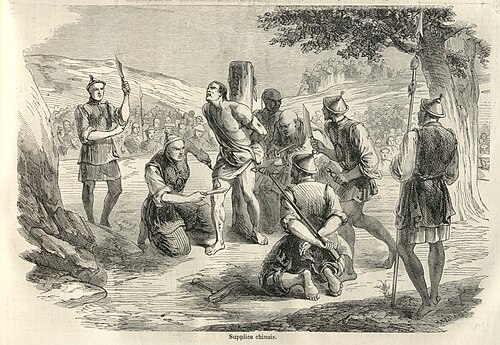
17世紀後半から少なくとも1世紀にわたり、清朝の康熙帝は、クレメンス11世が中国のカトリック教徒に対し、親族である孔子、仏陀、観音を崇拝することを禁じた後、中国でキリスト教を禁止した。[177] [178]
義和団の乱は外国人と中国人キリスト教徒を標的とした。1899年以降、義和団は山東省と華北平原で暴力行為を繰り広げ、キリスト教宣教師と中国人キリスト教徒を襲撃、殺害した。彼らは「第一の悪魔」はキリスト教宣教師であり、「第二の悪魔」はキリスト教に改宗した中国人であると決め、両者とも信仰を捨てるか追放されるか殺害されなければならなかった。[179] [180]義和団はキリスト教の教会を焼き、中国人キリスト教徒を殺害し、彼らの邪魔をする中国人役人を脅迫した。北中国全土で正統派、プロテスタント、カトリックの宣教師とその中国人教区民が虐殺されたが、一部は義和団によって、その他は政府軍と当局によって虐殺された。玉県は残忍な反外国人、反キリスト教政策を実施した。イギリスに拠点を置くバプテスト宣教協会は、1877年に山西省に布教活動を開始した。1900年、同省の宣教師全員が殺害され、改宗者120名も殺害された。[181]夏の終わりまでに、さらに多くの外国人と2,000名もの中国人キリスト教徒が同省で殺害された。ジャーナリストで歴史作家のナット・ブラントは、山西省でのキリスト教徒虐殺を「キリスト教福音主義史上最大の悲劇」と呼んでいる。[182]義和団の乱全体では、合計136名のプロテスタント宣教師と53名の子供が殺害され、47名のカトリックの司祭と修道女、3万人の中国人カトリック教徒、2,000名の中国人プロテスタント、北京にいた700名のロシア正教会のキリスト教徒のうち200~400名が殺害されたと推定されている。プロテスタントの死者達は総じて1900年の中国殉教者と呼ばれた。[183]
中国軍に所属していたイスラム教徒部隊「甘粛勇士」がキリスト教徒を攻撃した。 [184] [185] [186]
北伐の間、国民党は反外国、反西洋の感情を煽った。いくつかの教会では十字架の代わりに孫文の肖像画が掲げられ、国民党のポスターには「キリストは死んだ。なぜナショナリズムのような生きているものを崇拝しないのか」と書かれていた。外国人宣教師が攻撃され、反外国人暴動が勃発した。[187] 1926年、イスラム教徒の将軍白崇熙は広西チワン族自治区から外国人を追い出そうとし、アメリカ人、ヨーロッパ人、その他の外国人や宣教師を攻撃し、外国人にとって全般的に省を危険な場所にした。西洋人は省から逃げ出し、一部の中国人キリスト教徒も帝国主義の手先として攻撃された。[188]
1894年から1938年にかけて、多くのウイグル族のイスラム教徒がキリスト教に改宗した。彼らは殺害され、拷問され、投獄された。[189] [190] [191]キリスト教宣教師は追放された。[192]
フランス革命

フランス革命中のフランスの非キリスト教化とは、 1789年のフランス革命の開始から始まり、ロベスピエール時代のフランスのさまざまな政府によって、過去、特に王政に関連する可能性のあるあらゆるシンボルを排除するために行われた運動の一般的な説明です。
このプログラムには以下の政策が含まれていた:[193] [194] [195] : 1
- 聖職者の国外追放と多くの聖職者の死刑判決、
- 教会の閉鎖、冒涜、略奪、通りの名前から「聖人」という言葉の削除、キリスト教文化を公共の場から追放するその他の行為
- 礼拝所から彫像、プレート、その他の図像を除去すること
- 十字架、鐘、その他の礼拝の外部の標識の破壊
- 理性の崇拝やその後の至高の存在の崇拝を含む革命的および市民的崇拝の設立、
- 宗教的建造物の大規模な破壊、
- 公的および私的な礼拝と宗教教育の禁止、
- 聖職者の強制結婚、
- 聖職の強制放棄、そして
- 1793年10月21日に、宣誓しない司祭全員と彼らをかくまった人物全員を、目撃次第死刑に処するという法律が制定された。

11月10日、 パリのノートルダム大聖堂で行われた女神「理性」の祝典で最高潮に達した。
死、投獄、兵役、収入の喪失の脅迫の下、約2万人の憲政司祭が退位または叙階状を返上するよう強制され、6,000~9,000人が結婚を強要され、多くが聖職者の職務を辞めた。[195] : 10 退位した者の中には密かに民衆に奉仕した者もいた。[195] : 10 10年の終わりまでに、約3万人の司祭がフランスを去ることを強制され、去らなかった数千人が処刑された。[196]フランスの大部分は司祭の奉仕がない状態に置かれ、秘跡を奪われ、宣誓を行わない司祭はギロチンにかけられるか、フランス領ギアナに追放されることになった。[195] : 11
1793年3月、ヴァンデ人に地区の定員30万人を満たすよう義務付けた徴兵は民衆を激怒させ、民衆は「カトリック軍」(後に「王立軍」が追加された)として武器を手に取り、「何よりも、以前の司祭たちによる教区教会の再開」のために戦った。[197]
これらの虐殺により、強制退去の正式な命令が出された。また、「焦土作戦」が開始され、農場は破壊され、作物や森林は焼かれ、村は破壊された。多くの残虐行為が報告され、戦闘員の身分、政治的所属、年齢、性別を問わず、ヴァンデの住民を標的とした大量殺戮キャンペーンが行われた。[198] 1796年7月までに、ヴァンデの人口約80万人のうち、推定11万7千人から50万人が死亡した。[199] [200] [201]
日本

徳川家康は1600年に日本を統治した。豊臣秀吉同様、家康も日本でのキリスト教活動を嫌っていた。徳川幕府は1614年にカトリックを禁止することを最終的に決定し、17世紀半ばにはすべてのヨーロッパ人宣教師の追放と改宗者の処刑を要求した。これが日本における公然のキリスト教の終焉を意味した。[202]天草四郎時貞という名の若い日本人キリスト教徒の少年が率いた島原の乱は1637年に起こった。原城が陥落した後、幕府軍は推定3万7千人の反乱者と同調者の斬首を行った。天草四郎の生首は公開晒しのために長崎に運ばれ、原城の建物全体が焼き払われ、すべての死者と共に埋葬された。[203] [全文引用が必要]
日本のキリスト教徒の多くは、神父や牧師を置かずに隠れキリシタンとして2世紀にわたって信仰を守り続けました。信仰のために殺害された人々の中には、日本の殉教者として崇敬されている人もいます。
キリスト教はその後、明治時代に認められました。1890年の明治憲法では政教分離が導入され、信教の自由が認められました。
マイソール王国

マイソール王国の統治者であったイスラム教徒のティプー・スルタンは、インド南西部の海岸沿いにあるマンガロールとサウス・カナラ地区のマンガロールのカトリック教徒コミュニティに対して行動を起こした。ティプーは反キリスト教主義者として広く知られていた。彼は1784年2月24日にセリンガパタムでマンガロールのカトリック教徒を捕らえ、1799年5月4日に彼らを解放した。[204]
1784年のマンガロール条約の直後、ティプーはカナラを掌握した。[205]彼はカナラのキリスト教徒を捕らえ、彼らの財産を没収し、[206]ジャマラバード砦を経由して帝国の首都セリンガパタムに追放するよう命令を出した。[207]捕虜の中には司祭はいなかった。ミランダ神父とともに、逮捕された21人の司祭全員にゴアへの追放命令が出され、20万ルピーの罰金が科せられ、もし戻れば絞首刑にすると脅された。[要出典]ティプーは27のカトリック教会の破壊を命じた。
カナラの最初の徴税人でありスコットランドの兵士であったトーマス・マンローによると、そのうち約6万人[208] 、マンガロールのカトリック教徒全体のほぼ92パーセントが捕らえられた。7,000人が逃亡した。オブザーバーのフランシス・ブキャナンは、人口8万人のうち7万人が捕らえられ、1万人が逃亡したと報告している。彼らは西ガーツ山脈のジャングルを抜けて約4,000フィート(1,200メートル)を登ることを余儀なくされた。マンガロールからセリンガパタムまでは210マイル(340キロ)あり、行程は6週間を要した。英国政府の記録によると、セリンガパタムへの行軍中に2万人が死亡した。マンガロールのカトリック教徒とともに捕虜となったイギリス人将校ジェームズ・スカリーによれば、3万人が強制的にイスラム教に改宗させられた。若い女性や少女たちは、そこに住むイスラム教徒の妻にさせられ、後に売春婦として流通・販売された。 [209]抵抗した若い男性は、鼻、上唇、耳を切り落とされて容貌が損なわれた。[210]
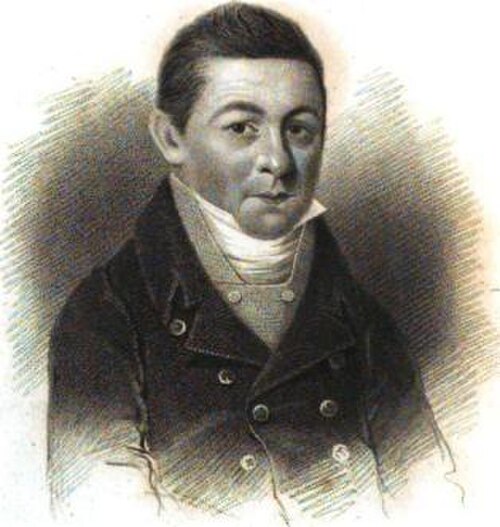
ティプー・スルタンのマラバール海岸侵攻は、マラバール海岸の聖トマス・クリスチャンコミュニティに悪影響を及ぼした。マラバールとコーチンの多くの教会が被害を受けた。数世紀にわたってカトリックの宗教教育の中心であったアンガマリーの古いシリア・ナスラニ神学校は、ティプーの兵士によって破壊された。何世紀も前の宗教的な写本の多くは永久に失われた。教会は後にコッタヤムに移転され、現在もそこに残っている。アカパランブのモル・サボール教会と神学校に付属するマーサ・マリアム教会も破壊された。ティプーの軍隊は1790年にパラヨールの教会に火を放ち、オルル教会を攻撃した。さらに、アルタット教会とアンバザッカド神学校も破壊された。この侵攻の過程で、多くの聖トマス・クリスチャンが殺害されるか、イスラム教に強制的に改宗させられた。聖トマス・クリスチャン農民が所有していたココナッツ、ビンロウ、コショウ、カシューナッツのプランテーションのほとんども、侵略軍によって無差別に破壊された。その結果、ティプーの軍隊がグルヴァユルと隣接地域に侵攻したとき、シリア人クリスチャンコミュニティはカリカットやアルタットなどの小さな町から、すでにクリスチャンが住んでいたクンナムクラム、チャラクディ、エンナカドゥ、チェッパドゥ、カンナンコデ、マヴェリッカラなどの新しい中心地へと逃げた。彼らはコーチンの統治者サクタン・タンブランとトラヴァンコールの統治者カルティカ・ティルナルによって避難所を与えられ、土地やプランテーションを与えられ、ビジネスを奨励された。トラヴァンコール在住のイギリス人マクレイ大佐も彼らを助けた。[211]
ティプーのキリスト教徒迫害は捕虜となった英国兵にも及んだ。例えば、1780年から1784年の間には、かなりの数の英国人捕虜が強制的に改宗させられた。ポリルールの戦いで惨敗した後、7,000人の英国人男性と数え切れないほどの女性がティプーによってセリンガパトナムの要塞に捕らえられた。このうち300人以上が割礼を受け、イスラム教徒の名前と衣服を与えられた。また、数人の英国連隊の太鼓打ちの少年たちはガグラ・チョリを着せられ、ナウチガールや踊り子として宮廷を楽しませられた。10年に及ぶ監禁生活が終わった後、捕虜の一人であるジェームズ・スカリーは、椅子の座り方やナイフとフォークの使い方を忘れてしまったと回想している。彼の英語は片言でぎこちなく、方言の言い回しもすべて失っていた。彼の肌は黒人の浅黒い肌のように黒くなり、さらにヨーロッパの服を着ることに嫌悪感を抱くようになった。[212]
オスマン帝国
歴史家ウォーレン・トレッドゴールドは、14世紀後半までにアナトリア半島の中心地であったビザンチン帝国に対するトルコ系イスラム教徒の容赦ない略奪の累積的な影響を強調した歴史的背景の概要を次のように述べている。[213]
トルコ人は襲撃と征服の過程で、多くのキリスト教徒を奴隷にし、一部を他のイスラム教地域に売り飛ばし、残りのキリスト教徒が信仰を実践するのを妨害した。イスラム教への改宗、トルコ人の移住、ギリシャ人の国外移住により、小アジア中央部のギリシャ人少数派はますます危険にさらされた。トルコ人が西アナトリアを制圧したとき、彼らはまず田舎を占領し、ギリシャ人を都市に追い込み、あるいはヨーロッパや島々へ追い払った。アナトリアの都市が陥落したころには、その周囲の土地はすでに大部分がトルコ人(およびイスラム教徒)のものであった。
当時の伝統的な慣習に従い、スルタン・メフメト2世はコンスタンティノープルが陥落した直後、丸3日間にわたって兵士と随行員にコンスタンティノープル市内での無制限の略奪と強奪を許可した。3日が経過すると、彼は市内の残りの物すべてを自分のものにした。[141] [214]しかし、1日目の終わりに、彼は略奪され奴隷化された都市を見て深い悲しみを感じたため、略奪をやめるべきだと宣言した。[215] [141]アヤソフィアも略奪と強奪から逃れられず、侵略者たちはここに市内の最大の財宝と貴重品があると信じていたため、特にその中心となった。[216]コンスタンティノープルの城壁の防衛が崩壊し、オスマン帝国軍が勝利を収めて市内に侵入した直後、略奪者と略奪者たちはアヤソフィアに向かい、扉を破壊して突入した。[141]
コンスタンティノープル包囲戦の期間中、市内に閉じ込められた信者たちは聖体礼儀に参加し、アヤソフィアで時課の祈りを唱えた。教会は、女性、子供、老人、病人、負傷者など、都市防衛に貢献できない多くの信者たちの安全な場所や避難場所となった。[217] [218]教会に閉じ込められた多くの信者とさらに多くの難民は、勝利した侵略者の間で分けられる戦利品となった。建物は冒涜され略奪され、教会内に避難した無力な居住者は奴隷にされた。[216]老人や病弱者/負傷者のほとんどは殺され、残り(主に10代の男性と少年)は鎖につながれて奴隷として売られた。[141]
The women of Constantinople also suffered from rape at the hands of Ottoman forces.[219] According to Barbaro, "all through the day the Turks made a great slaughter of Christians through the city". According to historian Philip Mansel, widespread persecution of the city's civilian inhabitants took place, resulting in thousands of murders and rapes, and 30,000 civilians being enslaved or forcibly deported.[220][221][222][223] George Sphrantzes says that people of both genders were raped inside Hagia Sophia.[224]
Since the time of the Austro-Turkish war (1683–1699), relations between Muslims and Christians who lived in the European provinces of the Ottoman Empire gradually deteriorated [vague] and this deterioration in interfaith relations occasionally resulted in calls for the expulsion or extermination of local Christian communities by some Muslim religious leaders. As a result of Ottoman oppression, the destruction of Churches and Monasteries, and violence against the non-Muslim civilian population, Serbian Christians and their church leaders, headed by Serbian Patriarch Arsenije III, sided with the Austrians in 1689 and again in 1737 under Serbian Patriarch Arsenije IV. In the following punitive campaigns, Ottoman forces conducted systematic atrocities against the Christian population in the Serbian regions, resulted in the Great Migrations of the Serbs.[225]
Ottoman Albania and Kosovo
Before the late 16th century, Albania's population remained overwhelmingly Christian, despite the fact that it was under Ottoman rule, unlike the more diverse populations of other regions of the Ottoman Empire, such as Bosnia, Bulgaria and Northern Greece,[226] the mountainous Albania was a frequent site of revolts against Ottoman rule, often at an enormous human cost, such as the destruction of entire villages.[227] In response, the Ottomans abandoned their usual policy of tolerating Christians in favor of a policy which was aimed at reducing the size of Albania's Christian population through Islamization, beginning in the restive Christian regions of Reka and Elbasan in 1570.[228]
The pressures which resulted from this campaign included particularly harsh economic conditions which were imposed on Albania's Christian population; while earlier taxes on the Christians were around 45 akçes a year, by the middle of the 17th century the rate had been multiplied by 27 to 780 akçes a year. Albanian elders often opted to save their clans and villages from hunger and economic ruin by advocating village-wide and region-wide conversions to Islam, with many individuals frequently continuing to practice Christianity in private.[229]
A failed Catholic rebellion in 1596 and the Albanian population's support of Austro-Hungary during the Great Turkish War,[230] and its support of the Venetians in the 1644 Venetian-Ottoman War[231] as well as the Orlov Revolt[232][233][234][235][236] were all factors which led to punitive measures in which outright force was accompanied by economic incentives depending on the region, and ended up forcing the conversion of large Christian populations to Islam in Albania. In the aftermath of the Great Turkish War, massive punitive measures were imposed on Kosovo's Catholic Albanian population and as a result of them, most members of it fled to Hungary and settled around Buda, where most of them died of disease and starvation.[230][237]
After the Orthodox Serbian population's subsequent flight from Kosovo, the pasha of Ipek (Peja/Pec) forced Albanian Catholic mountaineers to repopulate Kosovo by deporting them to Kosovo, and also forced them adopt Islam.[230][236] In the 17th and 18th centuries, South Albania also saw numerous instances of violence which was directed against those who remained Christian by local newly converted Muslims, ultimately resulting in many more conversions out of fear as well as flight to faraway lands by the Christian population.[238][239][232][240][241]
Modern era (1815 to 1989)
Communist Albania
Religion in Albania was subordinated to the interests of Marxism during the rule of the country's communist party when all religions were suppressed. This policy was justified by the communist stance of state atheism from 1967 to 1991.[242] The Agrarian Reform Law of August 1945 nationalized most of the property which belonged to religious institutions, including the estates of mosques, monasteries, religious orders, and dioceses. Many clergy and believers were tried and some of them were executed. All foreign Roman Catholic priests, monks, and nuns were expelled from Albania in 1946.[243][244] The military seized churches, cathedrals and mosques and converted them into basketball courts, movie theaters, dance halls, and the like; and members of the clergy were stripped of their titles and imprisoned.[245][246] Around 6,000 Albanians were disappeared and murdered by agents of the Communist government, and their bodies were never found or identified. Albanians continued to be imprisoned, tortured and killed for their religious practices well into 1991.[247]
Religious communities or branches of them which had their headquarters outside the country, such as the Jesuit and Franciscan orders, were henceforth ordered to terminate their activities in Albania. Religious institutions were forbidden to have anything to do with the education of the young, because that activity had been made the exclusive province of the state. All religious communities were prohibited from owning real estate and they were also prohibited from operating philanthropic and welfare institutions and hospitals. Enver Hoxha's overarching goal was the eventual destruction of all organized religions in Albania, despite some variance in his approach to it.[243][244]
Iraq
The Assyrians were subjected to another series of persecutions during the Simele massacre of 1933, with the death of approximately 3,000 Assyrian civilians in the Kingdom of Iraq at the hands of the Royal Iraqi Army.[citation needed]
In 1987, the last Iraqi census counted 1.4 million Christians.[248] They were tolerated under the secular regime of Saddam Hussein, who even made one of them, Tariq Aziz his deputy. However, Saddam Hussein's government continued to persecute the Christians on an ethnic, cultural and racial basis, because the vast majority are Mesopotamian Eastern Aramaic-speaking ethnic Assyrians (aka Chaldo-Assyrians). The Assyro-Aramaic language and script was repressed, the giving of Hebraic/Aramaic Christian names or Akkadian/Assyro-Babylonian names was forbidden (for example Tariq Aziz's real name was Michael Youhanna), and Saddam exploited religious differences between Assyrian denominations such as Chaldean Catholics, the Assyrian Church of the East, the Syriac Orthodox Church, the Assyrian Pentecostal Church and the Ancient Church of the East, in an attempt to divide them. Many Assyrians and Armenians were ethnically cleansed from their towns and villages during the al Anfal Campaign in 1988, despite the fact that this campaign was primarily directed against the Kurds.[citation needed]
Madagascar

Queen Ranavalona I (reigned 1828–1861) issued a royal edict prohibiting the practice of Christianity in Madagascar, expelled British missionaries from the island, and sought to stem the growth of conversion to Christianity within her realm. Far more, however, were punished in other ways: many were required to undergo the tangena ordeal, while others were condemned to hard labor or the confiscation of their land and property, and many of these consequently died. The tangena ordeal was commonly administered to determine the guilt or innocence of an accused person for any crime, including the practice of Christianity, and involved ingestion of the poison contained within the nut of the tangena tree (Cerbera odollam). Survivors were deemed innocent, while those who perished were assumed guilty.
In 1838, it was estimated that as many as 100,000 people in Imerina died as a result of the tangena ordeal, constituting roughly 20% of the population.[249] contributing to a strongly unfavorable view of Ranavalona's rule in historical accounts.[250] Malagasy Christians would remember this period as ny tany maizina, or "the time when the land was dark". Persecution of Christians intensified in 1840, 1849 and 1857; in 1849, deemed the worst of these years by British missionary to Madagascar W.E. Cummins (1878), 1,900 people were fined, jailed or otherwise punished in relation to their Christian faith, including 18 executions.[251]
Nazi Germany
Hitler and the Nazis received some support from certain Christian fundamentalist communities, mainly due to their common cause against the anti-religious Communists, as well as their mutual Judeophobia and antisemitism. Once in power, the Nazis moved to consolidate their power over the German churches and bring them in line with Nazi ideals. Some historians say that Hitler had a general covert plan, which some of them say existed even before the Nazis' rise to power, to destroy Christianity within the Reich, which was to be accomplished through Nazi control and subversion of the churches and it would be completed after the war.[252] The Third Reich founded its own version of Christianity which was called Positive Christianity, a Nazi version of Christianity which made major changes in the interpretation of the Bible by arguing that Jesus Christ was the son of God, but he was not a Jew, arguing that Jesus despised Jews and Judaism, and arguing that the Jews were the ones who were solely responsible for Jesus's death.[citation needed]
Outside mainstream Christianity, the Jehovah's Witnesses were targets of Nazi Persecution, for their refusal to swear allegiance to the Nazi government. In Nazi Germany in the 1930s and early 1940s, Jehovah's Witnesses refused to renounce their political neutrality and as a result, they were imprisoned in concentration camps. The Nazi government gave detained Jehovah's Witnesses the option of release if they signed a document which indicated their renunciation of their faith, their submission to state authority, and their support of the German military.[253] Historian Hans Hesse said, "Some five thousand Jehovah's Witnesses were sent to concentration camps where they alone were 'voluntary prisoners', so termed because the moment they recanted their views, they could be freed. Some lost their lives in the camps, but few renounced their faith."[254][255]
Ottoman Empire
During the modern era, relations between Muslims and Christians in the Ottoman Empire were largely shaped by broader dynamics which were related to European colonial and neo-imperialist activities in the region, dynamics which frequently (though by no means always) generated tensions between the two communities. Too often, growing European influence in the region during the nineteenth century seemed to disproportionately benefit Christians, thus, it triggered resentment on the part of many Muslims, likewise, many Muslims suspected that Christians and the European powers were plotting to weaken the Islamic world. Further exacerbating relations was the fact that Christians seemed to disproportionately benefit from efforts at reform (one aspect of which generally sought to elevate the political status of non-Muslims), likewise, the various Christian nationalist uprisings in the Empire's European territories, which often had the support of the European powers.[256]

Persecutions and forced migrations of Christian populations were induced by Ottoman forces during the 19th century in the European and Asian provinces of the Ottoman Empire. The Massacres of Badr Khan were conducted by Kurdish and Ottoman forces against the Assyrian Christian population of the Ottoman Empire between 1843 and 1847, resulting in the slaughter of more than 10,000 indigenous Assyrian civilians of the Hakkari region, with many thousands more being sold into slavery.[257][258]

On 17 October 1850 the Muslim majority began rioting against the Uniate Catholics – a minority that lived in the communities of Judayda, in the city of Aleppo.[259]
During the Bulgarian Uprising (1876) against Ottoman rule, and the Russo-Turkish War (1877–1878), the persecution of the Bulgarian Christian population was conducted by Ottoman soldiers. The principal locations were Panagurishte, Perushtitza, and Bratzigovo.[260] Over 15,000 non-combatant Bulgarian civilians were killed by the Ottoman army between 1876 and 1878, with the worst single instance being the Batak massacre.[260][261]: 228 During the war, whole cities including the largest Bulgarian one (Stara Zagora) were destroyed and most of their inhabitants were killed, the rest being expelled or enslaved. The atrocities included impaling and grilling people alive.[262] Similar attacks were undertaken by Ottoman troops against Serbian Christians during the Serbian-Turkish War (1876–1878).


The abolition of jizya and emancipation of formerly dhimmi subjects was one of the most embittering stipulations the Ottoman Empire had to accept to end the Crimean War in 1856. Then, "for the first time since 1453, church bells were permitted to ring... in Constantinople," writes M. J. Akbar. "Many Muslims declared it a day of mourning." Indeed, because superior social standing was from the start one of the advantages of conversion to Islam, resentful Muslim mobs rioted and hounded Christians all over the empire. In 1860 up to 30,000 Christians were massacred in the Levant alone.[264] Mark Twain recounts what took place in the levant:[265]
Men, women and children were butchered indiscriminately and left to rot by hundreds all through the Christian quarter... the stench was dreadful. All the Christians who could get away fled from the city, and the Mohammedans would not defile their hands by burying the 'infidel dogs.' The thirst for blood extended to the high lands of Hermon and Anti-Lebanon, and in a short time twenty-five thousand more Christians were massacred.
Between 1894 and 1896 a series of ethno-religiously motivated Anti-Christian pogroms known as the Hamidian massacres were conducted against the ancient Armenian and Assyrian Christian populations by the forces of the Ottoman Empire.[266] The motives for these massacres were an attempt to reassert Pan-Islamism in the Ottoman Empire, resentment of the comparative wealth of the ancient indigenous Christian communities, and a fear that they would attempt to secede from the tottering Ottoman Empire.[267] The massacres mainly took place in what is today southeastern Turkey, northeastern Syria and northern Iraq. Assyrians and Armenians were massacred in Diyarbakir, Hasankeyef, Sivas and other parts of Anatolia and northern Mesopotamia, by Sultan Abdul Hamid II. The death toll is estimated to have been as high as 325,000 people,[268][269] with a further 546,000 Armenians and Assyrians made destitute by forced deportations of survivors from cities, and the destruction or theft of almost 2500 of their farmsteads towns and villages. Hundreds of churches and monasteries were also destroyed or forcibly converted into mosques.[270] These attacks caused the death of over thousands of Assyrians and the forced "Ottomanisation" of the inhabitants of 245 villages. The Ottoman troops looted the remains of the Assyrian settlements and these were later stolen and occupied by south-east Anatolian tribes. Unarmed Assyrian women and children were raped, tortured and murdered.[271] According to H. Aboona, the independence of the Assyrians was destroyed not directly by the Turks but by their neighbours under Ottoman auspices.[272]
The Adana massacre occurred in the Adana Vilayet of the Ottoman Empire in April 1909. A massacre of Armenian and Assyrian Christians in the city of Adana and its surrounds amidst the 31 March Incident led to a series of anti-Christian pogroms throughout the province.[273] Reports estimated that the Adana Province massacres resulted in the death of as many as 30,000 Armenians and 1,500 Assyrians.[274][275][276]
Between 1915 and 1921 the Young Turks government of the collapsing Ottoman Empire persecuted Eastern Christian populations in Anatolia, Persia, Northern Mesopotamia and The Levant. The onslaught by the Ottoman army, which included Kurdish, Arab and Circassian irregulars resulted in an estimated 3.4 million deaths, divided between roughly 1.5 million Armenian Christians,[277][278] 0.75 million Assyrian Christians, 0.90 million Greek Orthodox Christians and 0.25 million Maronite Christians (see Great Famine of Mount Lebanon);[279] groups of Georgian Christians were also killed. The massive ethnoreligious cleansing expelled from the empire or killed the Armenians and the Bulgarians who had not converted to Islam, and it came to be known as the Armenian genocide,[280][281] Assyrian genocide,[282] Greek genocide.[154] and Great Famine of Mount Lebanon.[283][284] which accounted for the deaths of Armenian, Assyrian, Greek and Maronite Christians, and the deportation and destitution of many more. The Genocide led to the devastation of ancient indigenous Christian populations who had existed in the region for thousands of years.[285][286][287][288]
Benny Morris and Dror Ze'evi argue that the Armenian genocide and other contemporaneous persecution of Christians in the Ottoman Empire (Greek genocide, and Assyrian genocide) constitute an extermination campaign, or genocide, carried out by the Ottoman Empire against its Christian subjects.[289][290][2]
In the aftermath of the Sheikh Said rebellion, the Syriac Orthodox Church and the Assyrian Church of the East were subjected to harassment by Turkish authorities, on the grounds that some Assyrians allegedly collaborated with the rebelling Kurds.[291] Consequently, mass deportations took place and Assyrian Patriarch Mar Ignatius Elias III was expelled from the Mor Hananyo Monastery which was turned into a Turkish barrack. The patriarchal seat was then temporarily transferred to Homs.
Soviet Union
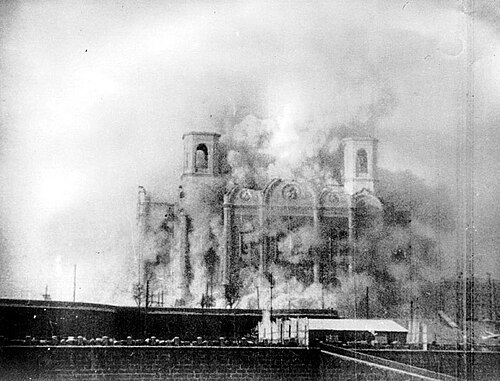
After the Russian Revolution of 1917, the Bolsheviks undertook a massive program to remove the influence of the Russian Orthodox Church from the government, outlawed antisemitism in society, and promoted atheism. Tens of thousands of churches were destroyed or they were converted to buildings which were used for other purposes, and many members of the clergy were murdered, publicly executed and imprisoned for what the government termed "anti-government activities". An extensive educational and propaganda campaign was launched to convince people, especially children and youths, to abandon their religious beliefs. This persecution resulted in the intentional murder of 500,000 Orthodox followers by the government of the Soviet Union during the 20th century.[293] In the first five years after the Bolshevik revolution, 28 bishops and 1,200 priests were executed.[294]
The state established atheism as the only scientific truth.[295][296][297][298] Soviet authorities forbade the criticism of atheism and agnosticism until 1936 or of the state's anti-religious policies; such criticism could lead to forced retirement.[299][300][301] Militant atheism became central to the ideology of the Communist Party of the Soviet Union and a high priority policy of all Soviet leaders.[302] Christopher Marsh, a professor at the Baylor University writes that "Tracing the social nature of religion from Schleiermacher and Feurbach to Marx, Engles, and Lenin...the idea of religion as a social product evolved to the point of policies aimed at the forced conversion of believers to atheism."[303]
Under the doctrine of state atheism in the Soviet Union, a "government-sponsored program of forced conversion to atheism" was conducted by the Communists.[304][305][306] The Communist Party destroyed churches, mosques and temples, ridiculed, harassed, incarcerated and executed religious leaders, flooded the schools and media with anti-religious teachings, and it introduced a belief system called "scientific atheism", with its own rituals, promises and proselytizers.[307][308] Many priests were killed and imprisoned; thousands of churches were closed. In 1925 the government founded the League of Militant Atheists to intensify the persecution.[309] The League of Militant Atheists was also a "nominally independent organization established by the Communist Party to promote atheism".[310]
The Communist regime confiscated church property, ridiculed religion, harassed believers, and propagated atheism in the schools. Actions against particular religions, however, were determined by State interests, and most organized religions were never outlawed. It is estimated that 500,000 Russian Orthodox Christians were martyred in the gulags by the Soviet government, excluding the members of other Christian denominations who were also tortured or killed.[293]
The main target of the anti-religious campaign in the 1920s and 1930s was the Russian Orthodox Church, which had the largest number of faithful worshippers. A very large segment of its clergy, and many of its believers, were shot or sent to labor camps. Theological schools were closed, and church publications were prohibited. In the period between 1927 and 1940, the number of Orthodox Churches in the Russian Republic fell from 29,584 to less than 500. Between 1917 and 1940, 130,000 Orthodox priests were arrested. The widespread persecution and internecine disputes within the church hierarchy lead to the seat of Patriarch of Moscow being vacant from 1925 to 1943.
After Operation Barbarossa, Nazi Germany's invasion of the Soviet Union in 1941, Joseph Stalin revived the Russian Orthodox Church in order to intensify the Soviet population's patriotic support of the war effort. By 1957, about 22,000 Russian Orthodox churches had become active. But in 1959, Nikita Khrushchev initiated his own campaign against the Russian Orthodox Church and forced about 12,000 churches to close. By 1985, fewer than 7,000 churches remained active.[294]
In the Soviet Union, in addition to the methodical closure and destruction of churches, the charitable and social work which was formerly done by ecclesiastical authorities was taken over by the state. As with all private property, Church owned property was confiscated and converted to public use by the state. The few places of worship which were left to the Church were legally viewed as state property which the government permitted the church to use. After the advent of state funded universal education, the Church was not permitted to carry on educational, instructional activity for children. For adults, only training for church-related occupations was allowed. With the exception of sermons which could be delivered during the celebration of the divine liturgy, it could not instruct the faithful nor could it evangelize the youth. Catechism classes, religious schools, study groups, Sunday schools and religious publications were all declared illegal and banned. This caused many religious tracts to be circulated as illegal literature or samizdat.[195] Even after the death of Stalin in 1953, the persecution continued, and it did not end until the dissolution of the Soviet Union in 1991. Since the fall of the Soviet Union, the Russian Orthodox Church has recognized a number of New Martyrs as saints, some of whom were executed during the Mass operations of the NKVD under directives like NKVD Order No. 00447.
Both before and after the October Revolution of 7 November 1917 (25 October Old Calendar), there was a movement within the Soviet Union which sought to unite all of the people of the world under Communist rule (see Communist International). This movement spread to the Eastern European bloc countries as well as the Balkan States. Since the populations of some of these Slavic countries tied their ethnic heritages to their ethnic churches, the people and their churches were both targeted for ethnic and political genocide by the Soviets and their form of State atheism.[311][312] The Soviets' official religious stance was one of "religious freedom or tolerance", though the state established atheism as the only scientific truth (see also the Soviet or committee of the All-Union Society for the Dissemination of Scientific and Political Knowledge or Znanie which was until 1947 called The League of the Militant Godless and various Intelligentsia groups).[297][298][313] Criticism of atheism was strictly forbidden and sometimes, it resulted in imprisonment.[314][315][316][317] Some of the more high-profile individuals who were executed include Metropolitan Benjamin of Petrograd, priest and scientist Pavel Florensky.
According to James M. Nelson a psychology professor at East Carolina University, the total number of Christian victims under the Soviet regime may have been around 12 million,[318] while Todd Johnson and Gina Zurlo of Gordon-Conwell Theological Seminary at Boston University estimate a figure of 15–20 million.[319][unreliable source?]
Spain
The Second Spanish Republic, proclaimed in 1931, attempted to establish a regime with a separation between State and Church as it had happened in France (1905). When established, the Republic passed legislation which prevented the Church from conducting educational activities. A process of political polarisation had characterised the Spanish Second Republic, party divisions became increasingly embittered and questions of religious identity came to assume major political significance. The existence of different Church institutions was an illustration of the situation which resulted from the proclamation which denounced the 2nd Republic as an anti-Catholic, Masonic, Jewish, and Communist internationalist conspiracy which heralded a clash between God and atheism, chaos and harmony, Good and Evil.[320]: 201–202 The Church's high-ranking officials like Isidro Goma, bishop of Tudela, reminded their Christian subjects of their obligation to vote "for the righteous", and their priests of their obligation to "educate the consciences."[320]: 220 In the Asturian miners' strike of 1934, part of the Revolution of 1934, 34 Catholic priests were massacred and churches were systematically burned.[321] Anticlerical opinion accused the Catholic priesthood and religious orders of hypocrisy: clerics were guilty of taking up arms against the people, of exploiting others for the sake of wealth, and of sexual immorality all while claiming the moral authority of peacefulness, poverty, and chastity.[321]
Since the early stages of the Second Republic, far-right forces which were imbued with an ultra-Catholic spirit attempted to overthrow the Republic. Carlists, Africanistas, and Catholic theologians fostered an atmosphere of social and racial hatred in their speeches and writings.[322]: 44–45 The Catholic Church endorsed the rebellion which was led by the fascist Francisco Franco, and Pope Pius XI expressed sympathy for the Nationalist side during the Spanish Civil War.[321] The Catholic authorities described Franco's war as a "crusade" against the Second Republic, and later the Collective Letter of the Spanish Bishops, 1937 appeared, justifying Franco's attack on the Republic.[321] A similar approach is attested in 1912, when the bishop of Almería José Ignacio de Urbina (founder of the National Anti-Masonic and Anti-Semitic League) announced "a decisive battle that must be unleashed" between the "light" and "darkness".[322]: 4 Though the official declaration of the "crusade" followed the Republican persecution of Catholic clerics, the Catholic Church was already predisposed towards Franco's position, because it was seen as the "perfect ally of fascism" while it opposed the anticlerical policies of the Second Republic.[321] The 1936 anticlerical persecution has been seen as "final phase of a long war between clericalism and anticlericalism"[323] and "fully consistent with a Spanish history of popular anticlericalism and anticlerical populism".[321]
Stanley Payne suggested that the persecution of right-wingers and people who were associated with the Catholic church both before and at the beginning of the Spanish Civil War involved the murder of priests and other clergy, as well as thousands of lay people, by sections of nearly all leftist groups, while a killing spree was also unleashed across the Nationalist zone.[324] During the Spanish Civil War of 1936–1939, and especially during the early months of the conflict, individual clergymen and entire religious communities were executed by leftists, some of whom were communists and anarchists. The death toll of the clergy alone included 13 bishops, 4,172 diocesan priests and seminarians, 2,364 monks and friars and 283 nuns, reaching a total of 6,832 clerical victims.[321] The main perpetrators of the Red Terror were members of the anarchist Federación Anarquista Ibérica, the Confederación Nacional del Trabajo, and the Trotskyist Workers' Party of Marxist Unification.[321] These organizations distanced themselves from the violence, condemned those who were responsible for it or characterized the killings as mob reprisals for acts of violence which had been perpetrated by the clerics themselves, an explanation which was readily accepted by the public.[321]
In addition to the murder of both the clergy and the faithful, the destruction of churches and the desecration of sacred sites and objects was also widespread. On the night of 19 July 1936 alone, some fifty churches were burned.[325]: 45 In Barcelona, out of the 58 churches, only the cathedral was spared, and similar desecrations occurred almost everywhere in Republican Spain.[325]: 46
Two exceptions were Biscay and Gipuzkoa where the Christian Democratic Basque Nationalist Party, after some hesitation, supported the Republic and halted the persecution of Catholics in areas which were held by the Basque Government. All other Catholic churches which were located in the Republican zone were closed. The desecration was not limited to Catholic churches, because synagogues and Protestant churches were also pillaged and closed, but some small Protestant churches were spared. The rising Franco's regime would keep Protestant churches and synagogues closed, as he only permitted the Catholic Church.[326]: 215
Payne called the terror the "most extensive and violent persecution of Catholicism in Western History, in some way even more intense than that of the French Revolution."[326]: 13 The persecution drove Catholics to the side of the Nationalists, even more of them sided with the Nationalists than would have been expected, because they defended their religious interests and survival.[326]: 13
The Roman Catholic priests who were killed during the Red Terror are considered "Martyrs of the Spanish Civil War", though the priests who were executed by the fascists are not counted among them. A group known as the "498 Spanish Martyrs" were beatified by the Roman Catholic Church's Pope Benedict XVI in 2007. The history of the Red Terror has been obscured by scholarly inattention and the "embarrassing partiality" of ecclesiastical historians.[321] Some of the numerous non-fascists who were persecuted during Franco's White Terror were Protestants, because the fascists accused them of being associated with Freemasonry, and the persecution which they were subjected to during Franco's White Terror was much more intense than the persecution which they were subjected to during the Red Terror.[327][328]
United States
The Latter Day Saints, (Mormons) have been persecuted since their founding in the 1830s. The persecution of the Mormons drove them from New York and Ohio to Missouri, where they continued to be subjected to violent attacks. In 1838, Missouri Gov. Lilburn Boggs declared that Mormons had made war on the state of Missouri, so they "must be treated as enemies, and must be exterminated or driven from the state"[329] At least 10,000 were expelled from the State. In the most violent altercation which occurred at that time, the Haun's Mill massacre, 17 Mormons were murdered by an anti-Mormon mob and 13 other Mormons were wounded.[330] The Extermination Order which was signed by Governor Boggs was not formally invalidated until 25 June 1976, 137 years after being signed.
The Mormons subsequently fled to Nauvoo, Illinois, where hostilities again escalated. In Carthage, Ill., where Joseph Smith was being held on the charge of treason, a mob stormed the jail and killed him. Smith's brother, Hyrum, was also killed. After a succession crisis, most united under Brigham Young, who organized an evacuation from the United States after the federal government refused to protect them.[331] 70,000 Mormon pioneers crossed the Great Plains to settle in the Salt Lake Valley and surrounding areas. After the Mexican–American War, the area became the US territory of Utah. Over the next 63 years, several actions by the federal government were directed against Mormons in the Mormon Corridor, including the Utah War, the Morrill Anti-Bigamy Act, the Poland Act, Reynolds v. United States, the Edmunds Act, the Edmunds–Tucker Act, and the Reed Smoot hearings.
.jpg/500px-KKK_-_St_Patricks_Dau_(cr).jpg)
The second iteration of the Ku Klux Klan, founded in 1915 and launched in the 1920s, persecuted Catholics in both the United States and Canada. As stated in its official rhetoric which focused on the threat of the Catholic Church, the Klan was motivated by anti-Catholicism and American nativism.[332] Its appeal was exclusively directed towards white Anglo-Saxon Protestants; it opposed Jews, blacks, Catholics, and newly arriving Southern and Eastern European immigrants such as Italians, Russians, and Lithuanians, many of whom were either Jewish or Catholic.[333]
Warsaw Pact

Across Eastern Europe following World War II, the parts of the Nazi Empire which were conquered by the Soviet Red Army and Yugoslavia became one-party Communist states and the project of coercive conversion to atheism continued.[335][336] The Soviet Union ended its war time truce with the Russian Orthodox Church, and extended its persecutions to the newly Communist Eastern bloc: "In Poland, Hungary, Lithuania and other Eastern European countries, Catholic leaders who were unwilling to be silent were denounced, publicly humiliated or imprisoned by the Communists. Leaders of the national Orthodox Churches in Romania and Bulgaria had to be cautious and submissive", wrote Geoffrey Blainey.[337] While the churches were generally not persecuted as harshly as they had been in the USSR, nearly all of their schools and many of their churches were closed, and they lost their formally prominent roles in public life. Children were taught atheism, and clergy were imprisoned by the thousands.[338] In the Eastern Bloc, Christian churches, along with Jewish synagogues and Islamic mosques were forcibly "converted into museums of atheism."[315][316]
Along with executions, some other actions which were taken against Orthodox priests and believers included torture, being sent to prison camps, labour camps or mental hospitals.[195][339][340]
Current situation (1989 to the present)
In 2010, Pope Benedict XVI claimed that Christians were the most persecuted religious group in the contemporary world.[341] In a speech to the United Nations Human Rights Council's 23rd session in May 2013, then-Permanent Observer of the Holy See to the United Nations in Geneva, Silvano Maria Tomasi claimed that "an estimate of more than 100,000 Christians are violently killed because of some relation to their faith every year".[342] This number was supported by the Center for the Study of Global Christianity at the evangelical Gordon–Conwell Theological Seminary in Massachusetts, which published a statement in December 2016 stating that "between 2005 and 2015 there were 900,000 Christian martyrs worldwide – an average of 90,000 per year."[343] Tomasi's radio address to the council called the figures both a "shocking conclusion" and "credible research".[342] The accuracy of this number, based on population estimates in a 1982 edition of the World Christian Encyclopedia, is disputed.[344][345] Almost all died in wars in the Democratic Republic of the Congo, where all sides of the Second Congo War and subsequent conflicts are majority-Christian, and previous years included victims of the Rwandan genocide, an ethnic conflict and a part of the First Congo War where again most belligerents were Christian.[344] As a result, the BBC News Magazine cautioned that "when you hear that 100,000 Christians are dying for their faith, you need to keep in mind that the vast majority – 90,000 – are people who were killed in DR Congo."[344]
Klaus Wetzel, an internationally recognized expert on religious persecution, states that this discrepancy in numbers is due to the contradiction between the definition used by Gordon-Conwell defining Christian martyrdom in the widest possible sense, and the more sociological and political definition Wetzel and Open Doors and others such as The International Institute for Religious Freedom use, which is: 'those who are killed, who would not have been killed, if they had not been Christians.'[345]
Numbers are affected by several important factors, for example, population distribution is a factor. The United States submits an annual report on religious freedom and persecution to the Congress which recognizes restrictions on religious freedom, ranging from low to very high, in three-quarters of the world's countries including the United States. In approximatrly one quarter of the world's countries, there are high and very high restrictions and oppression, and some of those countries, such as China and India, Indonesia and Pakistan are among those with the highest populations.[346] About three-quarters of the world's population live in the most oppressive countries in the world.[345]
Numbers of martyrs are especially difficult to accurately identify, because religious persecution often occurs in conjunction with wider conflicts. This fact complicates the identification of acts of persecution because they may be politically rather than religiously motivated.[347]: xii For example, the U.S. Department of State identified 1.4 million Christians in Iraq in 1991 when the Gulf War began. By 2010, the number of Christians dropped to 700,000 and by 2011 it was estimated that there were between 450,000 and 200,000 Christians left in Iraq.[347]: 135 During that period, actions against Christians included the burning and bombing of churches, the bombing of Christian owned businesses and homes, kidnapping, murder, demands for protection money, and anti-Christian rhetoric in the media with those responsible saying that they wanted to rid the country of its Christians.[347]: 135–138
A report which was released by the UK's Secretary of State for Foreign and Commonwealth Affairs and prepared by Philip Mounstephen, the Bishop of Truro, in July 2019, and a report on worldwide restrictions on religious freedom by the PEW organization, both stated that the number of countries where Christians were suffering as a result of religious persecution was increasing, rising from 125 in 2015 to 144 as of 2018.[348][349][350][note 3] PEW has published a caution concerning the interpretation of its numbers: "The Center's recent report ... does not attempt to estimate the number of victims in each country... it does not speak to the intensity of harassment..."[351]
The Internationale Gesellschaft für Menschenrechte[352] – the International Society for Human Rights – in Frankfurt, Germany, is a non-governmental organization with 30,000 members from 38 countries who monitor human rights. In September 2009, then chairman Martin Lessenthin,[353] issued a report estimating that 80% of acts of religious persecution around the world were aimed at Christians at that time.[354][355]
W. J. Blumenfeld says that Christianity enjoys dominant group privilege in the US and some other Western societies.[356] Christianity is, numerically, the largest religion in the U.S. according to PEW, with 43% of Americans identifying themselves as Protestants and one in five (20%) of Americans identifying themselves as Catholics.[357] It remains the largest religion in the world.[358] Roughly two-thirds of the world's countries have Christian majorities.[359] Due to the large number of Christian majority countries, differing groups of Christians are harassed and persecuted in Christian countries such as Eritrea[360] and Mexico[361] more often than in most Muslim countries, though not in greater numbers.[359]
According to PEW, the Middle East and North Africa have experienced the highest rates of restrictions on non-favorite religions for the last decade, being higher than any other region, each year, from 2007 to 2017.[362] But it's the gap between this region and other regions where government favoritism is concerned that is particularly large: "the average country in this region scores nearly twice as high on measures of government favoritism of one religion as the average country in any other region".[362]
The United States Commission on International Religious Freedom, a bipartisan independent federal agency which was created by the United States Congress in 1998, published a study of the predominantly Muslim countries which are located in the Middle Eastern/North African region. It concludes that, of the world's 1.3 billion Muslims, "28 percent live in ten countries that declare themselves to be Islamic states. In addition, there are 12 predominantly Muslim countries that have chosen to declare that Islam is the official state religion ... Taken together, the 22 states that declare that Islam is the official religion account for 58 percent – or just over 600 million – of the 1 billion Muslims living in 44 predominantly Muslim countries.[363]: 6
"Several countries with constitutions establishing Islam as the state religion either do not contain guarantees of the right to freedom of religion or belief, or they contain guarantees that, on their face, do not compare favorably with all aspects of international [human rights] standards."[363]: 16 All of these countries defer to religious authorities or doctrines on legal issues in some way.[362] For example, "when one spouse is Muslim and the other has a different religion (such as Coptic Christianity), or if spouses are members of different Christian denominations, courts still defer to Islamic family law."[362] Grim and Finke say their studies indicate that: "When religious freedoms are denied through the regulation of religious profession or practice, violent religious persecution and conflict increase."[364]: 6
In its annual report, the USCIRF lists 14 "Countries of Particular Concern" with regard to religious rights and it also lists 15 additional countries which it has recommended be placed on the U.S. Department of State's Special Watch List (SWL), a lesser category than the CPC designation.[11] Of these 29 countries, 17 of them are predominantly Muslim countries, mostly located in the Middle East and North Africa, representing less than half of the 44 predominantly Muslim countries in the world, the rest of which are either secular or have not declared any state religion. Of the remaining countries, two of them have populations which are almost equally Christian and Muslim, both of them have official state versions of Christianity and Islam, four other countries are predominantly Christian countries where adherents of non-official or non-favored varieties of Christianity and adherents of other religions are persecuted, one country is predominantly Buddhist, and one country is predominantly Hindu. Eight of these countries are either current or former communist states such as China, Cuba, Russia and Vietnam. Twenty four of the USCIRF's twenty nine countries are also included on Open Doors Worldwide Watch list because they are especially dangerous for Christians.[365]
Eleven predominantly Muslim countries are ruled by governments which proclaim that their states are secular. "These countries account for nearly 140 million Muslims, or 13.5 percent of the 1 billion Muslims living in predominantly Muslim countries. The 11 remaining predominantly Muslim countries have not made any constitutional declaration concerning the Islamic or secular nature of the state, and have not made Islam the official state religion. This group of countries, which includes Indonesia, the world's largest Muslim country, accounts for over 250 million Muslims".[363]: 6 This demonstrates that the majority of the world's Muslim population live in countries that either proclaim the state to be secular, or that make no pronouncements concerning Islam as the official state religion.[363]: 2
See also

- Anti-Christian sentiment
- Criticism of Christianity
- Category:Critics of Christianity
- Hindu terrorism
- Christian martyrs
- Christian persecution complex
- Persecution of Hindus
- Persecution of traditional African religions
- Sign of contradiction
Notes
- ^ Augustine, Civitate dei, XVIII.50: Latin: Proinde ne illud quidem temere puto esse dicendum siue credendum, quod nonnullis uisum est uel uidetur, non-amplius ecclesiam passuram persecutiones usque ad tempus Antichristi, quam quot iam passa est, id est decem, ut undecima eademque nouissima sit ab Antichristo. Primam quippe computant a Nerone quae facta est, secundam a Domitiano, a Traiano tertiam, quartam ab Antonino, a Seuero quintam, sextam a Maximino, a Decio septimam, octauam a Valeriano, ab Aureliano nonam, decimam a Diocletiano et Maximiano. Plagas enim Aegyptiorum, quoniam decem fuerunt, antequam exire inde inciperet populus Dei, putant ad hunc intellectum esse referendas, ut nouissima Antichristi persecutio similis uideatur undecimae plagae, qua Aegyptii, dum hostiliter sequerentur Hebraeos, in mari Rubro populo Dei per siccum transeunte perierunt.
- ^ (Koinē Greek: πρὸ δὲ τούτων πάντων ἐπιβαλοῦσιν ἐφ’ ὑμᾶς τὰς χεῖρας αὐτῶν καὶ διώξουσιν, παραδιδόντες εἰς τὰς συναγωγὰς καὶ φυλακάς, ἀπαγομένους ἐπὶ βασιλεῖς καὶ ἡγεμόνας ἕνεκεν τοῦ ὀνόματός μου·)
- ^ PEW measured government restrictions and social hostilities: laws and policies restricting religious freedom (such as requiring religious groups to register in order to operate) and government favoritism of religious groups (through the funding of religious education, property and clergy, for example); government limits on religious activities and government harassment of religious groups. One category of social hostilities has substantially increased – hostilities which are related to religious norms (for example, the harassment of women for violating religious dress codes). Two other types of social hostility, harassment by individuals and social groups (ranging from small gangs to mob violence) and religious violence by organized groups (including neo-Nazi groups such as the Nordic Resistance Movement and Islamist groups like Boko Haram), have risen more modestly. A fourth category of social hostility is interreligious tension and violence (for instance, sectarian or communal clashes between Hindus and Muslims in India).
- ^ French archaeology has shown the north African landscape of this time period became "covered with a white robe of churches" with Catholics and Donatists building multiple churches with granaries to feed the poor as they competed for the loyalty of the people.[61]
References
- ^ Bulut, Uzay (30 August 2024). "Turkey: Ongoing Violations against Greek Christians". The European Conservative. Budapest, Brussels, Rome, Vienna: Center for European Renewal. ISSN 2590-2008. Archived from the original on 30 August 2024. Retrieved 30 August 2024.
- ^ a b Morris, Benny; Ze'evi, Dror (4 November 2021). "Then Came the Chance the Turks Have Been Waiting For: To Get Rid of Christians Once and for All". Haaretz. Tel Aviv. Archived from the original on 4 November 2021. Retrieved 5 November 2021.
- ^ Morris, Benny; Ze'evi, Dror (2019). The Thirty-Year Genocide: Turkey's Destruction of Its Christian Minorities, 1894–1924. Cambridge, Massachusetts: Harvard University Press. pp. 3–5. ISBN 978-0-674-24008-7.
- ^ Gutman, David (2019). "The thirty year genocide: Turkey's destruction of its Christian minorities, 1894–1924". Turkish Studies. 21 (1). London and New York: Routledge on behalf of the Global Research in International Affairs Center: 1–3. doi:10.1080/14683849.2019.1644170. eISSN 1743-9663. ISSN 1468-3849. S2CID 201424062.
- ^ Smith, Roger W. (Spring 2015). "Introduction: The Ottoman Genocides of Armenians, Assyrians, and Greeks". Genocide Studies International. 9 (1). Toronto: University of Toronto Press: 1–9. doi:10.3138/GSI.9.1.01. ISSN 2291-1855. JSTOR 26986011. S2CID 154145301.
- ^ Roshwald, Aviel (2013). "Part II. The Emergence of Nationalism: Politics and Power – Nationalism in the Middle East, 1876–1945". In Breuilly, John (ed.). The Oxford Handbook of the History of Nationalism. Oxford and New York: Oxford University Press. pp. 220–241. doi:10.1093/oxfordhb/9780199209194.013.0011. ISBN 9780191750304.
- ^ Üngör, Uğur Ümit (June 2008). "Seeing like a nation-state: Young Turk social engineering in Eastern Turkey, 1913–50". Journal of Genocide Research. 10 (1). London and New York: Routledge: 15–39. doi:10.1080/14623520701850278. ISSN 1469-9494. OCLC 260038904. S2CID 71551858.
- ^ İçduygu, Ahmet; Toktaş, Şule; Ali Soner, B. (February 2008). "The politics of population in a nation-building process: Emigration of non-Muslims from Turkey". Ethnic and Racial Studies. 31 (2). London and New York: Routledge: 358–389. doi:10.1080/01419870701491937. ISSN 1466-4356. OCLC 40348219. S2CID 143541451. Archived from the original on 25 March 2020. Retrieved 2 August 2020 – via Academia.edu.
- ^ [1][2][3][4][5][6][7][8]
- ^ PEW (19 December 2011). "Living as Majorities and Minorities". Global Christianity – A Report on the Size and Distribution of the World's Christian Population. Pew Research Center Religion and Public Life. p. 3. Retrieved 2 April 2021.
If all these Christians were in a single country, it would have the second-largest Christian population in the world, after the United States.
- ^ a b c d "Annual Report 2020" (PDF). United States Commission on International Religious Freedom. pp. 1, 11.
- ^ a b c d Wand 1990, p. 13.
- ^ Burke, John J. (1993) [1899]. Characteristics of the Early Church. M.H. Wiltzius. p. 101. ISBN 978-1-4086-5991-5.
- ^ Lim, Kar Yong (2009). The Sufferings of Christ Are Abundant In Us': A Narrative Dynamics Investigation of Paul's Sufferings in 2 Corinthians. A&C Black. pp. 214–227. ISBN 9780567635143.
- ^ Setzer, Claudia (1994). Jewish Responses to Early Christians: History and Polemics, 30–150 C.E. Minneapolis: Fortress.
- ^ Lieu, Judith (2003). "The Synagogue and the Separation of the Christians" (PDF). Coniectanea Biblica. New Testament series 39: 189–207.
- ^ Schäfer, Peter (2014). The Jewish Jesus: How Judaism and Christianity Shaped Each Other (illustrated, reprint ed.). Princeton University Press. p. 18. ISBN 9780691160955.
- ^ von Harnack, Adolf (1908). Moffatt, James (ed.). The Mission and Expansion of Christianity in the First Three Centuries (2 ed.). Williams and Norgate. pp. 103–104.
- ^ a b Katz, Steven T. (1984). "Issues in the Separation of Judaism and Christianity after 70 C.E.: A Reconsideration". Journal of Biblical Literature. 103 (1): 43–44. doi:10.2307/3260313. JSTOR 3260313.
- ^ Shaw, Brent (14 August 2015). "The Myth of the Neronian Persecution". The Journal of Roman Studies. 105: 73–100. doi:10.1017/S0075435815000982. S2CID 162564651.
- ^ a b Carrier, Richard (2 July 2014). "The prospect of a Christian interpolation in Tacitus, Annals 15.44". Vigiliae Christianae. 68 (3). Brill Academic Publishers: 264–283. doi:10.1163/15700720-12341171.
- ^ Ben Witherington III, Revelation, Cambridge 2003, p177
- ^ Tertullian, Adversus Gnosticos Scorpiace, Book 15, Chapters 2-5
- ^ Lactantius, De mortibus persecutorum, Book 2, Chapters 4-6
- ^ Sulpicius Severus, Chronicorum, Book 3, Chapter 29.
- ^ Orosius, Historiarum, Book 7, Chapters 7-10
- ^ Stark, Rodney (1997). The Rise of Christianity How the Obscure, Marginal Jesus Movement Became the Dominant Religious Force in the Western World in a Few Centuries. HarperCollins. p. 7. ISBN 9780060677015.
- ^ Guy, Laurie (28 October 2011). Introducing Early Christianity: A Topical Survey of Its Life, Beliefs Practices. InterVarsity Press. p. 50. ISBN 978-0-8308-3942-1.
- ^ Green, Bernard (2010). Christianity in Ancient Rome The First Three Centuries. Bloomsbury Academic. p. 120. ISBN 9780567032508.
- ^ González 2010, p. 97.
- ^ Papandrea, James L. (2011). The Wedding of the Lamb A Historical Approach to the Book of Revelation. Wipf and Stock Publishers. p. 38. ISBN 9781498273428.
- ^ a b c Scarre 1995, p. 170
- ^ "IRENAEUS – The mass slaughter of Lyon's Christians". Christian History Project.
- ^ Christopher Reyes (2010). In His Name. California: AuthorHouse. p.33
- ^ Eusebius. "Church History". Book 6, Chapter 28. New Advent. Retrieved 25 April 2014.
- ^ Papandrea, James L. (23 January 2012). Reading the Early Church Fathers: From the Didache to Nicaea. Paulist Press. ISBN 978-0809147519.
- ^ Graeme Clark (2005). "Third-Century Christianity". In Alan K. Bowman; Peter Garnsey; Averil Cameron (eds.). Cambridge Ancient History. Vol. 12: The Crisis of Empire, A.D. 193–337 (2nd ed.). New York: Cambridge University Press. p. 623.
- ^ Justin, I Apology 31, 6; Eusebius, Chronicle, seventeenth year of the Emperor Hadrian. See: Bourgel, Jonathan, ″The Jewish-Christians in the storm of the Bar Kokhba Revolt″, in: From One Identity to Another: The Mother Church of Jerusalem Between the Two Jewish Revolts Against Rome (66-135/6 EC). Paris: Éditions du Cerf, collection Judaïsme ancien et Christianisme primitif, (French), pp. 127–175.
- ^ Ide, Arthur Frederick; Smith, John Paul (1985). Martyrdom of Women: A Study of Death Psychology in the Early Christian Church to 301 CE. Garland: Tangelwuld. p. 21. ISBN 978-0-930383-49-7. apud deMause, Lloyd (2002). "Ch. 9. The Evolution of Psyche and Society. Part III.". The Emotional Life of Nations. New York: Karnac. ISBN 1-892746-98-0.
Both Christians and Jews "engaged in a contest and reflection about the new-fangled practice of martyrdom,"191 even unto suicide...and Augustine spoke of "the mania for self-destruction" of early Christians.192 But the Christians, following Tertullian's dicta that "martyrdom is required by God," forced their own martyrdom so they could die in an ecstatic trance: "Although their tortures were gruesome, the martyrs did not suffer, enjoying their analgesic state."195
192. Arthur J. Droge and James D. Tabor, A Noble Death: Suicide and Martyrdom Among Christians and Jews in Antiquity. San Francisco: HarperSanFrancisco, 1992, p. 5.
193. Arthur F. Ide, Martyrdom of Women: A Study of Death Psychology in the Early Christian Church to 301 CE. Garland: Tangelwuld, 1985, p. 21.
194. Ibid., p. 136.
195. Ibid., pp. 146, 138. - ^ Boyarin, Daniel. Dying for God: Martyrdom and the Making of Christianity and Judaism. Stanford: Stanford University Press, 1999, p. 40.
- ^ Droge, Arthur J.; Tabor, James D. (November 1992). A Noble Death: Suicide and Martyrdom Among Christians and Jews in Antiquity. San Francisco: HarperSanFrancisco. p. 136. ISBN 978-0-06-062095-0. Misquoted as Groge and Tabor (1992:136) by C. Douzinas in Closs Stephens, Angharad; Vaughan-Williams, Nick; Douzinas, C. (2009). Terrorism and the Politics of Response. Oxon and New York: Routledge. p. 198. ISBN 978-0-415-45506-0.
- ^ a b c d e f Moss, Candida R. (2012). Ancient Christian Martyrdom Diverse Practices, Theologies, and Traditions. Yale University Press. ISBN 9780300154658.
- ^ Moss, Candida R. "The Discourse of Voluntary Martyrdom: Ancient and Modern.” Church History, vol. 81, no. 3, 2012, pp. 531–551., www.jstor.org/stable/23252340. Retrieved 23 January 2021.
- ^ Boyarin, Daniel (1999). Dying for God Martyrdom and the Making of Christianity and Judaism. Stanford University Press. p. 121. ISBN 9780804737043.
- ^ a b c d e f g h i j k l m n o p q r s t u v w x y z aa ab Nicholson, Oliver (2018), Nicholson, Oliver (ed.), "Christians, persecution of", The Oxford Dictionary of Late Antiquity (online ed.), Oxford University Press, doi:10.1093/acref/9780198662778.001.0001, ISBN 978-0-19-866277-8, retrieved 7 October 2020
- ^ Shaw, Brent D. (2011). Sacred Violence: African Christians and Sectarian Hatred in the Age of Augustine. Cambridge University Press. p. 176. ISBN 978-0-521-19605-5.
- ^ Howells, Kristina (2008). Making Sense of Bible Prophecy. Lulu. p. 91. ISBN 978-1409207832.
- ^ W. H. C. Frend (1984). The Rise of Christianity. Fortress Press, Philadelphia. p. 319. ISBN 978-0-8006-1931-2.
- ^ Brown, Peter. "Christianization and religious conflict". The Cambridge Ancient History 13 (1998): 337–425.
- ^ a b c Shaw, Brent D. (2011). Sacred Violence: African Christians and Sectarian Hatred in the Age of Augustine. Cambridge University Press. pp. 598–599. ISBN 978-0-521-19605-5.
- ^ MacMullen, Ramsay (1997) Christianity & Paganism in the Fourth to Eighth Centuries, Yale University Press, p.4 quote: "non Christian writings came in for this same treatment, that is destruction in great bonfires at the center of the town square. Copyists were discouraged from replacing them by the threat of having their hands cut off
- ^ a b c d Leithart, Peter J. (2010). Defending Constantine The Twilight of an Empire and the Dawn of Christendom. InterVarsity Press. ISBN 9780830827220.
- ^ a b c d e Tilley, Maureen A., ed. (1996). Donatist Martyr Stories The Church in Conflict in Roman North Africa. Liverpool University Press. pp. ix, xiv. ISBN 9780853239314.
- ^ a b c Shean, John F. (2010). Soldiering for God Christianity and the Roman Army. Brill. ISBN 9789004187337.
- ^ Cairns, Earle E. (1996). "Chapter 7:Christ or Caesar". Christianity Through the Centuries: A History of the Christian Church (Third ed.). Grand Rapids, Michigan: Zondervan. ISBN 978-0-310-20812-9.
- ^ Olson, Roger E. (1999). The Story of Christian Theology: Twenty Centuries of Tradition and Reform. Downer's Grove, In.: InterVarsity Press. p. 172. ISBN 978-0-8308-1505-0.
- ^ a b c d e f g Shaw, Brent D. (2011). Sacred Violence: African Christians and Sectarian Hatred in the Age of Augustine. Cambridge University Press. pp. 458–460. ISBN 978-0-521-19605-5.
- ^ Shaw, Brent D. (2011). Sacred Violence: African Christians and Sectarian Hatred in the Age of Augustine. Cambridge University Press. pp. 460–466. ISBN 978-0-521-19605-5.
- ^ Peter Heather & John Matthews, Goths in the Fourth Century, pp. 96ff
- ^ MacMullen, Ramsay (2019). Changes in the Roman Empire: Essays in the Ordinary. Princeton University Press. ISBN 9780691655246.
- ^ a b c d e Brown, P. (1964). "St. Augustine's Attitude to Religious Coercion". Journal of Roman Studies. 54 (1–2): 107–116. doi:10.2307/298656. JSTOR 298656. S2CID 162757247.
- ^ Frend, W.H.C. (2020). The Donatist Church. Wipf and Stock. ISBN 9781532697555.
- ^ a b R. A. Markus, Saeculum: History and Society in the Theology of St.Augustine (Cambridge, 1970), pp. 149–153
- ^ a b c Russell, Frederick H. (1999). "Persuading the Donatists: Augustine's Coercion by Words". The Limits of Ancient Christianity: Essays on Late Antique Thought and Culture in Honor of R.A. Markus. University of Michigan Press. ISBN 0-472-10997-9.
- ^ Pollmann, Karla (2005). "Poetische Paraphrasen der Actio Acaunensium Martyrum des Eucherius von Lyon". In Wermelinger, Otto; Bruggisser, Philippe; Näf, Beat; Roessli, Jean-Michel (eds.). Mauritius und die Thebäische Legion: Akten des internationalen Kolloquiums: Freiburg, Saint-Maurice, Martigny, 17.-20. September 2003 [Mauritius and the Thebaic Legion: files of the international colloquium: Freiburg, Saint-Maurice, Martigny, 17–20 September 2003]. Academic Press Fribourg. pp. 227–254. ISBN 3-7278-1527-2. OCLC 62901044.
- ^ Marcos, Mar. "The Debate on Religious Coercion in Ancient Christianity." Chaos e Kosmos 14 (2013): 1–16.
- ^ Herbermann, Charles George, ed. (1912). "Toleration, History of". The Catholic Encyclopedia An International Work of Reference on the Constitution, Doctrine, Discipline, and History of the Catholic Church. University of Michigan. pp. 761–772.
- ^ a b c d e f g h i j k l m n o p q r s t u v w x y z aa ab ac ad ae af ag ah ai aj ak al am an ao ap aq ar as at au av aw ax ay az ba bb bc bd be Kazhdan, Alexander P.; Talbot, Alice-Mary, eds. (1998). "Dumbarton Oaks Hagiography Database" (PDF). doaks.org. Dumbarton Oaks: Harvard University. Retrieved 11 April 2022.
- ^ a b c d e f g h i j k l Skjærvø, Oktor (2018), Nicholson, Oliver (ed.), "Christians, persecution of, Persian Empire", The Oxford Dictionary of Late Antiquity, Oxford University Press, doi:10.1093/acref/9780198662778.001.0001, ISBN 978-0-19-866277-8, retrieved 7 October 2020
- ^ Bowman, Alan; Peter Garnsey; Averil Cameron, eds. (2005). The Cambridge Ancient History: Volume 12, The Crisis of Empire, AD 193–337. Cambridge University Press. p. 474. ISBN 9780521301992.
- ^ a b Joel Thomas Walker (2006). The Legend of Mar Qardagh: Narrative and Christian Heroism in Late Antique Iraq. University of California Press. p. 111. ISBN 9780520932197.
- ^ Ehsan Yarshater (1983). The Cambridge History of Iran: Seleucid Parthian. Cambridge University Press. p. 929. ISBN 9780521246934.
- ^ Sebastian P. Brock, Fire from Heaven: Studies in Syriac Theology and Liturgy, (Ashgate, 2006), 72.
- ^ D. T. Potts, The Archaeology of Elam: Formation and Transformation of an Ancient Iranian State, (Cambridge University Press, 1999), 422.
- ^ Jacob Neusner (1997). History of the Jews in Babylonia. Brill. pp. 24, 25. ISBN 9004021469.
- ^ Mehrdad Kia (2016). The Persian Empire: A Historical Encyclopedia [2 volumes]: A Historical Encyclopedia. ABC-CLIO. p. 280. ISBN 9781610693912.
- ^ Jacob Neusner (1965). A History of the Jews in Babylonia, Part V: Later Sasanian Times. Brill. p. 44.
- ^ Krzysztof Stopka (2016). Armenia Christiana: Armenian Religious Identity and the Churches of Constantinople and Rome (4th–15th Century). Wydawnictwo UJ. p. 61. ISBN 9788323395553.
- ^ Elton L. Daniel (2012). The History of Iran. ABC-CLIO. p. 59. ISBN 9780313375095.
- ^ Richard E. Payne (2015). A State of Mixture: Christians, Zoroastrians, and Iranian Political Culture in Late Antiquity. University of California Press. pp. 49, 55–56. ISBN 9780520961531.
- ^ Philip Wood (2013). History and Identity in the Late Antique Near East. Oxford University Press. pp. 39–40. ISBN 9780199915408.
- ^ Joel Thomas Walker (2006). The Legend of Mar Qardagh: Narrative and Christian Heroism in Late Antique Iraq. University of California Press. p. 112. ISBN 9780520245785.
- ^ a b Abrahamson; Katz; et al. (2004). "The Persian conquest of Jerusalem in 614 compared with Islamic conquest of 638" (PDF). alsadiqin.org.
- ^ R. W. Thomson (1999). The Armenian History Attributed to Sebeos. Historical commentary by James Howard-Johnston. Assistance from Tim Greenwood. Liverpool University Press. ISBN 9780853235644.
- ^ a b c Gideon Avi (2010). "The Persian Conquest of Jerusalem (614 CE) ––An Archaeological Assessment". The Bible and Interpretation. University of Arizona.
- ^ Edward Lipiński (2004). Itineraria Phoenicia. Peeters Publishers. pp. 542–543. ISBN 9789042913448.
- ^ Kohen, Elli (2007). History of the Byzantine Jews: A Microcosmos in the Thousand Year Empire. University Press of America. p. 36. ISBN 978-0761836230.
- ^ Conybeare, F. C. (1910). "Antiochus Strategos, The Capture of Jerusalem by the Persians in 614 AD". English Historical Review. 25: 502–517. doi:10.1093/ehr/xxv.xcix.502.
- ^ "Human Skeletal Remains from the Mamilla cave, Jerusalem". Yossi Nagar. Retrieved 8 January 2014.
- ^ Mordechai Aviam (2004). Jews, Pagans and Christians in the Galilee: 25 Years of Archaeological Excavations and Surveys : Hellenistic to Byzantine Periods. Harvard University Press. p. 239. ISBN 9781580461719.
- ^ "Historians back BBC over Jewish massacre claim". The Jewish Chronicle. Archived from the original on 5 April 2017. Retrieved 30 March 2015.
- ^ Jacques Ryckmans, La persécution des chrétiens himyarites au sixième siècle Nederlands Historisch-Archaeologisch Inst. in het Nabije Oosten, 1956 pp. 1–24
- ^ Bowesock, Glen (2013). The Throne of Adulis: Red Sea Wars on the Eve of Islam. Oxford University Press. p. 4. ISBN 978-0199739325.
- ^ a b c d e Stillman, Norman A. (1998) [1979]. "Under the New Order". The Jews of Arab Lands: A History and Source Book. Philadelphia: Jewish Publication Society. pp. 22–28. ISBN 978-0-8276-0198-7.
- ^ a b c d e f g h i j k l m n o Runciman, Steven (1987) [1951]. "The Reign of Antichrist". A History of the Crusades, Volume 1: The First Crusade and the Foundation of the Kingdom of Jerusalem. Cambridge: Cambridge University Press. pp. 20–37. ISBN 978-0-521-34770-9.
- ^ a b c d e Sahner, Christian C. (2020) [2018]. "Introduction: Christian Martyrs under Islam". Christian Martyrs under Islam: Religious Violence and the Making of the Muslim World. Princeton, New Jersey and Woodstock, Oxfordshire: Princeton University Press. pp. 1–28. ISBN 978-0-691-17910-0. LCCN 2017956010.
- ^ a b c d e f Fierro, Maribel (January 2008). "Decapitation of Christians and Muslims in the Medieval Iberian Peninsula: Narratives, Images, Contemporary Perceptions". Comparative Literature Studies. 45 (2: Al-Andalus and Its Legacies). Philadelphia, Pennsylvania: Penn State University Press: 137–164. doi:10.2307/complitstudies.45.2.0137. ISSN 1528-4212. JSTOR 25659647. S2CID 161217907.
- ^ a b c d e Trombley, Frank R. (Winter 1996). "The Martyrs of Córdoba: Community and Family Conflict in an Age of Mass Conversion (review)". Journal of Early Christian Studies. 4 (4). Baltimore, Maryland: Johns Hopkins University Press: 581–582. doi:10.1353/earl.1996.0079. ISSN 1086-3184. S2CID 170001371.
- ^ Pipes, Daniel (1981). Slave Soldiers and Islam: The Genesis of a Military System. Daniel Pipes. pp. 142–43. ISBN 9780300024470.
- ^ Kennedy, Hugh (2007). The Great Arab Conquests: How the Spread of Islam Changed the World We Live In. Da Capo Press. p. 206. ISBN 9780306815850.
- ^ The History of the Conquest of Egypt, North Africa and Spain: Known as the Futuh. Cosimo. January 2010. p. 170. ISBN 9781616404352.
- ^ Barbarians, Marauders, And Infidels. Basic Books. 26 May 2004. p. 144. ISBN 9780813391533.
- ^ Ibn Abd-el-Hakem's History of the conquest of Spain, ed. [with text and] tr. by J.H. Jones. 1858. p. 205.
- ^ The Myth of the Andalusian Paradise. Open Road Media. 9 February 2016. p. 12. ISBN 9781504034692.
- ^ Elmali-Karakaya, Ayse (2020). "Being Married to a Non-Muslim Husband: Religious Identity in Muslim Women's Interfaith Marriages". In Hood, Ralph W.; Cheruvallil-Contractor, Sariya (eds.). Research in the Social Scientific Study of Religion: A Diversity of Paradigms. Vol. 31. Leiden and Boston: Brill Publishers. pp. 388–410. doi:10.1163/9789004443969_020. ISBN 978-90-04-44348-8. ISSN 1046-8064. S2CID 234539750.
- ^ Leeman, A. B. (Spring 2009). "Interfaith Marriage in Islam: An Examination of the Legal Theory Behind the Traditional and Reformist Positions" (PDF). Indiana Law Journal. 84 (2). Bloomington, Indiana: Indiana University Maurer School of Law: 743–772. ISSN 0019-6665. S2CID 52224503. Archived (PDF) from the original on 23 November 2018. Retrieved 25 August 2021.
- ^ "The Pact of Umar". Christian History. Retrieved 24 March 2015.
- ^ The Disappearance of Christianity from North Africa in the Wake of the Rise of Islam C. J. Speel, II Church History, Vol. 29, No. 4 (Dec. 1960), pp. 379–397
- ^ Graves, Coburn V. (November 1964). "The Martyrs of Cordoba, 850–859. A Study of the Sources (review)". The Hispanic American Historical Review. 44 (4). Durham, North Carolina: Duke University Press on behalf of the Conference on Latin American History: 644. doi:10.1215/00182168-44.4.644. ISSN 1527-1900. S2CID 227325750.
- ^ Nau, François (13 November 2013). Le'Expansion Nestorienne en Asie. Gorgias Press, LLC. pp. 106–13. ISBN 9781611438321.
- ^ Gil, Moshe (27 February 1997). A History of Palestine, 634-1099. Cambridge University Press. p. 473. ISBN 9780521599849.
- ^ Ladjal, Tarek (2017). "The Christian presence in North Africa under Almoravids Rule (1040–1147 CE): Coexistence or eradication?". Cogent Arts & Humanities. 4. doi:10.1080/23311983.2017.1334374. S2CID 159473596.
- ^ a b The Myth of the Andalusian Paradise: Muslims, Christians, and Jews Under Islamic Rule in Medieval Spain. ISI Books. 2016. ISBN 9781610170956.
- ^ Historia de los mozárabes de España: Bajo el gobierno de los virreyes (Años 711 a 756). Ediciones Turner. 1983. ISBN 9788475060859.
- ^ Reinhart Dozy (12 January 2017). Spanish Islam: A History of the Moslems in Spain. Routledge. ISBN 9781315304694.
- ^ Lewis, Bernard (1987). Islam from the Prophet Muhammad to the Capture of Constantinople, Volume 2. Oxford University Press. pp. 158–65. ISBN 978-0-19-505088-2.
- ^ a b c d Prieto Dominguez, Oscar (2019). "The iconoclast saint: Emperor Theophilos in Byzantine hagiography". In Tougher, Shaun (ed.). The Emperor in the Byzantine World: Papers from the Forty-Seventh Spring Symposium of Byzantine Studies. London: Routledge. pp. 216–234. doi:10.4324/9780429060984. ISBN 978-0-429-06098-4. S2CID 194332235.
- ^ Maqrīzī, Aḥmad ibn ʻalī (1873). A Short History of the Copts and Their Church. p. 86.
- ^ Wood, Philip (20 April 2021). The Imam of the Christians: The World of Dionysius of Tel-Mahre, C. 750–850. Princeton University Press. p. 169. ISBN 9780691219950.
- ^ a b Runciman, Steven (1999) [1951]. A History of the Crusades: Volume 1. Cambridge University Press. p. 51. ISBN 978-0-521-34770-9.
- ^ Baldwin, Marshall W. (1969) [1955]. Setton, Kenneth Meyer (ed.). A History of the Crusades, Volume 1: the First Hundred Years (2nd ed.). University of Wisconsin Press. p. 159. ISBN 978-0-299-04834-1.
- ^ a b c d e f g h i j Runciman, Steven (1999) [1951]. A History of the Crusades: Volume 1. Cambridge University Press. pp. 35–36. ISBN 978-0-521-34770-9.
- ^ a b c d e f g Holt, Andrew (2019). ""Defensive wars," crusades as". The World of the Crusades: A Daily Life Encyclopedia: Volume 2. ABC-CLIO. pp. 444–446. ISBN 978-1-4408-5462-0.
- ^ Hillenbrand, Carole (21 November 2007). Turkish Myth and Muslim Symbol: The battle of Mazikert. p. 244. ISBN 9780748631155.
- ^ Nicolle, David (20 August 2013). Manzikert 1071: The Breaking of Byzantium. Bloomsbury. p. 92. ISBN 9781780965055.
- ^ Vryonis, Speros (26 March 1975). "Nomadization and Islamization in Asia Minor". Dumbarton Oaks Papers. 29: 50. doi:10.2307/1291369. JSTOR 1291369.
- ^ Vryonis, Speros (2008). The Decline of Medieval Hellenism in Asia Minor and the Process of Islamization from the Eleventh Through the Fifteenth Century. American Council of Learned Societies. ISBN 9781597404761.
- ^ Miszczak, Izabela (2020). The Secrets of Ephesus. ASLAN Publishing House. ISBN 9788395654039.
- ^ Miszczak, Izabela (2016). Around Ephesus and Kuşadası. ASLAN Publishing House. ISBN 9788394426903.
- ^ Fuller, J. F. C. (22 August 1987). A Military History of the Western World: From the Earliest Times to the Battle of Lepanto. Hachette Books. p. 404. ISBN 9780306803048.
- ^ Laurent, Joseph (1913). Byzance et les Turcs Seldjoucides dans l'Asie occidentale jusqu'en 1081. pp. 106–109.
- ^ Vryonis, Speros (1971). The Decline of Medieval Hellenism in Asia Minor and the Process of Islamization from the Eleventh through the Fifteenth Century. University of California Press. pp. 194–95. ISBN 9780520015975.
- ^ Frankopan, Peter (2013). The First Crusade: The Call from the East. Vintage. pp. 59–60. ISBN 9780099555032.
- ^ Frankopan, Peter (2013). The First Crusade: The Call from the East. Vintage. p. 61. ISBN 9780099555032.
- ^ Ellenblum, Ronnie (2 August 2012). The Collapse of the Eastern Mediterranean: Climate Change and the Decline of the East, 950-1072. Cambridge University Press. p. 245. ISBN 9781139560986.
- ^ Der Islam: Zeitschrift für geschichte und Kultur des islamischen Orients, Volume 83, Issues 1-2. 2006. p. 101.
- ^ Rubenstein, Jay Carter (26 December 2014). The First Crusade: A Brief History with Documents. Bedford/St. Martin's. p. 56. ISBN 9781457629105.
- ^ A History of the Crusades. Cambridge University Press. 3 December 1987. p. 1:79. ISBN 978-0-521-34770-9.
- ^ A History of the Crusades. Vol. 1. The First Hundred Years. Univ of Wisconsin Press. 1969. pp. 68–78. ISBN 978-0-299-04834-1.
- ^ The First Crusaders, 1095-1131. Cambridge University Press. 1997. p. 37-38. ISBN 978-0-521-64603-1.
- ^ a b c d e f g h Runciman, Steven (1965). The Fall of Constantinople 1453. Cambridge University Press. pp. 145–148. ISBN 978-0-521-39832-9.
- ^ a b c d e f g Holt, Andrew (2013). "Crusading against Barbarians: Muslims as Barbarians in Crusades Era Sources". East Meets West in the Middle Ages and Early Modern Times: Transcultural Experiences in the Premodern World. Berlin: De Gruyter. pp. 443–456. doi:10.1515/9783110321517.443. ISBN 978-3-11-032151-7.
- ^ a b c d e f g h i Ní Chléirigh, Léan (2010). "The Impact of the First Crusade on Western Opinion Toward the Byzantine Empire: The Gesta Dei per Francos of Guibert of Nogent and the Historia Hierosolymitana of Fulcher of Chartres". In Kostick, Conor (ed.). The Crusades and the Near East: Cultural Histories. Abingdon: Routledge. pp. 161–188. ISBN 9781136902475.
- ^ a b c Angold, Michael (2016). "The fall of Jerusalem (1187) as viewed from Byzantium". In Boas, Adrian (ed.). The Crusader World. Routledge Worlds. Oxford and New York: Routledge. pp. 289–308. doi:10.4324/9781315684154. ISBN 978-1-315-68415-4.
- ^ Darius von Güttner-Sporzyński (2017). "chapter 6". In Cassidy-Welch, Megan (ed.). Remembering the Crusades and Crusading. Routledge. ISBN 9781138811140.
- ^ a b c d Giles Constable (2001). "The Historiography of the crusades". In Laiou, Angeliki E.; Mottahedeh, Roy P. (eds.). The Crusades from the Perspective of Byzantium and the Muslim World. Washington D.C.: Dumbarton Oaks Research Library and Collection. ISBN 9780884022770.
- ^ The Oxford Illustrated History of the Crusades. Oxford University Press. 2001. ISBN 978-0-19-285428-5.
- ^ "Andrew R Murphy". academia.edu.
Virginia Commonwealth University, Political Science, Faculty Member Rutgers, The State University of New Jersey, Political Science, Faculty Member
- ^ a b Murphy, Andrew R. (1997). "Tolerance, Toleration, and the Liberal Tradition". Polity. 29 (4). The University of Chicago Press Journals: 593–623. doi:10.2307/3235269. JSTOR 3235269. S2CID 155764374.
- ^ Engh, Mary Jane (2010). In the Name of Heaven 3000 Years of Religious Persecution. Prometheus. p. 8. ISBN 9781615925490.
- ^ a b Tyerman, Christopher (2005). The Crusades: A Very Short Introduction. Oxford University Press. p. 101. ISBN 978-0-19-157811-3.
- ^ a b Nicholson, Helen J. (2004). The Crusades. Westport, CN and London: Greenwood Publishing Group. pp. 53–76. ISBN 978-0-313-32685-1.
- ^ Kienzle, Beverly Mayne (2001). Cistercians, Heresy, and Crusade in Occitania, 1145–1229: Preaching in the Lord's Vineyard. U.K.: Boydell Press. ISBN 9781903153000.
- ^ a b Rummel, Rudolph (1994), Death by Government
- ^ a b c d Marvin, Laurence W.. The Occitan War: A Military and Political History of the Albigensian Crusade, 1209–1218. N.p., Cambridge University Press, 2008.
- ^ Graham-Leigh, Elaine (2005). The Southern French Nobility and the Albigensian Crusade. Rochester, NY: The Boydell Press. ISBN 1-84383-129-5.
- ^ Jones, Chris (1 March 2009). "09.03.20, Marvin, The Occitan War". The Medieval Review. Indiana University: no page #s available. ISSN 1096-746X. baj9928.0903.020.
- ^ Dragnea, Mihai (2020). The Wendish Crusade, 1147: The Development of Crusading Ideology in the Twelfth Century. NY: Routledge. ISBN 978-0-367-36696-4.
- ^ a b c d Fonnesberg-Schmidt, Iben (2007). The popes and the Baltic crusades, 1147–1254. Brill. ISBN 9789004155022.
- ^ Haverkamp, Alfred. Medieval Germany: 1056–1273. Trans. Helga Braun and Richard Mortimer. Oxford: Oxford University Press, 1988. p.g. 157–158
- ^ "The Laws of Chingiz Khân". The Chronography of Bar Hebraeus. Gorgias Press. 2003. pp. 354–355. doi:10.31826/9781463209179-020. ISBN 9781463209179.
- ^ Browne, Laurence E. (September 1967). The Eclipse of Chrostianity in Asia. p. 163.
- ^ Christian Van Gorder, A. (2010). Christianity in Persia and the Status of Non-Muslims in Modern Iran. Rowman & Littlefield. p. 82. ISBN 9780739136096.
- ^ a b Stark, Rodney (25 October 2011). The Triumph of Christianity: How the Jesus Movement Became the World's Largest Religion. Harper Collins. p. 210. ISBN 9780062098702.
- ^ Browne, Laurence E. (September 1967). The Eclipse of Chrostianity in Asia. p. 167.
- ^ Masters, Bruce (25 March 2004). Christians and Jews in the Ottoman Arab World: The Roots of Sectarianism. Cambridge University Press. pp. 46–47. ISBN 9780521005821.
- ^ a b c Roy T. Matthews; F. DeWitt Platt (1992). The Western Humanities. Mountain View, California: MayfieldPublishing. ISBN 0-87484-785-0.
- ^ Crompton, James. "Leicestershire Lollards" (PDF).
- ^ Kuhns, Oscar, and Dickie, Robert. Jan Hus: Reformation in Bohemia. United Kingdom, Reformation Press, 2017.
- ^ Wakefield, Walter; Evans, Austin, eds. (1991). Heresies of The High Middle Ages. Columbia. ISBN 9780231096324.
- ^ Chamberlin, Eric Russell. The bad Popes. United States, Dorset Press, 1986.
- ^ Burr, David. The Spiritual Franciscans: From Protest to Persecution in the Century After Saint Francis. United States, Penn State University Press, 2001.
- ^ Madden, Thomas F. (2005). The New Concise History of the Crusades. Rowman & Littlefield. pp. 181–182. ISBN 9780742538221.
- ^ Khanbaghi, Aptin (2006). The fire, the star and the cross: minority religions in medieval and early modern Iran. I.B.Tauris. ISBN 9781845110567.
- ^ "Nestorianism | Definition, History, & Churches | Britannica". www.britannica.com. 2 June 2023.
- ^ Luke 21:12
- ^ Ye Xiaowen (19 February 2001). "China's Religions Retrospect and Prospect". Hong Kong: China Internet Information Center. Retrieved 29 June 2011.
- ^ Hsia, R. Po-Chia (14 May 2018). "Christianity and Empire: The Catholic Mission in Late Imperial China". Studies in Church History. 54: 208–224. doi:10.1017/stc.2018.1. S2CID 165314911.Retrieved 2023-02-14.
- ^ Victor Purcell (2010). The Boxer Uprising: A Background Study. Cambridge University Press. p. 125. ISBN 9780521148122.
- ^ Diana Preston (2000). The Boxer Rebellion: The Dramatic Story of China's War on Foreigners That Shook the World in the Summer of 1900. Walker. p. 25. ISBN 9780802713612.
- ^ R. G. Tiedemann (2009). Reference Guide to Christian Missionary Societies in China: From the Sixteenth to the Twentieth Century. M.E. Sharpe. p. 125. ISBN 9780765640017.
- ^ Brandt, Nat (1994). Massacre in Shansi. Syracuse University Press. p. xiii. ISBN 978-0-8156-0282-8.
- ^ Thompson, Larry Clinton (2009). William Scott Ament and the Boxer Rebellion: Heroism, Hubris, and the "Ideal Missionary". Jefferson, NC: McFarland. p. 184. ISBN 9780786453382.
- ^ Stephen G. Haw (2003). A traveller's history of China. Interlink Books. p. 172. ISBN 1-56656-486-7.
- ^ Henry McAleavy (1967). The modern history of China. Praeger. p. 165. ISBN 9780297176619.
- ^ Sterling Making of America Project (1914). The Atlantic monthly, Volume 113 By Making of America Project. Atlantic Monthly Co. p. 80.
- ^ Jonathan Fenby (2005). Chiang Kai Shek: China's Generalissimo and the Nation He Lost. Carroll & Graf Publishers. p. 126. ISBN 0-7867-1484-0.
- ^ Diana Lary (1974). Region and nation: the Kwangsi clique in Chinese politics, 1925–1937. Cambridge University Press. p. 99. ISBN 0-521-20204-3.
- ^ Missionary Review of the World; 1878-1939. Princeton Press. 1939. p. 130. vol.62.
- ^ Claydon, David (2005). A New Vision, a New Heart, a Renewed Call. William Carey Library. p. 385. ISBN 978-0-87808-363-3.
- ^ Uhalley, Stephen; Wu, Xiaoxin (2015). China and Christianity: Burdened Past, Hopeful Future. Routledge. p. 274. ISBN 978-1-317-47501-9.
- ^ Forbes, Andrew D. W. (1986). Warlords and Muslims in Chinese Central Asia: A Political History of Republican Sinkiang 1911-1949. Cambridge University Press. pp. 84, 87. ISBN 978-0-521-25514-1.
- ^ Latreille, A. FRENCH REVOLUTION, New Catholic Encyclopedia v. 5, pp. 972–973 (Second Ed. 2002 Thompson/Gale) ISBN 0-7876-4004-2
- ^ Spielvogel, Jackson Western Civilization: Combined Volume p. 549, 2005 Thomson Wadsworth
- ^ a b c d e f Tallett, Frank (1991). "Dechristianizing France: The year II and the revolutionary experience". In Tallett, Frank; Atkin, Nicholas (eds.). Religion, Society and Politics in France Since 1789. A&C Black. pp. 1–28. ISBN 978-1-85285-057-9.
- ^ Lewis, Gwynne (1993). The French Revolution: Rethinking the Debate. Routledge. p. 96. ISBN 0-415-05466-4.
- ^ Joes, Anthony James (2006). Resisting Rebellion. University Press of Kentucky. pp. 52–53. ISBN 9780813191706.
- ^ "Jones, Adam Genocide: A Comprehensive Introduction" (PDF). Routledge/Taylor & Francis Publishers Forthcoming. 2006. p. 7. Archived from the original (PDF) on 10 October 2017. Retrieved 27 October 2008.
- ^ "Three State and Counterrevolution in France by Charles Tilly". cdlib.org. Retrieved 29 June 2011.
- ^ Furlaud, Alice (9 July 1989). "Vive la Contre-Revolution!". The New York Times.
- ^ McPhee, Peter (March 2004). "Review of Reynald Secher, A French Genocide: The Vendée". H-France Review. Vol. 4, no. 26. Archived from the original on 20 April 2012.
- ^ Mullins, Mark R. (1990). "Japanese Pentecostalism and the World of the Dead: a Study of Cultural Adaptation in Iesu no Mitama Kyokai". Japanese Journal of Religious Studies. 17 (4): 353–374. doi:10.18874/jjrs.17.4.1990.353-374.
- ^ Naramoto, p. 401.
- ^ Jerald Sequeira. "Deportation & The Konkani Christian Captivity at Srirangapatna (1784 Feb. 24th Ash Wednesday)". Daijiworld Media Pvt Ltd Mangalore. Archived from the original on 29 January 2008.
- ^ Forrest 1887, pp. 314–316
- ^ The Gentleman's Magazine 1833, p. 388
- ^ "Christianity in Mangalore". Diocese of Mangalore. Archived from the original on 22 June 2008.
{{cite web}}: CS1 maint: unfit URL (link) - ^ Bowring 1997, p. 126
- ^ Scurry & Whiteway 1824, p. 103.
- ^ Scurry & Whiteway 1824, p. 104.
- ^ K.L. Bernard, Kerala History , p. 79
- ^ William Dalrymple White Mughals (2006) p. 28
- ^ Treadgold, Warren T. (October 1997). A History of the Byzantine State and Society. Stanford University Press. pp. 813–814. ISBN 9780804726306.
- ^ Nicol, Donald MacGillivray (1979). The End of the Byzantine Empire. London: Edward Arnold. p. 88. ISBN 978-0-7131-6250-9.
- ^ Inalcik, Halil (1969). "The Policy of Mehmed II toward the Greek Population of Istanbul and the Byzantine Buildings of the City". Dumbarton Oaks Papers. 23/24: 229–249. doi:10.2307/1291293. ISSN 0070-7546. JSTOR 1291293.
- ^ a b Nicol. The End of the Byzantine Empire, p. 90.
- ^ Runciman. The Fall of Constantinople, pp. 133–34.
- ^ Nicol, Donald M. (1972). The Last Centuries of Byzantium 1261–1453. Cambridge: Cambridge University Press. p. 389. ISBN 9780521439916.
- ^ Smith, Cyril J. (1974). "History of Rape and Rape Laws". Women Law Journal. No. 60. p. 188. Archived from the original on 26 April 2020. Retrieved 12 October 2020.
- ^ Mansel, Philip (1995). "One: The Conqueror". Constantinople: City of the World's Desire 1453–1924. St. Martin's Press. Archived from the original on 24 July 2019. Retrieved 7 August 2020 – via The Washington Post.
- ^ Roger Crowley (6 August 2009). Constantinople: The Last Great Siege, 1453. Faber & Faber. p. 226. ISBN 978-0-571-25079-0.
The vast majority of the ordinary citizens - about 30,000 - were marched off to the slave markets of Edirne, Bursa and Ankara.
- ^ M.J Akbar (3 May 2002). The Shade of Swords: Jihad and the Conflict Between Islam and Christianity. Routledge. p. 86. ISBN 978-1-134-45259-0.
Some 30,000 Christians were either enslaved or sold.
- ^ Jim Bradbury (1992). The Medieval Siege. Boydell & Brewer. p. 322. ISBN 978-0-85115-312-4.
- ^ Preface to the Chronicle; translated by Marios Philippides, The Fall of the Byzantine Empire: A Chronicle by George Sphrantzes, 1401–1477 (Amherst: University of Massachusetts, 1980), p. 21
- ^ Pavlowitch 2002, pp. 19–20.
- ^ Anton Minkov (2004). Conversion to Islam in the Balkans: Kisve Bahası Petitions and Ottoman Social Life, 1670–1730. The Ottoman Empire and its Heritage, Volume: 30. Brill. pp. 41–42. doi:10.1163/9789047402770_008. ISBN 978-90-47-40277-0. S2CID 243354675.
- ^ Zhelyazkova, Antonina. ‘'Albanian Identities'’. pp. 15–16, 19.
- ^ Zhelyazkova, Antonina. ‘'Albanian Identities'’. Sofia, 2000: International Center for Minority Studies and Intercultural Relations. pp. 15–16
- ^ Zhelyazkova, Antonina (2000). "Albanian Identities" (PDF). International Centre for Minority Studies and Intercultural Relation.
If the tax levied on the Christians in the Albanian communities in the 16th century amounted to about 45 akçes, in the middle of the 17th century it ran up to 780 akçes a year. In order to save the clans from hunger and ruin, the Albanian elders advised the people in the villages to adopt Islam...Nevertheless, the willingness of the Gegs to support the campaigns of the Catholic West against the Empire, did not abate.... men in Albania, Christians, but also Muslims, were ready to take up arms, given the smallest help from the Catholic West.... the complex dual religious identity of the Albanians become clear. Emblematic is the case of the Crypto-Christians inhabiting the inaccessible geographical area...
- ^ a b c Pahumi, Nevila (2007). The Consolidation of Albanian Nationalism. Department of History (Bachelor of Arts thesis). University of Michigan. p. 18. hdl:2027.42/55462.
The pasha of Ipek forcibly moved the Catholic inhabitants of northern Albania into the plains of southern Serbia after a failed Serb revolt forced many Serbs to flee to the Habsburg Empire in 1689. The transferred villagers were forced to convert to Islam.
- ^ Ramet 1998, p. 210: "Then, in 1644, war broke out between Venice and the Ottoman empire. At the urging of the clergy, many Albanian Catholics sided with Venice. The Ottomans responded to this by severely repressing them, which in turn drove many Catholics to embrace Islam (although a few of them elected to join the Orthodox Church)... Within the span of twenty-two years (1649–71) the number of Catholics in the diocese of Alessio fell by more than 50 percent, while in the diocese of Pulati (1634–71) the number of Catholics declined from more than 20,000 to just 4,045. In general, Albanian insurrections which occurred during the Ottoman-Venetian wars of 1644–69 resulted in stiff Ottoman reprisals against Catholics in northern Albania and significant acceleration of Islamization... In general, a pattern emerged. When the Ottoman empire was attacked by Catholic powers, local Catholics were pressured to convert, and when Orthodox Russia attacked the Ottoman empire, local Orthodox Christians were also pressured to change their faith. In some cases however, their Islamization was only superficial and as a result, many villages and some districts were still "crypto-Catholic" in the nineteenth century, despite their adoption of the externals of Islamic culture."
- ^ a b Ramet 1998, p. 203: "The Ottoman conquest between the end of the fourteenth century and the mid-fifteenth century introduced a third religion – Islam – but at first the Turks did not use force during their expansion, and it was only in the 1600s that large-scale conversion to Islam began – at first, it chiefly occurred among Albanian Catholics."; p.204. "The Orthodox community enjoyed broad toleration at the hands of the Sublime Porte until the late eighteenth century."; p. 204. "In the late eighteenth century Russian agents began stirring the Orthodox subjects of the Ottoman empire against the Sublime Porte. In the Russo-Turkish wars of 1768–74 and 1787–91, Orthodox Albanians rose up against the Turks. In the course of the second revolt, the "New Academy" in Voskopoje was destroyed (1789), and at the end of the second Russo-Turkish war, more than a thousand Orthodox fled to Russia on Russian warships. In the aftermath of these revolts, the Porte now applied pressure in order to Islamize the Albanian Orthodox population, adding economic incentives in order to stimulate this process. In 1798, Ali Pasha of Janina led Ottoman forces against Christian believers who were assembled in their churches in order to celebrate Easter in the villages of Shen Vasil and Nivica e Bubarit. The bloodbath which was unleashed against these believers frightened Albanian Christians who lived in other districts and inspired a new wave of mass conversions to Islam."
- ^ Skendi 1967a, pp. 10–13.
- ^ Skendi 1956, pp. 321–323.
- ^ Vickers 2011, p. 16.
- ^ a b Koti 2010, pp. 16–17.
- ^ Malcolm, Noel (1998). Kosovo: a short history. Macmillan. p. 162. ISBN 978-0-333-66612-8.
- ^ Kallivretakis 2003, p. 233.
- ^ Hammond 1967, p. 30.
- ^ Hammond 1976, p. 62.
- ^ Koukoudis 2003, pp. 321–322. "Particularly interesting is the case of Vithkuq, south of Moschopolis... It may well have had Vlach inhabitants before 1769, though the Arvanites were certainly far more numerous, if not the largest population group. This is further supported by the linguistic identity of the refugees who fled Vithkuq and accompanied the waves of departing Vlachs..." p. 339. "As the same time as, or possibly shortly before or after, these events in Moschopolis, unruly Arnauts also attacked the smaller Vlach and Arvanitic communities round about. The Vlach inhabitants of Llengë, Niçë, Grabovë, Shipckë, and the Vlach villages on Grammos, such as Nikolicë, Linotopi, and Grammousta, and the inhabitants of Vithkuq and even the last Albanian speaking Christian villages on Opar found themselves at the mercy of the predatory Arnauts, whom no-one could withstand. For them too, the only solution was to flee... During this period, Vlach and Arvanite families from the surrounding ruined market towns and villages settled alongside the few Moscopolitans who had returned. Refugee families came from Dushar and other villages in Opar, from Vithkuq, Grabovë, Nikolicë, Niçë, and Llengë and from Kolonjë..."
- ^ Hall, Derek R. (1999). "Representations of Place: Albania". The Geographical Journal. 165 (2): 161–172. Bibcode:1999GeogJ.165..161H. doi:10.2307/3060414. ISSN 0016-7398. JSTOR 3060414.
- ^ a b Federal Research Division of the Library of Congress (April 1992). "Albania – Hoxha's Antireligious Campaign". country-data.com.
- ^ a b Zickel, Raymond; Iwaskiw, Walter R., eds. (1994). Albania : a country study (Area Handbook for Albania) (2nd ed.). Library of Congress; Federal Research Division; Department of the Army. ISBN 0-8444-0792-5.
- ^ Jordan, Mary (18 April 2007). "Albania finds religion after decades of atheism". The Chicago Tribune.
- ^ Hargitai, Quinn (3 November 2016). "The country that's famous for tolerance". (BBC Travel) bbc.com. BBC.
- ^ Brunwasser, Matthew (26 February 2017). "As Albania Reckons With Its Communist Past, Critics Say It's Too Late". The New York Times.
- ^ "Christians live in fear of death squads". IRIN. 19 October 2006.
- ^ Campbell, Gwyn (October 1991). "The state and pre-colonial demographic history: the case of nineteenth century Madagascar". Journal of African History. 23 (3): 415–445. doi:10.1017/S0021853700031534.
- ^ Laidler (2005)
- ^ Cousins, W.E. "Since 1800 in Madagascar; 1877–1878". The Sunday Magazine for Family Reading. Vol. 1. London: Daldy, Isbister & Co. pp. 405–410.
- ^ Griffin, Roger (2006). Blamires, Cyprian; Jackson, Paul (eds.). World Fascism: A-K. Bloomsbury Academic. p. 10. ISBN 9781576079409.
There is no doubt that in the long run Nazi leaders such as Hitler and Himmler intended to eradicate Christianity just as ruthlessly as they intended to eradicate any other rival ideology, even if in the short term they had to be content to make compromises with it.
Mosse, George Lachmann (2003). Nazi Culture: Intellectual, Cultural and Social Life in the Third Reich. University of Wisconsin Press. p. 240. ISBN 978-0-299-19304-1.Had the Nazis won the war, their ecclesiastical policies would have gone beyond those of the German Christians, to the utter destruction of both the Protestant and Catholic Churches.
Bendersky, Joseph W. (2007). A Concise History of Nazi Germany. Rowman & Littlefield. p. 147. ISBN 978-0-7425-5363-7.Consequently, it was Hitler's long range goal to eliminate the churches once he had consolidated his control over his European empire.
Fischel, Jack R. (2010). Historical Dictionary of the Holocaust. Scarecrow Press. p. 123. ISBN 978-0-8108-7485-5.The objective was to either destroy Christianity and restore the German gods of antiquity or turn Jesus into an Aryan.
Dill, Marshall (1970). Germany: A Modern History. University of Michigan Press. p. 365. ISBN 0472071017.It seems no exaggeration to insist that the greatest challenge the Nazis had to face was their effort to eradicate Christianity in Germany or at least subjugate it to their general world outlook.
- ^ Michael Berenbaum (October 2000). "Persecution and Resistance of Jehovah's Witnesses During the Nazi-Regime 1938–1945". Holocaust Teacher Resource Center.
- ^ Hesse, Hans (2001). Persecution and resistance of Jehovah's Witnesses during the Nazi regime, 1933–1945. Berghahn Books. p. 10. ISBN 978-3-86108-750-2.
- ^ "Jehovah's Witnesses in Germany: From the 1890s to 1945". Holocaust Encyclopedia. United States Holocaust Memorial Museum. Retrieved 2 January 2023.
- ^ Erik Freas (2016). Muslim-Christian Relations in Late-Ottoman Palestine: Where Nationalism and Religion Intersect. New York: Palgrave Macmillan. ISBN 978-1137570413.
- ^ Aboona, H (2008). Assyrians, Kurds, and Ottomans: intercommunal relations on the periphery of the Ottoman Empire. Cambria Press. ISBN 978-1-60497-583-3.
- ^ Gaunt & Beṯ-Şawoce 2006, p. 32.
- ^ Masters, Bruce. "The 1850 Events in Aleppo: An Aftershock of Syria's Incorporation into the Capitalist World System". International Journal of Middle East Studies. 22.
- ^ a b Chisholm, Hugh, ed. (1911). . Encyclopædia Britannica. Vol. 4 (11th ed.). Cambridge University Press. p. 871.
- ^ Kelbecheva, Evelina (2011). "The Short History of Bulgaria for Export". In Jørgen S. Nielsen (ed.). Religion, Ethnicity and Contested Nationhood in the Former Ottoman Space. Brill. pp. 223–247. doi:10.1163/9789004216570_013. ISBN 978-9004211339.
- ^ Miller, William (1896). "Chapter 5: Bulgaria under the Turks". The Balkans. Archived from the original on 16 October 2019.
- ^ Bruinessen, Martin van (1992). Agha, Shaikh and State: The Social and Political Structures of Kurdistan. Bloomsbury Academic. pp. 25, 271. ISBN 9781856490184.
- ^ Akbar, M.J. (2003). The Shade of Swords: Jihad and the Conflict Between Islam and Christianity. Lotus Collection. ISBN 9788174362919.
- ^ Mark Twain (1869). The Innocents Abroad. Collins Clear-Type Press. ISBN 9781495902291.
- ^ Adalian, Rouben Paul (2010) [2002]. Historical Dictionary of Armenia (2nd ed.). Lanham, MD: Scarecrow. p. 154. ISBN 978-0-8108-6096-4.
- ^ Morris, Benny; Ze'evi, Dror (2019), The Thirty-Year Genocide, Harvard University Press, p. 672, ISBN 9780674916456
- ^ Akçam, Taner (2006) A Shameful Act: The Armenian Genocide and the Question of Turkish Responsibility p. 42, Metropolitan Books, New York ISBN 978-0-8050-7932-6
- ^ Angold, Michael (2006), O'Mahony, Anthony, ed., Cambridge History of Christianity, 5. Eastern Christianity, Cambridge University Press, p. 512, ISBN 978-0-521-81113-2.
- ^ Cleveland, William L. (2000). A History of the Modern Middle East (2nd ed.). Boulder, CO: Westview. p. 119. ISBN 0-8133-3489-6.
- ^ de Courtois, S (2004). The forgotten genocide: eastern Christians, the last Arameans. Gorgias Press LLC. pp. 105–107. ISBN 978-1-59333-077-4.
- ^ Aboona, H (2008). Assyrians and Ottomans: intercommunal relations on the periphery of the Ottoman Empire. Cambria Press. ISBN 978-1-60497-583-3. p.284
- ^ Raymond H. Kévorkian, "The Cilician Massacres, April 1909" in Armenian Cilicia, eds. Richard G. Hovannisian and Simon Payaslian. UCLA Armenian History and Culture Series: Historic Armenian Cities and Provinces, 7. Costa Mesa, California: Mazda Publishers, 2008, pp. 339–69.
- ^ Adalian, Rouben Paul (2012). "The Armenian genocide". In Totten, Samuel; Parsons, William S. (eds.). Century of Genocide. Routledge. pp. 117–56. ISBN 9780415871914.
- ^ Adalian, Rouben Paul (2010). "Adana Massacre". Historical Dictionary of Armenia. Scarecrow Press. pp. 70–71. ISBN 9780810874503.
- ^ Gaunt, David (18 April 2009). "The Assyrian Genocide of 1915". Assyrian Genocide Research Center. Archived from the original on 18 October 2013.
- ^ "Tsitsernakaberd Memorial Complex". Armenian genocide Museum-Institute.
- ^ Kifner, John (7 December 2007). "Armenian Genocide of 1915: An Overview". The New York Times.
- ^ Hatzidimitriou, Constantine G., American Accounts Documenting the Destruction of Smyrna by the Kemalist Turkish Forces: September 1922, New Rochelle, NY: Caratzas, 2005, p. 2.
- ^ Kieser, Hans-Lukas; Schaller, Dominik J (2002), Der Völkermord an den Armeniern und die Shoah [The Armenian Genocide and the Shoah] (in German), Chronos, p. 114, ISBN 3-0340-0561-X
- ^ Christopher J. Walker (1980). Armenia, the Survival of a Nation. St. Martin's Press. ISBN 978-0-312-04944-7. * Akçam, Taner (2007). A Shameful Act: The Armenian Genocide and the Question of Turkish Responsibility. p. 327. – Profile at Google Books
- ^ Aprim, Frederick A. (January 2005). Assyrians: the continuous saga. F.A. Aprim. p. 40. ISBN 9781413438574.
- ^ Ghazal, Rym (14 April 2015). "Lebanon's dark days of hunger: The Great Famine of 1915–18". The National. Retrieved 24 January 2016.
- ^ Harris 2012, p. 174
- ^ The Plight of Religious Minorities: Can Religious Pluralism Survive? – p. 51 by United States Congress
- ^ The Armenian Genocide: Wartime Radicalization Or Premeditated Continuum – p. 272 edited by Richard Hovannisian
- ^ Not Even My Name: A True Story – p. 131 by Thea Halo
- ^ The Political Dictionary of Modern Middle East by Agnes G. Korbani
- ^ Morris, Benny; Ze'evi, Dror (2019). The Thirty-Year Genocide: Turkey's Destruction of Its Christian Minorities, 1894–1924. Cambridge, Massachusetts: Harvard University Press. pp. 3–5. ISBN 978-0-674-24008-7.
- ^ Gutman, David (2019). "The thirty year genocide: Turkey's destruction of its Christian minorities, 1894–1924". Turkish Studies. 21. Routledge: 1–3. doi:10.1080/14683849.2019.1644170. S2CID 201424062.
- ^ J. Joseph, Muslim-Christian relations and Inter-Christian rivalries in the Middle East, Albany, 1983, p. 102.
- ^ Eastern Europe, Russia and Central Asia. Taylor & Francis. 2002. p. 46. ISBN 1857431375.
- ^ a b World Christian trends, AD 30-AD 2200, pp. 230–246 Tables 4–5 & 4–10 By David B. Barrett, Todd M. Johnson, Christopher R. Guidry, Peter F. Crossing NOTE: They define 'martyr' on p235 as only including Christians killed for faith and excluding other Christians killed
- ^ a b Ostling, Richard (24 June 2001). "Cross meets Kremlin". Time. Archived from the original on 13 August 2007.
- ^ Daniel Peris Storming the Heavens: The Soviet League of the Militant Godless Cornell University Press 1998 ISBN 978-0-8014-3485-3
- ^ Antireligioznik (The Antireligious, 1926–41), Derevenskii Bezbozhnik (The Godless Peasant, 1928–1932), and Yunye Bezbozhniki (The Young Godless, 1931–1933).
- ^ a b History of the Orthodox Church in the History of Russian Dimitry Pospielovsky 1998 St Vladimir's Press ISBN 0-88141-179-5 pg 291
- ^ a b A History of Marxist-Leninist Atheism and Soviet Antireligious Policies, Dimitry Pospielovsky Palgrave Macmillan (December 1987) ISBN 0-312-38132-8
- ^ John Anderson, Religion, State and Politics in the Soviet Union and Successor States, Cambridge University Press, 1994, pp 9
- ^ Dimitry V. Pospielovsky. A History of Soviet Atheism in Theory, and Practice, and the Believer, vol 1: A History of Marxist-Leninist Atheism and Soviet Anti-Religious Policies, St Martin's Press, New York (1987). pg 84.
- ^ Prot. Dimitri Konstantinov, Gonimaia Tserkov' (New York:Vseslavianskoe izdatel'stvo, 1967) pp. 286–7, and (London:Macmillan, 1969) chs 4 and 5
- ^ Froese, Paul. "'I am an atheist and a Muslim': Islam, communism, and ideological competition." Journal of Church and State 47.3 (2005)
- ^ Marsh, Christopher (2011). Religion and the State in Russia and China: Suppression, Survival, and Revival. Bloomsbury Publishing. p. 13. ISBN 978-1-4411-0284-3.
- ^ Religion and the State in Russia and China: Suppression, Survival, and Revival, by Christopher Marsh, p. 47. Continuum International Publishing Group, 2011.
- ^ Inside Central Asia: A Political and Cultural History, by Dilip Hiro. Penguin, 2009.
- ^ Adappur, Abraham (2000). Religion and the Cultural Crisis in India and the West. Intercultural Publications. ISBN 9788185574479.
Forced Conversion under Atheistic Regimes: It might be added that the most modern example of forced "conversions" came not from any theocratic state, but from a professedly atheist government – that of the Soviet Union under the Communists.
- ^ Paul Froese. Forced Secularization in Soviet Russia: Why an Atheistic Monopoly Failed. Journal for the Scientific Study of Religion, Vol. 43, No. 1 (Mar. 2004), pp. 35–50
- ^ Haskins, Ekaterina V. "Russia's postcommunist past: the Cathedral of Christ the Savior and the reimagining of national identity." History and Memory: Studies in Representation of the Past 21.1 (2009)
- ^ Geoffrey Blainey; A Short History of Christianity; Viking; 2011; p. 494"
- ^ Peris, Daniel (1998). Storming the Heavens: The Soviet League of the Militant Godless. Ithaca: Cornell University Press. p. 2. ISBN 9780801434853.
Created in 1925, the League of the Militant Godless was the nominally independent organization established by the Communist Party to promote atheism.
- ^ President of Lithuania: Prisoner of the Gulag a Biography of Aleksandras Stulginskis by Afonsas Eidintas Genocide and Research Center of Lithuania ISBN 9986-757-41-X / 9789986757412, pg 23 "As early as August 1920 Lenin wrote to E. M. Sklyansky, President of the Revolutionary War Soviet: "We are surrounded by the greens (we pack it to them), we will move only about 10–20 versty and we will choke by hand the bourgeoisie, the clergy and the landowners. There will be an award of 100,000 rubles for each one hanged." He was speaking about the future actions in the countries neighboring Russia.
- ^ Christ Is Calling You: A Course in Catacomb Pastorship by Father George Calciu Published by Saint Hermans Press April 1997 ISBN 978-1-887904-52-0
- ^ Daniel Peris Storming the Heavens: The Soviet League of the Militant Godless Cornell University Press 1998 ISBN 978-0-8014-3485-3
- ^ Froese, Paul (6 August 2008). The Plot to Kill God: Findings from the Soviet Experiment in Secularization. University of California Press. p. 122. ISBN 978-0-520-94273-8.
Before 1937, the Soviet regime had closed thousands of churches and removed tens of thousands of religious leaders from positions of influence. By the midthirties, Soviet elites set out to conduct a mass liquidation of all religious organizations and leaders... officers in the League of Militant Atheists found themselves in a bind to explain the widespread persistence of religious belief in 1937.... The latest estimates indicate that thousands of individuals were executed for religious crimes and hundreds of thousands of religious believers were imprisoned in labor camps or psychiatric hospitals.
- ^ a b Franklin, Simon; Widdis, Emma (2 February 2006). National Identity in Russian Culture. Cambridge University Press. p. 104. ISBN 978-0-521-02429-7.
Churches, when not destroyed, might find themselves converted into museums of atheism.
- ^ a b Bevan, Robert (15 February 2016). The Destruction of Memory: Architecture at War. Reaktion Books. p. 152. ISBN 978-1-78023-608-7.
Churches, synagogues, mosques and monasteries were shut down in the immediate wake of the Revolution. Many were converted to secular uses or converted into Museums of Atheism (antichurches), whitewashed and their fittings were removed.
- ^ Ramet, Sabrina P. (1990). Catholicism and Politics in Communist Societies. Duke University Press. pp. 232–33. ISBN 978-0822310471.
From kindergarten onward children are indoctrinated with an aggressive form of atheism and trained to hate and distrust foreigners and to denounce parents who follow religious practices at home.
- ^ Nelson, James M. (2009). Psychology, Religion, and Spirituality. Springer. p. 427. doi:10.1007/978-0-387-87573-6_12. ISBN 978-0-387-87572-9.
Estimates of the total number of Christian martyrs in the former Soviet Union are about 12 million.
- ^ Johnson, Todd; Zurlo, Gina (2018). "Martyrdom (Country-by-country statistics)". World Christian Database. Brill Academic Publishers.
- ^ a b Dronda, Javier (2013). Con Cristo o contra Cristo: Religión y movilización antirrepublicana en Navarra (1931–1936) (in Spanish). Tafalla: Txalaparta. pp. 201–202, 220. ISBN 978-84-15313-31-1.
- ^ a b c d e f g h i j de la Cueva, Julio (1998). "Religious Persecution, Anticlerical Tradition and Revolution: On Atrocities against the Clergy during the Spanish Civil War". Journal of Contemporary History. 33 (3): 355–369. ISSN 0022-0094. JSTOR 261121.
- ^ a b Paul Preston (2013). The Spanish Holocaust: Inquisition and Extermination in Twentieth-Century Spain. London, UK: HarperCollins. pp. 4, 44–45. ISBN 978-0-00-638695-7.
- ^ Ranzato, Gabriele (1988). "Dies irae. La persecuzione religiosa nella zona repubblicana durante la guerra civile spagnola (1936–1939)". Movimento Operaio e Socialista (in Spanish). 11: 195–220.
- ^ Payne, Stanley G. "Chapter 26: The Spanish Civil War of 1936–1939". A History of Spain and Portugal vol. 2. Retrieved 2 January 2023 – via The Library of Iberian Resources Online.
- ^ a b Mitchell, David (1983). The Spanish Civil War. New York: Franklin Watts. pp. 45–46.
- ^ a b c Payne, Stanley G. (2008). Franco and Hitler: Spain, Germany, and World War II. Yale University Press. pp. 13, 215. ISBN 978-0-300-12282-4.
- ^ Vincent, Mary (18 December 2014). "Ungodly Subjects: Protestants in National-Catholic Spain, 1939–53" (PDF). European History Quarterly. 45 (1). Sage: 108–131. doi:10.1177/0265691414552782. ISSN 0265-6914. S2CID 145265537.
- ^ Beevor, Antony (2006). The Battle for Spain: The Spanish Civil War 1936-1939. Penguin. pp. 88–89. ISBN 978-1-101-20120-6.
- ^ Feldman, Noah (6 January 2008). "What Is It About Mormonism?". The New York Times.
- ^ "Chapter Sixteen: Missouri Persecutions and Expulsion", Church History in the Fulness of Times, Student manual (Religion 341, 342, and 343), Institute of Religion, Church Educational System, LDS Church, 2003, archived from the original on 22 October 2011
- ^ Smith, Joseph Fielding (1946–1949), Church History and Modern Revelation, vol. 4, Deseret Book, pp. 167–173
- ^ Thomas R. Pegram, One Hundred Percent American: The Rebirth and Decline of the Ku Klux Klan in the 1920s (2011), pp. 47–88.
- ^ Kelly J. Baker, Gospel According to the Klan: The KKK's Appeal to Protestant America, 1915–1930 (2011), p. 248.
- ^ Brezianu, Andrei (26 May 2010). The A to Z of Moldova. Scarecrow Press. p. 98. ISBN 978-0-8108-7211-0.
Communist Atheism. Official doctrine of the Soviet regime, also called "scientific atheism". It was aggressively applied to Moldova, immediately after the 1940 annexation, when churches were profaned, clergy were assaulted, and signs and public symbols of religion were prohibited, and it was again applied throughout the subsequent decades of the Soviet regime, after 1944. … The St. Theodora Church in downtown Chişinău was converted into the city's Museum of Scientific Atheism,
- ^ Peter Hebblethwaite; Paul VI, the First Modern Pope; HarperCollins Religious; 1993; p. 211
- ^ Norman Davies; Rising '44: the Battle for Warsaw; Viking; 2003; p.566 & 568
- ^ Geoffrey Blainey; A Short History of Christianity; Viking; 2011; p.494
- ^ Geoffrey Blainey; A Short History of Christianity; Viking; 2011; p.508
- ^ Sullivan, Patricia (26 November 2006). "Anti-Communist Priest Gheorghe Calciu-Dumitreasa". The Washington Post.
- ^ The Washington Post Anti-Communist Priest Gheorghe Calciu-Dumitreasa by Patricia Sullivan Washington Post Staff Writer Sunday, 26 November 2006; p. C09
- ^ Frances D'Emillo (16 December 2010). "Pope calls Christians the most persecuted". Associated Press. Archived from the original on 19 December 2010.
- ^ a b "Archbishop Silvano Tomasi's Address to the UN Human Rights Council Interactive Dialogue". Zenit. 29 May 2013. Retrieved 7 October 2020."Vatican to UN: 100 thousand Christians killed for the faith each year". Vatican Radio. Archived from the original on 8 June 2013.
- ^ "Persecution of Christians in 2016". Center for the Study of Global Christianity. 2017. Retrieved 2 January 2023."Status of Global Christianity, 2017, in the Context of 1900–2050" (PDF). Center for the Study of Global Christianity. 2017.
- ^ a b c Ruth Alexander (12 November 2013). "Are there really 100,000 new Christian martyrs every year?". BBC News.
- ^ a b c "Christenverfolgung auf einen Blick". Internationale Gesellschaft für Menschenrechte (International Society for Human rights) (in German). 14 August 2019.
- ^ Robert W. Boehme; et al. (eds.). "2018 Report on International Religious Freedom". Office of International Religious Freedom. United States Department of State. Retrieved 2 January 2023.
- ^ a b c Grim, Brian J.; Finke, Roger (2011). The Price of Freedom Denied: Religious Persecution and Conflict in the Twenty-First Century. UK: Cambridge University Press. ISBN 978-0-521-19705-2.
- ^ Hunt, Jeremy (8 July 2019). "Persecution of Christians review: Foreign Secretary's speech following the final report". Foreign & Commonwealth Office. Retrieved 2 January 2023.
- ^ "How Religious Restrictions Have Risen Around the World". Pew Research Center. 15 July 2019.
- ^ Mitchell, Travis (15 July 2019). "A Closer Look at How Religious Restrictions Have Risen Around the World". Pew Research Center's Religion & Public Life Project. Retrieved 2 January 2023.
- ^ "Quotes from experts on the future of democracy". 21 February 2020.
- ^ "About Us". International Society for Human Rights at a Glance. International Society for Human Rights.
- ^ Lessenthin, Martin. "Martin Lessenthin Executive and press spokesman for the ISHR". International Society for Human Rights (ISHR). Archived from the original on 8 October 2020. Retrieved 4 October 2020.
- ^ Vallely, Paul (28 July 2014). "Christians: The world's most persecuted people". Independent. Archived from the original on 25 May 2022.
- ^ Sherwood, Harriet (13 October 2015). "Christianity under global threat due to persecution, says report". The Guardian.
- ^ Blumenfeld, W. J. (2006). "Christian privilege and the promotion of "secular" and not-so "secular" mainline Christianity in public schooling and in the larger society". Equity and Excellence in Education. 39 (3): 195–210. doi:10.1080/10665680600788024. S2CID 144270138.
- ^ "In U.S., Decline of Christianity Continues at Rapid Pace". Pew Research Center Religion & Public Life. Pew Research Center. 17 October 2019. Retrieved 27 October 2020.
- ^ "Christians remain world's largest religious group, but they are declining in Europe". Factank News in the Numbers. Pew Research Center. 5 April 2017. Retrieved 27 October 2020.
- ^ a b KISHI, KATAYOUN (9 June 2017). "Christians faced widespread harassment in 2015, but mostly in Christian-majority countries". PEW Research Center Facttank News in the numbers. Pew. Retrieved 3 July 2020.
- ^ "2019 Report on International Religious Freedom: Eritrea". OFFICE OF INTERNATIONAL RELIGIOUS FREEDOM 2019 Report. U.S. Department of State. Retrieved 3 July 2020.
- ^ "2019 Report on International Religious Freedom: Mexico". U.S. Department of State OFFICE OF INTERNATIONAL RELIGIOUS FREEDOM Report. U.S. Department of State. Retrieved 3 July 2020.
- ^ a b c d "A Closer Look at How Religious Restrictions Have Risen Around the World". PEW Research Center Religion & Public Life. PEW research center. 15 July 2019.
- ^ a b c d Stahnke, Tad; Blitt, Robert C. "The Religion-State Relationship and the Right to Freedom of Religion or Belief: A Comparative Textual Analysis of the Constitutions of Predominantly Muslim Countries" (PDF). The Religion-State Relationship and the Right to Freedom of Religion or Belief: A Comparative Textual Analysis of the Constitutions of Predominantly Muslim Countries. UNITED STATES COMMISSION ON INTERNATIONAL RELIGIOUS FREEDOM.
- ^ Grim, Brian J.; Finke, Roger (2010). The Price of Freedom Denied: Religious Persecution and Conflict in the Twenty-First Century. Cambridge University Press. ISBN 9781139492416.
- ^ "WORLD WATCH LIST 2020" (PDF). Open Doors. Archived from the original (PDF) on 21 November 2020. Retrieved 7 October 2020.
Sources
- Bowring, Lewin B. (1893), Haidar Ali and Tipu Sultan and the Struggle with the Musalman Powers of the South, IDARAH-I ADABIYAT-I DELLI, ISBN 978-81-206-1299-0, archived from the original on 17 August 2011, retrieved 4 March 2010.
- Brock, Sebastian P. (2006). Fire from Heaven: Studies in Syriac Theology and Liturgy. Aldershot: Ashgate. ISBN 9780754659082.
- Forrest, George W. (1887). Selections from the Letters, Despatches, and Other State Papers Preserved in the Bombay Secretariat. Vol. 2. Bombay: Government Central Press.
- Gaunt, D; Beṯ-Şawoce, J (2006), Massacres, resistance, protectors: Muslim-Christian relations in Eastern Anatolia during World War I, Gorgias Press LLC, ISBN 978-1-59333-301-0
- The Gentleman's Magazine, vol. CIII, F. Jefferies, 1833, archived from the original on 30 October 2021, retrieved 15 October 2008
- González, Justo L. (2010). The Story of Christianity: The Early Church to the Dawn of the Reformation. Vol. 1. New York: HarperCollins. ISBN 978-0-06-185588-7. OCLC 905489146.
- Hammond, Nicholas Geoffrey Lemprière (1967). Epirus: the Geography, the Ancient Remains, the History and Topography of Epirus and Adjacent Areas. Oxford: Clarendon Press. ISBN 9780198142539.
- Hammond, Nicholas Geoffrey Lemprière (1976). Migrations and invasions in Greece and adjacent areas. Park Ridge: Noyes Press. ISBN 9780815550471.
- Kallivretakis, Leonidas (2003). Νέα Πικέρνη Δήμου Βουπρασίων: το χρονικό ενός οικισμού της Πελοποννήσου τον 19ο αιώνα (και η περιπέτεια ενός πληθυσμού) [Nea Pikerni of Demos Vouprassion: The chronicle of a 19th century Peloponnesian settlement (and the adventures of a population)] (PDF). In Panagiotopoulos, Vasilis; Kallivretakis, Leonidas; Dimitropoulos, Dimitris; Kokolakis, Mihalis; Olibitou, Eudokia (eds.). Πληθυσμοί και οικισμοί του ελληνικού χώρου: ιστορικά μελετήματα [Populations and settlements of the Greek villages: Historical essays]. Tetrádia Ergasías (in Greek). Athens: Institute for Neohellenic Research. pp. 221–242. ISSN 1105-0845.
- Koti, Dhori (2010). Monografi për Vithkuqin dhe Naum Veqilharxhin [A monograph of Vithkuq and Naum Veqilharxhi]. Pogradec: DIJA Poradeci. ISBN 978-99956-826-8-2.
- Koukoudis, Asterios (2003). The Vlachs: Metropolis and Diaspora. Thessaloniki: Zitros Publications. ISBN 9789607760869.
- Pavlowitch, Stevan K. (2002). Serbia: The History behind the Name. London: Hurst & Company. ISBN 9781850654773.
- Ramet, Sabrina (1998). Nihil obstat: religion, politics, and social change in East-Central Europe and Russia. Durham: Duke University Press. ISBN 9780822320708.
- Scurry, James; Whiteway, William (1824), The Captivity, Sufferings, and Escape of James Scurry, who was Detained a Prisoner During Ten Years, in the Dominions of Hyder Ali and Tippoo Saib (3, illustrated ed.), Monthly Review Press, ISBN 978-0-85345-315-4, archived from the original on 3 January 2014, retrieved 4 March 2010.
- Skendi, Stavro (1956). "Religion in Albania during the Ottoman rule". Südost Forschungen. 15: 311–327.
- Skendi, Stavro (1967a). The Albanian national awakening. Princeton: Princeton University Press. ISBN 9781400847761.
- Vickers, Miranda (2011). The Albanians: a modern history. London: IB Tauris. ISBN 9780857736550.
- Wand, John Williams Charles (1990). A History of the Early Church to AD 500. Routledge. p. 320. ISBN 9780203131145.
External links

Wikimedia Commons has media related to Persecution of Christians.
- Christians Persecuted in Turkey (2010)- Journeyman Pictures*