
Loading article…
政教分離は、宗教団体と国家の関係における政治的距離を定義する哲学的かつ法学的な概念である。概念的には、この用語は世俗国家の創設(法的に明示的な政教分離の有無にかかわらず)と国教廃止、つまり教会と国家の既存の正式な関係の変更を指す。[1]この概念は、アメリカの初期のバプテストの間で生まれた。1644年、ピューリタンの牧師であり、ロードアイランド州とアメリカ初のバプテスト教会の創設者であるロジャー・ウィリアムズは、「世界の荒野」と「教会の庭」の間に「分離の壁または垣根」を求めた最初の公人であった。[2]この概念はより古いが、「政教分離」という正確なフレーズは、トーマス・ジェファーソンが1802年にコネチカット州ダンベリー・バプテスト協会のメンバーに宛てた手紙の中で作った「教会と国家の分離の壁」に由来している。 [3]この概念はジョン・ロックなどの啓蒙思想家によって推進された。[4]
社会において、教会と市民国家の政治的分離の程度は、組織化された宗教と国家の適切な関係を定義する法的構造と一般的な法的見解によって決定されます。独立原則は、 2 つの政治的実体が、互いの権威から独立した組織として相互作用する関係を提案しています。フランスでは世俗主義の原則であるライシテが厳密に適用されていますが、デンマークやイギリスなどの世俗社会では、国教を憲法で正式に認める形態を維持しています。
政教分離の哲学は、世俗主義、国教廃止主義、信教の自由、宗教多元主義の哲学と並行している。これらの哲学を通じて、ヨーロッパ諸国は福祉国家という形で教会の社会的役割の一部を引き受け、文化的に世俗的な国民と公共圏を生み出す社会的変化をもたらした。[5]実際には、政教分離は、インドやシンガポールのように国の政治憲法によって義務付けられた完全な分離から、モルディブのように国教とみなされるものまでさまざまである。
概念と用語の歴史
この用語の正確な起源はジェファーソンと彼の宗教宗派との書簡にまで遡りますが、宗教と政府や国家との絡み合いは、国家と宗教がしばしば密接に関連していた古代にまで遡ります。[6]
古代と後期古代

宗教と国家の絡み合いは、少なくとも古代アテネでソクラテスが不敬虔の罪で起訴され死刑判決を受けたときまで遡る長い歴史を持っています。[7]
教会と国家の適切な関係に関する議論に大きく貢献したのは聖アウグスティヌスであり、彼は『神の国』第19巻第17章で「地上の都市」と「神の都市」の理想的な関係を考察した。この著作でアウグスティヌスは、特に人々が地上で共に暮らし、仲良く暮らす必要があることから、「地上の都市」と「神の都市」の間には大きな重なり合う点が見つかるはずだと論じた。したがって、アウグスティヌスは、教会と国家の分離に反対し、「天国の都市」を地上に設立できるようにするのは「現世の都市」の仕事であると主張した。[8]
中世ヨーロッパ
何世紀にもわたって、君主たちは神権という考えのもとに統治してきた。時には、この考えが君主によって、国王が自らの王国とその境界内の教会の両方を統治するという考えを支持するために使われるようになり、これはカエサロパピズムとして知られる理論である。もう一方では、地上におけるキリストの代理人である教皇が教会に対して究極の権威を持ち、間接的に国家に対しても権威を持つべきであるというカトリックの教義があり、偽造されたコンスタンティヌス寄進状が教皇の政治的権威を正当化し主張するために使われた。[9]この神権は、1164年のクラレンドン憲法のように、王立裁判所が聖職者に対して優位であり、聖職者は英国王室の他の臣民と同様に訴追の対象であると主張したものや、1215年のマグナ・カルタのように、英国王室に対して議会と陪審が優位であると主張したものなど、国王たちによって明確に争われた。両者ともバチカンから非難された。[10]さらに、中世を通じて教皇は西ヨーロッパのカトリックの王を廃位する権利を主張し、それを行使しようとしたが、1066年のハロルド・ゴドウィンソンのように成功した場合もあれば、[11] 1305年のスコットランドのロバート・ブルースのように失敗した場合もあり、[12]その後はイングランドのヘンリー8世やナバラのヘンリー3世のように失敗した場合もある。[13]ワルドー派は中世の宗派で、政教分離を主張した。[14]
西洋では、中世の政教分離の問題は、世俗的な領域を統治する君主が、精神的な領域における教会の統治を侵害するという問題に集中していた。教会の最終的な支配権に関するこの未解決の矛盾は、権力闘争や指導者の危機、特に叙任権論争を招いたが、これは1122年のヴォルムス協約で解決された。この協約により、皇帝は聖職者に精神的権力の象徴である指輪と十字杖を授与する権利を放棄し、大聖堂や修道院の参事会員による選出と自由な聖別を保証した。[15]
改革
プロテスタント宗教改革の初めに、マルティン・ルターは二つの王国の教義を明確にしました。おそらく政教分離の最も重要な近代の提唱者の一人であるジェームズ・マディソンによると、ルターの二つの王国の教義は、政教分離の近代的な概念の始まりを示しました。[16]
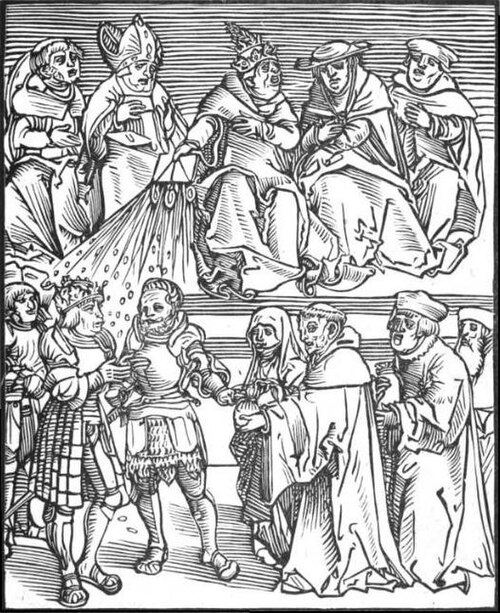
急進的宗教改革派(アナバプテスト派)は、ルターの考えを新たな方向に進めた。最も顕著なのはマイケル・サトラー(1490-1527)の著作である。サトラーは、2つの王国があるという点ではルターの考えに同意したが、この2つの王国は別々であるべきであり、したがって洗礼を受けた信者は投票したり、公職に就いたり、その他の方法で「世界の王国」に参加したりすべきではないという点で意見が異なっていた。急進的宗教改革の初期には多様な見解があったが、やがてサトラーの見解は、その後数世紀のほとんどのアナバプテスト派にとって標準的な立場となった。[17]アナバプテスト派は、宗教は国家権力によって強制されるべきではないと教えるようになり、教会と国家の関係の問題には、主に教会を国家から守るという立場からアプローチした。[18] [19] [20]
1534年、ヘンリー8世は、キャサリン・オブ・アラゴンとの結婚の無効を認めなかった教皇クレメンス7世に怒り、教会との関係を断ち切り、イングランド国教会の統治者となることを決意し、封建的な聖職者と王室の階層を単一の君主制の下に統合した。[21]メアリー、オリバー・クロムウェル、ジェームズ2世の下で、定期的な中断はあったが、1534年以来、イギリスの君主はイングランド国教会の教会の権威を保持し、現在の称号であるイングランド国教会の最高統治者となった。オリバー・クロムウェルのイングランド共和国の下での1654年の和解は、一時的に司教と聖職者裁判所を、トリアー委員会と追放者陪審に置き換え、イングランド共和国の聖職者の任命と処罰を行い、後にスコットランドにまで拡大した。刑法では、牧師や公務員は宣誓し、国教の信仰に従うことが義務付けられていたが、これに従わない場合は公民権を剥奪され、罰金が科せられ、投獄され、あるいは処刑された。
イングランドでの迫害の結果、一部の人々は自分たちの望むように礼拝するためにイギリスから逃亡した。アメリカ植民地がイギリスのジョージ3世に対して反乱を起こした後、政教分離の概念に関する 政教分離条項が策定されたが、当初の米国憲法には盛り込まれなかった。
ジョン・ロックと啓蒙主義

政教分離の概念は、イギリスの哲学者ジョン・ロック(1632-1704)の著作に由来するとされることが多い。[22] ロジャー・ウィリアムズは1636年に「魂の自由」を著し、その中で「良心の自由」という造語を最初に使った。ロックはこれをさらに発展させた。社会契約の原理によれば、ロックは個人の良心の領域では政府に権限がなく、これは理性的な人々が政府や他の者に支配させるため譲り渡すことができないものだと主張した。ロックにとって、これは良心の自由という自然権を生み出し、したがっていかなる政府権力からも保護されなければならないと彼は主張した。宗教的寛容と個人の良心の重要性に関するこれらの見解は、彼の社会契約とともに、特にアメリカ植民地と合衆国憲法の起草に影響を与えた。[23]
ロックは『寛容に関する手紙』の中で、キリスト教の異なる宗派間の宗教的寛容を擁護し、教会の権威は国家、つまり「政務官」の権威とは区別されなければならないと主張した。ロックは、教会はメンバーの自発的な共同体であるため、その権威は国家の問題にまで及ぶことはできないと論じた。彼は次のように書いている。[24]
ここで聖職者の権力や威厳の起源について調べるのは私の仕事ではありません。私が言いたいのは、彼らの権威がどこから生じたとしても、それは教会の権威である以上、教会の範囲内に限定されるべきであり、教会自体は国家とは完全に別個のものであるため、いかなる形でも民事にまで及ぶことはできないということです。
17世紀の同時期には、ピエール・ベールや一部の信仰主義者が政教分離の先駆者となり、信仰は理性から独立していると主張した。[25] [26] 18世紀には、ロックやベールの思想、特に政教分離は啓蒙時代の哲学者たちによって推進され、より一般的になった。モンテスキューは1721年にすでに宗教的寛容と政教分離の程度について書いている。[27] ヴォルテールはある程度の分離を擁護したが、最終的には教会を国家の必要に従属させた。[28]一方、例えばドニ・ディドロは政教分離の厳格な支持者で、「王位と祭壇の距離は大きすぎることはない」と述べている。[29]
ジェファーソンと権利章典

英語では、この正確な用語は、1802年にトーマス・ジェファーソンがダンベリー・バプテスト協会に宛てた手紙に書かれた「教会と国家の分離の壁」というフレーズから派生したものです。その手紙の中で、ジェファーソンはアメリカ合衆国憲法修正第1条に言及して、次のように書いています。
宗教は人間と神との間の問題であり、人間は信仰や崇拝について他の誰にも説明責任がなく、政府の正当な権力は意見ではなく行動にのみ及ぶということをあなたと共に信じ、私はアメリカ国民全体が議会が「宗教の設立に関する法律、またはその自由な実践を禁止する法律を制定してはならない」と宣言し、教会と国家の間に分離の壁を築いたあの行為を崇高な敬意をもって熟考します。[6]
ジェファーソンはバプテスト派に対し、アメリカ合衆国権利章典は国教会の設立を禁じており、そうすることで宗教的良心の表現に対する政府の干渉を恐れる必要はないと説明していた。1791年にアメリカ合衆国憲法の10の修正条項として採択された権利章典は、宗教の政治的体制に反対する最も初期の政治的表現の1つであった。他の例としては、やはりジェファーソンが起草し、1786年にバージニア州で採択されたバージニア州宗教の自由に関する法律や、1789年のフランス人権宣言などがある。
ジェファーソンが上記の手紙で使った「教会と国家を隔てる壁」という比喩は、合衆国最高裁判所の憲法修正第1条の判例の一部となった。この比喩は、モリソン・ウェイト首席判事がレイノルズ対合衆国(1878年)で初めて使った。レイノルズ事件でウェイトは、合衆国憲法の起草者たちの建国に関する見解についてアメリカの歴史家ジョージ・バンクロフトに相談した。バンクロフトはウェイトにジェファーソンに相談するよう助言した。歴史家ドン・ドレイクマンによると、ウェイトはその後、図書館でジェファーソンの全集の索引をざっと読んで、上記の手紙を発見したという。[30]
さまざまな国で
政府と宗教機関の分離の程度は国によって異なります。1780年代以降、多くの国が教会と国家の間に明確な障壁を設けてきました。政府と宗教または宗教機関の実際の分離の程度は大きく異なります。一部の国では、2つの機関は依然として密接に結びついています。ポスト共産主義世界では新たな紛争が発生しています。[説明が必要] [31]
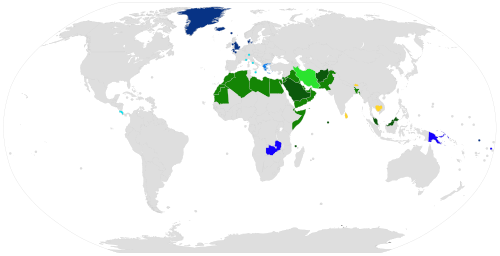
宗教の自由と寛容の度合いが高く、21世紀になっても国教会を維持したり、特定の宗教組織と財政的なつながりを維持したりしている、非常に世俗的な政治文化を持つ国々では、分離に関するさまざまなバリエーションが見られます。イングランドでは、憲法で定められた国教がありますが、他の信仰も容認されています。[32]英国国王はイングランド国教会の最高統治者であり、26人の司教(聖職者)が政府の上院である貴族院に議席を持っています。
他の王国では、政府の長や国家元首、その他の高位の役人は、特定の宗教の信者であることが法的に義務付けられている場合があります。国教会の高位メンバーを任命する権限も、しばしば依然として世俗の政府に与えられています。しかし、これらの権限はやや時代錯誤的または表面的であり、国が持つ真の宗教の自由のレベルを覆い隠しています。アンドラの場合、国家元首が 2 人いますが、どちらもアンドラ出身ではありません。1 人はスペイン北部の町、セウ デ ウルジェイのローマ カトリック司教です。彼は聖公会のコプリンスの称号を持っています (もう 1 人のコプリンスはフランスの国家元首です)。コプリンスは、法律の批准や憲法裁判所の指定など、政治的権力を行使します。
オーストラリア
オーストラリア憲法は、連邦政府がいかなる宗教も制定したり、いかなる公職にも宗教的審査を義務付けたりすることを禁じています。
第5章 § 116 連邦は、いかなる宗教を設立するか、いかなる宗教的儀式を強制するか、またはいかなる宗教の自由な実践を禁止するかを目的とした法律を制定してはならず、連邦の下でのいかなる公職または公的任務の資格として宗教的試験を要求してはならない。
この文言はアメリカ合衆国憲法に由来しているが、変更されている。高等裁判所の通常の慣行に従い、この文言は米国の同等の条項よりもはるかに狭く解釈されており、この条項に違反したとして法律が無効にされたことはない。今日、連邦政府は宗教学校に幅広い資金を提供している。連邦政府はかつて宗教牧師に資金を提供していたが、ウィリアムズ対連邦政府の高等裁判所は、資金提供契約は第61条に基づいて無効であると判断した。しかし、高等裁判所は、牧師自身が連邦政府の下で職務に就いていないため、第116条は無関係であると判断した。[33]オーストラリアのすべての議会はキリスト教の祈りで開かれ、オーストラリア憲法の前文には「全能の神の祝福に謙虚に頼る」と書かれている。[34]
オーストラリアの君主はチャールズ3世であり、イギリスの君主でイングランド国教会の最高統治者でもあるが、彼のオーストラリアでの称号は宗教的職務とは無関係であり、 「神の恩寵によりオーストラリア国王となった」にもかかわらず、オーストラリア国教会において特別な役割はない。宗教的審査の禁止により、元ブリスベン国教会大主教ピーター・ホリングワースがオーストラリア総督に任命され、国内の憲法上の最高官吏となったが、これは批判された。[35]
「州」の章に含まれているにもかかわらず、第 116 条は起草中の変更により州には適用されず、州は独自の宗教を自由に設立できる。州が国教会を導入したことはないが (ニューサウスウェールズ州は植民地時代初期に宗教団体を制限した)、多くの宗教団体に相当する法的機関は州の法律によって設立されている。[36] [37]第 116 条を州にまで拡大する国民投票が 2 回行われたが、どちらも失敗に終わった。いずれの場合も、変更は他の変更とまとめられており、有権者は 1 つの変更のみを明示的に承認する機会がなかった。ほとんどの州では、宗教団体に対して反差別法の広範な免除を認めている。たとえば、同性カップルが子どもを養子にすることを許可しているニューサウスウェールズ州法は、宗教の養子縁組機関が子どもを拒否することを許可している。[38] [39]
「政教分離」ではなく「国家中立の原則」と表現される現在の状況は、[35]世俗主義者と宗教団体の両方から批判されている。一方では、世俗主義者は、政府が宗教に対して中立的であることは「欠陥のある民主主義」[40]あるいは「多元的神政政治」[41]につながると主張している。なぜなら、政府は宗教を持たない人々の宗教に対して中立的であることはできないからだ。他方では、宗教団体やその他の団体は、州政府が他の団体を批判することを妨げ、非道な行為を強いることで、自分たちの宗教の実践を制限していると懸念している。[42]
アゼルバイジャン
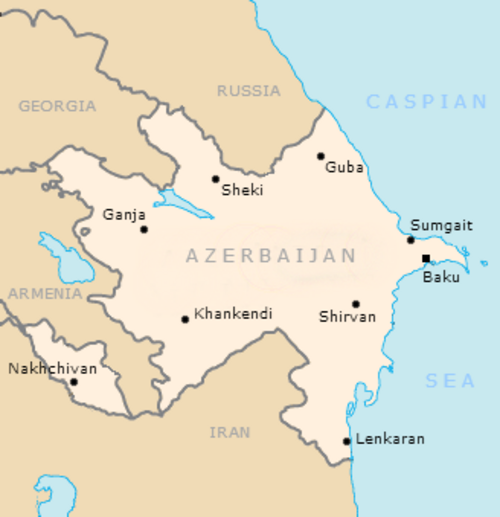
アゼルバイジャンではイスラム教が主流の宗教であり、アゼルバイジャン人の 96% がイスラム教徒で、シーア派が多数派を占めています。しかし、アゼルバイジャンは正式には世俗国家です。アゼルバイジャン憲法によれば、国家とモスクは別々です。憲法第 7 条では、アゼルバイジャン国家を民主的、合法的、世俗的、単一共和国と定義しています。したがって、憲法では宗教と信仰の自由が認められています。
アゼルバイジャン国家宗教組織活動委員会は国家と宗教の関係を管理しています。
アゼルバイジャンには、イスラム教とは異なる宗教を信仰するロシア人、グルジア人、ユダヤ人、レズギ人、アヴァール人、ウディ人、クルド人などの少数民族が暮らしている。アゼルバイジャンでは様々な宗教が信仰されている。アゼルバイジャンの様々な地域に、正教会やカトリック教会が数多くある。[43] [44] [45]一方で、アゼルバイジャン政府は、アルメニアのキリスト教の遺産を冒涜し、領土内のアルメニア教会を盗用していると頻繁に非難されている。[46] [より良い情報源が必要]
ブラジル
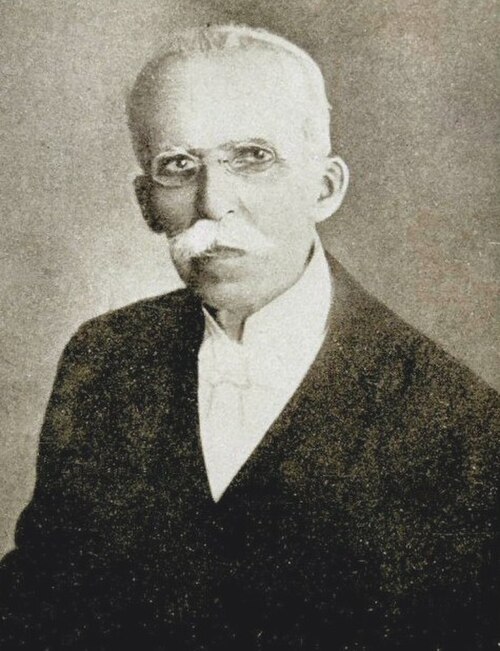
ブラジルは1500年から1822年にポルトガルから独立するまでポルトガル帝国の植民地であり、その間、ローマ・カトリックが国教であった。ブラジル帝国の台頭とともに、カトリックは国家の補助を受けて国教としての地位を維持したものの、1824年の憲法で信教の自由が保障されたため、他の宗教の繁栄が認められた。1889年の帝国の崩壊とともに共和制が樹立され、1891年に憲法が制定され、政教分離が行われた。ベンジャミン・コンスタンやルイ・バルボサなどの共和主義の思想家は、フランスや米国の政教分離に影響を受けた。1891年の憲法による政教分離は、それ以来ずっと維持されている。 1988年から施行されているブラジルの現行憲法は、宗教の自由の権利を保障し、国教会の設立や、法律で定められた公共の利益のための協力を除き、公務員と宗教指導者の「依存関係または同盟」関係を禁止している。
カナダ
ケベック
中国
中国では、漢王朝の時代に、 2000年以上前の秦王朝の法家主義に代わる儒教が公式の国家思想として確立されました。 [47] 1949年以降の現代中国では、太平天国の乱などの歴史的経験により、中国共産党は半世紀以上にわたってバチカンと外交関係を持たず、寺院(道観、仏教寺院、教会、モスク)を国政から切り離した状態を維持してきた。[48]バチカンは中国政府のやり方に異議を唱えているものの、[49]ベネディクト16世は2007年に中国愛国天主教協会のために政府が事前に選出した司教の叙階を受け入れた。しかし、 BBCニュースによると、2010年11月にカトリック司教が新たに叙階されたことで、中国とバチカンの「関係が損なわれる」恐れがあるという。[50]
中華人民共和国憲法第36条では、以下のことを保証している。[51] [52]
[...] いかなる国家機関、公的団体、個人も、国民にいかなる宗教を信じること、あるいは信じないことを強制してはならない。また、いかなる宗教を信じる、あるいは信じない国民に対しても差別してはならない。 [...] いかなる者も、宗教を利用して、公共の秩序を乱し、国民の健康を害し、あるいは国家の教育制度に干渉する活動に従事してはならない。宗教団体および宗教事務は、いかなる外国の支配も受けない。
香港
マカオ
クロアチア

クロアチアにおける宗教の自由は憲法で定められた権利であり、すべての宗教団体は法の下で平等であり、国家から分離されていると定義されています。政教分離の原則は第41条に定められており、次のように述べられています。
すべての宗教団体は法の前に平等であり、国家から明確に分離される。宗教団体は、法律に従って、公的に宗教儀式を行い、学校、アカデミーまたはその他の施設、福祉および慈善団体を開設し、それらを管理することが自由にでき、その活動において国家の保護と援助を受ける。
公立学校では、国家と協定を結んでいる宗教団体と協力して宗教教育(クロアチア語:Vjeronauk)を行うことが認められているが、出席は義務付けられていない。宗教の授業は公立の小学校および中学校で広く行われている。
祝日には、公現祭、復活祭月曜日、聖体祭、聖母被昇天祭、諸聖人の日、クリスマス、ボクシング デーなどの宗教的な祝祭日も含まれます。主な祝日はカトリックの典礼年に基づいていますが、他の信者も他の主要な宗教的な祝日を祝うことが許可されています。
クロアチアのローマカトリック教会は、政府とバチカンの間の協定で定められた国家財政支援およびその他の利益を受けています。法的枠組み内で教会の権利と特権をさらに定義する取り組みの一環として、政府は他の14の宗教コミュニティと追加の協定を結んでいます:セルビア正教会(SPC)、クロアチア・イスラム共同体、福音派教会、クロアチア改革派キリスト教会、クロアチア改革派キリスト教会、ペンテコステ派教会、ペンテコステ派キリスト教会連合、クリスチャン・アドベンチスト教会、バプテスト教会連合、神の教会、キリスト教会、セブンスデー・アドベンチスト改革派運動、ブルガリア正教会、マケドニア正教会、クロアチア古カトリック教会。
フィンランド
フィンランド憲法では、フィンランド福音ルーテル教会の組織と運営は教会法で規制され、フィンランド正教会の組織と運営は正教会法で規制されると規定されている。ルーテル教会と正教会は、フィンランドの法律では他の宗教団体に比べて特別な地位を持ち、「国教会」または「国教会」と呼ばれているが、公式にはそのような地位には就いていない。[53]ルーテル教会は自らを国教会とは考えておらず、「国教会」という用語を使用することを好んでいる。[54]
フィンランド自由思想家協会は、フィンランド政府による両教会の公式承認を批判し、政教分離を求める運動を展開している。[55]
フランス


フランス版の政教分離はライシテと呼ばれ、フランスの歴史と哲学の産物です。政教分離、つまり宗教と政治権力の分離を規定した 1905 年の法律で正式に制定されました。
世俗主義国家のこのモデルは、宗教機関を国家の干渉から保護しますが、公の場での宗教的表現はある程度好ましくありません。これは、特に公職における宗教機関の影響から公権力を保護することを目的としています。公的責任の概念を含まない宗教的見解、または宗教的意見が政治とは無関係であると考える宗教的見解は、このような公の言説の世俗化によって侵害されることはありません。
ニコラ・サルコジ元大統領は「消極的ライシテ」を批判し、フランスの文化、歴史、社会に対する信仰の貢献を認め、公共の場での言説での信仰や信仰に基づく団体への政府補助金を認める「積極的ライシテ」について語った。 [56]彼は2007年12月にローマ教皇を訪問し、フランスのカトリックのルーツを公に強調するとともに、思想の自由の重要性を強調し、[57]信仰が公共の領域に戻るべきだと主張した。フランソワ・オランドは2012年の大統領選挙で非常に異なる立場を取り、ライシテの概念を憲法に盛り込むことを約束した。実際、フランス憲法はフランス共和国が「ライク」であると述べているだけで、1905年の法律にも憲法にもライシテを定義する条項はない。[58]
しかしながら、フランスには次のような複雑な問題が存在します。
- もっとも顕著な例は、アルザスとモゼルの2つの地域である(詳細はアルザス・モゼルの地方法 § 宗教を参照)。これらの地域では、1905年にフランスの政教分離法が可決され、1924年に世俗主義のカルテル・デ・ゴーシュの試みが民衆の抗議により失敗したときに、フランスとローマ教皇庁の間で結ばれた1802年の協約が今も有効である。カトリックの司祭だけでなく、他の3つの宗教(ルター派のEPCAAL、カルヴァン派のEPRAL、ユダヤ教のコンシストリー)の聖職者にも国が給料を支払っており、学校には宗教の授業がある。さらに、メスとストラスブールのカトリック司教は、ローマ教皇の提案によりフランスの国家元首によって指名(というよりは正式に任命)されている。同様に、2つの公式プロテスタント教会の会長は、それぞれの教会の提案により国によって任命されている。これにより、フランス大統領は、カトリック司教を任命する権利を正式に保持する世界で唯一の世俗権力となり、他のすべてのカトリック司教は教皇によって任命される。
- フランス領ギアナでは、1828年の王室規則により、フランス政府がローマカトリックの聖職者への支払いを行うことが定められているが、他の宗教の聖職者への支払いは義務付けられていない。
- 1939年のマンデル勅令以来、フランスの海外県および領土ではフランス政府が教会を支援しています。
- フランス大統領は、カトリックが国教となっているアンドラ公国の職権上の共同君主である(もう一人の共同君主はスペインのセウ・デ・ウルジェイのローマカトリック司教)。さらに、フランスの国家元首には伝統的に、ローマ大聖堂のサン・ジョバンニ・イン・イン・ラテラノ大聖堂の聖歌隊員という名誉称号が与えられる。この名誉称号が新しく選出された大統領に与えられると、フランスは、大統領に代わって大聖堂の教会法上の参事会に席を占める司祭である聖歌隊代理に費用を支払う(歴代フランス大統領は全員男性で、少なくとも正式にはカトリック教徒であったが、そうでなければこの名誉称号は授与されなかった可能性が高い)。フランス大統領は、フランスの他のいくつかの教会法上の参事会にも席を持っている。
- フランスとカトリック教会の複雑なつながりを示すもう 1 つの例は、ローマとロレットにあるフランス諸教会です。ローマの 5 つの教会 (トリニタ デイ モンティ教会、フランス人のルイ教会、ブルターニュ人のイヴォ教会、ブルゴーニュ自由伯爵のクロード教会、ロレーヌのニコラ教会) とロレートの礼拝堂はフランスに属し、ローマ教皇庁のフランス大使館と連携した特別な財団によって管理され、資金が支払われています。
- フランスの海外領土であるウォリス・フツナでは、国民教育は教区に委ねられており、その費用は国から支払われている。
- さらなる絡み合いとしては、例えばレバノンで存続しているオスマン帝国とのカピテーションの下でフランス領事官に与えられた典礼上の栄誉、スミルナ(イズミル)のカトリック大聖堂の所有権、エルサレムの聖アンナ教会の治外法権、そしてもっと一般的には聖地の外交的地位などがある。
ドイツ

ドイツ憲法は信教の自由を保障しているが[59]、ドイツでは政教分離が完全には行われていない。公認の宗教団体は公法法人(私的ではなく公法上の法人)として運営される。公認の宗教共同体に対しては、一定の税金(教会税)が国家によって徴収される。[60]これは宗教共同体の要請によるもので、サービスには料金が課せられる。[61]ドイツでは宗教教育は選択科目である。[59]ドイツ国家は宗教的信念に関して中立であると自認しており[62] 、教師に宗教を教えることを強制することはできない。しかし一方で、宗教教育を教える教師は全員、その宗教共同体の公式の許可を必要とする。[63]ローマ教皇庁との条約は協約と呼ばれ、プロテスタント教会およびユダヤ教会傘下との条約は「国家条約」と呼ばれる。どちらも、連邦レベルおよび州レベルでの宗教団体とドイツ国家間の協力のための法的枠組みです。[64]
ギリシャ
ギリシャでは、国家と教会の分離についてかなりの論争があり、ギリシャ正教会を国の主要宗教として維持するという第3条にもっと根本的な変更を加えるべきかどうかについて、公共の場で多くの議論を引き起こしています。教会と国家の分離に関する実際の議論は、しばしば政治的競争における分極化の道具になります。[65]より具体的には、ギリシャ憲法第3条は次のように主張しています。
- 「ギリシャで主流の宗教はギリシャ正教会です。ギリシャ正教会は、我らの主イエス・キリストをその長として認め、コンスタンチノープルのキリスト教大教会および同じ教義を持つ他のすべてのキリスト教会と教義上不可分に結びついており、使徒およびシノドスの聖典と聖なる伝統を揺るぎなく遵守しています。それは独立教会であり、1850年6月29日の総主教書および1928年9月4日のシノドス法の規定に従って教会の法定憲章で指定されたとおりに召集された、現職司教の聖シノドおよびそこから発足した常設聖シノドによって運営されています。
- 国の特定の地域に存在する教会制度は、前項の規定に反するものとみなされないものとする。
- 「聖書の本文は変更されずに保持される。ギリシャ独立教会およびコンスタンティノープルのキリスト教会の事前の許可なしに、本文を他の言語に公式に翻訳することは禁止される。」[66]
さらに、国家と教会の分離がないという論争の状況は、このプロセスのための公式のメカニズムが存在しないように見えるため、国内の宗教団体の承認に影響を与えているようです。[67]
インド
インド人口の80%がヒンズー教徒であるにもかかわらず、インド憲法によればインドは世俗国家であり、その憲法には特定の宗教を優遇する特別な規定はない。ジャワハルラール・ネルーは、ヒンズー教ナショナリズムと、ヒンズー教、イスラム教、シク教と他の宗教間の宗教的対立を避けるために、インドは世俗国家であると宣言した。国が100%所有する学校では宗教教育は禁止されている。
宗教に対する政府のこのような権力の結果、政治家は票集め政治を行っている、つまり宗教コミュニティを含む特定のコミュニティのメンバーの票を獲得することだけを目的として問題に政治的支援を与えていると非難されることがある。インド国民会議(INC)とインド人民党(BJP)はどちらも票集め政治にふけって国民を搾取していると非難されている。離婚訴訟であるシャー・バノ事件は、議会が最高裁判所の判決を否定する議会修正案を提出することでイスラム教正統派をなだめていると非難され、大きな論争を巻き起こした。 2002年のグジャラート暴動の後、政党が票集め政治にふけっているという疑惑が浮上した。[68]
イタリア
イタリアでは、政教分離の原則が憲法第7条に定められており、次のように規定されている。[69]「国家とカトリック教会は、それぞれの領域において独立し、主権を有する。両者の関係はラテラノ条約によって規制される。双方が承認したそのような条約の修正には、憲法修正の手続きは必要ない。」
アイルランド
日本
1868年の明治維新で神道は日本の国教となり、他の宗教の弾圧が続いた。[70]アメリカ軍の占領下(1945~52年)では、「国家神道」は日本国民を戦争に駆り立てるプロパガンダの道具として使われたとみなされた。占領政府によって発せられた神道指令では、資金援助、教科書への掲載、公式行事や儀式など、あらゆる宗教や神道の組織や教義に対する国家の支援や関与をすべて停止することが求められた。
1947年に採択された新しい憲法では、日本国憲法第20条と第89条が信教の自由を保護し、政府が宗教的儀式を強制したり、公金を宗教機関に利益をもたらすために使用したりすることを禁じている。[70]
韓国
韓国における宗教の自由は、政教分離を定め、宗教的信念に基づく差別を禁じる韓国憲法で規定されている。 [71]それにもかかわらず、宗教団体は政治において大きな役割を果たし、強い影響力を持っている。
メキシコ
メキシコにおけるカトリック教会の役割の問題は、1820年代から非常に分裂的であった。その広大な土地保有は特に論争の的であった。メキシコは、ベニート・フアレスによって宣言された政教分離へと導かれ、1859年に彼は土地と特権を没収することで、国内におけるローマカトリック教会の役割を排除しようとした。[72] [73]
ベニート・フアレス大統領は教会の財産を没収し、修道会を解散させ、政教分離を命じた。[74] 1855年に制定されたフアレス法は教会の法的権利を制限し、後に1857年にメキシコ憲法に追加されました。 [75] 1859年にはレイ・レルド法が発布され、建前上は政教分離であったが、実際には修道会を廃止し、教会の財産を国有化することで教会の問題に国家が介入することを含んでいた。
1926年、数年にわたるメキシコ革命と不安定な情勢の後、与党国民革命党の指導者であるプルタルコ・エリアス・カジェス大統領は、カジェス法を制定し、教会の個人財産をすべて没収し、国に登録されていない教会を閉鎖し、聖職者が公職に就くことを禁じた。この法律は不評で、地方の数名の抗議者が連邦軍と戦い、クリステロ戦争として知られるようになった。1929年の戦争終結後、エミリオ・ポルテス・ヒル大統領は、敵対行為を終わらせるのと引き換えに、法律は施行したままで施行しないという以前の休戦協定を維持した。
ノルウェー
2016年に承認された法律により、ノルウェー国教会は独立した法人として設立され、2017年1月1日より施行された。2017年以前は、すべての聖職者は公務員(中央政府の職員)であった。[76] [77] 2012年5月21日、ノルウェー議会は憲法改正案を可決し、ノルウェー国教会の自治権の拡大を認めた。 [78]改正案では、「福音ルーテル派の教会であるノルウェー国教会は、ノルウェーの国民の教会であり、国家によってそのように支持される」(「国民教会」または「フォルケキルケ」は、デンマークの国教会フォルケキルケンの名称でもある)と規定され、以前の「福音ルーテル派の宗教は、国家の公的宗教であり続ける」という表現に取って代わった。最終的な改正案は、162対3の投票で可決された。反対票を投じた3票はすべて中道党からのものである。
ノルウェーの憲法では、ノルウェーの価値観はキリスト教とヒューマニズムの伝統に基づいているとも述べられており、国王はルーテル教徒でなければならないとされている。政府は他の宗教団体と同様に教会に資金を提供するが、司教と司祭長の任命責任は政府ではなく教会が負うことになる。1997年以前は、教区司祭と常駐牧師の任命も政府の責任であったが、1997年の新しい教会法により、教会はそのような聖職者を直接雇用する権利を与えられた。ノルウェー教会は独自の法律(kirkeloven)によって規制されており、すべての自治体は法律によりノルウェー教会の活動を支援することが義務付けられており、自治体当局は地方団体に代表されている。[79]
フィリピン
1987年フィリピン憲法第2条「原則と国家政策の宣言」第6項では、「教会と国家の分離は不可侵である」と宣言している。これは、文言と大文字の使用法に若干の違いはあるものの、1973年憲法第15条第15項でなされた宣言を再確認するものである。[80] [81]
同様に、憲法第3条第5項は、「宗教の設立を制限したり、宗教の自由な実践を禁止したりする法律は制定されない。宗教の信仰告白と礼拝の自由な実践と享受は、差別や優遇なく、永久に認められる。市民的または政治的権利の行使に宗教的審査は要求されない」と宣言している。これは、1973年憲法第4条第8項をそのまま反映している。[81] [82]
ルーマニア
ルーマニアは世俗国家であり、国教はありません。しかし、社会における宗教の役割はルーマニア憲法のいくつかの条項によって規制されています。
第29条 良心の自由 (1) 思想および意見の自由、ならびに宗教の自由は、いかなる形でも制限されない。何人も、その意志に反して意見を表明したり、宗教的信仰に固執するよう強制されない。 (5) 宗教カルトは、軍隊、病院、刑務所、老人ホーム、孤児院における宗教的支援の促進を含む支援を提供する国家との関係において自立している。
第32条 教育を受ける権利(7)国家は、それぞれの特定の宗派の要件に応じて、宗教教育の自由を保障する。公立学校においては、宗教教育は法律によって組織され、保障される。
サウジアラビア
サウジアラビアの法制度は、コーランとイスラムの預言者ムハンマドのスンナ(伝統)から派生したイスラム法であるシャリーアに基づいており、したがってモスクと国家の分離は存在しません。
シンガポール
シンガポールには多くの宗教の人々が住んでいますが、国教はありません。シンガポール政府は、特定の宗教を他の宗教よりも優先させないように努めてきました。
1972年、シンガポール政府は、シンガポールにおけるエホバの証人の登録を抹消して活動を禁止した。シンガポール政府は、エホバの証人が兵役(男性市民全員に義務付けられている)を拒否し、国旗敬礼をせず、国家への忠誠の誓いを立てないため、これは正当であると主張した。[83] [84]シンガポールはまた、国際聖書研究者協会とものみの塔聖書冊子協会が発行するすべての文書を禁止した。どちらもエホバの証人の出版部門である。禁止された出版物を所持している人は、初犯で最高2,000シンガポールドルの罰金と最長12ヶ月の懲役を科せられる。[85]
スペイン
スペインでは、1905年にフランスで制定され、 1931年のスペイン憲法に見られる政教分離の形態は「敵対的」なものであると主張する評論家がおり、教会に対する国家の敵意が民主主義の崩壊とスペイン内戦の勃発の原因であったと指摘している。[86] [87]戦争の終結後、カトリック教会はフランコ将軍の下で公式に認可された優位な地位を取り戻した。宗教の自由が保証されたのは、政権終焉の9年前の 1966年になってからであった。
1978年以来、スペイン憲法(第16.3条)によれば、「いかなる宗教も国家的性格を持たない。公的機関はスペイン社会の宗教的信念を考慮し、それに応じてカトリック教会および他の宗派との適切な協力関係を維持するものとする。」
スウェーデン
スウェーデン国教会はグスタフ1世(1523-60)によって創設され、彼の死後半世紀以内にスウェーデン社会で大きな力を持つルーテル派の国教会として確立され、それ自体が国家機構の管理下にあった。グスタフ3世(1771-92)の統治下では、ある程度の信仰の自由(外国人居住者のみ)が達成されたが、1860年と1874年の非国教徒法の可決まで、スウェーデン国民は国教会を離れることは許されなかった。そして、その場合も、そうすることを希望する者は、最初に別の公式に承認された宗派への加入を登録することを条件としていた。1995年に始まった数年にわたる議論の後、スウェーデン国教会は最終的に2000年1月1日をもって国から分離した。しかし、分離は完全には完了しなかった。国教としての地位は終わったが、スウェーデン国教会は依然としてスウェーデンの国教会であり、スウェーデン国教会の法律を通じて政府によって規制されている。したがって、分離というよりは、国家と教会の関係の変化と呼んだ方が適切だろう。さらに、スウェーデン憲法は、君主と王族は福音ルーテル派の信仰を告白しなければならないと依然として規定しており、これは実際には、王位継承権を維持するにはスウェーデン国教会の信者である必要があることを意味している。したがって、cuius regio, eius religioの考えによれば、国家と教会の象徴的なつながりは依然として残っていると主張することもできる。[88]
スイス
スイス連邦憲法第8条(「法の下の平等」)と第15条(「宗教と良心の自由」)は、個人の信仰の自由を保証している。[89]特に「いかなる者も、宗教共同体に参加または所属すること、宗教行為に参加すること、または宗教の教えに従うことを強制されてはならない」と規定されている。[89]
1848年以来、連邦レベルでは教会と国家は分離されている。しかし、憲法第72条(「教会と国家」)は、「教会と国家の関係の規制は州の責任である」と定めている。[89]スイスのいくつかの州は、いくつかの教会(カトリック教会、スイス改革派教会、古カトリック教会、ユダヤ教の会衆)を公式に認めている。ジュネーブ州やヌーシャテル州など他の州は、ライク(つまり世俗的) である。
台湾
七面鳥
国民の圧倒的多数がイスラム教徒であるトルコは、1928年以来、建国の父ムスタファ・ケマル・アタテュルクの政策と理論がケマル主義として知られるようになった世俗主義のライシテ学派を実践してきたとも考えられている。
トルコは公式には世俗国家であるが、憲法前文には「神聖な宗教的感情は、国政および政治にいかなる形でも干渉されてはならない」と記されている。[90]信者による宗教の認識を管理するため、政府はイマーム(スンニ派イスラム教徒のみ)に給与を支払い、公立学校で宗教教育(スンニ派イスラム教徒の宗教教育)を提供している。政府には、大統領直属の宗教局があり、官僚的にはスンニ派イスラム教徒の宗教を組織する責任を負っており、特に金曜日にモスクで行われる説教で何について言及するか、何をしないかなどについても責任を負っている。宗教が政府によって厳しく管理されるという世俗主義のこのような解釈は、アメリカ合衆国憲法修正第1条の解釈とは大きく異なり、世界のさまざまな地域で世俗主義がさまざまな方法で適用できる良い例となっている。トルコにおけるギリシャ正教会とアルメニア使徒教会の宗教実践は、ローザンヌ条約の条項によって部分的に規制されている。シリア正教会にはそのような公式承認は及ばない。
イギリス
英国国教会は世界規模のアングリカン・コミュニオンの一部であり、国教会であり、英国国王は名目上の最高統治者であり、ローマカトリック教徒になることはできない。2013年の王位継承法が施行されるまで、国王はカトリック教徒と結婚することができなかった。
イングランドの公立学校の約3分の1は宗教的所属があり、その大半はキリスト教である。宗教学校では、礼拝は学校の宗教または宗派に従わなければならない。[91]イングランド、ウェールズ、北アイルランドの公立キリスト教学校(私立学校は除く)では、「完全にまたは主にキリスト教的な性格の」毎日の礼拝行為が義務付けられているが、イングランドではキリスト教系の宗教学校の最大76%が法律を遵守しておらず、この義務はOfstedによって強制されていない。[92]非キリスト教系の宗教学校は免除され(代わりに独自の礼拝形式を持つ必要がある)、6年生(イングランドとウェールズ)と低学年の生徒の親はオプトアウトできる。公式報告書では、この義務を完全に削除することを推奨している。[93]英国の高等裁判所は、英国ヒューマニスト協会の支援を受けた生徒の家族が、非宗教的な世界観を除外した中等教育レベルの宗教研究試験のカリキュラムに対して起こした異議申し立てを支持する判決を下した。[93]
イングランドでは、教会の高官任命は国王任命であり、教会は戴冠式などの国家行事を遂行し、聖公会の代表者は宗教教育に関する常設諮問評議会で自動的に役割を果たし、26の教区司教は貴族院に議席を持ち、そこでは世俗貴族とは対照的に霊的貴族として知られている。霊的貴族は、中絶や安楽死などの道徳的問題など、特定の問題に関して団体として投票する際に大きな影響力を持つ。聖公会はまた、他の宗教団体とは異なり、厳粛な結婚に関して特定の法的権利と責任を持っている。非宗教的なカップルは宗教的要素のない民事婚をすることができるが、非宗教的なヒューマニストの結婚は、それ自体ではまだ法的に認められていない。集団礼拝により、キリスト教的な性格を持つ祈りと礼拝はすべての学校で義務付けられているが、親は子供をこれらの授業から外すことができ、6年生は参加しない権利がある。[要出典]
スコットランド国教会(またはカーク)は、スコットランド最大の宗教宗派である。しかし、イングランド国教会とは異なり、長老派教会であり、(1921年以降)国家の支部ではなく、国王は一般会員であること以外には教会で正式な役割を担っていない。しかし、カークは廃止されているが、スコットランドは世俗的な政体ではない。カークは国教会であり続け、国家は特別な義務を負っている。国家元首である君主はスコットランドを訪問する際には教会に出席することが慣例となっており、君主は即位の宣誓で教会を維持し保護することを誓う。国家はまた、特に教育において、スコットランド国教会とカトリック教会に多くの優遇措置を与えている。冒涜法は使われなくなっていたものの、2024年まで廃止されなかった。無宗教のカップルは宗教的要素のない民事結婚式を挙げることができ、ヒューマニストの結婚式は2005年から法的に認められ、2017年からスコットランドの法律に定められている。
ウェールズ国教会は1920年に廃止された(ただし、国境付近のいくつかの教区はイングランド国教会の一部であり続けている)。[94]英国政府やある程度はスコットランド政府とは異なり、ウェールズ政府は宗教とのつながりを持たないが、ウェールズでは国費による宗教学校が定期的に承認されている。
アイルランド国教会は 1871 年に廃止されました。北アイルランドの公的資金で運営される学校は、公立またはカトリックが維持する学校です。公立学校は、管理学校 (教育当局による)、自主教育学校、統合学校、特別学校に分類できます。アイルランド中等学校は、公立とカトリック教会の両方によって運営されています。多くの市民が「プロテスタント」学校と「カトリック」学校という共通概念を抱いているにもかかわらず、すべての公立学校は、プロテスタント、カトリック、その他 (混合または非キリスト教の宗教) の比率を 40:40:20 に設定する必要がある統合学校を除き、すべての宗教を偏見なく受け入れています。[要出典]機会均等監視フォームでは、実際の個人の宗教的信念に関係なく、「プロテスタント」または「ローマカトリック」コミュニティへの所属が求められます。これは、主な目的が雇用主による文化的差別を監視することにあるためです。無神論者は、出身のコミュニティを選択する必要がありますが、参加は強制ではありません。宗教教育は16歳までのすべての子供に義務付けられており、4つの主要な教会宗派(カトリック教会、アイルランド長老派教会、アイルランド国教会、メソジスト教会)がカリキュラムの内容に同意し、キリスト教と世俗倫理に焦点を当てています。世界の宗教は11歳から14歳の間に導入されなければなりません。
アメリカ合衆国
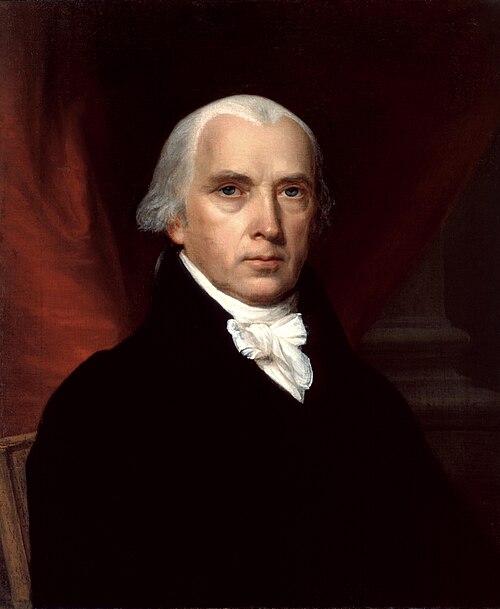
1791年に批准された合衆国憲法修正第1条は、「議会は宗教の樹立に関する法律またはその自由な実践を禁止する法律を制定してはならない」と規定している。しかし、「政教分離」という語句自体は合衆国憲法には登場しない。州自体は公認宗教を樹立する自由があり、13州のうち12州が公認宗教を持っていた。第一次大覚醒(1730年頃 - 1755年)により13植民地の宗教的多様性が高まり、これにアメリカ独立戦争が加わり、1776年から1790年の間に最南部の5州がイングランド国教会を廃止した。[95]第二次大覚醒(1790年頃から)により宗教的多様性がさらに高まり、ニューハンプシャー(1817年)、コネチカット(1818年)、マサチューセッツ(1833年)を含む別の一連の国教会廃止が促進された。[95]
ジェファーソンの言葉(上記参照)は、 1878年に米国最高裁判所によって最初に引用され、その後1947年からの一連の訴訟で引用された。 [96]最高裁判所は、これが各州にどのように適用されるかという問題を1947年まで考慮しなかった。検討したとき、エバーソン対教育委員会の訴訟で、裁判所は政教分離条項を組み込み、それが各州に適用され、すべての学校(私立学校を含む)へのバス送迎の費用を償還することを可能にする法律は合憲であると判断した。[97]
法人化に先立ち、1870年代と1890年代に憲法を改正して州に政教分離条項を明示的に適用する試みがなされたが、失敗に終わった。[98] [99]
この概念は、マサチューセッツ湾植民地での宗教的弾圧から逃れ、信仰の問題における州の中立の原則に基づいてロードアイランド植民地とプロビデンス植民地を設立したロジャー・ウィリアムズの考えに暗黙のうちに反映されていると主張された。[100] [101]
ウィリアムズは、歴史上、政府権力が乱用されてきたことに動機づけられ、政府は人間と神との関係に関係するあらゆるものから距離を置くべきだと信じ、宗教を純粋に保つために「教会の庭と世界の荒野の間に垣根や壁を張る」ことを提唱した。[102]
彼の活動を通じて、ロードアイランドの憲章はイギリス国王チャールズ2世によって承認され、そこには「宗教上のいかなる意見の違いによっても、誰も妨害されたり、処罰されたり、不安にさせられたり、疑問視されたりしてはならない」と明確に記されていた。
ウィリアムズは、イギリスにおける教会と国家の論争の形成に貢献し、ジョン・ミルトンや特にジョン・ロックのような人物に影響を与えたとされており、ロックの著作はトーマス・ジェファーソン、ジェームズ・マディソン、その他の米国憲法起草者たちによって綿密に研究された。ウィリアムズは神学的に主に聖書からその見解を導き出し、その動機は宗教的であると見なされているが、ジェファーソンの宗教の自由の主張は政治的、社会的なものと見なされている。[103]現在、国教を持つ州はないが、ほぼすべての州憲法は神に言及しており、いくつかの州憲法はもともと公職者に三位一体を信じることを義務付けていた。
初期の条約と裁判所の判決
パリ条約
1783年、アメリカ合衆国はイギリスと「最も神聖で分割なき三位一体の名において」公布された条約に署名した。[104]この条約は宗教的な言葉で表現されており、「『神の摂理』が両当事者に『過去の誤解をすべて忘れさせる』よう促し、1783年という『主の年』に日付が付けられている」とされている。[104]
トリポリ条約
1797年、アメリカ合衆国上院はトリポリとの条約を批准し、その第11条には次のように記されていた。
アメリカ合衆国政府はいかなる意味においてもキリスト教に基づいて設立されたものではなく、イスラム教徒の法律、宗教、平穏に対して敵意を抱く性質も持たず、また、前述の州はいかなるイスラム教徒の国に対しても戦争や敵対行為を行ったことがないことから、両当事者は、宗教的意見から生じるいかなる口実も、二国間に存在する調和を妨げることはないと宣言する。[105]
パデュー大学の歴史学教授フランク・ランバート氏によれば、第 11 条の保証は次のとおりである。
...この条約は、宗教によって解釈や施行が左右されるものではないと主張することで、イスラム教国家の不安を和らげる意図があった。ジョン・アダムズ大統領と上院は、この条約は二つの宗教勢力間のものではなく、二つの主権国家間のものであることを明確にした。[106]
政教分離の支持者は、上院で批准されたこの条約は、アメリカ合衆国政府が宗教的に中立であることを明確に意図していたことを確認するものだと主張している。[107]この条約はアダムズ大統領によって提出され、上院で全会一致で批准された。
ホーリートリニティ教会対アメリカ合衆国
1892年の聖三位一体教会対アメリカ合衆国訴訟において、最高裁判所判事デイビッド・ブリューワーは全員一致で「これは宗教的な国民であるため、いかなる州法や国家法にも宗教に対する訴訟の目的を帰することはできない。…これはキリスト教国家である」と判決を下した。[108]
法史学者ポール・フィンケルマンは次のように書いている。
小アジアへの会衆派教会の宣教師の息子であるブリューワーは、アメリカ国民にとってキリスト教信仰が重要であると言及した植民地憲章、州憲法、裁判所の判決をいくつか引用し、さまざまな立法機関が祈りで会議を始める慣行を挙げ、この国がキリスト教国家である証拠として、国内のあらゆるコミュニティに存在する多数の教会とキリスト教慈善団体を指摘した。そうすることで、ブリューワーは、アメリカはキリスト教国家であるという19世紀のプロテスタントの一般的な見解を表現した。[108]
フレーズの使用
「政教分離」という表現は、トーマス・ジェファーソン大統領が1802年にコネチカット州ダンベリーのバプテスト教徒に宛てて書いた手紙に由来しており、その手紙はその後すぐにマサチューセッツ州の新聞に掲載されました。その手紙の中で、ジェファーソンはアメリカ合衆国憲法修正第1条に言及して、次のように書いています 。
宗教は人間と神との間の問題であり、人間は信仰や崇拝について他の誰にも説明責任がなく、政府の正当な権力は意見ではなく行動にのみ及ぶということをあなたと共に信じ、私はアメリカ国民全体が議会が「宗教の設立に関する法律、またはその自由な実践を禁止する法律を制定してはならない」と宣言し、教会と国家の間に分離の壁を築いたあの行為を崇高な敬意をもって熟考します。[6]
この用語を初期に使用したもう一人の人物は、アメリカ合衆国権利章典の主要起草者であるジェームズ・マディソンである。1789年に下院で行われた憲法修正第1条の草案に関する討論では、次のように述べられた。
1789 年 8 月 15 日。[ニューヨーク州の] [ピーター] シルベスター氏は、いくらか疑問を抱いていた。… 彼は、この [修正第 1 条] が宗教を完全に廃止する傾向があると考えられるのではないかと懸念していた。… [マサチューセッツ州の] [エルブリッジ] ゲリー氏は、「いかなる宗教教義も法律によって確立してはならない」とすれば、より読みやすくなるだろうと述べた。… [バージニア州の] [ジェームズ] マディソン氏は、この文言の意味は、「議会は宗教を確立し、法律によってその法的な遵守を強制してはならない」であると理解していると述べた。… [州] は、憲法の条項の下では、… 彼ら [議会] が国教を確立するような性質の法律を制定できるという意見を抱いているようであり、これらの影響を防ぐのが修正の意図であると推測した。… マディソン氏は、宗教の前に「国家」という言葉を挿入すれば、高貴な紳士たちの心を満足させるだろうと考えた。 …彼は、「国家」という言葉が導入されれば、修正案が阻止しようとしていた目的に直接的に焦点を当てることになるだろうと考えた。[109]
マディソンは「宗教が社会全体の権威から免除されるのであれば、立法府の権威に従うことはなおさらあり得ない」と主張した。[110]数年後、彼は「教会と国家の完全な分離」について書いた。[111]「合衆国憲法では宗教と政府の分離が厳重に守られている」とマディソンは書いた。[112]そして彼は「宗教と民政の実際的な区別は両者の純粋さにとって不可欠であり、合衆国憲法によって保証されている」と宣言した。[113]エドワード・リヴィングストンへの手紙でマディソンはさらにこう述べた。
私たちは世界に、政府は王や貴族がいるよりもいないほうがうまくいくという偉大な真実を教えています。この教えの功績は、政府の援助があるよりもないほうが宗教はより純粋に栄えるという別の教訓によって倍増するでしょう。[114]

この姿勢は、ジェファーソンが起草し、マディソンが擁護したバージニア州宗教の自由法にも反映されており、いかなる宗教や宗派にも資金提供を強制されないことを保証しています。
… いかなる人も、いかなる宗教的礼拝、場所、または聖職に頻繁に出向いたり、支援することを強制されず、また、強制、拘束、妨害、または身体や財産の負担を強いられず、また、宗教的意見や信念のためにその他の苦しみを受けることはない。しかし、すべての人は宗教上の事柄に関して自由に意見を表明し、議論によってそれを主張することができ、また、それが彼らの公民権を縮小、拡大、または影響することはない。[115]
アメリカ合衆国憲法では、政府による宗教の扱いは、宗教設立条項と宗教の自由行使条項の 2 つの条項に分かれています。どちらも、特定の州の行為が政府による許されない宗教設立に相当するかどうかに関して議論されています。
このフレーズは、1843年7月10日にジョン・タイラー大統領が書いた雄弁な手紙にも言及されている。 [116] 1960年の大統領選挙運動中、カトリック教会がジョン・F・ケネディの大統領職に及ぼす潜在的な影響が取り上げられた。当選すれば、カトリック教徒が米国で最高職に就くのは初めてとなる。ジョン・F・ケネディは、1960年9月12日のヒューストン牧師協会での演説で、この問題に直接言及し、次のように述べた。
私は、政教分離が絶対的なアメリカを信じている。カトリックの高位聖職者が大統領(カトリック教徒の場合)に行動を指図することはなく、プロテスタントの牧師が教区民に誰に投票すべきかを指図することもない。教会や教会学校に公的資金や政治的優遇が与えられない。任命する大統領や選出する国民と宗教が異なるという理由だけで公職に就くことを拒否される人はいない。私は、公式にはカトリックでもプロテスタントでもユダヤ教でもないアメリカを信じている。公務員がローマ教皇、全米教会協議会、その他の教会から公共政策の指示を要請したり受け入れたりすることはなく、宗教団体が直接的または間接的にその意志を一般大衆やその職員の公的行為に押し付けようとすることはなく、宗教の自由が不可分であるため、ある教会に対する行為はすべての教会に対する行為として扱われる。[…] 私は公的な事柄について自分の教会を代表して発言しない。そして教会が私を代表して発言することはない。大統領としてどんな問題が起ころうとも、避妊、離婚、検閲、賭博、あるいは他のどんな問題であろうとも、私はこうした見解に従い、良心が国益であると告げるものに従い、外部の宗教的圧力や命令に左右されることなく決断を下すつもりです。いかなる権力や処罰の脅しも、私に別の決断をさせることはできません。しかし、もし私の職務上、良心や国益に反することを迫られる時が来たら、そして私はいかなる衝突もほんのわずかも起こり得ないと考えていますが、その時には私は職務を辞任します。そして良心ある公務員なら誰でも同じことをしてくれると期待しています。
アメリカ合衆国最高裁判所は、政教分離の比喩を25回以上引用しているが、常にその原則を完全に受け入れているわけではなく、「比喩自体は政教関係の実際的な側面を完全に正確に表現しているわけではない」と述べている。[117]レイノルズ事件では、最高裁判所は、一夫多妻制は信教の自由の一側面であると主張するユタ準州のモルモン教徒の信教の自由の主張を否定した。最高裁判所は、1947年のエバーソン事件でヒューゴ・ブラック判事によってこのフレーズを再度使用した。ウォレス対ジャフリー事件の少数意見で、レンキスト判事は、政教分離条項は地方の宗教組織を連邦政府の干渉から保護することを意図しているとの見解を示した。レンキスト判事は、政教分離の壁という考え方に反論する判例を多数引用した。このような推論の結果、最高裁判所は信仰に基づくコミュニティプロジェクトへの政府支出を支持した。スカリア判事は、この比喩はアメリカの公共生活から宗教を取り除くブルドーザーであると批判した。[118]
忠誠の誓い
アメリカの忠誠の誓いに対する批判者は、「神の下で」というフレーズの使用は政教分離に違反していると主張している。この誓いは1891年にフランシス・ベラミーによって作られたが、1954年にカトリックの組織であるコロンブス騎士団は他のグループとともに「神の下で」という言葉を忠誠の誓いに追加する運動を起こした。1954年6月14日、ドワイト・アイゼンハワー大統領は追加法案に署名した。[119]
それ以来、批評家たちはこの誓いの言葉の存在に異議を唱えてきた。2004年、ユニバーサル・ライフ教会の任命された無神論牧師マイケル・ニュードウは、生徒にこの誓いの暗唱を義務付けるカリフォルニア州の法律に異議を唱えた。彼は、この法律は憲法修正第1条の政教分離条項に違反していると述べた。最高裁判所は、エルク・グローブ統一学区対ニュードウの訴訟で、父親は法的保護者であり訴訟に反対していた元妻に対して十分な子供の親権を主張できないという事実を理由に、学校制度に有利な判決を下した。[120]
ウルグアイ
ウルグアイでは、政教分離の原則が宗教の自由とともに憲法第5条に定められており、そこには「ウルグアイではすべての宗教カルトは自由である。国はいかなる宗教も支持しない。国庫の資金で全部または一部が建設されたすべての寺院はカトリック教会の所有物と認められる。ただし、精神病院、病院、刑務所、その他の公共施設の礼拝を目的とする礼拝堂は除く。また、寺院はさまざまな宗教の礼拝に充てられるすべての種類の税金を免除される」とある。[121] [122]
政教分離は1918年の憲法で正式に宣言され、その後の憲法でも維持された。[123]しかし、国の世俗化は、 20世紀初頭、ホセ・バトリェ・イ・オルドニェス大統領の最初の政権時代に、公共の領域における国家の確固たる位置付けを求める改革の一環として始まった。[124]その措置には、公立病院や政府庁舎での宗教的シンボルの禁止、公立学校での宗教教育の抑圧が含まれていた。[125]
宗教観
イスラム教
モスクと国家の分離はイスラムの歴史のごく初期に起こった。イスラムの学者は国家から独立し、国家に対して非常に批判的になった。国家は統治を正当化するために学者を必要としたが、学者は国家を必要としなかった。したがって、学者は一般的に独立しており、歴史上、ミフナのようないくつかの障害は例外であり、規則ではなかった。リチャード・ブリエットは、イスラム世界の植民地時代と植民地時代後の時代に、政治的暴君の主な目的は、学者の経済的および社会的独立を奪うことで学者の独立を奪うことだったと書いている。メディナ憲法は、イスラム教徒、ユダヤ人、異教徒に平等な宗教的および共同体の権利を与え、国民国家のアイデンティティーにおいて彼らを一緒に扱うという、世俗的な統治の初期の形態としてしばしば議論されている。[126]
アフマディーヤ
アフマディーヤ・ムスリム・コミュニティのイスラム教理解によれば、イスラムの原則では、政治は宗教の教義とは切り離されるべきであるとされている。イスラム教徒は非イスラム教徒よりも特別に優遇されるべきではない。[127] [128]
キリスト教
歴史的に、カトリック教会と東方正教会は、カトリック教会のカテキズム2105に従い、可能な限り教会と国家の緊密な関係が望ましいと考えてきた。[129]正教会は歴史的に、法律上または事実上、国家と「シンフォニア」を形成することがあった。一方、プロテスタントの中には上記と同様の見解を持つ者もいるが、投票、武器の所持、いかなる形であれ民政への参加を拒否する者もおり、 20世紀にアナバプテスト派やその子孫であるアーミッシュ、メノナイト、クエーカー教徒に起こったように、迫害を受けることが多い。多くの国のアナバプテスト派プロテスタントとエホバの証人は、参加しないことで神の王国に近づくことができると信じています。「イエスは(ピラトに)答えられた。『わたしの王国はこの世のものではありません。もしわたしの王国がこの世のものであったなら、わたしのしもべたちが(主を守るために)戦うでしょう。』」 –ヨハネ18:36 。彼らにとって、「キリスト教国家」という用語は有効な政府の立場にはなり得ず、残るのはおそらくキリスト教コミュニティ内のキリスト教徒だけであり、その向こう側は「皇帝のもの」である –マタイ22:21。
メソジズム
アレゲニー・ウェスレー派メソジスト協会の規律書の国家改革に関する章では、教会と国家の関係について次のように述べている。[130] [131]
ウェスレー派メソジスト協会の牧師と会員の義務は、社会と政府の両方の世俗的および市民的関係における全能の神の権威と、諸国の王であると同時に聖徒の王としての主イエス・キリストの権威をより完全に認識するために、あらゆる実行可能な方法で彼らの影響力を行使することです。[130] [131]
そのため、アレゲニー・ウェスリアン・メソジスト教会は、公立学校での聖書朗読、軍隊や議会での牧師の配置、ブルーロー(日曜日の安息日主義に対するメソジストの歴史的な信念を反映)、そして神の認識を促進する修正を主張している。[130] [131]
改革された
The Reformed tradition of Christianity (Congregationalist, Continental Reformed, Presbyterian denominations) have also addressed the issue of the relationship between the Church and state. In its 1870 General Assembly, the Presbyterian Church in the United States stated:[132]
We should regard the successful attempt to expel all religious instruction and influence from our public schools as an evil of the first magnitude. Nor do we see how this can be done without inflicting a deadly wound upon the intellectual and moral life of the nation…We look upon the state as an ordinance of God, and not a mere creature of the popular will; and, under its high responsibility to the Supreme Ruler of the world, we hold it to be both its right and bound duty to educate its children in those elementary principles of knowledge and virtue which are essential to its own security and well-being. The union of church and state is indeed against our American theory and constitutions of government; but the most intimate union of the state with the saving and conservative forces of Christianity is one of the oldest customs of the country, and has always ranked a vital article of our political faith.[132]
Catholicism
The first full articulation of the Catholic doctrine on the principles of the relationship of the Catholic Church to the state (at the time, the Eastern Roman Empire) is contained in the document Famuli vestrae pietatis, written by Pope Gelasius I to the Emperor, which states that the Church and the state should work together in society, that the state should recognize the Church's role in society, with the Church holding superiority in moral matters and the state having superiority in temporal matters. Monsignor John A. Ryan speaks of this Catholic doctrine thusly: "If there is only one true religion, and if its possession is the most important good in life, for states as well as individuals, then the public profession, protection, and promotion of this religion, and the legal prohibition of all direct assaults upon it, becomes one of the most obvious and fundamental duties of the state. For it is the business of the state to safeguard and promote human welfare in all departments of life."
In the 1864 Syllabus of Errors, issued by Pope Pius IX, the idea that "the Church ought to be separated from the State, and the State from the Church" is condemned.[133]
In his 1906 encyclical, Vehementer Nos, Pope Pius X condemns separation, writing:
That the State must be separated from the Church is a thesis absolutely false, a most pernicious error. Based, as it is, on the principle that the State must not recognize any religious cult, it is in the first place guilty of a great injustice to God; for the Creator of man is also the Founder of human societies, and preserves their existence as He preserves our own. We owe Him, therefore, not only a private cult, but a public and social worship to honor Him.[134]
Gaudium et spes ("Joy and Hope"), the 1965 Pastoral Constitution on the Church in the Modern World, noted that "... the Church has always had the duty of scrutinizing the signs of the times and of interpreting them in the light of the Gospel."[135] The mission of the Church recognized that the realities of secularization and pluralism exist despite the traditional teaching on confessional statehood. Because of this reality of secularisation, it also recognized and encouraged the role of the laity in the life of the Church in the secular world, viewing the laity as much-needed agents of change in order to bring about a transformation of society more in line with Catholic teaching. "This council exhorts Christians, as citizens of two cities, to strive to discharge their earthly duties conscientiously and in response to the Gospel spirit.".[136] This was further expanded in Apostolicam Actuositatem, Decree on the Apostolate of the Laity, of 18 November 1965.
Apostolicam Actuositatem, the Second Vatican Council's "Decree on the Apostolate of the Laity", was issued 18 November 1965. The purpose of this document was to encourage and guide lay people in their Christian service. "Since the laity, in accordance with their state of life, live in the midst of the world and its concerns, they are called by God to exercise their apostolate in the world like leaven, with the ardor of the Spirit of Christ."[137] Francis Cardinal Arinze explains that lay persons "...are called by Baptism to witness to Christ in the secular sphere of life; that is in the family, in work and leisure, in science and cultural, in politics and government, in trade and mass media, and in national and international relations".[138]
The Catholic teaching in Dignitatis Humanae, the Second Vatican Council's Declaration on Religious Freedom (1986), states that all people are entitled to a degree of religious freedom as long as public order is not disturbed and that constitutional law should recognize such freedom.[139] "If, in view of peculiar circumstances obtaining among peoples, special civil recognition is given to one religious community in the constitutional order of society, it is at the same time imperative that the right of all citizens and religious communities to religious freedom should be recognized and made effective in practice.[140] At the same time, the document reiterated that the Church "leaves untouched traditional Catholic doctrine on the moral duty of men and societies toward the true religion and toward the one Church of Christ". The traditional teaching of the duty of society towards the Church is described in the current edition of the Catechism of the Catholic Church, number 2105.[141]
Pope John Paul II, in his 2005 letter to the Bishops of France proposed that not only is Separation of State and Church permissible, it is in fact a part of the Church's Social Doctrine. The Pope writes:
"Correctly understood, the principle of laïcité (secularity), to which your Country is deeply attached, is also part of the social teaching of the Church. It recalls the need for a clear division of powers (cf. Compendium of the Social Doctrine of the Church, nn. 571–572) that echoes Christ's invitation to his disciples: "Render to Caesar the things that are Caesar's, and to God the things that are God's" (Lk 20: 25). For its part, just as the non-denominational status of the State implies the civil Authority's abstention from interference in the life of the Church and of the various religions, in the spiritual realm it enables all society's members to work together at the service of all and of the national community. Likewise, as the Second Vatican Ecumenical Council recalled, the management of temporal power is not the Church's vocation for: "The Church, by reason of her role and competence, is not identified with any political community nor bound by ties to any political system" (Pastoral Constitution Gaudium et Spes, n. 76 2; cf. n. 42). Yet, at the same time, it is important that all work in the general interest and for the common good. The council also stated: "The political community and the Church... each serves the personal and social vocation of the same human beings. This service will redound the more effectively to the welfare of all insofar as both institutions practise better cooperation" (ibid. 3)" LETTER OF POPE JOHN PAUL II TO THE BISHOPS OF FRANCE
The Catholic Church takes the position that the Church itself has a proper role in guiding and informing consciences, explaining the natural law, and judging the moral integrity of the state, thereby serving as check to the power of the state.[142] The Church teaches that the right of individuals to religious freedom is an essential dignity.
Catholic philosopher Thomas Storck argues that, once a society becomes "Catholicised" and adopts the Church as the state religion, it is further morally bound: "'the just requirements of public order' vary considerably between a Catholic state and a religiously neutral state. If a neutral state can prohibit polygamy, even though it is a restriction on religious freedom, then a Catholic state can likewise restrict the public activity of non-Catholic groups. "The just requirements of public order" can be understood only in the context of a people's traditions and modes of living, and in a Catholic society would necessarily include that social unity based upon a recognition of the Catholic Church as the religion of society, and the consequent exclusion of all other religions from public life. Western secular democracies, committed to freedom of religion for all sects, find no contradiction in proscribing polygamy, although some religions permit it, because its practice is contrary to the traditions and mores of these nations. A Catholic country can certainly similarly maintain its own manner of life.", further:[143]
If, under consideration of historical circumstances among peoples, special civil recognition is given to one religious community in the constitutional order of a society, it is necessary at the same time that the right of all citizens and religious communities to religious freedom should be acknowledged and maintained.[144]
The Church takes stances on current political issues, and tries to influence legislation on matters it considers relevant. For example, the Catholic bishops in the United States adopted a plan in the 1970s calling for efforts aimed at a Constitutional amendment providing "protection for the unborn child to the maximum degree possible".[145]
Benedict XVI regards modern idea of freedom (meaning the Church should be free from governmental coercion and overtly political influence from the state) as a legitimate product of the Christian environment,[146] in a similar way to Jacques Le Goff.[147] However, contrary to the French historian,[148] the Pope rejects the conception of religion as just a private affair.[149]
Friendly and hostile separation
Scholars have distinguished between what can be called "friendly" and "hostile" separations of church and state.[150] The friendly type limits the interference of the church in matters of the state but also limits the interference of the state in church matters.[151] The hostile variety, by contrast, seeks to confine religion purely to the home or church and limits religious education, religious rites of passage and public displays of faith.[152]
The hostile model of secularism arose with the French Revolution and is typified in the Mexican Revolution, its resulting Constitution, in the First Portuguese Republic of 1910, and in the Spanish Constitution of 1931.[153][154] The hostile model exhibited during these events can be seen as approaching the type of political religion seen in totalitarian states.[152]
The French separation of 1905[155] and the Spanish separation of 1931 have been characterized as the two most hostile of the twentieth century, although the current church-state relations in both countries are considered generally friendly.[86] Nevertheless, France's former President Nicolas Sarkozy at the beginning of his term considered his country's current state of affairs a "negative laïcité" and wanted to develop a "positive laïcité" more open to religion.[56] The concerns of the state toward religion have been seen by some as one cause of the civil war in Spain[156] and Mexico.
The French Catholic philosopher and drafter of the Universal Declaration of Human Rights, Jacques Maritain, noted the distinction between the models found in France and in the mid-twentieth century United States.[157] He considered the U.S. model of that time to be more amicable because it had both "sharp distinction and actual cooperation" between church and state, what he called a "historical treasure" and admonished the United States, "Please to God that you keep it carefully, and do not let your concept of separation veer round to the European one."[157] Alexis de Tocqueville, another French observer, tended to make the same distinction: "In the U.S., from the beginning, politics and religion were in accord, and they have not ceased to be so since."[158]
See also

- 1905 French law on the Separation of the Churches and the State
- Antidisestablishmentarianism
- Baptists in the history of separation of church and state
- Caesaropapism
- Christian Reconstructionism
- Donatism
- East Waynesville Baptist Church
- Freedom of religion by country
- Institutional theory
- Islamic republic
- Kulturkampf
- Nonsectarian
- Norwegian Humanist Association
- Principled Distance
- Secularization
- Sociology of religion
- State atheism
- State religion
- Theocracy
- Women's rights
- Central bank independence
- Civil control of the military
- Civil service independence
- Editorial independence
- Independent media
- Judicial independence
References
- ^ The Oxford Companion to the Supreme Court of the United States (1992), Kermit D. Hall, Ed. pp. 717–726
- ^ "Establishment Clause: Separation of Church and State". The Free Speech Center. Retrieved 28 March 2024.
- ^ "Jefferson's Letter to the Danbury Baptists (June 1998) - Library of Congress Information Bulletin". www.loc.gov. Retrieved 28 March 2024.
- ^ "The Enlightenment | History of Western Civilization II". courses.lumenlearning.com. Archived from the original on 17 April 2021. Retrieved 20 January 2021.
- ^ Separationism Archived 2020-08-07 at the Wayback Machine, Princeton University WordNet Archived May 8, 2016, at the Wayback Machine reads: "separationism: advocacy of a policy of strict separation of church and state."
- ^ a b c Jefferson, Thomas (1 January 1802). "Jefferson's Letter to the Danbury Baptists". U.S. Library of Congress. Archived from the original on 4 October 2019. Retrieved 30 November 2006.
- ^ Plato, The Death of Socrates.
- ^ Feldman (2009)
- ^ Vauchez, Andre (2001). Encyclopedia of the Middle Ages. Routledge. p. 445. ISBN 978-1579582821.
- ^ "Shameful and Demeaning: The Annulment of Magna Carta". blogs.bl.uk. Archived from the original on 24 October 2021. Retrieved 14 October 2021.
- ^ "1066: Pope Alexander II". English Heritage. Archived from the original on 9 October 2021. Retrieved 14 October 2021.
- ^ Hill, Rosalind M. T. (1972). "Belief and practice as illustrated by John XXII's excommunication of Robert Bruce". Studies in Church History. 8: 135–138. doi:10.1017/S0424208400005477. ISSN 0424-2084. S2CID 170796943. Archived from the original on 29 October 2021. Retrieved 14 October 2021.
- ^ Elliott, Charles (1877) [1851]. Delineation of Roman Catholicism: Drawn from the authentic and acknowledged standards of the Church of Rome. Lane & Scott. p. 165.
- ^ Sabuco, O.; Waithe, M.E.; Vintro, M.C.; Zorita, C.A. (2010). New Philosophy of Human Nature: Neither Known to Nor Attained by the Great Ancient Philosophers, Which Will Improve Human Life and Health. University of Illinois Press. p. 156. ISBN 978-0-252-09231-2. Retrieved 23 March 2023.
- ^ Berman, Harold J. (1983). Law and Revolution: The Formation of the Western Legal Tradition. Harvard University Press. ISBN 0674517741. OCLC 185405865.
- ^ Madison, James (1865). Madison to Schaeffer, 1821. J.B. Lippincott & Company. pp. 242–243.
- ^ "MHSC". www.mhsc.ca. Archived from the original on 1 May 2021. Retrieved 11 May 2022.
- ^ "1525 The Anabaptist Movement Begins". Christian History | Learn the History of Christianity & the Church. October 1990. Archived from the original on 10 May 2022. Retrieved 11 May 2022.
- ^ "Church-State Relations – GAMEO". gameo.org. Archived from the original on 23 March 2017. Retrieved 23 March 2017.
- ^ Bender, H. S. "The Anabaptists and Religious Liberty in the Sixteenth Century." Mennonite Quarterly Review 29 (1955): 83–100.
- ^ "Henry VIII: 1509–47 AD". Britannia History. Archived from the original on 20 March 2008. Retrieved 26 March 2008.
{{cite journal}}: Cite journal requires|journal=(help) - ^ Feldman, Noah (2005). Divided by God. Farrar, Straus and Giroux, pg. 29 ("It took John Locke to translate the demand for liberty of conscience into a systematic argument for distinguishing the realm of government from the realm of religion.")
- ^ Feldman, Noah (2005). Divided by God. Farrar, Straus and Giroux, p. 29
- ^ Locke, John (1689). "A Letter Concerning Toleration". Archived from the original on 13 April 2021. Retrieved 7 June 2021.
- ^ Tinsley, Barbara Sher (2001). Pierre Bayle's Reformation : conscience and criticism on the eve of the Enlightenment. Selinsgrove, Pa.: Susquehanna University Press. ISBN 1575910438.
- ^ Bayle, Pierre (2000) [1st ed 1682]. Various Thoughts on Occasion of a Comet. SUNY Press. p. 332. ISBN 978-0791492734. Archived from the original on 20 August 2020. Retrieved 14 August 2016.
- ^ McWhirter, Darien (1994). Exploring the separation of church and state. Phoenix, Ariz.: Oryx Press. ISBN 978-0897748520.
- ^ Masters, Voltaire. Transl. by Brian (2000). Treatise on tolerance [and other writings]. Cambridge [u.a.]: Cambridge Univ. Press. ISBN 978-0521649698.
- ^ Mason, Denis Diderot. Ed. by John Hope; Wokler, Robert (2005). Political writings (Reprint ed.). Cambridge: Cambridge University Press. p. 225. ISBN 0521369118. Archived from the original on 12 March 2021. Retrieved 21 November 2020.
- ^ Mark Movsesian (Director of the Center for Law and Religion at St. John's University) (13 February 2013). "How the Supreme Court Found the Wall | Mark Movsesian". First Things. Archived from the original on 20 February 2020. Retrieved 16 June 2020.
- ^ Péter Tibor Nagy. The social and political history of Hungarian education – State-Church relations in the history of educational policy of the first post-communist Hungarian government. Hungarian Electronic library. ISBN 9632005112. Archived from the original on 16 May 2019. Retrieved 27 April 2007.
- ^ Status of religious freedom by country
- ^ Williams v Commonwealth [2012] HCA 23 "judgement summary" (PDF). High Court of Australia. 20 June 2012. Archived (PDF) from the original on 16 March 2014. Retrieved 23 April 2016.
- ^ Preamble to Commonwealth of Australian Constitution Act Archived September 20, 2016, at the Wayback Machine (Imp.) 1900.
- ^ a b Hogan, M. (2001, May 16). Separation of church and state? Archived March 10, 2016, at the Wayback Machine Australian Review of Public Affairs. Retrieved 2010-10-10.
- ^ Anglican Church of Australia Constitution Act 1960 (Vic).
- ^ Lutheran Church of Australia Victorian District Incorporation Act 1971 (Vic).
- ^ "Adoption Bill Passed in NSW". The Advocate. Archived from the original on 30 November 2011. Retrieved 27 April 2012.
- ^ Adoption Amendment (Same Sex Couples) Act 2010 (NSW).
- ^ Wallace, M. (2005). Is there a separation of church and state in Australia and New Zealand? Archived May 2, 2016, at the Wayback Machine Australian Humanist, 77. Retrieved 2010-10-10.
- ^ Secular Party of Australia. (nd). The Separation of Church and State. Retrieved 2010-10-10. Archived August 12, 2013, at the Wayback Machine
- ^ Davidson, S. (2009, October 27). Victorian abortion law: Overriding the conscience of doctors Archived March 3, 2016, at the Wayback Machine. Crikey. Retrieved 2010-10-10
- ^ "Secularism in Azerbaijan" (PDF). European Foundation for Democracy. June 2015. Archived from the original (PDF) on 3 August 2016. Retrieved 19 June 2023.
- ^ Al-Smadi, Dr. Fatima. "Azerbaijan: Religious Pluralism and Challenges of Cultivating Identity". studies.aljazeera.net. Archived from the original on 10 November 2017. Retrieved 9 November 2017.
- ^ "Visions of Azerbaijan Magazine ::: Islam and Secularism – the Azerbaijani Experience". Visions of Azerbaijan Magazine. Archived from the original on 3 March 2022. Retrieved 11 May 2022.
- ^ "Representatives of the "Albanian-Udi" community of Azerbaijan desecrated and destroyed the unique pit inside the Armenian church of the Tsitsernavank monastery in the Kashatagh region of Artsakh". 8 May 2023.
- ^ "Early Han Dynasty". Library.thinkquest.org. Archived from the original on 2 February 2012. Retrieved 27 April 2012.
- ^ "Separation of Church and State – Part 1/3". Ilookchina.net. 6 January 2011. Archived from the original on 24 May 2012. Retrieved 27 April 2012.
- ^ "Pope OK's Communist-chosen bishop in China: report". CBC News. 18 January 2007. Archived from the original on 28 June 2011. Retrieved 22 February 2011.
- ^ "Vatican warning on China bishop". BBC News. 18 November 2010. Archived from the original on 11 May 2022. Retrieved 21 July 2018.
- ^ "China's Policy on Religion". English.people.com.cn. Archived from the original on 8 July 2017. Retrieved 17 October 2011.
- ^ Constitution of the People's Republic of China (1982) Archived September 19, 2016, at the Wayback Machine, English translation (page visited on 17 December 2015).
- ^ Temperman, Jeroen (19 August 2020). State-Religion Relationships and Human Rights Law: Towards a Right to ... – Jeroen Temperman – Google Books. BRILL. ISBN 978-9004181489. Archived from the original on 19 August 2020.
- ^ "Valtiokirkko purettu kansankirkoksi" [State Church Dismantled into National Church]. evl.fi (in Finnish). Evangelical Lutheran Church of Finland. 24 November 2006. Archived from the original on 28 June 2016. Retrieved 23 July 2016.
- ^ Eroakirkosta.fi – Palvelun tavoite: Kirkko on erotettava valtiosta Archived March 7, 2016, at the Wayback Machine
- ^ a b Beita, Peter B. French President's religious mixing riles critics Archived April 20, 2016, at the Wayback Machine Christianity Today, January 23, 2008
- ^ "Sarkozy breaks French taboo on church and politics". Christiantoday.com. 23 December 2007. Archived from the original on 7 February 2012. Retrieved 27 April 2012.
- ^ "French president rejects calls for secular values to be in constitution". Catholic News. 27 January 2012. Archived from the original on 15 February 2013. Retrieved 2 February 2013.
- ^ a b Section 4 of German Basic Law
- ^ Binder, Gerhard/Wagner, Jürgen, Grundwissen Grundgesetz.p 165.Klett.
- ^ 1.5% to 4.5% of the amount collected, depending on the state (Land)
Leif, Thomas; Speth, Rudolf, eds. (2006). Die fünfte Gewalt: Lobbyismus in Deutschland [The Fifth Estate: Lobbyism in Germany] (in German). VL Verlag. p. 262. ISBN 978-3531150338. - ^ Binder, Gerhard/Wagner, Jürgen, Grundwissen Grundgesetz.p 17. Klett.
- ^ "Kirchliche Bevollmächtigung". Erzbistum-koeln.de. Archived from the original on 6 April 2012. Retrieved 27 April 2012.
- ^ Christian, Hermes, Konkordate im vereinigten Deutschland. Grünewald.
- ^ Karyotakis, Minos-Athanasios; Antonopoulos, Nikos; Saridou, Theodora (2019). "A case study in news articles, users comments and a Facebook group for Article 3 of the Greek Constitution". Kome. 7 (2): 37–56. doi:10.17646/KOME.75672.31.
- ^ The Constitution of Greece (PDF). Athens: Hellenic Parliament. 2008. pp. 20–21. ISBN 978-9605600730. Archived (PDF) from the original on 11 December 2019. Retrieved 28 December 2019.
- ^ Vilaça, Helena; Pace, Enzo; Furseth, Inger; Pettersson, Per (2016). The Changing Soul of Europe, Religions and Migrations in Northern and Southern Europe. United Kingdom: Routledge. pp. 69–88. ISBN 978-1315614502.
- ^ Times News Network (25 March 2002). "Togadia wants parties to stop 'vote bank politics'". The Times of India. Archived from the original on 16 October 2012. Retrieved 20 April 2007.
- ^ "The Italian Constitution" (PDF). The official website of the Presidency of the Italian Republic. Archived from the original (PDF) on 27 November 2016.
- ^ a b Andrew B. Van Winkle (2012). "Separation of Religion and State in Japan: A Pragmatic Interpretation of Articles 20 and 89 of the Japanese Constitution" (PDF). Pacific Rim Law & Policy Journal. Archived (PDF) from the original on 9 June 2016. Retrieved 9 December 2014.
- ^ "Religious Freedom in South Korea". Berkley Center for Religion, Peace and World Affairs. Archived from the original on 28 April 2015. Retrieved 9 December 2014.
- ^ "Mexico, A brief History". history-world.org. Archived from the original on 17 October 2007. Retrieved 13 October 2007.
{{cite web}}: CS1 maint: unfit URL (link) - ^ Clements, Greg. "Ley Lerdo". historicaltextarchive.com. Archived from the original on 14 March 2007. Retrieved 13 October 2007.
- ^ Brian A. Stauffer (2019). Victory on Earth or in Heaven: Mexico's Religionero Rebellion. University of New Mexico Press. pp. 4–. ISBN 978-0826361288. Archived from the original on 17 April 2021. Retrieved 20 October 2020.
- ^ Don M. Coerver; Suzanne B. Pasztor; Robert Buffington (2004). Mexico: An Encyclopedia of Contemporary Culture and History. ABC-CLIO. pp. 245–. ISBN 978-1576071328. Archived from the original on 22 October 2020. Retrieved 20 October 2020.
- ^ Offisielt frå statsrådet 27. mai 2016 Archived 2017-09-09 at the Wayback Machine regjeringen.no «Sanksjon av Stortingets vedtak 18. mai 2016 til lov om endringer i kirkeloven (omdanning av Den norske kirke til eget rettssubjekt m.m.) Lovvedtak 56 (2015–2016) Lov nr. 17 Delt ikraftsetting av lov 27. mai 2016 om endringer i kirkeloven (omdanning av Den norske kirke til eget rettssubjekt m.m.). Loven trer i kraft fra 1. januar 2017 med unntak av romertall I § 3 nr. 8 første og fjerde ledd, § 3 nr. 10 annet punktum og § 5 femte ledd, som trer i kraft 1. juli 2016.»
- ^ Lovvedtak 56 (2015–2016) Vedtak til lov om endringer i kirkeloven (omdanning av Den norske kirke til eget rettssubjekt m.m.) Archived 2018-07-03 at the Wayback Machine Stortinget.no
- ^ "Norway separates church and state". 21 May 2012. Archived from the original on 12 May 2013. Retrieved 22 March 2015.
- ^ "Church of Norway"
- ^ "The 1987 Constitution of the Republic of the Philippines – Article II". Archived from the original on 11 May 2022. Retrieved 22 March 2015.
- ^ a b "The Amended 1973 Constitution". Archived from the original on 11 May 2022. Retrieved 22 March 2015.
- ^ "The 1987 Constitution of the Republic of the Philippines – Article III". Archived from the original on 11 May 2022. Retrieved 22 March 2015.
- ^ "Singapore". U.S. Department of State. Archived from the original on 22 January 2020. Retrieved 22 March 2015.
- ^ "Singapore", International Religious Freedom Report 2004, U. S. Department of State, As Retrieved 2010-03-11
- ^ "2010 International Religious Freedom Report 2010: Singapore", U.S. State Department, November 17, 2010, As Retrieved 2011-1-15
- ^ a b Stepan, Alfred, Arguing Comparative Politics Archived September 14, 2016, at the Wayback Machine, p. 221, Oxford University Press
- ^ "Chapter 25: A History of Spain and Portugal, vol. 2". libro.uca.edu. Archived from the original on 19 March 2022. Retrieved 11 May 2022.
- ^ Olsen, Ted (1 January 2000). "Swedish Church State Separate". Christianity Today. Archived from the original on 19 January 2016. Retrieved 27 December 2014.
- ^ a b c Federal Constitution of the Swiss Confederation Archived June 21, 2016, at the Wayback Machine, status as of 14 June 2015, Federal Chancellery of Switzerland (page visited on 17 December 2015).
- ^ "The Constitution of the Republic of Turkey". Turkish Grand National Assembly (TBMM). Archived from the original on 10 August 2006.
- ^ Religious affiliation (faith schools). The Education Company
- ^ Wyatt, Caroline (23 December 2015). "Does daily worship count for anything?". BBC News Online. Archived from the original on 11 May 2022. Retrieved 10 May 2022.
- ^ a b Sherwood, Harriet (6 December 2015). "Top judge leads calls to scrap mandatory daily Christian worship in UK schools". The Observer. Archived from the original on 30 July 2017. Retrieved 30 July 2017.
- ^ Madeley, John T. S.; Enyedi, Zsolt (2003). Church and state in contemporary Europe: the chimera of neutrality. Psychology Press. p. 203. ISBN 978-0714653945. Archived from the original on 19 September 2015. Retrieved 15 August 2015.
- ^ a b The First Amendment Encyclopedia
- ^ William M. Wiecek, The birth of the modern Constitution: the United States Supreme Court, 1941–1953 (Cambridge U.P., 2006) pp. 261–264
- ^ Kermit Hall, ed. The Oxford companion to the Supreme Court of the United States Archived March 4, 2016, at the Wayback Machine (2005) pp. 303–304 Archived March 4, 2016, at the Wayback Machine.
- ^ Philip Hamburger, Separation of Church and State Archived June 24, 2016, at the Wayback Machine. pp. 10–11, 287–334, 342, Harvard University Press, 2004
- ^ Kermit Hall, ed. The Oxford companion to the Supreme Court of the United States Archived March 4, 2016, at the Wayback Machine (2005) pp. 262–263 Archived March 4, 2016, at the Wayback Machine.
- ^ Hamilton, Neil A. (2002). Rebels and renegades: a chronology of social and political dissent in the United States (illustrated ed.). Taylor & Francis. p. 11. ISBN 978-0415936392. Archived from the original on 8 November 2013. Retrieved 15 August 2015.
- ^ Bercovitch, Sacvan; Patell, Cyrus R. K. (1997). The Cambridge History of American Literature: 1590–1820 (illustrated ed.). Cambridge University Press. pp. https://books.google.com/books?id=s3j5JV–SEOMC&pg=PA196 196–197. ISBN 978-0521585712. Archived from the original on 17 April 2021. Retrieved 21 November 2020.
- ^ Hamburger, Philip (2009). Separation of Church and State. Harvard University Press. p. 45. ISBN 978-0674038189. Archived from the original on 30 April 2016. Retrieved 15 August 2015.
- ^ Barry, John M. (January 2012). "Roger Williams and the Creation of the American Soul". Smithsonian. Archived from the original on 28 November 2013. Retrieved 17 November 2012.
- ^ a b Bittker, Boris I.; Idleman, Scott C.; Ravitch, Frank S. (2015). Religion and the State in American Law. Cambridge University Press. p. 2. ISBN 978-1107071827.
- ^ For full text see "The Barbary Treaties 1786–1816; Treaty of Peace and Friendship, Signed at Tripoli November 4, 1796" Avalon Project Archived August 10, 2011, at the Wayback Machine
- ^ Lambert, Frank (2005). "Introduction". The Founding Fathers and the Place of Religion in America. Princeton University Press. ISBN 978-0691126029.
By their actions, the Founding Fathers made clear that their primary concern was religious freedom, not the advancement of a state religion. Individuals, not the government, would define religious faith and practice in the United States. Thus the Founders ensured that in no official sense would America be a Christian Republic. Ten years after the Constitutional Convention ended its work, the country assured the world that the United States was a secular state, and that its negotiations would adhere to the rule of law, not the dictates of the Christian faith. The assurances were contained in the Treaty of Tripoli of 1797 and were intended to allay the fears of the Muslim state by insisting that religion would not govern how the treaty was interpreted and enforced. John Adams and the Senate made clear that the pact was between two sovereign states, not between two religious powers.
- ^ F. Forrester Church. The separation of church and state (2004) p. 121
- ^ a b Finkelman, Paul (2003). Religion and American Law: An Encyclopedia. Routledge. p. 76. ISBN 978-1136919565.
- ^ Debates and Proceedings in the Congress of the United States (Washington, D.C.: Gales & Seaton, 1834, Vol. I pp. 757–759, August 15, 1789
- ^ "James Madison, Memorial and Remonstrance against Religious Assessments". Press-pubs.uchicago.edu. Archived from the original on 19 April 2012. Retrieved 27 April 2012.
- ^ (March 2, 1819 letter to Robert Walsh), Lambert, Frank (2003). The founding fathers and the place of religion in America. Princeton University Press. p. 288. ISBN 978-0691088297. Archived from the original on 2 January 2017. Retrieved 9 November 2016.
- ^ Madison, James. "Monopolies Perpetuities Corporations – Ecclesiastical Endowments". constitution.org. Archived from the original on 10 October 2008. Retrieved 16 June 2008.
- ^ (1811 letter to Baptist Churches)
- ^ "Madison's letter to Edward Livingston, July 10, 1822". Reachandteach.com. 28 August 2003. Archived from the original on 3 April 2012. Retrieved 27 April 2012.
- ^ J. F. Maclear, Church and state in the modern age: a documentary history (1995) p. 65
- ^ Tyler wrote, "The United States have adventured upon a great and noble experiment, which is believed to have been hazarded in the absence of all previous precedent – that of total separation of Church and State. No religious establishment by law exists among us. The conscience is left free from all restraint and each is permitted to worship his Maker after his own judgment. The offices of the Government are open alike to all. No tithes are levied to support an established Hierarchy, nor is the fallible judgment of man set up as the sure and infallible creed of faith. The Mahommedan, if he will to come among us would have the privilege guaranteed to him by the constitution to worship according to the Koran; and the East Indian might erect a shrine to Brahma if it so pleased him. Such is the spirit of toleration inculcated by our political Institutions . … The Hebrew persecuted and down trodden in other regions takes up his abode among us with none to make him afraid . … and the Aegis of the Government is over him to defend and protect him. Such is the great experiment which we have cried, and such are the happy fruits which have resulted from it; our system of free government would be imperfect without it.") quoted in Nicole Guétin, Religious ideology in American politics: a history (2009) p. 85
- ^ * See Lynch v. Donnelly, 465 U.S. 668, 673 Archived October 25, 2011, at the Wayback Machine (1984): "The concept of a 'wall' of separation is a useful figure of speech probably deriving from views of Thomas Jefferson. . . . [b]ut the metaphor itself is not a wholly accurate description of the practical aspects of the relationship that in fact exists between church and state."
- Committee for Public Education & Religious Liberty v. Nyquist, 413 U.S. 756, 760 Archived October 25, 2011, at the Wayback Machine (1973):
Yet, despite Madison's admonition and the 'sweep of the absolute prohibitions' of the Clauses, this Nation's history has not been one of entirely sanitized separation between Church and State. It has never been thought either possible or desirable to enforce a regime of total separation.
- Patrick M. Garry, The Myth of Separation: America's Historical Experience with Church and State, 33 Hofstra L. Rev. 475, 486 Archived March 3, 2016, at the Wayback Machine (2004) (noting that "the strict separationist view was wholly rejected by every justice on the Marshall and Taney courts.")
- Zorach v. Clauson, 343 U.S. 306, 312 Archived June 19, 2013, at the Wayback Machine (U.S. 1952): "The First Amendment, however, does not say that in every and all respects there shall be a separation of Church and State.".
- Lemon v. Kurtzman, 403 U.S. 602 Archived April 1, 2014, at the Wayback Machine (1971): "Our prior holdings do not call for total separation between church and state; total separation is not possible in an absolute sense."
- ^ Lee v. Weisman, 505 U.S. 577 (1992)
- ^ "The Man Who Wrote the Pledge of Allegiance". Smithsonian. Archived from the original on 31 January 2018. Retrieved 15 December 2017.
- ^ "The history of legal challenges to the Pledge of Allegiance – National Constitution Center". National Constitution Center – constitutioncenter.org. Archived from the original on 3 October 2017. Retrieved 15 December 2017.
- ^ "Constitución de la República Oriental del Uruguay". www.impo.com.uy. Retrieved 23 September 2023.
- ^ "Uruguay". United States Department of State. Retrieved 23 September 2023.
- ^ Pasquet, Ope (14 November 2017). "A cien años de la instauración del Estado laico en el Uruguay". Diálogo Político (in Spanish). Retrieved 23 September 2023.
- ^ "Iglesia, batllismo y la responsabilidad de llevar la administración estatal a todos los rincones de la república | La Mañana" (in Spanish). 18 March 2021. Retrieved 23 September 2023.
- ^ Alonso, David Fernández (7 April 2021). "Uruguay: "it is necessary to survive in a secular country!"". Omnes. Retrieved 23 September 2023.
- ^ Engineer, A. A. (2006). Islam and secularism (pp. 338-344). Malden; Oxford; Victoria: Blackwell Publishing Ltd.
- ^ "Separation of Mosque and state" (PDF). Alislam. Archived from the original (PDF) on 3 July 2010. Retrieved 13 September 2010.
- ^ "Muslims for Peace". Muslims for Peace. Archived from the original on 30 June 2010. Retrieved 13 September 2010.
- ^ "Catechism of the Catholic Church – the first commandment". Archived from the original on 25 September 2019. Retrieved 16 March 2020.
- ^ a b c The Discipline of the Allegheny Wesleyan Methodist Connection (Original Allegheny Conference). Salem: Allegheny Wesleyan Methodist Connection. 2014. pp. 37–38.
- ^ a b c Discipline of the Wesleyan Methodist Church of America. Wesleyan Methodist Church. 1896. pp. 142–143.
- ^ a b Thompson, Robert Ellis (1902). The American Church History Series: A History of the Presbyterian Churches. Charles Scribner's Sons. p. 199.
- ^ "The Syllabus of Errors". 9 June 1864. Archived from the original on 11 May 2022. Retrieved 10 July 2021.
- ^ "Vehementer Nos (February 11, 1906) | PIUS X". www.vatican.va. Archived from the original on 21 July 2016. Retrieved 24 August 2021.
- ^ Pope Paul VI (7 December 1965). Gaudium et Spes. §4. Archived from the original on 11 April 2011.
- ^ Gaudium et Spes, §43.
- ^ "Apostolicam actuositatem". www.vatican.va. Archived from the original on 25 June 2015.
- ^ Francis Cardinal Arinze, The Layperson's Distinctive Role, Ignatius Press, 2013 Archived 2016-02-07 at the Wayback Machine ISBN 978-1586177805 Arinze, Francis Cardinal (13 August 2013). The Layperson's Distinctive Role. Ignatius Press. ISBN 978-1586177805. Archived from the original on 12 August 2018. Retrieved 24 May 2017.
{{cite book}}: CS1 maint: bot: original URL status unknown (link) - ^ Calo, Zachary A., Catholic Social Thought, Political Liberalism, and the Idea of Human Rights Archived June 21, 2010, at the Wayback Machine, pp. 18–19, Samford University, November 2004
- ^ "Dignitatis humanae". www.vatican.va. Archived from the original on 11 February 2012.
- ^ Catechism of the Catholic Church, 1993 edition, https://www.vatican.va/archive/ccc_css/archive/catechism/p3s2c1a1.htm Archived 2019-09-25 at the Wayback Machine
- ^ Grasso, Kenneth L. and Robert P. Hunt, Catholicism and religious freedom: contemporary reflections on Vatican II's declaration on religious liberty Archived May 20, 2016, at the Wayback Machine, p. 6, Rowman & Littlefield, 2006
- ^ "THE PROBLEM OF RELIGIOUS LIBERTY: A NEW PROPOSAL". "Faith & Reason". Christendom Press. 1989. Archived from the original on 10 March 2016. Retrieved 18 June 2015.
- ^ Murray, John Courtney and J. Leon Hooper, Religious liberty: Catholic struggles with pluralism Archived April 23, 2016, at the Wayback Machine, pp. 213–214, Westminster John Knox Press, 1993
- ^ Curran, Charles (29 November 2010). "National Catholic Reporter online, 29 November 2010". Ncronline.org. Archived from the original on 18 July 2012. Retrieved 27 April 2012.
- ^ Cardinal Joseph Ratzinger. "Theology and the Church's Political Stance". In: Church, Ecumenism and Politics: New Essays in Ecclesiology (NY: Crossroad, 1988, p. 162).
- ^ "Les convictions européennes de l'historien Jacques Le Goff." La vie, 01/04/2014, "Les convictions européennes de l'historien Jacques le Goff – Actualité – la Vie". April 2014. Archived from the original on 7 May 2015. Retrieved 20 October 2015..
- ^ "Jacques Le Goff: "Mes héros ne meurent jamais"." L' Obs, "Jacques le Goff : "Mes héros ne meurent jamais"". April 2014. Archived from the original on 4 March 2016. Retrieved 20 October 2015..
- ^ "Religion Not Just a Private Affair, Affirms Pontiff." Zenit, "Religion Not Just a Private Affair, Affirms Pontiff | ZENIT – the World Seen from Rome". Archived from the original on 21 November 2015. Retrieved 20 October 2015..
- ^ Maier, Hans (2004). Totalitarianism and Political Religions. trans. Jodi Bruhn. Routledge. p. 109. ISBN 0714685291. Archived from the original on 22 December 2016. Retrieved 15 August 2015.
- ^ Maier 2004, p. 110
- ^ a b Maier 2004, p. 111 4
- ^ Maier 2004, p. 106
- ^ Martinez-Torron, Javier. "Freedom of religion in the case law of the Spanish Constitutional court", pg. 2, Brigham Young University Law Review, 2001
- ^ Félix Fénéon, Nouvelles en trois lignes, 1906 , éditeur Libella, collection Libretto, 162 pages, Paris, 2019 (ISBN 978-2369144465)
- ^ Payne, Stanley G. (1973). "Ch. 25: The Second Spanish Republic". A History of Spain and Portugal, Volume 2. University of Wisconsin Press. p. 632. Archived from the original on 23 July 2012. Retrieved 11 July 2009. ("Title Catalog". Library of Iberian Resources Online. Archived from the original on 14 September 2002. Retrieved 11 July 2009.)
- ^ a b Carson, D. A. (2008). Christ And Culture Revisited. Wm. B. Eerdmans Publishing. p. 189. ISBN 978-0802831743. Archived from the original on 12 May 2016.
- ^ de Tocqueville, Alexis, Democracy in America, edited and translated by Harvey Mansfield and Delba Winthrop, Chicago: University of Chicago Press, 2000.
Further reading
- Bellarmine, Robert (1902). . Sermons from the Latins. Benziger Brothers.
- Feldman, Noah. "Religion and the Earthly City", Social Research, Winter 2009, Vol. 76 Issue 4, pp. 989–1000
- Tomas Jeffersons Journal
- Kuznicki, Jason (2008). "Separation of Church and State". In Hamowy, Ronald (ed.). The Encyclopedia of Libertarianism. Thousand Oaks, CA: Sage; Cato Institute. pp. 458–460. doi:10.4135/9781412965811.n280. ISBN 978-1412965804. LCCN 2008009151. OCLC 750831024.
- Taylor, Charles. "The Polysemy of the Secular", Social Research, Winter 2009, Vol. 76 Issue 4, pp. 1143–1166
- Temple, William, Abp. Christianity and the State. London: Macmillan and Co., 1928.
- Whitman, James Q. "Separating Church and State: The Atlantic Divide", Historical Reflections, Winter 2008, Vol. 34 Issue 3, pp. 86–104
- McGowan, Barry, "How to Separate Church & State: A Manual from the Trenches", Hufton Mueller, LLC. (2012). ISBN 978-0615638027
- Stone, Geoffrey R., "The World of the Framers: A Christian Nation?", UCLA Law Review, 56 (October 2008), 1–26.
External links

Wikiquote has quotations related to Separation of church and state.
- History of the Separation of Church and State in America
- Noah Feldman (2002). "The Intellectual Origins of the Establishment Clause" (PDF). Archived from the original (PDF) on 25 June 2008.
- Churches Are Not Exempt from State Licenses by Richard R. Hammar
- Campaign Activities by Richard R. Hammar
- Geoffrey R. Stone, The World of the Framers: A Christian Nation?, 56 UCLA L. Rev. 1 (2008).