
Loading article…
民族または民族集団とは、他の集団と区別する共通の属性に基づいて互いに同一視する人間の集団です。民族が共有していると考える属性には、言語、文化、共通の祖先、伝統、社会、宗教、歴史、または社会的扱いなどがあります。[ 1 ] [ 2 ]民族は長期にわたる内婚によって維持され[ 3 ]、遺伝的祖先の範囲は狭い場合も広い場合もあり、一部の集団は混合した遺伝的祖先を持っています。[ 4 ] [ 5 ] [ 6 ]民族は、国家と互換的に使用されることがあります。また、すべての民族が人種集団として認識されているわけではありませんが、人種と互換的に使用されることもあります。[ 7 ]
同化、異文化適応、融合、言語転換、異人種間結婚、養子縁組、宗教改宗などを通じて、個人または集団は時間の経過とともに、ある民族集団から別の民族集団へと移行することがある。民族集団はさらに下位集団や部族に分かれることがあり、内婚や親集団からの物理的な隔離によって、それらが時間とともに独立した民族集団となることもある。逆に、かつては別々の民族であったものが融合して汎民族集団を形成し、最終的には単一の民族集団へと融合することもある。分裂であれ融合であれ、独立した民族的アイデンティティの形成は民族形成と呼ばれる。
民族性を理解するための理論は主に原始主義と構成主義の2つが存在する。20世紀初頭の原始主義者は、民族集団を遠い過去から続く独特の特徴を持つ実在の現象とみなした。[ 8 ] 1960年代以降に発展した見解では、民族集団は社会的な構築物であり、アイデンティティは社会的なルールによって割り当てられるとみなされるようになった。[ 9 ]
「民族」という用語は、最終的にはギリシャ語のethnosから派生し、形容詞形ethnikosを経て、ラテン語にethnicusとして借用されました。 [ 10 ]この概念を表す英語の用語はfolkで、中期英語後期からラテン語のpeopleと並んで使われています。
初期近代英語から19世紀半ばまで、ethnicは異教徒または異教(キリスト教共同体に参加していない異質な「民族」という意味で)を意味するのに使われていました。七十人訳聖書では、ヘブライ語のgoyim「異国の民族、非ヘブライ人、非ユダヤ人」をta ethne「諸国民」と訳しています。 [ 11 ]古代初期のギリシャ語(ホメロス時代のギリシャ語)では、大きな集団、大勢の人、仲間の集団、動物の群れなどを指すことができました。古典ギリシャ語では、この言葉は現在「民族集団」という概念で表現されている意味に匹敵する意味を持ち、主に「民族、部族、独自の民族集団」と訳されました。ヘレニズム時代のギリシャ語になって初めて、この言葉は「異国の」または「野蛮な」民族を指すようにさらに狭められる傾向がありました(そこから後の意味「異教徒、異教」が生まれました)。[ 12 ]
19世紀には、この用語は「部族、人種、民族、または国家に特有の」という意味で使われるようになり、元のギリシャ語の意味に戻りました。「異なる文化集団」、そしてアメリカ英語では「部族、人種、文化、または国家の少数派集団」という意味は、1930年代から1940年代にかけて現れ、[ 13 ]以前はこの意味を持っていたものの、イデオロギー的人種差別との関連から今では不評になりつつあった「人種」という用語の代わりとして使われました。抽象的な「民族性」は18世紀には「異教」の代わりとして使われていましたが、今では「民族的性格」という意味を表すようになりました(最初に記録されたのは1953年)。
「民族集団」という用語は1935年に初めて記録され、1972年にオックスフォード英語辞典に収録されました。 [ 14 ] [ 15 ] [ 16 ]文脈によっては、「国籍」という用語は「民族」と同義語として、または(主権国家における) 「市民権」と同義語として使用されることがあります。民族の出現をもたらすプロセスは「民族発生」と呼ばれ、この用語は1950年頃から民族学の文献で使用されています。この用語は、独特で非常に異国情緒のあるもの(「民族レストラン」など)という意味合いで使われることもあり、一般的には、その地域の支配的な人口が確立された後に到着した、より最近の移民の文化に関連しています。
集団のアイデンティティを定義する際にどの要素を重視するかによって、以下のような(しばしば相互に重複する)集団を特定することができる。
多くの場合、複数の要素が会員資格を決定します。例えば、アルメニア人の民族性は、アルメニア国籍、アルメニアの血統、アルメニア語の母語使用、またはアルメニア使徒教会の会員であることによって定義されます。


民族誌は古典古代に始まり、アナクシマンドロスやミレトスのヘカタイオスといった初期の著述家の後、ヘロドトスは紀元前480年頃に古代世界の歴史記述と民族誌の両方の基礎を築きました。ギリシア人は自分たちの民族の概念を発展させ、それをヘレネスという名前でまとめました。マケドニアのように典型的なギリシア人とは異なる方法で貴族によって統治されていたり、スパルタのように珍しい支配階級を持っていたりといった例外はありましたが、古代ギリシア人は民族主義に対する強い信念から、一般的に非ギリシア人だけを奴隷にしていました。[ 18 ] [ 19 ]ギリシア人は、自分たちの最も低い市民でさえ野蛮人より優れていると信じることもありました。アリストテレスは『政治学』 1.2-7、3.14で、ギリシア人とは対照的に野蛮人を生まれながらの奴隷とさえ表現しています。ヘロドトス(8.144.2)は、当時のギリシャ人(ヘレニズム人)の民族的アイデンティティを定義するものについて有名な記述を残しており、
However, earlier Greek individuals did not define the Greek ethnicity by blood. According to Isocrates in his speech Panegyricus: "And so far has our city distanced the rest of mankind in thought and in speech that her pupils have become the teachers of the rest of the world; and she has brought it about that the name Hellenes suggests no longer a race but an intelligence, and that the title Hellenes is applied rather to those who share our culture than to those who share a common blood".[28]
Whether ethnicity qualifies as a cultural universal is to some extent dependent on the exact definition used. Many social scientists,[29] such as anthropologists Fredrik Barth and Eric Wolf, do not consider ethnic identity to be universal. They regard ethnicity as a product of specific kinds of inter-group interactions, rather than an essential quality inherent to human groups.[30]
According to Thomas Hylland Eriksen, the study of ethnicity was dominated by two distinct debates until recently.
エリクセンによれば、これらの議論は、特に人類学において、さまざまな民族グループや国家のメンバーによるますます政治化された自己表現の形態に対応しようとする学者の試みに取って代わられた。これは、米国やカナダのように多くの異なる文化からの移民人口が多い国々における多文化主義、およびカリブ海地域や南アジアにおけるポストコロニアリズムに関する議論の文脈にある。[ 39 ]
マックス・ウェーバーは、民族集団は共有された共同体(ゲマインシャフト)に対する主観的な信念に基づいているため、künstlich(人工的、すなわち社会的な構築物)であると主張した。第二に、この共有された共同体に対する信念が集団を作り出したのではなく、集団が信念を作り出したのである。第三に、集団の形成は権力と地位を独占しようとする衝動から生じた。これは、当時の主流であった自然主義的な信念、すなわち人々の間の社会文化的および行動上の違いは、共通の祖先から受け継がれた特性や傾向(当時は「人種」と呼ばれていた)に由来するという信念とは正反対であった。[ 40 ]
民族性に関するもう一人影響力のある理論家はバルトで、1969年の彼の著書『民族集団と境界』は、1980年代と1990年代に社会学でこの用語の使用を広める上で重要な役割を果たしたと評されている。[ 14 ]バルトは、民族性の構築的性質を強調する点でウェーバーよりもさらに踏み込んだ。バルトにとって、民族性は外部からの帰属と内部の自己認識の両方によって絶えず交渉され、再交渉されるものであった。バルトの見解では、民族集団は断続的な文化的孤立物でも、人々が自然に属する論理的な先験物でもない。彼は、文化を境界のある実体として、民族性を原始的な絆として捉える人類学的概念から脱却し、集団間のインターフェースに焦点を当てることを望んでいた。したがって、『民族集団と境界』は、民族的アイデンティティの相互関連性に焦点を当てたものである。バースは次のように書いています。「... カテゴリー的な民族的区別は、移動、接触、情報の欠如に依存するものではなく、排除と統合の社会的プロセスを伴うものであり、それによって、個々の人生史の過程で参加や所属が変化しても、個別のカテゴリーが維持される。」[ 41 ]
1978年、人類学者のロナルド・コーエンは、社会科学者が用いる「民族集団」という呼称は、先住民の現実を反映しているというよりも、不正確なレッテルを反映していることが多いと主張した。
...私たちが文学作品の中で基本的な前提としてしばしば無意識のうちに受け入れている民族的アイデンティティは、しばしば恣意的に、あるいはさらに悪いことに不正確に押し付けられている。[ 14 ]
このように、彼は、人類学者などの部外者による民族集団の識別が、その集団のメンバーの自己認識と一致しない可能性があるという事実を指摘した。また、彼は、民族性という用語は、最初の数十年間は、共通の文化システムと共通の遺産を持つ小規模な集団を指す際に、「文化的」や「部族的」などの古い用語の代わりに使われることが多かったが、「民族性」には、部族社会と現代社会の両方における集団アイデンティティのシステム間の共通点を説明できるという付加価値があったと述べた。コーエンはまた、「民族的」アイデンティティに関する主張(以前の「部族的」アイデンティティに関する主張と同様)は、植民地主義的な慣行であり、植民地化された人々と国民国家との関係の影響であることが多いと示唆した。[ 14 ]
ポール・ジェームズによれば、アイデンティティの形成は植民地化によってしばしば変化し歪められてきたが、アイデンティティは無から生まれるものではない。
アイデンティティに関する分類は、植民地化、国家形成、あるいは一般的な近代化の過程によって明確な類型として体系化され、固定化されたとしても、常に緊張と矛盾に満ちている。これらの矛盾は時に破壊的であるが、創造的で肯定的なものにもなり得る。[ 42 ]
社会科学者は、民族的アイデンティティのさまざまな指標がどのように、いつ、なぜ顕著になるのかに焦点を当ててきた。人類学者のジョーン・ヴィンセントは、民族の境界はしばしば不安定な性質を持っていると指摘した。[ 43 ]ロナルド・コーエンは、民族性とは「包括性と排他性の入れ子状の二分法の連続」であると結論付けた。[ 14 ]彼は、(コーエンの言い換えによれば)「民族性は 、政治的動員の特定のニーズに関連して、境界の観点から狭めたり広げたりすることができる」というジョーン・ヴィンセントの指摘に同意している。[ 14 ]これが、出自が民族性の指標となる場合とそうでない場合がある理由かもしれない。民族性のどの特徴が顕著になるかは、人々が民族の境界を拡大しているか縮小しているかによって決まり、拡大しているか縮小しているかは一般的に政治情勢によって決まる。
Kanchan Chandra rejects the expansive definitions of ethnic identity (such as those that include common culture, common language, common history and common territory), choosing instead to define ethnic identity narrowly as a subset of identity categories determined by the belief of common descent.[44] Jóhanna Birnir similarly defines ethnicity as "group self-identification around a characteristic that is very difficult or even impossible to change, such as language, race, or location."[45]
Different approaches to understanding ethnicity have been used by different social scientists when trying to understand the nature of ethnicity as a factor in human life and society. As Jonathan M. Hall observes, World War II was a turning point in ethnic studies. The consequences of Nazi racism discouraged essentialist interpretations of ethnic groups and race. Ethnic groups came to be defined as social rather than biological entities. Their coherence was attributed to shared myths, descent, kinship, a common place of origin, language, religion, customs and national character. So, ethnic groups are conceived as mutable rather than stable, constructed in discursive practices rather than written in the genes.[46]
Examples of various approaches are primordialism, essentialism, perennialism, constructivism, modernism and instrumentalism.
民族性は、人々がより大きな集団と一体化するための重要な手段である。人類学者のフレドリック・バースやエリック・ウルフなど、多くの社会科学者は、民族的アイデンティティを普遍的なものとは考えていない。彼らは、民族性を人間集団に固有の本質的な性質ではなく、特定の種類の集団間相互作用の産物とみなしている。[ 30 ]このようなアイデンティティの出現をもたらすプロセスは、民族発生と呼ばれる。民族集団のメンバーは、概して、時間の経過に伴う文化的連続性を主張するが、歴史家や文化人類学者は、過去との連続性を意味する価値観、慣習、規範の多くが比較的最近になって発明されたものであることを記録している。[ 53 ] [ 54 ]
Ethnic groups can form a cultural mosaic in a society. That could be in a city like New York City or Trieste, but also the fallen monarchy of the Austro-Hungarian Empire or the United States. Current topics are in particular social and cultural differentiation, multilingualism, competing identity offers, multiple cultural identities and the formation of Salad bowl and melting pot.[55][56][57][58] Ethnic groups differ from other social groups, such as subcultures, interest groups or social classes, because they emerge and change over historical periods (centuries) in a process known as ethnogenesis, a period of several generations of endogamy resulting in common ancestry (which is then sometimes cast in terms of a mythological narrative of a founding figure); ethnic identity is reinforced by reference to "boundary markers" –characteristics said to be unique to the group which set it apart from other groups.[59][60][61][62][63][64]
Ethnicity theory argues that race is a social category and is only one of several factors in determining ethnicity. Other criteria include "religion, language, 'customs', nationality, and political identification".[65] This theory was put forward by the sociologist Robert E. Park in the 1920s. It is based on the notion of "culture".
This theory was preceded by more than 100 years during which biological essentialism was the dominant paradigm on race. Biological essentialism is the belief that some races, specifically White Europeans in western versions of the paradigm, are biologically superior and other races, specifically non-White races in western debates, are inherently inferior. This view arose as a way to justify enslavement of African Americans and genocide of Native Americans in a society that was officially founded on freedom for all. This was a notion that developed slowly and came to be a preoccupation with scientists, theologians, and the public. Religious institutions asked questions about whether there had been multiple creations of races (polygenesis) and whether God had created lesser races. Many of the foremost scientists of the time took up the idea of racial difference and found that White Europeans were superior.[66]
The ethnicity theory was based on the assimilation model. Park outlined four steps to assimilation: contact, conflict, accommodation, and assimilation. Instead of attributing the marginalized status of people of colour in the United States to their inherent biological inferiority, he attributed it to their failure to assimilate into American culture. They could become equal if they abandoned their inferior cultures.
Michael Omi's and Howard Winant's theory of racial formation directly confronts both the premises and the practices of ethnicity theory. They argue in Racial Formation in the United States that the ethnicity theory was exclusively based on the immigration patterns of the White population[67] and did take into account the unique experiences of non-Whites in the United States.[68] While Park's theory identified different stages in the immigration process –contact, conflict, struggle, and as the last and best response, assimilation –it did so only for White communities.[68] The ethnicity paradigm neglected the ways in which race can complicate a community's interactions with social and political structures, especially upon contact.
同化、つまりホスト文化に溶け込むために自国の文化の特定の特性を捨てることは、人種差別や差別への対応として一部のグループには効果がなかったが、他のグループには効果があった。[ 68 ]平等を達成するための法的障壁が撤廃されると、人種差別の問題は、すでに不利な立場にあるコミュニティの唯一の責任となった。[ 69 ]黒人やラテン系コミュニティが白人によって設定された基準で「成功」していないのは、そのコミュニティが正しい価値観や信念を持っていないか、あるいは、同調したくないために支配的な規範に頑固に抵抗しているからだと考えられていた。オミとウィナントによる民族性理論への批判は、不平等の原因として文化的欠陥に着目することが、「米国で人種現象が作用する具体的な社会政治的力学」を無視していることを説明している。[ 70 ]それは人種差別の構造的要素の批判的検討を妨げ、社会的不平等の「無害な無視」を助長する。[ 70 ]
特に国境を越えた移住や植民地拡大に関わる場合、人々は民族性と国籍を結びつけることがある。人類学者や歴史家は、アーネスト・ゲルナー[ 71 ]やベネディクト・アンダーソン[ 72 ]が提唱した近代主義的な民族性の理解に基づき、国家とナショナリズムは17世紀の近代国家体制の台頭とともに発展したと見なしている。この過程は、国家の想定される境界が国家の境界と一致する(あるいは理想的には一致する)国民国家の台頭で頂点に達した。このように、西洋世界では、民族性の概念は、人種や国家と同様に、重商主義と資本主義が人口の世界的な移動を促進すると同時に国家の境界がより明確かつ厳密に定義されるようになったヨーロッパの植民地拡大の文脈で発展したのである。
In the 19th century modern states generally sought legitimacy through their claim to represent "nations". Nation states, however, invariably include populations who have been excluded from national life for one reason or another. Members of excluded groups, consequently, will either demand inclusion based on equality, or they will seek autonomy, sometimes even to the extent of complete political separation from their existing nation-state.[73] Under these conditions, when people moved from one state to another,[74] or when one state conquered or colonized peoples beyond its national boundaries, ethnic groups were formed by people who identified with one nation but lived in another state.
Multi-ethnic states can result from one of two opposite events:
Examples for the first case occur throughout Africa, where countries formed during decolonization inherited arbitrary colonial borders, but also in European countries such as Belgium or the United Kingdom. Examples for the second case are countries such as Netherlands, which were relatively ethnically homogeneous when they attained statehood but have received significant immigration in the 17th century and even more so in the second half of the 20th century. States such as the United Kingdom, France and Switzerland comprised distinct ethnic groups from their formation and have likewise experienced substantial immigration, resulting in what have been termed "multicultural" societies, especially in large cities.
The states of the New World were multi-ethnic from the onset, as they developed as settler colonies imposed on existing indigenous populations.
近年のフェミニスト研究者(特にニラ・ユヴァル=デイヴィス)[ 75 ]は、女性が民族や国民のカテゴリーの創造と再生産に根本的な形で関与していることに注目している。これらのカテゴリーは通常、公的で政治的な領域に属するものとして議論されるが、私的な、家庭の領域でかなりの部分で維持されている。[ 76 ]ここで女性は生物学的な再生産者としてだけでなく、「文化の担い手」としても機能し、特定の集団に属する知識を伝え、行動を強制する。[ 77 ]また、女性は国家や民族の概念において重要な象徴的役割を果たすことも多く、例えば「女性と子供」が紛争時に守らなければならない国家の中核を構成するという考え方や、ブリタニアやマリアンヌのような象徴的な人物像などが挙げられる。

ウェーバー(1864~1920)以前は、人種と民族は主に同じものの2つの側面として捉えられていました。1900年頃以前、民族の原始主義的な理解が主流で、人々の間の文化的差異は遺伝的特性や傾向の結果であると考えられていました。[ 40 ]ウェーバーが民族を社会的な構成物として捉える考え方を導入したことで、人種と民族はより明確に区別されるようになりました。
1950年、ユネスコは、当時国際的に著名な学者(アシュリー・モンタギュー、クロード・レヴィ=ストロース、グンナー・ミュルダール、ジュリアン・ハクスリーなど)が署名した声明「人種問題」の中で、次のように述べている。
国民、宗教、地理、言語、文化の集団は、必ずしも人種集団と一致するとは限らず、また、そのような集団の文化的特徴と人種的特徴との間に遺伝的な関連性は証明されていない。一般的に「人種」という言葉が使われると、このような重大な誤りが頻繁に起こるため、人間の人種について語る際には、「人種」という言葉を完全に捨てて「民族集団」という言葉を使う方が良いだろう。[ 78 ]
1982年、人類学者のデイビッド・クレイグ・グリフィスは、40年にわたる民族誌的研究を総括し、人種や民族のカテゴリーは、世界のさまざまな地域の人々がグローバル経済に組み込まれてきたさまざまな方法を象徴する指標であると主張した。
The opposing interests that divide the working classes are further reinforced through appeals to "racial" and "ethnic" distinctions. Such appeals serve to allocate different categories of workers to rungs on the scale of labor markets, relegating stigmatized populations to the lower levels and insulating the higher echelons from competition from below. Capitalism did not create all the distinctions of ethnicity and race that function to set off categories of workers from one another. It is, nevertheless, the process of labor mobilization under capitalism that imparts to these distinctions their effective values.[79]
According to Wolf, racial categories were constructed and incorporated during the period of European mercantile expansion, and ethnic groupings during the period of capitalist expansion.[80]
Writing in 1977 about the usage of the term "ethnic" in the ordinary language of the United Kingdom and the United States, Wallman noted
The term "ethnic" popularly connotes "[race]" in Britain, only less precisely, and with a lighter value load. In North America, by contrast, "[race]" most commonly means color, and "ethnics" are the descendants of relatively recent immigrants from non-English-speaking countries. "[Ethnic]" is not a noun in Britain. In effect there are no "ethnics"; there are only "ethnic relations".[81]
In the US, the Office of Management and Budget says the definition of race as used for the purposes of the US Census is not "scientific or anthropological" and takes into account "social and cultural characteristics as well as ancestry", using "appropriate scientific methodologies" that are not "primarily biological or genetic in reference".[82]
Ramón Grosfoguel (University of California, Berkeley) argues that "racial/ethnic identity" is one concept and concepts of race and ethnicity cannot be used as separate and autonomous categories.[7]
Sometimes ethnic groups are subject to prejudicial attitudes and actions by the state or its constituents.[83] In the 20th century, scholars began to argue that conflicts among ethnic groups, or between members of an ethnic group and the state, can and should be resolved in one of two ways. Some, like Jürgen Habermas and Bruce Barry, argue the legitimacy of modern states must be based on a notion of political rights of autonomous individual subjects. According to this view, the state should not acknowledge ethnic, national or racial identity but rather enforce political and legal equality.[84] Others, like Charles Taylor and Will Kymlicka, argue that the notion of the autonomous individual is a cultural construct. According to this view, states must recognise ethnic identity and develop processes through which the particular needs of ethnic groups can be accommodated within the boundaries of the nation-state.[85][86]
The 19th century saw the development of the political ideology of ethnic nationalism, when the concept of race was tied to nationalism, first by German theorists including Johann Gottfried Herder.[87] Instances of societies focusing on ethnic ties, arguably to the exclusion of history or historical context, have resulted in the justification of nationalist goals. Periods frequently cited as examples of this are the 19th-century consolidation and expansion of the German Empire, and 20th-century Nazi Germany. Each promoted the pan-ethnic idea that these governments were acquiring only lands that had always been inhabited by ethnic Germans.[88] The history of latecomers to the nation-state model, such as those arising in the Near East and south-east Europe out of the dissolution of the Ottoman and Austro-Hungarian Empires, as well as those arising out of the Soviet Union, is marked by inter-ethnic conflicts.[89] Such conflicts usually occur within multi-ethnic states, as opposed to between them, as in other regions of the world. Thus, the conflicts are often misleadingly labelled and characterised as civil wars when they are inter-ethnic conflicts in a multi-ethnic state.[90]
Africa is the most ethnically and linguistically diverse continent, with over 3,000 ethnic groups and more than 2,000 languages spoken across 54 countries.[91][92] These languages belong to major families such as Niger-Congo, Afroasiatic, Nilo-Saharan, and Khoisan, and most ethnic groups maintain distinct cultural traditions.[93][94]
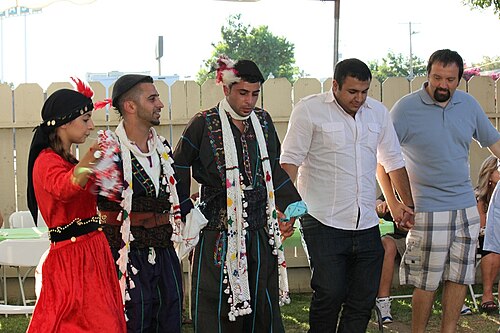
Ethnic groups are abundant throughout Asia, with adaptations to the climate zones of Asia, which can be the Arctic, subarctic, temperate, subtropical or tropical. The ethnic groups have adapted to mountains, deserts, grasslands, and forests.
On the coasts of Asia, the ethnic groups have adopted various methods of harvest and transport. Some groups are primarily hunter-gatherers, some practice transhumance (nomadic lifestyle), others have been agrarian/rural for millennia and others becoming industrial/urban. Some groups/countries of Asia are completely urban, such as those in Hong Kong, Shanghai and Singapore. The colonization of much of Asia largely ended in the 20th century, driven by national movements for independence and self-determination across the continent, such as those inspired by the Indian independence movement.[95]
In India alone, there are more than 2,000 distinct ethnic groups, whilst in Indonesia alone, there are more than 600 ethnic groups,[96][97] which are located on 17,000 islands in the Indonesian archipelago.
Russia has more than 185 recognized ethnic groups besides the 80% ethnic Russian majority. The largest group is the Tatars, 3.8%. Many of the smaller groups are found in the Asian part of Russia (see Indigenous peoples of Siberia).
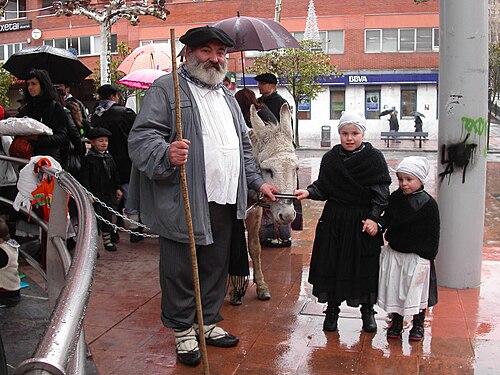

ヨーロッパには多数の民族グループが存在する。パンとプファイル(2004)は、87の異なる「ヨーロッパの民族」を数えており、そのうち33は少なくとも1つの主権国家で多数派を形成し、残りの54は居住するすべての国家内で少数民族を構成している(ただし、国家以下の実体内では地域的な多数派を形成する可能性がある)。ヨーロッパの国民的少数派の総数は1億500万人、つまり7億7000万人のヨーロッパ人の14%と推定されている。[ 98 ]
フランス[ 99 ]やスイスを含む多くのヨーロッパ諸国は、居住人口の民族に関する情報を収集していません。
ヨーロッパにおける遊牧民族の一例として、ロマ(しばしば蔑称としてジプシーとも呼ばれる)が挙げられる。彼らはインドを起源とし、ロマ語を話す。
セルビアのヴォイヴォディナ州は、多民族・多文化のアイデンティティで知られています。[ 100 ] [ 101 ]州内には約26の民族グループがあり、[ 102 ] 6つの言語が州行政で公用語として使用されています。[ 103 ]
北アメリカの先住民はネイティブアメリカンです。アメリカ合衆国で最大の民族集団は白人アメリカ人です。ヒスパニック系アメリカ人やラテン系アメリカ人(特にメキシコ系アメリカ人)とアジア系アメリカ人は最近アメリカ合衆国に移住してきました。メキシコでは、メキシコ人のほとんどがスペイン人とネイティブアメリカンの混血であるメスティソです。アメリカ合衆国に住むヒスパニック系アメリカ人やラテン系アメリカ人の中には、メスティソではない人もいます。[ 104 ]
16世紀から19世紀にかけての大西洋奴隷貿易の際、奴隷にされたアフリカ人が北アメリカに連れてこられました。その多くはカリブ海に送られました。カリブ海に住む民族は、先住民、アフリカ人、インディアン、白人ヨーロッパ人、中国人、ポルトガル人です。ドミニカ共和国に最初に到着した白人ヨーロッパ人は、1492年のスペイン人でした。カリブ海はまた、ポルトガル人、イギリス人、オランダ人、フランス人によって植民地化され、発見されました。[ 105 ]
A sizeable number of people in the United States have mixed-race identities. In 2021, the number of Americans who identified as non-Hispanic and more than one race was 13.5 million. The number of Hispanic Americans who identified as multiracial was 20.3 million.[106] Over the course of the 2010s decade, there was a 127% increase in non-Hispanic Americans who identified as multiracial.[106]
The largest ethnic groups in the United States are Germans, African Americans, Mexicans, Irish, English, Americans, Italians, Poles, French, Scottish, Native Americans, Puerto Ricans, Norwegians, Dutch people, Swedish people, Chinese people, West Indians, Russians and Filipinos.[107]
In Canada European Canadians are the largest ethnic group. The indigenous population is growing faster than the non-indigenous population. Most immigrants in Canada come from Asia.[108]

In South America, although highly varying between regions, populations are commonly of mixed-race (mestizo), indigenous, European, African, and to a lesser extent Asian ancestry.[109][110][111]
オセアニアのほぼすべての国は先住民が多数派を占めていますが、オーストラリア、ニュージーランド、ノーフォーク島は例外で、ヨーロッパ人が多数派を占めています。[ 112 ]ヨーロッパ人の人口が少ない国には、グアム、ハワイ、ニューカレドニア(ヨーロッパ人はカルドチェとして知られています)などがあります。[ 113 ] [ 114 ]オセアニアの先住民は、オーストラリア先住民、オーストロネシア人、パプア人で、アジアを起源としています。[ 115 ]オセアニアのオーストロネシア人は、さらにメラネシア人、ミクロネシア人、ポリネシア人の3 つのグループに分けられます。
Oceanic South Pacific islands nearing Latin America were uninhabited when discovered by Europeans in the 16th century, with nothing to indicate prehistoric human activity by Indigenous peoples of the Americas or Oceania.[116][117][118] Contemporary residents are mainly mestizos and Europeans from the Latin American countries whom administer them,[119] although none of these islands have extensive populations.[120]Easter Island are the only oceanic island politically associated with Latin America to have an indigenous population, the Polynesian Rapa Nui people.[121] Their current inhabitants include indigenous Polynesians and mestizo settlers from political administrators Chile, in addition to mixed-race individuals with Polynesian and mestizo/European ancestry.[121] The British overseas territory of Pitcairn Islands, to the west of Easter Island, have a population of approximately 50 people. They are mixed-race Euronesians who descended from an initial group of British and Tahitian settlers in the 18th century. The islands were previously inhabited by Polynesians; they had long abandoned Pitcairn by the time the settlers had arrived.[122] Norfolk Island, now an external territory of Australia, is also believed to have been inhabited by Polynesians prior to its initial European discovery in the 18th century. Some of their residents are descended from mixed-race Pitcairn Islanders that were relocated onto Norfolk due to overpopulation in 1856.[123]
The once uninhabited Bonin Islands, later politically integrated into Japan, have a small population consisting of Japanese mainlanders and descendants of early European settlers.[121] Archeological findings from the 1990s suggested there was possible prehistoric human activity by Micronesians prior to European discovery in the 16th century.[124]
Several political entities associated with Oceania are still uninhabited, including Baker Island, Clipperton Island, Howland Island and Jarvis Island.[125] There were brief attempts to settle Clipperton with Mexicans and Jarvis with Native Hawaiians in the early 20th century. The Jarvis settlers were relocated from the island due to Japanese advancements during World War II, while most of the settlers on Clipperton ended up dying from starvation and murdering one and other.[126]
The first evident ethnic group to live in Australia were Aboriginal peoples, who have occupied the continent for more than 50,000 years.[127] Torres Strait Islander peoples, culturally distinct but also First Nations Australians, have lived in the Torres Strait region for thousands of years.[128] Europeans, primarily from England, first arrived in 1770 when Captain James Cook charted the east coast.[129]
The 2016 Census shows that after Australia, the most common countries of birth were England and New Zealand. The proportion of people born in China and India increased between 2011 and 2016 (China from 6% to 8%, India from 5.6% to 7.4%).[130] The proportion identifying as being of Aboriginal or Torres Strait Islander origin rose from 2.5% of the Australian population in 2011 to 2.8% in 2016.[131]
In essence, an ethnic group is a named social category of people based on perceptions of shared social experience or one's ancestors' experiences. Members of the ethnic group see themselves as sharing cultural traditions and history that distinguish them from other groups. Ethnic group identity has a strong psychological or emotional component that divides the people of the world into opposing categories of 'us' and 'them'. In contrast to social stratification, which divides and unifies people along a series of horizontal axes based on socioeconomic factors, ethnic identities divide and unify people along a series of vertical axes. Thus, ethnic groups, at least theoretically, cut across socioeconomic class differences, drawing members from all strata of the population.
a[djective](Oxford English Dictionary Second edition, online version as of 2008-01-12, s.v. "ethnic, a. and n.")n[oun]
- ...
- 2.a. About race; peculiar to a specific tribe, race or nation; ethnological. Also, about or having common tribal, racial, cultural, religious, or linguistic characteristics, esp. designating a racial or other group within a larger system; hence (U.S. colloq.), foreign, exotic.
- b ethnic minority (group), a group of people differentiated from the majority of the community by racial origin or cultural background, and usu. claiming or enjoying official recognition of their group identity. Also attrib.
- ...
- 3 A member of an ethnic group or minority. Equatorians
Ethnicity is a fundamental factor in human life: it is a phenomenon inherent in human experience.
{{cite journal}}: CS1 maint: DOI inactive as of February 2026 (link)Britain's high commissioner in New Zealand continues to administer Pitcairn, and the other former British colonies remain members of the Commonwealth of Nations, recognizing the British Queen as their titular head of state and vesting certain residual powers in the British government or the Queen's representative in the islands. Australia did not cede control of the Torres Strait Islands, inhabited by a Melanesian population, or Lord Howe and Norfolk Island, whose residents are of European ancestry. New Zealand retains indirect rule over Niue and Tokelau and has kept close relations with another former possession, the Cook Islands, through a compact of free association. Chile rules Easter Island (Rapa Nui) and Ecuador rules the Galapagos Islands. The Aboriginals of Australia, the Maoris of New Zealand and the native Polynesians of Hawaii, despite movements demanding more cultural recognition, greater economic and political considerations or even outright sovereignty, have remained minorities in countries where massive waves of migration have completely changed society. In short, Oceania has remained one of the least completely decolonized regions on the globe.
Most of this account of the influence of the Hispanic languages in Oceania has dealt with the Western Pacific, but the Eastern Pacific has not been without some share of the presence of the Portuguese and Spanish. The Eastern Pacific does not have the multitude of islands so characteristic of the Western regions of this great ocean, but there are some: Easter Island, 2000 miles off the Chilean coast, where a Polynesian tongue, Rapanui, is still spoken; the Juan Fernandez group, 400 miles west of Valparaiso; the Galapagos archipelago, 650 miles west of Ecuador; Malpelo and Cocos, 300 miles off the Colombian and Costa Rican coasts respectively; and others. Not many of these islands have extensive populations –some have been used effectively as prisons –but the official language on each is Spanish.
[we] can further define the word culture to mean language. Thus we have the French language part of Oceania, the Spanish part and the Japanese part. The Japanese culture groups of Oceania are the Bonin Islands, the Marcus Islands and the Volcano Islands. These three clusters, lying south and south-east of Japan, are inhabited either by Japanese or by people who have now completely fused with the Japanese race. Therefore they will not be taken into account in the proposed comparison of the policies of non-Oceanic cultures towards Oceanic peoples. On the eastern side of the Pacific are a number of Spanish language culture groups of islands. Two of them, the Galapagos and Easter Island, have been dealt with as separate chapters in this volume. Only one of the dozen or so Spanish culture island groups of Oceania has an Oceanic population –the Polynesians of Easter Island. The rest are either uninhabited or have a Spanish – Latin – American population consisting of people who migrated from the mainland. Therefore, the comparisons which follow refer almost exclusively to the English and French language cultures.