
Loading article…

スコットランド宗教改革は、スコットランドがカトリック教会から離脱し、スコットランドプロテスタント 教会を設立した過程である。[a]これは、より広範な16世紀ヨーロッパのプロテスタント宗教改革の一部をなす。
16世紀前半から、スコットランドの学者や宗教指導者たちはプロテスタントの改革者マルティン・ルターの教えの影響を受けていた。1560年、会衆の貴族として知られるスコットランドの貴族の一団が政府の実権を握った。彼らの指導の下、スコットランド宗教改革議会はプロテスタントの信条を確立し、教皇の至上権を否定する法律を可決したが、これらは1567年にジェームズ6世と1世によって正式に承認された。
ジョン・ノックスの指導の下、スコットランド国教会は 長老派教会の構造と主にカルヴァン主義の 教義を採用した。宗教改革はスコットランドの教育、芸術、宗教的慣習に大きな変化をもたらした。教会自体が国民の誇りの対象となり、多くのスコットランド人が自国を新しいイスラエルとみなした。
宗教改革以前のスコットランド
宗教改革以前の教会

構造
キリスト教は6世紀からスコットランドに広まり、アイルランド系スコットランド人宣教師や、より小規模ではあるがローマやイングランドの宣教師による伝道が行われた。[1]スコットランドの教会は、1192年の教皇ケレスティン3世勅書により、イングランドから明確に独立し、これにより、ギャロウェイを除くすべてのスコットランド主教区は、ヨークとカンタベリーから正式に独立した。スコットランド教会全体と、個々のスコットランド主教区(ウィットホーン/ギャロウェイを除く)は、「ローマ教区の特別な娘」となった。[2]エクレシア・スコティカナは、すべてのスコットランド主教で構成される特別評議会によって運営され、セント・アンドリュース主教が最も重要な人物として浮上した。[2]教区の管理は、しばしば、収用と呼ばれるプロセスで地元の修道院機関に委ねられた。 16世紀半ばの宗教改革の頃までに、スコットランドの教区の80%が収用され、教区聖職者に残された資源はほとんどなかった。[3]
1472年、セント・アンドリュースはスコットランド教会で最初の大司教区となり、1492年にはグラスゴーがそれに続いた。 [2]教皇分裂(1378年 - 1418年)で教皇の権威が崩壊したことで、スコットランド王室は王国内の主要な教会の任命を事実上管理できるようになった。この任命に関する事実上の権限は、1487年に教皇によって正式に認められた。王室は、ジェームズ4世(在位1488年 - 1513年)の私生児で、11歳でセント・アンドリュース大司教に指名されたアレクサンダー・スチュワートなど、国王の顧客や親族を重要な地位に就けた。この慣行は王室の影響力を強めたが、教会を腐敗や縁故主義の批判を受けやすくもした。[4]スコットランド王室と教皇の関係は概して良好で、ジェームズ4世は教皇の寵愛のしるしを受け取っていた。[2]
中世の民衆宗教
伝統的なプロテスタントの歴史学は、中世後期のスコットランド教会の腐敗と不人気を強調する傾向があった。20世紀後半以降、研究では、教会がさまざまな社会集団の精神的ニーズをどのように満たしていたかが明らかになってきた。[5] [6]歴史家たちは、この時期に修道院生活が衰退し、多くの修道所で修道士の数が減少したことを認識している。残った修道士たちは、より個人的で世俗的な生活様式を求めて、共同生活を放棄することが多かった。貴族からの新しい修道院への寄付率も15世紀に減少した。[5] [7]対照的に、15世紀後半には都市で托鉢修道士の修道会が繁栄し、古い修道会とは異なり、住民への説教と奉仕に重点を置いた。 1467年からはスコットランドの管区としてオブザーバント修道会が組織され、古いフランシスコ会とドミニコ会は1480年代に別々の管区として認められました。[4]

スコットランドのほとんどの自治区では、通常、教区教会は1つしかありませんでした。これは、教会や教区が急増する傾向にあるイングランドの町とは対照的です。[2]中世後期に煉獄の教義が重要視されるにつれて、魂が天国に行くのを早めるために設計された礼拝堂、司祭、およびそこで行われる死者のためのミサの数が急速に増加しました。[8]この過程で執り成しをする聖人に捧げられた祭壇の数も劇的に増加しました。ダンディーの聖マリア教会にはおそらくそのような祭壇が48個あり、エディンバラの聖ジャイルズ教会には50以上ありました。 [2]スコットランドで祝われる聖人の数も増加し、アバディーンの聖ニコラス教会で使用されているミサ典書には約90人の聖人が追加された。[9] 15世紀には、五つの傷、聖血、イエスの聖名など、イエスと聖母マリアに関連する新しい信仰のカルトがスコットランドに伝わり始めました。奉献、訪問、雪のマリアを祝うなど、新しい宗教的な祭りが起こりました。[2] [9]
14世紀初頭、教皇庁は聖職者の多元主義の問題を最小限に抑えることに成功した。聖職者が2つ以上の聖職を兼務することで、他の地域では教区教会に司祭がいない、または十分な訓練を受けておらず給与も低い牧師や聖職者が奉仕することになった。聖職者の聖職者数が少なく、特に黒死病後のスコットランドにおける聖職者の全般的な不足により、15世紀にはこの問題が深刻化した。[10]その結果、教区聖職者は主に聖職者職の下層階級から選ばれ、彼らの教育水準や能力について頻繁に苦情が寄せられるようになった。水準が低下していたという明確な証拠はほとんどないが、これは宗教改革における大きな不満の1つとして表明された。[4] 15世紀初頭には、ロラード派の形で異端がイングランドとボヘミアからスコットランドに伝わり始めた。ロラード派は、教会の改革を訴え、聖体拝領の教義を否定したジョン・ウィクリフ(1330年頃-1384年)とヤン・フス(1369年頃-1415年)の信奉者だった。異端者の火あぶりの証拠や、反聖餐的要素に対する一般の支持があったにもかかわらず、ロラード派はおそらく小規模な運動にとどまった。[11]
改革への圧力
ヒューマニズム
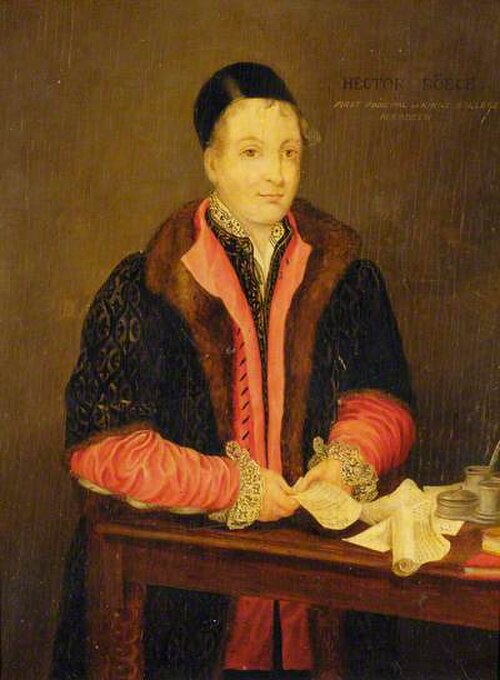
15世紀以降、ルネサンス 人文主義はスコットランドで批判的神学の考察を奨励し、教会の刷新を訴えた。1495年には早くも、スコットランド人の中には、オランダ生まれで北部人文主義運動の指導者であったデジデリウス・エラスムス(1466年 - 1536年)と接触していた者がいた。彼らはまた、エラスムスと同様に腐敗と濫用の排除によるカトリック教会の改革を強く主張したフランスの人文主義者で学者のジャック・ルフェーヴル・デタープル(1455年頃 - 1536年)とも接触していた。 [12]スコットランドの学者は、しばしば大陸やイギリスの大学で学んだ。[13]大陸で教育を受けた人文主義の学者は、セント・アンドリュース、グラスゴー、アバディーンに設立された新しいスコットランドの大学に採用された。[14]こうした国際的な交流は、スコットランドをより広いヨーロッパの学術界に統合するのに役立ち、人文主義の新しい考え方がスコットランドの知的生活に浸透した最も重要な方法の一つであった。[14] 1497年までに、ダンディーで生まれパリで学んだ人文主義者で歴史家のヘクター・ボイスがアバディーンの新大学の初代学長として戻った。[13]
学者たちが他の大学へ移り続けた結果、16世紀初頭までにパリにスコットランドの名目論者の学派が誕生した。その中で最も重要な人物は、一般にスコラ学者と言われているジョン・メアである。彼の『ラテン語によるグレーターブリテン史』(1521年)は、人文主義的な社会政策に共感的であった。1518年に彼はグラスゴー大学学長に就任するために戻った。[15]もう一人の重要人物は、セント・アンドリュース大学とケルン大学で教鞭をとり、 1462年から1493年まで若きジェームズ3世の家庭教師や王室秘書官となったアーチボルド・ホワイトローである。キンロス修道院長で後にオークニー諸島の司教となったロバート・リードは、 1520年代と1530年代に、イタリア人人文主義者ジョヴァンニ・フェラリオをキンロス修道院で教えるために招聘した。フェラリオは素晴らしい図書館を設立し、スコットランドの歴史と伝記の著作を書いた。[16]リードは遺言でエディンバラ大学設立のために十分な寄付金を残すことになっていた。ジェームズ・マクゴールドリックは、16世紀の最初の10年間に王宮に「エラスムス派の学者改革者」の集団が存在したと示唆している。[13]
ルター派
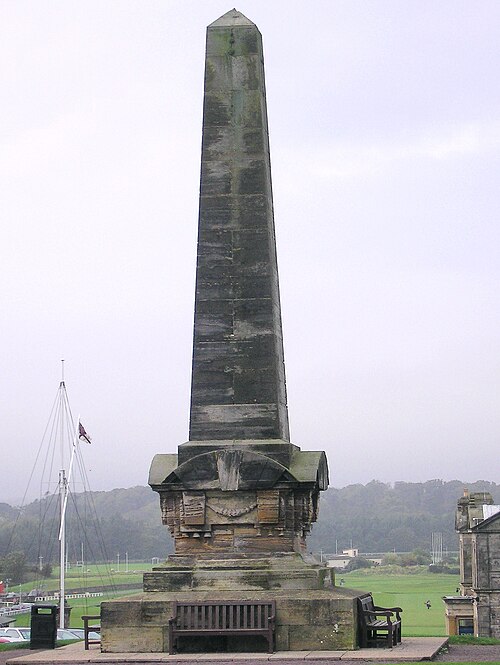
1520年代から、マルティン・ルターの思想がスコットランドに影響を及ぼし始め、東海岸の自治都市ではルター派の文献が流通した。1525年、議会はそれらの輸入を禁止した。[17] 1527年、アントワープ駐在の英国大使は、スコットランドの商人がウィリアム・ティンダルの新約聖書をエディンバラとセント・アンドリュースに持ち込んでいることに気づいた。[18] 1528年、ヴィッテンベルク大学とマールブルク大学在学中にルター派神学の影響を受けていた貴族のパトリック・ハミルトンが、スコットランドで最初のプロテスタントの殉教者となった。彼はセント・アンドリュースのセント・サルバトール・カレッジの外で異端の罪で火あぶりにされた。[19]ハミルトンの処刑は、新しい思想への関心をさらに高めた。セント・アンドリュース大司教は、「マイスター・パトリック・ハミルトゥーンの悪臭[煙]は、吹き付けられた者すべてを感染させた」として、今後このような公開処刑を行わないよう警告された。[20]
政治的背景(1528年~1559年)
ジェームズ5世
1528年に自ら統治を開始した後、ジェームズ5世は、イングランドで同時代のヘンリー8世が行ったような教会の構造的、神学的な大改革は行わなかった。ローマへの忠誠と引き換えに、ジェームズ5世は多くの私生児や寵臣を教会の役職に任命することができ、特にデイヴィッド・ビートン[要出典]は1538年に枢機卿、1539年にはセント・アンドリュース大司教となった。ジェームズは教会に重税を課すことで国王の収入を増やし、4年間で7万2千ポンドを徴収した。こうした任命と課税の結果、教会の地位と財政は悪化した。[21]教会は、グラスゴー大司教ギャビン・ダンバーと、 1539年に死去するまでセント・アンドリュース大司教を務めたジェームズ・ビートンとの間の管轄権紛争によっても分裂した。その結果、1536年に1470年以来初めて召集された地方教会会議は、大きな改革や異端に対する統一戦線を達成することに失敗した。 [22]パトリック・ハミルトンの処刑後、国王は何人かの男性を訴追し、1530年代と1540年代には少数の処刑が続いたが、国王は大規模な流血には興味がなかったため、組織的な迫害はなかった。特にアンガス、メアンズ、ファイフ、セント・アンドリュース大学内で、改革を支持する領主や貴族の数が増え始めた。[23]指導的人物には、第5代グレンケアン伯爵アレクサンダー・カニンガムやダンのジョン・アースキンがいた。[24] 1541年に議会はミサの名誉、聖母マリアへの祈り、聖人の像、そして教皇の権威を保護するための法律を可決した。[25]
乱暴な求愛
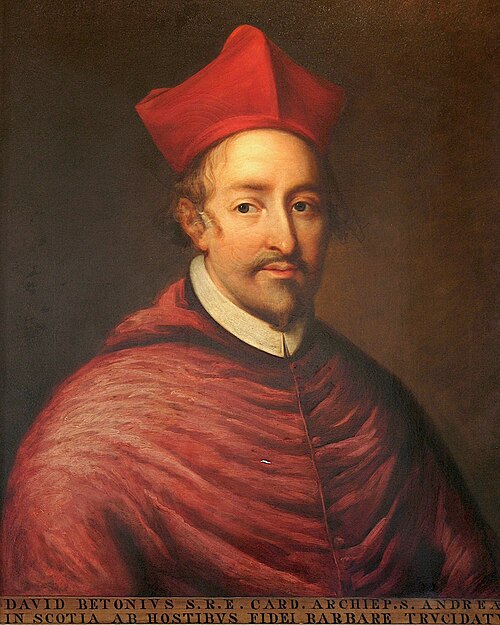
1542年にジェームズ5世が死去し、幼いスコットランド女王メアリーが後継者となり、長期にわたる未成年期の見通しがついた。メアリーの治世の初め、スコットランドの政治は、ビートン枢機卿と女王の母メアリー・オブ・ギーズが率いる親フランス派と、メアリーの将来の後継者ジェームズ・ハミルトン・アラン伯爵が率いる親イングランド派に分かれていた。[26]当初、アラン伯爵は、宗教改革を支持する宮廷内の小さな「福音派」の支援を受けて摂政となった。1543年の議会法は、聖書を母国語で読むことに対する禁止を撤廃した。[27]グリニッジ条約(1543年)に基づいて合意されていたメアリーとイングランド王ヘンリー8世の息子エドワードとの結婚計画は、スコットランドでの反発とビートン枢機卿率いるクーデターにつながった。彼は改革政策と女王とイングランド人の結婚に関するあらゆる考慮を否定し、イングランド人を怒らせた。[28]イングランド人は結婚を強制するために侵攻し、後に「乱暴な求婚」として知られる行動を起こし、スコットランド南東部を壊滅させた。[28]
1546年、スイスの宗教改革者フルドリヒ・ツヴィングリの影響下にあった説教者ジョージ・ウィシャートが、枢機卿ビートンの命令でセント・アンドリュースで逮捕され火あぶりにされた。ウィシャートの支持者にはファイフの領主も含まれていたが、その後すぐにビートンを暗殺し、セント・アンドリュース城を占拠した。彼らは包囲されながらも1年間城を占拠したが、フランス軍の支援を受けて敗れた。牧師ジョン・ノックスを含む生存者はガレー船の奴隷となることを宣告され、フランス人やプロテスタントの大義のために殉教した人々に対する恨みを募らせることとなった。[29]
1547年、エドワード・シーモア(初代サマセット公爵)率いるイングランド軍は侵攻を再開し、ピンキーでスコットランド軍を破り、ローダー、ハディントンに砦を築き、ダンディーに前哨地を置いてスコットランド南東部を占領した。この占領(1547年~1549年)は改革運動を後押しした。イングランド軍はローランド地方に書籍を供給し、聖書やプロテスタントの文献を配布した。[30]数人の伯爵は「神の言葉を教え、説教させる」ことを誓った。[31]イングランド軍に対抗するため、スコットランド軍はフランスの援助を確保したが、その代償として幼い女王をフランスの王太子、後のフランソワ2世と婚約させた。女王は1548年にフランスへ出発し、そこで育てられ、教育を受けることになった。この時点で「ヘンリー8世の政策は完全に失敗した」。[32]次の10年間でフランスの優位は絶対的なものとなった。 1554年、アランはシャテルロー公爵の称号を与えられ、摂政の地位を解かれ、代わりにメアリー・ド・ギーズ(王太后)が摂政となった。[32]
メアリー・ド・ギーズの摂政

摂政時代(1554年 - 1560年)、女王の母はスコットランド情勢におけるフランスの優位を確保した。彼女はフランス人に財務と国璽を任せ、枢密院にはフランス大使アンリ・クルタンが出席することもあった。[33]当初、メアリー・オブ・ギーズはプロテスタントに対して限定的な寛容政策をとった。これは、自身の親フランス政策と、1553年以降イングランドに対抗する政策に対する支持を得ることを望んでいたためである。イングランドは1554年にスペイン国王フェリペ2世となるカトリック教徒のメアリー・テューダーと結婚した。 [34]既存の教会の改革への期待が、政治的国家の統一を保つのに役立った。[35]しかし、1558年にスコットランド女王メアリーが王太子と結婚したことで、スコットランドがフランスの属州になるのではないかという懸念が高まった。 1558年にイングランドでプロテスタントのエリザベス女王が即位し、イギリスに宗派間の境界ができたことで、改革者たちは希望を抱いた。[36]
評議会の改革
教会は、教会に対してなされた批判の一部に反応した。セント・アンドリュース大司教ジョン・ハミルトンは、同時期のトレント公会議をモデルにした一連の地方会議(1549年、1552年、おそらく1556年と1559年)を扇動した。[37]これらの会議では、プロテスタントの異端の進行は「あらゆる階級の聖職者における道徳の腐敗と生活の俗悪なわいせつさ、そして文学と教養に対する無知」のせいであるとされた。1548年には、妾制度、聖職者の多元主義、聖職者の取引、非居住を排除し、資格のない者が教会の役職に就くことを禁止する試みがなされた。さらに、聖職者は聖書の熟考を命じられ、司教と牧師は少なくとも年に4回は説教するように指示された。修道士は大学に送られ、各修道院、大学、大聖堂には神学者が任命されることになっていた。しかし、1552年には、ほとんど成果が上がっていないことが認められた。ミサへの出席者はまだ少なく、「この王国の下級聖職者と高位聖職者たちは、大抵、聖書の知識において、自らの努力で人々にカトリックの信仰や救済に必要なその他の事柄を正しく教えたり、誤った考えを持つ者を改心させたりできるほど熟達していない」[38] 。
プロテスタントの拡大

プロテスタントはこの時期に拡大を続け、既存の教会内での改革を望む人々とは一線を画すようになった。もともとは、カトリック教会に通い続ける領主の家族、または親族グループや社会的ネットワークのメンバーで構成される集会所として組織されていたが、プロテスタントは一連の秘密教会(秘密教会)を発展させ始め、そのメンバーは既存の教会構造からますます離れていくようになった。彼らの組織は1555年にノックスがスコットランドに戻るのに十分なものであった。彼はプロテスタントの聖体拝領を管理し、秘密教会を巡回説教した。彼はメンバーに、プロテスタントの信念を持ちながらもカトリックの礼拝に出席するニコデモ主義を拒否するよう促した。アーガイル伯爵から保護を申し出られたにもかかわらず、彼は1556年にジュネーヴに戻った。[39]指導的な聖職者が不在だったため、運動の指導者はプロテスタントに改宗した少数の貴族と、故ジェームズ5世の庶子であるアーガイルの息子ローン卿、ジェームズ・スチュワート卿(後のモーレイ伯爵)、ジョン・アースキン卿を含む新世代によって引き継がれた。[40] 1557年、アーガイル、グレンケアン、モートン、ローン、アースキンの4者は、「前述の会衆に対して暴政と騒乱を企てる悪魔とすべての邪悪な力」に対する相互支援を目的とした「最初の誓約」に署名した。このグループは、後に「会衆の領主」として知られるようになり、既存の体制に直接挑戦した。[41]
宗教改革の危機(1559年~1560年)
1559年1月1日、匿名の乞食召喚状が修道院の扉に貼られ、修道士らの財産が真の貧者のものだとして立ち退きを迫った。これは修道士に対して特に不満を抱いていると思われる町の住民の感情に訴えることを狙ったものだった。[42] [42]ノックスはスコットランドに戻り、 5月11日にパースの洗礼者聖ヨハネ教会でキリストによる神殿の浄化について説教した。会衆はこれに応じて教会の聖堂、像、祭壇を剥ぎ取り、地元の修道院とカルトジオ会館を略奪した。摂政は秩序回復のために軍隊を派遣し、グレンケアンは町の新しいプロテスタントの地位を守るために軍隊を率いた。アーガイルとジェームズ・スチュアートを含む王室代表団は町に門を開くよう説得したが、摂政軍の高圧的な対応により交渉は決裂した。アーガイルとスチュアートは立場を変え、会衆の領主たちは武力衝突のために支持者を集め始めた。[43]

地方改革が続き、プロテスタントの少数派がさまざまな地域や町を掌握し、しばしば地方領主の支援を受け、カトリックの殉教者を作らないようにしながら、脅迫を使って修道院や教会の「浄化」を行い、続いてプロテスタントの説教者を任命した。このような改革は、保守的なアバディーンや教会の首都セント・アンドリュース、その他の東部の港で起こった。6月、メアリー・オブ・ギーズはフランス軍をセント・アンドリュースに派遣して支配権を回復しようとしたが、クーパー・ミュアで数で優勢な軍に阻まれ、撤退を余儀なくされた。[44]エディンバラは7月に貴族の手に落ち、メアリーは拠点をダンバーに移した。1,800人のフランス軍の援軍が到着すると貴族は守勢に立たされ、首都を放棄した。[45]
貴族たちはイングランドとフランスに救援を求めた。イングランドの代理人は、シャテルエローの長男で相続人であるアラン伯の無事な帰還に成功し、伯爵は貴族たちの指導権を受け入れることができた。 [45] 10月、摂政は「停職」と宣言され、「王国の大会議」が招集された。[46]メアリー・オブ・ギーズの軍は前進を続け、再びセント・アンドリュースを脅かした。1560年1月にイングランド艦隊がフォース湾に到着したことで状況は一変し、フランス軍はエディンバラ近郊のリースの要塞に撤退した。 [47]イングランドと貴族たちは1560年2月のベリック条約でさらなる支援に同意し、イングランド軍は国境を越えてリースのフランス軍を包囲した。メアリー・オブ・ギーズは病に倒れ、6月に亡くなった。援軍の気配がないため、フランスは交渉を開始した。エディンバラ条約(1560年7月5日)に基づき、フランスとイギリスはスコットランドから軍隊を撤退させ、プロテスタントの貴族がスコットランドの支配権を握った。貴族はスコットランド女王メアリーとその夫、現在のフランス王フランソワ2世を君主として受け入れ、議会の開催を許可されたが、宗教問題には触れられなかった。[47]
宗教改革議会

スコットランド議会は1560年8月1日にエディンバラで会合を開いた。 [46] 14人の伯爵、6人の司教、19人の領主、21人の修道院長、22人の自治体委員、および100人以上の領主が議席を主張した。[48]エディンバラ条約の条項を無視して、議会は8月17日に改革派信仰告白(スコットランド信仰告白)を承認し、8月24日にはスコットランドの古い信仰を廃止する3つの法律を可決した。これにより、改革派信仰告白に従わない以前の法律はすべて無効とされた。聖礼典は2つ(洗礼と聖餐)に減らされ、改革派の説教者のみが執り行うものとされた。ミサの執行は一連の罰則(最終的には死刑)の対象となり、スコットランドにおける教皇の管轄権は否定された。[49]女王は議会が可決した法案を承認することを拒否し、新しい教会は法的に不確実な状態のまま存在した。[50]
最初の規律書
貴族院は議会で宗教改革書を検討するよう意図していたが、これは貴族院が委託し、主にノックスの著作であった。貴族院はその文書に満足せず、ノックス、ジョン・ウィンラム、ジョン・スポティスウッド、ジョン・ウィロック、ジョン・ダグラス、ジョン・ロウを含む「6人のジョン」からなる委員会を設立し、改訂版を作成した。遅延の結果、最初の戒律書として知られるその文書は議会全体で検討されず、1561年1月に少数の貴族と約30人の領主による会議でのみ検討され、その後、全体では承認されず、個別に承認された。[48]その書は、教区を基盤とした宗教改革のプログラムを提案しており、これは旧教会の資源を使用して牧師のネットワーク、教区を基盤とした学校システム、大学教育、および救貧に資金を提供するという内容であった。教会の財産を使用するというこの提案は却下された。その代わりに、教会評議会の法令により、教会の資産の3分の2は既存の所有者の手に留保され、残りの3分の1は国王と改革派の間で分割されました。教育プログラムは放棄され、牧師の給与は低いままで、教会は資金不足に陥りました。[51]
宗教改革後の教会
信仰告白

スコットランド信仰告白は、ノックスと5人の同僚によって4日間で作成された。その構成は使徒信条と似ており、父、子、教会、完成をテーマにした25章から成っている。これは、イングランド内戦中にイングランド議会同盟国と交渉し、1647年に教会によって採択されたウェストミンスター信仰告白に取って代わられるまで、教会の標準であり続けた。 [52]この信仰告白は、カルヴァン主義の色合いが強い。それは、すべてを決定した神の「計り知れない摂理」を強調した。それは、永遠の破滅に値する人類の極度の堕落と、人類の一部を神の慈悲のみによって救済に選んだことを強調した。[53]それは、全質変化を否定したが、聖体における真の現存を維持した。それは、カトリックに対する否定的で感情的な非難を大部分避け、新しい信仰を平易な言葉で示すことに焦点を当てた。教会は、教会を「すべての国、王国、民族、言語、ユダヤ人と異邦人から選ばれた人々」の「カトリック」コミュニティとみなした。[54] 1581年、カトリックの脅威に対する反応の一環として、裁判所は、おそらくジェームズ6世の依頼による、カトリックをより厳しく非難する国王の否定告白書に署名した。[ 55 ]
典礼と礼拝
宗教改革により、宗教儀式は完全に変容した。カトリック教会の多くの聖日や祝祭日、そして時折のミサの代わりに、唯一生き残った聖日は日曜日となり、信徒は定期的に出席し参加することが求められた。ラテン語は放棄され、現地語が使われるようになった。訓練された聖歌隊の精巧なポリフォニーは、会衆による賛美歌の歌唱に取って代わられた。聖書と説教が重視され、説教はしばしば 1 時間以上続いたが、牧師のいない多くの教区では、賛美歌、祈り、聖書朗読の「朗読会」しか行われなかった。ジュネーブ聖書は広く採用された。[56]イングランドでマリア迫害から逃れたプロテスタントの説教者たちは、エドワード 6 世の第二祈祷書(1552 年)を持ち込み、会衆の貴族たちから賞賛された。ノックスは当初これを支持していたが、ジュネーヴを去る前にカルヴァンの奨励を受けて独自の『聖職の書』を執筆しており、これが1562年の総会で印刷・承認された。1564年には拡大版が『告白』と『詩篇』とともに韻律で再版され、1643年にウェストミンスター・ディレクトリに置き換えられるまで標準として使われ続けた。 [57] 『聖職の書』のゲール語訳は1563年に出版され、ゲール語で印刷された最初の本となったが、18世紀までゲール語聖書は出版されなかった。[56]
教会の政体

第一教会規則では、約1,080の教区それぞれに改革派の聖職者を置くことを想定していた。1561年末までに、これらの席のうち240が埋まった。1567年までに聖職者は約850人となり、1574年には1,000人を超えた。これらは主に南部と東部に集中していた。ハイランド地方では聖職者が不足し、地元住民と同じゲール語を話せる人はほとんどいなかった。大学は1世代にわたって十分な訓練を受けた聖職者を供給することができず、その多く(1574年には4分の3以上)が資格のある聖職者ではなく、下級の読者の地位に就いていた。その大部分は元カトリック聖職者だった。[58]中世の13の司教区という乱雑なシステムは、それぞれ監督官が監督する、より合理的な10の管区に置き換えられることになっていた。この計画は、3人の司教がプロテスタントに改宗し、その職に留まることを許されたことで複雑化した。監督官はほとんど任命されず、その不足分を補うために臨時委員が任命された。1576年に総会が教会の構造を検討したとき、大司教、司教、監督官、委員、訪問者の5つの役職が認められた。[58]
これらの役職のほかに、教会の裁判所である教会会議と長老会の制度があり、規律と管理を扱っていた。いくつかの地方会議は1560年以前に存在し、モデレーターは1563年に登場したが、長老会は1580年まで存在しなかった。1590年代までに、スコットランドは約50の長老会に組織され、それぞれに約20人の牧師がいた。その上には12ほどの教会会議があり、その頂点には総会があった。[59]教会会議制度により、新しい教会内で地元の領主にかなりの権力が与えられ、彼らは長老の威厳と権威を身につけることができた。[60]
継続的な改革
1560年代には、人口の大半はおそらくまだカトリック教徒であり、教会がハイランドや島々に浸透するのは困難だったが、他の地域での改革と比較すると、ほとんど迫害を受けずに、徐々に改宗と統合のプロセスが始まった。修道院は解散されず、修道士とともに消滅し、1573年までは、従うことを拒否したとしても、聖職者が追放されることはなかった。[61]教区教会を礼拝の中心に据えたことにより、礼拝堂、修道院、大聖堂といった複雑な宗教施設の多くが放棄され、その多くは朽ち果てたり、セント・アンドリュースの大聖堂のように、地元の家屋で使われるように石材として採掘されたりした。[62]
第二次宗教改革の危機(1567年)
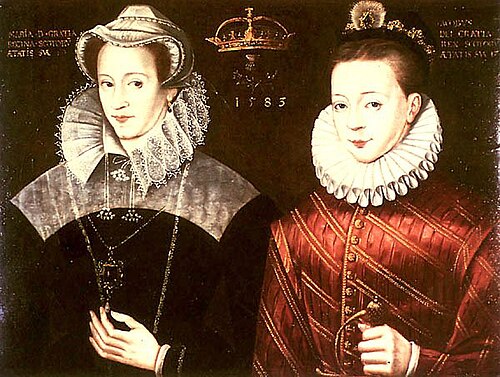
1560年に夫フランソワ2世が死去すると、19歳になったメアリーはスコットランドに戻り、政治を担うことを選んだ。彼女は、カトリックの儀式に合法的に参加できるのは自分だけであり、カトリックを再び国民に押し付けようとはせず、カトリックの主要貴族を怒らせないようにすることで合意を得た。彼女の6年間の統治は、有力貴族の陰謀と対立が主な原因となった一連の危機に見舞われた。秘書のデイヴィッド・リッチオが殺害された後、彼女の2番目の夫で幼い息子の父親であるダーンリー卿が殺害され、ダーンリーの殺害に関与していたボスウェル伯爵に誘拐されて結婚した。[63]ボスウェル伯爵への反対は、同盟貴族と名乗る貴族連合の形成につながった。[64] マイケル・リンチは、 1567年の出来事を「第二次宗教改革危機」と表現している。[65]メアリーとボスウェルは1567年6月15日にカーベリーヒルで貴族たちと対峙したが、彼らの勢力は消滅した。彼は逃亡し、彼女はロッホリーヴェン城に投獄された。カーベリーヒルでの対決から10日後、総会は「迷信と偶像崇拝」を根絶することを目的としてエディンバラで会合した。1567年の宗教改革決議は1560年の決議よりもはるかにカルヴァン主義的であった。総会は1560年の法律の批准、牧師のより良い準備、教区への新しい資源と人員、大学と学校の教師の粛清、議会とのより緊密な関係を含む改革プログラムを開始した。[66] 12月に議会が召集され、宗教改革議会で可決された法律を批准することができた。[67]その後の宗教的決議は、内戦と不安定な摂政を背景に1570年代に策定された。[66]
ジェームズ6世の治世(1567年 - 1625年)
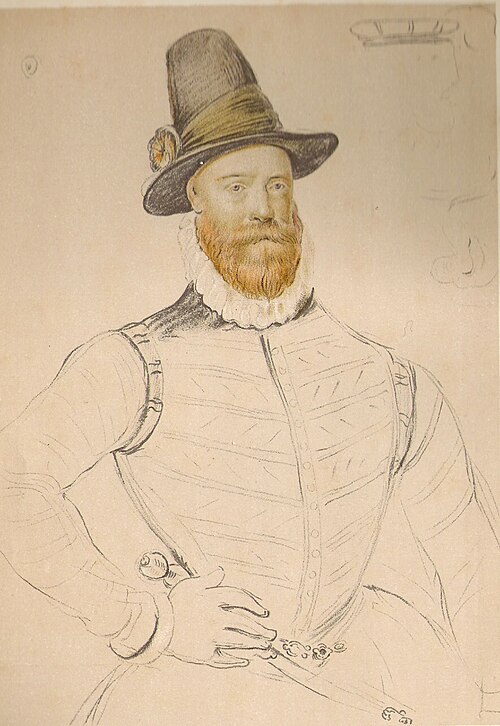
1567年7月、メアリーは13か月の息子ジェームズ6世に譲位を強いられた。ジェームズはプロテスタントとして育てられ、政府はマレーから始まる一連の摂政によって運営され、ジェームズが1581年に独立を主張し始めた。[68]メアリーは最終的に脱出し、力ずくで王位を取り戻そうとした。 1568年5月のランサイドの戦いでマレー率いる王党派の軍に敗れた後、メアリーは息子を彼らに託してイングランドに避難した。スコットランドでは、王党派が摂政に代わってメアリー支持者と内戦を戦った。これはイングランドの介入後、 1573年5月にエディンバラ城が明け渡されて終わった。[69] 1578年、より長老派的な見解を持つ第二の規律書が採択された。[70]
イングランドでは、メアリーはカトリックの陰謀家たちの焦点となり、最終的には親戚のエリザベス1世の命令で1587年に反逆罪で処刑された。[69] [71]ジェームズは教義上はカルヴァン派であったが、主教制を強く支持し、教会の独立性、さらには政府への介入権にさえ抵抗した。教会は、メルヴィル派として知られるアンドリュー・メルヴィルの信奉者と結びついた。彼は権力を行使して望む場所で総会を招集し、より過激な聖職者の出席を制限した。彼は穏健派の聖職者に出席料を支払い、会員と交渉し、教会の独立性を制限するためにその業務を操作した。1600年までに、彼は3人の議会司教を任命した。彼の治世の終わりまでに11人の司教がおり、教区司教制が復活したが、教会内では長老派教会への強い支持が残っていた。[72]
カトリックの生き残り
Although officially illegal, Roman Catholicism survived in parts of Scotland. The hierarchy of the Church played a relatively small role and the initiative was left to lay leaders. Where nobles or local lairds offered protection it continued to thrive, as with Clanranald on South Uist, or in the north-east where the Earl of Huntly was the most important figure. In these areas Catholic sacraments and practices were maintained with relative openness.[73] Members of the nobility were probably reluctant to pursue each other over matters of religion because of strong personal and social ties. An English report in 1600 suggested that a third of nobles and gentry were still Catholic in inclination.[74] In most of Scotland, except for the Outer Hebrides, Catholicism became an underground faith in private households, connected by ties of kinship. This reliance on the household meant that women often became important as the upholders and transmitters of the faith, such as in the case of Lady Fernihurst in the Borders. They transformed their households into centres of religious activity and offered places of safety for priests.[73]
Because the Reformation took over the existing structures and assets of the Church, any attempted recovery by the Catholic hierarchy was extremely difficult. After the collapse of Mary's cause in the civil wars in the 1570s, and any hope of a national restoration of the old faith, the hierarchy began to treat Scotland as a mission area. The leading order of the Counter-Reformation, the newly founded Jesuits, initially took relatively little interest in Scotland as a target of missionary work. Their effectiveness was limited by rivalries between different orders at Rome. The initiative was taken by a small group of Scots connected with the Crichton family, who had supplied the bishops of Dunkeld. They joined the Jesuit order and returned to attempt conversions. Their focus was mainly on the court, which led them into involvement in a series of complex political plots and entanglements. The majority of surviving Scottish lay followers were largely ignored.[73]
Impact
Education

The humanist concern with widening education was shared by the Protestant reformers, with a desire for a godly people replacing the aim of having educated citizens. The First Book of Discipline set out a plan for a school in every parish, but this proved financially impossible.[75] In the burghs the old schools were maintained, with the song schools and a number of new foundations becoming reformed grammar schools or ordinary parish schools. Schools were supported by a combination of kirk funds, contributions from local heritors or burgh councils and parents that could pay. They were inspected by kirk sessions, who checked for the quality of teaching and doctrinal purity. There were also large number of unregulated "adventure schools", which sometimes fulfilled a local need and sometimes took pupils away from the official schools. Outside of the established burgh schools, masters often combined their positions with other employment, particularly minor posts within the Kirk, such as clerk.Todd, M. (2002), The Culture of Protestantism in Early Modern Scotland, New Haven, CT.: Yale University Press, pp. 59–62, ISBN 0-3000-9234-2 At their best, the curriculum included catechism, Latin, French, Classical literature and sports.[76]
Scotland's universities underwent a series of reforms associated with Andrew Melville, who returned from Geneva to become principal of the University of Glasgow in 1574. A distinguished linguist, philosopher and poet, he had trained in Paris and studied law at Poitiers, before moving to Geneva and developing an interest in Protestant theology. Influenced by the anti-Aristotelian Petrus Ramus, he placed an emphasis on simplified logic and elevated languages and sciences to the same status as philosophy, allowing accepted ideas in all areas to be challenged.[77] He introduced new specialist teaching staff, replacing the system of "regenting", where one tutor took the students through the entire arts curriculum.[78] Metaphysics were abandoned and Greek became compulsory in the first year, followed by Aramaic, Syriac and Hebrew, launching a new fashion for ancient and biblical languages. Glasgow had probably been declining as a university before his arrival, but students now began to arrive in large numbers. He assisted in the reconstruction of Marischal College, Aberdeen, and to do for St Andrews what he had done for Glasgow, he was appointed Principal of St Mary's College, St Andrews, in 1580. The University of Edinburgh developed out of public lectures that were established in the town in the 1540s on law, Greek, Latin and philosophy, under the patronage of Mary of Guise. The "Tounis College" become the University of Edinburgh in 1582.[16] The results of these changes were a revitalisation of all Scottish universities, which were now producing a quality of education the equal of that offered anywhere in Europe.[77]
Literature

Medieval Scotland probably had its own Mystery plays, often performed by craft guilds, like one described as ludi de ly haliblude and staged at Aberdeen in 1440 and 1445 and which was probably connected with the feast of Corpus Christi, but no texts are extant.[79] Legislation was enacted against folk plays in 1555, and against liturgical plays ("clerk-plays or comedies based on the canonical scriptures") in 1575 by the General Assembly of the Church of Scotland.[80] Attempts to ban folk plays were more leniently applied and less successful that once assumed. They continued into the 17th century, with parishioners in Aberdeen reproved for parading and dancing in the street with bells at weddings and Yule in 1605, Robin Hood and May plays at Kelso in 1611 and Yuletide guising at Perth in 1634.[81] The Kirk also allowed some plays, particularly in schools, when they served their own ends for education, as in the comedy about the Prodigal Son permitted at St. Andrews in 1574.[81]
More formal plays included those of James Wedderburn, who wrote anti-Catholic tragedies and comedies in Scots around 1540, before he was forced to flee into exile. These included the Beheading of Johne the Baptist and the Historie of Dyonisius the Tyraonne, which were performed at Dundee.[82]David Lyndsay (c. 1486 –1555), diplomat and the head of the Lyon Court, was a prolific poet and dramatist. He produced an interlude at Linlithgow Palace for the king and queen thought to be a version of his play The Thrie Estaitis in 1540, which satirised the corruption of church and state, and which is the only complete play to survive from before the Reformation.[83] George Buchanan (1506–1582) was major influence on Continental theatre with plays such as Jepheths and Baptistes, which influenced Pierre Corneille and Jean Racine and through them the neo-classical tradition in French drama, but his impact in Scotland was limited by his choice of Latin as a medium.[84] The anonymous The Maner of the Cyring of ane Play (before 1568)[85] and Philotus (published in London in 1603), are isolated examples of surviving plays. The later is a vernacular Scots comedy of errors, probably designed for court performance for Mary, Queen of Scots or James VI.[86] The same system of professional companies of players and theatres that developed in England in this period was absent in Scotland, but James VI signalled his interest in drama by arranging for a company of English players to erect a playhouse and perform in 1599.[87]
The Kirk also discouraged poetry that was not devotional in nature. Nevertheless, poets from this period included Richard Maitland of Lethington (1496–1586), who produced meditative and satirical verses; John Rolland (fl. 1530–1575), who wrote allegorical satires and courtier and minister Alexander Hume (c. 1556 –1609), whose corpus of work includes nature poetry and epistolary verse. Alexander Scott's (?1520–82/3) use of short verse designed to be sung to music, opened the way for the Castalian poets of James VI's adult reign.[88]
Art

Scotland's ecclesiastical art paid a heavy toll as a result of Reformation iconoclasm, with the almost total loss of medieval stained glass and religious sculpture and paintings.[89] The only significant surviving pre-Reformation stained glass in Scotland is a window of four roundels in the Magdalen Chapel of Cowgate, Edinburgh, completed in 1544.[90] Wood carving can be seen at King's College, Aberdeen and Dunblane Cathedral.[91] In the West Highlands, where there had been a hereditary caste of monumental sculptors, the uncertainty and loss of patronage caused by the rejection of monuments in the Reformation meant that they moved into other branches of the Gaelic learned orders or took up other occupations. The lack of transfer of carving skills is noticeable in the decline in quality when gravestones were next commissioned from the start of the 17th century.[92]
According to N. Prior, the nature of the Scottish Reformation may have had wider effects, limiting the creation of a culture of public display and meaning that art was channelled into more austere forms of expression with an emphasis on private and domestic restraint.[93] The loss of ecclesiastical patronage that resulted from the Reformation, meant that native craftsmen and artists turned to secular patrons. One result of this was the flourishing of Scottish Renaissance painted ceilings and walls, with large numbers of private houses of burgesses, lairds and lords gaining often highly detailed and coloured patterns and scenes, of which over 100 examples survive.[89] These were undertaken by unnamed Scottish artists using continental pattern books that often led to the incorporation of humanist moral and philosophical symbolism, with elements that call on heraldry, piety, classical myths and allegory.[89] The earliest surviving example is at the Hamilton palace of Kinneil, West Lothian, decorated in the 1550s for the then regent the James Hamilton, Earl of Arran.[94] Other examples include the ceiling at Prestongrange House, undertaken in 1581 for Mark Kerr, Commendator of Newbattle, and the long gallery at Pinkie House, painted for Alexander Seaton, Earl of Dunfermline in 1621.[89]
Architecture

The Reformation revolutionised church architecture in Scotland. Calvinists rejected ornamentation in places of worship, seeing no need for elaborate buildings divided up for the purpose of ritual. This resulted in the widespread destruction of Medieval church furnishings, ornaments and decoration.[95] New churches were built and existing churches adapted for reformed services, particularly by placing the pulpit centrally in the church, as preaching was at the centre of worship. Many of the earliest buildings were simple gabled rectangles, a style that continued into the 17th century, as at Dunnottar Castle in the 1580s, Greenock's Old West Kirk (1591) and Durness (1619).[96] These churches often have windows on the south wall (and none on the north), which became a characteristic of Reformation kirks. There were continuities with pre-Reformation materials, with some churches using rubble for walls, as at Kemback in Fife (1582). Others employed dressed stone and a few added wooden steeples, as at Burntisland (1592).[97] The church of Greyfriars, Edinburgh, built between 1602 and 1620, used a rectangular layout with a largely Gothic form, but that at Dirleton (1612), had a more sophisticated classical style.[96] A variation of the rectangular church developed in post-Reformation Scotland, and often used when adapting existing churches, was the T-shaped plan, which allowed the maximum number of parishioners to be near the pulpit. Examples can be seen at Kemback and Prestonpans after 1595. This plan continued to be used into the 17th century as at Weem (1600), Anstruther Easter, Fife (1634–1644) and New Cumnock, Ayreshire (1657). In the 17th century a Greek cross plan was used for churches such as Cawdor (1619) and Fenwick (1643). In most of these cases one arm of the cross would have been closed off as a laird's aisle, meaning that they were in effect T-plan churches.[96]
Music

The Reformation had a severe impact on church music. The song schools of the abbeys, cathedrals and collegiate churches were closed down, choirs disbanded, music books and manuscripts destroyed and organs removed from churches.[89] The Lutheranism that influenced the early Scottish Reformation attempted to accommodate Catholic musical traditions into worship, drawing on Latin hymns and vernacular songs. The most important product of this tradition in Scotland was The Gude and Godlie Ballatis (1567), which were spiritual satires on popular ballads that have been commonly attributed to brothers James, John and Robert Wedderburn. Never adopted by the Kirk, they nevertheless remained popular and were reprinted from the 1540s to the 1620s.[98]
Later the Calvinism that came to dominate the Scottish Reformation was much more hostile to Catholic musical tradition and popular music, placing an emphasis on what was biblical, which meant the Psalms. The Scottish Psalter of 1564 was commissioned by the Assembly of the Church. It drew on the work of French musician Clément Marot, Calvin's contributions to the Strasbourg Psalter of 1539 and English writers, particularly the 1561 edition of the Psalter produced by William Whittingham for the English congregation in Geneva. The intention was to produce individual tunes for each psalm, but of 150 psalms, 105 had proper tunes and in the 17th century, common tunes, which could be used for psalms with the same metre, became more frequent.[99] Because entire congregations would now sing these psalms, unlike the trained choirs who had sung the many parts of polyphonic hymns,[98] there was a need for simplicity and most church compositions were confined to homophonic settings.[89]
During his personal reign, James VI attempted to revive the song schools, with an act of parliament passed in 1579, demanding that councils of the largest burghs set up "ane sang scuill with ane maister sufficient and able for insturctioun of the yowth in the said science of musik". Five new schools were opened within four years of the act coming into force, and by 1633 there were at least 25. Most of those burghs without song schools made provision within their grammar schools.[100] Polyphony was incorporated into editions of the Psalter from 1625, but in the few locations where these settings were used, the congregation sang the melody and trained singers the contra-tenor, treble and bass parts.[98] The triumph of the Presbyterians in the National Covenant of 1638 led to an end of polyphony, and a new psalter in common metre, without tunes, was published in 1650.[101] In 1666 The Twelve Tunes for the Church of Scotland, composed in Four Parts (which actually contained 14 tunes), designed for use with the 1650 Psalter, was first published in Aberdeen. It would go through five editions by 1720. By the late seventeenth century these two works had become the basic corpus of the psalmody sung in the Kirk.[102]
Women

Early modern Scotland was a patriarchal society, in which men had total authority over women.[103] From the 1560s the post-Reformation marriage service underlined this by stating that a wife "is in subjection and under governance of her husband, so long as they both continue alive".[104] In politics the theory of patriarchy was complicated by regencies led by Margaret Tudor and Mary of Guise and by the advent of a regnant queen in Mary, Queen of Scots from 1561. Concerns over this threat to male authority were exemplified by John Knox's The First Blast of the Trumpet Against the Monstruous Regiment of Women (1558), which advocated the deposition of all reigning queens. Most of the political nation took a pragmatic view of the situation, accepting Mary as queen, but the strains that this paradox created may have played a part in the later difficulties of the reign.[105]
Before the Reformation, the extensive marriage bars for kinship meant that most noble marriages necessitated a papal dispensation, which could later be used as grounds for annulment if the marriage proved politically or personally inconvenient, although there was no divorce as such.[103] Separation from bed and board was allowed in exceptional circumstances, usually adultery. Under the reformed Kirk, divorce was allowed on grounds of adultery or desertion. Scotland was one of the first countries to allow desertion as legal grounds for divorce and, unlike England, divorce cases were initiated relatively far down the social scale.[106]
After the Reformation the contest between the widespread belief in the limited intellectual and moral capacity of women and the desire for women to take personal moral responsibility, particularly as wives and mothers, intensified. In Protestantism this necessitated an ability to learn and understand the catechism and even to be able to independently read the Bible. Most commentators, even those that tended to encourage the education of girls, thought they should not receive the same academic education as boys. In the lower ranks of society, women benefited from the expansion of the parish schools system that took place after the Reformation, but were usually outnumbered by boys, often taught separately, for a shorter time and to a lower level. They were frequently taught reading, sewing and knitting but not writing. Female illiteracy rates based on signatures among female servants were around 90% from the late 17th to the early 18th centuries, and perhaps 85% for women of all ranks by 1750, compared with 35% for men.[107] Among the nobility there were many educated and cultured women, of which Queen Mary is the most obvious example.[108]
Church attendance played an important part in the lives of many women. Women were largely excluded from the administration of the Kirk, but when heads of households voted on the appointment of a new minister, some parishes allowed women in that position to participate.[109] In the post-Reformation period there was a criminalisation of women.[110] Women were disciplined in kirk sessions and civil courts for stereotypical offences including scolding and prostitution, which were seen as deviant, rather than criminal.Kilday, A.-M. (2007), Women and Violent Crime in Enlightenment Scotland, London: Boydell & Brewer, p. 19, ISBN 978-0-8619-3287-0 These changing attitudes may partly explain the witch hunts that occurred after the Reformation and in which women were the largest group of victims.[111]
Popular religion

Scottish Protestantism was focused on the Bible, which was seen as infallible and the major source of moral authority. Many Bibles were large, illustrated and highly valuable objects. The Genevan translation was commonly used[112] until in 1611 the Kirk adopted the Authorised King James Version and the first Scots version was printed in Scotland in 1633, but the Geneva Bible continued to be employed into the 17th century.[113] Bibles often became the subject of superstitions, being used in divination.[114] Kirk discipline was fundamental to Reformed Protestantism and it probably reached a high-water mark in the 17th century. Kirk sessions were able to apply religious sanctions, such as excommunication and denial of baptism, to enforce godly behaviour and obedience. In more difficult cases of immoral behaviour they could work with the local magistrate, in a system modelled on that employed in Geneva.[115] Public occasions were treated with mistrust and from the later 17th century there were efforts by kirk sessions to stamp out activities such as well-dressing, bonfires, guising, penny weddings, and dancing.[116]
In the late Middle Ages there were a handful of prosecutions for harm done through witchcraft, but the passing of the Witchcraft Act 1563 made witchcraft, or consulting with witches, capital crimes.[117] The first major series of trials under the new act were the North Berwick witch trials, beginning in 1589, in which James VI played a major part as "victim" and investigator.[118] He became interested in witchcraft and published a defence of witch-hunting in the Daemonologie in 1597, but he appears to have become increasingly sceptical and eventually took steps to limit prosecutions. An estimated 4,000 to 6,000 people, mostly from the Scottish Lowlands, were tried for witchcraft in this period, a much higher rate than for neighbouring England. There were major series of trials in 1590–1591, 1597, 1628–1631, 1649–1650 and 1661–1662. Seventy-five per cent of the accused were women and modern estimates indicate that over 1,500 people were executed.[119]
National identity
The Kirk that developed after 1560 came to represent all of Scotland. It became the subject of national pride, and was often compared with the less clearly reformed church in neighbouring England. Jane Dawson suggests that the loss of national standing in the contest for dominance of Britain between England and France suffered by the Scots, may have led them to stress their religious achievements.[120] A theology developed that saw the kingdom as in a covenant relationship with God. Many Scots saw their country as a new Israel and themselves as a holy people engaged in a struggle between the forces of Christ and Antichrist, the latter being identified with the resurgent papacy and the Roman Catholic Church. This view was reinforced by events elsewhere that demonstrated that Reformed religion was under threat, such as the 1572 Massacre of St Bartholomew in France and the Spanish Armada in 1588.[120] These views were popularised through the first Protestant histories, such as Knox's History of the Reformation and George Buchanan's Rerum Scoticarum Historia.[121] This period also saw a growth of a patriotic literature facilitated by the rise of popular printing. Published editions of medieval poetry by John Barbour and Robert Henryson and the plays of David Lyndsay all gained a new audience.[122]
See also

Notes
- ^ Popularly known as the "kirk"
References
- ^ Fletcher 1999, pp. 231–233.
- ^ a b c d e f g Bawcutt & Williams (2006), pp. 26–29.
- ^ Macquarrie (2004), pp. 109–117.
- ^ a b c Wormald (1991), pp. 75–87.
- ^ a b Wormald (1991), pp. 76–87.
- ^ Palliser (2000), pp. 349–350.
- ^ Barrell (2000), p. 246.
- ^ Barrell (2000), p. 254.
- ^ a b Peters (2004), p. 147.
- ^ Barrell (2000), pp. 244–245.
- ^ Barrell (2000), p. 257.
- ^ McGoldrick (1989), p. 28.
- ^ a b c Webster (1997), pp. 124–125.
- ^ a b Wormald (1991), pp. 68–72.
- ^ Mason (2005), p. 100.
- ^ a b Thomas (2012), pp. 196–197.
- ^ Wormald (1991), p. 91.
- ^ Wormald (1991), p. 104.
- ^ Dawson (2007), pp. 164–166.
- ^ Mackie, Lenman & Parker (1991), p. 151.
- ^ Mason (2005), p. 102.
- ^ Dawson (2007), p. 129.
- ^ Dawson (2007), pp. 144–145.
- ^ Wormald (1991), p. 107.
- ^ Ryrie (2006), p. 42.
- ^ Wormald (1991), p. 100.
- ^ Dawson (2007), p. 159.
- ^ a b Grant & Stringer (1995), pp. 115–116.
- ^ Graham (2000), p. 414.
- ^ Wormald (1991), pp. 102–104.
- ^ Kirk (1989), p. 11.
- ^ a b Mackie, Lenman & Parker (1991), p. 144.
- ^ Mackie, Lenman & Parker (1991), p. 139.
- ^ Wormald (1991), p. 102.
- ^ Dawson (2007), p. 185.
- ^ Dawson (2007), pp. 200–201.
- ^ Dawson (2007), p. 186.
- ^ Kirk (1993), p. 696.
- ^ Dawson (2007), pp. 188–189.
- ^ Dawson (2007), pp. 194–195.
- ^ Dawson (2007), p. 195.
- ^ a b Burleigh (1960), p. 143.
- ^ Dawson (2007), pp. 204–205.
- ^ Dawson (2007), pp. 205–206.
- ^ a b Dawson (2007), p. 209.
- ^ a b Wormald (1991), p. 117.
- ^ a b Dawson (2007), p. 211.
- ^ a b Lynch (1992), p. 197.
- ^ Mackie, Lenman & Parker (1991), p. 153.
- ^ Brown & MacDonald (2010), p. 48.
- ^ Mackie, Lenman & Parker (1991), pp. 154–155.
- ^ J. Rogers, Presbyterian Creeds: A Guide to the Book of Confessions (Westminster: John Knox Press, 1985), ISBN 0-6642-5496-9, pp. 79–80.
- ^ Brown (2012), p. 80.
- ^ Wormald (1991), pp. 120–121.
- ^ Reid (2013), p. 96.
- ^ a b Dawson (2007), pp. 227–229.
- ^ Burleigh (1960), pp. 160–163.
- ^ a b Lynch (1992), pp. 198–199.
- ^ McNeill & MacQueen (1996), pp. 390–391.
- ^ Wormald (1991), p. 138.
- ^ Wormald (1991), pp. 121–133.
- ^ Dawson (2007), pp. 217–218.
- ^ Mitchison (2002), pp. 129–133.
- ^ Lynch (1992), p. 218.
- ^ Lynch (1992), p. 196.
- ^ a b Lynch (1992), pp. 200–201.
- ^ Dawson (2007), p. 268.
- ^ Willson (1963), p. 19.
- ^ a b Wormald (1991), p. 183.
- ^ D. K. McKim and D. F. Wright, Encyclopedia of the Reformed Faith (Westminster: John Knox Press, 1992), ISBN 0-6642-1882-2, p. 103.
- ^ Dawson (2007), pp. 316–317.
- ^ Wormald (1991), pp. 128–129.
- ^ a b c Dawson (2007), p. 232.
- ^ Wormald (1991), p. 133.
- ^ Houston (2002), p. 5.
- ^ Wormald (1991), pp. 182–183.
- ^ a b Wormald (1991), pp. 183–184.
- ^ J. Kirk, "'Melvillian reform' and the Scottish universities", in A. A. MacDonald and M. Lynch, eds, The Renaissance in Scotland: Studies in Literature, Religion, History, and Culture Offered to John Durkhan (BRILL, 1994), ISBN 9-0041-0097-0, p. 280.
- ^ Davidson (2007), p. 57.
- ^ Hartnoll (1993), p. 745.
- ^ a b Carpenter (2011), p. 20.
- ^ Brown (2013), p. 84.
- ^ Brown et al. (2007), pp. 256–257.
- ^ Brown (2011), pp. 1–3.
- ^ Van Heijnsbergen (2001), pp. 127–128.
- ^ Carpenter (2011), p. 15.
- ^ Carpenter (2011), p. 21.
- ^ Van Heijnsbergen (2001), pp. 129–130.
- ^ a b c d e f Thomas (2012), pp. 198–199.
- ^ T. W. West, Discovering Scottish Architecture (Botley: Osprey, 1985), ISBN 0-8526-3748-9, p. 55.
- ^ Scott (1993), p. 208.
- ^ Dawson (2007), p. 131.
- ^ N. Prior, Museums and Modernity: Art Galleries and the Making of Modern Culture (Berg, 2002), ISBN 1-8597-3508-8, p. 102.
- ^ Dawson (2007), p. 290.
- ^ Royal Institute of British Architects, Kirks throughout the ages, architecture.com, archived from the original on 14 October 2007, retrieved 13 January 2010
- ^ a b c Spicer (2000), p. 517.
- ^ Spicer (2007), pp. 53, 57.
- ^ a b c Wormald (1991), pp. 187–190.
- ^ Duguid, T. (2014), Metrical Psalmody in Print and Practice: English 'Singing Psalms' and Scottish 'Psalm Buiks', 1547–1640, Ashgate, pp. 85–90, 173–179, 201–228, ISBN 978-1-4094-6892-9
- ^ Munro, G. (2010), "'Sang schools' and 'music schools': music education in Scotland 1560–1650", in Weiss, S. F.; Murray, R. E. Jr. Jr.; Cyrus, C. J. (eds.), Music Education in the Middle Ages and the Renaissance, Indiana University Press, p. 67, ISBN 978-0-2530-0455-0
- ^ Baxter, J. R. (2001), "Music, ecclesiastical", in Lynch, M. (ed.), The Oxford Companion to Scottish History, Oxford: Oxford University Press, pp. 431–432, ISBN 0-1921-1696-7
- ^ Spinks, B. D. (2009), A Communion Sunday in Scotland ca. 1780: Liturgies and Sermons, Scarecrow Press, pp. 143–144, ISBN 978-0-8108-6981-3
- ^ a b Dawson (2007), pp. 62–63.
- ^ Dennison (2001), pp. 645–646.
- ^ Dawson (2007), p. 243.
- ^ Ewen (2012), p. 273.
- ^ Houston (2002), pp. 63–68.
- ^ Brown (2004), p. 187.
- ^ Glover (2011), p. 135.
- ^ Mitchison (1983), pp. 86–88.
- ^ Mitchison (1983), pp. 88–89.
- ^ Henderson (2011), pp. 1–4.
- ^ Wormald (1991), pp. 192–193.
- ^ Henderson (2011), p. 12.
- ^ Houston & Whyte (2005), p. 30.
- ^ Houston & Whyte (2005), p. 34.
- ^ Edwards (2010), p. 32.
- ^ J. Keay and J. Keay, Collins Encyclopaedia of Scotland (London: Harper Collins, 1994), ISBN 0-0025-5082-2, p. 556.
- ^ Brown (2012), p. 81.
- ^ a b Dawson (2007), pp. 232–233.
- ^ Erskine (2013), p. 636.
- ^ Lynch (1992), p. 184.
Primary sources
- Bain, Joseph, ed. (1898), Calendar of the State Papers relating to Scotland and Mary Queen of Scots 1547–1603, vol. 1, H.M. General Register House Edinburgh
Secondary sources
- Oxford Dictionary of National Biography (2004) online; short scholarly biographies of all the major people
- Barrell, A. D. M. (2000), Medieval Scotland, Cambridge: Cambridge University Press, ISBN 0--521-58602-X
- Bawcutt, P. J.; Williams, J. H. (2006), A Companion to Medieval Scottish Poetry, Woodbridge: Brewer, ISBN 1-8438-4096-0
- Baxter, J. R. (2001), "Music, ecclesiastical", in Lynch, M. (ed.), The Oxford Companion to Scottish History, Oxford: Oxford University Press, ISBN 0-1921-1696-7
- Brown, I. (2013), Scottish Theatre: Diversity, Language, Continuity, Rodopi, ISBN 978-9-4012-0994-6
- Brown, I. (2011), "Introduction: a lively tradition and collective amnesia", in Brown, I. (ed.), The Edinburgh Companion to Scottish Drama, Edinburgh: Edinburgh University Press, ISBN 978-0-7486-4107-9
- Brown, I.; Clancy, T.; Manning, S.; Pittock, M., eds. (2007), The Edinburgh History of Scottish Literature: Enlightenment, Britain and Empire (1707–1918), Edinburgh: Edinburgh University Press, ISBN 978-0-7486-2481-2
- Brown, K. M. (2004), Noble Society in Scotland: Wealth, Family and Culture from the Reformation to the Revolutions, Edinburgh: Edinburgh University Press, ISBN 0-7486-1299-8
- Brown, K. M.; MacDonald, A. R., eds. (2010), Parliament in Context, 1235–1707, Edinburgh: Edinburgh University Press, ISBN 978-0-7486-1486-8
- Brown, S. J. (2012), "Religion and society to c. 1900", in Devine, T. M.; Wormald, J. (eds.), The Oxford Handbook of Modern Scottish History, Oxford: Oxford University Press, ISBN 978-0-1995-6369-2
- Burleigh, J. H. S. (1960), A Church History of Scotland, Oxford: Oxford University Press, ISBN 0-1921-3921-5
- Carpenter, S. (2011), "Scottish drama until 1650", in Brown, I. (ed.), The Edinburgh Companion to Scottish Drama, Edinburgh: Edinburgh University Press, ISBN 978-0-7486-4107-9
- Cross, F. L.; Livingstone, E. A., eds. (1997), "Scotland", The Oxford Dictionary of the Christian Church, Oxford: Oxford University Press, pp. 1471–1473, ISBN 0--19-211655-X
- Davidson, C. (2007), Festivals and Plays in Late Medieval Britain, Aldershot: Ashgate, ISBN 978-0-7546-6052-1
- Dawson, J. E. A. (2007), Scotland Re-Formed, 1488–1587, Edinburgh: Edinburgh University Press, ISBN 978-0-7486-1455-4
- Dennison, E. P. (2001), "Women: 1 to 1700", in Lynch, M. (ed.), The Oxford Companion to Scottish History, Oxford: Oxford University Press, ISBN 0-1921-1696-7
- Duguid, T. (2014), Metrical Psalmody in Print and Practice: English 'Singing Psalms' and Scottish 'Psalm Buiks', 1547–1640, Ashgate, ISBN 978-1-4094-6892-9
- Edwards, K. A. (2010), "Witchcraft in Tudor and Stuart Scotland", in Cartwright, K. (ed.), A Companion to Tudor Literature Blackwell Companions to Literature and Culture, Oxford: John Wiley & Sons, ISBN 978-1-4051-5477-2
- Erskine, C. (2013), "John Knox, George Buccanan and Scots prose", in Hadfield, A. (ed.), The Oxford Handbook of English Prose 1500–1640, Oxford: Oxford University Press, ISBN 978-0-1995-8068-2
- Ewen, E. (2012), "The early modern family", in Devine, T. M.; Wormald, J. (eds.), The Oxford Handbook of Modern Scottish History, Oxford: Oxford University Press, ISBN 978-0-1995-6369-2
- Fletcher, R. A. (1999), The Barbarian Conversion: From Paganism to Christianity, University of California Press, ISBN 0-5202-1859-0
- Glover, K. (2011), Elite Women and Polite Society in Eighteenth-Century Scotland, Woodbridge: Boydell Press, ISBN 978-1-8438-3681-0
- Graham, M. F. (2000), "Scotland", in Pettegree, A. (ed.), The Reformation World, London: Routledge, ISBN 0-4151-6357-9
- Grant, A.; Stringer, K. J. (1995), Uniting the Kingdom?: the Making of British History, Psychology Press, ISBN 3-0391-0948-0
- Hartnoll, P., ed. (1993), The Oxford Companion to the Theatre, Oxford: Oxford University Press, ISBN 0-1928-2574-7
- Van Heijnsbergen, T. (2001), "Culture: 9 Renaissance and Reformation: poetry to 1603", in Lynch, M. (ed.), The Oxford Companion to Scottish History, Oxford: Oxford University Press, ISBN 0-1921-1696-7
- Henderson, G. D. (2011), Religious Life in Seventeenth-Century Scotland, Cambridge: Cambridge University Press, ISBN 978-0-5212-4877-8
- Houston, R. A. (2002), Scottish Literacy and the Scottish Identity: Illiteracy and Society in Scotland and Northern England, 1600–1800, Cambridge: Cambridge University Press, ISBN 0-5218-9088-8
- Houston, R. A.; Whyte, I. D. (2005), "Introduction", in Houston, R. A.; Whyte, I. D. (eds.), Scottish Society, 1500–1800, Cambridge: Cambridge University Press, ISBN 0-5218-9167-1
- Kellar, C. (2003), Scotland, England & the Reformation: 1534–61, Oxford: Oxford University Press, ISBN 0-1992-6670-0
- Kilday, A.-M. (2007), Women and Violent Crime in Enlightenment Scotland, London: Boydell & Brewer, ISBN 978-0-8619-3287-0
- Kirk, J. (1989), Patterns of Reform: Continuity and Change in the Reformation Kirk, Edinburgh: T&T Clark, ISBN 0-5670-9505-3
- Kirk, J. (1993), "Reformation, Scottish", in de S. Cameron, Nigel M.; Wright, D. F.; Lachman, D. C.; Meek, D. E. (eds.), Dictionary of Scottish Church History and Theology, Edinburgh: T & T Clark, ISBN 0-8308-1407-8
- Kyle, R. G. (1991), "The Christian Commonwealth: John Knox's Vision for Scotland", Journal of Religious History, 16 (3): 247–259, doi:10.1111/j.1467-9809.1991.tb00667.x
- Lamont, S. (1991), The Swordbearer: John Knox and the European Reformation, London: Hodder and Stoughton, ISBN 0-3405-5240-9
- Lynch, M. (1992), Scotland: A New History, London: Pimlico, ISBN 0-7126-9893-0
- Lynch, M. (2001), "Reformation", in Lynch, M. (ed.), The Oxford Companion to Scottish History, Oxford: Oxford University Press, ISBN 0-1921-1696-7
- MacDonald, I. R. (1998), The Jacobean Kirk, 1567–1625: Sovereignty, Liturgy and Polity, Aldershot: Ashgate, ISBN 1--85928-373-X
- Mackie, J. D.; Lenman, B.; Parker, G. (1991), A History of Scotland, London: Penguin, ISBN 0-1401-3649-5
- Mason, R. (2005), "Renaissance and Reformation: the sixteenth century", in Wormald, J. (ed.), Scotland: A History, Oxford: Oxford University Press, ISBN 0-1916-2243-5
- McGoldrick, J. E. (1989), Luther's Scottish Connection, Associated University Press, ISBN 0-8386-3357-9
- McGovern, M. (ed.), Chambers Biographical Dictionary (7th 2002 ed.), Edinburgh: Chambers, ISBN 0-5501-0051-2
- McNeill, P. G. B.; MacQueen, H. L., eds. (1996), Atlas of Scottish History to 1707, Edinburgh: The Scottish Medievalists, ISBN 0-9503-9041-0
- Macquarrie, A. (2004), Medieval Scotland: Kinship and Nation, Thrupp: Sutton, ISBN 0-7509-2977-4
- Mitchison, R. (1983), Lordship to Patronage, Scotland 1603–1745, Edinburgh: Edinburgh University Press, ISBN 0--7486-0233-X
- Mitchison, R. (2002), A History of Scotland (3rd ed.), London: Routledge, ISBN 0-4152-7880-5
- Mullan, D. G. (2000), Scottish Puritanism, 1590–1638, Oxford: Oxford University Press, ISBN 0-1982-6997-8
- Munro, G. (2010), "'Sang schools' and 'music schools': music education in Scotland 1560–1650", in Weiss, S. F.; Murray, R. E. Jr. Jr.; Cyrus, C. J. (eds.), Music Education in the Middle Ages and the Renaissance, Indiana University Press, ISBN 978-0-2530-0455-0
- Palliser, D. M. (2000), The Cambridge Urban History of Britain: 600–1540, Cambridge: Cambridge University Press, ISBN 0-5214-4461-6
- Park, J-E. (2013), "John Knox's Doctrine of Predestination and Its Practical Application for His Ecclesiology", Puritan Reformed Journal, vol. 5, no. 2, pp. 65–90
- Peters, C. (2004), Women in Early Modern Britain, 1450–1640, Basingstoke: Palgrave Macmillan, ISBN 0--333-63358-X
- Reid, S. J. (2013), Humanism and Calvinism: Andrew Melville and the Universities of Scotland, 1560–1625, Aldershot: Ashgate, ISBN 978-1-4094-8202-4
- Ryrie, A. (2006), The Origins of the Scottish Reformation, Manchester: Manchester University Press, ISBN 0-7190-7105-4
- Scott, H., ed. (1993), Scotland: A Concise Cultural History, Mainstream, ISBN 1-8515-8581-8
- Spicer, A. (2000), "Architecture", in Pettegree, A. (ed.), The Reformation World, London: Routledge, ISBN 0-4151-6357-9
- Spicer, A. (2007), Calvinist Churches in Early Modern Europe, Manchester: Manchester University Press, ISBN 978-0-7190-5487-7
- Spinks, B. D. (2009), A Communion Sunday in Scotland ca. 1780: Liturgies and Sermons, Scarecrow Press, ISBN 978-0-8108-6981-3
- Thomas, A. (2012), "The Renaissance", in Devine, T. M.; Wormald, J. (eds.), The Oxford Handbook of Modern Scottish History, Oxford: Oxford University Press, ISBN 978-0-1995-6369-2
- Todd, M. (2002), The Culture of Protestantism in Early Modern Scotland, New Haven, CT.: Yale University Press, ISBN 0-3000-9234-2
- Webster, B. (1997), Medieval Scotland: the Making of an Identity, New York, NY: St. Martin's Press, ISBN 0-3335-6761-7
- Willson, D. H. (1963) [1956], King James VI & I, London: Jonathan Cape Ltd., ISBN 0-2246-0572-0
- Wormald, J. (1991), Court, Kirk and Community: Scotland, 1470–1625, Edinburgh: Edinburgh University Press, ISBN 0-7486-0276-3
- Wormald, J. (2001), Mary, Queen of Scots: Politics, Passion and a Kingdom Lost, Tauris Parke Paperbacks, ISBN 1-8606-4588-7
Further reading
- Brown, K. M. (1989), "In Search of the Godly Magistrate in Reformation Scotland", Journal of Ecclesiastical History, 40 (1): 553–581, doi:10.1017/S0022046900059017, S2CID 159787456
External links
- The Reformation at BBC.co.uk