
Loading article…
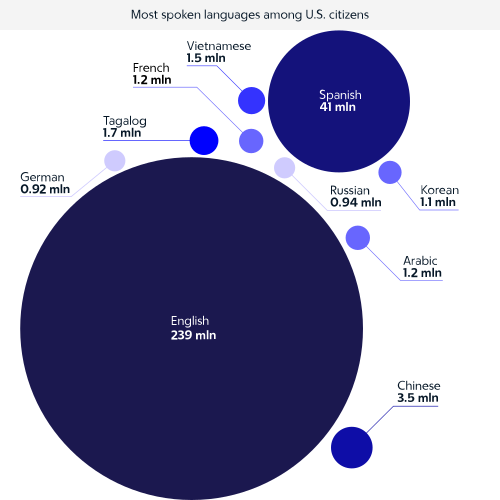

アメリカ合衆国には連邦レベルの公用語はないが、最も一般的に使用されている言語は英語(具体的にはアメリカ英語)であり、事実上の国語となっている。さらに、全50州のうち32州と全5つの準州が英語を公用語と宣言している。2023年現在、米国の人口の大多数(77.5%)は家庭で英語のみを話している。[5]残りの人口は家庭で他の多くの言語を話しており、米国国勢調査局のアメリカ人コミュニティ調査(ACS)によると、最も顕著なのはスペイン語(人口の13.7%)である。他には、もともとネイティブアメリカン、アラスカ先住民、ハワイ先住民、および米国未編入地域の先住民が話していた先住民の言語が含まれる。その他の言語は、ヨーロッパ、アフリカ、アジア、アメリカ大陸の他の地域、オセアニアの人々によってもたらされ、現在のアメリカ合衆国に由来する複数の方言、クレオール語、ピジン語、手話などが含まれています。国際補助言語であるインターリングアも米国で作成されました。
米国の外国語話者の大半はバイリンガルまたはマルチリンガルであり、一般的に英語を話す。米国居住者の22.5%が自宅で英語以外の言語を話すと報告しているが、英語を「非常に上手」に話す人の割合はわずか8.7%である。[6]人口は約430の言語を話したり手話で話したりしており、そのうち177は米国またはその領土固有の言語である。[7]
最も一般的な言語
アメリカ国勢調査局は、アメリカコミュニティ調査(ACS)の年次データに基づき、家庭で最もよく話されている言語に関する情報を定期的に公表している。また、家庭で英語以外の言語を話す人々の英語能力についても報告している。[8] 2023年には、スペイン語話者は米国の外国語話者全体の約5分の3を占めた。2017年、米国国勢調査局は、ACSが2009年から2013年にかけて調査した約350の言語の話者数に関する情報を公表したが、[9] [10]それほど多くの言語のデータを定期的に集計して報告しているわけではない。
2021年にアメリカで最も話されている母国語は以下のとおりです。[8]
- 英語(家庭内で話されている唯一の言語) – 2億4500万人
- スペイン語 – 4,130万人
- 中国語(北京語、広東語、福建語、その他すべての言語を含む) – 340万人
- タガログ語(フィリピン語を含む) – 172万人
- ベトナム人 – 152万人
- アラビア語 – 139万人
- フランス語 – 118万人
- 韓国人 – 107万人
- ロシア – 104万人
- ポルトガル語 – 937,000
- ハイチ語 – 895,000
- ヒンディー語 – 865,000
- ドイツ語 – 857,000
- ポーランド語 – 533,000
- イタリア語 – 513,000
- ウルドゥー語 – 508,000
- ペルシア語(ペルシャ語、ダリ語、タジク語を含む) – 472,000
- テルグ語 – 460,000
- 日本語 – 455,000
- グジャラート語 – 437,000
- ベンガル語 – 403,000
- タミル語 – 341,000
- パンジャブ語 – 319,000
- タイ人(中部タイ人とラオス人を含む) – 284,000
- セルビア・クロアチア語(ボスニア語、クロアチア語、モンテネグロ語、セルビア語を含む) – 266,000
- アルメニア人 – 256,000
- ギリシャ – 253,000
- モン族 – 24万人
- ヘブライ語 – 215,000
- クメール語 – 193,000
- ナバホ族 – 155,000
- その他のインド・ヨーロッパ語族 – 662,000
- ヨルバ語、トウィ語、イボ語、その他西アフリカの言語 – 64万人
- アムハラ語、ソマリ語、その他のアフロアジア語族 – 596,000
- オランダ語、アフリカーンス語、フリジア語、ルクセンブルク語、スコットランド語、イディッシュ語、ペンシルベニア・ダッチ語、低地ドイツ語、その他の西ゲルマン語族の言語 – 574,000
- イロカノ語、サモア語、ハワイ語、その他のオーストロネシア語 - 486,000
- その他のアジアの言語 – 460,000
- ネパール語、マラーティー語、その他インド諸語 – 448,000
- ウクライナ語およびその他のスラブ語 – 385,000
- スワヒリ語および中央、東、南アフリカのその他の言語 – 288,000
- マラヤーラム語、カンナダ語、その他のドラヴィダ語族の言語 – 280,000
- 北米のその他の先住民言語 – 169,000
- その他および未指定の言語 – 327,000
ACS は完全な国勢調査ではなく、米国国勢調査局が毎年実施するサンプルベースの調査である。言語統計は、対象となる米国世帯の 5 歳以上の全員に尋ねられた 3 部構成の質問に対する回答に基づいている。最初の部分では、「家庭で英語以外の言語を話すか」を尋ねる。そうである場合、世帯主または主な回答者は、各メンバーが家庭でどの言語を話しているか、および各個人がどの程度英語を話せるかを報告しなければならない。世帯の他の言語をどの程度話せるかは尋ねない。したがって、回答者の中には、それらの言語を話す能力が限られている人もいるかもしれない。[11]さらに、米国国勢調査で使用される言語に関する質問は 1980 年以前に何度も変更されているため、話者の数を歴史的に比較することは困難である。[12]
ACS は、家庭でアメリカ手話を使用していると報告した人の数を集計していないため、そのようなデータは他の情報源から取得する必要があります。最近の推定では、1972 年 (手話に関する最後の公式調査) には 50 万人ものアメリカ人がアメリカ手話を使用していましたが、2011 年という最近の推定では 10 万人近くでした。アメリカ障害者法の成立など、さまざまな文化的要因により、聴覚障害のある子供たちの教育機会が大幅に増加し、現在のアメリカ手話使用者の数は 2 倍または 3 倍になる可能性があります。

2016年から2021年までの5年間のアメリカコミュニティ調査によると、50州、コロンビア特別区、プエルトリコの各公共利用マイクロデータエリア(PUMA)で家庭で英語を話す5歳以上のアメリカ人の割合
英語は米国の家庭で最も一般的に話されている言語であり、約2億3900万人の話者と多数のバイリンガル話者がいる。スペイン語は約3500万人が話している。[13]米国は世界で4番目にスペイン語話者の人口が多く、メキシコ、コロンビア、アルゼンチンに次ぐ。他の推計では、米国は5000万人を超え、メキシコに次ぐ2位となっている。米国南西部とプエルトリコでは、古くからあるスペイン語話者のコミュニティが、比較的新しい多数のヒスパノ語圏移民と共存している。多くの新しいラテンアメリカ移民は英語が流暢ではないが、ほぼすべての第二世代のヒスパニック系およびラテン系アメリカ人は英語を流暢に話す一方、スペイン語を話せるのは半分程度にとどまる。[14]
2000年の米国国勢調査によると、ドイツ系の人々は米国で最大の単一民族グループを構成しているが、ドイツ語は国内で4番目によく話されている言語である。[15] [16] イタリア語、ポーランド語、フランス語は、20世紀初頭にこれらの国から移住した人々の子孫の間では今でも広く話されているが、これらの言語の使用は高齢世代が亡くなるにつれて減少している。ロシア語も移民人口によって話されている。
タガログ語とベトナム語はそれぞれ米国で100万人以上の話者がおり、そのほとんどは最近の移民人口である。両言語は、中国語(主に広東語、台山語、標準中国語)、日本語、韓国語とともに、現在アラスカ、カリフォルニア、ハワイ、イリノイ、ニューヨーク、テキサス、ワシントンの選挙で使用されている。[17]
アメリカ先住民の言語は国内のごく一部の地域で話されていますが、その人口は減少しており、保留地以外では広く使われることはほとんどありません。英語、スペイン語、フランス語、ドイツ語、ナバホ語、その他のアメリカ先住民の言語を除き、他の言語は通常、独立後にやってきた移民の祖先から学んだり、何らかの教育を通じて学んだりします。
アメリカ手話はアメリカ合衆国で最も一般的な手話であるが、太平洋諸島を中心に、他の州や領土でも無関係の手話が開発されてきた。手話使用者の具体的な数は不明だが、25万人以上はいるとみられる。幼稚園から大学の学部教育までの登録者数で見ると、アメリカ合衆国で最も広く教えられている外国語は、スペイン語、フランス語、ドイツ語である。他によく教えられている言語には、ラテン語、日本語、アメリカ手話、イタリア語、中国語などがある。[18] [19]
公用語

英語が公用語に
英語(アラスカ、ハワイ、サウスダコタ)や特別な地位にある言語(ニューメキシコ)を含む複数の公用語
公用語は指定されていません。
アメリカ合衆国は連邦レベルで公用語を定めたことがありませんが[20] [21]、連邦レベルおよび公用語のない州では通常英語が使われています。プエルトリコ以外では、法律、規制、大統領令、条約、連邦裁判所の判決、その他すべての公式発表では英語が主言語として使われています。しかし、地域内に英語を話さない人が多数いる場合は、投票用紙などの文書を複数の言語で印刷することが法律で義務付けられています。
50州のうち32州が、英語に公用語または準公用語としての地位を与える法律を採択しており、場合によっては英語のみの運動の一環として行われている。[22] [23]通常、「英語」のみが指定され、アメリカ英語などの特定の変種は指定されない。(1923年から1969年まで、イリノイ州は「アメリカ英語」を公用語として認めていた。)[24] [25] ハワイ語は、母国語とする人がほとんどいないものの、英語とともにハワイ州の公用語となっている。アラスカ州は、英語とともに約20の母国語を公用語としている。 [26] [27]例えば、アラスカ州は、イヌピアック、中央ユピック、グウィッチン、シベリア・ユピック、コユコンなどで投票情報を提供している。[28] 2019年7月1日、ラコタ語、ダコタ語、ナコタ語をサウスダコタ州 の公用語とする法律が施行されました。[29] メイン州とルイジアナ州ではフランス語が事実上の非公用語であり、1848年以来、ニューメキシコ州の法律は州内のスペイン語話者にスペイン語で多くのサービスを受ける権利を与えています。ルイジアナ州政府は英語とフランス語の両方でサービスとほとんどの文書を提供しており、ニューメキシコ州は英語とスペイン語でそれらを提供しています。
英語は、米国で永住者が居住する5つの領土すべてにおいて、少なくとも公用語の1つである。プエルトリコでは英語とスペイン語の両方が公用語であるが、スペイン語が主要な公用語と宣言されている。学校制度と政府はほぼ完全にスペイン語で運営されているが、連邦法により、プエルトリコ地区の米国地方裁判所は、連邦裁判所制度の他の部分と同様に英語を使用することが義務付けられている[30] 。グアムは英語とチャモロ語を認めている。米領バージン諸島では、英語が唯一の公用語である。アメリカ領サモアでは、英語とサモア語の両方が公認されており、英語が一般的であるが、一部の公式コミュニケーションではサモア語も見られる。北マリアナ諸島では、英語、チャモロ語、カロライニ語が公用語である。[要出典]
ニューメキシコ州では、州憲法で公用語は定められていないものの、法律は英語とスペイン語で発行されており、政府の資料やサービスは、両言語のほか、ナバホ語やさまざまなプエブロ語の話者にもアクセス可能であることが法律で義務付けられています。ニューメキシコ州には独自のスペイン語の方言もあり、ラテンアメリカで話されているスペイン語とは異なります。
アルゴンキン語、チェロキー語、スー語は、アメリカの多くのインディアン居留地やプエブロで公用語または準公用語となっているネイティブアメリカンの言語である。 1907年に州となる前のオクラホマ州では、準州の役人がチェロキー語、チョクトー語、マスコギー語を準公用語とするかどうかを議論したが、この考えは受け入れられなかった。チェロキー語は、オクラホマ州東部のチェロキー部族管轄区域内のチェロキー族によって公式に認められている。[31]
17世紀後半にニューアムステルダム(旧オランダ植民地)がイギリスの統治下(ニューヨーク州となる)に移管されると、英語がオランダ語に取って代わり公用語となった。しかし、「オランダ語は次の世紀まで、多くの市民や教会の行事、そしてほとんどの私事において主要言語であり続けた。」[32]ジャージー・ダッチ方言は現在では消滅している。
カリフォルニア州は、少数民族や移民コミュニティを代表するために、州の文書を他の言語で出版することを認めることに同意した。スペイン語、中国語、韓国語、タガログ語、ペルシャ語、ロシア語、ベトナム語、タイ語などの言語が州の公式文書に登場し、自動車局は9つの言語で文書を出版している。[33]
多言語主義の問題はアリゾナ州とテキサス州にも当てはまる。テキサス州憲法には公用語に関する方針はないが、アリゾナ州は2006年に英語を公用語とする提案を可決した。[34]とはいえ、アリゾナ州法では、スペイン語のほか、ナバホ語、オオダム語、ホピ語などの先住民言語が話されている郡では、それらの言語で投票用紙を配布することが義務付けられている。[35]
ミューレンバーグ伝説と呼ばれる有名な都市伝説によると、ドイツ語はアメリカの公用語になるところだったが、1票差で否決されたという。実際には、これはドイツ移民のグループが法律をドイツ語に公式に翻訳するよう要請したためである。下院議長のフレデリック・ミューレンバーグはそれ以来この伝説と結び付けられている。[36] [37] [38]
教育
アメリカ合衆国におけるバイリンガル教育は、言語イマージョンや二言語学校プログラムとは異なる概念であることが多いが、政治的な論争の的となっている。標準的なバイリンガルクラスでは、生徒の英語力が不足している期間、非英語言語(通常はスペイン語または中国語)が使用される。それ以外の場合、米国のほぼすべての学校では、あらゆるレベルの指導言語は英語である。例外は、フランス語やドイツ語などの言語クラス、またはスペイン語が標準であるプエルトリコ領土での一般教育である。アメリカ領サモアでは、ほとんどの生徒がサモア語を母国語として話しているにもかかわらず、英語が指導言語となっている。[64]
また、米国全土には、スペイン語、ハワイ語、チャモロ語、フランス語、北京語(テキサス州のマンダリン・イマージョン・マグネット・スクールなど)など、さまざまな言語を教える言語イマージョン・スクールやデュアル・ランゲージ・スクールが何百校もあります。ただし、これらすべての学校では英語が必修科目となっています。
アフリカ、アジア、ヨーロッパの言語

アメリカで最初に話されたヨーロッパの言語には、英語、オランダ語、フランス語、スペイン語、スウェーデン語などがありました。
19 世紀半ばから、この国には英語をほとんど、あるいは全く話さない移民が大量に流入した。一部の州や領土の法律、憲法、立法手続きは、政治的に重要な移民グループの言語で書かれていた。ドイツ語、ウクライナ語、ハンガリー語、アイルランド語、イタリア語、ノルウェー語、ギリシャ語、ポーランド語、スウェーデン語、ルーマニア語、チェコ語、日本語、イディッシュ語、ヘブライ語、リトアニア語、ウェールズ語、広東語、ブルガリア語、オランダ語、ポルトガル語、ペルシャ語、アラビア語などのバイリンガルスクールや地方新聞が存在した。一部の管轄区域では英語のみを対象とする法律があり、教会での礼拝、電話での会話、さらには路上や鉄道のプラットフォームでの英語以外の言語での会話さえも禁止されていたにもかかわらず、これらの法律は 1923 年に最初の違憲判決 (マイヤー対ネブラスカ州) を受けるまで、盛んに行われていました。
典型的には、移民の言語は2、3世代以内に同化によって失われる傾向がある。[66]
いくつかの州と準州には、米国に加盟する前から独自の言語を話していた先住民がおり、何世紀にもわたって独自の言語を維持してきました。その言語には、アラスカのロシア語、ルイジアナのフランス語、ペンシルベニアのオランダ語、プエルトリコのスペイン語などがあります。
歴史的言語
英語(話者数2億4500万人)
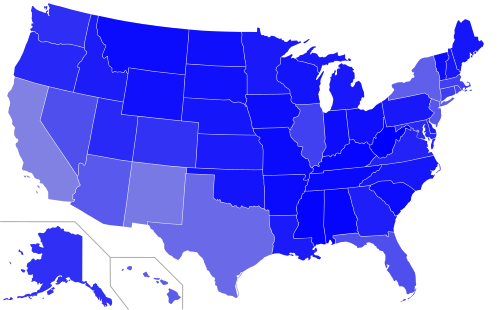
英語はイギリスの植民地時代から受け継がれ、人口の大半が英語を話しています。英語はますます一般的になっています。アメリカ合衆国が建国されたとき、英語を話せるアメリカ人はわずか40%でした。[67] [より良い情報源が必要]。2002年には、87%のアメリカ人が英語を第一言語としていました。[68] [69]英語は事実上の国語であり、政府の業務は英語で行われています。米国国勢調査局によると、80%が自宅では英語のみを話し、5歳以上の米国居住者のうち約13,600,000人を除く全員が英語を「上手に」または「非常に上手に」話します。[70]
アメリカ英語は、綴り(例えば、color/colour などの単語の「u」が省略される)、文法、語彙、発音、スラングの使用法の点でイギリス英語とは異なります。これらの違いは、アメリカ英語話者とイギリス英語話者の間で効果的なコミュニケーションを妨げるものではありません。
カリフォルニア州など一部の州では、憲法を改正して英語を唯一の公用語としているが、実際には、これは政府の公式文書が少なくとも英語で書かれていなければならないということであり、英語のみでのみ利用可能であるべきだということを意味するものではない。例えば、カリフォルニア州の標準的なクラスC運転免許試験は、32の異なる言語で利用可能である。[71]
スペイン語(話者数4,130万人)
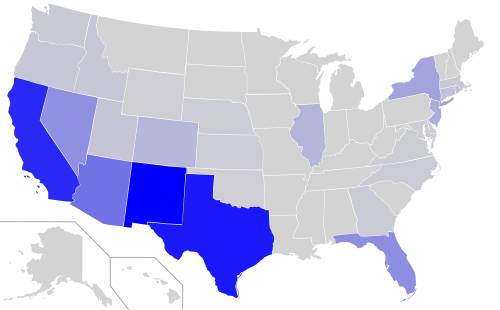
スペイン語も植民地時代から受け継がれ、プエルトリコ自治領では公用語として認められており、学校や大学ではスペイン語が一般的な教授言語となっている。50州、コロンビア特別区、プエルトリコを除くすべての地域では、スペイン語は外国語または第二言語として教えられている。ヒスパニック系の人口が多い地域では、メキシコ国境沿いの米国南西部、フロリダ州、カリフォルニア州の一部、コロンビア特別区、イリノイ州、ニュージャージー州、ニューヨーク州などで、家庭で話されている。国内のヒスパニック系コミュニティでは、スペイン語と英語の二か国語の標識がかなり一般的である。さらに、ニューヨーク市のワシントンハイツやマイアミのリトルハバナなど、街区全体でスペイン語の標識とスペイン語を話す人々しかいない地域も数多く存在する。
米国の若い世代の非ヒスパニック系の人々の中には、他の第二言語の選択肢よりもはるかに多くの数が、スペイン語を外国語または第二言語として学ぶことを選んでいる。これは、ヒスパニック系人口の増加と、スペイン語で上演されるラテンアメリカの映画や音楽の人気の高まりに一部起因している可能性がある。米国国勢調査局が実施した2009年のアメリカコミュニティ調査(ACS)によると、5歳以上の3,500万人以上が自宅でスペイン語を話しており、[75]米国は世界で5番目に大きなスペイン語話者コミュニティであり、これを上回るのはメキシコ、コロンビア、スペイン、アルゼンチンのみである。[76] [77]それ以来、ACSで自宅でスペイン語を話すと報告された人の数は増加している(表を参照)。
ニューメキシコスペイン語

ニューメキシコ州北部とコロラド州南部では、スペイン語話者は数世紀にわたって南ロッキー山脈に孤立しており、他の場所では話されていない独特のスペイン語の方言、ニューメキシコスペイン語を発達させました。この方言は、カスティーリャ語、ガリシア語、さらに最近ではメキシコスペイン語、およびプエブロ語からの借用語が混ざったものです。ニューメキシコスペイン語には、特に技術用語(例: bos、troca、telefón) において、英語からの借用語もかなり含まれています。
ニューメキシコのスペイン語を話す人々は、主に 16 世紀から 18 世紀にかけてニューメキシコにやってきたスペイン人入植者の子孫です。この間、スペイン領アメリカの他の地域との接触は限られており、ニューメキシコのスペイン語は独自の道を歩んでいきました。その間、スペイン人入植者はプエブロ族やナバホ族と共存し、結婚もしていました。米墨戦争後、ニューメキシコとその住民は英語圏のアメリカ合衆国の統治下に入り、その後 100 年間、英語を話す人々の数は増加しました。
プエルトリコのスペイン語
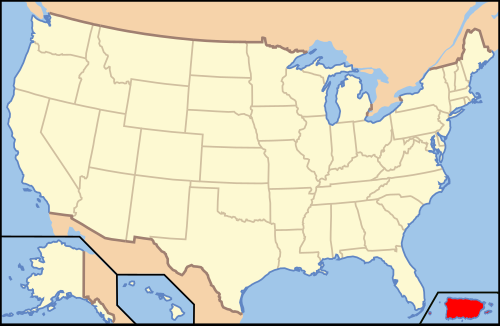
プエルトリコのスペイン語は、プエルトリコの人々 、および米国全土のプエルトリコ人の子孫の多くの人々 の主な言語および方言です。
スパングリッシュ
スパングリッシュはスペイン語と英語のコードスイッチング変種であり、メキシコとアメリカの国境沿い(カリフォルニア、アリゾナ、ニューメキシコ、テキサス)、フロリダ、ニューヨーク市など、スペイン語と英語のバイリンガル人口が多い地域で話されています。
フランス語(話者数208万人)
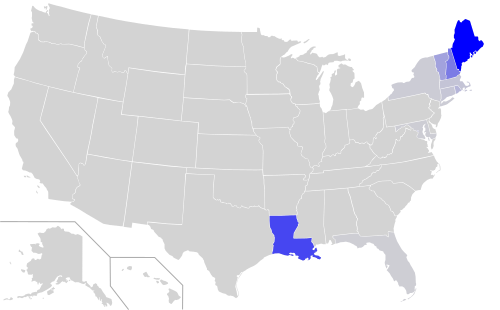
フランス語は、(フランス語のすべての変種を合わせ、ハイチ・クレオール語などの別個だが関連のある言語をフランス語としてカウントした場合)4番目に多い言語であり、主にルイジアナ・クレオール語、ネイティブ・フレンチ、ケイジャン語、ハイチ語、およびフランス系カナダ人によって話されている。メイン州、ニューハンプシャー州、バーモント州、ルイジアナ州で広く話されており、ミシガン州セントクレア郡、ミシガン州アッパー半島の多くの田舎の地域、およびサンフランシスコ湾北部に著名なフランス語圏の居住地がある。[要出典]ルイジアナ州での伝統のため、同州は、言語人口に奉仕することを使命とする米国で唯一の州機関であるルイジアナ州フランス語開発協議会(CODOFIL)によってサービスが提供されている。2018年10月、ルイジアナ州は国際フランコフォニー機構に加盟した米国初の州となった。[78]
現在のアメリカ合衆国では、植民地時代にルイジアナ・フランス語、ミズーリ・フランス語、ニューイングランド・フランス語(基本的にはカナダ・フランス語の変形)の3種類のフランス語が発達した。[79]フランス語はルイジアナ州とメイン州で2番目に多く話されている言語である。アメリカ合衆国で最大のフランス語話者コミュニティは、メイン州北東部、フロリダ州ハリウッドとマイアミ、ニューヨーク市、[出典が必要]ルイジアナ州の田舎の特定の地域、およびバーモント州とニューハンプシャー州の少数民族に住んでいる。ニューイングランドのコミュニティの多くは、国境を越えたケベック州やニューブランズウィック州で見つかる方言と関係がある。1,300万人以上のアメリカ人が主要なフランス語の遺産を保持しているが、家庭でフランス語、または地方のクレオール語とその変種言語を話すのは200万人に過ぎない。
ルイジアナフランス語
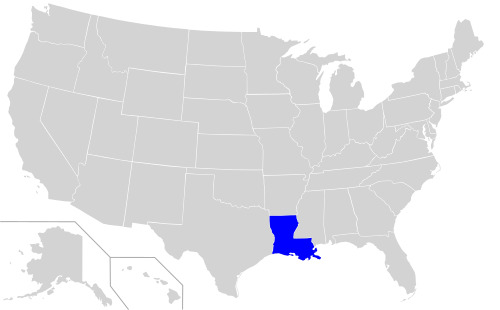
ルイジアナ・フランス語(ケイジャン・フランス語:français de la Louisiane、ルイジアナ・クレオール語:françé la lwizyàn )は、植民地時代の下ルイジアナ地方で伝統的に話されていたフランス語の方言と変種を表す包括的な用語です。現在、ルイジアナ・フランス語は主に米国ルイジアナ州、特に南部の教区で使用されています。
フランス語は、ケイジャン人やクレオール人、チティマチャ人、ホウマ人、ビロクシ人、チュニカ人、チョクトー人、アカディア人、フランス系インディアンなどと自認するルイジアナ州のフランス人によって、民族的・人種的垣根を越えて話されている。[80] [81]これらの理由と、アカディア・フランス語がこの地域に及ぼした影響が比較的小さいことから、ルイジアナ・フランス語またはルイジアナ地方フランス語(フランス語:français régional louisianais)という呼称は、一般的に「ケイジャン・フランス語」よりも正確で包括的であると考えられており、言語学者や人類学者はこれを好んで使用している。[82] [83] [84] [85]しかし、「ケイジャン・フランス語」は、その言語を話す人やルイジアナ州の他の住民によって、一般の談話ではよく使用されている。[86]
ドイツ語(話者数129万人)

ドイツ語は、いくつかの植民地、特にペンシルベニアでは広く話されている言語であり、多くのドイツ語を話すプロテスタントや他の宗教的少数派がヨーロッパでの迫害を逃れるために移住した。19世紀のドイツ革命の失敗を逃れたドイツ人が米国に移住したときに、別の移住の波が起こった。これらのドイツ人移民の多くは都市部に定住し、多くの都市の近隣地域はドイツ語圏となり、多数の地方ドイツ語の新聞や定期刊行物が創刊された。この頃、ドイツ人農民もテキサス・ヒル・カントリーを含む国内各地で農業を始めた。この言語は米国が第一次世界大戦に参戦するまで広く話されていた。
20世紀初頭、ドイツ語は米国で最も広く学ばれた外国語であり、第一次世界大戦前には、米国の学童の6%以上[要出典]がドイツ語のみで初等教育を受けていたが、これらのドイツ人の一部はドイツ本土以外の地域から来ていた。現在、4,900万人以上のアメリカ人がドイツ系を主張しており、米国で最大の自称民族グループであるが、2005年の米国コミュニティ調査によると、そのうち家庭で英語以外の言語を話す人は4%未満である。[87]ペンシルベニア州に集中しているアーミッシュは、ペンシルバニア・ダッチと呼ばれるドイツ語の方言を話しており、これは今日でもアーミッシュのコミュニティで広く話されている。
神聖ローマ帝国の領土の一つであるライン=プファルツ州から、植民地プファルツ人が次々とニューヨーク州とペンシルベニア州に移住した。最初のプファルツ人は1600年代後半に到着したが、大多数は1700年代にやって来た。彼らは総称してプファルツ・ダッチと呼ばれた。ペンシルベニア・ダッチはインディアナ州やオハイオ州を含む他の州にも移住した。[88] [89]長年にわたり、「プファルツ」という用語はドイツ系アメリカ人を意味していた。[90]
ドイツ語が米国の公用語になるという神話(ミューレンバーグ投票として知られる)があるが、これは不正確であり、政府の文書をドイツ語に翻訳する初期の試みが失敗したことに基づいている。 [91]この神話は、ドイツ語がペンシルベニア州の第二公用語であるということにまで及んでいるが、ペンシルベニア州には公用語がない。4,900万人以上のアメリカ人がドイツ人の祖先がいると主張しているが、家庭でドイツ語を話すアメリカ人はわずか124万人である。これらの人々の多くはアーミッシュやメノナイト、または新しく移住してきたドイツ人(例えば職業上の理由)である。
ペンシルバニア・ダッチ
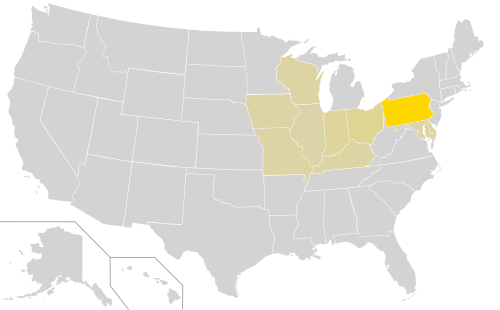
ペンシルベニア・ダッチ語またはペンシルベニア・ドイツ語は、伝統的にペンシルベニア・ダッチ人によって話されているパラティーノ・ドイツ語の方言で、オハイオ州、インディアナ州、アイオワ州など中西部に定着し、現在も話者の多くが住んでいる。これは、1600年代に神聖ローマ帝国からプファルツ人がアメリカにもたらしたプファルツのドイツ語方言から発展したものである。 [92]彼らはウィリアム・ペンが売った土地に定住した。ジャーマンタウンにはメノナイト教徒だけでなく、クエーカー教徒も住んでいた。[93]ペンシルベニア・ダッチ人はペンシルベニア・ダッチ語を話し、ルーテル派、ドイツ改革派、メノナイト派、アーミッシュ、ドイツ・バプテスト・ブレザレン、ローマ・カトリックなど、様々なキリスト教宗派に属している。今日、ペンシルベニア・ダッチ語は主にオールド・オーダー・アーミッシュとオールド・オーダー・メノナイトによって話されている。
テキサスドイツ語
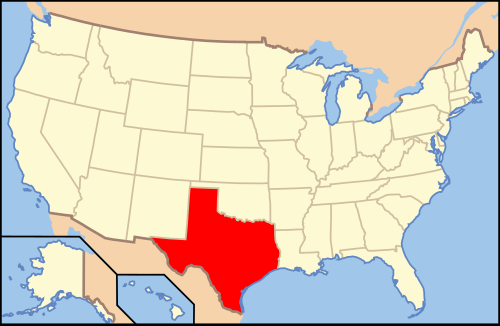
テキサスドイツ語は、19 世紀半ばにテキサスに定住したドイツ人移民の子孫であるテキサス・ドイツ人が話す高地ドイツ語の方言のグループです。
イディッシュ語
イディッシュ語は、米国においてヘブライ語よりはるかに長い歴史を持つ。[94]イディッシュ語は少なくとも19世紀後半から存在しており、2009年の米国コミュニティ調査によると、約148,000人の話者がいる。中央ヨーロッパ、ドイツ、ロシアからのユダヤ人移民は、地理的背景や礼拝に対する微妙なアプローチが異なっていたにもかかわらず、米国に定住するとイディッシュ語の共通理解のもとに団結することが多く、一時は東海岸のほとんどの都市で数十の出版物が入手可能だった。第二次世界大戦の終結以来、イディッシュ語の使用はかなり減少したが、決して消滅したわけではない。多くのイスラエル移民や国外居住者は、ヘブライ語に加えて、少なくともある程度イディッシュ語を理解しており、前世紀のアシュケナージ系ユダヤ人の大移動の子孫の多くは、ほとんどが英語の語彙にいくつかの借用語を散りばめている。さらに、イディッシュ語は、ロサンゼルス、マイアミ、ニューヨークに集中しているアメリカのユダヤ人(特にハシディズムのユダヤ教徒)の間で共通語となっている。[95]イディッシュ語からの借用語が非ユダヤ人人口にかなり浸透していることは、ニューヨーク市英語の特徴であり続けている。これらの単語には、glitch、chutzpah、mensch、kvetch、klutzなどがある。
ロシア語(話者数104万人)
ロシア語は、ニューヨーク、カリフォルニア、ワシントン、ニュージャージー、イリノイ、マサチューセッツ、ペンシルベニア、アラスカなど、いくつかの州の地域で話されています。特に、ニューヨーク市、ボストン、ロサンゼルス、サンフランシスコ、フィラデルフィア、シカゴ、シアトル、サクラメント、スポケーン、マイアミ、ワシントン州バンクーバー、オレゴン州ポートランド、オレゴン州ウッドバーンといった都市の移民地区で話されています。クリミア戦争直後に売却されるまで、ロシアアメリカ会社はアラスカ準州となった地域のほとんどを所有していました。米国におけるロシア語話者の存在は常に限られており、特にロマノフ王朝の皇帝の暗殺後はそうでした。しかし、1970年代から1990年代半ばにかけて、ソビエト連邦やその後のロシア、モルドバ、ウクライナ、ベラルーシ、ウズベキスタンなどのソビエト連邦構成共和国から多くのロシア語話者が米国に移住し、米国におけるロシア語の使用が増加した。
米国で最大のロシア語圏の地域は、ニューヨーク市のブルックリン、クイーンズ、スタテンアイランド(特にブルックリンのブライトンビーチ地区)、ロサンゼルスの一部(特にウェストロサンゼルスとウェストハリウッド) 、フィラデルフィアの一部(特にファー・ノースイースト) 、マイアミの一部(サニーアイルズビーチなど)にあります。
テキサス州ダラスに拠点を置くロシア語メディアグループ「スラブ・ボイス・オブ・アメリカ」は、ロシア語を話すアメリカ人にサービスを提供しています。
アラスカのロシア人
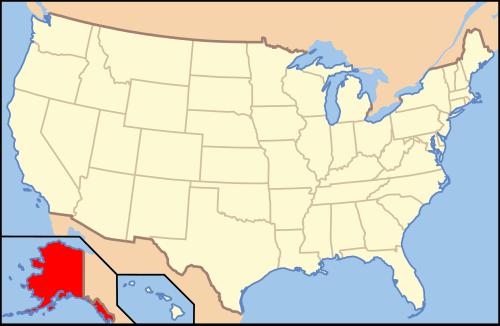
アラスカ・ロシア語は、地元では古ロシア語として知られ、アラスカのクレオール人が話すアルティーク語の影響を受けたロシア語の方言である。その話者のほとんどはコディアック島とニニルチク(ケナイ半島)に住んでいる。1世紀以上にわたって他のロシア語方言から隔離されてきた。[96]
コディアック語ロシア語は、1964年のアラスカ大地震と津波まで、アフォグナック海峡沿いで話されていました。この言語は衰退しており、少数の高齢者のみが話すだけで、事実上文書化されていません。[97]
ニニルチク・ロシア語はよりよく研究され、より活気にあふれています。1847年にロシア人がニニルチク村に入植したことから発展しました。 [98] [99]
ニニルチク語のロシア語の語彙は明らかにロシア語ですが、英語とアラスカの先住民の言語からの借用語もいくつかあります。
アラスカ州ニコラエフスクでは、2017年時点でも人口の66.57%が自宅でロシア語を話していた。[100]
オランダ語(話者数14万2千人)
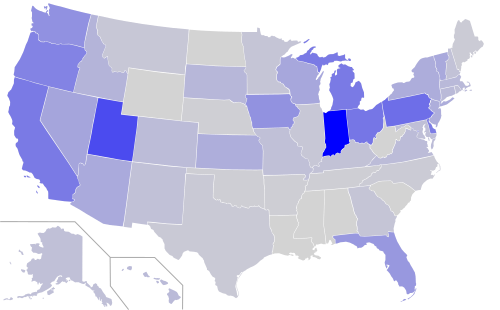
1990年の人口統計学的コンセンサスでは、調査対象となった市民の3%がオランダ系であると主張した。現代の推計では、オランダ系アメリカ人の人口(完全または部分的にオランダの血統を持つ)は310万人、つまり0.93%であり、[ 101]ノルウェー系アメリカ人とスウェーデン系アメリカ人よりわずかに少ない。 [101]一方、885,000人[102]の アメリカ人が完全なオランダ系であると主張している。
2013年現在、米国では推定141,580人、つまり0.0486% [103]が、今でも自宅でフラマン語を含むオランダ語を話している。これには、オランダ語と近縁関係にあるアフリカーンス語と西フリジア語の話者がそれぞれ23,010人と510人いることが加わる。[103]米国のオランダ語話者は、主にカリフォルニア州(23,500人)、フロリダ州(10,900人)、ペンシルベニア州(9,900人)、オハイオ州(9,600人)、ニューヨーク州(8,700人)、ミシガン州(6,600人、ほぼ全員がホランド市に居住)に集中している。[104] 2021年には、5歳以上のオランダ系アメリカ人の総人口の95.3%が自宅で英語のみを話していた。[105]
歴史
17世紀にニューネーデルランド植民地(ニューヨーク、ニュージャージー、デラウェアの一部)が設立されて以来、北米にはオランダ人が居住しており、ニューネーデルランド人、最初の入植者、およびその子孫はオランダ語を話していた。アメリカ独立戦争の当時もその後も、この地域ではオランダ語が話されていた。例えば、アレクサンダー・ハミルトンの妻、イライザ・ハミルトンは結婚生活の間、オランダ語の教会に通っていた。アフリカ系アメリカ人の奴隷制度廃止論者で女性の権利活動家であるソジャーナ・トゥルース(出生名「イザベラ・ボームフリー」)は、オランダ語のネイティブスピーカーであった。イギリスからの独立後に米国で生まれた最初の大統領マーティン・ヴァン・ビューレンは、母国語としてオランダ語を話した。彼は英語を母国語としない 唯一の米国大統領である。
オランダ語の方言は、ニュージャージー州北東部(バーゲン、ハドソン、パセーイク郡)とニューヨーク州首都圏で話されていましたが、20 世紀を通じて徐々に衰退しました。
先住民族の言語

アメリカ先住民の言語
アメリカ先住民の言語は、ヨーロッパ人が新世界に入植する以前から存在していた。米国の一部の地域(主にインディアン居留地)では、今でも流暢に話されている。これらの言語のほとんどは消滅の危機に瀕しているが、復活の努力も行われている。通常、言語の話者が少ないほど、消滅の危機の度合いは高まるが、南西部(アリゾナ州とニューメキシコ州)には、規模は小さいものの、繁栄を続けている 小さなアメリカ先住民の言語コミュニティが数多くある。
1929年、言語学者エドワード・サピアはアメリカ先住民の言語について次のように述べた。[106]
現在、米国国内では、ヨーロッパ全体よりもはるかに多様な言語が話されていることに気づいている人はほとんどいません。さらに言えば、カリフォルニア州だけでも、ヨーロッパ全土で説明できるよりも、はるかに多くの言語的極端な例が存在している、と文字通りかつ安全に言えるでしょう。
ナバホ語
2000年の国勢調査と他の言語調査によると、これまでのところ最大のネイティブアメリカン言語を話すコミュニティはナバホ族です。ナバホ語はナ・デネ語族のアサバスカ語族で、主にアリゾナ州、ニューメキシコ州、ユタ州に178,000人の話者がいます。合計すると、ナバホ語話者は米国のネイティブアメリカン言語話者の50%以上を占めます。ウエスタン・アパッチ語の話者は12,500人で、主にアリゾナ州におり、ナバホ語と近縁ですが、相互に理解できるわけではありません。南西部のナバホ語と他のアサバスカ語は相対的に外れ値であり、他のアサバスカ語のほとんどは太平洋岸北西部とアラスカで話されています。ナバホ族は健全な話者基盤を維持するのに苦労してきたが、アリゾナ州フォートディファイアンスのナバホ語集中講座を含むナバホ族居住地での広範な教育プログラムによって、この問題はある程度緩和されてきた。
チェロキー
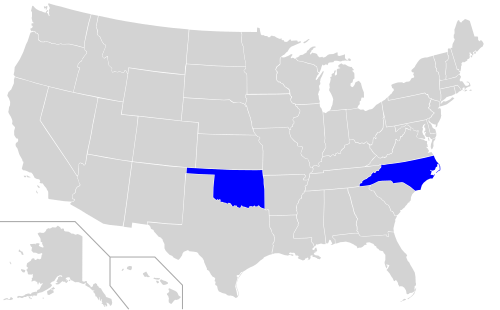
チェロキー語は、チェロキー族が話すイロコイ語族の言語であり、チェロキー・ネーションの公用語である。[107]ノースカロライナ州チェロキーのクアラ境界やオクラホマ州チェロキー・ネーション内のいくつかの郡、特にチェロキー、セコイア、メイズ、アデア、デラウェアには、今でもあらゆる年齢層のチェロキー語話者が数多く住んでおり[ 108] 、チェロキー、セコイア、メイズ、アデア、デラウェア両郡が特に多い。チェロキーの若者の間で、祖先の伝統、歴史、言語への関心が新たに高まっている。[108]チェロキー語を話すコミュニティは言語保存の最前線に立っており、地元の学校ではすべての授業がチェロキー語で行われ、幼稚園から高校までの教育媒体として利用されている。[107]また、オクラホマ州やノースカロライナ州のクアラ境界では、この言語で教会の礼拝や伝統的な儀式の踏み踊りが行われています。 [107]
チェロキー語は、話者人口が増加している数少ない、あるいは唯一のアメリカ先住民の言語の一つであり、[109]ナバホ語とともに話者が5万人を超える唯一のアメリカ先住民の言語である。[110]この数字は、おそらく部族の10年間に及ぶ言語保存計画によって達成されたものであり、その計画には、子供向けのイマージョンスクールを通じた新しい話者の育成、[111] [112]現代のフレーズに対応する新しい単語の開発、学校や大学でチェロキー族以外の人々にチェロキー語を教えること、[113]若者の間でチェロキー語を育てて彼らの子供が自宅でその言語を使用できるようにすること、言語教育用のiPhoneおよびiPadアプリの開発、 Cherokee Voices、Cherokee Soundsなどのチェロキー語ラジオ局の開発、[114]公共の標識、Apple iPhoneなどの製品、GmailなどのGoogleによるインターネットの使用などを通じた表記体系の促進などがあり、21世紀においても言語が関連性を保ち続けている。
その他のアメリカ先住民の言語
ダコタ語はスー族の言語で、米国だけで 18,000 人の話者がおり (カナダを含めると 22,000 人)、近縁のラコタ語の話者 6,000 人は含まれていません。ほとんどの話者はノースダコタ州とサウスダコタ州に住んでいます。他のスー族の言語には、近縁のウィネベーゴ語や、より遠いクロウ語などがあります。
中央アラスカのユピック語はエスキモー・アレウト語族の言語で、話者は 16,000 人で、そのほとんどがアラスカに住んでいます。「ユピック語」という用語は、ナウカン語や中央シベリア語など、中央アラスカ語と必ずしも相互に理解できるわけではない同族語に適用されます。
ピマ族とトホノ・オオダム族が話すオオダム語は、ユト・アステカ語族に属する言語で、12,000人以上の話者がおり、そのほとんどはアリゾナ州中部と南部、ソノラ州北部に住んでいます。他のユト・アステカ語族には、ホピ語、ショーショーニー語、パイ・ユテ語族の言語があります。
チョクトー語の話者は 11,000 人います。チョクトー語はセミノール語やアラバマ語と同様にマスコギ語族に属します。
アルゴンキン語族には、チペワ語/オジブウェ語、シャイアン語、クリー語などの言語が含まれます。
ケレス語はニューメキシコ州に 11,000 人の話者がおり、孤立した言語地域です。ケレス プエブロの人々はプエブロ族の中で最大です。アコマのケレス プエブロは、米国で最も古くから人が住み続けているコミュニティです。別の孤立した地域であるズニ語には約 10,000 人の話者がおり、そのほとんどはズニ プエブロ内に住んでいます。
メキシコからの移民により、米国にはメキシコ系アメリカ人の言語を話す人々がいる。主に南部諸州に形成されたコミュニティには、ナワトル語、ミシュテク語、サポテク語、トリケ語を話す人々が何千人もいる。
アメリカ大陸の言語は 17,000 年から 12,000 年ほどの歴史がありますが、現在知られていることは限られています。米国でかつて話されていた言語で、歴史の記録に残っていない言語が数多くあることは間違いありません。
アメリカ先住民の言語一覧
以下は、米国で「家庭で話されている」ネイティブアメリカンの言語の推定数です(American Community Survey 2006–2008)。[115]これは、米国におけるネイティブアメリカンの言語の完全なリストではありません。方言と言語の区別が必ずしも明確ではないため、相互理解度が異なる複数の方言が単一の言語として分類される場合もありますが、実質的に同一の方言のグループが歴史的または文化的理由により別々に分類される場合もあります。ここに含まれる言語は「絶滅」(ネイティブ話者がいない)として分類される場合もありますが、絶滅または消滅しつつあるネイティブアメリカンの言語の多くは、現在も言語再活性化の取り組みの対象となっています。再活性化が行われているその他の絶滅言語は、ここには記載されていない可能性があります。
Native American sign languages
A sign-language trade pidgin, known as Plains Indian Sign Language, Plains Standard or Plains Sign Talk, arose among the Native Americans of the plains. Each signing nation had a separate signed version of their oral language, that was used by the hearing, and these were not mutually intelligible. Plains Standard was used to communicate between these nations. It seems to have started in Texas and then spread north, through the Great Plains, as far as British Columbia. There are still a few users today, especially among the Crow, Cheyenne, and Arapaho. Unlike other sign languages developed by hearing people, it shares the spatial grammar of deaf sign languages. Through intergenerational transmission, Plains Sign Talk became a working language still in use today in some Deaf First Nations or Native American communities.
As Plains Sign Talk was so widespread and was a spectrum of dialects and accents, it probably hosted several languages under its umbrella. One is potentially Navajo Sign Language which is in use by a sole Navajo clan.
Additionally, Plateau Sign Language existed alongside Plains Sign Talk as either a trade pidgin or another language around the Columbia Plateau and surrounding regions.
Austronesian languages
Hawaiian
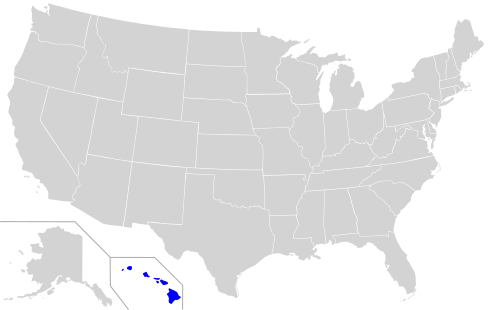
Hawaiian is an official state language of Hawaii as prescribed in the Constitution of Hawaii. Hawaiian has 1,000 native speakers. Formerly considered critically endangered, Hawaiian is showing signs of language renaissance. The recent trend is based on new Hawaiian language immersion programs of the Hawaii State Department of Education and the University of Hawaii, as well as efforts by the Hawaii State Legislature and county governments to preserve Hawaiian place names. In 1993, about 8,000 could speak and understand it; today estimates range up to 27,000. Hawaiian is related to the Māori language spoken by around 150,000 New Zealanders and Cook Islanders as well as the Tahitian language which is spoken by another 120,000 people of Tahiti.
Samoan
Samoan is an official territorial language of American Samoa. Samoans make up 90% of the population, and most people are bilingual.
Chamorro
Chamorro is co-official in the Mariana Islands, both in the territory of Guam and in the Commonwealth of the Northern Mariana Islands. In Guam, the indigenous Chamorro people make up about 60% of the population.
Carolinian
Carolinian is also co-official in the Northern Marianas, where only 14% of people speak English at home.
Creole languages
Several distinct natural languages and pidgins have developed on American soil, including full languages like creole and sign languages.
Angloromani
Angloromani is an English creole or mixed language spoken by Romani Americans.[116]
Chinuk Wawa or Chinook Jargon
A pidgin of 700–800 words of French, English, Cree and other Native origins is the old trade language of the Pacific Northwest. It was used extensively among both European and Native peoples of the Oregon Territory, even used instead of English at home by many pioneer families. It is estimated that around 100,000 people spoke it at its peak, between 1858 and 1900, and it was last widely used in Seattle just before World War II.[117]
Gullah
An English creole language with African influence spoken on the Sea Islands of South Carolina and Georgia retains strong influences of West African languages. The language is sometimes referred to as "Geechee".
Hawaii Creole English
The Hawaiian English creole language, locally known as Hawaiian Pidgin, is used by locals and is considered an unofficial language of the state of Hawaii.[118]
Louisiana Creole French
A French Creole language spoken by the Louisiana Creole people of the state of Louisiana, close to Haitian Creole, Colonial French, and Cajun French (language of Acadians deported from New France after 1755 and the Grand Dérangement). French Creole languages are spoken by millions of people worldwide, mainly in the United States, Caribbean, and Indian Ocean areas.
U.S. Virgin Islands Creole Dutch (extinct)
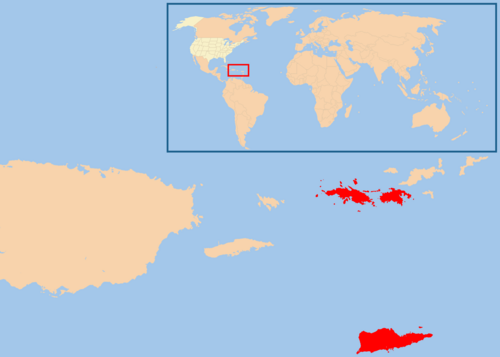
Negerhollands ('Negro-Dutch') was a Dutch-based creole language that was spoken in the Danish West Indies, now known as the U.S. Virgin Islands. Dutch was its superstrate language with Danish, English, French, Spanish, and African elements incorporated. Notwithstanding its name, Negerhollands drew primarily from the Zeelandic rather than the Hollandic dialect of Dutch.[119]
Sign languages
.png/500px-US_&_Canada_sign-language_map_(excl._ASL_and_LSQ).png)
Alongside the numerous and varied oral languages, the United States also boasts several sign languages. Historically, the US was home to some six or more sign languages (that number rising with the probability that Plains Sign Talk is actually a language family with several languages under its umbrella) which has fallen with the death of several of these.
As with all sign languages around the world that developed organically, these are full languages distinct from any oral language. American Sign Language (unlike Signed English) is not a derivation of English.[120] Some languages present here were trade pidgins which were used first as a system of communication across national and linguistic boundaries of the Native Americans, however, they have since developed into mature languages as children learned them as a first language.
American Sign Language
American Sign Language (ASL) is the native language of a number of deaf and hearing people in America (roughly 100,000 to 500,000). While some sources have stated that ASL is the third most frequently used language in the United States, after English and Spanish,[121] recent scholarship has pointed out that most of these estimates are based on numbers conflating deafness with ASL use, and that the last actual study of this (in 1972) seems to indicate an upper bound of 500,000 ASL speakers at the time.[122]
- Black American Sign Language (BASL) developed in the southeastern US, where separate residential schools were maintained for white and black deaf children. BASL shares much of the same vocabulary and grammatical structure as ASL and is generally considered one of its dialects.[120][121][123]
Hawai'i Sign Language
Hawaii Sign Language is moribund with only a handful of speakers on O'ahu, Lana'i, Kaua'i and possibly Ni'ihau. Some of these speakers may actually be speaking a creolized version of HSL and ASL, however; research is slow-going. The language was once called Hawai'i Pidgin Sign Language, as many people thought it was a derivative of ASL, but it was discovered to be a separate language altogether.[124]
Plains Sign Talk
Once a trade pidgin and the most far-reaching sign language in North America, Plains Sign Talk or Plains Sign Language is now critically endangered with an unknown number of speakers.
- Navajo Sign Language has been found to be in use in one clan of Navajo; however, whether it is a dialect of Plains Sign Talk or a separate language remains unknown.[125]
- Plateau Sign Language is another trade pidgin that may have become a separate language, Plateau Sign Language replaced Plains Sign Talk in the Columbia Plateau and surrounding regions of British Columbia, Washington, Oregon, and Idaho. It is now extinct.
Martha's Vineyard Sign Language
Martha's Vineyard Sign Language is now extinct. Along with French Sign Language, it was one of several main contributors to American Sign Language.
Henniker Sign Language
Henniker Sign Language is now extinct but was once found around the Henniker region of New Hampshire and formed a basis for American Sign Language.
Sandy River Valley Sign Language
Sandy River Valley Sign Language is now extinct but once could be found around the Sandy River Valley in Maine. It was one of several main contributors to American Sign Language.
Immigrant languages
Arabic
Varieties of Arabic are spoken by immigrants from the Middle East as well as many Muslim Americans. The highest concentrations of native Arabic speakers reside in heavily urban areas like Chicago, New York City, and Los Angeles. Detroit and the surrounding areas of Michigan boast a significant Arabic-speaking population including many Arab Christians of Lebanese, Syrian, and Palestinian descent.
Arabic is used for religious purposes by Muslim Americans and by some Arab Christians (notably Catholics of the Melkite and Maronite Churches as well as Rum Orthodox, i.e. Antiochian Orthodox Christians and Coptic churches.). A significant number of educated Arab professionals who immigrate often already know English quite well, as it is widely used in the Middle East. Lebanese immigrants also have a broader understanding of French as do many Arabic-speaking immigrants from North Africa.[126][127][128][129]
Chinese
The population of Chinese speakers in the United States was increasing rapidly in the 20th century because the number of Chinese immigrants has increased at a rate of more than 50% since 1940.[130] 2.8 million Americans speak some variety of Chinese, which combined are counted by the federal census as the third most-spoken language in the country. Until the late 20th century, Yue dialects, including Taishanese and Cantonese, were the most common dialects among immigrants and the descendants of immigrants, especially in California. Since the opening of the People's Republic of China, Mandarin, the official language in the PRC and Republic of China (Taiwan), has become increasingly prevalent.[131] Many Americans of all ethnic backgrounds are also learning Mandarin and, to a far lesser extent, Cantonese.[131]
In New York City in 2002, Mandarin was spoken as a native language among only 10% of Chinese speakers but was predicted to replace Cantonese as the lingua franca among Chinese speakers.[132]
Czech
Texas Czech
12,805 Texans can speak the Czech language.[133]
Drawing on Boas's model for interviewing speakers of the language and digitally cataloging the dialects, John Tomecek founded and Lida Cope of East Carolina University developed the Texas Czech Legacy Project at the University of Texas at Austin to document and preserve the dwindling language.[134][135][136] Because the majority of Texas immigrants came from Moravia, the Czech spoken in Texas is largely characterized by Moravian dialects (Lachian and Moravian Wallachian) which vary to some extent from the Bohemian dialects spoken by most Czech-Americans. Czech-language journalism has been very active in the state over the years. Thirty-three newspapers and periodicals have been published. As of 1993 one weekly newspaper, Našinec, published at Granger, and one monthly, Hospodář, published at West, were still being published entirely in Czech. Other periodicals such as Věstník and the Brethren Journal contained sections printed in Czech.[137]
Finnish
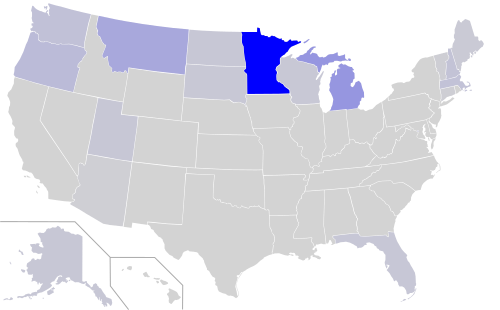
The first Finnish settlers in America were amongst the settlers who came from Sweden and Finland to the New Sweden colony. Most colonists were Finnish. However, the Finnish language was not preserved as well among subsequent generations as Swedish.
Between the 1890s and the outbreak of the first World War, an estimated quarter million Finnish citizens immigrated to the United States, mainly in rural areas of the Midwest and more specifically in the mining regions of Northeastern Minnesota, Northern Wisconsin and Michigan's Upper Peninsula. Hancock, Michigan, as of 2005, still incorporates bi-lingual street signs written in both English and Finnish.[138][139] Americans of Finnish origin yield at 800,000 individuals, though only 26,000 speak the language at home. There is a distinctive dialect of English to be found in the Upper Peninsula, known as Yooper. Yooper often has a Finnish cadence and uses Finnish sentence structure with modified English, German, Swedish, Norwegian, and Finnish vocabulary.[citation needed] Notable Finnish Americans include U.S. Communist Party leader Gus Hall, film director Renny Harlin, and the Canadian-born actress Pamela Anderson.
Northern Clark County, Washington (encompassing Yacolt, Amboy, Battle Ground and Chelatchie) contains a large exclave of Old Apostolic Lutherans who originally immigrated from Finland. Many families in this portion of the county speak fluent Finnish at home before learning English.[citation needed] Another noteworthy Finnish community in the United States is found in Lake Worth, Florida, north of Miami.
Hebrew
Modern Hebrew is spoken by Israeli immigrants. Liturgical Hebrew is used as a religious or liturgical language[140] by many of the United States' approximately 7 million Jews.[141]
Gaelic Languages
About 40 million Americans have Irish ancestry, many of whose ancestors would have spoken Irish Gaelic. In 2013, around 20,600 Americans spoke Irish at home and As of 2008[update] it was the 76th most spoken language in the United States.[142] An additional 1,600 spoke Scottish Gaelic.[143]
Italian, Sicilian and Neapolitan
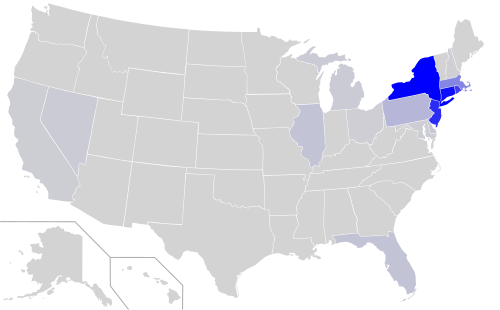
The Italian language and other Italo-Dalmatian languages have been widely spoken in the United States for more than one hundred years, primarily due to large-scale immigration from the late 19th century to the mid 20th century.
In addition to Italian learned by most people today, there has been a strong representation of the languages of Southern Italy amongst the immigrant population (Sicilian and Neapolitan in particular). As of 2009, though 15,638,348 American citizens report themselves as Italian-Americans, only 753,992 of these report speaking the Italian language at home (0.3264% of the US population).
Khmer (Cambodian)
Between 1981 and 1985 about 150,000 Cambodians resettled in the United States.[144] Before 1975 very few Cambodians came to the United States. Those who did were children of upper-class families sent abroad to attend school. After the fall of Phnom Penh to the communist Khmer Rouge in 1975, some Cambodians managed to escape. In 2007 the American Community Survey reported that there were approximately 200,000 Cambodians living in the United States, making up about 2% percent of the Asian population. This population is, however, heavily concentrated in two areas: the Los Angeles metropolitan area in California, especially the city of Long Beach; and Greater Boston in New England, especially Lowell, Massachusetts. These two areas hold a majority of the Cambodians living in the US.
Korean
In 2011 over 1.1 million Americans spoke Korean at home. This number increased greatly at the end of the 20th century, increasing 327% from the 300,000 speakers in 1980. The greatest concentration of these speakers was in the Los Angeles, New York, and Washington D.C. metro areas.[145] Speakers of Korean are found in the Koreatowns.[citation needed]
Polish and Silesian
As of 2013, around 580,000 Americans spoke Polish at home.[143] The Polish language is very common in the Chicago metropolitan area. Chicago's third largest white ethnic groups are those of Polish descent, after German and Irish.[146] The Polish people and the Polish language in Chicago were very prevalent in the early years of the city, and today the 650,000 Poles in Chicago make up one of the largest ethnically Polish populations in the world, comparable to the city of Wrocław, the fourth largest city in Poland. That makes it one of the most important centers of Polonia and the Polish language in the United States, a fact that the city celebrates every Labor Day weekend at the Taste of Polonia Festival in Jefferson Park.[147]
Texas Silesian
Texas Silesian, a dialect of the Silesian language (itself controversially considered a branch of Polish by some linguists), has been used by Texas Silesians in American settlements from 1852 to the present.
Portuguese
The first Portuguese speakers in America were Portuguese Jews who had fled the Portuguese Inquisition. They spoke Judeo-Portuguese and founded the earliest Jewish communities in the Thirteen Colonies, two of which still exist: Congregation Shearith Israel in New York and Congregation Mikveh Israel in Philadelphia. However, by the end of the 18th century, their use of Portuguese had been replaced by English.
In the late 19th century, many Portuguese, mainly Azoreans, Madeirans and Cape Verdeans (who prior to independence in 1975 were Portuguese citizens), immigrated to the United States, settling in cities like Providence, Rhode Island, New Bedford, Massachusetts, and Santa Cruz, California. There was also a substantial Portuguese immigration to Hawaii, which at the time was not yet part of the United States.
In the mid-late 20th century there was another wave of Portuguese immigration to the US, mainly the Northeast (New Jersey, New York, Connecticut, Massachusetts), and for a time Portuguese became a major language in Newark, New Jersey. Many Portuguese Americans may include descendants of Portuguese settlers born in Portuguese Africa (known as Portuguese Africans, or, in Portugal, as retornados) and Asia (mostly Macau). There were around 1 million Portuguese Americans in the United States by 2000. Portuguese (European Portuguese) has been spoken in the United States by small communities of immigrants, mainly in the metropolitan New York City area, like Newark, New Jersey.
The Portuguese language is also spoken widely by Brazilian Americans, concentrated in Miami, New York City, and Boston.
Swedish
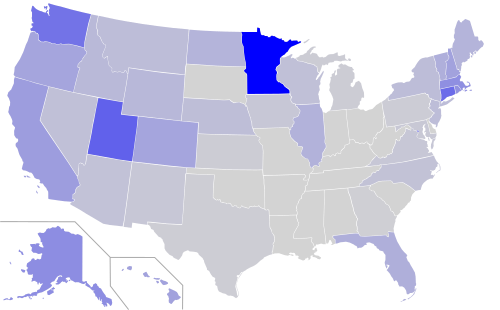
There has been a Swedish presence in America since the New Sweden colony came into existence in March 1638.
Widespread diaspora of Swedish immigration did not occur until the latter half of the 19th century, bringing in a total of a million Swedes. No other country had a higher percentage of its people leave for the United States except Ireland and Norway. At the beginning of the 20th century, Minnesota had the highest ethnic Swedish population in the world after the city of Stockholm.
3.7% of US residents claim descent from Scandinavian ancestors, amounting to roughly 11–12 million people. According to SIL's Ethnologue, over half a million ethnic Swedes still speak the language, though according to the 2007 American Community Survey only 56,715 speak it at home. Cultural assimilation has contributed to the gradual and steady decline of the language in the US. After the independence of the US from the Kingdom of Great Britain, the government encouraged colonists to adopt the English language as a common medium of communication, and in some cases, imposed it upon them. Subsequent generations of Swedish Americans received education in English and spoke it as their first language. Lutheran churches scattered across the Midwest started abandoning Swedish in favor of English as their language of worship. Swedish newspapers and publications alike slowly faded away.
There are sizable Swedish communities in Minnesota, Ohio, Maryland, Philadelphia, and Delaware, along with small isolated pockets in Pennsylvania, San Francisco, Fort Lauderdale, and New York. Chicago once contained a large Swedish enclave called Andersonville on the city's north side.
John Morton, the person who cast the decisive vote leading to Pennsylvania's support for the United States Declaration of Independence, was of Finnish descent. Finland was part of the Kingdom of Sweden in the 18th century.
Walloon
Wisconsin Walloon
Wisconsin Walloon is a dialect of the Walloon language brought to Wisconsin from Wallonia, Belgium's largely French-speaking region. It is spoken in the Door Peninsula of Wisconsin, United States.[148]
The speakers of Wisconsin Walloon are descendants of Belgian immigrants from a wave of immigration lasting from 1853 to 1857. It includes around 2,000 Belgians who immigrated to Wisconsin.[149] Walloon is sometimes referred to by its speakers as "Belgian".[150] The descendants of native Walloon speakers have since switched to English, and as of 2021, Walloon has fewer than 50 speakers in the United States.[148]
Welsh
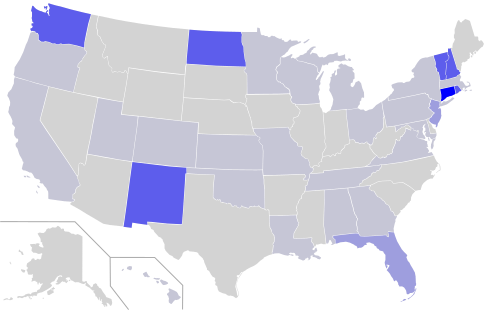
Up to two million Americans are thought to have Welsh ancestry. However, there is very little Welsh being used commonly in the United States. According to the 2007 American Community Survey, 2,285 people speak Welsh at home; primarily spoken in California (415), Florida (225), New York (204), Ohio (135), and New Jersey (130).[151] Some place names, such as Bryn Mawr in Chicago and Bryn Mawr, Pennsylvania (English: Big Hill) are Welsh. Several towns in Pennsylvania, mostly in the Welsh Tract, have Welsh namesakes, including Uwchlan, Bala Cynwyd, Gwynedd, and Tredyffrin.
Tagalog

Tagalog speakers were already present in the United States as early as the late sixteenth century as sailors contracted by the Spanish colonial government. In the eighteenth century, they established settlements in Louisiana, such as Saint Malo. After the American annexation of the Philippines, the number of Tagalog speakers steadily increased, as Filipinos began to migrate to the U.S. as students or contract laborers. Their numbers, however, decreased upon Philippine independence, as some Filipinos were repatriated.
Today, Tagalog, together with its standardized form Filipino, is spoken by over a million and a half Filipino Americans and is promoted by Filipino American civic organizations and Philippine consulates. As Filipinos are the second largest Asian ethnic group in the United States, Tagalog is the second most spoken Asian language in the country, after Chinese. Taglish, a form of code-switching between Tagalog and English, is also spoken by a number of Filipino Americans.
Tagalog is also taught at some universities where a significant number of Filipinos exist. As it is the national and most spoken language of the Philippines, most Filipinos in the United States are proficient in Tagalog in addition to their local regional language.
Vietnamese
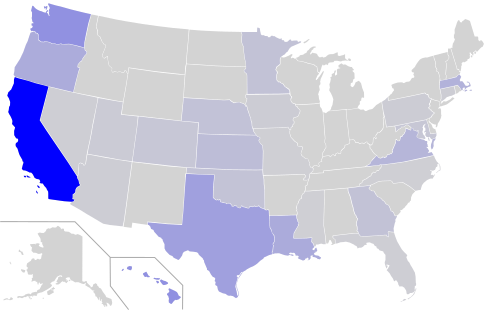
According to the 2010 Census, there are over 1.5 million Americans who identify themselves as Vietnamese in origin, ranking fourth among the Asian American groups and forming the largest Overseas Vietnamese population.
Orange County, California, is home to the largest concentration of ethnic Vietnamese outside Vietnam, especially in its Little Saigon area. Other significant Vietnamese communities are found in the metropolitan areas of San Jose, Houston, Dallas-Fort Worth, Seattle, Northern Virginia, and New Orleans. Similarly to other overseas Vietnamese communities in Western countries (except France), the Vietnamese population in the United States was established following the Fall of Saigon in 1975 and communist takeover of South Vietnam following the Vietnam War.
South Asian languages
There are many South Asians in the United States. These include Indians, Pakistanis, and Bangladeshis, who speak various South Asian languages. Major South Asian languages spoken in the US include Telugu (see "Telugu" below), Malayalam, Kannada, Tamil (see "Tamil" below), Gujarati, Hindi and Urdu (see 'Hindi-Urdu" below), Bengali, Punjabi, Sinhala, Nepali (see "Nepali" below), and Marathi.
Hindi and Urdu
Hindi and Urdu are the two standard registers of the Hindustani language, an Indo-Aryan language native to North India, Central India, and Pakistan. While the formal registers draw vocabulary from Sanskrit and Arabic & Persian respectively, the colloquial forms are indistinguishable. Hindi and Urdu are widely spoken among the Indian and Pakistani communities in the United States as a first or second language. Speakers are concentrated in states with large South Asian populations, including California, Illinois, New Jersey, New York, Texas, and Virginia.[152]
Additionally, Hindi-Urdu (Hindustani) is a cultural language for many South Asians who have different mother tongues and dialects. Bollywood in particular, as well as film music, is an important cultural product that influences many South Asian youth. Some South Indians, Bangladeshis, and Indian Bengalis learn the language or its dialects through films.[153][154]
Nepali
The first Nepalese to enter the United States were classified as "other Asian". Immigration records show that between 1881 and 1890, 1,910 "other Asians" were admitted to the United States. However, Nepal did not open its borders until 1950, and most Nepalis who left the country during that time went primarily to India to study. Nepalese Americans were first classified as a separate ethnic group in 1974 when 56 Nepalese immigrated to the United States. New York City, Boston, Dallas-Fort Worth, Columbus, Los Angeles, Cincinnati, Erie, Harrisburg, Chicago, Denver, Gainesville, Portland, and Saint Paul have the largest number of Nepalese. There are some Nepalese community or cultural events in every American state, including Dashain, Tihar, Holi, Teej Special, and Nepali New Year.
Tamil
The Tamil community in the United States is largely bilingual. Tamil is taught in weekly classes in many Hindu temples and by associations such as the American Tamil Academy in South Brunswick, Tamil Jersey School in Jersey City, New Jersey,[155]
The written form of the language is highly formal and quite distinct from the spoken form. A few universities, such as the University of Chicago and the University of California Berkeley, have graduate programs in the language.[156]
In the second half of the 20th century, Tamils from India migrated as skilled professionals to the United States, Canada, Europe, and Southeast Asia. The Tamil American population numbers over 195,685 individuals,[157] and the Federation of Tamil Sangams of North America functions as an umbrella organization for the growing community.[158]
The New York City and Los Angeles metropolitan areas are home to the largest concentrations of Tamil-speaking Sri Lankan Americans.[159][160][161] New York City's Staten Island alone is estimated to be home to more than 5,000 Sri Lankan Americans,[162] one of the largest Sri Lankan populations outside Sri Lanka itself,[163] and a significant proportion of whom speak Tamil.

Central New Jersey is home to the largest population concentration of Tamils. New Jersey houses its own Tamil Sangam.[164] Sizeable populations of Indian American Tamils have also settled in the New York City and Washington metropolitan areas, as well as on the West Coast in Silicon Valley, where there are Tamil associations such as the Bay Area Tamil Mandram.[165] The New York City and Los Angeles metropolitan areas are home to the largest concentrations of Tamil-speaking Sri Lankan Americans,[159][160][161] with New York City's Staten Island alone estimated to be home to more than 5,000 Sri Lankan Americans,[162] one of the largest Sri Lankan populations outside Sri Lanka itself,[163] and a significant proportion of whom speak Tamil.
Telugu
There were 171,000 speakers of Telugu in 2006–2008.[166] In the second half of the 20th century, Telugu people from India (especially from Andhra Pradesh, Telangana, Karnataka and Tamil Nadu) migrated as professionals to the United States. Central New Jersey is home to the largest population concentration of Telugu people. Telugu people have also settled in New York City and the DC metropolitan area, as well as on the West Coast in Silicon Valley. The New York City and Los Angeles metropolitan areas are home to the largest concentrations of Telugu-speakers.
See also


- American English
- Language education in the United States
- Language Spoken at Home (U.S. Census)
- List of multilingual presidents of the United States
- Muhlenberg legend
- List of U.S. communities where English is not the majority language spoken at home
- Modern Language Association
General:
Notes
- ^ A language's endonym may not be available for a variety of possible reasons: The language in question encompasses multiple dialects with unique endonyms; The language in question is actually a language family; The language or community of speakers has a prohibition against writing the language; No documentation is immediately available; etc.
- ^ Respondents who reported speaking English less than "Very Well." The total margin of error for this group was 1.78%; however, margins of error for individual languages, especially those with few total speakers, may exceed 100% in some cases.
References
- ^ "Explore Census Data".
- ^ Siebens, J & T Julian. Native North American Languages Spoken at Home in the United States and Puerto Rico: 2006–2010. United States Census Bureau. December 2011.
- ^ "Census Data Of USA". US Census Bureau. Archived from the original on October 20, 2012. Retrieved August 17, 2012.
- ^ "Detailed Languages Spoken at Home and Ability to Speak English for the Population 5 Years and Over for United States: 2014-2018". census.gov. Archived from the original on October 30, 2020.
- ^ "Selected Social Characteristics in the United States". United States Census Bureau. Retrieved November 27, 2023.
- ^ "Explore Census Data". data.census.gov. Retrieved September 26, 2024.
- ^ Grimes 2000
- ^ a b "ACS B16001". ACS B16001. U.S. Census Bureau. Retrieved December 26, 2022.
- ^ Census Bureau Reports at Least 350 Languages Spoken in U.S. Homes, U.S. Census Bureau, November 3, 2015, retrieved July 3, 2018
- ^ At Least 350 Languages Spoken In US Homes: New Report, CNBC, November 4, 2015, retrieved July 3, 2018
- ^ Leeman, Jennifer (2018). "It's all about English: The interplay of monolingual ideologies, language policies and the U.S. Census Bureau's statistics on multilingualism". International Journal of the Sociology of Language (252): 21–43. doi:10.1515/ijsl-2018-0013. S2CID 149994663.
- ^ Stevens, Gillian (1999). "A Century of U.S. Censuses and the Language Characteristics of Immigrants". Demography. 36 (3): 387–397. doi:10.2307/2648061. JSTOR 2648061. PMID 10472502. S2CID 28315459.
- ^ "Selected Social Characteristics in the United States: 2007". United States Census Bureau. Archived from the original on April 25, 2009. Retrieved October 9, 2008.
- ^ "English Usage Among Hispanics in the United States". Pew Research Center's Hispanic Trends Project. November 29, 2007. Archived from the original on December 15, 2012. Retrieved January 18, 2015.
- ^ Ancestry: 2000, U.S. Census Bureau, 2000, archived from the original on February 10, 2020
- ^ a b "Language Use and English-Speaking Ability: 2000" (PDF). U.S. Census Bureau. October 2003. Archived (PDF) from the original on February 18, 2008. Retrieved February 22, 2008.
- ^ "EAC Issues Glossaries of Election Terms in Five Asian Languages Translations to Make Voting More Accessible to a Majority of Asian American Citizens". Election Assistance Commission. June 20, 2008. Archived from the original on July 31, 2008. Retrieved January 18, 2015.
- ^ "Foreign Language Enrollments in K–12 Public Schools" (PDF). American Council on the Teaching of Foreign Languages (ACTFL). February 2011. Archived from the original (PDF) on April 8, 2016. Retrieved October 17, 2015.
- ^ Goldberg, David; Looney, Dennis; Lusin, Natalia (February 2015). "Enrollments in Languages Other Than English in United States Institutions of Higher Education, Fall 2013" (PDF). Modern Language Association. Retrieved May 20, 2015.
- ^ "FYI: English isn't the official language of the United States". CNN. May 20, 2018.
- ^ Faingold, Eduardo D. (2018). Language Rights and the Law in the United States and Its Territories. Lexington Books. p. 8.
The United States has never had an official language and attempts to declare English its official language have been unsuccessful in the U.S. Congress.
- ^ "U.S. English Efforts Lead West Virginia to Become 32nd State to Recognize English as Official Language". us-english.org. Archived from the original on April 1, 2016. Retrieved May 13, 2016.
- ^ "Official English". U.S. English, 2022.
- ^ Crews, Haibert O. (January 23, 1923). "Talk American, Not English". Champaign-Urbana Courier. p. 10. Retrieved March 23, 2021 – via Newspapers.com.
- ^ Davis, Robert (September 24, 1969). "News Briefs: Its Legal—We Speak English". Chicago Tribune. sec. 1, p. 3. Retrieved March 23, 2021 – via Newspapers.com.
- ^ "Alaska's indigenous languages attain official status" Archived February 12, 2017, at the Wayback Machine, Reuters.com, October 24, 2014. Retrieved October 30, 2014.
- ^ "Bill History/Action for 28th Legislature HB 216". The Alaska State Legislature. Archived from the original on February 4, 2017. Retrieved February 11, 2017.
- ^ Alaska OKs Bill Making Native Languages Official Archived January 20, 2015, at the Wayback Machine April 21, 2014; Bill Chappell; NPR.org
- ^ "South Dakota recognizes official indigenous language". March 25, 2019.
- ^ "48 U.S. Code § 864 – Appeals, certiorari, removal of causes, etc.; use of English language | LII / Legal Information Institute". Law.cornell.edu. Retrieved June 1, 2015.
- ^ James W. Parins (November 4, 2013). Literacy and Intellectual Life in the Cherokee Nation, 1820–1906. University of Oklahoma Press. p. 248. ISBN 978-0-8061-5122-9.
- ^ David W. Voorhees, "Dutch Political Identity in English New York" in Four Centuries of Dutch-American Relations: 1609-2009 (eds. Hans Krabbendam, Cornelis A. van Minnen & Giles Scott-Smith: SUNY Press, 2009), pp. 132-33.
- ^ California Department of Motor Vehicles Website (actual website blocked by Wikipedia)
- ^ America Votes 2006: Key Ballot Issues, CNN, archived from the original on February 9, 2008, retrieved February 22, 2008
- ^ "Arizona Voter Empowerment Card, 2010 Elections" (PDF). American Civil Liberties Union. Retrieved September 3, 2015.
- ^ Heath, Shirley Brice & Frederick Mandabach. Language Status Decisions and the Law in the United States, in Cobarrubias, Juan & Joshua A. Fishman, eds., Progress in Language Planning, p. 94 (1983)
- ^ Sick, Bastian (May 19, 2004). German as the official language of the USA? Archived September 13, 2005, at the Wayback Machine, Spiegel Online (in English)
- ^ Mikkelson, David (2008). German Almost Became Official Language, Snopes
- ^ a b c d e f g h i j k l m n o p q r s t u v w x y z aa ab ac ad ae af ag ah ai aj ak al am an ao ap aq ar as at Crawford, James (June 24, 2008). "Language Legislation in the U.S.A." languagepolicy.net. Retrieved April 27, 2011.
- ^ a b "Alaska State Legislature". www.akleg.gov.
- ^ "Arizona makes English official". Washington Times. November 8, 2006. Retrieved April 28, 2011.
- ^ Dillow, Gordon (May 21, 2006). "English-only law likely would go unenforced". The Orange County Register. Retrieved September 24, 2023.
- ^ "Language Access Laws and Legal Issues: A Local Official's Guide" (PDF). Institute for Local Government. Institute for Local Government. Retrieved September 23, 2023.
- ^ Constitution of the State of Colorado (PDF). p. 132. Retrieved February 2, 2024.
- ^ Crawford, James. "Language Policy -- Louisiana". Language Legislation in the U.S.A. Retrieved October 10, 2016.
- ^ IT, Missouri Secretary of State - (March 3, 2020). "2008 Ballot Measures". Missouri Secretary of State. Retrieved March 10, 2022.
- ^ "Section I-27, English language to be official". Justia Law. January 24, 2022. Retrieved March 10, 2022.
- ^ "Keetoowah Cherokee is the Official Language of the UKB" (PDF). keetoowahcherokee.org/. Keetoowah Cherokee News: Official Publication of the United Keetoowah Band of Cherokee Indians in Oklahoma. April 2009. Retrieved June 1, 2014.
- ^ "UKB Constitution and By-Laws in the Keetoowah Cherokee Language (PDF)" (PDF). www.keetoowahcherokee.org/. United Keetoowah Band of Cherokee Indians. Retrieved June 2, 2014.
- ^ "The Cherokee Nation & its Language" (PDF). University of Minnesota: Center for Advanced Research on Language Acquisition. 2008. Retrieved May 22, 2014.
- ^ Slipke, Darla (November 3, 2010). "Oklahoma elections: Republican-backed measures win approval". NewsOK. The Oklahoman. Retrieved April 28, 2011.
- ^ "Amendment For Printed Bill". South Dakota Legislature.
- ^ Official Language Amendments (Bill). Utah Legislature. March 22, 2021.
- ^ "U.S. English Efforts Lead West Virginia to Become 32nd State to Recognize English as Official Language". U.S. English. March 5, 2016. Retrieved March 22, 2016.
- ^ "(Un)Constitutionality of English as the Official Language of the US". Daily Kos.
- ^ Zavodny, Madeline (July 2000). "The Effects of Official English Laws on Limited‐English‐Proficient Workers". Journal of Labor Economics. 18 (3). The University of Chicago Press: 427–452. doi:10.1086/209965.
- ^ "Know Your Rights: Language Access | ohr". ohr.dc.gov.
- ^ ""I Speak" Cards for Language Assistance | ohr". ohr.dc.gov.
- ^ "Samoa now an official language of instruction in American Samoa". Radio New Zealand International. October 3, 2008. Retrieved April 28, 2011.
- ^ Guam at the Encyclopædia Britannica
- ^ Northern Mariana Islands at the Encyclopædia Britannica
- ^ Crawford, James. "Puerto Rico and Official English". languagepolicy.net. Retrieved April 27, 2011.
- ^ "Frequently Asked Questions". visitusvi.com. United States Virgin Islands. Retrieved April 27, 2011.
- ^ "American Samoa Department of Education - Mathematics Content Standards" (PDF). Archived from the original (PDF) on November 3, 2021. Retrieved September 9, 2021.
- ^ "North America :: UNITED STATES". CIA The World Factbook. October 20, 2022.
- ^ Portes, Alejandro; Schauffler, Richard (1994). "Language and the Second Generation: Bilingualism Yesterday and Today". International Migration Review. 28 (4): 640–661. doi:10.1177/019791839402800402. ISSN 0197-9183.
- ^ Shell, Marc (2001). "Language Wars". CR: The New Centennial Review. 1 (2): 6. doi:10.1353/ncr.2003.0059. ISSN 1539-6630. S2CID 201784628.
- ^ Lake, Nell (March 1, 2002). "Language Wars". Harvard Magazine. Retrieved October 2, 2022.
- ^ Tamir, Yael (Yuli) (May 11, 2019). "Not So Civic: Is There a Difference Between Ethnic and Civic Nationalism?". Annual Review of Political Science. 22 (1): 419–434. doi:10.1146/annurev-polisci-022018-024059. ISSN 1094-2939.
- ^ "Detailed Languages Spoken at Home by English-Speaking Ability for the Population 5 Years and Over: 2011" (PDF). Census.gov. Archived from the original (PDF) on November 9, 2015. Retrieved October 20, 2015.
- ^ "Driver License and Identification Card Information". Dmv.ca.gov. Archived from the original on September 30, 2014. Retrieved January 18, 2015.
- ^ "What is the future of Spanish in the United States?". Pew Research Center. September 5, 2013. Archived from the original on January 18, 2015. Retrieved January 18, 2015.
- ^ "The Future of Spanish in the United States". Census.gov. Archived from the original on January 18, 2015. Retrieved January 18, 2015.
- ^ Data Access and Dissemination Systems (DADS). "American FactFinder - Results". Factfinder2.census.gov. Archived from the original on February 12, 2020. Retrieved January 18, 2015.
- ^ "Table 53. Languages Spoken At Home by Language: 2009", The 2012 Statistical Abstract, U.S. Census Bureau, archived from the original on December 25, 2007, retrieved December 27, 2011
- ^ Instituto Cervantes (Enciclopedia del español en Estados Unidos)
- ^ "Más 'speak spanish' que en España". Archived from the original on May 20, 2011. Retrieved October 6, 2007.
- ^ Hasselle, Della (October 13, 2018). "Louisiana Joins International Organization of French-speaking Governments". NOLA.com.
- ^ Ammon, Ulrich; International Sociological Association (1989). Status and Function of Languages and Language Varieties. Walter de Gruyter. pp. 306–308. ISBN 978-0-89925-356-5. Archived from the original on December 20, 2012. Retrieved April 23, 2012.
- ^ Valdman, Albert (2009). Dictionary of Louisiana French: As Spoken in Cajun, Creole, and American Indian Communities. University Press of Mississippi. ISBN 978-1604734034.
- ^ Three Local Tribes Await Federal Decision, December 8, 2007, Houma Today.
- ^ Neumann-Holzschuh, Ingrid (2014). "Carrefour Louisiane". Journal of Language Contact. 7 (1): 124–153. doi:10.1163/19552629-00701006.
- ^ Klingler, Thomas A. (2009). "How much Acadian is there in Cajun?". In Mathis-Mosen, Ursula; Beschof, Günter (eds.). Acadians and Cajuns: The politics and culture of French minorities in North America. Innsbruck: Innsbruck University Press. pp. 91–103. ISBN 978-3902571939.
- ^ Klingler, Thomas A. (2003). If I could turn my tongue like that : the Creole language of Pointe Coupee Parish, Louisiana. Baton Rouge: Louisiana State University Press. ISBN 978-0807127797. OCLC 846496076.
- ^ Klingler, Thomas A. (2015). "Beyond Cajun: Toward an Expanded View of Regional French in Louisiana". In Picone, Michael D.; Evans Davies, Catherine Evans Davies (eds.). New Perspectives on Language Variety in the South: Historical and Contemporary Approaches. Tuscaloosa: The University of Alabama Press. pp. 627–640. ISBN 9783110196351.
- ^ Klingler, Thomas A. (2003). T. Sanchez; U. Horesh (eds.). "Language labels and language use among Cajuns and Creoles in Louisiana". Working Papers in Linguistics. 9 (2): 77–90.
- ^ "United States - Selected Population Profile in the United States (German (032-045))". Archived from the original on April 3, 2009. Retrieved November 27, 2008.
- ^ New York (State). Legislature. Senate (1915). Proceedings of the Senate of the State of New York on the Life, Character and Public Service of William Pierson Fiero. p. 7.
- ^ "Chapter Two – The History Of The German Immigration To America – The Brobst Chronicles". Homepages.rootsweb.ancestry.com. Retrieved August 28, 2017.
- ^ Jodie Scales (2001). Of Kindred Germanic Origins: Myths, Legends, Genealogy and History of an Ordinary American Family. iUniverse. p. 46.
- ^ Did Hebrew almost become the official U.S. language?, January 21, 1994, archived from the original on February 13, 2008, retrieved February 22, 2008
- ^ "First German-Americans". Germanheritage.com. Archived from the original on May 9, 2020. Retrieved October 5, 2006.
- ^ "Historic Germantown – Encyclopedia of Greater Philadelphia". Philadelphiaencyclopedia.org. Retrieved August 28, 2017.
- ^ Joshua A. Fishman (1991). "Appendix: The Hebrew Language in the United States". Yiddish: turning to life. John Benjamins Publishing Company. pp. 148–159. ISBN 978-90-272-2075-2. Archived from the original on January 2, 2016.
- ^ Sewell Chan (October 17, 2007), "A Yiddish Revival, With New York Leading the Way", The New York Times, archived from the original on September 30, 2008, retrieved August 15, 2008
+ Patricia Ward Biederman (July 7, 2005), "Yiddish Program Aims to Get Beyond Schmoozing", Los Angeles Times, archived from the original on February 21, 2009, retrieved August 15, 2008
+ Yiddishkayt Los Angeles, yiddishkaytla.org, archived from the original on July 24, 2008, retrieved August 15, 2008 - ^ Evgeny Golovko (2010) 143 Years after Russian America: the Russian language without Russians. Paper read at the 2010 Conference on Russian America, Sitka, August 20, 2010.
- ^ Michael Kraus (2016). "IPY-Documenting Alaskan and Neighboring Languages".
- ^ Russian language's most isolated dialect found in Alaska. Russia Beyond, 2013 May 13.
- ^ Ninilchik Russian (with dictionary)
- ^ "Nikolaevsk, Alaska". MLA Language Map Data Center. May 25, 2017. Archived from the original on May 25, 2017. Retrieved October 16, 2017.
- ^ a b "Table B04006 - People Reporting Ancestry - 2021 American Community Survey 1-Year Estimates". United States Census Bureau. 2021. Retrieved June 1, 2023.
- ^ "Table B04004 - People Reporting Single Ancestry - 2021 American Community Survey 1-Year Estimates". United States Census Bureau. 2021. Retrieved June 1, 2023.
- ^ a b "Detailed Languages Spoken at Home and Ability to Speak English for the Population 5 Years and Over: 2009-2013". Census.gov. Retrieved June 1, 2023.
- ^ "Dutch : Source: American Community Survey : 5-Year Estimates, Public Use Microdata Sample, 2006–2010". Mla.org. Archived from the original on November 13, 2013. Retrieved January 18, 2015.
- ^ "Table S0201 - (Dutch) Selected Population Profile in the United States - 2021 American Community Survey 1-Year Estimates". United States Census Bureau. 2021. Retrieved June 1, 2023.
- ^ Alice N. Nash; Christoph Strobel (2006), "Daily life of Native Americans from post-Columbian through nineteenth-century America", The Greenwood Press "Daily life through history" series, Greenwood Publishing Group, p. IX, ISBN 978-0-313-33515-0
- ^ a b c "The Cherokee Nation & its Language" (PDF). University of Minnesota: Center for Advanced Research on Language Acquisition. 2008. Archived from the original (PDF) on July 14, 2014. Retrieved May 22, 2014.
- ^ a b Thompson, Irene (August 6, 2013). "Cherokee". Aboutworldlanguages.com/. Archived from the original on May 21, 2014. Retrieved May 22, 2014.
- ^ Joyner, Michael (September 30, 2010). Cherokee Lessons - Introductory Edition. Lulu Enterprises Incorporated. pp. 16–17. Retrieved June 1, 2013.
- ^ "Native American languages". Infoplease.com. Archived from the original on September 24, 2015. Retrieved October 23, 2015.
- ^ Chavez, Will (April 5, 2012). "Immersion students win trophies at language fair". Cherokeephoenix.org. Archived from the original on May 25, 2013. Retrieved April 8, 2013.
- ^ "Native Now : Language: Cherokee". We Shall Remain - American Experience - PBS. 2008. Archived from the original on April 7, 2014. Retrieved April 9, 2014.
- ^ "Cherokee Language Revitalization Project". Western Carolina University. 2014. Archived from the original on April 7, 2014. Retrieved April 9, 2014.
- ^ Hauk, Alexis. "Radio Free Cherokee: Endangered Languages Take to the Airwaves". The Atlantic. Archived from the original on January 16, 2014. Retrieved April 9, 2014.
- ^ "Table 1. Detailed Languages Spoken at Home and Ability to Speak English for the Population 5 Years and Over for the United States: 2006-2008 : Release Date: April, 2010" (XLS). Census.gov. Archived from the original on September 22, 2014. Retrieved January 18, 2015.
- ^ "United States - Languages".
- ^ Jones, Nard (1972). Seattle. Garden City, New York: Doubleday. p. 94 et. seq. ISBN 978-0-385-01875-3.. Quotation is from p. 97.
- ^ "Hawaii Pidgin".
- ^ van Rossem & van der Voort 1996, p. 1
- ^ a b Lewis, M. Paul (2013). Simons, Gary F.; Fennig, Charles D. (eds.). "American Sign Language". Ethnologue: Languages of the World, Seventeenth edition. SIL International. Archived from the original on March 9, 2013.
- ^ a b Paul Preston (1995), Mother father deaf: living between sound and silence, Harvard University Press, p. 243, ISBN 978-0-674-58748-9, archived from the original on January 2, 2016
- ^ Mitchell, Ross E.; Young, Travas A.; Bachleda, Bellamie; Karchmer, Michael A. (2006), "How Many People Use ASL in the United States? Why Estimates Need Updating" (PDF), Sign Language Studies, 6 (3): 306–335, doi:10.1353/sls.2006.0019, S2CID 146557236, archived from the original (PDF) on June 4, 2011
- ^ Clayton Valli; Ceil Lucas (2000), "Sociolinguistic Aspects of the Black deaf Community", Linguistics of American Sign Language: an introduction, Gallaudet University Press, pp. 416–428, ISBN 978-1-56368-097-7, archived from the original on January 2, 2016
- ^ Lambrecht, Linda; Earth, Barbara; Woodward, James (March 3, 2013), History and Documentation of Hawaiʻi Sign Language: First Report, University of Hawaiʻi: 3rd International Conference on Language Documentation and Conservation, archived from the original on March 22, 2013
- ^ Samuel J. Supalla (1992) The Book of Name Signs, p. 22
- ^ ENGLISH AND SOFT SKILLS IN THE MAGHREB, 2016." British Council. p. 45. Retrieved on 17 February 2024.
- ^ "ALGERIA Language & Toponymy How politically driven language policies have impeded toponymic progress." (Archive) Permanent Committee on Geographical Names for British Official Use. p. 2. Retrieved on 12 March 2013. "Yet Arabic is rarely heard in Kabylie, where Berber and French are spoken"
- ^ "Christian Valantin (sous la dir. de), La Francophonie dans le monde. 2006-2007, éd. Nathan, Paris, 2007, p. 16" (PDF) (in French). Archived from the original (PDF) on December 24, 2012. Retrieved March 5, 2011. (5.58 MB)
- ^ Bahous, Rima; Bacha, Nahla Nola; Nabhani, Mona (December 9, 2011). "Multilingual educational trends and practices in Lebanon: A case study". International Review of Education. 57 (5–6): 5. Bibcode:2011IREdu..57..737B. doi:10.1007/s11159-011-9250-8. ISSN 0020-8566.
- ^ Dicker, Susan J. (January 1, 2003). Languages in America: A Pluralist View. Multilingual Matters. ISBN 9781853596513.
chinese.
- ^ a b Lai, H. Mark (2004), Becoming Chinese American or Taiwanese American: A History of Communities and Institutions, AltaMira Press, ISBN 978-0-7591-0458-7
- ^ García, Ofelia; Fishman, Joshua A. (2002), The Multilingual Apple: Languages in New York City, Walter de Gruyter, ISBN 978-3-11-017281-2
- ^ "Czech language" (PDF). U.S. English. Archived from the original (PDF) on March 4, 2012. Retrieved May 11, 2013.
- ^ "Vanishing Voices: Linguists work with remaining speakers of dying languages to preserve cultural memories". University of Texas at Austin. January 11, 2010. Retrieved June 2, 2013.
- ^ "2006 KJT Website Homepage". Archived from the original on January 13, 2012. Retrieved June 2, 2013.
- ^ Cope, Lida. Creating a Digital Archive of Texas Czech: Applied Documentation for the Community, Education, and Research (PDF). Retrieved June 2, 2013.
- ^ Machann, Clinton. "CZECHS". The Handbook of Texas Online. Texas State Historical Association (TSHA). Retrieved June 2, 2013.
- ^ Carlisle, John. "Fortitude, tradition help Finns flourish in brutal U.P." Detroit Free Press. Retrieved May 10, 2022.
- ^ "Michigan HR0007 | 2017-2018 | 99th Legislature". LegiScan. Retrieved May 10, 2022.
- ^ Eric L. Friedland (1981). "Hebrew Liturgical Creativity in Nineteenth-Century America". Modern Judaism. 1 (3): 323–336. doi:10.1093/mj/1.3.323. JSTOR 1396251.
- ^ "Brandeis University Study Finds that American-Jewish Population is Significantly Larger than Previously Thought" (PDF). February 2, 2007. Archived from the original (PDF) on October 2, 2013. Retrieved November 30, 2013.
- ^ "Language Use in the US 2006–2008 (850k Excel file!)". US Census Bureau. Archived from the original on June 22, 2011. Retrieved June 23, 2011.
- ^ a b "Detailed Languages Spoken at Home and Ability to Speak English for the Population 5 Years and Over: 2009-2013". Census.gov.
- ^ [1] Archived March 25, 2009, at the Wayback Machine
- ^ "More Than 1 Million U.S. Residents Speak Korean at Home". The United States Census Bureau. Retrieved April 22, 2020.
- ^ "American FactFinder - Results". Archived from the original on February 14, 2020. Retrieved July 27, 2016.
- ^ America the diverse: Chicago's Polish neighborhoods, usaweekend.com, May 15, 2005, archived from the original on December 28, 2017, retrieved July 4, 2008
- ^ a b Biers & Osterhaus 2021, p. 1.
- ^ Tinkler, Jacqueline. "The Walloon Immigrants of Northeast Wisconsin: An Examinatin of Ethnic Retention" (PDF). University of Texas Arlington Libraries Research Commons. Retrieved May 28, 2022.
- ^ Biers & Osterhaus 2021, p. 2.
- ^ "Welsh : Source: Census 2000, Summary File 3". Mla.org. Archived from the original on April 2, 2015. Retrieved January 18, 2015.
- ^ "Results". American FactFinder. U. S. Census Bureau. Archived from the original on July 14, 2018. Retrieved August 30, 2019.
- ^ Shankar, Shalini (2008). "Speaking like a Model Minority: "FOB" Styles, Gender, and Racial Meanings among Desi Teens in Silicon Valley". Journal of Linguistic Anthropology. 18 (2): 268–289. doi:10.1111/j.1548-1395.2008.00022.x.
- ^ Shankar, Shalini (2010). "Reel to real". Pragmatics. 14 (2–3): 317–335. doi:10.1075/prag.14.2-3.12sha.
- ^ See "School offers Tamil language classes" Sentinel Sept. 4, 2014 Archived March 15, 2016, at the Wayback Machine
- ^ Vasudha Narayanan, "Tamils" in David Levinson and Melvin Ember, eds. American immigrant cultures: builders of a nation (1997). p. 878.
- ^ "US Census 2006-2008 American Community Survey See Row# 125".
- ^ "About FETNA". Federation of Tamil Sangams of North America. Archived from the original on January 16, 2013. Retrieved April 1, 2013.
- ^ a b "Yearbook of Immigration Statistics: 2012 Supplemental Table 2". U.S. Department of Homeland Security. Archived from the original on April 3, 2013. Retrieved March 31, 2013.
- ^ a b "Yearbook of Immigration Statistics: 2011 Supplemental Table 2". U.S. Department of Homeland Security. Archived from the original on August 8, 2012. Retrieved March 31, 2013.
- ^ a b "Yearbook of Immigration Statistics: 2010 Supplemental Table 2". U.S. Department of Homeland Security. Archived from the original on July 12, 2012. Retrieved March 31, 2013.
- ^ a b Kirk Semple (June 8, 2013). "Sri Lankans have gathered on Staten Island,..." The New York Times. Archived from the original on October 5, 2013. Retrieved June 9, 2013.
- ^ a b "Why Staten Island?". Little Sri Lanka. Archived from the original on July 26, 2015. Retrieved July 25, 2015.
- ^ New Jersey Tamil Sangam Archived September 2, 2010, at the Wayback Machine
- ^ "Introduction". Bay Area Tamil Manram. Archived from the original on October 27, 2010.
- ^ "Table 1. Detailed Languages Spoken at Home". Archived from the original on June 4, 2011.
Bibliography
- Biers, Kelly; Osterhaus, Ellen (2021). "Notes from the Field: Wisconsin Walloon Documentation and Orthography" (PDF). Language Documentation and Conservation. 15: 1–29.
- Campbell, Lyle. (1997). American Indian languages: The historical linguistics of Native America. New York: Oxford University Press.
- Campbell, Lyle; & Mithun, Marianne (Eds.). (1979). The languages of native America: Historical and comparative assessment. Austin: University of Texas Press.
- Grimes, Barbara F. (Ed.). (2000). Ethnologue: Languages of the world, (14th ed.). Dallas, TX: SIL International. ISBN 1-55671-106-9. Online edition: the world, accessed on December 7, 2004.
- Mithun, Marianne. (1999). The languages of native North America. Cambridge: Cambridge University Press.
- van Rossem, C.; van der Voort, H. (1996). Die Creol Taal: 250 Years of Negerhollands Texts. Amsterdam: Amsterdam University Press – via Digitale Bibliotheek voor de Nederlandse Letteren.
- Zededa, Ofelia; Hill, Jane H. (1991). The condition of Native American Languages in the United States. In R. H. Robins & E. M. Uhlenbeck (Eds.), Endangered languages (pp. 135–155). Oxford: Berg.
Further reading
- Blatt, Ben. "Tagalog in California, Cherokee in Arkansas." Slate. May 13, 2014.
External links
- Bilingualism in the United States
- Detailed List of Languages Spoken at Home for the Population 5 Years and Over by State: U.S. Census 2000
- Foreign Languages in the U.S. About foreign languages and language learning in the United States
- How many indigenous American languages are spoken in the United States? By how many speakers? Archived July 23, 2017, at the Wayback Machine
- Native Languages of the Americas
- Ethnologue report for USA
- Linguistic map of the United States of America
- Modern Language Association Language Map