
Loading article…
ノースダコタ州
ダコタ・ワジヤタ (ラコタ語) | |
|---|---|
| ノースダコタ州 | |
| ニックネーム: ピースガーデン州、 ラフライダー州、フリッカーテイル州、地上の天国 | |
| モットー: 自由と団結、今も永遠に、一つで切り離せない | |
| 国歌: ノースダコタ賛歌 | |
 ノースダコタ州が強調表示されたアメリカ合衆国の地図 | |
| 国 | アメリカ合衆国 |
| 州になる前 | ダコタ準州 |
| 連合に加入 | 1889年11月2日(第39回) |
| 資本 | ビスマルク |
| 最大の都市 | ファーゴ |
| 最大の郡または同等の郡 | キャス |
| 最大の大都市圏と都市圏 | ファーゴ |
| 政府 | |
| • 知事 | ダグ・バーグム(右) |
| • 副知事 | タミー・ミラー(右) |
| 立法府 | 立法議会 |
| • 上院 | 上院 |
| • 下院 | 衆議院 |
| 司法 | ノースダコタ州最高裁判所 |
| 米国上院議員 | ジョン・ホーベン(R) ケビン・クレイマー(R) |
| 米国下院代表団 | ケリー・アームストロング(共和党)(リスト) |
| エリア | |
| • 合計 | 70,706平方マイル(183,125 km 2) |
| • 土地 | 68,995平方マイル(178,694 km 2) |
| • 水 | 1,719平方マイル(4,428 km 2) 2.3% |
| • ランク | 19日 |
| 寸法 | |
| • 長さ | 300マイル(482 km) |
| • 幅 | 200マイル(321 km) |
| 標高 | 1,901 フィート (580 メートル) |
| 最高標高 (ホワイトビュート[1] [a]) | 3,609 フィート (1,069 メートル) |
| 最低標高 | 864 フィート (216 メートル) |
| 人口 (2023) | |
| • 合計 | 783,926 |
| • ランク | 47位 |
| • 密度 | 10.73/平方マイル (4.13/km 2 ) |
| • ランク | 47位 |
| • 世帯収入の中央値 | 61,842ドル[2] |
| • 所得順位 | 20日 |
| 異名 | ノースダコタ州 |
| 言語 | |
| • 公用語 | 英語[3] |
| タイムゾーン | |
| 州の大部分 | UTC−06:00(中部時間) |
| • 夏 ( DST ) | UTC−05:00 ( CDT ) |
| 南西 | UTC−07:00 (山岳部) |
| • 夏 ( DST ) | UTC−06:00 ( MDT ) |
| USPSの略称 | ND |
| ISO 3166 コード | 米国-ノースダコタ州 |
| 伝統的な略語 | ND、N.Dak、ノーダック |
| 緯度 | 北緯45度56分から北緯49度00分 |
| 経度 | 西経96度33分から西経104度03分 |
| Webサイト | nd.gov |
| 州のシンボル一覧 | |
|---|---|
 | |
 | |
 | |
| 生きた記章 | |
| 鳥 | ウエスタンマウチヒバリ |
| 魚 | ノーザンパイク |
| 花 | 野生のプレーリーローズ |
| フルーツ | チョークチェリー |
| 草 | ウエスタンウィートグラス |
| 昆虫 | 西洋ミツバチ |
| 哺乳類 | ノコタ馬 |
| 木 | アメリカニレ |
| 無生物の記章 | |
| 飲料 | 牛乳 |
| ダンス | スクエアダンス ラインダンス |
| 化石 | テレド化石木 |
| 州道標識 | |
.svg/500px-ND-200_(2015).svg.png) | |
| アメリカ合衆国の州のシンボルのリスト | |
ノースダコタ( / d ə ˈ k oʊ t ə / ノースダコタ州(英: North Dakota State、略称: ノースダコタ・スー)[4]は、アメリカ合衆国中西部北部に位置する内陸の州、先住民族のダコタ・スー族にちなんで名付けられている。北はカナダのサスカチュワン州とマニトバ州、東はミネソタ州、南はサウスダコタ州、西はモンタナ州と接している。ノースダコタ州は、広大な草原、ステップ、温帯サバンナ、荒地、農地が特徴的なグレートプレーンズ地域に属している。ノースダコタ州は19番目に大きな州であるが、人口は78万人未満で、4番目に人口が少なく、4番目に人口密度が低めの州。[注 1]州都はビスマークで、最も人口の多い都市はファーゴ、州人口の約5分の1を占めている。両都市とも米国で最も急速に成長している都市の一つだが、住民の半数は農村部に住んでいる。
現在のノースダコタ州には、ミズーリ川沿いのマンダン族、ヒダツァ族、アリカラ族、北東部のオジブウェ族、クリー族、そして州の他の地域に広がるスー族のグループ(アシニボイン族、ヤンクトン族、ワペトン族、ティトン族)など、さまざまなネイティブアメリカンの部族が何千年もの間住んでいました。ヨーロッパの探検家や貿易業者が最初にこの地に到着したのは 18 世紀初頭で、主に高収入の毛皮を求めてやって来ました。
アメリカ合衆国は19世紀初頭にこの地域を獲得し、移住を余儀なくされた原住民の抵抗が強まる中、徐々に入植を進めていった。1861年に設立されたダコタ準州は、1862年のホームステッド法により人口の大幅な増加と発展が促進され、アメリカ開拓者の中心地となった。伝統的な毛皮貿易は農業、特に小麦栽培に取って代わられた。その後の1878年から1886年のダコタブームでは、なだらかな草原に巨大な農場が広がり、この地域は地域の経済大国となった。ノーザン・パシフィック鉄道とグレート・ノーザン鉄道は、利益の出る穀物の中心地へのアクセスを競い合い、農民は政治的、社会経済的同盟を結成し、それが中西部のより広範なポピュリスト運動の中核となった。ノースダコタ州とサウスダコタ州は、1889年11月2日に39番目と40番目の州として連邦に加盟した。ベンジャミン・ハリソン大統領は、署名する前に州昇格書類をシャッフルしたため、どちらが先に州になったか誰にも分からない。その結果、2つの州は公式にアルファベット順に番号が付けられている。[5]州昇格は開拓時代が徐々に終焉を迎えたことを象徴し、1920年頃には州は完全に開拓された。[6]その後の数十年間は急進的な農業運動と経済協同組合の台頭が見られ、その遺産の一つが米国で唯一の州営銀行 であるノースダコタ銀行である。
20 世紀半ば以降、ノースダコタ州の豊富な天然資源は経済発展にとってより重要となり、21 世紀に入ってからは北西部のバッケン層からの石油採掘が州の繁栄に大きな役割を果たしてきた。こうした開発は人口増加 (および高い出生率) と失業率の低下につながった。同州は、インフラ、生活の質、経済的機会、公共の安全などの指標で比較的良い順位にランクされている。北アメリカの地理的中心であるラグビーがあると考えられており、かつては西半球で最も高い人工構造物であったKVLY -TV の塔がある。
歴史
植民地時代以前の歴史
ネイティブアメリカンは、ヨーロッパ人が到着する数千年前から、現在のノースダコタ州に住んでいた。知られている部族にはマンダン族(11世紀頃)[7]が含まれるが、最初のヒダーツァ族はそれから数百年後に到着した。[8]両者とも、ミズーリ川の支流沿いの村に集まり、ノースダコタ州中西部となった。クロウインディアンは、おそらく17世紀にヒダーツァ族とヒダーツァ族が分裂した後、西から平原を旅して、親戚関係にあるヒダーツァ族を訪問し、交易を行った。 [ 7 ]
その後、スー族のラコタ族、サンティー族、ヤンクトナイ族がやって来た。アシニボイン族とプレーンズ・クリー族は、貿易または戦争のために、インディアンの村落へ南下した。[7] [10]現在のワイオミング州とモンタナ州にいたショーショーニー族インディアンは、はるか東のミズーリ川までインディアンの敵を攻撃した可能性がある。[11]シャイアン族の一団は、18世紀に数十年間、 シェイアン川下流の土造りの村(ビースターフェルト遺跡)に住んでいた。
銃器を持ったクリー族、アシニボイン族、チッペワ族の攻撃により[明確化が必要]、彼らは1780年頃にこの地域を去り、しばらくしてミズーリ州を渡った。[12]少数のソタイオ・インディアンの一団がミズーリ川の東に住んでいて、世紀の終わりまでに追い出されたシャイアン族と出会った。彼らはすぐにシャイアン族を追ってミズーリ州を渡り、キャノンボール川の南で彼らと一緒に暮らした。[13]
最終的に、シャイアン族とスタイオ族は一つの部族となり、主にノースダコタ州外でバッファローを騎乗して狩る狩猟民となった。19世紀半ばまでに、アリカラ族が南から将来の州に入り、マンダン族とヒダツァ族に加わった。[14]時が経つにつれ、多くのインディアンが米国と条約を結んだ。条約の多くは特定の部族の領土を定義した。
ヨーロッパ人の探検と植民地化
この地域に到達した最初のヨーロッパ人は、フランス系カナダ人の貿易業者ピエール・ゴルチエ・シュール・ド・ラ・ヴェレンドリエであり、彼は1738年にアシニボイン族インディアンの案内でマンダン族の村々への探検・交易隊を率いた。[15]
1762年から1802年まで、この地域はスペイン領ルイジアナの一部を形成していた。[16]

入植と州の地位
ヨーロッパ系アメリカ人は、19 世紀後半に鉄道が開通するまで、ダコタ準州にまばらにしか定住しませんでした。彼らは土地の寄付という利点を生かして、この地域が農業に最適であると宣伝し、自分たちの土地を積極的に売り込みました。
北部と南部の相違は、入植者の間に反感を生んだ。北部は、人口の多い南部から、やや評判の悪い、「野蛮な人々、牧場主、毛皮商人に支配されすぎている」、そして先住民との衝突が頻繁に起こる場所とみなされていた。北部は、一般的には領土のままでいることに満足していた。しかし、領土の首都が南部のヤンクトンからビスマルクに移されると、南部は分割を要求し始めた。最終的に、1887年の領土選挙で、有権者は領土を2つに分割することを承認した。分割は7度線によって行われた。[17] [18]
連邦議会は、グロバー・クリーブランド大統領の政権下で、1889年2月22日に、ノースダコタ州、サウスダコタ州、モンタナ州、ワシントン州の州昇格を包括する法案、1889年権限付与法を可決した。後継者のベンジャミン・ハリソンは、1889年11月2日にノースダコタ州とサウスダコタ州を正式に連邦に加盟させる宣言に署名した。[19]
二つの新しい州の間の競争は、どちらが先に加盟するかというジレンマをもたらした。ハリソンは国務長官ジェームズ・G・ブレインに書類をシャッフルし、どちらが先に署名したか分からないようにするよう指示した。実際の命令は記録に残らなかったため、どのダコタ州が先に加盟したかは誰にも分からない。[20] [21]しかし、アルファベット順ではノースダコタ州がサウスダコタ州よりも先に記載されているため、その宣言は法典では最初に発行された。
20世紀と21世紀
第一次世界大戦の頃、小麦農家、特にノルウェー移民の間での不穏が、無党派同盟(NPL)を中心とした大衆政治運動につながった。NPL は共和党の公認候補を擁立した (しかし、第二次世界大戦後に民主党に合併)。同党はノースダコタ州を州外の銀行や企業の権力から守ろうとした。
ノースダコタ州立銀行とノースダコタ・ミル・アンド・エレベーター(現在も存続)の設立に加え、ノースダコタ州立鉄道は州有鉄道線路も建設した(後にスー・ライン鉄道に売却)。企業禁止法により、農地として区画された土地の所有権を企業や銀行が所有することは事実上禁止されていた。州および連邦裁判所で支持され、現在も施行されているこれらの法律により、農地の差し押さえはほぼ不可能となっている。差し押さえ後も、銀行や住宅ローン会社は所有権を保持できないためである。[22]さらに、ノースダコタ州立銀行は連邦準備銀行の支店と同様の権限を有し、サブプライム住宅ローンの発行とデリバティブ商品の形での担保を制限する権限を行使し、2008年の金融危機後の州内の住宅価格の暴落を防いだ。[23]

ビスマルクにあったノースダコタ州議事堂は1930年12月28日に全焼した。議事堂は石灰岩で覆われたアールデコ調の高層ビルに建て替えられ、現在も残っている。[24 ] 1950年代には、ギャリソンダムやマイノット空軍基地、グランドフォークス 空軍基地など、連邦政府による一連の投資と建設プロジェクトが始まった。 [25]
ノースダコタ州西部では、1970年代後半から1980年代初頭にかけて、石油価格の上昇により開発が利益を生むようになり、石油探査ブームが起こりました。 [26]このブームは、石油価格の下落により終焉を迎えました。[26]
近年、同州の失業率は全国平均を下回り、雇用と人口が増加している。[27] [28]成長の多くは、州西部のバッケン油田の開発によるものである。 [29]この地域の石油残量に関する推定値は様々で、100年以上分あるとの推定もある。[30]
ノースダコタ州の年間殺人率と暴力犯罪率は、何十年もの間、米国で最も低い水準を維持していた。しかし、近年、全国平均を下回っているものの、犯罪は急増している。2016年の暴力犯罪率は2004年より3倍高く、その上昇は主に2000年代後半、石油ブームの時代と重なった。これは、全国の暴力犯罪率がわずかに低下した時期に起きた。[31]増加の大部分は、石油ブームの町の労働者によるものとされている。[32] [33]
地理
ノースダコタ州は、アメリカ合衆国の中西部北部に位置しています。北アメリカ大陸の中央に位置し、北はカナダと国境を接しています。北アメリカの地理的な中心はラグビーの町の近くにあります。ビスマルクはノースダコタ州の州都であり、ファーゴは最も人口の多い都市です。

ノースダコタ州は、グレートプレーンズとして知られる米国の地域にあります。この州は、東のミネソタ州とレッド川を分かち合っています。南はサウスダコタ州、西はモンタナ州、北はカナダのサスカチュワン州とマニトバ州です。ノースダコタ州は北アメリカのほぼ中央に位置し、ノースダコタ州ラグビーには「北アメリカ大陸の地理的中心」を示す石碑があります。面積は70,762平方マイル(183,273 km 2)で、[34]そのうち69,001平方マイル(178,712 km 2 )が陸地であり、 [35]ノースダコタ州は19番目に大きい州です。[36]
州の西半分は、丘陵地帯のグレートプレーンズと、ミズーリ川の西側にあるバッドランズの北部から成っている。州の最高地点である標高3,506フィート(1,069メートル)のホワイトビュートとセオドア・ルーズベルト国立公園[37]はバッドランズにある。この地域は天然ガス、原油、褐炭などの化石燃料が豊富。ミズーリ川は、ギャリソンダムの背後に、米国で3番目に大きい人造湖であるサカカウィア湖を形成している。[38]
州の中央部はドリフトプレーリーとミズーリ高原に分かれている。州の東部は、氷河湖アガシーの底にある平坦なレッド川渓谷で構成されている。その肥沃な土壌は、北に流れてウィニペグ湖に注ぐ蛇行するレッド川によって排水され、大規模な農業を支えている。[39]州最大の自然湖であるデビルズ湖も東部にある。[40]

州の大部分は草原で覆われている。農作物はノースダコタ州東部の大部分を覆っているが、中央部および西部では次第にまばらになっている。ノースダコタ州の天然樹木は、通常、ペンビナ渓谷やキルディア山脈近くの渓谷や谷、タートル山脈、デビルズ湖周辺の丘陵、ノースダコタ州中央部のマクヘンリー郡の砂丘地帯、シェイエン渓谷の斜面やシェイエンデルタ沿いなど、排水の良い場所に見られる。この多様な地形は、約2,000種の植物を支えている。[41] [42]
土壌はノースダコタ州の最も貴重な資源です。土壌は州の農業の豊かさの基盤です。ノースダコタ州には膨大な鉱物資源もあります。これらの鉱物資源には数十億トンの褐炭が含まれます。さらに、ノースダコタ州には大量の石油埋蔵量があります。石油は1951年に州で発見され、すぐにノースダコタ州の最も貴重な鉱物資源の1つになりました。2000年代初頭、水圧破砕技術の出現により、鉱山会社は州西部のバッケン頁岩層から大量の石油を抽出できるようになりました。[43]
ノースダコタ州の公有地には、国立公園5か所、州立森林公園5か所、国立野生生物保護区63か所、国立草原3か所、州立公園13か所[44]があり、さらに州信託地、土地管理局、水鳥生産地域、開拓局、土地管理局、米国陸軍工兵隊、州野生生物管理地域[45]がある。
ノースダコタ州の野生動物
現在、レベルI種が36種、レベルII種が44種、レベルIII種が35種存在する。[46]
ノースダコタ州の鳥類リストNDGFDの基本リストには、確認された現存種420種と絶滅種2種が含まれています。さらに3種がノースダコタ州鳥類記録委員会(NDBRC)のレビューリストから追加され、 Avibaseからの追加もいくつかあります。統合リストには420種が含まれています。そのうち194種と1亜種がレビューリストに載っています(下記参照)。NDGFDリストでは44種が偶発的なものとみなされ、8種は北米に導入されました。 [47]
ノースダコタ州の哺乳類のリスト 州内には 87 種の動物が生息していることが知られています。これには、ハイイロオオカミ、アマツバメ、カリブー、ハイイログマなど、ノースダコタ州で現在絶滅した、または地域的に絶滅した哺乳類も含まれます。
ノースダコタ州の昆虫一覧 [48]ノースダコタ州で知られている1,126種
ノースダコタ州の魚類一覧 [49]現在ノースダコタ州では98種が知られている
ノースダコタ州の爬虫類・両生類のリスト[50] 州内には16種の爬虫類と12種の両生類が生息している。
ノースダコタ州の甲殻類/ムール貝のリスト
[51]ノースダコタ州にはデビルザリガニ、カリコザリガニ、ビリルザリガニの3種類のザリガニが生息している。
ノースダコタ州には、ガンマラス、ヒアレラ、ミシスという 3 種類の淡水エビが生息しています。ミシスは、1970 年代初頭に餌の基盤を補うためにサカカウィア湖に放流された外来種です。
[52] 1983年のクヴァンカラの「ノースダコタ州の水生ムール貝」。彼は、この州で一般的にハマグリと呼ばれる13種と、体長数ミリの非常に小さなハマグリである13種のアブラハマグリを記録した。また、この州で22種の巻貝も記録した。
気候

ノースダコタ州は、夏は暖かく、冬は寒い大陸性気候です。内陸に位置し、北極と赤道からほぼ等距離にあるため、気温差は顕著です。
1918年2月21日、ノースダコタ州グランビルでは、最低気温-33度から最高気温50度まで、12時間で83度も気温が上昇する記録的な気温上昇を経験した。[55] 1935年から1936年の冬には、ラングドンでもう1つの気象記録が樹立され、1月11日から2月20日まで、41日間連続で気温が0度(-17.8度)を下回った。これは米国本土のどの場所でも記録されたものである。[56]
人口統計
人口

2022年の推定では、ノースダコタ州の人口は2022年7月1日時点で779,261人で、2020年の米国国勢調査から0.02%増加した。[57]ノースダコタ州は国内で4番目に人口の少ない州であり、アラスカ州、バーモント州、ワイオミング州のみがこれより人口が少ない。[58]
1870年には2,000人未満だったノースダコタ州の人口は、1930年までに68万人近くにまで増加した。その後増加は鈍化し、次の70年間は人口がわずかに変動し、1970年の国勢調査では617,761人と最低を記録し、2000年の国勢調査では642,200人となった。[59] 21世紀にはノースダコタ州は著しい成長を遂げ、2023年には過去最高の人口783,926人に達する。 [60]ネイティブアメリカンを除いて、ノースダコタ州の人口は、国全体よりも少数民族の割合が低い。[61] 2011年の時点で、ノースダコタ州の1歳未満の人口の20.7%が 少数民族であった。[62]ノースダコタ州の人口の中心は、サイクストン近くのウェルズ郡にある。[63]
HUDの2022年ホームレス評価報告書によると、ノースダコタ州には推定610人のホームレスがいる。[64] [65]
人種と民族

.svg/500px-North_Dakota_Counties_by_race_(2020_census).svg.png)
注: 表の出生数は一致しません。ヒスパニック系は民族と人種の両方でカウントされるため、全体の数は多くなります。
2016 年以降、白人ヒスパニック系の出生に関するデータは収集されておらず、1 つのヒスパニック系グループに含められています。ヒスパニック系の出生者は、どの人種でもかまいません。
19世紀中頃を通じて、ダコタ準州は依然としてネイティブアメリカンが支配的であった。戦争と疫病によりネイティブアメリカンの人口は減少し、同時にヨーロッパ人とアメリカ人がこの地域に定住し始めた。19世紀後半から20世紀初頭にかけて、ノースダコタ州は米国中西部の大部分と同様に、米国東部とヨーロッパからの移民の大量流入を経験した。ノースダコタ州は、主にノルウェー、アイスランド、スウェーデン、ドイツ、英国からの移民農民と一般労働者とその家族に人気の目的地として知られていた。この入植地の多くはレッド川渓谷の西側に集中しており、サウスダコタ州でも同様に見られ、ミネソタ州でも同様の傾向が見られた。この地域は肥沃な土地でよく知られている。第一次世界大戦の勃発までには、ここは北米で最も肥沃な農業地域の一つとなっていた。しかし、降雨量が多かった時期は終わり、多くの移住者は乾燥した環境で成功できなかった。多くの家族の土地は、農業を成功させるには小さすぎた。
1930年代から20世紀末まで、ノースダコタ州の人口は、2、3回の短い増加を挟みつつ、徐々に減少していった。特に、大学を卒業した若者が州を離れる傾向にあった。農業の機械化が進み、農業を成功させるにはより広い土地を必要とする環境条件が整うにつれ、自給自足の農業は家族にとってリスクが大きすぎることが判明した。多くの人々が仕事を求めて都市部へ移住した。[82]
20世紀後半以来、ノースダコタ州からの移住の主な原因の1つは、大学卒業生向けの熟練職の不足である。熟練職やハイテク職を創出するために経済開発プログラムの拡大が求められているが、そのようなプログラムの有効性は議論の余地がある。[83] 21世紀の最初の10年間、人口増加の大きな要因は、非在来型 タイトオイル(シェールオイル)田の開発に関連する石油産業の仕事であった。[84]他の地域では、一部の保留地が都市部から人々を呼び戻したため、ネイティブアメリカンの人口が増加している。
2010年の米国国勢調査によると、ノースダコタ州の人種と民族の構成は、非ヒスパニック系白人が88.7%、ネイティブアメリカンが5.4% 、黒人またはアフリカ系アメリカ人が1.2% 、アジア人が1.0%、太平洋諸島系が0.1% 、その他の人種が0.5%、2つ以上の人種が混在が0.2%でした。[85] 2019年のアメリカ人コミュニティ調査では、ノースダコタ州の人種と民族の構成は、非ヒスパニック系白人が83.6%、黒人またはアフリカ系アメリカ人が2.9%、ネイティブアメリカンとアラスカ先住民が5.0%、アジア人が1.4%、ハワイ先住民またはその他の太平洋諸島系が0.4%、その他の人種が0.1%、混血が2.7%、ヒスパニックまたはラテンアメリカ人(人種は問わない)が4.0%でした。[86]
ノースダコタ州は、難民の再定住地として最も人口比の高い州の一つである。米国難民再定住局によると、2013年から2014年にかけて、10万人のノースダコタ州民に対して「68人以上の難民」が同州に定住した。[87] 2014年度には、582人の難民が同州に定住した。[88]ファーゴ市長マホニーは、ノースダコタ州が人口比で最も多くの難民を受け入れていることは、難民が州にもたらす利益を考えれば祝福されるべきだと述べている。[89] 2015年、同州唯一の再定住機関であるノースダコタ州ルーテル社会福祉局は、「難民サービスの改善のために連邦資金45万8090ドルを授与された」。 [ 90]ノースダコタ州の移民の29.8%はアフリカ出身であり、ここ数十年で黒人人口の割合が2000年の0.6%から2020年には3.9%へと急速に増加しています。[91]
アメリカ国外からの移民により3,323人の純増となり、国内での移住により21,110人の純減となった。 [92] 2009年のノースダコタ州住民のうち、69.8%がノースダコタ州生まれ、27.2%が他の州生まれ、0.6%がプエルトリコ、米国島嶼地域、またはアメリカ人の親のもとで海外生まれ、2.4%が他の国生まれであった。[93]年齢と性別の分布は全国平均とほぼ等しい。2019年には、 4.1%が外国生まれの住民であった。[94]フィリピン、ブータン、ネパール、カナダ、リベリアがノースダコタ州移民の出身国上位である。[95]
言語
2010年には、5歳以上のノースダコタ州民の94.86% (584,496人) が英語を第一言語として話していた。ノースダコタ州民の5.14% (31,684人) が英語以外の言語を話していた。1.39% (8,593人) がドイツ語を、1.37% (8,432人) がスペイン語を、0.30% (1,847人) がノルウェー語を話していた。その他の話されている言語は、セルビア・クロアチア語(0.19%)、中国語と日本語(ともに0.15%)、アメリカ先住民の言語とフランス語(ともに0.13%) であった。[96] 2000年には、人口の2.5%が英語に加えてドイツ語を話しており、これは20世紀初頭の移民を反映している。[97]
1940年には、ノースダコタ州民の56.18%(355,400人)が英語を話し、20.34%(128,700人)がドイツ語を、12.85%(81,300人)がノルウェー語を、1.99%(12,600人)がスウェーデン語を、8.64%(54,640人)がその他の言語を話していました。[98]
宗教

ピュー研究所は、 2014年に成人人口の77%がキリスト教徒であると判定した。[100]多くの南部米国州とは対照的に、主流プロテスタントがプロテスタントの最大の形態(28%)であった。ノースダコタ州で最大の主流プロテスタント宗派はアメリカ福音ルーテル教会であり、合同メソジスト教会が2番目に大きかった。2番目に大きなプロテスタント支部(22%)を形成する福音派プロテスタントもルーテル派が支配的で、ルーテル教会ミズーリ教区が最大の福音派宗派であった。ノースダコタ州のキリスト教徒のうち、ローマカトリック教会が最大のキリスト教宗派であった。公共宗教研究所によると、2020年の成人人口の75%がキリスト教徒であり、主流プロテスタントが依然として多数派であり、福音派プロテスタントが人口の18%を占めていた。[101] 2022年、公共宗教研究所は人口の80%がキリスト教徒であると判断した。
ピュー研究所の2014年の調査によると、キリスト教以外の宗教は成人人口の3%を占め、イスラム教が最大の非キリスト教宗教である。ユニテリアンやニューエイジなどの他の宗教は、合わせて宗教を信仰する人口の1%を占めている。2014年の調査では、20%がいかなる宗教にも属しておらず、ノースダコタ州民の2%が無神論者であり、人口の13%は特に何も信仰していない。[100] 2020年の公共宗教研究所の調査では、いかなる宗教にも属していない人が22%、[101] 2022年には12%であることが判明した。
2010年に信者数が最も多かった教会団体は、ローマカトリック教会で167,349人、アメリカ福音ルーテル教会で163,209人、ルーテル教会ミズーリ教区で22,003人だった。[102 ] 2006年、ノースダコタ州は人口1人あたりの教会の数で全米最多だった。[103]さらに、ノースダコタ州は2006年に全米で最も教会に通う人口の割合が高かった。 [103] 2020年までに、宗教データアーカイブ協会の信者数は164,843人で、出席者数では最大のキリスト教団体であり、1,000人あたりの信者率は211.58人だった。[104]
2001年の調査によると、ノースダコタ州の人口の35%はルーテル派、30%はカトリックである。その他の宗教団体は、メソジスト派(7%)、バプテスト派(6%) 、アッセンブリーズ・オブ・ゴッド派(3%)、長老派(1.27%)[105]、エホバの証人(1%)である。他のプロテスタントや末日聖徒イエス・キリスト教会(LDS教会)など、明示されていない、または他の宗派に所属するキリスト教徒は合計3%で、キリスト教徒の総人口は86%である。2000年には州内に920人のイスラム教徒と730人のユダヤ教徒がいたと推定されている[106] 。調査では回答者の3%が「無宗教」と回答し、6%は回答を拒否した[103] 。
経済
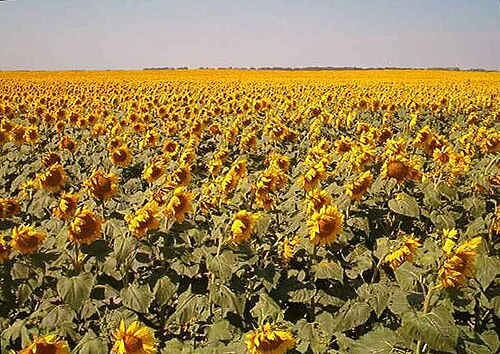
農業はノースダコタ州最大の産業であるが、石油、食品加工、テクノロジーも主要産業である。[107]成長率は約4.1%である。[108]米国経済分析局によると、ノースダコタ州の経済は2018年第2四半期に551億8000万ドルの国内総生産を計上した。 [109] 2013年から2017年にかけて米国商務省が測定した同州の一人当たり所得は34,256ドルであった。[110] 2013年から2017年の3年間の世帯所得の中央値は61,285ドルであった。[110]
ギャラップ社のデータによると、ノースダコタ州は2013年に雇用創出で米国をリードし、2009年以降その地位を維持している。同州の雇用創出指数は40で、最も近い競争相手を10ポイント近く上回っている。[111]ノースダコタ州は2011年以降、民間部門の雇用を56,600件追加し、年間成長率は7.32%となっている。[112] [113]経済分析局が2020年12月に発表した統計によると、ノースダコタ州は2009年から2018年にかけて、全50州の中で個人消費支出の年間成長率が最も高かった。[114] この期間中、名目個人所得の年間成長率は平均6%で、米国平均の4.4%と比較して高い。ノースダコタ州の個人所得の伸びは、農業、エネルギー開発、建設など、さまざまな民間事業部門に結びついている。[115] [116]ノースダコタ州は、2010年代の住宅需要の急増を反映して、住宅と公共料金に対する個人支出の伸びが全州の中で最も高かった。
ノースダコタ州の2013年の国内総生産(GDP)総額497億7000万ドルのうち、21%強が天然資源と鉱業から得られています。[117]
ノースダコタ州は、ビスマルクにあるノースダコタ銀行という州営銀行と、グランドフォークスにあるノースダコタ製粉工場という州営製粉所を持つ唯一の州である。これらは、第二次世界大戦前にNPLによって設立された。
2012年現在、ファーゴには1,700人の従業員を抱えるマイクロソフトの2番目に大きいキャンパスがあり、グランドフォークスにはアマゾン・ドット・コムが数百人の従業員を雇用している。 [118] [119]
2019年12月現在[update]、同州の失業率は2.4%で、国内で最も低い水準にある。[120] 2020年の5か月間を除き、失業率は1987年以降、毎月5%を下回っている。[121] 2010年末の時点で、同州の一人当たり所得は国内17位で、38位からの10年間で最大の増加となった。[122]失業率の低下と一人当たり所得の増加は、同州の石油ブームによるものである。 [114]石油関連の開発とテクノロジーおよびサービス産業への投資の組み合わせにより、ノースダコタ州は2008年の市場崩壊以来、毎年予算黒字を維持している。[123]
1976年以降、ノースダコタ州の失業率が最高に達したのは1983年の6.2%である。隣接するサウスダコタ州を除く米国のすべての州では、同じ期間に失業率がこれよりも高かった。[124]
農業
ノースダコタ州の最も古い産業は毛皮取引と農業であった。農業に従事する人口は10%未満であるが、[125]農業は州経済の主要部分であり続けている。工業規模の農業により、農作物の価値では国内第9位、農産物の総販売価値では第18位となっている。大規模農場が最も多くの農作物を生産している。州内で農業に従事する人の割合は比較的高く、2008年現在[update]、米国の人口のわずか2~3%が農業に直接従事している。[126]ノースダコタ州は、土地面積の約90%が農場で、耕作地は27,500,000エーカー(111,000 km 2 )で、国内で3番目に大きい。2002年から2007年の間に、耕作地の総面積は約100万エーカー(4,000 km 2)増加した。増加を示したのはノースダコタ州のみだった。同時期に、180万エーカー(7,300 km 2)の土地が大豆とトウモロコシの単一栽培に転換され、米国最大の転換となった。[127]農業従事者は、単一栽培が行き過ぎると、主要作物に害虫や作物の病気が蔓延し、経済が危険にさらされる恐れがあると懸念している。さらに、この開発は野生生物や鳥類の生息地、生態系のバランスに悪影響を及ぼしている。


ノースダコタ州は、大麦(全米収穫量の36%)、デュラム小麦(58%)、硬質赤色春小麦(48%)、オート麦( 17%)、全種類の小麦の混合(15%)など、多くの穀物で全米最大の生産地となっている。ソバ(20%)の第2位の生産地でもある。2007年現在[update]、トウモロコシは同州最大の作物となったが、全米生産量のわずか2%を占めるに過ぎない。[127]コーンベルトはノースダコタ州まで広がっているが、地域の中心というよりはむしろ端の方に位置している。トウモロコシの収穫量は同州の南東部で高く、他の地域では低い。穀物のほとんどは家畜の飼料として栽培されている。この州は、米国のキャノーラ収穫量の 92%、亜麻の種子の 94%、ヒマワリの種子の 53% 、ベニバナの種子の 18% 、マスタード種子の 62%を含む多くの油糧種子の主要生産地です。キャノーラは寒い冬に適しており、成熟が早いです。油生産のためにキャノーラを加工すると、副産物としてキャノーラミールが生成されます。この副産物は、高タンパク質の動物飼料です。
大豆もますます重要な作物であり、2002年から2007年の間に40万エーカー(1,600 km 2 )の追加栽培が行われました。 [127]大豆は州東部の主要作物であり、州南東部では栽培が一般的です。1940年代にはノースダコタ州ではまったく大豆が栽培されていませんでしたが、1998年以降は特に一般的になりました。 [128]ノースダコタ州では生育期間が比較的短いため、大豆は早く成熟する必要があります。大豆は家畜の飼料として栽培されています。
ノースダコタ州は、主にレッド川流域で栽培されるテンサイの第2位の生産地である。同州は、蜂蜜、乾燥食用エンドウ豆、レンズ豆の最大生産地でもあり、ジャガイモの第3位の生産地でもある。[127]
ノースダコタ州の主な農産物(2011年現在、USDAによる[update])[129]
エネルギー

エネルギー産業は経済に大きく貢献している。ノースダコタ州には石炭と石油の両方の埋蔵量がある。平均すると、同州の石油生産量は2009年から2018年まで年平均48.4%増加した。この間、石油生産量は2009年から2015年まで毎年増加し、2016年はわずかに減少し、それ以降は増加に転じている。[114] シェールガスも生産されている。ノースダコタ州西部の褐炭埋蔵量は、消費される電力の約90%を生成するために使用されており、電力は近隣の州にも輸出されている。[130]ノースダコタ州は米国で2番目に大きな褐炭生産量を誇っている。 [131]ただし、褐炭は最も品位の低い石炭である。米国の他の州には、より大規模で品位の高い石炭埋蔵量(無煙炭、瀝青炭、亜瀝青炭) がある。
1951年にタイオガ近郊で石油が発見され、 1984年までに年間5,300万バレル(840万m 3 )の石油が生産されました。 [132]回収可能な石油埋蔵量は最近劇的に増加しています。バッケン層の石油埋蔵量は最大4,000億バレル(6.4 × 10 10 m 3 )で、北極圏国立野生生物保護区の埋蔵量の25倍に相当します。[133] [134] 2008年4月に米国地質調査所が発表した報告書では、現在の技術でバッケン層から回収可能な石油は2桁少なく、30億バレル(480 × 10 6 m 3)から43億バレル(680 × 10 6 m 3)の範囲で、平均36.5億バレル(580 × 10 6 m 3)であると推定されている。[135]
州の北西部はノースダコタ州の石油ブームの中心地である。ウィリストン、タイオガ、スタンレー、マイノット・バーリントンの各コミュニティは急速な成長を遂げており、住宅や地域サービスに負担がかかっている。2022年11月30日現在[update]、同州は米国で2番目に大きな石油生産州であり、平均1,097,716バレル(174,522.9 m 3)/日の石油を生産する一方、1日あたり3,029,032千立方フィート(85,772,600 m 3)の天然ガスを生産し、合計1,619,963バレル(257,553.5 m 3)の石油換算(BOE)を生産している。[136] [137] [138]
ノースダコタ州を含むグレートプレーンズ地域は、「風力エネルギーのサウジアラビア」と呼ばれています。[139]ノースダコタ州は広大な田園地帯を有し、風速が時速10マイル(16 km/h)を下回ることはめったにないため、ノースダコタ州での風力エネルギー開発は費用対効果に優れています。
観光
ノースダコタ州は、主要な観光名所がないこともあり、最も観光客が少ない州と考えられている。[140] とはいえ、観光業はノースダコタ州で3番目に大きな産業であり、毎年30億ドル以上の経済貢献をしている。144マイル(232 km)のマーダーヘイトレイルなどの屋外アトラクションや、釣りや狩猟などのアクティビティが観光客を惹きつけている。この州は、ルイス&クラークトレイルと、探検隊の冬季キャンプ地として知られている。[141]観光客に人気のエリアには、州西部のセオドア・ルーズベルト国立公園がある。この公園には、毎年47万5千人を超える観光客が訪れる。 [142]
州内で定期的に開催される観光客を惹きつけるイベントには、北米最大のスカンジナビアのフェスティバルと称されるマイノットのノルスク・ホストフェスト[143] 、メドラ・ミュージカル、ノースダコタ・ステート・フェアなどがある。また、為替レートが有利なときには、カナダの隣国マニトバ州やサスカチュワン州からも多くの観光客が訪れる。[144]
今では海外からの観光客もオスカーゼロミサイル警報施設を訪れるようになりました。[145]
健康管理
ノースダコタ州には、レベルI外傷センターが1つ、レベルII外傷センターが6つ、病院が44か所、地方の診療所が52か所、老人ホームが80か所ある。[146] [147] [148] [149] [150]主要な提供者ネットワークには、サンフォード、セントアレクシウス、トリニティ、アルトルなどがある。
ノースダコタ州のブルークロス・ブルーシールドは、同州最大の医療保険会社です。[151]ノースダコタ州は2014年にメディケイドを拡大し、[152]健康保険取引所は連邦政府のサイトHealthCare.govです。[153]
ノースダコタ州の法律では、病院の薬局や既存の店舗以外の薬局は薬剤師が過半数を所有しなければならないと定められている。有権者は2014年に法律を改正する提案を拒否した。[154] [155]
文化
ネイティブアメリカン先住民族

21 世紀、ノースダコタ州ではネイティブ アメリカンの人口が増加しており、2010 年には人口の 5.44% を占めました。19 世紀初頭までに、この地域はスー語を話す人々によって支配され、その領土は五大湖地域から西にまで広がっていました。「ダコタ」という言葉は、スー族 (ラコタ/ダコタ) の言葉で「同盟者」または「友人」を意味します。
ノースダコタ州内またはその周辺にある主要な歴史的部族国家は、ラコタ族とダコタ族 (「グレート・スー族」または「オセティ・サコウィン」、7 つの評議会の火を意味する)、ブラックフット族、シャイアン族、チペワ族(カナダではオジブウェー族として知られる)、およびマンダン族である。ノースダコタ州には、スピリット・レイク族、スタンディング・ロック・インディアン居留地、シセトン・ワペトン・オヤテ、フォート・バートルド・インディアン居留地、タートル・マウンテン・インディアン居留地、およびマンダン族、ヒダツァ族、アリカラ族の 6 つのインディアン居留地がある。
パウワウ
「パウワウ」(ラコタ語/ダコタ語ではワシピ)として知られる社交的な集まりは、今でもネイティブ アメリカンの文化の重要な一部であり、州全体で定期的に開催されています。ネイティブ アメリカンの歴史を通じて、パウワウは通常春に開催され、新しい生活の始まりと冬の寒さの終わりを祝いました。これらのイベントでは、ネイティブ アメリカンの部族が歌や踊りのために集まり、古い友人や知人と会ったり、新しい友人や知人と出会ったりしました。多くのパウワウは、一部の部族にとって宗教的な意味合いもありました。今日でも、パウワウはネイティブ アメリカンの文化の一部であり、ネイティブと非ネイティブの両方が参加しています。ノース ダコタ州では、毎年 9 月に州都ビスマークで開催される United Tribes International Powwow が、米国最大のパウワウの 1 つです。
パウワウは、パレードや、さまざまなダンス スタイルを披露する、正装のネイティブ アメリカン ダンサーの集まりです。男性ダンサーは、ビーズ、羽根飾り、鷲の羽で飾られた正装を着用するのが伝統です。男性のグラス ダンサーは、カラフルなフリンジの正装を着用し、男性の派手なダンサーは、鮮やかな色の羽を着用します。女性ダンサーは、男性ダンサーよりもずっと繊細に踊ります。派手な女性ダンサーは、布、ビーズのモカシン、宝石を身に着け、ジングル ドレスダンサーは、金属製の円錐で作られたドレスを着用します。パウワウ中の部族間のダンスでは、誰でも (観客も) ダンスに参加できます。
ノルウェーとアイスランドの影響

1870年頃、ノルウェーからの多くのヨーロッパ人移民がノースダコタ州北東部、特にレッド川の近くに定住した。カナダからもアイスランド人が到着した。 [156] ペンビナは創設当時、多くのノルウェー人が住む町であり、彼らは家族経営の農場で働いていた。彼らはルーテル派の教会や学校を設立し、その地域の他の宗派を大幅に上回った。このグループは、レフセやルートフィスクなどのユニークな食べ物を持っている。大陸最大のスカンジナビアのイベントであるノルスク・ホストフェストは、毎年9月にマイノットのノースダコタ州立フェアセンターで祝われ、5つの北欧諸国すべての芸術、建築、文化的遺物を展示する地元のアトラクションである。ペンビナ郡のアイスランド州立公園と毎年開催されるアイスランドフェスティバルは、スカンジナビア人の子孫でもあるアイスランドからの移民を反映している。
ノースダコタ州では、織物、銀細工、木彫りの技術が復活し、何十年もの間、旧世界の民俗習慣が続いています。公園には伝統的な芝屋根の家が並んでいますが、このスタイルはアイスランド発祥です。スターヴ教会はマイノットのランドマークです。ノルウェー系アメリカ人は、マイノットの全人口のほぼ 3 分の 1、つまり 32.3%、ノースダコタ州全体の人口の 30.8% を占めています。
ロシア出身のドイツ人
エカチェリーナ2世の治世以来、数世代にわたってロシアに定住していたドイツ系住民は、19世紀に経済問題と、メノナイト派とフッター派の宗教の自由の剥奪、特に1871年の兵役免除の剥奪により不満を募らせた。メノナイト派とフッター派のほとんどは1870年代後半にアメリカに移住した。1900年までに約10万人が米国に移住し、主にノースダコタ州、サウスダコタ州、カンザス州、ネブラスカ州に定住した。ノースダコタ州南中部は「ドイツ・ロシア三角地帯」として知られるようになった。1910年までに、ロシア出身のドイツ系住民約6万人がノースダコタ州中部に住んでいた。これらの人々は、ルーテル派、メノナイト派、フッター派、ローマカトリック教徒であり、祖先がロシアに移住した当時のドイツの習慣をほとんど守っていた。彼らは農業に従事していた。伝統的な鉄製の墓地の墓石は、ドイツ系民族が実践する有名な芸術形式である。[157] [158]
美術と舞台芸術
ノースダコタ州の主要な美術館や施設には、チェスター・フリッツ・オーディトリアム、エンパイア・アーツ・センター、ファーゴ劇場、ノースダコタ美術館、プレーンズ美術館などがあります。ビスマルク・マンダン交響楽団、ファーゴ・ムーアヘッド交響楽団、グレーター・グランドフォークス交響楽団、マイノット交響楽団、グレートプレーンズ・ハーモニー合唱団は、コンサートを開催したり、地域社会に教育プログラムを提供するフルタイムのプロおよびセミプロの音楽アンサンブルです。
エンターテインメント
ノースダコタ州出身の様々なジャンルのミュージシャンには、ブルースギタリストのジョニー・ラング、カントリーミュージック歌手のリン・アンダーソン、ジャズとトラディショナルポップの歌手兼ソングライターのペギー・リー、ビッグバンドリーダーのローレンス・ウェルク、ポップシンガーのボビー・ヴィーなどがいます。
ハリウッドでテレビスターのアンジー・ディキンソンはカルムで生まれ、10歳の時にカリフォルニア州バーバンクに引っ越した。エド・シュルツは進歩的なトークラジオ番組「エド・シュルツ・ショー」とMSNBCの「エド・ショー」の司会者として全国的に知られていた。シャドー・スティーブンスは1988年から1995年までアメリカン・トップ40の司会を務めた。ジョシュ・デュアメルはエミー賞を受賞した俳優で、 「オール・マイ・チルドレン」や「ラスベガス」での役で知られている。[159]ニコール・リンクレターとキャリディー・イングリッシュはそれぞれアメリカズ・ネクスト・トップモデルの第5回と第7回の優勝者だった。ケラン・ラッツは「スティック・イット」、「アクセプテッド」、「プロムナイト」、「トワイライト」などの映画に出演している。
ノースダコタ州はアメリカで最も多くのピエロの個体数を誇る州である。[160]
料理
スポーツ
ビスマルクはかつて NBA デベロップメント リーグのダコタ ウィザーズの本拠地であり、現在はインドア フットボール リーグのビスマルク バックスの本拠地となっています。
ノースダコタ州には、NCAA ディビジョン I のチーム 2 つ (ノースダコタ ファイティングホークスとノースダコタ州立バイソン)、およびディビジョン II のチーム 2 つ (メアリー マローダーズとマイノット州立ビーバーズ)があります。
ファーゴは、 USHL アイスホッケーチーム、ファーゴ フォースの本拠地です。また、アメリカン アソシエーションのファーゴ ムーアヘッド レッドホークスの本拠地でもあります。
ノースダコタ州高等学校活動協会には25,000 人を超える参加者がいます。
狩猟や釣りなどのアウトドア活動は、多くのノースダコタ州民の趣味です。氷上釣り、スキー、スノーモービルも冬季には人気があります。ノースダコタ州の住民は、湖沿いに小屋を所有したり、訪れたりすることができます。人気のあるスポーツ魚には、ウォールアイ、パーチ、ノーザンパイクなどがあります。[161]
ノースカントリー国立景観トレイルの西端はサカカウィア湖にあり、ルイス・クラーク・トレイルに隣接しています。
メディア
この州には 10 の日刊紙があり、最大のものはThe Forum of Fargo-Moorheadです。その他の週刊紙や月刊紙も発行されています (そのほとんどは完全に広告で運営されています)。その中で最も有名なのは、代替週刊紙である High Plains Readerです。
州最古のラジオ局であるWDAY-AMは、1922年5月23日に開局された。[162]ノースダコタ州の3大ラジオ市場はファーゴ、ビスマルク、グランドフォークス周辺に集中しているが、州内のあらゆる地域で放送が行われている。2010年代初頭にはウィリストンにいくつかの新しい局が建設された。ノースダコタ州には34のAMラジオ局と88のFMラジオ局がある。[163] [164] [165]ファーゴの KFGOは最も多くの視聴者を抱えている。[166]
ノースダコタ州でのテレビ放送は、1953年4月3日にマイノットのKCJB-TV(現在のKXMC-TV )が放送を開始したときに始まりました。 [167]ノースダコタ州のテレビメディア市場は、州の東半分を含むファーゴ-グランドフォークス(全国で117番目に大きい)と、州の西半分を構成するマイノット-ビスマルク(152番目)です。 [168]現在、10のネットワークに編成された31のフルパワーテレビ局があり、17のデジタルサブチャンネルがあります。
ノースダコタ州の公共放送はPrairie Public が提供しており、州全体のテレビおよびラジオネットワークはPBSおよびNPRと提携しています。コミュニティ番組を放送する公共アクセス テレビ局は、ビスマルク、ディキンソン、ファーゴ、およびジェームズタウンのケーブル システムで提供されています。
教育
高等教育
ノースダコタ州には、公立大学が 11 校、部族コミュニティ カレッジが5 校、私立学校が 4 校あります。最大の大学は、ノースダコタ州立大学とノースダコタ大学です。
高等教育システムは、以下の機関で構成されています。
ノースダコタ大学システム(公立機関):
部族の制度:
私立機関:
初等・中等教育
1917年、ノースダコタ州の都市には142校、州内には4,722校のワンルームスクールがあった。都市部の学校には36,008人の生徒がおり、ワンルームスクールには83,167人の生徒が通っていた。ワンルームスクールのうち1,889校は1929年から1954年の間に閉校した。1954年、ノースダコタ州の都市には513校の学校があり、州内には2,447のワンルームスクールがあった。当時、都市部の学校には94,019人の生徒がおり、ワンルームスクールには25,212人の生徒がいた。[169] ネイションズ・レポートカードは、標準テストのスコアに基づいて、ノースダコタ州をK-12教育で国内15位にランク付けしている。[170]
緊急サービス
ノースダコタ州緊急サービス局[171]は、50以上の機関に24時間365日体制で通信と調整を提供しています。さらに、「連邦災害復旧プログラムと国土安全保障助成金プログラムを管理しています。」 [ 172]。 2011年に、同局は「州全体のシームレスベースマッププロジェクト」のためにジオコム社[173]を選択しました。これにより、「9-1-1通報者の場所を特定」し、場所に基づいて緊急通報をルーティングできるようになります。[174] 1993年に、州は緊急サービスの提供を支援するために、田舎の道路や建物に番号を付けるバークルアドレスシステムを採用しました。[175]
交通機関
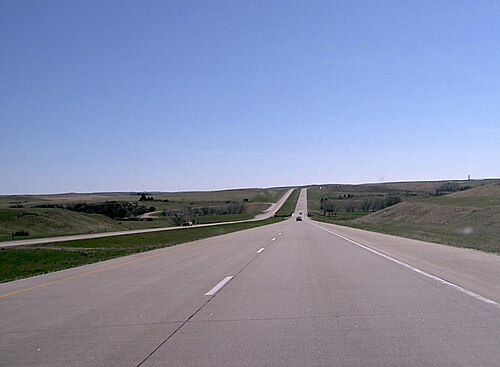
ノースダコタ州の交通はノースダコタ州運輸局が管轄している。主要な州間高速道路は州間高速道路29号線と州間高速道路94号線で、I-29号線とI-94号線はファーゴで交わる。I-29号線は州の東端に沿って南北に走り、I-94号線はミネソタ州とモンタナ州の間を東西に二分している。ノースダコタ州の州間高速道路システムの特徴は、過酷な気象条件に耐えなければならないため、事実上すべてがアスファルト舗装ではなくコンクリート舗装になっていることである。BNSFとカナダ太平洋鉄道は州最大の鉄道システムを運営している。BNSFとカナダ太平洋鉄道がかつて使用していた多くの支線は現在、ダコタ・ミズーリ・バレー・アンド・ウェスタン鉄道とレッド・リバー・バレー・アンド・ウェスタン鉄道によって運営されている。[176] [177]
ノースダコタ州の主要空港は、ファーゴのヘクター国際空港(FAR)、グランドフォークス国際空港(GFK)、ビスマルク市営空港(BIS)、マイノット国際空港(MOT)、ウィリストンのウィリストンベイスン国際空港(XWA) です。
アムトラックのエンパイア・ビルダー号はノースダコタ州を通り、ファーゴ(西行き午前2時13分、東行き午前3時35分)、グランドフォークス(西行き午前4時52分、東行き午前12時57分)、マイノット(西行き午前9時頃、東行き午後9時30分頃)、その他4つの駅に停車する。[178]この列車は、大富豪ジェームズ・J・ヒルが建設し、セントポールからシアトルまで走っていたグレート・ノーザン鉄道の同名の有名な路線の後継である。
都市間バスサービスはグレイハウンドとジェファーソンラインズによって提供されています。ノースダコタ州の公共交通機関には、ファーゴ、ビスマーク・マンダン、グランドフォークス、マイノットの毎日の固定ルートバスシステム、 57のコミュニティの準交通サービス、および複数の郡にまたがる地方交通システムがあります。[179]
法律と政府
アメリカ合衆国連邦政府と同様に、ノースダコタ州政府の政治権力は行政、立法、司法の3つの部門に分かれている。[180]
ノースダコタ州憲法とノースダコタ世紀法典は州の正式な法律を構成しており、ノースダコタ行政法典には州機関の追加規則と政策が組み込まれている。[181]
2020年の調査では、ノースダコタ州は住民にとって投票しやすい州の第8位にランクされました。[182]
エグゼクティブ

行政府は、選挙で選ばれた知事が率いる。現知事は共和党のダグ・バーグムで、前任者のジャック・ダルリンプルが再選を求めなかったため、2016年12月15日に就任した。ノースダコタ州の現副知事はタミー・ミラーで、上院議長も務めている。知事と副知事の任期は4年で、次回は2024年に選挙が行われる。知事には、コミッショナーと呼ばれる州政府機関の任命されたリーダーで構成される内閣がある。その他の憲法で定められた公選職は、国務長官、司法長官、州監査役、州財務長官である。
立法
The North Dakota Legislative Assembly is a bicameral body consisting of the Senate and the House of Representatives. The state has 47 districts, each with one senator and two representatives. Both senators and representatives are elected to four-year terms. The state's legal code is named the North Dakota Century Code.
Judicial
North Dakota's court system has four levels, one of which is dormant. Municipal courts serve the cities. Decisions from municipal courts are generally appealable to district court. Most cases start in the district courts, which are courts of general jurisdiction. There are 42 district court judges in seven judicial districts.[183][184] Appeals from final district court decisions are made to the North Dakota Supreme Court. An intermediate court of appeals was provided for by statute in 1987, but the North Dakota Court of Appeals has only heard 65 cases since its inception. The North Dakota Court of Appeals is essentially dormant, but capable of meeting if the North Dakota Supreme Court's case load necessitates the reestablishment of intermediate review.[185][186]
Indian tribes and reservations
.jpg/500px-Standing_Rock_Administrative_Service_(14235787848).jpg)
Historically, North Dakota was populated by the Mandan, Hidatsa, Lakota, and Ojibwe, and later by the Sanish and Métis. Today, five federally recognized tribes within the boundaries of North Dakota have independent, sovereign relationships with the federal government and territorial reservations:
- Mandan, Hidatsa, and Arikara Nation, Fort Berthold Reservation;
- Sisseton Wahpeton Oyate, Lake Traverse Indian Reservation;
- Standing Rock Sioux, Standing Rock Indian Reservation;
- Spirit Lake Tribe, Spirit Lake Reservation; and
- Turtle Mountain Band of Chippewa Indians, Turtle Mountain Reservation.
Federal
North Dakota's United States Senators are John Hoeven (R) and Kevin Cramer (R). The state has one at-large congressional district represented by Representative Kelly Armstrong (R).
Federal court cases are heard in the United States District Court for the District of North Dakota, which holds court in Bismarck, Fargo, Grand Forks, and Minot. Appeals are heard by the Eighth Circuit Court of Appeals based in St. Louis, Missouri.
Politics
MIT's Election Performance Index ranked North Dakota #1 in overall election administration policy and performance in the 2018, 2014, 2012, 2010, and 2008 elections.[187]

The major political parties in North Dakota are the Democratic-NPL and the Republican Party. As of 2007[update], the Constitution Party and the Libertarian Party are also organized parties in the state.
At the state level, the governorship has been held by the Republican Party since 1992, along with a majority of the state legislature and statewide officers. Dem-NPL showings were strong in the 2000 governor's race, and in the 2006 legislative elections, but the League has not had a major breakthrough since the administration of former state governor George Sinner.
The Republican Party presidential candidate usually carries the state by a considerable margin; in 2020, Donald Trump won over 65% of the vote. Of all the Democratic presidential candidates since 1892, only Grover Cleveland (1892, one of three votes), Woodrow Wilson (1912 and 1916), Franklin D. Roosevelt (1932 and 1936), and Lyndon B. Johnson (1964) received Electoral College votes from North Dakota.
On the other hand, Dem-NPL candidates for North Dakota's federal Senate and House seats won every election between 1982 and 2008, and the state's federal delegation was entirely Democratic from 1987 to 2011. However, both of the current U.S. senators, John Hoeven and Kevin Cramer, are Republicans, as is the sole House member, Kelly Armstrong.
A six-week abortion ban is active in North Dakota. Despite this, a simple majority of the state's citizens oppose the legislation.[188]
State taxes
North Dakota has a slightly progressive income tax structure; the five brackets of state income tax rates are 1.1%, 2.04%, 2.27%, 2.64%, and 2.90% as of 2017.[189] In 2005 North Dakota ranked 22nd highest by per capita state taxes.[190] The sales tax in North Dakota is 6% for most items.[191] The state allows municipalities to institute local sales taxes and special local taxes, such as the 1.75% supplemental sales tax in Grand Forks.[192] Excise taxes are levied on the purchase price or market value of aircraft registered in North Dakota. The state imposes a use tax on items purchased elsewhere but used within North Dakota. Owners of real property in North Dakota pay property tax to their county, municipality, school district, and special taxing districts.[193]
The Tax Foundation ranks North Dakota as the state with the 20th most "business friendly" tax climate in the nation.[194] Tax Freedom Day arrives on April 1, 10 days earlier than the national Tax Freedom Day.[194] In 2006, North Dakota was the state with the lowest number of returns filed by taxpayers with an adjusted gross income of over $1M—only 333.[195]
Notable people
- Lynn Anderson, country music singer
- Sam Anderson, actor
- Carmen Berg, Playboy Playmate, July 1987
- Brian Bohrer, minister and author
- Paula Broadwell, American writer, academic and former military officer
- James Buchli, former NASA astronaut
- Quentin Burdick, former U.S. Senator, third longest-serving Senator among current members of this body
- Doug Burgum, Governor of North Dakota and candidate for president
- Warren Christopher, former U.S. Secretary of State, diplomat and lawyer
- Shannon Curfman, American blues-rock guitarist and singer
- Angie Dickinson, Golden Globe-winning television and film actress
- Josh Duhamel, Emmy Award-winning actor and former male fashion model
- Carl Ben Eielson, aviator, bush pilot and explorer
- CariDee English, winner of Cycle 7 on America's Next Top Model. Host of Pretty Wicked
- Louise Erdrich, Native American author of novels, poetry, and children's books
- Darin Erstad, MLB all-star and World Series Champion
- Travis Hafner, Former MLB Designated Hitter for the Cleveland Indians
- Richard Hieb, former NASA astronaut
- Clint Hill, United States Secret Service agent who was in the presidential motorcade during the assassination of John F. Kennedy
- Virgil Hill, former WBA World Cruiserweight champion and Olympic boxer
- Phil Jackson, former basketball coach who won 11 NBA championships in his coaching career
- David C. Jones, 9th chairman of the U.S. Joint Chiefs of Staff
- Gordon Kahl, tax protester best known for the Medina shootout in 1983
- Chuck Klosterman, writer, journalist, critic, humorist, and essayist whose work often focuses on pop culture
- Louis L'Amour, author of primarily Western fiction
- Jonny Lang, Grammy-winning blues guitarist and singer.
- Peggy Lee, jazz and traditional pop singer and songwriter
- Nicole Linkletter, winner of Cycle 5 on America's Next Top Model
- Kellan Lutz, actor who portrays Emmett Cullen in Twilight and New Moon. Former male fashion model
- Roger Maris, right fielder in Major League Baseball and former single season home run record holder
- Connor McGovern, professional football player for the Denver Broncos and the New York Jets
- Cara Mund, Miss America 2018
- Thomas McGrath, poet and political activist
- Michael H. Miller, 61st Superintendent of the United States Naval Academy
- Griffin Neal, professional football player for the New Orleans Saints
- Mancur Olson, economist
- Alan Ritchson, participant in 3rd season of American Idol, singer, model and actor
- Sakakawea, who joined Lewis and Clark on their expedition
- Ed Schultz, host of The Ed Schultz Show
- Eric Sevareid, CBS news journalist
- Ann Sothern, Oscar nominated film and television actress
- Richard St. Clair, Harvard-educated composer of modern classical music
- Shadoe Stevens, host of American Top 40
- Bobby Vee, pop music singer
- Lawrence Welk, musician, accordion player, bandleader, and television impresario
- Carson Wentz, professional football player for the Kansas City Chiefs
See also
- Index of North Dakota-related articles
- Outline of North Dakota
- North Dakota portal
 United States portal
Notes
- ^ a b Elevation adjusted to North American Vertical Datum of 1988.
- ^ Also on earlier dates at the same time or other places.
References
- ^ a b "Elevations and Distances in the United States". United States Geological Survey. 2001. Archived from the original on October 15, 2011. Retrieved October 24, 2011.
- ^ "Median Annual Household Income". The Henry J. Kaiser Family Foundation. Archived from the original on December 20, 2016. Retrieved December 9, 2016.
- ^ "North Dakota Century Code, CHAPTER 54–02–13" (PDF). September 13, 2013. Archived from the original (PDF) on January 17, 2013. Retrieved September 13, 2013.
- ^ "North Dakota". Merriam-Webster.com Dictionary. Merriam-Webster.
- ^ Stein, Mark (2008). How the States Got Their Shapes. Smithsonian Books/Harper Collins. p. 256. ISBN 978-0061431395.
- ^ "North Dakota - History". Encyclopedia Britannica. Archived from the original on June 25, 2021. Retrieved August 14, 2021.
- ^ a b c Wood, W. Raymond and Thomas D. Thiessen: Early Fur Trade On The Northern Plains. Canadian Traders Among the Mandan and Hidatsa Indians, 1738–1818. Norman and London, 1987, p. 5.
- ^ Ahler, Stanley A., T. D. Thiessen and M. K. Trimble: People of the Willows. The Prehistory and Early History of the Hidatsa Indians. Grand Forks, 1991., p. 38.
- ^ Wood, W. Raymond: Notes on the Crow-Hidatsa Schism. Plains Anthropologist, Vol. 22 (1977), pp. 83–100, p. 86.
- ^ Milloy, John S.: The Plains Cree. Trade, Diplomacy and War, 1790–1870. Winnipeg, 1988, pp. 47–66.
- ^ Wood, W. Raymond: The Earliest Map of the Mandan Heartland: Notes on the Jarvis and Mackay 1791 Map. Plains Anthropologist. Vol. 55, No. 216 (Nov. 2010), pp. 255–276, p. 266.
- ^ Hyde, George E.: Life of George Bent. Written From His Letters. Norman, 1987. pp. 9–15.
- ^ Wood, W. Raymond: The Earliest Map of the Mandan Heartland: Notes on the Jarvis and Mackay 1791 Map. Plains Anthropologist. Vol. 55, No. 216 (Nov. 2010), pp. 255–276, p. 272.
- ^ Meyer, Roy W.: The Village Indians of Upper Missouri. The Mandans, Hidatsas, and Arikaras. Lincoln and London, 1977, p. 90.
- ^ "Audio Transcript of Pierre Gaultier de La Vérendrye 1738". The Atlas of Canada. 2003. Archived from the original on October 13, 2007. Retrieved August 19, 2007.
- ^ "Louisiana Purchase—History, Facts, & Map". Britannica.com. Archived from the original on May 1, 2015. Retrieved September 4, 2017.
- ^ "Now You Know: Why Are There Two Dakotas?". Time. Archived from the original on April 8, 2022. Retrieved April 7, 2022.
- ^ "Moving Toward Statehood | North Dakota Studies". October 17, 2015. Archived from the original on October 17, 2015. Retrieved April 7, 2022.
- ^ "Enabling Act". Washington State Legislature. Archived from the original on September 19, 2007. Retrieved August 19, 2007.
- ^ "H.I.P. Pocket Change™ Web Site—Coin of the Month". usmint.gov. September 2006. Archived from the original on October 13, 2007. Retrieved November 15, 2018.
- ^ "North Dakota's Boundaries". North Dakota Geological Survey. 2002. Archived from the original on July 21, 2011. Retrieved August 19, 2007.
- ^ "CHAPTER 10-06.1 Corporate or Limited Liability Company Farming" (PDF). State of North Dakota. Archived (PDF) from the original on December 22, 2016. Retrieved December 29, 2016.
- ^ Harkinson, Josh (March 27, 2009). "How the Nation's Only State-Owned Bank Became the Envy of Wall Street". Mother Jones. Archived from the original on December 30, 2016. Retrieved December 29, 2016.
- ^ "North Dakota State Capitol Building & Grounds Virtual Tour Map". The Real North Dakota Project. Archived from the original on September 25, 2007. Retrieved August 19, 2007.
- ^ "North Dakota Timeline". WorldAtlas.com. Archived from the original on July 15, 2007. Retrieved August 19, 2007.
- ^ a b "North Dakota History: Overview and Summary". State Historical Society of North Dakota. 1999. Archived from the original on April 3, 2007. Retrieved August 19, 2007.
- ^ Fernando, Vincent; Jin, Betty (August 23, 2010). "10 States With Ridiculously Low Unemployment—And Why". Business Insider. Archived from the original on May 21, 2013. Retrieved February 7, 2013.
- ^ Shaffer, David (December 22, 2012). "N. Dakota population growth is tops in U.S". Star Tribune. Archived from the original on June 9, 2013. Retrieved February 7, 2013.
- ^ Shactman, Brian (August 28, 2011). "Unemployed? Go to North Dakota". CNBC. Archived from the original on October 15, 2012. Retrieved February 7, 2013.
- ^ Perry, Mark (January 31, 2013). "Bakken oil boom in North Dakota might last for 100 years". American Enterprise Institute. Archived from the original on February 6, 2013. Retrieved February 7, 2013.
- ^ Effgen, Christopher. "United States Crime Rates 1960—2016". www.disastercenter.com. Archived from the original on July 1, 2012. Retrieved December 5, 2017.
- ^ "Crime In North Dakota's Oil Boom Towns Is So Bad That The FBI Is Stepping In". ThinkProgress. March 6, 2015. Archived from the original on December 5, 2017. Retrieved December 5, 2017.
- ^ Effgen, Christopher. "North Dakota Crime Rates 1960—2016". www.disastercenter.com. Archived from the original on December 5, 2017. Retrieved December 5, 2017.
- ^ "Facts and figures". infoplease.com. Archived from the original on August 21, 2006. Retrieved June 22, 2006.
- ^ "QuickFacts: North Dakota". United States Census Bureau. Archived from the original on July 22, 2020. Retrieved August 4, 2020.
- ^ "Land and Water Area of States, 2000". Information Please. 2006. Archived from the original on July 20, 2013. Retrieved August 17, 2007.
- ^ "Theodore Roosevelt National Park Virtual Tour". The Real North Dakota Project. 2007. Archived from the original on September 25, 2007. Retrieved August 17, 2007.
- ^ "History of Lake Sakakawea State Park". North Dakota Parks & Recreation Department. 2003. Archived from the original on September 28, 2007. Retrieved August 17, 2007.
- ^ "A Glacier, A Lake, A Valley and Soil for the Future". University of Minnesota. 1979. Archived from the original on August 11, 2007. Retrieved August 17, 2007.
- ^ "North Dakota Facts and Trivia". 50States.com. 2007. Archived from the original on July 11, 2007. Retrieved August 17, 2007.
- ^ "Flora of North Dakota: Checklist". ashipunov.info. Archived from the original on September 24, 2017. Retrieved September 4, 2017.
- ^ "Flora of North Dakota Illustrated Checklist" (PDF). Ashipunov.info.
- ^ "Bakken Oil Boom, North Dakota, USA". USGS.
- ^ "Top 30 Backyard Birds in North Dakota". Bird advisors. January 25, 2021.
- ^ "North Dakota plots guide". North Dakota Game and Fish.
- ^ "Species of Conservation Priority". North Dakota Game and Fish.
- ^ birdy (March 3, 2023). "10 Species Of Hawks In North Dakota [Images + Ids]". birdsology. Retrieved May 3, 2023.
- ^ "BUGS Listing of bugs and other insects that can be found in North Dakota". Insect identification.
- ^ "Current North Dakota Fish Species Listing". North Dakota Game and Fish.
- ^ "The Reptile and Amphibians of North Dakota" (PDF). North Dakota Game and Fish.
- ^ "Distribution of crayfish species in select North Dakota streams". Digital commons.
- ^ "Giant floater clams". Prairie Public. August 3, 2019.
- ^ "North Dakota climate averages". Weatherbase. Archived from the original on October 9, 2015. Retrieved November 10, 2015.
- ^ "North Dakota temperature extremes". Info please.
- ^ "Some outstanding temperature rises". Infoplease.
- ^ "The Most Anomalous Weather Events in U.S. History: Part 2". Weather underground.
- ^ "QuickFacts North Dakota; UNITED STATES". 2022 Population Estimates. United States Census Bureau, Population Division. December 26, 2022. Retrieved December 26, 2022.
- ^ Bureau, U.S. Census. "U.S. Census website". United States Census Bureau. Archived from the original on December 27, 1996. Retrieved February 22, 2018.
{{cite web}}:|last=has generic name (help) - ^ "North Dakota Historical Population". North Dakota State University. Archived from the original on November 13, 2007. Retrieved August 19, 2007.
- ^ "Burgum welcomes new record population estimate of 783,926 for North Dakota from U.S. Census Bureau | North Dakota Office of the Governor". www.governor.nd.gov. Retrieved May 15, 2024.
- ^ "North Dakota QuickFacts from the US Census Bureau". Archived from the original on June 15, 2006. Retrieved August 19, 2007.
- ^ Exner, Rich (June 3, 2012). "Americans under age 1 now mostly minorities, but not in Ohio: Statistical Snapshot". The Plain Dealer. Archived from the original on July 14, 2016. Retrieved November 4, 2012.
- ^ "statecenters". U.S. Census Bureau. 2000. Archived from the original on May 8, 2013. Retrieved November 21, 2006.
- ^ "2007-2022 PIT Counts by State".
- ^ "The 2022 Annual Homelessness Assessment Report (AHAR) to Congress" (PDF).
- ^ "Annual Estimates of the Resident Population for Counties: April 1, 2020 to July 1, 2023". United States Census Bureau. Retrieved March 26, 2024.
- ^ "Historical Population Change Data (1910–2020)". Census.gov. United States Census Bureau. Archived from the original on April 29, 2021. Retrieved May 1, 2021.
- ^ "Historical Census Statistics on Population Totals By Race, 1790 to 1990, and By Hispanic Origin, 1970 to 1990, For The United States, Regions, Divisions, and States". Census.gov. Archived from the original on December 24, 2014. Retrieved April 18, 2014.
- ^ "Census Viewer". Censusviewer.com. January 8, 2014. Archived from the original on January 8, 2014. Retrieved September 4, 2017.
- ^ "2010 Census Data". Census.gov. Archived from the original on May 22, 2017. Retrieved April 18, 2014.
- ^ "2020 Census Demographic Data Map Viewer". Archived from the original on August 12, 2021. Retrieved January 30, 2022.
- ^ "Births: Final Data for 2013" (PDF). Cdc.gov. Archived (PDF) from the original on September 11, 2017. Retrieved September 4, 2017.
- ^ "Births: Final Data for 2014" (PDF). Cdc.gov. Archived (PDF) from the original on February 14, 2017. Retrieved September 4, 2017.
- ^ "Births: Final Data for 2015" (PDF). Cdc.gov. Archived (PDF) from the original on August 31, 2017. Retrieved September 4, 2017.
- ^ "data" (PDF). www.cdc.gov. Archived (PDF) from the original on June 3, 2018. Retrieved May 5, 2018.
- ^ "Births: Final Data for 2017" (PDF). Archived (PDF) from the original on February 1, 2019. Retrieved February 21, 2019.
- ^ "Data" (PDF). www.cdc.gov. Archived (PDF) from the original on November 28, 2019. Retrieved December 21, 2019.
- ^ "Data" (PDF). www.cdc.gov. Archived (PDF) from the original on June 23, 2021. Retrieved April 1, 2021.
- ^ "Data" (PDF). www.cdc.gov. Archived (PDF) from the original on February 10, 2022. Retrieved February 20, 2022.
- ^ "Data" (PDF). www.cdc.gov. Retrieved February 3, 2022.
- ^ "Data" (PDF). www.cdc.gov. Retrieved April 5, 2024.
- ^ "Leading Population Trends in North Dakota". North Dakota State University. 2007. Archived from the original on August 18, 2007. Retrieved August 19, 2007.
- ^ "Agenda 2003—Saving North Dakota". The Forum of Fargo-Moorhead. 2002. Archived from the original on September 27, 2007. Retrieved August 19, 2007.
- ^ "Oil boom turbocharges North Dakota population growth" Archived January 20, 2013, at the Wayback Machine, The Denver Post, Retrieved on July 12, 2013.
- ^ "2010 Census Data". 2010.census.gov. Archived from the original on March 24, 2011. Retrieved December 14, 2011.
- ^ "2019 Demographic and Housing Estimates". data.census.gov. Archived from the original on May 22, 2021. Retrieved May 22, 2021.
- ^ "Where refugees go in America". Washington Post. Archived from the original on September 4, 2017. Retrieved September 4, 2017.
- ^ "Fiscal Year 2014 Refugee Arrivals—Office of Refugee Resettlement—Administration for Children and Families". Acf.hhs.gov. Archived from the original on July 10, 2016. Retrieved September 4, 2017.
- ^ "North Dakota leads nation in refugee resettlement per capita". Inforum.com. October 4, 2015. Archived from the original on September 26, 2017. Retrieved September 4, 2017.
- ^ "Federal funding issued for refugee resettlement". Inforum.com. September 25, 2015. Archived from the original on September 26, 2017. Retrieved September 4, 2017.
- ^ "Place of Birth for the Foreign-born Population". Archived from the original on March 25, 2022. Retrieved January 24, 2022.
- ^ "Cumulative Estimates of the Components of Population Change for the United States, Regions and States: April 1, 2000 to July 1, 2008 (NST-EST2008-04)". U.S. Census Bureau. December 15, 2015. Archived from the original (CSV) on February 5, 2009. Retrieved January 16, 2009.
- ^ Data Access and Dissemination Systems (DADS). "U.S. Census website—Results" Archived December 27, 1996, at the Wayback Machine .
- ^ "2019 QuickFacts". U.S. Census Bureau. Archived from the original on March 27, 2021. Retrieved May 22, 2021.
- ^ "Immigrants make up about 5% of North Dakota's population, report says". September 21, 2020.
- ^ "Most Spoken Language in North Dakota in 2010". Modern Language Association. Archived from the original on June 19, 2006. Retrieved December 15, 2013.
- ^ "US Census 2000" (PDF). Archived (PDF) from the original on January 17, 2010. Retrieved September 13, 2013.
- ^ "1940 Census of Population: Mother Tongue, by Nativity, Parentage, Country of Origin, and Age, for States and Large Cities" (PDF). Census.gov. 1943. Retrieved March 29, 2023.
- ^ Staff (February 24, 2023). "2022 American Values Atlas: Religious Tradition". Public Religion Research Institute. Retrieved March 30, 2023.
- ^ a b "Religion in America: U.S. Religious Data, Demographics and Statistics". Pew Research Center's Religion & Public Life Project. Archived from the original on January 3, 2020. Retrieved May 22, 2021.
- ^ a b "PRRI – American Values Atlas". ava.prri.org. Retrieved September 17, 2022.
- ^ "The Association of Religion Data Archives | State Membership Report". Thearda.com. Archived from the original on March 4, 2016. Retrieved November 27, 2013.
- ^ a b c "American Religious Identification Survey". Exhibit 15. The Graduate Center, City University of New York. Archived from the original on September 13, 2006. Retrieved November 24, 2006.
- ^ "2023 Congregational Membership". Association of Religion Data Archives. Retrieved April 15, 2023.
- ^ "Presbytery of the Northern Plains". Presbytery of the Northern Plains. Archived from the original on May 25, 2017. Retrieved September 4, 2017.
- ^ "North Dakota—Religions". City-data.com. Archived from the original on October 30, 2013. Retrieved September 13, 2013.
- ^ "Economy of North Dakota". NetState. June 4, 2007. Archived from the original on July 1, 2007. Retrieved October 4, 2007.
- ^ "Gross Domestic Product by State, 2nd quarter 2018". Bureau of Economic Analysis. January 19, 2019. Archived from the original on February 10, 2019. Retrieved February 9, 2019.
- ^ "Current-Dollar Gross Domestic Product (GDP) by State and Region, 2017:Q1-2018:Q2" (PDF). U.S. Bureau of Economic Analysis. January 19, 2019. Archived (PDF) from the original on April 11, 2019. Retrieved February 9, 2019.
- ^ a b "Per capita income in past 12 months (in 2017 dollars), 2013–2017". United States Department of Commerce. Archived from the original on February 10, 2019. Retrieved February 9, 2019.
- ^ O'Neal, Adam (February 12, 2014). "N. Dakota Again Tops Job-Creation List, D.C. Second". Real Clear Politics. Archived from the original on February 21, 2014. Retrieved February 12, 2014.
- ^ Thomas, G. Scott (June 27, 2013). "Governors and jobs: How governors rank for job creation in their states". The Business Journals. Archived from the original on March 14, 2014. Retrieved February 12, 2014.
- ^ Saad, Lydia (February 12, 2014). "North Dakota Leads in Job Creation for Fifth Straight Year". Gallup. Archived from the original on February 15, 2014. Retrieved February 12, 2014.
- ^ a b c "Regional Quarterly Report, Survey of Current Business, January 2020". apps.bea.gov. Archived from the original on January 25, 2022. Retrieved February 5, 2022.
- ^ "ND records nation's highest personal income growth". Yahoo News. March 25, 2014. Archived from the original on March 28, 2014. Retrieved March 26, 2014.
- ^ Graeber, Daniel (March 26, 2014). "Economy in oil-rich North Dakota booming". UPI. Archived from the original on March 27, 2014. Retrieved March 26, 2014.
- ^ "Will $60 Oil Ruin North Dakota's Economy?". 247wallst.com. Archived from the original on September 4, 2017. Retrieved September 4, 2017.
- ^ "Amazon to Expand Customer Service Center in Grand Forks, ND". Bloomberg L.P. Archived from the original on December 28, 2013. Retrieved December 21, 2012.
- ^ Gunderson, Dan (December 5, 2011). "With Microsoft, Hitachi to open software business in Fargo". Minnesota Public Radio. Archived from the original on December 6, 2011. Retrieved December 21, 2012.
- ^ "Local Area Unemployment Statistics Home Page". Bls.gov. Archived from the original on July 25, 2018. Retrieved February 13, 2020.
- ^ "North Dakota : Midwest Information Office : U.S. Bureau of Labor Statistics". www.bls.gov. Archived from the original on March 15, 2022. Retrieved February 25, 2022.
- ^ Cauchon, Dennis (March 17, 2011). "North Dakota economy booms, population soars". USA Today. Archived from the original on February 20, 2021. Retrieved September 2, 2017.
- ^ Canova, Timothy. "The Public Option: The Case for Parallel Public Banking Institutions" (PDF). Archived from the original (PDF) on March 10, 2013. Retrieved January 31, 2013.
- ^ "Current Unemployment Rates for States and Historical Highs/Lows". Bls.gov. January 18, 2019. Archived from the original on March 18, 2019. Retrieved February 18, 2019.
- ^ "North Dakota—DP-3. Profile of Selected Economic Characteristics: 2000". U.S. Census Bureau. Archived from the original on February 12, 2020. Retrieved August 30, 2007.
- ^ "Extension". Csrees.usda.gov. April 19, 2011. Archived from the original on March 28, 2014. Retrieved October 23, 2012.
- ^ a b c d United States Department of Agriculture (December 2009). 2007 Census of Agriculture Archived October 16, 2010, at the Wayback Machine. 1. Part 51. pp. 276–293, pp. 345–355, p. 434, pp. 474–489.
- ^ "NASS—Publications—Trends in U.S. Agriculture". Nass.usda.gov. December 5, 2005. Archived from the original on August 15, 2012. Retrieved October 23, 2012.
- ^ "North Dakota's Top Agricultural Commodities" (PDF). Archived from the original (PDF) on December 14, 2013. Retrieved September 27, 2013.
- ^ "EIA Renewable Energy-North Dakota Renewable Profile". May 27, 2008. Archived from the original on May 27, 2008.
- ^ "Coal Statistics". National Mining Association. May 15, 2011. Archived from the original on May 15, 2011. Retrieved November 15, 2018.
- ^ "Things To Do In North Dakota". ThingsToDo.com. Archived from the original on October 13, 2007. Retrieved October 4, 2007.
- ^ Gunderson, Dan (August 28, 2006). "North Dakota oil patch is booming". Minnesota Public Radio. Archived from the original on October 13, 2007. Retrieved October 4, 2007.
- ^ Donovan, Lauren (June 20, 2006). "North Dakota may be bigger oil player than Alaska". Bismarck Tribune.
- ^ "3 to 4.3 Billion Barrels of Technically Recoverable Oil Assessed in North Dakota and Montana's Bakken Formation—25 Times More Than 1995 Estimate". U.S. Geological Survey. April 10, 2008. Archived from the original on April 11, 2008. Retrieved April 11, 2008.
- ^ "North Dakota Drilling and Production Statistics". Dmr.nd.gov. Archived from the original on July 9, 2017. Retrieved February 14, 2023.
- ^ "Crude Oil Production". Eia.doe.gov. Archived from the original on April 23, 2011. Retrieved September 4, 2017.
- ^ "North Dakota becomes US's 2nd-leading oil producer—Economic Times". July 10, 2012. Archived from the original on July 10, 2012. Retrieved September 4, 2017 – via Archive.is.
- ^ "Earth Policy Reader". Archived from the original on June 4, 2009. Retrieved February 25, 2009.
- ^ Lukas, Paul (November 1, 1999). "State Secret North Dakota, our least visited state, is also among the most underappreciated". CNNMoney.com. Archived from the original on January 22, 2011. Retrieved July 13, 2010.
- ^ Meltzer, Matt (September 20, 2015). "The Least-Visited States in America, and Why You Should Go to Each". Thrillist.com. Archived from the original on September 4, 2017. Retrieved September 4, 2017.
- ^ "First Annual Centennial Strategy for Theodore Roosevelt National Park" (PDF). August 2007. Archived (PDF) from the original on May 31, 2009. Retrieved July 13, 2010.
- ^ "Norsk Høstfest". October 7, 2006. Archived from the original on March 25, 2010.
- ^ Elvins, Sarah (September 2, 2015). "'A river of money flowing south': cross-border shopping in North Dakota and the insatiable Canadian desire for American goods, 1900–2001". History of Retailing and Consumption. 1 (3): 230–245. doi:10.1080/2373518X.2015.1134256. ISSN 2373-518X. S2CID 167403788.
- ^ "Zone Interdite : Classé Secret Défense – le Tour du Monde de la famille Bourgeois" (in French). June 8, 2018. Archived from the original on February 20, 2021. Retrieved October 10, 2020.
- ^ Aljets, Nadine (August 16, 2018). "Sanford Health Fargo verified a Level I Adult Trauma Center". Sanford Health News. Retrieved October 9, 2023.
- ^ Verified Trauma Centers Archived July 7, 2014, at the Wayback Machine. American College of Surgeons. Retrieved April 10, 2014.
- ^ Health Resources Archived May 10, 2013, at the Wayback Machine. Ndhealth.gov. Retrieved on May 22, 2014.
- ^ Health Resources Archived May 10, 2013, at the Wayback Machine. Ndhealth.gov. Retrieved on May 22, 2014.
- ^ Health Resources Archived April 24, 2013, at the Wayback Machine. Ndhealth.gov. Retrieved on May 22, 2014.
- ^ "Licensed and Non-Licensed Affiliates". BCBSND. Archived from the original on May 3, 2015. Retrieved April 18, 2014.
- ^ "North Dakota Department of Human Services". Nd.gov. Archived from the original on July 10, 2014. Retrieved April 18, 2014.
- ^ "Health Insurance Marketplace for Individuals". HealthCare.gov. March 31, 2014. Archived from the original on March 11, 2014. Retrieved April 18, 2014.
- ^ Blair, Whitney (December 6, 2010). "Why Walgreens In Fargo, N.D., Can't Fill Your Prescriptions". Npr.org. Archived from the original on February 10, 2014. Retrieved April 18, 2014.
- ^ "Secretary of State—Election Night Results—November 8th, 2016". results.sos.nd.gov. Archived from the original on August 22, 2017. Retrieved September 4, 2017.
- ^ William Charles Sherman, Playford V. Thorson, Warren A. Henke, Plains Folk: North Dakota's Ethnic History (North Dakota Institute for Regional Studies, 1986) pp 189, 242, 256
- ^ Elwyn B. Robinson, History of North Dakota (1966) pp. 285–87, 557
- ^ "Germans from Russia Heritage Collection". Library.ndsu.edu. September 1, 2002. Archived from the original on December 18, 2013. Retrieved September 13, 2013.
- ^ "Josh Duhamel". IMDb. 2007. Archived from the original on August 16, 2007. Retrieved August 19, 2007.
- ^ "17 Fascinating Clowns Facts | KickassFacts". February 14, 2024. Retrieved August 13, 2024.
- ^ "Fish Species". North Dakota Game and Fish Department. 2007. Archived from the original on October 13, 2007. Retrieved August 19, 2007.
- ^ "First Stations in Each State". National Radio Club. Archived from the original on October 13, 2007. Retrieved October 6, 2007.
- ^ AM Query Results—Audio Division (FCC) USA Archived January 30, 2016, at the Wayback Machine. Transition.fcc.gov. Retrieved on July 12, 2013.
- ^ FM Query Results—Audio Division (FCC) USA Archived January 30, 2016, at the Wayback Machine. Transition.fcc.gov. Retrieved on July 12, 2013.
- ^ FM Query Results—Audio Division (FCC) USA Archived January 30, 2016, at the Wayback Machine. Transition.fcc.gov. Retrieved on July 12, 2013.
- ^ Radio Online ® Archived January 17, 2013, at the Wayback Machine. Ratings.radio-online.com (June 8, 2013). Retrieved on July 12, 2013.
- ^ "North Dakota's First Television Station". Prairie Public. Archived from the original on October 23, 2007. Retrieved October 6, 2007.
- ^ "Nielsen Media 2011–2012 Local Market Estimates". TVJobs.com. Archived from the original on August 28, 2008. Retrieved January 9, 2013.
- ^ "Population shifts to cities". The Bismarck Tribune. Bismarck, North Dakota. August 20, 1955. p. 8. - Clipping from Archived August 16, 2021, at the Wayback Machine Newspapers.com.
- ^ "NAEP State Profiles". www.nationsreportcard.gov. Archived from the original on September 5, 2021. Retrieved September 6, 2021.
- ^ "ND Department of Emergency Services : Welcome". Nd.gov. Archived from the original on July 12, 2017. Retrieved September 4, 2017.
- ^ "ND Department of Emergency Services : About NDDES". Nd.gov. Archived from the original on July 24, 2017. Retrieved September 4, 2017.
- ^ "Home—GeoComm". GeoComm. Archived from the original on September 3, 2017. Retrieved September 4, 2017.
- ^ "Map Data Development Services". Geo-comm.com. Archived from the original on June 19, 2015. Retrieved September 4, 2017.
- ^ "Emergency Services Communications Systems" (PDF) (North Dakota Century Code). Archived (PDF) from the original on August 19, 2017. Retrieved June 7, 2017.
- ^ "Dakota, Missouri Valley and Western Railroad". Dakota, Missouri Valley and Western Railroad. Archived from the original on October 4, 2007. Retrieved October 5, 2007.
- ^ "About Us". Red River Valley and Western Railroad. Archived from the original on October 13, 2007. Retrieved October 5, 2007.
- ^ "Amtrak—Routes—Northwest". Amtrak. Archived from the original on October 11, 2007. Retrieved October 5, 2007.
- ^ Transit / Data Maps Archived December 12, 2013, at the Wayback Machine. NDSU SURTC. Retrieved on July 12, 2013.
- ^ "State Government". State of North Dakota. Archived from the original on March 20, 2012. Retrieved October 6, 2007.
- ^ "North Dakota Administrative Code | North Dakota Legislative Branch". Legis.nd.gov. July 1, 1978. Archived from the original on April 9, 2014. Retrieved April 18, 2014.
- ^ J. Pomante II, Michael; Li, Quan (December 15, 2020). "Cost of Voting in the American States: 2020". Election Law Journal: Rules, Politics, and Policy. 19 (4): 503–509. doi:10.1089/elj.2020.0666. ISSN 1533-1296. S2CID 225139517.
- ^ "District Courts". North Dakota Supreme Court. Archived from the original on October 20, 2010. Retrieved October 6, 2007.
- ^ "All District Judges". North Dakota Supreme Court. Archived from the original on September 18, 2010. Retrieved October 6, 2007.
- ^ "North Dakota Judicial System". North Dakota Supreme Court. Archived from the original on April 20, 2010. Retrieved October 6, 2007.
- ^ VandeWalle, Gerald (September 8, 2013). "North Dakota Destinctives" (PDF). Albany Law Review. 76 (4): 2023. Archived (PDF) from the original on May 16, 2021. Retrieved September 6, 2021.
- ^ "Elections Performance Index". MIT. Archived from the original on September 7, 2021. Retrieved September 6, 2021.
- ^ Carvell, Tasha. "Abortion ban opposed by majority of likely North Dakota voters, new poll finds". The Mighty 790 KFGO | KFGO. Retrieved November 28, 2023.
- ^ "2017 Tax Tables for Form ND-1" (PDF). Office of State Tax Commissioner, North Dakota. Archived (PDF) from the original on February 20, 2021. Retrieved July 26, 2018.
- ^ "States Ranked by Total State Taxes and Per Capita Amount: 2005". U.S. Census Bureau. Archived from the original on April 9, 2007. Retrieved October 4, 2007.
- ^ "Sales and Use". Office of State Tax Commissioner, Tax Department, North Dakota. Archived from the original on June 22, 2007. Retrieved October 4, 2007.
- ^ "Grand Forks: Economy—Major Industries and Commercial Activity". City-Data.com. Archived from the original on October 13, 2007. Retrieved October 4, 2007.
- ^ "Property". Office of State Tax Commissioner, Tax Department, North Dakota. Archived from the original on June 22, 2007. Retrieved October 4, 2007.
- ^ a b "Tax Research Areas > North Dakota". The Tax Foundation. Archived from the original on November 3, 2011. Retrieved December 14, 2011.
- ^ "IRS—Tax Stats at a Glance". Archived from the original on August 9, 2012.
Bibliography
- Arends, Shirley Fischer. The Central Dakota Germans: Their History, Language, and Culture. (1989). 289 pp.
- Berg, Francie M., ed. Ethnic Heritage in North Dakota. (1983). 174 pp.
- Blackorby, Edward C. Prairie Rebel: The Public Life of William Lemke (1963), a radical leader in 1930s online edition
- Collins, Michael L. That Damned Cowboy: Theodore Roosevelt and the American West, 1883–1898 (1989).
- Cooper, Jerry and Smith, Glen. Citizens as Soldiers: A History of the North Dakota National Guard. (1986). 447 pp.
- Crawford, Lewis F. History of North Dakota (3 vol 1931), excellent history in vol 1; biographies in vol. 2–3
- Danbom, David B. "Our Purpose Is to Serve": The First Century of the North Dakota Agricultural Experiment Station. (1990). 237 pp.
- Eisenberg, C. G. History of the First Dakota-District of the Evangelical-Lutheran Synod of Iowa and the Other States. (1982). 268 pp.
- Ginsburg, Faye D. Contested Lives: The Abortion Debate in an American Community (1989). 315 pp. the issue in Fargo
- Hargreaves, Mary W. M. Dry Farming in the Northern Great Plains: Years of Readjustment, 1920–1990. (1993). 386 pp.
- Howard, Thomas W., ed. The North Dakota Political Tradition. (1981). 220 pp.
- Hudson, John C. Plains Country Towns. (1985). 189 pp. geographer studies small towns
- Junker, Rozanne Enerson. The Bank of North Dakota: An Experiment in State Ownership. (1989). 185 pp.
- Lamar, Howard R. Dakota Territory, 1861–1889: A Study of Frontier Politics (1956).
- Lounsberry, Clement A. Early history of North Dakota (1919) excellent history by an editor of Bismarck Tribune; 645pp online edition
- Lysengen, Janet Daley and Rathke, Ann M., eds. The Centennial Anthology of "North Dakota History: Journal of the Northern Plains" (1996). 526 pp. articles from state history journal covering all major topics in the state's history
- Morlan, Robert L. Political Prairie Fire: The Nonpartisan League, 1915–1922. (1955). 414 pp. NPL comes to power briefly
- Peirce, Neal R. The Great Plains States of America: People, Politics, and Power in the Nine Great Plains States (1973) excerpt and text ssearch, chapter on North Dakota
- Robinson, Elwyn B., D. Jerome Tweton, and David B. Danbom. History of North Dakota (2nd ed. 1995) standard history, by leading scholars; extensive bibliography
- Robinson, Elwyn B. History of North Dakota (1966) First edition online
- Schneider, Mary Jane. North Dakota Indians: An Introduction. (1986). 276 pp.
- Sherman, William C. and Thorson, Playford V., eds. Plains Folk: North Dakota's Ethnic History. (1988). 419 pp.
- Sherman, William C. Prairie Mosaic: An Ethnic Atlas of Rural North Dakota. (1983). 152 pp.
- Smith, Glen H. Langer of North Dakota: A Study in Isolationism, 1940–1959. (1979). 238 pp. biography of influential conservative Senator
- Snortland, J. Signe, ed. A Traveler's Companion to North Dakota State Historic Sites. (1996). 155 pp.
- Stock, Catherine McNicol. Main Street in Crisis: The Great Depression and the Old Middle Class on the Northern Plains. (1992). 305pp. online edition
- Tauxe, Caroline S. Farms, Mines and Main Streets: Uneven Development in a Dakota County. (1993). 276 pp. coal and grain in Mercer County
- Tweton, D. Jerome and Jelliff, Theodore B. North Dakota: The Heritage of a People. (1976). 242 pp. textbook history
- Wilkins, Robert P. and Wilkins, Wynona Hachette. North Dakota: A Bicentennial History. (1977) 218 pp. popular history
- Wishart, David J. ed. Encyclopedia of the Great Plains, University of Nebraska Press, 2004, ISBN 0-8032-4787-7. complete text online; 900 pages of scholarly articles
- Young, Carrie. Prairie Cooks: Glorified Rice, Three-Day Buns, and Other Reminiscences. (1993). 136 pp.
Primary sources
- Benson, Bjorn; Hampsten, Elizabeth; and Sweney, Kathryn, eds. Day In, Day Out: Women's Lives in North Dakota. (1988). 326 pp.
- Maximilian, Prince of Wied. Travels in the Interior of North America in the rears 1832 to 1834 (Vols. XXII-XXIV of "Early Western Travels, 1748–1846", ed. by Reuben Gold Thwaites; 1905–1906). Maximilian spent the winter of 1833–1834 at Fort Clark.
- the University of North Dakota, Bureau of Governmental Affairs, ed., A Compilation of North Dakota Political Party Platforms, 1884–1978. (1979). 388 pp.
- WPA. North Dakota: A Guide to the Northern Prairie State (2nd ed. 1950), the classic guide online edition
External links
North Dakota at Wikipedia's sister projects
 Definitions from Wiktionary
 Media from Commons
 News from Wikinews
 Quotations from Wikiquote
 Texts from Wikisource
 Textbooks from Wikibooks
 Resources from Wikiversity
 Travel information from Wikivoyage
- Official website
- USGS real-time, geographic, and other scientific resources of North Dakota
- North Dakota State Guide, from the Library of Congress
- U.S. Census Bureau facts of North Dakota
- North Dakota State Facts—USDA
- NETSTATE Geography
- North Dakota at Curlie
 Geographic data related to North Dakota at OpenStreetMap
47°N 100°W / 47°N 100°W / 47; -100 (State of North Dakota)