
Loading article…
フロリダ | |
|---|---|
| ニックネーム: サンシャインステート[1] [2] [3] | |
| モットー: 神を信じる[4] | |
| 国歌:「フロリダ」(州歌)、「オールド・フォークス・アット・ホーム」(州歌) | |
 フロリダを強調した米国の地図 | |
| 国 | アメリカ合衆国 |
| 州になる前 | フロリダ準州 |
| 連合に加入 | 1845年3月3日(27日) |
| 資本 | タラハシー |
| 最大の都市 | ジャクソンビル |
| 最大の郡または同等の郡 | マイアミデイド |
| 最大の大都市圏と都市圏 | 南フロリダ |
| 政府 | |
| • 知事 | ロン・デサンティス(共和党) |
| • 副知事 | ジャネット・ヌニェス(右) |
| 立法府 | フロリダ州議会 |
| • 上院 | 上院 |
| • 下院 | 衆議院 |
| 司法 | フロリダ州最高裁判所 |
| 米国上院議員 | マルコ・ルビオ(共和党) リック・スコット(共和党) |
| 米国下院代表団 | 共和党 20民主党 8 (リスト) |
| エリア | |
| • 合計 | 65,758 [5] 平方マイル (170,312 km 2 ) |
| • 土地 | 53,625平方マイル(138,887 km 2) |
| • 水 | 12,133平方マイル(31,424 km 2) 18.5% |
| • ランク | 22日 |
| 寸法 | |
| • 長さ | 447 マイル (721 km) |
| • 幅 | 361マイル(582 km) |
| 標高 | 100フィート(30メートル) |
| 最高標高 (ブリトン・ヒル[6] [a]) | 345フィート(105メートル) |
| 最低標高 (大西洋[6]) | 0 フィート (0 メートル) |
| 人口 (2023) | |
| • 合計 |  22,610,726 [7] 22,610,726 [7] |
| • ランク | 3位 |
| • 密度 | 414.8/平方マイル(160/km 2) |
| • ランク | 7日 |
| • 世帯収入の中央値 | 57,700ドル[8] |
| • 所得順位 | 34日 |
| 異名 | フロリダ人 |
| 言語 | |
| • 公用語 | 英語[9] |
| • 話し言葉 | |
| タイムゾーン | |
| 半島と「ビッグベンド」地域 | UTC−05:00 (東部時間) |
| • 夏 ( DST ) | UTC−04:00 ( EDT ) |
| アパラチコラ川の西側のパンハンドル | UTC−06:00(中部時間) |
| • 夏 ( DST ) | UTC−05:00 ( CDT ) |
| USPSの略称 | フロリダ州 |
| ISO 3166 コード | 米国フロリダ州 |
| 伝統的な略語 | フロリダ。 |
| 緯度 | 北緯24° 27' から 北緯31° 00' |
| 経度 | 西経80°02'から西経87°38' |
| Webサイト | マイフロリダ |
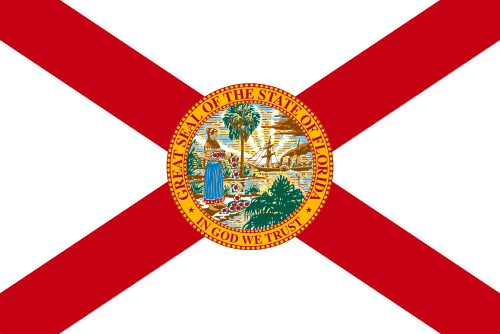

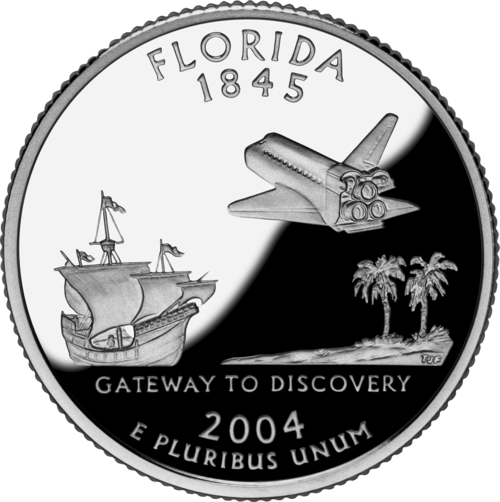
フロリダ( / ˈ f l ɒr ɪ d ə / フロリダ(、スペイン語: [floˈɾida])は、アメリカ合衆国南東部の州ある。西はメキシコ湾はアラバマ州北はジョージア州東は大西洋、南フロリダ海峡とキューバに。フロリダ州の約3分の2は、メキシコ湾と大西洋アメリカ合衆国本土で最も長い海岸線を持ちバリアー島を除いて約1,350マイル (2,170 km) に及ぶ。フロリダ州はメキシコ湾と大西洋の両方に接する唯一の州である。人口は2,100万人を超え、米国で3番目に人口の多い州、2020年現在人口密度は8位に2)の面積を持ち、州の中で22番目の面積をマイアミ都市圏マイアミ、フォートローダーデール、ウェストパームビーチの各都市を中心としており、州最大の都市圏で、人口は613万8,000人です。最も人口の多い都市はジャクソンビル。フロリダ州の他の主要な人口密集地には、タンパベイ、オーランド、ケープコーラル、州都のタラハシー。
少なくとも14,000年前から、さまざまなアメリカ・インディアン部族がフロリダに住んでいた。1513年、スペインの探検家フアン・ポンセ・デ・レオンは、ヨーロッパ人として初めて上陸し、この地域をラ・フロリダ(花の国)([la floˈɾiða])と呼んだ。フロリダはその後、ヨーロッパ人が恒久的に定住したアメリカ大陸初の地域となり、 1565年に設立されたセントオーガスティンの入植地は、継続的に人が住んでいる最古の都市である。フロリダは、スペインがスペイン領テキサスのサビーン川沿いの国境紛争を解決することと引き換えに、1819年にアメリカに割譲するまで、イギリスの攻撃と欲望の対象となっていた。フロリダは1845年3月3日に27番目の州として認められ、アメリカ・インディアン戦争の中で最も長く、最も大規模なセミノール戦争(1816年-1858年)の主な場所となった。この州は1861年1月10日に連邦から脱退し、当初の7つの南部連合州の1つとなり、南北戦争後の1868年6月25日に 連邦に再加盟した。
20世紀半ば以降、フロリダ州は急速な人口動態と経済成長を経験してきました。フロリダ州の経済は、州総生産(GSP)が1兆6,470億ドルで、米国の州では4番目、世界では15番目に大きい州です。主なセクターは、観光、ホスピタリティ、農業、不動産、運輸です。フロリダは、ビーチリゾート、遊園地、温暖で晴れた気候、海洋レクリエーションで世界的に有名です。ウォルトディズニーワールド、ケネディ宇宙センター、マイアミビーチなどのアトラクションには、毎年何千万人もの観光客が訪れます。フロリダは、退職者、季節の行楽客、国内外の移民に人気の目的地です。米国で最も急速に成長している10のコミュニティのうち9つがフロリダにあります。州は海に近いため、その文化、アイデンティティ、日常生活が形成されてきました。植民地時代の歴史と相次ぐ移民の波は、アフリカ、ヨーロッパ、先住民、ラテン系、アジアの影響に反映されています。フロリダは、アーネスト・ヘミングウェイ、マージョリー・キナン・ローリングス、テネシー・ウィリアムズなど、最も著名なアメリカの作家たちを魅了し、インスピレーションを与えてきました。また、特にゴルフ、テニス、自動車レース、水上スポーツの有名人やアスリートを魅了し続けています。フロリダは、特に2000年と2016年のアメリカ大統領選挙の激戦州とみなされてきました。
フロリダ州の気候は、北部は亜熱帯性から南部は熱帯性まで様々です。フロリダ州はハワイ州以外で唯一熱帯気候の州であり、州南部が熱帯気候でサンゴ礁がある唯一の大陸州でもあります。フロリダ州には、米国最大、南北アメリカ大陸でも最大級の熱帯自然保護区であるエバーグレーズ国立公園など、いくつかのユニークな生態系があります。ユニークな野生生物には、アメリカアリゲーター、アメリカクロコダイル、アメリカフラミンゴ、ベニヘラサギ、フロリダパンサー、バンドウイルカ、マナティーなどがいます。フロリダリーフは米国本土で唯一の生きたサンゴバリアリーフであり、グレートバリアリーフ、ベリーズバリアリーフに次いで世界で3番目に大きなサンゴバリアリーフシステムです。
歴史
古インディアンは少なくとも14,000年前にフロリダに入ってきた。[12]歴史記録が残っている最も古い時代である16世紀までに、フロリダに住んでいた主要な人々の集団には、フロリダ・パンハンドルのアパラチー族、フロリダ北部と中央部のティムクア族、大西洋岸中部のアイス族、オキーチョビー湖周辺のマヤイミ族、フロリダ南東部のテケスタ族、フロリダ南西部のカルーサ族が含まれていた。[13]
ヨーロッパからの到着


フロリダは、現在のアメリカ合衆国本土でヨーロッパ人が最初に訪れ、定住した地域である。最古のヨーロッパ人探検家として知られるのは、フアン・ポンセ・デ・レオンである。ポンセ・デ・レオンは1513年4月2日にこの半島を発見し、上陸した。彼は、花が咲き乱れる緑豊かな風景と、スペイン人がパスクア・フロリダ(花の祭り)と呼んでいたイースターの季節であったことから、この島をフロリダ(口語ではラ・フロリダ)と名付けた。翌日、彼らは情報を求めてこの新しい土地を占領するために上陸した。[14] [15]彼が若返りの泉を探していたという話は神話であり、彼の死後ずっと後に登場した。[16]
1539年5月、エルナンド・デ・ソトはフロリダの海岸沿いに進み、上陸できる深い港を探した。彼は、何マイルにもわたって広がる赤いマングローブの厚い壁について記述した。マングローブの中には高さが70フィート(21メートル)に達するものもあり、絡み合って高く伸びた根のために上陸が困難だった。[17]ヨーロッパ人はキリスト教、牛、馬、羊、カスティーリャ語などをフロリダにもたらした。 [18]スペインはフロリダにいくつかの入植地を設立したが、成功の度合いはさまざまだった。1559年、ドン・トリスタン・デ・ルナ・イ・アレヤノが現在のペンサコーラに入植地を設立し、フロリダで最初の入植地の1つとなったが、1561年までにほとんど放棄された。
1564年から1565年にかけて、現在のデュバル郡にあったフォート・キャロラインにフランス人の入植地があったが、スペイン人によって破壊された。[19]現在、ジャクソンビル市内のその場所には再建された砦が建っている。
1565年、セントオーガスティン(サンアグスティン)の入植地が、提督兼知事のペドロ・メネンデス・デ・アビレスの指導の下で設立され、アメリカ大陸で最古かつ継続的に居住されたヨーロッパ人入植地となり、フロリダノスの第一世代とフロリダ政府が設立された。[20]セビリア出身の黒人自由人家事使用人ルイサ・デ・アブレゴとセゴビアの白人ミゲル・ロドリゲスの結婚は、1565年にセントオーガスティンで行われた。これはアメリカ大陸で記録された最初のキリスト教徒の結婚である。[21]
フロリダ人の中には、ペンサコーラ、クリーク、アフリカの女性(奴隷と自由人の両方)と結婚または婚姻関係を持った者もおり、その子孫がメスティーソとムラートの混血人口を形成した。スペイン人は、13植民地の奴隷たちにフロリダへの避難を奨励し、カトリックへの改宗と引き換えに自由を与えると約束した。スペイン国王カルロス2世は、フロリダに逃げて改宗と洗礼を受け入れたすべての奴隷を解放する王室宣言を出した。大半はセントオーガスティン周辺に向かったが、逃亡した奴隷もペンサコーラにたどり着いた。セントオーガスティンは、1683年には早くもフロリダを守るために全員黒人の民兵隊を組織していた。[22]
スペインがフロリダを主張する地理的範囲は、北にイギリスの植民地が築かれ、西にフランスが領有権を主張するにつれて縮小した。イギリスの入植者と海賊は17 世紀と 18 世紀にセントオーガスティンを何度も攻撃し、この都市と大聖堂を何度も破壊した。スペインは1672 年にサンマルコス城を、 1742 年にマタンサス砦を建設し、フロリダの首都を攻撃から守り、キューバ総司令官とスペイン領西インド諸島の防衛における戦略的位置を維持した。
1738年、フロリダの知事 マヌエル・デ・モンティアノはセントオーガスティンの近くにフォート・グラシア・レアル・デ・サンタ・テレサ・デ・モーゼを設立した。これは逃亡奴隷のための要塞化された町であり、モンティアノはフロリダ民兵としての奉仕と引き換えに市民権と自由を与え、北米で合法的に認可された最初の自由黒人入植地となった。[23] [24]
1763年、スペインは七年戦争中にイギリスに占領されていたキューバのハバナの支配権と引き換えにフロリダをイギリス王国に譲渡した。この取引は七年戦争を終結させた1763年のパリ条約の一環として行われた。スペインはフロリダを失ったことでフランスからルイジアナを与えられた。フロリダの住民の大部分は去り、残った先住民の大部分もキューバに連れ去った。[25]イギリスはすぐにセントオーガスティンとジョージアを結ぶキングスロードを建設した。この道路はセントジョンズ川をワッカピラトカと呼ばれる狭い地点で横断しており、現在はジャクソンビルのダウンタウンの中心地となっている。以前はイギリスの名前「カウフォード」と呼ばれていたが、これは牛が川を渡って運ばれていたことを反映している。 [26] [27] [28]
イギリスはフロリダ州 (ラス・フロリダ) を東フロリダと西フロリダに分割統合したが、スペイン王室はイギリス統治期間が短い後もこの区分を維持した。[29]イギリス政府は、入植を奨励するため、フレンチ・インディアン戦争で戦った将校や兵士に土地の助成金を与えた。入植者をフロリダに移住させるため、その自然の豊かさに関する報告書がイギリスで出版された。「精力的で性格が良い」と評された多くのイギリス人入植者がフロリダに移住し、その多くはサウスカロライナ、ジョージア、イギリスから来た。バミューダの植民地から来た入植者のグループもあった。これは、現在のデュバル郡、ベイカー郡、セントジョンズ郡、ナッソー郡にあたる地域で最初の英語を話す永住者であった。イギリスは良い公共道路を建設し、サトウキビ、藍、果物の栽培と木材の輸出を導入した。[30] [31]
イギリス総督は、フロリダの法律を制定するためにできるだけ早く総会を召集するよう指示され、その間に評議会の助言を得て裁判所を設立することとなった。これは、陪審裁判、人身保護令状、郡を拠点とする政府など、フロリダが今日でも持っているイギリス由来の法制度の最初の導入であった。[30] [31]東フロリダも西フロリダも、独立宣言を起草するためにフィラデルフィアに代表者を派遣しなかった。フロリダはアメリカ独立戦争の間ずっとロイヤリストの拠点であり続けた。[32]
スペインは、イギリスが独立戦争に敗れ、1783年にヴェルサイユ条約が締結された後、東フロリダと西フロリダの両方を取り戻し、1821年まで州分割を継続した。[33]
州の地位とインディアンの追放

第二次スペイン統治時代、フロリダの米国との北国境の防衛は小規模であった。この地域は逃亡奴隷の避難所となり、米国領土に対するインディアンの攻撃基地となり、米国はスペインに改革を迫った。
イギリス系アメリカ人とスコットランド系アイルランド系アメリカ人がジョージア州とサウスカロライナ州の奥地からフロリダ北部に移住し始めた。政府当局は厳密には許可していなかったが、彼らは国境地帯を効果的に警備することができず、アメリカからの奥地からの移住者は制限なくフロリダに移住し続けた。これらの移住者は、イギリス統治時代からフロリダに残っていた既存のイギリス人移住者と混ざり合い、フロリダ・クラッカーズとして知られる人々の祖先となった。[34]
これらのアメリカ人入植者は、この地域に恒久的な拠点を築きました。残っていたイギリス人入植者もスペイン統治に不満を抱き、1810 年に反乱を起こし、9 月 23 日にいわゆる西フロリダ自由独立共和国が 90 日間にわたって樹立されました。6 月に始まった会合の後、反乱軍はバトン ルージュ(現在のルイジアナ州)の駐屯軍を制圧し、新しい共和国の旗を掲げました。青い地に白い星が 1 つ描かれています。この旗は後に「ボニー ブルー フラッグ」として知られるようになりました。
1810年、ジェームズ・マディソン大統領の布告により、西フロリダの一部が併合され、同大統領はルイジアナ買収の一部であると主張した。これらの部分は、新たに形成されたオーリンズ準州に組み込まれた。米国は1812年に西フロリダのモービル地区をミシシッピ準州に併合した。スペインは引き続きこの地域を争ったが、米国は徐々に占領地域を拡大していった。1812年、ジョージア州からの入植者グループが米国連邦政府の事実上の支援を受けて、東フロリダ州のフロリダ政府を打倒しようとした。入植者はフロリダの住民を説得して自分たちの大義に加わらせ、スペインからの独立を宣言させようとしたが、連邦政府からのわずかな支援を失い、1813年までに大義を放棄した。[35]
伝統的に、歴史家は、東フロリダに拠点を置くセミノール族がジョージア州の開拓地を襲撃し、逃亡奴隷に避難所を提供し始めたと主張した。アメリカ陸軍はスペイン領土への侵攻をますます頻繁に行うようになり、1817年から1818年にかけてアンドリュー・ジャクソンが行ったセミノール族に対する作戦は第一次セミノール戦争として知られるようになった。アメリカは東フロリダを事実上支配していた。国務長官ジョン・クィンシー・アダムズによれば、フロリダは「合衆国のあらゆる敵、文明人、野蛮人を問わず、占領される廃墟となり、彼らにとって迷惑な拠点となる以外に地上の何の役にも立たなくなった」ため、支配が必要だった。[36]

最近の史家は、アメリカ合衆国の独立後、ジョージア州の開拓者がセミノール族の土地に対する圧力を強め、国境付近での小競り合いが第一次セミノール戦争(1816年 - 1819年)につながったと述べている。アメリカ合衆国はアダムズ・オニス条約(1819年)によってスペインからフロリダを購入し、1821年にその領有権を握った。セミノール族はフロリダ北部の肥沃な農地から追い出され、モールトリー・クリーク条約(1823年)によってフロリダ半島内陸部の広大な居留地に閉じ込められた。インディアン移住法(1830年)の成立によりペインズ・ランディング条約(1832年)が結ばれ、セミノール族全員をインディアン準州(現在のオクラホマ州)に移住させることが定められた。[37]一部は抵抗し、アメリカ合衆国史上最も血なまぐさいネイティブ・アメリカンに対する戦争となった第二次セミノール戦争につながった。 1842年までに、飢餓に直面したセミノール族とブラック・セミノール族の大半は、ミシシッピ川の西にあるインディアン準州に移住させられた。第三次セミノール戦争(1855年 - 1858年)後、フロリダに残ったセミノール族はおそらく200人未満で、エバーグレーズに避難し、そこからアメリカに降伏することはなかった。彼らは伝統的な慣習と頑強な独立の文化の復活を促した。[38]
フロリダは、半島戦争による荒廃のため、入植者や軍隊を送る余裕のないスペインにとって負担となっていた。そのため、マドリードは、 1821年に発効したアダムズ・オニス条約を通じて、その領土を米国に割譲することを決定した。 [39]ジェームズ・モンロー大統領は、1821年3月3日に、東フロリダと西フロリダを米国に譲渡し、初期の統治を行う権限を与えた。 [40]米国政府を代表して、ジャクソンビルの名前の由来となったアンドリュー・ジャクソンが、短期間、新たに獲得した領土の知事権限を持つ軍事委員を務めた。[41] 1822年3月30日、米国議会は、東フロリダと西フロリダの一部をフロリダ準州に合併した。[42]
1800 年代初頭までに、インディアンの移住は米国南東部全域、そしてフロリダでも重大な問題となっていた。1830 年、米国議会はインディアン移住法を可決し、入植者が増えるにつれて、フロリダからインディアンを追放するよう米国政府に圧力がかかった。セミノール族は黒人に避難所を提供し、彼らはブラック セミノール族として知られるようになり、新しい入植者の流入とともに白人とインディアンの衝突が激化した。1832 年、ペインズ ランディング条約で、セミノール族はフロリダを去ることに同意すれば、ミシシッピ川の西側の土地を与えられると約束された。このとき、多くのセミノール族がフロリダを去った。
セミノール族の一部はフロリダに留まり、アメリカ軍がフロリダに到着して第二次セミノール戦争(1835年~1842年)が勃発した。戦争後、およそ3,000人のセミノール族と800人のブラック・セミノール族がインディアン準州に移住させられた。数百人のセミノール族がフロリダのエバーグレーズに残った。
1845年3月3日、ジョン・タイラー大統領の任期終了のわずか1日前に、フロリダは27番目の州となり、 [43]奴隷州として認められ、逃亡奴隷の避難所ではなくなりました。当初、フロリダの人口はゆっくりと増加しました。[44]
ヨーロッパからの入植者がセミノール族の土地に侵入し続けると、アメリカ合衆国は残りのセミノール族を西部に移住させるために介入した。第三次セミノール戦争(1855年 - 1858年)の結果、残りのセミノール族の大半は強制的に移住させられたが、数百人のセミノール族インディアンはエバーグレーズに残った。[45]
南フロリダの最初の入植地と町は、州の北部のものよりずっと後に設立されました。最初のヨーロッパからの永住者は19世紀初頭に到着しました。人々はバハマ諸島から南フロリダとキーズにやって来て、危険なグレートフロリダリーフで座礁した船から宝物を探しました。中にはマイアミ川沿いのスペインからの土地提供を受け入れた人もいました。ほぼ同じ時期に、セミノールインディアンが逃亡奴隷の集団とともに到着しました。この地域は第二次セミノール戦争の影響を受けました。この戦争では、ウィリアム・S・ハーニー少佐がインディアンに対する数回の襲撃を率いました。インディアン以外の居住者のほとんどは、フォート・ダラスに駐留していた兵士でした。これはアメリカの歴史上最も壊滅的なインディアン戦争であり、マイアミの人口がほぼ完全に失われる原因となりました。
1842年に第二次セミノール戦争が終結した後、ウィリアム・イングリッシュは叔父がマイアミ川沿いに始めたプランテーションを再建した。彼はマイアミ川の南岸に「マイアミ村」を区画分けし、いくつかの土地を売却した。1844年、マイアミは郡庁所在地となり、6年後の国勢調査ではその地域の住民は96人だった。[46]第3次セミノール戦争は第2次ほど破壊的ではなかったが、南東フロリダの開拓を遅らせた。戦争が終わった後、兵士のうち数人がそこに留まった。
南北戦争と復興

アメリカ人開拓者は北フロリダに綿花農園を設立し始めたが、これには多くの労働者が必要となり、彼らは国内市場で奴隷を購入して労働者を供給した。1860年までにフロリダの人口はわずか140,424人となり、そのうち44%が奴隷であった。南北戦争前の自由なアフリカ系アメリカ人は1,000人未満であった。 [47]
1861年1月10日、フロリダ州議会のほぼすべての代議員が脱退条例を承認し、[48] [49]フロリダを「主権を有する独立国家」と宣言した。これは、フロリダが「自由で独立した州」となることで議会と合意した1838年のフロリダ州憲法の前文を明らかに再確認するものである。この条例はフロリダの連邦からの脱退を宣言し、南部連合の創設メンバーの1つとなることを可能にした。
南軍はフロリダからほとんど軍事援助を受けなかった。フロリダが提供した15,000人の兵士は、一般的に他の場所に送られた。兵士と製造物資の代わりに、フロリダは南軍に塩と、より重要なことに牛肉を提供した。これは、南軍がミシシッピ川の制御を失い、テキサスの牛肉を入手できなくなった1864年以降、特に重要になった。[50] [51]この州で最大の戦闘は、1864年2月20日のオルスティの戦いと、1865年3月6日のナチュラルブリッジの戦いであった。どちらも南軍の勝利だった。[52]戦争は1865年に終わった。
南北戦争後、フロリダ州の連邦議会代表権は1868年6月25日に回復されたが、これはレコンストラクションと連邦軍司令官の最終的な権限の下に選出されていない政府役人が就任した後の強制的なものであった。レコンストラクション期間が1876年に終了した後、白人民主党が州議会で権力を取り戻した。1885年に彼らは新しい憲法を作成し、その後1889年までほとんどの黒人と多くの貧しい白人の選挙権を剥奪する法令が続いた。[53]
自動車が普及する前の時代、鉄道は特に沿岸部において、州の発展に重要な役割を果たした。1883年、ペンサコーラ・アンド・アトランティック鉄道がペンサコーラとパンハンドルの残りの地域を州の残りの地域と結んだ。1884年、サウスフロリダ鉄道(後にアトランティック・コースト・ライン鉄道に吸収)がタンパへの全線開通を果たした。1894年、フロリダ・イースト・コースト鉄道がウェストパームビーチに到達し、1896年にはマイアミ近郊のビスケーン湾に到達した。州内陸部には他にも多数の鉄道が敷設された。
20世紀
.jpg/500px-Don_CeSar_Hotel-_St._Petersburg_Beach,_Florida_(8410317737).jpg)
フロリダの経済は主に柑橘類、イチゴ、ナッツ類、サトウキビ、牛などの農産物に依存してきました。[54] 20世紀初頭、ワタミゾウムシが綿花作物を壊滅させました。[ 55 ] [56]
20世紀半ばまで、フロリダ州はアメリカ南部で最も人口の少ない州だった。1900年の人口はわずか528,542人で、そのうち44%近くがアフリカ系アメリカ人で、南北戦争前と同じ割合だった。[57]フロリダ州の1900年の人口のおよそ5分の1にあたる4万人の黒人が大移動で州を去った。彼らはリンチや人種差別的暴力のため、そして北部や西部でのより良い機会を求めて去った。[58] 州内のほとんどのアフリカ系アメリカ人に対する選挙権の剥奪は、1960年代の公民権運動により1965年に連邦法が成立し、憲法上の参政権の保護が強制されるまで続いた。
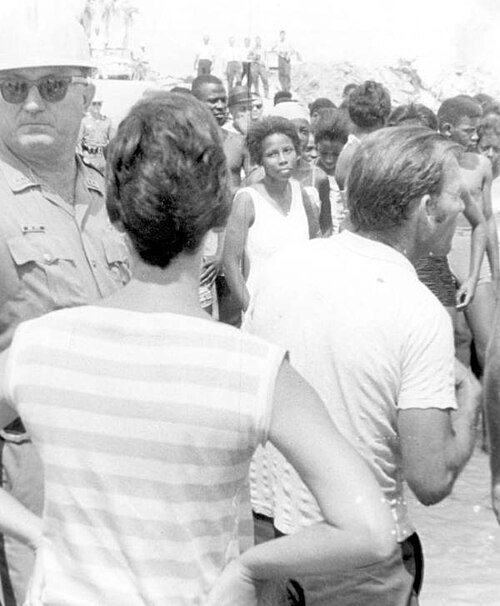
フロリダ州の人種差別に対抗するため、1950年代から60年代にかけて、公民権運動の一環として、フロリダ州では数多くの抗議活動が行われた。1956年から1957年にかけて、フロリダA&M大学の学生は、モンゴメリーのバス・ボイコットを模倣してタラハシーでバス・ボイコットを組織し、市のバスの統合に成功した。[59]学生たちはまた、1960年に地元のランチカウンターでの人種隔離座席に抗議して座り込みを行い、1964年にはセントオーガスティンのモーテルのプールでオーナーがデモ中に水に酸を注いだ事件が、 1964年公民権法の成立に影響を与えた。[60]
1920 年代の経済的繁栄はフロリダへの観光業を刺激し、それに伴いホテルやリゾート コミュニティの開発も進んだ。フロリダの急激な知名度の向上と相まって、1920 年代にはフロリダの土地ブームが起こり、短期間ながら土地開発が集中した。1925 年、シーボード エア ラインがFEC の南東フロリダ独占を打ち破り、貨物および旅客サービスをウェスト パーム ビーチまで拡張した。2 年後には旅客サービスをマイアミまで拡張した。1926年と1928 年の壊滅的なハリケーン、それに続く世界恐慌により、この時期は停止した。フロリダの経済は、第二次世界大戦に向けて軍備が増強されるまで完全には回復しなかった。

1939年、フロリダは「まだほとんど人が住んでいない州」と評された。[61]その後、エアコンの普及、気候、生活費の安さにより、フロリダは避難所となった。ラストベルトと北東部 からの移住により、 1945年以降フロリダの人口は急増した。
1960年代、フィデル・カストロの共産主義政権から逃れてきたキューバからの多くの難民がマイアミのフリーダム・タワーに到着した。連邦政府は、この施設を利用して新参者の手続き、書類作成、医療・歯科サービスを提供した。その結果、フリーダム・タワーは「南のエリス島」とも呼ばれるようになった。[62]近年、発展途上国での仕事を求めて移民がさらに増えている。
21世紀
2010年の国勢調査によると、人口1,800万人を超える フロリダ州は、米国南東部で最も人口が多く、米国で3番目に人口の多い州です。[63]フロリダ州の人口は近年急増しており、2019年現在、国内で最も多くの州外からの移住者を受け入れている州となっています。[64]フロリダ州の成長は広範囲に及び、州全体の都市で人口増加が続いています。[65]
2012年、サンフォードでジョージ・ジマーマンが若い黒人男性のトレイボン・マーティンを殺害した事件は、フロリダ州の正当防衛法に全国的な注目を集め、ブラック・ライブズ・マター運動を含むアフリカ系アメリカ人の運動に火をつけた。[66]
2017年9月にハリケーン・マリアがプエルトリコを壊滅させた後、多くのプエルトリコ人が広範囲にわたる被害から逃れるためにフロリダへ移住し始めた。マリアが消滅した後、数十万人のプエルトリコ人がフロリダに到着し、その半数近くがオーランドに到着し、タンパ、フォートローダーデール、ウェストパームビーチにも多くの人々が移住した。[67]

21世紀に入ってからフロリダ州では、注目を集めた銃乱射事件がいくつか発生している。2016年6月、オーランドのゲイ・ナイトクラブで銃を持った男が49人を殺害した。これは、米国におけるLGBTに対する暴力史上最悪の事件であり、2001年9月11日の同時多発テロ以来、米国で最悪のテロ攻撃となった。また、 2017年のラスベガス銃乱射事件まで、米国史上、単独の銃乱射犯による最悪の銃乱射事件であった。2018年2月、フロリダ州パークランドのストーンマン・ダグラス高校で銃乱射事件が発生し、17人が死亡し、州および連邦レベルで新たな銃規制規制が施行された。[68]
2021年6月24日、フロリダ州マイアミ近郊のサーフサイドにあるマンションが倒壊し、少なくとも97人が死亡した。[69]サーフサイドの倒壊は、ニッカボッカー劇場の倒壊と並んで、米国史上3番目に死者を出した構造工学上の失敗であり、ハイアットリージェンシーの歩道の倒壊とペンバートンミルの倒壊に次ぐものである。[70] [71]
地理
フロリダ州の大部分は、メキシコ湾、大西洋、フロリダ海峡に挟まれた半島にある。2つの時間帯にまたがり、北西はメキシコ湾北部に沿ってパンハンドル状に広がっている。北はジョージア州とアラバマ州に接し、西はパンハンドルの端でアラバマ州と接している。フロリダ州は、大西洋とメキシコ湾の両方に接する唯一の州である。フロリダ州は、本土48州の中で最も南に位置し、 50州の中ではハワイ州だけがさらに南に広がっている。フロリダ州はバハマ諸島の西、キューバの北90マイル (140 km)に位置している。フロリダ州はミシシッピ川の東側では最大の州の一つであり、水域ではアラスカ州とミシガン州のみがフロリダ州より大きい。水域境界は大西洋では沖合3海里(3.5マイル、5.6km)[72]、メキシコ湾では沖合9海里(10マイル、17km)である。[72]
ブリットンヒルは平均海抜345フィート(105メートル)で、フロリダ州で最も高い地点であり、米国のどの州よりも低い地点である。[73]オーランド以南の州の大部分は、フロリダ州北部よりも標高が低く、ほぼ平坦である。州の大部分は海抜かそれに近い。クリアウォーターなど一部の場所には、水面より50~100フィート(15~30メートル)高い岬がある。中央フロリダと北フロリダの大部分は、通常海岸線から25マイル(40キロメートル)以上離れており、標高100~250フィート(30~76メートル)の起伏のある丘陵地帯である。フロリダ半島(スワニー川の東と南)の最高地点であるシュガーローフ山は、レイク郡にある標高312フィート(95メートル)の山頂である。[74]平均すると、フロリダ州は米国で最も平坦な州である。[75]

フロリダ州最大の湖であるオキーチョビー湖は、アメリカ合衆国50州の中で10番目に大きい自然淡水湖であり、ミシガン湖に次いで本土48州に完全に含まれる自然淡水湖としては2番目に大きい。[76]フロリダ州内で最長の川はセントジョンズ川で、長さは310マイル(500 km)である。南フロリダの源流からジャクソンビルの河口までの標高差は30フィート(9.1 m)未満である。
気候
フロリダ州の気候は、州のどの地域も海から遠く離れていないという事実によって、いくらか和らげられています。オキーチョビー湖の北では、湿潤亜熱帯気候(ケッペンの分類ではCfa)が一般的ですが、湖の南の地域(フロリダキーズを含む)は真の熱帯気候(ケッペンの分類ではAw、Am、Af)です。[77] 7月下旬の平均最高気温は主に華氏90度台前半(32〜34 ℃)です。1月上旬から中旬の平均最低気温は、フロリダ州北部の華氏40度台前半(4〜7 ℃)から、マイアミから南の60度(16℃)以上までの範囲です。平均日気温は70.7度(21.5℃)で、米国で最も暖かい州です[78] [79]
夏には、フロリダ州の最高気温が100 °F (37.8 °C) を超えることはめったにありません。記録的な寒さの最高気温は30 °F (-1 ~ 4 °C)、最低気温は10 °F (-12 ~ -7 °C) でした。これらの気温は通常、フロリダ州の北部と中央部では一度に最大で数日間続きます。南フロリダでは氷点下になることはめったにありません。[80]フロリダ州で記録された最高気温は109 °F (43 °C) で、1931年6月29日にモンティセロで記録されました。最低気温は1899年2月13日、わずか25マイル (40 km) 離れたタラハシーで記録された-2 °F (-19 °C) でした。[81] [82]
亜熱帯および熱帯気候のため、フロリダ州では測定可能な降雪はめったにありません。[83]稀に、冷たい湿気と氷点下の気温の組み合わせにより、ジャクソンビル、ゲインズビル、ペンサコーラなどの最北部地域で降雪が発生することがあります。雪よりも一般的な霜は、パンハンドルで時々発生します。[84]フロリダ州のUSDA植物耐寒性ゾーンは、内陸西部パンハンドルのゾーン8a(10 °Fまたは-12 °C以上)から、フロリダキーズ下部のゾーン11b(45 °Fまたは7 °C以上)までです。[85]霧もフロリダ州の全域または気候で発生します。[86]
フロリダ州のニックネームは「サンシャイン ステート」ですが、この州では悪天候がよく発生します。フロリダ州中部は、米国の他のどの州よりも多くの落雷が発生することから、米国の雷の首都として知られています。[93]フロリダ州は、全米で最も平均降水量が多い州の 1 つです。[94]これは主に、晩春から初秋にかけて、午後の雷雨が州のほとんどの地域でよく発生するためです。[95]オーランドとジャクソンビルを含む州の狭い東部では、年間 2,400 時間から 2,800 時間の日照があります。マイアミを含む州の残りの地域では、年間 2,800 時間から 3,200 時間の日照があります。[96]
フロリダ州は、面積あたりの竜巻発生数(水竜巻を含む)では米国最大であるが、 [97]中西部やグレートプレーンズほどの強さには達しないのが一般的である。最も激しい雷雨には雹が伴うことが多い。 [98]
ハリケーンは毎年6月 1日から11月30日まで、特に8月から10月にかけて深刻な脅威となる。長い海岸線に亜熱帯または熱帯の海水が広がるフロリダ州は、ハリケーンが最も発生しやすい州である。米国を襲ったカテゴリー 4以上の嵐のうち、83%がフロリダ州かテキサス州を襲った。[99]
1851年から2006年まで、フロリダ州は114回のハリケーンに見舞われ、そのうち37回はカテゴリー 3以上の大型ハリケーンでした。[99]少なくとも熱帯暴風雨が州に影響を及ぼすことなくハリケーンシーズンが過ぎることは稀です。[100]
1992年、フロリダ州は、当時米国史上最も被害額の大きい気象災害であったハリケーン・アンドリューの被害を受けた。8月に発生したこのハリケーンは、250億ドル以上 の被害をもたらした。この記録は、2005年にハリケーン・カトリーナに抜かれるまで保持され、その後、他の6つのハリケーンに抜かされた。アンドリューは、フロリダ州史上2番目に被害額の大きいハリケーンである。[101]
動物相
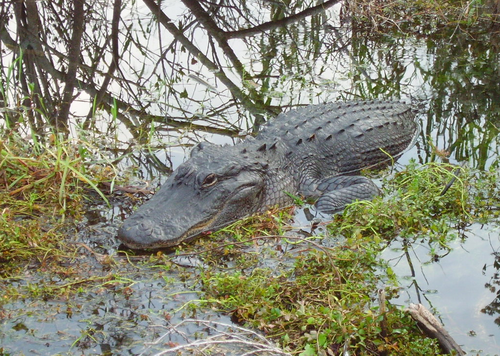

フロリダには、以下を含む多くの種類の野生動物が生息しています。
- 海洋哺乳類:バンドウイルカ、コビレゴンドウ、タイセイヨウセミクジラ、インドマナティー
- 哺乳類:フロリダパンサー、カワウソ、ミンク、ワタオウサギ、沼地ウサギ、アライグマ、スカンク、リス、オジロジカ、キージカ、ボブキャット、アカギツネ、ハイイロギツネ、コヨーテ、イノシシ、フロリダクロクマ、コオオアルマジロ、バージニアオポッサム
- 爬虫類:ヒガシダイヤガラガラヘビ、ピグミーガラガラヘビ、ゴファーリクガメ、アオウミガメ、オサガメ、[102] ブラウンアノール、ヒガシインディゴヘビ。2012年には、約100万匹のアメリカアリゲーターと1,500匹のワニが生息していた。[103]
- 鳥類:ハヤブサ[104] 、ハクトウワシ、アメリカフラミンゴ[ 105] 、 カンムリカラカラ、カタツムリトビ、ミサゴ、シロペリカンとカッショクペリカン、カモメ、アメリカシロヅルとカナダヅル、ベニヘラサギ、アメリカシロトキ、フロリダカケス(州固有種)など。野生の七面鳥の亜種であるMeleagris gallopavo osceolaはフロリダ州でのみ見られます。[106]この州は北アメリカ東部の鳥類の多くの種が越冬する場所です。
- 無脊椎動物:クロオオアリ、シロアリ、ワモンゴキブリ、アフリカナイズドミツバチ、マイアミブルー蝶、灰色カマキリ。
フロリダ州には、500種以上の外来動物と1,000種以上の外来昆虫が州全体で生息している。[108]フロリダ州に生息する外来種には、ビルマニシキヘビ、グリーンイグアナ、エボシカメレオン、アルゼンチン白黒テグー、ピーコックバス、マヤシクリッド、ミノカサゴ、ハナグマ、アカゲザル、ベルベットモンキー、キューバアオガエル、オオヒキガエル、インドクジャク、オキナインコ、トゥイインコなどがある。これらの外来種の中には在来種に脅威を与えないものもあるが、州内に生息して在来種を食べ、フロリダ州の在来種を脅かすものもある。[109]
フローラ

州内には26,000平方マイル(67,000 km 2 )以上の森林があり、州の陸地面積の約半分を占めています。[110]
フロリダには約3,000種類の野生の花がある。[111]フロリダは、カリフォルニア州とテキサス州に次いで、合衆国で3番目に多様性に富んだ州である。この2つの州はどちらもより大きな州である。 [112]フロリダでは、野生のココヤシの個体群が東海岸ではキーウェストからジュピターインレットまで、西海岸ではマルコ島からサラソタまで広がっている。フロリダキーズの最も小さなサンゴ島の多くでは、海流によって堆積したココナッツからココヤシが豊富に生えていることが知られている。ココヤシは、南フロリダの北から東海岸のココアビーチと西海岸のタンパベイ周辺にかけて栽培されている。[113]
州の東海岸では、マングローブは通常、ココアビーチから南にかけての海岸を支配し、セントオーガスティンから北にかけては塩性湿地が広がっている。セントオーガスティンから南のココアビーチまでは、その年の気象条件によって海岸がその2つの間を変動する。[107] 3種のマングローブはすべて、春と初夏に開花する。繁殖体は夏の終わりから初秋にかけて生成される。[114]フロリダのマングローブ植物群落は、1981年にフロリダで推定430,000〜540,000エーカー(1,700〜2,200 km 2 )を覆った。フロリダのマングローブの90%は、フロリダ南部のコリアー、リー、マイアミデイド、モンローの各郡にある。
リーフ
.jpg/500px-Fish_and_corals_in_John_Pennekamp_Marine_Park_(2351507031).jpg)
フロリダリーフは、アメリカ本土で唯一生きているサンゴ礁です。[115]また、グレートバリアリーフとベリーズバリアリーフに次いで、世界で3番目に大きなサンゴ礁システムでもあります。[116]このリーフはフロリダキーズの海岸から少し離れたところにあります。リーフの大部分は、米国初の海中公園であるジョン・ペンネカンプ・コーラルリーフ州立公園内にあります。 [117]この公園には、多くの熱帯植物、海洋生物、海鳥が生息しています。フロリダリーフは、ドライ・トートゥガス国立公園、ビスケーン国立公園、フロリダキーズ国立海洋保護区など、他の公園や保護区にも広がっています。フロリダリーフには、40種を超える石灰質サンゴと500種の魚類を含む、約1,400種の海洋植物と動物が生息しています。[118]フロリダリーフは他のサンゴ礁と同様に繊細な生態系であり、乱獲、海洋プラスチック、サンゴの白化、海面上昇、海面温度の変化など多くの脅威に直面しています。
環境問題

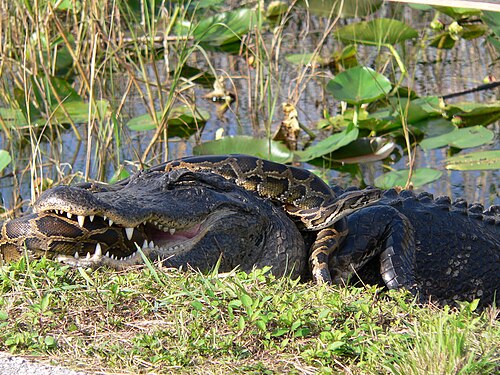
フロリダ州は一人当たりのエネルギー消費量が低い。[119] 2008年現在[update]、同州のエネルギーの約4%が再生可能資源によって生産されていると推定されている。[120]フロリダ州のエネルギー生産量は米国の総エネルギー生産量の6%である一方、汚染物質の総生産量はそれより低く、窒素酸化物が6%、二酸化炭素が5% 、二酸化硫黄が4%となっている。[120]フロリダ州では一年中山火事が発生している。[121]
1972年以来、すべての飲料水資源は5つの地域水道局を通じて州政府によって管理されている。[122]
赤潮はフロリダ南西部の海岸だけでなく、他の地域でも問題となっている。有毒藻類の大量発生の原因についてはさまざまな憶測が飛び交っているが、汚染が原因であるという証拠や、赤潮の発生期間や頻度が増加しているという証拠はない。[123]赤潮は現在、野生生物や熱帯魚、サンゴ礁を死滅させており、すべてを危険にさらしている。[124]
フロリダパンサーは絶滅の危機に瀕している。2009年には、主に自動車との衝突により過去最高の23頭が死亡し、野生には約100頭が残っている。生物多様性センターなどは、パンサーのための特別保護区の設置を求めている。 [125] マナティーも、繁殖率を上回る割合で死亡している。[126] アメリカフラミンゴは、 1900年代に狩猟され、完全に絶滅したと考えられていたため、フロリダではめったに見られない。現在、フラミンゴは、断固としてフロリダ州原産とみなされ、保護されているため、南フロリダに復活しようと繁殖している。 [127] [128]
フロリダの大部分は、人口密集地域を含め、標高が12フィート(3.7メートル)未満です。そのため、地球温暖化に伴う海面上昇の影響を受けやすいのです。[129]州の経済にとって重要な大西洋沿岸のビーチは、気候変動による海面上昇により海に流されつつあります。大陸棚に近いマイアミビーチ地域では、利用できる沖合の砂の埋蔵量が枯渇しつつあります。[130]気温の上昇はサンゴ礁を損傷し、サンゴの白化を引き起こす可能性があります。フロリダリーフで最初に記録された白化現象は1973年のことでした。ここ数十年、海面温度の上昇と相関して、白化現象はより頻繁に発生しています。ホワイトバンド病もフロリダリーフのサンゴに悪影響を及ぼしています。[131]
地質学

フロリダ半島は、フロリダ・プラットフォームとして知られる岩盤の上に位置するカルスト石灰岩の多孔質台地です。
アメリカ合衆国で最大のカリウム鉱床はフロリダ州にあります。 [133]国内で最大のリン鉱石鉱床はフロリダ州にあります。 [133]そのほとんどはボーンバレーにあります。[134]
州内全域に広がる海底洞窟、陥没穴、泉の系は、住民が使用する水のほとんどを供給している。 [135]石灰岩の上には、何百万年もかけて世界の海面が上下する中で古代の浜辺として堆積した砂質土が載っている。最終氷期には、海面低下と乾燥した気候により、はるかに広い半島、大部分がサバンナが出現した。[136]州内の大部分に陥没穴があるが、現代の陥没穴は西中央フロリダに多い傾向がある。[137] [138]エバーグレーズ国立公園は、フロリダ州デイド郡、モンロー郡、コリアー郡にまたがり、 1,509,000エーカー(6,110 km 2)の面積をカバーしている。 [139] 2006年から2010年にかけて、フロリダ州の陥没穴による財産被害の賠償請求総額は20億ドルを超えた。 [140]中央フロリダのウィンターパーク陥没穴は、1981年5月8日に出現した。幅約350フィート(107メートル)、深さ75フィート(23メートル)で、米国で最近発生した陥没穴の中では最大級のものである。現在はローズ湖として知られている。[141]イーコンロックハッチー川(略してイーコン川)は、米国フロリダ州最長の川であるセントジョンズ川の北に流れる長さ54.5マイル(87.7キロメートル) [142]の黒水支流である。イーコン川は、中央フロリダのオセオラ郡、オレンジ郡、セミノール郡を流れ、オーランド都市圏(州道417号線の東)のすぐ東に位置する。[143]
フロリダ州はプレート境界の近くに位置していないため、地震はまれである。[144]
地域

- フロリダ・パンハンドル
- 北中部フロリダ
- 北東フロリダ
- セントラルウェストフロリダ
- セントラルフロリダ
- セントラルイーストフロリダ
- 南西フロリダ
- 南フロリダ
都市と町
州内および米国南東部全体で最大の都市圏は、約606万人の人口を抱えるマイアミ都市圏である。タンパベイ地域は302万人以上で第2位、オーランド都市圏は244万人以上で第3位、ジャクソンビル都市圏は147万人以上で第4位である。[145]
フロリダ州には、米国行政管理予算局(OMB) によって定義された22 の都市統計地域(MSA)があります。フロリダ州の 67 郡のうち 43 郡が MSA 内にあります。
フロリダ州では、市、町、村の法的名称は「自治体」である。フロリダ州では、町、村、市の間に法的な違いはない。[146]
フロリダ州は高度に都市化された州であり、2000年には人口の89%が都市部に居住しており、米国全体の79%と比較して高い[147]。
2012年には人口の75%が海岸線から10マイル(16km)以内に住んでいた。[148]
人口統計
人口


米国国勢調査局は、2019年7月1日時点でフロリダ州の人口は21,477,737人と推定しており、2010年の米国国勢調査から14.24%増加している。[153] 2010年の国勢調査でのフロリダ州の人口は18,801,310人であった。[154]フロリダ州は、2012年7月1日までの12か月間で米国で7番目に急速に増加した州であった。 [155] 2010年、フロリダ州の人口重心はフォートミードとフロストプルーフの間にあった。人口重心は、1980年から2010年の間に東に5マイル(8 km)未満、北に約1マイル(1.6 km)移動しており、 1960年の国勢調査以降はポーク郡に位置している。[156] 2014年12月までに人口は1970万人を超え、初めてニューヨーク州の人口を上回り、フロリダ州は人口第3位の州となった。 [157] [158]米国国勢調査局の2019年人口推計プログラムによると、フロリダ州の人口は21,477,737人であった。[159] 2020年の国勢調査では、人口は21,538,187人に増加した。
2010年、不法移民は人口の5.7%を占めたと推定される。これは米国の州の中で6番目に高い割合である。[160] [b] 2010年には、州内に67万5000人の不法移民がいたと推定される。 [161]フロリダ州はサンクチュアリシティを禁止している。[162]
2018年にフロリダ州に移住した人の出身国上位は、キューバ、ハイチ、コロンビア、メキシコ、ジャマイカでした。[163]
HUDの2022年ホームレス評価報告書によると、フロリダ州には推定25,959人のホームレスがいる。[164] [165]

2010年には、人口の6.9%(1,269,765人)が(人種や民族に関係なく)自分自身をアメリカ人の祖先のみとみなしていた。 [171] [172]これらの多くはイギリス人またはスコットランド系アイルランド人の子孫であり、彼らの家族は州に長く住んでいるため、「アメリカ人」の祖先を持つと自認するか、祖先を知らない。[173] [174] [175] [ 176] [177 ] [178] 1980年の米国国勢調査では、フロリダ州で報告された最大の祖先グループはイギリス人で、2,232,514人のフロリダ人がイギリス人または主にイギリス系アメリカ人の祖先であると主張した。[179]彼らの祖先の一部は、最初の13の植民地にまで遡る。
2010年現在[update]、ヨーロッパ系(非ヒスパニック系白人)の祖先を持つ者はフロリダ州の人口の57.9%を占めている。57.9%のうち、最も多いグループは、ドイツ系12.0% (2,212,391人)、アイルランド系10.7% (1,979,058人)、イギリス系8.8%(1,629,832人)、イタリア系6.6%(1,215,242人)、ポーランド系2.8% (511,229人)、フランス系2.7%(504,641人)であった。[171] [172]ヨーロッパ系のすべての背景を持つ 白人アメリカ人は、州のすべての地域に存在している。1970年には、非ヒスパニック系白人がフロリダ州の人口のほぼ80%を占めていた。 [166]フロリダの白人ネイティブの中には、特に長年フロリダに住んでいた家族の子孫の中には、自分たちを「フロリダ クラッカー」と呼ぶ者もいるが、その言葉を軽蔑的な言葉と捉える者もいる。アメリカ南部の他のほとんどの州の白人と同様に、彼らは主にイギリス人やスコットランド系アイルランド人の入植者、および他のイギリス系アメリカ人入植者の子孫である。[180]
2010年の時点で、ヒスパニック系またはラテン系の人々はフロリダ州の人口の22.5% (4,223,806人) を占めている。22.5%のうち、最大のグループは6.5% (1,213,438人) のキューバ人、および4.5% (847,550人)のプエルトリコ人である。[151]フロリダ州のヒスパニック人口には、マイアミとタンパのキューバ系アメリカ人の大規模なコミュニティ、オーランドとタンパのプエルトリコ人、およびメキシコ/中央アメリカ人の移民労働者が含まれる。ヒスパニックコミュニティは、より裕福で流動的な成長を続けている。フロリダ州には大規模で多様なヒスパニック人口があり、キューバ人とプエルトリコ人が州内で最大のグループである。キューバ系アメリカ人のほぼ80%がフロリダ州、特に長年にわたる裕福なキューバ人コミュニティがある南フロリダに住んでいる。[181]フロリダ州はニューヨークに次いで2番目にプエルトリコ人の人口が多く、米国で最も急速に増加している州でもある。 [182]プエルトリコ人は州全体に広く分布しているが、最も集中しているのはセントラルフロリダのオーランド地域である。[183] フロリダ州は、特にマイアミ周辺の南フロリダと、それほどではないがセントラルフロリダに、国内で最大かつ最も多様なヒスパニック/ラテン系の人口を抱える州の一つである。人口の大部分を占めるキューバ人とプエルトリコ人の他に、メキシコ人、コロンビア人、ベネズエラ人、ドミニカ人など多数のグループも存在し、ほとんどのラテン系グループが州内に相当数いる。
2010年時点で、アフリカ系アメリカ人[update]を含むフロリダ州の人口の16.0%をアフリカ系が占めている。この16.0%のうち、4.0% (741,879人) は西インド諸島系またはアフリカ系カリブ系アメリカ人である。[171] [172] [151] 1900年代初頭、黒人は州の人口のほぼ半分を占めていた。[184]人種差別、選挙権剥奪、農業不況への対応として、1910年から1940年、そして1940年代後半から再び、多くのアフリカ系アメリカ人がフロリダから北部の都市へと大移動で移住した。彼らは仕事、子供たちのより良い教育、投票して社会に参加する機会を求めて移住した。1960年までに、州内のアフリカ系アメリカ人の割合は18%に減少した。[185]逆に、北部の白人が大量にこの州に移住した。[186]今日、フロリダ州全域で黒人居住者が集中しているのが見られる。米国南部に連れてこられたアフリカ人奴隷の子孫である黒人の他に、西インド諸島系、最近のアフリカ系、アフロラテン系移民の起源を持つ黒人も多く、特にマイアミ/南フロリダ地域に多い。[187]フロリダ州は、カリブ海諸国出身の西インド諸島系住民が全米最大で、ハイチ系アメリカ人が最も多い。
2016年、フロリダ州は米国内で西インド諸島系住民の割合が最も高く4.5%であった。そのうち、ハイチ系が2.3% (483,874人)、ジャマイカ系が1.5% (303,527人)、バハマ系が0.2% (31,966人)で、残りは他の西インド諸島系住民であった。[188]
2010年現在[update]、アジア系はフロリダ州の人口の2.4%を占めている。[171] [172]
2011年現在、フロリダ州は65歳以上の人口の割合が全米で最も高く(17.3%)なっている[189]。 2008年には186,102人の退役軍人が同州に住んでいた[190]。人口の約3分の2は他の州で生まれており、これは全米で2番目に高い[191]。
2020年には、ヒスパニック系とラテン系は全人口の26.5%を占め、ハワイ先住民 と太平洋諸島民はブロワード郡の全住民の0.1%を占めた。[192]
言語
1988年、フロリダ州憲法で英語が州の公用語と定められた。スペイン語も広く話されており、特にラテンアメリカからの移民が続いている。[193]人口の約20%がスペイン語を第一言語とし、27%が英語以外の母国語を話す。州内では英語以外の200以上の第一言語が家庭で話されている。 [194] [195]
2010年にフロリダ州で第一言語として話されている最も一般的な言語は以下のとおりです。[194]
- 73% 英語
- 20% スペイン語
- 2% ハイチ語
- その他の言語はそれぞれ1%未満
宗教

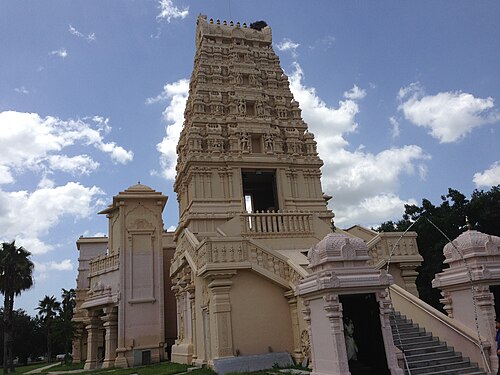
フロリダ州はキリスト教徒がほとんど(70%)だが[196] 、無宗教で比較的重要なユダヤ人コミュニティも存在する。プロテスタントが人口のほぼ半数を占めるが、カトリック教会は主にヒスパニック系人口が多く、ハイチ人などのグループもいるため、州内で最大の宗派である。プロテスタントは非常に多様だが、バプテスト、メソジスト、ペンテコステ派、無宗派プロテスタントが最大のグループである。より小規模なキリスト教グループには、末日聖徒イエス・キリスト教会やエホバの証人などがある。南フロリダにはかなりのユダヤ人コミュニティもある。ここは米国南部で最大のユダヤ人人口であり、ニューヨーク州とカリフォルニア州に次いで米国で3番目に大きい。[197]
2010年、フロリダ州の3大宗派はカトリック教会、南部バプテスト連盟、合同メソジスト教会であった。[198]
ピュー・リサーチ・センターの2014年の調査では、フロリダ州の宗教構成は次のようになっている。[199]
ガバナンス

フロリダ州政府の基本構造、義務、機能、運営は、州の基本法を制定し、人々のさまざまな権利と自由を保証するフロリダ州憲法によって定義されています。アメリカ連邦政府や他のすべての州政府と同様に、フロリダ州政府は、行政、立法、司法の 3 つの独立した部門で構成されています。立法府は法案を制定し、知事が署名すると法律になります。
フロリダ州議会は、40名の議員からなるフロリダ州上院と120名の議員からなるフロリダ州下院から構成されています。フロリダ州知事はロン・デサンティスです。フロリダ州最高裁判所は、首席判事と6名の判事で構成されています。
フロリダ州には 67 の郡がある。デュバル郡はジャクソンビル市と統合されているため、参考資料によっては 66 郡しか記載されていないことがある。フロリダ州には 411 の市のうち 379 の市があり、これらはフロリダ州歳入局に定期的に報告しているが、報告していない法人化された自治体もある。市と郡の主な収入源は固定資産税であり、未払いの税金がある不動産は5 月に郡レベルで行われる税売却の対象となり、オンライン入札サイトが広く利用されているため非常に人気がある。
州政府の主な収入源は売上税です。フロリダ州は個人所得税を課していない8 州のうちの 1 つです。
1988年から2007年までに連邦汚職事件で有罪判決を受けた人は800人おり、これは他のどの州よりも多い。[200]
2020年の調査では、フロリダ州は住民にとって投票が最も難しい州の11位にランクされました。[201] 2022年4月、フロリダ州議会は、フロリダ州民がすべての連邦、州、地方選挙で優先順位投票を使用することを禁止する新しい選挙法を可決し、知事が署名しました。[202]
フロリダ州は死刑制度を維持している。死刑執行方法としては電気椅子と致死注射が認められている。[203]
選挙の歴史
From 1952 to 1964, most voters were registered Democrats, but the state voted for the Republican presidential candidate in every election except for 1964. The following year, Congress passed and President Lyndon B. Johnson signed the Voting Rights Act of 1965, providing for oversight of state practices and enforcement of constitutional voting rights for African Americans and other minorities in order to prevent the discrimination and disenfranchisement which had excluded most of them for decades from the political process.
From the 1930s through much of the 1960s, Florida was essentially a one-party state dominated by white conservative Democrats, who together with other Democrats of the Solid South, exercised considerable control in Congress. They have gained slightly less federal money from national programs than they have paid in taxes.[204] Since the 1970s, conservative white voters in the state have largely shifted from the Democratic to the Republican Party. Though the majority of registered voters in Florida were Democrats,[205] it continued to support Republican presidential candidates through 2004, except in 1976 and 1996, when the Democratic nominee was from the South.
In the 2008 and 2012 presidential elections, Barack Obama carried the state as a northern Democrat, attracting high voter turnout, especially among the young, independents, and minority voters, of whom Hispanics comprise an increasingly large proportion. 2008 marked the first time since 1944, when Franklin D. Roosevelt carried the state for the fourth time, that Florida was carried by a Northern Democrat for president.
The first post-Reconstruction era Republican elected to Congress from Florida was William C. Cramer in 1954 from Pinellas County on the Gulf Coast,[206] where demographic changes were underway. In this period, African Americans were still disenfranchised by the state's constitution and discriminatory practices; in the 19th century, they had made up most of the Republican Party. Cramer built a different Republican Party in Florida, attracting local white conservatives and transplants from northern and midwestern states. In 1966, Claude R. Kirk Jr. was elected as the first post-Reconstruction Republican governor, in an upset election.[207] In 1968, Edward J. Gurney, also a white conservative, was elected as the state's first post-reconstruction Republican US senator.[208] In 1970, Democrats took the governorship and the open US Senate seat and maintained dominance for years.
Florida is sometimes considered a bellwether state in presidential elections because every candidate who won the state from 1996 until 2016 won the election.[209] The 2020 election broke that streak when Donald Trump won Florida but lost the election.
In 1998, Democratic voters dominated areas of the state with a high percentage of racial minorities and transplanted white liberals from the northeastern United States, known colloquially as "snowbirds".[210] South Florida and the Miami metropolitan area became dominated by both racial minorities and white liberals. Because of this, the area has consistently voted as one of the most Democratic areas of the state. The Daytona Beach area is similar demographically and the city of Orlando has a large Hispanic population, which has often favored Democrats. Republicans, made up mostly of white conservatives, have dominated throughout much of the rest of Florida, including Jacksonville and the panhandle and particularly in the more rural and suburban areas. This is characteristic of its voter base throughout the Deep South.[210]
The fast-growing I-4 corridor area, which runs through Central Florida and connects the cities of Daytona Beach, Orlando, and Tampa/St. Petersburg, has had a fairly even breakdown of Republican and Democratic voters. The area has often been seen as a merging point of the conservative northern portion of the state and the liberal southern portion, making it the biggest swing area in the state. Since the late 20th century, the voting results in this area, containing 40% of Florida voters, has often determined who will win the state in federal presidential elections.[211]
Historically, the Democratic Party maintained an edge in voter registration, both statewide and in the state's three most populous counties, Miami-Dade County, Broward County, and Palm Beach County.[212][when?]
2000–present
In 2000, George W. Bush won the U.S. presidential election by a margin of 271–266 in the Electoral College.[213] Of the 271 electoral votes for Bush, 25 were cast by electors from Florida.[214] The Florida results were contested and a recount was ordered by the court, with the results settled in a Supreme Court decision, Bush v. Gore.
Reapportionment following the 2010 United States census gave the state two more seats in the House of Representatives.[215] The legislature's redistricting, announced in 2012, was quickly challenged in court, on the grounds that it had unfairly benefited Republican interests. In 2015, the Florida Supreme Court ruled on appeal that the congressional districts had to be redrawn because of the legislature's violation of the Fair District Amendments to the state constitution passed in 2010; it accepted a new map in early December 2015.
The political make-up of congressional and legislative districts has enabled Republicans to control the governorship and most statewide elective offices, and 17 of the state's 27 seats in the 2012 House of Representatives.[216] Florida has been listed as a swing state in presidential elections since 1952, voting for the losing candidate only twice in that period of time.[217]

In the closely contested 2000 election, the state played a pivotal role.[213][214][218][219][220][221] Out of more than 5.8 million votes for the two main contenders Bush and Al Gore, around 500 votes separated the two candidates for the all-decisive Florida electoral votes that landed Bush the election win. Florida's felony disenfranchisement law is more severe than most European nations or other American states. A 2002 study in the American Sociological Review concluded that "if the state's 827,000 disenfranchised felons had voted at the same rate as other Floridians, Democratic candidate Al Gore would have won Florida—and the presidency—by more than 80,000 votes."[222]
In 2008, delegates of both the Republican Florida primary election and Democratic Florida primary election were stripped of half of their votes when the conventions met in August due to violation of both parties' national rules.
In the 2010 elections, Republicans solidified their dominance statewide, by winning the governor's mansion, and maintaining firm majorities in both houses of the state legislature. They won four previously Democratic-held seats to create a 19–6 Republican majority delegation representing Florida in the federal House of Representatives.
In 2010, more than 63% of state voters approved the initiated Amendments 5 and 6 to the state constitution, to ensure more fairness in districting. These have become known as the Fair District Amendments. As a result of the 2010 United States Census, Florida gained two House of Representative seats in 2012.[215] The legislature issued revised congressional districts in 2012, which were immediately challenged in court by supporters of the above amendments.
The court ruled in 2014, after lengthy testimony, that at least two districts had to be redrawn because of gerrymandering. After this was appealed, in July 2015 the Florida Supreme Court ruled that lawmakers had followed an illegal and unconstitutional process overly influenced by party operatives, and ruled that at least eight districts had to be redrawn. On December 2, 2015, a 5–2 majority of the Court accepted a new map of congressional districts, some of which was drawn by challengers. Their ruling affirmed the map previously approved by Leon County Judge Terry Lewis, who had overseen the original trial. It particularly makes changes in South Florida. There are likely to be additional challenges to the map and districts.[223]
According to The Sentencing Project, the effect of Florida's felony disenfranchisement law is such that in 2014, "[m]ore than one in ten Floridians—and nearly one in four African-American Floridians—are [were] shut out of the polls because of felony convictions", although they had completed sentences and parole/probation requirements.[225]
The state switched back to the GOP in the 2016 presidential election, and again in 2020, when Donald Trump headed the party's ticket both times. 2020 marked the first time Florida sided with the eventual loser of the presidential election since 1992.
In the 2018 elections, the ratio of Republican to Democratic representation fell from 16:11 to 14:13. The U.S. Senate election between Democratic incumbent senator Bill Nelson and then governor Rick Scott was close, with 49.93% voting for the incumbent and 50.06% voting for the former governor. Republicans also held onto the governorship in a close race between Republican candidate Ron DeSantis and Democratic candidate Andrew Gillum, with 49.6% voting for DeSantis and 49.3% voting for Gillum. In 2022, incumbent Governor DeSantis won reelection by a landslide against Democrat Charlie Crist. The unexpectedly large margin of victory led many pundits to question Florida's perennial status as a swing state, and instead identify it as a red state.[226]
In November 2021, for the first time in Florida's history, the total number of registered Republican voters exceeded the number of registered Democrats.[227]
Statutes

In 1972, the state made personal injury protection auto insurance mandatory for drivers, becoming the second in the U.S. to enact a no-fault insurance law.[228] The ease of receiving payments under this law is seen as precipitating a major increase in insurance fraud.[229] Auto insurance fraud was the highest in the U.S. in 2011, estimated at close to $1 billion.[230] Fraud is particularly centered in the Miami-Dade and Tampa areas.[231][232][233]
Capital punishment is applied in Florida.[234] If a person committing a predicate felony directly contributed to the death of the victim then the person will be charged with murder in the first degree. The only two sentences available for that statute are life imprisonment and the death penalty.[235][236] If a person commits a predicate felony, but was not the direct contributor to the death of the victim then the person will be charged with murder in the second degree. The maximum prison term is life.[235][236] In 1995, the legislature modified Chapter 921 to provide that felons should serve at least 85% of their sentence.[237][238]
Florida approved its lottery by amending the constitution in 1984. It approved slot machines in Broward and Miami-Dade County in 2004. It has disapproved casinos (outside of sovereign Seminole and Miccosukee tribal areas) three times: 1978, 1986, and 1994.[239]
Taxation
Tax is collected by the Florida Department of Revenue.
Economy
.jpg/500px-City_of_Miami,_FL._USA_(50751668348).jpg)

The economy of the state of Florida is the fourth-largest in the United States, with a $1.647 trillion gross state product (GSP) as of 2024.[240] If Florida were a sovereign nation (2024), it would rank as the world's 15th-largest economy according to the International Monetary Fund, ahead of Spain and behind South Korea.[240][241][242] In the 20th century, tourism, industry, construction, international banking, biomedical and life sciences, healthcare research, simulation training, aerospace and defense, and commercial space travel have contributed to the state's economic development.[243]
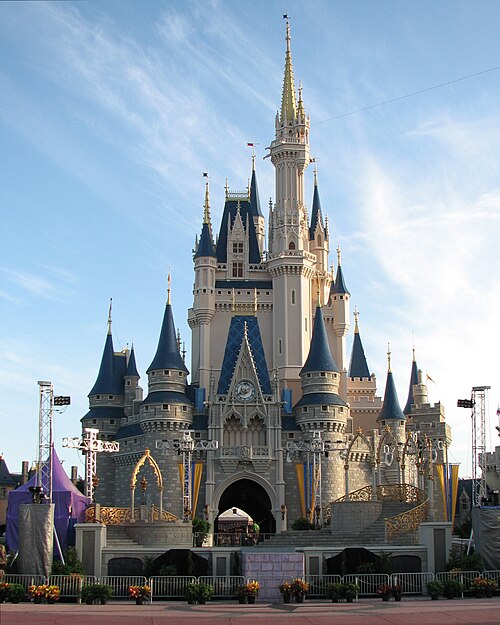
Tourism is a large portion of Florida's economy. Florida is home to the world's most visited theme park, the Magic Kingdom.[244] Florida is also home to the largest single-site employer in the United States, Walt Disney World.[245] PortMiami is the largest passenger port in the world and one of the largest cargo ports in the United States.[246] Beach towns have many visitors too as Florida is known around the world for its beaches.
Agriculture is another large part of the Florida economy. Florida is the number one grower of oranges for juice,[247] mangoes,[248] fresh tomatoes,[249] sugar,[250] sweet corn, green beans,[251] beans, cucumbers, watermelons, and more.[252] Florida is also the second biggest producer of strawberries, avocadoes, grapefruit, and peppers in the U.S.[252][253]
Other large sectors of Florida's economy include finance, government and military (especially in Jacksonville and Pensacola),[254] healthcare, aerospace (especially in the Space Coast), mining (especially for phosphate in Bone Valley), fishing, trade, real estate, and tech (especially in Miami, Orlando, and Tampa in the 2020s).
Healthcare

There were 2.7 million Medicaid patients in Florida in 2009. The governor has proposed adding $2.6 billion to care for the expected 300,000 additional patients in 2011.[255] The cost of caring for 2.3 million clients in 2010 was $18.8 billion.[256] This is nearly 30% of Florida's budget.[257] Medicaid paid for 60% of all births in Florida in 2009. The state has a program for those not covered by Medicaid.
In 2013, Florida refused to participate in providing coverage for the uninsured under the Affordable Care Act, colloquially called Obamacare. The Florida legislature also refused to accept additional Federal funding for Medicaid, although this would have helped its constituents at no cost to the state. As a result, Florida is second only to Texas in the percentage of its citizens without health insurance.[258]
In 2022, the largest hospital network in Florida is HCA Healthcare[259] and the second largest is AdventHealth.[260][261] In 2023, the largest hospitals in Florida were Jackson Memorial Hospital, AdventHealth Orlando, Tampa General Hospital, UF Health Shands Hospital and Baptist Hospital of Miami.[262]
Mayo Clinic hosts one of its three major U.S. campuses in Jacksonville. The practice specializes in treating difficult cases through tertiary care and destination medicine.
Architecture

Florida has the largest collection of Art Deco and Streamline Moderne buildings, both in the United States and in the entire world, most of which are located in the Miami metropolitan area, especially Miami Beach's Art Deco District, constructed as the city was becoming a resort destination.[263] A unique architectural design found only in Florida is the post-World War II Miami Modern, which can be seen in areas such as Miami's MiMo Historic District.[264]
Being of early importance as a regional center of banking and finance, the architecture of Jacksonville displays a wide variety of styles and design principles. Many of the state's earliest skyscrapers were constructed in Jacksonville, dating as far back as 1902,[265] and last holding a state height record from 1974 to 1981.[266] The city is endowed with one of the largest collections of Prairie School buildings outside of the Midwest.[267] Jacksonville is also noteworthy for its collection of Mid-Century modern architecture.[268]
Some sections of the state feature architectural styles including Spanish revival, Florida vernacular, and Mediterranean Revival.[269] A notable collection of these styles can be found in St. Augustine, the oldest continuously occupied European-established settlement within the borders of the United States.[270]
Education
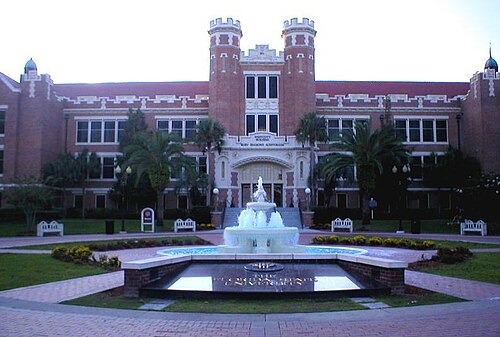
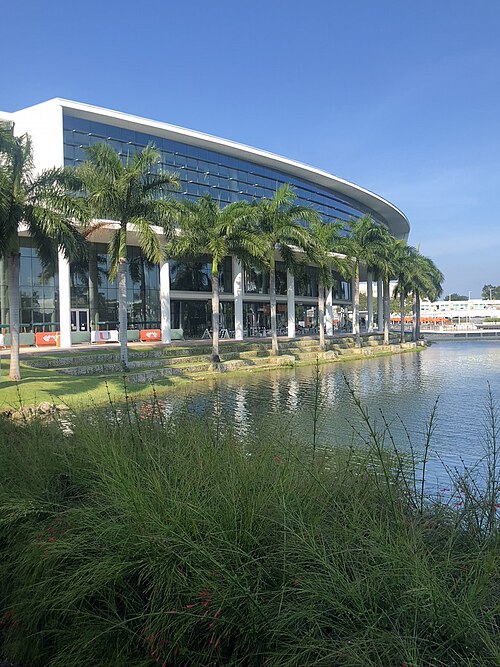
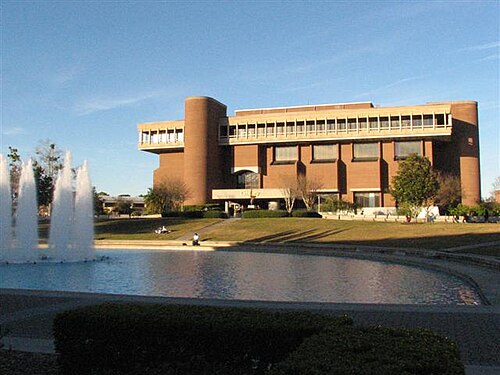


In 2020, Florida was ranked the third best state in the U.S. for K-12 education, outperforming other states in 15 out of 18 metrics in Education Week's 2020 Quality Counts report.[271] In terms of K-12 Achievement, which measures progress in areas such as academic excellence and graduation rates, the state was graded "B−" compared to a national average of C.[271] Florida's higher education was ranked first and pre-K-12 was ranked 27th best nationwide by U.S. News & World Report.[272]
Primary and secondary education
Florida spent $8,920 for each student in 2016, and was 43rd in the U.S. in expenditures per student.[273]
Florida's primary and secondary school systems are administered by the Florida Department of Education. School districts are organized within county boundaries. Each school district has an elected Board of Education that sets policy, budget, goals, and approves expenditures. Management is the responsibility of a Superintendent of schools.
The Florida Department of Education is required by law to train educators in teaching English for Speakers of Other Languages (ESOL).[274]
While Florida's public schools suffer from more than 5,000 unoccupied teacher positions, according to Karla Hernández, teacher and president of United Teachers of Dade, decisions made by the DeSantis administration will make the situation worse. She referred to its blocking of an Advanced Placement African American studies course,[275] book bans and removing some lessons in courses as "really scary moments in the state of Florida".[276]
In 2023, the state of Florida approved a public school curriculum including videos produced by conservative advocacy group PragerU, likening climate change skeptics to those who fought Communism and Nazism, implying renewable energy harms the environment, and saying global warming occurs naturally.[277] DeSantis has called climate change "leftwing stuff".[277]
In August 2023, restrictions have been placed on the teaching of Shakespearean plays and literature by Florida teachers in order to comply with state law.[278][279][280]
Higher education
The State University System of Florida was founded in 1905, and is governed by the Florida Board of Governors. During the 2019 academic year, 346,604 students attended one of these twelve universities.[281] In 2016, Florida charged the second lowest tuition in the U.S. for four-year programs, at $26,000 for in-state students and $86,000 for out-of-state students; this compares with an average of $34,800 for in-state students.[282]
As of 2020, three Florida universities are among the top 10 largest universities by enrollment in the United States: The University of Central Florida in Orlando (2nd), the University of Florida in Gainesville (4th), and Florida International University in Miami (8th).
The Florida College System comprises 28 public community and state colleges with 68 campuses spread out throughout the state. In 2016, enrollment exceeded 813,000 students.[283]
The Independent Colleges and Universities of Florida is an association of 30 private, educational institutions in the state.[284] This Association reported that their member institutions served more than 158,000 students in the fall of 2020.[285]
The University of Miami in Coral Gables is one of the top private research universities in the U.S. Florida's first private university, Stetson University in DeLand, was founded in 1883.
As of 2023, three universities in Florida are members of the Association of American Universities: University of Florida, University of Miami and University of South Florida.[286]
Transportation
Highways
Florida's highway system contains 1,495 mi (2,406 km) of interstate highway, and 10,601 mi (17,061 km) of non-interstate highway, such as state highways and U.S. Highways. Florida's interstates, state highways, and U.S. Highways are maintained by the Florida Department of Transportation.[287]
In 2011, there were about 9,000 retail gas stations in the state. Floridians consumed 21 million gallons of gasoline daily in 2011, ranking it third in national use behind California and Texas.[288] As of 2024, motorists in Florida have one of the highest rates of car insurance in the U.S.[289][290] 24% are uninsured.[291]
Drivers between 15 and 19 years of age averaged 364 car crashes a year per ten thousand licensed Florida drivers in 2010. Drivers 70 and older averaged 95 per 10,000 during the same time frame. A spokesperson for the non-profit Insurance Institute stated "Older drivers are more of a threat to themselves."[292]
Intercity bus travel, which utilizes Florida's highway system, is provided by Greyhound, Megabus, and Amtrak Thruway.
Before the construction of routes under the Federal Aid Highway Act of 1956, Florida began construction of a long cross-state toll road, Florida's Turnpike. The first section, from Fort Pierce south to the Golden Glades Interchange was completed in 1957. After a second section north through Orlando to Wildwood (near present-day The Villages), and a southward extension around Miami to Homestead, it was finished in 1974.

Florida's primary interstate routes include:
 I-4, which spans 133 miles, bisects the state, connecting Tampa, Lakeland, Orlando, and Daytona Beach, connecting with I-75 in Tampa and I-95 in Daytona Beach.
 I-10, which spans 362 miles in Florida, traverses the panhandle, connecting Pensacola, Tallahassee, Lake City, and Jacksonville, with interchanges with I-75 in Lake City and I-95 in Jacksonville. It is the southernmost east–west interstate in the United States terminating in Santa Monica with a total length of 2460 miles.
 I-75, which spans 470 miles in Florida, enters the state near Lake City (45 miles (72 km) west of Jacksonville) and continues southward through Gainesville, Ocala, Tampa's eastern suburbs, Bradenton, Sarasota, Fort Myers and Naples, where it crosses the "Alligator Alley" as a toll road to Fort Lauderdale before turning southward and terminating in Hialeah/Miami Lakes having interchanges with I-10 in Lake City and I-4 in Tampa. It is the second longest north–south interstate with a total length of 1786 miles and terminates at the Canadian border at Sault Ste. Marie, Michigan.
 I-95, which spans 382 miles in Florida, enters the state near Jacksonville and continues along the Atlantic Coast through Daytona Beach, the Melbourne/Titusville, Palm Bay, Vero Beach, Fort Pierce, Port Saint Lucie, Stuart, West Palm Beach, and Fort Lauderdale, before terminating in Downtown Miami. It has interchanges with I-10 in Jacksonville and I-4 in Daytona Beach, and there are four auxiliary routes associated with the interstate. It is the longest north–south interstate with a total length of 1924 miles and terminates at the Canadian border northeast of Houlton, Maine.
Airports

Florida has 131 public airports.[294] Florida's seven large hub and medium hub airports, as classified by the FAA,[295] are the following:
Intercity rail

- Brightline is a diesel–electric higher-speed rail system.[296] Service runs from MiamiCentral station in downtown Miami to the Orlando International Airport Intermodal Terminal in Orlando with stops in West Palm Beach, Boca Raton, Fort Lauderdale, and Aventura.
- Florida is also served by Amtrak, operating numerous lines throughout, connecting the state's largest cities to points north in the United States and Canada. The busiest Amtrak train stations in Florida in 2011 were: Sanford (259,944), Orlando (179,142), Tampa Union Station (140,785), Miami (94,556), and Jacksonville (74,733).[297] Sanford, in Greater Orlando, is the southern terminus of the Auto Train, which originates at Lorton, Virginia, south of Washington, D.C. Until 2005, Orlando was also the eastern terminus of the Sunset Limited, which travels across the southern United States via New Orleans, Houston, and San Antonio to its western terminus of Los Angeles. Florida is served by two additional Amtrak trains (the Silver Star and the Silver Meteor), which operate between New York City and Miami. MiamiCentral in Greater Downtown Miami and the Miami Intermodal Center near Miami International Airport are major hubs for rapid transit, commuter rail, intercity rail, and buses.
Public transit


- Miami: Miami's public transportation is served by Miami-Dade Transit that runs Metrorail, a heavy rail rapid transit system, Metromover, a people mover train system in Downtown Miami, and Metrobus, Miami's bus system. Metrorail runs throughout Miami-Dade County and has two lines and 23 stations connecting to Downtown Miami's Metromover and Tri-Rail. Metromover has three lines and 21 stations throughout Downtown Miami. Outside of Miami-Dade County, public transit in the Miami metropolitan area is served by Broward County Transit and Palm Tran; intercounty commuter rail service is provided by Tri-Rail, with 18 stations including the region's three international airports.[298]
- Orlando: Orlando is served by the SunRail commuter train, which runs on a 32 miles (51 km) (61 miles (98 km) when complete) line including four stops in downtown. Lynx bus serves the greater Orlando area in Orange, Seminole, and Osceola counties.[299]
- Tampa: Tampa and its surrounding area use the Hillsborough Area Regional Transit Authority system ("HART"). In addition, downtown Tampa has continuous trolley services in the form of a heritage trolley powered by Tampa Electric Company. Pinellas County and St. Petersburg provide similar services through the Pinellas Suncoast Transit Authority or "PSTA". The beaches of Pinellas County also have a continuous trolley bus. Downtown St. Petersburg has a trolley system.[300][301]
- Jacksonville: Jacksonville is served by the Jacksonville Skyway, an automated people mover monorail connecting the Florida State College downtown campus, the Northbank central business district, Convention Center, and Southbank locations. The system includes eight stops connected by two lines. JTA bus has 180 vehicles with 56 lines.[302]
Sports

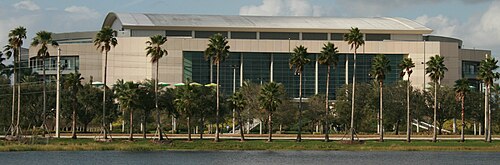

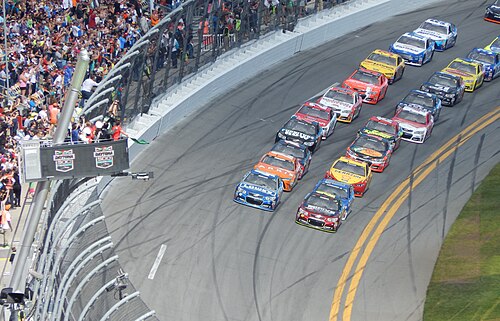
Florida has three NFL teams, two MLB teams, two NBA teams, two NHL teams, and two MLS teams. Florida gained its first permanent major-league professional sports team in 1966 when the American Football League added the Miami Dolphins. Florida has given professional sports franchises some subsidies in the form of tax breaks since 1991.[303]
About half of all Major League Baseball teams conduct spring training in the state, with teams informally organized into the "Grapefruit League". Throughout MLB history, other teams have held spring training in Florida.
NASCAR (headquartered in Daytona Beach) begins all three of its major auto racing series in Florida at Daytona International Speedway in February, featuring the Daytona 500. Daytona also has the Coke Zero Sugar 400 NASCAR race weekend in August. NASCAR also has a race weekend at Homestead-Miami Speedway in Homestead in October. The 24 Hours of Daytona is one of the world's most prestigious endurance auto races. The Grand Prix of St. Petersburg and Grand Prix of Miami have held IndyCar races as well.
Florida is a major golf hub. The PGA of America is headquartered in Palm Beach Gardens, the PGA Tour is headquartered in Ponte Vedra Beach (a Jacksonville suburb) and the LPGA is headquartered in Daytona Beach. The Players Championship, WGC-Cadillac Championship, Arnold Palmer Invitational, Honda Classic and Valspar Championship are PGA Tour rounds.
Florida has teams in all five American major league sports. Florida's most recent major-league team, Inter Miami, began play in MLS in 2020.[304]
The Miami Masters is an ATP World Tour Masters 1000 and WTA Premier tennis event, whereas the Delray Beach International Tennis Championships is an ATP World Tour 250 event.
There are minor league baseball, football, basketball, ice hockey, soccer and indoor football teams based in Florida.[305] Ben Hill Griffin Stadium is the largest football stadium in Florida, the 12th-largest stadium in college football, and the 18th-largest stadium in the world, as measured by its official seating capacity of 88,548—though, it has often held over 90,000 for Florida's home football games.
Florida's universities have a number of collegiate sport programs. Major college football programs include the Florida State Seminoles and Miami Hurricanes of the Atlantic Coast Conference, and the Florida Gators of the Southeastern Conference.[306] Since 1996, Florida has added four additional teams to the ranks of Division I FBS: UCF Knights, South Florida Bulls, Florida Atlantic Owls and FIU Panthers.
State symbols


.jpg/500px-Florida_panther_(7013874693).jpg)
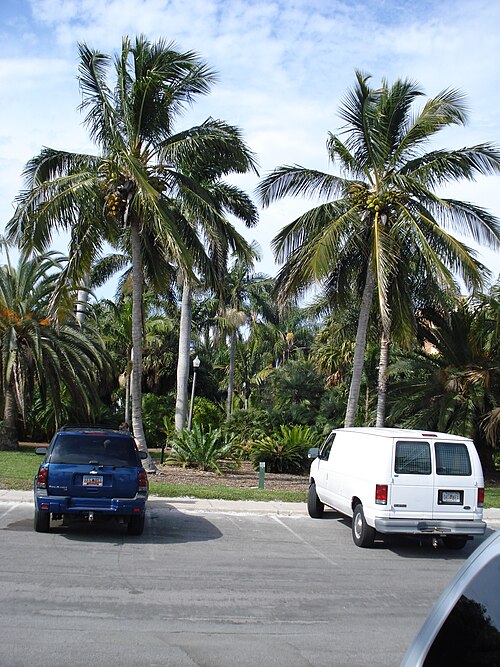
The majority of the symbols were chosen after 1950; only the two oldest symbols—the state flower (chosen in 1909), and the state bird (chosen in 1927)—are not listed in the 2010 Florida Statutes.[307]
- Amphibian: Barking tree frog
- Animal: Florida panther
- Anthem: "Florida (Where the Sawgrass Meets the Sky)"
- Beverage: Orange juice
- Bird: Northern mockingbird
- Bird: American flamingo
- Festival: "Calle Ocho-Open House 8"
- Fish
(fresh water): Florida largemouth bass - Fish
(salt water): Atlantic sailfish - Flower: Orange blossom
- Fruit: Orange
- Gem: Moonstone
- Horse: Florida Cracker Horse
- Insect: Zebra longwing
- Mammal
(salt water): Common bottlenose dolphin - Mammal
(marine): Florida manatee - Motto: "In God We Trust"
- Nickname: The Sunshine State
- Palm Tree: Coconut palm
- Pie: Key lime pie
- Play: Cross and Sword
- Reptile: American alligator
- Reptile
(salt water): Loggerhead sea turtle - Rodeo: Silver Spurs Rodeo
- Shell: Horse conch
- Soil: Myakka soil
- Song: "Old Folks at Home"
- State day/week: Pascua Florida
- Stone: Agatized coral
- Tortoise: Gopher tortoise
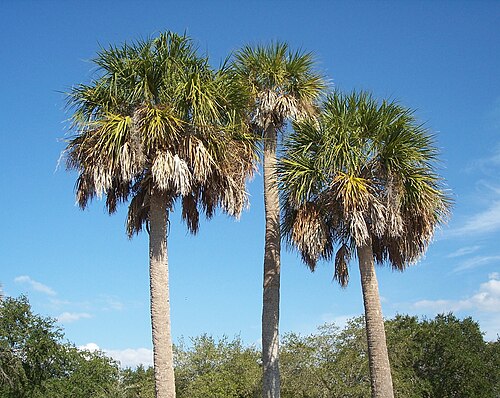
- Tree: Sabal palmetto
- Wildflower: Tickseed
Sister states
See also

- Index of Florida-related articles
- List of people from Florida
- Outline of Florida
- Ships named Florida
Notes
- ^ Elevation adjusted to North American Vertical Datum of 1988
- ^ Behind Nevada, Arizona, New Jersey, California and Texas
References
- ^ "Florida | Map, Population, History, & Facts". Encyclopedia Britannica. Archived from the original on July 5, 2020. Retrieved June 30, 2020.
- ^ "Florida | State Facts & History". www.infoplease.com. Archived from the original on June 30, 2020. Retrieved June 30, 2020.
- ^ "Florida". www.americaslibrary.gov. Archived from the original on April 27, 2020. Retrieved June 30, 2020.
- ^ "State Motto". Florida Department of State. Archived from the original on January 21, 2016. Retrieved September 14, 2018.
- ^ "United States Summary: 2010. Population and Housing Unit Counts. 2010 Census of Population and Housing" (PDF). United States Census Bureau. September 2012. p. 41. Archived (PDF) from the original on October 19, 2012. Retrieved April 9, 2019.
- ^ a b "Elevations and Distances in the United States". United States Geological Survey. 2001. Archived from the original on October 15, 2011. Retrieved October 21, 2011.
- ^ "U.S. Census Bureau QuickFacts Florida". U.S. Census Bureau, 2023 Estimate. Retrieved January 4, 2024.
- ^ "US Census Bureau QuickFacts". United States Census Bureau. Archived from the original on May 9, 2022. Retrieved April 30, 2022.
- ^ "Article 2, Section 9, Constitution of the State of Florida". State of Florida. 1988. Archived from the original on September 14, 2018. Retrieved September 14, 2018.
- ^ "Languages Spoken at Home in Florida". United States Census Bureau. Retrieved January 2, 2022.
- ^ a b "SB 230—State Symbols/Fla. Cracker Horse/Loggerhead Turtle [RPCC]". Florida House of Representatives. Archived from the original on August 19, 2014. Retrieved April 7, 2012.
- ^ Dunbar, James S. "The pre-Clovis occupation of Florida: The Page-Ladson and Wakulla Springs Lodge Data". Archived from the original on October 12, 2014. Retrieved June 23, 2011.
- ^ "16th Century Settlements - Florida Department of State". dos.myflorida.com. Retrieved November 12, 2022.
- ^ Jonathan D. Steigman (September 25, 2005). La Florida Del Inca and the Struggle for Social Equality in Colonial Spanish America. University of Alabama Press. p. 33. ISBN 978-0-8173-5257-8. Archived from the original on February 4, 2021. Retrieved September 15, 2019.
- ^ From the 1601 publication by the pre-eminent historian of 16th-century Spanish exploration in America, Antonio de Herrera y Tordesillas, in Stewart, George (1945). Names on the Land: A Historical Account of Place-Naming in the United States. New York: Random House. pp. 11–12. ISBN 978-1-59017-273-5.
- ^ "Michael Francis: La historia entre Florida y España es de las más ricas de Estados Unidos". YouTube. May 23, 2012. Archived from the original on December 21, 2021. Retrieved July 18, 2016.
- ^ Davidson, James West. After the Fact: The Art of Historical Detection Volume 1. Mc Graw Hill, New York 2010, Chapter 1, p. 7.
- ^ Proclamation, presented by Dennis O. Freytes, MPA, MHR, BBA, Chair/Facilitator, 500th Florida Discovery Council Round Table, VP NAUS SE Region; Chair Hispanic Achievers Grant Council
- ^ Hoffman, Paul E. (2004). A New Andalucia and a Way to the Orient: the American Southeast During the Sixteenth Century. Baton Rouge: Louisiana State University Press. p. 278. ISBN 0-8071-1552-5. OCLC 20594668.
- ^ "Los Floridanos". Los Floridanos. Archived from the original on November 14, 2020. Retrieved August 23, 2019.
- ^ J. Michael Francis, PhD, Luisa de Abrego: Marriage, Bigamy, and the Spanish Inquisition, University of South Florida, archived from the original on February 4, 2021, retrieved April 5, 2018
- ^ Gene Allen Smith, Texas Christian University, Sanctuary in the Spanish Empire: An African American officer earns freedom in Florida, National Park Service, archived from the original on January 10, 2021, retrieved April 5, 2018
- ^ Pope, Sarah Dillard. "Aboard the Underground Railroad—Fort Mose Site". Nps.gov. Archived from the original on April 26, 2014. Retrieved July 19, 2016.
- ^ "Fort Mose Historical Society". Archived from the original on July 7, 2016. Retrieved July 18, 2016.
- ^ Florida Center for Instructional Technology. "Floripedia: Florida: As a British territory". Fcit.usf.edu. Archived from the original on December 13, 2012. Retrieved October 2, 2009.
- ^ Wood, Wayne (1992). Jacksonville's Architectural Heritage. University Press of Florida. p. 22. ISBN 978-0-8130-0953-7.
- ^ Beach, William Wallace (1877). The Indian Miscellany. J. Munsel. p. 125.
- ^ Wells, Judy (March 2, 2000). "City had humble beginnings on the banks of the St. Johns". The Florida Times-Union. Archived from the original on October 9, 2012. Retrieved July 2, 2011.
- ^ A History of Florida. Caroline Mays Brevard, Henry Eastman Bennett p. 77
- ^ a b A History of Florida. Caroline Mays Brevard, Henry Eastman Bennett
- ^ a b The Land Policy in British East Florida. Charles L. Mowat, 1940
- ^ Clark, James C.; "200 Quick Looks at Florida History" p. 20 ISBN 1561642002
- ^ "Transfer of Florida". fcit.usf.edu. Archived from the original on December 6, 2020. Retrieved May 9, 2022.
- ^ Ste Claire, Dana (2006). Cracker: Cracker Culture in Florida History. University Press of Florida. ISBN 978-0-8130-3028-9
- ^ "Florida's Early Constitutions—Florida Memory". Archived from the original on August 27, 2017. Retrieved July 16, 2017.
- ^ Alexander Deconde, A History of American Foreign Policy (1963) p. 127
- ^ Mahon, pp. 190–191.
- ^ Mahon, pp. 201–202
- ^ Tebeau, Charlton W. (1971). A History of Florida. Coral Gables, Florida: University of Miami Press. pp. 114–118. ISBN 9780870241499.
- ^ "A Century of Lawmaking for a New Nation: U.S. Congressional Documents and Debates, 1774–1875". Library of Congress. Archived from the original on January 24, 2016. Retrieved July 21, 2015.
- ^ "Andrew Jackson". Florida Department of State. Archived from the original on June 28, 2016. Retrieved July 18, 2016.
- ^ "A Century of Lawmaking for a New Nation: U.S. Congressional Documents and Debates, 1774–1875". Library of Congress. Archived from the original on January 24, 2016. Retrieved July 21, 2015.
- ^ "A Century of Lawmaking for a New Nation: U.S. Congressional Documents and Debates, 1774–1875". Library of Congress. Archived from the original on June 19, 2015. Retrieved July 21, 2015.
- ^ "Florida state population". population.us. Archived from the original on April 18, 2019. Retrieved May 19, 2019.
- ^ Tindall, George Brown, and David Emory Shi. (edition unknown) America: A Narrative History. W. W. Norton & Company. 412. ISBN 978-0-393-96874-3
- ^ History of Miami-Dade county retrieved January 26, 2006 Archived January 10, 2006, at the Wayback Machine
- ^ Historical Census Browser, Retrieved October 31, 2007 Archived August 23, 2007, at the Wayback Machine
- ^ "Ordinance of Secession, 1861". Florida Memory. State Library & Archives of Florida. Archived from the original on July 12, 2019. Retrieved October 22, 2019.
- ^ "Florida Seceded! January 10, 1861|America's Story from America's Library". America's Library. Archived from the original on September 19, 2017. Retrieved November 14, 2017.
- ^ Florida, State Library and Archives of. "Florida in the Civil War". Florida Memory. Archived from the original on April 2, 2019. Retrieved May 19, 2019.
- ^ Taylor, R. (1988). Rebel Beef: Florida Cattle and the Confederate Army, 1862-1864. The Florida Historical Quarterly, 67(1), 15-31. Retrieved from http://www.jstor.org/stable/30147921 Archived April 30, 2019, at the Wayback Machine
- ^ Taylor, Paul. (2012) Discovering the Civil War in Florida: A Reader and Guide (2nd edition). pp. 3–4, 59, 127. Sarasota, Fl.: Pineapple Press.
- ^ Nancy A. Hewitt (2001). Southern Discomfort: Women's Activism in Tampa, Florida, 1880s–1920s. University of Illinois Press. p. 22. ISBN 978-0-252-02682-9. Archived from the original on February 4, 2021. Retrieved May 13, 2018.
- ^ "Florida Agriculture Overview and Statistics - Florida Department of Agriculture & Consumer Services". www.fdacs.gov. Archived from the original on February 3, 2021. Retrieved January 24, 2021.
- ^ Palmer, Darryl (May 19, 2014). "Boll Weevils and Beyond: Extension Entomology". University of Florida Institute of Food and Agricultural Science. Retrieved December 14, 2022.
- ^ Lange, Fabian; Olmstead, Alan; Rhode, Paul (September 2009). "The Impact of the Boll Weevil, 1892–1932". The Journal of Economic History. 69 (3): 685–718. doi:10.1017/S0022050709001090. ISSN 0022-0507. JSTOR 40263940. S2CID 154646873 – via JSTOR.
- ^ Historical Census Browser, 1900 Federal Census, University of Virginia [1] [dead link]. Retrieved March 15, 2008.
- ^ Rogers, Maxine D.; Rivers, Larry E.; Colburn, David R.; Dye, R. Tom & Rogers, William W. (December 1993), "Documented History of the Incident Which Occurred at Rosewood, Florida in January 1923" Archived May 15, 2008, at the Wayback Machine, p. 5. Retrieved April 9, 2011.
- ^ "The Tallahassee Bus Boycott 1956-57". Florida Memory. Archived from the original on May 7, 2021. Retrieved February 11, 2021.
- ^ "The Civil Rights Movement in Florida". Florida Memory. Archived from the original on October 24, 2020. Retrieved February 11, 2021.
- ^ Federal Writers' Project (1939). Florida. A Guide to the Southernmost State. New York: Oxford University Press. p. 7.
- ^ "Freedom Tower—American Latino Heritage: A Discover Our Shared Heritage Travel Itinerary". Nps.gov. Archived from the original on May 14, 2018. Retrieved May 14, 2018.
- ^ Munzenrieder, Kyle (December 23, 2014). "Florida Is Now Officially the Third Most Populous State". Miaminewtimes.com. Archived from the original on May 3, 2022. Retrieved May 9, 2022.
- ^ Lea, Brittany De (August 9, 2019). "Florida to see population boom over coming years as SALT deductions remain capped". FOXBusiness. Archived from the original on September 6, 2019. Retrieved September 6, 2019.
- ^ Millsap, Adam. "Florida's Population Is Booming—But Should We Worry About Income Growth?". Forbes. Archived from the original on September 5, 2019. Retrieved September 6, 2019.
- ^ Nicole Chavez (December 5, 2019). "George Zimmerman lawsuit reminds us of how significant the Trayvon Martin case was for a divided country". CNN Digital. Archived from the original on December 5, 2019. Retrieved February 11, 2021.
- ^ "A Great Migration From Puerto Rico Is Set to Transform Orlando". The New York Times. November 17, 2017. Archived from the original on December 12, 2020. Retrieved May 14, 2018.
- ^ Andone, Dakin (February 11, 2019). "Parkland students turned from victims to activists and inspired a wave of new gun safety laws". CNN. Archived from the original on February 9, 2021. Retrieved February 11, 2021.
- ^ "97 dead as recovery effort at collapsed Florida condo nears end". Al Jazeera. July 16, 2021. Archived from the original on July 17, 2021. Retrieved July 17, 2021.
- ^ Spocchia, Gina (July 17, 2021). "Hyatt Regency walkway collapse: 40 years ago today one of America's deadliest structural collapses took place". The Independent. Archived from the original on July 25, 2021. Retrieved July 25, 2021.
- ^ "The Surfside collapse is reminiscent of other tragic construction failures in the United States". The Baharat Express News. Archived from the original on September 17, 2021. Retrieved July 25, 2021.
- ^ a b Office of Ocean and Coastal Resource Management (July 1, 2011). "State Coastal Zone Boundaries" (PDF). National Oceanic and Atmospheric Administration. Archived (PDF) from the original on October 15, 2011. Retrieved October 28, 2011.
- ^ Main, Martin B.; Allen, Ginger M. (July 2007). "The Florida Environment: An Overview". University of Florida, Institute of Food and Agricultural Sciences. Archived from the original on December 4, 2010. Retrieved January 23, 2008.
- ^ "Green Mountain Scenic Byway". Florida Department of Transportation. Archived from the original on March 6, 2008. Retrieved January 23, 2008.
- ^ Megan Garber (March 11, 2014). "Science: Several U.S. States, Led by Florida, Are Flatter Than a Pancake". The Atlantic. Archived from the original on February 4, 2021. Retrieved March 7, 2017.
- ^ Heather S. Henkel (April 15, 2010). "SOFIA Virtual Tour – Lake Okeechobee". Sofia.usgs.gov. Archived from the original on May 18, 2011. Retrieved November 27, 2011.
- ^ Ritter, Michael. "Wet/Dry Tropical Climate". University of Wisconsin, Stevens Point. Archived from the original on November 24, 2010. Retrieved July 18, 2007.
- ^ "Average Annual Temperature for Each US State". Current Results Nexus. Archived from the original on August 27, 2011. Retrieved August 19, 2011.
- ^ "Hottest States in the US—Current Results". Currentresults.com. Archived from the original on April 9, 2022. Retrieved May 9, 2022.
- ^ "Cold Weather Hazards". National Weather Service Miami, Florida. Archived from the original on June 19, 2018. Retrieved June 19, 2018.
- ^ "Hazardous Weather: A Florida Guide—Temperatures". FloridaDisaster.org. Archived from the original on June 19, 2016. Retrieved October 9, 2016.
- ^ "Temperature Extremes". Mymanatee.org. June 11, 2012. Archived from the original on September 7, 2016. Retrieved October 9, 2016.
- ^ "Has It Ever Snowed in Florida?". Worldatlas.com. October 25, 2017. Archived from the original on April 9, 2022. Retrieved May 9, 2022.
- ^ Geggis, Anne (January 2, 2018). "Brrrrr! South Florida may see frost by week's end". Sun-sentinel.com. Archived from the original on November 12, 2020. Retrieved May 9, 2022.
- ^ United States National Arboretum. "Florida Hardiness Zones". St Johns River Water Management District. Archived from the original on July 16, 2011. Retrieved March 25, 2011.
- ^ "Dense Fog Advisory". miami.cbslocal.com. Archived from the original on February 4, 2021. Retrieved May 9, 2022.
- ^ "NowData—NOAA Online Weather Data". National Oceanic and Atmospheric Administration. Archived from the original on November 9, 2018. Retrieved March 5, 2012.
- ^ "NowData—NOAA Online Weather Data". National Oceanic and Atmospheric Administration. Archived from the original on July 12, 2015. Retrieved March 5, 2012.
- ^ "NowData—NOAA Online Weather Data". National Oceanic and Atmospheric Administration. Archived from the original on September 5, 2015. Retrieved March 5, 2012.
- ^ "PENSACOLA FAA ARPT, FLORIDA—Climate Summary". Southeast Regional Climate Center. Archived from the original on January 18, 2008. Retrieved January 26, 2008.
- ^ "NowData—NOAA Online Weather Data". National Oceanic and Atmospheric Administration. Archived from the original on September 5, 2015. Retrieved March 5, 2012.
- ^ "NowData—NOAA Online Weather Data". National Oceanic and Atmospheric Administration. Archived from the original on June 16, 2019. Retrieved March 5, 2012.
- ^ "Lightning Information Center". National Weather Service. Archived from the original on May 9, 2009. Retrieved January 23, 2008.
- ^ "Total Precipitation in inches by month". NOAA. Archived from the original on April 21, 2013. Retrieved March 31, 2013.
- ^ "Thunderstorms—Florida Climate Center". climatecenter.fsu.edu. Archived from the original on July 3, 2013. Retrieved May 9, 2022.
- ^ "united states annual sunshine map" (PDF). HowStuffWorks, Inc. Archived from the original (PDF) on December 12, 2019. Retrieved July 16, 2019.
- ^ Aten, Tim (July 1, 2007). "Waterspouts common off coastal Florida in summer". Naples Daily News. Archived from the original on December 5, 2010. Retrieved January 23, 2008.
- ^ "Hail Storm". miami.cbslocal.com. Archived from the original on February 4, 2021. Retrieved May 9, 2022.
- ^ a b "Florida is US lightning capital". Florida Today Factbook. March 28, 2009. p. 34.
- ^ "How Often Hurricanes Make Landfall in Florida". Tripsavvy.com. Archived from the original on April 16, 2021. Retrieved November 6, 2021.
- ^ "The 25th Anniversary of Hurricane Andrew". Aoml.noaa.gov. Archived from the original on August 6, 2020. Retrieved May 9, 2022.
- ^ "Leatherback Nesting in Florida". myfwc.com. Archived from the original on October 31, 2020. Retrieved May 9, 2022.
- ^ Morgan, Curtis (April 9, 2012). "Crocs crawl back to coast". Florida Today. Melbourne, Florida. pp. 8B. Archived from the original on April 10, 2012.
- ^ Winston, Keith (December 24, 2013). "Predator animals rebound". Florida Today. Melbourne, Florida. pp. 7B. Archived from the original on March 16, 2015. Retrieved December 29, 2013.
- ^ "Surprising Origin of American Flamingos Discovered". News.mationalgeographic.com. March 10, 2018. Archived from the original on June 12, 2018. Retrieved May 9, 2022.
- ^ C. Michael Hogan. 2008. Wild turkey: Meleagris gallopavo, GlobalTwitcher.com, ed. N. Stromberg Archived July 25, 2017, at the Wayback Machine
- ^ a b Winsten, Keith (January 7, 2014). "'Snow' bird species in South". Florida Today. Melbourne, Florida. pp. 7B. Archived from the original on January 9, 2014. Retrieved January 7, 2014.
- ^ "BIOLOGICAL CONTROL OF INVASIVE INSECT PESTS OF CROPS AND NATIVE FLORA IN FLORIDA". Usda.gov/. Archived from the original on February 4, 2021. Retrieved June 3, 2018.
- ^ "Nonnative Species". myfwc.com. Archived from the original on February 13, 2021. Retrieved May 17, 2018.
- ^ Waymer, Jim (April 1, 2020). "Florida forests help roll out toilet paper". Florida Today. Melbourne, Florida. pp. 1A, 10A. Archived from the original on April 3, 2020. Retrieved April 4, 2020.
- ^ "Native Plants—University of Florida, Institute of Food and Agricultural Sciences". gardeningsolutions.ifas.ufl.edu. Archived from the original on February 1, 2021. Retrieved May 9, 2022.
- ^ Sonnenberg, Maria (September 21, 2013). "Florida's flowers". Florida Today. Melbourne, Florida. p. 1D. Archived from the original on March 16, 2015. Retrieved September 21, 2013.
- ^ Crane, Timothy K. Broschat and Jonathan H. (April 4, 2018). "The Coconut Palm in Florida". edis.ifas.ufl.edu. Archived from the original on February 9, 2021. Retrieved May 9, 2022.
- ^ "Reproductive Strategies of Mangroves". Newfound Harbor Marine Institute. Seacamp Association. Retrieved November 15, 2023.
- ^ "The biggest coral reef in the continental U.S. is dissolving into the ocean". Washington Post. Archived from the original on February 4, 2021. Retrieved May 9, 2022.
- ^ US Department of Commerce, National Oceanic and Atmospheric Administration. "NOAA CoRIS—Regional Portal—Florida". www.coris.noaa.gov. Archived from the original on June 5, 2019. Retrieved May 19, 2019.
- ^ "About—Pennekamp Coral Reef State Park". pennekamppark.com. Archived from the original on February 6, 2015. Retrieved May 19, 2019.
- ^ "SOFIA—Circular 1134—the Natural System—Florida Reef Tract". archive.usgs.gov. Archived from the original on July 31, 2020. Retrieved May 19, 2019.
- ^ "Energy Consumption by Source and Total Consumption per Capita, Ranked by State, 2004" (PDF). U.S. Department of Energy. Archived (PDF) from the original on January 15, 2010. Retrieved January 27, 2008.
- ^ a b "State Energy Profiles: Florida". U.S. Department of Energy. Archived from the original on January 7, 2008. Retrieved January 27, 2008.
- ^ "Current Wildfire Conditions / Wildland Fire / Florida Forest Service / Divisions & Offices / Home—Florida Department of Agriculture & Consumer Services". Freshfromflorida.com. Archived from the original on February 2, 2019. Retrieved October 23, 2018.
- ^ "Florida Statutes". Leg.state.fl.us. Archived from the original on October 31, 2005. Retrieved November 4, 2011.
- ^ Daley, Beth (March 28, 2005). "Tide's toxins trouble lungs ashore". The Boston Globe. Archived from the original on February 16, 2012. Retrieved December 3, 2007.
- ^ "Why Florida's red tide is killing fish, manatees, and turtles". Vox.com. August 30, 2018. Archived from the original on April 16, 2022. Retrieved May 9, 2022.
- ^ Williams Hale, Leslie (December 29, 2009). "Record number of panthers killed by vehicles in 2009". Naples News. Archived from the original on December 5, 2010. Retrieved January 1, 2010.
- ^ "More manatees have died in Florida so far this year than in all of 2017. Here's why". Miamiherald.com. Archived from the original on August 18, 2021. Retrieved May 9, 2022.
- ^ "Florida's Long-Lost Wild Flamingos Were Hiding in Plain Sight". Npr.org. Archived from the original on April 9, 2022. Retrieved May 9, 2022.
- ^ "Now that we agree these flamingos are Florida natives, it's time to protect them, experts say". Miamiherald.com. Archived from the original on August 27, 2021. Retrieved May 9, 2022.
- ^ Jeff Goodell (June 20, 2013). "Goodbye, Miami". Rolling Stone. Archived from the original on May 10, 2018. Retrieved June 21, 2013.
- ^ "Where Sand Is Gold, the Reserves Are Running Dry". The New York Times. August 25, 2013. Archived from the original on November 12, 2020. Retrieved February 16, 2017.
- ^ Precht and Miller:243–44, 245, 247–48, 249
The State of Coral Reef Ecosystems of the Florida Keys Archived August 11, 2010, at the Wayback Machine Accessed December 17, 2010 - ^ Wilkinson, Jerry. "History of Keys Geology". Keyshistory.org. Archived from the original on November 9, 2020. Retrieved May 9, 2022.
- ^ a b "Industry overview". First research. Hoover's. March 25, 2010. Archived from the original on February 14, 2010.
- ^ Parsons, Victoria (Spring 2011). "The Real Cost of Fertilizer". Bay Soundings. Archived from the original on March 24, 2015. Retrieved June 21, 2014.
- ^ "Florida Springs, Springs in Florida, Florida Cave Diving—Florida's Springs: Protecting Nature's Gems—Florida DEP—Springshed Map". February 11, 2011. Archived from the original on February 11, 2011. Retrieved May 19, 2019.
- ^ Allen, Ginger M.; Main, Martin B (May 2005). "Florida's Geological History". Florida Cooperative Extension Service. University of Florida. Archived from the original on December 4, 2010. Retrieved January 20, 2009.
- ^ Tihansky, Ann B. "Sinkholes, West-Central Florida. A link between surface water and ground water" (PDF). U.S. Geological Survey, Tampa, Florida. Archived (PDF) from the original on October 25, 2011. Retrieved June 21, 2014.
- ^ "Sinkhole Maps of Florida Counties". Florida Center for Instructional Technology, College of Education. University of South Florida. 2007. Archived from the original on April 10, 2013. Retrieved June 21, 2014.
- ^ "The National Parks: Index 2012–2016" (PDF). nps.gov. National Park Service. p. 47. Archived (PDF) from the original on November 13, 2018. Retrieved November 19, 2018.
- ^ "State Farm seeks 28% rate hike". Florida Today. Melbourne, Florida. February 16, 2011. p. 8B. Archived from the original on February 19, 2011.
- ^ Huber, Red (November 13, 2012). "Looking back at Winter Park's famous sinkhole". Orlando Sentinel. Archived from the original on January 17, 2021. Retrieved May 9, 2022.
- ^ U.S. Geological Survey. National Hydrography Dataset high-resolution flowline data. The National Map Archived March 29, 2012, at the Wayback Machine, accessed April 21, 2011
- ^ (2013-01-02). "Econlockhatchee River" Archived July 5, 2017, at the Wayback Machine. Saint Johns River Water Management District. Retrieved on August 4, 2014.
- ^ "Florida's Earthquake History and Tectonic Setting". Decodedscience.org. January 23, 2015. Archived from the original on September 3, 2018. Retrieved May 9, 2022.
- ^ Millsap, Adam. "Big Metro Areas in Florida Keep Getting Bigger". Forbes.com. Archived from the original on April 9, 2022. Retrieved May 9, 2022.
- ^ "Local Government Vocabulary". Florida League of Cities. Archived from the original on November 10, 2013. Retrieved May 15, 2012.
- ^ "Population data" (PDF). bebr.ufl.edu. 2005. Archived (PDF) from the original on December 12, 2019. Retrieved November 9, 2019.
- ^ Fishkind, Hank (November 9, 2013). "Beaches are critically important to us". Florida Today. Melbourne, Florida. pp. 4B. Archived from the original on March 16, 2015. Retrieved November 11, 2013.
- ^ "2020 Decennial US Census". 2020 US Census. November 2021. Archived from the original on December 8, 2021. Retrieved November 26, 2021.
- ^ "Miami, Florida Race and Hispanic or Latino Origin: 2010 Census Summary File 1". American FactFinder. US Census Bureau. Archived from the original on February 12, 2020. Retrieved October 27, 2015.
- ^ a b c "Florida Hispanic or Latino by Type: 2010 Census Summary File 1". United States Census Bureau. Archived from the original on December 27, 1996. Retrieved October 26, 2015.
- ^ "Historical Population Change Data (1910-2020)". Census.gov. United States Census Bureau. Archived from the original on April 29, 2021. Retrieved May 1, 2021.
- ^ "Table 1. Annual Estimates of the Resident Population for the United States, Regions, States, and Puerto Rico: April 1, 2010 to July 1, 2019". U.S. Census Bureau. January 29, 2019. Archived from the original on June 10, 2020. Retrieved January 4, 2019.
- ^ Website Services & Coordination Staff (WSCS). "2010 Census Interactive Population Search". census.gov. Archived from the original on August 14, 2013. Retrieved July 21, 2015.
- ^ Weissmann, Jordan (December 22, 2012). "The Fastest-Growing States in America (and Why They're Booming)". The Atlantic. Archived from the original on May 25, 2017. Retrieved August 14, 2014.
- ^ "Florida's Population Center Migrates through History". University of Florida Bureau of Economic and Business Research. Archived from the original on August 14, 2013. Retrieved August 14, 2014.
- ^ Fund, John (December 23, 2014). "Florida Leaves New York Behind in Its Rear-View Mirror". National Review. Archived from the original on May 25, 2017. Retrieved October 23, 2018.
- ^ Pramuk, Jacob (December 23, 2014). "Florida surpasses NY as 3rd most populous state". CNBC. Archived from the original on April 5, 2019. Retrieved May 9, 2022.
- ^ "Florida Demographics—Get Current Census Data for Florida". florida-demographics.com. Archived from the original on October 24, 2018. Retrieved May 19, 2019.
- ^ Slevin, Peter (April 30, 2010). "New Arizona law puts police in 'tenuous' spot". The Washington Post. Washington, D.C. p. A4. Archived from the original on November 10, 2012.
- ^ Reed, Matt (January 18, 2011). "E-Verify best way to find illegals". Florida Today. Melbourne, Florida. p. 1B. Archived from the original on May 4, 2014.
- ^ Shoichet, Catherine E. (May 9, 2019). "Florida is about to ban sanctuary cities. At least 11 other states have, too". CNN. Archived from the original on June 16, 2019. Retrieved September 3, 2019.
- ^ "Immigrants in Florida". January 2015.
- ^ "2007-2022 PIT Counts by State".
- ^ "The 2022 Annual Homelessness Assessment Report (AHAR) to Congress" (PDF).
- ^ a b c Gibson, Campbell; Jung, Kay (September 2002). "Historical Census Statistics on Population Totals By Race, 1790 to 1990, and By Hispanic Origin, 1970 to 1990, For The United States, Regions, Divisions, and States". U. S. Census Bureau Population Division. Archived from the original on December 24, 2014.
- ^ "FL". censusviewer.com. Archived from the original on March 21, 2023. Retrieved April 16, 2024.
- ^ Center for New Media and Promotions(C2PO). "2010 Census Data". Census.gov. Archived from the original on May 22, 2017. Retrieved April 7, 2020.
{{cite web}}: CS1 maint: numeric names: authors list (link) - ^ Bureau, US Census. "Race and Ethnicity in the United States: 2010 Census and 2020 Census". Census.gov. Archived from the original on August 15, 2021. Retrieved April 19, 2022.
{{cite web}}:|last=has generic name (help) - ^ Bureau, US Census. "The Chance That Two People Chosen at Random Are of Different Race or Ethnicity Groups Has Increased Since 2010". Census.gov. Archived from the original on April 12, 2022. Retrieved April 19, 2022.
{{cite web}}:|last=has generic name (help) - ^ a b c d "Florida Profile of General Population and Housing Characteristics: 2010 Demographic Profile Data". United States Census Bureau. Archived from the original on December 27, 1996. Retrieved October 27, 2015.
- ^ a b c d "Florida: Selected Social Characteristics in the United States—2006–2010 American Community Survey 5-Year Estimates". United States Census Bureau. Archived from the original on December 27, 1996. Retrieved October 27, 2015.
- ^ "Florida Factstreet". US Census Bureau. Archived from the original on February 12, 2020. Retrieved December 3, 2007.
- ^ Pulera, Dominic (October 20, 2004). Sharing the Dream: White Males in Multicultural America. A&C Black. ISBN 9780826416438. Archived from the original on September 7, 2015. Retrieved October 23, 2018 – via Google Books.
- ^ Reynolds Farley, 'The New Census Question about Ancestry: What Did It Tell Us?', Demography, Vol. 28, No. 3 (August 1991), pp. 414, 421.
- ^ Stanley Lieberson and Lawrence Santi, 'The Use of Nativity Data to Estimate Ethnic Characteristics and Patterns', Social Science Research, Vol. 14, No. 1 (1985), pp. 44–6.
- ^ Stanley Lieberson and Mary C. Waters, 'Ethnic Groups in Flux: The Changing Ethnic Responses of American Whites', Annals of the American Academy of Political and Social Science, Vol. 487, No. 79 (September 1986), pp. 82–86.
- ^ Mary C. Waters, Ethnic Options: Choosing Identities in America (Berkeley: University of California Press, 1990), p. 36.
- ^ "Ancestry of the Population by State: 1980—Table 3" (PDF). Archived (PDF) from the original on February 24, 2012. Retrieved November 4, 2011.
- ^ David Hackett Fischer, Albion's Seed: Four British Folkways in America, New York: Oxford University Press, 1989, pp.633–639
- ^ Data Access and Dissemination Systems (DADS). "American FactFinder—Results". census.gov. Archived from the original on February 12, 2020. Retrieved July 21, 2015.
- ^ "Thedailyjournal—Puerto Rico's population exodus is all about jobs". usatoday.com. Archived from the original on September 4, 2015. Retrieved July 21, 2015.
- ^ Brinkmann, Paul. "How many Puerto Ricans have moved to Florida? State's numbers questioned". Orlandosentinel.com. Archived from the original on February 3, 2019. Retrieved May 9, 2022.
- ^ "Compendium of the Ninth Census:Population, with race" (PDF). US Census Bureau. p. 14. Archived (PDF) from the original on August 8, 2010. Retrieved December 3, 2007.
- ^ "Historical Census Browser: 1960 US Census". University of Virginia, Geospatial and Statistical Data Center. University of Virginia Library. 2004. Archived from the original on August 8, 2007. Retrieved August 29, 2008.
- ^ Gregory, James. "Florida Migration History 1850-2018". Civil Rights and Labor History Consortium. University of Washington. Retrieved November 19, 2023.
- ^ "As Caribbean immigration rises, Miami's black population becomes more foreign". Miamiherald.com. Archived from the original on September 12, 2021. Retrieved May 9, 2022.
- ^ "Grid View: Table B04006—Census Reporter". censusreporter.org. Archived from the original on February 4, 2021. Retrieved October 10, 2017.
- ^ Michael B. Sauter; Douglas A. McIntyre (May 10, 2011). "The States with the Oldest And Youngest Residents". wallst.com. Archived from the original on October 10, 2012. Retrieved January 24, 2015.
- ^ "Retired Military Personnel". The Intercom. Patrick Air Force Base, Florida: Military Officers Association of Cape Canaveral. June 2009. p. 4.
- ^ Amy Goodman (April 6, 2009). ""A Ponzi State"—Univ. of South Florida Professor Examines the Economic Crisis in Florida". Democracy Now!. Archived from the original on November 9, 2020. Retrieved April 12, 2010.
- ^ "U.S. Census Bureau QuickFacts: Florida". Census Bureau QuickFacts. Archived from the original on February 4, 2021. Retrieved April 2, 2018.
- ^ "Immigrants in Florida". Americanmigrationcouncil.org. January 1, 2015. Archived from the original on February 4, 2021. Retrieved May 9, 2022.
- ^ a b "Florida". Modern Language Association. Archived from the original on December 1, 2007. Retrieved August 11, 2013.
- ^ MacDonald, Victoria M. (April 2004). "The Status of English Language Learners in Florida: Trends and Prospects" (PDF). Education Policy Research Unit, Arizona State University. Archived from the original (PDF) on February 9, 2014. Retrieved May 24, 2013.
- ^ a b "Religious Landscape Study". Pew Forum. May 11, 2015. Archived from the original on November 24, 2020. Retrieved June 7, 2015.
- ^ "Jewish Population of the United States, by State (2011)". Jewish Virtual Library. Archived from the original on January 21, 2017. Retrieved September 13, 2013.
- ^ "The Association of Religion Data Archives | State Membership Report". www.thearda.com. Archived from the original on December 2, 2013. Retrieved November 15, 2013.
- ^ Pew Research Center, "Religious Landscape Study: Florida" Archived November 24, 2020, at the Wayback Machine
- ^ "Editorial:Culture of corruption". Florida Today. Melbourne, Florida. January 7, 2011. p. 1A. Archived from the original on January 7, 2014.
- ^ J. Pomante II, Michael; Li, Quan (December 15, 2020). "Cost of Voting in the American States: 2020". Election Law Journal: Rules, Politics, and Policy. 19 (4): 503–509. doi:10.1089/elj.2020.0666. S2CID 225139517.
- ^ Shackford, Scott (April 28, 2022). "Florida, Tennessee Ban Ranked-Choice Voting Despite Citizen Support". Reason. Archived from the original on April 29, 2022. Retrieved April 30, 2022.
- ^ "Methods of Execution". Death Penalty Information Center.
- ^ "Alabama : Federal Taxes Paid vs. Federal Spending Received : 1981–present" (PDF). Files.taxfoundation.org. Archived (PDF) from the original on April 12, 2019. Retrieved October 23, 2018.
- ^ "Voter Registration—Current by County—Division of Elections—Florida Department of State". October 24, 2016. Archived from the original on October 24, 2016.
- ^ Saxon, Wolfgang (October 27, 2003). "William C. Cramer, 81, a Leader of G.O.P. Resurgence in South". The New York Times. Archived from the original on September 19, 2008. Retrieved February 26, 2008.
- ^ "Claude Roy Kirk, Jr". Office of Cultural and Historic Programs, State of Florida. Archived from the original on December 2, 2008. Retrieved February 26, 2008.
- ^ Thomas, Robert McG Jr. (May 23, 1996). "E. J. Gurney, 82, Senator Who Backed Nixon". The New York Times. Archived from the original on September 19, 2008. Retrieved February 26, 2008.
- ^ Chris, Moody. "Florida is the true US presidential election bellwether state". www.aljazeera.com. Archived from the original on November 17, 2020. Retrieved February 11, 2021.
- ^ a b Navarro, Mireya (September 21, 1998). "Florida's Split: Will It Play in the Panhandle?". The New York Times. Archived from the original on February 20, 2021. Retrieved May 2, 2010.
- ^ Lengell, Sean. "As I-4 corridor goes, so goes Florida". The Washington Times. Archived from the original on January 31, 2008.
- ^ "Voter Registration by Party Affiliation and County". Florida Department of State. January 2008. Archived from the original on November 24, 2011. Retrieved February 26, 2008.
- ^ a b "U.S. Electoral College". Archived from the original on November 21, 2010.
- ^ a b "Florida Certificate of Vote". Archived from the original on September 19, 2011.
- ^ a b Leary, Alex: "Florida gains two U.S. House seats in Census" Archived December 24, 2010, at the Wayback Machine, St. Petersburg Times, December 21, 2010
- ^ Pear, Robert. "Elections 2012, State Results". The New York Times. Archived from the original on February 20, 2021. Retrieved April 15, 2013.
- ^ "Florida". 270towin.com. January 2, 2010. Archived from the original on January 28, 2021. Retrieved January 2, 2010.
- ^ See Bush v. Gore Archived October 15, 2007, at the Wayback Machine, 531 U.S. 98 (2000)
- ^ See also Bush v. Palm Beach County Canvassing Board Archived January 26, 2021, at the Wayback Machine, 531 U.S. 70 (2000).
- ^ Fessenden, Ford; Broder, John M. (November 12, 2001). "Study of Disputed Florida Ballots Finds Justices Did Not Cast the Deciding Vote". The New York Times. Archived from the original on August 31, 2016. Retrieved February 16, 2017.
- ^ Cf. Fla. Stat. § 103.011 (web version Archived April 9, 2022, at the Wayback Machine) ("Votes cast for the actual candidates for President and Vice President shall be counted as votes cast for the presidential electors supporting such candidates. The Department of State shall certify as elected the presidential electors of the candidates for President and Vice President who receive the highest number of votes.")
- ^ Matt Ford, "Restoring Voting Rights for Felons in Maryland" Archived April 21, 2017, at the Wayback Machine, The Atlantic, February 9, 2016, accessed March 23, 2016
- ^ Mary Ellen Klas, "Florida Supreme Court approves congressional map drawn by challengers" Archived March 14, 2016, at the Wayback Machine, Tampa Bay Times, December 2, 2015, accessed December 11, 2016
- ^ "Voter Registration—By Party Affiliation". Florida Department of State. Retrieved September 10, 2024.
- ^ Brent Staples, "Florida Leads the Pack—in Felon Disenfranchisement", The New York Times, November 7, 2014, accessed March 23, 2016
- ^ Narea, Nicole (November 11, 2022). "It's official: Florida is a red state". Vox. Retrieved November 22, 2022.
- ^ "The Collapse of the Florida Democratic Party" Archived January 4, 2022, at the Wayback Machine, Florida Political Review, January 4, 2022, accessed January 12, 2022
- ^ "Florida's Motor Vehicle : No-Fault Law : Report Number 2006-102" (PDF). Archive.flsenate.gov. Archived (PDF) from the original on July 29, 2018. Retrieved October 23, 2018.
- ^ "Personal Injury Protection (PIP)" (PDF). The Florida Senate, Committee on Banking and Insurance. August 2011. Archived (PDF) from the original on January 5, 2012. Retrieved February 9, 2012.
- ^ "Corruption at Miami-Dade auto accident clinics creates huge financial burden on drivers". United Auto Courts Report. United Auto Insurance Co. January 15, 2012. Archived from the original on May 15, 2012. Retrieved February 9, 2012.
- ^ Deslatte, Aaron (January 26, 2012). "Scott says PIP program 'has to be fixed'". Orlando Sentinel. Archived from the original on May 25, 2017.
- ^ Mitchell, Tia (January 25, 2012). "Scott-backed bill to combat fraud advances in House". Miami Herald. Archived from the original on February 11, 2012.
- ^ "House version of PIP reform gets Scott endorsement". Tampa Bay Times. January 25, 2012. Archived from the original on March 23, 2013.
- ^ "Facts about capital punishment—the death penalty". www.religioustolerance.org. Archived from the original on July 13, 2017. Retrieved May 19, 2019.
- ^ a b The Florida Statutes.
- ^ a b "FL sentencing guidelines". FL Senate. Archived from the original on November 24, 2020. Retrieved May 9, 2022.
- ^ Knapp, Andrew (October 16, 2010). "Crime rate decreases 5.5%". Florida Today. Melbourne, Florida. pp. 1B. Archived from the original on July 12, 2014.
- ^ "The 2010 Florida Statutes". State of Florida. October 16, 2010. Archived from the original on February 4, 2021. Retrieved May 9, 2022.
- ^ Haridopolos, Mike (March 11, 2014). "Legislature aims to rewrite gaming rules. 'Complex' issue affects billions of dollars in state revenue". Florida Today. Melbourne, Florida. pp. 1A. Archived from the original on September 24, 2015. Retrieved March 11, 2014.
- ^ a b "GDP by State". GDP by State | U.S. Bureau of Economic Analysis (BEA). Bureau of Economic Analysis. Archived from the original on August 17, 2018. Retrieved March 26, 2021.https://www.bea.gov/sites/default/files/2021-06/qgdpstate0621.pdf Archived August 20, 2021, at the Wayback Machine Bureau of Economic Analysis - Full release and tables - Gross Domestic Product by State, 1st Quarter 2021. Retrieved July 4, 2021.
- ^ "World Economic Outlook Database, October 2021". IMF.org. International Monetary Fund. October 2021. Archived from the original on January 3, 2022. Retrieved January 10, 2022.
- ^ "GDP (Current US$)". The World Bank. Archived from the original on July 28, 2021. Retrieved July 28, 2021.
- ^ Stronge, William B. (2008). The sunshine economy : an economic history of Florida since the Civil War. Gainesville: University Press of Florida. ISBN 978-0813032016. Retrieved November 12, 2022.
- ^ "Museum Index 2022" (PDF). aecom.com. Retrieved September 29, 2023.
- ^ "Walt Disney World External Affairs". Walt Disney World External Affairs.
- ^ "The 15 cities with the most cruise tourists – where does Venice rank?". The Telegraph. July 28, 2017.
- ^ "The U.S. and World Situation: Citrus" (PDF). USDA. April 2004. Archived from the original (PDF) on June 4, 2012.
- ^ Rusnak, Paul (March 27, 2021). "More Florida Mangoes, Please! Scientists Are Working on It".
- ^ "FE1027/FE1027: The US Tomato Industry: An Overview of Production and Trade". edis.ifas.ufl.edu.
- ^ "Does the US Grow All the Sugar It Consumes?". www.sugars.com. March 29, 2021.
- ^ "Corn, Green Bean Prices Rise After Florida Freezes". calorielab.com. Archived from the original on July 7, 2012.
- ^ a b "Most valuable crops grown in Florida". Stacker.
- ^ "How Plant City became the Winter Strawberry Capital of the World". wtsp.com. March 3, 2022.
- ^ "State-by-State Listing of Major U.S. Military Bases—Florida". Archived from the original on December 8, 2010. Retrieved July 6, 2009.
- ^ Hobson, Will (January 16, 2010). "County Medicaid tab rises, could get worse". The Miami Herald. Archived from the original on August 17, 2011.
- ^ Ryan, MacKenzie (December 26, 2010). "Qualifying for care a minefield" (PDF). Florida Today. Melbourne, Florida. p. 3A. Archived from the original (PDF) on December 5, 2010.
- ^ Marshal, James (December 26, 2010). "Sunday debate: No: Longtime official lost touch with voters". Florida Today. Melbourne, Florida. p. 19A. Archived from the original on August 21, 2013.
- ^ Bureau, US Census. "Health Insurance Coverage in the United States: 2013". Census.gov. Retrieved November 12, 2022.
{{cite web}}:|last1=has generic name (help) - ^ "HCA Healthcare (HCA) to Build New Hospitals in Florida". Nasdaq. December 3, 2021. Retrieved July 19, 2023.
- ^ Ross, Nikki (January 2, 2019). "Florida Hospital is now AdventHealth". The Daytona Beach News-Journal. Retrieved July 19, 2023.
- ^ Bruner, Katrine (March 10, 2022). "Florida's hospital systems remained profitable in 2020 despite pandemic, report says". wusf Public Media. Retrieved July 19, 2023.
- ^ Erickson, Chris (January 6, 2023). "Largest Hospitals in Florida". Tampa Bay Business Journal. Retrieved July 20, 2023.
- ^ "Miami Beach". Bass Museum of Art. Archived from the original on November 22, 2010.
- ^ "Tour Miami's Art Deco District—MiamiAndBeaches.com—Miami and The Beaches". September 18, 2018. Archived from the original on September 18, 2018. Retrieved May 19, 2019.
- ^ Ennis Davis (March 6, 2008). "A Century of Florida's Tallest Skyscrapers". Metro Jacksonville. Archived from the original on May 25, 2017. Retrieved April 12, 2016.
- ^ "Wells Fargo Center, Jacksonville". Emporis. Archived from the original on May 9, 2016. Retrieved April 12, 2016.
{{cite web}}: CS1 maint: unfit URL (link) - ^ Wayne W. Wood. "Jacksonville's Lost Treasures". Prairie School Traveler. Archived from the original on May 25, 2017. Retrieved April 23, 2016.
- ^ "When Does Modern Architecture Become Historic?". Jacksonville Historical Society. Archived from the original on August 26, 2016. Retrieved April 23, 2016.
- ^ "Official: Design rules haven't cost Palm Bay new businesses". Florida Today. Archived from the original on August 25, 2013. Retrieved June 1, 2009.
- ^ "Florida: St. Augustine Town Plan Historic District". National Park Service. Archived from the original on April 30, 2015. Retrieved May 8, 2016.
- ^ a b Solodev (October 16, 2020). "Florida Moves Up in National Ranking". www.fldoe.org. Retrieved June 28, 2022.
- ^ "Rankings". www.usnews.com. Archived from the original on April 13, 2021. Retrieved April 13, 2021.
- ^ "Education Spending Per Student by State". Governing.com. February 9, 2012. Archived from the original on July 2, 2018. Retrieved August 14, 2018.
- ^ "League of United Latin American Citizens (LULAC) et al. vs. State Board of Education et al. Consent Decree". United States District Court for the Southern District of Florida. August 14, 1990. Archived from the original on June 17, 2013. Retrieved May 24, 2013.
- ^ JON JACKSON (January 19, 2023). "DeSantis Admin Defends Banning African American Studies Class". newsweek. Retrieved February 12, 2023.
- ^ FATMA KHALED (January 29, 2023). "Ron DeSantis' 'Scary' Actions Will 'Exacerbate' Teacher Shortage: Educator". FATMA KHALED. Newsweek. Retrieved February 12, 2023.
- ^ a b Milman, Oliver (August 10, 2023). "Videos denying climate science approved by Florida as state curriculum". The Guardian. Archived from the original on August 11, 2023.
- ^ Patterson, Jeff (August 8, 2023). "'Teachers are frightened': Hillsborough schools putting restrictions on Shakespeare to avoid sexual content". WFLA-TV. Archived from the original on August 14, 2023. Retrieved August 13, 2023.
- ^ Lichtenberg, Drew (August 13, 2023). "Make Shakespeare Dirty Again". The New York Times. Archived from the original on August 13, 2023. Retrieved August 13, 2023.
- ^ Lichtenberg, Drew (September 10, 2023). "Shakespeare's 'Sublimely, Disturbingly Smutty Effect' Must Endure". The New York Times. Archived from the original on September 10, 2023. Retrieved September 11, 2023.
- ^ "Accountability plan" (PDF). www.flbog.edu. 2020. Archived (PDF) from the original on May 17, 2021. Retrieved April 13, 2021.
- ^ "Higher education in Britain is still good value compared with America". Economist. March 2, 2017. Archived from the original on March 2, 2017. Retrieved March 2, 2017.
- ^ "Factbook" (PDF). www.fldoe.org. 2016. Archived (PDF) from the original on May 15, 2021. Retrieved April 13, 2021.
- ^ "Official website of ICUF". Icuf.org. Archived from the original on May 29, 2010. Retrieved November 4, 2011.
- ^ "ICUF – Independent Colleges and Universities of Florida". Archived from the original on February 24, 2021. Retrieved March 9, 2021.
- ^ "Our Members" (PDF). Associate of American Universities.
- ^ "Transportation Data and Analytics Office". Florida Department of Transportation. September 4, 2018. Archived from the original on September 14, 2018. Retrieved September 14, 2018.
- ^ Moody, R. Norman (January 30, 2011). "Guidelines tight to drive a fuel tanker". Florida Today. Melbourne, Florida. p. 2A. Archived from the original on September 24, 2015. Retrieved February 19, 2011.
- ^ Lee, Medora (February 19, 2024). "Car insurance prices soar even as inflation eases. Which states have the highest rates?". USA Today. Retrieved March 31, 2024.
- ^ Gusner, Penny (January 2, 2024). "Car Insurance Rates By State 2024". Forbes. Retrieved March 31, 2024.
- ^ "Recession Marked by Bump in Uninsured Motorists" (PDF). Archived from the original (PDF) on September 2, 2011. Retrieved November 4, 2011.
- ^ Kennerley, Britt (September 18, 2011). "Olde drivers take fewer risks". Florida Today. Melbourne, Florida. p. 11A. Archived from the original on September 27, 2011.
- ^ "Orlando International Airport Busiest in Florida with Record Passenger Traffic in 2017". Orlando International Airport (MCO). Greater Orlando Aviation Authority. February 6, 2018. Archived from the original on January 4, 2020. Retrieved March 28, 2020.
- ^ "Florida Drug Threat Assessment-Overview". National Drug Intelligence Center. Archived from the original on August 31, 2009. Retrieved July 18, 2007.
- ^ "Calendar Year 2017 Enplanements at All Airports (Primary, Non-primary Commercial Service, and General Aviation) by State and Airport, Updated 7 October 2018" (PDF). Archived (PDF) from the original on January 11, 2019. Retrieved November 9, 2019.
- ^ "All Aboard Florida—Miami to Orlando Passenger Rail Service". Federal Railroad Authority. Archived from the original on June 28, 2017. Retrieved February 17, 2015.
- ^ "Amtrak Fact Sheet, Fiscal Year 2011, State of Florida" (PDF). Amtrak. Archived (PDF) from the original on September 16, 2016. Retrieved April 20, 2016.
- ^ Services, Miami-Dade County Online. "Metrorail—Miami-Dade County". Miamidade.gov. Archived from the original on January 11, 2019. Retrieved May 9, 2022.
- ^ "SunRail—A Better Way To Go". sunrail.com. Archived from the original on January 26, 2021. Retrieved May 9, 2022.
- ^ "Home—Hillsborough Area Regional Transit Authority". Gohart.org. Archived from the original on February 14, 2021. Retrieved May 9, 2022.
- ^ "Pinellas Suncoast Transit Authority—PSTA". Psta.net. Archived from the original on April 23, 2022. Retrieved May 9, 2022.
- ^ "Jacksonville Transportation Authority—Skyway". Jtafla.com. Archived from the original on October 19, 2021. Retrieved May 9, 2022.
- ^ Peltier, Michael (November 5, 2011). "Lawmaker's bill would fine teams that black out games". Florida Today. Melbourne, Florida. pp. 4B. Archived from the original on January 17, 2013.
- ^ "Miami MLS expansion team to begin play in 2020" Archived February 4, 2021, at the Wayback Machine, MLSsoccer.com, January 29, 2018.
- ^ "State of Florida.com—Florida Professional Sports Teams". Stateofflorida.com. Archived from the original on October 23, 2018. Retrieved May 9, 2022.
- ^ "Florida's 7 FBS head coaches explain college football's most chaotic state". Sbnation.com. August 22, 2018. Archived from the original on April 9, 2022. Retrieved May 9, 2022.
- ^ "The 2010 Florida Statutes". Florida Legislature. Archived from the original on May 17, 2011. Retrieved May 21, 2011.
- ^ "Florida Sister City/Sister State Directory 2001" (PDF). State of Florida. 2001. Archived from the original (PDF) on June 27, 2008. Retrieved August 19, 2010.
- Mahon, John K.; Brent R. Weisman (1996). "Florida's Seminole and Miccosukee Peoples". In Gannon, Michael (Ed.). The New History of Florida, pp. 183–206. University Press of Florida. ISBN 0-8130-1415-8.
Bibliography
- Viviana Díaz Balsera and Rachel A. May (eds.), La Florida: Five Hundred Years of Hispanic Presence. Gainesville, Florida: University Press of Florida, 2014.
- Dunn, Hampton., and Paul Eugen Camp. Collecting Florida: the Hampton Dunn Collection and Other Floridiana, Special Collections Department, University of South Florida Libraries. Tampa Florida: University of South Florida Libraries, 2006.
- Michael Gannon (ed.), The History of Florida. Gainesville, Florida: University Press of Florida, 2013.
- Levine Jacki. 2023. Once Upon a Time in Florida : Stories of Life in the Land of Promises. St. Petersburg FL: Florida Humanities.
External links
Florida at Wikipedia's sister projects
 Definitions from Wiktionary
 Media from Commons
 News from Wikinews
 Quotations from Wikiquote
 Texts from Wikisource
 Textbooks from Wikibooks
 Resources from Wikiversity
 Travel information from Wikivoyage
- State website
- Florida at Curlie
- Florida State Guide, from the Library of Congress
- Florida Memory Project. Over 300,000 photographs and documents from the State Library & Archives of Florida.
- Online collection of the Spanish Land Grants
- USGS real-time, geographic, and other scientific resources of Florida
- Florida Rivers and Watersheds—Florida DEP
- U.S. Census Bureau
- Economic and farm demographics fact sheet from the USDA
- Energy & Environmental Data For Florida
- Heliconius charitonia, zebra longwing. Florida state butterfly, on the UF / IFAS Featured Creatures web site.
- TerraFly Property Value and Aerial Imagery Spatio-temporal animation Real Estate Trends in Florida
- List of searchable databases produced by Florida state agencies hosted by the American Library Association Government Documents Roundtable
28°N 82°W / 28°N 82°W / 28; -82 (State of Florida)