
Loading article…
イリノイ州 | |
|---|---|
| ニックネーム: リンカーンの土地、プレーリー州、インランド・エンパイア州 | |
| モットー: 国家主権、国家連合 | |
| 国歌:「イリノイ」 | |
 イリノイ州が強調表示されたアメリカ合衆国の地図 | |
| 国 | アメリカ合衆国 |
| 州になる前 | イリノイ準州 |
| 連合に加入 | 1818年12月3日(21日) |
| 資本 | スプリングフィールド |
| 最大の都市 | シカゴ |
| 最大の郡または同等の郡 | 料理する |
| 最大の大都市圏と都市圏 | シカゴランド |
| 政府 | |
| • 知事 | JB プリツカー( D ) |
| • 副知事 | ジュリアナ・ストラットン(D) |
| 立法府 | 総会 |
| • 上院 | イリノイ州上院 |
| • 下院 | イリノイ州下院 |
| 司法 | イリノイ州最高裁判所 |
| 米国上院議員 | ディック・ダービン(D) タミー・ダックワース(D) |
| 米国下院代表団 | 民主党 14 共和党 3 (リスト) |
| エリア | |
| • 合計 | 57,915平方マイル(149,997 km 2) |
| • 土地 | 55,593平方マイル(143,969 km 2) |
| • 水 | 2,320平方マイル(5,981 km 2) 3.99% |
| • ランク | 25日 |
| 寸法 | |
| • 長さ | 390マイル(628 km) |
| • 幅 | 210マイル(338 km) |
| 標高 | 600フィート(180メートル) |
| 最高標高 (チャールズ・マウンド[1] [2] [a]) | 1,235 フィート (376.4 メートル) |
| 最低標高 | 280フィート(85メートル) |
| 人口 (2020年) | |
| • 合計 | 12,812,508 [3] |
| • ランク | 6位 |
| • 密度 | 232/平方マイル(89.4/km 2) |
| • ランク | 12日 |
| • 世帯収入の中央値 | 65,030ドル[4] |
| • 所得順位 | 17日 |
| 異名 | イリノイ州 |
| 言語 | |
| • 公用語 | 英語[5] |
| • 話し言葉 | 英語 (80.8%) スペイン語 (14.9%) その他 (5.1%) |
| タイムゾーン | UTC−06:00 (中部標準時) |
| • 夏 ( DST ) | UTC−05:00 ( CDT ) |
| USPSの略称 | IL |
| ISO 3166 コード | 米国-イスラエル |
| 伝統的な略語 | 病気。 |
| 緯度 | 北緯36度58分から北緯42度30分 |
| 経度 | 西経87度30分から西経91度31分 |
| Webサイト | イリノイ |


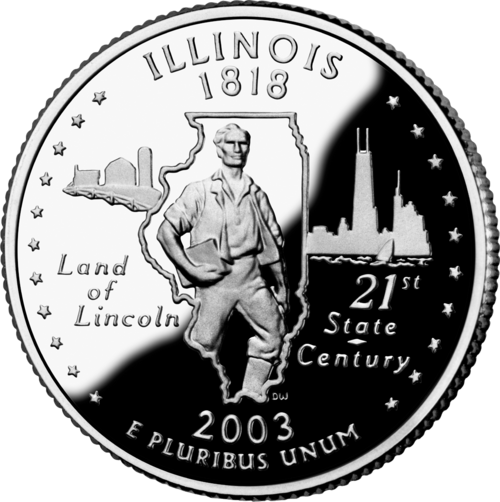
イリノイ( / ˌ ɪ l ɪ ˈ n ɔɪ / IL-in-OY)は、アメリカ合衆国中西部の州である。北東はミシガン湖、西はミシシッピ川南はウォバッシュ川とオハイオ川[b]アメリカ合衆国50州のうち、イリノイ州は国内総生産(GDP)が5番目に大きく、人口は6番目に多く、面積は25番目に大きい。州都はスプリングフィールド。
現在のイリノイ州には、数千年にわたって先住民文化が栄えていた。最初に到着したヨーロッパ人はフランス人で、17世紀にミシシッピ川とイリノイ川の近くに、広大なヌーベルフランス植民地の一部として定住した。 1783年に米国が独立した後、アメリカ人開拓者がオハイオ川を経由してケンタッキー州から到着し始めた。イリノイ州は米国最古の領土である北西部領土の一部であり、1818年に州に昇格した。エリー運河は五大湖での商業活動を活発化させ、イリノイ州のジョン・ディアによる自動洗浄鋼鋤の発明は、州の豊かな草原を世界で最も生産的で価値の高い農地に変え、ドイツとスウェーデンからの移民農民を惹きつけた。19世紀半ばには、イリノイ・ミシガン運河と広大な鉄道網が貿易、商業、入植を促進し、州は国の交通の中心地となった。[6] 1900年までに、北部の都市での工業雇用と中部および南部の炭鉱の成長が東ヨーロッパと南ヨーロッパからの移民を引き付けました。イリノイ州はアメリカで最も工業化された州の一つとなり、現在でも主要な製造業の中心地です。[7]南部からの大移動により、特にシカゴに大規模な黒人コミュニティが形成され、シカゴは主要な文化、経済、人口の中心地となりました。非公式にシカゴランドと呼ばれるその都市圏には、州の住民1,280万人の約65%が住んでいます。
イリノイ州には、古代カホキア・マウンドとライト建築の敷地の一部という2つの世界遺産がある。主要な学術センターには、シカゴ大学、イリノイ大学、ノースウェスタン大学などがある。イリノイ州の自然資源と文化資源を保護するため、さまざまな保護地域が設定されている。イリノイ州の住民から大統領に選出された大統領は、エイブラハム・リンカーン、ユリシーズ・S・グラント、バラク・オバマの3人である。また、ロナルド・レーガンもイリノイ州で生まれ育った。イリノイ州は公式の州スローガン「リンカーンの地」でリンカーンを称えている。[8] [9]スプリングフィールドにはエイブラハム・リンカーン大統領図書館・博物館があり、シカゴにはバラク・オバマ大統領センターが将来建設される予定である。
イリノイ州は、北東部に世界都市シカゴ、北部と中央に主要な工業と農業の中心地、南部に石炭、木材、石油などの天然資源があり、非常に多様な経済を持っています。州の中心部に位置し、地理的に恵まれているため、この州は主要な交通の中心地となっています。シカゴ港は、五大湖とセントローレンス水路を通って大西洋に、イリノイ水路を経由してミシシッピ川からメキシコ湾にアクセスできます。シカゴは1860年代から米国の鉄道の中心地であり、 [10]オヘア国際空港は数十年にわたって世界で最も忙しい空港の1つです。イリノイ州は長い間、米国の縮図であり、アメリカ文化の先駆者と考えられてきました。これは、 「ピオリアで演奏されるだろうか?」というフレーズに表れています。[11]
語源
「イリノイ」は、初期のフランス人 カトリック 宣教師や探検家がイリノイの 先住民に対して付けた名前の現代的な綴りであり、初期の記録ではさまざまな綴りが使われていた。[12]
アメリカの学者たちは以前、イリノイという名前はマイアミ・イリノイ語で「男」または「男たち」を意味し、元のiliniwek がフランス語を経てイリノイに変化したと考えていた。[13] [ 14]この語源はイリノイ語では裏付けられておらず[要出典] 、 「男」はireniwaで、「男」の複数形はireniwakiである。イリノイという名前は「優れた男たちの部族」を意味するとも言われているが[15] 、これは誤った語源である。イリノイという名前はマイアミ・イリノイ語の動詞irenwe·wa「彼は普通の話し方をする」に由来する。これがオジブウェー語、おそらくオタワ方言に取り入れられ、ilinwe· (複数形はilinwe·k ) に変化した。フランス語はこれらの形を借用し、/we/ の語尾を当時のフランス語の音訳である-oisと綴った。現在の綴りであるイリノイは、フランス人入植者が西部地域に定住した1670年代初頭に現れ始めました。イリノイ人が自分たちを呼んだ名前は、イリノイのフランス人宣教師時代の辞書3冊すべてに記載されているように、意味は不明で他の用語とは無関係の「イノカ」でした。[16] [17]
歴史
ヨーロッパ以前

ヨーロッパ人が到着する以前、数千年にわたってイリノイ地域の水路沿いには、歴代のアメリカ・インディアンが暮らしていた。コスター遺跡の発掘調査により、7,000年にわたる継続的な居住が実証されている。先コロンブス期のミシシッピ文化における最大の地域首長国であり都市中心地であったカホキアは、現在のイリノイ州コリンズビルの近くにあった。彼らは、100を超えるプラットフォームと埋葬塚、フットボール場35個分より大きい50エーカー(20ヘクタール)の広場、 [18]と神聖な杉のウッドヘンジからなる都市複合施設を建設し、そのすべてが文化の宇宙観を表現する計画的なデザインとなっている。遺跡の中心にあるモンクス・マウンドは、メキシコ渓谷の北で最大の先コロンブス期の建造物である。高さは100フィート(30メートル)、長さは951フィート(290メートル)、幅は836フィート(255メートル)、面積は13.8エーカー(5.6ヘクタール)です。[19]土量は約814,000立方ヤード(622,000m 3 )です。 [20]頂上には、長さ約105フィート(32メートル)、幅約48フィート(15メートル)の構造物が置かれ、面積は5,000平方フィート(460m 2)あり、高さは50フィート(15メートル)もあり、頂上は広場のレベルより150フィート(46メートル)上にあったと考えられています。カホキアで考古学者が発見した精巧に作られた装飾品や道具には、精巧な陶器、精巧に彫刻された石細工、丁寧に浮き彫りにされた銅板や雲母板、そして2万個の貝殻ビーズで作られた重要な首長の葬儀用毛布などが含まれています。これらの遺物は、カホキアが住宅や市場が密集し、道具作り、皮革加工、陶器作り、宝石作り、貝殻彫刻、織物、製塩の専門家がいた、まさに都市の中心地であったことを示しています。[21]
この文明は15世紀に理由は不明だが消滅したが、歴史家や考古学者は、人々がこの地域の資源を枯渇させたのではないかと推測している。多くの先住民族は絶えず戦争を繰り広げていた。スザンヌ・オースティン・アルチョンによると、「イリノイ川中央渓谷のある場所では、成人の3分の1が暴力による負傷で死亡した」という。[22]この地域の次の大国は、政治同盟であるイリノイ連合またはイリニであった。 [23] 1673年にヨーロッパ人と接触した頃、イリノイ連合の人口は1万人以上と推定された。[24]ビーバー戦争時代にイリニ族が衰退するにつれ、アルゴンキン語を話すポタワトミ族、マイアミ族、ソーク族、そしてフォックス族(メスクワキ族)、アイオワ族、キカプー族、マスコウテン族、ピアンケショー族、ショーニー族、ウィア族、ウィネベーゴ族(ホーチャンク族)を含む他の部族のメンバーが五大湖周辺の東と北からこの地域にやって来ました。[25] [26]
1800年以前のヨーロッパ人の探検と入植

フランス人探検家ジャック・マルケットとルイ・ジョリエは1673年にイリノイ川を探検した。マルケットはその後すぐにイリノイ地方のグランド・ビレッジ・オブ・ザ・イリノイに伝道所を設立した。1680年、ルネ・ロベール・カヴリエ、シュール・ド・ラ・サール、アンリ・ド・トンティ率いるフランス人探検家は現在のピオリアの場所に砦を建設し、1682年には今日のスターヴド・ロック州立公園のスターヴド・ロックの頂上に砦を建設した。フランス帝国のカナダ人は南下して特にミシシッピ川沿いに定住し、イリノイは最初はヌーベルフランスの一部となり、次いでラ・ルイジアナの一部となったが、1763年に七年戦争でフランスが敗北してイギリスの手に渡った。小さなフランス人入植地は続いたが、多くのフランス人がイギリスの支配を逃れるために西のミズーリ州セントジュヌビエーブやセントルイスに移住した。[28]
数人のイギリス兵がイリノイに駐留したが、英国王室がこの地域をアパラチア山脈の西側のインディアンの領土の一部とし、その後イギリス領ケベック州の一部としたため、そこに移住したイギリス人やアメリカ人の入植者はほとんどいなかった。1778年、ジョージ・ロジャース・クラークはイリノイ郡をバージニア州の領有権を主張した。妥協案により、バージニア州(およびさまざまな主張をした他の州)は1780年代にこの地域を新しいアメリカ合衆国に割譲し、北西部領土の一部となり、連邦政府によって管理され、後に州として組織された。[28]
19世紀
州になる前

イリノイ・ワバッシュ会社は、イリノイ州の大部分の領有権を初期に主張した。イリノイ準州は1809 年 2 月 3 日に創設され、その首都は初期のフランス人入植地であるカスカスキアに置かれていた。
イリノイ州の連邦加盟に至る議論の中で、州の北境界線案は2度変更された。[29]北西部条例の当初の規定では、ミシガン湖の南端に接する境界線が定められていた。そのような境界線だと、イリノイ州はミシガン湖に湖岸が全くなくなる。しかし、インディアナ州は利用可能な湖岸を提供するために境界線の北10マイル(16 km)延長を認められたため、1818年1月23日に議会に提出されたイリノイ州昇格の当初の法案では、北境界線をインディアナ州と同じ緯度、つまりミシガン湖の最南端から北10マイルと定めた。しかし、イリノイ州代表のナサニエル・ポープはそれ以上を望み、境界線をさらに北に移動するよう働きかけた。議会で可決された最終法案には、境界線を北緯 42 度 30 分に移動する修正条項が含まれていた。これはインディアナ州の北境界線から北に約 51 マイル (82 km) の地点である。この変更により、ガリーナ近くの鉛鉱山地域を含む 8,500 平方マイル (22,000 km 2 ) の土地が州に追加された。さらに重要なことに、ミシガン湖の岸とシカゴ川が約 50 マイル追加された。ポープらは、シカゴ川とイリノイ川を結び、五大湖とミシシッピ川を結ぶ運河を構想した。
南北戦争前のイリノイ州


1818年、イリノイ州はアメリカ合衆国21番目の州となった。州都はカスカスキアのままで、州が借りた小さな建物に本部が置かれた。1819年、ヴァンダリアが州都となり、その後18年間で3つの別々の建物が建設され、それぞれが州議事堂として使われた。1837年、サンガモン郡を代表する州議会議員は、州議会議員エイブラハム・リンカーンの指導の下、州都をスプリングフィールドに移転させることに成功し、[30] 5番目の州議事堂が建設された。6番目の州議事堂は1867年に建設され、現在もイリノイ州の州議事堂として使用されている。
表面上は「自由州」であったが、それでもイリノイ州には奴隷制度があった。フランス系住民は 1720 年代から黒人奴隷を所有しており、アメリカ人入植者もケンタッキー州から奴隷をこの地域に持ち込んでいた。奴隷制度は北西部条例によって名目上は禁止されていたが、すでに奴隷を所有している者には適用されなかった。イリノイ州が 1818 年に州になったとき、この条例はもはや適用されず、州内に約 900 人の奴隷がいた。後に「エジプト」または「リトル エジプト」として知られるようになった州の南部[31] [32]は主に南部からの移民によって開拓されたため、この地域は自由黒人に対して敵対的であった。入植者は労働のために奴隷を連れてくることが許されたが、1822 年に州民は奴隷制度の合法化に反対票を投じた。それでも、ほとんどの住民は自由黒人を永住者として認めることに反対した。入植者の中には季節的に奴隷を連れてきたり、家政婦として連れてきた者もいた。[33] 1848年のイリノイ州憲法には、排他的法律を制定する条項が含まれていた。1853年、ジョン・A・ローガンは、解放奴隷を含むすべてのアフリカ系アメリカ人が州内に定住することを禁止する法律の可決に尽力した。 [34]
1830年から1831年の冬は「大雪の冬」と呼ばれている。[35]突然の大雪が州を覆い、その冬の間は旅行が不可能となり、多くの旅行者が亡くなった。その後も「突然の凍結の冬」を含む厳しい冬が数回続いた。1836年12月20日、急速に移動する寒冷前線が通過し、数分で水たまりが凍り、避難所にたどり着けなかった多くの旅行者が死亡した。悪天候により、州北部では農作物が不作となった。州南部は北へ食料を輸送しており、これが「リトルエジプト」という名前につながったのかもしれない。これは、エジプトのヨセフが兄弟たちに穀物を供給したという聖書の物語にちなんでいる。 [36]
1832年、イリノイ州と現在のウィスコンシン州で、アメリカ合衆国とソーク族、フォックス族(メスクワキ族)、キカプー族インディアン部族との間でブラック・ホーク戦争が起こった。これはシカゴ地域における白人入植に対するインディアンの抵抗の終焉を意味している。[37]インディアンは1831年に故郷を離れアイオワ州へ強制移住させられたが、戻ろうとした際にアメリカ民兵に攻撃され、最終的に敗北した。生存者はアイオワ州へ強制的に戻された。[38]イリノイ州の最後のインディアンの土地がアメリカ合衆国に割譲された1832年までに、州の先住民人口は伝染病、戦争、そして西方への強制移住によって減少し、わずか300人未満の住民が住む村が1つだけになった。[24]
1839年までに、末日聖徒は、以前はコマースと呼ばれていたノーブーと呼ばれる理想郷の都市を建設しました。ミシシッピ川沿いのハンコック郡に位置していたノーブーは繁栄し、1844年までには一時的にシカゴを抜いて州最大の都市の地位に就きました。[39] [40]しかし、同じ年に、末日聖徒運動の創始者ジョセフ・スミスがノーブーから約30マイル離れたカーセージ監獄で殺害されました。後継者問題の後、ブリガム・ヤングはほとんどの末日聖徒をイリノイ州から現在のユタ州への大規模な移住に導きました。約6年間の急速な発展の後、ノーブーはその後急速に衰退しました。
1833年に設立された後、シカゴは五大湖の港として、そして1848年以降はイリノイ・ミシガン運河の港として、そしてその後すぐに鉄道の中心地として有名になりました。1857年までにシカゴはイリノイ州最大の都市でした。[28] 19世紀にイリノイ州の鉱山と工場が飛躍的に成長したことにより、イリノイ州は米国における労働組合結成の土壌となりました。
1847年、ドロテア・L・ディックスのロビー活動により、イリノイ州は地元の救貧院に代わる、精神病や障害に対する州が支援する治療システムを確立した最初の州の1つとなった。ディックスがこの取り組みに参加したのは、イリノイ州ジャクソンビルの実業家JO・キングと出会ったことがきっかけで、キングは彼女をイリノイ州に招いた。キングはそこで精神病院の建設に取り組んでいた。ディックスのロビー活動の専門知識により、ジャクソンビル州立病院(現在はジャクソンビル発達センターとして知られている)の計画は1847年3月1日に法律として署名された。[41]
南北戦争とその後

南北戦争中、イリノイ州は北軍に従軍した兵士の数(25万人以上)で第4位であり、この数字を上回るのはニューヨーク、ペンシルベニア、オハイオのみであった。エイブラハム・リンカーン大統領の最初の軍隊召集から戦争中を通して、イリノイ州は第7から第156連隊まで番号が付けられた150の歩兵連隊を召集した。17の騎兵連隊と2つの軽砲兵連隊も集められた。[42]州の南端、ミシシッピ川とオハイオ川の合流点にあるカイロの町は、北軍の戦略的に重要な補給基地および訓練センターとして機能した。数か月間、グラント将軍とフット提督の両者がカイロに司令部を置いた。
南北戦争中、そしてその後もシカゴの人口は急増し、その重要性が増した。特にプルマンストライキとヘイマーケット暴動は、アメリカの労働運動の発展に大きな影響を与えた。1871年10月8日日曜日から10月10日火曜日まで、シカゴ大火がシカゴのダウンタウンで燃え、4平方マイル(10 km 2)が焼失した。[43]
20世紀
_(cropa).jpg/500px-Protestors_and_Chicago_Police_Officers_in_Grant_Park_-_DPLA_-_2972723d78e7f60f542da94846a6f9a6_(1)_(cropa).jpg)

20世紀初頭、イリノイ州の人口は500万人近くに達した。工業基盤の拡大により雇用が生まれ、国内の他地域から多くの人々がこの州に移住した。州人口の98%は白人であった。[44]南ヨーロッパと東ヨーロッパからの継続的な移民と、南部からのアフリカ系アメリカ人の大移動に支えられ、イリノイ州は成長し、合衆国で最も重要な州の一つとなった。世紀の終わりまでに、人口は1,240万人に達した。
1933年、世紀の進歩の 世界博覧会がシカゴで開催された。マリオン郡とクロフォード郡での石油発見が1937年の好景気につながり、1939年までにイリノイ州は米国の石油生産量で第4位となった。イリノイ州は、第二次世界大戦中に生産された米国の軍事兵器全体の6.1%を製造し、48州の中で第7位となった。[45]シカゴは、1959年のセントローレンス水路の開通により海洋港となった。水路とイリノイ水路は、シカゴをミシシッピ川と大西洋の両方と結んだ。1960年、レイ・クロックはデスプレーンズに最初のマクドナルドのフランチャイズ店をオープンしたが、1984年に取り壊された。 [46] 1985年、元の外観を再現するために同じ場所にレプリカが建てられた。 [46] [47] [48]
イリノイ州は核時代の到来に重要な役割を果たした。1942年、マンハッタン計画の一環として、シカゴ大学は最初の持続的な核連鎖反応を実施した。1957年、シカゴ近郊のアルゴンヌ国立研究所は、米国初の実験用原子力発電システムを稼働させた。1960年までに、米国初の民間資金による原子力発電所であるドレスデン1がモリス近郊に開設された。1967年、バタビア近郊の国立原子力研究施設フェルミ国立加速器研究所は、 40年以上にわたり世界最大の粒子加速器を開設した。現在11の発電所が稼働しているイリノイ州は、原子力発電による電力生産量で全米トップである。[49] [50]
1961年、イリノイ州はアメリカ法学会の勧告を採用し、ソドミーを禁じる法律を廃止する包括的な刑法改正を可決した国内初の州となった。同法ではまた、判例法上の犯罪を廃止し、同意年齢を18歳と定めた。 [51] 1970年に州の4番目の憲法が採択され、1870年の文書に取って代わった。[52]
最初のファームエイドコンサートは1985年にアメリカの農家を支援するためにシャンペーンで開催されました。今世紀最悪のミシシッピ川上流域の洪水である1993年大洪水は、多くの町と数千エーカーの農地を浸水させました。[28]
21世紀

イリノイ州は共和党のジョージ・ライアン知事のもとで21世紀を迎えた。2003年1月の任期終了間際に、一連の著名な無罪判決の後、ライアンは州内のすべての死刑判決を減刑した。 [53]
2002年の選挙で民主党のロッド・ブラゴジェビッチが知事に就任した。また、将来の大統領バラク・オバマがイリノイ州上院の委員会指導的立場に就き、オバマは医療保険制度改革法の前身となる医療保険正義法を起草した。[54]オバマがブラゴジェビッチの2期目に大統領に選出されたことで、一連の出来事が起こり、ブラゴジェビッチは弾劾、裁判、それに続く有罪判決と投獄に至り、ブラゴジェビッチは連邦汚職容疑で有罪判決を受けた2人目のイリノイ州知事となった。[55]
ブラゴイェビッチの後任パット・クインは、 2014年の選挙で共和党のブルース・ラウナーに敗れた。予算政策をめぐる知事と議会の意見の不一致により、イリノイ州予算の行き詰まりに陥り、2015年から2018年にかけて793日間、州は予算がなく、支払いに苦労した。[56]
2017年8月28日、ラウナー知事は州警察と地方警察が移民ステータスや連邦拘留のみを理由に誰かを逮捕することを禁止する法案に署名した。[57] [58]一部の共和党員はラウナー知事の行動を批判し、この法案はイリノイ州を聖域州にしたと主張した。[59]
2018年の選挙でラウナーはJB・プリツカーに交代し、州政府は民主党の三権分立に戻った。[60] 2020年1月、州はマリファナを合法化した。[61] 2020年3月9日、プリツカーはCOVID-19パンデミック による災害宣言を発令した。彼は2023年5月に非常事態を解除した。[62]
地質学
古生代初期、後にイリノイ州となる地域は浅い海の底に沈み、赤道近くに位置していた。この時代には三葉虫、腕足動物、ウミユリなど多様な海洋生物が生息していた。環境条件の変化により、石炭紀には大規模な石炭湿地が形成されました。
イリノイ州は、少なくとも中生代の一部では海面より上にあったが、中生代の終わりには再び西部内陸海路によって水没した。始新世までに後退した。
更新世には、イリノイ州の大部分が広大な氷床に覆われ、ドリフトレス地域のみが露出したままでした。これらの氷河はミシガン湖の盆地を削り、古代の氷河湖とモレーンの痕跡を残しました。[63]
地理
イリノイ州はアメリカ合衆国中西部に位置し、北アメリカの五大湖地域(カナダのオンタリオ州も含む)の 8 つの州のうちの 1 つです。
境界
イリノイ州とインディアナ州の東境は、北はミシガン湖の西経87度31分30秒の南北線から、ポストビンセンズより南のワバッシュ川までである。ワバッシュ川は、オハイオ川に合流するまで、インディアナ州との東/南東境として続く。ここがイリノイ州とケンタッキー州の南境の始まりであり、オハイオ川の北岸に沿って走る。[64]ミズーリ州とアイオワ州との西境のほとんどはミシシッピ川である。カスカスキアはイリノイ州の飛び地で、ミシシッピ川の西側にあり、ミズーリ州からのみ到達可能である。ウィスコンシン州との北境は北緯42度30分に固定されている。イリノイ州の北東境はミシガン湖にあり、その中でイリノイ州はミシガン州、ウィスコンシン州、インディアナ州と水域境界を共有している。[25]
地形

イリノイ州は完全に内陸平原に位置しているが、標高には若干の変化がある。イリノイ州の北西部には、氷河作用がなく、そのためより高く険しい地形のドリフトレス地域が州の小さな部分を占めている。イリノイ州南部には、ショーニー国有林周辺の丘陵地帯が含まれる。
ドリフトレス地域にあるチャールズマウンドは、海抜1,235フィート(376メートル)で、州で最も高い自然標高を誇ります。その他の高地には南部のショーニーヒルズがあり、川沿いにはさまざまな地形があります。イリノイ川は州を北東から南西に二分しています。アルトンからカスカスキア川までのミシシッピ川の氾濫原は、アメリカンボトムとして知られています。
部門

イリノイ州には、3つの主要な地理的区分があります。イリノイ州北部は、シカゴ都市圏、またはシカゴランドによって占められています。シカゴ都市圏は、シカゴ市とその郊外、および大都市が拡大している隣接する郊外地域です。連邦政府の定義によると、シカゴ都市圏には、イリノイ州、インディアナ州、ウィスコンシン州のいくつかの郡が含まれ、人口は980万人を超えています。シカゴ自体は国際的な都市で、人口密度が高く、工業化されており、国の交通の中心地であり、さまざまな民族グループが住んでいます。イリノイ州で3番目に大きな都市であり、州で4番目に大きい都市圏の中心であるロックフォード市は、シカゴの北西約75マイル(121 km)の州間高速道路39号線と90号線沿いにあります。イリノイ州北部のミシシッピ川沿いにあるクアッドシティーズ地域の人口は、2011年には381,342人でした。
イリノイ州の中央部は、2番目に大きい地域で、セントラル・イリノイと呼ばれています。歴史的には大草原でしたが、現在は主に農業地帯で、イリノイの中心地として知られています。小さな町や中規模から小規模の都市が特徴です。西部(イリノイ川の西側)は、もともと1812年の軍事地域の一部であり、州の顕著な西部隆起を形成しています。農業、特にトウモロコシと大豆、および教育機関と製造センターは、セントラル・イリノイで重要な役割を果たしています。都市には、ピオリア、州都のスプリングフィールド、クインシー、ディケーター、ブルーミントン・ノーマル、シャンペーン・アーバナなどがあります。[25]
3番目の区分は南イリノイで、ミシシッピ川とオハイオ川の合流点近くのリトルエジプトを含むアメリカ国道50号線の南側の地域で構成される。南イリノイには古代都市カホキアがあり、最初の州都カスカスキアもあったが、現在はミシシッピ川によって州の他の地域と隔てられている。[25] [66]この地域は冬の気候がやや温暖で、作物の種類が異なり(過去には綿花栽培もあった)、地形が険しく(イリノイ期に州の他のほとんどの地域とは異なり氷河作用を受けなかったため)、小規模な石油鉱床と石炭鉱山がある。イーストセントルイスなどセントルイスのイリノイ州郊外はこの地域に位置しており、総称してメトロイーストと呼ばれている。イリノイ州南部で人口が集中しているもう1つの地域は、カーボンデールとマリオンを中心とするイリノイ州カーボンデール・マリオン・ヘリン複合統計地域で、2つの郡からなり、123,272人の住民が住んでいます。[25]イリノイ州南東部の一部は、インディアナ州エバンズビルの拡大都市圏の一部であり、地元ではインディアナ州とケンタッキー州とともにトライステートと呼ばれています。イリノイ州の7つの郡がこの地域にあります。
緯度によって大まかに定義されたこれら 3 つの区分に加えて、シカゴ都市圏外の地域はすべて「ダウンステート」イリノイと呼ばれることがよくあります。この用語は柔軟ですが、一般的にはシカゴ地域の影響外のすべてを意味します。したがって、シカゴの西にあるディカルブや、実際にはシカゴの北にあるロックフォードなど、イリノイ州北部のいくつかの都市は、誤って「ダウンステート」と見なされることがあります。
気候

イリノイ州の気候は、年間を通じて大きく変化します。イリノイ州は、最北端と最南端の間が約 400 マイル離れており、大陸の中央に位置しているため、イリノイ州の大部分は湿潤大陸性気候(ケッペンの気候区分 Dfa ) で、夏は高温多湿で冬は寒くなります。カーボンデールから南の州南部は、湿潤亜熱帯気候(ケッペンの気候区分Cfa ) で、冬はより穏やかです。イリノイ州の平均年間降水量は、南端の 48 インチ (1,219 mm) をわずかに超える程度から、州北部の約 35 インチ (889 mm) まで変化します。シカゴ地域では通常、年間降雪量が 38 インチ (965 mm) を超えますが、州南部では通常 14 インチ (356 mm) 未満です。[67]史上最高気温は1954年7月14日にイーストセントルイスで記録された117 °F (47 °C) で、史上最低気温は2019年1月31日に2019年1月の北米寒波の際にマウントキャロル近くの気象観測所で記録された−38 °F (−39 °C) で、[ 68] [69] 2019年3月5日に確認された。 [70]これは、1999年1月5日にコンガービル近くで記録された−36 °F (−38 °C) という以前の記録に続くものである。[70]マウントキャロルの記録以前には、2009年1月15日にロシェルで−37 °F (−38 °C) が記録されたが、この気象観測所は公式記録と同じ品質管理を受けていなかった。[71] [72]
イリノイ州では、年間平均約51日間雷雨が発生し、これは米国全体の雷雨日数の平均をやや上回る。イリノイ州は竜巻が発生しやすく、年間平均35回発生し、州の大部分では1万平方マイル(3万km 2)あたり年間約5回の竜巻が発生することになる。[73]イリノイ州の竜巻の強さは他州より劣るが、記録上最も死者数の多い竜巻街道のいくつかはイリノイ州で発生した。 1925年のトライステート竜巻では3州で695人が死亡し、犠牲者のうち613人がイリノイ州で死亡した。[74]
都市部
シカゴは州最大の都市であり、米国で3番目に人口の多い都市で、2020年の人口は2,746,388人です。さらに、シカゴ都市圏の700万人以上の住民がイリノイ州に住んでいます。米国国勢調査局は現在、州内に人口10万人を超える都市を7つ挙げています。これには、シカゴの衛星都市であるオーロラ、ジョリエット、ネーパービル、エルジンのほか、シカゴ地域以外では州で最も人口の多い都市であるロックフォード、州都のスプリングフィールド、ピオリアの各都市が含まれます。
スプリングフィールドの南にある州内で最も人口の多い都市はベルビルで、 42,000人が住んでいます。ベルビルは、イリノイ州で2番目に人口の多い都市圏であるグレーターセントルイスのメトロイースト地域に位置し、70万人以上の住民がいます。その他の主な都市圏には、ピオリア都市圏、ロックフォード都市圏、シャンペーン・アーバナ都市圏(イリノイ大学がある)、スプリングフィールド都市圏、クアッドシティーズ地域のイリノイ州部分、ブルーミントン・ノーマル都市圏があります。
人口統計
アメリカ合衆国国勢調査局は、2020年の国勢調査でイリノイ州の人口が12,812,508人であり、5番目に大きな州から6番目に大きな州(ペンシルベニア州に負ける)に移動したことを発見しました。イリノイ州の人口は、2010年の国勢調査から2020年にわずかに18,000人強減少し、総人口は最近の国勢調査の推定よりもかなり高くなりました。[83]

イリノイ州は中西部で最も人口の多い州である。米国で3番目に人口の多い都市であるシカゴは、シカゴ都市圏、または愛称で呼ばれるシカゴランドの中心地である。シカゴ都市圏は州の陸地面積のわずか9%を占めるに過ぎないが、州の住民の65%が居住しており、2020年現在、イリノイ州の人口の21.4%がシカゴ市に居住している。[84] 2020年の国勢調査結果から予想される人口減少はシカゴ都市圏から生じたものではなく、ダウンステート郡からの減少である。[85] 2020年の国勢調査時点で、州の人口の地理的平均中心は、コールシティの北西約6マイルのグランディ郡の41° 18′ 43″N 88° 22 23″Wに位置している。[86]
イリノイ州は中西部で最も人種的、民族的に多様な州である。人種的、民族的背景、宗教的所属、都市部と農村部の格差の割合など、いくつかの指標から判断すると、イリノイ州は米国の人口統計を最も代表している。[87]
人種と民族
2020年国勢調査


非ヒスパニック系白人
2022年アメリカコミュニティ調査
2022年の米国国勢調査局の推計によると、イリノイ州の人口は、白人が61.1% 、黒人またはアフリカ系アメリカ人が13.4%、ネイティブアメリカンまたはアラスカ先住民が0.1% 、アジア人が6.0%、太平洋諸島系が0.1% 、その他の人種が7.9%、2つ以上の人種が混血が10.9%となっている。[98]白人人口は引き続きイリノイ州で最大の人種カテゴリーとなっている。ヒスパニックはさまざまな人種グループに分配され、主にその他の人種(41.2%)または混血(39.5%)を自認し、残りは白人(14.2%)、黒人(1.3%)、アメリカインディアンおよびアラスカ先住民(3.3%)、アジア人(0.3%)、ハワイアンおよび太平洋諸島系(0.2%)を自認している。[98]民族別に見ると、全人口の18.3%がヒスパニック系ラテン系(全人種)で、81.7%が非ヒスパニック系(全人種)である。別のカテゴリーとして扱うと、ヒスパニック系はイリノイ州で最大の少数民族グループである。[98]
2022年現在[update]、イリノイ州の4歳未満の人口の50%はマイノリティである(注:白人ヒスパニック系または片親または片親がマイノリティの場合、生まれた子供はマイノリティとしてカウントされる)。[99]
州で最も人口の多い民族グループである非ヒスパニック系白人は、1970年の83.5% [100]から2022年には58.5%に減少している。 [98]イリノイ州の少数民族人口のほぼ60%、黒人人口の67%以上がクック郡に住んでおり、同郡は州の総人口の約40%を占めている。[101]シカゴがあるクック郡はイリノイ州で唯一少数民族が多数派の郡であり、非ヒスパニック系白人が人口の40.4%と多数派を占めている。[102] 2020年には、96,498人がネイティブアメリカンのみであると自認し、184,487人が1つ以上の他の人種と組み合わせて自認した。この人口統計の半数以上はヒスパニックまたはラテン系であるとも自認している。[103]
祖先
2022年のアメリカコミュニティ調査の推計によると、人口の16%がドイツ系、14%がメキシコ系、10.4%がアイルランド系、7.1%がイギリス系、6.2%がポーランド系、5.2%がイタリア系、3.4%がアメリカ人、2.3%がインド系、1.7%がプエルトリコ系、1.7%がスウェーデン系、1.4%がフィリピン系、1.4%がフランス系、1.2%が中国系である。また、この州にはアフリカ系アメリカ人の人口が多く、単独または組み合わせで人口の15.3%を占めている。[104] [105] [106] [107] この表は、2022年のアメリカコミュニティ調査の推定によると、イリノイ州で5万人以上のメンバーがいる自己申告の祖先を単独または組み合わせで表示しています。ヒスパニック系グループは、完全な祖先と部分的な祖先を区別しません。
移民
アメリカ合衆国国勢調査局の2022年の推計によると、イリノイ州には1,810,100人の外国生まれの住民がおり、人口の14.4%を占め、メキシコまたは中央アメリカ出身が37.8%、アジア出身が31%、ヨーロッパ出身が20.2%、南アメリカ出身が4.3%、アフリカ出身が4.2%、カナダ出身が1%、オセアニア出身が0.2%となっている。[113] [114]外国生まれの人口のうち、53.5%は帰化した米国市民であり、46.5%は米国市民ではなかった。[115] 2018年のイリノイ州への移民の出身国上位は、メキシコ、インド、ポーランド、フィリピン、中国であった。 [116]
年齢と性別
2022年には、イリノイ州の人口の11.2%が9歳未満、12.9%が10〜19歳、13.4%が20〜29歳、13.6%が30〜39歳、12.6%が40〜49歳、12.7%が50〜59歳、11.9%が60〜69歳、7.7%が70〜79歳、4%が80歳以上と報告されている。[119]イリノイ州の平均年齢は39.1歳である。女性が人口の約50.5%を占め、男性が49.5%を占めている。[120]ウィリアムズ研究所の2022年の調査によると、イリノイ州の成人の0.44%がトランスジェンダーであると推定されており、これは全国平均の0.52%よりもわずかに低い割合です。[121] 2019年のギャラップの調査によると、イリノイ州の成人の4.3%がLGBTQであると認識しています。[122]
社会経済
2022年現在、イリノイ州の一人当たり所得は43,317ドル、州内の世帯所得の中央値は76,708ドルで、全国平均をわずかに上回っている。人口の11.9%が貧困線以下の生活を送っており、これには18歳未満の子供の16%と65歳以上の10%が含まれる。イリノイ州には5,056,360世帯があり、世帯あたりの平均人数は2.4人である。成人人口の90.4%が高校卒業資格を持ち、25歳以上の人口の37.7%が学士号以上を取得している。全国平均は35.7%である。[119]
2021年、イリノイ州は国連の人間開発指数で0.929を獲得し、「非常に高い」人間開発のカテゴリーに分類され、米国平均の0.921をわずかに上回りました。[123]
HUDの2022年ホームレス評価報告書によると、イリノイ州には推定9,212人のホームレスがいる。[124] [125]
人種/民族別の出生データ
ヒスパニック系は民族と人種の両方で数えられるため、出生数は一致しません。
- Since 2016, data for births of Hispanic origin are not collected by race, but included in one Hispanic group; persons of Hispanic origin may be of any race.
Languages
The official language of Illinois is English,[136] although between 1923 and 1969, state law gave official status to "the American language". Nearly 80% of people in Illinois speak English natively, and most of the rest speak it fluently as a second language.[137] A number of dialects of American English are spoken, ranging from Inland Northern American English and African-American English around Chicago, to Midland American English in Central Illinois, to Southern American English in the far south.
Over 23% of Illinoians speak a language other than English at home, of which Spanish is by far the most widespread, at more than 13% of the total population.[138] A sizeable number of Polish speakers is present in the Chicago Metropolitan Area. Illinois Country French has mostly gone extinct in Illinois, although it is still celebrated in the French Colonial Historic District.
Religion
Religion in Illinois (2014)[140][141]
Protestantism (43%)
Roman Catholicism (28%)
No religion (22%)
Judaism (2%)
Islam (1%)
Buddhism (1%)
Hinduism (1%)
Other religion (1%)
No response given/Unknown (1%)
Christianity
Roman Catholics constitute the single largest religious denomination in Illinois; they are heavily concentrated in and around Chicago and account for nearly 30% of the state's population.[142] However, taken together as a group, the various Protestant denominations comprise a greater percentage of the state's population than do Catholics. In 2010, Catholics in Illinois numbered 3,648,907. The largest Protestant denominations were the United Methodist Church with 314,461 members and the Southern Baptist Convention with 283,519. Illinois has one of the largest concentrations of Missouri Synod Lutherans in the United States.
Illinois played an important role in the early Latter Day Saint movement, with Nauvoo becoming a gathering place for Mormons in the early 1840s. Nauvoo was the location of the succession crisis, which led to the separation of the Mormon movement into several Latter Day Saint sects. The Church of Jesus Christ of Latter-day Saints, the largest of the sects to emerge from the Mormon schism, has more than 55,000 adherents in Illinois today.[143]
Other Abrahamic religious communities

A significant number of adherents of other Abrahamic faiths can be found in Illinois. Largely concentrated in the Chicago metropolitan area, followers of the Muslim, Baháʼí, and Jewish religions all call the state home.[144] Muslims constituted the largest non-Christian group, with 359,264 adherents.[145] Illinois has the largest concentration of Muslims by state in the country, with 2,800 Muslims per 100,000 citizens.[146]
The largest and oldest surviving Baháʼí House of Worship in the world is located on the shores of Lake Michigan in Wilmette, Illinois, one of eight continental Baháʼí House of Worship.[147] It serves as a space for people of all backgrounds and religions to gather, meditate, reflect, and pray, expressing the Baháʼí principle of the oneness of religions.[148] The Chicago area has a very large Jewish community, particularly in the suburbs of Skokie, Buffalo Grove, Highland Park, and surrounding suburbs. Former Chicago Mayor Rahm Emanuel was the Windy City's first Jewish mayor.
Other religions
Chicago is also home to a very large population of Hindus, Sikhs, Jains, and Buddhists.[144]
Economy
.png/500px-Illinois_counties_by_GDP_(2021).png)
As of 2022, the gross state product for Illinois reached US$1.0 trillion.[149]
As of February 2019, the unemployment rate in Illinois reached 4.2%.[150]
Illinois's minimum wage will rise to $15 per hour by 2025, making it one of the highest in the nation.[151]
Agriculture

Illinois's major agricultural outputs are corn, soybeans, hogs, cattle, dairy products, and wheat. In most years, Illinois is either the first or second state for the highest production of soybeans, with a harvest of 427.7 million bushels (11.64 million metric tons) in 2008, after Iowa's production of 444.82 million bushels (12.11 million metric tons).[152] Illinois ranks second in U.S. corn production with more than 1.5 billion bushels produced annually.[153] With a production capacity of 1.5 billion gallons per year, Illinois is a top producer of ethanol, ranking third in the United States in 2011.[154] Illinois is a leader in food manufacturing and meat processing.[155] Although Chicago may no longer be "Hog Butcher for the World", the Chicago area remains a global center for food manufacture and meat processing,[155] with many plants, processing houses, and distribution facilities concentrated in the area of the former Union Stock Yards.[156] Illinois also produces wine, and the state is home to two American viticultural areas. In the area of The Meeting of the Great Rivers Scenic Byway, peaches and apples are grown. The German immigrants from agricultural backgrounds who settled in Illinois in the mid- to late 19th century are in part responsible for the profusion of fruit orchards in that area of Illinois.[157] Illinois's universities are actively researching alternative agricultural products as alternative crops.
Manufacturing
Illinois is one of the nation's manufacturing leaders, boasting annual value added productivity by manufacturing of over $107 billion in 2006. As of 2011[update], Illinois is ranked as the 4th-most productive manufacturing state in the country, behind California, Texas, and Ohio.[158] About three-quarters of the state's manufacturers are located in the Northeastern Opportunity Return Region, with 38 percent of Illinois's approximately 18,900 manufacturing plants located in Cook County. As of 2006, the leading manufacturing industries in Illinois, based upon value-added, were chemical manufacturing ($18.3 billion), machinery manufacturing ($13.4 billion), food manufacturing ($12.9 billion), fabricated metal products ($11.5 billion), transportation equipment ($7.4 billion), plastics and rubber products ($7.0 billion), and computer and electronic products ($6.1 billion).[159]
Services
.jpg/500px-Federal_Reserve_Bank_of_Chicago_(51574643886).jpg)
By the early 2000s, Illinois's economy had moved toward a dependence on high-value-added services, such as financial trading, higher education, law, logistics, and medicine. In some cases, these services clustered around institutions that hearkened back to Illinois's earlier economies. For example, the Chicago Mercantile Exchange, a trading exchange for global derivatives, had begun its life as an agricultural futures market. Other important non-manufacturing industries include publishing, tourism, and energy production and distribution.
Investments
Venture capitalists funded a total of approximately $62 billion in the U.S. economy in 2016. Of this amount, Illinois-based companies received approximately $1.1 billion. Similarly, in FY 2016, the federal government spent $461 billion on contracts in the U.S. Of this amount, Illinois-based companies received approximately $8.7 billion.[citation needed]
Energy
Illinois is a net importer of fuels for energy, despite large coal resources and some minor oil production. Illinois exports electricity, ranking fifth among states in electricity production and seventh in electricity consumption.[160]
Coal
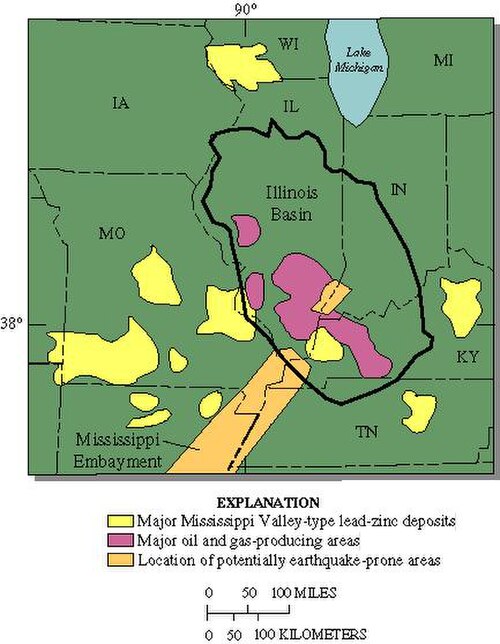
The coal industry of Illinois has its origins in the middle 19th century, when entrepreneurs such as Jacob Loose discovered coal in locations such as Sangamon County. Jacob Bunn contributed to the development of the Illinois coal industry and was a founder and owner of the Western Coal & Mining Company of Illinois. About 68% of Illinois has coal-bearing strata of the Pennsylvanian geologic period. According to the Illinois State Geological Survey, 211 billion tons of bituminous coal are estimated to lie under the surface, having a total heating value greater than the estimated oil deposits in the Arabian Peninsula.[161] However, this coal has a high sulfur content, which causes acid rain, unless special equipment is used to reduce sulfur dioxide emissions.[25][28][66] Many Illinois power plants are not equipped to burn high-sulfur coal. In 1999, Illinois produced 40.4 million tons of coal, but only 17 million tons (42%) of Illinois coal was consumed in Illinois. Most of the coal produced in Illinois is exported to other states and countries. In 2008, Illinois exported three million tons of coal and was projected to export nine million in 2011, as demand for energy grows in places such as China, India, and elsewhere in Asia and Europe.[162] As of 2010[update], Illinois was ranked third in recoverable coal reserves at producing mines in the nation.[154] Most of the coal produced in Illinois is exported to other states, while much of the coal burned for power in Illinois (21 million tons in 1998) is mined in the Powder River Basin of Wyoming.[160]
Mattoon was chosen as the site for the Department of Energy's FutureGen project, a 275-megawatt experimental zero emission coal-burning power plant that the DOE just gave a second round of funding. In 2010, after a number of setbacks, the city of Mattoon backed out of the project.[163]
Petroleum
Illinois is a leading refiner of petroleum in the American Midwest, with a combined crude oil distillation capacity of nearly 900,000 bbl/d (140,000 m3/d). However, Illinois has very limited crude oil proved reserves that account for less than 1% of the U.S. total reserves. Residential heating is 81% natural gas compared to less than 1% heating oil. Illinois is ranked 14th in oil production among states, with a daily output of approximately 28,000 bbl (4,500 m3) in 2005.[164][165]
Nuclear power

Nuclear power arguably began in Illinois with the Chicago Pile-1, the world's first artificial self-sustaining nuclear chain reaction in the world's first nuclear reactor, built on the University of Chicago campus. There are six operating nuclear power plants in Illinois: Braidwood, Byron, Clinton, Dresden, LaSalle, and Quad Cities.[166] With the exception of the single-unit Clinton plant, each of these facilities has two reactors. Three reactors have been permanently shut down and are in various stages of decommissioning: Dresden-1 and Zion-1 and 2. Illinois ranked first in the nation in 2010 in both nuclear capacity and nuclear generation. Generation from its nuclear power plants accounted for 12 percent of the nation's total.[154] In 2007, 48% of Illinois's electricity was generated using nuclear power.[167] The Morris Operation is the only de facto high-level radioactive waste storage site in the United States.
Wind power

Illinois has seen growing interest in the use of wind power for electrical generation.[168] Most of Illinois was rated in 2009 as "marginal or fair" for wind energy production by the U.S. Department of Energy, with some western sections rated "good" and parts of the south rated "poor".[169] These ratings are for wind turbines with 50 m (160 ft) hub heights; newer wind turbines are taller, enabling them to reach stronger winds farther from the ground. As a result, more areas of Illinois have become prospective wind farm sites. As of September 2009, Illinois had 1116.06 MW of installed wind power nameplate capacity with another 741.9 MW under construction.[170] Illinois ranked ninth among U.S. states in installed wind power capacity and sixteenth by potential capacity.[170] Large wind farms in Illinois include Twin Groves, Rail Splitter, EcoGrove, and Mendota Hills.[170]
As of 2007, wind energy represented only 1.7% of Illinois's energy production, and it was estimated that wind power could provide 5–10% of the state's energy needs.[171][172] Also, the Illinois General Assembly mandated in 2007 that by 2025, 25% of all electricity generated in Illinois is to come from renewable resources.[173]
Biofuels
Illinois is ranked second in corn production among U.S. states, and Illinois corn is used to produce 40% of the ethanol consumed in the United States.[153] The Archer Daniels Midland corporation in Decatur, Illinois, is the world's leading producer of ethanol from corn.
The National Corn-to-Ethanol Research Center (NCERC), the world's only facility dedicated to researching the ways and means of converting corn (maize) to ethanol is located on the campus of Southern Illinois University Edwardsville.[174][175]
University of Illinois Urbana-Champaign is one of the partners in the Energy Biosciences Institute (EBI), a $500 million biofuels research project funded by petroleum giant BP.[176][177]
Taxes
Tax is collected by the Illinois Department of Revenue. State income tax is calculated by multiplying net income by a flat rate. In 1990, that rate was set at 3%, but in 2010, the General Assembly voted for a temporary increase in the rate to 5%; the new rate went into effect on January 1, 2011; the personal income rate partially sunset on January 1, 2015, to 3.75%, while the corporate income tax fell to 5.25%.[178][179] Illinois failed to pass a budget from 2015 to 2017, after the 736-day budget impasse, a budget was passed in Illinois after lawmakers overturned Governor Bruce Rauner's veto; this budget raised the personal income rate to 4.95% and the corporate rate to 7%.[180] There are two rates for state sales tax: 6.25% for general merchandise and 1% for qualifying food, drugs, and medical appliances.[181] The property tax is a major source of tax revenue for local government taxing districts. The property tax is a local—not state—tax imposed by local government taxing districts, which include counties, townships, municipalities, school districts, and special taxation districts. The property tax in Illinois is imposed only on real property.[25][28][66]
On May 1, 2019, the Illinois Senate voted to approve a constitutional amendment that would have stricken language from the Illinois Constitution requiring a flat state income tax, in a 73–44 vote. If approved, the amendment would have allowed the state legislature to impose a graduated income tax based on annual income. The governor, J. B. Pritzker, approved the bill on May 27, 2019. It was scheduled for a 2020 general election ballot vote[182][183] and required 60 percent voter approval to effectively amend the state constitution.[184] The amendment was not approved by Illinoisans, with 55.1% of voters voting "No" on approval and 44.9% voting "Yes".[185]
As of 2017 Chicago had the highest state and local sales tax rate for a U.S. city with a populations above 200,000, at 10.250%.[186] The state of Illinois has the second highest rate of real estate tax: 2.31%, which is second only to New Jersey at 2.44%.[187]
Toll roads are a de facto user tax on the citizens and visitors to the state of Illinois. Illinois ranks seventh out of the 11 states with the most miles of toll roads, at 282.1 miles. Chicago ranks fourth in most expensive toll roads in America by the mile, with the Chicago Skyway charging 51.2 cents per mile.[188] Illinois also has the 11th highest gasoline tax by state, at 37.5 cents per gallon.[189]
Culture
Museums
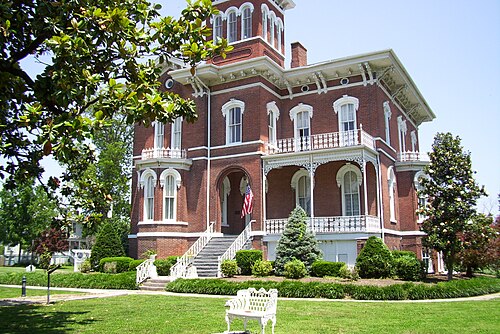
Illinois has numerous museums; the greatest concentration of these are in Chicago. Several museums in Chicago are ranked as some of the best in the world. These include the John G. Shedd Aquarium, the Field Museum of Natural History, the Art Institute of Chicago, the Adler Planetarium, and the Museum of Science and Industry.
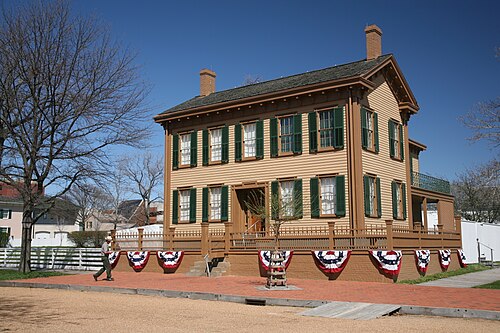
The modern Abraham Lincoln Presidential Library and Museum in Springfield is the largest and most attended presidential library in the country. The Illinois State Museum boasts a collection of 13.5 million objects that tell the story of Illinois life, land, people, and art. The ISM is among only 5% of the nation's museums that are accredited by the American Alliance of Museums. Other historical museums in the state include the Polish Museum of America in Chicago; Magnolia Manor in Cairo; Easley Pioneer Museum in Ipava; the Elihu Benjamin Washburne; Ulysses S. Grant Homes, both in Galena; and the Chanute Air Museum, located on the former Chanute Air Force Base in Rantoul.
The Chicago metropolitan area also hosts two zoos: The Brookfield Zoo, located about ten miles west of the city center in suburban Brookfield, contains more than 2,300 animals and covers 216 acres (87 ha). The Lincoln Park Zoo is located in Lincoln Park on Chicago's North Side, approximately 3 miles (4.8 km) north of the Loop. The zoo accounts for more than 35 acres (14 ha) of the park.
- Illinois Museums
-

-

-
-
-
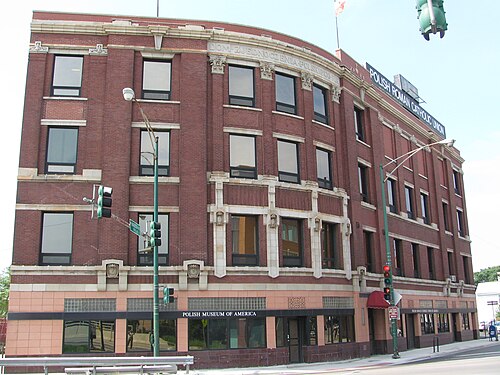 The Polish Museum of America in Chicago
 -

.jpg/500px-Museum_of_Science_and_Industry_(Chicago).jpg)
Music
Illinois is a leader in music education, having hosted the Midwest Clinic International Band and Orchestra Conference since 1946, as well being home to the Illinois Music Educators Association (ILMEA, formerly IMEA), one of the largest professional music educator's organizations in the country. Each summer since 2004, Southern Illinois University Carbondale has played host to the Southern Illinois Music Festival, which presents dozens of performances throughout the region. Past featured artists include the Eroica Trio and violinist David Kim.
Chicago, in the northeast corner of the state, is a major center for music[190] in the midwestern United States where distinctive forms of blues (greatly responsible for the future creation of rock and roll), and house music, a genre of electronic dance music, were developed.
The Great Migration of poor black workers from the South into the industrial cities brought traditional jazz and blues music to the city, resulting in Chicago blues and "Chicago-style" Dixieland jazz. Notable blues artists included Muddy Waters, Junior Wells, Howlin' Wolf and both Sonny Boy Williamsons; jazz greats included Nat King Cole, Gene Ammons, Benny Goodman, and Bud Freeman. Chicago is also well known for its soul music.
In the early 1930s, Gospel music began to gain popularity in Chicago due to Thomas A. Dorsey's contributions at Pilgrim Baptist Church.
In the 1980s and 1990s, heavy rock, punk, and hip hop also became popular in Chicago. Orchestras in Chicago include the Chicago Symphony Orchestra, the Lyric Opera of Chicago, and the Chicago Sinfonietta.[191]
Movies
John Hughes, who moved from Grosse Pointe to Northbrook, based many films of his in Chicago, and its suburbs. Ferris Bueller's Day Off, Home Alone, The Breakfast Club, and all his films take place in the fictional Shermer, Illinois (the original name of Northbrook was Shermerville, and Hughes's High School, Glenbrook North High School, is on Shermer Road). Most locations in his films include Glenbrook North, the former Maine North High School, the Ben Rose House in Highland Park, and the famous Home Alone house in Winnetka, Illinois.
Sports


Major league sports
As one of the United States' major metropolises, all major sports leagues have teams headquartered in Chicago.
- Two Major League Baseball teams are located in the state. The Chicago Cubs of the National League play in the second-oldest major league stadium, Wrigley Field, and went the longest length of time without a championship in all of major American sport, from 1908 to 2016, when they won the World Series.[192][193] The Chicago White Sox of the American League won the World Series in 2005, their first since 1917. They play on the city's south side at Guaranteed Rate Field.
- The Chicago Bears football team has won nine total NFL Championships, the last occurring in Super Bowl XX on January 26, 1986.
- The Chicago Bulls of the NBA is one of the most recognized basketball teams in the world, largely as a result of the efforts of Michael Jordan, who led the team to six NBA championships in eight seasons in the 1990s.
- The Chicago Blackhawks of the NHL began playing in 1926 and became a member of the Original Six once the NHL dropped to that number of teams during World War II. The Blackhawks have won six Stanley Cups, most recently in 2015.
- Chicago Fire FC is a member of MLS and has been one of the league's most successful and best-supported clubs since its founding in 1997, winning one league and four Lamar Hunt U.S. Open Cups in that timespan. The team played in Bridgeview, adjacent to Chicago from 2006 to 2019. The team now plays at Soldier Field in Chicago.
- The Chicago Red Stars have played at the top level of U.S. women's soccer since their formation in 2009, except in the 2011 season. The team currently plays in the National Women's Soccer League, playing at SeatGeek Stadium, the Bridgeview venue it formerly shared with Fire FC.
- The Chicago Sky have played in the Women's National Basketball Association (WNBA) since 2006. The Sky won their first WNBA Championship in 2021. They play at Wintrust Arena in Chicago.
- The Chicago Bandits of the NPF, a women's softball league, have won four league titles, most recently in 2016. They play at Parkway Bank Sports Complex in Rosemont, Illinois, in the Chicago area.
Minor league sports
Many minor league teams also call Illinois their home. They include:
- The Bloomington Edge of the Indoor Football League
- The Bloomington Flex of the Midwest Professional Basketball Association
- The Chicago Dogs of the American Association of Professional Baseball
- Chicago Fire FC II of MLS Next Pro
- The Chicago Wolves are an AHL team playing in the suburb of Rosemont
- The Gateway Grizzlies of the Frontier League in Sauget, Illinois
- The Kane County Cougars of the American Association
- The Joliet Slammers of the Frontier League
- The Peoria Chiefs of the Midwest League
- The Peoria Rivermen are an SPHL team
- The Rockford Aviators of the Frontier League
- The Rockford IceHogs of the AHL
- The Schaumburg Boomers of the Frontier League
- The Southern Illinois Miners based out of Marion in the Frontier League
- The Windy City Bulls, playing in the Chicago suburb of Hoffman Estates, of the NBA G League
- The Windy City ThunderBolts of the Frontier League
College sports
The state features 13 athletic programs that compete in NCAA Division I, the highest level of U.S. college sports.
The two most prominent are the Illinois Fighting Illini and Northwestern Wildcats, both members of the Big Ten Conference and the only ones competing in one of the so-called "Power Five conferences". The Fighting Illini football team has won five national championships and three Rose Bowl Games, whereas the men's basketball team has won 17 conference seasons and played five Final Fours. Meanwhile, the Wildcats have won eight football conference championships and one Rose Bowl Game.
The Northern Illinois Huskies from DeKalb, Illinois, compete in the Mid-American Conference, having won four conference championships and earning a bid in the Orange Bowl along with producing Heisman candidate Jordan Lynch at quarterback. The Huskies are the state's only other team competing in the Football Bowl Subdivision, the top level of NCAA football.
Four schools have football programs that compete in the second level of Division I football, the Football Championship Subdivision (FCS). The Illinois State Redbirds (Normal, adjacent to Bloomington) and Southern Illinois Salukis (representing Southern Illinois University's main campus in Carbondale) are members of the Missouri Valley Conference (MVC) for non-football sports and the Missouri Valley Football Conference (MVFC). The Eastern Illinois Panthers (Charleston) and Western Illinois Leathernecks (Macomb) are members of the Ohio Valley Conference (OVC).
The city of Chicago is home to four Division I programs that do not sponsor football. The DePaul Blue Demons, with main campuses in Lincoln Park and the Loop, are members of the Big East Conference. The Loyola Ramblers, with their main campus straddling the Edgewater and Rogers Park community areas on the city's far north side, compete in the Atlantic 10 Conference. The UIC Flames, from the Near West Side next to the Loop, are in the MVC. The Chicago State Cougars, from the city's south side, compete in the Northeast Conference.
Finally, two non-football Division I programs are located downstate. The Bradley Braves (Peoria) are MVC members, and the SIU Edwardsville Cougars (in the Metro East region across the Mississippi River from St. Louis) compete in the OVC.
Motor racing

Motor racing oval tracks at the Chicagoland Speedway in Joliet, the Chicago Motor Speedway in Cicero and the Gateway Motorsports Park in Madison, near St. Louis, have hosted NASCAR, CART, and IRL races, whereas the Sports Car Club of America, among other national and regional road racing clubs, have visited the Autobahn Country Club in Joliet, the Blackhawk Farms Raceway in South Beloit and the former Meadowdale International Raceway in Carpentersville. Illinois also has several short tracks and dragstrips. The dragstrip at Gateway International Raceway and the Route 66 Raceway, which sits on the same property as the Chicagoland Speedway, both host NHRA drag races.
Golf
Illinois features several golf courses, such as Olympia Fields, Medinah, Midlothian, Cog Hill, and Conway Farms, which have often hosted the BMW Championship, Western Open, and Women's Western Open.
Also, the state has hosted 13 editions of the U.S. Open (latest at Olympia Fields in 2003), six editions of the PGA Championship (latest at Medinah in 2006), three editions of the U.S. Women's Open (latest at The Merit Club), the 2009 Solheim Cup (at Rich Harvest Farms), and the 2012 Ryder Cup (at Medinah).
The John Deere Classic is a regular PGA Tour event played in the Quad Cities since 1971, whereas the Encompass Championship is a Champions Tour event since 2013. Previously, the LPGA State Farm Classic was an LPGA Tour event from 1976 to 2011.
Parks and recreation

The Illinois state parks system began in 1908 with what is now Fort Massac State Park, becoming the first park in a system encompassing more than 60 parks and about the same number of recreational and wildlife areas.
Areas under the protection of the National Park Service include: the Illinois and Michigan Canal National Heritage Corridor near Lockport,[194] the Lewis and Clark National Historic Trail, the Lincoln Home National Historic Site in Springfield, the Mormon Pioneer National Historic Trail, the Trail of Tears National Historic Trail, the American Discovery Trail,[195] the Pullman National Monument, and New Philadelphia Town Site. The federal government also manages the Shawnee National Forest and the Midewin National Tallgrass Prairie.
Law and politics
In a 2020 study, Illinois was ranked as the 4th easiest state for citizens to vote in.[196]
State government

The government of Illinois, under the Constitution of Illinois, has three branches of government: executive, legislative, and judicial. The executive branch is split into several statewide elected offices, with the governor as chief executive. Legislative functions are granted to the Illinois General Assembly. The judiciary is composed of the Supreme Court and lower courts.
The executive branch is composed of six elected officers and their offices as well as numerous other departments.[197] The six elected officers are:[197] Governor, Lieutenant Governor, Attorney General, Secretary of State, Comptroller, and Treasurer. The government of Illinois has numerous departments, agencies, boards and commissions, but the so-called code departments provide most of the state's services.[197][198]

The Illinois General Assembly is the state legislature, composed of the 118-member Illinois House of Representatives and the 59-member Illinois Senate. The members of the General Assembly are elected at the beginning of each even-numbered year. The Illinois Compiled Statutes (ILCS) are the codified statutes of a general and permanent nature.[199][200]
The Judiciary of Illinois is the unified court system of Illinois. It consists of the Supreme Court, Appellate Court, and Circuit Courts. The Supreme Court oversees the administration of the court system.
The administrative divisions of Illinois are counties, townships, precincts, cities, towns, villages, and special-purpose districts.[201] The basic subdivision of Illinois are the 102 counties.[202] Eighty-five of the 102 counties are in turn divided into townships and precincts.[202][203] Municipal governments are the cities, villages, and incorporated towns.[202] Some localities possess home rule, which allows them to govern themselves to a certain extent.[204]
Party balance
.jpg/500px-Governor_JB_Pritzker_official_portrait_2019_(crop).jpg)
In modern national and state politics, Illinois is a Democratic stronghold.[205] Historically, Illinois was a political swing state, with near-parity existing between the Republican and the Democratic parties. However, in recent elections, the Democratic Party has gained ground, and Illinois has come to be seen as a solid "blue" state in both presidential and congressional campaigns.[206][207] Illinois's Democratic tendencies are mostly attributable to Cook County and Chicago, by far the state's largest county and city, respectively, which have long been strongly Democratic. The collar counties, affluent suburban counties that surround Cook County, were ancestrally Republican and helped keep the state competitive; however, they have swung toward the left in recent elections as the national Republican Party has become increasingly conservative, which has cemented Democratic dominance in state politics.[208] Outside of the Chicago metropolitan area, the state's rural areas are heavily Republican. The dominance of the Chicago area in state elections is so overwhelming that it has influenced a secessionist movement in the downstate region.[209]
Illinois was long seen as a national bellwether,[210] supporting the winner in every election in the 20th century, except for 1916 and 1976. Since the 1992 election, however, Illinois has trended more toward the Democratic Party and is part of the "blue wall" of states that have consistently voted Democratic in the last six presidential elections. In 2000, George W. Bush became the first Republican to win the presidency without carrying either Illinois or Vermont, with Donald Trump repeating the feat in 2016. Illinois has not elected a Republican to the Senate since Mark Kirk won in 2010; the last Republicans to hold statewide office were Governor Bruce Rauner and Lieutenant Governor Evelyn Sanguinetti, who both left office in 2019.
History of corruption
Politics in the state have been infamous for highly visible corruption cases, as well as for crusading reformers, such as governors Adlai Stevenson and James R. Thompson. In 2006, former governor George Ryan was convicted of racketeering and bribery, leading to a six-and-a-half-year prison sentence. On December 7, 2011, former governor Rod Blagojevich was sentenced to 14 years in prison for allegations that he conspired to sell the vacated Senate seat left by President Barack Obama to the highest bidder. Blagojevich had earlier been impeached and convicted by the legislature, resulting in his removal from office. In the late 20th century, Congressman Dan Rostenkowski was imprisoned for mail fraud; former governor and federal judge Otto Kerner, Jr. was imprisoned for bribery; Secretary of State Paul Powell was investigated and found to have gained great wealth through bribes, and State Auditor of Public Accounts (Comptroller) Orville Hodge was imprisoned for embezzlement. In 1912, William Lorimer, the GOP boss of Chicago, was expelled from the U.S. Senate for bribery, and in 1921, Governor Len Small was found to have defrauded the state of a million dollars.[28][66][211]
U.S. presidential elections
Illinois has shown a strong presence in presidential elections. Three presidents have claimed Illinois as their political base when running for president: Abraham Lincoln, Ulysses S. Grant, and most recently Barack Obama. Lincoln was born in Kentucky, but he moved to Illinois at age 21. He served in the General Assembly and represented the 7th congressional district in the U.S. House of Representatives before his election to the presidency in 1860. Ulysses S. Grant was born in Ohio and had a military career that precluded settling down, but on the eve of the Civil War and approaching middle age, he moved to Illinois and thus utilized the state as his home and political base when running for president. Barack Obama was born in Hawaii and made Illinois his home after graduating from law school, and later represented Illinois in the U.S. Senate. He then became president in 2008, running as a candidate from his Illinois base.
Ronald Reagan was born in Illinois, in the city of Tampico, raised in Dixon, Illinois, and educated at Eureka College, outside Peoria. Reagan later moved to California during his young adulthood. He then became an actor, and later became California's Governor before being elected president.
Hillary Clinton was born and raised in the suburbs of Chicago and became the first woman to represent a major political party in the general election of the U.S. presidency. Clinton ran from a platform based in New York State.
African-American U.S. senators
Twelve African-Americans have served as members of the United States Senate. Of which three have represented Illinois, the most of any single state: Carol Moseley-Braun,[212] Barack Obama,[213] and Roland Burris, who was appointed to replace Obama after his election to the presidency. Moseley-Braun was the first African-American woman to become a U.S. Senator.
Political families
Three families from Illinois have played particularly prominent roles in the Democratic Party, gaining both statewide and national fame.
Stevenson
The Stevenson family, initially rooted in central Illinois and later based in the Chicago metropolitan area, has provided four generations of Illinois officeholders.
- Adlai Stevenson I (1835–1914) was a Vice President of the United States, as well as a Congressman
- Lewis Stevenson (1868–1929), son of Adlai, served as Illinois Secretary of State.
- Adlai Stevenson II (1900–1965), son of Lewis, served as Governor of Illinois and as the U.S. Ambassador to the United Nations; he was also the Democratic party's presidential nominee in 1952 and 1956, losing both elections to Dwight Eisenhower.
- Adlai Stevenson III (1930–2021), son of Adlai II, served ten years as a United States Senator.
Daley
The Daley family's powerbase was in Chicago.
- Richard J. Daley (1902–1976) served as Mayor of Chicago from 1955 to his death.
- Richard M. Daley (born 1942), son of Richard J, was Chicago's longest-serving mayor, in office from 1989 to 2011.
- William M. Daley (born 1948), another son of Richard J, is a former White House Chief of Staff and has served in a variety of appointed positions.
Pritzker
The Pritzker family is based in Chicago and have played important roles in both the private and the public sectors.
- Jay Pritzker (1922–1999), co-founder of Hyatt Hotel based in Chicago.
- Penny Pritzker (born 1959), 38th United States Secretary of Commerce under President Barack Obama.
- J. B. Pritzker (born 1965), current and 43rd governor of Illinois and co-founder of the Pritzker Group.
Education


Illinois State Board of education
The Illinois State Board of Education (ISBE) is autonomous of the governor and the state legislature, and administers public education in the state. Local municipalities and their respective school districts operate individual public schools, but the ISBE audits performance of public schools with the Illinois School Report Card. The ISBE also makes recommendations to state leaders concerning education spending and policies.
Primary and secondary schools
Education is compulsory for ages 7–17 in Illinois. Schools are commonly, but not exclusively, divided into three tiers of primary and secondary education: elementary school, middle school or junior high school, and high school. District territories are often complex in structure. Many areas in the state are actually located in two school districts—one for high school and the other for elementary and middle schools. And such districts do not necessarily share boundaries. A given high school may have several elementary districts that feed into it, yet some of those feeder districts may themselves feed into multiple high school districts.
Colleges and universities
Using the criterion established by the Carnegie Foundation for the Advancement of Teaching, there are eleven "National Universities" in the state.
As of 19 August 2010[update], six of these rank in the "first tier" among the top 500 National Universities in the nation, as determined by the U.S. News & World Report rankings: the University of Chicago, Northwestern University, the University of Illinois Urbana-Champaign, Loyola University Chicago, the Illinois Institute of Technology, DePaul University, University of Illinois Chicago, Illinois State University, Southern Illinois University Carbondale, and Northern Illinois University.[214] The University of Chicago is continuously ranked as one of the world's top ten universities on various independent university rankings, and its Booth School of Business, along with Northwestern's Kellogg School of Management consistently rank within the top five graduate business schools in the country and top ten globally. The University of Illinois Urbana-Champaign is often ranked among the best engineering schools in the world and United States.
Illinois also has more than twenty additional accredited four-year universities, both public and private, and dozens of small liberal arts colleges across the state. Additionally, Illinois supports 49 public community colleges in the Illinois Community College System.
School financing
Schools in Illinois are funded primarily by property taxes, based on state assessment of property values, rather than direct state contributions. Scholar Tracy Steffes has described Illinois public education as historically "inequitable", a system where one of "the wealthiest of states" is "the stingiest in its support for education". There have been several attempts to reform school funding in Illinois. The most notable attempt came in 1973 with the adoption of the Illinois Resource Equalizer Formula, a measure through which it was hoped funding could be collected and distributed to Illinois schools more equitably. However, opposition from affluent Illinois communities who objected to having to pay for the less well-off school districts (many of them Black majority communities, produced by redlining, white flight, and other "soft" segregation methods) resulted in the formula's abolition in the late 1980s.[215]
Infrastructure
Transportation
Because of its central location and its proximity to the Rust Belt and Grain Belt, Illinois is a national crossroads for air, auto, rail, and truck traffic.
Airports

From 1962 until 1998, Chicago's O'Hare International Airport (ORD) was the busiest airport in the world, measured both in terms of total flights and passengers. While it was surpassed by Atlanta's Hartsfield in 1998 (as Chicago splits its air traffic between O'Hare and Midway airports, while Atlanta uses only one airport), with 59.3 million domestic passengers annually, along with 11.4 million international passengers in 2008,[216] O'Hare consistently remains one of the two or three busiest airports globally, and in some years still ranks number one in total flights. It is a major hub for both United Airlines and American Airlines, and a major airport expansion project is currently underway. Midway Airport (MDW), which had been the busiest airport in the world at one point until it was supplanted by O'Hare as the busiest airport in 1962, is now the secondary airport in the Chicago metropolitan area and still ranks as one of the nation's busiest airports. Midway is a major hub for Southwest Airlines and services many other carriers as well. Midway served 17.3 million domestic and international passengers in 2008.[217]
Rail
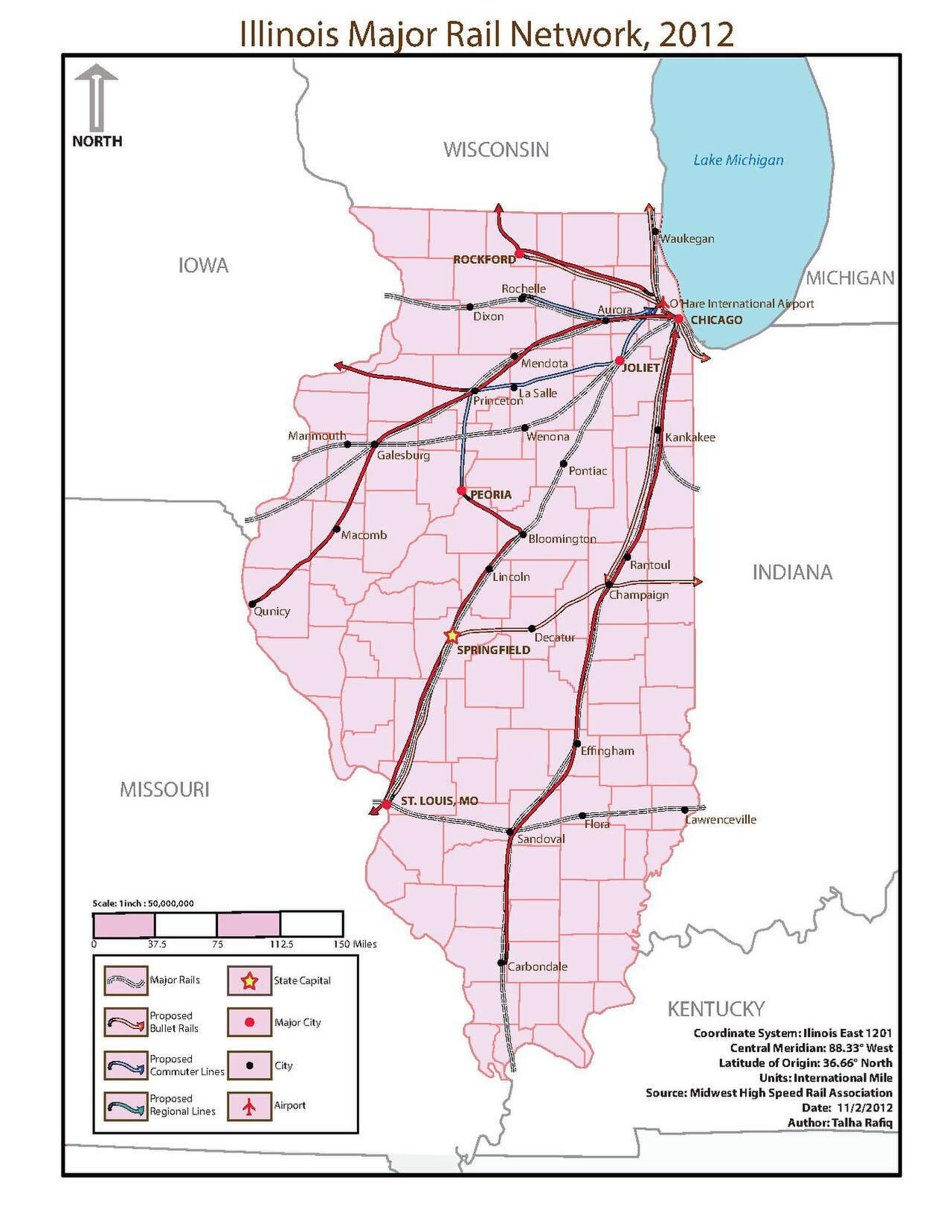
Illinois has an extensive passenger and freight rail transportation network. Chicago is a national Amtrak hub and in-state passengers are served by Amtrak's Illinois Service, featuring the Chicago to Carbondale Illini and Saluki, the Chicago to Quincy Carl Sandburg and Illinois Zephyr, and the Chicago to St. Louis Lincoln Service. Currently there is trackwork on the Chicago–St. Louis line to bring the maximum speed up to 110 mph (180 km/h), which would reduce the trip time by an hour and a half. Nearly every North American railway meets at Chicago, making it the largest and most active rail hub in the country. Extensive heavy rail service is provided in the city proper and some immediate suburbs by the Chicago Transit Authority's 'L' system. One of the largest suburban commuter rail system in the United States, operated by Metra, uses existing rail lines to provide direct commuter rail access for hundreds of suburbs to the city and beyond.
Waterways
In addition to the state's rail lines, the Mississippi River and Illinois River provide major transportation routes for the state's agricultural interests. Lake Michigan gives Illinois access to the Atlantic Ocean by way of the Saint Lawrence Seaway.
Interstate highway system
The Interstate Highways in Illinois are all segments of the Interstate Highway System that are owned and maintained by the state.[218]
Illinois has the distinction of having the most primary (two-digit) interstates pass through it among all the 50 states with 13. Illinois also ranks third among the fifty states with the most interstate mileage, coming in after California and Texas, which are much bigger states in area.[219]
Major U.S. Interstate highways crossing the state include: Interstate 24 (I-24), I-39, I-41, I-55, I-57, I-64, I-70, I-72, I-74, I-80, I-88, I-90, and I-94.
U.S. highway system
.jpg/500px-Welcome_to_Illinois_Sign_-_US67_Rock_Island_(44320554331).jpg)
The Illinois Department of Transportation (IDOT) is responsible for maintaining the U.S Highways in Illinois. The system in Illinois consists of 21 primary highways.
Among the U.S. highways that pass through the state, the primary ones are: US 6, US 12, US 14, US 20, US 24, US 30, US 34, US 36, US 40, US 41, US 45, US 50, US 51, US 52, US 54, US 60, US 62, and US 67.
Intercity buses
Due to its central location, Illinois sees numerous intercity bus services primarily connecting east and west. The Chicago Bus Station is the busiest intercity bus station in the state. The following carriers provide scheduled service: Amtrak Thruway, Barons Bus Lines, Burlington Trailways, Flixbus, Greyhound Lines, Indian Trails, Miller Transportation (Hoosier Ride), Peoria Charter Coach Company, Van Galder Bus Company, and Wisconsin Coach Lines.
Local buses
Gallery
-
 Standard license plate introduced in 2017
 -
 Illinois license plate design used throughout the 1980s and 1990s, displaying the Land of Lincoln slogan that has been featured on the state's plates since 1954
See also

- Index of Illinois-related articles
- List of people from Illinois
- Outline of Illinois
- USS Illinois, 4 ships
Notes
- ^ a b Elevation adjusted to North American Vertical Datum of 1988.
- ^ Illinois borders the state of Wisconsin to its north, Iowa to its northwest, Missouri to its southwest, Kentucky to its south, Indiana to its east, and has a water border with Michigan to the northeast in Lake Michigan.
- ^ Persons of Hispanic or Latino origin are not distinguished between total and partial ancestry.
References
- ^ "Charles". NGS Data Sheet. National Geodetic Survey, National Oceanic and Atmospheric Administration, United States Department of Commerce. Retrieved October 20, 2011.
- ^ a b "Elevations and Distances in the United States". United States Geological Survey. 2001. Archived from the original on November 2, 2011. Retrieved October 21, 2011.
- ^ "2020 Census Apportionment Results". United States Census Bureau. Archived from the original on April 26, 2021. Retrieved April 26, 2021.
- ^ Bureau, US Census. "U.S. Median Household Income Up in 2018 From 2017". The United States Census Bureau. Archived from the original on June 30, 2020. Retrieved July 12, 2020.
{{cite web}}:|last1=has generic name (help) - ^ "(5 ILCS 460/20) (from Ch. 1, par. 2901‑20) State Designations Act". Illinois Compiled Statutes. Springfield, Illinois: Illinois General Assembly. September 4, 1991. Archived from the original on March 5, 2009. Retrieved April 10, 2009.
Sec. 20. Official language. The official language of the State of Illinois is English.
- ^ Ryburn-LaMonte, Terri (1999). "The Historical Development of Transportation in Illinois". Illinois Periodicals Online. Archived from the original on October 10, 2017.
- ^ "2021 Illinois Manufacturing Facts". NAM. April 26, 2021. Retrieved October 19, 2022.
- ^ "The History of Illinois License Plates". Cyberdriveillinois.com. Archived from the original on January 29, 2012. Retrieved February 15, 2012.
- ^ "Slogan". Illinois State Museum. Archived from the original on May 15, 2011. Retrieved February 7, 2011.
- ^ "Freight Railroad Chronology". Association of American Railroads. Archived from the original on November 10, 2023. Retrieved October 25, 2023.
- ^ Ohlemacher, Stephen (May 17, 2007). "Analysis ranks Illinois most average state". Carbondale, Illinois: The Southern Illinoisan. Associated Press. Archived from the original on January 14, 2009. Retrieved April 10, 2009.
- ^ Fay, Jim (May 11, 2010). "Ilinois, Illini and Liniouek". The Illinois Prairie Information Page. Archived from the original on June 23, 2010. Retrieved August 1, 2021.
- ^ Hodge, Frederick Webb (1911). Handbook of American Indians north of Mexico, Volume 1. Smithsonian Institution, Bureau of American Ethnology. p. 597. ISBN 9781404740303. OCLC 26478613. Archived from the original on February 4, 2021. Retrieved October 3, 2020.
- ^ Stewart, George R. (1967) [1945]. Names on the Land: A Historical Account of Place-Naming in the United States (Sentry (3rd) ed.). Houghton Mifflin.
- ^ "Illinois Symbols". State of Illinois. Archived from the original on April 15, 2006. Retrieved April 20, 2006.
- ^ Callary, Edward (2008). Place Names of Illinois. University of Illinois Press. p. 169. ISBN 978-0-252-03356-8. Archived from the original on February 4, 2021. Retrieved October 3, 2020.
- ^ Costa, David J. (January 2007). "Three American Placenames: Illinois" (PDF). Society for the Study of the Indigenous Languages of the Americas Newsletter. 25 (4): 9–12. ISSN 1046-4476. Archived from the original (PDF) on July 16, 2011. Retrieved May 29, 2011.
- ^ Pauketat, Timothy R. (2009). Cahokia: Ancient America's Great City on the Mississippi. Penguin library of American Indian history. Viking Press. pp. 23–34. ISBN 978-0-670-02090-4. OCLC 276819729.
Cahokia was so large—covering three to five square miles—that archaeologists have yet to probe many portions of it. Its centerpiece was an open fifty-acre Grand Plaza, surrounded by packed-clay pyramids. The size of thirty-five football fields, the Grand Plaza was at the time the biggest public space ever conceived and executed north of Mexico ... a flat public square 1,600-plus feet in length and 900-plus feet in width.
- ^ Skele, Mikels (1988). The Great Knob: Interpretations of Monks Mound. Studies in Illinois Archaeology. Springfield, IL: Illinois Historic Preservation Agency. ISBN 978-0-942579-03-1. Retrieved November 12, 2015.
- ^ Snow, Dean R. (2010). Archaeology of Native North Americas. Upper Saddle River, NJ: Prentice Hall. pp. 201–203. ISBN 9780136156864. OCLC 223933566.
- ^ Nash, Gary B. (2015). Red, White, and Black: The Peoples of Early North America (7th ed.). Boston: Pearson. p. 6. ISBN 9780205887590.
- ^ Austin Alchon, Suzanne (2003). A pest in the land: new world epidemics in a global perspective. University of New Mexico Press. p. 59. ISBN 978-0-8263-2871-7. Archived from the original on August 3, 2020. Retrieved June 16, 2015.
- ^ Hoxie, E. (1996). Encyclopedia of North American Indians. pp. 266–267, 506.
- ^ a b "Native Americans:Historic:The Illinois:History:The Illinois Decline". www.museum.state.il.us. Retrieved June 20, 2024.
- ^ a b c d e f g Nelson, Ronald E., ed. (1978). Illinois: Land and Life in the Prairie State. Dubuque, IA: Kendall/Hunt. ISBN 978-0-8403-1831-2. OCLC 4499416.
- ^ "Native Americans:American Indian Tribes of Illinois". Illinois State Museum. October 2, 2002. Archived from the original on March 22, 2016. Retrieved February 27, 2016.
- ^ de L'Isle, Guillaume (1718). "Carte de la Louisiane et du Cours du Mississipi. 1718". An Exhibition of Maps and Navigational Instruments on View. Tracy W. McGregor Room, Alderman Library: University of Virginia. Archived from the original on July 16, 2015. Retrieved January 25, 2010.
- ^ a b c d e f g Biles, Roger (2005). Illinois: A History of the Land and its People. DeKalb: Northern Illinois University Press. ISBN 978-0-87580-349-4.
- ^ "Full Remarks from Dave M". Sancohis.org. March 16, 2010. Retrieved February 7, 2011.[dead link]
- ^ "Abraham Lincoln and Springfield". Abraham Lincoln's Classroom. Archived from the original on May 17, 2012. Retrieved February 7, 2011.
- ^ Simon, John Y. (June 24, 2001). "The other Illinois: How Egypt lost its clout". Chicago Tribune. Archived from the original on July 14, 2015. Retrieved April 29, 2012.
- ^ Davis, Rich. "Southern Illinois Backroads Tourism: In Little Egypt it means bluffs, Superman, even scuba diving". Evansville Courier & Press. Archived from the original on January 17, 2013. Retrieved April 29, 2012.
- ^ Finkelman, Paul (2001). Slavery and the Founders: Race and Liberty in the Age of Jefferson (2nd ed.). Armonk, NY: M. E. Sharpe. p. 78. ISBN 9780765604385.
- ^ Jones, James Pickett (1995) [1967]. Black Jack: John A. Logan and Southern Illinois in the Civil War Era. SIU Press. ISBN 0-8093-2002-9. OCLC 31435846.
- ^ "1830-1831: The Winter of the Deep Snow". State Journal-Register. February 1, 2012. Archived from the original on December 4, 2022. Retrieved November 9, 2022.
- ^ Duff, Andrew D. "Egypt". Springhouse Magazine. Archived from the original on January 17, 2013. Retrieved May 1, 2006.
- ^ "Black Hawk War". Encyclopedia of Chicago. Archived from the original on August 22, 2012. Retrieved August 10, 2012.
- ^ Lewis, James. "The Black Hawk War of 1832". Abraham Lincoln Historical Digitization Project. Archived from the original on August 1, 2012. Retrieved August 10, 2012.
- ^ Easton Black, Susan (1995). "How Large Was the Population of Nauvoo?". BYU Studies Quarterly. 35 (2): 91–94. Archived from the original on December 4, 2023. Retrieved December 4, 2023.
- ^ "Early Chicago, 1833–1871". ilsos.gov. November 9, 2022. Archived from the original on November 9, 2022. Retrieved November 9, 2022.
- ^ Norbury, Frank (Spring 1999). "Dorothea Dix and the Founding of Illinois's First Mental Hospital". Journal of the Illinois State Historical Society. 92 (1): 13–29. JSTOR 40193299.
- ^ "Illinois Infantry, Cavalry, and Artillery Units". Archived from the original on August 18, 2018.
- ^ Tweet, Roland (1997). Miss Gale's Books: The Beginnings of the Rock Island Public Library. Rock Island, IL: Rock Island Public Library. p. 15.
- ^ "Illinois—Race and Hispanic Origin: 1800 to 1990". U.S. Census Bureau. Archived from the original on July 25, 2008.
- ^ Peck, Merton J.; Scherer, Frederic M. (1962). The Weapons Acquisition Process: An Economic Analysis. Harvard Business School. p. 111.
- ^ a b "McDonald's Store No. 1 (Gone), Des Plaines, Illinois". RoadsideAmerica.com. Archived from the original on March 12, 2024. Retrieved March 12, 2024.
- ^ "Des Plaines blames Mt. Prospect, Prospect Hts. for heightened flooding - DailyHerald.com". February 27, 2014. Archived from the original on February 27, 2014. Retrieved March 12, 2024.
- ^ Placek, Christopher (November 20, 2017). "McDonald's plans to tear down Des Plaines replica restaurant". Daily Herald. Archived from the original on March 12, 2024. Retrieved March 12, 2024.
- ^ "ComEd and Electricity Related Messages for Economic Development" (PDF). Archived from the original (PDF) on July 8, 2011. Retrieved February 7, 2011.
- ^ "Home | ComEd—An Exelon Company" (PDF). ComEd. Archived from the original (PDF) on September 14, 2013. Retrieved February 27, 2016.
- ^ Painter, George (August 10, 2004). "The History of Sodomy Laws in the United States: Illinois". The Sensibilities of Our Forefathers. Gay & Lesbian Archives of the Pacific Northwest. Archived from the original on May 15, 2010. Retrieved January 12, 2012.
- ^ Hillard, James (October 2008). "The Illinois Constitution: A Primer". Illinois Bar Journal. 96 (10): 494. Archived from the original on November 2, 2019. Retrieved November 2, 2019.
- ^ Garcia, Evan (September 24, 2020). "Former Illinois Gov. George Ryan: 'We Gotta Do Away with the Death Penalty'". WTTW. Archived from the original on June 14, 2023. Retrieved June 13, 2023.
- ^ Shear, Michael D.; Connolly, Ceci (September 9, 2009). "In Illinois, a Similar Fight Tested a Future President". Washington Post. Archived from the original on November 8, 2012.
- ^ "4 Illinois governors have served time in prison". ABC 7 Chicago. February 19, 2020. Archived from the original on September 9, 2023. Retrieved June 13, 2023.
- ^ Vinicky, Amanda (January 14, 2019). "J.B. Pritzker Takes Oath as Illinois' 43rd Governor". WTTW. Archived from the original on June 14, 2023. Retrieved June 13, 2023.
- ^ Bernal, Rafael (August 28, 2017). "Illinois Governor Signs Immigration, Automatic Voter Registration Measures". The Hill. Archived from the original on September 3, 2019. Retrieved September 3, 2019.
- ^ Tareen, Sophia (August 28, 2017). "Governor Signs Law Limiting Illinois Police on Immigration". ABC News (from the Associated Press). Archived from the original on September 10, 2017. Retrieved September 3, 2019.
- ^ Singman, Brooke (August 28, 2017). "GOP Gov. Rauner Accused of Making Illinois a 'Sanctuary State' with New Law". Fox News. Archived from the original on July 9, 2018. Retrieved September 3, 2019.
- ^ Lieb, David A. (November 7, 2018). "GOP, Democrats splitting governor's races in key states". Associated Press. Archived from the original on June 14, 2023. Retrieved June 13, 2023 – via Virgin Islands Daily News.
- ^ Squires, Acacia (January 1, 2020). "6 New State Laws You Should Know About In 2020". Archived from the original on November 11, 2022. Retrieved June 13, 2023.
- ^ Pathieu, Diane (May 11, 2023). "COVID-19 public health emergency ends Thursday in US, Illinois". ABC 7 Chicago. Archived from the original on June 14, 2023. Retrieved June 13, 2023.
- ^ Willman, Harold Bowen; Atherton, Elwood; Buschbach, T. C.; Collinson, Charles William; Frye, John Chapman; Hopkins, M. E.; Lineback, Jerry Alvin; Simon, Jack A. (1975). "Handbook of Illinois stratigraphy". Bulletin - Illinois State Geological Survey. 95. Urbana, IL. Archived from the original on August 20, 2019. Retrieved November 26, 2020.
- ^ Wikisource. Illinois Constitution of 1818.
- ^ U.S. Geological Survey. "Elevations and Distances in the United States". egsc.usgs.gov. Archived from the original on November 30, 2018. Retrieved November 22, 2018.
- ^ a b c d Horsley, A. Doyne (1986). Illinois: A Geography. Boulder: Westview Press. ISBN 978-0-86531-522-8.
- ^ Illinois State Climatologist Office. "Climate Maps". Archived from the original on February 7, 2006. Retrieved April 22, 2006.
- ^ "US National Weather Service Central Illinois". Facebook. Archived from the original on February 26, 2022. Retrieved January 31, 2019.
- ^ "State Climate Extremes Committee (SCEC)". National Centers for Environmental Information. National Oceanic and Atmospheric Administration. Archived from the original on February 21, 2018. Retrieved April 30, 2019.
- ^ a b "Illinois State Record Minimum Temperature at Mt. Carroll" (PDF). National Centers for Environmental Information. National Oceanic and Atmospheric Administration. March 5, 2019. Archived from the original (PDF) on June 8, 2019. Retrieved April 30, 2019.
- ^ Hilyard, Scott (February 28, 2019). "Congerville about to lose its extreme cold state record". PJStar.com. Peoria, Illinois. Archived from the original on March 1, 2019. Retrieved March 1, 2019.
- ^ Weather Underground (January 15, 2009). "Weather History for Rochelle, IL". Archived from the original on July 16, 2015. Retrieved January 2, 2014.
- ^ "Annual average number of tornadoes, 1953–2004 Archived October 16, 2011, at the Wayback Machine", NOAA National Climatic Data Center. Retrieved October 24, 2006.
- ^ PAH Webmaster (November 2, 2005). "NWS Paducah, KY: NOAA/NWS 1925 Tri-State Tornado Web Site—General Information". Archived from the original on October 2, 2006. Retrieved November 16, 2006.
- ^ "Average Weather for Cairo, IL". weather.com. Archived from the original on July 10, 2014.
- ^ "Chicago Weather Archived May 24, 2008, at the Wayback Machine", ustravelweather.com
- ^ "Average Weather for Edwardsville, IL—Temperature and Precipitation". Weather.com. January 17, 2007. Archived from the original on May 16, 2012. Retrieved May 19, 2012.
- ^ "Moline Weather Archived May 24, 2008, at the Wayback Machine", ustravelweather.com
- ^ "Peoria Weather Archived May 24, 2008, at the Wayback Machine", ustravelweather.com
- ^ "Rockford Weather Archived May 24, 2008, at the Wayback Machine", ustravelweather.com
- ^ "Springfield Weather Archived May 24, 2008, at the Wayback Machine", ustravelweather.com
- ^ "U.S. Census Bureau QuickFacts". United States Census Buteau. Archived from the original on February 2, 2022. Retrieved March 15, 2023.
- ^ Schulte, Sarah (April 28, 2021). "2020 census results: Illinois loses population, but not from where you'd think". ABC7 Chicago. Archived from the original on May 12, 2021. Retrieved May 12, 2021.
- ^ "Total Population of Illinois, Chicago and Illinois Counties: April 1,1950 to April 1, 2020" (PDF). Illinois Department of Public Health.
- ^ Vinicky, Amanda (December 23, 2020). "Illinois Exodus: Census Data Finds People Continue to Leave State". WTTW. Archived from the original on February 8, 2021. Retrieved February 3, 2021.
[Demographer] Paral says Chicago and the collar counties aren't to blame. He says from Lake to Will to DeKalb counties are growing – not by a lot – but growing at least. Outside of the Chicago metropolitan area is largely declines.
- ^ "The 'center' of Illinois is likely a spot you've never visited". WGN-TV. November 28, 2023. Archived from the original on July 27, 2024. Retrieved July 25, 2024.
- ^ "Illinois ranks as 'most normal state' in U.S. according to Washington Post data analysis". Illinois. WMAQ-TV. May 14, 2024. Archived from the original on May 15, 2024. Retrieved May 15, 2024.
- ^ "Annual Estimates of the Resident Population for Counties: April 1, 2020 to July 1, 2023". United States Census Bureau. Archived from the original on April 7, 2020. Retrieved April 2, 2024.
- ^ "P004HISPANIC OR LATINO, AND NOT HISPANIC OR LATINO BY RACE [73] - Illinois". United States Census Bureau. Archived from the original on November 25, 2023. Retrieved November 25, 2023.
- ^ "P2 HISPANIC OR LATINO, AND NOT HISPANIC OR LATINO BY RACE - 2010: DEC Redistricting Data (PL 94-171) - Illinois". United States Census Bureau. Archived from the original on November 25, 2023. Retrieved November 25, 2023.
- ^ "P2 HISPANIC OR LATINO, AND NOT HISPANIC OR LATINO BY RACE - 2020: DEC Redistricting Data (PL 94-171) - Illinois". United States Census Bureau. Archived from the original on November 25, 2023. Retrieved November 25, 2023.
- ^ "Race and Ethnicity in the United States: 2010 Census and 2020 Census". census.gov. United States Census Bureau. August 12, 2021. Archived from the original on August 15, 2021. Retrieved September 26, 2021.
- ^ a b c d "US Census Bureau- Illinois Race and Hispanic Origin: 1800-1990" (PDF). Wayback Machine. October 8, 2014. Archived from the original (PDF) on March 27, 2010.
- ^ "Historical Census Statistics on Population Totals By Race, 1790 to 1990, and By Hispanic Origin, 1970 to 1990, For The United States, Regions, Divisions, and States". Census.gov. July 25, 2008. Archived from the original on July 25, 2008. Retrieved September 4, 2017.
- ^ "Population of Illinois: Census 2010 and 2000 Interactive Map, Demographics, Statistics, Quick Facts".[permanent dead link]
- ^ "2010 Census Data". Census.gov. Archived from the original on May 22, 2017. Retrieved September 4, 2017.
- ^ "Explore Census Data". data.census.gov. Retrieved June 28, 2024.
- ^ a b c d e f g "B03002 HISPANIC OR LATINO ORIGIN BY RACE—Illinois—2022 American Community Survey 1-Year Estimates". U.S. Census Bureau. July 1, 2022. Archived from the original on October 7, 2023. Retrieved September 15, 2023.
- ^ "IECAM". db.iecam.illinois.edu. Retrieved June 28, 2024.
- ^ "Illinois QuickFacts". U.S. Census Bureau. Archived from the original on April 1, 2009.
- ^ "Census profile: Cook County, IL". Census Reporter. Retrieved July 27, 2024.
- ^ "Grid View: Table B03002 - Census Reporter". censusreporter.org. Retrieved July 27, 2024.
- ^ "Race and Ethnicity in the United States: 2010 Census and 2020 Census".
- ^ "Grid View: Table B04006 - Census Reporter". censusreporter.org. Retrieved June 28, 2024.
- ^ "Grid View: Table B02018 - Census Reporter". censusreporter.org. Retrieved June 28, 2024.
- ^ "Grid View: Table B03001 - Census Reporter". censusreporter.org. Retrieved June 28, 2024.
- ^ "Grid View: Table B02009 - Census Reporter". censusreporter.org. Retrieved June 28, 2024.
- ^ "Grid View: Table B04004 - Census Reporter". censusreporter.org. Retrieved July 25, 2024.
- ^ "Grid View: Table B02015 - Census Reporter". censusreporter.org. Retrieved July 25, 2024.
- ^ "Grid View: Table B03001 - Census Reporter". censusreporter.org. Retrieved July 25, 2024.
- ^ "Grid View: Table B04006 - Census Reporter". censusreporter.org. Retrieved July 25, 2024.
- ^ "Grid View: Table B02018 - Census Reporter". censusreporter.org. Retrieved July 25, 2024.
- ^ "Grid View: Table B05012 - Census Reporter". censusreporter.org. Retrieved June 28, 2024.
- ^ "Grid View: Table B05006 - Census Reporter". censusreporter.org. Retrieved June 28, 2024.
- ^ "Grid View: Table B05002 - Census Reporter". censusreporter.org. Retrieved June 28, 2024.
- ^ "Immigrants in Illinois" (PDF). American Immigration Council. 2020. Archived (PDF) from the original on September 27, 2023.
- ^ "Grid View: Table B05002 - Census Reporter". censusreporter.org. Retrieved July 27, 2024.
- ^ "Grid View: Table B05006 - Census Reporter". censusreporter.org. Retrieved July 27, 2024.
- ^ a b "Census profile: Illinois". Census Reporter. Retrieved June 28, 2024.
- ^ "Grid View: Table B01001 - Census Reporter". censusreporter.org. Retrieved June 28, 2024.
- ^ "How Many Adults and Youth Identify as Transgender in the United States?" (PDF). UCLA School of Law: Williams Institute. June 2022.
- ^ "Movement Advancement Project | State Profiles". www.lgbtmap.org. Retrieved July 27, 2024.
- ^ "Subnational HDI". Global Data Lab.
- ^ "2007-2022 PIT Counts by State". Archived from the original on March 14, 2023. Retrieved March 11, 2023.
- ^ "The 2022 Annual Homelessness Assessment Report (AHAR) to Congress" (PDF). Archived (PDF) from the original on March 11, 2023. Retrieved March 11, 2023.
- ^ Martin, Joyce A.; Hamilton, Brady E.; Osterman, Michelle J.K.; Curtin, Sally C.; Mathews, T.J. (January 15, 2015). "Births: Final Data for 2013" (PDF). National Vital Statistics Reports. 64 (1). CDC: 1–65. PMID 25603115. Archived (PDF) from the original on September 11, 2017. Retrieved September 4, 2017.
- ^ Martin, Joyce A.; Hamilton, Brady E.; Osterman, Michelle J.K.; Curtin, Sally C.; Mathews, T.J. (December 23, 2015). "Births: Final Data for 2014" (PDF). National Vital Statistics Reports. 64 (12). CDC: 1–64. PMID 26727629. Archived (PDF) from the original on February 14, 2017. Retrieved September 4, 2017.
- ^ Martin, Joyce A.; Hamilton, Brady E.; Osterman, Michelle J.K.; Driscoll, Anne K.; Mathews, T.J. (January 5, 2017). "Births: Final Data for 2015" (PDF). National Vital Statistics Reports. 66 (1). CDC: 1. PMID 28135188. Archived (PDF) from the original on August 31, 2017. Retrieved September 4, 2017.
- ^ Martin, Joyce A.; Hamilton, Brady E.; Osterman, Michelle J.K.; Driscoll, Anne K.; Drake, Patrick (January 31, 2018). "Births: Final Data for 2016" (PDF). National Vital Statistics Reports. 67 (1). CDC: 1–55. PMID 29775434. Archived (PDF) from the original on June 3, 2018. Retrieved May 4, 2018.
- ^ Martin, Joyce A.; Hamilton, Brady E.; Osterman, Michelle J.K.; Driscoll, Anne K.; Drake, Patrick (November 7, 2018). "Births: Final Data for 2017" (PDF). National Vital Statistics Reports. 67 (8). CDC: 1–50. PMID 30707672. Archived (PDF) from the original on February 1, 2019. Retrieved February 18, 2019.
- ^ Martin, Joyce A.; Hamilton, Brady E.; Osterman, Michelle J.K.; Driscoll, Anne K. (November 27, 2019). "Births: Final Data for 2018" (PDF). National Vital Statistics Reports. 68 (13). Centers for Disease Control and Prevention: 1–47. PMID 32501202. Archived (PDF) from the original on November 28, 2019. Retrieved December 2, 2019.
- ^ Martin, Joyce A.; Hamilton, Brady E.; Osterman, Michelle J.K.; Driscoll, Anne K. (March 23, 2021). "Births: Final Data for 2019" (PDF). National Vital Statistics Reports. 70 (2). Centers for Disease Control and Prevention: 1–51. PMID 33814033. Archived (PDF) from the original on March 24, 2021. Retrieved March 29, 2021.
- ^ Martin, Joyce A.; Hamilton, Brady E.; Osterman, Michelle J.K.; Driscoll, Anne K.; Valenzuela, Claudia P. (February 7, 2022). "Births: Final Data for 2020" (PDF). National Vital Statistics Reports. 70 (17). Centers for Disease Control and Prevention. Archived (PDF) from the original on February 10, 2022. Retrieved February 20, 2022.
- ^ Martin, Joyce A.; Hamilton, Brady E.; Osterman, Michelle J.K.; Driscoll, Anne K.; Valenzuela, Claudia P. (January 31, 2023). "Births: Final Data for 2021" (PDF). National Vital Statistics Reports. 72 (1). Centers for Disease Control and Prevention: 1–53. PMID 36723449. Archived (PDF) from the original on February 1, 2023. Retrieved February 2, 2022.
- ^ "Data" (PDF). www.cdc.gov. Archived (PDF) from the original on April 4, 2024. Retrieved April 5, 2024.
- ^ "5 ILCS 460/ State Designations Act, Illinois Compiled Statutes". Illinois General Assembly. Archived from the original on March 19, 2015. Retrieved October 9, 2014.
- ^ Ryan, Camille (August 2013). "Language Use in the United States: American Community Survey Reports" (PDF). Census.gov. United States Census Bureau. Archived from the original (PDF) on February 5, 2016. Retrieved March 30, 2014.
- ^ "Grid View: Table B16007 - Census Reporter". censusreporter.org. Retrieved July 27, 2024.
- ^ "Grid View: Table B16007 - Census Reporter". censusreporter.org. Retrieved July 27, 2024.
- ^ "Religion in America: U.S. Religious Data, Demographics and Statistics". Pew Research Center. Archived from the original on March 29, 2016. Retrieved December 9, 2017.
- ^ "Religious Landscape Study". Pew Research Center. May 11, 2015. Archived from the original on June 20, 2020. Retrieved June 21, 2020.
- ^ "Roman Catholicism percentage of Catholics statistics—states compared—People data on StateMaster". Statemaster. May 15, 2012. Archived from the original on September 12, 2012. Retrieved May 19, 2012.
- ^ "Illinois - Statistics and Church Facts". The Church of Jesus Christ of Latter-day Saints. 2020. Archived from the original on February 5, 2021. Retrieved March 30, 2020.
- ^ a b "The Association of Religion Data Archives | County Membership Report". www.thearda.com. Archived from the original on November 12, 2013. Retrieved November 12, 2013.
- ^ "The Association of Religion Data Archives | State Membership Report". www.thearda.com. Archived from the original on November 12, 2013. Retrieved November 12, 2013.
- ^ Barooah, Jahnabi (June 27, 2012). "PHOTOS: Most And Least Muslim States In America". Huffington Post.
- ^ "The Baháʼí House of Worship". Baháʼís of the United States. Archived from the original on March 6, 2019. Retrieved March 6, 2019.
- ^ Ave, Linden; IL 60091, Sheridan Rd Wilmette. "Baha'i House Of Worship". Enjoy Illinois. Archived from the original on August 15, 2021. Retrieved August 15, 2021.
{{cite web}}: CS1 maint: numeric names: authors list (link) - ^ "Gross Domestic Product by State and Personal Income by State, 3rd Quarter 2022". Archived from the original on February 14, 2023. Retrieved February 11, 2023.
- ^ "Moody's sees reason for optimism over Illinois economy". Crain's Chicago Business. February 18, 2019. Archived from the original on February 20, 2019. Retrieved February 20, 2019.
- ^ Petrella, Dan. "Gov. J.B. Pritzker signs law raising Illinois's minimum wage to $15 an hour by 2025". chicagotribune.com. Archived from the original on February 20, 2019. Retrieved February 20, 2019.
- ^ "Soybean Production by State 2008". Soy Stats. The American Soybean Association. 2009. Archived from the original on September 13, 2012. Retrieved January 19, 2010.
- ^ a b "Ethanol Fact Sheet". Illinois Corn Growers Association. 2010. Archived from the original on July 23, 2011. Retrieved January 18, 2010.
- ^ a b c "Illinois—State Energy Profile Overview—U.S. Energy Information Administration (EIA)". Eia.gov. March 19, 2015. Archived from the original on July 16, 2015. Retrieved February 27, 2016.
- ^ a b Facts About Illinois Agriculture Archived July 16, 2015, at the Wayback Machine, Illinois Department of Agriculture. Accessed online April 16, 2012
- ^ "Meatpacking in Illinois History Archived June 13, 2012, at the Wayback Machine by Wilson J. Warren, Illinois History Teacher, 3:2, 2006. Access online April 16, 2012.
- ^ Kathleen Walls. "Agri Trails". Americanroads.net. Archived from the original on March 4, 2016. Retrieved February 27, 2016.
- ^ "DCEO: Home" (PDF). Ildceo.net. Archived from the original (PDF) on May 12, 2013. Retrieved February 27, 2016.
- ^ "Manufacturing in Illinois" (PDF). Illinois Department of Commerce and Economic Opportunity. 2009. Archived from the original (PDF) on September 29, 2011. Retrieved January 19, 2010.
- ^ a b "Illinois in the Global Energy Marketplace" Archived May 17, 2008, at the Wayback Machine, Robert Finley, 2001. Illinois State Geological Survey publication.
- ^ Illinois State Geological Survey. Coal in Illinois Archived February 12, 2012, at the Wayback Machine Retrieved December 4, 2008.
- ^ "DCEO: Home" (PDF). Ildceo.net. Archived from the original (PDF) on October 29, 2013. Retrieved February 27, 2016.
- ^ "Illinois Town Gives Up on Futurgen". Permianbasin360.com. August 12, 2010. Archived from the original on March 9, 2012. Retrieved April 29, 2012.
- ^ United States Department of Energy. Petroleum Profile: Illinois Archived October 8, 2009, at the Wayback Machine. Retrieved April 4, 2006.
- ^ "Illinois—U.S. Energy Information Administration (EIA)". Eia.gov. April 19, 2012. Archived from the original on April 15, 2012. Retrieved April 29, 2012.
- ^ "Nuclear State Profiles". Eia.gov. Archived from the original on January 17, 2013. Retrieved April 29, 2012.
- ^ "Illinois Nuclear Industry". U.S. Energy Information Administration. November 6, 2009. Archived from the original on November 9, 2004. Retrieved January 29, 2010.
- ^ "Illinois Wind". Illinois Institute for Rural Affairs, Western Illinois University Illinoiswind.com Archived June 22, 2007, at the Wayback Machine
- ^ "Illinois Wind Activities". EERE. U.S. Department of Energy. October 20, 2009. Archived from the original on February 9, 2010. Retrieved January 14, 2010.
- ^ a b c "U.S. Wind Energy Projects—Illinois". American Wind Energy Association. September 30, 2009. Archived from the original on January 5, 2010. Retrieved January 14, 2010.
- ^ "Wind Power on the Illinois Horizon" Archived January 24, 2008, at the Wayback Machine, Rob Kanter, September 14, 2006. University of Illinois Environmental Council.
- ^ "Illinois Renewable Electricity Profile". U.S. Energy Information Administration. 2007. Archived from the original on May 27, 2008. Retrieved January 15, 2010.
- ^ Olbert, Lori (December 13, 2007). "Wind Farm Conference Tackles Complicated Issue". CIProud.com. WYZZ-TV/WMBD-TV. Retrieved January 15, 2010.[dead link]
- ^ "ILFRA". Illinoisrfa.org. Archived from the original on March 4, 2016. Retrieved February 27, 2016.
- ^ "Ready for Research" (PDF). Archived from the original (PDF) on October 6, 2013. Retrieved September 12, 2013.
- ^ "BP Pledges $500 Million for Energy Biosciences Institute and Plans New Business to Exploit Research". Bp.com. June 14, 2006. Archived from the original on May 19, 2012. Retrieved May 19, 2012.
- ^ "Gov. Blagojevich joins Gov. Schwarzenegger, top BP executives to celebrate launch of $500 million biosciences energy research partnership with University of Illinois Urbana-Champaign, UC-Berkeley". Illinois.gov. February 1, 2007. Archived from the original on May 26, 2012. Retrieved May 19, 2012.
- ^ Pierog, Karen (January 12, 2011). "Illinois lawmakers pass big tax hike to aid budget". Reuters. Archived from the original on May 14, 2012. Retrieved February 7, 2011.
- ^ Illinois Department of Revenue. Individual Income Tax Archived September 23, 2006, at the Wayback Machine. Retrieved January 30, 2011.
- ^ Mendoza, Susana (September 18, 2018). "Consequences of Illinois's 2015–2016 Budget Impasse and Fiscal Outlook". Illinois Comptroller. Archived from the original on December 13, 2018. Retrieved August 1, 2021.
- ^ Illinois Department of Revenue. Illinois Sales Tax Reference Manual (PDF) Archived May 27, 2008, at the Wayback Machine. p133. January 1, 2006.
- ^ Sfondeles, Tina (May 27, 2019). "Graduated income tax question heads to ballot as House OKs constitutional amendment". www.chicagosuntimes.com. Chicago Sun Times. Archived from the original on May 30, 2019. Retrieved May 30, 2019.
- ^ Kapos, Shia (May 28, 2019). "PRITZKER's BIG WIN—BRADY, MUNOZ stake in video gambling—ABORTION BILL fate uncertain". Politico. Archived from the original on May 30, 2019. Retrieved May 30, 2019.
- ^ Wall, Craig (May 27, 2019). "Illinois graduated income tax plan will go to voters after Governor JB Pritzker's bill passes the State House". abc7chicago.com. ABC 7. Archived from the original on May 31, 2019. Retrieved May 30, 2019.
- ^ Wheeler, Kayla (November 4, 2020). "Fair Tax Amendment fails in Illinois". ksdk.com. Archived from the original on February 20, 2021. Retrieved January 9, 2021.
- ^ Walczak, Jared. "Sales Tax Rates in Major Cities, Midyear 2017". Taxfoundation.org. Tax Foundation. Archived from the original on March 31, 2019. Retrieved March 31, 2019.
- ^ Kiernan, John S. "2019's Property Taxes by State". wallethub. Evolution Finance, Inc. Archived from the original on March 31, 2019. Retrieved March 31, 2019.
- ^ "Most Expensive Toll Roads in the United States". ezfreightfactoring.com. EZ Freight Factoring. Archived from the original on March 31, 2019. Retrieved March 31, 2019.
- ^ Stebbins, Samuel. "How much gas tax adds to cost of filling up your car in every state". usatoday. 24/7 Wall Street. Archived from the original on March 31, 2019. Retrieved March 31, 2019.
- ^ Centerstage Chicago Archived July 8, 2008, at the Wayback Machine Retrieved on September 18, 2008
- ^ Chicago Sinfonietta Website Archived January 20, 2017, at the Wayback Machine. Retrieved on November 7, 2008
- ^ Mark McGuire Commentary (June 12, 2010). "Long look at Top 10 title droughts". Times Union. Archived from the original on February 20, 2011. Retrieved February 7, 2011.
- ^ "The Longest Running Title Droughts in Sports". Bleacher Report. June 10, 2010. Archived from the original on July 8, 2011. Retrieved February 7, 2011.
- ^ "Illinois & Michigan Canal". National Park Service. Archived from the original on July 26, 2008. Retrieved July 15, 2008.
- ^ "Illinois". National Park Service. Archived from the original on July 5, 2008. Retrieved July 15, 2008.
- ^ J. Pomante II, Michael; Li, Quan (December 15, 2020). "Cost of Voting in the American States: 2020". Election Law Journal: Rules, Politics, and Policy. 19 (4): 503–509. doi:10.1089/elj.2020.0666. ISSN 1533-1296. S2CID 225139517.
- ^ a b c Uphoff, Judy Lee (2012). "The Governor and the Executive Branch" (PDF). In Lind, Nancy S.; Rankin, Erik (eds.). Governing Illinois: Your Connection to State and Local Government (4th ed.). Center Publications, Center for State Policy and Leadership, University of Illinois Springfield. pp. 78–79. ISBN 978-0-938943-28-0. Archived from the original (PDF) on June 22, 2013.
- ^ 20 ILCS 5
- ^ Decker, John F.; Kopacz, Christopher (2012). Illinois Criminal Law: A Survey of Crimes and Defenses (5th ed.). LexisNexis. § 1.01. ISBN 978-0-7698-5284-3.
- ^ Smith, Lori L.; Barkley, Daniel C.; Cornwall, Daniel C.; Johnson, Eric W.; Malcomb, J. Louise (2003). Tapping State Government Information Sources. Greenwood Publishing Group. p. 126. ISBN 978-1-57356-387-1. LCCN 2002044846.
- ^ Individual State Descriptions: 2007 (PDF), 2007 Census of Governments, United States Census Bureau, November 2012, pp. 89–97, archived (PDF) from the original on November 23, 2015, retrieved March 11, 2014
- ^ a b c Census 2007, p. 89.
- ^ Illinois Regional Archives Depository System. "Name Index to Illinois Local Governments". Illinois State Archives. Illinois Secretary of State. Archived from the original on November 10, 2013. Retrieved November 11, 2013.
- ^ Gove, Samuel Kimball; Nowlan, James Dunlap (1996). Illinois Politics & Government: The Expanding Metropolitan Frontier. Politics and Governments of the American States. Lincoln: University of Nebraska Press. pp. 155–156. ISBN 978-0-8032-7014-5. LCCN 95046017.
- ^ McClelland, Edward (August 4, 2011). "Illinois: The Most Democratic State". NBC Chicago. Archived from the original on March 13, 2017. Retrieved December 29, 2016.
- ^ "Suburb shift turns state blue / The Christian Science Monitor". CSMonitor.com. July 16, 2004. Archived from the original on July 16, 2015. Retrieved February 7, 2011.
- ^ Working, Russell (November 8, 2004). "Illinois a blue island in red sea". Chicago Tribune. pp. 1-1, 1-15 – via Newspapers.com.
- ^ "Illinois primary live results". CNN. March 17, 2020. Retrieved July 7, 2024.
- ^ McClelland, Edward (October 15, 2020). "If Downstate Illinois Seceded". Chicago Magazine. Archived from the original on October 28, 2020. Retrieved July 14, 2020.
- ^ Everson, David H. (February 1990). "Illinois as a bellwether: So what?". Illinois Issues. Illinois Periodicals Online at Northern Illinois University. Archived from the original on March 4, 2016. Retrieved July 21, 2013.
- ^ Merriner, James L. (2004). Grafters and Goo Goos: corruption and reform in Chicago, 1833–2003. Carbondale: Southern Illinois University Press. ISBN 978-0-8093-2571-9. OCLC 52720998.
- ^ "Moseley Braun, Carol". History, Art & Archives. United States House of Representatives. Archived from the original on October 3, 2020. Retrieved October 6, 2020.
- ^ "U.S. Senate: Art & History Home". Senate.gov. Archived from the original on July 2, 2018. Retrieved February 7, 2011.
- ^ "Best Colleges 2010—National Universities Rankings". U.S. News & World Report. August 19, 2009. Archived from the original on January 5, 2011. Retrieved May 31, 2016.
- ^ Steffes, Tracy L. (February 2020). "Assessment Matters: The Rise and Fall of the Illinois Resource Equalizer Formula". History of Education Quarterly. 60 (1): 24–57. doi:10.1017/heq.2020.7. S2CID 216496825.
- ^ "O'Hare International Airport Activity Statistics" (PDF). City of Chicago: FlyChicago.com. March 27, 2009. Archived from the original (PDF) on January 1, 2010. Retrieved April 10, 2009.
- ^ "Midway Airport Activity Statistics" (PDF). FlyChicago.com. City of Chicago. January 30, 2009. Archived from the original (PDF) on January 1, 2010. Retrieved April 10, 2009.
- ^ "Interstate Frequently Asked Questions—50th Anniversary—Interstate System—Highway History—Federal Highway Administration". Federal Highway Administration (FHWA). Archived from the original on February 20, 2021. Retrieved May 3, 2019.
- ^ "Interstates by State". Interstate-Guide. February 2, 2016. Archived from the original on March 1, 2016. Retrieved February 27, 2016.
Further reading
- Bridges, Roger D.; Davis, Rodney O. (1984). Illinois: its history & legacy. St. Louis: River City Publishers. ISBN 978-0-933150-86-7. OCLC 11814096.
- Cole, Arthur Charles (1987) [1919]. The era of the Civil War, 1848–1870. Urbana: University of Illinois Press. ISBN 978-0-252-01339-3. OCLC 14130434.
- Davis, James E. (1998). Frontier Illinois. Bloomington: Indiana University Press. ISBN 978-0-253-33423-7. OCLC 39182546.
- Grossman, James R.; Keating, Ann Durkin; Reiff, Janice L. (2005) [2004]. Electronic Encyclopedia of Chicago (Online ed.). Chicago: Chicago Historical Society, Newberry Library. ISBN 978-0-226-31015-2. OCLC 60342627. Archived from the original on June 17, 2014. Retrieved January 28, 2009.
- Hallwas, John E., ed. (1986). Illinois literature: the nineteenth century. Macomb: Illinois Heritage Press. OCLC 14228886.
- Howard, Robert P. (1972). Illinois; a history of the Prairie State. Grand Rapids: W. B. Eerdmans Pub. Co. ISBN 978-0-8028-7025-4. OCLC 495362.
- Jensen, Richard E. (2001). Illinois: a history. Urbana: University of Illinois Press. ISBN 978-0-252-07021-1. OCLC 46769728.
- Keiser, John H. (1977). Building for the centuries: Illinois, 1865 to 1898. Urbana: University of Illinois Press. ISBN 978-0-252-00617-3. OCLC 2798051.
- Kilduff, Dorrell; Pygman, C. H. (1962). Illinois; History, government, geography. Chicago: Follett. OCLC 5223888.
- Kleppner, Paul (1988). Political atlas of Illinois. DeKalb: Northern Illinois University Press. ISBN 978-0-87580-136-0. OCLC 16755435.
- Meyer, Douglas K. (2000). Making the heartland quilt: a geographical history of settlement and migration in early-nineteenth-century Illinois. Carbondale: Southern Illinois University Press. ISBN 978-0-585-37905-0. OCLC 48139026. Archived from the original on May 25, 2012. Retrieved September 1, 2017.
- Nowlan, James D.; Gove, Samuel K.; Winkel, Richard J. (2010). Illinois Politics: A Citizen's Guide. Urbana: University of Illinois Press. ISBN 978-0-252-07702-9.
- Sutton, Robert P. (1976). The Prairie State; a documentary history of Illinois. Grand Rapids: Eerdmans. ISBN 978-0-8028-1651-1. OCLC 2603998.
- Walton, Clyde C. (1970). An Illinois reader. DeKalb: Northern Illinois University Press. ISBN 978-0-87580-014-1. OCLC 89905.
- Works Progress Administration (1983) [1939]. The WPA guide to Illinois: the Federal Writers' Project guide to 1930s Illinois. New York: Pantheon Books. ISBN 978-0-394-72195-8. OCLC 239788752.
External links
Illinois at Wikipedia's sister projects
 Definitions from Wiktionary
 Media from Commons
 News from Wikinews
 Quotations from Wikiquote
 Texts from Wikisource
 Textbooks from Wikibooks
 Resources from Wikiversity
 Travel information from Wikivoyage
- Official website
- Illinois: State Resource Guide, from the Library of Congress Archived August 10, 2022, at the Wayback Machine
 Geographic data related to Illinois at OpenStreetMap
- Illinois Office of Tourism Archived July 13, 2021, at the Wayback Machine
- Illinois - State Energy Profile Overview Archived June 28, 2021, at the Wayback Machine U.S. Energy Information Administration (EIA)
- State Fact Sheets: Illinois Archived July 12, 2021, at the Wayback Machine USDA's Economic Research Service
- USGS Central Midwest Water Science Center Archived July 12, 2021, at the Wayback Machine
40°N 89°W / 40°N 89°W / 40; -89 (State of Illinois)