
Loading article…
ミシガン州 | |
|---|---|
| ニックネーム: 「五大湖州」、「ウルヴァリン州」、「水(冬)ワンダーランド」 | |
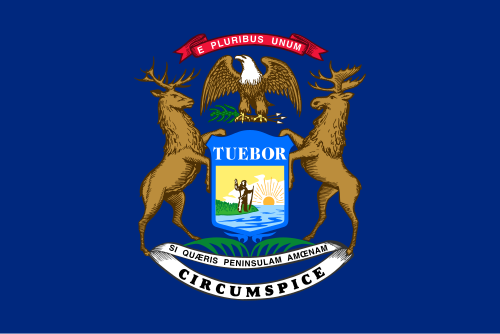
| モットー: Si quaeris peninsulam amoenam circumspice (英語: 「快適な半島を求めるなら、周りを見回してください」) | |
| 国歌:「私のミシガン」 | |
 ミシガン州が強調表示されたアメリカ合衆国の地図 | |
| 国 | アメリカ合衆国 |
| 州になる前 | ミシガン準州 |
| 連合に加入 | 1837年1月26日(26日) |
| 資本 | ランシング |
| 最大の都市 | デトロイト |
| 最大の郡または同等の郡 | ウェイン |
| 最大の大都市圏と都市圏 | デトロイト |
| 政府 | |
| • 知事 | グレッチェン・ホイットマー( D ) |
| • 副知事 | ガーリン・ギルクリスト(D) |
| 立法府 | ミシガン州議会 |
| • 上院 | 上院 |
| • 下院 | 衆議院 |
| 司法 | ミシガン州最高裁判所 |
| 米国上院議員 | デビー・スタベノウ(D) ゲイリー・ピーターズ(D) |
| 米国下院代表団 | 民主党7共和党 6 (リスト) |
| エリア | |
| • 合計 | 96,716平方マイル(250,493 km 2) |
| • 土地 | 58,110平方マイル(150,504 km 2) |
| • 水 | 38,606平方マイル(99,990 km 2) 41.8% |
| • ランク | 11日 |
| 寸法 | |
| • 長さ | 456 [2] マイル (734 km) |
| • 幅 | 386 [2] マイル (621 km) |
| 標高 | 900 フィート (270 メートル) |
| 最高標高 (マウントアーボン[3] [a]) | 1,979フィート(603メートル) |
| 最低標高 (エリー湖[3] [a]) | 571フィート(174メートル) |
| 人口 (2020年) | |
| • 合計 | 10,077,331 [4] |
| • ランク | 10日 |
| • 密度 | 174/平方マイル(67.1/km 2) |
| • ランク | 17日 |
| • 世帯収入の中央値 | 54,900ドル[5] |
| • 所得順位 | 32日 |
| 異名 | ミシガンダー、ミシガン人、ユーパー(アッパー半島)[6] |
| 言語 | |
| • 公用語 | なし(英語、事実上) |
| • 話し言葉 | 英語 91.11% スペイン語 3.86% アラビア語 1.05% その他 4.92% |
| タイムゾーン | |
| 州の大部分 | UTC−05:00 (東部時間) |
| • 夏 ( DST ) | UTC−04:00 ( EDT ) |
| 4 つのUP郡 (ゴゲビック郡、アイアン郡、ディキンソン郡、メノミニー郡) | UTC−06:00(中部時間) |
| • 夏 ( DST ) | UTC−05:00 ( CDT ) |
| USPSの略称 | ミシガン州 |
| ISO 3166 コード | 米国ミシガン州 |
| 伝統的な略語 | ミシガン。 |
| 緯度 | 北緯41度41分から北緯48度18分 |
| 経度 | 西経82°7 ′から西経90°25 ′ |
| Webサイト | ミシガン州政府 |

| 州のシンボル一覧 | |
|---|---|
| 生きた記章 | |
| 鳥 | アメリカムシクイ( Turdus migratorius ) |
| 魚 | カワマス( Salvelinus fontinalis ) |
| 花 | リンゴの花( Malus domestica ) 野の花: ドワーフレイクアイリス( Iris lacustris ) |
| 哺乳類 | 非公式:クズリ( Gulo gulo luscus ) 狩猟動物: オジロジカ( Odocoileus virginianus ) |
| 爬虫類 | ニシキガメ( Chrysemys picta ) |
| 木 | ストローブマツ(Pinus strobus) |
| 無生物の記章 | |
| 食べ物 | マヌーミン(州固有の穀物)[7] [8] |
| 化石 | マストドン( Mammut americanum ) |
| 宝石 | アイルロイヤルグリーンストーン |
| ロック | ペトスキー石 |
| 土壌 | カルカスカ砂 |
| 州道標識 | |
 | |
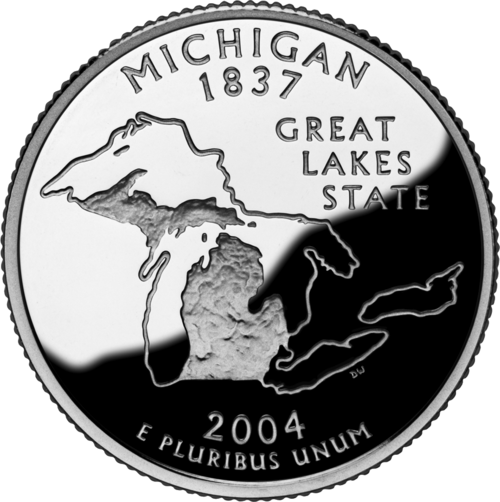
| 州25セント硬貨 | |
 2004年にリリース | |
| アメリカ合衆国の州のシンボルのリスト | |
ミシガン( / ˈ m ɪ ʃ ɪ ɡ ən / MISH略称:ミシシッピ州)はアメリカ合衆国中西部アッパー半島五大湖地域にある州。アッパー半島の南西でウィスコンシン州、ローワー半島の南でインディアナ州およびオハイオ州スペリオル湖、ミシガン湖、ヒューロン湖、エリー湖ミネソタ州、イリノイ州、カナダのオンタリオ州と繋がっている。人口約1,012万人、面積96,716平方マイル(250,490 km2)のミシガン州は、人口では全米で10番目11番目に大きく、ミシシッピ川。[b]州都はランシング、最大都市はデトロイト。デトロイト都市、国内で最も人口が多く、経済規模も最大の都市圏。この名前は、元々のオジブウェー語のᒥᓯᑲᒥ(mishigamiガリア語化された、[c]「大きな水」または「大きな湖」を意味します。[2][9]
ミシガン州は2つの半島から成ります。下半島はミトンの形に似ており、州の陸地面積の大部分を占めています。上半島(しばしば「UP」と呼ばれます)は、ヒューロン湖とミシガン湖を結ぶ5マイル(8 km)の水路であるマキナック海峡によって下半島から隔てられています。マキナック橋が半島を結んでいます。ミシガン州は、五大湖のうち4つとセントクレア湖に囲まれており、米国の行政区分の中で最も長い淡水海岸線を持っています。[10]また、64,980の内陸湖と池があります。[11]ミシガン州は、アラスカに次いで州で2番目に広い水域を持っています。[12]
この地域は、数千年にわたって、アメリカ先住民の部族が次々と居住してきた。17世紀、フランスの探検家が、主に先住民が住んでいたヌーベルフランス植民地の一部であると主張した。フランスとカナダの貿易業者や開拓者、メティスなどがこの地域に移住し、主に水路沿いに定住した。 1762年のフレンチ・インディアン戦争でフランスが敗れた後、この地域はイギリスの支配下に入った。イギリスは、アメリカ独立戦争で敗れた後、新たに独立したアメリカ合衆国にこの地域を割譲した。この地域は、1800年にミシガン州西部がインディアナ準州の一部になるまで、より広い北西部準州の一部であった。ミシガン準州は1805年に設立されたが、カナダとの北部国境の一部は米英戦争後まで合意されなかった。ミシガン州は1837年に26番目の自由州として連邦に加盟した。デトロイトはすぐに五大湖地域の重要な産業と貿易の中心地となり、19世紀後半から20世紀初頭にかけて多くのヨーロッパ諸国からの移民を引き付けました。特にフィンランド、マケドニア、オランダからの移民が多かったです。[13]アパラチア地方からの移住と南部の黒人の移住は大移動の一環として1930年代に増加し、[14] [15]多くがデトロイト大都市圏に定住しました。
ミシガン州は多様な経済を発展させてきたが、20世紀初頭には米国の自動車産業の中心地として広く知られるようになり、自動車産業は国内の主要な経済力として発展した。ミシガン州には米国の3大自動車会社(本社はすべてデトロイト大都市圏)が拠点を置いている。かつては伐採と採鉱で利用されていたが、今日では人口がまばらなアッパー半島は、豊富な天然資源のため観光業にとって重要である。[16] [17]ローワー半島は製造業、林業、農業、サービス業、ハイテク産業の中心地である。
歴史
最初のヨーロッパ人探検家が到着したとき、最も人口の多い部族はアルゴンキン族で、これにはオジブウェー族、オダワア族/オダワ族(オタワ)、ブーデワアダミ族/ボデワドミ族(ポタワトミ)のアニシナベ族が含まれていた。3つの部族は「三つの火の評議会」と呼ばれる緩やかな連合体の一部として平和的に共存していた。オジブウェー族の人口は少なくとも35,000人と推定され、最も多かった。[18]
オジブウェー・インディアン(米国ではチッペワとしても知られる)は、アニシナベ族の一種で、ミシガン州のアッパー半島、ミシガン州北部および中部に定着した。また、カナダのオンタリオ州とマニトバ州南部、ウィスコンシン州北部、ミネソタ州北部および北中部にも部族が住んでいた。オタワ・インディアンは主にマキナック海峡の南側のミシガン州北部、西部、南部に住んでいたが、オンタリオ州南部、オハイオ州北部、ウィスコンシン州東部にも住んでいた。ポタワトミ族はミシガン州南部および西部のほか、インディアナ州北部および中部、イリノイ州北部、ウィスコンシン州南部、オンタリオ州南部にも住んでいた。ミシガン州南部および東部には、他のアルゴンキン語族として、マスコウテン族、メノミニー族、マイアミ族、サック族(またはソーク族)、メスカキ族(フォックス族)がいた。彼らは歴史的にフランス人からはヒューロン族として知られており、イロコイ連邦の歴史的な敵対者であった。[19]
17世紀
1818年から1836年までのミシガン準州の領土変更
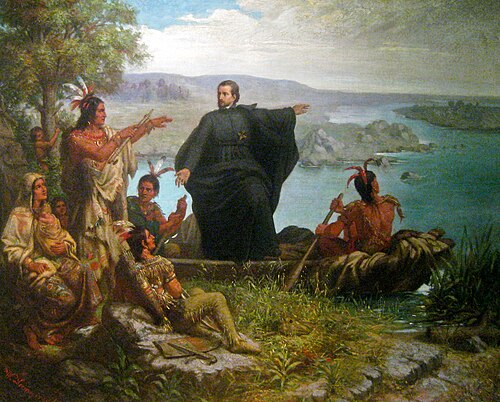
17世紀、フランスの探検家や森林探検家がミシガンを探検し、定住した。ミシガンとなった地域に到達した最初のヨーロッパ人は、1622年のエティエンヌ・ブリュレの探検隊だった。最初の恒久的なヨーロッパ人入植地は、ジャック・マルケット神父がカトリック布教の拠点としてミシガン州スーセントマリーに設立した場所に1668年に設立された。 [20] [21] 1671年から1675年にかけて宣教師たちがセントイグナスとマルケットに辺境の宣教師基地を設立した。イエズス会の宣教師たちは、困難や敵意をほとんど感じることなく、この地域のインディアン住民に歓迎された。1679年、ロバート・カヴリエ・ド・ラ・サールが現在のセントジョセフにマイアミ砦を建設した。1691年、フランス人がセントジョセフ川沿いの現在のナイルズに交易拠点とセントジョセフ砦を設立した。
18世紀
1701年、フランスの探検家で陸軍将校のアントワーヌ・ド・ラ・モット・キャディラックは、デトロイト川として知られるサンクレア湖とエリー湖の間の海峡に、ポンチャートレイン砦デュデトロイト、または「海峡沿いのポンチャートレイン砦」を建設した。[要出典]キャディラックは、ルイ14世の宰相ルイ・フェリポー・ポンチャートレイン伯爵を説得し、そこに恒久的なコミュニティを築けば、五大湖上流域に対するフランスの支配が強化され、イギリスの野望が阻止されるだろうと説いた。[要出典]
キャデラックに同行した100人の兵士と労働者は、1アルパン(約0.85エーカー(3,400平方メートル)、[22] [23] 1辺が200フィート(61メートル)弱に相当)を囲む砦を建設し、ポンチャートレイン砦と名付けた。キャデラックの妻マリー・テレーズ・ギヨンはすぐにデトロイトに移り、ミシガン州の荒野と考えられていた場所に定住した最初のヨーロッパ人女性の一人となった。この町はすぐに毛皮取引と出荷の主要な拠点となった。同年、サンアンヌ教会(カトリックの聖アンナ教会)が設立された。 [要出典]オリジナルの建物は現存していないが、信徒たちは今も活動している。[引用が必要]キャデラックは後にフランス領ルイジアナを離れ、1710年から1716年までフランス総督を務めた。[引用が必要]フランスが毛皮貿易を強化しようとしたため、キツネ戦争が勃発し、メスカキ族 (フォックス) とその同盟者がフランスとその同盟先住民族と戦った。[引用が必要]
同時に、フランス人はマキナック海峡のミシリマキナック砦を強化し、利益の大きい毛皮貿易帝国をより良く管理した。18世紀半ばまでに、フランス人は現在のナイルとスーセントマリーの砦も占領したが、この地域の残りのほとんどの地域にはヨーロッパ人が入植していなかった。フランスはデトロイトに家族を誘致するために土地を無料で提供し、1765年には人口が800人にまで増加した。デトロイトはモントリオールとニューオーリンズの間で最大の都市だった。[24]フランス人入植者は砦の反対側のデトロイト川の南、イエズス会の伝道所とヒューロン族の村の近くに小さな農場も設立した。
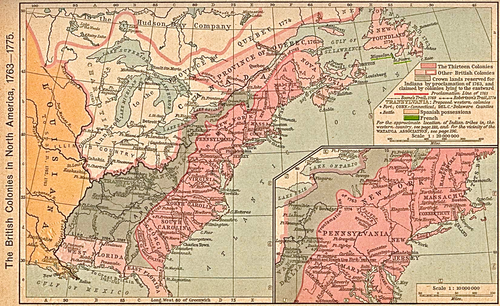

1660年からフランス統治の終わりまで、ミシガンはヌーベルフランス王立州の一部であった。[d] 1760年、モントリオールはイギリス軍の手に落ち、ヨーロッパにおける七年戦争の北米戦線であったフレンチ・インディアン戦争(1754年-1763年)は終結した。 1763年のパリ条約に基づき、ミシガンとミシシッピ川東のヌーベルフランスの残りの地域は、敗戦したフランスからイギリスに割譲された。[25] 1774年にケベック法が可決された後、ミシガンはイギリス領ケベック州の一部となった。1778年までにデトロイトの人口は2,144人に達し、ケベック州で3番目に大きな都市となった。[26]
アメリカ独立戦争中、デトロイトはイギリスの重要な補給拠点だった。住民のほとんどはフランス系カナダ人またはアメリカインディアンで、彼らの多くは長い貿易関係によりフランスと同盟を結んでいた。1783年のパリ条約で境界を定める地図作成が不正確で文言が不明瞭だったため、アメリカ独立戦争後もイギリスはデトロイトとミシガンの支配権を維持した。1791年にケベックがローワーカナダとアッパーカナダに分割されたとき、ミシガンはアッパーカナダのケント郡の一部だった。1792年8月、ミシガンはニューアーク(現在のナイアガラオンザレイク)の新しい州議会に代表を送るため、初の民主的な選挙を実施した。[27]
1794年のジェイ条約で交渉された条件に基づき、イギリスは1796年にデトロイトとミシリマキナックから撤退した。イギリスはデトロイト川の東と南の領土の支配権を保持したが、これは現在カナダのオンタリオ州に含まれる。境界線については長年疑問が残っており、アメリカ合衆国は1818年と1847年までそれぞれアッパー半島とドラモンド島の完全な支配権を握ることができなかった。
19世紀
米英戦争中、デトロイト砦のアメリカ軍は、 1812年にほぼ無血の包囲戦の末、ミシガン準州(事実上デトロイトとその周辺地域)を明け渡した。アメリカ軍はデトロイト奪還を試みたが、レーズン川の虐殺で大敗した。この戦いは、今でも州内で最も血なまぐさい戦いとして数えられており、戦争中のどの戦いよりも多くのアメリカ人の死傷者を出した。
ミシガン州は、1813年のエリー湖の戦いの後、アメリカ軍に奪還された。アメリカ軍はミシガンを拠点としてカナダ侵攻を開始し、テムズ川の戦いで頂点に達した。しかし、ミシガンの北部地域は、平和条約で古い境界線が回復されるまでイギリス軍が保持していた。19世紀には、イギリスとの新たな戦闘を恐れて、米国はミシガン州にフォートウェインを含む多くの砦を建設した。

ミシガン準州の知事と裁判官は1817年にミシガン大学をカトレピステミアド、またはミシガン大学として設立しました。[28]
1825年にニューヨーク州モホーク渓谷を通るエリー運河が開通し、五大湖とハドソン川、ニューヨーク市が結ばれるまで、人口はゆっくりと増加した。 [要出典]この新しい航路は、ミシガン準州に大量の移住者を引き寄せた。彼らは農民、木材業者、造船業者、商人として働き、穀物、木材、鉄鉱石を出荷した。1830年代までに、ミシガン州の住民は8万人に達し、州昇格の申請と資格を得るには十分すぎる数だった。[要出典]
1935年11月1日、米国郵便局はミシガン州の州昇格100周年を記念した3セント切手を発行した。ミシガン州の州昇格は1837年1月26日まで正式には認められなかったが、州昇格運動が実際に始まったのは1835年であったため、ミシガン州は1935年に100周年記念式典を開催することを選択した。この年は切手が初めて発行された年である。[29]
準州を州に昇格させるための憲法制定会議が開催された。[30] 1835年10月、住民は1835年憲法を承認し、州政府が発足した。議会による承認は、トレド戦争として知られるオハイオ州との境界紛争の解決を待って延期された。議会は「トレド地帯」をオハイオ州に与えた。ミシガン州はアッパー半島の西部を譲歩として受け取り、 1837年1月26日に自由州として正式に連邦に加盟した。アッパー半島は木材、鉄、銅の豊富な産地であることが判明した。ミシガン州は1850年代から1880年代にかけて木材生産で国内をリードした。 1850年代以降、鉄道はデトロイトを中心として成長の大きな原動力となった。

フランス系カナダ人移民の第二波は19世紀後半から20世紀初頭にかけてミシガン州に定住し、サギノー渓谷、アルピナ、チェボイガンなどのロウアー半島ヒューロン湖側の郡やアッパー半島全域の木材産業に従事したが、エスカナバとキーウィノー半島に大集中していた。[31]
共和党の最初の州規模の集会は、1854年7月6日にミシガン州ジャクソンで開催され、党の綱領が採択された。[要出典] 1930年代まで、この州は主に共和党支持者で、ニューイングランド北部とニューヨークからの移民の政治的連続性を反映していた。[要出典]ミシガン州は南北戦争で北軍に多大な貢献をし、40個以上の志願兵連隊を連邦軍に派遣した。[要出典]
ミシガン州はこの時期に教育制度を近代化し、拡大した。[要出典]ミシガン州立師範学校(現在のイースタンミシガン大学)は、教師の養成を目的として1849年に設立された。[要出典]これは米国で4番目に古い師範学校であり、ニューイングランド以外では米国初の師範学校であった。[要出典] 1899年、ミシガン州立師範学校は4年制のカリキュラムを提供する国内初の師範学校となった。ミシガン農業大学(1855年)(現在のイーストランシングのミシガン州立大学)は、国内初の農業大学として設立された。 [要出典]私立大学も数多く設立され、19世紀後半には小規模な都市でも高校が設立された。[32]
20世紀~21世紀


ミシガン州の経済は、20 世紀初頭に変革を遂げました。ランサム E. オールズ、ジョンとホレス ドッジ、ヘンリー リーランド、デビッド ダンバー ビュイック、ヘンリー ジョイ、チャールズ キング、ヘンリー フォードなど、多くの人々がエンジニアリングのノウハウと技術への熱意を結集して自動車産業を発展させました。[33]フォードがハイランド パークで移動式組立ラインを開発したことで、輸送の新時代が始まりました。[要出典]蒸気船や鉄道と同様に、自動車の大量生産は広範囲にわたる発展でした。公共交通機関の形態以上に、手頃な価格の自動車は個人の生活を一変させました。自動車生産はデトロイトとミシガン州の主要産業となり、米国および世界の多くの地域の社会経済生活を永久に変えました。[要出典]
成長とともに、自動車産業はデトロイトに雇用を生み出し、ヨーロッパからの移民や、南部の田舎からの黒人と白人の両方を含む全米各地からの移民を惹きつけた。[要出典] 1920年までに、デトロイトは米国で4番目に大きな都市となった。[要出典]住宅は不足しており、市場が人口増加に追いつくまでに何年もかかった。[要出典] 1930年代までに、非常に多くの移民が到着したため、公立学校では30以上の言語が話され、民族コミュニティは毎年恒例の伝統祭りで祝った。[34]長年にわたり、移民と移住者は、ポピュラー音楽のトレンドを含むデトロイトの多様な都市文化に大きく貢献した。1960年代の影響力のあるモータウンサウンドは、さまざまな個人の歌手やグループによって主導された。[要出典]
ミシガン州で2番目に大きな都市であるグランドラピッズも重要な製造業の中心地となった。1838年以来、この都市は家具産業で知られている。[35] [36] 21世紀には、世界有数のオフィス家具会社5社がグランドラピッズを拠点としている。グランドラピッズは、スチールケース、アムウェイ、マイヤーなど多くの大手企業の本拠地となっている。グランドラピッズは、 GEアビエーションシステムズにとっても重要な中心地である。
ミシガン州では1910 年に初めてアメリカ合衆国大統領予備選挙が行われた。 [要出典]産業が急速に成長したため、全米自動車労働組合の台頭など、業界全体の労働組合組織の重要な中心地となった。[要出典]
1920年、デトロイトのWWJ(AM)は、米国で初めて定期的に商業番組を放送するラジオ局となった。その10年間で、米国で最も大きくて豪華な高層ビルのいくつかが市内に建てられた。特に注目すべきは、フィッシャービル、キャデラックプレイス、ガーディアンビルで、いずれも国定歴史建造物(NHL) に指定されている。

1927年、クリントン郡で学校爆破事件が発生した。このバス校の惨事により38人の児童が死亡し、アメリカ史上最悪の学校内大量殺人事件となった。[37]
ミシガン州は第二次世界大戦中に製造業の多くを防衛需要を満たすために転換し、戦争中に生産された米国の軍事兵器の10.9%を製造し、48州の中でニューヨーク州に次いで2位となった。[38]
デトロイトは 1950 年代を通じて拡大を続け、一時は 10 年で人口が 2 倍になった。第二次世界大戦後、住宅需要を満たすため、市中心部以外の郊外に住宅が開発された。連邦政府は州間高速道路の建設を補助したが、これは軍のアクセスを強化することを目的としただけでなく、通勤者やビジネス客がこの地域をより容易に移動できるようにもした。1960 年以降、自動車産業の近代的進歩により、自動化、ハイテク産業が進み、郊外の成長が進んだ。デトロイトでの長年の緊張は、 1967 年 7 月の12 番街暴動で頂点に達した。
ミシガン州は米国最大の自動車生産州となり、自動車産業は主に米国中西部、カナダのオンタリオ州、米国南部に広がっています。[39] 2010年の人口は約1,000万人で、ミシガン州は50州の中で人口が10番目に多い、大きく影響力のある州です。デトロイトは五大湖大都市圏の中心に位置する都市圏であり、五大湖システムを結ぶ米国で2番目に大きな都市圏(シカゴに次ぐ)です。
ミシガン州南東部のデトロイト大都市圏は、州最大の都市圏(人口の約 50% が居住)であり、米国で 11 番目に大きい都市圏です。ミシガン州西部のグランドラピッズ大都市圏は、州で最も急速に成長している都市圏であり、2006 年時点で 130 万人以上の住民がいます。 [update]
地理
.jpg/500px-Huron_National_Wildlife_Refuge_(7455778394).jpg)
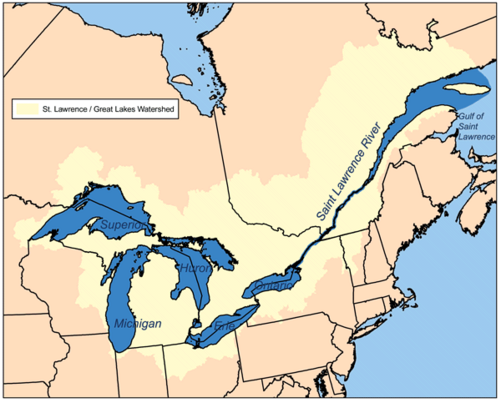
ミシガン州はマキナック海峡で隔てられた2つの半島からなる。北緯45度線が州内を走っており、高速道路の標識やポーラー・エクアトール・トレイルで示されている。[40]この線は、トラバースシティ近郊のミッションポイントライト、ローワー半島のゲイロードとアルペナの町、アッパー半島のメノミニーを含む。アッパー半島のウィスコンシン川とローワー半島のカンカキー・イリノイ川を経由してミシシッピ川が排水する2つの小さな地域を除いて、ミシガン州は五大湖・セントローレンス川流域によって排水されており、州の大部分がこのように排水されている唯一の州である。州内のどの地点も、自然の水源から6マイル (9.7 km) 以上、五大湖の海岸線から85マイル (137 km) 以上離れていることはない。[41]
ミシガン州の東西に接する五大湖は、エリー湖、ヒューロン湖、ミシガン湖、スペリオル湖である。ミシガン州は南でオハイオ州とインディアナ州に接しており、両州と陸地と水域の境界を共有している。ミシガン州の西側の境界は、南から北にかけてほぼ完全に水域境界であり、ミシガン湖でイリノイ州とウィスコンシン州と接し、次にウィスコンシン州とアッパー半島との陸地境界があり、これは主にメノミニー川とモントリオール川によって区切られている。そして再び水域境界がスペリオル湖にあり、西はウィスコンシン州とミネソタ州、北と東はカナダのオンタリオ州に囲まれている。
深い森林に覆われたアッパー半島は、西部が比較的山がちである。世界最古の山脈の一つであるポーキュパイン山脈[42]は、海抜約2,000フィート(610メートル)の高度までそびえ立ち、スペリオル湖とミシガン湖に流れ込む川の分水嶺となっている。この山脈の両側の地表は険しい。州の最高地点はマルケットの北西にあるヒューロン山脈の標高1,979フィート(603メートル)のアーボン山である。半島はコネチカット州、デラウェア州、マサチューセッツ州、ロードアイランド州を合わせたほどの大きさであるが、住民は33万人未満である。この人々は「ユーパーズ」(「UP'ers」から)と呼ばれることもあり、彼らの話し方(「ユーパー方言」)は、19世紀後半の 木材産業と鉱業のブームの時期にこの地域に定住した多数のスカンジナビア人とカナダ人の移民の影響を強く受けています。


ローワー半島はミトンのような形をしており、多くの住人は出身地を表すために手を挙げる。[43]南北に277マイル (446 km)、東西に195マイル (314 km) あり、州の陸地面積のほぼ3分の2を占めている。半島の表面は一般的に平坦で、通常は数百フィート以下の円錐形の丘と氷河モレーンによって分断されている。半島は南北に走る低水位分水嶺によって分割されている。州の大部分はこの分水嶺の西側にあり、ミシガン湖に向かって緩やかに傾斜している。ローワー半島の最高地点は、1,705フィート (520 m) のブライアーヒルか、キャデラック付近の近くのいくつかの地点のいずれかである。最低地点はエリー湖の水面の571フィート (174 m) である。
ミシガン州の半島の地理的な位置により、州の端と端の間の距離は長い。アッパー半島の西端にあるアイアンウッドは、ローワー半島の南東端にあるランバートビルから高速道路で630マイル(1,010キロメートル)離れている。アッパー半島はミシガン州の政治や人口の中心地から地理的に隔離されているため、文化的にも経済的にも独特の地域となっている。アッパー半島を独立した州として設立しようとする試みは何度も行われたが、成功しなかった。[44] [45]
ミシガン州の特徴であるミトンのような形は、ヒューロン湖に突き出てサギノー湾を形成するサム半島によってもたらされます。ミシガン州のその他の注目すべき半島には、アッパー半島からスペリオル湖に北東に突き出し、ミシガン州の銅鉱山地域の大部分を占めるキーウィノー半島、およびローワー半島からミシガン湖に突き出てミシガン州の「小指」を形成する リーラノー半島があります。
両半島には多数の湖沼があり、海岸線は大きく入り組んでいる。アッパー半島の主な入り組んだ地形は、キーウィノー湾、ホワイトフィッシュ湾、ビッグベイとリトルベイ・デ・ノックである。グランド・トラバース湾、リトル・トラバース湾、サンダー湾、サギノー湾はロウアー半島を囲んでいる。ミシガン州は全米で2番目に長い海岸線を持ち、3,288マイル(5,292 km)[46] 、そのうち1,056マイル(1,699 km)は島の海岸線である。[47]
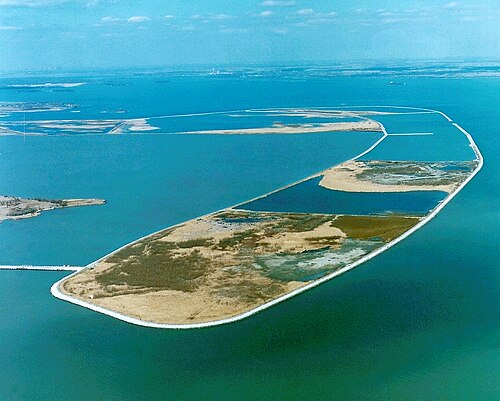
州には多数の大きな島があり、主なものとしてはミシガン湖のノースマニトウ島とサウスマニトウ島、ビーバー島、フォックス島、スペリオル湖のアイルロイヤル島とグランドアイル島、ヒューロン湖のマルケット島、ボワブラン島、マキナック島、セントメアリーズ川のニービッシュ島、シュガー島、ドラモンド島などがある。ミシガン州には約150の灯台があり、米国の州の中で最も多い。[48]ミシガン州で最初の灯台は1818年から1822年の間に建てられた。それらは夜間に光を投射し、日中は五大湖を航行する客船や貨物船を安全に導くための目印として機能するために建てられた(米国の灯台を参照)。
州の河川は一般に小さく、短く、浅く、航行可能な川は少ない。主なものとしては、五大湖を結ぶデトロイト川、セントメアリーズ川、セントクレア川、ヒューロン湖に注ぐオーセイブル川、チェボイガン川、サギノー川、スペリオル湖に注ぐオントナゴン川、タークアメノン川、ミシガン湖に注ぐセントジョセフ川、カラマズー川、グランド川、マスケゴン川、マニスティー川、エスカナバ川などがある。州内には、五大湖の水域 38,575 平方マイル (99,910 km 2 )に加えて、11,037 の内陸湖 (総面積 1,305 平方マイル ( 3,380 km 2 ) ) がある。ミシガン州のどの地点も、内陸の湖から6マイル(9.7km)以上離れておらず、五大湖から85マイル(137km)以上離れていない。[49]
州内には国立公園局が管理する地域がいくつかあり、その中にはオンタリオ州サンダーベイの南東約30マイル(48 km)のスペリオル湖にあるアイルロイヤル国立公園などがあります。州内の他の国立保護区には、キーウィーノー国立歴史公園、ピクチャードロックス国立湖岸、スリーピングベアデューンズ国立湖岸、ヒューロン国有林、マニスティー国有林、ハイアワサ国有林、オタワ国有林、ファーザーマルケット国立記念碑などがあります。ノースカントリー国立景観トレイルの最も長い区間はミシガン州を通っています。
ミシガン州には 78 の州立公園、19 の州立レクリエーションエリア、6 つの州立森林があり、どの州よりも大きな州立公園と州立森林システムを有しています。
気候

ミシガン州は大陸性気候で、2つの地域に分かれている。ローワー半島の南部と中央部(サギノー湾の南とグランドラピッズ地域から南)は温暖な気候(ケッペンの気候区分 Dfa)で、夏は暑く、冬は寒い。ローワー半島の北部とアッパー半島全体はより厳しい気候(ケッペンの気候区分Dfb)で、夏は暖かいが短く、冬は長く寒いから非常に寒い。州の一部では、12月から2月にかけて、最北部では3月上旬まで平均気温が氷点下になる。冬から2月中旬にかけて、州は頻繁に激しい湖水効果雪に見舞われる。州の平均年間降水量は30~40インチ(76~102 cm)だが、ローワー半島北部とアッパー半島の一部では、年間平均降雪量がほぼ160インチ(4,100 mm)に達する。[50]ミシガン州の最高気温は1936年7月13日にミオで記録された112°F(44°C)で、最低気温は1934年2月9日にヴァンダービルトで記録された−51°F(−46°C)です。[51]
州では、年間平均30日間雷雨が発生し、特に州南部では激しい雷雨となる。州では年間平均17回の竜巻が発生し、州最南部でより多く発生する。南部国境の一部は、歴史的に西側の州や竜巻街道とほぼ同じくらい脆弱であった。このため、州最南部の多くのコミュニティでは、竜巻の接近を住民に警告する竜巻サイレンが設置されている。さらに北の中央ミシガン、北部ミシガン、アッパー半島では、竜巻はまれである。[52] [53]
地質学
州の地質学的構成は多種多様で、ミシガン盆地が最も大きな構成です。一次岩はアッパー半島の全面に見られ (主に原始起源)、二次堆積物はローワー半島全体を覆っています。アッパー半島には、カナダのヒューロニアン系に相当する、シルル紀前期の砂岩、石灰岩、銅と鉄を含む岩石があります。ローワー半島の中央部には、ペンシルベニア紀の石炭層と岩石があります。デボン紀と石炭紀後期の堆積物は、州全体に散在しています。
ミシガン州では地震はほとんど起こらず、もし起こるとしても一般的には小規模で大きな被害は出ない。1947年8月にはマグニチュード4.6の地震が発生した。コロラド州に本部を置く米国地質調査所の国立地震情報センターによると、最近では2015年5月2日土曜日の正午過ぎ、ミシガン州中央部、デトロイトの西約140マイル、ミシガン州ゲールズバーグの南約5マイル(カラマズーの南東9マイル)でマグニチュード4.2の地震が発生した。当時のリック・スナイダー知事の事務所によると、大きな被害や負傷者は報告されていない。 [54]
行政区分
州政府は、州全体、郡、町の3つの層に分散されている。郡は州の行政区画であり、町は郡の行政区画である。どちらも州法で定められた管轄区域の特定のニーズを満たすために地方化された州政府の権限を行使する。ミシガン州には83の郡がある。[55]
都市、州立大学、村には、程度の差はあるものの自治権が与えられています。自治権を持つ都市は、一般的に、法律で禁止されていない限り、何でも行うことができます。15 の州立大学は広範な権限を持ち、教育機関としての地位の範囲内で、州憲法で禁止されていない限り、何でも行うことができます。対照的に、村には限定的な自治権があり、所在する郡や町から完全には独立していません。
ミシガン州には、一般法タウンシップとチャーター タウンシップの 2 種類のタウンシップがあります。チャーター タウンシップの地位は 1947 年に州議会によって創設され、都市による併合に対する保護を強化するために、追加の権限と合理化された行政が付与されます。2001 年 4 月の時点で[update]、ミシガン州には 127 のチャーター タウンシップがありました。一般に、チャーター タウンシップは都市とほぼ同じ権限を持ちますが、義務のレベルは同じではありません。たとえば、チャーター タウンシップは、都市と同じように独自の消防署、上下水道局、警察署などを持つことができますが、それらは持つ必要はなく、都市はそれらのサービスを提供する必要があります。チャーター タウンシップは、郡全体のサービス (郡保安官事務所の代理を拠点の法令執行官の代わりに使用するなど) を使用することもできます。
人口統計

1800年の国勢調査以来、ミシガン州は比較的プラスで安定した人口増加傾向にあります。当初の人口は3,757人でしたが、2010年の国勢調査では9,883,635人を記録しました。2020年の国勢調査では、人口は10,077,331人で、2010年の集計から2.03%増加しています。米国国勢調査局によると、ミシガン州はオハイオ州とイリノイ州に次いで、中西部とその東北地方で3番目に人口の多い州です。
ミシガン州の人口の中心はシアワシー郡のベニントン市街地の南東隅にあり、モリス村の北西に位置する。[59]
2019年のアメリカ移民評議会によると、ミシガン州民の約6.8%が移民であり、3.8%が少なくとも片方の移民の親を持つ米国生まれの市民でした。[60] 2019年の調査によると、ミシガン州の移民は約678,255人で、その大部分はメキシコ(11.5%)、インド(11.3%)、イラク(7.5%)、中国(5.3%)、カナダ(5.3%)からの移民で、移民の主な職業はテクノロジー、農業、ヘルスケアでした。移民コホートの中には、108,105人の不法移民がおり、移民人口全体の15.9%を占めていました。[60]
HUDの2022年ホームレス評価報告書によると、ミシガン州には推定8,206人のホームレスがいる。[61] [62]
人種と民族

ヨーロッパ人とアメリカ人の入植以来、ミシガン州の人口の大部分は主に非ヒスパニック系または非ラテン系白人であり、ヨーロッパ系アメリカ人は州内のすべての郡とデトロイト大都市圏のほとんどに住んでいる。ヨーロッパ系アメリカ人の大きなグループには、ドイツ、イギリス、アイルランド、ポーランド、ベルギーの祖先がいる。[67] スカンジナビア系およびフィンランド系アメリカ人はアッパー半島に顕著な存在感を示している。[68] ミシガン州西部は、特にオランダとグランドラピッズ都市圏でオランダの伝統で知られている。 [69]
20世紀初頭の大移動でデトロイトや他の北部の都市にやって来た黒人とアフリカ系アメリカ人は、デトロイトやフリント、ベントンハーバーなどの都市の人口の多数を占めている。2021年の国勢調査の推計では、デトロイトは依然としてミシガン州で黒人人口が多数を占める最大の都市であったが、犯罪や白人に与えられる高給の仕事により、米国で最大の黒人多数派の都市ではなくなった。[70] [71]
2007年時点で、ミシガン州南東部[update]の約30万人が中東とアジアを祖先に持つ。[72]ディアボーンにはかなりの数のアラブ系アメリカ人コミュニティがあり、 1920年代に自動車産業の仕事を求めて移住したアッシリア人、カルデア人、シリア人、レバノン人が多く、最近ではイエメン人とイラク人も含まれる。[73] 2007年時点で、ミシガン州には約8,000人のモン族が住んでおり、1999年の州内人口の約2倍になっている。 [74]大半はデトロイト北東部に住んでいたが、ポンティアックやウォーレンへの移住も増えていた。[75] 2015年までに、デトロイト市内のモン族の数は大幅に減少した。[76]ランシングでは州全体でモン族新年祭が開催される。[75]モン族のコミュニティは、デトロイトを舞台にした 2008年の映画『グラン・トリノ』でも重要な役割を果たした。 [update]
2015年現在[update]、ミシガン州の日本人人口の80%はデトロイトとアナーバー地域のマコーム郡、オークランド郡、ウォッシュテノー郡、ウェイン郡に住んでいた。[77] 2013年4月現在[update]、日本人人口が最も多いのはノバイで2,666人、次いでアナーバー、ウェストブルームフィールドタウンシップ、ファーミントンヒルズ、バトルクリークの順となっている。州内には481の日本人雇用施設があり、35,554人の地元雇用を提供している。そのうち391はミシガン州南東部にあり、20,816人の雇用を創出している。また、州内の他の地域にある90の施設では14,738人の雇用を創出している。デトロイト駐日総領事館の日本直接投資調査によると、2012年10月1日現在[update]、ミシガン州で雇用されている日本人は2011年より2,208人以上増加している。 [78] 1990年代にはミシガン州の日本人人口が増加し、子供を持つ多くの日本人が日本食料品店や成績優秀な学校に近い特定の地域に移住した。[77]
言語
2010年には、5歳以上のミシガン州住民の約91.11%(8,507,947人)が家庭で英語のみを話し、2.93%(273,981人)がスペイン語、1.04%(97,559人)がアラビア語、0.44%(41,189人)がドイツ語、0.36%(33,648人)が中国語(北京語を含む)、0.31%(28,891人)がフランス語、0.29%(27,019人)がポーランド語を話し、5歳以上の人口の0.25%(23,420人)がシリア語(現代アラム語や北東部新アラム語など)を主要言語として話していた。合計で、5歳以上のミシガン州人口の8.89%(830,281人)が英語以外の母語を話していた。 [79] 2021年以降、5歳以上の住民の90.1%が自宅で英語のみを話し、スペイン語は人口の2.9%が話す2番目に多い言語でした。[80]
宗教
イギリスとフランスによるミシガン周辺地域の植民地化に続いてキリスト教が支配的な宗教となり、歴史的にローマカトリックが州内で最大のキリスト教団体であった。19世紀までローマカトリック教会はミシガン州で唯一の組織化された宗教団体であり、この地域のフランス植民地時代のルーツを反映していた。1701年にアントワーヌ・ド・ラ・モット・キャディラックによって設立されたデトロイトのセントアン教区は、米国で2番目に古いローマカトリックの教区である。[82] 1833年3月8日、ローマ教皇庁はミシガン準州に正式に教区を設立した。これにはミシガン、ウィスコンシン、ミネソタの全域とミシシッピ川東側のダコタが含まれていた。1837年にミシガン州が州になったとき、デトロイトのローマカトリック教区の境界は州の境界と一致するように再描画された。他の教区は後にデトロイト教区から分離されましたが、デトロイト教会管区の一部であり続けています。 [83]ミシガン州ではいくつかのネイティブアメリカンの宗教が実践されてきました。
2020年には、ローマカトリックの信者は1,492,732人でした。[84]また、デトロイト大都市圏には、カール・ロディグ大司教によって設立されたエキュメニカル・カトリック・キリスト教会など、独立カトリック教会もかなり存在しています。この教会の司教区は、元ローマカトリックの教区教会で運営されています。[85] [86] [87]
プロテスタントが州に導入されると、プロテスタントは最大の集団的キリスト教グループを形成し始めた。2010年、宗教データアーカイブ協会は、最大のプロテスタント宗派は228,521人の信者を擁する合同メソジスト教会であると報告した。 [88]続いてルーテル教会ミズーリ教区が219,618人、アメリカ福音ルーテル教会が120,598人の信者を擁している。北米キリスト教改革派教会はミシガン州に約10万人の会員と230以上の会衆を擁している。[89]アメリカ改革派教会は州内に76,000人の会員と154の会衆を擁している。[90] 2020年の調査では、非宗派および宗派間のプロテスタント教会がミシガン州で最大のプロテスタントグループを形成し、その数は508,904であった。ルーテル教会ミズーリ教区はキリスト教の宗派としては2番目に大きく、合同メソジストは3番目に大きくなった。ルーテル派プロテスタントの伝統はドイツとスカンジナビアからの移民によってもたらされた。バプテスト派は、ナショナル・ミッショナリー・バプテスト、ナショナル・バプテスト、アメリカン・バプテスト、サザン・バプテスト、ナショナル・バプテスト・オブ・アメリカ、プログレッシブ・ナショナル・バプテスト、フル・ゴスペル・バプテストを合わせて321,581人であり、黒人バプテストが最大の支持者であった。[84]西ミシガンでは、オランダ人移民が1850年頃、オランダでの宗教的迫害と飢餓の恐怖から逃れ、現在のミシガン州ホランドとその周辺に定住し、アメリカの地に「植民地」を築き、カルヴァン主義の教義を熱心に守り、改革派教会の大きな存在を確立した。[91]
2010年の同じ調査では、ミシガン州のユダヤ教徒は44,382人、イスラム教徒は120,351人と推定されている。[92]州で最初のユダヤ教のシナゴーグは、1850年にデトロイトで12のドイツ系ユダヤ人家族によって設立されたテンプル・ベス・エルである。 [93] イスラム教は、20世紀に近東からの移民によってもたらされた。[94]ミシガン州には、ディアボーンにある北米最大のモスク、イスラムセンター・オブ・アメリカがある。ミシガン州バトルクリークは、 1863年5月21日に設立されたセブンスデー・アドベンチスト教会発祥の地でもある。 [95] [96]
経済


,_Dearborn,_Michigan_(14200507431).jpg/500px-Ford_Dearborn_Development_Center_(Proving_Grounds),_Dearborn,_Michigan_(14200507431).jpg)
米国国勢調査局によると、2017年にはミシガン州の222,553の事業所で3,859,949人が雇用されていた。[98]
米国経済分析局は、ミシガン州の2023年第1四半期の州総生産を6452億9300万ドルと推定し、50州中14位となった。[99]米国労働統計局によると、2023年8月時点で[update]、同州の季節調整済み失業率は3.7%と推定されている。[100]
製品とサービスには、自動車、食品、情報技術、航空宇宙、軍事機器、家具、銅と鉄鉱石の採掘などがある。[定量化]ミシガン州は、 2007年にクリスマスツリー栽培に60,520エーカー(245 km 2 )の土地を割き、クリスマスツリーの生産量で第3位である。 [101] [102]バーナーズジンジャーエールという飲料は、1866年にミシガン州で発明され、ハイアーズルートビアとともに最古のソフトドリンクの称号を分け合っている。フェイゴは1907年11月4日にデトロイトで設立された。トップ4のピザチェーンのうち2つはミシガン州で設立され、本社を置いている。トム・モナハンによるドミノ・ピザとマイク・イリッチによるリトル・シーザーズ・ピザである。ミシガン州は2012年に米国で24番目の労働者の権利を認める州となったが、2023年にこの法律は廃止される。[103]
2009年以来、GM、フォード、クライスラーは、9.11同時多発テロ後の株式市場の不安定化と2000年代初頭の景気後退がそれぞれの米国年金・給付基金(OPEB)に影響を及ぼした後、給付基金構造の大幅な再編に取り組んできた。[104]ゼネラルモーターズ、フォード、クライスラーは、それぞれの医療・給付基金の負債を501(c)(9)任意従業員受益者協会(VEBA)に移管することで全米自動車労働組合と合意した。州内の製造業は2001年から2006年にかけて6.6%成長したが、[105] 2008年の経済危機の間、石油の投機的な高価格が米国自動車産業の収益に影響を及ぼした。2009年、GMとクライスラーは、米国政府とカナダ政府から部分的に資金提供を受け、連邦破産法第11章による再編から脱却した。 [106] [107] GMは2010年に株式の新規株式公開(IPO)を開始しました。 [108] 2010年には、国内のビッグスリー自動車メーカーが大幅な利益を報告し、回復の始まりを示しました。[109] [110] [111] [112]
2002年現在[update]、ミシガン州はハイテク雇用において全米第4位で、56万8千人のハイテク労働者を抱え、そのうち7万人が自動車産業に従事している。[113]ミシガン州は、全米の研究開発費全体で第3位か第4位である。 [114] [115]自動車産業を含むミシガン州の研究開発費は、他のどの米国州よりも州全体の国内総生産に占める割合が高い。[116]ミシガン州はエンジニアリングの雇用機会の重要な源泉である。国内の自動車産業は、直接的および間接的に米国の雇用の10分の1を占めている。[117]
ミシガン州は、2004年に企業新設および拡張で全米第2位となった。1997年から2004年まで、ミシガン州は主要な新開発件数が1万件を超えた唯一の州であった。[39] [118]しかし、 2000年代後半の不況の影響で州の経済は減速している。2008年、人口100万人あたりの資本投資および新規雇用創出を測定した新規事業誘致のための立地選定調査で、ミシガン州は各州の中で第3位となった。[119] 2009年8月、ミシガン州とデトロイトの自動車産業は、電気自動車技術の製造のために米国エネルギー省から13億6000万ドルの助成金を受け取った。これにより、2020年までに州内で6,800件の即時雇用が創出され、4万人が雇用されると見込まれている。[120] 2007年から2009年まで、ミシガン州は企業新設および拡張で全米第3位であった。[121] [122]

主要な研究機関として、ミシガン大学、ミシガン州立大学、ウェイン州立大学は、州の経済と大学研究回廊の重要なパートナーです。[123]ミシガン州の公立大学は、毎年15億ドル以上の研究開発助成金を獲得しています。[124]国立超伝導サイクロトロン研究所はミシガン州立大学にあります。ミシガン州の労働力は教育水準が高く、高度なスキルを備えているため、企業にとって魅力的です。工学部の卒業生の数は全国で3番目に多いです。[125]
デトロイト・メトロポリタン空港は、6本の主要滑走路とボーイング747の整備・修理が可能な大型航空機整備施設を備え、デルタ航空の主要拠点となっている、国内で最も最近拡張・近代化された空港の1つである。ミシガン州の学校と大学は、国内でもトップクラスにランクされている。同州は、公教育への初期の取り組みを維持している。同州のインフラは競争力を高めており、ミシガン州には38の深水港がある。[126] 2007年、バンク・オブ・アメリカは、トロイのラサール銀行の買収に続き、ミシガン州のコミュニティ開発に250億ドルを投じると発表した。[127]
ミシガン州は2010年に雇用創出の改善で全米をリードした。[128]
2019年12月20日、グレッチェン・ホイットマー知事は、ミシガン州でのオンラインギャンブル活動を事実上合法化する一連の法案に署名し、商業カジノと部族カジノがインターネットゲームライセンスを申請できるようにした。[129]
課税
ミシガン州の個人所得税は一律4.25%である。さらに、22の都市が所得税を課しており、4都市を除く全市で居住者に対して1%、非居住者に対して0.5%の税率に設定されている。[130]ミシガン州の州売上税は6%であるが、食品や医薬品などの品目は免除されている。財産税は地方レベルで評価されるが、すべての財産所有者の地方評価額は、法定州教育税に6ミル(財産価値1000ドルあたり6ドルの税率)を加算する。財産税は地方審査委員会に不服申し立てすることができ、州法および地方憲章で規定された課税率を超えるには地方選挙民の承認が必要である。2011年、州は事業税を廃止し、6%の法人所得税に置き換え、事業に対する税金を大幅に削減した。[131] [132]ミシガン州憲法第IX条は、州が課税できる金額にも制限を設けている。
州外で購入された商品(州内に持ち込まれ、州内で使用されるもの)には、売上税と同額の6%の使用税が課せられます。 [133]使用税はミシガン州外からのインターネット販売/購入に適用され、売上税と同等です。[134]
農業

_001.jpg/500px-Kellogg_World_Headquarters_(battlecreekcvb)_001.jpg)
ミシガン州では多種多様な商品作物、果物、野菜が栽培されており、農業の多様性では米国の州の中でカリフォルニア州に次いで2番目に高い。[135]州には10,000,000エーカー(40,000 km 2)の土地を利用する54,800の農場があり、2010年には64.9億ドル相当の農産物を販売した。 [136]最も価値のある農産物は牛乳です。主要作物には、トウモロコシ、大豆、花、小麦、テンサイ、ジャガイモなどがあります。州内の家畜には、78,000頭の羊、100万頭の牛、100万頭の豚、300万羽以上の鶏が含まれています。畜産物は農産物の価値の38%を占め、作物が大部分を占めています。
ミシガン州は、ブルーベリー、タルトチェリー、リンゴ、ブドウ、桃など、米国有数の果物の生産地である。 [137] [138]プラム、ナシ、イチゴもミシガン州で栽培されている。これらの果物は、ミシガン湖の気候緩和効果により、主に西ミシガン州で栽培されている。ミシガン湖沿いの北西部ミシガン州でも、特にチェリーを中心に、ブドウ、リンゴ、その他の果物の生産が盛んである。ミシガン州では、ワイン、ビール、さまざまな加工食品が生産されている。ケロッグのシリアルはミシガン州バトルクリークに拠点を置き、地元産の食品を多く加工している。ソーンアップルバレー、ボールパークフランクス、ケーゲルミートカンパニー、ヘブライナショナルソーセージ会社はすべてミシガン州に拠点を置いている。
ミシガン州には、サギノー渓谷とサム地域に非常に肥沃な土地があります。そこで栽培される製品には、トウモロコシ、テンサイ、白インゲン豆、大豆などがあります。テンサイの収穫は通常10月1日に始まります。製糖工場では、370万トンのテンサイを48万5000トンの純粋な白砂糖に加工するのに約5か月かかります。[139]ミシガン州最大の砂糖精製会社であるミシガン・シュガー・カンパニー[140]は、ミシシッピ川東側では最大、国内では4番目に大きい会社です。ミシガン州の砂糖のブランド名は、パイオニア・シュガーと新しく設立されたビッグ・チーフ・シュガーです。ジャガイモはミシガン州北部で栽培され、トウモロコシはミシガン州中部で主に栽培されています。アルファルファ、キュウリ、アスパラガスも栽培されています。
観光


2011年現在、ミシガン州の観光客は州内で年間172億ドルを費やし、193,000人の観光関連雇用を支えている。[141]ミシガン州の観光ウェブサイトは、国内で最も忙しいウェブサイトの1つにランクされています。[142]観光地は、米国とカナダ全土から行楽客、ハンター、自然愛好家を惹きつけています。ミシガン州は50%以上が森林地帯で、[143]その多くはかなり人里離れています。森林、湖、何千マイルにも及ぶビーチがトップのアトラクションです。チューリップタイムフェスティバルやナショナルチェリーフェスティバルなどのイベントには、多くの人が集まります。
2006年、ミシガン州教育委員会は、州内のすべての公立学校に対し、レイバーデー後の新学校法に従い、レイバーデー後に新学期の授業日を設定することを義務付けた。調査によると、観光業全体の70%はミシガン州の住民から直接もたらされており、ミシガン州ホテル、モーテル、リゾート協会は、学年間の夏休みが短くなったことで年間の観光シーズンが短縮されたと主張した。[144]しかし、2023年に提出された法案ではこの要件が取り消され、各学区が学年の開始日を決定できるようになる。[145] [146]
デトロイト都市圏の観光は、ヘンリー・フォード、デトロイト美術館、デトロイト動物園といった主要な観光名所や、デトロイトのスポーツに訪れる人々を惹きつけています。その他の博物館としては、デトロイト歴史博物館、チャールズ・H・ライト・アフリカンアメリカン歴史博物館、クランブルック教育コミュニティの博物館、アラブ系アメリカ人国立博物館などがあります。都市圏には、MGMグランド・デトロイト、ハリウッド・カジノ、モーター・シティ、カナダのオンタリオ州ウィンザーにあるシーザーズ・ウィンザーの4つの主要なカジノがあり、さらにデトロイトはカジノリゾートを提供するアメリカ最大の都市であり、大都市圏でもあります。[147]
狩猟と釣りは、この州の重要な産業です。多くの五大湖の都市にはチャーター船が拠点を置いており、サケ、マス、ウォールアイ、パーチを釣っています。ミシガン州は、免許を持つハンター数(100万人以上)で全米第1位で、年間20億ドルの経済貢献をしています。オジロジカの狩猟シーズンだけでも、75万人以上のハンターが参加しています。ミシガン州の田舎の多くの学区では、出席者を懸念して、銃猟シーズンの初日に学校を休校にしています。[要出典]
.jpg/500px-Downtown_Marquette,_Michigan_in_Autumn_(43657514144).jpg)
ミシガン州天然資源局は、国内最大の州立森林システムを管理しています。林業とレクリエーション利用者は、州経済に年間120億ドルと20万人の関連雇用をもたらしています。広大な商業林では、一般のハイキングや狩猟へのアクセスも確保されています。州には、国内で最も多くのゴルフコースとスノーモービルの登録台数があります。 [148]
州内には数多くの歴史的標識があり、それ自体がツアーの中心となることもあります。[149]五大湖サークルツアーは、五大湖とセントローレンス川のすべてを結ぶ指定された景観道路システムです。[150]
ミシガン州は、五大湖に近い位置にあり、長年にわたり人や貨物の輸送ルートとして使われてきたため、数え切れないほど多くの船が沈没したことから、世界クラスのスキューバ ダイビングの目的地となっています。ミシガン州水中保護区は、スポーツ ダイバーのために難破船が保護されている 11 の水中エリアです。
文化
芸術
音楽
ミシガンの音楽は、初期パンクロック、モータウン/ソウルミュージック、テクノミュージックの 3 つの音楽トレンドで知られています。ミシガンのミュージシャンには、タリー・ホール、ビル・ヘイリー & ヒズ・コメッツ、シュープリームス、マーヴェレッツ、テンプテーションズ、フォー・トップス、スティーヴィー・ワンダー、マーヴィン・ゲイ「ザ・プリンス・オブ・ソウル」、スモーキー・ロビンソン & ザ・ミラクルズ、アレサ・フランクリン、メアリー・ウェルズ、トミー・ジェイムス & ザ・ションデルズ、?そしてミステリアンズ、アル・グリーン、スピナーズ、グランド・ファンク・レイルロード、ストゥージズ、MC5、ナック、マドンナ「ポップの女王」、ボブ・シーガー、ジャック・スコット、レイ・パーカー・ジュニア、ジャッキー・ウィルソン、アリーヤ、エミネム、ベイビートロン、キッド・ロック、ジャック・ホワイトとメグ・ホワイト(ホワイト・ストライプス)、ビッグ・ショーン、アリス・クーパー、グレタ・ヴァン・フリート、マスタード・プラグ、デル・シャノン。[151]
パフォーマンスアート
ミシガン州の主な劇場としては、フォックス劇場、ミュージックホール、ジェム劇場、メイソニック・テンプル劇場、デトロイト・オペラハウス、フィッシャー劇場、フィルモア・デトロイト、セント・アンドリュース・ホール、マジェスティック劇場、オーケストラ・ホールなどがあります。
ニューヨーク市最大のブロードウェイ公演管理団体であるネダーランダー・オーガニゼーションはデトロイトで発祥した。[ 152 ]
スポーツ
ミシガン州のメジャーリーグのスポーツチームには、野球チームのデトロイト・タイガース、フットボールチームのデトロイト・ライオンズ 、アイスホッケーチームのデトロイト・レッドウィングス、男子バスケットボールチームのデトロイト・ピストンズなどがある。ミシガン州のメジャーリーグのチームはすべて、メトロデトロイト地域で試合を行っている。また、この州にはプロのセカンドティア(USLチャンピオンシップ)サッカーチームであるデトロイト・シティFCがあり、ミシガン州ハムトラミックのキーワース・スタジアムを本拠地としている。
ピストンズは1978年までデトロイトのコボアリーナで、1988年にパレス・オブ・オーバーンヒルズに移転するまでポンティアック・シルバードームでプレーしていました。2017年にチームはデトロイトのダウンタウンに新しく建設されたリトル・シーザーズ・アリーナに移転しました。デトロイト・ライオンズは1974年までデトロイトのタイガースタジアムでプレーし、その後ポンティアック・シルバードームに移転し、1975年から2002年までの27年間そこでプレーした後、 2002年にデトロイトのフォードフィールドに移転しました。デトロイト・タイガースは1912年から1999年までタイガースタジアム(旧称ナビンフィールドおよびブリッグススタジアム)でプレーしました。2000年にコメリカパークに移転しました。レッドウィングスは1979年にジョー・ルイス・アリーナに移転するまでオリンピア・スタジアムでプレーしていた。その後、2017年にリトル・シーザーズ・アリーナに移転し、ピストンズのテナントとなった。プロホッケーは1903年にホートンで始まり、[153]ポーティジ・レイカーズが結成された。[154]
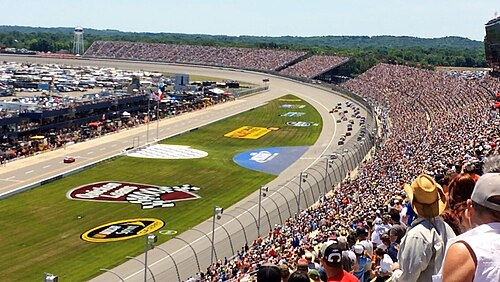
ミシガン・インターナショナル・スピードウェイはNASCARレースの開催地であり、デトロイトはかつてF1世界選手権グランプリレースの開催地であった。1959年から1961年まで、デトロイト・ドラッグウェイはNHRAの米国ナショナルズを主催した。 [155]ミシガン州は、120マイル(190km)のオー・セイブル川カヌーマラソンという主要なカヌーマラソンの開催地である。ポートヒューロンからマキナックまでのボートレースも人気がある。
20回のグランドスラム優勝者セリーナ・ウィリアムズはサギノー生まれ。2011年女子体操世界チャンピオンのジョーディン・ウィーバーはデウィット出身。ウィーバーは2012年ロンドンオリンピックの 金メダルチームのメンバーでもあった。
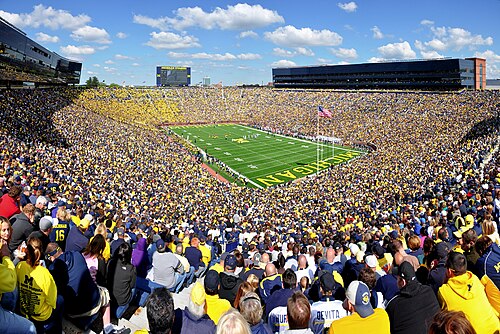
ミシガン州では、プロスポーツに加えて大学スポーツも人気があります。この州の 2 大スポーツ プログラムは、 NCAAビッグ テン カンファレンスでプレーするミシガン ウルヴァリンズとミシガン州立スパルタンズです。ミシガン ウルヴァリンズのフットボールチームの本拠地であるアナーバーのミシガン スタジアムは、西半球最大のスタジアムであり、世界で 3 番目に大きいスタジアム です。
ミシガン州高校運動協会には約 30 万人が参加しています。
教育
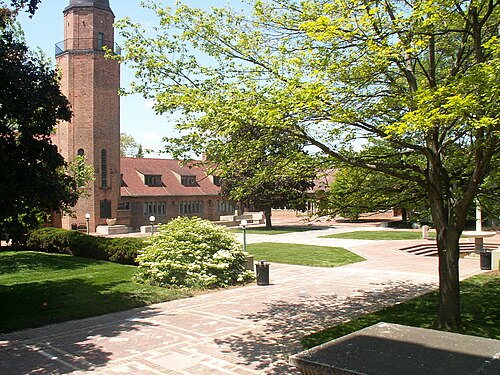
ミシガン州の教育制度は、公立学校に通うK-12の生徒160万人を対象としている。124,000人以上の生徒が私立学校に通っており、一定の法的要件の下で無数の生徒がホームスクールに通っている。 [156] [157]公立学校制度の2008年から2009年の予算は145億ドルであった。[158] 2009年から2019年にかけて、ミシガン州ではチャータースクールとの競争もあり、 200校を超える私立学校が閉校した。[159] 2022年、US News & World Reportはミシガン州の高校3校を国内ベスト100にランク付けした。シティハイミドルスクール(18位)、インターナショナルアカデミーオブマコーム(21位)、インターナショナルアカデミー(52位)。ウォッシュテナウインターナショナルハイスクールは107位にランクされた。[160]
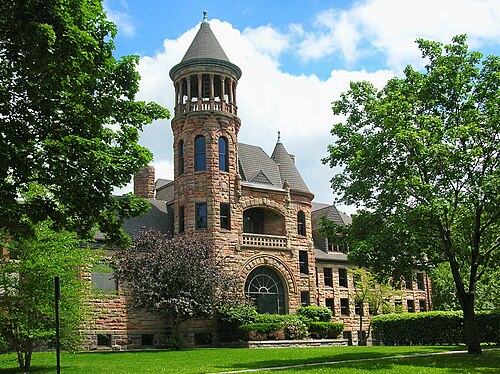
ミシガン大学はミシガン州最古の高等教育機関であり、国内でも最古の研究大学の一つである。ミシガン準州が州に昇格する20年前の1817年に設立された。[161] [162] カラマズー・カレッジは州最古の私立リベラルアーツ・カレッジであり、1833年にバプテスト派の牧師らによりミシガン・ヒューロン研究所として設立された。1840年から1850年にかけて、このカレッジはミシガン大学のカラマズー支部として運営されていた。アルビオン・カレッジはスプリングアーバー・タウンシップのメソジスト派入植者により1835年に設立された。州で2番目に古い私立リベラルアーツ・カレッジである 。
Michigan Technological University is the first post-secondary institution in the Upper Peninsula of Michigan, founded in 1885 as the Michigan Mining School. Eastern Michigan University was founded in 1849 as the Michigan State Normal School for the training of teachers. It was the nation's fourth-oldest normal school and the first U.S. normal school outside New England. In 1899, the Michigan State Normal School became the nation's first normal school to offer a four-year curriculum. Michigan State University was founded in 1855 as the nation's first agricultural college.
The Carnegie Foundation classifies eight of the state's institutions (Michigan State University, Michigan Technological University, Eastern Michigan University, Wayne State University, Central Michigan University, Western Michigan University, Oakland University, University of Michigan) as research universities.[163]



Infrastructure
Energy
In 2020, Michigan consumed 113,740- gigawatt-hours (GWh) of electrical energy and produced 116,700 (GWh) of electrical energy.[164]
Coal power is Michigan's leading source of electricity, producing roughly half its supply or 53,100 GWh of electrical energy (12.6 GW total capacity) in 2020.[164] Although Michigan has no active coal mines, coal is easily moved from other states by train and across the Great Lakes by lake freighters. The lower price of natural gas is leading to the closure of most coal plants, with Consumer Energy planning to close all of its remaining coal plants by 2025;[165] DTE plans to retire 2100MW of coal power by 2023.[166] The coal-fired Monroe Power Plant in Monroe, on the western shore of Lake Erie, is the nation's 11th-largest electric plant, with a net capacity of 3,400 MW.
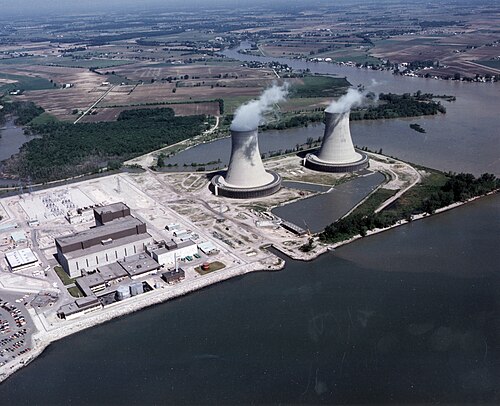
Nuclear power is also a significant source of electrical power in Michigan, producing roughly one-quarter of the state's supply or 28,000-gigawatt-hours (GWh) of electrical energy (4.3 GW total capacity) in 2020.[164] The three active nuclear power plants supply Michigan with about 26% of its electricity. Donald C. Cook Nuclear Plant, just north of Bridgman, is the state's largest nuclear power plant, with a net capacity of 2,213 MW. The Enrico Fermi Nuclear Generating Station is the second-largest, with a net capacity of 1,150 MW. It is also one of the two nuclear power plants in the Detroit metropolitan area (within a 50-mile radius of Detroit's city center), about halfway between Detroit and Toledo, Ohio, the other being the Davis–Besse Nuclear Power Station, in Ottawa County, Ohio. The Palisades Nuclear Power Plant, south of South Haven, closed in May 2022.[167] The Big Rock Point Nuclear Power Plant, Michigan's first nuclear power plant and the nation's fifth, was decommissioned in 1997.
Utility companies were required to generate at least 10% of their energy from renewable sources by 2015, under Public Act 295 of 2008. In 2016, the legislature set another mandate to reach at least 12.5% renewable energy by 2019 and 15% by end of year 2021, which all utilities subject to the law successfully met. By the end of 2022, Michigan had at least 6 GW of renewable generating capacity, and was projected to have at least 8 GW by the end of 2026. Wind energy accounted for 59% of all Michigan energy credits in 2021.[168][169]
Transportation
International crossings
.jpg/500px-Lake_freighter_approaches_a_bridge_(32304530671).jpg)
Michigan has nine international road crossings with Ontario, Canada:
- Ambassador Bridge, North America's busiest international border, crossing the Detroit River
- Blue Water Bridge, a twin-span bridge (Port Huron, Michigan, and Point Edward, Ontario, but the larger city of Sarnia is usually referred to on the Canadian side)
- Blue Water Ferry (Marine City, Michigan, and Sombra, Ontario)
- Canadian Pacific Railway tunnel
- Detroit–Windsor Truck Ferry (Detroit and Windsor)
- Detroit–Windsor Tunnel
- International Bridge (Sault Ste. Marie, Michigan, and Sault Ste. Marie, Ontario)
- St. Clair River Railway Tunnel (Port Huron and Sarnia)
- Walpole Island Ferry (Algonac, Michigan, and Walpole Island First Nation, Ontario)
The Gordie Howe International Bridge, a second international bridge between Detroit and Windsor, is under construction. It is expected to be completed in 2024.[170][171][172]
Railroads
Michigan is served by four Class I railroads: the Canadian National Railway, the Canadian Pacific Railway, CSX Transportation, and the Norfolk Southern Railway. These are augmented by several dozen short line railroads. The vast majority of rail service in Michigan is devoted to freight, with Amtrak and various scenic railroads the exceptions.[173]
Three Amtrak passenger rail routes serve the state. The Pere Marquette from Chicago to Grand Rapids, the Blue Water from Chicago to Port Huron, and the Wolverine from Chicago to Pontiac. There are plans for commuter rail for Detroit and its suburbs (see SEMCOG Commuter Rail).[174][175][176]
Roadways


- Interstate 75 (I-75) is the main thoroughfare between Detroit, Flint, and Saginaw extending north to Sault Ste. Marie and providing access to Sault Ste. Marie, Ontario. The freeway crosses the Mackinac Bridge between the Lower and Upper Peninsulas. Auxiliary highways include I-275 and I-375 in Detroit; I-475 in Flint; and I-675 in Saginaw.
- I-69 enters the state near the Michigan–Ohio–Indiana border, and it extends to Port Huron and provides access to the Blue Water Bridge crossing into Sarnia, Ontario.
- I-94 enters the western end of the state at the Indiana border, and it travels east to Detroit and then northeast to Port Huron and ties in with I-69. I-194 branches off from this freeway in Battle Creek. I-94 is the main artery between Chicago and Detroit.
- I-96 runs east–west between Detroit and Muskegon. I-496 loops through Lansing. I-196 branches off from this freeway at Grand Rapids and connects to I-94 near Benton Harbor. I-696 branches off from this freeway at Novi and connects to I-94 near St. Clair Shores.
- U.S. Highway 2 (U.S. 2) enters Michigan at the city of Ironwood and travels east to the town of Crystal Falls, where it turns south and briefly re-enters Wisconsin northwest of Florence. It re-enters Michigan north of Iron Mountain and continues through the Upper Peninsula of Michigan to the cities of Escanaba, Manistique, and St. Ignace. Along the way, it cuts through the Ottawa and Hiawatha national forests and follows the northern shore of Lake Michigan. Its eastern terminus lies at exit 344 on I-75, just north of the Mackinac Bridge.
- U.S. Highway 23 enters Michigan at the Ohio state line in the suburban spillover of Toledo, Ohio, as a freeway and leads northward to Ann Arbor before merging with I-75 just south of Flint. Concurrent with I-75 through Flint, Saginaw, and Bay City, it splits from I-75 at Standish as an intermittently four lane/two-lane surface road closely following the western shore of Lake Huron generally northward through Alpena before turning west to northwest toward Mackinaw City and Interstate 75 again, where it terminates.
- U.S. Highway 31 enters Michigan as Interstate-quality freeway at the Indiana state line just northwest of South Bend, Indiana, heads north to Interstate 196 near Benton Harbor, and follows the eastern shore of Lake Michigan to Mackinaw City, where it has its northern terminus.
- U.S. Highway 127 enters Michigan from Ohio south of Hudson as a two-lane, undivided highway and closely follows the Michigan meridian, the principal north–south line used to survey Michigan in the early 19th century. It passes north through Jackson and Lansing before terminating south of Grayling at I-75, and is a four-lane freeway for the majority of its course.
- U.S. Highway 131 has its southern terminus at the Indiana Toll Road roughly one mile south of the Indiana state line as a two-lane surface road. It passes through Kalamazoo and Grand Rapids as a freeway of Interstate standard and continues as such to Manton, where it reverts to two-lane surface road to its northern terminus at U.S. 31 in Petoskey.
Intercity bus services
Airports

Detroit Metropolitan Airport in the western suburb of Romulus, was in 2010 the 16th busiest airfield in North America measured by passenger traffic.[177] The Gerald R. Ford International Airport in Grand Rapids is the next busiest airport in the state, served by eight airlines to 23 destinations. Flint Bishop International Airport is the third largest airport in the state, served by four airlines to several primary hubs. Other frequently trafficked airports include Cherry Capital Airport, in Traverse City; Kalamazoo/Battle Creek International Airport, serving the Kalamazoo and Battle Creek region; Capital Region International Airport, located outside of Lansing; and MBS International Airport serving the Midland, Bay City and Saginaw tri-city region. Additionally, smaller regional and local airports are located throughout the state including on several islands.
Government
State government
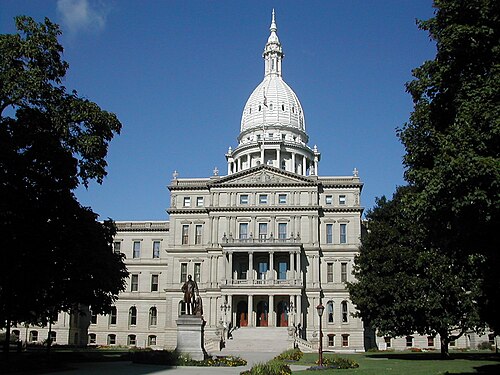
Michigan is governed as a republic, with three branches of government: the executive branch consisting of the Governor of Michigan and the other independently elected constitutional officers; the legislative branch consisting of the House of Representatives and Senate; and the judicial branch. The Michigan Constitution allows for the direct participation of the electorate by statutory initiative and referendum, recall, and constitutional initiative and referral (Article II, § 9,[178] defined as "the power to propose laws and to enact and reject laws, called the initiative, and the power to approve or reject laws enacted by the legislature, called the referendum. The power of initiative extends only to laws which the legislature may enact under this constitution"). Lansing is the state capital and is home to all three branches of state government.

The governor and the other state constitutional officers serve four-year terms and may be re-elected only once. The current governor is Gretchen Whitmer. Michigan has two official Governor's Residences; one is in Lansing, and the other is on Mackinac Island. The other constitutionally elected executive officers are the lieutenant governor, who is elected on a joint ticket with the governor; the secretary of state; and the attorney general. The lieutenant governor presides over the Senate (voting only in case of a tie) and is also a member of the cabinet. The secretary of state is the chief elections officer and is charged with running many licensure programs including motor vehicles, all of which are done through the branch offices of the secretary of state.
The Michigan Legislature consists of a 38-member Senate and 110-member House of Representatives. Members of both houses of the legislature are elected through first past the post elections by single-member electoral districts of near-equal population that often have boundaries which coincide with county and municipal lines. Senators serve four-year terms concurrent to those of the governor, while representatives serve two-year terms. The Michigan State Capitol was dedicated in 1879 and has hosted the executive and legislative branches of the state ever since.

The Michigan judiciary consists of two courts with primary jurisdiction (the Circuit Courts and the District Courts), one intermediate level appellate court (the Michigan Court of Appeals), and the Michigan Supreme Court. There are several administrative courts and specialized courts. District courts are trial courts of limited jurisdiction, handling most traffic violations, small claims, misdemeanors, and civil suits where the amount contended is below $25,000. District courts are often responsible for handling the preliminary examination and for setting bail in felony cases. District court judges are elected to terms of six years. In a few locations, municipal courts have been retained to the exclusion of the establishment of district courts. There are 57 circuit courts in the State of Michigan, which have original jurisdiction over all civil suits where the amount contended in the case exceeds $25,000 and all criminal cases involving felonies. Circuit courts are also the only trial courts in the State of Michigan which possess the power to issue equitable remedies. Circuit courts have appellate jurisdiction from district and municipal courts, as well as from decisions and decrees of state agencies. Most counties have their own circuit court, but sparsely populated counties often share them. Circuit court judges are elected to terms of six years. State appellate court judges are elected to terms of six years, but vacancies are filled by an appointment by the governor. There are four divisions of the Court of Appeals in Detroit, Grand Rapids, Lansing, and Marquette. Cases are heard by the Court of Appeals by panels of three judges, who examine the application of the law and not the facts of the case unless there has been grievous error pertaining to questions of fact. The Michigan Supreme Court consists of seven members who are elected on non-partisan ballots for staggered eight-year terms. The Supreme Court has original jurisdiction only in narrow circumstances but holds appellate jurisdiction over the entire state judicial system.
Law

Michigan has had four constitutions, the first of which was ratified on October 5 and 6, 1835.[179] There were also constitutions from 1850 and 1908, in addition to the current constitution from 1963. The current document has a preamble, 11 articles, and one section consisting of a schedule and temporary provisions. Michigan, like every U.S. state except Louisiana, has a common law legal system.
Politics
Having been a Democratic-leaning state at the presidential level since the 1990s, Michigan has evolved into a swing state after Donald Trump won the state in 2016. Governors since the 1970s have alternated between the Democrats and Republicans, and statewide offices including attorney general, secretary of state, and senator have been held by members of both parties in varying proportion. Additionally, from 1994 until 2022, the governor-elect had always come from the party opposite the presidency. The Democratic Party has a slim majority of two seats in the Senate of the Michigan Legislature, and the House is currently deadlocked at 54 seats for each party. The state's congressional delegation is commonly split, with one party or the other typically holding a narrow majority.
Michigan was the home of Gerald Ford, the 38th president of the United States. Born in Nebraska, he moved as an infant to Grand Rapids.[180][181] The Gerald R. Ford Museum is in Grand Rapids, and the Gerald R. Ford Presidential Library is on the campus of his alma mater, the University of Michigan in Ann Arbor.
In a 2020 study, Michigan was ranked as the 13th easiest state for citizens to vote in.[182]
State symbols and nicknames

Michigan is traditionally known as "The Wolverine State", and the University of Michigan uses the wolverine as its mascot. The association is well and long established: for example, many Detroiters volunteered to fight during the American Civil War and George Armstrong Custer, who led the Michigan Brigade, called them the "Wolverines". The origins of this association are obscure; it may derive from a busy trade in wolverine furs in Sault Ste. Marie in the 18th century or may recall a disparagement intended to compare early settlers in Michigan with the vicious mammal. Wolverines are, however, extremely rare in Michigan. A sighting in February 2004 near Ubly was the first confirmed sighting in Michigan in 200 years.[183] The animal was found dead in 2010.[184]
- State nicknames: Wolverine State, Great Lake State, Mitten State, Water-Winter Wonderland
- State motto: Si quaeris peninsulam amoenam circumspice (Latin: "If you seek a pleasant peninsula, look about you") adopted in 1835 on the coat-of-arms, but never as an official motto. This is a paraphrase of the epitaph of British architect Sir Christopher Wren about his masterpiece, St. Paul's Cathedral.[185][186]
- State song: "My Michigan" (official since 1937, but disputed amongst residents),[187] "Michigan, My Michigan" (Unofficial state song, since the civil war)
- State bird: American robin (since 1931)
- State animal: wolverine (traditional)
- State game animal: white-tailed deer (since 1997)
- State fish: brook trout (since 1965)
- State reptile: painted turtle (since 1995)
- State fossil: mastodon (since 2000)
- State flower: apple blossom (adopted in 1897, official in 1997)
- State wildflower: dwarf lake iris (since 1998) a federally listed threatened species
- State tree: white pine (since 1955)
- State stone: Petoskey stone (since 1965). It is composed of fossilized coral (Hexagonaria pericarnata) from long ago when the middle of the continent was covered with a shallow sea.
- State gem: Isle Royale greenstone (since 1973). Also called chlorastrolite (literally "green star stone"), the mineral is found on Isle Royale and the Keweenaw peninsula.
- State quarter: US coin issued in 2004 with the Michigan motto "Great Lakes State".
- State soil: Kalkaska sand (since 1990), ranges in color from black to yellowish brown, covers nearly 1,000,000-acre (4,000 km2) in 29 counties.
Sister regions
 Shiga Prefecture, Japan[188]
 Sichuan Province, People's Republic of China[189]

See also

- Index of Michigan-related articles
- Outline of Michigan: organized list of topics about Michigan
- USS Michigan, 3 ships
Notes
- ^ a b Elevation adjusted to North American Vertical Datum of 1988.
- ^ i.e., including water that is part of state territory. Georgia is the largest state by land area alone east of the Mississippi and Michigan the second-largest.
- ^ The first form is the way it is spelled in Ojibwe native syllabics.
- ^ The Province included the modern states of Wisconsin, eastern Minnesota, Illinois, Indiana, Ohio, Kentucky, Tennessee, Mississippi, Alabama, two-thirds of Georgia, and small parts of West Virginia, Pennsylvania, New York, Vermont, and Maine.
References
- ^ "License plate facts" (PDF). Archived (PDF) from the original on May 25, 2017. Retrieved May 1, 2017.
- ^ a b c Michigan in Brief: Information About the State of Michigan (PDF). Library of Michigan. Archived from the original (PDF) on November 8, 2006. Retrieved November 28, 2006.
- ^ a b "Elevations and Distances in the United States". United States Geological Survey. 2001. Archived from the original on October 15, 2011. Retrieved October 24, 2011.
- ^ "Resident Population for the 50 States, the District of Columbia, and Puerto Rico: 2020 Census" (PDF). United States Census Bureau. Archived (PDF) from the original on April 26, 2021. Retrieved April 26, 2021.
- ^ "Median Annual Household Income". The Henry J. Kaiser Family Foundation. Archived from the original on December 20, 2016. Retrieved December 9, 2016.
- ^ Hansen, Liane (September 27, 2009). "What Is a Yooper?". Weekend Edition Sunday. NPR. Archived from the original on August 21, 2013. Retrieved June 13, 2013.
- ^ "State Facts and Symbols". Retrieved September 16, 2024.
- ^ McWhirter, Sheri (December 1, 2023). "Do you know what manoomin is? Michigan's state native grain". mlive. Retrieved September 16, 2024.
- ^ "Ojibwe-English-Ojibwe online dictionary". FREELANG. Archived from the original on March 15, 2008. Retrieved March 24, 2008.
- ^ "Ocean and Coastal Management in Michigan". NOAA Office of Ocean and Coastal Resource Management. Archived from the original on February 15, 2013. Retrieved July 25, 2010.
- ^ Breck, James E. "Compilation of Databases on Michigan Lakes" (PDF). Michigan Department of Natural Resources. p. 5. Archived (PDF) from the original on March 14, 2009. Retrieved April 18, 2009.
Another unique code (Unique_ID) was previously assigned to all 70,542 polygons, including 5,527 islands, 35 streams and 64,980 lakes and ponds down to 0.008 acres (31.4 m2, 338 ft2 ).
- ^ "United States Summary: 2010, Population and Housing Unit Counts, 2010 Census of Population and Housing" (PDF). United States Census Bureau. September 2012. pp. V–2, 1 & 41 (Tables 1 & 18). Retrieved February 7, 2014.
- ^ Ueda, Reed (2017). America's Changing Neighborhoods: An Exploration of Diversity through Places. Greenwood. ISBN 978-1-4408-2864-5.
- ^ Balestier, Courtney (November 10, 2016). "In search of the Hillbilly Highway". metromode. Archived from the original on December 8, 2022. Retrieved October 4, 2022.
- ^ "February: Shaping Black Detroit". Research Guides. Wayne State University Libraries. Archived from the original on February 14, 2023. Retrieved October 4, 2022.
- ^ Kandell, Jonathan (May 2011). "The Wonderful Wilderness of Michigan's Upper Peninsula". Smithsonian Magazine. Archived from the original on March 1, 2019. Retrieved February 28, 2019.
- ^ Archibald, Robert. "An Environmental History of the Upper Peninsula of Michigan: An Outline". NMU Center for U.P. Studies. Archived from the original on March 1, 2019. Retrieved February 28, 2019.
- ^ Pritzker, Barry (2000). A Native American Encyclopedia: History, Culture, and Peoples. Oxford University Press. p. 342. ISBN 9780195138771.
- ^ "Our History"., Wyandotte Nation
- ^ "Chronology of Michigan History" (PDF). p. 3. Archived (PDF) from the original on July 21, 2011. Retrieved September 30, 2009.
- ^ "Sault Ste Marie Pure Michigan". Sault Ste Marie. Archived from the original on June 12, 2016. Retrieved June 9, 2016.
- ^ "Cadillac's Village or Detroit under Cadillac". Archived from the original on December 9, 2006. Retrieved January 5, 2007.
- ^ "History Detroit 1701–2001". Archived from the original on December 9, 2006. Retrieved January 5, 2007.
- ^ "French Ontario in the 17th and 18th centuries: Detroit". Archives of Ontario. July 14, 2008. Archived from the original on August 24, 2004. Retrieved July 23, 2008.
- ^ Chisholm, Hugh, ed. (1911). . Encyclopædia Britannica. Vol. 18 (11th ed.). Cambridge University Press. pp. 371–377, see page 376.
History.— From 1613 until 1760 the territory now within the borders of Michigan formed a part of New France...&... During the last war between the English and the French in America the Michigan settlements passed into the possession of the English, Detroit in 1760 and...
- ^ Peterson, Jacqueline & Brown, Jennifer S.H. (2001). Many Roads to Red River. p. 69.[full citation needed]
- ^ Farmer, Silas (2005) [1889]. "Legislatures and Laws". The History of Detroit and Michigan; or, The Metropolis Illustrated; A Full Record of Territorial Days in Michigan, and the Annals of Wayne County. p. 94. Retrieved June 15, 2006 – via University of Michigan Library.
- ^ Pence, Studio (October 16, 2016). "Why 1817 Matters". The History of the University of Michigan. Retrieved July 6, 2024.
- ^ a b "Michigan Centenary Issue". Smithsonian National Postal Museum. Archived from the original on November 4, 2023. Retrieved November 3, 2023.
- ^ Men of Progress: Embracing Biographical Sketches of Representative Michigan Men with an Outline History of the State. Evening News Association. 1900. p. 313. Archived from the original on August 18, 2018. Retrieved October 31, 2016.
- ^ Dulong, John (2001). French Canadians in Michigan. Lansing, Michigan: Michigan State University Press. pp. 3–5. ISBN 978-0-87013-582-8.
- ^ Dunbar & May (1980). "Chapter 14". Michigan: A History of the Wolverine State. Eerdman. ISBN 9780802870438.
- ^ Rae, John B. (1983). "Why Michigan". In Lewis, David L.; Goldstein, Laurence (eds.). The Automobile and American Culture. Ann Arbor: University of Michigan Press. pp. 2–9.
- ^ "A brief history of housing in Detroit". Model D. Archived from the original on June 29, 2023. Retrieved June 29, 2023.
- ^ "A Trip Through Time: Grand Rapids Furniture History". The Woodshop Blog. September 18, 2014. Archived from the original on June 29, 2023. Retrieved June 29, 2023.
- ^ "Furniture City: The story behind Grand Rapids's original identity". FOX 17 West Michigan News. March 2, 2023. Archived from the original on June 29, 2023. Retrieved June 29, 2023.
- ^ Haddad, Ken (May 18, 2023). "96 years later: Michigan's Bath School disaster remains deadliest in US history". WDIV. Archived from the original on June 29, 2023. Retrieved June 29, 2023.
- ^ Peck, Merton J.; Scherer, Frederic M. (1962). The Weapons Acquisition Process: An Economic Analysis. Harvard Business School. p. 111.
- ^ a b "Facts about Michigan Manufacturing". National Association of Manufacturers. February 2008. Archived from the original on October 23, 2008. Retrieved January 11, 2009.
- ^ "In Michigan, drive a crooked line to follow the 45th Parallel". Twin Cities. June 27, 2009. Archived from the original on June 29, 2023. Retrieved June 29, 2023.
- ^ "Michigan Tourism Facts". Michigan Economic Development Corporation. Archived from the original on October 15, 2016. Retrieved July 25, 2016.
In Michigan, you are never more than six miles from a lake or stream Stand anywhere in Michigan and you are within 85 miles of a Great Lake
- ^ "Michigan Dept. of Natural Resources". Archived from the original on December 3, 2010. Retrieved December 26, 2008.
- ^ Keilman, John (December 9, 2011). "Hand-to-hand combat". Chicago Tribune. Archived from the original on February 26, 2012. Retrieved February 29, 2012.
- ^ Cox, Bruce K. (2010). Ted & Superior: Ted Albert & the 51st State of Superior. Wakefield, Michigan: Agogeebic Press LLC. ISBN 978-0-9822390-0-1.
- ^ "51st state? Yoopers Are Talking Up Secession from Michigan Again". Detroit Free Press. May 6, 2012. Archived from the original on September 28, 2015. Retrieved June 29, 2023.
- ^ "Does Michigan have the longest coast line in the United States?". State of Michigan. July 28, 2011. Archived from the original on August 14, 2006. Retrieved November 5, 2011.
- ^ "Shorelines of the Great Lakes". Michigan Department of Natural Resources and Environment. Archived from the original on July 20, 2010. Retrieved July 8, 2010.
- ^ B, Lisha (September 13, 2022). "Did You Know That Michigan Has the Most Lighthouses in the U.S.?". Mix 95.7FM. Archived from the original on June 29, 2023. Retrieved June 29, 2023.
- ^ "Why is Michigan sometimes called 'The Wolverine State?'". Michigan FAQ. Department of History, Arts and Libraries. Archived from the original on January 2, 2009. Retrieved January 11, 2009.
Another nickname for Michigan is the "Great Lake State". Michigan's shores touch four of the five Great Lakes, and Michigan has more than 11,000 inland lakes. In Michigan, you are never more than six miles from an inland lake or more than 85 miles from a Great Lake.
- ^ NWS Gaylord Region (August 31, 2010). "Mean Annual Snowfall". National Weather Service. Archived from the original on November 9, 2011. Retrieved June 1, 2011.
- ^ "The Geography of Michigan". netstate.com. Archived from the original on March 21, 2011. Retrieved March 20, 2011.
- ^ "Tornadoes". geo.msu.edu. Archived from the original on July 6, 2015. Retrieved April 12, 2015.
- ^ "Thunderstorm hazards". srh.noaa.gov. Archived from the original on October 15, 2006. Retrieved November 1, 2006.
- ^ "No injuries reported after earthquake rattles Michigan". Archived from the original on May 3, 2015. Retrieved May 3, 2015.
- ^ "Michigan Counties". State of Michigan. Archived from the original on June 29, 2023. Retrieved June 29, 2023.
- ^ "Explore Census Data". United States Census Bureau. Archived from the original on May 5, 2021. Retrieved September 23, 2021.
- ^ "Historical Population Change Data (1910–2020)". Census.gov. United States Census Bureau. Archived from the original on April 29, 2021. Retrieved May 1, 2021.
- ^ "Growth in U.S. Population Shows Early Indication of Recovery Amid COVID-19 Pandemic". Census Bureau QuickFacts. December 22, 2022. Archived from the original on April 19, 2023. Retrieved April 20, 2023.
- ^ "Population and Population Centers by State: 2010". United States Census Bureau. Archived from the original on April 29, 2011. Retrieved April 5, 2011.
- ^ a b "Take a look: How immigrants drive the economy in Michigan". American Immigration Council. Archived from the original on June 29, 2023. Retrieved June 29, 2023.
- ^ "2007-2022 PIT Counts by State". Archived from the original on March 14, 2023. Retrieved March 11, 2023.
- ^ "The 2022 Annual Homelessness Assessment Report (AHAR) to Congress" (PDF). Archived (PDF) from the original on March 11, 2023. Retrieved March 11, 2023.
- ^ a b "Historical Census Statistics on Population Totals By Race, 1790 to 1990, and By Hispanic Origin, 1970 to 1990, For The United States, Regions, Divisions, and States". Archived from the original on July 25, 2008.
- ^ "Population of Michigan: Census 2010 and 2000 Interactive Map, Demographics, Statistics, Quick Facts".[permanent dead link]
- ^ "Decennial Census by Decade - 2010". U.S. Census Bureau. Archived from the original on May 22, 2017. Retrieved December 11, 2017.
- ^ "Race and Ethnicity in the United States: 2010 Census and 2020 Census". U.S. Census Bureau. August 12, 2021. Archived from the original on August 15, 2021. Retrieved August 12, 2021.
- ^ "Selected Social Characteristics in the United States: 2016 American Community Survey 5-Year Estimates". United States Census Bureau. 2016. Archived from the original on July 9, 2021. Retrieved December 22, 2017.
- ^ "Norway Our Community Tour: Connections between the U.P. and Scandinavian countries". WJMN - UPMatters.com. July 21, 2021. Archived from the original on June 29, 2023. Retrieved June 29, 2023.
- ^ "West Michigan's 'Dutchness' has evolved to be quite different from the Netherlands". The Holland Sentinel. Archived from the original on June 29, 2023. Retrieved June 29, 2023.
- ^ "Detroit is No Longer the Largest Majority-Black City". The Michigan Chronicle. May 24, 2023. Archived from the original on June 29, 2023. Retrieved June 29, 2023.
- ^ "Census Shows Memphis Is Largest Majority-Black City, Replacing Detroit". BET. Archived from the original on June 29, 2023. Retrieved June 29, 2023.
- ^ Karoub, Jeff. "Detroit Expects Half of Iraqi Refugees". Philadelphia: WPVI-TV. Associated Press. Archived from the original on October 5, 2013. Retrieved May 5, 2013.
Southeastern Michigan has about 300,000 people who trace their roots to the Middle East.
- ^ Miyares, Ines M. & Airriess, Christopher A. (2007). Contemporary Ethnic Geographies in America. Rowman & Littlefield. p. 320. ISBN 978-0-7425-3772-9.
- ^ Kaiser, Robert L. (December 27, 1999). "After 25 Years in U.S., Hmong Still Feel Isolated". Chicago Tribune. p. 2. Archived from the original on September 9, 2017. Retrieved April 14, 2012.
- ^ a b "Michigan Hmong". Michigan Daily. University of Michigan. January 10, 2007. p. 2. Archived from the original on January 17, 2013. Retrieved November 8, 2012.
- ^ Rosen, Zak (April 23, 2015). "Meet One of Detroit's Last Remaining Hmong Families". Michigan Radio. Archived from the original on July 8, 2015. Retrieved July 1, 2015.
- ^ a b Wilkinson, Sook (2015). Asian Americans in Michigan: Voices from the Midwest. Detroit: Wayne State University Press. p. 158. ISBN 978-0-8143-3974-9. Archived from the original on September 4, 2015. Retrieved July 5, 2015.
- ^ Stone, Cal (April 11, 2013). "State's Japanese employees increasing". Observer & Eccentric. Detroit. Archived from the original on April 13, 2013. Retrieved May 5, 2013.
- ^ "Michigan". Modern Language Association. Archived from the original on December 1, 2007. Retrieved August 15, 2013.
- ^ "2021 Languages Spoken at Home". United States Census Bureau. Archived from the original on June 29, 2023. Retrieved June 29, 2023.
- ^ Staff (February 24, 2023). "American Values Atlas: Religious Tradition in Michigan". Public Religion Research Institute. Archived from the original on April 4, 2017. Retrieved April 4, 2023.
- ^ Orlando, Jim. "Ste. Anne de Detroit Catholic Church". Ste-anne.org. Archived from the original on September 27, 2011. Retrieved November 5, 2011.
- ^ "The Official Web Site for the Archdiocese of Detroit". Archdiocese of Detroit. Archived from the original on October 13, 2011. Retrieved November 5, 2011.
- ^ a b "2020 Congregational Membership Reports". The Association of Religion Data Archives. Archived from the original on June 29, 2023. Retrieved June 29, 2023.
- ^ "Unusual church in no-man's land welcomes everyone". The Detroit News. Archived from the original on June 29, 2023. Retrieved June 29, 2023.
- ^ "Cathedral of St. Anthony". Historic Detroit. Archived from the original on June 29, 2023. Retrieved June 29, 2023.
- ^ "Statement regarding "Archbishop" Karl Rodig and the Cathedral Abbey of St. Anthony". Archdiocese of Detroit. Archived from the original on June 29, 2023. Retrieved June 29, 2023.
- ^ "State Membership Report". The Association of Religion Data Archives. Archived from the original on December 2, 2013. Retrieved November 22, 2013.
- ^ "Christian Reformed Church in North America—Religious Groups". The Association of Religion Data Archives. Archived from the original on November 1, 2013. Retrieved January 31, 2014.
- ^ "Reformed Church in America—Religious Groups". The Association of Religion Data Archives. Archived from the original on October 4, 2013. Retrieved January 31, 2014.
- ^ "Historical Journey of the CRC (Christian Reformed Church)". Christian Reformed Church of North America. Archived from the original on November 5, 2011. Retrieved November 5, 2011.
- ^ "State Membership Report". The Association of Religion Data Archives. Archived from the original on December 2, 2013. Retrieved November 22, 2013.
- ^ "History". Archived from the original on May 22, 2009.
- ^ "Michigan: Religions". Archived from the original on September 7, 2008. Retrieved September 13, 2008.
- ^ "United for Mission: One Hundred and Fifty Years". General Conference of Seventh-day Adventists. September 18, 2013. Archived from the original on October 8, 2014. Retrieved October 7, 2014.
- ^ Thiruvananthapuram (September 11, 2014). "SDA Church Valedictory Fete". The New Indian Express. The New Indian Express Group. Archived from the original on October 14, 2014. Retrieved October 7, 2014.
- ^ "18 Michigan companies make Fortune 500 list, but Gilbert's Rocket Companies notably absent". Freep. June 9, 2023. Retrieved September 7, 2024. Fortune 500 2023
- ^ "U.S. Census Bureau QuickFacts: Michigan". Archived from the original on November 11, 2019. Retrieved November 11, 2019.
- ^ "Gross Domestic Product by State and Region: Level and Percent Change from Preceding Period". Bureau of Economic Analysis. Archived from the original on March 29, 2019. Retrieved February 12, 2023.
- ^ "Economy at a Glance: Michigan". U.S. Bureau of Labor Statistics. Archived from the original on February 12, 2023. Retrieved February 14, 2023.
- ^ "2002 Census of Agriculture – State Data" (PDF). USDA, National Agricultural Statistics Service. p. 511. Archived from the original (PDF) on December 17, 2008.
- ^ "National Christmas Tree Association: Industry Statistics". National Christmas Tree Association. Archived from the original on June 16, 2010. Retrieved July 25, 2010.
- ^ Mikula, Christopher R.; Stuart, Eric C. (March 27, 2023). "Michigan Governor Signs Legislation Repealing Right-to-Work Law". Society for Human Resource Management. Archived from the original on May 31, 2023. Retrieved May 31, 2023.
- ^ Sloan, Allan (April 10, 2007). "GM's High-Performance Pension Machine". The Washington Post. p. D02. Archived from the original on May 25, 2017. Retrieved September 5, 2017.
- ^ "Facts about Michigan Manufacturing". National Association of Manufacturers. February 2008. Archived from the original on October 23, 2008. Retrieved June 17, 2009.
- ^ Garrett, Major (March 31, 2009). "White House Plots GM Bankruptcy, Unsure When Taxpayers Will Recoup $50 Billion Investment". Fox News. Archived from the original on June 8, 2009. Retrieved June 23, 2009.
- ^ Stoll, John D. & King, Neil Jr. (July 10, 2009). "GM Emerges From Bankruptcy". The Wall Street Journal. Archived from the original on January 23, 2015. Retrieved July 10, 2009.
- ^ Stoll, John D. & McLaughlin, David (July 2, 2009). "General Motors Aims for IPO Next Year". The Wall Street Journal. Archived from the original on January 23, 2015. Retrieved July 10, 2009.
- ^ Shoenberger, Robert (May 25, 2010). "Rebounding auto industry boosts Shiloh Industries' second-quarter sales, profit". Cleveland Plain Dealer. Archived from the original on September 11, 2010. Retrieved September 18, 2010.
- ^ Schroeder, Robert (July 30, 2010). "Obama says U.S. auto industry on rebound". The Wall Street Journal. Archived from the original on August 2, 2010. Retrieved September 9, 2010.
- ^ Isidore, Chris (August 12, 2010). "GM posts profit, CEO Whitacre to retire". CNN Money. CNN. Archived from the original on September 14, 2010. Retrieved September 18, 2010.
- ^ Cwiek, Sarah (November 30, 2010). "New study shows strong economic recovery in Metro Detroit". NPR Michigan. Archived from the original on May 11, 2011. Retrieved December 4, 2010.
- ^ Kopp-Owens, Jennifer (November 16, 2002). "Michigan: The High-Technology Automotive State". Michigan Economic Development Corporation. Archived from the original on January 10, 2013. Retrieved February 21, 2013.
- ^ "Michigan Advantage". Michigan Economic Development Corporation. 2009. Archived from the original on March 21, 2009. Retrieved June 23, 2009.
- ^ Bennof, Richard J. (March 23, 2001). "R&D Spending is Highly Concentrated in a Small Number of States". National Science Foundation. 01-320. Archived from the original on October 13, 2017. Retrieved April 6, 2018.
- ^ "Federal Scientific R&D in Michigan" (PDF). Archived (PDF) from the original on July 24, 2011. Retrieved November 5, 2011.
- ^ "From the 2003 Study "Contributions of the Automotive Industry to the U.S. Economy" University of Michigan and the Center for Automotive Research". Alliance of Automobile Manufacturers (2006). Archived from the original on April 2, 2004. Retrieved January 3, 2009.
- ^ "Michigan#2 in the Nation for New Corporate Facilities and Expansions in 2004" (Press release). Michigan Economic Development Corporation. March 3, 2005. Archived from the original on September 27, 2007. Retrieved June 27, 2006.
- ^ "King of the Hill: Top ten competitive states for 2008". Site Selection Magazine. Archived from the original on July 15, 2009. Retrieved July 8, 2009.
- ^ Priddle, Alisa & Shepardson, David (August 6, 2009). "Mich. gets $1.3B battery jolt". The Detroit News. Retrieved August 6, 2009.[dead link]
- ^ Lane, Amy (March 5, 2010). "Michigan retains 3rd-place ranking by Site Selection magazine". Crains Detroit Business. Archived from the original on July 8, 2011. Retrieved April 17, 2010.
- ^ Medernach, Karen & O'Conner, Mike (March 2010). "2007–2009 New Corporate Facilities and Expansions" (PDF). Site Selection Magazine. Archived from the original (PDF) on July 16, 2011. Retrieved April 17, 2010.
- ^ "University Research Corridor". Urcmich.org. Archived from the original on July 24, 2010. Retrieved July 25, 2010.
- ^ Bruns, Adam (January 2009). "How Are You Helping Companies Grow?". Site Selection Magazine. Archived from the original on April 12, 2009. Retrieved December 27, 2009.
- ^ "Economic development: Why Michigan". DTE. Archived from the original on January 16, 2010. Retrieved December 27, 2009.
- ^ "Commercial Ports". Michigan Economic Development Corporation. 2006. Archived from the original on April 21, 2006.
- ^ "Bank of America commits $25 billion for community development in Michigan". Crain's Detroit Business. October 4, 2007. Archived from the original on November 10, 2007. Retrieved January 3, 2008.
- ^ Headapohl, Jackie (February 28, 2011). "Michigan led the nation in job creation improvement in 2010". MLive. Booth Newspapers. Archived from the original on March 7, 2011. Retrieved March 8, 2011.
- ^ "Governor Whitmer Signs Bipartisan Legislation Legalizing Sports Betting in Michigan" (Press release). Office of the Governor. December 20, 2019. Archived from the original on March 21, 2023. Retrieved March 21, 2023.
- ^ "Taxes – What cities impose an income tax?". Michigan Department of Treasury. Archived from the original on May 26, 2013. Retrieved June 28, 2012.
- ^ Luke, Peter (May 25, 2011). "Gov. Rick Snyder signs Michigan business/income tax overhaul into law". Bridge Magazine. Archived from the original on December 26, 2011. Retrieved December 3, 2011.
- ^ Bell, Dawson (November 18, 2011). "Michigan Supreme Court hands Gov. Rick Snyder a victory on plan to tax pensions". Lansing State Journal. Retrieved December 3, 2011.[permanent dead link]
- ^ "Find the difference between sales and use tax". State of Michigan. Archived from the original on April 27, 2016. Retrieved May 4, 2016.
- ^ "Act 94 of 1937". Michigan Legislature. Archived from the original on May 5, 2016. Retrieved May 4, 2016.
- ^ Thiel, Craig. "Michigan agricultural exports" (PDF). Archived (PDF) from the original on September 9, 2008. Retrieved September 3, 2008.
- ^ Andersen, Jeff (October 7, 2011). "Number of farms and land in farms, 2009–2010" (PDF). National Agricultural Statistics Service, Michigan Field Office, Michigan Department of Agriculture. NR-09-77. Archived from the original (PDF) on May 15, 2006.
- ^ Agriculture Experiment Station. "Michigan Blueberries". Michigan State University. Archived from the original on July 20, 2011. Retrieved January 3, 2008.
- ^ Hanson, Eric (July 28, 1998). "Small Fruit Crops". Ag Experiment Station Special Reports. Michigan State University. Archived from the original on April 17, 2006. Retrieved January 3, 2008.
- ^ "Michigan Sugar Company: Education". Michigansugar.com. Archived from the original on August 21, 2010. Retrieved July 25, 2010.
- ^ "Michigan Sugar Company". Archived from the original on May 14, 2008. Retrieved May 25, 2008.
- ^ Lane, Amy (May 25, 2011). "Report: Tourism spending increase in 2010 was biggest ever in Michigan". Crain's Detroit Business. Archived from the original on May 29, 2011. Retrieved July 16, 2011.
- ^ "Michigan's Tourism Website No. 1 in the U.S." Great Lakes IT Report. May 3, 2007. Archived from the original on September 28, 2007. Retrieved August 10, 2007.
- ^ Cook, Bill (September 5, 2019). "Facing the Facts". MSU College of Agriculture and Natural Resources. Archived from the original on June 9, 2023. Retrieved June 9, 2023.
- ^ "Michigan Tourism Business". Imakenews.com. Archived from the original on July 13, 2011. Retrieved July 25, 2010.
- ^ LeBlanc, Beth (June 6, 2023). "Michigan lawmakers weigh bill ditching post-Labor Day school start requirement". The Detroit News. Archived from the original on June 6, 2023. Retrieved June 13, 2023.
- ^ Bowie, Taylor (June 7, 2023). "Bill aims to end mandate requiring Michigan public schools to start after Labor Day". Michigan Radio. Archived from the original on June 13, 2023. Retrieved June 13, 2023.
- ^ Mink, Randy & Mink, Karen (July 2001). "Detroit Turns 300: Detroit 300 Festival". Travel America. World Publishing Co., Gale Group.
- ^ "Economic Impact: Natural Resources Boost Michigan's Economy". Michigan Department of Natural Resources. Archived from the original on October 16, 2013.
- ^ "Traveling Through time: A guide to Michigan Historical Markers". Michigan Historical Markers. Archived from the original on July 28, 2009.
- ^ "Great Lakes Circle Tour". Great-lakes.net. July 5, 2005. Archived from the original on July 25, 2010. Retrieved July 25, 2010.
- ^ Perini, Mike (April 26, 2011). "Del Shannon's "Runaway" tops charts 50 years ago this week". Michigan Radio. Archived from the original on August 3, 2020. Retrieved June 21, 2020.
- ^ Gavrilovich, Peter; McGraw, Bill (2006). The Detroit Almanac, 2nd edition. Detroit Free Press. ISBN 978-0-937247-48-8.
- ^ Hoey, Mike (March 25, 2014). "Marquette Regional History Center Will Host Houghton Hockey History Talk". Ishpeming, MI: WBUP-TV. Archived from the original on May 13, 2014. Retrieved May 8, 2014.
- ^ "ice hockey | History, Rules, Equipment, Players, & Facts". Britannica. Archived from the original on November 3, 2021. Retrieved June 23, 2022.
- ^ "50th Anniversary Mac Tools U.S. Nationals: History". 50th-usnationals.com. Archived from the original on October 17, 2013. Retrieved November 5, 2011.
- ^ Number of Non Public Schools in Michigan Archived July 25, 2010, at the Wayback Machine, Michigan Department of Education, 2010
- ^ "Number of Public Schools in Michigan" (PDF). Michigan Department of Education. 2010. Archived (PDF) from the original on July 28, 2010. Retrieved August 5, 2010.
- ^ "2008–2009 BULLETIN 1011 Analysis of Michigan Public School Districts Revenues and Expenditures" (PDF). Michigan Department of Education. 2009. Archived (PDF) from the original on December 3, 2010. Retrieved August 5, 2010.
- ^ Wisely, John (May 28, 2019). "200 private schools have closed in Michigan in the last decade". Detroit Free Press. Archived from the original on July 29, 2020. Retrieved May 2, 2020.
- ^ "Rankings: Best High Schools". U.S. News & World Report. Archived from the original on June 13, 2019. Retrieved May 1, 2020.
- ^ "University of Michigan Timelines: General University Timeline". Bentley Historical Library. July 5, 2007. Archived from the original on April 21, 2009. Retrieved March 9, 2013.
- ^ Morris-Robertson, Kay (2012). A to Zee Across America. AuthorHouse. ISBN 978-1-4685-0328-9.
- ^ "The Carnegie Classification of Institutions of Higher Education (RU/VH: Research Universities (very high research activity))". The Carnegie Foundation for the Advancement of Teaching. 2010. Archived from the original on February 20, 2021. Retrieved March 9, 2011.
- ^ a b c State of Michigan ENERGY SECTOR RISK PROFILE Archived May 14, 2022, at the Wayback Machine, U.S. Department of Energy, March 2021
- ^ Consumers Energy Agrees to Stop Burning Coal by 2025 Archived May 14, 2022, at the Wayback Machine, Sarah Cwiek, Michigan Radio, April 20, 2022
- ^ DTE Electric plans to keep Belle River, Monroe coal plants running: official Archived June 27, 2018, at the Wayback Machine, Platts, April 27, 2018
- ^ "Palisades Power Plant shuts down early". WOODTV.com. May 20, 2022. Archived from the original on June 1, 2022. Retrieved June 19, 2022.
- ^ Helms, Matt (September 29, 2023). "MPSC report on renewable energy, distributed generation finds utilities meeting 2021 goal, making progress toward 35% goal". Michigan Public Service Commission. Archived from the original on May 31, 2024. Retrieved May 29, 2024.
- ^ "Renewable Energy Filings". Michigan Public Service Commission. Archived from the original on May 30, 2024. Retrieved May 29, 2024.
- ^ Battagello, Dave (February 28, 2020). "Gordie Howe bridge construction continues to ramp up, properties fully secured". Windsor Star. Archived from the original on April 3, 2020. Retrieved June 16, 2020.
- ^ "Detroit River International Crossing Study Website". Archived from the original on May 4, 2010. Retrieved December 2, 2019.
- ^ "$3.8B to build Gordie Howe bridge, complete by end of 2024". CBC. September 28, 2018. Archived from the original on October 10, 2021. Retrieved June 16, 2020.
- ^ Michigan Department of Transportation. Railroads Operating in Michigan (PDF) (Map). Michigan Department of Transportation. Archived (PDF) from the original on February 16, 2008. Retrieved February 15, 2008.
- ^ Gray, Kathleen (January 22, 2007). "Commuter rail plan to Detroit gets a push: Amtrak from Ann Arbor". Detroit Free Press. Archived from the original on February 10, 2007.
- ^ "Commuter rail service facts". Archived from the original on February 25, 2008.
- ^ Mulcahy, John (March 10, 2009). "Commuter rail line will have stop in Ypsilanti". The Ann Arbor News. Archived from the original on March 13, 2009. Retrieved March 17, 2009.
- ^ "Airports Council International 2010 Final Airport Traffic Report". Archived from the original on March 16, 2012.
- ^ "Article II, § 9 of State Constitution". Michigan Legislature. Archived from the original on January 17, 2013. Retrieved June 27, 2012.
- ^ Harvey, Mark (May 18, 2006). "Constitution of the State of Michigan of 1835". State of Michigan. Archived from the original on July 17, 2012. Retrieved June 27, 2012.
- ^ "Biography of Gerald R. Ford". whitehouse.gov. August 9, 1974. Archived from the original on June 10, 2010. Retrieved July 25, 2010 – via National Archives.
- ^ Funk, Josh (2006). "Nebraska-Born, Ford Left State As Infant". The Boston Globe. Associated Press. Archived from the original on January 5, 2009. Retrieved October 6, 2007.
- ^ J. Pomante II, Michael; Li, Quan (December 15, 2020). "Cost of Voting in the American States: 2020". Election Law Journal: Rules, Politics, and Policy. 19 (4): 503–509. doi:10.1089/elj.2020.0666. ISSN 1533-1296. S2CID 225139517.
- ^ Runk, David (February 25, 2004). "First Michigan wolverine spotted in 200 years". NBC News. Associated Press. Archived from the original on February 18, 2013. Retrieved December 23, 2008.
- ^ Bell, Dawson (March 15, 2010). "Only known wolverine in the Michigan wild dies". Detroit Free Press. Archived from the original on July 6, 2015.
- ^ "Michigan state motto, at least on its coat of arms". Archived from the original on January 25, 2008. Retrieved December 29, 2007.
- ^ "Law enacting State Court of Arms". Archived from the original on September 19, 2008. Retrieved December 29, 2007.
- ^ "Michigan's State Songs". Archived from the original on August 2, 2009.
- ^ "Birmingham Sister City Program". Archived from the original on November 5, 2015.
- ^ "Briefing on Sichuan International Sister Cities Cooperation and Development Week 2005". Archived from the original on June 7, 2008.
Bibliography
- Bald, F. Clever (1961). Michigan in Four Centuries. New York: Harper. ISBN 978-0-06-000240-4. OCLC 478659.
- Browne, William P. & VerBurg, Kenneth (1995). Michigan Politics & Government: Facing Change in a Complex State. Lincoln, NE: University of Nebraska Press. ISBN 978-0-8032-1209-1.
- Bureau of Business Research (1987). Michigan Statistical Abstract. Wayne State University.
- Dunbar, Willis F. & May, George S. (1995). Michigan: A History of the Wolverine State. Wm. B. Eerdmans. ISBN 978-0-8028-7055-1.
- Groop, Richard E.; et al. (1984). Michigan Political Atlas (Map). Scale not given. East Lansing, MI: Center for Cartographic Research and Spatial Analysis. OCLC 11918446.
- Rich, Wilbur (1989). Coleman Young and Detroit Politics: From Social Activist to Power Broker. Detroit: Wayne State University Press. ISBN 978-0-8143-2093-8.
- Rubenstein, Bruce A. & Ziewacz, Lawrence E. (2008). Michigan: A History of the Great Lakes State (4th ed.). Wheeling, IL: Harlan Davidson. ISBN 978-0-88295-257-4.
- Sisson, Richard; Zacher, Christian K. & Cayton, Andrew R.L., eds. (2006). The American Midwest: An Interpretive Encyclopedia. Bloomington, IN: Indiana University Press. ISBN 978-0-253-34886-9.
- Weeks, George; Kirk, Robert D.; Blanchard, Paula L. & Weeks, Don (1987). Stewards of the State: The Governors of Michigan. Ann Arbor, MI: Historical Society of Michigan. ISBN 978-0-9614344-2-7.
External links
Michigan at Wikipedia's sister projects
 Definitions from Wiktionary
 Media from Commons
 News from Wikinews
 Quotations from Wikiquote
 Texts from Wikisource
 Textbooks from Wikibooks
 Resources from Wikiversity
 Travel information from Wikivoyage
 Geographic data related to Michigan at OpenStreetMap
- State of Michigan government website Archived November 19, 2021, at the Wayback Machine
- Energy Data & Statistics for Michigan
- Info Michigan, detailed information on 630 cities Archived April 25, 2024, at the Wayback Machine
- Michigan Historic Markers Archived December 3, 2023, at the Wayback Machine
- Historical Society of Michigan Archived April 25, 2024, at the Wayback Machine
- Clarke Historical Library, Central Michigan University, Bibliographies for Michigan by region, counties, etc. Archived March 27, 2013, at the Wayback Machine.
- Michigan State Guide from the Library of Congress Archived November 19, 2020, at the Wayback Machine
- Michigan Official Travel Site Archived April 25, 2024, at the Wayback Machine
- Michigan Official Business Site Archived April 25, 2024, at the Wayback Machine
- Michigan Official Talent Site Archived April 30, 2024, at the Wayback Machine
- Michigan State Fact Sheet Archived August 24, 2016, at the Wayback Machine from the US Department of Agriculture
- The Michigan Municipal League Archived April 26, 2024, at the Wayback Machine
- USGS real-time, geographic, and other scientific resources of Michigan
44°N 85°W / 44°N 85°W / 44; -85 (State of Michigan)