
Loading article…
ルイジアナ州
| |
|---|---|
| ルイジアナ州 État de la Louisiane (フランス語) Estado de Luisiana (スペイン語) Létat de Lalwizyàn (ルイジアナ クレオール) | |
ニックネーム:
| |
| モットー: 団結、正義、信頼 | |
国歌:
| |
 ルイジアナ州が強調表示されたアメリカ合衆国の地図 | |
| 国 | アメリカ合衆国 |
| 州になる前 | オルレアン領土とルイジアナ買収 |
| 連合に加入 | 1812年4月30日(18日) |
| 資本 | バトンルージュ |
| 最大の都市 | ニューオーリンズ[1] [2] [3] |
| 最大の郡または同等の郡 | イーストバトンルージュ教区 |
| 最大の大都市圏と都市圏 | グレーター・ニューオーリンズ |
| 政府 | |
| • 知事 | ジェフ・ランドリー( R ) |
| • 副知事 | ビリー・ナンジェッサー(右) |
| 立法府 | 立法府 |
| • 上院 | 上院 |
| • 下院 | 衆議院 |
| 司法 | ルイジアナ州最高裁判所 |
| 米国上院議員 | ビル・キャシディ(共和党) ジョン・ケネディ(共和党) |
| 米国下院代表団 | 共和党 5 民主党 1 (リスト) |
| エリア | |
| • 合計 | 52,124 [4] [5] 平方マイル (135,000 km 2 ) |
| • 土地 | 43,204平方マイル(111,898 km 2) |
| • 水 | 8,920平方マイル(23,102 km 2) 15% |
| • ランク | 31日 |
| 寸法 | |
| • 長さ | 380マイル(610 km) |
| • 幅 | 130マイル(231 km) |
| 標高 | 100フィート(30メートル) |
| 最高標高 (ドリスキル山[6] [a]) | 535フィート(163メートル) |
| 最低標高 (ニューオーリンズ[6] [a]) | −8 フィート (−2.5 メートル) |
| 人口 (2020年) | |
| • 合計 | 4,657,757 |
| • ランク | 25日 |
| • 密度 | 106.9/平方マイル (41.3/km 2 ) |
| • ランク | 29日 |
| • 世帯収入の中央値 | 49,973ドル[5] |
| • 所得順位 | 47位 |
| 異名 | ルイジアナ人 ルイジアナ人(ケイジャンまたはクレオールの血統) ルイジアーノ(ヌエバ・エスパーニャ統治時代のスペイン人の子孫) |
| 言語 | |
| • 公用語 | 憲法上は規定されていない。ルイジアナフランス語( CODOFILに基づく特別な地位) |
| • 話し言葉 | 2010年現在[7] |
| タイムゾーン | UTC– 06:00 (中部標準時) |
| • 夏 ( DST ) | UTC– 05:00 ( CDT ) |
| USPSの略称 | ロサンゼルス |
| ISO 3166 コード | 米国-ロサンゼルス |
| 伝統的な略語 | ラ。 |
| 緯度 | 北緯28度56分から北緯33度01分 |
| 経度 | 西経88°49′から西経94°03′ |
| Webサイト | ルイジアナ州政府 |
| 州のシンボル一覧 | |
|---|---|
 | |
 | |
| 生きた記章 | |
| 鳥 | カッショクペリカン |
| 犬種 | カタフーラ レオパード ドッグ |
| 魚 | クラッピー |
| 花 | マグノリア |
| 昆虫 | ミツバチ |
| 哺乳類 | ツキノワグマ |
| 爬虫類 | アリゲーター |
| 木 | ラクウショウ |
| 無生物の記章 | |
| 飲料 | コーヒー |
| 化石 | 化石化したヤシの木 |
| 宝石 | 瑪瑙 |
| 楽器 | ダイアトニックアコーディオン |
| 州道標識 | |
.svg/500px-Louisiana_1_(2008).svg.png) | |
| 州25セント硬貨 | |
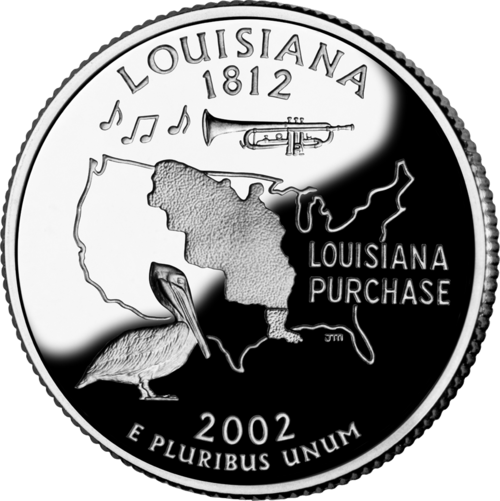 2002年にリリース | |
| アメリカ合衆国の州のシンボルのリスト | |

ルイジアナ[発音 1] (フランス語: Louisiane [lwizjan] ; スペイン語:ルイジアナ [lwiˈsjana];ルイジアナ・クレオール語:Lwizyàn)[b]はアメリカ合衆国のディープサウスおよびサウスセントラルにある州。西はテキサス州北はアーカンソー州東はミシシッピ州アメリカ合衆国50州、面積では20位、人口では25位であり、およそ460万人が住んでいる。フランスの伝統、ルイジアナ州は、郡教区、郡に細分化されていないアメリカ合衆国の2つの州のうちの1つとなっている (もう1つはアラスカ州とその行政区)。バトンルージュで、フランス領ルイジアナニューオーリンズが人口約383,000人で最大の都市である。[10]メキシコ湾に面した海岸線を持ち、その東の境界の大部分はミシシッピ川。
ルイジアナ州の土地の多くはミシシッピ川から流れてきた堆積物から形成され、巨大なデルタと広大な沿岸湿地や沼地を残しました。[11]これらには、トキやアオサギなどの鳥類、州認定のアメリカアオガエルなどの多くの種類のアオガエル、チョウザメやヘラチョウザメなどの魚類を含む豊かな南部の生物相が含まれています。特に北部の標高の高い地域には、背の高い草原、ロングリーフパインの森、湿地サバンナなど、さまざまな生態系があり、陸生ランや食虫植物の多くの種を含む非常に多くの植物種が生息しています。州の半分以上が森林です。
ルイジアナ州は、ミシシッピ川水系とメキシコ湾の合流点に位置しています。その位置と生物多様性は、17世紀にヨーロッパ人が到着する何千年も前から、様々な先住民グループを魅了してきました。ルイジアナ州には18のネイティブアメリカンの部族がおり、これは南部のどの州よりも多く、そのうち4つは連邦公認、10は州公認です。 [12]フランスは1682年にこの地域の領有権を主張し、ここはヌーベルフランスのより大きな植民地の政治、商業、人口の中心地となりました。1762年から1801年まで、ルイジアナ州はスペインの支配下にあり、1803年にナポレオンによって米国に売却されるまで短期間フランス統治に戻りました。1812年に18番目の州として連邦に加盟しました。州昇格後、ルイジアナ州には米国東部からの入植者のほか、西インド諸島、ドイツ、アイルランドからの移民が流入しました。ルイジアナ州は農業ブームを経験した。特に綿花とサトウキビはアフリカから来た奴隷によって栽培された。奴隷州であったルイジアナ州は、南北戦争の際にはアメリカ連合国の最初の7か国のうちの1つであった。
ルイジアナ州独特のフランスの伝統は、その地名、方言、習慣、人口統計、法制度に反映されています。米国南部の他の地域と比較して、ルイジアナ州は多言語、多文化であり、ルイジアナ・フランス語(ケイジャン語、クレオール語)、スペイン語、フランス系カナダ人、アカディア語、サン=ドマング・クレオール語、ネイティブ・アメリカン、および西アフリカ文化(一般的には18 世紀に奪われた奴隷の子孫)の混合を反映しています。より最近の移民にはフィリピン人やベトナム人が含まれます。南北戦争後の環境において、アングロアメリカ人は英語化への圧力を強め、1921年にはルイジアナ州の学校ではすぐに英語が唯一の教授言語となったが、1974年に多言語政策が復活した。[13] [14]ルイジアナ州にはこれまで公用語が存在せず、州憲法には「それぞれの歴史的、言語的、文化的起源を保存、育成、促進する人々の権利」が列挙されている。[13]
全国平均に基づくと、ルイジアナ州は健康、[15]、教育、[16] [17] [18] [19]、開発の面で米国の州の中で頻繁に低いランクにあり、貧困率[20] [21] [22]と殺人率が高い。2018年、ルイジアナ州は薬物関連の死亡率が高く、国内で最も健康状態の悪い州とランク付けされました。また、少なくとも1990年代以降、米国で最も高い殺人率を記録しています。[23] [24] [25]
語源
ルイジアナは、1643年から1715年までフランス王であったルイ14世にちなんで名付けられました。ルネ・ロベール・カヴリエ・ド・ラ・サールがミシシッピ川が流れる領土をフランスの領有権を主張したとき、彼はそこをラ・ルイジアナと名付けました。[26]接尾辞-ana(または-ane)はラテン語の接尾辞で、「特定の個人、主題、または場所に関する情報」を指すことができます。したがって、おおよそ、Louis + anaは「ルイに関連する」という考えを持ちます。かつてはフランス植民地帝国の一部であったルイジアナ準州は、現在のモービル湾から現在のカナダとアメリカの国境のすぐ北まで広がっており、現在のカナダのアルバータ州とサスカチュワン州の一部も含まれています。
歴史
植民地時代以前の歴史

ルイジアナ州は、紀元前4千年紀の中期アルカイック期にマウンドビルダー文化が生まれた場所です。カニーとフレンチマンズベンドの遺跡は、5600~5000年前(紀元前3700~3100年頃)のものと確実に年代測定されており、この頃の季節的な狩猟採集民が現在のルイジアナ州北部に複雑な土塁構造物を建設するために組織化されたことを示しています。現在のモンロー近郊のワトソンブレイク遺跡には11の塚の複合体があり、約5400年前(紀元前3500年)に建設されました。[27]これらの発見は、そのような複雑な塚はトウモロコシ栽培に依存していたより定住した人々の文化によってのみ建設されたという考古学の以前の仮説を覆しました。リンカーン教区のヘッジペス遺跡はより新しいもので、5200~4500年前(紀元前3300~2600年)のものとされています。[28]

約2000年後、ポバティポイントが建設されました。これは州内で最大かつ最も有名な後期アルカイック遺跡です。現在のエップス市は、その近くに発展しました。ポバティポイント文化は紀元前1500年頃に最盛期を迎え、北米初の複合文化、そしておそらく初の部族文化となりました。[29]それは紀元前700年頃まで続きました。
ポバティーポイント文化の後には、チュラ期のチェファンクテ文化とレイクコーモラント文化が続き、初期ウッドランド期の地域的な現れである。チェファンクテ文化は、ルイジアナ地域で最初に大量の陶器を作った人々である。[30]これらの文化は西暦200年まで続いた。中期ウッドランド期は、ルイジアナ州南部と東部のマークスビル文化から始まり、ミシシッピ川を越えて東はナチェズ周辺にまで広がり、 [31]州北西部のフォーシュマリン文化となった。マークスビル文化は、アボイエル教区のマークスビル先史時代インディアン遺跡にちなんで名付けられた。

これらの文化は、現在のオハイオ州とイリノイ州のホープウェル文化と同時期に存在し、ホープウェル交換ネットワークに参加していた。南西部の人々との交易により、弓矢がもたらされた。[ 32 ]最初の古墳はこの時期に築造された。[33]政治権力が強化され始め、世襲政治や宗教指導者の台地となる儀式の中心地が建設された。 [33]
400年までに、後期ウッドランド期はベイタウン文化、トロイビル文化、ベイタウン期の沿岸トロイビルで始まり、コールズクリーク文化がそれに引き継いだ。ベイタウンの人々が散在する集落を築いたのに対し、トロイビルの人々は代わりに大規模な土塁の中心地を築き続けた。[34] [35] [36]人口は劇的に増加し、文化的および政治的な複雑さが増していることを示す強力な証拠がある。コールズクリークの遺跡の多くは、ウッドランド期以前の墳墓の上に建てられた。学者たちは、新興のエリートたちが死んだ先祖を象徴的かつ物理的に流用して、自分たちの権威を強調し、投影していたのではないかと推測している。[37]
ルイジアナ州のミシシッピ文化時代は、プラクミン文化とカドー文化が発展した時代であり、人々は大規模なトウモロコシ農業を採用し、種子を保存して植物のさまざまな品種を栽培し、特定の特性を選択するなどしました。ミシシッピ州西部とルイジアナ州東部のミシシッピ川下流域のプラクミン文化は1200年に始まり、1600年頃まで続きました。ルイジアナ州の例としては、ウェストバトンルージュ教区の文化の考古学的タイプサイトであるメドラサイトがあり、その特徴は文化を定義するのに役立ちました。 [38]セントメアリー教区のアチャファライアベイスンマウンド、[ 39]マディソン教区のフィッツヒューマウンド、[40]ユニオン教区のスコットプレイスマウンド、[41]セントチャールズ教区のシムズサイト[42]があります。
プラクミン文化は、ミシシッピ文化中期と同時期に起こったもので、ミズーリ州セントルイス東部のイリノイ州にあるカホキア遺跡がその代表例である。最盛期にはカホキアの人口は2万人以上と推定されている。プラクミン文化は、植民地時代にヨーロッパ人と遭遇したナチェズ族やタエンサ族の先祖と考えられている。[43]
1000年までに、州の北西部では、フーシェ・マリン文化がカドアン・ミシシッピ文化に進化した。カドアン・ミシシッピ人は、現在のオクラホマ州東部、アーカンソー州西部、テキサス州北東部、ルイジアナ州北西部を含む広大な地域を占領した。考古学的証拠は、文化の連続性が先史時代から現在まで途切れていないことを証明している。先史時代およびヨーロッパ人との最初の接触時のカド族および関連するカド語話者は、今日のオクラホマ州の現代カド族の直接の祖先である。 [44]ルイジアナ州の重要なカドアン・ミシシッピ考古学遺跡には、カド教区のベルチャー・マウンド遺跡とレッド・リバー教区のガハガン・マウンド遺跡がある。 [45]
アチャファラヤ、ナッチタッチス(現在はナッチトッシュと綴られる)、キャド、ホウマ、タンギパホア、アボイエル(アボイエルズと綴られる)など、ルイジアナ州の現在の地名の多くは、さまざまなアメリカ先住民の言語で使用されている地名の音訳である。
ヨーロッパ人による探検と植民地化
ルイジアナを訪れた最初のヨーロッパ人探検家は、1528年にパンフィロ・デ・ナルバエス率いるスペインの探検隊がミシシッピ川の河口を発見したときだった。1542年、エルナンド・デ・ソトの探検隊は州の北と西を回り込み(カド族とトゥニカ族のグループに遭遇)、1543年にミシシッピ川に沿ってメキシコ湾まで下った。スペインのルイジアナへの関心は1世紀半にわたって薄れていった。[46]
17 世紀後半、フランスとフランス系カナダ人の遠征隊は、主権、宗教、商業の目的を持ってミシシッピ川とメキシコ湾岸に拠点を築きました。フランスは最初の入植地で、北アメリカの広大な地域の領有権を主張し、メキシコ湾からカナダまで広がる商業帝国とフランス国家の樹立に乗り出しました。
1682年、フランスの探検家ロバート・カヴリエ・ド・ラ・サールは、フランス国王ルイ14世に敬意を表して、この地域をルイジアナと名付けた。最初の恒久的な入植地であるフォート・モーレパ(現在のミシシッピ州オーシャンスプリングス)は、1699年にヌーベルフランス出身のフランス軍将校ピエール・ル・モワーヌ・ディベルヴィルによって設立された。その頃までに、フランス人はミシシッピ川の河口に小さな砦を建設し、フランス語で「海の標識」を意味するラ・バリーズ(またはラ・バリーズ)と名付けた。1721年までに、彼らは川を航行する船を誘導するために、ここに高さ62フィート(19メートル)の木造の灯台のような構造物を建設した。[47]
1722年の勅令は、国王がイリノイ地方の統治権をカナダからルイジアナに移譲した後のもので、ルイジアナの最も広い定義を特徴としていた可能性がある。それは、フランスが領有権を主張する、五大湖以南のロッキー山脈とアレゲニー山脈の間のすべての土地であった。[48]一世代後、カナダとルイジアナの貿易紛争により、フランス植民地間の境界はより明確になった。1745年、ルイジアナ総督ヴォードルイユは、領土の北と東の境界を、ワバッシュ渓谷からバーミリオン川河口(現在のイリノイ州ダンビル付近)まで、そこから北西はイリノイ川沿いのル・ロシェまで、そこから西はロック川河口(現在のイリノイ州ロックアイランド)までと定めた。[48]したがって、ビンセンズとピオリアがルイジアナの範囲であった。ウィアテノン(現在のインディアナ州ラファイエット付近のウォバッシュ川上流)、シカゴ、フォートマイアミ(現在のインディアナ州フォートウェイン付近)、ウィスコンシン州プレーリーデュシアンの前哨基地はカナダの属国として機能した。[48]
ナキトシュ(現在のルイジアナ州北西部のレッド川沿い)の開拓地は、1714年にルイ・ジュシュロー・ド・サン・ドニによって設立され、[49]現代のルイジアナ州で最古のヨーロッパ人恒久開拓地となった。このフランス人開拓地には2つの目的があった。オールド・サンアントニオ・ロードを経由してテキサスのスペイン人と貿易を確立することと、ルイジアナへのスペインの進出を阻止することだった。この開拓地はすぐに繁栄する河川港と交差点となり、川沿いには輸入されたアフリカ人奴隷によって運営される広大な綿花王国が誕生した。時が経つにつれ、農園主は大規模なプランテーションを開発し、成長する町に立派な家を建てた。これはニューオーリンズや他の場所でも繰り返されるパターンとなったが、南部の商品作物は主にサトウキビであった。

ルイジアナのフランス人入植者は、ミシシッピ川とその主要支流の岸に沿ってルイジアナから現在のミズーリ州セントルイス周辺のイリノイ・カントリーと呼ばれる地域まで、さらなる探検と前哨地の建設に貢献した。後者はイリノイからのフランス人入植者によって入植された。
当初、モビール、次いでビロクシがルイジアナ州の州都となった。[50] [51]フランスは、ミシシッピ川が貿易と軍事上の重要性を認識し、また首都を沿岸部の激しい嵐から守ることを望み、1722年からニューオーリンズを五大湖南部の文民および軍事当局の中心地として発展させた。それ以来、 1803年のルイジアナ買収で米国が領土を獲得するまで、フランスとスペインはニューオーリンズとミシシッピ川西側の土地の支配権を争った。
1720 年代、ドイツ人移民はミシシッピ川沿いのドイツ海岸と呼ばれる地域に定住しました。
フランスは、七年戦争(北米では一般にフレンチ・インディアン戦争と呼ばれる)でイギリスが勝利した後、1763年にミシシッピ川東側の領土の大半をイギリスに割譲した。これにはメキシコ湾岸沿いの土地とポンチャートレイン湖の北からミシシッピ川までの土地が含まれ、イギリス領西フロリダとして知られるようになった。ミシシッピ川西側のルイジアナ州の残りの地域と「ニューオーリンズ島」は、フォンテーヌブロー条約(1762年)によってスペインの植民地となった。川の両側の権力の移行は、10年後まで延期された。
1765年、スペイン統治下、フレンチ・インディアン戦争後にイギリス政府によってアカディアから追放されたフランス植民地アカディア(現在のノバスコシア州、ニューブランズウィック州、プリンスエドワード島)の数千人のアカディア人がルイジアナに移住した。彼らは主に、現在アカディアナと呼ばれるルイジアナ南西部に定住した。ルイス・デ・ウンザガ・イ・アメザガ知事[52]は、より多くの入植者を獲得することに熱心で、ルイジアナのケイジャン人の祖先となるアカディア人を歓迎した。
イスレーニョスと呼ばれるスペインのカナリア諸島人は、1778年から1783年の間にスペインの王室管轄下でスペインのカナリア諸島からルイジアナに移住した。 [53] 1800年、フランスのナポレオン・ボナパルトはサン・イルデフォンソ条約でスペインからルイジアナを奪還したが、この取り決めは2年間秘密にされていた。
奴隷制度の拡大

1708年、ジャン=バティスト・ル・モワーヌ・シュール・ド・ビエンヴィルが、西インド諸島のフランス植民地から最初の2人のアフリカ人奴隷をルイジアナに連れてきた。1709年、フランスの金融家アントワーヌ・クロザが、メキシコ湾から現在のイリノイ州にまで広がるラ・ルイジアナの商業の独占権を獲得した。歴史家ヒュー・トーマスによると、「その特権により、彼は毎年アフリカから黒人を積荷として輸入することができた」という。[54] 1719年から、貿易業者はより多くの奴隷を輸入し始めた。2隻のフランス船、デュ・メイン号とオーロル号が、アフリカから500人以上の黒人奴隷を乗せてニューオーリンズに到着した。それ以前にルイジアナにいた奴隷は、西インド諸島のフランス植民地から移送された者たちだった。1721年末までに、ニューオーリンズの人口は1,256人となり、そのうち約半数が奴隷だった。[要出典]
1724年、フランス政府はルイジアナ植民地(現在のルイジアナ州よりもはるかに広大だった)における白人(ブラン)と黒人(ノワール)の交流を規制するコード・ノワール(英語では「ブラック・コード」)と呼ばれる法律を発布した。[55]
1806年のルイジアナ州黒人法典は奴隷に対する残酷な処罰を犯罪とした。[56]
逃亡奴隷はマルーンと呼ばれ、バイユーの奥地に隠れて小さな集落で生き延びることができた。[57]「マルーン」という言葉はスペイン語の「cimarron」に由来し、「激しい」または「手に負えない」という意味である。[58]
18 世紀後半、ルイジアナ領土の最後のスペイン総督は次のように書いています。
確かに、ルイジアナ南部が奴隷なしでやっていけるはずはなく、奴隷を使うことで植民地は繁栄と富に向けて大きく前進していた。[59]

1803年にアメリカ合衆国がルイジアナを購入した際、奴隷を隣のミシシッピ州に連れてくるのと同じくらい簡単にルイジアナに連れてくることができることがすぐに認められたが、そうすることはアメリカ合衆国の法律に違反していた。[59]アメリカ合衆国下院議員ジェームズ・ヒルハウスとパンフレット作家トーマス・ペインが、新たに獲得した領土で奴隷制を禁止する既存の連邦法を施行するよう要求したにもかかわらず、[59]奴隷制は大きな利益と最も低コストの労働力の源であったため、蔓延した。
19世紀初頭、ルイジアナはサン=ドマングや西インド諸島に比べると、比較的奴隷の数も少なく、小規模な砂糖生産地だった。その後すぐに、新しい開拓者がプランテーション開発のために到着すると、主要な砂糖生産地となった。ルイジアナ州初のアメリカ総督ウィリアム・C・C・クレイボーンは、白人労働者は「この不健康な気候では確保できない」ため、アフリカ人奴隷労働力が必要だと述べた。 [60]ヒュー・トーマスは、クレイボーンは、アメリカとイギリスが1807年に制定した大西洋奴隷貿易の廃止を強制できなかったと書いている。アメリカは、沿岸貿易、つまり船で大西洋沿岸を通り、ニューオーリンズやその他のメキシコ湾岸の港まで奴隷を輸送する貿易を含め、国内の奴隷貿易を保護し続けた。
1840年までに、ニューオーリンズは米国最大の奴隷市場を持ち、市と州の経済に大きく貢献した。ニューオーリンズは国内で最も裕福な都市の1つ、そして3番目に大きな都市となった。[61]アフリカ人奴隷貿易と奴隷の輸入の禁止により、国内市場での需要が増加した。アメリカ独立戦争後の数十年間で、100万人以上の奴隷化されたアフリカ系アメリカ人がアッパーサウスからディープサウスへの強制移住を余儀なくされ、その3分の2が奴隷貿易によるものであった。その他の者は、奴隷所有者が新しい土地を求めて西へ移動する際に、所有者によって移送された。[62] [63]
アッパー サウスの農業が変化し、プランターがタバコ栽培から労働集約度の低い混合農業へと転換したため、プランターは労働者を余剰に抱えるようになりました。多くのプランターが奴隷をトレーダーに売り、ディープ サウスに連れて行きました。奴隷はトレーダーによってアッパー サウスから陸路で運ばれたり、沿岸奴隷貿易で船でニューオーリンズやその他の沿岸市場に運ばれたりしました。ニューオーリンズで奴隷が売られた後、ミシシッピ川を走る蒸気船が奴隷を上流のナチェズやメンフィスの市場やプランテーションの目的地まで運びました。
興味深いことに、奴隷州であるルイジアナ州は、マニラ・ガレオン船から逃亡したフィリピン人奴隷をかくまった。[64] [65] [66] [67]フィリピン人コミュニティのメンバーは、当時はマニラ人、またはマニラメンと呼ばれ、後にタガラスと呼ばれた。[68]彼らは自由人だったため、ルイジアナ州サン・マロ村に米国最古のアジア人入植地を作った。[68] [69] [70] [71]その住民は、フランス系アメリカ人のジャン・ラフィットの指揮の下、 1812年の米英戦争で米国に加わり、イギリス帝国と戦った。[70]
サン=ドマング出身のクレオール人の亡命と影響

スペインによるルイジアナ占領は1769年から1800年まで続いた。[72] 1790年代初頭、 1791年のサン=ドマングでのフランス革命中に始まった奴隷反乱の後、難民がサン=ドマングから押し寄せ、移民の波が起こった。その後10年間で、ヨーロッパ人、クレオール人、アフリカ人など数千人の難民が島からルイジアナに上陸し、後者の一部は各自由集団によって連れてこられた。彼らはニューオーリンズとルイジアナのフランス語を話す人口を大幅に増加させ、アフリカ人の数も増やし、奴隷は市内のアフリカ文化を強化した。 [73]
英米当局は当初、有色人種のクレオール人を締め出そうとしたが、ルイジアナのクレオール人はクレオール人口の増加を望んだ。難民の半数以上が最終的にルイジアナに定住し、大多数はニューオーリンズに残った。[74]
ピエール・クレマン・ド・ローサット( 1803年総督)は次のように述べている。「アンティル諸島のすべての植民地の中で、サン=ドマングはその精神と習慣がルイジアナに最も影響を与えた植民地でした。」[75]

米国による購入
1783 年に米国が英国から独立したとき、その大きな懸念の 1 つは、西の境界にヨーロッパの勢力があることと、ミシシッピ川への制限のないアクセスの必要性でした。アメリカ人の開拓者が西に進んでいくと、アパラチア山脈が東への物資輸送の障害になっていることがわかりました。農産物を輸送する最も簡単な方法は、平底船を使ってオハイオ川とミシシッピ川を下り、ニューオーリンズの港まで運び、そこで外洋船に積み込むことでした。このルートの問題は、ナチェズより下流のミシシッピ川の両岸がスペイン領だったことです。
ナポレオンのルイジアナにおける野望は、カリブ海の 砂糖貿易を中心とした新しい帝国を築くことだった。 1802年のアミアン条約の条項により、イギリスはマルティニーク島とグアドループ島の支配権をフランスに返還した。ナポレオンはルイジアナをこれらの砂糖島の集積地、および米国の入植地への緩衝地帯とみなした。1801年10月、彼はハイチ革命後にトゥーサン・ルーヴェルチュールの支配下にあったサン=ドマング奪還のため大軍を派遣した。ナポレオンの義理の兄弟ルクレール率いる軍が敗北すると、ナポレオンはルイジアナの売却を決定した。[77]

アメリカ合衆国第3代大統領トーマス・ジェファーソンは、北アメリカにフランス植民地を再建するというナポレオンの計画に不安を覚えた。ニューオーリンズを占領すれば、ナポレオンはいつでもミシシッピ川を米国の商業に対して封鎖できる。ジェファーソンは、フランス駐在の米国公使ロバート・R・リビングストンに、ニューオーリンズ市とミシシッピ川東岸の一部を購入し、[78]米国の商業のために川を自由に航行できるよう交渉する権限を与えた。リビングストンには最高200万ドルを支払う権限が与えられた 。
ルイジアナのフランスへの正式な譲渡はまだ行われておらず、ナポレオンとスペインの取引は辺境ではほとんど秘密にされていなかった。しかし、1802年10月18日、ルイジアナの代理知事フアン・ベンチュラ・モラレスは、スペインが米国からのすべての貨物のニューオーリンズへの寄託権を取り消す意向を公表した。米国にとって重要なこの港の閉鎖は怒りと動揺を引き起こした。西部の商業は事実上封鎖された。歴史家は、寄託権の取り消しは、当時信じられていたようにフランスの陰謀ではなく、特に密輸などの米国人の不正行為によって引き起こされたと考えている。ジェファーソン大統領はフランスとの戦争を求める世論の圧力を無視し、ジェームズ・モンローをナポレオンの特使に任命し、米国がニューオーリンズを獲得するのを支援した。ジェファーソンはまた、承認された支出を1,000万ドルに増額した 。[79]
しかし、1803年4月11日、フランス外務大臣タレーランが、リビングストンを驚かせ、アメリカはニューオーリンズとその周辺地域(リビングストンの指示に含まれていた)だけでなく、ルイジアナ全体に対していくら支払う用意があるのかと尋ねた。モンローは、ナポレオンがいつでもこの申し出を取り下げる可能性があり(希望するニューオーリンズ地域を獲得できなくなる)、ジェファーソン大統領の承認には数か月かかる可能性があるというリビングストンの意見に同意したため、リビングストンとモンローはすぐに交渉を開始することを決めた。4月30日までに、彼らはルイジアナ全土828,000平方マイル(2,100,000 km 2)を6,000万フラン(約1,500万ドル )で購入する契約を締結した。[79]
この金額の一部である350 万ドルは、フランスが米国に対して負っていた負債の免除に充てられた。[80]この支払いは米国債で行われ、ナポレオンはそれを額面価格でオランダのホープ・アンド・カンパニーと英国のベアリング銀行に87%の割引で売却した。+100ドルあたり1⁄2。その結果、フランスがルイジアナに対して受け取った現金はわずか8,831,250ドルだった。イギリスの銀行家アレクサンダー・ベアリングはパリでマルボワと協議し、米国まで往復して債券を受け取り、それをイギリスに持ち帰り、そのお金を持ってフランスに戻った。ナポレオンはそのお金を使ってベアリングの母国と戦争をした。

購入の知らせが合衆国に届いたとき、ジェファーソンは驚いた。彼は 港湾都市に1000万ドルの支出を承認していたのに、代わりに国土の面積を2倍にする土地パッケージに政府が1500万ドルを費やすことを約束する条約を受け取ったのである。連邦党内 のジェファーソンの政敵は、ルイジアナ購入は価値のない砂漠であり、[81]合衆国憲法は連邦議会の同意なしに新しい土地の取得や条約交渉を行う規定はないと主張した。反対派が本当に心配していたのは、ルイジアナ領土から必然的に切り離される新しい州であり、合衆国議会における西部と南部の利害関係が強化され、ニューイングランドの連邦党の国政に対する影響力がさらに減少することであった。ジェファーソン大統領は西部への拡張の熱烈な支持者であり、条約への支持を固く守った。連邦党の反対にもかかわらず、合衆国上院は1803年10月20日にルイジアナ条約を批准した。
1803年10月31日に制定された法律により、トーマス・ジェファーソン大統領はフランスから割譲された領土を占領し、初期の統治を行う権限を与えられました。[82] 1803年11月29日、ニューオーリンズで譲渡式が行われました。ルイジアナ領土は正式にフランスに引き渡されたことがなかったため、スペインは国旗を降ろし、フランスは国旗を掲げました。翌日、ジェームズ・ウィルキンソン将軍はニューオーリンズの米国への占領を承認しました。1エーカーあたり3セント未満で購入されたルイジアナ領土は、戦争や一人の米国人の死もなく、一夜にして米国の面積を2倍にし、領土購入の前例となりました。
アメリカが領有権を握って間もなく、1804年3月26日にこの地域は北緯33度線に沿って2つの領土に分割され、南はオルレアン準州、北はルイジアナ地区(後にルイジアナ準州として形成)となった。[83]
州の地位
ルイジアナは1812年4月30日にアメリカ合衆国第18番目の州となり、オーリンズ準州はルイジアナ州となり、ルイジアナ準州は同時にミズーリ準州に改名された。[84]
ルイジアナ州が創設されたとき、ミシシッピ川の北と東のフロリダ教区と呼ばれる地域は含まれていなかった。1812年4月14日、連邦議会はルイジアナ州がフロリダ教区を含むように境界を拡大することを承認したが、[85] [86]境界変更には州議会の承認が必要であり、8月4日まで承認されなかった。 [87]その間のおよそ3か月間、ルイジアナ州東部の北の境界はバイユー・マンチャックの流れとモーレパス湖とポンチャートレイン湖の真ん中であった。[88]
1824年から1861年にかけて、ルイジアナ州は人格と民族に基づく政治体制から明確な二大政党制へと移行し、民主党は最初はホイッグ党と、次にノウ・ナッシング党と、そして最終的には他の民主党員とのみ競争するようになった。[89]
分離と南北戦争


1860年の国勢調査によると、331,726人が奴隷であり、州の総人口708,002人の約47%を占めていた。[90]奴隷社会を維持することに対するエリート白人の強い経済的利益が、1861年1月26日のルイジアナ州の連邦からの脱退の決定につながった。[91]エイブラハム・リンカーンがアメリカ合衆国大統領に選出された後、ルイジアナ州は他の米国の州に続いて脱退した。ルイジアナ州の脱退は1861年1月26日に発表され、アメリカ連合国の一部となった。
南北戦争では、ミシシッピ川を支配して南部連合を二分するという北軍の戦略の結果、ルイジアナ州はあっという間に敗北した。連邦軍は1862年4月25日にニューオーリンズを占領した。住民の大部分が北軍に同情的であった(または商業的に両立する利益を有していた)ため、連邦政府は、連邦支配下のルイジアナ州を連邦内の州として指定し、米国議会に選出された代表者を置くという異例の措置を取った。[92] [93]
南北戦争後から20世紀半ばまで

南北戦争と奴隷解放の後、反乱を起こした民間および準軍事組織によって戦争が続けられたため、米国南部では暴力が増加した。戦後当初は、投票や公職への就労の面で黒人の参加が大幅に増加した。ルイジアナ州では、オスカー・ダンとPBSピンチバックが米国初、2人目の黒人知事となり、この時期に125人の黒人州議会議員が選出され、チャールズ・E・ナッシュが米国下院で州の第6選挙区の代表に選出された。最終的に、1870年代後半の復興と連邦政府の占領の終了以降、元南軍兵士が州議会を支配するようになり、解放奴隷を規制するために黒人法が施行され、投票権がますます制限された。彼らは、戦前に自由であり、教育や財産を得ていたこともあるアフリカ系アメリカ人(ニューオーリンズなど)に投票権を与えることを拒否した。
1866年のメンフィス暴動と同年のニューオーリンズ暴動の後、解放奴隷に選挙権と完全な市民権を与える修正第14条が可決された。議会は復興法を可決し、ルイジアナ州を含む状況が最も悪いとされた州に軍管区を設立した。ルイジアナ州はテキサス州とともに第5軍管区として管理された。[94]
アフリカ系アメリカ人は、法の下である程度の平等をもって市民として暮らし始めました。解放奴隷と戦前に自由だった有色人種は、教育、家族の安定、仕事の面でさらに進歩し始めました。同時に、戦争の余波で社会は大きく不安定になり、多くの白人が敗北と自由な労働市場に積極的に抵抗しました。白人の反乱分子は、最初はクー・クラックス・クラン支部 で、白人至上主義を強制するために動員されました。
1877年に連邦軍が撤退すると、ルイジアナ州やその他の州の白人民主党員は、脅迫や暴力で黒人の投票を抑圧したホワイトリーグなどの準軍事組織を通じて、州議会の支配権を取り戻した。1890年のミシシッピ州の例に倣い、1898年、白人民主党の農園主が多数を占める議会は、人頭税、居住要件、識字テストなど、有権者登録の障壁を高めることで、事実上有色人種の選挙権を剥奪する新しい憲法を可決した。その効果は即座に現れ、長く続いた。1896年には、黒人有権者は130,334人で、白人有権者もほぼ同数で、州の人口に比例して均等に分かれていた。[95]

1900年の州人口は47%がアフリカ系アメリカ人で、総計652,013人だった。ニューオーリンズの住民の多くは、南北戦争前に自由有色人種としてかなりの人口を占めていた有色人種クレオール人の子孫だった。[96]新憲法の2年後の1900年までに、州に登録された黒人有権者はわずか5,320人だった。黒人と有色人種の教育と識字率が進歩したにもかかわらず、選挙権剥奪のため、1910年までに黒人有権者はわずか730人(有権者のアフリカ系アメリカ人男性の0.5%未満)だった。[97]黒人は政治システムから排除され、陪審員になることもできなかった。白人民主党は民主党一党支配を確立し、1965年に議会が投票権法を可決し、憲法で定められた投票権に対する連邦政府の監視と執行が可能になるまで、20世紀に入っても数十年にわたって州内でこれを維持した。

20世紀初頭、何千人ものアフリカ系アメリカ人が、仕事と教育を求めて、またジム・クロウ法社会とリンチから逃れるために、ルイジアナ州から工業都市へと大移動した。ワタミゾウムシの蔓延と農業問題で、多くの小作農と農民が職を失った。農業の機械化も労働者の必要性を減らした。1940年代初頭、黒人は防衛産業の拡大に伴って職を求めて西のカリフォルニアへ移った。[98]
1920年当時、州全体を東西または南北に走る連続した舗装道路は存在しなかった。[99]
大恐慌の時期、ルイジアナ州はヒューイ・ロング知事の指導下にあった。彼は大衆の支持を得て知事に選出された。彼の公共事業は困窮する人々に何千もの雇用を提供し、貧しい白人の教育と参政権の拡大を支持したが、ロングは扇動的で独裁的なスタイルであると非難された。彼はルイジアナ州政府のあらゆる部門にパトロネージ支配を広げた。特に物議を醸したのは、州内の富の再分配計画であった。ロングの統治は1935年に州議会議事堂で暗殺され、突然終わった。[100]
20世紀半ばから現在
第二次世界大戦の動員により、州内に雇用が創出された。しかし、黒人、白人を問わず何千人もの労働者が、急成長する防衛産業でより良い仕事を求めてカリフォルニアに移住した。 1940年代から1960年代にかけての第二次大移動で、多くのアフリカ系アメリカ人が社会的抑圧から逃れ、より良い仕事を求めて州を離れた。1930年代の農業の機械化により、労働者の必要性は大幅に減少した。彼らは、カリフォルニアの防衛産業で熟練した仕事、子供たちのためのより良い教育、そして投票できるコミュニティでの暮らしを求めた。[101]
1958年11月26日、シェンノート空軍基地で、核兵器を搭載した米空軍のB-47爆撃機が地上で火災を起こした。非核物質の限定的な爆発により、機体の残骸と事故現場は汚染された。[102]
1950年代、州は有権者登録に市民権テストという新しい要件を設けた。州権党(ディキシークラット)の反対にもかかわらず、南部の黒人有権者は登録率を上げ始めており、これは中流階級の成長も反映していた。1960年、州は公民権活動家を調査し、人種隔離を維持するためにルイジアナ州主権委員会を設立した。[103]
それにもかかわらず、黒人有権者の登録と投票率は徐々に20%以上に増加し、1964年には32%に達し、この年、この時代初の全国公民権法が可決された。[104]この時期の州内の黒人有権者の割合は、エヴァンジェリン教区の93.8%から、黒人が多数を占める教区での投票を抑圧しようとする白人の激しい動きがあったテンサス教区の1.7%など、幅広く変動した。[105]
2つの工場の町で起きた公民権活動家への暴力的な攻撃がきっかけとなり、1964年後半と1965年初めに、それぞれジョーンズボロとボガルーサで「防衛と正義のためのディーコンズ」の最初の2つの支部が設立された。第二次世界大戦と朝鮮戦争の退役軍人で構成され、活動家とその家族を守るために設立された武装自衛グループだった。1964年公民権法が可決された後、1965年にボガルーサで公共施設を利用しようとする黒人に対する白人の暴力的な抵抗が続いたため、連邦政府は地元警察に活動家を保護するよう命じた。[106]ミシシッピ州とアラバマ州にも他の支部が設立された。
1960年までに、ルイジアナ州のアフリカ系アメリカ人の割合は32%にまで低下した。1,039,207人の黒人市民は、依然として人種隔離と参政権剥奪によって抑圧されていた。[107]アフリカ系アメリカ人は、州の有権者登録規則の不均衡な差別的適用に苦しみ続けた。他の場所でより良い機会があったため、1965年から1970年にかけて、黒人はルイジアナ州から移住し続け、37,000人以上が純減した。公式の国勢調査の数字に基づくと、1970年のアフリカ系アメリカ人の人口は1,085,109人で、1960年と比較して46,000人以上の純増であった。後者の期間中、一部の人々は機会を求めてニューサウスの都市に移住し始めた。 [108]その時期以降、黒人は政治システムに参加し、公職に選出されるようになり、他の機会も持つようになった。
1919年5月21日、女性に完全な投票権を与えるアメリカ合衆国憲法修正第19条が国家レベルで可決され、1920年8月18日に全米で法律となった。ルイジアナ州は最終的に1970年6月11日にこの修正条項を批准した。[109]

ルイジアナ州はメキシコ湾岸に位置しているため、熱帯暴風雨やハリケーンの被害に定期的に見舞われている。2005年8月29日、ニューオーリンズとメキシコ湾沿いの州の他の多くの低地が壊滅的なハリケーン・カトリーナに見舞われた。[110]このハリケーンは堤防の決壊と市の80%以上の大規模な浸水により広範囲に被害をもたらした。当局は市と近隣地域に避難するよう警告を発したが、数万人(主にアフリカ系アメリカ人)が市に留まり、その多くが取り残された。広範囲に広がった洪水により多くの人が亡くなり、生存者も被害に遭った。
2016年7月、アルトン・スターリングの銃撃事件が州都バトンルージュ全域で抗議活動を引き起こした。[111] [112] 2016年8月、名前のない嵐がデナムスプリングス、バトンルージュ、ゴンザレス、セントアマン、ラファイエットの各都市を含むルイジアナ州南部に数兆ガロンの雨を降らせ、壊滅的な洪水を引き起こした。[113]推定11万戸の家屋が被害を受け、数千人の住民が避難した。[114] [115] 2019年には、ルイジアナ州の黒人教会3つが放火により破壊された。[116] [117] [118]
ルイジアナ州で最初のCOVID-19の症例が発表されたのは2020年3月9日でした。[119] 2020年10月27日現在、確認された症例は180,069件、COVID-19で死亡した人は5,854人です。[120] [更新が必要]
地理


.jpg/500px-Honey_Island_Swamp,_Louisiana_(paulmannix).jpg)

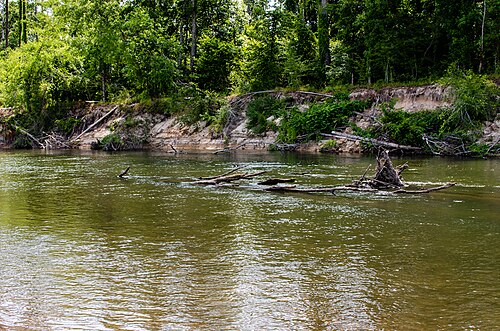

ルイジアナ州は、西はテキサス州、北はアーカンソー州、東はミシシッピ州、南はメキシコ湾と接している。州は、北部の高地(北ルイジアナ地域)と海岸沿いの沖積地域(中央ルイジアナ、アカディアナ、フロリダ教区、グレーターニューオーリンズ地域)の2つの部分に分けることができる。沖積地域には、約12,350平方マイル(32,000 km 2 )の低湿地、沿岸湿地帯とビーチ、バリアー島が含まれる。この地域は主にメキシコ湾とミシシッピ川沿いにあり、ミシシッピ川は州を南北に約600マイル(970 km)横断し、メキシコ湾に注いでいる。また、州内にはレッド川、ウォシタ川とその支流がある。その他の小さな川(そのいくつかはバイユーと呼ばれます)
ミシシッピ川沿いの沖積地の幅は 10~60 マイル (16~97 km) で、他の川沿いの沖積地の平均幅は約 10 マイル (16 km) です。ミシシッピ川は、自然の堆積物 (堤防として知られています)によって形成された尾根に沿って流れており、そこから土地は川の向こうに向かって平均 6 フィート/マイル (3 m/km) の降下をしています。他の川沿いの沖積地も同様の特徴を示しています。
州の北部および北西部の高地および連続する丘陵地帯の面積は、25,000平方マイル(65,000 km 2)を超えます。それらは草原と森林地帯で構成されています。海抜は、 海岸および湿地で10フィート(3 m)から 草原および沖積地で50~60フィート(15~18 m)に及びます。高地および丘陵地帯では、標高は、州で最も高い地点であるドリスキル山 まで上がりますが、海抜はわずか535フィート(163 m)です。1932年から2010年の間に、州は海面上昇と浸食により1,800平方マイルを失いました。ルイジアナ州沿岸保護修復局 (CPRA)は、連邦および州の資金の両方で、毎年約10億ドルを費やして、ルイジアナ州の海岸線と土地の補強と保護を行っています。[121] [122]
上記の水路のほかに、西の境界を形成するサビーン川、東の境界を形成するパール川、カルカシュー川、マーメンタウ川、バーミリオン川、バイユー・テッシュ川、アチャファラヤ川、ブフ川、バイユー・ラフォーシュ川、コートアブル川、バイユー・ダルボンヌ川、マコン川、テンサス川、アミット川、チェファンクテ川、ティックファウ川、ナタルバニー川、その他多数の小川があり、総計4,000マイル(6,400 km)以上に及ぶ航行可能な水路の自然システムを形成している。
ルイジアナ州はまた、メキシコ湾の内陸大陸棚の海底のおよそ3マイル(4.8 km)の幅の部分に対しても政治的管轄権を持っている。米国の政治的地理の特殊性により、これはルイジアナ州と同様に広大なメキシコ湾岸を持つ近隣のテキサス州やフロリダ州の9マイル(14 km)の幅の管轄権よりも大幅に狭い。[123]
アメリカ合衆国ルイジアナ州南部の海岸は、世界で最も急速に消滅しつつある地域の一つである。これは主に、沿岸部の人間による不適切な管理が原因である(ルイジアナ州の湿地を参照)。かつては、ミシシッピ川の春の洪水によって堆積物が堆積し、湿地の成長が促進されたため、土地が拡張されたが、現在は土地が縮小している。原因は複数ある。[124] [125]
人工の堤防は、沼地に真水と堆積物をもたらす春の洪水をせき止めている。沼地は広範囲に伐採され、海水が内陸に流れ込む運河や溝が残されている。石油・ガス産業のために掘られた運河は、嵐で海水が内陸に流れ込むのを許し、沼地や湿地を損傷する。海水位の上昇は問題を悪化させている。一部の研究者は、州は毎日フットボール場30個分に相当する陸地を失っていると推定している。ミシシッピ川の自然洪水を修復するなど、人為的被害を減らすことで沿岸地域を救うための提案は数多くある。そのような修復がなければ、沿岸のコミュニティは消滅し続けるだろう。[126]そしてコミュニティが消滅するにつれて、ますます多くの人々がこの地域を去っている。[127]沿岸湿地は経済的に重要な沿岸漁業を支えているため、湿地の消失はこの産業に悪影響を及ぼしている。
ルイジアナ州沖のメキシコ湾の「デッドゾーン」は、米国で最大の再発性低酸素ゾーンです。2017年には8,776平方マイル(22,730 km 2 )に達し、記録上最大となりました。[ 128]
地質学
ルイジアナ州で最も古い岩石は、キサッチー国有林などの北部で露出しています。最古の岩石は、約6000万年前の新生代初期に遡ります。 [129]州の最も新しい部分は、過去12,000年間にミシシッピ川の連続したデルタとして形成されました:マリンゴーイン、テッシュ、セントバーナード、ラフォーシェ、現代のミシシッピ、そして現在のアチャファラヤ。[130]堆積物はミシシッピ川によって北から南に運ばれました。
北部の第三紀の岩石と海岸沿いの比較的新しい堆積物の間には、更新世段丘と呼ばれる広大な帯があります。その年代と分布は、過去の氷河期の海面の上昇と下降に大きく関係しています。北部段丘は川が深い水路を切り開くのに十分な時間がありましたが、新しい段丘ははるかに平坦になる傾向があります。[131]
ルイジアナ州にも岩塩ドームが見られる。その起源は、浅い海の蒸発率が高かった初期のメキシコ湾にまで遡ることができる。州内には数百の岩塩ドームがあり、最もよく知られているのはルイジアナ州エイブリー島である。[132]岩塩ドームは塩の供給源としてだけでなく、石油やガスの地下貯蔵庫としても重要である。[133]
動植物
気候
ルイジアナ州は湿潤亜熱帯気候(ケッペンの気候区分 Cfa)で、長くて暑く湿気の多い夏と短くて穏やかな冬が特徴です。この州の亜熱帯特性は、低緯度、低地の地形、および最遠方でも 200 マイル(320 km)以内の距離にあるメキシコ湾の影響によるものです。
雨は年間を通じて頻繁に降りますが、4月から9月は州の雨期であり、年間の他の時期よりもやや雨が多くなります。10月は降水量が減ります。夏には、日中の暑い時期に雷雨が発生し、激しいが短時間の熱帯性豪雨をもたらします。冬には、降雨は前線から発生することが多くなり、それほど激しくありません。
南ルイジアナ州の夏は、6 月から 9 月まで平均気温が 90 °F (32 °C) 以上、夜間の最低気温が平均 70 °F (21 °C) 以上になります。時には、気温が 90 °F (32~37 °C) 台になり、露点 が 70 °F (24~26 °C)台後半になると 、体感温度が 120 °F (49 °C) を超えることもあります。南ルイジアナ州の湿気が多く、濃く、ジャングルのような暑さは、数え切れないほどの物語や映画の題材として有名です。
州南部の冬は気温が一般的に暖かく、ニューオーリンズ、バトンルージュ、ルイジアナ南部の残りの地域、メキシコ湾の最高気温は平均 66 °F (19 °C) です。州北部の冬はやや涼しく、最高気温は平均 59 °F (15 °C) です。冬の夜間の最低気温は州全体で平均氷点よりかなり高く、メキシコ湾の近くでは平均 46 °F (8 °C)、州北部の冬の平均最低気温は 37 °F (3 °C) です。
冬には、低気圧の中心から北に寒冷前線が流れ込み、ルイジアナ州に到達することがある。州の北部では気温が20 °F(−7 °C)近くまで下がることもあるが、南部ではめったにない。メキシコ湾付近では雪が降ることはめったにないが、州の北部の住民は10年に数回、ちらっと雪が降ることがある。[134] [135] [136] [137]ルイジアナ州で記録された最高気温は1936年8月10日のプレイン・ディーリングでの114 °F(46 °C)で、最低気温は1899年2月13日のミンデンでの−16 °F(−27 °C)である。
ルイジアナ州は熱帯低気圧の影響を受けることが多く、特にニューオーリンズ周辺の低地は大型ハリケーンの直撃に対して非常に脆弱である。この地域は多くのバイユー、湿地、入江がある独特の地形のため、大型ハリケーンによる広範囲の水害が発生する可能性がある。この地域は特に夏季に雷雨が頻繁に発生する傾向がある。[138]
州全体では、年間平均60日以上の雷雨が発生し、これはフロリダ州を除く他のどの州よりも多い。ルイジアナ州では、年間平均27個の竜巻が発生する。州全体が竜巻の被害を受けやすいが、州の最南部は他の州よりもやや被害が少ない。竜巻は、州南部では1月から3月、州北部では2月から3月にかけて多く発生する。[138]ルイジアナ州は、部分的にディキシー・アレーと呼ばれる竜巻活動地域内にあり、州内では予測不可能だが局地的な竜巻が発生する傾向がある。[139]
公有地
.jpg/500px-New_Orleans,_Louisiana,_United_States_of_America_Population_Density_and_Low_Elevation_Coastal_Zones_(5457913950).jpg)
州の位置と地質により、この州は生物多様性に富んでいる。南西部の草原など、いくつかの重要な地域では、98%を超える損失が発生している。松林も、主に火災鎮圧と都市の無秩序な拡大により、大きな危険にさらされている。ルイジアナ州の生物多様性を代表し保護するための自然地域の適切な組織化はまだ行われていない。そのようなシステムは、フロリダ州が計画しているような、生物回廊で結ばれた中核地域の保護システムで構成されるだろう。[142]
ルイジアナ州には、程度の差はあれ、人々が利用できない地域が数多くあります。[143]国立公園局の管轄地域と米国国有林に加えて、ルイジアナ州は州立公園、州立史跡、州立保護地域1つ、州立森林1つ、および多くの野生生物管理地域を運営しています。
ルイジアナ州最大の政府所有地域の一つはキサッチー国有林である。その面積は約60万エーカーで、その半分以上が平地の植生で、多くの希少な動植物種を支えている。[144]これらには、ルイジアナマツヘビやアカオオゲラが含まれる。ポンチャートレイン湖周辺の政府所有のヒノキ湿地システムも大きな地域で、南部の湿地種にはサギ、ワニ、チョウザメが含まれる。州の「保護地域システム」を構築するには、少なくとも12の核となる地域が必要であり、これらは南西部の草原から東部のパール川氾濫原、北部のミシシッピ川沖積湿地まで及ぶ。さらに、州は22の州立公園、17の州立史跡、1つの州立保護地域のシステムを運営している。これらの土地では、ルイジアナ州は多様な動植物を維持しています。
国立公園局
国立公園局によって管理、保護、または認定されている歴史的または景勝地には、次のものがあります。
- アセンション教区のアチャファラヤ国立遺産地域。
- ナキトシュ近郊のケイン川国立遺産地域。
- ナキトシュ近郊のケイン・リバー・クレオール国立歴史公園。
- ジャン・ラフィット国立歴史公園および保護区は、ニューオーリンズに本部を置き、セントバーナード教区、バラタリア(クラウンポイント)、アカディアナ(ラファイエット)に支部を置いています。
- ルイジアナ州デリーのポバティポイント国定公園、
- ルイジアナ州北部のウィン教区近くにある国立野生景観河川に指定されているサリーン・バイユー。
米国森林局
- キサッチー国有林はルイジアナ州唯一の国有林である。ルイジアナ州中部と北部にまたがる60万エーカー以上の広さがあり、広大な平原とロングリーフマツ林が広がっている。[145] [146]
主要都市
ルイジアナ州には、4つの統合された市教区からなる308の自治体と、304の市、町、村があります。ルイジアナ州の自治体は州の陸地面積のわずか7.9%を占めていますが、人口の45.3%が住んでいます。[147]都市部のルイジアナ人の大半は海岸沿いかルイジアナ州北部に住んでいます。州で最も古い恒久的な居住地はナキトチェスです。[148]州都のバトンルージュは、州で2番目に大きな都市です。最も人口の多い都市はニューオーリンズです。米国国勢調査局の定義によると、ルイジアナ州には10の大都市統計地域があります。主要な地域には、グレーターニューオーリンズ、グレーターバトンルージュ、ラファイエット、シュリーブポート・ボシエシティ、スライデルがあります。
人口統計

州の人口の大半はルイジアナ州南部に住んでおり、グレーター・ニューオーリンズ、フロリダ教区、アカディアナに広がっている。[151] [152] [153]一方、中央部と北部ルイジアナは人口が停滞し、減少している。[154] 2020年の米国国勢調査によると、ルイジアナ州の人口は4,661,468人であった。[155] [156] [157] 2020年時点での居住人口は4,657,757人であった。[158] 2010年のルイジアナ州の人口は4,533,372人で、1810年の76,556人から増加した。
2020年の国勢調査に至るまでの歴史的に人口増加の好調な傾向にもかかわらず、ルイジアナ州は2021年から人口減少と停滞を経験し始め、南西部ルイジアナのカルカシュー教区とキャメロン教区ではそれぞれ人口の5%以上を失いました。[159]死亡と他州への移住が出生と移住を上回ったため減少を経験しており、[160] [161] [162] [163]ルイジアナ州の2022年の国勢調査推定人口は4,590,241人でした。[164]
2019年の移民統計によると、ルイジアナ州民の約4.2%が移民であり、2%は少なくとも片方の親が移民である米国生まれの市民でした。ルイジアナ州移民の大部分は、ホンジュラス(18.8%)、メキシコ(13.6%)、ベトナム(11.3%)、キューバ(5.8%)、インド(4.4%)から来ており、推定29.4%は不法移民でした。[165]合法および不法移民の人口は合計で12億ドルの税金を支払っています。[165]ニューオーリンズは聖域都市と定義されています。[166] [167] [168]
州の人口密度は1平方マイルあたり104.9人である。[169]ルイジアナ州の人口の中心はニューロード市のポワントクーペ教区にある。[170] HUDの2022年ホームレス評価報告書によると、ルイジアナ州には推定7,373人のホームレスがいる。[171] [172]
2022年、ルイジアナ州は未婚女性の出生率が54.7%で全米で最も高かった。[173]
人種と民族

伝説
アタカパ族やカド族などのアメリカインディアンのいくつかの部族は、ヨーロッパ人が入植する以前、レッド川沿いとメキシコ湾沿いに集中してルイジアナに住んでいた。[175] [176] [177] [178]フランスとスペインによるルイジアナの入植が始まったとき、白人と黒人のアメリカ人がこの地域に移り住み始めた。[179] [180]フランスとスペインの支配下にあったルイジアナには、奴隷と自由人の両方のフィリピン人、ドイツ人、スペイン人が加わり、ニューオーリンズ大都市圏とアカディアナ内の飛び地に定住した。[181] [182] [183] [184]スペイン系のコミュニティのいくつかは、セントバーナード教区のイスレーニョになった。[53]
19世紀から20世紀にかけて、州で最も人口の多い人種と民族は白人と黒人アメリカ人の間で変動し、1900年には人口の47%が黒人またはアフリカ系アメリカ人でした。[185]ルイジアナ州の黒人人口は、ジム・クロウ法の規制から逃れるためにニューヨーク州やカリフォルニア州などの州に移住した後、減少しました。[ 186]
20世紀末には、ルイジアナ州の人口は再び多様化を経験し、非ヒスパニック系または非ラテン系アメリカ人の白人人口は減少している。[152] 2020年以降、黒人またはアフリカ系アメリカ人の人口が若者の最大非白人の割合を占めている。[187] ヒスパニック系およびラテン系アメリカ人も州内で2番目に大きな人種および民族構成として増加しており、2020年の国勢調査ではルイジアナ州の人口の約7%を占めている。[152] 2018年時点で、[188]最大のヒスパニック系およびラテン系アメリカ人の民族はメキシコ系アメリカ人(2.0%)で、プエルトリコ人(0.3%)とキューバ系アメリカ人(0.2%)が続いている。その他のヒスパニック系およびラテン系アメリカ人は、ルイジアナ州のヒスパニック系またはラテン系アメリカ人の人口の2.6%を占めている。アジア系アメリカ人や多民族コミュニティも急速な成長を遂げており、[152]ルイジアナ州の多民族人口の多くはケイジャン人やルイジアナクレオール人であると自認している。[189]
2019年のアメリカ人コミュニティ調査によると、ルイジアナ州の最大の祖先グループは、アフリカ系アメリカ人(31.4%)、フランス人(9.6%)、ドイツ人(6.2%)、イギリス人(4.6%)、イタリア人(4.2%)、スコットランド人(0.9%)でした。[190]アフリカ系アメリカ人とフランス人の血統は、植民地時代のルイジアナ州以来、支配的でした。2011年時点で、ルイジアナ州の1歳未満の人口の49.0%は 少数民族でした。[191]
宗教
民族的にも文化的にも多様な州として、植民地時代以前、植民地時代、そして現代のルイジアナ人は、様々な宗教や精神的伝統を信仰してきました。植民地時代以前と植民地時代のルイジアナ人は、スペインとフランスの布教所の設立を通じて、キリスト教と並んで様々なアメリカ先住民の宗教を信仰していました。[ 193 ]また、ハイチのブードゥー教やルイジアナのブードゥー教を含む他の信仰も州に伝わり、現在まで信仰されています。[194]植民地時代と現在のアメリカ合衆国のルイジアナ州では、キリスト教が州の主要宗教となり、2014年には成人人口の84%、2020年には76.5%を占めると、ピュー研究所と公共宗教研究所による2つの別々の調査で明らかになっています。 [195] [196]

ルイジアナ州のキリスト教徒人口のうち、特に州北部では、大多数がさまざまなプロテスタント宗派に属している。プロテスタントは1800年代にこの州に導入され、1812年にバプテスト派が2つの教会を設立し、続いてメソジスト派が設立した。聖公会は1805年までに初めてこの州に入った。[197] 2014年のピュー研究所の調査では、プロテスタントキリスト教徒は州の成人人口の57%を占め、2020年の公共宗教研究所の調査では53%を占めている。プロテスタントは北ルイジアナ、中央ルイジアナ、およびフロリダ教区の北部に集中している。
Because of French and Spanish heritage, and their descendants the Creoles, and later Irish, Italian, Portuguese and German immigrants, southern Louisiana and Greater New Orleans are predominantly Catholic in contrast; according to the 2020 Public Religion Research Institute study, 22% of the adult population were Catholic.[196] Since Creoles were the first settlers, planters and leaders of the territory, they have traditionally been well represented in politics; for instance, most of the early governors were Creole Catholics, instead of Protestants.[193] As Catholics continue to constitute a significant fraction of Louisiana's population, they have continued to be influential in state politics. The high proportion and influence of the Catholic population makes Louisiana distinct among southern states.[d] The Roman Catholic Archdiocese of New Orleans, Diocese of Baton Rouge, and Diocese of Lafayette in Louisiana are the largest Catholic jurisdictions in the state, located within the Greater New Orleans, Greater Baton Rouge, and Lafayette metropolitan statistical areas.
.jpg/500px-St._Louis_Cathedral_(New_Orleans).jpg)
Louisiana was among the southern states with a significant Jewish population before the 20th century; Virginia, South Carolina, and Georgia also had influential Jewish populations in some of their major cities from the 18th and 19th centuries. The earliest Jewish colonists were Sephardic Jews who immigrated to the Thirteen Colonies. Later in the 19th century, German Jews began to immigrate, followed by those from eastern Europe and the Russian Empire in the late 19th and early 20th centuries. Jewish communities have been established in the state's larger cities, notably New Orleans and Baton Rouge.[198][199] The most significant of these is the Jewish community of the New Orleans area. In 2000, before the 2005 Hurricane Katrina, its population was about 12,000. Dominant Jewish movements in the state include Orthodox and Reform Judaism; Reform Judaism was the largest Jewish tradition in the state according to the Association of Religion Data Archives in 2020, representing some 5,891 Jews.[200] Prominent Jews in Louisiana's political leadership have included Whig (later Democrat) Judah P. Benjamin, who represented Louisiana in the U.S. Senate before the American Civil War and then became the Confederate secretary of state; Democrat-turned-Republican Michael Hahn who was elected as governor, serving 1864–1865 when Louisiana was occupied by the Union Army, and later elected in 1884 as a U.S. congressman;[201] Democrat Adolph Meyer, Confederate Army officer who represented the state in the U.S. House of Representatives from 1891 until his death in 1908; Republican secretary of state Jay Dardenne, and Republican (Democrat before 2011) attorney general Buddy Caldwell.
Other non-Christian and non-Jewish religions with a continuous, historical presence in the state have been Islam, Buddhism and Hinduism. In the Shreveport–Bossier City metropolitan area, Muslims made up an estimated 14% of Louisiana's total Muslim population as of 2014.[202] In 2020, the Association of Religion Data Archives estimated there were 24,732 Muslims living in the state.[200] The largest Islamic denominations in the major metropolises of Louisiana were Sunni Islam, non-denominational Islam and Quranism, Shia Islam, and the Nation of Islam.[203]
Among Louisiana's irreligious community, 2% affiliated with atheism and 13% claimed no religion as of 2014; an estimated 10% of the state's population practiced nothing in particular at the 2014 study. According to the Public Religion Research Institute in 2020, 19% were religiously unaffiliated.[196]
Economy

Louisiana's population, agricultural products, abundance of oil and natural gas, and southern Louisiana's medical and technology corridors have contributed to its growing and diversifying economy.[204] In 2014, Louisiana was ranked as one of the most small business friendly states, based on a study drawing upon data from more than 12,000 small business owners.[205] The state's principal agricultural products include seafood (it is the biggest producer of crawfish in the world, supplying approximately 90%), cotton, soybeans, cattle, sugarcane, poultry and eggs, dairy products, and rice. Among its energy and other industries, chemical products, petroleum and coal products, processed foods, transportation equipment, and paper products have contributed to a significant portion of the state's GSP. Tourism and gaming are also important elements in the economy, especially in Greater New Orleans.[206]
The Port of South Louisiana, located on the Mississippi River between New Orleans and Baton Rouge, was the largest volume shipping port in the Western Hemisphere and 4th largest in the world, as well as the largest bulk cargo port in the U.S. in 2004.[207] The Port of South Louisiana continued to be the busiest port by tonnage in the U.S. through 2018.[208] South Louisiana was number 15 among world ports in 2016.[209]
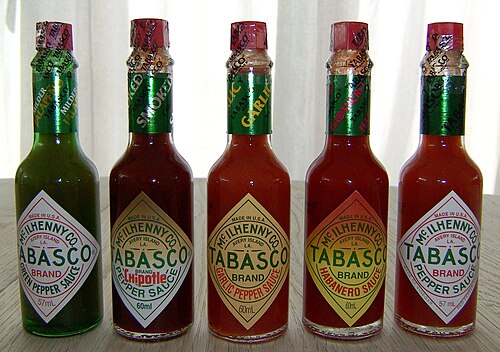
New Orleans, Shreveport, and Baton Rouge are home to a thriving film industry.[210] State financial incentives since 2002 and aggressive promotion have given Louisiana the nickname "Hollywood South". Because of its distinctive culture within the United States, only Alaska is Louisiana's rival in popularity as a setting for reality television programs.[211] In late 2007 and early 2008, a 300,000-square-foot (28,000 m2) film studio was scheduled to open in Tremé, with state-of-the-art production facilities, and a film training institute.[212] Tabasco sauce, which is marketed by one of the United States' biggest producers of hot sauce, the McIlhenny Company, originated on Avery Island.[213]
From 2010 to 2020, Louisiana's gross state product increased from $213.6 billion to $253.3 billion, the 26th highest in the United States at the time.[214][215] As of 2020, its GSP is greater than the GDPs of Greece, Peru, and New Zealand. Ranking 41st in the United States with a per capita personal income of $30,952 in 2014,[216][217] its residents per capita income decreased to $28,662 in 2019.[218] The median household income was $51,073, while the national average was $65,712 at the 2019 American Community Survey.[219] In July 2017, the state's unemployment rate was 5.3%;[220] it decreased to 4.4% in 2019.[221]
Louisiana has three personal income tax brackets, ranging from 2% to 6%. The state sales tax rate is 4.45%, and parishes can levy additional sales tax on top of this. The state also has a use tax, which includes 4% to be distributed to local governments. Property taxes are assessed and collected at the local level. Louisiana is a subsidized state, and Louisiana taxpayers receive more federal funding per dollar of federal taxes paid compared to the average state.[222] Per dollar of federal tax collected in 2005, Louisiana citizens received approximately $1.78 in the way of federal spending. This ranks the state fourth highest nationally and represents a rise from 1995 when Louisiana received $1.35 per dollar of taxes in federal spending (ranked seventh nationally). Neighboring states and the amount of federal spending received per dollar of federal tax collected were: Texas ($0.94), Arkansas ($1.41), and Mississippi ($2.02). Federal spending in 2005 and subsequent years since has been exceptionally high due to the recovery from Hurricane Katrina.
Culture
Louisiana is home to many cultures; especially notable are the distinct cultures of the Louisiana Creoles and Cajuns, descendants of French and Spanish settlers in colonial Louisiana.
African culture
The French colony of La Louisiane struggled for decades to survive. Conditions were harsh, the climate and soil were unsuitable for certain crops the colonists knew, and they suffered from regional tropical diseases. Both colonists and the slaves they imported had high mortality rates. The settlers kept importing slaves, which resulted in a high proportion of native Africans from West Africa, who continued to practice their culture in new surroundings. As described by historian Gwendolyn Midlo Hall, they developed a marked Afro-Creole culture in the colonial era.[223][224]
At the turn of the 18th century and in the early 1800s, New Orleans received a major influx of White and mixed-race refugees fleeing the violence of the Haitian Revolution, many of whom brought their slaves with them.[225] This added another infusion of African culture to the city, as more slaves in Saint-Domingue were from Africa than in the United States. They strongly influenced the African-American culture of the city in terms of dance, music and religious practices.
Creole culture

Creole culture is an amalgamation of French, African, Spanish (and other European), and Native American cultures.[226] Creole comes from the Portuguese word crioulo; originally it referred to a colonist of European (specifically French) descent who was born in the New World, in comparison to immigrants from France.[227] The oldest Louisiana manuscript to use the word "Creole", from 1782, applied it to a slave born in the French colony.[228] But originally it referred more generally to the French colonists born in Louisiana.
Over time, there developed in the French colony a relatively large group of Creoles of Color (gens de couleur libres), who were primarily descended from African slave women and French men (later other Europeans became part of the mix, as well as some Native Americans). Often the French would free their concubines and mixed-race children, and pass on social capital to them.[229] They might educate sons in France, for instance, and help them enter the French Army. They also settled capital or property on their mistresses and children. The free people of color gained more rights in the colony and sometimes education; they generally spoke French and were Roman Catholic. Many became artisans and property owners. Over time, the term "Creole" became associated with this class of Creoles of color, many of whom achieved freedom long before the American Civil War.
Wealthy French Creoles generally maintained town houses in New Orleans as well as houses on their large sugar plantations outside town along the Mississippi River. New Orleans had the largest population of free people of color in the region; they could find work there and created their own culture, marrying among themselves for decades.
Acadian culture
The ancestors of Cajuns immigrated mostly from west central France to New France, where they settled in the Atlantic provinces of New Brunswick, Nova Scotia and Prince Edward Island, known originally as the French colony of Acadia. After the British defeated France in the French and Indian War (Seven Years' War) in 1763, France ceded its territory east of the Mississippi River to Britain. After the Acadians refused to swear an oath of loyalty to the British Crown, they were expelled from Acadia, and made their way to places such as France, Britain, and New England.[230]
Other Acadians covertly remained in British North America or moved to New Spain. Many Acadians settled in southern Louisiana in the region around Lafayette and the LaFourche Bayou country. They developed a distinct rural culture there, different from the French Creole colonists of New Orleans. Intermarrying with others in the area, they developed what was called Cajun music, cuisine and culture.
Isleño culture

A third distinct culture in Louisiana is that of the Isleños. Its members are descendants of colonists from the Canary Islands who settled in Spanish Louisiana between 1778 and 1783 and intermarried with other communities such as Frenchmen, Acadians, Creoles, Spaniards, and other groups, mainly through the 19th and early 20th centuries.
In Louisiana, the Isleños originally settled in four communities which included Galveztown, Valenzuela, Barataria, and San Bernardo. The large migration of Acadian refugees to Bayou Lafourche led to the rapid gallicization of the Valenzuela community while the community of San Bernardo (Saint Bernard) was able to preserve much of its unique culture and language into the 21st century. The transmission of Spanish and other customs has completely halted in St. Bernard with those having competency in Spanish being octogenarians.[231]
Through the centuries, the various Isleño communities of Louisiana have kept alive different elements of their Canary Islander heritage while also adopting and building upon the customs and traditions of the communities that surround them. Today two heritage associates exist for the communities: Los Isleños Heritage and Cultural Society of St. Bernard as well as the Canary Islanders Heritage Society of Louisiana. The Fiesta de los Isleños is celebrated annually in St. Bernard Parish which features heritage performances from local groups and the Canary Islands.[232]
Education
.jpg/500px-Louisiana_State_University_(aerial_view).jpg)
Despite ranking as the third-least educated state as of 2023, preceded by Mississippi and West Virginia,[19] Louisiana is home to over 40 public and private colleges and universities including: Louisiana State University in Baton Rouge; Louisiana Tech University in Ruston, the University of Louisiana at Lafayette in Lafayette; and Tulane University in New Orleans. Louisiana State University is the largest and most comprehensive university in Louisiana;[233] Louisiana Tech University is one the most well regarded universities in Louisiana;[234][235][236] the University of Louisiana at Lafayette is the second largest by enrollment. The University of Louisiana at Lafayette became an R1 university in December 2021.[237] Tulane University is a major private research university and the wealthiest university in Louisiana with an endowment over $1.1 billion.[238] Tulane is also highly regarded for its academics nationwide, consistently ranked in the top 50 on U.S. News & World Report's list of best national universities.[239]
Louisiana's two oldest and largest historically black colleges and universities (HBCUs) are Southern University in Baton Rouge and Grambling State University in Grambling. Both these Southwestern Athletic Conference (SWAC) schools compete against each other in football annually in the much anticipated Bayou Classic during Thanksgiving weekend in the Superdome.[240]
Of note among the education system, the Louisiana Science Education Act was a controversial law passed by the Louisiana Legislature on June 11, 2008, and signed into law by Governor Bobby Jindal on June 25.[241] The act allowed public school teachers to use supplemental materials in the science classroom which are critical of established science on such topics as the theory of evolution and global warming.[242][243]
In 2000, of all of the states, Louisiana had the highest percentage of students in private schools. Danielle Dreilinger of The Times Picayune wrote in 2014 that "Louisiana parents have a national reputation for favoring private schools."[244] The number of students in enrolled in private schools in Louisiana declined by 9% from c. 2000–2005 until 2014, due to the proliferation of charter schools, the 2008 recession and Hurricane Katrina. Ten parishes in the Baton Rouge and New Orleans area had a combined 17% decline in private school enrollment in that period. This prompted private schools to lobby for school vouchers.[244]
Louisiana's school voucher program is known as the Louisiana Scholarship Program. It was available in the New Orleans area beginning in 2008 and in the rest of the state beginning in 2012.[245] In 2013, the number of students using school vouchers to attend private schools was 6,751, and for 2014 it was projected to exceed 8,800.[246][needs update] As per a ruling from Ivan Lemelle, a U.S. district judge, the federal government has the right to review the charter school placements to ensure they do not further racial segregation.[247]
Transportation
The Louisiana Department of Transportation and Development is the state government organization in charge of maintaining public transportation, roadways, bridges, canals, select levees, floodplain management, port facilities, commercial vehicles, and aviation which includes 69 airports.
Roads
In 2022, Louisiana ranked 5th highest for fatal crashes in the USA with a rate of 19.7 deaths per 100,000 population.[248]
Rail
Six Class I freight railroads operate in Louisiana: BNSF, Canadian National, CPKC, CSX, Norfolk Southern and Union Pacific. A number of Class II and Class III railroads also carry freight.
Amtrak, the national passenger railroad, operates three long-distance rail routes through Louisiana. All three originate at New Orleans Union Passenger Terminal. The Crescent serves Slidell then runs northeast to New York via Birmingham, Atlanta, Charlotte, and Washington, D.C. The City of New Orleans stops at Hammond before continuing north to Chicago by way of Jackson and Memphis. The Sunset Limited serves Schriever, New Iberia, Lafayette, and Lake Charles on its route west to Los Angeles via Houston, San Antonio, El Paso, and Tucson. Before Hurricane Katrina, the Sunset Limited ran as far east as Orlando.
Mass transit

Predominantly serving New Orleans, the New Orleans Regional Transit Authority is the largest transit agency in the state. Other transit organizations are St. Bernard Urban Rapid Transit, Jefferson Transit, Capital Area Transit System, Lafayette Transit System, Shreveport Area Transit System, and Monroe Transit, among others.
The Louisiana Transportation Authority (under the Louisiana Department of Transportation and Development) was created in 2001 to "promote, plan, finance, develop, construct, control, regulate, operate and maintain any tollway or transitway to be constructed within its jurisdiction. Development, construction, improvement, expansion, and maintenance of an efficient, safe, and well-maintained intermodal transportation system is essential to promote Louisiana's economic growth and the ability of Louisiana's business and industry to compete in regional, national, and global markets and to provide a high quality of life for the people of Louisiana."[249]
Air
Louis Armstrong New Orleans International Airport (MSY) is the busiest airport in Louisiana by an order of magnitude. It is also the second lowest-lying international airport in the world, at just 4.5 feet (1.4 m) above sea level. There are six other primary airports in the state: Baton Rouge Metropolitan, Shreveport Regional, Lafayette Regional, Alexandria International, Monroe Regional, and Lake Charles Regional. A total of 69 public-use airports exist in Louisiana.[250]
Waterways

The Gulf Intracoastal Waterway is an important means of transporting commercial goods such as petroleum and petroleum products, agricultural produce, building materials and manufactured goods. In 2018, the state sued the federal government to repair erosion along the waterway.[251]
Law and government

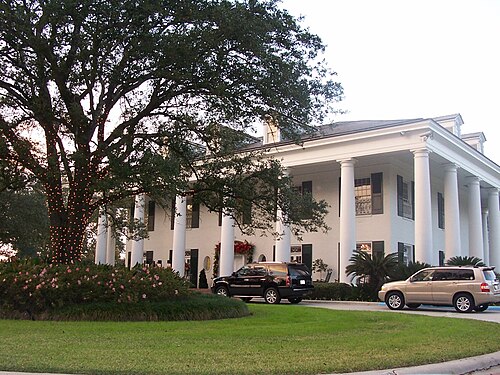
In 1849, the state moved the capital from New Orleans to Baton Rouge. Donaldsonville, Opelousas, and Shreveport have briefly served as the seat of Louisiana state government. The Louisiana State Capitol and the Louisiana Governor's Mansion are both located in Baton Rouge. The Louisiana Supreme Court, however, did not move to Baton Rouge but remains headquartered in New Orleans.
The current Louisiana governor is Republican Jeff Landry. The current United States senators are Republicans John Neely Kennedy and Bill Cassidy. Louisiana has six congressional districts and is represented in the U.S. House of Representatives by five Republicans and one Democrat. Louisiana had eight votes in the Electoral College for the 2020 election.
In a 2020 study, Louisiana was ranked as the 24th hardest state for citizens to vote in.[252] Louisiana has one of the most restrictive abortion laws in the United States.[253]
The Louisiana State Penitentiary, Angola is the largest maximum-security prison in the United States.[254]
Administrative divisions
Louisiana is divided into 64 parishes (the equivalent of counties in most other states).[255]
Most parishes have an elected government known as the Police Jury,[256] dating from the colonial days. It is the legislative and executive government of the parish, and is elected by the voters. Its members are called Jurors, and together they elect a president as their chairman.
A more limited number of parishes operate under home rule charters, electing various forms of government. This include mayor–council, council–manager (in which the council hires a professional operating manager for the parish), and others.
Civil law
The Louisiana political and legal structure has maintained several elements from the times of French and Spanish governance. One is the use of the term "parish" (from the French: paroisse) in place of "county" for administrative subdivision.[257] Another is the legal system of civil law based on French, German, and Spanish legal codes and ultimately Roman law, as opposed to English common law.
Louisiana's civil law system is what the majority of sovereign states in the world use, especially in Europe and its former colonies, excluding those that derive their legal systems from the British Empire. However, it is incorrect to equate the Louisiana Civil Code with the Napoleonic Code. Although the Napoleonic Code and Louisiana law draw from common legal roots, the Napoleonic Code was never in force in Louisiana, as it was enacted in 1804, after the United States had purchased and annexed Louisiana in 1803.[258]
The Louisiana Civil Code is the controlling authority on civil matters in the state and has been continuously revised and updated since its enactment in 1808. While some of the differences between the legal systems have been bridged due to the strong influence of common law tradition,[259] the civil law tradition is still deeply rooted in most aspects of Louisiana private law.[citation needed] Thus property, contractual, business entities structure, much of civil procedure, and family law, as well as some aspects of criminal law, are based mostly on traditional Roman legal thinking.[citation needed]
Marriage
In 1997, Louisiana became the first state to offer the option of a traditional marriage or a covenant marriage.[260] In a covenant marriage, the couple waives their right to a "no-fault" divorce after six months of separation, which is available in a traditional marriage. To divorce under a covenant marriage, a couple must demonstrate cause. Marriages between ascendants and descendants, and marriages between collaterals within the fourth degree (i.e., siblings, aunt and nephew, uncle and niece, first cousins) are prohibited.[261] Same-sex marriages were prohibited by statute,[262][263] but the U.S. Supreme Court declared such bans unconstitutional in 2015 in Obergefell v. Hodges. Same-sex marriages are now performed statewide. Louisiana is a community property state.[264]
Elections

From 1898 to 1965, a period when Louisiana had effectively disfranchised most African Americans and many poor whites by provisions of a new constitution,[266] this was essentially a one-party state dominated by white Democrats. Elites had control in the early 20th century, before populist Huey Long came to power as governor.[267] In multiple acts of resistance, blacks left behind the segregation, violence and oppression of the state and moved out to seek better opportunities in northern and western industrial cities during the Great Migrations of 1910–1970, markedly reducing their proportion of population in Louisiana. The franchise for whites was expanded somewhat during these decades, but blacks remained essentially disfranchised until after the civil rights movement of the mid-20th century, gaining enforcement of their constitutional rights through passage by Congress of the Voting Rights Act of 1965.
Since the 1960s, when civil rights legislation was passed under President Lyndon Johnson to protect voting and civil rights, most African Americans in the state have affiliated with the Democratic Party. In the same years, many white social conservatives have moved to support Republican Party candidates in national, gubernatorial and statewide elections. In 2004, David Vitter was the first Republican in Louisiana to be popularly elected as a U.S. senator.[268] The previous Republican senator, John S. Harris, who took office in 1868 during Reconstruction, was chosen by the state legislature under the rules of the 19th century.
Louisiana is unique among U.S. states in using a system for its state and local elections similar to that of modern France. All candidates, regardless of party affiliation, run in a nonpartisan blanket primary (or "jungle primary") on Election Day.[269] If no candidate has more than 50% of the vote, the two candidates with the highest vote totals compete in a runoff election approximately one month later. This run-off method does not take into account party identification; therefore, it is not uncommon for a Democrat to be in a runoff with a fellow Democrat or a Republican to be in a runoff with a fellow Republican.
Congressional races have also been held under the jungle primary system. All other states (except Washington, California, and Maine) use single-party primaries followed by a general election between party candidates, each conducted by either a plurality voting system or runoff voting, to elect senators, representatives, and statewide officials. Between 2008 and 2010, federal congressional elections were run under a closed primary system—limited to registered party members. However, on the passage of House Bill 292, Louisiana again adopted a nonpartisan blanket primary for its federal congressional elections.
Louisiana has six seats in the U.S. House of Representatives, five of which are currently held by Republicans and one by a Democrat. Though the state historically flips between Republican and Democratic governors, Louisiana is not classified as a swing state in presidential elections, as it has consistently voted for the Republican candidate by solid margins since backing Democrat Bill Clinton in 1996. The state's two U.S. senators are Bill Cassidy (R) and John Neely Kennedy (R).
Law enforcement
Louisiana's statewide police force is the Louisiana State Police. In 1988, the Criminal Investigation Bureau was reorganized.[271] Its troopers have statewide jurisdiction with power to enforce all laws of the state, including city and parish ordinances. Each year, they patrol over 12 million miles (19 million kilometres) of roadway and arrest about 10,000 impaired drivers. The State Police are primarily a traffic enforcement agency, with other sections that delve into trucking safety, narcotics enforcement, and gaming oversight.

The elected sheriff in each parish is its chief law enforcement officer. They are the keepers of the local parish prisons, which house felony and misdemeanor prisoners. They are the primary criminal patrol and first responder agency in all matters criminal and civil. They are also the official tax collectors in each parish. The sheriffs are responsible for general law enforcement in their respective parishes, with the exception of Orleans Parish where this falls to the New Orleans Police Department. Before 2010, Orleans Parish was the only parish to have two sheriff's offices, with a different elected sheriff overseeing civil and criminal matters. In 2006, a bill was passed which eventually consolidated the two sheriff's departments into one parish sheriff responsible for both.[272]
In 2015, Louisiana had a higher murder rate (10.3 per 100,000) than any other state in the country for the 27th straight year. Louisiana is the only state with an annual average murder rate (13.6 per 100,000) at least twice as high as the U.S. annual average (6.6 per 100,000) during that period, according to Bureau of Justice Statistics from FBI Uniform Crime Reports. In a different kind of criminal activity, the Chicago Tribune reports that Louisiana is the most corrupt state in the United States.[273]
According to a 2012 article in The Times Picayune, Louisiana is the prison capital of the world. Many for-profit private prisons and sheriff-owned prisons have been built and operate here. Louisiana's incarceration rate is nearly five times Iran's, 13 times China's and 20 times Germany's. Minorities are incarcerated at rates disproportionate to their share of the state's population.[274] There are more people serving life sentences without parole in Louisiana than in Texas, Tennessee, Arkansas, Alabama and Mississippi combined.[275]
The New Orleans Police Department began a sanctuary policy to "no longer cooperate with federal immigration enforcement" beginning on February 28, 2016.[276]
On June 19, 2024, Jeff Landry signed a bill to officially require that the Ten Commandments be displayed in every classroom in public schools and colleges, making it the only state to have that law.[277]
Judiciary
The judiciary of Louisiana is defined under the constitution and law of Louisiana and comprises the Louisiana Supreme Court, the Louisiana Circuit Courts of Appeal, the district courts, the Justice of the Peace courts, the mayor's courts, the city courts, and the parish courts. The chief justice of the Louisiana Supreme Court is the chief administrator of the judiciary. Its administration is aided by the Judiciary Commission of Louisiana, the Louisiana Attorney Disciplinary Board, and the Judicial Council of the Supreme Court of Louisiana.
National Guard
Louisiana has more than 9,000 soldiers in the Louisiana Army National Guard, including the 225th Engineer Brigade and the 256th Infantry Brigade.[278] Both these units have served overseas during the War on Terror.[279][280] The Louisiana Air National Guard has more than 2,000 airmen, and its 159th Fighter Wing has likewise seen combat.[281]
Training sites in the state include Louisiana National Guard Training Center Pineville near Pineville, Camp Villere near Slidell, Camp Minden near Minden, England Air Park (formerly England Air Force Base) near Alexandria, Gillis Long Center near Carville, and Jackson Barracks in New Orleans.
Sports

Louisiana is the least populous state with more than one major professional sports league franchise: the National Basketball Association's New Orleans Pelicans and the National Football League's New Orleans Saints.
Louisiana has 12 collegiate NCAA Division I programs, a high number given its population. The state has no NCAA Division II teams and only two NCAA Division III teams. As of 2019, the LSU Tigers football team has won 12 Southeastern Conference titles, six Sugar Bowls and four national championships.[282]
Each year New Orleans plays host to the Bayou Classic, and the New Orleans Bowl college football games, while Shreveport hosts the Independence Bowl. New Orleans has hosted the Super Bowl a record eleven times,[283][284] as well as the BCS National Championship Game, NBA All-Star Game and NCAA Men's Division I Basketball Championship.
The Zurich Classic of New Orleans, is a PGA Tour golf tournament held since 1938. The Rock 'n' Roll Mardi Gras Marathon and Crescent City Classic are two road running competitions held at New Orleans.
As of 2016, Louisiana was the birthplace of the most NFL players per capita for the eighth year in a row.[285]
Notable people
- Phil Anselmo, singer, songwriter, best known for being member of the metal band Pantera[286]
- Terry Bradshaw, former NFL quarterback and sports personality[287]
- James Carville, political strategist known for his success with Bill Clinton's presidential campaign[288]
- Patricia Clarkson, actress
- Ellen DeGeneres, comedian, television host, actress, writer, and producer[289]
- Armand Duplantis, pole vaulter. IAAF male World Athlete of the Year 2020[290]
- Mannie Fresh; DJ, producer, and rapper[291]
- Kevin Gates; rapper, singer, songwriter, and entrepreneur[292]
- DJ Khaled; American DJ, record executive and media personality[293]
- Angela Kinsey, actress[294]
- Ali Landry, actress and Miss USA 1996[295]
- Jared Leto, actor and musician[296]
- Jerry Lee Lewis; singer and piano-player[297]
- Huey Long, politician[298]
- Peyton Manning, former American football quarterback[299]
- Tim McGraw, singer, actor and record producer[300]
- Tyler Perry, actor, director, producer, and screenwriter[301]
- Dustin Poirier; American mixed martial artist, currently signed to the UFC
- Zachary Richard; Cajun singer, songwriter and poet[302]
- Fred L. Smith Jr., founder of Competitive Enterprise Institute[303]
- Ian Somerhalder, actor, model and director[304]
- Britney Spears; singer, songwriter, dancer and actress[305]
- Jamie Lynn Spears, singer and actress[306]
- Lil Wayne; rapper, singer, songwriter, record executive, entrepreneur, and actor[307]
- Shane West, actor, singer and songwriter[308]
- Reese Witherspoon, actress[309]
- YoungBoy Never Broke Again; rapper, singer, and songwriter[310]
- $uicideboy$; singer, rapper and producer[311]
See also
- Index of Louisiana-related articles
- Outline of Louisiana
- USS Louisiana, 5 ships
- USRC Louisiana
- Louisiana portal
 United States portal
Notes
- ^ a b Elevation adjusted to North American Vertical Datum of 1988.
- ^ Also spelt Lwizyann or Lalwizyann.[9]
- ^ Persons of Hispanic or Latino origin are not distinguished between total and partial ancestry.
- ^ Other Southern states have longstanding indigenous Catholic populations, and Florida's largely Catholic population of Cuban emigres has been influential since the 1960s. Yet, Louisiana is still unusual or exceptional in its extent of aboriginal Catholic settlement and influence. Among states in the Deep South (discounting Florida's Panhandle and much of Texas) the historic role of Catholicism in Louisiana is unparalleled and unique. Among the states of the Union, Louisiana's unique use of the term parish (French la parouche or "la paroisse") for county is rooted in the pre-statehood role of Catholic church parishes in the administration of government.
Pronunciation
- ^ General American English: /luˌiːziˈænə/ loo-EE-zee-AN-ə; Southern American English: /ˌluːziˈænə/ LOO-zee-AN-ə[8]
References
- ^ "New Orleans a 'ghost town' after thousands flee Gustav: mayor", AFP, August 31, 2008, archived from the original on May 16, 2013
- ^ "Expert: N.O. population at 273,000". WWL-TV. August 7, 2007. Archived from the original on September 26, 2007. Retrieved August 14, 2007.
- ^ "Relocation". Baton rouge. Connecting U.S. Cities. May 3, 2007. Archived from the original on February 9, 2014.
- ^ "State Area Measurements and Internal Point Coordinates". The United States Census Bureau. Archived from the original on April 7, 2020. Retrieved August 14, 2023.
- ^ a b "Median Household Income in Louisiana". Federal Reserve Bank of St. Louis. Archived from the original on September 21, 2019. Retrieved October 9, 2019.
- ^ a b "Elevations and Distances in the United States". United States Geological Survey. 2001. Archived from the original on October 15, 2011. Retrieved October 21, 2011.
- ^ "United States". Modern Language Association. Archived from the original on December 1, 2007. Retrieved June 14, 2017.
- ^ "Louisiana". Merriam-Webster.com Dictionary. Merriam-Webster.
- ^ "Louisiana Creole (Kouri-Vini) Dictionary » Lwizyann". Archived from the original on February 1, 2024. Retrieved February 1, 2024.
- ^ Jessica Williams. (12 December 2021). "Census 2020: Who lives in the New Orleans metro now? Data show more diverse population". nola.com website Archived December 9, 2022, at the Wayback Machine Retrieved 8 December 2022.
- ^ "Louisiana (LA) State Information". The Time Now. August 3, 2015. Archived from the original on August 13, 2020. Retrieved December 23, 2020.
- ^ "Louisiana Indians in the 21st Century" Archived December 23, 2017, at the Wayback Machine, Louisiana Folklife Program, 2013
- ^ a b Louisiana Official Site on Languages Archived June 21, 2015, at the Wayback Machine, accessed August 22, 2016
- ^ Murphy, Alexander B. (2008). "Placing Louisiana in the Francophone World: Opportunities and Challenges" (PDF). Atlantic Studies. 5 (3): 11. doi:10.1080/14788810802445040. ISSN 1478-8810. S2CID 45544109. Archived from the original (PDF) on May 10, 2013. Retrieved April 23, 2014.
- ^ Woodruff, Emily (April 8, 2021). "Why is Louisiana unhealthy? New state database aims to connect environment, behavior to health". NOLA.com. Archived from the original on June 7, 2021. Retrieved June 7, 2021.
- ^ "Louisiana Educational attainment – persons 25 years and over – percent high school graduate or higher by County". www.indexmundi.com. Archived from the original on June 7, 2021. Retrieved June 7, 2021.
- ^ "United States – Educational attainment – persons 25 years and over – percent high school graduate or higher by State". www.indexmundi.com. Archived from the original on June 7, 2021. Retrieved June 7, 2021.
- ^ McElfresh, Amanda. "Report: Louisiana is one of the least-educated states in the nation". The Daily Advertiser. Archived from the original on June 7, 2021. Retrieved June 7, 2021.
- ^ a b Hutchinson, Piper (February 14, 2023). "Report: Louisiana third least educated state in nation". KPLC-TV. Archived from the original on February 16, 2023. Retrieved February 16, 2023.
- ^ "State Median Household Income Patterns: 1990–2010". U.S. Census Bureau. Archived from the original on August 12, 2012. Retrieved August 6, 2012.
- ^ "Sub-national HDI—Subnational HDI—Global Data Lab". globaldatalab.org. Archived from the original on September 15, 2019. Retrieved May 24, 2019.
- ^ "Census: Louisiana remains 1 of nation's poorest states". AP News. September 27, 2019. Archived from the original on June 7, 2021. Retrieved June 7, 2021.
- ^ "Louisiana Annual State Health Rankings—2018". America's Health Rankings. Archived from the original on December 1, 2014. Retrieved October 5, 2014.
- ^ Murder Rates Nationally and By State Archived May 28, 2019, at the Wayback Machine. By Death Penalty Information Center.
- ^ "Crime in the United States by State, 2014". Archived from the original on June 28, 2016. Retrieved November 5, 2019.
- ^ Baker, Lea Flowers. "Louisiana Purchase". Encyclopedia of Arkansas. Archived from the original on November 22, 2010. Retrieved September 18, 2010.
- ^ Amélie A. Walker, "Earliest Mound Site" Archived February 27, 2010, at the Wayback Machine, Archaeology Magazine, Volume 51 Number 1, January/February 1998
- ^ Preucel, Robert W; Mrozowski, Stephen A (May 10, 2010). Robert W. Preucel, Stephen A. Mrozowski, Contemporary Archaeology in Theory: The New Pragmatism, John Wiley and Sons, 2010, p. 177. John Wiley & Sons. ISBN 9781405158329. Archived from the original on February 20, 2021. Retrieved April 23, 2014.
- ^ Jon L. Gibson, PhD, "Poverty Point: The First Complex Mississippi Culture", 2001, Delta Blues, accessed October 26, 2009 Archived December 7, 2013, at the Wayback Machine
- ^ "Tchefuncte". Archived from the original on March 31, 2017. Retrieved June 1, 2009.
- ^ "Louisiana Prehistory-Marksville, Troyville-Coles Creek, and Caddo". Archived from the original on December 15, 2008. Retrieved February 4, 2010.
- ^ "OAS-Oklahomas Past". Archived from the original on May 31, 2010. Retrieved February 6, 2010.
- ^ a b "Tejas-Caddo Ancestors-Woodland Cultures". Archived from the original on October 29, 2009. Retrieved February 6, 2010.
- ^ Raymond Fogelson (September 20, 2004). Handbook of North American Indians : Southeast. Smithsonian Institution. ISBN 978-0-16-072300-1. Archived from the original on December 31, 2016. Retrieved December 31, 2017.
- ^ "Southeastern Prehistory : Late Woodland Period". National Park Service. Archived from the original on January 28, 2012. Retrieved October 23, 2011.
- ^ Timothy P Denham; José Iriarte; Luc Vrydaghs, eds. (December 10, 2008). Rethinking Agriculture: Archaeological and Ethnoarchaeological Perspectives. Left Coast Press. pp. 199–204. ISBN 978-1-59874-261-9. Archived from the original on December 31, 2016. Retrieved December 31, 2017.
- ^ Kidder, Tristram (1998). R. Barry Lewis; Charles Stout (eds.). Mississippian Towns and Sacred Spaces. University of Alabama Press. ISBN 978-0-8173-0947-3.
- ^ "Mississippian and Late Prehistoric Period". Archived from the original on June 7, 2008. Retrieved September 8, 2008.
- ^ Rees, Mark A. (2007). "Plaquemine Mounds of the western Atchafalaya Basin". In Rees, Mark A.; Livingood, Patrick C. (eds.). Plaquemine Archaeology. University of Alabama Press. pp. 84–93.
- ^ "Indian Mounds of Northeast Louisiana:Fitzhugh Mounds". Archived from the original on December 24, 2012. Retrieved October 20, 2011.
- ^ "Indian Mounds of Northeast Louisiana:Scott Place Mounds". Archived from the original on December 25, 2012. Retrieved October 20, 2011.
- ^ Weinstein, Richard A.; Dumas, Ashley A. (2008). "The spread of shell-tempered ceramics along the northern coast of the Gulf of Mexico" (PDF). Southeastern Archaeology. 27 (2). Archived from the original (PDF) on April 25, 2012.
- ^ "The Plaquemine Culture, A.D 1000". Archived from the original on February 10, 2012. Retrieved September 8, 2008.
- ^ "Tejas-Caddo Fundamentals-Caddoan Languages and Peoples". Archived from the original on March 10, 2010. Retrieved February 4, 2010.
- ^ "Notice of Inventory Completion for Native American Human Remains and Associated Funerary Objects in the Possession of the Louisiana State University Museum". Archived from the original on November 6, 2012. Retrieved February 22, 2010.
- ^ "Route of the Hernando de Soto Expedition, 1539–1543". National Park Service. December 1988. pp. 6, Appendix B. Archived from the original on September 20, 2022. Retrieved October 18, 2022.
- ^ Roth, David (2003). "Louisiana Hurricane History: 18th century (1722–1800)". Tropical Weather—National Weather Service—Lake Charles, Louisiana. Archived from the original on August 5, 2009. Retrieved May 7, 2008.
- ^ a b c Ekberg, Carl (2000). French Roots in the Illinois Country: The Mississippi Frontier in Colonial Times. Urbana and Chicago, Ill.: University of Illinois Press. pp. 32–33. ISBN 9780252069246. Archived from the original on February 20, 2021. Retrieved November 29, 2014.
- ^ "Dunn. "History of Natchitoches."". LA Tech University. Archived from the original on June 7, 2021. Retrieved June 7, 2021.
- ^ "LA claims 1st Mardi Gras; here's what really happened". al. February 1, 2018. Archived from the original on February 23, 2020. Retrieved June 7, 2021.
- ^ "History of Biloxi, Mississippi". City of Biloxi Government. Archived from the original on June 2, 2014. Retrieved June 7, 2021.
- ^ Cazorla-Granados, Francisco J. (2019). El gobernador Luis de Unzaga (1717–1793) : precursor en el nacimiento de los EE.UU. y en el liberalismo. Frank Cazorla, Rosa María García Baena, José David Polo Rubio. Málaga. pp. 49, 52, 62, 74, 83, 90, 150, 207. ISBN 978-84-09-12410-7. OCLC 1224992294. Archived from the original on June 7, 2024. Retrieved June 26, 2022.
{{cite book}}: CS1 maint: location missing publisher (link) - ^ a b "Isleños". 64 Parishes. Archived from the original on January 17, 2023. Retrieved January 17, 2023.
- ^ The Slave Trade: The Story of the Atlantic Slave Trade, 1440–1870 by Hugh Thomas. 1997: Simon and Schuster. p. 242-43
- ^ "Code Noir of Louisiana—Know Louisiana". Archived from the original on May 18, 2017. Retrieved April 30, 2017.
- ^ "The law of slavery—Master–slave legal relationships". Encyclopædia Britannica. Archived from the original on October 7, 2014.
- ^ "More Than A Runaway: Maroons In Louisiana". WWNO. Archived from the original on June 7, 2021. Retrieved June 7, 2021.
- ^ "History of the Maroons". cyber.harvard.edu. Archived from the original on February 6, 2021. Retrieved June 7, 2021.
- ^ a b c Hugh Thomas, The Slave Trade: The Story of the Atlantic Slave Trade, 1440–1870, Simon and Schuster, 1997, p. 548.
- ^ Thomas (1997), The Slave Trade, p. 549.
- ^ Walter Johnson, Soul by Soul: Life Inside the Antebellum Slave Market, Cambridge: Harvard University Press, 1999, p.2
- ^ In Motion: The African-American Migration Experience—The Domestic Slave Trade, New York Public Library, Schomburg Center for Study of Black Culture, 2002 Archived November 4, 2013, at the Wayback Machine, accessed April 27, 2008
- ^ Peter Kolchin, American Slavery: 1619–1877, New York: Hill and Wang, 1994, pp. 96–98
- ^ Catholic Church. United States Conference of Catholic Bishops (December 2001). Asian and Pacific Presence: Harmony in Faith. United States Conference of Catholic Bishops. p. 8. ISBN 978-1-57455-449-6. Archived from the original on May 10, 2021. Retrieved December 3, 2021.
- ^ Pang, Valerie Ooka; Cheng, Li-Rong Lilly (1999). Struggling to be heard: the Unmet Needs of Asian Pacific American Children. NetLibrary, Inc. p. 287. ISBN 0-585-07571-9. OCLC 1053003694. Archived from the original on November 23, 2021. Retrieved December 3, 2021.
- ^ Holt, Thomas Cleveland; Green, Laurie B.; Wilson, Charles Reagan (October 21, 2013). "Pacific Worlds and the South". The New Encyclopedia of Southern Culture: Race. 24: 120. ISBN 978-1469607245. Archived from the original on February 18, 2023. Retrieved December 3, 2021.
- ^ Westbrook, Laura. "Mabuhay Pilipino! (Long Life!): Filipino Culture in Southeast Louisiana". Folklife in Louisiana. Archived from the original on May 18, 2018. Retrieved May 23, 2020.
- ^ a b Welch, Michael Patrick (October 27, 2014). "NOLA Filipino History Stretches for Centuries". New Orleans & Me. New Orleans: WWNO. Archived from the original on January 18, 2021. Retrieved July 4, 2019.
- ^ Randy Gonzales (September 14, 2019). "Unveiling of St. Malo Historical Marker". Filipino La. Archived from the original on December 2, 2021. Retrieved May 23, 2020.
- ^ a b Hinton, Matthew (October 23, 2019). "From Manila to the Marigny: How Philippine pioneers left a mark at the 'end of world' in New Orleans". Very Local New Orleans. Archived from the original on October 6, 2021. Retrieved December 3, 2021.
- ^ "Filipino American History Month Resolution". FANHS National. Archived from the original on October 2, 2021. Retrieved May 23, 2020.
- ^ "Louisiana: European Explorations and the Louisiana Purchase" (PDF). Library of Congress. p. 4. Archived (PDF) from the original on May 23, 2021. Retrieved June 7, 2021.
- ^ "The Slave Rebellion of 1791 Archived February 5, 2016, at the Wayback Machine". Library of Congress Country Studies.
- ^ The Bourgeois Frontier : French Towns, French Traders and American Expansion, by Jay Gitlin (2009). Yale University Press. ISBN 978-0-300-10118-8, pg 54
- ^ Sieur de Bienville Archived January 17, 2013, at the Wayback Machine, "In Motion", African American Migration Experience, accessed July 22, 2012
- ^ Saving New Orleans Archived May 30, 2012, at archive.today, Smithsonian magazine, August 2006. Retrieved February 16, 2010.
- ^ Blakemore, Erin (August 23, 2018). "Why France Sold the Louisiana Purchase to the US". HISTORY. Archived from the original on May 12, 2021. Retrieved June 7, 2021.
- ^ "Founders Online: From Thomas Jefferson to Robert R. Livingston, 18 April 1802". National Archives and Records Administration. Archived from the original on May 6, 2021. Retrieved June 7, 2021.
- ^ a b "The Louisiana Purchase". Monticello. Archived from the original on March 21, 2019. Retrieved June 7, 2021.
- ^ Peter Kastor, The Nation's Crucible: The Louisiana Purchase and the Creation of America, (New Haven: Yale University Press, 2004) 40
- ^ Bailey, Thomas A; Kennedy, David M (1994). The American pageant: a history of the republic—Thomas A. Bailey, David M. Kennedy—Google Books. D.C. Heath. ISBN 9780669339055. Archived from the original on February 20, 2021. Retrieved April 23, 2014.
- ^ "A Century of Lawmaking for a New Nation: U.S. Congressional Documents and Debates, 1774–1875". Library of Congress. Archived from the original on December 20, 2016. Retrieved December 2, 2019.
- ^ "A Century of Lawmaking for a New Nation: U.S. Congressional Documents and Debates, 1774–1875". Library of Congress. Archived from the original on December 20, 2016. Retrieved December 2, 2019.
- ^ "A Century of Lawmaking for a New Nation: U.S. Congressional Documents and Debates, 1774–1875". Library of Congress. Archived from the original on January 5, 2017. Retrieved December 2, 2019.
- ^ "A Century of Lawmaking for a New Nation: U.S. Congressional Documents and Debates, 1774–1875". Library of Congress. Archived from the original on February 2, 2017. Retrieved December 2, 2019.
- ^ "An Act to enlarge the limits of the State of Louisiana". en.wikisource.org. April 14, 1812. Archived from the original on October 21, 2021. Retrieved October 21, 2021.
- ^ "Giving the Assent of the Legislature to an Enlargement of the Limits of the State of Louisiana". en.wikisource.org. August 4, 1812. Archived from the original on October 21, 2021. Retrieved October 21, 2021.
- ^ United States Congress (April 8, 1812). "Admission of the State of Louisiana". en.wikisource.org. Archived from the original on October 21, 2021. Retrieved October 21, 2021.
- ^ Sacher, John M. (2003). A Perfect War of Politics: Parties, Politicians, and Democracy in Louisiana, 1824–1861. Louisiana State University Press. ISBN 9780807128480.
- ^ Historical Census Browser, 1860 US Census, University of Virginia, accessed October 31, 2007
- ^ Sacher, John M. (July 27, 2011). "Louisiana's Secession from the Union". 64 Parishes. Archived from the original on November 15, 2017.
- ^ "Munson, Underwood, Horn, Fairfield and Allied Families – Louisiana". Brazoriaroots.com. Archived from the original on February 20, 2021. Retrieved December 23, 2020.
- ^ "About Louisiana". My Hammond | My Ponchatoula. Archived from the original on September 24, 2018. Retrieved December 23, 2020.
- ^ "U.S. Army. 5th Military District". NOLA Library. Archived from the original on June 24, 2021. Retrieved June 20, 2021.
- ^ Pildes, Richard H (2000). "Richard H. Pildes, Democracy, Anti-Democracy, and the Canon, Constitutional Commentary, Vol.17, 2000, p.12-13, Accessed 10 Mar 2008". Constitutional Commentary. doi:10.2139/ssrn.224731. hdl:11299/168068. SSRN 224731.
- ^ Historical Census Browser, 1900 US Census, University of Virginia, accessed March 15, 2008 Archived August 23, 2007, at the Wayback Machine
- ^ Richard H. Pildes, "Democracy, Anti-Democracy and the Canon", Constitutional Commentary, Vol. 17, p.12 Archived November 21, 2018, at the Wayback Machine, accessed March 10, 2008
- ^ "African American Migration Experience: The Great Migration", In Motion, New York Public Library, Schomburg Center for Research in Black Culture Archived November 4, 2013, at the Wayback Machine, accessed April 24, 2008
- ^ McKinney, Karen JS. "Getting Out of the Mud: Louisiana and Good Roads before 1928". Louisiana History: The Journal of the Louisiana Historical Association, vol. 60, no. 3, 2019, p. 292. JSTOR website Archived June 7, 2024, at the Wayback Machine Retrieved 17 June 2023.
- ^ Glass, Andrew (September 8, 2017). "Huey Long assassinated, Sept. 8, 1935". Politico. Archived from the original on May 13, 2020. Retrieved June 9, 2020.
- ^ "African American Migration Experience: The Second Great Migration", In Motion, New York Public Library, Schomburg Center for Research in Black Culture Archived November 4, 2013, at the Wayback Machine, accessed April 24, 2008
- ^ Rebecca Grant. The Perils of Chrome Dome Archived September 2, 2019, at the Wayback Machine, Air Force Magazine, Vol. 94, No. 8, August 2011.
- ^ Adam Fairclough, Race & Democracy: The Civil Rights Struggle in Louisiana, 1915–1972, University of Georgia Press, 1999
- ^ Debo P. Adegbile, "Voting Rights in Louisiana: 1982–2006", March 2006, p. 7 Archived June 26, 2008, at the Wayback Machine, accessed March 19, 2008
- ^ Edward Blum and Abigail Thernstrom, "Executive Summary" Archived April 17, 2009, at the Wayback Machine, Bullock-Gaddie Expert Report on Louisiana, February 10, 2006, p.1, American Enterprise Institute, accessed March 19, 2008
- ^ Douglas Martin (April 24, 2010). "Robert Hicks, Leader in Armed Rights Group, Dies at 81". The New York Times. Archived from the original on October 18, 2017. Retrieved September 4, 2017.
- ^ Historical Census Browser, 1960 US Census, University of Virginia, accessed March 15, 2008 Archived August 23, 2007, at the Wayback Machine
- ^ William H. Frey, "The New Great Migration: Black Americans' Return to the South, 1965–2000"; May 2004, p. 3, The Brookings Institution Archived January 18, 2012, at the Wayback Machine, accessed March 19, 2008
- ^ "Louisiana and the 19th Amendment (U.S. National Park Service)". National Park Service. Archived from the original on October 16, 2020. Retrieved September 26, 2020.
- ^ "Hurricane Katrina". HISTORY. August 9, 2019. Archived from the original on September 22, 2020. Retrieved September 26, 2020.
- ^ "Alton Sterling protesters treated 'like animals' in Baton Rouge prison, advocacy group claims". The Advocate. July 8, 2017. Archived from the original on November 9, 2020. Retrieved September 26, 2020.
- ^ "BRPD officer injured in Alton Sterling protest can pursue negligence claim against organizer". The Advocate. December 17, 2019. Archived from the original on September 18, 2020. Retrieved September 26, 2020.
- ^ Jason Samenow (August 19, 2016). "No-name storm dumped three times as much rain in Louisiana as Hurricane Katrina". Washington Post. Archived from the original on August 20, 2016. Retrieved August 19, 2016.
- ^ Baton Rouge Area Chamber (August 18, 2016). "BRAC's preliminary analysis of potential magnitude of flooding's impact on the Baton Rouge region" (PDF). Baton Rouge Area Chamber. Archived from the original (PDF) on September 16, 2016. Retrieved August 22, 2016.
- ^ Cusick, Ashley (August 16, 2016). "This man bought 108 pounds of brisket to cook for the displaced Baton Rouge victims". The Washington Post. ISSN 0190-8286. Archived from the original on August 19, 2016. Retrieved August 20, 2016.
- ^ Szekely, Peter (April 11, 2019). "Son of sheriff's deputy charged with burning three Louisiana black churches". Reuters. Archived from the original on September 27, 2020. Retrieved September 26, 2020.
- ^ Blinder, Alan; Fausset, Richard; Eligon, John (April 11, 2019). "A Charred Gas Can, a Receipt and an Arrest in Fires of 3 Black Churches". The New York Times. ISSN 0362-4331. Archived from the original on April 17, 2019. Retrieved September 26, 2020.
- ^ Eliott C. McLaughlin (April 15, 2019). "Prosecutor adds hate crimes to charges against Louisiana church fire suspect". CNN. Archived from the original on April 17, 2019. Retrieved September 26, 2020.
- ^ Finch, Chris (March 9, 2020). "Louisiana confirms presumptive case of coronavirus in New Orleans area". KSLA. Archived from the original on November 6, 2020. Retrieved September 25, 2020.
- ^ "Louisiana Coronavirus COVID-19 | Department of Health | State of Louisiana". ldh.la.gov. Archived from the original on June 7, 2020. Retrieved October 27, 2020.
- ^ "Louisiana fights the sea, and loses". The Economist. August 26, 2017. Archived from the original on August 28, 2017. Retrieved August 28, 2017.
- ^ "Rebuild or retreat? The future of Louisiana's coastline in jeopardy". CBS News. December 22, 2020. Archived from the original on December 23, 2020. Retrieved December 23, 2020.
- ^ Rivet, Ryan (Summer 2008). "Petroleum Dynamite". Tulanian. Tulane University: 20–27. Archived from the original on June 13, 2010. Retrieved September 7, 2009.
- ^ Keddy, Paul (2010). Wetland Ecology: Principles and Conservation. Cambridge: Cambridge University Press. p. 497. ISBN 978-0-521-51940-3.
- ^ Ricardo A. Olea and James L Coleman., Jr. (2014), A synoptic examination of causes of land loss in southern Louisiana as they relate to the exploitation of subsurface geologic resources. Journal of Coastal Research, v. 30, no. 5, p. 1025–1044.
- ^ Boesch, D. F., Josselyn, M. N., Mehta, A. J., Morris, J. T., Nuttle, W. K., Simenstad, C. A., and Swift, D. P. J. (1994). "Scientific assessment of coastal wetland loss, restoration and management in Louisiana", Journal of Coastal Research, Special Issue No. 20.
- ^ Tidwell, Michael. Bayou Farewell: The Rich Life and Tragic Death of Louisiana's Cajun Coast. Vintage Departures: New York, 2003 ISBN 978-0-375-42076-4.
- ^ "New Jersey-Size 'Dead Zone' Is Largest Ever in Gulf of Mexico". National Geographic. August 2, 2017. Archived from the original on December 14, 2020. Retrieved July 16, 2020.
- ^ Spearing, D. (1995). Roadside Geology of Louisiana. Missoula, Montana: Mountain Press Publishing Company. pp. 5–19.
- ^ Coleman, J. M.; H. H. Roberts; G. W. Stone (1998). "Mississippi River Delta: an overview". Journal of Coastal Research. 14: 698–716.
- ^ Holland, W.C. (1944). "Physiographic divisions of the Quaternary lowlands of Louisiana". Proceedings of the Louisiana Academy of Sciences. 8: 10–24.
- ^ Kniffen, F. B.; S. B. Hilliard (1988). Louisiana: Its Land and People (Revised ed.). Baton Rouge: Louisiana State University Press. pp. 66–68.
- ^ Spearing, D. (1995). Roadside Geology of Louisiana. Missoula, Montana: Mountain Press Publishing Company. pp. 19–30.
- ^ "When It Snowed in New Orleans". My New Orleans. December 31, 2012. Archived from the original on November 4, 2021. Retrieved November 4, 2021.
- ^ "110,000 customers left without power in Texas and Louisiana as major snowstorm moves across the South". CNN. Archived from the original on November 4, 2021. Retrieved November 4, 2021.
- ^ Kennell, Tiana. "Weather update: Residents react, prepare for a week of snow in Shreveport, Bossier City". The Times. Archived from the original on November 4, 2021. Retrieved November 4, 2021.
- ^ "North Louisiana sees second snow storm of 2021; How residents are enjoying the weather". KTVE - myarklamiss.com. February 16, 2021. Archived from the original on November 4, 2021. Retrieved November 4, 2021.
- ^ a b "NOAA National Climatic Data Center". Archived from the original on October 16, 2011. Retrieved April 23, 2014.
- ^ Mathewson, Kent (2014). "The Geography of Louisiana". In Orgera, Ryan; Parent, Wayne (eds.). The Louisiana Field Guide: Understanding Life in the Pelican State. Louisiana State University Press. ISBN 978-0-8071-5776-3.
- ^ a b c "NowData—NOAA Online Weather Data". National Weather Service Forecast Office, Shreveport, LA, National Oceanic and Atmospheric Administration. Archived from the original on June 27, 2015. Retrieved February 21, 2012.
- ^ a b c d "NowData—NOAA Online Weather Data". National Weather Service Forecast Office, Lake Charles, LA, National Oceanic and Atmospheric Administration. Archived from the original on August 22, 2016. Retrieved February 21, 2012.
- ^ Florida Greenways Commission. 1994. Report to the Governor. Creating a statewide greenways system: For people ... for wildlife ... for Florida. Florida Department of Environmental Protection, Tallahassee, FL.
- ^ Lester, G. D., S.G. Sorensen, P. L. Faulkner, C. S. Reid and I. E. Maxit. 2005. Louisiana Comprehensive Wildlife Conservation Strategy. Louisiana Department of Wildlife and Fisheries, Baton Rouge, LA
- ^ Hyatt, Phil (November 20, 2020). "Story of Kisatchie Botany". Archived from the original on February 20, 2021. Retrieved November 20, 2020.
- ^ "Kisatchie National Forest". Natchitoches, Louisiana Travel & Tourism. October 29, 2013. Archived from the original on December 8, 2021. Retrieved December 8, 2021.
- ^ "Kisatchie National Forest – National Forest Foundation". National Forest Foundation. Archived from the original on December 9, 2021. Retrieved December 8, 2021.
- ^ "American FactFinder—Results". archive.vn. February 13, 2020. Archived from the original on February 13, 2020. Retrieved September 26, 2020.
- ^ "Natchitoches". Louisiana Official Travel and Tourism Information. Archived from the original on February 26, 2014. Retrieved September 26, 2020.
- ^ "U.S. Census Bureau Quick Facts". City Population. July 1, 2017. Archived from the original on December 27, 1996. Retrieved August 18, 2021.
- ^ "Historical Population Change Data (1910–2020)". Census.gov. United States Census Bureau. Archived from the original on April 29, 2021. Retrieved May 1, 2021.
- ^ Adelson, Jeff (August 12, 2021). "Census 2020: South Louisiana parishes grew, while northern and rural parishes decline". NOLA.com. Archived from the original on August 18, 2021. Retrieved August 18, 2021.
- ^ a b c d "Louisiana population shifts to southern, suburban parishes". AP News. August 12, 2021. Archived from the original on August 18, 2021. Retrieved August 18, 2021.
- ^ "Baton Rouge, suburbs grow in population while rural parishes decline, Census data shows". The Advocate. August 12, 2021. Archived from the original on August 18, 2021. Retrieved August 18, 2021.
- ^ "Census data: Northern LA loses population, area along I-10 makes major gains". BRProud.com. August 13, 2021. Archived from the original on August 18, 2021. Retrieved August 18, 2021.
- ^ Hilburn, Greg. "2020 Census: Louisiana keeps 6 congressional seats as population grows 2.7%". The Daily Advertiser. Archived from the original on April 29, 2021. Retrieved April 27, 2021.
- ^ "Analyzing the Census: Louisiana saw one of the slowest growth rates in the U.S., but why?". NOLA.com. April 26, 2021. Archived from the original on June 18, 2021. Retrieved April 27, 2021.
- ^ Gremillion, Nick (April 26, 2021). "Louisiana's population has grown by 107k since 2010, Census says". KPLC-TV. Archived from the original on April 29, 2021. Retrieved April 27, 2021.
- ^ "Table A. Apportionment Population, Resident Population, and Overseas Population: 2020 Census and 2010 Census" (PDF). United States Census Bureau. April 26, 2021. Archived (PDF) from the original on April 26, 2021. Retrieved April 27, 2021.
- ^ Adelson, Jeff (March 25, 2022). "Population declines in most Louisiana parishes, except for the suburbs, new estimates show". NOLA.com. Archived from the original on January 7, 2023. Retrieved January 25, 2023.
- ^ Mosbrucker, Kristen (January 29, 2021). "Louisiana's population continues to shrink: Stats show nearly 13K decline between 2019, 2020". The Advocate. Archived from the original on January 25, 2023. Retrieved January 25, 2023.
- ^ Adelson, Jeff (December 22, 2021). "Louisiana saw fifth highest population loss in U.S. in 2021, according to new estimates". NOLA.com. Archived from the original on February 9, 2023. Retrieved January 25, 2023.
- ^ "Michigan ranked No.4 for most people moving out of the state". CBS News. January 3, 2023. Archived from the original on January 25, 2023. Retrieved January 25, 2023.
- ^ "Growth in U.S. Population Shows Early Indication of Recovery Amid COVID-19 Pandemic". www.census.gov. Archived from the original on April 19, 2023. Retrieved April 14, 2023.
- ^ "U.S. Census Bureau QuickFacts: Louisiana". United States Census Bureau. Archived from the original on December 30, 2022. Retrieved January 25, 2023.
- ^ a b "Take a look: How immigrants drive the economy in Louisiana". American Immigration Council. Archived from the original on July 5, 2023. Retrieved June 28, 2023.
- ^ "New Orleans: How the Crescent City Became a Sanctuary City | U.S. House of Representatives Judiciary Committee". judiciary.house.gov. Archived from the original on August 18, 2021. Retrieved August 18, 2021.
- ^ "Sanctuary city ban advances in Louisiana Legislature, with New Orleans in mind". NOLA.com. April 27, 2017. Archived from the original on August 18, 2021. Retrieved August 18, 2021.
- ^ "'Sanctuary city' policy puts an end to NOPD's immigration enforcement". NOLA.com. March 2, 2016. Archived from the original on August 18, 2021. Retrieved August 18, 2021.
- ^ 2010 Census Data. "2010 Census Data—2010 Census". 2010.census.gov. Archived from the original on February 15, 2012. Retrieved February 18, 2012.
{{cite web}}: CS1 maint: numeric names: authors list (link) - ^ "Population and Population Centers by State—2000". United States Census Bureau. Archived from the original on September 18, 2008. Retrieved December 5, 2008.
- ^ "2007-2022 PIT Counts by State". Archived from the original on March 14, 2023. Retrieved March 11, 2023.
- ^ "The 2022 Annual Homelessness Assessment Report (AHAR) to Congress" (PDF). Archived (PDF) from the original on March 11, 2023. Retrieved March 11, 2023.
- ^ "Percent of Babies Born to Unmarried Mothers by State". U.S. Department of Health & Human Services. Retrieved September 21, 2024.
- ^ "Race and Ethnicity in the United States: 2010 Census and 2020 Census". census.gov. United States Census Bureau. August 12, 2021. Archived from the original on August 15, 2021. Retrieved September 26, 2021.
- ^ Joseph T. Butler, Jr. (1970). "The Atakapa Indians: Cannibals of Louisiana". Louisiana History: The Journal of the Louisiana Historical Association. 11 (2): 167–176. ISSN 0024-6816. JSTOR 4231120. Archived from the original on August 18, 2021. Retrieved August 18, 2021.
- ^ "Atakapa Indians". TSHA. Archived from the original on August 18, 2021. Retrieved August 18, 2021.
- ^ "Early Caddo History – El Camino Real de los Tejas National Historic Trail (U.S. National Park Service)". National Park Service. Archived from the original on August 18, 2021. Retrieved August 18, 2021.
- ^ "Caddo Nation – Know Louisiana". 64 Parishes. Archived from the original on August 18, 2021. Retrieved August 18, 2021.
- ^ "Louisiana as a French Colony | Articles and Essays | Louisiana: European Explorations and the Louisiana Purchase | Digital Collections | Library of Congress". Library of Congress. Archived from the original on August 21, 2021. Retrieved August 18, 2021.
- ^ "Louisiana as a Spanish Colony | Articles and Essays | Louisiana: European Explorations and the Louisiana Purchase | Digital Collections | Library of Congress". Library of Congress. Archived from the original on October 8, 2016. Retrieved August 18, 2021.
- ^ ""Ancestors in the Americas" : Timeline". PBS. Archived from the original on March 21, 2012. Retrieved August 18, 2021.
- ^ Aráullo, Kirby (May 12, 2021). "The Earliest Asian American Settlement Was Established by Filipino Fishermen". HISTORY. Archived from the original on August 18, 2021. Retrieved August 18, 2021.
- ^ "German Settlers in Louisiana and New Orleans". The Historic New Orleans Collection. Archived from the original on January 19, 2021. Retrieved August 18, 2021.
- ^ "Getting to Gemütlichkeit: German History and Culture in Southeast Louisiana". Louisiana Folk Life. Archived from the original on August 18, 2021. Retrieved August 18, 2021.
- ^ "Historical Census Statistics on Population Totals by Race, 1790 to 1990, and by Hispanic Origin, 1970 to 1990" (PDF). United States Census Bureau. Archived from the original on August 12, 2012. Retrieved August 18, 2021.
- ^ "Legacy of Great Migration of black people from the South lives on, speakers say". NOLA.com. March 10, 2018. Archived from the original on August 18, 2021. Retrieved August 18, 2021.
- ^ Frey, William H. (August 13, 2021). "New 2020 census results show increased diversity countering decade-long declines in America's white and youth populations". Brookings. Archived from the original on August 18, 2021. Retrieved August 18, 2021.
In several southern states ranging from Louisiana to Virginia, black youths make up the largest nonwhite share.
- ^ "American Community Survey 2018 Demographic and Housing Estimates". United States Census Bureau. Archived from the original on November 5, 2020. Retrieved October 28, 2020.
- ^ "New origin options for 2020 census could provide useful Cajun, Creole data". The Advocate. April 2020. Archived from the original on October 16, 2021. Retrieved August 18, 2021.
- ^ "2019 Selected Social Characteristics". United States Census Bureau. Archived from the original on August 18, 2021. Retrieved August 18, 2021.
- ^ Exner, Rich (June 3, 2012). "Americans under age 1 now mostly minorities, but not in Ohio: Statistical Snapshot". The Plain Dealer. Archived from the original on July 14, 2016. Retrieved February 16, 2013.
- ^ "Public Religion Research Institute Study". Public Religion Research Institute. 2020. Archived from the original on February 21, 2019. Retrieved August 11, 2021.
- ^ a b Herbermann, Charles, ed. (1913). . Catholic Encyclopedia. New York: Robert Appleton Company.
- ^ "Voudou". 64 Parishes. Archived from the original on November 23, 2022. Retrieved December 10, 2022.
- ^ "Religion in America: U.S. Religious Data, Demographics and Statistics". Pew Research Center's Religion & Public Life Project. Archived from the original on October 31, 2020. Retrieved May 10, 2021.
- ^ a b c "PRRI – American Values Atlas". Public Religion Research Institute. Archived from the original on February 21, 2019. Retrieved July 19, 2021.
- ^ Jones, Terry L. (July 1, 2019). "The Protestant Intrusion". Country Roads Magazine. Retrieved January 30, 2023.
- ^ Isaacs, Ronald H. The Jewish Information Source Book: A Dictionary and Almanac, Northvale, NJ: Jason Aronson, Inc., 1993. p. 202.
- ^ "Sinai Scholars Seek Students". Tulane University. January 12, 2010. Archived from the original on July 12, 2015.
Registration is open for the spring session of the Sinai Scholars Society, Tulane chapter. The national organization provides funding for a course on Judaism each semester at more than 50 campuses nationwide.
- ^ a b "Maps and data files for 2020 | U.S. Religion Census | Religious Statistics & Demographics". U.S. Religion Census. Association of Religion Data Archives. Archived from the original on January 15, 2023. Retrieved December 10, 2022.
- ^ ""Michael Hahn." KnowLA Encyclopedia of Louisiana. Ed. David Johnson. Louisiana Endowment for the Humanities, 27 Jul 2011. Web. Mar 2. 2016, accessed March 2, 2016". Archived from the original on March 7, 2016. Retrieved March 2, 2016.
- ^ "A Look at Religion in Shreveport-Bossier City". Shreveport News. June 8, 2014. Archived from the original on October 26, 2020. Retrieved October 28, 2020.
- ^ "Mosques and Islamic schools in Eastern Louisiana, Louisiana – Salatomatic – your guide to mosques & Islamic schools". www.salatomatic.com. Archived from the original on April 27, 2021. Retrieved April 27, 2021.
- ^ "Key Industries". Louisiana Economic Development. Archived from the original on November 8, 2021. Retrieved November 8, 2021.
- ^ Maciag, Mike. "The Most Small Business-Friendly States, Metro Areas". Governing. Archived from the original on May 25, 2017. Retrieved May 13, 2017.
- ^ "Louisiana Office of Tourism Research". Louisiana Office of Tourism. September 19, 2013. Archived from the original on November 8, 2021. Retrieved November 8, 2021.
- ^ "U.S. Port Ranking by Cargo Volume 2004". American Association of Port Authorities. Archived from the original on January 7, 2010. Retrieved September 28, 2006.
- ^ "Tonnage of Top 50 U.S. Water Ports, Ranked by Total Tons". US Bureau of Transportation Statistics. Archived from the original on October 16, 2020. Retrieved September 30, 2020.
- ^ "Table 2.1 2016 Global Top 20 Ports by Cargo Throughput". Global Port Development Report. Shanghai. May 2017. Archived from the original on January 8, 2021. Retrieved September 30, 2020.
- ^ Troeh, Eve (February 1, 2007). "Louisiana to be Southern Filmmaking Capital?". VOA News. Voice of America. Archived from the original on December 2, 2008. Retrieved December 25, 2008.
- ^ Robertson, Campbell (May 16, 2013). "Seeking Fame in the Bayou? Get Real". The New York Times. pp. A13. Archived from the original on May 16, 2013. Retrieved May 16, 2013.
- ^ "New Jersey Local Jobs". Nj.com. Archived from the original on January 20, 2013. Retrieved April 23, 2014.
- ^ Shevory, Kristina. "The Fiery Family", The New York Times, March 31, 2007, p. B1.
- ^ "U.S. federal state of Louisiana—real GDP 2000–2019". Statista. Archived from the original on November 1, 2020. Retrieved October 28, 2020.
- ^ "GDP by State". U.S. Bureau of Economic Analysis. Archived from the original on August 17, 2018. Retrieved November 8, 2021.
- ^ "US Government Revenue". U.S. Government Revenue. April 6, 2014. Archived from the original on May 12, 2014. Retrieved April 23, 2014.
- ^ "Katrina Effect: LA Tops Nation in Income Growth". 2theadvocate.com. 2007. Archived from the original on July 7, 2011.
- ^ "2019 Per Capita Income Estimates". United States Census Bureau. Archived from the original on November 8, 2021. Retrieved November 8, 2021.
- ^ "2019 Annual Income Estimates". United States Census Bureau. Archived from the original on November 8, 2021. Retrieved November 8, 2021.
- ^ "Local Area Unemployment Statistics". Bureau of Labor Statistics. Archived from the original on October 5, 2014.
- ^ "News – Louisiana Workforce Commission". www.laworks.net. Archived from the original on June 4, 2021. Retrieved June 4, 2021.
- ^ "Pew: Arizona, Louisiana among seven states that receive more federal dollars than state tax revenue". The Center Square. October 13, 2019. Archived from the original on October 31, 2020. Retrieved October 28, 2020.
- ^ Gwendolyn Midlo Hall, Africans in Colonial Louisiana: The Development of Afro-Creole Culture in the Eighteenth Century (1992)
- ^ "Afro-Louisiana History and Genealogy". Ibiblio.org. Archived from the original on April 30, 2019. Retrieved October 26, 2019.
- ^ "AAME". Inmotionaame.org. Archived from the original on October 31, 2020. Retrieved October 28, 2020.
- ^ "French Creole Heritage". Laheritage.org. Archived from the original on August 30, 2014. Retrieved April 23, 2014.
- ^ Delehanty, Randolph. New Orleans: Elegance and Decadence, Chronicle Books, 1995, pg. 14
- ^ Kein, Sybil. Creole: The History and Legacy of Louisiana's Free People of Color, Louisiana State University Press, 2009, p. 73.
- ^ "Creoles". 64 Parishes. Archived from the original on July 1, 2021. Retrieved January 24, 2022.
By the 1720s, free mixed-race Louisianans made up such a substantial part of the population that the Code Noir (laws governing race relations in Louisiana) spelled out the group's special place in colonial society. These Creoles of color, as they were known (gens de couleur libres in French, "free persons of color"), occupied a middle ground between whites and enslaved blacks. They commonly owned property, including slaves, and received formal educations, sometimes in Europe.
- ^ "Cajuns". 64 Parishes. Archived from the original on March 19, 2022. Retrieved January 24, 2022.
- ^ Lipski, John (July 1, 1990). The Language of the Isleños: Vestigial Spanish in Louisiana. Louisiana State University Press. pp. i, 4. ISBN 0807115347.
- ^ Fink, Shawn (March 9, 2020). "Photos: The Los Isleños Fiesta celebrates Canary Island immigrants, cultural heritage of St. Bernard". NOLA.com. Archived from the original on October 31, 2020. Retrieved October 28, 2020.
- ^ (LSU), Louisiana State University. "About Us". Lsu.edu. Archived from the original on February 20, 2018. Retrieved December 20, 2017.
- ^ "Louisiana Tech earns 2023-24 U.S. News & World Report Best Graduate Schools Rankings". April 25, 2023. Archived from the original on June 2, 2023. Retrieved June 2, 2023.
- ^ "Louisiana Tech ranks number one in the state for online MBA program". January 24, 2023. Archived from the original on June 2, 2023. Retrieved June 2, 2023.
- ^ "Forbes names Tech one of two top Louisiana Publics". September 20, 2022. Archived from the original on June 2, 2023. Retrieved June 2, 2023.
- ^ "UL Lafayette achieves Carnegie's prestigious R1 designation". University of Louisiana at Lafayette. December 17, 2021. Archived from the original on January 24, 2022. Retrieved January 24, 2022.
- ^ "U.S. and Canadian Institutions Listed by Fiscal Year (FY) 2016 Endowment Market Value and Change* in Endowment Market Value from FY2015 to FY2016" (PDF). Archived from the original (PDF) on April 2, 2017. Retrieved March 23, 2017.
- ^ "National University Rankings | Top National Universities | US News Best Colleges". Archived from the original on February 23, 2017. Retrieved December 20, 2017.
- ^ "Bayou Classic". Black College Sports History & Legends. Archived from the original on January 24, 2022. Retrieved January 24, 2022.
- ^ Senator Ben Nevers. "SB733". Louisiana Legislature. Archived from the original on September 22, 2013. Retrieved June 25, 2008.
- ^ Dvorsky, George (January 15, 2013). "How 19-year-old Zack Kopplin is making life hell for Louisiana's creationists". Richard Dawkins Foundation for Reason and Science. Archived from the original on February 25, 2013. Retrieved March 9, 2013.
- ^ Weiss, Joanna (January 29, 2013). "Jindal's creationism problem". Boston Globe. Archived from the original on June 11, 2014. Retrieved April 22, 2013.
- ^ a b Dreilinger, Danielle (February 3, 2014). "Private school enrollment falls 5% in Louisiana, even more in New Orleans, Baton Rouge areas". The Times Picayune. Archived from the original on February 8, 2019. Retrieved May 26, 2020.
- ^ Dreilinger, Danielle (November 29, 2013). "Half of Louisiana's voucher students at D or F schools in program's first year, data shows". The Times Picayune. Archived from the original on May 29, 2020. Retrieved May 29, 2020.
- ^ "Private school vouchers will be used to educate almost 9,000 Louisiana students". The Times Picayune. July 9, 2014. Archived from the original on December 16, 2017. Retrieved May 26, 2020.
- ^ Dreilinger, Danielle (November 22, 2013). "Federal government has right to examine voucher assignments, judge says". The Times Picayune. Archived from the original on December 16, 2017. Retrieved May 29, 2020.
- ^ "Fatality Facts 2022: State by state". IIHS-HLDI crash testing and highway safety. Archived from the original on September 14, 2024. Retrieved September 14, 2024.
- ^ "Louisiana Transportation Authority". Wwwsp.dotd.la.gov. Archived from the original on April 19, 2021. Retrieved April 16, 2021.
- ^ "Aviation". wwwsp.dotd.la.gov. Louisiana Department of Transportation and Development.
- ^ "Louisiana sues federal government to repair erosion along Gulf Intracoastal Waterway". NOLA.com. February 9, 2018. Archived from the original on August 10, 2021. Retrieved August 10, 2021.
- ^ J. Pomante II, Michael; Li, Quan (December 15, 2020). "Cost of Voting in the American States: 2020". Election Law Journal: Rules, Politics, and Policy. 19 (4): 503–509. doi:10.1089/elj.2020.0666. S2CID 225139517.
- ^ "Louisiana". Center for Reproductive Rights. Retrieved June 24, 2024.
- ^ Simone, Paul James (May 12, 2022). "Top 10 worst prisons in the United States – Exploring-USA". Archived from the original on November 5, 2022. Retrieved November 5, 2022.
- ^ Native Americans from the Handbook of Texas Online
- ^ "What is the Police Jury? – Acadia Parish Police Jury". Archived from the original on August 10, 2021. Retrieved August 10, 2021.
- ^ "Why parishes? The story behind Louisiana's unique map". NOLA.com. September 8, 2017. Archived from the original on August 10, 2021. Retrieved August 10, 2021.
- ^ "About Louisiana". Louisiana.gov. Archived from the original on November 11, 2021. Retrieved November 10, 2021.
- ^ Kinsella, Norman (1997). "A Civil Law to Common Law Dictionary" (PDF). KinsellaLaw.com. Archived from the original (PDF) on December 25, 2010. Retrieved December 7, 2010.
- ^ "Covenant Marriage—Pros and Cons". Marriage.about.com. January 1, 2012. Archived from the original on March 7, 2012. Retrieved February 18, 2012.
- ^ "Louisiana Law Search". Legis.state.la.us. Archived from the original on June 18, 2008. Retrieved January 17, 2008.
- ^ "Louisiana Law Search". Legis.state.la.us. Archived from the original on June 18, 2008. Retrieved January 17, 2008.
- ^ Louisiana Civil Code §3520B Archived July 11, 2015, at the Wayback Machine
- ^ "Louisiana Law Search". Legis.state.la.us. Archived from the original on December 20, 2008. Retrieved August 30, 2008.
- ^ Leip, David. "Presidential General Election Results Comparison – Louisiana". US Election Atlas. Archived from the original on October 28, 2022. Retrieved October 27, 2022.
- ^ "Reading the Fine Print: The Grandfather Clause in Louisiana". History Matters: The U.S. Survey Course on the Web. George Washington University. Archived from the original on October 31, 2013. Retrieved October 11, 2013.
- ^ Cashman, Sean Dennis (1991). African-Americans and the Quest for Civil Rights, 1900–1990. New York University Press. p. 8. ISBN 9780814714416. Retrieved July 1, 2015.
- ^ "David Vitter". www.govinfo.gov. Archived from the original on August 10, 2021. Retrieved August 10, 2021.
- ^ "Review Types of Elections". www.sos.la.gov. Archived from the original on August 19, 2021. Retrieved August 10, 2021.
- ^ "Registration Statistics – Statewide". Louisiana Secretary of State. May 1, 2024. Archived from the original on April 11, 2022. Retrieved May 15, 2024.
- ^ "Louisiana State Police—About Us—LSP History". Lsp.org. Archived from the original on May 4, 2014. Retrieved April 23, 2014.
- ^ "Louisiana Laws – Louisiana State Legislature". legis.la.gov. Archived from the original on March 10, 2021. Retrieved December 23, 2020.
- ^ Witt, Howard (March 27, 2009). "Most corrupt state: Louisiana ranked higher than Illinois". Chicago Tribune. Archived from the original on June 2, 2012. Retrieved June 2, 2012.
- ^ Cindy Chang (May 13, 2012). "Louisiana is the world's prison capital". The Times-Picayune. Nola.com. Archived from the original on March 3, 2015. Retrieved April 23, 2014.
- ^ Rubin, Anat (November 4, 2023). "The Scandal That Never Happened". ProPublica. Archived from the original on November 22, 2023. Retrieved November 23, 2023.
- ^ Robert McClendon, 'Sanctuary city' policy puts an end to NOPD's immigration enforcement Archived November 7, 2018, at the Wayback Machine, NOLA.com | The Times-Picayune (March 1, 2016).
- ^ Louisiana's public classrooms now have to display the Ten Commandments
- ^ "Louisiana National Guard—Louisiana National Guard". Archived from the original on October 31, 2020. Retrieved October 28, 2020.
- ^ "225th Engineer Brigade—Louisiana National Guard". Archived from the original on October 31, 2020. Retrieved October 28, 2020.
- ^ "256th Infantry Brigade Combat Team—Louisiana National Guard". Archived from the original on October 31, 2020. Retrieved October 28, 2020.
- ^ "159th Fighter Wing—Louisiana National Guard". Archived from the original on October 31, 2020. Retrieved October 28, 2020.
- ^ Pickman, Ben. "How Many National Championships Has LSU Won?". Sports Illustrated. Archived from the original on July 31, 2021. Retrieved July 31, 2021.
- ^ "Super Bowl LIV: What city has hosted the most Super Bowls?". Sports Illustrated. Archived from the original on July 31, 2021. Retrieved July 31, 2021.
- ^ "New Orleans to host Super Bowl in 2025, not '24". ESPN.com. October 14, 2020. Archived from the original on July 31, 2021. Retrieved July 31, 2021.
- ^ "Woodland Hills High School in Pittsburgh has most NFL players; California leads states; Houston leads hometowns". Usafootball.com. September 24, 2010. Archived from the original on April 13, 2014. Retrieved April 23, 2014.
- ^ "Phil Anselmo". loudwire.com. Archived from the original on December 16, 2022. Retrieved December 16, 2022.
- ^ Gifford, Storm (March 4, 2021). "Terry Bradshaw confirms he checked in for 1983 surgery under alias 'Tom Brady'". Nydailynews.com. Archived from the original on April 17, 2021. Retrieved April 16, 2021.
- ^ "James Carville and Mary Matalin's New Orleans home features stunning historic details and a mural that captures one of the "city's most glorious treasures"". Preservation Resource Center of New Orleans. December 1, 2020. Archived from the original on March 10, 2021. Retrieved April 16, 2021.
- ^ Crisp, Elizabeth (November 22, 2016). "Louisiana native Ellen Degeneres scheduled to receive Presidential Medal of Freedom today". Nola.com. Archived from the original on April 18, 2021. Retrieved April 16, 2021.
- ^ "Armand Duplantis News, Videos, Results". Olympic Channel. Archived from the original on November 26, 2020. Retrieved April 16, 2021.
- ^ "Mannie Fresh – Biography – Amoeba Music". Amoeba.com. Archived from the original on August 15, 2021. Retrieved April 16, 2021.
- ^ "Question in the Form of an Answer: An Interview with Kevin Gates". Passionweiss.com. February 7, 2013. Archived from the original on May 1, 2021. Retrieved April 16, 2021.
- ^ "7 Things You Didn't Know About DJ Khaled". Entrepreneur. July 5, 2017. Archived from the original on February 25, 2021. Retrieved April 16, 2021.
- ^ "Angela Kinsey". TVGuide.com. Archived from the original on March 10, 2021. Retrieved April 16, 2021.
- ^ "Ali Landry Visits Home, Reveals Favorite Louisiana Obsession". HOT 107.9. March 30, 2016. Archived from the original on March 10, 2021. Retrieved April 16, 2021.
- ^ "Jared Leto. Biography, news, photos and videos". Hellomagazine.com. January 28, 2014. Archived from the original on November 24, 2020. Retrieved April 16, 2021.
- ^ "Biography". jerryleelewis.com. 2022. Archived from the original on June 25, 2022. Retrieved June 25, 2022.
- ^ "Huey Pierce Long Statue, U.S. Capitol for Louisiana | AOC". Aoc.gov. Archived from the original on May 21, 2021. Retrieved April 16, 2021.
- ^ "WATCH: Peyton Manning humbled by the honor of being inducted into Louisiana Sports Hall of Fame". June 10, 2019. Archived from the original on May 24, 2021. Retrieved May 24, 2021.
- ^ Times-Picayune, Keith Spera, NOLA com | The (April 9, 2010). "Country star and north Louisiana native Tim McGraw riffs on 'Southern Voice,' sobriety, song searches and Sandra Bullock". Nola.com. Archived from the original on March 10, 2021. Retrieved April 16, 2021.
{{cite web}}: CS1 maint: multiple names: authors list (link) CS1 maint: numeric names: authors list (link) - ^ "New Orleans native Tyler Perry buys groceries for senior shoppers at 73 stores". April 8, 2020. Archived from the original on May 24, 2021. Retrieved May 24, 2021.
- ^ "Zachary Richard | Music in Lafayette, LA". Lafayettetravel.com. Archived from the original on June 9, 2021. Retrieved April 16, 2021.
- ^ "Labor of Love: A Fred Smith Story". Competitive Enterprise Institute. March 9, 2021. Archived from the original on May 16, 2021. Retrieved April 16, 2021.
- ^ Hunt, Emma (March 20, 2020). "Where the Heart Is: Ian Somerhalder reflects on the allure of his Louisiana parish". Atlantamagazine.com. Archived from the original on February 27, 2021. Retrieved April 16, 2021.
- ^ Paynter, Sarah (February 12, 2021). "Britney Spears' childhood home sells for less than $300K". Nypost.com. Archived from the original on July 2, 2021. Retrieved April 16, 2021.
- ^ Montgomery, James. "Jamie Lynn Spears' Hometown Reacts: Residents Respond To Pregnancy News". MTV News. Archived from the original on April 20, 2021. Retrieved April 16, 2021.
- ^ "Lil Wayne Plays Farewell Show in New Orleans". Billboard.com. December 29, 2009. Archived from the original on September 28, 2015. Retrieved April 16, 2021.
- ^ Morgan, Laura (November 9, 2016). "Shane West on Salem, Star Wars Paraphernalia, and His Japanese Craftsman Home". Architectural Digest. Archived from the original on October 29, 2020. Retrieved April 16, 2021.
- ^ "Reese Witherspoon & cast of 'Big Little Lies' donate money to help frontline workers in NOLA". Brproud.com. June 8, 2020. Archived from the original on March 10, 2021. Retrieved April 16, 2021.
- ^ "YoungBoy Never Broke Again Builds Momentum at Second Tour Stop in L.A." Billboard.com. March 8, 2020. Archived from the original on February 28, 2021. Retrieved April 16, 2021.
- ^ "New Orleans' own Suicideboys deliver a dose of darkness at BUKU Fest". March 24, 2019.
Bibliography
- The Sugar Masters: Planters and Slaves in Louisiana's Cane World, 1820–1860 by Richard Follett, Louisiana State University Press, 2007. ISBN 978-0-8071-3247-0
- The Slave Trade: The Story of the Atlantic Slave Trade, 1440–1870 by Hugh Thomas. 1997: Simon and Schuster. p. 548.
- Inhuman Bondage: The Rise and Fall of Slavery in the New World by David Brion Davis 2006: Oxford University Press. ISBN 978-0-19-533944-4
- Yiannopoulos, A.N., The Civil Codes of Louisiana (reprinted from Civil Law System: Louisiana and Comparative law, A Coursebook: Texts, Cases and Materials, 3d Edition; similar to version in preface to Louisiana Civil Code, ed. by Yiannopoulos)
- Rodolfo Batiza, "The Louisiana Civil Code of 1808: Its Actual Sources and Present Relevance", 46 TUL. L. REV. 4 (1971); Rodolfo Batiza, "Sources of the Civil Code of 1808, Facts and Speculation: A Rejoinder", 46 TUL. L. REV. 628 (1972); Robert A. Pascal, Sources of the Digest of 1808: A Reply to Professor Batiza, 46 TUL. L. REV. 603 (1972); Joseph M. Sweeney, Tournament of Scholars Over the Sources of the Civil Code of 1808,46 TUL. L. REV. 585 (1972).
- The standard history of the state, though only through the Civil War, is Charles Gayarré's History of Louisiana (various editions, culminating in 1866, 4 vols., with a posthumous and further expanded edition in 1885).
- A number of accounts by 17th- and 18th-century French explorers: Jean-Bernard Bossu, François-Marie Perrin du Lac, Pierre-François-Xavier de Charlevoix, Dumont (as published by Fr. Mascrier), Fr. Louis Hennepin, Lahontan, Louis Narcisse Baudry des Lozières, Jean-Baptiste Bénard de la Harpe, and Laval. In this group, the explorer Antoine Simon Le Page du Pratz may be the first historian of Louisiana with his Histoire de la Louisiane (3 vols., Paris, 1758; 2 vols., London, 1763)
- François Xavier Martin's History of Louisiana (2 vols., New Orleans, 1827–1829, later ed. by J. F. Condon, continued to 1861, New Orleans, 1882) is the first scholarly treatment of the subject, along with François Barbé-Marbois' Histoire de la Louisiane et de la cession de colonie par la France aux Etats-Unis (Paris, 1829; in English, Philadelphia, 1830).
- Alcée Fortier's A History of Louisiana (N.Y., 4 vols., 1904) is the most recent of the large-scale scholarly histories of the state.
- The official works of Albert Phelps and Grace King, the publications of the Louisiana Historical Society and several works on the history of New Orleans (q.v.), among them those by Henry Rightor and John Smith Kendall provide background.
External links
- Official website
- Louisiana: State Resource Guide, from the Library of Congress
Louisiana at Wikipedia's sister projects
 Definitions from Wiktionary
 Media from Commons
 News from Wikinews
 Quotations from Wikiquote
 Texts from Wikisource
 Textbooks from Wikibooks
 Resources from Wikiversity
 Travel information from Wikivoyage
- Louisiana Geographic Information Center
- Louisiana Endowment for the Humanities
- Louisiana Weather and Tides Archived October 29, 2020, at the Wayback Machine
31°N 92°W / 31°N 92°W / 31; -92 (State of Louisiana)