
Loading article…
Gael-Mheiriceánaigh (アイルランド語) | |
|---|---|
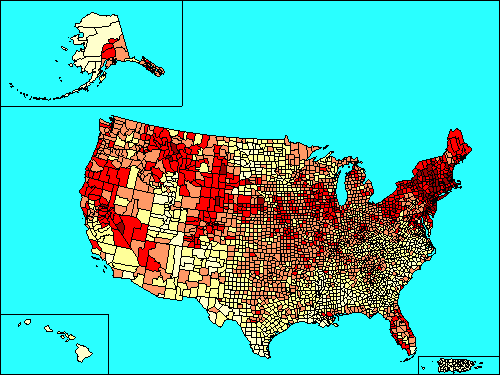
 アイルランド系アメリカ人、州別の人口の割合 | |
| 総人口 | |
31,000,000 (9.5%) 単独または組み合わせ | |
| 人口の多い地域 | |
| 米国のほとんどの都市部[2]にかなりの人口がありますが、特に ニューイングランド(ボストン 、 ロードアイランド 、ニューハンプシャー 、ミドルセックス 、ウースター)• ニューヨーク(ニューヨーク市 、ロングアイランド 、ニューヨーク州北部)•ペンシルバニア(フィラデルフィア 、ピッツバーグ[3] •デラウェアバレー 、炭鉱地域)•米国中西部(シカゴ 、 クリーブランド 、デトロイト 、 ミルウォーキー 、 コロンバス)• カリフォルニア(南カリフォルニア 、 サンフランシスコ)• テキサス(ヒューストン 、 DFWエリア) •フロリダ • ボルチモア • デラウェア • DCベルトウェイ • フェニックス • シアトル • オマハ • デンバーに多く見られます。 | |
| 言語 | |
| 英語(アメリカ英語方言);アイルランド語をほとんど話さない | |
| 宗教 | |
| カトリックとプロテスタント[4] | |
| 関連民族 | |
| その他のアイルランド人 • 英国系アイルランド人 • アイルランド系旅行者アメリカ人 • スコットランド系アイルランド人 • アイルランド系カトリック教徒 • アイルランド系ユダヤ人 • スコットランド系アメリカ人 • アルスター系プロテスタント • マン島系アメリカ人 • イギリス系アメリカ人 • コーンウォール系アメリカ人 • ウェールズ系アメリカ人 • イギリス 系アメリカ 人 • ブルトン系 アメリカ 人 |
アイルランド系アメリカ人(アイルランド語:Gael-Mheiriceánaigh)は、アメリカ合衆国に住み、アメリカ市民権を持つアイルランド系民族である。21世紀のアイルランド系アメリカ人のほとんどは、19世紀半ばにアイルランドで大飢饉が発生したためにアメリカ合衆国に移住した移民の子孫である。[10]
アイルランドからアメリカへの移民
17世紀から19世紀半ばまで
新世界に最初に渡ったアイルランド人の中には、1560年代にフロリダのスペイン駐屯軍の一員として渡った者もいた。少数のアイルランド人入植者は、1604年から1630年代にかけてアマゾン地域、ニューファンドランド、バージニアに植民地を設立する取り組みに関わった。歴史家ドナルド・アケンソンによると、この時期にアメリカ大陸に強制的に移送されたアイルランド人は「ほとんどいなかった」という。 [15]
アメリカ大陸へのアイルランド人の移民は、一連の複雑な原因の結果でした。16世紀から 17 世紀にかけてのテューダー朝の征服とそれに続くイギリス人とスコットランド人による植民地化は、アイルランドで広範囲にわたる社会的混乱を引き起こしました。多くのアイルランド人は、より良い生活を求めて他の場所へ移住しようとしました。
当時、アメリカ大陸にはヨーロッパの植民地が建設されつつあり、移民の目的地となっていた。アメリカ大陸に移住したアイルランド人のほとんどは年季奉公人として旅をし、裕福な人物に一定期間労働を負わせて旅費を支払っていた。中には商人や地主もおり、さまざまな商業や植民地化事業で重要な役割を担っていた。[15]
1620年代には、かなりの数のアイルランド人労働者が大陸のバージニアやカリブ海のリーワード諸島やバルバドスなどのイギリス植民地に渡航し始めた。 [16] : 56–7
植民地時代(1607-1775年)にアメリカに移住したアイルランド人の半分はアイルランドのアルスター州出身で、その多くはプロテスタントであったが、残りの半分は他の3つの州(レンスター、マンスター、コノート)出身であった。[17]
17世紀、アイルランドから13植民地への移民は最小限で、[18] [19]主にカトリック教徒のアイルランド人年季奉公人に限られており[19] [20]、 1650年代のクロムウェルによるアイルランド征服の際にチェサピーク植民地に移送された捕虜8,000人でピークに達した(1775年のアメリカ独立戦争以前にアイルランドから米国に移住したカトリック教徒は約10,000人であった)。[19] [21] [22] [23]
イギリス領アメリカにおける年季奉公制度は、大西洋を渡る航海の費用が高額だったことも一因となって現れた。[24] [25]年季奉公人は、主人が目的地として選んだ植民地まで従っていった。[26]
バージニア植民地が英国国教会を国教とし、植民地時代にカトリックの自由な信仰を禁じる法律を制定した一方で、[27]メリーランド植民地議会は1639年に宗教の自由を保護する法律を制定した(1632年に第2代ボルティモア男爵セシル・カルバートがメリーランドの初代植民地総督レナード・カルバートに送った手紙の指示に従って)。メリーランド植民地議会は後に1649年にメリーランド寛容法を可決し、カトリック教徒にそれらの特権を明示的に保証した。[28]
当時のチェサピーク植民地の年季奉公人の人口(ほとんどが男性)の40~50%が契約を終える前に死亡した。労働条件は厳しく、タイドウォーター地域は蚊が病気を蔓延させるなど、非常に悪性の病気の環境であった。チェサピーク植民地の人口は、13植民地全体と同様に、18世紀まで男女比が均衡していなかったため、ほとんどの男性は家族を持たず、子供を残さずに死亡した。チェサピーク植民地への移民の4分の3は男性(時期によっては4対1または6対1の男女比)で、35歳以上は1%未満であった。結果として、人口は自然増加ではなく、継続的な移民によってのみ増加した。年季奉公契約を生き延びた人々の多くは、この地域を去った。[29] [30] [31]
1650年には、8つのイギリス領アメリカ植民地で定期的に礼拝を行っていた5つのカトリック教会のすべてがメリーランド州にありました。[32]
カロライナ植民地は、参政権を国教会の信者に限定しなかった。17世紀のメリーランドとは対照的に、ニューイングランド植民地は様々な政策を採用した。プリマス、マサチューセッツ湾、コネチカットの各植民地は、参政権を国 教会の信者に限定した。ロードアイランド植民地とプロビデンス植民地には国教会がなく、旧ニューネーデルランド植民地(ニューヨーク、ニュージャージー、デラウェア)には公爵法の下で国教会がなかった。ウィリアム・ペンの1682年の土地付与における統治体制は、ペンシルベニア植民地のすべてのキリスト教徒に宗教の自由な実践を確立した。[33] [34]
名誉革命(1688-1689年)の後、植民地政府はメリーランド、ニューヨーク、ロードアイランド、カロライナ、バージニアのカトリック教徒の参政権を剥奪した。 [33]メリーランドでは1702年に参政権が回復された。[35]
1692年、メリーランド州議会はイングランド国教会を公式の国教会として制定した。[36] 1698年と1699年に、メリーランド州、バージニア州、カロライナ州は、アイルランド系カトリックの年季奉公人の移民を特に制限する法律を可決した。[37] 1700年のメリーランド州の推定人口は29,600人で、[38]そのうち約2,500人がカトリック教徒であった。[39]
18世紀には、アイルランドから13植民地への移民は、主にカトリックから主にプロテスタントへと移行した。1790年代の例外を除けば、1830年代半ばから後半までその状態が続き、[40] [41] 1835年までは長老派教会が絶対多数を占めていた。 [42] [43]これらのプロテスタント移民は主に、前世紀にアイルランド植民地(最大のものはアルスター植民地)に定住したスコットランドとイングランドの牧畜民と植民地行政官(多くはスコットランドの南部/低地とイングランドの国境北部出身)の子孫であった。[44] [45] [46] 18世紀後半までには、これらのプロテスタント移民は個人ではなく主に家族で移住した。[ 47] 18世紀前半には15,000人のアルスターのプロテスタントが北アメリカに移住し、1751年から1775年の間にはさらに25,000人が移住した。移住の理由は主に、不作、賃貸契約が破綻したために地主が家賃を値上げしたこと、そしてアメリカ独立戦争によりさらなる移住が断たれる前の「スティールボーイズ」としても知られる「ハーツ・オブ・スティール」などのプロテスタントギャングによる農業暴力などであった。[48]
1704年、メリーランド州議会は、イエズス会による布教、カトリック教徒の両親以外の子供の洗礼、カトリックのミサの公的執り行い を禁止する法律を可決した。その2か月後、州議会は法律を修正し、18か月間ミサを私的に執り行うことを許可した。1707年、州議会はミサを私的に執り行うことを永久に許可する法律を可決した。この期間中、州議会はアイルランド系カトリック教徒の年季奉公人の渡航に税金を課し始めた。1718年、州議会は投票に宗教的テストを義務付け、カトリック教徒の参政権を再び剥奪した。[49]
しかし、メリーランド州では(人口の圧倒的多数が農村地帯であるため)刑法の執行が緩く、イエズス会が運営する農場やプランテーションの教会が増加する人口に奉仕し、安定した教区となることができた。[50]
1750年、13植民地で定期的に礼拝を行っていた30のカトリック教会のうち、15はメリーランド州、11はペンシルベニア州、4は旧ニューネーデルランド植民地にあった。[51] 1756年までに、メリーランド州のカトリック教徒の数はおよそ7,000人に増加し、[52] 1765年までにさらに20,000人に増加した。 [50]ペンシルベニアでは、1756年におよそ3,000人のカトリック教徒が、1765年には6,000人になった(ペンシルベニアのカトリック教徒の大部分は南ドイツの諸州から来た人々であった)。[50] [52] [53]
1717年から1775年まで、学者の推計はさまざまであるが、最も一般的な概算では、25万人のアイルランド移民が13植民地に移住したとされている。[リスト1] 1775年のアメリカ独立戦争の開始時には、植民地の労働力のうち年季奉公人はわずか2~3%程度で、1773年から1776年にイギリスから到着した人々のうち、アイルランド出身者は5%未満であった(85%は男性のままで、72%は南部植民地に向かった)。[63]戦争中の移民は、戦後も国内に残ったヘッセン出身の5,000人のドイツ人傭兵を除いて停止した。 [41]バンカーヒルの戦いで死亡した115人のうち、22人はアイルランド生まれだった。彼らの名前には、キャラハン、ケイシー、コリンズ、コネリー、ディロン、ドナヒュー、フリン、マクグラス、ニュージェント、シャノン、サリバンなどが含まれています。[64]
1783年の戦争の終わりまでに、米国の総人口約300万人(1%未満)のうち、約24,000~25,000人のカトリック教徒(3,000人の奴隷を含む)がいた。 [38] [21] [65] [66]植民地時代の米国のカトリック教徒の大半は、アイルランドではなく、イギリス、ドイツ、フランスから来た人々であった。[21]アイルランドの歴史学者は、植民地時代のアイルランドのカトリック教徒が以前の研究で示されていたよりも多かったことを証明しようとしたが、失敗した。[67] 1790年までに、アイルランド生まれまたはアイルランド系の約40万人が米国に住んでいた(約390万人の総人口の10%以上)。[17] [68]米国国勢調査局は、1776年の米国人口の2%がアイルランド系であると推定している。[69] 1790年代にアイルランドからのカトリック教徒の移民が増加したため、カトリック教徒の人口は1800年までに約5万人(総人口約530万人の1%未満)に増加した。[41] [66] [70] [71]
18世紀の13植民地と独立したアメリカ合衆国では、カトリック教徒の間での異民族結婚が依然として主流であったが、カトリック教徒とプロテスタント教徒の異民族結婚がより一般的になった(特にシェナンドー渓谷では、アルスターのプロテスタントとアイルランド系カトリック教徒の少数派の間での異民族結婚は珍しくなく、特に非難されることもなかった)。[72]カトリック教徒の親が、遺言で子供がカトリックを放棄した場合に相続権を剥奪することを要求する割合は、米国の他の人口と比較して少ないが、この対応はプロテスタント教徒の親よりもカトリック教徒の親の間で一般的であった。[65]
このような制約にもかかわらず、1770年から1830年にかけてアメリカに移住した多くのアイルランド系カトリック教徒は、第二次大覚醒(1790-1840年)の間にバプテスト教会やメソジスト教会に改宗した。[73] [74]
1783年のアメリカ独立戦争の終結から米英戦争までの間に、10万人の移民がアルスターからアメリカにやって来た。[42]フランス革命戦争(1792年 - 1802年)とナポレオン戦争(1803年 - 1815年)の間、イギリス兵の農産物需要の増加とイングランドの人口増加により、アイルランドでは22年間の経済成長が見られた。1815年の第七次対仏大同盟戦争の終結とナポレオンのセントヘレナ島への亡命の後、 6年間の国際経済不況が続き、アイルランドでは穀物価格の暴落と耕作地代高騰を招いた。[42] [75]
1815年から1845年にかけて、50万人以上のアイルランド系プロテスタント移民がアイルランドから米国にやって来た。[42] [76]これは、1820年から1845年にかけてのアイルランドからの約100万人の移民の一部である。[75] 1820年には、1804年のルイジアナ買収、1819年のアダムズ・オニス条約、およびかつてカトリックのヨーロッパ諸国が支配していた領土の獲得に続き、米国のカトリック教徒の人口は195,000人(総人口約960万人の約2%)に増加した。[77] [78] 1820年代までにドイツからの移民が再開されたことと合わせて、1840年までにカトリック教徒の人口は663,000人(総人口1,710万人の約4%)に増加した。[80] [81] 1845年後半にジャガイモ疫病がアイルランドで大飢饉を引き起こした後、1846年から1851年にかけて100万人以上のアイルランド人がアメリカに移住し、そのうち90パーセントがカトリック教徒でした。[40] [82]
1800年から1844年まで、アイルランド移民は主に熟練した経済的に余裕のあるアルスターのプロテスタントで、職人、商人、専門家、農民が含まれていた。[83]飢饉とアイルランド系カトリック教徒の間での飢餓の脅威は、それまでアメリカへの渡航を思いとどまらせていた心理的障壁を打ち破った。1846年に第二次ジャガイモ疫病が発生した後、アイルランドでの困難な状況から逃れる必要性に対するパニックから、多くの人が「ここよりはどこでもいい」と考えるようになった。アイルランド系カトリック教徒は新しい生活を求めてイギリス、カナダ、アメリカに渡った。1845年から1849年にかけて、需要を満たすために秋から冬にかけて船がアイルランド移民を輸送し始めたため、アイルランド移民は劇的に増加した。[84]
飢饉でニューヨークに移住した人々の多くは、スタテン島やブラックウェルズ島で隔離を余儀なくされた。飢饉と病気で衰弱し、衛生状態も悪く船内の混雑した環境に苦しんだ貧しい人々は、飢饉に直接的または間接的に関連した腸チフスやコレラで何千人も死亡した。医師たちはこれらの病気を治療したり予防したりする方法を知っていなかった。[85]
アメリカ独立戦争後にカトリックとプロテスタントの混血結婚がわずかに増加したにもかかわらず、[65] 19世紀のアメリカではカトリックとプロテスタントの混血結婚は珍しいままでした。[86]
「スコッチ・アイリッシュ」
歴史家たちは「スコッチ・アイリッシュ」という語の語源は不明瞭であるとしている。[87]この語自体が誤解を招きやすく混乱を招くため、スコッチ・アイリッシュに関する歴史的文学作品( WJ キャッシュの「The Mind of the South 」など)の著者による使用でさえ、しばしば不正確である。[88] [89] [90]歴史家のデイビッド・ハケット・フィッシャーとジェームズ・G・レイバーンは、この語の使用法は北米英語に特有であり、英国の歴史家やアイルランドやスコットランドではめったに使用されない、と指摘している。アイルランドやスコットランドでは、スコッチ・アイリッシュはアイルランド系スコットランド人が自らを表現するために使用する語である。[91] [92]この語の最初の記録された使用は、 1573年にイングランドのエリザベス1世が、アイリッシュ海を渡りアイルランドのカトリック教徒と結婚したゲール語を話すスコットランドのハイランダーズについて言及した時である。[87]
18世紀にアイルランドから来たプロテスタント移民は一般的に「アングロ・アイリッシュ」と呼ばれ、中には「アングロ・アイリッシュ」と自認する者もいたが、[91] 18世紀にアメリカに移住したアルスターのプロテスタントを指して「スコッチ・アイリッシュ」という言葉を使うのは、これらの移民の多くがフィラデルフィア経由で入国したペンシルベニアの聖公会信者やクエーカー教徒の間で一般的になったと思われる。記録によると、この意味でのこの用語の使用は、早くも1757年にアングロ・アイリッシュの哲学者エドマンド・バークによってなされた。[93] [94]
しかし、多くの歴史家は、アメリカ独立戦争の時代から1850年まで、この用語はほとんど使われなくなったと指摘している。なぜなら、1840年代のアイルランド大飢饉の期間中およびその後にアイルランド系カトリック教徒の大規模な移民の波が起こるまで、ほとんどのアルスター・プロテスタントは「アイルランド人」であると自認していたためである。その結果、アメリカにいた新移民の近くに住んでいたアルスター・プロテスタントは、自らを「スコットランド系アイルランド人」と認識するようになった[リスト2]。アイルランド系カトリック教徒の近くに住んでいなかったアルスター・プロテスタントは、引き続き「アイルランド人」であると自認するか、時が経つにつれて「アメリカ人の祖先」であると自認するようになった[97]。
これらの歴史家は、1850年以降に「スコッチ・アイリッシュ」が再び使われるようになったのは、アルスターのプロテスタントの間で反カトリックの偏見が広がったことが原因であると指摘しているが[95] [96]、アイルランドとアメリカ合衆国の両方でプロテスタントとカトリックの混血結婚率が歴史的に低いこと[リスト3] 、アルスターのプロテスタントの間で異民族間および宗派間の結婚が比較的多いこと[リスト4]、そして歴史的にアイルランドからのプロテスタント移民のすべてがスコットランド系ではなかったという事実[56]を考慮して、ジェームズ・G・レイバーンは実用性と正確さの理由でその使用を維持することを主張し[104] 、歴史家のウェイランド・F・ダナウェイも歴史的前例と言語的説明のためにその使用を維持することを主張した。[105]
植民地時代、アイルランド系プロテスタント移民はアパラチア山脈南部の奥地とカロライナ州 ピエモントに定住した。[106]彼らはこれらの地域の主要な文化グループとなり、その子孫はバージニア州からテネシー州、ケンタッキー州、そしてアーカンソー州、ミズーリ州、テキサス州へと西方への移動の先頭に立った。19世紀までに、イギリス系やドイツ系の入植者との結婚により、その子孫はアイルランドとのアイデンティティを失った。「この世代の開拓者はアメリカ人の世代であり、イギリス人やドイツ人、スコットランド系アイルランド人の世代ではなかった。」[107] 18世紀のアルスター移民は主にプロテスタントで、アメリカ内陸部の高地を中心に定住していたのに対し、19世紀のカトリック移民の巨大な波は、ボストン、フィラデルフィア、ニューヨーク、バッファロー、シカゴなどの北東部と中西部の港湾都市に主に定住したため、この2つのグループはアメリカで当初はほとんど交流がなかった。しかし、19世紀初頭から、多くのアイルランド人が運河や、その世紀後半には鉄道などの大規模なインフラプロジェクトに従事するために内陸部に個別に移住した。[108]
アイルランド系プロテスタントは主にアパラチア山脈地域の植民地時代の「奥地」に定住し、そこで発展した文化の中で主要な民族系統となった。[109]アイルランド系プロテスタント入植者の子孫は、アメリカのフォークミュージック、カントリーアンドウエスタンミュージック、ストックカーレースなどを通じて、特に南部アメリカの後の文化、そしてアメリカ合衆国の文化全般に大きな影響を与えた。これらは20世紀後半に全国的に人気を博した。[110]

この時期のアイルランド移民はアメリカ独立戦争に相当数参加しており、あるイギリス陸軍士官は庶民院で「反乱軍(大陸軍の兵士を指す)の半分はアイルランド出身で、その半分はアイルランド語を話していた」と証言している。[111]チャールズ・キャロル、ダニエル・キャロル、トーマス・リンチ・ジュニア、ジェームズ・デュアン、コーネリアス・ハーネット、その他数名のアイルランド系アメリカ人は、アメリカ合衆国の建国文書である独立宣言と合衆国憲法に署名し、アンドリュー・ジャクソンに始まり大統領を務めた。
1790 年のアイルランド系人口(州別)
1790年の国勢調査時点でのアメリカ本土におけるアイルランド系アメリカ人の推定人口。[112]
1932年にアメリカ学術協会が米国国勢調査局と共同で実施した報告書では、アイルランド系特有の姓(例えばマーフィー、サリバン、ドハティなど)に基づいて祖先を判定した結果、白人人口の約6.3%がアイルランド系(アングロ・アイリッシュ系やスコットランド系アイルランド系とは別)であると結論づけた。[112]
何人かの歴史家、特にカービー・A・ミラーは、アイルランド系アメリカ人の大多数ではないにしても、かなりの割合が、 13植民地に定住する前または定住した後に改宗し、プロテスタント信仰に属していたと指摘している。
南部のアイルランド系カトリック教徒
1820年、アイルランド生まれのジョン・イングランドは、サウスカロライナ州チャールストンのプロテスタントが大多数を占める都市で最初のカトリック司教となった。1820年代から1830年代にかけて、イングランド司教はプロテスタントの偏見からカトリック少数派を擁護した。1831年と1835年には、自由黒人の子供たちのための無料学校を設立した。アメリカ反奴隷協会の宣伝に煽られた暴徒が1835年にチャールストン郵便局を襲撃し、翌日にはイングランドの学校に目を向けた。イングランドはチャールストンの「アイルランド義勇軍」を率いて学校を守った。しかし、その後すぐにチャールストンの「自由黒人」のための学校はすべて閉鎖され、イングランドはそれに黙従した。[113]
1828年、 2組のアイルランド人起業家がテキサス沿岸に植民地を設立した。ジョン・マクマレンとジェームズ・マクグロインはサンアントニオ南部にサンパトリシオ植民地を設立し、アイルランドの聖人を称えた。ジェームズ・パワーとジェームズ・ヒューエットソンはメキシコ湾岸にレフュジオ植民地を設立する契約を結んだ。2つの植民地には主にアイルランド人が入植したが、メキシコ人や他の国籍の人々も入植した。1840年代には、現在のテキサス北中部の大部分を含むピーターズ植民地に、少なくとも87人のアイルランド系姓の人々が入植した。アイルランド人は、テキサスのメキシコに対する独立戦争のすべての段階に参加した。1836年3月にアラモの防衛中に亡くなった者の中には、アイルランド生まれが12人、アイルランド系姓の者が14人いた。[114]
アイルランド系カトリック教徒は、特にチャールストン、サバンナ、ニューオーリンズなど、いくつかの中規模都市に集中しており、そこでは非常に目立っていました。[115] [116]彼らは民主党組織 の地区リーダーになることが多く、奴隷制度の廃止に反対し、1860年にスティーブン・ダグラスに投票したときには、一般的に連邦の維持を支持していました。[117]
1861年の離脱後、南部アイルランドのカトリック教徒コミュニティはアメリカ連合国を支持し、2万人のアイルランド系カトリック教徒が南軍に従軍した。グリーソン氏は次のように述べている。
アイルランド南部の兵士たちを国内から支援することは、彼らが軍隊に留まるよう促すためにも、アイルランド系南部の白人にアイルランド社会全体が南部連合を支持していることを強調するためにも重要だった。アイルランドと南部の民間指導者たちは南部連合の国家計画を支持し、そのほとんどは「ハードウォー」政策の支持者となった。[118] [119]
アイルランド民族主義者のジョン・ミッチェルは、アイルランドから亡命中にテネシー州とバージニア州に住み、南北戦争中は新聞「サザン・シチズン」と「リッチモンド・エンクワイアラー」を通じてアメリカ南部の最も積極的な支持者の一人でした。[120]
ほとんどが未熟練労働者として始まったにもかかわらず、南部のアイルランド系カトリック教徒は 1900 年までに平均以上の経済的地位を獲得しました。デビッド T. グリーソンは、彼らが社会にいかに受け入れられていたかを強調しています。
しかし、土着の寛容さは、アイルランド人が南部社会に溶け込む上で非常に重要な要素でもあった。…上流階級の南部人は、アイルランド人に反対しなかった。アイルランド移民が彼らの都市や州を圧倒する恐れはなかったからだ。…アイルランド人は、死亡率の高い職業を引き受け、貴重な奴隷資産を節約した。雇用者の中には、アイルランド人の労働コストだけでなく、外国生まれの従業員の乱暴さにも反対する者もいた。それでも、奴隷制の保護におけるアイルランド人労働者の重要性を認識していた。…アイルランド移民が信仰するカトリックは、南部の土着の人々にとってはほとんど問題ではなかった。[121]
19世紀半ば以降
1800年代以前、北アメリカに移住したアイルランド人は田舎に移住することが多かった。毛皮貿易、罠猟、探検に従事する者もいたが、大半は田舎の農場や村に定住した。彼らは土地から木を切り出し、家を建て、畑を作った。他の多くの人は沿岸部で漁師、船員、港湾労働者として働いた。1800年代、アメリカ合衆国のアイルランド人移民は上陸した大都市に留まる傾向があった。[122]

1820年から1860年にかけて、1,956,557人のアイルランド人が到着したが、そのうち75%は1845年から1852年にかけての大飢饉(アイルランド語:An Gorta Mór)が発生した後に発生した。[ 123 ] 2019年の調査によると、「農民の息子や文盲の男性は、読み書きができ熟練した男性よりも移住する傾向が強かった。移住率は、移民ネットワークが強い貧しい農村で最も高かった。」[124]
1820年から1860年にかけてアメリカに渡ったアイルランド人移民のうち、多くは海を渡る途中で病気や棺桶船として知られるようになった船の劣悪な環境のために亡くなった。[125]アイルランド人移民は、北東部での運河建設、伐採、建設工事で未熟練労働者が必要になったため、1830年代から大幅に増加した。[125]大規模なエリー運河プロジェクトはその一例であり、アイルランド人が多くの労働者であった。フィラデルフィア、ボストン、ニューヨークなどの成長都市では、小規模だが緊密なコミュニティが形成された。
この時期にアメリカに移住したアイルランド人のほとんどは、新しい環境で支援と保護を受けられるコミュニティを自ら築くことができるという理由で大都市を好みました。[126] アイルランド人移民の多い都市としては、ボストン、フィラデルフィア、ニューヨークのほか、ピッツバーグ、ボルチモア、デトロイト、シカゴ、クリーブランド、セントルイス、セントポール、サンフランシスコ、ロサンゼルスなどがあります。
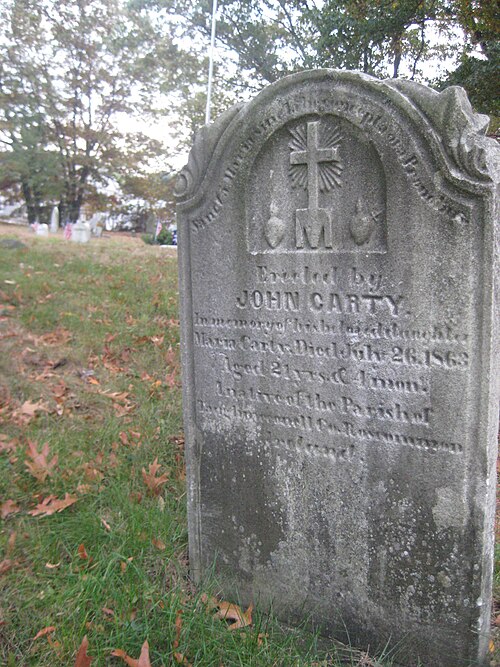
多くのアイルランド人が大都市の近くに留まったが、他の無数の人々が西部開拓に加わった。彼らは金の話や、仕事と土地のチャンスの増加に惹かれた。1854年、政府はカンザス準州を入植者に開放した。[127]多くの人々が未開拓の土地を利用するために一般に移住したが、アイルランド人も重要な役割を果たした。多くのアイルランド人男性は肉体労働者であった。西部を植民地化するために、町や都市を建設するために多くの屈強な男性が必要であった。カンザスシティはアイルランド移民によって建設された都市の1つである。[127] 現在、その人口の多くはアイルランド系である。アイルランド人が西部に移住したもう1つの理由は、鉄道の拡張であった。労働者の需要が非常に高かったため、鉄道作業は移民男性の間で一般的な職業であった。多くのアイルランド人男性が鉄道の拡張に従い、最終的に自分たちが建設した場所に定住した。[128]アイルランド人は西部に移住したアメリカ人の大部分を占めていたため、彼らの文化の多くは今日でも見ることができる。
1851年から1920年の間に、330万から370万人のアイルランド人がアメリカに移住したが[129] [17]、その中には1851年から1900年の間にアイルランドから移住した100万人を超えるアルスターのプロテスタント移民の90%以上が含まれていた。 [130] [82]大飢饉(1845-1852年)の後、アイルランドからの移民は主にマンスターとコノートから来たが[130]、1851年から1900年までのアイルランドからの全移民の28%は引き続きアルスターから来た。アルスター移民は、1880年代と1890年代にアイルランドから米国への全移民の20%を占め続け、[82] 1900年から1909年にかけては依然としてアイルランドから米国への全移民の19%、1910年から1914年にかけては25%を占めていた。[131]米国のカトリック教徒の人口は、1860年までに310万人(米国の総人口3140万人の約10%)、[132] [133] 1880年までに630万人(米国の総人口5020万人の約13%)、[134] [135]さらに1920年までに1980万人(米国の総人口1億600万人の約19%)に増加した。[134] [136]
地元の聖職者によってアメリカでの新生活に適していると選ばれた309人のコネマラ移民は、アレンライン社のSSオーストリアン号でゴールウェイ湾を出発してから11日後の1880年6月14日にボストンに到着した。後に「コネマラ人」として知られるようになった彼らの移住は、リバプールの司祭で「イングランドの同胞の社会的状況を軽減するための慈善的で真に愛国的な努力」で有名なパトリック・ニュージェント神父と、ミネソタ州セントポールのジョン・アイルランド大司教が推進した新しい事業であった。アイルランド大司教は、ニューヨークやその他のスラム街に閉じ込められていた何千人ものアイルランド系カトリック教徒を豊かな草原に移住させていた。[137] [138]
.jpg/500px-Thomas_A._Butler_(retouched).jpg)
しかし、ドイツからの移民が継続し、[139] 1880年代初頭にはイタリア、ポーランド、カナダ(フランス系カナダ人による)からの移民の波が押し寄せ、1900年から1920年にかけてはメキシコからも移民が押し寄せたため、[140] 1920年までアイルランド系カトリック教徒が米国のカトリック教徒人口の過半数を占めることはなかった。[141] [142] 1920年代には、アイルランドからさらに22万人の移民が米国にやって来たが、[17] 1925年から1930年の間にアルスターからの移民はアイルランドからの移民12万6千人のうち1万人(10%未満)にまで減少した。[131] 1924年の移民法と大恐慌の後、[143] [144] 1930年から1975年にかけて、アイルランドから米国への移民は、141,000人増にとどまった。[17]第二次世界大戦後の経済拡大期の経済状況の改善と、1965年の制限的な移民国籍法の可決は、アイルランドからの大量移民の減少に貢献した。[144] 1980年代初頭の不況により、36万人のアイルランド人が国外に移住し、その大半はイギリスに、多くは米国に移住した(約4万~15万人が不法滞在の渡航ビザで不法滞在者となった)。[145]
1970年代初頭、アイルランド系アメリカ人を自認する人々を対象にした調査で、アイルランド系アメリカ人の大多数が一貫してプロテスタントであると自認していることが判明した。[146] [147] 1830年代半ばから後半にアイルランドからの移民が主にカトリックに移行した後、移民の総数は増加したが、[40] [47] [42] [43]米国の 出生率は、アイルランドからの移民が主にカトリックになった後の1840年から1970年にかけては、移民が主にプロテスタントであった1700年から1840年にかけてよりも低かった。[148] [149] [150]また、20世紀初頭にアメリカに移住したアイルランド人の出生率はアメリカ全体の人口よりも高かったものの、同時期にアメリカに移住したドイツ人移民よりも出生率が低く、同時代のアイルランド人人口よりも出生率が低く、その後の世代の出生率は移民世代よりも低かった。[151]これは、農業社会の農村部出身であるにもかかわらず、飢饉後の移住ではアイルランド人移民は一般的にアメリカの都市部に移住したためであり、1850年までに農村部への移住と農場の設立の費用はほとんどのアイルランド人移民の経済的手段を超えていた。[152] 1990年代にアイルランド経済は再び活況を呈し始め、21世紀に入ると、アメリカからアイルランドへの移民がアイルランドからアメリカへの移民を一貫して上回り始めました。[153]
南北戦争から20世紀初頭まで
アメリカ南北戦争中、アイルランド系アメリカ人は北軍に志願し、少なくとも38の北軍連隊の名称に「アイルランド」という言葉が含まれていた。144,221人の北軍兵士がアイルランド生まれであり、さらにおそらく同数の北軍兵士がアイルランド系であった。[154]多くの移民兵士がアイルランド旅団などの独自の連隊を結成した。[155] [156] [157]しかし、一般人口に比例して、アイルランド人は北軍のために戦う移民グループの中で最も過小評価されていた。[158]
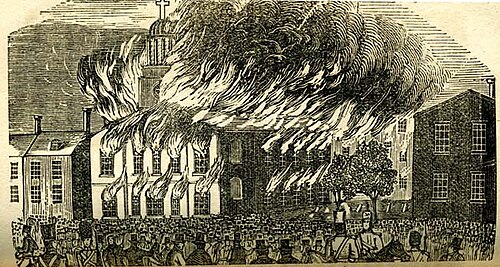
しかし、徴兵は多くのアイルランド人から、押しつけがましいと反発された。[156] [157]戦争開始から2年後の1863年に徴兵法が可決され、ニューヨークで大規模な徴兵暴動が勃発した。これは、ニューヨーク市の有力な政治組織であるタマニー・ホールが、アイルランド移民を市民として登録し、地方選挙で投票できるようにしようとした時期と重なった。[159] こうした移民の多くは、新しい国のために戦うことが期待されていることを突然知った。[160] 主に労働者として雇用されていたアイルランド人は、通常、兵役の代わりを調達するための300ドルの「通勤費」を支払う余裕がなかった。[161]アイルランド人の多くは、黒人を希少な職をめぐる競争相手と見なし、南北戦争が戦われている理由とみなした。[162]暴徒の手に落ちたアフリカ系アメリカ人は、しばしば殴打されたり殺されたりした。[163] [164]数百人の子供たちに保護施設を提供していた5番街の有色人種孤児院が暴徒に襲撃された。この施設は「黒人に対する白人の慈善と黒人の上昇志向の象徴」とみなされており、アフリカ系アメリカ人を直接の社会的、経済的競争相手とみなしていた主にアイルランド系アメリカ人の暴徒の手によって破壊される十分な理由となった。[165]幸運にも、主にアイルランド系アメリカ人の警察部隊は孤児たちが逃げるのに十分な時間、孤児院を警備することができた。[163] [166]
3万人のアイルランド人またはアイルランド系の男性が南軍に加わった。[158]グリーソンは、アイルランド人またはアイルランド系の男性の脱走率は非アイルランド人よりも高く、時には寝返ることもあったと書き、南軍に対する彼らの支持が冷淡だったことを示唆している。[167]しかし、復興期には、アイルランド人の中には白人至上主義を支持する強い立場を取り、メンフィスの暴動で黒人を攻撃する主要な役割を果たした者もいた。[168]
1871年、ニューヨークのオレンジ暴動が勃発した。これは、アイルランド系プロテスタントがボイン川の戦いでのウィリアマイト派の勝利を祝ってアイルランド系カトリック教徒の居住地区を行進し、住民を挑発して住民が暴力で応戦したためである。プロテスタントのジェームズ・J・ケルソー警視は、公共の安全を脅かすとして行進の中止を命じた。ケルソーの命令は知事に却下され、知事は行進者を守るために5000人の民兵を派遣した。[169]カトリック教徒は攻撃したが、民兵と警察に阻止され、発砲して約63人のカトリック教徒が死亡した。[170]

1860年代、アメリカとイギリスの関係は冷え込んでいた。南北戦争中にイギリスとカナダが連合国を支援したことにアメリカ人が憤慨したためだ。戦後、アメリカ当局はアイルランド系カトリック教徒の「フェニアン」がカナダ侵略を企て、試みたのを見て見ぬふりをした。[171]フェニアンたちは失敗に終わったが[明確化が必要] 、アイルランド系カトリック教徒の政治家 (民主党内で勢力を拡大していた) はアイルランドのさらなる独立を要求し、反イギリスのレトリック (「ライオンのしっぽをひねる」と呼ばれる) をアイルランド系カトリック教徒の票を集める選挙運動の定番のアピールとした。[172]
.jpg/500px-TheUsualIrishWayofDoingThings_(cr).jpg)
その後の移民の多くは、アイルランド系アメリカ人の居住地域が以前から存在していた北東部や中西部の工業都市に定住した。 [173] [174]
アイルランド人はアメリカ全体に大きな影響を与えていた。1910年には、ニューヨーク市にはダブリンの全人口よりも多くのアイルランド系アメリカ人が住んでいた。そして今日でも、これらの都市の多くにはかなりのアイルランド系アメリカ人コミュニティが残っている。[175]未熟練のアイルランド人女性と男性にとって、都市部で最高の経済的機会は「工場や製材所、家事労働、公共事業の肉体労働」だった。[176]
1900年代半ば、アイルランドからの移民は、それ以前の移民と同じ理由でアメリカにやって来ました。彼らは仕事を求めてやって来ました。[177]
アメリカの社会史
宗教と社会
宗教はアメリカにおけるアイルランド系アメリカ人のアイデンティティーにとって重要であり、彼らのコミュニティーにおいて今も大きな役割を果たしている。1970年代以降に実施された調査では、米国でアイルランド系であると自認する人々の大多数または多数が、プロテスタントであると自認していることが一貫して示されている。[146] [147]プロテスタントの祖先は主に植民地時代に到来し、カトリック教徒は主に19世紀の移民の子孫である。アイルランド人の指導者は150年以上にわたり米国のカトリック教会で著名な存在であった。アイルランド人は長老派教会やメソジスト教会の指導者でもあった。[178]
1990年代の調査によると、自分を「アイルランド人」と認識しているアメリカ人のうち、51%がプロテスタント、36%がカトリックであると回答している。アメリカ南部では、アイルランド系を主張する人の73%がプロテスタントで、カトリックは19%である。アメリカ北部では、アイルランド系を主張する人の45%がカトリックで、39%がプロテスタントである。[178]
アイルランドのローマカトリックとアルスターのプロテスタントの関係
1607年から1820年の間、アイルランドからアメリカに移住した人の大半はプロテスタントであり[179]、単に「アイルランド人」と呼ばれていた[180] 。宗教的な区別が重要になったのは1820年以降で[181] 、大量のアイルランド系ローマカトリック教徒がアメリカに移住し始めたときである。アルスター出身の植民地アイルランド系プロテスタント移住者の子孫の中には、その後、自分たちの歴史的起源を強調し、アイルランド系ローマカトリック教徒と距離を置くために自分たちを「スコットランド系アイルランド人」と再定義し始めた者もいた[182]。他の者は、特にアイルランド系ローマカトリック教徒の移民がほとんどいなかった南部の地域では、自分たちをアイルランド人と呼び続けた。1830年までに、アイルランド系移民の人口統計は急速に変化し、アメリカに移住したアイルランド人の60%以上がアイルランドの田舎出身のローマカトリック教徒であった[183] 。
プロテスタントのアイルランド移民の中には、オレンジ協会やアメリカ保護協会など、明らかに反カトリックの組織で活動する者もいた。しかし、オレンジ協会への参加者は、カナダほど米国では多くはなかった。[184] 19世紀初頭、革命後の新生米国の共和主義精神は、セオボルド・ウルフ・トーンなどの亡命アイルランド人連合を惹きつけ、アンドリュー・ジャクソンの大統領職がこの姿勢を体現した。[185] 19世紀の最初の数十年間のプロテスタントアイルランド移民のほとんどは、1790年代の共和主義に固執し、オレンジ主義を受け入れることができなかった人々だった。ロイヤリストとオレンジマンは、この時期に米国に移住したアイルランド系プロテスタントの少数派であった。アイルランドのロイヤリスト移民のほとんどは、オレンジ支部が英国旗の下で繁栄することができたアッパー・カナダとカナダの沿海地方に向かった。 [184]
1870年までに、カナダのオンタリオ州には約930のオレンジロッジがあったが、米国東部全体ではわずか43であった。これらの数少ないアメリカのロッジは、フィラデルフィアやニューヨークなどの沿岸都市に新たに到着したプロテスタントのアイルランド移民によって設立された。[186]これらの事業は短命で、政治的、社会的影響は限られていたが、1824年、1870年、1871年にニューヨーク市で発生したオレンジ暴動など、カトリックとプロテスタントのアイルランド移民の間でオレンジマンが関与する暴力の具体的な事例があった。[187]

記録に残る最初の「オレンジ暴動」は、1824年、ニューヨーク州アビンドン スクエアで7月12日の行進で起きた。オレンジマン数名が逮捕され、暴動を扇動した罪で有罪となった。裁判記録にある州検察官によると、「オレンジ祝賀会はそれまで国内では知られていなかった」という。関与した移民は次のように警告された。「米国では、あらゆる国の抑圧された人々が避難所を見つけ、その見返りとして求められるのは、法を遵守する市民になることだけだ。オレンジマン、リボンマン、ユナイテッド アイリッシュマンは、同じように知られていない。彼らはすべて、国の法律によって保護される資格がある。」[188]その後の1870年と1871年のオレンジ暴動では、70人近くが死亡し、アイルランドのプロテスタントとカトリックの移民の間で戦いが繰り広げられた。この後、オレンジ騎士団の活動は一時禁止され、騎士団は解散し、メンバーの大半はフリーメーソンに加わった。 1871年以降、アイルランドのローマカトリック教徒とプロテスタント教徒の間で暴動は起こらなくなった。[189]
アメリカは新たな始まりを提供し、「18世紀のアルスター長老派教会のほとんどの子孫、そして多くの新しいプロテスタント系アイルランド移民は、アイルランドとのあらゆるつながりを捨て、アメリカのプロテスタント主流派に溶け込んだ。」[190]
カトリック教徒
アイルランドの司祭(特にドミニコ会、フランシスコ会、アウグスティノ会、カプチン会)は1790年代に東部の大都市にやって来て、1808年に新しい教区が設立されたとき、初期のアイルランド聖職者の貢献が認められ、ニューヨークの最初の司教はアイルランド人でした。[191]
聖パトリック大隊(サンパトリシオス)は、米墨戦争中にアメリカ軍から不当な扱いを受けたり、メキシコのカトリック教徒に同情的だったりしたため、アメリカ軍を脱走した数百人の移民兵士(大半はアイルランド人)の集団で、メキシコ軍に入隊した。[192]
1810年から1840年にかけてボストンでは、司教と地元の教区を支配しようとする信徒たちとの間に深刻な緊張関係があった。1845年までにボストンのカトリック教徒の人口は、アイルランド移民の流入により、1825年の約5,000人から30,000人に増加した。1845年にジョン・B・フィッツパトリックが司教に任命されると、アイルランド系カトリック教徒のコミュニティがフィッツパトリックの司教による教区政府の支配の主張を支持するようになり、緊張関係は緩和された。[193]

ニューヨークでは、アイルランド移民のジョン・ヒューズ大司教(1797年 - 1864年)が「アイルランド問題」、つまり英国統治からのアイルランド独立に深く関わっていた。ヒューズはダニエル・オコンネルのアイルランドにおけるカトリック解放運動を支持したが、青年アイルランド人や国民同胞団のような過激で暴力的な団体は拒絶した。ヒューズはまた、アメリカ系アイルランド人の過激な過激派グループを非難し、移民に対し「個人としてのみ」アイルランドへの愛国心を持ち続けながら、アメリカ生活に同化するよう促した。[194]ヒューズの見解では、アメリカ西部にアイルランド人入植地を形成する大規模な運動は孤立主義的過ぎ、最終的には移民の新世界での成功を阻害するものであった。[195]
1840年代、ヒューズはマサチューセッツ州ローウェルの成功したアイルランド公立学校制度をモデルに、アイルランドからのカトリック移民のための公立学校の設立を訴えた。ヒューズは、すべての教育機関に欽定訳聖書の使用を義務付けたニューヨーク公立学校協会を非難する演説を行ったが、これはカトリック教徒にとって受け入れがたい提案だった。カトリック教徒とプロテスタント教徒の間で学校資金をめぐる論争により、ニューヨーク州議会は1842年にマクレー法を可決し、ニューヨーク市に学校の建設と監督、教育資金の分配の権限を持つ選挙制教育委員会を与えたが、その資金は宗教を教える学校には使われないという条件付きだった。ヒューズは大学レベルまで及ぶ精巧な教区学校制度を建設することでこれに応え、他の大都市でも追随される政策を打ち出した。市や州からの資金獲得の努力は、公立学校に匹敵する制度に対するプロテスタント教徒の猛烈な反対により失敗した。[196]
大西洋を渡ってきたアイルランド系カトリック教徒の多くは、特に1845年の大飢饉後にアイルランド系カトリック教徒の移住が急増した後は、都市部の中に独自のコミュニティを形成していた。アイルランド系ローマカトリック教徒のコミュニティは、農民社会出身で、プロテスタント系アメリカ人と同じ生活パターンを共有していなかったため、彼ら以前のアルスターのプロテスタントとは異なり、アメリカ社会に簡単に溶け込むことができなかった。彼らは、農奴制による技術の欠如と資金不足のために、すぐに社会経済的階層の最下層に身を置くようになり、その結果、多くのカトリック教徒がアイルランドのゲットーに移り住んだ。1870年には、アイルランド系アメリカ人の72%が、マサチューセッツ州、コネチカット州、ニューヨーク州、ニュージャージー州、ペンシルベニア州、オハイオ州、イリノイ州の都市部工業団地に集中していた。カトリック教徒は、社交的でコミュニティ志向の住民としての自分たちのライフスタイルに、都市生活が合っていると感じた。都市部では、コミュニティ内の他のアイルランド系民族との距離が近く、これは田舎のアメリカでは得られなかったものだった。[197]
西部では、カトリックのアイルランド人も大きな影響力を持っていた。開かれた西部は多くのアイルランド移民を惹きつけた。これらの移民の多くはカトリック教徒だった。彼らは西部に移住すると、他のアイルランド移民と「小さな集団」を形成した。[127]アイルランドのローマカトリック教徒のコミュニティは、「カトリック教会を中心にした村のような支援的な近隣地区で、教区と呼ばれた」。[127]これらの近隣地区は、コミュニティの全体的なライフスタイルと雰囲気に影響を与えた。宗教がこれらの町で役割を果たした他の方法は、多くの町がアイルランドのカトリックの司祭によって始められたという事実である。バーナード・ドネリー神父は「カンザスタウン」を創設し、これが後にカンザスシティとなった。彼のカンザスシティの初期段階への影響力は大きく、そのためカトリックの宗教は到着した他の入植者たちに広まった。[127]すべての入植者がカトリック教徒になったわけではないが、初期の入植者の多くはカトリック教徒だった。他の西部のコミュニティでは、アイルランドの司祭がネイティブアメリカンをカトリックに改宗させたかった。[127]これらのカトリックのアイルランド人は、アメリカのカトリック人口の増加だけでなく、アメリカの価値観と伝統にも貢献しました。

イエズス会はボストン・カレッジ、ニューヨークのフォーダム大学、ワシントン D.C.のジョージタウン大学など、主要都市に大学のネットワークを設立した。フォーダムは 1841 年に設立され、米国の他の地域、さらには南米やカリブ海諸国からも学生を集めた。当初は文系の大学のみだったが、1886 年に理科棟を建設し、カリキュラムにおける科学の正当性を高めた。さらに、3 年間の理学士号も創設された。[198]一方、ボストン・カレッジは、20 年以上後の 1863 年に、都市部のアイルランド系ローマカトリック教徒を惹きつけるために設立された。しかし、ボストン・カレッジの司祭たちは知的追求よりも精神的および聖餐的な活動を優先していたため、提供された知的カリキュラムはかなり限定的だった。その結果、ハーバード大学ロースクールはボストン・カレッジの卒業生をロースクールに入学させなかった。アメリカの学界における現代のイエズス会のリーダーシップは、20 世紀まですべての機関でその特徴となることはなかった。[199]
1850年代までに、アイルランド人は米国のカトリック教会の指導者として目立つ存在となり、1890年までに米国のカトリック教徒は730万人に達して増加し、司教のほとんどはアイルランド人であった。[200] 1970年代になっても、アイルランド人は米国のローマカトリック教徒の17%を占めていたが、司祭の35%、司教の50%を占め、カトリックの大学や病院の学長も同様の割合であった。[201]
プロテスタント
植民地時代のアメリカの奥地に定住したスコットランド系アイルランド人は、大部分が長老派教会員だった。[202]多くの入植地が辺鄙な奥地に設立されたことで、長老派教会は、資格を持ち大学教育を受けた聖職者に対する新たな需要を満たすことが困難になった。[203]バプテスト派やメソジスト派などの宗教団体は、牧師に高等教育を義務付けていなかったため、増加するスコットランド系アイルランド人入植地の需要を満たす牧師を容易に供給することができた。[203] 1810年頃までに、バプテスト派とメソジスト派の教会が多数派となり、今日でもスコットランド系アイルランド人の子孫は主にバプテスト派かメソジスト派のままである。[204]彼らは、 1740年代から1840年代にかけての大覚醒の間に起こった信仰復興運動に熱心に参加した。 [205]彼らは、アメリカ独立戦争とアメリカ文化の発展に大きな役割を果たしたスコットランド系アイルランド人に帰せられる価値観に共感し、アイルランドの伝統に誇りを持っています。[178]
長老派
アメリカで最初の長老派教会は1640年にニューヨーク州ロングアイランドのサウサンプトンに設立されました。[206]アイルランド からの長老派移民であるフランシス・マケミーは、後にメリーランド州とバージニア州に教会を設立しました。[207]マケミーは、ドニゴール州ラメルトン近郊で、アルスター・スコットランド人の両親のもとに生まれ育ちました。彼はグラスゴー大学で教育を受け、メリーランド州とバージニア州全体にいくつかの長老派教会の建設を組織し、開始しました。彼は1683年にメリーランド州スノーヒルに最初の長老派教会を設立しました。 [208] 1706年までに、マケミーと彼の信奉者はメリーランド州リホベスに長老派教会を建設しました。[209] [210] 1707年、フランシス・マケミーはニューヨークに渡って牧師会を設立した後、イギリス移民でニューヨーク総督のエドワード・ハイドから無許可で説教したとして告発された。[211]マケミーは無罪となり、「英国国教会の権威に立ち向かった」ことで認められ、スコットランド系アイルランド移民の宗教の自由のための戦いで重要な勝利を収めた。マケミーは植民地アメリカへの移民の中で最も裕福な人の一人となり、5,000エーカー以上の土地と33人の奴隷を所有した。[212] [213]
ニューライト長老派教会は1746年にニュージャージー大学(後にプリンストン大学と改名)を設立し、彼らの見解を信奉する牧師を養成した。この大学はスコットランド系アイルランド系アメリカの教育と宗教の中心地であった。[214] 1808年までに、長老派教会内での大学への信頼の喪失により、プリンストン神学校が別途設立されたが、大学における長老派教会の影響は1910年代まで続き、大学長ウッドロウ・ウィルソンがその典型であった。[215]
辺境の地では、オハイオ州マスキンガム渓谷のスコットランド系アイルランド人長老派教会が 1837 年にニューコンコードにマスキンガム大学を設立した。この大学はサミュエル・ウィルソンとベンジャミン・ワドルという 2 人の牧師によって運営され、最初の数年間は理事、学長、教授を務めた。1840 年代から 1850 年代にかけて、この大学は、この職を聖職者としてのキャリアの足がかりとして利用した非常に若い学長たちの急速な交代を乗り越え、1850 年代後半には学生の抗議の嵐を乗り切った。南北戦争中の LBW シュライロックの指導の下、マスキンガムは徐々に地元で管理されていた大学からマスキンガム渓谷全体に奉仕する大学へと進化した。この大学は現在も長老派教会と提携している。[216]
シカゴのサイラス・マコーミックは、スコットランド系アイルランド人の長老派教会の家庭で育ち、長老派教会への強い信仰心を育んだ。晩年は、機械式刈り取り機の発明で得た富を教会の活動に役立てた。彼の寄付金により、シカゴに北西部長老派教会神学校が設立された(彼の死後、長老派教会のマコーミック神学校と改名)。彼はバージニア州リッチモンドのユニオン長老派神学校を支援した。彼はまた、1857年のPresbyterian Expositorから始まり、The Interior (後にThe Continentと改名)で終わる一連の宗教出版物を支援し、彼の未亡人は死ぬまでこれを続けた。[217]
メソジスト
アイルランド移民は、アメリカに移住してメソジスト教会を建設し組織した最初の移民グループであった。そうした初期のアイルランド移民の多くは、ドイツ系アイルランド人の背景を持っていた。アイルランドのリムリック郡出身のドイツ系アイルランド人女性バーバラ・ヘックは、1760年に夫のポールとともにアメリカに移住した。彼女はしばしば「アメリカメソジストの母」と見なされている。 [218]ヘックは、同じく「アイルランド系パラティーノ」移民であった従兄弟のフィリップ・エンバリーを指導し、助言した。 [219]ヘックとエンバリーはジョン・ストリート・メソジスト教会を建設した。これは今日、米国で最も古いメソジスト教会として一般に認識されている。[220]しかし、著名なアイルランド系メソジスト移民のロバート・ストローブリッジが建設した別の教会が、ジョン・ストリート・メソジスト教会より前に建てられた可能性がある。[221]
アイルランド系ユダヤ人
アイルランド系アメリカ人のほとんどはキリスト教の宗教的背景を持つが、中にはアイルランド系ユダヤ人もいる。1927年にアメリカン・ヘブライ紙が発行したニュース記事によると、ニューヨーク市には1,000人のアイルランド系ユダヤ人が住んでおり、さらに数千人が米国の他の地域に住んでいるという。同年、ブルックリンで「アメリカのアイルランド系ユダヤ人」と呼ばれる組織が結成され、アイルランド系アメリカ人のシナゴーグを設立する計画を立てた。[222]
1969年、ニューヨーク市のアイルランド系アメリカ人ユダヤ人の組織「エリンの忠実なイディッシュの息子たち」は、プリム祭と聖パトリック祭が同じ日に当たったときに祝った。[223]このグループのメンバーはまた、毎年聖パトリック祭の前夜宴会を祝い、コンビーフ、緑色のベーグル、緑色のマツォボールを振る舞った。[224]
女性
,_199_-_BL.jpg/500px-The_Irish_Vampire_-_Punch_(24_October_1885),_199_-_BL.jpg)
アイルランド人は、16歳から24歳までの独身の若い女性の大規模な集団を含む、米国への大量移民の波の最初の人々でした。[225]この時点まで、植民地に定住した自由女性は、ほとんどが夫がすでに旅を終えて旅費を支払えるようになった後に来るか、旅費を支払ってくれる適格な入植者と結婚するために連れてこられました。多くのアイルランド人は、大飢饉の際の失業と飢餓から逃れるために母国から逃げました。[226]最も裕福なアイルランド人は熟練した仕事が非常に受け入れられたイングランドに再定住しましたが、下層階級のアイルランド人と女性は西ヨーロッパで仕事を見つけることがほとんどできず、より大きな経済的機会を求めて大西洋を渡ることになったのです。[227]
アイルランド人女性の中には、ボストンやニューヨーク市などの大都市で売春に手を染める者もいた。彼女たちは、酩酊状態、公然わいせつ、窃盗などで逮捕されることが多かった。[228] 独身のアイルランド人女性の多くは、収入源としてサービス労働を好んだ。こうした女性は、中流階級や上流階級の家庭で乳母、料理人、掃除人として働き、大半の人よりも高い賃金を稼いでいた。 [オリジナル研究? ]家事労働の賃金は工場労働者よりも高く、彼女たちは高級マンションの屋根裏に住んでいた。[要出典] 1870年までに、ニューヨーク市ではアイルランド人女性の40%が家事使用人として働き、当時のサービス産業の50%以上を占めていた。[229]
北部では偏見が根強く、新聞の漫画ではアイルランド人男性は短気で暴力的な酔っぱらいとして描かれていた。[230]アメリカでアイルランド人が最初に受けた反発は、彼らの自主隔離につながり、社会への同化は長く苦しいプロセスとなった。[226]
有色人種のアイルランド系アメリカ人
アイルランド系アメリカ人のほとんどは白人だが、多くは有色人種である。アイルランド系アメリカ人の歴史家は、黒人アイルランド系アメリカ人の歴史を軽視する傾向がある。ニューディール政策の連邦作家プロジェクトには、アイルランド系アメリカ人の奴隷所有者や貧しいアイルランド系アメリカ人労働者が奴隷と自由黒人の両方と性的関係を持ったという物語が数多く含まれており、アイルランド人と黒人の混血児が数多く生まれた。[231]
アフリカ系アメリカ人アイルランド系ディアスポラ・ネットワークは、2020年に設立された組織で、黒人アイルランド系アメリカ人とその歴史と文化に取り組んでいます。黒人アイルランド系アメリカ人の活動家や学者は、黒人アイルランドの歴史に対する認識を高め、アイルランド系アメリカ人コミュニティへの黒人のさらなる包摂を主張してきました。[232]
2021年、ニューヨーク大学は、アイルランドの黒人歴史月間の始まりを記念して、黒人および褐色人種のアイルランド系アメリカ人に関する報告書を発表しました。この報告書は、有色人種のアイルランド系アメリカ人を可視化し、アイルランド系アメリカ人コミュニティ内の人種的多様性に対する認識を高めるために作成されました。[233]
言語
19世紀末まで、アイルランド語を母国語とするアイルランド移民が多数やって来た。これは20世紀になっても、特定の郡からの移民に当てはまり続けた。アイルランド語が北アメリカで話されていると初めて言及されたのは17世紀である。18世紀を通じて多数のアイルランド人がアメリカに移住し、アイルランド語を持ち込んだが、ペンシルベニアでは特に顕著であった。[234]ニューヨーク市などでも広く話されており、アメリカ独立戦争の際にはロイヤリストの募集に役立った。[235] [236]
アイルランド語話者は19世紀を通じて、特に飢饉の後、大量に移住し続けた。移民が持ち込んだ多くのアイルランド語の写本が示すように、アイルランド語の識字率は一定程度あった。1881年にAn Gaodhalが創刊され、これは世界で初めて大部分がアイルランド語で書かれた新聞となった。同紙は20世紀まで発行され続け、[237]現在は国際文芸誌An Gaelにオンラインの後継がある。 [238] 19世紀と20世紀のアイルランド移民の新聞の多くにはアイルランド語のコラムがあった。
アイルランド移民は、アイルランド語のみを 話す人、アイルランド語と英語の両方を話す人、英語のみを話す人の3つの言語的カテゴリーに分類されました。[239]推定によると、1890年代の米国には約40万人のアイルランド語話者がおり、主にニューヨーク、フィラデルフィア、ボストン、シカゴ、ヨンカーズに住んでいました。[240]ニューヨークのアイルランド語話者人口はこの時期にピークに達し、アイルランド語話者は7万人から8万人でした。[241]この数は20世紀初頭に減少し、1939年には4万人、1979年には1万人、1995年には5千人にまで落ち込みました。[242]
2000年の国勢調査によると、アイルランド語は米国で現在話されている322の言語のうち66位にランクされており、話者は25,000人以上である。ニューヨーク州は50州の中で最も多くのアイルランド語話者を抱えており、マサチューセッツ州は最も高い割合を占めている。[243]
ニュージャージー州エルベロンに拠点を置く非営利のアイルランド語擁護団体Daltaí na Gaeilgeは、2006年時点でアメリカで約3万人がアイルランド語を話していると推定している。同団体は、1981年に同団体が設立された当時はわずか数千人だったことを考えると、これは驚くべき増加であると主張している。[244]
職業
1800年以前には、アイルランドのプロテスタント移民の多くが農民となり、土地が安価または無料で、農場や牧畜業を始めるのが容易な辺境へと向かった。[245]多くのアイルランドのプロテスタントとカトリック教徒は同様に年季奉公人であり、自力で渡航費を払うことができなかったり、奴隷状態に陥ったりした。[246]
1840年以降、アイルランド系カトリック移民のほとんどは、東海岸の都市、工場街、鉄道や運河の建設現場に直接向かった。ニューヨーク州北部、五大湖地域、中西部、極西部では、多くが農民や牧場主になった。東部では、アイルランド人男性労働者がアイルランドの請負業者に雇われ、特にニューヨーク州やニューイングランドで運河、鉄道、道路、下水道などの建設プロジェクトに従事した。アイルランド人男性は中西部でもこうした労働に従事した。彼らは、それまで町がなかった場所に町を建設するために働いた。カンザスシティはそのような町の1つで、やがて重要な牧場と鉄道の中心地となった。[127]
しかし、アイルランド人の職業は労働だけではなかった。一部はニューイングランドの工場街、例えばホリヨーク、ローウェル、トーントン、ブロックトン、フォールリバー、マサチューセッツ州ミルフォードに移り住み、そこでは繊維工場の所有者が新しい低賃金労働者を歓迎した。彼女らは、以前はローウェル・ガールズと呼ばれたヤンキー女性がしていた仕事に就いた。[247] [248] [249]アイルランド系カトリック教徒の女性の多くは、ホテルや個人宅でメイドとして働いた。[115]
多数の失業者や極貧のアイルランド系カトリック教徒が、新しい都市のスラム街や集合住宅で劣悪な環境で暮らしていた。[250]
独身のアイルランド移民女性は、すぐに需要が高いものの賃金が非常に低い仕事に就きました。彼女たちの大半は工場や家庭で働き、アフリカ系アメリカ人女性と並んで女性の職業階層の最下層グループと見なされていました。労働者は、綿織物や針仕事の工場労働を、危険で不快な労働条件のため、最も望ましくないと考えていました。工場労働は、主に、すでにその産業に携わっている家族の未亡人や娘にとって最悪のシナリオでした。[251]
他の多くの移民と異なり、アイルランド人女性は、アメリカの中流・上流家庭で常に大きな需要があったため、家事労働を好んだ。[252]賃金は国によって差があったが、アイルランド人女性が就ける他の職業よりは一貫して高く、競争が少なかったため交渉も可能だった。また、裕福な家庭の労働条件は工場や製粉所のそれよりはるかに良く、部屋代と食事代が無料だったため、家事使用人はお金を貯めたり、アイルランドの家族に仕送りしたりすることができた。[253]
家事労働にはいくつかの利点があるにもかかわらず、アイルランド人女性の仕事は厳しく、屈辱的だった。アイルランド人女性は雇い主に24時間従事し、料理、掃除、子守などを行った。ほとんどの召使いは働く家に住んでいたため、コミュニティから切り離されていた。何よりも、家事労働に対するアメリカの偏見は、アイルランド人女性は「年老いた白髪の黒人と同程度の知能」を持つ失敗者だと示唆していた。この引用は、アフリカ系アメリカ人に対する極端な人種差別の時代に、社会がアイルランド移民を同様に劣った存在と見なしていたことを示している。[254]

アイルランド系カトリック教徒は社会的地位の非常に低いところからスタートしたが、1900年までに仕事と収入は近隣住民とほぼ同等になった。これは主に彼らが到着時に英語を話せたためである。アイルランド人は英語を話さない移民とは異なり、労働社会で急速に昇進することができた。[255]しかし、シカゴ、フィラデルフィア、ボストン、ニューヨーク、その他の地域には、スラム街や下層労働者階級のコミュニティがまだ多く存在していた。[256]
1945年以降、カトリックのアイルランド人は、特に大学進学率の高さにより、一貫して社会階層の最上位に位置し、そのおかげで多くのアイルランド系アメリカ人男性がより高い社会経済的地位に上り詰めた。[257]
地方自治体
19 世紀には、地方自治体の職は政治家によって支持者に分配され、市役所で大きな力を持つアイルランド人は、警察署、消防署、公立学校、その他大都市の公共サービスなど、あらゆる部門の役職の候補者となった。1897 年、ニューヨーク市は 5 つの行政区を統合して形成され、20,000 の新しい後援職が創出された。ニューヨークは大規模な公共事業に多額の投資を行った。これにより、地下鉄、路面電車、水道、港湾施設で何千もの未熟練および半熟練の職が生み出された。市で雇用されたアイルランド人男性の半数以上が公共事業に従事していた。ニューヨーク市では、すべての民族グループにおいて、自治体の雇用は1900年の54,000人から1930年には148,000人に増加しました。[258] ニューヨーク市、アルバニー、ジャージーシティでは、1900年には第一世代と第二世代のアイルランド人の約3分の1が自治体の職に就いていました。[259]
警察
ニューヨーク市警本部長ジョージ・W・マツェル(1811-1877)によると、1855年までに市会議員会議に提出された報告書によると、警察署の警官のほぼ17%がアイルランド生まれ(市内では28.2%)であった。[261] NYPDの1,149人のうち、外国生まれの警官431人のうち304人がアイルランド生まれの警官であった。[115] 1860年代には、ニューヨーク市で逮捕された者の半数以上がアイルランド生まれかアイルランド系であったが、市の法執行官のほぼ半数もアイルランド人であった。20世紀に入ると、NYPDの警官の6人中5人がアイルランド生まれかアイルランド系であった。1960年代になっても、NYPDの警官の42%はアイルランド系アメリカ人であった。[262]
20世紀から21世紀初頭にかけて、アイルランド系カトリック教徒は、特に米国北東部の法執行機関で重要な役割を果たし続けた。アイルランド系アメリカ人の友愛団体であるエメラルド協会は、 1953年にニューヨーク市警察によって設立された。[263] 1973年にエメラルド協会のボストン支部が結成されると、ボストン市の警察官の半数が会員になった。
教師
19 世紀末にかけて、アイルランド移民の第二世代の女性にとって、教師は最も望ましい職業となった。教師は第一世代のアイルランド移民にとって、人気のある職業であり、女性が独身でいることを決意することに依存する職業であったという点で、家事労働に似ていた。[264] 19 世紀後半から 20 世紀初頭にかけて、ボストンからサンフランシスコにかけて、教師として就職したアイルランド系アメリカ人カトリック教徒の女性の数が不釣り合いに多かったのは、アイルランド国立学校制度の有益な結果であった。アイルランドの学校は、若い独身女性が新しい国で自立できるように準備し、それがアメリカ生まれの娘に、息子以上に教育、大学教育、職業の重要性を教え込むきっかけとなった。[265]
ニューヨーク市の学校からの証拠は、アイルランド人女性教師の増加傾向を示している。「1870年には、全教師の20%がアイルランド人女性であり、1890年までに、第6区の学校の教師の3分の2がアイルランド人女性であった。」アイルランド人女性は教師として称賛に値する評判を獲得し、そのおかげでさらに高い地位の職業に就くことができた者もいた。[265]
修道女
アメリカに到着すると、多くのアイルランド人女性がカトリックの修道女となり、ミズーリ州セントルイス、ミネソタ州セントポール、ニューヨーク州トロイなど、アメリカの多くの修道女会に参加した。さらに、これらのコミュニティに定住した女性は、しばしばアイルランドに送り返されて勧誘された。この種の宗教的なライフスタイルは、アイルランド人女性移民にとって魅力的だった。なぜなら、女性移民は男性移民より数が多く、結婚を先延ばしにするアイルランド文化の傾向が、男女分離と独身主義を奨励していたからである。さらに、「カトリック教会、聖職者、修道女はアイルランドで非常に尊敬されていた」ため、修道女会はアイルランド人移民にとって特に魅力的だった。[266]
修道女たちは大都市のアイルランド移民に、看護や教育などの分野で特に支援を提供したが、孤児院、未亡人の家、家事労働に従事する若い独身女性のための住宅などを通じても支援を提供した。[267]多くのアイルランド人コミュニティが修道女によって運営される教区学校を設立したが、東部の大都市に住むアイルランド人の親の大半は、アイルランド移民の娘や孫娘がすでに教師として活躍している公立学校制度に子供を入学させた。[268]
差別
.jpg/500px-No_Irish_Need_Apply_(lyric_sheet_-_female_version).jpg)
.jpg/500px-No_Irish_Need_Apply_(lyric_sheet).jpg)
19世紀から20世紀初頭にかけて、アメリカでは反アイルランド感情が蔓延した。 [270]プロテスタント系アメリカ人の間で反カトリック感情と移民排斥感情が高まり、1850年代にはアイルランド系アメリカ人に対する差別が拡大した。アメリカにおけるアイルランド系カトリック教徒に対する偏見は、1850年代半ばにカトリック教徒を公職から追放しようとしたノウ・ナッシング運動の創設とともにピークに達した。ノウ・ナッシング党は、地元で1、2年の成功の後、消滅した。[271]
カトリックとプロテスタントは距離を置いていた。カトリックとプロテスタントの混血結婚は珍しく、プロテスタントの牧師とカトリックの司祭の両方から強く反対された。ドランが指摘するように、「いわゆる『混血結婚』は、繰り返し警告されていたものの、まれに許可され、まれであった」。[272]むしろ、混血結婚は主に同じ宗教を持つ他の民族グループとの間で行われた。たとえば、アイルランドのカトリック教徒は、中西部ではドイツのカトリック教徒やポーランド人と、北東部ではイタリア人と混血結婚することが一般的だった。
アイルランド系アメリカ人ジャーナリストは「アメリカにおけるアイルランド人に対する侮辱の証拠を求めて文化的景観を徹底的に調査した。」歴史家がアイルランド人に対する敵意について知っていることの多くは、アイルランドと民主党の新聞の報道から来ている。[273]
教区が教区学校の建設に苦労する一方で、多くのカトリックの子供たちは公立学校に通っていた。公立学校ではプロテスタントの欽定訳聖書が広く使用されていたが、カトリック教徒は教会から聖書を読んだり暗唱したりすることを禁じられていた。[274] 多くのアイルランドの子供たちは、カトリックが教室で公然と嘲笑されていると不満を漏らした。ニューヨーク市では、カリキュラムはカトリック教徒、特にアイルランド人を悪者として鮮明に描写していた。[275]
アイルランドのティロン州からアメリカに移住したカトリック大司教ジョン・ヒューズは、偏見に対抗してカトリック教育への公的資金提供を求める運動を行った。私立教育への公的資金獲得には成功しなかったが、ヒューズの熱心な運動によって刺激された市内のプロテスタントエリートとの議論は、全国的な公教育の世俗化への道を開いた。さらに、この時期にカトリックの高等教育が拡大し、フォーダム大学やボストン大学などの大学に発展した大学は、他の大学への出願が認められなかったアイルランド人に代替手段を提供した。
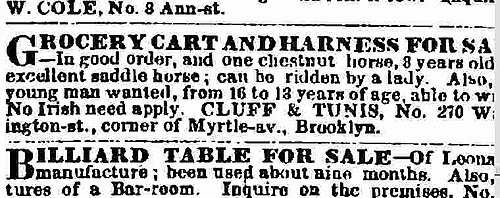
多くのアイルランド人労働者集団が、全国の運河、鉄道、市街地の道路、下水道を建設するために請負業者に雇われました。[115]南部では、彼らは奴隷労働よりも安い値段で働きました。[276]その結果、鉄道の中心地として機能した小さな都市には、多くのアイルランド人が住むようになりました。[277]
1895年、米国におけるアイルランド系カトリック教徒に対する差別と闘い、必要に応じて経済的支援を行うために、公平騎士団が設立されました。 [278]
ステレオタイプ
19 世紀、アイルランド系カトリック教徒はステレオタイプの標的としてよく取り上げられました。歴史家ジョージ・ポッターによると、アメリカのアイルランド人は、ボスに支配され、暴力的 (アイルランド人同士でも、他の民族グループに対しても)、違法に投票し、アルコール依存症に陥りやすく、暴力的または犯罪的なストリート ギャングに依存しているというステレオタイプでメディアでよく取り上げられました。ポッターは当時の新聞の画像を引用しています。
アイルランド人が偽札を扱ったり、家に侵入したり、詐欺を働いたりすることはほとんどありません。しかし、もし戦うべきことがあれば、彼はそれに加わる傾向がある。」モントリオールの新聞は、パットが「『友人と会って、愛のために彼を殴り倒す』ことがあるとしても、その戦いはたいてい突然の興奮から生じ、彼の性格全体に「悪意の予期」はほとんどなかったと認めている。 1853年のシンシナティのカトリック・テレグラフは、「『アイルランド人』という名前は、ほとんどあらゆる種類の無法者と多くの人の心の中で同一視されるようになった」と述べ、アイルランド人の悪徳は「深刻な悪質な性質のものではなく、泥酔、無秩序、喧嘩などのような、むしろ「規律のない情熱の一時的な爆発」から生じるものであり、強盗、詐欺、詐欺、偽造、中傷、誹謗、冒涜、卑猥な言葉の使用などとは異なると区別した。[279]

アイルランドには独自のユーモア作家が数多くいたが、1870年代から1900年にかけての『パック』誌の政治漫画では痛烈に攻撃された。同誌はカトリック教徒のアイルランド人に政治面で反対する世俗的なドイツ人によって編集されていた。さらに、トーマス・ナストの漫画は特に敵対的であり、例えば、ニューヨーク市でアイルランド人が支配するタマニー・ホール・マシンを凶暴な虎として描いている。 [280]
アイルランド人は暴力的な酔っぱらいだという固定観念は、19世紀半ばのピークを過ぎてもずっと続いている。例えば、リチャード・ニクソン大統領はかつて顧問のチャールズ・コルソンにこう語った。「アイルランド人には、例えばアイルランド人は酒が飲めないということがある。アイルランド人に関して常に覚えておかなければならないのは、彼らは意地悪になるということだ。私が知っているほぼすべてのアイルランド人は、酒を飲むと意地悪になる。特に本物のアイルランド人はそうだ。」[281]
アイルランド系アメリカ人に対する差別は性別によって異なっていた。例えば、アイルランド系女性は「無謀な繁殖者」というステレオタイプにとらわれることがあった。これは、カトリックの出生率が高いと、最終的にはプロテスタントが少数派になるのではないかと一部のアメリカ人プロテスタントが懸念したためである。多くのアメリカ生まれのアメリカ人は、「彼女たちが絶えず子供を産むことで、アイルランド人がアメリカの都市を政治的に乗っ取り、カトリックがこれまでプロテスタントだった国の支配的な信仰になる」と主張した。[282]アイルランド系男性も標的にされたが、女性とは違ったやり方だった。アイルランド系女性の「ブリジット」とアイルランド系男性の「パット」の違いは明らかだった。彼女は衝動的だがかなり無害だったが、彼は「いつも酔っぱらって、いつも喧嘩ばかりで、怠け者で、怠け者」だった。アイルランド系女性は怠け者で、だらしなく、愚かだ(男性同様)という見方とは対照的に、女の子は「勤勉で、意欲的で、明るく、正直で、一生懸命働き、非常に厳格な道徳観を持っている」と言われていた。[283] [284]
アメリカにおけるアイルランド人差別には、社会ダーウィン主義に触発された言い訳もあった。多くのアメリカ人は、アイルランド人はアングロサクソン人ではなくケルト人なので、人種的に劣っており、二級市民権に値すると信じていた。アイルランド人は知能が劣っているというのは、多くのアメリカ人が抱いていた考えだった。この考えが抱かれたのは、アイルランド人が逮捕者や投獄者数で人口統計上トップだったからだ。また、精神病院や救貧院に収容されている人の数も他のどのグループよりも多かった。当時多くのアメリカ人が抱いていた人種的優位性という信念は、アイルランド人差別に大きく寄与した。[285]
1860年代以降、アイルランド系アメリカ人はテロリストやギャングという固定観念を持たれていたが、19世紀末までにこの固定観念は薄れ始めた。[286]このテロリストというイメージは、フェニアン同胞団とその関連組織の悪ふざけによって生まれた。イギリス軍と戦うために国境を越えてカナダに遠征したり、 1880年代にダイナマイト作戦を行ったりしたことで、アメリカ人はアイルランド人の過激で不安定な性質を恐れ、人種的劣等感を抱くようになった。[287]
アメリカ文化への貢献
毎年恒例の聖パトリックデーのお祝いは、アメリカにおけるアイルランドの存在の象徴として広く知られています。この祝日の最大のお祝いはニューヨークで行われ、毎年恒例の聖パトリックデーパレードには平均200万人が集まります。2番目に大きいお祝いはボストンで行われます。サウスボストンパレードはアメリカで最も古いパレードの1つで、1737年に遡ります。ジョージア州サバンナでもアメリカ最大のパレードの1つが開催されます。[288] [289]
これらの典型的なイメージは特によく知られていますが、アイルランド系アメリカ人は美術、舞台芸術、映画、文学、政治、スポーツ、宗教など、幅広い分野で米国文化に貢献してきました。アイルランド系アメリカ人の大衆娯楽への貢献は、ジェームズ・キャグニー、ビング・クロスビー、ウォルト・ディズニー、ジョン・フォード、ジュディ・ガーランド、[290] ジーン・ケリー、グレース・ケリー、タイロン・パワー、チャック・コナーズ、エイダ・リーハン、ジェナ・マローン、スペンサー・トレイシーなどの人物のキャリアに反映されています。アイルランド生まれでアメリカ市民権を取得した女優モーリン・オハラは、[291] 『静かなる男』や『ロング・グレイ・ライン』などの人気映画で、米国の観客に典型的な元気なアイルランドの「コリーン」を定義しました。より最近では、アイルランド生まれのピアース・ブロスナンがジェームズ・ボンド役でスクリーンの有名人になりました。テレビの初期の頃、アイルランド系の人気者としては、グレイシー・アレン、アート・カーニー、ジョー・フリン、ジャッキー・グリーソン、ルーク・ゴードン、エド・サリバンなどがいた。
アイルランド系アメリカ人の政治への貢献は、イデオロギーの全範囲に及んでいる。アメリカの著名な社会主義者であるメアリー・ハリス・「マザー」・ジョーンズとエリザベス・ガーリー・フリンは、アイルランド系アメリカ人だった。1960年代、アイルランド系アメリカ人の作家マイケル・ハリントンは、社会福祉プログラムの有力な支持者となった。ハリントンの見解は、ジョン・F・ケネディ大統領とその弟ロバート・F・ケネディに多大な影響を与えた。一方、アイルランド系アメリカ人の政治作家ウィリアム・F・バックリーは、 20世紀後半のアメリカ保守政治において主要な知的勢力として台頭した。バックリーの雑誌「ナショナル・レビュー」は、ロナルド・レーガンなどの共和党の候補者の効果的な支持者であることが証明された。[292]
悪名高いアイルランド系アメリカ人には、ニューメキシコの伝説的な無法者ビリー・ザ・キッドがいる。[293] [294]多くの歴史家は、彼は飢饉の時代にアイルランドから移民した両親のもとニューヨークで生まれたと考えている。[293] [294] メアリー・マロン、別名タイフス・メアリーはアイルランド移民であり、マダム ・ジョセフィン・エイリーも「シカゴ・ジョー」・ヘンズリーという名前でも知られていた。ニューオーリンズの社交界の名士で殺人犯のデルフィーヌ・ラローリー、旧姓マッカーティは、父方の祖先にアイルランド系が少しいる。アイルランド系アメリカ人のギャングには、ディーン・オバニオン、ジャック・「レッグス」・ダイアモンド、バディ・マクリーン、ハウィー・ウィンター、ホワイティ・バルジャーなどがいる。ジョン・F・ケネディの暗殺者、リー・ハーヴェイ・オズワルドには、メアリー・トンリーというアイルランド生まれの曽祖母がいた。[295]多彩なアイルランド系アメリカ人には、 RMSタイタニック号で有名なマーガレット・トービン、スキャンダラスなモデルのエブリン・ネスビット、ダンサーのイサドラ・ダンカン、サンフランシスコのマダム、テッシー・ウォール、アメリカ西部で看護師兼金鉱夫をしていたネリー・キャッシュマンもいる。
音楽
ケルト音楽の幅広い人気により、伝統的なアイルランドのテーマや音楽に大きく影響を受けたアイルランド系アメリカ人バンドが台頭してきた。そのようなグループには、1980年代後半に結成され、パンクロック、ロックンロール、アイルランド音楽、ラップ/ヒップホップ、レゲエ、ソウルを融合させたニューヨークのブラック47や、その約10年後にマサチューセッツ州クインシーで結成されたケルトパンクバンドのドロップキックマーフィーズなどがある。アイルランド系アメリカ人歌手コリンメロイを擁するバンド、ディセンバリスツは、同名のアルスターロイヤリストギャングを扱った曲「シャンキルブッチャーズ」をリリースした。この曲は彼らのアルバム「ザクレーンワイフ」に収録されている。ダブリン生まれのデイブキング率いるフロッギングモリーは、この新しい伝統を引き継いでいる比較的新しいバンドである。[296]
食べ物
アイルランド移民はアメリカに移住した際に多くの伝統的なアイルランド料理のレシピを持ち込み、現地で手に入る様々な食材に合わせてアレンジした。アイルランド系アメリカ人はソーダブレッドやコルカノンなどの食べ物をアメリカ料理に持ち込んだ。 [297]コーンビーフとキャベツという有名なアイルランド系アメリカ人の食事は、アメリカに移住したアイルランド移民によって考案されたもので、伝統的なアイルランドのベーコンとキャベツのレシピをアレンジしたものである。[298] ギネスなどのアイルランドビールはアメリカで広く消費されており、聖パトリックデーだけでも推定1,300万パイントが消費される。[299]
スポーツ
飢餓世代の息子たちから始まり、アイルランド人は野球とボクシングを支配し、他のスポーツでも大きな役割を果たしました。
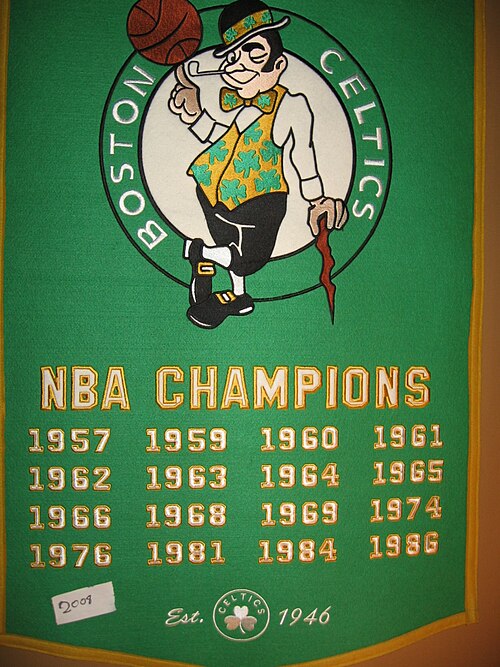
当時の有名人としては、NFLのクォーターバックでスーパーボウル優勝者のジョン・エルウェイとトム・ブレイディ、NBAフォワードのリック・バリー、[300]テニス界の偉人ジミー・コナーズとジョン・マッケンロー、野球投手のノーラン・ライアン、野球遊撃手のデレク・ジーター、バスケットボールのポイントガードのジェイソン・キッド、ボクシング界の伝説ジャック・デンプシーとモハメド・アリ、[301]世界チャンピオンのプロサーファーケリー・スレーター、全米チャンピオンのスキーヤーのライアン・マックス・ライリー、伝説のゴルファーのベン・ホーガンなどがいた。

19世紀後半のプロ野球はアイルランド人が主流で、選手の3分の1以上とトップスターや監督の多くを占めていた。プロチームはアイルランド人人口の多い北東部の都市でプレーし、ファン層を形成し、野心的な若者のトレーニングの場となっていた。[302]キャスウェイは次のように主張している。
アイルランドの子供たちにとって、野球はアメリカンドリームへの近道であり、自己満足的な栄光と富への近道でした。1880年代半ばまでに、これらのアイルランドの若者はスポーツを支配し、大胆で、大胆で、自発的と呼ばれるプレースタイルを普及させました...エド・デラハンティは、派手でエキサイティングな観客の人気者、打席に立つケーシーのようなアイルランドの強打者を体現していました。ハンサムな男性的なアスリートは、プレーと同じくらい派手に生きることが期待されていました。[303]
アイルランドのスター選手には、チャールズ・コミスキー、コニー・マック、マイケル・「キング」・ケリー、ロジャー・コナー、エディ・コリンズ、ロジャー・ブレスナハン、エド・ウォルシュ、ニューヨーク・ジャイアンツの監督ジョン・マグロウなどがいた。クーパーズタウンにある国立野球殿堂に殿堂入りした1945年の大勢の入会者の中には、9人のアイルランド系アメリカ人が含まれていた。
フィラデルフィア・フィリーズは、セントパトリックスデーの春季トレーニング中は常にホームで試合を行う。フィリーズはセントパトリックスデーに緑のユニフォームを着用した最初の野球チームという名誉を持っている。この伝統は、フィリーズの投手タグ・マグロウが1981年3月17日の前夜にユニフォームを緑色に染めたことから始まった。[304]
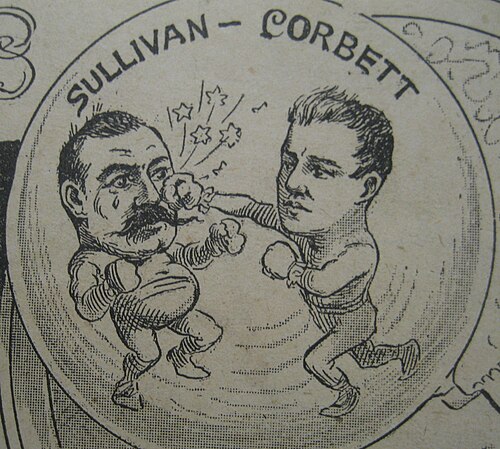
ヘビー級ボクシングチャンピオンのジョン・L・サリバン (1858年 - 1918年)は、近代スポーツ界のスーパースターの先駆けであり、数多くの試合(おそらく200回ほど)で優勝し、獲得賞金は100万ドルという驚異的な額に達した。[305] [306]
アイルランド人は、ハンドボール、ハーリング、ゲーリックフットボールといったアイルランド固有のスポーツをアメリカに持ち込んだ。カモギーとともに、これらのスポーツはゲーリック・アスレチック・アソシエーションの一部である。北米GAA組織は今でも強力で、10の部門に128のクラブがある。[307]
エンターテインメント

アイルランド系アメリカ人はコメディー界で活躍している。アイルランド系の著名なコメディアンには、ジミー・ドア、ジャッキー・グリーソン、ジョージ・カーリン、ビル・バー、ビル・マーレー、ウィル・フェレル、ブライアン・カレン、ピート・ホームズ、ジョー・ローガン、ベン・スティラー、クリス・ファーレイ、スティーヴン・コルベア、コナン・オブライエン、デニス・リアリー(アメリカとアイルランドの二重国籍)、[310]コリン・クイン、チャールズ・ネルソン・ライリー、ビル・マー、モリー・シャノン、ジョン・ムラニー、キャスリーン・マディガン、ジミー・ファロン、デス・ビショップ、ジム・ガフィガンなどがいる。
アイルランド系のミュージシャンには、クリスティーナ・アギレラ、ケリー・クラークソン、カート・コバーン、ビング・クロスビー、トリー・ケリー、ティム・マグロウ、マンディ・ムーア、ヒラリー・ダフ、ファーギー、ジェリー・ガルシア、ジュディ・ガーランド、ケイティ・ペリー、トム・ペティ、ピンク、ブルース・スプリングスティーン、グウェン・ステファニー、リンジー・ローハン、ポスト・マローン、ジョージ・M・コーハンなどがいます。[311]
架空のアイルランド系アメリカ人:
漫画の中で:
- 父親を育てるマギーとジグス
- ディック・トレイシーのパット・パットン警察署長
- ビートル・ベイリーと彼の妹ロイス(ベイリー)・フラッグストン(ビートル・ベイリーとハイ・アンド・ロイス)[312]
伝統の感覚
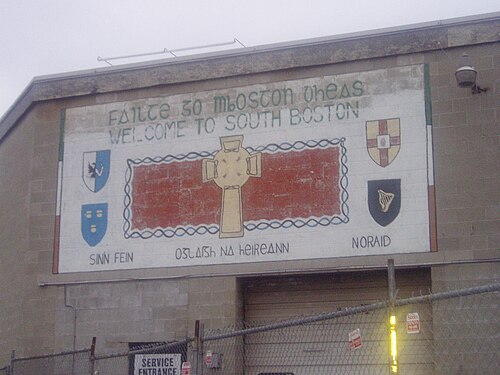
アイルランド系の人々の多くは、アイルランドの伝統に対する意識を保持しています。アイルランド憲法第 2 条は、この事実を正式に認め、受け入れています。
...アイルランド国民は、その文化的アイデンティティと伝統を共有する海外在住のアイルランド系の人々との特別な親近感を大切にしています。

アイルランドが英国から独立したことで、他国の他の文化圏の移民を引きつけるのではなく、アイルランドとの文化的つながりを保ち、アイルランドをアイデンティティとする海外在住のアイルランド人の子孫がアイルランドに定住するだろうという希望が生まれました。アイルランド自由国のアイルランド政府の一員は、次のように希望を表明しました。
私は、[アイルランド自由国]が他の州の市民に十分な魅力を与えるとは思わない...海外で生まれたアイルランド人の両親の子供たちは、時にはアイルランド人自身よりもアイルランド人らしく、私たちの国にさらなる経験と知識を持って来るだろう....|4=パトリック・ケニー上院議員、 1924年アイルランド上院、 [313]
亡命、ディアスポラ、そして(歌の場合)郷愁さえもが共通のテーマである。[314] [315]現代の「プラスティック・パディ」という用語は、一般的にアイルランドで生まれておらず、最も近いアイルランド生まれの祖先から数世代離れているが、それでも自分自身を「アイルランド人」であると考えている人を指す。この用語は、民族ではなく国籍と(市民権)に基づいてアイルランド系アメリカ人に対する軽蔑的な形で使用されることがある。[316] [317] [318]この用語は、アイルランド系アメリカ人だけでなく、あらゆる国籍の関連する人々に自由に適用される。
アイルランド系アメリカ人の中には、アイルランド独立の熱狂的な支持者もいた。フェニアン同胞団運動は米国を拠点とし、1860年代後半にイギリス統治下のカナダに対して「フェニアン襲撃」として知られる数回の失敗した攻撃を仕掛けた。[319]アイルランド自由の友は、1916年の設立から1932年までに数百万ドルを調達した。アイルランド共和主義組織であるクラン・ナ・ゲールも、アイルランドのアイルランド共和主義運動に多額の資金と支援を提供した。アイルランド系アメリカ人の資金調達組織であるNORAID(アイルランド移民で元IRA退役軍人のマイケル・フラナリーが設立)は、アイルランド系アメリカ人の寄付者から資金を受け取っていたが、公式には投獄された、または死亡した暫定アイルランド共和軍メンバーの家族を支援するためとされていた。1984年、米国司法省は、外国代理人登録法に基づき、暫定IRAを「外国の首謀者」としてNORAIDに認めさせることに成功した。[320]
人口統計
都市
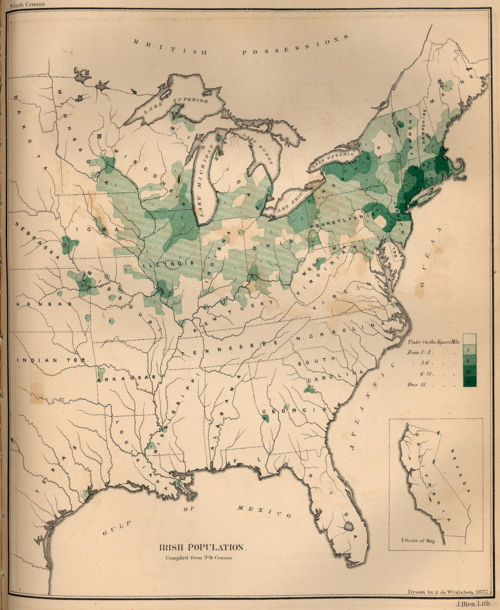
アイルランド系カトリック教徒のアメリカ人の大多数は、北部の大都市や小都市、特に鉄道の中心地や工場の町に定住した。彼らはアメリカで最も都市化したグループとなり、農民になった者はほとんどいなかった。[321]アイルランド系アメリカ人の人口がかなり多く残っている地域には、ボストン、ニューヨーク市、フィラデルフィア、プロビデンス、ハートフォード、ピッツバーグ、バッファロー、アルバニー、シラキュース、ボルチモア、セントルイス、シカゴ、クリーブランド、サンフランシスコ、サバンナ、ロサンゼルスなどの大都市圏があり、1830年から1910年の間に新たに到着したほとんどの人々がここに定住した。人口の割合で見ると、マサチューセッツ州が最もアイルランド系が多く、人口の約5分の1、21.2%がアイルランド系であると主張している。[322]
アメリカ合衆国でアイルランド系アメリカ人が最も多く住む町は、マサチューセッツ州シチュエート(住民の47.5%がアイルランド系)、マサチューセッツ州ミルトン(住民26,000人のうち44.6%がアイルランド系)、マサチューセッツ州ブレインツリー(住民34,000人のうち46.5%がアイルランド系)である。(マサチューセッツ州ウェイマス(住民54,000人のうち39%がアイルランド系)、マサチューセッツ州クインシー(人口90,000人のうち34%がアイルランド系)は、国内で最もアイルランド系が多い2つの都市である。クインシー北部の半島であるスクアンタムは、国内で最もアイルランド系が多い地区で、住民2600人のうち60%近くがアイルランド系である。)[323]
フィラデルフィア、ボストン、ニューヨーク、シカゴは歴史的にアイルランド系アメリカ人の居住者の割合が高い地区であった。地域別に見ると、米国国勢調査局の2013年のアメリカ人コミュニティ調査によると、アイルランド系アメリカ人が最も多く住む州はマサチューセッツ州、ニューハンプシャー州、メイン州、バーモント州、ロードアイランド州、デラウェア州、ペンシルベニア州、コネチカット州である。 [324]鉱山の中心地としてのユニークな歴史の結果、モンタナ州ビュートは国内で最も徹底的にアイルランド系アメリカ人の都市の一つでもある。[325]ネブラスカ州グリーリー(人口466人)などのより小さな町では、2009~2013年の時点で推定51.7%の住民がアイルランド系アメリカ人であると自認している[326] [327]。1880年代のニューヨークのオコナー司教によるアイルランド系カトリックの植民地化活動の一部であった。[328]
アイルランド系の割合が最も高い州:
 ニューハンプシャー州(20.02%)
 マサチューセッツ州(19.16%)
 ロードアイランド州(16.93%)
 バーモント州(16.11%)
 メイン州(15.85%)
 ペンシルバニア州(15.23%)
 コネチカット州(14.59%)
 デラウェア州(13.37%)
 ウェストバージニア州(12.19%)
 モンタナ州(12.8%)
 ニュージャージー州(12.72%)
 アイオワ(12.69%)
 オハイオ州(12.57%)
 ミズーリ州(12.07%)
 ワイオミング州(11.56%)
 ワイオミング州(11.38%)
 ニューヨーク(11.24%)
 カンザス州(11.2%)
 イリノイ州(11.16%)
 ケンタッキー州(11.05%)
 オレゴン(10.97%)
 コロラド州(10.49%)
 ウィスコンシン州(10.36%)
 インディアナ州(10.17%)
 ミシガン州(10.03%)
 ミネソタ州(9.87%)
 ワシントン(9.79%)
 アラスカ(9.74%)
 オクラホマ州(9.6%)
 メリーランド州(9.57%)
 サウスダコタ州(9.39%)
 アーカンソー州(9.05%)
 バージニア州(8.87%)
 テネシー州(8.86%)
 アイダホ州(8.32%)
 アリゾナ州(8.2%)
 サウスカロライナ州(8.01%)
 アラバマ(7.72%)
 ノースカロライナ州(7.7%)
 フロリダ(7.67%)
 ネバダ(7.63)
 コロンビア特別区(7.3%)
 ノースダコタ州(7.29%)
 ミシシッピ州(7.0%)
 ルイジアナ州(6.71%)
 ジョージア(6.58%)
 ニューメキシコ(6.13%)
 カリフォルニア(5.96%)
 テキサス州(5.6%)
 ユタ州(5.55%)
 ハワイ(4.43%)

https://worldpopulationreview.com
2020年の州別アイルランド系人口
2020 年現在、50 州とワシントン DC におけるアイルランド系アメリカ人の分布は次の表のとおりです。
アイルランド系アメリカ人コミュニティ
2010年の米国国勢調査によると、モンタナ州ビュート市は米国のどの都市よりも人口当たりのアイルランド系アメリカ人の割合が高く、人口の約4分の1がアイルランド系であると報告されています。 [331] [332]ビュートのアイルランド系カトリック教徒の人口は、19世紀後半に産業鉱山で働くためにこの都市に到着したアイルランド系移民の波に由来しています。人口で見ると、ボストンとフィラデルフィアは国内で2番目にアイルランド系アメリカ人の人口が多い都市です。
There are Irish neighborhoods scattered all throughout Boston, most notably South Boston. Many of Philadelphia's Irish neighborhoods are located in the Northeast Philadelphia section of the city, particularly in the Fishtown, Mayfair, and Kensington neighborhoods, as well as the South Philadelphia section, most notably the Pennsport ("Two Street" to the locals) neighborhood. There are large Irish populations in the Boston and Philadelphia metropolitan areas as well. The South Side of Chicago, Illinois also has a large Irish community, who refer to themselves as the South Side Irish.[333]
People
In politics and government
The United States Declaration of Independence contained 56 delegate signatures. Of the signers, eight were of Irish descent. Three signers, Matthew Thornton, George Taylor and James Smith, were born in Ireland; the remaining five Irish Americans, George Read, Thomas McKean, Thomas Lynch Jr., Edward Rutledge, and Charles Carroll, were the sons or grandsons of Irish immigrants. Though not a delegate but the secretary at the Congress, Charles Thomson, also Irish American, signed as well. The United States Constitution was created by a convention of 36 delegates. Of these, at least six were of Irish ancestry. George Read and Thomas McKean had already worked on the Declaration, and were joined by John Rutledge, William Paterson, Pierce Butler, Daniel Carroll, and Thomas Fitzsimons. The Carrolls and Fitzsimons were Irish Catholic, while Thomas Lynch Jr., James Smith, Pierce Butler and George Read were Irish Protestants they were descended from Irish Normans Anglo-Irish and native Irish who had intermarried for several centuries not ulster-Scots. The remainder were Scotch-Irish.[334][335]
By the 1850s, the Irish were already a major presence in the police departments of large cities. In New York City in 1855, of the city's 1,149 policemen, 305 were natives of Ireland. Within 30 years, Irish Americans in the NYPD were almost twice their proportion of the city's population.[115] Both Boston's police and fire departments provided many Irish immigrants with their first jobs. The creation of a unified police force in Philadelphia opened the door to the Irish in that city. By 1860 in Chicago, 49 of the 107 on the police force were Irish. Chief O'Leary headed the police force in New Orleans, and Malachi Fallon was chief of police of San Francisco.[336]
The Irish Catholic diaspora are very well-organized[clarification needed] and since 1850 have produced a majority of the leaders of the U.S. Catholic Church, labor unions, the Democratic Party in larger cities, and Catholic high schools, colleges and universities.[337]
The cities of Milwaukee (Tom Barrett; 2004-) and Detroit (Mike Duggan; 2012-) currently (as of 2018[update]) have Irish American mayors. Pittsburgh mayor Bob O'Connor died in office in 2006. New York City has had at least three Irish-born mayors and over eight Irish American mayors. The most recent one was County Mayo native William O'Dwyer, first elected in 1945.[338][339] Beginning in the 1909 mayoral election, every Democratic candidate for mayor of New York City was a man of Irish descent until 1950, when a special election saw three Italian Americans as the top vote getters.[340]
The Irish Protestant vote has not been studied nearly as much. Historian Timothy J. Meagher argues that by the late 19th century, most of the Protestant Irish "turned their backs on all associations with Ireland and melted into the American Protestant mainstream." A minority insisted on a "Scots-Irish" identity.[341]
In Canada, by contrast, Irish Protestants remained a political force, with many belonging to the Orange Order.[342] It was an anti-Catholic social organization with chapters across Canada. It was most powerful during the late 19th century.[343][344]
Political leanings
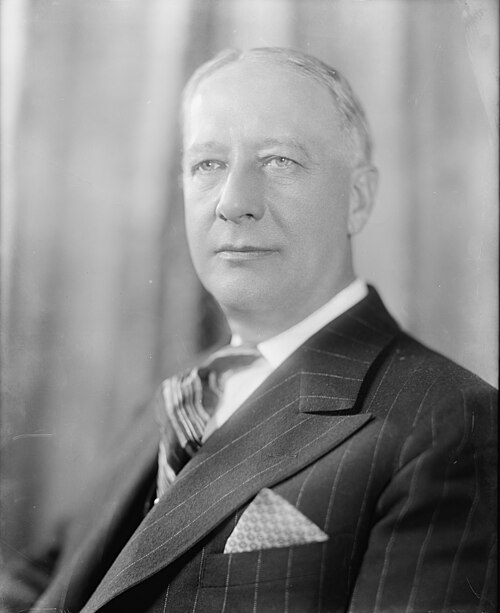
Al Smith and later John F. Kennedy were political heroes for American Catholics.[345] Al Smith, who had an Irish mother and an Italian-German father, in 1928 became the first Catholic to run for president.[346] From the 1830s to the 1960s, Irish Catholics voted heavily Democratic, with occasional exceptions like the 1920 United States presidential election. Their precincts showed average support levels of 80%.[347] As historian Lawrence McCaffrey notes, "until recently they have been so closely associated with the Democratic party that Irish, Catholic, and Democrat composed a trinity of associations, serving mutual interests and needs. "[348]
The great majority of Irish Catholic politicians were Democrats, with a few exceptions before 1970 such as Connecticut Senator John A. Danaher and Wisconsin Senator Joseph McCarthy.[334] Today, Irish politicians are associated with both parties. Ronald Reagan boasted of his Irishness. Historically, Irish Catholics controlled prominent Democratic city organizations.[349] Among the most prominent were New York, Philadelphia, Chicago, Boston, San Francisco, Pittsburgh, Jersey City, and Albany.[350] Many served as chairmen of the Democratic National Committee, including County Monaghan native Thomas Taggart, Vance McCormick, James Farley, Edward J. Flynn, Robert E. Hannegan, J. Howard McGrath, William H. Boyle, Jr., John Moran Bailey, Larry O'Brien, Christopher J. Dodd, Terry McAuliffe and Tim Kaine. In Congress, the Irish are represented in both parties; currently, Susan Collins of Maine, Pat Toomey of Pennsylvania, Bob Casey, Jr. of Pennsylvania, Ed Markey of Massachusetts, Dan Sullivan of Alaska, Lisa Murkowski of Alaska, Dick Durbin of Illinois, Patrick Leahy of Vermont, and Maria Cantwell of Washington are Irish Americans serving in the United States Senate. Former Speaker of the House of Representatives and Vice Presidential Candidate Paul Ryan is another prominent Irish-American Republican. Exit polls show that in recent presidential elections Irish Catholics have split about 50–50 for Democratic and Republican candidates.[351] The pro-life faction in the Democratic party includes many Irish Catholic politicians, such as the former Boston mayor and ambassador to the Vatican Ray Flynn and senator Bob Casey, Jr., who defeated Senator Rick Santorum in a high visibility race in Pennsylvania in 2006.[352]
In New York State where fusion voting is practiced, Irish Americans were instrumental in the founding of the Conservative party in opposition to Nelson Rockefeller and other liberal Republicans who dominated the state GOP during the 1960s and 70s.[353] The party, founded by Irish American lawyers J. Daniel Mahoney and Kieran O'Doherty would serve as a vehicle for William F. Buckley when he ran for mayor of New York in 1965 against liberal WASP Republican John V. Lindsay and establishment Democrat Abe Beame. Elsewhere, significant majorities of the local Irish stayed with the Democratic party, such as in Massachusetts and in other parts of Southern New England.[354]
In some heavily Irish small towns in northern New England and central New Jersey the Irish vote is quite Republican, but other places like Gloucester, New Jersey and Butte, Montana retain strongly liberal and Democratic-leaning Irish populations. In the 1984 United States Presidential Election Irish Catholics in Massachusetts voted 56% to 43% for Walter Mondale while their cousins in New York State voted 68% to 32% for Ronald Reagan.[355]
The voting intentions of Irish Americans and other white ethnic groups attracted attention in the 2016 U.S. election. In the Democratic primaries, Boston's Irish were said to break strongly for Hillary Clinton, whose victories in Irish-heavy Boston suburbs may have helped her narrowly carry the state over Bernie Sanders.[356] A 2016 March survey by Irish Central[357] showed that 45% of Irish Americans nationwide supported Donald Trump, although the majority of those in Massachusetts supported Hillary Clinton. An October poll by Buzzfeed showed that Irish respondents nationwide split nearly evenly between Trump (40%) and Clinton (39%), with large numbers either undecided or supporting other candidates (21%), and that the Irish were more supportive of Clinton than all the other West European-descended Americans including fellow Catholic Italian Americans.[358]
In early November 2016, six days before the election, another poll by IrishCentral showed Clinton ahead at 52% among Irish Americans, while Trump was at 40% and the third-party candidates together had 8%; Irish respondents in Massachusetts similarly favored Clinton by majority.[359] In 2017, a survey with 3,181 Irish American respondents (slightly over half being beyond third generation) by Irish Times found that 41% identified as Democrats while 23% identified as Republicans; moreover, 45% used NBC (typically considered left-leaning) for their news while 36% used Fox News (considered right-leaning).[360]
The presence of supporters of Trump among Irish and other white ethnic communities which had once themselves been marginalized immigrants generated controversy, with progressive Irish American media figures admonishing their co-ethnics against "myopia" and "amnesia".[361] However, such criticisms by left leaning pundits were frequently leveled against Irish-American conservatives prior to Trump's presidential run, with one columnist from the liberal online magazine Salon calling Irish-American conservatives "disgusting".[362] In New York City, ongoing trends of suburbanization, gentrification, and the increased tendency of Irish-Americans to vote Republican, as well as the increasingly left wing politics of the Democratic Party, led to the collapse of Irish political power in the city during the 2010s.[363] This trend was exemplified by the defeat of Queens Representative and former House Democratic Caucus Chairman Joe Crowley by democratic socialist Alexandria Ocasio-Cortez in the 2018 Democratic primary.[364][365]
American presidents with Irish ancestry


A large number of the presidents of the United States have Irish origins.[366] The extent of Irish heritage varies. For example, Chester Arthur's father and both of Andrew Jackson's parents were Irish-born of British ancestry, while George W. Bush has distant Irish ancestry. Ronald Reagan's father was of Irish ancestry,[367] while his mother also had some Irish ancestors. John F. Kennedy and Joe Biden had Irish lineage on both sides and both are the only practicing Roman Catholics. Barack Obama's Irish heritage originates from his Kansas-born mother, Ann Dunham, whose ancestry is Irish and English.[368]
17th president, 1865–69: Although he was Protestant, he had native Irish ancestry on his mother's side. His Mother was Mary "Polly" McDonough of Irish ancestry 1782[369]
27th president 1909–13: His great-great-great-grandfather, Robert Taft was born in 1640 in Ireland and immigrated to America, during the mid 17th century. Robert Taft was from County Louth in the republic of Ireland, his ancestry was both native Irish and Anglo-Irish[370][371]
28th president 1913–1921: His paternal grandfather, an Ulster Protestant, immigrated from Strabane, County Tyrone, in 1807.
22nd and 24th president, 1885–89 and 1893–97: although personally Protestant, Cleveland had native Ulster Irish ancestry. He was the maternal grandson of merchant Abner O'Neal, who emigrated from County Antrim in the 1790s[372]
18th president, 1869–77: His grandmother was Rachel Kelley, the daughter of an Irish pioneer[373] Surname Kelly within Ulster is almost entirely of Irish origin[374]
- John F. Kennedy
- 35th president, 1961–1963 (ancestors from County Wexford, County Limerick, County Cork, County Clare and County Fermanagh)[375]: 231
- Richard M. Nixon
- 37th president, 1969–1974 (County Kildare) Richard Milhouse Nixon was descended from a Quaker family who had emigrated to the United States from Timahoe, County Kildare in 1729. Nixon visited his ancestral home in 1972.[376]
- Ronald Reagan
- 40th president, 1981–1989: He was the great-grandson, on his father's side, of Irish migrants from County Tipperary who came to America via Canada and England in the 1840s. His mother was of Scottish and English ancestry.[377]
- George H. W. Bush
- 41st president, 1989–1993 (County Wexford): historians have found that his now apparent ancestor, Richard de Clare, Earl of Pembroke, shunned by Henry II, offered his services as a mercenary in the 12th-century Norman invasion of Wexford in exchange for power and land. Strongbow married Aoife, daughter of Dermot MacMurrough, the Gaelic king of Leinster.[378][379]
- Bill Clinton
- 42nd president, 1993–2001: According to a census document, his paternal great-grandmother Hattie Hayes had Irish parents and his paternal great-grandfather had an Irish father. Clinton's mother's maiden name, Cassidy, also suggests Irish ancestry on the maternal side, although there is no documentation to substantiate that claim.[375]: 129–130, 234
- George W. Bush
- 43rd president, 2001–2009: One of his five times great-grandfathers, William Holliday (a British merchant living in Ireland), was born in Rathfriland, County Down, about 1755 and died in Kentucky about 1811–12. One of the President's seven times great-grandfathers, William Shannon, was born somewhere in County Cork about 1730, and died in Pennsylvania in 1784.[379]
- Barack Obama
- 44th president, 2009–2017: Some of his maternal ancestors came to America from a small village called Moneygall, in County Offaly.[368][380][381] His ancestors lived in New England and the South and, by the 1800s, most were in the Midwest.
- Joe Biden
- 46th and current president, 2021–present. Biden is of Irish ancestry; of his 16 great-great-grandparents, 10 were born in Ireland. He is descended from the Blewitts of County Mayo and the Finnegans of County Louth.[382]
Vice presidents of Irish descent
- Mike Pence
- 48th vice president 2017–2021
- Joseph W. Martin Jr. (44th Speaker of the U.S. House of Representatives, 1947–1949 & 1953–1955; House Republican Conference Leader, 1939–1959; House Minority Leader, 1939–1947, 1949–1953 & 1955–1959; U.S. Representative from Massachusetts's 15th congressional district, 1925–1933; U.S. Representative from Massachusetts's 14th congressional district, 1933–1963; U.S. Representative from Massachusetts's 10th congressional district, 1963–1967; Republican National Committee Chair, 1940–1942)
- John W. McCormack (45th Speaker of the U.S. House of Representatives, 1962–1971; House Democratic Caucus Leader, 1962–1971; House Majority Leader, 1940–1947, 1949–1953 & 1955–1962; House Minority Whip, 1947–1949 & 1953–1955; U.S. Representative from Massachusetts's 12th congressional district, 1928–1963; U.S. Representative from Massachusetts's 9th congressional district, 1963–1971; Massachusetts State Senator, 1923–1928)
- Tip O'Neill (47th Speaker of the U.S. House of Representatives, 1977–1987; House Democratic Caucus Leader, 1977–1987; House Majority Leader, 1973–1977; House Minority Whip, 1971–1973; U.S. Representative from Massachusetts's 11th congressional district, 1953–1963; U.S. Representative from Massachusetts's 8th congressional district, 1963–1987; Speaker of the Massachusetts House of Representatives, 1949–1953; Minority Leader of the Massachusetts House of Representatives, 1947–1949)
- Jim Wright (48th Speaker of the U.S. House of Representatives, 1987–1989; House Democratic Caucus Leader, 1987–1989; House Majority Leader, 1977–1987; U.S. Representative from Texas's 12th congressional district, 1955–1989; U.S. Army Air Force 2nd Lieutenant, 1942–1946)
- Tom Foley (49th Speaker of the U.S. House of Representatives, 1989–1995; House Democratic Caucus Leader, 1989–1995; House Majority Leader, 1987–1989; House Majority Whip, 1981–1987; U.S. Representative from Washington's 5th congressional district, 1965–1995; House Agriculture Committee Chair, 1975–1981; President's Intelligence Advisory Board Chair, 1996–1997; 25th U.S. Ambassador to Japan, 1997–2001)
- John Boehner (53rd Speaker of the U.S. House of Representatives, 2011–2015; House Republican Conference Leader, 2007–2015; House Majority Leader, 2006–2007; House Education Committee Chair, 2001–2006; U.S. Representative from Ohio's 8th congressional district, 1991–2015; Ohio State Representative, 1985–1991)
- Paul Ryan (54th Speaker of the U.S. House of Representatives, 2015–2019; House Republican Conference Leader, 2015–2019; House Ways and Means Committee Chair, 2015; House Budget Committee Chair, 2011–2015; U.S. Representative from Wisconsin's 1st congressional district, 1999–2019)
Irish-American justices of the Supreme Court
- Joseph McKenna
- Edward D. White
- Pierce Butler
- Frank Murphy
- James Francis Byrnes
- William J. Brennan
- Anthony Kennedy
- Neil Gorsuch Partial maternal Irish ancestry
- Brett Kavanaugh
- Amy Coney Barrett
See also

- 69th Infantry Regiment (New York)
- Ethnocultural politics in the United States
- Irish American Athletic Club
- Irish American Cultural Institute
- Irish-American Heritage Month
- Irish Americans in the American Civil War
- Irish Brigade (U.S.)
- Irish Mob, criminals in large cities
- Irish Race Conventions, 19th-century international conventions
- Irish Whales, athletes
- List of Americans of Irish descent, notable individuals
- List of Irish-American Medal of Honor recipients, notable individuals
- List of Scotch-Irish Americans, notable individuals
- Saint Patrick's Battalion, Mexican–American War
- Irish Traveller Americans
Notes
- ^ [54][55][56][57][58][59][60][61][62]
- ^ [72][95][96]
- ^ [98][99][100][89][101][86]
- ^ [98][102][103][99]
References
- ^ {{cite web|url=https:///forbes.com/%7Ctitle=
- ^ "America's Most Irish Towns". Forbes.
- ^ G. Scott Thomas, "Census: Pittsburgh more than 10 percent Irish" bizjournals, March 16, 2009
- ^ "St. Patrick's Day Graph: Irish in America are Protestant, not Catholic". March 17, 2014.
- ^ "Rank of States for Selected Ancestry Groups with 100,000 or more persons: 1980" (PDF). United States Census Bureau. Retrieved November 30, 2012.
- ^ "1990 Census of Population Detailed Ancestry Groups for States" (PDF). United States Census Bureau. September 18, 1992. Retrieved November 30, 2012.
- ^ "Ancestry: 2000". United States Census Bureau. Archived from the original on February 12, 2020. Retrieved November 30, 2012.
- ^ "Total ancestry categories tallied for people with one or more ancestry categories reported 2010 American Community Survey 1-Year Estimates". United States Census Bureau. Archived from the original on January 18, 2015. Retrieved November 30, 2012.
- ^ "Census Bureau Releases 2020 Census Population for More Than 200 New Detailed Race and Ethnicity Groups". September 21, 2023. Archived from the original on October 12, 2023. Retrieved October 21, 2023.
- ^ "An overview of Irish immigration to America from 1846 to the 1900s". www.irish-genealogy-toolkit.com. Retrieved June 26, 2023.
- ^ a b "B04006 – PEOPLE REPORTING SINGLE ANCESTRY 2013–2017 American Community Survey 5-Year Estimates". U.S. Census Bureau. Archived from the original on January 17, 2015. Retrieved June 3, 2019.
- ^ "Catholics - Religion in America: U.S. Religious Data, Demographics and Statistics". Pew Research Center. Retrieved June 3, 2019.
- ^ "Evangelical Protestants - Religion in America: U.S. Religious Data, Demographics and Statistics". Pew Research Center. Retrieved June 3, 2019.
- ^ "Mainline Protestants - Religion in America: U.S. Religious Data, Demographics and Statistics". Pew Research Center. Retrieved June 3, 2019.
- ^ a b Akenson, Donald Harman (1997). If the Irish Ran the World: Montserrat, 1630–1730. Montreal: McGill–Queen's University Press. ISBN 978-0773516304.
- ^ Dunn, Richard S. (1972). Sugar and Slaves: The Rise of the Planter Class in the English West Indies, 1624–1713. Chapel Hill, NC: University of North Carolina Press. ISBN 978-0807811924.
- ^ a b c d e f Blessing, Patrick J. (1980). "Irish". In Thernstrom, Stephan (ed.). Harvard Encyclopedia of American Ethnic Groups. Cambridge, MA: Harvard University Press. p. 528. ISBN 978-0674375123.
- ^ Boyer, Paul S.; Clark, Clifford E.; Halttunen, Karen; Kett, Joseph F.; Salisbury, Neal; Sitkoff, Harvard; Woloch, Nancy (2013). The Enduring Vision: A History of the American People (8th ed.). Cengage Learning. p. 99. ISBN 978-1133944522.
- ^ a b c Miller, Kerby A.; Schrier, Arnold; Boling, Bruce D.; Doyle, David N. (2003). Irish Immigrants in the Land of Canaan: Letters and Memoirs from Colonial and Revolutionary America, 1675–1815. New York: Oxford University Press. p. 39. ISBN 978-0195045130.
In the seventeenth century, southern Irish Catholics probably constituted a large majority of the relatively few emigrants from Ireland, perhaps 30,000–50,000 in all, who crossed the Atlantic and settled primarily in the West Indies and Chesapeake.
- ^ Swingen, Abigail L. (2015). Competing Visions of Empire: Labor, Slavery, and the Origins of the British Atlantic Empire. New Haven, CT: Yale University Press. p. 21. ISBN 978-0300187540.
- ^ a b c Dunaway, Wayland F. (1944). The Scots-Irish of Colonial Pennsylvania. Baltimore: Genealogical Publishing Company. p. 41.
...there were only 24,000 Catholics in the entire United States in 1783, and this number included many, perhaps a majority, from countries other than Ireland. It appears probable that Ireland furnished no more than 10,000 Catholics in America during the colonial period, and the largest segment of the Catholic population came from England, Germany, and France.
- ^ Blackburn, Robin (1997). The Making of New World Slavery: From the Baroque to the Modern 1492–1800 (1st ed.). London: Verso Books. p. 317. ISBN 978-1844676316.
In the 1650s about eight thousand Irish captives were sent to the American colonies, many of them on ten-year penal contracts.
- ^ Newman, Simon P. (2015). "'In Great Slavery and Bondage': White Labor and the Development of Plantation Slavery in British America". In Gallup-Diaz, Ignacio; Shankman, Andrew; Silverman, David J.; Murrin, John M. (eds.). Anglicizing America: Empire, Revolution, Republic. Philadelphia: University of Pennsylvania Press. p. 75. ISBN 978-0812246988.
One contemporary estimated that some thirty-four thousand men were sent to the Americas, close to one-sixth of Ireland's adult male population, and more of them went to Barbados than to any other colony.
- ^ Galenson, David W. (March 1984). "The Rise and Fall of Indentured Servitude in the Americas: An Economic Analysis". The Journal of Economic History. 44 (1). Cambridge University Press: 1–26. doi:10.1017/s002205070003134x. JSTOR 2120553. S2CID 154682898.
- ^ Whaples, Robert (March 1995). "Where Is There Consensus Among American Economic Historians? The Results of a Survey on Forty Propositions" (PDF). The Journal of Economic History. 55 (1). Cambridge University Press: 140–144. doi:10.1017/S0022050700040602. JSTOR 2123771. S2CID 145691938.
- ^ Dolan, Jay P. (1985). The American Catholic Experience: A History from Colonial Times to the Present. New York: Doubleday. p. 73. ISBN 978-0385152068.
- ^ Fogarty, Gerald P. (1999). "Virginia". In Glazier, Michael (ed.). The Encyclopedia of the Irish in America. Notre Dame, IN: University of Notre Dame Press. p. 928. ISBN 978-0268027551.
- ^ Dolan, Jay P. (1985). The American Catholic Experience: A History from Colonial Times to the Present. New York: Doubleday. pp. 74–77. ISBN 978-0385152068.
- ^ Purvis, Thomas L. (1999). Balkin, Richard (ed.). Colonial America to 1763. New York: Facts on File. p. 153. ISBN 978-0816025275.
- ^ Purvis, Thomas L. (1999). Balkin, Richard (ed.). Colonial America to 1763. New York: Facts on File. pp. 162–163. ISBN 978-0816025275.
- ^ Fischer, David Hackett (1989). Albion's Seed: Four British Folkways in America. Oxford University Press. pp. 229–231. ISBN 978-0195069051.
- ^ Purvis, Thomas L. (1999). Balkin, Richard (ed.). Colonial America to 1763. New York: Facts on File. p. 179. ISBN 978-0816025275.
- ^ a b Barck, Oscar T.; Lefler, Hugh T. (1958). Colonial America. New York: Macmillan. pp. 258–259.
- ^ Barck, Oscar T.; Lefler, Hugh T. (1958). Colonial America. New York: Macmillan. p. 398.
- ^ Purvis, Thomas L. (1999). Balkin, Richard (ed.). Colonial America to 1763. New York: Facts on File. p. 182. ISBN 978-0816025275.
- ^ Dolan, Jay P. (1985). The American Catholic Experience: A History from Colonial Times to the Present. New York: Doubleday. p. 75. ISBN 978-0385152068.
- ^ Blessing, Patrick J. (1980). "Irish". In Thernstrom, Stephan (ed.). Harvard Encyclopedia of American Ethnic Groups. Cambridge, MA: Harvard University Press. pp. 525–527. ISBN 978-0674375123.
- ^ a b "Colonial and Pre-Federal Statistics" (PDF). United States Census Bureau. p. 1168.
- ^ Dolan, Jay P. (1985). The American Catholic Experience: A History from Colonial Times to the Present. New York: Doubleday. p. 79. ISBN 978-0385152068.
- ^ a b c Blessing, Patrick J. (1980). "Irish". In Thernstrom, Stephan (ed.). Harvard Encyclopedia of American Ethnic Groups. Cambridge, MA: Harvard University Press. pp. 529. ISBN 978-0674375123.
- ^ a b c Purvis, Thomas L. (1995). Balkin, Richard (ed.). Revolutionary America 1763 to 1800. New York: Facts on File. p. 180. ISBN 978-0816025282.
- ^ a b c d e Jones, Maldwyn A. (1980). "Scotch-Irish". In Thernstrom, Stephan (ed.). Harvard Encyclopedia of American Ethnic Groups. Cambridge, MA: Harvard University Press. p. 904. ISBN 978-0674375123.
- ^ a b Dunaway, Wayland F. (1944). The Scots-Irish of Colonial Pennsylvania. Baltimore: Genealogical Publishing Company. p. 42.
- ^ Robinson, Philip (2000) [1984]. The Plantation of Ulster: British Settlement in an Irish Landscape, 1600–1670 (2nd ed.). Ulster Historical Foundation. pp. 52–55. ISBN 978-1903688007.
- ^ Fischer, David Hackett (1989). Albion's Seed: Four British Folkways in America. Oxford University Press. p. 16. ISBN 978-0195069051.
- ^ Duffy, Sean (2005). The Concise History of Ireland. Gill & MacMillan. p. 107. ISBN 978-0717138104.
...the number of Protestants in Ireland remained small throughout [Queen Elizabeth's] reign, being mostly confined to government officials and new settlers.
- ^ a b Dolan, Jay P. (1985). The American Catholic Experience: A History from Colonial Times to the Present. New York: Doubleday. p. 129. ISBN 978-0385152068.
- ^ Hoftsa, Warren R. (2012). Ulster to America: the Scots-Irish migration experience, 1680–1830 (1st ed.). Knoxville: University of Tennessee Press. pp. 12–29.
- ^ Dolan, Jay P. (1985). The American Catholic Experience: A History from Colonial Times to the Present. New York: Doubleday. pp. 84–85. ISBN 978-0385152068.
- ^ a b c Dolan, Jay P. (1985). The American Catholic Experience: A History from Colonial Times to the Present. New York: Doubleday. pp. 87–89. ISBN 978-0385152068.
- ^ Purvis, Thomas L. (1999). Balkin, Richard (ed.). Colonial America to 1763. New York: Facts on File. p. 181. ISBN 978-0816025275.
- ^ a b Taylor, Dale (1997). The Writer's Guide to Everyday Life in Colonial America: From 1607 to 1783. Cincinnati, OH: Writer's Digest Books. p. 273. ISBN 978-0898799422.
In 1756, a Maryland Father Superior estimated 7,000 practicing Catholics in Maryland and 3,000 in Pennsylvania.
- ^ Purvis, Thomas L. (1999). Balkin, Richard (ed.). Colonial America to 1763. New York: Facts on File. p. 183. ISBN 978-0816025275.
- ^ Fischer, David Hacket (1989). Albion's Seed: Four British Folkways in America. New York: Oxford University Press. p. 606. ISBN 978-0195069051.
more than a quarter-million
- ^ Rouse, Parke S. Jr. (1973). The Great Wagon Road: From Philadelphia to the South. New York: McGraw-Hill. p. 32.
200,000
- ^ a b Blethen, H. Tyler; Wood, Curtis W. (1998). From Ulster to Carolina: The Migration of the Scotch-Irish to Southwestern North Carolina. Raleigh, NC: North Carolina Division of Archives and History. p. 22. ISBN 978-0865262799.
...250,000 people left for America between 1717 and 1800...20,000 were Anglo-Irish, 20,000 were Gaelic Irish, and the remainder Ulster-Scots...
- ^ Griffin, Patrick (2001). The People with No Name: Ireland's Ulster Scots, America's Scots Irish, and the Creation of a British Atlantic World, 1689–1764. Princeton, NJ: Princeton University Press. p. 1.
more than 100,000
- ^ Leyburn, James G. (1962). The Scotch-Irish: A Social History. Chapel Hill, NC: University of North Carolina Press. p. 180.
200,000
- ^ Barck, Oscar T.; Lefler, Hugh T. (1958). Colonial America. New York: Macmillan. p. 285.
300,000
- ^ Jones, Maldwyn A. (1980). "Scotch-Irish". In Thernstrom, Stephan (ed.). Harvard Encyclopedia of American Ethnic Groups. Cambridge, MA: Harvard University Press. p. 896. ISBN 978-0674375123.
250,000
- ^ Blaney, Roger (1996). Presbyterians and the Irish Language. Belfast: Ulster Historical Foundation. p. 4.
100,000, and possibly as many as 250,000
- ^ Webb, Jim (2004). Born Fighting: How the Scots-Irish Shaped America. New York: Broadway Books. p. front flap. ISBN 978-0767916899.
Between 250,000 to 400,000 Scots-Irish migrated to America in the eighteenth century...
- ^ Purvis, Thomas L. (1995). Balkin, Richard (ed.). Revolutionary America 1763 to 1800. New York: Facts on File. p. 120. ISBN 978-0816025282.
- ^ "Rebels in Arms: The Irishmen of Bunker Hill".
- ^ a b c Dolan, Jay P. (1985). The American Catholic Experience: A History from Colonial Times to the Present. New York: Doubleday. p. 86. ISBN 978-0385152068.
- ^ a b Purvis, Thomas L. (1995). Balkin, Richard (ed.). Revolutionary America 1763 to 1800. New York: Facts on File. p. 204. ISBN 978-0816025282.
- ^ Carroll, Michael P. (Winter 2006). "How the Irish Became Protestant in America". Religion and American Culture. 16 (1). University of California Press: 28. doi:10.1525/rac.2006.16.1.25. JSTOR 10.1525/rac.2006.16.1.25. S2CID 145240474.
- ^ "1790 Fast Facts - History - U.S. Census Bureau". United States Census Bureau.
- ^ "Diversity in Colonial Times - U.S. Census Bureau" (PDF). United States Census Bureau.
- ^ Purvis, Thomas L. (1995). Balkin, Richard (ed.). Revolutionary America 1763 to 1800. New York: Facts on File. p. 197. ISBN 978-0816025282.
- ^ "1800 Fast Facts - History - U.S. Census Bureau". United States Census Bureau.
- ^ a b Miller, Kerby A. (2000). "'Scotch-Irish' Myths and 'Irish' Identities". In Fanning, Charles (ed.). New Perspectives on the Irish Diaspora (1st ed.). Southern Illinois University Press. pp. 80–81. ISBN 978-0809323449.
- ^ Carroll, Michael P. (Winter 2006). "How the Irish Became Protestant in America". Religion and American Culture. 16 (1). University of California Press: 32. doi:10.1525/rac.2006.16.1.25. JSTOR 10.1525/rac.2006.16.1.25. S2CID 145240474.
- ^ Carroll, Michael P. (Winter 2006). "How the Irish Became Protestant in America". Religion and American Culture. 16 (1). University of California Press: 38. doi:10.1525/rac.2006.16.1.25. JSTOR 10.1525/rac.2006.16.1.25. S2CID 145240474.
- ^ a b Blessing, Patrick J. (1980). "Irish". In Thernstrom, Stephan (ed.). Harvard Encyclopedia of American Ethnic Groups. Cambridge, MA: Harvard University Press. pp. 528–529. ISBN 978-0674375123.
- ^ Faragher, John Mack (1996). The Encyclopedia of Colonial and Revolutionary America. Da Capo Press. p. 385. ISBN 978-0306806872.
- ^ Dolan, Jay P. (1985). The American Catholic Experience: A History from Colonial Times to the Present. New York: Doubleday. pp. 160–161. ISBN 978-0385152068.
- ^ "1820 Fast Facts - History - U.S. Census Bureau". United States Census Bureau.
- ^ Conzen, Kathleen Neils (1980). "Germans". In Thernstrom, Stephan (ed.). Harvard Encyclopedia of American Ethnic Groups. Cambridge, MA: Harvard University Press. p. 409. ISBN 978-0674375123.
- ^ Dolan, Jay P. (2008). The Irish Americans: A History. New York: Bloomsbury Press. pp. 55–56. ISBN 978-1596914193.
By 1840 the Catholic population had increased to 663,000. The increase was due mainly to the large numbers of immigrants from Ireland and Germany.
- ^ "1840 Fast Facts - History - U.S. Census Bureau". United States Census Bureau.
- ^ a b c Jones, Maldwyn A. (1980). "Scotch-Irish". In Thernstrom, Stephan (ed.). Harvard Encyclopedia of American Ethnic Groups. Cambridge, MA: Harvard University Press. p. 905. ISBN 978-0674375123.
- ^ Hoftsa, Warren R. (2012). Ulster to America: the Scots-Irish migration experience, 1680–1830 (1st ed.). Knoxville: University of Tennessee Press. pp. 12–29.
- ^ "Fleeing the Famine: North America and Irish Refugees, 1845–1851 page 1". publisher.abc-clio.com. Retrieved May 25, 2023.
- ^ Ridge, John (1999). "New York City". In Glazier, Michael (ed.). The Encyclopedia of the Irish in America. Notre Dame, IN: University of Notre Dame Press. p. 681. ISBN 978-0268027551.
- ^ a b Dolan, Jay P. (1985). The American Catholic Experience: A History from Colonial Times to the Present. New York: Doubleday. p. 228. ISBN 978-0385152068.
- ^ a b Leyburn, James G. (1989) [1962]. The Scotch-Irish: A Social History (Reprint ed.). University of North Carolina Press. pp. 328–329. ISBN 978-0807842591.
- ^ Barck, Oscar T.; Lefler, Hugh T. (1958). Colonial America. New York: Macmillan. p. 285.
- ^ a b Dunaway, Wayland F. (1944). The Scots-Irish of Colonial Pennsylvania. Baltimore: Genealogical Publishing Company. pp. 9–11.
'I have sometimes noticed a little confusion of mind in relation to the phrase 'Scotch-Irish,' as if it meant that the Scotch people had come over and intermarried with the Irish, and thus a combination of two races, two places, two nationalities had taken place. This is by no means the state of the case.'... This does not mean to say, of course... that there was never an instance of marriage between the Ulster Scots and the Irish, for such unions undoubtedly occurred; but all the evidence points to the conclusion that these were rare...
- ^ Carroll, Michael P. (Winter 2006). "How the Irish Became Protestant in America". Religion and American Culture. 16 (1). University of California Press: 46. doi:10.1525/rac.2006.16.1.25. JSTOR 10.1525/rac.2006.16.1.25. S2CID 145240474.
- ^ a b Fischer, David Hackett (1989). Albion's Seed: Four British Folkways in America. Oxford University Press. p. 618. ISBN 978-0195069051.
- ^ Leyburn, James G. (1989) [1962]. The Scotch-Irish: A Social History (Reprint ed.). University of North Carolina Press. p. xi. ISBN 978-0807842591.
- ^ Dunaway, Wayland F. (1944). The Scots-Irish of Colonial Pennsylvania. Baltimore: Genealogical Publishing Company. p. 8.
...it is evident that the Scotch-Irish were being very generally so called soon after they had begun to arrive in Pennsylvania in large numbers, and it is probable that the name was first applied to them by the Episcopalians and Quakers, who by no means intended it to be complimentary.
- ^ Burke, Edmund (1835) [1757]. An Account Of The European Settlements In America. Vol. 2. J. H. Wilkins & Company and Hilliard, Gray, & Co. p. 285.
They are chiefly Presbyterians from the northern part of Ireland, who in America are generally called Scotch-Irish.
- ^ a b Leyburn, James G. (1989) [1962]. The Scotch-Irish: A Social History (Reprint ed.). University of North Carolina Press. p. 331. ISBN 978-0807842591.
- ^ a b Dolan, Jay P. (2008). The Irish Americans: A History. Bloomsbury Press. p. x. ISBN 978-1596914193.
The term [Scotch-Irish] had been in use during the eighteenth century to designate Ulster Presbyterians who had emigrated to the United States. From the mid-1700s through the early 1800s, however, the term Irish was more widely used to identify both Catholic and Protestant Irish... as political and religious conflict between Catholics and Protestants both in Ireland and the United States became more frequent, and as Catholic emigrants began to outnumber Protestants, the term Irish became synonymous with Irish Catholics. As a result, Scotch-Irish became the customary term to describe Protestants of Irish descent... The famine migration of the 1840s and '50s that sent waves of poor Irish Catholics to the United States together with the rise in anti-Catholicism intensified this attitude. In no way did Irish Protestants want to be identified with these ragged newcomers.
- ^ Elliott Robert Barkan (2013). Immigrants in American History: Arrival, Adaptation, and Integration. ABC-CLIO. pp. 791–. ISBN 978-1-59884-219-7.
- ^ a b Robinson, Philip S. (2000) [1984]. The Plantation of Ulster: British Settlement in an Irish Landscape, 1600–1670 (2nd ed.). Ulster Historical Foundation. p. 111. ISBN 978-1903688007.
...many English did not conform to the Established Church, and there has been relatively less social resistance to intermarriage between Protestants of differing denominations than between Protestants and Roman Catholics.
- ^ a b Fischer, David Hackett (1989). Albion's Seed: Four British Folkways in America. New York: Oxford University Press. p. 620. ISBN 978-0195069051.
In the seventeenth and eighteenth centuries, it was observed that 'the Ulster settlers mingled freely with the English Puritans and Huguenots,' but married very rarely with the Gaelic-speaking people of Ireland and Scotland.
- ^ Leyburn, James G. (1962). The Scotch-Irish: A Social History. Chapel Hill, NC: University of North Carolina Press. pp. 133–139.
- ^ Fernihough, Alan; O'Grada, Cormac; Walsh, Brendan M. (April 2015). "Intermarriage in a Divided Society: Ireland a Century Ago" (PDF). Explorations in Economic History. 56. Elsevier: 1–14. doi:10.1016/j.eeh.2014.11.002. S2CID 53553897.
- ^ Robinson, Philip S. (2000) [1984]. The Plantation of Ulster: British Settlement in an Irish Landscape, 1600–1670 (2nd ed.). Ulster Historical Foundation. p. 113. ISBN 978-1903688007.
Areas of English settlement in County Londonderry, north Armagh, south-west Antrim and Fermanagh support the assumption that most non-Presbyterian British were of English stock. In places these 'English' settlers included Welsh and Manx men.
- ^ Leyburn, James G. (1989) [1962]. The Scotch-Irish: A Social History (reprint ed.). University of North Carolina Press. p. 128. ISBN 978-0807842591.
- ^ Leyburn, James G. (1989) [1962]. The Scotch-Irish: A Social History (Reprint ed.). University of North Carolina Press. p. 333. ISBN 978-0807842591.
- ^ Dunaway, Wayland F. (1944). The Scots-Irish of Colonial Pennsylvania. Baltimore: Genealogical Publishing Company. p. 7.
- ^ Rouse, Parke Jr. (1992). The Great Wagon Road: From Philadelphia to the South (1st ed.). Dietz Press. ISBN 978-0875170657.
- ^ Leyburn, James G. (1989) [1962]. The Scotch-Irish: A Social History (Reprint ed.). University of North Carolina Press. pp. 317–319. ISBN 978-0807842591.
- ^ Collins, Ryan M. (2011). Irish Gandy Dancer: A Tale of Building the Transcontinental Railroad. Seattle: CreateSpace. p. 198. ISBN 978-1452826318.
- ^ Leyburn, James G. (1989) [1962]. The Scotch-Irish: A Social History (Reprint ed.). University of North Carolina Press. pp. 184–255. ISBN 978-0807842591.
- ^ Webb, Jim (2004). Born Fighting: How the Scots-Irish Shaped America. Broadway Books. pp. 253–264. ISBN 978-0767916899.
- ^ Bagenal, Philip H. (2009) [1882]. The American Irish and their Influence on Irish Politics. BiblioBazaar. pp. 12–13. ISBN 978-1103404650.
- ^ a b American Council of Learned Societies. Committee on Linguistic and National Stocks in the Population of the United States (1932). Report of the Committee on Linguistic and National Stocks in the Population of the United States. Washington, D.C.: U.S. Government Printing Office. p. 124. OCLC 1086749050.
- ^ Kelly, Joseph (2001). "Charleston's Bishop John England and American Slavery". New Hibernia Review. 5 (4). University of St. Thomas: 48–56. doi:10.1353/nhr.2001.0063. JSTOR 20557774. S2CID 145550276.
- ^ "Irish Texans". Texas Almanac. Retrieved April 22, 2022.
- ^ a b c d e Watkin, Edward (2002). Enter the Irish-American. Lincoln, NE: iUniverse. pp. 47–55, 65, 157. ISBN 978-0595227303.
- ^ Niehaus, Earl F. (1976) [1965]. The Irish in New Orleans, 1800–1860 (2nd ed.). Arno Press. ISBN 978-0405093524.
- ^ Gleeson, David T. (2013). The Green and the Gray: The Irish in the Confederate States of America (Reprint ed.). University of North Carolina Press. pp. 30–34. ISBN 978-1469627243.
- ^ Gleeson, David T. (2013). The Green and the Gray: The Irish in the Confederate States of America (Reprint ed.). University of North Carolina Press. pp. 41, 59, & 112. ISBN 978-1469627243.
- ^ Devitt, Jerome (2015). "Devitt on Gleeson, 'The Green and the Gray: The Irish in the Confederate States of America'". H-Net.
- ^ McGovern, Bryan P. (2009). John Mitchel: Irish Nationalist, Southern Secessionist. University of Tennessee Press. ISBN 978-1572336544.
- ^ Gleeson, David T. (2001). The Irish in the South, 1815–1877. University of North Carolina Press. pp. 192–93. ISBN 978-0807849682.
- ^ Nickles, Greg. "We Came to North America: The Irish". Warren County Historical Society. Retrieved April 22, 2022.
- ^ "Irish-Catholic Immigration to America". Library of Congress. Retrieved April 13, 2008.
- ^ Connor, Dylan Shane (2019). "The Cream of the Crop? Geography, Networks, and Irish Migrant Selection in the Age of Mass Migration". The Journal of Economic History. 79 (1): 139–175. doi:10.1017/S0022050718000682. ISSN 0022-0507. S2CID 54502082.
- ^ a b Ruckenstein and O'Malley (2003), p. 195.
- ^ Diner, Hasia R. Erin's Daughters. pp. 40–41.
- ^ a b c d e f g O'Neil, Pat (2000). From the Bottom Up: the story of Irish in Kansas City. Kansas City: Seat O' the Pants Publishing. pp. 4, 8, 16, 36.
- ^ O'Laughlin, Michael (2007). Missouri Irish: the original history of the Irish in Missouri. Kansas City: Irish Genealogical Foundation. p. 36.
- ^ Dolan, Jay P. (1985). The American Catholic Experience: A History from Colonial Times to the Present. New York: Doubleday. p. 128. ISBN 978-0385152068.
- ^ a b Dolan, Jay P. (2008). The Irish Americans: A History. New York: Bloomsbury Press. p. 78. ISBN 978-1596914193.
- ^ a b Jones, Maldwyn A. (1980). "Scotch-Irish". In Thernstrom, Stephan (ed.). Harvard Encyclopedia of American Ethnic Groups. Cambridge, MA: Harvard University Press. p. 907. ISBN 978-0674375123.
- ^ Dolan, Jay P. (2008). The Irish Americans: A History. New York: Bloomsbury Press. pp. 110–111. ISBN 978-1596914193.
- ^ "1860 Fast Facts - History - U.S. Census Bureau". United States Census Bureau.
- ^ a b Shifflett, Crandall (1996). Victorian America: 1876 to 1913. New York: Facts on File. p. 84. ISBN 978-0816025312.
- ^ "1880 Fast Facts - History - U.S. Census Bureau". United States Census Bureau.
- ^ "1920 Fast Facts - History - U.S. Census Bureau". United States Census Bureau.
- ^ O'Gorman, Ronnie (October 13, 2021). "'Connemaras' struggled to survive on the mid-west plains of Minnesota". Galway Advertiser. Retrieved April 22, 2022.
- ^ Shannon, John (March 1957). "Bishop Ireland's Connemara Experiment" (PDF). Minnesota History.
- ^ Conzen, Kathleen Neils (1980). "Germans". In Thernstrom, Stephan (ed.). Harvard Encyclopedia of American Ethnic Groups. Cambridge, MA: Harvard University Press. p. 410. ISBN 978-0674375123.
- ^ Dolan, Jay P. (1985). The American Catholic Experience: A History from Colonial Times to the Present. New York: Doubleday. p. 130–134. ISBN 978-0385152068.
- ^ Dolan, Jay P. (2008). The Irish Americans: A History. New York: Bloomsbury Press. p. 108. ISBN 978-1596914193.
- ^ Dolan, Jay P. (2008). The Irish Americans: A History. New York: Bloomsbury Press. p. 231. ISBN 978-1596914193.
- ^ Murray, Robert K. (1976). The 103rd Ballot: Democrats and the Disaster in Madison Square Garden. New York: Harper & Row. p. 7. ISBN 978-0-06-013124-1.
- ^ a b Blessing, Patrick J. (1980). "Irish". In Thernstrom, Stephan (ed.). Harvard Encyclopedia of American Ethnic Groups. Cambridge, MA: Harvard University Press. p. 540. ISBN 978-0674375123.
- ^ Dolan, Jay P. (2008). The Irish Americans: A History. New York: Bloomsbury Press. p. 282. ISBN 978-1596914193.
- ^ a b Carroll, Michael P. (2006). "How the Irish Became Protestant in America". Religion and American Culture. 16 (1). University of California Press: 25. doi:10.1525/rac.2006.16.1.25. S2CID 145240474.
- ^ a b "St. Patrick's Day Graph: Irish in America are Protestant, not Catholic". Religion News Service. March 17, 2014. Retrieved June 2, 2019.
- ^ Wells, Robert V. (1971). "Family Size and Fertility Control in Eighteenth-Century America: A Study of Quaker Families". Population Studies. 25 (1). Taylor & Francis: 73–82. doi:10.1080/00324728.1971.10405784. JSTOR 2172749. PMID 11630442.
- ^ Haines, Michael R. (1994). "The Population of the United States, 1790–1920" (PDF). National Bureau of Economic Research. Retrieved March 17, 2020.
- ^ Bailey, Martha; Hershbein, Brad J. (2015). "U.S. Fertility Rates and Childbearing, 1800 to 2010" (PDF). University of Michigan. Retrieved March 17, 2020.
- ^ Guinnane, Timothy W.; Moehling, Carolyn M.; Ó Gráda, Cormac (2002). "The Fertility of the Irish in America in 1910" (PDF). Yale University. Retrieved March 22, 2020.
- ^ Dolan, Jay P. (2008). The Irish Americans: A History. New York: Bloomsbury Press. p. 85. ISBN 978-1596914193.
- ^ Dolan, Jay P. (2008). The Irish Americans: A History. New York: Bloomsbury Press. pp. 283–284. ISBN 978-1596914193.
- ^ Gillespie, W.T. (2001). "The United States Civil War Causal Agent for Irish Assimilation and Acceptance in US Society"
- ^ "The Irish and the U.S. Army". History.army.mil. Archived from the original on August 29, 2017. Retrieved January 7, 2018.
- ^ a b Christian G. Samito, Becoming American under fire: Irish Americans, African Americans, and the politics of citizenship during the Civil War era (2009)
- ^ a b Susanna J. Ural, The heart and the Eagle: Irish-American volunteers and the Union army, 1861–1865 (2006)
- ^ a b Dolan, Jay P. (2008). The Irish Americans: A History. New York: Bloomsbury Press. p. 98. ISBN 978-1596914193.
- ^ Kevin Kenny, The American Irish: A History (2-14) p 68
- ^ William V. Shannon, The American Irish: a political and social portrait (1989), pp 57–59.
- ^ Adrian Cook, The Armies of the Streets: The New York City Draft Riots of 1863 (1982) ch 1.
- ^ Baker, Kevin (March 2003). "Violent City Archived 2010-10-19 at the Wayback Machine" American Heritage.
- ^ a b Leslie M. Harris, In the Shadow of Slavery: African Americans in New York City, 1626–1863, University of Chicago Press; 1 edition (February 2, 2003)
- ^ Harris, Leslie M. (2003). "The New York City Draft Riots of 1863". In the Shadow of Slavery: African Americans in New York City, 1626–1863. University of Chicago Press. pp. 279–288. ISBN 978-0-226-31773-1.
- ^ "THE MOB IN NEW YORK; Resistance to the Draft--Rioting and Bloodshed". The New York Times. July 14, 1863. Retrieved December 19, 2016 – via www.nytimes.com.
- ^ "Riots in New York". Civil War Harper's Weekly, August 1, 1863. SonoftheSouth.net.
- ^ David T. Gleeson, The Green and the Gray: The Irish and the Confederate States of America (2013)
- ^ Waller, Altina L. (1984). "Community, Class and Race in the Memphis Riot of 1866". Journal of Social History. 18 (2): 233–246. doi:10.1353/jsh/18.2.233. JSTOR 3787286.
- ^ Stephen Albert Rohs (2009). Eccentric Nation: Irish Performance in Nineteenth-century New York City. Fairleigh Dickinson University Press. p. 153. ISBN 9780838641385.
- ^ Michael Allen Gordon (1993). The Orange Riots: Irish Political Violence in New York City, 1870 and 1871. Cornell University Press. pp. 1–2. ISBN 978-0801427541.
- ^ Niall Whelehan, The Dynamiters: Irish Nationalism and Political Violence in the Wider World, 1867–1900 (Cambridge, 2012)
- ^ Hogan, Michael J. (2000). Paths to Power: The Historiography of American Foreign Relations to 1941. Cambridge U.P. p. 76. ISBN 9780521664134.
- ^ Nicholsen, Michael D. "Auld Sod" and the New Turf: Entertainment, Nationalism, and Identity in the Irish Traditional Music Community of Chicago, 1868–1999. Ann Arbor, Michigan: ProQuest, 2007. (pg. 91) ISBN 0549400508
- ^ Byrne, James Patrick, Philip Coleman, Jason Francis King, ed. Ireland and the Americas: Culture, Politics, and History. Vol. 1. Santa Barbara, California: ABC-CLIO, 2008. (pg. 31-34) ISBN 1-85109-614-0
- ^ Chisholm, Hugh, ed. "New York (City)". The Encyclopædia Britannica. 11th ed. Vol. XIX. New York: Encyclopædia Britannica Company, 1911. p. 617
- ^ Diner, Hasia R. Erin's Daughters. p. 40.
- ^ Brownstone, David M., and Irene M. Franck. Facts about American Immigration. New York: H.W. Wilson, 2001. 32+.
- ^ a b c Carroll, Michael P. (2006). "How the Irish Became Protestant in America". Religion and American Culture. 16 (1): 25–54. doi:10.1525/rac.2006.16.1.25. S2CID 145240474.
- ^ Brighton, Stephen A. (2009). Historical Archaeology of the Irish Diaspora: A Transnational Approach. University of Tennessee Press. p. 41. ISBN 978-1-57233-667-4.
- ^ Falley, Margaret Dicknson (1995). Irish and Scotch-Irish Ancestral Research: A Guide to the Genealogical Records. Genealogical Publishing Company. p. 12. ISBN 978-0-8063-0916-3.
- ^ McCaffrey, Lawrence John (1998). The Irish Catholic Diaspora in America. Catholic University of America Press. p. 5. ISBN 978-0-8132-0896-1.
- ^ Gleeson, David T. (2006). "'Scotch Irish' and 'Real Irish' in the Nineteenth-century American South". New Hibernia Review. 10 (2): 68–91. doi:10.1353/nhr.2006.0037. S2CID 144126016.
This growing 'division of the mind' between Irish Catholics and Protestants is often noted by Irish historians
- ^ Brighton, Stephen A. (2009). Historical Archaeology of the Irish Diaspora: A Transnational Approach. University of Tennessee Press. p. 43. ISBN 978-1-57233-667-4.
- ^ a b Millar, Kerby A. (1988). Emigrants and Exiles. New York: Oxford University Press. p. 191. ISBN 978-0-19-505187-2.
- ^ Millar, Kerby A. (1988). Emigrants and Exiles. New York: Oxford University Press. p. 186. ISBN 978-0-19-505187-2.
- ^ McRaild, Donald (2005). Faith, Fraternity, and Fighting. Liverpool University Press. p. 298. ISBN 978-0-85323-939-0.
- ^ McRaild, Donald. "The Orange Order, Militant Protestantism and anti-Catholicism: A Bibliographical Essay". Archived from the original on April 1, 2012. Retrieved October 23, 2010.
- ^ "History of the Orange Riots in New York". The New York Times. July 12, 1871.
- ^ Gordon, Michael (1993). The Orange Riots: Irish Political Violence in New York City, 1870 and 1871. Ithaca, NY: Cornell University Press. p. 221. ISBN 978-0-8014-2754-1.
- ^ Meagher, Timothy (2005). The Columbia Guide to Irish American History. New York: Columbia University Press. pp. 91–92. ISBN 978-0-231-12070-8.
- ^ McAvoy, Thomas T. (1964). "The Irish Clergyman in the United States". American Catholic Studies. 75 (1): 6–38.
- ^ Hawley, Chris (March 10, 2008). "Bagpipers honor Irish who fought for Mexico". USA Today.
- ^ Patkus, Ronald D. (2001). "Conflict in the Church and the City: The Problem of Catholic Parish Government in Boston, 1790–1865". Historical Journal of Massachusetts. 29 (1): 53–76.
- ^ Hassard, John R. G. Life of the Most Reverend John Hughes, D.D., First Archbishop of New York. Vol. 4. New York: D. Appleton and Company, 1866. (pg 312)
- ^ Connor, Charles P. (1984). "Archbishop Hughes and the Question of Ireland, 1829–1862". Records of the American Catholic Historical Society of Philadelphia. 95 (1–4): 15–26.
- ^ McCadden, Joseph J. (1966). "New York's School Crisis of 1840–1842: Its Irish Antecedents". Thought. 41 (163): 561–588. doi:10.5840/thought196641444.
- ^ McCafferty, Lawrence, John (1976). The Irish Diaspora in America. London: Indiana University Press.
{{cite book}}: CS1 maint: multiple names: authors list (link) - ^ Schroth, Raymond A. (2008). S.J. Fordham: A History and Memoir (Revised ed.). New York: Fordham University Press. ISBN 978-0-8232-2977-2.
- ^ Gallagher, Marianne (2007). "The Jesuits at Boston College in the Late Nineteenth Century". American Catholic Studies. 118 (2): 43–66.
- ^ Kenny (2000), pp. 74–5, 163–71
- ^ Greeley, Andrew M. (1972). That Most Distressful Nation: The Taming of the American Irish. Quadrangle books. p. 264. ISBN 978-0-8129-6219-2.
- ^ Leyburn, James G. (1962). The Scots-Irish: A Social History. University of North Carolina Press. p. 273.
- ^ a b Griffin, Patrick (2001). The People with No Name: Ireland's Ulster Scots, America's Scots Irish, and the Creation of a British Atlantic World. Princeton University Press. pp. 164–165. ISBN 978-0-691-07461-0.
- ^ Leyburn, James (1962). The Scotch-Irish. University of North Carolina. p. 295.
- ^ Barkan, Elliott Robert, ed. A Nation of Peoples: A Sourcebook on America's Multicultural Heritage. Westport, Connecticut: Greenwood Publishing Group, 1999. (pg. 79) ISBN 0-313-29961-7
- ^ The Presbyterian Historical Society National Archives
- ^ Elliott Robert Barkan. Making it in America: A Sourcebook on Eminent Ethnic Americans. p. 214.
- ^ Hoftsa, Warren R. (2012). Ulster to America: the Scots-Irish migration experience, 1680–1830 (1st ed.). Knoxville: University of Tennessee Press. pp. 12–29.
- ^ J. Gordon Melton. Faiths Across Time: 5,000 Years of Religious History. p. 1278.
- ^ Earle, Swepson, Skirven, Percy G. Maryland's colonial Eastern Shore; historical sketches of counties and of some notable structures. p. 53.
{{cite book}}: CS1 maint: multiple names: authors list (link) - ^ Longfield, Bradley J. Presbyterians and American Culture: A History. p. 2.
- ^ Hamilton, Neil A. Rebels and Renegades: A Chronology of Social and Political Dissent in the United States. p. 24.
- ^ Miller, Kerby A.; Schrier, Arnold; Boling, Bruce D.; Doyle, David N. Irish Immigrants in the Land of Canaan: Letters and Memoirs from Colonial and Revolutionary America, 1675–1815. p. 110.
- ^ Leyburn, James G. (1989). The Scots-Irish: A Social History. Chapel Hill: University of North Carolina Press. p. 285. ISBN 978-0-8078-4259-1.
- ^ Wertenbaker, Thomas J. (1998). "The College of New Jersey and the Presbyterian Church". Journal of Presbyterian History. 76 (1): 31–35.
- ^ Fisk, William L. (1979). "The Early Years of Muskingum College". Old Northwest. 5 (1): 19–44.
- ^ Lyons, John Frederick (1961). "Cyrus Hall McCormick, Presbyterian Layman". Journal of the Presbyterian Historical Society. 39 (1): 14–29.
- ^ Rosemary Skinner Keller; Rosemary Radford Ruether. In Our Own Voices: Four Centuries of American Women's Religious Writing. p. 87.
- ^ Trager, James. The New York Chronology: The Ultimate Compendium of Events, People, and Anecdotes from the Dutch to the Present. p. 29.
- ^ Postal, Matthew A.; Dolkart, Andrew; New York Landmarks Preservation Commission. Guide to New York City Landmarks. p. 14.
- ^ Hall, Timothy L. American Religious Leaders. p. 163.
- ^ The American Hebrew, Volume 121, Issue 13. 1927.
- ^ "A Timeline of the Jewish Ties to St. Patrick's Day". Jewish Telegraphic Agency. March 18, 2012. Retrieved May 20, 2023.
- ^ "Do Jews "Erin Go Bragh?"". The Jewish Federation of Greater Los Angeles. March 18, 2016. Retrieved May 20, 2023.
- ^ "Lower East Side Tenement Museum". Tenement.org. Archived from the original on May 13, 2016. Retrieved May 11, 2016.
- ^ a b "The History Place – Irish Potato Famine: Gone to America". Historyplace.com. Retrieved May 11, 2016.
- ^ "The journey to Ellis Island, New York, was made by hundreds of thousands of Irish immigrants". Irish-genealogy-toolkit.com. Retrieved May 11, 2016.
- ^ Bayor, Ronald H.; Meagher, Timothy (1997). The New York Irish. JHU Press. p. 121. ISBN 9780801857645.
- ^ "Lower East Side Tenement Museum". Tenement.org. Archived from the original on April 18, 2016. Retrieved May 11, 2016.
- ^ "Irish Stereotypes – Stereotyping of the Irish Immigrant (PICTURES)". Victoriana.com. Retrieved May 11, 2016.
- ^ "'My father was a full-blood Irishman'". History Ireland. April 29, 2016. Retrieved May 19, 2023.
- ^ "Black Irish Celebration". Irish America. March 2020. Retrieved May 19, 2023.
- ^ "Black, Brown, and Green Voices: Where Do We Go From Here?". Irish America. October 20, 2021. Retrieved May 20, 2023.
- ^ For the cultural and linguistic context see Ó hAnnracháin, Stiofán (ed.), 1979. Go Meiriceá Siar. An Clóchomhar Tta, Baile Átha Cliath; Ihde, Thomas W. (ed.), 1994. The Irish Language in the United States: a historical, sociolinguistic and applied linguistic survey. Bergin & Garvey. ISBN 0-89789-331-X
- ^ Kirby A. Miller, "Scotch Irish,' 'Black Irish' and 'Real Irish': Emigrants and Identities in the Old South" in Andy Bielenberg (ed.), The Irish Diaspora, Routledge 2014, lgh 148-9. ISBN 978-1138835818
- ^ Rodgers, Nini, "The Irish in the Caribbean 1641–1837: An Overview", IV, Irish Migration Studies in Latin America [1]
- ^ The paper and its context are discussed by Fionnuala Uí Fhlannagáin in: Uí Fhlannagáin, Fionnuala, 1990. Mícheál Ó Lócháin agus An Gaodhal. An Clóchomhar Tta, Baile Átha Cliath.
- ^ Norton, Jim. "An Gael – Baile". Angaelmagazine.com. Retrieved February 28, 2011.
- ^ Bayor, Ronald H.; Meagher, Timothy J. (1997). The New York Irish. The Johns Hopkins University Press. p. 253. ISBN 978-0-8018-5764-5.
- ^ Bayor, Ronald H.; Meagher, Timothy J. (1997). The New York Irish. The Johns Hopkins University Press. p. 254. ISBN 978-0-8018-5764-5.
- ^ Bayor, Ronald H.; Meagher, Timothy J. (1997). The New York Irish. The Johns Hopkins University Press. p. 274. ISBN 978-0-8018-5764-5.
- ^ Garcia, Ofelia, and Joshua A. Fishman, ed. The Multilingual Apple: Language in New York City. 2nd ed. Berlin and New York: Mouton de Gruyter, 2002. (pg. 67) ISBN 3-11-017281-X
- ^ "Irish Gaelic" (PDF). UseFoundation.org. January 28, 2005. Archived from the original (PDF) on November 29, 2010. Retrieved June 30, 2009.
- ^ Gray, Patricia Bellew (April 12, 2006). "'Tis True: Irish Gaelic Still Charms". The New York Times. Retrieved June 30, 2009.
- ^ Williams, John Alexander. Appalachia: A History. Chapel Hill: University of North Carolina Press, 2002. (pg. 41-46) ISBN 0-8078-5368-2
- ^ Miller, Kerby A. (2003). Irish immigrants in the land of Canaan letters and memoirs from colonial and revolutionary America, 1675–1815. Oxford: Oxford University Press. ISBN 9780195348224.
- ^ Hindman, Hugh D. Child Labor: An American History. Armonk, New York: M.E. Sharpe, 2002. (pg. 28) ISBN 0-7656-0936-3
- ^ Harrell, David Edwin Jr., Edwin S. Gaustad, John B. Boles, Sally Foreman Griffith, and Randall M. Miller. Unto a Good Land: A History of the American People to 1900. Grand Rapids, Michigan: Wm. B. Eerdmans Publishing, 2005. (pg. 300) ISBN 0-8028-2944-9
- ^ Robinson, J. Dennis. Striking Back: The Fight to End Child Labor Exploitation. Mankato, Minnesota: Compass Point Books, 2010. (pg. 19) ISBN 0-7565-4297-9
- ^ "The Sanitary and Moral Condition of New York City". Gilder Lehrman Center for the Study of Slavery, Resistance and Abolition, Yale University. Archived from the original on May 11, 2008. Retrieved April 13, 2008.
- ^ Diner, Hasia R. Erin's Daughters. pp. 72, 74–76.
- ^ Diner, Hasia R. Erin's Daughters. p. 84.
- ^ Diner, Hasia R. Erin's Daughters. pp. 90–93.
- ^ Diner, Hasia R. Erin's Daughters. p. 92.
- ^ Funchion, Michael F. Ethnic Chicago. A Multicultural Portrait. Grand Rapids, Michigan: William B. Eerdmans, 1995. Print.
- ^ Kent, Jacob. America in 1900. Armonk, New York: M.E. Sharpe, 2002. (pg. 100) ISBN 0-7656-0596-1
- ^ Greeley (1988), p. 1.
- ^ Roger David Waldinger (1999). Still the Promised City?: African-Americans and New Immigrants in Postindustrial New York. Harvard UP. p. 210. ISBN 9780674000728.
- ^ Trounstine, Jessica (2008). Political Monopolies in American Cities: The Rise and Fall of Bosses and Reformers. U of Chicago Press. p. 156. ISBN 9780226812823.
- ^ Newton, Michael. The Encyclopedia of American Law Enforcement. New York: Facts on File, 2007. (pg. 216) ISBN 0-8160-6290-0
- ^ James Lardner, and Thomas Reppetto. NYPD: A City and Its Police. (2000)
- ^ Richard Bessel and Clive Emsley. Patterns of Provocation: Police and Public Disorder. (2000) p. 87
- ^ Ruff, Joshua and Michael Cronin. Images of America: New York City Police. Charleston, South Carolina: Arcadia Publishing, 2012. (pg. 96) ISBN 0-7385-7636-0
- ^ Diner, Hasia R. Erin's Daughters. p. 96.
- ^ a b Diner, Hasia R. Erin's Daughters. pp. 97–99.
- ^ Coburn, Carol K. (1999). Spirited Lives: How Nuns Shaped Catholic Culture and American Life, 1836–1920. Chapel Hill: The University of North Carolina Press. pp. 87–89.
- ^ Coburn, Carol K. Spirited Lives. pp. 210–211.
- ^ Coburn, Carol K. Spirited Lives. pp. 140–141.
- ^ Jensen, Richard (2002). "'No Irish Need Apply': A Myth of Victimization". Journal of Social History. 36 (2): 405–429. doi:10.1353/jsh.2003.0021. S2CID 145258998. Retrieved November 7, 2008.
- ^ Williams, W. H. A. (1996). 'Twas Only an Irishman's Dream: The Image of Ireland and the Irish in American Popular Song Lyrics, 1800-1920. University of Illinois Press. p. 148. ISBN 978-0-252-06551-4.
- ^ Dolan, The Irish Americans (2008) pp 97-98
- ^ Jay P. Dolan, The American Catholic Experience (1985) p. 228
- ^ Mick Mulcrone, "The Famine Irish and the Irish-American Press: Strangers in a Hostile Land." American Journalism 20#3 (2003) pp 49-72, quote p 62
- ^ According to canon law, Catholics were prohibited from reading Bibles published by non-Catholics. Charles Augustine, A Commentary on the New Code of Canon Law (1921) v. 6 p. 467
- ^ "John Joseph Hughes (1797–1864)". SCHOOL: The Story of American Public Education. PBS.org. 2001. Retrieved June 27, 2011.
- ^ Corbett, Katharine T. In Her Place: A Guide to St. Louis Women's History. St. Louis: Missouri History Museum, 2000. (pg. 79) ISBN 1-883982-30-8
- ^ Sisson, Richard, Christian K. Zacher and Andrew Robert Lee Cayton, ed. The American Midwest: An Interpretive Encyclopedia. Bloomington: Indiana University Press, 2007. (pg. 1089) ISBN 0-253-34886-2
- ^ ULS Archives Service Center, "Knights of Equity Court #9 Records: Summary Information," Pittsburgh, PA: University of Pittsburgh Library System, 2003.
- ^ Potter (1960), p. 526.
- ^ "Irish Famine: Racism". Nebraska Department of Education. Archived from the original on March 31, 2008. Retrieved April 14, 2008.
- ^ Nagourney, Adam (2010-12-10) In Tapes, Nixon Rails About Jews and Blacks, The New York Times
- ^ Diner, Hasia R. Erin's Daughters. p. 62.
- ^ "Irish Immigrants in America During the 19th Century". The Kinsella Homepage. Retrieved April 17, 2011.
- ^ Whelehan, Niall (2012). The Dynamiters: Irish Nationalism and Political Violence in the Wider World, 1867–1900. Cambridge. pp. 217–245.
{{cite book}}: CS1 maint: location missing publisher (link) - ^ Casey, Marion (2006). Making the Irish American: History and Heritage of the Irish in the United States. New York University Press. p. 367. ISBN 9780814752081.
- ^ O'Donnell, Edward T. "Perspective | When Irish immigrants were America's most feared terrorist group". The Washington Post. ISSN 0190-8286. Retrieved February 10, 2021.
- ^ Jacobson, Matthew Frye (2002). Whiteness of a different color: European immigrants and the alchemy of race (6. print ed.). Cambridge, Mass.: Harvard University Press. ISBN 978-0-674-95191-4.
- ^ "How America Invented St. Patrick's Day". March 15, 2015.
- ^ "St. Patrick's Day: Origins, Meaning & Background". February 22, 2023.
- ^ Flynn, John & Jerry Kelleher. Dublin Journeys in America pp. 150–153, High Table Publishing, 2003, ISBN 0-9544694-1-0
- ^ Flynn, John & Jerry Kelleher. Dublin Journeys in America pp. 148–149, High Table Publishing, 2003, ISBN 0-9544694-1-0
- ^ "Irish Identity, Influence and Opportunity | Irish | Immigration and Relocation in U.S. History | Classroom Materials at the Library of Congress | Library of Congress". Library of Congress.
- ^ a b Wallis (2007), p. 6.
- ^ a b Utley (1989), p. 2.
- ^ Louisiana census
- ^ "Irish American Song". Library of Congress.
- ^ "Why Your Irish Food Might Not Be: An Exploration of Ireland's Culinary Past – The Irish in Cincinnati". Archived from the original on February 13, 2021. Retrieved February 9, 2021.
- ^ Esposito, Shaylyn. "Is Corned Beef Really Irish?". Smithsonian Magazine. Retrieved February 9, 2021.
- ^ "Here's how much Guinness is consumed on St. Patrick's Day". Newsweek. March 17, 2020. Retrieved February 10, 2021.
- ^ "Top 10 small forwards in NBA history". Retrieved January 7, 2018.
- ^ "Muhammad Ali: Boxer's ancestral Irish town pays tribute after death". BBC News. June 4, 2016. Retrieved June 28, 2021.
- ^ David L. Fleitz, The Irish in Baseball: An Early History (2009)
- ^ Jerrold Casway, Ed Delahanty in the Emerald Age of Baseball (2004) p. x
- ^ Hagen, Paul (March 18, 2011). "When Tug McGraw broke the color barrier with Phillies". Philadelphia Media Network. Retrieved February 14, 2017.
- ^ Ralph Wilcox, "Irish Americans in Sports: The Nineteenth Century" in Joseph J. Lee and Marion R. Casey, eds. Making the Irish American: History and heritage of the Irish in the United States (2006) pp. 443-55
- ^ Michael T. Isenberg, John L. Sullivan and His America (University of Illinois Press, 1994)
- ^ "Divisions & Clubs", USGAA
- ^ "Tom Cruise proud of his Irish ancestry". Independent.ie. April 3, 2013. Retrieved February 12, 2020.
- ^ "Tom Cruise's Irish Ancestry". Irish Family History Centre. 2013. Retrieved February 12, 2020.
- ^ "Our Favorite Irish Imports". Oprah.com. March 16, 2009. Retrieved December 1, 2012.
- ^ "Music in Global America: IRISH & IRISH-AMERICAN MUSIC IN THE 20th/21st CENTURIES".
- ^ "March 17, 2015". Retrieved January 7, 2018.
- ^ Kenny, Patrick. "Seanad Éireann – Volume 2 – 15 January 1924". Archived from the original on June 7, 2011. Retrieved November 21, 2006.
- ^ Cronin, Michael and Barbara O'Connor. Irish Tourism: Image, Culture, and Identity. Clevedon, UK: Channel View Publications, 2003. (pg. 197-198) ISBN 1-873150-54-7
- ^ Harrington, John P., ed. Irish Theater in America: Essays on Irish Theatrical Diaspora. Syracuse, New York: Syracuse University Press, 2009. (pg. 40) ISBN 0-8156-3169-3
- ^ Massie, Alex (March 17, 2006). "Erin Go ARGH! The case against St. Patrick's Day. (And, no, I'm not British.)". National Review.
- ^ Byrne, Michelle. "Are you a plastic Paddy?". Archived from the original on June 5, 2011.
- ^ Davies, Gareth A. (June 10, 2009). "Dan Hardy's UFC clash with Marcus Davis set to produce fireworks". The Daily Telegraph. London. Archived from the original on June 14, 2009. Retrieved May 5, 2010.
- ^ Senior, Hereward. The Last Invasion of Canada: The Fenian Raids, 1866–1870. Toronto and Oxford: Dundurn Press, 1991. ISBN 1550020854
- ^ Wilson, Andrew J. "The Congressional Friends of Ireland and the Anglo-Irish Agreement, 1981–1985". Conflict Archive on the Internet (CAIN). Retrieved April 14, 2008.
- ^ Kenny (2000) p. 105–6
- ^ United States Census Bureau (January 5, 2009). "Irish-American Heritage Month (March) and St. Patrick's Day (March 17): 2009". Facts for Features & Special Editions. US Census Bureau Press Releases. Archived from the original on March 2, 2009. Retrieved July 1, 2009.
- ^ Muldoon, Molly (January 10, 2011). "The Most Irish Town in America is Named". IrishCentral.com. Archived from the original on May 23, 2013. Retrieved October 22, 2012.
- ^ "Selected Social Characteristics in the United States (DP02): 2013 American Community Survey 1-Year Estimates". U.S. Census Bureau. Archived from the original on February 12, 2020. Retrieved December 11, 2014.
- ^ Everett, George (2008). "Butte, Montana: Ireland's Fifth Province". ButteAmerica.com. Archived from the original on November 23, 2020. Retrieved October 22, 2012.
- ^ "Selected Social Characteristics in the United States (DP02): 2013 American Community Survey 1-Year Estimates: Greeley Center village, Nebraska". U.S. Census Bureau. Archived from the original on February 12, 2020. Retrieved December 11, 2014.
- ^ Brooks, Jim (September 16, 2010). "Greeley Nebraska Hosts 4th Irish Festival". TheIrishGazette.com. Retrieved October 22, 2012.[permanent dead link]
- ^ Moloney, Deirdre M. American Catholic Lay Groups and Transatlantic Social Reform in the Progressive Era. Chapel Hill, North Carolina: University of North Carolina Press, 2002. (pg. 86) ISBN 0-8078-4986-3
- ^ "Table B04006 – People Reporting Ancestry – 2020 American Community Survey 5-Year Estimates, All States". United States Census Bureau. Archived from the original on July 17, 2022. Retrieved October 8, 2022.
- ^ "Table B04006 – People Reporting Ancestry – 2020 American Community Survey 5-Year Estimates". United States Census Bureau. Archived from the original on July 13, 2022. Retrieved October 8, 2022.
- ^ Pockock, Joanna (March 12, 2017). "Celebrate St. Patrick's Day in the most Irish place in the U.S.--and we're not talking about Boston". Los Angeles Times. Retrieved October 30, 2017.
- ^ O'Shea, Kerry (August 27, 2012). "Butte, Montana is the most Irish American city according to 2010 US census". Irish Central. Retrieved October 30, 2017.
- ^ "America's Most Irish Towns". Forbes.
- ^ a b McCarthy, Joseph F. X. (1999). "The Constitution of the United States". In Glazier, Michael (ed.). The Encyclopedia of the Irish in America. Notre Dame, IN: University of Notre Dame Press. p. 185. ISBN 978-0268027551.
[Thomas Fitzsimons] was one of the two Catholic delegates to the Convention (Daniel Carroll was the other).
- ^ McCarthy, Joseph F. X. (1999). "The Declaration of Independence". In Glazier, Michael (ed.). The Encyclopedia of the Irish in America. Notre Dame, IN: University of Notre Dame Press. p. 205. ISBN 978-0268027551.
Another late signer was Charles Carroll of Carrollton (1737–1832), the only Roman Catholic signer.
- ^ Potter (1960), p. 530
- ^ Helmreich, William B. The Things They Say Behind Your Back: Stereotypes and the Myths Behind Them. 5th ed. Piscataway, New Jersey: Transaction Publishers, 1984. (pg. 158) ISBN 0-87855-953-1
- ^ Moreno, Barry. Images of America: Ellis Island's Famous Immigrants. Arcadia Publishing, 2008. (pg. 47) ISBN 0-7385-5533-9
- ^ William B. Prendergast, The Catholic Voter in American Politics: The Passing of the Democratic Monolith (1999)
- ^ McNickle, Chris (1993). To Be Mayor of New York. New York: Columbia University Press. p. 55. ISBN 9780231076364.
- ^ Meagher, Timothy J. (2013). The Columbia Guide to Irish American History. Columbia University Press. p. 92. ISBN 9780231510707.
- ^ James R. Miller, "Anti-Catholic Thought in Victorian Canada," Canadian Historical Review (1985) 66#4 pp 474-494.
- ^ Stephen Kenny, "A Prejudice that Rarely Utters Its Name: A Historiographical and Historical Reflection upon North American Anti-Catholicism," American Review of Canadian Studies (2002) 32#4 pp 639-672
- ^ See Hereward Senior "Orange Order" in Canadian Encyclopedia (2015).
- ^ Shannon, William V. The American Irish: A Political and Social Portrait. 2nd ed. Boston: University of Massachusetts Press, 1963. (pg. 411) ISBN 0-87023-689-X
- ^ Edmund A. Moore, A Catholic Runs for President: The Campaign of 1928 (1956).
- ^ Paul Kleppner, The Third Electoral System 1853–1892 (1979) p. 182
- ^ McCaffrey, Lawrence (1997). The Irish Catholic Diaspora in America. CUA Press. p. 120. ISBN 9780813208961.
- ^ LeMay, Michael C. (2006). Guarding the Gates: Immigration and National Security. Bloomsbury Academic. p. 49. ISBN 9780275992941.
- ^ These eight are studied in depth in Steven P. Erie, Rainbow's End: Irish-Americans and the Dilemmas of Urban Machine Politics, 1840–1985 (1988).
- ^ Marlin (2004), pp. 296–345
- ^ Prendergast (1999), p. 1.
- ^ McNickle, Chris (1993). To Be Mayor of New York. New York: Columbia University Press. pp. 186–187. ISBN 9780231076364.
- ^ Meagher, Timothy J. (2007). "The Fireman on the Stairs: Communal Loyalty". In Casey, Marion R.; Lee, J. J. (eds.). Making the Irish American: History and Heritage of the Irish in the United States. NYU Press. p. 632. ISBN 9780814752180.
- ^ Baylor, Ronald H.; Meagher, Timothy J. (1996). The New York Irish. Baltimore: Johns Hopkins University Press. p. 700. ISBN 0-8018-5199-8.
- ^ Carswell, Simon (March 10, 2016). "US election: Did the Irish swing Massachusetts for Hillary Clinton". The Irish Times. Retrieved March 7, 2017.
- ^ Egan, Casey (March 17, 2016). "In a poll of Irish readers, Donald Trump has the edge on Hillary Clinton". Irish Central. Retrieved March 7, 2017.
- ^ Aldhous, Peter; Singer-Vine, Jeremy (October 9, 2017). "Which White People Support Trump?". Buzzfeed. Retrieved March 7, 2017.
- ^ "Clinton would win Irish American vote in 2016 election, our poll results show". Irish Central. November 2, 2016. Retrieved March 7, 2017.
- ^ Kennedy, Liam (June 3, 2017). "How Irish America thinks, votes and acts". The Irish Times. Retrieved February 11, 2018.
- ^ "Historical Myopia: As a majority of Irish Americans reportedly embrace Trump, lessons hard-learned by our immigrant ancestors are evaporating". The Boston Irish Reporter. September 6, 2016.
- ^ "How did my fellow Irish-Americans get so disgusting". Salon. March 15, 2014.
- ^ "An Irish lament; the fading of Hibernian political power; 2018 swept away the last bastions of Irish-American influence in NYC politics". cityandstateny.com. March 14, 2019.
- ^ "From future speaker to primary loser: Inside Crowley's crushing defeat". Politico. June 27, 2018.
- ^ "Socialist defeats leading Democrat Joe Crowley in New York primary: Victory for newcomer Alexandria Ocasio-Cortez suggests waning power of Irish-American Democrat vote". Irish Times. June 27, 2018.
- ^ "Irish-American History Month, 1995". irishamericanheritage.com. Archived from the original on May 9, 2008. Retrieved April 14, 2008.
- ^ Borders, William (September 6, 1981). "Village in Tipperary is Cashing In on Ronald Reagan's Roots". The New York Times.
- ^ a b "The Presidents, Barack Obama". American Heritage.com. Archived from the original on February 10, 2006. Retrieved November 19, 2009.
- ^ Robert A. Nowlan (2016). The American Presidents From Polk to Hayes: What They Did, What They Said & What Was Said About Them. Outskirts Press. p. 387. ISBN 9781478765721. Archived from the original on December 23, 2016.
- ^ Marck, John T. "William H. Taft". aboutfamouspeople.com. Retrieved 14 April 2008.
- ^ "The Presidents, William Taft". American Heritage.com. Archived from the original on 10 February 2006. Retrieved 19 November 2009.
- ^ Nevins, 8–10
- ^ White 2016, p. 6
- ^ "Rachel Kelly Grant 1746–1805 BillionGraves Record". BillionGraves.
- ^ a b Kelleher, Lynne (2023). The Green and White House: Ireland and the US Presidents. Edinburgh: Black & White Publishing. ISBN 978-1785303562.
- ^ "The day Nixon came to Timahoe". Independent.ie. April 20, 2011. Retrieved March 17, 2021.
- ^ "The Presidents, Ronald Reagan". American Heritage.com. Archived from the original on February 10, 2006. Retrieved November 19, 2009.
- ^ Chrisafis, Angelique (January 27, 2005). "Scion of traitors and warlords: why Bush is coy about his Irish links". The Guardian. London. Retrieved July 13, 2010.
- ^ a b "American Presidents with Irish Ancestors". Directory of Irish Genealogy. Retrieved April 15, 2008.
- ^ "Ancestry of Barack Obama". William Addams Reitwiesner. Retrieved December 2, 2009.
- ^ McDonald, Henry (March 25, 2011). "Irish village of Moneygall gets ready for Barack Obama's visit". The Guardian. Retrieved April 10, 2015.
- ^ Matt Viser, Irish humor, Irish temper: How Biden's identity shapes his political image, Washington Post (March 17, 2021).
Other sources
- Corrigan, Michael, Confessions of a Shanty Irishman, 2014, Virtual Bookworm, eBook and audio book. ISBN 978-1602642973
Further reading
- Barkan, Elliott Robert, ed. (2001). Making it in America: A Sourcebook on Eminent Ethnic Americans. ABC-CLIO. ISBN 9781576070987.
- Byrne, James Patrick, Philip Coleman, and Jason Francis King, eds. Ireland and the Americas: culture, politics, and history: a multidisciplinary encyclopedia (3 vol. ABC-CLIO, 2008)
- Glazier, Michael, ed. (1999). The Encyclopedia of the Irish in America. Notre Dame, Indiana: University of Notre Dame Press. ISBN 0-268-02755-2
- Rapple, Brendan A., and Jane Stewart Cook. "Irish Americans." in Gale Encyclopedia of Multicultural America, edited by Thomas Riggs, (3rd ed., vol. 2, Gale, 2014), pp. 459–475. Online free
General surveys
- Anbinder, Tyler, Cormac Ó Gráda, Simone A. Wegge, "Networks and Opportunities: A Digital History of Ireland's Great Famine Refugees in New York," The American Historical Review, Volume 124, Issue 5, December 2019, Pages 1591–1629
- Burchell, Robert A. "The historiography of the American Irish." Immigrants & Minorities 1.3 (1982): 281–305. The historiography of the American Irish
- Fanning, Charles (1990/2000). The Irish Voice in America: 250 Years of Irish-American Fiction. Lexington: The University of Kentucky Press. ISBN 0-8131-0970-1
- Glynn, Irial: Emigration Across the Atlantic: Irish, Italians and Swedes compared, 1800–1950, European History Online, Mainz: Institute of European History, 2011, retrieved: June 16, 2011.
- Jenkins, William (2013). Between Raid and Rebellion: The Irish in Buffalo and Toronto, 1867–1916. Montreal: McGill-Queen's University.
- Kenny, Kevin (2000). The American Irish: A History. New York: Longman, 2000. ISBN 978-0582278172
- McGee, Thomas D'Arcy (1852). A History of the Irish Settlers in North America from the Earliest Period to the Census of 1850
- Meagher, Timothy J. (2005). The Columbia Guide to Irish American History. New York: Columbia University Press. ISBN 978-0-231-12070-8
- Merryweather (née Green), Kath (2009). The Irish Rossiter: Ancestors and Their World Wide Descendents and Connections. Bristol, UK: Irishancestors4u. ISBN 978-0-9562976-0-0
- Miller, Kerby M. (1985). Emigrants and Exiles: Ireland and the Irish Exodus to North America. New York: Oxford University Press. ISBN 0-19-505187-4
- Negra, Diane (ed.) (2006). The Irish in Us. Durham, North Carolina: Duke University Press. ISBN 0-8223-3740-1
- Quinlan, Kieran (2005). Strange Kin: Ireland and the American South. Baton Rouge: Louisiana State University Press. ISBN 978-0-8071-2983-8
- Quinlin, Michael P. (2004). Irish Boston: A Lively Look at Boston's Colorful Irish Past. Gilford: Globe Pequot Press. ISBN 978-0-7627-2901-2
- Watson, William E.; Eugene J. Halus, Jr (2014). Irish Americans: The History and Culture of a People. ABC-CLIO. p. 114. ISBN 9781610694674.
- Whelan, Bernadette. "Women on the Move: a review of the historiography of Irish emigration to the USA, 1750–1900." Women's History Review 24.6 (2015): 900–916.
Catholic Irish
- Anbinder, Tyler (2002). Five Points: The Nineteenth-Century New York City Neighborhood That Invented Tap Dance, Stole Elections and Became the World's Most Notorious Slum. New York: Plume ISBN 0-452-28361-2
- Anbinder, Tyler, "Moving beyond 'Rags to Riches': New York's Irish Famine Immigrants and Their Surprising Savings Accounts," Journal of American History 99 (December 2012), 741–70.
- Appel, John J. "From shanties to lace curtains: the Irish image in Puck, 1876–1910." Comparative Studies in Society and History 13.4 (1971): 365–375. online
- Bayor, Ronald; Meagher, Timothy (eds.) (1997) The New York Irish. Baltimore: University of Johns Hopkins Press. ISBN 0-8018-5764-3
- Blessing, Patrick J. (1992). The Irish in America: A Guide to the Literature and the Manuscript Editions. Washington, D.C.: Catholic University of America Press. ISBN 0-8132-0731-2
- Clark, Dennis (1982). The Irish in Philadelphia: Ten Generations of Urban Experience (2nd Ed.). Philadelphia: Temple University Press. ISBN 0-87722-227-4
- Curley, Thomas F. "Catholic Novels and American Culture." Commentary 36.1 (1963): 34+ excerpt.
- Ebest, Ron. "The Irish Catholic Schooling of James T. Farrell, 1914–23." Éire-Ireland 30.4 (1995): 18-32 excerpt.
- English, T. J. (2005). Paddy Whacked: The Untold Story of the Irish American Gangster. New York: ReganBooks. ISBN 0-06-059002-5
- Erie, Steven P. (1988). Rainbow's End: Irish-Americans and the Dilemmas of Urban Machine Politics, 1840—1985. Berkeley, California: University of California Press. ISBN 0-520-07183-2
- Fanning, Charles, and Ellen Skerrett. "James T. Farrell and Washington Park: The Novel as Social History." Chicago History 8 (1979): 80–91.
- French, John. "Irish-American Identity, Memory, and Americanism During the Eras of the Civil War and First World War." (PhD Dissertation, Marquette University, 2012). Online
- Gleeson. David T. The Green and the Gray: The Irish in the Confederate States of America (U of North Carolina Press, 2013); online review
- Ignatiev, Noel (1996). How the Irish Became White. New York: Routledge. ISBN 0-415-91825-1
- Jensen, Richard. (2002) "'No Irish Need Apply': A Myth of Victimization". Journal of Social History 36.2 pp. 405–429 online Archived February 8, 2005, at the Wayback Machine
- Kenny, Kevin. "Abraham Lincoln and the American Irish." American Journal of Irish Studies (2013): 39–64.
- Kenny, Kevin (2000). The American Irish: A History. New York: Longman, 2000. ISBN 978-0582278172
- Knobel, Dale T. " 'Celtic Exodus': The Famine Irish, Ethnic Stereotypes, and the Cultivation of American Racial Nationalism." Radharc 2 (2001): 3-25. online
- McCaffrey, Lawrence J. (1976). The Irish Diaspora in America. Washington, D.C.: Catholic University of America ISBN 0-8132-0896-3
- McKelvey, Blake. "The Irish in Rochester An Historical Retrospect." Rochester History 19: 1–16. online, on Rochester New York
- Meagher, Timothy J. (2000). Inventing Irish America: Generation, Class, and Ethnic Identity in a New England City, 1880–1928. Notre Dame, Indiana: University of Notre Dame Press. ISBN 0-268-03154-1
- Mitchell, Brian C. (2006). The Paddy Camps: The Irish of Lowell, 1821–61. Champaign, Illinois: University of Illinois Press. ISBN 0-252-07338-X
- Mooney, Jennifer. Irish Stereotypes in Vaudeville, 1865-1905 (Springer, 2015).
- Mulrooney, Margaret M. (ed.) (2003). Fleeing the Famine: North America and Irish Refugees, 1845–1851. New York: Praeger Publishers. ISBN 0-275-97670-X
- Noble, Dale T. (1986). Paddy and the Republic: Ethnicity and Nationality in Antebellum America. Middleton, Connecticut: Wesleyan University Press. ISBN 0-8195-6167-3
- O'Connor, Thomas H. (1995). The Boston Irish: A Political History. Old Saybrook, Connecticut: Konecky & Konecky. ISBN 978-1-56852-620-1
- O'Donnell, L. A. (1997). Irish Voice and Organized Labor in America: A Biographical Study. Westport, Connecticut: Greenwood Press.
- O'Neill, Peter D. (2019). "Famine Irish and the American Racial State." New York: Routledge. (ISBN 978-0-367-34444-3)
- Potter, George. To the Golden Door: The Story of the Irish in Ireland and America (Little, Brown, 1960.
- Rogers, James Silas and Matthew J O'Brien, eds. After the Flood: Irish America, 1945–1960 (2009), Specialized essays by scholars.
- Shaughnessy, Edward L. "O'Neill's African and Irish-Americans: stereotypes or 'faithful realism'?" in Cambridge Companion to Eugene O'Neill (1998): 148–63. online[permanent dead link]
- Rotman, Deborah L. "The fighting Irish: historical archaeology of nineteenth-century Catholic immigrant experiences in South Bend, Indiana." Historical Archaeology 44 (2010): 113–131. online
- Sim, David. (2013) A Union Forever: The Irish Question and US Foreign Relations in the Victorian Age (Cornell University Press, 2013)
- Williams, William H.A. 'Twas only an Irishman's dream: the image of Ireland and the Irish in American popular song lyrics, 1800-1920 (University of Illinois Press, 1996) online.
- Yanoso, Nicole Anderson. The Irish and the American Presidency (Routledge, 2017) online.
Protestant Irish
- Blaustein, Richard. The Thistle and the Brier: Historical Links and Cultural Parallels Between Scotland and Appalachia (2003).
- Blethen, Tyler; Wood, Curtis W. Jr.; Blethen, H. Tyler (Eds.) (1997). Ulster and North America: Transatlantic Perspectives on the Scotch-Irish. Tuscaloosa, Alabama: University of Alabama Press. ISBN 0-8173-0823-7
- Cunningham, Roger (1991). Apples on the Flood: Minority Discourse and Appalachia. Knoxville, Tennessee: University of Tennessee Press. ISBN 0-87049-629-8
- Esbenshade, Richard. "Scotch-Irish Americans." in Gale Encyclopedia of Multicultural America, edited by Thomas Riggs, (3rd ed., vol. 4, Gale, 2014), pp. 87–100. Online free
- Fischer, David Hackett (1991). Albion's Seed: Four British Folkways in America. New York: Oxford University Press USA. ISBN 0-19-506905-6
- Ford, Henry Jones (1915). The Scotch-Irish in America. Full text online.
- Griffin, Patrick (2001). The People with No Name: Ireland's Ulster Scots, America's Scots Irish, and the Creation of a British Atlantic World, 1689–1764. Princeton, New Jersey: Princeton University Press. ISBN 0-691-07462-3
- Kenny, Kevin (2000). The American Irish: A History. New York: Longman, 2000. ISBN 978-0582278172
- Leyburn, James G. (1989). The Scotch-Irish: A Social History. Chapel Hill: University of North Carolina Press. ISBN 0-8078-4259-1
- Lorle, Porter (1999). A People Set Apart: The Scotch-Irish in Eastern Ohio. Zanesville, Ohio: Equine Graphics Publishing. ISBN 1-887932-75-5
- McWhiney, Grady (1988). Cracker Culture: Celtic Ways in the Old South. Tuscaloosa: University of Alabama Press. ISBN 0-8173-0328-6
- Ray, Celeste. Highland Heritage: Scottish Americans in the American South (2001).
- Webb, James H. (2004). Born Fighting: How the Scots-Irish Shaped America. New York: Broadway. ISBN 0-7679-1688-3.
External links
- Irish America magazine
- Irish Voice, newspaper for Irish Americans
- Irish Diaspora Center (formerly the Irish Immigration Center of Philadelphia)
- Ancient Order of Hibernians
- The Ireland Funds
- The Eire Society of Boston
- Boston Irish Reporter
- "Irish in Washington — The Early Years (1840s to 1890)" By A. J. Burton (2003); Catholic Irish in state of Washington