Loading article…
保守主義は、伝統的な制度、慣習、価値観を促進し、維持しようとする文化的、社会的、政治的な哲学およびイデオロギーである。[1] [2] [3]保守主義の中心となる教義は、それが現れる文化や文明に応じて変わる可能性がある。 [4]西洋文化では、特定の国に応じて、保守主義者は核家族、組織化された宗教、軍隊、国民国家、財産権、法の支配、貴族制、君主制などのさまざまな制度を促進し、維持しようとしている。[5] [6]保守主義者は、社会秩序と歴史的連続性を高める制度や慣行を好む傾向がある。[7]
18世紀のアイルランド系イギリス人の政治家で、フランス革命には反対したがアメリカ独立戦争には賛成したエドマンド・バークは、サヴォワ地方の政治家ジョゼフ・ド・メーストルとともに1790年代の保守思想の先駆者の一人とされている。[8]この用語が政治的な文脈で初めて確立された使用法は、フランス革命の政策を覆し社会秩序を確立しようとしたブルボン王政復古の時代の1818年にフランソワ・ルネ・ド・シャトーブリアンによって始まった。 [9]
保守主義は、既存の伝統や国民文化に適応するにつれて、かなり多様化してきました。[10]そのため、世界のさまざまな地域の保守主義者は、それぞれの伝統を守りながらも、さまざまな問題で意見が異なる可能性があります。[11]保守主義は、自由主義や社会主義と並ぶ3大イデオロギーの1つであり、[12]ハンガリー、インド、イラン、イスラエル、[13] 日本、ポーランド、ロシア、シンガポール、韓国など、世界中の多くの国で支配的なイデオロギーです。歴史的に右翼政治と関連付けられてきたこの用語は、さまざまな見解を説明するために使用されてきました。保守主義は、自由主義または権威主義、[14] ポピュリストまたはエリート主義、[15] 進歩的または反動的、[16] 穏健または極端のいずれかです。[17]
信念と原則
学者たちは保守主義を一連の信念や原則として定義しようとしてきた。アンドリュー・ヘイウッドは、保守主義の5つの中心的信念は伝統、人間の不完全さ、有機的な社会、権威/階層、財産であると主張している。[18] ラッセル・カークは『保守主義の精神』(1953年) で保守主義の5つの規範を展開した。
- カークは、伝統、神の啓示、あるいは自然法則などさまざまなものに基づいていると説明した超越的な秩序への信仰。
- 人間の存在の「多様性と神秘」に対する愛情。
- 社会には自然な違いを強調する秩序と階級が必要であるという確信。
- 財産と自由は密接に結びついているという信念。
- 慣習、慣習、規範への信頼、そして革新は既存の伝統や慣習に結び付けられなければならないという認識、そして慎重さの政治的価値に対する尊重を伴う。[19]
サミュエル・P・ハンチントンなどの政治学者は、保守主義を状況に応じて変化するものとみなしている。この定義によれば、保守主義者は当時の確立された制度を擁護するものとみなされる。[20] 1959年に英国保守党の議長を務めたクインティン・ホッグは次のように述べている。「保守主義は哲学というよりも態度であり、不変の力であり、自由社会の発展において時代を超えた機能を果たし、人間性そのものの深く永続的な要件に対応するものである。」[21]保守主義は、「[古典的]自由主義とファシズムの間の政治的スペクトルを占める右翼の視点」を表す一般的な用語としてよく使用される。[1]
保守主義はノエル・オサリバンによって「人間の不完全さの哲学」と呼ばれてきたが、これは保守主義の信奉者の間で人間性に対する否定的な見方と、「ユートピア」計画によって人間性を改善する可能性に対する悲観主義を反映している。[22] 「現実主義右派の知的ゴッドファーザー」であるトーマス・ホッブズは、人間の自然状態は「貧弱で、汚く、残忍で、短命」であり、法と秩序を保証するために王権による中央集権的な権力が必要であると主張した。[23]しばしば近代保守主義の父と呼ばれるエドマンド・バークは、人間は原罪に染まっており、したがって社会が機能するためには国教会や地主階級などの伝統的な制度が必要であると信じていた。[7]
伝統
普遍的な定義はないものの、保守思想全体に共通するテーマがいくつかあることが認識できる。マイケル・オークショットは次のように述べている。
保守的であるということは、未知のものより馴染みのあるもの、試されていないものより試されたもの、謎より事実、可能性より現実のもの、無限のものより限られたもの、遠いものより近いもの、過剰なものより十分なもの、完璧なものより便利なもの、ユートピア的な至福より現在の笑いを好むことである。[24]
このような伝統主義は、社会組織の長年実証された方法への信頼を反映したもので、「死者に投票する」ものである可能性がある。[25]伝統はまた、アイデンティティ感覚に染み付いている可能性がある。[25]
階層
伝統に基づく保守主義の定義とは対照的に、コーリー・ロビンのような一部の左派政治理論家は、保守主義を主に社会的および経済的不平等の一般的な擁護の観点から定義しています。[26]この観点から見ると、保守主義は古い制度を維持しようとする試みではなく、「権力を持ち、それが脅かされているのを見て、それを取り戻そうとする経験についての瞑想と理論的な表現」です。[27]別の機会に、ロビンはより複雑な関係を主張しています。
保守主義は既存のヒエラルキーを擁護するが、同時にそれらの既存のヒエラルキーを恐れている。保守主義は、権力の確実性こそが腐敗、退廃、衰退の源であると見ている。支配体制は、その潜在的な力を再活性化し、萎縮した筋肉を鍛え、真珠を作るために、ある種の刺激物、つまり牡蠣の中の砂粒を必要とする。[28]
政治哲学者ヨラム・ハゾニーは『保守主義:再発見』(2022年)の中で、伝統的な保守的なコミュニティでは、メンバーは社会階層内で尊敬される程度に応じて重要性と影響力を持ち、その階層には年齢、経験、知恵などの要素が含まれると主張している。[29]保守主義者はしばしば階層を称賛し、保守哲学者ニコラス・ゴメス・ダビラの格言に示されているように、「階層は天国のものだ。地獄ではすべてが平等だ」。[30]階層という言葉は宗教的なルーツを持ち、「高僧の支配」と翻訳される。[31]
権限
権威は保守主義の核となる信条である。[32] [33] [34]より具体的には、保守主義者は伝統的な権威を信じる傾向がある。マックス・ウェーバーによれば、この形態の権威は「太古の伝統の神聖さと、その伝統の下で権威を行使する者の正当性に対する確立された信念に基づいている」。[35] [36] アレクサンドル・コジェーヴは伝統的権威の2つの異なる形態を区別している。
- 父の権威—実際の父親だけでなく、司祭や君主などの概念上の父親によっても表されます。
- 主権者の権威—貴族や軍司令官によって代表される。[37]
ロバート・ニスベットは、近代世界における伝統的権威の衰退は、ギルド、教区、家族など、かつて国家と個人の間の仲介役を務めていた古い制度の後退と部分的に関連していることを認めている。 [38] [39]ハンナ・アーレントは、近代世界は「すべての伝統的権威の劇的な崩壊」を伴う実存的危機に陥っており、それが確立された文明の継続に必要であると主張している。[40] [41]
歴史的背景
エドマンド・バークは、近代保守主義の哲学的創始者として広く認められている。[42] [43]彼はロッキンガム侯爵の秘書を務め、ホイッグ党ロッキンガム支部の公式パンフレット作成者でもあった。[44]彼らはトーリー党とともに、18世紀後半のイギリスの保守派であった。[45]

バークの考え方は保守主義と共和主義が混ざり合ったものだった。彼は1775年から1783年のアメリカ独立戦争を支持したが、 1789年から1799年のフランス革命の暴力を嫌悪した。彼は私有財産という保守的な理想とアダム・スミスの経済学を受け入れたが、資本主義は保守的な社会倫理に従属し、実業界は貴族に従属するべきだと考えていた。[46]彼は中世貴族の伝統に由来する名誉の基準を主張し、貴族を国の生来の指導者とみなした。[47]それは国王の権力を制限することを意味した。なぜなら彼は行政によって任命された委員会よりも議会の機関の方が情報に精通していると考えていたからである。彼は国教会を支持したが、ある程度の宗教的寛容を認めた。[48]バークは最終的に伝統に基づいて社会秩序を正当化した。伝統は人類の知恵を表し、社会改革よりもコミュニティと社会の調和を重視した。[49]
.jpg/500px-Cogordan_-_Joseph_de_Maistre,_1894_(page_12_crop).jpg)
イギリスの保守主義と並行して、フランスでも別の形の保守主義が発展した。それは、ジョゼフ・ド・メーストルやルイ・ド・ボナールなどの哲学者による反啓蒙主義の著作に影響を受けた。[50]大陸の保守主義者の多くは政教分離を支持しておらず、革命前のフランスで存在していたようなカトリック教会との国家協力を支持している。保守主義者はまた、以前は自由主義やフランス革命と関連付けられていたナショナリズムを早くから受け入れた。 [51]もう一人の初期のフランス保守主義者であるフランソワ=ルネ・ド・シャトーブリアンは、近代性に対するロマンチックな反対を唱え、その空虚さと伝統的な信仰と忠誠心の「完全な心」を対比させた。[52]大陸の他の地域では、ドイツの思想家ユストゥス・メーザーとフリードリヒ・フォン・ゲンツが革命によって生まれた人間および市民の権利の宣言を批判した。アダム・ミュラーやゲオルク・ヴィルヘルム・フリードリヒ・ヘーゲルなどのドイツ観念論者も反対を表明し、ヘーゲルは左派と右派の両方の支持者に影響を与えた。[53]
バークとメーストルは両者とも民主主義全般に批判的だったが、その理由は異なっていた。メーストルは人間が規則に従うことができるかどうかについて悲観的だったが、バークは人間が規則を作る生来の能力を持っているかどうかについて懐疑的だった。メーストルにとって規則は神から生まれたものだったが、バークはそれが慣習から生まれたものだと信じていた。バークにとって慣習が欠如していること、メーストルにとって神の導きが欠如していることは、人々がひどい行動をとることを意味していた。また両者とも、間違った種類の自由は当惑と政治の崩壊につながると信じていた。彼らの考えは、反合理主義、ロマン主義的保守主義の流れに流れ込んだが、それでも別々のままだった。バークは議論や意見の相違に寛容だったが、メーストルは信仰と権威を求め、より非自由主義的な思想に至った。[54]
イデオロギーの変種
権威主義的保守主義
権威主義的保守主義とは、権威を絶対的で疑いの余地のないものとして描く独裁政権を指す。[34] [55 ] [ 56]権威主義的保守運動は、宗教、伝統、文化に対する強い献身を示す一方で、他の極右民族主義運動に似た熱烈なナショナリズムも表現している。 [ 57] [58]権威主義的保守独裁者の例としては、フランスのフィリップ・ペタン元帥、 [59]ハンガリーのミクローシュ・ホルティ摂政、 [60]ギリシャのイオアニス・メタクサス将軍、 [ 61 ] ユーゴスラビア国王アレクサンドル1世、 [62]ポルトガルのアントニオ・デ・オリヴェイラ・サラザール首相、[63]オーストリアのエンゲルベルト・ドルフース首相、[64]スペインの フランシスコ・フランコ元帥 、[65]ルーマニア国王カロル2世、 [66]ブルガリア皇帝ボリス3世などがあげられる。[67]
ユーゴスラビア国王アレクサンドル1世とオーストリア首相エンゲルベルト・ドルフース。ファシストとナチスの政敵によって暗殺された権威主義的保守独裁者。
権威主義的保守運動はファシズムと同時代に顕著であり、時には衝突した。[68]両イデオロギーはナショナリズムなどの中核的価値観を共有し、共産主義などの共通の敵を持っていたが、権威主義的保守主義の伝統主義的かつエリート主義的な性質とファシズムの革命的かつポピュリスト的な性質との間には対照的な点があり、そのため権威主義的保守政権が台頭するファシストやナチス運動を抑圧することは一般的だった。[66] 2つのイデオロギー間の敵意はオーストリアにおける権力闘争によって強調されており、これはオーストリアのナチスによる過激なカトリック独裁者エンゲルベルト・ドルフースの暗殺によって特徴づけられた。同様に、クロアチアのファシストはユーゴスラビア国王アレクサンドル1世を暗殺した。[69]ルーマニアでは、ファシストの鉄衛団が 人気を集め、ナチスドイツがヨーロッパの政治舞台で進出するなか、国王カロル2世はコルネリウ・ゼレア・コドレアヌと他のルーマニアのファシストの最高幹部の処刑を命じた。 [70]亡命中のドイツ皇帝ヴィルヘルム2世はアドルフ・ヒトラーの敵であり、ナチズムによって人生で初めてドイツ人であることを恥ずかしく思ったと述べた。[71] 40年間ポルトガルの独裁者であったカトリックの神学生アントニオ・デ・オリヴェイラ・サラザールは、ファシズムとナチズムを「法的、宗教的、道徳的限界を認めない異教のカエサル主義」として非難した。 [72]
政治学者シーモア・マーティン・リプセットは、 1920年から1960年にかけての右翼過激派政治の階級的基盤を調査した。彼は次のように報告している。
保守的または右派の過激派運動は、ハンガリーのホルティ派、オーストリアのドルフースキリスト教社会党、ヒトラー以前のドイツのシュタールヘルムやその他の民族主義者、ポルトガルのサラザールから、1966年以前のドゴール運動や現代フランスとイタリアの君主主義者まで、近代史のさまざまな時期に発生しました。右派の過激派は保守的であり、革命的ではありません。彼らは文化的および経済的制度を維持または回復するために政治制度を変更しようとします。一方、中道の過激派[ファシスト/ナチス] と左派の過激派 [共産主義者/無政府主義者] は、文化的および社会的革命のために政治的手段を使用しようとします。右派の過激派が理想とするのは全体主義的な支配者ではなく、君主、または君主のように振舞う伝統主義者です。スペイン、オーストリア、ハンガリー、ドイツ、イタリアにおけるそのような運動の多くは、明確に君主制主義的であった[…]これらの運動の支持者は中道派の支持者とは異なり、より裕福で、より宗教的である傾向があり、これは大衆の支持を得る可能性という点でより重要である。[73]
エドマンド・フォーセットは、ファシズムは全体主義、ポピュリスト、反多元主義であるのに対し、権威主義的保守主義は多元主義的であるが、何よりもエリート主義と反ポピュリストであると述べています。彼は次のように結論づけています。「ファシストは反自由主義を極端に推し進めた非保守主義者である。右翼権威主義者は民主主義への恐怖を極端に推し進めた保守主義者である。」[74]
冷戦中、ラテンアメリカでは右翼の軍事独裁政権が目立ち、1970年代半ばまでにほとんどの国が軍事政権下にあった。[75]その一例が、1973年から1990年までチリを統治したアウグスト・ピノチェト将軍である。 [76]エリック・フォン・キューネルト・レディーンによると、軍事独裁政権は左派政党が全体主義化するのを阻止するために民主的なシステムの中で生まれる。[77]最も最近の例は2024年にボリビアで発生し、フアン・ホセ・スニガ将軍が極左のルイス・アルセ大統領を打倒するためにクーデターを起こした。[78]
21世紀には、ロシアのプーチン大統領、トルコのエルドアン大統領、ハンガリーのオルバーン首相、インドのモディ首相、アメリカのトランプ大統領などの保守派政治家の登場により、権威主義的な政治スタイルが世界的に復活した。[79]
リベラル保守主義
リベラル保守主義は保守主義の一種で、リベラルな立場に強く影響されている。[80]これは、経済介入を最小限にする古典的リベラルの考え方を取り入れており、個人は自由に市場に参加し、政府の干渉を受けずに富を生み出すべきである。[81]しかし、個人が他の生活領域で責任ある行動をとることを完全に信頼できるわけではない。そのため、リベラル保守主義者は、法と秩序を確保するには強力な国家が必要であり、国家に対する義務感と責任感を育むには社会制度が必要であると信じている。 [81]もともと資本主義と産業革命に反対していたが、[82] [83]多くの国の保守主義の思想は経済的自由主義を採用し、特に米国ではこの思想は財政保守主義として知られている。[84] [85]
国家保守主義

国家保守主義は、国家のモデルとしての家族理論に基づいて、国民的および文化的アイデンティティの防衛を優先する。[86]国家保守主義は、移民制限と強力な国家防衛を含む国家主権の維持に向けられている。 [87]ヨーロッパでは、国家保守主義者は通常、ユーロ懐疑論者である。[88] [89]ヨラム・ハゾニーは、著書『ナショナリズムの美徳』(2018年)で国家保守主義を主張している。[90]
父権主義的保守主義
父権主義的保守主義は、社会は有機的に存在し発展し、その構成員は互いに義務を負っているという信念を反映した保守主義の流れである。[91]特権階級や富裕層が社会の貧困層に対して負う父権主義的義務(ノブレス・オブリージュ)に特に重点が置かれており、これは義務、有機体論、階層主義などの原則と一致している。[92]その支持者は貧困に対処するための社会的セーフティネットの重要性を強調することが多く、消費者と生産者の両方の利益のために政府による市場規制とともに富の限定的な再分配を支持している。[93]
父権主義的保守主義は、ベンジャミン・ディズレーリ首相の「ワン・ネーション」トーリー主義のもとで、イギリスで独自のイデオロギーとして初めて出現した。[94]イギリスでは、ディズレーリ首相、スタンリー・ボールドウィン首相、ネヴィル・チェンバレン首相、ウィンストン・チャーチル首相、ハロルド・マクミラン首相などの代表者による様々なワン・ネーション保守政権が存在した。[95]
19世紀のドイツでは、首相オットー・フォン・ビスマルクが、労働者の病気、事故、無能力、老齢に対する保険を含む、国家社会主義として知られる一連の社会プログラムを採用しました。この保守的な国家建設戦略の目的は、ユンカー貴族だけでなく一般のドイツ人を国家と皇帝にさらに忠実にさせることでした。[7]首相レオ・フォン・カプリヴィは「新路線」と呼ばれる保守的な政策を推進しました。[96]
進歩的保守主義
アメリカでは、セオドア・ルーズベルト大統領が進歩的保守主義の主唱者とみなされている。ルーズベルトは「賢明な進歩主義と賢明な保守主義は密接に関係していると常に信じてきた」と述べた。[97]ウィリアム・ハワード・タフト大統領の共和党政権は進歩的保守主義であり、タフト大統領は自らを進歩的保守主義の信奉者と称した。 [97]ドワイト・D・アイゼンハワー大統領も自らを進歩的保守主義の支持者と宣言した。[98]
カナダでは、様々な保守政権がレッド・トーリーの伝統の一部であり、カナダのかつての主要保守政党は1942年から2003年までカナダ進歩保守党と呼ばれていました。 [99]アーサー・メイゲン、RBベネット、ジョン・ディーフェンベーカー、ジョー・クラーク、ブライアン・マルロニー、キム・キャンベルの各首相がレッド・トーリーの連邦政府を率いました。[99]
反動保守主義
イタリアの秘教学者ジュリアス・エヴォラとコロンビアの警句家ニコラス・ゴメス・ダビラは、近代主義に対する著名な反動批評家である。
反動保守主義は反動主義とも呼ばれ、社会変革政策に反対する。[100]一般的な用法では、反動主義とは、現状維持を支持し、社会的、政治的、経済的変化に反対する人の頑固な伝統主義的保守政治観を指す。 [101]保守主義の支持者の中には、変化に反対するのではなく、以前の現状に戻ろうとし、特に大衆文化と世俗主義に関して現代世界を否定的に見る傾向があるが、反動主義者のグループによって復活させる伝統的価値観が異なる場合もある。[7] [102]
コーリー・ロビンなどの政治学者は、反動主義と保守主義を同義語として扱っている。[103 ] マーク・リラなどの政治学者は、反動主義と保守主義は異なる世界観であると主張している。[104] フランシス・ウィルソンは保守主義を「政治的対立の緊張の枠組みの中で、一定の永続的な価値を擁護する社会進化の哲学」と定義している。[105]
反動主義者の中には、以前の社会の政治状態、つまり現状への回帰を支持する者もいる。その人は、それが現代社会には欠けている肯定的な特徴を持っていると信じている。強力な反動運動の初期の例としては、ドイツロマン主義が挙げられる。これは、フランス革命で解き放たれた合理主義、世俗主義、個人主義の勢力に対抗して、有機体論、中世主義、伝統主義の概念を中心に据えたものである。[106]
政治談話では、反動主義者であることは一般的に否定的なものとみなされている。ピーター・キングは、それは「名誉の印ではなく、苦痛として使われる、求められていないレッテル」であると述べた。[107]それにもかかわらず、この表現は、イタリアの秘教的伝統主義者ジュリアス・エヴォラ、[108]オーストリアの君主主義者エリック・フォン・キューネルト・レディーン、[109]コロンビアの政治神学者 ニコラス・ゴメス・ダビラ、アメリカの歴史家ジョン・ルカーチなどの知識人によって採用されてきた。[110]
宗教的保守主義
宗教的保守主義は、特定の宗教の教えを政治に応用することを主眼としている。その教えの価値を単に宣言するだけの場合もあれば、教えが法律に影響を与える場合もある。[111]ほとんどの民主主義国では、政治的保守主義は伝統的な家族構造と社会的価値観を維持しようとしている。宗教的保守主義者は、中絶、LGBTの行動(場合によってはアイデンティティ)、麻薬使用、[112]および婚姻外の性行為に反対する傾向がある。場合によっては、保守的な価値観は宗教的信念に基づいており、保守主義者は公的生活における宗教の役割を拡大しようとしている。[113]
キリスト教民主主義は、キリスト教の社会教義に触発された中道右派 の穏健保守主義イデオロギーである。[114]それは、自由放任資本主義に伴う工業化と都市化に対する反応として始まった。[115]戦後のヨーロッパでは、ベルギーのキリスト教人民党、ドイツのキリスト教民主・社会同盟(CDU)とキリスト教社会同盟(CSU)、アイルランドのフィナ・ゲール党とフィアナ・フォイル党、イタリアのキリスト教民主主義など、キリスト教民主主義政党がいくつかの国の政治を支配した。 [ 116]戦後のヨーロッパ人の多くは、キリスト教民主主義を右翼ナショナリズムと左翼共産主義の両極端に対する穏健な代替案と見なした。 [117]キリスト教民主主義政党は、家族重視の政策を理由に、ヨーロッパの女性の間で特に人気があった。[118]
社会的保守主義

社会保守主義者は、社会は脆弱な関係のネットワークの上に構築されており、義務、伝統的価値観、確立された制度を通じて維持される必要があると信じている。また、政府は伝統的な価値観や慣習を奨励または強制する役割を担っている。社会保守主義者は、伝統的な道徳や社会規範を維持したいと考えており、過激な政策や社会工学とみなされるものに反対することが多い。[119]社会保守主義者の立場には次のようなものがある。
- 生命の文化を支持し、中絶、胚性幹細胞研究、安楽死を 含むあらゆる段階における人間の生命の破壊に反対します。
- バイオコンサバティズムを支持し、優生学とトランスヒューマニズムの両方に反対する。[120]
- 核家族モデルを社会の基礎単位とみなし、伝統的な家族の価値観を支持する。
- 結婚は一人の男性と一人の女性によって構成されるという伝統的な定義を支持し、同性関係のカップルへの民事婚や養子縁組の拡大に反対する。
- 麻薬や売春の禁止、ポルノの検閲による公衆道徳の支持。
- 組織化された宗教を支持し、無神論や世俗主義に反対する。特に戦闘的な場合は。[121] [122] [123]
伝統主義的保守主義
伝統主義的保守主義は古典的保守主義としても知られ、自然法、超越的道徳秩序、伝統、階層制、有機体論、農業主義、古典主義、高度な文化、そして忠誠心の交差する領域といった原則の必要性を強調する。[124]伝統主義者の中には、啓蒙時代以来これらの言葉に付随してきた汚名に逆らい、反動主義や反革命主義というレッテルを貼る者もいる。社会の階層的見方を持つ多くの伝統主義的保守主義者は、ラルフ・アダムス・クラム[125]、ウィリアム・S・リンド[126]、チャールズ・A・クーロン[127]などの著名なアメリカ人を含め、君主制の政治構造が最も自然で有益な社会制度であると主張している。
国別の変異
保守政党が達成したい目標は国によって大きく異なる。[4]保守党と古典的自由主義政党はどちらも財産の私有化を支持する傾向があり、共同所有や財産所有者の責任を規制する法律を支持する共産党、社会党、緑の党とは対照的である。保守派と自由主義派の相違点は主に社会問題であり、保守派は社会規範に従わない行動を拒否する傾向がある。現代の保守政党はしばしば自由主義政党や社会主義政党に反対することで自らを定義する。米国における「保守」という用語の使用法はその国に特有であり、その現代的な使用法はニューディール政策に反対する自由企業支持派に対して初めて使用された。[128]
アジア
中国
中国の保守主義は孔子にまで遡ることができる。孔子の哲学は忠誠、義務、尊敬の価値観に基づいている。孔子は、家父長制の家族をモデルにし、絶対君主が率いる階層的に組織された社会を信じていた。しかし、孔子はまた、国家は行政官試験で採用された実力主義の行政官と顧問を雇うべきだと信じていた。法家と呼ばれる別の学派は、国家統治には儒教の徳ではなく行政規律が重要だと主張した。[129]
数千年にわたり、中国は様々な王朝の君主によって統治されてきた。天命説は皇帝の絶対的な権威を正当化するために持ち出された。[130] 1911年の辛亥革命は中国最後の皇帝である溥儀を打倒し、中華民国を誕生させた。1927年から1949年の間、中国は国民党という国民党によって統治されていたが、蒋介石将軍が党から共産主義者を追放した後、同党は右派となった。中国内戦で中国共産党に敗れた後、蒋介石は1975年に死去するまで台湾島を統治し続けた。[131]
中国本土では、特に文化大革命の時期に、中国共産党は保守主義に激しく反対し、弾圧した。地主、富農、反革命分子、悪影響者、右翼など「五黒」に属する人々は激しく迫害された。親や教師などの伝統的権威は定期的に反抗され、攻撃された。若者は全国で紅衛兵の幹部を結成し、四旧(古い考え、古い文化、古い習慣、古い習慣)を破壊しようとした。その結果、歴史的遺物や宗教的遺跡など、中国の文化遺産の大部分が破壊された。[132]彼らの中には、地方の役人を受け入れた紅衛兵が軽蔑的に「保守派」と呼ばれた者もいた。[133]
近年、中国の保守主義は全国的に復活を遂げている。[134]古代の儒教と法家主義は、中国の主流思想に復帰した。[135] [136] [137]中国共産党の影の権威者であり最高イデオローグと広くみなされている王滬寧は、マルクス主義のさまざまな側面を批判し、中国が歴史的価値観と現代的価値観を融合することを提言した。[138]習近平総書記は、伝統的な中国文化を国家の「魂」であり、中国共産党の「基盤」であると呼んだ。 [139] [140]中国は近年、権威主義的資本主義の一形態も発展させ、過去の正統な共産主義との決別をさらに進めている。 [141] 新権威主義は、市場改革を促進するために強力な国家を主張する政治思想の潮流である。[142]
インド
インドの政治は、世界で最も階層化された国家の一つであり、長い間、貴族階級と宗教エリートによって支配されてきた。[143] [144]現代では、ナレンドラ・モディ率いるインド人民党(BJP)が保守政治を代表する。2022年10月現在、1億7000万人を超える党員を擁するBJPは、圧倒的に世界最大の政党である。[145] [146] [147]同党は、ヒンドゥー教ナショナリズム、準ファシストのヒンドゥトヴァ、パキスタンに対する敵対的な外交政策、保守的な社会財政政策を推進している。[148] [149] BJP運動はエリート主義とポピュリストの両方であり、支配的地位への侵害を恐れる特権階級と、文化的誇り、社会秩序、国家の強さという多数派主義的なレトリックを軸に認知を求める「平民」集団の両方を引き付けている。[150]
イラン
パフラヴィー朝は1925年のクーデター後、ガージャール朝に取って代わり、1925年から1953年まで立憲君主制としてイランを統治し、その後、米国が扇動した1953年のクーデターから1979年まで独裁君主制として統治した。 [151]伝統的な階層関係を維持しながら上からの改革を導入する試みとして、国王モハンマド・レザー・パフラヴィーは、 積極的な近代化の一連の改革として1963年に白色革命を開始し、その結果、イランの貴族地主階級から労働者階級への富の大幅な再分配と、その後の数十年間の爆発的な経済成長をもたらした。[152] 1979年のイラン革命は、 聖職者と貴族の支持を得て王政を打倒し、イラン帝国をイラン・イスラム共和国へと転換させ、シャー王朝の進歩的保守主義をイスラム神政政治の反動的保守主義に置き換えた。[153]今日のイランの2大政治陣営は原理主義者と改革主義者である。[154]
イスラエル
イスラエル建国宣言後、当初は左派政党が政治を支配していたが、時が経つにつれて右派政党が力を増し、保守主義が支配的なイデオロギーとなっている。[155] 2022年の選挙では、右派政党が75%の得票率を獲得し、中道政党が17%、左派政党が7%であり、その後の政権はイスラエル史上最も右派的であると同時に最も宗教的であるとも評されている。[156] [157]
イスラエルの保守主義は、ユダヤ文化の擁護、より領土回復主義的な傾向のあるシオニズムの推進(二国家解決を支持するリベラル派や労働派シオニズムとは対照的に、大イスラエルの理念を推進する修正主義やネオシオニズム)、イスラエルの国家安全保障の推進、公共の場での宗教とラビの役割の維持、自由市場の支持、米国とのより緊密な関係に基づいている。[13]
日本
保守主義は、日本の近代史を通じて支配的な政治思想であった。[158] [159]右派保守の自由民主党は1955年以来支配的な与党であり、しばしば1955年体制と呼ばれている。[160]そのため、一部の専門家は、国民が常に同じ保守政党に投票するため、日本は民主的に選ばれた一党独裁国家であると考えている。[161]
1868年まで、日本は主に武士道の規範を持つ貴族階級の武士によって統治された封建国家でした。明治時代になると、近代化、産業化、国有化のプロセスが開始されました。[162]旧来の分権的な武士貴族と新しい中央集権的な天皇家との権力闘争は、 1877年の西南戦争で天皇の勝利に終わりました。[163]第二次世界大戦の時代に、日本は超国家主義、帝国主義国家に変貌し、東アジアと東南アジアの多くを征服しました。[164]現代の保守派、特に2012年から2020年までの安倍晋三第2次首相の任期中は、日本の憲法、特に戦争を放棄し、日本が軍隊を保持することを禁じている第9条の改正を主張しています。[165]
日本は人類史上最古の君主制国家であり、現在は徳仁天皇が天皇として君臨している。[166]君主制の原則に従い、日本社会は権威主義的な家族構造を持ち、伝統的な父親の権威は主に長男に継承される。[167]
日本では反共産主義、反中国感情が蔓延している。 [168] 1925年、特別高等警察がより効果的に社会主義者や共産主義者を弾圧できるようにすることを目的として、治安維持法が制定された。[169] 1936年、大日本帝国とナチスドイツは共産主義インターナショナルに対抗するため防共協定を締結した。この協定には後にイタリア王国、フランコ支配のスペイン、ハンガリー王国も加わった。[170]日本語の「転向」という用語は、左翼思想を放棄し、国家が好む君主制、資本主義、帝国主義の思想を熱心に受け入れるよう誘導された日本の社会主義者の強制的な思想転換を指す。[171] 1940年代後半から1950年代初頭にかけて、レッドパージの際に、左翼団体、特に日本共産党に所属する何万人もの支持者が政府、学校、大学の職から排除されました。[172]
日本会議は、現代の日本の政治に大きな影響を与えている超保守・超国家主義団体である。2014年には国会議員の過半数がこの団体に所属していた。岸田文雄、麻生太郎、安倍晋三、菅義偉など多くの大臣や数人の首相が会員であった。 [173]
高度に発達した工業国である日本は、他のアジア諸国よりも資本主義的で西洋志向が強い。そのため、一部の専門家は日本を西洋世界の一部とみなしている。[174] 1960年に日米軍事同盟を締結した条約が調印された。しかし、超保守的反動主義の伝統主義者である三島由紀夫は、日本人が近代化と西洋型資本主義に夢中になりすぎて、日本の伝統文化を守れないのではないかと懸念した。[175]
シンガポール
シンガポールの保守政党は人民行動党(PAP)であり、アジアの民主主義とアジアの価値観という形で保守的な価値観を推進している。[176]これらの価値観には、国家をコミュニティより、社会を自己より優先すること、家族を社会の基本単位とすること、個人に対する尊重とコミュニティの支援、争いではなく合意、人種と宗教の調和などが含まれる。これらは「より西洋化された、個人主義的で自己中心的な人生観」とは対照的であり、「道徳、義務、社会に関する伝統的なアジアの考え」を支持している。[177]
PAPは現在、1965年の独立以来政権を握っている。60年以上政権を握ってきたPAPは、現代の多党制議会民主主義国の中では最長の連続政権政党である。 [178] シンガポールは都市国家であり、国民生活に対する政府の規制や制限が相当数あるため、過保護国家として知られている。 [179]現代シンガポールの設計者であるリー・クアンユー元首相は、「シンガポールが過保護国家であるならば、私はそれを育ててきたことを誇りに思う」と述べた。[180] 1987年の ストレーツ・タイムズ紙のインタビューで、リーは次のように述べている。
私は市民の私生活に干渉しているとよく非難されます。そうです、もし私がそうしていなかったら、もし私がそうしていなかったら、私たちは今日ここにいなかったでしょう。そして私は少しも後悔することなく言います、もし私たちがあなたの隣人が誰であるか、あなたがどのように暮らしているか、あなたがどんな騒音を立てているか、あなたがどんな唾を吐くか、どんな言葉を使うかといった非常に個人的な問題に干渉していなかったら、私たちはここにいなかったでしょうし、経済的進歩も成し遂げられなかったでしょう。私たちが何が正しいかを決めるのです。人々がどう思うかなど気にしないでください。[181]
韓国
1961年5月16日のクーデターで韓国陸軍大将の朴正煕が権力を掌握し、第3代韓国大統領に選出された。彼は非常に権威主義的な維新憲法を導入し、第四共和国を樹立した。彼は1979年に同僚の陸軍大将に暗殺されるまで独裁者として国を統治した。[182]
韓国の近代史の大半において、右派保守政党が政治を支配してきたが、主要野党は左派ではなく穏健な中道派であった。韓国の主要保守政党である国民の力党は、歴史を通じてその形態を変えてきた。最初は民主自由党であり、その初代党首は第六共和国の初代大統領である盧泰愚であった。民主自由党は、盧泰愚の民主正義党、金泳三の統一民主党、金鍾泌の新民主共和党が合併して設立された。金泳三は韓国の第14代大統領となった。
総選挙で保守党が野党に敗れると、党員の改革要求に従い再び党勢を変えた。新韓国党となったが、金泳三大統領が国際通貨基金(IMF)問題で国民の非難を浴びて1年後に再び党勢を変えた。[要説明]ハンナラ党(GNP)に改名した。故金大中氏が1998年に大統領に就任して以来、ハンナラ党は2007年の大統領選挙で李明博氏が勝利するまで野党だった。
ヨーロッパ
ヨーロッパの保守主義はさまざまな表現をとってきた。初期の形態は反動的でロマン主義的なものが多く、中世と貴族による統治と国教会による封建社会秩序を理想化していた。[183] [184] 19世紀後半には、保守主義はますます進歩的になり、資本主義を採用し、それまで反伝統主義、反帝国主義の勢力であったナショナリズムを信奉するようになった。[185] 20世紀前半には、社会主義運動が勢力を増し、ロシア革命で帝政が打倒されると、オーストリア、ドイツ、ギリシャ、ハンガリー、イタリア、ポルトガル、スペイン、ルーマニアの保守主義は極右へと変貌し、より権威主義的で過激になっていった。[186]戦後、保守主義はより穏健な形をとり、世紀の残りの期間、中道右派のキリスト教民主党が西ヨーロッパの政治を支配したが、 [116]フランコ政権下のスペインやサラザール政権下のポルトガルの権威主義体制は、その後も数十年間存続した。[187]世紀末に向けて、ソ連の崩壊後、保守主義はよりリベラルな形をとった。ここ数十年、グローバリズムに反対する民族主義政党がヨーロッパ中で台頭している。[188]
スイスを除くヨーロッパ諸国は、歴史を通じて長い君主制の伝統を有してきた。現在、現存する君主制国は、アンドラ、ベルギー、デンマーク、リヒテンシュタイン、ルクセンブルク、モナコ、オランダ、ノルウェー、スペイン、スウェーデン、イギリスである。共和制国家における反動運動の中には、フランスのアクション・フランセーズ、イタリアの君主制国民党、オーストリアの黒黄同盟など、王政復古を主張しているものもある。
オーストリア
オーストリア保守主義は、フランス革命とナポレオン戦争の余波を受けてウィーン会議で制定された君主制かつ帝国主義的な保守秩序の立案者であったクレメンス・フォン・メッテルニヒ公爵に端を発する。[7]その目的は、平和を保証し、共和主義と民族主義の動きを抑えられるようなヨーロッパの勢力均衡を確立することであった。 [189]オーストリア帝国は、存在していた間、ロシア帝国とイギリスに次いでヨーロッパで3番目に人口の多い君主制であった。普墺戦争での敗北後、オーストリア・ハンガリー帝国に変貌し、統一君主のもとに12の民族が暮らすヨーロッパで最も多様な国家となった。[190]第一次世界大戦後、帝国は分裂し、民主的なオーストリア第一共和国が誕生した。
1934年のオーストリア内戦では、右派政府と社会主義勢力の間で小競り合いが続いた。反乱軍が敗北すると、政府は戒厳令を宣言して大衆裁判を開き、オットー・バウアーなどの社会主義政治家の指導者を亡命させた。[191]保守派は社会民主党を禁止し、議会制民主主義をコーポラティストで聖職者中心の憲法に置き換えた 。準軍事組織のハイムヴェーア とキリスト教社会党が合併した愛国戦線は、その結果生まれた権威主義体制であるオーストリア連邦国家で唯一の合法政党となった。[192]
オーストリアの保守派は、カトリック教徒でまだ君主制であったファシスト政権下のイタリアと密接な関係を持ちながら、反プロイセン、反ナチスの感情を強く抱いていた。オーストリアの最も著名な保守派知識人でカトリックの貴族であるエリック・フォン・キューネルト=レディーンは、ナチズムを貴族制、君主制、キリスト教という伝統的な右派の理想に反対する左翼、オクロクラシー、扇動的なイデオロギーと解釈した本を数冊出版した。 [193]オーストリアの独裁者エンゲルベルト・ドルフースは、 ナチズムを別の形の全体主義的共産主義とみなし、アドルフ・ヒトラーをドイツ版ヨシフ・スターリンとみなした。保守派はオーストリア・ナチ党を禁止し、多くの活動家を逮捕したため、何万人ものナチス支持者が迫害を逃れるためにナチス・ドイツへ逃亡した。 [194]数ヵ月後、ナチス軍は七月暴動を起こし、保守政権を打倒しようとドルフース首相を暗殺した。[195]これに対し、ベニート・ムッソリーニはイタリア軍の一部をオーストリア国境に動員し、ドイツがオーストリアに侵攻した場合にはヒトラーに戦争を仕掛けると脅した。1938年、ナチスドイツがアンシュルスでオーストリアを併合すると、保守派グループは弾圧され、オーストリア貴族やカトリック聖職者は逮捕され、財産は没収された。[196] [197]オーストリア=ハンガリー帝国最後の皇太子オットー・フォン・ハプスブルクは熱烈な反ナチ主義者であったため、ナチス政権は捕まったら即処刑するよう命じた。[198]
第二次世界大戦と民主主義への回帰の後、オーストリアの保守派と社会主義者はともに過激主義を放棄し、政治的妥協を信じ、中道での合意を模索した。[199]保守派はオーストリア国民党を結成し、以来オーストリアの主要保守政党となっている。現代政治では、同党はフランクフルター・アルゲマイネ・ツァイトゥング紙から「若きメッテルニヒ」と称されたセバスティアン・クルツが率いていた。[200]
ベルギー
保守的なカトリック党をルーツとするキリスト教人民党は、20世紀を通じて保守的な側面を保ち、国王問題で国王を支持し、社会の礎として核家族を支持し、キリスト教教育を擁護し、安楽死に反対した。キリスト教人民党は戦後ベルギーの政治を支配した。1999年に同党の支持率は急落し、国内で5番目に大きな政党となった。[201] [202] [203] 2014年以来、フランドル民族主義で保守的な新フランドル同盟がベルギー最大の政党となっている。[204]
デンマーク
デンマークの保守主義は、デンマーク国王クリスチャン9世との同盟によりデンマークの政治を支配し、1865年から1901年まですべての政府を形成した政治グループHøjre (文字通り「右派」)とともに現れました。1915年の憲法改正で地主階級の政治権力が剥奪されると、デンマーク保守人民党がHøjreの後を継ぎ、それ以来デンマークの保守政党の主流となっています。 [205]デンマークの別の保守政党は自由保守党で、1902年から1920年まで活動していました。伝統的かつ歴史的に、デンマークの保守主義は、よりエリート主義的で都市主義的であったスウェーデンやノルウェーよりも、より大衆主義的 で農業主義的でした。[206]
保守人民党は1982年から1993年まで連立政権を率いた。同党は1916年から1917年、1940年から1945年、1950年から1953年、1968年から1971年まで様々な政権に加わっていた。同党は2001年から2011年[207]と2016年から2019年まで自由党が率いた政権で少数派パートナーだった。同党の11年前には、今日同党の青年運動となっている若手保守党(KU)が存在した。
保守人民党は、1918年から1971年までのほぼすべての総選挙で15~20%近くの安定した支持を得ていた。1970年代には5%程度まで低下したが、その後ポール・シュルーターの指導の下、 1984年に史上最高の支持率を記録し、23%の票を獲得した。1990年代後半以降、同党は5~10%程度の票を獲得している。 2022年には、同党は5.5%の票を獲得した。[208]
保守的な考え方はデンマークの他の政党にも影響を与えている。1995年、保守主義、民族主義、社会民主主義の考えを融合したデンマーク国民党が設立された。 [205] 2015年には、国家保守主義を標榜する新右翼党が設立された。 [209]
デンマークの保守政党は常に君主制をデンマークの中心的な制度とみなしてきた。[210] [211]
フィンランド
フィンランドの保守政党は国民連合党である。この党は1918年にいくつかの君主制政党が統合して設立された。かつては右派であったが、現在は穏健な自由保守政党である。経済的自由主義を主張しながらも、社会的市場経済に取り組んでいる。[212]
フィンランドはロシアとソ連に侵略され征服されてきた長い歴史があるため、反ロシア、反共産主義の感情が強い。 [213] [214] 1918年のフィンランド内戦 では、白フィンランドが左派の赤フィンランドを破った。[215]フィンランド国防軍と、カール・グスタフ・エミール・マンネルヘイム男爵率いる準軍事組織の白衛軍は、フィンランド民政政府の要請によりドイツ帝国軍の支援を受けた。極右のラプア運動は戦後もフィンランドの共産主義者を恐怖に陥れ続けたが、1932年のクーデター未遂事件の後禁止された。 [216]
フランス
フランスにおける初期の保守主義は、フランス革命の世俗主義の拒否、カトリック教会の役割の支持、そして王政復古に焦点を当てていた。[217] 1814年にナポレオンが最初に失脚した後、ブルボン家はブルボン王政復古で権力を回復した。処刑されたルイ16世の兄弟であるルイ18世とシャルル10世が相次いで王位に就き、アンシャン・レジームのあらゆる制度ではないにしても、その慣習を復活させることを意図した保守的な政府を設立した。[218]
1830年の7月革命後、より自由主義的なブルボン家のオルレアン支族の一員であったルイ・フィリップ1世がフランス国王を名乗った。フランス第二帝政では、1852年から1870年までナポレオン3世による帝国主義政権が続いた。 [219]ブルボン王政主義者の大義は1870年代に勝利目前だったが、王候補のシャンボール伯アンリが三色旗の掲揚を拒否したため崩壊した。[220]世紀の変わり目には、王政復古を主張する超保守的、反動主義的、民族主義的、王党派的な運動であるアクション・フランセーズが勃興した。 [221]
キリスト教右派と世俗左派の間の緊張は1890年から1910年にかけて高まったが、第一次世界大戦を戦う団結の精神の後は緩和された。 [222]フィリップ・ペタン元帥率いるヴィシー政権の1940年から1944年は、権威主義的な保守主義が特徴で、反ユダヤ主義の高まり、個人主義への反対、家族生活の重視、経済の国家主導が特徴であった。[59]
保守主義は第二次世界大戦以来フランスの主要な政治勢力となっているが[223]、保守派グループの数とその不安定さから、単純に分類することはできない。[162]戦後、保守派はドゴール派グループや政党を支持し、ナショナリズムを唱え、伝統、社会秩序、フランスの再生を強調した。[224]異例なことに、フランスの戦後保守主義は、ナチスドイツに対抗して自由フランス軍を率いた陸軍将軍で貴族のシャルル・ド・ゴールという指導者の個性を中心に形成され、伝統的なフランス保守主義ではなく、ボナパルティズムの伝統に基づいていた。[225]フランスにおけるドゴール主義は、ニコラ・サルコジが以前率いた政党である共和主義(旧称:人民運動連合)の下で継続しており、サルコジズムと呼ばれるイデオロギーが知られている。[226]
2021年、フランスの知識人エリック・ゼムールは、マリーヌ・ル・ペンの国民連合のより右派的なバージョンと言われる民族主義政党「レコンケ」を設立した。[227]
ドイツ
ドイツは、啓蒙主義の時代が終わり、反保守的なフランス革命に至った余波の中でヨーロッパを席巻した反動的なロマン主義運動の中心地であった。 [106]ドイツのロマン主義は、深く有機的かつ中世主義的であり、哲学的には古ヘーゲル主義者の間で、法的にはドイツ歴史学派の中で表現された。[228]保守主義の著名な代表者としては、フリードリヒ・シュレーゲル、ノヴァーリス、ヴィルヘルム・ハインリヒ・ヴァッケンレーダー、フリードリヒ・カール・フォン・サヴィニー、アダム・ミュラーがいた。[229]
19世紀後半、ドイツの保守主義はナショナリズムと並行して発展し、普仏戦争でのドイツのフランスに対する勝利、1871年の統一ドイツ帝国の成立、そして同時にヨーロッパの政治舞台に「鉄血宰相」オットー・フォン・ビスマルクが台頭するに至った。ビスマルクの勢力均衡モデルは、19世紀末のヨーロッパで数十年にわたって平和を維持した。[230]彼の「革命的保守主義」は、階級間の協力に基づく保守的な国家建設戦略であり、ユンカー貴族 だけでなく一般のドイツ人が国家と皇帝にもっと忠実になるように設計された。[7]彼は1880年代にドイツで近代的な福祉国家を創設した。 [231]学者によると、彼の戦略は次の通りである。
社会権を付与することで、階層社会の統合を強化し、労働者と国家の絆を強め、社会階層間の伝統的な権威関係を維持し、自由主義と社会主義の近代主義勢力に対する対抗力を提供する。[232]
ビスマルクはまた、1871年に新ドイツ帝国で男子普通選挙を制定した。 [233]彼はドイツの保守派にとって偉大な英雄となり、1890年に退任した後、彼を記念する多くの記念碑が建てられた。[234]
戦間期、つまり第一次世界大戦でのドイツの敗北、皇帝ヴィルヘルム2世の退位、議会制民主主義の導入の後、ドイツの保守派は文化的危機を経験し、徐々に近代化が進む世界に根こそぎにされたと感じた。[235] この不安は、歴史家オスヴァルト・シュペングラー、法律家カール・シュミット、作家エルンスト・ユンガーなどの著名な支持者による保守革命運動で哲学的に表現された。[236] この時代の主要保守政党は反動的なドイツ国家人民党で、王政復古を主張した。[237]
1933年にナチズムが台頭すると、伝統的な農業運動は衰退し、より指令に基づいた経済と強制的な社会的統合に取って代わられた。アドルフ・ヒトラーは多くのドイツの実業家の支持を集めることに成功したが、軍人のクラウス・フォン・シュタウフェンベルクやヘニング・フォン・トレスコウ、牧師のディートリッヒ・ボンヘッファー、司教のクレメンス・アウグスト・グラフ・フォン・ガレン、君主主義者のカール・フリードリヒ・ゲルデラーなどの著名な伝統主義者は、安楽死、大量虐殺、組織宗教への攻撃というヒトラーの政策に公然と、また秘密裏に反対した。[238]元ドイツ皇帝ヴィルヘルム2世はヒトラーを強く批判し、1938年に次のように書いている。
家族も子供も神も持たない孤独な男がいる... 彼は軍団を編成するが、国家を編成するのではない。国家は家族、宗教、伝統によって作られる。母の心、父の知恵、子供の喜びと活力から作られる... この男は、栄光も危険ももたらさずに、毎年国民に勝利をもたらすことができただろう。しかし、詩人や音楽家、芸術家や兵士の国であったドイツを、彼はヒステリー患者や隠遁者の国に変え、暴徒に巻き込まれ、何千人もの嘘つきや狂信者に率いられた国にしたのだ。[71]
第二次世界大戦後、ドイツは秩序ある自由という概念を中心とするオルド自由主義と呼ばれる特殊な形の保守主義を発展させた。[239]社会主義でも資本主義でもないこの経済理論は、国家と市場の妥協を推進し、経済政策を実施する際には国の国民文化を考慮に入れなければならないと主張する。[240]アレクサンダー・リュストウとヴィルヘルム・ロップケはこの経済理論の2人の著名な支持者であり、この経済理論の実施は、第二次世界大戦後に西ドイツとオーストリアの戦争で荒廃した経済が急速に復興し発展したというドイツの奇跡の理由として広く認められている。[241]
より最近では、保守的なキリスト教民主同盟のリーダーで首相のヘルムート・コールの活動が、マーストリヒト条約の形でのより緊密な欧州統合とともに、ドイツ再統一の実現に貢献した。今日、ドイツの保守主義は、欧州共通通貨(ユーロ)の消滅を阻止しようとした任期中のアンゲラ・メルケル首相のような政治家と結び付けられることが多い。ドイツの難民危機により、ドイツの保守派はメルケル政権下で分裂し、CDU/CSUの多くの保守派はメルケル政権下で策定された移民政策に反対した。[242] 2020年代には、右翼ポピュリスト政党「ドイツのための選択肢」の台頭も見られた。[243]
ギリシャ
両大戦間の主要保守政党は人民党(PP)と呼ばれ、立憲君主制を支持し、共和主義の 自由党に反対していた。両党は、1936年から1941年にかけて、権威主義的、極度保守主義的、王党派のイオアニス・メタクサス将軍の8月4日政権によって抑圧された。PPは第二次世界大戦後、統一民族主義戦線の一部として再結成し、1946年から1949年のギリシャ内戦中に、単純な反共産主義、民族主義の綱領を掲げて政権を獲得した。しかし、1950年から1952年のいわゆる「中道派の幕間」の間に、PPの得票数は減少した。
1952年、アレクサンドロス・パパゴス元帥は右翼勢力の傘下としてギリシャ連合を創設した。ギリシャ連合は1952年に政権を握り、1963年までギリシャの第一党であり続けた。1955年にパパゴスが死去した後、コンスタンティノス・カラマンリスの下で国民急進同盟として再編された。宮殿と軍に支援された右翼政権は1965年に中央連合政府を打倒し、極右のギリシャ軍事政権(1967年~1974年)が樹立されるまで国を統治した。 1974年8月に政権が崩壊した後、カラマンリスは亡命先から戻って政府を率い、新民主主義党を設立した。新しい保守党には4つの目標があった。キプロスにおけるトルコの拡張主義に対抗すること、民主的な統治を再建して強化すること、国に強力な政府を与えること、そして強力な穏健派政党をギリシャ政治の勢力にすることであった。[244]
ギリシャで新たに結成された政党である独立ギリシャ人も保守主義、特に国家保守主義と宗教保守主義を支持している。独立ギリシャ人の設立宣言は、ギリシャ国家とその主権、ギリシャ国民、ギリシャ正教会の維持を強く強調している。[245]
ハンガリー
短命に終わった共産主義政権の崩壊後、戦間期ハンガリーにおける政治的右派の優位性について、歴史家イシュトヴァン・デアークは次のように述べている。
1919年から1944年まで、ハンガリーは右翼国家だった。反革命の伝統から生まれたハンガリー政府は「キリスト教国家主義」政策を唱え、英雄主義、信仰、団結を称揚し、フランス革命を軽蔑し、19世紀の自由主義と社会主義の思想を拒絶した。政府はハンガリーをボルシェビズムとその道具である社会主義、コスモポリタニズム、フリーメーソンに対する防壁とみなしていた。貴族、公務員、軍将校の小集団による支配を敷き、国家元首である反革命のホルティ提督を崇拝の念で取り囲んだ。[246]
ホルティの権威主義的保守政権は共産主義者とファシストを同様に弾圧し、ハンガリー共産党とファシストの矢十字党を禁止した。ファシストの指導者フェレンツ・サーラシはホルティの命令で繰り返し投獄された。[60]
2010年以来、ハンガリーの首相はフィデス党のヴィクトル・オルバーンである。オルバーンの立場は、ソフトな欧州懐疑主義、右翼ポピュリズム、[247] [248] [249]および国家保守主義が融合したものである。
アイスランド
アイスランドの独立党は1924年に保守党として設立され、 1929年に自由党と合併して現在の党名を採用した。当初から、平均約40%の得票率を誇る最大の政党であった。彼らは自由主義と保守主義を組み合わせ、インフラの国有化を支持し、階級間の協力を主張した。1930年代には主に野党であったが、経済的自由主義を信奉したが、戦後は福祉国家を受け入れ、国家介入と保護主義を支持する政府に参加した。他のスカンジナビアの保守(および自由主義)政党とは異なり、常に多くの労働者階級の支持者を抱えてきた。[250] 2008年の金融危機後、支持率は20〜25%に低下した。
イタリア
統一後、イタリアは保守派、自由保守派、保守自由主義派を代表する歴史的右派と、歴史的左派によって順次統治された。
第一次世界大戦後、イタリアでは初の大衆政党が誕生した。その中には、長らく政治から距離を置いていたカトリック教徒の大多数を代表しようとしたキリスト教民主主義政党、イタリア国民党(PPI)も含まれていた。PPIとイタリア社会党は、適切な政党として組織化できなかった旧自由主義支配階級の力と権威の喪失に決定的な貢献をした。自由主義連合は一貫性がなく、イタリア自由党は登場が遅すぎた。
1921年、ベニート・ムッソリーニは国家ファシスト党(PNF)を設立し、翌年、ローマ進軍を通じてヴィットーリオ・エマヌエーレ3世によって首相に任命された。ファシズムは、ポピュリスト、革命的、反王政、反教権、反保守の思想として始まり、[251]多くの社会主義者からは右派の反対者というよりは左派の異端とみなされていたが、権力を強化し共産主義運動を抑圧するために保守体制と妥協したときに、変貌し、明らかに右翼的になった。[252] [253]ムッソリーニはファシズムのダイナミックなプラグマティズムについて次のように述べている。
私たちは教条的な綱領を信じていません。私たちは、その時の状況、場所、環境に応じて、貴族的であったり民主的であったり、保守的であったり進歩的であったり、反動的であったり革命的であったり、合法主義者であったり非合法主義者であったりする贅沢を自分たちに許しています。[254]
1926年、PNFを除くすべての政党が解散された。PNFは1943年7月の政権崩壊までイタリア王国で唯一の合法政党であり続けた。1945年までにファシストたちは信用を失い、解散、非合法化され、ムッソリーニはその年の4月に処刑された。[255]
1946年、王政の運命を問う国民投票が行われた。南イタリアと北イタリアの一部は王政派であったが、他の地域、特に中央イタリアでは主に共和制派であった。結果は共和制が54%対46%で支持され、王政は崩壊した。 [256]
第二次世界大戦後、中道右派は保守派と中道左派の両方の要素を含む中道政党キリスト教民主党(DC)によって支配された。 [257] 1948年にイタリア社会党とイタリア共産党に圧勝し、政治的中道が権力を握った。デニス・マック・スミスの言葉を借りれば、DCは「適度に保守的で、宗教や財産に関係しないもの、とりわけカトリックや時には聖職者には、かなり寛容だった」。[258] DCは1994年に解散するまで、52年間のうち47年間政権を握った。[116] DCの頻繁な同盟者の中には、保守自由主義のイタリア自由党があった。DCの右派には、王党派の君主制国民党やポスト・ファシストのイタリア社会運動などの政党があった。
1994年、実業家でメディア王のシルヴィオ・ベルルスコーニが自由保守政党フォルツァ・イタリア(FI)を設立した。彼は1994年、2001年、2008年の3回の選挙に勝利し、首相としてほぼ10年間国を統治した。FIは、MSIの後継である国家保守派の国民同盟(AN)、地域主義の北部同盟(LN)など、いくつかの政党と連立を組んだ。FIはANとともに自由人民党に一時的に組み込まれ、後に新しいフォルツァ・イタリアとして復活した。[259] 2018年の総選挙後、LNと五つ星運動は約1年間続いたポピュリスト政権を樹立した。[260] 2022年の総選挙では、今度はANの跡地に誕生した新しい国家保守政党であるイタリアの同胞(FdI)が主導する中道右派連合が政権を握った。その結果、FdI、改名されたLega 、およびFIは、FdIのリーダーであるジョルジャ・メローニの下で政府を形成した。
ルクセンブルク
ルクセンブルクの主要保守政党であるキリスト教社会人民党は、1914年に右派党として結成され、1945年に現在の党名を採用した。この党は一貫してルクセンブルク最大の政党であり、20世紀を通じて政治を支配した。[261]
オランダ
オランダではリベラリズムが強い。そのため、右派政党はリベラル保守派、あるいは保守リベラル派であることが多い。その一例が自由民主人民党だ。 2023年の選挙で優勢だった右翼ポピュリストで極右の自由党でさえ、同性愛者の権利、中絶、安楽死などのリベラルな立場を支持している。[262]
ノルウェー
ノルウェー保守党(ノルウェー語:Høyre 、文字通り「右派」)は、自由党のポピュリスト民主主義と戦うために、古い上流階級の政府職員と裕福な商人によって結成されたが、議会政治が初めて実施された1884年に権力を失った。1889年に議会制の下で最初の政府を結成し、労働党が主要政党となった1930年代まで自由党と交互に政権を握り続けた。保守党は、国家の責任を強調する父権主義と経済的自由主義の両方の要素を持っている。保守党が初めて政権に復帰したのは1960年代である。[263] 1980年代のコーレ・ウィロック首相の時代には、信用市場と住宅市場の自由化、 NRKテレビとラジオの独占廃止に重点が置かれ、刑事司法における法と秩序、教育における伝統的規範が支持された。 [264]
ポーランド
ポーランドの保守政党は法と正義(PiS)が支配的だが、より小規模な保守政党も多く存在し、最も有名なのはソブリン・ポーランドである。ポーランドの保守主義は、社会的・文化的保守主義、愛国心、カトリックの社会教義の順守、カトリック教会との協力を特徴としている。[265]現代のポーランド保守派は大西洋主義と米国との強固な関係を信奉し、一方でロシアに反対する立場を取っている。[266]
PiSは経済に対してポピュリスト的かつ国家主義的なアプローチを取り、規制の拡大、産業やメディアに対する国家統制、社会福祉の大幅な拡大、ケインズ風の「危機対策」の適用を行ってきた[265] 。これは、経済的自由主義を信奉していたAWSやEndecja [267]などの以前の保守政党や運動とは一線を画している。AWSとのもう一つの違いは、PiSのユーロ懐疑主義である。[265] PiSは欧州連合加盟には反対していないが、欧州委員会との対立を強引に進める政策を追求しており[266]、欧州委員会はそれに反応してPiSに対して敵対的な姿勢をとった。欧州議会では、PiSは欧州保守改革派グループに属している。ポーランドのリベラルメディアはPiSに対して激しく偏見を持っており、その統治に反対し、しばしばそれを権威主義的と呼んでいる。 [ 265]リベラルな学者アントニ・デュデックはPiSに権威主義的というレッテルを貼ることを拒否し、PiSは自由民主主義の理想を拒否し、代わりに「国家民主主義」または非自由主義的な民主主義の統治形態を採用していると示唆している。[265]
戦間期に先立つポーランドの保守運動は、通常は地主でクレシの国家統一のような小政党を形成していた「古い」ガリシア人とクレシの保守派と、都市知識層とプチブルジョワを中心とするロマン・ドモフスキ率いる国民民主主義(エンデツィア)の「新保守主義」運動に分かれていた。後者は、ポーランド農民運動の右派派閥と協力することがあり、 PSL「ピャスト」傘下の同党はエンデツィアと協力し、ランツコロナ条約の下で共同政府を結成したが、農民運動はまだ保守運動の一部ではなかった。エンデツィアは親ロシア主義を唱え、ロシア帝国、後に白軍との協力を信条としていた。彼らはまた、民主主義、市民国家主義、議会主義の維持を主張し、ユゼフ・ピウスツキのBBWRによる大統領権限の強化とその後の権力の絶対的掌握の試みに反対した。 [267]対照的に、スタニスワフ・カト=マツキェヴィチなど多くの古参保守派は、ピウスツキ元帥の同盟者となった。[267]エンデチャは、古参保守派にとって重要であったロマン主義とメシア主義を拒絶した。 [268]
ロシア
ロシアの保守主義はここ数十年で復活を遂げている。[269] 1999年以来の支配的な指導者であるウラジミール・プーチンの下、ロシアは国内外で社会的、文化的、政治的な問題において明確に保守的な政策を推進してきた。 [270]プーチンはグローバリズムと経済的自由主義を批判し、「自由主義は時代遅れになった」と主張し、世界の大多数の人々は多文化主義、自由な移民、LGBTの人々の権利に反対している。[271]ロシアの保守主義は、経済介入を伴う混合経済と、強い国家主義的感情、そして主にポピュリスト的な社会的保守主義を支持するという点で特殊である。その結果、ロシアの保守主義は、世界中の他の保守運動に見られる前述の経済的自由主義の概念などの右派の自由主義的理想に反対している。
プーチン大統領はまた、同じ考えを持つ知識人や作家を集める新しいシンクタンクの設立を推進している。例えば、 2012年にアレクサンドル・プロハノフが設立したイズボルスキー・クラブは、ロシアのナショナリズム、ロシアの歴史的偉大さの回復、リベラルな思想や政策への組織的な反対を強調している。 [272 ]政府高官のウラジスラフ・スルコフは、プーチン大統領の任期中、主要なイデオローグの一人であった。 [273]
文化・社会問題では、プーチンはロシア正教会と緊密に協力してきた。[274] [275]モスクワ総主教キリルのもと、教会はクリミアとウクライナ東部へのロシアの勢力拡大を支持してきた。[276]さらに広い視点で見ると、ニューヨーク・タイムズ紙は2016年9月に、教会の政策提言が社会保守派へのクレムリンのアピールをどのようにサポートしているかを報じている。
ロシア正教会は同性愛や、個人の権利を家族、コミュニティ、国家の権利よりも優先させようとするあらゆる試みに熱烈に反対しており、伝統を破壊するグローバリゼーション、多文化主義、女性や同性愛者の権利の波から解放された、より安全で非自由主義的な世界を切望するすべての人々にとって、ロシアが当然の同盟者であることを示すのに貢献している。[277]
スウェーデン
19世紀初頭、スウェーデンの保守主義はスウェーデンのロマン主義と並行して発展した。ゴシック主義の提唱者である歴史家エリック・グスタフ・ガイエルは、ヴァイキング時代とスウェーデン帝国を賛美し、[278]理想主義哲学者クリストファー・ヤコブ・ボストロームは 、ほぼ1世紀にわたってスウェーデンの政治を支配した公式の国家教義の主要なイデオローグとなった。[279]その他の影響力のあるスウェーデンの保守ロマン主義者には、エサイアス・テグネル とペール・ダニエル・アマデウス・アッテルボムがいる。
スウェーデンにおける初期の議会保守主義は、明らかにエリート主義的であった。保守党は、社会主義につながることを恐れた普通選挙 の到来を阻止するという一つの大きな目標を念頭に1904年に結成された。しかし、死刑廃止などの進歩的な政策を激しく非難した極右・権威主義政治家で後の首相となったエルンスト・トリッガーなど、より伝統主義的な声の反対にもかかわらず、男性参政権を制定して民主主義を初めて拡大したのは、スウェーデンの提督で保守政治家のアルヴィド・リンドマンであった。[280]
民主制度が確立すると、スウェーデンの保守派は伝統的なエリート主義と現代のポピュリズムを融合させようとした。スウェーデンで最も有名な政治学者で保守派政治家のルドルフ・キェレンは、国家の有機的理論 に関連して地政学 と生政治という用語を生み出した。[281]彼はまた、フォルケメット(「人民の家」)というコーポラティズム国家主義の概念を考案した。これは20世紀を通じてスウェーデンで最も強力な政治概念となったが、より社会主義的な解釈を与えた社会民主党によって採用された。[282]
第二次世界大戦中の左派と右派の短い大連立の後、中道右派政党は、中央党の農業ポピュリズム、自由人民党の都市自由主義、穏健党(旧保守党)の自由保守エリート主義というイデオロギーの違いから協力に苦戦した。しかし、1976年と1979年に、3つの政党は、トルビョルン・フェルディンの下で政権を樹立し、1991年には貴族のカール・ビルトの下で、現代スウェーデンで最も保守的な政党である 新設のキリスト教民主党の支援を受けて再び政権を樹立した。 [283]
近代においては、遠い文化圏からの大量移民が大きなポピュリストの不満を引き起こしたが、それは一般的に多文化主義を信奉する既存政党のいずれにも向けられなかった。[284]その代わりに、2010年代には右翼ポピュリストのスウェーデン民主党が台頭し、何度か世論調査で第1党として躍進した。[285] [286]ファシズムのルーツを持つこの党は、2019年にキリスト教民主党のエバ・ブッシュ党首が 協力を申し出るまで、他党から追放され、その後穏健党が追随した。[287] 2022年には、最大政党であるスウェーデン民主党の支援を受けて中道右派政党が政権を樹立した。 [288]その後ティド城で交渉されたティド協定には、移民に対するより厳しい姿勢や法と秩序に対するより厳しい姿勢などの権威主義的な政策が盛り込まれた。[289]
スイス
スイスは歴史的に主権を有していた州から生まれた古い連邦共和国であり、3つの主要な民族で構成され、スイス中立の原則を堅持しているため、いくつかの点でスイスの保守主義は独特です。
スイスの議会、連邦議会には多くの保守政党がある。その中には、スイス国民党(SVP)[290] 、キリスト教民主人民党(CVP)[291] 、そしてスイス保守民主党(BDP)[292] (エヴェリン・ヴィドマー=シュルンプフが連邦参事に選出された後にSVPから分派した党)がある。[292]
SVPは1917年に結成された農民・商業者・市民党と、1942年に結成された小規模な民主党が1971年に合併して結成された。SVPは農業政策を重視し、ドイツ語圏のプロテスタント地域の農民の間で強い支持を得ていた。スイスが1990年代に欧州連合とのより緊密な関係を検討したため、SVPはより戦闘的な保護主義と孤立主義の姿勢をとった。この姿勢により、SVPはドイツ語圏のカトリック山岳地帯に勢力を拡大することができた。[293]米国に拠点を置く非スイスのロビー団体である名誉毀損防止同盟は、 SVPが移民、スイスの中立、福祉給付などの問題を操作し、反ユダヤ主義と人種差別を煽っていると非難している。 [294]欧州評議会はSVPを「極右」と呼んでいるが、この分類に異議を唱える学者もいる。例えば、ハンス・ゲオルク・ベッツはSVPを「ポピュリスト急進右派」と表現している。[295] SVPは2003年以来最大の政党となっている。
ウクライナ
権威主義的なウクライナ国家は、コサック貴族のパヴロ・スコロパツキーが率いており、保守運動を代表していた。17世紀から18世紀のコサック・ヘトマン国家の伝統に訴えた1918年のヘトマン政府は、ウクライナの独立闘争における保守派の代表であった。この政府は、有産階級と保守派および穏健派の政治グループの支持を得ていた。ヴャチェスラフ・リプィンスキーは、ウクライナ保守主義の主要なイデオローグであった。[296]
イギリス
現代のイギリス保守派は、アイルランド系イギリス人の政治家エドマンド・バークを知的父と称えている。バークはホイッグ党に所属していたが、ホイッグ党は最終的に自由党と保守党に分裂したが、現代の保守党は主にトーリー党から派生したと一般的に考えられており、現代の保守党の国会議員は今でもトーリー党と呼ばれることが多い。[297]
1797年にバークが死去した直後、ホイッグ党が内部分裂に悩まされる中、保守主義が主流の政治勢力として復活した。この新世代の保守主義者は、バークではなく、その前任者であるボリングブルック子爵から政治思想を受け継いだ。ボリングブルック子爵はジャコバイト派で伝統的なトーリー党員であり、カトリック解放やアメリカ独立(サミュエル・ジョンソンが「課税は専制政治ではない」で有名に攻撃した)などのホイッグ党の政策にバークのような共感を抱いていなかった。[297]
19世紀前半、多くの新聞、雑誌、ジャーナルが、宗教、政治、国際問題においてロイヤリストや右翼の姿勢を奨励した。バークについてはほとんど言及されなかったが、小ピットは目立つ英雄となった。最も著名な雑誌には、ホイッグ党のエディンバラ・レビューに対抗するために1809年に創刊されたザ・クォータリー・レビューや、さらに保守的なブラックウッド・マガジンなどがある。ザ・クォータリー・レビューは、カトリックの解放には中立で、非国教徒の反対意見には軽く批判的であるなど、バランスの取れたカニング派トーリー主義を奨励した。また、奴隷制に反対し、当時の救貧法を支持し、「積極的に帝国主義的」であった。イングランド国教会の高教会派聖職者は、ユダヤ教、カトリック、ジャコバン派、メソジスト派、ユニテリアンの代弁者に等しく敵対するオーソドックス・チャーチマンズ・マガジンを読んでいた。超保守党の支柱であるブラックウッドの『エディンバラ・マガジン』はカトリック解放に断固反対し、奴隷制、安貨、重商主義、航海法、神聖同盟を支持した。[297]
Conservatism evolved after 1820, embracing free trade in 1846 and a commitment to democracy, especially under Benjamin Disraeli. The effect was to significantly strengthen conservatism as a grassroots political force. Conservatism no longer was the philosophical defence of the landed aristocracy, but had been refreshed into redefining its commitment to the ideals of order, both secular and religious, expanding imperialism, strengthened monarchy, and a more generous vision of the welfare state as opposed to the punitive vision of the Whigs and liberals.[298] As early as 1835, Disraeli attacked the Whigs and utilitarians as slavishly devoted to an industrial oligarchy, while he described his fellow Tories as the only "really democratic party of England", devoted to the interests of the whole people.[299] Nevertheless, inside the party there was a tension between the growing numbers of wealthy businessmen on the one side and the aristocracy and rural gentry on the other.[300] The aristocracy gained strength as businessmen discovered they could use their wealth to buy a peerage and a country estate.
Some conservatives lamented the passing of a pastoral world where the ethos of noblesse oblige had promoted respect from the lower classes. They saw the Anglican Church and the aristocracy as balances against commercial wealth.[301] They worked toward legislation for improved working conditions and urban housing.[302] This viewpoint would later be called Tory democracy.[303] However, since Burke, there has always been tension between traditional aristocratic conservatism and the wealthy liberal business class.[304]
In 1834, Tory Prime Minister Robert Peel issued the "Tamworth Manifesto", in which he pledged to endorse moderate political reform. This marked the beginning of the transformation from High Tory reactionism towards a more modern form of conservatism. As a result, the party became known as the Conservative Party—a name it has retained to this day. However, Peel would also be the root of a split in the party between the traditional Tories (by the Earl of Derby and Benjamin Disraeli) and the "Peelites" (led first by Peel himself, then by the Earl of Aberdeen). The split occurred in 1846 over the issue of free trade, which Peel supported, versus protectionism, supported by Derby. The majority of the party sided with Derby whilst about a third split away, eventually merging with the Whigs and the radicals to form the Liberal Party. Despite the split, the mainstream Conservative Party accepted the doctrine of free trade in 1852.
In the second half of the 19th century, the Liberal Party faced political schisms, especially over Irish Home Rule. Leader William Gladstone (himself a former Peelite) sought to give Ireland a degree of autonomy, a move that elements in both the left and right-wings of his party opposed. These split off to become the Liberal Unionists (led by Joseph Chamberlain), forming a coalition with the Conservatives before merging with them in 1912. The Liberal Unionist influence dragged the Conservative Party towards the left as Conservative governments passed a number of progressive reforms at the turn of the 20th century. By the late 19th century, the traditional business supporters of the Liberal Party had joined the Conservatives, making them the party of business and commerce as well.
After a period of Liberal dominance before World War I, the Conservatives gradually became more influential in government, regaining full control of the cabinet in 1922. In the inter-war period, conservatism was the major ideology in Britain[305][306][307] as the Liberal Party vied with the Labour Party for control of the left. After World War II, the first Labour government (1945–1951) under Clement Attlee embarked on a program of nationalisation of industry and the promotion of social welfare. The Conservatives generally accepted those policies until the 1980s.
In the 1980s, the Conservative government of Margaret Thatcher, guided by neoliberal economics, reversed many of Labour's social programmes, privatised large parts of the UK economy, and sold state-owned assets.[308] The Conservative Party also adopted soft eurosceptic politics and opposed Federal Europe. Other conservative political parties, such as the Democratic Unionist Party (DUP, founded in 1971), and the United Kingdom Independence Party (UKIP, founded in 1993), began to appear, although they have yet to make any significant impact at Westminster. As of 2014, the DUP is the largest political party in the ruling coalition in the Northern Ireland Assembly, and from 2017 to 2019 the DUP provided support for the Conservative minority government under a confidence-and-supply arrangement.
Latin America
Conservative elites have long dominated Latin American nations. Mostly, this has been achieved through control of civil institutions, the Catholic Church, and the military, rather than through party politics. Typically, the Church was exempt from taxes and its employees immune from civil prosecution. Where conservative parties were weak or non-existent, conservatives were more likely to rely on military dictatorship as a preferred form of government.[309]
However, in some nations where the elites were able to mobilise popular support for conservative parties, longer periods of political stability were achieved. Chile, Colombia, and Venezuela are examples of nations that developed strong conservative parties. Argentina, Brazil, El Salvador, and Peru are examples of nations where this did not occur.[310]
Louis Hartz explained conservatism in Latin American nations as a result of their settlement as feudal societies.[311]
Brazil
Conservatism in Brazil originates from the cultural and historical tradition of Brazil, whose cultural roots are Luso-Iberian and Roman Catholic.[312] More traditional conservative historical views and features include belief in political federalism and monarchism. Brazil is the only Latin American nation with a relatively strong royalist sentiment, and throughout modern history a significant minority of the population has always supported a monarchical restoration.[77][313]
The military dictatorship in Brazil was established on April 1, 1964, after a coup d'état by the Brazilian Army with support from the United States government, and it lasted for 21 years, until March 15, 1985. The coup received support from almost all high-ranking members of the military along with conservative sectors in society, such as the Catholic Church and anti-communist civilian movements among the Brazilian middle and upper classes. The dictatorship reached the height of its popularity in the 1970s with the so-called Brazilian Miracle. Brazil's military government provided a model for other military regimes throughout Latin America, being systematised by the "National Security Doctrine", which was used to justify the military's actions as operating in the interest of national security in a time of crisis.[314]
In contemporary politics, a conservative wave began roughly around the 2014 Brazilian presidential election.[315] According to commentators, the National Congress of Brazil elected in 2014 may be considered the most conservative since the re-democratisation movement, citing an increase in the number of parliamentarians linked to more conservative segments, such as ruralists, the military, the police, and religious conservatives. The subsequent economic crisis of 2015 and investigations of corruption scandals led to a right-wing movement that sought to rescue ideas from capitalism in opposition to socialism. At the same time, fiscal conservatives such as those that make up the Free Brazil Movement emerged among many others. Military officer Jair Bolsonaro of the Social Liberal Party was the winner of the 2018 Brazilian presidential election.[316]
Chile
Chile's conservative party, the National Party, disbanded in 1973 following a military coup and did not re-emerge as a political force after the return to democracy.[317] During the military dictatorship of Chile, the country was ruled by a military junta headed by General Augusto Pinochet. His ideology, known as Pinochetism, was anti-communist, militaristic, nationalistic, and laissez-faire capitalistic.[318] Under Pinochet, Chile's economy was placed under the control of a group of economists known collectively as the Chicago Boys, whose liberalising policies have been described as neoliberal.[319]
Colombia
The Colombian Conservative Party, founded in 1849, traces its origins to opponents of General Francisco de Paula Santander's 1833–1837 administration. While the term "liberal" had been used to describe all political forces in Colombia, the conservatives began describing themselves as "conservative liberals" and their opponents as "red liberals". From the 1860s until the present, the party has supported strong central government and the Catholic Church, especially its role as protector of the sanctity of the family, and opposed separation of church and state. Its policies include the legal equality of all men, the citizen's right to own property, and opposition to dictatorship. It has usually been Colombia's second largest party, with the Colombian Liberal Party being the largest.[320]
North America
North American conservatism, combining traditionalist conservatism, economic liberalism, and right-wing populism, is different from European conservatism and can be traced back to the classical liberalism of the 18th and 19th centuries,[321] although Canada also developed an American-style conservatism that competed with the older Tory conservatism.[322] According to Louis Hartz, French Canada is a fragment of feudal Europe, whereas the United States and English Canada are liberal fragments.[323] Reginald Bibby asserts that conservatism has been strong and enduring throughout North America because of the propagation of religious values from generation to generation.[324]
Canada
Canada's conservatives had their roots in the Tory loyalists who left America after the American Revolution.[325] They developed in the socio-economic and political cleavages that existed during the first three decades of the 19th century and had the support of the mercantile, professional, and religious elites in Ontario and to a lesser extent in Quebec. Holding a monopoly over administrative and judicial offices, they were called the Family Compact in Ontario and the Chateau Clique in Quebec. John A. Macdonald's successful leadership of the movement to confederate the provinces and his subsequent tenure as prime minister for most of the late 19th century rested on his ability to bring together the English-speaking Protestant aristocracy and the ultramontane Catholic hierarchy of Quebec and to keep them united in a conservative coalition.[326]
The conservatives combined Toryism and pro-market liberalism. They generally supported an activist government and state intervention in the marketplace, and their policies were marked by noblesse oblige—a paternalistic responsibility of the elites for the less well-off.[327] The party was known as the Progressive Conservatives from 1942 until 2003, when the party merged with the Canadian Alliance to form the Conservative Party of Canada.[328]
The conservative and autonomist Union Nationale, led by Maurice Duplessis, governed the province of Quebec in periods from 1936 to 1960 and in a close alliance with the Catholic Church, small rural elites, farmers, and business elites. This period, known by liberals as the Great Darkness, ended with the Quiet Revolution and the party went into terminal decline.[329]
By the end of the 1960s, the political debate in Quebec centred around the question of independence, opposing the social democratic and sovereignist Parti Québécois and the centrist and federalist Quebec Liberal Party, therefore marginalising the conservative movement. Most French Canadian conservatives rallied either the Quebec Liberal Party or the Parti Québécois, while some of them still tried to offer an autonomist third-way with what was left of the Union Nationale or the more populists Ralliement créditiste du Québec and Parti national populaire, but by the 1981 provincial election politically organised conservatism had been obliterated in Quebec. It slowly started to revive at the 1994 provincial election with the Action démocratique du Québec, who served as Official opposition in the National Assembly from 2007 to 2008, before merging in 2012 with François Legault's Coalition Avenir Québec, which took power in 2018. The modern Conservative Party of Canada has rebranded conservatism and, under the leadership of Stephen Harper, added more conservative policies.
Yoram Hazony, a scholar on the history and ideology of conservatism, identified Canadian psychologist Jordan Peterson as the most significant conservative thinker to appear in the English-speaking world in a generation.[330]
United States
The meaning of conservatism in the United States is different from the way the word is used elsewhere. Following the American Revolution, Americans rejected the core ideals of European conservatism, which were based on landed nobility, hereditary monarchy, established churches, and powerful armies. The prominent American conservative writer Russell Kirk argued, in his influential work The Conservative Mind (1953), that conservatism had been brought to the United States and he interpreted the American Revolution as a "conservative revolution" against royal innovation.[331] The revolution was also supported by Anglo-Irish statesman Edmund Burke, widely known as the father of conservatism, although Burke and a few Founding Fathers, most notably John Adams, were highly critical of the French Revolution.[332]
American conservatism is a broad system of political beliefs in the United States, which is characterized by respect for American traditions, support for Judeo-Christian values, economic liberalism, anti-communism, and a defense of Western culture. Liberty within the bounds of conformity to conservatism is a core value, with a particular emphasis on strengthening the free market, limiting the size and scope of government, and opposing high taxes as well as government or labor union encroachment on the entrepreneur.
The 1830s Democratic Party became divided between Southern Democrats, who supported slavery, secession, and later segregation, and the Northern Democrats, who tended to support the abolition of slavery, union, and equality.[333] Many Democrats were conservative in the sense that they wanted things to be like they were in the past, especially as far as race was concerned. They generally favored poorer farmers and urban workers, and were hostile to banks, industrialization, and high tariffs.[334]
The post-Civil War Republican Party had conservative factions, but was not uniformly conservative. The Southern Democrats united with pro-segregation Northern Republicans to form the Conservative Coalition, which successfully put an end to Blacks being elected to national political office until 1967, when Edward Brooke was elected Senator from Massachusetts.[335][336] Conservative Democrats influenced US politics until 1994's Republican Revolution, as the American South shifted from solid Democrat to solid Republican, while maintaining its conservative values.
In late 19th century, the Democratic Party split into two factions; the more conservative Eastern business faction (led by Grover Cleveland) favored gold, while the South and West (led by William Jennings Bryan) wanted more silver in order to raise prices for their crops. In 1892, Cleveland won the election on a conservative platform, which supported maintaining the gold standard, reducing tariffs, and taking a laissez-faire approach to government intervention. A severe nationwide depression ruined his plans. Many of his supporters in 1896 supported the Gold Democrats when liberal William Jennings Bryan won the nomination and campaigned for bimetallism, money backed by both gold and silver. The conservative wing nominated Alton B. Parker in 1904, but he got very few votes.[337][338]
The major conservative party in the United States today is the Republican Party, also known as the GOP (Grand Old Party). Modern American conservatives often consider individual liberty as the fundamental trait of democracy, as long as it conforms to conservative values, small government, deregulation of the government, and economic liberalism—which contrasts with modern American liberals, who generally place a greater value on social equality and social justice.[339][340] Other major priorities within American conservatism include support for the nuclear family, law and order, the right to bear arms, Christian values, anti-communism, and a defense of "Western civilization from the challenges of modernist culture and totalitarian governments".[341] Economic conservatives and libertarians favor small government, low taxes, limited regulation, and free enterprise. Some social conservatives see traditional social values threatened by secularism; so, they support school prayer, and oppose abortion.[342] Neoconservatives want to expand American ideals throughout the world, and show a strong support for Israel.[343] Paleoconservatives oppose multiculturalism and press for restrictions on immigration.[344]
The conservative movement of the 1950s attempted to bring together the divergent conservative strands, stressing the need for unity to prevent the spread of "godless communism", which Reagan later labeled an "evil empire".[345][346] During the Reagan administration, conservatives also supported the so-called Reagan Doctrine, under which the US as part of a Cold War strategy provided military and other support to guerrilla insurgencies that were fighting governments identified as socialist or communist. The Reagan administration also adopted neoliberalism and Reaganomics (pejoratively referred to as trickle-down economics), resulting in the 1980s economic growth and trillion-dollar deficits. Other modern conservative positions include anti-environmentalism.[347] On average, American conservatives desire tougher foreign policies than liberals do.[348]
The Tea Party movement, founded in 2009, proved a large outlet for populist American conservative ideas. Their stated goals included rigorous adherence to the US constitution, lower taxes, and opposition to a growing role for the federal government in health care. Electorally, it was considered a key force in Republicans reclaiming control of the US House of Representatives in 2010.[349][350]
Long-term shifts in conservative thinking following the election of Donald Trump have been described as a "new fusionism" of traditional conservative ideology and right-wing populist themes.[351] These have resulted in shifts towards greater support for national conservatism,[352] protectionism,[353] cultural conservatism, a more realist foreign policy, a repudiation of neoconservatism, reduced efforts to roll back entitlement programs, and a disdain for traditional checks and balances.[351]
Oceania
Australia
The Liberal Party of Australia adheres to the principles of social conservatism and liberal conservatism.[354] It is liberal in the sense of economics. Commentators explain: "In America, 'liberal' means left-of-center, and it is a pejorative term when used by conservatives in adversarial political debate. In Australia, of course, the conservatives are in the Liberal Party."[355] The National Right is the most organised and reactionary of the three factions within the party.[356]
Other conservative parties are the National Party of Australia (a sister party of the Liberals), Family First Party, Democratic Labor Party, Shooters, Fishers and Farmers Party, Australian Conservatives, and the Katter's Australian Party.
The largest party in the country is the Australian Labor Party, and its dominant faction is Labor Right, a socially conservative element. Australia undertook significant economic reform under the Labor Party in the mid-1980s. Consequently, issues like protectionism, welfare reform, privatisation, and deregulation are no longer debated in the political space as they are in Europe or North America.
Political scientist James Jupp writes that "[the] decline in English influences on Australian reformism and radicalism, and appropriation of the symbols of Empire by conservatives continued under the Liberal Party leadership of Sir Robert Menzies, which lasted until 1966".[357]
New Zealand
Historic conservatism in New Zealand traces its roots to the unorganised conservative opposition to the New Zealand Liberal Party in the late 19th century. In 1909 this ideological strand found a more organised expression in the Reform Party, a forerunner to the contemporary New Zealand National Party, which absorbed historic conservative elements.[358] The National Party, established in 1936, embodies a spectrum of tendencies, including conservative and liberal. Throughout its history, the party has oscillated between periods of conservative emphasis and liberal reform. Its stated values include "individual freedom and choice" and "limited government".[359]
In the 1980s and 1990s both the National Party and its main opposing party, the traditionally left-wing Labour Party, implemented free-market reforms.[360]
The New Zealand First party, which split from the National Party in 1993, espouses nationalist and conservative principles.[361]
Psychology
Conscientiousness
The Big Five personality model has applications in the study of political psychology. It has been found by several studies that individuals who score high in Conscientiousness (the quality of working hard and being careful) are more likely to possess a right-wing political identification.[362][363][364] Since conscientiousness is positively related to job performance,[365][366] a 2021 study found that conservative service workers earn higher ratings, evaluations, and tips than social liberal ones.[367]
Disgust sensitivity
A number of studies have found that disgust is tightly linked to political orientation. People who are highly sensitive to disgusting images are more likely to align with the political right and value traditional ideals of bodily and spiritual purity, tending to oppose, for example, abortion and gay marriage.[368][369][370][371]
Research in the field of evolutionary psychology has also found that people who are more disgust sensitive tend to favour their own in-group over out-groups.[372] A proposed reason for this phenomenon is that people begin to associate outsiders with disease while associating health with people similar to themselves.[373]
The higher one's disgust sensitivity is, the greater the tendency to make more conservative moral judgments. Disgust sensitivity is associated with moral hypervigilance, which means that people who have higher disgust sensitivity are more likely to think that suspects of a crime are guilty. They also tend to view them as evil, if found guilty, and endorse harsher punishment in the setting of a court.[374]
Authoritarianism
The right-wing authoritarian personality (RWA) is a personality type that describes somebody who is highly submissive to their authority figures, acts aggressively in the name of said authorities, and is conformist in thought and behaviour.[375] According to psychologist Bob Altemeyer, individuals who are politically conservative tend to rank high in RWA.[376] This finding was echoed by Theodor W. Adorno in The Authoritarian Personality (1950) based on the F-scale personality test.
A study done on Israeli and Palestinian students in Israel found that RWA scores of right-wing party supporters were significantly higher than those of left-wing party supporters.[377] However, a 2005 study by H. Michael Crowson and colleagues suggested a moderate gap between RWA and other conservative positions, stating that their "results indicated that conservatism is not synonymous with RWA".[378]
According to political scientist Karen Stenner, who specialises in authoritarianism, conservatives will embrace diversity and civil liberties to the extent that they are institutionalised traditions in the social order, but they tend to be drawn to authoritarianism when public opinion is fractious and there is a loss of confidence in public institutions.[379]
Ambiguity intolerance
In 1973, British psychologist Glenn Wilson published an influential book providing evidence that a general factor underlying conservative beliefs is "fear of uncertainty".[380] A meta-analysis of research literature by Jost, Glaser, Kruglanski, and Sulloway in 2003 found that many factors, such as intolerance of ambiguity and need for cognitive closure, contribute to the degree of one's political conservatism and its manifestations in decision-making.[381][382] A study by Kathleen Maclay stated that these traits "might be associated with such generally valued characteristics as personal commitment and unwavering loyalty". The research also suggested that while most people are resistant to change, social liberals are more tolerant of it.[383]
Social dominance orientation
Social dominance orientation (SDO) is a personality trait measuring an individual's support for social hierarchy and the extent to which they desire their in-group be superior to out-groups. Psychologist Felicia Pratto and her colleagues have found evidence to support the claim that a high SDO is strongly correlated with conservative views and opposition to social engineering to promote equality. Pratto and her colleagues also found that high SDO scores were highly correlated with measures of prejudice.[384]
However, David J. Schneider argued for a more complex relationships between the three factors, writing that "correlations between prejudice and political conservatism are reduced virtually to zero when controls for SDO are instituted, suggesting that the conservatism–prejudice link is caused by SDO".[385] Conservative political theorist Kenneth Minogue criticised Pratto's work, saying:
It is characteristic of the conservative temperament to value established identities, to praise habit and to respect prejudice, not because it is irrational, but because such things anchor the darting impulses of human beings in solidities of custom which we do not often begin to value until we are already losing them. Radicalism often generates youth movements, while conservatism is a condition found among the mature, who have discovered what it is in life they most value.[386]
A 1996 study by Pratto and her colleagues examined the topic of racism. Contrary to what these theorists predicted, correlations between conservatism and racism were strongest among the most educated individuals, and weakest among the least educated. They also found that the correlation between racism and conservatism could be accounted for by their mutual relationship with SDO.[387]
Happiness
In his book Gross National Happiness (2008), Arthur C. Brooks presents the finding that conservatives are roughly twice as happy as social liberals.[388] A 2008 study suggested that conservatives tend to be happier than social liberals because of their tendency to justify the current state of affairs and to remain unbothered by inequalities in society.[389] A 2012 study disputed this hypothesis, demonstrating that conservatives expressed greater personal agency (e.g., personal control, responsibility), more positive outlook (e.g., optimism, self-worth), and more transcendent moral beliefs (e.g., greater religiosity, greater moral clarity).[390]
Prominent statesmen
-
 President John Adams of the United States
 -
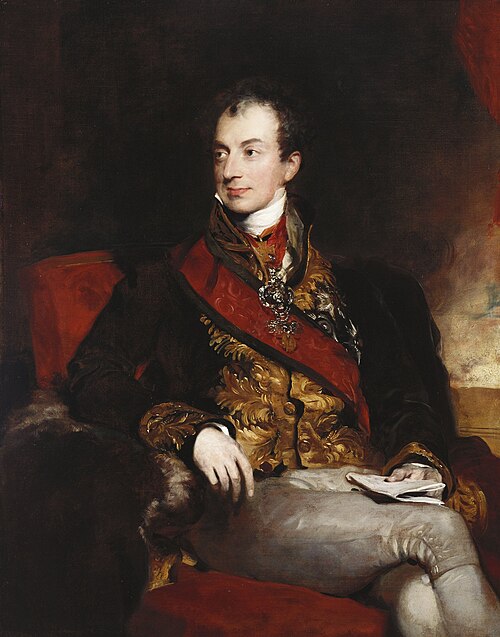 Prince Klemens von Metternich of the Austrian Empire
 -
 Prime Minister Benjamin Disraeli of the United Kingdom
 -
 Chancellor Otto von Bismarck of the German Empire
 -
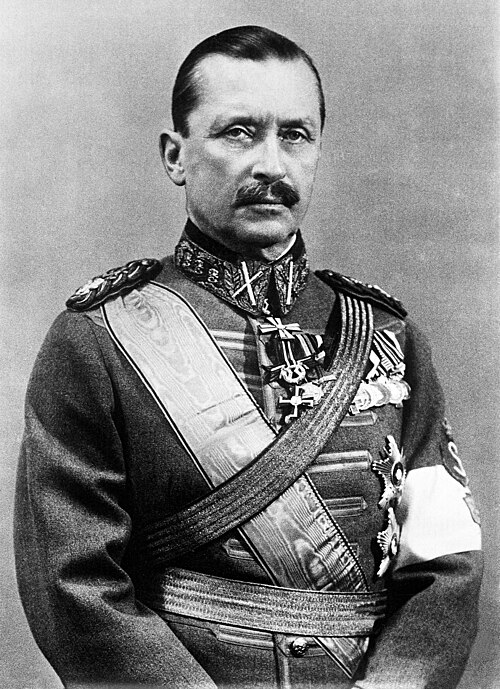 Marshal Carl Gustaf Emil Mannerheim of Finland
 -
 Regent Miklós Horthy of the Kingdom of Hungary
 -
 Prime Minister Winston Churchill of the United Kingdom
 -
 Chancellor Konrad Adenauer of Germany
 -
 Generalissimo Chiang Kai-shek of China
 -
 Prime Minister António de Oliveira Salazar of Portugal
 -
 General Charles de Gaulle of France
 -
 Generalissimo Francisco Franco of Spain
 -
 Prime Minister Lee Kuan Yew of Singapore
 -
 President Ronald Reagan of the United States
 -
 General Augusto Pinochet of Chile
 -
 Shah Mohammad Reza Pahlavi of the Imperial State of Iran
 -
 Prime Minister Atal Bihari Vajpayee of India
 -
 Prime Minister Margaret Thatcher of the United Kingdom
 -
 Prime Minister Shinzo Abe of Japan
.jpg/500px-Official_Presidential_portrait_of_John_Adams_(by_John_Trumbull,_circa_1792).jpg)

.jpg/500px-Bundesarchiv_Bild_146-2005-0057,_Otto_von_Bismarck_(cropped).jpg)

_%E2%80%93_Lisboa.jpg/500px-Ant%C3%B3nio_de_Oliveira_Salazar_portrait_(by_Manuel_Alves_San_Payo)_%E2%80%93_Lisboa.jpg)
-(c).jpg/500px-De_Gaulle-OWI_(cropped)-(c).jpg)
.jpg/500px-RETRATO_DEL_GRAL._FRANCISCO_FRANCO_BAHAMONDE_(adjusted_levels).jpg)

.jpg/500px-Atal_Bihari_Vajpayee_(crop_2).jpg)
.jpg/500px-Margaret_Thatcher_stock_portrait_(cropped).jpg)
Prominent intellectuals





.jpg/500px-Alexis_de_Tocqueville_(Th%C3%A9odore_Chass%C3%A9riau_-_Versailles).jpg)


.jpg/500px-Ernst_J%C3%BCnger_vers_1920_(cropped).jpg)
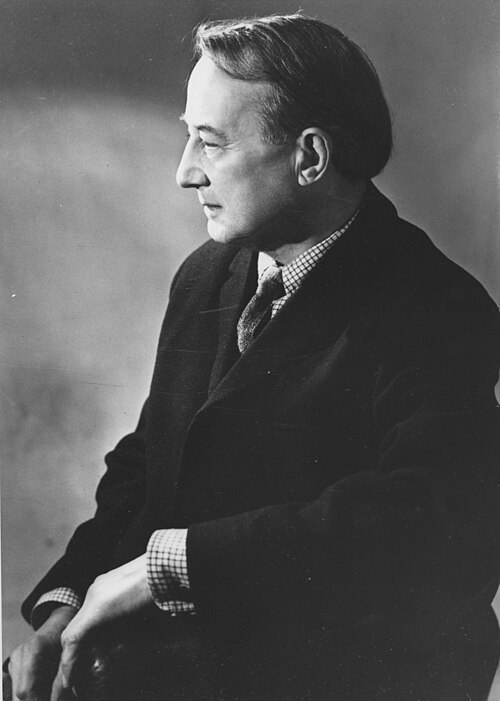


.jpg/500px-Yukio_Mishima,_1955_(cropped).jpg)


See also
National variants
- Conservatism in Australia
- Conservatism in Bangladesh
- Conservatism in Brazil
- Conservatism in Canada
- Conservatism in Colombia
- Conservatism in Germany
- Conservatism in Hong Kong
- Conservatism in India
- Conservatism in Japan
- Conservatism in Malaysia
- Conservatism in New Zealand
- Conservatism in Pakistan
- Conservatism in Peru
- Conservatism in Russia
- Conservatism in Serbia
- Conservatism in South Korea
- Conservatism in Taiwan
- Conservatism in Turkey
- Conservatism in the United Kingdom
- Conservatism in the United States
Ideological variants
- Authoritarian conservatism
- Black conservatism
- Corporatist conservatism
- Cultural conservatism
- Feminist conservatism
- Fiscal conservatism
- Green conservatism
- LGBT conservatism
- Liberal conservatism
- Libertarian conservatism
- Moderate conservatism
- National conservatism
- Neoconservatism
- Paternalistic conservatism
- Pragmatic conservatism
- Progressive conservatism
- Populist conservatism
- Social conservatism
- Traditionalist conservatism
- Ultraconservatism
Related topics
References
- ^ a b Hamilton, Andrew (2019). "Conservatism". Stanford Encyclopedia of Philosophy.
- ^ Encyclopædia Britannica: "Conservatism, political doctrine that emphasizes the value of traditional institutions and practices."
- ^ Heywood 2004, pp. 166–167: "In particular, conservatives have emphasized that society is held together by the maintenance of traditional institutions such as the family and by respect for an established culture, based upon religion, tradition and custom."
- ^ a b O'Hara, Kieron (2011). Conservatism. London: Reaktion Books. ISBN 978-1-86189-812-8.
It is clear that conservatives are influenced not only by their ideology, but also by the political context – no surprise there – but contexts vary and so, therefore, do conservatives.
- ^ Neill 2021, p. 2: "[C]onservatives favour the importance of ‘natural’ forms of authority, such as the monarchy, the church, the nation and the family."
- ^ Giubilei 2019, p. 37: "Conservatives aim to conserve the natural and fundamental elements of society, which are: private property, family, the homeland, and even religion […] the right-wing conservative is such not because he wants to conserve any regime and any institutions, but rather specific institutions and particular values."
- ^ a b c d e f Encyclopædia Britannica.
- ^ Fawcett 2020, pp. 3–18.
- ^ Muller 1997, p. 26.
- ^ Heywood 2017, p. 63.
- ^ Vincent, Andrew (2009). Modern Political Ideologies. John Wiley & Sons. p. 79. ISBN 978-1-4443-1105-1.
- ^ Nisbet 2002, p. 15.
- ^ a b Kaplan, Seth D.; Klein, Yitzhak (August 20, 2020). "The Rise of Conservatism in Israel". American Affairs Journal.
- ^ Heywood 2017, p. 74: "While contemporary conservatives are keen to demonstrate their commitment to democratic, particularly liberal-democratic, principles, there is a tradition within conservatism that has favoured authoritarian rule, especially in continental Europe."
- ^ Micklethwait, John; Wooldridge, Adrian (2004). The Right Nation: Conservative Power in America. Penguin Books Limited. ISBN 1594200203.
Americans who describe themselves as 'conservatives' nevertheless disagree on almost all the most fundamental questions of life. […] The Straussians at the Weekly Standard are philosophical elitists who believe that the masses need to be steered by an educated intelligentsia. The antitax crusaders who march behind Grover Norquist are populists who believe that pointy-headed intellectuals need to be given a good ducking.
- ^ Heywood 2017, p. 63: "The Canadian Conservative Party adopted the title Progressive Conservative precisely to distance itself from reactionary ideas."
- ^ Fawcett 2020, p. 59: "Conservatives can be radical or moderate. It depends on the state of the contest, on the stakes in the contest, and on which party is attacking, which defending."
- ^ Heywood 2017, pp. 65–73.
- ^ Scruton, Roger (2017). Conservatism: Ideas in Profile. Profile Books. pp. 137–138. ISBN 9781782833109.
- ^ Winthrop, Norman (1983). Liberal Democratic Theory and Its Critics. Croom Helm Ltd. pp. 163–166. ISBN 978-0-7099-2766-2.
- ^ Hogg Baron Hailsham of St. Marylebone, Quintin (1959). The Conservative Case. Penguin Books.
- ^ Heywood 2017, p. 67.
- ^ Fawcett 2020, p. 48.
- ^ Heywood 2004, p. 346.
- ^ a b Heywood 2017, p. 66.
- ^ Robin, Corey (January 8, 2012). "The Conservative Reaction". The Chronicle of Higher Education. Retrieved December 23, 2016.
- ^ Finseraas, Henning (2010). "What if Robin Hood is a social conservative? : How the political response to increasing inequality depends on party polarization". Socio-Economic Review. 8 (2): 283–306. doi:10.1093/ser/mwp012. ISSN 1475-1461.
- ^ Farrell, Henry (February 1, 2018). "Trump is a typical conservative". The Washington Post. Retrieved August 29, 2023.
- ^ Hazony, Yoram (2022). Conservatism: A Rediscovery. Swift Press. pp. 125–133. ISBN 9781800752344.
- ^ Gómez Dávila, Nicolás (2004) [1977]. "Escolios a un Texto Implicito". Archived from the original on November 17, 2006.
- ^ "hierarchy". Online Etymology Dictionary.
- ^ Giubilei 2019, pp. 18–19.
- ^ Ashford, Nigel; Davies, Stephen, eds. (2011). A Dictionary of Conservative and Libertarian Thought. Routledge. pp. 14–17. ISBN 978-0-415-67046-3.
- ^ a b Heywood 2017, p. 72.
- ^ Weber, Max (1922). Economy and Society. p. 215.
- ^ Reinhard, Bendix (1977). Max Weber: An Intellectual Portrait. University of California Press. p. 295. ISBN 978-0-520-03194-4.
- ^ Kojève 2020, pp. 14–28.
- ^ Nisbet, Robert A. (1993) [1966]. The Sociological Tradition. New York: Routledge. ISBN 978-1-56000-667-1.
- ^ Kojève 2020, p. xvii.
- ^ Arendt, Hannah (1954). Between Past and Future: Six Exercises in Political Thought. Viking Press. pp. 91–92.
- ^ Kojève 2020, pp. xviii–xix.
- ^ Heywood, Andrew (2003). Political Ideologies: An Introduction (3 ed.). Palgrave Macmillan. p. 74. ISBN 978-0-333-96178-0.
- ^ Lock, F. P. (2006). Edmund Burke. Volume II: 1784–1797. Clarendon Press. p. 585.
- ^ Stanlis, Peter J. (2009). Edmund Burke: Selected Writings and Speeches. Transaction Publishers. p. 18.
- ^ Auerbach 1959, p. 33.
- ^ Kopalyan, Nerses (2010). In Defense of Edmund Burke's Aristocratic Order. Lambert Academic Publishing. ISBN 9783843375436.
- ^ Auerbach 1959, pp. 37–40.
- ^ Auerbach 1959, pp. 52–54.
- ^ Auerbach 1959, p. 41.
- ^ Neill 2021, pp. 38–43.
- ^ Adams, Ian (2002). Political Ideology Today (2 ed.). Manchester University Press. p. 46.
- ^ Fawcett 2020, p. 20.
- ^ Fawcett 2020, pp. 25–30.
- ^ Fawcett 2020, pp. 5–7.
- ^ Pinto, António; Kallis, A. (2014). Rethinking Fascism and Dictatorship in Europe. Springer. ISBN 978-0-7190-2354-5.
- ^ Lewis, David. Illusions of Grandeur: Mosley, Fascism, and British Society, 1931-81. Manchester University Press. p. 218.
- ^ Freeden, Sargent & Stears 2013, pp. 294–297.
- ^ Kater, Michael H. (2008). Never Sang for Hitler: The Life and Times of Lotte Lehmann, 1888–1976. Cambridge University Press. p. 167. ISBN 978-0521873925.
- ^ a b Hoffmann, Stanley (1974). "The Vichy Circle of French Conservatives". Decline or Renewal? : France since 1930s. Viking Press. pp. 3–25. ISBN 0670262358.
- ^ a b Lojkó, Miklós (2005). Meddling in Middle Europe: Britain and the 'Lands Between, 1919–1925. Central European University Press. p. 180. ISBN 9637326235.
- ^ Sørensen, Gert; Mallett, Robert (2002). International Fascism,1919-45 (1st ed.). Routledge. p. 159. ISBN 978-0714682624.
- ^ Graham, Malbone W. (1929). "The "Dictatorship" in Yugoslavia". American Political Science Review. 23 (2): 449–459. doi:10.2307/1945227. JSTOR 1945227.
- ^ Howard J. Wiarda, Margaret MacLeish Mott. Catholic Roots and Democratic Flowers: Political Systems in Spain and Portugal. Westport, CT: Greenwood Publishing Group, 2001. p. 49
- ^ Bischof 2003, p. 26.
- ^ Stanley G. Payne. Fascism in Spain, 1923–1977. Madison: Wisconsin University Press, 1999. pp. 77–102.
- ^ a b Blamires, Cyprian (2006). World Fascism: A Historical Encyclopedia, Volume 1. ABC-CLIO. p. 21. ISBN 1576079406.
- ^ Pashanko, Dimitroff (1993). King of Mercy: Boris III of Bulgaria, 1894–1943. Wexford and Barrow. p. 243. ISBN 9781879593695.
- ^ Blinkhorn 1990, p. 10.
- ^ Tomasevich, Jozo (2001). War and Revolution in Yugoslavia, 1941–1945: Occupation and Collaboration. Stanford University Press. pp. 33–34. ISBN 978-0-8047-3615-2.
- ^ Butnaru, Ion C., The Silent Holocaust: Romania and Its Jews (1992), Praeger/Greenwood: Westport, pp. 62–63
- ^ a b Balfour, Michael (1964). The Kaiser and his Times. Houghton Mifflin. p. 409.
- ^ Kay, Hugh (1970). Salazar and Modern Portugal. Hawthorn Books. p. 68. ISBN 0413267008.
- ^ Seymour M. Lipset, "Social Stratification and 'Right-Wing Extremism'" British Journal of Sociology 10#4 (1959), pp. 346–382 on-line Archived April 22, 2022, at the Wayback Machine
- ^ Fawcett 2020, p. 263.
- ^ Remmer 1989, p. 10.
- ^ Remmer 1989, pp. 5–6.
- ^ a b von Kuehnelt-Leddihn, Erik (April 1, 1968). "Latin America In Perspective". Foundation for Economic Education.
- ^ Vock, Ido. "Bolivia: Soldiers storm presidential palace in apparent coup attempt". BBC. Archived from the original on June 27, 2024. Retrieved June 29, 2024.
- ^ Rachman, Gideon (2022). The Age of The Strongman. Vintage Publishing. ISBN 9781847926418.
- ^ Grigsby, Ellen (2008). Analyzing Politics. Cengage Learning. pp. 108–109, 112, 347. ISBN 978-0-495-50112-1.
- ^ a b McAnulla, Stuart (2006). British Politics: A Critical Introduction. A&C Black. p. 71. ISBN 978-0-8264-6155-1.
- ^ Giubilei 2019, p. 21.
- ^ Nisbet 2002, pp. 28–31.
- ^ Ribuffo, Leo P. (January 14, 2011). "Twenty Suggestions for Studying the Right Now that Studying the Right Is Trendy". Historically Speaking. 12 (1): 6. doi:10.1353/hsp.2011.0013.
- ^ Freeman, Robert M. (1999). Correctional Organization and Management: Public Policy Challenges, Behavior, and Structure. Elsevier. p. 109. ISBN 978-0-7506-9897-9.
- ^ Heywood 2017, p. 92.
- ^ Freeden, Sargent & Stears 2013, pp. 465–469.
- ^ Heywood 2017, p. 90.
- ^ Mandal, V.C. (2007). Dictionary of Public Administration. Sarup & Sons. p. 306. ISBN 978-81-7625-784-8.
- ^ "In Defense of Nations". National Review. September 13, 2018. Archived from the original on June 22, 2022. Retrieved October 29, 2018.
- ^ Heywood, Andrew (2013). Politics. Palgrave Macmillan. p. 34. ISBN 978-1-137-27244-7.
- ^ Heywood 2017, pp. 76–77.
- ^ Dunleavy, Patrick; et al. (2000). British Political Science: Fifty Years of Political Studies. Wiley-Blackwell. pp. 107–108.
- ^ Robert Blake (1967). Disraeli (2 ed.). Eyre & Spottiswoode. p. 524.
- ^ Russel, Trevor (1978). The Tory Party: Its Policies, Divisions and Future. Penguin. p. 167.
- ^ John Alden Nichols. Germany after Bismarck, the Caprivi era, 1890–1894: Issue 5. Harvard University Press, 1958. p. 260
- ^ a b Jonathan Lurie. William Howard Taft: The Travails of a Progressive Conservative. New York, New York, US: Cambridge University Press, 2012. p.196
- ^ Bischof, Günter, ed. (1995). Eisenhower: A Centenary Assessment. LSU Press. p. 98. ISBN 9780807119426.
- ^ a b Hugh Segal. The Right Balance. Victoria, British Columbia, Canada: Douglas & McIntyre, 2011. pp. 113–148
- ^ Bullock, Alan; Trombley, Stephen; Lawrie, Alf (1999). The New Fontana Dictionary of Modern Thought (3 ed.). HarperCollins Publishers. p. 729. ISBN 978-0-00-255871-6.
- ^ "reactionary". Merriam-Webster. May 9, 2023.
- ^ McLean & McMillan 2009.
- ^ Robin, Corey (2018). The Reactionary Mind: Conservatism from Edmund Burke to Donald Trump. Oxford University Press. ISBN 978-0190692001.
This book is about the second half of the story, the demarche, and the political ideas –– variously called conservative, reactionary, revanchist, counterrevolutionary –– that grow out of and give rise to it.
- ^ Lilla, Mark (2016). "Introduction". The Shipwrecked Mind: On Political Reaction. New York Review Books. pp. xii. ISBN 978-1590179024.
Reactionaries are not conservatives. This is the first thing to be understood about them. They are, in their way, just as radical as revolutionaries and just as firmly in the grip of historical imaginings.
- ^ Wilson, Francis (1951). The Case for Conservatism. Transaction Publishers. p. 2. ISBN 978-1412842341.
- ^ a b Siegfried, Heit; Johnston, Otto W. (1980). "German Romanticism: An Ideological Response to Napoleon". Consortium on Revolutionary Europe 1750–1850: Proceedings. Vol. 9. pp. 187–197.
- ^ King, Peter (2012). Reaction: Against the Modern World. Andrews UK Limited.
- ^ Ferraresi, Franco (1987). "Julius Evola: Tradition, Reaction, and the Radical Right". European Journal of Sociology. 28 (1): 107–151. doi:10.1017/S0003975600005415.
- ^ Campbell, Francis Stuart. "Credo of a Reactionary". The American Mercury.
- ^ Lukacs, John (2000). Confessions of an Original Sinner. St. Augustine's Press. ISBN 9781890318123.
- ^ Andersen, Margaret L., Taylor, Howard Francis. Sociology: Understanding a Diverse Society Archived December 5, 2022, at the Wayback Machine Cengage Learning, 4th Ed. (2005), pp. 469–470. ISBN 978-0-534-61716-5
- ^ "So Christians do not approve of the taking of illegal drugs, including most recreational drugs, especially those which can alter the mind and make people incapable of praying or being alert to God". Archived from the original on October 20, 2017.
- ^ Petersen, David L. (2005). "Genesis and Family Values". Journal of Biblical Literature. 124 (1).
- ^ Caciagli, Mario; Robeck, Cecil M; Yong, Amos (2008). "Christian democracy". The Cambridge History of Twentieth-Century Political Thought. Cambridge University Press. pp. 165–180. ISBN 9781139053600.
- ^ Riff, Michael (1987). Dictionary of Modern Political Ideologies. Manchester University Press. p. 34. ISBN 0-7190-3289-X.
- ^ a b c Kselman, Thomas; Buttigieg, Thomas, eds. (2003). European Christian Democracy: Historical Legacies and Comparative Perspectives. University of Notre Dame Press. p. 122.
- ^ Layton-Henry, Zig, ed. (1982). Conservative Politics in Western Europe. St. Martin's Press. pp. 131–133. ISBN 9780312164188.
- ^ Hanley, David, ed. (1994). Christian Democracy in Europe : A Comparative Perspective. Pinter Publishers. pp. 56–57. ISBN 9781855670860.
- ^ Heywood 2017, p. 69.
- ^ The Next Digital Divide Archived June 6, 2011, at the Wayback Machine (utne article)
- ^ "The World & I". The World & I. Vol. 1, no. 5. Washington Times Corp. 1986. Retrieved August 19, 2011.
militant atheism was incompatible with conservatism
- ^ Peter Davies; Derek Lynch (2002). The Routledge Companion to Fascism and the Far Right. Psychology Press. ISBN 978-0-415-21494-0.
In addition, conservative Christians often endorsed far-right regimes as the lesser of two evils, especially when confronted with militant atheism in the USSR.
- ^ Peter L. Berger; Grace Davie; Effie Fokas (2008). Religious America, Secular Europe?: A Theme and Variations. Ashgate Publishing. ISBN 978-0-7546-6011-8. Retrieved August 19, 2011.
If anything the reverse is true: moral conservatives continue to oppose secular liberals on a wide range of issues.
- ^ Frohnen 2006, pp. 870–875.
- ^ Cram, Ralph Adams (1936). "Invitation to Monarchy".
- ^ Lind, William S. (2006). "The Prussian Monarchy Stuff". LewRockwell.com. Center for Libertarian Studies.
- ^ Leslie Wayne (January 6, 2018). "What's the Cure for Ailing Nations? More Kings and Queens, Monarchists Say". The New York Times.
- ^ Ware 1996, pp. 25–26.
- ^ Kelly, P. J. (2013). The Politics Book. DK. pp. 23–24. ISBN 978-1-4093-6445-0. OCLC 828097386.
- ^ Harari, Yuval Noah (2015). Sapiens: A Brief History of Humankind. Penguin Random House UK. p. 219. ISBN 978-0-09-959008-8.
- ^ Reilly, Michael (October 17, 2021). "Taiwan: Will it retain independence or be taken over?". The Island Online. Archived from the original on November 12, 2021. Retrieved May 30, 2024.
- ^ Lu, Xing (2004). Rhetoric of the Chinese Cultural Revolution: The Impact on Chinese Thought. p. 2.
- ^ Yin, Hongbiao (November 1996). "Ideological and political tendencies of factions in the red guard movement". Journal of Contemporary China. 5 (13): 269–280. doi:10.1080/10670569608724255. Retrieved June 11, 2023.
- ^ "The Communist Party is redefining what it means to be Chinese". The Economist. August 17, 2017. Retrieved May 30, 2024.
- ^ Schneider, David K. (2016). "China's New Legalism". The National Interest (143): 19–25. JSTOR 26557304.
- ^ Johnson, Ian (October 18, 2017). "Forget Marx and Mao. Chinese City Honors Once-Banned Confucian". The New York Times. Retrieved May 30, 2024.
- ^ Melvin, Sheila (August 29, 2007). "Yu Dan and China's Return to Confucius". The New York Times. Archived from the original on September 8, 2014. Retrieved August 18, 2024.
- ^ Lyons, N.S. (October 11, 2021). "The Triumph and Terror of Wang Huning". Palladium. Retrieved June 19, 2024.
- ^ Zi, Yang (July 6, 2016). "Xi Jinping and China's Traditionalist Restoration". The Jamestown Foundation. Retrieved June 22, 2024.
- ^ Cai, Jane (June 12, 2023). "How China's Xi Jinping promotes mix of Marxism and traditional culture to further Communist Party and 'Chinese dream'". South China Morning Post. Archived from the original on June 12, 2023. Retrieved June 22, 2024.
- ^ Witt, Michael A.; Redding, Gordon (2013). "China: Authoritarian Capitalism". The Oxford Handbook of Asian Business Systems. OUP Oxford. ISBN 9780199654925.
- ^ Bramall, Chris (2008). Chinese Economic Development. Routledge. ISBN 978-1-134-19051-5.
- ^ "Right wing politics in India, by Archana Venkatesh". osu.edu. October 1, 2019. Retrieved March 14, 2024.
- ^ Rao, Jaithirth (2019). The Indian Conservative : A History of Indian Right-Wing Thought. Juggernaut Press. p. 280. ISBN 978-9353450625.
- ^ "BJP v CCP: The rise of the world's biggest political party". Sydney Morning Herald. October 16, 2022. Archived from the original on July 1, 2023. Retrieved July 1, 2023.
- ^ "How BJP became world's largest political party in 4 decades". The Times of India. April 16, 2022. Archived from the original on June 28, 2023. Retrieved July 1, 2023.
- ^ "Narendra Modi's Message to America". National Review. June 23, 2022. Archived from the original on July 1, 2023. Retrieved July 1, 2023.
His Bharatiya Janata Party (BJP, or "Indian People's Party") is on the right of the Indian political spectrum. It is the largest political party in the world, with more members than the Chinese Communist Party, and supports Hindu nationalist ideology and economic development.
- ^ Abhilasha Kumari; Sabina Kidwai (1998). Crossing the Sacred Line: Women's Search for Political Power. Orient Blackswan. p. 83. ISBN 978-81-250-1434-8.
- ^ Chatterji, Angana P.; Hansen, Thomas Blom; Jaffrelot, Christophe (2019). Majoritarian State: How Hindu Nationalism Is Changing India. Oxford University Press. pp. 100–130. ISBN 978-0-19-007817-1. Archived from the original on April 14, 2023. Retrieved June 22, 2024.
- ^ Hansen, Thomas Blom (2001). The Saffron Wave: Democracy and Hindu Nationalism in Modern India. Princeton University Press. ISBN 9781400803422.
- ^ Cyrus Ghani; Sīrūs Ghanī (January 6, 2001). Iran and the Rise of the Reza Shah: From Qajar Collapse to Pahlavi Power. I.B.Tauris. pp. 147–. ISBN 978-1-86064-629-4.
- ^ "1979: Iran and America". Encyclopedia Britannica.
- ^ Afkhami, Gholam-Reza (2009). The Life and Times of the Shah. University of California Press. ISBN 978-0-520-94216-5. Archived from the original on January 19, 2023. Retrieved July 2, 2024.
- ^ Masoud Kazemzadeh (2008), "Intra-Elite Factionalism and the 2004 Majles Elections in Iran", Middle Eastern Studies, 44 (2): 189–214, doi:10.1080/00263200701874867
- ^ Shindler, Colin (2015). The Rise of the Israeli Right: from Odessa to Hebron. Cambridge University Press. ISBN 9780521193788.
- ^ Kershner, Isabel; Kingsley, Patrick (November 1, 2022). "Israel Election: Exit Polls Show Netanyahu With Edge in Israel's Election". The New York Times. ISSN 0362-4331. Retrieved November 6, 2022.
- ^ Maltz, Judy (November 3, 2022). "Will Israel Become a Theocracy? Religious Parties Are Election's Biggest Winners". Haaretz. Retrieved November 6, 2022.
- ^ Thayer, N.B. (2015). How the Conservatives Rule Japan. Princeton University Press. ISBN 9781400871414.
- ^ Pempel, T. J. (1982). Policy and Politics in Japan: Creative Conservatism. Temple University Press. ISBN 978-0-87722-250-7.
- ^ Heywood 2017, pp. 63–64.
- ^ "Japan as a One-Party State: The Future for Koizumi and Beyond | Wilson Center". February 15, 2021. Archived from the original on February 15, 2021. Retrieved April 19, 2024.
- ^ a b "Conservatism - Ideology, Politics, Principles | Britannica". www.britannica.com. June 26, 2024. Retrieved August 18, 2024.
- ^ Mounsey, Augustus (1879). The Satsuma Rebellion: An Episode of Modern Japanese History.
- ^ "1930s Japan: A Time of Turmoil and Transformation". Wrightwood 659. Retrieved May 27, 2024.
- ^ Sieg, Linda (November 19, 2019). "Mission unaccomplished — Abe's drive to revise pacifist Constitution". The Japan Times. Retrieved April 18, 2024.
- ^ "5 Things to know about Japan's emperor and imperial family". The Seattle Times. August 8, 2016. Retrieved April 19, 2024.
- ^ Todd, Emmanuel (1985). The Explanation of Ideology: Family Structures and Social Systems. Blackwell.
- ^ "Overview of the Public Opinion Survey on Diplomacy (page 4)" (PDF). Public Relations Office, Government of Japan. December 2017. Archived (PDF) from the original on March 1, 2021.
- ^ McClain, James L. (2002). Japan: A Modern History. W. W. Norton & Company. p. 390. ISBN 0393041565.
- ^ Waddington, Lorna L. (2007). "The Anti-Komintern and Nazi Anti-Bolshevik Propaganda in the 1930s". Journal of Contemporary History. 42 (4): 573–594. doi:10.1177/0022009407081488.
- ^ Kapur, Nick (2018). "The Empire Strikes Back? : The 1968 Meiji Centennial Celebrations and the Revival of Japanese Nationalism". Japanese Studies. 38 (3): 307. doi:10.1080/10371397.2018.1543533.
- ^ Kapur, Nick (2018). Japan at the Crossroads: Conflict and Compromise after Anpo. Harvard University Press. p. 10. ISBN 978-0674984424.
- ^ "Abe's reshuffle promotes right-wingers". koreajoongangdaily.joins.com. September 4, 2014. Retrieved April 19, 2024.
- ^ "The Western World". WorldAtlas. April 26, 2021.
- ^ Inose, Naoki; Sato, Hiroaki (2012). Persona: A Biography of Yukio Mishima. Stone Bridge Press. pp. 521–522. ISBN 978-1-61172-524-7.
- ^ Hussin Mutalib (2004). Parties and Politics. A Study of Opposition Parties and the PAP in Singapore. Marshall Cavendish Adademic. p. 20. ISBN 981-210-408-9.
- ^ Tin Seng, Lim. "Shared Values". www.nlb.gov.sg. National Library Board. Archived from the original on January 8, 2024. Retrieved January 8, 2024.
- ^ Oliver, Steven; Ostwald, Kai (2018). "Explaining Elections in Singapore: Dominant Party Resilience and Valence Politics". Journal of East Asian Studies. 18 (2): 129–156. doi:10.1017/jea.2018.15.
- ^ Time for Singapore to Grow Up, Bloomberg News, March 29, 2015
- ^ Lee Kuan Yew: Singapore's 'founding father' dies in hospital aged 91 after suffering with pneumonia, Daily Mirror, 22 March 2015
- ^ 5 Quotes From Singapore's Lee Kuan Yew, 23 March 2015
- ^ Kim, Byung-Kook; Vogel, E. F. (2013). The Park Chung Hee Era: The Transformation of South Korea. Harvard University Press. pp. 200–205. ISBN 978-0-674-06106-4.
- ^ von Kuehnelt-Leddihn 1943, p. 124.
- ^ Nisbet 2002, pp. 34–36.
- ^ Neill 2021, pp. 70–76.
- ^ Blinkhorn 1990, p. 7.
- ^ Heywood 2017, p. 82.
- ^ "Nationalism and Europe's Turn to the Right". IWM WEBSITE. Retrieved June 23, 2024.
- ^ Gordon Craig, "The System of Alliances and the Balance of Power." in J.P.T. Bury, ed., The New Cambridge Modern History, Vol. 10: The Zenith of European Power, 1830–70 (1960), p. 266.
- ^ von Kuehnelt-Leddihn 1943, pp. 139–140.
- ^ Brook-Shepherd, Gordon (1996). The Austrians: A Thousand-Year Odyssey. HarperCollins. p. 283. ISBN 0-00-638255-X.
- ^ Pyrah, Robert (2007). "Enacting Encyclicals? Cultural Politics and 'Clerical Fascism' in Austria, 1933–1938". Totalitarian Movements and Political Religions. 8 (2): 369–382. doi:10.1080/14690760701321338 – via Taylor & Francis Online.
- ^ Congdon, Lee (March 26, 2012). "Kuehnelt-Leddihn and American Conservatism". Crisis Magazine. Retrieved December 23, 2023.
- ^ Binder, Dieter A. (2009). The Christian Corporatist State. Routledge. p. 73. ISBN 9781351315203.
- ^ Bischof 2003.
- ^ von Kuehnelt-Leddihn 1943, p. 210.
- ^ Zoch, Irene (February 22, 2004). "Habsburgs demand return of estates seized by Nazis in 1938". The Daily Telegraph. Archived from the original on January 12, 2022. Retrieved August 18, 2024.
- ^ Dan van der Vat (July 4, 2011). "Otto von Habsburg obituary". The Guardian. Archived from the original on September 30, 2013. Retrieved August 18, 2024.
- ^ Jelavich, Barbara (1989). Modern Austria: Empire & Republic 1815–1986. Cambridge University Press. ISBN 0-521-31625-1.
- ^ "Sebastian Kurz, der "junge Metternich"". kurier.at (in German). January 16, 2014. Archived from the original on May 18, 2021. Retrieved December 15, 2023.
- ^ Annesley 2005, p. 124.
- ^ Zig Layton-Henry, ed. Conservative Politics in Western Europe (St. Martin's Press, 1982)
- ^ Paul Lucardie and Hans-Martien Ten Napel, "Between confessionalism and liberal conservatism: the Christian Democratic parties of Belgium and the Netherlands Archived June 23, 2020, at the Wayback Machine." in David Hanley, ed. Christian Democracy in Europe: A Comparative Perspective (London: Pinter 1994) pp. 51–70
- ^ Philippe Siuberski (October 7, 2014). "Belgium gets new government with Michel as PM". Yahoo News. AFP. Retrieved November 7, 2014.
- ^ a b Skov, Christian Egander. "Konservatisme". danmarkshistorien.dk (in Danish). Retrieved July 17, 2023.
- ^ euconedit (September 17, 2023). "Nordic Conservative Homecoming". europeanconservative.com. Retrieved December 3, 2023.
- ^ Annesley 2005, p. 68.
- ^ Kosiara-Pedersen, Karina (July 10, 2023). "Det Konservative Folkeparti". Den Store Danske (in Danish). Retrieved July 17, 2023.
- ^ Abildlund, Andreas (October 9, 2015). "Den konservative højrefløj er gået i udbrud". Information (in Danish).
- ^ Folketinget: "Partiernes historie" Archived March 13, 2020, at the Wayback Machine
- ^ Det Konservative Folkeparti: "Vi elsker Kongehuset" Archived March 19, 2022, at the Wayback Machine
- ^ Siaroff 2000, p. 243.
- ^ Helsingin Sanomat, October 11, 2004, International poll: Anti-Russian sentiment runs very strong in Finland. Only Kosovo has more negative attitude
- ^ Jussi M. Hanhimäki (1997). Containing Coexistence: America, Russia, and the "Finnish Solution". Kent State UP. p. 4. ISBN 9780873385589.
- ^ The Finnish Civil War 1918: History, Memory, Legacy. BRILL. 2014. p. 166. ISBN 978-90-04-28071-7.
- ^ Levitsky, Steven; Ziblatt, Daniel (2018). How Democracies Die. Crown. ISBN 9781524762933.
- ^ Woodwards, E. L. (1963). Three Studies In European Conservatism: Metternich, Guizot, The Catholic Church In The Nineteenth Century. Archon Books. ISBN 9780714615295.
- ^ Fawcett 2020, pp. 20–21.
- ^ Heywood 2017, p. 75.
- ^ Roger Price (2005). A Concise History of France. Cambridge UP. p. 225. ISBN 978-0-521-84480-2.
- ^ Judaken, Jonathan (2005). "Action Française". In Richard S. Levy (ed.). Antisemitism: A Historical Encyclopedia of Prejudice and Persecution. ABC-CLIO. p. 1. ISBN 978-1-85109-439-4.
- ^ Larkin, Maurice (2002). Religion, Politics and Preferment in France since 1890: La Belle Epoque and its Legacy. Cambridge University Press. ISBN 0521522706.
- ^ Viereck, Peter (2005). Conservatism Revisited: The Revolt Against Ideology. Transaction Publishers. p. 205. ISBN 978-0-7658-0576-8.
- ^ Richard Vinen, "The Parti républicain de la Liberté and the Reconstruction of French Conservatism, 1944–1951", French History (1993) 7#2 pp. 183–204
- ^ Ware 1996, p. 32.
- ^ Hauss, Charles (2008). Comparative Politics: Domestic Responses to Global Challenges. Cengage Learning. p. 116. ISBN 978-0-495-50109-1.
- ^ "Eric Zemmour: Meet the right-wing TV pundit set to shake up France's presidential race". euronews.com. October 13, 2021. Retrieved October 30, 2021.
- ^ Liedke, Herbert R. (1958). "The German Romanticists and Karl Ludwig von Haller's Doctrines of European Restoration". The Journal of English and Germanic Philology. 57 (3): 371–393. ISSN 0363-6941. JSTOR 27707117.
- ^ Tingsten, Herbert (1966). "De kontrarevolutionära idéerna i Tyskland". De konservativa idéerna. Aldus/Bonniers. pp. 42–73. OCLC 1166587654. Retrieved August 29, 2023.
- ^ Eyck, Erich (1964). Bismarck and the German Empire. pp. 58–68.
- ^ Steinberg, Jonathan (2011). Bismarck: A Life. Oxford University Press. pp. 416–417. ISBN 978-0-19-978252-9.
- ^ Kersbergen, Kees van; Vis, Barbara (2013). Comparative Welfare State Politics: Development, Opportunities, and Reform. Cambridge UP. p. 38. ISBN 978-1-107-65247-7.
- ^ Moore, Robert Laurence; Vaudagna, Maurizio (2003). The American Century in Europe. Cornell University Press. p. 226. ISBN 978-0-8014-4075-5.
- ^ Frankel, Richard (2003). "From the Beer Halls to the Halls of Power: The Cult of Bismarck and the Legitimization of a New German Right, 1898–1945". German Studies Review. 26 (3): 543–560. doi:10.2307/1432746. JSTOR 1432746.
- ^ Stern, Fritz (1961). The Politics of Cultural Despair: A Study in the Rise of the Germanic Ideology. University of California Press. ISBN 978-0520026261.
- ^ Woods, Roger (1996). The Conservative Revolution in the Weimar Republic. St. Martin's Press. p. 29. ISBN 0-333-65014-X.
- ^ Ringer, Fritz K. (1990). The Decline of the German Mandarins: The German Academic Community, 1890–1933. University Press of New England. p. 201.
- ^ Shirer, William L. (1960). The Rise and Fall of the Third Reich. New York City: Simon and Schuster. p. 372. ISBN 0671624202.
- ^ Sally, Razeen (2002). Classical Liberalism and International Economic Order. Routledge. p. 106. ISBN 0-415-16493-1.
- ^ Gregg, Samuel (2010). Wilhelm Röpke's Political Economy. Edward Elgar Publishing Limited. p. 29. ISBN 978-1-84844-222-1.
- ^ "The Maturing of a Humane Economist Modern Age". March 23, 2007. Archived from the original on March 23, 2007. Retrieved July 11, 2021.
- ^ Michael John Williams (February 12, 2020). "The German Center Does Not Hold". New Atlanticist. Archived from the original on June 20, 2020. Retrieved March 7, 2020.
- ^ "Germany bewildered about how to halt the rise of the AfD". POLITICO. October 3, 2023. Retrieved March 14, 2024.
- ^ Penniman, Howard Rae. Greece at the polls: the national elections of 1974 and 1977. Washington: American Enterprise Institute, 1981. ISBN 978-0-8447-3434-7 pp. 49–59
- ^ "Ανεξάρτητοι Έλληνες – 404 error". anexartitoiellines.gr. Archived from the original on August 4, 2020. Retrieved August 30, 2020.
- ^ Deák, István (1963). "Hungary". In Roger, Hans (ed.). The European Right: A Historical Profile. p. 364.
- ^ "Hungary: One-party rule". The Guardian (editorial). London. January 5, 2011.
- ^ Castle, Stephen (April 22, 2002). "Populist premier set for defeat in Hungarian election". The Independent. London. Archived from the original on August 17, 2022.
- ^ "A populist's lament: Viktor Orbán has made Hungary a ripe target for doubters", Politics.hu, Hungary, November 22, 2011, archived from the original on November 16, 2017, retrieved September 3, 2018
- ^ Grofman, Bernard and Lijpart, Arend, editors. The evolution of electoral and party systems in the Nordic countries. New York: Agathon Press, 2002. "The Icelandic electoral system 1844–1999" by Olafur Th. Hardarson ISBN 978-0-87586-138-8, pp. 107–108
- ^ Parlato, Giuseppe (2008). La sinistra fascista: storia di un progetto mancato [Fascist left: history of a failed project.] (in Italian). Il Mulino Ricerca. ISBN 978-8815127051.
- ^ De Grand, Alexander (2000). Italian Fascism: its Origins and Development (3rd ed.). University of Nebraska Press. p. 145.
- ^ Sternhill, Zeev (1998). "Fascism". In Griffin, Roger (ed.). International Fascism: Theories, Causes, and the New Consensus. London, England; New York: Arnold Publishers. p. 32.
- ^ Andrain, Charles; Apter, David (1994). Political Protest and Social Change: Analyzing Politics. Springer. p. 53. ISBN 9780230377004.
- ^ Fella, Stefano; Ruzza, Carlo (2009). Re-inventing the Italian Right: Territorial Politics, Populism and 'Post-Fascism'. Routledge.
- ^ Bocca, Giorgio (1981). Storia della Repubblica italiana (in Italian). Rizzoli. pp. 14–16.
- ^ Pepijn Corduwener, The Problem of Democracy in Postwar Europe: Political Actors and the Formation of the Postwar Model of Democracy in France, West Germany and Italy (Taylor & Francis, 2016), pp. 15, 17, 27, 40, 42.
- ^ Mack Smith, Denis (1997). Modern Italy: A Political History. pp. 491––496.
- ^ Daniele Albertazzi, et al., eds. Resisting the tide: cultures of opposition under Berlusconi (2001–06) (Bloomsbury Publishing USA, 2009).
- ^ Antonino Castaldo, and Luca Verzichelli. "Technocratic populism in Italy after Berlusconi: The trendsetter and his disciples." Politics and Governance 8.4 (2020): 485–495.
- ^ Urwin, Derek W. A Dictionary of European History and Politics, 1945–1995. London: Pearson, 1996. ISBN 978-0-582-25874-7 p. 76
- ^ "Netherlands: Geert Wilders, the Dutch "Cricket"". March 21, 2013. Archived from the original on January 26, 2022. Retrieved December 23, 2023.
- ^ Heidar, Knut (2001). Norway: Elites on Trial. Boulder Westview Press. pp. 66–67. ISBN 978-0-8133-3200-0.
- ^ Francis Sejersted Høyrebølgen Archived December 19, 2013, at the Wayback Machine Store norske leksikon. Retrieved December 18, 2013 (in Norwegian)
- ^ a b c d e Dudek, Antoni (2023). Historia polityczna Polski 1989–2023 [Polish political history 1989–2023] (in Polish). Warsaw: Wydawnictwo Naukowe Scholar. ISBN 978-83-67450-66-9.
- ^ a b Kaczyński, Jarosław (September 30, 2011). Polska naszych marzeń. Drukarnia Akapit. ISBN 9788378250005.
- ^ a b c Cat-Mackiewicz, Stanisław (2012). Historia Polski od 11 listopada 1918 do 17 września 1939. Universitas. ISBN 97883-242-3740-1.
- ^ Dmowski, Roman (1903). Myśli Nowoczesnego Polaka [The Notions of a Modern Pole] (in Polish). Capital. ISBN 978-83-64037-04-7.
- ^ "'Retraditionalization' and Sacralization of 'Worldview Matters': The Politics of Values in Eastern Europe". ecpr.eu. Retrieved May 27, 2024.
- ^ Sergei Prozorov, "Russian conservatism in the Putin presidency: The dispersion of a hegemonic discourse." Journal of Political Ideologies 10.2 (2005): 121–143 online Archived June 6, 2021, at the Wayback Machine.
- ^ Tiounine, Margot; Hannen, Tom, eds. (June 27, 2019). "Liberalism 'has outlived its purpose' — President Putin speaks exclusively to the Financial Times". Financial Times. Retrieved October 14, 2023.
- ^ Marlene Laruelle, "The Izborsky Club, or the new conservative avant‐garde in Russia." The Russian Review 75.4 (2016): 626–644.
- ^ Sirke Mäkinen, "Surkovian narrative on the future of Russia: making Russia a world leader." Journal of Communist Studies and Transition Politics 27#2 (2011): 143–165.
- ^ Michel, Casey (February 9, 2017). "How Russia Became the Leader of the Global Christian Right". Politico.
- ^ Paterson, Tom (November 9, 2021). "Why Putin Goes to Church". The Cambridge Language Collective.
- ^ Mark Woods, "How the Russian Orthodox Church is backing Vladimir Putin's new world order" Christian Today March 3, 2016 Archived March 4, 2016, at the Wayback Machine
- ^ Andrew Higgins, "In Expanding Russian Influence, Faith Combines With Firepower", New York Times Sept 13, 2016 Archived November 10, 2019, at the Wayback Machine
- ^ Rodhe, Edvard (1942). Geijer och samhället : en studie i svensk tradition. p. 131. OCLC 873899895. Retrieved December 17, 2023.
- ^ Smart, Ninian (1964). "Reviewed work: Philosophy of Religion, Christopher Jacob Boström, Victor E. Beck, Robert N. Beck". The Philosophical Quarterly. 14 (57): 381. doi:10.2307/2217786. JSTOR 2217786.
- ^ Söderbaum, Jakob E:son (2020). Modern konservatism. Borås: Recito. p. 289. ISBN 978-91-7765-497-1.
- ^ Abrahamsson, Christian (December 18, 2023). "Den organiska statsteorin". Radikalkonservatismens rötter – Rudolf Kjellén och 1914 års idéer. Timbro. pp. 43–56. ISBN 978-91-7703-243-4. OCLC 1241263181. Retrieved December 17, 2023.
- ^ Isaksson, Anders (1985). Per Albin. Stockholm: Wahlström & Widstrand. p. 184. ISBN 978-91-46-15026-8.
- ^ Söderbaum, Jakob E:son (October 4, 2022). "KD är det mest konservativa partiet". strengnastidning.se. Retrieved December 17, 2023.
- ^ Uvell, Markus (2018). Bakslaget: radikalt etablissemang, konservativa medborgare. Stockholm: Timbro förlag. ISBN 978-91-7703-129-1.
- ^ Cornucopia (June 21, 2018). "Yougov: SD största parti med 28.5% av väljarstödet". Retrieved December 23, 2023.
- ^ Majlard, Jan (November 15, 2019). "SD största parti i ny mätning". Svenska Dagbladet (in Swedish). ISSN 1101-2412. Retrieved December 23, 2023.
- ^ SVT Nyheter (March 21, 2019). "KD-ledaren öppnar för SD-samarbete". SVT Nyheter (in Swedish). Retrieved December 17, 2023.
- ^ SVT Nyheter (October 14, 2022). "L, KD och M ska ingå i regeringen – SD får stort inflytande". SVT Nyheter (in Swedish). Retrieved December 17, 2023.
- ^ Oscarsson, Tea (October 14, 2022). "'Tidöavtalet' – här är viktigaste punkterna". Svenska Dagbladet (in Swedish). ISSN 1101-2412. Retrieved December 17, 2023.
- ^ Ziebertz, Hans-Georg (2011). How Teachers in Europe Teach Religion: An International Empirical Study: An International Empirical Study in 16 Countries. Lit Verlag. p. 237. ISBN 978-3-643-10043-6.
- ^ Juravich, Tom (2000). Ravenswood: The Steelworkers' Victory and the Revival of American Labor. Cornell University Press. p. 133. ISBN 978-0-8014-8666-1.
- ^ a b Schwok, René (2009). Switzerland – European Union: An Impossible Membership?. Peter Lang. p. 143. ISBN 978-90-5201-576-7.
- ^ Siaroff 2000, p. 446.
- ^ The Stephen Roth Institute. Anti-semitism worldwide Lincoln: University of Nebraska Press, 2002 ISBN 0-8032-5943-3 p. 120
- ^ Hainsworth, Paul (2008). The Extreme Right in Western Europe. Routledge. pp. 44 and 74. ISBN 978-0-415-39682-0.
- ^ "Conservatism". encyclopediaofukraine.com. Retrieved February 15, 2022.
- ^ a b c Sack, J. J. (1987). "The Memory of Burke and the Memory of Pitt: English Conservatism Confronts Its Past, 1806–1829". The Historical Journal. 30 (3): 623–640. doi:10.1017/S0018246X00020914.
- ^ Gregory Claeys, "Political Thought", in Chris Williams, ed., A Companion to 19th-Century Britain (2006). p. 195
- ^ Charles Richmond; Paul Smith (1998). The Self-Fashioning of Disraeli, 1818–1851. Cambridge UP. p. 162. ISBN 978-0-521-49729-9.
- ^ Auerbach 1959, pp. 39–40.
- ^ Eccleshall 1990, p. 83
- ^ Eccleshall 1990, p. 90
- ^ Eccleshall 1990, p. 121
- ^ Eccleshall 1990, pp. 6–7
- ^ Stuart Ball, "Baldwin, Stanley, first Earl Baldwin of Bewdley (1867–1947)", Oxford Dictionary of National Biography 2004.
- ^ Ross McKibbin, Parties and people: England, 1914–1951 (Oxford, 2010).
- ^ Garside, W.R.; Greaves, J.I. (1997). "Rationalisation and Britain's industrial Malaise: The interwar years revisited Archived February 25, 2021, at the Wayback Machine". Journal of European Economic History. 26 (1): 37–68.
- ^ McLean & McMillan 2009, p. 364.
- ^ Remmer 1989.
- ^ Middlebrook, Kevin J. Conservative parties, the right, and democracy in Latin America. Baltimore: The Johns Hopkins University Press, 2000 ISBN 978-0-8018-6386-8 pp. 1–52.
- ^ Fierlbeck, Katherine. Political thought in Canada: an intellectual history. Toronto: University of Toronto Press, 2006. ISBN 978-1-55111-711-9 pp. 87–88
- ^ Freyre, Gilberto (1943). "Em Torno Do Problema De Uma Cultura Brasileira". Philosophy and Phenomenological Research. 4 (2): 167–171. doi:10.2307/2103064. JSTOR 2103064.
- ^ Schipani, Andres (January 6, 2020). "Royalists pine for days of empire in Bolsonaro's Brazil". Los Angeles Times.
- ^ Gonzalez, Eduardo (December 6, 2011). "Brazil Shatters Its Wall of Silence on the Past". International Center for Transitional Justice. Retrieved March 18, 2012.
- ^ Boulos, Guilherme. "Onda Conservadora". Folha de S. Paulo. Retrieved January 4, 2024.
- ^ "Lula lidera, e Bolsonaro se consolida em 2º, aponta Datafolha". Poder. December 2, 2017. Retrieved December 7, 2017.
- ^ Oppenheim, Lois Hecht (2007). Politics in Chile: Socialism, Authoritarianism, and Market Democracy. Boulder, CO: Westview Press. ISBN 978-0-8133-4227-6
- ^ Guy-Meakin, Amelia (September 17, 2012). "Augusto Pinochet and the Support of Chilean Right-Wing Women". E-International Relations.
- ^ Valdes, Juan Gabriel (August 17, 1995). Pinochet's Economists: The Chicago School of Economics in Chile. Cambridge University Press. p. 81. ISBN 978-0-521-45146-8.
- ^ Osterling, Jorge P. (1989). Democracy in Colombia: Clientelist Politics and Guerrilla Warfare. Transaction Publishers. p. 180. ISBN 978-0-88738-229-1.
- ^ Ian Adams (2001). Political ideology today. p. 32.
- ^ "Ernest Manning and George Grant: Who is the Real Conservative" (2004), Ron Dart.
- ^ Louis Hartz (1964). The Founding of New Societies: Studies in the History of the United States, Latin America, South Africa, Canada, and Australia.
- ^ Lori G. Beaman (2006). Religion and Canadian Society: Traditions, Transitions, and Innovations. Canadian Scholars' Press. p. 230. ISBN 978-1-55130-306-2.
- ^ Grant, George (2005) [1965]. Lament for a Nation: The Defeat of Canadian Nationalism. McGill-Queen's Press. ISBN 9780773530102.
- ^ Kornberg, Allan and Mishler, William. Influence in Parliament, Canada. Durham, NC: Duke University Press, 1976. p. 38
- ^ Schultze, Rainer-Olaf; Sturm, Roland and Eberle, Dagmar. Conservative parties and right-wing politics in North America: reaping the benefits of an ideological victory?. Germany: VS Verlag, 2003. ISBN 978-3-8100-3812-8 p. 15
- ^ Panizza, Francisco. Populism and the mirror of democracy. London: Verso, 2005. ISBN 978-1-85984-489-2 p. 180
- ^ Conway, John Frederick. Debts to pay: the future of federalism in Quebec. Toronto: James Lorimer & Company, 2004. ISBN 978-1-55028-814-8 pp. 57, 77
- ^ Hazony, Yoram (June 15, 2018). "Jordan Peterson and Conservatism's Rebirth". Wall Street Journal. ISSN 0099-9660. Retrieved December 23, 2023.
- ^ Kirk, Russell (2001). The Conservative Mind. Regnery Publishing. pp. 6, 63. ISBN 978-0-89526-171-7.
- ^ Neill 2021, p. 47.
- ^ "Reconstruction: Radicalism versus Conservatism". www.andrewjohnson.com.
- ^ Michael Kazin, What It Took to Win: A History of the Democratic Party (2022) p xii.
- ^ Lyman, Brian. "Fact check: Yes, historians do teach that first Black members of Congress were Republicans". USA TODAY. Retrieved May 1, 2022.
- ^ Haught, By James A. (September 15, 2016). "How Democrats and Republicans switched beliefs [Opinion]". Houston Chronicle.
- ^ See David T. Beito and Linda Royster Beito. "Gold Democrats and the Decline of Classical Liberalism, 1896–1900" Archived March 26, 2014, at the Wayback Machine.
- ^ John M. Pafford, The Forgotten Conservative: Rediscovering Grover Cleveland (Simon and Schuster, 2013).
- ^ (Schneider 2009, pp. 4–9, 136): "The label (conservatism) is in frequent use and has come to stand for a skepticism, at times an outright hostility, toward government social policies; a muscular foreign policy combined with a patriotic nationalism; a defense of traditional Christian religious values; and support for the free market economic system."
- ^ Sherwood Thompson, Encyclopedia of Diversity and Social Justice p. 7: "Historically...social justice became associated with liberalism in which equality is the ideal.", Rowman & Littlefield, 2014, ISBN 978-1-4422-1604-4.
- ^ Schneider 2009, p. xii.
- ^ Cal Jillson (February 22, 2011). Texas Politics: Governing the Lone Star State. Taylor & Francis. ISBN 978-0-203-82941-7. Retrieved January 19, 2012.
Social conservatives focus on moral or values issues, such as abortion, marriage, school prayer, and judicial appointments.
- ^ Frohnen 2006, pp. ix–xiv.
- ^ Michael Foley (2007). American credo: the place of ideas in US politics. Oxford University Press. ISBN 978-0-19-152833-0. Retrieved January 18, 2012.
Against accusations of being pre-modern or even anti-modern in outlook, paleoconservatives press for restrictions on immigration, a rollback of multicultural programmes, the decentralization of the federal polity, the restoration of controls upon free trade, a greater emphasis upon economic nationalism and isolationism in the conduct of American foreign policy, and a generally revanchist outlook upon a social order in need of recovering old lines of distinction and in particular the assignment of roles in accordance with traditional categories of gender, ethnicity, and race.
- ^ Gottfried, Paul E. (2007). Conservatism in America: Making Sense of the American Right. Palgrave Macmillan. p. 9. ISBN 9781403974327.
Post-war conservatives set about creating their own synthesis of free-market capitalism, Christian morality, and the global struggle against Communism
- ^ Gottfried, Paul Edward (January 1, 1995). Theologies and Moral Concern. Transaction Publishers. p. 12.
- ^ Jacques, Peter J.; Dunlap, Riley E.; Freeman, Mark (May 20, 2008). "The organisation of denial: Conservative think tanks and environmental scepticism". Environmental Politics. 17 (3): 349–385. Bibcode:2008EnvPo..17..349J. doi:10.1080/09644010802055576.
- ^ Gries, Peter Hayes (2014). The Politics of American Foreign Policy: How Ideology Divides Liberals and Conservatives over Foreign Affairs. Stanford University Press. ISBN 9780804790925.
- ^ Williamson, Vanessa; Skocpol, Theda (2012). The Tea Party and the Remaking of Republican Conservatism. Oxford University Press. pp. 45–82. ISBN 9780199832637.
- ^ "Katie Couric Interviews Tea Party Leaders". CBS News. January 25, 2010. Archived from the original on October 4, 2013. Retrieved March 11, 2012.
- ^ a b Ashbee, Edward; Waddan, Alex (December 13, 2023). "US Republicans and the New Fusionism". The Political Quarterly. 95: 148–156. doi:10.1111/1467-923X.13341. ISSN 1467-923X. S2CID 266282896.
- ^ "The growing peril of national conservatism". The Economist. February 15, 2024. Archived from the original on February 15, 2024. Retrieved February 15, 2024.
- ^ "The Republican Party no longer believes America is the essential nation". The Economist. October 26, 2023. Archived from the original on February 13, 2024. Retrieved February 14, 2024.
- ^ Dennis Raphael (2012). Tackling Health Inequalities: Lessons from International Experiences. Canadian Scholars' Press. p. 66. ISBN 978-1-55130-412-0.
- ^ David Mosler; Robert Catley (1998). America and Americans in Australia. Greenwood Publishing Group. p. 83. ISBN 978-0-275-96252-4.
- ^ Massola, James (March 21, 2021). "Who's who in the Liberals' left, right and centre factions?". The Sydney Morning Herald.
- ^ James Jupp (2004). The English in Australia. Cambridge University Press. p. 172. ISBN 978-0-521-54295-1.
- ^ James, Colin (June 20, 2012). "National Party – Formation and rise". Te Ara: The Encyclopedia of New Zealand. Retrieved December 9, 2023.
- ^ James, Colin (June 20, 2012). "National Party – Party principles". Te Ara: The Encyclopedia of New Zealand. Retrieved December 9, 2023.
- ^ Boston, Jonathan; Eichbaum, Chris (July 2014). "New Zealand's Neoliberal Reforms: Half a Revolution". Governance. 27 (3): 373–376. doi:10.1111/gove.12092.
- ^ David Hall (2021). "Rhetoric and reality in New Zeland's climate leadership". In Rüdiger K.W. Wurzel; Mikael Skou Andersen; Paul Tobin (eds.). Climate Governance across the Globe: Pioneers, Leaders and Followers. Routledge. p. 81. ISBN 978-1-000-320381.
- ^ Gerber AS, et al. (2010). "Personality and Political Attitudes: Relationships across Issue Domains and Political Contexts". The American Political Science Review. 104: 111–133. doi:10.1017/S0003055410000031.
- ^ Sweetser KD (2014). "Partisan Personality: The Psychological Differences Between Democrats and Republicans, and Independents Somewhere in Between". American Behavioral Scientist. 58 (9): 1183–94. doi:10.1177/0002764213506215.
- ^ Fatke M (2017). "Personality Traits and Political Ideology: A First Global Assessment". Political Psychology. 38 (5): 881–99. doi:10.1111/pops.12347.
- ^ Brown, T. J., Mowen, J. C., Donavan, D. T., & Licata, J. W. (2002). The customer orientation of service workers: Personality trait effects on self-and supervisor performance ratings. Journal ofMarketing Research, 39, 110–119.
- ^ Neal, A., Yeo, G., Koy, A., & Xiao, T. (2012). Predicting the form and direction of work role performance from the Big 5 model of personality traits. Journal of Organizational Behavior, 33, 175–192.
- ^ Davidson, A., & Theriault, D. A. (2021). How Consumer Experience Is Shaped by the Political Orientation of Service Providers. Journal of Consumer Psychology.
- ^ Inbar, Yoel, et al. (2012). "Disgust sensitivity, political conservatism, and voting". Social Psychological and Personality Science. 3 (5): 537–544. doi:10.1177/1948550611429024.
- ^ Ahn, Woo-Young, et al. (November 2014). "Nonpolitical Images Evoke Neural Predictors of Political Ideology". Current Biology. 24 (22): 2693–2699. Bibcode:2014CBio...24.2693A. doi:10.1016/j.cub.2014.09.050. PMC 4245707. PMID 25447997.
- ^ Dan Jones. "Left or right-wing? Brain's disgust response tells all". New Scientist. Retrieved July 18, 2023.
- ^ Y. Inbar; et al. (2008). "Conservatives are more easily disgusted than liberals" (PDF). Cognition and Emotion. 23 (4): 714–725. CiteSeerX 10.1.1.372.3053. doi:10.1080/02699930802110007. Archived from the original (PDF) on February 3, 2013.
- ^ Brown, Gordon D. A.; Fincher, Corey L.; Walasek, Lukasz (2016). "Personality, Parasites, Political Attitudes, and Cooperation: A Model of How Infection Prevalence Influences Openness and Social Group Formation". Topics in Cognitive Science. 8 (1): 98–117. doi:10.1111/tops.12175. PMC 4991276. PMID 26612490.
- ^ Navarrete, Carlos David; Fessler, Daniel M.T. (2006). "Disease avoidance and ethnocentrism: The effects of disease vulnerability and disgust sensitivity on intergroup attitudes". Evolution and Human Behavior. 27 (4): 270–282. Bibcode:2006EHumB..27..270N. doi:10.1016/j.evolhumbehav.2005.12.001.
- ^ David, B.; Olatunji, B.O. (2011). "The effect of disgust conditioning and disgust sensitivity on appraisals of moral transgressions". Personality and Individual Differences. 50 (7): 1142–1146. doi:10.1016/j.paid.2011.02.004.
- ^ "Right-wing authoritarianism (RWA)". dictionary.apa.org. Washington, D.C.: American Psychological Association. 2021. Retrieved October 18, 2021.
- ^ Altemeyer, Bob (1981). Right-Wing Authoritarianism. University of Manitoba Press. ISBN 978-0-88755-124-6.
- ^ Rubinstein, G. (1996). "Two Peoples in One Land: A Validation Study of Altemeyer's Right-Wing Authoritarianism Scale in the Palestinian and Jewish Societies in Israel". Journal of Cross-Cultural Psychology. 27 (2): 216–230. doi:10.1177/0022022196272005.
- ^ Crowson, H. Michael; Thoma, Stephen J.; Hestevold, Nita (August 7, 2010). "Is Political Conservatism Synonymous With Authoritarianism?". The Journal of Social Psychology. 145 (5): 571–592. doi:10.3200/SOCP.145.5.571-592. PMID 16201679.
- ^ Stenner, Karen (2009). "Three Kinds of 'Conservatism'" (PDF). Psychological Inquiry. 20 (2–3): 142–159. doi:10.1080/10478400903028615. Archived from the original (PDF) on May 12, 2013. Retrieved June 2, 2012.
- ^ Wilson, Glenn D. (2013). The Psychology of Conservatism. Routledge. ISBN 9781135094454.
- ^ Jost, John T.; Glaser, Jack; Kruglanski, Arie W.; Sulloway, Frank J. (2003). "Political conservatism as motivated social cognition". Psychological Bulletin. 129 (3): 339–375. doi:10.1037/0033-2909.129.3.339. PMID 12784934.
- ^ Chan, EY; Ilicic, J (2019). "Political ideology and brand attachment". International Journal of Research in Marketing. 36 (4): TBD. doi:10.1016/j.ijresmar.2019.04.001.
- ^ "Researchers help define what makes a political conservative". 2003.
- ^ Pratto, Felicia; Sidanius, Jim; Stallworth, Lisa M.; Malle, Bertram F. (1994). "Social dominance orientation: A personality variable predicting social and political attitudes". Journal of Personality and Social Psychology. 67 (4): 741–763. doi:10.1037/0022-3514.67.4.741.
- ^ Schneider, David J. (April 7, 2005). The Psychology of Stereotyping. Guilfold Press. p. 275.
- ^ Kuper, Adam (May 13, 2013). The Social Science Encyclopedia (2nd ed.). Routledge. pp. 155–156.
- ^ Sidanius, J; Pratto, F; Bobo, L (1996). "Racism, conservatism, affirmative action, and intellectual sophistication: A matter of principled conservatism or group dominance?" (PDF). Journal of Personality and Social Psychology. 70 (3): 476–490. CiteSeerX 10.1.1.474.1114. doi:10.1037/0022-3514.70.3.476. Archived (PDF) from the original on April 17, 2015.
- ^ Brooks, Arthur C. (2008). Gross National Happiness: Why Happiness Matters for America—and How We Can Get More of It. New York: Basic Books. ISBN 978-1-5113-9186-3.
- ^ Napier, J.L.; Jost, J.T. (2008). "Why Are Conservatives Happier Than Liberals?". Psychological Science. 19 (6): 565–572. doi:10.1111/j.1467-9280.2008.02124.x. PMID 18578846.
- ^ Schlenker, Barry; Chambers, John; Le, Bonnie (April 2012). "Conservatives are happier than liberals, but why? Political ideology, personality and life satisfaction". Journal of Research in Personality. 46 (2): 127–146. doi:10.1016/j.jrp.2011.12.009. Retrieved July 31, 2021.
Bibliography
- Annesley, Claire (2005). A Political and Economic Dictionary of Western Europe. Routledge. ISBN 978-1-85743-214-5.
- Auerbach, M. Morton (1959). The Conservative Illusion. Columbia University Press. ISBN 978-0-598-37476-9.
- Bischof, Günter J., ed. (2003). The Dollfuss/Schuschnigg Era in Austria: A Reassessment. Transaction Publishers. ISBN 9781412821896.
- Blinkhorn, Martin (1990). Fascists and Conservatives: The Radical Right and the Establishment in Twentieth-Century Europe. Psychology Press. ISBN 978-0-04-940087-0.
- Eccleshall, Robert (1990). English Conservatism since the Restoration: An Introduction and Anthology. Unwin Hyman. ISBN 978-0-04-445346-8.
- "Conservatism". Encyclopædia Britannica. Retrieved May 1, 2022.
- Fawcett, Edmund (2020). Conservatism: The Fight for a Tradition. Princeton University Press. ISBN 978-0-691-17410-5.
- Freeden, Michael; Sargent, Lyman Tower; Stears, Marc; et al. (2013). Oxford Handbook of Political Ideologies. OUP Oxford. ISBN 978-0199585977.
- Frohnen, Bruce; et al. (2006). American Conservatism: An Encyclopedia. ISI Books. ISBN 978-1-932236-43-9.
- Giubilei, Francesco (2019). The History of European Conservative Thought. Simon and Schuster. ISBN 9781621579090.
- Heywood, Andrew (2004). Political Theory: An Introduction (3 ed.). Palgrave Macmillan. ISBN 9780333961803.
- Heywood, Andrew (2017). Political Ideologies: An Introduction. Palgrave Macmillan. ISBN 978-1-137-60604-4.
- Kojève, Alexandre (2020) [1942]. The Notion of Authority: A Brief Presentation. Verso Books. ISBN 9781788739610.
- von Kuehnelt-Leddihn, Erik (1943). The Menace of the Herd; or, Procrustes at Large. Ludwig von Mises Institute. OCLC 733805752.
- McLean, Iain; McMillan, Alistair (2009). Concise Oxford Dictionary of Politics. Oxford University Press. ISBN 9780199207800.
- Muller, Jerry Z. (1997). Conservatism: An Anthology of Social and Political Thought from David Hume to the Present. Princeton University Press. ISBN 9780691037110.
- Neill, Edmund (2021). Conservatism. Polity. ISBN 978-1-5095-2705-2.
- Nisbet, Robert (2002). Conservatism: Dream and Reality. Transaction Publishers. ISBN 9780765808622.
- Remmer, Karen L. (1989). Military Rule in Latin America. Westview. p. 10. ISBN 978-0-8133-8450-4.
- Schneider, Gregory (2009). The Conservative Century: From Reaction to Revolution. Rowman & Littlefield. ISBN 9780742542846.
- Siaroff, Alan (2000). Comparative European Party Systems. Garland. ISBN 0-8153-2930-X.
- Ware, Alan (1996). Political Parties and Party Systems. Oxford University Press. ISBN 978-0-19-878076-2.
Further reading
General
- Green, E.H.H. (2002). Ideologies of Conservatism: Conservative Political Ideas in the Twentieth Century. Oxford University Press. ISBN 9780191069031.
- Hazony, Yoram (2022). Conservatism: A Rediscovery. Forum. ISBN 9781800752344.
- Kirk, Russell (2001). The Conservative Mind: From Burke to Eliot (7 ed.). Regnery Publishing. ISBN 9780895261717.
- Kirk, Russell (2019). Russell Kirk's Concise Guide to Conservatism. Simon and Schuster. ISBN 9781621578789.
- Scruton, Roger (2002). The Meaning of Conservatism (3 ed.). St. Augustine's Press. ISBN 9781890318406.
- Viereck, Peter (1949). Conservatism Revisited: The Revolt Against Ideology. Transaction Publishers. ISBN 9781412820233.
- Witonski, Peter, ed. (1971). The Wisdom of Conservatism (4 ed.). Arlington House. ISBN 9780870001185. [2396 pages; worldwide sources]
Conservatism and fascism
- Crowson, N. J. (1997). Facing Fascism: The Conservative Party and the European Dictators, 1935–1940. Psychology Press. ISBN 9780415153157.
- Evola, Julius (2013). Fascism Viewed from the Right. Arktos. ISBN 9781907166921.
Conservatism and liberalism
- Carey, George (2008). "Conservatism". In Hamowy, Ronald (ed.). The Encyclopedia of Libertarianism. Thousand Oaks, CA: SAGE Publishing; Cato Institute. pp. 93–95. ISBN 978-1-4129-6580-4.
- Dyson, K. (2021). Conservative Liberalism, Ordo-Liberalism, and the State: Disciplining Democracy and the Market. Oxford University Press. ISBN 9780198854289.
- Schlueter, N.; Wenzel, N. (2016). Selfish Libertarians and Socialist Conservatives?: The Foundations of the Libertarian-Conservative Debate. Stanford University Press. ISBN 9780804792912.
Conservatism and women
- Bacchetta, Paola; Power, Margaret (2002). Right-Wing Women: From Conservatives to Extremists Around the World. Psychology Press. ISBN 9780415927772.
- Blee, Kathleen M.; McGee Deutsch, Sandra, eds. (2012). Women of the Right: Comparisons and Interplay Across Borders. Penn State University Press. ISBN 9780271052151.
- Critchlow, Donald T. (2008). Phyllis Schlafly and Grassroots Conservatism: A Woman's Crusade. Princeton University Press. ISBN 9780691136240.
- Nickerson, Michelle M. (2014). Mothers of Conservatism: Women and the Postwar Right. Princeton University Press. ISBN 9780691163918.
Conservatism in Germany
- Epstein, K. (2015). The Genesis of German Conservatism. Princeton University Press. ISBN 9781400868230.
- von Klemperer, K. (2015). Germany's New Conservatism: Its History and Dilemma in the Twentieth Century. Princeton University Press. ISBN 9781400876372.
- Lebovics, H. (1969). Social Conservatism and the Middle Class in Germany, 1914–1933. Princeton University Press. ISBN 9781400879038.
- Mohler, Armin (2018) [1949]. The Conservative Revolution in Germany, 1918–1932. Washington Summit Publishers. ISBN 9781593680596.
Conservatism in Latin America
- Luna, J.P.; Kaltwasser, C.R. (2014). The Resilience of the Latin American Right. Johns Hopkins University Press. ISBN 9781421413914.
- Middlebrook, Kevin J. (2000). Conservative Parties, the Right, and Democracy in Latin America. Johns Hopkins University Press. ISBN 9780801863851.
Conservatism in Russia
- Laqueur, Walter (2015). Putinism: Russia and Its Future with the West. Macmillan. ISBN 9781466871069.
- Pipes, Richard (2007). Russian Conservatism and Its Critics: A Study in Political Culture. Yale University Press. ISBN 9780300122695.
- Robinson, Paul (2019). Russian Conservatism. Cornell University Press. ISBN 9781501747342.
Conservatism in the United Kingdom
- Jones, Emily (2017). Edmund Burke and the Invention of Modern Conservatism, 1830–1914. Oxford University Press. ISBN 9780198799429.
- Gilmartin, Kevin (2010). Writing against Revolution: Literary Conservatism in Britain, 1790–1832. Cambridge University Press. ISBN 9780521142199.
- Nugent, Neill (1977). The British Right: Conservative and Right Wing Politics in Britain. Saxon House. ISBN 9780566001567.
- Soffer, R. (2008). History, Historians, and Conservatism in Britain and America: From the Great War to Thatcher and Reagan. Oxford University Press. ISBN 9780191548956.
Conservatism in the United States
- Allitt, Patrick N. (2009). The Conservatives: Ideas and Personalities Throughout American History. Yale University Press. ISBN 9780300155297.
- Continetti, Matthew (2022). The Right: The Hundred-Year War for American Conservatism. Basic Books. ISBN 9781541600508.
- Goldwater, Barry (2007) [1960]. The Conscience of a Conservative. Princeton University Press. ISBN 9780691131177.
- Nash, George H. (2006) [1976]. The Conservative Intellectual Movement in America Since 1945. Regnery Publishing. ISBN 9781933859125.
- Nelson, Jeffrey O.; et al. (2014). American Conservatism: An Encyclopedia. Open Road Media. ISBN 9781497651579.
- Schneider, Gregory L., ed. (2003). Conservatism in America Since 1930: A Reader. NYU Press. ISBN 9780814797990.
- Schulman, B.J. (2008). Rightward Bound: Making America Conservative in the 1970s. Harvard University Press. ISBN 9780674267138.
- Will, George (2019). The Conservative Sensibility. Hachette Books. ISBN 9780316480932.
Psychology
- Haidt, Jonathan (2012). The Righteous Mind: Why Good People are Divided By Politics and Religion. New York: Pantheon Books. ISBN 9780307377906.
- Hibbing, John R.; Smith, Kevin B.; Alford, John R. (2013). Predisposed: Liberals, Conservatives, and the Biology of Political Differences. Routledge. ISBN 978-1136281211.
- Lakoff, George (2008). The Political Mind : A Cognitive Scientist's Guide to your Brain and its Politics. Penguin. ISBN 978-1440637834.
- Lakoff, George (2016). Moral Politics: How Liberals and Conservatives Think. University of Chicago Press. ISBN 9780226411323.
- Wailoo, Keith (2014). Pain: A Political History. Johns Hopkins University Press. ISBN 9781421413662.
External links

Wikiquote has quotations related to Conservatism.
- Conservatism an article by Encyclopædia Britannica.
- Zalta, Edward N. (ed.). "Conservatism". Stanford Encyclopedia of Philosophy.