↑ "Guatemala se suma a EEUU y también trasladará su embajada en Israel a Jerusalén" [グアテマラが米国に加わり、大使館もエルサレムに移転する]。インフォバエ(スペイン語)。 2017年12月24日。 2020年4月17日のオリジナルからアーカイブ。2017 年12 月 25 日に取得。グアテマラ大使館は1980年代までエルサレムに置かれていたが、その後テルアビブに移転した。
↑ Glassman, Ronald M. (2017), "The Political Structure of the Canaanite City-States: Monarchy and Merchant Oligarchy" , in Glassman, Ronald M. (ed.), The Origins of Democracy in Tribes, City-States and Nation-States , Cham: Springer International Publishing, pp. 473–477 , doi : 10.1007/978-3-319-51695-0_49 , ISBN978-3-319-51695-02024年4月29日にオリジナルからアーカイブされ、2023年12月1日に取得されました。
↑ Braunstein, Susan L. (2011). "The Meaning of Egyptian-Style Objects in the Late Bronze Cemeteries of Tell el-Farʿah (South)". Bulletin of the American Schools of Oriental Research . 364 (364): 1– 36. doi : 10.5615/bullamerschoorie.364.0001 . JSTOR 10.5615/bullamerschoorie.364.0001 . S2CID 164054005 .
↑Kuhrt, Amiele (1995). The Ancient Near East. Routledge. p.438. ISBN978-0-415-16762-8.
↑Finkelstein, Israel; Silberman, Neil Asher (2001). The Bible unearthed: archaeology's new vision of ancient Israel and the origin of its stories (1st Touchstoneed.). Simon & Schuster. ISBN978-0-684-86912-4.
↑Finkelstein, Israel, (2020). "Saul and Highlands of Benjamin Update: The Role of Jerusalem", in Joachim J. Krause, Omer Sergi, and Kristin Weingart (eds.), Saul, Benjamin, and the Emergence of Monarchy in Israel: Biblical and Archaeological Perspectives, SBL Press, Atlanta, GA, p. 48, footnote 57: "...They became territorial kingdoms later, Israel in the first half of the ninth century BCE and Judah in its second half..."
↑The Pitcher Is Broken: Memorial Essays for Gosta W. Ahlstrom, Steven W. Holloway, Lowell K. Handy, Continuum, 1 May 1995Archived 9 April 2023 at the Wayback Machine Quote: "For Israel, the description of the battle of Qarqar in the Kurkh Monolith of Shalmaneser III (mid-ninth century) and for Judah, a Tiglath-pileser III text mentioning (Jeho-) Ahaz of Judah (IIR67 = K. 3751), dated 734–733, are the earliest published to date."
↑Finkelstein & Silberman 2002, pp.146–147: Put simply, while Judah was still economically marginal and backward, Israel was booming. ... In the next chapter we will see how the northern kingdom suddenly appeared on the ancient Near Eastern stage as a major regional power.
12Finkelstein, Israel (2013). The Forgotten Kingdom: the archaeology and history of Northern Israel. pp.65–66, 73, 74, 78, 87–94. ISBN978-1-58983-911-3. OCLC880456140.
↑Finkelstein, Israel (1 November 2011). "Observations on the Layout of Iron Age Samaria". Tel Aviv. 38 (2): 194–207. doi:10.1179/033443511x13099584885303. ISSN0334-4355. S2CID128814117.
↑Broshi, Maguen (2001). Bread, Wine, Walls and Scrolls. Bloomsbury Publishing. p.174. ISBN978-1-84127-201-6. Archived from the original on 10 February 2023. Retrieved 1 December 2018.
12Broshi, M., & Finkelstein, I. (1992). "The Population of Palestine in Iron Age II"Archived 5 March 2023 at the Wayback Machine. Bulletin of the American Schools of Oriental Research, 287(1), 47–60.
↑Finkelstein & Silberman 2002, p.307: "Intensive excavations throughout Jerusalem have shown that the city was indeed systematically destroyed by the Babylonians. The conflagration seems to have been general. When activity on the ridge of the City of David resumed in the Persian period, the-new suburbs on the western hill that had flourished since at least the time of Hezekiah were not reoccupied."
↑Lipschits, Oded (1999). "The History of the Benjamin Region under Babylonian Rule". Tel Aviv. 26 (2): 155–190. doi:10.1179/tav.1999.1999.2.155. ISSN0334-4355.
↑Wheeler, P. (2017). "Review of the book Song of Exile: The Enduring Mystery of Psalm 137, by David W. Stowe". The Catholic Biblical Quarterly. 79 (4): 696–697. doi:10.1353/cbq.2017.0092. S2CID171830838.
12"Second Temple Period (538 BCE to 70 CE) Persian Rule". Biu.ac.il. Archived from the original on 16 January 1999. Retrieved 15 March 2014.
↑Harper's Bible Dictionary, ed. by Achtemeier, etc., Harper & Row, San Francisco, 1985, p. 103
↑Grabbe, Lester L. (2004). A History of the Jews and Judaism in the Second Temple Period: Yehud – A History of the Persian Province of Judah v. 1. T & T Clark. p.355. ISBN978-0-567-08998-4. Archived from the original on 19 December 2023. Retrieved 1 December 2018.
↑Helyer, Larry R.; McDonald, Lee Martin (2013). "The Hasmoneans and the Hasmonean Era". In Green, Joel B.; McDonald, Lee Martin (eds.). The World of the New Testament: Cultural, Social, and Historical Contexts. Baker Academic. pp.45–47. ISBN978-0-8010-9861-1. OCLC961153992. The ensuing power struggle left Hyrcanus with a free hand in Judea, and he quickly reasserted Jewish sovereignty... Hyrcanus then engaged in a series of military campaigns aimed at territorial expansion. He first conquered areas in the Transjordan. He then turned his attention to Samaria, which had long separated Judea from the northern Jewish settlements in Lower Galilee. In the south, Adora and Marisa were conquered; (Aristobulus') primary accomplishment was annexing and Judaizing the region of Iturea, located between the Lebanon and Anti-Lebanon mountains
↑Ben-Sasson, H.H. (1976). A History of the Jewish People. Harvard University Press. p.226. ISBN978-0-674-39731-6. The expansion of Hasmonean Judea took place gradually. Under Jonathan, Judea annexed southern Samaria and began to expand in the direction of the coast plain... The main ethnic changes were the work of John Hyrcanus... it was in his days and those of his son Aristobulus that the annexation of Idumea, Samaria and Galilee and the consolidation of Jewish settlement in Trans-Jordan was completed. Alexander Jannai, continuing the work of his predecessors, expanded Judean rule to the entire coastal plain, from the Carmel to the Egyptian border... and to additional areas in Trans-Jordan, including some of the Greek cities there.
↑Ben-Eliyahu, Eyal (30 April 2019). Identity and Territory: Jewish Perceptions of Space in Antiquity. Univ of California Press. p.13. ISBN978-0-520-29360-1. OCLC1103519319. From the beginning of the Second Temple period until the Muslim conquest—the land was part of imperial space. This was true from the early Persian period, as well as the time of Ptolemy and the Seleucids. The only exception was the Hasmonean Kingdom, with its sovereign Jewish rule—first over Judah and later, in Alexander Jannaeus's prime, extending to the coast, the north, and the eastern banks of the Jordan.
12Schwartz, Seth (2014). The ancient Jews from Alexander to Muhammad. Cambridge University Press. pp.85–86. ISBN978-1-107-04127-1. OCLC863044259. Archived from the original on 3 April 2024. Retrieved 4 February 2024. The year 70 ce marked transformations in demography, politics, Jewish civic status, Palestinian and more general Jewish economic and social structures, Jewish religious life beyond the sacrificial cult, and even Roman politics and the topography of the city of Rome itself. [...] The Revolt's failure had, to begin with, a demographic impact on the Jews of Palestine; many died in battle and as a result of siege conditions, not only in Jerusalem. [...] As indicated above, the figures for captives are conceivably more reliable. If 97,000 is roughly correct as a total for the war, it would mean that a huge percentage of the population was removed from the country, or at the very least displaced from their homes.
↑Werner Eck, "Sklaven und Freigelassene von Römern in Iudaea und den angrenzenden Provinzen", Novum Testamentum 55 (2013): 1–21
↑Raviv, Dvir; Ben David, Chaim (2021). "Cassius Dio's figures for the demographic consequences of the Bar Kokhba War: Exaggeration or reliable account?". Journal of Roman Archaeology. 34 (2): 585–607. doi:10.1017/S1047759421000271. ISSN1047-7594. S2CID245512193. Scholars have long doubted the historical accuracy of Cassius Dio's account of the consequences of the Bar Kokhba War (Roman History 69.14). According to this text, considered the most reliable literary source for the Second Jewish Revolt, the war encompassed all of Judea: the Romans destroyed 985 villages and 50 fortresses, and killed 580,000 rebels. This article reassesses Cassius Dio's figures by drawing on new evidence from excavations and surveys in Judea, Transjordan, and the Galilee. Three research methods are combined: an ethno-archaeological comparison with the settlement picture in the Ottoman Period, comparison with similar settlement studies in the Galilee, and an evaluation of settled sites from the Middle Roman Period (70–136 CE). The study demonstrates the potential contribution of the archaeological record to this issue and supports the view of Cassius Dio's demographic data as a reliable account, which he based on contemporaneous documentation.
12Mor, Menahem (18 April 2016). The Second Jewish Revolt. BRILL. pp.483–484. doi:10.1163/9789004314634. ISBN978-90-04-31463-4. Land confiscation in Judaea was part of the suppression of the revolt policy of the Romans and punishment for the rebels. But the very claim that the sikarikon laws were annulled for settlement purposes seems to indicate that Jews continued to reside in Judaea even after the Second Revolt. There is no doubt that this area suffered the severest damage from the suppression of the revolt. Settlements in Judaea, such as Herodion and Bethar, had already been destroyed during the course of the revolt, and Jews were expelled from the districts of Gophna, Herodion, and Aqraba. However, it should not be claimed that the region of Judaea was completely destroyed. Jews continued to live in areas such as Lod (Lydda), south of the Hebron Mountain, and the coastal regions. In other areas of the Land of Israel that did not have any direct connection with the Second Revolt, no settlement changes can be identified as resulting from it.
↑Oppenheimer, A'haron and Oppenheimer, Nili. Between Rome and Babylon: Studies in Jewish Leadership and Society. Mohr Siebeck, 2005, p. 2.
↑H.H. Ben-Sasson, A History of the Jewish People, Harvard University Press, 1976, ISBN978-0-674-39731-6, page 334: "In an effort to wipe out all memory of the bond between the Jews and the land, Hadrian changed the name of the province from Judaea to Syria-Palestina, a name that became common in non-Jewish literature."
↑Ariel Lewin. The archaeology of Ancient Judea and Palestine. Getty Publications, 2005 p. 33. "It seems clear that by choosing a seemingly neutral name – one juxtaposing that of a neighbouring province with the revived name of an ancient geographical entity (Palestine), already known from the writings of Herodotus – Hadrian was intending to suppress any connection between the Jewish people and that land." ISBN978-0-89236-800-6
↑Cohn-Sherbok, Dan (1996). Atlas of Jewish History. Routledge. p.58. ISBN978-0-415-08800-8.
↑Lehmann, Clayton Miles (18 January 2007). "Palestine". Encyclopedia of the Roman Provinces. University of South Dakota. Archived from the original on 10 November 2007. Retrieved 9 February 2013.
↑Judaism in late antiquity, Jacob Neusner, Bertold Spuler, Hady R Idris, Brill, 2001, p. 155
↑הר, משה דוד (2022). "היהודים בארץ-ישראל בימי האימפריה הרומית הנוצרית" [The Jews in the Land of Israel in the Days of the Christian Roman Empire]. ארץ-ישראל בשלהי העת העתיקה: מבואות ומחקרים[Eretz Israel in Late Antiquity: Introductions and Studies] (in Hebrew). Vol.1. ירושלים: יד יצחק בן-צבי. pp.210–212. ISBN978-965-217-444-4.
12Ehrlich, Michael (2022). The Islamization of the Holy Land, 634–1800. Arc Humanities Press. pp.3–4. ISBN978-1-64189-222-3. OCLC1302180905. The Jewish community strove to recover from the catastrophic results of the Bar Kokhva revolt (132–135 CE). Although some of these attempts were relatively successful, the Jews never fully recovered. During the Late Roman and Byzantine periods, many Jews emigrated to thriving centres in the diaspora, especially Iraq, whereas some converted to Christianity and others continued to live in the Holy Land, especially in Galilee and the coastal plain. During the Byzantine period, the three provinces of Palestine included more than thirty cities, namely, settlements with a bishop see. After the Muslim conquest in the 630s, most of these cities declined and eventually disappeared. As a result, in many cases the local ecclesiastical administration weakened, while in others it simply ceased to exist. Consequently, many local Christians converted to Islam. Thus, almost twelve centuries later, when the army led by Napoleon Bonaparte arrived in the Holy Land, most of the local population was Muslim.
↑David Goodblatt (2006). "The Political and Social History of the Jewish Community in the Land of Israel, c. 235–638". In Steven Katz (ed.). The Cambridge History of Judaism. Vol.IV. Cambridge University Press. pp.404–430. ISBN978-0-521-77248-8. Few would disagree that, in the century and a half before our period begins, the Jewish population of Judah () suffered a serious blow from which it never recovered. The destruction of the Jewish metropolis of Jerusalem and its environs and the eventual refounding of the city... had lasting repercussions. [...] However, in other parts of Palestine the Jewish population remained strong [...] What does seem clear is a different kind of change. Immigration of Christians and the conversion of pagans, Samaritans and Jews eventually produced a Christian majority
↑Bar, Doron (2003). "The Christianisation of Rural Palestine during Late Antiquity". The Journal of Ecclesiastical History. 54 (3): 401–421. doi:10.1017/s0022046903007309. ISSN0022-0469. The dominant view of the history of Palestine during the Byzantine period links the early phases of the consecration of the land during the fourth century and the substantial external financial investment that accompanied the building of churches on holy sites on the one hand with the Christianisation of the population on the other. Churches were erected primarily at the holy sites, 12 while at the same time Palestine's position and unique status as the Christian 'Holy Land' became more firmly rooted. All this, coupled with immigration and conversion, allegedly meant that the Christianisation of Palestine took place much more rapidly than that of other areas of the Roman empire, brought in its wake the annihilation of the pagan cults and meant that by the middle of the fifth century there was a clear Christian majority.
↑Kohen, Elli (2007). History of the Byzantine Jews: A Microcosmos in the Thousand Year Empire. University Press of America. pp.26–31. ISBN978-0-7618-3623-0. Archived from the original on 19 December 2023. Retrieved 30 March 2023.
↑"Roman Palestine". Encyclopedia Britannica. Archived from the original on 30 October 2023. Retrieved 30 March 2023.
12לוי-רובין, מילכה; Levy-Rubin, Milka (2006). "The Influence of the Muslim Conquest on the Settlement Pattern of Palestine during the Early Muslim Period / הכיבוש כמעצב מפת היישוב של ארץ-ישראל בתקופה המוסלמית הקדומה". Cathedra: For the History of Eretz Israel and Its Yishuv / קתדרה: לתולדות ארץ ישראל ויישובה (121): 53–78. ISSN0334-4657. JSTOR23407269.
12Ellenblum, Ronnie (2010). Frankish Rural Settlement in the Latin Kingdom of Jerusalem. Cambridge University Press. ISBN978-0-511-58534-0. OCLC958547332. From the data given above it can be concluded that the Muslim population of Central Samaria, during the early Muslim period, was not an autochthonous population which had converted to Christianity. They arrived there either by way of migration or as a result of a process of sedentarization of the nomads who had filled the vacuum created by the departing Samaritans at the end of the Byzantine period [...] To sum up: in the only rural region in Palestine in which, according to all the written and archeological sources, the process of Islamization was completed already in the twelfth century, there occurred events consistent with the model propounded by Levtzion and Vryonis: the region was abandoned by its original sedentary population and the vacuum was apparently filled by nomads who, at a later stage, gradually became sedentarized
↑Al-Fasi, D. (1936). Solomon L. Skoss (ed.). The Hebrew-Arabic Dictionary of the Bible, Known as 'Kitāb Jāmiʿ al-Alfāẓ' (Agron) (in Hebrew). Vol.1. New Haven: Yale University Press. p.xxxix–xl (Introduction).
↑Gil, Moshe (1997). A History of Palestine, 634–1099. Cambridge University Press. ISBN978-0-521-59984-9.
12Gil, Moshe (1992). A History of Palestine, 634–1099. Cambridge University Press. p.14. ISBN978-0-521-59984-9. Archived from the original on 17 May 2024. Retrieved 17 May 2024.
↑Broshi, Magen (1979). "The Population of Western Palestine in the Roman-Byzantine Period". Bulletin of the American Schools of Oriental Research. 236 (236): 1–10. doi:10.2307/1356664. ISSN0003-097X. JSTOR1356664. S2CID24341643.
↑"crusades". Oxford English Dictionary (onlineed.). Oxford University Press.(Subscription or participating institution membership required.)
12Kramer, Gudrun (2008). A History of Palestine: From the Ottoman Conquest to the Founding of the State of Israel. Princeton University Press. p.376. ISBN978-0-691-11897-0.
12Joel Rappel, History of Eretz Israel from Prehistory up to 1882 (1980), vol. 2, p. 531. "In 1662 Sabbathai Sevi arrived to Jerusalem. It was the time when the Jewish settlements of Galilee were destroyed by the Druze: Tiberias was completely desolate and only a few of former Safed residents had returned...."
↑D. Tamar, "On the Jews of Safed in the Days of the Ottoman Conquest" Cathedra 11 (1979), cited Dan Ben Amos, Dov Noy (eds.),Folktales of the Jews, V. 3 (Tales from Arab Lands), Jewish Publication Society 2011 p.61, n.3: Tamar . .challenges David's conclusion concerning the severity of the riots against the Jews, arguing that the support of the Egyptian Jews saved the community of Safed from destruction'.
↑The Solomon Goldman lectures. Spertus College of Judaica Press. 1999. p.56. ISBN978-0-935982-57-2. The Turks' conquest of the city in 1517, was marked by a violent pogrom of murder, rape, and plunder of Jewish homes. The surviving Jews fled to the "land of Beirut", not to return until 1533.
↑Toby Green (2007). Inquisition; The Reign of Fear. Macmillan Press ISBN978-1-4050-8873-2 pp. xv–xix.
↑Alfassá, Shelomo (17 August 2007). "Sephardic Contributions to the Development of the State of Israel"(PDF). Alfassa.com. Archived from the original on 12 October 2007. Retrieved 14 January 2015.
↑Cane, Peter; Conaghan, Joanne (2008). Millet system – Oxford Reference. doi:10.1093/acref/9780199290543.001.0001. ISBN978-0-19-929054-3.
↑Kieser, Hans-Lukas (27 October 2006). Turkey Beyond Nationalism: Towards Post-Nationalist Identities. I.B.Tauris. ISBN978-0-85771-757-3.
↑H. Inalcik; The Ottoman Empire: The Classical Age 1300–1600, Phoenix Press, (2001)
↑"EARLY MODERN JEWISH HISTORY: Overview» 5. Ottoman Empire". jewishhistory.research.wesleyan.edu. Archived from the original on 28 September 2020. Retrieved 24 November 2018.
↑Akbar, M. J. (2003), The shade of swords: jihad and the conflict between Islam and Christianity, p.89
↑L. Stavrianos; The Balkans since 1453, NYU Press (2000)
↑Eisen, Yosef (2004). Miraculous journey: a complete history of the Jewish people from creation to the present. Targum Press. p.700. ISBN978-1-56871-323-6.
↑Morgenstern, Arie (2006). Hastening redemption: Messianism and the resettlement of the land of Israel. Oxford University Press. p.304. ISBN978-0-19-530578-4.
↑Barnai, Jacob (1992). The Jews in Palestine in the Eighteenth Century: Under the Patronage of the Istanbul committee of Officials for Palestine. University Alabama Press. p.320. ISBN978-0-8173-0572-7.
↑"Palestine – Ottoman rule". Encyclopedia Britannica. Archived from the original on 4 December 2021. Retrieved 27 November 2018.
↑Macalister, R. A. Stewart; Masterman, E. W. G. (1906). "The Modern Inhabitants of Palestine". Quarterly Statement – Palestine Exploration Fund: 40.
↑Halpern, Ben (1998). Zionism and the creation of a new society. Reinharz, Jehuda. Oxford University Press. pp.53–54. ISBN978-0-585-18273-5. OCLC44960036.
↑Mandel, Neville J. (1974). "Ottoman Policy and Restrictions on Jewish Settlement in Palestine: 1881–1908: Part I"(PDF). Middle Eastern Studies. 10 (3): 312–332. doi:10.1080/00263207408700278. ISSN0026-3206. Archived(PDF) from the original on 3 December 2023. Retrieved 1 December 2023.
↑Levine, Aaron (2014). Russian Jews and the 1917 Revolution(PDF). p.14. Archived(PDF) from the original on 8 March 2023. Retrieved 7 December 2023.
↑Hebrew wasn't spoken for 2,000 years. Here's how it was revived
↑Stein 2003, p.88. "As with the First Aliyah, most Second Aliyah migrants were non-Zionist orthodox Jews..."
↑Moris, Beni (2001). Righteous victims: a history of the Zionist-Arab conflict, 1881 – 2001 (1. Vintage Booksed.). New York, NY: Vintage Books. ISBN978-0-679-74475-7. Many of these newcomers possessed a mixture of socialist and nationalist values, and they eventually succeeded in setting up a separate Jewish economy, based wholly on Jewish labor.
↑Moris, Beni (2001). Righteous victims: a history of the Zionist-Arab conflict, 1881 – 2001 (1. Vintage Booksed.). New York, NY: Vintage Books. ISBN978-0-679-74475-7. Another major cause of antagonism was the labor controversy. The hard core of Second Aliyah socialists, who were to become the Yishuv's leaders in the 1920s and 1930s, believed that the settler economy must not depend on or exploit Arab labor... But, in reality, rather than "meshing," the nationalist ethos had simply overpowered and driven out the socialist ethos... There were other reasons for the "conquest of labor." The socialists of the Second Aliyah used the term to denote three things: overcoming the Jews' traditional remove from agricultural labor and helping them transform into the "new Jews"; struggling against employers for better conditions; and replacing Arabs with Jews in manual jobs.
↑Goldstein, Yossi.Bar Giora and Ha’S̄homer, 1907-1918. Jerusalem, 1994.
↑Gelvin, James (2014) [2002]. The Israel-Palestine Conflict: One Hundred Years of War (3ed.). Cambridge University Press. ISBN978-0-521-85289-0. Archived from the original on 9 October 2023. Retrieved 9 November 2020.
↑Macintyre, Donald (26 May 2005). "The birth of modern Israel: A scrap of paper that changed history". The Independent. Archived from the original on 14 November 2012. Retrieved 20 March 2012.
↑Yapp, M.E. (1987). The Making of the Modern Near East 1792–1923. Longman. p.290. ISBN978-0-582-49380-3.
↑Avi Shlaim (2001). "PROLOGUE: THE ZIONIST FOUNDATIONS". The Iron Wall. W.W. Norton. ISBN978-0-393-32112-8. Archived from the original on 3 April 2024. Retrieved 4 February 2024.
↑Schechtman, Joseph B. (2007). "Jewish Legion". Encyclopaedia Judaica. Vol.11. Macmillan Reference. p.304. Archived from the original on 8 March 2021. Retrieved 6 August 2014.
↑"The Covenant of the League of Nations". Article 22. Archived from the original on 26 July 2011. Retrieved 18 October 2012.
↑"Mandate for Palestine," Encyclopaedia Judaica, Vol. 11, p. 862, Keter Publishing House, Jerusalem, 1972
↑Scharfstein 1996, p.269. "During the First and Second Aliyot, there were many Arab attacks against Jewish settlements ... In 1920, Hashomer was disbanded and Haganah ("The Defense") was established."
↑"League of Nations: The Mandate for Palestine, July 24, 1922". Modern History Sourcebook. 24 July 1922. Archived from the original on 4 August 2011. Retrieved 27 August 2007.
↑Shaw, J. V. W. (1991) [1946]. "Chapter VI: Population". A Survey of Palestine: Prepared in December 1945 and January 1946 for the information of the Anglo-American Committee of Inquiry. Vol.I (Reprinted.). Institute for Palestine Studies. p.148. ISBN978-0-88728-213-3. OCLC311797790. Archived from the original on 27 August 2013.
↑"Report to the League of Nations on Palestine and Transjordan, 1937". British Government. 1937. Archived from the original on 23 September 2013. Retrieved 14 July 2013.
↑Walter Laqueur (2009). A History of Zionism: From the French Revolution to the Establishment of the State of Israel. Knopf Doubleday Publishing Group. ISBN978-0-307-53085-1. Archived from the original on 19 December 2023. Retrieved 15 October 2015.
↑Hughes, M (2009). "The banality of brutality: British armed forces and the repression of the Arab Revolt in Palestine, 1936–39"(PDF). English Historical Review. CXXIV (507): 314–354. doi:10.1093/ehr/cep002. Archived from the original(PDF) on 21 February 2016.
↑Levenberg, Haim (1993). Military Preparations of the Arab Community in Palestine: 1945–1948. Routledge. ISBN 978-0-7146-3439-5, pp. 74–76
↑Khalidi, Walid (1987). From Haven to Conquest: Readings in Zionism and the Palestine Problem Until 1948. Institute for Palestine Studies. ISBN978-0-88728-155-6
↑Motti Golani (2013). Palestine Between Politics and Terror, 1945–1947. UPNE. p.130. ISBN978-1-61168-388-2. Archived from the original on 19 December 2023. Retrieved 1 December 2018.
↑Cohen, Michael J (2014). Britain's Moment in Palestine:Retrospect and Perspectives, 1917–1948 (1sted.). Routledge. p.474. ISBN978-0-415-72985-7. Archived from the original on 19 December 2023. Retrieved 1 December 2018.
Smith, Paul J. (2007). The Terrorism Ahead: Confronting Transnational Violence in the Twenty-First. M. E. Sharpe. p.27.
Louis, William Roger (1986). The British Empire in the Middle East, 1945–1951: Arab Nationalism, the United States, and Postwar Imperialism. Oxford University Press. p.430.
↑"British Colonial Office Statement upon Termination of the Mandate for Palestine – English (1948)". ecf.org.il. p.10. Retrieved 20 June 2024.
↑"Resolution 181 (II). Future government of Palestine". United Nations. 29 November 1947. Archived from the original on 10 October 2017. Retrieved 21 March 2017.
Avneri, Aryeh L. (1984). The Claim of Dispossession: Jewish Land-Settlement and the Arabs, 1878–1948. Transaction Publishers. ISBN 978-0-87855-964-0. Retrieved 2 May 2009, p. 224.
Stein, Kenneth W. (1987) [Original in 1984]. The Land Question in Palestine, 1917–1939. University of North Carolina Press. ISBN 978-0-8078-4178-5. pp. 3–4, 247
Imseis 2021, pp.13–14: "As to territorial boundaries, under the plan the Jewish State was allotted approximately 57 per cent of the total area of Palestine even though the Jewish population comprised only 33 per cent of the country. In addition, according to British records relied upon by the ad hoc committee, the Jewish population possessed registered ownership of only 5.6 per cent of Palestine, and was eclipsed by the Arabs in land ownership in every one of Palestine's 16 sub-districts. Moreover, the quality of the land granted to the proposed Jewish state was highly skewed in its favour. UNSCOP reported that under its majority plan "[t]he Jews will have the more economically developed part of the country embracing practically the whole of the citrus-producing area"—Palestine's staple export crop—even though approximately half of the citrus-bearing land was owned by the Arabs. In addition, according to updated British records submitted to the ad hoc committee's two sub-committees, "of the irrigated, cultivable areas" of the country, 84 per cent would be in the Jewish State and 16 per cent would be in the Arab State"."
Morris 2008, p.75: "The night of 29–30 November passed in the Yishuv's settlements in noisy public rejoicing. Most had sat glued to their radio sets broadcasting live from Flushing Meadow. A collective cry of joy went up when the two-thirds mark was achieved: a state had been sanctioned by the international community."
12Morris 2008, p.396: "The immediate trigger of the 1948 War was the November 1947 UN partition resolution. The Zionist movement, except for its fringes, accepted the proposal."
↑Matthews, John: Israel-Palestine land divisionArchived 5 October 2023 at the Wayback Machine
↑Imseis 2021, pp.14–15: "Although the Zionists had coveted the whole of Palestine, the Jewish Agency leadership pragmatically, if grudgingly, accepted Resolution 181(II). Although they were of the view that the Jewish national home promised in the Mandate was equivalent to a Jewish state, they well understood that such a claim could not be maintained under prevailing international law. [...] Based on its own terms, it is impossible to escape the conclusion that the partition plan privileged European interests over those of Palestine's indigenous people and, as such, was an embodiment of the Eurocentricity of the international system that was allegedly a thing of the past. For this reason, the Arabs took a more principled position in line with prevailing international law, rejecting partition outright. This rejection has disingenuously been presented in some of the literature as indicative of political intransigence,69 and even hostility towards the Jews as Jews."
↑Morris 2008, p. 66: at 1946 "The League demanded independence for Palestine as a "unitary" state, with an Arab majority and minority rights for the Jews.", p. 67: at 1947 "The League's Political Committee met in Sofar, Lebanon, on 16–19 September, and urged the Palestine Arabs to fight partition, which it called "aggression," "without mercy." The League promised them, in line with Bludan, assistance "in manpower, money and equipment" should the United Nations endorse partition.", p. 72: at December 1947 "The League vowed, in very general language, "to try to stymie the partition plan and prevent the establishment of a Jewish state in Palestine.""
↑Rabinovich, Itamar; Reinharz, Jehuda (2007). Israel in the Middle East: Documents and Readings on Society, Politics, and Foreign Relations, Pre-1948 to the Present. Brandeis. p.74. ISBN978-0-87451-962-4.
↑David Tal (2004). War in Palestine, 1948: Israeli and Arab Strategy and Diplomacy. Routledge. p.469. ISBN978-1-135-77513-1. Archived from the original on 19 December 2023. Retrieved 1 December 2018. some of the Arab armies invaded Palestine in order to prevent the establishment of a Jewish state, Transjordan...
↑Morris 2008, p.187: "A week before the armies marched, Azzam told Kirkbride: "It does not matter how many [Jews] there are. We will sweep them into the sea." ... Ahmed Shukeiry, one of Haj Amin al-Husseini's aides (and, later, the founding chairman of the Palestine Liberation Organization), simply described the aim as "the elimination of the Jewish state." ... al-Quwwatli told his people: "Our army has entered ... we shall win and we shall eradicate Zionism""
↑"PDF copy of Cablegram from the Secretary-General of the League of Arab States to the Secretary-General of the United Nations: S/745: 15 May 1948". un.org. 9 September 2002. Archived from the original on 12 November 2020. Retrieved 15 October 2024.
↑Karsh, Efraim (2002). The Arab–Israeli conflict: The Palestine War 1948. Osprey Publishing. ISBN978-1-84176-372-9.
↑Morris, Benny (2004). The Birth of the Palestinian Refugee Problem Revisited. Cambridge University Press. p.602. ISBN978-0-521-00967-6.
↑"עיצוב יחסי יהודים – ערבים בעשור הראשון". lib.cet.ac.il. Archived from the original on 8 October 2022. Retrieved 2 September 2021.
↑"Two Hundred and Seventh Plenary Meeting". The United Nations. 11 May 1949. Archived from the original on 12 September 2007. Retrieved 13 July 2007.
↑Lewis, Mark A. (1990). "Labor Zionism". In Metz, Helen Chapin (ed.). Israel: A Country Study (3rded.). Washington, D.C.: Federal Research Division, Library of Congress. pp.28–29.
↑Anita Shapira (1992). Land and Power. Stanford University Press. pp.416, 419.
↑Segev, Tom. 1949: The First Israelis. "The First Million". Trans. Arlen N. Weinstein. New York: The Free Press, 1986. Print. pp. 105–107
↑Shulewitz, Malka Hillel (2001). The Forgotten Millions: The Modern Jewish Exodus from Arab Lands. Continuum. ISBN978-0-8264-4764-7.
↑Laskier, Michael "Egyptian Jewry under the Nasser Regime, 1956–70" pp. 573–619 from Middle Eastern Studies, Volume 31, Issue #3, July 1995 p. 579.
↑"Population, by Religion". Israel Central Bureau of Statistics. 2016. Archived from the original on 18 September 2016. Retrieved 4 September 2016.
↑Bard, Mitchell (2003). The Founding of the State of Israel. Greenhaven Press. p.15.
↑Hakohen, Devorah (2003). Immigrants in Turmoil: Mass Immigration to Israel and Its Repercussions in the 1950s and After. Syracuse University Press. ISBN978-0-8156-2969-6.; for ma'abarot population, see p. 269.
↑Clive Jones, Emma Murphy, Israel: Challenges to Identity, Democracy, and the State,Routledge 2002 p. 37: "Housing units earmarked for the Oriental Jews were often reallocated to European Jewish immigrants; Consigning Oriental Jews to the privations of ma'aborot (transit camps) for longer periods."
↑Kameel B. Nasr (1996). Arab and Israeli Terrorism: The Causes and Effects of Political Violence, 1936–1993. McFarland. pp.40–. ISBN978-0-7864-3105-2. Fedayeen to attack...almost always against civilians
↑Isaac Alteras (1993). Eisenhower and Israel: U.S.-Israeli Relations, 1953–1960. University Press of Florida. pp.192–. ISBN978-0-8130-1205-6. Archived from the original on 19 December 2023. Retrieved 1 December 2018. the removal of the Egyptian blockade of the Straits of Tiran at the entrance of the Gulf of Aqaba. The blockade closed Israel's sea lane to East Africa and the Far East, hindering the development of Israel's southern port of Eilat and its hinterland, the Nege. Another important objective of the Israeli war plan was the elimination of the terrorist bases in the Gaza Strip, from which daily fedayeen incursions into Israel made life unbearable for its southern population. And last but not least, the concentration of the Egyptian forces in the Sinai Peninsula, armed with the newly acquired weapons from the Soviet bloc, prepared for an attack on Israel. Here, Ben-Gurion believed, was a time bomb that had to be defused before it was too late. Reaching the Suez Canal did not figure at all in Israel's war objectives.
↑Dominic Joseph Caraccilo (2011). Beyond Guns and Steel: A War Termination Strategy. ABC-CLIO. pp.113–. ISBN978-0-313-39149-1. Archived from the original on 19 December 2023. Retrieved 1 December 2018. The escalation continued with the Egyptian blockade of the Straits of Tiran, and Nasser's nationalization of the Suez Canal in July 1956. On October 14, Nasser made clear his intent:"I am not solely fighting against Israel itself. My task is to deliver the Arab world from destruction through Israel's intrigue, which has its roots abroad. Our hatred is very strong. There is no sense in talking about peace with Israel. There is not even the smallest place for negotiations." Less than two weeks later, on October 25, Egypt signed a tripartite agreement with Syria and Jordan placing Nasser in command of all three armies. The continued blockade of the Suez Canal and Gulf of Aqaba to Israeli shipping, combined with the increased fedayeen attacks and the bellicosity of recent Arab statements, prompted Israel, with the backing of Britain and France, to attack Egypt on October 29, 1956.
↑Alan Dowty (2005). Israel/Palestine. Polity. pp.102–. ISBN978-0-7456-3202-5. Archived from the original on 19 December 2023. Retrieved 1 December 2018. Gamal Abdel Nasser, who declared in one speech that "Egypt has decided to dispatch her heroes, the disciples of Pharaoh and the sons of Islam and they will cleanse the land of Palestine....There will be no peace on Israel's border because we demand vengeance, and vengeance is Israel's death."...The level of violence against Israelis, soldiers and civilians alike, seemed to be rising inexorably.
↑"Suez Crisis: Key players". 21 July 2006. Archived from the original on 26 October 2021. Retrieved 19 July 2018.
↑Schoenherr, Steven (15 December 2005). "The Suez Crisis". Archived from the original on 30 April 2014. Retrieved 31 May 2013.
↑Gorst, Anthony; Johnman, Lewis (1997). The Suez Crisis. Routledge. ISBN978-0-415-11449-3.
↑Benny Morris (25 May 2011). Righteous Victims: A History of the Zionist-Arab Conflict, 1881–1998. Knopf Doubleday Publishing Group. pp.300, 301. ISBN978-0-307-78805-4. [p. 300] In exchange (for Israeli withdrawal) the United states had indirectly promised to guarantee Israel's right of passage through the straits (to the Red sea) and its right to self defense if the Egyptian closed them....(p 301) The 1956 war resulted in a significant reduction of...Israeli border tension. Egypt refrained from reactivating the Fedaeen, and...Egypt and Jordan made great effort to curb infiltration
↑"Operation Eichmann. Adolf Eichmann was captured in Argentina on May 11, 1960". wwv.yadvashem.org. Retrieved 30 September 2025.
↑Shlomo Shpiro (2006). "No place to hide: Intelligence and civil liberties in Israel". Cambridge Review of International Affairs. 19 (44): 629–648. doi:10.1080/09557570601003361. S2CID144734253.
↑Cohen, Avner (3 May 2019). "How a Standoff with the U.S. Almost Blew up Israel's Nuclear Program". Haaretz. Archived from the original on 2 February 2021. Retrieved 11 November 2019.
↑"The Battle of the Letters, 1963: John F. Kennedy, David Ben-Gurion, Levi Eshkol, and the U.S. Inspections of Dimona | National Security Archive". 29 April 2019. Archived from the original on 11 November 2019. Retrieved 11 November 2019.
↑"The Politics of Miscalculation in the Middle East", by Richard B. Parker (1993 Indiana University Press) p. 38
↑Gat, Moshe (2003). Britain and the Conflict in the Middle East, 1964–1967: The Coming of the Six-Day War. Greenwood Publishing Group. p.202. ISBN978-0-275-97514-2. Archived from the original on 19 December 2023. Retrieved 4 October 2020.
↑John Quigley, The Six-Day War and Israeli Self-Defense: Questioning the Legal Basis for Preventive War, Cambridge University Press, 2013, p. 32.
↑Samir A. Mutawi (2002). Jordan in the 1967 War. Cambridge University Press. p.93. ISBN978-0-521-52858-0. Archived from the original on 31 October 2023. Retrieved 17 September 2021. Although Eshkol denounced the Egyptians, his response to this development was a model of moderation. His speech on 21 May demanded that Nasser withdraw his forces from Sinai but made no mention of the removal of UNEF from the Straits nor of what Israel would do if they were closed to Israeli shipping. The next day Nasser announced to an astonished world that henceforth the Straits were, indeed, closed to all Israeli ships
↑Bennet, James (13 March 2005). "The Interregnum". The New York Times Magazine. Archived from the original on 16 April 2009. Retrieved 11 February 2010.
↑Silke, Andrew (2004). Research on Terrorism: Trends, Achievements and Failures. Routledge. p.149 (256 pp.). ISBN978-0-7146-8273-0. Archived from the original on 19 December 2023. Retrieved 8 March 2010.
↑Gilbert, Martin (2002). The Routledge Atlas of the Arab–Israeli Conflict: The Complete History of the Struggle and the Efforts to Resolve It. Routledge. p.82. ISBN978-0-415-28116-4. Archived from the original on 19 December 2023. Retrieved 8 March 2010.
↑Andrews, Edmund; Kifner, John (27 January 2008). "George Habash, Palestinian Terrorism Tactician, Dies at 82". The New York Times. Archived from the original on 13 March 2013. Retrieved 29 March 2012.
↑"1973: Arab states attack Israeli forces". On This Day. BBC News. 6 October 1973. Archived from the original on 2 March 2026. Retrieved 15 July 2007.
↑"Agranat Commission". Knesset. 2008. Archived from the original on 29 December 2010. Retrieved 8 April 2010.
↑"Editorial Content for Operation Thunderbolt: Flight 139 and the Raid on Entebbe Airport, the Most Audacious Hostage Rescue Mission in History | Bookreporter.com". www.bookreporter.com. Retrieved 5 December 2025.
↑Bregman 2002, pp.169–170: "In hindsight we can say that 1977 was a turning point..."
↑Cleveland, William L. (1999). A history of the modern Middle East. Westview Press. p.356. ISBN978-0-8133-3489-9.
↑Lustick, Ian (1997). "Has Israel Annexed East Jerusalem?". Middle East Policy. V (1): 34–45. doi:10.1111/j.1475-4967.1997.tb00247.x. ISSN1061-1924. OCLC4651987544. Archived from the original(PDF) on 20 November 2009. Retrieved 1 June 2013.
↑"Golan Heights profile". BBC News. 27 November 2015. Archived from the original on 17 June 2019. Retrieved 6 January 2017.
↑Hillier, T. (1998). Sourcebook on Public International Law. Routledge. ISBN978-1-135-35366-7. Archived from the original on 19 December 2023. Retrieved 12 October 2021.
↑Monacella, R.; Ware, S.A. (2007). Fluctuating Borders: Speculations about Memory and Emergence. RMIT University Press. ISBN978-1-921166-48-8. Archived from the original on 19 December 2023. Retrieved 12 October 2021.
↑Friedberg, Rachel M. (November 2001). "The Impact of Mass Migration on the Israeli Labor Market"(PDF). The Quarterly Journal of Economics. 116 (4): 1373–1408. Bibcode:2001QJEco.116.1373F. CiteSeerX10.1.1.385.2596. doi:10.1162/003355301753265606. hdl:10419/102605. Archived(PDF) from the original on 23 September 2012. Retrieved 14 August 2012.
↑"1981: Israel bombs Baghdad nuclear reactor". 7 June 1981. Retrieved 20 June 2024.
↑Silver, Eric (1984). Begin: The Haunted Prophet. Random House. p.239. ISBN978-0-394-52826-7.
↑Tessler, Mark A. (2009) [1994]. A History of the Israeli–Palestinian conflict (2nded.). Indiana University Press. p.677. ISBN978-0-253-20873-6.{{cite book}}: CS1 maint: ref duplicates default (link)
↑Stone & Zenner 1994, p.246. "Toward the end of 1991 ... were the result of internal Palestinian terror."
↑Haberman, Clyde (9 December 1991). "After 4 Years, Intifada Still Smolders". The New York Times. Archived from the original on 1 June 2009. Retrieved 28 March 2008.
↑Harkavy & Neuman 2001, p.270. "Even though Jordan in 1994 became the second country, after Egypt to sign a peace treaty with Israel..."
↑"Sources of Population Growth: Total Israeli Population and Settler Population, 1991–2003". Settlements information. Foundation for Middle East Peace. Archived from the original on 26 August 2013. Retrieved 20 March 2012.
↑Kurtzer, Daniel; Lasensky, Scott (2008). Negotiating Arab-Israeli peace: American leadership in the Middle East. United States Institute of Peace Press. p.44. ISBN978-1-60127-030-6.
↑Cleveland, William L. (1999). A history of the modern Middle East. Westview Press. p.494. ISBN978-0-8133-3489-9.
↑"Israel marks Rabin assassination". BBC News. 12 November 2005. Archived from the original on 17 January 2010. Retrieved 12 May 2010.
↑Hanne Eggen Røislien, "Living with Contradiction: Examining the Worldview of the Jewish Settlers in Hebron", 2 October 2015 International Journal of Conflict and Violence, Vol.1 (2) 2007, pp.169–184
↑Human Rights Watch, An Analysis of the Wye River Memorandum
↑Amnesty International, The United States, Israel and the Palestinian Authority: Human Rights Neglected in the Theory and Practice by All Involved in "Peacemaking"
↑Ben-Ami 2007: "Israel's disproportionate response to what had started as a popular uprising with young, unarmed men confronting Israeli soldiers armed with lethal weapons fuelled the Intifada beyond control and turned it into an all-out war"
↑Sela-Shayovitz, R. (2007). Suicide bombers in Israel: Their motivations, characteristics, and prior activity in terrorist organizations. International Journal of Conflict and Violence (IJCV), 1(2), 163. "The period of the second Intifada significantly differs from other historical periods in Israeli history, because it has been characterised by intensive and numerous suicide attacks that have made civilian life into a battlefront."
↑Gross, Tom (16 January 2014). "The big myth: that he caused the Second Intifada". The Jewish Chronicle. Archived from the original on 4 March 2016. Retrieved 22 April 2016.
↑Hong, Nicole (23 February 2015). "Jury Finds Palestinian Authority, PLO Liable for Terrorist Attacks in Israel a Decade Ago". The Wall Street Journal. Archived from the original on 14 April 2016. Retrieved 22 April 2016.
↑Ain, Stewart (20 December 2000). "PA: Intifada Was Planned". The Jewish Week. Archived from the original on 13 October 2007.
↑Samuels, David (1 September 2005). "In a Ruined Country". The Atlantic. Archived from the original on 30 August 2008. Retrieved 27 March 2013.
↑"West Bank barrier route disputed, Israeli missile kills 2". USA Today. 29 July 2004. Archived from the original on 20 October 2012. Retrieved 1 October 2012.
↑See for example:* Harel, Amos; Issacharoff, Avi (1 October 2010). "Years of rage". Haaretz. Archived from the original on 2 July 2014. Retrieved 12 August 2012.* King, Laura (28 September 2004). "Losing Faith in the Intifada". Los Angeles Times. Archived from the original on 21 September 2012. Retrieved 12 August 2012.* Diehl, Jackson (27 September 2004). "From Jenin To Fallujah?". The Washington Post. Archived from the original on 3 February 2014. Retrieved 12 August 2012.* Amidror, Yaakov. "Winning Counterinsurgency War: The Israeli Experience"(PDF). Strategic Perspectives. Jerusalem Center for Public Affairs. Archived(PDF) from the original on 11 August 2012. Retrieved 12 August 2012.* Frisch, Hillel (12 January 2009). "The Need for a Decisive Israeli Victory Over Hamas". Perspectives Papers on Current Affairs. Begin-Sadat Center for Strategic Studies. Archived from the original on 14 June 2012. Retrieved 12 August 2012.* Buchris, Ofek (9 March 2006). "The "Defensive Shield" Operation as a Turning Point in Israel's National Security Strategy". Strategy Research Project. United States Army War College. Archived from the original on 7 October 2012. Retrieved 12 August 2012.* Krauthammer, Charles (18 June 2004). "Israel's Intifada Victory". The Washington Post. Archived from the original on 19 September 2017. Retrieved 12 August 2012.* Plocker, Sever (22 June 2008). "2nd Intifada forgotten". Ynetnews. Archived from the original on 19 August 2014. Retrieved 12 August 2012.* Ya'alon, Moshe (January 2007). "Lessons from the Palestinian 'War' against Israel"(PDF). Policy Focus. Washington Institute for Near East Policy. Archived from the original(PDF) on 11 August 2012. Retrieved 12 August 2012.* Hendel, Yoaz (20 September 2010). "Letting the IDF win". Ynetnews. Archived from the original on 24 September 2012. Retrieved 12 August 2012.* Zvi Shtauber; Yiftah Shapir (2006). The Middle East strategic balance, 2004–2005. Sussex Academic Press. p.7. ISBN978-1-84519-108-5. Archived from the original on 19 December 2023. Retrieved 12 February 2012.
↑"Fatalities before Operation "Cast Lead"". B'Tselem. Archived from the original on 20 January 2018. Retrieved 14 January 2017.
↑"Security Council Calls for End to Hostilities between Hizbollah, Israel, Unanimously Adopting Resolution 1701 (2006)". United Nations Security Council Resolution 1701. 11 August 2006. Archived from the original on 30 January 2009. Retrieved 28 June 2017. Escalation of hostilities in Lebanon and in Israel since Hizbollah's attack on Israel on 12 July 2006
↑Harel, Amos (13 July 2006). "Hezbollah kills 8 soldiers, kidnaps two in offensive on northern border". Haaretz. Archived from the original on 13 May 2011. Retrieved 20 March 2012.
↑"UN peacekeepers: Israeli troops still in Lebanon". CNN. 1 October 2006. Retrieved 21 May 2025.
↑Mroue, Bassem (14 July 2023). "Moves at a small border village hike Israel-Hezbollah tensions at a time of regional jitters". Associated Press. Retrieved 21 May 2025.
↑Koutsoukis, Jason (5 January 2009). "Battleground Gaza: Israeli ground forces invade the strip". Sydney Morning Herald. Archived from the original on 8 January 2009. Retrieved 5 January 2009.
↑Ravid, Barak (18 January 2009). "IDF begins Gaza troop withdrawal, hours after ending 3-week offensive". Haaretz. Archived from the original on 17 August 2014. Retrieved 20 March 2012.
↑Lappin, Yaakov; Lazaroff, Tovah (12 November 2012). "Gaza groups pound Israel with over 100 rockets". The Jerusalem Post. Archived from the original on 14 April 2019. Retrieved 27 March 2013.
↑Stephanie Nebehay (20 November 2012). "UN rights boss, Red Cross urge Israel, Hamas to spare civilians". Reuters. Archived from the original on 5 March 2016. Retrieved 20 November 2012.* al-Mughrabi, Nidal (24 November 2012). "Hamas leader defiant as Israel eases Gaza curbs". Reuters. Archived from the original on 14 January 2016. Retrieved 8 February 2013.* "Israeli air strike kills top Hamas commander Jabari". The Jerusalem Post. Archived from the original on 14 November 2012. Retrieved 14 November 2012.
↑"Israel and Hamas Trade Attacks as Tension Rises". The New York Times. 8 July 2014. Archived from the original on 22 February 2015. Retrieved 16 February 2017.
↑"Israel and Hamas agree Gaza truce, Biden pledges assistance". Reuters. 21 May 2021. Archived from the original on 31 May 2021. Retrieved 26 May 2021.
↑Martínez, Andrés R.; Bubola, Emma (10 October 2023). "What We Know About the Hamas Attack and Israel's Response". The New York Times. Archived from the original on 8 October 2023. Retrieved 10 October 2023.
↑Gillett, Francesca (8 October 2023). "How an Israel music festival turned into a nightmare after Hamas attack". BBC News. Archived from the original on 8 October 2023. Retrieved 8 October 2023.
↑Tabachnick, Cara (8 October 2023). "Israelis search for loved ones with posts and pleas on social media". CBS News. Archived from the original on 8 October 2023. Retrieved 8 October 2023.
↑Amanda Borschel-Dan (7 October 2023). "Thousands flee rocket and gunfire at all-night desert 'Nature Party'; dozens missing". The Times of Israel. Archived from the original on 7 October 2023. Retrieved 8 October 2023.
↑Katsoty, D., Greidinger, M., Neria, Y. et al. A prediction model of PTSD in the Israeli population in the aftermath of october 7th, 2023, terrorist attack and the Israel–Hamas war.Isr J Health Policy Res 13, 63 (2024). https://doi.org/10.1186/s13584-024-00644-6
↑Levi-Belz, Yossi et al. "PTSD, depression, and anxiety after the October 7, 2023 attack in Israel: a nationwide prospective study."eClinicalMedicine, Volume 68, 102418.
↑Frankel, Julia (21 December 2023). "Israel's military campaign in Gaza is among the most destructive in history, experts say". PBS NewsHour. Associated Press. Archived from the original on 22 April 2024. Retrieved 22 April 2024.
↑"Israeli bombardment destroyed over 70% of Gaza homes: Report". Al Jazeera. 31 December 2023. Archived from the original on 23 April 2024. Retrieved 22 April 2024.
↑"Can Israel achieve its war goals in Gaza?". Financial Times. Archived from the original on 7 April 2024. Retrieved 6 May 2024.
↑"Netanyahu says IDF will control Gaza after war, rejects notion of international force". The Times of Israel. Archived from the original on 12 November 2023. Retrieved 13 November 2023.
↑Krauss, Joseph (14 May 2024). "Palestinians mark 76 years of dispossession as a potentially even larger catastrophe unfolds in Gaza". AP News. Archived from the original on 13 June 2024. Retrieved 14 June 2024. The war in Gaza, which was triggered by Hamas' Oct. 7 attack into Israel, has killed over 35,000 Palestinians, according to local health officials, making it by far the deadliest round of fighting in the history of the conflict.
↑El Deeb, Sarah (9 October 2023). "What is Hamas? The group that rules the Gaza Strip has fought several rounds of war with Israel". AP News. Archived from the original on 23 October 2023. Retrieved 5 December 2023.
Dumper & Badran 2024, p.2: "In this context we should not overlook the latest turning point in the history of Palestine – the attack by Hamas on 7th October 2023 on Israeli settlements adjacent to Gaza and the subsequent genocidal war that the state of Israel has carried out in the Gaza strip"
Speri, Alice (20 December 2024). "Defining genocide: how a rift over Gaza sparked a crisis among scholars". Guardian. Retrieved 23 December 2024.
Narea, Nicole (25 October 2024). "Is Israel committing genocide? Reexamining the question, a year later". Vox. Archived from the original on 26 October 2024. Retrieved 28 October 2024.
Albanese, Francesca (25 March 2024). Anatomy of a Genocide: Report of the Special Rapporteur on the situation of human rights in the Palestinian territories occupied since 1967, Francesca Albanese(PDF) (Report). United Nations Special Rapporteur on the occupied Palestinian territories. p.1. By analysing the patterns of violence and Israeli policies in its onslaught on Gaza, the present report concludes that there are reasonable grounds to believe that the threshold indicating that Israel has committed genocide has been met
Amnesty International (2024). 'You Feel Like You Are Subhuman': Israel's Genocide Against Palestinians In Gaza(PDF) (Report). p.13. Archived(PDF) from the original on 5 December 2024. This report focuses on the Israeli authorities' policies and actions in Gaza as part of the military offensive they launched in the wake of the Hamas-led attacks on 7 October 2023 while situating them within the broader context of Israel's unlawful occupation, and system of apartheid against Palestinians in Gaza, the West Bank, including East Jerusalem, and Israel. It assesses allegations of violations and crimes under international law by Israel in Gaza within the framework of genocide under international law, concluding that there is sufficient evidence to believe that Israel's conduct in Gaza following 7 October 2023 amounts to genocide.
Traverso, Enzo (2024). Gaza Faces History. Other Press. p.8. ISBN978-1-63542-555-0. The only normative definition we have, codified at the United Nations Genocide Convention of 1948, accurately describes the current situation in Palestine ... describes exactly what is happening in Gaza today
"One year of denouncing the genocide of Palestinians in Gaza". International Federation for Human Rights. 12 December 2024. Retrieved 4 June 2025. One year ago, the FIDH International Board, its governing body elected by all its member organisations, recognised, after extensive debate and examination, that Israel was carrying out genocide against the Palestinian people in Gaza
B'Tselem 2025, p.86: "The review presented in this report leaves no room for doubt: since October 2023, the Israeli regime has been responsible for carrying out genocide against the Palestinians in the Gaza Strip. Killing tens of thousands of people; causing bodily or mental harm to hundreds of thousands more; destroying homes and civilian infrastructure on a massive scale; starvation, displacement, and denying humanitarian aid — all this is being perpetrated systematically, as part of a coordinated attack aimed at annihilating all facets of life in the Gaza Strip."
↑"Gaza: UN experts call on international community to prevent genocide against the Palestinian people". OHCHR. 16 November 2023. Archived from the original on 24 December 2023. Retrieved 22 December 2023. Grave violations committed by Israel against Palestinians in the aftermath of 7 October, particularly in Gaza, point to a genocide in the making, UN experts said today. They illustrated evidence of increasing genocidal incitement, overt intent to "destroy the Palestinian people under occupation", loud calls for a 'second Nakba' in Gaza and the rest of the occupied Palestinian territory, and the use of powerful weaponry with inherently indiscriminate impacts, resulting in a colossal death toll and destruction of life-sustaining infrastructure.
↑Burga, Solcyré (13 November 2023). "Is What's Happening in Gaza a Genocide? Experts Weigh In". Time. Archived from the original on 25 November 2023. Retrieved 24 November 2023.; Corder, Mike (2 January 2024). "South Africa's genocide case against Israel sets up a high-stakes legal battle at the UN's top court". ABC News. Archived from the original on 7 January 2024. Retrieved 3 January 2024.;Quigley, John (3 July 2024). "The Lancet and Genocide By "Slow Death" in Gaza". Arab Center Washington DC. Archived from the original on 13 July 2024. Retrieved 13 July 2024.
↑Federman, Josef; Lee, Matthew; Sewell, Abby (1 October 2024). "Israel begins ground offensive against Hezbollah in southern Lebanon". Associated Press. Retrieved 21 May 2025.
↑"Israel's first open attack on Iran targets missile sites and apparently spares oil and nuclear ones". AP News. 26 October 2024. Retrieved 20 June 2025.
↑Gunter, Joel (1 December 2024). "Thousands visit site of Hassan Nasrallah's assassination". BBC News. Retrieved 21 May 2025.
↑Fabian, Emanuel (17 February 2025). "In Lebanon, Katz says troops to stay 'without time limit' to defend border communities". The Times of Israel. Retrieved 20 May 2025.
↑Krauss, Joseph (17 April 2025). "Why Israel is expanding its frontiers into Gaza, Lebanon and Syria". Associated Press. Retrieved 20 May 2025.
↑Gordon, Michael R. (13 June 2025). "In Twist, U.S. Diplomacy Served as Cover for Israeli Surprise Attack". WSJ. Retrieved 20 June 2025.
↑Jackson, Lauren; McCoy, Lara (28 February 2026). "The United States and Israel Attack Iran". The New York Times. ISSN0362-4331. Retrieved 5 May 2026.
1234567"Israel". The World Factbook. Central Intelligence Agency. Archived from the original on 10 January 2021. Retrieved 5 January 2017.
↑Cohen, Gili (9 January 2012). "Israel Navy to devote majority of missile boats to secure offshore drilling rafts". Haaretz. Archived from the original on 22 May 2020. Retrieved 9 January 2012.
↑"Area of Districts, Sub-Districts, Natural Regions and Lakes". Israel Central Bureau of Statistics. 11 September 2012. Archived from the original on 4 October 2018. Retrieved 13 June 2013.
↑Avruch, Kevin (1990). "Geography". In Metz, Helen Chapin (ed.). Israel: A Country Study (3rded.). Washington, D.C.: Federal Research Division, Library of Congress. p.85.
↑"The Coastal Plain". Israel Ministry of Tourism. Archived from the original on 7 January 2017. Retrieved 6 January 2017.
↑The Living Dead Sea. Israel Ministry of Foreign Affairs. 1999. ISBN978-0-8264-0406-0. Retrieved 20 July 2007.
↑Makhteshim Country. UNESCO. 2001. ISBN978-954-642-135-7. Archived from the original on 10 May 2020. Retrieved 19 September 2007.
↑Rinat, Zafrir (29 May 2008). "More endangered than rain forests?". Haaretz. Archived from the original on 10 October 2017. Retrieved 20 March 2012.
↑Tal, Alon (2013). All the Trees of the Forest. Yale University Press. pp.5, 66. ISBN978-0-300-18950-6.
↑"Forestry and Green Innovations". Jewish National Fund. Archived from the original on 16 October 2023. Retrieved 13 November 2023.
↑Ferry M.; Meghraoui M.; Karaki A.A.; Al-Taj M.; Amoush H.; Al-Dhaisat S.; Barjous M. (2008). "A 48-kyr-long slip rate history for the Jordan Valley segment of the Dead Sea Fault". Earth and Planetary Science Letters. 260 (3–4): 394–406. Bibcode:2007E&PSL.260..394F. doi:10.1016/j.epsl.2007.05.049.
↑American Friends of the Tel Aviv University, Earthquake Experts at Tel Aviv University Turn to History for Guidance (4 October 2007). Quote: The major ones were recorded along the Jordan Valley in the years 31 B.C.E., 363 C.E., 749 C.E., and 1033 C.E. "So roughly, we are talking about an interval of every 400 years. If we follow the patterns of nature, a major quake should be expected any time because almost a whole millennium has passed since the last strong earthquake of 1033." (Tel Aviv University Associate Professor Dr. Shmuel (Shmulik) Marco). Archived 11 August 2020 at the Wayback Machine
12Zafrir Renat, Israel Is Due, and Ill Prepared, for Major Earthquake, Haaretz, 15 January 2010. "On average, a destructive earthquake takes place in Israel once every 80 years, causing serious casualties and damage." Archived 15 March 2016 at the Wayback Machine
↑Watzman, Haim (8 February 1997). "Left for dead". New Scientist. Archived from the original on 14 November 2012. Retrieved 20 March 2012.
↑"WMO Region 6: Highest Temperature". World Meteorological Organization's World Weather & Climate Extremes Archive. Arizona State University. Archived from the original on 13 September 2021. Retrieved 14 September 2021.
↑"Average Weather for Tel Aviv-Yafo". The Weather Channel. Archived from the original on 20 January 2013. Retrieved 11 July 2007.
↑"Average Weather for Jerusalem". The Weather Channel. Archived from the original on 20 January 2013. Retrieved 11 July 2007.
↑"Flora of Israel Online". Flora.huji.ac.il. Archived from the original on 30 April 2014. Retrieved 29 September 2010.
↑"National Parks and Nature Reserves, Israel". Israel Ministry of Tourism. Archived from the original on 19 October 2012. Retrieved 18 September 2012.
↑Degani, Corin (14 August 2023). "How Israel achieved one of the most secure water economies, drip by drip". Haaretz. Retrieved 17 June 2024.
↑"The History of Drip Irrigation". 21 September 2017.
12Grossman, Gershon; Ayalon, Ofira; Baron, Yifaat; Kauffman, Debby. "Solar energy for the production of heat Summary and recommendations of the 4th assembly of the energy forum at SNI". Samuel Neaman Institute for Advanced Studies in Science and Technology. Archived from the original on 16 January 2013. Retrieved 12 August 2012.
↑"Climate Change Trends and Impact in Israel". Gov.il. Ministry of Environmental Protection. 2 November 2020. Archived from the original on 6 August 2021. Retrieved 29 June 2021.
12"Field Listing— Executive Branch". The World Factbook. 19 June 2007. Archived from the original on 13 June 2007. Retrieved 20 July 2007.
↑In 1996, direct elections for the prime minister were inaugurated, but the system was declared unsatisfactory and the old one reinstated. See "Israel's election process explained". BBC News. 23 January 2003. Retrieved 31 March 2010.
↑"The Electoral System in Israel". The Knesset. Retrieved 8 August 2007.
↑סגל, עמית (2021). סיפורה של הפוליטיקה הישראלית: מבן גוריון ועד בנט (in Hebrew). Hotsaʼat ʻAmit Segal. ISBN978-965-599-597-8.
↑Jewish settlers can vote in Israeli elections, though West Bank is officially not Israel, Fox News, February 2015: "When Israelis go to the polls next month, tens of thousands of Jewish settlers in the West Bank will also be casting votes, even though they do not live on what is sovereign Israeli territory. This exception in a country that doesn't allow absentee voting for citizens living abroad is a telling reflection of Israel's somewhat ambiguous and highly contentious claim to the territory, which has been under military occupation for almost a half century."
↑The Social Composition of the 20th Knesset, Israeli Democracy Institute, 30 March 2015
↑Halbfinger, David M.; McCann, Allison (28 February 2020). "As Israel Votes Again (and Again), Arabs See an Opportunity". The New York Times. Archived from the original on 28 February 2020. Retrieved 30 April 2022.
↑Abu Much, Afif (7 November 2022). "Arab Israeli parties trade blame for election fiasco". Al-Monitor. Retrieved 12 May 2023.
↑Charbit, Denis (2014). "Israel's Self-Restrained Secularism from the 1947 Status Quo Letter to the Present". In Berlinerblau, Jacques; Fainberg, Sarah; Nou, Aurora (eds.). Secularism on the Edge: Rethinking Church-State Relations in the United States, France, and Israel. Palgrave Macmillan. pp.167–169. ISBN978-1-137-38115-6. The compromise, therefore, was to choose constructive ambiguity: as surprising as it may seem, there is no law that declares Judaism the official religion of Israel. However, there is no other law that declares Israel's neutrality toward all confessions. Judaism is not recognized as the official religion of the state, and even though the Jewish, Muslim and Christian clergy receive their salaries from the state, this fact does not make Israel a neutral state. This apparent pluralism cannot dissimulate the fact that Israel displays a clear and undoubtedly hierarchical pluralism in religious matters.... It is important to note that from a multicultural point of view, this self-restrained secularism allows Muslim law to be practiced in Israel for personal matters of the Muslim community. As surprising as it seems, if not paradoxical for a state in war, Israel is the only Western democratic country in which Sharia enjoys such an official status.
↑Sharot, Stephen (2007). "Judaism in Israel: Public Religion, Neo-Traditionalism, Messianism, and Ethno-Religious Conflict". In Beckford, James A.; Demerath, Jay (eds.). The Sage Handbook of the Sociology of Religion. Sage Publications. pp.671–672. ISBN978-1-4129-1195-5. It is true that Jewish Israelis, and secular Israelis in particular, conceive of religion as shaped by a state-sponsored religious establishment. There is no formal state religion in Israel, but the state gives its official recognition and financial support to particular religious communities, Jewish, Islamic and Christian, whose religious authorities and courts are empowered to deal with matters of personal status and family law, such as marriage, divorce, and alimony, that are binding on all members of the communities.
↑Jacoby, Tami Amanda (2005). Women in Zones of Conflict: Power and Resistance in Israel. McGill-Queen's University Press. pp.53–54. ISBN978-0-7735-2993-9. Although there is no official religion in Israel, there is also no clear separation between religion and state. In Israeli public life, tensions frequently arise among different streams of Judaism: Ultra-Orthodox, National-Religious, Mesorati (Conservative), Reconstructionist Progressive (Reform), and varying combinations of traditionalism and non-observance. Despite this variety in religious observances in society, Orthodox Judaism prevails institutionally over the other streams. This boundary is an historical consequence of the unique evolution of the relationship between Israel nationalism and state building.... Since the founding period, in order to defuse religious tensions, the State of Israel has adopted what is known as the 'status quo,' an unwritten agreement stipulating that no further changes would be made in the status of religion, and that conflict between the observant and non-observant sectors would be handled circumstantially. The 'status quo' has since pertained to the legal status of both religious and secular Jews in Israel. This situation was designed to appease the religious sector, and has been upheld indefinitely through the disproportionate power of religious political parties in all subsequent coalition governments.... On one hand, the Declaration of Independence adopted in 1948 explicitly guarantees freedom of religion. On the other, it simultaneously prevents the separation of religion and state in Israel.
↑"Israel's Jewish Nation-State Law – Adalah". adalah.org.
↑"Jewish nation state: Israel approves controversial bill". BBC. 19 July 2018. Retrieved 20 July 2018.
↑"Introduction to the Tables: Geophysical Characteristics". Central Bureau of Statistics. Archived from the original(doc) on 21 February 2011. Retrieved 4 September 2007.
123"Localities and Population, by Population Group, District, Sub-District and Natural Region"(PDF). Israel Central Bureau of Statistics. 15 September 2022. Retrieved 21 February 2023.
12Yaniv, Omer; Haddad, Netta; Assaf-Shapira, Yair (2022). Jerusalem Facts and Trends 2022(PDF) (Report). Jerusalem Institute for Policy Research. p.25. Retrieved 21 February 2023.
12Tekiner, Roselle (1991). "Race and the Issue of National Identity in Israel". International Journal of Middle East Studies. 23 (1). Cambridge University Press: 39–55. doi:10.1017/S0020743800034541. JSTOR163931. S2CID163043582.
↑Goldenberg, Tia (4 October 2013). "Supreme Court rejects 'Israeli' nationality status". The Times of Israel. Archived from the original on 13 February 2020. Retrieved 6 November 2018.
↑"Resolution 497 (1981)". United Nations. 1981. Archived from the original on 12 June 2012. Retrieved 20 March 2012.
↑"East Jerusalem: UNSC Res. 478". UN. 1980. Archived from the original on 31 December 2010. Retrieved 10 April 2010.
123Gilead Sher, The Application of Israeli Law to the West Bank: De Facto Annexation?, INSS Insight No. 638, 4 December 2014
↑Quarterly Economic and Social MonitorArchived 9 October 2021 at the Wayback Machine, Volume 26, October 2011, p. 57: "When Israel bid in March 2010 for membership in the 'Organization for Economic Co-operation and Development'... some members questioned the accuracy of Israeli statistics, as the Israeli figures (relating to gross domestic product, spending and number of the population) cover geographical areas that the Organization does not recognize as part of the Israeli territory. These areas include East Jerusalem, Israeli settlements in the West Bank and the Golan Heights."
↑See for example:* Hajjar, Lisa (2005). Courting Conflict: The Israeli Military Court System in the West Bank and Gaza. University of California Press. p.96. ISBN978-0-520-24194-7. The Israeli occupation of the West Bank and Gaza is the longest military occupation in modern times.* Anderson, Perry (July–August 2001). "Editorial: Scurrying Towards Bethlehem". New Left Review. 10. Archived from the original on 1 October 2018. Retrieved 9 January 2015. longest official military occupation of modern history—currently entering its thirty-fifth year* Makdisi, Saree (2010). Palestine Inside Out: An Everyday Occupation. W.W. Norton & Company. ISBN978-0-393-33844-7. longest-lasting military occupation of the modern age* Kretzmer, David (Spring 2012). "The law of belligerent occupation in the Supreme Court of Israel"(PDF). International Review of the Red Cross. 94 (885): 207–236. doi:10.1017/S1816383112000446. S2CID32105258. SSRN2657530. This is probably the longest occupation in modern international relations, and it holds a central place in all literature on the law of belligerent occupation since the early 1970s* Alexandrowicz, Ra'anan (24 January 2012). "The Justice of Occupation". The New York Times (opinion). Israel is the only modern state that has held territories under military occupation for over four decades* Weill, Sharon (2014). The Role of National Courts in Applying International Humanitarian Law. Oxford University Press. p.22. ISBN978-0-19-968542-4. Although the basic philosophy behind the law of military occupation is that it is a temporary situation modem occupations have well demonstrated that rien ne dure comme le provisoire A significant number of post-1945 occupations have lasted more than two decades such as the occupations of Namibia by South Africa and of East Timor by Indonesia as well as the ongoing occupations of Northern Cyprus by Turkey and of Western Sahara by Morocco. The Israeli occupation of the Palestinian territories, which is the longest in all occupation's history has already entered its fifth decade.* Azarova, Valentina. 2017, Israel's Unlawfully Prolonged Occupation: Consequences under an Integrated Legal Framework, European Council on Foreign Affairs Policy Brief: "June 2017 marks 50 years of Israel's belligerent occupation of Palestinian territory, making it the longest occupation in modern history."
↑"UNRWA in Figures: Figures as of 30 June 2009"(PDF). United Nations. June 2009. Retrieved 27 September 2007.
↑Yiftachel, O. (1999). "'Ethnocracy': The Politics of Judaizing Israel/Palestine"(PDF). Constellations. 6 (3): 364–390. doi:10.1111/1467-8675.00151. Israel's political structure and settlement activity have [...] in effect undermined the existence of universal suffrage (as Jewish settlers in the Occupied Territories can vote to the parliament that governs them, but their Palestinian neighbours cannot).
↑Ghanem, A. A.; Rouhana, N.; Yiftachel, O. (1998). "Questioning" ethnic democracy": A response to Sammy Smooha". Israel Studies. 3 (2): 253–267. doi:10.2979/ISR.1998.3.2.253. JSTOR30245721. S2CID3524173. settlers remain fully enfranchised Israeli citizens while their Palestinian neighbors have no voting rights and no impact on Israeli policies
↑"Situation Report on the Humanitarian Situation in the Gaza Strip". Office for the Coordination of Humanitarian Affairs. 23 January 2009. Archived from the original on 12 June 2012.
↑"The occupied Palestinian territories: Dignity Denied". International Committee of the Red Cross. 13 December 2007.
↑"World Report 2013: Israel/Palestine". Israel/Palestine. Human Rights Watch. 2013. Retrieved 13 June 2013.
↑"Human Rights in Palestine and Other Occupied Arab Territories: Report of the United Nations Fact Finding Mission on the Gaza Conflict"(PDF). United Nations Human Rights Council. 15 September 2009. p.85.
↑"Israel/Occupied Territories: Road to nowhere". Amnesty International. 1 December 2006.
12"The scope of Israeli control in the Gaza Strip". B'Tselem. Retrieved 20 March 2012.
↑"Agreed documents on movement and access from and to Gaza". Israel Ministry of Foreign Affairs. 15 November 2005. Retrieved 13 June 2013.
↑Jerome Slater (1 October 2020). Mythologies Without End: The US, Israel, and the Arab-Israeli Conflict, 1917–2020. Oxford University Press. p.15. ISBN978-0-19-045909-3. It is now clear that Israel is a true democracy in its broadest sense only for its Jewish citizens. The Arab-Israeli (or, as some prefer, the Palestinian-Israeli) peoples, roughly 20 per cent of the total population of Israel its pre-1967 boundaries, are citizens and have voting rights, but they face political, economic, and social discrimination. And, of course, Israeli democracy is inapplicable to the nearly 4 million Palestinian Arabs in the West Bank and Gaza, conquered by Israel in June 1967, who are occupied, repressed, and in many ways, directly and indirectly, effectively ruled by Israel.
↑Ben White (15 January 2012). Palestinians in Israel: Segregation, Discrimination and Democracy. Pluto Press. ISBN978-0-7453-3228-4.
↑"Arabs will ask U.N. to seek razing of Israeli wall". NBC News. 9 July 2004. Retrieved 9 February 2013.
↑"Olmert: Willing to trade land for peace". Ynetnews. 16 December 2006. Retrieved 26 September 2007.
↑"Syria ready to discuss land for peace". The Jerusalem Post. 12 June 2007. Retrieved 20 March 2012.
↑"Egypt: Israel must accept the land-for-peace formula". The Jerusalem Post. 15 March 2007. Retrieved 20 March 2012.
↑"A/RES/36/147. Report of the Special Committee to Investigate Israeli Practices Affecting the Human Rights of the Population of the Occupied Territories". Retrieved 12 February 2017.
↑Rudoren, Jodi; Sengupta, Somini (22 June 2015). "U.N. Report on Gaza Finds Evidence of War Crimes by Israel and by Palestinian Militants". The New York Times. Retrieved 12 February 2017.
↑"UN condemns Israel's West Bank settlement plans". BBC News. 25 January 2017. Retrieved 12 February 2017.
↑"The Avalon Project: United Nations Security Council Resolution 605". avalon.law.yale.edu. 22 December 1987. Retrieved 12 February 2017.
↑"Faced with Israeli denial of access to Occupied Palestinian Territory, UN expert resigns". 4 January 2016. Archived from the original on 5 December 2016.
↑"Human Rights Council adopts six resolutions and closes its thirty-first regular session". Retrieved 12 February 2017.
↑'Significant human rights issues included credible reports of: unlawful or arbitrary killings; arbitrary detention, often extraterritorial detention of Palestinians from the occupied territories in Israel; restrictions on Palestinians residing in Jerusalem including arbitrary or unlawful interference with privacy, family, and home; substantial interference with the freedom of association; arbitrary or unlawful interference with privacy; harassment of nongovernmental organizations; significant restrictions on freedom of movement within the country; violence against asylum seekers and irregular migrants; violence or threats of violence against national, racial, or ethnic minority groups; and labour rights abuses against foreign workers and Palestinians from the West Bank.' Israel 2021 Human Rights Report,United States Department of State 17 April 2021.
↑'With respect to Israeli security forces in the West Bank: credible reports of unlawful or arbitrary killings due to unnecessary or disproportionate use of force by Israeli officials; torture or cruel, inhuman, or degrading treatment or punishment by Israeli officials; arbitrary arrest or detention; arbitrary or unlawful interference with privacy; restrictions on free expression and media, including violence, threats of violence, unjustified arrests and prosecutions against journalists, and censorship; restrictions on internet freedom; restrictions on Palestinians residing in Jerusalem, including arbitrary or unlawful interference with privacy, family, and home; substantial interference with the rights of peaceful assembly and freedom of association, including harassment of nongovernmental organizations; and restrictions on freedom of movement and residence.' 2021 Country Reports on Human Rights Practices: Israel, West Bank and Gaza,United States Department of State 12 April 2022
↑Heyer, Julia Amalia (7 October 2014). "Kids Behind Bars: Israel's Arbitrary Arrests of Palestinian Minors". Der Spiegel. Retrieved 23 April 2017.
↑"Israel and Occupied Palestinian Territories 2016/2017". Amnesty International. Retrieved 23 April 2017.
↑Isfahan, Ali (11 August 2014). "Why Israel's Impunity Goes Unpunished by International Authorities". Foreign Policy Journal. Retrieved 23 April 2017.
↑Barghouti, Marwan (16 April 2017). "Why We Are on Hunger Strike in Israel's Prisons". The New York Times. Retrieved 23 April 2017.
↑Dorfman, Zach. "George Mitchell wrote 'A Path to Peace' about Israel and Palestine. Is there one?". Los Angeles Times. Retrieved 1 February 2017.
↑"Outrage over Maimane's visit to Israel". IOL. Retrieved 1 February 2017.
↑"The subordination of Palestinian rights must stop". The National. Retrieved 1 February 2017.
↑"Palestine-Israel Journal: Settlements and the Palestinian Right to Self-Determination". pij.org. Retrieved 1 February 2017.
↑Hammond, Jeremy R. "The Rejection of Palestinian Self Determination"(PDF). Archived from the original(PDF) on 3 February 2017. Retrieved 1 February 2017.
↑"Top US senator clashes with Netanyahu over Israeli rights record". Politico. 31 March 2016. Retrieved 12 February 2017.
↑"Allegations of Israeli Human Rights Violations Closely Scrutinized, Says U.S. State Department". Haaretz. 6 May 2017. Archived from the original on 6 May 2016. Retrieved 12 February 2017.
↑Barak-Erez, Daphne (1 July 2006). "Israel: The security barrier—between international law, constitutional law, and domestic judicial review". International Journal of Constitutional Law. 4 (3): 548. doi:10.1093/icon/mol021. The real controversy hovering over all the litigation on the security barrier concerns the fate of the Israeli settlements in the occupied territories. Since 1967, Israel has allowed and even encouraged its citizens to live in the new settlements established in the territories, motivated by religious and national sentiments attached to the history of the Jewish nation in the land of Israel. This policy has also been justified in terms of security interests, taking into consideration the dangerous geographic circumstances of Israel before 1967 (where Israeli areas on the Mediterranean coast were potentially threatened by Jordanian control of the West Bank ridge). The international community, for its part, has viewed this policy as patently illegal, based on the provisions of the Fourth Geneva Convention that prohibit moving populations to or from territories under occupation.
↑"Choosing not to veto, Obama lets anti-settlement resolution pass at UN Security Council". The Times of Israel. Retrieved 23 December 2016.
↑Nebehay, Stephanie (9 July 2021). "Israeli settlements amount to war crime – U.N. rights expert". Reuters. Retrieved 6 April 2023.
↑"Chapter 3: Israeli Settlements and International Law". Amnesty International. 30 January 2019. Retrieved 6 April 2023.
↑Siddique, Haroon (19 July 2024). "UN court orders Israel to end its occupation of Palestinian territories". The Guardian. ISSN0261-3077. Retrieved 20 August 2024.
↑"ICJ says Israeli occupation of Palestinian territories is illegal". BBC News. 19 July 2024. Retrieved 20 August 2024.
↑"LEGAL CONSEQUENCES ARISING FROM THE POLICIES AND PRACTICES OF ISRAEL IN THE OCCUPIED PALESTINIAN TERRITORY, INCLUDING EAST JERUSALEM"(PDF). icj-cij.org. 19 July 2024.
12"Israel committing crimes of apartheid and persecution – HRW". BBC News. 27 April 2021. Retrieved 6 April 2023.
↑Mansour 2024, p.134: "It stated that 'all Palestinians living under Israeli rule are treated as inferior in right and status to Jews who live the very same area'; the gist was in the title: 'A regime of Jewish supremacy from the Jordan River to the Mediterranean Sea: This is apartheid' (B'Tselem 2021)"
↑University Network for Human Rights 2025: "This report analyzes the crime of apartheid and its application to Israel's policies and practices in the Occupied Palestinian Territory (OPT)1 before and after October 7, 2023. Our analysis relies on a close examination of more than 25 credible human rights reports and judicial opinions from institutions and individuals with expertise in the region. Consistent with the findings of these experts, we conclude that Israel has committed and continues to commit the crime of apartheid as defined by the 1973 United Nations International Convention on the Suppression and Punishment of the Crime of Apartheid (Apartheid Convention)"
12Rosenfeld, Arno (27 April 2021). "Israel is committing 'crime of apartheid,' Human Rights Watch says". The Forward. Retrieved 15 February 2022.
↑"U.S. State Department Rejects Amnesty's Apartheid Claim Against Israel". Haaretz. Archived from the original on 1 February 2022. Retrieved 16 February 2022.
↑Elgot, Jessica (28 April 2022). "Keir Starmer hosts Israeli Labor party in charm offensive ahead of local elections". The Guardian. ISSN0261-3077. Retrieved 25 October 2023.
↑"Parliamentary question E-000932/2022(ASW) | Answer given by High Representative/Vice-President Borrell i Fontelles on behalf of the European Commission". European Parliament. 20 January 2023. Retrieved 25 October 2023.
↑Andrew Tillett (2 February 2022). "PM, Labor defend Israel over apartheid claim". Australian Financial Review. Retrieved 25 October 2023.
↑"Netherlands rejects Amnesty report accusing Israel of apartheid". The Jerusalem Post. Retrieved 2 May 2022.
↑"Germany rejects use of word 'apartheid' in connection with Israel". Reuters. 2 February 2022. Retrieved 16 February 2022.
↑"Israeli policies against Palestinians amount to apartheid – Amnesty". BBC News. 1 February 2022. Retrieved 15 February 2022.
↑"Arab League, OIC welcome Amnesty's report on Israel's 'apartheid' against Palestinians". Arab News. 3 February 2022.
↑Kingsley, Patrick (23 March 2022). "U.N. Investigator Accuses Israel of Apartheid, Citing Permanence of Occupation". The New York Times.
↑Berman, Lazar (23 March 2022). "UN Human Rights Council report accuses Israel of apartheid". The Times of Israel. Retrieved 2 June 2024.
↑"UN report urges plan to 'end Israeli colonialism, apartheid'". The New Arab. 19 October 2022.
↑Tress, Luke (28 October 2022). "UN commission says it will investigate 'apartheid' charges against Israel". The Times of Israel.
↑Kattan, Victor (20 March 2024). "The Implications of An ICJ Finding that Israel is Committing the Crime Against Humanity of Apartheid". Just Security.
↑"'Racial Segregation and Apartheid' in the ICJ Palestine Advisory Opinion". 31 July 2024.
↑"Advisory Opinion of the International Court of Justice on the Legal Consequences of Israel's Policies and Practices in the "Occupied Palestinian Territory"". January 2024.
↑Solomon, Solon (20 August 2024). "The Limits of the ICJ Advisory Opinion on Israel's Occupation and the West Bank". Lawfare.
↑"ICJ Delivers Advisory Opinion on the Legality of Israel's Occupation of Palestinian Territories". 20 July 2024.
↑Keane, David (31 July 2024). "'Racial Segregation and Apartheid' in the ICJ Palestine Advisory Opinion".
↑Jeßberger, Florian; Mehta, Kalika (19 September 2024). "The Inadvertent Protagonist". Verfassungsblog. doi:10.59704/27788635acf1f7b5– via verfassungsblog.de.
↑"Israel's Diplomatic Missions Abroad: Status of relations". Israel Ministry of Foreign Affairs. Archived from the original on 20 April 2016. Retrieved 25 April 2016.
↑Mohammed Mostafa Kamal (21 July 2012). "Why Doesn't the Muslim World Recognize Israel?". The Jerusalem Post. Retrieved 30 November 2015.
↑"Massive Israel protests hit universities" (Egyptian Mail, 16 March 2010) "According to most Egyptians, almost 31 years after a peace treaty was signed between Egypt and Israel, having normal ties between the two countries is still a potent accusation and Israel is largely considered to be an enemy country"
↑הוראות הדין הישראלי (in Hebrew). Israeli Ministry of Foreign Affairs. 2004. Archived from the original on 1 July 2007. Retrieved 9 August 2007.
↑"Qatar, Mauritania cut Israel ties". Al Jazeera English. 17 January 2009. Retrieved 20 March 2012.
↑Flores, Paola (29 November 2019). "Bolivia to renew Israel ties after rupture under Morales". ABC News. Retrieved 15 December 2020.
↑Brown, Philip Marshall (1948). "The Recognition of Israel". The American Journal of International Law. 42 (3): 620–627. doi:10.2307/2193961. JSTOR2193961. S2CID147342045.
↑Yaakov, Saar (18 October 2017). "There Were Times (Hayu Zemanim)" (in Hebrew). Israel Hayom. p.30.
↑"U.S. Relations With Israel Bureau of Near Eastern Affairs Fact Sheet March 10, 2014". U.S. Department of State. Retrieved 30 October 2014.
↑"Israel: Background and Relations with the United States Updated"(PDF). Defense Technical Information Center. Archived from the original(PDF) on 5 February 2011. Retrieved 19 October 2009.
12"U.S. Overseas Loans and Grants"(PDF). Archived from the original(PDF) on 10 May 2011.
↑"U.S. Government Foreign Grants and Credits by Type and Country: 2000 to 2010"(PDF). Archived from the original(PDF) on 20 October 2011.
↑"Foreign Aid". Archived from the original on 25 December 2007.
↑"Americans Still Pro-Israel, Though Palestinians Gain Support". Gallup, Inc. 17 March 2022.
↑"Friend or Enemy — Israel". YouGov. 2 February 2022.
↑"The bilateral relationship". UK in Israel. Foreign and Commonwealth Office. Archived from the original on 16 January 2013. Retrieved 20 March 2012.
↑"Congressional Research Service: Germany's Relations with Israel: Background and Implications for German Middle East Policy, Jan 19, 2007. (p. CRS-2)"(PDF). Archived from the original(PDF) on 6 February 2007. Retrieved 29 September 2010.
↑Eric Maurice (5 March 2015). "EU to Revise Relations with Turbulent Neighbourhood". EUobserver. Retrieved 1 December 2015.
↑Abadi 2004, p.3. "However, it was not until 1991 that the two countries established full diplomatic relations."
↑Uzer, Umut (26 March 2013). "Turkish-Israeli Relations: Their Rise and Fall". Middle East Policy. XX (1): 97–110. doi:10.1111/mepo.12007. Retrieved 7 January 2017.
↑"Israel woos Greece after rift with Turkey". BBC News. 16 October 2010.
↑"Turkey, Greece discuss exploration off Cyprus". Haaretz. Associated Press. 26 September 2011. Archived from the original on 27 September 2011. Retrieved 1 January 2012.
↑Benari, Elad (5 March 2012). "Israel, Cyprus Sign Deal for Underwater Electricity Cable". Arutz Sheva. Retrieved 7 January 2017.
12"Inequality Report: The Palestinian Arab Minority in Israel – Adalah". www.adalah.org. Retrieved 12 January 2024.
↑"The Israel-Kazakhstan Partnership". The Diplomat. 19 July 2016. Archived from the original on 18 May 2022.
↑Kumar, Dinesh. "India and Israel: Dawn of a New Era"(PDF). Jerusalem Institute for Western Defense. Archived from the original(PDF) on 12 May 2012. Retrieved 19 March 2012.
↑"India to hold wide-ranging strategic talks with US, Israel". The Times of India. 19 January 2010. Archived from the original on 9 January 2026. Retrieved 20 March 2012.
↑"Iran and Israel in Africa: A search for allies in a hostile world". The Economist. 4 February 2010. Retrieved 20 March 2012.
↑Eichner, Itamar (26 December 2025). "Before addressing attack: Netanyahu announces official recognition of Republic of Somaliland". Ynetglobal. Retrieved 26 December 2025.
↑"Reforming Somaliland's Judiciary"(PDF). UN.org. United Nations. 9 January 2006. Retrieved 2 February 2010.
↑"Arab League condemns Israel over Somaliland recognition". ethjournal.com. 7 March 2010. Archived from the original on 21 June 2010. Retrieved 6 May 2010.
↑Pfeffer, Anshel (28 April 2015). "The Downsides of Israel's Missions of Mercy Abroad". Haaretz. Retrieved 22 November 2015. And even when no Israelis are involved, few countries are as fast as Israel in mobilizing entire delegations to rush to the other side of the world. It has been proved time and again in recent years, after the earthquake in Haiti, the typhoon in the Philippines and the quake/tsunami/nuclear disaster in Japan. For a country of Israel's size and resources, without conveniently located aircraft carriers and overseas bases, it is quite an impressive achievement.
12Deon Geldenhuys (1990). Isolated States: A Comparative Analysis. Cambridge University Press. p.428. ISBN978-0-521-40268-2. israel international aid africa 1970.
↑"About MASHAV". Israel Ministry of Foreign Affairs. Retrieved 20 January 2017.
↑Tareq Y. Ismael (1986). International Relations of the Contemporary Middle East: A Study in World Politics. Syracuse University Press. p.249. ISBN978-0-8156-2382-3. Israel foreign aid 1958 burundi.
↑Haim Yacobi (2016). Israel and Africa: A Genealogy of Moral Geography. Routledge. pp.111–112. ISBN978-1-138-90237-4.
↑Haim Yacobi (2016). Israel and Africa: A Genealogy of Moral Geography. Routledge. p.113. ISBN978-1-138-90237-4.
↑Ki-moon, Ban (1 December 2016). "Secretary-General's remarks at reception in honour of ZAKA International Rescue Unit [as prepared for delivery]". United Nations. Retrieved 20 January 2017.
↑Ueriel Hellman,"Israeli aid effort helps Haitians – and Israel's image", Jewish Telegraphic Agency 19 January 2010
↑Jenny Hazan (12 March 2006). "Israel's 'superwoman' takes flight to help others". ISRAEL21c.
↑"Wolfson cardiac surgeons save lives of more Gazan children". The Jerusalem Post. 4 September 2014.
↑"Earthquake in Haiti – Latet Organization deploys for immediate relief to victims". ReliefWeb (Press release). 17 January 2010.
↑"When catastrophe strikes the IDF is there to help". Israel Today. 20 May 2015. Archived from the original on 19 January 2016. Retrieved 24 November 2015.
↑"Israel's Official Development Assistance (ODA)". oecd.org. OECD. Retrieved 30 March 2023.
↑World Giving Index(PDF) (Report). Charities Aid Foundation. October 2018. Retrieved 22 February 2022.
↑"History: 1948". Israel Defense Forces. 2007. Archived from the original on 12 April 2008. Retrieved 31 July 2007.
↑Katz, Yaakov (30 March 2007). "Arrow can fully protect against Iran". The Jerusalem Post. Retrieved 20 March 2012.
↑Israeli Mirage III and Nesher Aces, By Shlomo Aloni, (Osprey 2004), p. 60
↑Spike Anti-Tank Missile, Israel army-technology.com
↑Robert Johnson (19 November 2012). "How Israel Developed Such A Shockingly Effective Rocket Defense System". Business Insider. Retrieved 20 November 2012.
↑Sarah Tory (19 November 2012). "A Missile-Defense System That Actually Works?". Slate. Retrieved 20 November 2012.
↑Zorn, E.L. (8 May 2007). "Israel's Quest for Satellite Intelligence". Central Intelligence Agency. Archived from the original on 26 April 2010. Retrieved 19 March 2012.
↑Katz, Yaakov (11 June 2007). "Analysis: Eyes in the sky". The Jerusalem Post. Retrieved 20 March 2012.
↑ElBaradei, Mohamed (27 July 2004). "Transcript of the Director General's Interview with Al-Ahram News". International Atomic Energy Agency. Archived from the original on 18 April 2012. Retrieved 20 March 2012.
↑"Proliferation of Weapons of Mass Destruction: Assessing the Risks"(PDF). Office of Technology Assessment. August 1993. pp.65, 84. Archived from the original(PDF) on 28 May 2012. Retrieved 29 March 2012.
↑"Background Information". 2005 Review Conference of the Parties to the Treaty on the Non-Proliferation of Nuclear Weapons (NPT). United Nations. 27 May 2005. Retrieved 9 April 2012.
↑Ziv, Guy, "To Disclose or Not to Disclose: The Impact of Nuclear Ambiguity on Israeli Security", Israel Studies Forum, Vol. 22, No. 2 (Winter 2007): 76–94
↑"Popeye Turbo". Federation of American Scientists. Archived from the original on 4 March 2011. Retrieved 19 February 2011.
↑"Glossary". Israel Homeowner. Archived from the original on 17 May 2012. Retrieved 20 March 2012.
↑Defence Expenditure in Israel, 1950–2015(PDF) (Report). Israel Central Bureau of Statistics. 29 May 2017. Archived from the original(PDF) on 19 June 2017. Retrieved 22 June 2017.
↑Trends in World Military Expenditure, 2021(PDF) (Report). Stockholm International Peace Research Institute. April 2022. Retrieved 21 February 2023.
↑Sharp, Jeremy M. (22 December 2016). U.S. Foreign Aid to Israel(PDF) (Report). Congressional Research Service. p.36. Archived from the original(PDF) on 31 July 2015. Retrieved 22 June 2017.
↑Lake, Eli (15 September 2016). "The U.S.-Israel Memorandum of Misunderstanding". Bloomberg. Retrieved 17 March 2017.
↑Wezeman, Pieter D.; Djokic, Katarina; George, Mathew; Hussain, Zain; Wezeman, Siemon T. (March 2025). "Trends in international Arms Transfer 2024". sipri.org: 2. doi:10.55163/XXSZ9056.
↑Israel reveals more than $7 billion in arms sales, but few names By Gili Cohen | 9 January 2014, Haaretz
↑Global Peace Index 2022(PDF) (Report). Institute for Economics and Peace. June 2022. p.11. Retrieved 21 February 2023.
↑"Israel's high court unique in region". Boston Herald. 9 September 2007. Retrieved 27 March 2013.
↑"The Judiciary: The Court System". Israel Ministry of Foreign Affairs. 1 August 2005. Retrieved 5 August 2007.
↑"Yariv Levin". Ministry of Justice. Retrieved 21 November 2023..
↑Concluding Observations of the Human Rights Committee—Israel, CCPR/C/ISR/CO/3, 29 July 2010, para. 2, available at: http://www2.ohchr.org/english/bodies/hrc/docs/CCPR.C.ISR.CO.3.doc
↑Orna Ben-Naftali; Michael Sfard; Hedi Viterbo (2018). The ABC of the OPT: A Legal Lexicon of the Israeli Control over the Occupied Palestinian Territory. Cambridge University Press. pp.52–. ISBN978-1-107-15652-4.
↑Graham-Harrison, Emma (25 March 2026). "Israeli former PM calls on ICC to halt West Bank 'Jewish terrorists' after prosecutions stop". The Guardian. ISSN0261-3077. Retrieved 25 March 2026.
↑Chua, Amy (2003). World On Fire. Knopf Doubleday Publishing. pp.219–220. ISBN978-0-385-72186-8.
↑Bramwell, Martyn (2000). Northern and Western Asia. Lerner Publications Company. ISBN978-0-8225-2915-6.
↑"Israel". IMF data mapper. International Monetary Fund. October 2023. Retrieved 21 November 2023.
↑Team, FAIR (6 September 2023). "Top 10 Richest Countries in Asia [2023]". FAIR. Retrieved 20 November 2023.
↑"Global wealth report". credit-suisse.com. Credit Suisse. Retrieved 20 September 2022.
↑Wrobel, Sharon (26 December 2022). "Israel ranked 4th-best-performing economy among OECD countries in 2022". The Times of Israel. Retrieved 8 February 2023.
↑Chang, Richard J. "The Countries With The Most Billionaires 2022". Forbes. Retrieved 29 March 2023.
↑"Israel". OECD Data. OECD. Retrieved 13 October 2023.
↑"Israel's accession to the OECD". oecd.org. OECD. Archived from the original on 16 May 2020. Retrieved 12 August 2012.
↑"List of OECD Member countries— Ratification of the Convention on the OECD". oecd.org. OECD. Retrieved 12 August 2012.
↑"Rankings". World Bank. Retrieved 1 December 2021.
↑"Israel's International Investment Position (IIP), June 2015" (Press release). Bank of Israel. 20 September 2015. Archived from the original on 15 December 2018. Retrieved 29 January 2017.
↑Bounfour, Ahmed; Edvinsson, Leif (2005). Intellectual Capital for Communities: Nations, Regions, and Cities. Butterworth-Heinemann. p.47 (368 pages). ISBN978-0-7506-7773-8.
↑Richard Behar (11 May 2016). "Inside Israel's Secret Startup Machine". Forbes. Retrieved 30 October 2016.
↑"The Israeli technological Eco-system". Deloitte Israel. Retrieved 26 February 2023.
↑Yerman, Jordan (22 May 2019). "A Startup Nation: Why Israel Has Become The New Silicon Valley". APEX. Retrieved 22 October 2023.
↑"Israel's economy is a study in contrasts". The Economist. ISSN0013-0613. Retrieved 22 October 2023.
↑Ioniță, Antoanela (3 February 2023). "Lessons from Tel Aviv: What Has Fueled Israel's Startup Ecosystem's Growth". TheRecursive.com. Retrieved 22 October 2023.
↑"Israel: Start-up nation comes of age". Financial Times. 6 January 2016. Retrieved 22 October 2023.
↑Krawitz, Avi (27 February 2007). "Intel to expand Jerusalem R&D". The Jerusalem Post. Retrieved 20 March 2012.
↑"Microsoft Israel R&D center: Leadership". Microsoft. Archived from the original on 13 March 2012. Retrieved 19 March 2012. Avi returned to Israel in 1991, and established the first Microsoft R&D Center outside the US...
↑Koren, Orah (26 June 2012). "Instead of 4 work days: 6 optional days to be considered half day-outs". The Marker. Retrieved 26 June 2012. (in Hebrew)
↑"Israel keen on IT tie-ups". Business Line. 10 January 2001. Archived from the original on 16 January 2013. Retrieved 19 March 2012.
↑"Israel's technology industry: Punching above its weight". The Economist. 10 November 2005. Retrieved 20 March 2012.
↑"Research and development (R&D) – Gross domestic spending on R&D". OECD Data. OECD. Retrieved 10 February 2016.
↑"GII Innovation Ecosystems & Data Explorer 2025". WIPO. Retrieved 16 October 2025.
↑Dutta, Soumitra; Lanvin, Bruno (2025). Global Innovation Index 2025: Innovation at a Crossroads. World Intellectual Property Organization. p.19. doi:10.34667/tind.58864. ISBN978-92-805-3797-0. Retrieved 17 October 2025.
↑Jamrisko, Michelle; Miller, Lee J.; Lu, Wei (22 January 2019). "These Are the World's Most Innovative Countries". Bloomberg.com. Retrieved 24 January 2019.
↑Shteinbuk, Eduard (22 July 2011). "R&D and Innovation as a Growth Engine"(PDF). National Research University – Higher School of Economics. Archived from the original(PDF) on 8 August 2019. Retrieved 11 May 2013.
↑Augusto Lopez-Claros; Irene Mia (2006). Israel: Factors in the Emergence of an ICT Powerhouse(PDF) (Report). Geneva: Foreign Direct Investment Database. Archived from the original(PDF) on 12 July 2015 – via InvestinIsrael.gov.
↑Haviv Rettig Gur (9 October 2013). "Tiny Israel a Nobel heavyweight, especially in chemistry". The Times of Israel. Retrieved 30 January 2017.
↑Heylin, Michael (27 November 2006). "Globalization of Science Rolls On"(PDF). Chemical & Engineering News. pp.29–31. Retrieved 5 February 2013.
↑Gordon, Evelyn (24 August 2006). "Kicking the global oil habit". The Jerusalem Post. Retrieved 20 March 2012.
↑Yarden Skop (2 September 2013). "Israel's scientific fall from grace: Study shows drastic decline in publications per capita". Haaretz.
12"Israel". Academic Ranking of World Universities. 2016. Archived from the original on 17 August 2016. Retrieved 6 January 2017.
↑"Futron Releases 2012 Space Competitiveness Index". Archived from the original on 24 December 2013. Retrieved 21 December 2013.
↑O'Sullivan, Arieh (9 July 2012). "Israel's domestic satellite industry saved". The Jerusalem Post. Retrieved 9 December 2012. The Amos 6 will be IAI's 14th satellite
↑Tran, Mark (21 January 2008). "Israel launches new satellite to spy on Iran". The Guardian. Retrieved 20 March 2012.
↑"Space launch systems – Shavit". Deagel. Retrieved 19 November 2013.
↑e-Teacher (9 February 2010). "Learning Hebrew Online – Colonel Ilan Ramon". The Jerusalem Post. Archived from the original on 8 December 2015. Retrieved 1 December 2015.
↑Talbot, David (2015). "Megascale Desalination". MIT Technology Review. Retrieved 13 February 2017.
↑Federman, Josef (30 May 2014). "Israel solves water woes with desalination". Associated Press. Archived from the original on 2 June 2014. Retrieved 30 May 2014.
↑Kershner, Isabel (29 May 2015). "Aided by the Sea, Israel Overcomes an Old Foe: Drought". The New York Times. Retrieved 31 May 2015.
↑Rabinovitch, Ari (6 December 2011). "Desalination plant could make Israel water exporter". Reuters.
↑Lettice, John (25 January 2008). "Giant solar plants in Negev could power Israel's future". The Register.
12Gradstein, Linda (22 October 2007). "Israel Pushes Solar Energy Technology". NPR.
12Sandler, Neal (26 March 2008). "At the Zenith of Solar Energy". Bloomberg Businessweek. Archived from the original on 5 November 2012. Retrieved 12 August 2012.
↑Del Chiaro, Bernadette; Telleen-Lawton, Timothy (3 April 2007). "Solar Water Heating: How California Can Reduce Its Dependence on Natural Gas"(PDF). Environment California. Retrieved 20 March 2012.
↑Berner, Joachim (January 2008). "Solar, what else?!"(PDF). Sun & Wind Energy. Israel Special. p.88. Archived from the original(PDF) on 21 July 2011. Retrieved 15 May 2010.
↑"Will Israel's Electric Cars Change the World?". Time. 26 April 2011. Archived from the original on 15 April 2012. Retrieved 11 April 2012.
↑"Electric cars are all the rage in Israel". Financial Times. 17 September 2010. Retrieved 11 April 2012.
↑"Israel to keep electric car recharging fees low". Haaretz. 13 March 2012. Archived from the original on 14 March 2012. Retrieved 11 April 2012.
↑"Electric Car Company Folds After Taking $850 Million From GE And Others". Business Insider. 26 May 2013.
↑Wainer, David; Ben-David, Calev (22 April 2010). "Israel Billionaire Tshuva Strikes Gas, Fueling Expansion in Energy, Hotels". Bloomberg News. Archived from the original on 12 January 2011.
↑"The World Factbook — Central Intelligence Agency". cia.gov. Archived from the original on 15 March 2016. Retrieved 11 May 2018.
↑"The World Factbook — Central Intelligence Agency". cia.gov. Archived from the original on 15 June 2013.
↑Cohen, Tova; Ari, Rabinovitch (31 December 2019). "Israel gets first gas from Leviathan with exports to follow". Reuters. Retrieved 26 June 2022.
↑"Ketura Sun Technical Figures". Arava Power Company. Archived from the original on 9 March 2012. Retrieved 26 June 2011.
↑"Ketura Sun Field Profile". Arava Power Company. Archived from the original on 27 December 2013. Retrieved 26 June 2011.
↑"Roads, by Length and Area". Israel Central Bureau of Statistics. 1 September 2016. Retrieved 15 February 2017.
12"3.09Million Motor Vehicles in Israel in 2015". Israel Central Bureau of Statistics. 30 March 2016. Retrieved 15 February 2017.
↑"Israel expects 30% of cars on its roads to be electric by 2030". 12 September 2023.
↑"Bus Services on Scheduled Routes"(PDF). Israeli Central Bureau of Statistics. 2009. Archived from the original(PDF) on 10 June 2011. Retrieved 5 February 2010.
↑Stub, Zev. "Egged's monopoly ends, Superbus taking over Jerusalem lines in late 2021". The Jerusalem Post. Retrieved 1 December 2021.
12"Railway Services". Israel Central Bureau of Statistics. 1 September 2016. Retrieved 15 February 2017.
↑"Number of Passengers at Ben-Gurion Airport Rises 10% Despite Cancellations Due to Israel-Hamas War". Haaretz. 22 January 2024.
↑Yan (3 January 2018). "Israel sees record 3.6 mln inbound tourists in 2017". Xinhua. Archived from the original on 24 January 2018.
↑Raz-Chaimovich, Michal (27 December 2017). "Record 3.6m tourists visit Israel in 2017". Globes.
↑"Media Release Israel's Independence Day 2025". www.cbs.gov.il. Retrieved 6 May 2025.
↑"ISRAEL: Crackdown on illegal migrants and visa violators". IRIN. 14 July 2009. Archived from the original on 19 January 2016. Retrieved 11 April 2026.
↑Adriana Kemp, "Labour migration and racialisation: labour market mechanisms and labour migration control policies in Israel", Social Identities 10:2, 267–292, 2004
↑"Israel rounds up African migrants for deportation". Reuters. 11 June 2012. Archived from the original on 16 August 2021. Retrieved 5 July 2021.
↑"Urban population (% of total population) – Israel". data.worldbank.org. World Bank. Archived from the original on 11 February 2023. Retrieved 11 February 2023.
↑"Can Jews and Palestinians live peacefully in Israel? The data on mixed neighborhoods says yes". The Washington Post. Retrieved 15 February 2022.
↑"Life expectancy at birth". OECD Data. OECD. Archived from the original on 2 February 2015. Retrieved 30 May 2019.
↑"Arab and Jewish medics together on frontline of Israel's virus fight". France 24. Agence France Presse. 29 March 2020. Archived from the original on 23 June 2022. Retrieved 23 June 2022.
↑Dov Chernichovsky, Bishara Bisharat, Liora Bowers, Aviv Brill, and Chen Sharony, "The Health of the Arab Israeli Population"Archived 10 February 2022 at the Wayback Machine. Taub Centre for Social Policy Studies in Israel December 2017 pp.1–50, 13 (2015)
↑"Saudi writer: 'Why is life expectancy in Israel better?'". BBC News. 9 October 2012. Archived from the original on 23 June 2022. Retrieved 30 March 2023.
↑"Taub Center report shows discrepancy in Jewish, Arab life expectancy". Ynetnews. Archived from the original on 15 February 2022. Retrieved 15 February 2022.
↑"Israel's birth rate remains highest in OECD by far, at 2.9 children per woman". Times of Israel. 21 June 2024.
↑DellaPergola, Sergio (2000). "Still Moving: Recent Jewish Migration in Comparative Perspective". In Daniel J. Elazar; Morton Weinfeld (eds.). The Global Context of Migration to Israel. Transaction Publishers. pp.13–60. ISBN978-1-56000-428-8.
↑Herman, Pini (1 September 1983). "The Myth of the Israeli Expatriate". Moment Magazine. Vol.8, no.8. pp.62–63.
↑Gould, Eric D.; Moav, Omer (2007). "Israel's Brain Drain". Israel Economic Review. 5 (1): 1–22. SSRN2180400.
↑Rettig Gur, Haviv (6 April 2008). "Officials to US to bring Israelis home". The Jerusalem Post. Retrieved 20 March 2012.
↑"Jews, by Continent of Origin, Continent of Birth and Period of Immigration"(PDF). Israel Central Bureau of Statistics. 15 September 2022. Retrieved 21 February 2023.
↑Goldberg, Harvey E. (2008). "From Sephardi to Mizrahi and Back Again: Changing Meanings of "Sephardi" in Its Social Environments". Jewish Social Studies. 15 (1): 165–188. doi:10.18647/2793/JJS-2008.
↑Joel Schalit (31 August 2009). "The Missing Mizrahim". Jewcy.
↑Okun, Barbara S.; Khait-Marelly, Orna (2006). "Socioeconomic Status and Demographic Behavior of Adult Multiethnics: Jews in Israel"(PDF). Hebrew University of Jerusalem. Archived from the original(PDF) on 29 October 2013. Retrieved 26 May 2013.
↑DellaPergola, Sergio (2011). "Jewish Demographic Policies"(PDF). The Jewish People Policy Institute.
↑Yoram Ettinger (5 April 2013). "Defying demographic projections". Israel Hayom. Retrieved 29 October 2013.
↑Gorenberg, Gershom (26 June 2017). "Settlements: The Real Story". The American Prospect. Retrieved 25 August 2017.
↑"Settlements in the Gaza Strip". Settlement Information. Archived from the original on 26 August 2013. Retrieved 12 December 2007.
↑"Population of Israel on the Eve of 2022". Cbs.gov.il. Retrieved 13 February 2022.
↑Citizenship, Identity and Political Participation: Measuring the Attitudes of the Arab Citizens in Israel (Report). Konrad Adenauer Foundation. December 2017. pp.22, 25, 28. (p.28) "The positions of the participants in the focus groups reflect the strength of Palestinian-Arab identity among Arab citizens and the fact that they do not see a contradiction between Palestinian-Arab national identity and Israeli civic identity. The designation "Israeli-Arab" aroused great opposition in the focus groups, as did Israel's Independence Day. ... The collective position presented in the focus group discussions finds expression in the public sphere and emphasizes the Palestinian national identity. Conversely, the responses of the survey participants reveal individual attitudes that assign a broader (albeit secondary, identity) dimension to the component of Israeli civic identity"; quote (p.25): The designation "Arab citizens of Israel" was acceptable to them on the basis of the understanding that it is impossible to live without citizenship, and as long as Israeli citizenship does not harm the national consciousness. Conversely, the participants spoke out against the designation "Arab-Israeli"...
↑Lynfield, Ben (27 September 2017). "Survey: 60% of Arab Israelis have positive view of state". The Jerusalem Post. Retrieved 23 October 2017.
↑"Localities, Population and Density per Sq. Km., by Metropolitan Area and Selected Localities". Israel Central Bureau of Statistics. 6 September 2017. Retrieved 19 September 2017.
123"Regional Statistics". Israel Central Bureau of Statistics. Retrieved 21 March 2026.
↑Roberts 1990, p.60 Although East Jerusalem and the Golan Heights have been brought directly under Israeli law, by acts that amount to annexation, both of these areas continue to be viewed by the international community as occupied, and their status as regards the applicability of international rules is in most respects identical to that of the West Bank and Gaza.
↑"Population Density by City 2024". worldpopulationreview.com.
↑2.22 Localities and Population, by Municipal Status and District, 2018
↑Population of Jerusalem, by Age, Religion and Geographical Spreading(PDF). Statistical Yearbook of Jerusalem (Report). Jerusalem Institute for Policy Research. 2023. Retrieved 16 August 2025.
↑Laub, Karin (18 June 1987). "Long Suppressed, Yiddish is Making a Comeback in Israel". Associated Press News. Jerusalem. Archived from the original on 24 November 2022.
↑Golden, Zach (11 September 2023). "How Yiddish became a 'foreign language' in Israel despite being spoken there since the 1400s". The Forward. Retrieved 14 May 2024.
12Franklin, Parker (10 October 1984). Israeli Schools: Religious and Secular Problems. Education Resources Information Center. Retrieved 20 March 2012.
↑"The sudden, surprising rise of Arabic on Israeli street signs". The Economist. 6 December 2017. Retrieved 11 December 2017.
↑"Israel may admit 3,000 Ethiopia migrants if Jews". Reuters. 16 July 2009.
↑Meyer, Bill (17 August 2008). "Israel's welcome for Ethiopian Jews wears thin". The Plain Dealer. Retrieved 1 October 2012.
↑"Study: Soviet immigrants outperform Israeli students". Haaretz. 10 February 2008. Archived from the original on 31 May 2012.
↑"French radio station RFI makes aliyah". Ynetnews. 5 December 2011.
↑Spolsky, Bernard (1999). Round Table on Language and Linguistics. Georgetown University Press. pp.169–170. ISBN978-0-87840-132-1. In 1948, the newly independent state of Israel took over the old British regulations that had set English, Arabic, and Hebrew as official languages for Mandatory Palestine but, as mentioned, dropped English from the list. In spite of this, official language use has maintained a de facto role for English, after Hebrew but before Arabic.
↑Bat-Zeev Shyldkrot, Hava (2004). "Part I: Language and Discourse". In Diskin Ravid, Dorit; Bat-Zeev Shyldkrot, Hava (eds.). Perspectives on Language and Development: Essays in Honor of Ruth A. Berman. Kluwer Academic Publishers. p.90. ISBN978-1-4020-7911-5. English is not considered official but it plays a dominant role in the educational and public life of Israeli society. ... It is the language most widely used in commerce, business, formal papers, academia, and public interactions, public signs, road directions, names of buildings, etc.
↑Shohamy, Elana (2006). Language Policy: Hidden Agendas and New Approaches. Routledge. pp.72–73. ISBN978-0-415-32864-7. While English is not declared anywhere as an official language, the reality is that it has a very high and unique status in Israel. It is the main language of the academy, commerce, business, and the public space.
↑"English programs at Israeli universities and colleges". Israel Ministry of Foreign Affairs.
↑Starr, Kelsey Jo; Masci, David (8 March 2016). "In Israel, Jews are united by homeland but divided into very different groups". Pew Research Center. Retrieved 14 January 2017.
↑Shahar Ilan (24 November 2009). "At the edge of the abyss". Haaretz. Archived from the original on 12 August 2010.
↑Bassok, Moti (25 December 2006). "Israel's Christian population numbers 148,000 as of Christmas Eve". Haaretz. Archived from the original on 21 November 2010. Retrieved 26 April 2012.
↑"National Population Estimates"(PDF). Israel Central Bureau of Statistics. p.27. Archived from the original(PDF) on 7 August 2011. Retrieved 6 August 2007.
↑"Israel's disputatious Avigdor Lieberman: Can the coalition hold together?". The Economist. 11 March 2010. Retrieved 12 August 2012.
↑Levine, Lee I. (1999). Jerusalem: its sanctity and centrality to Judaism, Christianity, and Islam. Continuum International Publishing Group. p.516. ISBN978-0-8264-1024-5.
↑"The Baháʼí World Centre: Focal Point for a Global Community". The Baháʼí International Community. Archived from the original on 29 June 2007. Retrieved 2 July 2007.
↑"Teaching the Faith in Israel". Baháʼí Library Online. 23 June 1995. Retrieved 6 August 2007.
↑"Kababir and Central Carmel – Multiculturalism on the Carmel". Retrieved 8 January 2015.
↑"Visit Haifa". Archived from the original on 15 December 2018. Retrieved 8 January 2015.
↑Education at a Glance: Israel (Report). Organisation for Economic Co-operation and Development. 15 September 2016. Archived from the original on 10 November 2017. Retrieved 18 January 2017.
↑"Israel: IT Workforce". Information Technology Landscape in Nations Around the World. Archived from the original on 13 September 2006. Retrieved 14 August 2007.
↑Kashti, Or; Ilan, Shahar (18 July 2007). "Knesset raises school dropout age to 18". Haaretz. Archived from the original on 5 December 2010. Retrieved 20 March 2012.
12Shetreet, Ida Ben; Woolf, Laura L. (2010). "Education"(PDF). Publications Department. Ministry of Immigrant Absorption. Retrieved 30 August 2012.
↑"Religion and Education Around the World". 13 December 2016.
↑"6. Jewish educational attainment". 13 December 2016.
↑"How Religious Groups Differ in Educational Attainment". 13 December 2016.
↑"Jews at top of class in first-ever global study of religion and education". 13 December 2016.
↑"The Israeli Matriculation Certificate". United States-Israel Educational Foundation via the University of Szeged University Library. January 1996. Archived from the original on 15 September 2017. Retrieved 5 August 2007.
↑"Students in Grade 12 – Matriculation Examinees and Those Entitled to a Certificate"(PDF). Israel Central Bureau of Statistics. 2023. Retrieved 19 October 2023.
↑Silver, Stefan (11 May 2017). "Israel's educational tradition drives economic growth". Kehlia News Israel. Archived from the original on 7 February 2019. Retrieved 31 July 2017.
↑"Higher Education in Israel". Embassy of Israel In India. Archived from the original on 25 July 2012. Retrieved 19 March 2012.
↑Paraszczuk, Joanna (17 July 2012). "Ariel gets university status, despite opposition". The Jerusalem Post. Retrieved 21 December 2013.
↑"History of the Library". National Library of Israel. Retrieved 22 August 2014.
↑"Asian Studies: Israel as a 'Melting Pot'". National Research University Higher School of Economics. Retrieved 18 April 2012.
↑Ran, Ami (25 August 1998). "Encounters: The Vernacular Paradox of Israeli Architecture". Ministry of Foreign Affairs. Retrieved 6 September 2007.
↑Brinn, David (23 October 2005). "Israeli, Palestinian and Jordanian DJs create bridge for peace". ISRAEL21c. Retrieved 20 March 2012.
↑"The International Israeli Table". Israel Ministry of Foreign Affairs. Retrieved 26 June 2009.
↑Mendel, Yonatan; Ranta, Ronald (2016). From the Arab Other to the Israeli Self: Palestinian Culture in the Making of Israeli National Identity. Routled. pp.137, 140–141. ISBN978-1-317-13171-7.
↑"Jewish Festivals and Days of Remembrance in Israel". Israel Ministry of Foreign Affairs. Archived from the original on 14 August 2007. Retrieved 16 September 2007.
↑"Depositing Books to The Jewish National & University Library". Jewish National and University Library. Archived from the original on 15 April 2016. Retrieved 21 August 2007.
↑"The Annual Israeli Book Week Report 2016". National Library of Israel. Retrieved 26 April 2018.
↑"The Nobel Prize in Literature 1966". Nobel Foundation. Retrieved 12 August 2007.
↑"Yehuda Amichai". Poetry Foundation. Retrieved 1 July 2023.
↑"5 Israeli authors you should know – DW – 09/03/2021". dw.com. Retrieved 1 July 2023.
↑Books, Five. "The Best Contemporary Israeli Fiction". Five Books. Retrieved 1 July 2023.
↑Ewbank, Alison J.; Papageorgiou, Fouli T. (1997). Whose Master's Voice?: The Development of Popular Music in Thirteen Cultures. Greenwood Press. p.117. ISBN978-0-313-27772-6.
↑Davis, Barry (4 February 2007). "US music lovers join the birthday fun for Israel's greatest classical ensemble – the IPO". ISRAEL21c.
↑"About the Red Sea Jazz Festival". Red Sea Jazz Festival. Archived from the original on 12 March 2012. Retrieved 20 March 2012.
↑"Israeli Folk Music". World Music. National Geographic Society. Archived from the original on 3 January 2012. Retrieved 20 March 2012.
↑התיאטרון הלאומי הבימה (in Hebrew). Habima National Theatre. Retrieved 13 August 2007.
↑"Theatre in Israel". jewishvirtuallibrary.org. Retrieved 19 October 2023.
↑"Israeli Theatre". My Jewish Learning. Archived from the original on 18 March 2015. Retrieved 19 October 2023.
↑"1883 | Encyclopedia of the Founders and Builders of Israel". tidhar.tourolib.org. Retrieved 19 October 2023.
↑"Alexandre FRENEL". Bureau d’art Ecole de Paris. 2 January 2019. Retrieved 3 June 2024.
↑"Chaim Soutine – From Russia to Paris by Ben Uri Research Unit". issuu.com. 25 May 2023. Retrieved 19 October 2023.
12"Israel Studies An Anthology: Art in Israel". jewishvirtuallibrary.org. Retrieved 19 October 2023.
12"South Africa launches case at top UN court accusing Israel of genocide in Gaza". Associated Press. 29 December 2023. Archived from the original on 2 January 2024. Retrieved 5 January 2024.
↑"Israel – Art, Music, Dance". britannica.com. Retrieved 26 December 2023.
↑Hannabuss, Stuart (18 January 2008). "Encyclopaedia Judaica (2nd edition)". Reference Reviews. 22 (1): 51–53. doi:10.1108/09504120810843177. ISSN0950-4125.
↑"1938-1941 - Alexander Zaid, David Polus". CIE. 11 April 2023. Retrieved 26 December 2023.
↑"Eclectic–Modern \ Tel Aviv Museum of Art". tamuseum.org.il. Retrieved 22 October 2023.
↑""Erich Mendelsohn: Berlin – Jerusalem" Photography by Carsten Krohn | Bauhaus Center Tel Aviv". Retrieved 27 October 2023.
↑"Erich Mendelsohn". Weizmann Wonder Wander. Retrieved 27 October 2023.
↑Centre, UNESCO World Heritage. "White City of Tel-Aviv – the Modern Movement". UNESCO World Heritage Centre. Retrieved 22 October 2023.
↑Constantinoiu, Marina (21 April 2021). "In Tel Aviv, amazing Brutalist architecture hides in plain sight". ISRAEL21c. Retrieved 22 October 2023.
↑"Beyond Bauhaus – The allure of Israeli Brutalism". The Jerusalem Post. 12 January 2019. ISSN0792-822X. Retrieved 22 October 2023.
↑"Sir Patrick Geddes Plan for Tel-Aviv". ESRAmagazine. Retrieved 22 October 2023.
12"About the Museum". The Israel Museum, Jerusalem. Archived from the original on 2 March 2013. Retrieved 13 March 2013.
↑"Shrine of the Book". The Israel Museum, Jerusalem. Archived from the original on 9 July 2007. Retrieved 13 August 2007.
↑"About Yad Vashem". Yad Vashem. Archived from the original on 14 March 2012. Retrieved 20 March 2012.
↑"Museum Information". Beth Hatefutsoth. Retrieved 13 August 2007.
↑Ahituv, Netta (12 July 2017). "10 of Israel's best museums". CNN. Retrieved 1 August 2024.
↑Rast, Walter E. (1992). Through the Ages in Palestinian Archaeology: An Introductory Handbook. Continuum International Publishing Group. p.50. ISBN978-1-56338-055-6. "Galilee man" (lowercase "m") in this source is a typo– ref. Solo Man, Peking Man and so forth.
↑"Israel — Hebrew- and English-Language Media Guide"(PDF). Open Source Center. 16 September 2008. Archived(PDF) from the original on 8 May 2021. Retrieved 15 July 2022.
↑"Israeli Newspaper Brawl Moving to the Internet". The Forward. 25 February 2005. Retrieved 24 July 2024.
↑Bernard Reich; David H. Goldberg, eds. (2016). Historical Dictionary of Israel. Rowman & Littlefield Publishers. p.271. ISBN978-1-4422-7185-2.
↑Russian TV channel Israel Plus sees loss, Haaretz, 2 December 2013
↑Tucker, Nati (12 September 2019). "Israel's Only Private Arabic TV Channel Thrives After Help From Surprising Ally". Haaretz.
↑"Israel: Freedom in the World 2024 Country Report". Freedom House. Retrieved 24 July 2024.
↑"2024 World Press Freedom Index". Reporters Without Borders. 2024. Retrieved 30 May 2024.
12"Middle East – North Africa Journalism throttled by political pressure". Reporters Without Borders. 2024. Retrieved 30 May 2024.
↑Sharon, Jeremy (7 May 2024). "Shin Bet report that led to closure of Al Jazeera is 'classified,' won't be released". Times of Israel.
↑"Journalist jailings near record high in 2024 as crackdown on press freedom grows". Committee to Protect Journalists. 16 January 2025. Retrieved 27 May 2025.
↑"2024 is deadliest year for journalists in CPJ history; almost 70% killed by Israel". Committee to Protect Journalists. 12 February 2025. Retrieved 27 May 2025.
12Yael Raviv, Falafel Nation, University of Nebraska Press, 2015
↑Gur, Janna (2008). "Simple Pleasures". The Book of New Israeli Food: A Culinary Journey. Schocken Books. p.127. ISBN978-0805212242.
↑Uzi Rebhun, Lilakh Lev Ari, American Israelis: Migration, Transnationalism, and Diasporic Identity, Brill, 2010 pp. 112–113.
↑"Basketball Super League Profile". Winner Basketball Super League. Retrieved 13 August 2007.
↑"Israel Barred from Asian Games". Jewish Telegraphic Agency. 26 July 1976. Retrieved 11 April 2014.
↑"Maccabi Electra Tel Aviv – Welcome to EUROLEAGUE BASKETBALL". Archived from the original on 25 June 2014. Retrieved 30 October 2014.
↑"Israel". International Olympic Committee. Retrieved 20 March 2012.
↑"Paris 2024 Olympics: Medals Table of Israel". Le Monde.fr. Retrieved 28 April 2025.
↑"Tel Aviv 1968". International Paralympic Committee. Archived from the original on 20 March 2012. Retrieved 20 March 2012.
↑Ellis, Judy (4 May 1998). "Choke! Gouge! Smash!". Time. Retrieved 1 January 2017.
↑"Pawn stars shine in new 'national sport'". Haaretz. 4 October 2010. Archived from the original on 7 October 2010. Retrieved 21 May 2012.
Sources
Abadi, Jacob (2004). Israel's Quest for Recognition and Acceptance in Asia: Garrison State Diplomacy. Routledge. ISBN978-0-7146-5576-5.
"Al-Haq Launches Landmark Palestinian Coalition Report: 'Israeli Apartheid: Tool of Zionist Settler Colonialism'". Al-Haq. 29 November 2022. Archived from the original on 27 January 2024. Retrieved 7 March 2024.
Amnesty International (1 February 2022). "Israel's apartheid against Palestinians". Amnesty International. Archived from the original on 7 November 2023. Retrieved 7 March 2024.{{cite web}}: CS1 maint: ref duplicates default (link)
Avineri, Shlomo (2017). The Making of Modern Zionism. Basic Books. ISBN978-0-465-09479-0.
Barton, John; Bowden, Julie (2004). The Original Story: God, Israel and the World. Wm. B. Eerdmans Publishing Company. ISBN978-0-8028-2900-9.
Ben-Ami, Shlomo (2007). Scars of war, wounds of peace: the Israeli-Arab tragedy. Oxford New York Auckland Cape Town: Oxford University Press. ISBN978-0-19-532542-3.
Ben-Sasson, Hayim (1985). A History of the Jewish People. Harvard University Press. ISBN978-0-674-39731-6.
Bernstein, Julia (2010). Food for Thought: Transnational Contested Identities and Food Practices of Russian-Speaking Jewish Migrants in Israel and Germany. Campus Verlag. ISBN978-3-593-39252-3.
Bregman, Ahron (2002). A History of Israel. Palgrave Macmillan. ISBN978-0-333-67631-8.
Broughton, Simon; Ellingham, Mark; Trillo, Richard (1999). World Music: The Rough Guide. Rough Guides. ISBN978-1-85828-635-8.
B'Tselem (12 January 2021). "Apartheid". B'Tselem. Archived from the original on 26 January 2024. Retrieved 27 January 2024.{{cite web}}: CS1 maint: ref duplicates default (link)
Cole, Tim (2003). Holocaust City: The Making of a Jewish Ghetto. Routledge. ISBN978-0-415-92968-4.
Dieckhoff, Alain (2003). The Invention of a Nation. Columbia University Press. ISBN978-0-231-12766-0.
Dumper, Michael; Badran, Amneh (2024). "Introduction". In Dumper, Michael; Badran, Amneh (eds.). Routledge Handbook on Palestine (1sted.). Routledge. doi:10.4324/9781003031994. ISBN978-1-003-03199-4.
Faust, Avraham (28 March 2015). "The Exodus Group". In Levy, Thomas E.; Schneider, Thomas; Propp, William H. C. (eds.). Israel's Exodus in Transdisciplinary Perspective: Text, Archaeology, Culture, and Geoscience. Springer. ISBN978-3-319-04768-3.
Finkelstein, Israel; Silberman, Neil Asher (6 March 2002). The Bible Unearthed: Archaeology's New Vision of Ancient Israel and the Origin of Sacred Texts. Simon and Schuster. ISBN978-0-7432-2338-6.
Finkelstein, Norman (9 January 2018). Gaza. Oakland, California: Univ of California Press. ISBN978-0-520-96838-7.
Fischbach, Michael (2008). Jewish Property Claims Against Arab Countries. Columbia University Press. ISBN978-0-231-51781-2.
Fraser, T.G. (2004). The Arab-Israeli Conflict. Palgrave Macmillan Limited. ISBN978-1-4039-1338-8. Retrieved 12 May 2013.
Gelvin, James L. (2005). The Israel-Palestine Conflict: One Hundred Years of War. Cambridge University Press. ISBN978-0-521-85289-0.
Gilbert, Martin (2005). The Routledge Atlas Of The Arab–Israeli conflict (8thed.). Routledge. ISBN978-0-415-35900-9.
Goldreich, Yair (2003). The Climate of Israel: Observation, Research and Application. Springer. ISBN978-0-306-47445-3.
Harkavy, Robert E.; Neuman, Stephanie G. (2001). Warfare and the Third World. Palgrave Macmillan. ISBN978-0-312-24012-7.
Henderson, Robert D'A. (2003). Brassey's International Intelligence Yearbook (2003ed.). Brassey's Inc. ISBN978-1-57488-550-7.
Herzl, Theodor (1946). The Jewish State. American Zionist Emergency Council. ISBN978-0-486-25849-2.{{cite book}}: ISBN / Date incompatibility (help)
Imseis, Ardi (Winter 2021). "The United Nations Plan of Partition for Palestine Revisited: On the Origins of Palestine's International Legal Subalternality"(PDF). Stanford Journal of International Law. 57 (1): 1–54.
Kellerman, Aharon (1993). Society and Settlement: Jewish Land of Israel in the Twentieth Century. State University of New York Press. ISBN978-0-7914-1295-4.
Killebrew, Ann E. (2005). Biblical Peoples and Ethnicity: An Archaeological Study of Egyptians, Canaanites, Philistines, and Early Israel, 1300-1100 B.C.E. Society of Biblical Literature. ISBN978-1-58983-097-4.
Kornberg, Jacques (1993). Theodor Herzl: From Assimilation to Zionism. Indiana University Press. ISBN978-0-253-33203-5.
Lustick, Ian (1988). For the Land and the Lord: Jewish Fundamentalism in Israel. Council on Foreign Relations Press. ISBN978-0-87609-036-7.
Mansour, Awad (2024). "The 1967 War and the Conquest of Palestine". In Dumper, Michael; Badran, Amneh (eds.). Routledge Handbook on Palestine (1sted.). Routledge. doi:10.4324/9781003031994. ISBN978-1-003-03199-4.
Mazie, Steven (2006). Israel's Higher Law: Religion and Liberal Democracy in the Jewish State. Lexington Books. ISBN978-0-7391-1485-8.
Morris, Benny (2008). 1948: A History of the First Arab–Israeli War. Yale University Press. ISBN978-0-300-14524-3.
Mowlana, Hamid; Gerbner, George; Schiller, Herbert I. (1992). Triumph of the File: The Media's War in the Persian Gulf— A Global Perspective. Westview Press. ISBN978-0-8133-1610-9.
OECD (2011). Study on the Geographic Coverage of Israeli Data(PDF) (Report). OECD.
Redmount, Carol A. (7 June 2001). "The Literary and Historical Character of the Exodus Narrative". In Coogan, Michael D. (ed.). The Oxford History of the Biblical World. Oxford University Press. ISBN978-0-19-988148-2.
Roberts, Adam (1990). "Prolonged Military Occupation: The Israeli-Occupied Territories Since 1967". The American Journal of International Law. 84 (1): 44–103. doi:10.2307/2203016. JSTOR2203016. S2CID145514740.
Romano, Amy (2003). A Historical Atlas of Israel. The Rosen Publishing Group. ISBN978-0-8239-3978-7.
Rosenzweig, Rafael (1997). The Economic Consequences of Zionism. Brill Academic Publishers. ISBN978-90-04-09147-4.
Scharfstein, Sol (1996). Understanding Jewish History. KTAV Publishing House. ISBN978-0-88125-545-4.
Segev, Tom (2007). 1967: Israel, the War, and the Year that Transformed the Middle East. Henry Holt and Company. ISBN978-0-8050-7057-6.
Shahin, Mariam (2005). Palestine: A Guide. Interlink Books. ISBN978-1-56656-557-8.
Shakir, Omar (27 April 2021). A Threshold Crossed: Israeli Authorities and the Crimes of Apartheid and Persecution (Report). Human Rights Watch. Archived from the original on 17 January 2023. Retrieved 9 January 2024.
Shindler, Colin (2002). The Land Beyond Promise: Israel, Likud and the Zionist Dream. I.B.Tauris Publishers. ISBN978-1-86064-774-1.
Shlay, Anne B.; Rosen, Gillad (December 2010). "Making Place: The Shifting Green Line and the Development of "Greater" Metropolitan Jerusalem". City & Community. 9 (4): 358–389. doi:10.1111/j.1540-6040.2010.01344.x. ISSN1535-6841.
Smith, Derek (2006). Deterring America: Rogue States and the Proliferation of Weapons of Mass Destruction. Cambridge University Press. ISBN978-0-521-86465-7.
Stein, Leslie (2003). The Hope Fulfilled: The Rise of Modern Israel. Greenwood Press. ISBN978-0-275-97141-0.
Stendel, Ori (1997). The Arabs in Israel. Sussex Academic Press. ISBN978-1-898723-23-3.
Stone, Russell A.; Zenner, Walter P. (1994). Critical Essays on Israeli Social Issues and Scholarship. SUNY Press. ISBN978-0-7914-1959-5.
Torstrick, Rebecca L. (2004). Culture and Customs of Israel. Greenwood Press. ISBN978-0-313-32091-0.
University Network for Human Rights; International Human Rights Clinic, Cornell Law School; International Human Rights Clinic, Boston University School of Law (15 May 2025). Apartheid In Israel: An Analysis of Israel's Laws and Policies and The Responsibilities of US Academic and Other Institutions (Report). University Network for Human Rights.{{cite report}}: CS1 maint: multiple names: authors list (link)



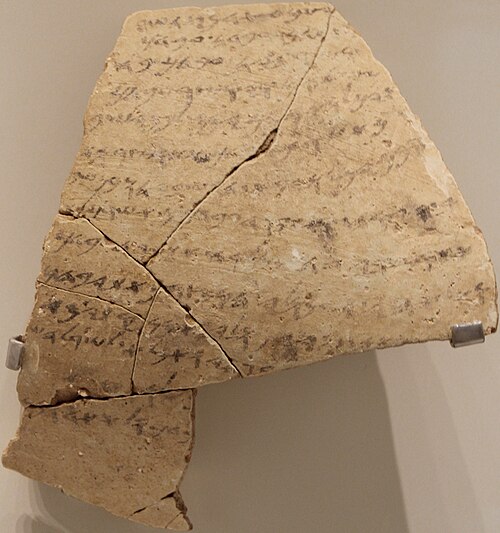


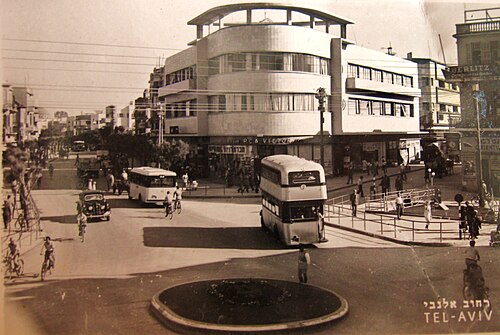


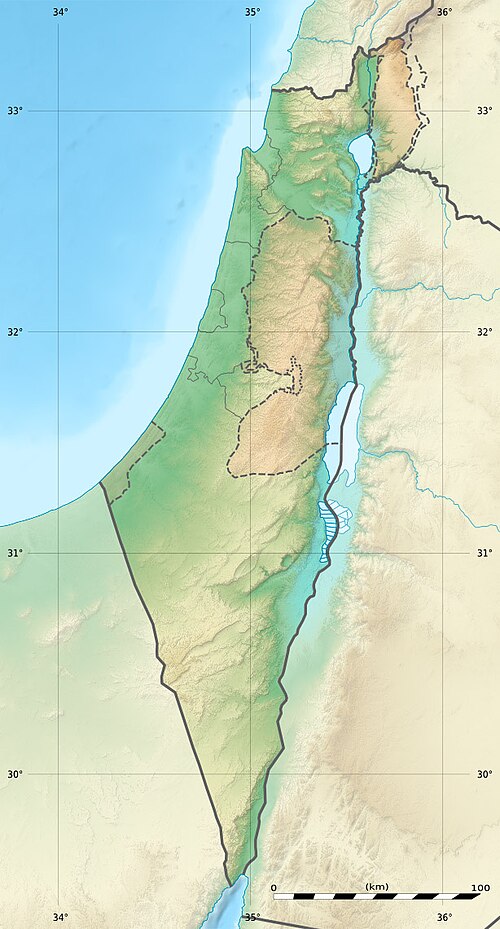


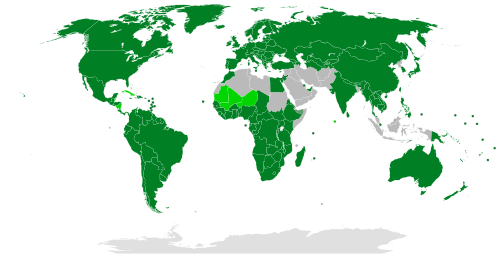


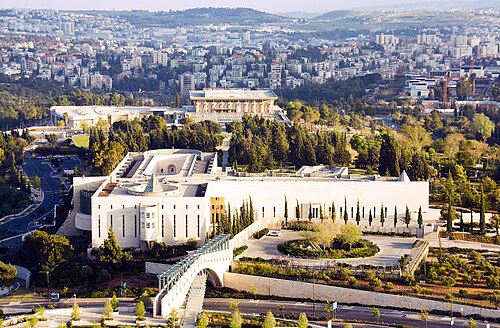
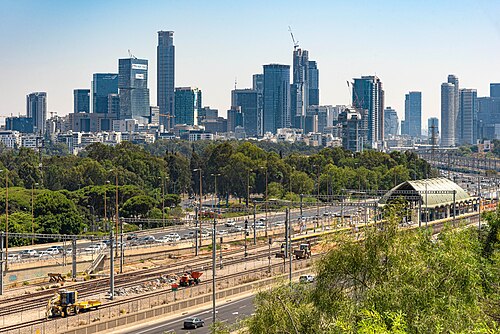


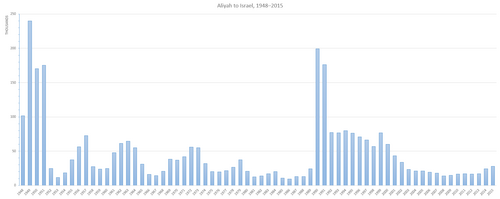

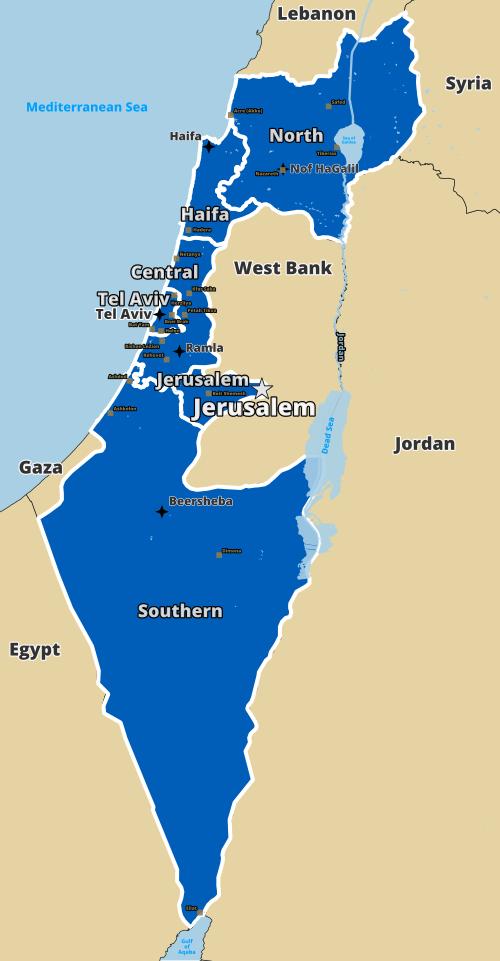

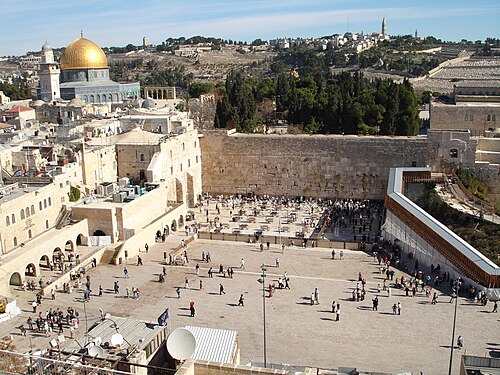


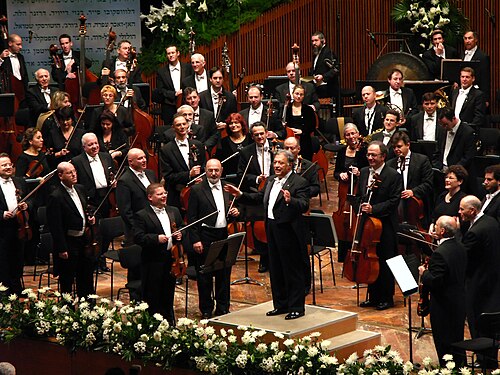


 ウィキメディア・アトラス・オブ・イスラエル
 OpenStreetMapにおけるイスラエル関連の地理データ