
Loading article…
ストックトン伯爵 | |||||||||||||||||||||||||||||||||||||||||||||||||||||||||||||||||||||||||||||||||||||
|---|---|---|---|---|---|---|---|---|---|---|---|---|---|---|---|---|---|---|---|---|---|---|---|---|---|---|---|---|---|---|---|---|---|---|---|---|---|---|---|---|---|---|---|---|---|---|---|---|---|---|---|---|---|---|---|---|---|---|---|---|---|---|---|---|---|---|---|---|---|---|---|---|---|---|---|---|---|---|---|---|---|---|---|---|---|
.jpg/500px-Harold_Macmillan_(cropped).jpg) 1959年のマクミラン | |||||||||||||||||||||||||||||||||||||||||||||||||||||||||||||||||||||||||||||||||||||
| 英国首相 | |||||||||||||||||||||||||||||||||||||||||||||||||||||||||||||||||||||||||||||||||||||
| 在任期間 :1957年1月10日~1963年10月18日 | |||||||||||||||||||||||||||||||||||||||||||||||||||||||||||||||||||||||||||||||||||||
| 君主 | エリザベス2世 | ||||||||||||||||||||||||||||||||||||||||||||||||||||||||||||||||||||||||||||||||||||
| 一等書記官 | ラブ・バトラー (1962–63) | ||||||||||||||||||||||||||||||||||||||||||||||||||||||||||||||||||||||||||||||||||||
| 先行 | アンソニー・イーデン | ||||||||||||||||||||||||||||||||||||||||||||||||||||||||||||||||||||||||||||||||||||
| 後継者 | アレック・ダグラス・ホーム | ||||||||||||||||||||||||||||||||||||||||||||||||||||||||||||||||||||||||||||||||||||
| 保守党党首 | |||||||||||||||||||||||||||||||||||||||||||||||||||||||||||||||||||||||||||||||||||||
| 在任期間 :1957年1月10日~1963年10月18日 | |||||||||||||||||||||||||||||||||||||||||||||||||||||||||||||||||||||||||||||||||||||
| 先行 | アンソニー・イーデン | ||||||||||||||||||||||||||||||||||||||||||||||||||||||||||||||||||||||||||||||||||||
| 後継者 | アレック・ダグラス・ホーム | ||||||||||||||||||||||||||||||||||||||||||||||||||||||||||||||||||||||||||||||||||||
| |||||||||||||||||||||||||||||||||||||||||||||||||||||||||||||||||||||||||||||||||||||
| |||||||||||||||||||||||||||||||||||||||||||||||||||||||||||||||||||||||||||||||||||||
| |||||||||||||||||||||||||||||||||||||||||||||||||||||||||||||||||||||||||||||||||||||
| 個人情報 | |||||||||||||||||||||||||||||||||||||||||||||||||||||||||||||||||||||||||||||||||||||
| 生まれる | モーリス・ハロルド・マクミラン 1894年2月10日 イギリス、ロンドン | ||||||||||||||||||||||||||||||||||||||||||||||||||||||||||||||||||||||||||||||||||||
| 死亡 | 1986年12月29日(92歳) ホルステッド・ケインズ、ウェスト・サセックス、イングランド | ||||||||||||||||||||||||||||||||||||||||||||||||||||||||||||||||||||||||||||||||||||
| 休憩所 | セント ジャイルズ教会、ホルステッド ケインズ、ウェスト サセックス、イングランド | ||||||||||||||||||||||||||||||||||||||||||||||||||||||||||||||||||||||||||||||||||||
| 政党 | 保守的 | ||||||||||||||||||||||||||||||||||||||||||||||||||||||||||||||||||||||||||||||||||||
| 配偶者 | |||||||||||||||||||||||||||||||||||||||||||||||||||||||||||||||||||||||||||||||||||||
| 子供たち | モーリスとキャロラインを含む4人 | ||||||||||||||||||||||||||||||||||||||||||||||||||||||||||||||||||||||||||||||||||||
| 母校 | オックスフォード大学ベリオール・カレッジ | ||||||||||||||||||||||||||||||||||||||||||||||||||||||||||||||||||||||||||||||||||||
| 職業 |
| ||||||||||||||||||||||||||||||||||||||||||||||||||||||||||||||||||||||||||||||||||||
| 民間賞 | |||||||||||||||||||||||||||||||||||||||||||||||||||||||||||||||||||||||||||||||||||||
| サイン |  | ||||||||||||||||||||||||||||||||||||||||||||||||||||||||||||||||||||||||||||||||||||
| 兵役 | |||||||||||||||||||||||||||||||||||||||||||||||||||||||||||||||||||||||||||||||||||||
| 支店/サービス | イギリス陸軍 | ||||||||||||||||||||||||||||||||||||||||||||||||||||||||||||||||||||||||||||||||||||
| 勤続年数 | 1914–1920 | ||||||||||||||||||||||||||||||||||||||||||||||||||||||||||||||||||||||||||||||||||||
| ランク | キャプテン | ||||||||||||||||||||||||||||||||||||||||||||||||||||||||||||||||||||||||||||||||||||
| ユニット | グレネード兵衛 | ||||||||||||||||||||||||||||||||||||||||||||||||||||||||||||||||||||||||||||||||||||
| 戦闘/戦争 | |||||||||||||||||||||||||||||||||||||||||||||||||||||||||||||||||||||||||||||||||||||
| 軍事賞 | |||||||||||||||||||||||||||||||||||||||||||||||||||||||||||||||||||||||||||||||||||||
モーリス・ハロルド・マクミラン、初代ストックトン伯爵、OM 、 PC 、 FRS(1894年2月10日 - 1986年12月29日)は、イギリスの政治家、保守党の政治家であり、 1957年から1963年までイギリスの首相を務めた。 [1]「スーパーマック」というニックネームで呼ばれた彼は、実用主義、機知、冷静さ で知られていた。
マクミランは第一次世界大戦中に歩兵将校として重傷を負った。その後、生涯にわたって痛みと半身不随に悩まされた。戦後は家業の出版業を継ぎ、1924年の総選挙でストックトン・オン・ティーズ選挙区から国会議員として当選。1929年に議席を失ったものの、1931年に再び議席を獲得し、その直後にストックトンの失業率の高さを訴えた。保守党政権による対ドイツ宥和政策に反対した。第二次世界大戦中はウィンストン・チャーチル首相の子分として高官にまで上り詰めた。1950年代にはアンソニー・イーデン政権下で外務大臣および財務大臣を務めた。
1957年のスエズ危機の後、イーデンが辞任すると、マクミランが首相および保守党党首として後を継いだ。彼はディズレーリ派のワン・ネーション・トーリー党員で、戦後コンセンサスを支持した。彼は福祉国家を支持し、一部の国有産業と強力な労働組合を伴う混合経済の必要性も支持した。彼は需要維持のための赤字支出というケインズ主義戦略と、成長の原動力として国内市場を育成するためのコーポラティズム政策の追求を擁護した。好ましい国際情勢の恩恵を受け、 [2]彼は低い失業率と不均一ではあったものの高成長を特徴とする豊かな時代を主導した。1957年7月の演説で彼は国民に「これほど恵まれた時代はかつてなかった」と語ったが、[3]インフレの危険性を警告し、1950年代の脆弱な繁栄を総括した。[4]彼は1959年に保守党を勝利に導き、多数派を増やした。
国際情勢では、マクミランは1956年のスエズ危機(彼自身もその立役者の一人だった)の残骸から米国との特別な関係を再構築し、アフリカの脱植民地化を促進した。核時代の現実に対応するために国の防衛体制を再構築し、国民奉仕を廃止し、ポラリスを購入して核戦力を強化し、米国とソ連との間で核実験禁止条約の先駆者となった。スカイボルト危機で英米の戦略的関係が損なわれた後、彼はヨーロッパで英国のより積極的な役割を求めたが、米国の核の機密をフランスに開示することを嫌がったため、フランスは英国の欧州経済共同体への加盟を拒否した。[5]首相の任期末近くには、ヴァッサル裁判とプロヒューモ事件で政府が揺れたが、文化保守派と反対党支持者の両方にとって、これらは英国体制の道徳的退廃の象徴のように思われた。[6]マクミランは辞任後、長老政治家として長い隠居生活を送り、晩年は 貴族院議員として活躍した。1986年12月に92歳で亡くなった。
若いころ
家族
マクミランは1894年2月10日、ロンドンのチェルシー地区カドガン・プレイス52番地に、出版者のモーリス・クロフォード・マクミランと、インディアナ州スペンサー出身の芸術家で社交界の名士であったヘレン(ネリー)・アーティー・タールトン・ベルズの子として生まれた。[7]彼には8歳年上のダニエルと4歳年上のアーサーという2人の兄弟がいた。[8]父方の祖父ダニエル・マクミランはマクミラン出版社を設立し、アラン島出身のスコットランド人小作農の息子であった。[9]マクミランは自分をスコットランド人だと考えていた。[10]
教育と初期の政治的見解
マクミランはアメリカ人の母親の指導のもと、集中的な幼少期教育を受けた。彼は毎朝、家事手伝いの女中からフランス語を学び、自宅のすぐ近くにあるマクファーソン氏の体育館とダンスアカデミーで毎日運動した。[11] 6歳か7歳のころから、スローンスクエア近くのグラッドストーン氏のデイスクールで古典ラテン語とギリシャ語の入門レッスンを受けた。[12] [13]
マクミランはオックスフォードのサマー・フィールズ・スクールに通った(1903-06年)。イートン・カレッジでは3等奨学生だったが[14]、在学期間(1906-10年)は、学期前半に肺炎で瀕死の状態になり、その後病気が再発して台無しになった。除隊処分を受けたため最終学年を欠席し[15] [16] 、自宅で個人教師(特にロナルド・ノックス)から教育を受け、高教会派英国国教会主義を植え付けるのに大いに貢献した[17]。彼はオックスフォードのベリオール・カレッジへの奨学金を獲得した。[14]
若い頃、マクミランは、11歳の時に権力を握ったヘンリー・キャンベル・バナーマンや、後に「知的誠実さと道徳的高潔さ」の持ち主と評したHHアスキスなど、歴代の自由党首相の政策とリーダーシップを崇拝していた。特に、アスキスの後継者であるデイヴィッド・ロイド・ジョージを崇拝し、マクミランの目標を達成する可能性が高い「行動力のある人」とみなしていた。[18] [ページが必要]
マクミランは1912年にベリオール・カレッジに進み、そこで多くの政治団体に参加した。この段階での彼の政治的意見は、穏健な保守主義、穏健な自由主義、およびフェビアン社会主義の折衷的なものだった。彼はディズレーリに関する文献を熱心に読んだが、1913年に会員になっていたオックスフォード・ユニオン・ソサエティでロイド・ジョージが行った演説にも特に感銘を受けた。マクミランはユニオン・ソサエティの会長で後に内閣の同僚となった ウォルター・モンクトンの弟子であり、そのため彼はユニオンの書記官、次いで財務次官(当時は異例の1914年3月に無投票で選出)となり、伝記作家の見解では戦争がなかったら「ほぼ確実に」会長になっていただろう。[19] [20]彼は1914年に、不名誉な成績でモデレーション(ラテン語とギリシャ語で構成され、4年間のオックスフォード文学人文学課程の前半部分で、不名誉な成績で「モッド」と呼ばれる)を取得しました。最終試験まで2年以上残っていた彼は、第一次世界大戦が勃発する直前、オックスフォードでの理想的なトリニティ学期を過ごしました。 [21]
戦争奉仕
マクミランは戦争が宣言されるとすぐに志願し、1914年11月19日に王立ライフル部隊の臨時少尉に任官した。 [22] [23] 1915年1月30日に中尉に昇進し、[24]すぐにグレナディアガーズに転属した。[25]彼はフランスの前線で戦ったが、そこでは死傷率が高く、「早期の暴力による死」の可能性もあった。[26]彼は立派な軍務に就き、3回負傷した。1915年9月のルースの戦いで右手を撃たれ、頭部にもかすめ銃創を負ったマクミランは、病院での治療のためチェルシーのレノックスガーデンに送られ、1916年1月から3月まで、手の傷が治るまでチェルシー兵舎の予備大隊に加わった。その後、フランスの前線に戻った。1916年9月のフレール・クールスレットの戦い(ソンムの戦いの一部)で先遣小隊を率いていた彼は重傷を負い、12時間以上も砲弾の穴に横たわり、ドイツ軍が通り過ぎる時には死んだふりをしたり、アイスキュロスの原文をギリシャ語で読んだりしていた。[27]首相の長男レイモンド・アスキスはマクミランの連隊の同僚将校だったが、その月に戦死した。[28]
マクミランは戦争の最後の2年間を病院で過ごし、一連の手術を受けた。[29] 1918年11月11日の休戦協定の時点ではまだ松葉杖をついていた。[30]腰の傷が完全に治るまでに4年かかり、以前の傷のせいで歩き方が少しよろめき、右手の握りが弱く、それが筆跡に影響を及ぼしていた。[31]
マクミランは、自分自身を「ガウンマン」と「剣士」の両方であると見なし、後に、多くの場合、自らの落ち度ではないにも関わらず、どちらの世界大戦にも従軍しなかった他の政治家(例えば、ラブ・バトラー、ヒュー・ゲイツケル、ハロルド・ウィルソン)に対して公然と軽蔑を示すようになった。[32]
カナダ副官
同じ学年の学者や博覧会参加者の中で、戦争を生き延びたのは彼ともう1人だけだった。 [ 33]その結果、彼はオックスフォード大学が以前と同じになることはないと言って、学位を取得するために大学に戻ることを拒否した。 [34]後年、彼は「皇帝に追放された」と冗談を言った。 [35]
戦後、陸軍の縮小が迫っていたため、擲弾兵の正規の任務は不可能だった。[36]しかし、1918年末、マクミランはチェルシー兵舎の近衛予備大隊に「軽任務」で入隊した。[37]あるとき、近衛兵の一隊がフランスへの再出撃を一時的に拒否したため、マクミランは近くの公園で信頼できる部隊を指揮しなければならなかったが、この事件は平和的に解決された。この事件により、陸軍省は近衛予備大隊が「信頼できる」かどうかについて調査を行った。[38]
マクミランは1919年にカナダのオタワで、当時カナダ総督で将来の義父となる第9代デヴォンシャー公爵ビクター・キャヴェンディッシュの副官を務めた。 [39]マクミラン大尉と公爵の娘ドロシー夫人の婚約は1920年1月7日に発表された。[40]彼は1920年4月1日にその職を退いた。[41]同時代の元将校によく見られるように、彼は1930年代初頭まで「マクミラン大尉」として知られ続け、1923年から1931年までのすべての総選挙でそのように名を連ねた。[42] 1942年から43年にかけて北アフリカに赴任したときも、彼はチャーチルに自分が近衛連隊予備役で大尉の階級を持っていることを思い出させた。[43]
マクミラン出版社
1920年にロンドンに戻ると、彼は家族経営の出版社マクミラン・パブリッシャーズにジュニア・パートナーとして入社した。1936年、ハロルドと弟のダニエルが会社の経営を引き継ぎ、ハロルドは政治とノンフィクションの分野に注力した。[18] [ページ必要]ハロルドは1940年に大臣に任命され会社を辞職した。彼は野党だった1945年から1951年まで会社で働き続けた。
私生活
マイケル・ブロックによると、マクミランがイートン校から同性愛を理由に退学になったという噂が長い間あった。マクミランの伝記作家であるD.R.ソープは、彼が年上の男子生徒に「利用」されていたことを母親が発見し、退学させたと考えている。[44] ディック・レナードは、アリスター・ホーンが「避けられない噂」について言及し、「公立学校から男子生徒が退学になる『普通の理由』で退学した」と報告している。 [45]
結婚
マクミランは1920年4月21日、第9代デヴォンシャー公爵の娘ドロシー・キャヴェンディッシュ夫人と結婚した。彼女の大叔父は第8代デヴォンシャー公爵スペンサー・キャヴェンディッシュで、1870年代に自由党の党首を務め、ウィリアム・グラッドストン、ジョセフ・チェンバレン、ソールズベリー卿の親しい同僚であった。ドロシー夫人はまた、ニューカッスル・アンド・ピット大公と親交を深めて1756年から1757年まで首相を務めた第4代デヴォンシャー公爵ウィリアム・キャヴェンディッシュの子孫でもある。彼女の甥のハーティントン侯爵ウィリアム・キャヴェンディッシュは、ジョン・F・ケネディの妹キャスリーン・ケネディと結婚した。
1929年、ドロシー夫人は保守党の政治家ロバート・ブースビーと生涯にわたる情事を始めた。この情事は上流社会を騒がせたが、一般大衆には知られなかった。[46]フレア・コルムリー法律事務所の共同経営者フィリップ・フレアは、当時「無実の当事者」にとっても公職に就くには致命的だったであろう妻との離婚をしないようマクミランに勧めた。マクミランとドロシー夫人はその後、私生活ではほぼ別々の生活を送っていた。[47]そのことが原因のストレスが、マクミランが1931年に神経衰弱に陥る一因となった可能性がある。 [48]彼は貴族の義理の家族からしばしば見下された扱いを受け、 1930年代のチャッツワースでは悲しく孤立した人物として見られていた。[49] ジョン・キャンベルは、マクミランの屈辱が1930年代の彼の奇妙で反抗的な行動の主な原因となり、その後の数十年間で彼をライバルのイーデンやバトラーよりも厳しく冷酷な政治家にしたと示唆している。[50]
マクミラン夫妻には4人の子供がいました。
- モーリス・マクミラン、オーブンデンのマクミラン子爵(1921年 - 1984年)、保守党政治家、出版者。第4代ハーレック男爵の娘、キャサリン・オームズビー=ゴアと結婚。父親は彼より3年近く長生きした。
- レディ・キャロライン・マクミラン(1923–2016)。ジュリアン・フェイバーと結婚し、5人の子供がいる。
- キャサリン・マクミラン夫人(1926年 - 1991年)。保守党政治家のジュリアン・アメリー(後のラストリーのアメリー男爵)と結婚。4人の子供がいる。
- サラ・マクミラン(1930年 - 1970年)。ブースビーが実の父親であるという家族の噂は、最新の詳細な研究によって否定された。[51] [要ページ] 1953年にアンドリュー・ヒースと結婚、2人の子供。1951年に中絶したため、彼女は自分の子供を持つことができず、夫婦は2人の息子を養子に迎えた。[18] [52]彼女は飲酒問題に悩まされ、不幸な人生を送り、わずか40歳で亡くなった。父親は彼女より16年長生きした。
ドロシー夫人は1966年5月21日、65歳で亡くなりました。
マクミランは老年期、初代ウェイヴァリー子爵ジョン・アンダーソンの未亡人であるウェイヴァリー子爵夫人アヴァ・アンダーソン(旧姓ボドリー)と親しい友人だった。[53]アイルランドの劇作家ショーン・オケイシーの妻で女優のアイリーン・オケイシー(旧姓レイノルズ)も女性の友人で、マクミランは彼女の夫の戯曲を出版していた。彼女はマクミランの愛情においてドロシー夫人に代わったと言われているが、それぞれの配偶者の死後、二人がどれほど親密になったか、また彼がプロポーズしたかどうかについては意見が分かれている。[54] [55] [56] [57]
政治経歴、1924年~1951年
国会議員(1924年~1929年)
マクミランは1923年に不況に陥った北部工業地区ストックトン・オン・ティーズ選挙区で選挙戦を戦った。選挙戦には自腹で200~300ポンドを投じた。[58]当時は候補者は選挙戦資金を自分で用意することがよく求められていた。自由党の票が激減したことで、マクミランは1924年に勝利した。[59] 1927年、ブースビーとマクミランを含む4人の国会議員が急進的な対策を提唱する短い本を出版した。[59] 1928年、マクミランは政治的英雄で、現在は議会の同僚であるデイヴィッド・ロイド・ジョージから「生まれながらの反逆者」と評された。[18] [ページが必要] [60]
マクミランは1929年に地方の失業率の高さに直面して議席を失った。彼は1931年に安全なヒッチン選挙区の保守党候補になるところだった。 [61]しかし、現職国会議員のガイ・キンダーズリーは、反ボールドウィン派とのつながりや、マクミランがオズワルド・モズレーの失業率削減のための急進的な対策の約束に同情しているのではないかという疑念から、引退計画を取り消した。代わりに、ストックトンの新候補者が辞任したため、マクミランはそこで再選され、1931年に古い議席で下院に復帰した。[60]
国会議員(1931年~1939年)
マクミランは1930年代を議員の座から離れた。1932年3月に『国家と産業』を出版した(以前のパンフレット『産業と国家』とは別物)。[62] 1932年9月、彼は初めてソ連を訪問した。[63]また、マクミランは『次のステップ』も出版した。彼は低金利と国家による投資の監督を主張した。1933年には『復興:国民統一の嘆願』の唯一の著者となった。1935年には『雇用計画』を執筆した15人の国会議員の1人となった。彼の次の著書『次の5年間』は、1935年にロイド・ジョージが提案した『ニューディール』の影に隠れてしまった。[62]マクミラン・プレスは経済学者ジョン・メイナード・ケインズの著作も出版した。[59]
マクミランは、イタリアがアビシニアを征服した後の制裁解除に抗議して、政府院内幹事(保守党院内幹事ではない)を辞任した。[64] 「チップス」・チャノンは彼を「ストックトン・オン・ティーズ選出の、魅力に欠け、本ばかりで風変わりな議員」と評し、保守党首相スタンリー・ボールドウィンから「冷淡な手紙」を送られたと記録している(1936年7月8日)。ボールドウィンは後に、ハロルド・マクミランと極右派のジョン・グレットンの間の中道を進むことで生き延びたと述べた。 [65]
マクミランが所属していた「次の五カ年グループ」は1937年11月に解散した。彼の著書「中道」は1938年6月に出版され、国内外で広く中道政治哲学を主張した。マクミランは雑誌「ニュー・アウトルック」を経営し、純粋に理論的な著作ではなく政治小冊子を刊行するようにした。[62]
1936年、マクミランは民主的な統一を実現するために超党派の反ファシストのフォーラムの創設を提案したが、彼のアイデアは労働党と保守党の両党指導部によって拒否された。[66]
マクミランは、チェンバレンがヒトラーとベルヒテスガーデンで会談するために行った最初の飛行を支持したが、その後のバート・ゴーデスベルクとミュンヘンへの飛行は支持しなかった。ミュンヘンの後、彼は「1931年の逆」、つまり、1931年以来イギリスを統治してきた保守党主導の連立政権の逆で、一部の保守党員が参加する労働党主導の連立政権を模索していた。 [67]彼は1938年のオックスフォード補欠選挙で無所属候補のリンゼイを支持した。彼は「平和の代償」という小冊子を執筆し、イギリス、フランス、ソ連の同盟を呼びかけつつ、ポーランドがドイツに領土面で「譲歩」する(つまり、ダンツィヒ回廊を放棄する)ことを期待した。1939年初頭の「防衛の経済的側面」では、補給省の設置を求めた。[68]
まやかし戦争(1939年~1940年)
マクミランは1940年2月にフィンランドを訪問した。当時フィンランドはソ連に侵略されており、ナチスドイツと緩く同盟を結んでいたため、イギリスでは大きな同情の対象となっていた。下院議員としての最後の演説は、フィンランド政府が十分な支援をしていないと非難するものだった。 1940年3月に冬戦争が終結すると、イギリスは恥ずかしい思いをせずに済んだ。[69]
マクミランは1940年5月のノルウェー討論で政府に反対票を投じ、ネヴィル・チェンバレン首相の失脚に貢献し、下院議場でジョサイア・ウェッジウッド大佐とともに「ルール・オブ・ブリタニア! 」を歌おうとした。 [70]
補給省政務次官(1940年~1942年)
マクミランは1940年から戦時連合政府で補給省の政務次官を務め、最終的に職に就いた。チャノンは1940年5月29日に「ハロルド・マクミランが新しい地位をとても楽しんでいるのが明らかに面白かった」とコメントした。[71]
マクミランの仕事はイギリス陸軍と空軍に兵器やその他の装備品を供給することだった。彼は生産を調整するために国中を回り、ビーバーブルック卿の下で装甲車両の供給と品質の向上に努め、ある程度の成功を収めた。[72]
植民地次官(1942年)

マクミランは1942年に植民地担当国務次官に任命されたが、彼自身の言葉によれば「精神病院を出て霊廟に入った」という。[73]下級大臣であったが枢密院のメンバーであり、下院で植民地大臣の モイン卿とクランボーン卿のために演説した。マクミランは植民地の生産と貿易の拡大の責任を与えられ、1942年6月に次のことを宣言して将来の政策の方向性を示した。
植民地帝国の統治原則は、それを構成するさまざまな要素間のパートナーシップの原則であるべきです。パートナーシップから理解と友情が生まれます。連邦の構造の中に、植民地領土の未来が存在します。[74]
マクミランは、保守党が戦後大敗すると予言し、シャノンは「あのお人好しのハロルド・マクミランの愚かな予言」について書いた(1944年9月6日)。1942年10月、ハロルド・ニコルソンは、マクミランが戦後に「極端な社会主義」を予言したと記録した。[75] 1942年11月にオリバー・スタンレーが国務長官に任命されたとき、マクミランはクランボーン政権下では下院のスポークスマンを務めていたが、もはやその役目は果たせないと、辞任しかけた。ブレンダン・ブラッケンはマクミランに辞任しないよう助言した。[76]
地中海駐在公使(1942年~1945年)
ハリー・クルックシャンクが職を辞退した後、マクミランは1942年後半、トーチ作戦で解放されたばかりの地中海のアルジェリア駐在英国公使として実権を握り、閣僚の地位を得た。彼は外務大臣アンソニー・イーデンではなく首相に直接報告した。オリバー・リトルトンはカイロで同様の職に就いており、ロバート・マーフィーはマクミランの米国でのカウンターパートであった。 [ 76]マクミランは当時地中海連合軍最高司令官 (SACMED) であった米国のドワイト・D・アイゼンハワー将軍と信頼関係を築き、それが彼のキャリアに役立った。 [77]リチャード・クロスマンは後に、マクミランの「ローマ帝国のギリシャ人」の比喩はこの時期にさかのぼると回想している (つまり、米国が英国に代わって世界の主導権を握ったとき、英国の政治家や外交官は、ギリシャの奴隷や解放奴隷がローマの権力者に助言したのと同じように米国を導くことを目指すべきである)。[78]マクミランはクロスマンにこう語った。「クロスマン、我々はアメリカ帝国のギリシャ人だ。君は、ギリシャ人がローマ人を見たのと同じように、アメリカ人を見るだろう。彼らは非常に大きく、下品で、騒がしい人々で、我々よりも活発で、またより怠惰で、より汚れのない美徳を持っているが、より腐敗している。我々はギリシャの奴隷が皇帝クラウディウスの軍事活動を運営したように、AFHQ(連合軍司令部)を運営しなければならない。」[79]カサブランカ会談で、マクミランは自由フランスの指導者シャルル・ド・ゴールを米国が承認しないまでも受け入れることに貢献した。[80]マクミランはカサブランカ会談中の日記にこう書いている。「私はこの二人を東の皇帝と西の皇帝と名付けたが、実際それはむしろ後期ローマ帝国の会議のようだった。」[79]マクミランにとって、ルーズベルト大統領がカサブランカでチャーチル首相と会談した際の「注目すべきロマンチックなエピソード」は、個人外交こそがアメリカ人と接する最良の方法であると確信させ、後に首相としての外交政策に影響を与えた。[81]
1943年2月22日、マクミランは飛行機事故で重度の火傷を負い、[82]フランス人を救出するために飛行機に戻ろうとした。顔に石膏を貼らなければならなかった。錯乱状態の中で、彼は自分がソンムの負傷者収容所に戻ったことを想像し、今は亡き母親に伝言を頼んだ。[83]

彼はグラッドウィン・ジェブとともに、シチリア島陥落からサレルノ上陸作戦までの1943年8月にイタリア休戦協定の交渉に協力した。これがイーデンと外務省との摩擦を引き起こした。[84]彼は戦争の残り期間をカゼルタに拠点を置いた。1943年後半にはイタリア諮問委員会の英国高等弁務官に任命された。 [85]彼は1943年10月にロンドンを訪れ、再びイーデンと衝突した。イーデンはダフ・クーパーをアルジェリアの自由フランス政府代表に任命し(フランス本土解放後、彼は1944年11月から引き続きフランス大使を務めた)、ノエル・チャールズをイタリア大使に任命してマクミランの影響力を弱めた。[86] 1944年5月、マクミランはイタリアとの早期講和を要求してイーデンを激怒させた(当時、バドリオ率いる親連合国政権がイタリア南部の解放された地域で権力を握っていた)。チャーチルはこれを支持した。1944年6月、マクミランは、アメリカ軍と自由フランス軍の南フランスへの計画的転向(ドラグーン作戦)の代わりに、イギリス主導でリュブリャナ・ギャップを突破して中央ヨーロッパに侵攻する(「アームピット作戦」)べきだと主張した。この提案はチャーチルとアレクサンダー将軍に感銘を与えたが、アメリカの承認は得られなかった。イーデンはロバート・ディクソンを派遣して駐在大臣の職を廃止させたが、当時マクミランの職はイギリス国内になかったため、マクミランは職の廃止をなんとか阻止した。チャーチルは1944年8月にイタリアを訪問した。1944年9月14日、マクミランはノエル・メイソン=マクファーレン将軍の後任として、イタリア連合国統制委員会の主任委員に任命された。彼は引き続き連合国本部駐在英国公使であり、地中海最高司令官となった「ユンボ」・ウィルソンの英国政治顧問を務めた。1944年11月10日、彼は連合国委員会の議長代行に任命された(議長は最高司令官が務める)。[87]
マクミランは1944年12月11日にギリシャを訪問した。ドイツ軍が撤退したため、スコビー将軍率いるイギリス軍がアテネに展開していたが、親共産主義のギリシャ抵抗組織である民族解放戦線とその軍事部門である民族解放戦線が権力を握るか(デケムブリアナを参照)、イギリス軍と衝突するのではないかとの懸念があった。マクミランは戦車に乗り、イギリス大使館で狙撃兵の銃撃を受けた。ゲリラに同情的で帝国主義的行為と見なされるものに敵対するイギリスとアメリカの世論の大部分の敵意にもかかわらず、マクミランは、その月の後半にアテネを訪問した気乗りしないチャーチルを説得し、亡命中の国王ジョージ2世に代わってダマスキノス大司教を摂政として受け入れさせた。 1945年1月に休戦交渉が成立し、前年秋のパーセンテージ協定でチャーチルが要求したように、親イギリス政権が権力の座に留まることができた。[88] 1947年、アメリカはソ連を地中海から締め出すために、ギリシャとトルコの「保護者」としてイギリスの役割を引き継いだ。いわゆる「トルーマン・ドクトリン」である。
マクミランはオーストリアで連合軍の上級司令官を務めた第5軍団のキートリー将軍の顧問大臣でもあり、キールホール作戦の責任者でもあった。キールホール作戦には、1945年にソ連とヨシップ・ブロズ・チトーのユーゴスラビアに最大7万人の捕虜を強制送還する作戦が含まれていた。この強制送還とマクミランの関与は、受け入れ国がナチスの協力者や反パルチザンに対して厳しい扱いをしたため、また混乱の中で第5軍団がヤルタでの合意条件や連合軍司令部の指示を超えて、白系ロシア軍兵士4000人と民間人の家族11,000人を送還したため、後に論争の的となった。[ 89] [90] [91]
航空長官(1945年)
マクミランは、保守党の安全な議席であるウェストミンスター・セント・ジョージ選挙区でダフ・クーパーの後任として国会議員になるというオファーを検討していた。[61]地元では長期不在を批判されていたマクミランは、5年間議席を守ってきたドロシー夫人に1945年にストックトン選挙区に立候補するよう提案した。夫人は明らかに賛成していた。しかし、マクミランが議席を守る姿を見せた方がよいと考えられ、ビーバーブルック卿は既にチャーチルと話し合って、マクミランが敗北した場合には別の議席を与えられるよう手配していた。[92]
マクミランはヨーロッパ戦争後、イギリスに帰国したが、まるで「故郷でよそ者のような気分」だった。[93]彼はチャーチルの暫定政権で2か月間空軍大臣を務めたが、「その大半は選挙活動に費やされ」、将来の計画としては何もすることがなかった。[94]
反対派(1945年~1951年)
マクミランは1945年7月の労働党の圧勝でストックトンを失ったが、1945年11月のブロムリー補欠選挙で議会に復帰した。ハロルド・ニコルソンは日記の中で、トーリー党の議員たちの気持ちを次のように記している。「彼らはウィンストンは年老いており、アンソニー(イーデン)は弱すぎると感じている。彼らはハロルド・マクミランに率いてほしいと思っている。」[95]
彼は1949年から1951年まで欧州評議会諮問会議の英国代表団の一員であり、ウィンストン・チャーチルの重要な側近および同盟者として、ソ連の全体主義に対する防壁として、またナチス支配の恐怖の再発を防ぐために、欧州統合の推進に尽力する上で重要な役割を果たした。
マクミランは「産業憲章」の起草に重要な役割を果たしたが(サンデー・エクスプレス紙の「クロスベンチャー」はそれを「中道」の第二版と呼んだ)、安全な議席の国会議員として、やや右派的な公的な人物像を採用し、民間企業を擁護し、下院で労働党政権に激しく反対した。[96]
1951年~1957年の政治経歴
住宅大臣(1951年~1954年)
1951年に保守党が勝利すると、マクミランはチャーチル政権下で住宅・地方自治大臣となり、チャーチルは1950年の党大会での演説に応えて、年間30万戸の住宅を建設するという公約(以前の目標は年間20万戸)の達成を彼に託した。マクミランは当初、内閣リスト16項目中13位だった住宅政策は毒杯だと考え、日記(1951年10月28日)に「まったく私の好みではない...この仕事にどう取り組めばいいのか全く分からない」と記している。それは、財務省が輸出を最大化し輸入を最小化しようとしていたときに、不足している鉄鋼、セメント、木材を入手することを意味した。[97]「これは賭けだ。政治家としてのキャリアを左右するが、成功すれば、どんな小さな家もあなたの名を讃えるだろう」とチャーチルは言った。[98]
1952年7月までにマクミランは日記の中でバトラー(当時は大蔵大臣)を批判し、バトラーが「彼を嫌って恐れている」と非難していた。実際、この時点でバトラーがマクミランをライバル視していたという証拠はない。1953年4月、ビーバーブルックはマクミランに、将来の党首選ではイーデンとバトラーの接戦になるかもしれないと考えるよう勧めた。1911年に若きビーバーブルック(当時はマックス・エイトキン)がボナー・ローを助けたように。 [99] 1953年7月、マクミランはイーデンが入院中に重度の脳卒中を起こしたチャーチルが辞任しなければならない場合に備えて、胆嚢手術を延期することを検討した。[100]
マクミランは1953年末までに住宅目標を達成し、予定より1年早まった。[101] [102]
国防大臣(1954年~1955年)

マクミランは1954年10月から国防大臣を務めたが、チャーチルの個人的な関与によって権限が制限された。[103]エコノミスト誌の意見では、「彼は、高貴な上司が彼の首筋に息を吹きかけているときに、彼自身の想像力豊かなショーを運営する疑いのない能力が溶けてしまったという印象を与えた。」[104]
彼が国防大臣を務めた期間の主なテーマは、一部の批評家が通常戦力を犠牲にして核抑止力への依存を強めていることであった。[105] 1955年2月の防衛白書は水素爆弾の製造決定を発表し、超党派の支持を得た。[106]
「勇敢なチャーチルがペタンのような人間に成り下がっていくのを見るのは胸が張り裂ける思いだ」とマクミランは日記に書いている。首相の精神力と肉体力が目に見えて衰え始めた頃のことだ。マクミランはチャーチルに面と向かって引退の時だと告げる勇気を持った数少ない大臣の一人だった。[107]第一次世界大戦で活躍したフランスの将軍ペタンは親ドイツ派のヴィシー政権を率いている間に老衰していた。
第二次世界大戦中、マクミランの歯を見せた笑顔、だぶだぶのズボン、縁なし眼鏡は、伝記作家が言うように、「初期のボルシェビキ指導者のような雰囲気」を彼に与えていた。[108] 1950年代までに、彼は歯にキャップをし、髪をより形の良いスタイルに伸ばし、サヴィル・ロウのスーツを着て、元近衛連隊将校のような厳格な態度で歩き、後のキャリアにおける立派な外見を獲得した。[109]キャンベルは「英国政治において、これほど驚くべき個人的な改革はなかった」と書いている。[110]彼は、オールド・イートン校のネクタイか近衛連隊のネクタイを非常に頻繁に着用していた。[111]キャンベルはまた、マクミラン首相の任期中にハロルド・ウィルソンが「退屈な若い統計学者から愛すべきヨークシャーの喜劇人」にイメージを変えたのは、マクミランを意識的に模倣したためだと示唆している。[75]
外務大臣(1955年)
マクミランは1955年4月から12月まで、引退したチャーチルの後を継いで首相となったアンソニー・イーデン政権で外務大臣を務めた。同年ジュネーブサミットから戻ったマクミランは「戦争は起きない」と宣言して話題を呼んだ。[112]マクミランは外務大臣の役割について次のように述べている。
彼が言うことは何一つ大した効果がなく、ほとんど何でも大きな害を及ぼす可能性がある。彼が言うことで明白でないことは危険であり、陳腐でないことは何でも危険である。彼は常に決まり文句と無分別さの間で揺れ動いている。[112]
財務大臣(1955年~1957年)
予算
マクミランは1955年12月に財務大臣に任命された。[113]彼は外務大臣としての8か月間を楽しんでおり、異動を望んでいなかった。彼は「国内戦線の絶対的なリーダー」であること、そして彼が財務大臣として交代するイーデンの事実上の代理人であるラブ・バトラーに「副首相」の肩書きを与えず、彼より上位の扱いをしないことを主張した。彼はイーデンの不在時にバトラーではなくソールズベリーが内閣を統括すべきだと要求しようとさえしたが、無駄だった。マクミランは後に回想録で、8歳年下のバトラーがイーデンの後継者になるとまだ期待していたと主張したが、当時のウールトン卿とのやり取りから、マクミランが後継者について真剣に考えていたことが明らかである。1956年1月には早くもイーデンの報道官ウィリアム・D・クラークに「アンソニーがどれだけ長く首相の座に居続けられるか興味深い」と語っていた。[114]
マクミランは、バトラーが1年前に行った所得税の6ペンス削減を撤回する計画を立てたが、1956年3月28日に辞任をちらつかせたバトラーとの「率直な話し合い」の後、撤回した。彼は代わりに支出削減に落ち着き、パンと牛乳の補助金を削減することが許されるまで辞任すると脅したが、これは内閣がバトラーに許可していなかったことだった。[115]
財務省における彼の革新の一つは、プレミアム債券の導入であり、[116] 1956年4月17日の予算で発表された。 [117]労働党野党は当初これを「不道徳な宝くじ」と非難したが、1957年6月の第1回抽選で1,000ポンドが当たるなど、大衆の間ですぐに人気を博した。
若き日のジョン・メージャーは予算発表会に出席し、この出来事が彼の政治的野心のきっかけになったと考えている。[118]
スエズ
1956年11月、スエズ危機でイギリスはフランス、イスラエルと共謀してエジプトに侵攻した。労働党の影の財務大臣ハロルド・ウィルソンによると、マクミランは「最初に入り、最初に退いた」人物だった。[119]最初は侵攻を非常に支持し、次に米国政府の圧力によって引き起こされた金融危機の後にイギリスが屈辱的な撤退をする原動力となった。[120] 1952年のエジプト革命以来、イギリスとエジプトの関係は悪化していた。ガマール・アブドゥル・ナーセルが支配するようになったエジプト政府は、アラブ世界におけるイギリス軍の駐留に反対していた。1956年7月26日、ナセルがエジプトのスエズ運河を国有化すると、イギリス政府とギー・モレのフランス政府は、エジプトに侵攻し、運河を取り戻し、ナセルを倒す計画を開始した。マクミランは日記にこう書いている。「もしナセルが『逃げおおせ』れば、我々は終わりだ。アラブ世界全体が我々を軽蔑するだろう...ヌーリ(エサイード、英国が支援するイラク首相)と我々の友人たちは倒れるだろう。英国の影響力と力は永遠に終焉を迎えるかもしれない。だから最後の手段として、我々は武力を行使し、国内外の世論に逆らわなければならない」[121]
マクミランはナセルに対して武力を使わないのであれば辞任すると脅した。[122]彼はフランスとイスラエルと共に侵攻の秘密計画に深く関わっていた。イスラエルとの共謀を最初に提案したのは彼だった。[123] 1956年8月5日、マクミランはチャートウェルでチャーチルと会い、運河の支配権を取り戻すだけの政府の計画では不十分だと告げ、イスラエルを巻き込むことを提案し、その日の日記に「もし上陸したら、エジプト軍を探し出して破壊し、ナセル政権を倒さなければならない。チャーチルはこれらすべてに同意しているようだった」と記している。[124]マクミランはアイゼンハワー大統領をよく知っていたが、軍事的解決に対する彼の強い反対を見誤った。マクミランは1956年9月25日にアイゼンハワーと個人的に会い、同じく同席していた英国大使サー・ロジャー・メイキンズの懸念にもかかわらず、米国は侵攻に反対しないだろうと確信した[125] 。マクミランは、英国政府が何をするにしても11月6日の米国大統領選挙が終わるまで待つべきだというジョン・フォスター・ダレス国務長官の警告に耳を傾けず、ダレスの発言をイーデンに報告しなかった。
財務省は彼のポートフォリオだったが、彼は米国政府の行動によって生じる可能性のある財政破綻を認識していなかった。イングランド銀行からポンドが驚くべき速度で流出していた。運河はエジプトによって封鎖され、タンカーはアフリカを迂回しなければならなくなったため、ほとんどの石油輸送が遅れた。米国政府は、英国がエジプトから軍を撤退するまでいかなる財政支援も拒否した。彼がこれに気づいたとき、彼は考えを変え、米国の条件での撤退を要求したが、金融危機を誇張した。[126] 11月6日、マクミランは内閣に対し、11月の最初の数日だけで英国は3億7000万ドルの損失を被ったと報告した。[127]マクミランの破滅の予言に直面した内閣は、これらの条件を受け入れて撤退するしかなかった。運河はエジプトの手に残り、ナセル政権は、地域と大陸における英国とフランスの存在に反対するアラブとアフリカの民族抵抗運動への支援を継続した。[126]
マクミランは晩年、アイゼンハワーの考えを正しく読み取れなかったことを公然と語り、英米関係に与えた損害を非常に残念に思っていたが、運河国有化に対する英仏軍の対応は最善だったと常に主張していた。[128]ソープ博士は、マクミランがスエズに関して故意に嘘をついた(つまり、イーデンに攻撃を唆して首相の座を奪おうとした)という非難を否定し、マクミランは個人的に成功の可能性を51対49と見積もっていたと指摘している。[129]
エデンへの継承
イギリスがアメリカに屈辱を与えたことは、保守党議員たちの激しい怒りを招いた。停戦後、議事日程に「大西洋同盟を深刻に危険にさらしている」としてアメリカを非難する動議が提出され、100人以上の議員の署名が集まった。[130]マクミランはバトラーとイーデンに内緒でアイゼンハワー(外務大臣セルウィン・ロイドと の面会も拒否していた)に会おうとしたが、失敗した。マクミランはウィンスロップ・アルドリッチ米国大使 と何度も会談し、その中で、自分が首相になれば、米国政府はもっと従順になるだろうと語った。アイゼンハワーはアルドリッチにさらなる会談を勧めた。マクミランとバトラーは11月21日にアルドリッチと会談した。アイゼンハワーはマクミランを高く評価した(「彼は誠実で立派な人物であり、彼に関する限り、戦争中に共に戦ったイギリス人の中で傑出した人物である」)。[131] [132]
1956 年 11 月 22 日の夜、イギリスの撤退を発表したばかりのバトラーは、マクミランとともに1922 年委員会(保守党議員) に演説した。バトラーの 10 分ほどの悲観的な発言の後、マクミランは 35 分間の感動的な演説を行った。エノック・パウエルはこれを「私が覚えている政治で最も恐ろしいことの 1 つ... (マクミランは) 老いた俳優マネージャーの技を駆使してラブを騙すことに成功した。その悪行の極みは、吐き気を催すほどだった」と評した。マクミランは、これからのイギリスは「ローマ帝国のギリシャ人」になることを目指さなければならないという比喩を詳しく説明し、フィリップ・グッドハートの記憶によれば、バトラーは腕を大きく振って椅子から転げ落ちるところだった。マクミランは「私は週末にトーリー党を主催した。それが私の意図したことすべてだった」と書いた。マクミランは、イーデンがジャマイカに向けて出発した後(11月23日)、アルドリッチやウィンストン・チャーチルとさらに会談し、記者団に(不誠実に)引退して貴族院に行く予定であると報告した。[133] [134]また、バトラーの下で働くつもりはないとほのめかしていた。[135]
バトラーは後に、ナンバー10で政府長官代行を務めていた時期に、隣のナンバー11にあるマクミランの書斎に大臣たちが頻繁に出入りしているのに気づいたと記録している。そして、マクミランが首相になったとき、そこにいた人たちは皆昇進したようだった。マクミランはイーデンのジャマイカ旅行に反対しており、バトラーに(イーデンが戻った翌日の12月15日)、内閣の若いメンバーはイーデンを辞めさせたがっていると伝えた。[136]マクミランは1月4日の内閣で、スエズはモンスやダンケルクのような「戦略的撤退」とみなすべきだと主張した。これは1月7日の内閣でイーデンの承認を得られなかった。[137]
政治的立場が崩れたイーデンは、1957年1月9日に健康上の理由で辞任した。[138]当時、保守党には新党首を選出する正式な仕組みがなく、エリザベス2世女王はチャーチルとソールズベリー侯爵の助言を受けてマクミランを首相に任命した。チャーチルとソールズベリー侯爵は内閣に個別に意見を求め、2、3人を除いて全員がマクミランを選んだ。これは、イーデンの副首相ラブ・バトラーが選ばれると予想していた一部の観察者を驚かせた。[139]スエズ後の政情は非常に切迫していたため、1月10日に就任した際、イーデンは女王に対し、政権が「6週間」続くとは保証できないと語ったが、最終的には6年以上政権を担当することになった。[140]
首相(1957年~1963年)
 | |
| ハロルド・マクミラン首相在任期間 1957年1月10日 – 1963年10月18日 | |
| 君主 | エリザベス2世 |
|---|---|
ハロルド・マクミラン | |
| キャビネット | マクミラン省 |
| パーティー | 保守的 |
| 選挙 | 1959 |
| シート | ダウニング街10番地 |
|
| |
_(St_Edwards_Crown).svg/500px-Royal_Coat_of_Arms_of_the_United_Kingdom_(HM_Government)_(St_Edwards_Crown).svg.png)
第一次政権、1957年~1959年
マクミランは首相就任当初から、興奮しやすい前任者とは対照的に、穏やかで上品なイメージを描こうとした。彼は、イーデンが頻繁に使用していた首相専用車の警笛を消した。彼はアンソニー・トロロープとジェーン・オースティンの読書好きを宣伝し、ナンバー10の私設秘書室のドアには『ゴンドラの船頭たち』からの引用「静かで落ち着いた熟考は、すべての結び目を解く」を掲げた。[141]
マクミランは35人のオールド・イートン校出身者を政府の役職に就かせ、そのうち7人が閣僚だった。[142]彼はまた家族思いで、後に第11代デヴォンシャー公爵アンドリュー・キャヴェンディッシュが任命されたとき(1963年から1964年まで植民地大臣などを務めた)、彼は叔父の行動を「史上最大の縁故主義」と評した。[143]マクミランの防衛大臣ダンカン・サンディスは当時、「イーデンには指導力の才能がなかった。マクミランが首相になってすべてが改善し、閣議も様変わりした」と書いている。[144]多くの大臣は、マクミランがチャーチルやイーデンよりも決断力があり機敏であると感じていた。[144]マクミランのもう一人の大臣チャールズ・ヒルは、マクミランが「知力と判断力の卓越性」によって閣議を支配したと述べた。[145]マクミランは閣議で歴史、文学、古典に頻繁に言及し、博学で面白い人物という評判を得たが、多くの大臣は彼の態度が権威主義的すぎると感じていた。[145]マクミランには「内閣」がなく、代わりにラブ・バトラーのような上級大臣数人と一対一の関係を維持していた。マクミランが頻繁に海外を訪問しているときには、バトラーは首相代行を務めていた。[145]セルウィン・ロイドは、マクミランがほとんどの大臣を「自分が指揮する部隊の下級将校」のように扱っていたと述べている。[145]ロイドはマクミランについて、「内閣を操る道具、自分の意志に従わせる組織とみなしていた...自分の思い通りにいかないことはほとんどなかった」と回想している。[145]マクミランは一般的に大臣たちに各自のポートフォリオを管理する自由を与え、何かが間違っていると感じた場合にのみ介入した。[144]マクミランは、トム・ブライ、フレディ・ビショップ、フィリップ・デ・ズルエタの3人の私設秘書と特に親しく、彼らは彼のお気に入りの顧問であった。[145]多くの閣僚は、マクミランが自分の私設秘書のアドバイスを自分のアドバイスよりも真剣に受け止めているとよく不満を漏らした。[145]
1958年、漫画家ビクター・ワイズがマクミランに「スーパーマック」というあだ名を付けた。ワイズの意図は、マクミランが「スーパーマン」のような人物になろうとしていることだった。 [145]これは嘲笑のつもりだったが裏目に出て、中立的または友好的な意味で使われるようになった。ワイズは1962年の大規模な内閣交代 時に「マック・ザ・ナイフ」など他のあだ名でマクミランを呼ぼうとしたが、どれも定着しなかった。[146]
経済
外交問題に加え、マクミランのもう一つの主要関心事は経済であった。[147]彼のワン・ネイション経済政策は、特に総選挙が迫る中、高雇用あるいは完全雇用を追求することだった。これは、ポンド維持には支出削減と、おそらく失業率の上昇が必要だと主張した財務大臣たちとは対照的だった。彼らの助言は却下され、1958年1月、3人の財務大臣、すなわちピーター・ソーニークロフト財務大臣、ナイジェル・バーチ財務経済長官、エノック・パウエル財務長官で彼らの知的リーダーと見なされていた3人が辞任した。 DR ソープは、1951 年 4 月に労働党のアナイリン・ベヴァン、ジョン・フリーマン、ハロルド・ウィルソン (支出増を望んでいた) が辞任し、1955 年から 1956 年にかけて財務大臣としてバトラーとマクミランが削減を行った後に起こったこの出来事は、慎重な中期的管理とは対照的に、「ストップ・ゴー」経済の発展におけるもう 1 つのステップであったと主張している。[148]連邦内を視察していたマクミランは、この事件を「ちょっとした地方のトラブル」として無視した。彼はソーニークロフトに対して恨みを抱かず、1960 年に彼と、より警戒していたパウエルを政府に復帰させた。[149]
この時期には、より積極的な金融政策が初めて導入された。1930年代から低く抑えられていた公式の銀行金利は、1958年9月に引き上げられた。 [148]銀行金利の変更により、イングランド銀行の取締役で民間企業の上級職にある一部の金融家が、金利変更の事前情報を利用してインサイダー取引に似た行為を行ったという噂がシティで広まった。政府への政治的圧力が高まり、マクミランは1957年の銀行金利裁定に同意した。1957年冬に証拠を聴取し、1958年1月に報告したこの調査では、一部のジャーナリストが隠蔽とみなした事件に関わった全員が無罪となった。[150]
国内政策
彼が首相を務めていた間、平均生活水準は着実に上昇し[151]、多くの社会改革が実施された。1956年の大気浄化法は彼が財務大臣を務めていた間に可決された。首相在任中には、1957年の住宅法、1960年の事務所法、1960年の騒音防止法、[152]および1961年の工場法が可決された。また、退職者に追加収入を提供するための累進年金制度の導入、[153]離婚した両親の孤児に対する児童特別手当の創設、 [154]および標準労働時間の週48時間から42時間への短縮も行われた。[155] [ページが必要]
外交政策
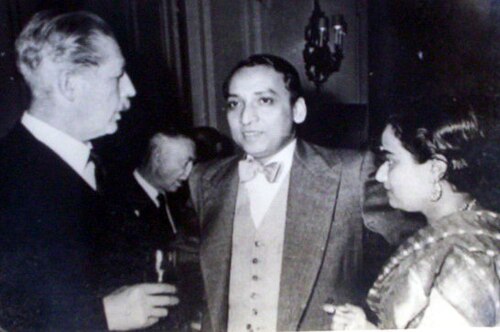

マクミランは外交政策を厳しく管理した。彼はスエズ危機(1956年)後の米国との亀裂を縮めるために尽力したが、その鍵となったのは戦時中のアイゼンハワーとの友情だった。二人は1957年3月という早い時期に バミューダで生産的な会談を行った。
1959年2月、マクミランはソ連を訪問した。ニキータ・フルシチョフとの会談により、西ベルリンをめぐる東西関係の緊張が緩和され、核実験の停止と連合国とソ連の首脳によるさらなる首脳会談の開催について原則合意に達した。 [156]
中東では、1958年のバグダッド条約の崩壊とソ連の影響の拡大に直面し、マクミランはペルシャ湾同盟国の信頼を回復するために断固たる行動を取り、 1957年7月にイギリス空軍と特殊部隊を使って、オマーン国王サイード・ビン・タイムールに対するサウジアラビアとエジプトの支援を受けた反乱を鎮圧した。 [157] 1958年7月にはアラブ連合共和国の破壊活動からヨルダンを守るために空挺大隊を派遣した。 [158] 1961年のイラク・クウェート危機の際には、1961年6月に旅団を上陸させてイラクのクウェートに対する要求を抑止した。[159]
マクミランは脱植民地化の主要な提唱者であり立案者でもあった。ゴールドコーストはガーナとして独立し、マラヤ連邦は1957年に英連邦内で独立を果たした。「旧英連邦加盟国の物質的な強さとアジア諸国の道徳的影響力が結びつくと、統一された英連邦は常に世界情勢において非常に強力な発言力を持つことになる」とマクミランは1957年、旧大英帝国を歴訪した際の演説で述べた。[160]
核兵器

1957年4月、マクミランは英国の核兵器計画に対する強い支持を再確認した。第二次世界大戦以来、歴代の首相は米国を説得して核兵器研究の分野での戦時協力を復活させようと決意していた。マクミランは、そのような協力を促す一つの方法は英国が独自の水素爆弾の開発を加速することであると信じ、 1957年11月8日に実験に成功した。
マクミランの決定により、ウィンズケール原子力発電所と(その後の)カルダーホール原子力発電所に対する軍事目的のプルトニウム生産の要求が高まった。 [161]その結果、ウィンズケール原子炉内の放射性物質の安全余裕が損なわれた。これが1957年10月10日の夜に発生したウィンズケール火災の一因となった。火災はプルトニウム工場のパイルNo.1で発生し、放射性汚染物質は煙突を伝って上昇したが、フィルターは汚染物質の一部をブロックしたが、すべてではなかった。放射能雲はイングランド南東部に広がり、放射性降下物はヨーロッパ本土にまで達した。科学者は以前からこのような事故の危険性を警告していたが、政府はメガトン爆弾の開発を急ぐ政治的圧力ではなく、火災を消火した作業員を「判断ミス」のせいにした。[162] [163]
マクミランは、核計画に対する国民の信頼が揺らぎ、技術情報が米国議会の防衛協力反対派に悪用されるのではないかと懸念し、原子力兵器研究施設のウィリアム・ペニー所長が原子力庁に提出した火災に関する報告書の要約以外を公表しなかった。[164]その後公開されたファイルには、「マクミランのカット数が少なく、技術的な詳細をほとんど隠していなかった」こと、[165]完全な報告書でも公衆衛生への危険は見つからなかったと記載されているが、その後の公式推定では、ポロニウム210の放出が直接的に25~50人の死につながった可能性があり、反核団体はこれを1,000人の致命的な癌と関連付けたと認めている。[166] [167]
1957年3月25日、マクミランは、 1948年以来共同管理下に置かれている戦略空軍の核爆撃機の代替として、共同管理下のトールIRBM 60機をイギリスに配備するというアイゼンハワーの要請に応じた。これらの爆撃機は、すでに老朽化が進んでいた。この恩恵もあって、1957年10月下旬、米国のマクマホン法が緩和され、両国政府間の核協力が促進された。当初の目的は、よりクリーンな兵器を生産し、重複した試験の必要性を減らすことだった。[168] 1958年7月3日には相互防衛協定が締結され、 [169]当時、協力がフランスやその他の同盟国の嫉妬を招き、核拡散を促進するのではないかという懸念が表明されていたにもかかわらず、イギリスの弾道ミサイル開発は加速した。 [170]
マクミランは、ソ連の人工衛星スプートニクの打ち上げが、米国に対する英国の影響力を強める好機であると考えた。この打ち上げは、米国に対する深刻な信頼の危機を引き起こした。マクミランは日記にこう記している。「ロシアの人工衛星打ち上げの成功は、真珠湾攻撃に匹敵するものである。米国の自信は揺らいでいる...大統領は初めて厳しい攻撃を受けている...どんなに革命的なものであろうと、ほとんど何でも決定できるような雰囲気になっている」。[171]マクミランが求めた「革命的な」変化は、より平等な英米のパートナーシップであり、スプートニク危機を利用してアイゼンハワーに圧力をかけ、今度は議会に1946年のマクマホン法の廃止を圧力をかけた。マクマホン法は、米国が核技術を外国政府と共有することを禁じたものであり、1957年末までにその目標は達成された。[172]
さらに、マクミランは、アイゼンハワーに、外交政策の問題を検討するための英米「ワーキンググループ」の設置と、彼が「相互依存宣言」(アメリカ人は「共通目的宣言」と呼んだが、この名称は使用しなかった)の承認を取り付け、英米パートナーシップの新時代の幕開けとなると考えた。[173]その後、マクミランは、アイゼンハワーもケネディも、彼が「相互依存宣言」に適用した、アメリカ大統領とイギリス首相が戦争と平和の決定に関して同等の権限を持つという想定を共有していないことを知ることになる。[174]マクミランは、アメリカの対ソ政策は厳格で対立的すぎると考え、冷戦の緊張緩和を目的としたデタント政策を支持した。[175]
1959年総選挙
マクミランは1959年の総選挙で保守党を勝利に導き、党の過半数を60議席から100議席に増やした。選挙運動は、達成された経済改善、低い失業率、生活水準の向上に基づいていた。「保守党の下では生活は良くなる」というスローガンは、マクミラン自身の1957年の発言「実に率直に言って、国民の大半はこれほど恵まれた生活をしたことがない」[176]と一致するものであった。これは通常「あなた方はこれほど恵まれた生活をしたことがない」と言い換えられる。このようなレトリックは労働者階級の豊かさという新たな現実を反映しており、「保守党の勝利の鍵となったのは、チャーチルの1951年の勝利以来、工業労働者の平均実質賃金が20パーセント以上上昇したことである」と論じられている。[177]この勝利の大きさは、保守党が3回連続で総選挙に勝利しただけでなく、そのたびに議席数を増やしたことを意味した。労働党(現在はヒュー・ゲイツケルが党首)が再び総選挙に勝てるかどうかという議論が巻き起こった。生活水準が十分に上昇し、労働者が消費経済に参加できるようになり、労働者階級の懸念は従来の労働党の見解から離れていた。[178]
第二次政権、1959年~1963年
経済
英国の国際収支問題により、セルウィン・ロイド財務大臣は1961年に7か月間の賃金凍結を課し[179]、他の要因の中でも特に、これは政府の人気低下と1962年3月の一連の補欠選挙の原因となり、その中で最も有名なのは3月14日のオーピントン選挙であった。 [180]バトラーは1962年7月11日にデイリーメールに大規模な改造が差し迫っていると漏らした。[181]マクミランは自分の立場を恐れ、後に(8月1日)、 ECの農業保護主義に苦しむ可能性が高いイーストアングリアの田舎の選挙区に立候補していたバトラーはEC加盟をめぐって党を分裂させようと計画していた(これが事実であったという証拠はない)とロイドに主張した。[182]
1962年の内閣改造は「長いナイフの夜」として知られ、マクミランはセルウィン・ロイドを含む8人の大臣を解任した。内閣の交代はパニックの兆候と広く見られ、若き自由党議員ジェレミー・ソープはマクミランの解任について「自分の命のために友を捨てるよりも大きな愛はない」と述べた。マクミランは前任者のエイヴォン卿から公然と批判されたが、これはほとんど前例のない行為だった。[183]
マクミランは、1961年夏に発表され、1962年に初会合が開かれた国家経済開発評議会(NEDC、通称「ネディ」)の創設を支持した。しかし、インフレなき成長政策の一環として所得統制を行うために1962年10月に設立された国家所得委員会(NIC、通称「ニッキー」)は、あまり効果的ではなかった。これは主に、雇用主と労働組合会議(TUC)が委員会をボイコットしたためである。[179]彼の首相在任中に、さらに一連の微妙な指標と統制が導入された。
報告書「英国鉄道の再構築」[184](またはビーチング第1報告書)は1963年3月27日に発表された。報告書は、1960年にハロルド・マクミラン首相が提出した概要を引用して始まる。「第一に、鉄道業界は現代の状況と見通しに適した規模と形態でなければならない。特に、鉄道システムは現在のニーズを満たすようにモデル化されなければならず、近代化計画はこの新しい形態に適合されなければならない」[注 1]。そして、鉄道は収益性の高い事業として運営されるべきであるという前提があった。[注 2]これが悪名高いビーチング・アックスにつながり、何マイルもの常設線路が破壊され、町が鉄道網から切り離された。
外交政策

ジェット機の時代、マクミランは1919年から1922年にかけて会議に何度も足を運んだロイド・ジョージを除けば、歴代の首相の中で最も多く旅行した。[185]マクミランは、1960年5月に開かれるはずだったベルリン危機を議論するためのパリでの4カ国首脳会談の開催に重要な役割を果たすことを計画したが、U-2号事件のためフルシチョフは出席を拒否した。[186]マクミランはアイゼンハワーにフルシチョフに謝罪するよう迫ったが、大統領は拒否した。[187]マクミランがフルシチョフに「謝罪」させることに失敗したため、アイゼンハワーは「もはやアメリカ人と有益な話をすることはできない」と個人的に認め、自身の「ギリシャ人とローマ人」外交政策を再考せざるを得なくなった。[187]パリ首脳会談の失敗は、マクミランの欧州経済共同体に対する態度を変え、彼はそれをアメリカの力に対するカウンターバランスと見なし始めた。[188]同時に、マクミランが重視した英米の「作業グループ」は、イギリスの拒否権によって選択肢が制限されることをアメリカ人が望まなかったこと、国務省、国防総省などの米国政府機関間の内紛、そして1951年のマクリーン・バージェス事件により、アメリカ人はイギリス政府にはソ連のスパイがいっぱいいて信用できないと信じていたため、ほとんど効果がなかったことが判明した。[188]
アメリカとの関係
アメリカとの特別な関係は、ジョン・F・ケネディ大統領の選出後も続いた。ケネディの妹キャスリーン・キャベンディッシュは、マクミランの妻の甥であるウィリアム・キャベンディッシュ・ハーティントン侯爵と結婚していた。マクミランは当初、アイルランド系アメリカ人のカトリック教徒であるケネディが反英主義者ではないかと懸念していたが、ケネディが第三世界に特別な関心を持っていることを知っていたマクミランは、イギリスとアメリカが第三世界への援助にもっとお金を使うよう提案した。[189]第三世界への援助に重点を置くことは、マクミランの「一国保守主義」とも一致していた。マクミランは、完全雇用を確保するために資本主義の改革を主張するケネディへの手紙の中で次のように書いている。「もし我々がこれに失敗すれば、共産主義が勝利するだろう。戦争や転覆によってではなく、人々に物質的な快適さをもたらすより良い方法のように思われることによって」。[189]
マクミランは1961年4月に米国を訪問する予定だったが、ラオス内戦でパテート・ラオが一連の勝利を収めたため、マクミランは1961年3月26日にキーウェストでケネディとの緊急首脳会談のため、いわゆる「ラオス・ダッシュ」に招集された。[190]マクミランはイギリス軍をラオスに派遣するという考えに強く反対したが、派遣しなければ米国との関係が悪化することを恐れ、キーウェストに向けて出発する際には特にケネディに会ったことがなかったため非常に不安だった。[191]マクミランは1961年1月4日に参謀長から、西側軍がラオスに侵入すれば中国がラオスに介入する可能性が高いと警告されていたため、ラオスへの介入には特に反対だった。なぜなら、毛沢東は中国と国境を接するいかなる国にも西側軍を受け入れないと明言していたからである。[192]同報告書は、ラオスにおける中国との戦争は「底なしの穴となり、限られた軍事資源が急速に消失するだろう」と述べている。[192]一方、ケネディは、米国が政治的な理由でラオスに軍隊を派遣するなら、英国も派遣することを望んだ。[193]キーウェストでの会談は非常に緊迫したもので、マクミランは「彼は私を強く迫っているが、私は譲らない」とつぶやいた。[191]しかし、マクミランは、米国がラオスに介入するなら英国も介入するだろうと渋々同意した。ラオス危機は、タイがSEATO加盟国すべての軍隊に「チャーター・イエロー」と呼ばれる警戒態勢強化を迫ったため、英タイ関係に大きな危機をもたらしたが、SEATOの英国代表はこれを拒否した。[194]タイはSEATOの投票手続きを全会一致から4分の3の多数決に変更することを望んだが、イギリスが拒否権を発動したため、タイはSEATOへの関心を失った。[195]
1961 年 4 月のピッグス湾侵攻の失敗により、ケネディは統合参謀本部と CIA から受けた強硬な助言を信用しなくなり、最終的にラオスへの介入を断念した。マクミランは個人的に大いに安堵した。1961 年 4 月のマクミランとケネディの 2 度目の会談はより友好的なものであり、ウィーンでの首脳会談でケネディがフルシチョフに敗れた後の 1961 年 6 月のロンドンでの 3 度目の会談はさらに友好的なものであった。マクミランが長老政治家としての立場を担い始めたのはロンドンでの 3 度目の会談で、ケネディに激励と自身の経験を提供し、それが永続的な友情を生んだ。[196]マクミランは個人的な外交がケネディに影響を与える最良の方法であると信じ、ケネディの父がロンドンのアメリカ大使を務めていた1930年代からケネディ家の長年の友人であったデイビッド・オームズビー=ゴアをワシントン大使に任命した。[197]
マクミランは1962年のキューバ危機の間ずっと支援的で、ケネディは毎日電話で彼に相談した。デビッド・オームズビー=ゴア大使は大統領の家族ぐるみの親しい友人であり、危機の解決方法についてのホワイトハウスでの議論に積極的に関与した。[198]コンゴ危機については、マクミランは、ベルギーと西側諸国の鉱山会社が支援するカタンガの分離独立政権を国連軍が終わらせることに反対し、それが中央アフリカ連邦を不安定にすると主張したため、ケネディと衝突した。[199]対照的に、ケネディは、カタンガ政権はベルギーの傀儡国家であり、その存在自体が第三世界における西側の威信を傷つけると感じていた。マクミランの反対を押し切って、ケネディは、国連軍にカタンガから白人傭兵を追放させ、カタンガをコンゴに再統合させることを決定した。[199]一方、ケネディはマクミランに、イギリスがアメリカのキューバに対する経済封鎖に加わるよう圧力をかけたが、失敗した。[199]マクミランは外務大臣のホーム卿に「キューバに関してアメリカを助ける理由はない」と語った。[199]
マクミランは1963年の核実験禁止条約の支持者であり、1963年前半、交渉が行き詰まった1963年春に会談を再開するよう、オームズビー=ゴアにケネディにひそかに圧力をかけさせた。国務長官ディーン・ラスクが妨害行為をしていると感じたマクミランは、1963年4月11日にケネディに電話をかけ、行き詰まりを打開するためにフルシチョフに共同書簡を送ることを提案した。[200]マクミランとケネディの書簡に対するフルシチョフの返事はほとんど否定的なものだったが、マクミランはケネディに、返事の中の唯一の肯定的な側面、すなわち、英米の高官チームがモスクワに到着するなら、核実験禁止条約について最善の方法を議論するために彼らを歓迎する、という点を取り上げるよう迫った。[200]モスクワに到着した2人の特使は、米国を代表するW・アヴェレル・ハリマンと英国を代表するヘイルシャム卿であった。 [201]ヘイルシャム卿の役割は主にオブザーバーであったが、ハリマンとソ連外相アンドレイ・グロムイコとの会談は、1963年8月の部分的核実験禁止条約につながる突破口を開いた。この条約は、すべての地上核実験を禁止するものであった。[201]マクミランは、核実験禁止条約を締結する差し迫った国内上の理由があった。1950年代を通じてソ連と米国が行った核実験のニュース映画の映像は、そのような破壊力を持つ兵器が英国の都市に対して使用される可能性を強く懸念していた英国国民の一部を恐怖に陥れ、これが核軍縮キャンペーン(CND)の設立につながり、1950年代後半から1960年代前半にかけて行われた英国の核軍縮を求める集会には多くの参加者が集まった。マクミランは、ソ連に対する抑止力として、また英国の大国としての主張を維持する上で核兵器の価値を信じていたが、核兵器禁止条約の人気についても懸念していた。[202]マクミランにとって、はるか上空に上がる不吉なキノコ雲の映像を生み出す地上核実験を禁止することが、核兵器禁止条約の魅力を弱める最良の方法であり、この点で1963年の部分的核兵器禁止条約は成功した。[202]
変化の風


マクミランの最初の政権下では、サハラ以南アフリカ独立運動の第一段階が起こり、それは彼の第二政権下で加速した。 [203]植民地の中で最も問題があったのは、1953年に北ローデシア、南ローデシア、ニヤサランドを統合した中央アフリカ連邦であったが、これは主に、南ローデシア(現在のジンバブエ)の白人住民が、1948年以来明らかに英国に敵対するアフリカーナー民族主義者が率いていた南アフリカに加わりたがるかもしれないという恐れからであった。[204]中央アフリカ連邦は、この地域を開発するための多民族の試みとして提示されたが、連邦は最初から不安定で、黒人住民は白人が特権的な地位を与えられていると非難した。[204]
マクミランは、特定の領土を保持するコストが利益を上回る場合は、その領土を放棄すべきだと感じた。ケニア非常事態の間、英国当局はキクユ族を収容所に収容することで、マウマウゲリラ(「土地と自由の軍」を自称)からキクユ族を守ろうとした。1959年3月3日、ホラ収容所の警備員が11人の囚人を公衆の面前で殴り殺すというスキャンダルが勃発し、そのニュースがケニアから英国に伝わると、大きな悪評を呼んだ。[204]英国メディアの多くは、ケニアの収容所の生活環境をナチスドイツの強制収容所に例え、収容所の人々は衰弱し病弱だと述べた。 1959年7月のデブリン委員会の報告書は、ニアサランド(現在のマラウイ)でのデモ隊の鎮圧について、ニアサランドを「警察国家」と呼んだ。[204]ケニアとニアスランドにおける植民地政策に対する批判を受けて、マクミランは1959年以降、アフリカの植民地を負債とみなすようになり、閣僚会議で、植民地を維持するために必要な武力のレベルは、国内でのさらなる批判、国際的な非難、費用のかかる戦争をもたらし、ソ連が自称「解放」運動を支援することで第三世界に影響力を確立することを許し、事態を悪化させるだけだと主張した。[204] 1959年に保守党の3期目を確保した後、彼はイアン・マクラウドを植民地大臣に任命した。マクラウドは脱植民地化を大幅に加速し、1961年に保守党議長および下院議員総裁に就任するまでに、ナイジェリア、タンガニーカ、ケニア、ニアサランド(マラウイとして)、北ローデシア(ザンビアとして)の独立を決定した。[205]マクミランは1960年1月6日にガーナを出発し、アフリカの「変化の風」ツアーに乗り出した。彼は1960年2月3日にケープタウンで有名な「変化の風」の演説を行った。 [206]これは脱植民地化の過程における画期的な出来事と考えられている。

Nigeria, the Southern Cameroons and British Somaliland were granted independence in 1960, Sierra Leone and Tanganyika in 1961, Trinidad and Tobago and Uganda in 1962, and Kenya in 1963. Zanzibar merged with Tanganyika to form Tanzania in 1963. All remained within the Commonwealth except British Somaliland, which merged with Italian Somaliland to form Somalia.
Macmillan's policy overrode the hostility of white minorities and the Conservative Monday Club. South Africa left the multiracial Commonwealth in 1961 and Macmillan acquiesced to the dissolution of the Central African Federation by the end of 1963.
In Southeast Asia, Malaya, Sabah (British North Borneo), Sarawak and Singapore became independent as Malaysia in 1963. Because Singapore with its ethnic Chinese majority was the largest and wealthiest city in the region, Macmillan was afraid that a federation of Malaya and Singapore together would result in a Chinese majority state, and insisted on including Sarawak and British North Borneo into the federation of Malaysia to ensure the new state was a Malay majority state.[207] During the Malaya Emergency, the majority of the Communist guerrillas were ethnic Chinese, and British policies tended to favour the Muslim Malays whose willingness to follow their sultans and imams made them more anti-communist. Southeast Asia was a region where racial-ethno-religious politics predominated, and the substantial Chinese minorities in the region were widely disliked on the account of their greater economic success.[208] Macmillan wanted Britain to retain military bases in the new state of Malaysia to ensure that Britain was a military power in Asia and thus he wanted the new state of Malaysia to have a pro-Western government.[207] This aim was best achieved by having the same Malay elite who had worked with the British colonial authorities serve as the new elite in Malaysia, hence Macmillan's desire to have a Malay majority who would vote for Malay politicians.[207] Macmillan especially wanted to keep the British base at Singapore, which he like other prime ministers saw as the linchpin of British power in Asia.[209]
The Indonesian president Sukarno strongly objected to the new federation.[210] On 8 December 1962, Indonesia sponsored a rebellion in the British protectorate of Brunei, leading to Macmillan to dispatch Gurkhas to put down the rebellion against the sultan.[211] In January 1963 Sukarno started a policy of konfrontasi ("confrontation") with Britain.[209] Macmillan detested Sukarno, partly because he had been a Japanese collaborator in World War Two, and partly because of his fondness for elaborate uniforms despite never having personally fought in a war offended the World War I veteran Macmillan, who had a strong contempt for any man who had not seen combat.[212] In his diary, Macmillan called Sukarno "a cross between Liberace and Little Lord Fauntleroy".[213] Macmillan felt that giving in to Sukarno's demands would be "appeasement" and clashed with Kennedy over the issue.[212] Sukarno was the leader of the most populous nation in Southeast Asia and though officially neutral in the Cold War, tended to take anti-Western positions, and Kennedy favoured accommodating him to bring him closer to the West; for example, supporting Indonesia's claim to Dutch New Guinea even through the Netherlands was a NATO ally.[212] Macmillan feared the expenses of an all-out war with Indonesia, but also felt to give in to Sukarno would damage British prestige, writing on 5 August 1963 that Britain's position in Asia would be "untenable" if Sukarno were to triumph over Britain in the same manner he had over the Dutch in New Guinea.[214] To help reduce the expenses of the war, Macmillan appealed to the Australian Prime Minister Sir Robert Menzies to send troops to defend Malaysia. On 25 September 1963, Sukarno announced in a speech that Indonesia would "ganyang Malaysia" ("gobble Malaysia raw") and on the same day a mob burned down the British embassy in Jakarta.[209] The result was the Indonesian Confrontation, an undeclared war between Britain vs. Indonesia that began in 1963 and continued to 1966.[215]
The speedy transfer of power maintained the goodwill of the new nations but critics contended it was premature. In justification Macmillan quoted Lord Macaulay in 1851:
Many politicians of our time are in the habit of laying it down as a self-evident proposition that no people ought to be free until they are fit to use their freedom. The maxim is worthy of the fool in the old story, who resolved not to go into the water until he had learnt to swim. If men are to wait for liberty until they become wise and good in slavery, they may indeed wait for ever.[216]
Skybolt crisis

Macmillan cancelled the Blue Streak ballistic missile in April 1960 over concerns about its vulnerability to a pre-emptive attack, but continued with the development of the air-launched Blue Steel stand-off missile, which was about to enter trials. For the replacement for Blue Steel he opted for Britain to join the American Skybolt missile project. From the same year Macmillan permitted the US Navy to station Polaris submarines at Holy Loch, Scotland, as a replacement for Thor. When Skybolt was unilaterally cancelled by US Secretary of Defense Robert McNamara, Macmillan negotiated with President Kennedy the purchase of Polaris missiles under the Nassau agreement in December 1962.[citation needed]
Europe
Macmillan worked with states outside the European Communities (EC) to form the European Free Trade Association (EFTA), which from 3 May 1960 established a free-trade area. As the EC proved to be an economic success, membership of the EC started to look more attractive compared to the EFTA.[217] A report from Sir Frank Lee of the Treasury in April 1960 predicated that the three major power blocs in the decades to come would be those headed by the United States, the Soviet Union and the EC, and argued to avoid isolation Britain would to have decisively associate itself with one of the power blocs.[217] Macmillan wrote in his diary about his decision to apply to join the EC: "Shall we be caught between a hostile (or at least less and less friendly) America and a boastful, powerful 'Empire of Charlemagne'-now under French, but later bound to come under German control?...It's a grim choice".[217]
Through Macmillan had decided upon joining the EC in 1960, he waited until July 1961 to formally make the application, for he feared the reaction of the Conservative Party backbenchers, the farmers' lobby and the populist newspaper chain owned by the right-wing Canadian millionaire Lord Beaverbrook, who saw Britain joining the EC as a betrayal of the British empire.[217] As expected, the Beaverbrook newspapers whose readers tended to vote Conservative offered up ferocious criticism of Macmillan's application to join the EC, accusing him of betrayal. Negotiations to join the EC were complicated by Macmillan's desire to allow Britain to continue its traditional policy of importing food from the Commonwealth nations of Australia, New Zealand and Canada, which led the EC nations, especially France, to accuse Britain of negotiating in bad faith.[217]
Macmillan also saw the value of rapprochement with the EC, to which his government sought belated entry, but Britain's application was vetoed by French president Charles de Gaulle on 29 January 1963. De Gaulle was always strongly opposed to British entry for many reasons. He sensed the British were inevitably closely linked to the Americans. He saw the European Communities as a continental arrangement primarily between France and Germany, and felt that if Britain joined, France's role would diminish.[218][219]
Partial Test Ban Treaty (1963)
Macmillan's previous attempt to create an agreement at the May 1960 summit in Paris had collapsed due to the 1960 U-2 incident. He was a force in the negotiations leading to the signing of the 1963 Partial Test Ban Treaty by the United Kingdom, the United States and the Soviet Union. He sent Lord Hailsham to negotiate the Test Ban Treaty, a sign that he was grooming him as a potential successor.[220]
President Kennedy visited Macmillan's country home, Birch Grove, on 29–30 June 1963, for talks about the planned Multilateral Force. They never met again, and this was to be Kennedy's last visit to the UK. He was assassinated in November, shortly after the end of Macmillan's premiership.[221]
End of premiership
By the early 1960s, many were starting to find Macmillan's courtly and urbane Edwardian manners anachronistic, and satirical journals such as Private Eye and the television show That Was the Week That Was mercilessly mocked him as a doddering, clueless leader.[222] Macmillan's handling of the Vassall affair – in which an Admiralty clerk, John Vassall, was convicted in October 1962 of passing secrets to the Soviet Union – undermined his "Super-Mac" reputation for competence.[222] D. R. Thorpe writes that from January 1963 "Macmillan's strategy lay in ruins", leaving him looking for a "graceful exit". The Vassall affair turned the press against him.[223] In the same month, opposition leader Hugh Gaitskell died suddenly at the age of 56. With a general election due before the end of the following year, Gaitskell's death threw the future of British politics into fresh doubt.[224] The following month Harold Wilson was elected as the new Labour leader, and he proved to be a popular choice with the public.[225]
Profumo affair
The Profumo affair of 1963 permanently damaged the credibility of Macmillan's government. The revelation of the affair between John Profumo (Secretary of State for War) and an alleged call-girl, Christine Keeler, who was simultaneously sleeping with the Soviet naval attache Captain Yevgeny Ivanov made it appear that Macmillan had lost control of his government and of events in general.[226] In the ensuing Parliamentary debate he was seen as a pathetic figure, while Nigel Birch declared, in the words of Browning on Wordsworth, that it would be "Never glad confident morning again!".[227] On 17 June 1963, he survived a Parliamentary vote with a majority of 69,[228] one fewer than had been thought necessary for his survival, and was afterwards joined in the smoking-room only by his son and son-in-law, not by any Cabinet minister. However, Butler and Reginald Maudling (who was very popular with backbench MPs at that time) declined to push for his resignation, especially after a tide of support from Conservative activists around the country. Many of the salacious revelations about the sex lives of "Establishment" figures during the Profumo affair damaged the image of "the Establishment" that Macmillan was seen as a part of, giving him the image by 1963 of a "failing representative of a decadent elite".[226]
Resignation
By the summer of 1963 Conservative Party Chairman Lord Poole was urging the ageing Macmillan to retire.[220] The full Denning report into the Profumo Scandal was published on 26 September 1963.[229]
Macmillan had a meeting with Butler on 11 September and was careful to keep his options open (retire now, retire in the New Year, or fight the next election). He talked the matter over with his son Maurice and other senior ministers. Over lunch with Lord Swinton on 30 September he favoured stepping down, but only if Baron Hailsham could be shoehorned in as his successor. He saw Butler on the morning of 7 October and told him he planned to stay on to lead the Conservatives into the next General Election, then was struck down by prostate problems on the night of 7–8 October, on the eve of the Conservative Party conference.[230][231]
Macmillan was operated on at 11.30 am on 10 October. Although it is sometimes stated that he believed himself to have inoperable prostate cancer, he in fact knew it was benign before the operation.[232] Macmillan was almost ready to leave hospital within ten days of the diagnosis and could easily have carried on, in the opinion of his doctor Sir John Richardson.[233] His illness gave him a way out.[234]
Succession
While recovering in hospital, Macmillan wrote a memorandum (dated 14 October) recommending the process by which "soundings" would be taken of party opinion to select his successor, which was accepted by the Cabinet on 15 October. This time backbench MPs and junior ministers were to be asked their opinion, rather than just the Cabinet as in 1957, and efforts would be made to sample opinion amongst peers and constituency activists.[234]
Enoch Powell claimed that it was wrong of Macmillan to seek to monopolise the advice given to the Queen in this way. In fact, this was done at the Palace's request, so that the Queen was not being seen to be involved in politics as had happened in January 1957, and had been decided as far back as June when it had looked as though the government might fall over the Profumo scandal. Ben Pimlott later described this as the "biggest political misjudgement of her reign".[235][236]
Macmillan was succeeded by Foreign Secretary Alec Douglas-Home in a controversial move; it was alleged that Macmillan had pulled strings and utilised the party's grandees, nicknamed 'The Magic Circle', who had slanted their "soundings" of opinion among MPs and Cabinet Ministers to ensure that Butler was (once again) not chosen.[237]
He finally resigned, receiving the Queen from his hospital bed, on 18 October 1963, after nearly seven years as prime minister. He felt privately that he was being hounded from office by a backbench minority:
Some few will be content with the success they have had in the assassination of their leader and will not care very much who the successor is. ... They are a band that in the end does not amount to more than 15 or 20 at the most.[238]
Retirement, 1963–1986
.jpeg/500px-The_Queen_in_Downing_Street_in_1985_to_mark_the_250th_anniversary_of_Robert_Walpole's_occupancy_of_No.10_(cropped).jpeg)
Macmillan initially refused a peerage and retired from politics in September 1964, standing down at the following month's 1964 election, which the Conservatives narrowly lost to Labour, now led by Harold Wilson.[239] His service in the House of Commons totalled 37 years.
Oxford chancellor (1960–1986)
Macmillan had been elected Chancellor of the University of Oxford in 1960, in a campaign masterminded by Hugh Trevor-Roper, and held this office for the rest of his life, frequently presiding over college events, making speeches and tirelessly raising funds. According to Sir Patrick Neill QC, the vice-chancellor, Macmillan "would talk late into the night with eager groups of students who were often startled by the radical views he put forward, well into his last decade."[240]
Return to Macmillan Publishers
In retirement Macmillan took up the chairmanship of his family's publishing house, Macmillan Publishers, from 1964 to 1974. The publishing firm remained in family hands until a majority share was purchased in 1995 by the Holtzbrinck Publishing Group; the imprint persists. Macmillan brought out a six-volume autobiography:
- Winds of Change, 1914–1939 (1966) ISBN 0-333-06639-1
- The Blast of War, 1939–1945 (1967) ISBN 0-333-00358-6
- Tides of Fortune, 1945–1955 (1969) ISBN 0-333-04077-5
- Riding the Storm, 1956–1959 (1971) ISBN 0-333-10310-6
- Pointing the Way, 1959–1961 (1972) ISBN 0-333-12411-1
- At the End of the Day, 1961–1963 (1973) ISBN 0-333-12413-8
Macmillan's biographer acknowledges that his memoirs were considered "heavy going".[241] Reading these volumes was said by Macmillan's political enemy Enoch Powell to induce 'a sensation akin to that of chewing on cardboard'.[242] Butler wrote in his review of Riding the Storm: "Altogether this massive work will keep anybody busy for several weeks."[243]
Macmillan's wartime diaries were better received.
- War Diaries: Politics and War in the Mediterranean, January 1943 – May 1945 (London: Macmillan, 1984) ISBN 0-333-37198-4
Since Macmillan's death, his diaries for the 1950s and 1960s have also been published, both edited by Peter Catterall:
- The Macmillan Diaries: The Cabinet Years 1950–57 (London: Macmillan, 2003) ISBN 0-333-71167-X
- The Macmillan Diaries Vol II: Prime Minister and After 1957–1966 (London: Macmillan, 2011) ISBN 1-405-04721-6
Macmillan burned his diary for the climax of the Suez Affair, supposedly at Eden's request, although in Campbell's view more likely to protect his own reputation.[244]
London clubs
Macmillan was a member of many clubs. On his first evening as prime minister he made a public show of taking the Chief Whip Edward Heath for oysters at the Turf Club.[141]
He became President of the Carlton Club in 1977 and would often stay at the club when he had to stay in London overnight. Within a few months of becoming President he merged the Carlton and Junior Carlton. He was also a member of Buck's, Pratt's, the Turf Club and Beefsteak Club. He also once commented that White's was 75% gentlemen and 25% crooks, the perfect combination for a club.[245]
Political interventions
Macmillan made occasional political interventions in retirement. Responding to a remark made by Labour Prime Minister Harold Wilson about not having boots in which to go to school, Macmillan retorted: 'If Mr Wilson did not have boots to go to school that is because he was too big for them.'[246]
Macmillan accepted the Order of Merit in 1976.[247] In October of that year he called for 'a Government of National Unity' including all parties, which could command the public support to resolve the economic crisis. Asked who could lead such a coalition, he replied: "Mr Gladstone formed his last Government when he was eighty-three. I'm only eighty-two. You mustn't put temptation in my way."[248] He discussed the idea with Eden, but the IMF loan saved the country and the Labour government.[248]
Macmillan still travelled widely, visiting China in October 1979, where he held talks with senior Vice-Premier Deng Xiaoping.[249]
Relations with Margaret Thatcher
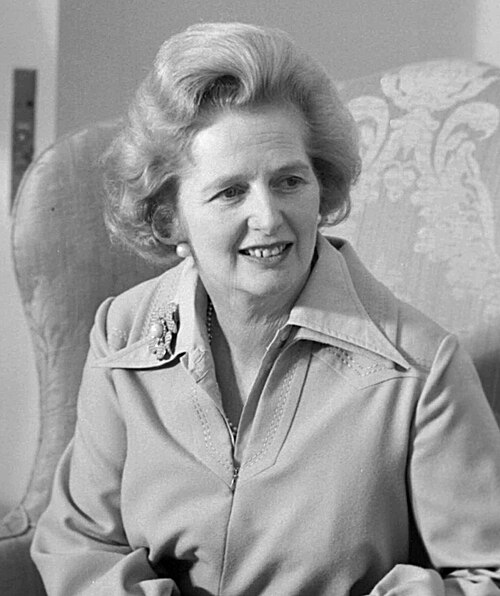
Macmillan found himself drawn more actively into politics after Margaret Thatcher became Conservative leader in February 1975.[250] After she ended Labour's five-year rule and became prime minister in May 1979,[251] he told Nigel Fisher (his biographer, and himself a Conservative MP): "Ted [Heath] was a very good No2 {pause} not a leader {pause}. Now, you have a real leader. {long pause} Whether she's leading you in the right direction ..."[252]
The record of Macmillan's own premiership came under attack from the monetarists in the party, whose theories Thatcher supported.[253]: 27 In a celebrated speech he wondered aloud where such theories had come from:
Was it America? Or was it Tibet? It is quite true, many of Your Lordships will remember it operating in the nursery. How do you treat a cold? One nanny said, 'Feed a cold'; she was a neo-Keynesian. The other said, 'Starve a cold'; she was a monetarist.[254]
Macmillan was one of several people who advised Thatcher to set up a small War Cabinet to manage the Falklands War.[255] On his advice she excluded the Treasury from this body.[253]: 148 Having first inquired whether Argentina was known to have atomic weapons, Macmillan's advice was to appoint a senior military advisor, as Pug Ismay had been in the Second World War (in the event Admiral Lewin, Chief of Defence Staff, performed this role). She had already received advice to exclude the Treasury from Frank Cooper (the Permanent Under-Secretary for Defence), not least because of Macmillan's own behaviour, as Chancellor, in demanding a halt to the Suez operation.[256] She later recalled: 'I never regretted following Harold Macmillan's advice. We were never tempted to compromise the security of our forces for financial reasons. Everything we did was governed by military necessity.'[257]: 188
With hereditary peerages again being created under Thatcher, Macmillan requested the earldom that had been customarily bestowed to departing prime ministers, and on 24 February 1984 he was created Earl of Stockton and Viscount Macmillan of Ovenden.[258] He is the last non-royal recipient of a hereditary peerage. He took the title from his former parliamentary seat on the edge of the Durham coalfields, and in his maiden speech in the House of Lords he criticised Thatcher's handling of the coal miners' strike and her characterisation of striking miners as 'the enemy within'.[257]: 370 He received an unprecedented standing ovation for his oration, which included the words:
It breaks my heart to see—and I cannot interfere—what is happening in our country today. This terrible strike, by the best men in the world, who beat the Kaiser's and Hitler's armies and never gave in. It is pointless and we cannot afford that kind of thing. Then there is the growing division of comparative prosperity in the south and an ailing north and Midlands. We used to have battles and rows but they were quarrels. Now there is a new kind of wicked hatred that has been brought in by different types of people.[254]
As Chancellor of Oxford University, Macmillan condemned its refusal in February 1985 to award Thatcher an honorary degree. He noted that the decision represented a break with tradition, and predicted that the snub would rebound on the university.[259]
Macmillan is widely supposed to have likened Thatcher's policy of privatisation to 'selling the family silver'. His precise quote, at a dinner of the Tory Reform Group at the Royal Overseas League on 8 November 1985, was on the subject of the sale of assets commonplace among individuals or states when they encountered financial difficulties: 'First of all the Georgian silver goes. And then all that nice furniture that used to be in the salon. Then the Canalettos go.' Profitable parts of the steel industry and the railways had been privatised, along with British Telecom: 'They were like two Rembrandts still left.'[260]
Macmillan's speech was much commented on, and a few days later he made a speech in the House of Lords, referring to it:
When I ventured the other day to criticise the system I was, I am afraid, misunderstood. As a Conservative, I am naturally in favour of returning into private ownership and private management all those means of production and distribution which are now controlled by state capitalism. I am sure they will be more efficient. What I ventured to question was the using of these huge sums as if they were income.[261]
Death and funeral

Macmillan had often play-acted being an old man long before real old age set in. As early as 1948 Humphry Berkeley wrote of how "he makes a show of being feeble and decrepit", mentioning how he had suddenly stopped shambling and sprinted for a train. Nigel Fisher tells an anecdote of how Macmillan initially greeted him to his house leaning on a stick, but later walked and climbed steps perfectly well, twice acting lame again and fetching his stick when he remembered his "act". However, in genuine old age he became almost blind, causing him to need sticks and a helping arm.[262]
On the evening of 29 December 1986, Macmillan died at Birch Grove, the Macmillan family mansion on the edge of Ashdown Forest, in Horsted Keynes, West Sussex.[263][264] His grandson and heir Alexander, Viscount Macmillan of Ovenden, said: "In the last 48 hours he was very weak but entirely reasonable and intelligent. His last words were, 'I think I will go to sleep now'."[265][266] His lifespan of 92 years and 322 days was the longest of any British prime minister until surpassed by James Callaghan on 14 February 2005.[267]
Paying tribute, Thatcher hailed Macmillan as "a very remarkable man and a very great patriot", and said that his dislike of "selling the family silver" had never come between them. He was "unique in the affection of the British people".[268] Additional tributes came from around the world. US President Ronald Reagan said: "The American people share in the loss of a voice of wisdom and humanity who, with eloquence and gentle wit, brought to the problems of today the experience of a long life of public service."[240] Outlawed African National Congress president Oliver Tambo sent his condolences: 'As South Africans we shall always remember him for his efforts to encourage the apartheid regime to bow to the winds of change that continue to blow in South Africa.'[240] Commonwealth Secretary-General Sir Shridath Ramphal affirmed: "His own leadership in providing from Britain a worthy response to African national consciousness shaped the post-war era and made the modern Commonwealth possible."[240]

A private funeral was held on 5 January 1987 at St Giles' Church, Horsted Keynes, West Sussex, where he had regularly worshipped and read the lesson.[269] Two hundred mourners attended,[266] including 64 members of the Macmillan family, Thatcher and former premiers Lord Home and Edward Heath, as well as Lord Hailsham,[265] and "scores of country neighbours".[269] The Prince of Wales sent a wreath "in admiring memory".[265] He was buried beside his wife and next to his parents and his son Maurice, who had died in 1984.[269]
The House of Commons paid its tribute on 12 January 1987, with much reference made to his book The Middle Way.[270] Thatcher said: "In his retirement Harold Macmillan occupied a unique place in the nation's affections", while Labour leader Neil Kinnock struck a more critical note:
Death and distance cannot lend sufficient enchantment to alter the view that the period over which he presided in the 1950s, while certainly and thankfully a period of rising affluence and confidence, was also a time of opportunities missed, of changes avoided. Harold Macmillan was, of course, not solely or even pre-eminently responsible for that. But we cannot but record with frustration the fact that the vigorous and perceptive attacker of the status quo in the 1930s became its emblem for a time in the late 1950s before returning to be its critic in the 1980s.[270]
A public memorial service, attended by the Queen and thousands of mourners, was held on 10 February 1987 in Westminster Abbey.[271] Macmillan's estate was assessed for probate on 1 June 1987, with a value of £51,114 (equivalent to £181,601 in 2023[272]).[273]
Honours, awards and legacy
Macmillan was an elected Fellow of the Royal Society (FRS) in 1962.[274]
In 1976 he received the Order of Merit. In 1984 he received the Freedom medal from the Roosevelt Study Center.
Macmillan's archives are located at Oxford University's Bodleian Library.[275][276]
Macmillan was awarded a number of honorary degrees, including:
- 1956 – Indiana University[277]
- 1958 – DePauw University[278]
- 1958 – Johns Hopkins University, together with Eisenhower[279]
- 1961 – Cambridge University[280]
Historians' assessments of Macmillan's premiership
C. P. Snow wrote to Macmillan that his reputation would endure as, like Churchill, he was "psychologically interesting".[281]
An early biographer George Hutchinson called him "The Last Edwardian at Number Ten" (1980), mistakenly in the view of Nigel Fisher.[282] Fisher described him as "complex, almost chameleon".[283] At times he portrayed himself as the descendant of a Scottish crofter, as a businessman, aristocrat, intellectual and soldier. Labour leader Harold Wilson wrote that his "role as a poseur was itself a pose".[284] Wilson also argued that behind the public nonchalance lay a real professional.[282] Fisher also wrote that he "had a talent for pursuing progressive policies but presenting them tactfully in a Conservative tone of voice".[285]
Historian John Vincent explores the image Macmillan crafted of himself for his colleagues and constituents:
He presented himself as a patrician, as the last Edwardian, as a Whig (in the tradition of his wife's family), as a romantic Tory, as intellectual, as a man shaped by the comradeship of the trenches and by the slump of the 1930s, as a shrewd man of business of bourgeois Scottish stock, and as a venerable elder statesman at home with modern youth. There was something in all these views, which he did little to discourage, and which commanded public respect into the early 1960s. Whether he was ever a mainstream Conservative, rather than a skilful exponent of the postwar consensus, is more doubtful.[286]
Alistair Horne, his official biographer, concedes that after his re-election in 1959 Macmillan's premiership suffered a series of major setbacks.[287]
Campbell writes that: "a late developer who languished on the back benches ... in the 1930s, Macmillan seized his opportunity when it came with flair and ruthlessness, and [until about 1962] filled the highest office with compelling style". However, he argues that Macmillan is remembered as having been "a rather seedy conjuror", famous for Premium Bonds, Beeching's cuts to the railways, and the Profumo Scandal. He is also remembered for "stop-go" economics. In the 1980s the aged Macmillan was seen as "a revered but slightly pathetic figure".[288]
Dominic Sandbrook writes that Macmillan's final weeks were typical of his premiership, "devious, theatrical and self-seeking". Macmillan is best remembered for the "affluent society", which he inherited rather than created in the late 1950s, but chancellors came and went and by the early 1960s economic policy was "nothing short of a shambles", while his achievements in foreign policy made little difference to the lives of the public. By the time he left office, largely unlamented at the time, he was associated not with prosperity but with "anachronism and decay".[citation needed]
D. R. Thorpe writes that by the early 1960s Macmillan was seen as "the epitome of all that was wrong with anachronistic Britain. This was an unfair charge." "The essence of his persona was as elusive as mercury." He was not a member of "the Establishment"—in fact he was a businessman who had married into the aristocracy and a rebel Chancellor of Oxford. "He had style in abundance, (and) was a star on the world stage". Thorpe argues that despite his 1960 "Winds of Change" speech, he was largely pushed into rapid independence for African countries by Maudling and Macleod.[289]
Richard Lamb argues that Macmillan was "by far the best of Britain's postwar Prime Ministers, and his administration performed better than any of their successors". Lamb argues that it is unfair to blame Macmillan for excessively quick African independence (resulting in many former colonies becoming dictatorships), or for the Beeching Plan (which was accepted by Labour in 1964, although Macmillan himself had reservations and had asked civil servants to draw up plans for extra road-building), and argues that had he remained in power Macmillan would never have allowed inflation to get as far out of hand as it did in the 1970s.[5]
Cabinets (1957–1963)
January 1957 – October 1959
- Harold Macmillan: Prime Minister
- Lord Kilmuir: Lord Chancellor
- Lord Salisbury: Lord President of the Council
- Rab Butler: Lord Privy Seal and Secretary of State for the Home Department
- Peter Thorneycroft: Chancellor of the Exchequer
- Selwyn Lloyd: Secretary of State for Foreign Affairs
- Alan Lennox-Boyd: Secretary of State for the Colonies
- Lord Home: Secretary of State for Commonwealth Relations
- Sir David Eccles: President of the Board of Trade
- Charles Hill: Chancellor of the Duchy of Lancaster
- Lord Hailsham: Minister of Education
- John Scott Maclay: Secretary of State for Scotland
- Derick Heathcoat Amory: Minister of Agriculture
- Iain Macleod: Minister of Labour and National Service
- Harold Arthur Watkinson: Minister of Transport and Civil Aviation
- Duncan Edwin Sandys: Minister of Defence
- Lord Mills: Minister of Power
- Henry Brooke: Minister of Housing and Local Government and Welsh Affairs
Change
- March 1957 – Lord Home succeeds Lord Salisbury as Lord President, remaining Commonwealth Relations Secretary.
- September 1957 – Lord Hailsham succeeds Lord Home as Lord President, Home remaining Commonwealth Relations Secretary. Geoffrey Lloyd succeeds Hailsham as Minister of Education. The Chief Secretary to the Treasury, Reginald Maudling, enters the Cabinet.
- January 1958 – Derick Heathcoat Amory succeeds Peter Thorneycroft as Chancellor of the Exchequer. John Hare succeeds Amory as Minister of Agriculture.
October 1959 – July 1960
- Harold Macmillan: Prime Minister
- Lord Kilmuir: Lord Chancellor
- Lord Home: Lord President of the Council and Secretary of State for Commonwealth Relations
- Lord Hailsham: Lord Privy Seal and Minister of Science
- Derick Heathcoat Amory: Chancellor of the Exchequer
- Rab Butler: Secretary of State for the Home Department
- Selwyn Lloyd: Secretary of State for Foreign Affairs
- Iain Macleod: Secretary of State for the Colonies
- Reginald Maudling: President of the Board of Trade
- Charles Hill: Chancellor of the Duchy of Lancaster
- Sir David Eccles: Minister of Education
- Lord Mills: Chief Secretary to the Treasury
- Ernest Marples: Minister of Transport
- Duncan Edwin Sandys: Minister of Aviation
- Harold Arthur Watkinson: Minister of Defence
- John Scott Maclay: Secretary of State for Scotland
- Edward Heath: Minister of Labour and National Service
- John Hare: Minister of Agriculture
- Henry Brooke: Minister of Housing and Local Government and Welsh Affairs
July 1960 – October 1961
- Harold Macmillan: Prime Minister
- Lord Kilmuir: Lord Chancellor
- Lord Hailsham: Lord President of the Council and Minister of Science
- Edward Heath: Lord Privy Seal
- Selwyn Lloyd: Chancellor of the Exchequer
- Rab Butler: Secretary of State for the Home Department
- Lord Home: Secretary of State for Foreign Affairs
- Iain Macleod: Secretary of State for the Colonies
- Duncan Edwin Sandys: Secretary of State for Commonwealth Relations
- Reginald Maudling: President of the Board of Trade
- Charles Hill: Chancellor of the Duchy of Lancaster
- Sir David Eccles: Minister of Education
- Lord Hailsham: Minister of Science
- Lord Mills: Chief Secretary to the Treasury
- Ernest Marples: Minister of Transport
- Peter Thorneycroft: Minister of Aviation
- Harold Arthur Watkinson: Minister of Defence
- John Scott Maclay: Secretary of State for Scotland
- John Hare: Minister of Labour and National Service
- Christopher Soames: Minister of Agriculture
- Henry Brooke: Minister of Housing and Local Government and Welsh Affairs
October 1961 – July 1962
- Harold Macmillan: Prime Minister
- Lord Kilmuir: Lord Chancellor
- Lord Hailsham: Lord President of the Council and Minister of Science
- Edward Heath: Lord Privy Seal
- Selwyn Lloyd: Chancellor of the Exchequer
- Rab Butler: Secretary of State for the Home Department
- Lord Home: Secretary of State for Foreign Affairs
- Reginald Maudling: Secretary of State for the Colonies
- Duncan Edwin Sandys: Secretary of State for Commonwealth Relations
- Frederick Erroll: President of the Board of Trade
- Iain Macleod: Chancellor of the Duchy of Lancaster
- Sir David Eccles: Minister of Education
- Henry Brooke: Chief Secretary to the Treasury
- Ernest Marples: Minister of Transport
- Peter Thorneycroft: Minister of Aviation
- Harold Arthur Watkinson: Minister of Defence
- John Scott Maclay: Secretary of State for Scotland
- John Hare: Minister of Labour and National Service
- Christopher Soames: Minister of Agriculture
- Charles Hill: Minister of Housing and Local Government and Welsh Affairs
- Lord Mills: Minister without Portfolio
July 1962 – October 1963
Note: In a radical reshuffle dubbed "The Night of the Long Knives", Macmillan sacked a third of his Cabinet.
- Harold Macmillan: Prime Minister
- Rab Butler: Deputy Prime Minister and First Secretary of State
- Lord Dilhorne: Lord Chancellor
- Lord Hailsham: Lord President of the Council and Minister of Science
- Edward Heath: Lord Privy Seal
- Reginald Maudling: Chancellor of the Exchequer
- Henry Brooke: Secretary of State for the Home Department
- Lord Home: Secretary of State for Foreign Affairs
- Duncan Edwin Sandys: Secretary of State for the Colonies and Secretary of State for Commonwealth Relations
- Frederick Erroll: President of the Board of Trade
- Iain Macleod: Chancellor of the Duchy of Lancaster
- Sir Edward Boyle: Minister of Education
- John Boyd-Carpenter: Chief Secretary to the Treasury
- Ernest Marples: Minister of Transport
- Julian Amery: Minister of Aviation
- Peter Thorneycroft: Minister of Defence
- Michael Noble: Secretary of State for Scotland
- John Hare: Minister of Labour and National Service
- Christopher Soames: Minister of Agriculture
- Sir Keith Joseph: Minister of Housing and Local Government and Welsh Affairs
- Enoch Powell: Minister of Health
- William Deedes: Minister without Portfolio
Cultural depictions
Notes
- ^ RB(1963a), p. 1.
- ^ RB(1963a), p. 2. "It is, of course the responsibility of the British Railways Board so to shape and operate the railways as to make them pay."
References
- ^ "Harold Macmillan Dies at 92". The New York Times. 30 December 1986. Archived from the original on 29 June 2021. Retrieved 8 March 2021.
- ^ Middleton 1997, pp. 422–23.
- ^ Middleton 1997, p. 422.
- ^ Peter Hennessy, Having It So Good: Britain in the Fifties (London: Allen Lane, 2006), pp. 533–34.
- ^ a b Lamb 1995, pp. 14–15.
- ^ Leitch, David (8 December 1996), "The spy who rocked a world of privilege", The Independent, London, archived from the original on 4 August 2012
- ^ Fisher 1982, p. 2.
- ^ Horne 2008, p. 9.
- ^ Campbell 2010, p. 245.
- ^ "Winds of Change" speech, minute 29:04. "PM Harold Macmillan – Wind of Change Speech at the Cape Town Parliament – 3 February 1960". YouTube. 25 March 2016. Archived from the original on 24 November 2017. Retrieved 4 December 2017.
- ^ Horne 2008, p. 13.
- ^ Williams 2010, p. 15.
- ^ "Mr T.S. Morton". The Times. 23 January 1962.
- ^ a b Horne 1988, p. 15.
- ^ Horne 2008, p. 16.
- ^ Simon Ball, The Guardsmen, Harold Macmillan, Three Friends and the World They Made, (London, Harper Collins), 2004, p. 19.
- ^ Williams 2010, pp. 19–26.
- ^ a b c d Thorpe 2010.
- ^ Horne 1988, p. 22.
- ^ Thorpe 2010, p. 41
- ^ Supermac.
- ^ Thorpe 2011, pp. 47–48
- ^ "No. 28979". The London Gazette (Supplement). 17 November 1914. p. 9505.
- ^ "No. 29500". The London Gazette (Supplement). 7 March 1916. p. 2533.
- ^ "No. 29376". The London Gazette (Supplement). 19 November 1915. p. 11582.
- ^ Thorpe 2010, p. 49
- ^ MacMillan 2010, p. 89
- ^ Lawton, John (1992), 1963: Five Hundred Days, Sevenoaks, UK: Hodder and Stoughton, ISBN 0-340-50846-9
- ^ Ball Guardsmen, p. 64.
- ^ Thorpe 2010, p. 58
- ^ "Harold Macmillan". Archived from the original on 21 March 2015. Retrieved 13 June 2015. Spartacus Educational website biography.
- ^ Campbell 2010, p. 246–247.
- ^ Williams 2010, p. 31.
- ^ Horne 2008, p. 49.
- ^ Thorpe 2010, pp. 42–45; "sent down" is a university term for "expelled"
- ^ Williams 2010, p. 49.
- ^ Thorpe 2010, p. 62.
- ^ Macmillan 1966, pp. 107–108. This period saw disturbances amongst British troops in France, which was of grave worry to the Government as the Russian and German revolutions had been accompanied by army mutinies. In the end the crisis was resolved by giving priority for demobilisation to men who had served the longest.
- ^ Horne 2008, p. 52.
- ^ Williams 2010, p. 55.
- ^ "No. 31958". The London Gazette (Supplement). 29 June 1920. p. 7073. The London Gazette states that he held and retained the rank of lieutenant.
- ^ Thorpe 2010, pp. 72, 76–77, 88, 109, 118.
- ^ Horne 1989, p. 155.
- ^ Bloch, Michael (2015). Closet Queens. Little, Brown. p. 213. ISBN 978-1408704127.
- ^ Leonard, Dick (2005). Harold Macmillan — Idealist into Manipulator. In: A Century of Premiers. Palgrave Macmillan. p. 210. ISBN 978-1-4039-3990-6.
- ^ Thorpe 2010, pp. 94–100.
- ^ Thorpe 2010, p. 95. Thorpe points out that divorce still caused muttering as late as the 1950s. Walter Monckton's divorce may have cost him promotion to the highest legal positions of Lord Chief Justice and Lord Chancellor, while Anthony Eden faced criticism for divorcing and remarrying, and talk that he was unfit to make ecclesiastical appointments.
- ^ Parris, Matthew (1997), Great Parliamentary Scandals: Four Centuries of Calumny, Smear & Innuendo, London: Robson Books, pp. 98–104, ISBN 1-86105-152-2
- ^ Horne 1988, p. 67.
- ^ Campbell 2010, p. 248.
- ^ Thorpe 2010, p. 100.
- ^ Forbes, Alastair (21 September 1991). "A real book". The Spectator. p. 29. Retrieved 13 December 2017.
- ^ Thorpe 2010, 14116–14121.
- ^ Richard Allen Cave, O'Casey, Sean (1880–1964) Archived 8 November 2021 at the Wayback Machine, Oxford Dictionary of National Biography (Oxford University Press, 2004; online edition, January 2008. Retrieved 19 November 2011.
- ^ Garry O'Connor, 'Obituary – Eileen O'Casey', The Guardian (12 April 1995), p. 13.
- ^ Edward Marriott, 'Obituary – Eileen O'Casey', Evening Standard (London, 18 April 1995).
- ^ "Eileen O'Casey; Obituary." The Times (11 April 1995), p. 19.
- ^ Horne 1988, p. 69.
- ^ a b c Campbell 2010, p. 246.
- ^ a b Fisher 1982, pp. 32–33.
- ^ a b Horne 1988, p. 243.
- ^ a b c Horne 1988, p. 103.
- ^ Horne 1988, p. 100.
- ^ Betts, Lewis David (3 April 2018). "Harold Macmillan and appeasement: implications for the future study of Macmillan as a foreign policy actor". Contemporary British History. 32 (2): 169–189. doi:10.1080/13619462.2017.1401475. ISSN 1361-9462. S2CID 148757056.
- ^ Campbell 2010, p. 249.
- ^ Seidman, Michael. Transatlantic Antifascisms: From the Spanish Civil War to the End of World War II. Cambridge University Press, 2017, p. 89
- ^ Horne 1988, pp. 117–118.
- ^ Horne 1988, p. 119.
- ^ Horne 1988, pp. 134–135.
- ^ Horne 1988, p. 139.
- ^ Campbell 2010, p. 252.
- ^ Fisher 1982, pp. 78–79.
- ^ Harold Macmillan, The Blast of War, 1939–45 (London: Macmillan, 1967), p. 161.
- ^ Fisher 1982, p. 82.
- ^ a b Campbell 2010, p. 254.
- ^ a b Horne 1988, pp. 151–160.
- ^ Horne 2008, p. 158.
- ^ Horne 1988, p. 160.
- ^ a b Ashton 2005, p. 697.
- ^ Horne 1988, p. 170.
- ^ Ashton 2005, pp. 697–698.
- ^ @thehistoryguy (22 February 2023). "Harold MacMillan only just survived a plane crash in N Africa 80 years ago today, in 1943. He would be the only British Prime Minister who was badly wounded in both the First and Second World Wars" (Tweet) – via Twitter.
- ^ Horne 1988, p. 174.
- ^ Horne 1988, pp. 195–199.
- ^ Horne 1988, p. 201.
- ^ Horne 1988, p. 210.
- ^ Horne 1988, pp. 218–222.
- ^ Horne 1988, pp. 230–240.
- ^ Horne 2008, pp. 251–86.
- ^ Sir Curtis Keeble, 'Macmillan and the Soviet Union', in Richard Aldous and Sabine Lee (eds), Harold Macmillan: Aspects of a Political Life (London: Macmillan, 1999), pp. 199–200.
- ^ Ferdinand Mount (8 September 2011). "Too Obviously Cleverer". London Review of Books. 33 (17). Archived from the original on 21 January 2012. Retrieved 15 January 2012.
- ^ Thorpe 2010, pp. 234–35.
- ^ Macmillan, Tides of Fortune, p. 29.
- ^ Harold Macmillan, Tides of Fortune (London: Macmillan, 1969), pp. 28–29.
- ^ Harold Nicolson: Diaries and Letters, 1945–62. (London, Phoenix) p. 32
- ^ Campbell 2010, pp. 255–256.
- ^ Campbell 2010, pp. 256–257.
- ^ Macmillan, Tides of Fortune, p. 364.
- ^ Campbell 2010, pp. 257–258.
- ^ Campbell 2010, p. 259.
- ^ Fisher 1982, p. 139.
- ^ "The Housing Total Was 318,779". Hartlepool Northern Daily Mail. 5 February 1954. Retrieved 8 March 2016 – via British Newspaper Archive.
- ^ Fisher 1982, p. 143.
- ^ The Economist (16 April 1955).
- ^ Fisher 1982, pp. 144–145.
- ^ Fisher 1982, p. 145.
- ^ Horne 1988, pp. 353–354.
- ^ Horne 1988, p. 155.
- ^ Horne 1989, pp. 244–245.
- ^ Campbell 2010, pp. 249, 254.
- ^ Horne 1989, p. 122.
- ^ a b Fisher 1982, p. 150.
- ^ Edmund Dell, The Chancellors: A History of the Chancellors of the Exchequer, 1945–90 (1997) pp. 207–222, covers his term as Chancellor.
- ^ Campbell 2010, pp. 261–262, 264.
- ^ Campbell 2010, pp. 264–265.
- ^ 18 April 1956: Macmillan unveils premium bond scheme Archived 6 January 2017 at the Wayback Machine, BBC News, 'On This Day 1950–2005'.
- ^ Horne 2008, p. 383.
- ^ John Major (1999). John Major: The Autobiography. HarperCollins. p. 26.
- ^ Harold Macmillan; Unflappable master of the middle way Archived 19 February 2014 at the Wayback Machine, obituary in The Guardian, by Vernon Bogdanor; 30 December 1986
- ^ Horne 2008, p. 441.
- ^ Bertjan Verbeek, Decision-making in Great Britain during the Suez crisis (2003) p. 95
- ^ Campbell 2010, p. 265.
- ^ Beckett 2006, p. 74.
- ^ Toye, Richard Churchill's Empire: The World That Made Him and the World He Made (2010) p. 304
- ^ Beckett 2006, pp. 73–74.
- ^ a b Diane B. Kunz, The Economic Diplomacy of the Suez Crisis (1991) pp. 130–40
- ^ Howard 1987, p. 237.
- ^ Williams 2010, p. 267.
- ^ Thorpe 2010, p. 356.
- ^ Howard 1987, p. 239.
- ^ Howard 1987, p. 242.
- ^ Thorpe 2010, pp. 352–53 Eisenhower said these words in a meeting with Treasury Secretary Humphrey (who was pro-Butler), Under Secretary of State Hoover and Staff Secretary Andrew Goodpaster. It is unclear whether there was direct pressure from the US Administration for Macmillan to be chosen, or rather whether being the candidate best placed to rebuild bridges with the Americans was simply another reason why leading Conservatives preferred him to Butler. Published accounts do not agree about the date of the meeting. Williams (2010, p. 270) lists it as happening on 20 November, a date repeated in Michael Jago's 2015 biography of Rab Butler. Macmillan's other recent biographer D. R. Thorpe gives it as 24 December, presumably an error as the footnote refers to Eisenhower's papers for November 1956, while in his biography of Anthony Eden (2003, p. 539) Thorpe gives it as 24 November.
- ^ Howard 1987, pp. 240–241.
- ^ Thorpe 2010, pp. 353–354.
- ^ Campbell 2010, p. 269.
- ^ Howard 1987, p. 244.
- ^ Thorpe 2010, p. 358.
- ^ Beckett 2006, pp. 77–78.
- ^ Thorpe 2010, pp. 361–362.
- ^ Harold Macmillan, The Macmillan Diaries, The Cabinet Years, 1950–1957, ed. Peter Catterall (London: Macmillan, 2003).
- ^ a b Horne 1989, pp. 5, 13.
- ^ David Butler, Twentieth Century British Political Facts 1900–2000, Macmillan, 8th edition, 2000.
- ^ Gyles Brandreth. Brief encounters: meetings with remarkable people (2001) p. 214
- ^ a b c Goodlad & Pearce, 2013 p.169
- ^ a b c d e f g h Goodlad & Pearce, 2013 p.170
- ^ Colin Seymour-Ure, Prime Ministers and the Media: issues of power and control (2003) p. 261
- ^ Edmund Dell, The Chancellors: A History of the Chancellors of the Exchequer, 1945–90 (1997) pp. 223–303.
- ^ a b Thorpe 2010, pp. 401–407.
- ^ Thorpe 2010, p. 407.
- ^ David Kynaston, Till Time's Last Stand: A History of The Bank of England, 1694–2013, Bloomsbury Publishing, 2017, pp. 434–435.
- ^ OCR A Level History B: The End of Consensus: Britain 1945–90 by Pearson Education
- ^ Davey Smith, George; Dorling, Daniel; Shaw, Mary (11 July 2001). Poverty, Inequality and Health in Britain, 1800–2000: A Reader. Policy Press. ISBN 9781861342119. Archived from the original on 8 November 2021. Retrieved 18 October 2013.
- ^ Micklitz, H. W. (1 November 2011). The Many Concepts of Social Justice in European Private Law. Edward Elgar. ISBN 9780857935892. Retrieved 18 October 2013.
- ^ Spicker, Paul (2011). How Social Security Works: An Introduction to Benefits in Britain. Policy Press. ISBN 9781847428103. Archived from the original on 8 November 2021. Retrieved 18 October 2013.
- ^ Mastering Modern World History by Norman Lowe
- ^ Fisher 1982, p. 214.
- ^ Fisher 1982, p. 193.
- ^ Horne, Macmillan, Volume II, pp. 94–95.
- ^ Horne, Macmillan, Volume II, p. 419.
- ^ Onslow, Sue (13 July 2015). "The Commonwealth and the Cold War, Neutralism, and Non-Alignment". The International History Review. 37 (5): 1059–1082. doi:10.1080/07075332.2015.1053965. S2CID 154044321. Retrieved 14 March 2023.
- ^ Nick Rufford, 'A-bomb links kept secret from Queen', Sunday Times (3 January 1988).
- ^ 'Windscale: Britain's Biggest Nuclear Disaster', broadcast on Monday, 8 October 2007, at 2100 BST on BBC Two.
- ^ Paddy Shennan, 'Britain's Biggest Nuclear Disaster', Liverpool Echo (13 October 2007), p. 26.
- ^ John Hunt. 'Cabinet Papers For 1957: Windscale Fire Danger Disclosed', Financial Times (2 January 1988).
- ^ David Walker, 'Focus on 1957: Macmillan ordered Windscale censorship', The Times (1 January 1988).
- ^ Jean McSorley, 'Contaminated evidence: The secrecy and political cover-ups that followed the fire in a British nuclear reactor 50 years ago still resonate in public concerns', The Guardian (10 October 2007), p. 8.
- ^ John Gray, 'Accident disclosures bring calls for review of U.K. secrecy laws', Globe and Mail (Toronto, 4 January 1988).
- ^ Richard Gott, 'The Evolution of the Independent British Deterrent', International Affairs, 39/2 (April 1963), p. 246.
- ^ Gott, 'Independent British Deterrent', p. 247.
- ^ The Times (4 July US Navy).
- ^ Ashton 2005, p. 699.
- ^ Ashton 2005, pp. 699–700.
- ^ Ashton 2005, p. 700.
- ^ Ashton 2005, p. 702.
- ^ Ashton 2005, p. 703.
- ^ Harold Macmillan, Speech in Bedford, 20 July 1957, BBC News, 20 July 1974, archived from the original on 3 October 2010, retrieved 31 January 2010
- ^ Lamb 1995, p. 62.
- ^ "1959: Macmillan wins Tory hat trick". 5 April 2005. Archived from the original on 22 April 2009 – via news.bbc.co.uk.
- ^ a b "Cabinet Papers – Strained consensus and Labour". Nationalarchives.gov.uk. Archived from the original on 10 October 2017. Retrieved 21 October 2017.
- ^ Thorpe 2010, p. 518.
- ^ Thorpe 2010, p. 520.
- ^ Thorpe 2010, p. 524.
- ^ Thorpe 2010, p. 525.
- ^ Garry Keenor. "The Reshaping of British Railways – Part 1: Report". The Railways Archive. Archived from the original on 19 October 2010. Retrieved 25 July 2010.
- ^ Campbell 2010, p. 275.
- ^ Ashton 2005, pp. 703–704.
- ^ a b Ashton 2005, p. 704.
- ^ a b Ashton 2005, p. 705.
- ^ a b Ashton 2005, p. 707.
- ^ Ashton 2005, pp. 708–709.
- ^ a b Ashton 2005, p. 709.
- ^ a b Busch 2003, p. 20.
- ^ Ashton 2005, pp. 709–710.
- ^ Busch 2003, p. 22.
- ^ Busch 2003, p. 22-23.
- ^ Ashton 2005, p. 710.
- ^ Ashton 2005, p. 712.
- ^ Christopher Sandford, Harold and Jack: The Remarkable Friendship of Prime Minister Macmillan and President Kennedy (2014) pp. 212–213
- ^ a b c d Ashton 2005, p. 719.
- ^ a b Ashton 2005, p. 713.
- ^ a b Ashton 2005, p. 714.
- ^ a b Wright 1999, p. 10.
- ^ Larry Butler and Sarah Stockwell, eds. The wind of change: Harold Macmillan and British decolonization (Springer, 2013).
- ^ a b c d e Goodlad & Pearce, 2013 p.176
- ^ Toye, Richard Churchill's Empire: The World That Made Him and the World He Made (2010) p. 306
- ^ "Harold Macmillan begins his "winds of change" tour of Africa". South Africa History Online. Archived from the original on 8 December 2015.
- ^ a b c Subritzy 1999, p. 181.
- ^ Subritzy 1999, p. 180.
- ^ a b c Busch 2003, p. 174.
- ^ Subritzy 1999, p. 187-190.
- ^ Busch 2003, p. 176.
- ^ a b c Subritzy 1999, p. 190.
- ^ Subritzy 1999, p. 189.
- ^ Busch 2003, p. 182-183.
- ^ Subritzy 1999, p. 189-190.
- ^ Fisher 1982, p. 230.
- ^ a b c d e Goodlad & Pearce, 2013 p.178
- ^ George Wilkes, Britain's failure to enter the European community 1961–63: the enlargement negotiations and crises in European, Atlantic and Commonwealth relations (1997) [1] Archived 26 May 2016 at the Wayback Machine p. 63 online
- ^ Lamb 1995, pp. 164–65, Chapters 14 and 15.
- ^ a b Thorpe 2010, pp. 551–552.
- ^ Thorpe 2010, pp. 504–05.
- ^ a b Goodlad & Pearce, 2013 p.179
- ^ Thorpe 2010, p. 613.
- ^ "1963: Labour leader Hugh Gaitskell dies". BBC News. 21 October 1963. Archived from the original on 15 July 2015.
- ^ "1963: a year to remember". BBC Democracy Live. 28 March 2013. Archived from the original on 26 April 2016.
- ^ a b Goodlad & Pearce, 2013 p.180
- ^ SECURITY (MR. PROFUMO'S RESIGNATION) (Hansard, 17 June 1963)
- ^ "SECURITY (MR. PROFUMO'S RESIGNATION)". Parliamentary Debates (Hansard). 17 June 1963. Archived from the original on 7 May 2016.
- ^ Lamb 1995, p. 488.
- ^ Campbell 2010, p. 284–285.
- ^ Thorpe 2010, pp. 558–559.
- ^ Thorpe 2010, p. 565.
- ^ Lamb 1995, p. 491.
- ^ a b Thorpe 2010, pp. 566–567.
- ^ Thorpe 2010, pp. 569–570.
- ^ Pimlott, Ben (1997). The Queen : A Biography of Elizabeth II. New York: John Wiley & Sons, Inc. p. 335. ISBN 047119431X.
- ^ the "soundings" and the accompanying political intrigues are discussed in detail in Rab Butler's biography
- ^ Anthony Bevins, 'How Supermac Was "Hounded Out of Office" by Band of 20 Opponents', The Observer (1 January 1995), p. 1.
- ^ "News: 15 October 1964". BBC News. Archived from the original on 23 February 2012.
- ^ a b c d Fletcher, Martin (31 December 1986), "'World pays tribute to Stockton – Death of former Conservative premier", The Times
- ^ Thorpe 2010, p. 587.
- ^ Richard Vinen: Thatcher's Britain. The Politics and Social Upheaval of the 1980s. (Simon & Schuster, London 2009), p. 316
- ^ Howard 1987, p. 353.
- ^ Campbell 2010, p. 266.
- ^ Thorpe 2010, p. 605.
- ^ 'The Wit and Wisdom Inside No 10', Daily Express (27 March 2008), p. 13.
- ^ "No. 46872". The London Gazette. 9 September 1976. p. 5299.
- ^ a b Fisher 1982, pp. 359–360.
- ^ Fisher 1982, p. 355.
- ^ "1975: Tories choose first woman leader". BBC News. British Broadcasting Corporation. 11 February 1975. Archived from the original on 7 March 2008.
- ^ "1979: Election victory for Margaret Thatcher". BBC News. British Broadcasting Corporation. 4 May 1979. Archived from the original on 19 December 2007.
- ^ Fisher 1982, p. 362.
- ^ a b Vinen, Richard (2009). Thatcher's Britain : the Politics and Social Upheaval of the Thatcher Era. London: Simon & Schuster. ISBN 9781847371751.
- ^ a b Apple, R. W. Jr. (14 November 1984). "Macmillan, at 90, Rouses the Lords". The New York Times. Archived from the original on 10 December 2017.
- ^ Thorpe 2010, p. 663.
- ^ Moore 2013, pp. 679–680.
- ^ a b Thatcher, Margaret (1993). The Downing Street Years. London: HarperCollins. ISBN 0002550490.
- ^ "No. 49660". The London Gazette. 29 February 1984. p. 2951.
- ^ "Lord Stockton has condemned Oxford University's decision not to give Mrs Thatcher an honorary degree", The Guardian, p. 28, 4 February 1985
- ^ Watkins, Alan (1992). A Conservative Coup : the fall of Margaret Thatcher (2nd ed.). London: Duckworth. p. 105. ISBN 0715624350.
- ^ The Earl of Stockton (14 November 1985). "New Technologies". Parliamentary Debates (Hansard). Vol. 468. House of Lords. col. 390–391.
- ^ Fisher 1982, pp. 361–362.
- ^ Fox, Thomas (2 April 2022). "Birch Grove: The West Sussex country house once owned by a Prime Minister where JFK stayed the night". Sussex Live. Total Sense Media. Retrieved 24 November 2023.
- ^ Bates, Stephen (30 December 1986). "'Supermac' Is Dead at 92". The Daily Telegraph. p. 1. Retrieved 5 December 2023 – via Newspapers.com.
- ^ a b c Foster, Howard (6 January 1987), "'I think I will go to sleep now.' Funeral of former premier Harold Macmillan", The Times, p. 23
- ^ a b "British leaders mourn Harold Macmillan", Toronto Star, p. A10, 6 January 1987
- ^ Morgan, Kenneth (14 February 2005). "Big Jim was no one's fool". The Guardian. Retrieved 5 December 2023.
- ^ Fletcher, Martin (31 December 1986), "World pays tribute to Stockton. Death of former Conservative premier", The Times
- ^ a b c "Macmillan Funeral Held – Thatcher Attends Services", San Francisco Chronicle, p. 23, 6 January 1987
- ^ a b Johnson, Frank (13 January 1987), "Tributes to the master of timing", The Times
- ^ Memorial service for Harold Macmillan, First Earl of Stockton, O.M., P.C.: Tuesday 10 February 1987 12, noon (London: Westminster Abbey, 1987).
- ^ UK Retail Price Index inflation figures are based on data from Clark, Gregory (2017). "The Annual RPI and Average Earnings for Britain, 1209 to Present (New Series)". MeasuringWorth. Retrieved 7 May 2024.
- ^ "Stockton, Maurice Harold Macmillan, 1st Earl of". probatesearchservice.gov. UK Government. 1987. Archived from the original on 8 November 2021. Retrieved 7 April 2020.
- ^ Lord Hailsham Of St Marylebone (1987). "Maurice Harold Macmillan, First Earl of Stockton. 10 February 1894 – 29 December 1986". Biographical Memoirs of Fellows of the Royal Society. 33: 376–385. doi:10.1098/rsbm.1987.0014. JSTOR 769957.
- ^ "Macmillan Papers". Bodley.ox.ac.uk. Archived from the original on 5 December 2017. Retrieved 21 October 2017.
- ^ "Catalogue of the papers of Harold Macmillan, 1889–1987 – now online". 14 February 2014. Archived from the original on 4 January 2017.
- ^ "Honoree: Search Awards: University Honors & Awards: Indiana University". Honorsandawards.iu.edu. Archived from the original on 2 August 2017. Retrieved 21 October 2017.
- ^ "Britain's Harold Macmillan to Meet with President Eisenhower the Day After Visiting DePauw – DePauw University". Depauw.edu. Archived from the original on 21 August 2017. Retrieved 21 October 2017.
- ^ "Macmillan & Eisenhower – British Pathé". Uk.news.yahoo.com. Archived from the original on 4 January 2017. Retrieved 21 October 2017.
- ^ "Getty Images". Itnsource.com. Archived from the original on 4 January 2017. Retrieved 21 October 2017.
- ^ Thorpe 2010, p. 619.
- ^ a b Fisher 1982, p. 369.
- ^ Fisher 1982, p. 364.
- ^ Fisher 1982, p. 365.
- ^ Fisher 1982, p. 367.
- ^ John Vincent, "Macmillan, Harold" in Fred M. Leventhal, ed., Twentieth-century Britain: an encyclopedia (Garland, 1995) p. 488.
- ^ Horne 1989, p. 214.
- ^ Campbell 2010, p. 292.
- ^ Thorpe 2010, pp. 614–17.
Cited texts
- Ashton, Nigel J (August 2005). "Harold Macmillan and the "Golden Days" of Anglo-American Relations Revisited, 1957–63" (PDF). Diplomatic History. 29 (4): 691–723. doi:10.1111/j.1467-7709.2005.00511.x.
- Beckett, Francis (2006). Macmillan. London: Haus Publishing. ISBN 978-1-904950-66-0.
- Busch, Peter (2003). All the Way with JFK? Britain, the US, and the Vietnam War. Oxford: Oxford University Press. ISBN 9780199256396.
- Campbell, John (2010). Pistols at Dawn: Two Hundred Years of Political Rivalry from Pitt and Fox to Blair and Brown. London: Vintage. ISBN 978-1-845-95091-0. (contains an essay on Macmillan and Butler)
- Dell, Edmund. The Chancellors: A History of the Chancellors of the Exchequer, 1945–90 (HarperCollins, 1997) pp. 207–222, covers his term as Chancellor.
- Fisher, Nigel (1982). Harold Macmillan. London: Weidenfeld and Nicolson. ISBN 978-0-297-77914-8.
- Goodlad, Graham; Pearce, Robert (2013). British Prime Ministers From Balfour to Brown. London: Routledge. ISBN 9780415669832.
- Horne, Alistair (1988). Macmillan Volume I: 1894–1956 (original ed.). London: Macmillan. ISBN 978-0-333-27691-4.
- Horne, Alistair (1989). Macmillan Volume II: 1957–1986 (Original ed.). London: Macmillan. ISBN 978-0-333-49621-3.
- Horne, Alistair (2008) [1988-9]. Macmillan: The Official Biography (Twentieth anniversary ed.). London: Macmillan. ISBN 978-0-230-71083-2.
- Howard, Anthony (1987). RAB: The Life of R. A. Butler. London: Jonathan Cape. ISBN 978-0-224-01862-3.
- Lamb, Richard (1995). The Macmillan Years 1957–63: The Emerging Truth. London: Murray. ISBN 978-0-719-55392-9.
- Middleton, Roger (1997) [1996]. Government Versus the Market: Growth of the Public Sector, Economic Management and British Economic Performance, 1890–1979 (New ed.). Cheltenham: Edward Elgar Publishing. ISBN 978-1-85898-371-4.
- Moore, Charles (2013). Margaret Thatcher: From Grantham to the Falklands.
- Sandbrook, Dominic (2005). Never Had It So Good. London: Little, Brown. ISBN 978-0-349-11530-6.
- Subritzy, John (1999). "Macmillan and East of Suez: the Case of Malaysia". In Lee, Richard (ed.). Macmillan: Aspects of a Political Life. London: Macmillan. pp. 177–194. ISBN 9780230376892.
- Thorpe, D.R. (2010). Supermac: The Life of Harold Macmillan (Kindle ed.). London: Chatto & Windus. ISBN 978-1-844-13541-7.
- Theatre Record (1997 for Hugh Whitemore's A Letter of Resignation; 2008 for Howard Brenton's Never So Good)
- Williams, Charles (2010). Harold Macmillan. London: Weidenfeld & Nicolson. ISBN 978-0-753-82702-4.
- Wright, Oliver (1999). "Macmillan: A View from the Foreign Office". In Lee, Richard (ed.). Macmillan: Aspects of a Political Life. London: Macmillan. pp. 6–15. ISBN 9780230376892.
Further reading
- Aldous, Richard, and Sabine Lee, eds. Harold Macmillan and Britain's world role (Springer, 2016).
- Ball, Simon. The Guardsmen: Harold Macmillan, Three Friends and the World They Made (Harper Perennial, London 2005). ISBN 978-0-00-653163-0
- Betts, Lewis David. "Harold Macmillan and appeasement: implications for the future study of Macmillan as a foreign policy actor." Contemporary British History 32.2 (2018): 169–189.
- Butler, Larry, and Sarah Stockwell, eds. The Wind of Change: Harold Macmillan and British Decolonization (Springer, 2013).
- Davenport-Hines, Richard. An English Affair: Sex, Class and Power in the Age of Profumo HarperCollins, London 2013. ISBN 978-0-00-743585-2
- Edmonds, Anthony O. and E. Bruce Geelhoed, Eisenhower, Macmillan and Allied Unity 1957–61, Basingstoke, UK: Palgrave Macmillan,2003. ISBN 0-333-64227-9.
- Evans, Brendan. "The oratory of Harold Macmillan", in Conservative Orators from Baldwin to Cameron (Manchester University Press, 2016).
- Grant, Matthew. "Historians, the Penguin Specials and the 'State-of-the-Nation' Literature, 1958–64." Contemporary British History (2003) 17#3 pp29–54, focus on decline of Britain.
- Hennessy, Peter. Having It So Good: Britain In The Fifties, Penguin Books, London 2006. ISBN 978-0-14-100409-9.
- Hodge, Alan. "The Macmillan Years", History Today (December 1963), 13#12 pp. 848–851, covers 1931 to 1963.
- Hughes, Emrys. Macmillan: Portrait of a Politician, Allen & Unwin, 1962. ISBN 978-0-04-923013-2
- Hutchinson, George. The Last Edwardian at No.10: An Impression of Harold Macmillan, Quartet Books, London 1980. ISBN 978-0-7043-2232-5.
- James, Elizabeth. Macmillan A Publishing Tradition, London, 2002. ISBN 0-333-73517-X
- Merk, Dorothea, and Rüdiger Ahrens. "'Suspicious Federal Chancellor' Versus 'Weak Prime Minister': Konrad Adenauer and Harold Macmillan in the British and West German Quality Press during the Berlin Crisis (1958 to 1962). A Critical Discourse Analysis", in Europe in Discourse: Identity, Diversity, Borders (2016) pp. 101–116 online[dead link]
- Ovendale, Ritchie. "Macmillan and the wind of change in Africa, 1957–1960", Historical Journal (1995) 38#2, pp. 455–477.
- Rooke, Patrick J. The Wind of Change in Africa (1968) online
- Sampson, Anthony. Macmillan: A Study in Ambiguity (A&C Black, 2012).
- Sandford, Christopher. Harold and Jack: The Remarkable Friendship of Prime Minister Macmillan and President Kennedy (Prometheus Books, 2014)
- Tolstoy, Nikolai. The Minister and the Massacres (London, 1986), ISBN 0-09-164010-5
- Torreggiani, Valerio. "The Making of Harold Macmillan's Third Way in Interwar Britain (1924–1935)", in New Political Ideas in the Aftermath of the Great War (Palgrave Macmillan, Cham, 2017) pp. 67–85.
- Turner, John (1994). Macmillan (Profiles In Power). London: Longman. ISBN 978-0-582-55386-6.
- Britannica Online about Harold Macmillan
Primary sources
- Macmillan, Harold. The Macmillan Diaries: vol II, Prime Minister and after 1957–1966 (Pan, 2011).
External links

Wikimedia Commons has media related to Harold Macmillan.

Wikiquote has quotations related to Harold Macmillan.

Wikisource has original works by or about:
Harold Macmillan
Harold Macmillan
- Annotated Bibliography for Harold Macmillan from the Alsos Digital Library for Nuclear Issues Archived 4 August 2010 at the Wayback Machine
- Hansard 1803–2005: contributions in Parliament by Harold Macmillan
- BBC Harold Macmillan obituary
- President of the friends of Roquetaillade association [2]
- 8 June 1958 speech on "Interdependence" at DePauw University
- More about Harold Macmillan on the Downing Street website
- 1968 – Britain's Harold Macmillan Makes Return Visit to DePauw, Calls for New Rapprochement Archived 15 November 2011 at the Wayback Machine
- RootsAndLeaves.com, Cavendish family genealogy
- Bodleian Library Suez Crisis Fiftieth Anniversary Exhibition
- Portraits of Harold Macmillan, 1st Earl of Stockton at the National Portrait Gallery, London
- "Archival material relating to Harold Macmillan". UK National Archives.
- Newspaper clippings about Harold Macmillan in the 20th Century Press Archives of the ZBW
