
Loading article…
| ナポレオン3世 | |||||
|---|---|---|---|---|---|
 ナポレオン3世の肖像、1861年 | |||||
| フランス皇帝 | |||||
| 治世 | 1852年12月2日 – 1870年9月4日 | ||||
| 前任者 | 本人 (フランス大統領として) | ||||
| 後継 | アドルフ・ティエール (フランス大統領として) | ||||
| 内閣総理大臣 | |||||
| フランス大統領 | |||||
| 在任期間 :1848年12月20日~1852年12月2日 | |||||
| 首相 | |||||
| 副社長 | アンリ・ジョルジュ・ブーレー・ドゥ・ラ・ムルト | ||||
| 先行 | ルイ・ウジェーヌ・カヴェニャック (行政権の長として) | ||||
| 後継者 | 本人 (フランス皇帝として) | ||||
| ボナパルト家の当主 | |||||
| 在任期間 1846年7月25日 – 1873年1月9日 | |||||
| 先行 | ルイ、サン=ルー伯爵 | ||||
| 後継者 | ルイ=ナポレオン、皇帝大公 | ||||
| 生まれる | 1808年4月20日 パリフランス第一帝政 | ||||
| 死亡 | 1873年1月9日(64歳)イギリス、ケント州チズル ハースト | ||||
| 埋葬 | 1888 | ||||
| 配偶者 | |||||
| 問題 | ルイ=ナポレオン、皇帝大公 | ||||
| |||||
| 家 | ボナパルト | ||||
| 父親 | ルイ・ボナパルト | ||||
| 母親 | オルタンス・ド・ボアルネ | ||||
| 宗教 | カトリック | ||||
| サイン |  | ||||
| 軍歴 | |||||
| 忠誠 | フランス第二帝政 | ||||
| サービス/ | フランス軍 | ||||
| 勤続年数 | 1859–1870 | ||||
| ランク | フランス軍総司令官 (1848年 - 1870年) | ||||
| ユニット |
| ||||
| 戦闘/戦争 | |||||

ナポレオン3世(シャルル=ルイ・ナポレオン・ボナパルト、1808年4月20日 - 1873年1月9日)は、 1848年から1852年までフランスの初代大統領であり、 1852年から1870年9月4日に廃位されるまで フランス第二代皇帝としてフランス最後の君主であった。
ナポレオン3世は、治世以前はルイ・ナポレオン・ボナパルトとして知られていた。彼は、オランダ王ルイ・ボナパルト(在位1806年 - 1810年)とオルタンス・ド・ボアルネの息子としてパリで生まれた。ナポレオン1世はルイ・ナポレオンの父方の叔父であり、従兄弟の一人は論争の的となったナポレオン2世である。ルイ・ナポレオンは、 1848年に選出されたフランス第二共和政の初代かつ唯一の大統領であった。彼は、憲法上再選できないとされた1851年に武力で権力を掌握した。彼は後に自らをフランス皇帝と宣言し、第二帝政を建国し、 1870年の スダンの戦いでフランス軍が敗北しプロイセンとその同盟国に捕らえられるまで統治した。
ナポレオン3世は、フランス経済の近代化を監督し、パリに新しい大通りや公園を作った人気の君主でした。彼はフランスの植民地帝国を拡大し、フランス商船隊を世界第2位の規模にし、自ら2つの戦争に参加しました。22年間指導力を維持し、アンシャン・レジームの崩壊以来最も長く在位したフランス国家元首でしたが、彼の統治は最終的に戦場で終わりました。
ナポレオン3世は、セーヌ県知事ジョルジュ・ウジェーヌ・オスマン男爵にパリの大改造を命じた。オスマン男爵は全国の鉄道網を拡張・統合し、銀行制度を近代化した。ナポレオンはスエズ運河の建設を推進し、近代農業を確立した。これによりフランスの飢饉はなくなり、国は農産物輸出国となった。1860年にイギリスとコブデン・シュヴァリエ自由貿易協定を締結し、フランスの他のヨーロッパ貿易相手国とも同様の協定を締結した。社会改革には、フランスの労働者にストライキ権、団結権、女性にフランスの大学への入学権を与えることなどが含まれていた。
外交政策において、ナポレオン3世はヨーロッパと世界中でフランスの影響力を再び主張することを目指した。ヨーロッパでは、イギリスと同盟を組み、クリミア戦争(1853年 - 1856年)でロシアを破った。彼の政権は第二次イタリア独立戦争でオーストリア帝国を破ってイタリア統一を支援し、後にその猶予期間の報酬としてトリノ条約を通じてサヴォイアとニースを併合した。同時に、彼の軍隊はイタリアによる併合から教皇領を防衛した。彼はまた、1859年のドナウ公国連合にも好意的であり、その結果、モルダビア・ワラキア連合公国が設立された。ナポレオンはアジア、太平洋、アフリカへの拡張により、フランス植民地帝国の領域を2倍に拡大した。一方、フランスの保護下で第二メキシコ帝国を樹立することを目指したメキシコへの介入は完全な失敗に終わった。
1866年以降、ナポレオンはプロイセンの首相オットー・フォン・ビスマルクがプロイセン主導によるドイツ統一を模索する中で、プロイセンの勢力拡大に直面しなければならなかった。 1870年7月、ナポレオンは一般大衆からの圧力を受け、しぶしぶプロイセンに宣戦布告した。フランス軍は急速に敗北し、ナポレオンはセダンで捕らえられた。彼はすぐに王位を剥奪され、パリで第三共和制が宣言された。ドイツの拘留から解放された後、彼はイギリスに亡命し、1873年にそこで亡くなった。
幼少期と家族
若いころ
シャルル=ルイ・ナポレオン・ボナパルトは、後にルイ・ナポレオン、さらにナポレオン3世として知られるようになり、1808年4月19日から20日の夜にパリで生まれた。父はルイ・ボナパルトで、ナポレオン・ボナパルトの弟である。ナポレオン・ボナパルトはルイを1806年から1810年までオランダ王に据えた。母はオルタンス・ド・ボアルネで、ナポレオンの妻ジョゼフィーヌとアレクサンドル・ド・ボアルネの最初の結婚で生まれた娘である。彼は帝政宣言後に生まれた最初のボナパルト家の王子であった。[1]
皇后ジョゼフィーヌは皇帝の後継者を生む方法としてルイとオルタンスの結婚を提案し、皇帝はジョゼフィーヌが不妊であったため同意した。[2]ルイとオルタンスの仲は難しく、一緒に暮らしたのはほんの短期間だった。彼らの最初の息子ナポレオン・シャルル・ボナパルトは1807年に亡くなり、別居して健康な次男ナポレオン・ルイをもうけたものの、 3人目の子供をもうけることにした。彼らは1807年8月12日から短期間トゥールーズで再婚し、ルイ・ナポレオンは未熟児で、生後9か月に(少なくとも)3週間足りなかった。オルタンスには愛人がいたことで知られ、ヴィクトル・ユゴーを含むルイ・ナポレオンの敵はオルタンスが別の男の子であるという噂を流したが、今日ではほとんどの歴史家がオルタンスがルイ・ボナパルトの嫡子であることに同意している。[3] [4] [5]
ルイ・ナポレオンは1810年11月5日にフォンテーヌブロー宮殿で洗礼を受けた。ナポレオン皇帝が名付け親、マリー・ルイーズ皇后が名付け親となった。父親は遠ざかり、再びオルタンスと離れ離れになった。ルイ・ナポレオンは7歳のとき、パリのチュイルリー宮殿にいる叔父を訪ねた。ナポレオンは彼を窓際に抱き上げ、下にあるカルーゼル広場で行進する兵士たちを見せた。ルイ・ナポレオンはワーテルローの戦いに向けて出発する直前、マルメゾン城で家族と共に叔父に最後に会った。[6]
ナポレオンのワーテルローの戦いでの敗北とフランスにおけるブルボン朝による王政復古の後、ナポレオンの王家の全メンバーは亡命を余儀なくされた。オルタンスとルイ・ナポレオンはエクスからベルン、バーデンを経て、最終的にスイスのトゥールガウ州アレーネンベルクの湖畔の家に移住した。ナポレオンはドイツのバイエルン州アウクスブルクのギムナジウム学校で教育を受けた。その結果、残りの人生、彼のフランス語にはわずかだが目立ったドイツなまりがあった。家庭教師はフィリップ・ル・バで、彼は熱烈な共和主義者で、革命家でロベスピエールの親友の息子であった。ル・バはナポレオンにフランスの歴史と急進的な政治を教えた。[7]
-
 ルイ・ボナパルト、オランダ王(1778年 - 1846年)、ナポレオン・ボナパルトの弟、ナポレオン3世の父
 -
 オルタンス・ド・ボアルネ(1783年 - 1837年)、ナポレオン3世の母
 -
 ルイ・ナポレオンが青年時代と亡命生活の多くを過ごしたスイスのアーレンベルクの湖畔の家
ロマン主義革命家(1823–1835)
ルイ・ナポレオンが15歳のとき、母オルタンスは、ボナパルト家の別荘があるローマへ移った。彼はイタリア語を学び、古代遺跡を探検し、誘惑と恋愛の技術を学んで時間を過ごした。これらは、後年頻繁に活用された。彼は、フランス文学におけるロマン主義の父と呼ばれるフランス大使フランソワ・ルネ・シャトーブリアン子爵と親しくなり、長年にわたって交流が続いた。彼は兄のナポレオン=ルイと再会し、一緒にオーストリアによる北イタリアの支配に反対する秘密革命結社、カルボナリに参加するようになった。1831年の春、ルイ・ナポレオンが23歳のとき、オーストリア政府と教皇政府はカルボナリに対する攻勢を開始した。警察に追われた2人の兄弟は逃亡を余儀なくされた。逃亡中にナポレオン=ルイは麻疹に罹った。彼は1831年3月17日に兄の腕の中で亡くなった。[8]オルタンスはルイ・ナポレオンと合流し、一緒に警察とオーストリア軍を逃れ、ついにフランス国境に到着した。[9]
オルタンスとルイ・ナポレオンは、シャルル10世の旧体制が崩壊し、七月王政の唯一の君主であるルイ・フィリップ1世のより自由な体制に取って代わられたばかりのパリに、お忍びで旅した。彼らは1831年4月23日にパリに到着し、ヴァンドーム広場のホテル・デュ・ホランドに「ハミルトン」という名前で居住した。オルタンスはフランスに留まるよう国王に嘆願書を書き、ルイ・ナポレオンはフランス軍の一般兵士として志願することを申し出た。新国王はオルタンスと密かに会うことに同意したが、ルイ・ナポレオンは熱があり彼らに同行しなかった。国王は最終的に、オルタンスとルイ・ナポレオンが短期間かつお忍びでパリに滞在することを許可した。ルイ・ナポレオンは、名前を変えればフランス軍に入隊できると告げられたが、憤然として拒否した。オルタンスとルイ・ナポレオンは、ナポレオンの死後10年目の5月5日までパリに滞在した。オルタンスとルイ・ナポレオンがホテルにいたことは知られ、ホテル前のヴァンドーム広場では皇帝を悼むデモが行われた。同日、オルタンスとルイ・ナポレオンはパリを離れるよう命じられた。パリでの短い滞在中に、ルイ・ナポレオンはフランス国民と軍隊の間にボナパルティズムの感情がまだ根強いと確信していた。 [1]彼らは短期間イギリスに行き、その後スイスに亡命した。[10]
成人初期
ボナパルティズムの継承とボナパルティズムの哲学
1815年にナポレオンが失脚して以来、フランスではボナパルトを王位に復帰させようとするボナパルティスト運動が存在していた。ナポレオン1世が確立した継承法によれば、王位継承権はまずナポレオン1世の息子に継承され、その息子は出生時に父から「ローマ王」と宣言された。ボナパルティストからナポレオン2世として知られるこの継承者は、ライヒシュタット公爵の称号でウィーンの宮廷に事実上の監禁生活を送っていた。次の継承者はルイ・ナポレオンの長男であるジョゼフ・ボナパルトで、ルイ・ボナパルトがそれに続いたが、ジョゼフもルイも公職に復帰する気はなかった。ライヒシュタット公爵が1832年に死去すると、ルイ・ナポレオンは王朝の事実上の継承者となり、ボナパルティスト運動の指導者となった。[11]
ルイ・ナポレオンは母親とともにスイスに亡命し、スイス軍に入隊して士官になるための訓練を受け、砲兵教本を執筆した(叔父のナポレオンは砲兵将校として有名だった)。ルイ・ナポレオンは自身の政治哲学についても書き始めた。20世紀初頭のイギリスの歴史家ハル・A・L・フィッシャーが示唆したように、「帝国の計画は俗悪な冒険家の即興ではなく」、ナポレオンの政治哲学と、それを変化する国内外の情勢にどう適応させるかについての深い考察の結果だった。[12] 1832年には早くも、彼は国民主権の原則を通じてボナパルティズムと共和主義の和解を提示した。彼は、強い皇帝は人民の意志を実行するために存在すると信じていた。[1]彼は1833年、25歳の時に「政治的夢」を出版し、続いて1834年に「スイスに関する政治的および軍事的考察」、1839年に「ナポレオンの思想」を出版した。これは彼の政治思想の要約で、3版が出版され、最終的には6か国語に翻訳された。彼はその教義を普通選挙と国家利益の優先という2つの思想に基づいていた。彼は「共和国の利点を不便なく得る君主制」、つまり「専制政治のない強固な、無政府状態のない自由な、征服のない独立した」体制を求めた。[13]彼はまた、より広範なヨーロッパ諸国の共同体を構築するつもりだった。[1]
クーデター失敗、ロンドン亡命(1836年~1840年)

ルイ・ナポレオンはこう書いている。「私は、時折、神の志願者と呼べる人々が生まれ、彼らの手に国の運命が託されていると信じている。私はその一人だと信じている。もし私が間違っていたら、私は無益に死ぬかもしれない。もし私が正しければ、神は私を使命を果たせる立場に置くだろう。」[14]パリにいたとき、ナポレオン・ボナパルトに対する民衆の熱狂を目にしていた彼は、1815年の百日天下の際にナポレオン・ボナパルトが行ったように、自分がパリに進軍すれば、フランスは立ち上がって彼に加わると確信していた。彼はルイ・フィリップ国王に対するクーデターを計画し始めた。

彼は、ストラスブールで蜂起を始める計画を立てた。ある連隊の大佐が蜂起に加わった。1836年10月29日、ルイ・ナポレオンは砲兵将校の制服を着てストラスブールに到着し、連隊を味方につけた。県は占拠され、知事は逮捕された。ルイ・ナポレオンにとって不運なことに、守備隊の指揮官は逃亡し、忠実な連隊を呼び寄せ、反乱軍を包囲した。反乱軍は降伏し、ルイ・ナポレオンはスイスに逃げ帰った。[15]
ルイ・ナポレオンは亡命先でも広く人気があり、1836年のクーデター失敗後もフランスでの人気は継続的に高まり、ナポレオンはボナパルトの伝説の継承者としての地位を確立し、知名度も高まりました。[1]
旅行
ルイ・フィリップ国王はスイス政府にルイ・ナポレオンをフランスに返すよう要求したが、スイスは彼がスイスの兵士であり国民であることを指摘し、引き渡しを拒否した。国王はスイス国境に軍隊を派遣することで対応した。ルイ・ナポレオンはスイスのホストに感謝し、自発的に国を去った。他の反乱者たちはアルザスで裁判にかけられ、全員無罪となった。
ルイ・ナポレオンはまずロンドン、次にブラジル、そしてニューヨークへと旅した。彼はニューヨーク社交界のエリートや作家のワシントン・アーヴィングと会った。アメリカをもっと見てまわる旅の途中で、母親が重病だという知らせを受けた。彼はできるだけ早くスイスに戻った。彼は1837年8月5日に母親の死に間に合うようにアーネンベルグに到着した。母親は最終的に1838年1月11日にフランスのリュエイユで母親の隣に埋葬されたが、ルイ・ナポレオンはフランスへの入国が認められなかったため、葬儀に参列できなかった。[16]
ルイ・ナポレオンは1838年10月にロンドンに戻り、新たな亡命生活を始めた。彼は母親から莫大な財産を相続し、17人の召使と数人の旧友や共謀者と住む家を購入した。彼はロンドン社交界で歓迎され、ベンジャミン・ディズレーリやマイケル・ファラデーなど当時の政治・科学界の指導者と会った。また、イギリス経済についてもかなりの研究を行った。彼はハイド・パークを散策し、後にパリにブローニュの森を造る際にモデルとした。 [17]彼は1838年から1839年の冬をウォリックシャーのロイヤル・レミントン・スパで過ごした。[18]
第二次クーデター、投獄、逃亡、追放(1840年~1848年)
ロンドンで快適な暮らしをしていたにもかかわらず、彼はフランスに戻って権力を掌握するという夢を捨てていなかった。1840 年の夏、彼は武器と制服を購入し、布告を印刷させ、約 60 人の武装した部隊を集め、エディンバラ キャッスルという船を雇い、1840 年 8 月 6 日に海峡を渡ってブローニュ港に向かった。クーデター未遂は、ストラスブールの反乱よりもさらに大きな失敗に終わった。反乱者は税関職員に阻止され、駐屯軍の兵士は参加を拒否し、反乱者は浜辺で包囲され、1 人が殺され、他の者は逮捕された。イギリスとフランスの両方のマスコミは、ルイ ナポレオンとその陰謀を嘲笑した。新聞「ル ジュルナル デ デバ」は、「これは喜劇の域を超えている。狂人を殺すのではなく、監禁するだけだ」と書いた。彼は裁判にかけられ、雄弁な弁護にもかかわらず、北フランスのソンム県にあるハム要塞で終身刑を宣告された。[19] [20]
活動
1840年10月7日のハム要塞の記録には、新しい囚人に関する簡潔な記述があった。「年齢:32歳。身長:166センチ。髪と眉毛:栗色。目:灰色で小さい。鼻:大きい。口:普通。あご:茶色。口ひげ:金髪。あご:尖っている。顔:楕円形。顔色:青白い。頭:肩に落ち込み、肩が大きい。背中:曲がっている。唇:厚い。」[ 21]彼にはエレオノール・ヴェルジョというハムの町出身の若い女性がいて、彼の子供2人を産んだ。[22]
獄中、ルイ・ナポレオンは詩、政治エッセイ、さまざまなテーマの記事を執筆した。フランス各地の地方紙や雑誌に記事を寄稿し、作家としてかなり有名になった。彼の最も有名な著書は、フランスの産業労働者階級の貧困の原因を研究し、貧困をなくすための提案をまとめた『貧困の根絶』(1844年)である。彼の結論は「労働者階級は何も持っていない。彼らに所有権を与える必要がある。彼らには自分の労働以外に財産はない。彼らにすべての人に利益をもたらす仕事を与える必要がある。彼らには組織もつながりもなく、権利も将来もない。彼らに権利と将来を与え、協会、教育、規律によって彼ら自身の目に彼らを育てなければならない」というものだった。彼は、労働者階級に信用を与える銀行・貯蓄制度の創設や、後にイスラエルに設立されたキブツに似た農業植民地を設立するためのさまざまな実際的なアイデアを提案した。[23]この本はフランスで広く再版され、流通し、彼の将来の選挙での成功に重要な役割を果たした。
ルイ・ナポレオンは獄中で多忙だったが、同時に不幸で焦りも感じていた。フランスで叔父の人気が着実に高まっていることを彼は知っていた。ナポレオン1世は英雄詩、本、劇の題材となった。1840年12月15日、ナポレオンの遺体が盛大な式典でパリに返還され、ルイ・フィリップ王に引き渡されたとき、パリには大勢の群衆が集まったが、ルイ・ナポレオンは獄中でそれについて読むことしかできなかった。1846年5月25日、外にいる医師や他の友人の助けを借りて、彼は木材を運ぶ労働者に変装し、牢獄から出てきた。後に彼の敵は彼を「バダンゲ」と嘲笑した。彼が偽装した労働者の名前である。海岸まで彼を運ぶ馬車が待っており、そこから船でイギリスへ向かった。彼が脱獄した1か月後、父ルイが亡くなり、シャルル・ナポレオンがボナパルト王朝の明確な後継者となった。[24]
帰還と初期の出来事
ルイ・ナポレオンはすぐにイギリス社会に復帰した。ロンドンのセント・ジェームズ通りキング・ストリートに住み、劇場や狩猟に出かけ、ベンジャミン・ディズレーリと再会し、チャールズ・ディケンズと会った。大英博物館での研究に戻った。当時最も有名なフランス人女優だった女優レイチェルのイギリス旅行中に、彼女と情事を持った。彼の将来のキャリアにとってより重要だったのは、裕福な相続人ハリエット・ハワード(1823-1865)と情事を持ったことだった。二人は1846年、彼がイギリスに帰国して間もなく出会った。二人は一緒に暮らし始め、彼女は彼の私生児二人を引き取って自分の息子と一緒に育て、また、時が来たら彼がフランスに戻れるように彼の政治計画に資金を提供した。[25]
-
 1840年、ルイ・ナポレオンがルイ・フィリップに対する反乱を企てたが、失敗に終わり、嘲笑された。彼は北フランスのハム要塞で終身刑を宣告された。
 -
 ハム要塞内の部屋。ルイ・ナポレオンが研究し、執筆し、科学実験を行った場所です。彼は後に「ハム大学」で学んだことを頻繁に言及しました。
 -
 刑務所から脱獄した後、彼はロンドンツアー中の当時最も有名なフランス人女優レイチェル(1823年 - 1858年)と短い恋愛関係を持った。
 -
 ルイ・ナポレオンは1846年に裕福な相続人のハリエット・ハワードと出会った。彼女は彼の愛人となり、彼のフランスへの帰国資金を援助した。
初期の政治経歴
1848年革命と第二共和制の誕生


1848 年 2 月、ルイ ナポレオンはフランス革命が勃発したことを知り、政府と軍の内部で反対に直面したルイ フィリップは退位した。ついに自分の時が来たと信じた彼は、2 月 27 日にパリに向けて出発し、ルイ フィリップが亡命先のイギリスに向かったのと同じ日にイギリスを出発した。パリに到着すると、アルフォンス ド ラマルティーヌ率いる委員会が率いる臨時政府によって第二共和制が宣言され、保守派から極左派までさまざまな共和派が権力を争っていることがわかった。彼はラマルティーヌに自分の到着を知らせる手紙を書き、「祖国に奉仕すること以外に野心はない」と述べた。ラマルティーヌは丁寧だが毅然とした返事を書き、ルイ ナポレオンに「市がもっと落ち着くまで、国民議会の選挙前ではなく」パリを離れるよう求めた。側近たちは彼に留まって権力を握るよう勧めたが、彼は共和国に対する慎重さと忠誠心を示したかった。側近たちがパリに留まっている間、彼は1848年3月2日にロンドンに戻り、そこから事態の推移を見守った。[26]
ルイ・ナポレオンは1848年4月に行われた国民議会の最初の選挙には出馬しなかったが、ボナパルト家の3人、ジェローム・ナポレオン・ボナパルト、ピエール・ナポレオン・ボナパルト、リュシアン・ミュラが当選した。ボナパルトの名は依然として政治的権力を持っていた。6月4日に行われた次の選挙では、候補者は複数の県から立候補することができ、彼は4つの異なる県で当選した。パリでは、保守派のリーダーであるアドルフ・ティエールとヴィクトル・ユゴーに次ぐ上位5人の候補者の中にいた。彼の支持者はほとんどが左派で、農民と労働者階級出身であった。彼の「貧困の根絶」に関するパンフレットはパリで広く配布され、彼の名前は社会主義候補のバルベスとルイ・ブランとともに称賛された。[27]
臨時政府の穏健共和主義指導者ラマルティーヌとカヴァニャックは、ルイ・ナポレオンを危険な革命家として逮捕することを検討したが、彼はまたもや彼らの裏をかいた。彼は臨時政府の大統領に「フランスにいることが共和国の敵の口実にならないように、祖国の中心に戻るまで待つべきだ」と書いた。[28]
1848年6月、パリで極左派が国民議会の保守派多数派に対抗して六月蜂起が勃発した。労働者階級の居住地区には数百のバリケードが築かれた。軍の指揮官ルイ・ウジェーヌ・カヴァニャック将軍は、まずパリから兵士を撤退させて反乱軍がバリケードを張れるようにし、その後圧倒的な力で反乱を鎮圧した。6月24日から26日にかけて、パリの労働者階級地区の路上で戦闘が繰り広げられた。バリケードで推定5千人の反乱軍が殺害され、1万5千人が逮捕され、4千人が国外追放された。[29]
ルイ・ナポレオンがパリにいなかったということは、彼が蜂起にも、その後の残忍な弾圧にも関わっていなかったということだ。国民議会選挙が行われた9月17日と18日も彼はロンドンにいたが、13県で立候補していた。5県で当選し、パリでは24万7千票のうち11万票を獲得し、どの候補者よりも高い得票数となった。9月24日にパリに戻り、今度は国民議会に就任した。7か月の間に、彼はロンドンでの政治亡命から国民議会で非常に目立つ地位に就いていた。政府は新憲法を完成させ、フランス共和国初の大統領選挙の準備を進めていたのである。[30]
1848年の大統領選挙


アレクシ・ド・トクヴィルを含む委員会によって起草された第二共和政の新憲法は、強力な行政と、国民議会ではなく男子普通選挙による国民投票で選ばれる大統領を求めていた。[31]選挙は1848年12月10日から11日に予定されていた。ルイ・ナポレオンはすぐに立候補を表明した。このポストには他に4人の候補者がいた。パリの6月の蜂起の鎮圧を指揮したカヴェニャック将軍、詩人で哲学者であり臨時政府の指導者であるラマルティーヌ、社会主義者の指導者アレクサンドル・オーギュスト・ルドリュ=ロラン、そして社会主義者の極左派の指導者ラスパイユであった。 [32]
ルイ・ナポレオンは、ヴァンドーム広場のオテル・デュ・ランに選挙本部と住居を構えた。彼は、選挙運動の資金として多額の融資をした仲間のハリエット・ハワードに付き添われていた。国民議会の会議に出席することも、投票することもほとんどなかった。彼は弁論の才能に恵まれたわけではなく、スイスで教育を受けたためか、わずかにドイツなまりの、単調でゆっくりと話した。彼の反対派は時々彼を嘲笑し、ある人は彼を「自分が鷲だと信じている七面鳥」に例えた。[33]
ルイ・ナポレオンの選挙運動は左派と右派の両方にアピールした。彼の選挙マニフェストは「宗教、家族、財産、すべての社会秩序の永遠の基盤」を支持すると宣言した。しかし、それはまた「仕事のない人々に仕事を与え、労働者の老後に配慮し、富裕層を破滅させるのではなく、各人の幸福とすべての繁栄をもたらすような改善を産業法に導入する」という彼の意図も発表した。[34]
ルイ・ナポレオンの選挙運動員の多くはナポレオン・ボナパルトの軍隊の退役軍人であり、国中で彼への支持を募った。ルイ・ナポレオンは保守派指導者アドルフ・ティエールの渋々の支持を得た。ティエールはルイ・ナポレオンのことを最も容易にコントロールできると考えていた。ティエールはルイ・ナポレオンのことを「すべての候補者の中で、最も悪くない」と呼んだ。[35]彼はヴィクトル・ユゴーの新聞「レヴネマン」の支持も得た。同紙は「我々は彼を信頼している。彼は偉大な名声を博している」と宣言した。[36]彼の最大の対立候補であるカヴェニャック将軍は、ルイ・ナポレオンが1位になるだろうが、得票率は50%未満で、そうなると選挙は国民議会に移り、カヴェニャックが確実に勝利することになるだろうと予想した。
選挙は12月10日~11日に行われ、結果は12月20日に発表された。ルイ・ナポレオンの勝利は広く予想されていたが、その勝利の大きさはほぼすべての人を驚かせた。彼は5,572,834票、つまり投票総数の74.2%を獲得し、カヴェニャックは1,469,156票だった。社会主義者のルドリュ・ロランは376,834票、極左候補のラスパイユは37,106票、詩人のラマルティーヌはわずか17,000票しか獲得できなかった。ルイ・ナポレオンは、物価上昇と高税に不満を持つ農民、失業者、繁栄と秩序を望む中小企業家、ヴィクトル・ユゴーのような知識人など、国民のあらゆる層の支持を得た。彼は登録有権者の55.6%の票を獲得し、フランスの4県を除くすべての県で勝利した。[37]
-
 1848年の大統領選挙では、ルイ・ナポレオンと臨時政府の国防大臣カヴェニャック将軍、そして社会主義者の指導者たちが対立した。
 -
 労働者階級を支援する改革を主張したルイ・ナポレオンのエッセイ「貧困の根絶」は、1848年の選挙運動中に広く流布された。
大統領(1848年 - 1851年)
ルイ・ナポレオンは1848年12月末にエリゼ宮に住居を移し、すぐに閨房に母親の肖像画を、大広間に戴冠式の衣装を着たナポレオン1世の肖像画を掛けた。アドルフ・ティエールは「民主的な簡素さ」の服を着ることを勧めたが、彼は叔父に倣って国民衛兵総司令官の制服を選び、「大統領公」の称号を選んだ。[38]
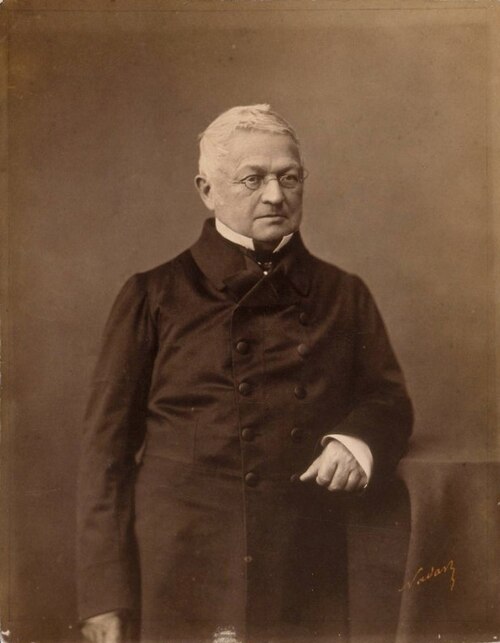

ルイ・ナポレオンもまた、青年時代にオーストリアに対する愛国的な蜂起に参加し、イタリアで初めて外交政策に手を染めた。前政権は、オーストリアとローマ教皇に対抗するイタリアの共和制軍を支援するために、国民議会の任務と資金援助を受けて遠征軍を派遣した。しかし、この軍は密かに反対のことを命じられ、ローマに入り、マッツィーニやガリバルディを含むイタリア共和主義者によって打倒されていた教皇ピウス9世の世俗的権威の回復を支援することとなった。フランス軍はガリバルディの兵士たちの攻撃を受けた。総統ナポレオン1世は大臣たちに相談することなく、兵士たちに、教皇を支援するために必要であれば戦うよう命じた。これはフランスのカトリック教徒には非常に好評だったが、ローマ共和制を支持する共和主義者たちを激怒させた。[38]急進的な共和主義者を喜ばせるために、彼は教皇に教皇領に自由主義改革とナポレオン法典を導入するよう要請した。カトリック教徒の支持を得るため、彼は1851年にファルー法を承認し、フランスの教育制度におけるカトリック教会の役割を拡大した。 [39]
国民議会選挙は、ルイ・ナポレオンが大統領に就任してからわずか数か月後の1849年5月13日から14日にかけて行われ、ティエール率いる保守共和主義者連合(カトリック教徒と王政主義者は「秩序党」と呼んだ)が大勝した。ルドリュ=ロランとラスパイユ率いる社会主義者と「赤い」共和主義者も200議席を獲得して健闘した。中間層の穏健派共和主義者は70~80議席しか獲得できず、非常に不振だった。秩序党は明確な多数派を占め、ルイ・ナポレオンのあらゆる取り組みを阻止するのに十分だった。[40]
1849 年 6 月 11 日、社会主義者と急進的共和主義者は権力を掌握しようと試みた。ルドリュ=ロランは芸術職業学校の本部から、ルイ・ナポレオンはもはや大統領ではないと宣言し、全面的な蜂起を呼びかけました。パリの労働者階級の地区にいくつかのバリケードが現れました。ルイ・ナポレオンは迅速に行動し、蜂起は短期間で終わりました。パリは包囲状態と宣言され、蜂起の本部は包囲され、指導者たちは逮捕されました。ルドリュ=ロランはイギリスに逃亡し、ラスパイユは逮捕されて投獄され、共和主義クラブは閉鎖され、彼らの新聞は廃刊となりました。
国民議会は、左翼共和主義者を永久に排除しようと決意し、男子普通選挙に制限を設け、3年間の居住要件を課す新しい選挙法を提案した。この新しい法律は、秩序党のリーダー、アドルフ・ティエールが軽蔑的に「下劣な大衆」と呼んだ900万人のフランス有権者のうち350万人を排除した。[41]この新しい選挙法は、1850年5月に433対241の多数決で可決され、国民議会は大統領と直接衝突することになった。[42]ルイ・ナポレオンは、彼の計画に反対し、領有権を奪われた人々を擁護する保守派大臣たちと議会を袂を分かった。彼は軍の支持を確保し、議会を非難する大衆演説をしながら国中を回り、男子普通選挙の擁護者を自称した。彼は法律の改正を要求したが、彼の提案は議会で355対348の投票で否決された。[43]
1848年の憲法によれば、ルイ・ナポレオンは任期満了で退陣しなければならなかった。彼は、4年では政治・経済計画を完全に実行するには十分ではないと主張し、自らが後継者となるための憲法改正を求めた。彼は国中を巡り、多くの地方政府や議会の多くの支持を得た。1851年7月の投票では、法律を改正して彼の再出馬を認める案が446票対278票で可決されたが、憲法改正に必要な3分の2の多数には及ばなかった。[44]
クーデター(1851年12月)

.jpg/500px-Cavalerie_rues_paris_(1851).jpg)
ルイ・ナポレオンは民衆の支持を得ていると考え、他の手段で権力を維持することを選んだ。異母兄弟のモルニー公シャルルと数人の側近が、ひそかにクーデターを計画し始めた。その中には、クーデターを軍事的に支援する陸軍大臣 ジャック・ルロワ・ド・サンタルノーや北アフリカのフランス軍将校も含まれていた。12月1日から2日にかけての夜、サンタルノーの兵士たちは国立印刷局、ブルボン宮殿、新聞社、市内の戦略拠点をひそかに占拠した。朝、パリ市民は、国民議会の解散、普通選挙の復活、新たな選挙、パリおよび周辺県の戒厳令を告げるポスターを市内で見つけた。国民議会議員16名が自宅で逮捕された。10区の市庁舎に穏健右派の議員約220人が集まったが、彼らも逮捕された。[45] 12月3日、作家のヴィクトル・ユゴーと他の共和主義者数名がクーデター反対運動を組織しようとした。いくつかのバリケードが築かれ、約1,000人の反乱者が通りに出たが、軍隊が3万人の部隊を率いて出動し、反乱は速やかに鎮圧され、クーデター反対派の推定300~400人が殺害された。[46]フランス南部と中央部のより戦闘的な共和主義派の町でも小規模な反乱があったが、これらはすべて12月10日までに鎮圧された。[47]
ルイ・ナポレオンはクーデター後、反対派に対する弾圧を続けたが、その対象は主に共和派赤軍だった。約2万6千人が逮捕され、そのうち4千人はパリだけで逮捕された。最も重い判決を受けた239人の囚人はカイエンヌの流刑地に送られた。[48] 9,530人の追随者はフランス領アルジェリアに送られ、1,500人はフランスから追放され、さらに3,000人が強制的に自宅から離れた場所に居住させられた。[49] [要ページ]その後すぐに、再審委員会が判決を受けた3,500人を釈放した。1859年、共和派指導者ルドリュ・ロランを除いて、残りの1,800人の囚人と亡命者は恩赦を受けた。ロランは刑務所からは釈放されたものの、国外退去を要求された。[48]
1852年2月17日の法令により、厳格な報道検閲が施行された。政府の許可なく政治や社会問題を扱った新聞を発行することはできず、罰金は引き上げられ、報道違反のリストも拡大された。3回の警告を受けた新聞や雑誌は発行停止、あるいは永久に廃刊になる可能性もあった。[50]
ルイ・ナポレオンは、新政府が国民から幅広い信任を受けていることを示したかったので、 12月20日から21日にかけて、クーデターに賛成するかどうかを問う国民投票が行われた。多くの地域の市長は、投票を拒否した選挙人の名前を公表すると脅した。クーデターに賛成するかどうかを問われた有権者のうち、7,439,216人が賛成、641,737人が反対、170万人が棄権した。 [51]国民投票の公正さと合法性はルイ・ナポレオンの批評家たちから直ちに疑問視されたが、[52]ルイ・ナポレオンは、統治する国民の信任を受けていると確信していた。
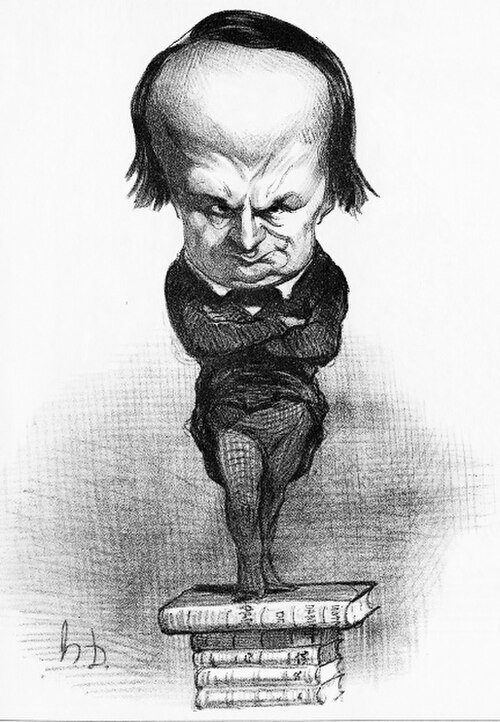
開票結果を受けて、多くの人がこのような信じ難いほど一方的な結果の妥当性に異議を唱えた。[52]そのような批判者の一人がヴィクトル・ユーゴーで、当初はルイ・ナポレオンを支持していたが、クーデターに激怒し、 1851年12月11日にブリュッセルに向けて出発した。彼はルイ・ナポレオンの最も辛辣な批判者となり、申し出られた恩赦を拒否し、20年間フランスに戻らなかった。[53]
フランス第二帝政
中年期

1851年の国民投票により、ルイ・ナポレオンに憲法改正の権限が与えられた。新憲法の作業は1852年に始まった。公式には80人の専門家からなる委員会によって準備されたが、実際には大統領府の側近の小グループによって起草された。新憲法の下、ルイ・ナポレオンは自動的に大統領に再選された。第2条では、大統領は10年の任期を無制限に務めることができるようになった。大統領には、宣戦布告、条約調印、同盟形成、法律発議の絶対的な権限が与えられた。憲法は男子普通選挙を復活させ、権限は縮小されたものの国民議会も維持した。[54]
ルイ・ナポレオンの政府は、反対意見を抑制し、反対勢力の力を弱めるために、新たな権威主義的措置を講じた。彼が最初に行ったことの 1 つは、彼を終身刑に処し、1850 年に亡くなった宿敵、ルイ・フィリップ王との復讐だった。1852 年 1 月 23 日の法令により、故国王の家族はフランスで財産を所有することが禁じられ、国王になる前に彼が子供たちに与えた遺産は無効とされた。
反政府デモに参加することもあった国家警備隊は再編成され、主にパレードでのみ使用されるようになった。政府職員は公式行事では制服を着用することが義務付けられた。教育大臣には大学の教授を解雇し、授業内容を見直す権限が与えられた。大学の学生は共和主義の象徴とみなされていたひげを生やすことが禁止された。[55]

1852年2月29日、新しい国民議会の選挙が行われ、政府のすべての資源が大統領支持候補者のために使われた。有権者800万人のうち、520万票が公式候補者に、80万票が野党候補者に投じられた。有権者の約3分の1が棄権した。新しい議会には、ルイ・ナポレオンの反対派が少数含まれており、その中には17人の王党派、18人の保守派、2人の自由民主党員、3人の共和派、72人の無所属が含まれていた。[55]
ルイ・ナポレオンは、国のすべての統治権を握ったにもかかわらず、独裁的な大統領であることに満足しなかった。新しく極めて独裁的な憲法のインクが乾くや否や、自ら皇帝になろうとした。選挙後、大統領は凱旋の全国ツアーに出た。マルセイユでは、新しい大聖堂、新しい証券取引所、商工会議所の定礎式を行った。1852年10月9日、ボルドーでは、彼は主要な演説を行った。
帝国は戦争だという人もいる。私は帝国は平和だと言う。皇帝のように、私は征服すべきことがたくさんある…皇帝のように、私は…誰の利益にもならない敵対的な支流を、大人民の川の流れに引き入れたい。広大な未耕作の領土を耕作し、道路を開き、港を掘り、川を航行可能にし、運河を完成させ、鉄道網を完成させなければならない。マルセイユの前には、フランスに同化すべき広大な王国がある。西部の主要港はすべて、まだ不足している近代的な通信手段でアメリカ大陸と接続する必要がある。遺跡を修復し、偽りの神々を打ち倒し、勝利を収める必要のある真実がある。これが、帝国が再建された場合の私の帝国の見方だ。これらは私が考えている征服であり、私と同じように国の利益を望む私の周りのあなた方は、私の兵士である。[56]
.jpg/500px-Portrait_of_Emperor_Napoleon_III_of_France_(by_Franz_Xaver_Winterhalter).jpg)
二度外務大臣を務めたドルーアン・ド・リュイスは後に「皇帝は大きな願望と限られた能力を持っている。彼は並外れたことをしたいと思っているが、できるのは贅沢なことだけだ」とコメントした。[57]
ルイ・ナポレオンがパリに戻ると、街は大きなアーチで飾られ、「皇帝ナポレオン3世へ」と書かれた横断幕が掲げられた。帝国の復帰を求める公式の要請に応えて、元老院は1852年11月21日から22日にかけて、ナポレオンを皇帝にするかどうかを問う新たな国民投票を予定した。信じ難いことに97パーセントの賛成票(賛成7,824,129票、反対253,159票、棄権200万票)を得て、1852年12月2日(クーデターからちょうど1年後)に第二共和制は正式に終焉し、第二フランス帝政が樹立された。[58]ルイ・ナポレオン・ボナパルト大統領はフランス皇帝ナポレオン3世となった。彼の皇帝号は、実際には統治しなかったナポレオン2世を真の皇帝として扱っている(1815年6月22日から7月7日まで短期間皇帝として認められていた)。 1852年の憲法はそのまま維持されたが、ナポレオンの手に権力が集中していたため、実質的な変更は「大統領」という語を「皇帝」に置き換えることだけだった。
インフラと経済の近代化(1853年~1869年)
初期の建設

.jpg/500px-Au_Bon_March%C3%A9_(vue_g%C3%A9n%C3%A9rale_-_gravure).jpg)
ナポレオン3世の最初の優先事項の1つは、イギリスや一部のドイツ諸国に比べてはるかに遅れをとっていたフランス経済の近代化だった。政治経済は皇帝の長年の情熱だった。イギリス滞在中、彼は工場や鉄道操車場を視察し、獄中では砂糖産業や貧困削減政策について研究し、執筆した。彼は政府が経済において受動的ではなく能動的な役割を果たすことを望んでいた。1839年に彼は「一部の人々が主張するように、政府は必要悪ではない。むしろ社会組織全体にとっての慈悲深い原動力である」と書いている。[59]彼は政府が産業に直接関与することを主張しなかった。その代わりに、政府は経済成長のためのインフラの構築、株式市場や投資銀行による信用供与の促進、鉄道、港、運河、道路の建設、訓練や教育の提供に非常に積極的な役割を果たした。彼はまた、イギリスからの鉄道線路などの外国製品に対してフランス市場を開放し、フランスの産業をより効率的で競争力のあるものにした。[60]
この時期は産業の拡大に好都合だった。カリフォルニアとオーストラリアのゴールドラッシュにより、ヨーロッパの貨幣供給量が増加した。帝国の初期には、王政復古期のベビーブームの時期に生まれた人々の成人も経済に寄与した。[61]貨幣供給量の増加によって物価が着実に上昇したことで、企業の振興と資本投資が促進された。
1852年以降、ナポレオンはクレディ・モビリエなどの新しい銀行の設立を奨励しました。これらの銀行は株式を一般に販売し、民間企業と政府の両方に融資を行いました。クレディ・リヨネは1863年に、ソシエテ・ジェネラルは1864年に設立されました。これらの銀行は、鉄道や運河からパリの再建まで、ナポレオン3世の主要プロジェクトに資金を提供しました。
1851年、フランスの鉄道総距離はわずか3,500キロメートルだった。これに対し、イギリスの鉄道総距離は1万キロメートル、フランスの20分の1の面積しかないベルギーの鉄道総距離は800キロメートルだった。1851年のクーデターから数日後、ナポレオンの公共事業大臣は、パリ周辺に鉄道路線を建設し、全国からパリに入ってくるさまざまな独立路線を接続するプロジェクトを開始した。政府は新線建設の融資を保証し、鉄道会社の統合を促した。1848年には鉄道会社が18社、帝政末期には6社あった。1870年までに、フランスはフランスの港湾や近隣諸国の鉄道システムと結ばれた2万キロメートルの鉄道を所有するようになり、年間1億人以上の乗客を運び、フランスの新しい製鉄所、鉱山、工場の製品を輸送した。[62]
蒸気船の発達とパリの初期の復興

新しい航路が作られ、マルセイユとル・アーヴルの港が再建され、フランスは海路で米国、ラテンアメリカ、北アフリカ、極東とつながった。帝政時代には蒸気船の数は3倍になり、1870年までにフランスはイギリスに次いで世界第2位の海軍艦隊を保有していた。[63]ナポレオン3世は、1859年から1869年にかけてのスエズ運河建設という、当時最大の海洋プロジェクトを支援した。運河プロジェクトはパリ株式市場の株式によって資金提供され、元フランス外交官フェルディナン・ド・レセップスが指揮した。開通式ではウジェニー皇后がヴェルディのオペラ「アイーダ」を上演した。[64]
パリ中心部の再建は、商業の拡大と革新も促した。最初のデパートであるボン・マルシェは、1852年に質素な建物でパリにオープンし、急速に拡大し、収入は年間45万フランから2000万フランに増加した。創設者のアリスティード・ブシコーは、ルイ=シャルル・ボワローとギュスターヴ・エッフェルに設計を依頼し、ガラスと鉄でできた新しい建物を建てさせた。この建物は1869年にオープンし、現代のデパートのモデルとなった。すぐに他のデパートも現れ、 1865年にはオー・プランタン、 1870年にはラ・サマリテーヌがオープンした。これらはすぐに世界中で模倣された。[65]
ナポレオンの計画には、農地の開拓と森林再生も含まれていた。ジロンド県でのそのようなプロジェクトの 1 つでは、10,000 平方キロメートル (3,900 平方マイル) の荒野を排水して森林再生し、ヨーロッパ最大の海岸松林である ランドの森を作った。
パリの復興(1854年~1870年)

ナポレオン3世は、パリで一連の大規模な公共事業を開始し、何万人もの労働者を雇って、市の衛生、給水、交通循環を改善することで政権を開始しました。この仕事を指揮するために、彼はジョルジュ・ウジェーヌ・オスマンを新しいセーヌ県知事に任命し、市の中心部を再建するための特別な権限を与えました。彼は自分のオフィスの中央にパリの大きな地図を設置し、オスマンと共に新しいパリを計画しました。[66]
パリの人口は 1815 年以来 2 倍に増えましたが、面積の増加も、中世の非常に狭い通りや路地の構造の発展もありませんでした。
ナポレオンは、増加する人口と、新しい大通りや広場の建設によって中心部から追い出される人々を収容するため、1860年にパリ郊外の11のコミューン(自治体)を併合し、12の区(市区)から20に増やすという法令を出した。こうしてパリは、1920年にフランスの首都の一部となった 2つの主要な都市公園(ブローニュの森とヴァンセンヌの森)を除いて、現代の境界まで拡大された。
ナポレオン3世の治世中およびその後10年間、パリの大半は巨大な建設現場だった。彼の水力主任技術者ウジェーヌ・ベルグランは、シャンパーニュ地方のヴァンヌ川からきれいな水を引くための新しい水道橋と、将来のモンスリー公園の近くに新しい巨大な貯水池を建設した。この2つの工事により、パリの水供給量は1日あたり87,000立方メートルから400,000立方メートルに増加した。[67]数百キロメートルのパイプが街中に水を供給し、ウルク川とセーヌ川のそれほどきれいではない水を使った2番目のネットワークが通りを洗浄し、新しい公園と庭園に水を供給した。彼はパリの下水道を完全に再建し、パリの通りにある何千もの新しい街灯にガスを供給するために何マイルものパイプを設置した。 [68] [ページが必要]
1854年から、オスマンの労働者たちは市の中心部で何百もの古い建物を壊し、市の中心地を結ぶ新しい大通りを建設しました。これらの大通り沿いの建物は同じ高さで、建築的に似たスタイルで建設され、パリの大通りの特徴的な外観を作り出すためにクリーム色の石で覆われることが求められました。
皇帝は2つの新しい鉄道駅を建設した。リヨン駅(1855年)と北駅(1865年)。市の中心部に鋳鉄とガラスでできた巨大なパビリオンのある青果市場レ・アールを完成させ、シテ島の崩れかけた中世の建物の跡に新しい市立病院オテル・デューを建設した。建築上のランドマークは世界最大の劇場パリ・オペラ座で、ナポレオンの新パリの中心となるようシャルル・ガルニエが設計した。 [69]
ナポレオンはまた、パリ市民、特に拡大する都市の新しい地区に住む人々のレクリエーションとリラクゼーションのための新しい公園や庭園を建設したいと考えていた。[70] [要ページ]ナポレオンの新しい公園は、亡命中に馬車で散歩したロンドンの公園、特にハイドパークの思い出に触発されたものであったが、彼はもっと大規模な公園を建設したいと考えていた。オスマンや、新しい散歩道と植栽局を率いた技師のジャン=シャルル・アドルフ・アルファンと協力して、彼は市内の東西方向に4つの大きな公園を建設する計画を立てた。何千人もの労働者と庭師が湖を掘り、滝を作り、芝生、花壇、木を植え、シャレーや洞窟を建設し始めた。ナポレオン3世はパリ西部のブローニュの森を公園に変えた。彼は東にヴァンセンヌの森、北にビュット・ショーモン公園を造り、南にはモンスリー公園を造った。[70] [ページが必要]
ナポレオンは4つの大きな公園を建設するだけでなく、かつてオルレアン家が所有していたモンソー公園やリュクサンブール公園など、市内の古い公園を改修し、植栽をやり直した。また、大きな公園のミニチュア版として、近隣地区に約20の小さな公園や庭園を作った。アルファンはこれらの小さな公園を「緑と花のサロン」と呼んだ。ナポレオンの計画の意図は、パリの80の「地区」それぞれに1つずつ公園を作ることであり、公園から徒歩10分以内の場所には誰もいなかった。公園はすぐにあらゆる階層のパリ市民に好評を博した。[71]
-
 ジョルジュ・ウジェーヌ・オスマンとナポレオン3世は、パリ周辺の11のコミューンを市に併合することを公式に発表した。この併合により、市の規模は12区から現在の20区に拡大した。
 -
 パリ・オペラ座はナポレオン3世の新しいパリの中心でした。建築家シャルル・ガルニエは、そのスタイルを単に「ナポレオン3世」と表現しました。
 -
 ブローニュの森は、1852年から1858年にかけてナポレオン3世によって改造され、パリのあらゆる階層の人々に憩いとレクリエーションの場を提供するために設計されました。
 -
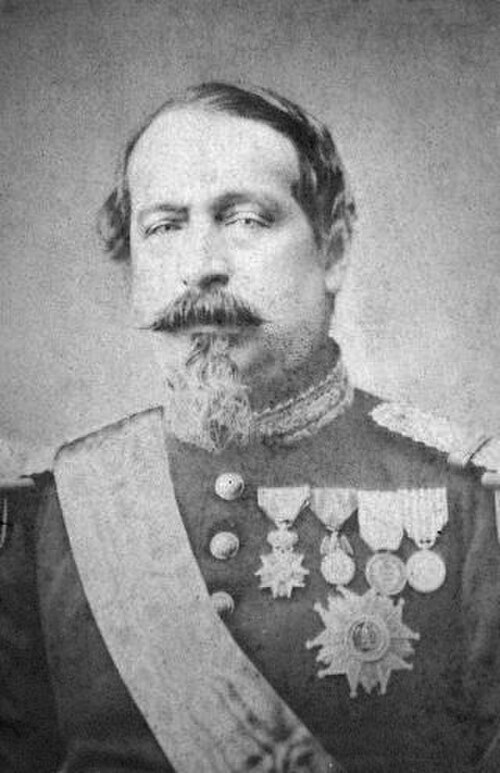 天皇の写真
天皇の写真


妻を探す
.jpg/500px-Empress_Eug%C3%A9nie_in_Court_Dress_(Guillemet_after_Winterhalter,_Mus%C3%A9e_d'Orsay).jpg)
皇帝に即位して間もなく、ナポレオン3世は後継者となる妻を探し始めた。[要出典]彼はまだ伴侶のハリエット・ハワードと愛し合っており、彼女はエリゼ宮での披露宴に出席し、フランス中を彼とともに旅した。[要出典]彼はひそかに外交使節団を派遣し、廃位されたスウェーデン国王グスタフ4世アドルフの孫娘、ヴァーサのカロリーナ王女の家族にアプローチした。彼らは、彼がカトリック教徒であることと、彼の将来に関する政治的不確実性を理由に断った。ヴィクトリア女王の姪、ホーエンローエ=ランゲンブルクのアーデルハイド王女の家族も同様だった。[要出典]
皇帝は23歳のスペイン貴族の令嬢、ウジェニー・デュ・デルジェ・ド・モンティジョに恋をした。彼女はパリで教育を受けた。彼女の美しさはナポレオン3世を魅了し、ナポレオンはいつものように彼女を誘惑しようとしたが、ウジェニーは結婚は待つように言った。 1853年1月22日、チュイルリー宮殿で民事婚が挙行され、その数日後にはパリのノートルダム大聖堂でさらに盛大な式が行われた。1856年、ウジェニーは息子で皇位継承者ナポレオン・インペリアル王子を出産した。[72]
王位継承者が確保されると、ナポレオンは他の女性たちとの「ちょっとした気晴らし」を再開した。[要出典]ウジェニーは皇后としての義務を忠実に果たし、客人をもてなしたり、皇帝に同行して舞踏会やオペラ、劇場に出席したりした。彼女はスエズ運河を開通させるためにエジプトに赴き、皇帝がフランス国外へ出国する際には必ず公式に皇帝の代理を務めた。[要出典]
熱心なカトリック教徒であり、他の多くの問題では保守的であったが、ウジェニーは女性の平等を強く主張した。彼女は国民教育省に圧力をかけ、女性に初のバカロレア資格を与えるよう働きかけ、アカデミー・フランセーズに作家ジョルジュ・サンドを初の女性会員に選出するよう働きかけたが、失敗した。[73]
外交政策(1852年~1860年)
外交政策において、ナポレオン3世は、国民主権とナショナリズムの支持者として、ヨーロッパと世界中でフランスの影響力を再主張することを目指した。[74]ヨーロッパでは、彼はイギリスと同盟を組み、クリミア戦争(1854-1856)でロシアを破った。フランス軍はサルデーニャ王国側で戦い、イタリア統一を支援した。その見返りとして、フランスは1860年にサヴォワとニース伯領を獲得した。しかし後に、熱心なフランスカトリック教徒をなだめるため、彼は残っていた教皇領をイタリアによる併合から守るために兵士を派遣した。[75] [76] [ページが必要]
国籍の原則

皇帝に即位した直後のボルドーでの演説で、ナポレオン3世は「帝国は平和を意味する」(「帝国こそ平和」)と宣言し、フランス帝国を拡大するために他のヨーロッパ諸国を攻撃することはないと外国政府を安心させた。しかし、彼はフランスの影響力を拡大するために強力な外交政策をとることを決意しており、他のヨーロッパ諸国が隣国を脅かすのを傍観することはしないと警告した。
治世の初めには、彼はまた、ハプスブルク君主国(またはオーストリア帝国、1867年以降オーストリア=ハンガリー帝国として知られる)のような古い多国籍帝国の代わりに、イタリアのような国籍に基づく新しい国家の創設を支持する新しい「民族主義」(principe des nationalités)の提唱者でもあった。これは、サント=ヘレーヌ記念館に記されている叔父の政策に影響を受けたものである。外交政策のあらゆる取り組みにおいて、彼はフランスの利益を最優先した。ナポレオン3世は、国民的アイデンティティに基づいて創設された新しい国家は、フランスの自然な同盟国およびパートナーになるだろうと感じていた。[77]
イギリスとの同盟とクリミア戦争(1853年 - 1856年)


パーマストン卿はイギリスの外務大臣、後に首相となり、フランスの有力政治家、特にナポレオン3世と個人的なつながりが深かった。パーマストンの目標は、イギリスが世界の他の地域で外交的影響力を行使できるように、フランスとの平和的な関係を築くことだった。[78]ナポレオンは当初、親英的な外交政策をとり、イギリス政府を不快にさせないように気を配っていた。ナポレオンはイギリスとの友好関係をフランスにとって重要だと考えていた。1851年にイギリス侵攻の脅威が短期間あった後、フランスとイギリスは1850年代に協力し、クリミア戦争で同盟を結び、1860年には大規模な貿易条約を締結した。 [79]
それでも、マスコミは戦争の恐怖を絶えず煽った。タイムズ紙の編集者ジョン・デレインは1853年1月にフランスを訪れ、その軍備に感銘を受けた。彼は「ルイ=ナポレオンは前向きな外交政策を決意している」という確信を表明した。[80]ナポレオン3世は実際に国の海軍力を強化することを決意していた。最初の専用蒸気動力戦艦(ナポレオン1世にちなんで命名された)は1850年に進水し、シェルブールの要塞が強化された。これにより、オルダニーの防波堤が拡張され、クロンク砦が建設された。[81]
ナポレオン3世は帝国の始まりからイギリスとの同盟を模索していた。亡命中にイギリスに住んでいたことがあり、イギリスは自分が成し遂げたい計画の自然なパートナーだと考えていた。すぐに好機が訪れた。1853年初頭、ロシア皇帝ニコライ1世は弱体化したオスマン帝国政府に圧力をかけ、バルカン半島のキリスト教徒に対する保護領とコンスタンティノープルおよびダーダネルス海峡の支配権をロシアに与えるよう要求した。イギリスとフランスの支援を受けたオスマン帝国はロシアの要求を拒否し、イギリスとフランスの合同艦隊がオスマン帝国支援のために派遣された。ロシアが占領していたドナウ公国からの撤退を拒否すると、イギリスとフランスは1854年3月27日に宣戦布告した。[82]
フランスとイギリスが黒海への本格的な軍事遠征を組織するのに6ヶ月を要した。 9月14日、英仏艦隊は3万人のフランス兵と2万人のイギリス兵をクリミアに上陸させ、ロシアの主要港セヴァストポリの包囲を開始した。包囲が長引くにつれ、フランス軍とイギリス軍は増強され、サルデーニャ王国の軍隊も加わり、兵士の総数は14万人に達したが、チフス、赤痢、コレラの流行でひどい被害を受けた。332日間の包囲で、フランス軍は9万5千人の兵士を失い、そのうち7万5千人は病気によるものだった。クリミアでの軍の苦しみは、報道検閲によってフランス国民から注意深く隠蔽された。[83]

1855年3月2日にニコライ1世が死去し、アレクサンドル2世が皇帝に就任したことで、政治的な状況は一変した。9月、大規模な砲撃の後、5万人の英仏軍がロシア軍の陣地を襲撃し、ロシア軍はセヴァストポリから撤退を余儀なくされた。アレクサンドル2世は政治的解決を模索し、1856年2月25日から4月8日まで、パリのオルセー河畔にあるフランス外務省の新館で交渉が行われた。 [82]
_-_Napol%C3%A9on_III_(1808-73),_Emperor_of_the_French_-_RCIN_406011_-_Royal_Collection.jpg/500px-Edouard_Boutibonne_(1816-97)_-_Napol%C3%A9on_III_(1808-73),_Emperor_of_the_French_-_RCIN_406011_-_Royal_Collection.jpg)
クリミア戦争により、パリには3つの新しい地名が加わった。アルマは、その名前の川でフランスが初めて勝利したことにちなんで名付けられた。セヴァストポリ、そしてマラコフは、フランス軍が占領したロシア軍戦線の中央の塔にちなんで名付けられた。この戦争は2つの重要な外交的結果をもたらした。アレクサンドル2世はフランスの同盟国となり、イギリスとフランスは和解した。1855年4月、ナポレオン3世とウジェニーはイギリスに行き、女王に迎えられた。次に、ヴィクトリアとアルバート公がパリを訪れた。ヴィクトリアは数世紀ぶりにパリを訪れたイギリスの君主となった。[84]
ロシアの敗北とイギリスとの同盟は、フランスのヨーロッパにおける権威と名声を高めた。これはナポレオン戦争の終結とウィーン会議以来、ヨーロッパ列強間で起きた最初の戦争であり、半世紀近く平和を維持してきた同盟体制の崩壊を象徴するものである。この戦争により、ヨーロッパ協商と、他の4つの国(ロシア、プロイセン、オーストリア、イギリス)が設立した四国同盟、いわゆる「ワーテルロー同盟」も事実上終結した。 1856年のパリ講和会議は、ナポレオン政権の外交政策の最高潮であった。[85]この会議は、ナポレオン3世にイタリアでさらに大胆な外交政策をとらせるきっかけを与えた。[86]
イタリア戦役
幼少期
1858年1月14日の夕方、ナポレオンと皇后は暗殺の試みから無傷で逃れた。一団の共謀者がオペラ座へ向かう皇帝の馬車に3発の爆弾を投げ込んだ。護衛隊員と通行人8人が死亡、100人以上が負傷。犯人はすぐに逮捕された。首謀者はイタリアの民族主義者フェリーチェ・オルシーニで、フランス人外科医シモン・フランソワ・ベルナールの援助を受けていた。犯人は、ナポレオン3世が殺されればフランスで直ちに共和主義の反乱が起こり、新しい共和制政府がイタリア全土のオーストリアからの独立と国家統一の達成を支援するだろうと信じていた。ベルナールは当時ロンドンにいた。オルシーニは政治亡命者であったため、イギリス政府は彼の引き渡しを拒否したが、オルシーニは裁判にかけられ、1858年3月13日に有罪判決を受け、処刑された。この爆撃により、フランス、特にナポレオン3世の注目はイタリアのナショナリズムの問題に集中した。[87]
イタリアの一部、特にサルデーニャ王国は独立していたが、イタリア中部は依然として教皇(この時代は教皇ピウス9世)の統治下にあり、ロンバルディア、ヴェネツィア、北部の大部分はオーストリアの統治下にあった。他の州は法的には独立していたが(特にパルマ公国とトスカーナ大公国)、事実上は完全にオーストリアの影響下にあった。ナポレオン3世は若い頃にイタリアの愛国者らと共にオーストリアと戦ったことがあり、彼らに同情していたが、皇后、政府の大部分、フランスのカトリック教会は教皇と既存の政府を支持した。イギリス政府もイタリアで国家主義を促進するという考えに敵対的だった。政府内と宮殿内の反対にもかかわらず、ナポレオン3世はピエモンテ=サルデーニャの大義を支援するために全力を尽くした。ピエモンテ=サルデーニャ王国の王ヴィットーリオ・エマヌエーレ2世は1855年11月にパリに招待され、ヴィクトリア女王と同じ王族待遇を受けた。
ピエモンテ=サルデーニャの首相カヴール伯爵は国王とともにパリに赴き、ナポレオン3世の支持を得るために異例の使者を雇った。それは彼の若い従妹、カスティリオーネ伯爵夫人ヴィルジニア・オルドイニ(1837年 - 1899年)だった。カヴールの期待通り、彼女は皇帝の目に留まり愛妾となった。1855年から1857年の間、彼女はその機会を利用してメッセージを伝え、イタリアの立場を訴えた。[88]
1858年7月、ナポレオンはカヴール伯の秘密訪問を手配した。プロンビエール協定で、彼らは力を合わせてオーストリア軍をイタリアから追い出すことに同意した。その見返りとして、ナポレオン3世は、1815年のナポレオン失脚後にフランスから奪われてピエモンテ=サルデーニャに返還されていたサヴォワ(ピエモンテ=サルデーニャ王の祖先の土地)と当時は二言語圏だったニース伯領を要求した。カヴールはニースはイタリア領であると抗議したが、ナポレオンは「これらは二次的な問題だ。後で話し合う時間があるだろう」と答えた。[89]
ナポレオン3世の支援を確信したカヴール伯爵は、オーストリアとの戦争に備えてサルデーニャ王国軍の準備を始めた。ナポレオン3世は外交的支援を求めた。彼はダービー卿(イギリス首相)とその政府に接近した。イギリスは戦争に反対していたが、中立を保つことに同意した。ナポレオン3世は、依然として政府内の強い反対に直面していたため、1858年の春、当時28歳のオーストリア皇帝フランツ・ヨーゼフ1世と外交的解決を交渉することを申し出た。オーストリアは、まずピエモンテ=サルデーニャの武装解除を要求し、3万人の兵士をイタリアの守備隊の増援として派遣した。ナポレオン3世は、1859年1月26日にピエモンテ=サルデーニャとの同盟条約に署名することでこれに応えた。ナポレオンは、オーストリア軍を北イタリアから追い出すために、ピエモンテ=サルデーニャの10万人の兵士を支援するために20万人の兵士を派遣することを約束した。その代わりに、フランスはニース伯領とサヴォワ伯領を住民投票で同意すれば受け取ることになった。[90]
ついに戦争を開始したのは、我慢できなくなったフランツ・ヨーゼフ皇帝だった。1859年4月23日、皇帝はピエモンテ=サルデーニャ政府に最後通牒を送り、軍事準備の中止と軍隊の解散を要求した。4月26日、カヴール伯爵は要求を拒否し、4月27日、オーストリア軍はピエモンテに侵攻した。
イタリア戦争 – マゼンタとソルフェリーノ (1859)

ナポレオン3世は軍事経験がほとんどなかったが、自らイタリアでフランス軍を指揮することを決意した。フランス軍の一部はアルプスを越え、他の一部は皇帝とともに1859年5月18日にジェノバに上陸した。ナポレオンとピエモンテ軍にとって幸運だったのは、オーストリア軍の司令官、フェレンツ・ギュライ将軍があまり攻撃的ではなかったことだ。彼の軍はトリノでピエモンテ軍をはるかに上回っていたが、彼は躊躇し、フランス軍とピエモンテ軍が合流するのを許した。
ナポレオン3世は賢明にも、戦いを職業軍人の将軍たちに任せた。1859年6月4日、戦争最初の大戦闘はマゼンタの町で行われた。長く血なまぐさい戦いで、フランス軍の中央は疲弊し、ほぼ崩壊したが、パトリス・ド・マクマオン将軍の兵士たちがオーストリア軍の側面をタイミングよく攻撃し、ついに勝利を収めた。オーストリア軍は7000人が死亡、5000人が捕虜となり、フランス軍は4000人が死亡した。この戦闘は、戦闘後すぐにフランスの愛国的な化学者たちが新たに発見した鮮やかな紫色の化学染料にこの戦闘の名前を付けたことで広く記憶に残った。この染料と色はマゼンタと名付けられた。[91]
オーストリア軍の残りは脱出に成功し、ナポレオン3世とヴィットーリオ・エマヌエーレ国王は6月10日、オーストリアが支配していたミラノ市に凱旋入城した。彼らはイタリアとフランスの国旗を振り、歓喜に沸く大群衆に迎えられた。
オーストリア軍はロンバルディアから追い払われたが、ジュライ将軍の軍はヴェネトに残っていた。彼の軍は増強され、13万人の兵力を擁していた。これはフランス軍やピエモンテ軍とほぼ同じだが、オーストリア軍は砲兵力で勝っていた。6月24日、ソルフェリーノで2度目の決定的な戦いが行われた。この戦いはマジェンタよりも長く、血なまぐさいものだった。混乱し、しばしば誤った方向へ向かう戦闘で、フランス軍11,500人を含む約4万人の死傷者が出た。ナポレオン3世は戦場での数千人の死傷者を見て戦慄した。彼はオーストリア軍に休戦を提案し、7月8日にこれが受け入れられた。戦争を終結させる正式な条約は1859年7月11日に調印された。[92] [93]
カヴール伯爵とピエモンテ人は戦争の突然の終結にひどく失望した。ロンバルディアは解放されたが、ヴェネツィア(ヴェネツィア地方)は依然としてオーストリア軍の支配下にあり、ローマ教皇は依然としてローマとイタリア中部の支配者であった。カヴール伯爵は怒りながら職を辞した。ナポレオン3世は7月17日にパリに戻り、8月14日にはナポレオン1世の栄光の象徴であるヴァンドームの円柱の前で大規模なパレードと祝賀会が行われた。ナポレオン3世はこの日を祝って、フランスから追放した政治犯と亡命者に大赦を与えた。[94]

イタリアでは、フランス軍がいなかったにもかかわらず、カヴールとナポレオン3世が始めたイタリア統一のプロセスが独自の勢いを帯びていった。イタリア中部と教皇領では反乱が起こり、ガリバルディ率いるイタリアの愛国者たちがシチリア島を侵略して占領し、 両シチリア王国の崩壊につながった。ナポレオン3世は教皇に手紙を書き、「反乱で諸君の属州を犠牲にしてヴィットーリオ・エマヌエーレに託せ」と提案した。教皇は激怒し、演説でナポレオン3世は「嘘つきでペテン師」であると宣言した。[95]ローマと周囲のラティウム地方は教皇の手中にあり、そのためすぐには新設されたイタリア王国の首都にはならず、ヴェネツィアはオーストリア軍に占領されたままであったが、イタリアの残りの地域はヴィットーリオ・エマヌエーレの支配下に入った。
カヴールが約束した通り、1860年にサヴォワとニース伯領は国民投票の後にフランスに併合されたが、その公平さについては議論がある。ニースではフランスとの併合に25,734人が賛成し、反対はわずか260人だったが、イタリア人は20世紀への復帰を求めた。1861年2月18日、トリノで最初のイタリア議会が開かれ、3月23日、ヴィットーリオ・エマヌエーレがイタリア国王に即位した。カヴール伯爵は数週間後に「イタリアは作られた」と宣言して亡くなった。[96]
ナポレオンはイタリアの愛国者を支援し、ローマを誰が統治するかをめぐって教皇ピウス9世と対立したため、熱心なフランス人カトリック教徒、さらには熱心なカトリック教徒だった皇后ウジェニーからも不評だった。フランス人カトリック教徒とその妻を味方につけるため、ナポレオンはローマが教皇の支配下にありイタリアの他の地域から独立していることを保証し、フランス軍を駐留させることに同意した。イタリアの首都はローマではなくトリノ(1861年)、次いでフィレンツェ(1865年)となった。しかし、1862年、ガリバルディは「ローマか死か」というスローガンの下、軍隊を集めてローマに進軍した。[97]ガリバルディとフランス軍の対立を避けるため、イタリア政府は自国の兵士を派遣して彼らに対抗させ、ガリバルディを逮捕して投獄した。ナポレオン3世は、ローマが教皇の支配下にあり続けることを保証しながら、フランス軍をローマから撤退させる外交的解決法を模索した。 1864年9月の公会議でイタリア政府は残存教皇領の独立を保証し、ローマのフランス駐屯軍は撤退した。
しかし、ガリバルディは1867年11月に再びローマ占領を試みましたが、 1867年11月3日の メンターナの戦いで急遽派遣されたフランス軍と教皇軍に敗れました。
8,000人のフランス軍守備隊は1870年8月までローマに留まり、普仏戦争の開始とともに召集された。1870年9月、イタリア王国軍はついにローマを占領し、イタリアの首都とした。[98]
イタリア遠征が成功裏に終了し、サヴォワとニースがフランス領に併合された後、ナポレオン3世の大陸外交政策は平穏な時期を迎えた。ヨーロッパの地図に大きな変化が生じたが、世界の遠い隅々への遠征と帝国の拡大がそれに取って代わった。皇帝の健康は衰え、体重は増加し、白髪を隠すために髪を染め始め、痛風のために歩くのも遅くなり、1864年にはシャロン=アン=シャンパーニュの軍営で胆石による最初の健康危機に見舞われ、その病気で9年後に亡くなった。皇帝は以前ほど統治に関与せず、細部に気を配ることも少なくなったが、それでもフランスの商業と世界的な名声を高める機会を模索していた。[99]
海外帝国


1862年、ナポレオン3世はアメリカ大陸に同盟君主制を樹立するためメキシコに軍を派遣し、オーストリアのフェルディナント・マクシミリアン大公を皇帝 マクシミリアン1世として即位させた。しかし、メキシコ第二帝国はベニート・フアレス大統領 の共和制政府の抵抗に直面した。 1865年のアメリカ南北戦争での勝利後、アメリカはフランスの撤退を明確にした。アメリカはフィリップ・H・シェリダン将軍の指揮する5万人の軍隊をメキシコとアメリカの国境に派遣し、フアレスへの補給を支援した。ナポレオンの軍隊は非常に手薄で、メキシコに4万人、イタリア人から教皇を守るためにローマに2万人、さらに不安定なアルジェリアに8万人を派遣していた。さらに、 1866年の普墺戦争でオーストリアを破ったばかりのプロイセンが差し迫った脅威となっていた。ナポレオンは窮状に気づき、1866年にメキシコから軍を撤退させた。マクシミリアンは打倒され処刑された。[100] [101] [ページが必要]
東南アジアでは、ナポレオン3世は一度に1つの限定的な軍事作戦で支配を確立することに成功しました。コーチシナ作戦では、1862年にコーチシナ(サイゴンを含む現代のベトナムの最南端)を占領しました。1863年にはカンボジアに保護領を設立しました。さらに、フランスは19世紀から20世紀初頭にかけて、広州湾(広州湾)の海軍基地を含む中国南部に勢力圏を持っていました。[102]フランス宣教師の殺害への対応としてフランスの朝鮮遠征も行われましたが、これは失敗に終わりました。
1870年にアブドン・シフエンテスに与えられた情報によると、アラウカニア・パタゴニア王国がチリに対して有利な介入をする可能性がナポレオンの国務院で議論されていた。[103] 1870年にフランスの戦艦ダントルカストーがコラルに停泊し、コルネリオ・サアベドラはマプチェの土地の占領継続に対するフランスの何らかの干渉を疑った。[104] 1871年にアルゼンチン当局がブエノスアイレスで武器の積荷を押収したが、これはアラウカニア・パタゴニア王と呼ばれたオレリー・アントワーヌ・ド・トゥーネンの命令によるものと伝えられている。 [104]
ナポレオン3世の宮廷生活

ナポレオン3世は、フランス国王や叔父のナポレオン・ボナパルトに倣い、公式の住居をチュイルリー宮殿に移し、セーヌ川とパビリオン・ド・ロルロージュ(時計台)の間にある南翼の1階に、庭園に面した一連の部屋を構えました。
ナポレオン3世の寝室はカール大帝のお守り(ボナパルト家にとって幸運のシンボル)で飾られ、執務室にはアングル作のジュリアス・シーザーの肖像画とパリの大きな地図が飾られ、皇帝はセーヌ県知事ジョルジュ・ウジェーヌ・オスマン男爵にパリ再建のアイディアを示すためにこの地図を使った。皇帝の部屋は熱気で充満し、次から次へとタバコを吸っていた。皇后は皇帝の部屋の上に、ピンク、グリーン、ブルーのサロンがあるルイ16世様式で装飾されたスイートルームに住んでいた。 [105]
宮廷は、毎年、規則的なカレンダーに従って皇帝と皇后とともに宮殿から宮殿へと移動した。5 月の初め、皇帝と宮廷は公園で野外活動をするためサンクルー城へ移動した。6 月と 7 月には、選ばれた客とともにフォンテーヌブロー宮殿へ移動し、森の中を散歩したり、湖でボートを楽しんだ。7 月には、宮廷は健康回復のため温泉へ移動し、最初はプロンビエールへ、次にヴィシーへ、そして 1856 年以降はシャロン=シュル=マルヌ(現在のシャロン=アン=シャンパーニュ) に建設された軍の駐屯地と居住地へ移動した。ここでナポレオンは温泉に入り、軍事パレードや演習を観閲することができた。1856 年以降、皇帝と皇后は毎年 9 月をビアリッツの海を見下ろす大きなヴィラ、ヴィラ ウジェニーで過ごした。 [106]彼らは浜辺を散歩したり山へ出かけたりし、夜には踊ったり歌ったりトランプをしたり、客人と一緒に他のゲームやアマチュア演劇やシャレードに参加した。11月には宮廷はコンピエーニュ城に移動し、森への遠足やダンス、さらに多くのゲームを楽しんだ。ルイ・パスツール、ギュスターヴ・フローベール、ウジェーヌ・ドラクロワ、ジュゼッペ・ヴェルディなどの有名な科学者や芸術家がコンピエーニュの祝祭に参加するよう招待された。[107]
年末には皇帝と宮廷がチュイルリー宮殿に戻り、一連の公式レセプションと、新年早々に600人のゲストを招いて3、4回の大舞踏会を開催した。訪問中の高官や君主も頻繁に招待された。カーニバルの期間中は、さまざまな国やさまざまな時代をテーマにした非常に手の込んだ仮装舞踏会が連続して開催され、ゲストは衣装に大金を費やすこともあった。
視覚芸術

ナポレオン3世は、芸術に関しては保守的かつ伝統的な趣味を持っていた。彼のお気に入りの画家は、アレクサンドル・カバネルとフランツ・クサーヴァー・ヴィンターハルターで、彼らは大きな注文を受け、その作品は国立美術館に購入された。同時に、彼は世論に従い、フランスの前衛芸術に重要な貢献をした。1863年、フランス絵画の有名な年次展示会であるパリ・サロンの審査員長は、超保守派のアカデミー・デ・ボザールのディレクター、エミリアン・ド・ニューヴェルケルケ伯爵で、エドゥアール・マネ、カミーユ・ピサロ、ヨハン・ヨンキントを含む前衛芸術家によるすべての応募作品を拒否した。芸術家とその友人たちは不満を述べ、その不満はナポレオン3世に届いた。皇帝の事務所は声明を発表した。「博覧会の審査員によって拒否された芸術作品に関して、皇帝のもとに多数の苦情が寄せられました。これらの苦情の正当性を国民に判断してもらいたいと考えた皇帝は、拒否された芸術作品を産業宮殿の別の場所に展示することを決定しました。」[108]
ナポレオンの勅令に従い、サロン・デ・レフゼと呼ばれる拒否された絵画の展示会が、サロンが開催された産業宮殿の別の場所で開催されました。エドゥアール・マネの『草上の昼食』やジェームズ・マクニール・ホイッスラーの『白のシンフォニー第1番 白い少女』など、今では有名になった絵画を見るために、1日に1000人以上の来場者が訪れました。[109] [要ページ]ジャーナリストのエミール・ゾラは、拒否された絵画が展示されている混雑したギャラリーに来場者が押し寄せ、部屋は多くの観客の笑い声と嘲笑でいっぱいだったと報告しています。絵画は多くの批評家や来場者から嘲笑されましたが、アヴァンギャルドの作品は初めてフランスの大衆に知られるようになり、より伝統的なスタイルの絵画と並んでその地位を確立しました。[110]
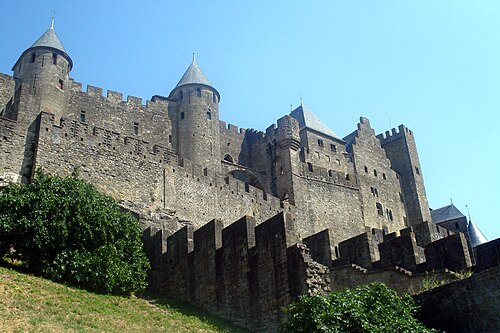
ナポレオン3世はまた、ウジェーヌ・ヴィオレ・ル・デュクが請け負ったいくつかの重要な歴史的建造物の修復を開始または完了させた。彼は、フランス革命中に部分的に破壊され冒涜されていたパリのノートルダム大聖堂の尖塔を修復した。1855年には、1845年に開始されたサント・シャペルのステンドグラスの修復を完了し、1862年には国の歴史的建造物に指定した。1853年には、ヴィオレ・ル・デュクによる中世の町カルカソンヌの修復を承認し、資金を提供した。彼はまた、ヴィオレ・ル・デュクによるヴァンセンヌ城とピエールフォン城の修復を後援した。 1862年、彼はフランス革命以来モンサンミッシェル修道院を占拠し、多くの重要な政治犯が収容されていた監獄を閉鎖し、修復して一般に公開しました。
社会経済政策
社会政策と改革
ナポレオン3世は治世の初めから、労働者階級の生活向上を目的とした一連の社会改革に着手した。彼はパリに2つの診療所を開設し、病気や怪我をした労働者のために、法的支援プログラムや、労働者のために低価格住宅を建設した企業への補助金といった小規模なプロジェクトから始めた。彼は、すべての従業員が携帯しなければならない労働証明書を雇用主が所有したり、そこにコメントを記入したりする行為を禁止した。否定的なコメントは労働者が他の仕事に就くことができないことを意味した。1866年、彼は障害者となった労働者や農民、そしてその未亡人や家族を助けるために、国家保険基金の創設を奨励した。[111]
ナポレオン3世は労働者階級を助けるため、バターの安価な代替品を開発した者に賞金を出すと発表しました。この賞金を獲得したのはフランスの化学者イポリット・メージュ=ムリエスで、彼は1869年にオレオマーガリンと名付けた製品の特許を取得しました。この製品は後に単にマーガリンと短縮されました。[112]
ナポレオン3世とその政権は、オノレ・ドーミエのような政治的風刺画を標的としたメディアに対する厳しい検閲を施行した。[113]
ストライキと団結の権利(1864年~1866年)
彼の最も重要な社会改革は、1810年以来禁じられていたストライキ権をフランスの労働者に与えた1864年の法律だった。1866年にはこれに「寛容令」を追加し、工場労働者に団結権を与えた。彼は徒弟の扱いを規制し、日曜日と祝日の労働時間を制限する法令を発布した。彼はナポレオン法典から悪名高い第1781条を削除した。この条項では、雇用主の宣言は、たとえ証拠がなくても、裁判所は従業員の発言よりも重視するとされていた。[114]
女子と女性の教育、学校改革(1861-1869)
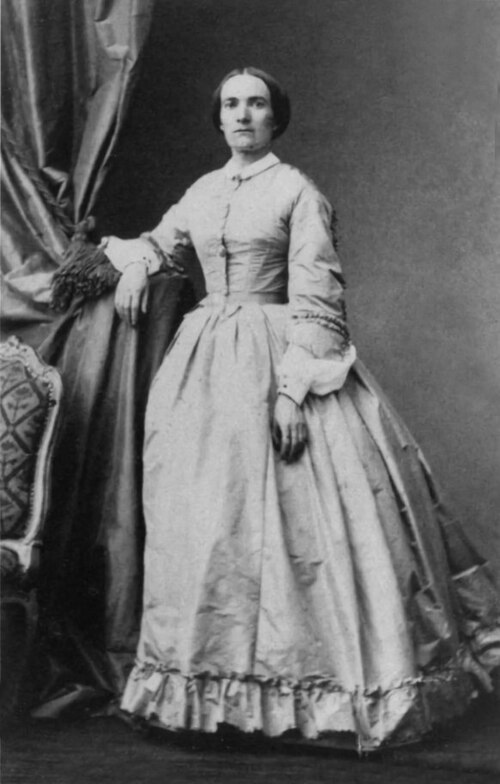
ナポレオン3世とウジェニー皇后は、少女や女性が公教育を受けられる機会を増やすことに尽力した。1861年、皇帝と皇后の直接の介入により、ジュリー=ヴィクトワール・ドービエはフランスで初めてバカロレア資格を取得した女性となった。[115] 1862年には若い女性のための最初の専門学校が開校し、マドレーヌ・ブレスはパリ大学医学部に入学した最初の女性となった。
1863年、彼は工場労働者と尊敬される歴史家の息子であるヴィクトル・デュリュイを新しい公教育大臣に任命した。デュリュイは改革のペースを速めたが、教育に対する統制を維持したいカトリック教会としばしば衝突した。教会の反対にもかかわらず、デュリュイは500人以上の住民がいる各コミューンに女子学校を開設し、合計800の新しい学校を開設した。[116]

1863年から1869年にかけて、デュリュイは1万5000校の学校図書館を創設し、小学校に歴史と地理のコースを設けるよう義務付けた。中学校では、カトリック教会の要請により前政権が禁止していた哲学を教え始めた。フランスの公立学校では初めて、現代史、現代語、美術、体操、音楽を教え始めた。学校改革の結果は劇的だった。1852年には、フランスでは徴兵された兵士の40%以上が読み書きができなかったが、1869年までにその数は25%にまで減少した。男女ともに非識字率は32%にまで減少した。[116]
大学レベルでは、ナポレオン3世はマルセイユ、ドゥエー、ナンシー、クレルモン=フェラン、ポワティエに新しい学部を設立し、科学、歴史、経済学の高等研究機関のネットワークを設立した。これらもカトリックの聖職者から批判された。ルーアンの枢機卿大司教ボヌショーズ師は、「真の科学は宗教的であるが、偽の科学は虚栄心と傲慢さに満ちている。神を説明できず、神に反抗する」と書いた。[117]

経済政策
関税の引き下げとフランス市場の再開(1860年)
ナポレオン3世の経済政策の目玉の一つは、関税の引き下げとフランス市場の輸入品への開放であった。1846年にロバート・ピール首相が輸入穀物の関税を引き下げたとき、ナポレオン3世はイギリスに滞在しており、それがイギリスの消費者と経済に利益をもたらすのを目にしていた。しかし、イギリスとの競争を恐れる多くのフランスの実業家や農民から激しい反対を受けた。自分の考えが正しいと確信したナポレオン3世は、協議を始めるために経済顧問のミシェル・シュヴァリエをロンドンに派遣し、両国の関税を段階的に引き下げることを内容とする新たな通商協定を秘密裏にイギリスと交渉した。1860年1月23日、ナポレオン3世は議会に相談することなく条約に署名した。フランスの一流実業家400人が抗議するためにパリに集まったが、ナポレオン3世は譲歩を拒否した。鉄道の鉄製レールなどの工業製品の関税が最初に引き下げられた。穀物の関税は1861年6月まで引き下げられなかった。オランダ、イタリア、フランスの他の隣国とも同様の協定が交渉された。ナポレオン3世の意図通り、フランスの産業はイギリスと競争するために近代化と効率化を余儀なくされ、両国間の貿易は急増した。[118]
経済の拡大と社会の変化
1860年代までに、ナポレオン3世の鉄道、インフラ、財政政策への巨額の国家投資は、フランス経済とフランス社会に劇的な変化をもたらした。フランス人の旅行は、かつてないほど多く、より頻繁に、より遠くまでなった。ナポレオン3世による最初の公立学校図書館の開設と、ルイ・アシェットによるナポレオンの新駅舎内の最初の書店の開設は、フランス全土での本の流通を促した。[119]
帝国時代、工業生産は73%増加し、総生産量はイギリスより低いままであったものの、イギリスの2倍の速さで成長した。1850年から1857年にかけて、フランス経済は年間5%のペースで成長し、輸出は1855年から1869年の間に60%増加した。[120]
フランスの農業生産は、ナポレオン3世が各県に設立した農業学校で教えられた新しい農業技術と鉄道によって開かれた新しい市場によって60パーセント増加した。何世紀にもわたってフランスの田舎を悩ませてきた飢餓の脅威は後退した。フランスで最後に記録された飢餓は1855年である。[120]
帝国時代には農村人口の都市への移住が増加した。農業に従事する人口の割合は1851年の61%から1870年には54%に減少した。[121]
フランス労働者の平均給与は第二帝政時代に45パーセント増加したが、物価上昇に追いつく程度だった。その一方で、かつてないほど多くのフランス人が貯蓄できるようになり、銀行口座の数は1852年の742,889から1870年には2,079,141に増加した。[121]
反対勢力の増大と自由主義陣営の譲歩(1860年~1870年)
国の経済発展にもかかわらず、ナポレオン3世に対する国内の反対は、特に議会で徐々に高まっていった。左派のリベラル共和主義者は、ナポレオンが権力を奪い共和国を抑圧したと考え、常に反対していた。保守的なカトリック教徒は、教皇領の政治的支配を維持するための闘争で教皇を見捨て、カトリックの制度に対抗する公教育制度を築いたことに不満を募らせていた。多くの実業家、特に冶金および繊維産業の実業家は、ナポレオンがイギリス製品の関税を引き下げ、イギリス製品を自国の製品と直接競合させたことに不満を抱いていた。国会議員は、ナポレオンが資金が必要なときだけ彼らと取引をすることに特に不満を抱いていた。ナポレオンがイギリスとの貿易を自由化した時も、国会議員に相談さえしなかった。[122]
ナポレオンの大規模な公共事業計画と高額な外交政策により、政府の負債は急速に増大し、年間の赤字は約 1 億金フラン、累積負債は 10 億金フラン (米国ドルで 10 億) 近くに達した。皇帝は、ビジネス界の信頼を回復し、議会を巻き込んで責任を共有させる必要があった。
On 24 December 1861, Napoleon III, against the opposition of his own ministers, issued a decree announcing that the legislature would have greater powers. The Senate and the Assembly could, for the first time, give a response to the Emperor's program, ministers were obliged to defend their programs before the Assembly, and the right of Deputies to amend the programs was enlarged. On 1 February 1861, further reforms were announced: Deputies could speak from the tribune, not just from their seats, and a stenographic record would be made and published of each session. Another even more important reform was announced on 31 December 1861: the budget of each ministry would be voted section by section, not in a block, and the government could no longer spend money by special decree when the legislature was not in session. He did retain the right to change the budget estimates section by section.
The Deputies quickly took advantage of their new rights; the Emperor's Italian policy was bitterly condemned in Parliament, and anti-government amendments by the pro-Catholic deputies were defeated by votes of 158 to 91 in the Corps législatif and 79 to 61 in the Senate.[123]
In the legislative elections of 31 May 1863, the pro-government candidates received 5,308,000 votes, while the opposition received 1,954,000 votes, three times more than in the previous elections. The rural departments still voted for Napoleon III's candidates, but in Paris, 63 percent of the votes went to anti-government republican candidates, with similar numbers in all the large cities. The new Assembly contained a large opposition block ranging from Catholics outraged by the Papal policies to Legitimists, Orléanists, protectionists and republicans, armed with new powers given to them by the Emperor himself.[124][page needed][125]
Despite the opposition in the legislature, Napoleon III's reforms remained popular in the rest of the country. A new plebiscite was held in 1870, on this text: "The people approve the liberal reforms added to the Constitution since 1860 by the Emperor, with the agreement of the legislative bodies and ratified by the Senate on April 20, 1870." Napoleon III saw this as a referendum on his rule as Emperor: "By voting yes," he wrote, "you will chase away the threat of revolution; you will place the nation on a solid base of order and liberty, and you will make it easier to pass on the Crown to my son." When the votes were counted, Napoleon III had lost Paris and the other big cities but decisively won the rest of the country. The final vote was 7,336,434 votes yes, 1,560,709 votes no, and 1,900,000 abstentions. Léon Gambetta, the leader of the republican opposition, wrote in despair, "We were crushed. The Emperor is more popular than ever."[126]
-
 Napoleon III with his son and heir, the Prince Imperial, c. 1860
 -
 Napoleon III with his family, c. 1860s
 -
 Napoleon III in normal attire, c. 1868
 -
 Napoleon III with Empress Eugénie, c. 1865
 -
 Napoleon III, by Gustave Le Gray, c. 1857

Later years
Declining health and rise of Prussia

Through the 1860s, the health of the Emperor steadily worsened. It had been damaged by his six years in prison at Ham; he had chronic pains in his legs and feet, particularly when it was cold, and as a result, he always lived and worked in overheated rooms and offices. He smoked heavily, distrusted doctors and their advice and attributed any problems simply to "rheumatism", for which he regularly visited the hot springs at Vichy and other spas.[127] It became difficult for him to ride a horse, and he was obliged to walk slowly, often with a cane. From 1869 onwards, the crises of his urinary tract were treated with opium, which made him seem lethargic and apathetic. His writing became hard to read and his voice weak. In the spring of 1870, he was visited by an old friend from England, Lord Malmesbury. Malmesbury found him to be "terribly changed and very ill".[128]
The health problems of the Emperor were kept secret by the government, which feared that, if his condition became public, the opposition would demand his abdication. One newspaper, the Courrier de la Vienne, was warned by the censors to stop publishing articles which had "a clear and malicious intent to spread, contrary to the truth, alarms about the health of the Emperor".[129]
At the end of June 1870, a specialist in the problems of urinary tracts, Germain Sée, was finally summoned to examine him. Sée reported that the Emperor was suffering from a gallstone. On 2 July, four eminent French doctors, Auguste Nélaton, Philippe Ricord, Fauvel and Corvisart, examined him and confirmed the diagnosis. They were reluctant to operate, however, because of the high risk (gallstone operations did not become relatively safe until the 1880s)[130] and because of the Emperor's weakness. Before anything further could be done, however, France was in the middle of a diplomatic crisis.[131]
In the 1860s, Prussia appeared on the horizon as a new rival to French power in Europe. Its Minister President, Otto von Bismarck, had ambitions for Prussia to lead a unified Germany. In May 1862, Bismarck came to Paris on a diplomatic mission and met Napoleon III for the first time. They had cordial relations. On 30 September 1862, however, in Munich, Bismarck declared, in a famous speech: "It is not by speeches and votes of the majority that the great questions of our period will be settled, as one believed in 1848, but by iron and blood." Bismarck saw Austria and France as the main obstacles to his ambitions, and he set out to divide and defeat them.
Search for allies, and war between Austria and Prussia
In the winter and spring of 1864, when the German Confederation invaded and occupied the German-speaking duchies ruled by Denmark (Schleswig and Holstein), Napoleon III recognized the threat that a unified Germany would pose to France, and he looked for allies to challenge Germany, without success.
The British government was suspicious that Napoleon wanted to take over Belgium and Luxembourg, felt secure with its powerful navy, and did not want any military engagements on the European continent at the side of the French.[132]
The Russian government was also suspicious of Napoleon, who it believed had encouraged Polish nationalists to rebel against Russian rule in 1863. Bismarck and Prussia, on the other hand, had offered assistance to Russia to help crush the Polish patriots.[133]
In October 1865, Napoleon had a cordial meeting with Bismarck at Biarritz. They discussed Venetia, Austria's remaining province in Italy. Bismarck told Napoleon that Prussia had no secret arrangement to give Venetia to Italy, and Napoleon assured him in turn that France had no secret understanding with Austria. Bismarck hinted vaguely that, in the event of a war between Austria and Prussia, French neutrality would be rewarded with some sort of territory as a compensation. Napoleon III had Luxembourg in mind.[134]
In 1866, relations between Austria and Prussia worsened and Bismarck demanded the expulsion of Austria from the German Confederation. Napoleon and his foreign minister, Drouyn de Lhuys, expected a long war and an eventual Austrian victory. Napoleon III felt he could extract a price from both Prussia and Austria for French neutrality. On 12 June 1866, France signed a secret treaty with Austria, guaranteeing French neutrality in a Prussian-Austrian war. In exchange, in the event of an Austrian victory, Austria would give Venetia to France and would also create a new independent German state on the Rhine, which would become an ally of France. At the same time, Napoleon proposed a secret treaty with Bismarck, promising that France would remain neutral in a war between Austria and Prussia. In the event of a Prussian victory, France would recognize Prussia's annexation of smaller German states, and France, in exchange, would receive a portion of German territory, the Palatinate region north of Alsace. Bismarck, rightly confident of success due to the modernization of the Prussian Army, summarily rejected Napoleon's offer.
On 15 June, the Prussian Army invaded Saxony, an ally of Austria. On 2 July, Austria asked Napoleon to arrange an armistice between Italy, which had allied itself with Prussia, and Austria, in exchange for which France would receive Venetia. But on 3 July, the Prussian army crushed the Austrian army at the Battle of Königgrätz in Bohemia. The way to Vienna was open for the Prussians, and Austria asked for an armistice. The armistice was signed on 22 July; Prussia annexed the Kingdom of Hanover, the Electorate of Hesse, the Duchy of Nassau and the Free City of Frankfurt, with a combined population of four million people.[135]
The Austrian defeat was followed by a new crisis in the health of Napoleon III. Marshal Canrobert, who saw him on 28 July, wrote that the Emperor "was pitiful to see. He could barely sit up in his armchair, and his drawn face expressed at the same time moral anguish and physical pain.[135]
Luxembourg Crisis
Napoleon III still hoped to receive some compensation from Prussia for French neutrality during the war. His foreign minister, Drouyn, asked Bismarck for the Palatinate region on the Rhine, which belonged to Bavaria, and for the demilitarization of Luxembourg, which was the site of a formidable fortress staffed by a strong Prussian garrison in accordance with international treaties. Napoleon's senior advisor Eugène Rouher increased the demands, asking that Prussia accept the annexation by France of Belgium and of Luxembourg, sparking the Luxembourg Crisis.
Luxembourg had regained its de jure independence in 1839 as a grand duchy. However, it was in personal union with the Netherlands. King William III of the Netherlands, who was also Grand Duke of Luxembourg, desperately needed money and was prepared to sell the Grand Duchy to France. Bismarck swiftly intervened and showed the British ambassador a copy of Napoleon's demands; as a result, he put pressure on William III to refuse to sell Luxembourg to France. France was forced to renounce any claim to Luxembourg in the Treaty of London (1867). Napoleon III gained nothing for his efforts but the demilitarization of the Luxembourg fortress.[136]
Failure to increase the size of the French Army
Despite his failing health, Napoleon III could see that the Prussian Army, combined with the armies of Bavaria and the other German states, would be a formidable enemy. In 1866, Prussia, with a population of 22 million, had been able to mobilize an army of 700,000 men, while France, with a population of 38 million, had an army of only 385,000 men, of whom 140,000 were in Algeria, Mexico, and Rome.[137] In the autumn of 1867, Napoleon III proposed a form of universal military service similar to the Prussian system to increase the size of the French Army, if needed, to 1 million. His proposal was opposed by many French officers, such as Marshal Randon, who preferred a smaller, more professional army; he said: "This proposal will only give us recruits; it's soldiers we need."[138] It was also strongly opposed by the republican opposition in the French parliament, who denounced the proposal as a militarization of French society. The republican deputy, Émile Ollivier, who later became Napoleon's prime minister, declared: "The armies of France, which I always considered too large, are now going to be increased to an exorbitant size. Why? What is the necessity? Where is the danger? Who is threatening us? ...If France were to disarm, the Germans would know how to convince their governments to do the same."[139] Facing almost certain defeat in the parliament, Napoleon III withdrew the proposal. It was replaced in January 1868 by a much more modest project to create a garde mobile, or reserve force, to support the army.[140]
A last search for allies
Napoleon III was overconfident in his military strength and went into war even after he failed to find any allies who would support a war to stop German unification.[141]
Following the defeat of Austria, Napoleon resumed his search for allies against Prussia. In April 1867, he proposed an alliance, defensive and offensive, with Austria. If Austria joined France in a victorious war against Prussia, Napoleon promised that Austria could form a new confederation with the southern states of Germany and could annex Silesia, while France took for its part the left bank of the Rhine River. But the timing of Napoleon's offer was poorly chosen; Austria was in the process of a major internal reform, creating the new Dual Monarchy of Austria-Hungary.
Napoleon's attempt to install the Archduke Maximilian, the brother of the Austrian Emperor, in Mexico was just coming to its disastrous conclusion; the French troops had just been withdrawn from Mexico in February 1867, and the unfortunate Maximilian would be captured, judged and shot by a firing squad on 19 June. Napoleon III made these offers again in August 1867, on a visit to offer condolences for the death of Maximilian, but the proposal was not received with enthusiasm.[142]

Napoleon III also made one last attempt to persuade Italy to be his ally against Prussia. Italian King Victor Emmanuel was personally favorable to a better relationship with France, remembering the role that Napoleon III had played in achieving Italian unification, but Italian public opinion was largely hostile to France; on 3 November 1867, French and Papal soldiers had fired upon the Italian patriots of Garibaldi, when he tried to capture Rome. Napoleon presented a proposed treaty of alliance on 4 June 1869, the anniversary of the joint French-Italian victory at Magenta. The Italians responded by demanding that France withdraw its troops who were protecting the Pope in Rome. Given the opinion of fervent French Catholics, this was a condition Napoleon III could not accept.[143]
While Napoleon III was having no success finding allies, Bismarck signed secret military treaties with the southern German states, who promised to provide troops in the event of a war between Prussia and France. In 1868, Bismarck signed an accord with Russia that gave Russia liberty of action in the Balkans in exchange for neutrality in the event of a war between France and Prussia. This treaty put additional pressure on Austria-Hungary, which also had interests in the Balkans, not to ally itself with France.
But most importantly, Prussia promised to support Russia in lifting the restrictions of the Congress of Paris. "Bismarck had bought Tsar Alexander II's complicity by promising to help restore his naval access to the Black Sea and Mediterranean (cut off by the treaties ending the Crimean War), other powers were less biddable".[144] Bismarck also reached out to the liberal government of William Gladstone in London, offering to protect the neutrality of Belgium against a French threat. The British Foreign Office under Lord Clarendon mobilized the British fleet, to dissuade France against any aggressive moves against Belgium. In any war between France and Prussia, France would be entirely alone.[145]
In 1867, French politician Adolphe Thiers (who became President of the French Republic in 1871) accused Napoleon III of erroneous foreign policy: "There is no mistake that can be made".[146] Bismarck thought that French vanity would lead to war; he exploited that vanity in the Ems Dispatch in July 1870. France took the bait and declared war on Prussia, which proved to be a major miscalculation.[147] This allowed Bismarck and Prussia to present the war to the world as defensive, although Prussia and Bismarck had aggressive plans, and they soon became known in relation to the annexation of the French provinces of Alsace-Lorraine.
Hohenzollern candidacy and the Ems telegram
In his memoirs, written long after the war, Bismarck wrote, "I always considered that a war with France would naturally follow a war against Austria... I was convinced that the gulf which was created over time between the north and the south of Germany could not be better overcome than by a national war against the neighbouring people who were aggressive against us. I did not doubt that it was necessary to make a French-German war before the general reorganization of Germany could be realized."[148] As the summer of 1870 approached, pressure mounted on Bismarck to have a war with France as quickly as possible. In Bavaria, the largest of the southern German states, unification with (mostly Protestant) Prussia was being opposed by the Patriotic Party, which favoured a confederacy of (Catholic) Bavaria with (Catholic) Austria. German Protestant public opinion was on the side of unification with Prussia.
In France, patriotic sentiment was also growing. On 8 May 1870, French voters had overwhelmingly supported Napoleon III's program in a national plebiscite, with 7,358,000 votes yes against 1,582,000 votes no, an increase of support of two million votes since the legislative elections in 1869. The Emperor was less popular in Paris and the big cities, but highly popular in the French countryside. Napoleon had named a new foreign minister, Antoine Agenor, the Duke de Gramont, who was hostile to Bismarck. The Emperor was weak and ill, but the more extreme Bonapartists were prepared to show their strength against the republicans and monarchists in the parliament.[149]
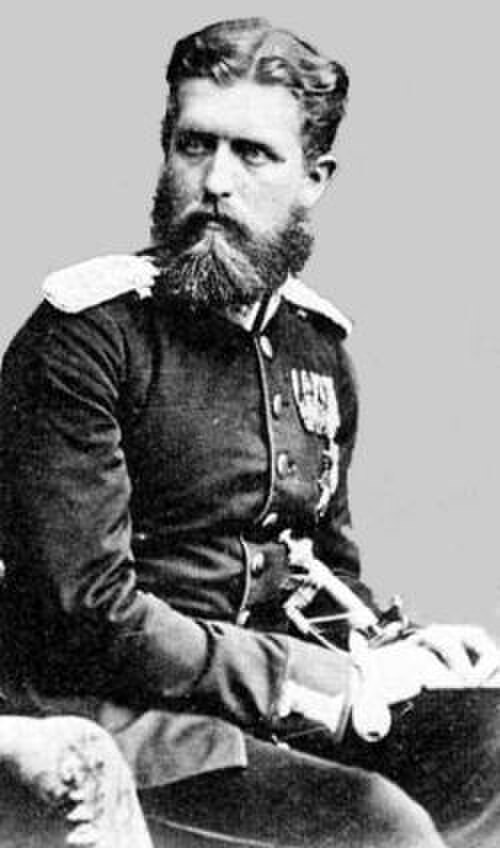
The news of Leopold, Prince of Hohenzollern's candidacy for the Spanish crown, published 2 July 1870, aroused fury in the French parliament and press. The government was attacked by both the republicans and monarchist opposition, and by the ultra-Bonapartists, for its weakness against Prussia. On 6 July, Napoleon III held a meeting of his ministers at the château of Saint-Cloud and told them that Prussia must withdraw the Hohenzollern candidacy or there would be a war. He asked Marshal Leboeuf, the chief of staff of the French army, if the army was prepared for a war against Prussia. Leboeuf responded that the French soldiers had a rifle superior to the Prussian rifle, that the French artillery was commanded by an elite corps of officers, and that the army "would not lack a button on its puttees". He assured the Emperor that the French army could have four hundred thousand men on the Rhine in less than fifteen days.[150]
The French Ambassador to Prussia, Count Vincent Benedetti, was sent to the German spa resort of Bad Ems, where the Prussian king was staying. Benedetti met with the king on 13 July in the park of the château. The king told him courteously that he agreed fully with the withdrawal of the Hohenzollern candidacy, but that he could not make promises on behalf of the government for the future. He considered that the matter was closed. As he was instructed by Gramont, Benedetti asked for another meeting with the king to repeat the request, but the king politely, yet firmly, refused. Benedetti returned to Paris and the affair seemed finished. However, Bismarck edited the official dispatch of the meeting to make it appear that both sides had been hostile: "His majesty the King," the dispatch read, "refused to meet again with the French ambassador, and let him know, through an aide-de-camp of service, that His Majesty had nothing more to say to the Ambassador." This version was communicated to governments, and the next day was in the French press.[151]
The Ems telegram had exactly the effect that Bismarck had intended. Once again, public opinion in France was inflamed. "This text produced the effect of a red flag to the Gallic bull," Bismarck later wrote. Gramont, the French foreign minister, declared that he felt "he had just received a slap." The leader of the conservatives in parliament, Thiers, spoke for moderation, arguing that France had won the diplomatic battle and there was no reason for war, but he was drowned out by cries that he was a traitor and a Prussian. Napoleon's new prime minister, Émile Ollivier, declared that France had done all that it could humanly and honourably do to prevent the war, and that he accepted the responsibility "with a light heart". A crowd of 15,000–20,000 persons, carrying flags and patriotic banners, marched through the streets of Paris, demanding war. On 19 July 1870, a declaration of war was sent to the Prussian government.[152]
Defeat in the Franco-Prussian War

When France entered the war, there were patriotic demonstrations in the streets of Paris, with crowds singing La Marseillaise and chanting "To Berlin! To Berlin!" But Napoleon was melancholic. He told General Lepic that he expected the war to be "long and difficult", and wondered, "Who knows if we'll come back?" He told Marshal Randon that he felt too old for a military campaign.[153] Despite his declining health, Napoleon decided to go with the army to the front as commander in chief, as he had done during the successful Italian campaign. On 28 July, he departed Saint-Cloud by train for the front. He was accompanied by the 14-year-old Prince Imperial in the uniform of the army, by his military staff, and by a large contingent of chefs and servants in livery. He was pale and visibly in pain. The Empress remained in Paris as the Regent, as she had done on other occasions when the Emperor was out of the country.
The mobilization of the French army was chaotic. Two hundred thousand soldiers converged on the German frontier, along a front of 250 kilometers, choking all the roads and railways for miles. Officers and their respective units were unable to find one another. General Moltke and the Prussian Army, having gained experience mobilizing in the war against Austria, were able to efficiently move three armies of 518,000 men to a more concentrated front of just 120 kilometers. In addition, the German soldiers were backed by a substantial reserve of the Landwehr (Territorial defence), with 340,000 men, and an additional reserve of 400,000 territorial guards. The French army arrived at the frontier equipped with maps of Germany, but without maps of France—where the actual fighting took place—and without a specific plan of what it was going to do.[154]
On 2 August, Napoleon and the Prince Imperial accompanied the army as it made a tentative crossing of the German border toward the city of Saarbrücken. The French won a minor skirmish and advanced no further. Napoleon III, very ill, was unable to ride his horse and had to support himself by leaning against a tree. In the meantime, the Prussians had assembled a much larger army opposite Alsace and Lorraine than the French had expected or were aware of. On 4 August 1870, the Prussians attacked with overwhelming force against a French division in Alsace at the Battle of Wissembourg (German: Weissenburg), forcing it to retreat. On 5 August, the Germans defeated another French army at the Battle of Spicheren in Lorraine.

On 6 August, 140,000 Germans attacked 35,000 French soldiers at the Battle of Wörth; the French lost 19,200 soldiers killed, wounded and captured, and were forced to retreat. The French soldiers fought bravely, and French cavalry and infantry attacked the German lines repeatedly, but the Germans had superior logistics, communications, and leadership. The decisive weapon was the new German Krupp six pound field gun, which was breech-loading, had a steel barrel, longer range, a higher rate of fire, and was more accurate than the bronze muzzle-loading French cannons. The Krupp guns caused terrible casualties in the French ranks.[155]
When news of the French defeats reached Paris on 7 August, it was greeted with disbelief and dismay. Prime Minister Ollivier and the army chief of staff, Marshal Edmond Le Boeuf, both resigned. The Empress Eugénie took it upon herself as the Regent to name a new government. She chose General Cousin-Montauban, better known as the Count of Palikao, seventy-four years old and former commander of the French expeditionary force to China, as her new prime minister. The Count of Palikao named Marshal François Achille Bazaine, the commander of the French forces in Lorraine, as the new military commander. Napoleon III proposed returning to Paris, realizing that he was not doing any good for the army. The Empress, in charge of the government, responded by telegraph, "Don't think of coming back, unless you want to unleash a terrible revolution. They will say you quit the army to flee the danger." The Emperor agreed to remain with the army.[156] With the Empress directing the country, and Bazaine commanding the army, the Emperor no longer had any real role to play. At the front, the Emperor told Marshal Leboeuf, "we've both been dismissed."[157]
On 18 August 1870, the Battle of Gravelotte, the biggest battle of the war, took place in Lorraine between the Germans and the army of Marshal Bazaine. The Germans suffered 20,000 casualties and the French 12,000, but the Germans emerged as the victors, as Marshal Bazaine's army, with 175,000 soldiers, six divisions of cavalry and five hundred cannons, was besieged inside the fortifications of Metz, unable to move.[158]
Napoleon was at Châlons-sur-Marne with the army of Marshal Patrice de MacMahon. MacMahon, Marshal Bazaine, and the count of Palikao, with the Empress in Paris, all had different ideas of what the army should do next, and the Emperor had to act as a referee. The Emperor and MacMahon proposed moving their army closer to Paris to protect the city, but on 17 August Bazaine telegraphed to the Emperor: "I urge you to renounce this idea, which seems to abandon the Army at Metz... Couldn't you make a powerful diversion toward the Prussian corps, which are already exhausted by so many battles? The Empress shares my opinion." Napoleon III wrote back, "I yield to your opinion."[159] The Emperor sent the Prince Imperial back to Paris for his safety and went with the weary army in the direction of Metz. The Emperor, riding in an open carriage, was jeered, sworn at and insulted by demoralized soldiers.[158]
The direction of movement of MacMahon's army was supposed to be secret, but it was published in the French press and thus was quickly known to the German General Staff. Moltke, the German commander, ordered two Prussian armies marching toward Paris to turn towards MacMahon's army. On 30 August, one corps of MacMahon's army was attacked by the Germans at Beaumont, losing five hundred men and forty cannons. MacMahon, believing he was ahead of the Germans, decided to stop and reorganize his forces at the fortified city of Sedan, in the Ardennes close to the Belgian border.[160]
Battle of Sedan and capitulation


The Battle of Sedan was a total disaster for the French—the army surrendered to the Prussians and Napoleon himself was made a prisoner of war.[161] MacMahon arrived at Sedan with one hundred thousand soldiers, not knowing that two German armies were closing in on the city (one from the west and one from the east), blocking any escape. The Germans arrived on 31 August, and by 1 September, occupied the heights around Sedan where they placed artillery batteries, and began shelling the French positions below. At five o'clock in the morning on 1 September, a German shell seriously wounded MacMahon in the hip. Sedan quickly came under bombardment from seven hundred German guns.[162] MacMahon's replacement, General Wimpffen, launched a series of cavalry attacks to try to break the German encirclement, with no success. During the battle and bombardment, the French lost seventeen thousand killed or wounded and twenty-one thousand captured.
As the German shells rained down on the French positions, Napoleon III wandered aimlessly in the open around the French positions. One officer of his military escort was killed and two more received wounds. A doctor accompanying him wrote in his notebook, "If this man has not come here to kill himself, I don't know what he has come to do. I have not seen him give an order all morning."[162]
Finally, at one o'clock in the afternoon, Napoleon emerged from his reverie and ordered a white flag hoisted above the citadel. He then had a message sent to the Prussian king, who was at Sedan with his army: "Monsieur my brother, not being able to die at the head of my troops, nothing remains for me but to place my sword in the hands of Your Majesty."[163]
After the war, when accused of having made a "shameful surrender" at Sedan, he wrote:
Some people believe that, by burying ourselves under the ruins of Sedan, we would have better served my name and my dynasty. It's possible. Nay, to hold in my hand the lives of thousands of men and not to make a sign to save them was something that was beyond my capacity....my heart refused these sinister grandeurs.[164]
At six o'clock in the morning on 2 September, in the uniform of a general and accompanied by four generals from his staff, Napoleon was taken to the German headquarters at Donchery. He expected to see King William, but instead he was met by Bismarck and the German commander, General von Moltke. They dictated the terms of the surrender to Napoleon. Napoleon asked that his army be disarmed and allowed to pass into Belgium, but Bismarck refused. They also asked Napoleon to sign the preliminary documents of a peace treaty, but Napoleon refused, telling them that the French government headed by the Regent, Empress Eugénie, would need to negotiate any peace agreement. The Emperor was then taken to the Château at Bellevue near Frénois (Ardennes), where the Prussian king visited him. Napoleon told the king that he had not wanted the war, but that public opinion had forced him into it. That evening, from the Château, Napoleon wrote to the Empress Eugénie:
It is impossible for me to say what I have suffered and what I am suffering now...I would have preferred death to a capitulation so disastrous, and yet, under the present circumstances, it was the only way to avoid the butchering of sixty thousand people. If only all my torments were concentrated here! I think of you, our son, and our unhappy country.[165]
Aftermath
The news of the capitulation reached Paris on 3 September, confirming the rumors that were already circulating in the city. When the Empress heard the news that the Emperor and the army had been taken prisoner, she reacted by shouting at the Emperor's personal aide, "No! An Emperor does not capitulate! He is dead!...They are trying to hide it from me. Why didn't he kill himself! Doesn't he know he has dishonored himself?!"[166] Later, when hostile crowds formed near the palace and the staff began to flee, the Empress slipped out with one of her entourage and sought sanctuary with her American dentist, who took her to Deauville. From there, on 7 September, she took the yacht of a British official to England.
On 4 September, a group of republican deputies, led by Léon Gambetta, gathered at the Hôtel de Ville in Paris and proclaimed the return of the Republic and the creation of a Government of National Defence. The Second Empire had come to an end.[167]
Captivity, exile and death
.jpg/500px-III._Nap%C3%B3leon_(%C3%B6reg).jpg)
From 5 September 1870 until 19 March 1871, Napoleon III and his entourage of thirteen aides were held in comfortable captivity at Schloss Wilhelmshöhe near Kassel, Germany. Eugénie traveled there incognito to visit Napoleon.[168]
General Bazaine, staying in the fortification of Metz with a large part of the remaining French Army while being besieged, had secret talks with Bismarck's envoys on 23 September. The idea was for Bazaine to establish a conservative regime in France, for himself or for Napoleon's son.[169] Bazaine's envoy, who spoke to Bismarck at Versailles on 14 October, declared that the army in Metz was still loyal to Napoleon. Bazaine was willing to take over power in France after the Germans had defeated the republic in Paris. Because of the weakening of the French position overall, Bismarck lost interest in this option.[170]
On 27 November, Napoleon composed a memorandum to Bismarck that raised the possibility that the Prussian king might urge the French people to recall him as Emperor after a peace treaty was signed and Paris surrendered. But by this time, Metz had already fallen, leaving Napoleon without a power base. Bismarck did not see much chance for a restored empire, as the French people would consider Napoleon a mere marionette of the enemy.[171] One last initiative from Eugénie failed in January, because of the late arrival of her envoy from London. Bismarck refused to acknowledge the former empress, as this had caused irritations with Britain and Russia. Shortly afterwards, the Germans signed a truce with the Government of France.[172]
Napoleon continued to write political tracts and letters and dreamed of a return to power. Bonapartist candidates participated in the first elections for the National Assembly on 8 February but won only five seats. On 1 March, the newly elected assembly officially declared the removal of the emperor from power and placed all the blame for the French defeat squarely on him.[168] When peace was arranged between France and Germany, Bismarck released Napoleon; the emperor decided to go into exile in England. Having limited funds, Napoleon sold properties and jewels and arrived in England on 20 March 1871.


.jpg/500px-The_Sarcophagus_of_Emperor_Napoleon_III_of_France_(geograph_3835255).jpg)
Napoleon, Eugénie, their son and their entourage, including the American Colonel Zebulon Howell Benton, settled at Camden Place,[173] a large three-storey country house in the village of Chislehurst in Kent, a half-hour by train from London. He was received by Queen Victoria, who also visited him at Chislehurst.[174]
Louis-Napoleon had a longtime connection with Chislehurst and Camden Place: years earlier, while exiled in England, he had often visited Emily Rowles, whose father had owned Camden Place in the 1830s. She had assisted his escape from a French prison in 1846.
He had also paid attention to another English girl, Elizabeth Howard, who later gave birth to a son, whose father (not Louis-Napoleon) settled property on her to support the son, via a trust whose trustee was Nathaniel Strode. Strode bought Camden Place in 1860 and spent large sums of money transforming it into a French château. Strode had also received money from the Emperor, possibly to buy Camden Place and maintain it as a bolt hole.[speculation?]
Napoleon passed his time writing and designing a stove which would be more energy efficient. In the summer of 1872, his health began to worsen. Doctors recommended surgery to remove his gallstones. After two operations, he became very seriously ill. His final defeat in the war would haunt the dying former emperor throughout his last days. His last words were "Isn't it true that we weren't cowards at Sedan?”, directed at Henri Conneau, his attendant who fought in the battle alongside him. He was given last rites and died on 9 January 1873.[175]
Napoleon was originally buried at St. Mary's Roman Catholic Church in Chislehurst. However, after his son, an officer in the British Army, died in 1879 fighting against the Zulus in South Africa, Eugénie decided to build a monastery and a chapel for the remains of Napoleon III and their son. In 1888, the bodies were moved to the Imperial Crypt at St Michael's Abbey, Farnborough, Hampshire, England.[176]
Personal life
Louis Napoleon has a historical reputation as a womanizer, yet he said: "It is usually the man who attacks. As for me, I defend myself, and I often capitulate."[177] He had many mistresses. During his reign, it was the task of Count Felix Bacciochi, his social secretary, to arrange for trysts and to procure women for the Emperor's favours. His affairs were not trivial sideshows: they distracted him from governing, affected his relationship with the empress, and diminished him in the views of the other European courts.[178][page needed]

Among his numerous lovers and mistresses were:[179][page needed]
- Maria Anna Schiess (1812–1880), of Allensbach (Lake Constance, Germany), mother of his son Bonaventure Karrer (1839–1921).[180]
- Mary Louisa Edwards (1814–1894), his mistress in London from 1839 to 1840. Louis Napoleon styled her "Comtesse d'Espel" and set her up at Brasted Place, Kent. She played a role in the organization of his failed coup attempt in Boulogne, in August 1840. She visited him in prison at Ham, in 1840 and 1841.[181]
- Eléonore Vergeot, laundress in the prison at Ham, and mother of his sons Eugène Bure (1843–1910) and Alexandre Bure (1845–1882).[182]
- Elisa-Rachel Felix (1821–1858), the "most famous actress in Europe."
- Harriet Howard (1823–1865), a wealthy actress and major financial backer.
- Virginia Oldoini, Countess of Castiglione (1837–1899), a spy, artist and famous beauty, sent by Camillo Cavour to influence the Emperor's politics.
- Marie-Anne Walewska (1823–1912), a possible mistress, who was the wife of Count Alexandre Colonna-Walewski, his relative and foreign minister.
- Justine Marie Le Boeuf, also known as Marguerite Bellanger (1838–1886), an actress and acrobatic dancer. Bellanger was falsely rumoured to be the illegitimate daughter of a hangman, and she was the most universally loathed of the mistresses, although perhaps his favourite.[183]
- Countess Louise de Mercy-Argenteau (1837–1890), likely a platonic relationship, author of The Last Love of an Emperor, her reminiscences of her association with the emperor.
His wife, Eugénie, resisted his advances prior to marriage. She was coached by her mother and her friend, Prosper Mérimée. "What is the road to your heart?" Napoleon demanded to know. "Through the chapel, Sire," she answered.[177] Yet, after marriage, it took not long for him to stray as Eugénie found sex with him "disgusting".[177][failed verification] It is doubtful that she allowed further approaches by her husband once she had given him an heir.[who?][178][page needed]
By his late forties, Napoleon started to suffer from numerous medical ailments, including kidney disease, bladder stones, chronic bladder and prostate infections, arthritis, gout, obesity, and the chronic effects of smoking. In 1856, Dr. Robert Ferguson, a consultant called from London, diagnosed a "nervous exhaustion" that had a "debilitating impact upon sexual ... performance"[179][page needed] which he also reported to the British government.[178][page needed]
Legacy
Construction
With Prosper Mérimée, Napoleon III continued to seek the preservation of numerous medieval buildings in France that had been neglected since the French Revolution, a project Mérimée had begun during the July Monarchy. With Eugène Viollet-le-Duc acting as chief architect, many buildings were saved, including some of the most famous in France: Notre Dame Cathedral, Mont Saint-Michel, Carcassonne, Vézelay Abbey, Pierrefonds, and Roquetaillade castle.
Napoleon III also directed the building of the French railway network, which contributed to the development of the coal mining and steel industry in France. This advance radically changed the nature of the French economy, which entered the modern age of large-scale capitalism.[184] The French economy, the second largest in the world at the time (behind the British economy), experienced a very strong growth during the reign of Napoleon III.[185] Names such as steel tycoon Eugène Schneider and banking mogul James de Rothschild are symbols of the period. Two of France's largest banks, Société Générale and Crédit Lyonnais, still in existence today, were founded during that period. The French stock market also expanded prodigiously, with many coal mining and steel companies issuing stocks. Historians credit Napoleon chiefly for supporting the railways, but not otherwise building the economy.[186]
Napoleon's military pressure and Russian mistakes, culminating in the Crimean War, dealt a blow to the Concert of Europe, since it precipitated a war that disrupted the post-Napoleonic peace, although the ultimately diplomatic solution to the war demonstrated the continued vitality of the system. The concert was based on stability and balance of powers, whereas Napoleon attempted to rearrange the world map to France's advantage.
A 12-pound cannon designed by France is commonly referred to as a "Napoleon cannon" or "12-pounder Napoleon" in his honor.
Assessment and reputation
,_Emperor_of_the_French_MET_DP225833.jpg/500px-Napol%C3%A9on_III_(1808%E2%80%931873),_Emperor_of_the_French_MET_DP225833.jpg)
The historical reputation of Napoleon III is far below that of his uncle and had been heavily tarnished by the empire's military failures in Mexico and against Prussia. Victor Hugo portrayed him as "Napoleon the Small" (Napoléon le Petit), a mere mediocrity, in contrast with Napoleon I "The Great", presented as a military and administrative genius. In France, such arch-opposition from the age's central literary figure, whose attacks on Napoleon III were obsessive and powerful, made it impossible for a very long time to assess his reign objectively. Karl Marx, in The Eighteenth Brumaire of Louis Napoleon, famously mocked Napoleon III by saying "Hegel remarks somewhere that all great world-historical facts and personages appear, so to speak, twice. He forgot to add: the first time as tragedy, the second time as farce." Napoleon III has often been seen as an authoritarian but ineffectual leader who brought France into dubious, and ultimately disastrous, foreign military adventures.[187]
Historians by the 1930s saw the Second Empire as a precursor of fascism, but by the 1950s were celebrating it as leading example of a modernizing regime.[188][75] However, historians have generally given Napoleon negative evaluations on his foreign policy, and somewhat more positive evaluations of his domestic policies, especially after he liberalized his rule after 1858. His greatest achievements came in material improvements, in the form of a grand railway network that facilitated commerce and tied the nation together and centered it on Paris. He is given high credits for the rebuilding of Paris with broad boulevards, striking public buildings, very attractive residential districts for upscale Parisians, and great public parks, including the Bois de Boulogne and Bois de Vincennes, used by all classes of Parisians.[189] He promoted French business and exports. In international policy, he tried to emulate his uncle, with numerous imperial ventures around the world, as well as wars in Europe. He badly mishandled the threat from Prussia and found himself without allies in the face of overwhelming force.[190]
In films
Napoleon has been portrayed by:
- Walter Kingsford in
- The Story of Louis Pasteur (1936)
- A Dispatch from Reuter's (1940)
- Frank Vosper in Spy of Napoleon (1936)
- Guy Bates Post in
- Maytime (1937)
- The Mad Empress (1939)
- Leon Ames in Suez (1938)
- Claude Rains in Juarez (1939)
- Walter Franck in Bismarck (1940)
- Jerome Cowan in The Song of Bernadette (1943)
- David Bond in The Sword of Monte Cristo (1951)
- Siegfried Wischnewski in Maximilian von Mexiko (1970).[191]
- Robert Dumont in Those Years (Spanish: Aquellos años, 1973).[192]
- Julian Sherrier in Edward the Seventh (1975)
- Nick Jameson in The Secret Diary of Desmond Pfeiffer (1998)
- Erwin Steinhauer in Sisi (2009).[193]
Napoleon III also plays a small but crucial role in April and the Extraordinary World (2015).
In fiction
Napoleon III is a principal character (with Horatio Hornblower) in C. S. Forester's final story The Last Encounter.[194]
Titles, styles, honours and arms
Titles and styles
His full title as emperor was: "Napoleon the Third, by the Grace of God and the will of the Nation, Emperor of the French".[195]
Honours
National[196]
- Grand Cross of the Legion of Honour, (1848; in diamonds 1870,)
- Médaille militaire, (1852; in diamonds 1870,)
- Commemorative medal of the 1859 Italian Campaign, (in diamonds 1870,)
Foreign[196]
 Sardinia:
- Knight of the Order of the Annunciation, 13 July 1849
- Grand Cross of the Military Order of Savoy, 28 September 1855
- Gold Medal of Military Valor, 1859
 Holy See: Grand Cross of the Order of Pope Pius IX, 1849
 Tuscany: Grand Cross of the Order of St. Joseph, 1850
 Spain: Knight of the Order of the Golden Fleece, 17 September 1850
 Grand Duchy of Hesse: Grand Cross of the Ludwig Order, 18 July 1852
 Portugal:
- Grand Cross of the Order of the Tower and Sword, 3 August 1852
- Grand Cross of the Sash of the Three Orders, 7 October 1854
- Grand Cross of the Order of St. James of the Sword, 3 April 1865
 Saxony: Knight of the Order of the Rue Crown, 29 December 1852
 Brazil: Grand Cross of the Order of the Southern Cross, 23 March 1853
 Bavaria: Knight of the Order of St. Hubert, 22 September 1853
- Mexico:
 Mexican Republic: Grand Cross of the Order of Guadalupe, 12 January 1854
 Mexican Empire: Grand Cross of the Imperial Order of the Mexican Eagle, with Collar, 1 January 1865
 Belgium: Grand Cordon of the Order of Leopold, 15 February 1854

 Ernestine duchies: Grand Cross of the Saxe-Ernestine House Order, 1 March 1854
 Austria: Grand Cross of the Order of St. Stephen, 1854
 Two Sicilies: Grand Cross of the Order of Saint Ferdinand and of Merit, 1854
 United Kingdom: Knight of the Order of the Garter, 18 April 1855
 Denmark: Knight of the Order of the Elephant, 2 August 1855
 Netherlands: Grand Cross of the Military William Order, 13 September 1855
 Sweden-Norway:
- Knight of the Order of the Seraphim, 10 October 1855
- Knights Grand Cross of the Order of the Sword, 1st Class, 26 August 1861
 Ottoman Empire:
- Order of the Medjidie, 1st Class, 1855
- Order of Osmanieh, 1st Class, in Diamonds, 1862
 Baden:
- Knight of the House Order of Fidelity, 17 April 1856
- Grand Cross of the Order of the Zähringer Lion, 17 April 1856
 Prussia:
- Knight of the Order of the Black Eagle, 8 June 1856
- Grand Cross of the Order of the Red Eagle, 8 June 1856
 Württemberg: Grand Cross of the Order of the Württemberg Crown, 1856
 Russia:
- Knight of the Order of St. Andrew, 11 June 1856
- Knight of the Order of St. Alexander Nevsky, 11 June 1856
- Knight of the Order of the White Eagle, 11 June 1856
- Knight of the Order of St. Anna, 1st Class, 11 June 1856
 Persia: Grand Cross of the Order of the Lion and the Sun, 1856
 Hesse-Kassel: Knight of the Order of the Golden Lion, 10 January 1858
 Nassau: Knight of the Order of the Golden Lion of Nassau, 2 May 1858
 Hanover:
- Knight of the Order of St. George, 1860
- Grand Cross of the Royal Guelphic Order[197]
 Tunisia: Husainid Family Order, 17 September 1860
 Saxe-Weimar-Eisenach: Grand Cross of the Order of the White Falcon, 14 November 1860
 Greece: Grand Cross of the Order of the Redeemer, 1863
 Honduras: Grand Cross of the Order of Santa Rosa and of Civilization, 1869
 Monaco: Grand Cross of the Order of St. Charles, 16 November 1869[198]
.svg/500px-Flag_of_the_Kingdom_of_Sardinia_(1848-1851).svg.png)
.svg/500px-Flag_of_Vatican_City_(2001%E2%80%932023,_2-3).svg.png)
.svg/500px-Flag_of_Spain_(1785%E2%80%931873,_1875%E2%80%931931).svg.png)
.svg/500px-Flag_of_Portugal_(1830%E2%80%931910).svg.png)
.svg/500px-Flagge_K%C3%B6nigreich_Sachsen_(1815-1918).svg.png)
.svg/500px-Flag_of_Brazil_(1822%E2%80%931870).svg.png)
.svg/500px-Flag_of_Bavaria_(striped).svg.png)
.svg/500px-Flag_of_Mexico_(1864-1867).svg.png)
.svg/500px-Flag_of_Belgium_(civil).svg.png)
.svg/500px-Flagge_Herzogtum_Sachsen-Coburg-Gotha_(1911-1920).svg.png)
.svg/500px-Flag_of_Saxe-Altenburg_(1893-1918).svg.png)
.svg/500px-Flagge_Herzogtum_Sachsen-Coburg-Gotha_(1826-1911).svg.png)
.svg/500px-Flag_of_the_Kingdom_of_the_Two_Sicilies_(1816).svg.png)
.svg/500px-Swedish_civil_ensign_(1844%E2%80%931905).svg.png)
.svg/500px-Flag_of_the_Ottoman_Empire_(1844%E2%80%931922).svg.png)
.svg/500px-Flagge_Gro%C3%9Fherzogtum_Baden_(1891%E2%80%931918).svg.png)
.svg/500px-Flag_of_the_Kingdom_of_Prussia_(1803-1892).svg.png)
.svg/500px-Flagge_Herzogtum_Nassau_(1806-1866).svg.png)
.svg/500px-Flag_of_Tunisia_(1959%E2%80%931999).svg.png)
.svg/500px-Flagge_Gro%C3%9Fherzogtum_Sachsen-Weimar-Eisenach_(1813-1897).svg.png)
.svg/500px-State_Flag_of_Greece_(1863-1924_and_1935-1973).svg.png)
.svg/500px-Flag_of_Honduras_(1866-1898).svg.png)
Writings by Napoleon III
- Des Idées Napoleoniennes – an outline of Napoleon III's opinion of the optimal course for France, written before he became Emperor.
- History of Julius Caesar – a historical work he wrote during his reign. He drew an analogy between the politics of Julius Caesar and his own, as well as those of his uncle.
- Napoleon III wrote a number of articles on military matters (artillery), scientific issues (electromagnetism, pros and cons of beet versus cane sugar), historical topics (the Stuart kings of Scotland), and on the feasibility of the Nicaragua canal. His pamphlet The Extinction of Pauperism (OCLC 318651712, JSTOR 60201169) helped his political advancement.
See also
References
- ^ a b c d e McMillan, James F. (1991). Napoleon III. London: Longman. pp. 8–33.
- ^ Bresler 1999, p. 20.
- ^ Séguin 1990, pp. 21–24.
- ^ Milza 2006, p. 15.
- ^ Bresler 1999, p. 37.
- ^ Séguin 1990, p. 26.
- ^ Milza 2006, pp. 39–42.
- ^ Bresler 1999, pp. 94–95.
- ^ Milza 2006, pp. 58–72.
- ^ Milza 2006, pp. 72–77.
- ^ Séguin 1990, pp. 55–56.
- ^ Fisher, Herbert Albert Laurens (1908). Bonapartism, six lectures delivered in the University of London. Oxford: Clarendon Press. p. 87.
- ^ Séguin 1990, pp. 61–62.
- ^ Séguin 1990, p. 68.
- ^ Milza 2006, pp. 97–100.
- ^ Milza 2006, pp. 107–108.
- ^ Séguin 1990, pp. 74–75.
- ^ "Napoleon III". Leamington History Group. Retrieved 1 June 2023.
- ^ Milza 2006, pp. 122–133.
- ^ Strauss-Schom 2018, pp. 65–70.
- ^ Quoted in Séguin 1990, p. 81.
- ^ Séguin 1990, p. 83.
- ^ Séguin 1990, p. 89. Translated by D. Siefkin.
- ^ Séguin 1990, p. 93.
- ^ Séguin 1990, pp. 96–97.
- ^ Séguin 1990, p. 102.
- ^ Séguin 1990, p. 105.
- ^ Séguin 1990, p. 106.
- ^ Séguin 1990, pp. 108–109.
- ^ Milza 2006, p. 182.
- ^ Séguin 1990, p. 111.
- ^ Milza 2006, pp. 182–190.
- ^ Séguin 1990, p. 115.
- ^ Séguin 1990, p. 125.
- ^ Séguin 1990, p. 123.
- ^ Séguin 1990, p. 124.
- ^ Milza 2006, pp. 189–190.
- ^ a b Milza 2006, p. 194.
- ^ Roger Price (1997). Napoléon III and the Second Empire. Psychology Press. p. 16. ISBN 978-0-2031-3424-5.
- ^ Milza 2006, pp. 208–209.
- ^ Cobban 1965, p. 155.
- ^ Ronald Aminzade (1993). Ballots and Barricades: Class Formation and Republican Politics in France, 1830–1871. Princeton University Press. p. 299. ISBN 978-0-6910-2871-2.
- ^ Cobban 1965, p. 156.
- ^ John Stevens Cabot Abbott (1873). The history of Napoleon III., emperor of the French. B.B. Russell. p. 418.
- ^ Milza 2006, p. 255.
- ^ Milza 2006, p. 261.
- ^ Cobban 1965, pp. 157–158.
- ^ a b Cobban 1965, p. 158.
- ^ Cobban 1965; Milza 2006.
- ^ Cobban 1965, p. 159.
- ^ Milza 2006, p. 271.
- ^ a b Edward Berenson; Vincent Duclert; Christophe Prochasson (2011). The French Republic: History, Values, Debates. Cornell University Press. p. 34. ISBN 978-0-8014-6112-5.
- ^ John Andrew Frey (1999). A Victor Hugo Encyclopedia. Greenwood. p. 20. ISBN 978-0-3132-9896-7.
- ^ Milza 2006, p. 277.
- ^ a b Milza 2006, p. 279.
- ^ Speech of 9 October in Bordeaux, published in Le Moniteur. Cited in Milza 2006, p. 283.
- ^ Price 2001, p. 407.
- ^ Dieter Nohlen & Philip Stöver (2010) Elections in Europe: A data handbook, pp. 673–683 ISBN 978-3-8329-5609-7
- ^ Milza 2006, p. 468.
- ^ Milza 2006, pp. 467–469.
- ^ Plessis 1988, pp. 60–61.
- ^ Milza 2006, pp. 471–474.
- ^ Milza 2006, p. 475.
- ^ Milza 2006, p. 474.
- ^ Milza 2006, p. 486.
- ^ De Moncan 2009, p. 15.
- ^ De Moncan 2009, p. 21.
- ^ Milza 2006.
- ^ Ayers, Andrew (2004). The Architecture of Paris. Stuttgart; London: Edition Axel Menges. ISBN 978-3-9306-9896-7
- ^ a b Jarrassé 2007.
- ^ Jarrassé 2007, p. 134.
- ^ Séguin 1990, pp. 199–204.
- ^ Séguin 1990, pp. 204–210.
- ^ Wolf 1963, p. 253.
- ^ a b Spitzer 1962, pp. 308–329.
- ^ Case 1954.
- ^ Price 2001, p. 43.
- ^ David Brown, "Palmerston and Anglo–French Relations, 1846–1865," Diplomacy & Statecraft (2006) 17 (4): 675–692.
- ^ Parry, Jonathan Philip (2003). "The impact of Napoleon III on British politics, 1851–1880". Transactions of the Royal Historical Society. 6th Series. Vol. 11. Cambridge University Press. pp. 147–175. ISBN 978-0-5218-1560-4.
- ^ Hicks, Peter (2016). "'Palmerston's Follies': a reply to the French 'threat'". Napoleon.org – The History Website of the Fondation Napoleon. Retrieved 29 August 2019.
- ^ "Fort Clonque Alderney, Channel Islands". The Landmark Trust. 2018. Retrieved 29 August 2019.
- ^ a b Milza 2006, pp. 382–386.
- ^ Milza 2006, pp. 388–389.
- ^ Milza 2006, pp. 392–395.
- ^ Markham 1975, p. 199
- ^ Taylor, Alan J. P. (1954). The Struggle for Mastery of Europe. Oxford: Oxford University. p. 412. ISBN 978-0-1988-1270-8.
- ^ Milza 2006, pp. 407–412.
- ^ Milza 2006, pp. 357–362.
- ^ cited in Milza 2006, p. 414.
- ^ Milza 2006, pp. 415–420.
- ^ Milza 2006, p. 425.
- ^ Milza 2006, pp. 427–428.
- ^ Hearder, Harry (2014). Italy in the Age of the Risorgimento 1790–1870. Routledge. p. 226. ISBN 978-1-3178-7206-1.
- ^ Milza 2006, p. 431.
- ^ Séguin 1990, p. 260.
- ^ Milza 2006, pp. 434–441.
- ^ Briggs & Clavin 2003, p. 97.
- ^ Girard 1986, pp. 325–328.
- ^ Girard 1986, pp. 309–310.
- ^ Don H. Doyle (2014). The Cause of All Nations: An International History of the American Civil War. Basic Books. p. 303. ISBN 978-0-4650-8092-2.
- ^ Cunningham2001.
- ^ "Protectorates and Spheres of Influence – Spheres of influence prior to World War II" American Foreign Relations.
- ^ Cayuqueo, Pedro (2020). Historia secreta mapuche 2 (in Spanish). Santiago de Chile: Catalonia. p. 59. ISBN 978-9-5632-4783-1.
- ^ a b Bengoa, José (2000). Historia del pueblo mapuche: Siglos XIX y XX (in Spanish) (Seventh ed.). LOM Ediciones. pp. 187, 227–230. ISBN 9-5628-2232-X.
- ^ Girard 1986, pp. 200–201.
- ^ "History of the Hotel du Palais, the former Villa Eugenie". Grand Hotels of the World.com
- ^ Girard 1986, pp. 202–204.
- ^ Published in Le Moniteur Universel on 24 April 1863. Cited in Maneglier 1990, p. 173.
- ^ Maneglier 1990.
- ^ Maneglier 1990, p. 173.
- ^ Séguin 1990, p. 314.
- ^ Séguin 1990, p. 313.
- ^ Wechsler, Judith. “Daumier and Censorship, 1866–1872.” Yale French Studies, no. 122, 2012, pp. 53–78. JSTOR 23646026. Accessed 4 June 2024.
- ^ Séguin 1990, pp. 314–317.
- ^ René Viviani, Henri Robert and Albert Meurgé Cinquante-ans de féminisme: 1870–1920, Ligue française pour le droit des femmes, Paris, 1921
- ^ a b Milza 2006, p. 592.
- ^ Milza 2006, p. 598.
- ^ Séguin 1990, pp. 241–243.
- ^ Séguin 1990, p. 304.
- ^ a b Séguin 1990, pp. 306–307.
- ^ a b Séguin 1990, p. 309.
- ^ Séguin 1990, pp. 345–346.
- ^ Séguin 1990, pp. 346–347.
- ^ Plessis 1988.
- ^ Milza 2006, pp. 568–569.
- ^ Séguin 1990, p. 370.
- ^ Beale, Lauren. "Test The Waters At A 19th Century Chateau In The Spa Town Of Vichy, France". Forbes. Retrieved 10 October 2023.
- ^ Girard 1986, p. 449.
- ^ Séguin 1990, p. 338.
- ^ "History of Medicine: The Galling Gallbladder | Columbia Surgery". columbiasurgery.org. Retrieved 10 October 2023.
- ^ Girard 1986, p. 450.
- ^ "Napoleon III | Biography, Significance, Death, & Facts | Britannica". www.britannica.com. 19 September 2023. Retrieved 10 October 2023.
- ^ Girard 1986, pp. 376–377.
- ^ Milza 2006, p. 649.
- ^ a b Girard 1986, p. 380.
- ^ Markham 1975, p. 203
- ^ Séguin 1990, p. 387.
- ^ Séguin 1990, p. 389.
- ^ Séguin 1990, p. 392.
- ^ Michael Howard (1981). The Franco-Prussian War: The German Invasion of France 1870–1871. Taylor & Francis. pp. 30, 38–39. ISBN 978-0-2039-9305-7.
- ^ Morrow, James D. (1993). "Arms versus Allies: Trade-offs in the Search for Security". International Organization. 47 (2): 207–233. doi:10.1017/S0020818300027922. JSTOR 2706889. S2CID 154407327.
- ^ Milza 2006, pp. 45–46 (2009 ed.).
- ^ Milza 2006, pp. 46–47 (2009 ed.).
- ^ Wawro 2005, pp. 238–239.
- ^ Milza 2006, pp. 47–48 (2009 ed.).
- ^ History of the XIX Century (1848–1871). In 5 volumes. Edited by Ernest Lavisse and Alfred Rambaud. 2nd ed., Vol. 5. Part 1. – M. p. 182
- ^ Alison Kitson (2001). Germany 1858–1990: Hope, Terror and Revival. Oxford UP. p. 1870. ISBN 978-0-1991-3417-5.
- ^ Séguin 1990, p. 394.
- ^ Milza 2006, pp. 47–50 (2009 ed.).
- ^ Milza 2006, p. 52 (2009 ed.).
- ^ Milza 2006, pp. 55–56 (2009 ed.).
- ^ Milza 2006, pp. 57–59 (2009 ed.).
- ^ Girard 1986, p. 473.
- ^ Milza 2006, pp. 69–70 (2009 ed.).
- ^ Milza 2006, p. 61 (2009 ed.).
- ^ Milza 2006, pp. 80–81 (2009 ed.).
- ^ Milza 2006, p. 81 (2009 ed.).
- ^ a b Milza 2006, p. 92 (2009 ed.).
- ^ Girard 1986, p. 480.
- ^ Girard 1986, p. 482.
- ^ Strauss-Schom 2018, pp. 404–418.
- ^ a b Milza 2006, p. 708.
- ^ Milza 2006, p. 709.
- ^ Milza 2006, p. 79.
- ^ Milza 2006, p. 710.
- ^ Milza 2006, p. 711.
- ^ Milza 2006, pp. 711–712.
- ^ a b Girard 1986, p. 488.
- ^ Wawro 2005, pp. 244–245.
- ^ Wawro 2005, pp. 245–246.
- ^ Wetzel 2012, pp. 174–175.
- ^ Wetzel 2012, pp. 177–179.
- ^ "Camden Place". chislehurst.co.uk. Archived from the original on 8 February 2016.
- ^ Girard 1986, pp. 497–498.
- ^ Girard 1986, p. 500.
- ^ "St. Michael's Abbey, Farnborough". napoleon.org.
- ^ a b c Betty Kelen (1966). The Mistresses: Domestic Scandals of the 19th-Century Monarchs. New York: Random House. p. 102.
- ^ a b c John Bierman (1988). Napoleon III and His Carnival Empire. New York City: St. Martin's Press. ISBN 0-3120-1827-4.
- ^ a b Baguley 2000
- ^ "Napoleon III – seine Nachkommen (Descendants)". Nachkomme, Descendant Napoleon III. 13 August 2008.
- ^ "Napoléon III et les femmes – H. Fleischmann". Mediterranee-antique.fr. Retrieved 12 August 2022.
- ^ "Les enfants de Napoléon et Eléonore Vergeot" (in French). Société d'Histoire du Vésinet. Archived from the original on 9 June 2011. Retrieved 6 February 2008.
- ^ Markham 1975, p. 201
- ^ Wawro 2005, p. 8.
- ^ "France – The Second Empire, 1852–70". Encyclopedia Britannica. Retrieved 14 February 2021.
- ^ Charles P. Kindleberger, Economic Growth in France and Britain 1851–1950 (1964) pp. 6, 42, 186–188
- ^ Stephen E. Hanson (2010). Post-Imperial Democracies: Ideology and Party Formation in Third Republic France, Weimar Germany, and Post-Soviet Russia. Cambridge UP. p. 90. ISBN 978-1-1394-9149-5.
- ^ Roger Price, "Napoleon III and the French Second Empire: A Reassessment of a Controversial Period in French History." Historian ( 1996) #52 : 4–10.
- ^ De Moncan, Patrice, "Les Jardins du Baron Haussmann" (2009), pp. 9–10
- ^ Wolf 1963, p. 275.
- ^ "Maximilian von Mexiko". Internet Movie Database. 20 March 1970. Retrieved 19 November 2019.
- ^ "Aquellos años". Internet Movie Database. 21 March 1974. Retrieved 19 November 2019.
- ^ "Sisi". Internet Movie Database. 16 December 2009. Retrieved 19 November 2019.
- ^ Forester, C. S. (8 May 1966). "The Last Encounter". Sunday Mirror. pp. 8–10.
- ^ "Napoléon's Titles". Heraldica.org. 26 August 2011. Retrieved 29 January 2013
- ^ a b Botta-Kouznetzoff, Nicolas; Chabanne, Laure; et al. (2010). Écrins impériaux, splendeurs diplomatiques du Second Empire. Société des amis du musée de la Légion d'honneur. ISBN 978-2-9016-4417-0.
- ^ Staat Hannover (1865). Hof- und Staatshandbuch für das Königreich Hannover: 1865. Berenberg. p. 73.
- ^ Sovereign Ordonnance of 16 November 1869
Works cited
- Baguley, David (2000). Napoleon III and His Regime: An Extravaganza. Louisiana State University Press. ISBN 978-0-8071-2624-0.
- Bresler, Fenton (1999). Napoleon III: a life. HarperCollins. ISBN 978-0-0025-5787-0.
- Briggs, Asa; Clavin, Patricia (2003). Modern Europe, 1789–Present (2nd ed.). Routledge. ISBN 978-0-5827-7260-1.
- Case, Lynn M. (1954). French Opinion on War and Diplomacy during the Second Empire. University of Pennsylvania Press. doi:10.2307/j.ctv5qdk0h. hdl:2027/mdp.39015051389693. ISBN 978-0-3749-1302-1. S2CID 160451220.
- Cobban, Alfred (1965). A History of Modern France. Vol. 2: 1799–1871. London: Penguin.
- Cunningham, Michele (2001). Mexico and the Foreign Policy of Napoleon III. Palgrave. ISBN 978-0-3337-9302-2.
- De Moncan, Patrice (2009). Les jardins du Baron Haussmann. Mecene. ISBN 978-2-9079-7091-4.
- Girard, Louis (1986). Napoléon III. Paris: Fayard. ISBN 978-2-0127-9098-8.
- Jarrassé, Dominique (2007). Grammaire des jardins parisiens. Parigramme. ISBN 978-2-8409-6476-6.
- Maneglier, Hervé (1990). Paris Impérial – La vie quotidienne sous le Second Empire. Armand Colin. ISBN 978-2-2003-7226-2.
- Markham, Felix (1975). The Bonapartes. London: Weidenfeld & Nicolson. ISBN 978-0-2977-6928-6.
- Milza, Pierre (2006). Napoléon III. Paris: Tempus. ISBN 978-2-2620-2607-3.
- Plessis, Alain (1988). The Rise and Fall of the Second Empire 1852–1871. Cambridge University Press. ISBN 978-0-5213-5856-9.
- Price, Roger (2001). The French Second Empire: An Anatomy of Political Power. Cambridge Univ. Press. ISBN 978-1-1394-3097-5.
- Séguin, Philippe (1990). Louis Napoléon Le Grand. Paris: Bernard Grasset. ISBN 978-2-2464-2951-7.
- Spitzer, Alan B. (1962). "The Good Napoleon III". French Historical Studies. 2 (3): 308–329. doi:10.2307/285884. JSTOR 285884.
- Strauss-Schom, Alan (2018). The Shadow Emperor: A Biography of Napoleon III. St. Martin's Publishing. ISBN 978-1-4668-6168-8.
- Wawro, Geoffrey (2005). The Franco-Prussian War: The German Conquest of France in 1870–1871. Cambridge University Press. ISBN 978-0-5215-8436-4.
- Wetzel, David (2012). A Duel of Nations: Germany, France, and the Diplomacy of the War of 1870–1871. University of Wisconsin Press. ISBN 978-0-2992-9134-1.
- Wolf, John B. (1963) [1940]. France: 1815 to the Present. Prentice–Hall.
Further reading
- Anceau, Eric (2008), Napoléon III, un Saint-Simon à cheval (in French), Paris, Tallandier.
- Bury, J. P. T. (1964). Napoleon III and the Second Empire. Perennial Library. ASIN B0032OSXA0.
- Campbell, Stuart L. The Second Empire Revisited: A Study in French Historiography (1978)
- Carroll, Christina. "Defining 'Empire' under Napoleon III: Lucien-Anatole Prévost-Paradol and Paul Leroy-Beaulieu." Proceedings of the Western Society for French History Vol. 41 2013. online
- Choisel, Francis (2015), La Deuxième République et le Second Empire au jour le jour (in French), chronologie érudite détaillée, Paris, CNRS Editions.
- Clark, Christopher (2023). Revolutionary Spring: Fighting for a New World 1848–1849. Penguin Random House.
- Corley, T. A. B. (1961). Democratic Despot: A Life of Napoleon III. Greenwood Press. ISBN 978-0-8371-7587-4.
- De la Rosa, Miquel. French Liberalism and Imperialism in the Age of Napoleon III: Empire at Home, Colonies Abroad (Springer Nature, 2022).
- de Riquet, Marie-Clotilde-Elisabeth Louise, The Last Love of an Emperor: reminiscences of the Comtesse Louise de Mercy-Argenteau, née Princesse de Caraman-Chimay, describing her association with the Emperor Napoleon III and the social and political part she played at the close of the Second Empire (Doubleday, Page & Co., 1926).
- Duff, David (1978). Eugénie and Napoleon III. Collins. ISBN 978-0-6880-3338-5.
- Echard, William E., ed. Historical Dictionary of the French Second Empire, 1852–1870 (Greenwood, 1985).
- Echard, William E. Napoleon III and the Concert of Europe (1983) online
- Evans, T. W., Memoirs of the Second French Empire, (New York, 1905)
- Golicz, Roman. “Napoleon III, Lord Palmerston and the Entente Cordiale.” History Today 50#12 (December 2000): 10–17, online.
- Gooch, Brison D., ed. (1966). Napoleon III – Man of Destiny: Enlightened Statesman or Proto-Fascist?. Holt, Rinehart and Winston. ISBN 978-0-2320-7011-8.
- Gooch, Brison D. The reign of Napoleon III (1969). online
- Guedalla, Philip (1923). The Second Empire. ASIN B00085CK6Y.
- Guenot, Emmanuelle. "Napoleon III and France's colonial expansion: National grandeur, territorial conquests and colonial embellishment, 1852–70." in Crowns and colonies (Manchester University Press, 2016) pp. 211–226.
- Guerard, Albert (1947). Napoleon III A Great Life In Brief. Carroll & Graf Pub. ISBN 978-0-7867-0660-0.
- McAuliffe, Mary. Paris, City of Dreams: Napoleon III, Baron Haussmann, and the Creation of Paris (Rowman & Littlefield, 2020).
- McMillan, James F. (1991). Napoleon III. Profiles In Power. Routledge. ISBN 978-0-5824-9483-1.
- Newman, E.L. Historical Dictionary of France from the 1815 Restoration to the Second Empire (2 vol 1987).
- Osgood, Samuel M., ed. Napoleon III – Buffoon, Modern Dictator, or Sphinx? (Heath, 1963), excerpts from historians and from secondary sources.
- Pinkney, David H. (1955). "Napoleon III's Transformation of Paris: The Origins and Development of the Idea". Journal of Modern History. 27 (2): 125–134. doi:10.1086/237781. JSTOR 1874987. S2CID 144533244.
- Pinkney, David H. (1958). Napoleon III and the Rebuilding of Paris. Princeton University Press. ISBN 0-6910-0768-3.
- Price, Roger (1997). Napoleon III and the Second Empire. Routledge. ISBN 978-0-4151-5433-8.; brief scholarly biography.
- Price, Roger (2002). "Napoleon III: 'hero' or 'grotesque mediocrity'?". In Cowling, Mark; Martin, James (eds.). Marx's 'Eighteenth Brumaire': (Post)Modern Interpretations. Pluto Press. pp. 145–162. ISBN 978-0-7453-1830-1.
- Ridley, Jasper (1980). Napoleon III and Eugenie. Viking. ISBN 978-0-6705-0428-2.
- Sainlaude, Stève. France and the American Civil War: A Diplomatic History (2018)
- Thompson, J. M. (1955). Louis Napoleon and the Second Empire. The Noonday Press.
- Schnerb, Robert. "Napoleon III and the Second French Empire." Journal of Modern History 8#3 (1936), pp. 338–55. online
- Tulard, Jean (dir.), (1995), Dictionnaire du Second Empire (in French), Paris, Fayard, 1348 p. [ISBN missing]
- Wetzel, David (2001). A Duel of Giants: Bismarck, Napoleon III, and the Origins of the Franco-Prussian War. University of Wisconsin Press. ISBN 978-0-2991-7494-1.
- Williams, Roger Lawrence (1957). Gaslight and shadow: The World of Napoleon III 1851–1870. New York: Macmillan & Co Ltd. ASIN B001NHPZ72.
- Williams, Roger Lawrence. The Mortal Napoleon III (Princeton University Press, 2015.), medical emphasis online
- Zeldin, Theodore (1958a). The Political System of Napoleon III. New York: Macmillan.
- Zeldin, Theodore (1958b). "The Myth of Napoleon III". History Today. 8 (2): 103–109.
External links
Wikimedia Commons has media related to Napoléon III.

Wikiquote has quotations related to Napoleon III.

- Works by Napoleon III at Project Gutenberg
- Napoleonic ideas. Des idées napoléniennes (1859) at the Internet Archive
- History of Julius Caesar vol. 1 at MOA
- History of Julius Caesar vol. 2 at MOA
- Histoire de Jules César (Volume 1) (in French) at the Internet Archive
- Editorial cartoons of the Second Empire
- Place de la Revolution, Béziers & Napoleon 111
- Maps of Europe covering the reign of Napoleon III (omniatlas)