
Loading article…
オーストリア=ハンガリー帝国 | |||||||||||||||||||||||||||
|---|---|---|---|---|---|---|---|---|---|---|---|---|---|---|---|---|---|---|---|---|---|---|---|---|---|---|---|
| 1867–1918 | |||||||||||||||||||||||||||
 紋章(1915年~1918年)
| |||||||||||||||||||||||||||
| モットー: Indivisibiliter ac inseparabiliter (ラテン語で「不可分かつ分離不可能」) | |||||||||||||||||||||||||||
| 国歌: Gott erhalte, Gott beschütze (英語: 神を守る、神を守る) | |||||||||||||||||||||||||||
.svg/500px-Austro-Hungarian_Monarchy_(1914).svg.png) | |||||||||||||||||||||||||||
| 資本 | |||||||||||||||||||||||||||
| 最大の都市 | ウィーン | ||||||||||||||||||||||||||
| 公用語 |
| ||||||||||||||||||||||||||
| 共通言語 | ドイツ語、ハンガリー語、クロアチア語、チェコ語、ポーランド語、ルーシ語、ルーマニア語、ボスニア語、セルビア語、スロバキア語、スロベニア語、イタリア語、ロマ語(カルパティア語)、イディッシュ語、[4]その他(フリウリ語、イストロ・ルーマニア語、ラディン語) | ||||||||||||||||||||||||||
| 宗教 (1910年[5]) | |||||||||||||||||||||||||||
| 異名 | オーストリア=ハンガリー | ||||||||||||||||||||||||||
| 政府 | 立憲君主制 | ||||||||||||||||||||||||||
| 皇帝王 | |||||||||||||||||||||||||||
• 1867–1916 | フランツ・ヨーゼフ1世 | ||||||||||||||||||||||||||
• 1916–1918 | カール1世と4世 | ||||||||||||||||||||||||||
| オーストリアの首相 | |||||||||||||||||||||||||||
• 1867年(最初) | FF フォン ベウスト | ||||||||||||||||||||||||||
• 1918年(最後) | ハインリヒ・ラムマッシュ | ||||||||||||||||||||||||||
| ハンガリー首相 | |||||||||||||||||||||||||||
• 1867–1871 (最初) | アンドラーシ・ジュラ | ||||||||||||||||||||||||||
• 1918年(最後) | ミハイ・カーロイ | ||||||||||||||||||||||||||
| 立法府 | 二つの国家立法府 | ||||||||||||||||||||||||||
• 帝国評議会 | |||||||||||||||||||||||||||
• ハンガリー国会 | |||||||||||||||||||||||||||
| 歴史時代 | |||||||||||||||||||||||||||
• 1867年の妥協 | 1867年3月30日 | ||||||||||||||||||||||||||
• 二重同盟 | 1879年10月7日 | ||||||||||||||||||||||||||
• ボスニア危機 | 1908年10月6日 | ||||||||||||||||||||||||||
• 7月の危機 | 1914年6月28日 | ||||||||||||||||||||||||||
• セルビア侵攻 | 1914年7月28日 | ||||||||||||||||||||||||||
• 帝国の崩壊 | 1918年10月31日 | ||||||||||||||||||||||||||
| 1918年11月12日 | |||||||||||||||||||||||||||
• ハンガリー共和国 | 1918年11月16日 | ||||||||||||||||||||||||||
| 1919年9月10日 | |||||||||||||||||||||||||||
• トリアノン条約 | 1920年6月4日 | ||||||||||||||||||||||||||
| エリア | |||||||||||||||||||||||||||
| 1905年[6] | 621,538 km 2 (239,977 平方マイル) | ||||||||||||||||||||||||||
| 人口 | |||||||||||||||||||||||||||
• 1910年の推定 | 51,390,223 [7] [8] | ||||||||||||||||||||||||||
| 通貨 |
| ||||||||||||||||||||||||||
| |||||||||||||||||||||||||||


.svg/500px-Flag_of_Austria_(1230%E2%80%931934).svg.png)
.svg/500px-Flag_of_Hungary_(1918%E2%80%931919).svg.png)

.svg/500px-Flag_of_Poland_(1919%E2%80%931928).svg.png)
.svg/500px-Flag_of_Ukraine_(1917%E2%80%931921).svg.png)
.svg/500px-Flag_of_Yugoslavia_(1918%E2%80%931941).svg.png)

_crowned.svg/500px-Flag_of_Italy_(1861-1946)_crowned.svg.png)
オーストリア=ハンガリー帝国[ c]あるいは二重帝国とも呼ばれるオーストリア=ハンガリーは、 1867年から1918年まで中央ヨーロッパ[d]にあった多国籍立憲君主制国家であった。軍事・外交同盟であり、オーストリア皇帝とハンガリー王を兼ねる単一の君主を有する2つの主権国家から構成されていた。[9]オーストリア=ハンガリーは、ハプスブルク君主制の立憲的発展における最終段階を構成した。普墺戦争後の1867年のオーストリア=ハンガリー妥協によって形成され、 1918年10月31日にハンガリーがオーストリアとの連合を解消した直後に解散した。
当時のヨーロッパの主要国の一つであったオーストリア=ハンガリー帝国は、地理的にはヨーロッパで2番目に大きい国であり、人口ではロシアとドイツ帝国に次いで3番目に多い国であった。帝国は世界第4位の機械製造産業を築き上げた。[10]ボスニア・ヘルツェゴビナ領土を除き、オーストリア帝国とハンガリー王国は国際法上は別々の主権国家であった。[11] [12] [13]
その中核は二重君主制であり、これはオーストリア帝国の北部と西部のチスレイタニアとトランスレイタニア(ハンガリー王国)の実質的な連合であった[要出典]。1867年の改革により、オーストリアとハンガリーの両国は権力において同等となった。[14]両国は統一された外交・防衛政策を実施した。この目的のため、外務省と防衛省の「共通」省が君主の直接の権限の下に維持され、2つの「共通」ポートフォリオの資金調達のみを担当する第3の財務省も維持された。連合の3番目の構成要素は、ハンガリー王国の自治領であるクロアチア・スラヴォニア王国であり、1868年にクロアチア・ハンガリー和平協定を交渉した。1878年以降、ボスニア・ヘルツェゴビナはオーストリア・ハンガリー帝国の軍政と民政の共同統治下に入り[15]、1908年に完全に併合されてボスニア危機を引き起こした。[16]
オーストリア=ハンガリー帝国は、1914年7月28日のセルビア王国に対するオーストリア=ハンガリー帝国の宣戦布告で始まった第一次世界大戦における中心同盟国の一つであった。 1918年11月3日に軍当局がヴィラ・ジュスティ休戦協定に調印した時点では、オーストリア=ハンガリー帝国は事実上解体されていた。ハンガリー王国とオーストリア第一共和国は、法律上その後継国とみなされ、一方、チェコスロバキア第一共和国、ポーランド第二共和国、ユーゴスラビア王国の独立、およびルーマニア王国とイタリア王国の領土要求の大半も、1920年に戦勝国によって承認された。
名称と用語

王国の正式名称は、ドイツ語: Österreichisch-Ungarische Monarchieおよびハンガリー語: Osztrák–Magyar Monarchia (英語: Austro-Hungarian Monarchy ) [17]であったが、国際関係ではオーストリア=ハンガリーが使用されていた ( «Tfd を参照>ドイツ語: Österreich-Ungarn、ハンガリー語: Ausztria-Magyarország )。オーストリア人はまた、クク君主国(英語: kuk monarchy)[18](詳細は«Tfd を参照»ドイツ語: Kaiserliche und königliche Monarchie Österreich-Ungarn ; ハンガリー語: Császári és Királyi Osztrák–Magyar Monarchia)[19]およびダヌビア君主国という名前も使用した。 ( «Tfd を参照»ドイツ語: Donaumonarchie ; ハンガリー語: Dunai Monarchia ) または二重君主制( «Tfd を参照»ドイツ語: Doppel-Monarchie ; ハンガリー語: Dual-Monarchia ) および双鷲( «Tfd を参照»ドイツ語: Der Doppel-Adler ;ハンガリー語: Kétsas )、しかしこれらはいずれもハンガリーでも他の地域でも普及しませんでした。
内部行政で使用されていた王国の正式名称は、「帝国会議で代表される王国と領土、および聖イシュトヴァーンの神聖ハンガリー王冠の領土」でした。
- ドイツ語: Die im Reichsrat vertretenen Königreiche und Länder und die Länder der Heiligen Ungarischen Stephanskrone
- ハンガリー語: A Birodalmi Tanácsban képviselt királyságok és országok és a Magyar Szent Korona országai
1867 年以降、オーストリア=ハンガリー帝国の公的機関の名称の先頭につけられた略語は、その責任を反映したものとなった。
- kuk ( kaiserlich und königlichまたは帝国と王立) は、両君主制に共通する機関の呼称であり、例えばkuk Kriegsmarine (海軍) や、戦争中はkuk Armee (陸軍) などであった。共通軍は、ハンガリー政府の要請により、1889 年にようやくkkからkukに呼称を変更した
- K. k. ( kaiserlich-königlich ) またはImperial-Royal はオーストリアの機関を指す用語です。この名称の「royal」は、ボヘミア王冠。
- K. u. ( königlich-ungarisch ) またはM. k. ( Magyar királyi ) (「王室ハンガリー語」)は、ハンガリー王室の領土であるトランスレイタニアクロアチア・ハンガリー協定によればクロアチアとスラヴォニアの唯一の公用語はクロアチア語k.( kraljevski ) (「王室の」)を使用していました。
1868年のフランツ・ヨーゼフ1世の決定により、この王国は国際関係においてオーストリア=ハンガリー帝国(「Tfd」を参照、ドイツ語:Österreichisch-Ungarische Monarchie/Reich、ハンガリー語:Osztrák–Magyar Monarchia/Birodalom )という正式名称を冠した。英語では「Dual Monarchy」と短縮形で表されることが多かったが、単にオーストリアと呼ばれることもあった。[20]
歴史
形成と背景
1526年のモハーチの戦いでハンガリーがオスマン帝国に敗れた後、ハプスブルク帝国はハンガリー王国への関与を深め、後にハンガリーの王位に就いた。しかし、オスマン帝国がハンガリーに勢力を拡大するにつれ、ハプスブルク家が支配できるのは旧王国の北西部のわずかな地域のみとなった。最終的に、 1718年のパッサロヴィッツ条約の後、ハンガリー王国の旧領土はすべてオスマン帝国からハプスブルク家に割譲された。1848年の革命で、ハンガリー王国はより広範な自治権、後にはオーストリア帝国からの独立を求めた。その後の1848年のハンガリー革命はロシア軍の支援を受けたオーストリア軍によって鎮圧され、ハンガリー国家が享受していたレベルの自治権はウィーンの絶対主義的統治に取って代わられた。[21]これにより、ハンガリー人のハプスブルク家に対する恨みはさらに強まった。[要出典]
1860年代、帝国は2度の大きな敗北に直面した。第二次イタリア独立戦争での敗北により、北イタリアの大部分(ロンバルディア、ヴェネト、モデナ、レッジョ、トスカーナ、パルマ、ピアチェンツァ)に対する帝国の支配力が失われ、1866年の普墺戦争での敗北により、ドイツ連邦(ハプスブルク皇帝が世襲大統領)が解体し、オーストリアはドイツ問題から排除された。 [22]これらの2つの敗北により、ハンガリー人は絶対主義の束縛から逃れる機会を得た。[要出典]
ハンガリーが大国としての地位を維持するには妥協する必要があると悟ったウィーン中央政府は、デアーク・フェレンツ率いるハンガリーの政治指導者らとの交渉を開始した。1867年3月20日、ペシュトで再建されたハンガリー議会は、 3月30日に承認される新法の交渉を開始した。しかし、ハンガリーの指導者らは、ハンガリーの聖冠領土内で法律を施行するには、6月8日に皇帝がハンガリー国王として正式に戴冠式を行う必要があるとの知らせを受けた。[23] 7月28日、ハンガリー国王に就任したフランツ・ヨーゼフは新法を承認・公布し、正式に二重帝国が誕生した。
1866年~1878年: 小ドイツを越えて
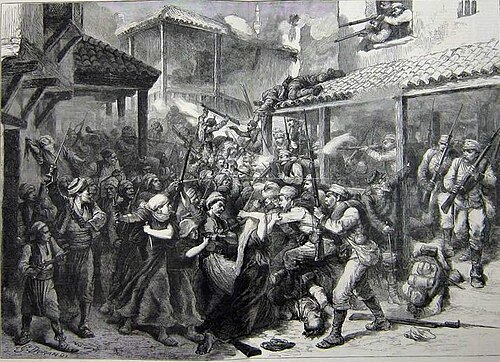
普墺戦争はプラハ条約(1866年)で終結し、ドイツ問題は小ドイツ解決策に有利に決着した。[24] 1866年から1871年まで外務大臣を務めたフリードリヒ・フェルディナント・フォン・ボイスト伯爵は、度々彼を出し抜いたプロイセン首相オットー・フォン・ビスマルクを憎んでいた。ボイスト伯爵はオーストリアの敗北の仇討ちをフランスに求め、フランスとイタリアの皇帝ナポレオン3世と反プロイセン同盟の交渉を試みたが、条件は成立しなかった。普仏戦争におけるプロイセン・ドイツ軍の決定的勝利とそれに続くドイツ帝国の建国により、ドイツにおけるオーストリアの影響力が回復する望みは完全に消え、ボイスト伯爵は引退した。[25]
ドイツとイタリアから追い出された後、二重帝国は、民族主義運動が勢いを増し独立を要求し混乱していたバルカン半島に目を向けた。[26]ロシアとオーストリア・ハンガリー帝国はともにこの地域に拡大のチャンスを見出していた。ロシアはスラヴ人と正教徒の保護者の役割を引き受けた。オーストリアはウィーンの支配下にある多民族で宗教的に多様な帝国を構想した。ハンガリー人で外務大臣(1871-1879)を務めたギュラ・アンドラーシ伯爵は、バルカン半島におけるロシアの拡大に反対し、新しい南スラヴ連邦を支配しようとするセルビア人の野望を阻止することを政策の中心に据えた。彼はドイツがロシアではなくオーストリアと同盟を結ぶことを望んだ。[27] ]
1878-1914: ベルリン会議、バルカン半島の不安定化、ボスニア危機

ロシアの汎スラヴ組織はバルカン半島の反乱軍に援助を送り、ロシア正教徒を保護するという名目で1877年にオスマン帝国に宣戦布告するようロシア政府に圧力をかけた。[23]セルビアの支配をめぐってオスマン帝国とロシアの間で仲介することができなかったオーストリア=ハンガリー帝国は、両国間の紛争が戦争にエスカレートしたときに中立を宣言した。ルーマニアとギリシャの支援を受けてロシアはオスマン帝国を破り、サン・ステファノ条約で親ロシアの大きなブルガリアを作ろうとした。
この条約は国際的な騒動を引き起こし、ヨーロッパ全土で戦争が起こりそうになった。オーストリア=ハンガリー帝国とイギリスは、広大なブルガリアがロシアの衛星国となり、ロシアがバルカン半島を支配することを恐れた。イギリス首相ベンジャミン・ディズレーリは、イギリスのスエズ運河ルートに近い東地中海におけるロシアの影響力を阻止するため、ロシアに対抗する位置に軍艦を移動させた。[29]サン・ステファノ条約は、オーストリアではロシアとその正教スラヴ人の目的にとってあまりにも有利であるとみなされた。
ベルリン会議は、ロシアがオスマン帝国領から切り離した広大なブルガリア国家を分割し、ブルガリアのいかなる部分もオスマン帝国からの完全な独立を否定することで、ロシアの勝利を覆した。1878年のベルリン会議は、主にスラブ人の地域であるボスニア・ヘルツェゴビナ州をオーストリアが占領(併合ではない)することを許可した。オーストリアは、バルカン半島で権力を獲得する手段としてボスニア・ヘルツェゴビナを占領した。セルビア、モンテネグロ、ルーマニアは完全に独立した。しかし、バルカン半島は独立への野心と大国間の競争が渦巻く政治的不安定な場所であり続けた。1878年のベルリン会議で、アンドラーシ・ギュラ(外務大臣)は、ロシアにバルカン半島でのさらなる要求を撤回させることに成功した。その結果、大ブルガリアは分割され、セルビアの独立が保証された。[30]その年、イギリスの支援を受けてオーストリア=ハンガリー帝国はロシアが近隣のセルビアに進出するのを防ぐためボスニアに軍隊を駐留させた。ロシアをバルカン半島から締め出すもう一つの手段として、オーストリア=ハンガリー帝国は1887年にイギリス、イタリアと地中海協商を結び、1879年にはドイツと、1883年にはルーマニアとロシアの攻撃に備えて相互防衛条約を締結した。[31]ベルリン会議の後、ヨーロッパ諸国は一連の複雑な同盟と条約を通じて安定を保証しようとした。
オーストリア=ハンガリー帝国は、バルカン半島の不安定化とロシアの侵略を懸念し、またヨーロッパにおけるフランスの利益に対抗するため、1879年10月と1882年5月にドイツと防衛同盟を結んだ。1882年10月、イタリアは主にフランスとの帝国間の対立から、この三国同盟に加わった。ロシアとオーストリア=ハンガリー帝国の間の緊張は高かったため、ビスマルクは三帝同盟をロシアとの再保険条約に置き換え、ハプスブルク家が汎スラヴ主義をめぐって無謀に戦争を始めるのを防いだ。[32]サンジャク=ラシュカ/ノビバザール地域は1878年から1909年までオーストリア=ハンガリー帝国の占領下にあり、その後オスマン帝国に返還され、最終的にモンテネグロ王国とセルビア王国に分割された。[33]
バルカン危機の直後、オーストリア=ハンガリー帝国軍は1878年8月にボスニア・ヘルツェゴビナを占領し、君主国は最終的に1908年10月にボスニア・ヘルツェゴビナを併合し、どちらの地方政府にも属さず、帝国財務省の管理下にあるチスレイタニアとトランスレイタニアの共同領とした。1908年の併合により、ウィーンの一部ではボスニア・ヘルツェゴビナとクロアチアを統合して君主国の第3のスラヴ系領土を形成することを検討するようになった。フランツ・ヨーゼフの弟マクシミリアン(1867年)とその一人息子ルドルフが死去したため、皇帝の甥のフランツ・フェルディナントが帝位継承者となった。大公はハンガリー貴族の権力を制限する手段としてこの三権分立主義の提唱者であったと噂された。[34]
1908年10月にハプスブルク家による併合の際に出された布告では、この地方に憲法制度を約束し、住民に完全な公民権と地方議会による自治権を保障した。この約束を履行するため、1910年に憲法が公布された。[35]
1908年から1909年にかけてのボスニア危機の主役は、オーストリアとロシアの外務大臣、アロイス・レクサ・フォン・エーレンタールとアレクサンダー・イズボルスキーであった。両者とも政治的野心によって動かされていたが、前者は成功し、後者は危機によって打ちのめされた。その過程で、彼らは1909年にヨーロッパを戦争の瀬戸際まで引きずり込んだ。また、彼らはヨーロッパを2つの武装陣営に分割し、1914年7月に戦争に突入した。[36] [37]
エーレンタールは、スラブ少数民族が団結することは決してなく、バルカン同盟がオーストリアに損害を与えることは決してないだろうという仮定から出発した。彼は、オーストリア、トルコ、ルーマニアを含む同盟というオスマン帝国の提案を却下した。しかし、彼の政策はブルガリア人を疎外し、彼らは代わりにロシアとセルビアに目を向けた。オーストリアは南方へのさらなる拡大に乗り出すつもりはなかったが、エーレンタールはバルカン諸国を麻痺させると予想して、そのことに関する憶測を奨励した。その代わりに、オーストリアを阻止するための防御ブロックを作るために、バルカン諸国を熱狂的に活動させた。最高レベルでの一連の重大な誤算は、このようにオーストリアの敵を著しく強化した。[38]
1914年、ボスニアのスラブ過激派はオーストリアの同地域完全併合計画を拒否し、オーストリア皇太子を暗殺して第一次世界大戦を引き起こした。[39]
1914–1918: 第一次世界大戦
序章

1914年6月28日、ボスニアの首都サラエボでフランツ・フェルディナンド大公が暗殺され、ボスニアにおける既存の伝統的な宗教に基づく民族間の敵意が過度に激化した。しかし、サラエボではオーストリア当局がセルビア人住民に対する暴力を奨励し[42] [43] 、その結果、サラエボの反セルビア暴動が発生し、カトリックのクロアチア人とボスニアのイスラム教徒が2人を殺害し、多数のセルビア人所有の建物に損害を与えた。作家のイヴォ・アンドリッチはこの暴動を「サラエボの憎悪の狂乱」と呼んだ[44] 。セルビア人に対する暴力行為はサラエボだけでなく、現在のクロアチアやボスニア・ヘルツェゴビナにあるオーストリア・ハンガリー帝国の他の多くの大都市でも組織された。[45]ボスニア・ヘルツェゴビナのオーストリア・ハンガリー帝国当局は、約5,500人の著名なセルビア人を投獄または引き渡し、そのうち700人から2,200人が獄死した。460人のセルビア人が死刑判決を受け、主にイスラム教徒からなる[46] [47]親衛隊として知られる特別民兵が組織され、セルビア人迫害を実行した。[48]


外務大臣レオポルド・ベルヒトルト伯爵や陸軍司令官フランツ・コンラート・フォン・ヘッツェンドルフ伯爵など政府の一部のメンバーは、数年前から復活したセルビア国家と予防戦争で対決することを望んでいたが、皇帝とハンガリー首相イシュトヴァーン・ティサは反対した。オーストリア=ハンガリー帝国外務省はポツダムにラースロー・ショージェーニ大使を派遣し、7月5日にドイツ皇帝の立場を尋ね、支持する回答を得た。
陛下は私に、この件でもドイツの全面的な支援を期待できると[フランツ・ヨーゼフ]に報告する権限を与えた。前述のように、まず首相と協議しなければならなかったが、特にセルビアに対する我が国の行動に関して、ベートマン・ホルヴェーク氏が彼に全面的に同意するだろうと、陛下は一片の疑いも持たなかった。しかし、彼[ヴィルヘルム]の意見では、行動を起こす前に辛抱強く待つ必要はない... [49]
そのためオーストリア=ハンガリー帝国の指導者たちは、セルビアが反乱を起こす前に軍事的に対決することを決定し、暗殺を口実に10項目の要求を列挙した「7月の最後通牒」[50]を提示したが、セルビアは絶対に受け入れないだろうと予想した。セルビアは10項目のうち9項目を受け入れたが、残りの1項目は部分的にしか受け入れなかったため、オーストリア=ハンガリー帝国は宣戦布告した。フランツ・ヨーゼフ1世はついに最高顧問の緊急の助言に従った。
1914年7月から8月にかけて、これらの出来事が第一次世界大戦の始まりとなり、ロシアはセルビア支援のために動員され、一連の反動が引き起こされた。1914年8月6日木曜日、フランツ・ヨーゼフ皇帝は同盟国ドイツを支援するため、ロシアに対する宣戦布告に署名した。イタリアはオーストリア=ハンガリー帝国と同盟を結んでいたにもかかわらず、当初は中立を保っていた。1915年、イタリアは連合国側に寝返り、かつての同盟国から領土を獲得しようとした。[51]
戦時外交政策

と軍司令官たち
オーストリア=ハンガリー帝国は、ドイツに支配され、コントロールされるようになっていったため、戦争において外交的には比較的消極的な役割しか果たさなかった。[52] [53]唯一の目的はセルビアを懲罰し、帝国の民族分裂を阻止することだったが、それは完全に失敗した。1916年後半から、新皇帝カールは親ドイツ派の役人を排除し、連合国に和平提案を開始した。これにより、戦争全体を妥協で終わらせることができるか、あるいはオーストリアがドイツと個別に講和することになるかもしれない。[54]主な取り組みは、1915年に連合国に加わった見返りにオーストリアのかなりの部分を約束されていたイタリアによって拒否された。オーストリアはトレンティーノ地方を引き渡すことしか望んでいなかったが、それ以上は望んでいなかった。[55]カールは敗北主義者とみなされ、国内でも連合国とドイツの両方で彼の立場は弱まった。[56]
作戦地域
オーストリア=ハンガリー帝国は第一次世界大戦中に780万人の兵士を徴兵した。[57]オーストリア=ハンガリー帝国参謀総長はフォン・ヘッツェンドルフ将軍であった。フランツ・ヨーゼフ1世は軍を指揮するには高齢過ぎたため、フリードリヒ・フォン・エステルライヒ=テシェン大公を最高軍司令官(Armeeoberkommandant)に任命したが、フォン・ヘッツェンドルフにあらゆる決定の自由を与えるよう要請した。フォン・ヘッツェンドルフは、1916年後半に皇帝カール1世が自ら最高司令官となり、1917年にコンラート・フォン・ヘッツェンドルフを解任するまで、軍の実質的な指揮権を持ち続けた。一方、国内の経済状況は急速に悪化した。帝国は農業に依存しており、農業は今や軍に所属する何百万人もの男性の重労働に依存していた。食糧生産は落ち込み、輸送システムは過密状態になり、工業生産は圧倒的な軍需品の需要にうまく対応できなかった。ドイツは多大な援助を提供したが、それだけでは十分ではなかった。さらに、帝国の多民族の政治的不安定さは、戦争を支持する国民的合意への望みを断ち切った。帝国を解体し、歴史的な言語に基づく文化に基づいた自治国家を設立するという要求が高まった。新皇帝は連合国に和平条件を求めたが、彼の提案はイタリアによって拒否された。[58] [ページが必要]
ホームフロント
非常に田舎だった帝国には小さな工業基盤があったが、その主な貢献は労働力と食糧であった。[59] [60]にもかかわらず、オーストリア・ハンガリー帝国は、ロシア帝国 (13.4%) [ 62] 、セルビア (13.2%) [63] 、ルーマニア (18.8%) [64]など、第一次世界大戦の実際の敵国よりも都市化が進んでいた (25%) [61]。さらに、オーストリア・ハンガリー帝国は、経済的に帝国の実際の敵国の中で最も発展していたイタリア王国より も工業化が進んでおり[65]、一人当たりのGDPも高かった[66] 。
国内では、食料がどんどん不足し、暖房燃料も不足した。農業基盤の厚いハンガリーは、食糧がやや豊富だった。陸軍はルーマニアなどの生産性の高い農業地帯を征服したが、国内の民間人への食糧輸送を拒否した。士気は年々低下し、多様な民族が帝国を諦め、独自の国民国家を樹立する方法を模索した。[67]
インフレは1914年の129から1918年の1589に急上昇し、中流階級の現金貯蓄を消し去った。戦争による経済被害は、GDPの約20%を戦争に費やした。1914年の労働力の約4%が兵士の死者、6%が負傷者だった。戦争に参加した主要国すべてと比較すると、現在のオーストリア領土の死傷率は高い方だった。[59]
1918年夏までに、軍の脱走兵からなる「緑の幹部」がクロアチア・スラヴォニアの丘陵地帯で武装集団を結成し、民政は崩壊した。10月下旬までに暴動と大規模な略奪が勃発し、農民共和国を作ろうとする動きもあった。しかし、クロアチアの政治指導部は新国家(ユーゴスラビア)の創設に注力しており、進軍するセルビア軍と協力して暴動を統制し、終結に努めた。[68]
セルビア戦線 1914-1916
戦争が始まったとき、軍は2つに分かれていた。少数の部隊がセルビアを攻撃し、多数が恐るべきロシア帝国軍と戦った。1914年のセルビア侵攻は惨敗だった。その年の終わりまでにオーストリア=ハンガリー軍は領土を獲得できず、総兵力45万人のうち22万7千人を失った。しかし、1915年秋、セルビア軍は中央同盟国に敗れ、セルビアは占領された。1915年末近くには、イタリア、フランス、イギリスの蒸気船が1,000回以上も往復する大規模な救出作戦が行われ、生き残ったセルビア人兵士26万人がブリンディジとコルフ島に移送され、連合国が勝利して国を取り戻す機会を待った。セルビア崩壊後、コルフ島はセルビア亡命政府を受け入れ、ギリシャ戦線への補給基地として機能した。1916年4月、多数のセルビア軍がイギリスとフランスの海軍艦艇でコルフ島からギリシャ本土へ輸送された。12万人を超える派遣隊はマケドニア戦線のはるかに小規模な軍隊を救援し、イギリスとフランスの軍隊と共に戦った。[69]
ロシア戦線 1914-1917

東部戦線でも、戦争は同様に不調なスタートを切った。政府は、ポーランドの提案を受け入れ、帝国内にポーランドの中央当局として最高国民委員会を設立し、オーストリア=ハンガリー軍内の補助的な軍事組織であるポーランド軍団の編成を担当させた。オーストリア=ハンガリー軍はレンベルクの戦いで敗れ、大要塞都市プシェミシルは包囲され、1915年3月に陥落した。ゴルリツェ=タルヌフ攻勢は、オーストリア=ハンガリー軍に対するロシアの数的優位の圧力を和らげるためのドイツ軍の小規模な攻勢として始まったが、中央同盟国の協力により、ロシア軍は多大な損害を被り、ロシア軍の戦線は完全に崩壊して、ロシア国内に100キロ(62マイル)も撤退した。ロシア第3軍は壊滅した。1915年夏、オーストリア=ハンガリー軍はドイツ軍と統一された指揮の下、ゴルリツェ=タルヌフ攻勢に参加し、成功を収めた。 1916年6月から、ロシア軍はオーストリア=ハンガリー軍の数的劣勢を認識し、ブルシーロフ攻勢でオーストリア=ハンガリー軍への攻撃に集中した。1916年9月末までに、オーストリア=ハンガリー帝国は新しい師団を動員して集中させ、ロシア軍の前進は阻止され、徐々に撃退された。しかし、オーストリア軍は大きな損失(約100万人)を被り、回復することはなかった。しかし、攻勢中にロシア軍が被った人的および物的損失の莫大さは、1917年の革命に大きく寄与し、ロシア帝国の経済崩壊を引き起こした。
1916年11月5日の法令は、当時ドイツのヴィルヘルム2世とオーストリア=ハンガリー帝国のフランツ・ヨーゼフによって共同でポーランド人に公布された。この法令は、ポーランド議会の領土からのポーランド王国の建国を約束したもので、その起草者たちは中央同盟国に支配され、名目上の権限は摂政評議会に与えられる傀儡国家として構想していた。この文書の発端は、ロシアとの戦争のためにドイツ占領下のポーランドから新しい兵士を徴兵する必要性が切実に生じたことだった。1918年11月11日の休戦協定で第一次世界大戦が終結した後、王国は当初スポンサーに全面的に依存していたにもかかわらず、最終的にはスポンサーの意図に反して、新生第二ポーランド共和国の礎となる原型国家となった。第二共和国もまた、中央同盟国がポーランドに割譲することを決して意図していなかった領土で構成されていた。
ズボロフの戦い(1917年)は、チェコスロバキアの独立のためにオーストリア・ハンガリー帝国軍と戦った チェコスロバキア軍団の最初の重要な戦闘であった。
イタリア戦線 1915-1918

1915年5月、イタリアはオーストリア=ハンガリー帝国を攻撃した。イタリアはオーストリア=ハンガリー帝国と同等の工業化と経済レベルを持つ唯一の軍事的敵国であった。さらに、イタリアの軍隊は数が多かった(約100万人が即座に配備された)が、リーダーシップ、訓練、組織が貧弱であった。参謀総長の ルイジ・カドルナは、リュブリャナを占領し、最終的にはウィーンを脅かすことを期待して、イゾンツォ川に向かって軍を進めた。しかし、イタリア王国軍は川で足止めされ、そこで5か月間(1915年6月23日~12月2日)にわたって4回の戦闘が行われた。この戦いは両国にとって非常に血なまぐさい、消耗の激しいものとなった。[71]
1916年5月15日、オーストリアの参謀総長コンラート・フォン・ヘッツェンドルフは、懲罰遠征を開始した。オーストリア軍は敵軍の前線を突破し、アジアーゴ高原を占領した。イタリア軍はなんとか抵抗し、反撃で8月9日にゴリツィアを占領した。しかし、国境から数キロ離れたカルソで停止しなければならなかった。この時点で、数ヶ月にわたる決着のつかない塹壕戦が続いた(西部戦線に類似)。ロシア帝国がボルシェビキ革命の結果崩壊し、ロシアが戦争への関与を終えると、ドイツ軍とオーストリア軍は、かつての東部戦線から多くの兵力を西部戦線と南部戦線に移すことができた。
1917年10月24日、オーストリア軍(今や決定的なドイツ軍の支援を受けていた)は新たな浸透戦術を用いてカポレットを攻撃した。オーストリア軍はヴェネツィア方面に100キロ以上進撃し、相当な物資を獲得したものの、足止めされ、ピアーヴェ川を渡ることはできなかった。イタリア軍は多数の死傷者を出したにもかかわらず、この打撃から立ち直り、ヴィットーリオ・エマヌエーレ・オルランド率いる連立政権が樹立された。イタリアは協商国からの支援も受け、1918年までには大量の軍需物資とアメリカ、イギリス、フランスの補助部隊が数個イタリアの戦場に到着した。[72]カドルナ将軍に代わったのはアルマンド・ディアス将軍で、彼の指揮下でイタリア軍は主導権を取り戻し、ピアーヴェ川の決戦(1918年6月15日~23日)で勝利した。この戦いではオーストリア軍約6万人、イタリア軍約4万3千人が死亡した。ヴィットリオ・ヴェネトでの最後の戦いは1918年10月31日までに敗れ、11月3日にヴィッラ・ジュスティで休戦協定が調印された。 [73]
ルーマニア戦線 1916-1917
1916年8月27日、ルーマニアはオーストリア=ハンガリー帝国に対して宣戦布告した。ルーマニア軍は東ハンガリー(トランシルヴァニア)の国境を越え、当初は成功したものの、1916年11月までにオーストリア=ハンガリー帝国、ドイツ、ブルガリア、オスマン帝国の軍によって結成された中央同盟国は、協商国のルーマニア軍とロシア軍を破り、ルーマニア南部(オルテニア、ムンテニア、ドブロジャを含む)を占領した。戦争から3か月以内に、中央同盟国はルーマニアの首都ブカレストに迫った。12月6日、中央同盟国はブカレストを占領し、住民の一部はルーマニア政府、王室、公的機関とともに、占領されていなかったモルダビアのルーマニア領に移住し、彼らはヤシに移転した。[74] 1917年、数回の防衛戦での勝利(ドイツ・オーストリア・ハンガリー帝国の侵攻を阻止することに成功した)の後、十月革命後にロシアが戦争から撤退したため、ルーマニアも戦争から撤退せざるを得なくなった。[75]
ハンガリーの役割

ハンガリー王国はオーストリア=ハンガリー帝国の人口のわずか42%を占めていたが[76] 、オーストリア=ハンガリー帝国軍の兵士の大半(380万人以上)は第一次世界大戦中にハンガリー王国から徴兵された。この戦争でおよそ60万人の兵士が戦死し、70万人の兵士が負傷した[77] 。
オーストリア=ハンガリー帝国は、ハンガリー側が軍に戦争継続のための十分な物資を供給したため、何年も持ちこたえた。[30]このことは権力の移行に表れ、その後ハンガリーの首相イシュトヴァーン・ティサ伯爵と外務大臣イシュトヴァーン・ブリアン伯爵が君主制の内政と外交に決定的な影響力を持つようになった。[30] 1916年後半までにハンガリーからの食糧供給は断続的になり、政府は協商国との休戦を求めた。しかし、オーストリア=ハンガリー帝国がドイツを支援していたため、イギリスとフランスはもはや君主制の統一性を全く考慮しなくなり、これは失敗した。[30]
敗北の分析
1914年と1915年にオーストリア軍が被った挫折は、オーストリア軍最高司令部の無能さに大きく起因する。[30]セルビア攻撃後、オーストリア軍はロシアの侵攻から東部国境を守るためにすぐに撤退しなければならなくなり、その間ドイツ軍は西部戦線で戦闘に従事していた。このため、セルビア侵攻で予想以上に多くの兵士が失われた。[30]さらに、オーストリア軍最高司令部は大陸戦争の可能性に対する計画を持っていなかったこと、また陸軍と海軍もそのような紛争に対処するための装備が不十分であることが明らかになった。[30]
戦争の最後の2年間、オーストリア=ハンガリー帝国軍はドイツから独立して行動する能力を全く失った。1916年9月7日、ドイツ皇帝は中央同盟国の全軍の完全な統制権を与えられ、オーストリア=ハンガリーは事実上ドイツの衛星国となった。[78]オーストリア人はドイツ軍を好意的に見ていたが、一方で1916年までにドイツでは、オーストリア=ハンガリー帝国との同盟関係にあるドイツは「死体に縛り付けられている」という一般的な認識が広まっていた。オーストリア=ハンガリー帝国軍の作戦能力は、補給不足、士気の低下、高い死傷率、そして言語や習慣の異なる複数の民族からなる軍隊の構成によって深刻な影響を受けた。[79]
1918年: 終焉、崩壊、解散
.png/500px-Karl_v._Habsburg_5_Kingdoms-Oct.16_1918_(v2).png)
1918年までに経済状況は悪化し、国内の政府の失敗により国民の戦争支持は終焉した。[80]オーストリア=ハンガリー帝国は1918年秋に劇的なスピードで崩壊した。左翼および平和主義の政治運動は工場でストライキを組織し、軍隊での蜂起は日常茶飯事となった。[81]戦争が進むにつれて民族的結束は弱まり、連合国は少数民族の離脱要求を奨励し、帝国は崩壊の危機に瀕した。[54]連合国の勝利が近づくにつれ、民族主義運動は民族的恨みを捉えて社会的結束を弱めた。イタリア戦線の軍事的崩壊は、多民族帝国を構成していた多数の民族にとって反乱の始まりとなった。彼らは今や無意味に思える大義のために戦い続けることを拒否した。皇帝は領土が崩壊するにつれ、統治する力の多くを失った。[81]
1918年10月14日、外務大臣イシュトヴァーン・ブリアン・フォン・ライェツ男爵[82]は、ウッドロウ・ウィルソン大統領の14か条の原則に基づいて休戦を要請し、2日後、カール1世皇帝は帝国を連邦制に改め、民族に地方分権と代表権を与える布告(「1918年10月16日の皇帝宣言」)を発布した。[83]しかし、10月18日、米国国務長官ロバート・ランシングは、14か条の10番目である民族の自治はもはや十分ではないと返答した。実際、チェコスロバキア臨時政府は10月14日に連合国に加わっていた。両君主国の南スラヴ人は、ユーゴスラビア委員会のメンバーが署名した1917年のコルフ宣言で、セルビアと統合して大きな南スラヴ国家を形成することに賛成するとすでに宣言していた。クロアチア人は10月初旬にブダペストからの命令を無視し始めていた。ランシングの対応は事実上オーストリア=ハンガリー帝国の死亡証明書のようなものだった。[82] [84]
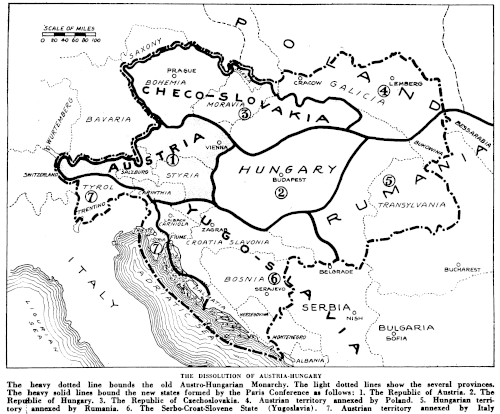
イタリアとの戦闘中、チェコスロバキア人と南スラヴ人は独立を宣言した。10月24日のヴィットーリオ・ヴェネトの戦いでイタリア軍が攻勢に出た後、戦争の敗北が差し迫ると、チェコの政治家たちは10月28日にプラハで平和的に指揮権を握り(後にチェコスロバキアの誕生を宣言)、数日後に他の主要都市でも同様の行動をとった。10月30日にはスロバキア人も同様の行動をとった。10月29日、オーストリア=ハンガリー帝国の残存地域の両地域のスラヴ人はスロベニア人、クロアチア人、セルビア人の国を宣言し、最終的にはセルビアとモンテネグロと統合して大きな南スラヴ国家を樹立することを意図していると宣言した。同日、チェコ人とスロバキア人はチェコスロバキアの独立国家樹立を正式に宣言した。[要出典]
1918年10月17日、ハンガリー議会はオーストリアとの連合を解消することに賛成票を投じた。オーストリアとの連合継続に最も反対していたカーロイ・ミハイ伯爵は、10月31日のアスター革命で権力を掌握した。カール1世はカーロイをハンガリーの首相に任命せざるを得なかった。カーロイの最初の行動の一つは、10月31日に妥協案を正式に否決し、オーストリアとの同君連合を事実上解消し、オーストリア=ハンガリー帝国を正式に解体することだった。[85]
10月末までに、ハプスブルク家の領土はドイツ人の多いドナウ川とアルプス地方しか残っておらず、カール大公の権威はドイツ・オーストリア国家評議会によってその地域でも挑戦を受けていた。[86]カール大公の最後のオーストリア首相ハインリヒ・ラムマッシュは、カール大公の立場は維持できないと結論付けた。ラムマッシュはカール大公に、少なくとも一時的には主権を行使する権利を放棄するのが最善策だと説得した。11月11日、カール大公は慎重に文言を選んだ宣言を出し、その中でオーストリア国民が国家形態を決定する権利を認め、オーストリアの国政への「あらゆる参加を放棄する」と表明した。[87]カール大公がオーストリアの政治から撤退すると発表した翌日、ドイツ・オーストリア国家評議会はドイツオーストリア共和国を宣言した。カーロイ大公も11月16日にこれに倣い、ハンガリー民主共和国を宣言した。
政府

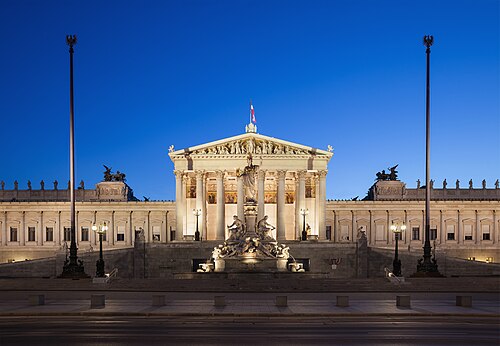
1867年の妥協により、ハプスブルク家の領土は、西半分と北半分がオーストリア帝国(「帝国会議で代表される領土」、またはチスレイタニア)[6] 、東半分がハンガリー王国(「聖シュテファンの王冠の領土」、またはトランスレイタニア)の実質的な連合となった。[6]
1867年まで君主制を統治していたオーストリア政府がオーストリア部分の政府となり、ハンガリー部分には別の政府が形成された。共通政府(公式には共通問題担当閣僚評議会、ドイツ語ではMinisterrat für gemeinsame Angelegenheitenと称される)は、共通の国家安全保障に関するいくつかの問題、すなわち共通陸軍、海軍、外交政策、皇室、関税同盟のために形成された。[23]両派は共通の君主を共有し、外交と防衛は共同で管理されていたが、共通の市民権がなかったため、他のすべての国家機能は別々に扱われることになっていた。[6] [88] [89] [90]
ハンガリーとオーストリアはそれぞれ独自の議会を持ち、それぞれに首相がいた。ハンガリー国会(一般に国民議会として知られる)とオーストリア帝国評議会(ドイツ語:Reichsrat)である。それぞれの議会には君主によって任命された独自の行政政府があった。[21] [91]
1878年以降、ボスニア・ヘルツェゴビナはオーストリア=ハンガリー帝国の軍政と文民統治下に入り[15]、1908年に完全に併合され、列強諸国とオーストリア=ハンガリー帝国のバルカン半島隣国であるセルビアとモンテネグロとの間でボスニア危機を引き起こした[16]。
1867年以降半世紀にわたり、二重帝国の二つの部分の間の関係は、共通の対外関税協定と、それぞれの政府の共通財政への財政的貢献をめぐって度々論争を巻き起こした。これらの問題は1867年のオーストリア・ハンガリー妥協によって決定され、共同支出の70%をオーストリア、30%をハンガリーに割り当てることとなった。この配分は10年ごとに再交渉する必要があった。協定の更新に向けての準備期間中は政治的混乱があった。1907年までにハンガリーの負担割合は36.4%にまで上昇した。[92]この論争は1900年代初頭に長期にわたる憲法危機となって頂点に達した。これはハンガリー軍部隊の指揮にどの言語を使用するかをめぐる意見の相違に端を発し、1906年4月にブダペストでハンガリー民族主義連合が政権を握ったことで深刻化した。共通協定の暫定的な更新は、現状維持を前提として1907年10月と1917年11月に行われた。1917年の交渉は二重君主制の解体で終了した。[93]
人口統計


1849年7月、ハンガリー革命議会は民族および少数民族の権利を宣言し、制定した(次にそのような法律が制定されたのはスイスであった)が、ロシア軍とオーストリア軍がハンガリー革命を鎮圧した後、これらの法律は覆された。ハンガリー王国が1867年にハプスブルク家と妥協に達した後、復活した議会の最初の法律の1つは、民族法(1868年法律第44号)を可決することであった。これはリベラルな法律であり、広範な言語および文化的権利を提供した。ハンガリー人以外の人々に、いかなる領土的自治権を持つ国家を形成する権利を認めなかった。[94]
1867年の「国家基本法」(Staatsgrundgesetz)第19条は、オーストリア=ハンガリー帝国のチスレイタニア(オーストリア)地域にのみ有効であり、[95]次のように規定している。
帝国のすべての民族は平等な権利を持ち、すべての民族は自らの民族性と言語の保持と使用に対する不可侵の権利を持つ。学校、職場、公的生活におけるすべての慣習言語(「landesübliche Sprachen」)の平等は、国家によって承認される。複数の民族が居住する地域では、公共機関と教育機関は、第二の母国語(「Landessprache」)の習得を強制することなく、各民族が自らの言語で必要な教育手段を受けられるように整備される。[96]
この原則の実施は、どの言語が「慣習言語」とみなされるかが明確でなかったため、いくつかの論争を引き起こした。伝統的な官僚、資本家、文化エリートであるドイツ人は、帝国のあらゆる地域で彼らの言語が慣習言語として認められることを要求した。特にズデーテン地方(ボヘミアの一部)のドイツ民族主義者は、新しいドイツ帝国のベルリンに目を向けた。[97]
1868年のハンガリー少数民族法は、少数民族(スロバキア人、ルーマニア人、セルビア人など)に、個人として(共同体としてではなく)役所、学校(実際には国家ではなく彼らが設立した学校のみ)、裁判所、自治体(議員の20%が要求した場合)で彼らの言語を使用する権利を与えた。1879年の初等教育法と1883年の中等教育法に始まり、ハンガリー政府は1868年の民族法に大きく違反して、非マジャル語の使用を減らす努力を重ねた。[98] 1875年以降、レヴーカ(ナギルジェ)、トゥルチアンスキー・スヴェティ・マルティン(トゥロチセントマルトン) 、クラーシュトル・ポト・ズニエヴォム(ズニウヴァラリャ)の3校のみの高校(体育館)を含め、小学校以上のスロバキア語学校はすべて閉鎖された。
言語は民族の代理として、オーストリア=ハンガリー帝国の政治において最も論争の多い問題の一つであった。すべての政府は、政府および教育の言語を決定する際に困難で分裂的な障害に直面した。少数民族は、自分たちの言語だけでなく「支配的な」言語であるハンガリー語とドイツ語でも、教育を受ける最も広い機会を求めた。「1897年4月5日の法令」により、オーストリアの首相カジミール・フェリックス・バデニ伯爵は、ボヘミアの内政においてチェコ語にドイツ語と同等の地位を与えたが、これは帝国全体でドイツ民族主義の扇動を引き起こし、危機を招いた。国王はバデニを解任した。[99]

イタリア語はドイツの知識人によって古い「文化言語」(Kultursprache )とみなされ、帝国の公用語として常に同等の権利を与えられていましたが、ドイツ人はスラヴ語を自分たちの言語と同等に受け入れるのに苦労しました。あるとき、A.アウエルスペルク伯爵(アナスタシウス・グリュン)は、スロベニア文学の全集であると主張するものを腕に抱えてカルニオラ帝国議会に入場しました。これは、高等教育の言語としてスロベニア語をドイツ語の代わりにすることはできないことを示すためでした。
その後数年間で、少なくともオーストリアでは、いくつかの言語が公認された。1867年以来、ダルマチアではクロアチア語がイタリア語と同等の地位を法律で認められた。1882年以降、カルニオラ議会と首都ライバッハ(リュブリャナ)ではスロベニア人が多数派となり、ドイツ語に代わってスロベニア語が主要公用語となった。ガリツィアでは1869年にドイツ語の代わりにポーランド語が政府の慣習言語に指定された。[100]
1907年6月以降、ハンガリーのすべての公立および私立学校は、4年生以降、生徒がハンガリー語で流暢に表現できることを保証する義務があった。これにより、主にスロバキア語とルーシ語を教える少数民族の学校がさらに閉鎖された。2つの王国は、時には勢力圏を分割した。ミシャ・グレニーの著書『バルカン半島 1804-1999』によると、オーストリアはハンガリーによるチェコ人への支援に応えて、ザグレブのクロアチア民族運動を支援した。多民族国家を統治していることを認識していたフランツ・ヨーゼフ皇帝は、ドイツ語、ハンガリー語、チェコ語を流暢に話し(使用し)、クロアチア語、セルビア語、ポーランド語、イタリア語もある程度話した。
言語紛争はボヘミアで最も激しく戦われた。ボヘミアではチェコ語話者が多数派を占め、ドイツ語と同等の地位を求めた。チェコ人は6世紀から主にボヘミアに住み、ドイツ人移民は13世紀にボヘミア周辺に定住し始めた。1627年の憲法により、ドイツ語はチェコ語と同等の第二公用語となった。ドイツ語話者は1880年にボヘミア議会で多数派を失い、プラハとピルゼンの都市ではチェコ語話者に対して少数派となった(ブルノ(ブリュン)市では若干の多数派を維持した)。これまでドイツ語話者が多数派だったプラハの旧カレル大学は、1882年にドイツ語学部とチェコ語学部に分割された。[101]
同時に、ハンガリーの支配は、トランシルヴァニアと東バナトの現地多数派であるルーマニア人、現在のスロバキアのスロバキア人、クロアチアとダルマチア(現在のクロアチア)の王領、ボスニア・ヘルツェゴビナ、ヴォイヴォディナ(現在のセルビア北部)として知られる地方のクロアチア人とセルビア人からの挑戦に直面していた。ルーマニア人とセルビア人は、ルーマニア(1859年 - 1878年)とセルビアという新設国家の仲間の民族主義者や言語話者との統合を運動し始めた。[要出典]
ハンガリーの指導者はオーストリアの指導者に比べると、被支配民族と権力を共有することに一般的に消極的だったが、1868年にクロアチアにかなりの自治権を与えた。ある程度、ハンガリーは前年のオーストリアとの妥協をクロアチアとの関係のモデルにしていた。名目上の自治権にもかかわらず、クロアチア政府はハンガリーの経済的および行政的一部であり、クロアチア人はこれに憤慨していた。クロアチア・スラヴォニア王国とボスニア・ヘルツェゴビナでは、多くの人がオーストリア・ハンガリー・クロアチアの三元君主制の考えを主張した。この考えの支持者には、レオポルト・ザルヴァトール大公、フランツ・フェルディナント大公、そして短い治世の間に三元君主制の考えを支持したが、ハンガリー政府とイシュトヴァーン・ティサ伯爵によって拒否された皇帝兼国王カール1世がいた。伯爵は国王からの強い圧力を受けて、1918年10月23日にようやく裁判員宣言に署名した。[102]
民族関係
イストラ半島では、1880年代に約2,600人で構成されていた小さな民族グループであるイストロ・ルーマニア人が[103]厳しい差別に苦しんでいた。この地域の多数派であるクロアチア人は彼らを同化させようとしたが、イタリア系少数派は彼らの自決権の要求を支持した。[104] [105] 1888年、イストラ半島議会で、ルーマニア語で教えるイストロ・ルーマニア人のための最初の学校を開設する可能性が議論された。この提案は彼らに非常に好評だった。イタリア系議員は支持を示したが、クロアチア系議員はこれに反対し、イストロ・ルーマニア人は実際にはスラブ人であると主張しようとした。[106]オーストリア・ハンガリー帝国の統治下では、イストロ・ルーマニア人は貧困状態で暮らし、[107]クルク島に住む人々は1875年までに完全に同化されていた。[108]


1900年頃、オーストリア=ハンガリー帝国全土のユダヤ人の数は200万人ほどだった。[109]彼らの立場は曖昧だった。キリスト教社会党のポピュリスト的かつ反ユダヤ主義的な政治は、アドルフ・ヒトラーのナチズムのモデルとみなされることもある。[110]反ユダヤ主義の政党や運動は存在したが、ウィーンやブダペストの政府はポグロムを起こしたり、公式の反ユダヤ主義政策を実施したりはしなかった。[要出典]彼らは、そのような民族間の暴力が他の少数民族を刺激し、制御不能にエスカレートすることを恐れた。反ユダヤ主義政党は、議会選挙での有権者の間での人気が低かったため、政治圏の周辺にとどまった。[要出典]
当時、オーストリア=ハンガリー帝国のユダヤ人の大半はガリツィアの小さな町(シュテットル)やハンガリーとボヘミアの田舎に住んでいたが、ウィーン、ブダペスト、プラハ、クラクフ、ルヴフの中心街には大きなコミュニティがあり、地元民の多数派さえもいた。第一次世界大戦前のヨーロッパの主要国の軍隊の中で、オーストリア=ハンガリー帝国軍は、ユダヤ人を定期的に指揮官に昇進させたほぼ唯一の国だった。[111]二重帝国の領土のユダヤ人人口は約5%だったが、ユダヤ人は予備役将校団のほぼ18%を占めていた。[112]憲法の近代化と皇帝フランツ・ヨーゼフの慈悲により、オーストリアのユダヤ人はオーストリア=ハンガリー帝国時代を歴史の黄金時代とみなすようになった。[113] 1910年までに、約90万人の宗教的[説明が必要]ユダヤ人がハンガリーの人口の約5%、ブダペスト市民の約23%を占めました。オーストリア・ハンガリー帝国では、一般的に熱烈な愛国心の強いハンガリー系ユダヤ人がハンガリー王国のハンガリー人のわずかな多数派を確保していました。[114]ユダヤ人は、商業事業主の54%、金融機関の取締役および所有者の85%、商業部門の全従業員の62%、[115]普通文法学校の全学生の20%、商業科学文法学校の全学生の37%、工学部の全学生の31.9%、大学の人文科学部の全学生の34.1%を占めていました。ユダヤ人はハンガリーの医師全体の48.5%を占め、[116]すべての弁護士/法学者全体の49.4%を占めた。[117]注:ユダヤ人の数は宗教調査から再構成された。キリスト教に改宗したユダヤ系の人々や無神論者の数は含まれていない。[要出典]ユダヤ系のハンガリー国会議員は数多くいるが、ハンガリーの政治界で最も有名なユダヤ人議員は、法務大臣のヴィルモス・ヴァージョニ、陸軍大臣のサム・ハザイ、財務大臣のヤーノシュ・テレスキー、貿易大臣のヤーノシュ・ハルカーニ、貿易大臣のヨージェフ・シュテレーニである。
教育
シスレイタニアの大学

オーストリア帝国の最初の大学(カレル大学)は、1347年にプラハでカール4世によって設立され、2番目に古い大学は1364年にポーランド王カジミェシュ3世によってクラクフに設立されたヤギェウォ大学であり、3番目に古い大学(ウィーン大学)は1365年にルドルフ4世公によって設立されました。[118]
高等教育機関は主にドイツ語で運営されていたが、1870年代から言語の転換が起こり始めた。[119] 19世紀半ばには主にドイツ語の特徴を持っていたこれらの機関は、ガリツィアではポーランドの国立機関に転換され、ボヘミアとモラビアではドイツ語とチェコ語に分離した。こうしてドイツ人、チェコ人、ポーランド人が対象となった。しかし今や、ルーシ人、スロベニア人、イタリア人といった小国も声を上げるようになった。ルーシ人は当初、東ガリツィアの田舎が主にルーシ人の特徴を持っていることから、ポーランドのルヴフ大学の国家分割を要求した。ポーランド人は当初譲歩しなかったため、ルーシ人のデモや学生のストライキが発生し、ルーシ人は少数の独立した教授職の座の復活や並行した講義課程ではもはや満足しなくなった。 1914年1月28日に締結された協定により、ポーランドはルーシの大学を約束したが、戦争のため問題は消滅した。イタリア人は人口(1910年の人口は783,000人)を理由に自国の大学を主張することはほとんどできなかったが、古代文化を理由になおさら主張した。イタリアの法学部を設立すべきであることにはすべての関係者が同意したが、難しいのは場所の選択であった。イタリア人はトリエステを要求したが、政府はこのアドリア海の港がイレデンタの中心地となることを恐れた。さらに、この都市の南スラヴ人はイタリアの教育機関がここにないままでいることを望んだ。1910年にビーネルトは妥協案を導き出した。すなわち、直ちに設立し、暫定的にウィーンに置き、4年以内にイタリアの国土に移管するというものである。ドイツ国民同盟(Nationalverband)は、ウィーンのイタリアの大学に一時的な便宜を与えることに同意したが、南スラヴ高等大学クラブは、後に海岸地方への移転が考慮されないことの保証、プラハとクラクフでのスロベニアの教授職の同時設置、ライバッハでの南スラヴ大学設立に向けた予備的措置を要求した。しかし、妥協のための交渉が絶えず再開されたにもかかわらず、いかなる合意にも達することは不可能であり、戦争の勃発により、レンベルクのルーシの大学、ライバッハのスロベニアの大学、モラビアの2番目のチェコの大学のすべての計画が実現されなかった。
トランスレイサニアの大学

1276年、ヴェスプレーム大学はペーテル・チャークの軍隊によって破壊され、再建されることはありませんでした。 1367年、ハンガリー国王ラヨシュ1世によってペーチに大学が設立されました。1395年、ジギスムントはオーブダに大学を設立しました。もう1つの大学、イストロポリターナ大学は、1465年にマティアス・コルヴィヌスによってポジョニ(現在のスロバキアのブラティスラバ)に設立されました。これらの中世の大学はいずれもオスマン戦争を生き延びることはありませんでした。ナジソンバト大学は1635年に設立され、1777年にブダに移転し、現在はエトヴェシュ・ロラーンド大学と呼ばれています。世界初の工科大学は、1735年にハンガリー王国(1920年以降はバンスカー・シュチャヴニツァ、現在のスロバキア)のセルメツバーニャに設立されました。その法的後継者はハンガリーのミシュコルツ大学です。[120]ブダペスト工科経済大学(BME)は、大学のランクと構造を持つ世界最古の工科大学と考えられています。その法的前身であるInstitutum Geometrico-Hydrotechnicumは、1782年に皇帝ヨーゼフ2世によって設立されました。[121]
高等学校にはハンガリーに 5 つの大学があり、すべて国が維持管理していた。ブダペスト (1635 年創立)、コロジュヴァール (1872 年創立)、ザグレブ (1874 年創立) である。1912 年にはデブレツェンに新しい大学が設立され、ポジョニ大学は半世紀後の 1912 年に再設立された。これらの大学には神学、法学、哲学、医学の 4 つの学部があった (ザグレブの大学には医学部がなかった)。さらに、アカデミーと呼ばれる 10 の法学高等学校があり、1900 年には 1,569 人の生徒が在籍していた。1844 年に創立されたブダペスト工科大学も 4 つの学部があり、1900 年には 1,772 人の生徒が在籍しており、高等学校と見なされていた。 1900 年のハンガリーには 49 の神学校があり、カトリックが 29 校、ギリシャ ユニアトが 5 校、ギリシャ正教が 4 校、プロテスタントが 10 校、ユダヤ教が 1 校でした。専門学校としては、主要な鉱山学校がセルメチバーニャ、ナギャーグ、フェルソーバーニャにあり、主要な農業学校がデブレツェンとコロジュヴァールにあり、セルメチバーニャには林業学校、ブダペスト、カッサ、デーヴァ、ザグレブには陸軍士官学校、フィウメには海軍学校がありました。さらに、教師養成機関や商業学校、デザイン、絵画、彫刻、音楽の芸術学校が数多くありました。[要出典]
経済
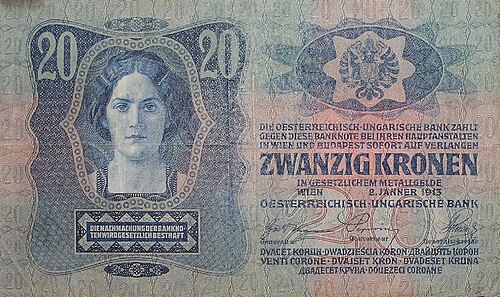

農村地帯が多かったオーストリア=ハンガリー帝国の経済は、1867年以降ゆっくりと近代化していった。鉄道がかつては辺鄙だった地域を開拓し、都市が成長した。多くの中小企業が資本主義的生産方式を推進した。技術革新が工業化と都市化を加速させた。オーストリア初の証券取引所(ウィーン証券取引所)は1771年にウィーンで開設され、ハンガリー王国初の証券取引所(ブダペスト証券取引所)は1864年にブダペストで開設された。中央銀行(発行銀行)は1816年にオーストリア国立銀行として設立された。1878年にオーストリア=ハンガリー国立銀行に変わり、ウィーンとブダペストに主要事務所が置かれた。[123]中央銀行はオーストリア人またはハンガリー人の総裁と副総裁が交代で統治した。[124]オーストリア=ハンガリー帝国は、アメリカとドイツ帝国に次いで、世界第3位の家電製品、産業用電気機器、発電所用発電装置の製造・輸出国にもなり、[125]ドイツ帝国に次いでヨーロッパ第2位の鉄道網を建設した。2000年の調査では、1913年の国内実質価格のGDPは、チスレイタニアが191億4,080万クローネ、トランスレイタニアが109億7,160万クローネ、合わせて301億1,240万クローネと推定されている。[126] [e] 2005年の調査によると、 1913年のGDP(購買力平価ベース)は1990年の国際ドルで1055億1,500万で、ヨーロッパで5番目に大きかった。[127]
1870年から1913年まで、国民一人当たりの国民総生産は年間約1.76%増加した。この成長率は、イギリス(1%)、フランス(1.06%)、ドイツ(1.51%)など他のヨーロッパ諸国と比べて非常に良好であった。[128]しかし、ドイツやイギリスと比較すると、持続的な近代化がかなり遅れて始まったため、オーストリア=ハンガリー帝国の経済は全体としてはまだかなり遅れていた。ドイツ帝国と同様に、オーストリア=ハンガリー帝国も自由主義的な経済政策と慣行を頻繁に採用した。1873年、ハンガリーの旧首都ブダとオーブダ(古代ブダ)は正式に第3の都市ペストと合併し、新しい大都市ブダペストが誕生した。活気に満ちたペストは、ハンガリーの行政、政治、経済、貿易、文化の中心地へと成長した。ハンガリーの多くの国家機関と近代的な行政システムがこの時期に確立された。経済成長はウィーンとブダペスト、オーストリア領(現在のオーストリアの地域)、アルプス地方、ボヘミア地方に集中した。19世紀後半には、急速な経済成長が中央ハンガリー平原とカルパティア地方に広がった。その結果、帝国内で大きな発展の格差が存在した。一般に、西部地域は東部地域よりも発展した。ハンガリー王国は、米国に次ぐ世界第2位の小麦粉輸出国となった。[129]ハンガリーの大規模な食料輸出は、隣国のドイツとイタリアに限定されず、ハンガリーは英国の大都市と工業中心地にとって最も重要な海外食料供給国となった。[130]オーストリア・ハンガリー帝国で最も貧しい州と言われているガリツィアは、ほぼ絶え間なく飢饉に見舞われ、年間5万人が死亡した。[131]イストリア半島のイストロ・ルーマニア人も、牧畜が衰退し農業が生産性を失っていたため、貧困に陥っていた。[107]
しかし、19世紀末までに、王国の東部の経済成長が西部を一貫して上回り、経済格差は徐々に均衡し始めました。ブダペストを中心地とするハンガリー王国の強力な農業と食品産業は帝国内で優位となり、ヨーロッパの他の地域への輸出の大部分を占めました。一方、主にプラハとウィーン周辺に集中している西部地域は、さまざまな製造業で優れていました。この東西の分業と既存の経済通貨同盟により、20世紀初頭までにオーストリア・ハンガリー帝国全体でさらに急速な経済成長がもたらされました。しかし、20世紀に入ってからは、オーストリア帝国は産業革命の分野で帝国内で優位を維持できたが、ハンガリーは第二次産業革命の近代産業でより良い地位を築いていたため、第二次産業革命の近代産業(機械製造業や電気産業など)ではオーストリアの競争相手は優位に立つことができなかった。[132]
インフラストラクチャー
通信
電信
最初の電信接続(ウィーン〜ブルノ〜プラハ)は1847年に運用を開始しました。[133]ハンガリー領内では、最初の電信局が1847年12月にプレスブルク(ポジョニ、現在のブラティスラヴァ)に、 1848年にブダに開設されました。ウィーンとペスト・ブダ(後のブダペスト)間の最初の電信接続は1850年に構築され、[134]ウィーンとザグレブ間の最初の電信接続は1850年に構築されました。 [135]
オーストリアはその後、ドイツ諸国との電信同盟に加盟した。[136]ハンガリー王国では、1884年に2,406の電信郵便局が運営されていた。[137] 1914年までに郵便局の電信局の数は3,000に達し、さらにハンガリー王国の鉄道駅に2,400が設置された。[138]
電話
最初の電話交換所はザグレブ(1881年1月8日)に開設されました[139] [140] [141]。2番目はブダペスト(1881年5月1日)に開設されました[142]。3番目はウィーン(1881年6月3日)に開設されました。[143]当初、電話は個人の加入者の家、会社、オフィスで利用可能でした。公衆電話局は1890年代に登場し、郵便局や鉄道駅に急速に普及しました。オーストリア=ハンガリー帝国の電話通話は1913年に5億6800万回でした。西ヨーロッパの国でこれより多くの電話通話があったのはドイツ帝国とイギリスの2か国だけでした。オーストリア=ハンガリー帝国に続いてフランスの3億9600万回、イタリアの2億3000万回でした。[144] 1916年には、チスレイタニアでの電話通話は3億6600万回で、そのうち840万回は長距離電話でした。[145]トランスレイタニアの都市、町、大きな村のすべての電話交換機は1893年まで接続されていました。[134] 1914年までに、ハンガリー王国では2000以上の集落に電話交換機が設置されていました。[138]
電子音声放送

テレフォン・ヒルモンド(電話ヘラルド)のニュースおよび娯楽サービスは、1893 年にブダペストで導入されました。ラジオ放送が導入される 20 年前に、人々はブダペストで政治、経済、スポーツのニュース、キャバレー、音楽、オペラを毎日聞くことができました。このサービスは、特殊なタイプの電話交換システムを介して運営されていました。
鉄道輸送

1913年までに、オーストリア帝国とハンガリー王国の鉄道路線の総延長は43,280キロメートル(26,890マイル)に達した。西ヨーロッパではドイツのみがこれより長い鉄道網を持っていた(63,378キロメートル、39,381マイル)。オーストリア=ハンガリー帝国に続いてフランス(40,770キロメートル、25,330マイル)、イギリス(32,623キロメートル、20,271マイル)、イタリア(18,873キロメートル、11,727マイル)、スペイン(15,088キロメートル、9,375マイル)が続いた。[146]
トランスレイタニアの鉄道
ハンガリー初の蒸気機関車鉄道は、1846年7月15日にペシュトとヴァーツの間で開通した。[147] 1890年には、オーストリア所有の強力なカシャウ・オーデルベルク鉄道(KsOd)とオーストリア・ハンガリー南部鉄道(SB/DV)を除き、ほとんどの大手ハンガリー私鉄会社が私鉄経営のまずさから国有化された。これらの鉄道会社は、MÁV(ハンガリー国鉄)の地域料金制度にも参加した。1910年までに、ハンガリー王国の鉄道網の全長は22,869キロメートル(14,210マイル)に達し、ハンガリーの鉄道網は1,490以上の集落を結んでいた。帝国の鉄道のほぼ半分(52%)がハンガリーで建設されたため、ハンガリーの鉄道密度はチスレイタニアよりも高くなった。これにより、ハンガリーの鉄道は世界で6番目に密度が高い鉄道としてランク付けされました(ドイツとフランスを上回ります)。[148]
電化通勤鉄道: ブダペストに 4 本の通勤電車のセットが建設され、BHÉV :ラッケヴェ線 (1887 年)、センテンドレ線 (1888 年)、ギョデルジュ線 (1888 年)、チェペル線 (1912 年) [149]
都市の路面電車路線
馬車式の路面電車は19 世紀前半に登場しました。1850 年代から 1880 年代にかけて、ウィーン (1865 年)、ブダペスト (1866 年)、ブルノ (1869 年)、トリエステ (1876 年) など、多くの路面電車が建設されました。蒸気路面電車は 1860 年代後半に登場しました。路面電車の電化は 1880 年代後半に始まりました。オーストリア ハンガリー帝国で最初の電化路面電車は 1887 年にブダペストで建設されました。
オーストリア帝国の電気路面電車路線:
- オーストリア: グムンデン (1894)。ウィーン、リンツ(1897)。グラーツ (1898);トリエステ (1900)。リュブリャナ (1901)。インスブルック(1905)。ウンターラッハ、イッブス・アン・デア・ドナウ (1907)。ザルツブルク (1909)。クラーゲンフルト、ザンクト・ペルテン(1911)。ピラン (1912)
- オーストリア沿岸:プーラ(1904)。
- ボヘミア: プラハ (1891)。テプリツェ (1895)。リベレツ (1897);ウスティ・ナド・ラベム、プルゼニ、オロモウツ(1899)。モラヴィア、ブルノ、ヤブロネツ・ナド・ニソウ(1900年)。オストラヴァ(1901)。マリアンスケー・ラーズニェ (1902)。ブジェヨヴィツェ、チェスケブジェヨヴィツェ、イフラヴァ (1909)
- オーストリアのシレジア:オパヴァ(トロッパウ) (1905)、チェシン(チェシン) (1911)
- ダルマチア:ドゥブロヴニク(1910)
- ガリシア:リヴィウ(1894 年)、ビエルスコビャワ(1895 年)。クラクフ (1901)。チェシン、タルヌフ (1911) [150] [151] [152]
ハンガリー王国の電気路面電車路線:
- Hungary: Budapest (1887); Pressburg/Pozsony/Bratislava (1895); Szabadka/Subotica (1897), Szombathely (1897), Miskolc (1897); Temesvár/Timișoara (1899); Sopron (1900); Szatmárnémeti/Satu Mare (1900); Nyíregyháza (1905); Nagyszeben/Sibiu (1905); Nagyvárad/Oradea (1906); Szeged (1908); Debrecen (1911); Újvidék/Novi Sad (1911); Kassa/Košice (1913); Pécs (1913)
- Croatia: Fiume (1899); Pula (1904); Opatija – Lovran (1908); Zagreb (1910); Dubrovnik (1910).[153][154][155][156]
Underground

The Budapest Metro Line 1 (originally the "Franz Joseph Underground Electric Railway Company") is the second oldest underground railway in the world[157] (the first being the London Underground's Metropolitan Line and the third being Glasgow), and the first on the European mainland. It was built from 1894 to 1896 and opened on 2 May 1896.[158] In 2002, it was listed as a UNESCO World Heritage Site.[159] The M1 line became an IEEE Milestone due to the radically new innovations in its era: "Among the railway's innovative elements were bidirectional tram cars; electric lighting in the subway stations and tram cars; and an overhead wire structure instead of a third-rail system for power".[160]
Inland waterways and river regulation
The first Danubian steamer company, Donaudampfschiffahrtsgesellschaft (DDSG), was the world's largest inland shipping company until the collapse of Austria-Hungary.
In 1900 the engineer C. Wagenführer drew up plans to link the Danube and the Adriatic Sea by a canal from Vienna to Trieste. It was born from the desire of Austria–Hungary to have a direct link to the Adriatic Sea[161] but was never constructed.
Lower Danube and the Iron Gates
In 1831 a plan had already been drafted to make the passage navigable, at the initiative of the Hungarian politician István Széchenyi. Finally Gábor Baross, Hungary's "Iron Minister", succeeded in financing this project. The riverbed rocks and the associated rapids made the gorge valley an infamous passage for shipping. In German, the passage is still known as the Kataraktenstrecke, even though the cataracts are gone. Near the actual "Iron Gates" strait the Prigrada rock was the most important obstacle until 1896: the river widened considerably here and the water level was consequently low. Upstream, the Greben rock near the "Kazan" gorge was notorious.
Tisza River
The length of the Tisza river in Hungary used to be 1,419 kilometres (882 miles). It flowed through the Great Hungarian Plain, which is one of the largest flat areas in central Europe. Since plains can cause a river to flow very slowly, the Tisza used to follow a path with many curves and turns, which led to many large floods in the area.
After several small-scale attempts, István Széchenyi organised the "regulation of the Tisza" (Hungarian: a Tisza szabályozása) which started on 27 August 1846, and substantially ended in 1880. The new length of the river in Hungary was 966 km (600 mi) (1,358 km (844 mi) total), with 589 km (366 mi) of "dead channels" and 136 km (85 mi) of new riverbed. The resultant length of the flood-protected river comprises 2,940 km (1,830 mi) (out of 4,220 km (2,620 mi) of all Hungarian protected rivers).
Shipping and ports


The most important seaport was Trieste (today part of Italy), where the Austrian merchant marine was based. Two major shipping companies (Austrian Lloyd and Austro-Americana) and several shipyards were located there. From 1815 to 1866, Venice had been part of the Habsburg empire. The loss of Venice prompted the development of the Austrian merchant marine. By 1913, the commercial marine of Austria, comprised 16,764 vessels with a tonnage of 471,252, and crews number-ing 45,567. Of the total (1913) 394 of 422,368 tons were steamers, and 16,370 of 48,884 tons were sailing vessels[162] The Austrian Lloyd was one of the biggest ocean shipping companies of the time. Prior to the beginning of World War I, the company owned 65 middle-sized and large steamers. The Austro-Americana owned one third of this number, including the biggest Austrian passenger ship, the SS Kaiser Franz Joseph I. In comparison to the Austrian Lloyd, the Austro-American concentrated on destinations in North and South America.[163][164][165][166][167][168] The Austro-Hungarian Navy became much more significant than previously, as industrialization provided sufficient revenues to develop it. Pola (Pula, today part of Croatia) was especially significant for the navy.
The most important seaport for the Hungarian part of the monarchy was Fiume (Rijeka, today part of Croatia), where the Hungarian shipping companies, such as the Adria, operated. The commercial marine of the Kingdom of Hungary in 1913 comprised 545 vessels of 144,433 tons, and crews numbering 3,217. Of the total number of vessels 134,000 of 142,539 tons were steamers, and 411 of 1,894 tons were sailing vessels.[169]
Military
The Austro-Hungarian Army was under the command of Archduke Albrecht, Duke of Teschen (1817–1895), an old-fashioned bureaucrat who opposed modernization.[170] The military system of the Austro-Hungarian monarchy was similar in both states, and rested since 1868 upon the principle of the universal and personal obligation of the citizen to bear arms. Its military force was composed of the Common Army; the special armies, namely the Austrian Landwehr, and the Hungarian Honvéd, which were separate national institutions, and the Landsturm or levy-en masse. As stated above, the common army stood under the administration of the joint minister of war, while the special armies were under the administration of the respective ministries of national defence. The yearly contingent of recruits for the army was fixed by the military bills voted on by the Austrian and Hungarian parliaments and was generally determined on the basis of the population, according to the last census returns. It amounted in 1905 to 103,100 men, of which Austria furnished 59,211 men, and Hungary 43,889. Besides 10,000 men were annually allotted to the Austrian Landwehr, and 12,500 to the Hungarian Honved. The term of service was two years (three years in the cavalry) with the colours, seven or eight in the reserve and two in the Landwehr; in the case of men not drafted to the active army the same total period of service was spent in various special reserves.[171]
The common minister of war was the head for the administration of all military affairs, except those of the Austrian Landwehr and of the Hungarian Honved, which were committed to the ministries for national defence of the two respective states. But the supreme command of the army was nominally vested in the monarch, who had the power to take all measures regarding the whole army. In practice, the emperor's nephew Archduke Albrecht was his chief military advisor and made the policy decisions.[171]
The Austro-Hungarian Navy was mainly a coast defence force, and also included a flotilla of monitors for the Danube. It was administered by the naval department of the ministry of war.[172]
Successor states
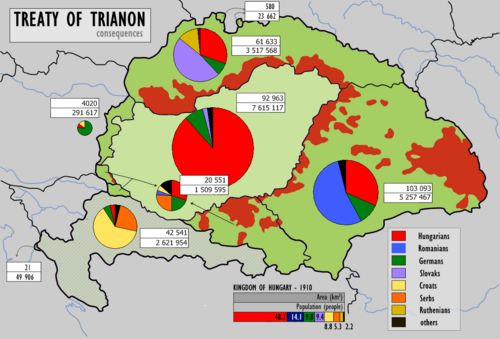
There were two legal successor states of the former Austro–Hungarian monarchy:[173]
- German Austria (which became the Republic of Austria)
- Hungarian Democratic Republic (which after a few other short-lived intermediaries became the Kingdom of Hungary)
The 1919 Treaties of Saint-Germain-en-Laye (between the victors of World War I and Austria) and Trianon (between the victors and Hungary) regulated the new borders of Austria and Hungary, reducing them to small-sized and landlocked states. In regard to areas without a decisive national majority, the Entente powers ruled in many cases in favour of the newly emancipated independent nation-states, enabling them to claim vast territories containing sizeable German- and Hungarian-speaking populations. The Republic of Austria lost roughly 60% of the old Austrian Empire's territory. It also had to drop its plans for union with Germany, as it was not allowed to unite with Germany without League approval.[citation needed] Hungary, however, was severely disrupted by the loss of 72% of its territory, 64% of its population and most of its natural resources. The Hungarian Democratic Republic was short-lived and was temporarily replaced by the communist Hungarian Soviet Republic. Romanian troops ousted Béla Kun and his communist government during the Hungarian–Romanian War of 1919.[citation needed]
In the summer of 1919, a Habsburg, Archduke Joseph August, became regent, but was forced to stand down after only two weeks when it became apparent the Allies would not recognise him.[174] Finally, in March 1920, royal powers were entrusted to a regent, Miklós Horthy, who had been the last commanding admiral of the Austro-Hungarian Navy and had helped organize the counter-revolutionary forces. It was this government that signed the Treaty of Trianon under protest on 4 June 1920 at the Grand Trianon Palace in Versailles, France. The restored Kingdom of Hungary lost roughly 72% of the pre-war territory of the Kingdom of Hungary.[175][176]
Habsburg banishment
Austria had passed the "Habsburg Law", which both dethroned the Habsburgs and banished all Habsburgs from Austrian territory. While Karl was banned from ever returning to Austria again, other Habsburgs could return if they gave up all claims to the defunct throne. In March and again in October 1921, ill-prepared attempts by Karl to regain the throne in Budapest collapsed. The initially wavering Horthy, after receiving threats of intervention from the Allied Powers and the Little Entente, refused his cooperation. Soon afterward, the Hungarian government nullified the Pragmatic Sanction, effectively dethroning the Habsburgs. Subsequently, the British took custody of Karl and removed him and his family to the Portuguese island of Madeira, where he died the following year.[citation needed]
Territorial legacy
Immediately after World War I
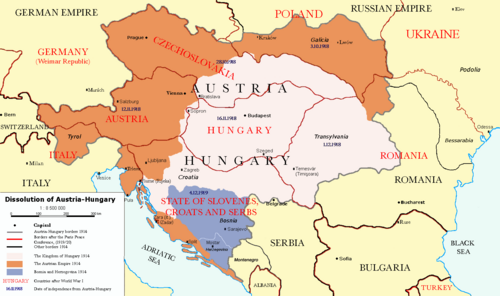
Border of Austria–Hungary in 1914
Borders in 1914
Borders in 1920
Empire of Austria in 1914
Kingdom of Hungary in 1914
Bosnia and Herzegovina in 1914

The following states were formed, re-established or expanded at the dissolution of the former Austro–Hungarian monarchy:[173]
- German Austria (which became the Republic of Austria)
- First Hungarian Republic which became the Hungarian Soviet Republic, subsequently briefly restored and replaced by the Hungarian Republic, ultimately transformed into the Kingdom of Hungary
- First Czechoslovak Republic, later "Czechoslovakia"
- Second Polish Republic, contested by the short-lived proto-states of Tarnobrzeg Republic and Polish Soviet Socialist Republic
- State of Slovenes, Croats and Serbs and the Kingdom of Serbia, both later absorbed into the Kingdom of Serbs, Croats and Slovenes
- Greater Romania
- Kingdom of Italy
- Republic of China (former Austro-Hungarian concession of Tianjin)
- the short-lived Ruthenian (Ukrainian and Rusyn) proto-states of West Ukrainian People's Republic (later absorbed into Ukrainian People's Republic), Hutsul Republic, Lemko Republic, Komancza Republic and the Galician Soviet Socialist Republic; all were ultimately absorbed mostly into Poland, but also into Hungary, Czechoslovakia, Romania and Yugoslavia.
The Principality of Liechtenstein, which had formerly looked to Vienna for protection and whose ruling house held sizable real estate in Cisleithania, formed a customs and defense union with Switzerland, and adopted the Swiss currency instead of the Austrian. In April 1919, Vorarlberg – the westernmost province of Austria – voted by a large majority to join Switzerland; however, both the Swiss and the Allies disregarded this result.
Present
The following present-day countries and parts of countries were within the boundaries of Austria–Hungary when the empire was dissolved. Some other provinces of Europe had been part of the Habsburg monarchy at one time before 1867.
Empire of Austria (Cisleithania):
- Austria (except Burgenland without Sopron)
- Czech Republic (except the Hlučínsko area)
- Slovenia (except Prekmurje)
- Italy (Trentino, South Tyrol, parts of the province of Belluno and small portions of Friuli-Venezia Giulia)
- Croatia (Dalmatia, Istria)
- Poland (voivodeships of Lesser Poland, Subcarpathia, southernmost part of Silesia (Bielsko and Cieszyn))
- Ukraine (oblasts of Lviv, Ivano-Frankivsk, Ternopil (except its northern corner) and most of the oblast of Chernivtsi)
- Romania (county of Suceava)
- Montenegro (bay of Boka Kotorska, the coast and the immediate hinterland around the cities of Budva, Petrovac and Sutomore)
Kingdom of Hungary (Transleithania):
- Hungary
- Slovakia
- Austria (Burgenland except Sopron)
- Slovenia (Prekmurje)
- Croatia (Croatian Baranja and Međimurje county, Fiume as corpus separatum along with Slavonia and Central Croatia were not part of Hungary proper, the latter two were part of the sovereign Kingdom of Croatia-Slavonia)
- Ukraine (oblast of Zakarpattia)
- Romania (region of Transylvania, Partium and parts of Banat, Crișana, and Maramureș)
- Serbia (autonomous province of Vojvodina and northern Belgrade region)
- Poland (Polish parts of Orava and Spiš)
- Bosnia and Herzegovina (the villages of Zavalje, Mali Skočaj and Veliki Skočaj including the immediate surrounding area west of the city of Bihać)
- Montenegro (Sutorina – western part of the Municipality of Herceg Novi between present borders with Croatia (SW) and Bosnia and Herzegovina (NW), Adriatic coast (E) and the township of Igalo (NE))
- Sandžak-Raška region, Austro-Hungarian occupied 1878 until withdrawal in 1908 whilst formally part of the Ottoman Empire
- The Empire treated Bosnia-Herzegovina in much the same way the other powers treated their overseas colonies[177]
Other possessions of the Austro-Hungarian Monarchy
See also
- Aftermath of World War I
- Austrian nobility
- Corporative federalism, a form of administration adopted by the Austro-Hungarian Empire
- Diplomatic history of World War I
- Austro-Hungarian entry into World War I
- Ethnic composition of Austria–Hungary
- Former countries in Europe after 1815
- Hungarian nobility
- Lands of the Bohemian Crown (1867–1918)
- United States of Greater Austria
Notes
- ^ Including 64–66% Latin and 10–12% Eastern
- ^ Lutheran, Reformed, Unitarian
- ^ ‹See Tfd›German: Österreich-Ungarn; Hungarian: Ausztria–Magyarország
- ^ The concept of Eastern Europe is not firmly defined, and depending on the interpretation, some territories may be included or excluded from it; this holds for parts of Austria–Hungary as well, although the historical interpretation clearly places the monarchy in Central Europe.
- ^ Bosnia-Herzegovina is excluded from these estimates.
References
- ^ Citype – Internet – Portal Betriebsges.m.b.H. "Austro-Hungarian Empire k.u.k. Monarchy dual-monarchic Habsburg Emperors of Austria". Wien-vienna.com. Archived from the original on 23 November 2011. Retrieved 11 September 2011.
- ^ Fisher, Gilman. The Essentials of Geography for School Year 1888–1889, p. 47 Archived 6 May 2023 at the Wayback Machine. New England Publishing Company (Boston), 1888. Retrieved 20 August 2014.
- ^ "Austria-Races". Encyclopædia Britannica. Vol. III (9th ed.). p. 118. Archived from the original on 5 March 2023. Retrieved 25 March 2022.
- ^ From the Encyclopædia Britannica (1878),[3] although this "Romani" refers to the language of those described by the EB as "Gypsies"; the EB's "Rumäni or Wallachian" refers to what is today known as Romanian; Rusyn and Ukrainian correspond to dialects of what the EB refers to as "Ruthenian"; and Yiddish was the common language of the Austrian Jews, although Hebrew was also known by many.
- ^ Geographischer Atlas zur Vaterlandskunde, 1911, Tabelle 3.
- ^ a b c d e f Headlam, James Wycliffe (1911). . In Chisholm, Hugh (ed.). Encyclopædia Britannica. Vol. 3 (11th ed.). Cambridge University Press. pp. 2–39.
- ^ Österreichische Statistik, Neue Folge (in German). Österreichische Nationalbibliothek.
- ^ 1910. ÉVI NÉPSZÁMLÁLÁS 1. A népesség főbb adatai községek és népesebb puszták, telepek szerint (1912) | Könyvtár | Hungaricana (in Hungarian). Hungarian Central Statistical Office. 1912. p. 17.
- ^ "Martin Mutschlechner: The Dual Monarchy: two states in a single empire". Archived from the original on 3 June 2023. Retrieved 6 May 2023.
- ^ Schulze, Max-Stephan. Engineering and Economic Growth: The Development of Austria–Hungary's Machine-Building Industry in the Late Nineteenth Century, p. 295. Peter Lang (Frankfurt), 1996.
- ^ Gyula Andrássy (1896). Az 1867-iki (i.e. ezernyolcszázhatvanhetediki) kiegyezésről. Franklin-Társulat. p. 321.
- ^ Eric Roman (2003). Austria-Hungary & the Successor States: A Reference Guide from the Renaissance to the Present. European nations Facts on File library of world history. Infobase Publishing. p. 401. ISBN 9780816074693.
- ^ Szávai, Ferenc Tibor. "Könyvszemle (Book review): Kozári Monika: A dualista rendszer (1867–1918): Modern magyar politikai rendszerek". Magyar Tudomány (in Hungarian). p. 1542. Archived from the original on 28 July 2013. Retrieved 20 July 2012.
- ^ "Hungary - Dual Monarchy, Austro-Hungarian Empire, WWI | Britannica". www.britannica.com. Archived from the original on 16 May 2024. Retrieved 16 May 2024.
- ^ a b Minahan, James. Miniature Empires: A Historical Dictionary of the Newly Independent States, p. 48.
- ^ a b "Jayne, Kingsley Garland (1911). . In Chisholm, Hugh (ed.). Encyclopædia Britannica. Vol. 4 (11th ed.). Cambridge University Press. pp. 279–286.
- ^ Manuscript of Franz Joseph I. – Stephan Vajda, Felix Austria. Eine Geschichte Österreichs, Ueberreuter 1980, Vienna, ISBN 3-8000-3168-X, in German
- ^ Eva Philippoff: Die Doppelmonarchie Österreich-Ungarn. Ein politisches Lesebuch (1867–1918), Presses Univ. Septentrion, 2002, Villeneuve d'Ascq, ISBN 2-8593-9739-6 (online, p. 60, at Google Books)
- ^ Kotulla, Michael (17 August 2008). Deutsche Verfassungsgeschichte. Springer Berlin Heidelberg. ISBN 978-3-540-48707-4. Archived from the original on 27 March 2019 – via Google Books.
- ^ Kay, David (1878). . In Baynes, T. S. (ed.). Encyclopædia Britannica. Vol. 3 (9th ed.). New York: Charles Scribner's Sons. pp. 116–141.
- ^ a b Laszlo, Péter (2011). Hungary's Long Nineteenth Century: Constitutional and Democratic Traditions. Koninklijke Brill NV, Leiden, the Netherlands.
- ^ Kann (1974); Sked (1989); Taylor (1964)
- ^ a b c Kann 1974
- ^ Lesaffer, Randall (2021). "The War of 1866 and the Undoing of Vienna". Oxford Public International Law. Archived from the original on 31 July 2021. Retrieved 31 July 2021.
- ^ Schmitt, Hans A. (1968). "Count Beust and Germany, 1866–1870: Reconquest, Realignment, or Resignation?". Central European History. 1 (1): 20–34. doi:10.1017/S000893890001476X. ISSN 0008-9389. JSTOR 4545476. S2CID 144762108.
- ^ Roider, Karl A.; Wagnleitner, Reinhold F.; Fellner, Fritz; Zöllner, Erich; Ray, Michael (28 November 2023). "History of Austria". Encyclopedia Britannica. Archived from the original on 8 April 2024. Retrieved 31 January 2024.
- ^ Langer, William L. (1950). European Alliances and Alignments: 1871–1890 (2nd ed.). p. 20.
- ^ Wheatcroft, Andrew (28 April 2009). The Enemy at the Gate: Habsburgs, Ottomans and the Battle for Europe. Basic Books. p. 264. ISBN 978-0-786-74454-1.
- ^ Albrecht-Carrié 1973, chapter 6.
- ^ a b c d e f g "Austria". Britannica. Archived from the original on 13 March 2012. Retrieved 24 March 2012.
- ^ "Austria-Hungary - MSN Encarta". 28 August 2009. Archived from the original on 28 August 2009.
- ^ Albrecht-Carrié 1973, pp. 201–214.
- ^ "The Austrian Occupation of Novibazar, 1878–1909". Mount HolyOak. Archived from the original on 19 January 2012. Retrieved 24 March 2012.
- ^ Albrecht-Carrié 1973, chapter 8.
- ^ Albrecht-Carrié 1973, p. 259–272.
- ^ Gooch, 1936, pp 366-438.
- ^ Wank, 2020.
- ^ Bridge 1972, pp. 338–339.
- ^ Langer, European Alliances and Alignments: 1871–1890 pp. 138, 155–6, 163
- ^ Finestone, Jeffrey; Massie, Robert K. (1981). The last courts of Europe. Dent. p. 247. ISBN 978-0-460-04519-3.
- ^ Smith, David James (2010). One Morning in Sarajevo. Hachette UK. ISBN 978-0-297-85608-5.
He was photographed on the way to the station and the photograph has been reproduced many times in books and articles, claiming to depict the arrest of Gavrilo Princip. But there is no photograph of Gavro's arrest – this photograph shows the arrest of Behr.
- ^ Djordjević, Dimitrije; Richard B. Spence (1992). Scholar, patriot, mentor: historical essays in honor of Dimitrije Djordjević. East European Monographs. p. 313. ISBN 978-0-880-33217-0.
Following the assassination of Franz Ferdinand in June 1914, Catholic Croats and Muslims in Sarajevo joined forces in an anti-Serb pogrom.
- ^ Reports Service: Southeast Europe series. American Universities Field Staff. 1964. p. 44. Archived from the original on 3 October 2023. Retrieved 7 December 2013.
... the assassination was followed by officially encouraged anti-Serb riots in Sarajevo ...
- ^ Gioseffi, Daniela (1993). On Prejudice: A Global Perspective. Anchor Books. p. 246. ISBN 978-0-385-46938-8. Retrieved 2 September 2013.
... Andric describes the "Sarajevo frenzy of hate" that erupted among Muslims, Catholics, and Orthodox believers following the assassination on June 28, 1914, of Archduke Franz Ferdinand in Sarajevo ...
- ^ Mitrović, Andrej (2007). Serbia's Great War, 1914–1918. Purdue University Press. p. 19. ISBN 978-1-557-53477-4.
- ^ Tomasevich 2001, p. 485, The Bosnian wartime militia (Schutzkorps), which became known for its persecution of Serbs, was overwhelmingly Muslim..
- ^ Schindler, John R. (2007). Unholy Terror: Bosnia, Al-Qa'ida, and the Rise of Global Jihad. Zenith Imprint. p. 29. ISBN 978-1-616-73964-5.
- ^ Kröll, Herbert (28 February 2008). Austrian-Greek encounters over the centuries: history, diplomacy, politics, arts, economics. Studienverlag. p. 55. ISBN 978-3-706-54526-6.
... arrested and interned some 5.500 prominent Serbs and sentenced to death some 460 persons, a new Schutzkorps, an auxiliary militia, widened the anti-Serb repression.
- ^ Ladislaus Count von Szögyény-Marich (Berlin) to Leopold Count von Berchtold (5 July 1914), in Ludwig Bittner, et al., eds., Österreich-Ungarns Aussenpolitik von der Bosnischen Krise 1908 bis zum Kriegsausbruch 1914 [Austria–Hungary's Foreign Policy prior to the Bosnian Crisis of 1908 up to the Outbreak of War in 1914]. 8 vols, Vienna, 1930, vol. 8, no. 10,058.
- ^ "Primary Documents: Austrian Ultimatum to Serbia". 24 May 2003 [Originally published 23 July 1914]. Archived from the original on 30 October 2004. Retrieved 29 September 2019.
- ^ Clark, Christopher (2013). The Sleepwalkers: How Europe Went to War in 1914. pp. 420–430.
- ^ Pribram, A. F. (1923). Austrian Foreign Policy, 1908–18. pp. 68–128.
- ^ Zeman, Z.A.B. (Zbyněk Anthony Bohuslav) (1971). A Diplomatic History of the First World War. Weidenfeld and Nicolson. pp. 121–161. OL 5388162M.
- ^ a b Stevenson, David (1988). The First World War and International Politics. pp. 139–148. OL 21170640M.
- ^ Stevenson, David (1991). "The failure of peace by negotiation in 1917" (PDF). Historical Journal. 34 (1): 65–86. doi:10.1017/S0018246X00013935. S2CID 154930518. Archived (PDF) from the original on 26 May 2023. Retrieved 9 May 2023.
- ^ Keleher, Edward P. (1992). "Emperor Karl and the Sixtus Affair: Politico-Nationalist Repercussions in the Reich German and Austro-German Camps, and the Disintegration of Habsburg Austria, 1916–1918". East European Quarterly. 26 (2): 163ff.
- ^ Tucker, Spencer (1996). The European Powers in the First World War. Taylor & Francis. p. 173. ISBN 978-0-8153-0399-2.
- ^ Watson 2014.
- ^ a b Schulze, Max-Stephan (2005). "Austria–Hungary's economy in World War I" (PDF). In Broadberry, Stephen; Harrison, Mark (eds.). The Economics of World War I. Cambridge University Press. p. 95. doi:10.1017/CBO9780511497339.002. ISBN 978-0-521-85212-8. S2CID 16455027. Archived from the original (PDF) on 29 September 2018. Retrieved 6 June 2018.
- ^ Kann, Robert A.; et al., eds. (1977). The Habsburg Empire in World War I: Essays on the Intellectual, Military, Political and Economic Aspects of the Habsburg War Effort.
- ^ Mowat, C.L. (Charles Loch) (1968). The New Cambridge Modern History. volume xii. (CUP Archive)London: Cambridge University Press. p. 479. ISBN 978-0-521-04551-3.
- ^ Kappeler, Andreas (2014). The Russian Empire: A Multi-ethnic History. Routledge. p. 287. ISBN 978-1-317-56810-0.
- ^ Cirkovic, Sima M. (2008). The Serbs Volume 10 of The Peoples of Europe. John Wiley & Sons. p. 235. ISBN 978-1-405-14291-5.
- ^ Rotar, Marius (2013). History of Modern Cremation in Romania. Cambridge Scholars Publishing. p. 24. ISBN 978-1-4438-4542-7.
- ^ Broadberry, Stephen; O'Rourke, Kevin H. (2010). The Cambridge Economic History of Modern Europe: Volume 2, 1870 to the Present. Cambridge University Press. p. 70. ISBN 978-1-139-48951-5.
- ^ Stevenson, David (2011). With Our Backs to the Wall: Victory and Defeat in 1918. Harvard University Press. p. 399. ISBN 978-0-674-06319-8.
- ^ Healy, Maureen (2007). Vienna and the Fall of the Habsburg Empire: Total War and Everyday Life in World War I.
- ^ Banac, Ivo (1992). "'Emperor Karl Has Become a Comitadji': The Croatian Disturbances of Autumn 1918". Slavonic and East European Review. 70 (2): 284–305.
- ^ "French forces occupy Corfu — History.com This Day in History — 1/11/1916". History.com. Archived from the original on 23 June 2011. Retrieved 11 September 2011.
- ^ Burgwyn, H. James (1997). Italian foreign policy in the interwar period, 1918–1940. Greenwood Publishing Group. p. 4. ISBN 978-0-275-94877-1.
- ^ Schindler, John R. (2001). Isonzo: The Forgotten Sacrifice of the Great War.
- ^ Cavallaro, Gaetano V. (2010). The Beginning of Futility: Diplomatic, Political, Military and Naval Events on the Austro-Italian Front in the First World War 1914–1917. Vol. I. Xlibris Corporation. p. 339. ISBN 978-1-4010-8426-4.
- ^ Lowry, Bullitt (2000). Armistice 1918. Kent State University Press. p. 112. ISBN 9780873386517. Archived from the original on 27 January 2024. Retrieved 19 November 2023.
- ^ Torrey, Glenn E. (1998). Romania and World War I. Histria Books.
- ^ Shanafelt, Gary W. (April 1999). "Review of Torrey, Glenn E., Romania and World War I: A Collection of Studies. HABSBURG". H-Net Reviews. Archived from the original on 5 March 2023. Retrieved 25 September 2019.
- ^ See: 1910 census
- ^ Buranbaeva, Oksana; Mladineo, Vanja (2011). Culture and Customs of Hungary, Cultures and Customs of the World. Bonn, Germany: ABC-CLIO. p. 32. ISBN 978-0-313-38370-0.
- ^ Bassett, Richard (2015). For God and Kaiser: The Imperial Austrian Army, 1619-1918. Yale University Press. p. 506. ISBN 978-0-300-17858-6.
- ^ Uyar, Mesut (2015). "Review of Austro-Hungarian War Aims in the Balkans during World War I". Reviews in History. doi:10.14296/RiH/2014/1846.
- ^ Watson 2014, p. 536.
- ^ a b Watson 2014, pp. 536–540.
- ^ a b "Hungarian foreign ministers from 1848 to our days". Mfa.gov.hu. Archived from the original on 21 June 2006. Retrieved 28 August 2016.
- ^ Giant, Tibor (October 1996). Through the Prism of the Habsburg Monarchy: Hungary in American Diplomacy and Public Opinion During the First World War (pdf). University of Warwick. pp. 81–82. Archived from the original on 14 August 2024.
- ^ Watson 2014, pp. 541–542.
- ^ Cornelius, Deborah S. (2011). Hungary in World War II: Caught in the Cauldron. Fordham University Press. pp. 9–10. ISBN 9780823233434. Archived from the original on 10 November 2023. Retrieved 2 December 2023.
- ^ Watson 2014, pp. 542–556.
- ^ The 1918 Karl's proclamation Archived 8 March 2021 at the Wayback Machine. British Library.
- ^ "The kingdom of Hungary desired equal status with the Austrian empire, which was weakened by its defeat in the German (Austro-Prussian) War of 1866. The Austrian emperor Francis Joseph gave Hungary full internal autonomy, together with a responsible ministry, and in return it agreed that the empire should still be a single great state for purposes of war and foreign affairs, thus maintaining its dynastic prestige abroad." – Compromise of 1867, Encyclopædia Britannica, 2007
- ^ Roman, Eric (2009). Austria–Hungary and the Successor States: A Reference Guide from the Renaissance to the Present. Infobase Publishing. p. 401. ISBN 978-0-816-07469-3. Retrieved 1 January 2013.
- ^ The New Encyclopædia Britannica. Encyclopaedia Britannica. 2003. ISBN 978-0-852-29961-6. Retrieved 1 January 2013.
- ^ Balázs, Éva H. (1997). Hungary and the Habsburgs, 1765–1800: An Experiment in Enlightened Absolutism. Central European University Press. p. 320. ISBN 9789639116030. Archived from the original on 19 November 2023. Retrieved 16 November 2023.
- ^ Günther Kronenbitter: "Krieg im Frieden". Die Führung der k.u.k. Armee und die Großmachtpolitik Österreich-Ungarns 1906–1914. Verlag Oldenbourg, Munich 2003, ISBN 3-486-56700-4, p. 150
- ^ Taylor 1964
- ^ "Slovakia – Hungary Relations in the European Union" (PDF). Suedosteuropa-gesellschaft.com. Archived from the original (PDF) on 20 March 2012. Retrieved 19 November 2013.
- ^ "Staatsgrundgesetz über die allgemeinen Rechte und Staatsbürger für die im Reichsrate vertretenen Königreiche und Länder (1867)". Verfassungen.de. Archived from the original on 15 June 2013. Retrieved 24 March 2012.
- ^ Headlam 1911, p. 39.
- ^ Wank, Solomon; Jelavich, Barbara (1980). "The Impact of the Dual Alliance on the Germans in Austria and Vice-Versa". East Central Europe. 7 (2): 288–309. doi:10.1163/187633080X00202.
- ^ Robert Bideleux and Ian Jeffries, A History of Eastern Europe: Crisis and Change, Routledge, 1998, p. 366.
- ^ Beniston, Judith; Vilain, Robert, eds. (2004). The Austrian Lyric. Maney Publishing for the Modern Humanities Research Association. p. 8. ISBN 9781904350408. Archived from the original on 14 November 2023. Retrieved 14 November 2023.
- ^ Wierzbieniec, Wacław (28 December 2021), "Jewish Self-Government in Galicia, 1815–1914", Sources on Jewish Self-Government in the Polish Lands from Its Inception to the Present, Brill, pp. 283–351, ISBN 978-90-04-50161-4, archived from the original on 4 June 2024, retrieved 30 June 2024
- ^ "Charles University | Czech Republic, 14th Century, Faculty | Britannica". www.britannica.com. Archived from the original on 29 June 2024. Retrieved 30 June 2024.
- ^ Budisavljević, Srđan, Stvaranje-Države-SHS, Creation of the state of SHS, Zagreb, 1958, p. 132–133.
- ^ Nicoară, Vincențiu (1890). "Transilvania" (PDF). Asociația Transilvană Pentru Literatura Română și Cultura Poporului Român (in Romanian): 3–9. Archived (PDF) from the original on 9 October 2022.
- ^ Weigand, Gustav (1892). Romania. Recueil trimestriel consacré à l'étude des langes et des littératures romanes (in French). Émile Bouillon. pp. 240–256.
- ^ Zbuchea, Gheorghe (1999). O istorie a Românilor din Peninsula Balcanică: secolul XVIII-XX (in Romanian). Bucharest: Biblioteca Bucureștilor. ISBN 978-9-739-89188-2.
- ^ Popovici, Iosif (1914). Dialectele române din Istria (in Romanian). Vol. 9. Halle an der Saale. pp. 21–32.
- ^ a b Burada, Teodor (1896). O călătorie prin satele românești din Istria. Iași: Tipografia Națională. pp. 119–198. Archived from the original on 1 March 2021. Retrieved 7 September 2020.
- ^ Spicijarić Paškvan, Nina (2014). "Vlachs from the Island Krk in the Primary Historical and Literature Sources". Studii și Cercetări – Actele Simpozionului "Banat – Istorie și Multiculturalitate" (in Croatian): 345–358.
- ^ Vital, David (1999). A People Apart: A Political History of the Jews in Europe 1789–1939. Oxford University Press. p. 299. ISBN 978-0-198-21980-4.
- ^ Zacharia, Fareed (2003). The Future of Freedom: Illiberal Democracy at Home and Abroad. Norton. p. 60.
- ^ Rothenberg 1976, p. 118.
- ^ Rothenberg 1976, p. 128.
- ^ Wyman, David S.; Rosenzveig, Charles H. The World Reacts to the Holocaust. p. 474.
- ^ From 45,5% to 50,4%. Randolph L. Braham: The Politics of Genocide, p. 5
- ^ "Hungary – Social Changes". Countrystudies.us. Archived from the original on 14 October 2012. Retrieved 19 November 2013.
- ^ László Sebők (2012). "A magyarországi zsidók a számok tükrében" [The Jews in Hungary in the light of the numbers] (in Hungarian). Archived from the original on 20 February 2015.
- ^ Karady, Victor; Nagy, Peter Tabor, eds. (2012). "The numerus clausus in Hungary" (PDF). p. 42. Archived (PDF) from the original on 9 October 2022.
- ^ Mühlberger, Kurt (27 February 2015). "The beginnings of the Alma Mater Rudolphina". 650 Plus. Archived from the original on 1 December 2022. Retrieved 20 June 2019.
- ^ Strauss, Johann. "Language and power in the late Ottoman Empire" (Chapter 7). In: Murphey, Rhoads (editor). Imperial Lineages and Legacies in the Eastern Mediterranean: Recording the Imprint of Roman, Byzantine and Ottoman Rule (Volume 18 of Birmingham Byzantine and Ottoman Studies). Routledge, 7 July 2016. ISBN 1-317-11844-8, 9781317118442. Google Books PT196 Archived 27 February 2024 at the Wayback Machine.
- ^ "Miskolc and the University". Archived from the original on 1 March 2012. Retrieved 28 January 2014.
- ^ "Budapesti Műszaki és Gazdaságtudományi Egyetem (Budapest University of Technology and Economics) — moveonnet". Archived from the original on 19 November 2012. Retrieved 11 June 2012.
- ^ Robert B. Kaplan; Richard B. Baldauf (2005). Language Planning and Policy in Europe. Multilingual Matters. p. 56. ISBN 978-1-853-59811-1.
- ^ Barcsay, Thomas (1991). "Banking in Hungarian Economic Development, 1867–1919" (PDF). Ryeson Polytechnical Institute. p. 216. Archived from the original (PDF) on 17 November 2014. Retrieved 28 August 2016.
- ^ Peter F. Sugar, Péter Hanák: A History of Hungary (Publisher: Indiana University Press) Page: 262
- ^ Publishers' Association, Booksellers Association of Great Britain and Ireland (1930). The Publisher, Volume 133. p. 355.
- ^ Schulze, Max-Stephan. Patterns of growth and stagnation in the late nineteenth century Habsburg economy, pp. 337-338. European Review of Economic History. 2000;4(3):311-340. doi:10.1017/S1361491600000095
- ^ Schulze, Max-Stephan. Austria-Hungary’s economy in World War I, p. 79. In: Broadberry S, Harrison M, eds. The Economics of World War I. Cambridge University Press; 2005:77-111.
- ^ Good, David. The Economic Rise of the Habsburg Empire
- ^ Max-Stephan Schulze (1996). Engineering and Economic Growth: The Development of Austria–Hungary's Machine-Building Industry in the Late Nineteenth Century. Frankfurt am Main: Peter Lang. p. 80.
- ^ Commercial Relations of the United States: Reports from the Consuls of the United States on the Commerce, Manufactures, Etc., of Their Consular Districts. Publisher: U.S. Government Printing Office, 1881 (page: 371)
- ^ Norman Davies (24 February 2005). God's Playground A History of Poland: Volume II: 1795 to the Present. Oxford University Press. pp. 106–108. ISBN 978-0-199-25340-1. Archived from the original on 3 January 2014. Retrieved 17 August 2018.
- ^ Berend, Iván T. (2013). Case Studies on Modern European Economy: Entrepreneurship, Inventions, and Institutions. Routledge. p. 151. ISBN 978-1-135-91768-5.
- ^ Paula Sutter Fichtner: Historical Dictionary of Austria (p. 69)
- ^ a b "Google Drive – Megtekintő". Retrieved 25 March 2013.[dead link]
- ^ "Telegraph Vienna-Zagreb" (in Croatian). 28 September 2012. Archived from the original on 11 March 2016. Retrieved 11 March 2016.
- ^ Kiesewetter, Herbert: Industrielle Revolution in Deutschland. Regionen als Wachstumsmotoren. Stuttgart, Franz Steiner 2004, ISBN 3-515-08613-7, p. 246.
- ^ "Telegráf – Lexikon". Kislexikon.hu. Archived from the original on 29 April 2014. Retrieved 25 March 2013.
- ^ a b Dániel Szabó; Zoltán Fónagy; István Szathmári; Tünde Császtvay. "Kettős kötődés : Az Osztrák–Magyar Monarchia (1867–1918)". Archived from the original on 31 July 2013.
- ^ Museum of Moslavina Kutina, Jasmina Uroda Kutlić: 'Telefon – čudo Novoga vijeka' (Telephone the miracle of Modern era)
- ^ "125 godina telefonije u Hrvatskoj (125 years of Telephony in Croatia)" (in Croatian). Archived from the original on 11 March 2016. Retrieved 11 March 2016.
- ^ HT Muzej (Croatian Telecom Museum): '125 godina telefonije u Hrvatskoj' (125 years of Telephony in Croatia), Zagreb 2006., P.-2,
- ^ Telephone History Institute: Telecom History – Issue 1 – Page 14
- ^ Thomas Derdak, Adéle Hast: International Directory of Company Histories – Volume 5 – Page 315
- ^ See the above cited book: Stephen Broadberry and Kevin H. O'Rourke: The Cambridge Economic History of Modern Europe: Volume 2, 1870 to the Present, page: 80
- ^ Brousek; Karl M.: Die Großindustrie Böhmens 1848–1918, München: Oldenbourg 1987, ISBN 978-3-486-51871-9, p. 31.
- ^ Broadberry, Stephen; O'Rourke, Kevin H. (2010). The Cambridge Economic History of Modern Europe: Volume 2, 1870 to the Present. Cambridge University Press. p. 80. ISBN 978-1-139-48951-5.
- ^ Mikulas Teich, Roy Porter, The Industrial Revolution in National Context: Europe and the USA, p. 266.
- ^ Iván T. Berend (2003). History Derailed: Central and Eastern Europe in the Long Nineteenth Century (in Hungarian). University of California Press. p. 152. ISBN 978-0-520-23299-0.
- ^ István Tisza and László Kovács: A magyar állami, magán- és helyiérdekű vasúttársaságok fejlődése 1876–1900 között, Magyar Vasúttörténet 2. kötet. Budapest: Közlekedési Dokumentációs Kft., 58–59, 83–84. o. ISBN 963-552-313-0 (1996)(English: The development of Hungarian private and state owned commuter railway companies between 1876 – 1900, Hungarian railway History Volume II.
- ^ Tramways in Austria: Book: Buckley, Richard (2000). Tramways and Light Railways of Switzerland and Austria (2nd edition), pp. 129–135 ISBN 0-948106-27-1.
- ^ Tramways in Czech Republic: Book: Jan Vinař : Historické krovy (page 351)
- ^ Tramways in Poland (including Galicia), Book: Arkadiusz Kołoś, Uniwersytet Jagielloński. Instytut Geografii i Gospodarki Przestrzennej: Rozwój przestrzenny a współczesne funkcjonowanie miejskiego transportu szynowego w Polsce (page: 19)
- ^ History of Public Transport in Hungary. Book: Zsuzsa Frisnyák: A magyarországi közlekedés krónikája, 1750–2000
- ^ Tramways in Croatia: Book: Vlado Puljiz, Gojko Bežovan, Teo Matković, dr. Zoran Šućur, Siniša Zrinščak: Socijalna politika Hrvatske
- ^ "Trams and Tramways in Romania – Timișoara, Arad, Bucharest". beyondtheforest.com. Archived from the original on 20 September 2013. Retrieved 19 August 2013.
- ^ Tramways in Slovakia: Book: Július Bartl: Slovak History: Chronology & Lexicon – p. 112
- ^ Kogan Page: Europe Review 2003/2004, fifth edition, Wolden Publishing Ltd, 2003, page 174 Archived 14 August 2024 at the Wayback Machine
- ^ "The History of BKV, Part 1". Bkv.hu. 22 November 1918. Archived from the original on 12 March 2013. Retrieved 25 March 2013.
- ^ UNESCO World Heritage Centre. "UNESCO World Heritage Centre – World Heritage Committee Inscribes 9 New Sites on the World Heritage List". whc.unesco.org. Archived from the original on 28 November 2009. Retrieved 10 April 2013.
- ^ "Budapest's Electric Underground Railway Is Still Running After More Than 120 Years". IEEE. 31 March 2020. Archived from the original on 19 March 2022. Retrieved 8 October 2021.
- ^ Žmuc, Irena (2010). "Sustained Interest" (PDF). In Županek, Bernarda (ed.). Emona: Myth and Reality. Museum and Galleries of Ljubljana; City Museum of Ljubljana. p. 63. ISBN 978-9-616-50920-6. Archived from the original (PDF) on 5 November 2013. Retrieved 19 June 2012.
- ^ John Scott-Keltie (1919). The Statesman's Yearbook. Macmillan. p. 670.
- ^ "Deutschlandfunk – Essay und Diskurs". Dradio.de. Archived from the original on 14 September 2011. Retrieved 11 September 2011.
- ^ Swiggum, Sue (3 May 2008). "Unione Austriaca (Austro-Americana) / Cosulich Line". Theshipslist.com. Archived from the original on 1 October 2011. Retrieved 11 September 2011.
- ^ "Baron Gautsch". Members.dame.at. 16 June 1908. Archived from the original on 30 August 2011. Retrieved 11 September 2011.
- ^ "Österreichischer Lloyd". Aeiou.at. 31 July 2001. Archived from the original on 7 December 2011. Retrieved 11 September 2011.
- ^ "Wörthersee Schifffahrt". Archived from the original on 28 March 2009. Retrieved 28 August 2016.
- ^ "DDSG Blue Danube GmbH". Ddsg-blue-danube.at. 13 November 2006. Archived from the original on 2 September 2011. Retrieved 11 September 2011.
- ^ John Scott-Keltie (1919). The Statesman's Yearbook. Macmillan. p. 683.
- ^ Gunther Rothenburg, The Army of Francis Joseph (1976).
- ^ a b One or more of the preceding sentences incorporates text from a publication now in the public domain: Headlam, James Wycliffe (1911b). "Austria-Hungary". In Chisholm, Hugh (ed.). Encyclopædia Britannica. Vol. 3 (11th ed.). Cambridge University Press. p. 3.
- ^ Headlam 1911b, p. 4.
- ^ a b Stangl, Andrea. "The successor states to the Austro-Hungarian Monarchy". habsburger.net. Archived from the original on 5 June 2023. Retrieved 3 March 2021.
- ^ "Die amtliche Meldung über den Rücktritt" (in German). Neue Freie Presse, Morgenblatt. 24 August 1919. p. 2. Archived from the original on 26 December 2015. Retrieved 2 June 2017.
- ^ "Trianon, Treaty of". The Columbia Encyclopedia. 2012. Archived from the original on 28 December 2008. Retrieved 28 August 2016.
- ^ Tucker, Spencer; Priscilla Mary Roberts (2005). Encyclopedia of World War I (1 ed.). ABC-CLIO. p. 1183. ISBN 978-1-851-09420-2. Archived from the original on 14 January 2023. Retrieved 4 June 2020.
Virtually the entire population of what remained of Hungary regarded the Treaty of Trianon as manifestly unfair, and agitation for revision began immediately.
- ^ Williamson 1991, p. 63, "Through the occupation Austria-Hungary became a colonial power.".

Bibliography
- Albrecht-Carrié, René (1973) [1958]. A Diplomatic History of Europe Since the Congress of Vienna (Revised ed.). Harper & Row. ISBN 0-0604-0171-0. OL 21992200M.
- Brauneder, Wilhelm (2009). Österreichische Verfassungsgeschichte (in German) (11th ed.). Vienna: Manzsche Verlags- und Universitätsbuchhandlung. ISBN 978-3-214-14876-8.
- Bridge, Francis Roy (1972). From Sadowa to Sarajevo: the foreign policy of Austria-Hungary, 1866–1914. OL 22077590M.
- Džaja, Srećko M. (1994). Bosnien-Herzegowina in der österreichisch-ungarischen Epoche 1878–1918 (in German). Oldenbourg Wissenschaftsverlag. ISBN 3-4865-6079-4.
- Hoke, Rudolf (1996). Österreichische und deutsche Rechtsgeschichte (in German) (2nd ed.). Vienna: Böhlau Studienbücher. ISBN 3-2059-8179-0.
- Kann, Robert A. (1974). A History of the Habsburg Empire: 1526–1918. University of California Press.; highly detailed history; emphasis on ethnicity
- Rothenberg, Gunther E. (1976), The Army of Francis Joseph, Purdue University Press
- Sked, Alan (1989). The Decline and Fall of the Habsburg Empire, 1815–1918. London: Longman.
- Taylor, A.J.P. (1964). The Habsburg monarchy, 1809–1918: a history of the Austrian Empire and Austria–Hungary (2nd ed.). London: Penguin Books.; politics and diplomacy
- Tomasevich, Jozo (2001). War and Revolution in Yugoslavia: 1941–1945. Stanford University Press. ISBN 978-0-804-77924-1. Archived from the original on 17 February 2024. Retrieved 4 December 2013.
- Watson, Alexander (2014). Ring of Steel: Germany and Austria–Hungary at War, 1914–1918. Basic Books. ISBN 978-0-4650-9488-2.
- Williamson, Samuel R. (1991). Austria–Hungary and the Origins of the First World War. doi:10.1007/978-1-349-21163-0. ISBN 978-0-333-42081-2.
- Zovko, Ljubomir (2007). Studije iz pravne povijesti Bosne i Hercegovine: 1878 - 1941 (in Croatian). University of Mostar. ISBN 978-9-958-92712-6.
Further reading
- "Analysis: Austria's troubled history". BBC News. 3 February 2000. Archived from the original on 23 June 2011. Retrieved 19 August 2010.
- Armour, Ian D. (2009). "Apple of Discord: Austria-Hungary, Serbia and the Bosnian Question 1867-71". Slavonic and East European Review. 87 (4): 629–680. doi:10.1353/see.2009.0004. JSTOR 40650848. S2CID 151977197.
- Bagger, Eugene S. (1927). Francis Joseph: emperor of Austria — King of Hungary. OCLC 1149195550. OL 13524274M.
- Cipolla, Carlo M., ed. (1973). The Emergence of Industrial Societies vol 4 part 1. Glasgow: Fontana Economic History of Europe. pp. 228–278. online
- Cornwall, Mark, ed. (2002). The Last Years of Austria–Hungary: Essays in political and military history, 1908–1918. University of Exeter Press. ISBN 0-8598-9563-7. OCLC 1150075157. OL 1313375M.
- Evans, R. J. W. (2008). Austria, Hungary, and the Habsburgs: Central Europe c.1683–1867. Oxford University Press. doi:10.1093/acprof:oso/9780199541621.001.0001. ISBN 978-0-199-54162-1. OL 28444909M.
- Fichtner, Paula Sutter. Historical Dictionary of Austria (2nd ed 2009)
- Good, David. The Economic Rise of the Habsburg Empire (1984)
- Herman, Arthur. What Life Was Like: At Empire's End : Austro-Hungarian Empire 1848–1918 (Time Life, 2000); heavily illustrated
- Jelavich, Barbara. Modern Austria: Empire and Republic, 1815–1986 (Cambridge University Press, 1987, pp. 72–150.
- Judson, Pieter M. (2016). The Habsburg Empire. pp. 264–436. doi:10.4159/9780674969346. ISBN 978-0-674-96934-6. S2CID 167195732.
- Johnston, William M. The Austrian Mind: An Intellectual and Social History, 1848–1938 (University of California Press, 1972)
- Macartney, Carlile Aylmer The Habsburg Empire, 1790–1918, New York, Macmillan 1969.
- Mason, John W. The Dissolution of the Austro-Hungarian Empire, 1867–1918 (Routledge, 2014).
- May, Arthur J. The Hapsburg Monarchy 1867–1914 (Harvard University Press, 1951). online
- Milward, Alan, and S. B. Saul. The Development of the Economies of Continental Europe 1850–1914 (1977) pp. 271–331. online
- Mitchell, A. (2018). The Grand Strategy of the Habsburg Empire. doi:10.23943/9781400889969. ISBN 978-1-400-88996-9. S2CID 239313989. Archived from the original on 9 June 2023. Retrieved 23 August 2020.
- Oakes, Elizabeth and Eric Roman. Austria–Hungary and the Successor States: A Reference Guide from the Renaissance to the Present (2003)
- Palmer, Alan. Twilight of the Habsburgs: The Life and Times of Emperor Francis Joseph. New York: Weidenfeld & Nicolson, 1995. ISBN 0-87113-665-1
 Pribram, Alfred Francis (1922). "Austrian Empire". In Chisholm, Hugh (ed.). Encyclopædia Britannica. Vol. 30 (12th ed.). London & New York: The Encyclopædia Britannica Company. pp. 313–343.
- Redlich, Joseph. Emperor Francis Joseph Of Austria. New York: Macmillan, 1929. online free
- Roman, Eric. Austria-Hungary & the Successor States: A Reference Guide from the Renaissance to the Present (2003)online
- Rudolph, Richard L. Banking and industrialization in Austria-Hungary: the role of banks in the industrialization of the Czech crownlands, 1873–1914 (1976) online
- Sauer, Walter. "Habsburg Colonial: Austria-Hungary's Role in European Overseas Expansion Reconsidered", Austrian Studies (2012) 20:5–23 ONLINE Archived 5 August 2021 at the Wayback Machine
- Steed, Henry Wickham; et al. (1914). A Short History of Austria–Hungary and Poland. Encyclopaedia Britannica Company. p. 145.
- Sugar, Peter F. et al. eds. A History of Hungary (1990), pp. 252–294.
- Tschuppik, Karl. The reign of the Emperor Fransis Joseph (1930) online
- Turnock, David. Eastern Europe: An Historical Geography: 1815–1945 (1989)
- Usher, Roland G. "Austro-German Relations Since 1866." American Historical Review 23.3 (1918): 577–595 online.
- Várdy, Steven, and Agnes Várdy. The Austro-Hungarian mind: at home and abroad (East European Monographs, 1989)
- Vermes, Gabor. "The Impact of the Dual Alliance on the Magyars of the Austro-Hungarian Monarchy" East Central Europe (1980) vol 7 DOI: 10.1163/187633080x00211
- "Who's Who – Emperor Franz Josef I". First World War.com. Archived from the original on 10 May 2009. Retrieved 5 May 2009.
World war
- Bassett, Richard. For God and Kaiser: The Imperial Austrian Army, 1619–1918 (2016)
- Boyer, John W. (2003). "Silent War and Bitter Peace: The Revolution of 1918 in Austria" (PDF). Austrian History Yearbook. 34: 1–56. doi:10.1017/S0067237800020427. S2CID 145716467. Archived from the original (PDF) on 11 February 2020.
- Cornwall, Mark (1992). "News, Rumour and the Control of Information in Austria–Hungary, 1914–1918". History. 77 (249): 50–64. doi:10.1111/j.1468-229X.1992.tb02392.x.
- Cornwall, Mark (2000). The Undermining of Austria–Hungary. doi:10.1057/9780230286351. ISBN 978-1-349-42240-1.
- Craig, Gordon A. (1965). "The World War I Alliance of the Central Powers in Retrospect: The Military Cohesion of the Alliance". The Journal of Modern History. 37 (3): 336–344. doi:10.1086/600693. JSTOR 1875406. S2CID 154381768.
- Crankshaw, Edward. The Fall of the House of Habsburg (Viking, 1963). pp. 449.
- Deak, John, and Jonathan E. Gumz. "How to Break a State: The Habsburg Monarchy's Internal War, 1914–1918" American Historical Review 122.4 (2017): 1105–1136. online Archived 16 March 2023 at the Wayback Machine
- Dedijer, Vladimir (1966). The Road to Sarajevo.
- Grátz, Gusztáv; Schüller, Richard (1928). The economic policy of Austria-Hungary during the war in its external relations. Yale University Press. OCLC 1065632. OL 6715012M.
- Healy, Maureen (2007). Vienna and the Fall of the Habsburg Empire: Total War and Everyday Life in World War I.
- Herweg, Holger H. (2009). The First World War: Germany and Austria–Hungary 1914–1918.
- Jászi, Oszkár (1966). The Dissolution of the Habsburg Monarchy. University of Chicago Press. online
- Jung, Peter (2003). The Austro-Hungarian Forces in World War I (2). Bloomsbury USA. ISBN 1-8417-6594-5.
- Kann, Robert A.; et al., eds. (1977). The Habsburg Empire in World War I: Essays on the Intellectual, Military, Political and Economic Aspects of the Habsburg War Effort. East European Quarterly. ISBN 0-9147-1016-8.
- Katzenstein, Peter J. (1976). Disjoined partners: Austria and Germany since 1815. University of California Press. ISBN 978-0-520-02945-3.
- Kapp, Richard W. (1984). "Divided Loyalties: The German Reich and Austria–Hungary in Austro-German Discussions of War Aims, 1914–1916". Central European History. 17 (2–3): 120–139. doi:10.1017/S0008938900016435. S2CID 96478651.
- Kronenbitter, Günther. "Pre-war Military Planning (Austria–Hungary)." online Archived 5 March 2023 at the Wayback Machine
- Rauchensteiner, Manfried (2014). The First World War and the End of the Habsburg Monarchy, 1914–1918. Wien/Köln/Weimar: Böhlau Verlag. ISBN 978-3-205-79588-9.
- Sked, Alan. "Austria–Hungary and the First World War." Histoire@ Politique 1 (2014): 16–49. Online Archived 1 June 2022 at the Wayback Machine
- Tunstall, Graydon A. Austro-Hungarian Army and the First World War (Cambridge University Press 2021) online review Archived 12 December 2022 at the Wayback Machine
- Vermes, Gabor István Tisza: The Liberal Vision and Conservative Statecraft of a Magyar Nationalist (Columbia University Press, 1986); online review Archived 5 March 2023 at the Wayback Machine
- Wank, Solomon. In the Twilight of Empire. Count Alois Lexa von Aehrenthal (1854–1912): Imperial Habsburg Patriot and Statesman. Vol. 2: From Foreign Minister in Waiting to de facto Chancellor (Vandenhoeck & Ruprecht, 2020).
- Wawro, Geoffrey (2014). A Mad Catastrophe: The Outbreak of World War I and the Collapse of the Habsburg Empire.
- Zametica, John (2017). Folly and malice: the Habsburg empire, the Balkans and the start of World War One. London: Shepheard–Walwyn. p. 416.
Primary sources
- Austro-Hungarian Monarchy. Austro-Hungarian red book. (1915) English translations of official documents to justify the war. online
- Baedeker, Karl (1906). "Austria–Hungary, Including Dalmatia and Bosnia. Handbook for Travellers". Bulletin of the American Geographical Society. 38 (3): 208. doi:10.2307/197930. hdl:2027/mdp.39015004037399. JSTOR 197930.
- Gooch, G. P. Recent Revelations of European Diplomacy (1940), pp. 103–159 summarizes memoirs of major participants
- Steed, Henry Wickham. The Hapsburg monarchy (1919) online detailed contemporary account
Historiography and memory
- Boyd, Kelly, ed. Encyclopedia of Historians and Historical Writers (Rutledge, 1999) 1:60–63, historiography
- Deak, John (2014). "The Great War and the Forgotten Realm: The Habsburg Monarchy and the First World War". The Journal of Modern History. 86 (2): 336–380. doi:10.1086/675880. S2CID 143481172.
- Körner, Axel. "Beyond Nation States: New Perspectives on the Habsburg Empire." European History Quarterly 48.3 (2018): 516–533. online Archived 5 March 2023 at the Wayback Machine
- Kożuchowski, Adam (2013). The Afterlife of Austria–Hungary. doi:10.2307/j.ctt7zw9vt. ISBN 978-0-822-97917-3.
- Kwan, Jonathan (2011). "Review Article: Nationalism and all that: Reassessing the Habsburg Monarchy and its legacy". European History Quarterly. 41: 88–108. doi:10.1177/0265691410386424. S2CID 143745426. Archived from the original on 22 February 2023. Retrieved 26 May 2021.
- Sked, Alan. "Explaining the Habsburg Empire, 1830–90." in Pamela Pilbeam, ed., Themes in Modern European History 1830–1890 (Routledge, 2002) pp. 141–176.
- Sked, Alan. "Austria–Hungary and the First World War." Histoire Politique 1 (2014): 16–49. online free Archived 31 August 2018 at the Wayback Machine historiography
In German
- Geographischer Atlas zur Vaterlandskunde an der österreichischen Mittelschulen. (ed.: Rudolf Rothaug), K. u. k. Hof-Kartographische Anstalt G. Freytag & Berndt, Vienna, 1911.
External links

Wikivoyage has a travel guide for Austro-Hungarian Empire.

Wikimedia Commons has media related to Austria-Hungary.
- Articles relating to Austria–Hungary at the International Encyclopedia of the First World War.
- Habsburg Empire Austrian line
- Microsoft Encarta: The height of the dual monarchy (Archived 31 October 2009)
- The Austro-Hungarian Military
- Heraldry of the Austro-Hungarian Empire
- Austria–Hungary at the Wayback Machine (archived 12 January 2008) – extensive list of heads of state, ministers, and ambassadors
- History of Austro-Hungarian currency
- Austria–Hungary, Dual Monarchy
- Map of Europe and the collapse of Austria–Hungary at omniatlas.com
- Mangham, Arthur Neal. The Social Bases of Austrian Politics: The German Electoral Districts of Cisleithania, 1900–1914. Ph.D. thesis 1974
- Austro-Hungarian Land Forces 1848–1918 Archived 28 May 2014 at the Wayback Machine
- Oldphoto.info – Austro-Hungarian Imperial and Royal Army
- HABSBURG is an email discussion list dealing with the culture and history of the Habsburg monarchy and its successor states in central Europe since 1500, with discussions, syllabi, book reviews, queries, conferences; edited daily by scholars since 1994
48°12′27″N 16°21′54″E / 48.20750°N 16.36500°E / 48.20750; 16.36500