
Loading article…
20世紀には、約90万人のユダヤ人がアフリカとアジアのイスラム教徒が多数派を占める国から移住、逃亡、または追放された。主に1948年のアラブ・イスラエル戦争の結果として、大規模な移動は主に1948年から1970年代初頭にかけて発生し、イラン系ユダヤ人の最後の脱出は1979年から1980年のイラン革命直後に発生した。これらのユダヤ人のうち推定65万人(72%)がイスラエルに再定住した。[1]
20世紀初頭には中東の多くの国で小規模なユダヤ人移住が始まったが、唯一まとまったアリヨット(イスラエルの地へのユダヤ人移民)が起こったのはイエメンとシリアからであった。[2]イギリス委任統治領パレスチナが存在した期間中、イスラム教国からのユダヤ人の移住はほとんどなかった。[3] 1948年のイスラエル独立以前は、現在のアラブ世界を構成する土地に約80万人のユダヤ人が住んでいた。この数字のうち、ちょうど3分の2弱が北アフリカのフランスとイタリアの支配地域に、15~20%がイラク王国に、約10%がエジプト王国に、約7%がイエメン王国に住んでいた。さらに20万人のユダヤ人がイラン帝国とトルコ共和国に住んでいた。
最初の大規模な脱出は1940年代後半から1950年代前半にかけて、主にイラク、イエメン、リビアから起こった。これらのケースでは、ユダヤ人の90%以上が、資産や財産を残して去らざるを得なかったにもかかわらず、イスラエルを離れた。[4] 1948年から1951年の間に、25万人のユダヤ人がアラブ諸国からイスラエルに移住した。[5]これに対し、イスラエル政府は4年間で60万人の移民を受け入れる政策を実施し、同国のユダヤ人人口は倍増した。[6]この動きはクネセトでさまざまな反応に見舞われた。イスラエル当局者の一部に加え、ユダヤ人機関の中には、命が差し迫った危険にさらされていないユダヤ人の大規模な移住運動の推進に反対する者もいた。[6]
その後の波は、その後の数十年間に、さまざまな地域でさまざまな時期にピークを迎えた。エジプトからの脱出のピークは、スエズ危機後の1956年に起こった。北アフリカの他の国々からの移民は1960年代にピークを迎えた。レバノンは、他のアラブ諸国からのユダヤ人の流入により、この時期にユダヤ人の人口が増加した唯一のアラブ諸国であったが、これは一時的なもので、1970年代半ばまでには、レバノンのユダヤ人コミュニティも縮小していた。1972年までに、アラブ諸国とイスラム諸国から60万人のユダヤ人がイスラエルに移住し、[7] [8] [9] [10]さらに30万人がフランス、米国、カナダに移住した。今日、他の中東諸国からイスラエルに移住したユダヤ人の子孫(ミズラヒ系ユダヤ人とセファルディ系ユダヤ人として知られる)は、イスラエルの全人口の半分以上を構成している。[11] 2009年には、アラブ諸国とイランにはわずか26,000人のユダヤ人が残っており、[12]トルコにも26,000人が残っていた。[13] 2019年までに、アラブ諸国とイランのユダヤ人の総数は12,700人に減少し、[14] トルコでは14,800人に減少した。[15]
ユダヤ人大移動の理由は多岐にわたり、シオニズムを実現したい、イスラエルかヨーロッパやアメリカでより良い経済的地位と安全な住居を見つけたいという願望、アラブ系やイスラム教徒が多数派の国からのユダヤ人移民を受け入れることに重点を置く「百万人計画」を支持するイスラエル政府の公式政策の実施などの引き寄せ要因[16]と、反ユダヤ主義、迫害、ポグロム、政情不安[17] 、貧困[17] 、追放などの押し出し要因などがある。ユダヤ人大移動の歴史は、アラブ・イスラエル紛争の歴史的物語との関連性が示唆されていることから、政治化されてきた。[18] [19]歴史を説明する際、ユダヤ人の脱出を1948年のパレスチナ人の追放と逃亡に類似したものとみなす人々は、一般的にプッシュ要因を強調し、去った人々は難民であったと考えるのに対し、その見解に反対する人々はプル要因を強調し、ユダヤ人は自発的な移民であったと考える。[20]
背景
7世紀のイスラム教徒の征服の時点では、古代ユダヤ人コミュニティは古代から中東と北アフリカの多くの地域に存在していました。イスラムの支配下のユダヤ人は、他のイスラム以前の宗教グループと同様に、ズィンミーの地位を与えられました。[21]そのため、これらのグループは「聖書の民」として一定の権利を与えられました。
中世ヨーロッパで迫害の波が起こった際、多くのユダヤ人がイスラム教の地に避難したが[22]、他の時代や場所では、ユダヤ人はイスラム教の地での迫害から逃れ、キリスト教の地に避難した。[23] イベリア半島から追放されたユダヤ人はオスマン帝国のさまざまな地域に定住するよう招かれ、そこで彼らはイスラム教徒の支配者のための仲介役を務める裕福な模範的な商人少数派を形成することが多かった。
北アフリカ
フランスの植民地支配
19世紀には、フランス植民地北アフリカにおけるユダヤ人のフランシスコ化が、イスラエル万国同盟[24]などの組織の活動や、 1870年のアルジェリア市民権法令[25]などのフランスの政策により進み、ユダヤ人コミュニティと地元のイスラム教徒の分離を招いた。[24] [26]
フランスは1830年にアルジェリア征服を開始した。次の世紀はアルジェリアのユダヤ人の地位に大きな影響を与えた。1870年のクレミュー法令により、彼らは保護されていた少数派のズィンミーの地位からフランス市民に昇格した。[27] [28]この法令により、ピエ・ノワールが主導する反ユダヤ運動の波が始まった(1897年のオランでの反ユダヤ暴動など[29])。ヨーロッパの扇動者たちの失望にもかかわらず、イスラム教徒のコミュニティはこれに参加しなかった。[30]とはいえ、1934年にコンスタンティーヌで34人のユダヤ人が殺害されたように、イスラム教徒が主導する反ユダヤ暴動の事例もあった。[31]
隣国フサイン朝チュニジアは1860年代後半にヨーロッパの影響下に入り始め、 1881年にフランスの保護領となった。1837年にアハメド・ベイが即位して以来[32]、その後継者ムハンマド・ベイが引き継ぎ、[33]チュニジアのユダヤ人はチュニジア社会で地位を高め、自由と安全が向上し、フランス保護領時代にはそれが確認され、守られた。[34]保護領時代にチュニジアのユダヤ人の約3分の1がフランス国籍を取得した。[35]
19世紀を通じて独立を保っていたモロッコは、 1912年にフランスの保護領となった。しかし、植民地化から半世紀も経たないうちに、モロッコにおけるユダヤ人とイスラム教徒の均衡は崩れ、ユダヤ人コミュニティは再び植民者とイスラム教徒多数派の間に位置づけられることになった。[36] 1906年から1912年にかけてのフランスのモロッコへの侵攻は、モロッコのイスラム教徒の大きな反感を生み、全国的な抗議活動と軍の暴動を招いた。この期間中、反ヨーロッパや反フランスの抗議活動が数多く発生し、 1907年から1908年にかけてのカサブランカ、ウジダ、フェズでの抗議活動や、その後の1912年のフェズ暴動など、反ユダヤ人のデモも発生した。[37]
植民地リビアの状況も同様で、フランス領北アフリカ諸国と同様に、リビアにおけるイタリアの影響はユダヤ人コミュニティに歓迎され、非ユダヤ人リビア人との分離が進んだ。[38] [39]
1860年にフランスで設立されたイスラエル万国同盟は、1863年には早くもアルジェリア、モロッコ、チュニジアに学校を設立した。[40] [41] [42]
第二次世界大戦
第二次世界大戦中、モロッコ、アルジェリア、チュニジア、リビアはナチスやヴィシー・フランスの占領下に入り、ユダヤ人はさまざまな迫害を受けた。リビアでは枢軸国が強制労働収容所を設立し、多くのユダヤ人が移送された。[43]他の地域では、ナチスのプロパガンダがアラブ人をターゲットにし、英国やフランスの統治に反対するよう煽動した。[44]国家社会主義のプロパガンダは、人種的反ユダヤ主義をアラブ世界に広める一因となり、ユダヤ人コミュニティを不安にさせた可能性が高い。[45]トーチ作戦の余波で1942年にカサブランカで反ユダヤ暴動が発生し、地元の暴徒がユダヤ人のメラーを襲撃した。 (メラはモロッコのユダヤ人ゲットーの名前です。)[46]しかし、エルサレムのヘブライ大学のハイム・サードン博士によると、「第二次世界大戦中の北アフリカのユダヤ人とイスラム教徒の間の比較的良好な関係は、ヨーロッパの非ユダヤ人による同宗教者の扱いとはまったく対照的です。」[47]
1943年から1960年代半ばまで、アメリカユダヤ人共同配給委員会は北アフリカのユダヤ人コミュニティの変化と近代化を推進した重要な外国組織でした。[48]同委員会は当初、第二次世界大戦中に救援活動を行っていた際にこの地域に関わるようになりました。[48]
モロッコ

チュニジアやアルジェリアと同様に、モロッコのユダヤ人は亡命期間中に大規模な追放や資産の全面没収、または同様の政府による迫害に直面することはなく、シオニストのエージェントは移住を促進するための行動の自由が比較的認められていた。[49]
モロッコでは、第二次世界大戦中のヴィシー政権がユダヤ人に対する差別的な法律を制定した。例えば、ユダヤ人はいかなる形の信用も得られなくなり、ヨーロッパの近隣に家や事業所を持つユダヤ人は追放され、法律や医学などの職業に就くことが許されるユダヤ人の割合は2%以下に制限されるという割り当てが課された。[50] [異論あり–議論] モハメッド5世国王はこれらの法律に対する個人的な嫌悪感を表明し、モロッコのユダヤ人指導者に対し、自分は「彼らの身体や財産」に決して手を出さないと保証した。国王が実際にモロッコのユダヤ人を守るために行動を起こしたという具体的な証拠はないが、国王が舞台裏で彼らのために働いていたのではないかと主張されている。[51] [52]
1948年6月、イスラエル建国直後で第一次アラブ・イスラエル戦争のさなか、ウジダとジェラダで激しい反ユダヤ暴動が勃発し、44人のユダヤ人が死亡した。1948年から1949年にかけての虐殺の後、1万8000人のモロッコ系ユダヤ人がイスラエルへ渡った。しかしその後、モロッコからのユダヤ人の移住は年間数千人にまで減少した。1950年代初頭を通じて、シオニスト組織はモロッコ系ユダヤ人をユダヤ国家への貴重な貢献者とみなし、特に貧しい南部への移住を奨励した。
これらの(ベルベル人の)村を訪れ、そこに住むユダヤ人と親しくなるにつれ、私はこれらのユダヤ人がイスラエルの吸収拠点に定住するのに最も適した最良かつ最も適した人材であると確信するようになった。彼らの中には多くの肯定的な側面があった。まず第一に、彼らは皆(農業の)仕事を知っており、イスラエルでの農業の仕事に移っても肉体的、精神的な困難は伴わない。彼らはわずかな(物質的な必要)で満足しており、それが彼らが当初抱えていた経済的な問題に立ち向かうことを可能にする。
— イェフダ・グリンカー『アトラス山脈のユダヤ人のイスラエルへの移住』[53]
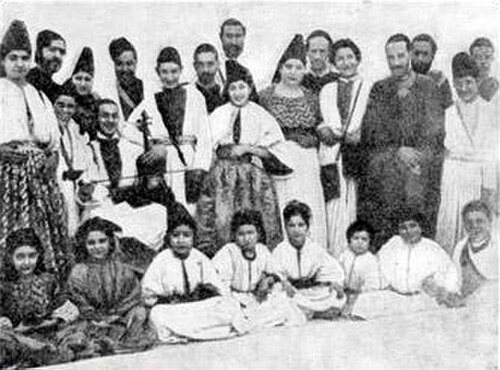
反ユダヤ的暴力事件は1950年代を通じて続いたが、フランス当局は後に、モロッコのユダヤ人は独立闘争の間「ヨーロッパの一般住民に比べて比較的少ないトラブルに見舞われていた」と述べた。[54] 1953年8月、ウジダ市で暴動が勃発し、11歳の少女を含むユダヤ人4人が死亡した。[55]同月、フランス治安部隊は、暴徒がラバトのユダヤ人の集会所に侵入するのを阻止した。[55] 1954年、プティジャン(今日シディ・カセムとして知られる)の町で起きた民族主義的な出来事が反ユダヤ暴動に発展し、マラケシュ出身のユダヤ人商人6人が死亡した。[56]しかし、モロッコのフランス総督フランシス・ラコステによれば、「プティジャンの犠牲者の民族性は偶然であり、テロがユダヤ人を標的にすることはめったになく、彼らの将来に対する懸念は不当なものだった」とのことである。[57]
1955年、暴徒がマザガン(現在はエルジャディーダとして知られている)のユダヤ人居住区に侵入し、1,700人のユダヤ人住民を市内のヨーロッパ地区に逃亡させた。約200人のユダヤ人の家は暴動中にひどく破壊され、彼らは戻ることができなかった。[58] 1954年、モサドはモロッコに秘密基地を設立し、1年以内にエージェントと使者を派遣して状況を評価し、継続的な移住を組織した。[59] 作戦は、自衛、情報と諜報、不法移民、連絡の確立、広報の5つの部門で構成されていた。[60]モサド長官イッセル・ハレルは1959年と1960年にモロッコを訪れ、作戦を再編成し、「ミスゲレット」(「枠組み」)と呼ばれる秘密民兵を創設した。[61]
イスラエルへのユダヤ人移住者は1954年の8,171人から1955年には24,994人に急増し、1956年にはさらに増加した。1955年から1956年の独立までの間に、6万人のユダヤ人が移住した。[59] 1956年4月7日、モロッコは独立した。ユダヤ人は3つの国会議員と郵政電信大臣の閣僚ポストを含むいくつかの政治的地位を占めた。しかし、その大臣レオン・ベンザケンは最初の内閣改造を生き残ることができず、ユダヤ人が再び閣僚に任命されることはなかった。[62]政府の最高レベルにおけるユダヤ人コミュニティとの関係は友好的であったが、これらの態度は下級官僚には共有されず、彼らの態度は伝統的な軽蔑からあからさまな敵意にまで及んだ。[63]モロッコのアラブ世界への一体感が高まり、ユダヤ人の教育機関がアラブ化と文化的順応を迫られたことで、モロッコ系ユダヤ人の恐怖は増した。[63] 1956年から1961年の間、イスラエルへの移住は法律で禁止されたが、[59]秘密の移住は続き、さらに18,000人のユダヤ人がモロッコを離れた。[64]
1961年1月10日、モサドがリースしたユダヤ人を乗せた船「エゴズ」がモロッコ北部の海岸沖で沈没した。タッド・シュルツによると、モロッコのミスゲレット司令官アレックス・ガットモンは、この悲劇を機に危機を煽ることを決意した。[65]これは、モサド長官イッセル・ハレルのシナリオと一致しており、「移民問題で妥協点を見出すには、王国政府とモロッコのユダヤ人コミュニティの間に亀裂を生じさせ、反ハッサンの民族主義者もてこ入れとして利用する必要がある」というものだった。[66]モサドは、地下シオニスト組織によると思われる不法移民を煽動するパンフレットを印刷し、モロッコ全土に配布したため、政府は「激怒」した。[67]これらの出来事により、モハメッド5世国王はユダヤ人の移住を許可し、その後の3年間で7万人以上のモロッコ系ユダヤ人が国を離れました。[68]主にヤチン作戦の結果として。
1961 年 6 月、モロッコ政府内の要職からユダヤ人高官が次々と排除されているという報告が浮上した。モロッコ財務省のコンサベーション フォンシエール局長の M. ザウイは、明確な理由もなく解任された。過激派イスラム教の雑誌「アル ウマル」は、ザウイがシオニストと関係があると非難して、ザウイに対するキャンペーンを開始した。同年、マイヤー トレダノもモロッコ外務省の法務顧問の職から解任されていた。同時に、モロッコのユダヤ人の間では、6 月 2 日にハッサン国王が署名した新しい「基本法」の 17 条を検討する際に不安が生じた。特に、第 15 条は、モロッコのアラブ連盟への関与と、連盟との結びつきを強化する意図を強調しており、懸念を引き起こした。新しい法律はモロッコにおけるユダヤ人とイスラム教徒の平等な権利を剥奪しなかったが、「ユダヤ人」という用語を削除し、最初の2つの条項ではモロッコがイスラム教を国教とするアラブ系イスラム教国であることを強調した。[69]
ヤチン作戦はニューヨークに拠点を置くユダヤ人移民支援協会(HIAS)が主導し[70] 、約5000万ドルの費用を負担した。[71] HIASはモロッコのイスラエル地下工作員にアメリカの隠れ蓑を提供し、その任務には移住の組織、自衛のためのモロッコのユダヤ人コミュニティへの武器供給、モロッコ政府との交渉などが含まれていた。[72] 1963年までに、モロッコの内務大臣ウフキル大佐とモサド長官メイア・アミットは、イスラエルによるモロッコ治安部隊の訓練と一部の秘密軍事支援と引き換えに、アラブ情勢に関する情報提供とユダヤ人移住の継続に合意した。[73]
1967年までに、ユダヤ人は5万人しか残っていなかった。[74] 1967年の六日間戦争により、モロッコを含む世界中でアラブ人とユダヤ人の間の緊張が高まり、国外へのユダヤ人の大規模な移住が続いた。1970年代初頭までに、モロッコのユダヤ人人口は2万5000人に減少したが、移住者のほとんどはイスラエルではなく、フランス、ベルギー、スペイン、カナダに向かった。[74]
エスター・ベンバッサによると、北アフリカ諸国からのユダヤ人の移住は将来に対する不安によって引き起こされた。[75] 1948年には25万人[76]~26万5千人[77]のユダヤ人がモロッコに住んでいた。2001年までに推定5,230人が残っていた。
ユダヤ人の数は減少しているものの、モロッコではユダヤ人が重要な役割を果たし続けている。国王はユダヤ人の上級顧問アンドレ・アズレイを留任させており、ユダヤ人学校やシナゴーグは政府から補助金を受けている。それにもかかわらず、ユダヤ人を標的とした攻撃が時々行われ(特に2003年のカサブランカのユダヤ人コミュニティセンターへの爆破事件)、過激なイスラム主義グループによる反ユダヤ主義的な言説も散発的に見られる。モロッコ系イスラエル系ユダヤ人数万人が毎年、特にロシュ・ハシャナや過ぎ越しの祭りの時期にモロッコを訪れているが、[78]故ハッサン2世国王のモロッコへの帰国と定住の申し出に応じた者はほとんどいない。 [要出典]
アルジェリア
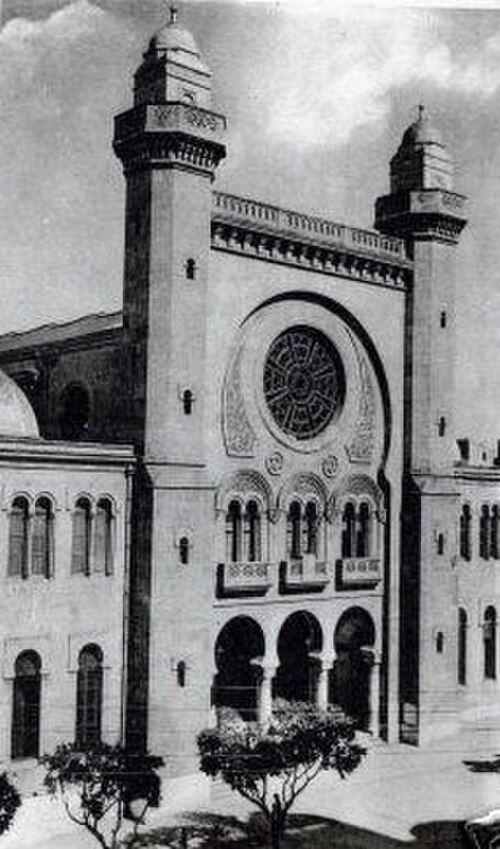

チュニジアやモロッコと同様に、アルジェリアのユダヤ人は亡命期間中に大規模な追放や資産の全面的な没収、または同様の政府による迫害に直面することはなく、シオニストのエージェントは移住を促進するための行動の自由が比較的認められていた。[49]
アルジェリアからのユダヤ人の移住は、フランスの植民地支配の終焉とそれに伴う社会的、経済的、文化的変化の一部であった。[79]
イスラエル政府はモロッコとチュニジアのユダヤ人のイスラエルへの移住を奨励することに成功していたが、アルジェリアではそうではなかった。ビザや経済補助金の提供にもかかわらず、1954年から1955年にかけてアルジェリアからイスラエルに移住したユダヤ人はわずか580人だった。[80]
移民は1954年から1962年にかけてのアルジェリア戦争中にピークを迎え、その間に何千人ものイスラム教徒、キリスト教徒、ユダヤ人が国を離れ、特にピエ・ノワール族が国を離れた。1956年、モサドの工作員は地下で活動し、国内のユダヤ人人口の約半数を占めるコンスタンティヌスのユダヤ人を組織し武装させた。[ 82]オランでは、ユダヤ人の反乱鎮圧運動がイルグンの元メンバーによって訓練されていたと考えられている。[83]
1960年6月1日に行われたアルジェリアにおけるフランスの最後の国勢調査によると、アルジェリアには105万人の非イスラム教徒の民間人がおり、総人口の10%を占めていた。この中には13万人の アルジェリア系ユダヤ人が含まれていた。[84] 1962年にアルジェリアが独立した後、約80万人の ピエ・ノワール人(ユダヤ人を含む)がフランス本土に避難したが、約20万人がアルジェリアに残ることを選んだ。後者は1965年でも約10万人、1960年代末までに約5万人が残っていた。 [85]
1950年代後半からアルジェリア革命が激化するにつれ、アルジェリアのユダヤ人14万人のほとんどが国を離れ始めました。[86]このコミュニティは主にアルジェとブリダ、コンスタンティーヌ、オランに住んでいました。
アルジェリアのユダヤ人は1962年の独立時にほぼ全員アルジェリアを離れた。特に「1963年のアルジェリア国籍法では非イスラム教徒は国籍取得が認められなかった」ためである[87]。アルジェリア国籍はイスラム教徒の父親と父方の祖父を持つアルジェリア人のみに与えられた。[88] 1870年以来フランス国籍を持っていたアルジェリアのユダヤ人14万人は(1940年にヴィシー・フランスによって短期間剥奪された)、そのほとんどはフランスへ渡ったが、一部はイスラエルへ渡った。[89]
その結果、アルジェの大シナゴーグは1994年以降は放棄された。[要出典]
北アフリカからフランスへのユダヤ人の移住により、フランスのユダヤ人コミュニティが再活性化し、現在では世界で3番目に大きいコミュニティとなっています。
チュニジア

モロッコやアルジェリアと同様に、チュニジアのユダヤ人は亡命期間中に大規模な追放や資産の全面的な没収、または同様の政府による迫害に直面することはなく、ユダヤ人移民団体は移住を促進するための行動の自由が比較的認められていた。[49]
1948年、チュニジアには約105,000人のユダヤ人が住んでいた。[90] 現在も約1,500人が残っており[いつ? ] [不明瞭]、そのほとんどがジェルバ、チュニス、ザルジスに住んでいる。1956年にチュニジアがフランスから独立した後、ユダヤ人のイスラエルとフランスへの移住が加速した。 [90] 1967年の攻撃の後、イスラエルとフランスへのユダヤ人の移住が加速した。1982年、1985年のイスラエルの「木の脚作戦」の後にも攻撃があった。[ 91] [92]そして最近では2002年にジェルバの地元のシナゴーグ近くで爆弾テロが発生し、21人が死亡(ほとんどがドイツ人観光客)した。このテロ攻撃はアルカイダが犯行声明を出した。
リビア
かつてWOJACの事務局長を務めていたリビア移民のモーリス・ルーマニ氏によると、[93]リビアのユダヤ人コミュニティが移住する上で最も重要な要因は「イタリア占領の最後の数年間に残された傷跡と、1943年にユダヤ人パレスチナ人兵士を伴ってイギリス軍が侵攻したこと」だという。[94]
1940年代初頭、シオニストの使節、いわゆるシュリヒムが「コミュニティを変革し、パレスチナに移す」という意図を持ってリビアに到着し始めた。[95] 1943年、モサド・レアリーヤ・ベットは、リビアのユダヤ人コミュニティの移住のためのインフラを準備するために使節を派遣し始めた。[96]
1942年、北アフリカで連合国と戦っていたドイツ軍はベンガジのユダヤ人街を占領し、商店を略奪し、2000人以上のユダヤ人を砂漠の向こうに追放した。ギアドなどの強制労働収容所に送られ、そのユダヤ人の5分の1以上が死亡した。当時、リビアのユダヤ人のほとんどはトリポリとベンガジの都市に住んでいたが、バイダとミスラタにも少数住んでいた。[43] 1942年12月のエルアゲイラの戦いでの連合軍の勝利の後、ドイツ軍とイタリア軍はリビアから追い出された。イギリス軍はキレナイカの守備隊としてパレスチナ連隊を配置した。この部隊は後にユダヤ人旅団の中核となり、後にトリポリタニアにも駐屯した。親シオニストの兵士たちは、地元のユダヤ人全体にシオニズムを広めるよう奨励した[97] [98] [99]
連合軍による北アフリカの解放後も、反ユダヤ主義の煽動は依然として広まっていた。第二次世界大戦の勃発からイスラエル建国までの間の最も深刻な人種暴動は、1945年11月にトリポリで発生した。数日間で140人以上のユダヤ人(36人の子供を含む)が殺害され、数百人が負傷し、4000人が避難を余儀なくされ、2400人が貧困に陥った。トリポリのシナゴーグ5軒と地方都市のシナゴーグ4軒が破壊され、トリポリだけで1000軒以上のユダヤ人住宅と商業ビルが略奪された。[100]ギル・シェフラーは「リビアでの虐殺はひどいものだったが、東欧での地元民によるユダヤ人大量虐殺に比べれば、比較的孤立した出来事だった」と書いている。[47]同年、カイロでも激しい反ユダヤ暴動が発生し、10人のユダヤ人が犠牲になった。
1948年、リビアには約3万8000人のユダヤ人が住んでいた。[77] [101] 1948年6月にもユダヤ人虐殺は続き、15人のユダヤ人が殺害され、280軒のユダヤ人の家が破壊された。[102] 1948年11月、トリポリでの事件から数か月後、トリポリのアメリカ領事オレイ・タフト・ジュニアは次のように報告した。「パレスチナでのユダヤ人の勝利の結果、ユダヤ人コミュニティがより攻撃的になったと考える理由がある。また、ここのコミュニティがイスラエル国から指示や指導を受けていると考える理由もある。態度の変化が指示の結果なのか、それとも攻撃性が高まった結果なのかは判断が難しい。攻撃性があっても、あるいはその攻撃性があったからこそ、ユダヤ人とアラブ人の指導者の双方が私に伝えたところによると、人種間の関係はここ数年よりも良くなっており、両コミュニティの指導者間のトップレベルの会合では、理解、寛容、協力が見られるという。」[103] [104]
イスラエルへの移民は、1949年にトリポリにイスラエルのユダヤ人機関の事務所が設立された後に始まった。ハーヴェイ・E・ゴールドバーグによると、「多くのリビアのユダヤ人」は、暴動が彼らの目的達成に役立ったことから、暴動の背後にユダヤ人機関がいると信じている。[105] 1948年のイスラエル国家の樹立から1951年12月のリビアの独立までの間に、3万人以上のリビアのユダヤ人がイスラエルに移住した。
1958 年 12 月 31 日、トリポリタニア執行評議会議長は、ユダヤ人コミュニティ評議会の解散と、政府が指名したイスラム教徒委員の任命を命じた。1961 年に発布された法律では、リビアでの財産の所有と譲渡にはリビア国籍が必要とされたが、この要件を満たしたリビアのユダヤ人はわずか 6 人だった。ユダヤ人は投票、公職への就任、軍隊や警察への勤務を禁じられた。[要出典]
1967年、六日間戦争の最中、4000人以上のユダヤ人が再び暴動に見舞われ、18人が死亡、さらに多数が負傷した。親欧米派のイドリス王のリビア政府は法と秩序を維持しようとしたが、失敗した。1967年6月17日、リビアのユダヤ人コミュニティのリーダーであるリロ・アルビブは、リビアの首相フセイン・マジクに正式な要請書を送り、政府は「感情が落ち着き、リビア国民がリビアのユダヤ人の立場を理解するまで、国外退去を希望するユダヤ人の一時的退去を許可するよう」求めた。リビアのユダヤ人はこれまでも、そしてこれからも、常にアラブ市民と完全に調和し、平和的に共存しながら国家に忠誠を誓ってきたし、これからもそうあり続けるだろう。[106]
ユダヤ人擁護団体AJC事務局長デイビッド・ハリスによると、リビア政府は「法と秩序が完全に崩壊したため、ユダヤ人に一時的に国外退去するよう促した」が、各自スーツケース1個と50ドル相当の現金の持ち出しを許可した。空輸と数隻の船舶の援助により、4000人以上のリビア系ユダヤ人がイタリア海軍によってイタリアに避難し、そこでイスラエル・ユダヤ人機関の支援を受けた。避難したユダヤ人のうち、1300人はその後イスラエルに移住し、2200人はイタリアに残り、残りのほとんどは米国に渡った。数十人はリビアに残った。一時的に避難したリビア系ユダヤ人の中には、1967年から1969年の間に失った財産を取り戻そうとリビアに戻った者もいた。[107] [108] 1967年9月にはリビアに残っていたユダヤ人はわずか100人だったが、[106] 5年後の1972年には40人未満に減少し、1977年にはわずか16人にまで減少した。[109]
1970年7月21日、リビア政府は、以前にリビアを去ったユダヤ人の資産を没収する法律を公布し、[110]代わりに15年債を発行した。しかし、1985年に債券が満期を迎えても補償金は支払われなかった。[111]リビアの指導者ムアンマル・カダフィは後に、「ユダヤ人がアラブ諸国の敵であるイスラエルと同盟を結んだことで、補償を受ける権利を失った」と正当化した。[111]
トリポリの主要シナゴーグは1999年に改装されたが、礼拝のために再開されていない。2002年、リビア最後のユダヤ人と思われていたエスメラルダ・メグナギが亡くなった。しかし、同じ年、ローマの家族から死亡したと思われていた80歳のユダヤ人女性リナ・デバッハがまだ生きており、同国の老人ホームで暮らしていることがわかった。彼女がローマへ旅立ったことで、リビアにはユダヤ人がいなくなった。
イスラエルには、独自の伝統を守り続けるリビア系ユダヤ人が多数居住している。リビア系ユダヤ人はイタリアのユダヤ人コミュニティでも大きな割合を占めている。ローマの登録ユダヤ人の約30%はリビア系である。[112]
中東
イラク
1930年代から1940年代初頭
1930年6月にイギリスの委任統治が終了し、1932年10月にイラクは独立した。イラク政府はアッシリアの自治の要求(アッシリア人とは古代アッシリア人とメソポタミア人の子孫で、東方アラム語を話すセム系先住民であり、主にアッシリア東方教会、カルデアカトリック教会、シリア正教会に所属していた)に対する反応として、 1933年8月にイラク軍によるアッシリア村民の血なまぐさい虐殺を起こした。[113]
この事件は、イラク王政下では少数派の権利は無意味であるというユダヤ人コミュニティへの最初の兆候であった。自由主義政策で知られるファイサル国王は1933年9月に亡くなり、国家主義的で反英的な息子のガジが後を継いだ。ガジはシリアとパレスチナの亡命者を先頭とするアラブ民族主義組織の推進を開始した。 1936年から39年にかけてパレスチナで起きたアラブ反乱では、エルサレムの大ムフティなどの反乱軍がこれに加わった。亡命者は汎アラブ思想を説き、反シオニストのプロパガンダを促進した。[113]
ナチスドイツがアラブ世界での影響力拡大に躍起になっていたため、イラクの民族主義者の指導下でナチスのプロパガンダがイラクに浸透し始めた。1932年からイラクに住んでいたフリッツ・グロッバ博士は、ユダヤ人に対する憎悪的なプロパガンダを精力的かつ組織的に広め始めた。とりわけ、『我が闘争』のアラビア語訳が出版され、ベルリンのラジオがアラビア語での放送を開始した。反ユダヤ政策は1934年以来実施されており、1936年にパレスチナで拡大した危機によりユダヤ人の信頼はさらに揺らいだ。1936年から1939年の間に10人のユダヤ人が殺害され、8回にわたってユダヤ人の場所に爆弾が投げ込まれた。[114]

1941年、イギリスが英イラク戦争で勝利した直後、バグダッドではラシード・アリー・アル・ガイラニの親枢軸政権の崩壊による権力の空白と不安定な状況の中でファルフードと呼ばれる暴動が勃発した。180人のユダヤ人が殺害され、240人が負傷し、ユダヤ人所有の商店586軒が略奪され、99軒のユダヤ人の家が破壊された。[115]

ある説によれば、ファルフードはイラクのユダヤ人にとっての転機となった。[116] [117] [118]しかし、他の歴史家は、イラクのユダヤ人コミュニティにとっての転換点はずっと後の1948年から1951年の間であると見ている。なぜなら、ユダヤ人コミュニティは1940年代の大半を通じて国の他の地域と同様に繁栄していたからである。[119] [120] [121]そして、ファルフード後にイラクを離れた多くのユダヤ人はその後まもなく国に戻り、永住の移住が大幅に加速したのは1950年から51年までであった。[120] [122]
いずれにせよ、ファルフドは、1940年代のイラク系ユダヤ人の政治化の始まりを示すものとして広く理解されている。特に、イラク社会への長期的な統合への希望に影響を与えた結果として、若年層を中心にその傾向が顕著であった。ファルフドの直後、バグダッドのユダヤ人を守るためにイラク共産党に加入した者が多かったが、彼らは国を離れることを望まず、むしろイラク国内でより良い状況を求めて戦おうとした。[123]同時に、ファルフド後に政権を握ったイラク政府はイラク系ユダヤ人コミュニティを安心させ、バグダッドではすぐに通常の生活が戻り、第二次世界大戦中の経済状況は著しく改善した。[124] [125]

1951 年 4 月。
1941年のファルフド事件の直後、モサド・レアリーヤ・ベットはイラクに使者を派遣し、イスラエルへの移住を組織し始めた。当初はヘブライ語を教えたりシオニズムについての講義をしたりする人材を募集していた。1942年、モサド・レアリーヤ・ベットの責任者であるショール・アビグルは、イスラエルへの移住に関するイラクのユダヤ人の状況を調査するために、潜入捜査を行った。[126] 1942年から43年にかけて、アビグルはモサドに必要な機器を手配するためにさらに4回バグダッドを訪れたが、その中にはテルアビブに情報を送るための無線送信機も含まれており、この機器はその後8年間使用された。[127]
1942年後半、使節の一人がイラクのコミュニティをシオニズムに改宗させるという彼らの任務の大きさを説明し、「[移住を組織し奨励すること]にはあまり意味がないことを認めざるを得ない。…我々は現在、長年の怠慢の果実を食らっている。そして、我々がしなかったことは、今となっては宣伝や一夜の熱狂の醸成によって修正することはできない。」と書いている。[128]イラクからイスラエルへの合法的および非合法的な出国が始まったのは1947年になってからだった。[129] 1919年から1948年の間に約8000人のユダヤ人がイラクを離れ、さらに1948年半ばから1950年半ばの間に2000人がイラクを離れた。[122]
1948年 アラブ・イスラエル戦争
1948年、イラクには約15万人のユダヤ人がいた。ユダヤ人コミュニティはバグダッドとバスラに集中していた。
パレスチナ分割に関する国連投票の数ヶ月前、イラクのヌーリ・アル・サイード首相は、英国外交官ダグラス・バスクに対し、イラクのユダヤ人は長年定着した有益なコミュニティであり、彼らには何の恨みもないと語った。しかし、国連の解決策が満足のいくものでなければ、アラブ連盟はアラブ諸国のユダヤ人に対する厳しい措置を決定する可能性があり、首相はその提案に抵抗できないだろう。[130] [131] 1947年11月28日金曜日、ニューヨークのフラッシングメドウにある総会ホールで行われた演説で、イラクの外務大臣ファデル・ジャマールは次のように述べた。「大多数の人々の意志に反して課せられた分割は、中東の平和と調和を危うくするだろう。パレスチナのアラブ人の反乱が予想されるだけでなく、アラブ世界の大衆は抑制できない。アラブ世界におけるアラブ人とユダヤ人の関係は大きく悪化するだろう。パレスチナ外のアラブ世界には、パレスチナにいるユダヤ人よりも多くのユダヤ人がいる。イラクだけでも、イスラム教徒やキリスト教徒とともに政治的、経済的権利のあらゆる利点を共有する約15万人のユダヤ人がいる。イスラム教徒、キリスト教徒、ユダヤ人の間には調和が保たれている。しかし、パレスチナのアラブ人に課せられたいかなる不正も、イラクのユダヤ人と非ユダヤ人の間の調和を乱し、不和を生むだろう。宗教間の偏見と憎悪。」[132]
1949年2月19日、アル・サイードはここ数ヶ月、イラクでユダヤ人が受けてきたひどい扱いを認めた。彼は、イスラエルが行儀よくしなければ、イラクのユダヤ人に関する出来事が起こるかもしれないと警告した。[133]アル・サイードの脅迫は、政治的レベルではユダヤ人の運命に何の影響も与えなかったが、メディアで広く報道された。[134]
1948年、国は戒厳令下に置かれ、シオニズムに対する刑罰が強化された。軍法会議が裕福なユダヤ人を脅迫するために利用され、ユダヤ人は再び公務員から解雇され、大学のポストに割り当てが設けられ、ユダヤ人のビジネスはボイコットされ(E.ブラック、347ページ)、国内で最も重要なユダヤ人実業家の一人であるシャフィク・アデス(非シオニスト)は、イスラエルに商品を売った容疑で逮捕され、公開処刑された。ユダヤ人コミュニティの一般的な感情は、アデスのように広いコネと権力を持つ人物が国家によって排除されるなら、他のユダヤ人はもはや保護されないだろうというものだった。[135]
さらに、アラブ連盟加盟国のほとんどと同様、イラクは1948年の戦争後、ユダヤ人がイスラエルに渡って国家を強化する可能性があるという理由で、ユダヤ人の合法的な移住を禁止した。同時に、反イスラエル感情に煽られた政府によるユダヤ人への抑圧が強まり、反ユダヤ主義が公に表明されたことで、恐怖と不安の雰囲気が生まれた。
しかし、1949年までに、ユダヤ人は月に約1000人の割合でイラクから脱出していた。[136]当時、イギリスは、シオニスト地下組織がイラクで扇動活動を行っているのは、米国の資金調達を支援し、「アラブ難民に対するユダヤ人の態度によって引き起こされた悪い印象を相殺するため」であると信じていた。[137]
1948年から49年にかけて、イラク政府は約70万人のパレスチナ人が難民となったが、より多くの難民を受け入れるよう「イラクを説得しようとした英国と米国の努力にもかかわらず」、5000人しか受け入れることができなかった。[138] 1949年1月、親英派のイラク首相ヌーリ・アル・サイードは、イラクのユダヤ人をイスラエルに追放する案について英国当局と協議した。英国当局は、そのような提案はイスラエルに利益をもたらし、アラブ諸国に悪影響を与えると説明した。[139] [140] [141]メイア・グリッツェンシュタインによれば、そのような提案は「パレスチナのアラブ人難民の問題やイラクのユダヤ人少数派の問題を解決することを意図したものではなく、パレスチナのアラブ人難民をイラクに再定住させる計画を妨害することを意図したものだった」[142] 。
1949年7月、英国政府はヌーリ・アル・サイードに、イラクが10万人のパレスチナ難民をイラクに定住させることに同意する人口交換を提案した。ヌーリは、公正な取り決めが合意できれば、「イラク政府はイラクのユダヤ人が自発的にパレスチナに移住することを許可するだろう」と述べた。[143]イラクと英国の提案は1949年10月に報道された。[144]
1949年10月14日、ヌーリ・アル・サイードは経済使節団の調査で人口交換の概念を提起した。[145] 2002年にメルボルンで開催されたユダヤ研究会議で、フィリップ・メンデスは、アル・サイードの優柔不断がユダヤ人追放に及ぼした影響を次のように要約した。「さらに、イラクの首相ヌーリ・アル・サイードは、イラクのユダヤ人を追放し、同数のパレスチナのアラブ人と交換する可能性を暫定的に検討し、その後棚上げした。」[20]
イスラエルへのユダヤ人移民の一時的合法化


1950年3月、イラクはイスラエルへのユダヤ人移住禁止を撤回し、イラク国籍を放棄することを条件にユダヤ人の移住を1年間許可する法律を可決した。アッバス・シブラックによれば、多くの学者は、これはタウフィク・アル・スワイディ政権に対するアメリカ、イギリス、イスラエルの政治的圧力の結果であり、秘密交渉があったことを示唆する研究もあると述べている。[146]イアン・ブラックによれば、[147]イラク政府の動機は「経済的な考慮、その主なものは、国を去るユダヤ人の財産のほとんどが国庫に戻るということ」であり、[147]また「ユダヤ人は反抗的で潜在的に厄介な少数派であり、国から排除した方がよいと考えられていた」ことであった。[147]イスラエルは「エズラとネヘミア作戦」と呼ばれる作戦を開始し、できるだけ多くのイラク系ユダヤ人をイスラエルに連れてきた。
シオニスト運動は当初、ユダヤ人の法的地位に関する問題が明確になるまで、登録者の数を規制しようとした。その後、すべての人の登録を許可した。法律が施行されてから 2 週間後、イラク内務大臣はユダヤ人が登録しない理由について CID の調査を要求した。[要出典]運動が登録を許可した数時間後、バグダッドのカフェで爆弾テロが発生し、ユダヤ人 4 人が負傷した。
1950 年 3 月の帰化剥奪法の直後、移民運動は大きな課題に直面した。当初、地元のシオニスト活動家は、イスラエル政府がまだ吸収計画を議論していたため、イラクのユダヤ人がイラク当局に移民登録することを禁じた。[148]しかし、4 月 8 日にバグダッドのユダヤ人カフェで爆弾が爆発し、その日のうちにシオニスト指導者の会議でイスラエル政府を待たずに登録を許可することに同意した。登録を奨励する布告がイスラエル国の名においてイラク全土で出された。[149]しかし、同時にポーランドとルーマニアからも移民がイスラエルに入国していた。これらの国では、ダヴィド・ベングリオン首相が共産党当局がすぐに「門を閉ざす」リスクがあると評価したため、イスラエルはイラクのユダヤ人の移送を遅らせた。[150]その結果、1950年9月までに7万人のユダヤ人が国外退去を登録し、その多くが財産を売却し、職を失ったが、実際に国外に脱出したのは1万人に過ぎなかった。[151]エスター・メイア・グリッツェンシュタインによれば、「周辺都市を去ったり追放されたりして、移住の機会を待つためにバグダッドに向かった何千人もの貧しいユダヤ人は、特にひどい状況にあった。彼らは公共の建物に住まわされ、ユダヤ人コミュニティから支援を受けていた。状況は耐え難いものだった。」この遅れは、ヌーリ・アル・サイード(1950年9月中旬にタウフィク・アル・スワイディの後任となった)のイラク政府にとって重大な問題となった。「宙ぶらりん状態」のユダヤ人が多数存在したことで、政治的、経済的、国内の安全保障上の問題が生じたからである。[152]イラク政府にとって「特に腹立たしかった」のは、問題の原因がイスラエル政府だったという事実であった。
これらの展開の結果、アル=サイードはできるだけ早くユダヤ人を自国から追い出すことを決意した。[153] [154] [155] [156] 1950年8月21日、アル=サイードは、ユダヤ人脱出を輸送する会社が1日あたり500人のユダヤ人のノルマを達成しない場合はライセンスを取り消すと脅し[検証に失敗]、1950年9月にはユダヤ人コミュニティの代表者を召喚して、バグダッドのユダヤ人コミュニティに急ぐよう警告し、さもなければ彼自身がユダヤ人を国境まで連れて行くと述べた。[157] [158]
法律が失効する2か月前、約85,000人のユダヤ人が登録した後、バグダッドのユダヤ人コミュニティに対する爆撃作戦が始まった。イラク政府は爆撃を実行したとしてシオニスト工作員と疑われる数人を有罪とし、絞首刑に処したが、誰が責任を負ったのかという問題は、依然として学問上の論争の的となっている。その後、数千人を除く残りのユダヤ人全員が移住登録を行った。合計で約12万人のユダヤ人がイラクを去った。
ガットによれば、ヌーリ・アサイードが大量のユダヤ人を追放しようとした動機の一つは、イスラエルの経済問題を悪化させたいという願望であった可能性が高い(彼はアラブ世界に対してそのように宣言していた)が、ヌーリはこれらの移民の吸収がイスラエルの将来の政策であることをよく知っていた。[159]イラク国防大臣は米国大使に対し、移住したユダヤ人が国家に損害を与える活動に関与し、共産主義のエージェントと接触していたという信頼できる証拠があると語った。[160]
1950年4月から1951年6月までの間に、バグダッドのユダヤ人の拠点が5回攻撃された。イラク当局はその後、シオニスト活動家であるとして3人のユダヤ人を逮捕し、シャローム・サラー・シャロームとヨセフ・イブラヒム・バスリの2人に死刑を宣告した。3人目のイェフダ・タジャールは懲役10年の刑を宣告された。[161] 1951年5月と6月には、 1941年のファルフド後にイシューブから供給されたとされるシオニスト地下組織のものとされる武器庫が発見された。 [要出典]爆弾がイラクのユダヤ人にイスラエルへの移住を促すためにモサドが仕掛けたのか、ユダヤ人を追い出すためにイスラム過激派が仕掛けたのかについては多くの議論があり、イスラエルでは訴訟や調査の対象となっている。[162]
移民法は、法律が制定されてから1年後の1951年3月に失効する予定だった。1951年3月10日、64,000人のイラク系ユダヤ人が依然として移住を待っていたため、政府は市民権を放棄したユダヤ人の資産を凍結し、移住期間を延長する新しい法律を制定した。[163]
イラクから脱出したユダヤ人の大部分は、イラク政府の特別許可を得て、イスラエルの空輸作戦「エズラとネヘミア作戦」によって脱出した。 [164]
1951年以降
エズラとネヘミア作戦の後も、小さなユダヤ人コミュニティがイラクに残った。1963年にバース党が政権を握ると、ユダヤ人に対する制限が課され、六日間戦争の後、迫害は大幅に増加した。ユダヤ人は財産を没収され、銀行口座を凍結され、商売する能力が制限され、公職から解任され、長期間にわたって自宅軟禁された。1968年には、数十人のユダヤ人がイスラエルのスパイ容疑で投獄された。1969年には、約50人が見せしめ裁判の後に処刑された。最も悪名高いのは、 9人のユダヤ人を含む14人の男性が公開された集団絞首刑に処されたことで、10万人のイラク人がカーニバルのような雰囲気の中で死体の前を行進した。[165]ユダヤ人はイランとの国境をこっそり越え始め、そこからイスラエルや英国へと向かった。1970年代初頭、イラク政府はユダヤ人の移住を許可し、残ったコミュニティの大半はイラクを去った。 2003年までに、かつては繁栄していたこのコミュニティは、バグダッドのユダヤ人35人と、国内のクルド人居住地域に数人しかいないまでに減少したと推定されている。
エジプト


反ユダヤ感情
20世紀初頭のエジプトには小さな先住民コミュニティがあったものの、ほとんどのユダヤ人は最近エジプトに移住してきた人々であり[検証に失敗した] 、アラビア語やアラブ文化を共有していなかった。[166]多くは、英国やフランスの植民地当局に加えて、ギリシャ人、アルメニア人、シリアのキリスト教徒、イタリア人などの他のグループを含む、非常に多様なムタマシルンコミュニティのメンバーであった。 [167] 1930年代後半まで、ユダヤ人は先住民と新しい移民の両方において、他の少数民族と同様に、外国の保護の恩恵を受けるために外国籍を申請する傾向にあった。[168]エジプト政府は、非イスラム教徒の外国人が帰化することを非常に困難にした。貧しいユダヤ人、そのほとんどは先住民と東洋系ユダヤ人であり、法的にはエジプト国籍を取得する資格があったものの、無国籍のままであった。[169]公的生活と経済をエジプト化しようとする動きは少数民族に損害を与えたが、ユダヤ人は他の民族よりも多くの打撃を受けた。1930年代後半から1940年代のユダヤ人に対する煽動では、ユダヤ人は敵とみなされた。 [166]ユダヤ人はシオニズムとの実際の、あるいは疑わしいつながりのために攻撃された。ユダヤ人はヨーロッパのように宗教や人種によって差別されたのではなく、政治的な理由で差別された。[170]
エジプトの首相マフムード・アン・ヌクラシ・パシャは英国大使にこう語った。「ユダヤ人は皆、潜在的なシオニストであり、いずれにせよ、シオニストは皆共産主義者だ。」[171] 1947年11月24日、国連総会のエジプト代表団長ムハンマド・フセイン・ヘイカル・パシャは、「ユダヤ国家の樹立により、イスラム諸国のユダヤ人100万人の命が危険にさらされるだろう。」[172] 1947年11月24日、ヘイカル・パシャ博士はこう語った。「国連がユダヤ国家樹立のためにパレスチナの一部を切除することを決定すれば、アラブ世界の他の場所でユダヤ人の血が流されることは避けられず、100万人のユダヤ人が確実に深刻な危険にさらされるだろう。」マフムード・ベイ・ファウズィー(エジプト)は「強制的な分割はパレスチナとアラブ世界の他の地域で流血をもたらすことは確実だ」と述べた。[173]
第一次世界大戦後、相当数のユダヤ人を含む外国人ムタマシルン(「エジプト化した」)コミュニティの脱出が始まり、1960年代末までにムタマシルン全体が事実上消滅した。アンドリュー・ゴーマンによれば、これは主に「脱植民地化プロセスとエジプト民族主義の台頭」の結果であった。[174] [175]
エジプトのユダヤ人の大量流出は1945年の反ユダヤ暴動の影響を受けたが、政府が暴力を鎮圧し、エジプトのユダヤ人コミュニティのリーダーたちがファルーク国王を支持していたため、こうした移住は大きなものではなかった。1948年には約7万5千人のユダヤ人がエジプトに住んでいた。1948年から1949年にかけて、1948年の第一次中東戦争(1948年のカイロ爆破事件を含む)の後に約2万人のユダヤ人がエジプトを離れた。[122] 1952年のエジプト革命とその後の偽旗 ラヴォン事件をきっかけに、1952年から1956年の間にさらに5千人がエジプトを離れた。[122]スエズ危機の一環としてのイスラエルの侵攻により、移住が急増し、 1956年11月から1957年3月までの6か月足らずの間に14,000人のユダヤ人が国外へ移住し、その後10年間でさらに19,000人が移住した。[122]
1956年スエズ危機

1956年10月にスエズ危機が勃発すると、ユダヤ人コミュニティを含むムタマシルンの立場は大きな影響を受けた。[176]
1000人のユダヤ人が逮捕され、500のユダヤ人の商店が政府に押収された。カイロとアレクサンドリアのモスクでは、ユダヤ人を「シオニストで国家の敵」と非難する声明が読み上げられた。[177] [178]ユダヤ人の銀行口座は没収され、多くのユダヤ人が職を失った。弁護士、エンジニア、医師、教師はそれぞれの職業に就くことを許されなかった。何千人ものユダヤ人が国外退去を命じられ、留まれば強制収容所に送られるかもしれないと告げられた。[177]持ち出せるのはスーツケース1個と少額の現金のみで、財産をエジプト政府に「寄付」する宣言書に署名するよう強制された。外国人の観察者は、強制退去させられたユダヤ人がエジプト政府に反対の声を上げないようにするため、ユダヤ人の家族が人質に取られたと報告した。ユダヤ人はエジプトの反ユダヤ感情によって追放されたり、追い出されたりした。[179]ユダヤ人コミュニティのほぼ半数にあたる約25,000人のユダヤ人が、自主的に国を離れ、資産の没収に同意するという宣言書に署名させられた後、主にヨーロッパ、アメリカ、南米、イスラエルに向けて国を離れた。侵略に対する報復として、イギリス人とフランス人に対しても同様の措置が取られた。1957年までに、エジプトのユダヤ人人口は15,000人にまで減少した。
1960年代と1970年代
1960年、カイロのアメリカ大使館はエジプトのユダヤ人について次のように書いている。「ほとんどのユダヤ人は移住を強く望んでいるが、それは政府による直接的または現在の具体的な虐待によるものではなく、機会が限られているという気持ちや将来への不安によるものだ。」[180] [181]
1967年、ユダヤ人は拘留され、拷問を受け、ユダヤ人の家は没収された。[182] [183] 外国のパスポートを持たないユダヤ人男性の大多数が拘留された。[183] [184]六日戦争後、ユダヤ人コミュニティは2,500人にまで減少し、1970年代には数家族を除いて事実上存在しなくなった。[185] 2015年現在、エジプトには推定30人のユダヤ人が残っており、そのほとんどは高齢者である。[182]
イエメン
.jpg/500px-Op_Magic_Carpet_(Yemenites).jpg)
イエメンからの脱出は1881年に始まった。これは東欧からのより有名な第一次アリーヤーの7か月前である。 [186]この脱出は、ヨーロッパのユダヤ人がエルサレムのムタサリファトに投資した結果として起こった。この投資は、地元のイスラム教徒の労働者とともにユダヤ人の労働力を創出し、移住の経済的インセンティブを提供した。[187]この脱出は、オスマン帝国がイエメン領土を再び支配して帝国内での移動の自由を認めたことと、スエズ運河が開通して移動コストが大幅に削減されたことで促進された。1881年から1948年の間に、15,430人のユダヤ人が合法的にパレスチナに移住した。[188]
1942年、百万人計画の策定に先立ち、ダヴィド・ベングリオンは専門家とユダヤ人指導者の会合で、そのような潜在的な政策に関する自身の意図を説明し、「我々がまだイエメンの亡命者[ディアスポラ]を排除していないことは、シオニズムの大きな失敗の証である」と述べた。[189]
アデンを含めると、1948年にはイエメンに約63,000人のユダヤ人がいた。今日残っているのは約200人である。1947年、イエメン南部のイギリス植民地アデンで少なくとも80人のユダヤ人が暴徒に殺害された。1948年、新しいザイド派のイマームであるアフマド・ビン・ヤヒヤは予期せずユダヤ人のイエメンからの脱出を許可し、数万人がアデンに流れ込んだ。イスラエル政府の「魔法の絨毯作戦」により、1949年と1950年に約44,000人のユダヤ人がイエメンからイスラエルに避難した。 [190]移住は1962年にイエメン内戦が勃発するまで続いた。1976年まで小さなコミュニティが残っていたが、それ以降はほとんどがイエメンからの移住者となった。2016年3月、イエメンのユダヤ人人口は約50人と推定されている。[191]
レバノンとシリア
背景
現在レバノンとシリアとして知られている地域は、少なくとも紀元前 300 年にまで遡る世界最古のユダヤ人コミュニティのひとつの本拠地でした。
レバノン
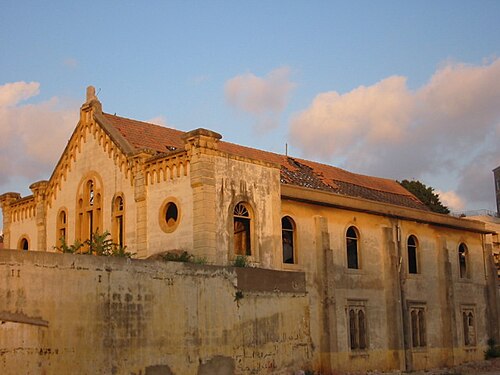
1945年11月、トリポリで起きた反ユダヤ暴動で14人のユダヤ人が殺害された。[192]他のアラブ諸国とは異なり、レバノンのユダヤ人コミュニティは1948年の第一次中東戦争中に深刻な危機に直面することはなく、政府当局によって適切に保護されていた。レバノンはまた、主にシリアとイラクからのユダヤ人の流入により、1948年以降ユダヤ人人口が増加した唯一のアラブ諸国であった。[193]
1932年の国勢調査によると、レバノンのユダヤ人人口は約3,500人である。[194] 1948年、レバノンには約5,200人のユダヤ人がいた。[195]第一次中東戦争後、ユダヤ人の数は1951年に約9000人に増加し、その中には推定2000人のユダヤ人亡命希望者も含まれていた。[195]レバノンのユダヤ人コミュニティーはベイルート、レバノン山近くの村、デイル・アル・カマル、バルーク、ベチャモウン、ハスバヤにあった。フランス委任統治領下ではユダヤ人の状況は全般的に改善されたが、ヴィシー政権はユダヤ人に制限を課した。ユダヤ人コミュニティーは第二次世界大戦後、レバノンの独立を積極的に支持し、シオニズムに対しては複雑な態度を示した。[要出典]
しかし、1948年以降、ユダヤ人に対する否定的な態度が強まり、1967年までには、ほとんどのレバノン系ユダヤ人がイスラエル、米国、カナダ、フランスに移住していた。1971年、レバノン系ユダヤ人コミュニティの事務総長であった69歳のアルバート・エリアは、シリアの工作員によってベイルートで誘拐され、国外逃亡を試みたシリア系ユダヤ人とともに、ダマスカスで拷問を受けながら投獄された。国連難民高等弁務官のサドルディン・アガ・ハーン王子が故ハーフィズ・アサド大統領に個人的に訴えたが、エリアの解放は実現しなかった。
残存するユダヤ人コミュニティはレバノン内戦で特に大きな打撃を受け、1970年代半ばまでにコミュニティは崩壊した。1980年代にはヒズボラが数人のレバノン系ユダヤ人ビジネスマンを誘拐し、2004年の選挙では市議会選挙で投票したユダヤ人はたった一人だった。現在レバノンには20~40人のユダヤ人しか住んでいない。[196] [197]
シリア
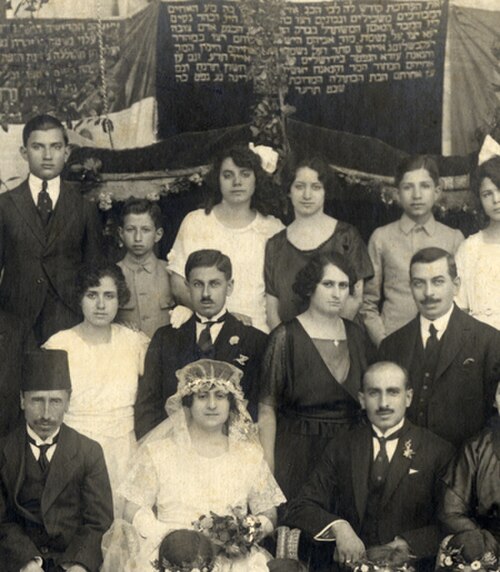

1947年、アレッポの暴徒が 市内のユダヤ人街を焼き払い、75人を殺害した。[198]その結果、アレッポのユダヤ人人口のほぼ半数が市を離れることを選択し、[5]最初は隣国レバノンに移住した。[199]
1948年、シリアにはおよそ3万人のユダヤ人がいた。1949年、アラブ・イスラエル戦争での敗北後、CIAの支援を受けた1949年3月のシリアクーデターにより、フスニ・アル・ザイムがシリア大統領に就任した。ザイムは大量のシリア系ユダヤ人の移住を許可し、5000人がイスラエルに移住した。[199]
その後のシリア政府は、ユダヤ人コミュニティに対して移住禁止を含む厳しい制限を課した。[199] 1948年、政府はユダヤ人の財産の売却を禁止し、1953年にはすべてのユダヤ人の銀行口座が凍結された。シリア秘密警察はユダヤ人コミュニティを厳重に監視した。その後の数年間で、多くのユダヤ人が脱出に成功し、支援者、特にジュディ・フェルド・カー[ 200]の活動により、ユダヤ人をシリアから密かに脱出させ、彼らの窮状を世界に知らせることで、彼らの状況に対する認識が高まった。
シリア政府はシリア系ユダヤ人の資産の輸出を阻止しようとしたが、ダマスカスのアメリカ領事館は1950年に「シリア系ユダヤ人の大多数は財産を処分し、レバノン、イタリア、イスラエルに移住した」と記した。[201] [202] 1954年11月、シリア政府はユダヤ人の移住禁止を一時的に解除した。[203]シリア政府がユダヤ人に課したさまざまな制限は厳しかった。ユダヤ人は政府や銀行で働くこと、運転免許証を取得すること、自宅や事業所に電話を持つこと、不動産を購入することを法的に禁じられていた。
1964年3月、シリア政府はユダヤ人が故郷の境界から3マイル以上移動することを禁止する法令を発布した。[204] 1967年、六日戦争の余波で、ダマスカスとアレッポで反ユダヤ暴動が勃発した。ユダヤ人は毎日数時間しか家を離れることを許されなかった。多くのユダヤ人は、より大きなコミュニティが彼らの製品をボイコットしていたため、ビジネスを続けることが不可能であると感じた。1970年、イスラエルはシリアのユダヤ人を避難させるための秘密軍事諜報作戦であるブランケット作戦を開始し、数十人の若いユダヤ人をイスラエルに連れてくることに成功した。[205]
ユダヤ人の秘密の移住は続き、ユダヤ人は密輸業者の助けを借りてレバノンやトルコに国境をこっそり越え、イスラエルのエージェントや地元のユダヤ人コミュニティと接触しようとした。1972年、シリアから逃げようとしたユダヤ人女性4人が殺害された後、ダマスカスで1000人のシリア系ユダヤ人によるデモが行われた。この抗議行動はシリア当局を驚かせ、当局はユダヤ人コミュニティを厳重に監視し、電話の会話を盗聴し、郵便物を改ざんした。[205]
1991年のマドリード会議の後、米国はシリア政府にユダヤ人に対する規制を緩和するよう圧力をかけ、1992年の過越祭の間、シリア政府はイスラエルに移住しないという条件でユダヤ人に出国ビザを発給し始めた。当時、シリアには数千人のユダヤ人がいた。大半は米国へ渡り、そのほとんどはニューヨークのサウスブルックリンにある大規模なシリア系ユダヤ人コミュニティに加わったが、一部はフランスやトルコへ渡り、イスラエルへの移住を希望する1262人のシリア系ユダヤ人は2年間の秘密作戦でイスラエルに連れてこられた。[206]
2004年、シリア政府は移民とのより良い関係構築を試み、その年の春にはシリア出身のユダヤ人12名の代表団がシリアを訪問した。[206] ラビ・アブラハム・ハムラによれば、2014年12月現在、シリアには17名のユダヤ人しか残っていない。男性9名と女性8名で、全員60歳以上である。[207]
トランスヨルダンとヨルダン併合西岸地区
地元のユダヤ人コミュニティの人口減少
1948年の第一次世界大戦と1949年の休戦協定の後、トランスヨルダン、ヨルダン併合後のヨルダン川西岸、エジプト占領下のガザ地区のユダヤ人コミュニティはすべて閉鎖された。[208] [209]
影響を受けたコミュニティや地域には、エルサレムのユダヤ人街、ヘブロン、アイン・ツリム、マスオト・イツハク、レヴァディム、ベイト・ハラヴァ、カリヤ、クファル・エツィオン、アタロト、クファル・ダロム、ネヴェ・ヤコブ、テル・オールなどがある[210] [211]
多くの場合、こうした人口減少は、1929年のパレスチナ暴動と1936~1939年のアラブ反乱の両方に対応して始まった以前の避難の最終段階を表していた。[212]ヘブロンのユダヤ人コミュニティは 、1929年のヘブロンの虐殺に続くイギリスの強制避難の結果としてすでに人口の大半を失っていたが、戦争中に唯一残っていたユダヤ人居住者ヤコブ・ベン・シャローム・エズラを失った。[213] [214] 1929年の強制避難後のガザのユダヤ人コミュニティの最後であったクファル・ダロムは、 1948年にエジプト軍による3か月の包囲の後、最終的に放棄された。[215]
死海地域のキブツであるベイト・ハアラバとカリヤの場合、住民が留まるためにトランスヨルダンのアブドラ国王との交渉が行われた。その交渉が失敗に終わると、村人たちはボートでソドム山のイスラエル軍駐屯地まで逃げた。[216]
ベツレヘムの南西に設立されたキブツであるユダヤ人の居住地クファル・エツィオンと、エルサレムに隣接するアタロトとネヴェ・ヤコブは、紛争中、それほど平穏な状況ではなかった。3つの村はすべて、アラブ軍団と地元の非正規軍の連合軍によって包囲され、アタロトとネヴェ・ヤコブは完全に撤退し、エツィオンの防衛軍と住民127人が虐殺された。[217]
テル・オール村は、当時、トランスヨルダン本土で唯一ユダヤ人居住が認められた村として知られていました。1930年にナハライム水力発電所の近くに設立されたこの村は、発電所を運営するユダヤ人作業員とその家族の住宅団地として建設されました。[218]この地域でのイシューブ軍とアラブ軍団との長期にわたる戦闘の後、テル・オールの住民は降伏するか村を去るかの最後通牒を突きつけられました。
エルサレムのユダヤ人街の人口減少
戦争中の最大の人口減少はエルサレムのユダヤ人地区で発生し、約2000人のユダヤ人全員が包囲され、最終的に一斉に退去を余儀なくされた。防衛軍は1948年5月28日に降伏した。[219] [220]

ヨルダン軍司令官は上官に対し、「1000年ぶりにユダヤ人地区にユダヤ人が一人も残っていない。建物は一つも無傷のまま残っていない。これでユダヤ人がここに戻ることは不可能だ」と語ったと伝えられている。[221] [222]
バーレーン
バーレーンの小さなユダヤ人コミュニティは、ほとんどが20世紀初頭にイラクからバーレーンに入国した移民のユダヤ人の子孫で、1948年には600人から1500人ほどだった。1947年11月29日の国連分割投票を受けて、12月2日から5日にかけてアラブ世界で投票に反対するデモが呼びかけられた。バーレーンでのデモの最初の2日間はユダヤ人に対する投石が行われ、12月5日には首都マナマの暴徒がユダヤ人の家や店を略奪し、シナゴーグを破壊し、見つけたユダヤ人を殴り、老女1人を殺害した。[223]
その結果、多くのバーレーン系ユダヤ人がバーレーンから逃亡した。一部は残留したが、六日戦争後に暴動が勃発すると、大多数が去った。バーレーン系ユダヤ人は主にイスラエル(特に多数がパルデス・ハンナ・カルクールに定住)、イギリス、アメリカに移住した。2006年時点で、残ったユダヤ人はわずか36人だった。[224]
イラン
イランのユダヤ人の流出[ 225]とは、1950年代のパフラヴィー朝イランからのペルシャ系ユダヤ人の移住と、1979年のイラン革命中およびその後のイランからの移住の波を指す。1948年のイスラエル独立当時、イランには推定14万人から15万人のユダヤ人がいた。1948年から1953年の間に、イラン系ユダヤ人の約3分の1がイスラエルに移住した。[226] 1948年から1978年の間に、推定7万人のイラン系ユダヤ人がイスラエルに移住した。[225]
1979年イスラム革命
1979年のイラン革命では、イランには約8万人のユダヤ人がいた。革命後、移住によりコミュニティの数は2万人以下に減少した。[225]イラン革命後のペルシャ系ユダヤ人の移住は、主に宗教的迫害への恐れ、[225]シャー政権の崩壊とそれに伴う国内紛争およびイラン・イラク戦争後の経済的困難と不安によるものであった。イラン革命後の数年間で、約31,000人のユダヤ人がイランから移住し、そのうち約36,000人が米国に、20,000人がイスラエルに、5,000人がヨーロッパに移住した。
イラン憲法は一般的に非イスラム教徒の少数派の権利を尊重しているが(差別はいくつかある)、イラン・イスラム共和国の強力な反シオニスト政策は、イスラエルとの協力疑惑の非難にさらされるイラン系ユダヤ人にとって、緊張した不快な状況を生み出した。1979年から2006年の間に、イラン系ユダヤ人の80%以上が国外に逃亡または移住した。[225]
七面鳥
1923年にトルコ共和国が樹立されたとき、アリーヤーはトルコ系ユダヤ人の間で特に人気がなく、1920年代にはトルコからパレスチナへの移住は最小限でした。[227]
1923年から1948年の間に、約7300人のユダヤ人がトルコからパレスチナに移住した。 [ 228] 1934年のトルコ再定住法に続く1934年のトラキア虐殺の後、パレスチナへの移民が増加した。1934年には521人のユダヤ人がトルコからパレスチナに移住し、1935年には1,445人が移住したと推定されている。 [229]パレスチナへの移民は、ユダヤ人機関とパレスチナアリーヤアノアール組織によって組織された。 1942年に制定された資本税であるヴァルリクヴェルギシも、トルコからパレスチナへの移住を促進する上で重要な役割を果たした。1943年から1944年の間に、4000人のユダヤ人が移住した。[230]
トルコのユダヤ人はイスラエル国家の建国に非常に好意的に反応した。1948年から1951年の間に、当時のユダヤ人人口のほぼ40%にあたる34,547人のユダヤ人がイスラエルに移住した。[ 231 ] 1948年11月、アラブ諸国からの圧力によりトルコが移民許可証を停止したため、移民は数か月間停滞した。[232]
1949年3月、トルコがイスラエルを公式に承認したことで移民停止は解除され、移民は継続され、同年中に2万6000人が移住した。この移住は完全に自発的なものであり、移住者の大半が下層階級出身であったことから、主に経済的要因によって推進された。 [233]実際、イスラエルへのユダヤ人の移住はトルコからの2番目に大きな大量移民の波であり、1番目はギリシャとトルコ間の人口交換である。[234]
1951年以降、トルコからイスラエルへのユダヤ人の移住は大幅に減少した。[235]
1950年代半ばには、イスラエルに移住した人々の10%がトルコに戻った。1951年にはイスタンブールに新しいシナゴーグ、ネヴェ・シャロムが建設された。一般的に、イスラエルのトルコ系ユダヤ人は社会にうまく溶け込んでおり、他のイスラエル人と区別がつかない。 [236]しかし、彼らはトルコ文化とトルコとのつながりを維持しており、イスラエルとトルコの緊密な関係を強く支持している。[237]
歴史的に見て、ポピュリスト的な反ユダヤ主義はヨーロッパよりもオスマン帝国とアナトリアでは稀だったが[要出典] 、歴史的な反ユダヤ主義は帝国内に依然として存在しており、第一次世界大戦前のユダヤ人居住区の虐待に始まり、最も顕著なのは1917年のテルアビブとヤッファの追放であり、これは帝国による最初の反ユダヤ行為とみなされている。[238] 1948年のイスラエル国家樹立以来、反ユダヤ主義が増加している。1955年9月6日から7日の夜、イスタンブールのポグロムが起きた。主に市内のギリシャ人住民が標的とされていたが、イスタンブールのユダヤ人とアルメニア人のコミュニティもある程度標的とされた。被害は主に物質的なもので、ギリシャ人、アルメニア人、ユダヤ人の4000以上の商店と1000軒以上の家が破壊されたが、全国の少数民族に大きな衝撃を与えた[239]。
1986年以降、トルコ全土でユダヤ人を標的とした攻撃が増加し、コミュニティの安全が脅かされ、多くの人々が移住を余儀なくされた。イスタンブールのネヴェ・シャローム・シナゴーグはイスラム過激派による攻撃を3回受けている。[240] 1986年9月6日、アラブのテロリストがネヴェ・シャロームでの安息日の礼拝中に22人のユダヤ教徒の礼拝者を射殺し、6人を負傷させた。この攻撃はパレスチナの過激派アブ・ニダルの仕業とされた。[241] [242] [243] 1992年、レバノンを拠点とするシーア派イスラム教グループのヒズボラがシナゴーグに対して爆破事件を起こしたが、負傷者はいなかった。[241] [243] 2003年のイスタンブール爆破事件では、ベト・イスラエル・シナゴーグとともに 再びシナゴーグが攻撃を受け、ユダヤ人とイスラム教徒合わせて20人が死亡、300人以上が負傷した。
現代トルコでは、特にレジェップ・タイイップ・エルドアン政権下で反イスラエル[244]と反ユダヤ主義の態度が強まり、トルコのユダヤ人コミュニティはイスラム諸国の中では依然として最大であると考えられているものの、2010年の約26,000人[13]から2016年には約17,000-18,000人に減少した。[245] [246]
その他のイスラム教徒が多数を占める国
アフガニスタン
アフガニスタンのユダヤ人コミュニティは、迫害により20世紀初頭の約4万人から1934年までに5000人に減少した。多くのアフガニスタンのユダヤ人はペルシャに逃げたが、一部はパレスチナに来た。[247]
1930年から1933年にかけてのカザフスタン飢饉の後、広範な飢饉に関連した難民危機の一環として、かなりの数のブハラ系ユダヤ人が国境を越えてアフガニスタン王国に流入した。コミュニティのリーダーたちは、ヨーロッパとアメリカのユダヤ人コミュニティに支援を嘆願した。 [248]合計で約6万人の難民がソ連から逃れ、アフガニスタンにたどり着いた。[249] [250] 1932年、モハメド・ナディル・シャーは、ソ連中央アジアからアフガニスタンに亡命希望者が流入するのを防ぐため、ソ連と国境条約を締結した。[249] [250]その年の後半、アフガニスタンはソ連出身の難民をソ連または中国の特定の地域に強制送還し始めた。南方への逃亡を意図してすでにアフガニスタンに滞在していたソ連系ユダヤ人はカブールで拘留され、国境で逮捕されたソ連系ユダヤ人は全員直ちに国外追放された。これらのブハラ系ユダヤ人を含むソ連国民は全員、アフガニスタン政府と英国政府双方から、ボルシェビキのプロパガンダを広める意図でスパイ活動を行っていると疑われた。[251]
1933年9月から、アフガニスタン北部にいた旧ソ連のユダヤ人難民の多くは、カブールやヘラートなどの大都市に強制的に移住させられたが[252] [253] [254]、労働や貿易の制限下で暮らし続けた。[252] 1933年11月のモハメド・ナディル・シャーの暗殺が状況を悪化させたと主張されているが、その影響は限定的だったと思われる。[255] 1935年、ユダヤ人電信通信社は、アフガニスタンのユダヤ人に「ゲットー規則」が課され、特定の服を着ること、ユダヤ人女性は市場に立ち入ること、ユダヤ人はモスクから一定距離以内に住んではならないこと、ユダヤ人は馬に乗ってはならないことが義務付けられていると報じた。[256]
1935年から1941年まで、モハメド・ハシム・カーン首相(国王の叔父)の統治下、ドイツはアフガニスタンで最も影響力のある国でした。[257]ナチスはアフガニスタン人を(イラン人と同様に)アーリア人とみなしました。[258] 1938年には、ユダヤ人は靴磨きの仕事しか許されていないと報告されました。[247] [259]
当時はアフガニスタンとの接触は困難であり、多くのユダヤ人が世界中で迫害に直面していたため、報告が外の世界に届くまでには時間がかかり、徹底的に調査されることはまれであった。ユダヤ人は1951年に移住を許可され、そのほとんどはイスラエルと米国に移住した。[260] 1969年までに約300人が残っていたが、そのほとんどは1979年のソ連侵攻後に去り、1996年には10人のアフガニスタン系ユダヤ人が残され、そのほとんどがカブールに住んでいた。2007年の時点で、1万人以上のアフガニスタン系ユダヤ人がイスラエルに住んでおり、200以上のアフガニスタン系ユダヤ人の家族がニューヨーク市に住んでいた。[260]
最後のアフガニスタン系ユダヤ人の避難
2001年には、アフガニスタンにイシャク・レヴィンとザブロン・シミントフという2人のユダヤ人が残っており、お互いに話をしていないと報じられた。 [261]レヴィンは2005年に亡くなり、シミントフがアフガニスタンに住む最後のユダヤ人となった。シミントフは2021年9月7日にアフガニスタンを去り、同国には知られているユダヤ人は誰も残っていない。[262]
マレーシア
ペナンは歴史的に、植民地時代まで遡るバグダディ出身のユダヤ人コミュニティの本拠地であった。このコミュニティの多くは第二次世界大戦後の数十年間に海外に移住し、ペナンの最後のユダヤ人居住者が2011年に亡くなり、このコミュニティは消滅した。[263]
パキスタン
1947年のパキスタン独立当時、カラチには約1,300人のユダヤ人が残っており、その多くはセファルディムのユダヤ教の儀式を守るベネ・イスラエル系ユダヤ人であった。[264]市内には少数のアシュケナージ系住民も存在した。カラチのいくつかの通りには、ユダヤ人コミュニティがより目立っていた時代を思い起こさせる名前が今も残っており、例えばアシュケナージ通り、アブラハム・ルーベン通り(カラチ市役所の元職員にちなんで名付けられた)、イブン・ガビロル通り、モーゼス・イブン・エズラ通りなどである。名前が変更された通りもあるが、地元では今でも元の名前で呼ばれている。[265]スーフィーの聖者の廟の近くにある 広大なメワ・シャー墓地には、小さなユダヤ人墓地であるバニ・イスラエル墓地が今も存在している。
リヤリタウンのバグダディ地区は、かつてそこに住んでいたバグダディ系ユダヤ人にちなんで名付けられている。[266]ブハラ系ユダヤ人のコミュニティはペシャワール市にも存在し、旧市街の多くの建物の外装には、所有者のヘブライ系であることを示すダビデの星が描かれている。コミュニティのメンバーは17世紀にはすでに商人としてこの街に定住していたが、その大部分はロシア帝国のブハラへの進出、そして後には1917年のロシア革命から逃れる難民としてやって来た。今日、カラチやペシャワールにはユダヤ人コミュニティは事実上残っていない。
1948年にイスラエルが建国される直前、反イスラエル感情が高まり、パキスタンからボンベイやインドの他の都市にユダヤ人が移住した。1953年までに、パキスタン全土に住むユダヤ人は500人未満と報告された。 [267]その後の中東紛争では反イスラエル感情と暴力が頻繁に燃え上がり、ユダヤ人のパキスタンからのさらなる移動を招いた。現在、カラチ出身のユダヤ人の多くはイスラエルのラムラ市に住んでいる。[268]
スーダン
スーダンのユダヤ人コミュニティは首都ハルツームに集中しており、19世紀後半に設立された。1930年から1950年にかけての最盛期には、コミュニティのメンバーは800人から1000人ほどで、その多くは北アフリカ、シリア、イラク出身のセファルディ系とミズラヒ系のユダヤ人であったが、1930年代にはヨーロッパから来た者もいた。コミュニティは最盛期にシナゴーグとクラブを建設した。1948年から1956年にかけて、コミュニティのメンバーの一部は国を離れた。1956年の独立後、ユダヤ人コミュニティに対する敵意が高まり始め、1957年から多くのスーダン系ユダヤ人がイスラエル、米国、ヨーロッパ、特に英国とスイスに移住し始めた。1960年代初頭までに、スーダン系ユダヤ人コミュニティは大幅に減少した。[269] [270]
1967年、六日間戦争の後、スーダンの新聞には反ユダヤ主義的な攻撃が掲載され始め、ユダヤ人コミュニティの著名なリーダーの拷問と殺害を主張し、ユダヤ人男性の大量逮捕がありました。[271] [272]その結果、ユダヤ人の移住が激化しました。スーダンの最後のユダヤ人は1970年代初頭に国を去りました。約500人のスーダン系ユダヤ人はイスラエルに渡り、残りはヨーロッパと米国に渡りました。
バングラデシュ
1947年のインド分割当時、東ベンガルのユダヤ人人口は200人だった。その中には17世紀にダッカに定住したバグダッドのユダヤ人商人コミュニティも含まれていた。東パキスタンの著名なユダヤ人には、東パキスタンテレビのベンガル語と英語のニュースキャスターだったモーデカイ・コーエンがいた。1960年代後半までに、ユダヤ人コミュニティの多くはカルカッタへ移住した。[273] [274]
イスラム諸国におけるユダヤ人人口表
1948 年には、アラブ世界全体のコミュニティに 758,000 ~ 881,000 人のユダヤ人が住んでいました (下の表を参照)。今日では、その数は 8,600 人未満です。ユダヤ人が約 3% を占めるリビアなど、一部のアラブ諸国では、ユダヤ人コミュニティはもはや存在していません。他のアラブ諸国では、数十人から数百人のユダヤ人が残っているだけです。
吸収

90万人のユダヤ人移民のうち、約65万人がイスラエルに移住し、[1] 23万5000人がフランスに移住した。残りはヨーロッパの他の国々やアメリカ大陸に移住した。[291]移民の約3分の2は北アフリカ地域からのもので、モロッコのユダヤ人は主にイスラエルに、アルジェリアのユダヤ人は主にフランスに、チュニジアのユダヤ人は両国に向かった。[292]
イスラエル

アラブ諸国のユダヤ人の大半は、最終的に現代のイスラエル国に移住した。[293]数十万人のユダヤ人が、国中の数多くの移民キャンプに一時的に定住した。これらは後にマアバロット(トランジットキャンプ)に変わり、最大22万人の住民を収容するためにブリキの住居が提供された。マアバロットは1963年まで存在した。トランジションキャンプの住民は徐々に吸収され、イスラエル社会に統合された。北アフリカと中東のユダヤ人の多くは、新しい支配的な文化やライフスタイルの変化に適応するのに苦労し、差別の申し立てもあった。[要出典]
フランス
フランスは主要な移住先でした。現代のフランス系ユダヤ人の約50%(30万人)は北アフリカにルーツを持っています。合計すると、1956年から1967年の間に、フランス帝国の衰退と六日間戦争により、アルジェリア、チュニジア、モロッコから約235,000人の北アフリカ系ユダヤ人がフランスに移住したと推定されています。[294]
アメリカ合衆国
アメリカは多くのエジプト、レバノン、シリアのユダヤ人の目的地でした。
擁護団体
アラブ諸国のユダヤ人を代表して活動する擁護団体には以下の団体がある。
- 世界アラブ諸国ユダヤ人組織(WOJAC)は、アラブ・イスラエル紛争の結果として苦しんだアラブ諸国のユダヤ人の権利と救済を確保することを目指しています。[295] [296]
- アラブ諸国のユダヤ人に対する正義[297]
- JIMENA(中東・北アフリカ先住民ユダヤ人協会)は、故郷を追われ、財産を放棄させられ、市民権を剥奪された中東・北アフリカ先住民ユダヤ人85万人の歴史と苦境を広めている。[298]
- HARIF(英国中東・北アフリカユダヤ人協会)は、アラブとイスラム世界のユダヤ人の歴史と遺産を促進している[299]
- エジプト出身ユダヤ人歴史協会[300]とエジプト出身ユダヤ人国際協会[301]
- バビロニアユダヤ遺産センター[302]
WOJAC、JJAC、JIMENAは近年、米国、カナダ、英国などのさまざまな政府機関に自らの意見を表明する活動を行っているほか、 [303]国連人権理事会にも出席している。[304]
脱出に関する見解
アメリカ政府
2003年、下院にイリアナ・ロス=レティネン議員がH.Con.Res. 311を提出した。2004年にはジェロルド・ナドラー議員とリック・サントラム議員がそれぞれ下院と上院にH.Res. 838とS.Res. 325の単純決議を提出した。2007年には下院と上院にH.Res. 185とS.Res. 85の単純決議を提出した。これらの決議はアラブ諸国のユダヤ人のための正義というロビイスト団体と共同で作成されたもので、[162]同団体の創設者スタンレー・アーマンは2009年の決議を「おそらく私たちの最も重要な成果」と評した[305]。
下院の決議はジェロルド・ナドラー議員が提案したもので、同議員は2012年に下院法案HR6242でこの決議に続いた。2007年から2008年の決議では、「包括的中東和平協定が信頼でき、永続的なものとなるためには、その協定は、ユダヤ人、キリスト教徒、および中東諸国から避難した他の住民を含むすべての難民の正当な権利に関する未解決の問題すべてに対処し、解決しなければならない」と提案し、バラク・オバマ大統領とその政権に対し、国際フォーラムでパレスチナ難民について言及する際には、ユダヤ人およびその他の難民についても言及するよう奨励している。委員会に送られた2012年の法案では、「アラブ諸国からの85万人のユダヤ人難民」および中東、北アフリカ、ペルシャ湾からのキリスト教徒などの他の難民の窮状を認識することを提案した。
ジェロルド・ナドラーは2012年に「中東のユダヤ人難民が受けた苦しみとひどい不当行為は認識される必要がある。かつての同胞の手によってひどい暴行を受けた約100万人のユダヤ人難民の権利を認めずに、パレスチナ難民の権利を認めるのは間違っている」と自身の見解を説明した。[306] [307] [308]批評家は、このキャンペーンは単に反パレスチナ「戦術」であると示唆しているが、[309]マイケル・フィッシュバッハはこれを「最終的なイスラエル・パレスチナ和平協定において、パレスチナ難民の主張をイスラエル政府がそらすのを助けるための戦術であり、その主張には、1948年以前に住んでいたイスラエルの故郷への「帰還権」を求めるパレスチナ難民の主張も含まれる」と説明している。[310]
イスラエル政府
ユダヤ人の脱出とパレスチナ人の脱出を比較するという問題は、1961年にイスラエル外務省によって提起された。[311]
2012年には、アラブ諸国からのユダヤ人難民を支援する特別キャンペーンが立ち上げられ、勢いを増した。キャンペーンは、ユダヤ人とパレスチナ人のアラブ難民の両方に補償し、アラブ諸国からのユダヤ人難民の窮状を記録して調査する国際基金の設立を訴えている。[312]さらに、キャンペーンは、アラブ諸国からのユダヤ人難民85万人を記念するイスラエルの国民記念日を創設し、彼らの歴史、文化遺産を記録し、証言を集める博物館を建設することを計画している。[313]
2012年9月21日、アラブ諸国からのユダヤ人難民の問題に焦点を当てた特別イベントが国連で開催されました。イスラエル大使のロン・プロソールは、あまりにも長い間無視されてきた「85万の語られざる物語」を記録し、「彼らの歴史を保存するための証拠を集める」ための「文書化と研究のセンターを設立する」よう国連に要請しました。イスラエルのダニー・アヤロン外務副大臣は、「我々は64年遅れているが、遅すぎるわけではない」と述べました。米国、欧州連合、ドイツ、カナダ、スペイン、ハンガリーを含む約24の国と組織の外交官がイベントに出席しました。さらに、アラブ諸国のユダヤ人もイベントに出席し、講演しました。[312]
「ユダヤ人のナクバ」の物語
パレスチナ人のナクバとの比較
パレスチナのナクバの物語に応えて、「ユダヤ人のナクバ」という言葉は、イスラエル建国後の数十年間にアラブ諸国からユダヤ人が脱出したことを指すのに使われることがある。イスラエルのコラムニスト、ベン・ドロール・イエミニ(自身もミズラヒ系ユダヤ人)は次のように書いている。[314]
しかし、もうひとつのナクバがあります。ユダヤ人のナクバです。同じ時期(1940年代)、イスラム諸国ではユダヤ人に対する大量虐殺、ポグロム、財産没収、追放が続きました。この歴史の一章は影に隠れています。ユダヤ人のナクバはパレスチナのナクバよりもひどいものでした。唯一の違いは、ユダヤ人がそのナクバを自分たちの建国の精神に変えなかったことです。その逆です。
エジプト出身のユダヤ人世界会議議長アダ・アハロニ教授は、「ユダヤ人のナクバについてはどうか?」と題する論文の中で、アラブ諸国からのユダヤ人の脱出に関する真実を明らかにすることで、パレスチナ人が自分たちだけが苦しんだのではないと認識し、「被害者意識と拒絶感」が薄れるため、真の和平プロセスが促進される可能性があると主張している。[315]
さらに、カナダの国会議員で国際人権弁護士のアーウィン・コトラーは「二重のナクバ」に言及し、アラブ諸国によるユダヤ国家の拒絶、その後の侵略による新国家の破壊、そして現地のユダヤ人に対する処罰を批判している。[316]
したがって、その結果は二重のナクバであった。パレスチナ・アラブ人の苦しみとパレスチナ難民問題の発生だけでなく、イスラエルとアラブ諸国のユダヤ人への攻撃により、あまり知られていない第二の難民グループ、アラブ諸国からのユダヤ人難民が生まれたのである。
ユダヤ人のナクバ物語に対するイスラエルの批判
イラク生まれで元クネセト議員のラン・コーエンは「私は難民ではないと言わざるを得ません。この地が及ぼす引力と救済の理念のため、シオニズムの要請で来たのです。誰も私を難民とはみなしません」と述べた。イエメン生まれで元クネセト議長のイスラエル・イェシャヤフ労働党は「私たちは難民ではありません。[私たちの一部は]国家が誕生する前にこの国に来ました。私たちは救世主としての熱望を持っていました」と述べた。またイラク生まれで元クネセト議長のシュロモ・ヒレル労働党は「私はアラブ諸国からのユダヤ人の出国を難民とは見なしていません。彼らはシオニストとして望んだからここに来たのです」と主張した[18] 。
歴史家トム・セゲフは次のように述べている。「イスラエルに移住するという決断は、多くの場合、非常に個人的な決断でした。それは、個人の生活の特定の状況に基づいていました。彼らは皆、貧しいわけではなく、暗い洞窟や煙の出る穴に住む人々でもありません。また、彼らは常に故郷で迫害、抑圧、差別を受けていたわけでもありません。彼らは、国、時代、コミュニティ、そして個人に応じて、さまざまな理由で移住しました。」[317]
イラク生まれのイスラエル人歴史家アヴィ・シュライムは、イラクのユダヤ人のイスラエルへの移住の波について語り、イラクのユダヤ人は「イスラエル・アラブ紛争の犠牲者」ではあるが、イラクのユダヤ人は難民ではないと結論付け、「誰も私たちをイラクから追放しなかったし、誰も私たちに不要だと言ったことはない」と述べている。[318]彼はマーティン・ギルバートの著書『イシュマエルの家で』の書評でこの主張を繰り返した。[319]
イェフダ・シェンハフは、アラブ諸国からのユダヤ人の移住とパレスチナ人の大量脱出との類似性を批判している。彼はまた、「パレスチナ難民とミズラヒ移民との根拠のない不道徳な類似性は、この2つのグループのメンバーを不必要に紛争に巻き込み、多くのミズラヒユダヤ人の尊厳を貶め、真のユダヤ人とアラブ人の和解の見通しを損ねている」と述べている。彼は、「キャンペーンの支持者は、彼らの努力によってパレスチナ人にいわゆる『帰還権』が付与されることを防ぎ、国家が『失われた』資産の管理者に没収されたパレスチナ人の財産と引き換えにイスラエルが支払うよう求められる補償額を減らすことを期待している」と述べている。[18]
イスラエルの歴史家イェホシュア・ポラスは、表面的な類似点はあるものの、2 つの人口移動の思想的、歴史的意義はまったく異なると主張し、この比較を否定している。ポラスは、追放されたか否かにかかわらず、アラブ諸国からイスラエルへのユダヤ人の移住は「国家の夢の実現」であったと指摘している。また、このシオニストの目標の達成は、1930 年代からさまざまなアラブ諸国で活動してきたユダヤ人機関のエージェント、教師、インストラクターの努力によってのみ可能になったと主張している。ポラスは、これを 1948 年のパレスチナ系アラブ人の逃亡とはまったく異なるものとして対比している。彼は、パレスチナ人の逃亡の結果を「終わりのない個人的な悲劇」を伴う「望まない国家の災難」と表現している。その結果、「パレスチナ人コミュニティの崩壊、人々の分裂、そして過去には主にアラビア語とイスラム教徒が住んでいた国の喪失」が起こった。[320]
元外務省長官アロン・リエルは、多くのユダヤ人がアラブ諸国から逃れてきたと述べているが、彼らを「難民」とは呼んでいない。[321]
ユダヤ人のナクバ物語に対するパレスチナ人の批判
2012年9月21日、国連会議で、アラブ諸国からのユダヤ人難民の問題がハマスのスポークスマン、サミ・アブ・ズーリによって批判された。彼は、アラブ諸国からのユダヤ人難民が実際にはパレスチナ人の避難の原因であり、「それらのユダヤ人は難民ではなく犯罪者である」と述べた。[322]同じ会議に関して、パレスチナの政治家ハナン・アシュラウィは、アラブ諸国のユダヤ人はまったく難民ではなく、イスラエルは彼らの主張をパレスチナ難民の主張と対抗するために利用していると主張した。[323]アシュラウィは、「イスラエルが彼らの故郷であるならば、彼らは『難民』ではなく、自発的に、または政治的決定により帰国した移民である」と述べた。[323]
財産損失と補償
リビア、イラク、エジプトでは、ユダヤ人の富を国外へ持ち出すことが厳しく制限されていたため、多くのユダヤ人が脱出の際に富と財産の大部分を失った。[324] [325]
北アフリカの他の国では、状況はより複雑でした。たとえば、モロッコでは、移民は60ドル相当以上のモロッコ通貨を持ち出すことは許可されていませんでしたが、一般的には出国前に財産を売却することができ、[326]現金を宝石やその他の持ち運び可能な貴重品に交換することで通貨制限を回避することができました。[326]これにより、一部の学者は、出国者の大部分を占めるモロッコとアルジェリアのユダヤ人人口は、全体として大きな財産損失を被らなかったと推測しました。[327]しかし、これについては意見が分かれています。[要出典]
イエメンのユダヤ人は通常、出国前に所有していた財産を売却することができましたが、必ずしも市場価格で売却できるとは限りませんでした。[328]
推定財務価値
ユダヤ人の脱出によって放棄された財産の価値については様々な推定値が発表されており、引用されている数字は数十億ドルから数千億ドルまで多岐にわたります。[329]
アラブ諸国出身のユダヤ人の世界組織(WOJAC)は2006年に、アラブ諸国に残されたユダヤ人の財産は1000億ドル以上の価値があると推定し、その後2007年に3000億ドルに修正した。彼らはまた、アラブ諸国に残されたユダヤ人所有の不動産は10万平方キロメートル(イスラエル国土の4倍の広さ)と推定した。[7] [330] [331] [332]
アラブ諸国からのユダヤ人の脱出と1948年のパレスチナ人の脱出との間の関連性の種類と程度もまた、論争の種となっている。擁護団体は、この2つのプロセスの間には強いつながりがあると示唆しており、中にはこの2つの問題を切り離すのは不当だと主張する団体もある。[20] [333] [334]
ホロコースト賠償の専門家であるシドニー・ザブラドフは、イスラエルの支援団体エルサレム公共問題センターに寄稿し、1947年以降アラブ諸国から逃れたユダヤ人が被った損失は、当時の価格で7億ドルに達すると示唆している。一人当たりの推定資産700ドルに難民100万人を掛けたもので、今日の価値で60億ドルに相当する。これは、脱出者が全員財産を残して行ったと仮定した場合である。[330]
イスラエルの立場
イスラエル政府の公式見解は、アラブ諸国出身のユダヤ人は難民とみなされており、出身国に残された財産に対する彼らの権利は有効かつ存在すると考えているというものである。[335]
2008年、正統派セファルディム政党シャス党は、アラブ諸国からのユダヤ人難民に対する補償を求める意向を発表した。[336]
2009年、イスラエル国会議員は、アラブ諸国およびイスラム諸国のユダヤ人への補償を将来の和平交渉の不可欠な要素とする法案をクネセトに提出した。この法案は、1948年のイスラエル建国後にアラブ諸国から追放され、多額の貴重な財産を残していった現在のユダヤ系イスラエル国民に代わって補償を義務付けるものである。2010年2月、この法案は第一読会を通過した。この法案は、ニシム・ゼエフ議員(シャス党)が提案したもので、中東和平交渉の過程でパレスチナ人に与えられたのと同様の難民認定をユダヤ人とキリスト教徒にも与えるよう求める、2008年の米国下院の決議に続くものである。[337]
映画とドキュメンタリー
- 「I Miss the Sun」(1984年、アメリカ、メアリー・ハラワニ製作・監督)。ハラワニの祖母、ロゼット・ハキムのプロフィール。著名なエジプト系ユダヤ人一家であるハラワニ家は、1959年にエジプトを離れました。一家の長老であるロゼットは、大家族の全員が自由にエジプトを離れられるようになるまでエジプトに留まることを選択しました。
- 『ジミー:アラブの地でユダヤ人になる』(1987年)、監督はバルーク・ギトリス、プロデューサーはデイヴィッド・ゴールドスタイン。中東のユダヤ人の歴史を紹介。
- 忘れられた難民(2005年)は、アラブ諸国とイスラム諸国からのユダヤ人の脱出の出来事を描いた、デイビッド・プロジェクトによるドキュメンタリー映画です
- ピエール・レホフ監督の『静かなる脱出』(2004年)。パリ国際人権映画祭(2004年)に選出され、国連ジュネーブ人権年次大会(2004年)で上映された。
- ヴィヴィアン・ルーマニ・デン著『リビア最後のユダヤ人』(2007年)。ヨーロッパの植民地主義、イタリアのファシズム、アラブ民族主義の台頭が、リビアのセファルディ系ユダヤ人コミュニティの消滅にどのように影響したかを説明しています。
- 「バビロニアからビバリーヒルズへ:イランのユダヤ人の脱出」ドキュメンタリー。[338]
- グッバイ・マザーズ。エゴズ号の沈没にインスピレーションを受けたモロッコ映画
イスラエルでの追悼

2021年5月9日、アラブ諸国とイランからのユダヤ人の出国と追放をイスラエルで初めて物理的に記念する記念碑がエルサレムのシェロバー遊歩道に設置された。これは、毎年11月30日に開催されるユダヤ人の経験を毎年認識するためのクネセト法に従って、「出国と追放記念碑」と名付けられている。[339] [340]
記念碑の文面には次のように書かれている。[341]
イスラエル国家の誕生とともに、85万人
以上の ユダヤ人がアラブ諸国とイランから追放されました。
絶望した難民たちはイスラエルに迎えられました。
クネセト法により、毎年11月30日は
出国と追放記念日となっています。記念碑は 、世界セファルディ連盟、エルサレム市、エルサレム財団の支援を受けて
、ユダヤ系アメリカ人歴史保存協会から寄贈されました。
この彫刻は、エルサレムに住んで5代目となるサム・フィリップ氏の解釈作品です。
参照

- アラブ諸国とイランからのユダヤ人の出国と追放を記念する日
- アラブ系ユダヤ人、イスラム支配下のユダヤ人の歴史
- 国別のユダヤ人人口
- 枢軸国占領下のヨーロッパ外のユダヤ人
- 1948年 パレスチナ人の追放と逃亡
- マアバロット、開発都市、難民キャンプ
- 土曜日の次は日曜日、キリスト教徒の移住、ムハジル(イスラム教徒の脱出)
- ユダヤ人難民、パレスチナ難民、サフラウィ人難民、ギリシャ難民、クルド人難民
- シキュレル家
- パラチェ家
- クウェートからのパレスチナ人追放
参考文献
引用
- ^ ab Beker 2005、p.4を参照。
- ^ Simon、Laskier、Reguer 2003、327 ページ:「1940 年代以前には、イエメンとシリアという 2 つのコミュニティのみが、実質的なアリーヤーを行っていた。」
- ^ Picard 2018、4ページ:「実際、イギリス委任統治領時代にイスラム諸国からパレスチナに移住したユダヤ人はほとんどいなかった。
- ^アハロニ 、アダ(2003)。「アラブ諸国からのユダヤ人の強制移住」。ピースレビュー:社会正義ジャーナル。15 (1)。ラウトレッジ:53–60。doi :10.1080 / 1040265032000059742。ISSN 1040-2659。S2CID 145345386 。
- ^ ab シンドラー、コリン。現代イスラエルの歴史。ケンブリッジ大学出版局、2008年、63-64頁。
- ^ ab ハコヘン、デボラ(2003年)。『混乱する移民:1950年代以降のイスラエルへの大量移民とその影響』シラキュース大学出版局。46ページ。ISBN 978-0-8156-2969-6独立後、
政府は4年以内にユダヤ人の人口を2倍にする計画をクネセトに提出した。これは4年間で60万人、つまり年間15万人の移民を受け入れることを意味した。新国家が直面している厳しい状況下で年間15万人の新規移民を受け入れることは、確かに重い負担であった。ユダヤ人機関と大量移民政府内の反対派は、命の危険にさらされていないユダヤ人の間で大規模な移住を組織することは、特にその願望と動機が彼ら自身のものではない場合には、正当性がないと主張した。
- ^ ab Schwartz, Adi (2008年1月4日). 「私が望んだのは正義だけ」. Haaretz . 2016年3月20日時点のオリジナルよりアーカイブ。2010年11月14日閲覧。
- ^ マルカ・ヒレル・シュレヴィッツ、「忘れられた百万人:アラブ諸国からの現代のユダヤ人の脱出」、コンティニュアム 2001年、139ページと155ページ。
- ^ Ada Aharoni「アラブ諸国からのユダヤ人の強制移住」Wayback Machineに2012年2月13日アーカイブ、エジプトのユダヤ人歴史協会のウェブサイト。2009年2月1日にアクセス。
- ^ イェフダ・ツヴィ・ブルム(1987年)。『シオンのために』アソシエイテッド・ユニバーシティ・プレス、69ページ。ISBN 978-0-8453-4809-3。
- ^ タッカー、スペンサー C.、ロバーツ、プリシラ (2008 年 5 月 12 日)。アラブ・イスラエル紛争百科事典: 政治、社会、軍事史 [4 巻]: 政治、社会、軍事史。ABC- CLIO。ISBN 978-1-85109-842-2– Google ブックス経由。
- ^ 中東の再生、ジェリー・M・ローゼンバーグ、ハミルトン・ブックス、2009年、44ページ
- ^ ab 「500年以上にわたるトルコとユダヤ人の友情」。2014年11月13日閲覧。
- ^ 「世界のユダヤ人人口」www.jewishvirtuallibrary.org . 2021年7月2日閲覧。
- ^ 「世界のユダヤ人人口」www.jewishvirtuallibrary.org . 2021年7月2日閲覧。
- ^ Picard 2018、p. 4-5:「1940年代前半のシオニストの移住政策には2つの大きな変化があった。1つ目は、選択的移住の優先が集団移住の支援に置き換えられたことである。1944年、ベングリオンは、たとえ公衆炊き出しを設置して彼らに食事を与える必要があったとしても、100万人のユダヤ人をパレスチナに連れてくるよう呼びかけた...2つ目の変化は、移住の網をイスラム諸国のユダヤ人にまで広げる決定だった。パレスチナでユダヤ人の多数派を形成するには、彼らも必要になることが明らかになった...独立とユダヤ人移民に対する英国の制限の撤廃により、これらの政策変更を実施することが可能になった。その後数年間の大規模な移住は、これら2つの変化の産物であった。それは集団移住であり、イスラム諸国のユダヤ人も含まれていた。」
- ^ a b Parfitt 1996, p. 285: "... economic straits as their traditional role was whittled away, famine, disease, growing political persecution and increased public hostility, the state of anarchy after the murder of Yahya, a desire to be reunited with family members, incitement and encouragement to leave from [Zionist agents who] played on their religious sensibilities, promises that their passage would be paid to Israel and that their material difficulties would be cared for by the Jewish state, a sense that the Land of Israel was a veritable Eldorado, a sense of history being fulfilled, a fear of missing the boat, a sense that living wretchedly as dhimmis in an Islamic state was no longer God-ordained, a sense that as a people they had been flayed by history long enough: all these played a role. ... Purely religious, messianic sentiment too, had its part but by and large this has been overemphasised."
- ^ a b c Yehuda, Shenhav (15 August 2003). "Hitching a Ride on the Magic Carpet". Haaretz. Retrieved 11 May 2011.
Any reasonable person, Zionist or non-Zionist, must acknowledge that the analogy drawn between Palestinians and Mizrahi Jews is unfounded. Palestinian refugees did not want to leave Palestine. Many Palestinian communities were destroyed in 1948, and some 700000 Palestinians were expelled, or fled, from the borders of historic Palestine. Those who left did not do so of their own volition. In contrast, Jews from Arab lands came to this country under the initiative of the State of Israel and Jewish organizations. Some came of their own free will; others arrived against their will. Some lived comfortably and securely in Arab lands; others suffered from fear and oppression.
- ^ Yehouda Shenhav 'Arab Jews, population Exchange, and the Palestinian Right of Return,' in Ann M. Lesch, Ian S. Lustick (eds.), Exile and Return: Predicaments of Palestinians and Jews, University of Pennsylvania Press, 2008, ISBN 978-0-812-22052-0, pp. 225–244, p. 225: "In July 2000, U.S. President Bill Clinton announced that an agreement had been reached at the Camp David summit to recognize the Jews from Arab countries as "refugees" and that an international fund would provide compensation for the property they left behind when they immigrated to Israel during the 1950s. The immediate political significance of this declaration was to help Israel's prime minister at the time, Ehud Barak, to mobilize Shas's voters (the majority of whom are of Arab descent) in support of the peace process. However, the underlying logic – defining the Jews from Arab countries as refugees-responded to a deeper political theory that was developed in Israel in the 1950s to counterbalance the collective rights of the Palestinian refugees. It is not surprising, therefore, that Palestinians around the world reacted with dismay and rage to this announcement. In its contemporary garb, this "population exchange" theory was proposed to abdicate Israel's responsibility for the expulsion of Palestinians in 1948 and to alleviate demands to compensate the Palestinian refugees, and serve as a bargaining chip against their right of return. For all practical purposes, the population exchange initiative was used to legitimate Israel's wrongdoing with regard to the transfer of the Palestinian refugees in 1948."
- ^ a b c Mendes, Philip (2002). The Forgotten Refugees: the causes of the post-1948 Jewish Exodus from Arab Countries. 14th Jewish Studies Conference Melbourne March 2002.
–"The Forgotten Refugees". Archived from the original on 13 January 2013. Retrieved 12 June 2007 – via MEFacts.com.
–"The Forgotten Refugees" – via Palestine Remembered. - ^ Bat Ye'or (1985), p. 45
- ^ Lewis 1984 p. 62
- ^ Lewis 1984 p. 106
- ^ a b Laskier 1994.
- ^ Debrauwere-Miller, Nathalie (2011), Israeli-Palestinian Conflict in the Francophone World, Routledge, p. 3, ISBN 978-1-135-84387-8
- ^ Shaked, Edith Haddad. "On the State of being (Jewish) between 'Orient' and 'Occident'" in Bat-Ami Bar On and Tessman, Lisa, eds. Jewish Locations: Traversing Racialized Landscapes. (City: Rowman & Littlefield 2002), "Quite many observers have noted that it is remarkable how quickly Tunisian Jews shifted their identification and leapt from a way of life quite similar to that of the Muslim Arab population into a new European cultural world, following the establishment of the French Protectorate in Tunisia in 1882. Under the French Protectorate, the Jews had a different position, "one small notch above the Muslims on the pyramid which is the basis of all colonial societies." ... For the generation born under the protectorate, the French language replaced Judeo-Arabic as the Tunisian Jews' mother tongue.... Under French colonial rule, the Jews of Tunisia deconstructed many aspects of their "Oriental" selves, and experienced an image shift, from resembling the "Oriental" colonized Arabs to resembling the "Occidental" French colonizers, through their rapid adaptation to the French language, customs, and culture. Since the French administrators strongly encouraged the French acculturation of Tunisian Jews through many educational and economic opportunities, their "Oriental" past started just to fade away. As a result, a new society of French-assimilated Jews emerged. When Tunisia gained its independence from France and emerged as a Muslim Arab country, Tunisian Jews were not let to forget that after all, they were French-acculturated Jews."
- ^ Chouraqui 2002, p. [page needed].
- ^ Mendelsohn, Ezra (2004), Studies in Contemporary Jewry: Volume XIX: Jews and the State: Dangerous Alliances and the Perils of Privilege, Oxford University Press, p. 93, ISBN 978-0-19-534687-9
- ^ Algeria, 1830–2000: A Short History. Cornell University Press. 2004. p. 10. ISBN 978-0-8014-8916-7.
- ^ Chouraqui 2002, p. 152: "A number of factors finally led to the defeat of the anti-Semitic party in Algeria and to its disappearance in 1902.... Most important perhaps was the refusal of the Moslems of Algeria to allow themselves to be drawn into the anti-Jewish manifestations, thus confounding the hopes and plans of the agitators. This phenomenon is a telling proof that the assertions regarding the so-called axiomatic hatred of the Moslems for the Jews were utterly unfounded."
- ^ Sharon Vance (10 May 2011). The Martyrdom of a Moroccan Jewish Saint. BRILL. p. 182. ISBN 978-90-04-20700-4.
Muslim anti Jewish riots in Constantine in 1934 when 34 jews were killed
- ^ Chouraqui 2002, p. [page needed]: "Although the French Protectorate was established only in 1881, the occupation of Algeria in 1830 exerted a profound influence on Tunisia's rulers and on the life of the Jews there. The accession of Ahmed Bey to the throne in 1837 marked a turning point in the evolution of Tunisia, and during his eighteen-year reign the Jews had a foretaste of the security and freedom that they were to enjoy under the Protectorate."
- ^ Chouraqui 2002, p. [page needed]: "Immediately after [Mohammed Bey's 1855] accession, he abolished the corvee duty to which Jews were still subjected under the old laws for the dhimmis, and he made the Jews subject to the same fiscal laws as Moslems."
- ^ Chouraqui 2002, p. [page needed]: "But for the Jews of Tunisia [the 1881 French Protectorate] did not signify the revolutionary change ... [but] rather, to confirm and safeguard through the French presence the existing liberal tendencies which had characterized the Regency since the reign of Ahmed Bey."
- ^ Chouraqui 2002, p. [page needed]: "Altogether, 7,311 Jews were granted French nationality in Tunisia between 1911 and the end of the Protectorate. These, with their descendants, eventually made up one-third of the Jewish population of Tunisia."
- ^ Chouraqui 2002, p. [page needed]: "[Moroccan] Jews became a monolithic block poised between Europeans and Moslems, not fully accepted by either group.... The equilibrium in which the Jews and Moslems had lived, for better or worse, for twelve centuries was upset by the introduction into Morocco of the third and henceforth most powerful force—the French.... Morocco's Jews found themselves, at the end of fifty years, alienated from both societies on whose perimeters they lived."
- ^ Laskier 2012, p. 42: "But the worst was yet to come, for the systematic French penetration after Algeciras brought Moroccan Muslim resentment to the boiling point. The resentment was manifested in the form of popular protests and tribal and military unrest throughout the country. The French proceeded by occupying Oujda; and following anti-European manifestations in Marrakesh and riots in Casablanca (1907), resulting in the killing of Europeans, the French government sent to Casablanca's coast the cruiser Galilee and a French expeditionary force. French troops were now in Casablanca whereas major portions of the adjacent Chaouia plain were occupied under the command of Generals Drude and d'Amade. In 1907–1908 anti-European feelings extended to include anti-Jewish manifestations in Oujda, Casablanca, and Fez."
- ^ Ahmida, Ali Abdullatif (1994). The Making of Modern Libya, Ali Abdullatif Ahmida, p 111. SUNY Press. ISBN 978-0-7914-1761-4. Retrieved 13 November 2014.
- ^ Ariel 2013, p. 160: "Moreover, the Libyan Jewish community benefited economically from Ottoman rule. As a result, there was little Jewish emigration during this period. At the same time, however, as European powers increased their economic influence in Libya, Jews increasingly became middlemen between them and the local population. More and more they were seen by Muslim Libyans as aligned with foreign powers. Italian rule soon made this partnership more overt. The colonial rule then further increased Muslim-Jewish conflict, eventually leading to both collective violence and migration. By the end of the Italian period, the Jewish community of Libya was no longer willing to accept a traditional subordinate place in a Muslim society, and in fact was unprepared to live in an independent Arab Muslim state."
- ^ Laskier 2012.
- ^ Chouraqui 2002, p. [page needed]: "Alliance Israelite Universelle['s first school in Morocco] was opened in 1862 at Tetuan."
- ^ Chouraqui 2002, p. [page needed]: "In 1863, a committee of the Alliance Israelite Universelle was set up in Tunisia ... and intervened effectively whenever an official measure was taken that might have discriminated against the Jews."
- ^ a b History of the Jewish Community in Libya Archived 18 July 2006 at the Wayback Machine. Retrieved 1 July 2006
- ^ Herf, Jeffrey (2006). The Jewish Enemy: Nazi Propaganda during World War II and the Holocaust. Harvard Belknap. Archived from the original on 21 June 2010. Retrieved 2 February 2009.
- ^ Jewish Political Studies Review 17:1–2 (Spring 2005) "National Socialism and Anti-Semitism in the Arab World", Matthias Küntzel
- ^ Daniel Schroeter; Yaron Tsur; Mohammed Hatimi. "Morocco". Encyclopedia of Jews in the Islamic World. Executive Editor Norman A. Stillman. Brill Online, 2014
- ^ a b "Jewish-Muslim ties in Maghreb were good despite Nazis" by Gil Shefler, 24 January 2011, The Jerusalem Post
- ^ a b Yehuda Bauer (1981). American Jewry and the Holocaust: The American Jewish Joint Distribution Committee, 1939-1945. Wayne State University Press. p. 224. ISBN 978-0-8143-1672-6.
In 1943, JDC increased its involvement in North Africa, a decision made in response to new conditions. First, it appeared that for the time being there was little that JDC could do in Europe except in France. Second, the Anglo-American invasion had suddenly uncovered a big Jewish population whose economic social, and educational condition was appalling. An association now began that was to continue for more than twenty years and that was to make JDC into one of the chief forces behind change and modernization in the North African Jewish community.
- ^ a b c Laskier 1994, p. 349: "... the policies adopted by Nasser's Egypt or Syria such as internment in prison camps, sequestration, or even outright confiscation of assets, and large-scale expulsions (as was the case with Egyptian Jews in 1956-57), were never implemented by Muhammad V, Hasan II, Bourguiba, or the FLN. The freedom of action granted in Algeria, Morocco (since 1961), and Tunisia to Jewish emigration societies... was unparalleled elsewhere in the Arab world. These organizations enjoyed greater legality than government opponents who were Muslims ... albeit managed by foreigners and financed from abroad."
- ^ Stillman 2003, pp. 127–128.
- ^ Stillman 2003, pp. 128–129.
- ^ Xavier Cornut, Jerusalem Post, 2009, The Moroccan connection: Exploring the decades of secret ties between Jerusalem and Rabat., "During World War II, King Muhammad V had refused to apply the anti-Semitic laws of the protectorate imposed by the Vichy regime in France, prompting fidelity from Moroccan Jewry. ... In the late Fifties, before his coronation, he had shocked people during a visit in Lebanon by arguing that the only solution for the enduring conflict was to make peace and incorporate Israel in the Arab League. The king was fascinated by the idea of the "reconciliation of the Semitic brotherhood", although he never expressed it in the early years of his reign, aligning his country with the anti-Israeli alliance."
- ^ Yehuda Grinker (an organizer of Jewish emigration from the Atlas), The Emigration of Atlas Jews to Israel, Tel Aviv, The Association of Moroccan Immigrants in Israel, 1973. Rickgold.home.mindspring.com Archived 12 November 2006 at the Wayback Machine
- ^ Mandel 2014, p. 37a: "In fall 1955, foreign ministry officials asserted that Jews had suffered comparatively fewer troubles than the wider European population."
- ^ a b |Jews Killed in Morocco Riots; Raid on Jewish Quarter Repulsed, JTA, 24 August 1953.
- ^ North Africa (1955), American Jewish Committee Archives, p. 445.
- ^ Mandel 2014, p. 37: "In August 1954, just after the first anniversary of Frances exile of Morocco's Sultan Muhammad V to Madagascar for his nationalist sympathies, seven Jews were killed in the town of Petitjean. Part of the wider violence associated with challenging French rule in the region, the murders reflected the escalating nature of the conflict... In the opinion of Francis Lacoste, Morocco's resident general, the ethnicity of the Petitjean victims was coincidental, terrorism rarely targeted Jews, and fears about their future were unwarranted."
- ^ Moroccan Jewish Leaders Leave for the Aix-les-bains Peace Talks, JTA, 26 August 1955.
- ^ a b c Xavier Cornut, Jerusalem Post, 2009, The Moroccan connection: Exploring the decades of secret ties between Jerusalem and Rabat., "In 1954, Mossad head Isser Harel decided to establish a clandestine base in Morocco. An undercover agent named Shlomo Havilio was sent to monitor the conditions of Jews in the country. His report was alarming: The Jews feared the departure of the French colonial forces and the growing hostility of pan-Arabism; Jewish communities could not be defended and their situation was likely to worsen once Morocco became independent. Havilio had only one solution: a massive emigration to Israel. Harel agreed. Less than a year after his report, the Mossad sent its first agents and emissaries to Morocco to appraise the situation and to organize a nonstop aliya. About 90000 Jews had emigrated between 1948 and 1955, and 60000 more would leave in the months preceding Morocco's independence. Then, on September 27, 1956, the Moroccan authorities stopped all emigration, declaring it illegal. From then until 1960 only a few thousand left clandestinely each year."
- ^ Szulc 1991, p. 236-37: "The clandestine North African operation was composed of five branches. The first one was self-defense, and from this force Havillio chose commanders for the other branches. The second branch was information and intelligence in support of Framework's own operations: it had to know everything it could about the Jewish communities, Moroccan government decision-making, and the activities of Moroccan police and security organs. The third branch was illegal immigration. In the fourth branch, young Moroccan Zionists worked in the underground with the Mossad. Their main function, Havillio explained, was to establish the first contact with Jewish families to ask them if they [were] ready and willing to go. The fifth branch was public relations aimed at obtalnlng secret support from key members of the Jewish Community. This branch, which included an underground medical organization and maintained contacts with foreign diplomats and the press, would approach community members and say, for example, "You have industries, you can help us organize a secret stock of arms."
- ^ Xavier Cornut, Jerusalem Post, 2009, The Moroccan connection: Exploring the decades of secret ties between Jerusalem and Rabat., "When Isser Harel visited Morocco in 1959 and 1960, he was convinced the Jews were ready to leave en masse to return to Zion. Soon after, Harel replaced Havilio with Alex Gatmon as Mossad head in Morocco. A clandestine militia was created, the "Misgeret" ("framework"), with central command in Casablanca and operatives recruited across the kingdom. Its goal was to defend the Jewish communities and organize departures clandestinely."
- ^ Stillman 2003, pp. 172–173.
- ^ a b Stillman 2003, p. 173.
- ^ Pennell, C. R. (2000). Morocco Since 1830: A History. NYU Press. ISBN 978-0-8147-6677-4.
- ^ Szulc 1991, p. 258: "After the sinking of the Egoz in January 1961, Gattmon decided to precipitate a crisis. He felt that given the degree of risk, illegal emigration could not continue much longer. An agreement with the Moroccans was vital, but he also knew that the Moroccans had to be pushed, and the Jews had to be reassured that the Egoz tragedy did not mean the end of all departures for Israel."
- ^ Szulc 1991, p. 259: "Gattmon's pamphlet corresponded to Harel's scenario - that a wedge had to be forced between the royal government and the Moroccan Jewish community and that anti-Hassan nationalists had to be used as leverage as well if a compromise over emigration was ever to be attained."
- ^ Szulc 1991, p. 258-259: "Consequently, he arranged for the clandestine printing of 10000 copies of a pamphlet declaring that no Jew and no Zionist who wanted to leave Morocco for Israel would be kept against his will in the kingdom; despite the sinking of the Egoz, illegal emigration would continue. It was also intended to convince the king that he should not keep people against their volition in order to foster the belief that Morocco was a tolerant country. The pamphlet, supposedly printed by an underground Zionist organization, was circulated throughout Morocco, and the government hit the roof. The Moroccan ambassador to the United States, Mehdi Ben Aboud, said in a speech before an American Jewish audience in Washington that the wreck of the Egoz had "brought to light [the] clandestine immigration operation... which has been exploited in a premeditated press campaign of distortion intended to serve Zionist purposes... We have had no Jewish problem in Morocco in the past, and we do not have a Jewish problem in Morocco today. Al-Istiqlal magazine, speaking for the nationalist opposition party, wrote that the pamphlets "were distributed by adventurers, hired by the Zionist state.""
- ^ Stillman 2003, p. 174.
- ^ "Removal of Jewish Officials from High Posts Continues in Morocco". Jewish Telegraphic Agency. 15 June 1961. Retrieved 6 January 2024.
- ^ Szulc 1991, p. 209a: "History seemed to repeat itself on a steamy day in August 1961 when an emissary from Jerusalem and the head of the principal private American Jewish immigration agency shook hands in New York on a secret agreement to cooperate in negotiating and organizing departures of Jews from Morocco to Israel, both legally and illegally, in the largest postwar enterprise of its kind. The handshake was between Jewish Agency representative Baruch Duvdvani, a sixty-five-year-old veteran of Palestinian illegal immigration operations, and Murray I. Gurfein, a fifty-four-year-old noted American jurist and president of the United HIAS Service."
- ^ Szulc 1991, p. 210: "Under the 1961 arrangement between HIAS and the Jewish Agency, over 100000 Moroccan Jews, including entire villages in the Atlas Mountains, were directly helped by the Americans in emigrating to Israel; thousands more were later indirectly assisted by HIAS in leaving the country. The cost to HIAS, which relied on contributions from American Jewry, was close to $50 million."
- ^ Szulc 1991, p. 209b: "The essence of their agreement, an oral one, as was customary in such cases, was that HIAS would provide an American cover for the activities of underground Israeli agents in Morocco, which included organizing Jewish emigration from the North African kingdom, the arming of Jewish Moroccan communities for self-defense and a variety of other clandestine programs, in addition to highly discreet negotiations with the Moroccan government to facilitate the Jewish exodus."
- ^ Szulc 1991, p. 275: "By mid-1963, Operation Yakhin had become virtually routine. Colonel Oufkir, the new Interior Minister in Morocco, and Meir Amit, the new chief of the Mossad, concluded a secret pact that year providing for the training of Moroccan security services by the Israelis and limited covert military assistance in exchange for a flow of intelligence on Arab affairs and continued free departures of Jews. In 1965, the Mossad rendered Oufkir the shocking and sinister service of tracking down Mehdi Ben-Barka, the leader of the leftist opposition in Morocco, whom both the king and his Interior Minister wished dead. Amit agreed to locate Ben-Barka, and Mossad agents persuaded him to come to Paris from Geneva under false pretenses. Near a restaurant, French plainclothesmen arrested Ben-Barka and handed him over to Oufkir's agents. They then took him to the countryside, killed him and buried him in a garden. Investigations by the French government uncovered the truth, and the Ben-Barka affair became a political scandal in France, Morocco and Israel."
- ^ a b Stillman 2003, p. 175.
- ^ Esther Benbassa (2001). The Jews of France: A History from Antiquity to the Present. Princeton University Press. p. 187. ISBN 978-0-691-09014-6.
- ^ a b c d e f g h i Stearns, Peter N. (ed.). Encyclopedia of World History (6th ed.). The Houghton Mifflin Company/Bartleby.com.
Citation
, p. 966. - ^ a b c d e f g h i j k Avneri, Aryeh L. (1984). The claim of dispossession: Jewish land-settlement and the Arabs, 1878–1948. Yad Tabenkin Institute. p. 276. ISBN 978-0-87855-964-0.
- ^ Barnett, Sue (6 March 2020). "After mass exodus, Morocco celebrates its Jewish heritage – J." J. Retrieved 19 August 2020.
- ^ Mandel 2014, p. 38a: "Indeed, although the French premier, Pierre Mendes-France, proposed granting greater autonomy for Tunisia and gradual internal reforms for Morocco in 1954, the early 1950s were characterized by widespread nationalist resistance and concomitant economic, political, and social breakdown. Likewise, in Algeria, the outbreak of anti-French agitation in November 1954, ultimately pitting Front de liberation nationals terrorism against the French military's ruthless tactics, undermined the lives of many residents. In response, thousands of Muslims, Christians, and Jews left the region, often for France but also for Canada, South America, Israel, and elsewhere in Europe. Jewish migration was very much a part of this wider collapse of colonial control and the social, economic, and cultural change that followed.
- ^ Choi 2015, p. 84: "While obtaining a fair level of success in gaining émigrés from Morocco and Tunisia, the government of David Ben-Gurion detected only minimal enthusiasm in Algeria. With the offer of visas and economic subsidies, 580 Jews ended up relocating in Israel between 1954 and 1955."
- ^ Mandel 2014, p. 38b.
- ^ Choi 2015, p. 85: "Taking serious interest in the possible stakes raised by Arab nationalism in Algeria, the Israeli government did not limit its intervention to consular affairs. In 2005, the Israeli daily newspaper, the Maariv, carried a story about the historical activities of the Mossad in Algeria during the war of independence. The article cited interviews with former Mossad agents who recounted working underground and arming the young Jews of Constantine during the Algerian War to rout the ALN. Two former Mossad members, Shlomo Havilio and "agent" Avraham Barzilai, now 78, spoke openly about having been sent by Israeli special services to Algeria in 1956 to organize underground Jewish cells. They had in fact crossed into Algeria from Egypt where they had taken part in organizing armed resistance against Egyptian president Gamal Nasser."
- ^ Choi 2015, p. 86: "Constantine was not the only region in which there was active militant intervention on the part of Israeli organizations. French sources concerning the surveillance of Israeli military activity in Algeria are not open to public viewing, but documents issued by the Information services in La Rocher allude strongly (laissé entendre) to the active presence in Oran of former Irgun (the Israeli national military Organization) members and to their training of Algerian Jewish commandos. In fact, French intelligence reports refer repeatedly to persistent rumors about a Jewish counter-insurgency movement consisting solely of Oranais Jewish youth who had come back from Israel where they received military training. No other evidence was given in the French surveillance reports save for mention that the tactics used by the Constantine Jewish militants resembled those once used by the Irgun."
- ^ Cook, Bernard A. (2001). Europe Since 1945: An Encyclopedia. New York: Garland. p. 398. ISBN 978-0-8153-4057-7.
- ^ "Pieds-noirs": ceux qui ont choisi de rester, La Dépêche du Midi, March 2012 (in French)
- ^ Fischbach 2008, p. 95.
- ^ Tarek Fatah (2010). The Jew Is Not My Enemy: Unveiling the Myths That Fuel Muslim Anti-Semitism. Random House. p. 102.
- ^ Malka Hillel Shulewitz (2001). The Forgotten Millions: The Modern Jewish Exodus from Arab Lands. Continuum International Publishing Group. p. 93.
- ^ "The Forgotten Refugees - Historical Timeline". Archived from the original on 30 April 2007.
- ^ a b "Israel's advent altered outlook for Middle East Jews". Reuters. 5 May 2008. Archived from the original on 22 December 2015. Retrieved 30 November 2013.
- ^ "France's Chief Rabbi Protests to Tunisian Envoy over Attacks on Jewish Homes and Shops". Jewish Telegraphic Agency. 7 October 1982. Retrieved 30 November 2013.
- ^ "Netanyahu Tells UN Assembly That Israel's Attack on PLO Bases in Tunisia Was Act of Self-defense". JTA. 4 October 1985. Retrieved 30 November 2013.
- ^ Yehouda Shenhav. Ethnicity and National Memory: The World Organization of Jews from Arab Countries (WOJAC) in the Context of the Palestinian National Struggle. British Journal of Middle Eastern Studies. Volume 29, Issue 1, 2002, Pages 27 - 56.
- ^ Roumani 2009, p. 133 #1"As stated above, many factors influenced and strengthened the determination of the Jewish community in Libya to emigrate. Most important were the scars left from the last years of the Italian occupation and the entry of the British Military in 1943 accompanied by the Jewish Palestinian soldiers. These soldiers played an instrumental role in reviving Zionism in the community and turning it into a pragmatic program to fulfill the dream of immigrating to Israel. Moreover, the rise of nationalism and preparations for independence made many members of the community suspicious and apprehensive about their future in Libya. The difficulties raised by the British in allowing Libyan Jews to immigrate dampened the enthusiasm of many, however."
- ^ Simon, Rachel (Spring 1997). "Shlichim from Palestine in Libya" (PDF). Jewish Political Studies Review. 9 (1–2): 50.
- ^ Roumani 2009, p. 133 #2"The Jewish Agency and the Mossad Le Aliyah Bet (the illegal immigration agency) realized the potential of this immigration and decided as early as the summer of 1943 to send three clandestine emissaries—Yair Doar, Zeev (Vilo) Katz and Naftali Bar-Ghiora—to prepare the infrastructure for aliyah of the Libyan Jewish community. These emissaries played a crucial role in establishing the immigration infrastructure that would later, in a more advanced form, facilitate the mass of immigration of Libyan Jews."
- ^ Ariel 2013, p. 150.
- ^ Beckman, Morris (2010). Jewish Brigade: An Army with Two Masters 1944–45. The History Press. pp. 42–52. ISBN 978-0-7524-6241-7.
- ^ Yoav Gelber, Jewish Palestinian Volunteering in the British Army during the Second World War, Vol. III. The Standard Bearers - The Mission of the Volunteers to the Jewish People, (Hebrew, Yad Izhak Ben-Zvi, Jerusalem 1983).
- ^ Stillman 2003, p. 145.
- ^ Stillman 2003, pp. 155–156.
- ^ Harris 2001, pp. 149–150.
- ^ Fischbach 2008, p. 68.
- ^ NARA RG 84, Libya— Tripoli, General Records 1948–49; file 800–833, Taft to Secretary of State (23 November 1948)
- ^ Goldberg 1990, p. 156: "Immigration began when the British authorities granted permission to the Jewish Agency to set up an office in Tripoli and organize the operation. As an indication of how the causes of events can be reinterpreted in terms of their results, a number of Libyan Jews have told me that their guess is that the Jewish Agency was behind the riots, for they clearly had the effect of bringing the Jews to Israel."
- ^ a b De Felice, Renzo (1985). Jews in an Arab land: Libya, 1835-1970. Austin: University of Texas Press. pp. 277–279. ISBN 978-0-292-74016-7. OCLC 10798874.
The Libyan government, like the Tripoli and Benghazi news papers, tried to minimize the seriousness of the riots... Though the Libyan government had good intentions, it was unable to restore security or even enable funerals to be held for the victims. It is not surprising, then, that for the vast majority of Jews the only possible solution seemed to be to leave Libya and seek refuge in a safe country… The first official step was taken by Lillo Arbib on June 17. He sent a message to Prime Minister Hussein Mazegh asking him "to allow Jews so desiring to leave the country for a time, until tempers cool and the Libyan population understands the position of Libyan Jews, who have always been and will continue to be loyal to the State, in full harmony and peaceful coexistence with the Arab citizens at all times." The government quickly agreed: the emigration office started work on June 20 preparing the documents necessary for departure. The exodus took a little more than a month. By September there were just over 100 Jews left in Libya, all of whom were in Tripoli except 2 in Benghazi. The vast majority—just over 4,100—went to Italy.
- ^ Harris 2001, pp. 155–156, "Finally, faced with a complete breakdown of law and order, the Libyan government urged the Jews to leave the country temporarily. Whereas, in the past, Jews had had considerable difficulty obtaining travel documents, Libyan officials were now visiting Jewish homes and issuing such documents on the spot. Escorts were provided to the airports. But departing Jews were permitted only one suitcase and the equivalent of $50. ... Predictably, the so-called temporary exodus in 1967 became permanent. A few score of Jews remained in Libya, while others managed, in the two years prior to Qaddhafi's coup d'état in September 1969, to return briefly in an attempt to regain their possessions."
- ^ Simon 1992, pp. 3–4.
- ^ De Felice, p. 286. "A few months after the military coup, there were only about a hundred left, mostly old people without relatives. The number was destined to diminish even more during the next few years, reaching less than forty in 1972 and sixteen in 1977. [Footnote: By 1982 there were only about ten Jews left, including one family (Raffaello Fellah, personal communication)]"
- ^ {De Felice, pp. 288 and 290. "The last step in the process of practical elimination of the Jews from Libya was taken by Qadhdhafi on July 21, 1970. On that day the RCC passed three laws marking a radical turning point in Libyan history. In the first law the RCC, "in the firm conviction of the Libyan people that the time has come to recover the wealth of its sons and ancestors usurped during the despotic Italian government, which oppressed the country in a dark period of its glorious history, when murder, dispersion, and desecration constituted the only basis on which the Italian colonizers stole the people's wealth and controlled its resources," stipulated "notwithstanding the fact that the State instead of the people is requesting compensation for damages suffered during the Italian occupation... restitution to the people of all immovable assets of any sort and of movable assets attached to them owned by Italian citizens." The second law prohibited (except with special approval of the council of ministers) the issuing of further "licenses, permits, or authorizations to Italians to practice commerce, industry, any trade or craft, or any other activity or work" even by renewing those already in force. These two laws were put into force in record time, by October of the same year. Through them, all Italians living in Libya were deprived without compensation of all their assets and expelled from Libya, even if they had been living there for decades or had been born there. A third law of the same date was intended to close the books on the Jews. All their funds and properties already "under sequestration" (and those of fourteen Arabs and Catholics) were subject to "restitution to the people." What made the measure against the Jews — whatever their citizenship — different from those against Italians was the absence of a "historical" preamble... Italians were subject to expropriation without compensation with the explicit claim that Libya should get compensation from Italy. The Jews suffered expropriation but were promised compensation. The official explanation lies in the "historical" preamble to the measure against Italians which, significantly, does not exist in the one against Jews. On a "historical" plane then, the RCC did not consider the Libyan Jews to be identified with colonialism. It recognized in practice that they were a component of Libyan reality prior to colonization and independent of it. The reference to the law of March 21, 1961, established a clear connection, not only juridical but also political, between the measure itself and the Israel boycott, thus with the Arab-Israeli conflict. Such a connection is doubly significant. It protected the measure from any accusation of racism or anti- Semitism, clarifying the meaning of the letter which el-Huni had sent two months before to the Libyan Jews who had taken refuge in Italy and preparing the ground for the declaration by which, three years later, Qadhdhafi "opened the doors" of Libya to Libyan Jews and Jews from other Arab countries who had emigrated to Israel."
- ^ a b Harris 2001, p. 157.
- ^ "50 year anniversary of the arrival of the Lybian Jews". Jews Travel Rome. 18 June 2015.
- ^ a b Gat 1997, p. 17.
- ^ Gat 1997, p. 18.
- ^ Levin 2001, p. 6.
- ^ Encyclopedia of Jews in the Islamic World ("Either way, the farhūd was a significant turning-point for the Jewish community. In addition to its effect on relations between Iraqi Muslims and Jews, it exacerbated the tensions between the pro-British Jewish notables and the younger elements of the community, who now looked to the Communist Party and Zionism and began to consider emigration.")
- ^ Simon, Laskier & Reguer 2003, p. 350.
- ^ Meir-Glitzenstein 2004, p. 213.
- ^ Bashkin 2012.
- ^ a b Gat 1997, p. [page needed], quote(1): "[as a result] of the economic boom and the security granted by the government. ... Jews who left Iraq immediately after the riots, later returned." Quote(2): "Their dream of integration into Iraqi society had been dealt a severe blow by the farhud but as the years passed self-confidence was restored, since the state continued to protect the Jewish community and they continued to prosper." Quote(3): Quoting Enzo Sereni: "The Jews have adapted to the new situation with the British occupation, which has again given them the possibility of free movement after months of detention and fear."
- ^ London Review of Books, Vol. 30 No. 21 • 6 November 2008, pages 23–25, Adam Shatz, "Yet Sasson Somekh insists that the farhud was not 'the beginning of the end'. Indeed, he claims it was soon 'almost erased from the collective Jewish memory', washed away by 'the prosperity experienced by the entire city from 1941 to 1948'. Somekh, who was born in 1933, remembers the 1940s as a 'golden age' of 'security', 'recovery' and 'consolidation', in which the 'Jewish community had regained its full creative drive'. Jews built new homes, schools and hospitals, showing every sign of wanting to stay. They took part in politics as never before; at Bretton Woods, Iraq was represented by Ibrahim al-Kabir, the Jewish finance minister. Some joined the Zionist underground, but many more waved the red flag. Liberal nationalists and Communists rallied people behind a conception of national identity far more inclusive than the Golden Square's Pan-Arabism, allowing Jews to join ranks with other Iraqis – even in opposition to the British and Nuri al-Said, who did not take their ingratitude lightly."
- ^ a b c d e Mike Marqusee, "Diasporic Dimensions" in If I am Not for Myself, Journey of an Anti-Zionist Jew, 2011
- ^ Bashkin 2012, p. 141–182.
- ^ Gat 1997, pp. 23–24.
- ^ Hillel, Shlomo (1988). Operation Babylon. Translated by Friedman, Ina. London: Collins. ISBN 978-0-00-217984-3.
- ^ Szulc 1991, p. 206: "Even as Schwartz spoke, the Joint was secretly underwriting and helping organize Jewish emigration from Yemen, Aden and Iraq. In late 1946, the Mossad launched Operations Ezra and Nehemiah (known together as Operation Babylon) to save Jews from successive regimes in Iraq. This was really the second phase of an operation that dated back to March 1942, when Avigur smuggled himself into Iraq. Ephraim Krasner Dekel, the head of the Shai, had introduced Avigur to a Jewish sergeant in a British Army transport company which ran regular routes between Tel Aviv and Baghdad. Avigur disguised himself as the assistant driver of a military truck - it was the only time in his life he ever wore any military uniform - and went to survey the situation of the Iraqi jewish community of some 150000, one of the oldest Jewish communities in the world. After crossing the Syrian desert in unbearable heat, Avigur wasted no time in Baghdad contacting Jewish community leaders."
- ^ Szulc 1991, p. 208a: "During 1942 and 1943, Avigur made four more secret trips to Baghdad to set up the Mossad machlnery, including the installation of a clandestine radio transmitter that broadcast dally to Tel Aviv headquarters for eight years."
- ^ Meir-Glitzenstein 2004, p. 64–65: Sereni's letter stated "If we thought before we came here and when we started our work that our main task would be to organize and encourage—today we have to admit that there is not much point in either of these activities. ... We are today eating the fruit of many years of neglect, and what we didn't do can't be corrected now through propaganda and creating one-day-old enthusiasm. ... We have to prepare for the future, to educate a generation of young people, to prepare a young guard that can do our work here. Forming a Zionist organization, a youth movement, a vanguard are the main tasks of the hour."
- ^ Szulc 1991, p. 208b: "But Jewish departures, legal and illegal, did not start from Iraq until 1947, when enough pressures and bribery finally moved the royal government to let the Jews go, albeit gradually."
- ^ Burdett, Anita L. P.; Great Britain. Foreign Office; Great Britain. Colonial Office (1995). The Arab League: 1946-1947. The Arab League: British Documentary Sources 1943-1963. Archive Editions. p. 519. ISBN 978-1-85207-610-8. LCCN 95130580.
- ^ Telegram 804, Busk to Foreign Office, 12 September 1947 [1].
- ^ U.N General Assembly, A/PV.126,28 November 1947, discussion on the Palestinian question, archived from the original on 16 October 2013, retrieved 15 October 2013
- ^ United Nations Conciliation Commission for Palestine, A/AC.25/SR/G/9, 19 February 1949, Meeting Between the Conciliation Commission and Nuri Es Said, Prime Minister of Iraq, archived from the original on 20 October 2013, retrieved 15 October 2013,
It would also be necessary to put an end to the bad treatment that the Jews had been victims of in Iraq during the recent months. The Prime Minister referred to the increasing difficulty of assuring the protection of the Jews resident in Iraq, under the present circumstances. In answer to an observation by Mr. de Boisanger, who wondered whether Tel Aviv was interested in the fate of the Jews of Iraq, the Prime Minister explained that he was not thinking in terms of persecution; he did not wish the Commission to receive a false impression with regard to his personal sentiments towards the Jews. But if the Jews continued to show the bad faith that they had demonstrated until the present moment, events might take place. (The Prime Minister did not clarify this warning)
- ^ Meir-Glitzenstein 2004, p. 206 #1: "Although Nuri's threats had no impact on the fate of the Jews on the political level, they were prominently publicized in the media."
- ^ Bashkin 2012, p. 90: "the general sentiment was chat if a man as well connected and powerful as Adas could he eliminated by the state, other Jews would not be protected any longer."
- ^ Simon, Laskier & Reguer 2003, p. 365.
- ^ Shiblak 1986: "In a confidential telegram sent on 2 November 1949, the British ambassador to Washington explained ... the general view of officials in the State Department is that the [Zionist] agitation has been deliberately worked up for two reasons:
(a) To assist fund-raising in the United States
(b) To create favourable sentiments in the United Nations Assembly to offset the bad impression caused by the Jewish attitudes to Arab refugees. They suggest that the Israeli Government is fully aware of the Iraqi Jews, but is prepared to be callous towards the community, the bulk of which, as Dr Elath admitted, has no wish to transfer its allegiance to Israel." - ^ Meir-Glitzenstein 2004, p. 296: "Throughout that time (1948–1949), Iraq took in only about 5000 refugees and consistently refused to admit any more, despite British and American efforts to persuade Iraq and Syria to do more to solve the problem."
- ^ Shenhav 1999、610 ページ:「1949 年 1 月に政権を握った直後、ヌーリ・アル・サイードはイラクのユダヤ人をイスラエルに追放する案を思いついた。しかし、パレスチナ駐在の英国大使は、そのような行為は予期せぬ重大な影響を及ぼす可能性があると警告した。大使の説明によると、イスラエルは安価なユダヤ人の労働力の到来を歓迎し、その代わりにアラブ諸国にパレスチナ難民の同化を要求するだろう。1949 年 2 月、外務省はバグダッド駐在の英国大使ヘンリー・マック卿に、アラブ諸国の立場に悪影響を与えるため、ヌーリ・アル・サイードにユダヤ人追放を控えるよう警告するよう指示した。」
- ^ ガット2013、119、124、125、127頁。
- ^ モリス 2008、413ページ。
- ^ Meir-Glitzenstein 2004、p. 297a:「ヌーリの強制的な人口交換の提案は、パレスチナ系アラブ難民の問題やイラクのユダヤ人少数派の問題を解決することを意図したものではなく、パレスチナ系アラブ難民をイラクに再定住させる計画を妨害することを意図したものだった。彼は、英国と米国がイラク系ユダヤ人のイスラエルへの追放を容認しないことを知っていた。」
- ^ シェンハブ 1999、p. 613: 「1949 年 7 月、英国政府は人口移転の提案を提出し、イラクに10 万人のパレスチナ難民を定住させるようヌーリ・アル・サイードを説得しようとした。英国外務省が中東の公使館に送った手紙には、「イラクのユダヤ人がイスラエルに移住し、イスラエル政府から財産の補償を受け、アラブ難民はイラクの財産と共に居住する取り決め」について書かれていた。英国外務省は、「相当数のユダヤ人をイスラエルに連れてくる機会をイスラエル政府が拒否するのは難しいだろう」と考えていた。その見返りとして、ヌーリ・アル・サイードは、パレスチナ難民の半分をパレスチナ領土に、残りをアラブ諸国に定住させるよう要求した。難民の取り決めが本当に公平であれば、イラク政府はイラクのユダヤ人がパレスチナに自発的に移住することを許可するだろうと彼は言った。計画の条件では、国際委員会が、パレスチナ難民が残した財産の価値を評価することになっていた。イラクに定住し、パレスチナに送られるイラクのユダヤ人の財産から賠償金を受け取ることになる...。1949年10月、世界とイスラエルの報道機関は、イラクと英国の人口交換計画を報じた(例えば、Davar、1949年10月16日)。この報道は他のアラブ指導者を当惑させ、ヨルダン川西岸とガザ地区の難民キャンプで騒動を引き起こした。ヘンリー・マック駐イラク英国大使は外務省へのメッセージで、パレスチナ難民はイラクに定住することに同意しないと述べた。
- ^ 「イラク提案により、英米の政策分裂が深刻化」パレスチナ・ポスト、エルサレム、1949年10月19日。
- ^ ジェイコブ・トヴィ(2014年3月5日)。イスラエルとパレスチナ難民問題:政策の策定、1948-1956年。ラウトレッジ。163ページ。ISBN 978-1-317-81077-31949
年10月...アル・サイードは彼らとの人口概念の交換を提案した(経済使節団調査)
- ^ Shiblak 1986、79 ページ:「しかし、多くの研究では、イラクの公式の正当化をすべて否定するわけではないが、この法律はイギリス、アメリカ、イスラエルの各政府によるイラクへの継続的な圧力の結果であると見ている。さらに踏み込んで、法律 1/1950 はこれらの政党とアル・スワイディ政権との秘密交渉の集大成であると見なす研究もある。」
- ^ abc イアン・ブラック(1991年)。イスラエルの秘密戦争:イスラエル諜報機関の歴史。グローブ・プレス。p.89。ISBN 978-0-8021-3286-4イラク政府の動機は「経済的な考慮、その主なものは国を去るユダヤ人の財産の
ほとんどすべてが国庫に返還されること」、そして「ユダヤ人は反抗的で潜在的に厄介な少数民族であり、国から排除したほうがよいとみなされていた」ことだった。
- ^ Meir-Glitzenstein 2004、p.202a。
- ^ Meir-Glitzenstein 2004、p. 202: 「法律が施行されてから最初の数週間、シオニスト活動家たちは登録を禁止した。彼らはアリーヤーのルートの明確化と、イスラエル政府がイラクのユダヤ人を受け入れる意思があるかどうかの決定を待っていた。この禁止はユダヤ人コミュニティの緊張を高めた。1950 年 4 月 8 日、シオニストの指導者 (つまり、ヘハルツとハガナーの指導者、および使節) は、登録を希望する膨大な数の人々からの圧力を考慮して、登録問題について会議を開き議論した。会議の終わりに、指導者は、テルアビブからの指示を待たずに、人々に登録するよう指示することを決定した。その日、ユダヤ人のカフェで爆弾が爆発し、4 人が負傷した。この 2 つの事件はおそらく関連していた...。シオニストの理想に対する活動家の信念とそれを実行しようとする熱意、そしてイスラエルがイラクのユダヤ人のアリーヤーの必要性を無視しないという彼らの自信が相まって、この決定への道を開いた。ユダヤ人にこの決定を知らせるため、指導者たちは布告を出した。...この布告がイスラエル国家の名で書かれたという事実は、布告にさらなる力を与え、ユダヤ人にイスラエル国家とイスラエル政府がイラクを離れイスラエルに移住するよう呼びかけているという印象を与えた。
- ^ Meir-Glitzenstein 2004, p. 204: "As stated above, this situation was a consequence of the Israeli immigration and absorption policy. Throughout this period, Israel refused to instruct its emissaries in Baghdad to limit registration for emigration and instead expressed willingness to take in all Iraqi Jews who wished to leave. But immigrants were also flooding into Israel at the time from Poland and especially from Romania, where the exit gates had unexpectedly been re-opened, and Israel was unwilling to limit aliyah from there either. Israel could not afford the initial absorption of such large numbers of immigrants and therefore set quotas based on priorities. And Poland and Romania were given priority over Iraq.... The reason given for according priority to immigration from eastern Europe was concern that the communist regimes there would close their gates and put an end to the exodus.... Ben-Gurion maintained that the Iraqi leaders were determined to get rid of the Jews who had signed up to emigrate and assumed that delaying their departure would not put an end to the process. In contrast, he was afraid that aliyah from Romania would be terminated suddenly by an order from high up, and aliyah from Poland was expected to stop at the beginning of 1951."
- ^ Meir-Glitzenstein 2004, p. 203: "The change began as a result of the immigration policy of the Israeli government: the pace of aliyah lagged far behind registration and revocation of the registrants' citizenship.
By September 1950, only 10000 Jews had left; 60000 of the 70000 registrants were still in Iraq. The problem grew worse. By mid-November only 18000 of 83000 registrants had left. Matters had not improved by early January 1951: the number of registrants was up to 86000, only about 23000 of whom had left. More than 60000 Jews were still waiting to leave! According to the law, Jews who had lost their citizenship had to leave Iraq within 15 days. Although in theory, only 12000 Jews still in Iraq had completed the registration process and had their citizenship revoked, the position of the others was not very different: the Iraqi government was in no hurry to revoke their citizenship only because the rate of departure was already lagging behind the revocation of citizenship, and it did not want to exacerbate the problem.
Meanwhile, thousands of Jews had been fired from their jobs, had sold their property, and were waiting for Israeli aircraft, using up their meagre funds in the meantime. The thousands of poor Jews who had left or been expelled from the peripheral cities, and who had gone to Baghdad to wait for their opportunity to emigrate, were in an especially bad state. They were housed in public buildings and were being supported by the Jewish community. The situation was intolerable." - ^ Meir-Glitzenstein 2004, p. 205a.
- ^ Meir-Glitzenstein 2004, p. 205: "But soon the delay in evacuating the Jews became the problem of the Iraqi state and not just that of the would-be emigrants and the emissaries. The condition of the Jews had ramifications for the overall political situation, domestic security and the Iraqi economy. The Iraqi government found that the problems of instability and turmoil not only remained unsolved but had become worse. Particularly infuriating was the awareness that the source of the problem was the Israeli government, which held the key to the volume and rate of departure of Iraqi Jewry.
These developments changed Iraq's attitude towards the Jews. From now on Iraq sought to get rid of everyone who had registered immediately and at almost any price. This policy was exacerbated when, in mid-September 1950, Nuri al-Said replaced Tawfiq aI-Suwaydi, who had initiated the Denaturalization Law, as prime minister. Nuri was determined to drive the Jews out of his country as quickly as possible, and when he discovered that Israel was unwilling to increase immigration quotas he suggested various ideas for expelling the Jews." - ^ Meir-Glitzenstein 2004, p. 205: "in mid September 1950, Nuri al-Said replaced ... as prime minister. Nuri was determined to drive the Jews out of his country as quickly as ..."
- ^ Bashkin 2012, p. 277: "By 1951 Sa'id realized that the Jews were about to leave Iraq, and wanted to see them depart immediately regardless of the Palestinian question.The British report that he asked the Jordanians to stop deceiving refugees on the possibility of their being admitted to Israel and for all Arab countries to take steps to resettle them. FO 371/91635, 15 January 1951, from Sir A. Kirkbride (Amman) to Foreign Office (London) (a report on Nuri Sa'id's visit to Jordan)."
- ^ Kirkbride, Alec (1976), From the Wings: Amman Memoirs, 1947–1951, Psychology Press, pp. 115–117, ISBN 978-0-7146-3061-8,
There was another incident about this time which embarrassed me personally and which might have had serious political consequences if the affair had not been confined to exchanges in my study at my residence. It arose from a decision of the Iraqi government to retaliate for the expulsion of Arab refugees from Palestine by forcing the majority of the Jewish community of Iraq to go to Israel. Nuri Said, the Prime Minister of Iraq, who was on a visit to Amman, came out with the astounding proposition that a convoy of Iraqi Jews should be brought over in army lorries escorted by armed cars, taken to the Jordanian-Israeli frontier and forced to cross the line. Quite apart from the certainty that the Israelis would not consent to receive the deportees in that manner, the passage of the Jews through Jordan would almost certainly have touched off serious trouble among the very disgruntled Arab refugees who were crowded into the country. Either the Iraqi Jews would have been massacred or their Iraqi guards would have had to shoot other Arabs to protect the lives of their charges. The devious method employed by Nuri Said to make the suggestion was, in itself, enough to upset the King and the cabinet, who still resented the way in which they had been left in the lurch by the Iraqi Government in the Armistice negotiations. Nuri first telephoned me asking to be received at my house with Samir Rifa'i to discuss an important question about Palestine. I agreed to the meeting on the natural assumption that Samir already knew all about it. Nuri then spoke to Samir and told him that I wanted to see both of them at my house. The latter assumed that the initiative came from myself. When we got together and Nuri made his proposal, and added the equally surprising statement that he would be responsible for the consequences, Samir and I were flabbergasted and our faces must have shown our feelings. Both of us were vexed at having been tricked into a false position. I replied at once that the matter at issue was no concern of His Majesty's Government. Samir refused his assent as politely as possible, but Nuri lost his temper at being rebuffed and he said: 'So. you do not want to do it, do you?' Samir snapped back, 'Of course I do not want to be party to such a crime', Nuri thereupon exploded with rage and I began to wonder what the head of the diplomatic mlsslon would do if two Prime Ministers came to blows in his study. We then broke up in disorder, but I got them out of the house while preserving a minimum of propriety.
- ^ Devorah Hakohen (2003). Immigrants in Turmoil: Mass Immigration to Israel and Its Repercussions in the 1950s and After. Syracuse University Press. p. 124. ISBN 978-0-8156-2990-0.
Said had warned the Jewish community of Baghdad to make haste; otherwise, he would take the Jews to the Borders himself
- ^ Gat 2013, pp. 123–125: "He declared to the Arab world that the despatch of large numbers of Jews was intended to expedite the collapse of the infant state of Israel, since its capacity was limited, and it could not absorb the flood of immigrants. One cannot ignore this aspect of the situation. It is highly likely that one of Nuri as-Said's motives in trying to expel large numbers of Jews was the desire to aggravate Israel's economic problems. At the same time, however, he was well aware of Israel's absorption policy, namely her capacity for absorbing immigrants on which she based her future."
- ^ Gat 2013, p. 119.
- ^ Gat 2013, p. 128.
- ^ Hirst, David (25 August 2003). The gun and the olive branch: the roots of violence in the Middle East. Nation Books. p. 400. ISBN 978-1-56025-483-6. Retrieved 5 April 2010.
- ^ a b Fischbach 2008.
- ^ Meir-Glitzenstein 2004, p. 206 #2: "On 10 March 1951, precisely one year after the Denaturalization Law had come into effect, when 64,000 people were still waiting to emigrate, the Iraqi legislature enacted a law blocking the assets of Jews who had given up their citizenship."
- ^ "Operation Ezra and Nehemiah – the Aliyah of Iraqi Jewry (1950-1951)". Israeli Ministry of Aliyah and Immigrant Absorption.
- ^ Republic of fear: the politics of modern Iraq By Kanan Makiya, chapter 2 "A World of Fear", University of California 1998
- ^ a b Krämer 1989, p. 233: "Not only were they not Muslim, and mainly not of Egyptian origin; most of them did not share the Arabic language and culture, either. Added to these factors was their political diversity."
- ^ Gorman 2003, pp. 174–175.
- ^ Krämer 1989, p. 31.
- ^ Krämer 1989, p. 34.
- ^ Krämer 1989, p. 234.
- ^ Morris 2008, p. 412.
- ^ Morris 2008, p. 70.
- ^ 29th Meeting of the Ad Hoc Committee on Palestine: 24 November 1947: Retrieved 31 December 2013 Archived 31 December 2013 at the Wayback Machine
- ^ Gorman 2003, p. 176 #1: "In the course of the 40 years from the end of the First World War until the early sixties, this considerable mutamassir presence was effectively eliminated, a casualty of the decolonization process and the rise of Egyptian nationalism. The relation between these two phenomena was exacerbated by British policy."
- ^ Gorman 2003, p. 176 #2: "During the Second World War, at the insistence of British authorities, adult male Italian citizens were incarcerated as enemy aliens. In 1948, the foundation of Israel made the position of all Jews in Egypt increasingly tenuous, no matter what their nationality, and the position of Greeks was affected by the vicissitudes of the Greek Civil War in the 1940s. Another critical setback came during the Suez crisis in 1956 when all those who held British and French citizenship were deemed enemy aliens and expelled from the country."
- ^ Gorman 2003, p. 177: "Hand in hand with the British retreat from empire came the rise of a strident even chauvinist Arab nationalism, particularly after 1956. Since at least the 1930s the dominance of foreign interests in many parts of the Egyptian economy, had prompted increasing calls for Egyptianization. The initial measures, while slow to take effect, made it progressively difficult for foreign nationals, resident or not, to own and operate business interests or maintain employment. The situation became more difficult following Suez, when a large number of businesses owned by British and French nationals were confiscated. The final blow came in 1961 when, though not aimed specifically at the mutamassirun, the nationalization laws effectively deprived many of their livelihoods. The emigration, already well underway, now seemed unstoppable."
- ^ a b Maldonado, Pablo Jairo Tutillo (27 March 2019). "How should we remember the forced migration of Jews from Egypt?". UW Stroum Center for Jewish Studies. Retrieved 15 July 2024.
- ^ "The Suez Crisis and the Jews of Egypt". Fathom. Retrieved 15 July 2024.
- ^ Derek Hopwood (11 March 2002). Egypt 1945-1990: Politics and Society. Routledge. pp. 56–. ISBN 978-1-134-86916-9.
After the Suez crisis "Some 11000 Jewish residents in Egypt were expelled or left, forced out by the considerable anti-Jewish feeling in the country. Their property was confiscated. Unfortunately some Jews were identified with Israel whether they proclaimed their allegiance to Egypt or not."
- ^ NARA 886B. 41 1/2-2060, Cairo to Department of State (20 February 1960)
- ^ Fischbach 2008, p. 47.
- ^ a b "World Directory of Minorities and Indigenous Peoples - Egypt : Jews of Egypt". Refworld. Retrieved 17 July 2024.
- ^ a b Kirkpatrick, David D. (24 June 2015). "A Timeline of Jews in Egypt". The New York Times. ISSN 0362-4331. Retrieved 17 July 2024.
- ^ "The Six Day War: Exodus II". The Jerusalem Post | JPost.com. 31 May 2007. Retrieved 17 July 2024.
- ^ "Between Egypt and Israel: Egyptian Jews, the Yishuv, and Israeli Society". www.international.ucla.edu. Retrieved 17 July 2024.
- ^ Parfitt 1996, p. 51.
- ^ Parfitt 1996, p. 52.
- ^ Ariel 2013, p. 71.
- ^ Shenhav 2006, p. 31.
- ^ Stillman 2003, pp. 156–157.
- ^ Sengupta, Kim (22 March 2016). "Mission to airlift Jews out of Yemen heralds the end of one of oldest Jewish communities". The Independent. Archived from the original on 22 March 2016. Retrieved 23 March 2016.
- ^ Kirsten Schulze. "Lebanon". Encyclopedia of Jews in the Islamic World. Executive Editor Norman A. Stillman. Brill Online, 2013.
- ^ Parfitt 2000, p. 91.
- ^ Rainey, Venetia (7 October 2014). "Uncovering Lebanon's Jewish past". Al Jazeera. Retrieved 30 May 2024.
- ^ a b Kirsten Schulze (2008). The Jews of Lebanon Between Coexistence & Conflict: 2nd Edition. Liverpool University Press. p. 6. ISBN 978-1-78284-783-0.
- ^ Hendler, Sefi (19 August 2006). "Beirut's last Jews". YnetNews.
- ^ "The Jews of Lebanon: Another Perspective". Jewcy. 20 November 2009.
- ^ Daniel Pipes, Greater Syria: The History of an Ambition (New York: Oxford University Press, 1990) p. 57, records 75 victims of the Aleppo massacre.
- ^ a b c Zenner, Walter (2000), A Global Community: The Jews from Aleppo, Syria, Wayne State University Press, p. 55, ISBN 978-0-8143-2791-3
- ^ Levin 2001, pp. 200–201.
- ^ Fischbach 2008, p. 31.
- ^ NARA RG 59, 883.411/7-2550, Damascus to Department of State (25 July 1950)
- ^ Fischbach 2013, p. 34.
- ^ Simon, Laskier & Reguer 2003, p. 329.
- ^ a b Simon, Laskier & Reguer 2003, pp. 329–330.
- ^ a b "SyriaComment.com: "The Jews of Syria," By Robert Tuttle". faculty-staff.ou.edu.
- ^ Entous, Adam (1 December 2014). "A Brief History of the Syrian Jewish Community". The Wall Street Journal. Retrieved 12 July 2015.
- ^ Dumper, Michael (2014). Jerusalem Unbound: Geography, History, and the Future of the Holy City. New York: Columbia University Press. p. 48. ISBN 978-0-231-53735-3.
- ^ Friedland, Roger; Hecht, Richard (2000). To Rule Jerusalem. Berkeley: University of California Press. p. 39. ISBN 978-0-520-22092-8.
- ^ "Israel's Changing Borders" (PDF). The Goodman Camping Initiative for Modern Israel History. Retrieved 11 September 2023.
- ^ Inskeep, Steve. "Protesters Hold Out at Gaza Synogogue". NPR. Retrieved 12 September 2023.
- ^ L. Wallach, Jehuda (1974). Carta's Atlas of Palestine – From Zionism To Statehood (in Hebrew) (second revised ed.). Israel: Yerushalayim : Karṭa. p. 53.
- ^ Wilder, David (30 July 2008). "Yossi Ezra's Return To Hebron". The Jewish Press.
- ^ Wilder, David (17 December 2012). "Beit Ezra in Hebron". The Jerusalem Post. Retrieved 11 September 2023.
- ^ Wallach (2003), p. 146
- ^ Nur, Eviatar, ed. (1978). Carta's Atlas of Israel - The First Years 1948-1961. Jerusalem, Israel: Carta.
- ^ Beaumont, Peter (2 May 2014). "Massacre that marred birth of Israel". The Guardian. Retrieved 11 September 2023.
- ^ Encyclopedia of Zionism and Israel, ed. Raphael Patai, Herzl Press/McGraw Hill, New York, Vol. 2, p.818
- ^ Papers Relating to the Foreign Relations of the United States. United States. Department of State. 1976. p. 1075.
- ^ Dumper, Michael (April 1997). The Politics of Jerusalem Since 1967. Columbia University Press. p. 67. ISBN 9780585388717.
- ^ Shragai, Nadav (28 November 2006). "Byzantine arch found at site of renovated Jerusalem synagogue". Haaretz. Retrieved 5 July 2016.
- ^ Avraham Zilka (1992). "1. Background: History of the Israeli-Palestinian Conflict". In Elizabeth Warnock Fernea and Mary Evelyn Hocking (ed.). The Struggle for Peace: Israelis and Palestinians. University of Texas Press. p. 53. ISBN 978-0-292-76541-2. Retrieved 23 May 2013.
Abdullah al-Tal, who was in charge of the Jordanian assault, justifies the destruction of the Jewish quarter by claiming that had he not destroyed the homes, he would have lost half his men. He adds that "the systematic demolition inflicted merciless terror in the hearts of the Jews, killing both fighters and civilians."
- ^ Stillman 2003, p. 147.
- ^ Larry Luxner, Life's good for Jews of Bahrain — as long as they don't visit Israel Archived 7 June 2011 at the Wayback Machine, Jewish Telegraphic Agency, 18 October 2006. Accessed 25 October 2006.
- ^ a b c d e Mahdī ,ʻA.A. and Daniel, E.L. Culture and Customs of Iran. Greenwood Publishing Group. 2006: P60. ISBN 978-0-313-32053-8
- ^ Christian Van Gorder, A.; Gorder, van Christian A. (2010). Christianity in Persia and the Status of Non-muslims in Iran. Rowman & Littlefield. ISBN 978-0-7391-3609-6.
- ^ İlker Aytürk (5 December 2012). "Aliya to Mandatory Palestine and Israel". In Norman A. Stillman (ed.). Encyclopedia of Jews in the Islamic World. New York University (NYU) – via Brill Online.
- ^ Toktas 2006, p. 507a:"From 1923 to the founding of the State of Israel in 1948, it is estimated that 7,308 Jews emigrated from Turkey to Palestine.
- ^ Toktas 2006, p. 507b.
- ^ Toktas 2006, p. 508.
- ^ Toktas 2006, p. 508a.
- ^ Toktas 2006, p. 508b: "Turkey, having not recognized Israel immediately after its proclamation of statehood, suspended permits to emigrate there in November 1948, in response to objections from Arab countries. However, this restriction did not stop the emigration of Jews by illegal means."
- ^ Toktas 2006, p. 505–9:"However, the emigration of the Jews was not part of a government-mandated population exchange. On the contrary, the Jews immigrated to Israel of their own free will.... In the great wave of 1948–51, a large majority of the emigrants came from the lower classes.... These lower classes were less influenced by the Alliance Israelite Universelle schools and the republic's modernizing trends.... Even so, economic factors were the dominant theme among lower-class emigrants in their motivation to move."
- ^ Toktas 2006, p. 505:"The migration of Jews from Turkey to Israel is the second largest mass emigration movement out of Turkey, the first being labour migration to Europe. The largest mass emigration of minorities from Turkey was that of the Greeks during the Turkish–Greek population exchanges of the early 1920s."
- ^ Toktas 2006, p. 511:"After the emigration of 34,547 Turkish Jews to Israel in 1948–51, in the period up to 2001 another 27,473 made their way to the Jewish state.... A total of 6,871 emigrants arrived in Israel in 1952–60, 4,793 in 1961–64, 9,280 in 1965–71, 3,118 in 19702–79, 2,088 in 1980–89, 1,215 in 1990–2000, and 108 in 2001.36 The migration figures then decrease greatly. Only 68 immigrants arrived in Israel in 2002, 53 in 2003 and just 52 in 2004."
- ^ Toktas, Sule. "Cultural Identity, Minority Position and Immigration: Turkey's Jewish Minority vs. Turkish-Jewish Immigrants in Israel." Middle Eastern Studies 44.3 (2008): 511–525. Print.
- ^ Toktas 2006, p. 513.
- ^ "The Expulsion of the Jews from Tel Aviv-Jaffa to the Lower Galilee, 1917-1918". 6 September 2016.
- ^ Dilek Güven, Nationalismus, Sozialer Wandel und Minderheiten: Die Ausschreitungen gegen die Nichtmuslime der Tuerkei (6–7 September 1955), Universitaet Bochum, 2006
- ^ Helicke, James C. (15 November 2003). "Dozens killed as suicide bombers target Istanbul synagogues". The Independent. London. Archived from the original on 2 September 2011. Retrieved 4 May 2010.
- ^ a b Arsu, Sebnem; Filkins, Dexter (16 November 2003). "20 in Istanbul Die in Bombings At Synagogues". The New York Times. Retrieved 4 May 2010.
- ^ Reeves, Phil (20 August 2002). "Mystery surrounds 'suicide' of Abu Nidal, once a ruthless killer and face of terror". The Independent. London. Archived from the original on 2 September 2011. Retrieved 4 May 2010.
- ^ a b "Bombings at Istanbul Synagogues Kill 23". Fox News. 16 November 2003.
- ^ Shamah, David (24 March 2013). "The unmentioned factor behind Turkey's turn toward Israel". The Times of Israel. Retrieved 26 December 2013.
- ^ "Why Jews in Terror-stricken Turkey Aren't Fleeing to Israel Yet". Haaretz. haaretz.com. Retrieved 9 October 2016.
- ^ Rosenfeld, Alvin Hirsch (2015). Deciphering the New Antisemitism. Indiana University Press. ISBN 978-0-253-01865-6.
- ^ a b "Trials of Jews in Afghanistan Bared in Persia | Jewish Telegraphic Agency". Jta.org. 11 July 1934. Retrieved 2 May 2016.
- ^ Koplik, S. (2015). A Political and Economic History of the Jews of Afghanistan. Brill's Series in Jewish Studies. Brill. p. 85-87. ISBN 978-90-04-29238-3. Retrieved 3 March 2024.
- ^ a b Aharon, Sara Y. (2011). From Kabul to Queens : the Jews of Afghanistan and their move to the United States. American Sephardi Federation. ISBN 9780692010709. OCLC 760003208.
- ^ a b Koplik, Sara (2003). "The demise of Afghanistan's Jewish community and the soviet refugee crisis (1932–1936)". Iranian Studies. 36 (3): 353–379. doi:10.1080/021086032000139131. ISSN 0021-0862. S2CID 161841657.
- ^ Koplik, S. (2015). A Political and Economic History of the Jews of Afghanistan. Brill's Series in Jewish Studies. Brill. pp. 87, 111. ISBN 978-90-04-29238-3. Retrieved 3 March 2024.
The British Chargé d'Affaires explained that the Afghan govern- ment viewed every Soviet refugee as "a potential spy." Almost every consequent governmental action towards Soviet, and especially non-Muslim, refugees was based on this perception… Just as the Afghans viewed "every Russian as a potential spy," the British were also concerned with espionage and endeavored to stop Jews from enter- ing India if they were "likely to be Soviet agents."
- ^ a b Joan G. Roland (1989). The Jewish Communities of India: Identity in a Colonial Era. Transaction Publishers. p. 349. ISBN 978-1-4128-3748-4.
- ^ On wings of eagles: the plight, exodus, and homecoming of oriental Jewry by Joseph Schechtman pp 258-259
- ^ "The Jewish Transcript January 19, 1934 Page 7". Jtn.stparchive.com. 19 January 1934. Archived from the original on 4 March 2016. Retrieved 2 May 2016.
- ^ Koplik, S. (2015). A Political and Economic History of the Jews of Afghanistan. Brill's Series in Jewish Studies. Brill. pp. 97–99. ISBN 978-90-04-29238-3. Retrieved 3 March 2024.
A telegram sent from Peshawar on September 24, 1933, to Central Asian Jewish merchants in London explained that the Afghan gov- ernment ordered Jews living in the Andkhoi and Mazar-i-Sharif provinces to return to the towns of their birth within a month... The northern governors issued the first orders for expulsion two months before Muhammad Nadir Shah was murdered on November 8, 1933. Despite a change of leadership, government policies did not shift radically. Rather, planned actions were implemented. At the end of November 1933, the Jews in Mazar-i-Sharif, Andkhoi and Maimana were all expelled... The Prime Minister and new Regent, Muhammad Hashim Khan, simply allowed earlier policies to continue. Although it is possible that his brother's assassination further aggravated the situation of Jews in Afghanistan, it is more likely that the fate of the community probably only changed by a matter of degree. The reason that the Jews may have been ordered back to the places of their birth was to demonstrate that this community was not indigenous to the area and that they had only recently acquired citizenship through bribes.
- ^ "Ghetto Code Enacted by Afghanistan | Jewish Telegraphic Agency". Jta.org. 15 May 1935. Retrieved 2 May 2016.
- ^ Tom Lansford: "A Bitter Harvest: US Foreign Policy and Afghanistan" Ashgate 2003 page 62
- ^ "The Hunt for the Holy Wheat Grail: A not so 'botanical' expedition in 1935 | Afghanistan Analysts Network". Afghanistan-analysts.org. 20 July 2015. Retrieved 2 May 2016.
- ^ "All Trades but Shoe-blacking Closed to Afghanistan Jews | Jewish Telegraphic Agency". Jta.org. 25 August 1938. Retrieved 2 May 2016.
- ^ a b New York, 19 June 2007 (RFE/RL), U.S.: Afghan Jews Keep Traditions Alive Far From Home
- ^ Warren, Marcus (4 December 2001). "The last two Jews in Kabul fight like cat and dog". The Daily Telegraph. Archived from the original on 12 January 2022. Retrieved 2 May 2016.
- ^ a b "The last Jew in Afghanistan en route to the United States". The Jerusalem Post | JPost.com. Retrieved 7 September 2021.
- ^ Jon Emont (7 February 2016). "How Malaysia Became One of the Most Anti-Semitic Countries on Earth". Tablet Magazine.
- ^ Khan, Naveed (12 May 2018). "Pakistani Jews and PTI". Daily Times. Retrieved 10 September 2023.
- ^ Azam, Oonib (4 May 2018). "Karachi – a city with no past but tons of history". Tribune.com.pk. The Express Tribune. Retrieved 10 September 2023.
- ^ Baloch, Akhtar (3 October 2013). "Karachi's 'Yahoodi Masjid'". Dawn. Retrieved 10 September 2023.
- ^ Latif, Aamir. "Pakistan's Jews struggle to maintain their community". Aa.com.tr. Anadolu Ajansi. Retrieved 10 September 2023.
- ^ "Pakistan: What's left of Jewish architecture in Karachi?". frontline.thehindu.com/. Frontline. 5 August 2023. Retrieved 10 September 2023.
- ^ a b M. Cohen, Know your people, Survey of the world Jewish population. 1962.
- ^ I. Nakham, The notebook of the Jewish community of Sudan.
- ^ Kushkush, Isma'il. "Sudanese Jews recall long-lost world with nostalgia". The Times of Israel.
- ^ Malka, Eli S. (1997). Jacob's children in the land of the Mahdi: Jews of the Sudan (1st ed.). Syracuse University Press. ISBN 978-0-8156-8122-9. OCLC 37365787.
- ^ "Asian Jewish Life - Feature Issue 10 - The Unknown Jews of Bangladesh". Retrieved 13 November 2014.
- ^ "Be'chol Lashon: Educational Resources: Newsletters: May 2011: Bangladesh – with Jewish connections". Archived from the original on 4 March 2016. Retrieved 13 November 2014.
- ^ a b c d e f g h i j k l m Shapiro, Leon (1973). "World Jewish Population, 1972 Estimates". American Jewish Year Book. 73: 522–529.
- ^ United States Department of State. Office of International Religious Freedom. "2022 Report on International Religious Freedom: Algeria". Retrieved 28 October 2023.
Religious leaders estimate there are fewer than 200 Jews and fewer than 200 Ahmadi Muslims.
- ^ Gabbay, Shaul M. (2021). "Persecution of Minorities in Algeria: What Fuels the Maltreatment?". International Journal of Social Science Studies. 9 (4): 2. doi:10.11114/ijsss.v9i4.5241. S2CID 236398917. Retrieved 28 October 2023.
Today, the U.S State Department claims there are 2000 [sic] Jews living in Algeria, mostly in Algiers. Other estimates put the number closer to 50.
Separate State Department citation reads less than 200. - ^ "Jewish Population of the World". www.jewishvirtuallibrary.org. Retrieved 2 July 2021.
- ^ a b c d "Jewish Refugees from Arab Countries". www.jewishvirtuallibrary.org.
- ^ Yemenite Jews {Note: on 1 November 2009, The Wall Street Journal reports in June 2009 an estimated 350 Jews were left—of whom by October 2009–60 had immigrated to the United States and 100 were considering to leave. On 21 March 2016, a group of 19 Yemenite Jews were flown to Israel in a secret operation, leaving the population at about 50.[1]}
- ^ "Jews of Lebanon | Jewish Virtual Library". www.jewishvirtuallibrary.org.
- ^ "A Book on the History of Bahraini Jews Debuts in the Gulf State". Israel National News. 3 July 2007. Retrieved 2 July 2021.
- ^ Luxner, Larry (12 June 2012). "Jewish community virtually nonexistent in Bangladesh".
- ^ a b Hourcade, Bernard; Balland, Daniel (15 December 1994). "Demography i. In Persia since 1319 Š./1940.". Encyclopædia Iranica. New York: Columbia University.
- ^ "6. Followers of Selected Religions in the 1976 & 1986 Censuses". Tehran: Statistical Centre of Iran. 1986. Archived from the original on 29 October 2013.
- ^ U.S. Department of State. Office of International Religious Freedom (2022). "2022 Report on International Religious Freedom: Iran". US Department of State. Retrieved 28 October 2023.
According to the Tehran Jewish Committee, the population includes approximately 9000 Jews, while a member of the community estimated their number at 20000 during a 2021 visit to the United States.
- ^ "Imageusa.com". Archived from the original on 27 December 2012. Retrieved 5 July 2021.
- ^ A. Khan, Iftikhar (8 January 2017). "Minorities' vote bank reaches close to 3m". Dawn. Retrieved 8 January 2017.
Among other religious communities, around 900 are Jews.
- ^ "World Jewish Population" (PDF).
- ^ U.S. Department of State. Office of International Religious Freedom (2022). "2022 Report on International Religious Freedom: Turkey". US Department of State. Retrieved 28 October 2023.
There are also approximately 25000 Syrian Orthodox Christians (also known as Syriacs), between 12000 and 16000 Jews, and 10000 Baha'is.
- ^ Congress mulls Jewish refugee cause by Michal Lando. The Jerusalem Post. 25 July 2007
- ^ Jane S. Gerber, Jews of Spain: A History of the Sephardic Experience, 1994, Page 257, quote "Most of Algeria's 150000 Jews emigrated to France, Tunisia's Jewish population of 110000 departed for France or Israel, and Morocco's 286000 Jews, the last community to depart, left in stages, the majority going to Israel."
- ^ Stillman 2003, p. xxi.
- ^ Esther Benbassa, The Jews of France: A History from Antiquity to the Present, Princeton University Press, 1999
- ^ "WOJAC - About us". Retrieved 13 November 2014.
- ^ George E. Gruen. "The Other Refugees: Jews of the Arab World". Jerusalem Center for Public Affairs. Retrieved 26 December 2013.
- ^ Justice for Jews from Arab countries (JJAC)
- ^ "JIMENA's Mission and History". JIMENA. Retrieved 13 November 2014.
- ^ "Harif". Harif. 15 May 2011. Retrieved 26 December 2013.
- ^ "HISTORICAL SOCIETY OF JEWS FROM EGYPT". www.hsje.org.
- ^ "International Association of Jews from Egypt". Archived from the original on 9 March 2018. Retrieved 28 August 2018.
- ^ "Home page | babylonian jewry heritage center | Or-Yehuda". babelmuseumeng.
- ^ "Cotler briefs UK parliament on Jewish refugees". Canadian Jewish News. 3 July 2008. Retrieved 3 July 2008.
- ^ "JJAC at 2008 United Nations Human Rights Council in Geneva" Justice for Jews from Arab Countries. 19 March 2008. 30 March 2008.
- ^ Urman, Stanley (October 2009). "Seeking Justice for Displaced Jews" (PDF). Strategic Review, Phase II, Strategic Forum: In Depth Analysis, Transcripts of Presentations From Experts. Jerusalem: World Jewish Congress. Archived from the original (PDF) on 10 June 2012. Quote: "Perhaps our most significant accomplishment was the adoption in April 2008 by the United States Congress of Resolution 185, which granted the first-ever recognition of Jewish refugees from the Arab countries. This now requires US diplomats in all Middle East negotiations to refer to a quote of what the resolution calls 'multiple population of refugees' with a specific injunction that hands forth any specific reference and 'any specific reference to the Palestinian refugees must be matched by an explicit reference to Jewish refugees' ... our mandate is to follow that lead. Any explicit reference to Palestinians should be followed by explicit reference to Jewish refugees."
- ^ "Congress considers recognizing Jewish refugees". The Jerusalem Post. JTA. 2 August 2012. Retrieved 3 December 2012.
- ^ "Jewish refugees bill being considered by U.S. House of Representatives". Haaretz. JTA. 2 August 2012. Retrieved 22 September 2012.
- ^ "House members seek recognition for Jewish refugees from Arab countries". Yedioth Ahronot. 31 July 2012. Retrieved 22 September 2012.
- ^ Bradley, Megan (2013), Refugee Repatriation: Justice, Responsibility and Redress, Cambridge University Press, p. 91, ISBN 978-1-107-02631-5,
Although this is arguably not so much an attempt to secure meaningful redress for the Mizrahi as a tactic to stymie any productive discussion of the Palestinians claims, the campaign has been well-received in the United States, with resolutions on the issue introduced in the Senate and House of Representatives in February 2007.
- ^ Fischbach 2008: "On 1 April 2008, the New York–based coalition Justice for Jews from Arab Countries (JJAC) announced that the U.S. House of Representatives had passed Resolution 185 (H.Res. 185), a nonbinding "sense of the House" resolution concerning the fate of 800000 Jews who left Arab countries in the wake of the first Arab–Israeli war of 1948, some without their property. Describing these Jews as "refugees", the resolution called on the U.S. president to ensure that American representatives participating in international fora refer to the plight of Jewish refugees from Arab countries whenever mention is made of the 1948 Palestinian refugees. H.Res. 185—which JJAC helped to write—was not an effort to demand compensation for Jewish property losses in the Arab world, but rather a tactic to help the Israeli government deflect Palestinian refugee claims in any final Israeli–Palestinian peace deal, claims that include Palestinian refugees' demand for the 'right of return' to their pre-1948 homes in Israel."
- ^ Israel Ministry for Foreign Affairs, Information Division. The Jewish Exodus from the Arab Countries, and the Arab Refugees. 1961.
- ^ a b Gur, Haviv Retting (21 September 2012). "Israel urges Ban Ki-moon to place plight of post-1948 Jewish refugees on UN agenda". The Times of Israel. Retrieved 22 September 2012.
- ^ Sharon, Jeremy (28 August 2012). "Gov't steps up campaign for Jewish Arab refugees". The Jerusalem Post. Retrieved 22 September 2012.
- ^ Dror Yemini, Ben (16 May 2009). "The Jewish Nakba: Expulsions, Massacres and Forced Conversions". Maariv (in Hebrew). Retrieved 23 June 2009.
- ^ Aharoni, Ada (10 July 2009). "What about Jewish Nakba?". YnetNews. Retrieved 10 July 2009.
- ^ Cotler, Irwin (30 June 2008). "The double Nakba". The Jerusalem Post. Retrieved 22 May 2011.
- ^ Tom Segev. 1949: The First Israelis. p. 231.
- ^ Meron Rapoport (11 August 2005). "No peaceful solution". Haaretz. Archived from the original on 14 August 2005.
- ^ "In Ishmael's house" Financial Times. 30 August 2010
- ^ Porath, Yehoshua (16 January 1986). "Mrs. Peters's Palestine". The New York Review of Books. Retrieved 19 February 2012.
- ^ Changing tack, Foreign Ministry to bring 'Jewish refugees' to fore, The Times of Israel, "It's true that many Jews found themselves in Israel without having made plans to come — they escaped from Arab countries. But they were accepted and welcomed here. To define them as refugees is exaggerated," said Alon Liel, a former director-general of the Foreign Ministry. "A refugee is a person who is expelled to another country, where he is not accepted by the government."
- ^ "Hamas: Arab Jews are not refugees, but criminals". Jerusalem Post. Retrieved 23 September 2012.
- ^ a b "Hamas: 'Arab Jews' are not refugees, but criminals". The Jerusalem Post. 23 September 2012. Retrieved 26 December 2013.
- ^ "Israel said set to seek $250b compensation for Jews forced out of Arab countries". The Times of Israel. Retrieved 10 September 2023.
- ^ Schwartz, Adi. "A Tragedy Shrouded in Silence: The Destruction of the Arab World's Jewry". azure.org.il/. Azure. Retrieved 10 September 2023.
- ^ a b Fischbach 2008, p. 94.
- ^ Fischbach 2008, p. 88: "[In] the Maghrib countries of Tunisia, Morocco, and Algeria, Jews largely did not suffer large-scale property losses upon emigration.... Because proper dispossession largely was not a problem for Jewish emigrants from the Maghrib, it is difficult to find much information about Jewish property there."
- ^ Fischbach 2008, p. 49: "In fact, by and large, property dispossession did not feature into the saga of the Jewish exodus from Yemen. Yemeni Jewish emigrants usually sold what property they possessed prior to departure, although not always at market rates. others were so poor as to own practically nothing to begin with."
- ^ Peter Hirschberg, Private Property Keep Out!, Jerusalem Report 10th Anniversary, The Jerusalem Post, September 1999, "In 1945 there were 870000 Jews living in the Middle East and North Africa. By 1952, hundreds of thousands had arrived in Israel, and tens of thousands had reached Western Europe and North and South America. Estimates on the collective value of the property they left behind vary wildly - from a few billion dollars to more than $100 billion."
- ^ a b Zabludoff, Sidney (28 April 2008). "The Palestinian Refugee Issue: Rhetoric vs. Reality". Jerusalem Center For Public Affairs. Retrieved 13 November 2014.
- ^ "Jews forced out of Arab countries seek reparations". www.jpost.com. Retrieved 16 January 2011.
- ^ "Expelled Jews hold deeds on abandoned property in Arab lands". www.jpost.com. Retrieved 16 January 2011.
- ^ Julius, Lyn (25 June 2008). "Recognising the Jewish 'Nakba'". The Guardian.
- ^ Cesarani, David (23 June 2008). "A different kind of catastrophe". The Guardian.
- ^ "Rights of Jews from Arab Lands". Archived from the original on 5 September 2012. Retrieved 27 March 2009.
- ^ "Shas to Seek Payout for Jews Deported From Arab Countries". Haaretz.
- ^ Kliger, Rachelle Israel vies to bring Mideast Jewish refugees into talks (18 February 2010) in The Jerusalem Post
- ^ "DER Documentary". Retrieved 13 November 2014.
- ^ Aderet, Ofer (30 November 2014). "Israel marks first-ever national day remembering Jewish exodus from Muslim lands". Haaretz. Retrieved 15 April 2015.
- ^ "For the forgotten victims of Hate at Israel's Birth, a Memorial". The Times of Israel.
- ^ "The Departure and Expulsion Memorial – the Jewish "Nakba" Memorial". The Times of Israel.
Sources
- Ariel, Ari (2013), Jewish-Muslim Relations and Migration from Yemen to Palestine in the Late Nineteenth and Twentieth Centuries, BRILL, ISBN 978-90-04-26537-0
- Bashkin, Orit (2012). New Babylonians: A History of Jews in Modern Iraq. Stanford, California: Stanford University Press. ISBN 978-0-8047-7874-9.
- Beker, A. (2005). "The Forgotten Narrative: Jewish Refugees From Arab Countries". Jewish Political Studies Review. 17 (3/4): 3–19. JSTOR 25834637.
- Chouraqui, Andre (2002), Between East and West: A History of the Jews of North Africa, Jewish Publication Society of America, ISBN 978-1-59045-118-2
- Choi, Sung-Eun (2015). Decolonization and the French of Algeria: Bringing the Settler Colony Home. Palgrave Macmillan. ISBN 978-1-137-57289-9.
- Fischbach, Michael R. (2008). "Claiming Jewish Communal Property in Iraq". Middle East Report (248): 5–7. doi:10.2307/25164856. JSTOR 25164856. Archived from the original on 20 June 2010. Retrieved 5 April 2010.
- Fischbach, Michael R. (2013), Jewish Property Claims Against Arab Countries, Columbia, ISBN 978-0-231-51781-2
- Gat, Moshe (1997). The Jewish Exodus from Iraq, 1948–1951. Frank Cass. ISBN 978-0-7146-4689-3.
- Gat, Moshe (2013). The Jewish Exodus from Iraq, 1948–1951. Hoboken: Taylor and Francis. ISBN 978-1-135-24654-9.
- Gorman, Anthony (2003), "The Mutamassirun", Historians, State and Politics in Twentieth Century Egypt: Contesting the Nation, Psychology Press, ISBN 978-0-415-29753-0
- Harris, David A. (2001). In the Trenches: Selected Speeches and Writings of an American Jewish Activist, 1979–1999. KTAV Publishing House. ISBN 978-0-88125-693-2.
- Laskier, Michael (1994), North African Jewry in the Twentieth Century: The Jews of Morocco, Tunisia, and Algeria, NYU Press, ISBN 978-0-8147-5072-8
- Laskier, Michael (2012), The Alliance Israelite Universelle and the Jewish Communities of Morocco, 1862–1962, SUNY Press, ISBN 978-1-4384-1016-6
- Levin, Itamar (2001). Locked Doors: The Seizure of Jewish Property in Arab Countries. Praeger/Greenwood. ISBN 978-0-275-97134-2.
- Krämer, Gudrun (1989). The Jews in Modern Egypt, 1914–1952. Seattle: University of Washington Press. ISBN 978-1-85043-100-8.
- Mandel, Maud (2014), Muslims and Jews in France: History of a Conflict, Princeton University Press, ISBN 978-1-4008-4858-4
- Meir-Glitzenstein, Esther (2004), Zionism in an Arab Country: Jews in Iraq in the 1940s, Routledge, ISBN 978-1-135-76862-1
- Morris, Benny (2008). 1948: a history of the first Arab-Israeli war. Yale University Press. ISBN 978-0-300-14524-3.
- Parfitt, Tudor (1996), The Road to Redemption: The Jews of the Yemen 1900–1950, Series in Jewish Studies, vol. XVII, Brill, ISBN 978-90-04-10544-7
- Parfitt, Tudor, ed. (2000). Israel and Ishmael : studies in Muslim Jewish relations (1. publ. in the United States of America ed.). New York: St. Martin's Press. ISBN 978-0-312-22228-4.
- Picard, Avi (2018). "Building the country or rescuing the people: Ben-Gurion's attitude towards mass Jewish immigration to Israel in the mid-1950s". Middle Eastern Studies. 54 (3): 382–399. doi:10.1080/00263206.2017.1414698. S2CID 148734935.
- Roumani, Maurice (2009), The Jews of Libya: Coexistence, Persecution, Resettlement, Sussex Academic Press, ISBN 978-1-84519-367-6
- Shenhav, Yehouda (1999), "The Jews of Iraq, Zionist Ideology, and the Property of the Palestinian Refugees of 1948: An Anomaly of National Accounting" (PDF), International Journal of Middle East Studies, 31 (4), Cambridge University Press: 605–630, doi:10.1017/s0020743800057111, S2CID 159733170
- Shenhav, Yehouda (2006), The Arab Jews: A Postcolonial Reading of Nationalism, Religion, and Ethnicity, Stanford University Press, ISBN 978-0-8047-5296-1
- Shiblak, Abbas (1986), The Lure of Zion: The Case of the Iraqi Jews, Al Saqi Books
- Simon, Rachel (1992). Change within tradition among Jewish women in Libya. Seattle: University of Washington Press. ISBN 978-0-295-97167-4.
- Simon, Reeva S.; Laskier, Michael M.; Reguer, Sara, eds. (2003). The Jews of the Middle East and North Africa in Modern Times. Columbia University Press. ISBN 978-0-231-10797-6.
- Stillman, Norman (2003). Jews of Arab Lands in Modern Times. Philadelphia: Jewish Publication Society. ISBN 978-0-8276-0370-7.
- Szulc, Tad (1991). The Secret Alliance: The Extraordinary Story of the Rescue of the Jews Since World War II. Farrar, Straus & Giroux. ISBN 978-0-374-24946-5.
- Toktas, Sule (2006), "Turkey's Jews and Their Immigration to Israel" (PDF), Middle Eastern Studies, 42 (3): 505–519, doi:10.1080/00263200500521479, S2CID 55379633, archived from the original (PDF) on 4 March 2016, retrieved 24 June 2014
Further reading
Whole region
- Abu Shakrah (2001). "Deconstructing the Link: Palestinian Refugees and Jewish Immigrants from Arab Countries" in Naseer Aruri (ed.), Palestinian Refugees: The Right of Return. London: Pluto Press:208–216.
- Cohen, Hayyim J. (1973). The Jews of the Middle East, 1860–1972 Jerusalem, Israel Universities Press. ISBN 978-0-470-16424-2
- Cohen, Mark (1995) Under Crescent and Cross, Princeton, Princeton University Press.
- Deshen, Shlomo; Shokeid, Moshe (1974). The predicament of homecoming: cultural and social life of North African immigrants in Israel. Cornell University Press. ISBN 978-0-8014-0885-4.
- Eyal, Gil (2006), "The "One Million Plan" and the Development of a Discourse about the Absorption of the Jews from Arab Countries", The Disenchantment of the Orient: Expertise in Arab Affairs and the Israeli State, Stanford University Press, pp. 86–89, ISBN 978-0-8047-5403-3
- Hacohen, Dvorah (1991), "BenGurion and the Second World War", in Jonathan Frankel (ed.), Studies in Contemporary Jewry : Volume VII: Jews and Messianism in the Modern Era: Metaphor and Meaning, Oxford University Press, ISBN 978-0-19-536198-8
- Goldberg, Arthur. 1999. "Findings of the Tribunal relating to the Claims of Jews from Arab Lands". in Malka Hillel Shulewitz (ed.) The Forgotten Millions. London: Cassell: 207–211.
- Gilbert, Sir Martin (1976). The Jews of Arab lands: Their history in maps. London. World Organisation of Jews from Arab Countries: Board of Deputies of British Jews. ISBN 978-0-9501329-5-2
- Gilbert, Martin (2010). In Ishmael's house: a History of Jews in Muslim Lands. New Haven, Conn.: Yale University Press. ISBN 978-0-300-16715-3.
- Hacohen, Dvora [in Hebrew] (1994), Tochnit hamillion [The One Million Plan] ("תוכנית המיליון, תוכניתו של דוד בן-גוריון לעלייה המונית בשנים 1942- 1945"), Tel Aviv: Ministry of Defense Publishing House
- Hakohen, Devorah (2003), Immigrants in Turmoil: Mass Immigration to Israel and Its Repercussions in the 1950s and After, Syracuse University Press, ISBN 978-0-8156-2969-6
- Landshut, Siegfried. 1950. Jewish Communities in the Muslim Countries of the Middle East. Westport: Hyperion Press.
- Lewis, Bernard (1984). The Jews of Islam. Princeton. Princeton University Press. ISBN 978-0-691-00807-3
- Lewis, Bernard (1986). Semites and Anti-Semites: An Inquiry into Conflict and Prejudice, W. W. Norton & Co. ISBN 978-0-393-02314-5
- Massad, Joseph (1996). "Zionism's Internal Others: Israel and The Oriental Jews". Journal of Palestine Studies. 25 (4): 53–68. doi:10.2307/2538006. JSTOR 2538006.
- Morris, Benny. Black, Ian. (1992). Israel's Secret Wars: A History of Israel's Intelligence Services. Grove Press. ISBN 978-0-8021-3286-4
- Ofer, Dalia (1991), Escaping the Holocaust illegal immigration to the land of Israel, 1939-1944, New York: Oxford University Press, ISBN 978-0-19-506340-0
- Ofer, Dalia (1991), "Illegal Immigration During the Second World War: Its Suspension and Subsequent Resumption", in Jonathan Frankel (ed.), Studies in Contemporary Jewry : Volume VII: Jews and Messianism in the Modern Era: Metaphor and Meaning, Oxford University Press, ISBN 978-0-19-536198-8
- Parfitt, Tudor. Israel and Ishmael: Studies in Muslim-Jewish Relations , St. Martin's Press, 2009. ISBN 978-0-312-22228-4
- Roumani, Maurice (1977). The Case of the Jews from Arab Countries: A Neglected Issue, Tel Aviv, World Organization of Jews from Arab Countries, 1977 and 1983
- Schulewitz, Malka Hillel. (2001). The Forgotten Millions: The Modern Jewish Exodus from Arab Lands. London. ISBN 978-0-8264-4764-7
- Moshe Shonfeld (1980). Genocide in the Holy Land. Neturei Karta of the U.S.A.
- Segev, Tom (1998). 1949, the first Israelis. New York: Henry Holt. ISBN 978-0-8050-5896-3.
- Shabi, Rachel, We Look Like the Enemy: The Hidden Story of Israel's Jews from Arab Lands. Bloomsbury Publishing, 2009. ISBN 978-0-8027-1572-2
- Shapiro, Raphael. 1984. "Zionism and Its Oriental Subjects". in Jon Rothschild (ed.) Forbidden Agendas: Intolerance and Defiance in the Middle East. London: Al Saqi Books: 23–48.
- Shohat, Ella. 1988. "Sephardim in Israel: Zionism from the Standpoint of its Jewish Victims". Social Text 19–20:1–35.
- Stillman, Norman (1975). Jews of Arab Lands a History and Source Book. Jewish Publication Society
- Swirski, Shlomo. 1989. Israel The Oriental Majority. London: Zed Books.
- Marion Woolfson (1980). Prophets in Babylon: Jews in the Arab World. Faber & Faber. ISBN 978-0-571-11458-0.
- Zargari, Joseph (2005). The Forgotten Story of the Mizrachi Jews. Buffalo Public Interest Law Journal (Volume 23, 2004 – 2005).
Country or region specific works
North Africa
- De Felice, Renzo (1985). Jews in an Arab Land: Libya, 1835–1970. Austin, University of Texas Press. ISBN 978-0-292-74016-7
- Gruen, George E. (1983) Tunisia's Troubled Jewish Community (New York: American Jewish Committee, 1983)
- Goldberg, Harvey E. (1990), Jewish Life in Muslim Libya: Rivals and Relatives, University of Chicago Press, ISBN 978-0-226-30092-4
Egypt
- Beinin, Joel (1998), The Dispersion Of Egyptian Jewry Culture, Politics, And The Formation Of A Modern Diaspora, University of California Press, ISBN 978-977-424-890-0
- Lagnado, Lucette (2007) The Man in the White Sharkskin Suit: A Jewish Family's Exodus from Old Cairo to the New World . Harper Perennial. ISBN 978-0-06-082212-5
Iran
- Rahimiyan, Orly R. (2015). "Aliya to Mandatory Palestine and Israel from Iran". In Norman A. Stillman (ed.). Encyclopedia of Jews in the Islamic World. Brill Online.
Iraq
- Cohen, Ben (1999). "Review of "The Jewish Exodus from Iraq"". Journal of Palestine Studies. 27 (4): 110–111. doi:10.2307/2538137. JSTOR 2538137.
- Haim, Sylvia (1978). "Aspects of Jewish Life in Baghdad under the Monarchy". Middle Eastern Studies. 12 (2): 188–208. doi:10.1080/00263207608700316.
- Hillel, Shlomo. 1987. Operation Babylon. New York: Doubleday.
- Kedourie, Elie. 1989. "The break between Muslims and Jews in Iraq," in Mark Cohen & Abraham Udovitch (eds.) Jews Among Arabs. Princeton: Darwin Press:21–64.
- Rejwan, Nissim (1985) The Jews of Iraq: 3000 Years of History and Culture London. Weidenfeld and Nicolson. ISBN 978-0-297-78713-6
Yemen
- Meir-Glitzenstein, Esther (2014). The "magic Carpet" Exodus of Yemenite Jewry: An Israeli Formative Myth. Sussex Academic Press. ISBN 978-1-84519-616-5.
- Nini, Yehuda (1992), The Jews of the Yemen 1800–1914. Harwood Academic Publishers. ISBN 978-3-7186-5041-5
Other