
Loading article…
以下の都市には防御壁が存在するか、歴史的に存在していました。
アフリカ
アルジェリア
エジプト
エジプトの城、砦、要塞、城壁の一覧を参照してください。
エチオピア
リビア
マリ
.jpg/500px-A%C3%AFt_Benhaddou1_(js).jpg)
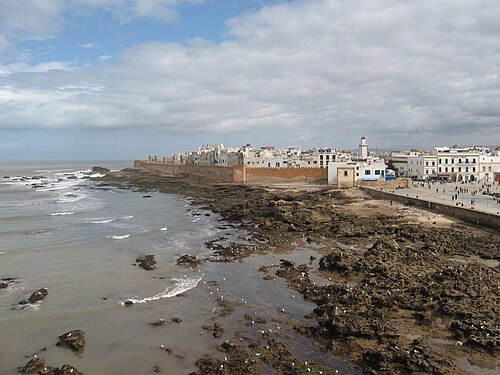
モロッコ
- アガディール
- アイット・ベン・ハッドゥ
- アシラ
- アゼムール
- カサブランカ
- シェフシャウエン
- エルジャディダ
- エッサウィラ
- フェズ
- クサル・エル・ケビル
- クサル・エス・セギル
- ララシュ
- マラケシュ
- メクネス
- ムーレイ・アブダラ
- ムーレイ・イドリス
- ワルザザート
- ウジダ
- ラバト
- サフィ
- 販売
- セフル
- タンジール
- タルーダント – モロッコで最もよく保存されている[1]
- タザ
- テトゥアン
- ティズニット
ニジェール
ナイジェリア
チュニジア
アメリカ大陸
カナダ
チリ
コロンビア

キューバ
ドミニカ共和国
- サントドミンゴは16 世紀から 20 世紀初頭まで要塞都市でした。コロニアル ゾーンでは今でも城壁の一部を見ることができます。主要な門の 1 つは非常によく保存されており、数世紀前にはサントドミンゴ包囲戦中にウィリアム ペンとロバート ヴェナブルズの侵略を阻止したペニャルバ伯爵にちなんで「伯爵の門」と名付けられました。
メキシコ

ウィキメディア・コモンズには、メキシコの城壁に関連するメディアがあります。
- カンペチェ- 旧市街の周囲の城壁の大部分は現存している
- マヤパン(マヤ遺跡)
- メリダ、ユカタン(19 世紀後半に大部分が破壊されましたが、一部の区画とアーチ型の門は残っています)
- メキシコシティ [要出典]
- トゥルム(マヤ遺跡)
- ベラクルス(19世紀に城壁は破壊されたが、要塞は残っている)[5]
パナマ
ペルー
プエルトリコ
- オールド サン ファン- オールド サン ファンの歴史地区は、プエルトリコの植民地時代の首都で、ラ リャベ デ ラス インディアス (インディアスへの鍵) としても知られるサン ファン バウティスタの城壁都市の全域を占めています。この地区には、サン フェリペ デル モロ城、サンクリストバル城、ラフォルタレザ、エルカニュエロ、および植民地時代の都市の 75% を今も囲んでいるオールド サン ファンの城壁の一部であるその他の要塞が含まれます。
アメリカ合衆国
_Castello_Plan_1660.jpg/500px-Stad_Amsterdam_in_Nieuw_Nederland_(City_Amsterdam_in_New_Netherland)_Castello_Plan_1660.jpg)
- マサチューセッツ州ボストンは、 1631年から18世紀末まで、本土と市街地が唯一繋がる地点であるボストン・ネックに防御用の城壁と門を維持していた。
- サウスカロライナ州チャールストンは、1690 年代から 1720 年代まで城壁で囲まれた都市でした。ハーフ ムーン バッテリーと呼ばれる城壁の一部は、オールド エクスチェンジ ビルのプロボスト ダンジョンに今も残っています。
- フロリダ州セントオーガスティンでは、1704年からスペイン人がサンマルコス城に接し、市を囲むキューボラインを建設しました。18世紀の地図にはセントオーガスティン全体を囲む壁の詳細が描かれています[7]
- ルイジアナ州ニューオーリンズは1718年に城壁都市として計画された。城壁はニューオーリンズの戦いの時には存在していたが、非常に荒廃していたため使用できなかった。[8] [9]
- ニューヨーク市では、17世紀にニューアムステルダムはマンハッタンを横切る防御壁を持っていた。ウォールストリートはその壁にちなんで名付けられた。[10]
ウルグアイ
アジア
アフガニスタン
- 古代都市バルフ
中国

- 北京については、北京の城壁を参照してください。1960年代に、市内を囲む大きな通りを建設するために、北京の城壁の多くの部分が取り壊されました。地下鉄の路線も、かつての城壁の場所に沿って走っています。
- 襄陽
- 広州
- ダリ
- 商丘
- 建水
- 張家口市、万泉区を参照
- 肇慶
- 光復古城
- 興城
- 聊城
- 開封
- 葫蘆島の千梓
- 大同
- 大明県
- 永台要塞
- 荊州
- かつて香港の飛び地であった九龍城砦
- 南京、南京城壁を参照
- 臨海
- 曲阜
- 太原、金源区を参照
- 平遥
- 上海(旧市街(上海)) – 1912年に大部分が破壊され、断片のみが残っている。
- 松潘
- 西安–西安市には、水を満たした堀のあるよく保存された城壁があり、市内の賑やかで近代的なエリアを囲む小さな公園を含む観光名所となっています。
- 正定
- 固原市袁州区
- 城壁で囲まれた村は中国本土と香港に今でも残っています。
インド

- アグラ
- アーメダバード
- アムラバティ
- アムリトサル
- ダティア
- デリー
- ハイデラバード
- ジャイプール
- ジャイサルメール
- ジョードプル
- ラクナウ
- ムンバイ(ボンベイの旧市街)
- ライガド
- ウダイプール
- ワランガル
- チェンナイ
- ムハウ
- バダミ
- アイホール
- カンチプラム
- マドゥライ
- ベルール
- ハレビドゥ
- ティルヴァンナーマライ
- シュリーランガパトナム
- コールハープル
- スーラト
- バローダ
- スーラト
- インドール
- グワリオル
- ガウダ
- ムルシダバード
- カルナスバルナ
- ナバドウィップ
- タムラリプティ
- ブヴァネーシュワル
- プリ
- カジュラホ
- バラナシ
- ジャンシー
- ファイザバード
- ガヤ
- パトリプトラ
- カングラ
- チャライデオ
- ジャンムー
- ルディアナ
- パティアラ
- シルヒンド
- チャンパワット
- ピソラガル
- ビラスプール
- シムラー
インドネシア
スンダ王国の首都であったパクアン・パジャジャランは、防御用の堀と壁に囲まれていました。現在、この地域は現代のボゴール市の一部となっています。
18 世紀の壁。マタラム王国時代に、ガヨグヤカルタ ハディニングラト王国のハメンクブウォノ 1 世が、オランダ人やその他の敵から首都内部を守るために建設しました。現在、壁の 96% が現存しており、地元のランドマークとなっています。
1745 年 2 月 17 日、スラカルタ王国はサラ村という名の新しく開拓された森に移り、周囲に 15 キロメートルに及ぶ「ベテン クラトン」または宮殿の壁がある王宮と市街地を建設しました。2022 年現在、市壁の 90% がまだ残っています。
- スロソワン
バンテン王国の首都として有名。植民地時代にオランダ人によって破壊され、バンテン王国の統治は終焉を迎えた。残された城壁は、当時の姿の10%程度しかない。
トゥロウランはかつてのマジャパヒト王国の首都でした。その全盛期には、首都はインドネシアで最初のヨーロッパ式のシステム化された古代都市(交通のための都市運河システムと、主要交通のための大きな通路と道路を備えていました)でした。なぜならトゥロウランは13世紀から15世紀のマジャパヒト王国の全盛期に開発されたからです。城壁は内部の「クラトン」または王宮といくつかの重要な場所を守っていました。今日、城壁は元の姿では見ることができません。
イラン
イラク
イスラエル
レバノン
- バールベック:アクロポリスと旧市街の周辺には、アラブの要塞(ローマの建造物の石で建てられた)の一部が今も見ることができます。
- バトラウン:この町は長さ225メートルのフェニキアの防波堤で知られています。紀元前9世紀の城塞もあり、その一部は今でも見ることができます。
- ベイルート:市の中心部で、フェニキアとローマの要塞とオスマン帝国の城塞の一部が発掘された。ファクルッディン2世が建てた有名な城壁はまだ発見されていない。
- ビブロス:旧市街は中世の城壁に囲まれており、南端には城が建っています。
- シドン:サン・ルイ城を除いて、この都市の中世の要塞はほとんど残っていません。
マレーシア
パキスタン
パキスタンのほぼすべての古い都市には防御壁がありました。これらの壁の多くは、都市を再強化するためにイギリスによって破壊されました。強化された都市は次のとおりです。
- ハイデラバード
- ラホール
- ムルターン
- ペシャワール
- シカルプル
- ハズロ、アトック地区
- クエッタ
- シアルコット
- ラワルピンディー
- グジャラート
- グジュランワーラ
- ベラ
- クダバード
- バンヌ
- トゥランバ
- ウチ・シャリフ
- セワン・シャリフ
- タッタ
- カラチ
- ローリ
- マンスーラ
- ベラ
パレスチナ
フィリピン
- セブ(サンペドロ要塞を参照)
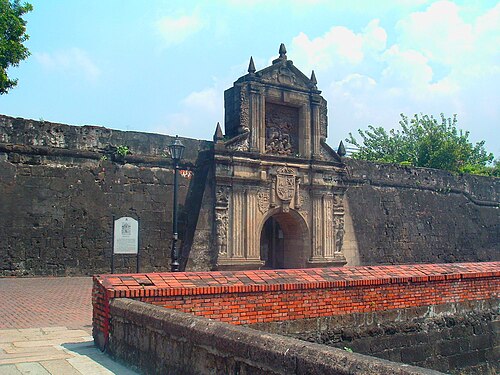
- マニラ(イントラムロス) – 第二次世界大戦後に部分的に保存、部分的に修復されました。オリジナルの壁は今でもよく保存されています。
- オロンガポ(「スペイン門」)
- オザミス(フエルテ・デ・ラ・コンセプシオン・イ・デル・トリウンフォ)
- サンボアンガ(ピラール砦を参照)
韓国
スリランカ
シリア
台湾
清朝時代には他のいくつかの町もとげのある竹で要塞化されていた。 [11]
タイ
ウィキメディア・コモンズには、タイの城壁に関連するメディアがあります。
- アユタヤ
- バンコク–バンコクの要塞を見る
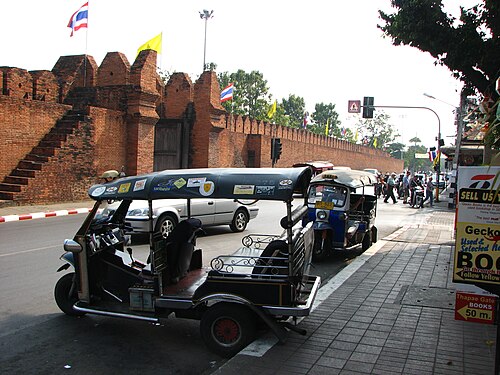
- 1296 年にマンラーイ大王によって築かれたチェンマイは、堀と城壁に囲まれていました。これらは 19 世紀初頭に大規模に再建されました。チェンマイの城壁と城門の大部分は現在まで残っています。
- チェンライ
- チェンセーン
- カンペーンペット
- ランパーン
- ランプーン
- ロッブリー
- ナコンラチャシマ
- ナコンシータマラート
- ナン、タイ
- ピチャイ
- パヤオ
- ピマーイ
- ピッサヌローク
- プレー
- シー・サッチャナーライ
- ソンクラー
- スコータイ
- スパンブリー
- トンブリー
- ウィアン・クム・カム
ウズベキスタン
ベトナム
イエメン

ヨーロッパ
アルバニア
オーストリア
- アレンシュタイグ
- アムシュテッテン城壁は設けられていないが、堀と土手があり、門塔が建てられている。
- ブライブルク
- ブルーデンツ
- ブラウナウ・アム・イン
- ブレゲンツ
- ブルック・アン・デア・ライタ – 部分的に保存
- ブルック アン デア ムール
- ドナースキルヒェン。
- ドロゼンドルフ
- デュルンシュタイン
- エーベンフルト
- エファーディング
- エッゲンブルク
- アイゼンシュタット
- エンス
- フェーリング
- フェルトキルヒ
- フリードバーグ
- フライシュタット – ほぼ完全に保存されている
- フリーザッハ
- フロントライト
- フュルステンフェルト
- グミュント
- グミュント・イン・ケルンテン
- グムンデン
- グラーツ
- グロス・エンツァースドルフ
- ギュッシング
- ハインブルク・アン・デア・ドナウ – ほぼ完全に保存されています (2.5 km、3 つの門、15 の塔)
- ハライン
- チロルのホール – 部分的に保存
- ハーデッグ
- ハートベルク
- ハスラッハ・アン・デア・ミュール
- ハイデンライヒシュタイン
- ヘルツォーゲンブルク
- ホーン
- ユデンブルク
- キッツビューエル
- クラーゲンフルト
- クロスターノイブルク
- クニッテルフェルト
- コルノイブルク
- クレムス
- クーフシュタイン
- ラー・アン・デア・タヤ
- レオーベン
- レオンフェルデン
- レオーベン
- リエンツ
- リンツ
- リトシャウ
- マイサウ
- マルケッグ – 一部のセグメントは保存
- マウテルン– ローマの要塞「ファビアナエ」の遺跡が旧市街の西側にあります。
- メルク
- ムラウ
- ミュルツツーシュラーク
- ノイマルクト・アム・ヴァラーゼー
- ノイマルクト
- オブダッハ
- オーバーヴェルツ
- オガウ・アム・ノイジードラー湖
- オッテンスハイム
- ピューアバッハ
- ペヒラルン
- プルバッハ・アム・ノイジードラー湖
- ラープス・アン・デア・タヤ
- ラドフェルド
- ラドカーズバーグ
- ラートシュタット – ほぼ完全に保存された城壁(13 世紀から 16 世紀)、3 つの円塔(1530 年代)、1 つの門
- ラッテンバーグ
- レッツ
- インクライスへの旅
- ロッテンマン
- さび
- 聖アンドラ
- ザンクト ファイト アン デア グラン
- ザンクト・ペルテン
- ザルツブルク
- シェルディング
- シェイブス
- シュラドミング
- シュラッテンタール
- シュヴァーネンシュタットは土手に囲まれた集落で、その上に木製の柵が設けられており、シュタットトゥルムに隣接する壁の長さは短いだけです。
- シュタットシュライニング
- ステナッチ
- スタイン
- シュトラスブルク
- シュタイアー
- シュタイレック
- トライスマウアー
- トゥルン・アン・デア・ドナウ
- ウィーン – 破壊されリング通りになった
- フィラッハ
- ヴィルス
- フェクラブルック
- フォルカーマルクト
- フォイツベルグ
- ヴァイトホーフェン・アン・デア・ターヤ
- ヴァイトホーフェン・アン・デア・イプス
- ウェイトラ
- ヴェルス
- ウィーナー・ノイシュタット
- ヴィルヘルムスブルク
- ヴォルフスベルク
- イップス・アン・デア・ドナウ
- ツァイゼルマウアー。ローマの補助要塞は 10 世紀にバーベンベルク家によって再強化されましたが、市場や特許状は与えられませんでした。
- ツィスタースドルフ
- ツヴェットル
アゼルバイジャン
ベルギー
ボスニア・ヘルツェゴビナ
ブルガリア
- ヒサリャ– 古代ローマの町は、今でもその防御壁のよく保存された遺跡にほぼ完全に囲まれています。

- ネセバル - 要塞化された島の都市
- ノヴァエローマ都市、スヴィシュトフ
- ドナウ川流域ブルガリアの最初の首都としてのプリスカ
- プロヴディフの要塞と城壁 –フィリッポポリスの東門、ヒサル・カピア、ネベト・テペ
- プレスラフがブルガリアの首都に
- シリストラ
- ソゾポル
- ソフィア–ローマ皇帝トラヤヌスによって城壁都市ウルピア・セルディカとして建設された
- ヴァルナ
- ヴェリコ トゥルノヴォ – 3 つの要塞の丘 –トラペジツァ要塞、ツァレヴェツ要塞、スヴェタ ゴーラがブルガリアの 1 つの首都を形成

クロアチア
キプロス
チェコ共和国
_(7).jpg/500px-M%C4%9Bstsk%C3%A9_opevn%C4%9Bn%C3%AD_(Beroun)_(7).jpg)

- ベチニェ
- ベラ・ポッド・ベズジェゼム
- ベナートキ・ナド・イゼロウ
- ベロウン
- ボホフ
- ボル
- ブルノ
- ブロモフ
- ブルンタル
- チャスラフ
- チェスカー・リーパ
- チェスケー・ブジェヨヴィツェ
- チェスキー・ブロド
- チェスキー・ダブ
- チェスキー・クルムロフ
- ヘブ
- クルディム
- チシェ
- ダチツェ
- ドマジリツェ
- ドヴール・クラーロヴェー・ナド・ラベム
- フリードラント
- フルネク
- ハヴリチクヴ・ブロッド
- フルチン
- ホラジェジョヴィツェ
- ホルショフスキー・ティーン
- ホスト
- フラデツ・クラーロヴェー
- フラニツェ
- ヤブロンネとポジェシュチェディ
- ヤロムニェル
- ジェビコ
- イチーン
- イフラヴァ– 中世の町の南、西、東側には城壁の大部分が残っています。北側にも一部が残っています。この要塞はツヴィンガー宮殿の好例でもあります。
- インジフーフ・フラデツ
- ヨゼフォフ
- カダン
- クラトヴィ
- コリン
- コステレツ・ナド・ラベム
- コウジム
- クルノフ
- クトナー・ホラ
- クロムエリシュ
- ランシュクロウン
- リプニーク・ナド・ベチュヴォ
- リトミシュル
- リトベル
- ロケット
- ルーニー
- メルニク
- ムラダー・ボレスラフ
- モヘルニツェ
- ナホド
- ノヴェ・メスト・ナド・メトゥイ
- ノヴィー・ビジョフ
- ノヴィー・イチン
- ニンブルク

ニンブルク城壁 - オドリ
- オロモウツ
- オポチュノ
- オパヴァ
- オソブラハ
- オストラヴァ
- オストロフ
- パルドゥビツェ
- ピセク
- プラナ
- プルゼニ
- プルムロフ
- ポリチカ– ポリチカの市壁の約 80% が、非常に良好な状態で今日も残っています。
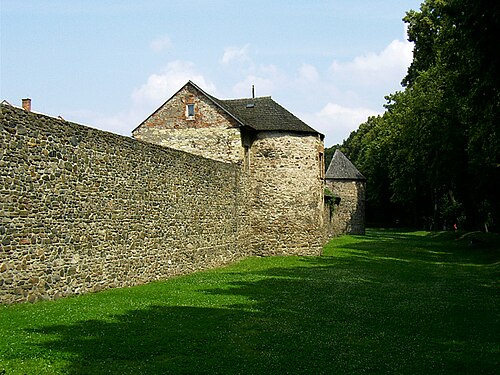
ポリチカの壁と要塞 - プラハティツェ
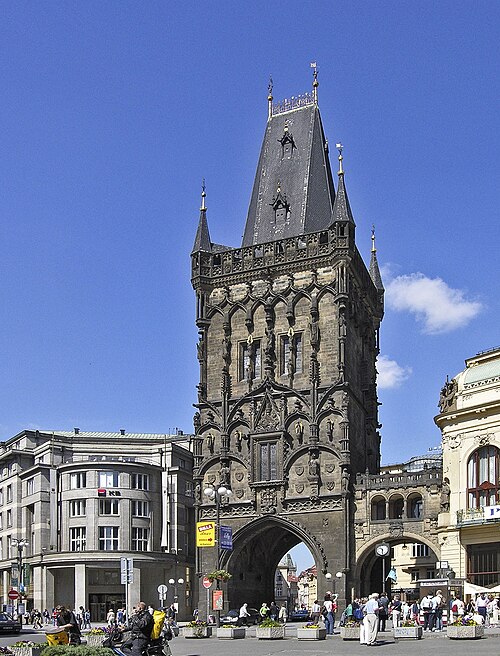
- プラハ
- プレロウチ
- プルジェロフ
- プロスチェヨフ
- ラブステイン・ナド・ストレロウ
- ラコヴニク
- ラタジェ・ナド・サザヴォウ
- ロキチャニ
- トレンディな場所
- スラニー
- ソベスラフ
- ソボトカ
- スタラー・ボレスラフ
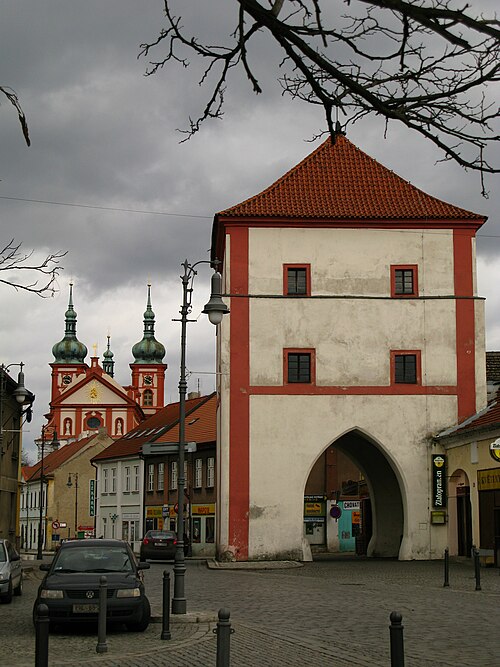
町の門、スタラー・ボレスラフ - シュテルンベルク
- シュトランベルク
- ストラジュニツェ
- ストリーブロ
- スヴィタヴィ
- シュムペルク
- スシツェ
- ターボル
- タホフ
- テプラ
- トヴァチョフ
- トレボン

トシェボンの城壁と防御要塞 - トルトノフ
- トゥジム
- ウヘルスキー・ブロッド
- ウニチョフ
- ウスティー・ナド・オルリツィ
- ヴァルチツェ
- ベルヴァリー
- ヴィドナヴァ
- ヴォドニャニ
- ヴラニー
- ヴィソケー・ミト
- ザブレ
- ザクピ
- ジャテツ
- ズルティツェ
- ズノイモ– 壁の半分以上が保存されており、ツヴィンガー宮殿の大部分も残っています。
デンマーク
- フレゼリシア、街の北と西にある広大なルネッサンス様式の城壁と海に面した城壁。
- コペンハーゲン、南と東には広大なルネッサンス様式の城壁、北と西には遺跡の跡、港口には立派な砦、港の入り口の外には 3 つの小さな島の砦。
- ニーボー – 遺跡には保存された 3 つの要塞、町の門があり、旧市街は今でも大部分が堀に囲まれており、他の (現在は取り壊された) 要塞の位置を示しています。
- ステーゲ、町の門の一つ、モレポルテンが今も残っています。町の中心部を囲む土塁と空堀の大部分が今も残っています。
エストニア

- パルヌには、2 つの稜堡と堀、町の門を備えた城壁が旧市街の西側に残っています。現在はヴァッリ公園という公園になっています。
- タリン(およびトームペア)、タリン市壁を参照。壁と塔の大部分が残っている。
- タルトゥ、残っている部分はほとんどない
- ナルヴァ、ナルヴァ要塞、9つの要塞と城を参照。ヘルマン城とヴィクトリア要塞は完全に修復されている。
フィンランド

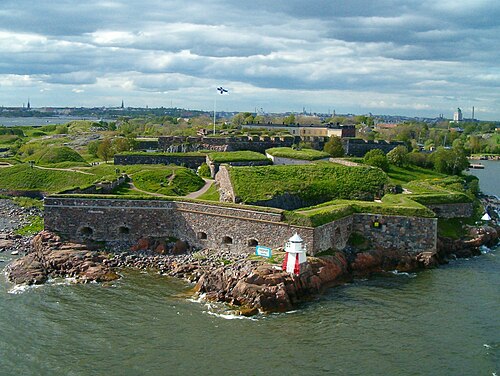
- ハミナ長さ約4~5kmの星型の城壁に囲まれた
- ラッペーンランタ町の旧市街は要塞の中にあります
- ロヴィーサ町の周囲に完全な要塞を建設する計画があったが、完成したのは2つの砦だけだった。
- スオメンリンナヘルシンキ沖の有人海上要塞
フランス

- アキニー
- アグド
- エーグモルト
- エネ=ル=シャトー
- エール・シュル・ラ・リス
- エクスアンプロヴァンス
- アランソン、オルヌ
- アマンス、オート=ソーヌ県
- アンボワーズ、アンドル=エ=ロワール県
- アンマーシュヴィア
- アンジェ、メーヌ=エ=ロワール県
- アングレーム
- アンティーブ
- アプト
- アルドル
- アルル
- アラス
- オービニー・シュル・ネール
- オーシュ
- オータン
- オーヴェ・エ・ラ・シャプロット
- アヴァロン
- アヴェーヌ=シュル=エルプ
- アヴィニョン
- アヴランシュ
- アイヘレ
- バジェ・ル・シャテル
- バルジェーム
- ボー・ド・プロヴァンス
- ババイ
- バイヨンヌ
- バザス
- ボージャンシー
- ボーヌ
- ボーヴェ
- ベギオス
- ベレム
- ベルクハイム、オー=ラン県
- ベルグ
- ブザンソン
- ブロワ、ロワール=エ=シェール県
- ベルシュ
- ボワセロン
- ボヌヴァル、ウール=エ=ロワール県
- ブーゲ
- ブルボン・ランシー
- ブールジュ
- ブール=ル=ロワ
- ブリアンソン
- ブリニョン
- ブリオド
- ブルッフ、ロット=エ=ガロンヌ県
- キャデラック、ジロンド
- カーン
- カオール
- カンペル
- カプデナック
- カルカソンヌ
- カリニャン、アルデンヌ
- コデベック・アン・コー
- セルネ、オー=ラン県
- シャロン=シュル=ソーヌ
- シャンデュー
- シャンピニュル
- シャンプリット
- シャルルヴィル=メジエール
- シャトー・ティエリー、エーヌ県
- シャトレー
- シャティヨン=シュル=ソーヌ
- シェロート
- クレルモンフェラン
- クリュニー
- コロンジュ・ラ・ルージュ
- コルマール
- コルマール
- コンピエーニュ
- コンプレニャック
- コンカルノー
- コンデ・シュル・レスコー
- コルビニー
- コルド・シュル・シエル
- コーメリー
- コーヌ=クール=シュル=ロワール
- クシー・ル・シャトー・オフリーク– 城壁の大部分は残っていますが、一部は廃墟となっています。残っているのは、いくつかの塔、城壁の延長、3 つの門、ポルト・ド・ラン、ポルト・ド・ソワソン、ポルト・ド・ショーニーです。
- クルテゾン
- クレシー・ラ・シャペル– 断片的な遺跡
- クレキ
- キュクロン
- キュイゾー
- クセット
- ダッハシュタイン、バ=ラン県
- ダンバッハ・ラ・ヴィル
- ダックス、ランド
- デサイズ
- ディ、ドローム
- ディーメリンゲン
- ディエップ、セーヌ=マリティーム県
- ディナン
- ドール、ジュラ
- ドンフロン、オルヌ県
- ドンム、ドルドーニュ
- ダン=シュル=オーロン
- エスパリオン
- ユー、セーヌ=マリティーム県
- エヴルー
- ファレーズ、カルヴァドス
- フォコニー・エ・ラ・メール
- フール
- フィジャック
- フォス=シュル=メール
- フージェール
- フレジュス、ヴァール
- ジヴェ
- グランヴィル、マンシュ
- グルノーブル
- ゲマール、オー=ラン県
- ゲランド
- ヘンヌボン
- ヘルリスハイム=プレ=コルマール
- ヘスディン
- イエール・ブルアージュ
- オンフルール
- エクス島
- イルファース
- イスーダン、アンドル県
- イストゥリツ
- ジョワニー
- ラ カヴァレリー
- ラ・シャリテ・シュル・ロワール
- ラ・シャサーニュ
- ラ・クーヴェルトワラード
- ラ・グルット
- ラ・マルティール
- ラ・ロッシュ・ド・グラン
- ラ・ロシェル
- ラ ロッシュ ポゼ
- ラ・ソヴェタ、ピュイ・ド・ドーム
- ラ・トゥルビ
- ラングル
- ラネレイ
- ランタバト
- ラオン
- ラルスヴォー・アロス・シビッツ
- ラレスシングル
- ラヴァル、マイエンヌ
- ル・カステレ、ヴァール
- ル・クロゼ
- ル・マルジューヴィル
- モンサンミッシェル
- ル・パレ
- ル・ポエ・ラヴァル
- ル・ケノワ
- ル・トール
- レ・ザンデリス
- レ・クリューズ
- レヴェンス
- ロシュ– 大部分はそのまま残っています。上町とロシュ城は丘の上に建てられており、周囲の田園地帯とアンドル川を見下ろす戦略的な位置にあります。上町の壁はほぼそのまま残っており、サン・トゥール門の遺跡、よく保存されたロワイヤル門、長い城壁、いくつかの塔と稜堡があります。下町の壁は部分的に破壊されていますが、4 つの塔、後から追加されたいくつかの小さな小塔、長い城壁、よく保存されたコルドリエ門とピコワ門 (現在は市庁舎として機能) はそのまま残っています。
- ルダン、ヴィエンヌ
- リュセラム
- マイソド
- マンズ
- マルコレス
- マルサル、モーゼル
- マーヴィル、ムーズ
- モーブージュ
- マンデ、ロゼール
- メヌトゥー=シュル=シェール
- メス
- ムルサック
- モルスハイム
- モンソー=シュル=ドルドーニュ
- モンドゥヴロー
- モンパジエ
- モンタルシェ
- モンブリゾン、ロワール
- モン・ド・マルサン
- モントゥー
- モンフォール・シュル・ミュー
- モンヴィリエ
- モンルイ
- モントリオール、ヨンヌ県
- モントルイユ、パ=ド=カレー
- モントルイユ=ベレー
- モンヴェルダン
- モレ=シュル=ロワン
- モルレー
- ムージャン
- ムゾン、アルデンヌ
- ナバス、ピレネー=アトランティック県
- ナージュ・エ・ソロルグ
- ナント
- ナルボンヌ
- ナヴァレンクス
- ヌーボア
- ヌフブリザック
- ヌヴェール
- ニース、アルプ=マリティーム県
- ニュル=シュル=ローティーズ
- ニーム
- ノートルダム・ド・グラヴァンション
- オーバーハスラッハ
- オベルネ
- オラドゥール シュル グラヌ、オート ヴィエンヌ
- オランジュ、ヴォークリューズ
- オルゴン
- オスタバト・アスメ
- パリ
- パルテネ
- ペルージュ
- ペルテュイ
- ペスメス
- プレイシー
- プロエルメル
- ポワティエ、ヴィエンヌ
- ポリニー、ジュラ
- ポミエ、ロワール
- ポン・ド・ラルシュ
- ポンジボー
- ポン・ラベ・ダルヌー
- ポントワーズ
- プイィ・レ・フール
- プラド・ル・レ
- プラ・ド・モロ・ラ・プレスト
- プロヴァン
- ピュイセルシ
- カンペール、フィニステール
- クインティン
- ラネス
- ラウザン
- ラ・レオール
- ルヴェスト・デ・ブルッス
- リボーヴィレ
- リシュリュー、アンドル=エ=ロワール県
- リオンズ
- リクヴィール
- ロカマドゥール
- ロシュフォール、シャラント=マリティーム県
- ロクロワ
- ロデマック
- ロメネ
- ロスハイム
- ルーファック
- ロイ、ソンム
- 噂
- サン=ベルトラン=ド=コマンジュ
- サン=ディエ=シュル=ロワール
- サントクロワシュルビュシー
- サンテミリオン、ジロンド県
- サント、シャラント=マリティーム県
- サント・ウラリー・ド・セルノン
- サント・シュザンヌ・エ・シャム
- サン=テティエンヌ=ド=バイゴリー
- サン=フェリックス=ローラゲ
- サン・ジャンス
- サン=ティポリット、オー=ラン県
- サン・ジャン・ピエ・ド・ポー
- サン・ジュニアン– レピュブリック大通りとブレッシュ通りの交差点にある家々の後ろに、塔と城壁の遺跡が残っています。
- サン・ローラン・デ・ザルブル
- サン・レジェール・マニャゼ
- サン・ロー
- サンマケール
- サン・マルクフ、マンシュ
- サン・マルタン・ダロッサ
- サン・ミトル・レ・ランパール
- サントメール
- サン・パストゥール
- サン・ポール・ド・ヴァンス
- サンポンポン
- サン・シュリアック
- サン・シュルピス・ド・ファヴィエール
- サン・トリヴィエ・シュル・モニャン
- サン=ヴァレリー=シュル=ソンム– ポルト・ド・ヌヴェール、ポルト・ジャンヌ・ダルク、城壁の連なり、いくつかの塔など、大部分が残っています。町の上にはキャップ・オルニュという丘があり、そこはロクス・クァルテンシス・シヴ・ホルネンシスと呼ばれるローマ・ザクセン海岸の要塞と港があった可能性が最も高い場所です。
- サン・ヴェラン
- サイサック
- サラルベ
- サールブール
- ソーミュール、メーヌ=エ=ロワール県
- ソーヴァン
- セレスタ
- スミュール=アン=ノーソワ
- サンリス、オワーズ
- サンス、ヨンヌ
- セプテーム
- シストロン
- ソワソン
- ソレル・ムッセル
- ストラスブール
- シュエーヴル
- タン、オー=ラン県
- ティオンヴィル、モーゼル
- トゥアール
- ティラック
- ティンクリ
- トゥール、ムルト=エ=モゼル県
- トゥールーズ
- トゥール、アンドル=エ=ロワール県
- トゥルー
- トゥルクハイム
- ユゼス
- ヴァブレ
- ヴァンヌ
- ヴォークルール、ムーズ県
- ヴナスク
- ヴァンス
- ヴェルダン、ムーズ
- ヴェルヴィン
- ヴェズレー
- ヴィアンヌ
- ヴィエンヌ、イゼール
- ヴィアン、ヴォークリューズ
- ヴィエヴィ=ル=レイエ
- ヴィルフランシュ・ド・コンフラン
- ヴィルヌーヴ=シュル=ヨンヌ
- ヴィトレ、イル=エ=ヴィレーヌ県
- ヴーヴァン
- ヴァンゲン、バ=ラン県
- ワットヴィラー
- ヴェストホッフェン
- ヴィサンブール
- ゼレンベルグ
ドイツ



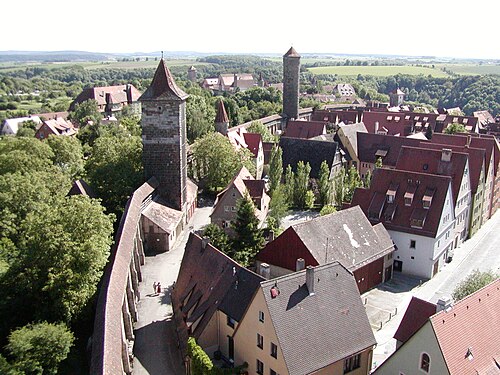


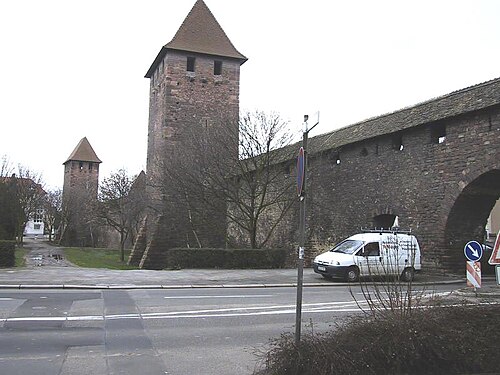
- アーヘンでは、テンペルグラーベン沿い(アイリュフショルンシュタイン通りとの角とポント通りとの角)と、ザイルグラーベン沿いの家々の裏に、内壁の一部が今も残っています。外壁のうち、ランガー塔、プファッフェン塔、マリエン塔の 3 つの塔は今も残っています。残っている 2 つの市門、ポント門とマルシル門は、ドイツで最も保存状態の良い門の 1 つです。
- アーチ
- アベンスベルク
- アールヴァイラー
- アイチャック
- アルテントレプトウ – 遺跡にはいくつかの城壁、塔、そしてブランデンブルク門とデミナー門という 2 つの町門が含まれています。
- アンベルク・ブッフホルツ
- アンベルク
- アメーネブルク
- アンダーナハ
- アルベルグ– 町の門は 1 つだけ残っています。
- アルンシュタット
- アシャッフェンブルク
- Aub – いくつかの塔を含む城壁の大部分が残っています。町の門である Zentturm が 1 つ残っています。
- バーベンハウゼン
- バート・コルベルク=ヘルドブルク
- バート・フランケンハウゼン
- バート・ヘルスフェルト
- Bad Langensalza – large parts of the walls still remain today, including 12 wall towers and one city gate, the Klagetor.
- Bad Münstereifel
- Bad Neustadt an der Saale
- Bad Orb
- Bad Rodach
- Bad Sooden-Allendorf
- Bad Waldsee
- Bad Wimpfen
- Bacharach
- Ballenstedt
- Barby
- Bautzen
- Beilngries
- Berching
- Berlin had a defensive wall around the city from about 1250 until the mid-17th century, and a Customs Wall from the mid-18th to the mid-19th centuries. The Berlin Wall that existed from 1961 to 1989 was claimed by the authorities of East Germany to be defensive, but in fact it was rather intended to prevent unauthorized emigration. Parts of Berlin's medieval wall still remain alongside the Littenstraße.
- Bernau bei Berlin
- Bernkastel – one town gate, the Graacher Tor, remains.
- Besigheim
- Blankenburg (Harz)
- Bodenwerder
- Boizenburg
- Boppard
- Bönnigheim – some parts of the walls and a town gate remain.
- Brandenburg
- Buchen
- Burgau
- Burg bei Magdeburg
- Burghausen
- Butzbach
- Büdingen
- Calbe
- Chemnitz – only one tower remains, the Roter Turm (Red Tower).
- Coburg
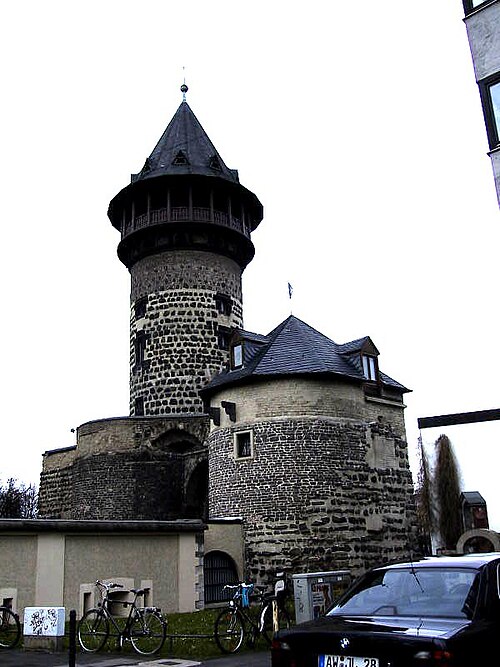
- Cologne
- Crailsheim – some remains are located north of the Ringgasse, including a wall tower. Another tower remains alongside the Grabenstraße.
- Darmstadt
- Dausenau – the walls remain almost intact. One town gate still remains, the Torturm.
- Delitzsch
- Demmin large parts of the city walls still remain alongside Nordmauer, Bauhofstraße and Südmauer. One town gate still remains, the Luisentor.
- Dettelbach
- Dillenburg
- Dillingen
- Dilsberg
- Dinkelsbühl – the medieval town walls remain fully intact, including 4 gates and 19 towers.
- Dollnstein
- Dömitz
- Donauwörth
- Dresden – Dresden's defensive walls were some of the first in Germany, inspired by the earlier Italian model. The walls surrounded both the ‘Old City’ south of the Elbe, and the ‘New City’ to the north. The walls, gates and moats were largely removed c. 1815, following the Napoleonic Wars, being deemed outmoded for modern warfare. Some small sections have been rediscovered and established as the Museum Festung Dresden https://web.archive.org/web/20160509160153/http://www.festung-dresden.de/de/festung_dresden/museum/ below the more famous Brühl Terrace.
- Duderstadt
- Duisburg
- Ebern
- Eberbach (Baden)
- Eibelstadt
- Eichstätt
- Einbeck
- Eisenheim
- Ellwangen
- Eltville am Rhein
- Emden
- Erding
- Erlangen – some stretches of wall still remain alongside Nördliche Stadtmauerstraße, Wöhrstraße and Schulstraße.
- Feuchtwangen
- Fladungen
- Forchheim
- Freiberg
- Freyburg, Germany
- Freystadt
- Friedberg, Bavaria
- Freinsheim
- Frickenhausen am Main
- Fritzlar
- Gangelt
- Gardelegen – there are several remains of the old town wall, including the impressive Salzwedeler Tor, the remains of the Stendaler Tor, and some stretches of wall.
- Gartz (Oder) – The remains of the walls around the medieval town include some sizable stretches of walls, towers and one town gate, the Stettiner Tor.
- Geisa
- Gelnhausen
- Germersheim
- Gerolzhofen
- Göllheim – two town gates are preserved, the Kerzenheimer Tor and the Dreisener Tor. One tower remains, the Ulrichsturm.
- Gräfenberg – the remains include three well-preserved town gates, the Egloffsteiner Tor, the Hiltpoltsteiner Tor and the Gesteiger Tor. Some parts of the walls still remain adjacent to the Gesteiger Tor and at the back of the houses alongside Am Gesteiger and Schulgasse.
- Grebenstein – most of the medieval walls are still surrounding the old town. One town gate remains, the Burgtor.
- Greding
- Grimma
- Grimmen one tower still remains, the Wasserturm. All three of the original town gates also remain, the Stralsunder Tor, Greifswalder Tor and the Mühlentor.
- Großostheim
- Gundelfingen an der Donau
- Gundelsheim
- Gunzenhausen
- Güstrow – remains of the walls remain south of the cathedral and alongside the Gelviner Mauer. The town
- Haldensleben
- Hannoversch Münden
- Hattingen
- Heidelsheim – one town gate and a wall tower still remain today.
- Heidingsfeld, today part of Würzburg
- Heilbad Heiligenstadt
- Herborn
- Herrieden
- Hildburghausen
- Hirschhorn
- Haldensleben
- Hammelburg
- Hardgesen
- Hollfeld – the remains include one town gate, the Obere Tor, and some parts of the walls to the south of the old town.
- Homberg, Efze
- Horn
- Höchstadt an der Aisch
- Höchstädt an der Donau
- Horb am Neckar – large sections of the walls still remain. One town gate, the Ihlinger Tor, still remains, and some towers still remain, most notably the Schurkenturm and the Schütteturm.
- Höxter
- Hünfeld
- Ingelheim am Rhein – sizable remains, including stretches of wall, the Malakoffturm, the Bismarckturm, Ohrenbrückertor, Uffhubtor and the ruined Heidesheimer Tor. The medieval town centre also houses the ruins of the Ingelheimer Kaiserpfalz.
- Ingolstadt
- Iphofen
- Jena
- Kallenhardt
- Karlstadt am Main
- Alt Kaster – The old medieval town of Kaster now forms part of Bedburg. The town walls remain largely intact, including 2 town gates and several towers.
- Kaub
- Kaufbeuren
- Kemnath – several sections and towers of the walls remain around the medieval town. The eastern town gate was later converted into a church tower.
- Kempen – some parts of the walls still remain. They include the Kuhtor, a well-preserved town gate, the Mühlenturm and the remains of another town gate, the Peterstor.
- Kindelbrück
- Kirchberg an der Jagst
- Kirchhain
- Kirchheim unter Teck
- Kitzingen
- Kroppenstedt
- Korbach
- Kranenburg
- Kronach
- Kulmbach
- Kuppenheim
- Kyritz
- Ladenburg
- Landsberg am Lech
- Landshut
- Langenzenn
- Laucha an der Unstrut
- Lauchheim
- Lauingen
- Lauf an der Pegnitz
- Laufen
- Lauffen am Neckar – the old town consists of three parts. While the town is divided by the river Neckar, the castle stands on a small island circled by the river. On the left bank there is a sizable stretch of wall is located next to the church. On the right bank, some towers, stretches of wall and the Neues Heilbronner Tor still remain.
- Leipheim
- Leipzig – remains include the Moritzbastei bastion.
- Leonberg
- Leutershausen
- Löbejün
- Lohr am Main
- Lübben
- Luckau
- Magdeburg
- Mainbernheim
- Maintal – large sections of the walls still remain, notably to the north of the medieval town.
- Mainz – the remains include the well-preserved square-shaped citadel, the medieval Alexanderturm, and the remains of a bastion alongside the Augustusstraße.
- Malchin two town gates still remain, the Kalensches Tor and the Steintor. Some parts of the walls to the south and east of the town still remain.
- Marbach am Neckar
- Markt Einersheim – two town gates still remain.
- Marktbreit
- Mayen
- Meisenheim
- Mellrichstadt
- Memmingen
- Meppen – the remains include a star shaped moat around the medieval town.
- Merkendorf
- Meyenburg
- Michelstadt
- Miltenberg
- Mindelheim
- Möckmühl
- Monheim – two town gates remain, the Oberes Tor and the Unteres Tor.
- Mühlhausen
- Müncheberg
- Munich has some of its former city gates still standing, and a section of its late 13th-century defensive wall.
- Münnerstadt
- Münzenberg – fragments of the walls remain, including two towers.
- Monheim – some stretches of wall still remain and both town gates, the Oberes Tor and the Unteres Tor, are preserved.
- Nabburg
- Naumburg
- Neckarsulm
- Neubrandenburg
- Neubrunn
- Neuburg an der Donau – some parts of the medieval walls still remain, including the Unteres Tor. The trace of the later bastion earthworks, the so-called Untere Schanze, Elias Holl Schanze and Oberer Schanze, is still recognizable in the fields and from the air.
- Neudenau
- Neuenstadt am Kocher
- Neuenstein
- Neuleiningen
- Neumarkt in der Oberpfalz
- Neunkirchen am Brand – three town gates still remain, the Forchheimer Tor, the Erleinhofer Tor and the Erlanger Tor.
- Neuss
- Neustadt (Hessen)
- Neustadt an der Aisch – substantial parts of the walls still remain, including some towers and a well-preserved town gate, te Nürnberger Tor.
- Neustadt in Holstein – one town gate remains, the Kremper Tor.
- Niedernberg – several stretches of the walls wall remain. One wall tower remains at the riverside end of the Turmgasse
- Niedernhall – most of the town walls remain intact.
- Nordhausen
- Nördlingen
- Nürnberg
- Obernburg am Main
- Oberwesel
- Ochsenfurt
- Oebisfelde
- Oettingen
- Öhringen
- Oldenburg
- Oppenheim – some stretches of the town walls remain near the ruins of Landskron castle. One town gate and two towers remain, the Gautor, the Ruprechtsturm and the Uhrturm.
- Ornbau
- Orsoy
- Ortenberg
- Oschatz
- Ostheim
- Paderborn
- Pappenheim
- Pasewalk
- Tribsees – two town gates remain, the Steintor and the Mühlentor
- Trier-Pfalzel
- Pfullendorf
- Pößneck
- Potsdam
- Prenzlau there are some good remains of the walls, especially North, East and South of the town. 4 gates still remain, the Steintor, Wasserpforte, Mitteltor and the Blindower Tor. The walls also include 25 towers.
- Prenzlin
- Prichsenstadt
- Querfurt
- Radolfzell am Bodensee
- Ratingen
- Ravensburg – three town gates still remain, the Frauentor, Obertor and the Untertor. Nine of the original ten wall towers still remain, most notably a tower named Mehlsack.
- Recklinghausen two defensive towers and some portions of wall still remain today, north west of the old city.
- Reichelsheim – three towers remain.
- Rodach
- Rees – large parts of the town walls still remain intact, mainly located at the riverside of the town and in the parks at the north-east and west side of the medieval town.
- Rheinbach
- Rheinberg
- Rhens – the town walls remain largely intact. Three town gates still remain, the Rheintor, the Josephstor and the ruins of the Viehtor.
- Rostock
- Röttingen
- Roth
- Rothenburg ob der Tauber
- Rottweil
- Rüthen
- Salzkotten
- Salzwedel
- Schleusingen
- Schlüsselfeld
- Schmalkalden
- Schongau, Bavaria
- Schrobenhausen
- Schwaigern
- Schwalmstadt – the remains of a town gate still survive, the medieval Lüdertor. The earthworks are mostly demolished, leaving a moat of which the course indicates the location of four round bastions.
- Schweinfurt
- Seehausen – the moat still surrounds most of the medieval town. Fragments of the walls are to be found at the southern side of the old town. One town gate still remains, the Beustertor.
- Seßlach
- Seligenstadt – the remains include the Steinheimer Torturm, the Pulverturm and a tower at the Friedhofsmauer.
- Segnitz
- Soest – 2.5 km of the town walls (1180) are still intact, also a town gate ("Osthofentor", with the world largest collection of crossbow bolts) and a defense tower ("Kattenturm").
- Sommerach
- Sömmerda
- Sommerhausen
- Spalt
- Spangenberg
- Stade
- Staßfurt
- Stadt Blankenberg
- Steinheim
- Steinau an der Straße
- Stendal – two town gates still remain.
- Sternberg
- Stadtsteinach
- Stralsund
- Sulzbach – sizable parts of the walls and towers still remain. One town gate is preserved, the Rosenberger Tor.
- Sulzfeld am Main
- Tangermünde – most of the town walls still remain, including some towers.
- Templin
- Themar
- Treysa – the remains are located mainly South, East and North of the old town.
- Trier, portions of the city walls still exist, but the size of the Roman gate, the "Porta Nigra", gives evidence of the importance of the city. Other Roman remains include the baths, the Constantine Basilica, an amphitheater, and a 2nd-century AD Roman bridge.
- Torgau
- Überlingen
- Uffenheim
- Ulm an der Donau
- Villach
- Villingen
- Vilseck
- Vilshofen an der Donau
- Vellberg
- Volkach
- Waiblingen
- Waldenburg
- Waldfeucht
- Wangen im Allgäu
- Warburg (Westfalia)
- Wassertrüdingen
- Wemding
- Weikersheim
- Weil der Stadt
- Weilrod – the only town gate still remains.
- Weißenburg (Bavaria)
- Werben – one town gate still remains to the north east of the medieval town, the Elbtor. A tower with adjacent portion of the town wall remains to the west of the medieval town.
- Wertheim
- Wettenberg
- Windsbach
- Winterhausen
- Wittstock
- Witzenhausen
- Woldegk
- Wolframs-Eschenbach
- Worms, Germany
- Wörth am Main
- Wunsiedel 3 towers, small portions of the walls and a town gate (Koppetentor) still remain.
- Würzburg
- Xanten
- Zeil am Main
- Zerbst
- Zons
- Zülpich
- Zwickau
Gibraltar
Greece
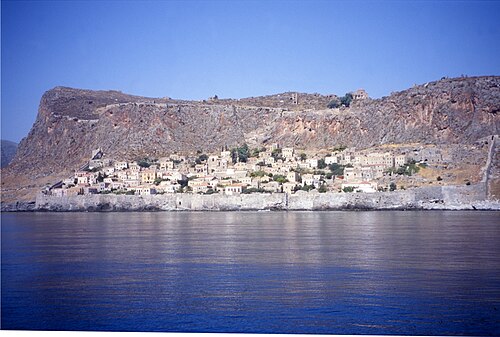

Many towns and cities still retain at least parts of their defensive walls, including:
- Arta
- Athens – mostly demolished, see city walls of Athens
- Chania – see Fortifications of Chania
- Chios
- Corfu (city)
- Drama, Greece – sizable parts of the town walls remain to the north and east side of the old town. Including 2 towers and stretches of wall.
- Heraklion Candia Khandak – see Fortifications of Heraklion see siege of Candia – Arab and Byzantine walls still remain, about 20%, Venetian 7.5 km long walls, 95% still remain, 30.000 people live now inside the Venecian walls. Two gates, one castle in the sea (Koules)
- Ioannina – see Ioannina Castle
- Kastoria – fragmentary remains.
- Kavala (a significant part of the seaside walls survive)
- Kissamos
- Komotini
- Koroni – preserved fortifications of the castle and upper town.
- Missolonghi
- Monemvassia
- Mystras
- Nafplion
- Naupactus
- Preveza
- Rethymno – see Fortezza of Rethymno
- Rhodes – see Fortifications of Rhodes
- Thessaloniki – see Walls of Thessaloniki
- Veria (about 170 m of the Byzantine walls survive)
Hungary
- Buda – the Castle Hill is surrounded by preserved medieval and early modern fortifications. Only a short section survived from the walls of the Víziváros neighbourhood.
- Pest – segments of the 15th-century city walls are preserved inside the courtyards of later houses.
- Eger – some segments preserved, mostly demolished
- Győr – the walls were demolished in the 19th century but segments are preserved
- Komárom
- Kőszeg
- Mosonmagyaróvár – the walls were demolished in the 1820s
- Pécs – long sections of the medieval walls are preserved and freed to later intrusions.
- Sárospatak
- Sopron – medieval circle of walls partly built on ancient Roman foundations
- Szécsény – some segments of the city walls preserved
- Székesfehérvár – long sections of the medieval walls are preserved
- Vác – some segments and one tower preserved
- Veszprém – walled old town on Castle Hill
Republic of Ireland
Italy

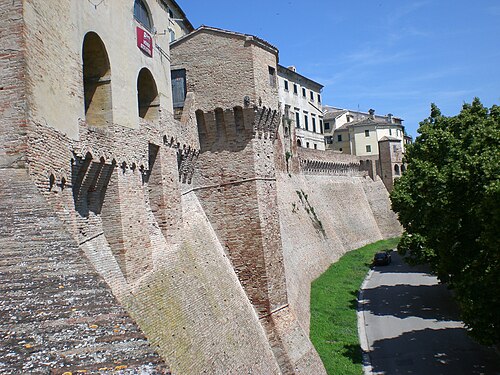
- Acqui Terme – three town gates and remains of walls.
- Acuto
- Albenga – fragmentary remains, including stretches of wall and 3 town gates.
- Alghero
- Altamura – some remains; two gates are still visible, namely Porta Bari and Porta dei Martiri
- Ancona
- Anghiari
- Aosta's Roman walls are still preserved almost in their entirety
- Appignano
- Aquasparta
- Arcevia
- Asolo
- Assisi
- Arezzo – Large parts of the town walls still survive, including several stretches of curtain wall, 6 bastions, 4 town gates and the well preserved citadel Fortezza Medicea.
- Bagnacavallo – two town gates remain.
- Bari – historically a walled port city on a promontory but only two bastions and a short section of the sea walls survived
- Bassano del Grappa
- Bastia Umbra
- Belvedere Ostrense
- Belluno
- Bergamo – surrounding hill of the old city
- Bisceglie
- Bologna
- Bosco Marengo – a large part of the north-western walls with towers are preserved.
- Bozzolo
- Brescia – the castle hill (called Cidneo Hill) is surrounded by preserved medieval and Renaissance fortifications. Segments of Roman and venetian walls are partially survived
- Bressanone – the western gate remains as well as the north side where the houses serves as walls
- Brindisi – several parts of the walls are preserved, including 5 bastions and two town gates, the Porta Lecce and the Porta Mesagne.
- Brunico – three gates remain, the western, northern and eastern ones.
- Busseto
- Cagli
- Cagliari
- Caltagirone
- Camerino
- Capua
- Castel Bolognese – three wall towers still remain.
- Castel del Monte
- Castel Goffredo – tiny fraction of the walls and a tower remain
- Castelfranco Veneto – the old town is completely surrounded by medieval walls and a moat
- Castelvetro di Modena
- Castelsardo
- Castiglion Fiorentino
- Castiglione di Garfagnana
- Castiglione del Lago's old town has fully preserved walls
- Cesena
- Cingoli
- Cittadella – one of the best preserved walled towns in Italy, there's a small breach on the northwestern part (the walls are fully walkable)
- Città della Pieve
- Città di Castello
- Cividale del Friuli – small part of the walls remain on the north east
- Colmurano
- Cologna Veneta – minor part of the walls remaining on the western side
- Como – about 70% is remaining with a few towers
- Cordovado – two town gates remain
- Corinaldo
- Corridonia
- Cortona
- Crema (Venetian walls of Crema)
- Crotone
- Domodossola – a tiny fraction remains behind the church
- Este, Veneto – parts of walls still remaining
- Fabriano
- Faenza
- Falerone
- Fano – large sections of the Roman walls and towers are preserved. One town gate still remains, the Roman Arco di Augusto.
- Felizzano
- Ferrara – originally 13 km now 9 km remain
- Firenzuola
- Fiuggi
- Florence
- Foligno
- Fossano – a minor part remains, particularly a bastion at the north end
- Forlì – remains include the ruins of the Porta Schiavona. The foundations of a tower can be found in the roundabout at the Piazza Santa Chiara.
- Gallipoli
- Gemona
- Genoa has partial fortifications still standing
- Glurns Glorenza in Italian, the medieval stone walls fully encapsulate the old town
- Gradara
- Gradisca d'Isonzo – large part of the walls and towers still intact
- Grosseto's star shaped town walls are almost completely intact.
- Guardiagrele
- Guastalla – a star-shaped road around the town indicates the trace of the fortifications. A wall tower still stands at the corner Via Giuseppe Verdi/Via Volturno.
- Iglesias
- Isernia
- Ivrea
- Jesi
- Lanciano
- Lazise – part of the northern and southern walls still intact, including several towers and 3 town gates.
- Lecce
- Lecco – small part of the walls remains on the north east
- Leonessa
- Livorno
- Loano
- Loro Piceno
- Lucca
- Macerata
- Marostica – The defensive walls around the old town are fully intact. The walls are among the best preserved medieval defensive structures in Italy. Including 3 town gates, 20 towers and two castles, the Castello Superiore and the Castello Inferiore.
- Marsala
- Marta
- Massa Martana
- Massa Fermana
- Matera
- Melfi
- Messina – see Fortifications of Messina
- Mignano Monte Lungo – the Porta Fratte town gate is the only remain of the medieval town walls.
- Mineo
- Mondolfo
- Monopoli
- Montefalco
- Montegiorgio
- Monteriggioni
- Montagnana – perfectly preserved medieval walls and one of the most impressive in Europe
- Montappone – small fortified town. The town directly borders the walled town of Massa Fermana
- Montecassiano
- Montecatini Terme
- Monte del Lago
- Monte San Giusto – fragmentary remains, including an impressive town gate and a tower.
- Monte San Pietrangeli
- Monte San Savino
- Monte Vidon Corrado
- Muggia – remains include two towers, two stone bastions, two town gates and large stretches of the walls.
- Naples
- Nardò – several fragments of the walls still stand around the town, including many towers which are incorporated in houses.
- Narni
- Nettuno
- Noale
- Norcia
- Novi Ligure
- Orbetello
- Orvieto
- Ostra
- Ostuni
- Otranto
- Padova
- Palmanova has fortress plan and structure, called a star fort it is a nine pointed citadel
- Passignano Sul Trasimeno
- Pavia
- Perugia
- Pesaro – the remains include two bastions, a curtain wall and a town gate, the Porta Rimini.
- Peschiera del Garda – fortified town surrounded by water
- Peschici
- Petriolo
- Piacenza has large sections of its Renaissance walls still standing
- Piglio
- Piombino
- Pisa
- Pistoia
- Pizzighettone – nearly completely surrounded by walls apart from a few breaches
- Pollenza
- Pontremoli
- Portobuffolé – little town with a gate remaining
- Portoferraio
- Potenza Piceno
- Pozzuoli
- Prato
- Procida
- Rapagnano
- Rapolano Terme
- Ravenna
- Reggio Emilia – very little remains of the medieval town walls. One town gate remains, the impressive Porta Santa Croce. A stretch of wall is located at the Viale Monte Grappa.
- Ricetto di Candelo – small town completely surrounded by walls
- Rieti
- Rimini
- Riva del Garda – parts of the walls and two gates remain
- Rome has walls since the Roman Empire
- Rovereto – a part of the medieval stone walls remains on the eastern side
- Sabbioneta – surrounded by a star fort
- Salò – two gates remaining
- San Costanzo – one of the smallest fortified towns in Italy
- San Gemini
- San Gimignano
- San Severino Marche
- San Vito al Tagliamento – part of the walls remain and three gates
- Santarcangelo di Romagna – most of the medieval town wall remains around the old town, including long stretches of wall, a gate and several towers.
- Sansepolcro
- Sant'Angelo in Pontano
- Sassari fragmentary remains, mainly at the north side of the old town.
- Savignaro Sul Panaro
- Sciacca
- Senigallia
- Serra De'Conti
- Sesto al Reghena – two gates remain
- Siena
- Siracusa
- Soave – town surrounded by medieval walls and three gates (Porta Bassano, Porta Vicentina and Porta Verona)
- Soncino – nearly completely surrounded by walls and a moat
- Spilamberto – one town gate still remains.
- Spilimbergo
- Spoleto
- Staffolo
- Sulmona
- Susa – fragmentary remains of Roman walls. The cathedral is built against the side of the Roman town gate Porta Savoia. Several parts of the walls and three lowered towers can be found alongside the Corso Unione Sovietica.
- Talamone
- Tarquinia
- Termoli
- Terra del Sole almost all town walls remain, with four bastion and two gate (Porta Romana and Fiorentina). Ideal-town of renaissance
- Todi
- Torino – the remains include the impressive Roman town gate Porta Palatina and 3 bastions with turrets and curtain walls in the park nearby the Porta Palatina.
- torre San Patrizio
- Torri del Benaco – minor part of the wall remaining on the south side
- Trapani
- Treia
- Trevi
- Treviso
- Tuscania
- Udine – fraction of the walls remain and two gates
- Urbino
- Urbisaglia
- Verona
- Veruccio
- Venzone – medieval stone walls surrounding the town, partly rebuilt after the 1976 earthquake
- Vicenza large sections of the town walls still remain, mainly alongside the Viale Giuseppe Mazzini, Via Goivanni Cecciarini and the Via Legione Gallieno. Four town gates remain, the Porta San Bortolo, Porta Santa Lucia, Porta Castello and the Porta Santa Croce.
- Villafranca di Verona – completely intact walls part of the castle
- Vipiteno – a tower gate remains
- Volterra
- Vaste
Latvia
- Riga – the best preserved part of the old town walls is the Powder Tower. Just north west of the Powder Tower remains a stretch of wall with a square tower. Foundations of the wall can be seen at Kalēju iela street, and there are fragments of a ruined wall at the site of a demolished building at Minsterejas iela street. The only remains of the earthen ramparts around the old town is a star shaped moat, now transformed into a park.
- Cēsis
- Daugavpils fortress (Not a true walled city, but a huge fortress with buildings)
- Limbaži
- Valmiera
Lithuania
Luxembourg
_-_view_from_Metz_square.jpg/500px-Luxembourg_(city)_-_view_from_Metz_square.jpg)
North Macedonia
Malta
Monaco
Montenegro

- Kotor
- Bar
- Budva
- Herceg Novi
- Kotor – built by Illyrian tribes in the 9th century and enlarged many times from the 13th century until the 19th century.
- Podgorica
- Sveti Stefan
- Ulcinj
Netherlands
Norway
- Fredrikstad
- Gamlebyen
- Oslo (Akershus Fortress)
Poland


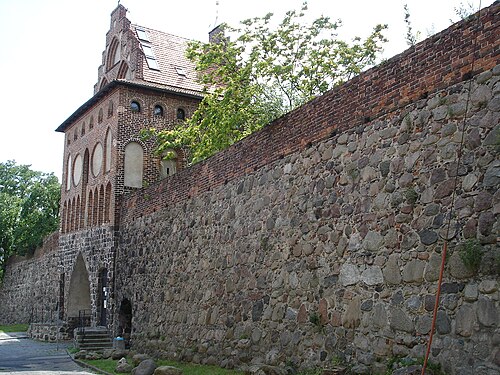

- Biała
- Białogard
- Bolesławiec – the old town has fragmentary remains of the old town wall, including several towers and stretches of wall.
- Braniewo
- Brodnica
- Brzeg – a star-shaped park around the old town is what remains of the renaissance fortifications. Some parts of the moat still remain. The shape of seven bastions is recognizable from the air.
- Bystrzyca Kłodzka
- Chełmno – almost whole length of walls (2.2 km), with 17 watch towers and city gate, 13th and 14th centuries.
- Chojna
- Chojnice
- Dąbie
- Dzierżoniów
- Gdańsk
- Głogów
- Gniew
- Goleniów
- Golub-Dobrzyń
- Gorzów Wielkopolski
- Grodków
- Grudziądz
- Gryfice
- Gryfino
- Jawor
- Jelenia Góra
- Kalisz
- Kamień Pomorski
- Kętrzyn
- Kłodzko – the remains include the impressive citadel located on a hill north of the medieval town.
- Kołobrzeg – a round basion and a part of the moat still remain.
- Kostrzyn – the medieval town was entirely destroyed during World War II, only remaining some ruins of houses, the ruins of a church and the riverside fortified walls. The fortified walls include three bastions and a land gate. The remaining moat of an outer work is located north west of the ruined medieval town.
- Koszalin
- Kowalewo Pomorskie
- Kożuchów
- Kraków – only the barbican, Floriańska Gate, two watch towers and some traces preserved
- Krapkowice
- Kwidzyn
- Legnica
- Lębork – city ruins from the Medieval era
- Lidzbark Warmiński
- Lipiany
- Lubań – partially preserved
- Lubawa
- Lubin
- Lublin
- Malbork – one gate and a round bastion still remain. Stretches of the walls still remain alongside the river in the direction of the famous Malbork Castle
- Maszewo – the town walls are nearly complete, apart from two breaches made for the increasing traffic. The two original town gates are demolished, and an adjacent tower of one of the gates still remains.
- Mieszkowice
- Modlin Fortress
- Myślibórz
- Nowe – sizable parts of the walls remain.
- Nowe Miasto Lubawskie – two town gates remain.
- Nowogrodziec
- Nysa – there are large remains of the renaissance fortifications, notably to the east of the old town and to the north of the Nysa Klodzka river. There are several forts around Nysa. The remains of the medieval town walls include two land gates, the remains of a water gate, some towers and stretches of wall.
- Olkusz
- Olsztyn
- Opole – the remaining walls are located in the north east corner of the medieval town.
- Paczków – very well preserved walls with 19 towers and 3 gates
- Pasłęk – large stretches of the walls remain intact, including two city gates
- Poznań – city walls existed until the early 19th century (fragments remain); Prussian fortifications were built in the 19th century
- Prabuty
- Prudnik – three watch towers
- Przemyśl – partially preserved ruins
- Pyrzyce – until World War II best preserved city walls in Pomerania region, from the 14th century
- Sandomierz
- Słupsk
- Stargard – significant parts survived with 3 gates (including unique water gate – Brama Młyńska); one of the most interesting city walls in Poland
- Starogard Gdański
- Strzegom
- Strzelce Krajeńskie
- Sulechów
- Susz
- Syców
- Szczecin – to the east of the castle remains a well-preserved wall tower. Two town gates still remain.
- Szprotawa
- Szydłów – city walls with Krakowska Gate and watch towers built in the 14th century
- Środa Śląska
- Świebodzice
- Świebodzin
- Tarnów
- Tczew
- Toruń – several watch towers, three city gates and some sections (the longest and most impressive from Vistula) from the 13th to 15th centuries
- Trzcińsko-Zdrój
- Trzebiatów
- Warsaw – partially preserved, partially restored after World War II, barbican restored
- Wieluń
- Wolin – only one bastion remains to the south of the town.
- Wrocław
- Ząbkowice Śląskie
- Zamość – complete renaissance and 19th-century walls preserved
- Złotoryja
- Żagań
- Żary
Portugal
- Almeida Vauban style fortress town.
- Avis (or Aviz)
- Beja
- Bragança – the old town is still completely surrounded with medieval walls, including all 12 towers and two gates.
- Caminha
- Castelo Branco
- Castelo de Vide
- Chaves
- Coimbra
- Évora
- Elvas – Elvas is among the finest examples of intensive usage of the trace italienne (star fort) in military architecture.
- Estremoz
- Guarda
- Guimarães
- Lagos, Portugal
- Lisboa, Portugal – There are fragments of a Fernandin Wall since the 13th century.
- Marvão
- Monção
- Monsaraz
- Monforte
- Óbidos
- Olivenza
- Peniche
- Santarém
- Setúbal – the remains of 5 bastions can be found around town.
- Valença
- Vide
- Vila Viçosa
Romania


Russia
- City walls
- Derbent (a World Heritage site)
- Izborsk
- Moscow (the walls of the Bely Gorod have been dismantled, the Kitay-gorod wall for the most part too)
- Pskov
- Smolensk

.jpg/500px-Golubac_Fortress_(27379120351).jpg)
- Vyborg (two towers of the medieval wall remain, while one bastion on one side and a full set on the other remain from the bastioned fortifications)
- Yaroslavl (only several towers still stand)
- Novokuznetsk
- Gorodets
- Kremlins (citadels)
- Ladoga
- Swiyazhsk
- Astrakhan
- Ivangorod
- Kazan
- Kolomna
- Moscow
- Nizhny Novgorod
- Novgorod
- Porkhov
- Tobolsk
- Tula
- Zaraysk
- Korela
- Rostov
- Beloozyorsk
- Suzdal
- Dmitrov
- Mozhaysk
- Gdov
- Uglich
- Yuriev-Polski
- Velikie Luki
- Yam
- Verkhoturie
- Serpukhov
- Alexandrov
- Suzran
- Vyazma
- Vologda
- Volokamsk
- Vladimir
- Zvenigorod-Moskovski
- Ryazan
- Pereyaslavl-Zalesski
- Bryansk
- Irkutsk
Serbia
- Belgrade – Kalemegdan
- Novi Sad – Petrovaradin
- Bač
- Manasija – Resava
- Niš
- Pirot
- Smederevo
- Golubac
- Maglič
- Šabac
Slovakia


- Banská Bystrica
- Banská Štiavnica – only one city gate left
- Bardejov – walls almost completely preserved, with bastions and barbican
- Beckov
- Bojnice – large parts of the wall preserved, together with one of the city gates
- Bratislava – only few structures have survived from original fortifications.
- Brezno
- Fiľakovo
- Komárno – baroque fortifications almost completely preserved
- Košice
- Kežmarok
- Kremnica – about two-thirds of the defensive walls around the town preserved, with several bastions and the city gate with barbican.
- Krupina
- Levice – parts of the defensive walls were found during an archaeological survey
- Levoča – almost completely preserved
- Modra – about two-thirds of the walls still standing, one bastion and one of the city gates
- Nové Zámky
- Pezinok – parts of the defensive walls visible on several locations of the town
- Podolínec
- Pukanec
- Prešov – parts of the defensive walls were found during an archaeological survey
- Sabinov
- Skalica – large parts preserved
- Spišská Kapitula
- Svätý Jur
- Trenčín – parts of the defensive walls were found during an archaeological survey
- Trnava – mostly preserved, with several bastions and one city gate
- Zvolen
- Žilina
Slovenia
- Celje
- Koper
- Kranj – evidence of the 1st-century fortifications and parts of the medieval fortifications, with four of the original eight towers preserved
- Ljubljana – In the 1st century AD, a Roman settlement called Emona, on the site of the present-day Ljubljana, was fortified with strong walls. A small section of the southern wall is still preserved to this day. Ljubljana got its medieval walls, like many other towns in Slovenia, in the 13th century
- Maribor – Originally 13th-century fortifications, rebuilt several times until the 17th century; some segments, including three towers and two bastions, are still preserved. Withstood sieges by Matthias Corvinus in 1480/1481 and by the Ottoman Empire in 1532.
- Novo Mesto
- Piran – 7th-century fortification, expanded between 1470 and 1533
- Ptuj – 13th-century fortification
- Slovenj Gradec
- Škofja Loka
- Vipavski Križ
Spain
- A Coruña – fragmentary remains and 3 gates
- Aínsa
- Alarcón
- Albarracín
- Alburquerque
- Alcalá de Henares – has preserved 1,200 metres of walls dotted with 19 towers
- Alcántara, Cáceres
- Alcúdia
- Almazán
- Alquézar
- Artajona
- Astorga
- Atienza
- Ávila – has the most complete medieval walls in Spain, half of which is navigable on foot
- Badajoz – has medieval walls and most of its renaissance fortress
- Balaguer
- Barcelona – has portions of a Roman wall
- Béjar
- Berlanga
- Berlanga de Duero
- Besalú
- Brihuega
- Buitrago del Lozoya – has complete medieval walls.
- Burgos – has some sizable remaining parts of the town walls alongside the Paseo Cubos and to the north east of the castle, including 10 wall towers. There are also remaining towers at the Calle Trinidad and the Calle San Lesmes. Five gates still remain intact, the Arco de Santa Maria, the Arco San Martin, the Arco de San Esteban, the Arco de San Gil and the Arco de San Juan
- Burgo de Osma-Ciudad de Osma
- Cáceres
- Campo Maior
- Cartagena
- Castellar de la Frontera
- Cedeira – fragmentary remains[14]
- Ceuta
- Ciudad Rodrigo – suffered several sieges in Napoleonic wars, walls remain intact
- Ciutadella de Menorca
- Coca, Segovia
- Córdoba
- Coria – the old town is still completely surrounded by medieval and Roman walls
- Covarrubias, Province of Burgos
- Cuéllar
- Cuenca
- Daroca
- Frías, Province of Burgos
- Galisteo – the town walls are completely preserved
- Gijon
- Girona
- Granada
- Zarza de Granadilla
- Haza, Province of Burgos
- Hondarribia
- Huesca – fragmentary remains
- Ibiza
- Jerez de los Caballeros
- Laguardia
- Laredo – two town gates still remain, the Puerta de Merenillo and the Puerta de Bilbao
- Llanes
- León – has an almost complete set of Roman walls dating back to the 3rd century AD, besides some parts built during the Middle Ages
- Loarre
- Lugo – has completely intact Roman walls. It is protected by UNESCO as a World Heritage Site
- Maderuelo
- Walls of Madrid – five walls
- Maderuelo
- Madrigal de las Altas Torres
- Málaga
- Mansilla de las Mulas
- Manzaneda – Part of the medieval wall still remains, including one of the 3 gates[15]
- Mataró
- Medina del Campo – fragmentary remains
- Melilla – the old town is still fully enclosed by its impressive medieval walls
- Mirambel
- Molina de Aragón
- Monforte de Lemos – most of the 13th century city walls have been preserved, including two gates.
- Montblanc
- Montfalco Murallat
- Mora de Rubielos
- Morella
- Niebla, Huelva
- Olivenza – the oldest part of the town, the area adjacent to the medieval castle of Olivenza, still has well-preserved stretches of walls and towers, including two original town gates. Large parts of the later star-shaped Renaissance fortifications are also preserved, including 9 bastions and 1 town gate, the Puerta del Calvario
- Olmedo
- Oviedo – has preserved parts of its medieval walls
- Palazuelos
- Palma, Majorca
- Pamplona
- Pedraza, Segovia
- Peniscola
- Plasencia
- Portillo, Valladolid – fragmentary remains
- Rada
- Rello
- Requena
- Ronda – has almost complete walls (not counting the gorge which defends it on one side)
- Salamanca
- San Vicente de la Barquera – the old town has preserved the walls along with the castle
- Santander – the old town had medieval defensive walls. A stretch of wall alongside Calle de Cadiz is all that remains
- Santiago de Compostela – only a gate (Arco de Mazarelos) remains
- Santillana del Mar – there are fragmentary remains of the medieval walls, including a stretch of wall alongside a car park southeast of the old town and a tower at the Plaza las Arenas facing to the north
- Sasamón
- Segovia – preserves parts of the wall plus three gates
- Sigüenza
- Talavera de la Reina
- Tarifa
- Tarragona
- Tiedra – vestiges
- Toledo
- Tortosa – large parts of the extensively fortified medieval town remain intact
- Tossa de Mar
- Tui – a large part of both the 12th century wall and the 17/18th century fortifications has been preserved.[16]
- Urueña
- Valencia – preserves portions of a Muslim wall and towers from Christian medieval age
- Valladolid – vestiges
- Vitoria-Gasteiz – fragmentary remains
- Viveiro – fragmentary remains and 3 gates of the original 6[17]
- Xàtiva
- Zamora – the old town walls remain largely intact, especially at the north, west and riverside of the old town.
- Zaragoza
Sweden
- City wall of Visby
- Gothenburg has a part of the western city wall left, the bastion Carolus Rex at Esperantoplatsen (Esperanto square) and most of the city moat is still left.
- Halmstad had renaissance ramparts. To the north of the old town a bastion with adjacent town gate remains, the Norre Port. To the south of the old town a bastion with a remnant of the moat remains.
- Kalmar substantial remains of the walls. Sizable stretches of walls and a bastion remain to the south of the old town. To the east remain two bastions. To the north remain portions of wall near Fiskaregatan. To the west the shape of two bastions is clearly recognizable, with a ravelin in front of the remaining town gate Westport (Westgate). Two other town gates still remain, an unmanned gate of later date at the Skeppsbrogatan, and a gate at Skeppsbron.
- Stockholm has a small remainder of the medieval city wall preserved.
- Bohus Fortress
Switzerland

- Aarau – the remains of the medieval town walls include two town gates (the Haldertor and the Oberer Turm) and a tower (the Pulverturm) with an adjacent stretch of wall.
- Altstätten
- Arbon – the remains include some fragments of wall and a tower converted into a house.
- Avenches
- Baden,_Switzerland
- Basel
- Bellinzona (Dominated by its three castles: Castelgrande, Castello di Montebello and Castello di Sasso Corbaro)
- Biel
- Bremgarten
- Brugg
- Bülach
- Chur
- Delémont
- Diessenhofen
- Frauenfeld
- Fribourg
- Geneva
- Greifensee
- Grüningen
- Gruyères
- Ilanz
- Laufen
- Lausanne
- Lenzburg
- Liestal – one town gate remains.
- Lucerne – the wall on the northern bank of the Reuss is well preserved and among the principal landmarks of the city. It is called Museggmauer and Stadtmauer.
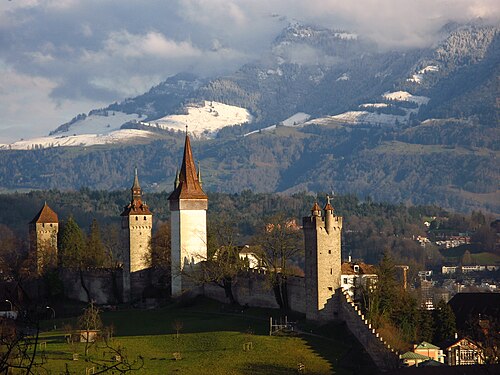
The late medieval walls of Lucerne, called Museggmauer or Stadtmauer. - Maienfeld
- Meienberg, Sins, Aargau
- Morges
- Münchenstein
- Murten: Medieval walls
- Neuchâtel
- Nyon
- Olten
- Orbe
- Rapperswil
- Regensberg
- Rheinfelden
- Romont
- Schaffhausen
- Sempach
- Solothurn – large parts still remain, including several walls, towers and a bastion. Two town gates remain, the impressive Baseltor and the Bieltor.
- Steckborn
- Sursee
- Thun
- Uznach
- Wangen an der Aare
- Werdenberg
- Wiedlisbach
- Willisau
- Winterthur
- Yverdon-les-Bains
- Zofingen
- Zug – the only remainder of the inner town walls is the Zeitturm (Clocktower), a medieval town gate. The remains of the outer town walls include four towers (the Kapuzinerturm, Knopfliturm, Huwilerturm and the Pulverturm), and some stretches of wall.
- Zürich – the main remains are the Schanzengraben, and the shapes of several bastions are recognizable through the course of the moat. One bastions remains largely intact, and it now houses the Alter Botanischer Garten.

Turkey
.jpg/500px-Walls_of_Troy_(1).jpg)
- Troy. The ancient city of Troy was famous for its defensive walls. There is archaeological evidence that Troy VII, generally identified as the stage of the legendary Trojan War of Homer's Iliad, usually dated between 1194 BC – 1184 BC, had walls with a carefully built stone base over four meters thick and some nine meters high in places, which was surmounted by a larger superstructure with towers in mudbrick. The walls in Homer's epic are so mighty that the siege of Troy by Achaeans lasts more than nine years, and only could be finished with the trickery of the Trojan Horse. Sections of the stone base of Trojan walls still survive on the archaeological site in present-day Hisarlık, in Çanakkale Province.
- Istanbul. The system of walls around (as it was then known) Constantinople built in 412 by the Roman emperor Theodosius II was a complex stone barrier that stretched 6.5 kilometers and is often called the Wall of Theodosius. This barrier stood impregnable for ten centuries and resisted several violent sieges until 1453 when the Ottomans succeeded in breaching the walls. There was a new element in the battlefield: the Ottoman army had powder cannon and the walls offered limited resistance to them.

- Diyarbakır. Diyarbakır is surrounded by an almost intact, dramatic set of high walls of black basalt forming a 5.5 km (3.4 mi) circle around the old city. There are four gates into the old city and 82 watch-towers on the walls, which were built in antiquity, restored and extended by the Roman emperor Constantius in 349.
- Ankara
- Çanakkale
- İznik
- Antalya
- Sinop
- Rize
- Amasya
- Bodrum
- Alanya
- Ani
- Kuşadası
- Pergamon
- Assos
- Bozcaada
- Edirne
- Trabzon. Most of the city walls are still standing and are among the city's oldest buildings. Their oldest part can be dated back to the 1st century AD during the Roman Empire era. Historical sources provide information about older stages of their construction. Xenophon, who visited the city in the 5th century BC also mentioned the existence of city walls
- Enez
- Bursa
- Sığacık
Ukraine
- City walls
- Bilhorod-Dnistrovskyi (see Akkerman Fortress)
- Chernihiv (only ruins remain underground)
- Kropyvnytskyi (small parts of St. Elizabeth Fortress survived)
- Kyiv (see Golden Gate)
- Lviv (see Hlyniany Gate and Lviv High Castle)
- Citadels and castles
- Lutsk (see Lubart's Castle)
- Kamianets-Podilskyi (see Kamianets-Podilskyi Castle)
- Kremenets (see Kremenets Castle)
- Khotyn (see Khotyn Fortress)
- Khust (see Khust Castle)
- Mangup
- Medzhybizh (see Medzhybizh Fortress)
- Mukachevo (see Palanok Castle)
- Stare Selo (see Stare Selo Castle)
- Sudak
- Uzhhorod (see Uzhhorod Castle)
- Yeni-Kale
United Kingdom
England
Northern Ireland
Scotland
Wales
- Aberystwyth
- Beaumaris
- Brecon
- Caerleon (Isca Augusta)
- Caerwent (Venta Silurum)
- Caernarfon
- Cardiff
- Cardigan
- Chepstow – Port Wall
- Cowbridge
- Conwy
- Denbigh
- Hay on Wye
- Kenfig
- Kidwelly
- Monmouth
- Montgomery
- Tenby
- Pembroke
- Radnor
Vatican City
See also
- Defensive wall
- City gate
- Closed city
- Fortification
- List of walls
- Wall
- Stone wall
- Medieval fortification
References
- ^ "12 Impressive Walled Cities in the World". Retrieved 9 December 2012.
- ^ a b "Discovering the secret city from the 1700s under Halifax". CTV Atlantic. BellMedia. 30 April 2019. Retrieved 9 July 2020.
- ^ "Le Bourg des Trois Rivières".
- ^ "Defenses – History – Colony of Avalon". www.heritage.nf.ca.
- ^ "Baluarte de Santiago". Fodor's. Retrieved 30 October 2009.
- ^ Castillero, Alfredo (2004). UNESCO Guides: Panamá la Vieja and Casco Viejo. UNESCO Publishing. ISBN 92-3-103923-7.
- ^ 「セントオーガスティン市街地計画歴史地区 - アメリカのラテン系文化遺産: 私たちの共通文化遺産を発見する旅程」 Nps.gov 。 2018年9月16日閲覧。
- ^ 「戦闘前のニューオーリンズ ニューオーリンズの戦い 1814年12月-1815年1月8日」battleofneworleans.org . 2016年9月4日閲覧。
- ^ 行政、Works Progress(2011-08-15)。ニューオーリンズシティガイド。ギャレットカウンティプレス。ISBN 9781891053405。
- ^ 「オランダ人とイギリス人、第2部:名前は違っても壁は存在する」ニューヨーク市記録情報サービス局。2017年2月23日。 2023年1月17日閲覧。
- ^ 中央研究院台湾歴史研究所。 "清代臺灣城郭".台灣歷史文化地圖。
- ^ セカ・ブルクリャチャ (1996)。 Urbano biće Bosne i Hercegovine (セルボクロアチア語)。サラエボ: Međunarodni centar za mir、Institut za istoriju。 p. 27.2021 年10 月 28 日に取得。
- ^ 「ストラッツの自然と建築のアンサンブル」ユネスコ世界遺産センター。 2021年10月28日閲覧。
- ^ セデイラの都市村
- ^ “マンサネダ | スペイン代表協会、カスティージョス・デ・エスパーニャ、カスティージョス中世”. www.castilosdeespaña.es。
- ^ Muralla de Tui – スペイン・アミーゴス・デ・ロス・カスティージョス協会。
- ^ ヴィヴェイロの都市壁画。
- ^ 「市壁の断片(指定部分)、カートウェイ93番地の裏側(東側と北側)、SMRNO00374」。シュロフシャーの歴史を探る。2011年10月22日閲覧。
- ^ 「The Town Wall Tavern」. realalerambles.co.uk . 2018年4月23日閲覧。
- ^ 「Leceister Walls and Gates」.レシースター大学. 2019年5月22日閲覧。