
Loading article…
ソフィア
ソフィア | |
|---|---|
 フラグ | |
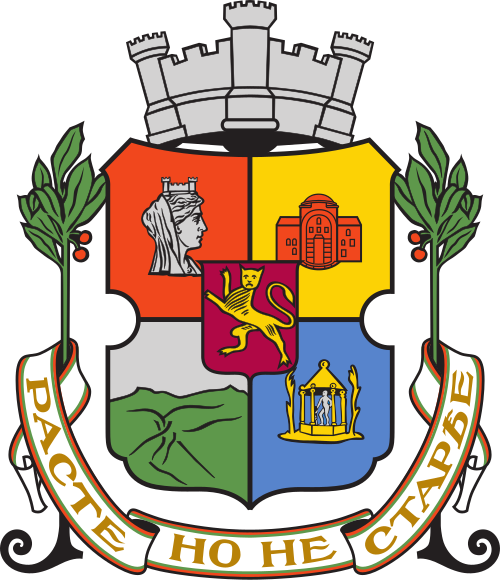
| モットー: 「常に成長し、決して老化しない」[1] (「Расте, но не старее」) | |
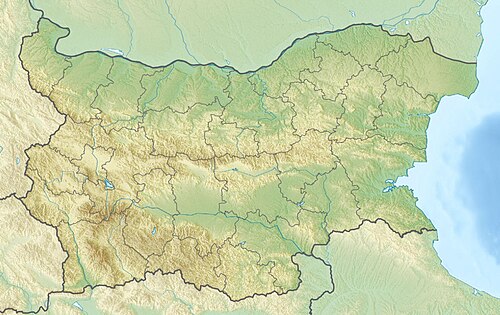  ソフィア ソフィアの位置  ソフィア ソフィア(バルカン半島)  ソフィア ソフィア(ヨーロッパ) | |
| 座標: 42°42′N 23°20′E / 42.70°N 23.33°E / 42.70; 23.33 | |
| 国 | ブルガリア |
| 州 | ソフィア市 |
| 自治体 | 資本 |
| 居住継続 | 紀元前7000年以来[2] |
| 新石器時代の集落 | 紀元前5500~6000年[3] |
| トラキア人の居住地 | 紀元前1400年[4] [5] |
| ローマの行政 | 46年(セルディカとして)[6] |
| クルムに征服された | 809年(スレデツ)[6] |
| 政府 | |
| • 市長 | ヴァシル・テルジエフ( PP-DB -スパシ・ソフィア) |
| エリア | |
| • 首都 | 500 km 2 (200 平方マイル) |
| • 都会的な [7] | 5,723 km 2 (2,210 平方マイル) |
| • メトロ [8] | 10,738 km 2 (4,146 平方マイル) |
| 標高 [9] | 500~699メートル(1,640~2,293フィート) |
| 人口 (2024年)[10] | |
| • 首都 | 1,286,965 |
| • 密度 | 2,600/km 2 (6,700/平方マイル) |
| • 都会的な [11] | 1,547,779 |
| • 都市の密度 | 270/km 2 (700/平方マイル) |
| • メトロ [12] | 1,667,314 |
| • 地下鉄の密度 | 160/km 2 (400/平方マイル) |
| 異名 | ソフィアン( en ) Софиянец/ソフィヤネッツ( bg ) |
| タイムゾーン | UTC+2 (東部標準時) |
| • 夏 ( DST ) | UTC+3 (東部標準時) |
| 市外局番 | (+359)02 |
| 一人当たりGDP (2021年) | 45241.00 BGN
[13] |
| HDI(2018) | 0.945 [14] 非常に高い |
| 車両登録プレート | C、CA、CB |
| Webサイト | ソフィア |
.jpg/500px-Russian_church_(37591925970).jpg)


_(cropped).jpg/500px-Banya_Bashi_Mosque_(37849692391)_(cropped).jpg)

.jpg/500px-St._George_Rotunda,_Sofia,_Bulgaria_(17680380465).jpg)
.jpg/500px-Sofia_'17_(24614482817).jpg)
ソフィア( / ˈ s oʊ f i ə , ˈ s ɒ f -, s oʊ ˈ f iː ə / SOH -fee-ə, SOF - ; [15] [16] ブルガリア語: София、ローマ字表記: Sofiya , [17] [ 18] IPA: [ˈsɔfijɐ] ブルガリアのであり最大の都市である。国土の西部、ヴィトシャの麓ソフィア渓谷イスカルソフィア中央鉱泉など多くの鉱泉がある湿潤大陸性気候であるバルカン半島の中心に位置し黒海とアドリア海の中間に位置しエーゲ海に最も近い。[19][20]
古代にはセルディカ、中世にはスレデツとして知られたソフィアは、少なくとも紀元前7000年から人が居住していた地域です。この都市の記録された歴史は、紀元前29年にローマ共和国がケルト族のセルディ族からセルディカを征服したという証言から始まります。ローマ帝国の衰退の間、この都市はフン族、西ゴート族、アヴァール人、スラヴ人の襲撃を受けました。809年、セルディカはクルム・ハンによってブルガリア帝国に編入され、スレデツとして知られるようになりました。1018年、ビザンチン帝国はブルガリアの支配を終わらせ、1194年に新生ブルガリア帝国に再編入されるまで続きました。スレデツは、1382年にオスマン帝国に征服されるまで、行政、経済、文化、文学の中心地となっていました。1530年から1836年まで、ソフィアはオスマン帝国のヨーロッパにおける主要州であるルメリア・エヤレットの地方首都でした。ブルガリアの統治は1878年に復活しました。翌年、 ソフィアは第三ブルガリア国家の首都に選ばれ、急速な人口増加と経済成長の時代を迎えました。
ソフィアは欧州連合で14番目に大きな都市です。南側はヴィトシャ、西側はリュリン、北側はバルカン山脈などの山々に囲まれており、アンドラ・ラ・ベリャ、マドリードに次いでヨーロッパで3番目に標高の高い首都となっています。ブルガリアの主要都市であるソフィアには、地元の主要な大学、文化施設、商業企業が多数集まっています。[21]この都市は「宗教的寛容の三角形」と呼ばれています。これは、キリスト教、イスラム教、ユダヤ教という世界三大宗教の寺院が3つ、聖ネデリャ教会、バニャ・バシ・モスク、ソフィア・シナゴーグが近くに位置しているためです。[22]この三角形は最近「正方形」に拡大され、カトリックの聖ヨセフ大聖堂もその中に含まれています。[23]
ソフィアは、特に情報技術分野で、スタートアップ企業にとって世界のトップ10のベストロケーションの1つに選ばれています。 [24] 2013年には、ヨーロッパで最も手頃な価格で訪問できる首都でした。 [25]ソフィアのボヤナ教会は、第二次ブルガリア帝国時代に建設され、ブルガリア正教会の多くの遺産の象徴であり、 1979年に世界遺産に登録されました。南東ヨーロッパの文化的重要性を持つソフィアには、ブルガリア国立オペラ・バレエ団、国立文化宮殿、ヴァシル・レフスキ国立競技場、イヴァン・ヴァゾフ国立劇場、国立考古学博物館、セルディツァ円形劇場があります。社会主義美術館には、共産主義ブルガリアの生活様式について訪問者に教える多くの彫刻やポスターがあります。[26]
ソフィアの人口は18世紀後半の7万人から1870年の19,000人を経て1878年には11,649人に減少し、その後増加に転じた。[27]ソフィアは500 km 2の領土内に約128万人[10]の住民を抱えており、[28]国の人口の17.9%が国土の200パーセンタイル内に集中している。ソフィアの都市圏は、ソフィア市とソフィア県の一部(ドラゴマン、スリヴニツァ、コスティンブロッド、ボジュリシュテ、スヴォゲ、エリンペリン、ゴルナマリナ、イフティマン、コステネツ)およびペルニク県(ペルニク、ラドミール)から成り、 5723 km 2 の地域内に約154万人[29]の住民を抱え、国土の5.16%を占めています。[7]ソフィアの首都圏は車で1時間の移動時間を基準としており、国際的に広がっており、セルビアのディミトロフグラードを含んでいます。 [30]ソフィアの首都圏には166万人の人口が住んでいます。[12]
名前

長い間、この都市は[31]トラキア語でセルディカ(古代ギリシア語:Σερδικη、Serdikē、またはΣαρδικη、Sardikē、ラテン語:SerdicaまたはSardica )と呼ばれていました。これは、トラキア人、[17] [19]ケルト人、[32]またはトラキアとケルトの混血のセルディ族に由来しています。[33] [34]皇帝マルクス・ウルピウス・トラヤヌス(紀元53年 - 117年)は、この都市にウルピア・セルディカという複合名を与えました。[35] [36]ウルピアは、ラテン語の「狼」を意味するlupusのウンブリア語の同源語[37]またはラテン語のvulpes(キツネ)に由来している可能性があります。セルディカに関する最初の文献は彼の治世中に書かれ、最後に言及されたのは19世紀のブルガリア語の文献 ( Сардакіи、サルダキ) である。ソフィアに付けられた他の名称、例えばセルドンポリス(ビザンチンギリシャ語: Σερδών πόλις、セルディ人の都市 ) やトリアディツァ( Τριάδιτζα、三位一体 ) は、ビザンチンギリシャ語の文献や貨幣に記されている。スラヴ語の名称であるスレデツ(教会スラヴ語: Срѣдецъ ) は、「中間」( среда 、スレダ )と関連があり、都市の最も古い名称と関連しているが、11世紀の文献に初めて紙に登場した。この都市はアラブ人旅行者イドリースィーによってアトラリサと呼ばれ、十字軍によってストレリサ、ストラリツァ、またはストラリツィオンと呼ばれた。[38]
ソフィアという名前は聖ソフィア教会に由来しており、[39]ブルガリアの都市や町に広く見られるスラヴ語 起源とは対照的である。語源はギリシャ語のソフィア(σοφία、「知恵」)である。この最新の名前が記録されている最も古い作品は、セルディツァの福音書の写し、1359年頃のドゥブロヴニク出身の2人のセールスマンの対話、14世紀のブルガリア皇帝イヴァン・シシュマンのヴィトシャ憲章、および1376年のラグサ商人のメモである。 [40]これらの文書では、都市はソフィアと呼ばれているが[説明が必要]、同時に、この地域と都市の住民は依然としてスレデチェスキ(教会スラヴ語:срѣдечьскои、「スレデツの」)と呼ばれており、この呼び名は20世紀まで続いた。オスマン帝国はソフィア(صوفيه )という名前を好むようになった。 1879年、ブルガリアの新しい首都の名前を何にするかという論争があり、市民はスラヴ語の名前を主張する著名人委員会を結成した。徐々に妥協案が生まれ、国家機関にはソフィアという名称が公認され、行政機関と教会機関にはスレデツという名称が正当化されたが、後者は何年もの間放棄された。[41]
地理
ソフィア市州の面積は1344 km 2で、[42]周囲のはるかに広いソフィア州の面積は7,059 km 2 である。ソフィアが重要な集落として発展したのは、バルカン半島の中心的位置にあることに大きく依存している。ソフィアはブルガリア西部、ヴィトシャ山の北麓、北はバルカン山脈に囲まれたソフィア渓谷に位置している。渓谷の平均標高は550メートル (1,800フィート) である。ソフィアは欧州連合で2番目に標高の高い首都(マドリードに次ぐ) であり、ヨーロッパで3番目に標高の高い首都 (アンドラ・ラ・ベリャ、マドリードに次ぐ) である。ほとんどのヨーロッパの首都とは異なり、ソフィアは大きな川をまたいでおらず、四方を比較的高い山々に囲まれている。古代から主要道路となっている3つの峠が市街地に続いており、ヴィトシャは黒海とエーゲ海の分水嶺となっている。
ボヤンスカ川、ヴラダイスカ川、ペルロフスカ川など、多くの浅い川が市内を流れている。上流のイスカル川はソフィア東部を流れている。その水源はブルガリア最高峰のリラ山[43]で、ゲルマン村の近くでソフィア渓谷に流れ込む。イスカル川は北に流れバルカン山脈に向かい、市東部の郊外、ソフィア空港本館の隣、滑走路の下を通り、ノヴィ・イスカルの町でソフィア渓谷から流れ出る。ここから美しいイスカル渓谷が始まる。[44]
この都市は 49 の鉱泉と温泉で知られています。人工湖とダム湖は 20 世紀に建設されました。
1818年と1858年の地震は激しく破壊的でしたが、2012年のペルニク地震はソフィアの西で発生し、モーメントマグニチュードは5.6、メルカリ震度はVI(強)とはるかに低いものでした。 2014年のエーゲ海地震もソフィアで観測されました。
気候
ソフィアは湿潤大陸性気候(ケッペンの気候区分は Dfb、等温線が−3℃の場合はCfb)で、年間平均気温は10.9℃(51.6℉)です。
冬は比較的寒く、雪が多くなります。最も寒い日には気温が−15℃(5℉)を下回ることもあり、特に1月には顕著になります。記録された最低気温は−31.2℃(−24℉)(1893年1月16日)です。[45] [46]ソフィアでは平均して98cm(38.6インチ)の降雪があり、積雪日は56日です。[47]記録された最も降雪量が多かった冬は1939/1940年で、降雪量は169cm(66.5インチ)でした。[48]記録的な積雪深は57cm(22.4インチ)(2001年12月25日)です。[49]記録された最も寒い年は1893年で、1月の平均気温は−10.4℃(13℉)、年間気温は8.2℃(46.8℉)でした。[50]
夏は非常に暖かく晴れています。標高が高いため、夏はブルガリアの他の地域よりも一般的にやや涼しいです。しかし、特に7月と8月は、最も暑い日に気温が35℃(95℉)に達するかそれを超える熱波にも見舞われます。記録された最高気温は40.2℃(104℉)(2000年7月5日)です。[51]記録された最も暑い月は2012年7月で、平均気温は24.8℃(77℉)でした。[52]記録上最も暖かい年は2023年で、年間気温は12.1℃(54℉)でした。[53]
ソフィアの春と秋は通常短く、天候は変わりやすくダイナミックです。
市内の年間降水量は平均625.7 mm (24.63インチ)で、雷雨がよく発生する晩春から初夏にかけてピークを迎えます。記録上最も乾燥した年は2000年で、総降水量は304.6 mm (11.99インチ)でした。一方、記録上最も雨の多い年は2014年で、総降水量は1,066.6 mm (41.99インチ)でした。[54] [55]
環境
ソフィア渓谷の地理的位置により気団の流れが制限され、粒子状物質や窒素酸化物による大気汚染の可能性が高まっている。[66]暖房に使用される固形燃料と自動車交通は、汚染物質の大きな発生源である。気温の逆転と市を囲む山々が気団の循環を妨げるため、スモッグは市の上空に漂い続ける。[67] [68]その結果、ソフィアの大気汚染レベルはヨーロッパで最も高いレベルにある。[69]
粒子状物質の濃度は一貫して基準値を上回っている。[68] 2017年10月から2018年3月までの暖房シーズン中、粒子状物質のレベルは70回基準値を超えており、[67] 2018年1月7日にはPM10のレベルが632 μg/m 3に達し、[70] EU基準の50 μg/m 3の約12倍であった。[71]ゴルナ・バニャのように大気汚染源が少ない地域でさえ、PM2.5とPM10のレベルが安全閾値を超えていた。[70]大気汚染の危険な急増に対応して、市議会は2018年1月に道路の洗浄頻度を上げるなど、さまざまな対策を実施した。[72]しかし、2018年9月に発行された欧州会計検査院の報告書によると、ソフィアは暖房による大気汚染を削減するためのプロジェクトを一切立案していないことが明らかになった。報告書はまた、ソフィア市内で産業施設が稼働しているにもかかわらず、産業汚染監視ステーションが稼働していないことも指摘している。イーグルス橋の監視ステーションは、最も高い粒子状物質の値が測定された場所のいくつかであったが、その場所から移動され、それ以来大幅に低い値を測定している。[73]粒子状物質は現在、2017年以来ボランティアによって維持されている300個のセンサーのネットワークによって主に測定されている。 [67]欧州委員会は、大気汚染を抑制できなかったとしてブルガリアを訴えている。[68]
歴史

このコインは紀元前 187 年から 168 年にかけてマケドニアで発行されたものを模倣したものです。セルディ族によって独自の通貨として鋳造されました。

先史時代と古代
この地域には約7000年の歴史があり、[74]市の中心部には今でも豊富に湧き出る温泉が大きな魅力となっている。スラティナには紀元前5~6千年紀に遡る新石器時代の村が記録されている。[75]もう一つの新石器時代の集落は紀元前3~4千年紀に現代の国立美術館の近くに設立され、それ以来ずっと市の中心地となっている。[76]
最初に定住した部族はトラキアの ティラタイ族であった。紀元前500年代、この地域はトラキアの国家連合の一部となり、トラキアの別の部族であるオドリュセスからオドリュシア王国が誕生した。[77]
紀元前339年、マケドニア王フィリップ2世は初めてこの町を破壊し荒廃させた。[78]
ケルト族のセルディ族がこの都市に名前を付けた。[79]この都市に関する最も古い言及は紀元前1世紀のアテネの碑文にあり、アストゥ・トン・セルドン、つまりセルディ族の都市であることが証明されている。[80]碑文とディオ・カッシウスの著作によると、ローマの将軍クラッススはセルディ族を征服し、捕虜を引き渡した。[81]
ディオ・カッシウス、大プリニウス、プトレマイオスは、紀元前27~29年にクラッススが「セゲティケ」地域を攻撃したと述べている。これはセルディカ、つまりセルディ人の都市であると考えられている。[82] [83] [84]この古代都市は、ツォム、シェラトンホテル、プレジデンシーの間にある。 [76] [85]徐々にこの地域で最も重要なローマ都市となった。[35] [36]トラヤヌス帝(98~117年)の治世中にムニキピウムとなった。セルディカは拡大し、小塔、防壁、公衆浴場、行政および宗教施設、市庁舎、円形劇場、サーカス、市議会(ブーレ)、大きなフォーラム、大きなサーカス(劇場)などが建設された。セルディカは、シンギドゥヌムとビザンチンを結ぶローマ街道ヴィア・ミリタリス沿いの重要な都市であった。3世紀にはダキア・アウレリアナの首都となり、[86]ディオクレティアヌス帝がダキア・アウレリアナ属州をダキア・リペンシス(ドナウ川沿い)とダキア・メディテラネアに分割すると、セルディカは後者の首都となった。トラキア系のセルディカ市民はイリュリア人と呼ばれた[78] が、おそらくこの地がかつて東イリュリア(第二イリュリア)の首都であったためであろう。[87]

ローマ皇帝アウレリアヌス(215–275)[88]とガレリウス(260–311)[89]はセルディカで生まれた。
都市は拡大し、重要な政治・経済の中心地となった。特に、キリスト教が国教として認められた最初のローマ都市の 1 つとなった(ガレリウス帝の治世下)。ガレリウス寛容勅令は、311 年にローマ皇帝ガレリウスによってセルディカで発布され、ディオクレティアヌス帝によるキリスト教の迫害が正式に終結した。この勅令は、キリスト教に「合法的な宗教」という地位を暗黙のうちに与えた。これはローマ帝国が認め、容認する崇拝行為である。これはキリスト教を合法化した最初の勅令であり、ミラノ勅令の2 年前に出された。
セルディカはダキア司教区(337-602)の首都であった。
コンスタンティヌス大帝にとって、それは「セルディカは私のローマ」でした。彼はコンスタンティノープルの代わりにセルディカをビザンチン帝国の首都にすることを検討しました。 [90]コンスタンティノープルはすでにローマ帝国のテトラルキア首都と似ていました。 [91]西暦343年、サルディカ公会議がこの都市で開催されました。その教会は、後に6世紀に現在の聖ソフィア教会が建てられた場所にあったものです。
447年のフン族の侵攻で街は破壊され、1世紀にわたって廃墟となっていた[78] 。ビザンチン帝国の皇帝ユスティニアヌス1世によって再建された。ユスティニアヌスの治世中、街は繁栄し、今日でもその遺跡を見ることができる大きな要塞の壁に囲まれている。
中世

セルディツァは、長い包囲戦の末、809年にクルム・ハンの治世中に第一次ブルガリア帝国の一部となった。この戦略的な都市の陥落は、ビザンチン皇帝ニケフォロス1世によるブルガリアへの大規模で最終的には悲惨な侵攻を招き、ブルガリア軍の手で滅ぼされた。[92]戦争後、この都市はブルガリアに永久に編入され、スラヴ語の名前であるスレデツとして知られるようになった。クルムの後継者オムルタグ・ハンの治世下、重要な要塞および行政の中心地となり、スレデツ地方 (Sredetski komitat, Средецки комитат) の中心地となった。ブルガリアの守護聖人であるリラの聖ヨハネは、 10世紀半ばにピョートル1世皇帝の命令でスレデツに埋葬された。 [93] 970年から971年にかけてキエフのスヴャトスラフ1世とヨハネ1世ツィミスケスの軍隊がブルガリアの首都プレスラフを征服した後、翌年ブルガリア総主教ダミアンはスレデツを自分の居城に選び、ブルガリアの首都は一時的にそこに移された。 [94] 10世紀後半、この都市は「コミトプリ」として知られるコミト・ニコラとその息子たちによって統治された。その中の一人がサムイルで、997年にブルガリア皇帝に即位した。986年、ビザンチン皇帝バシレイオス2世はスレデツを包囲したが、20日間の無益な攻撃の後、守備隊は突破し、ビザンチン帝国は作戦を放棄せざるを得なくなった。コンスタンティノープルに向かう途中、バシレイオス2世はトラヤヌス門の戦いでブルガリア軍の待ち伏せを受け、大敗した。[93] [95]
1018年、ビザンチン帝国によるブルガリア征服の後、この都市は最終的にビザンチン帝国の手に落ちた。スレデツは1040年から1041年にかけてピョートル・デリャンの反乱に参加したが、ブルガリアの独立回復の試みは失敗に終わり、地元の司令官ボトコ率いる反乱軍の最後の拠点となった。[96] 11世紀には多くのペチェネグ人がビザンチン連邦としてソフィア地域に定住した。
1194年、イヴァン・アセン1世の治世にブルガリア帝国に再び組み入れられ、行政と文化の中心地となった。[97]市の知事の何人かはブルガリア皇族であり、当時ツァーリに次ぐ高位の称号であるセバストクラトールの称号を持っていた。この称号の保持者として知られているのは、カロヤン、ピーター、そして彼らの親戚でブルガリア国王イヴァン・アセン1世(在位 1189-1196)の息子であるアレクサンダル・アセン(1232年以降に死亡)である。13世紀と14世紀、スレデツは重要な精神的、文学的中心地であり、周辺には14の修道院が集まっていたが、最終的にはオスマン帝国によって破壊された。この都市では色とりどりのスグラッフィート陶器、宝飾品、鉄製品が生産された。[98]
1382年か1383年、あるいは1385年、ブルガリア・オスマン戦争の最中、ララ・シャヒン・パシャが3か月の包囲戦の末、スレデツをオスマン帝国が奪取した。[99]オスマン帝国の司令官は、この都市の守備隊について次のように記述している。「要塞(ソフィア)の中には、大規模で精鋭の軍隊が駐屯している。兵士たちはがっしりとした体格で、口ひげを生やし、戦争で鍛えられたように見えるが、ワインやラキアを飲むのに慣れており、一言で言えば、陽気な連中だ。」[100]
近世史
14世紀から19世紀にかけて、ソフィアはオスマン帝国の重要な行政中心地であった。ソフィアは、アナトリアのベイレルベイリクとともに、ヨーロッパ(バルカン半島)のオスマン帝国領を統治する2つのベイレルベイリクのうちの1つである、ルメリアのベイレルベイリク(ルメリア・エヤレット)の首都となった。ソフィアはまた、プロヴディフとエディルネを含むトラキア全体、およびテッサロニキとスコピエを含むマケドニアの一部を含む、重要なソフィアのサンジャクの首都でもあった。[101]
1443年のヴァルナ十字軍の初期段階では、1443年に短期間ハンガリー軍に占領され、ブルガリアの住民は聖ソフィア教会で大規模な集会を開いた。1444年に十字軍が敗北した後、この都市のキリスト教徒は迫害に直面した。1530年にソフィアはオスマン帝国のルメリア州(ベイレルベイリク)の首都となり、約3世紀にわたってその地位を維持した。この間、ソフィアはラグーサ共和国とのキャラバン貿易において、現代ブルガリア最大の輸出入拠点であった。15世紀と16世紀には、オスマン帝国の建築活動によりソフィアは拡張された。インフラ、教育、地域経済への公共投資により、この都市はより多様化した。人口は、イスラム教徒、ブルガリア語とギリシャ語を話す正教徒、アルメニア人、グルジア人、カトリックのラグサ人、ユダヤ人(ロマニオテ、アシュケナージ、セファルディ)、ロマ人などで構成されていました。[99] 16世紀はブルガリアのキリスト教徒に対する迫害の波が特徴的で、合計9人がソフィアで新殉教者となり、正教会によって聖人となりました。その中には、新ゲオルギオス(1515年)、ソフィアのソフロニウス(1515年)、新ゲオルギオス(1530年)、ソフィアのニコラオス(1555年)、ソフィアのテラポンティオス(1555年)が含まれます。[102]
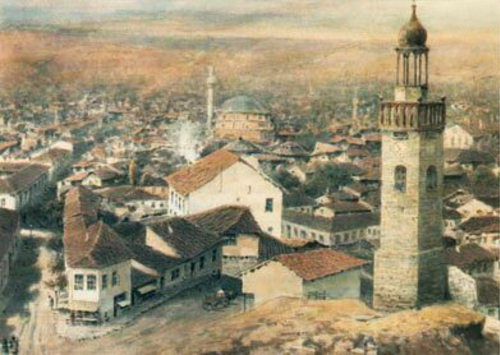
街並みに関しては、16世紀の資料には8つの金曜モスク、3つの公共図書館、多数の学校、12の教会、3つのシナゴーグ、バルカン半島最大のベデステン(市場)があったと記されている。 [99]さらに、噴水やハマム(浴場)もあった。聖ソフィアや聖ジョージなどの最も著名な教会はモスクに改築され、有名なオスマン建築家ミマール・スィナンによって建てられたバニャ・バシ・モスクなど、多くの新しいモスクが建設された。17世紀までに合計で11の大モスクと100を超える小モスクがあった。[103] [104] 1610年にバチカンはルメリアのカトリック教徒のためにソフィア司教区を設立し、これはほとんどのカトリック教徒が移住した1715年まで存在した。[105] 1737年にソフィア、サモコフ、西ブルガリア でオスマン帝国の支配に対する重要な反乱が起こった。
ソフィアは17世紀に経済的、政治的に衰退期に入ったが、これは18世紀後半から19世紀初頭のオスマン帝国バルカン半島の無政府状態の間に加速し、この時期には地元のオスマン帝国の軍閥が地方を荒廃させた。1831年のオスマン帝国の人口統計によると、ソフィアのカザではキリスト教徒の42%が非納税者であり、中流階級と貧困層のキリスト教徒の数は同数であった。[106] 18世紀以来、ルメリアのベイレルベイはビトラに滞在することが多かった。ビトラは1826年にこの州の正式な首都となった。ソフィアはサンジャク(地区)の中心地のままであった。19世紀までにブルガリア人住民は2つの学校と7つの教会を持ち、ブルガリアの民族復興に貢献した。1858年、ネデリャ・ペトコワは市内に最初のブルガリア人女性学校を設立した。 1867年、ソフィアでブルガリアの文化施設である最初のチタリシュテが開設されました。1870年、ブルガリアの革命家ヴァシル・レフスキは、市内と近隣の村に革命委員会を設立しました。1873年に捕らえられた後、ヴァシル・レフスキはオスマン帝国によってソフィアに移送され、絞首刑に処されました。
近代史と現代史
1877年から1878年の露土戦争中、スレイマン・パシャは防衛のために市を焼き払うと脅したが、外交官のレアンドレ・レガイ、ヴィト・ポジターノ、ラビ・ガブリエル・アルモスニノ、ヨゼフ・ヴァルダートは市を離れることを拒否し、市は救われた。ソフィアのブルガリア人住民の多くは武装し、ロシア軍に味方した。[107]ソフィアは1878年1月4日、イオシフ・グルコ将軍率いるロシア軍によってオスマン帝国の支配から解放された(ソフィアの戦いを参照) 。マリン・ドリノフはソフィアを首都にすることを提案し、1879年4月3日に承認された。解放時の人口は11,649人だった。[108]
ソフィアのモスクのほとんどはこの戦争で破壊され、1878年12月のある夜、ロシア軍の技術者が仕掛けた爆発の音が雷雨でかき消され、7つのモスクが破壊された。[109] [110]戦争後、イスラム教徒の人口の大半はソフィアを去った。[99]

解放後の数十年間、ソフィアは主にブルガリア公国(1908年以降は王国)の他の地域や、まだオスマン帝国領であったマケドニア・トラキアからの移住により、人口の大幅な増加を経験しました。
1900年に市内で最初の電球が点灯しました。[111]
第二次バルカン戦争では、ブルガリアは事実上すべての近隣諸国と単独で戦っていた。 1913年にルーマニア軍が当時はソフィアから11キロ(7マイル)離れた村で現在は郊外となっているヴラジェブナに侵攻すると[112] 、ブルガリア帝国は降伏した[要出典]。戦争中、ソフィアはルーマニア航空隊によって飛行され、写真偵察活動に従事し、宣伝パンフレットを市内に投げ込んだ。こうして、ソフィアは敵機が上空を飛んだ世界初の首都となった[113] 。
第二次世界大戦中、ブルガリアは1941年12月13日に米国と英国に宣戦布告し、1943年後半から1944年初めにかけて、米国と英国の空軍はソフィア上空を爆撃した。爆撃の結果、首都図書館や数千冊の本を含む数千の建物が破壊または損傷を受けた。1944年、ソフィアとブルガリアの残りの地域はソビエト赤軍に占領され、ソ連の侵攻から数日のうちにブルガリアはナチスドイツに宣戦布告した。
1945 年、共産主義の祖国戦線が政権を握りました。1946 年にブルガリアがブルガリア人民共和国に、1990 年にブルガリア共和国に変わったことで、街の様相は大きく変わりました。ソフィアの人口は、地方からの移住により急速に増加しました。ドゥルジバ、ムラドスト、リュリンなどの新しい住宅地が、街の郊外に建設されました。
共産党政権下では、市内の最も象徴的な通りや広場の多くがイデオロギー的な理由から改名されたが、1989年以降は元の名前に戻された。[114]
レーニン廟と同様にディミトロフの遺体が安置されていたゲオルギー・ディミトロフ廟は、1999年に破壊された。
都市景観
.jpg/500px-Cathedral_Saint_Alexander_Nevsky_(23997168458).jpg)
ソフィアには607,473軒の住居と101,696軒の建物がある。現代の記録によると、1949年までに39,551軒の住居が建設され、1950年から1969年の間に119,943軒、1970年から1989年の間に287,191軒、1990年代に57,916軒、2000年から2011年の間に102,623軒が建設された。1949年までに13,114軒の建物が建設され、その後の各10年間で10,000軒から20,000軒の建物が建設された。[115]ソフィアの建築はさまざまな建築様式を組み合わせており、その中には美的に相容れないものもある。これらは、キリスト教ローマ建築や中世ブルガリアの要塞から、新古典主義や社会主義時代のプレハブアパート、さらに新しいガラスの建物や国際的な建築まで多岐にわたります。古代ローマ、ビザンチン、中世ブルガリアの建物が数多く市の中心部に保存されています。これには、4世紀の聖ジョージの円形建築、セルディカ要塞の壁、部分的に保存されているセルディカの円形劇場が含まれます。
独立戦争後、アレクサンダー・バッテンベルクはオーストリア=ハンガリー帝国から建築家を招き、新しい首都の建築的外観を形作った。[116]
ブルガリアで働くよう招かれた建築家の中には、フリードリヒ・グリュナンガー、アドルフ・ヴァーツラフ・コラーシュ、ヴィクトル・ルンペルマイヤーがおり、彼らは新たに再建されたブルガリア政府に必要な最も重要な公共の建物や、国のエリートのための数多くの住宅を設計した。[116]その後、外国で教育を受けた多くのブルガリア人建築家も貢献した。したがって、ソフィアの中心部の建築は、ネオバロック、ネオロココ、ネオルネッサンス、新古典主義の組み合わせであり、後にウィーン分離派も重要な役割を果たしたが、最も典型的な中央ヨーロッパの建築である。
第二次世界大戦後、 1944年にブルガリアで共産党政権が樹立されると、建築様式は大きく変化した。中心部にはスターリン様式のゴシック建築の公共建築が出現し、特にラルゴ周辺の広々とした政府庁舎、ヴァシル・レフスキ競技場、キリル・メトディー国立図書館などが目立った。都市が外側に拡大するにつれ、当時新興だった地区には多くのコンクリートの高層ビル、プレハブパネルの集合住宅、ブルータリズム建築の例が目立つようになった。
1989 年に共産主義が廃止された後、ソフィアではビジネス地区や住宅街、近代的な超高層ビルのようなガラス張りのオフィスビル、さらには高級住宅街が建設されました。高さ 126 メートル (413 フィート) のキャピタル フォートビジネス センターは、36 階建てのブルガリア初の超高層ビルです。しかし、旧政権と中央計画システムの終焉により、今日まで続く無秩序で抑制のない建設が進むようになりました。

_ver_2.jpg/500px-Sofia_'17_(24614289157)_ver_2.jpg)
緑地

市内には広大な緑地帯がある。2000年以降に建設された地区のいくつかは密集しており、緑地が不足している。主要な公園は4つあり、市内中心部のボリソヴァ・グラディナ、南公園、西公園、北公園である。ヴァズラズダネ公園、ザイモフ公園、シティ・ガーデン、ドクターズ・ガーデンなど、いくつかの小さな公園がソフィア中心部にある。ヴィトシャ自然公園(バルカン半島最古の国立公園)[ 117]はヴィトシャ山のほとんどを含み、面積は266平方キロメートル(103平方マイル)で、[118]その約半分がソフィア市内にある。ヴィトシャ山は、車や公共交通機関でアクセスしやすく、近いため、人気のハイキングスポットである。2つのケーブルカーが稼働しており、市郊外から一年中アクセスできる。冬季には山でのスキーには最適な条件が整う。 1970 年代から 1980 年代にかけて、難易度の異なる複数のスキー場が整備されました。スキー用具のレンタルやスキー レッスンも受けられます。しかし、リゾートを運営する民間のオフショア会社とソフィア市とのコミュニケーションがうまくいかなかったため、過去 10 年間でスキー場の大半が荒廃し、チェアリフト 1 台とゲレンデ 1 つしか機能していません。
政府と法律
地方自治体
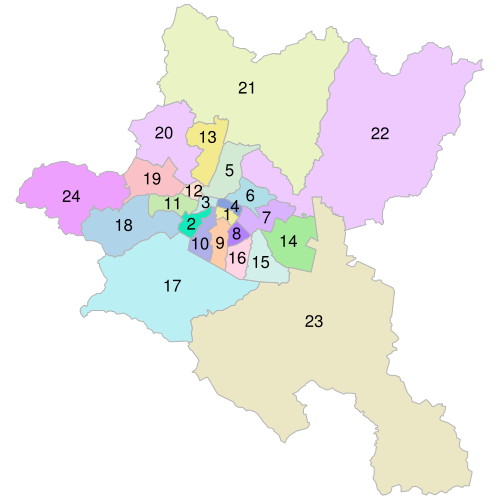
ソフィア市はソフィア市州と同一であり、ソフィア州はソフィア州とは異なり、ソフィア州は首都を取り囲んでいるものの首都自体は含んでいない。ソフィア市の24の地区には、市本体のほかに3つの町と34の村が含まれる。[120]地区と集落にはそれぞれ市長がおり、市長は一般選挙で選出される。議会議員は4年ごとに選出される。ソフィア市と38の集落の共通の長はソフィア市長である。[120]ヴァシル・テルジエフ市長は、PP-DB連合と地元のソフィアを救え党の候補者として2023年の選挙に勝利し、初任期を務めている。過半数の票を獲得することなく選挙の第1回投票で勝利した後、テルジエフはBSP候補のヴァーニャ・グリゴロワとの接戦の決選投票に臨み、175,044票を獲得して勝利した。一方、グリゴロワは170,258票だった。[121] [122]
国家政府
Sofia is the seat of the executive (Council of Ministers), legislative (National Assembly) and judiciary (Supreme Court and Constitutional Court) bodies of Bulgaria, as well as all government agencies, ministries, the National Bank, and the delegation of the European Commission. The President, along with the Council of Ministers, is located on Independence Square, also known as The Largo or The Triangle of Power.[124] One of the three buildings in the architectural ensemble, the former Bulgarian Communist Party headquarters, is due to become the seat of the Parliament. A refurbishment project is due to be completed in mid-2019,[125] while the old National Assembly building will become a museum or will only host ceremonial political events.[126]


Under Bulgaria's centralised political system, Sofia concentrates much of the political and financial resources of the country. It is the only city in Bulgaria to host three electoral constituencies: the 23rd, 24th and 25th Multi-member Constituencies, which together field 42 mandates in the 240-member National Assembly.[127]
Crime
With a murder rate of 1.7/per 100.000 people (as of 2009[update]) Sofia is a relatively safe capital city.[128] Nevertheless, in the 21st century, crimes, including Bulgarian mafia killings, caused problems in the city,[129] where authorities had difficulties convicting the actors,[130] which had caused the European Commission to warn the Bulgarian government that the country would not be able to join the EU unless it curbed crime[131] (Bulgaria eventually joined in 2007).[132] Many of the most severe crimes are contract killings that are connected to organised crime, but these had dropped in recent years after several arrests of gang members.[133] Corruption in Bulgaria also affects Sofia's authorities. According to the director of Sofia District Police Directorate, the largest share of the crimes are thefts, making up 62.4% of all crimes in the capital city. Increasing are frauds, drug-related crimes, petty theft and vandalism.[134] According to a survey, almost a third of Sofia's residents say that they never feel safe in the Bulgarian capital, while 20% always feel safe.[135] As of 2015[update], the consumer-reported perceived crime risk on the Numbeo database was "high" for theft and vandalism and "low" for violent crimes; safety while walking during daylight was rated "very high", and "moderate" during the night.[136] With 1,600 prisoners, the incarceration rate is above 0.1%;[137] however, roughly 70% of all prisoners are part of the Romani minority.[138]
Culture
Arts and entertainment

Sofia concentrates the majority of Bulgaria's leading performing arts troupes. Theatre is by far the most popular form of performing art, and theatrical venues are among the most visited, second only to cinemas. There were 3,162 theatric performances with 570,568 people attending in 2014.[139] The Ivan Vazov National Theatre, which performs mainly classical plays and is situated in the very centre of the city, is the most prominent theatre. The National Opera and Ballet of Bulgaria is a combined opera and ballet collective established in 1891. Regular performances began in 1909. Some of Bulgaria's most famous operatic singers, such as Nicolai Ghiaurov and Ghena Dimitrova, made their first appearances on the stage of the National Opera and Ballet.
Cinema is the most popular form of entertainment: there were more than 141,000 film shows with a total attendance exceeding 2,700,000 in 2014.[140] Over the past two decades, numerous independent cinemas have closed and most shows are in shopping centre multiplexes. Odeon (not part of the Odeon Cinemas chain) shows exclusively European and independent American films, as well as 20th century classics. The Boyana Film studios was at the centre of a once-thriving domestic film industry, which declined significantly after 1990. Nu Image acquired the studios to upgrade them into Nu Boyana Film Studios, used to shoot scenes for a number of action movies like The Expendables 2, Rambo: Last Blood and London Has Fallen.[141][142]

Bulgaria's largest art museums are located in the central areas of the city. Since 2015, the National Art Gallery, located in the former royal palace, the National Gallery for Foreign Art (NGFA) and the Museum of Contemporary Art – Sofia Arsenal were merged to form the National Gallery. Its largest branch is Kvadrat 500, located on the NFGA premises, where some 2,000 works are on display in twenty eight exhibition halls.[143] The collections encompass diverse cultural items, from Ashanti Empire sculptures and Buddhist art to Dutch Golden Age painting, works by Albrecht Dürer, Jean-Baptiste Greuze and Auguste Rodin. The crypt of the Alexander Nevsky cathedral is another branch of the National Gallery. It holds a collection of Eastern Orthodox icons from the 9th to the 19th century.
The National History Museum, located in Boyana, it has a vast collection of more than 650,000 historical items dating from Prehistory to the modern era, although only 10,000 of them are permanently displayed due to the lack of space.[144] Smaller collections of historical items are displayed in the National Archaeological Museum, a former mosque located between the edifices of the National Bank and the Presidency. Two natural sciences museums—the Natural History Museum and Earth and Man—display minerals, animal species (alive and taxidermic) and rare materials. The Ethnographic Museum and the Museum of Military History hold large collections of Bulgarian folk costumes and armaments, respectively. The Polytechnical Museum has more than 1,000 technological items on display. The SS. Cyril and Methodius National Library, the foremost information repository in the country, holds some 1,800,000 books and more than 7,000,000 documents, manuscripts, maps and other items.[145]

.jpg/500px-Banya_Bashi_Mosque_(37849692391).jpg)
The city houses many cultural institutes such as the Russian Cultural Institute, the Polish Cultural Institute, the Hungarian Institute, the Czech and the Slovak Cultural Institutes, the Italian Cultural Institute, Confucius Institute, Institut Français, Goethe Institut, British Council and Instituto Cervantes which regularly organise temporary expositions of visual, sound and literary works by artists from their respective countries.
Some of the biggest telecommunications companies, TV and radio stations, newspapers, magazines, and web portals are based in Sofia, including the Bulgarian National Television, bTV and Nova TV. Top-circulation newspapers include 24 Chasa and Trud.
The Boyana Church, a UNESCO World Heritage site, contains realistic frescoes, depicting more than 240 human images and a total 89 scenes, were painted. With their vital, humanistic realism they are a Renaissance phenomenon at its culmination phase in the context of the common-European art.[146]
Tourism
Sofia is one of the most visited tourist destinations in Bulgaria alongside coastal and mountain resorts. Among its highlights is the Alexander Nevsky Cathedral, one of the symbols of Bulgaria, constructed in the late 19th century. It occupies an area of 3,170 square metres (34,122 square feet) and can hold 10,000 people.
The city center contains many remains of ancient Serdica that have been excavated and are on public display, including Complex Ancient Serdica, eastern gate, western gate, city walls, thermal baths, 4th c. church of St. George Rotunda, amphitheatre of Serdica, the tombs and basilicas under the basilica of St. Sophia.
Vitosha Boulevard, also called Vitoshka, is a pedestrian zone with numerous cafés, restaurants, fashion boutiques, and luxury goods stores. Sofia's geographic location, in the foothills of the weekend retreat Vitosha mountain, further adds to the city's specific atmosphere.
- Some of tourist attraction in Sofia
-

-
 Vitosha Boulevard, the main shopping street in the city
 -

-

-

_(37448099450).jpg/500px-Boulevard_Vitosha_(5)_(37448099450).jpg)
Sports

A large number of sports clubs are based in the city. During the Communist era, most sports clubs concentrated on all-round sporting development, therefore CSKA, Levski, Lokomotiv, and Slavia are dominant not only in football, but in many other team sports as well. Basketball and volleyball also have strong traditions in Sofia. A notable local basketball team is twice European Champions Cup finalist Lukoil Akademik. The Bulgarian Volleyball Federation is the world's second-oldest, and it was an exhibition tournament organised by the BVF in Sofia that convinced the International Olympic Committee to include volleyball as an olympic sport in 1957.[147] Tennis is increasingly popular in the city. There are some ten[148] tennis court complexes within the city including the one founded by former WTA top-five athlete Magdalena Maleeva.[149]
Sofia applied to host the Winter Olympic Games in 1992 and in 1994, coming second and third respectively. The city was also an applicant for the 2014 Winter Olympics, but was not selected as candidate. In addition, Sofia hosted EuroBasket 1957 and the 1961 and 1977 Summer Universiades, as well as the 1983 and 1989 winter editions. In 2012, it hosted the FIVB World League finals.

The city is home to a number of large sports venues, including the 43,000-seat Vasil Levski National Stadium which hosts international football matches, as well as Balgarska Armia Stadium, Georgi Asparuhov Stadium and Lokomotiv Stadium, the main venues for outdoor musical concerts. Arena Sofia holds many indoor events and has a capacity of up to 19,000 people depending on its use. The venue was inaugurated on 30 July 2011, and the first event it hosted was a friendly volleyball match between Bulgaria and Serbia. There are two ice skating complexes — the Winter Sports Palace with a capacity of 4,600 and the Slavia Winter Stadium with a capacity of 2,000, both containing two rinks each.[150] A velodrome with 5,000 seats in the city's central park is undergoing renovation.[151] There are also various other sports complexes in the city which belong to institutions other than football clubs, such as those of the National Sports Academy, the Bulgarian Academy of Sciences, or those of different universities. There are more than fifteen swimming complexes in the city, most of them outdoor.[152] Nearly all of these were constructed as competition venues and therefore have seating facilities for several hundred people.
There are two golf courses just to the east of Sofia — in Elin Pelin (St Sofia club) and in Ihtiman (Air Sofia club), and a horseriding club (St George club). Sofia was designated as European Capital of Sport in 2018. The decision was announced in November 2014 by the Evaluation Committee of ACES Europe, on the grounds that "the city is a good example of sport for all, as means to improve healthy lifestyle, integration and education, which are the basis of the initiative".
Demographics

Population over the years (in thousands):
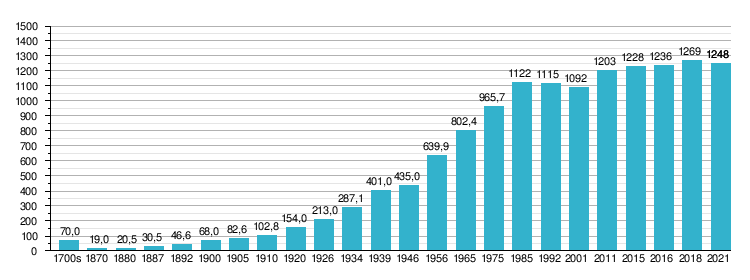

According to 2018 data, the city has a population of 1,400,384 and the whole Sofia Capital Municipality of 1,500,120.[155] The first census carried out in February 1878 by the Russian Army recorded a population of 11,694 inhabitants including 6,560 Bulgarians, 3,538 Jews, 839 Turks, and 737 Romani.
The ratio of women per 1,000 men was 1,102. The birth rate per 1000 people was 12.3 per mile and steadily increasing in the last 5 years, the death rate reaching 12.1 per mile and decreasing. The natural growth rate during 2009 was 0.2 per mile, the first positive growth rate in nearly 20 years. The considerable immigration to the capital from poorer regions of the country, as well as urbanisation, are among the other reasons for the increase in Sofia's population. The infant mortality rate was 5.6 per 1,000, down from 18.9 in 1980. According to the 2011 census, people aged 20–24 years are the most numerous group, numbering 133,170 individuals and accounting for 11% of the total 1,202,761 people. The median age is 38 though. According to the census, 1,056,738 citizens (87.9%) are recorded as ethnic Bulgarians, 17,550 (1.5%) as Romani, 6,149 (0.5%) as Turks, 9,569 (0.8%) belonged to other ethnic groups, 6,993 (0.6%) do not self-identify and 105,762 (8.8%) remained with undeclared affiliation.[156][157]
According to the 2011 census, throughout the whole municipality some 892,511 people (69.1%) are recorded as Eastern Orthodox Christians, 10,256 (0.8%) as Protestant, 6,767 (0.5%) as Muslim, 5,572 (0.4%) as Roman Catholic, 4,010 (0.3%) belonged to other faith and 372,475 (28.8%) declared themselves irreligious or did not mention any faith. The data says that roughly a third of the total population have already earned a university degree. Of the population aged 15–64 – 265,248 people within the municipality (28.5%) are not economically active, the unemployed being another group of 55,553 people (6%), a large share of whom have completed higher education. The largest group are occupied in trading, followed by those in the manufacturing industry. Within the municipality, three-quarters, or 965,328 people are recorded as having access to television at home and 836,435 (64.8%) as having internet. Out of 464,865 homes – 432,847 have connection to the communal sanitary sewer, while 2,732 do not have any. Of these 864 do not have any water supply and 688 have other than communal. Over 99.6% of males and females aged over 9 are recorded as literate. The largest group of the population aged over 20 are recorded to live within marriage (46.3%), another 43.8% are recorded as single and another 9.9% as having other type of coexistence/partnership, whereas not married in total are a majority and among people aged up to 40 and over 70. The people with juridical status divorced or widowed are either part of the factual singles or those having another type of partnership, each of the two constitutes by around 10% of the population aged over 20. Only over 1% of the juridically married do not de facto live within marriage. The families that consist of two people are 46.8%, another 34.2% of the families are made up by three people, whereas most of the households (36.5%) consist of only one person.[115]
Sofia was declared the national capital in 1879. One year later, in 1880, it was the fifth-largest city in the country after Plovdiv, Varna, Ruse and Shumen. Plovdiv remained the most populous Bulgarian town until 1892 when Sofia took the lead. The city is the hot spot of internal migration, the capital population is increasing and is around 17% of the national,[158] thus a small number of people with local roots remain today, they dominate the surrounding rural suburbs and are called Shopi. Shopi speak the Western Bulgarian dialects.
- Religious buildings in Sofia
-

-

-

-

-

.jpg/500px-Bulgaria_Bulgaria-0546_-_Church_of_St_Nicholas_the_Miracle-Maker_(7390227698).jpg)
.jpg/500px-%D0%A1%D0%BE%D1%84%D0%B8%D0%B9%D1%81%D0%BA%D0%B0_%D1%81%D0%B8%D0%BD%D0%B0%D0%B3%D0%BE%D0%B3%D0%B0_(14113510160).jpg)
.jpg/500px-05158-Sofia_(8269331286).jpg)
Economy

Sofia is ranked as Beta- global city by the Globalization and World Cities Research Network.[159] It is the economic hub of Bulgaria and home to most major Bulgarian and international companies operating in the country, as well as the Bulgarian National Bank and the Bulgarian Stock Exchange. The city is ranked 62nd among financial centres worldwide.[160] In 2015, Sofia was ranked 30th out of 300 global cities in terms of combined growth in employment and real gross domestic product (GDP) per capita, the highest one amongst cities in Southeast Europe.[161] The real GDP (PPP) per capita growth at the time was 2.5% and the employment went up by 3.4% to 962,400.[162] In 2015, Forbes listed Sofia as one of the top 10 places in the world to launch a startup business, because of the low corporate tax (10%), the fast internet connection speeds available – one of the fastest in the world, and the presence of several investment funds, including Eleven Startup Accelerator, LAUNCHub and Neveq.[163]

The city's GDP (PPS) per capita stood at €29,600 ($33,760) in 2015, one of the highest in Southeast Europe and well above other cities in the country.[164] The total nominal GDP in 2018 was 38.5 billion leva ($22.4 billion), or 33,437 leva ($19,454) per capita,[165][166] and average monthly wages in March 2020 were $1,071, the highest nationally.[167] Services dominate the economy, accounting for 88.6% of the gross value added, followed by industry 11.3% and agriculture 0.1%.[165][168]

Historically, after World War II and the era of industrialisation under socialism, the city and its surrounding areas expanded rapidly and became the most heavily industrialised region of the country, with numerous factories producing steel, pig iron, machinery, industrial equipment, electronics, trams, chemicals, textiles, and food.[169] The influx of workers from other parts of the country became so intense that a restriction policy was imposed, and residing in the capital was only possible after obtaining Sofianite citizenship.[169] However, after the political changes in 1989, this kind of citizenship was removed.
The most dynamic sectors include Information technology (IT) and manufacturing. Sofia is a regional IT hub, ranking second among the Top 10 fastest growing tech centers in Europe in terms of annual growth of active members.[170] The sector employs about 50,000 professionals, 30% of them involved in programming, and contributes for 14% of the city's exports.[170] The IT sector is highly diverse and includes both multinational corporations, local companies and startups. Multinationals with major research, development, innovation and engineering centers in Sofia include the second largest global IT center of Coca-Cola,[171] Ubisoft,[172] Hewlett-Packard,[173] VMware,[174] Robert Bosch GmbH,[175] Financial Times,[176] Experian, etc.[177] Several office and tech clusters have been established across the city, including Business Park Sofia, Sofia Tech Park, Capital Fort and others.
Manufacturing has registered a strong recovery since 2012, increasing the exports three-fold and the employment by 52% accounting for over 70,000 jobs.[178] Supported by the city's R&D expertise, Sofia is shifting to high value-added manufacturing including electrical equipment, precision mechanics, pharmaceuticals. There are 16 industrial and logistics parks in Sofia, some sprawling to towns in neighbouring Sofia Province, such as Bozhurishte, Kostinbrod and Elin Pelin.[178] Manufacturing companies include Woodward, Inc., producing airframe and industrial turbomachinery systems,[179] Festo, producing microsensors,[180] Visteon, development and engineering of instrument clusters, LCD displays and domain controllers,[181] Melexis, producing micro-electronic semiconductor solutions in the automotive sector,[182] Sopharma, producing pharmaceuticals, the largest Lufthansa Technik maintenance facilities outside Germany etc.[183]
Transport and infrastructure
With its developing infrastructure and strategic location, Sofia is a major hub for international railway and automobile transport. Three of the ten Pan-European Transport Corridors cross the city: IV, VIII, and X.[184] All major types of transport (except water) are represented in the city.
.jpg/500px-21.04.10_Sofia_31005_(6168607167).jpg)

The Central Railway Station is the primary hub for domestic and international rail transport, carried out by Bulgarian State Railways (BDZ), the national rail company headquartered in the city. It is one of the main stations along BDZ Line 1, and a hub of Lines 2, 5, and 13. Line 1 provides a connection to Plovdiv, the second-largest city in Bulgaria, while Line 2 is the longest national railway and connects Sofia and Varna, the largest coastal city. Lines 5 and 13 are shorter and provide connections to Kulata and Bankya, respectively. Overall, Sofia has 186 km (116 miles) of railway lines.[185]
Sofia Airport handled 7,208,987 passengers in 2023.[186]
Public transport is well-developed with bus (2,380 km (1,479 mi)),[187] tram (308 km (191 mi)),[188] and trolleybus (193 km (120 mi))[189] lines running in all areas of the city.[190][191] The Sofia Metro became operational in January 1998 with only 5 stations and currently has four lines and 47 stations.[192] As of 2022[update], the system has 52 km (32 mi) of track. Six new stations were opened in 2009, two more in April 2012, and eleven more in August 2012. In 2015 seven new stations were opened and the underground extended to Sofia Airport on its Northern branch and to Business Park Sofia on its Southern branch. In July 2016 the Vitosha Metro Station was opened on the M2 main line. A third line was opened in August 2020 and re-organisation of the previous lines lead to a 4th line being created.[193] This line will complete the proposed underground system of three lines with about 65 km (40 mi) of lines.[194] The master plan for the Sofia Metro includes three lines with a total of 63 stations.[195] Until the late 2010s route taxis (marshrutka) provided an efficient and popular means of transport by being faster than public transport, but cheaper than taxis. Their use declined with the expansion of the metro and they were gradually phased out. There are around 13,000 taxi cabs operating in the city.[196] Additionally, all-electric vehicles are available through carsharing company Spark, which is set to increase its fleet to 300 cars by mid-2019.[197]
.jpg/500px-Sofia_(37536243674).jpg)
Private automobile ownership has grown rapidly in the 1990s; more than 1,000,000 cars were registered in Sofia after 2002. The city has the 4th-highest number of automobiles per capita in the European Union at 546.4 vehicles per 1,000 people.[198] The municipality was known for minor and cosmetic repairs and many streets are in a poor condition. This is noticeably changing in the past years. There are different boulevards and streets in the city with a higher amount of traffic than others. These include Tsarigradsko shose, Cherni Vrah, Bulgaria, Slivnitsa, and Todor Aleksandrov boulevards, as well as the city's ring road.[199] Consequently, traffic and air pollution problems have become more severe and receive regular criticism in local media. The extension of the underground system is hoped to alleviate the city's immense traffic problems.
Sofia has an extensive district heating system that draws on four combined heat and power (CHP) plants and boiler stations. Virtually the entire city (900,000 households and 5,900 companies) is centrally heated, using residual heat from electricity generation (3,000 MW) and gas- and oil-fired heating furnaces; total heat capacity is 4,640 MW. The heat distribution piping network is 900 km (559 mi) long and comprises 14,000 substations and 10,000 heated buildings.
Education and science


Much of Bulgaria's educational capacity is concentrated in Sofia. There are 221 general, 11 special and seven arts or sports schools, 56 vocational gymnasiums and colleges, and four independent colleges.[200] The city also hosts 23 of Bulgaria's 51 higher education establishments and more than 105,000 university students.[201][202] The American College of Sofia, a private secondary school with roots in a school founded by American missionaries in 1860, is among the oldest American educational institutions outside of the United States.[203]
A number of secondary language schools provide education in a selected foreign language. These include the First English Language School, 91st German Language School, 164th Spanish Language School, and the Lycée Français. These are among the most sought-after secondary schools, along with Vladislav the Grammarian 73rd Secondary School and the High School of Mathematics, which topped the 2018 preference list for high school candidates.[204]
Higher education includes four of the five highest-ranking national universities – Sofia University (SU), the Technical University of Sofia, New Bulgarian University, and the Medical University of Sofia.[205] Sofia University was founded in 1888.[206] More than 20,000 students[207] study in its 16 faculties.[208] A number of research and cultural departments operate within SU, including its own publishing house, botanical gardens,[209] a space research centre, a quantum electronics department,[210] and a Confucius Institute.[211] Rakovski Defence and Staff College, the National Academy of Arts, the University of Architecture, Civil Engineering and Geodesy, the University of National and World Economy, and the University of Mining and Geology are other major higher education establishments in the city.[205]
Other institutions of national significance, such as the Bulgarian Academy of Sciences (BAS) and the SS. Cyril and Methodius National Library, are located in Sofia. BAS is the centrepiece of scientific research in Bulgaria, employing more than 4,500 scientists in various institutes. Its Institute of Nuclear Research and Nuclear Energy will operate the largest cyclotron in the country.[212][213] All five of Bulgaria's supercomputers and supercomputing clusters are located in Sofia as well. Three of those are operated by the BAS; one by Sofia Tech Park and one by the Faculty of Physics at Sofia University.[214]
International relations
Twin towns – sister cities
Sofia is twinned with:




Cooperation agreements
In addition Sofia cooperates with:


Honour
Serdica Peak on Livingston Island, in the South Shetland Islands, Antarctica, is named after Serdica.
Mass Media
Public
- Bulgarian News Agency (1898)
- Bulgarian National Radio (1935)
- Bulgarian National Television (1959)
Private
- Nova Broadcasting Group (1994)
- bTV Media Group (2000)
See also
.svg/500px-Europe_(orthographic_projection).svg.png)

- List of churches in Sofia
- List of shopping malls in Sofia
- List of tallest buildings in Sofia
- Sofia Province
- Monument to the Tsar Liberator
References
- ^ "Sofia through centuries". Sofia Municipality. Archived from the original on 19 August 2009. Retrieved 16 October 2009.
- ^ Ghodsee, Kristen (2005). The Red Riviera: Gender, Tourism, and Postsocialism on the Black Sea. Duke University Press. p. 21. ISBN 0822387174.
- ^ Prehistory, Ivan Dikov · in (7 December 2015). "Archaeologist Discovers 8,000-Year-Old Nephrite 'Frog-like' Swastika in Slatina Neolithic Settlement in Bulgaria's Capital Sofia – Archaeology in Bulgaria". archaeologyinbulgaria.com. Archived from the original on 22 December 2015. Retrieved 20 December 2015.
- ^ Marazov, Ivan (ed.). Ancient Gold: The Wealth of the Thracians. NY: Harry N. Abrams Inc., 1998. Texts by Marazov, Ivan; Venedikov, Ivan; Fol, Alexander; Tacheva, Margarita. ISBN 9780810919921.
- ^ Popov, Dimitar (ed.). The Thracians, Iztok – Zapad, Sofia, 2011. ISBN 9789543218691.
- ^ a b Sofia 2016, p. 13.
- ^ a b "CITIES AND THEIR URBANISED AREAS IN THE REPUBLIC OF BULGARIA" (PDF). National Statistical Institute: 91. Archived (PDF) from the original on 15 July 2018. Retrieved 15 July 2018.
- ^ "Archived copy". Archived from the original on 24 November 2020. Retrieved 25 August 2020.
{{cite web}}: CS1 maint: archived copy as title (link) - ^ "Nsi • National Register of Populated Places •". Archived from the original on 11 July 2020. Retrieved 8 July 2020.
- ^ a b "Население по градове и пол | Национален статистически институт". www.nsi.bg (in Bulgarian). Archived from the original on 12 April 2021. Retrieved 29 May 2021.
- ^ "Population on 1 January by age groups and sex - functional urban areas".
- ^ a b "Eurostat – Data Explorer". appsso.eurostat.ec.europa.eu. Archived from the original on 3 December 2018. Retrieved 21 December 2016.
- ^ "Sofia (capital)".
- ^ "Sub-national HDI - Area Database - Global Data Lab". hdi.globaldatalab.org. Archived from the original on 23 September 2018. Retrieved 13 September 2018.
- ^ Wells, John C. (2008), Longman Pronunciation Dictionary (3rd ed.), Longman, ISBN 9781405881180
- ^ Roach, Peter (2011), Cambridge English Pronouncing Dictionary (18th ed.), Cambridge: Cambridge University Press, ISBN 9780521152532
- ^ a b "Sofia". Encyclopædia Britannica. Archived from the original on 17 September 2018. Retrieved 12 February 2016.
- ^ Bulgaria, Hungary, Romania, the Czech Republic, and Slovakia. Britannica Educational Publishing. 1 June 2013. ISBN 9781615309870. Archived from the original on 21 February 2021. Retrieved 12 September 2017.
- ^ a b Lauwerys, Joseph (1970). Education in Cities. Evan's Brothers. ISBN 0-415-39291-8. Archived from the original on 11 July 2020. Retrieved 12 September 2017.
- ^ Rogers, Clifford (2010). The Oxford Encyclopedia of Medieval Warfare and Military Technology. Vol. 1. Oxford University Press. p. 301. ISBN 9780195334036. Archived from the original on 17 July 2020. Retrieved 27 June 2019.
- ^ Internet Hostel Sofia, Tourism in Sofia Archived 28 December 2011 at the Wayback Machine. Internethostelsofia.hostel.com, Retrieved Jan 2012
- ^ "Triangle of Religious Tolerance (1903) – iCulturalDiplomacy". www.i-c-d.de. Archived from the original on 27 January 2020. Retrieved 27 December 2019.
- ^ "10 Things We Can all Learn from Bulgaria's Square of Religious Tolerance". 15 February 2017. Archived from the original on 29 September 2020. Retrieved 4 September 2020.
- ^ "Sofia is one of the top 10 places for start-up businesses in the world, Bulgarian National TV". Bnt.bg. Archived from the original on 22 December 2015. Retrieved 11 April 2018.
- ^ Clark, Jayne. "Is Europe's most affordable capital worth the trip?". USA Today. Archived from the original on 6 April 2016. Retrieved 12 February 2016.
- ^ "Museum of Socialist Art – National Gallery". Archived from the original on 21 December 2019. Retrieved 27 December 2019.
- ^ "История". www.kmeta.bg. 10 May 2017. Archived from the original on 31 October 2018. Retrieved 31 October 2018.
- ^ "NATIONAL STATISTICAL INSTITUTE – Information for the area of city of Sofia". Nsi.bg. Archived from the original on 7 February 2018. Retrieved 11 April 2018.
- ^ "Eurostat-Sofia urban area population". Archived from the original on 3 September 2015. Retrieved 24 June 2017.
- ^ "Metropolitan areas in Europe" (PDF). Der Markt für Wohn- und Wirtschaftsimmobilien in Deutschland Ergebnisse des BBSR-Expertenpanel Immobilienmarkt Nr: 95. ISSN 1868-0097. Archived from the original (PDF) on 15 July 2018. Retrieved 15 July 2018.
- ^ Grant, Michael (211). The Emperor Constantine. Hachette. ISBN 9781780222806. Archived from the original on 18 August 2020. Retrieved 12 September 2017.
- ^ "The Cambridge Ancient History", Volume 3, Part 2: The Assyrian and Babylonian Empires and Other States of the Near East, from the Eighth to the Sixth Centuries BC by John Boardman, I. E. S. Edwards, E. Sollberger, and N. G. L. Hammond, ISBN 0-521-22717-8, 1992, p. 600: "In the place of the vanished Treres and Tilataei we find the Serdi for whom there is no evidence before the first century BC. It has for long been supposed on convincing linguistic and archeological grounds that this tribe was of Celtic origin"
- ^ Mihailov, G., Thracians, Sofia, 1972, Bulgarian Academy of Sciences, quote in Bulgarian: Името серди е засвидетелствано след келтската инвазия на Балканите. Сердите са от смесен трако-келтски произход.
- ^ Popov, D. Thracians, Sofia, p.h. Iztok – Zapad, 2005.
- ^ a b World and Its Peoples. Marshall Cavendish. 2010. ISBN 9780761479024. Archived from the original on 18 August 2020. Retrieved 12 September 2017.
- ^ a b Irina Florov, Nicholas Florov (2001). Three-thousand-year-old Hat. Michigan University: Golden Vine Publishers. p. 303. ISBN 0968848702. Archived from the original on 28 September 2017. Retrieved 12 September 2017.
- ^ Julian Bennett, Trajan: Optimus Princeps (Routledge, 1997), p. 1.
- ^ Erwin Anton Gutkind (1964). International history of city development (8 ed.). Michigan University: Free Press of Glencoe. Archived from the original on 20 August 2020. Retrieved 12 September 2017.
- ^ "София" (in Bulgarian). Мила Родино. Archived from the original on 19 December 2007. Retrieved 14 September 2008.
- ^ Encyclopedia Americana (25 ed.). Pennsylvania State University: Grolier Incorporated. 1999. p. 878. ISBN 0717201317. Archived from the original on 21 February 2017. Retrieved 12 September 2017.
- ^ "History". Capital Municipality. Archived from the original on 26 December 2015. Retrieved 20 October 2015.
- ^ "District Sofia-city". Guide Bulgaria. Archived from the original on 29 February 2012. Retrieved 19 February 2012.
- ^ Geographic Dictionary of Bulgaria 1980, p. 537
- ^ "General Hydrological Data". Iskar River System. Archived from the original on 7 December 2017. Retrieved 27 April 2019.
- ^ Софийска голяма община – климат Archived 7 August 2020 at the Wayback Machine.
- ^ Ishirkov, Anastas (1910). "Атанас Иширков, България. Географически бележки, Придворна печатница, 1910 година, стр. 78". Archived from the original on 7 August 2020. Retrieved 3 September 2019.
- ^ Николов, Иван. "Архив-Бг3 » 01-1991 София". stringmeteo.com. Archived from the original on 29 May 2021. Retrieved 1 January 2021.
- ^ "Статистически Данни" (PDF). stringmeteo.com. Retrieved 13 August 2024.
- ^ Николов, Иван. "Времето София » 25.12.2001". stringmeteo.com. Archived from the original on 3 April 2015. Retrieved 28 January 2015.
- ^ "Вековен архив - София » 01.1887 - 12.2007". www.stringmeteo.com. Archived from the original on 17 May 2021. Retrieved 17 May 2021.
- ^ "През 2000 година на 5 юли е бил един от". 4 July 2023.
- ^ "Времето-България » Мес. обобщ. температури".
- ^ "Архив-Бг » Год. обобщ. температури".
- ^ "Век. месечен архив Бг". Archived from the original on 7 August 2020. Retrieved 18 January 2020.
- ^ "Архив-Бг » Год. обобщ. валежи". Archived from the original on 7 August 2020. Retrieved 18 January 2020.
- ^ "Index of /Archive/Arc0216/0253808/2.2/Data/0-data/Region-6-WMO-Normals-9120/Bulgaria/CSV".
- ^ "Station Name: Sofia". United States National Oceanic and Atmospheric Administration. Retrieved 13 August 2024.
- ^ "Век. месечен архив Бг". Stringmeteo.com.
- ^ "Век. месечен архив Бг". Stringmeteo.com.
- ^ https://view.officeapps.live.com/op/view.aspx?src=https%3A%2F%2Fwww.stringmeteo.com%2Fsynop%2Fclimate_bg%2FAbsolute_Maximum_Temperatures.doc&wdOrigin=BROWSELINK [bare URL]
- ^ https://view.officeapps.live.com/op/view.aspx?src=https%3A%2F%2Fwww.stringmeteo.com%2Fsynop%2Fclimate_bg%2FAbsolute_Minimum_Temperatures.doc&wdOrigin=BROWSELINK [bare URL]
- ^ https://web.uni-plovdiv.net/vedrin/sg/sg-bg-1947-1948.pdf [bare URL PDF]
- ^ "Времето София » 05.11.2021".
- ^ "Browser Check Page".
- ^ "Sofia, Bulgaria - Detailed climate information and monthly weather forecast". Archived from the original on 9 March 2021. Retrieved 3 September 2019.
- ^ ""Дружба", "Надежда" и "Павлово" са с най-мръсен въздух в София – Mediapool.bg". mediapool.bg. 16 March 2012. Archived from the original on 4 March 2016. Retrieved 13 August 2015.
- ^ a b c "Air pollution in Sofia, other Bulgarian cities hugely exceeded norms several times this winter". The Sofia Globe. 4 April 2018. Archived from the original on 26 October 2018. Retrieved 26 October 2018.
- ^ a b c Environment: Sofia, most polluted capital of Europe (News report). Agence France-Presse. 20 December 2015. Archived from the original on 30 October 2021. Retrieved 26 October 2018.
- ^ Hakim, Danny (15 October 2013). "Bulgaria's Air Is Dirtiest in Europe, Study Finds, Followed by Poland". The New York Times. Archived from the original on 23 July 2014. Retrieved 15 October 2013.
- ^ a b "Bulgaria: Bad air quality in Sofia on January 6 2018". The Sofia Globe. 6 January 2018. Archived from the original on 26 October 2018. Retrieved 26 October 2018.
- ^ "Air Quality Standards". European Commission. Archived from the original on 22 October 2018. Retrieved 26 October 2018.
- ^ "Sofia Municipal Council Adopted Measures to Tackle Air Pollution". Bulgarian National Television. 25 January 2018. Archived from the original on 27 October 2018. Retrieved 26 October 2018.
- ^ "Brussels: Sofia has no projects targeting air pollutionКопирано от fidget.bg". Standard. 12 September 2018. Archived from the original on 27 October 2018. Retrieved 26 October 2018.
- ^ John G. Kelcey; Norbert Müller (7 June 2011). Plants and Habitats of European Cities. Czech Republic; Germany – University of Applied Sciences Erfurt: Springer. ISBN 978-0-387-89684-7. Archived from the original on 19 August 2020. Retrieved 12 September 2017.
- ^ Boev, Zlatozar. (2009). Avian Remains from an Early Neolithic Settlement of Slatina (Present Sofia City, Bulgaria). Acta Zoologica Bulgarica. 61. 151–156.
- ^ a b "София – 130 години столица на България". sofiaculture.bg. Archived from the original on 5 September 2017.
- ^ BulWTours (20 July 2015). "Odrysian Kingdom - the first country on the Balkans". Bulgaria Wine Tours. Archived from the original on 9 February 2022. Retrieved 8 September 2021.
- ^ a b c Trudy, Ring; Noelle, Watson; Paul, Schellinger (5 November 2013). Southern Europe: International Dictionary of Historic Places. Routledge. ISBN 9781134259588. Archived from the original on 19 August 2020. Retrieved 20 December 2015.
- ^ The Cambridge Ancient History, Volume 3, Part 2:, ISBN 0-521-22717-8, 1992, page 600
- ^ "Емил Коцев 24.04.2016 9:331205 ИЗГУБЕНАТА СТОЛИЦА". Archived from the original on 4 February 2017. Retrieved 12 October 2018.
- ^ "Dio, Roman History, Book 51, chapter 25". Archived from the original on 28 October 2014. Retrieved 20 February 2021.
- ^ "Trakii︠a︡ – Том 12 – Страница 41- "Da diese mit ihrem blinden König Siras verbündete der Römer waren ergab dies den Vorwand für den Kriegszug von Crassus. Über die Segetike (wohl irrtümlich für Serdike, Land der Serden, wie es aus Dio Cass. LI, 25, 4 erhellt)"". 1998. Archived from the original on 12 October 2018. Retrieved 12 October 2018.
- ^ "Acta Antiqua Academiae Scientiarum Hungaricae. Akademai Klado, 1966. "Als sie die Dentheleten angriffen, kam Crassus diesen zur. Hilfe, eroberte das Land der Serden (bei Dio Segetika) und kam plündernd ins."". 1966. Archived from the original on 12 October 2018. Retrieved 12 October 2018.
- ^ Jenő Fitz. Limes. Akadémiai Kiadó, 1977 "As Macedonia itself was in danger, Crassus readily advanced as far as Segetika (-Serdica)" Archived 12 October 2018 at the Wayback Machine, ISBN 9789630513012
- ^ Ivanov, Rumen (2006). Roman cities in Bulgaria. Bulgarian Bestseller--National Museum of Bulgarian Books and Polygraphy. ISBN 9789544630171. Archived from the original on 20 August 2020. Retrieved 12 September 2017.
- ^ Wilkes, John (2005). "Provinces and Frontiers". In Bowman, Alan K.; Garnsey, Peter; Cameron, Averil (eds.). The Cambridge ancient history: The crisis of empire, A.D. 193–337. Vol. 12. Cambridge University Press. p. 253. ISBN 978-0-521-30199-2. Archived from the original on 10 November 2015. Retrieved 29 October 2015.
- ^ Encyclopaedia Londinensis, or, Universal dictionary of arts, sciences, and literature. University of Minnesota. 1827. Archived from the original on 19 August 2020. Retrieved 12 September 2017.
- ^ Saunders, Randall Titus (1992). A biography of the Emperor Aurelian (AD 270–275). Ann Arbor, Michigan: UMI Dissertation Services. pp. 106–7.
- ^ "Eutropius: Book IX". thelatinlibrary.com. Archived from the original on 10 September 2017. Retrieved 16 February 2012.
- ^ Nikolova, Kapka Sofia Archived 20 August 2020 at the Wayback Machine University of Indiana. "Emperor Constantine the Great even considered the possibility for Serdika to become the capital of the Eastern Roman Empire"
- ^ Green, Bernard (2010). Christianity in Ancient Rome: The First Three Centuries. A&C Black. p. 237. ISBN 978-0-567-03250-8. Archived from the original on 19 August 2020. Retrieved 12 September 2017.
- ^ Bozhilov & Gyuzelev 1999, pp. 127–128
- ^ a b Stancheva 2010, pp. 120–121
- ^ Slaviani. 1967. Archived from the original on 18 August 2020. Retrieved 27 June 2019.
- ^ Bozhilov & Gyuzelev 1999, p. 319
- ^ Bozhilov & Gyuzelev 1999, pp. 400–401
- ^ Stancheva 2010, pp. 123–124
- ^ Stancheva 2010, pp. 131, 139
- ^ a b c d Ivanova, Svetlana, "Ṣofya", in: Encyclopaedia of Islam, Second Edition, Edited by: P. Bearman, Th. Bianquis, C.E. Bosworth, E. van Donzel, W.P. Heinrichs. Consulted online on 23 January 2018.
- ^ Cited in Халенбаков, О. Детска енциклопедия България: Залезът на царете, с. 18
- ^ Godisnjak. Drustvo Istoricara Bosne i Hercegovine, Sarajevo. 1950. p. 174. Archived from the original on 18 August 2020. Retrieved 27 June 2019.
Санџак Софија Овај је санџак основан око г. 1393.
- ^ Stancheva 2010, pp. 165, 167–169
- ^ Stancheva 2010, pp. 154–155
- ^ "Sofia – Trip around Sofia". Balkan tourist, 1968. Archived from the original on 5 March 2016. Retrieved 8 August 2015.
- ^
 This article incorporates text from a publication now in the public domain: Herbermann, Charles, ed. (1913). "Sardica". Catholic Encyclopedia. New York: Robert Appleton Company.
- ^ Kemal Karpat (1985), Ottoman Population, 1830-1914, Demographic and Social Characteristics Archived 10 October 2019 at the Wayback Machine, The University of Wisconsin Press, p. 36
- ^ "ВОЕННАЯ ЛИТЕРАТУРА --[ Военная история ]-- Генов Ц. Русско-турецкая война 1877–1878 гг. и подвиг освободителей". lib.ru. Archived from the original on 5 March 2016. Retrieved 8 August 2015.
- ^ Kiradzhiev, Svetlin (2006). "Sofia. 125 years a capital. 1879–2004". "Guttenberg". ISBN 978-954-617-011-8
- ^ Crampton 2006, p. 114.
- ^ Crampton, RJ (2006) [1997], A Concise History of Bulgaria, Cambridge: Cambridge University Press, ISBN 0-521-85085-1
- ^ "E-novinar.com – Новините на едно място" [Mohailova, Tihomria. In 1900 the first electric lamp lit the streets of Sofia. Novinar]. novinar.bg (in Bulgarian). 12 March 2014. Archived from the original on 18 June 2016. Retrieved 22 December 2016.
- ^ Hall (2000), p. 97.
- ^ Hall (2000), p. 118.
- ^ L. Ivanov. 1991 Sofia street naming proposal. Archived 25 October 2017 at the Wayback Machine Sofia City Place-names Commission, 22 January 1991.
- ^ a b 2011 census, Sofia-capital (PDF) (23 ed.). Sofia: National Statistical Institute of Bulgaria. 2012. p. 37 40 43 68 71 74 99 117 132 190 193 196. Archived from the original (PDF) on 15 February 2016.
- ^ a b Collective (1980). Encyclopedia of Figurative Arts in Bulgaria, volume 1. Sofia: Bulgarian Academy of Sciences. pp. 209–210.
- ^ "National parks in the world" (in Bulgarian). journey.bg. Archived from the original on 23 May 2008. Retrieved 24 May 2008.
- ^ "Vitosha Mountain". vitoshamount.hit.bg. Archived from the original on 20 June 2004. Retrieved 29 April 2014.
- ^ "Sofia Council - Общински съветници 2023-2027". council.sofia.bg. Retrieved 2 July 2024.
- ^ a b "District Mayors". Sofia Municipality. Archived from the original on 20 December 2009. Retrieved 26 December 2009.
- ^ https://results.cik.bg/mi2023/tur1/rezultati/2246.html [bare URL]
- ^ https://results.cik.bg/mi2023/tur2/rezultati/2246.html [bare URL]
- ^ "bTV". 6 November 2023.
- ^ ""Триъгълникът на властта" или Ларгото: Как се е променял през годините" [The Triangle of Power or The Largo: How It Changed Throughout the Years]. Bulgarian National Television. Archived from the original on 6 June 2020. Retrieved 1 November 2018.
- ^ "Как ще изглежда новата пленарна зала на българските депутати?" [What will the new Parliament hall look like?]. Bulgarian National Television. 2 October 2018. Archived from the original on 29 May 2021. Retrieved 1 November 2018.
- ^ "Народното събрание – музей?" [The National Assembly – a Museum?]. BTV Novinite. 7 October 2018. Archived from the original on 8 October 2018. Retrieved 1 November 2018.
- ^ "РЕШЕНИЕ № 4149-НС София, 27.01.2017" [Resolution No. 4149-NS Sofia]. Central Electoral Commission. 27 January 2017. Archived from the original on 4 April 2019. Retrieved 1 November 2018.
- ^ Chalabi, Mona (30 November 2012). "Where are world's deadliest major cities?". theguardian.com. Archived from the original on 23 January 2017. Retrieved 25 September 2016.
- ^ David Coulby; Robert Cowen; Crispin Jones (17 January 2013). World Yearbook of Education 2000: Education in Times of Transition. Routledge. p. 10. ISBN 978-1-136-16603-7. Archived from the original on 18 April 2016. Retrieved 29 October 2015.
crime rates have exploded in Sofia as well as in Moscow and St Petersburg.
- ^ Gergana Noutcheva (26 July 2012). European Foreign Policy and the Challenges of Balkan Accession: Conditionality, legitimacy and compliance. Routledge. p. 192. ISBN 978-1-136-30619-8. Archived from the original on 18 April 2016. Retrieved 29 October 2015.
The strongest EU demand – structural changes of the judicial system – had to do with the crime rate in Bulgaria and the apparent impotence of the authorities in Sofia to convict any of the murderes in the high-profile mafia killings that shook the country in 2003–2005.
- ^ "Bulgarian Crime – Where killing is a habit". The Economist. 27 October 2005. Archived from the original on 29 June 2015. Retrieved 21 October 2015.
- ^ "BBC NEWS – Europe – Romania and Bulgaria join the EU". bbc.co.uk. Archived from the original on 29 May 2021. Retrieved 25 September 2016.
- ^ "Bulgaria 2015 Crime and Safety Report". 29 December 2016. Archived from the original on 29 December 2016.
- ^ Crime Rates in Bulgaria's Sofia on the Rise Archived 22 May 2015 at the Wayback Machine Novinite
- ^ "The Most Dangerous Cities in Europe". Business Insider Inc. Archived from the original on 2 July 2015. Retrieved 23 October 2015.
- ^ "Crime in Sofia. Safety in Sofia". Archived from the original on 19 September 2015. Retrieved 21 October 2015.
- ^ The prison in Sofia Archived 4 March 2016 at the Wayback Machine. Gdin
- ^ "Само 10 000 в затвора, 7000 от тях са цигани". 24chasa.bg. Archived from the original on 24 November 2015. Retrieved 11 April 2018.
- ^ Sofia 2016, p. 159.
- ^ Sofia 2016, p. 160.
- ^ "UPDATE: Stallone Returning to NU BOYANA Film Studios in Bulgaria for 'Rambo 5'". Novinite. 30 August 2018. Archived from the original on 31 August 2018. Retrieved 28 October 2018.
- ^ "London Has Fallen: Company Credits". IMDb.com. Archived from the original on 27 January 2017. Retrieved 28 October 2018.
- ^ "(source)". Archived from the original on 16 August 2016. Retrieved 16 July 2016.
- ^ "Колекции – НИМ". Historymuseum.org. Archived from the original on 17 February 2015. Retrieved 11 April 2018.
- ^ "Funds and collections". SS. Cyril and Methodius National Library. Archived from the original on 28 October 2018. Retrieved 28 October 2018.
- ^ Ecker, Gerhard (1984). Bulgarien. Kunstdenkmäler aus vier Jahrtausenden von den Thrakern bis zur Gegenwart (in German). Köln: DuMont Buchverlag. ISBN 9783406398667. Archived from the original on 20 August 2020. Retrieved 12 September 2017.
- ^ "BVA-News". balkanvolleyball.org. Archived from the original on 20 February 2008. Retrieved 11 May 2008.
- ^ "Sofia municipality — Tennis courts". sofia.bg. Retrieved 11 May 2008.[permanent dead link]
- ^ "Тенис Клуб Малееви". maleevaclub.com. Archived from the original on 14 March 2008. Retrieved 11 May 2008.
- ^ "Skate rinks in Sofia". kunki.org. Archived from the original on 17 April 2008. Retrieved 11 May 2008.
- ^ "Journey.bg — History of the Sofia velodrome". journey.bg. Archived from the original on 15 May 2005. Retrieved 11 May 2008.
- ^ "Swimming pools in Sofia (including Spa centers)". tonus.tialoto.bg. Archived from the original on 10 May 2008. Retrieved 11 May 2008.
- ^ "Archived copy" (PDF). Archived from the original (PDF) on 6 July 2011. Retrieved 14 February 2010.
{{cite web}}: CS1 maint: archived copy as title (link) - ^ "Cities of Bulgaria". 3 April 2024.
- ^ "Population | National statistical institute". www.nsi.bg. Archived from the original on 26 October 2018. Retrieved 31 October 2018.
- ^ "Population". nsi.bg. National Statistical Institute of Bulgaria, 2011. Archived from the original on 3 March 2016. Retrieved 12 February 2016.
- ^ "Ромите са изолирани от бума в заетостта на Балканите". Mediapool.bg. 11 December 2007. Archived from the original on 6 July 2011. Retrieved 11 April 2018.
- ^ "Population and Demographic Processes in 2014 (Final data) – National statistical institute". Nsi.bg. Archived from the original on 15 November 2016. Retrieved 11 April 2018.
- ^ "The World According to GaWC 2020". GaWC - Research Network. Globalization and World Cities. Archived from the original on 24 August 2020. Retrieved 31 August 2020.
- ^ "The Global Financial Centres Index 27" (PDF). Long Finance. March 2020. Archived (PDF) from the original on 28 March 2020. Retrieved 3 September 2020.
- ^ "Sofia ranks 30th in GDP/capita, employment growth 2013–2014 global report". seenews.com. Archived from the original on 21 June 2015. Retrieved 22 January 2015.
- ^ "Global Metro Monitor An Uncertain recovery" (PDF). brookings.edu. Archived (PDF) from the original on 2 April 2015. Retrieved 22 January 2015.
- ^ "10 Top Cities Around The World To Launch Your Startup". Forbes. 29 November 2015. Archived from the original on 14 March 2016. Retrieved 13 March 2016.
- ^ "Regional gross domestic product (PPS per inhabitant at current market prices), by NUTS 3 regions". Eurostat. Archived from the original on 11 April 2016. Retrieved 12 March 2017.
- ^ a b "GDP by Economic Sector and Region". National Statistical Institute. Archived from the original on 16 July 2020. Retrieved 14 July 2020.
- ^ Sofia 2016, p. 64.
- ^ "Average monthly wages and salaries of the employees under labour contract by statistical regions and districts". National Statistical Institute. Archived from the original on 7 June 2020. Retrieved 14 July 2020.
- ^ Sofia 2016, p. 72.
- ^ a b "Kapital Quarterly". Sofiaecho.com. Archived from the original on 10 June 2016. Retrieved 11 April 2018.
- ^ a b "IT Sector in Sofia". Invest Sofia. Archived from the original on 14 July 2020. Retrieved 14 July 2020.
- ^ "Coca-Cola Opens Its 2nd Largest Globally IT Center in Sofia". Invest Sofia. 9 June 2018. Archived from the original on 16 July 2020. Retrieved 14 July 2020.
- ^ "Ubisoft Sofia". www.ubisoft.com. Archived from the original on 15 August 2022. Retrieved 13 August 2022.
- ^ "Hewlett-Packard Bulgaria". Business Park Sofia. Archived from the original on 17 July 2020. Retrieved 14 July 2020.
- ^ "VMware to invest €23M and Grow the Site in Sofia to over 1500 People". Invest Sofia. 7 May 2019. Archived from the original on 14 July 2020. Retrieved 14 July 2020.
- ^ "Bosch Group Officially Opened its New Office in Sofia". Invest Sofia. 25 June 2019. Archived from the original on 14 July 2020. Retrieved 14 July 2020.
- ^ "Financial Times Expands Its Team in Sofia". Invest Sofia. 2 July 2019. Archived from the original on 14 July 2020. Retrieved 14 July 2020.
- ^ "The Software Company Experian Opened its New Office Building in Sofia". Invest Sofia. 8 June 2019. Archived from the original on 14 July 2020. Retrieved 14 July 2020.
- ^ a b "IT Manufacturing in Sofia". Invest Sofia. Archived from the original on 14 July 2020. Retrieved 14 July 2020.
- ^ "American Control System Solutions Manufacturer Woodward Opens Production in Sofia". Invest Sofia. 27 February 2017. Archived from the original on 14 July 2020. Retrieved 14 July 2020.
- ^ "Festo to Invest 25.6 mln. Euro in a New Production Unit in Sofia/". Invest Sofia. 7 June 2018. Archived from the original on 14 July 2020. Retrieved 14 July 2020.
- ^ "Products". Visteon Electronics Bulgaria. Archived from the original on 14 July 2020. Retrieved 14 July 2020.
- ^ "Melexis to Invest €75M to Expand Its Operations in Bulgaria". Invest Sofia. 25 June 2019. Archived from the original on 14 July 2020. Retrieved 14 July 2020.
- ^ "Lufthansa Technik Sofia invests 30 mln euro to expand its facilities". SIPA Group. Archived from the original on 16 July 2020. Retrieved 14 July 2020.
- ^ Sofia infrastructure from the official website of the Municipality Archived 28 May 2008 at the Wayback Machine (in Bulgarian)
- ^ "Sofia (capital)". National Statistical Institute regional statistics. 11 February 2013. Archived from the original on 14 November 2013. Retrieved 17 October 2013.
- ^ "Passengers 2018-2019" (PDF). Sofia Airport. Archived (PDF) from the original on 9 June 2020. Retrieved 14 July 2020.
- ^ "History of the bus network in Sofia". Sofiatraffic.bg. Archived from the original on 27 August 2013. Retrieved 30 August 2012.
- ^ "History of the tramway network in Sofia". Sofiatraffic.bg. Archived from the original on 30 June 2016. Retrieved 30 August 2012.
- ^ "History of the trolleybus network in Sofia". Sofiatraffic.bg. 14 February 1941. Archived from the original on 27 August 2013. Retrieved 30 August 2012.)
- ^ "Public transport Sofia — official website" (in Bulgarian). sumc.bg. Archived from the original on 29 May 2021. Retrieved 24 May 2008.
- ^ "Transport Company Bulgaria— official website" (in Bulgarian). dak-transport.com. Archived from the original on 7 September 2009. Retrieved 21 August 2009.
- ^ "Българска национална телевизия – Новини (Bulgarian National Television – News)" (in Bulgarian). bnt.bg. Archived from the original on 3 September 2012. Retrieved 2 September 2012.
- ^ "ОП Транспорт и разширение". Metropolitan.bg. Archived from the original on 14 August 2011. Retrieved 2 May 2018.
- ^ "Metropolitan Sofia Web Place". metropolitan.bg. Archived from the original on 1 October 2008. Retrieved 24 May 2008.
- ^ "General Scheme". Metropolitan.bg. Archived from the original on 14 May 2013. Retrieved 12 March 2013.
- ^ "National Federation of the Taxi Drivers in Bulgaria. Regional Member Sofia". nftvb.com. Archived from the original on 2 June 2008. Retrieved 24 May 2008.
- ^ "Shared Electric Vehicles Spark in Sofia Increase by 170". Novinite. 13 March 2019. Archived from the original on 29 March 2019. Retrieved 30 March 2019.
- ^ Sofia in Figures, p.26
- ^ "Fines for bad repair work – 'Dnevnik' newspaper". dnevnik.bg. Archived from the original on 13 January 2009. Retrieved 24 May 2008.
- ^ Sofia 2016, p. 141.
- ^ Sofia 2016, p. 148.
- ^ "Register of Higher Schools in Bulgaria". Ministry of Education and Science. Archived from the original on 27 October 2018. Retrieved 27 October 2018.
- ^ "History". acs.bg. Archived from the original on 14 June 2018. Retrieved 17 December 2018.
- ^ "Кои са най-желаните гимназии в София и кои паралелки останаха празни" [Which high schools in Sofia are the most preferred]. Offnews. 3 July 2018. Archived from the original on 27 October 2018. Retrieved 27 October 2018.
- ^ a b "Bulgarian universities". Webometrics Ranking of World Universities. Archived from the original on 12 November 2017. Retrieved 17 February 2019.
- ^ "Official website of the Sofia university — History". Sofia University. Archived from the original on 19 October 2013. Retrieved 19 October 2013.
- ^ "Sofia University aims to attract more foreign students" (in Bulgarian). Akademika. 14 June 2013. Archived from the original on 20 October 2013. Retrieved 19 October 2013.
- ^ "University Faculties". Sofia University. Archived from the original on 19 October 2013. Retrieved 19 October 2013.
- ^ "Independent structures of SU". Sofia University. Archived from the original on 19 October 2013. Retrieved 19 October 2013.
- ^ "Faculty of Physics structure". Sofia University. Archived from the original on 19 October 2013. Retrieved 19 October 2013.
- ^ "University Centres". Sofia University. Archived from the original on 19 October 2013. Retrieved 19 October 2013.
- ^ "Bulgaria's Nuclear Institute: New Cyclotron To Become Operational in 2 Years". Novinite. 27 October 2016. Archived from the original on 27 October 2018. Retrieved 27 October 2018.
- ^ "MSB – Projects". www.msb.bg. Archived from the original on 28 October 2018. Retrieved 27 October 2018.
- ^ Zapryanov, Yoan (22 June 2018). "Малката изчислителна армия на България" [Bulgaria's small computing army] (in Bulgarian). Kapital Daily. Archived from the original on 17 November 2019. Retrieved 15 July 2018.
- ^ "Градина "Алжир" – София". opoznai.bg (in Bulgarian). 19 June 2015. Archived from the original on 19 May 2021. Retrieved 19 May 2021.
- ^ "Н. пр. д-р Хасан Бармауи, почетен консул на кралство Йордания в България, пред "Труд": Йордания е врата за България към Близкия Изток". trud.bg (in Bulgarian). Trud. 25 February 2020. Archived from the original on 19 May 2021. Retrieved 19 May 2021.
- ^ "Sister Cities of Ankara". ankara.bel.tr. Ankara. Archived from the original on 28 April 2013. Retrieved 27 December 2019.
- ^ "Cu cine este înfrățit Bucureștiul?". Adevărul (in Romanian). 21 February 2011. Archived from the original on 18 November 2019. Retrieved 18 November 2019.
- ^ "HE Prime Minister Presides Over Cabinet Regular Meeting". pressarabia.qa. Press Arabia. 28 November 2012. Archived from the original on 18 October 2020. Retrieved 19 May 2021.
- ^ "Перелік міст, з якими Києвом підписані документи про поріднення, дружбу, співробітництво, партнерство" (PDF). kyivcity.gov.ua (in Ukrainian). Kyiv. 15 February 2018. Archived (PDF) from the original on 28 January 2020. Retrieved 19 May 2021.
- ^ "Our Sister Cities". sistercitiespgh.org. Sister Cities Association of Pittsburgh. Archived from the original on 19 May 2021. Retrieved 19 May 2021.
- ^ "Sofia, Shanghai to become sister cities". bnr.bg. BNR Radio Bulgaria. 23 November 2015. Archived from the original on 27 December 2019. Retrieved 27 December 2019.
- ^ "ערים שותפות". tel-aviv.gov.il (in Hebrew). Tel Aviv. Archived from the original on 18 November 2017. Retrieved 19 May 2021.
- ^ "Sofia, Budapest to Cooperate in Culture, Tourism, Economy". Archived from the original on 11 May 2018. Retrieved 11 May 2018.
- ^ "Friendship and cooperation agreements". Paris.fr. Archived from the original on 15 October 2013. Retrieved 12 October 2013.
- ^ "Acordos de geminação, de cooperação e de amizade". cm-lisboa.pt (in Portuguese). Lisboa. Archived from the original on 31 October 2013. Retrieved 27 December 2019.
- ^ "Agreements with cities". madrid.es. Madrid. Archived from the original on 10 June 2020. Retrieved 27 December 2019.
- ^ "Partner cities". yerevan.am. Yerevan. Archived from the original on 19 August 2014. Retrieved 27 December 2019.
Bibliography
- "Sofia in Figures" (PDF) (in Bulgarian and English). National Statistical Institute of Bulgaria. 2016. Retrieved 26 October 2018.
- Bozhilov, Ivan; Gyuzelev, Vasil (1999). История на средновековна България VII–XIV век [History of Medieval Bulgaria VII–XIV centuries] (in Bulgarian). Sofia: Анубис. ISBN 954-426-204-0.
- Stancheva, Magdalina (2010). София – от древността до нови времена [Sofia – from Antiquity to Modern Times] (in Bulgarian). Sofia: New Bulgarian University. ISBN 978-954-535-579-0.
Further reading
- Gigova, Irina (March 2011). "The City and the Nation: Sofia's Trajectory from Glory to Rubble in WWII". Journal of Urban History. 37 (2): 155–175. doi:10.1177/0096144210391612. S2CID 144022049.The 110 footnotes provide a guide to the literature on the city
- "Sofia in Figures 2009" (PDF). Regional Statistical Office of Sofia. 2009. Archived from the original (PDF) on 11 October 2011.
- "Sofia — 130 Years Capital" (in Bulgarian). Archived from the original on 28 January 2011.
External links
Sofia at Wikipedia's sister projects
 Definitions from Wiktionary
 Media from Commons
 News from Wikinews
 Quotations from Wikiquote
 Texts from Wikisource
 Textbooks from Wikibooks
 Resources from Wikiversity
 Travel information from Wikivoyage
- Official website
- Online guide to Sofia
- Official Site of Sofia Public Transport Archived 25 May 2010 at the Wayback Machine
- Sofia at Curlie
- Archival images of Sofia
- Sofia by Night Light: A Photographic Exhibition
- Virtual Guide to Ancient Serdica
- More than 25 live webcams from Sofia
- Pictures from Vitosha mountain