
Loading article…
北京
北京 北京 | |
|---|---|
| 北京市[2] | |
 | |
.svg/500px-Beijing_in_China_(+all_claims_hatched).svg.png) 中国における北京市の位置 | |
| 座標(天安門広場の 国旗):39°54′24″N 116°23′51″E / 39.90667°N 116.39750°E / 39.90667; 116.39750 | |
| 国 | 中国 |
| 設立 | 紀元前1045年 |
| 設立者 | 周王朝(西周) |
| 市庁所在地 | 通州地区 |
| 区分 -郡レベル -町 レベル | 16地区 343町および小地区 |
| 政府 | |
| • タイプ | 自治体 |
| • 体 | 北京市人民代表大会 |
| • 党書記 | イン・リー |
| • 議会議長 | 李秀玲 |
| • 市長 | 陰陽 |
| • 政治協商会議委員長 | 魏暁東 |
| • 全国人民代表大会代表 | 53人の議員 |
| エリア [3] | |
| • 自治体 | 16,410.54 km 2 (6,336.14 平方マイル) |
| • 土地 | 16,410.54 km 2 (6,336.14 平方マイル) |
| • 都会的な | 16,410.54 km 2 (6,336.14 平方マイル) |
| • メトロ | 12,796.5 km 2 (4,940.8 平方マイル) |
| 標高 | 43.5メートル(142.7フィート) |
| 最高標高 (霊山) | 2,303メートル(7,556フィート) |
| 人口 (2020年国勢調査)[4] | |
| • 自治体 | 21,893,095 |
| • 密度 | 1,300/km 2 (3,500/平方マイル) |
| • 都会的な | 21,893,095 |
| • 都市の密度 | 1,300/km 2 (3,500/平方マイル) |
| • メトロ | 22,366,547 |
| • 地下鉄の密度 | 1,700/km 2 (4,500/平方マイル) |
| • 中国での順位 | 人口: 27位; 人口密度: 4位 |
| 主な民族グループ | |
| • ハン | 95% |
| GDP (2023年)[5] | |
| • 自治体 | 4兆3,760億元(13位)
6,210億 米ドル |
| • 一人当たり | 200,273 元 ( 1 位)
28,421 米ドル |
| タイムゾーン | UTC+08:00 (中部標準時) |
| • 夏 ( DST ) | UTC+09:00 ( CDT ) |
| 郵便番号 | 1000 00– 1026 29 |
| 市外局番 | 10 |
| ISO 3166 コード | CN-BJ |
| - 成長 |  0.7% 0.7% |
| ナンバープレートのプレフィックス | 京A、C、E、F、G、H、J、K、L、M、N、P、Q 京B(タクシー) 京G、Y(市街地外) 京O、D(警察・当局) |
| 略語 |
|
| HDI(2022) | 0.905 [6] ( 1位) –非常に高い |
| Webサイト | beijing.gov.cn 英語.beijing.gov.cn |
| シンボル | |
| 花 | 中国バラ( Rosa chinensis ) キク( Chrysanthemum morifolium ) |
| 木 | ヒノキ( Platycladus orientalis ) エンジュ( Styphnolobium japonicum ) |
.jpg/500px-Skyline_of_Beijing_CBD_from_the_southeast_(20210907094201).jpg)


.jpg/500px-Xicheng,_Beijing,_China_-_panoramio_(119).jpg)
| 北京 | |||||||||||||||||||||||||||||||||||||||||||
|---|---|---|---|---|---|---|---|---|---|---|---|---|---|---|---|---|---|---|---|---|---|---|---|---|---|---|---|---|---|---|---|---|---|---|---|---|---|---|---|---|---|---|---|
 通常の漢字で「北京」 | |||||||||||||||||||||||||||||||||||||||||||
| 中国語 | 北京 | ||||||||||||||||||||||||||||||||||||||||||
| 漢語ピンイン | 北京 | ||||||||||||||||||||||||||||||||||||||||||
| 郵便 | 北京[注 1] 北平 (1368–1403; 1928–1937; 1945–1949) | ||||||||||||||||||||||||||||||||||||||||||
| 文字通りの意味 | 「北の首都」 | ||||||||||||||||||||||||||||||||||||||||||
| |||||||||||||||||||||||||||||||||||||||||||
北京市[a] は、以前はPekingとローマ字表記されていた[b]。2,200万人以上の住民を抱え[11]、世界で最も人口の多い首都であるとともに、上海に次ぐ中国第二の都市でもある。[12]中国北部に位置し、国務院直轄の直轄市として統治されており、 16の都市部、郊外部、農村部がある。[13]北京市は大部分が河北省に囲まれており、南東に天津市と隣接しており、3つの地区が京津冀クラスターを形成している。[14]
北京はグローバル都市であり、文化、外交、政治、金融、ビジネス・経済、教育、研究、言語、観光、メディア、スポーツ、科学技術、交通・芸術の世界有数の中心地です。中国最大の国有企業のほとんどが本社を置いており、フォーチュン・グローバル500企業の世界最多数と、総資産額で世界4大金融機関が北京に拠点を置いています。[15]また、国道、高速道路、鉄道、高速鉄道網の主要な拠点でもあります。COVID -19パンデミックの前の10年間、北京首都国際空港はアジアで最も利用者数の多い空港(2009~2019年)、世界で2番目に利用者数の多い空港(2010~2019年)でした。[16] 2020年、北京地下鉄は世界で4番目に利用者数が多く、2番目に長い地下鉄となりました。[17]北京大興国際空港は北京で2番目の国際空港であり、単一構造の空港ターミナルとしては世界最大である。[18] [19]この都市では数多くの国際的および国内的なスポーツイベントが開催されており、最も有名なのは2008年の夏季オリンピックと2008年の夏季パラリンピックである。2022年、北京は夏季と冬季の両方のオリンピックを開催する史上初の都市となり、[20]夏季と冬季のパラリンピックも開催する。[21]
北京は現代建築と伝統建築が融合しており、街の片側は時代に合わせて近代化・改修され、もう片側には伝統的な胡同地区が残っています。[22]北京は世界最古の都市の一つで、3000年以上に及ぶ豊かな歴史を誇ります。中国の四大古都の最後として、北京は過去8世紀のほとんどの間、国の政治の中心地であり、[23]西暦2千年紀のほとんどの間、人口で世界最大の都市でした。[24]内陸都市の三方を山に囲まれ、古い内外の城壁に加えて、北京は皇帝の住居として戦略的に配置され、開発されたため、皇帝の首都に最適な場所でした。この都市は豪華な宮殿、寺院、公園、庭園、墓、城壁、門で有名です。[25]北京は世界で最も重要な観光地の一つです。 2018年、北京は上海に次いで世界で2番目に観光収入の高い都市でした。[26]北京には多くの国定記念物や博物館があり、紫禁城、天壇、頤和園、明の十三陵、周口店北京原人遺跡、北京中央軸、万里の長城と大運河の一部という8つのユネスコ世界遺産があり、いずれも人気の高い観光地です。[27]四合院と呼ばれる伝統的な住宅様式と、四合院間の狭い路地である胡同は主要な観光名所であり、北京の都市部ではよく見られます。
北京の公立大学は、ダブルファーストクラスの建設大学の5分の1以上を占めており、その多くはアジア太平洋地域および世界でも常にトップクラスにランクされています。 [28] [29] [30]北京には、清華大学や北京大学などの大学があります。[31] [32] [33] 北京CBDは北京の経済拡大の中心地であり、現在進行中または最近完成した超高層ビルが多数あります。北京の中関村エリアは、科学技術革新と起業家精神の世界有数の中心地です。北京は、2016年にリストが開始されて以来、ネイチャーインデックスによって科学研究の成果が最も多い都市にランクされています。[34] [35]北京には175の外国大使館があるほか、アジアインフラ投資銀行(AIIB)、上海協力機構(SCO)、シルクロード基金、中国科学院、中国工程院、中国社会科学院、中央美術学院、中央戯劇学院、中央音楽学院、中国赤十字社など、多くの組織の本部が置かれています。
語源
過去3000年にわたり、北京市は数多くの別名を持っていた。「北の首都」を意味する北京という名前は、 1403年、明朝時代に南京(「南の首都」)と区別するために付けられた。[ 36 ]英語の綴りであるBeijingは、標準中国語 で発音される2つの文字の政府公式ローマ字表記(1980年代に採用)に基づいている。古い英語の綴りであるPekingは、イエズス会の宣教師マルティーノ・マルティーニが1655年にアムステルダムで出版した人気の地図帳で使用した。 [37] Pekingはもはやこの都市の一般的な名前ではないが、 IATAコードPEKの北京首都国際空港や北京大学など、市内の古い場所や施設のいくつかは、依然として以前のローマ字表記を保持している。
北京の漢字一字略称は「京」であり、市内の自動車のナンバープレートに表示されている。北京の公式ラテンアルファベット略称は「BJ」である。[38]
歴史
初期の歴史
北京市内で最も古い人類居住の痕跡は、北京原人が住んでいた房山区周口店村近くの龍骨山の洞窟で発見された。洞窟から発見されたホモ・エレクトスの化石は23万~25万年前のものである。旧石器時代のホモ・サピエンスも、もっと新しい時代、約2万7千年前にそこに住んでいた。[39]考古学者は、北京中心部の王府井を含む市内全域で新石器時代の集落を発見している。
北京で最初の城壁都市は紀元前1045年に建設された冀国の首都、冀城である。現代の北京では、冀城は現在の西城区南部の広安門周辺に位置していた。[40]この集落は後に燕国に征服され、首都となった。[41]
初期の中国帝国

紀元前221年に始皇帝が 中国を統一した後、冀城は県都となり、[42]三国時代には公孫瓚と袁紹の支配下となり、その後曹操の魏に陥落した。西暦3世紀の西晋は冀城を降格させ、県都を隣の涛州に置いた。中国北部が五胡によって征服され分割された十六国時代には、冀城は鮮卑(前燕)の首都が短期間置かれた。[43]
581年に隋の時代に中国が統一されると、卓君としても知られる冀城は大運河の北端となった。唐の時代には、冀城は幽州と呼ばれ、軍事境界線の司令部として機能した。安史の乱の際、そして唐末期の混乱の最中に、地元の軍司令官は独自の短命の燕王朝を建国し、この都市を燕京、つまり「燕の首都」と呼んだ。また唐の時代には、この都市の名前である冀城は幽州または燕京に置き換えられた。唐の滅亡後の938年、後金は現在の北京を含む辺境の領土を契丹の遼王朝に割譲し、遼王朝は北京を「最高首都」上京(現在の内モンゴル自治区の巴林左旗)を補完する4つの副首都のうちの1つ、南京とみなした。北京に現存する最古の塔のいくつかは、天寧塔など遼王朝時代のものである。
遼は1122年に女真金朝の手に落ち、宋朝はこの都市を奪還したが、1125年に中国北部を征服した際に再び奪還した。1153年、女真金は北京を「中央首都」、すなわち中都とした。[42] 1213年、この都市はチンギス・ハーンの侵攻したモンゴル軍に包囲され、 2年後に完全に破壊された。 [44] 2世代後、フビライ・ハーンは中都遺跡の北東に元朝の新しい首都として大都(モンゴル人にはダイドゥ、一般にハンバリークとして知られる)の建設を命じた。建設には1264年から1293年までかかったが、 [42] [44] [45]中国本土の北端にある都市の地位を大幅に高めた。都市は現在の北京のやや北に位置する鼓楼を中心とし、現在の長安街から地下鉄10号線の北側まで広がっていた。元の土塁の名残は今も残っており、土城として知られている。[46]
明王朝

1368年、明朝の新たな洪武帝の時代を宣言した直後、反乱軍のリーダーである朱元璋は大都/ハンバリークを占領し、元の宮殿を徹底的に破壊した。[47]元は上都とモンゴルを占領し続けていたため、大都は同地域の明軍駐屯地への補給地として使用され、北平(ウェイド・ジャイルズ訳:北平、「北の平和」)と改名された。[48]洪武帝の封建政策により、北平は息子の朱棣に与えられ、「燕王」に叙せられた。

朱元璋の後継者が早世したため、彼の死後、後継者争いが勃発したが、これは朱棣の勝利と新たな永楽帝の宣言で終わった。朱元璋は明の首都英田(現在の南京)を厳しく扱ったため、多くの人々から疎外されたため、自らの領地を新たな共同首都とした。北平は1403年に北京(「北の都」)または順天[49]となった。 [36]新たな皇帝の住居である紫禁城の建設は1406年から1420年にかけて行われた。[44]この時期には、天壇[50]や天安門など、現代の都市の主要な名所のいくつかも建設された。1420年10月28日、紫禁城が完成したのと同じ年に、この都市は正式に明王朝の首都に指定された。 [51]北京は帝国の主要首都となり、南京(「南の首都」)とも呼ばれる英田は共同首都となった。(1425年に朱棣の息子である洪熙帝が主要首都を南京に戻すよう命じたが、結局実行されなかった。洪熙帝は翌月、おそらく心臓発作で亡くなった。洪熙帝は、その後の明の皇帝のほとんどと同様に、北京の北にある精巧な墓地に埋葬された。)
15世紀までに、北京は基本的に現在の形になりました。明の城壁は近代まで機能し続けましたが、近代に取り壊され、その場所に第二環状線が建設されました。[52]北京は15世紀、16世紀、17世紀、18世紀のほとんどの間、世界最大の都市であったと一般に考えられています。[53]知られている最初の教会は、 1652年にマテオ・リッチの礼拝堂の跡地にカトリック教徒によって建設されました。現代の南唐大聖堂は後に同じ場所に建てられました。[54]
1644年に李自成の農民軍が北京を占領して王朝は終焉を迎えたが、40日後にドルゴン王子の満州軍が到着すると、彼と舜の宮廷は戦うことなく北京を放棄した。
清朝

ドルゴンは明の直接の後継者として清王朝を樹立し(李自成とその追随者の正当性を否定し)[55]、北京が中国の唯一の首都となった。[56]清の皇帝は皇居にいくつかの変更を加えたが、大部分は明の建物と全体的なレイアウトは変更されなかった。満州族の崇拝のための施設が導入されたが、清は伝統的な国家儀式も継続した。標識はバイリンガルまたは中国語であった。この初期の清朝の北京は、後に中国の小説『紅楼夢』の舞台となった。市の北西部には、清の皇帝が旧頤和園や頤和園を含むいくつかの大きな宮殿庭園を建設した。
第二次アヘン戦争中、 1860年に英仏軍が北京郊外を占領し、旧頤和園を略奪し、焼き払った。この戦争を終結させた北京条約[c]の下、西洋諸国は初めて市内に常設の外交拠点を設置する権利を確保した。1900年8月14日から15日にかけて北京の戦いが行われた。この戦いは義和団の乱の一部であった。義和団は義和団の存在と中国人キリスト教改宗者を根絶しようとしたため、8つの外国勢力が北京を再占領することになった。[59]戦闘中、翰林書院や(新)頤和園などいくつかの重要な建造物が破壊された。 1901年9月7日、八カ国連合と中国政府の代表である李鴻章と易光の間で和平協定が締結された。この条約では、中国は3億3500万ドル(現在のドルで40億ドル以上)の賠償金と39年間の利息を支払うことが求められた。また、義和団を支持する政府の人々の処刑または追放、中国北部の多くの場所にある中国の砦やその他の防衛施設の破壊も求められた。条約調印から10日後、外国軍は北京を去ったが、公使館の警備員は第二次世界大戦までそこに留まった。[60]
条約が締結され、西太后は1902年1月7日に「視察」から北京に戻り、義和団の乱での敗北と平和条約の賠償と条項によってかなり弱体化したものの、清朝の中国統治は回復された。 [61]西太后は1908年に死去し、王朝は1911年に崩壊した。
中華民国

1911年の辛亥革命の扇動者たちは清朝の統治を共和国に置き換えることを目指し、孫文のような指導者たちは当初首都を南京に戻すつもりだった。清の将軍袁世凱が最後の清朝皇帝の退位を強制し革命の成功を確実にした後、革命家たちは彼を新中華民国の総統として受け入れた。袁世凱は首都を北京に維持し、急速に権力を固め、1915年に自ら皇帝を宣言した。1年も経たないうちに袁世凱が死去し[62] 、中国は地方軍を指揮する軍閥の支配下に置かれることになった。国民党の北伐が成功した後、1928年に首都は正式に南京に移された。同年6月28日、北京の名称は北平(当時は「北平」と表記)に戻された[63] [64]
1937年7月7日、第29軍と中国駐留の日本軍が、市の南西にある万平要塞近くの盧溝橋で砲火を交わした。盧溝橋事件は日中戦争(中国では第二次世界大戦として知られる)の引き金となった。戦争中、 [63]北京は1937年7月29日に日本軍の手に落ち、 [65]中華民国臨時政府の所在地となった。この臨時政府は、日本占領下の中国北部の華人地域を統治する傀儡国家であった。[66]この政府は後に、南京を拠点とするより大きな汪兆銘政権に統合された。 [67]
中華人民共和国

中国内戦の最終段階で、人民解放軍は平津作戦の過程で1949年1月31日に平和的に天安門を制圧した。同年10月1日、毛沢東は天安門の頂上から中華人民共和国の樹立を宣言した。彼は新しい首都として、都市の名前を北京に戻したが、[68]これはほんの数日前に 中国人民政治協商会議で決定されていた。
1950年代には、北京は旧城壁都市とその周辺地域を越えて拡大し始め、西側には重工業が、北側には住宅街が形成された。1960年代には、北京地下鉄と第二環状線建設のため、北京城壁の多くの地域が取り壊された。
1966年から1976年までの文化大革命の間、北京で紅衛兵運動が始まり、同市政府は最初の粛清の犠牲となった。1966年秋までに、市内のすべての学校が閉鎖され、全国から百万人を超える紅衛兵が北京に集まり、毛沢東とともに天安門広場で8回の集会を開いた。[69] 1976年4月、天安門広場で四人組と文化大革命に反対する北京住民の大規模な集会が強制的に鎮圧された。1976年10月、四人組は中南海で逮捕され、文化大革命は終結した。1978年12月、鄧小平の指導の下、北京で開催された第11回党大会の第三回全体会議は、文化大革命の犠牲者に対する判決を覆し、「改革開放政策」を導入した。
1980年代初め以来、北京の都市部は1981年に第二環状道路が完成し、その後第三、第四、第五、第六環状道路が追加されたことで大きく拡大した。[70] [71] 2005年のある新聞報道によると、新しく開発された北京の規模は以前の1.5倍になったという。[72] 王府井と西単は繁栄したショッピング地区に発展し、[73]中関村は中国の電子産業の一大中心地となった。[74]近年、北京の拡大は、交通渋滞、空気の悪さ、歴史的地区の喪失、国内の開発が遅れている農村地域からの出稼ぎ労働者の大量流入など、都市化に伴ういくつかの問題も浮き彫りにしている。[75]北京は、1989年の天安門事件など、近年の中国史上重要な出来事が数多く発生した場所でもあります。[76]また、 2008年の夏季オリンピック、2015年の世界陸上競技選手権、2022年の冬季オリンピックなど、主要な国際大会も北京で開催されており、夏季と冬季の両方のオリンピックを開催する初の都市となっています。[77]
地理
北京は、市の南と東に広がる、ほぼ三角形の華北平原の北端に位置しています。北、北西、西の山々が、市と中国北部の農業中心地を、迫りくる砂漠のステップから守っています。市の北西部、特に延慶区と懐柔区は、軍都山脈に覆われており、西部は西山または西山に囲まれています。北京市北部を横切る万里の長城は、ステップ地帯からの遊牧民の侵入を防ぐため、険しい地形の上に建設されました。西山にあり、河北省との境界にある東嶺山は、市内で最も高い地点で、標高 2,303 メートル (7,556 フィート) です。
市内を流れる主要な河川は、潮白川、永定川、莒馬川などすべて海河水系の支流で、南東方向に流れている。潮白川の上流にある密雲貯水池は市内最大の貯水池である。北京はまた、1,400年以上前に輸送路として建設された杭州への大運河と、過去10年間に揚子江流域から水を引くために建設された南水北調プロジェクトの北端でもある。
北京の市街地は、市の南中央部の標高40〜60メートル(130〜200フィート)の平野にあり、市の面積の比較的小さいながらも拡大している部分を占めています。市は同心円状の環状道路上に広がっています。第二環状線は古い城壁に沿って走り、第六環状線は周辺郊外の衛星都市を結んでいます。天安門と天安門広場は北京の中心にあり、かつて中国皇帝の住居であった紫禁城の真南にあります。天安門の西側には、中国の現在の指導者の住居である中南海があります。天安門と広場の間を横切る長安街は、市の東西の主要な軸を形成しています。
北京の旧市街地から都市周辺部への発展パターンは、しばしば「パンケーキのように広がる」(tan da bing)と表現される。[78] : 135 この発展パターンは、北京の都市問題の原因として頻繁に挙げられる。[78] : 135
気候

北京はモンスーンの影響を受けた湿潤大陸性気候(ケッペンの気候区分:Dwa)に属し、南部と北西部は寒冷半乾燥気候(ケッペンの気候区分:BSk )に接しており、東アジアモンスーンの影響で暑く湿度の高い夏と、広大なシベリア高気圧の影響で短く寒く乾燥した冬が特徴です。[79]春にはゴビ砂漠からモンゴルのステップ地帯に砂嵐が吹き荒れ、急速に温暖化しますが、一般的には乾燥しています。秋は春と同様に、季節の変わり目で降水量が少ない季節です。中国の季節区分基準によると、北京は3月26日に春、5月20日に夏、9月13日に秋、10月31日に冬に入ります。北京市街地の年間平均気温は12.9℃(55.2℉)~13.3℃(55.9℉)で、日平均最低気温は7.7℃(45.9℉)~8.4℃(47.1℉)、日平均最高気温は18.5℃(65.3℉)~18.9℃(66.0℉)です。1月の月平均気温は−2.7℃(27.1℉)、7月は27.2℃(81.0℉)です。降水量は年間平均528.0 mm (20.8 in) で(海淀区と朝陽区の平均年間降水量は584.2 mm (23.0 in))、その4分の3近くが6月から8月に降る。月間日照率は7月の42%から1月と2月の62%まで変動し、年間2,490.5時間の晴天に恵まれる。1951年以降の最高気温は、1966年2月22日の-27.4 °C (-17.3 °F) から1999年7月24日の41.9 °C (107.4 °F) まで変動している(非公式記録は1942年6月15日に記録された42.6 °C (108.7 °F))。[80] [81]
注記
生のグラフ データを表示または編集します。
都市景観

建築

北京の都市部では、3つの建築様式が主流である。まず、中国帝国の伝統的な建築様式があり、おそらく最も代表的なのは、中華人民共和国のトレードマークである巨大な天安門、紫禁城、故宮、天壇である。次に、1950年代から1970年代に建てられた、箱型で粗雑な造りの建物が多く、「中ソ」様式と呼ばれることもある。[93]最後に、はるかに現代的な建築様式があり、最も顕著なのは、北京東部の北京CBDエリアにある新しいCCTV本部ビルなどである。また、北京国家体育場や国家大劇院など、市内の他の場所にある建物もある。
2007 年以来、北京の建物は、2009 年のリンクド ハイブリッドビルと 2013 年のCCTV 本部ビルで、CTBUH 超高層ビル賞を 2 度受賞しています。CTBUH 超高層ビル賞は、毎年、世界中で 1 つの建物にのみ授与されます。
21 世紀初頭、北京では新しい建物の建設が飛躍的に増加し、国際的なデザイナーによるさまざまなモダン スタイルが披露されました。これは CBD 地域で特に顕著です。1950 年代のデザインと近未来的な建築様式が融合した798 芸術区では、古いものと新しいものが混在しています。北京で最も高い建物は、高さ 528 メートルの中国尊です。

北京は四合院で有名である。四合院とは、周囲の建物が共通の中庭を共有するタイプの住居である。より壮大な例としては、恭親王府と宋慶齢公邸がある。これらの中庭は通常、胡同と呼ばれる路地でつながっている。胡同は通常まっすぐで、東西に走っており、風水上良いように出入り口が北と南を向いている。胡同の幅は様々で、一度に数人しか通れないほど狭いものもある。かつて北京のいたるところに見られた四合院と胡同は、急速に姿を消しつつある。[94]胡同の街区全体が高層ビルに置き換えられている。[95]胡同の住民は、少なくとも以前の住居と同じ大きさのアパートに新しい建物に住む権利がある。しかし、胡同の伝統的な共同体意識と街路生活は代替できないと多くの人が不満を漏らしており、[96]これらの物件は政府所有であることが多い。[97]
環境問題

北京は環境問題の歴史が長い。[98] 2000年から2009年の間に北京の都市面積は4倍に拡大し、人為的排出量が大幅に増加しただけでなく、人間社会の排出量を除いても気象状況を根本的に変化させた。例えば、地表アルベド、風速、地表付近の湿度は低下したが、地面と地表付近の気温、鉛直空気希釈度、オゾン濃度は上昇した。[99]都市化と化石燃料の燃焼による汚染という複合要因により、北京は深刻な環境問題の影響を受けることが多く、多くの住民の健康問題につながっている。2013年には北京と中国北部のほとんどの地域が深刻なスモッグに見舞われ、計6億人が影響を受けた。この「汚染ショック」の後、大気汚染は中国で重要な経済的、社会的懸念となった。その後、北京政府は、例えば石炭の割合を2012年の24%から2017年には10%に引き下げるなど、大気汚染を削減するための対策を発表し、一方、中央政府は2015年から2017年にかけて汚染のひどい車両の撤去を命じ、エネルギーシステムをクリーンなエネルギー源に移行するための取り組みを強化した。[100]
空気の質
2006年にアメリカと中国の研究者が共同で行った研究では、北京市の大気汚染の多くは周辺の都市や省から来ていると結論づけられた。平均してオゾンの35~60%は市外の発生源に由来している。山東省と天津市は「北京の空気の質に大きな影響を与えている」[101]。これは夏季の南東風や南東風が優勢であることと、北と北西の山々が一因となっている。
2008年夏季オリンピックの準備と、市内の空気を浄化するという約束を果たすため、約170億ドルが費やされた。[102]北京はオリンピック期間中、すべての建設現場の作業停止、北京の多くの工場の恒久的な閉鎖、近隣地域の産業の一時閉鎖、一部のガソリンスタンドの閉鎖、[103]運転者の運転日を奇数日または偶数日(ナンバープレートの番号に基づく)に制限することにより自動車交通量を半減、[104]バスと地下鉄の運賃を値下げし、新しい地下鉄路線を開通させ、高排出ガス車を禁止するなど、多くの大気改善計画を実施した。[105] [106]さらに市は3,800台の天然ガス駆動バスを編成したが、これは世界最大規模の車両群の1つである。[102]北京は中国で初めて、ユーロ4排出ガス基準に相当する中国基準を義務付けた都市となった。[107]
北京では石炭燃焼がPM2.5の約40%を占め、窒素と二酸化硫黄の主な発生源でもある。[108] 2012年以降、同市は石炭火力発電所を天然ガス焚きに転換しており[109]、年間の石炭消費量を2,000万トンに抑えることを目指している。2011年、同市は2,630万トンの石炭を燃焼し、そのうち73%は暖房と発電に、残りは産業に使用された。[109]市の大気汚染物質の多くは近隣地域から排出されている。[108]隣国天津の石炭消費量は、2011年から2015年にかけて4,800万トンから6,300万トンに増加すると予想されている。 [110]河北省は2011年に3億トン以上の石炭を燃焼したが、これはドイツ全土よりも多く、そのうち30%のみが発電に使用され、相当な部分が鉄鋼とセメントの製造に使用された。[111]石炭消費量が2000年以降3倍に増加した山西省、内モンゴル自治区、陝西省、および山東省の石炭採掘地域の発電所も、北京の大気汚染の一因となっている。[108]山東省、山西省、河北省、内モンゴル自治区は、中国の省の中で石炭消費量でそれぞれ1位から4位にランクされている。[110]市内には、冬季の暖房だけでなく電力も供給する4つの主要な石炭火力発電所があった。最初の発電所(高井火力発電所)は2014年に閉鎖された。[112]他の2つは2015年3月に閉鎖された。最後の発電所(華能火力発電所)は2016年に閉鎖される予定である。[113] 2013年から2017年の間に、市は石炭消費量を1,300万トン削減し、2015年には石炭消費量を1,500万トンに抑える計画であった。[113]
政府は、2009年の建国60周年記念パレードなどの大規模イベントの前に空気をきれいにするため、また地域の干ばつ対策として、降雨の可能性を高めるための人工降雨対策を時々使用している。 [114]しかし最近では、政府は、2014年の中国APECと2015年の中国戦勝記念日パレードの直前の短期間に「 APECブルー」と「パレードブルー」の場合のように、工場を一時的に閉鎖したり、道路上の車両に対する規制を強化したりするなどの対策をますます多く使用している。[115]これらのイベントの最中と前は、北京の空気の質は劇的に改善したが、その後すぐに不健康なレベルに戻ってしまった。
2015年12月8日と9日、北京では初のスモッグ警報が発令され、市内の産業やその他の商業施設の大部分が閉鎖された。[116]同月後半には、新たなスモッグ「赤色警報」が発令された。[117]
北京市環境保護局が2016年11月に発表した発表によると、2017年から市内または近隣地域でスモッグの「赤色警報」が発令された場合、汚染度の高い古い車の運転が禁止されるという。[118]
近年では、2014年に「公害との戦い」が宣言されて以来、測定可能な汚染物質の減少が見られ、北京では2017年に微粒子状物質が35%減少し[119]、2020年までにさらに減少すると見込まれている[78] :52。 この減少の主な要因は、石炭火力発電を天然ガスに置き換え、北京地域の汚染産業施設を浄化したことである[120] :169–170 。
北京の主要な大気中微粒子物質(PM2.5)の年間平均濃度は2022年に1立方メートルあたり30マイクログラムまで低下し、2013年以来最高の空気質となった。[121]
読み物
北京の大気汚染レベルが高いため、この問題についてはさまざまな情報源からさまざまな数値が出ている。市内の27か所の監視ステーションでの毎日の汚染数値は、北京市環境保護局(BJEPB)のウェブサイトで報告されている。[122] 北京駐在の米国大使館も、Twitterで1時間ごとの微粒子状物質(PM2.5)とオゾン濃度を報告している。[123] BJEPBと米国大使館は異なる基準に従って異なる汚染物質を測定しているため、BJEPBが報告する汚染レベルと人体への影響は、米国大使館が報告するものよりも低いことが多い。[123]
スモッグは住民に危害と危険をもたらしています。大気汚染は北京の心血管疾患と呼吸器疾患の罹患率に直接的に重大な影響を及ぼしています。[124]汚染された空気の高濃度への曝露は呼吸器系や心血管系の問題、救急外来への受診、さらには死に至ることもあります。[125]
砂嵐
中国北部と北西部の砂漠の浸食によって生じた砂塵は、季節的な砂塵嵐を引き起こし、市を悩ませている。北京気象修正局は、砂塵嵐と戦い、その影響を緩和するために、人工的に降雨を誘発することがある。[126] 2006年の最初の4か月だけで、そのような砂塵嵐が8回も発生した。[127] 2002年4月には、1回の砂塵嵐だけで、約5万トンの砂塵が市に降り注ぎ、その後日本と韓国に渡った。[128]
政府
市政府は、北京市共産党書記が率いる中国共産党市委員会によって規制されている。市共産党委員会は行政命令を発令し、税金を徴収し、経済を管理し、市人民代表大会常任委員会を指揮して政策決定を行い、地方政府を監督する。1987年以来、北京市のすべての共産党書記は政治局のメンバーも兼任している。
政府職員には市長(中国語:市长)と副市長が含まれます。多数の局が法律、公安、その他の問題に焦点を当てています。さらに、中国の首都である北京には、全国人民代表大会を含むすべての重要な国家政府および政治機関が置かれています。[129]
行政区分
北京市は現在、 16の市街区、郊外区、農村区を含む16の県レベルの行政区画から構成されています。2010年7月1日、崇文区と玄武区はそれぞれ東城区と西城区に合併されました。2015年11月13日、密雲区と延慶区が区に昇格しました。
- ^ 民族郷およびその他の郷関連の区分を含む。
町
北京市の 16 の県レベルの区分 (区) は、さらに郷レベルの 273 の下位第 3 レベルの行政単位に細分化されています。119 の町、24 の郷、5 の民族郷、125の街区です。北京市内の市街地外にある町には、次のものが含まれます (ただし、これらに限定されません)。
- 昌平
- 懐柔 怀柔
- Miyun 密云
- Liangxiang 良乡
- Liulimiao 琉璃庙
- 通州 通州
- 宜荘 亦庄
- Tiantongyuan 天通苑
- 北苑 北苑
- Xiaotangshan 小汤山
北京の地名の多くは「門」を意味する「 mén(门)」で終わりますが、これはかつての北京の城壁にあった門の位置だからです。他の地名は「村」を意味する「 cūn(村)」で終わりますが、これはもともと城壁の外にあった村だったからです。
司法と検察
北京市の司法制度は、国の最高裁判所である最高人民法院、市の高級人民法院である北京市高級人民法院、3つの中級人民法院、1つの中級鉄道運輸法院、14の基礎人民法院(各市の区と県に1つずつ)、1つの鉄道運輸基礎法院、および1つのインターネット法院で構成されている。石景山にある北京市第1中級人民法院は、海淀区、石景山区、門頭溝区、昌平区、延慶区の基礎法院を管轄している。[134]豊台にある北京市第2中級人民法院は、東城区、西城区、豊台区、房山区、大興区の基礎法院を管轄している。[134]北京市第三中級人民法院は莱光営にあり、3つの中級人民法院の中で最も新しく、2013年8月21日に開院した。[134]朝陽区、通州区、順義区、懐柔区、平谷区、密雲区の各区裁判所を管轄している。[134] [135]北京の各裁判所には、対応する人民検察院がある。
経済
2022年現在[update]、北京市の名目GDPは4.16兆元(名目6190億ドル、購買力平価1.016兆ドル)で、全国のGDPの約3.44%を占め、省レベルの行政単位の中では13位である。一人当たり名目GDPは28,258ドル(190,059元)で、全国1位である。 [136] [137]また、世界の大都市圏の経済規模では10位である。[138]
国有企業が首都に集中しているため、2013年の北京にはフォーチュン・グローバル500企業の本社が世界のどの都市よりも多くありました。[139] 2022年8月現在、北京にはフォーチュン・グローバル500企業が54社あり、日本(47社)を上回り、中国(145社)に次ぐ第3位、米国(124社)を上回っています。[140] [141]北京は「世界の億万長者の首都」とも呼ばれています。[142] [143] 2020年、北京は総資産が2兆ドルで、世界で5番目に裕福な都市です。[144]北京は、グローバリゼーションと世界都市研究ネットワークによってアルファ+(グローバル第一層)都市に分類されており、地域と世界への影響力を示し、世界のトップ10の主要都市の1つとなっています。[145] 2021年の世界金融センター指数では、北京は世界で6番目に競争力のある金融センター、アジア・オセアニア地域全体では上海、香港、シンガポールに次いで4番目に競争力のある金融センターとしてランク付けされました。[146]
2021年現在、中国社会科学院(CASS)と国連人間居住計画(UN-Habitat)が共同で発表した2020~2021年の世界都市競争力報告書において、北京は「世界都市競争力」において世界第1位にランクされました。[147]
* 一人当たりGDPは年半ばの人口に基づいています。
セクター構成

市の経済はポスト工業化社会で、第三次産業(サービス業)が生産量の83.8%を占め、次いで第二次産業(製造業、建設業)が15.8%、第一次産業(農業、鉱業)が0.26%となっている。[136]サービス業は多様化しており、専門サービス、卸売・小売業、情報技術、商業用不動産、科学研究、住宅用不動産がそれぞれ2022年に市の経済に少なくとも6%貢献すると見込まれている。[136] [150]
最大のサブセクターは依然として工業であり、総生産に占める割合は2022年には12.1%に縮小している。[136]工業生産の構成は、2010年に市が5年以内に汚染度が高く、エネルギーと水資源を大量に消費する企業140社を市から移転すると発表したときから大きく変化した。[151]首都鋼鉄の隣接する河北省への移転は2005年に始まりました。[152] [153] 2013年には、自動車、航空宇宙製品、半導体、医薬品、食品加工の生産量がすべて増加しました。[150]
北京周辺の農地では、野菜や果物が穀物に代わって栽培される主要な作物となっている。[150] 2013年には、野菜、食用キノコ、果物の収穫量は穀物の3倍以上となった。[150] 2013年には、環境上の理由から森林再生が進んだため、ほとんどの農産物の栽培面積が減少した。[150]
経済特区
.jpg/500px-Parkview_Green_and_CBD_skyline_(20210927131419).jpg)
.jpg/500px-Zhongguancun_from_Huangzhuang_North_Footbridge_(20201214122926).jpg)
2006年、市政府は北京周辺の6つのハイエンド経済生産ゾーンを地域経済成長の主な原動力として特定した。2012年には、6つのゾーンが市のGDPの43.3%を生み出し、2007年の36.5%から増加した。[154] [155] 6つのゾーンは以下のとおりである。
- 北京市の北西に位置する海淀区にある中国のシリコンビレッジ、中関村には、既存および新興のテクノロジー企業が集まっている。2014年の最初の2四半期には、6つのゾーンに9,895の企業が登録され、そのうち6,150社が中関村に拠点を置いていた。[156]中関村は北京・天津・石家荘ハイテク産業ベルトの中心地でもある。
- 北京金融街は、市西部の西城区、復興門と阜成門の間にあり、大手国営銀行や保険会社の本社が立ち並んでいる。この地区には、中央銀行、銀行監督管理局、証券監督管理局、外貨管理局など、国の金融規制機関が集まっている。
- 北京中央ビジネス地区(CBD)は、実際にはダウンタウンの東側、建国門外と朝陽門外の間の東三環路沿いの大使館の近くに位置しています。CBDには、市内の高層オフィスビルのほとんどが集まっています。市内の外国企業や専門サービス企業のほとんどは、CBDに拠点を置いています。
- 北京経済技術開発区(通称イージュアン)は、大興区の南五環路にまたがる工業団地で、製薬、情報技術、材料工学の企業が集まっています。[157]
- 北京空港経済区は 1993 年に創設され、北京市北東部の順義区にある北京首都国際空港を取り囲んでいます。この区には、物流、航空サービス、貿易会社のほか、北京の自動車組立工場も集まっています。
- 北京オリンピックセンター地区は、ダウンタウンの真北にあるオリンピックグリーンを取り囲み、エンターテイメント、スポーツ、観光、ビジネスコンベンションセンターとして発展しています。
市の西郊にある石景山は、伝統的な製鉄業の重工業基地である。[158]化学工場は、はるか東の郊外に集中している。
あまり合法ではない企業も存在する。北京の都市部は違法商品の中心地として知られており、最新のデザイナーブランドの服からDVDまであらゆるものが市内の市場で見つかり、外国人駐在員や海外からの観光客に販売されていることが多い。[159]
人口統計
2021年、北京市内の総人口は2189万人で、そのうち1916万人(87.5%)が市街地または郊外の郷に居住し、273万人(12.5%)が農村に居住していた。[136]経済協力開発機構(OECD )によると、2010年時点で北京市周辺の人口は2490万人と推定されている。[160] [161][update]
中国国内では、都市人口では上海に次いで第2位、市町村人口では上海と重慶に次いで第3位です。北京は世界でも人口の多い都市の一つでもあり、この栄誉は過去800年間の大半、特に15世紀から19世紀初頭にかけて世界最大の都市であった時期に維持されてきました。
2013年の北京市の住民のうち約1,300万人が地元の戸籍許可証を持っており、北京での永住権を有していた。 [ 150]残りの800万人は他の場所で戸籍許可証を持っていたため、北京市政府が提供する一部の社会保障を受ける資格がなかった。[150]
2013年の人口は前年比45万5000人、約7%増加し、10年にわたる急速な成長傾向が続いた。[150] 2004年の総人口は1421万3000人だった。[162]人口増加は主に移住によるものである。2013年の人口の自然増加率は、出生率8.93、死亡率4.52で、わずか0.441%だった。 [150]男女比は、男性が51.6%、女性が48.4%だった。[150]
労働年齢の人口は、人口の約73.6%を占めています。[136] 2004年と比較すると、0〜14歳の住民が人口に占める割合は、2013年には9.95%から9.92%に減少しましたが、2021年には再び12.1%に増加しました。[136] 65歳以上の住民は11.12%から8.58%に減少しましたが、2021年には14.2%に増加しました。[136] 2002年から2011年にかけて、少なくとも何らかの大学教育を受けた市の住民の割合は、20.4%から37.3%にほぼ倍増し、2021年にはさらに49.1%に増加しました。[136]約66.4%が高等学校教育を受けており、88.2%が中学校まで進学しています。[136]
2010年の国勢調査によると、北京の人口の約96%は漢民族である。[163]首都に住む80万人の少数民族のうち、満州族(336,000人)、回族(249,000人)、朝鮮族(77,000人)、モンゴル族(37,000人)、トゥチャ族(24,000人)が5大グループを構成している。[164]さらに、香港居住者8,045人、マカオ居住者500人、台湾居住者7,772人、および登録外国人91,128人が北京に住んでいる。[163]北京科学院の調査によると、2010年には学生、出張者、登録住民としてカウントされない観光客を含め、平均20万人の外国人が北京に1日住んでいたと推定されている。[165]
2017年、中国政府は、混雑、汚染、教育や医療サービスの不足などを含む「大都市病」と戦うため、北京と上海で人口管理を実施した。この政策により、北京の人口は2016年から2017年にかけて2万人減少した。[166]一部の高密度住宅街では合法・違法両方の住宅が取り壊されており、低所得者層の一部は強制的に市内から追い出されている。[166]人口は京津址と雄安新区に再分配されており、後者への移転には政府の研究、大学、企業本社で働く30万~50万人が含まれると予想されている。[167] [168]
教育と研究
北京は世界をリードする科学技術革新の中心地であり、2016年のリスト開始以来、ネイチャーインデックスによって追跡され、科学研究成果が世界最大の都市としてランク付けされています。 [34] [169] [35]この都市はまた、特に国連の17の持続可能な開発目標(SDGs)関連の成果において、物理科学、化学、地球環境科学の分野で出版された論文のシェアが最も高いことでも世界をリードしています。[170] [171] [172] [173]
北京には90を超える公立大学があり、アジア最大の都市型公立大学システムであり、中国で最初に高等教育機関の数が多い都市となっている。[174] [175]また、アジア・オセアニア地域全体と新興国で最高の2つの大学(清華大学と北京大学)があり、2022年のタイムズ・ハイアー・エデュケーション世界大学ランキングでは、世界で16位にランクされています。[176] [177] [32]両大学は、包括的で最先端の教育を提供する中国のエリート大学の同盟であるC9リーグのメンバーです。 [178]
北京は中国の都市の中で最も大学の数が多く、2050年末までに中国の一流大学を世界クラスの大学に育てるという国家計画である「ダブルファーストクラス大学」147校のうち5分の1以上を占めている。[179]北京の最も権威のある大学の多くは、アジア太平洋地域や世界でも常にトップクラスの大学にランクされており、その中には北京大学、清華大学、中国人民大学、北京師範大学、中国科学院大学、北航大学、北京理工大学、中国農業大学、中国民族大学、北京科技大学、北京化工大学、対外経済貿易大学、中国社会科学院大学、中央財経大学などがある。[180] [28] [181] [182]これらの大学は、世界クラスの大学を建設するために中国政府によって「 985の大学」または「211の大学」に選ばれました。 [183] [184]
北京には中国科学院があり、ネイチャー・リサーチによる2014年のリスト開始以来、一貫して世界第1の研究機関にランクされている。[185] [186] [187]また、同アカデミーは中国科学院大学も運営しており、同大学は北京にあり、ネイチャー・インデックスによって世界のトップ5の研究機関にランクされている。[188]北京には、中国工程院、中国社会科学院、中国国家自然科学基金も置かれている。
北京の国家重点大学 には以下のものがあります。
北京にはいくつかの宗教施設もあり、その一部を以下に示します。
- 中国イスラム研究所 (中国伊斯兰教经学院)
- 北京イスラム学院 (北京伊斯兰教经学院)
- 中国仏教アカデミー (中国佛学院)
- 中国高レベルチベット仏教学院 (中国藏语系高级佛学院)
- 中国天主教神哲学院(中国天主教神哲学院)
北京の義務教育制度は世界でも最高水準にあり、2018年にはOECDが実施した世界的な学力調査である国際学習到達度調査において、北京(上海、浙江、江蘇省とともに)の15歳の生徒は、他の参加78か国すべてよりもすべての分野(数学、読解、科学)で優れた成績を収めました。[189]
文化

北京市街地の住民は、中国語の北京語の下位区分に属する北京語を話す。この言語は、中国本土と台湾で使用されている標準の話し言葉であり、シンガポールの4つの公用語の1つである普通話の基礎となっている。北京市の農村部には、北京市を取り囲む河北省の方言に似た 独自の方言がある。
京劇は、中国全土でよく知られている伝統的な中国演劇である。中国文化の最高傑作の一つとして広く賞賛されている京劇は、歌、セリフ、身振り、動き、格闘、アクロバットを含む体系化されたアクションシーケンスの組み合わせで演じられる。京劇の多くは、現代標準中国語や現代北京語とはまったく異なる古風な舞台方言で演じられる。[190]
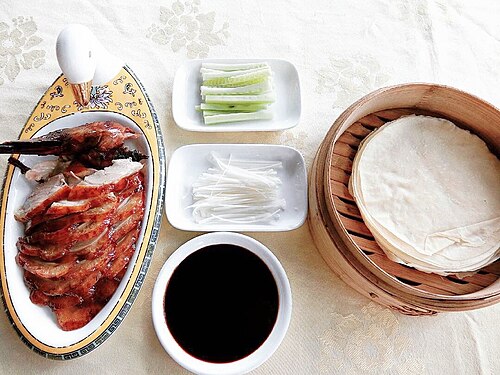
北京料理は地元の料理スタイルです。北京ダックはおそらく最もよく知られている料理です。北京の伝統的な軽食であるフーリンジャービンは、伝統的な中国医学で使用される菌類であるフーリンから作られた餡が入った平らな円盤状のパンケーキ(ビン)です。北京では茶屋も一般的です。
七宝焼き(または景泰藍、文字通り「景泰の青」)の金属加工技術と伝統は北京の芸術特産であり、中国で最も尊敬されている伝統工芸品の1つです。七宝焼きの製作には、土台の打ち付け、銅板の象嵌、はんだ付け、エナメル充填、エナメル焼成、表面研磨、金メッキなどの精巧で複雑な工程が必要です。[191]北京の漆器は、表面に彫られた精巧で複雑な模様や画像でもよく知られており、漆のさまざまな装飾技術には「彫漆」や「彫金」が含まれます。
北京の若い住民は、ナイトライフにますます魅了されるようになり、ナイトライフはここ数十年で繁栄し、実質的に上流階級に限定されていた従来の文化的伝統を打ち破りました。[192]今日、後海、三里屯、五道口は北京のナイトライフのホットスポットです。
2012年に北京はデザイン都市に指定され、ユネスコ創造都市ネットワークに加盟した。[193]
興味深い場所
...この都市は伝統の中心地であり、有名な紫禁城や市内の緑豊かなパビリオンや庭園には、皇帝の首都としての約 2,000 年にわたる宝物が今も展示されています...
— ナショナルジオグラフィック[194]

北京の歴史的中心地には、明・清時代の皇帝の住居であった巨大な宮殿群である紫禁城がある。 [195]紫禁城には故宮博物院があり、中国美術の皇室コレクションを収蔵している。紫禁城を取り囲むように、かつての皇室庭園、公園、景勝地がいくつかあり、特に北海、什刹海、中南海、菁山、中山が有名である。これらの場所、特に北海公園は、中国園芸芸術の傑作と評され、 [196]歴史的に重要な観光地となっている。[197]近代では、中南海は中国のさまざまな政府や政権の政治的中心地でもあり、現在は中国共産党と国務院の本部となっている。天安門広場から紫禁城の真向かいには、天安門、前門、人民大会堂、中国国家博物館、人民英雄記念碑、毛沢東陵墓など、いくつかの有名な場所があります。頤和園と旧頤和園はどちらも市の西部にあります。前者はユネスコ世界遺産に登録されており、[198]清朝の皇族の夏の別荘として使用された皇室の庭園と宮殿の包括的なコレクションが含まれています。
市内で最も有名な宗教施設は、北京南東部にある天壇で、これもユネスコの世界遺産に登録されている。[199]明と清の皇帝が豊作を祈願する毎年の儀式のために訪れた場所である。市の北部には地壇があり、太陽壇と月壇はそれぞれ市街地の東部と西部にある。その他の有名な寺院としては、東岳寺、潭杵寺、妙応寺、白雲寺、雍和寺、法源寺、万寿寺、大鐘寺などがある。市内には孔子廟や国子監もある。 1605年に建てられた無原罪懐胎大聖堂は、北京最古のカトリック教会である。牛街清真寺は北京最古のモスクであり、その歴史は千年以上に遡ります。
.jpg/500px-Entrance_of_Universal_Studios_Beijing_(20210907121707).jpg)
.jpg/500px-Happy_Valley_Beijing_(5).jpg)
北京には、1100年から1120年にかけての遼王朝時代に建てられたそびえ立つ天寧寺塔や、明王朝時代の1576年に建てられた慈寿寺塔など、保存状態の良い塔や石塔がいくつかあります。歴史的に注目すべき石橋には、12世紀の盧溝橋、17世紀の八里橋、18世紀の玉帯橋などがあります。北京古展望台には、明王朝と清王朝に遡る望遠鏡以前の天球儀が展示されています。香山は、自然景観エリアと伝統的および文化的遺跡で構成された公共公園です。北京植物園には、さまざまな樹木、低木、花、広大な牡丹園など、6,000 種を超える植物が展示されています。陶然亭、龍潭、朝陽、海淀、米緑園、紫竹園などの公園は、市内の有名なレクリエーション公園の一部です。北京動物園は動物学研究の中心地であり、中国のジャイアントパンダなど、さまざまな大陸の珍しい動物も飼育されています。
[update]市内には144の博物館や美術館がある(2008年6月現在)。 [200] [201] [202]故宮博物院と中国国家博物館に加えて、他の主要な博物館には中国国家美術館、首都博物館、北京美術館、中国人民革命軍事博物館、中国地質博物館、北京自然博物館、中国古動物学博物館などがある。[202]
北京市郊外に位置するが、市内には明代十三陵がある。これは13人の明代皇帝の豪華で精巧な埋葬地で、ユネスコ世界遺産の明清皇帝陵の一部として指定されている。[203]周口店の北京原人遺跡も市内にある世界遺産で、[204]数多くの発見があり、その中にはホモ・エレクトスの最初の標本の一つや巨大ハイエナの骨の集合体がある。市内にはユネスコ世界遺産の万里の長城がいくつかあり、 [ 205]最も有名なのは八達嶺、金山嶺、司馬台、慕田峪である。世界旅行ツーリズム協議会(WTTC)によると、北京は上海に次いで世界で2番目に観光収入の高い都市である。[206]市内にあるテーマパークには、ユニバーサル・スタジオ・北京やハッピー・バレー北京などがあり、どちらもアジアで最も訪問者数の多いテーマパークの一つである。[207]
無形文化遺産
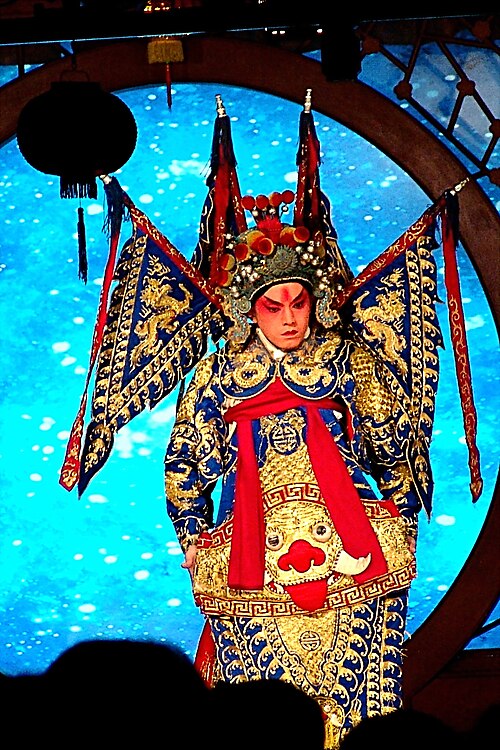
北京の文化遺産は豊かで多様である。2006年から、北京政府は文化遺産の選定と保存のプロセスを開始した。長年にわたり5つの文化遺産リストが発行されている。288の異なる慣習が文化遺産として分類されている。これらの288の文化遺産はさらに、民俗音楽、民俗舞踊、伝統オペラ、旋律芸術、ジャグリングとゲーム、民俗芸術、伝統工芸、伝統医学、民俗文学、民間伝承の10のカテゴリーに分けられている。[208] [209] [210] [211]
宗教
北京の宗教的遺産は豊かで多様であり、中国の民間信仰、道教、仏教、儒教、イスラム教、キリスト教はすべて、市内で重要な歴史的存在となっている。国の首都であるこの都市には、国家宗教事務局や主要宗教のさまざまな政府支援機関も置かれている。[212]近年、外国人居住者が他の宗教を市内に持ち込んでいる。[212]中国社会科学院の王志雲によると、2010年の市内の仏教徒は220万人で、総人口の11.2%に相当した。[213] 2009年の中国総合社会調査によると、キリスト教徒は市の人口の0.78%を占めている。[214] 2010年の調査によると、イスラム教徒は北京の人口の1.76%を占めている。[215]
中国の民間信仰と道教

北京には民間信仰や共同体の神々を祀る寺院が数多くあり、その多くは2000年代から2010年代にかけて再建または改修されている。天壇での天神への毎年の供犠(祭天; jìtiān)は、2010年代に 儒教団体によって再開された。
北京市内には娘娘(Niángniáng)を祀る寺院がいくつもあり、そのうちの一つはオリンピック村の近くにあり、廟峰山にある主要な信仰の中心地を中心に建てられている。また、龍神、薬王(Yàowáng)、関羽、火神(Huǒshén )、財神、城隍廟も多く、平谷区には少なくとも1つの車軸の黄帝(Xuānyuán Huángdì)を祀る寺院がある。これらの寺院の多くは、什刹湖火神廟のように北京道教協会によって管理されているが、そうでないものも多く、民間の委員会や地元民によって管理されている。 2020年までに平谷に玄奘三蔵寺(おそらく既存の神社の拡張版)が建てられ、その寺には世界で最も高い神像の一つとなるであろう。[216] [217]
全国的な中国道教協会と中国道教学院は、741年に創建され何度も再建された全真道教の白雲寺に本部を置いている。朝陽門郊外の北京東岳寺は、市内最大の正義道教寺院である。地元の北京道教協会は、復興門近くの呂祖寺に本部を置いている。[218]
仏教
_-_Pagoda_for_Ordinary_Monks_-_2012.04_-_panoramio.jpg/500px-%E5%8D%81%E6%96%B9%E6%99%AE%E5%90%8C%E5%A1%94(%E5%83%A7%E4%BA%BA%E5%90%88%E8%91%AC%E5%A1%94)_-_Pagoda_for_Ordinary_Monks_-_2012.04_-_panoramio.jpg)
.jpg/500px-Dongcheng,_Beijing,_China_-_panoramio_(84).jpg)
北京の人口の11%が東アジアの仏教を信仰している[要出典]。中国本土のすべての仏教機関を監督する国家監督機関である中国仏教協会は、 800年以上前の晋朝(1115-1234)の時代に現在の阜成門内に創建された広済寺に本部を置いている。北京仏教協会は、仏教合唱団と管弦楽団とともに、700年以上前の元朝に遡る光華寺を拠点としている。中国仏教学院とその図書館は、菜市口近くの法源寺にある。1300年前の唐朝に遡る法源寺は、北京市街地で最も古い寺院である。東直門内の同教寺は、市内で唯一の仏教尼僧院である。
西皇寺の歴史は遼王朝に遡ります。1651年、清の順治帝の命により、ダライ・ラマ5世の北京訪問を受け入れることになりました。それ以来、この寺はダライ・ラマ13世、パンチェン・ラマ6世、9世、10世を迎え入れてきました。
北京最大のチベット仏教寺院は雍和寺で、1744年に清の乾隆帝によって、仏教の師である第3代チャンキャ(内モンゴルの活仏)ロルペ・ドルジェの住居と研究施設として建てられました。雍和寺は、雍正帝が幼少期を過ごした場所であったことからその名が付けられ、皇宮用の釉薬をかけたタイルが残っています。また、雍和寺の近くには、中国最高峰のチベット仏教大学「中国高等チベット仏教学院」があります。西丘陵の八大楚霊光寺も唐代に遡ります。この寺の招仙塔は、仏陀の歯の遺物を納めるために、遼代の1071年に最初に建てられました。義和団の乱の際に塔は破壊され、その基礎部分から歯が発見されました。1964年に新しい塔が建てられました。前述の広済寺、光華寺、同教寺、西皇寺、永和寺、霊光寺の6つの寺は、漢民族地区の仏教国家重点寺院に指定されています。
さらに、北京にある他の有名な寺院としては、潭浙寺(金朝(266-420)に創建され、北京市内最古の寺院)、天寧寺(市内最古の塔)、妙応寺(元代の白塔で有名)、万寿寺(北京美術館がある)、大鐘寺(大忠寺)などがあります。
イスラム教

北京には中国イスラム協会が認定するモスクが約70あり、同協会の本部は市内最古のモスクである牛街清真寺の隣に位置している。 [219] [220]牛街清真寺は遼王朝時代の996年に創建され、イスラムの要人が頻繁に訪れる。伝えられるところによると、中国のイスラム教徒コミュニティは2021年にこのモスクでラマダンを祝い、イードの祈りを捧げた。 [221] [222]
北京最大のモスク[223]は朝陽区にある長営モスクで、面積は8,400平方メートルである。
旧市街にある他の有名なモスクには、1346年に創建された東四モスク、1415年に創建された花市モスク、朝陽門近くの南斗爺モスク、西城区の金時坊街モスク、東直門モスクなどがある。[224]海淀、馬甸、通州、昌平、長営、石景山、密雲などの郊外のイスラム教徒コミュニティにも大きなモスクがある。中国イスラム学院は西城区の牛街地区にある。
キリスト教

カトリック
1289 年、モンテコルヴィーノのヨハネは教皇の命を受け、フランシスコ会の宣教師として北京にやって来ました。1293 年にフビライ・カーンと会って支援を受けた後、1305 年に北京に最初のカトリック教会を建てました。中国天主教愛国協会(CPCA) は後海に拠点を置き、中国本土のカトリック教徒を監督する政府機関です。北京の有名なカトリック教会には以下のものがあります。
- 南塘聖堂、または無原罪懐胎大聖堂は、玄武門教会としても知られ、1605年に創立され、現在の大司教であるジョセフ・リー・シャンは、バチカンと中国天主教協会の両方から支持されている中国で数少ない司教の一人です。
- 東堂教会または聖ヨセフ教会、通称王府井教会は 1653 年に創建されました。
- 1703年に設立された、救世主教会(別名西石庫教会)である北堂教会。
- 西塘またはカルメル山聖母教会は西直門教会としても知られ、1723年に設立されました。
中国カトリック教会の国立神学校は大興区にあります。
.jpg/500px-Haidian_Christian_Church_(20200906173658).jpg)
プロテスタント
北京の最も古いプロテスタント教会は、19世紀後半にイギリスとアメリカの宣教師によって設立されました。プロテスタント宣教師は学校、大学、病院も開設し、これらは重要な公共機関となっています。北京のプロテスタント教会のほとんどは義和団の乱で破壊され、その後再建されました。1958年、市内の64のプロテスタント教会は4つに再編され、三自愛国運動を通じて国家によって管理されました。
東方正教会
北京には正教徒がかなりいた。正教は17世紀の中露国境紛争で捕虜となったロシア人とともに北京にやって来た。 [225] 1956年、北京の司教ヴィクトルがソ連に帰国し、ソ連大使館が古い大聖堂を接収して取り壊した。2007年、ロシア大使館は北京のロシア正教徒のために大使館の庭に新しい教会を建てた。
メディア
テレビとラジオ

北京テレビはチャンネル 1 から 10 まで放送しており、中国最大のテレビ ネットワークである中国中央テレビは北京に本部を置いています。英語の番組を放送しているラジオ局は 3 つあります。FM 88.7 のHit FM 、FM 91.5 の中国国際ラジオのEasy FM、そして新しく開局したAM 774 のラジオ 774です。北京ラジオ局は、市内にサービスを提供するラジオ局の系列です。
プレス
北京のニュースを中国語で伝える有名な「北京晩報」は、毎日午後に配布されています。その他の新聞には、「北京日報」、 「北京新聞」 、「北京星日報」、「北京朝報」、「北京青年報」、および英語の週刊紙「北京週末」と「北京今日」があります。「人民日報」、「環球時報」、「チャイナデイリー(英語)」も北京で発行されています。
主に海外からの訪問者や駐在員を対象とした出版物には、英語の定期刊行物である「Time Out Beijing」、「City Weekend」、「Beijing This Month」、「Beijing Talk」、「That's Beijing」、「The Beijinger」などがあります。
北京ロック
北京ロック(中国語:北京摇滚)は、北京出身のロックバンドやソロアーティストが作る多種多様なロックンロール音楽である。北京初のロックバンドは、 1979年に外国人によって結成された北京オールスターズである。
北京出身の有名なロックバンドやソロアーティストには、崔建、竇薇、何勇、普洛、唐代、黒豹、花束、宝家街43番地などがいる。[226]
スポーツ
イベント


北京ではこれまで数多くの国際的、国内的なスポーツイベントが開催されてきましたが、最も有名なのは2008年の夏季オリンピックとパラリンピック、2022年の冬季オリンピックとパラリンピックです。北京で開催された他の複数のスポーツの国際イベントには、2001年の夏季ユニバーシアードや1990年のアジア競技大会などがあります。単一競技の国際大会としては、北京マラソン(1981年から毎年)、中国オープンテニス(1993~1997年、2004年から毎年)、ISUフィギュアスケートグランプリ中国カップ(2003年、2004年、2005年、2008年、2009年、2010年)、世界プロビリヤード&スヌーカー協会中国オープンスヌーカー(2005年から毎年)、国際自転車 競技連合北京ツアー(2011年以降)、1961年世界卓球選手権、1987年IBFバドミントン世界選手権、2004年AFCアジアカップ(サッカー)、2009年バークレイズ アジア トロフィー(サッカー)などがある。北京は2015年にIAAF世界陸上競技選手権を開催した。
北京のLeSports Centerは、 2019 FIBAバスケットボールワールドカップのメイン会場の一つです。[227]
北京は1914年に第2回中国全国運動会を開催し、1959年、1965年、1975年、1979年にはそれぞれ第1回中国全国運動会を開催したほか、1993年には四川省、青島と共同で全国運動会を開催した。北京はまた、1988年に第1回全国農民運動会、1999年に第6回全国少数民族運動会を開催した。
2013年11月、北京は2022年冬季オリンピックの開催地に立候補した。[20] 2015年7月31日、国際オリンピック委員会は2022年冬季オリンピックの開催地を北京に決定し、夏季と冬季の両方のオリンピックを開催する初の都市となった。また、2022年冬季パラリンピックの開催地も北京に決定し、夏季と冬季の両方のパラリンピックを開催する初の都市となった。[21]
会場
市内の主なスポーツ会場としては、ダウンタウンの西にある五柯松のマスターカードセンター、ダウンタウンのすぐ東にある三里屯の労働者スタジアムと労働者アリーナ、ダウンタウンの北東にある白石橋の首都アリーナなどがある。さらに、市内の多くの大学が独自のスポーツ施設を持っている。[要出典]オリンピックグリーンは、国家体育場を中心としたスタジアム群である。もともとは2008年の夏季オリンピックのために開発され[228]、2022年の冬季オリンピックのために改修された。ビッグエア首鋼スキージャンプ台は西部郊外にあり、2022年の冬季オリンピックのために建設された。[229]
クラブ
北京を拠点とするプロスポーツチームには以下のものがあります。
アメリカバスケットボール協会の北京オリンピックチームは、以前は中国バスケットボール協会のチームだったが、2005年にカリフォルニア州メイウッドに移転した後もチーム名を維持し、主に中国人選手の名簿を維持した。
中国バンディ連盟は、バンディ発展の可能性を探っているいくつかの都市のうちの1つである北京に拠点を置いています。[230]
交通機関

北京は中国北部の重要な交通拠点であり、6本の環状道路、1167km(725マイル)の高速道路、[231] 15本の国道、9本の在来鉄道、6本の高速鉄道が市内に集中しています。
鉄道と高速鉄道
北京は中国の鉄道網における大きなハブとしての役割を果たしている。市内からは、上海(京湖線)、広州(京光線)、九龍(京九線)、ハルビン(京哈線)(秦皇島(京秦線)を含む)、包頭(京宝線)、承徳(京城線)、内モンゴル通遼(京通線)、山西元平(京源線) 、河北沙城(鳳沙線)と、10本の在来線が放射状に伸びている。さらに、大同・秦皇島鉄道が市の北側の市を通っている。
北京には、2008年に開通した北京・天津都市間鉄道、2011年に開通した北京・上海高速鉄道、2012年に開通した北京・広州高速鉄道、 2019年に開通した北京・雄安都市間鉄道と北京・張家口都市間鉄道の6つの高速鉄道路線がある。北京・瀋陽高速鉄道は2021年に完成した。
市内の主な鉄道駅は、1959年に開業した北京駅、 1996年に開業した北京西駅、 2008年に市内の高速鉄道駅に改築された北京南駅、1905年に最初に建てられ、2009年に拡張された北京北駅、 1905年に最初に建てられ、2019年に拡張された清河駅、 2021年に開業した北京朝陽駅、2022年に開業した北京豊台駅、北京副中心駅である。
北京東駅や大興空港駅など市内の小規模な駅は主に通勤客の交通を扱っている。北京の郊外や県には40以上の鉄道駅がある。[232]
北京からは、中国のほとんどの大都市まで直通の旅客列車が運行しています。国際列車は、モンゴル、ロシア、ベトナム、北朝鮮まで運行しています。中国の旅客列車は、北京を基準とした 方向に従って番号が付けられています。
道路と高速道路
.jpg/500px-Dongfeng_North_Bridge_(20210502140735).jpg)
北京は、国家幹線道路網の一部として、中国全土と道路でつながっている。中国の多くの高速道路が北京に通じており、15本の中国国道も北京に通じている。北京の都市交通は、市を同心円状に取り囲む環状道路に依存しており、故宮エリアが環状道路の地理的中心となっている。環状道路は、リング状というよりは長方形に近い。公式の「第一環状道路」はない。第二環状道路は市内中心部にある。環状道路は、外側に延びるにつれて次第に高速道路に似たものになる傾向があり、第5環状道路と第6環状道路は、インターチェンジによってのみ他の道路とつながっている完全規格の国道である。中国の他の地域への高速道路は、通常、第三環状道路から外側に向かってアクセス可能である。最後の外側環状道路である首都圏環状高速道路(G95)は、2018年に完全に開通し、隣接する天津と河北省まで延びる予定である。
.jpg/500px-Jingtong_Expwy_east_of_Sihui_(20230828160357).jpg)
都心部では、街路は一般的に古都の市街地の市松模様をなぞっています。北京の「内」と「外」のある大通りや通りの多くは、城壁の門にちなんで名付けられていますが、ほとんどの門はもはや存在しません。交通渋滞は大きな懸念事項です。ラッシュアワー以外でも、いくつかの道路は依然として交通渋滞が続いています。
北京の都市設計レイアウトは交通問題をさらに悪化させている。[233]当局はラッシュアワー時に公共バスのみが使用できるバス専用レーンを複数導入した。2010年の初め、北京の登録自動車台数は400万台だった。[234]政府は2010年末までに500万台になると予測した。2010年、北京の新車登録台数は週平均15,500台だった。[235]
2010年末、市政府は交通渋滞対策として、乗用車に発行される新規ナンバープレートの数を月2万枚に制限し、ラッシュアワー時に北京以外のナンバープレートを付けた車が第五環状線内のエリアに入ることを禁止するなど、一連の抜本的な対策を発表した。[236]大規模なイベントや大気汚染がひどい天候の際には、さらに厳しい規制措置が取られる。
北京のドライバーは、有効なナンバープレートを取得するために、抽選に当選しなければなりません。[120] : 168 電気自動車の使用を支援する政府の政策の一環として、北京の完全電気自動車のドライバーは、ナンバープレートを取得できる可能性が非常に高くなっています。[120] : 168 さらに、完全電気自動車は、ドライバーがどの曜日に運転できるかという制限が免除されます。[120] : 168
2008年から道路標識は中国語と英語の両方の名前が表示され、地名はピンインで表示されるように標準化され始めました。[237]
空気
北京首都国際空港
.jpg/500px-Air_China_first_and_business_lounge_at_ZBAA_T3C_(20170309125425).jpg)
北京には世界最大級の空港が2つある。北京首都国際空港(IATA:PEK)は市中心部から北東32キロ、順義区に隣接する朝陽区に位置し、アトランタのハーツフィールド・ジャクソン国際空港に次いで世界で2番目に利用者数の多い空港である。[16] 2008年オリンピックの拡張工事中に建設された首都空港第3ターミナルは、世界最大級のものである。首都空港は中国国際航空と海南航空の主要拠点である。空港高速道路と第二空港高速道路は、それぞれ市中心部の北東と東から首都空港に接続している。市中心部からの所要時間は、通常の交通状況で約40分である。北京地下鉄の首都空港エクスプレス線と首都空港バスが首都空港を運行している。
北京大興国際空港

北京大興国際空港(IATA: PKX)は、河北省廊坊市に隣接する大興区の市街地から南に46キロに位置し、2019年9月25日にオープンした。[238] [239] [240]大興空港は世界最大級のターミナルビルを有し、北京、天津、河北省北部にサービスを提供する主要空港となることが期待されている。大興空港は、北京雄安都市間鉄道、北京地下鉄の大興空港快線、および2つの高速道路を介して市街地とつながっている。
その他の空港
With the opening of the Daxing Airport in September 2019, the Beijing Nanyuan Airport (IATA: NAY), located 13 kilometres (8.1 mi) south of center in Fengtai District, has been closed to civilian airline service. Other airports in the city at Liangxiang, Xijiao, Shahe and Badaling are primarily for military use.
Visa requirements for air passengers
As of 1 January 2013[update], tourists from 45 countries are permitted a 72-hour visa-free stay in Beijing. The 45 countries include Singapore, Japan, the United States, Canada, all EU and EEA countries (except Norway and Liechtenstein), Switzerland, Brazil, Argentina and Australia. The programme benefits transit and business travellers[241] with the 72 hours calculated starting from the moment visitors receive their transit stay permits rather than the time of their plane's arrival. Foreign visitors are not permitted to leave Beijing for other Chinese cities during the 72 hours.[242]
Public transit

.jpg/500px-4838397_at_Tian'anmen_(20200825105132).jpg)
The Beijing Subway, which began operating in 1969, now has 25 lines, 459 stations, and 783 km (487 mi) of lines. It is the longest subway system in the world and first in annual ridership with 3.66 billion rides delivered in 2016. In 2013, with a flat fare of ¥2.00 (US$0.31) per ride with unlimited transfers on all lines except the Airport Express, the subway was also the most affordable rapid transit system in China. The subway is undergoing rapid expansion and is expected to reach 30 lines, 450 stations, 1,050 kilometres (650 mi) in length by 2022. When fully implemented, 95% of residents inside the Fourth Ring Road will be able to walk to a station in 15 minutes.[243][better source needed] The Beijing Suburban Railway provides commuter rail service to outlying suburbs of the municipality.
As part of the urban re-development for the 2008 Olympics, Beijing's subway system was significantly expanded.[78]: 137 On 28 December 2014, it switched to a distance-based fare system from a fixed fare for all lines except the Airport Express.[244] Under the new system a trip under 6 km (3+1⁄2 mi) will cost ¥3.00(US$0.49), an additional ¥1.00 will be added for the next 6 km (3+1⁄2 mi) and the next 10 km (6 mi) until the distance for the trip reaches 32 km (20 mi).[244] For every 20 kilometres (12 miles) after the original 32 kilometres (20 miles) an additional ¥1.00 is added.[244] For example, a 50-kilometre (31-mile) trip would cost ¥ 8.00.
There are nearly 1,000 public bus and trolleybus lines in the city, including four bus rapid transit lines. Standard bus fares are as low as ¥1.00 when purchased with the Yikatong metrocard.
Taxi

Metered taxi in Beijing start at ¥13 for the first 3 kilometres (1.9 mi), ¥2.3 Renminbi per additional 1 kilometre (0.62 mi) and ¥1 per ride fuel surcharge, not counting idling fees which are ¥2.3 (¥4.6 during rush hours of 7–9 am and 5–7 pm) per 5 minutes of standing or running at speeds lower than 12 kilometres per hour (7.5 mph). Most taxis are Hyundai Elantras, Hyundai Sonatas, Peugeots, Citroëns and Volkswagen Jettas. After 15 kilometres (9.3 mi), the base fare increases by 50% (but is only applied to the portion over that distance). Different companies have special colours combinations painted on their vehicles. Usually registered taxis have yellowish brown as basic hue, with another color of Prussian blue, hunter green, white, umber, tyrian purple, rufous, or sea green. Between 11 pm and 5 am, there is also a 20% fee increase. Rides over 15 km (9 mi) and between 23:00 and 06:00 incur both charges, for a total increase of 80%. Tolls during trip should be covered by customers and the costs of trips beyond Beijing city limits should be negotiated with the driver. The cost of unregistered taxis is also subject to negotiation with the driver.
Bicycles
.jpg/500px-East_start_of_Huilongguan-Shangdi_Bicycle_Lane_(20190607134646).jpg)
Beijing has long been well known for the number of bicycles on its streets. Although the rise of motor traffic has created a great deal of congestion and bicycle use has declined, bicycles are still an important form of local transportation. Many cyclists can be seen on most roads in the city, and most of the main roads have dedicated bicycle lanes. Beijing is relatively flat, which makes cycling convenient. The rise of electric bicycles and electric scooters, which have similar speeds and use the same cycle lanes, may have brought about a revival in bicycle-speed two-wheeled transport. It is possible to cycle to most parts of the city. Because of the growing traffic congestion, the authorities have indicated more than once that they wish to encourage cycling, but it is not clear whether there is sufficient will to translate that into action on a significant scale.[245] On 30 March 2019, a 6.5 km (4 mile) bicycle-dedicated lane was opened, easing the traffic congestion between Huilongguan and Shangdi where there are many high-tech companies.[246] Cycling has seen a resurgence in popularity spurred by the emergence of a large number of dockless app based bikeshares such as Mobike, Bluegogo and Ofo since 2016.[247]
Defence and aerospace
.jpg/500px-Starting_aerial_formation_of_PRC70_Parade_(20191001112401).jpg)
The command headquarters of China's military forces are based in Beijing. The Central Military Commission, the political organ in charge of the military, is housed inside the Ministry of National Defense, located next to the Military Museum of the Chinese People's Revolution in western Beijing. The Rocket Force, which controls the country's strategic missile and nuclear weapons, has its command in Qinghe, Haidian District. The headquarters of the Central Theater Command, one of five nationally, is based further west in Gaojing. The CTR oversees the Beijing Capital Garrison as well as the 81st, 82nd and 83rd Armies, which are based in Hebei.
Military institutions in Beijing also include academies and thinktanks such as the PLA National Defence University and Academy of Military Science, military hospitals such as the 301, 307 and the Academy of Military Medical Sciences, and army-affiliated cultural entities such as 1 August Film Studios and the PLA Song and Dance Troupe.
The China National Space Administration, which oversees country's space program, and several space-related state owned companies such as CASTC and CASIC are all based in Beijing. The Beijing Aerospace Command and Control Center, in Haidian District tracks the country's crewed and uncrewed flight and other space exploration initiatives.
Nature and wildlife
Beijing Municipality has 20 nature reserves that have a total area of 1,339.7 km2 (517.3 sq mi).[248] The mountains to the west and north of the city are home to a number of protected wildlife species including leopard, leopard cat, wolf, red fox, wild boar, masked palm civet, raccoon dog, hog badger, Siberian weasel, Amur hedgehog, roe deer, and mandarin rat snake.[249][250][251] The Beijing Aquatic Wildlife Rescue and Conservation Center protects the Chinese giant salamander, Amur stickleback and mandarin duck on the Huaijiu and Huaisha Rivers in Huairou District.[252] The Beijing Milu Park south of the city is home to one of the largest herds of Père David's deer, now extinct in the wild. The Beijing barbastelle, a species of vesper bat discovered in caves of Fangshan District in 2001 and identified as a distinct species in 2007, is endemic to Beijing. The mountains of Fangshan are also habitat for the more common Beijing mouse-eared bat, large myotis, greater horseshoe bat and Rickett's big-footed bat.[253]
Each year, Beijing hosts 200–300 species of migratory birds including the common crane, black-headed gull, swan, mallard, common cuckoo and the endangered yellow-breasted bunting.[254][255] In May 2016, Common cuckoos nesting in the wetlands of Cuihu (Haidian), Hanshiqiao (Shunyi), Yeyahu (Yanqing) were tagged and have been traced to far as India, Kenya and Mozambique.[256][257] In the fall of 2016, the Beijing Forest Police undertook a month-long campaign to crack down on illegal hunting and trapping of migratory birds for sale in local bird markets.[255] Over 1,000 rescued birds of protected species including streptopelia, Eurasian siskin, crested myna, coal tit and great tit were handed to the Beijing Wildlife Protection and Rescue Center for repatriation to the wild.[255][258]
The city flowers are the Chinese rose and chrysanthemum.[259] The city trees are the Chinese arborvitae, an evergreen in the cypress family and the pagoda tree, also called the Chinese scholar tree, a deciduous tree of the family Fabaceae.[259] The oldest scholar tree in the city was planted in what is now Beihai Park during the Tang dynasty.[260]
International relations
The capital is the home of the Asian Infrastructure Investment Bank, a multilateral development bank that aims to improve economic and social outcomes in Asia[261] and the Silk Road Fund, an investment fund of the Chinese government to foster increased investment and provide financial supports in countries along the One Belt, One Road.[262] Beijing is also home to the headquarters of the Shanghai Cooperation Organisation (SCO),[263] making it an important city for international diplomacy.
Twin towns and sister cities
Beijing is twinned with the following regions, cities, and counties:[264]
 Addis Ababa, Ethiopia
 Ankara, Turkey
 Astana, Kazakhstan
 Athens, Greece
 Bangkok, Thailand
 Berlin, Germany
 Brussels, Belgium
 Bucharest, Romania
 Budapest, Hungary
 Buenos Aires, Argentina
 Cairo, Egypt
 Canberra, Australia
- Cologne, Germany
 Copenhagen, Denmark
 Delhi, India
 Doha, Qatar
 Dublin, Ireland
 Hanoi, Vietnam
 Havana, Cuba
 Île-de-France, France
 Islamabad, Pakistan
 Jakarta, Indonesia
 Johannesburg, South Africa
 Kyiv, Ukraine
 Lima, Peru
 London, England, United Kingdom
 Manila, Philippines
 Minsk, Belarus
 Mexico City, Mexico
 Moscow, Russia
 New York City, United States
 Ottawa, Canada
 Phnom Penh, Cambodia
 Riga, Latvia
 Rio de Janeiro, Brazil
 San José, Costa Rica
 Santiago, Chile
 Seoul, South Korea
 Tallinn, Estonia
 Tehran, Iran
 Tel Aviv, Israel
 Tirana, Albania
 Tokyo, Japan
 Ulaanbaatar, Mongolia
 Vientiane, Laos
- Washington D.C., United States
 Wellington, New Zealand
.svg/500px-Flag_of_Belgium_(civil).svg.png)
.svg/500px-Flag_of_Australia_(converted).svg.png)
.svg/500px-Flag_of_Canada_(Pantone).svg.png)
Foreign embassies and consulates
In 2019, China had the largest diplomatic network in the world.[265] China hosts a large diplomatic community in its capital city of Beijing. At present, the capital of Beijing hosts 173 embassies, 1 consulate and 3 representatives, excluding Hong Kong and Macau trade office.[266][267]
 Afghanistan
- Albania
 Algeria
 Angola
 Antigua and Barbuda
- Argentina
 Armenia
- Australia
 Austria
 Azerbaijan
 Bahamas
 Bahrain
 Bangladesh
 Barbados
- Belarus
- Belgium
 Benin
Benin Bolivia
 Bosnia and Herzegovina
 Botswana
- Brazil
 Brunei
 Bulgaria
 Burkina Faso
 Burundi
- Cambodia
 Cameroon
- Canada
 Cape Verde
 Central African Republic
 Chad
Chad- Chile
 Colombia
 Comoros
 Republic of the Congo
 Democratic Republic of the Congo
- Costa Rica
 Croatia
- Cuba
 Cyprus
 Czech Republic
- Denmark
 Djibouti
 Dominica
 Dominican Republic
 East Timor
 Ecuador
- Egypt
 El Salvador
 Equatorial Guinea
 Eritrea
- Estonia
- Ethiopia
 Fiji
Fiji Finland
- France
 Gabon
Gabon Gambia
 Georgia
- Germany
 Ghana
Ghana- Greece
 Grenada
 Guinea
 Guinea-Bissau
 Guyana
 Honduras
- Hungary
 Iceland
- India
- Indonesia
- Iran
 Iraq
Iraq- Ireland
- Israel
 Italy
Italy Ivory Coast
 Jamaica
- Japan
 Jordan
- Kazakhstan
 Kenya
Kenya Kuwait
 Kyrgyzstan
- Laos
- Latvia
 Lebanon
 Lesotho
 Liberia
 Libya
Libya Lithuania
 Luxembourg
 Madagascar
 Malawi
 Malaysia
 Maldives
 Mali
Mali Malta
Malta Mauritania
 Mauritius
- Mexico
 Micronesia
 Moldova
- Mongolia
 Monaco (consulate)
 Montenegro
 Morocco
 Mozambique
 Myanmar
 Namibia
 Nepal
Nepal Netherlands
- New Zealand
 Nicaragua
 Niger
Niger Nigeria
 North Korea
 North Macedonia
 Norway
 Oman
Oman- Pakistan
 Palestine
 Panama
 Papua New Guinea
- Peru
- Philippines
 Poland
 Portugal
- Qatar
- Romania
- Russia
 Rwanda
 Samoa
Samoa São Tomé and Príncipe
 Saudi Arabia
 Senegal
 Serbia
 Seychelles
 Sierra Leone
 Singapore
 Slovakia
 Slovenia
 Solomon Islands
 Somalia
- South Africa
- South Korea
 South Sudan
 Spain
Spain Sri Lanka
 Sudan
Sudan Suriname
 Sweden
 Switzerland
 Syria
Syria Tajikistan
 Tanzania
- Thailand
 Togo
Togo Tonga
Tonga Trinidad and Tobago
 Tunisia
- Turkey
 Turkmenistan
 Uganda
- Ukraine
 United Arab Emirates
- United Kingdom
 United States
 Uruguay
 Uzbekistan
 Vanuatu
 Venezuela
- Vietnam
 Yemen
Yemen Zambia
 Zimbabwe

.svg/500px-Flag_of_Switzerland_(Pantone).svg.png)
.svg/500px-Flag_of_Togo_(3-2).svg.png)
.png/500px-Flag_of_the_United_States_(23px).png)
Representative offices and delegations
 Haiti (Representative Office)
 Faroe Islands (Representative Office)
 European Union (Delegation of the European Union to China)
See also

- Beijing city fortifications
- Historical capitals of China
- Large Cities Climate Leadership Group
- List of hospitals in Beijing
- List of mayors of Beijing
- List of diplomatic missions in China
Notes
- ^ Loaned earlier via French "Pékin".
References
Citations
- ^ "Beijing Info". The People's Government of Beijing Municipality. Archived from the original on 7 August 2024. Retrieved 3 July 2024.
- ^ "Government". The People's Government of Beijing Municipality. Archived from the original on 29 July 2024. Retrieved 3 July 2024.
- ^ "Doing Business in China – Survey". Ministry of Commerce of the People's Republic of China. Archived from the original on 26 May 2014. Retrieved 5 August 2013.
- ^ "Communiqué of the Seventh National Population Census (No. 3)". National Bureau of Statistics of China. 11 May 2021. Archived from the original on 11 May 2021. Retrieved 11 May 2021.
- ^ "National Data". China NBS. March 2024. Archived from the original on 9 January 2020. Retrieved 22 June 2024. see also "National Data". China NBS. March 2024. Archived from the original on 9 January 2020. Retrieved 22 June 2024.; see also "zh: 2023年北京市国民经济和社会发展统计公报". beijing.gov.cn. 21 March 2024. Retrieved 12 June 2024. The average exchange rate of 2023 was CNY 7.0467 to 1 USD dollar "Statistical communiqué of the People's Republic of China on the 2023 national economic and social development" (Press release). China NBS. 29 February 2024. Archived from the original on 5 March 2024. Retrieved 22 June 2024.
- ^ "Human Development Indices (8.0)- China". Global Data Lab. Retrieved 23 September 2024.
- ^ "Beijing". Lexico UK English Dictionary. Oxford University Press. Archived from the original on 25 October 2020.
- ^ Wells, John (3 April 2008). Longman Pronunciation Dictionary (3rd ed.). Pearson Longman. ISBN 978-1-4058-8118-0.
- ^ China Postal Album: Showing the Postal Establishments and Postal Routes in Each Province (1st ed.). Shanghai, China: Directorate General of Posts. 1907.
- ^ "Peking". Oxford English Dictionary (Online ed.). Oxford University Press. (Subscription or participating institution membership required.)
- ^ "中经数据". wap.ceidata.cei.cn. Archived from the original on 13 March 2024. Retrieved 13 March 2024.
- ^ "China: Provinces and Major Cities – Population Statistics, Maps, Charts, Weather and Web Information". City Population. Archived from the original on 11 February 2019. Retrieved 15 August 2023.
- ^ Figures based on 2006 statistics published in 2007 National Statistical Yearbook of China and available online at 2006年中国乡村人口数 中国人口与发展研究中心 (archive). Retrieved 21 April 2009.
- ^ "Basic Information". Beijing Municipal Bureau of Statistics. Archived from the original on 13 March 2012. Retrieved 9 February 2008.
- ^ "Top 100 Banks in the World". www.relbanks.com. Archived from the original on 29 July 2018. Retrieved 12 September 2018.
- ^ a b "Year to date Passenger Traffic". Airports Council International. 23 June 2014. Archived from the original on 29 January 2017. Retrieved 26 June 2014.
- ^ UITP Secretariat (May 2022). "WORLD METRO FIGURES 2021" (PDF). UITP. Archived from the original (PDF) on 9 November 2023. Retrieved 14 December 2023.
- ^ "What does the world's largest single-building airport terminal look like?". BBC News. 15 April 2019. Archived from the original on 18 April 2019. Retrieved 20 April 2019.
- ^ Taylor, Alan. "Photos: The World's Largest Airport-Terminal Building – The Atlantic". The Atlantic. Archived from the original on 25 September 2019. Retrieved 25 September 2019.
- ^ a b "Beijing and Zhangjiakou launch joint bid to host 2022 Winter Olympic Games". insidethegames.biz. 5 November 2013. Archived from the original on 5 November 2013. Retrieved 5 November 2013.
- ^ a b "IOC awards 2022 Winter Olympics to Beijing". The Washington Post. Archived from the original on 15 July 2017. Retrieved 24 August 2017.
- ^ MorTraveling Team. "The Asian Cities You Should Spend Some Time In". MorTraveling. Archived from the original on 2 May 2024. Retrieved 2 May 2024.
- ^ "Peking (Beijing)". Encyclopædia Britannica. Vol. 25 (Macropædia, 15th ed.). p. 468.
- ^ "Top Ten Cities Through History". things made unthinkable. Archived from the original on 24 June 2011. Retrieved 28 November 2016.
- ^ "Beijing". World Book Encyclopedia. 2008. Archived from the original on 19 May 2008. Retrieved 7 August 2008.
- ^ Töre, Özgür (22 October 2018). "WTTC reveals the world's best performing tourism cities". ftnnews.com. Archived from the original on 7 August 2021. Retrieved 7 August 2021.
- ^ 走进北京七大世界文化遗产 – 千龙网. qianlong.com (in Simplified Chinese). 18 August 2014. Archived from the original on 29 November 2014. Retrieved 21 November 2014.
- ^ a b "US News Best Global Universities in Beijing". US News & World Report. 25 June 2024. Archived from the original on 6 November 2020. Retrieved 30 June 2024.
- ^ "World University Rankings 2024: China creeps closer to top 10". Times Higher Education (THE). 27 September 2023. Archived from the original on 8 October 2023. Retrieved 9 October 2023.
- ^ "ShanghaiRanking's Academic Ranking of World Universities". www.shanghairanking.com. Archived from the original on 15 August 2024. Retrieved 17 August 2024.
- ^ "World University Rankings". Times Higher Education (THE). 25 September 2023. Archived from the original on 28 September 2023. Retrieved 9 October 2023.
- ^ a b "Emerging Economies". Times Higher Education (THE). 22 January 2020. Archived from the original on 20 February 2020. Retrieved 13 September 2020.
- ^ "University Results | Rankings". research.unsw.edu.au. Archived from the original on 28 June 2023. Retrieved 17 August 2024.
- ^ a b Jia, Hepeng (19 September 2020). "Beijing, the seat of science capital". Nature. 585 (7826): S52–S54. Bibcode:2020Natur.585S..52J. doi:10.1038/d41586-020-02577-x.
- ^ a b jknotts (25 September 2020). "Beijing Defends its Title as World's Top City for Scientific Research". www.thebeijinger.com. Archived from the original on 27 September 2020. Retrieved 27 September 2020.
- ^ a b Hucker, Charles O. (1958). "Governmental Organization of the Ming Dynasty". Harvard Journal of Asiatic Studies. 21: 1–66. doi:10.2307/2718619. ISSN 0073-0548. JSTOR 2718619.
- ^ Martini, Martino, De bello Tartarico historia, 1654.
- Martini, Martino (1655), Novus Atlas Sinensis, "Prima Provencia Peking Sive Pecheli", p. 17.
- ^ Standardization Administration of China (SAC). "GB/T-2260: Codes for the administrative divisions of the People's Republic of China" (Microsoft Word). Archived 5 March 2004 at the Wayback Machine.
- ^ "The Peking Man World Heritage Site at Zhoukoudian". Archived from the original on 9 March 2013. Retrieved 7 April 2008.
- ^ "Beijing's History". China Internet Information Center. Archived from the original on 1 May 2008. Retrieved 1 May 2008.
- ^ Haw, Stephen. Beijing: A Concise History. Routledge, 2007. p. 136.
- ^ a b c "Township divisions". ebeijing.gov.cn. Archived from the original on 3 September 2009. Retrieved 22 July 2009.
- ^ Grousset, Rene (1970). The Empire of the Steppes. Rutgers University Press. p. 58. ISBN 978-0-8135-1304-1.
- ^ a b c "Beijing – Historical Background". The Economist. 2007. Archived from the original on 22 May 2007.
- ^ Brian Hook, Beijing and Tianjin: Towards a Millennial Megalopolis, p. 2.
- ^ 元大都土城遗址公园. Tuniu.com (in Chinese). Archived from the original on 5 February 2009. Retrieved 15 June 2008.
- ^ Ebrey, Patricia Buckley. The Cambridge Illustrated History of China. Cambridge: Cambridge University Press, 1999. ISBN 0-521-66991-X
- ^ Li, Dray-Novey & Kong 2007, p. 23
- ^ An Illustrated Survey of Dikes and Dams in Jianghan Region. World Digital Library. 1567. Archived from the original on 10 February 2013. Retrieved 9 May 2013.
- ^ "The Temple of Heaven". China.org. 13 April 2001. Archived from the original on 20 June 2008. Retrieved 14 June 2008.
- ^ Robert Hymes (2000). John Stewart Bowman (ed.). Columbia Chronologies of Asian History and Culture. Columbia University Press. p. 42. ISBN 978-0-231-11004-4.
- ^ "Renewal of Ming Dynasty City Wall". Beijing This Month. 1 February 2003. Archived from the original on 3 May 2005. Retrieved 14 June 2008.
- ^ Rosenburg, Matt T. "Largest Cities Through History". About.com. Archived from the original on 27 May 2005. Retrieved 22 July 2009.
- ^ Li, Dray-Novey & Kong 2007, p. 33
- ^ "Beijing – History – The Ming and Qing Dynasties". Britannica Online Encyclopedia. 2008. Archived from the original on 12 May 2008. Retrieved 16 June 2008.
- ^ Elliott 2001, p. 98
- ^ Anville, Jean Baptiste Bourguignon, Atlas général de la Chine, de la Tartarie chinoise, et du Tibet : pour servir aux différentes descriptions et histoires de cet empire Archived 31 March 2024 at the Wayback Machine (1790). This is an expanded edition of an atlas first published in 1737.
- ^ Lane Harris, "A 'Lasting Boon to All': A Note on the Postal Romanization of Place Names, 1896–1949 Archived 2015-10-05 at the Wayback Machine". Twentieth Century China 34.1 (2008): 99.
- ^ Li, Dray-Novey & Kong 2007, pp. 119–120
- ^ Preston, p. 310–311
- ^ Preston, pp. 312–315
- ^ Li, Dray-Novey & Kong 2007, pp. 133–134
- ^ a b "Beijing". The Columbia Encyclopedia (6th ed.). 2008. Archived from the original on 12 February 2010. Retrieved 22 July 2009.
- ^ MacKerras & Yorke 1991, p. 8
- ^ "Incident on 7 July 1937". Xinhua News Agency. 27 June 2005. Archived from the original on 16 December 2008. Retrieved 20 June 2008.
- ^ Li, Dray-Novey & Kong 2007, p. 166
- ^ Cheung, Andrew (1995). "Slogans, Symbols, and Legitimacy: The Case of Wang Jingwei's Nanjing Regime". Indiana University. Archived from the original on 23 October 2007. Retrieved 20 June 2008.
- ^ Li, Dray-Novey & Kong 2007, p. 168
- ^ 毛主席八次接见红卫兵的组织工作. 中国共产党新闻网 (in Chinese (China)). 7 April 2011. Archived from the original on 6 July 2017. Retrieved 27 December 2011.
- ^ Li, Dray-Novey & Kong 2007, p. 217
- ^ Li, Dray-Novey & Kong 2007, p. 255
- ^ Li, Dray-Novey & Kong 2007, p. 252
- ^ Li, Dray-Novey & Kong 2007, p. 149
- ^ Li, Dray-Novey & Kong 2007, pp. 249–250
- ^ Li, Dray-Novey & Kong 2007, pp. 255–256
- ^ Picture Power:Tiananmen Standoff Archived 17 February 2009 at the Wayback Machine BBC News.
- ^ "IOC: Beijing To Host 2022 Winter Olympics". The Huffington Post. Associated Press. 31 July 2015. Archived from the original on 10 August 2015. Retrieved 11 August 2015.
- ^ a b c d Hu, Richard (2023). Reinventing the Chinese City. New York: Columbia University Press. ISBN 978-0-231-21101-7.
- ^ "Beijing". People's Daily. March 2001. Archived from the original on 18 May 2008. Retrieved 22 June 2008.
- ^ "无标题文档". Archived from the original on 18 March 2013. Retrieved 18 February 2013.
- ^ a b "Extreme Temperatures Around the World". Retrieved 21 February 2013.
- ^ 1991-2020 normals "Climate averages from 1991 to 2020". China Meteorological Administration. Archived from the original on 17 April 2023.
- ^ 1981-2010 extremes 中国气象数据网 – WeatherBk Data (in Simplified Chinese). China Meteorological Administration. Retrieved 14 April 2023.
- ^ 2021 February weather data "Global Surface Summary of the Day - GSOD". National Oceanic and Atmospheric Administration. Archived from the original on 30 April 2023. Retrieved 30 April 2023.
- ^ Burt, Christopher C. "UPDATE June 1: Record May Heat Wave in Northeast China, Koreas". Wunderground. Retrieved 1 June 2014.[dead link]
- ^ Burt, Christopher C. ": Record June Heat Wave in Northeast China, Koreas". Wunderground. Retrieved 23 June 2023.
- ^ "Beijing, China - Detailed climate information and monthly weather forecast". Weather Atlas. Yu Media Group. Retrieved 9 July 2019.
- ^ 中国气象数据网 – WeatherBk Data (in Simplified Chinese). China Meteorological Administration. Retrieved 26 August 2023.
- ^ "Experience Template" 中国气象数据网 (in Simplified Chinese). China Meteorological Administration. Retrieved 26 August 2023.
- ^ 中国气象数据网 – WeatherBk Data (in Simplified Chinese). China Meteorological Administration. Archived from the original on 5 September 2018. Retrieved 26 August 2023.
- ^ "Experience Template" 中国气象数据网 (in Simplified Chinese). China Meteorological Administration. Archived from the original on 4 April 2023. Retrieved 26 August 2023.
- ^ METAR北京(机场)历史天气
- ^ Business Guide to Beijing and North-East China (2006–2007 ed.). Hong Kong: China Briefing Media. 2006. p. 108. ISBN 978-988-98673-3-1. Archived from the original on 7 March 2022. Retrieved 22 July 2009.
- ^ Shen, Wei (16 February 2004). "Chorography to record rise and fall of Beijing's Hutongs". China Daily. Archived from the original on 8 March 2008. Retrieved 27 June 2008.
- ^ Amy Stone (Spring 2008). "Farewell to the Hutongs: Urban Development in Beijing". Dissent magazine. Archived from the original on 19 May 2011. Retrieved 14 July 2011.
- ^ Li, Dray-Novey & Kong 2007, p. 253
- ^ Gallagher, Sean (6 December 2006). "Beijing's urban makeover: the 'hutong' destruction". Open Democracy. Archived from the original on 25 May 2008. Retrieved 27 June 2008.
- ^ J.R. McNeill, Something New Under the Sun: An Environmental History of the 20th-Century World. New York: Norton, 2000, ISBN 978-0-14-029509-2.
- ^ Mark Z. Jacobson, Son V. Nghiem, Alessandro Sorichetta, Natasha Whitney, Ring of impact from the mega-urbanization of Beijing between 2000 and 2009. In: Journal of Geophysical Research: Atmospheres 120, Issue 12, (2015), 5740–5756, doi:10.1002/2014JD023008.
- ^ Peter Sheehan, Enjiang Cheng, Alex English, Fanghong Sun, China's response to the air pollution shock. In: Nature Climate Change 4, (2014), 306–309, doi:10.1038/nclimate2197.
- ^ David G. Streetsa, Joshua S. Fub, Carey J. Jangc, Jiming Haod, Kebin Hed, Xiaoyan Tange, Yuanhang Zhange, Zifa Wangf, Zuopan Lib, Qiang Zhanga, Litao Wangd, Binyu Wangc, Carolyne Yua, Air quality during the 2008 Beijing Olympic Games accessed 23 April 2012
- ^ a b "Green Olympics Effort Draws UN Environment Chief to Beijing". Sundance Channel. Archived from the original on 20 March 2012.
- ^ "Beijing petrol stations to close". BBC News. 15 February 2008. Archived from the original on 18 February 2008. Retrieved 15 February 2008.
- ^ Yardley, Jim (24 January 2008). "Smoggy Beijing Plans to Cut Traffic by Half for Olympics, Paper Says". The New York Times. Archived from the original on 17 April 2009. Retrieved 22 July 2009.
- ^ "Post-Olympics Beijing car restrictions to take effect next month". News.xinhuanet.com. 28 September 2008. Archived from the original on 16 December 2008. Retrieved 1 June 2010.
- ^ "Only 'green' vehicles permitted to enter Beijing". Autonews.gasgoo.com. 22 May 2009. Archived from the original on 27 May 2009. Retrieved 1 June 2010.
- ^ "China: Beijing launches Euro 4 standards". Automotiveworld.com. 4 January 2008. Archived from the original on 27 April 2010. Retrieved 1 June 2010.
- ^ a b c James West, Mother Jones Archived 29 April 2017 at the Wayback Machine. 18 January 2013.
- ^ a b "Beijing to switch from coal to gas to go green". China Daily Archived 5 December 2013 at the Wayback Machine. 8 March 2012.
- ^ a b Li Jing, "Beijing's air quality will worsen without coal control, Greenpeace says". South China Morning Post. 5 February 2013 Archived 15 November 2013 at the Wayback Machine.
- ^ "Detecting the Heavy Metal Concentration of PM2.5 in Beijing", Greenpeace.org. 8 June 2013.
- ^ Stanway, David (23 July 2014). "Beijing shuts big coal-fired power plant to ease smog –Xinhua". Reuters. Archived from the original on 30 June 2016. Retrieved 31 May 2016.
- ^ a b Chang, Lyu (24 March 2015). "Beijing shuts two more coal-fired power plants". The China Daily. Archived from the original on 30 June 2016. Retrieved 31 May 2016.
- ^ Demick, Barbara (2 October 2009). "Communist China celebrates 60th anniversary with instruments of war and words of peace". Los Angeles Times. Archived from the original on 14 October 2009. Retrieved 11 October 2009.
- ^ Liu, Charles (12 May 2016). ""Parade Blue" Joins "APEC Blue" as Distant Memories as Nasty Air Returns to Beijing". The Nanfang. Archived from the original on 28 November 2016. Retrieved 28 November 2016.
- ^ Wong, Edward (9 December 2015). "As Beijing Shuts Down Over Smog Alert, Worse-Off Neighbors Carry On". The New York Times. ISSN 0362-4331. Archived from the original on 9 December 2015. Retrieved 9 December 2015.
- ^ "Beijing issues second red alert for choking smog". ABC News. ABC. 18 December 2015. Archived from the original on 18 December 2015. Retrieved 18 December 2015.
- ^ "Beijing to ban polluting cars during smog alerts". www.atimes.com. Reuters. 22 November 2016. Archived from the original on 7 March 2022. Retrieved 2 December 2016.
- ^ Greenstone, Michael (12 March 2018). "Four Years After Declaring War on Pollution, China Is Winning". The New York Times. ISSN 0362-4331. Archived from the original on 11 January 2019. Retrieved 15 January 2019.
- ^ a b c d Li, David Daokui (2024). China's World View: Demystifying China to Prevent Global Conflict. New York, NY: W. W. Norton & Company. ISBN 978-0-393-29239-8.
- ^ "Capital's PM2.5 levels continue to fall". Archived from the original on 2 March 2024. Retrieved 2 March 2024.
- ^ 首页. Beijing Municipal Web. Archived from the original on 29 December 2015.
- ^ a b Barbara Demick (29 October 2011). "U.S. Embassy air quality data undercut China's own assessment". Los Angeles Times. Archived from the original on 7 November 2011. Retrieved 7 November 2011. (login required)
- ^ Zhao, Xiaoli; Yu, Xueying; Wang, Ying; Fan, Chunyang (1 June 2016). "Economic evaluation of health losses from air pollution in Beijing, China". Environmental Science and Pollution Research. 23 (12): 11716–11728. Bibcode:2016ESPR...2311716Z. doi:10.1007/s11356-016-6270-8. ISSN 0944-1344. PMID 26944425. S2CID 3075757.
- ^ Maji, Kamal Jyoti; Arora, Mohit; Dikshit, Anil Kumar (1 April 2017). "Burden of disease attributed to ambient PM2.5 and PM10 exposure in 190 cities in China". Environmental Science and Pollution Research. 24 (12): 11559–11572. Bibcode:2017ESPR...2411559M. doi:10.1007/s11356-017-8575-7. ISSN 0944-1344. PMID 28321701. S2CID 37640939.
- ^ "China says it made rain to wash off sand". NBC News. 5 May 2006. Archived from the original on 14 August 2020. Retrieved 22 July 2009.
- ^ "Beijing hit by eighth sandstorm". BBC News. 17 April 2006. Archived from the original on 30 September 2009. Retrieved 22 July 2009.
- ^ Weaver, Lisa Rose (4 April 2002). "More than a dust storm in a Chinese teacup". CNN. Archived from the original on 13 January 2007. Retrieved 7 February 2008.
- ^ "Beijing – Administration and society – Government". Britannica Online Encyclopedia. 2008. Archived from the original on 9 June 2008. Retrieved 16 June 2008.
- ^ 国家统计局统计用区划代码. National Bureau of Statistics of the People's Republic of China. Archived from the original on 5 April 2013. Retrieved 24 November 2015.
- ^ 2017年度北京市土地利用现状汇总表. ghgtw.beijing.gov.cn. Archived from the original on 13 January 2019. Retrieved 13 January 2019.
- ^ a b 国务院人口普查办公室、国家统计局人口和社会科技统计司编 (2022). 中国2020年人口普查分县资料. Beijing: China Statistics Print. ISBN 978-7-5037-9772-9.
- ^ 《中国民政统计年鉴2012》
- ^ a b c d 北京市第三中级人民法院、北京市人民检察院第三分院同日成立. Xinhua (in Chinese (China)). 6 August 2013. Archived from the original on 29 September 2013. Retrieved 21 August 2013.
- ^ 北京市高级人民法院关于我市中级人民法院管辖调整有关问题的规定(暂行). chinacourt.org (in Chinese (China)). 2 August 2013. Archived from the original on 14 August 2013. Retrieved 21 August 2013.
- ^ a b c d e f g h i j "National Data". National Bureau of Statistics of China. 1 March 2022. Archived from the original on 9 January 2020. Retrieved 23 March 2022.
- ^ Historical GDP of Beijing published on Beijing Statistical Yearbook 2017, ALSO see Beijing GDP Revision (Chinese) Archived 13 December 2017 at the Wayback Machine (10 October 2017)
- ^ "Global Wealth PPP Distribution: Who Are The Leaders Of The Global Economy? - Full Size". www.visualcapitalist.com. Archived from the original on 20 October 2021. Retrieved 16 January 2022.
- ^ "Jones Lang LaSalle Research Report – Five years after the Olympics – Growth in Beijing has continued, what to expect next?" Archived 18 May 2014 at the Wayback Machine August 2013
- ^ "2022 Global 500 in Beijing". Fortune. Archived from the original on 10 August 2022. Retrieved 9 August 2022.
- ^ "Chinese companies top list of Fortune 500". global.chinadaily.com.cn. Archived from the original on 9 August 2022. Retrieved 9 August 2022.
- ^ Shapiro, Ariel R. "Beijing is 'Billionaire Capital of the World'". Archived from the original on 9 July 2018. Retrieved 19 July 2018.
- ^ "Beijing is new 'billionaire capital'". BBC News. 25 February 2016. Archived from the original on 19 July 2018. Retrieved 19 July 2018.
- ^ Wealth, New World. "The Wealthiest Cities in the World 2021". New World Wealth. Archived from the original on 22 January 2022. Retrieved 27 January 2022.
- ^ "GaWC – The World According to GaWC 2020". www.lboro.ac.uk. Archived from the original on 24 August 2020. Retrieved 26 February 2021.
- ^ "The Global Financial Centres Index 29" (PDF). Long Finance. March 2021. Archived from the original (PDF) on 22 March 2021. Retrieved 18 March 2021.
- ^ "Beijing tops the world as most competitive city in the era of Covid-19". South China Morning Post. 9 December 2020. Archived from the original on 12 December 2020. Retrieved 12 December 2020.
- ^ a b "北京统计年鉴2022". nj.tjj.beijing.gov.cn. Archived from the original on 27 June 2023. Retrieved 15 August 2023.
- ^ Purchasing power parity (PPP) for Chinese yuan is estimate according to IMF WEO ([1] Archived 24 October 2022 at the Wayback Machine) data; exchange rate of CN¥ to US$ is according to State Administration of Foreign Exchange, published on http://www.stats.gov.cn/tjsj/ndsj/2022/indexch.htm Archived 13 February 2023 at the Wayback Machine China Statistical Yearbook .
- ^ a b c d e f g h i j NBS Beijing investigatory team (国家统计局北京调查总队) (13 February 2014). 北京市2013年国民经济和社会发展统计公报 (in Chinese (China)). Beijing Bureau of Statistics. Archived from the original on 10 March 2014.
- ^ 北京五年淘汰140余家"三高"企业. 北京商报 (in Chinese (China)). 17 November 2010. Archived from the original on 29 November 2014. Retrieved 18 November 2014.
- ^ "Capital Steel opens new branch to step up eastward relocation". People's Daily Online. 23 October 2005. Archived from the original on 16 December 2008. Retrieved 24 October 2008.
- ^ Spencer, Richard (18 July 2008). "Beijing abandons Mao's dream of workers' paradise". The Daily Telegraph. London. Archived from the original on 19 August 2008. Retrieved 25 April 2019.
- ^ 六大功能区 (in Chinese (China)). Archived from the original on 14 September 2013. Retrieved 18 November 2014.
- ^ Tu, Lufang (涂露芳) (9 October 2013). 六大功能区创造北京四成多GDP. Beijing Daily. Archived from the original on 14 October 2013.
- ^ 北京市统计局 六大高端产业功能区主要经济指标 (in Chinese (China)). Beijing Bureau of Statistics. 12 August 2014. Archived from the original on 29 November 2014. Retrieved 18 November 2014.
- ^ "ShiJingShan". Beijing Economic Information Center. Archived from the original on 20 November 2008. Retrieved 22 June 2008.
- ^ "Pirates weave tangled web on 'Spidey'". The Hollywood Reporter. Reuters. 27 April 2007. Archived from the original on 29 April 2007. Retrieved 15 March 2008.
- ^ Justina, Crabtree (20 September 2016). "A tale of megacities: China's largest metropolises". CNBC. Archived from the original on 9 December 2017. Retrieved 8 December 2017.
slide 4
- ^ OECD Urban Policy Reviews: China 2015, OECD READ edition. OECD. 2015. p. 37. doi:10.1787/9789264230040-en. ISBN 978-92-64-23003-3. ISSN 2306-9341. Archived from the original on 27 March 2017. Retrieved 8 December 2017.Linked from the OECD here Archived 9 December 2017 at the Wayback Machine
- ^ "Age Composition and Dependency Ratio of Population by Region (2004) in China Statistics 2005". Archived from the original on 4 December 2010. Retrieved 5 July 2010.
- ^ a b 北京市2010年第六次全国人口普查主要数据情况. Beijing Bureau of Statistics. Archived from the original on 19 February 2014.
- ^ 北京市少数民族人口状况 (in Chinese (China)). Beijing Bureau of Statistics. 30 May 2011. Archived from the original on 3 February 2014.
- ^ 在北京外国人数量或已达20万人 超过市人口总数1%. 中国新闻网 (in Chinese (China)). 9 October 2010. Archived from the original on 29 November 2014. Retrieved 22 November 2014.
- ^ a b Roxburgh, Helen (19 March 2018). "China's radical plan to limit the populations of Beijing and Shanghai". The Guardian. Archived from the original on 9 April 2018. Retrieved 16 August 2018.
- ^ "China to move half a million people from Beijing to new city". The Economic Times. Archived from the original on 29 February 2020. Retrieved 13 December 2019.
- ^ "A plan to build a city from scratch that will dwarf New York". The Economist. 6 April 2017. Archived from the original on 13 December 2019. Retrieved 13 December 2019.
- ^ "The top cities for research in the Nature Index". www.natureindex.com. 25 September 2020. Archived from the original on 20 October 2020. Retrieved 27 September 2020.
- ^ "Leading 200 science cities in SDG research". www.natureindex.com. Archived from the original on 27 September 2021. Retrieved 27 September 2021.
- ^ "Leading 25 science cities in Earth & environmental sciences". www.natureindex.com. Archived from the original on 27 September 2021. Retrieved 27 September 2021.
- ^ "Leading 50 science cities in physical sciences". www.natureindex.com. Archived from the original on 27 September 2021. Retrieved 27 September 2021.
- ^ "Leading 50 science cities in chemistry". www.natureindex.com. Archived from the original on 27 September 2021. Retrieved 27 September 2021.
- ^ 2015年北京市高校名单(共91所). gaokao.com. 22 May 2015. Archived from the original on 30 November 2016. Retrieved 29 November 2016.
- ^ "Top 10 Chinese cities with most higher education institutions". www.chinadaily.com.cn. Archived from the original on 5 August 2022. Retrieved 8 August 2022.
- ^ "World University Rankings 2022". Times Higher Education (THE). 25 August 2021. Archived from the original on 29 June 2015. Retrieved 3 September 2021.
- ^ "Asia University Rankings". Times Higher Education (THE). 28 May 2020. Archived from the original on 4 June 2020. Retrieved 27 September 2020.
- ^ "Eastern stars: Universities of China's C9 League excel in select fields". Times Higher Education (THE). 17 February 2011. Archived from the original on 25 February 2021. Retrieved 25 February 2021.
- ^ "'World-class' universities list expanded". global.chinadaily.com.cn. Archived from the original on 30 October 2022. Retrieved 3 December 2022.
- ^ "Top 10 institutions in Beijing". www.natureindex.com. Archived from the original on 20 September 2020. Retrieved 27 September 2020.
- ^ "Best universities in Beijing". Times Higher Education (THE). 29 October 2020. Archived from the original on 24 January 2021. Retrieved 7 December 2020.
- ^ "Beijing". QS Top Universities. 30 November 2015. Archived from the original on 30 October 2020. Retrieved 7 December 2020.
- ^ "Beijing 985 Project Universities | Study in China | CUCAS". www.cucas.cn. Archived from the original on 27 April 2021. Retrieved 25 February 2021.
- ^ "Beijing 211 Project Universities | Study in China | CUCAS". www.cucas.cn. Archived from the original on 27 April 2021. Retrieved 25 February 2021.
- ^ "Nature Index tables 2012–2013". Nature. 515 (7526): S98–S108. 2014. doi:10.1038/515S98a. ISSN 1476-4687. PMID 25390156. S2CID 205083319.
- ^ "2016 tables: Institutions | 2016 tables | Institutions | Nature Index". www.natureindex.com. Archived from the original on 27 November 2020. Retrieved 19 November 2020.
- ^ "Institution outputs | Nature Index". www.natureindex.com. 20 August 2018. Archived from the original on 8 January 2020. Retrieved 19 November 2020.
- ^ "2023 tables: Institutions | Annual tables | Nature Index". www.nature.com. Archived from the original on 26 July 2023. Retrieved 27 July 2023.
- ^ PISA 2018: Insights and Interpretations (PDF), OECD, 3 December 2019, archived (PDF) from the original on 9 December 2020, retrieved 25 February 2021
- ^ "Jingxi". Britannica Online Encyclopedia. 2008. Archived from the original on 3 May 2008. Retrieved 16 June 2008.
- ^ "Beijing – Chinese Cloisonné Enamelware". Archived from the original on 11 June 2008.
- ^ Levin, Dan (15 June 2008). "Beijing Lights Up the Night". The New York Times. Archived from the original on 17 April 2009. Retrieved 15 June 2008.
- ^ "Beijing, Jeonju, and Norwich named UNESCO Creative Cities | ASEF culture360". culture360.asef.org. Archived from the original on 4 October 2018. Retrieved 3 October 2018.
- ^ "Beijing, Places of a Lifetime". National Geographic Society. Archived from the original on 3 August 2008. Retrieved 3 August 2008.
- ^ "The Imperial Palace of the Ming and Qing Dynasties" (PDF). UNESCO World Heritage Center. 29 December 1986. Archived (PDF) from the original on 26 March 2009. Retrieved 22 July 2009.
- ^ "Beihai Park Behind Behai park locates Hou Hai, which is one of the most popular visited tourist places. Hou hai is the largest of the three lakes, along with Qianhai (lit. the "Front Lake") and Xihai (lit. the "Western Lake"), that comprise Shichahai, the collective name for the three northernmost lakes in central Beijing. Since the early 2000s, the hutong neighborhood around Houhai has become known for its nightlife as many residences along the lake shore have been converted into restaurants, bars, and cafes". UNECO World Heritage. Archived from the original on 2 July 2007.
- ^ Littlewood, Misty and Mark Littlewood (2008). Gateways to Beijing: a travel guide to Beijing. Armour Publishing Pte Ltd. p. 182. ISBN 978-981-4222-12-9.
- ^ "Summer Palace, an Imperial Garden in Beijing". UNESCO World Heritage Center. Archived from the original on 24 July 2008. Retrieved 4 August 2008.
- ^ "Temple of Heaven: an Imperial Sacrificial Altar in Beijing". UNESCO World Heritage Center. Archived from the original on 1 August 2008. Retrieved 4 August 2008.
- ^ (Chinese) [北京地区博物馆名录(截止2008年6月)] 6 January 2009[full citation needed]
- ^ "About Beijing". Archived from the original on 29 September 2008.
- ^ a b "Beijing's Museums & Galleries". Archived from the original on 13 August 2008. Retrieved 19 August 2008.
- ^ "Imperial Tombs of the Ming and Qing Dynasties". UNESCO World Heritage Center. 10 December 2003. Archived from the original on 2 August 2009. Retrieved 22 July 2009.
- ^ "Peking Man Site at Zhoukoudian". UNESCO World Heritage Center. Archived from the original on 23 July 2008. Retrieved 4 August 2008.
- ^ "The Great Wall". UNESCO World Heritage Center. Archived from the original on 31 July 2008. Retrieved 4 August 2008.
- ^ Töre, Özgür (22 October 2018). "WTTC reveals the world's best performing tourism cities". ftnnews.com. Archived from the original on 7 August 2021. Retrieved 7 August 2021.
- ^ "APAC: amusement and theme park attendance by facility 2021". Statista. 3 January 2023. Archived from the original on 11 August 2023. Retrieved 11 August 2023.
- ^ 第二批市级非物质文化遗产名录 Archived 27 September 2022 at the Wayback Machine beijing.gov.cn
- ^ 第四批市级非物质文化遗产名录 Archived 6 October 2022 at the Wayback Machine beijing.gov.cn
- ^ 第五批市级非物质文化遗产名录 beijing.gov.cnArchived 27 September 2022 at the Wayback Machine
- ^ "Browse the Lists of Intangible Cultural Heritage and the Register of good safeguarding practices". Intangible Cultural Heritage. UNESCO. Archived from the original on 18 April 2022. Retrieved 31 March 2022.
- ^ a b 北京的宗教文化. 中国网 (in Chinese (China)). 11 July 2008. Archived from the original on 16 April 2017. Retrieved 14 August 2015.
- ^ Lai, Hongyi. China's Governance Model: Flexibility and Durability of Pragmatic Authoritarianism. Routledge, 2016. ISBN 1-317-85952-9. p. 167
- ^ China General Social Survey (CGSS) 2009. Report by: Xiuhua Wang (2015, p. 15) Archived 25 September 2015 at the Wayback Machine
- ^ Min Junqing. The Present Situation and Characteristics of Contemporary Islam in China. JISMOR, 8. 2010 Islam by province, p. 29 Archived 27 April 2017 at the Wayback Machine. Data from: Yang Zongde, Study on Current Muslim Population in China, Jinan Muslim, 2, 2010. china dictatorship
- ^ 平谷轩辕山国际旅游区概念性规划. zsfh.org. Archived from the original on 2 February 2017. Retrieved 28 January 2017..
- ^ 2020世界休闲大会战略规划 – 北京平谷旅游发展重大项目储备规划. fanhuazhida.com. Archived from the original on 21 January 2017. Retrieved 28 January 2017..
- ^ 北京市道教协会协会简介. Beijing Taoist Association. Archived from the original on 14 August 2015. Retrieved 14 August 2015.
- ^ 伊斯兰教简介 (in Chinese (China)). Beijing Bureau of Ethnic Affairs. Archived from the original on 30 January 2017. Retrieved 3 April 2016. Accessed 4 April 2016
- ^ 北京市清真寺文物等级 (in Chinese (China)). Beijing Bureau of Ethnic Affairs. Archived from the original on 16 April 2016. Retrieved 3 April 2016. Accessed 4 April 2016
- ^ "Beijing's Muslim community celebrates holy month of Ramadan", South China Morning Post, 14 April 2021, archived from the original on 27 October 2021, retrieved 22 May 2021
- ^ "China: Beijing's Muslim community gathers for Eid prayers at mosque", Agence France-Presse, 13 May 2021, archived from the original on 27 October 2021, retrieved 22 May 2021
- ^ 朝阳文化--文化遗产. 24 September 2015. Archived from the original on 24 September 2015. Retrieved 21 February 2019.
- ^ 北京市部分清真寺介绍 (in Chinese (China)). Beijing Bureau of Ethnic Affairs. Archived from the original on 16 April 2016. Retrieved 3 April 2016. Accessed 4 April 2016
- ^ Eric Widmer, The Russian Ecclesiastical Mission in Peking During the Eighteenth Century, p. 23, 1976, ISBN 0-674-78129-5 Google Books Archived 6 September 2015 at the Wayback Machine
- ^ Brace, Tim (1991). "Popular Music in Contemporary Beijing: Modernism and Cultural Identity". Asian Music. 22 (2): 43–66. doi:10.2307/834306. ISSN 0044-9202. JSTOR 834306. Archived from the original on 31 March 2024. Retrieved 30 March 2022.
- ^ The Official website of the 2019 FIBA Basketball World Cup Archived 27 May 2017 at the Wayback Machine, FIBA.com, Retrieved 9 March 2016.
- ^ "Beijing builds on stadium success by adding to 2008's architectural legacy". International Olympic Committee. 15 August 2018. Archived from the original on 26 March 2023. Retrieved 1 May 2023.
- ^ "图解北京冬奥场馆:从"雪如意"、"冰丝带"到炼钢厂旧址上的大跳台". BBC News 中文 (in Simplified Chinese). Archived from the original on 14 February 2023. Retrieved 27 March 2023.
- ^ "Welcome". chinabandy.org. Archived from the original on 4 March 2016. Retrieved 10 November 2016.
- ^ Beijing Municipal Bureau of Statistics. "Statistical Communiqué on the National Economy and Social Development of Beijing in 2019". Beijing Stat Bureau. Archived from the original on 21 July 2020. Retrieved 31 May 2020.
- ^ 北京市火车站大全. oklx.com. Archived from the original on 30 March 2006. Retrieved 8 August 2011.
- ^ "Beijingers spend lives on road as traffic congestion worsens". China Daily. Xinhua News Agency. 6 October 2003. Archived from the original on 24 July 2009. Retrieved 22 July 2009.
- ^ "Automobile numbers could be capped". China Daily. Archived from the original on 9 November 2010. Retrieved 13 May 2010.
- ^ "Beijing city to have five mln cars on roads by year end". Gasgoo. 12 May 2010. Archived from the original on 2 January 2013. Retrieved 13 May 2010.
- ^ "To Tackle Traffic Jam, Beijing Sets New Car Plate Quota, Limits Out-of-Towners". ChinaAutoWeb.com. Archived from the original on 28 December 2010. Retrieved 13 January 2011.
- ^ "Beijing Standardizes Translations of Road Signs". Shanghai Daily at china.org.cn. 24 March 2006. Archived from the original on 8 February 2011. Retrieved 28 October 2018.
- ^ 北京大兴国际机场正式投运. Xinhua. 25 September 2019. Archived from the original on 25 September 2019. Retrieved 28 October 2019 – via Sina Finance.
- ^ 首都新机场跑道呈三纵一横分布 规划7条跑道. news.carnoc.com. Archived from the original on 5 March 2016. Retrieved 12 January 2016.
- ^ "China plans to build world's biggest airport near Beijing". In.news.yahoo.com. 10 September 2011. Archived from the original on 19 May 2012. Retrieved 31 October 2011.
- ^ "Beijing grants three-day visa-free access". TTGmice. 6 December 2012. Archived from the original on 5 June 2013. Retrieved 7 December 2012.
- ^ "Beijing 72-hour Visa-free" ChinaTour.Net Archived 18 March 2015 at the Wayback Machine Accessed 6 June 2014
- ^ "30 subway lines to cover Beijing by 2020". China Daily. 28 May 2010. Archived from the original on 23 August 2010. Retrieved 30 May 2010.
- ^ a b c "Beijing to Increase Public Transportation Fare Prices Next Month". english.cri.cn. Archived from the original on 22 December 2015. Retrieved 24 December 2015.
- ^ Watts, Jonathan (24 January 2010). "Campaign to boost cycling in Beijing". The Guardian. UK. Archived from the original on 9 September 2013. Retrieved 10 March 2011.
- ^ Xin, Wen (14 August 2019). "Beijing's first dedicated bike lane eases traffic congestion". China Daily. Archived from the original on 23 July 2020. Retrieved 31 May 2020.
- ^ "Ofo, Mobike, BlueGogo: China's Messy Bikeshare Market". What's on Weibo. Archived from the original on 6 August 2017. Retrieved 13 August 2017.
- ^ 北京市自然保护区名录(截至2011年底). Ministry of Environmental Protection of the People's Republic of China. 24 August 2012. Archived from the original on 23 October 2012. Retrieved 6 April 2013.
- ^ 北京一级保护野生动物 (in Simplified Chinese). Beijing Wildlife Conservation Association. Archived from the original on 16 April 2013. Retrieved 4 April 2013.
- ^ 北京二级保护野生动物 (in Simplified Chinese). Beijing Wildlife Conservation Association. Archived from the original on 26 December 2007. Retrieved 4 April 2013.
- ^ Michael Rank, Wild leopards of Beijing, Danwei.org Archived 2 May 2013 at the Wayback Machine 31 July 2007
- ^ (Chinese) Beijing Aquatic Wildlife Rescue and Conservation Center Accessed 5 April 2013 Archived 23 August 2011 at the Wayback Machine
- ^ 70年解密大足鼠耳蝠吃鱼. sxrb.com (in Simplified Chinese). 14 April 2007. Archived from the original on 19 March 2014. Retrieved 19 September 2013.
- ^ 北京:候鸟翱翔野鸭湖 Xinhua (in Simplified Chinese). 16 November 2016. Archived from the original on 28 November 2016. Retrieved 27 November 2016.
- ^ a b c 北京开始"清网行动"保护候鸟 森林公安公布举报电话, 北京晚报. qianlong.com (in Simplified Chinese). 30 October 2016. Archived from the original on 28 November 2016. Retrieved 27 November 2016.
- ^ Beijing Cuckoo Project Archived 28 November 2016 at the Wayback Machine Accessed 28 November 2016
- ^ "With a Cuckoo's Journey from China, a Mystery is Solved, and Cheers Go Up" N.Y. Times Archived 28 November 2016 at the Wayback Machine 11 November 2016
- ^ "北京集中一个月打击非法捕售鸟 抓获36名违法者" 新京报. The Beijing News. Xinhua News. 31 October 2016. Archived from the original on 9 November 2016. Retrieved 27 November 2016.
- ^ a b 首都之窗-北京市政务门户网站-市花市树. eBeijing.gov.cn. Archived from the original on 13 April 2013.
- ^ 北京市市树 – 国槐. bjkp.gov.cn. 18 February 2004. Archived from the original on 13 April 2008. Retrieved 19 November 2016.
- ^ "AIIB: Who We Are". Archived from the original on 30 September 2017. Retrieved 21 August 2020.
- ^ "Silk Road Fund_Overview". Silk Road Fund. Archived from the original on 30 October 2020. Retrieved 15 October 2020.
- ^ "Shanghai Cooperation Organisation | SCO". eng.sectsco.org. Archived from the original on 7 March 2022. Retrieved 30 October 2020.
- ^ "Sister cities of Beijing". english.beijing.gov.cn. Archived from the original on 1 July 2020. Retrieved 13 October 2020.
- ^ "China now has more diplomatic posts than any other country". BBC News. 27 November 2019. Archived from the original on 6 September 2020. Retrieved 15 October 2020.
- ^ "Foreign Embassies in Beijing". english.beijing.gov.cn. Archived from the original on 18 October 2020. Retrieved 13 October 2020.
- ^ "EMBASSIES & CONSULATES IN BEIJING". www.embassypages.com. Archived from the original on 6 November 2020. Retrieved 13 October 2020.
Sources
- Elliott, Mark C. (2001). The Manchu Way: The Eight Banners and Ethnic Identity in Late Imperial China. Palo Alto, CA: Stanford University Press. ISBN 978-0-8047-4684-7. Archived from the original on 1 August 2020. Retrieved 22 July 2009.
- Li, Lillian; Dray-Novey, Alison; Kong, Haili (2007). Beijing: From Imperial Capital to Olympic City. New York, NY: Palgrave Macmillan. ISBN 978-1-4039-6473-1.
- MacKerras, Colin; Yorke, Amanda (1991). The Cambridge Handbook of Contemporary China. Cambridge, England: Cambridge University Press. ISBN 978-0-521-38755-2. Retrieved 22 July 2009.
beiping beijing.
Further reading
- Cotterell, Arthur. (2007). The Imperial Capitals of China: An Inside View of the Celestial Empire. London: Pimlico. ISBN 978-1-84595-009-5.
- Bonino, Michele; De Pieri, Filippo (2015). Beijing Danwei: Industrial Heritage in the Contemporary City. Berlin: Jovis. ISBN 978-3-86859-382-2. Archived from the original on 22 February 2021. Retrieved 10 October 2015.
- Cammelli, Stefano (2004). Storia di Pechino e di come divenne capitale della Cina. Bologna: Il Mulino. ISBN 978-88-15-09910-5.
- Chen, Gaohua (2015). The Capital of the Yuan Dynasty. [Dadu or Khanbaliq]: Silkroad Press. ISBN 978-981-4332-44-6, 978-981-4339-55-1 (Print & eBook).
- Harper, Damian (2007). Beijing: City Guide (7th ed.). Oakland, California: Lonely Planet Publications. ISBN 978-1-74059-842-2.
External links
Beijing at Wikipedia's sister projects
 Definitions from Wiktionary
 Media from Commons
 News from Wikinews
 Quotations from Wikiquote
 Texts from Wikisource
 Textbooks from Wikibooks
 Resources from Wikiversity
 Travel information from Wikivoyage
- Economic profile for Beijing at HKTDC
- Visit Beijing Official Website
- Photograph of The approach to Peking – outside the walls taken in 1890 by Sir Henry Norman