
Loading article…
 | |
| 総人口 | |
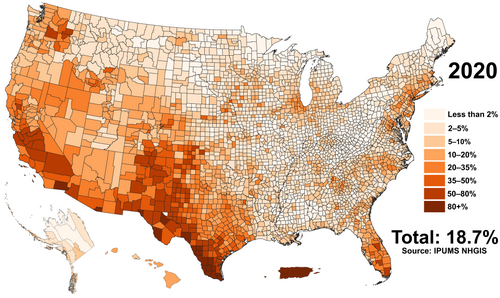
 65,329,087人(2020年) 65,329,087人(2020年)米国とプエルトリコの総人口の19.5%(2020年)62,080,044人(2020年)[1]米国総人口の18.7%(2020年)[1] | |
| 人口の多い地域 | |
| 言語 | |
| 宗教 | |
| |
| 関連民族 | |
ヒスパニック系、イベリア系アメリカ人、ラテン系アメリカ人(スペイン語:Estadounidenses hispanos y latinos、ポルトガル語:Estadunidenses hispânicos e latinos)は、スペイン系またはラテンアメリカの背景、文化、または家族の起源を完全または部分的に持つアメリカ人である。 [3] [4] [5] [6]これらの人口統計には、人種に関係なく、ヒスパニックまたはラテン系であると自認するすべてのアメリカ人が含まれる。 [7] [8] [9] [10] [11] [12] 2020年の時点で、国勢調査局は、米国とその領土に約6,530万人のヒスパニックとラテン系アメリカ人が住んでいると推定している。
「起源」とは、アメリカ合衆国に到着する前の、その人またはその両親や祖先の祖先、祖先、国籍グループ、血統、または出生国と見なすことができます。ヒスパニックまたはラテン系であると自認する人は、どの人種でもかまいません。なぜなら、アメリカ合衆国の植民地化と独立後に起こったことと同様に、ラテンアメリカ諸国の人口は、白人のヨーロッパ人植民者(この場合はポルトガル人とスペイン人)の子孫、アメリカ大陸の先住民、アフリカ人奴隷の子孫、ヨーロッパ、中東、東アジアからの独立後の移民、およびこれらの異なる民族グループ間の多民族連合の子孫で構成されていたからです。 [13] [14] [15] [16]アメリカ合衆国で唯一明確に指定された民族カテゴリーの1つであるヒスパニックとラテン系アメリカ人は、多様な相互に関連する文化的および言語的遺産を組み込んだ汎民族を形成しており、スペイン語とポルトガル語の使用は最も重要な言語である。ヒスパニック系およびラテン系アメリカ人のほとんどは、メキシコ、プエルトリコ、キューバ、エルサルバドル、ドミニカ、コロンビア、グアテマラ、ホンジュラス、エクアドル、ペルー、ベネズエラ、またはニカラグア出身である。地域的なヒスパニック系およびラテン系人口の主な出身地は、国中のさまざまな場所で大きく異なる。[14] [17] [18] [19] [20] 2012年、ヒスパニック系アメリカ人は、アジア系アメリカ人に次いで、米国で2番目に急速に増加した民族グループであった。[21]
先住民とスペイン人の混血ヒスパニック(メスティーソ)は、今日のアメリカ合衆国の大部分に居住する2番目に古い民族グループ(ネイティブアメリカンに次いで)である。 [22] [23] [24] [25]スペインは、今日のアメリカ南西部と西海岸、およびフロリダの広い地域を植民地化した。その領土には、現在のカリフォルニア、テキサス、ニューメキシコ、ネバダ、ユタ、アリゾナ、フロリダが含まれ、これらはすべて、メキシコシティに拠点を置くヌエバスペイン副王領の一部を構成していた。その後、この広大な領土は、1821年にスペインから独立してから1848年の米墨戦争の終結までメキシコの一部となった。ニューヨーク/ニュージャージー大都市圏へのヒスパニック移民は、幅広いヒスパニック諸国から来ている。[26]
用語
「ヒスパニック」と「ラテン系」という用語は民族を指す。「ヒスパニック」は、1977年に行政管理予算局が、キューバ人、メキシコ人、プエルトリコ系アメリカ人の3人の政府職員からなる小委員会の提案に基づいて分類を作成した後、スペイン語圏の国に起源を持つ個人を指すために初めて一般的に使用されるようになった。[27]アメリカ合衆国国勢調査局は、ヒスパニックであることを特定の人種のメンバーであることではなく、民族のメンバーであることと定義しているため、このグループのメンバーである人々はどの人種のメンバーでもある可能性がある。[14] [28] [29] 2015年に行われたヒスパニックを自認する全国調査では、56%がヒスパニックであることは人種的背景と民族的背景の両方の一部であると回答し、少数の人がヒスパニックであることを民族的背景のみ(19%)または人種的背景のみ(11%)の一部であると考えている。[28]ヒスパニックはあらゆる言語的背景を持つ可能性がある。 2015年の調査では、アメリカのヒスパニックの71%が「ヒスパニック/ラテン系と見なされるためには、スペイン語を話す必要はない」ことに同意した。[30]ヒスパニックとラテン系の人々は、言語、文化、歴史、遺産においていくつかの共通点を持っている可能性がある。スミソニアン協会によると、「ラテン系」という用語には、スペイン語を起源とする人々だけでなく、ブラジル人などのポルトガル語にルーツを持つ人々も含まれる。 [31] [32]ヒスパニックとラテン系という用語の違いは、一部の人々にとって曖昧である。[33]米国国勢調査局は、2つの用語を同一視し、スペインまたはアメリカ大陸のスペイン語またはポルトガル語を話す国の出身者を指すと定義している。 1848年に米墨戦争が終結した後、ヒスパニックまたはスペイン系アメリカ人という用語は、主にアメリカ南西部のニューメキシコ州のヒスパニックを指すために使用されるようになった。1970年の米国国勢調査では、議論を巻き起こしながら定義を「人種に関係なく、メキシコ人、プエルトリコ人、キューバ人、ドミニカ人、南米人、中米人、またはその他のスペイン文化または起源を持つ人」に拡大しました。これは現在、ニューメキシコ州を除く米国内でのこの用語の一般的な正式かつ口語的な定義です。[34] [35]この定義は、米国国勢調査局とOMBによる21世紀の用法と一致しており、2つの機関はヒスパニックとラテン系の両方の用語を互換的に使用しています。ピュー研究所「ヒスパニック」という用語はスペイン、プエルトリコ、およびスペイン語が唯一の公用語であるすべての国に厳密に限定されているが、「ラテン系」にはラテンアメリカのすべての国(ポルトガル語が唯一の公用語であるにもかかわらずブラジルも含む)が含まれるが、スペインとポルトガルは含まれないと考えている。[3]

ラティーノとラティーナという用語はイタリアからの借用語であり、究極的には古代ローマに由来する。英語のラティーノという用語は、ラテンアメリカ人、またはラテンアメリカ出身者を意味するスペイン語「latinoamericano」の短縮形である。ラティーノという用語には、いくつかの定義が生まれてきた。「米国在住のラテンアメリカ人男性」というこの定義は、[36]米国で使用されている最も古い定義であり、1946年に初めて使用された。[36]この定義によれば、たとえばメキシコ系アメリカ人やプエルトリコ人は、ヒスパニックとラテン系の両方である。この定義によれば、ブラジル系アメリカ人もラテン系であり、これにはラテンアメリカ出身のポルトガル語圏の人々も含まれる。[37] [38] [39] [40] [41] [42]英語では、イタリア系アメリカ人は「ラテン系」とはみなされない。なぜなら、彼らはラテンアメリカの国で最近まで暮らしていたことがない限り、大部分がラテンアメリカではなくヨーロッパからの移民の子孫だからである。
米国のヒスパニック系の間での用語の使用の好みは、それぞれの用語の使用者がどこに住んでいるかによって決まることが多い。米国東部の人々はヒスパニックという用語を好む傾向があり、西部の人々はラテン系という用語を好む傾向がある。[13]
米国の民族名称であるラティーノは、より長い形式であるラティーノアメリカーノから派生したものである。[43] latino-という要素は、実際には-oの不変の合成形(つまり、合成要素)であり、複合語を作るために用いられる(「フランス系カナダ人」を意味するfranc o canadienseのfranc o-や、iberorrománicoのibero-など[44])。

Latinxという用語(および類似の新語である Xicanx)が使われるようになってきました。[46] [47] Xの採用は「LGBTQIやフェミニスト運動による最近の活動に触発された新しい意識を反映し、スペイン語圏の活動家の中には、性別の二元性から完全に脱却し、より包括的な「x」を「a」と「o」の代わりに使用する人が増えている。 [ 48] LatinXという用語の支持者の間で、スペイン語の性別による偏見に関する最も頻繁に引用される苦情の1つは、性別が混在または不明なグループがラティーノと呼ばれるのに対し、ラティーナは女性のみのグループを指す(ただし、この女性グループに男性が1人でも加わると、すぐにラティーノに変更される)ことである。 [49] 2020年のピュー研究所の調査によると、ヒスパニックの約3%がこの用語を使用しており(ほとんどが女性)、この用語を聞いたことがある人は約23%に過ぎない。そのうち65%は、自分たちの民族グループを説明するためにこの用語を使用すべきではないと答えた。[50]
「ヒスパニック」という用語は、人種、国籍、言語的背景の幅広い範囲にわたる汎民族的アイデンティティを指していると指摘する人もいる。「ヒスパニックやラテン系などの用語は、私たちが自分自身をどのように見ているかを完全には捉えていません」とノースウェスタン大学の歴史学およびヒスパニック研究の准教授、ジェラルド・カダバ氏は言う。[51]
2017年のアメリカコミュニティ調査データによると、ブラジル(2%)、ポルトガル(2%)、フィリピン(1%)からの移民のごく一部がヒスパニック系であると自認している。[11]
歴史
16世紀と17世紀

スペインの探検家たちは、現在のアメリカ合衆国の領土の開拓者であった。確認されているアメリカ大陸への最初のヨーロッパ人上陸は、フアン・ポンセ・デ・レオンによるもので、彼は1513年に緑豊かな海岸に上陸し、ラ・フロリダと名付けた。その後30年間で、スペイン人はアパラチア山脈、ミシシッピ川、グランドキャニオン、グレートプレーンズに到達した最初のヨーロッパ人となった。スペインの船は大西洋岸に沿って航海し、現在のメイン州バンゴーにまで達し、太平洋岸を北上してオレゴンにまで達した。1528年から1536年にかけて、アルバル・ヌニェス・カベサ・デ・バカと3人の仲間(エステバニコというアフリカ人を含む)は、難破したスペインの探検隊から、フロリダからカリフォルニア湾まで航海した。1540年、エルナンド・デ・ソトが現在のアメリカ合衆国の広範囲な探検に着手した。

同じく 1540 年、フランシスコ バスケス デ コロナドは2,000 人のスペイン人とメキシコ先住民を率いて、現在のアリゾナとメキシコの国境を越え、現在の米国本土の地理的中心に近いカンザス州中央部まで旅しました。米国領土の他のスペイン人探検家には、アロンソ・アルバレス・デ・ピネダ、ルーカス・バスケス・デ・アイヨン、パンフィロ・デ・ナルバエス、セバスティアン・ビスカイノ、ガスパル・デ・ポルトラ、ペドロ・メネンデス・デ・アビレス、アルバル・ヌニェス・カベサ・デ・バカ、トリスタン・デ・ルナ・イ・アレジャノなどが含まれる。やフアン・デ・オニャーテ、そしてスペイン王室のために働く非スペイン人探検家、例えばフアン・ロドリゲス・カブリロなどです。 1565年、スペイン人はフロリダ州セントオーガスティンにアメリカ本土初の恒久的なヨーロッパ人入植地を建設した。スペインの宣教師と入植者は、現在のニューメキシコ州サンタフェ、エルパソ、サンアントニオ、ツーソン、アルバカーキ、サンディエゴ、ロサンゼルス、サンフランシスコ。[52]
アメリカ大陸のスペイン人入植地は、ヨーロッパ、アフリカ、アメリカ大陸を結ぶ広範な交易路網の一部でした。スペイン人は先住民との交易関係を確立し、毛皮、皮革、農産物、工業製品などの商品を交換しました。これらの交易網はスペイン植民地の経済発展に貢献し、異なるグループ間の文化交流を促進しました。
18世紀と19世紀

アメリカ独立戦争(スペインが反乱軍を支援し共闘した戦争)の終結時の1783年になっても、スペインは今日のアメリカ大陸のおよそ半分の領有権を主張していた。1819年から1848年にかけて、アメリカ合衆国はスペインとメキシコの犠牲によりその領土をおよそ3分の1拡大し、米墨戦争後のグアダルーペ・イダルゴ条約により、現在のアメリカ合衆国のカリフォルニア州、テキサス州、ネバダ州、ユタ州、コロラド州、ニューメキシコ州、アリゾナ州の大部分、オクラホマ州、カンザス州、ワイオミング州の一部を獲得したほか、[53]アダムズ・オニス条約によりフロリダ州を獲得し、[54] 1898年の米西戦争によりアメリカ合衆国領のプエルトリコを獲得した。 [55]当時これらの地域に住んでいた多くのラテン系アメリカ人はアメリカ市民権を取得した。それにもかかわらず、長年居住していたラテン系住民の多くは、市民権取得後に大きな困難に直面した。これらの新しく編入された地域にアングロ系アメリカ人が到着すると、ラテン系住民は土地の所有、政治的影響力、文化的伝統を維持するのに苦労した。[56] [57]
1848 年にカリフォルニアで金が発見されると、ヒスパニック系やラテン系の鉱夫、商人、開拓者など、さまざまな背景を持つ人々がカリフォルニアに集まりました。ゴールド ラッシュによりカリフォルニアの人口が増加し、経済が急成長し、この地域の社会的、政治的状況が一変しました。
アメリカが獲得した地域には多くのヒスパニック系の原住民が住んでおり、メキシコ、中米、カリブ海、南米からの移民の新たな波が新たな機会を求めてアメリカに移住した。これが、数年にわたって劇的に増加する人口構成の始まりであった。[58]
20世紀と21世紀
20世紀から21世紀にかけて、1965年の移民法の改正に伴い、米国へのヒスパニック系移民が著しく増加した。 [61] 世界大戦中、ヒスパニック系アメリカ人と移民は、ミシガン州、オハイオ州、インディアナ州、イリノイ州、アイオワ州、ウィスコンシン州、ミネソタ州などの中西部の産業ブームによる米国経済の落ち込みを防いでいた。アメリカ人の一定割合が戦争のために職を追われた一方で、ヒスパニック系は工業世界で職を得た。シカゴ・エルジン・ネーパービル、デトロイト・ウォーレン・ディアボーン、クリーブランド・エリリアなどの大都市圏にヒスパニック系アメリカ人が集中しているのは、このためである。[58]
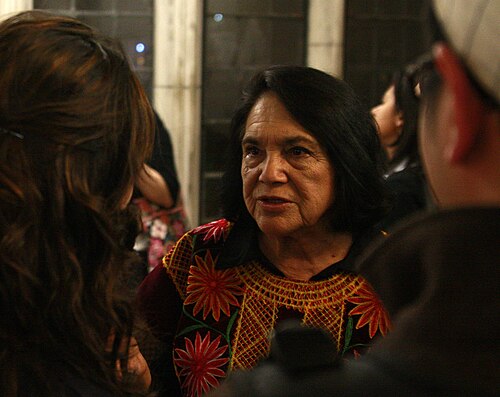
ヒスパニック系およびラテン系アメリカ人は、20 世紀の広範な公民権運動に積極的に参加し、平等な権利、社会正義、差別と人種隔離の廃止を主張しました。ラテンアメリカ系アメリカ人連盟(LULAC) や全米農場労働者(UFW) などの組織は、ヒスパニック系およびラテン系労働者とコミュニティの権利のために戦いました。
アメリカ合衆国の過去と現在におけるヒスパニックの貢献については、以下でより詳細に述べる(著名人とその貢献を参照)。ヒスパニック系アメリカ人の現在と過去の貢献を認識するため、1968年9月17日、リンドン・B・ジョンソン大統領は議会の承認を得て、 9月中旬の1週間を全米ヒスパニック文化遺産週間と指定した。1988年、ロナルド・レーガン大統領はこの記念日を1か月間延長し、全米ヒスパニック文化遺産月間とした。[62] [63]ヒスパニック系アメリカ人は2004年に最大の少数民族となった。[64]
20 世紀には、ヒスパニック系およびラテン系アメリカ人が政治的代表権と権限拡大を求める傾向が強まりました。エドワード・ロイバル、ヘンリー・B・ゴンザレス、デニス・チャベスなどの議員の選出は、ヒスパニック系の政治的代表権にとって重要な節目となりました。さらに、ラウロ・カバソスやビル・リチャードソンなどの閣僚への任命は、政府におけるヒスパニック系およびラテン系指導者の影響力拡大を浮き彫りにしました。
ヒスパニック系およびラテン系アメリカ人は米国最大の少数民族グループとなり、国の人口増加に大きく貢献しました。21 世紀も、バイリンガル教育の支援、文化的伝統や祭りの祝賀、ヒスパニック系およびラテン系の人々やコミュニティによる米国社会への貢献の認識など、ヒスパニック系およびラテン系の文化と伝統を保存し促進する取り組みが続けられました。
人口統計


2020年米国国勢調査時点における、米国の各州、コロンビア特別区、プエルトリコにおけるヒスパニック系アメリカ人の割合
2020年の時点で、ヒスパニック系は米国人口の19~20%を占め、6,200~6,500万人となっている。[65]米国国勢調査局は後に、米国国勢調査ではヒスパニック系が5.0%、つまり330万人少なく数えられていたと推定しており、これが上記の数字の300万人の範囲を説明しています。対照的に、白人は約300万人多く数えられています。[66] 2000年4月1日から2007年7月1日までの期間のヒスパニック系の増加率は28.7%で、国全体の人口増加率(7.2%)の約4倍でした。[67] 2005年7月1日から2006年7月1日までの増加率のみで3.4%でした[68] [67] 2010年の国勢調査によると、ヒスパニック系は現在、米国の366の大都市圏のうち191の大都市圏で最大の少数民族グループとなっている。[69] 2050年7月1日時点の米国のヒスパニック系人口は1億3,280万人と予測されており、その時点での米国の総人口の30.2%を占める。[70]
地理的分布
- ヒスパニック系およびラテン系アメリカ人の人口分布の推移
-
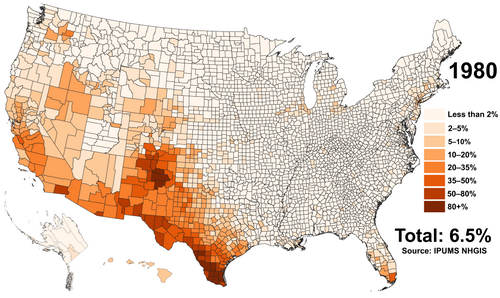 1980
1980 -
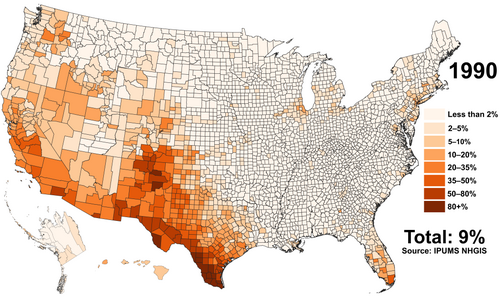 1990
1990 -
 2000
2000 -
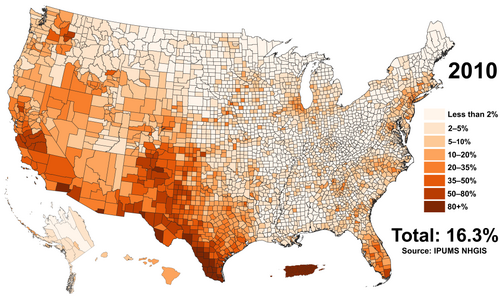 2010
2010 -
2020

ヒスパニック人口が100万人を超える米国の大都市統計地域(2014年)[71]
ヒスパニック系の割合が最も高い州と地域(2021年)[72]
国内のヒスパニック系人口のうち、49%(2,150万人)がカリフォルニア州またはテキサス州に住んでいます。[73] 2022年、ニューヨーク市とワシントンDCは、主にベネズエラ、エクアドル、コロンビア、ホンジュラス出身のテキサス州からのラテン系移民を大量に受け入れ始めました。[74]
ヒスパニック系人口の半分以上は南西部に集中しており、そのほとんどはメキシコ系アメリカ人である。カリフォルニア州とテキサス州は、米国内でメキシコ人と中米ヒスパニックの人口が最も多い州である。北東部はドミニカ系アメリカ人とプエルトリコ人が大半を占め、両者の人口密度は国内で最も高い。DCメトロエリアを中心とする中部大西洋岸地域では、エルサルバドル系アメリカ人がヒスパニック系グループの中で最大である。フロリダ州はキューバ系アメリカ人とプエルトリコ人が大半である。五大湖沿岸諸州と南大西洋沿岸諸州の両方で、メキシコ人とプエルトリコ人が大半を占めている。西部諸州、南中央部諸州、大平原諸州を含む米国のその他の地域では、メキシコ人が大半を占めている。
国籍
2022年現在、国内のヒスパニック系人口の約60.1%はメキシコ系である(表参照)。さらに9.6%がプエルトリコ系、キューバ系と エルサルバドル系がそれぞれ約3.9% 、ドミニカ系が約3.7%である。[75]残りは他の中米または南米系、またはスペインから直接来た人々である。2017年には、ヒスパニック系アメリカ人の3分の2が米国で生まれた。[77]
スペイン人は歴史的に英語圏の国ではなくヒスパニック系アメリカに移住してきたため、スペインから直接移住した人はほとんどいない。このため、スペイン人またはスペイン人であると自認するヒスパニックのほとんどは、ヒスパニック系アメリカ人の国籍も自認している。2017年の国勢調査では、約176万人のアメリカ人が、直接スペイン出身かどうかにかかわらず、何らかの形で「スペイン人」を祖先として報告している。[75]
ニューメキシコ州北部とコロラド州南部には、16世紀後半から17世紀にかけてヌエバ・エスパーニャ(メキシコ)や時にはスペインから移住してきた人々を祖先に持つヒスパニック系住民が大勢いる。こうした背景を持つ人々はしばしば「ヒスパノス」「スペイン人」「ヒスパニック」と自認する。こうした移住者の多くは地元のネイティブ・アメリカンとも結婚しており、メスティーソ人口を形成している。[78]同様に、ルイジアナ州南部には、スペイン系の人々のほか、イスレーニョスとして知られるカナリア諸島系の人々のコミュニティがある。カリフォルニオ、ヌエボメヒカーノ、テハノはスペイン系および/またはメキシコ系のアメリカ人で、時にはチカーノと名乗るサブグループもいる。ヌエボメヒカーノとテハノは、独自の料理、方言、音楽の伝統を持つ、南西部独特のヒスパニック文化である。
ニューヨリカンは、ニューヨーク市周辺に住むプエルトリコ系アメリカ人である。米国には200万人近くのニューヨリカンがいる。著名なニューヨリカンには、アレクサンドリア・オカシオ=コルテス下院議員、ソニア・ソトマイヨール米国最高裁判所判事、歌手のジェニファー・ロペスなどがいる。
人種と民族
ヒスパニックは、多様な起源を持つ多民族・多民族国家から来ているため、あらゆる人種、あるいは人種の混合である可能性があります。最も一般的な祖先は、ネイティブアメリカン、ヨーロッパ人、アフリカ人です。また、植民地時代の新キリスト教セファルディ系ユダヤ人の祖先を持つ人も多くいます。[79]人種の多様性の結果、ヒスパニックは人種ではなく、言語(スペイン語)と文化的遺産を共有する民族を形成しています。
ヒスパニック系の起源は人種とは無関係であり、米国国勢調査局では「民族」と呼ばれています。
2020年の米国国勢調査では、ヒスパニックの20.3%が人種として「白人」を選択しました。これは、ヒスパニックの53.0%が「白人」であると認識していた2010年の米国国勢調査と比較すると大きな減少を示しています。 [80]これらのヒスパニックは12,579,626人、つまり人口の3.8%を占めています。
ヒスパニック系アメリカ人の42%以上が「その他の人種」であると自認しています。[81]「その他の人種」のボックスにチェックを入れたアメリカ人のうち、97%がヒスパニックでした。[82]これらのヒスパニックは26,225,882人、つまりヒスパニック人口の42.2%を占めています。
「2つ以上の人種」の回答者の半数以上はヒスパニック系でした。[83]これらのヒスパニック系は20,299,960人、つまりヒスパニック系人口の32.7%を占めています。
黒人ヒスパニックの最大数は、キューバ、ドミニカ、パナマ、プエルトリコのコミュニティを含むスペイン領カリブ諸島の出身者です。
プエルトリコでは、アメリカ先住民の血を引く人々と、ヨーロッパ系やカナリア諸島系の人々がいます。アフリカ系が大部分を占める人口もいますが、アメリカ先住民の血を引く人々や混血の人もいます。キューバ人はイベリア人とカナリア諸島系の血を引く人がほとんどですが、カリブ海先住民の血を引く人もいます。サハラ以南の黒人や多民族の人たちもいます。[84] [85] [86]ヒスパニック系の各国と米国移民の人種と文化は、歴史と地理によって異なります。
ウェルチとシゲルマンは、2000年の時点で、異なる国籍のラテン系アメリカ人(キューバ人とメキシコ人など)間の交流は、ラテン系アメリカ人と非ラテン系アメリカ人間の交流よりも低いことを発見しました。[87]これは、ラテン系アメリカ人はしばしば一枚岩のように扱われますが、米国のラテン系アメリカ人は一枚岩ではなく、自分たちの民族的または国民的アイデンティティは他のラテン系アメリカ人のそれとは大きく異なると考えていることを思い出させます。[87]
遺伝学
2019年に発表された、米国内のさまざまな民族/人種グループのネイティブアメリカンの祖先に特化した自動DNA研究では、自認するヒスパニック系アメリカ人は、黒人や非ヒスパニック系の白人アメリカ人に比べて、ネイティブアメリカンの祖先の平均量が多いことがわかった。平均すると、ヒスパニック系アメリカ人は半分強がヨーロッパ人、約38%がネイティブアメリカン、10%未満がアフリカ人であることが判明した。[93] [94]しかし、これらの結果はヒスパニック系人口全体の平均であるため、個人間および地域間で大きく異なります。ヒスパニック系人口の大部分がメキシコ系アメリカ人である西海岸および西南中央地域のヒスパニック系参加者は、[95]平均43%がネイティブアメリカンの祖先でした。[94]一方、ヒスパニック系人口の大部分がプエルトリコ系またはドミニカ系である中部大西洋岸地域の住民では、[96]平均してネイティブアメリカンの祖先の割合はわずか11%でした。[94]
年
2014年時点で、ヒスパニック系人口の3分の1にあたる1,790万人が18歳未満であり、4分の1にあたる1,460万人がミレニアル世代である。これは、米国内のヒスパニック系人口の半分以上を占めることになる。[97]
教育
ヒスパニック系のK-12教育

米国のヒスパニック人口の増加に伴い、ヒスパニックはK-12システムに多大な影響を及ぼしています。2011年から2012年にかけて、ヒスパニックは米国の全入学者の24%を占め、カリフォルニア州とテキサス州の入学者のそれぞれ52%と51%を占めました。[98]さらなる調査により、米国のヒスパニック人口は今後も増加し続けることが示されており、米国の学校にさらに多くのヒスパニックが入学することが示唆されています。
ヒスパニック教育の現状は、ある程度期待できるものである。第一に、幼稚園や保育園に通うヒスパニックの生徒は、全日制プログラムに参加する傾向が強かった。[98]第二に、小学校教育を受けるヒスパニックは、英才教育プログラムに代表される2番目に大きなグループであった。 [98]第三に、ヒスパニックのNAEP数学と読解の平均スコアは、過去10年間で一貫して上昇している。[98]最後に、ヒスパニックは、白人を含む他のグループよりも大学進学する傾向が強かった。[98]
しかし、彼らの幼児教育、初等教育、中等教育における学業成績は他のグループに比べて遅れています。[98]例えば、彼らの平均数学と読解のNAEPスコアは、アフリカ系アメリカ人を除く他のすべてのグループよりも低く、中退率は24%から減少したにもかかわらず13%で、どのグループよりも高くなっています。[98]
これらの格差を説明するために、一部の学者は、学校政策や社会政策の失敗によるヒスパニックの「教育危機」があると示唆している。[99]この目的のために、学者はさらに、言語の壁、貧困、移民/出生ステータスなど、ヒスパニックの学業成績が悪い理由をいくつか挙げている。[100] [101]
英語学習者

現在、米国の英語学習者の80%をヒスパニック系の学生が占めている。 [102] 2008~2009年には、幼稚園から12年生までの530万人の学生が英語学習者(ELL)に分類された。[103]これは、多くの学生がさまざまな年齢で教育制度に参加した結果であるが、ELLの大多数は外国生まれではない。[103]ヒスパニック系の学生に英語指導を提供するために、多くの英語プログラムが実施されてきた。学校は英語の流暢さに関して要求を課している。例えば、英語を母国語としない学生には、ライティング、スピーキング、リーディング、リスニングの能力を証明するためのテスト要件がある。彼らは英語の効率性を評価するELPACテストを受ける。この評価によって、彼らがELL学生とみなされるかどうかが決まる。ヒスパニック系の学生にとって、ELL学生であることは大きな影響がある。なぜなら、本来の授業とは別に、追加の試験に合格しなければならないというプレッシャーがかかるからである。さらに、高校入学前に試験に合格しないと、生徒はその年に通常の授業を受ける代わりに追加のELDコースを受講するため、授業についていけなくなってしまいます。[104]しかし、これらのプログラムの大多数は英語イマージョンであり、生徒の文化や母国語の知識を損なうものであると言えます。[101]そのため、どのプログラムがこれらの言語格差に対処できるかについて、学校内で大きな議論が続いています。
移民ステータス
アメリカの公立学校には世界中から500万人以上のELLが通っており、少なくとも460の異なる言語を話しています。[104]不法移民は、アメリカで義務教育を受けることができなかったこともあります。しかし、1982年の画期的な最高裁判所の判決であるPlyler v. Doe以来、移民はK-12教育を受けることができるようになりました。これは、ヒスパニック系を含むすべての移民グループに大きな影響を与えました。しかし、彼らの学業成績は、到着時期や出身国での学校教育など、いくつかの要因に左右されます。[105]非ネイティブスピーカーがアメリカに到着すると、生徒は新しい国、言語、文化に入るだけでなく、配置から次の学年への進級まですべてを決定するテスト文化にも入ります。[104]さらに、ヒスパニック系の移民/出生地は、学業成績に大きな役割を果たしています。例えば、第一世代と第二世代のヒスパニックは、後の世代よりも成績が良い。[106]さらに、彼らの志も低下しているようだ。[107]これは、彼らの高等教育後の将来に大きな影響を与える。
同時バイリンガル
「同時バイリンガル」という用語があります。これは、グアダルーペ・バルデス[108]の研究で生まれたもので、彼女は、この用語は2つの言語を「第一」言語として習得する個人によって使用されると述べています。ほとんどのアメリカ人の状況的バイリンガルは、まず民族言語または移民言語を習得し、その後英語を習得します。第二言語の習得期間は、初期バイリンガリズムとして知られています。
ヒスパニック系の高等教育
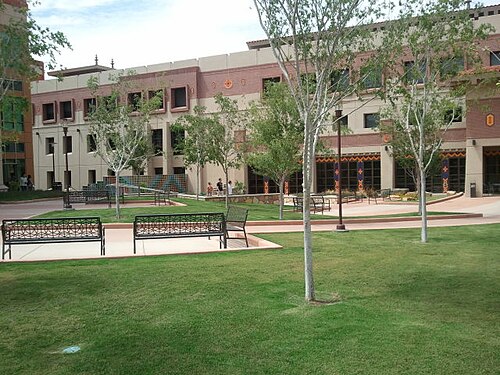
学士号以上の学位を持つ人の割合は、ベネズエラでは50%であるのに対し、25歳以上のエクアドルでは18%である。ヒスパニック系グループの中では、学士号以上の学位を持つ人の割合は、キューバでは25%、プエルトリコでは16%、ドミニカでは15%、メキシコでは11%である。ドミニカ系アメリカ人の2世のうち21%以上が大学の学位を持っており、これは全国平均(28%)をわずかに下回るが、米国生まれのメキシコ系アメリカ人(13%)や米国生まれのプエルトリコ系アメリカ人(12%)よりは大幅に高い。[110]
ヒスパニック系は、米国で最も名声が高いとされるアイビーリーグの大学で2番目または3番目に多い民族グループを構成しています。アイビーリーグの大学へのヒスパニック系の入学者は、長年にわたって徐々に増加しています。今日、ヒスパニック系は、イェール大学の学生の8%からコロンビア大学の15%を占めています。[111]たとえば、ハーバード大学の2018年度のクラスの学生の18%はヒスパニックです。[112]
ヒスパニック系の学生の割合は、テキサス大学エルパソ校(学生の70%)、フロリダ国際大学(63%)、マイアミ大学(27%)、MIT、UCLA、UCバークレー(各15%)など、他の多くのトップ大学でも高い。スタンフォード大学では、ヒスパニック系は非ヒスパニック系白人とアジア人に次いで3番目に大きな民族グループであり、学生人口の18%を占めている。[113]
ヒスパニック系大学入学者数
ヒスパニック系は全国の大学で学んでいますが、中には連邦政府指定のヒスパニック系学生支援機関に通うことを選択する人もいます。これらの機関は、認可を受けており、学位を授与する公立または私立の非営利の高等教育機関で、学部生のヒスパニック系フルタイム換算学生数(FTE)が25%以上を占めています。HSIに指定されている高等教育機関は270校以上あります。[115]
健康
長寿

2016年現在、ヒスパニック系アメリカ人の平均寿命は81.8歳で、白人アメリカ人の平均寿命(78.6歳)よりも長い。[130]ヒスパニック系アメリカ人は白人アメリカ人よりも社会経済的に恵まれているにもかかわらず、白人アメリカ人に比べて死亡率で優位に立っているという「ヒスパニック・パラドックス」に関する研究は、主に「(1)米国への、または米国からの健康に関連した移住、(2)出身国で採用された健康的なライフスタイルや行動の維持、米国での広範なソーシャルネットワークの利用可能性などの社会的、文化的保護メカニズム」によって説明されている。[131]ヒスパニックの健康上の優位性は、健康状態の悪い移民の帰国率の高さに起因するという「サーモンバイアス」仮説は、学術文献で一定の支持を得ている。[132] 2019年に行われた研究では、外国生まれのアメリカ人ヒスパニックの比較的良好な健康状態を調査し、家族志向(家族主義)の強さがこの利点に寄与しているという仮説に異議を唱えた。[133]一部の学者は、ヒスパニックの死亡率の優位性は、白人に比べてヒスパニックの肥満率と糖尿病率が高いため消失する可能性が高いと示唆しているが、ヒスパニックの喫煙率(したがって喫煙に起因する死亡率)が低いことが、ある程度これを相殺する可能性がある。[131]
健康管理
2017年時点で、ヒスパニック系アメリカ人の約19%が健康保険に加入しておらず、これは先住民とアラスカ先住民を除くすべての民族の中で最も高い割合である。[134]健康保険の拡大という点では、ヒスパニック系は米国の民族グループの中では医療費負担適正化法(ACA)から最も恩恵を受けており、高齢者以外のヒスパニック系では、無保険率は2013年の26.7%から2017年には14.2%に低下した。[134] 2017年の高齢者以外の無保険ヒスパニック系人口のうち、約53%が外国人、約39%が米国生まれの市民、約9%が帰化した市民であった。[134](ACAは、不法移民や米国での居住期間が5年未満の合法移民が保険に加入するのを支援しない)。[134]
2013年の調査によると、メキシコ人女性の無保険率(54.6%)は、他の移民(26.2%)、黒人(22.5%)、白人(13.9%)と比較して最も高い。[135]この調査によると、メキシコ人女性は米国で最大の女性移民グループであり、予防可能な健康状態を発症するリスクも最も高い。[135]多くの不法移民は、重病になるまで定期的な医師の診察を延期するため、医療へのアクセスの制限、法的地位、収入などの複数の要因が、予防可能な健康状態を発症するリスクを高めている。
メンタルヘルス
家族の離別

不法に国境を越えようとしている家族の中には、国境警備隊員に捕まり、引き離されるという苦難に遭う家族もいる。移民は、家族全員が国境を越えるのに十分な水などの物資を持参していない場合、引き離される危険もある。不法移民が新しい国に到着すると、職場で襲撃を受け、不法移民が拘留され、強制送還されるのではないかと恐れるかもしれない。
家族が引き離されると、米国生まれの子ども、不法移民の子ども、そしてその不法移民の親は、うつ病や家族不適応症候群のリスクにさらされる。その影響は長期にわたることが多く、コミュニティレベルにまで及ぶ。子どもは精神的トラウマや長期的な行動の変化を経験する可能性がある。さらに、親が強制的に引き離されると、子どもは見捨てられたという気持ちになり、家族に起こったことを自分のせいにすることがある。家族が引き離される結果となる不法国境通過の被害者である子どもの中には、二度と親に会えないかもしれないと信じている子どももいる。これらの影響により、親子間の愛着が悪化する可能性がある。移民法や再入国制限により再会は困難な場合があり、それが子どもと親の精神的健康にさらに影響を及ぼす。[136]母国を離れた親も精神的に悪い経験をする。2013年に発表された研究によると、研究に参加したメキシコ人移民男性の46%が、うつ病の症状のレベルが上昇したと報告している。[137]近年、移民の滞在期間は3年から10年近くにまで延びている。[137]結婚しているか独身かに関わらず、家族と離れ離れになった移民は、配偶者に同伴されている既婚男性よりも強い鬱状態を経験している。[137]さらに、この調査では、家族と離れ離れになった男性は、過密住宅などの厳しい生活環境に置かれやすく、家族を支えるために送金しなければならないという大きなプレッシャーにさらされていることも明らかになった。これらの状況は移民にさらなるストレスを与え、彼らの鬱状態を悪化させることが多い。一緒に移住した家族は、より良い生活環境を経験し、お互いから精神的な励ましと動機付けを受け、連帯感を共有している。彼らはまた、新しい国の雇用と医療制度をうまく乗り越える可能性が高く、母国に送金しなければならないというプレッシャーを受けない。
脆弱性

1996年の不法移民改革および移民責任法は、米国の移民への対応方法を大きく変えた。この新法の下では、ビザの期限を過ぎた移民や米国に不法滞在していることが判明した移民は、弁護士なしで拘留および/または国外追放の対象となった。これらの法律に違反した移民は、米国への再入国を許可されない可能性がある。同様に、この法律は、米国への入国または合法的な地位の取得を希望する他の移民にとっても、入国を困難にした。これらの法律はまた、文書化された移民に対して国外追放に値すると見なされる犯罪の種類を拡大した。[136]将来の大統領によって制定された政策は、米国に入国する移民の数と彼らの迅速な退去をさらに制限する。
多くの不法移民の家族は、入国管理官に遭遇することを恐れ、地域のイベントへの参加が制限されるため、注意を払わずに日常の活動を楽しむことができません。不法移民の家族はまた、政府の機関やサービスを信頼していません。入国管理官に遭遇することを恐れるため、不法移民はしばしば追放され孤立していると感じるため、うつ病や不安などの精神衛生上の問題を発症する可能性があります。[136]社会から追放されることによる有害な影響は、不法移民だけに限らず、家族の一部に合法的な身分がある場合でも家族全体に影響を及ぼします。子供たちは、両親が不法移民であるために、学校でクラスメイトからいじめの被害に遭ったとよく報告しています。[138]これにより、彼らは孤立感を感じ、劣等感を抱く可能性があり、学業成績に悪影響を与える可能性があります。
ストレス

ヒスパニック系家族は、困難に直面しているにもかかわらず、モチベーションを維持する方法を見つけています。多くの移民は、宗教をモチベーションの源として利用しています。メキシコ移民は、直面している困難は神のより大きな計画の一部であると信じており、最終的には人生が良くなると信じている。彼らは信仰を強く持ち、神が家族を安全に守ってくれることを願いながら毎日祈っています。[138]移民は教会の礼拝に参加し、同じ経験を共有する他の移民と絆を深めています。< [136]不法滞在のヒスパニック系は、友人、家族、コミュニティからのサポートも受けており、それが対処メカニズムとして役立っています。一部のヒスパニック系は、子供たちがいるからこそ、前進し続けることができると述べています。彼らは子供たちに将来を持ってほしいと願っており、自分たちでは手に入らないものを与えたいと思っています。[138]コミュニティは、子供たちの家庭教師、経済的支援、カウンセリングサービスなど、移民家族が必要とする特定のリソースを提供することができます。[136]ポジティブな精神姿勢を維持することが、ストレスに対処するのに役立つと認識している人もいます。多くの移民は、アメリカでの生活を楽しむために、うつ病につながる絶え間ない恐怖の中での生活を拒否しています。[138]多くの移民は収入源が不安定であるため、将来の経済的ストレスを防ぐために計画を立てる人が多くいます。彼らはお金を取っておき、電化製品を自分で修理する方法を学ぶなど、お金を使う代わりに節約する方法を見つけます。[138]
貧困

多くのヒスパニック系家族は、母国に送金するために、より良い経済的機会を求めて移住する。不法滞在者であることは、移民が就く仕事の可能性を制限し、多くの人が安定した仕事を見つけるのに苦労している。多くのヒスパニック系は、社会保障番号を持っていないために企業から断られたと報告している。たとえ仕事を得ることができたとしても、雇用主が居住地または市民権の証明を提供できないことを知った場合、移民はその仕事を失うリスクがある。多くは身分証明書を求めない代理店に目を向けるが、そのような仕事は往々にして当てにならない。拘留され、国外追放されるのを避けるために、多くは搾取されて働かなければならない。ある調査で、参加者は「あなたが書類を持っていないことを誰かが知っている場合...その人は危険です。多くの人が、あなたが書類を持っていないことを知っている場合、その人を騙すでしょう...彼らはいつも『おい、移民局に電話するぞ』と言うのです」と報告した。[138]これらの状況により、ヒスパニック系家族が世帯にもたらす収入が減少し、一部の家族は日々の生活が非常に困難になっています。不法滞在の親が強制送還または拘留されると、もう一方の親も家族を経済的に支えている場合は、収入が大幅に減少します。残された親は家族の世話をしなければならず、他の責任と並行して働くことが困難になる可能性があります。家族が引き離されていない場合でも、ヒスパニック系の人々は常に経済的基盤を失うことを恐れて生活しています。
貧困生活は、若者のうつ病、自尊心の低さ、孤独、犯罪行為、薬物使用の多発と関連している。[136]低所得の家族は適切な住宅を買うことができず、中には立ち退きを余儀なくされる家族もいる。不法移民の子どもたちが育つ環境は、劣悪な空気、騒音、有毒物質など、健全な発育を妨げるものが多い。[136]さらに、こうした地域では暴力やギャング活動が起こりやすく、家族はPTSD、攻撃性、うつ病の発症につながる恐れのある絶え間ない恐怖の中で暮らすことを余儀なくされる。
経済見通し
平均所得
2017年の米国国勢調査では、ヒスパニック系アメリカ人の世帯収入の中央値は50,486ドルと報告されている。これはヒスパニック系世帯の世帯収入の中央値が3年連続で増加したことになる。[90]
貧困
米国国勢調査によると、ヒスパニックの貧困率は2016年の19.4%から2017年には18.3%に減少した。ヒスパニックは1,080万人の貧困者を占めた。[90]比較すると、2017年の非ヒスパニック系白人アメリカ人の平均貧困率は8.7%で1,700万人が貧困、アジア系アメリカ人は10.0%で200万人が貧困、アフリカ系アメリカ人は21.2%で900万人が貧困であった。[90]
2015年に最も多かったヒスパニック系グループは、ホンジュラス系アメリカ人とドミニカ系アメリカ人(27%)、グアテマラ系アメリカ人(26%)、プエルトリコ系アメリカ人(24%)、メキシコ系アメリカ人(23%)、エルサルバドル系アメリカ人(20%)、キューバ系アメリカ人とベネズエラ系アメリカ人(17%)、エクアドル系アメリカ人(15%)、ニカラグア系アメリカ人(14%)、コロンビア系アメリカ人(13%)、アルゼンチン系アメリカ人(11%)、ペルー系アメリカ人(10%)でした。[140]
貧困は、人種的/民族的少数派が低所得コミュニティの小さな地域に孤立したままでいる傾向があるため、多くの過小評価された生徒に影響を与えています。その結果、「学校の提供内容、教師の質、カリキュラム、カウンセリング、および生徒を学校に引き付け、卒業に備えるためのあらゆるもの」など、いくつかの不平等が生じます。 [141]ヒスパニックの場合、2004年のヒスパニックの子供の貧困率は28.6%でした。[102]さらに、このリソースの不足により、学校はこれらの不平等を次の世代に再生産します。貧困を軽減するために、多くのヒスパニックの家族は、リソースとして社会サービスやコミュニティサービスに頼ることができます。
文化的な事柄

ヒスパニック系アメリカ人の地理的、政治的、社会的、経済的、人種的多様性により、家族の伝統や国籍によって、すべてのヒスパニック系アメリカ人は非常に異なっています。多くの場合、スペイン領カリブ海、南米、中央アメリカなどの遠い国のヒスパニック系アメリカ人よりも、近隣諸国のヒスパニック系アメリカ人の間には多くの文化的類似点があります。しかし、いくつかの特徴が、これらの多様な背景を持つヒスパニック系アメリカ人を結びつける傾向があります。
言語
スペイン語
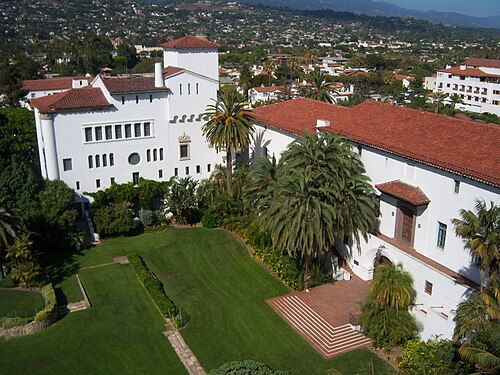
ヒスパニック系アメリカ人の最も重要な結びつきの要素の 1 つとして、スペイン語はヒスパニック文化の重要な部分です。子供にスペイン語を教えることは、ヒスパニック系家族の間で教えられる最も価値のあるスキルの 1 つです。スペイン語は、その人の家族、遺産、全体的な文化と密接に結びついているだけでなく、ビジネスや将来の職業上のキャリアの機会を増やすためにも重要です。2013 年のピュー リサーチの調査では、ヒスパニック系成人の 95% が「将来のヒスパニック世代がスペイン語を話すことが重要」と回答しました。[142] [143]米国は他のスペイン語圏の国に近いため、スペイン語は将来のアメリカ人の世代に受け継がれています。2 世ヒスパニックでは 80% が流暢なスペイン語を話し、3 世ヒスパニックでは 40% が流暢なスペイン語を話します。[144]スペイン語は米国で教えられている言語の中でも最も人気のある言語です。[145] [146]

ヒスパニック系は、 16世紀のスペイン植民地時代に初めて北米に持ち込まれたスペイン語を米国で復活させました。スペイン語は米国で最も古いヨーロッパの言語であり、 1565年にフロリダ州セントオーガスティンが設立されて以来、4世紀半にわたって途切れることなく話されてきました。 [147] [148] [149] [150]今日、ヒスパニック系の90%が英語を話し、少なくとも78%が流暢なスペイン語を話します。[151]さらに、280万人の非ヒスパニック系アメリカ人も自宅でスペイン語を話し、合計4110万人になります。[92]
ヒスパニック系アメリカ人の40%は移民であり[152]、米国生まれの60%の多くは移民の子供または孫であるため、コミュニティ全体でバイリンガルが標準となっています。家庭では、5歳以上のヒスパニックの少なくとも69%が英語とスペイン語のバイリンガルですが、最大22%が英語のみ、9%がスペイン語のみを話します。さらに0.4%が自宅で英語とスペイン語以外の言語を話します。[151]
アメリカスペイン語方言
アメリカ合衆国で話されているスペイン語の方言は、その人の出身国や家族の伝統によって異なります。しかし、一般的に南西部で話されているスペイン語はメキシコ系スペイン語またはチカーノ系スペイン語です。ニューメキシコ州とコロラド州の初期スペイン人入植者の子孫が話す南西部固有のスペイン語は、伝統的なニューメキシコ系スペイン語として知られています。伝統的なニューメキシコ系スペイン語の主な特徴の1つは、独特の語彙と文法形式を使用していることです。これにより、ニューメキシコ系スペイン語はスペイン語の方言の中でも独特になっています。東海岸で話されているスペイン語は一般的にカリブ系スペイン語であり、キューバ、ドミニカ共和国、プエルトリコのスペイン語の影響を強く受けています。カナリア諸島系スペイン語の子孫であるイスレーニョ系スペイン語は、18世紀にルイジアナ州で始まった最初期のスペイン人入植者の子孫が話していた歴史的なスペイン語の方言です。国内の他の地域で話されているスペイン語はさまざまですが、一般的にはメキシコ系スペイン語です。[92] [156]
スペイン語を母国語とする人は、音韻的には母国語に近いが、形態統語論の習得は限られている傾向がある。[157]スペイン語を第二言語として話すヒスパニック系は、英語のアクセントで話すことが多い。
スパニッシュと英語の方言

ヒスパニックは、英語に多くのスペイン語の単語を取り入れることで、アメリカ人の話し方に影響を与えてきた。ヒスパニックの若い世代の間では、スペイン語と英語を混ぜた言葉であるスパングリッシュが一般的に話されている。彼らは両方の言語に堪能なので、会話中はスペイン語と英語を頻繁に切り替える。スパングリッシュは、マイアミ、ハイアリア、サンアントニオ、ロサンゼルス、ニューヨーク市の一部など、ヒスパニックが多数を占める都市やコミュニティで特に一般的である。[158]
ヒスパニック系は、米国における英語の話し方にも影響を与えている。例えばマイアミでは、マイアミ方言が、今日マイアミで話され、聞かれる英語の最も一般的な形として発展してきた。これは英語のネイティブな方言であり、マイアミに住むキューバ系アメリカ人の第二、第三世代の間で発達した。今日では、この言語は市内のいたるところで一般的に聞かれる。グロリア・エステファンやエンリケ・イグレシアスは、マイアミ方言を話す人々の例である。もう一つの主要な英語の方言は、米国南西部のチカーノとテハノが話すもので、チカーノ英語と呼ばれる。ジョージ・ロペスやセレナは、チカーノ英語の話者の例である。[159]プエルトリコ人や他のヒスパニック系グループが話す英語の方言は、ニューヨーク・ラティーノ英語と呼ばれ、ジェニファー・ロペスやカーディ・Bは、ニューヨーク・ラティーノ方言を話す人々の例である。
英語を話すとき、アメリカのヒスパニック系アメリカ人は、民族的アイデンティティや連帯感を示すために、 tú sabes、este、óraleなどのスペイン語の付加語やつなぎ語を文中に挿入することが多い。同じことは、peroなどの文法単語でも頻繁に起こる。[160]
宗教
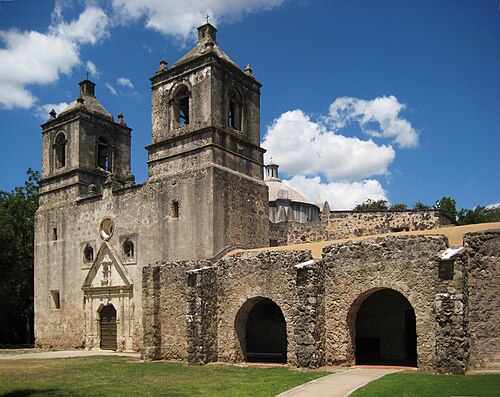
2019年に実施されたピュー・センターの調査によると、ヒスパニック系アメリカ人の大多数(72%)はキリスト教徒であり、 [161] 2018〜2019年の時点で、アメリカのヒスパニックのうち、47%がカトリック、24%がプロテスタント、1%がモルモン教、1%未満が正教会、3%が非キリスト教信仰、23%が無宗教である。[161]カトリック教徒であるヒスパニックの割合は2009年(57%)から減少しているが、無宗教のヒスパニックの割合は2009年(15%)から増加している。[161]ヒスパニック系プロテスタントコミュニティのほとんどは福音派だが、一部は主流派宗派に属している。[162]カトリック、無宗教、主流派プロテスタントのヒスパニックと比較すると;福音派プロテスタントのヒスパニック系は、毎週礼拝に出席し、毎日祈りを捧げ、聖書的自由主義を信奉する可能性がかなり高い。[162] 2014年時点で、ヒスパニック系プロテスタントの約67%とヒスパニック系カトリックの約52%がリニューアル派であり、つまり彼らは自らをペンテコステ派またはカリスマ派キリスト教徒(カトリックの伝統ではカトリックカリスマ的リニューアルと呼ばれる)と称していた。[163]
カトリックへの帰属意識は、プロテスタントや無所属派への改宗率がかなり高い2、3世代目のヒスパニック系移民よりも、1世代目のヒスパニック系移民の方がはるかに高い。[164]アンドリュー・グリーリーによると、毎年60万人ものアメリカ人ヒスパニックがカトリックからプロテスタント教会へ移っており、この数字はテキサス州とフロリダ州ではさらに高い。[165]ヒスパニック系カトリック教徒は、信者維持のために青少年および社会プログラムを開発している。[166]
ヒスパニック系は米国のカトリック教徒のかなりの割合(約40%)を占めているが[167]、アメリカのヒスパニック系司祭の数は教会のヒスパニック系会員数に比べて少ない。[168] 2019年、ロサンゼルス大司教でメキシコ生まれの帰化アメリカ市民であるホセ・オラシオ・ゴメスが米国カトリック司教会議の議長に選出された。[167]
メディア

米国には何千ものスペイン語メディアがあり、その規模は、発行部数が数百万部に達する巨大な商業および非商業放送ネットワークや大手雑誌から、リスナーが数百人程度の低出力AM ラジオ局まで多岐にわたります。米国のヒスパニック系消費者をターゲットにしたインターネット メディアも数百あります。メディアの中には、印刷版のオンライン版もあれば、オンライン専用のメディアもあります。
調査データによると、スペイン語メディアの利用が増えると集団意識が高まる。態度の違いはスペイン語メディアと英語メディアの目的の相違による。スペイン語メディアの利用は、ヒスパニック世界へのルーツと、さまざまな国籍を持つヒスパニックの共通点を強化することで、ヒスパニックの集団意識を高める効果がある。[170] [171]
アメリカで最初のヒスパニック系アメリカ人所有の大手映画スタジオはジョージア州アトランタに拠点を置いています。2017年、オジーとウィル・アレウはタイラー・ペリーの元スタジオを購入し、アレウ・ブラザーズ・スタジオを設立しました。[172] [173]
無線
スペイン語ラジオは、英語以外の放送メディアとしては最大である。[174]他の外国語放送が着実に衰退する一方で、スペイン語放送は1920年代から1970年代にかけて着実に成長した。1930年代は好景気の時代であった。[175]初期の成功は、テキサス州と南西部の地理的な視聴者の集中に依存していた。[176]アメリカの放送局はメキシコに近かったため、芸能人、幹部、技術者の安定した循環が可能になり、ヒスパニック系ラジオ幹部、ブローカー、広告主の創造的な取り組みが刺激された。所有権は1960年代と1970年代に集中した。業界は、1940年代後半から1968年まで、現在は廃刊となった業界誌スポンサーを後援していた。 [177]スペイン語ラジオは、市民権や移民などの主要な時事問題に関するアメリカ人とヒスパニックの議論に影響を与えてきた。[178]
ネットワーク
著名なヒスパニック系メディアには以下のものがあります。
- CNN en Español は、ジョージア州アトランタに拠点を置くスペイン語ニュースネットワークです。
- ESPN DeportesとFox Deportes は、スペイン語のスポーツテレビネットワークです。
- テレムンドは米国で2番目に大きいスペイン語テレビネットワークであり、米国のほぼすべての主要市場に系列局を持ち、国際的にも多数の系列局を持っています。
- TeleXitos は、NBCUniversal Telemundo Enterprises が所有するアメリカスペイン語デジタル マルチキャスト テレビ ネットワークです。
- 米国生まれのヒスパニック系視聴者向けにコンテンツを制作するケーブルネットワーク、Universo 。
- ユニビジョンは、米国最大のスペイン語テレビネットワークであり、米国のほぼすべての主要市場に系列局を持ち、国際的にも多数の系列局を持っている。米国全体では4番目に大きなネットワークである。 [179]
- UniMás は、ユニビジョン・コミュニケーションズが所有するアメリカのスペイン語無料テレビネットワークです。
- Fusion TV は、ヒスパニック系の視聴者をターゲットにしたニュースや風刺番組を放送する英語テレビチャンネルです。
- Galavisión は、ヒスパニック系の視聴者を対象に総合娯楽番組を放送するスペイン語テレビチャンネルです。
- エストレラTVは、エストレラメディアが所有するアメリカのスペイン語放送テレビネットワークです。
- スペイン語テレビネットワーク
V-me ;
- Primo TV は、ヒスパニック系の若者を対象とした英語のケーブルチャンネルです。
- アステカ・アメリカは、米国のスペイン語テレビネットワークであり、米国のほぼすべての主要市場に系列局を持ち、国際的にも多数の系列局を持っています。
- Fuse は、2015年にヒスパニック向けのNuvoTVと合併した元音楽チャンネルです。
- FM は、2015年に NuvoTV が Fuse と合併した後、NuvoTV に代わる音楽中心のチャンネルです。
- 3ABN Latino、イリノイ州ウェストフランクフォートに拠点を置くスペイン語キリスト教テレビネットワーク。
- TBN Enlace USA は、カリフォルニア州タスティンに拠点を置くスペイン語のキリスト教テレビネットワークです。
印刷
- ラ・オピニオンは、カリフォルニア州ロサンゼルスで発行され、南カリフォルニアの6つの郡に配布されているスペイン語の日刊紙です。米国最大のスペイン語新聞です。
- El Nuevo HeraldおよびDiario Las Americas は、フロリダ州マイアミ広域市場にサービスを提供するスペイン語の日刊紙です
- ワシントン DCで発行されているスペイン語の無料週刊新聞「エル ティエンポ ラティーノ」
- バイリンガル、バイカルチュラルなヒスパニック系女性のための雑誌「ラティーナ」
- People en Español は、 Peopleのスペイン語版雑誌である。
- アメリカ南部全域で配布されているスペイン語の娯楽雑誌「Vida Latina」
スポーツと音楽
ヒスパニック世界は文化が多様であるため、ヒスパニック諸国には様々な音楽形式があり、サウンドや起源も異なります。レゲトンとヒップホップは、米国のヒスパニック系の若者に最も人気のあるジャンルです。最近では、ラテントラップ、トラップコリード、ドミニカデンボウが人気を集めています。[180] [181] [182]
サッカーは、カリブ海地域外のヒスパニック系の人々、特に移民にとって一般的なスポーツです。野球は、カリブ海地域のヒスパニック系の人々の間で一般的です。その他の人気のあるスポーツには、ボクシング、アメリカンフットボール、バスケットボールなどがあります。
料理

ヒスパニック料理、特にメキシコ料理は、アメリカの料理と食習慣に影響を与えてきた。メキシコ料理はアメリカ文化の主流となっている。アメリカ全土で、トルティーヤとサルサはハンバーガーのバンズとケチャップと同じくらい一般的になりつつある。トルティーヤチップスは年間売上でポテトチップスを上回り、カリブ料理で人気のプランテンチップスは売上を伸ばし続けている。[183] アボカドは「アメリカの新しいお気に入りの果物」と言われており、アメリカ国内で最大の市場はヒスパニック系アメリカ人である。[184]
アメリカ南西部にはメキシコ系アメリカ人の人口が多く、メキシコに近いことから、同国のメキシコ料理はアメリカでも最高級の料理の一つと考えられている。キューバ人がマイアミにキューバ料理を持ち込み、今日ではコルタディート、パステリート・デ・グアヤバ、エンパナーダが市内の一般的な昼食となっている。キューバ文化はマイアミのコーヒーを飲む習慣を変え、今日ではカフェ・コン・レチェやコルタディートは市内に数多くあるコーヒーショップの1つでよく食べられている。[185]マイアミで生まれたキューバサンドイッチは、今やマイアミの料理と文化の定番かつ象徴となっている。[186]
家族の状況
家族生活と価値観
.jpg/500px-Quincea%C3%B1era._Santa_Fe_(14369403262).jpg)
ヒスパニック文化は家族を非常に重視しており、ヒスパニックの子供たちには人生で最も重要な価値観の1つとして教えられています。統計的に、ヒスパニックの家族はアメリカ人の平均よりも大きく、結びつきが強い傾向があります。ヒスパニックの家族は他の家族の近くに住むことを好む傾向があります。これは、3世代、時には4世代が同じ世帯に住んでいるか、お互いの近くに住んでいる可能性があることを意味しますが、4世代は米国では珍しいことです。祖父母の役割は、子供の育成において非常に重要であると考えられています。[187]
ヒスパニック系の人々は非常に集団志向の傾向があり、個人よりも家族の幸福を重視します。多くのヒスパニック系家族では拡大家族が重要な役割を果たしており、頻繁に社交的な家族の集まりが一般的です。伝統的な通過儀礼、特にローマカトリックの 秘跡、例えば洗礼、誕生日、初聖体拝領、キンセアニェーラ、堅信礼、卒業式、結婚式はすべて、ヒスパニック系家族における家族の集まりやお祝いの人気の瞬間です。[188] [189]
教育はヒスパニック系家族にとってもう一つの重要な優先事項です。教育は、米国におけるヒスパニック系家族にとって、継続的な地位向上の鍵とみなされています。AP通信による2010年の調査では、ヒスパニック系は平均的なアメリカ人よりも教育を重視していることが示されました。ヒスパニック系は、子供たちが大学を卒業することを期待しています。[190] [191]
今日のヒスパニック系の若者は、以前よりも長く両親と家にいる。これは、勉強に費やす年数が増え、希望に見合った有給の仕事を見つけるのが難しいためである。[192]
異人種間の結婚


ヒスパニック系アメリカ人は、彼ら以前の多くの移民グループと同様に、異人種間結婚の割合が高い。2008年には、異人種間結婚は既存のヒスパニック系結婚全体の17.4%を占めた。[197]この割合は新婚夫婦(すでに結婚している移民は除く)ではさらに高く、2010年の新婚夫婦のうち、ヒスパニック系全体の25.7%が非ヒスパニック系と結婚した(白人の異人種間結婚率は9.4%、黒人は17.1%、アジア人は27.7%)。この割合は現地生まれのヒスパニック系ではさらに高く、現地生まれのヒスパニック系(男女とも)の36.2%が異人種間結婚しているのに対し、外国生まれのヒスパニック系では14.2%であった。[198]この違いは、最近の移民が言語の共通性、近さ、家族関係、親しみやすさから、移民コミュニティ内で結婚する傾向があることに起因しています。[197]

2008年には、異人種間結婚したヒスパニックの81%が非ヒスパニック系白人と結婚し、9%が非ヒスパニック系黒人と結婚し、5%が非ヒスパニック系アジア人と結婚し、残りは非ヒスパニック系、多民族のパートナーと結婚した。[197]
2010年に行われた約275,500件の新たな異人種間または民族間結婚のうち、43.3%は白人とヒスパニック系(白人とアジア系は14.4%、白人と黒人は11.9%、その他は30.4%。その他は、異なる少数民族グループと多民族の人々の組み合わせ)であった。[198]黒人やアジア人との結婚とは異なり、ヒスパニック系と白人の結婚率は性別によって変わらない。白人とヒスパニック系カップルの平均収入は、白人と白人カップルの平均収入よりも低いが、ヒスパニック系とヒスパニック系カップルの平均収入よりも高い。白人女性と結婚したヒスパニック系男性の23%が大学の学位を持っているのに対し、ヒスパニック系女性と結婚したヒスパニック系男性の平均収入はわずか10%である。白人の夫と結婚したヒスパニック系女性の33%が大学教育を受けているのに対し、ヒスパニック系男性と結婚したヒスパニック系女性では13%である。[198]
ヒスパニック系との結婚に対する非ヒスパニック系の人々の態度は、ほとんどが好意的で、白人の81%、アジア人の76%、黒人の73%が、家族の一員がヒスパニック系と結婚することに「問題ない」と答え、さらに白人の13%、アジア人の19%、黒人の16%が「結婚に抵抗はあるものの受け入れている」と答えた。家族の一員がヒスパニック系と結婚することに「同意しない」と答えたのは、白人の2%、アジア人の4%、黒人の5%のみであった。[197]
ヒスパニック系の人々の間での非ヒスパニック系との結婚に対する態度も同様に好意的で、白人との結婚には81%が「問題ない」、黒人との結婚には73%が「問題ない」と答えている。さらに13%が、家族の一員が白人と結婚することに「困惑するが受け入れる」と認め、22%が家族の一員が黒人と結婚することに「困惑するが受け入れる」と認めている。ヒスパニック系の人々のうち、家族の一員が非ヒスパニック系黒人と結婚することに全面的に反対したのはわずか5%、非ヒスパニック系白人と結婚することに反対したのは2%であった。[197]
他の人種グループとの結婚とは異なり、非ヒスパニック系黒人との結婚は出身国籍によって異なります。プエルトリコ人は、すべての主要なヒスパニック系国民グループの中で、黒人との結婚率が群を抜いて高く、ヒスパニック系の間でも全体的な結婚率が最も高くなっています。[190] [200] [201 ] [202] [203] [204] [205] [206] [207] [208] [過剰な引用]キューバ人は、すべての主要なヒスパニック系国民グループの中で、非ヒスパニック系白人との結婚率が最も高く、白人アメリカ文化に最も同化しています。[209] [210]
文化的適応

ヒスパニック系移民が米国で当たり前になるにつれ、この移住が移民とその親族のアイデンティティに与える影響は、若い世代で最も顕著になります。国境を越えると、若者とその家族のアイデンティティが変わります。多くの場合、「表現文化が娯楽として、またアイデンティティが演じられ、力づけられ、改革される場として果たす役割に特別な注意を払う必要があります」。なぜなら、表現文化は「支配的な規範や慣習に反することもあるし、同時にそれらと結びつくこともある」からです。[211]彼らの出身文化とアメリカ文化の交流は、若者が重要だと考える価値観に二分法を生み出し、グローバルな領域でヒスパニックであることの意味を変えます。
トランスナショナリズム
自分たちの民族的背景を持つ国や米国出身ではないという感覚とともに、米国内でラテン系と呼ばれる新しいアイデンティティが形成される。これは特に、ニューヨーク、シカゴ、ヒューストン、ロサンゼルス、サンフランシスコなどの国際的な社会環境で見られる。現在進行中の「さまざまなラテン系サブグループの絡み合いが、強いラテン系意識の出現と継続的な進化の基盤を築いてきた」状態は、「多くのヒスパニックが共有する歴史的、精神的、美的、言語的遺産であると認識しているものに深く根ざした文化的親和性とアイデンティティの感覚、そして米国の社会的文脈における文化的親和性と連帯感の高まり」を確立している。[211]これにより、ヒスパニック系は一つにまとまり、他のヒスパニック系民族との文化的親族関係が生まれる。
ジェンダーの役割
1998年にメキシコ系アメリカ人を対象に行われた研究では、男性が家族の唯一の稼ぎ手であるべきという考えを支持する傾向が男性よりも高かったのに対し、メキシコ系アメリカ人女性はこの考えを支持しなかったことがわかった。[212]

1960年代のカウンターカルチャー運動以前は、メキシコの男性は家族の唯一の稼ぎ手でなければならないという過度な必要性を感じることが多かった。[213]マッチョイズムには2つの側面があり、強い労働倫理を持ち、責任を果たす男性と、大酒を飲み、家族に対して不快な行為をする男性である。[212]

ヒスパニック系コミュニティにおける女性の伝統的な役割は主婦と母親であり、女性の役割は料理、掃除、子供と夫の世話であり、自分自身と自分のニーズは後回しにされる。[214]ヒスパニック系家族の典型的な構造では、女性は夫に権限を委ね、夫が女性と子供の両方が従わなければならない重要な決定を下すことができる。[215] 伝統的なヒスパニック系家庭では、女性と若い女の子は家にいる人、または「家の女の子」であり、「[ヒスパニック]コミュニティで評価されている[社会的尊敬、貞操、家族の名誉などの]文化的規範に従っている」ことを示している。[216]
アメリカへの移住は、ヒスパニック系の若者のアイデンティティを、ジェンダーアイデンティティの持ち方を含め、さまざまな形で変える可能性がある。[217]しかし、ヒスパニック系女性がアメリカに来ると、この新しい国の社会規範に適応する傾向があり、自立して家族やパートナーの経済的支援なしで生活できるようになるにつれて、社会的立場が変化する。[217]同化していないコミュニティは、これらの適応する女性を、 de la calle(「ストリートの」)、規範に反する、性的に乱れた女性と見なしている。[217]女性が教育やキャリアを追求する動機は、ヒスパニック系女性は母親や主婦としてしか機能できないという伝統的なジェンダー役割を打ち破り、自分が思いやりがあり、自分自身を成長させることができることを証明し、社会における女性の役割を変えることである。[218]米国のヒスパニック系家族の中には、「若い女性がこれらの文化的に定められた適切な性別行動の規範を遵守できない場合、その若い女性を…[送り出し国]の家族と一緒に暮らすよう送り出すなど、さまざまな方法で対処している家族もいる。その場合、…[若い女性]が性的に活発であるかどうかは関係ない」。[219]現在、ヒスパニック系コミュニティでは、男性と女性の両方が働き、家事を分担することが知られており、女性は教育を受け、学位を取得し、キャリアを追求することが奨励されている。[220]
セクシュアリティ

2022年に発表された世論調査データによると、ヒスパニック系アメリカ人の成人の11%がゲイ、レズビアン、バイセクシュアル、またはトランスジェンダーであると自認しています。これは、白人アメリカ人やアフリカ系アメリカ人の2倍以上の割合です。ヒスパニック系のミレニアル世代とZ世代の20%以上がLGBTのアイデンティティを主張しました。[221]若いヒスパニック人口の増加は、米国のLGBTコミュニティの増加を促進しています。 [222]研究によると、ヒスパニック系アメリカ人は米国のトランスジェンダーの人々の中で過剰に代表されています。 [223] [224]
ガッタモルタら(2018)によると、社会的に構築されたマッチョイズムの概念は、ヒスパニック文化における男性の性別役割を強化し、それがヒスパニック系ゲイ男性の内面化された同性愛嫌悪につながり、精神衛生上の問題や自殺念慮を増加させる可能性がある。[225]しかし、レイエス・サリナスによると、最近の研究では、若いヒスパニック系アメリカ人の間でLGBTの自己認識が爆発的に増加していることが示されており、これはLGBTに対するヒスパニックの態度が崩壊したことを示している可能性がある。[221]マリーナ・フランコによると、2022年に実施された世論調査では、アメリカのヒスパニック系コミュニティはLGBTの人々と同性婚を大部分受け入れていることが示唆されており、これはヒスパニック系の間でLGBTの自己認識が急速に増加していることを考えると重要である。[226]
他の少数民族との関係
.jpg/500px-Sunny_Hostin_(49469995906).jpg)
ヒスパニック系人口の急速な増加の結果、ヒスパニック系がかつては黒人専用だった地域に移住するケースが増え、他の少数民族、特にアフリカ系アメリカ人との間に緊張が生じている。 [227] [228]また、少数民族グループ間で協力し合い、政治的影響力を獲得する動きも広がっている。[229] [230]
- 2007年のUCLAの調査によると、黒人の51%がヒスパニック系が仕事や政治権力を奪っていると感じており、ヒスパニック系の44%がアフリカ系アメリカ人を恐れており、アフリカ系アメリカ人は犯罪率が高いと認識しているという。とはいえ、ヒスパニック系の大多数は、アメリカの黒人と公民権運動のおかげでアメリカでの生活が楽になったと考えている。[231] [232]
- 2006年のピュー研究所の世論調査によると、黒人の圧倒的多数はヒスパニック系移民は勤勉(78%)で家族の価値観が強い(81%)と感じており、34%は移民がアメリカ人の仕事を奪っていると考えており、22%の黒人は移民に直接仕事を奪われたと考えており、34%の黒人は移民の削減を望んでいる。この報告書では、シカゴ(ヒスパニック系コミュニティが定着している)、ワシントンDC(ヒスパニック系コミュニティは定着していないが急速に成長している)、ローリー・ダーラム(ヒスパニック系コミュニティは非常に新しいが急速に成長している)の3つの都市についても調査した。その結果、これらの都市の黒人のかなりの割合が移民の削減を望んでいることが明らかになった。シカゴ(46%)、ローリー・ダーラム(57%)、ワシントンDC(48%)である。[233]
- Per a 2008 University of California, Berkeley Law School research brief, a recurring theme to Black/Hispanic tensions is the growth in "contingent, flexible, or contractor labor", which is increasingly replacing long term steady employment for jobs on the lower-rung of the pay scale (which had been disproportionately filled by Black people). The transition to this employment arrangement corresponds directly with the growth in the Hispanic immigrant population. The perception is that this new labor arrangement has driven down wages, removed benefits, and rendered temporary, jobs that once were stable (but also benefiting consumers who receive lower-cost services) while passing the costs of labor (healthcare and indirectly education) onto the community at large.[234]
- A 2008 Gallup poll indicated that 60% of Hispanics and 67% of Black people believe that good relations exist between US Black people and Hispanics[235] while only 29% of Black people, 36% of Hispanics and 43% of White people, say Black–Hispanic relations are bad.[235]
- In 2009, in Los Angeles County, Hispanics committed 30% of the hate crimes against Black victims and Black people committed 70% of the hate crimes against Hispanics.[236]
Politics

Political affiliations


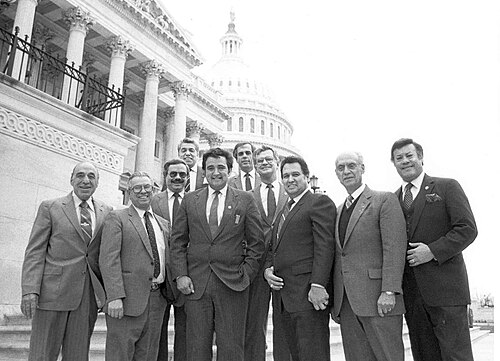
Hispanics differ on their political views depending on their location and background. The majority (57%)[237] either identify as or support the Democrats, and 23% identify as Republicans.[237] This 34-point gap as of December 2007 was an increase from the gap of 21 points 16 months earlier. While traditionally a key Democratic Party constituency at-large,[238] beginning in the early 2010s, Hispanics have begun to split[239] between the Democrats and the Republican Party.[240][241][242] In a 2022 study, it was found that 64% of Latinos surveyed had positive attitudes towards President Obama's executive actions on immigration, which was notably four percentage points lower than that of non-Hispanic Black respondents. It was also noted that support for undocumented immigrants was lowest among Latinos living in developing 'bedroom communities' or newly built suburbs designed for commuters. This was also the case for Latinos of affluent income levels, however they were still most likely to display a positive attitude towards undocumented immigrants, especially when compared to their non-Hispanic White counterparts.[243]
Cuban Americans, Colombian Americans, Chilean Americans, and Venezuelan Americans tend to favor conservative political ideologies and support the Republicans. Mexican Americans, Puerto Ricans, and Dominican Americans tend to favor progressive political ideologies and support the Democrats. However, because the latter groups are far more numerous—as, again, Mexican Americans alone are 64% of Hispanics—the Democratic Party is considered to be in a far stronger position with the ethnic group overall.
Some political organizations associated with Hispanic Americans are League of United Latin American Citizens (LULAC), the National Council of La Raza (NCLR), the United Farm Workers, the Cuban American National Foundation and the National Institute for Latino Policy.
Political impact

The United States has a population of over 60 million of Hispanic Americans, of whom 27 million are citizens eligible to vote (13% of total eligible voters); therefore, Hispanics have a very important effect on presidential elections since the vote difference between two main parties is usually around 4%.[244][245][246][247]
Elections of 1986–1996
During the 1986 midterm elections, Hispanic voter turnout was increasing, although it remained lower compared to other demographic groups. The political concerns of Hispanic communities during this period included immigration reform and civil rights, with modest gains for Latino candidates at state and local levels. In the 1988 presidential election, George H.W. Bush (Republican) and Michael Dukakis (Democrat) were the main contenders, and although Hispanic voters were becoming more engaged, their influence was still emerging. The 1990 Census highlighted the substantial growth of Hispanic populations in the United States, leading to greater attention from political parties to Hispanic issues and concerns.
The 1992 presidential election marked a significant shift as Bill Clinton (Democrat) engaged actively with Hispanic voters, resulting in increased Latino support and signaling a broader Democratic outreach. Clinton's administration would further stimulate Hispanic political activity. The 1994 midterm elections saw Republican gains and were significantly impacted by debates over immigration and welfare reform, including California's Proposition 187, which sought to limit public services for undocumented immigrants and mobilized many Latino voters.
By the 1996 presidential election, Bill Clinton's successful re-election campaign reflected the growing influence of Hispanic voters. Key issues for the Latino community during this time included immigration, education, and healthcare. The period also witnessed an increase in Latino representation in Congress with figures such as Bob Menendez and Luis Gutiérrez emerging as prominent leaders. Overall, the period from 1986 to 1996 marked a critical phase in the evolving political influence and representation of Hispanic and Latino Americans in the United States.
Elections of 1996–2006
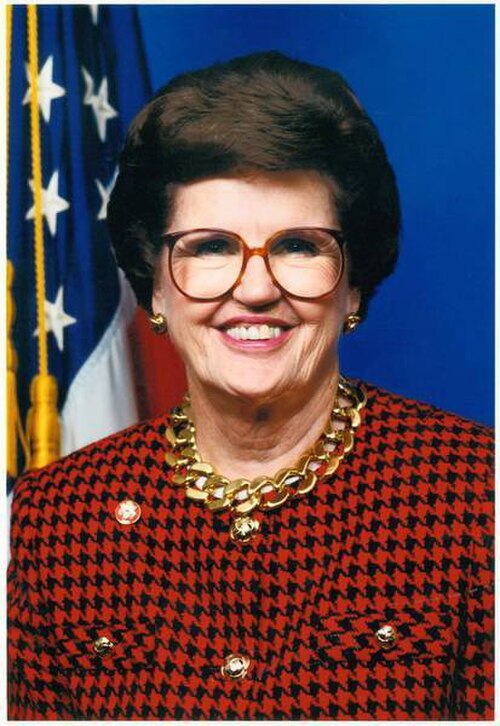
In the 1996 presidential election, 72% of Hispanics backed President Bill Clinton. In 2000, the Democratic total fell to 62%, and went down again in 2004, with Democrat John Kerry winning Hispanics 54–44 against Bush.[248] Hispanics in the West, especially in California, were much stronger for the Democratic Party than in Texas and Florida. California Hispanics voted 63–32 for Kerry in 2004, and both Arizona and New Mexico Hispanics by a smaller 56–43 margin. Texas Hispanics were split nearly evenly, favoring Kerry 50–49 over their favorite son candidate and Florida Hispanics (who are mostly Cuban American) backed Bush, by a 54–45 margin.
In 1998, California Proposition 227, which sought to eliminate bilingual education in public schools, was passed. This initiative highlighted the political mobilization of Latino communities and their influence on educational policy in California.

The 2000 presidential election was notably close, with George W. Bush winning the presidency over Al Gore. Bush's outreach to Hispanic voters, particularly in battleground states such as Florida, was a significant factor in his narrow victory. Despite the growing visibility of Hispanic candidates, their representation at the national level remained limited. By the 2002 midterm elections, there was a notable increase in Hispanic representation in Congress, with more Latino candidates successfully winning seats in the House of Representatives. This trend continued to grow, reflecting the expanding political engagement of Hispanic Americans. In the 2004 presidential election, George W. Bush was re-elected, with a notable increase in Hispanic support attributed to his campaign's targeted outreach efforts. Prominent Latino figures, including New Mexico Governor Bill Richardson and U.S. Senators Ken Salazar, gained national recognition during this period.
In the 2006 midterm election, however, due to the unpopularity of the Iraq War, the heated debate concerning illegal Hispanic immigration and Republican-related Congressional scandals, Hispanics went as strongly Democratic as they have since the Clinton years. Exit polls showed the group voting for Democrats by a lopsided 69–30 margin, with Florida Hispanics for the first time split evenly.
The runoff election in Texas' 23rd congressional district was seen as a bellwether of Hispanic politics. Democrat Ciro Rodriguez's unexpected (and unexpectedly decisive) defeat of Republican incumbent Henry Bonilla was seen as proof of a leftward lurch among Hispanic voters; majority-Hispanic counties overwhelmingly backed Rodriguez and majority European-American counties overwhelmingly backed Bonilla.
Elections 2008–2012

In the 2008 Presidential election's Democratic primary, Hispanics participated in larger numbers than before, with Hillary Clinton receiving most of the group's support.[249] Pundits discussed whether Hispanics would not vote for Barack Obama because he was African-American.[229] Hispanics voted 2 to 1 for Mrs. Clinton, even among the younger demographic. In other groups, younger voters went overwhelmingly for Obama.[250] Among Hispanics, 28% said race was involved in their decision, as opposed to 13% for (non-Hispanic) White people.[250] Obama defeated Clinton.
In the matchup between Obama and Republican candidate John McCain, Hispanics supported Obama with 59% to McCain's 29% in the June 30 Gallup tracking poll.[251] This was higher than expected, since McCain had been a leader of the comprehensive immigration reform effort (John McCain was born in Panama to parents who were serving in the US Navy, but raised in the United States).[252] However, McCain had retreated from reform during the Republican primary, damaging his standing among Hispanics.[253][better source needed] Obama took advantage of the situation by running ads in Spanish highlighting McCain's reversal.[254][better source needed]
In the general election, 67% of Hispanics voted for Obama.[255][256] with a relatively strong turnout in states such as Colorado, New Mexico, Nevada and Virginia, helping Obama carry those formerly Republican states. Obama won 70% of non-Cuban Hispanics and 35% of the traditionally Republican Cuban Americans who have a strong presence in Florida. The relative growth of non-Cuban vs Cuban Hispanics also contributed to his carrying Florida's Hispanics with 57% of the vote.[255][257]
While employment and the economy were top concerns for Hispanics, almost 90% of Hispanic voters rated immigration as "somewhat important" or "very important" in a poll taken after the election.[258] Republican opposition to the Comprehensive Immigration Reform Act of 2007 had damaged the party's appeal to Hispanics, especially in swing states such as Florida, Nevada and New Mexico.[258] In a Gallup poll of Hispanic voters taken in the final days of June 2008, only 18% of participants identified as Republicans.[251] The 2010 midterm elections highlighted the growing influence of Hispanic Americans in U.S. politics. Marco Rubio, a Republican from Florida, won a Senate seat, enhancing the visibility of Latino politicians in national politics.
Hispanics voted even more heavily for Democrats in the 2012 election with the Democratic incumbent Barack Obama receiving 71% and the Republican challenger Mitt Romney receiving about 27% of the vote.[259][260] Some Hispanic leaders were offended by remarks Romney made during a fundraiser, when he suggested that cultural differences[261] and "the hand of providence"[262][263] help explain why Israelis are more economically successful than Palestinians, and why similar economic disparities exist between other neighbors, such as the United States and Mexico, or Chile and Ecuador.[264] A senior aide to Palestinian Authority President Mahmoud Abbas called the remarks racist,[263][265] as did American political scientist Angelo Falcón, president of the National Institute of Latino Policy.[266] Mitt Romney's father was born to American parents in a Mormon colony in Chihuahua, Mexico. The Hispanic vote was crucial to Obama's re-election, particularly in swing states such as Florida, Colorado, and Nevada. The Obama campaign's focus on issues important to Latino voters, including immigration reform and healthcare, helped secure substantial support from the Hispanic community.
Elections 2014–2022
Clockwise from top left:
Alexandria Ocasio-Cortez, Debbie Mucarsel-Powell, Veronica Escobar, Maxwell Frost, Alex Padilla, Maria Elvira Salazar"More convincing data" from the 2016 United States presidential election[267] from the polling firm Latino Decisions indicates that Clinton received a higher share of the Hispanic vote, and Trump a lower share, than the Edison exit polls showed. Using wider, more geographically and linguistically representative sampling, Latino Decisions concluded that Clinton won 79% of Hispanic voters (also an improvement over Obama's share in 2008 and 2012), while Trump won only 18% (lower than previous Republicans such as Romney and McCain).[268] Additionally, the 2016 Cooperative Congressional Election Study found that Clinton's share of the Hispanic vote was one percentage point higher than Obama's in 2012, while Trump's was seven percentage points lower than Romney's.[269] Trump's campaign was marked by controversial statements and policies regarding immigration, which galvanized Latino voters.
On June 26, 2018, Alexandria Ocasio-Cortez, a millennial, won the Democratic primary in New York's 14th congressional district covering parts of The Bronx and Queens in New York City, defeating the incumbent, Democratic Caucus Chair Joe Crowley, in what has been described as the biggest upset victory in the 2018 midterm election season and at the age of 29 years, became the youngest woman ever elected to Congress.[270][271] She is a member of the Democratic Socialists of America and has been endorsed by various politically progressive organizations and individuals.[272] According to a Pew Research Center report, the 2020 election will be the first one when Hispanics are the largest racial or ethnic minority group in the electorate. A record 32 million Hispanics were projected to be eligible to vote in the presidential election, many of them first-time voters. On September 15, 2020, President Donald J. Trump announced his intent to nominate and appoint Eduardo Verastegui, to be a member of the President's Advisory Commission on Hispanic Prosperity if re-elected after days of the Democratic convention.[273]
Hispanic communities across the United States were long held as a single voting bloc, but economic, geographic and cultural differences show stark divides in how Hispanic Americans have cast their ballots in 2020. Hispanics helped deliver Florida to Donald Trump in part because of Cuban Americans and Venezuelan Americans (along with smaller populations such as Nicaraguan Americans and Chilean Americans); President Trump's reelection campaign ran pushing a strong anti-socialism message as a strategy in Florida, to their success. However the perceived anti-immigrant rhetoric resonated with Mexican Americans in Arizona and the COVID-19 pandemic (Arizona being one of the states hardest hit by the COVID-19 pandemic in the United States).[274] Many Latino voters in Nevada are members of the Culinary Union Local 226 and supported Biden based on Right-to-work standards.[275] The takeaway may be this may be the last election cycle that the "Hispanic vote" as a whole is more talked about instead of particular communities within it, such as Cubans, Puerto Ricans, Mexican Americans and so on. In Texas like in Arizona and Nevada, the Hispanic community mainly being Mexican American; one in three Texan voters is now Hispanic. Biden did win the Hispanic vote in those states. But in Texas, 41 percent to 47 percent of Hispanic voters backed Trump in several heavily Hispanic border counties in the Rio Grande Valley region, a Democratic stronghold. In Florida, Trump won 45 percent of the Hispanic vote, an 11-point improvement from his 2016 performance reported NBC News.[276] Recognizing Hispanics as a population that can not only make a difference in swing states like Arizona, Nevada, Texas or Florida, but also really across the country, even in places like Georgia, North Carolina, Wisconsin, Michigan and Pennsylvania, the number of Hispanic eligible voters may be the reason for the thin margins. In 1984, 37 percent of Hispanics voted for Ronald Reagan and 40 percent voted for George W. Bush in 2004.
In Florida, even though Trump won Florida and gained Hispanic voters, Biden kept 53% of the Hispanic vote and Trump 45%. According to NBC News exit polls, 55% of Cuban Americans, 30% of Puerto Ricans and 48% of other Hispanics voted for Trump.[277]
Subsections of Hispanic voters have a range of historical influences vying to affect their votes. Cuban American voters, mostly concentrated in South Florida, tend to vote Republican in part because of their anathema for socialism, the party of Fidel Castro's government that many of their families fled. Mexican Americans, however, have no such historical relationship with either party. Puerto Rican voters who have left the island might be influenced by the territory's move towards statehood, as a referendum for Trump's relief effort after Hurricane Maria, or regarding how it is taxed.[51] The 2020 presidential election was a major event, with Joe Biden defeating incumbent President Donald Trump. Biden's campaign focused on issues such as immigration reform, healthcare, and economic recovery, which resonated with many Latino voters. Despite Biden's win, Trump made significant inroads with Hispanic voters compared to 2016, particularly in Florida and Texas. This election highlighted the diverse political preferences within the Latino community and the growing complexity of its electoral impact.
Nationwide, Hispanics cast 16.6 million votes in 2020, an increase of 30.9% over the 2016 presidential election.[278]
After representative Filemon Vela Jr. resigned, Mayra Flores won a special election to succeed him, she won the election to the United States House of Representatives in June 2022.[279][280] She was the first Mexican-born woman to serve in the House, but would go on to lose in the 2022 General election to Democrat Vicente Gonzalez.[280][281][282]
Notable contributions
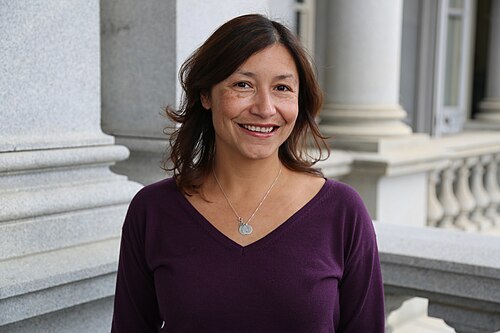
Hispanic Americans have made distinguished contributions to the United States in all major fields, such as politics, the military, music, film, literature, sports, business and finance, and science.[283]
Arts and entertainment
In 1995, the American Latino Media Arts Award, or ALMA Award was created. It is a distinction given to Hispanic performers (actors, film and television directors and musicians) by the National Council of La Raza. The number of Latin nominees at the Grammy Awards lag behind. Talking to People magazine ahead of music's biggest night in 2021, Grammy nominees J Balvin and Ricky Martin reflected on what it is mean to continue to represent Hispanics at awards shows like the Grammys. Martin, who served as a pioneer for the "Latin crossover" in the '90s told "When you get nominated, it's the industry telling you, 'Hey Rick, you did a good job this year, congratulations.' Yes, I need that", the 49-year-old says. "When you walk into the studio, you say, 'This got a Grammy potential.' You hear the songs that do and the ones that don't. It's inevitable." Like Selena Gomez tapping into her roots, the influence Hispanics and reggaetón are having on the mainstream is undeniable.[284]
Music
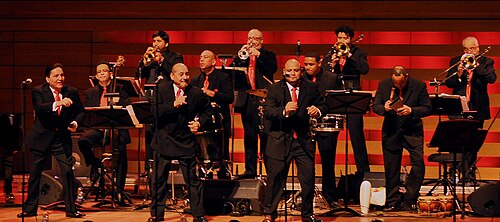
There are many Hispanic American musicians that have made a significant impact on the music industry and achieved fame within the United States and internationally, such as Christopher Rios better known by his stage name Big Pun, Jennifer Lopez, Joan Baez, Selena Gomez, Demi Lovato, Fergie, Pitbull, Victoria Justice, Linda Ronstadt, Zack de la Rocha, Gloria Estefan, Héctor Lavoe, Celia Cruz, Tito Puente, Kat DeLuna, Selena, Ricky Martin, Marc Anthony, Miguel, Carlos Santana, Christina Aguilera, Bruno Mars, Mariah Carey, Jerry García, Dave Navarro, Santaye, Elvis Crespo, Romeo Santos, Tom Araya, Sonny Sandoval, The Mars Volta, Los Lobos, Villano Antillano, South Park Mexican, Cuco, Malo, OhGeesy, Malu Trevejo, Ice Spice, Young M.A, Lloyd Banks, Exposé, Sweet Sensation, Jellybean, Immortal Technique, Brujeria, Fuerza Regida, Xavi, Aventura, Lunay, Myke Towers, Jay Wheeler, J.I., Amara La Negra, Joseline Hernandez, Lele Pons, Snow Tha Product, The Marías, Ángela Aguilar, Tego Calderón, Prince Royce, Don Omar, Eddie Palmieri, Wisin & Yandel, Melanie Martinez, Mariah Angeliq, That Mexican OT, MC Magic, TKA, La India, George Lamond, Sa-Fire, Cynthia, Lisa Lisa, Julieta Venegas, Intocable, Marisela, Pepe Aguilar, Jon Secada, Chayanne, DannyLux, Eslabon Armado, Iván Cornejo, Grupo Frontera, Yahritza y su Esencia, Herencia de Patrones, Omar Apollo, Eladio Carrión, Kid Frost, Cypress Hill, N.O.R.E., Fat Joe, Mellow Man Ace, Chicano Batman, Delinquent Habits, Lil Rob, Ritchie Valens, Ozomatli, BIA, Plan B, Chencho Corleone, Maye, Kap G, Tha Mexakinz, Brownside, Psycho Realm, A Lighter Shade of Brown, Gilberto Santa Rosa, Noriel, Baby Rasta, Brytiago, Farruko, J Álvarez, Darell, Ñengo Flow, Luis Fonsi, José Feliciano, Daddy Yankee, Lil Suzy, Judy Torres, Nayobe, Willie Colón, Jenni Rivera, Baby Bash, Frankie J, Larry Hernandez, Arcángel, De la Ghetto, Giselle Bellas, Juan Luis Guerra, Residente, Anuel AA, Ozuna, Lil Pump, 6ix9ine, Becky G, Ivy Queen, Cardi B, Kali Uchis, Bad Bunny, Rauw Alejandro, all of the members of all-female band Go Betty Go, Camila Cabello, two members of girl group Fifth Harmony: Lauren Jauregui and Ally Brooke, and two members of the nu metal band Nonpoint.
Hispanic music imported from Cuba (chachachá, mambo, and rhumba) and Mexico (ranchera and mariachi) had brief periods of popularity during the 1950s. Examples of artists include Celia Cruz, who was a Cuban American singer and the most popular Latin artist of the 20th century, gaining twenty-three gold albums during her career. Bill Clinton awarded her the National Medal of Arts in 1994.
Among the Hispanic American musicians who were pioneers in the early stages of rock and roll were Ritchie Valens, who scored several hits, most notably "La Bamba" and Herman Santiago, who wrote the lyrics to the iconic rock and roll song "Why Do Fools Fall in Love". Songs that became popular in the United States and are heard during the holiday/Christmas season include "¿Dónde Está Santa Claus?", a novelty Christmas song with 12-year-old Augie Ríos which was a hit record in 1959 and featured the Mark Jeffrey Orchestra, "Feliz Navidad" by José Feliciano; and Mariah Carey’s 1994 song "All I Want for Christmas Is You", which is the best-selling holiday song by a female artist. Miguel del Aguila wrote 116 works and has three Latin Grammy nominations.
In 1986, Billboard magazine introduced the Hot Latin Songs chart which ranks the best-performing songs on Spanish-language radio stations in the United States. Seven years later, Billboard initiated the Top Latin Albums which ranks top-selling Latin albums in the United States.[285] Similarly, the Recording Industry Association of America incorporated "Los Premios de Oro y Platino" (The Gold and Platinum Awards) to certify Latin recordings which contains at least 50% of its content recorded in Spanish.[286]
In 1989, Univision established the Lo Nuestro Awards which became the first award ceremony to recognize the most talented performers of Spanish-language music and was considered to be the "Hispanic Grammys".[287][288] In 2000, the Latin Academy of Recording Arts & Sciences (LARAS) established the Latin Grammy Awards to recognize musicians who perform in Spanish and Portuguese.[289] Unlike The Recording Academy, LARAS extends its membership internationally to Hispanophone and Lusophone communities worldwide beyond the Americas, particularly the Iberian Peninsula.[290] Becky G won favorite female Latin artist, a brand new category at the AMAs in 2020.[291] For the 63rd Annual Grammy Awards, the academy announced several changes for different categories and rules: the category Latin Pop Album has been renamed Best Latin Pop or Urban Album, while Latin Rock, Urban or Alternative Album has been renamed Best Latin Rock or Alternative Album.
Film, radio, television, and theatre
American cinema has often reflected and propagated negative stereotypes towards foreign nationals and ethnic minorities.[292] For example, Hispanics are largely depicted as sexualized figures such as the Hispanic macho or the Hispanic vixen, gang members, (illegal) immigrants, or entertainers.[293] However representation in Hollywood has enhanced in latter times of which it gained noticeable momentum in the 1990s and does not emphasize oppression, exploitation, or resistance as central themes. According to Ramírez Berg, third wave films "do not accentuate Chicano oppression or resistance; ethnicity in these films exists as one fact of several that shape characters' lives and stamps their personalities".[294] Filmmakers like Edward James Olmos and Robert Rodriguez were able to represent the Hispanic American experience like none had on screen before, and actors like Hilary Swank, Michael Peña, Jordana Brewster, Ana de Armas, Jessica Alba, Natalie Martinez and Jenna Ortega have become successful. In the last decade, minority filmmakers like Chris Weitz, Alfonso Gomez-Rejon and Patricia Riggen have been given applier narratives. Portrayal in films of them include La Bamba (1987), Selena (1997), The Mask of Zorro (1998), Nothing like the Holidays (2008), Dora and the Lost City of Gold (2019), Being the Ricardos (2001), Father of the Bride (2022) and Josefina López's Real Women Have Curves, originally a play which premiered in 1990 and was later released as a film in 2002.[294]
Hispanics have also contributed some prominent actors and others to the film industry. Of Puerto Rican origin: José Ferrer (the first Hispanic actor to win an acting Academy Award for his role in Cyrano de Bergerac), Auliʻi Cravalho, Rita Moreno, Chita Rivera, Raul Julia, Rosie Perez, Rosario Dawson, Esai Morales, Aubrey Plaza, Jennifer Lopez, Joaquin Phoenix and Benicio del Toro. Of Mexican origin: Emile Kuri (the first Hispanic to win an Academy Award – for Best Production Design – in 1949), Ramon Novarro, Dolores del Río, Lupe Vélez, Anthony Quinn, Ricardo Montalbán, Katy Jurado, Adrian Grenier, Jay Hernandez, Salma Hayek, Danny Trejo, Jessica Alba, Tessa Thompson, and Kate del Castillo. Of Cuban origin: Cesar Romero, Mel Ferrer, Andy García, Cameron Diaz, María Conchita Alonso, William Levy, and Eva Mendes. Of Dominican origin: Maria Montez and Zoe Saldana. Of partial Spanish origin: Rita Hayworth, Martin Sheen. Other outstanding figures are: Anita Page (of Salvadoran origin), Fernando Lamas, Carlos Thompson, Alejandro Rey and Linda Cristal (of Argentine origin), Raquel Welch (of Bolivian origin), John Leguizamo (of Colombian origin), Oscar Isaac (of Guatemalan origin), John Gavin and Pedro Pascal (both of Chilean origin).
In stand-up comedy, Cristela Alonzo, Anjelah Johnson, Paul Rodríguez, Greg Giraldo, Cheech Marin, George Lopez, Freddie Prinze, Jade Esteban Estrada, Carlos Mencia, John Mendoza, Gabriel Iglesias and others are prominent.
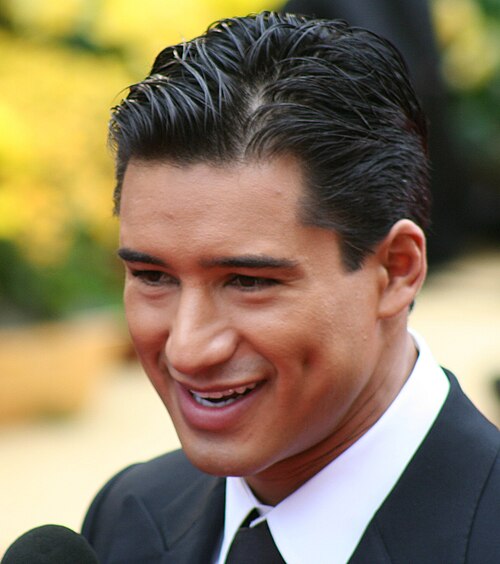
Some of the Hispanic actors who achieved notable success in U.S. television include Desi Arnaz, Lynda Carter, Jimmy Smits, Charo, Jencarlos Canela, Christian Serratos, Carlos Pena Jr., Eva Longoria, Sofía Vergara, Ricardo Antonio Chavira, Jacob Vargas, America Ferrera, Benjamin Bratt, Ricardo Montalbán, Hector Elizondo, Mario Lopez, America Ferrera, Karla Souza, Diego Boneta, Erik Estrada, Cote de Pablo, Freddie Prinze, Lauren Vélez, Isabella Gomez, Justina Machado, Tony Plana Stacey Dash, and Charlie Sheen. Kenny Ortega is an Emmy Award-winning producer, director and choreographer who has choreographed many major television events such as Super Bowl XXX, the 72nd Academy Awards and Michael Jackson's memorial service.
Hispanics are underrepresented in U.S. television, radio, and film. This is combatted by organizations such as the Hispanic Organization of Latin Actors (HOLA), founded in 1975; and National Hispanic Media Coalition (NHMC), founded in 1986.[295] Together with numerous Hispanic civil rights organizations, the NHMC led a "brownout" of the national television networks in 1999, after discovering that there were no Hispanic on any of their new prime time series that year.[296] This resulted in the signing of historic diversity agreements with ABC, CBS, Fox and NBC that have since increased the hiring of Hispanic talent and other staff in all of the networks.
Latino Public Broadcasting (LPB) funds programs of educational and cultural significance to Hispanic Americans. These programs are distributed to various public television stations throughout the United States.
The 72nd Primetime Emmy Awards was criticized by Hispanics; there were no major nominations for Hispanic performers, despite the Academy of Television Arts & Sciences publicizing their improved diversity in 2020. While there was a record number of Black nominees, there was only one individual Hispanic nomination. Hispanic representation groups said the greater diversity referred only to more African American nominees.[297][298] When the Los Angeles Times reported the criticism using the term "Black", it was itself criticized for erasing Afro-Hispanics, a discussion that then prompted more investigation into this under-represented minority ethnic group in Hollywood.[299] John Leguizamo boycotted the Emmys because of its lack of Hispanic nominees.[300]
Fashion
In the world of fashion, notable Hispanic designers include Oscar de la Renta, Carolina Herrera, Narciso Rodriguez, Manuel Cuevas, Maria Cornejo,[301] among others. Christy Turlington, Lais Ribeiro, Adriana Lima, Gisele Bündchen and Lea T achieved international fame as models.
Artists

Notable Hispanic artists include Jean-Michel Basquiat, Judith Baca, Carmen Herrera, Patssi Valdez, Gronk, Luis Jiménez, Félix González-Torres, Ana Mendieta, Ester Hernandez, Joe Shannon, Richard Serra, Abelardo Morell, Bill Melendez, María Magdalena Campos Pons, Sandra Ramos, Myrna Báez, Soraida Martinez and Yolanda Gonzalez.
Business and finance

The total number of Hispanic-owned businesses in 2002 was 1.6 million, having grown at triple the national rate for the preceding five years.[62]
Hispanic business leaders include Cuban immigrant Roberto Goizueta, who rose to head of The Coca-Cola Company.[302] Advertising Mexican-American magnate Arte Moreno became the first Hispanic to own a major league team in the United States when he purchased the Los Angeles Angels baseball club.[303] Also a major sports team owner is Mexican-American Linda G. Alvarado, president and CEO of Alvarado Construction, Inc. and co-owner of the Colorado Rockies baseball team.
There are several Hispanics on the Forbes 400 list of richest Americans. Alejandro Santo Domingo and his brother Andres Santo Domingo inherited their fathers stake in SABMiller, now merged with Anheuser-Busch InBev. The brothers are ranked No. 132 and are each worth $4.8bn.[304] Jorge Perez founded and runs The Related Group. He built his career developing and operating low-income multifamily apartments across Miami.[305][306] He is ranked No. 264 and is worth $3bn.[304]
The largest Hispanic-owned food company in the United States is Goya Foods, because of World War II hero Joseph A. Unanue, the son of the company's founders.[307] Angel Ramos was the founder of Telemundo, Puerto Rico's first television station[308] and now the second largest Spanish-language television network in the United States, with an average viewership over one million in primetime. Samuel A. Ramirez Sr. made Wall Street history by becoming the first Hispanic to launch a successful investment banking firm, Ramirez & Co.[309][310] Nina Tassler is president of CBS Entertainment since September 2004. She is the highest-profile Hispanic in network television and one of the few executives who has the power to approve the airing or renewal of series.
Since 2021, magazine Hispanic Executive has released a list of 30 under 30 executives in the United States.[311] Members include financial analyst Stephanie Nuesi, fashion entrepreneur Zino Haro, and Obama scholar Josue de Paz.[312]
Government and politics
As of 2007, there were more than five thousand elected officeholders in the United States who were of Hispanic origin.[313]
In the House of Representatives, Hispanic representatives have included Ladislas Lazaro, Antonio M. Fernández, Henry B. Gonzalez, Kika de la Garza, Herman Badillo, Romualdo Pacheco and Manuel Lujan Jr., out of almost two dozen former representatives. Current representatives include Ileana Ros-Lehtinen, Jose E. Serrano, Luis Gutiérrez, Nydia Velázquez, Xavier Becerra, Lucille Roybal-Allard, Loretta Sanchez, Rubén Hinojosa, Mario Díaz-Balart, Raul Grijalva, Ben R. Lujan, Jaime Herrera Beutler, Raul Labrador and Alex Mooney—in all, they number thirty. Former senators are Octaviano Ambrosio Larrazolo, Mel Martinez, Dennis Chavez, Joseph Montoya and Ken Salazar. As of January 2011, the U.S. Senate includes Hispanic members Bob Menendez, a Democrat and Republicans Ted Cruz and Marco Rubio, all Cuban Americans.[314]
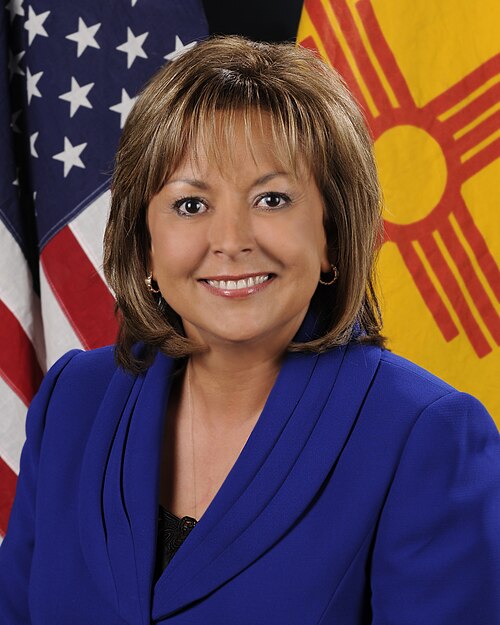
Numerous Hispanics hold elective and appointed office in state and local government throughout the United States.[315] Current Hispanic Governors include Republican Nevada Governor Brian Sandoval and Republican New Mexico Governor Susana Martinez; upon taking office in 2011, Martinez became the first Hispanic woman governor in the history of the United States.[316] Former Hispanic governors include Democrats Jerry Apodaca, Raul Hector Castro, and Bill Richardson, as well as Republicans Octaviano Ambrosio Larrazolo, Romualdo Pacheco and Bob Martinez.
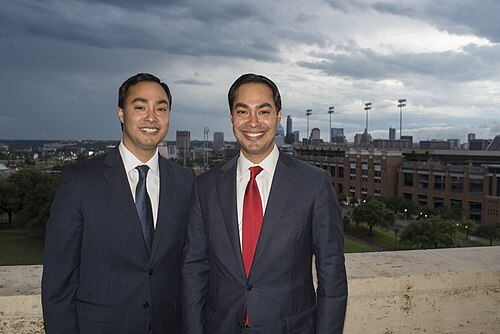
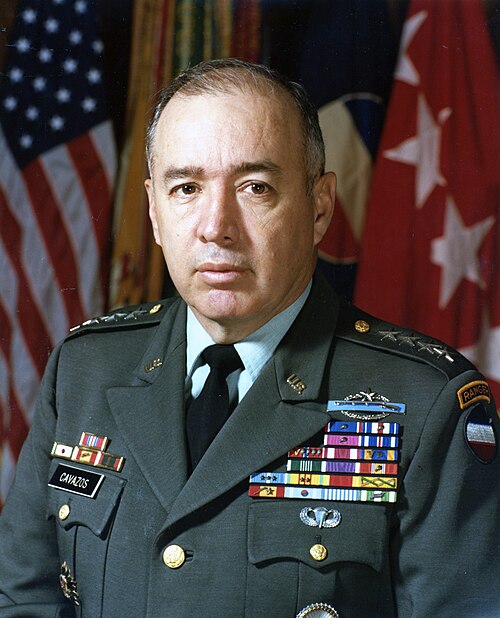
Since 1988,[317] when Ronald Reagan appointed Lauro Cavazos the Secretary of Education, the first Hispanic United States Cabinet member, Hispanic Americans have had an increasing presence in presidential administrations. Hispanics serving in subsequent cabinets include Ken Salazar, current Secretary of the Interior; Hilda Solis, current United States Secretary of Labor; Alberto Gonzales, former United States Attorney General; Carlos Gutierrez, Secretary of Commerce; Federico Peña, former Secretary of Energy; Henry Cisneros, former Secretary of Housing and Urban Development; Manuel Lujan Jr., former Secretary of the Interior; and Bill Richardson, former Secretary of Energy and Ambassador to the United Nations. Rosa Rios is the current US Treasurer, including the latest three, were Hispanic women.
In 2009, Sonia Sotomayor became the first Supreme Court Associate Justice of Hispanic origin.
In 2022, Robert Santos became the first Director of the U.S. Census Bureau of Hispanic origin (Mexican American).[318]
The Congressional Hispanic Caucus (CHC), founded in December 1976, and the Congressional Hispanic Conference (CHC), founded on March 19, 2003, are two organizations that promote policy of importance to Americans of Hispanic descent. They are divided into the two major American political parties: The Congressional Hispanic Caucus is composed entirely of Democratic representatives, whereas the Congressional Hispanic Conference is composed entirely of Republican representatives.
Groups like the United States Hispanic Leadership Institute (USHLI) work to achieve the promises and principles of the United States by "promoting education, research, and leadership development, and empowering Hispanics and similarly disenfranchised groups by maximizing their civic awareness, engagement, and participation".[319]
Literature and journalism



Writers and their works
- Julia Álvarez (How the García Girls Lost Their Accents)
- Rudolfo Anaya (Bless Me, Ultima and Heart of Aztlan)
- Marie Arana (American Chica, Bolívar: American Liberator, and Silver, Sword, and Stone
- Sandra Cisneros (The House on Mango Street and Woman Hollering Creek and Other Stories)
- Junot Díaz (The Brief Wondrous Life of Oscar Wao)
- Cecilia Domeyko (Sacrifice on the Border)
- Ernest Fenollosa (art historian, Masters of Ukiyoe)
- Rigoberto González (Butterfly Boy: Memories of a Chicano Mariposa)
- Oscar Hijuelos (The Mambo Kings Play Songs of Love)
- Jorge Majfud (Crisis and La frontera salvaje[320]).
- Micol Ostow (Mind Your Manners, Dick and Jane and Emily Goldberg Learns to Salsa)[321]
- Benito Pastoriza Iyodo (A Matter of Men and September Elegies)
- Alberto Alvaro Rios (Capirotada, Elk Heads on the Wall, and The Iguana Killer)
- Tomas Rivera (...And the Earth did Not Devour Him)
- Richard Rodríguez (Hunger of Memory)
- George Santayana (novelist and philosopher: "Those who cannot remember the past are condemned to repeat it")
- Sergio Troncoso (From This Wicked Patch of Dust and The Last Tortilla and Other Stories)
- Alisa Valdes-Rodriguez (Haters)
- Victor Villaseñor (Rain of Gold)
- Oscar Zeta Acosta (The Revolt of the Cockroach People)
Journalists
- Cecilia Vega American journalist, currently serving as chief White House correspondent for ABC News.
- Jorge Ramos has won eight Emmy Awards and the Maria Moors Cabot Award for excellence in journalism. In 2015, Ramos was one of five selected as Time magazine's World's Most Influential People.
- José Díaz-Balart is currently the anchor for Noticias Telemundo, as well as anchor of NBC Nightly News on Saturdays.
- Paola Ramos, correspondent for Vice and is a contributor to Telemundo and MSNBC.
- Ana Cabrera currently works as a television news anchor for CNN in Manhattan.
- Natalie Morales is the Today Show West Coast anchor and appears on other programs including Dateline NBC and NBC Nightly News.
- María Elena Salinas CBS News contributor called the "Voice of Hispanic America" by The New York Times
- Morgan Radford, reporter employed by NBC News and MSNBC, was a production assistant for ESPN.
- Geraldo Rivera has won a Peabody Award and appears regularly on Fox News programs such as The Five.
- John Quiñones, co-anchor of the ABC News program, Primetime and now hosts What Would You Do?
- Rubén Salazar, reporter for the Los Angeles Times and news director for KMEX, which was a Spanish language station.
- Maria Elvira Salazar, journalist and broadcast television anchor who worked for Telemundo, CNN en Español and Noticiero Univision.
- Michele Ruiz, former Los Angeles news anchor for KNBC-TV.
- Giselle Fernández, reporting and guest anchoring for CBS Early Show, CBS Evening News, NBC Today, NBC Nightly News; regular host for Access Hollywood.
- Elizabeth Pérez, television journalist for CNN en Español.
Political strategists
- Mercedes Schlapp, American lobbyist and columnist for Fox News, including U.S. News & World Report and The Washington Times.
- Geovanny Vicente, political strategist, international consultant and columnist who writes for CNN.
Military

Hispanics have participated in the military of the United States and in every major military conflict from the American Revolution onward.[322][323][324] 11% to 13% military personnel now are Hispanics and they have been deployed in the Iraq War, the Afghanistan War, and U.S. military missions and bases elsewhere.[325] Hispanics have not only distinguished themselves in the battlefields but also reached the high echelons of the military, serving their country in sensitive leadership positions on domestic and foreign posts. Up to now, 43 Hispanics have been awarded the nation's highest military distinction, the Medal of Honor (also known as the Congressional Medal of Honor). The following is a list of some notable Hispanics in the military:
American Revolution
- Bernardo de Gálvez (1746–1786) – Spanish military leader and colonial administrator who aided the American Thirteen Colonies in their quest for independence and led Spanish forces against Britain in the Revolutionary War; since 2014, a posthumous honorary citizen of the United States.
- Lieutenant Jorge Farragut Mesquida (1755–1817) – participated in the American Revolution as a lieutenant in the South Carolina Navy.
American Civil War
HstMilitOccNM.jpg/500px-DiegoArchuleta(Gen)HstMilitOccNM.jpg)
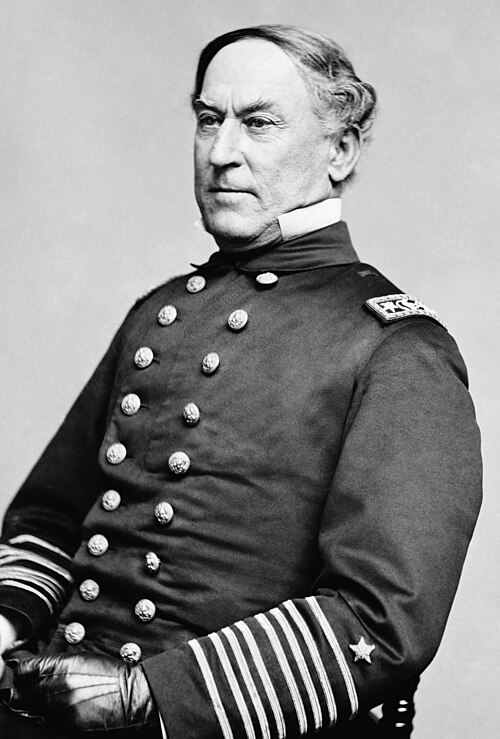
- Admiral David Farragut – promoted to vice admiral on December 21, 1864, and to full admiral on July 25, 1866, after the war, thereby becoming the first person to be named full admiral in the Navy's history.[326][327]
- Rear Admiral Cipriano Andrade – Mexican Navy rear admiral who fought for the Union. He was buried at Arlington National Cemetery.
- Colonel Ambrosio José Gonzales – Cuban officer active during the bombardment of Fort Sumter; because of his actions, was appointed Colonel of artillery and assigned to duty as Chief of Artillery in the department of South Carolina, Georgia and Florida.
- Brigadier General Diego Archuleta (1814–1884) – member of the Mexican Army who fought against the United States in the Mexican–American War. During the American Civil War, he joined the Union Army (US Army) and became the first Hispanic to reach the military rank of brigadier general. He commanded The First New Mexico Volunteer Infantry in the Battle of Valverde. He was later appointed an Indian (Native Americans) Agent by Abraham Lincoln.[328]
- Colonel Carlos de la Mesa – grandfather of Major General Terry de la Mesa Allen Sr. commanding general of the 1st Infantry Division in North Africa and Sicily, and later the commander of the 104th Infantry Division during World War II. Colonel Carlos de la Mesa was a Spanish national who fought at Gettysburg for the Union Army in the Spanish Company of the "Garibaldi Guard" of the 39th New York State Volunteers.[329]
- Colonel Federico Fernández Cavada – commanded the 114th Pennsylvania Volunteer infantry regiment when it took the field in the Peach Orchard at Gettysburg.[330]
- Colonel Miguel E. Pino – commanded the 2nd Regiment of New Mexico Volunteers, which fought at the Battle of Valverde in February and the Battle of Glorieta Pass and helped defeat the attempted invasion of New Mexico by the Confederate Army.[331]
- Colonel Santos Benavides – commanded his own regiment, the "Benavides Regiment"; highest ranking Mexican-American in the Confederate Army.[330]
- Major Salvador Vallejo – officer in one of the California units that served with the Union Army in the West.[331]
- Captain Adolfo Fernández Cavada – served in the 114th Pennsylvania Volunteers at Gettysburg with his brother, Colonel Federico Fernandez Cavada; served with distinction in the Army of the Potomac from Fredericksburg to Gettysburg; "special aide-de-camp" to General Andrew A. Humphreys.[330][332]
- Captain Rafael Chacón – Mexican American leader of the Union New Mexico Volunteers.[333]
- Captain Roman Anthony Baca – member of the Union forces in the New Mexico Volunteers; spy for the Union Army in Texas.[331]
- Lieutenant Augusto Rodriguez – Puerto Rican native; officer in the 15th Connecticut Volunteer Infantry, of the Union Army; served in the defenses of Washington, D.C., and led his men in the Battles of Fredericksburg and Wyse Fork.[334]
- Lola Sánchez – Cuban-born woman who became a Confederate spy; helped the Confederates obtain a victory against the Union forces in the "Battle of Horse Landing".
- Loreta Janeta Velázquez, also known as "Lieutenant Harry Buford" – Cuban woman who donned Confederate garb and served as a Confederate officer and spy during the American Civil War.
World War I
- Major General Luis R. Esteves, United States Army – in 1915, became the first Hispanic to graduate from the United States Military Academy ("West Point"); organized the Puerto Rican National Guard.
- Private Marcelino Serna – undocumented Mexican immigrant who joined the United States Army and became the most decorated soldier from Texas in World War I; first Hispanic to be awarded the Distinguished Service Cross.
World War II


- Lieutenant General Pedro del Valle – first Hispanic to reach the rank of lieutenant general; played an instrumental role in the seizure of Guadalcanal and Okinawa as commanding general of the U.S. 1st Marine Division during World War II.
- Lieutenant General Elwood R. Quesada (1904–1993) – commanding general of the 9th Fighter Command, where he established advanced headquarters on the Normandy beachhead on D-Day plus one, and directed his planes in aerial cover and air support for the Allied invasion of the European continent during World War II. He was the foremost proponent of "the inherent flexibility of air power", a principle he helped prove during the war.
- Major General Terry de la Mesa Allen Sr. (1888–1969) – commanding general of the 1st Infantry Division in North Africa and Sicily during World War II; commander of the 104th Infantry Division.
- Colonel Virgil R. Miller – regimental commander of the 442d Regimental Combat Team, a unit composed of "Nisei" (second generation Americans of Japanese descent), during World War II; led the 442nd in its rescue of the Lost Texas Battalion of the 36th Infantry Division, in the forests of the Vosges Mountains in northeastern France.[335][336]
- Captain Marion Frederic Ramírez de Arellano (1913–1980) – served in World War II; first Hispanic submarine commander.
- First Lieutenant Oscar Francis Perdomo – of the 464th Fighter Squadron, 507th Fighter Group; the last "Ace in a Day" for the United States in World War II.
- CWO2 Joseph B. Aviles Sr. – member of the United States Coast Guard; first Hispanic American to be promoted to chief petty officer; received a wartime promotion to chief warrant officer (November 27, 1944), thus becoming the first Hispanic American to reach that level as well.[337]
- Sergeant First Class Agustín Ramos Calero – most decorated Hispanic soldier in the European Theatre of World War II.
- PFC Guy Gabaldon, United States Marine Corps – captured over a thousand prisoners during the World War II Battle of Saipan.
- Tech4 Carmen Contreras-Bozak – first Hispanic woman to serve in the United States Women's Army Corps, where she served as an interpreter and in numerous administrative positions.[338]
Korean War

- Major General Salvador E. Felices, United States Air Force – flew in 19 combat missions over North Korea during the Korean War in 1953. In 1957, he participated in "Operation Power Flite", a historic project that was given to the Fifteenth Air Force by the Strategic Air Command headquarters. Operation Power Flite was the first around the world non-stop flight by an all-jet aircraft.
- First Lieutenant Baldomero Lopez – the only Hispanic graduate of the United States Naval Academy ("Annapolis") to be awarded the Medal of Honor.
- Sergeant First Class Modesto Cartagena – member of the 65th Infantry Regiment, an all-Puerto Rican regiment also known as "The Borinqueneers", during World War II and the Korean War; most decorated Puerto Rican soldier in history.[339]
Cuban Missile Crisis
- Admiral Horacio Rivero, Jr. – second Hispanic four-star admiral; commander of the American fleet sent by President John F. Kennedy to set up a quarantine (blockade) of the Soviet ships during the Cuban Missile Crisis.
Vietnam War
- Sergeant First Class Jorge Otero Barreto a.k.a. "The Puerto Rican Rambo"– the most decorated Hispanic American soldier in the Vietnam War.[340]
After the Vietnam War

- Lieutenant General Ricardo Sanchez – top commander of the Coalition forces during the first year of the occupation of Iraq, 2003–2004, during the Iraq War.
- Lieutenant General Edward D. Baca – in 1994, became the first Hispanic Chief of the National Guard Bureau.
- Vice Admiral Antonia Novello, M.D., Public Health Service Commissioned Corps – in 1990, became the first Hispanic (and first female) U.S. Surgeon General.
- Vice Admiral Richard Carmona, M.D., Public Health Service Commissioned Corps – served as the 17th Surgeon General of the United States, under President George W. Bush
- Brigadier General Joseph V. Medina, USMC – made history by becoming the first Marine Corps officer to take command of a naval flotilla.
- Rear Admiral Ronald J. Rábago – first person of Hispanic descent to be promoted to rear admiral (lower half) in the United States Coast Guard.[341]
- Captain Linda Garcia Cubero, United States Air Force – in 1980, became the first Hispanic woman graduate of the United States Air Force.
- Major General Erneido Oliva – deputy commanding general of the D.C. National Guard.
- Brigadier General Carmelita Vigil-Schimmenti, United States Air Force – in 1985 became the first Hispanic female to attain the rank of brigadier general in the Air Force.[342][343]
- Brigadier General Angela Salinas – on August 2, 2006, became the first Hispanic female to obtain a general rank in the Marines.[344]
- Chief Master Sergeant Ramón Colón-López – pararescueman; in 2007, was the only Hispanic among the first six airmen to be awarded the newly created Air Force Combat Action Medal.
- Specialist Hilda Clayton (1991–2013) – combat photographer with 55th Signal Company who captured the explosion that killed her and four Afghan soldiers.[345]
Medal of Honor
The following 43 Hispanics were awarded the Medal of Honor: Philip Bazaar, Joseph H. De Castro, John Ortega, France Silva, David B. Barkley, Lucian Adams, Rudolph B. Davila, Marcario Garcia, Harold Gonsalves, David M. Gonzales, Silvestre S. Herrera, Jose M. Lopez, Joe P. Martinez, Manuel Perez Jr., Cleto L. Rodriguez, Alejandro R. Ruiz, Jose F. Valdez, Ysmael R. Villegas, Fernando Luis García, Edward Gomez, Ambrosio Guillen, Rodolfo P. Hernandez, Baldomero Lopez, Benito Martinez, Eugene Arnold Obregon, Joseph C. Rodriguez, John P. Baca, Roy P. Benavidez, Emilio A. De La Garza, Ralph E. Dias, Daniel Fernandez, Alfredo Cantu "Freddy" Gonzalez, Jose Francisco Jimenez, Miguel Keith, Carlos James Lozada, Alfred V. Rascon, Louis R. Rocco, Euripides Rubio, Hector Santiago-Colon, Elmelindo Rodrigues Smith, Jay R. Vargas, Humbert Roque Versace and Maximo Yabes.
National intelligence
- In the spy arena, José Rodríguez, a native of Puerto Rico, was the deputy director of operations and subsequently Director of the National Clandestine Service (D/NCS), two senior positions in the Central Intelligence Agency (CIA), between 2004 and 2007.[346]
- Lieutenant Colonel Mercedes O. Cubria (1903–1980), a.k.a. La Tía (The Aunt), was the first Cuban-born female officer in the United States Army. She served in the Women's Army Corps during World War II and in the United States Army during the Korean War, and was recalled into service during the Cuban Missile Crisis. In 1988, she was posthumously inducted into the Military Intelligence Hall of Fame.[347]
Science and technology
Among Hispanic Americans who have excelled in science are Luis Walter Álvarez, Nobel Prize–winning physicist of Spanish descent, and his son Walter Alvarez, a geologist. They first proposed that an asteroid impact on the Yucatán Peninsula caused the extinction of the dinosaurs. Mario J. Molina won the Nobel Prize in chemistry and currently works in the chemistry department at the University of California, San Diego. Dr. Victor Manuel Blanco is an astronomer who in 1959 discovered "Blanco 1", a galactic cluster.[348] F. J. Duarte is a laser physicist and author; he received the Engineering Excellence Award from the prestigious Optical Society of America for the invention of the N-slit laser interferometer.[349] Alfredo Quiñones-Hinojosa is the director of the Pituitary Surgery Program at Johns Hopkins Hospital and the director of the Brain Tumor Stem Cell Laboratory at Johns Hopkins School of Medicine. Physicist Albert Baez made important contributions to the early development of X-ray microscopes and later X-ray telescopes. His nephew John Carlos Baez is also a noted mathematical physicist. Francisco J. Ayala is a biologist and philosopher, former president of the American Association for the Advancement of Science, and has been awarded the National Medal of Science and the Templeton Prize. Peruvian-American biophysicist Carlos Bustamante has been named a Searle Scholar and Alfred P. Sloan Foundation Fellow. Luis von Ahn is one of the pioneers of crowdsourcing and the founder of the companies reCAPTCHA and Duolingo. Colombian-American Ana Maria Rey received a MacArthur Fellowship for her work in atomic physics in 2013.
Dr. Fernando E. Rodríguez Vargas discovered the bacteria that cause dental cavity. Dr. Gualberto Ruaño is a biotechnology pioneer in the field of personalized medicine and the inventor of molecular diagnostic systems, Coupled Amplification and Sequencing (CAS) System, used worldwide for the management of viral diseases.[350] Fermín Tangüis was an agriculturist and scientist who developed the Tangüis Cotton in Peru and saved that nation's cotton industry.[351] Severo Ochoa, born in Spain, was a co-winner of the 1959 Nobel Prize in Physiology or Medicine. Dr. Sarah Stewart, a Mexican-American microbiologist, is credited with the discovery of the Polyomavirus and successfully demonstrating that cancer causing viruses could be transmitted from animal to animal. Mexican-American psychiatrist Dr. Nora Volkow, whose brain imaging studies helped characterize the mechanisms of drug addiction, is the current director of the National Institute on Drug Abuse. Dr. Helen Rodríguez Trías, an early advocate for women's reproductive rights, helped drive and draft U.S. federal sterilization guidelines in 1979. She was awarded the Presidential Citizens Medal by President Bill Clinton, and was the first Hispanic president of the American Public Health Association.

Some Hispanics have made their names in astronautics, including several NASA astronauts:[352] Franklin Chang-Diaz, the first Hispanic NASA astronaut, is co-recordholder for the most flights in outer space, and is the leading researcher on the plasma engine for rockets; France A. Córdova, former NASA chief scientist; Juan R. Cruz, NASA aerospace engineer; Lieutenant Carlos I. Noriega, NASA mission specialist and computer scientist; Dr. Orlando Figueroa, mechanical engineer and director of Mars exploration in NASA; Amri Hernández-Pellerano, engineer who designs, builds and tests the electronics that will regulate the solar array power in order to charge the spacecraft battery and distribute power to the different loads or users inside various spacecraft at NASA's Goddard Space Flight Center.
Olga D. González-Sanabria won an R&D 100 Award for her role in the development of the "Long Cycle-Life Nickel-Hydrogen Batteries" which help enable the International Space Station power system. Mercedes Reaves, research engineer and scientist who is responsible for the design of a viable full-scale solar sail and the development and testing of a scale model solar sail at NASA Langley Research Center. Dr. Pedro Rodríguez, inventor and mechanical engineer who is the director of a test laboratory at NASA and of a portable, battery-operated lift seat for people suffering from knee arthritis. Dr. Felix Soto Toro, electrical engineer and astronaut applicant who developed the Advanced Payload Transfer Measurement System (ASPTMS) (Electronic 3D measuring system); Ellen Ochoa, a pioneer of spacecraft technology and astronaut; Joseph Acaba, Fernando Caldeiro, Sidney Gutierrez, José M. Hernández, Michael López-Alegría, John Olivas and George Zamka, who are current or former astronauts.
Sports
Hispanic and Latino American women in sports

Hispanic and Latino American women have left an indelible mark on sports in the US, showcasing exceptional talent, resilience, and cultural diversity. Some notable figures include Monica Puig, tennis player hailing from Puerto Rico, Monica Puig achieved historic success by winning the gold medal in women's singles at the 2016 Rio Olympics, marking Puerto Rico's first-ever Olympic gold medal in any sport. Laurie Hernandez, gymnastics athlete also of Puerto Rican descent, Laurie Hernandez secured a gold medal with the US gymnastics team at the 2016 Rio Olympics and added a silver medal on the balance beam, captivating audiences with her grace and skill. Jessica Mendoza, softball/baseball] of Mexican heritage, is celebrated as a former professional softball player and Olympic gold medalist (2004). She continues to inspire as a groundbreaking baseball analyst for ESPN, breaking barriers in sports broadcasting. Giselle Juarez, softball player of Mexican descent, emerged as a standout pitcher, leading the University of Oklahoma to victory in the 2021 NCAA Women's College World Series championship, showcasing her dominance on the mound. Linda Alvarado, made history as the first Hispanic woman to co-own a Major League Baseball team, the Colorado Rockies, breaking barriers and paving the way for diversity in professional sports ownership. Brenda Villa, water polo of Mexican descent, is a trailblazer in women's water polo, earning four Olympic medals (gold in 2012, silver in 2000 and 2008, bronze in 2004) and inspiring a generation with her leadership and achievements. Nancy Lopez, golf a Hall of Fame golfer of Mexican heritage, amassed an impressive 48 LPGA Tour victories, including three major championships, during her illustrious career, solidifying her legacy as one of golf's all-time greats. Sofia Huerta, player of Mexican and American descent, has excelled in professional soccer, showcasing her versatility and skill as a midfielder and forward in the NWSL and internationally with Mexico's national team, inspiring young athletes with her talent and determination.
Hispanic and Latino American men in sports
Football

There have been far fewer football and basketball players, let alone star players, but Tom Flores was the first Hispanic head coach and the first Hispanic quarterback in American professional football, and won Super Bowls as a player, as assistant coach and as head coach for the Oakland Raiders. Anthony Múñoz is enshrined in the Pro Football Hall of Fame, ranked No. 17 on Sporting News's 1999 list of the 100 greatest football players, and was the highest-ranked offensive lineman. Jim Plunkett won the Heisman Trophy and was inducted into the College Football Hall of Fame, and Joe Kapp is inducted into the Canadian Football Hall of Fame and College Football Hall of Fame. Steve Van Buren, Martin Gramatica, Victor Cruz, Tony Gonzalez, Ted Hendricks, Marc Bulger, Tony Romo and Mark Sanchez can also be cited among successful Hispanics in the National Football League (NFL).
Baseball
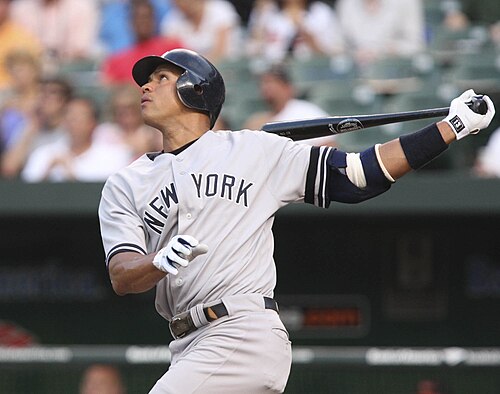
Hispanics have played in the Major Leagues since the very beginning of organized baseball, with Cuban player Esteban Bellán being the first (1873).[353][354] The large number of Hispanic American stars in Major League Baseball (MLB) includes players like Ted Williams (considered by many to be the greatest hitter of all time), Sammy Sosa, Alex Rodriguez, Alex Rios, Miguel Cabrera, Lefty Gómez, Adolfo Luque, Iván Rodríguez, Carlos González, Roberto Clemente, Adrián González, Jose Fernandez, David Ortiz, Juan Marichal, Fernando Valenzuela, Nomar Garciaparra, Albert Pujols, Omar Vizquel, managers Miguel Angel Gonzalez (the first Hispanic Major League manager),[355][356] Al López, Ozzie Guillén and Felipe Alou, and General Manager Omar Minaya. Hispanics in the MLB Hall of Fame include Roberto Alomar, Luis Aparicio, Rod Carew, Orlando Cepeda, Juan Marichal, Pedro Martínez, Tony Pérez, Iván Rodríguez, Ted Williams, Reggie Jackson, Mariano Rivera, Edgar Martinez and Roberto Clemente. Afro-Hispanic players Martin Dihigo, Jose Mendez and Cristóbal Torriente are Hispanic Hall of Famers who played in the Negro leagues.[357]
Basketball

Trevor Ariza, Mark Aguirre, Carmelo Anthony, Manu Ginóbili, Carlos Arroyo, Gilbert Arenas, Rolando Blackman, Pau Gasol, Jose Calderon, José Juan Barea and Charlie Villanueva can be cited in the National Basketball Association (NBA). Dick Versace made history when he became the first person of Hispanic heritage to coach an NBA team. Rebecca Lobo was a major star and champion of collegiate (National Collegiate Athletic Association (NCAA)) and Olympic basketball and played professionally in the Women's National Basketball Association (WNBA). Diana Taurasi became just the seventh player ever to win an NCAA title, a WNBA title and as well an Olympic gold medal. Orlando Antigua became in 1995 the first Hispanic and the first non-Black in 52 years to play for the Harlem Globetrotters.
Tennis
Notable Hispanic and Latino American tennis players include legendary player Pancho Gonzales, as well as Olympic tennis champions Mary Joe Fernández and Gigi Fernández. Monica Puig, a Puerto Rican-born player, achieved significant recognition by winning the gold medal in women's singles at the 2016 Rio Olympics.[358]
Soccer
.jpg/500px-Carlos_Bocanegra_(2010).jpg)
Hispanics have made significant contributions to all major American sports and leagues, with a particularly notable impact on the growth of soccer in the United States. Soccer, being the most popular sport in the Spanish-speaking world, has been profoundly influenced by Hispanic heritage. This influence is evident in Major League Soccer (MLS), where teams such as LA Galaxy, Los Angeles FC, Houston Dynamo and Columbus Crew have substantial fan bases comprising primarily Mexican Americans.[359][360][361] Notable Hispanic players in MLS include Tab Ramos, Claudio Reyna, Omar Gonzalez, Marcelo Balboa, Roger Espinoza, and Carlos Bocanegra.
Swimming
Swimmers Ryan Lochte (the second-most decorated swimmer in Olympic history measured by total number of medals)[362] and Dara Torres (one of three women with the most Olympic women's swimming medals), both of Cuban ancestry,[363] have won multiple medals at various Olympic Games over the years. Torres is also the first American swimmer to appear in five Olympic Games.[364] Maya DiRado, of Argentine ancestry, won four medals at the 2016 games, including two gold medals.[358]
Other sports

Boxing's first Hispanic American world champion was Solly Smith. Some other champions include Oscar De La Hoya, Miguel Cotto, Bobby Chacon, Brandon Ríos, Michael Carbajal, John Ruiz, Andy Ruiz Jr. and Mikey Garcia.

Ricco Rodriguez, Tito Ortiz, Diego Sanchez, Nick Diaz, Nate Diaz, Dominick Cruz, Frank Shamrock, Gilbert Melendez, Roger Huerta, Carlos Condit, Tony Ferguson, Jorge Masvidal, Kelvin Gastelum, Henry Cejudo and UFC Heavy Weight Champion Cain Velasquez have been competitors in the Ultimate Fighting Championship (UFC) of mixed martial arts.
In 1991, Bill Guerin whose mother is Nicaraguan became the first Hispanic player in the National Hockey League (NHL). He was also selected to four NHL All-Star Games. In 1999, Scott Gomez won the NHL Rookie of the Year Award.[365]
Figure skater Rudy Galindo; golfers Chi Chi Rodríguez, Nancy López and Lee Trevino; softball player Lisa Fernández; and Paul Rodríguez Jr., X Games professional skateboarder, are all Hispanic Americans who have distinguished themselves in their sports.
In gymnastics, Laurie Hernandez, who is of Puerto Rican ancestry, was a gold medalist at the 2016 Games.[358]
In sports entertainment we find the professional wrestlers Hulk Hogan, Alberto Del Rio, Rey Mysterio, Eddie Guerrero, Tyler Black and Melina Pérez and executive Vickie Guerrero.
Anti-Latino sentiment
.jpg/500px-President_Trump_and_the_First_Lady_in_El_Paso,_Texas_(48485174852).jpg)
In countries where the majority of the population is descended from immigrants, such as the United States, opposition to immigration sometimes takes the forms of nativism, racism, religious intolerance and xenophobia.[366] Throughout US history, anti-Latino sentiment has existed to varying degrees at different times, and it was largely based on ethnicity, race, culture, Anti-Catholicism (see Anti-Catholicism in the United States), xenophobia (see Xenophobia in the United States), economic and social conditions in Hispanic America, and opposition to the use of the Spanish language.[367][368][369][370] In 2006, Time magazine reported that the number of hate groups in the United States increased by 33 percent since 2000, primarily as a result of anti-illegal immigrant and anti-Mexican sentiment.[371] According to Federal Bureau of Investigation (FBI) statistics, the number of anti-Hispanic hate crimes increased by 35 percent since 2003 (albeit from a low level). In California, the state with the largest Hispanic population, the number of hate crimes which were committed against Hispanics almost doubled.[372]
In 2009, the FBI reported that 4,622 of the 6,604 hate crimes which were recorded in the United States were anti-Hispanic, comprising 70.3% of all recorded hate crimes, the highest percentage of all of the hate crimes which were recorded in 2009. This percentage is contrasted by the fact that 34.6% of all of the hate crimes which were recorded in 2009 were anti-Black, 17.9% of them were anti-homosexual, 14.1% of them were anti-Jewish, and 8.3% of them were anti-White.[373]
Discrimination
It is reported that 31% of Hispanics have reported personal experiences with discrimination whilst 82% of Hispanics believe that discrimination plays a crucial role in whether or not they will find success while they are living in the United States.[136] The current legislation on immigration policies also plays a crucial role in creating a hostile and discriminatory environment for immigrants. In order to measure the discrimination which immigrants are being subjected to, researchers must take into account the immigrants' perception that they are being targeted for discrimination and they must also be aware that instances of discrimination can also vary based on: personal experiences, social attitudes and ethnic group barriers. The immigrant experience is associated with lower self-esteem, internalized symptoms and behavioral problems amongst Mexican youth. It is also known that more time which is spent living in the United States is associated with increased feelings of distress, depression and anxiety.[136] Like many other Hispanic groups that migrate to the United States, these groups are often stigmatized. An example of this stigmatization occurred after 9/11, when people who were considered threats to national security were frequently described with terms like migrant and the "Hispanic Other" along with other terms like refugee and asylum seeker.[374]
Immigration reform
1965: Immigration and Nationality Act (Hart-Celler Act)
The Immigration and Nationality Act (INA), enacted in 1952, serves as a foundational piece of US immigration law by consolidating and reorganizing various provisions into a unified framework. Since its enactment, the INA has undergone numerous amendments, reflecting its evolving role in immigration policy. It is codified in Title 8 of the United States Code (USC), which is the comprehensive collection of US laws. Title 8 specifically addresses "Aliens and Nationality," and the INA's sections are aligned with corresponding US Code sections for clarity. For accuracy, the official U.S. Code is provided by the Office of the Law Revision Counsel of the US House of Representatives, with links available through USCIS.[375]
1986: Immigration Reform and Control Act (IRCA)
The Immigration Reform and Control Act of 1986 (IRCA), detailed in House Report 99-1000, introduced significant changes to US immigration law. Title I of the Act focused on controlling illegal immigration by making it unlawful for employers to hire or continue employing unauthorized aliens without verifying their work status.[376] It established an employment verification system requiring employers to attest to and maintain records of employees' work eligibility. The Act also set up procedures for monitoring the verification system and addressing violations, while explicitly prohibiting the use of such verification for national identity purposes. Additionally, Title I outlined employer sanctions, including a public education period and a phased enforcement approach. Title II of the Act provided a legalization program for certain undocumented aliens who met specific criteria, including continuous residence in the U.S. since January 1, 1982.[376] It authorized adjustment from temporary to permanent resident status under certain conditions and required the Attorney General to manage and disseminate information about the program. Title III addressed the reform of legal immigration, including provisions for temporary agricultural workers and adjustments to visa programs. The Act also established various commissions and reports to assess and improve immigration policies and enforcement measures.
1996: Illegal Immigration Reform and Immigrant Responsibility Act (IIRIRA)
The Illegal Immigration Reform and Immigrant Responsibility Act of 1996 expanded the definition of "qualified alien" under section 431 of the Personal Responsibility and Work Opportunity Act of 1996 (8 USC 1641) to include certain categories of battered aliens. The new provisions added to 8 USC 1641 recognize battered aliens.[377] Those who have experienced battery or extreme cruelty by a spouse or parent, or by a member of their family residing with them. As eligible for benefits if there is a substantial connection between the abuse and the need for assistance. This includes aliens with pending petitions for various statuses under the Immigration and Nationality Act, such as spousal or child status of a US citizen or applications for suspension of deportation. The act extends protections to aliens whose children have been subjected to similar abuse, provided there is no active participation by the alien in the abuse. It also includes alien children who reside with a parent who has been abused. These provisions do not apply if the abuser resides in the same household as the victim. The Attorney General is tasked with issuing guidance on the interpretation of "battery" and "extreme cruelty" and establishing standards for determining the connection between such abuse and the need for benefits.[377]
2012: Deferred Action for Childhood Arrivals (DACA)

Deferred Action for Childhood Arrivals (DACA) is a policy established on June 15, 2012, by Janet Napolitano, then Secretary of Homeland Security, under the Obama administration. The policy provides temporary relief from deportation and work authorization to certain young undocumented immigrants who meet specific criteria. DACA does not offer a pathway to permanent legal status. Instead, it grants temporary protection that requires renewal every two years. To be eligible, applicants must have arrived in the United States before the age of 16, be currently under the age of 31, and have continuously resided in the US since June 15, 2007. They must also be enrolled in school, have graduated from high school, or have been honorably discharged from the US Armed Forces or Coast Guard. Upon its implementation, DACA initially benefited approximately 832,881 individuals. The policy has been associated with various socioeconomic improvements among its recipients. According to a 2019 survey, DACA recipients experienced an 86 percent increase in their average hourly wage. This rise in wages has contributed to enhanced financial independence and increased consumer spending, which in turn has had positive economic effects. Recipients also reported improved job conditions and expanded educational opportunities, reflecting the broader impact of the policy on their quality of life. Overall, DACA has been a significant, though temporary, measure aimed at addressing the status of undocumented young immigrants and has had notable effects on their economic and educational outcomes.[378]
DACA's future has faced legal challenges, including a 2020 Supreme Court ruling that blocked the Trump administration's attempt to end it and a 2021 decision declaring DACA unlawful, though it did not immediately affect current recipients. The Biden administration has since reaffirmed its support and proposed regulatory changes to secure the program's future.
See also

Places of settlement in United States:
- List of U.S. communities with Hispanic- or Latino-majority in the 2010 census
- List of U.S. cities with large Hispanic and Latino populations
- List of U.S. cities by Spanish-speaking population
- Hispanics and Latinos in New Jersey
- Hispanics and Latinos in Massachusetts
- Hispanics and Latinos in Washington, D.C.
- Hispanics and Latinos in California
- Hispanics and Latinos in Arizona
- Hispanics and Latinos in New Mexico
- Hispanics and Latinos in Texas
- Hispanics and Latinos in Nevada
- Hispanics and Latinos in Florida
- Hispanics and Latinos in New York
Diaspora:
Individuals:
- List of Hispanic and Latino Americans
- Hispanics and Latinos in the American Civil War
- Hispanic and Latino Americans in World War II
- Hispanics and Latinos in the United States Air Force
- Hispanics and Latinos in the United States Coast Guard
- Hispanics and Latinos in the United States Marine Corps
- Hispanics and Latinos in the United States Navy
Other Hispanic and Latino Americans topics:
- Black Hispanic Americans
- Hispanic and Latino American Muslims
- Latin America–United States relations
- List of Latin American Jews
- National Alliance for Hispanic Health
- Portugal–United States relations
- Spain–United States relations
- White Hispanic Americans
- List of U.S. place names of Spanish origin
- Latino National Survey, 2006
- Latino literature
- Chicano movement
- Territories of the United States
- Puerto Rico statehood movement
General:
- Race and ethnicity in the United States census
- Demographics of the United States
- Historical racial and ethnic demographics of the United States
Notes
- ^ Includes Asian Americans.
- ^ a b c The 1970, 1980, and 1990 US censuses did not allow for the selection of multiple races.
- ^ As a U.S. Supreme Court Justice, Sotomayor was nominated by Barack Obama and confirmed by the U.S. Senate, not elected.
- ^ After the election of California senator Kamala Harris as vice president, Padilla was appointed senator by California Governor Gavin Newsom to fill the seat vacancy.
References
- ^ a b "Racial and Ethnic Diversity in the United States: 2010 Census and 2020 Census". U.S. Census Bureau. August 12, 2021. Retrieved August 12, 2021.
- ^ Krogstad, Jens M.; Alvarado, Joshua & Mohamed, Besheer (April 13, 2023). "Among U.S. Latinos, Catholicism Continues to Decline But Is Still the Largest Faith". Pew Research Center. Retrieved August 14, 2023.
- ^ a b c Krogstad, Jens M.; Passel, Jeffrey S.; Lopez, Mark H. (September 23, 2021). "Who is Hispanic?". Pew Research Center. Washington, D.C. Archived from the original on September 29, 2021. Retrieved October 1, 2021.
- ^ Fraga, Luis & Garcia, John A. (2010). Latino Lives in America: Making It Home. Temple University Press. p. 145. ISBN 978-1-4399-0050-5.
- ^ Fisher, Nancy L. (1996). Cultural and Ethnic Diversity: A Guide for Genetics Professionals. Johns Hopkins University Press. p. 19. ISBN 978-0-8018-5346-3.
- ^ Holden, Robert H. & Villars, Rina (2012). Contemporary Latin America: 1970 to the Present. John Wiley & Sons. p. 18. ISBN 978-1-118-27487-3.
- ^ "49 CFR Part 26". Federal Highway Administration. Retrieved October 22, 2012.
'Hispanic Americans,' which includes persons of Mexican, Puerto Rican, Cuban, Dominican, Central or South American, or other Spanish or Portuguese culture or origin, regardless of race.
- ^ "US Small Business Administration 8(a) Program Standard Operating Procedure" (PDF). Archived from the original (PDF) on September 25, 2006. Retrieved October 22, 2012.
SBA has defined 'Hispanic American' as an individual whose ancestry and culture are rooted in South America, Central America, Cuba, Puerto Rico, the Dominican Republic and Mexico.
- ^ Humes, Karen R.; Jones, Nicholas A.; Ramirez, Roberto R. "Overview of Race and Hispanic Origin: 2010" (PDF). U.S. Census Bureau. Archived from the original (PDF) on April 29, 2011. Retrieved March 28, 2011.
"Hispanic or Latino" refers to a person of Cuban, Mexican, Puerto Rican, South or Central American, or other Spanish culture or origin regardless of race.
- ^ "American FactFinder Help: Hispanic or Latino origin". United States Census Bureau. Archived from the original on February 13, 2020. Retrieved October 5, 2008.
- ^ a b Lopez, Mark Hugo; Krogstad, Jens M. & Passel, Jeffrey S. (November 11, 2019). "Who Is Hispanic?". Pew Research Center.
- ^ Tello, Yvette (January 8, 2024). "Hispanic with a Non-Spanish Last Name". La Prensa Texas. Retrieved June 8, 2024.
- ^ a b Office of Management and Budget. "Revisions to the Standards for the Classification of Federal Data on Race and Ethnicity. Federal Register Notice October 30, 1997". White House Archives. Archived from the original on January 21, 2017. Retrieved June 1, 2012 – via National Archives.
- ^ a b c Grieco, Elizabeth M. & Cassidy, Rachel C. "Overview of Race and Hispanic Origin: 2000" (PDF). U.S. Census Bureau. Retrieved April 27, 2008.
- ^ "B03001. Hispanic or Latino origin by specific origin". 2009 American Community Survey 1-Year Estimates. U.S. Census Bureau. Retrieved October 17, 2010.
- ^ "CIA World Factbook – Field Listing: Ethnic groups". Archived from the original on June 13, 2007. Retrieved November 18, 2010.
- ^ "T4-2007. Hispanic or Latino By Race". 2007 Population Estimates. United States Census Bureau.
- ^ "B03002. Hispanic or Latino origin by race". 2007 American Community Survey 1-Year Estimates. U.S. Census Bureau.
- ^ Tafoya, Sonya (December 6, 2004). "Shades of Belonging" (PDF). Pew Hispanic Center. Archived from the original (PDF) on March 3, 2016. Retrieved May 7, 2008.
- ^ Maciel, David (February 26, 2000). The Contested Homeland: A Chicano History of New Mexico. UNM Press. ISBN 978-0-826321992 – via Google Books.
- ^ "Hispanics Were Not The Fastest-Growing Minority Group Last Year". MarketingCharts. July 23, 2013. Retrieved March 5, 2015.
- ^ "Oldest U.S. City". Infoplease.com. Retrieved November 21, 2008.
- ^ The Encyclopedia Americana. Encyclopedia Americana Corp. 1919. p. 151.
- ^ "Chronology of Mexican American History". University of Houston. Archived from the original on January 21, 2012. Retrieved June 11, 2008.
- ^ "Cuartocentennial of Colonization of New Mexico". New Mexico State University. Archived from the original on November 15, 2011. Retrieved June 11, 2008.
- ^ "Supplemental Table 2. Persons Obtaining Lawful Permanent Resident Status by Leading Core Based Statistical Areas (CBSAs) of Residence and Region and Country of Birth: Fiscal Year 2014". U.S. Department of Homeland Security. Archived from the original on March 22, 2017. Retrieved July 3, 2017.
- ^ Bernstein, David E. (2022). Classified: The Untold Story of Racial Classification in America. New York City: Bombardier Books. ISBN 978-1-637581735.
- ^ a b Gonzales-Barrera, Ana & Lopez, Mark Hugo (June 15, 2015). "Is being Hispanic a matter of race, ethnicity or both?". Pew Research Center.
- ^ "U.S. Census Bureau Guidance on the Presentation and Comparison of Race and Hispanic Origin Data". Census.gov. Retrieved March 18, 2007.
Race and Hispanic origin are two separate concepts in the federal statistical system. People who are Hispanic may also be members of any race. People in each racial group may either be Hispanic or they may not be Hispanic. Each person has two attributes, their race (or races) and whether or not they are Hispanic/Latino.
- ^ Lopez, Mark Hugo (February 19, 2016). "Is speaking Spanish necessary to be Hispanic? Most Hispanics say no". Pew Research Center.
- ^ "Mexican America: Glossary". Smithsonian Institution. Archived from the original on June 21, 2008.
Note: It defines "Hispanic" as meaning those with Spanish-speaking roots in the Americas and Spain, and "Latino" as meaning those from both Spanish- and Portuguese-speaking cultures in Latin America.
- ^ Ramirez, Deborah A. (1993). "Excluded Voices: The Disenfranchisement of Ethnic Groups From Jury Service". Wisconsin Law Review: 761.
[T]he term 'Latino' ... may be more inclusive than the term 'Hispanic.'
- ^ Austin, Grace (August 17, 2012). "Hispanic or Latino: Which is Correct?". Profiles in Diversity. Retrieved September 30, 2020.
- ^ Cobos, Rubén (2003). "Introduction". A Dictionary of New Mexico & Southern Colorado Spanish (2nd ed.). Santa Fe: Museum of New Mexico Press. p. ix. ISBN 0-89013-452-9.
- ^ Office of Management and Budget (October 30, 1997). "Revisions to the Standards for the Classification of Federal Data on Race and Ethnicity. Federal Register Notice". The White House. Archived from the original on February 8, 2004. Retrieved June 1, 2012.
- ^ a b "Latino". Online Etymology Dictionary. Retrieved March 5, 2015.
- ^ Ready, Timothy (1991). Latino Immigrant Youth: Passages from Adolescence to Adulthood. Taylor & Francis. p. 14. ISBN 978-0-8153-0057-1.
- ^ Thurman, Christie (September 21, 2010). The Effects of Multicultural Dance on Self-Determination of Adults with Intellectual Disabilities (MA). California State University, Chico. Retrieved January 16, 2018.
- ^ Anderson, Kevin (October 18, 2008). "The complexity of race in New Mexico". The Guardian. London.
- ^ "AP Stylebook Twitter". Retrieved April 6, 2012.
- ^ "Herald Style Guide". Archived from the original on May 24, 2017. Retrieved April 6, 2012.
- ^ "Newsroom 101: Recent Changes to AP Style". Newsroom 101. Archived from the original on April 18, 2012. Retrieved April 6, 2012.
- ^ "latinoamericano, na". Diccionario de la lengua española (in Spanish). RAE/ASALE. Retrieved July 24, 2019.
- ^ "iberorrománico, ca". Diccionario de la lengua española (in Spanish). RAE/ASALE. Retrieved July 24, 2019.
- ^ "Who are we?/ Quienes Somos?". Our Lady of Guadalupe Church in New York City.
- ^ Ramirez, Tanisha Love; Blay, Zeba (July 5, 2016). "Why People Are Using The Term 'Latinx'". HuffPost. Retrieved July 24, 2019.
- ^ Luna, Jennie; Estrada, Gabriel S. (2020). "Trans*lating the Genderqueer -X through Caxcan, Nahua, and Xicanx Indígena Knowledge". In Aldama, Arturo J.; Luis Aldama, Frederick (eds.). Decolonizing Latinx Masculinities. University of Arizona Press. pp. 251–268. ISBN 978-0-816541836.
- ^ Blackwell; McCaughan, ibid., p. 9
- ^ Pero Like (October 14, 2017). "What's The Deal With "Latinx"?". YouTube. Archived from the original on October 29, 2021. Retrieved July 24, 2019.
- ^ Noe-Bustamante, Luis; Mora, Lauren & Lopez, Mark Hugo (August 11, 2020). "About One-in-Four U.S. Hispanics Have Heard of Latinx, but Just 3% Use It". Pew Research Center's Hispanic Trends Project. Retrieved September 30, 2020.
- ^ a b "The US election proves there's no such thing as "the Latino vote"". Quartz.com. November 6, 2020. Retrieved November 6, 2020.
- ^ Weber, David J. (1992). Spanish Frontier in North America. Yale University Press. pp. 30–91.
- ^ "The Treaty of Guadalupe Hidalgo". National Archives. August 15, 2016. Retrieved January 30, 2024.
- ^ "Milestones: 1801–1829". Office of the Historian. Retrieved January 30, 2024.
- ^ "The Spanish-American War, 1898 - 1866–1898 - Milestones - Office of the Historian". January 14, 2016. Archived from the original on January 14, 2016. Retrieved June 18, 2024.
- ^ "World Book Encyclopedia | Atlas | Homework Help". April 21, 2009. Archived from the original on April 21, 2009. Retrieved June 23, 2024.
- ^ "Justice Delayed: Mexican-Americans Win Stolen Oil Rights". October 8, 2012. Archived from the original on October 8, 2012. Retrieved June 23, 2024.
- ^ a b Gutiérrez, David G. (July 10, 2020). "An Historic Overview of Latino Immigration and the Demographic Transformation of the United States". National Park Service.
- ^ "Meet the 20 MAKERS Inducted Into the National Women's Hall of Fame". Makers. October 5, 2015. Archived from the original on March 26, 2017. Retrieved May 31, 2017.
- ^ "Dolores Huerta". The Adelante Movement. Archived from the original on March 20, 2018. Retrieved May 31, 2017.
- ^ "Modern Immigration Wave Brings 58 Million to U.S." Pew Research Center's Hispanic Trends Project. September 28, 2015. Retrieved February 17, 2021.
- ^ a b "Press Release: Hispanic Heritage Month 2009: Sept. 15 – Oct. 15". U.S. Census Bureau. Archived from the original on February 23, 2010. Retrieved January 26, 2010.
- ^ Alemany, Jacqueline (May 7, 2020). "Power Up: Black and Hispanic Americans are getting laid off at higher rates than white workers". The Washington Post. Retrieved May 7, 2020.
- ^ The American Community—Hispanics: 2004 (Report). U.S. Census Bureau. February 1, 2007. Retrieved September 5, 2020.
- ^ "Census QuickFacts: Population Estimates, July 1, 2022, (V2022)". U.S. Census Bureau. Retrieved July 2, 2022.
- ^ Cohn, D'vera; Passel, Jeffrey S. (June 8, 2022). "Key facts about the quality of the 2020 census". Pew Research Center. Retrieved July 2, 2022.
- ^ a b "T1. Population Estimates; Data Set: 2007 Population Estimates". United States Census Bureau. Retrieved April 30, 2008.
- ^ "Facts for features: Hispanic Heritage Month 2007, Sept. 15–Oct. 15". U.S. Census Bureau. July 16, 2008. Archived from the original on September 14, 2007. Retrieved April 30, 2008.
- ^ "Census: Hispanics surpass black people in most U.S. metros". USA Today. April 14, 2011.
- ^ "Table 4. Projections of the Population by Sex, Race, and Hispanic Origin for the United States: 2010 to 2050". U.S. Census Bureau. Archived from the original (XLS) on March 27, 2010. Retrieved October 24, 2010.
- ^ "Hispanic Population and Origin in Select U.S. Metropolitan Areas, 2014". Pew Research Center: Hispanic Trends. September 6, 2016.
- ^ "Selection Population Profiles – Hispanic or Latino (of any race)". U.S. Census Bureau. Retrieved July 5, 2022.
- ^ "Hispanic Population by State: 2006" (PDF). Pew Hispanic Center. Archived from the original (PDF) on May 5, 2008. Retrieved May 7, 2008.
- ^ Shaw, Adam (August 10, 2022). "Abbott's campaign hits back after NYC Mayor Adams threatens to bus New Yorkers to Texas". Fox News. Retrieved August 11, 2022.
- ^ a b c "Hispanic or Latino Origin by Specific Origin: 2022 American Community Survey 1-Year Estimates". U.S. Census Bureau. 2022.
- ^ Includes people who identify as Spaniard, Spanish, or Spanish American
- ^ "Place of Birth (Hispanic or Latino) in the United States: Hispanic or Latino population in the United States 2017 American Community Survey 1-Year Estimates". U.S. Census Bureau. 2017. Archived from the original on February 14, 2020. Retrieved September 18, 2018.
- ^ López, Antonio (April 24, 1998). "A Spanish View of History: Spain's Legacy is not an Issue of Race". New Mexico CultureNet. Archived from the original on October 6, 2007. Retrieved May 13, 2008.
- ^ Chacón-Duque, Juan-Camilo; Adhikari, Kaustubh; Fuentes-Guajardo, Macarena; Mendoza-Revilla, Javier; Acuña-Alonzo, Victor; Barquera, Rodrigo; Quinto-Sánchez, Mirsha; Gómez-Valdés, Jorge; Everardo Martínez, Paola; Villamil-Ramírez, Hugo; Hünemeier, Tábita (December 19, 2018). "Latin Americans show wide-spread Converso ancestry and imprint of local Native ancestry on physical appearance". Nature Communications. 9 (1): 5388. Bibcode:2018NatCo...9.5388C. doi:10.1038/s41467-018-07748-z. ISSN 2041-1723. PMC 6300600. PMID 30568240.
- ^ Pastor, Manuel; Hondagneu-Sotelo, Pierrette (September 9, 2021). "Op-Ed: Why did so few Latinos identify themselves as white in the 2020 census?". Los Angeles Times. Retrieved August 13, 2023.
- ^ "Hispanic or Latino Origin by Race". U.S. Census Bureau. 2017. Archived from the original on February 14, 2020. Retrieved September 18, 2018.
- ^ Schmitt, Eric (March 13, 2001). "For 7 Million People in Census, One Race Category Isn't Enough". The New York Times. ISSN 0362-4331. Retrieved February 17, 2021.
- ^ Aske, Jon. "Hispanics and Race". Salem State University.
- ^ Loveman, Mara & Muniz, Jeronimo (2006). "How Puerto Rico Became White" (PDF). Center for Demography and Ecology, University of Wisconsin. Archived from the original (PDF) on February 7, 2012.
- ^ Marcheco-Teruel, Beatriz; Parra, Esteban J; Fuentes-Smith, Evelyn; Salas, Antonio; Buttenschøn, Henriette N; Demontis, Ditte; Torres-Español, María; Marín-Padrón, Lilia C; Gómez-Cabezas, Enrique J; Álvarez-Iglesias, Vanesa; Mosquera-Miguel, Ana; Martínez-Fuentes, Antonio; Carracedo, Ángel; Børglum, Anders D; Mors, Ole (2014). "Cuba: Exploring the History of Admixture and the Genetic Basis of Pigmentation Using Autosomal and Uniparental Markers". PLOS Genetics. 10 (7): e1004488. doi:10.1371/journal.pgen.1004488. PMC 4109857. PMID 25058410.
- ^ "Republic of Cuba – Country Profile". Nations Online. Retrieved January 10, 2016.
- ^ a b Welch, Susan & Sigelman, Lee (2000). "Getting to Know You? Latino-Anglo Social Contact". Social Science Quarterly. 1 (81): 67–83. JSTOR 42864368. Retrieved September 30, 2022.
- ^ "1970 Census of Population, Subject Reports: Persons of Spanish Origin". U.S. Census Bureau.
- ^ 1980: Census of Population (PDF). Bureau of the Census. August 1982.
- ^ a b c d Fontenot, Kayla; Semega, Jessica; Kollar, Melissa (2018). "Current Population Reports, P60-263, Income and Poverty in the United States: 2017" (PDF). Census.gov. Washington, DC.
- ^ "Overview of Race and Hispanic Origin: 2010" (PDF). U.S Census Bureau. March 2011. Archived from the original (PDF) on April 29, 2011. Retrieved January 9, 2016.
- ^ a b c "Spanish is the most spoken non-English language in U.S. homes, even among non-Hispanics". Pew Research Center. August 13, 2013. Retrieved March 5, 2015.
- ^ Jordan, I. King; Rishishwar, Lavanya; Conley, Andrew B. (September 23, 2019). "Native American admixture recapitulates population-specific migration and settlement of the continental United States". PLOS Genetics. 15 (9): e1008225. doi:10.1371/journal.pgen.1008225. ISSN 1553-7404. PMC 6756731. PMID 31545791.
- ^ a b c Jordan, I. King; Rishishwar, Lavanya; Conley, Andrew B. (September 23, 2019). "Native American admixture recapitulates population-specific migration and settlement of the continental United States". PLOS Genetics. 15 (9): e1008225. doi:10.1371/journal.pgen.1008225. ISSN 1553-7404. PMC 6756731. PMID 31545791.
- ^ "Grid View: Table B03001 - Census Reporter". censusreporter.org. Retrieved August 5, 2024.
- ^ "Census profile: Middle Atlantic Division". Census Reporter. Retrieved August 5, 2024.
- ^ Patten, Eileen (April 20, 2016). "The Nation's Latino Population Is Defined by Its Youth". Pew Research Center's Hispanic Trends Project. Retrieved May 17, 2017.
- ^ a b c d e f g Santiago, Deborah A.; Galdeano, Emily Calderón & Taylor, Morgan (January 2015). The Condition of Latinos in Education: 2015 Factbook (PDF). Washington, DC: Excelencia in Education.
- ^ Gandara, Patricia C. & Contreras, Frances (2009). The Latino Education Crisis: The Consequences of Failed Social Policies. Harvard University Press. ISBN 978-0-674-03127-2. Retrieved January 10, 2016.
- ^ Fergus, E (2009). "Understanding Latino Students' Schooling Experiences: The Relevance of Skin Color Among Mexican and Puerto Rican High School Students". Teachers College Record. 111 (2): 339–375. doi:10.1177/016146810911100209. S2CID 6630196.
- ^ a b Gándara, P (2015). "With the future on the line: Why studying Latino education is so important". American Journal of Education. 121 (3): 451–463. doi:10.1086/680411. S2CID 144901107.
- ^ a b "Hispanics: Education Issues". National Education Association. Archived from the original on November 19, 2015. Retrieved November 18, 2015.
- ^ a b Becerra, D. (2012). "Perceptions of educational barriers affecting the academic achievement of Latino K-12 students". Children and Schools. 34 (3): 167–177. doi:10.1093/cs/cds001.
- ^ a b c Menken, Kate (December 31, 2008). English Learners Left Behind. doi:10.21832/9781853599996. ISBN 978-1-85359-999-6.
- ^ "By the Numbers: ACE Report Identifies Educational Barriers for Hispanics". American Council on Education. 2011. Archived from the original on April 4, 2018.
- ^ Valenzuela, Angela (October 21, 1999). Subtractive Schooling: U.S. – Mexican Youth and the Politics of Caring. SUNY Press. ISBN 978-0-791443224. Retrieved January 16, 2018 – via Google Books.
- ^ Wojtkiewicz, R. A.; Donato, K. M. (1995). "Hispanic Educational Attainment: The Effects of Family Background and Nativity". Social Forces. 74 (2): 559–574. doi:10.1093/sf/74.2.559.
- ^ ValdéS, Guadalupe (January 1992). "Bilingual Minorities and Language Issues in Writing: Toward Professionwide Responses to a New Challenge". Written Communication. 9 (1): 85–136. doi:10.1177/0741088392009001003. ISSN 0741-0883.
- ^ "UTEP Ranked #1 Engineering School for Hispanics for 3rd Consecutive Year". University of Texas at El Paso.
- ^ Castro, Max J. (2002). The Dominican Diaspora Revisited, Dominicans and Dominican-Americans in a New Century.
- ^ a b "Ivy League Schools Don't Reflect U.S. Minority Ratios". National Journal. Archived from the original on March 18, 2015. Retrieved March 5, 2015.
- ^ Delwiche, Theodore R. (May 9, 2014). "Record Number of African Americans, Latinos Matriculate as Yield Increases". The Crimson. Retrieved March 5, 2015.
- ^ "Stanford University: Common Data Set 2013–2014". Ucomm.stanford.edu. Retrieved March 5, 2015.
- ^ "Top 100 Colleges and Universities Hispanics". Hispanic Outlook On Education Magazine. Retrieved October 23, 2021.
- ^ "HACU Lists of Hispanic-Serving Institutions (HSIs) and Emerging HSIs 2017–2018". Hispanic Association of Colleges and Universities. Archived from the original on April 3, 2019. Retrieved April 3, 2019.
- ^ "HO Top 100 Rankings: Colleges & Universities Granting" (PDF). Hispanic Outlook. May 13, 2013. Archived from the original (PDF) on November 2, 2013. Retrieved January 9, 2016.
- ^ "California Community Colleges Chancellor's Office". Data Mart. Retrieved March 5, 2015.
- ^ Malhotra, Monica. "CSU – AS – Enrollment by Ethnic Group – Fall 2013". California State University. Archived from the original on March 16, 2015. Retrieved March 5, 2015.
- ^ "The Fact Book: Report for the Florida College System 2014" (PDF). Florida Department of Education Division of Accountability, Research, and Measurement. 2014. Archived from the original (PDF) on March 4, 2016. Retrieved January 9, 2016.
- ^ "Facts 2013" (PDF). The University of Texas System. 2013. Archived from the original (PDF) on March 4, 2016. Retrieved January 9, 2016.
- ^ "Board of Governors : Resources". State University System of Florida. Archived from the original on February 22, 2015. Retrieved March 5, 2015.
- ^ "A Profile of Undergraduates at CUNY Senior and Community Colleges: Fall 2013" (PDF). CUNY Office of Institutional Research and Assessment. May 14, 2014. Archived from the original (PDF) on February 10, 2016. Retrieved January 9, 2016.
- ^ "Fast Facts – SUNY". State University of New York. Retrieved March 5, 2015.
- ^ "Texas Higher Education Coordinating Board Institutional Targets for Closing the Gaps in Participation, Targets One – Four" (PDF). Texas Higher Education Coordinating Board. February 24, 2014. Retrieved January 9, 2016.
- ^ "The Texas A&M University System Facts 2013" (PDF). Texas A&M University. 2013. Archived from the original (PDF) on February 10, 2016. Retrieved January 9, 2016.
- ^ "Nevada System Of Higher Education: Diversity: Minority Status" (PDF). NSHE. [dead link]
- ^ Godoy, Maria (May 30, 2020). "What Do Coronavirus Racial Disparities Look Like State By State?". NPR.
- ^ Karson, Kendall; Scanlan, Quinn (May 22, 2020). "Black Americans and Latinos nearly 3 times as likely to know someone who died of COVID-19: POLL". ABC News.
- ^ "States tracking COVID-19 race and ethnicity data". American Medical Association. July 28, 2020. Retrieved July 31, 2020.
- ^ Arias, Elizabeth; Xu, Jiaquan & Kochanek, Kenneth D. (May 7, 2019). "United States Life Tables, 2016". National Vital Statistics Reports. 68 (4): 1–66. PMID 31112121.
- ^ a b Goldman, N. (2016). "Will the Latino Mortality Advantage Endure?". Research on Aging. 38 (3): 263–282. doi:10.1177/0164027515620242. PMC 4955825. PMID 26966251.
- ^ Diaz, C. J.; Koning, S. M.; Martinez-Donate, A. P. (2016). "Moving Beyond Salmon Bias: Mexican Return Migration and Health Selection". Demography. 53 (6): 2005–2030. doi:10.1007/s13524-016-0526-2. PMC 5735845. PMID 27848222.
- ^ Diaz, Christina J.; Niño, Michael (2019). "Familism and the Hispanic Health Advantage: The Role of Immigrant Status". Journal of Health and Social Behavior. 60 (3): 274–290. doi:10.1177/0022146519869027. PMID 31526018. S2CID 202674498.
- ^ a b c d Artiga, Samantha; Orgera, Kendal & Damico, Anthony (February 13, 2019). "Changes in Health Coverage by Race and Ethnicity since Implementation of the ACA, 2013–2017". Kaiser Family Foundation.
- ^ a b De Leon Siantz, Mary Lou; Castaneda, Xochitl; Benavente, Viola; Peart, Tasha; Felt, Emily (2013). "The Health Status of Latino Immigrant Women in the united States and Future Health Policy Implications of the Affordable Care Act". Global Advances in Health and Medicine. 2 (5): 70–74. doi:10.7453/gahmj.2013.066. PMC 3833563. PMID 24416697.
- ^ a b c d e f g h i Torres, S. A.; Santiago, C. D.; Walts, K. K. & Richards, M. H. (2018). "Immigration policy, practices and procedures: the impact on the mental health of Mexican and central American youth and families". American Psychologist. 73 (7): 843–854. doi:10.1037/amp0000184. PMID 29504782. S2CID 3692176.
- ^ a b c Letiecq, B. L.; Grzywacz, J. G.; Gray, K. M. & Eudave, Y. M. (2014). "Depression among Mexican men on the migration frontier: the role of family separation and other structural and situational stressors". Journal of Immigrant and Minority Health. 16 (6): 1193–1200. doi:10.1007/s10903-013-9918-1. PMID 24142396. S2CID 762954.
- ^ a b c d e f Hinojos, Belinda (July 2013). Stressors and Coping Strategies of Undocumented Latinos in Therapy (DPhil). University of Nebraska-Lincoln.
- ^ López, Gustavo (September 15, 2015). "The Impact of Slowing Immigration: Foreign-Born Share Falls Among 14 Largest U.S. Hispanic Origin Groups". Pew Research Center. Retrieved September 15, 2015.
- ^ Flores, Antonio (September 18, 2017). "How the U.S. Hispanic population is changing". Pew Research Center.
- ^ Gándara, P. (2015). "With the future on the line: Why studying Latino education is so important". American Journal of Education. 121 (3): 454. doi:10.1086/680411. S2CID 144901107.
- ^ a b "What is the future of Spanish in the United States?". Pew Research Center. September 5, 2013. Retrieved March 5, 2015.
- ^ Rodriguez, Cindy Y. (September 20, 2013). "Fewer Latinos will speak Spanish, more non-Latinos will, report says". CNN. Retrieved March 5, 2015.
- ^ "IV. Language Use". Pew Research Center's Hispanic Trends Project. December 11, 2009. Retrieved March 5, 2015.
- ^ "Languages Spoken and Learned in the United States". Vistawide.com. Retrieved March 5, 2015.
- ^ "Most Studied Foreign Languages in the U.S." Infoplease.com. Retrieved March 5, 2015.
- ^ Small, Lawrence M (August 1, 2002). "Latino Legacies". Smithsonian. Smithsonian Institution. Retrieved April 28, 2008.
There was a Hispanic presence on the continent for more than 200 years before 13 colonies on the eastern coast declared their independence from England. ... By 1607, when the British established their first successful settlement, at Jamestown, Virginia, writes historian Bernard Bailyn, "Spain's American dominion extended nearly 8,000 miles, from Southern California to the Straits of Magellan"
- ^ "A Brief History of St. Augustine". City of St. Augustine. Archived from the original on September 7, 2016. Retrieved April 28, 2008.
Founded in 1565, St. Augustine is the oldest continuously occupied settlement of European origin in the United States. Forty-two years before the English colonized Jamestown and fifty-five years before the Pilgrims landed at Plymouth Rock, the Spanish established at St. Augustine this nation's first enduring settlement.
- ^ "A Spanish Expedition Established St. Augustine in Florida". America's Library. Library of Congress. Archived from the original on May 24, 2008. Retrieved April 28, 2008.
On September 8, 1565, Pedro Menéndez de Avilés landed on the shore of what is now called Matanzas Bay and began the founding of the Presidio of San Agustin. Later the settlement would be called St. Augustine, Florida. Built on the site of an ancient Native American village, and near the place where Ponce de León, the European discoverer of Florida, landed in 1513 in search of the legendary Fountain of Youth, it has been continually inhabited since its founding.
- ^ Francisco Lopez de Mendoza Grajales. "The Founding of St. Augustine, 1565". Modern History Sourcebook. Fordham University. Archived from the original on September 26, 2010. Retrieved April 28, 2008.
- ^ a b "B16006. Language spoken at home by ability to speak English for the population 5 years and over (Hispanic or Latino)". 2006 American Community Survey. U.S. Census Bureau. Retrieved June 12, 2008. [There were 39.5 million Hispanic and Latino Americans aged 5 or more in 2006. 8.5 million of them, or 22%, spoke only English at home, and another 156,000, or 0.4%, spoke neither English nor Spanish at home. The other 30.8 million, or 78%, spoke Spanish at home. Of these, 3.7 million spoke no English, while the overwhelming majority, 27.2 million, did, at these levels: 15.5 million "very well", 5.8 million "well", and 5.9 million "not well". These 27.2 million bilingual speakers represented 69% of all (39.5 million) Hispanic and Latino Americans aged five or over in 2006, while the 3.7 million monolingual Spanish-speakers represented 9%.]
- ^ "United States – Selected Population Profile in the United States (Hispanic or Latino (of any race))". 2006 American Community Survey. U.S. Census Bureau. Archived from the original on September 2, 2010. Retrieved June 11, 2008.
- ^ Shin, Hyon B. & Bruno, Rosalind (October 2003). "Language Use and English-Speaking Ability: 2000" (PDF). U.S. Census Bureau. Retrieved January 9, 2016.
- ^ "The Future of Spanish in the United States". Languagepolicy.net. Retrieved March 5, 2015.
- ^ Data Access and Dissemination Systems (DADS). "American FactFinder – Results". Census.gov. Archived from the original on February 12, 2020. Retrieved March 5, 2015.
- ^ "8 Reasons Spanish Isn't A Foreign Language In The U.S. (SLIDESHOW)". The Huffington Post. June 12, 2013. Retrieved March 5, 2015.
- ^ Benmamoun, Elabbas; Montrul, Silvina & Polinsky, Maria (2010). "Prologmena to Heritage Linguistics". Harvard University.
- ^ Suarez, Ray & Stavans, Ilan. "Do You Speak American?: Spanglish". PBS. Retrieved March 5, 2015.
- ^ Haggin, Patience (August 27, 2013). "Miami Accents: Why Locals Embrace That Heavy "L" Or Not". WLRN. Retrieved March 5, 2015.
- ^ Lipski, John M. (2005). "Code-switching or Borrowing? No sé so no puedo decir, you know" (PDF). Selected Proceedings of the Second Workshop on Spanish Sociolinguistics. Somerville, MA: Cascadilla Proceedings Project.
- ^ a b c "In U.S., Decline of Christianity Continues at Rapid Pace". Pew Research Center. October 17, 2019.
- ^ a b "The Shifting Religious Identity of Latinos in the United States". Pew Research Center. May 7, 2014.
- ^ "Chapter 7: Renewalism and Hispanic Christianity". The Shifting Religious Identity of Latinos in the United States (Report). Pew Research Center. May 7, 2014.
- ^ "Select-a-Faith: Latinos are quitting the Catholic church". The Economist. May 17, 2014.
- ^ "Faith: Pick and mix". The Economist. March 14, 2015. Retrieved March 28, 2015.
- ^ Espinosa, Gastón (2008). "Latinos, Religion, and the American Presidency". In Espinosa, Gastón (ed.). Religion, Race, and the American Presidency. Lanham, MD: Rowman & Littlefield. pp. 242–244. ISBN 978-0-742563216.
- ^ a b Dias, Elizabeth (November 12, 2019). "U.S. Catholic Bishops Elect Hispanic Immigrant as Leader". The New York Times.
- ^ Long-García, J.D. (May 4, 2018). "The Hispanic Catholic Church in the U.S. is growing, survey confirms". America.
- ^ Nadeem, Reem (April 13, 2023). "Among U.S. Latinos, Catholicism Continues to Decline But Is Still the Largest Faith". Pew Research Center. Retrieved April 25, 2023.
- ^ Kerevel, Yann P. (June 2011). "The Influence of Spanish-Language Media on Latino Public Opinion and Group Consciousness" (PDF). Social Science Quarterly. 92 (2): 509–534. Archived from the original (PDF) on April 12, 2019.
- ^ Subervi-Velez, Federico A. (January 1986). "The Mass Media and Ethnic Assimilation and Pluralism: A Review and Research Proposal with Special Focus on Hispanics". Communication Research. 13 (1): 71–96. doi:10.1177/009365028601300105. S2CID 146739567.
- ^ Polley, Leonor Ayala & Morales, Natalie (February 24, 2020). "Ozzie Areu, the first Latino to own a major studio, has a Hollywood story himself". NBC News.
- ^ Murry, Kenny (December 5, 2019). "Atlanta's Areu Bros. Open First Latinx-Owned Studios In US". Georgia Public Broadcasting.
- ^ Chambers, Todd (2006). "The state of Spanish-language radio". Journal of Radio Studies. 13 (1): 34–50. doi:10.1207/s15506843jrs1301_3. S2CID 167640657.
- ^ Schement, Jorge Reina & Flores, Ricardo (1977). "The Origins of Spanish-Language Radio: The Case of San Antonio, Texas". Journalism History. 4 (2): 56–61. doi:10.1080/00947679.1977.12066845.
- ^ Gutiérrez, Félix F. & Schement, Jorge Reina (1979). Spanish-Language Radio in the Southwestern United States. Austin, TX: UT Center for Mexican American Studies.
- ^ Paxman, Andrew (2018). "The Rise of US Spanish-Language Radio From 'Dead Airtime' to Consolidated Ownership (1920s–1970s)". Journalism History. 44 (3): 174–186. doi:10.1080/00947679.2018.12059208. S2CID 181477533.
- ^ Casillas, Dolores Inés (October 2014). Sounds of Belonging: US Spanish-language radio and public advocacy. New York City: NYU Press. ISBN 978-0-814770658.
- ^ Levine, D.M. (January 19, 2012). "As Hispanic Television Market Grows, Univision Reshuffles Executives". AdWeek. Retrieved March 5, 2015.
- ^ "How Latin trap defied the odds and launched the hottest artists of 2018 - The Washington Post". The Washington Post. February 28, 2019. Archived from the original on February 28, 2019. Retrieved May 13, 2024.
- ^ Thompson-Hernández, Walter (January 28, 2024). "Where Mexican Folk Ballads Meet Trap Music - The New York Times". The New York Times. Archived from the original on January 28, 2024. Retrieved May 13, 2024.
- ^ "From Reggaeton to Dominican Dembow. A Timeline to the Hottest Music Genre Around - HipLatina". February 13, 2024. Archived from the original on February 13, 2024. Retrieved May 13, 2024.
- ^ Chumley, Cheryl K. (October 17, 2013). "Hispanic influence: Tortillas take over burger buns as fast-food fave". The Washington Times. Retrieved March 5, 2015.
- ^ Ferdman, Roberto A. (November 25, 2021). "The rise of the avocado, America's new favorite fruit". The Washington Post.
- ^ "Latino, other ethnic influences changing America's food choices". NBC Latino. Archived from the original on April 2, 2015. Retrieved March 5, 2015.
- ^ "Food in United States: Latino Americans". Food by Country. Retrieved March 5, 2015.
- ^ Adcox, Susan. "Grandparents Important in Hispanic Family Structure". About.com Parenting. Archived from the original on January 10, 2017. Retrieved March 5, 2015.
- ^ "Hispanic Priorities: Marriage, Family and Youth". Barna Group. Archived from the original on March 1, 2015. Retrieved March 5, 2015.
- ^ "Cultural Values of Latino Patients and Families". Dimensions of Culture.com. Retrieved March 5, 2015.
- ^ a b Landale, Nancy S.; Oropesa, R. Salvador & Bradatan, Christina. "Hispanic Families in the United States: Family Structure and Process in an Era of Family Change". National Center for Biotechnology Information. Retrieved March 5, 2015.
- ^ "Hispanics Place Higher Emphasis On Education, Poll Reports". The Huffington Post. July 20, 2010. Retrieved March 5, 2015.
- ^ Brown, B. Bradford; Larson, Reed W. & Saraswathi, Tharakad Subramanium, eds. (2002). The World's Youth: Adolescence in Eight Regions of the Globe. Cambridge University Press. ISBN 978-0-521809108.
- ^ Ford, Rebecca (February 18, 2016). "'The Witch' Breakout Anya Taylor-Joy Goes From Ballet to Studio Thrillers". The Hollywood Reporter. Archived from the original on February 7, 2017. Retrieved February 12, 2017.
- ^ Florsheim, Lane (November 6, 2020). "Anya Taylor-Joy on 'The Queen's Gambit' and Dancing at the End of the Pandemic". The Wall Street Journal. ISSN 0099-9660. Archived from the original on November 15, 2020. Retrieved November 15, 2020.
- ^ Fishwick, Samuel (January 19, 2017). "Anya Taylor-Joy: meet the actress on the cusp of Hollywood superstardom". Evening Standard. Archived from the original on April 9, 2017. Retrieved March 9, 2017.
- ^ "The Spanish family of Anya, the actress of Gambito de Dama: her grandmother's shop in Zaragoza". The Canadian News. March 7, 2021. Archived from the original on March 8, 2021. Retrieved March 7, 2021.
- ^ a b c d e "Pew Social Trends: "Marrying Out"" (PDF). Pew Research Center. June 15, 2010. Archived from the original (PDF) on June 11, 2016.
- ^ a b c Wang, Wendy (February 16, 2012). "The Rise of Intermarriage". Pew Research Center.
- ^ "Rosa Salazar: From "Abbreviated" 'Bird Box' Role to James Cameron's 'Alita'". The Hollywood Reporter. January 11, 2019. Archived from the original on January 14, 2019. Retrieved January 15, 2019.
- ^ Lee, Sharon M. & Edmonston, Barry (June 2005). "New Marriages, New Families: U.S. Racial and Hispanic Intermarriage" (PDF). Population Reference Bureau Population Bulletin. 6 (2). ISSN 0032-468X. Archived from the original (PDF) on March 3, 2016. Retrieved January 9, 2016.
- ^ Jeffrey S. Passel; Wendy Wang; Paul Taylor (June 4, 2010). "Marrying Out: One-in-Seven New U.S. Marriages is Interracial or Interethnic" (PDF). Pew Research Center. Archived from the original (PDF) on January 31, 2016. Retrieved January 9, 2016.
- ^ Glazer, Nathan (1998). We are All Multiculturalists Now. Harvard University Press. p. 129. ISBN 978-0-674948365. Retrieved March 5, 2015.
- ^ "Multiracial population grows in Orlando". Orlando Sentinel. Archived from the original on June 25, 2011. Retrieved March 5, 2015.
- ^ "How interracial relationships shape the Latino community". Being Latino. Archived from the original on November 2, 2014. Retrieved March 5, 2015.
- ^ "Explorations in Black and Tan". Imdiversity.com. Retrieved March 5, 2015.
- ^ Szot, Hilary S. (February 26, 2014). "Black History Month: New Generation Of Afro-Latinos Tackles Race And Identity". Fox News Latino. Retrieved March 5, 2015.
- ^ Alex-Assensoh, Yvette Marie; Hanks, Lawrence J. (November 2000). Black and Multiracial Politics in America. NYU Press. p. 97. ISBN 9780814706633. Retrieved March 5, 2015.
- ^ Torres, Andrés (1995). Between Melting Pot and Mosaic. Temple University Press. p. 4. ISBN 978-1-566392808. Retrieved March 5, 2015.
- ^ "The case of the white Cubans". Gene Expression. Archived from the original on April 6, 2015. Retrieved March 5, 2015.
- ^ "'Whitening' the children: a desire of many Cuban families". Iván's File Cabinet. February 25, 2012. Retrieved March 5, 2015.
- ^ a b Hondagneu-Sotelo, Pierrette (2004). "Gender and the Latino experience in Late-Twentieth-Century America". In Gutiérrez, D.G. (ed.). The Columbia History of Latinos in the United States since 1960. New York City: Columbia University Press. ISBN 978-0-231118088.
- ^ a b Gowan, Mary; Trevino, Melanie (June 1, 1998). "An Examination of Gender Differences in Mexican-American Attitudes Toward Family and Career Roles". Sex Roles. 38 (11): 1079–1093. doi:10.1023/A:1018886912223. ISSN 1573-2762. S2CID 141119013.
- ^ Peñalosa, Fernando (1968). "Mexican Family Roles". Journal of Marriage and Family. 30 (4): 680–689. doi:10.2307/349517. ISSN 0022-2445. JSTOR 349517.
- ^ Galanti, Geri-Ann (July 2003). "The Hispanic Family and Male-Female Relationships: An Overview". Journal of Transcultural Nursing. 14 (3): 180–185. doi:10.1177/1043659603014003004. ISSN 1043-6596. PMID 12861920. S2CID 2397695.
- ^ Cromwell, Ronald E.; Ruiz, Rene A. (December 1979). "The Myth of Macho Dominance in Decision Making Within Mexican and Chicano Families". Hispanic Journal of Behavioral Sciences. 1 (4): 355–373. doi:10.1177/073998637900100404. ISSN 0739-9863. PMID 12340208. S2CID 11319203.
- ^ Souza, Caridad (2002). "The Sexual Identities of Young Puerto Rican Mothers". Diálogo. 6 (1).
- ^ a b c Foner, Nancy; Deaux, Kay; Donato, Katharine M. (2018). "Introduction: Immigration and Changing Identities". RSF: The Russell Sage Foundation Journal of the Social Sciences. 4 (5): 1–25. doi:10.7758/rsf.2018.4.5.01. ISSN 2377-8253. JSTOR 10.7758/rsf.2018.4.5.01. S2CID 158508992.
- ^ Espin, Oliva M.; Warner, Beth (September 1982). "Attitudes Towards the Role of Women in Cuban Women Attending a Community College". International Journal of Social Psychiatry. 28 (3): 233–239. doi:10.1177/002076408202800310. ISSN 0020-7640. PMID 7118462. S2CID 45670975.
- ^ Pérez, Gina (2003). "'Puertorriqueñas Rencorosas y Mejicanas Sufridas': Gendered Ethnic Identity Formation in Chicago's Latino Communities". Journal of Latin American Anthropology. 8 (2): 96–124. doi:10.1525/jlca.2003.8.2.96.
- ^ Tharp, Roland G.; Meadow, Arnold; Lennhoff, Susan G.; Satterfield, Donna (1968). "Changes in Marriage Roles Accompanying the Acculturation of the Mexican-American Wife". Journal of Marriage and Family. 30 (3): 404–412. doi:10.2307/349908. ISSN 0022-2445. JSTOR 349908.
- ^ a b Bojórquez, Kim (June 1, 2022). "More Latinos are identifying as LGBTQ. Here's how some in Utah have found acceptance and community". The Salt Lake Tribune.
The poll found 11% of U.S. Latino adults said they identified as LGBTQ, nearly twice the rate of 6.2% of non-Hispanic white adults and 6.6% of Black adults who said they were queer. The percentage of queer Latino adults was even higher among Gen Zers — the cohort born between 1997 and 2012 — where more than 1 in 5 said they were LGBTQ, the report found.
- ^ Kupemba, Danai Nesta (June 12, 2022). "More young, Hispanic Americans identify as LGBTQ+ than ever before". PinkNews.
New data has confirmed that young Hispanic Americans are driving an increase in the LGBTQ+ population.
- ^ Nolan, Ian T.; Kuhner, Christopher J.; Dy, Geolani W. (2019). "Demographic and temporal trends in transgender identities and gender confirming surgery". Translational Andrology and Urology. 8 (3). AME Publishing Company: 184–190. doi:10.21037/tau.2019.04.09. ISSN 2223-4683. PMC 6626314. PMID 31380225.
Studies evaluating racial and ethnic demographic trends suggest that non-white groups are overrepresented in TGNB populations. Flores et al. estimate transgender prevalence among non-Hispanic whites at approximately 480 per 100,000, lower than the 770 per 100,000 for non-Hispanic blacks, 840 per 100,000 for "Hispanic/Latino" and 640 per 100,000 for "other non-Hispanic" categories.
- ^ Flores, Andrew (2016). Race And Ethnicity Of Adults Who Identify As Transgender In The United States (PDF). Los Angeles, California: The Williams Institute (UCLA). p. 3.
Based on these estimates, we find that adults who identify as transgender are less likely to be White and more likely to be African-American or Black and Hispanic or Latino than the U.S. general population.
- ^ Gattamorta, Karina; Quidley-Rodriguez, Narciso (2018). "Coming Out Experiences of Hispanic Sexual Minority Young Adults in South Florida". Journal of Homosexuality. 65 (6): 741–765. doi:10.1080/00918369.2017.1364111. ISSN 0091-8369. PMC 5797510. PMID 28771094.
Machismo, a socially constructed set of behaviors that reinforces male gender roles in Hispanic culture, may impact identity development and behavior (Arciniega, Anderson, Tovar-Blank, & Tracey, 2008; Basham, 1976; De La Cancela, 1986). Hirai, Winkel, and Popan (2014) reported that higher levels of machismo was positively correlated with prejudice toward lesbians and gay men. In addition, machismo has been correlated with internalized homophobia (Estrada, Rigali-Oiler, Arciniega, & Tracey, 2011), and this, in turn, has been linked to mental health issues and suicidal ideation (Cochran, Sullivan, & Mays, 2003; Hatzenbuehler, McLaughlin, & Nolen-Hoeksema, 2008; Newcomb & Mustanski, 2010; Williamson, 2000).
- ^ Franco, Marina (March 24, 2022). "Poll: Latinos are highly accepting of members of LGBTQ community". Axios.
- ^ "Where black and brown collide: The struggle for political dominance". The Economist. August 2, 2007.
- ^ Chideya, Farai & del Barco, Mandalit (May 16, 2005). "Racial Tension at Los Angeles High School". National Public Radio.
- ^ a b Nagourney, Adam & Steinhauer, Jennifer (January 15, 2008). "In Obama's Pursuit of Latinos, Race Plays Role". The New York Times.
- ^ Broder, John M. (April 24, 2005). "A Black-Latino Coalition Emerges in Los Angeles". The New York Times.
- ^ Preston, Julia (December 13, 2007). "Survey Points to Tensions Among Chief Minorities". The New York Times.
- ^ Senteno, Christine (December 13, 2007). "Poll Explores Racial Tensions Among Minority Groups". UCLA Center for Communications & Community. Archived from the original on July 12, 2010.
- ^ Rosentiel, Tom (April 26, 2006). "Attitudes Toward Immigration: In Black and White". Pew Research Center.
- ^ Saucedo, Leticia M. (July 2008). "African American–immigrant Tensions: Myths, Realities And Policy Implications" (PDF). University of Berkeley Law School.
- ^ a b Saad, Lydia (July 17, 2008). "White people May Exaggerate Black-Hispanic Tensions". Gallup.
- ^ Faturechi, Robert (December 21, 2010). "Hate crimes in L.A. County down overall, but anti-Jewish vandalism rises". Los Angeles Times. Archived from the original on February 7, 2011.
- ^ a b Levenson, Michael (December 10, 2007). "GOP hopefuls beckon Hispanics in debate". The Boston Globe. Retrieved June 8, 2008.
- ^ Munoz, Carlos Jr. (November 2, 2000). "The Latino challenge". BBC News. Retrieved May 16, 2008.
- ^ Medina, Jennifer (March 1, 2022). "How Immigration Politics Drives Some Hispanic Voters to the G.O.P. in Texas". The New York Times. Retrieved May 2, 2022.
- ^ Cadava, Geraldo (January 18, 2022). "Latino Voters Are Key to 2024, and They're Not Always Buying What Democrats Are Selling". The New York Times. Retrieved May 2, 2022.
- ^ Concha, Joe (April 17, 2022). "Hispanics are abandoning Biden in droves. Here's why". The Hill. Retrieved May 2, 2022.
- ^ McDaniel, Ronna (April 29, 2022). "Minorities are finding a new political home with the Republican Party". The Hill. Retrieved May 2, 2022.
- ^ Frasure-Yokley, L. & Wilcox-Archuleta, B. (2019). "Geographic Identity and Attitudes toward Undocumented Immigrants". Political Research Quarterly. 4 (72): 944–959. doi:10.1177/1065912919843349. JSTOR 45223013. S2CID 182586898. Retrieved September 30, 2022.
- ^ "1. Looking Forward to 2016: The Changing Latino Electorate". Pew Research Center. January 19, 2016.
- ^ "Millennials Make Up Almost Half of Latino Eligible Voters in 2016". Pew Research Center. January 19, 2016.
- ^ "2016 electorate will be the most diverse in U.S. history". Pew Research Center. February 3, 2016.
- ^ Valdes, Marcela (September 14, 2016). "27 Million Potential Hispanic Votes. But What Will They Really Add Up To?". The New York Times Magazine.
- ^ "The Hispanic Vote in Presidential Elections, 1980–2012" (PDF). Pew Research Center. Archived from the original (PDF) on April 23, 2013. Retrieved May 11, 2013.
- ^ Ndiaye, Ahmad (March 22, 2008). "Obama gets another ally". Afrik-News. Archived from the original on June 10, 2008. Retrieved June 8, 2008.
- ^ a b Minushkin, Susan & Lopez, Mark Hugo (February 21, 2008). "The Hispanic Vote in the 2008 Democratic Presidential Primaries" (PDF). Pew Hispanic Center. Archived from the original (PDF) on May 1, 2009.
- ^ a b "Obama dominates McCain among Hispanics: poll". AFP. July 2, 2008. Archived from the original on November 18, 2010. Retrieved April 9, 2009.
- ^ "McCain Lost Ground with Hispanics, Despite Immigration Stance". HispanicTips. September 1, 2010. Archived from the original on September 1, 2010. Retrieved August 30, 2016.
- ^ Costantini, Peter (November 12, 2008). "Why John McCain Lost the Latino Vote". AlterNet. Retrieved March 5, 2015.
- ^ Video on YouTube
- ^ a b Lawrence, Jill (November 6, 2008). "Hispanic vote grows, shifts to Democrats". USA Today. Retrieved April 11, 2009.
- ^ "Local Exit Polls – Election Center 2008". CNN. Retrieved May 4, 2010.
- ^ Carroll, Susan (November 6, 2008). "In record turnout, Hispanic voters flip red states to blue". Houston Chronicle. Retrieved April 11, 2009.
- ^ a b Ewers, Justin (January 30, 2009). "Republicans and Latino Voters: Has the GOP Shifted on Immigration Reform?". U.S. News & World Report. Retrieved April 8, 2009. Page 1
- ^ "[OPINION] The Latino Vote In 2012 and the Depth Of The GOP Problem". NJ Today.net. Archived from the original on April 2, 2015. Retrieved March 5, 2015.
- ^ "Are Republican immigration reform opponents losing clout?". CBS News.com. November 23, 2012. Retrieved March 5, 2015.
- ^ Romney, Mitt (July 31, 2012). "Culture does matter". National Review Online.
- ^ Bloomfield, Adrian; Day, Matthew; Swaine, Jon (July 30, 2012). "Mitt Romney: Israelis richer than Palestinians because of 'hand of providence'". The Daily Telegraph. London. Archived from the original on January 11, 2022.
- ^ a b Sherwood, Harriet (July 30, 2012). "Mitt Romney 'providence' comments in Israel outrage Palestinians". The Guardian. London. Retrieved August 3, 2012.
- ^ "Text of Romney's Remarks About Culture and Israel". ABC News. Associated Press. August 1, 2012. Retrieved August 1, 2012.
- ^ "Mitt Romney creates fresh divisions on Israel tour with 'racist' economic remarks". National Post. July 30, 2012. Retrieved August 2, 2012.
- ^ "Embajada de México rechaza comentarios de Romney". El Universal (in Spanish). August 1, 2012. Archived from the original on July 8, 2013. Retrieved August 2, 2012.
- ^ Sabato, Larry J. (2017). "The 2016 Election that Broke All, or At Least Most, of the Rules". In Sabato, Larry; Kondik, Kyle & Skelley, Geoffrey (eds.). Trumped: The 2016 Election That Broke All the Rules. Lanham, MD: Rowman & Littlefield. p. 10. ISBN 978-1-442279407.
- ^ Barreto, Matt; Schaller, Thomas; Segura, Gary (2017). "Latinos and the 2016 Election". In Sabato, Larry; Kondik, Kyle; Skelley, Geoffrey (eds.). Trumped: The 2016 Election That Broke All the Rules. Lanham, Maryland: Rowman & Littlefield. pp. 123–35. ISBN 978-1-442279407.
- ^ Skelley, Geoffrey (March 23, 2017). "Another Look Back at 2016: Comparing the exit poll and the Cooperative Congressional Election Study". Sabato's Crystal Ball. Retrieved March 8, 2018.
- ^ Remnick, David (July 23, 2018). "Alexandria Ocasio-Cortez's Historic Win and the Future of the Democratic Party". The New Yorker.
- ^ Seitz-Wald, Alex (June 26, 2018). "High-ranking Democrat ousted in stunning primary loss to newcomer Alexandria Ocasio-Cortez". NBC News. Retrieved June 27, 2018.
- ^ "Bernie Sanders weighs in on Ocasio-Cortez's victory". MSNBC. June 27, 2018. Retrieved August 10, 2018.
- ^ "President Donald J. Trump Announces Intent to Nominate and Appoint Individuals to Key Administration Posts". whitehouse.gov. Retrieved September 17, 2020 – via National Archives.
- ^ "Election 2020: How Latino voters turned Arizona blue". AJ+. Retrieved July 10, 2024.
- ^ "Culinary Union delivered Nevada for Biden/Harris, drove unprecedented turnout with the largest political team statewide". Culinary Union Local 226. November 7, 2020. Retrieved July 10, 2024.
- ^ "Trump's gains among Latino voters shouldn't come as a surprise. Here's why". NBC News. November 5, 2020. Retrieved November 6, 2020.
- ^ "2 Hispanic congressmen from Arizona among 'potential candidates' for Biden's cabinet". 12news NBC News. November 19, 2020. Retrieved November 19, 2020.
- ^ "Latino voters were decisive in 2020 presidential election". UCLA. January 6, 2021. Retrieved July 13, 2021.
- ^ Svitek, Patrick (March 24, 2022). "U.S. Rep. Filemon Vela's resignation announcement sparks a sudden special-election scramble in hotly contested South Texas". Texas Tribune. Archived from the original on March 24, 2022. Retrieved March 24, 2022.
- ^ a b Harris, Cayla (April 11, 2022) [April 7, 2022]. "Texas Republican Mayra Flores gets a boost in quest to be first U.S. congresswoman born in Mexico". San Antonio Express-News. Archived from the original on June 17, 2022. Retrieved May 30, 2022.
- ^ Svitek, Patrick (June 14, 2022). "Republicans flip U.S. House seat in South Texas, historically a Democratic stronghold". Texas Tribune. Archived from the original on June 15, 2022.
- ^ Svitek, Patrick (July 6, 2023). "National GOP recruiting Mayra Flores, ousted from her South Texas seat, to run again for Congress". The Texas Tribune. Retrieved January 16, 2024.
- ^ Oboler, Suzanne & González, Deena J., eds. (2006). The Oxford Encyclopedia of Latinos & Latinas In The United States. Oxford University Press. ISBN 978-0-195156003.
- ^ Mier, Tomás (March 14, 2021). "'We've Got the Whole World Listening': J Balvin and Ricky Martin Talk Repping Latinos at Grammys". People. Retrieved April 11, 2021.
- ^ "Billboard's Latin Charts Switch To SoundScan". Billboard. July 10, 1993. pp. 4, 71. Retrieved January 19, 2013.
- ^ "RIAA Launches "Los Premios de Oro y De Platino" to Recognize Top Latin Artists". Recording Industry Association of America. Archived from the original on October 29, 2013. Retrieved January 18, 2013.
- ^ "Historia: Premios Lo Nuestro". Terra (in Spanish). Terra Networks, Inc. February 6, 2006. Retrieved June 10, 2013.
- ^ "Univision Announces the Nominees for Spanish-language Music's Highest Honors Premio Lo Nuestro a la Musica Latina". Univision. March 27, 1996. Archived from the original on December 15, 2013. Retrieved June 11, 2013.
- ^ Valdes-Rodriguez, Alisa (September 12, 2000). "One Little Word, Yet It Means So Much". Los Angeles Times. Retrieved December 25, 2013.
- ^ Garza, Agustin (May 18, 2002). "Latin Grammys Struggle With Loss of Momentum". Los Angeles Times. Retrieved December 25, 2013.
- ^ Melas, Chloe (November 23, 2020). "American Music Awards 2020: See who won". CNN. Retrieved November 23, 2020.
- ^ Lee, Kevin (January 2008). ""The Little State Department": Hollywood and the MPAA's Influence on U.S. Trade Relations". Northwestern Journal of International Law & Business. 28 (2).
- ^ Davison, Heather K.; Burke, Michael J. (2000). "Sex Discrimination in Simulated Employment Contexts: A Meta-analytic Investigation". Journal of Vocational Behavior. 56 (2): 225–248. doi:10.1006/jvbe.1999.1711.
- ^ a b Enrique Pérez, Daniel (2009). Rethinking Chicana/o and Latina/o Popular Culture. Palgrave Macmillan. pp. 93–95. ISBN 978-0-230616066.
- ^ "About Us". National Hispanic Media Coalition. Retrieved June 12, 2008.
- ^ Noriega, Chon. "Politics and Culture: Making a Difference". Connecticut College. Archived from the original on December 10, 2008. Retrieved June 12, 2008.
- ^ "2020 Emmy Nominations Criticized by Hispanic Caucus for 'Erasure' of Latino Actors". People. Retrieved September 21, 2020.
- ^ "Emmys 2020 nominees are more diverse, but Latino representation still abysmal". Los Angeles Times. July 28, 2020. Retrieved September 21, 2020.
- ^ "The Afro-Latino Actors Fighting Erasure in Hollywood". Time. Retrieved September 21, 2020.
- ^ "John Leguizamo will boycott the Emmys: 'If you don't have Latin people, there's no reason for me to see it'". The Independent. September 18, 2020. Retrieved September 21, 2020.
- ^ Samaha, Barry; Betancourt, Bianca (October 13, 2021). "14 Latinx Designers on How Their Culture Informs Their Work". Harper's Bazaar. Retrieved April 27, 2022.
- ^ "I'd Like The World To Buy A Coke". Businessweek. April 13, 1998. Archived from the original on May 17, 2008. Retrieved December 13, 2008.
- ^ Gregory, Sean (August 13, 2005). "Arturo Moreno: The Major League Player". Time. Archived from the original on September 8, 2005. Retrieved December 13, 2008.
- ^ a b "Forbes 400". Forbes. November 14, 2017.
- ^ Piore, Adam (May 1, 2013). "Related's Jorge Pérez puts his stamp on the skyline". The Real Deal. Retrieved January 15, 2017.
- ^ Levin, Jordan (April 15, 2016). "Jorge Pérez – building a cultural legacy". Miami Herald. Retrieved October 1, 2017.
- ^ "Joseph Unanue". Smithsonian Institution. Archived from the original on January 22, 2009. Retrieved December 13, 2008.
- ^ "Biografía de Ángel Ramos Torres". Manati.info (in Spanish). Archived from the original on October 24, 2007. Retrieved April 16, 2009.
- ^ "Samuel A. Ramirez & Company, Inc. Introduces The Ramirez Hispanic Index Equally-Weighted Portfolio". Archived from the original on October 12, 2008. Retrieved April 16, 2009.
- ^ "Making Wall Street History" (PDF). Archived from the original (PDF) on March 2, 2006. Retrieved April 16, 2009. (Scan of cover story in Hispanic Trends, issue of December 2005 – January 2006.)
- ^ "30 Under 30". Hispanic Executive.
- ^ "First Tech Fund CEO, Josue De Paz Selected as Class of 2022-2023 Obama Foundation Scholar". First Tech Fund. August 30, 2022.
- ^ "Directory of Latino Elected Officials", NALEO, archived from the original on May 31, 2009, retrieved January 27, 2010
- ^ "Latino clout in Congress appears to stay consistent". Houston Chronicle. January 8, 2011. Retrieved March 5, 2015.
- ^ "History". NALEO. Archived from the original on December 14, 2009. Retrieved January 27, 2010.
- ^ "First Latina Governor's Historic Inauguration Gets Little National News Coverage". Fox News. January 11, 2011.
- ^ "Lauro F. Cavazos: An Inventory of His Papers 1943–1991 and undated, at the Southwest Collection/Special Collections Library". University of Texas. Retrieved March 5, 2015.
- ^ Wang, Hansi Lo (November 4, 2021). "The Senate has confirmed the 1st Latino to lead the U.S. census, Robert Santos". NPR. Retrieved October 25, 2023.
- ^ "Mission and History". USHLI. August 30, 2018.
- ^ ""The Wild Frontier' by Jorge Majfud Shares Tales From The Remarkable Past"". Pro News Report. June 2, 2021.
- ^ "Princeton's Children's Book Festival". Princeton Library. September 15, 2007. Archived from the original on February 26, 2010.
- ^ "Operation Tribute to Freedom: Hispanic Heritage Month". U.S. Army. March 25, 2007. Archived from the original on March 25, 2007. Retrieved January 16, 2018.
- ^ "Senator Mark Pryor Press Releases". U.S. Senate. March 8, 2007. Archived from the original on March 8, 2007. Retrieved January 16, 2018.
- ^ "The Hispanic Experience – Contributions to America's Defense". Houston Culture.org. Retrieved January 16, 2018.
- ^ "U.S. military, a growing Latino army". NBC Latino.com. January 1, 2013. Archived from the original on January 25, 2018. Retrieved January 16, 2018.
- ^ Farragut, Loyall (1879). The life of David Glasgow Farragut, first admiral of the United States navy: embodying his journal and letters. New York City: D. Appleton & Company. p. 3.
- ^ Hickman, Kennedy. "Admiral David G. Farragut: Hero of the Union Navy". About.com. p. 216. Archived from the original on September 27, 2011. Retrieved November 11, 2010.
- ^ Kanellos, Nicolás (1997). Hispanic Firsts: 500 Years of Extraordinary Achievement. Canton, Michigan: Visible Ink Press. pp. 210–211. ISBN 0-7876-0519-0.
- ^ "Prominent Figures in Hispanic History". Arlington Cemetery. Archived from the original on June 19, 2010. Retrieved March 5, 2015.
- ^ a b c Hernandez, Roger E. (2008). The Civil War, 1840s–1890s. New York: Marshall Cavendish. ISBN 978-0-7614-2939-5.
- ^ a b c "Hispanics in America's Defense" (PDF). Office of the Deputy Assistant Secretary of Defense for Military Manpower and Personnel Policy. Retrieved January 10, 2016.
- ^ "Civil War Stories – Immigrants". Archived from the original on April 13, 2014. Retrieved March 5, 2015.
- ^ Hannigan, Isabel. "'Overrun All This Country...' Two New Mexican Lives Through the Nineteenth Century". Oberlin College. Archived from the original on October 9, 2020. Retrieved September 3, 2020.
- ^ Whalen, Carmen Teresa & Vázquez-Hernandez, Víctor (2008). The Puerto Rican Diaspora: Historical Perspectives. Philadelphia: Temple University Press. p. 176. ISBN 978-1-59213-413-7.
- ^ "Virgil Rasmuss Miller" (PDF). Assembly. Vol. XXVIII, no. 2. Association of Graduates, U.S. Military Academy. Summer 1969. pp. 132–133. Archived from the original (PDF) on January 16, 2014.
- ^ "Patriots under Fire: Japanese Americans in World War II". Retrieved June 1, 2016. [dead link]
- ^ "Hispanic-Americans and the U.S. Coast Guard: A Historical Chronology". U.S. Coast Guard. Archived from the original on August 5, 2012. Retrieved March 5, 2015.
- ^ Kennon, Katie (February 17, 1996). "US Latinos and Latinas and WWII: Young woman's life defined by service in Women's Army Corp". University of Texas. Archived from the original on February 17, 2006.
- ^ "The 65th Infantry Regiment on Kelly in September 1952". mervino.com. Retrieved October 10, 2006.
- ^ "Sargento Jorge Otero Barreto". Univision.com (in Spanish). Archived from the original on June 6, 2011. Retrieved March 5, 2015.
- ^ "Hispanic Americans in the U.S. Coast Guard". U.S. Coast Guard.
- ^ "Hispanic Military History". U.S Air Force. Archived from the original on May 11, 2011. Retrieved March 5, 2015.
- ^ "Notable Hispanics". City of Albuquerque. Archived from the original on October 9, 2014. Retrieved March 5, 2015.
- ^ "Enlisted Commissioning Program (ECP)". United States Marine Corps. Archived from the original on July 4, 2007. Retrieved August 5, 2006.
- ^ Martin, David (May 3, 2017). "Army combat photographer's last picture is of her own death". CBS News.
- ^ "HPSCI Chairman Reyes Honors D/NCS Jose Rodriguez". Central Intelligence Agency. Archived from the original on January 9, 2008. Retrieved March 9, 2010.
- ^ "Diversity, the MI Tradition" (PDF). Fort Huachuca, United States Army. Archived from the original (PDF) on April 25, 2012. Retrieved October 27, 2011.
- ^ "Exótico Cielo Profundo". SurAstronomico.com (in Spanish). Retrieved March 5, 2015.
- ^ "News". Optics & Photonics News. 6 (10): 12. October 1995.
- ^ Seay, Gregory (November 30, 2009). "Genetic Roadmap Targets Drug Therapies". Hartford Business Review. Archived from the original on September 1, 2010.
- ^ "Un Modelo de Vida" [A role model in his lifetime]. Colegio Fermín Tangüis (in Spanish). Archived from the original on May 12, 2008.
- ^ "Hispanic Astronauts/Astronautas Hispanos". NASA. Archived from the original on July 11, 2001. Retrieved February 14, 2010.
- ^ "Latinos in Baseball - Early Years". University of Michigan. Retrieved June 16, 2020.
- ^ "Latin Americans in Major League Baseball Through the First Years of the 21st Century". Encyclopedia Britannica. Retrieved June 16, 2020.
- ^ "The Latin-born managers in Major League Baseball history". PennLive. April 4, 2016. Retrieved June 16, 2020.
- ^ "Mike González Managerial Record". Baseball-Reference.com. Retrieved June 16, 2020.
- ^ "MLB to celebrate Latin American-born Hall of Famers in All-Star pregame ceremony". MLB.com. Retrieved June 25, 2020.
- ^ a b c "Which Latinos Won Gold at the Rio Olympics? Here's Our Handy List". NBC News. August 22, 2016. Retrieved June 25, 2020.
- ^ "Hispanic Influence in U.S. Soccer". US Soccer.com. September 20, 2013. Archived from the original on March 23, 2015.
- ^ "Research Study: The Hispanic Influence On American Culture". Reuters. PR Newswire. November 28, 2012. Archived from the original on July 14, 2014.
- ^ "Latino Influence Shapes Action Sports". UCF Today. September 30, 2009. Retrieved March 5, 2015.
- ^ "Ryan Lochte Becomes 2nd Most Decorated Male Olympic Swimmer In History". SwimSwam. August 10, 2016. Retrieved June 16, 2020.
- ^ "Cuban-American Swimmer Ryan Lochte Aims for Another 2016 Olympic Gold". NBC News. August 11, 2016. Retrieved June 25, 2020.
- ^ "Dara Torres battles doping rumors, says she's up for the challenge". Orange County Register. July 20, 2008. Retrieved June 16, 2020.
- ^ "Trophies: Calder". NHL.com. Archived from the original on April 23, 2006. Retrieved April 6, 2009.
- ^ Higham, John (1963). Strangers in the Land: Patterns of American nativism, 1860–1925. New York: Atheneum. OCLC 421752.
- ^ "Mexican Migrant Workers and Lynch Culture". University of Colorado Boulder. 2004. Archived from the original on January 14, 2008.
- ^ Williams, Rudi (December 8, 2006). "Hispanics Lose Staunchest Trumpeter for Fairness, Equality". Hispanic America USA. American Forces Press Service. Archived from the original on December 8, 2006. Retrieved August 30, 2016.
- ^ Wilson, Steven H. (2003). "Brown over "Other White": Mexican Americans' Legal Arguments and Litigation Strategy in School Desegregation Lawsuits". History Cooperative. Archived from the original on September 30, 2012. Retrieved March 5, 2015.
- ^ "The Zoot Suit Riots". Digital History. August 22, 2003. Archived from the original on August 22, 2003. Retrieved August 30, 2016.
- ^ Ressner, Jeffrey (May 29, 2006). "How Immigration is Rousing the Zealots". Time. Archived from the original on June 16, 2006. Retrieved March 5, 2015.
- ^ Goodman, Amy (December 5, 2007). "FBI Statistics Show Anti-Latino Hate Crimes on the Rise". Democracy Now!.
- ^ "Table 1: Hate Crime Statistics, 2009". U.S. Department of Justice/Federal Bureau of Investigation. Retrieved March 5, 2015.
- ^ Quayson, Ato & Daswani, Girish (2013). A Companion to Diaspora and Transnationalism. Hoboken, NJ: Wiley-Blackwell Publishing.
- ^ "Immigration and Nationality Act | USCIS". www.uscis.gov. July 10, 2019. Retrieved July 27, 2024.
- ^ a b "S.1200 - Immigration Reform and Control Act of 1986". congress.gov.
- ^ a b "The Illegal Immigration Reform and Immigrant Responsibility Act of 1996" (PDF).
- ^ "Deferred Action for Childhood Arrivals (DACA): An Overview". American Immigration Council. February 5, 2021. Retrieved July 27, 2024.
Further reading
Surveys and historiography
- Bean, Frank D. & Marta Tienda. The Hispanic Population of the United States (1987), statistical analysis of demography and social structure
- David E. Bernstein, Classified: The Untold Story of Racial Classification in America. (2022). (especially chapter 2)
- Gómez, Laura E. (September 6, 2022). Inventing Latinos. ISBN 978-1-62097-761-3. OCLC 1140710454.
- Jr., Robert Eli Sanchez (August 26, 2019). Sanchez, Robert Eli (ed.). Latin American and Latinx Philosophy. New York London: Routledge, Taylor & Francis Group. doi:10.4324/9781315100401. ISBN 9781138295865. OCLC 1112422733.
- Geraldo Cadava. The Hispanic Republican, The Shaping of an American Political Identity, from Nixon to Trump. (2021).online
- Miguel A. De La Torre. Encyclopedia on Hispanic American Religious Culture (2 vol. ABC-CLIO Publishers, 2009).
- De Leon, Arnoldo, & Richard Griswold Del Castillo. North to Aztlan: A History of Mexican Americans in the United States (2006)
- Garcia, Maria Cristina. "Hispanics in the United States". Encyclopedia of Latin American History and Culture, edited by Jay Kinsbruner & Erick D. Langer, (2nd ed.) vol. 3, Charles Scribner's Sons, 2008), pp. 696–728. online
- Garcia, Richard A. "Changing Chicano Historiography", Reviews in American History 34.4 (2006) 521–528 online
- Gomez-Quiñones, Juan. Mexican American Labor, 1790–1990. (1994).
- Gutiérrez, David G. (ed.) The Columbia History of Latinos in the United States Since 1960 (2004) 512pp excerpt and text search
- Gutiérrez, David G. "Migration, Emergent Ethnicity, and the 'Third Space'": The Shifting Politics of Nationalism in Greater Mexico" Journal of American History 1999 86(2): 481–517. in JSTOR covers 1800 to the 1980s
- Leonard, David J. Latino History and Culture: An Encyclopedia (Sharpe Reference 2009)
- Oboler, Suzanne & Deena J. González, (eds.) The Oxford Encyclopedia Of Latinos & Latinas In The United States (4 vol. 2006) excerpt and text search
- Ortiz, Paul (2018). An African American and Latinx History of the United States. Beacon Press. ISBN 978-0807005934.
- Rochín, Refugio I. & Denis N. Valdés, (eds.) Voices of a New Chicana/o History. (2000). 307 pp.
- Ruiz, Vicki L. "Nuestra América: Latino History as United States History", Journal of American History, 93 (2006), 655–72. in JSTOR
- Ruiz, Vicki L. From Out of the Shadows: Mexican Women in Twentieth-Century America (1998)
Pre-1965
- Bogardus, Emory S. The Mexican in the United States (1934), sociological
- Gamio, Manuel. The Life Story of the Mexican Immigrant (1931)
- Gamio, Manuel. Mexican Immigration to the United States (1939)
- García, Mario T. Mexican Americans: Leadership, Ideology and Identity, 1930–1960 (1989)
- García, Mario T. Desert Immigrants. The Mexicans of El Paso, 1880–1920 (1982) 348 pp; excerpt and text search
- Gomez-Quinones, Juan. Roots of Chicano Politics, 1600–1940 (1994)
- Grebler, Leo, Joan Moore, & Ralph Guzmán. The Mexican American People: The Nation's Second Largest Minority (1970), emphasis on census data and statistics
- Rivas-Rodríguez, Maggie (ed.) Mexican Americans and World War II (2005)
- Sanchez, George J. Becoming Mexican American: Ethnicity, Culture, and Identity in Chicano Los Angeles, 1900–1945 (1995) excerpt and text search
Culture and politics, post-1965
- Abrajano, Marisa A. & R. Michael Alvarez, (eds.) New Faces, New Voices: The Hispanic Electorate in America (Princeton University Press; 2010) 219 pages. Documents the generational and other diversity of the Hispanic electorate and challenges myths about voter behavior.
- Aranda, José, Jr. When We Arrive: A New Literary History of Mexican America. U. of Arizona Press, 2003. 256 pp.
- Arreola, Daniel D. (ed.) Hispanic Spaces, Latino Places: Community and Cultural Diversity in Contemporary America. 2004. 334 pp.
- Badillo, David A. Latinos and the New Immigrant Church. 2006. 275 pp. excerpt and text search
- Berg, Charles Ramírez. Latino Images in Film: Stereotypes, Subversion, and Resistance, 2002. 314 pp.
- Branton, Regina. "Latino Attitudes toward Various Areas of Public Policy: The Importance of Acculturation", Political Research Quarterly, Vol. 60, No. 2, 293–303 (2007) Abstract Archived November 9, 2009, at the Wayback Machine
- Cepeda, Raquel. Bird of Paradise: How I Became Latina Atria Books. 2013. ISBN 978-1-4516-3586-7. A personal exploration of Dominican American identity via family interviews, travel and genetic genealogy. Synopsis and Excerpt
- DeGenova, Nicholas & Ramos-Zayas, Ana Y. Latino Crossings: Mexicans, Puerto Ricans, and the Politics of Race and Citizenship. 2003. 257 pp.
- Dolan, Jay P., and Gilberto M. Hinojosa, eds. Mexican Americans and the Catholic Church, 1900-1965 (Volume 1, "Notre Dame History of Hispanic Catholics in the U.S." series), (University of Notre Dame Press, 1994).
- Dolan, Jay P., and Jaime R. Vidal, eds. Puerto Rican and Cuban Catholics in the U.S., 1900-1965 (Volume 2, "Notre Dame History of Hispanic Catholics in the U.S." series), (University of Notre Dame Press, 1994).
- Dolan, Jay P., and Allan Figueroa, eds. Hispanic Catholic Culture in the U.S.: Issues and Concerns (Volume 3, "Notre Dame History of Hispanic Catholics in the U.S." series), (University of Notre Dame Press, 1994).
- Fregoso, Rosa Linda. The Bronze Screen: Chicana and Chicano Film Culture. (1993) excerpt and text search
- García, Mario T. Mexican Americans: Leadership, Ideology and Identity, 1930–1960 (1989)
- García, María Cristina. Seeking Refuge: Central American Migration to Mexico, The United States, and Canada. (2006) 290pp
- Gomez-Quinones, Juan. Chicano Politics: Reality and Promise, 1940–1990 (1990)
- Gutiérrez, David G. Walls and Mirrors: Mexican Americans, Mexican Immigrants, and the Politics of Ethnicity in the Southwest, 1910–1986 1995. excerpt and text search
- Hammerback, John C., Richard J. Jensen, & Jose Angel Gutierrez. A War of Words: Chicano Protest in the 1960s and 1970s 1985.
- Herrera-Sobek, Maria. Celebrating Latino Folklore: An Encyclopedia of Cultural Traditions (3 vol., 2012) excerpt and text search
- Kanellos, Nicolás, (ed.) The Greenwood Encyclopedia of Latino Literature (3 vol. 2008) excerpt and text search
- Thananopavarn, Susan (March 19, 2018). LatinAsian Cartographies: History, Writing, and the National Imaginary. Latinidad: Transnational Cultures in the United States. Rutgers University Press. ISBN 9780813589848.
- Kenski, Kate & Tisinger, Russell. "Hispanic Voters in the 2000 and 2004 Presidential General Elections". Presidential Studies Quarterly 2006 36(2): 189–202. ISSN 0360-4918
- López-Calvo, Ignacio. Latino Los Angeles in Film and Fiction: The Cultural Production of Social Anxiety. University of Arizona Press, 2011. ISBN 0-8165-2926-4
- Martinez, Juan Francisco. Sea La Luz: The Making of Mexican Protestantism in the American Southwest, 1829–1900 (2006)
- Matovina, Timothy. Guadalupe and Her Faithful: Latino Catholics in San Antonio, from Colonial Origins to the Present. 2005. 232 pp. excerpt and text search
- Meier, Matt S., & Margo Gutierrez, (eds.) Encyclopedia of the Mexican American Civil Rights Movement (2000) excerpt and text search
- Nuno, S. A. "Latino Mobilization and Vote Choice in the 2000 Presidential Election" American Politics Research, (2007); 35(2): 273–293. Abstract Archived January 2, 2010, at the Wayback Machine
- Saldívar-Hull, Sonia. Feminism on the Border: Chicana Gender Politics and Literature 2000. excerpt and text search
- Wegner, Kyle David, "Children of Aztlán: Mexican American Popular Culture and the Post-Chicano Aesthetic" (PhD dissertation State University of New York, Buffalo, 2006). Order No. DA3213898.
Women
- Martinez, Elizabeth. 500 Years of Chicana Women's History/500 anos de la mujer Chicana, Rutgers University Press (Bilingual Edition) 2008.
Regional and local
- Overmyer-Velazquez, Mark. Latino America: A State-by-State Encyclopedia (2 vol. 2008) excerpt and text search
California
- Hubert Howe Bancroft. The Works of Hubert Howe Bancroft
- Bedolla, Lisa García. Fluid Borders: Latino Power, Identity, and Politics in Los Angeles. 2005. 279 pp.
- Burt, Kenneth C. The Search for a Civic Voice: California Latino Politics (2007) excerpt and text search
- Camarillo, Albert. Chicanos in a Changing Society: From Mexican Pueblos to American Barrios in Santa Barbara and Southern California, 1848–1930 (1979)
- Camarillo, Albert M., "Cities of Color: The New Racial Frontier in California's Minority-Majority Cities", Pacific Historical Review, 76 (February 2007), 1–28; looks at cities of Compton, East Palo Alto, and Seaside
- Daniel, Cletus E. Bitter Harvest: A History of California Farmworkers, 1870–1941 1981.
- García, Matt. A World of Its Own: Race, Labor, and Citrus in the Making of Greater Los Angeles, 1900–1970 (2001),
- Hayes-Bautista, David E. La Nueva California: Latinos in the Golden State. U. of California Press, 2004. 263 pp. excerpt and text search
- Hughes, Charles. "The Decline of the Californios: The Case of San Diego, 1846–1856" The Journal of San Diego History Summer 1975, Volume 21, Number 3 online at [1]
- McWilliams, Carey. North from Mexico. (1949), farm workers in California
- Pitt, Leonard. The Decline of the Californios: A Social History of the Spanish speaking Californians, 1846–1890 (ISBN 0-520-01637-8)
- Sánchez, George J. Becoming Mexican American: Ethnicity, Culture, and Identity in Chicano Los Angeles, 1900–1945 (1993) excerpt and text search
- Valle, Victor M. & Torres, Rodolfo D. Latino Metropolis. 2000. 249 pp. on Los Angeles
Texas and Southwest
- Alonzo, Armando C. Tejano Legacy: Rancheros and Settlers in South Texas, 1734–1900 (1998)
- Bancroft, Hubert Howe The Works of Hubert Howe Bancroft
- Vol. 15: History of the North Mexican States and Texas, Volume 1: 1531 – 1800
- Vol. 16: History of the North Mexican States and Texas, Volume 2: 1801 – 1889
- Vol. 17: History of Arizona and New Mexico (1530–1888) (1889)
- Blackwelder, Julia Kirk. Women of the Depression: Caste and Culture in San Antonio 1984. excerpt and text search
- Buitron Jr., Richard A. The Quest for Tejano Identity in San Antonio, Texas, 1913–2000 (2004) excerpt and text search
- Chávez, John R. The Lost Land: The Chicano Image of the Southwest (Albuquerque, 1984)
- Chávez-García, Miroslava. Negotiating Conquest: Gender and Power in California, 1770s to 1880s (2004).
- De León, Arnoldo. They Called Them Greasers: Anglo Attitudes toward Mexicans in Texas, 1821–1900 (Austin, 1983)
- De León, Arnoldo. Mexican Americans in Texas: A Brief History, 2nd ed. (1999)
- Deutsch, Sarah No Separate Refuge: Culture, Class, and Gender on the Anglo-Hispanic Frontier in the American Southwest, 1880–1940 1987
- Dysart, Jane. "Mexican Women in San Antonio, 1830–1860: The Assimilation Process" Western Historical Quarterly 7 (October 1976): 365–375. in JSTOR
- Echeverría, Darius V., "Aztlán Arizona: Abuses, Awareness, Animosity, and Activism amid Mexican-Americans, 1968–1978" PhD dissertation (Temple University, 2006). Order No. DA3211867.
- Fregoso, Rosa Linda. Mexicana Encounters: The Making of Social Identities on the Borderlands (2003)
- Garcia, Ignacio M. Viva Kennedy: Mexican Americans in Search of Camelot, Texas A&M University Press, 2000. 227pp and online search from Amazon.com.
- García, Richard A. Rise of the Mexican American Middle Class: San Antonio, 1929–1941 (1991)
- Garcia, Richard A. "Changing Chicano Historiography", Reviews in American History 34.4 (2006) 521–528 in Project MUSE
- Getz, Lynne Marie. Schools of Their Own: The Education of Hispanos in New Mexico, 1850–1940 (1997)
- Gómez-Quiñones, Juan. Roots of Chicano Politics, 1600–1940 (1994)
- Gonzales-Berry, Erlinda, David R. Maciel, editors, The Contested Homeland: A Chicano History of New Mexico, 314 pages (2000), ISBN 0-8263-2199-2
- González, Nancie L. The Spanish-Americans of New Mexico: A Heritage of Pride (1969)
- Guglielmo, Thomas A. "Fighting for Caucasian Rights: Mexicans, Mexican Americans, and the Transnational Struggle for Civil Rights in World War II Texas", Journal of American History, 92 (March 2006) in History Cooperative
- Gutiérrez, Ramón A. When Jesus Came, the Corn Mothers Went Away: Marriage, Sexuality, and Power in New Mexico, 1500–1846 (1991)
- Márquez, Benjamin. LULAC: The Evolution of a Mexican American Political Organization (1993)
- Matovina, Timothy M. Tejano Religion and Ethnicity, San Antonio, 1821–1860 (1995)
- Montejano, David. Anglos and Mexicans in the Making of Texas, 1836–1986 (1987)
- Muñoz, Laura K., "Desert Dreams: Mexican American Education in Arizona, 1870–1930" (PhD dissertation Arizona State University, 2006). Order No. DA3210182.
- Quintanilla, Linda J., "Chicana Activists of Austin and Houston, Texas: A Historical Analysis" (University of Houston, 2005). Order No. DA3195964.
- Sánchez, George I. Forgotten People: A Study of New Mexicans (1940; reprint 1996) on New Mexico
- Taylor, Paul S. Mexican Labor in the United States. 2 vols. 1930–1932, on Texas
- Stewart, Kenneth L., & Arnoldo De León. Not Room Enough: Mexicans, Anglos, and Socioeconomic Change in Texas, 1850–1900 (1993)
- de la Teja, Jesús F. San Antonio de Béxar: A Community on New Spain's Northern Frontier (1995).
- Tijerina, Andrés. Tejanos and Texas under the Mexican Flag, 1821–1836 (1994),
- Tijerina, Andrés. Tejano Empire: Life on the South Texas Ranchos (1998).
- Timmons, W. H. El Paso: A Borderlands History (1990).
- Trevino, Roberto R. The Church in the Barrio: Mexican American Ethno-Catholicism in Houston. (2006). 308pp.
- Weber, David J. The Mexican Frontier, 1821–1846: The American Southwest under Mexico (1982)
Other regions
- West, Lorane A. (2004). Color: Latino Voices in the Pacific Northwest. Washington State University Press. ISBN 978-0-87422-274-6.
- Bullock, Charles S., & M. V. Hood, "A Mile‐Wide Gap: The Evolution of Hispanic Political Emergence in the Deep South". Social Science Quarterly 87.5 (2006): 1117–1135. Online[dead link]
- García, María Cristina. Havana, USA: Cuban Exiles and Cuban Americans in South Florida, 1959–1994 (1996); excerpt and text search
- Korrol, Virginia Sánchez. From Colonia to Community: The History of Puerto Ricans in New York City, 1917–1948 (1994)
- Fernandez, Lilia. Brown in the Windy City: Mexicans and Puerto Ricans in Postwar Chicago (University of Chicago Press, 2012)
- Millard, Ann V. & Chapa, Jorge. Apple Pie and Enchiladas: Latino Newcomers in the Rural Midwest. 2004. 276 pp. excerpt and text search
- Murphy, Arthur D., Colleen Blanchard, & Jennifer A. Hill, (eds.) Latino Workers in the Contemporary South. 2001. 224 pp.
- Padilla, Felix M. Puerto Rican Chicago. (1987). 277 pp.
- Sãnchez Korrol, Virginia E. From Colonia to Community: The History of Puerto Ricans in New York City. (1994) complete text online free in California; excerpt and text search
- Vargas, Zaragosa. Proletarians of the North: A History of Mexican Industrial Workers in Detroit and the Midwest, 1917–1933 (1993) complete text online free in California; excerpt and text search
- Whalen, Carmen Teresa, & Victor Vásquez-Hernández, (eds.) The Puerto Rican Diaspora: Historical Perspectives (2005)
Primary sources
- Ellis, Richard, (ed.) New Mexico Past and Present: A Historical Reader. 1971.
- Weber, David J. Foreigners in Their Native Land: Historical Roots of the Mexican Americans (1973), primary sources to 1912
External links
- 2000 Census
- Hispanic Americans in Congress – Library of Congress
- Hispanic Americans in the U.S. Army
- Latino-Americans Become Unofficial Face of Politics Abroad by Josh Miller, PBS, April 27, 2007
- Latino in America – CNN